SB 304: Public lands: City of Oakland: Port of Oakland: uses of after-acquired lands.
- Session Year: 2025-2026
- House: Senate
- Latest Version Date: 2025-10-10
Current Status:
Passed
(2025-10-10: Chaptered by Secretary of State. Chapter 578, Statutes of 2025.)
Introduced
In Committee
Awaiting First Chamber Vote
Passed First Chamber
In Committee
Awaiting Second Chamber Vote
Passed Second Chamber
Enacted
Under existing law, known as the public trust doctrine, the state has title as trustee to all tidelands and navigable lakes and streams and is charged with preserving these waterways for navigation, commerce, and fishing, as well as for scientific study, recreation, and as an open space and habitat for birds and marine life. Existing law establishes the State Lands Commission in the Natural Resources Agency. Existing law provides that the states power and right to control, regulate, and use its tidelands and submerged lands when acting within the terms of the public trust is absolute. Existing law provides that tidelands and submerged lands granted by the Legislature to local entities remain subject to the public trust, and remain subject to the oversight authority of the state by and through the commission. Existing law provides that granted public trust lands remain subject to the supervision of the state and the state retains its duty to protect the public interest in granted public trust lands.
Under existing law, the commissions power to lease and grant is conferred upon the local trustee of the granted public trust lands. Existing law grants the City of Oakland sovereign tide and submerged lands located within its boundaries.
This bill would lift, until February 1, 2066, the use restrictions imposed by the granting statutes and the public trust doctrine for after-acquired lands, as defined, in Jack London Square and would authorize the Port of Oakland to lease the after-acquired lands for any purpose subject to specified conditions. The bill would provide that on February 2, 2066, the use restrictions imposed by the granting statutes and the public trust doctrine again apply to after-acquired lands. The bill would require, on or before January 15, 2027, and every year thereafter until February 2, 2066, the Port of Oakland to provide the commission with a narrative statement, as specified. The bill would, until February 1, 2066, hold the terms of a specified stipulated judgment in abeyance for after-acquired lands subject to the act, as provided. To the extent that this bill would impose additional duties on the City of Oakland, this bill would impose a state-mandated local program.
Existing law requires workers employed on public works to be paid not less than the general prevailing rate of per diem wages, determined by the Director of Industrial Relations, for work of a similar character in the locality that the public work is performed, as prescribed, unless an exception applies, and imposes misdemeanor penalties for a willful violation of this requirement.
The bill would apply the above-described prevailing wage standards to privately funded tenant improvements on after-acquired land leased by the Port of Oakland if certain requirements are met. By expanding the scope of a crime, this bill would impose a state-mandated local program.
This bill would make legislative findings and declarations as to the necessity of a special statute for the Port of Oakland.
The California Constitution requires the state to reimburse local agencies and school districts for certain costs mandated by the state. Statutory provisions establish procedures for making that reimbursement.
This bill would provide that with regard to certain mandates no reimbursement is required by this act for a specified reason.
With regard to any other mandates, this bill would provide that, if the Commission on State Mandates determines that the bill contains costs so mandated by the state, reimbursement for those costs shall be made pursuant to the statutory provisions noted above.
Under existing law, known as the public trust doctrine, the state has title as trustee to all tidelands and navigable lakes and streams and is charged with preserving these waterways for navigation, commerce, and fishing, as well as for scientific study, recreation, and as an open space and habitat for birds and marine life. Existing law establishes the State Lands Commission in the Natural Resources Agency. Existing law provides that the states power and right to control, regulate, and use its tidelands and submerged lands when acting within the terms of the public trust is absolute. Existing law provides that tidelands and submerged lands granted by the Legislature to local entities remain subject to the public trust, and remain subject to the oversight authority of the state by and through the commission. Existing law provides that granted public trust lands remain subject to the supervision of the state and the state retains its duty to protect the public interest in granted public trust lands.
Under existing law, the commissions powers power to lease and grant is conferred upon the local trustee of the granted public trust lands. Existing law grants the City of Oakland sovereign tide and submerged lands located within its boundaries.
This bill would, notwithstanding any other law, would lift, until February 1, 2066, the use restrictions imposed by the granting statutes and the public trust doctrine for after-acquired lands, as defined, in Jack London Square and would authorize the Port of Oakland to lease the after-acquired lands for any purpose subject to specified conditions. The bill would provide that on February 2, 2066, the use restrictions imposed by the granting statutes and the public trust doctrine again apply to after-acquired lands. The bill would require that, require, on or before January 15, 2027, and every year thereafter until February 2, 2066, the Port of Oakland to provide the commission with a narrative statement, as specified. The bill would authorize the Port of Oakland to apply to the commission for categorization of additional buildings as after-acquired lands and would authorize the commission to categorize those building as after-acquired land, for the purposes of these provisions, if it finds certain criteria is satisfied. would, until February 2, 2066, hold the terms of a specified stipulated judgment in abeyance for after-acquired lands subject to the act, as provided. To the extent that this bill would impose additional duties on the City of Oakland, this bill would impose a state-mandated local program.
Existing law requires workers employed on public works to be paid not less than the general prevailing rate of per diem wages, determined by the Director of Industrial Relations, for work of a similar character in the locality that the public work is performed, as prescribed, unless an exception applies, and imposes misdemeanor penalties for a willful violation of this requirement.
The bill would apply the above-described prevailing wage standards to privately funded tenant improvements on after-acquired land leased by the Port of Oakland if certain requirements are met. By expanding the scope of a crime, this bill would impose a state-mandated local program.
This bill would make legislative findings and declarations as to the necessity of a special statute for the Port of Oakland.
The California Constitution requires the state to reimburse local agencies and school districts for certain costs mandated by the state. Statutory provisions establish procedures for making that reimbursement.This bill would provide that, if the Commission on State Mandates determines that the bill contains costs mandated by the state, reimbursement for those costs shall be made pursuant to the statutory provisions noted above.The California Constitution requires the state to reimburse local agencies and school districts for certain costs mandated by the state. Statutory provisions establish procedures for making that reimbursement.
This bill would provide that with regard to certain mandates no reimbursement is required by this act for a specified reason.
With regard to any other mandates, this bill would provide that, if the Commission on State Mandates determines that the bill contains costs so mandated by the state, reimbursement for those costs shall be made pursuant to the statutory provisions noted above.
Under existing law, known as the public trust doctrine, the state has title as trustee to all tidelands and navigable lakes and streams and is charged with preserving these waterways for navigation, commerce, and fishing, as well as for scientific study, recreation, and as an open space and habitat for birds and marine life. Existing law establishes the State Lands Commission in the Natural Resources Agency. Existing law provides that the states power and right to control, regulate, and use its tidelands and submerged lands when acting within the terms of the public trust is absolute. Existing law provides that tidelands and submerged lands granted by the Legislature to local entities remain subject to the public trust, and remain subject to the oversight authority of the state by and through the commission. Existing law provides that granted public trust lands remain subject to the supervision of the state and the state retains its duty to protect the public interest in granted public trust lands.
Under existing law, the commissions powers to lease and grant is conferred upon the local trustee of the granted public trust lands. Existing law grants the City of Oakland sovereign tide and submerged lands located within its boundaries.
This bill would require, on or before July 1, 2026, the commission and the Port of Oakland, defined as the City of Oakland acting by and through the Oakland Board of Port Commissioners, to start to implement mutually agreed upon solutions regarding some or all of specified Port of Oakland lands, as provided. To the extent that this bill would impose additional duties on the City of Oakland, this bill would impose a state-mandated local program.This bill would, notwithstanding any other law, lift, until February 1, 2066, the use restrictions imposed by the granting statutes and the public trust doctrine for after-acquired lands, as defined, in Jack London Square and would authorize the Port of Oakland to lease the after-acquired lands for any purpose subject to specified conditions. The bill would provide that on February 2, 2066, the use restrictions imposed by the granting statutes and the public trust doctrine again apply to after-acquired lands. The bill would require that, on or before January 15, 2027, and every year thereafter until February 2, 2066, the Port of Oakland to provide the commission with a narrative statement, as specified. The bill would authorize the Port of Oakland to apply to the commission for categorization of additional buildings as after-acquired lands and would authorize the commission to categorize those building as after-acquired land, for the purposes of these provisions, if it finds certain criteria is satisfied. To the extent that this bill would impose additional duties on the City of Oakland, this bill would impose a state-mandated local program.
This bill would make legislative findings and declarations as to the necessity of a special statute for the Port of Oakland.
The California Constitution requires the state to reimburse local agencies and school districts for certain costs mandated by the state. Statutory provisions establish procedures for making that reimbursement.
This bill would provide that, if the Commission on State Mandates determines that the bill contains costs mandated by the state, reimbursement for those costs shall be made pursuant to the statutory provisions noted above.
Under existing law, known as the public trust doctrine, the state has title as trustee to all tidelands and navigable lakes and streams and is charged with preserving these waterways for navigation, commerce, and fishing, as well as for scientific study, recreation, and as an open space and habitat for birds and marine life. Existing law establishes the State Lands Commission in the Natural Resources Agency. Existing law provides that the states power and right to control, regulate, and use its tidelands and submerged lands when acting within the terms of the public trust is absolute. Existing law provides that tidelands and submerged lands granted by the Legislature to local entities remain subject to the public trust, and remain subject to the oversight authority of the state by and through the commission. Existing law provides that granted public trust lands remain subject to the supervision of the state and the state retains its duty to protect the public interest in granted public trust lands.
Under existing law, the commissions powers to lease and grant is conferred upon the local trustee of the granted public trust lands. Existing law grants the City of Oakland sovereign tide and submerged lands located within its boundaries.
This bill would require, on or before July 1, 2026, the commission, in consultation with the Port of Oakland, to take action to expand permitted uses of the City of Oaklands public trust lands as specified. The bill would also require that expanded permitted uses of the citys public trust lands, among other things, balance economic development and maintenance of the public trust. commission and the Port of Oakland, defined as the City of Oakland acting by and through the Oakland Board of Port Commissioners, to start to implement mutually agreed upon solutions regarding some or all of specified Port of Oakland lands, as provided. To the extent that this bill would impose additional duties on the City of Oakland, this bill would impose a state-mandated local program.
This bill would make legislative findings and declarations as to the necessity of a special statute for the City Port of Oakland.
The California Constitution requires the state to reimburse local agencies and school districts for certain costs mandated by the state. Statutory provisions establish procedures for making that reimbursement.
This bill would provide that, if the Commission on State Mandates determines that the bill contains costs mandated by the state, reimbursement for those costs shall be made pursuant to the statutory provisions noted above.
Under existing law, known as the public trust doctrine, the state has title as trustee to all tidelands and navigable lakes and streams and is charged with preserving these waterways for navigation, commerce, and fishing, as well as for scientific study, recreation, and as an open space and habitat for birds and marine life. Existing law establishes the State Lands Commission in the Natural Resources Agency. Existing law provides that the states power and right to control, regulate, and use its tidelands and submerged lands when acting within the terms of the public trust is absolute. Existing law provides that tidelands and submerged lands granted by the Legislature to local entities remain subject to the public trust, and remain subject to the oversight authority of the state by and through the commission. Existing law provides that granted public trust lands remain subject to the supervision of the state and the state retains its duty to protect the public interest in granted public trust lands.
Under existing law, the commissions powers to lease and grant is conferred upon the local trustee of the granted public trust lands. Existing law grants the City of Oakland sovereign tide and submerged lands located within its boundaries.
This bill would require, on or before July 1, 2026, the commission, in consultation with the Port of Oakland, to take action to expand permitted uses of the City of Oaklands public trust lands as specified. The bill would also require that expanded permitted uses of the citys public trust lands, among other things, balance economic development and maintenance of the public trust.
This bill would make legislative findings and declarations as to the necessity of a special statute for the City of Oakland.
Existing law authorizes lands owned by the state and which are under the jurisdiction of the State Lands Commission to be leased for those purpose or purposes as the commission deems advisable, including, but not limited to, grazing leases and leases for commercial, industrial, and recreational purposes. Existing law prohibits an amendment, modification, or revocation, in whole or in part, of any grant of tide or submerged lands from impairing or affecting the rights or obligations of third parties, as provided.This bill would make nonsubstantive changes to the above-described prohibition.Existing law authorizes lands owned by the state and which are under the jurisdiction of the State Lands Commission to be leased for those purpose or purposes as the commission deems advisable, including, but not limited to, grazing leases and leases for commercial, industrial, and recreational purposes. Existing law prohibits an amendment, modification, or revocation, in whole or in part, of any grant of tide or submerged lands from impairing or affecting the rights or obligations of third parties, as provided.
This bill would make nonsubstantive changes to the above-described prohibition.
The Legislature finds and declares all of the following:
(a)The Port of Oakland serves as a trustee of lands subject to the public trust doctrine and the granting statutes. The Legislature has delegated to the State Lands Commission the states ongoing oversight of public trust lands to ensure that they are managed consistent with the granting statutes and the public trust doctrine. The Port of Oakland is an independent department of the City of Oakland, as provided by the Charter of the City of Oakland, whose lands and revenues are subject to the public trust.
(b)The Port of Oakland is seeking to promote the development, improvement, and economic revitalization of its public trust lands at Jack London Square.
(c)The public trust lands under the jurisdiction of the Port of Oakland are a valuable asset of the state that provide special maritime, navigational, recreational, cultural, and historical benefits to the people of the region and the state.
(d)Jack London Square is a historic, mixed-use waterfront district within the Port of Oakland that includes pedestrian-oriented retail, dining, and entertainment uses and a ferry terminal that reinforces the waterfront connection.
(e)Several of the Jack London Square parcels are disconnected from the shoreline, face chronic vacancy, and have limited or no present maritime or navigational utility.
(f)The Port of Oaklands ability to attract and retain public trust consistent tenants at Jack London Square has been significantly impaired by external factors beyond its control, including chronic vacancy throughout the Oakland commercial market, a decline in customer foot traffic and loss of business confidence, the sharp decline in tourism and hospitality sectors following the COVID-19 pandemic, and the departure of all three of Oaklands professional sports teams, the Warriors, Raiders, and Athletics, which has diminished regional visitation and economic activity. These cumulative factors have created a uniquely challenging operating environment at Jack London Square.
(g)Portions of Jack London Square consist of property that is not original tide and submerged lands, title to which was not derived from the granting statutes, but were acquired with public trust funds derived from port operations. These lands, known as after-acquired lands, are held by the Port of Oakland as assets of the statutory trust and accordingly are subject to the granting statute use restrictions, which incorporate public trust use restrictions.
(h)The granted lands at Jack London Square constitute approximately one-half of 1 percent of the Port of Oaklands granted public lands.
(i)Despite numerous and ongoing efforts over the past 20 years, the port has been unable to attract public trust consistent commercial uses to the majority of the structures at Jack London Square. Approximately 52 percent of Jack London Squares ground floor space, approximately 183,000 square feet, is currently vacant.
(j)Oakland, unlike other California port cities, including San Francisco and San Diego, does not have an established tourism-driven economy.
(k)The Legislature, under rare and unique circumstances, has provided a statutory framework for the leasing of granted public trust lands for nontrust uses by the trustees grounded on findings that the lands are not required for, and that nontrust uses will not interfere with, the use and purposes of the granting statutes and the public trust doctrine.
(l)Temporarily lifting the public trust use restrictions imposed by the granting statutes, including public trust doctrine restrictions, on Jack London Square parcels that are wholly located on after-acquired lands for a period of time, without removing the land from statutory trust ownership, has the potential to activate Jack London Square and increase use of the waterfront by the general public. Revitalization of Jack London Square is anticipated to facilitate additional public trust uses on the shoreline and waterfront, as well as enhance existing public trust uses.
(m)Two buildings in Jack London Square occupy land that is both original tidelands and submerged lands granted to the Port of Oakland and after-acquired land. Temporarily lifting the trust use restrictions on those buildings, including the portion located on granted tidelands and submerged lands, has the potential to further support the revitalization of Jack London Square and the incidental nontrust use of such lands will not interfere with public trust uses on the remainder of the granted lands at Jack London Square.
SEC. 2.It is the intent of the Legislature that the State Lands Commission and the Port of Oakland maintain dialogue and continue to work together to determine how best to spur the revitalization of the ports public trust lands at Jack London Square. In particular, it is the intent of the Legislature that the commission and the Port of Oakland explore further the use of the property at 1 Water Street, including whether the temporary lifting of use restrictions on that property is essential to the revitalization of Jack London Square.
SEC. 3.For purposes of this act, the following terms shall apply:
(a)After-acquired lands means property that is not original tidelands or submerged lands, title to which was not derived from the granting statutes, that were acquired with public trust funds derived from port operations. After-acquired lands are those landward of the 1872 Allardt survey line. The buildings at the following addresses are within after-acquired lands: 100 Washington Street, 101 Washington Street, 98 Broadway, 255 2nd Street, and 66 Franklin Street. The buildings at 70 Washington Street and 55 Harrison Street shall be treated as wholly within after-acquired lands for purposes of this act.
(b)Granting statutes means all state grants of real property in Jack London Square, including, but not limited to, Chapter 107 of the Statutes of 1852, Chapter 174 of the Statutes of 1923, Chapter 45 of the Statutes of 1937, Chapter 343 of the Statutes of 1937, Chapter 720 of the Statutes of 1941, and Chapter 218 of the Statutes of 1945, all as amended.
(c)Jack London Square means the mixed-use waterfront area within the City of Oakland bounded by the Oakland Estuary to the south, 2nd Street to the north, Clay Street to the west, and Alice Street to the east.
(d)Lease means a lease or license for use of real property, sublease, or sublicense, temporary easement, right-of-way agreement, development agreement, or other agreement granting to any person any right to use, occupy, or improve port lands.
(e)Port of Oakland or port means the City of Oakland, a municipal corporation, acting by and through its Board of Port Commissioners, established by the Charter of the City of Oakland, acting pursuant to the city charter as the trustee of the lands granted pursuant to the granting statutes and trustee of any improvements or related assets and other lands owned by the city that are located adjacent to the port.
(f)Public trust or trust means the constitutional and common law doctrine providing the states sovereign authority over the navigable waters of the state, including the original tidelands and submerged lands underlying those waters that are held in trust for the benefit of all the people of the state and for purposes that include maritime or water-dependent commerce, navigation, fisheries, the preservation of lands in their natural state for scientific study, open space, wildlife habitat, and water-oriented recreation.
(g)Stipulated Judgment means the Stipulation for Entry of Final Judgment entered in People of the State of California v. City of Oakland et al., Alameda County Superior Court Case No. RG05-196720, on February 2, 2005.
SEC. 4.(a)(1)The use restrictions imposed by the granting statutes and the public trust doctrine are lifted until February 1, 2066, with respect to the after-acquired lands in Jack London Square, and the port may lease the after-acquired lands for any purpose, subject to the conditions listed in subdivision (b).
(2)Except as provided in paragraph (1), the after-acquired lands shall remain subject to the terms and conditions of the granting statutes and the public trust doctrine.
(b)(1)The port may lease after-acquired lands in Jack London Square for a nontrust use only if it finds that all of the following conditions will be met:
(A)Port revenues derived from a nontrust use shall be used exclusively for trust-consistent purposes, including, but not limited to, seating, plazas, and wayfinding, and to support equitable public access and visitor-serving programming for a wide range of visitors.
(B)Nontrust uses will not impair or harm existing public access or public trust uses and are intended to attract the statewide public to Jack London Square and the waterfront to promote increased use and enjoyment of the area.
(C)The nontrust use lease is for fair market value.
(D)The nontrust use lease is consistent with the terms of the granting statutes and public trust doctrine, except for use restrictions pursuant to subdivision (a).
(E)The nontrust use leases for each parcel are designed to result in a dynamic, well-balanced tenant mix that promotes, fosters, and enhances public trust uses in Jack London Square.
(F)The term of those nontrust leases shall not extend beyond February 1, 2066.
(2)The port shall make the findings pursuant to this paragraph for each proposed nontrust lease at a public meeting, and the port shall not delegate authority to make these findings to any other entity, including a ground lessee. Any nontrust lease or lease amendment entered into without the port making the findings required by this paragraph shall be void.
(c)On February 2, 2066, the use restrictions of the granting statutes and public trust doctrine shall resume for all after-acquired lands, and, as of that date the provisions of this section shall become inoperative.
(d)On or before January 15, 2027, and every year thereafter until February 2, 2066, the port shall provide the commission with a detailed narrative statement including all of the following information:
(1)A list of tenants in Jack London Square, categorized as either consistent or inconsistent with the public trust use restrictions including details regarding the square footage for each tenants lease area, lease term, and the overall square footage for each tenant-occupied structure.
(2)A map showing the distribution and location of nontrust use leases.
(3)The overall economic health and performance of Jack London Square.
(4)Projections of the future economic performance of Jack London Square based on the then-current tenant mix.
(5)A description of public access improvements at Jack London Square and how these improvements promote equitable public access to and use and enjoyment of the waterfront.
(6)The use of revenue derived from nontrust use leases.
(e)The terms of the Stipulated Judgment are held in abeyance for after-acquired lands subject to this act until February 1, 2066. On February 2, 2066, the Stipulated Judgment shall apply in full force and effect. The Stipulated Judgment is otherwise unaffected by this act.
(f)(1)Privately funded tenant improvements on land leased pursuant to this act shall be subject to the requirements of Article 2 (commencing with Section 1770) of Chapter 1 of Part 7 of Division 2 of the Labor Code if either of the following requirements is satisfied:
(A)The project involves construction work with costs in excess of fifty thousand dollars ($50,000).
(B)The project involves alteration, demolition, repair, or maintenance work with costs in excess of thirty thousand dollars ($30,000).
(2)Commencing on January 1, 2027, and annually thereafter, the thresholds in this subdivision shall be adjusted to reflect changes in the United States Bureau of Labor Statistics Consumer Price Index for All Urban Consumers.
(3)The port shall provide written notice of these requirements to all lessees, sublessees, and prospective lessees.
(g)It is the intent of the Legislature that this act is designed to address the unique and limited circumstances of Jack London Square and that this act sets no precedent for any other granted lands or other public trust lands in the state.
SEC. 5.The Legislature finds and declares that a special statute is necessary and that a general statute cannot be made applicable within the meaning of Section 16 of Article IV of the California Constitution because of the findings and declarations set forth in Section 1 of this act.
SEC. 6.No reimbursement is required by this act pursuant to Section 6 of Article XIIIB of the California Constitution for certain costs that may be incurred by a local agency or school district because, in that regard, this act creates a new crime or infraction, eliminates a crime or infraction, or changes the penalty for a crime or infraction, within the meaning of Section 17556 of the Government Code, or changes the definition of a crime within the meaning of Section 6 of Article XIIIB of the California Constitution.
However, if the Commission on State Mandates determines that this act contains other costs mandated by the state, reimbursement to local agencies and school districts for those costs shall be made pursuant to Part 7 (commencing with Section 17500) of Division 4 of Title 2 of the Government Code.
The Legislature finds and declares all of the following:
(a)The Port of Oakland serves as a trustee of lands subject to the public trust doctrine and the granting statutes. The Legislature has delegated to the State Lands Commission the states ongoing oversight of public trust lands to ensure that they are managed consistent with the granting statutes and the public trust doctrine. The Port of Oakland is an independent department of the City of Oakland, as provided by the Charter of the City of Oakland, whose lands and revenues are subject to the public trust.
(b)The Port of Oakland is seeking to promote the development, improvement, and economic revitalization of its public trust lands at Jack London Square.
(c)The public trust lands under the jurisdiction of the Port of Oakland are a valuable asset of the state that provides provide special maritime, navigational, recreational, cultural, and historical benefits to the people of the region and the state.
(d)Jack London Square is a historic, mixed-use waterfront district within the Port of Oakland that includes pedestrian-oriented retail, dining, and entertainment uses and a ferry terminal that reinforces the waterfront connection.
(e)Several of the Jack London Square parcels are disconnected from the shoreline, face chronic vacancy, and have limited or no present maritime or navigational utility.
(f)The Port of Oaklands ability to attract and retain public trust consistent tenants at Jack London Square has been significantly impaired by external factors beyond its control, including chronic vacancy throughout the Oakland commercial market, a decline in customer foot traffic and loss of business confidence, the sharp decline in tourism and hospitality sectors following the COVID-19 pandemic, and the departure of all three of Oaklands professional sports teams, the Warriors, Raiders, and Athletics, which has diminished regional visitation and economic activity. These cumulative factors have created a uniquely challenging operating environment at Jack London Square.
(g)Portions of Jack London Square consist of property that is not original tide and submerged lands, title to which was not derived from the granting statutes, but were acquired with public trust funds derived from port operations. These lands, known as after-acquired lands, are held by the Port of Oakland as assets of the statutory trust and accordingly are subject to the granting statute use restrictions, which incorporate public trust use restrictions.
(h)The granted lands at Jack London Square constitute approximately one-half of 1 percent of the Port of Oaklands granted public lands.
(i)Despite numerous and ongoing efforts over the past 20 years, the port has been unable to attract public trust consistent commercial uses to the majority of the structures at Jack London Square. Approximately 52 percent of Jack London Squares ground floor space, approximately 183,000 square feet, is currently vacant.
(j)Oakland, unlike other California port cities, including San Francisco and San Diego, does not have an established tourism-driven economy.
(k)The Legislature, under rare and unique circumstances, has provided a statutory framework for the leasing of granted public trust lands for nontrust uses by the trustees grounded on findings that the lands are not required for and for, and that nontrust uses will not interfere with with, the use and purposes of the granting statutes and the public trust doctrine.
(l)Temporarily lifting the public trust use restrictions imposed by the granting statutes, including public trust doctrine restrictions, on Jack Land London Square parcels that are wholly located on after-acquired lands for a period of time, without removing the land from statutory trust ownership, has the potential to activate Jack London Square and increase use of the waterfront by the general public. Revitalization of Jack London Square is anticipated to facilitate additional public trust uses on the shoreline and waterfront, as well as enhance existing public trust uses.
(m)Occasionally, a single building Two buildings in Jack London Square may occupy land that is both original tidelands and submerged lands granted to the Port of Oakland and after-acquired land. Temporarily lifting the trust use restrictions on those buildings, including the portion located on granted tidelands and submerged lands, has the potential to further support the revitalization of Jack London Square and the incidental nontrust use of such lands will not interfere with public trust uses on the remainder of the granted lands at Jack London Square.
SEC. 2.It is the intent of the Legislature that the State Lands Commission and the Port of Oakland maintain dialogue and continue to work together to determine how best to spur the revitalization of the ports public trust lands at Jack London Square. In particular, it is the intent of the Legislature that the commission and the Port of Oakland explore further the use of the property at 1 Water Street, including whether the temporary lifting of use restrictions on that property is essential to the revitalization of Jack London Square.
SEC. 3.Chapter 2.2 (commencing with Section 6720) is added to Part 2 of Division 6 of the Public Resources Code, to read:2.2.Development and Improvement of the Port of Oakland6720.For purposes of this chapter the following terms shall apply:(a)After-acquired lands means property that is not original tidelands or submerged lands, title to which was not derived from the granting statutes, that were acquired with public trust funds derived from port operations. After-acquired land also includes any property confirmed by the commission as after-acquired lands pursuant to subdivision (e) of Section 6721.(b)Granting statutes means all state grants of real property in Jack London Square, including, but not limited to, Chapter 107 of the Statutes of 1852, Chapter 174 of the Statutes of 1923, Chapter 45 of the Statutes of 1937, Chapter 343 of the Statutes of 1937, Chapter 720 of the Statutes of 1941, and Chapter 218 of the Statutes of 1945, all as amended.(c)Jack London Square means the mixed-use waterfront area within the City of Oakland bounded by the Oakland Estuary to the south, 2nd Street to the north, Clay Street to the west, and Alice Street to the east.(d)Lease means a lease or license for use of real property, sublease, or sublicense, temporary easement, right-of-way agreement, development agreement, or other agreement granting to any person any right to use, occupy, or improve port lands.(e)Port of Oakland or port means the City of Oakland, a municipal corporation, acting by and through its Board of Port Commissioners, established by the charter of the City of Oakland, acting pursuant to the city charter as the trustee of the lands granted pursuant to the granting statutes and trustee of any improvements or related assets and other lands owned by the city that are located adjacent to the port.(f)Public trust or trust means the constitutional and common law doctrine providing the states sovereign authority over the navigable waters of the state, including the original tidelands and submerged lands underlying those waters that are held in trust for the benefit of all the people of the state and for purposes that include maritime or water-dependent commerce, navigation, fisheries, the preservation of lands in their natural state for scientific study, open space, wildlife habitat, and water-oriented recreation.(g)Stipulated Judgment means the Stipulation of Entry for Final Judgment entered in People of the State of California v. City of Oakland et al., Alameda County Superior Court Case No. RG05-196720, on February 2, 2005.6721.(a)(1)Notwithstanding any other law, the use restrictions imposed by the granting statues and the public trust doctrine are lifted until February 1, 2066, with respect to the after-acquired lands in Jack London Square, and the port may lease the after-acquired lands for any purpose, subject to the conditions listed in subdivision (b).(2)Except for as provided in paragraph (1), the after-acquired lands shall remain subject to the terms and conditions of the granting statutes and the public trust doctrine.(b)(1)The port may lease after-acquired lands in Jack London Square for a nontrust use only if it finds that all of the following conditions will be met:(A)Port revenues derived from a nontrust use shall be used exclusively for trust-consistent purposes, including, but not limited to, seating, plazas, and wayfinding, and to support equitable public access and visitor-serving programming for a wide range of visitors.(B)Nontrust uses will not impair or harm existing public access or public trust uses and are intended to attract the statewide public to Jack London Square and the waterfront to promote increased use and enjoyment of the area.(C)The nontrust use lease is for fair market value.(D)The nontrust use lease is consistent with the terms of the granting statutes and public trust doctrine, except for use restrictions pursuant to subdivision (a).(E)The nontrust use leases for each parcel are designed to result in a dynamic, well-balanced tenant mix that promotes, fosters, and enhances public trust uses in Jack London Square.(F)The term of such nontrust leases shall not extend beyond January 1, 2066.(2)The port shall make the findings pursuant to this paragraph for each proposed nontrust lease at a public meeting, and the port shall not delegate authority to make these findings to any other entity, including a ground lessee. Any nontrust lease or lease amendment entered into without the port making the findings required by this paragraph shall be void.(c)On February 2, 2066, the use restrictions of the granting statutes and public trust doctrine shall resume for all after-acquired lands, and, as of that date the provisions of this section shall become inoperative.(d)On or before January 15, 2027, and every year thereafter until February 2, 2066, the port shall provide the commission with a detailed narrative statement including all of the following information:(1)A list of tenants in Jack London Square, categorized as either consistent or inconsistent with the public trust use restrictions including details regarding the square footage for each tenants lease area, lease term, and the overall square footage for each tenant-occupied structure.(2)A map showing the distribution and location of nontrust use leases.(3)The overall economic health and performance of Jack London Square.(4)Projections of the future economic performance of Jack London Square based on the then-current tenant mix.(5)A description of public access improvements at Jack London Square and how these improvements promote equitable public access to and use and enjoyment of the waterfront.(6)The use of revenue derived from nontrust use leases.(e)(1)The port may apply to the commission to categorize additional buildings in Jack London Square as after-acquired lands for purposes of this section. The commission may categorize a building in Jack London Square as after-acquired for the purposes of this section, if it finds all of the following:(A)A single building occupies both original tidelands and submerged lands and after-acquired lands.(B)Fifty percent or more of the building occupies after-acquired lands.(C)The building was built before January 1, 2025.(D)The after-acquired portion of the parcel on which the building is located was acquired by the port using public trust funds on or before January 1, 2025.(2)Upon approval by the commission, effective on the date of the commissions finding, that building shall be considered after-acquired land unless and until the buildings footprint as it existed on January 1, 2025, is altered to encompass additional original tidelands and submerged lands.(f)To the extent that this section conflicts with the Stipulated Judgment, the Stipulated Judgment shall control, as applicable.(g)It is the intent of the Legislature that the commission and the Port of Oakland use best efforts with relevant parties to lift the use restrictions imposed by the Stipulated Judgment and to hold those restrictions in abeyance for after-acquired lands until February 1, 2066, after which the Stipulated Judgment applies in full force and effect.(h)It is the intent of the Legislature that the provisions of this chapter as designed to address the unique and limited circumstances of Jack London Square and that this act sets no precedent for any other granted lands or other public trust lands in the state.SEC. 3.For purposes of this act, the following terms shall apply:
(a)After-acquired lands means property that is not original tidelands or submerged lands, title to which was not derived from the granting statutes, that were acquired with public trust funds derived from port operations. After-acquired lands are those landward of the 1872 Allardt survey line. The buildings at the following addresses are within after-acquired lands: 100 Washington Street, 101 Washington Street, 98 Broadway, 255 2nd Street, and 66 Franklin Street. The buildings at 70 Washington Street and 55 Harrison Street shall be treated as wholly within after-acquired lands for purposes of this act.
(b)Granting statutes means all state grants of real property in Jack London Square, including, but not limited to, Chapter 107 of the Statutes of 1852, Chapter 174 of the Statutes of 1923, Chapter 45 of the Statutes of 1937, Chapter 343 of the Statutes of 1937, Chapter 720 of the Statutes of 1941, and Chapter 218 of the Statutes of 1945, all as amended.
(c)Jack London Square means the mixed-use waterfront area within the City of Oakland bounded by the Oakland Estuary to the south, 2nd Street to the north, Clay Street to the west, and Alice Street to the east.
(d)Lease means a lease or license for use of real property, sublease, or sublicense, temporary easement, right-of-way agreement, development agreement, or other agreement granting to any person any right to use, occupy, or improve port lands.
(e)Port of Oakland or port means the City of Oakland, a municipal corporation, acting by and through its Board of Port Commissioners, established by the Charter of the City of Oakland, acting pursuant to the city charter as the trustee of the lands granted pursuant to the granting statutes and trustee of any improvements or related assets and other lands owned by the city that are located adjacent to the port.
(f)Public trust or trust means the constitutional and common law doctrine providing the states sovereign authority over the navigable waters of the state, including the original tidelands and submerged lands underlying those waters that are held in trust for the benefit of all the people of the state and for purposes that include maritime or water-dependent commerce, navigation, fisheries, the preservation of lands in their natural state for scientific study, open space, wildlife habitat, and water-oriented recreation.
(g)Stipulated Judgment means the Stipulation for Entry of Final Judgment entered in People of the State of California v. City of Oakland et al., Alameda County Superior Court Case No. RG05-196720, on February 2, 2005.
SEC. 4.(a)(1)The use restrictions imposed by the granting statutes and the public trust doctrine are lifted until February 1, 2066, with respect to the after-acquired lands in Jack London Square, and the port may lease the after-acquired lands for any purpose, subject to the conditions listed in subdivision (b).
(2)Except as provided in paragraph (1), the after-acquired lands shall remain subject to the terms and conditions of the granting statutes and the public trust doctrine.
(b)(1)The port may lease after-acquired lands in Jack London Square for a nontrust use only if it finds that all of the following conditions will be met:
(A)Port revenues derived from a nontrust use shall be used exclusively for trust-consistent purposes, including, but not limited to, seating, plazas, and wayfinding, and to support equitable public access and visitor-serving programming for a wide range of visitors.
(B)Nontrust uses will not impair or harm existing public access or public trust uses and are intended to attract the statewide public to Jack London Square and the waterfront to promote increased use and enjoyment of the area.
(C)The nontrust use lease is for fair market value.
(D)The nontrust use lease is consistent with the terms of the granting statutes and public trust doctrine, except for use restrictions pursuant to subdivision (a).
(E)The nontrust use leases for each parcel are designed to result in a dynamic, well-balanced tenant mix that promotes, fosters, and enhances public trust uses in Jack London Square.
(F)The term of those nontrust leases shall not extend beyond February 1, 2066.
(2)The port shall make the findings pursuant to this paragraph for each proposed nontrust lease at a public meeting, and the port shall not delegate authority to make these findings to any other entity, including a ground lessee. Any nontrust lease or lease amendment entered into without the port making the findings required by this paragraph shall be void.
(c)On February 2, 2066, the use restrictions of the granting statutes and public trust doctrine shall resume for all after-acquired lands, and, as of that date the provisions of this section shall become inoperative.
(d)On or before January 15, 2027, and every year thereafter until February 2, 2066, the port shall provide the commission with a detailed narrative statement including all of the following information:
(1)A list of tenants in Jack London Square, categorized as either consistent or inconsistent with the public trust use restrictions including details regarding the square footage for each tenants lease area, lease term, and the overall square footage for each tenant-occupied structure.
(2)A map showing the distribution and location of nontrust use leases.
(3)The overall economic health and performance of Jack London Square.
(4)Projections of the future economic performance of Jack London Square based on the then-current tenant mix.
(5)A description of public access improvements at Jack London Square and how these improvements promote equitable public access to and use and enjoyment of the waterfront.
(6)The use of revenue derived from nontrust use leases.
(e)The terms of the Stipulated Judgment are held in abeyance for after-acquired lands subject to this act until February 1, 2066. On February 2, 2066, the Stipulated Judgment shall apply in full force and effect. The Stipulated Judgment is otherwise unaffected by this act.
(f)(1)Privately funded tenant improvements on land leased pursuant to this act shall be subject to the requirements of Article 2 (commencing with Section 1770) of Chapter 1 of Part 7 of Division 2 of the Labor Code if either of the following requirements is satisfied:
(A)The project involves construction work with costs in excess of fifty thousand dollars ($50,000).
(B)The project involves alteration, demolition, repair, or maintenance work with costs in excess of thirty thousand dollars ($30,000).
(2)Commencing on January 1, 2027, and annually thereafter, the thresholds in this subdivision shall be adjusted to reflect changes in the United States Bureau of Labor Statistics Consumer Price Index for All Urban Consumers.
(3)The port shall provide written notice of these requirements to all lessees, sublessees, and prospective lessees.
(g)It is the intent of the Legislature that this act is designed to address the unique and limited circumstances of Jack London Square and that this act sets no precedent for any other granted lands or other public trust lands in the state.
SEC. 4.SEC. 5.The Legislature finds and declares that a special statute is necessary and that a general statute cannot be made applicable within the meaning of Section 16 of Article IV of the California Constitution because of the findings and declarations set forth in Section 1. 1 of this act.
SEC. 5.If the Commission on State Mandates determines that this act contains costs mandated by the state, reimbursement to local agencies and school districts for those costs shall be made pursuant to Part 7 (commencing with Section 17500) of Division 4 of Title 2 of the Government Code.SEC. 6.No reimbursement is required by this act pursuant to Section 6 of Article XIIIB of the California Constitution for certain costs that may be incurred by a local agency or school district because, in that regard, this act creates a new crime or infraction, eliminates a crime or infraction, or changes the penalty for a crime or infraction, within the meaning of Section 17556 of the Government Code, or changes the definition of a crime within the meaning of Section 6 of Article XIIIB of the California Constitution.
However, if the Commission on State Mandates determines that this act contains other costs mandated by the state, reimbursement to local agencies and school districts for those costs shall be made pursuant to Part 7 (commencing with Section 17500) of Division 4 of Title 2 of the Government Code.
The Legislature finds and declares all of the following:
(a)The Port of Oakland serves as a trustee of lands subject to the public trust doctrine. doctrine and the granting statutes. The Legislature has delegated to the State Lands Commission the states ongoing oversight of public trust lands to ensure that they are managed consistent with the granting statutes and the public trust doctrine. The Port of Oakland is an independent department of the City of Oakland, as provided by the Charter of the City of Oakland, whose lands and revenues are subject to the public trust.
(b)The Port of Oakland is seeking to promote the further development, improvement, and economic revitalization of granted lands within its jurisdiction. its public trust lands at Jack London Square.
(c)The public trust lands under the jurisdiction of the Port of Oakland is are a valuable asset of the state that provides special maritime, navigational, recreational, cultural, and historical benefits to the people of the region and the state. However, the unique circumstances facing the Port of Oakland create challenges to public enjoyment of the public trust resources. Particularly, the Port of Oaklands commercial real estate areas continue to face challenges caused by factors beyond its control.
(d)Jack London Square is a historic, mixed-use waterfront district within the Port of Oakland that includes pedestrian-oriented retail, dining, and entertainment uses and a ferry terminal that reinforces the waterfront connection.
(e)Several of the Jack London Square parcels are disconnected from the shoreline, face chronic vacancy, and have limited or no present maritime or navigational utility.
(f)The Port of Oaklands ability to attract and retain public trust consistent tenants at Jack London Square has been significantly impaired by external factors beyond its control, including chronic vacancy throughout the Oakland commercial market, a decline in customer foot traffic and loss of business confidence, the sharp decline in tourism and hospitality sectors following the COVID-19 pandemic, and the departure of all three of Oaklands professional sports teams, the Warriors, Raiders, and Athletics, which has diminished regional visitation and economic activity. These cumulative factors have created a uniquely challenging operating environment at Jack London Square.
(g)Portions of Jack London Square consist of property that is not original tide and submerged lands, title to which was not derived from the granting statutes, but were acquired with public trust funds derived from port operations. These lands, known as after-acquired lands, are held by the Port of Oakland as assets of the statutory trust and accordingly are subject to the granting statute use restrictions, which incorporate public trust use restrictions.
(h)The granted lands at Jack London Square constitute approximately one-half of 1 percent of the Port of Oaklands granted public lands.
(i)Despite numerous and ongoing efforts over the past 20 years, the port has been unable to attract trust consistent commercial uses to the majority of the structures at Jack London Square. Approximately 52 percent of Jack London Squares ground floor space, approximately 183,000 square feet, is currently vacant.
(j)Oakland, unlike other California port cities, including San Francisco and San Diego, does not have an established tourism-driven economy.
(k)The Legislature, under rare and unique circumstances, has provided a statutory framework for the leasing of granted public trust lands for nontrust uses by the trustees grounded on findings that the lands are not required for and will not interfere with the use and purposes of the granting statutes and the public trust doctrine.
(l)Temporarily lifting the public trust use restrictions imposed by the granting statutes, including public trust doctrine restrictions, on Jack Land Square parcels that are wholly located on after-acquired lands for a period of time, without removing the land from statutory trust ownership, has the potential to activate Jack London Square and increase use of the waterfront by the general public. Revitalization of Jack London Square is anticipated to facilitate additional public trust uses on the shoreline and waterfront, as well as enhance existing public trust uses.
(m)Occasionally, a single building in Jack London Square may occupy land that is both original tidelands and submerged lands granted to the Port of Oakland and after-acquired land. Temporarily lifting the trust use restrictions on those buildings, including the portion located on granted tidelands and submerged lands, has the potential to further support the revitalization of Jack London Square and the incidental nontrust use of such lands will not interfere with public trust uses on the remainder of the granted lands at Jack London Square.
SEC. 2.It is the intent of the Legislature that the State Lands Commission and the Port of Oakland maintain dialogue and continue to work together to determine how best to spur the revitalization of some or all of the ports public trust lands to address the unique circumstances the port is facing while maintaining the public trust. at Jack London Square. In particular, it is the intent of the Legislature that the commission and the Port of Oakland explore further the use of the property at 1 Water Street, including whether the temporary lifting of use restrictions on that property is essential to revitalization of Jack London Square.
SEC. 3.Chapter 2.2 (commencing with Section 6720) is added to Part 2 of Division 6 of the Public Resources Code, to read:2.2.Development and Improvement of the Port of Oakland6720.For purposes of this chapter the following terms shall apply:
(a)City means the City of Oakland, a charter city, and includes the port.(a)After-acquired lands means property that is not original tidelands or submerged lands, title to which was not derived from the granting statutes, that were acquired with public trust funds derived from port operations. After-acquired land also includes any property confirmed by the commission as after-acquired lands pursuant to subdivision (e) of Section 6721.
(b)Granting statutes means all state grants of real property in Jack London Square, including, but not limited to, Chapter 107 of the Statutes of 1852, Chapter 174 of the Statutes of 1923, Chapter 45 of the Statutes of 1937, Chapter 343 of the Statutes of 1937, Chapter 720 of the Statutes of 1941, and Chapter 218 of the Statutes of 1945, all as amended.
(c)Jack London Square means the mixed-use waterfront area within the City of Oakland bounded by the Oakland Estuary to the south, 2nd Street to the north, Clay Street to the west, and Alice Street to the east.
(d)Lease means a lease or license for use of real property, sublease, or sublicense, temporary easement, right-of-way agreement, development agreement, or other agreement granting to any person any right to use, occupy, or improve port lands.
(b)(e)Port of Oakland or port port means the city City of Oakland, a municipal corporation, acting by and through the Oakland its Board of Port Commissioners. Commissioners, established by the charter of the City of Oakland, acting pursuant to the city charter as the trustee of the lands granted pursuant to the granting statutes and trustee of any improvements or related assets and other lands owned by the city that are located adjacent to the port.
(f)Public trust or trust means the constitutional and common law doctrine providing the states sovereign authority over the navigable waters of the state, including the original tidelands and submerged lands underlying those waters that are held in trust for the benefit of all the people of the state and for purposes that include maritime or water-dependent commerce, navigation, fisheries, the preservation of lands in their natural state for scientific study, open space, wildlife habitat, and water-oriented recreation.
(g)Stipulated Judgment means the Stipulation of Entry for Final Judgment entered in People of the State of California v. City of Oakland et al., Alameda County Superior Court Case No. RG05-196720, on February 2, 2005.
6721.(a)On or before July 1, 2026, the commission and the Port of Oakland shall start to implement mutually agreed upon solutions, regarding some or all of the ports granted and public trust lands, that seek to address all of the following:(1)Proposal to provide flexibility to the allowable commercial, cultural, and recreational uses of the ports granted and public trust lands in addition to reviewing leasing policies that allow for reasonable lease terms to support economic and business development while maintaining public trust consistency. (2)Proposals to expedite approval of mixed uses of port property, including for the rehabilitation of existing deteriorated properties within the public trust.(3)Strategies and best practices to maintain consistency with the public trust on the ports lands.(4)Strategies and best practices to encourage investment in the public trust lands, and the publics enjoyment and use of public trust lands.(b)(1)The dialogue to implement subdivision (a) may, by mutual consent of all applicable stakeholders, consider, but shall not be limited to, the 2005 Stipulated Judgment.(2)For the purposes of this subdivision, 2005 Stipulated Judgment means the Stipulation for Entry of Final Judgment for People of the State of California v. City of Oakland, Case No. RG05-196720.(c)Pursuant to subdivision (a), the negotiation effort should seek, consistent with the public trust and given the unique circumstances of the Port of Oakland, to promote economic development, encourage investment in the ports public trust lands, and ensure the publics enjoyment and access to the waterfront.(d)Nothing in this section shall be interpreted as limiting the authority or discretion of the San Francisco Bay Conservation and Development Commission to approve or deny permits that are within its jurisdiction in a manner consistent with the McAteer-Petris Act (Title 7.2(commencing with Section 66600) of the Government Code) and the San Francisco Bay Plan, including the authority and discretion of the San Francisco Conservation and Development Commission to impose terms and conditions on the permits for the project and make an independent determination of public trust consistency.6721.(a)(1)Notwithstanding any other law, the use restrictions imposed by the granting statues and the public trust doctrine are lifted until February 1, 2066, with respect to the after-acquired lands in Jack London Square, and the port may lease the after-acquired lands for any purpose, subject to the conditions listed in subdivision (b).
(2)Except for as provided in paragraph (1), the after-acquired lands shall remain subject to the terms and conditions of the granting statutes and the public trust doctrine.
(b)(1)The port may lease after-acquired lands in Jack London Square for a nontrust use only if it finds that all of the following conditions will be met:
(A)Port revenues derived from a nontrust use shall be used exclusively for trust-consistent purposes, including, but not limited to, seating, plazas, and wayfinding, and to support equitable public access and visitor-serving programming for a wide range of visitors.
(B)Nontrust uses will not impair or harm existing public access or public trust uses and are intended to attract the statewide public to Jack London Square and the waterfront to promote increased use and enjoyment of the area.
(C)The nontrust use lease is for fair market value.
(D)The nontrust use lease is consistent with the terms of the granting statutes and public trust doctrine, except for use restrictions pursuant to subdivision (a).
(E)The nontrust use leases for each parcel are designed to result in a dynamic, well-balanced tenant mix that promotes, fosters, and enhances public trust uses in Jack London Square.
(F)The term of such nontrust leases shall not extend beyond January 1, 2066.
(2)The port shall make the findings pursuant to this paragraph for each proposed nontrust lease at a public meeting, and the port shall not delegate authority to make these findings to any other entity, including a ground lessee. Any nontrust lease or lease amendment entered into without the port making the findings required by this paragraph shall be void.
(c)On February 2, 2066, the use restrictions of the granting statutes and public trust doctrine shall resume for all after-acquired lands, and, as of that date the provisions of this section shall become inoperative.
(d)On or before January 15, 2027, and every year thereafter until February 2, 2066, the port shall provide the commission with a detailed narrative statement including all of the following information:
(1)A list of tenants in Jack London Square, categorized as either consistent or inconsistent with the public trust use restrictions including details regarding the square footage for each tenants lease area, lease term, and the overall square footage for each tenant-occupied structure.
(2)A map showing the distribution and location of nontrust use leases.
(3)The overall economic health and performance of Jack London Square.
(4)Projections of the future economic performance of Jack London Square based on the then-current tenant mix.
(5)A description of public access improvements at Jack London Square and how these improvements promote equitable public access to and use and enjoyment of the waterfront.
(6)The use of revenue derived from nontrust use leases.
(e)(1)The port may apply to the commission to categorize additional buildings in Jack London Square as after-acquired lands for purposes of this section. The commission may categorize a building in Jack London Square as after-acquired for the purposes of this section, if it finds all of the following:
(A)A single building occupies both original tidelands and submerged lands and after-acquired lands.
(B)Fifty percent or more of the building occupies after-acquired lands.
(C)The building was built before January 1, 2025.
(D)The after-acquired portion of the parcel on which the building is located was acquired by the port using public trust funds on or before January 1, 2025.
(2)Upon approval by the commission, effective on the date of the commissions finding, that building shall be considered after-acquired land unless and until the buildings footprint as it existed on January 1, 2025, is altered to encompass additional original tidelands and submerged lands.
(f)To the extent that this section conflicts with the Stipulated Judgment, the Stipulated Judgment shall control, as applicable.
(g)It is the intent of the Legislature that the commission and the Port of Oakland use best efforts with relevant parties to lift the use restrictions imposed by the Stipulated Judgment and to hold those restrictions in abeyance for after-acquired lands until February 1, 2066, after which the Stipulated Judgment applies in full force and effect.
(h)It is the intent of the Legislature that the provisions of this chapter as designed to address the unique and limited circumstances of Jack London Square and that this act sets no precedent for any other granted lands or other public trust lands in the state.
SEC. 4.The Legislature finds and declares that a special statute is necessary and that a general statute cannot be made applicable within the meaning of Section 16 of Article IV of the California Constitution because of the unique circumstances facing the Port of Oakland and its waterfront related to buildings having high vacancy rates, a need for increased economic investment, and to improve public access and enjoyment to the waterfront. findings and declarations set forth in Section 1.
SEC. 5.If the Commission on State Mandates determines that this act contains costs mandated by the state, reimbursement to local agencies and school districts for those costs shall be made pursuant to Part 7 (commencing with Section 17500) of Division 4 of Title 2 of the Government Code.
The Legislature finds and declares all of the following:
(a)The public trust doctrine is intended to ensure public access, promote economic activity, and enhance waterfront use. However, current land use restrictions on the City of Oaklands public trust lands may be discouraging business investment and contributing to vacancy rates on public trust land holdings.(b)The doctrine should be a tool for waterfront activation. Modernizing permitted uses of the City of Oaklands public trust lands will help attract businesses, increase public engagement, and revitalize the waterfront. (c)Targeted adjustments to trust land use regulations will support business activation and encourage investment into the City of Oaklands public trust lands while maintaining public access and the core principles of the public trust doctrine.(a)The Port of Oakland serves as a trustee of lands subject to the public trust doctrine. The Legislature has delegated to the State Lands Commission the states ongoing oversight of public trust lands to ensure that they are managed consistent with the granting statutes and the public trust doctrine.
(b)The Port of Oakland is seeking to promote the further development, improvement, and economic revitalization of granted lands within its jurisdiction.
(c)The Port of Oakland is a valuable asset of the state that provides special maritime, navigational, recreational, cultural, and historical benefits to the people of the region and the state. However, the unique circumstances facing the Port of Oakland create challenges to public enjoyment of the public trust resources. Particularly, the Port of Oaklands commercial real estate areas continue to face challenges caused by factors beyond its control.
SEC. 2.It is the intent of the Legislature that the State Lands Commission and the Port of Oakland maintain dialogue and continue to work together to determine how best to spur the revitalization of some or all of the ports public trust lands to address the unique circumstances the port is facing while maintaining the public trust.
SEC. 2.SEC. 3.Chapter 2.2 (commencing with Section 6720) is added to Part 2 of Division 6 of the Public Resources Code, to read:2.2.development Development and Improvement of the Port of Oakland6720.For purposes of this chapter the following terms shall apply:
(a)City means the City of Oakland, a charter city, and includes the port.
(b)Port of Oakland or port means the city acting by and through the Oakland Board of Port Commissioners.
6721.(a)On or before July 1, 2026, the commission shall, in consultation with the Port of Oakland, take action to expand the permitted uses of the citys public trust lands, including, but not limited to, all of the following:(1)Make adjustments to the allowable commercial, cultural, and recreational uses to ensure that the citys public trust lands remain vibrant, support economic development, and promote year-round public use.(2)Review leasing policies of the citys public trust lands to allow for reasonable lease terms that attract and retain businesses while maintaining public access requirements.(3)Introduce flexibility to the permitted uses and hours of operation for entertainment, community programming, and large-scale events for enhanced waterfront use and engagement.(4)Expedite approval of commercial uses of port property, including for the rehabilitation of existing deteriorated properties.(b)Expanded permitted uses pursuant to subdivision (a) shall do all of the following:(1)Balance economic development and maintenance of the public trust.(2)Ensure the new uses contribute to the publics enjoyment and access to the waterfront.(3)Encourage investment in the citys public trust lands.6721.(a)On or before July 1, 2026, the commission and the Port of Oakland shall start to implement mutually agreed upon solutions, regarding some or all of the ports granted and public trust lands, that seek to address all of the following:
(1)Proposal to provide flexibility to the allowable commercial, cultural, and recreational uses of the ports granted and public trust lands in addition to reviewing leasing policies that allow for reasonable lease terms to support economic and business development while maintaining public trust consistency.
(2)Proposals to expedite approval of mixed uses of port property, including for the rehabilitation of existing deteriorated properties within the public trust.
(3)Strategies and best practices to maintain consistency with the public trust on the ports lands.
(4)Strategies and best practices to encourage investment in the public trust lands, and the publics enjoyment and use of public trust lands.
(b)(1)The dialogue to implement subdivision (a) may, by mutual consent of all applicable stakeholders, consider, but shall not be limited to, the 2005 Stipulated Judgment.
(2)For the purposes of this subdivision, 2005 Stipulated Judgment means the Stipulation for Entry of Final Judgment for People of the State of California v. City of Oakland, Case No. RG05-196720.
(c)Pursuant to subdivision (a), the negotiation effort should seek, consistent with the public trust and given the unique circumstances of the Port of Oakland, to promote economic development, encourage investment in the ports public trust lands, and ensure the publics enjoyment and access to the waterfront.
(d)Nothing in this section shall be interpreted as limiting the authority or discretion of the San Francisco Bay Conservation and Development Commission to approve or deny permits that are within its jurisdiction in a manner consistent with the McAteer-Petris Act (Title 7.2(commencing with Section 66600) of the Government Code) and the San Francisco Bay Plan, including the authority and discretion of the San Francisco Conservation and Development Commission to impose terms and conditions on the permits for the project and make an independent determination of public trust consistency.
SEC. 3.SEC. 4.The Legislature finds and declares that a special statute is necessary and that a general statute cannot be made applicable within the meaning of Section 16 of Article IV of the California Constitution because of the unique circumstances in facing the City Port of Oakland and its waterfront related to buildings having high vacancy rates, a need for increased economic investment, and to improve public access and enjoyment to the waterfront.
SEC. 5.If the Commission on State Mandates determines that this act contains costs mandated by the state, reimbursement to local agencies and school districts for those costs shall be made pursuant to Part 7 (commencing with Section 17500) of Division 4 of Title 2 of the Government Code.
The Legislature finds and declares all of the following:
(a)The public trust doctrine is intended to ensure public access, promote economic activity, and enhance waterfront use. However, current land use restrictions on the City of Oaklands public trust lands may be discouraging business investment and contributing to vacancy rates on public trust land holdings.
(b)The doctrine should be a tool for waterfront activation. Modernizing permitted uses of the City of Oaklands public trust lands will help attract businesses, increase public engagement, and revitalize the waterfront.
(c)Targeted adjustments to trust land use regulations will support business activation and encourage investment into the City of Oaklands public trust lands while maintaining public access and the core principles of the public trust doctrine.
SEC. 2.Chapter 2.2 (commencing with Section 6720) is added to Part 2 of Division 6 of the Public Resources Code, to read:2.2.development and Improvement of the Port of Oakland6720.For purposes of this chapter the following terms shall apply:
(a)City means the City of Oakland, a charter city, and includes the port.
(b)Port of Oakland or port means the city acting by and through the Oakland Board of Port Commissioners.
6721.(a)On or before July 1, 2026, the commission shall, in consultation with the Port of Oakland, take action to expand the permitted uses of the citys public trust lands, including, but not limited to, all of the following:
(1)Make adjustments to the allowable commercial, cultural, and recreational uses to ensure that the citys public trust lands remain vibrant, support economic development, and promote year-round public use.
(2)Review leasing policies of the citys public trust lands to allow for reasonable lease terms that attract and retain businesses while maintaining public access requirements.
(3)Introduce flexibility to the permitted uses and hours of operation for entertainment, community programming, and large-scale events for enhanced waterfront use and engagement.
(4)Expedite approval of commercial uses of port property, including for the rehabilitation of existing deteriorated properties.
(b)Expanded permitted uses pursuant to subdivision (a) shall do all of the following:
(1)Balance economic development and maintenance of the public trust.
(2)Ensure the new uses contribute to the publics enjoyment and access to the waterfront.
(3)Encourage investment in the citys public trust lands.
SEC. 3.The Legislature finds and declares that a special statute is necessary and that a general statute cannot be made applicable within the meaning of Section 16 of Article IV of the California Constitution because of the unique circumstances in the City of Oakland and its waterfront related to buildings having high vacancy rates, a need for increased economic investment, and to improve public access and enjoyment to the waterfront.
SECTION 1.Section 6701 of the Public Resources Code is amended to read:6701.Subject to Section 6702, an amendment, modification, or revocation, in whole or in part, of any grant of tide or submerged lands heretofore made, or that may be hereafter made, by the Legislature shall not impair or affect the rights or obligations of third parties, including lessees, lenders for value, holders of contracts conferring the right to the use and occupation of, or the right to conduct operations upon or within those lands, arising from leases, contracts, or other instruments lawfully entered into before the effective date of the amendment, modification, or revocation.Subject to the provisions of Section 6702, no an amendment, modification, or revocation, in whole or in part, of any grant of tide or submerged lands heretofore made made, or that may be hereafter made made, by the Legislature shall not impair or affect the rights or obligations of third parties, including lessees, lenders for value, holders of contracts conferring the right to the use and occupation of, or the right to conduct operations upon or within such those lands, arising from leases, contracts, or other instruments lawfully entered into prior to before the effective date of such the amendment, modification, or revocation.
|
Date
|
Status
|
|---|---|
| Oct 10, 2025 | Chaptered by Secretary of State. Chapter 578, Statutes of 2025. |
| Oct 10, 2025 | Approved by the Governor. |
| Sep 17, 2025 | Enrolled and presented to the Governor at 2 p.m. |
| Sep 10, 2025 | Assembly amendments concurred in. (Ayes 37. Noes 1. Page 2803.) Ordered to engrossing and enrolling. |
| Sep 9, 2025 | In Senate. Concurrence in Assembly amendments pending. |
| Sep 9, 2025 | Read third time. Passed. (Ayes 80. Noes 0. Page 3070.) Ordered to the Senate. |
| Sep 5, 2025 | Ordered to third reading. |
| Sep 5, 2025 | Read third time and amended. |
| Sep 5, 2025 | Assembly Rule 69(b)(1) suspended. |
| Aug 21, 2025 | Read second time. Ordered to third reading. |
| Aug 20, 2025 | From committee: Do pass. (Ayes 15. Noes 0.) (August 20). |
| Jul 15, 2025 | From committee: Do pass and re-refer to Com. on APPR. (Ayes 13. Noes 0.) (July 14). Re-referred to Com. on APPR. |
| Jul 7, 2025 | From committee with author's amendments. Read second time and amended. Re-referred to Com. on NAT. RES. |
| Jun 5, 2025 | Referred to Com. on NAT. RES. |
| May 29, 2025 | In Assembly. Read first time. Held at Desk. |
| May 29, 2025 | Read third time. Passed. (Ayes 38. Noes 0. Page 1324.) Ordered to the Assembly. |
| May 27, 2025 | Ordered to special consent calendar. |
| May 23, 2025 | Read second time. Ordered to third reading. |
| May 23, 2025 | From committee: Do pass. (Ayes 6. Noes 0. Page 1195.) (May 23). |
| May 16, 2025 | Set for hearing May 23. |
| May 12, 2025 | May 12 hearing: Placed on APPR. suspense file. |
| May 2, 2025 | Set for hearing May 12. |
| Apr 29, 2025 | Read second time and amended. Re-referred to Com. on APPR. |
| Apr 28, 2025 | From committee: Do pass as amended and re-refer to Com. on APPR. (Ayes 6. Noes 0. Page 389.) (April 22). |
| Apr 4, 2025 | Set for hearing April 22. |
| Apr 2, 2025 | Re-referred to Com. on N.R. & W. |
| Mar 26, 2025 | From committee with author's amendments. Read second time and amended. Re-referred to Com. on RLS. |
| Feb 19, 2025 | Referred to Com. on RLS. |
| Feb 11, 2025 | From printer. May be acted upon on or after March 13. |
| Feb 10, 2025 | Introduced. Read first time. To Com. on RLS. for assignment. To print. |
|
Date
|
Description
|
Location
|
Votes
|
|
|---|---|---|---|---|
| Sep 10, 2025 | Unfinished Business SB304 Arreguín et al. Concurrence | Senate Floor |
Passed |
|
| Sep 9, 2025 | SB 304 Arreguín Senate Third Reading By Bonta | Assembly Floor |
Passed |
|
| Aug 20, 2025 | Do pass. | Assembly Standing Committee on Appropriations |
Passed |
|
| Jul 14, 2025 | Do pass and be re-referred to the Committee on [Appropriations] | Assembly Standing Committee on Natural Resources |
Passed |
|
| May 29, 2025 | Special Consent SB304 Arreguín | Senate Floor |
Passed |
|
| May 23, 2025 | Do pass | Senate Standing Committee on Appropriations |
Passed |
|
| May 12, 2025 | Placed on suspense file | Senate Standing Committee on Appropriations |
Passed |
|
| Apr 22, 2025 | Do pass as amended, but first amend, and re-refer to the Committee on [Appropriations] | Senate Standing Committee on Natural Resources and Water |
Passed |
This list shows positions taken on this bill by organizations on the date displayed, which is linked to the original source.
Positions by individuals are not included.
|
Organization
|
Position
|
Date
|
|---|---|---|
| Alameda County Board of Supervisors | ** Support | |
| Bay Area Council | ** Support | |
| City Of Oakland | ** Support | |
| City of Oakland (registered in support) | ** Support | |
| County Of Alameda | ** Support | |
| East Bay Economic Development Alliance | ** Support | |
| Jack London Improvement District | ** Support | |
| Oakland Latino Chamber of Commerce | ** Support | |
| Oakland Metropolitan Chamber of Commerce | ** Support | |
| Port Of Oakland | ** Support | |
| San Francisco Bay Area Water Emergency Transportation Authority | ** Support |
SENATE RULES COMMITTEE Office of Senate Floor Analyses (916) 651-1520 Fax: (916) 327-4478 | SB 304 |
UNFINISHED BUSINESS
Bill No: SB 304
Author: Arreguín (D), et al.
Amended: 9/5/25
Vote: 21
SENATE NATURAL RES. & WATER COMMITTEE: 6-0, 4/22/25
AYES: Limón, Seyarto, Allen, Grove, Laird, Stern
NO VOTE RECORDED: Hurtado
SENATE APPROPRIATIONS COMMITTEE: 6-0, 5/23/25
AYES: Caballero, Seyarto, Cabaldon, Grayson, Richardson, Wahab
NO VOTE RECORDED: Dahle
SENATE FLOOR: 38-0, 5/29/25
AYES: Allen, Alvarado-Gil, Archuleta, Arreguín, Ashby, Becker, Blakespear, Cabaldon, Caballero, Cervantes, Choi, Cortese, Dahle, Durazo, Gonzalez, Grayson, Grove, Hurtado, Jones, Laird, McGuire, McNerney, Menjivar, Niello, Ochoa Bogh, Padilla, Pérez, Richardson, Rubio, Seyarto, Smallwood-Cuevas, Stern, Strickland, Umberg, Valladares, Wahab, Weber Pierson, Wiener
NO VOTE RECORDED: Limón, Reyes
ASSEMBLY FLOOR: 80-0, 9/9/25 - See last page for vote
SUBJECT: Public lands: City of Oakland: Port of Oakland: uses of after-acquired lands
SOURCE: The Port of Oakland
DIGEST:
This bill lifts the granting statute and public trust doctrine use restrictions on certain lands in Jack London Square until February 1, 2066, and requires the Port of Oakland (Port) to make specified findings in a public meeting in order to lease these lands for nontrust uses, among other provisions, as provided.
Assembly Amendments
lift the granting statute and public trust doctrine use restrictions on certain lands in Jack London Square subject to certain requirements, replacing direction to the Port and State Lands Commission to negotiate an agreement at a future date regarding these lands. Make numerous conforming and related changes.
ANALYSIS:
Existing law:
- Makes numerous legislative findings and declarations related to the state’s public trust lands.
- Requires that all jurisdiction and authority remaining in the state as to tidelands and submerged lands as to which grants have been or may be made is vested in the State Lands Commission.
- Provides that the state’s power and right to control, regulate, and utilize its tidelands and submerged lands when acting within the terms of the public trust is absolute.
- Requires that tidelands and submerged lands granted by the Legislature to local entities remain subject to the public trust, and requires grantees to manage the state’s tidelands and submerged lands consistent with the terms and obligations of their grants and the public trust without subjugation of statewide interests.
- Requires that granted public trust lands remain subject to the supervision of the state and the state retains its duty to protect the public interest in granted public trust lands. (Public Resources Code (PRC) §§6009, 6009.1)
- Provides the State Lands Commission with exclusive jurisdiction over all ungranted tidelands and submerged lands owned by the state, and of the beds of navigable rivers, streams, lakes, bays, estuaries, inlets, and straits, including tidelands and submerged lands or any interest therein, whether within or beyond the boundaries of the state as established by law, which have been or may be acquired by the state, as provided. All jurisdiction and authority remaining in the state as to tidelands and submerged lands as to which grants have been or may be made is vested in the commission. (PRC §6301)
- Grants to the City of Oakland (City), via numerous uncodified statutes, certain state tidelands and submerged lands within its jurisdiction. The City has delegated management to the Port of Oakland (Port).
This bill:
- States legislative intent that the State Lands Commission and the Port maintain dialogue and continue to work together to determine how best to spur the revitalization of the port’s public trust lands at Jack London Square, and that they explore further whether the temporary lifting of use restrictions at 1 Water Street is essential, as provided. States legislative intent that this act sets no precedent for any other granted or other public trust lands in the state, as provided.
- Lifts granting statute and public trust doctrine use restrictions on the “after-acquired” lands in Jack London Square until February 1, 2066. Authorizes the Port to lease the after-acquired lands for any purpose with exceptions, as provided. Otherwise requires that the after-acquired lands remain subject to the terms and conditions of the granting statutes and the public trust.
- Defines after-acquired lands to mean property that is not original tidelands or submerged lands that were acquired with public trusts funds derived from port operations, as provided.
- Authorizes the Port to lease after-acquired lands in Jack London Square for a nontrust use only if the following conditions are met:
- Requires revenues to be used exclusing for trust-consistent purposes.
- Prohibits nontrust uses from impairing or harming existing public access or public trust uses, as provided.
- Requires the nontrust use lease to be at fair market value.
- Requires the nontrust use lease to be consistent with the terms of the granting statutes and public trust doctrine, except as provided.
- Requires the nontrust use leases for each parcel to be designed to result in a well-balanced tenant mix that promotes, fosters, and enhances public trust uses in Jack London Square.
- Requires the nontrust leases to not extend beyond February 1, 2066.
- Requires the terms of a certain 2005 Stipulated Judgment concerning the Port and public trust lands to be held in abeyance for the after-acquired lands subject to this act until February 1, 2066, as provided.
- Requires the Port to make findings for each proposed nontrust lease at a public meeting, and makes void any nontrust lease or lease amendment where these findings were not made, as provided.
- Requires on February 2, 2066 that the use restrictions of the granting statutes and the public trust doctrine resume for all after-acquired lands.
- Requires, on or before January 15, 2027 and every year thereafter until February 2, 2066, the Port to provide the State Lands Commission with a detailed narrative statement with certain information including a map showing the distribution and location of nontrust use leases, the overall economic health and performance of Jack London Square, and the use of revenue derived from nontrust use leases, among others, as provided.
- Requires privately funded tenant improvement on land leased pursuant to this act are subject to prevailing wage statutes if specified requirements are satisfied, as provided.
- Makes 2) – 8) inoperative on February 2, 2066
- Justifies the need for a special statute due to the unique circumstances facing the Port as described in the legislative findings and declarations, as provided.
- Makes various legislative findings and declarations including that the Port is seeking to promote the further development, improvement, and economic revitalization of granted lands within its jurisdiction, that the Port is a valuable state asset, and the unique circumstances facing the Port create challenges, among others. Provides for reimbursement to local agencies and school districts for any state mandated costs.
Background
California acquired title to all tidelands, submerged lands, and the beds of all inland navigable waters within its borders as an incident of its sovereignty when it was admitted to the Union on September 9, 1850. The state owns these tidelands and submerged lands – sovereign lands – as a trustee for, and the public holds an easement over these lands for, statewide public purposes. These public rights are expressed in federal law, California’s Act of Admission, the California Constitution, court opinions, and state statutes.
The common law public trust doctrine has traditionally defined these public trust uses as water-related commerce, navigation, and fishing. However, California courts have recognized that public trust uses are “sufficiently flexible to encompass changing needs” (Marks v. Whitney, 6 Cal.3d at p. 259). As a result, California courts have also recognized bathing, swimming, boating, and other recreational purposes, as well as preservation of these lands in their natural state for scenic, scientific study, open space, and habitat values, as public trust uses. Recognized public trust uses must benefit all people of the state – in other words, they have statewide benefit.
The state has made grants of public trust lands to over 80 local public entities, each of which manages the state’s public trust lands as trustee pursuant to the public trust doctrine, legislative grants, the California Constitution, and other laws governing the trust and the trustee’s fiduciary responsibilities.
FISCAL EFFECT: Appropriation: No Fiscal Com.: Yes Local: Yes
According to the Assembly Appropriations Committee:
- SLC estimates annual costs of $10,000 or less to review information submitted to it about Jack London Square. These costs will likely be reimbursed by the Port through a reimbursement agreement.
- One-time costs of an unknown, but likely minor, amount for SLC and the Department of Justice (DOJ) to amend the stipulated judgment (see background). For its part, DOJ reports minor and absorbable costs.
- By imposing additional duties on the Port, and by extension the City of Oakland, this bill imposes a state-mandated local program. However, according to the California Constitution, legislative mandates requested by the local agency affected are not reimbursable by the state. The Port of Oakland is the sponsor of this bill, and the City of Oakland is registered in support. Therefore, the committee assumes neither entity is eligible for reimbursement, although this is ultimately subject to a determination by the Commission on State Mandates.
- According to SLC, this bill will not result in lost lease revenue for the state, because the Port – not the state – currently receives any lease revenue from lands in Jack London Square.
SUPPORT: (Verified 9/8/25)
The Port of Oakland (source)
Bay Area Council
City of Oakland
County of Alameda
East Bay Economic Development Alliance
Jack London Improvement District
Oakland Latino Chamber of Commerce
Oakland Metropolitan Chamber of Commerce
San Francisco Bay Area Water Emergency Transportation Authority
OPPOSITION: (Verified 9/8/25)
None received
ARGUMENTS IN SUPPORT: According to the author, “SB 304 addresses the critical need to modernize the Port of Oakland’s public trust lands. By expanding permitted uses in consultation with the State Lands Commission, this bill will revitalize the waterfront, promote business investment, enhance community programming, and ensure public access. The bill reflects the City’s evolving land use goals and commitment to equitable waterfront revitalization.”
ASSEMBLY FLOOR: 9/9/25, 80-0
AYES: Addis, Aguiar-Curry, Ahrens, Alanis, Alvarez, Arambula, Ávila Farías, Bains, Bauer-Kahan, Bennett, Berman, Boerner, Bonta, Bryan, Calderon, Caloza, Carrillo, Castillo, Chen, Connolly, Davies, DeMaio, Dixon, Elhawary, Ellis, Flora, Fong, Gabriel, Gallagher, Garcia, Gipson, Jeff Gonzalez, Mark González, Hadwick, Haney, Harabedian, Hart, Hoover, Irwin, Jackson, Johnson, Kalra, Krell, Lackey, Lee, Lowenthal, Macedo, McKinnor, Muratsuchi, Nguyen, Ortega, Pacheco, Papan, Patel, Patterson, Pellerin, Petrie-Norris, Quirk-Silva, Ramos, Ransom, Celeste Rodriguez, Michelle Rodriguez, Rogers, Blanca Rubio, Sanchez, Schiavo, Schultz, Sharp-Collins, Solache, Soria, Stefani, Ta, Tangipa, Valencia, Wallis, Ward, Wicks, Wilson, Zbur, Rivas
Prepared by: Katharine Moore / NAT. RES. & WAT./ (916) 651-4116
9/16/26 11:03:59
**** END ****
SENATE RULES COMMITTEE Office of Senate Floor Analyses (916) 651-1520 Fax: (916) 327-4478 | SB 304 |
UNFINISHED BUSINESS
Bill No: SB 304
Author: Arreguín (D), et al.
Amended: 9/5/25
Vote: 21
SENATE NATURAL RES. & WATER COMMITTEE: 6-0, 4/22/25
AYES: Limón, Seyarto, Allen, Grove, Laird, Stern
NO VOTE RECORDED: Hurtado
SENATE APPROPRIATIONS COMMITTEE: 6-0, 5/23/25
AYES: Caballero, Seyarto, Cabaldon, Grayson, Richardson, Wahab
NO VOTE RECORDED: Dahle
SENATE FLOOR: 38-0, 5/29/25
AYES: Allen, Alvarado-Gil, Archuleta, Arreguín, Ashby, Becker, Blakespear, Cabaldon, Caballero, Cervantes, Choi, Cortese, Dahle, Durazo, Gonzalez, Grayson, Grove, Hurtado, Jones, Laird, McGuire, McNerney, Menjivar, Niello, Ochoa Bogh, Padilla, Pérez, Richardson, Rubio, Seyarto, Smallwood-Cuevas, Stern, Strickland, Umberg, Valladares, Wahab, Weber Pierson, Wiener
NO VOTE RECORDED: Limón, Reyes
ASSEMBLY FLOOR: 64-0, 9/9/25 – Roll call vote not available.
SUBJECT: Public lands: City of Oakland: Port of Oakland: uses of after-acquired lands
SOURCE: The Port of Oakland
DIGEST:
This bill lifts the granting statute and public trust doctrine use restrictions on certain lands in Jack London Square until February 1, 2066, and requires the Port of Oakland (Port) to make specified findings in a public meeting in order to lease these lands for nontrust uses, among other provisions, as provided.
Assembly Amendments
lift the granting statute and public trust doctrine use restrictions on certain lands in Jack London Square subject to certain requirements, replacing direction to the Port and State Lands Commission to negotiate an agreement at a future date regarding these lands. Make numerous conforming and related changes.
ANALYSIS:
Existing law:
- Makes numerous legislative findings and declarations related to the state’s public trust lands.
- Requires that all jurisdiction and authority remaining in the state as to tidelands and submerged lands as to which grants have been or may be made is vested in the State Lands Commission.
- Provides that the state’s power and right to control, regulate, and utilize its tidelands and submerged lands when acting within the terms of the public trust is absolute.
- Requires that tidelands and submerged lands granted by the Legislature to local entities remain subject to the public trust, and requires grantees to manage the state’s tidelands and submerged lands consistent with the terms and obligations of their grants and the public trust without subjugation of statewide interests.
- Requires that granted public trust lands remain subject to the supervision of the state and the state retains its duty to protect the public interest in granted public trust lands. (Public Resources Code (PRC) §§6009, 6009.1)
- Provides the State Lands Commission with exclusive jurisdiction over all ungranted tidelands and submerged lands owned by the state, and of the beds of navigable rivers, streams, lakes, bays, estuaries, inlets, and straits, including tidelands and submerged lands or any interest therein, whether within or beyond the boundaries of the state as established by law, which have been or may be acquired by the state, as provided. All jurisdiction and authority remaining in the state as to tidelands and submerged lands as to which grants have been or may be made is vested in the commission. (PRC §6301)
- Grants to the City of Oakland (City), via numerous uncodified statutes, certain state tidelands and submerged lands within its jurisdiction. The City has delegated management to the Port of Oakland (Port).
This bill:
- States legislative intent that the State Lands Commission and the Port maintain dialogue and continue to work together to determine how best to spur the revitalization of the port’s public trust lands at Jack London Square, and that they explore further whether the temporary lifting of use restrictions at 1 Water Street is essential, as provided. States legislative intent that this act sets no precedent for any other granted or other public trust lands in the state, as provided.
- Lifts granting statute and public trust doctrine use restrictions on the “after-acquired” lands in Jack London Square until February 1, 2066. Authorizes the Port to lease the after-acquired lands for any purpose with exceptions, as provided. Otherwise requires that the after-acquired lands remain subject to the terms and conditions of the granting statutes and the public trust.
- Defines after-acquired lands to mean property that is not original tidelands or submerged lands that were acquired with public trusts funds derived from port operations, as provided.
- Authorizes the Port to lease after-acquired lands in Jack London Square for a nontrust use only if the following conditions are met:
- Requires revenues to be used exclusing for trust-consistent purposes.
- Prohibits nontrust uses from impairing or harming existing public access or public trust uses, as provided.
- Requires the nontrust use lease to be at fair market value.
- Requires the nontrust use lease to be consistent with the terms of the granting statutes and public trust doctrine, except as provided.
- Requires the nontrust use leases for each parcel to be designed to result in a well-balanced tenant mix that promotes, fosters, and enhances public trust uses in Jack London Square.
- Requires the nontrust leases to not extend beyond February 1, 2066.
- Requires the terms of a certain 2005 Stipulated Judgment concerning the Port and public trust lands to be held in abeyance for the after-acquired lands subject to this act until February 1, 2066, as provided.
- Requires the Port to make findings for each proposed nontrust lease at a public meeting, and makes void any nontrust lease or lease amendment where these findings were not made, as provided.
- Requires on February 2, 2066 that the use restrictions of the granting statutes and the public trust doctrine resume for all after-acquired lands.
- Requires, on or before January 15, 2027 and every year thereafter until February 2, 2066, the Port to provide the State Lands Commission with a detailed narrative statement with certain information including a map showing the distribution and location of nontrust use leases, the overall economic health and performance of Jack London Square, and the use of revenue derived from nontrust use leases, among others, as provided.
- Requires privately funded tenant improvement on land leased pursuant to this act are subject to prevailing wage statutes if specified requirements are satisfied, as provided.
- Makes 2) – 8) inoperative on February 2, 2066
- Justifies the need for a special statute due to the unique circumstances facing the Port as described in the legislative findings and declarations, as provided.
- Makes various legislative findings and declarations including that the Port is seeking to promote the further development, improvement, and economic revitalization of granted lands within its jurisdiction, that the Port is a valuable state asset, and the unique circumstances facing the Port create challenges, among others. Provides for reimbursement to local agencies and school districts for any state mandated costs.
Background
California acquired title to all tidelands, submerged lands, and the beds of all inland navigable waters within its borders as an incident of its sovereignty when it was admitted to the Union on September 9, 1850. The state owns these tidelands and submerged lands – sovereign lands – as a trustee for, and the public holds an easement over these lands for, statewide public purposes. These public rights are expressed in federal law, California’s Act of Admission, the California Constitution, court opinions, and state statutes.
The common law public trust doctrine has traditionally defined these public trust uses as water-related commerce, navigation, and fishing. However, California courts have recognized that public trust uses are “sufficiently flexible to encompass changing needs” (Marks v. Whitney, 6 Cal.3d at p. 259). As a result, California courts have also recognized bathing, swimming, boating, and other recreational purposes, as well as preservation of these lands in their natural state for scenic, scientific study, open space, and habitat values, as public trust uses. Recognized public trust uses must benefit all people of the state – in other words, they have statewide benefit.
The state has made grants of public trust lands to over 80 local public entities, each of which manages the state’s public trust lands as trustee pursuant to the public trust doctrine, legislative grants, the California Constitution, and other laws governing the trust and the trustee’s fiduciary responsibilities.
FISCAL EFFECT: Appropriation: No Fiscal Com.: Yes Local: Yes
According to the Assembly Appropriations Committee:
- SLC estimates annual costs of $10,000 or less to review information submitted to it about Jack London Square. These costs will likely be reimbursed by the Port through a reimbursement agreement.
- One-time costs of an unknown, but likely minor, amount for SLC and the Department of Justice (DOJ) to amend the stipulated judgment (see background). For its part, DOJ reports minor and absorbable costs.
- By imposing additional duties on the Port, and by extension the City of Oakland, this bill imposes a state-mandated local program. However, according to the California Constitution, legislative mandates requested by the local agency affected are not reimbursable by the state. The Port of Oakland is the sponsor of this bill, and the City of Oakland is registered in support. Therefore, the committee assumes neither entity is eligible for reimbursement, although this is ultimately subject to a determination by the Commission on State Mandates.
- According to SLC, this bill will not result in lost lease revenue for the state, because the Port – not the state – currently receives any lease revenue from lands in Jack London Square.
SUPPORT: (Verified 9/8/25)
The Port of Oakland (source)
Bay Area Council
City of Oakland
County of Alameda
East Bay Economic Development Alliance
Jack London Improvement District
Oakland Latino Chamber of Commerce
Oakland Metropolitan Chamber of Commerce
San Francisco Bay Area Water Emergency Transportation Authority
OPPOSITION: (Verified 9/8/25)
None received
ARGUMENTS IN SUPPORT: According to the author, “SB 304 addresses the critical need to modernize the Port of Oakland’s public trust lands. By expanding permitted uses in consultation with the State Lands Commission, this bill will revitalize the waterfront, promote business investment, enhance community programming, and ensure public access. The bill reflects the City’s evolving land use goals and commitment to equitable waterfront revitalization.”
Prepared by: Katharine Moore / N.R. & W. / (916) 651-4116
9/9/25 12:37:04
**** END ****
SENATE THIRD READING
STR Bill Id:SB 304
Author:(Arreguín)
As Amended Ver:September 5, 2025
Majority vote
SUMMARY
Lifts, until February 1, 2066, the use restrictions imposed by the granting statutes and the public trust doctrine for after-acquired lands in Jack London Square and authorizes the Port of Oakland (Port) to lease the after-acquired lands for any purpose subject to specified conditions.
Major Provisions
- Require after-acquired lands to remain subject to the terms and conditions of the granting statutes and the public trust doctrine.
- Authorize the Port to lease after-acquired lands in Jack London Square for a nontrust use only if it finds that specified conditions are met.
- Require the Port to make findings that each nonuse meets those conditions at a public meeting.
- Require, on February 2, 2066, the use restrictions of the granting statutes and public trust doctrine to resume for all after-acquired lands, and, as of that date the provisions of this bill sunset.
- Require, on or before January 15, 2027, and every year thereafter until February 2, 2066, the Port to provide the State Lands Commission (SLC) with a detailed narrative statement including specified information.
- Provide that the terms of the Stipulated Judgment are held in abeyance for after-acquired lands subject to this bill until February 2, 2066, after which the Stipulated Judgment will apply in full force and effect. The Stipulated Judgment is otherwise unaffected by this bill.
- Provide that privately funded tenant improvements on land leased pursuant to this bill are subject to the requirements of prevailing wage statutes if specified requirements are satisfied.
COMMENTS
Beginning in 1852 and through a series of legislative grants from the state, the City of Oakland was granted, in trust, sovereign tide and submerged lands located within its boundaries. Through the City's charter, portions of these public trust lands are within the Port and are managed by the City acting by and through its Board of Port Commissioners. The Port manages the granted public trust lands, which are the properties this bill addresses.
In 2005, the California Attorney General's Office, SLC, the Port, and two developers reached an agreement that became a stipulated judgment filed with the Superior Court in Alameda County (Stipulated Judgment). According to the Stipulated Judgment, it "will have numerous benefits for the public trust, including, but not limited to – development of public trust lands in the Jack London Square District for public trust uses such as public walkways, view corridors, restaurants, small-scale retail shops serving visitors, hotels, and a public market featuring goods from California ports." The Stipulated Judgment set out the agreed upon uses of the parcels going forward.
The Port is currently seeking to promote the development, improvement, and economic revitalization of its public trust lands at Jack London Square. Jack London Square is a historic, mixed-use waterfront district within the Port that includes pedestrian-oriented retail, dining, and entertainment uses and a ferry terminal that reinforces the waterfront connection.
The Port explains that its ability to attract and retain public trust-consistent tenants at Jack London Square has been significantly impaired by external factors beyond its control, including the sharp decline in the tourism and hospitality sectors following the COVID-19 pandemic and the departure of all three of Oakland's professional sports teams—the Warriors, Raiders, and Athletics—which has diminished regional visitation and economic activity.
The Legislature, under rare and unique circumstances, has provided a statutory framework for the leasing of granted public trust lands for non-trust uses by the trustees grounded on findings that the lands are not required for and will not interfere with the uses and purposes of the granting statutes and public trust doctrine. Portions of Jack London Square consist of property that is not original tide and submerged lands, title to which was not derived from the granting statutes, but were acquired with public trust funds derived from Port operations. These lands, known as after acquired lands, are held by the Port as assets of the statutory trust and accordingly are subject to the granting statute use restrictions, which incorporate public trust use restrictions, but they can be sold into private ownership for fair market value if they are no longer useful or needed for trust purposes.
SB 304 represents an agreement between the SLC and the Port to lift the use restrictions imposed by the granting statutes and Public Trust Doctrine until February 1, 2066, and authorizes the Port to lease after-acquired lands in Jack London Square for a non-trust use subject to the bill's specified conditions.
According to the Author
SB 304 addresses the critical need to modernize the Port of Oakland's public trust lands. By expanding flexibility in permitted uses in consultation with the State Lands Commission (SLC), this bill will revitalize the waterfront, promote business investment, enhance community programming, and ensure public access. The bill reflects the Port's evolving land use goals and commitment to equitable waterfront revitalization.
Arguments in Support
The Alameda County Board of Supervisors adopted a strategic plan for the next decade known as Vision 2036 to ensure Alameda County continues to enrich the lives of our residents through visionary policies and accessible, responsive, and effective services, by anticipating the County's greatest challenges in the decade ahead. Vision 2036 has four shared visions, including "Thriving & Resilient Population" and "Prosperous & Vibrant Economy," which SB 304 (Arreguin) would help realize by allowing for the expansion of the permitted uses for the Port of Oakland's public trust lands. With the flexibilities proposed in SB 304 (Arreguin), we can ensure these public trust lands can effectively attract businesses, increase public engagement, and result in a revitalized waterfront aligned with modern economic and social needs.
Arguments in Opposition
None on file
FISCAL COMMENTS
According to the Assembly Appropriations Committee:
- SLC estimates annual costs of $10,000 or less to review information submitted to it about Jack London Square. These costs will likely be reimbursed by the Port through a reimbursement agreement.
- One-time costs of an unknown, but likely minor, amount for SLC and the Department of Justice (DOJ) to amend the stipulated judgment (see background). For its part, DOJ reports minor and absorbable costs.
- By imposing additional duties on the Port, and by extension the City of Oakland, this bill imposes a state-mandated local program. However, according to the California Constitution, legislative mandates requested by the local agency affected are not reimbursable by the state. The Port of Oakland is the sponsor of this bill, and the City of Oakland is registered in support. Therefore, the committee assumes neither entity is eligible for reimbursement, although this is ultimately subject to a determination by the Commission on State Mandates.
- According to SLC, this bill will not result in lost lease revenue for the state, because the Port – not the state – currently receives any lease revenue from lands in Jack London Square.
VOTES
SENATE FLOOR: 38-0-2
YES: Allen, Alvarado-Gil, Archuleta, Arreguín, Ashby, Becker, Blakespear, Cabaldon, Caballero, Cervantes, Choi, Cortese, Dahle, Durazo, Gonzalez, Grayson, Grove, Hurtado, Jones, Laird, McGuire, McNerney, Menjivar, Niello, Ochoa Bogh, Padilla, Pérez, Richardson, Rubio, Seyarto, Smallwood-Cuevas, Stern, Strickland, Umberg, Valladares, Wahab, Weber Pierson, Wiener
ABS, ABST OR NV: Limón, Reyes
ASM NATURAL RESOURCES: 13-0-1
YES: Bryan, Alanis, Connolly, Ellis, Flora, Garcia, Haney, Hoover, Kalra, Muratsuchi, Pellerin, Schultz, Zbur
ABS, ABST OR NV: Wicks
ASM APPROPRIATIONS: 15-0-0
YES: Wicks, Arambula, Calderon, Caloza, Dixon, Elhawary, Fong, Mark González, Hart, Pacheco, Pellerin, Jeff Gonzalez, Solache, Ta, Tangipa
UPDATED
VERSION: September 5, 2025
CONSULTANT: Paige Brokaw / NAT. RES. / (916) 319-2092 FN: 0001754
SENATE THIRD READING
STR Bill Id:SB 304
Author:(Arreguín)
As Amended Ver:July 7, 2025
Majority vote
SUMMARY
Lifts, until February 1, 2066, the use restrictions imposed by the granting statutes and the public trust doctrine for after-acquired lands in Jack London Square and authorizes the Port of Oakland (Port) to lease the after-acquired lands for any purpose subject to specified conditions.
Major Provisions
- Provides that, notwithstanding any other law, the use restrictions imposed by the granting statues and the public trust doctrine are lifted until February 1, 2066, with respect to the after-acquired lands in Jack London Square, and authorizes the Port to lease the after-acquired lands for any purpose, subject to the conditions listed.
- Requires the after-acquired lands shall remain subject to the terms and conditions of the granting statutes and the public trust doctrine.
- Authorizes the Port to lease after-acquired lands in Jack London Square for a nontrust use only if it finds that specified conditions will be met.
- Requires the Port to make the findings for each proposed nontrust lease at a public meeting, and prohibits the Port from delegating authority to make these findings to any other entity, including a ground lessee. Any nontrust lease or lease amendment entered into without the Port making the findings shall be void.
- Requires, on February 2, 2066, the use restrictions of the granting statutes and public trust doctrine to resume for all after-acquired lands, and, as of that date the provisions of this bill become inoperative.
- Requires, or before January 15, 2027, and every year thereafter until February 2, 2066, the Port to provide State Lands Commission (SLC) with a detailed narrative statement including specified following information.
- Authorizes the Port to apply to SLC to categorize additional buildings in Jack London Square as after-acquired lands. Authorizes SLC to categorize a building in Jack London Square as after-acquired, if it finds specified factors are met.
- Requires, upon approval by SLC, effective on the date of SLC's finding, that building to be considered after-acquired land unless and until the building's footprint as it existed on January 1, 2025, is altered to encompass additional original tidelands and submerged lands.
- Provides that, to the extent that this bill conflicts with the Stipulated Judgment, the Stipulated Judgment shall control, as applicable.
COMMENTS
Beginning in 1852 and through a series of legislative grants from the state, the City of Oakland was granted, in trust, sovereign tide and submerged lands located within its boundaries. Through the City's charter, portions of these public trust lands are within the Port and are managed by the City acting by and through its Board of Port Commissioners. The Port manages the granted public trust lands, which are the properties this bill addresses.
In 2005, the California Attorney General's Office, SLC, the Port, and two developers reached an agreement that became a stipulated judgment filed with the Superior Court in Alameda County in February 2005 (Stipulated Judgment). According to the Stipulated Judgment, it "will have numerous benefits for the public trust, including, but not limited to – development of public trust lands in the Jack London Square District for public trust uses such as public walkways, view corridors, restaurants, small-scale retail shops serving visitors, hotels, and a public market featuring goods from California ports." The Stipulated Judgment set out the agreed upon uses of the parcels going forward.
The Port is currently seeking to promote the development, improvement, and economic revitalization of its public trust lands at Jack London Square. Jack London Square is a historic, mixed-use waterfront district within the Port that includes pedestrian-oriented retail, dining, and entertainment uses and a ferry terminal that reinforces the waterfront connection.
The Port explains that its ability to attract and retain public trust-consistent tenants at Jack London Square has been significantly impaired by external factors beyond its control, including the sharp decline in the tourism and hospitality sectors following the COVID-19 pandemic and the departure of all three of Oakland's professional sports teams—the Warriors, Raiders, and Athletics—which has diminished regional visitation and economic activity.
The Legislature, under rare and unique circumstances, has provided a statutory framework for the leasing of granted public trust lands for non-trust uses by the trustees grounded on findings that the lands are not required for and will not interfere with the uses and purposes of the granting statutes and public trust doctrine. Portions of Jack London Square consist of property that is not original tide and submerged lands, title to which was not derived from the granting statutes, but were acquired with public trust funds derived from Port operations. These lands, known as after acquired lands, are held by the Port as assets of the statutory trust and accordingly are subject to the granting statute use restrictions, which incorporate public trust use restrictions, but they can be sold into private ownership for fair market value if they are no longer useful or needed for trust purposes.
This bill represents an agreement between the SLC and the Port to lift the use restrictions imposed by the granting statutes and Public Trust Doctrine until February 1, 2066, and authorizes the Port to lease after-acquired lands in Jack London Square for a non-trust use subject to the bill's specified conditions (see no. 5 under the 'This Bill' section).
The bill is not consistent with the Stipulated Judgement. It states that to the extent the bill conflicts with the Stipulated Judgment, the Stipulated Judgment shall control. The SLC prefers the applicable Stipulated Judgment provisions be held in abeyance for after-acquired lands while the trust use restrictions are lifted, and the bill requires all parties' best efforts to do so until February 1, 2066, after which the Stipulated Judgment applies in full force and effect.
According to the Author
SB 304 addresses the critical need to modernize the Port of Oakland's public trust lands. By expanding flexibility in permitted uses in consultation with the State Lands Commission (SLC), this bill will revitalize the waterfront, promote business investment, enhance community programming, and ensure public access. The bill reflects the Port's evolving land use goals and commitment to equitable waterfront revitalization.
Arguments in Support
The Alameda County Board of Supervisors adopted a strategic plan for the next decade known as Vision 2036 to ensure Alameda County continues to enrich the lives of our residents through visionary policies and accessible, responsive, and effective services, by anticipating the County's greatest challenges in the decade ahead. Vision 2036 has four shared visions, including "Thriving & Resilient Population" and "Prosperous & Vibrant Economy," which SB 304 (Arreguin) would help realize by allowing for the expansion of the permitted uses for the Port of Oakland's public trust lands. With the flexibilities proposed in SB 304 (Arreguin), we can ensure these public trust lands can effectively attract businesses, increase public engagement, and result in a revitalized waterfront aligned with modern economic and social needs.
Arguments in Opposition
None on file
FISCAL COMMENTS
According to the Assembly Appropriations Committee:
- SLC estimates annual costs of $10,000 or less to review information submitted to it about Jack London Square. These costs will likely be reimbursed by the Port through a reimbursement agreement.
- One-time costs of an unknown, but likely minor, amount for SLC and the Department of Justice (DOJ) to amend the stipulated judgment (see background). For its part, DOJ reports minor and absorbable costs.
- By imposing additional duties on the Port, and by extension the City of Oakland, this bill imposes a state-mandated local program. However, according to the California Constitution, legislative mandates requested by the local agency affected are not reimbursable by the state. The Port of Oakland is the sponsor of this bill, and the City of Oakland is registered in support. Therefore, the committee assumes neither entity is eligible for reimbursement, although this is ultimately subject to a determination by the Commission on State Mandates.
- According to SLC, this bill will not result in lost lease revenue for the state, because the Port – not the state – currently receives any lease revenue from lands in Jack London Square.
VOTES
SENATE FLOOR: 38-0-2
YES: Allen, Alvarado-Gil, Archuleta, Arreguín, Ashby, Becker, Blakespear, Cabaldon, Caballero, Cervantes, Choi, Cortese, Dahle, Durazo, Gonzalez, Grayson, Grove, Hurtado, Jones, Laird, McGuire, McNerney, Menjivar, Niello, Ochoa Bogh, Padilla, Pérez, Richardson, Rubio, Seyarto, Smallwood-Cuevas, Stern, Strickland, Umberg, Valladares, Wahab, Weber Pierson, Wiener
ABS, ABST OR NV: Limón, Reyes
ASM NATURAL RESOURCES: 13-0-1
YES: Bryan, Alanis, Connolly, Ellis, Flora, Garcia, Haney, Hoover, Kalra, Muratsuchi, Pellerin, Schultz, Zbur
ABS, ABST OR NV: Wicks
ASM APPROPRIATIONS: 15-0-0
YES: Wicks, Arambula, Calderon, Caloza, Dixon, Elhawary, Fong, Mark González, Hart, Pacheco, Pellerin, Jeff Gonzalez, Solache, Ta, Tangipa
UPDATED
VERSION: July 7, 2025
CONSULTANT: Paige Brokaw / NAT. RES. / (916) 319-2092 FN: 0001201
Date of Hearing: August 20, 2025
ASSEMBLY COMMITTEE ON APPROPRIATIONS
Buffy Wicks, Chair
SBPCA Bill Id:SB 304
Author:(Arreguín) – As Amended Ver:July 7, 2025
Policy Committee: | Natural Resources | Vote: | 13 - 0 |
|
| ||
|
|
Urgency: No State Mandated Local Program: Yes Reimbursable: Yes
SUMMARY:
This bill lifts, until February 1, 2066, the use restrictions imposed by the granting statutes and the public trust doctrine for after-acquired lands in Jack London Square and authorizes the Port of Oakland (Port) to lease the after-acquired lands for any purpose subject to specified conditions.
Specifically, this bill, among other things:
- Provides that, notwithstanding any other law, the use restrictions imposed by the granting statues and the public trust doctrine are lifted until February 1, 2066, with respect to the after-acquired lands in Jack London Square. Authorizes the Port to lease the after-acquired lands for any purpose, subject to specified conditions.
- Authorizes the Port to lease after-acquired lands in Jack London Square for a nontrust use only if it finds that numerous specified conditions will be met, including that nontrust uses will not impair or harm existing public access or public trust uses and are intended to attract the statewide public to Jack London Square and the waterfront to promote increased use and enjoyment of the area.
- Requires the Port to make the findings for each proposed nontrust lease at a public meeting, and prohibits the Port from delegating authority to make these findings to any other entity. Provides that any nontrust lease or lease amendment entered into without the Port making the findings shall be void.
- Requires the Port, on or before January 15, 2027, and every year thereafter until February 2, 2066, to provide the State Lands Commission (SLC) a detailed narrative statement including specified information, such as, among other things, a map showing the distribution and location of nontrust use leases, the overall economic health and performance of Jack London Square, and the use of revenue derived from nontrust use leases.
- Authorizes the Port to apply to SLC to categorize additional buildings in Jack London Square as after-acquired lands for purposes of this bill. Authorizes SLC to categorize a building in Jack London Square as after-acquired, if it makes specified findings.
- Provides that, to the extent this bill conflicts with the stipulated judgment, the stipulated judgment shall control, as applicable.
FISCAL EFFECT:
1) SLC estimates annual costs of $10,000 or less to review information submitted to it about Jack London Square. These costs will likely be reimbursed by the Port through a reimbursement agreement.
2) One-time costs of an unknown, but likely minor, amount for SLC and the Department of Justice (DOJ) to amend the stipulated judgment (see background). For its part, DOJ reports minor and absorbable costs.
3) By imposing additional duties on the Port, and by extension the City of Oakland, this bill imposes a state-mandated local program. However, according to the California Constitution, legislative mandates requested by the local agency affected are not reimbursable by the state. The Port of Oakland is the sponsor of this bill, and the City of Oakland is registered in support. Therefore, the committee assumes neither entity is eligible for reimbursement, although this is ultimately subject to a determination by the Commission on State Mandates.
4) According to SLC, this bill will not result in lost lease revenue for the state, because the Port – not the state – currently receives any lease revenue from lands in Jack London Square.
COMMENTS:
1) Purpose. According to the author:
SB 304 addresses the critical need to modernize the Port of Oakland’s public trust lands. By expanding flexibility in permitted uses in consultation with the State Lands Commission, this bill will revitalize the waterfront, promote business investment, enhance community programming, and ensure public access. The bill reflects the Port’s evolving land use goals and commitment to equitable waterfront revitalization.
2) Background. Public Trust Lands. According to SLC, the Legislature has enacted more than 300 statutes granting sovereign public trust lands to over 80 local municipalities so the lands can be managed locally for the benefit of the people of California. While these trust lands are managed locally, SLC has oversight authority to ensure local trustees comply with the public trust doctrine and the applicable granting statutes. The Legislature, under rare and unique circumstances, has provided a statutory framework for the leasing of granted public trust lands for nontrust uses by the trustees grounded on findings that the lands are not required for and will not interfere with the uses and purposes of the granting statutes and public trust doctrine.
Updates to Jack London Square. The Port seeks to promote the development, improvement, and economic revitalization of its public trust lands at Jack London Square. Jack London Square is a historic, mixed-use waterfront district within the Port that includes pedestrian-oriented retail, dining, and entertainment uses and a ferry terminal that reinforces the waterfront connection. The Port explains that its ability to attract and retain public trust-consistent tenants at Jack London Square has been significantly impaired by external factors beyond its control, including the sharp decline in the tourism and hospitality sectors following the COVID-19 pandemic and the departure of all three of Oakland’s professional sports teams, which has diminished regional visitation and economic activity.
Portions of Jack London Square consist of property that is not original tide and submerged lands, title to which was not derived from the granting statutes, but were acquired with public trust funds derived from Port operations. These lands, known as after-acquired lands, are held by the Port as assets of the statutory trust and accordingly are subject to the granting statute use restrictions, which incorporate public trust use restrictions, but they can be sold into private ownership for fair market value if they are no longer useful or needed for trust purposes.
The bill’s findings contend temporarily lifting the public trust use restrictions imposed by the granting statutes, including public trust doctrine use restrictions, on Jack London Square parcels that are wholly located on after-acquired lands for a period of time, without removing the land from statutory trust ownership, may activate Jack London Square.
Stipulated Judgement. In 2002, the Port and developers entered into a development deal for the Jack London District. This included leases to construct a mixed-use commercial development, including the expansion of existing structures and construction of new structures on public trust parcels in the Jack London District.
The state argued these parcels and development upon them were all subject to the public trust and must be used consistent with the public trust – including on the after-acquired lands to the extent they remain held by the Port. The public trust does not include general commercial office space, non-visitor serving retail, movie theaters, or parking that does not primarily serve public trust uses. The Port disagreed.
Ultimately, the Attorney General’s Office, SLC, the Port, and two developers reached an agreement that became a stipulated judgment filed with the Superior Court in Alameda County in February 2005, which allows for temporary non-public-trust-consistent uses for limited periods that were negotiated as part of the settlement.
Approximately 50% of the ground floor space in the Jack London District is currently vacant, which presents challenges to the vibrancy and economic development of the area. The Port recently proposed allowing much more non-public trust consistent uses – particularly on the ground floor – including uses specifically excluded in the stipulated judgment.
This bill represents an agreement between SLC and the Port to lift the use restrictions imposed by the granting statutes and public trust doctrine until February 1, 2066, and authorizes the Port to lease after-acquired lands in Jack London Square for a nontrust use subject to the bill’s specified conditions.
According to the Assembly Natural Resources Committee’s analysis of this bill, the bill is not consistent with the stipulated judgement. The bill establishes legislative intent stating that SLC and the Port “use best efforts with relevant parties to lift the use restrictions imposed by the Stipulated Judgment and to hold those restrictions in abeyance for after-acquired lands until February 1, 2066, after which the Stipulated Judgment applies in full force and effect.”
Analysis Prepared by: Nikita Koraddi / APPR. / (916) 319-2081
Date of Hearing: July 14, 2025
ASSEMBLY COMMITTEE ON NATURAL RESOURCES
Isaac G. Bryan, Chair
SBPCA Bill Id:SB 304
Author:(Arreguín) – As Amended Ver:July 7, 2025
SENATE VOTE: Not relevant
SUBJECT: Public lands: City of Oakland: Port of Oakland: uses of after-acquired lands
SUMMARY: Lifts, until February 1, 2066, the use restrictions imposed by the granting statutes and the public trust doctrine for after-acquired lands in Jack London Square and authorizes the Port of Oakland (Port) to lease the after-acquired lands for any purpose subject to specified conditions.
EXISTING LAW:
- Protects, pursuant to the common law doctrine of the public trust (Public Trust Doctrine), the public's right to use California's waterways for commerce, navigation, fishing, boating, natural habitat protection, and other water oriented activities. The Public Trust Doctrine provides that filled and unfilled tide and submerged lands and the beds of lakes, streams, and other navigable waterways (public trust lands) are to be held in trust by the state for the benefit of the people of California. (National Audubon Society v. Superior Court (1983) 33 Cal.3d 419)
- Establishes that State Lands Commission (SLC) as the steward and manager of the state's public trust lands. SLC has direct administrative control over the state's public trust lands and oversight authority over public trust lands granted by the Legislature to local public agencies (granted lands). (Public Resources Code (PRC) 6009)
- Authorizes SLC to enter into an exchange, with any person or any private or public entity, of filled or reclaimed tide and submerged lands or beds of navigable waterways, or interests in these lands, that are subject to the public trust for commerce, navigation, and fisheries, for other lands or interests in lands, if specified conditions are met. (PRC 6307)
THIS BILL:
- Provides that, notwithstanding any other law, the use restrictions imposed by the granting statues and the public trust doctrine are lifted until February 1, 2066, with respect to the after-acquired lands in Jack London Square, and authorizes the Port to lease the after-acquired lands for any purpose, subject to the conditions listed.
- Requires the after-acquired lands shall remain subject to the terms and conditions of the granting statutes and the public trust doctrine.
- Authorizes the Port to lease after-acquired lands in Jack London Square for a nontrust use only if it finds that all of the following conditions will be met:
- Port revenues derived from a nontrust use are used exclusively for trust-consistent purposes, including, but not limited to, seating, plazas, and wayfinding, and to support equitable public access and visitor-serving programming for a wide range of visitors;
- Nontrust uses will not impair or harm existing public access or public trust uses and are intended to attract the statewide public to Jack London Square and the waterfront to promote increased use and enjoyment of the area;
- The nontrust use lease is for fair market value;
- The nontrust use lease is consistent with the terms of the granting statutes and public trust doctrine, except for use restrictions;
- The nontrust use leases for each parcel are designed to result in a dynamic, well-balanced tenant mix that promotes, fosters, and enhances public trust uses in Jack London Square; and,
- The term of such nontrust leases shall not extend beyond January 1, 2066.
- Requires the Port to make the findings for each proposed nontrust lease at a public meeting, and prohibits the Port from delegating authority to make these findings to any other entity, including a ground lessee. Any nontrust lease or lease amendment entered into without the Port making the findings shall be void.
- Requires, on February 2, 2066, the use restrictions of the granting statutes and public trust doctrine to resume for all after-acquired lands, and, as of that date the provisions of this bill become inoperative.
- Requires, or before January 15, 2027, and every year thereafter until February 2, 2066, the Port to provide SLC with a detailed narrative statement including all of the following information:
- A list of tenants in Jack London Square, categorized as either consistent or inconsistent with the public trust use restrictions including details regarding the square footage for each tenant’s lease area, lease term, and the overall square footage for each tenant-occupied structure;
- A map showing the distribution and location of nontrust use leases;
- The overall economic health and performance of Jack London Square;
- Projections of the future economic performance of Jack London Square based on the then-current tenant mix;
- A description of public access improvements at Jack London Square and how these improvements promote equitable public access to and use and enjoyment of the waterfront; and,
- The use of revenue derived from nontrust use leases.
- Authorizes the Port to apply to SLC to categorize additional buildings in Jack London Square as after-acquired lands. Authorizes SLC to categorize a building in Jack London Square as after-acquired, if it finds all of the following:
- A single building occupies both original tidelands and submerged lands and after-acquired lands;
- Fifty percent or more of the building occupies after-acquired lands;
- The building was built before January 1, 2025; and,
- The after-acquired portion of the parcel on which the building is located was acquired by the Port using public trust funds on or before January 1, 2025.
- Requires, upon approval by SLC, effective on the date of SLC’s finding, that building to be considered after-acquired land unless and until the building’s footprint as it existed on January 1, 2025, is altered to encompass additional original tidelands and submerged lands.
- Provides that, to the extent that this bill conflicts with the Stipulated Judgment, the Stipulated Judgment shall control, as applicable.
- States the intent of the Legislature that SLC and the Port use best efforts with relevant parties to lift the use restrictions imposed by the Stipulated Judgment and to hold those restrictions in abeyance for after-acquired lands until February 1, 2066, after which the Stipulated Judgment applies in full force and effect.
- States the intent of the Legislature that the provisions of this bill as designed to address the unique and limited circumstances of Jack London Square and that this act sets no precedent for any other granted lands or other public trust lands in the state.
- Finds and declares that a special statute is necessary and that a general statute cannot be made applicable within the meaning of the California Constitution because of the findings and declarations set forth in Section 1.
- Provides that if the Commission on State Mandates determines that this act contains costs mandated by the state, reimbursement to local agencies and school districts for those costs shall be made.
FISCAL EFFECT: Due to substantial amendments made in the Assembly, costs are unknown.
COMMENTS:
- Author’s statement:
SB 304 addresses the critical need to modernize the Port of Oakland’s public trust lands. By expanding flexibility in permitted uses in consultation with the State Lands Commission, this bill will revitalize the waterfront, promote business investment, enhance community programming, and ensure public access. The bill reflects the Port’s evolving land use goals and commitment to equitable waterfront revitalization.
- Public Trust. The foundational principle of the common law Public Trust Doctrine is that it is an affirmative duty of the state to protect the people’s common heritage in navigable waters for their common use. The traditional uses allowed under the Public Trust Doctrine were described as water-related commerce, navigation, and fisheries. As a common law doctrine, the courts have significantly shaped the Public Trust Doctrine in a number of important ways. Courts have found that the public uses to which sovereign lands are subject are sufficiently flexible to encompass changing public needs. The courts have also found that preservation of these lands in their natural state, so that they may serve as ecological units for scientific study, as open space, and as environments that provide food and habitat for birds and marine life, are appropriate uses under the common law Public Trust Doctrine. Courts have also made clear that sovereign lands subject to the Public Trust Doctrine cannot be sold into private ownership.
For more than 100 years, the Legislature has granted public trust lands to local governments so the lands can be managed locally for the benefit of the people of California. There are more than 70 local trustees in the state, including the ports of Los Angeles, Long Beach, San Diego, San Francisco, Oakland, Richmond, Benicia, and Eureka. While these trust lands are managed locally, SLC has oversight authority to ensure those local trustees are complying with the Public Trust Doctrine and the applicable granting statutes.
Every local jurisdiction that manages granted public trust lands must adhere to the Public Trust Doctrine. That’s the seminal foundation and way that the state preserves public access and use of public lands.
- City of Oakland. Beginning in 1852 and through a series of legislative grants from the state, the City was granted, in trust, sovereign tide and submerged lands located within its boundaries. Through the City’s charter, portions of these public trust lands are within the Port and are managed by the City acting by and through its Board of Port Commissioners. The Port manages the granted public trust lands, which are the properties this bill addresses.
- Updates to Jack London Square. The Port is seeking to promote the development, improvement, and economic revitalization of its public trust lands at Jack London Square. Jack London Square is a historic, mixed-use waterfront district within the Port that includes pedestrian-oriented retail, dining, and entertainment uses and a ferry terminal that reinforces the waterfront connection.
The Port explains that its ability to attract and retain public trust-consistent tenants at Jack London Square has been significantly impaired by external factors beyond its control, including the sharp decline in the tourism and hospitality sectors following the COVID-19 pandemic and the departure of all three of Oakland’s professional sports teams—the Warriors, Raiders, and Athletics—which has diminished regional visitation and economic activity.
- Hitting pause. The Legislature, under rare and unique circumstances, has provided a statutory framework for the leasing of granted public trust lands for non-trust uses by the trustees grounded on findings that the lands are not required for and will not interfere with the uses and purposes of the granting statutes and public trust doctrine.
Portions of Jack London Square consist of property that is not original tide and submerged lands, title to which was not derived from the granting statutes, but were acquired with public trust funds derived from Port operations. These lands, known as after acquired lands, are held by the Port as assets of the statutory trust and accordingly are subject to the granting statute use restrictions, which incorporate public trust use restrictions, but they can be sold into private ownership for fair market value if they are no longer useful or needed for trust purposes.
The findings in the bill state, “Temporarily lifting the public trust use restrictions imposed by the granting statutes, including public trust doctrine use restrictions, on Jack London Square parcels that are wholly located on after acquired lands for a period of time, without removing the land from statutory trust ownership, has the potential to activate Jack London Square.
“Temporarily lifting the trust use restrictions on those buildings, including the portion located on granted tidelands and submerged lands, has the potential to further support the revitalization of Jack London Square and the incidental non-trust use of such lands will not interfere with public trust uses on the remainder of the granted lands at Jack London Square.”
The granted lands at Jack London Square constitute approximately 0.5% of the Port’s granted lands.
- Stipulated Judgement. In 2002, the Port and developers entered into a development deal in the Jack London District. This included leases to construct a mixed-use commercial development, including the expansion of existing structures and construction of new structures, including infrastructure, on public trust parcels in the Jack London District. At least part of Jack London District – including along the waterfront – was rezoned to “community shopping commercial.”
The state argued that these parcels and development upon them were all subject to the public trust and could only be used consistent with the public trust – including on the after acquired lands to the extent that they remain held by the Port. The public trust does not include general commercial office space, non-visitor serving retail, movie theaters, or parking that does not primarily serve public trust uses. The Port disagreed.
Ultimately, the California Attorney General’s Office, SLC, the Port, and two developers reached an agreement that became a stipulated judgment filed with the Superior Court in Alameda County in February 2005 (Stipulated Judgment). According to the Stipulated Judgment, it “will have numerous benefits for the public trust, including, but not limited to – development of public trust lands in the Jack London Square District for public trust uses such as public walkways, view corridors, restaurants, small-scale retail shops serving visitors, hotels, and a public market featuring goods from California ports.” Commitments were also made to phase-out over time certain, presumably non-public trust consistent, uses of some of the parcels.
The Stipulated Judgment set out the agreed upon uses of the parcels going forward. In general, on the ground floor small scale (less than 5,000 square feet) of visitor-serving retail is acceptable as are restaurants. Large-scale retail had to be connected with or serving the public trust for water-oriented commerce, navigation, and fisheries. In some locations, if, after a solid effort, an appropriate public trust-consistent tenant could not be found, a lease for general office space on the second floor could be entered into so long as it was for a limited period of time (15 – 25 years depending upon the location) and efforts were made, upon termination of the lease, to lease to a public trust-consistent use. In no instance could the lease extend longer than the 66 year maximum lease length. In some locations, the ground floor and upper floors were required to revert entirely to public trust uses upon the completion of the lease. The Stipulated Judgment allows for temporary non-public-trust-consistent uses for limited periods that were negotiated as part of the settlement.
Approximately 50% of the ground floor space in the Jack London District is currently vacant, which presents challenges to the vibrancy and economic development of the area. The Port has recently proposed allowing much more non-public trust consistent uses – particularly on the ground floor – including uses specifically excluded in the Stipulated Judgment.
- This bill. SB 304 represents an agreement between the SLC and the Port to lift the use restrictions imposed by the granting statutes and Public Trust Doctrine until February 1, 2066, and authorizes the Port to lease after-acquired lands in Jack London Square for a non-trust use subject to the bill’s specified conditions (see #5 under the ‘This Bill’ section).
The bill is not consistent with the Stipulated Judgement. It states that to the extent the bill conflicts with the Stipulated Judgment, the Stipulated Judgment shall control. The SLC prefers the applicable Stipulated Judgment provisions be held in abeyance for after-acquired lands while the trust use restrictions are lifted, and the bill requires all parties’ best efforts to do so until February 1, 2066, after which the Stipulated Judgment applies in full force and effect.
REGISTERED SUPPORT / OPPOSITION:
Support
East Bay Economic Development Alliance
City of Oakland
County of Alameda
Oakland Latino Chamber of Commerce
Oakland Metropolitan Chamber of Commerce
San Francisco Bay Area Water Emergency Transportation Authority
Opposition
None on file
Analysis Prepared by: Paige Brokaw / NAT. RES. /
SENATE RULES COMMITTEE Office of Senate Floor Analyses (916) 651-1520 Fax: (916) 327-4478 | SB 304 |
THIRD READING
Bill No: SB 304
Author: Arreguín (D)
Amended: 4/29/25
Vote: 21
SENATE NATURAL RES. & WATER COMMITTEE: 6-0, 4/22/25
AYES: Limón, Seyarto, Allen, Grove, Laird, Stern
NO VOTE RECORDED: Hurtado
SENATE APPROPRIATIONS COMMITTEE: 6-0, 5/23/25
AYES: Caballero, Seyarto, Cabaldon, Grayson, Richardson, Wahab
NO VOTE RECORDED: Dahle
SUBJECT: Public lands: City of Oakland: Port of Oakland: permitted uses
SOURCE: Port of Oakland
DIGEST:
This bill requires the State Lands Commission and the Port of Oakland to start to implement by July 1, 2026 mutually agreed upon solutions that seek to address certain proposals, strategies, and best practices regarding the Port’s granted and public trust lands, among other related provisions, as provided.
ANALYSIS:
Existing law:
- Makes numerous legislative findings and declarations related to the state’s public trust lands.
- Requires that all jurisdiction and authority remaining in the state as to tidelands and submerged lands as to which grants have been or may be made is vested in the State Lands Commission.
- Provides that the state’s power and right to control, regulate, and utilize its tidelands and submerged lands when acting within the terms of the public trust is absolute.
- Requires that tidelands and submerged lands granted by the Legislature to local entities remain subject to the public trust, and requires grantees to manage the state’s tidelands and submerged lands consistent with the terms and obligations of their grants and the public trust without subjugation of statewide interests.
- Requires that granted public trust lands remain subject to the supervision of the state and the state retains its duty to protect the public interest in granted public trust lands. (Public Resources Code (PRC) §§6009, 6009.1)
- Provides the State Lands Commission with exclusive jurisdiction over all ungranted tidelands and submerged lands owned by the state, and of the beds of navigable rivers, streams, lakes, bays, estuaries, inlets, and straits, including tidelands and submerged lands or any interest therein, whether within or beyond the boundaries of the state as established by law, which have been or may be acquired by the state, as provided. All jurisdiction and authority remaining in the state as to tidelands and submerged lands as to which grants have been or may be made is vested in the commission. (PRC §6301)
- Grants to the City of Oakland (City), via numerous uncodified statutes, certain state tidelands and submerged lands within its jurisdiction. The City has delegated management to the Port of Oakland (Port).
This bill:
- States legislative intent that the State Lands Commission and the Port maintain dialogue and continue to work together to determine how best to spur the revitalization of the port’s public trust lands, as specified.
- Requires, on or before July 1, 2026, the State Lands Commission and the Port to start to implement mutually agreed upon solutions, regarding some or all of the Port’s granted and public trust lands, that seek to address all of the following:
- Proposal to provide flexibility to the allowable commercial, cultural, and recreational uses, and reviewing leasing policies to support economic and business development while maintaining public trust consistency.
- Proposals to expedite approval of mixed uses of Port property, as specified.
- Strategies and best practices to maintain consistency with the public trust and to encourage investment in and the public’s enjoyment and use of the public trust lands.
- Authorizes, by mutual consent of all applicable stakeholders, the dialogue to implement 2) above to include a certain stipulated judgment, as specified.
- Requires the negotiation effort to seek to promote economic development, encourage investment, and ensure the public’s enjoyment and access to the waterfront consistent with the public trust, as provided.
- Recognizes the jurisdiction and authority of the San Francisco Bay Conservation and Development Commission related to the Port and public trust consistency.
- Justifies the need for a special statute due to the unique circumstances facing the Port and its waterfront related to buildings having high vacancy rates, a need for increased economic investment, and to improve public access and enjoyment to the waterfront.
- Makes various legislative findings and declarations including that the Port is seeking to promote the further development, improvement, and economic revitalization of granted lands within its jurisdiction, that the Port is a valuable state asset, and the unique circumstances facing the Port create challenges, among others. Provides for reimbursement to local agencies and school districts for any state mandated costs.
Background
California acquired title to all tidelands, submerged lands, and the beds of all inland navigable waters within its borders as an incident of its sovereignty when it was admitted to the Union on September 9, 1850. The state owns these tidelands and submerged lands – sovereign lands – as a trustee for, and the public holds an easement over these lands for, statewide public purposes. These public rights are expressed in federal law, California’s Act of Admission, the California Constitution, court opinions, and state statutes.
The common law public trust doctrine has traditionally defined these public trust uses as water-related commerce, navigation, and fishing. However, California courts have recognized that public trust uses are “sufficiently flexible to encompass changing needs” (Marks v. Whitney, 6 Cal.3d at p. 259). As a result, California courts have also recognized bathing, swimming, boating, and other recreational purposes, as well as preservation of these lands in their natural state for scenic, scientific study, open space, and habitat values, as public trust uses. Recognized public trust uses must benefit all people of the state – in other words, they have statewide benefit.
The state has made grants of public trust lands to over 80 local public entities, each of which manages the state’s public trust lands as trustee pursuant to the public trust doctrine, legislative grants, the California Constitution, and other laws governing the trust and the trustee’s fiduciary responsibilities.
The Port of Oakland. In 1927, the Port was established as an independent department of the City, and the City delegated its granted lands to the Port. The Port controls and manages more than 4,000 acres of land on which it operates marine cargo terminals, an international airport, and substantial public access and visitor-serving amenities. The Port is required to manage its public lands consistent with the terms and obligations of its grants, constitutional law, common law, and statutory fiduciary duties, as provided. Statutes granting or revising the grants of tide and submerged lands include Chapter 107 (Statutes of 1852); Chapter 73 (Statutes of 1854); Chapter 294 (Statutes of 1862); Chapter 113 (Statutes of 1874); Chapter 390 (Statutes of 1909); Chapter 654 (Statutes of 1911); Chapter 657 (Statutes of 1911); Chapter 59 (Statutes of 1917); Chapter 516 (Statutes of 1919); Chapter 174 (Statutes of 1923); Chapter 621 (Statutes of 1931); Chapter 45 (Statutes of 1937); Chapter 96 (Statutes of 1937); Chapter 343 (Statutes of 1937); Chapter 908 (Statutes of 1937); Chapter 143 (Statutes of 1939); Chapter 147 (Statutes of 1939); Chapter 720 (Statutes of 1941); Chapter 607 (Statutes of 1943); Chapter 218 (Statutes of 1945); Chapter 658 (Statutes of 1953); Chapter 1028 (Statutes of 1955); Chapter 709 (Statutes of 1957); Chapter 15 (Statutes of 1960); Chapter 931 (Statutes of 1961); Chapter 1737 (Statutes of 1965); Chapter 1016 (Statutes of 1981); Chapter 1415 (Statutes of 1986); Chapter 542 (Statutes of 2004); Chapter 664 (Statutes of 2005); and Chapter 752 (Statutes of 2019).
FISCAL EFFECT: Appropriation: No Fiscal Com.: Yes Local: Yes
According to the Senate Appropriations Committee:
- SLC estimates likely significant costs of several hundreds of thousands of dollars (General Fund) in order to fulfill the requirements in this bill within the timeframe provided.
- To the extent that the Commission on State Mandates determines this bill would impose additional duties on the City of Oakland, there could be associated state should local agencies claim reimbursement. (General Fund).
SUPPORT: (Verified 5/19/25)
Port of Oakland (Source)
Bay Area Council
City of Oakland
County of Alameda
Jack London Improvement District
Oakland Metropolitan Chamber of Commerce
San Francisco Bay Area Water Emergency Transportation Authority
OPPOSITION: (Verified 5/19/25)
None received
ARGUMENTS IN SUPPORT: According to the author, “SB 304 addresses the critical need to modernize the Port of Oakland’s public trust lands. By expanding permitted uses in consultation with the State Lands Commission, this bill will revitalize the waterfront, promote business investment, enhance community programming, and ensure public access. The bill reflects the City’s evolving land use goals and commitment to equitable waterfront revitalization.”
Prepared by: Katharine Moore / N.R. & W. / (916) 651-4116
5/25/25 15:24:48
**** END ****
SENATE COMMITTEE ON
Senator Anna Caballero, Chair
2025 - 2026 Regular Session
SB 304 (Arreguín) - Public lands: City of Oakland: Port of Oakland: permitted uses
Version: | Policy Vote: |
Urgency: | Mandate: |
Hearing Date: | Consultant: |
Bill Summary:
This bill would require the State Lands Commission (SLC) and the Port of Oakland to start to implement mutually agreed upon solutions by July 1, 2026 as provided.
Fiscal Impact:
- SLC estimates likely significant costs of several hundreds of thousands of dollars (General Fund) in order to fulfill the requirements in this bill within the timeframe provided.
- To the extent that the Commission on State Mandates determines this bill would impose additional duties on the City of Oakland, there could be associated state should local agencies claim reimbursement. (General Fund).
Background:
SLC was created in 1938, and the Legislature delegated to it exclusive jurisdiction over all state-owned ungranted tidelands and submerged lands as well as all jurisdiction remaining to the state on granted tidelands and submerged lands and on tidelands and submerged lands that will be granted (Public Resources Code (PRC) §6301). There are about 4 million acres of granted and ungranted tide and submerged lands statewide.
The Legislature may grant tidelands and submerged lands in trust to local entities. Granted lands remain subject to state supervision. The state acts as both the trustor and the representative of the people as beneficiaries of the public trust for the granted lands, and the grantee acts as a trustee (PRC §6009.1). Grantees must manage granted lands in a manner “consistent with the terms and obligations of their grants and the public trust” (PRC §6009). As a result, grantees may neither use state-granted lands for non-trust uses nor apply revenues generated by such lands for purely local, non-trust purposes. Uses of public trust lands that provide only a local benefit are inconsistent with the public trust doctrine. However, a use that is purely local in benefit or is otherwise not a recognized public trust use may still be permissible if it is incidental to a legitimate statewide public trust use.
There are about 80 grantees of public trust lands, and some have multiple chaptered granting statutes. A legislative grant of sovereign lands to a local entity does not place the lands beyond the supervision of the state. The state has a duty to protect the public trust on behalf of all of the people of California.
The Port of Oakland 2005 Stipulated Judgment. In 2002, the Port and one or more developers entered into a development deal in the Jack London District. This included leases to construct a mixed-use commercial development, including the expansion of existing structures and construction of new structures, including infrastructure, on public trust parcels in the Jack London District. At least part of Jack London District – including along the waterfront – was rezoned to “community shopping commercial.”
The State argued that these parcels and development upon them were all subject to the public trust and could only be used consistent with the public trust – including on the after acquired lands to the extent that they remain held by the Port. The public trust does not include general commercial office space, non-visitor serving retail, movie theaters, or parking that does not primarily serve public trust uses. The Port disagreed.
Ultimately the California Attorney General’s Office, the State Lands Commission, the Port, and two developers reached an agreement that became a stipulated judgment filed with the Superior Court in Alameda County in February 2005 (Stipulated Judgment). According to the Stipulated Judgment, it “will have numerous benefits for the public trust, including, but not limited to – development of public trust lands in the Jack London Square District for public trust uses such as public walkways, view corridors, restaurants, small-scale retail shops serving visitors, hotels, and a public market featuring goods from California ports.” Commitments were also made to phase-out over time certain, presumably non-public trust consistent, uses of some of the parcels.
The Stipulated Judgment set out the agreed upon uses of the parcels going forward. In general, on the ground floor small scale (less than 5,000 square feet) of visitor-serving retail is acceptable as are restaurants. Large-scale retail had to be connected with or serving the public trust for water-oriented commerce, navigation, and fisheries. In some locations, if, after a solid effort, an appropriate public trust-consistent tenant could not be found, a lease for general office space on the second floor could be entered into so long as it was for a limited period of time (15 – 25 years depending upon the location) and efforts were made, upon termination of the lease, to lease to a public trust-consistent use. In no instance could the lease extend longer than the 66 year maximum lease length. In some locations, the ground floor and upper floors were required to revert entirely to public trust uses upon the completion of the lease. In addition to these uses, a “harvest hall” featuring California food, and a hotel and conference center on certain parcels were also part of the Stipulated Judgment.
It is important to note that the Stipulated Judgment allows for temporary non-public-trust-consistent uses for limited periods that were negotiated as part of the settlement.
Approximately 50% of the ground floor space in the Jack London District is currently vacant which presents challenges to the vibrancy and economic development of the area. The Port has recently proposed allowing much more non-public trust consistent uses – particularly on the ground floor – including uses specifically excluded in the Stipulated Judgment.
Proposed Law:
This bill would require the State Lands Commission (SLC) and the Port of Oakland to start to implement mutually agreed upon solutions by July 1, 2026 as provided.
Related Legislation:
AB 1191 (Bonta, Chapter 752, Statutes of 2019) provided a framework for a public trust-consistent development of a baseball stadium in the Port of Oakland, as provided.
SB 674 (Perata, Chapter 664, Statutes of 2005) granted the state’s sovereign interest in certain trust lands within the former Oakland Army base and other lands to the Oakland Base Reuse Authority, and imposed the public trust on and removed the public trust from certain additional lands, as provided.
SB 1622 (Perata, Chapter 542, Statutes of 2004) authorized and established conditions for the exchange of certain tidelands and submerged lands granted to the City.
-- END --
SENATE COMMITTEE ON NATURAL RESOURCES AND WATER
Senator Monique Limón, Chair
2025 - 2026 Regular
Bill No: SB Hearing Date: April 22, 2025
Author: | |||
Version: | Amended | ||
Urgency: | Fiscal: | ||
Consultant: | |||
Subject: Public lands: Port of Oakland: City of Oakland: permitted uses
SUMMARY
This bill would require the State Lands Commission to take action to expand the permitted uses of the City of Oakland’s public trust lands on or before July 1, 2026, among other provisions, as provided.
BACKGROUND AND EXISTING LAW
Sovereign Lands and the Public Trust Doctrine
California acquired title to all tidelands, submerged lands, and the beds of all inland navigable waters within its borders as an incident of its sovereignty when it was admitted to the Union on September 9, 1850. The state owns these tidelands and submerged lands – sovereign lands – as a trustee for, and the public holds an easement over these lands for, statewide public purposes. These public rights are expressed in federal law, California’s Act of Admission, the California Constitution, court opinions, and state statutes.
The common law public trust doctrine has traditionally defined these public trust uses as water-related commerce, navigation, and fishing. However, California courts have recognized that public trust uses are “sufficiently flexible to encompass changing needs” (Marks v. Whitney, 6 Cal.3d at p. 259). As a result, California courts have also recognized bathing, swimming, boating, and other recreational purposes, as well as preservation of these lands in their natural state for scenic, scientific study, open space, and habitat values, as public trust uses. Recognized public trust uses must benefit all people of the state – in other words, they have statewide benefit.
The State Lands Commission
The State Lands Commission was created in 1938 by the Legislature. The Legislature delegated to the State Lands Commission exclusive jurisdiction over all state-owned ungranted tidelands and submerged lands as well as all jurisdiction remaining to the state on granted tidelands and submerged lands and on tidelands and submerged lands that will be granted (Public Resources Code (PRC) §6301). There are about 4 million acres of granted and ungranted tide and submerged lands statewide.
The Legislature may grant tidelands and submerged lands in trust to local entities. Granted lands remain subject to state supervision. The state acts as both the trustor and the representative of the people as beneficiaries of the public trust for the granted lands, and the grantee acts as a trustee (PRC §6009.1). Grantees must manage granted lands in a manner “consistent with the terms and obligations of their grants and the public trust” (PRC §6009). As a result, grantees may neither use state-granted lands for non-trust uses nor apply revenues generated by such lands for purely local, non-trust purposes. Uses of public trust lands that provide only a local benefit are inconsistent with the public trust doctrine. However, a use that is purely local in benefit or is otherwise not a recognized public trust use may still be permissible if it is incidental to a legitimate statewide public trust use.[1]
There are about 80 grantees of public trust lands, and some have multiple chaptered granting statutes. A legislative grant of sovereign lands to a local entity does not place the lands beyond the supervision of the state. The state has a duty to protect the public trust on behalf of all of the people of California.[2]
The Port of Oakland
In 1927, the Port of Oakland (Port) was established as an independent department of the City of Oakland (City), and the City delegated its granted lands to the Port. The Port controls and manages more than 4,000 acres of land on which it operates marine cargo terminals, an international airport, and substantial public access and visitor-serving amenities. The Port is required to manage its public lands consistent with the terms and obligations of its grants, constitutional law, common law, and statutory fiduciary duties, as provided. Statutes granting or revising the grants of tide and submerged lands include Chapter 107 (Statutes of 1852); Chapter 73 (Statutes of 1854); Chapter 294 (Statutes of 1862); Chapter 113 (Statutes of 1874); Chapter 390 (Statutes of 1909); Chapter 654 (Statutes of 1911); Chapter 657 (Statutes of 1911); Chapter 59 (Statutes of 1917); Chapter 516 (Statutes of 1919); Chapter 174 (Statutes of 1923); Chapter 621 (Statutes of 1931); Chapter 45 (Statutes of 1937); Chapter 96 (Statutes of 1937); Chapter 343 (Statutes of 1937); Chapter 908 (Statutes of 1937); Chapter 143 (Statutes of 1939); Chapter 147 (Statutes of 1939); Chapter 720 (Statutes of 1941); Chapter 607 (Statutes of 1943); Chapter 218 (Statutes of 1945); Chapter 658 (Statutes of 1953); Chapter 1028 (Statutes of 1955); Chapter 709 (Statutes of 1957); Chapter 15 (Statutes of 1960); Chapter 931 (Statutes of 1961); Chapter 1737 (Statutes of 1965); Chapter 1016 (Statutes of 1981); Chapter 1415 (Statutes of 1986); Chapter 542 (Statutes of 2004); Chapter 664 (Statutes of 2005); and Chapter 752 (Statutes of 2019).
Part of the Port’s public lands within its primary commercial real estate holdings are situated among the inland portions of the Oakland Estuary, bounded approximately by Clay Street to the west and the San Leandro Bay to the east. These portions currently contain a diverse mix of commercial, industrial, residential, and open space uses, and include the Jack London District (Jack London Square is located therein).
The legislative grants for the Jack London District describe the public trust uses as “only for the establishment, improvement, and conduct of a harbor, and for the construction, maintenance and operation thereon of wharves, docks, piers, slips, quays and other utilities, structures and appliances necessary or convenient for the promotion and accommodation of commerce and navigation… .” Certain provisions of the Jack London District grants also allow the City to grant franchises for specified periods “for wharves and other public uses and purposes,” and to lease granted lands for specified periods “for purposes consistent with the trusts upon which said lands are held by the State of California and with the requirements of commerce or navigation at said harbor.” The City can grant franchises and leases on all of its granted lands for terms not to exceed 66 years subject to all of the other conditions of the grants.
The Oakland Estuary area in and around the Jack London District has undergone a transformation from industrial maritime use to a mixed-use area. The Jack London District area is not a “port priority use” per the San Francisco Bay Conservation and Development Commission (BCDC) seaport plan. Certain lands adjacent to or near Jack London District were purchased with revenue generated by the Port’s operation and management of the Oakland harbor. These “after acquired” lands are held by the Port for purposes consistent with the legislative grants and the public trust.
The 2005 Stipulated Judgment
In 2002, the Port and one or more developers entered into a development deal in the Jack London District. This included leases to construct a mixed-use commercial development, including the expansion of existing structures and construction of new structures, including infrastructure, on public trust parcels in the Jack London District. At least part of Jack London District – including along the waterfront – was rezoned to “community shopping commercial.”
The State argued that these parcels and development upon them were all subject to the public trust and could only be used consistent with the public trust – including on the after acquired lands to the extent that they remain held by the Port. The public trust does not include general commercial office space, non-visitor serving retail, movie theaters, or parking that does not primarily serve public trust uses. The Port disagreed.
Ultimately the California Attorney General’s Office, the State Lands Commission, the Port, and two developers reached an agreement that became a stipulated judgment filed with the Superior Court in Alameda County in February 2005 (Stipulated Judgment). According to the Stipulated Judgment, it “will have numerous benefits for the public trust, including, but not limited to – development of public trust lands in the Jack London Square District for public trust uses such as public walkways, view corridors, restaurants, small-scale retail shops serving visitors, hotels, and a public market featuring goods from California ports.” Commitments were also made to phase-out over time certain, presumably non-public trust consistent, uses of some of the parcels.
The Stipulated Judgment set out the agreed upon uses of the parcels going forward. In general, on the ground floor small scale (less than 5,000 square feet) of visitor-serving retail is acceptable as are restaurants. Large-scale retail had to be connected with or serving the public trust for water-oriented commerce, navigation, and fisheries. In some locations, if, after a solid effort, an appropriate public trust-consistent tenant could not be found, a lease for general office space on the second floor could be entered into so long as it was for a limited period of time (15 – 25 years depending upon the location) and efforts were made, upon termination of the lease, to lease to a public trust-consistent use. In no instance could the lease extend longer than the 66 year maximum lease length. In some locations, the ground floor and upper floors were required to revert entirely to public trust uses upon the completion of the lease. In addition to these uses, a “harvest hall” featuring California food, and a hotel and conference center on certain parcels were also part of the Stipulated Judgment.
It is important to note that the Stipulated Judgment allows for temporary non-public-trust-consistent uses for limited periods that were negotiated as part of the settlement.
Approximately 50% of the ground floor space in the Jack London District is currently vacant which presents challenges to the vibrancy and economic development of the area. The Port has recently proposed allowing much more non-public trust consistent uses – particularly on the ground floor – including uses specifically excluded in the Stipulated Judgment.
Existing law:
- Makes numerous legislative findings and declarations related to the public trust:
- The state has made grants of public trust lands to over 80 local public entities, each of which manages the state’s public trust lands as trustee pursuant to the public trust doctrine, legislative grants, the California Constitution, and other laws governing the trust and the trustee’s fiduciary responsibilities.
- A local trustee of granted public trust lands is charged with managing the state’s granted public trust lands on behalf of the state for the benefit of all the people of California.
- All jurisdiction and authority remaining in the state as to tidelands and submerged lands as to which grants have been or may be made is vested in the State Lands Commission.
- Granted public trust lands remain subject to the supervision of the state and the state retains its duty to protect the public interest in granted public trust lands. (PRC §§6009, 6009.1)
- Provides the State Lands Commission with exclusive jurisdiction over all ungranted tidelands and submerged lands owned by the state, and of the beds of navigable rivers, streams, lakes, bays, estuaries, inlets, and straits, including tidelands and submerged lands or any interest therein, whether within or beyond the boundaries of the state as established by law, which have been or may be acquired by the state, as provided. All jurisdiction and authority remaining in the state as to tidelands and submerged lands as to which grants have been or may be made is vested in the commission. (PRC §6301)
PROPOSED LAW
This bill would require the State Lands Commission to take action to expand the permitted uses of the City’s public trust lands on or before July 1, 2026, among other provisions, as provided.
Specifically, this bill would:
- Make various legislative findings and declarations including that current land use restrictions on the City’s public trust lands may be discouraging business investment and contributing to vacancy rates on public trust land holdings, and modernizing permitted uses of the public trust lands will help attract businesses, among others.
- Require the State Lands Commission on or before July 1, 2026, in consultation with the Port to take action to expand the permitted uses of the City’s public trust lands, including, but not limited to, all of the following:
- Make adjustments to the allowable commercial, cultural, and recreational uses, as provided;
- Review leasing policies of the City’s public trust lands to allow for reasonable lease terms that attract and retain businesses while maintaining public access requirements;
- Introduce flexibility to the permitted uses and hours of operation for entertainment, community programming, and large-scale events for enhanced waterfront use and engagement; and
- Expedite approval of commercial uses of port property, as provided.
- Define “expand permitted uses” to mean:
- Balancing economic development and maintenance of the public trust;
- Ensure the new uses contribute to the public’s enjoyment and access to the waterfront; and
- Encourage investment in the City’s public trust lands.
- Make legislative findings and declarations justifying the need for a special statute.
ARGUMENTS IN SUPPORT
According to the author, “SB 304 addresses the critical need to modernize the Port of Oakland’s public trust lands. By expanding permitted uses in consultation with the State Lands Commission, this bill will revitalize the waterfront, promote business investment, enhance community programming, and ensure public access. The bill reflects the City’s evolving land use goals and commitment to equitable waterfront revitalization.”
ARGUMENTS IN OPPOSITION
None received
COMMENTS
The public trust must be maintained. The public trust doctrine has evolved over time to include many activities – such as hotels – that go well beyond the earlier emphases on navigation, water-based commerce, and fishing. However, if a particular activity or business is not specifically targeted to the waterfront or public trust-related uses, it probably isn’t consistent with the public trust. Boosting economic activity and increasing the vibrancy of the Port’s lands is very important, however, the form this takes is required to be consistent with, and not outweigh, maintaining the public trust in aggregate. A review of port-related bills since 2000 shows that the limitations of the use of public trust lands is a longstanding issue for trustees of granted lands across the state. The public trust doctrine has evolved to include more uses and overall consistency with the public trust can tolerate limited temporary non-public trust consistent uses on public trust lands. The State Lands Commission is required to provide oversight to ensure that granted lands are used consistent with the public trust and the granting statutes, and is the arbiter (outside of the courts) for public trust consistency.
There are others concerns with the language as drafted:
- Undo the Stipulated Judgment? It is unclear if this is an effort to undo or override the 2005 Stipulated Judgment, although examples provided by the sponsor were focused on the Jack London District area. The bill itself is not limited in geographic scope within the Port’s lands, although some of the actions that the State Lands Commission is directed to take (e.g. reasonable lease terms) make most sense in the context of the Stipulated Judgment. If the intention is to change the Stipulated Judgment, is legislation – rather than negotiation among the parties – the most appropriate solution? If subsequent legislation is necessary to amend the granting statutes, that could be addressed then.
- It is unclear what “take action” means for the State Lands Commission. The State Lands Commission is bound by the public trust doctrine and the granting statutes. The Legislature, not the State Lands Commission, is responsible for amending granting statutes. If the intention is to continue negotiations or force a resolution of negotiations by a future point – is a more concrete direction with a specific outcome warranted?
- It is unclear that the State Lands Commission has control over all of the actions attributed to it. It is unclear what “permitted uses” means in the sense that the State Lands Commission does not issue permits for particular activities. It may be that “authorized uses” is a more appropriate term, but, there again, any uses must be consistent with the public trust if they are on lands bound by the public trust. It is also worth noting that the Port has a 66 year lease term via statute which is consistent with other grants statewide. It is also unclear to what extent “hours of operation” and “expedite approvals” are under the State Lands Commission’s authority.
Modifications to granting statutes do occur. Several of the granting statutes to the City cited above amend earlier statutes. A recent example of modifications to granting statutes is SB 273 (Wiener, Chapter 385, Statutes of 2023) related to the development of Piers 30-32 in the Port of San Francisco. In contrast to this bill’s approach, SB 273 was introduced after negotiations among relevant stakeholders were largely complete and directly amended appropriate granting statutes. While SB 273’s language evolved as the bill moved through the Legislature, the changes were nuanced and relatively minor in the overall context and structure of the bill. A review of the last 25 years of bills that sought to alter granting statutes or direct the State Lands Commission to undertake certain activities related to specific grants found – just as in SB 273 – that the language in the bills was not introduced or amended in until after the negotiations over the proposed changes were largely complete, and, with a single exception, all involved explicit modification to the relevant granting statutes. Given the location-specific history of granted lands and lands with the public trust imposed upon them, the Legislature has an important oversight role, but may not be well suited to directing negotiations between interested parties or evaluating in detail the various options in a particular location that could best further the public trust. It is further important to note that activities on public trust lands must be of statewide benefit and must directly promote or support uses authorized by the statutory trust grant(s).
Spur negotiation? In its current form, the bill does not exhibit any of the give-and-take between parties evident in recent bills modifying granted land statutes. It directs the State Lands Commission to take certain actions in the near future (some of which may be outside its control) which may be best identified through negotiation for subsequent implementation. As the stipulated judgment makes clear – short-term, temporary non-public trust uses can sometimes be acceptable on public trust lands. However, what those may be and how they may be best structured within the context of consistency with the public trust is very location-specific, and beyond the Legislature’s remit. Still, there can be merit in using the specter of legislation to keep negotiations going.
The Committee may wish to amend the bill to require the State Lands Commission and the Port to continue negotiations, including the possibility of narrowing the scope of the bill. The Committee may also wish to amend the bill to include BCDC who has independent authority to assess whether proposed uses within its jurisdiction – such as at the Port – are consistent with public trust. [Amendment #1]
Recent related legislation
AB 1191 (Bonta, Chapter 752, Statutes of 2019) provided a framework for a public trust-consistent development of a baseball stadium in the Port of Oakland, as provided.
SB 674 (Perata, Chapter 664, Statutes of 2005) granted the state’s sovereign interest in certain trust lands within the former Oakland Army base and other lands to the Oakland Base Reuse Authority, and imposed the public trust on and removed the public trust from certain additional lands, as provided.
SB 1622 (Perata, Chapter 542, Statutes of 2004) authorized and established conditions for the exchange of certain tidelands and submerged lands granted to the City.
SUGGESTED AMENDMENTS
AMENDMENT 1
- Revise SECTION 1. (legislative findings and declarations) to read:
The Legislature finds and declares all of the following:
(a) The Port of Oakland serves as a trustee of lands subject to the public trust doctrine. The Legislature has delegated to the State Lands Commission the state’s ongoing oversight of public trust lands to ensure that they are managed consistent with the granting statutes and the public trust doctrine.
(b) The Port of Oakland is seeking to promote the further development, improvement, and economic revitalization of granted lands within its jurisdiction.
(c) The Port of Oakland is a valuable public trust asset of the state that provide special maritime, navigational, recreational, cultural, and historical benefits to the people of the region and the state. However, the unique circumstances facing the Port of Oakland create challenges to public enjoyment of the public trust resources. Particularly, the Port of Oakland’s commercial real estate areas continue to face challenges caused by factors beyond its control.
ADD SECTION 2:
It is the intent of the Legislature that the State Lands Commission and the Port of Oakland maintain dialogue and continue to work together to determine how best to spur the revitalization of some or all of the Port’s public trust lands to address the unique circumstances the Port is facing while maintaining the public trust.
- Revise proposed Public Resources Code Section 6721 to read:
6721. (a) On or before July 1, 2026, the commission and the Port of Oakland shall start to implement mutually-agreed upon solutions regarding some or all of the Port’s granted and public trust lands that seek to address all of the following:
(1) Proposal to providing flexibility to the allowable commercial, cultural, and recreational uses to the Port’s granted and public trust lands in addition to reviewing leasing policies that allow for reasonable lease terms to support economic and business development while maintaining public trust consistency.
(2) Proposals to expedite approval of mixed uses of Port property, including for the rehabilitation of existing deteriorated properties within the public trust.
(3) Strategies and best practices to maintain consistency with the public trust on the Port’s lands.
(4) Strategies and best practices to encourage investment in the public trust lands, and the public’s enjoyment and use of public trust lands.
(b)(1) The dialogue to implement subdivision (a) may, by mutual consent of all applicable stakeholders, consider, but shall not be limited by, the 2005 Stipulated Judgment.
(2) For the purposes of this subdivision, “2005 Stipulated Judgment” means the Stipulation for Entry of Final Judgment for People of the State of California v. City of Oakland (Alameda County Superior Court, Case No. RG05 196720).
(c) Pursuant to subdivision (a), the negotiation effort should seek, consistent with the public trust and given the unique circumstances of the Port of Oakland, to promote economic development, encourage investment in the Port’s public trust lands, and ensure the public’s enjoyment and access to the waterfront.
(d) Nothing in this section limits the authority or discretion of the San Francisco Bay Conservation and Development Commission to approve or deny permits that are within its jurisdiction in a manner consistent with the McAteer-Petris Act (Title 7.2 (commencing with Section 66600) of the Government Code) and the Bay Plan, including the authority and discretion of the San Francisco Bay Conservation and Development Commission to impose terms and conditions on the permits for the project and make an independent determination of public trust consistency.
- Revise Section 3 as follows:
SEC. 3. The Legislature finds and declares that a special statute is necessary and that a general statute cannot be made applicable within the meaning of Section 16 of Article IV of the California Constitution because of the unique circumstances in facing the City Port of Oakland and its waterfront related to buildings having high vacancy rates, a need for increased economic investment, and to improve public access and enjoyment to the waterfront.
- Delete page 2, lines 3 – 15; and page 3, lines 13 – 35.
SUPPORT
Port of Oakland (sponsor)
City of Oakland
Jack London Improvement District
Oakland Metropolitan Chamber of Commerce
San Francisco Bay Area Water Emergency Transportation Authority
OPPOSITION
None received
-- END --
People v. City of Long Beach (1959) 51 Cal.2d 875, 879 – 880) for a facility in a harbor providing lodging and recreation for certain sailors and seamen. Haggerty v. City of Oakland (1958) 161 Cal.App.2d 407, 413 – 414 for a convention, banquet, and exposition facilities in the City’s port area held incidental to public trust use as facilities would encourage interested persons to learn about port facilities. ↑
Illinois Central R.R. Co. v. Illinois (1892) 146 U.S. 387, 452 – 453, among others. ↑
Discussed in Hearing
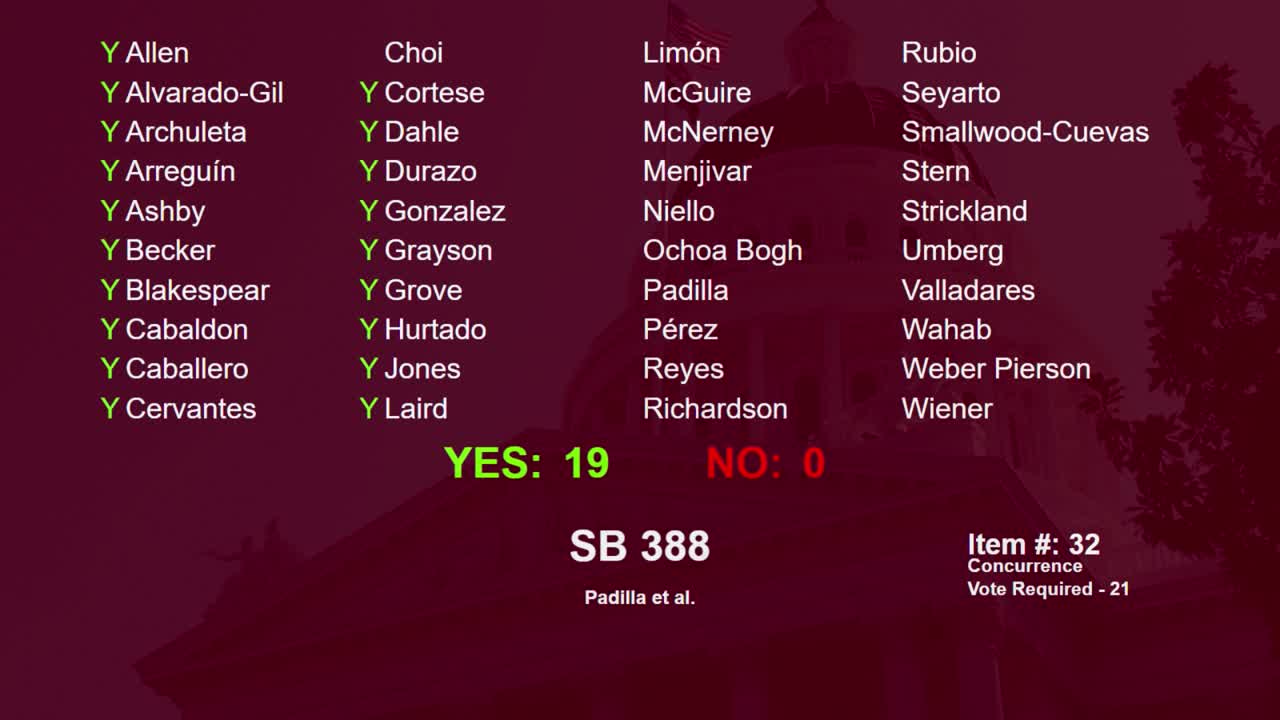 2MIN
Senate Floor
 2MIN
Assembly Floor
 7MIN
Assembly Standing Committee on Natural Resources
 10MIN
Senate Standing Committee on Natural Resources and Water
Bill Author