SB 306: Health care coverage: prior authorizations.
- Session Year: 2025-2026
- House: Senate
- Latest Version Date: 2025-10-06
Current Status:
Passed
(2025-10-06: Chaptered by Secretary of State. Chapter 408, Statutes of 2025.)
Introduced
In Committee
Awaiting First Chamber Vote
Passed First Chamber
In Committee
Awaiting Second Chamber Vote
Passed Second Chamber
Enacted
Existing law, the Knox-Keene Health Care Service Plan Act of 1975, provides for the licensure and regulation of health care service plans by the Department of Managed Health Care, and makes a willful violation of the act a crime. Existing law provides for the regulation of health insurers by the Department of Insurance. Existing law generally authorizes a health care service plan or health insurer to use prior authorization and other utilization review or utilization management functions, under which a licensed physician or a licensed health care professional who is competent to evaluate specific clinical issues may approve, modify, delay, or deny requests for health care services based on medical necessity. Existing law requires a health care service plan or health insurer, including those plans or insurers that delegate utilization review or utilization management functions to medical groups, independent practice associations, or to other contracting providers, to comply with specified requirements and limitations on their utilization review or utilization management functions.
This bill would require the departments to issue instructions on or before July 1, 2026, to health care service plans and health insurers to report statistics regarding covered health care services subject to prior authorization and the percentage rate at which they are approved or modified, among other things. The bill would require a health care service plan or health insurer to report those statistics, including information from another entity to which the plan or insurer delegates responsibility for prior authorization decisions, to the appropriate department on or before December 31, 2026. The bill would require the departments to evaluate these reports, identify the health care services approved at a rate that meets or exceeds the threshold rate of 90%, and, on or before July 1, 2027, publish a list of the services identified. Beginning on the date specified by the relevant department, but no later than January 1, 2028, the bill would require a plan or insurer, or its delegated entities, to cease requiring prior authorization for the most frequently approved covered health care services. The bill would authorize a plan or insurer to reinstate prior authorization for a specific health care provider if it determines that the provider has engaged in fraudulent activity or clinically inappropriate care, as specified. No later than 4 years after the cessation of prior authorization requirements, the bill would require the departments to publish reports regarding the impact of that cessation using information reported by plans and insurers, including data on reinstatements of prior authorization for specific providers. The bill would repeal these provisions on January 1, 2034. Because a willful violation of the bills requirements relative to health care service plans would be a crime, the bill would impose a state-mandated local program.
The California Constitution requires the state to reimburse local agencies and school districts for certain costs mandated by the state. Statutory provisions establish procedures for making that reimbursement.
This bill would provide that no reimbursement is required by this act for a specified reason.
Existing law, the Knox-Keene Health Care Service Plan Act of 1975, provides for the licensure and regulation of health care service plans by the Department of Managed Health Care, and makes a willful violation of the act a crime. Existing law provides for the regulation of health insurers by the Department of Insurance. Existing law generally authorizes a health care service plan or health insurer to use prior authorization and other utilization review or utilization management functions, under which a licensed physician or a licensed health care professional who is competent to evaluate specific clinical issues may approve, modify, delay, or deny requests for health care services based on medical necessity. Existing law requires a health care service plan or health insurer, including those plans or insurers that delegate utilization review or utilization management functions to medical groups, independent practice associations, or to other contracting providers, to comply with specified requirements and limitations on their utilization review or utilization management functions.
This bill would require the departments to issue instructions on or before July 1, 2026, to health care service plans and health insurers to report statistics regarding covered health care services subject to prior authorization and the percentage rate at which they are approved or modified, among other things. The bill would require a health care service plan or health insurer to report those statistics, including information from another entity to which the plan or insurer delegates responsibility for prior authorization decisions, to the appropriate department on or before December 31, 2026. The bill would require the departments to evaluate these reports, identify the health care services approved at a rate that meets or exceeds the threshold rate of 90%, and, on or before July 1, 2027, publish a list of the services identified. Beginning on the date specified by the relevant department, but no later than January 1, 2028, the bill would require a plan or insurer, or its delegated entities, to cease requiring prior authorization for the most frequently approved covered health care services. The bill would authorize a plan or insurer to reinstate prior authorization for a specific health care provider if it determines that the provider has engaged in fraudulent activity or clinically inappropriate care, as specified. No later than 4 years after the cessation of prior authorization requirements, the bill would require the departments to publish reports regarding the impact of that cessation using information reported by plans and insurers, including data on reinstatements of prior authorization for specific providers. The bill would repeal these provisions on January 1, 2034. Because a willful violation of the bills requirements relative to health care service plans would be a crime, the bill would impose a state-mandated local program.
The California Constitution requires the state to reimburse local agencies and school districts for certain costs mandated by the state. Statutory provisions establish procedures for making that reimbursement.
This bill would provide that no reimbursement is required by this act for a specified reason.
Existing law, the Knox-Keene Health Care Service Plan Act of 1975, provides for the licensure and regulation of health care service plans by the Department of Managed Health Care, and makes a willful violation of the act a crime. Existing law provides for the regulation of health insurers by the Department of Insurance. Existing law generally authorizes a health care service plan or health insurer to use prior authorization and other utilization review or utilization management functions, under which a licensed physician or a licensed health care professional who is competent to evaluate specific clinical issues may approve, modify, delay, or deny requests for health care services based on medical necessity. Existing law requires a health care service plan or health insurer, including those plans or insurers that delegate utilization review or utilization management functions to medical groups, independent practice associations, or to other contracting providers, to comply with specified requirements and limitations on their utilization review or utilization management functions.
This bill would require the departments to issue instructions on or before July 1, 2026, to health care service plans and health insurers to report statistics regarding covered health care services subject to prior authorization and the percentage rate at which they are approved or modified, among other things. The bill would require a health care service plan or health insurer to report those statistics, including information from another entity to which the plan or insurer delegates responsibility for prior authorization decisions, to the appropriate department on or before December 31, 2026. The bill would require the departments to evaluate these reports, identify the health care services most frequently approved, approved at a rate that meets or exceeds the threshold rate of 90%, and, on or before July 1, 2027, publish a list of the services identified. Beginning on the date specified by the relevant department, but no later than January 1, 2028, the bill would require a plan or insurer, or its delegated entities, to cease requiring prior authorization for the most frequently approved covered health care services. The bill would authorize a plan or insurer to reinstate prior authorization for a specific health care provider if it determines that the provider has engaged in fraudulent activity or clinically inappropriate care, as specified. No later than 4 years after the cessation of prior authorization requirements, the bill would require the departments to publish reports regarding the impact of that cessation using information reported by plans and insurers, including data on reinstatements of prior authorization for specific providers. The bill would repeal these provisions on January 1, 2034. Because a willful violation of the bills requirements relative to health care service plans would be a crime, the bill would impose a state-mandated local program.
The California Constitution requires the state to reimburse local agencies and school districts for certain costs mandated by the state. Statutory provisions establish procedures for making that reimbursement.
This bill would provide that no reimbursement is required by this act for a specified reason.
Existing law, the Knox-Keene Health Care Service Plan Act of 1975, provides for the licensure and regulation of health care service plans by the Department of Managed Health Care, and makes a willful violation of the act a crime. Existing law provides for the regulation of health insurers by the Department of Insurance. Existing law generally authorizes a health care service plan or health insurer to use prior authorization and other utilization review or utilization management functions, under which a licensed physician or a licensed health care professional who is competent to evaluate specific clinical issues may approve, modify, delay, or deny requests for health care services based on medical necessity. Existing law requires a health care service plan or health insurer, including those plans or insurers that delegate utilization review or utilization management functions to medical groups, independent practice associations, or to other contracting providers, to comply with specified requirements and limitations on their utilization review or utilization management functions.
This bill would require the departments to issue instructions on or before July 1, 2026, to health care service plans and health insurers to report statistics regarding covered health care services subject to prior authorization and the percentage rate at which they are approved or modified, among other things. The bill would require a health care service plan or health insurer to report those statistics, including information from another entity to which the plan or insurer delegates responsibility for prior authorization decisions, to the appropriate department on or before December 31, 2026. The bill would require the departments to evaluate these reports, identify the health care services most frequently approved, and, on or before July 1, 2027, publish a list of the services identified. Beginning on the date specified by the relevant department, but no later than January 1, 2028, the bill would require a plan or insurer, or its delegated entities, to cease requiring prior authorization for the most frequently approved covered health care services. The bill would authorize a plan or insurer to reinstate prior authorization for a specific health care provider if it determines that the provider has engaged in fraudulent activity or clinically inappropriate care, as specified. No later than 4 years after the cessation of prior authorization requirements, the bill would require the departments to publish reports regarding the impact of that cessation using information reported by plans and insurers, including data on reinstatements of prior authorization for specific providers. The bill would repeal these provisions on January 1, 2034. Because a willful violation of the bills requirements relative to health care service plans would be a crime, the bill would impose a state-mandated local program.
The California Constitution requires the state to reimburse local agencies and school districts for certain costs mandated by the state. Statutory provisions establish procedures for making that reimbursement.
This bill would provide that no reimbursement is required by this act for a specified reason.
Existing law, the Knox-Keene Health Care Service Plan Act of 1975, provides for the licensure and regulation of health care service plans by the Department of Managed Health Care, and makes a willful violation of the act a crime. Existing law provides for the regulation of health insurers by the Department of Insurance. Existing law generally authorizes a health care service plan or health insurer to use prior authorization and other utilization review or utilization management functions, under which a licensed physician or a licensed health care professional who is competent to evaluate specific clinical issues may approve, modify, delay, or deny requests for health care services based on medical necessity. Existing law requires a health care service plan or health insurer, including those plans or insurers that delegate utilization review or utilization management functions to medical groups, independent practice associations, or to other contracting providers, to comply with specified requirements and limitations on their utilization review or utilization management functions. Existing law requires the criteria or guidelines used to determine whether or not to authorize, modify, or deny health care services to be developed with involvement from actively practicing health care providers.
This bill would prohibit a health care service plan or health insurer, or an entity with which the plan or insurer contracts for prior authorization, from imposing prior authorization, as defined, or prior notification on a covered health care service for a period of one year beginning on April first of the current calendar year, if specified conditions exist, including that the health care service plan approved 90% or more of the requests for a covered service in the prior calendar year. The bill would also require a health care service plan or health insurer to post specified information, including a list of covered health care services exempted from prior authorization, on its internet website by March 15 of each calendar year. The bill would also clarify how to calculate a plans or insurers approval rate for purposes of determining whether a service may be exempted from prior authorization. Because a willful violation of the bills requirements relative to health care service plans would be a crime, the bill would impose a state-mandated local program.This bill would require the departments to issue instructions on or before July 1, 2026, to health care service plans and health insurers to report statistics regarding covered health care services subject to prior authorization and the percentage rate at which they are approved or modified, among other things. The bill would require a health care service plan or health insurer to report those statistics, including information from another entity to which the plan or insurer delegates responsibility for prior authorization decisions, to the appropriate department on or before December 31, 2026. The bill would require the departments to evaluate these reports, identify the health care services most frequently approved, and, on or before July 1, 2027, publish a list of the services identified. Beginning on the date specified by the relevant department, but no later than January 1, 2028, the bill would require a plan or insurer, or its delegated entities, to cease requiring prior authorization for the most frequently approved covered health care services. The bill would authorize a plan or insurer to reinstate prior authorization for a specific health care provider if it determines that the provider has engaged in fraudulent activity or clinically inappropriate care, as specified. No later than 4 years after the cessation of prior authorization requirements, the bill would require the departments to publish reports regarding the impact of that cessation using information reported by plans and insurers, including data on reinstatements of prior authorization for specific providers. The bill would repeal these provisions on January 1, 2034. Because a willful violation of the bills requirements relative to health care service plans would be a crime, the bill would impose a state-mandated local program.
The California Constitution requires the state to reimburse local agencies and school districts for certain costs mandated by the state. Statutory provisions establish procedures for making that reimbursement.
This bill would provide that no reimbursement is required by this act for a specified reason.
Existing law, the Knox-Keene Health Care Service Plan Act of 1975, provides for the licensure and regulation of health care service plans by the Department of Managed Health Care, and makes a willful violation of the act a crime. Existing law provides for the regulation of health insurers by the Department of Insurance. Existing law generally authorizes a health care service plan or health insurer to use prior authorization and other utilization review or utilization management functions, under which a licensed physician or a licensed health care professional who is competent to evaluate specific clinical issues may approve, modify, delay, or deny requests for health care services based on medical necessity. Existing law requires a health care service plan or health insurer, including those plans or insurers that delegate utilization review or utilization management functions to medical groups, independent practice associations, or to other contracting providers, to comply with specified requirements and limitations on their utilization review or utilization management functions. Existing law requires the criteria or guidelines used to determine whether or not to authorize, modify, or deny health care services to be developed with involvement from actively practicing health care providers.
This bill would prohibit a health care service plan or health insurer, or an entity with which the plan or insurer contracts for prior authorization, from imposing prior authorization, as defined, or prior notification on a covered health care service for a period of one year beginning on April first of the current calendar year, if specified conditions exist, including that the health care service plan approved 90% or more of the requests for a covered service in the prior calendar year. The bill would also require a health care service plan or health insurer to post specified information, including a list of covered health care services exempted from prior authorization, on its internet website by March 15 of each calendar year. The bill would also clarify how to calculate a plans or insurers approval rate for purposes of determining whether a service may be exempted from prior authorization. Because a willful violation of the bills requirements relative to health care service plans would be a crime, the bill would impose a state-mandated local program.
The California Constitution requires the state to reimburse local agencies and school districts for certain costs mandated by the state. Statutory provisions establish procedures for making that reimbursement.
This bill would provide that no reimbursement is required by this act for a specified reason.
Existing law, the Knox-Keene Health Care Service Plan Act of 1975, provides for the licensure and regulation of health care service plans by the Department of Managed Health Care, and makes a willful violation of the act a crime. Existing law provides for the regulation of health insurers by the Department of Insurance. Existing law generally authorizes a health care service plan or health insurer to use prior authorization and other utilization review or utilization management functions, under which a licensed physician or a licensed health care professional who is competent to evaluate specific clinical issues may approve, modify, delay, or deny requests for health care services based on medical necessity. Existing law requires a health care service plan or health insurer, including those plans or insurers that delegate utilization review or utilization management functions to medical groups, independent practice associations, or to other contracting providers, to comply with specified requirements and limitations on their utilization review or utilization management functions. Existing law requires the criteria or guidelines used to determine whether or not to authorize, modify, or deny health care services to be developed with involvement from actively practicing health care providers.
This bill would prohibit a health care service plan or health insurer insurer, or an entity with which the plan or insurer contracts for prior authorization, from imposing prior authorizations, authorization, as defined, or prior notification on a covered health care service for a period of one year beginning on April first of the current calendar year, if specified conditions exist, including that the health care service plan approved 90% or more of the requests for a covered service in the prior calendar year. The bill would also require a health care service plan or health insurer to list any covered post specified information, including a list of covered health care services exempted from prior authorization on their authorization, on its internet website by March 15 of each calendar year. The bill would also clarify how to calculate a plan plans or insurers approval rate for purposes of determining whether a service may be exempted from prior authorization. Because a willful violation of the bills requirements relative to health care service plans would be a crime, the bill would impose a state-mandated local program.
The California Constitution requires the state to reimburse local agencies and school districts for certain costs mandated by the state. Statutory provisions establish procedures for making that reimbursement.
This bill would provide that no reimbursement is required by this act for a specified reason.
Existing law, the Knox-Keene Health Care Service Plan Act of 1975, provides for the licensure and regulation of health care service plans by the Department of Managed Health Care, and makes a willful violation of the act a crime. Existing law provides for the regulation of health insurers by the Department of Insurance. Existing law generally authorizes a health care service plan or health insurer to use prior authorization and other utilization review or utilization management functions, under which a licensed physician or a licensed health care professional who is competent to evaluate specific clinical issues may approve, modify, delay, or deny requests for health care services based on medical necessity. Existing law requires a health care service plan or health insurer, including those plans or insurers that delegate utilization review or utilization management functions to medical groups, independent practice associations, or to other contracting providers, to comply with specified requirements and limitations on their utilization review or utilization management functions. Existing law requires the criteria or guidelines used to determine whether or not to authorize, modify, or deny health care services to be developed with involvement from actively practicing health care providers.
This bill would prohibit a health care service plan or health insurer from imposing prior authorizations, as defined, on a covered health care service for a period of one year beginning on April first of the current calendar year, if specified conditions exist, including that the health care service plan approved 90% or more of the requests for a covered service in the prior calendar year. The bill would also require a health care service plan or health insurer to list any covered services exempted from prior authorization on their internet website by March 15 of each calendar year. The bill would also clarify how to calculate a plan or insurers approval rate for purposes of determining whether a service may be exempted from prior authorization. Because a willful violation of the bills requirements relative to health care service plans would be a crime, the bill would impose a state-mandated local program.
The California Constitution requires the state to reimburse local agencies and school districts for certain costs mandated by the state. Statutory provisions establish procedures for making that reimbursement.
This bill would provide that no reimbursement is required by this act for a specified reason.
(a)On or before July 1, 2026, the department shall issue instructions to health care service plans to report all covered health care services subject to prior authorization, the percentage rate at which they are approved or modified by the health care service plan or its delegated entity, and other statistics regarding prior authorization determinations as determined by the department. These instructions shall include a standard reporting template.
(b)(1)On or before December 31, 2026, a health care service plan shall report to the department, in accordance with the instructions issued pursuant to subdivision (a), the covered health care services subject to prior authorization, the percentage rate at which they are approved or modified by the health care service plan or its delegated entity, data regarding requested or authorized duration, frequency, or level of care of the health care services, and other statistics regarding prior authorization determinations pursuant to subdivision (a). Data regarding modifications shall be reported separately from approvals in accordance with the instructions issued pursuant to subdivision (a).
(2)If a health care service plan delegates responsibility for decisions regarding prior authorization requests to another entity, the health care service plan shall obtain information required to be reported by this section from each delegated entity and include that information in the health care service plans report to the department. A health care service plan shall require a delegated entity to comply with a request made pursuant to this paragraph.
(c)(1)The department shall evaluate the reports received pursuant to this section and identify the health care services approved by health care service plans or their delegated entities at a rate that meets or exceeds the threshold rate of 90 percent. For purposes of this paragraph, approved may also include modified requests for the purpose of calculating the threshold rate as the department determines appropriate.
(2)The department may consider all of the following factors when determining the appropriateness of removing prior authorization for a specific covered health care service, regardless of its approval percentage rate:
(A)Utilization of a health care service in a manner inconsistent with current clinical practice guidelines published in peer-reviewed medical literature or United States Food and Drug Administration-approved indications, as applicable.
(B)The potential for fraud, waste, and abuse.
(C)The potential for cost savings from eliminating prior authorization, including out-of-pocket cost savings to the enrollee.
(D)The potential for improvements in quality of care, health care outcomes, and timely access to care for enrollees from eliminating prior authorization.
(E)Other factors deemed appropriate by the department.
(3)Before finalizing the list of covered health care services pursuant to this section, the department shall consult interested stakeholders.
(4)On or before July 1, 2027, the department shall publish the list of covered health care services identified pursuant to paragraph (1). As of the date specified in subparagraph (A) of paragraph (5), a health care service plan shall not impose prior authorization on a covered health care service included on the list published by the department pursuant to this paragraph.
(5)The department shall issue instructions to health care service plans regarding all of the following:
(A)The date, which shall be no later than January 1, 2028, by which the health care service plan and its delegated entities shall cease requiring prior authorization for the covered health care services identified pursuant to this subdivision. When issuing the date by which a health care service plan and its delegated entities shall cease requiring prior authorization pursuant to this section, the department shall take into consideration the time necessary for plans to update their contracts.
(B)Requirements for notifying providers of the change in prior authorization requirements.
(C)The process by which a health care service plan may petition the department to reinstate the ability of the health care service plan to use prior authorization for a particular covered health care service upon a showing of good cause that a lack of prior authorization for the covered health care service has resulted in a demonstrable increase in the cost of care or decrease in the quality of care for the health care service plans enrollees, including fraud, waste, or abuse. The department determination on a petition pursuant to this subparagraph shall be made within 60 days of receipt of all information necessary for the department to issue a decision on the petition. A health care service plan shall not reinstate prior authorization for a covered health care service subject to this section until authorized by the department and in accordance with any other law, as applicable.
(6)The department may issue other instructions it deems necessary and appropriate to implement this section.
(d)Notwithstanding subdivision (c), a health care service plan may impose prior authorization on any of the following:
(1)Outpatient prescription drugs in tier three or four of a health care service plans formulary, as those tiers are defined in Section 1342.73.
(2)A drug or medical device prescribed or recommended for a use that is different from the use for which the drug or medical device has been cleared or approved for marketing by the United States Food and Drug Administration.
(3)A covered health care service that is experimental or investigational, excluding services for which there is medical or scientific evidence, as defined in Section 1370.4.
(4)A covered health care service that is prescribed or recommended for a use that is a novel application of an existing therapy or technology, excluding uses for which there is medical or scientific evidence, as defined in Section 1370.4.
(5)A covered health care service requested, ordered, prescribed, delivered, furnished, or dispensed by an out-of-network or noncontracting provider.
(e)A covered health care service that is exempted from prior authorization pursuant to this section constitutes a service authorized by the health care service plan for purposes of Section 1371.8. A health care service plan or its delegated entity shall not deny or reduce the contracted or agreed upon payment, or the applicable rate or reimbursement methodology specified in a plan contract, for a covered health care service exempted from a prior authorization requirement pursuant to this section unless the provider failed to substantially perform or supply the covered health care service.
(f)Notwithstanding subdivision (c), a health care service plan may, in accordance with any other applicable law, reinstate prior authorization for a specific health care provider on a covered health care service for which prior authorization is otherwise prohibited pursuant to subdivision (c) only if the health care service plan has determined, based on clear and convincing evidence, that the health care provider has engaged in either of the following:
(1)Fraudulent activity related to the provision or billing of health care services.
(2)Pattern or practice of repeatedly providing care that is clinically inappropriate or inconsistent with generally accepted standards of care, and that results in either potential harm to patients or excessive utilization of health care resources inconsistent with generally accepted standards of care.
(g)(1)The department may contract with a consultant or consultants with expertise in this subject area to assist the department in implementing this section, including developing instructions described in subdivision (a), evaluating the reports received by the department pursuant to subdivision (b), developing and publishing a list pursuant to subdivision (c), developing other implementation instructions, and drafting the report required pursuant to this section.
(2)The departments contract with a consultant shall include conflict-of-interest provisions to prohibit a person from participating in a report in which the person knows or has reason to know they have a material financial interest, including a person who has a consulting or other agreement with a person or organization that would be affected by the results of the report.
(3)Contracts entered into pursuant to this subdivision are exempt from Chapter 6 (commencing with Section 14825) of Part 5.5 of Division 3 of Title 2 of the Government Code, Section 19130 of the Government Code, and Part 2 (commencing with Section 10100) of Division 2 of the Public Contract Code, and shall be exempt from the review or approval of any division of the Department of General Services.
(h)No later than four years after the date determined by the department for cessation of prior authorization requirements pursuant to subparagraph (A) of paragraph (5) of subdivision (c), the department shall publish a report regarding the impacts of the cessation of prior authorization requirements. A health care service plan shall report information and data regarding the impacts of implementing this section, including effects on the volume of covered health care services subjected to prior authorization, statistics on prior authorization requests and determinations, administrative costs, timely access to care, enrollee health outcomes, and data on reinstatements of prior authorization pursuant to subdivision (f), to be included in this report.
(i)(1)Notwithstanding Chapter 3.5 (commencing with Section 11340) of Part 1 of Division 3 of Title 2 of the Government Code, the department may implement, interpret, or make specific this section by means of all-plan letters, methodologies, rules, definitions, policies, forms, information or data requests, or similar instructions, without taking regulatory action, until this section is repealed.
(2)The department shall consult with the Department of Insurance before issuing instructions and the list of covered health care services for which prior authorization is prohibited, pursuant to this section, to ensure consistency to the extent practical.
(j)A health care service plan shall not delegate the requirements of this section to a delegated provider, pharmacy benefit manager, or other entity, unless the parties have negotiated and agreed upon a new provision to the parties contract, as provided in Section 1375.7. A change to the parties contract pursuant to this subdivision shall be considered a material change. Notwithstanding delegation pursuant to this subdivision, a health care service plan shall comply with this section, including paragraph (2) of subdivision (b).
(k)(1)This section does not apply to a specialized health care service plan, except to the extent the plan provides or administers essential health benefits pursuant to health care service plan contracts subject to Section 1367.005.
(2)This section does not apply to a Medi-Cal managed care plan contract with the State Department of Health Care Services pursuant to Chapter 7 (commencing with Section 14000) or Chapter 8 (commencing with Section 14200) of Part 3 of Division 9 of the Welfare and Institutions Code.
(l)For purposes of this section:
(1)Covered health care service means a health care item, product, drug, supply, procedure, treatment, or service covered by a health care service plan contract.
(2)Prior authorization means the process by which utilization review determines the medical necessity or medical appropriateness of otherwise covered health care services prior to or concurrent with the rendering of those health care services. Prior authorization also includes a health care service plans or its delegated entitys requirement that an enrollee or health care provider notify the health care service plan before providing a health care service, including preauthorization, precertification, and prior approval.
(m)This section shall remain in effect only until January 1, 2034, and as of that date is repealed.
SEC. 2.Section 10133.52 is added to the Insurance Code, to read:10133.52.(a)On or before July 1, 2026, the department shall issue instructions to health insurers to report all covered health care services subject to prior authorization, the percentage rate at which they are approved or modified by the health insurer or its delegated entity, and other statistics regarding prior authorization determinations as determined by the department. These instructions shall include a standard reporting template.
(b)(1)On or before December 31, 2026, a health insurer shall report to the department, in accordance with the instructions issued pursuant to subdivision (a), the covered health care services subject to prior authorization, the percentage rate at which they are approved or modified by the health insurer or its delegated entity, data regarding requested or authorized duration, frequency, or level of care of the health care services, and other statistics regarding prior authorization determinations pursuant to subdivision (a). Data regarding modifications shall be reported separately from approvals in accordance with the instructions issued pursuant to subdivision (a).
(2)If a health insurer delegates responsibility for decisions regarding prior authorization requests to another entity, the health insurer shall obtain information required to be reported by this section from each delegated entity and include that information in the health insurers report to the department. A health insurer shall require a delegated entity to comply with a request made pursuant to this paragraph.
(c)(1)The department shall evaluate the reports received pursuant to this section and identify the health care services approved by health insurers or their delegated entities at a rate that meets or exceeds the threshold rate of 90 percent. For purposes of this paragraph, approved may also include modified requests for the purpose of calculating the threshold rate as the department determines appropriate.
(2)The department may consider all of the following factors when determining the appropriateness of removing prior authorization for a specific covered health care service, regardless of its approval percentage rate:
(A)Utilization of a health care service in a manner inconsistent with current clinical practice guidelines published in peer-reviewed medical literature or United States Food and Drug Administration-approved indications, as applicable.
(B)The potential for fraud, waste, and abuse.
(C)The potential for cost savings from eliminating prior authorization, including out-of-pocket cost savings to the insured.
(D)The potential for improvements in quality of care, health care outcomes, and timely access to care for insureds from eliminating prior authorization.
(E)Other factors deemed appropriate by the department.
(3)Before finalizing the list of covered health care services pursuant to this section, the department shall consult interested stakeholders.
(4)On or before July 1, 2027, the department shall publish the list of covered health care services identified pursuant to paragraph (1). As of the date specified in subparagraph (A) of paragraph (5), a health insurer shall not impose prior authorization on a covered health care service included on the list published by the department pursuant to this paragraph.
(5)The department shall issue instructions to health insurers regarding all of the following:
(A)The date, which shall be no later than January 1, 2028, by which the health insurer and its delegated entities shall cease requiring prior authorization for the covered health care services identified pursuant to this subdivision. When issuing the date by which a health insurer and its delegated entities shall cease requiring prior authorization pursuant to this section, the department shall take into consideration the time necessary for insurers to update their policies.
(B)Requirements for notifying providers of the change in prior authorization requirements.
(C)The process by which a health insurer may petition the department to reinstate the ability of the health insurer to use prior authorization for a particular covered health care service upon a showing of good cause that a lack of prior authorization for the covered health care service has resulted in a demonstrable increase in the cost of care or decrease in the quality of care for the health insurers insureds, including fraud, waste, or abuse. The department determination on a petition pursuant to this subparagraph shall be made within 60 days of receipt of all information necessary for the department to issue a decision on the petition. A health insurer shall not reinstate prior authorization for a covered health care service subject to this section until authorized by the department and in accordance with any other law, as applicable.
(6)The department may issue other instructions it deems necessary and appropriate to implement this section.
(d)Notwithstanding subdivision (c), a health insurer may impose prior authorization on any of the following:
(1)Outpatient prescription drugs in tier three or four of a health insurers formulary, as those tiers are defined in Section 10123.1932.
(2)A drug or medical device prescribed or recommended for a use that is different from the use for which the drug or medical device has been cleared or approved for marketing by the United States Food and Drug Administration.
(3)A covered health care service that is experimental or investigational, excluding services for which there is medical or scientific evidence, as defined in Section 10145.3.
(4)A covered health care service that is prescribed or recommended for a use that is a novel application of an existing therapy or technology, excluding uses for which there is medical or scientific evidence, as defined in Section 10145.3.
(5)A covered health care service requested, ordered, prescribed, delivered, furnished, or dispensed by an out-of-network or noncontracting provider.
(e)A covered health care service that is exempted from prior authorization pursuant to this section constitutes a service authorized by the health insurer for purposes of Section 796.04. A health insurer or its delegated entity shall not deny or reduce the contracted or agreed upon payment, or the applicable rate or reimbursement methodology specified in a policy, for a covered health care service exempted from a prior authorization requirement pursuant to this section unless the provider failed to substantially perform or supply the covered health care service.
(f)Notwithstanding subdivision (c), a health insurer may, in accordance with any other applicable law, reinstate prior authorization for a specific health care provider on a covered health care service for which prior authorization is otherwise prohibited pursuant to subdivision (c) only if the health insurer has determined, based on clear and convincing evidence, that the health care provider has engaged in either of the following:
(1)Fraudulent activity related to the provision or billing of health care services.
(2)Pattern or practice of repeatedly providing care that is clinically inappropriate or inconsistent with generally accepted standards of care, and that results in either potential harm to patients or excessive utilization of health care resources inconsistent with generally accepted standards of care.
(g)(1)The department may contract with a consultant or consultants with expertise in this subject area to assist the department in implementing this section, including developing instructions described in subdivision (a), evaluating the reports received by the department pursuant to subdivision (b), developing and publishing a list pursuant to subdivision (c), developing other implementation instructions, and drafting the report required pursuant to this section.
(2)The departments contract with a consultant shall include conflict-of-interest provisions to prohibit a person from participating in a report in which the person knows or has reason to know they have a material financial interest, including a person who has a consulting or other agreement with a person or organization that would be affected by the results of the report.
(3)Contracts entered into pursuant to this subdivision are exempt from Chapter 6 (commencing with Section 14825) of Part 5.5 of Division 3 of Title 2 of the Government Code, Section 19130 of the Government Code, and Part 2 (commencing with Section 10100) of Division 2 of the Public Contract Code, and shall be exempt from the review or approval of any division of the Department of General Services.
(h)No later than four years after the date determined by the department for cessation of prior authorization requirements pursuant to subparagraph (A) of paragraph (5) of subdivision (c), the department shall publish a report regarding the impacts of the cessation of prior authorization requirements. A health insurer shall report information and data regarding the impacts of implementing this section, including effects on the volume of covered health care services subjected to prior authorization, statistics on prior authorization requests and determinations, administrative costs, timely access to care, insured health outcomes, and data on reinstatements of prior authorization pursuant to subdivision (f), to be included in this report.
(i)(1)Notwithstanding Chapter 3.5 (commencing with Section 11340) of Part 1 of Division 3 of Title 2 of the Government Code, the department may implement, interpret, or make specific this section by means of bulletins, methodologies, rules, definitions, policies, forms, information or data requests, or similar instructions, without taking regulatory action, until this section is repealed.
(2)The department shall consult with the Department of Managed Health Care before issuing instructions and the list of covered health care services for which prior authorization is prohibited, pursuant to this section, to ensure consistency to the extent practical.
(j)This section does not apply to a specialized health insurer, except to the extent the insurer provides or administers essential health benefits pursuant to health insurance policies or certificates subject to Section 10112.27.
(k)For purposes of this section:
(1)Covered health care service means a health care item, product, drug, supply, procedure, treatment, or service covered by a health insurance policy or certificate.
(2)Prior authorization means the process by which utilization review determines the medical necessity or medical appropriateness of otherwise covered health care services prior to or concurrent with the rendering of those health care services. Prior authorization also includes an insurers or its delegated entitys requirement that an insured or health care provider notify the health insurer before providing a health care service, including preauthorization, precertification, and prior approval.
(l)This section shall remain in effect only until January 1, 2034, and as of that date is repealed.
SEC. 3.No reimbursement is required by this act pursuant to Section 6 of Article XIIIB of the California Constitution because the only costs that may be incurred by a local agency or school district will be incurred because this act creates a new crime or infraction, eliminates a crime or infraction, or changes the penalty for a crime or infraction, within the meaning of Section 17556 of the Government Code, or changes the definition of a crime within the meaning of Section 6 of Article XIIIB of the California Constitution.
(a)On or before July 1, 2026, the department shall issue instructions to health care service plans to report all covered health care services subject to prior authorization, the percentage rate at which they are approved or modified by the health care service plan or its delegated entity, and other statistics regarding prior authorization determinations as determined by the department. These instructions shall include a standard reporting template.
(b)(1)On or before December 31, 2026, a health care service plan shall report to the department, in accordance with the instructions issued pursuant to subdivision (a), the covered health care services subject to prior authorization, the percentage rate at which they are approved or modified by the health care service plan or its delegated entity, data regarding requested or authorized duration, frequency, or level of care of the health care services, and other statistics regarding prior authorization determinations pursuant to subdivision (a). Data regarding modifications shall be reported separately from approvals in accordance with the instructions issued pursuant to subdivision (a).
(2)If a health care service plan delegates responsibility for decisions regarding prior authorization requests to another entity, the health care service plan shall obtain information required to be reported by this section from each delegated entity and include that information in the health care service plans report to the department. A health care service plan shall require a delegated entity to comply with a request made pursuant to this paragraph.
(c)(1)The department shall evaluate the reports received pursuant to this section and identify the health care services approved by health care service plans or their delegated entities at a rate that meets or exceeds the threshold rate of 90 percent. For purposes of this paragraph, approved may also include modified requests for the purpose of calculating the threshold rate as the department determines appropriate.
(2)The department may consider all of the following factors when determining the appropriateness of removing prior authorization for a specific covered health care service, regardless of its approval percentage rate:
(A)Utilization of a health care service in a manner inconsistent with current clinical practice guidelines published in peer-reviewed medical literature or United States Food and Drug Administration-approved indications, as applicable.
(B)The potential for fraud, waste, and abuse.
(C)The potential for cost savings from eliminating prior authorization, including out-of-pocket cost savings to the enrollee.
(D)The potential for improvements in quality of care, health care outcomes, and timely access to care for enrollees from eliminating prior authorization.
(E)Other factors deemed appropriate by the department.
(3)Before finalizing the list of covered health care services pursuant to this section, the department shall consult interested stakeholders.
(4)On or before July 1, 2027, the department shall publish the list of covered health care services identified pursuant to paragraph (1). As of the date specified in subparagraph (A) of paragraph (5), a health care service plan shall not impose prior authorization on a covered health care service included on the list published by the department pursuant to this paragraph.
(5)The department shall issue instructions to health care service plans regarding all of the following:
(A)The date, which shall be no later than January 1, 2028, by which the health care service plan and its delegated entities shall cease requiring prior authorization for the covered health care services identified pursuant to this subdivision. When issuing the date by which a health care service plan and its delegated entities shall cease requiring prior authorization pursuant to this section, the department shall take into consideration the time necessary for plans to update their contracts.
(B)Requirements for notifying providers of the change in prior authorization requirements.
(C)The process by which a health care service plan may petition the department to reinstate the ability of the health care service plan to use prior authorization for a particular covered health care service upon a showing of good cause that a lack of prior authorization for the covered health care service has resulted in a demonstrable increase in the cost of care or decrease in the quality of care for the health care service plans enrollees, including fraud, waste, or abuse. The department determination on a petition pursuant to this subparagraph shall be made within 60 days of receipt of all information necessary for the department to issue a decision on the petition. A health care service plan shall not reinstate prior authorization for a covered health care service subject to this section until authorized by the department and in accordance with any other law, as applicable.
(6)The department may issue other instructions it deems necessary and appropriate to implement this section.
(d)Notwithstanding subdivision (c), a health care service plan may impose prior authorization on any of the following:
(1)Outpatient prescription drugs in tier three or four of a health care service plans formulary, as those tiers are defined in Section 1342.73.
(2)A drug or medical device prescribed or recommended for a use that is different from the use for which the drug or medical device has been cleared or approved for marketing by the United States Food and Drug Administration.
(3)A covered health care service that is experimental or investigational, excluding services for which there is medical or scientific evidence, as defined in Section 1370.4.
(4)A covered health care service that is prescribed or recommended for a use that is a novel application of an existing therapy or technology, excluding uses for which there is medical or scientific evidence, as defined in Section 1370.4.
(5)A covered health care service requested, ordered, prescribed, delivered, furnished, or dispensed by an out-of-network or noncontracting provider.
(e)A covered health care service that is exempted from prior authorization pursuant to this section constitutes a service authorized by the health care service plan for purposes of Section 1371.8. A health care service plan or its delegated entity shall not deny or reduce the contracted or agreed upon payment, or the applicable rate or reimbursement methodology specified in a plan contract, for a covered health care service exempted from a prior authorization requirement pursuant to this section unless the provider failed to substantially perform or supply the covered health care service.
(f)Notwithstanding subdivision (c), a health care service plan may, in accordance with any other applicable law, reinstate prior authorization for a specific health care provider on a covered health care service for which prior authorization is otherwise prohibited pursuant to subdivision (c) only if the health care service plan has determined, based on clear and convincing evidence, that the health care provider has engaged in either of the following:
(1)Fraudulent activity related to the provision or billing of health care services.
(2)Pattern or practice of repeatedly providing care that is clinically inappropriate or inconsistent with generally accepted standards of care, and that results in either potential harm to patients or excessive utilization of health care resources inconsistent with generally accepted standards of care.
(g)(1)The department may contract with a consultant or consultants with expertise in this subject area to assist the department in implementing this section, including developing instructions described in subdivision (a), evaluating the reports received by the department pursuant to subdivision (b), developing and publishing a list pursuant to subdivision (c), developing other implementation instructions, and drafting the report required pursuant to this section.
(2)The departments contract with a consultant shall include conflict-of-interest provisions to prohibit a person from participating in a report in which the person knows or has reason to know they have a material financial interest, including a person who has a consulting or other agreement with a person or organization that would be affected by the results of the report.
(3)Contracts entered into pursuant to this subdivision are exempt from Chapter 6 (commencing with Section 14825) of Part 5.5 of Division 3 of Title 2 of the Government Code, Section 19130 of the Government Code, and Part 2 (commencing with Section 10100) of Division 2 of the Public Contract Code, and shall be exempt from the review or approval of any division of the Department of General Services.
(h)No later than four years after the date determined by the department for cessation of prior authorization requirements pursuant to subparagraph (A) of paragraph (5) of subdivision (c), the department shall publish a report regarding the impacts of the cessation of prior authorization requirements. A health care service plan shall report information and data regarding the impacts of implementing this section, including effects on the volume of covered health care services subjected to prior authorization, statistics on prior authorization requests and determinations, administrative costs, timely access to care, enrollee health outcomes, and data on reinstatements of prior authorization pursuant to subdivision (f), to be included in this report.
(i)(1)Notwithstanding Chapter 3.5 (commencing with Section 11340) of Part 1 of Division 3 of Title 2 of the Government Code, the department may implement, interpret, or make specific this section by means of all-plan letters, methodologies, rules, definitions, policies, forms, information or data requests, or similar instructions, without taking regulatory action, until this section is repealed.
(2)The department shall consult with the Department of Insurance before issuing instructions and the list of covered health care services for which prior authorization is prohibited, pursuant to this section, to ensure consistency to the extent practical.
(j)A health care service plan shall not delegate the requirements of this section to a delegated provider, pharmacy benefit manager, or other entity, unless the parties have negotiated and agreed upon a new provision to the parties contract, as provided in Section 1375.7. A change to the parties contract pursuant to this subdivision shall be considered a material change. Notwithstanding delegation pursuant to this subdivision, a health care service plan shall comply with this section, including paragraph (2) of subdivision (b).
(k)(1)This section does not apply to a specialized health care service plan, except to the extent the plan provides or administers essential health benefits pursuant to health care service plan contracts subject to Section 1367.005.
(2)This section does not apply to a Medi-Cal managed care plan contract with the State Department of Health Care Services pursuant to Chapter 7 (commencing with Section 14000) or Chapter 8 (commencing with Section 14200) of Part 3 of Division 9 of the Welfare and Institutions Code.
(l)For purposes of this section:
(1)Covered health care service means a health care item, product, drug, supply, procedure, treatment, or service covered by a health care service plan contract.
(2)Prior authorization means the process by which utilization review determines the medical necessity or medical appropriateness of otherwise covered health care services prior to or concurrent with the rendering of those health care services. Prior authorization also includes a health care service plans or its delegated entitys requirement that an enrollee or health care provider notify the health care service plan before providing a health care service, including preauthorization, precertification, and prior approval.
(m)This section shall remain in effect only until January 1, 2034, and as of that date is repealed.
SEC. 2.Section 10133.52 is added to the Insurance Code, to read:10133.52.(a)On or before July 1, 2026, the department shall issue instructions to health insurers to report all covered health care services subject to prior authorization, the percentage rate at which they are approved or modified by the health insurer or its delegated entity, and other statistics regarding prior authorization determinations as determined by the department. These instructions shall include a standard reporting template.
(b)(1)On or before December 31, 2026, a health insurer shall report to the department, in accordance with the instructions issued pursuant to subdivision (a), the covered health care services subject to prior authorization, the percentage rate at which they are approved or modified by the health insurer or its delegated entity, data regarding requested or authorized duration, frequency, or level of care of the health care services, and other statistics regarding prior authorization determinations pursuant to subdivision (a). Data regarding modifications shall be reported separately from approvals in accordance with the instructions issued pursuant to subdivision (a).
(2)If a health insurer delegates responsibility for decisions regarding prior authorization requests to another entity, the health insurer shall obtain information required to be reported by this section from each delegated entity and include that information in the health insurers report to the department. A health insurer shall require a delegated entity to comply with a request made pursuant to this paragraph.
(c)(1)The department shall evaluate the reports received pursuant to this section and identify the health care services approved by health insurers or their delegated entities at a rate that meets or exceeds the threshold rate of 90 percent. For purposes of this paragraph, approved may also include modified requests for the purpose of calculating the threshold rate as the department determines appropriate.
(2)The department may consider all of the following factors when determining the appropriateness of removing prior authorization for a specific covered health care service, regardless of its approval percentage rate:
(A)Utilization of a health care service in a manner inconsistent with current clinical practice guidelines published in peer-reviewed medical literature or United States Food and Drug Administration-approved indications, as applicable.
(B)The potential for fraud, waste, and abuse.
(C)The potential for cost savings from eliminating prior authorization, including out-of-pocket cost savings to the insured.
(D)The potential for improvements in quality of care, health care outcomes, and timely access to care for insureds from eliminating prior authorization.
(E)Other factors deemed appropriate by the department.
(3)Before finalizing the list of covered health care services pursuant to this section, the department shall consult interested stakeholders.
(4)On or before July 1, 2027, the department shall publish the list of covered health care services identified pursuant to paragraph (1). As of the date specified in subparagraph (A) of paragraph (5), a health insurer shall not impose prior authorization on a covered health care service included on the list published by the department pursuant to this paragraph.
(5)The department shall issue instructions to health insurers regarding all of the following:
(A)The date, which shall be no later than January 1, 2028, by which the health insurer and its delegated entities shall cease requiring prior authorization for the covered health care services identified pursuant to this subdivision. When issuing the date by which a health insurer and its delegated entities shall cease requiring prior authorization pursuant to this section, the department shall take into consideration the time necessary for insurers to update their policies.
(B)Requirements for notifying providers of the change in prior authorization requirements.
(C)The process by which a health insurer may petition the department to reinstate the ability of the health insurer to use prior authorization for a particular covered health care service upon a showing of good cause that a lack of prior authorization for the covered health care service has resulted in a demonstrable increase in the cost of care or decrease in the quality of care for the health insurers insureds, including fraud, waste, or abuse. The department determination on a petition pursuant to this subparagraph shall be made within 60 days of receipt of all information necessary for the department to issue a decision on the petition. A health insurer shall not reinstate prior authorization for a covered health care service subject to this section until authorized by the department and in accordance with any other law, as applicable.
(6)The department may issue other instructions it deems necessary and appropriate to implement this section.
(d)Notwithstanding subdivision (c), a health insurer may impose prior authorization on any of the following:
(1)Outpatient prescription drugs in tier three or four of a health insurers formulary, as those tiers are defined in Section 10123.1932.
(2)A drug or medical device prescribed or recommended for a use that is different from the use for which the drug or medical device has been cleared or approved for marketing by the United States Food and Drug Administration.
(3)A covered health care service that is experimental or investigational, excluding services for which there is medical or scientific evidence, as defined in Section 10145.3.
(4)A covered health care service that is prescribed or recommended for a use that is a novel application of an existing therapy or technology, excluding uses for which there is medical or scientific evidence, as defined in Section 10145.3.
(5)A covered health care service requested, ordered, prescribed, delivered, furnished, or dispensed by an out-of-network or noncontracting provider.
(e)A covered health care service that is exempted from prior authorization pursuant to this section constitutes a service authorized by the health insurer for purposes of Section 796.04. A health insurer or its delegated entity shall not deny or reduce the contracted or agreed upon payment, or the applicable rate or reimbursement methodology specified in a policy, for a covered health care service exempted from a prior authorization requirement pursuant to this section unless the provider failed to substantially perform or supply the covered health care service.
(f)Notwithstanding subdivision (c), a health insurer may, in accordance with any other applicable law, reinstate prior authorization for a specific health care provider on a covered health care service for which prior authorization is otherwise prohibited pursuant to subdivision (c) only if the health insurer has determined, based on clear and convincing evidence, that the health care provider has engaged in either of the following:
(1)Fraudulent activity related to the provision or billing of health care services.
(2)Pattern or practice of repeatedly providing care that is clinically inappropriate or inconsistent with generally accepted standards of care, and that results in either potential harm to patients or excessive utilization of health care resources inconsistent with generally accepted standards of care.
(g)(1)The department may contract with a consultant or consultants with expertise in this subject area to assist the department in implementing this section, including developing instructions described in subdivision (a), evaluating the reports received by the department pursuant to subdivision (b), developing and publishing a list pursuant to subdivision (c), developing other implementation instructions, and drafting the report required pursuant to this section.
(2)The departments contract with a consultant shall include conflict-of-interest provisions to prohibit a person from participating in a report in which the person knows or has reason to know they have a material financial interest, including a person who has a consulting or other agreement with a person or organization that would be affected by the results of the report.
(3)Contracts entered into pursuant to this subdivision are exempt from Chapter 6 (commencing with Section 14825) of Part 5.5 of Division 3 of Title 2 of the Government Code, Section 19130 of the Government Code, and Part 2 (commencing with Section 10100) of Division 2 of the Public Contract Code, and shall be exempt from the review or approval of any division of the Department of General Services.
(h)No later than four years after the date determined by the department for cessation of prior authorization requirements pursuant to subparagraph (A) of paragraph (5) of subdivision (c), the department shall publish a report regarding the impacts of the cessation of prior authorization requirements. A health insurer shall report information and data regarding the impacts of implementing this section, including effects on the volume of covered health care services subjected to prior authorization, statistics on prior authorization requests and determinations, administrative costs, timely access to care, insured health outcomes, and data on reinstatements of prior authorization pursuant to subdivision (f), to be included in this report.
(i)(1)Notwithstanding Chapter 3.5 (commencing with Section 11340) of Part 1 of Division 3 of Title 2 of the Government Code, the department may implement, interpret, or make specific this section by means of bulletins, methodologies, rules, definitions, policies, forms, information or data requests, or similar instructions, without taking regulatory action, until this section is repealed.
(2)The department shall consult with the Department of Managed Health Care before issuing instructions and the list of covered health care services for which prior authorization is prohibited, pursuant to this section, to ensure consistency to the extent practical.
(j)This section does not apply to a specialized health insurer, except to the extent the insurer provides or administers essential health benefits pursuant to health insurance policies or certificates subject to Section 10112.27.
(k)For purposes of this section:
(1)Covered health care service means a health care item, product, drug, supply, procedure, treatment, or service covered by a health insurance policy or certificate.
(2)Prior authorization means the process by which utilization review determines the medical necessity or medical appropriateness of otherwise covered health care services prior to or concurrent with the rendering of those health care services. Prior authorization also includes an insurers or its delegated entitys requirement that an insured or health care provider notify the health insurer before providing a health care service, including preauthorization, precertification, and prior approval.
(l)This section shall remain in effect only until January 1, 2034, and as of that date is repealed.
SEC. 3.No reimbursement is required by this act pursuant to Section 6 of Article XIIIB of the California Constitution because the only costs that may be incurred by a local agency or school district will be incurred because this act creates a new crime or infraction, eliminates a crime or infraction, or changes the penalty for a crime or infraction, within the meaning of Section 17556 of the Government Code, or changes the definition of a crime within the meaning of Section 6 of Article XIIIB of the California Constitution.
(a)On or before July 1, 2026, the department shall issue instructions to health care service plans to report all covered health care services subject to prior authorization, the percentage rate at which they are approved or modified by the health care service plan or its delegated entity, and other statistics regarding prior authorization determinations as determined by the department. These instructions shall include a standard reporting template.
(b)(1)On or before December 31, 2026, a health care service plan shall report to the department, in accordance with the instructions issued pursuant to subdivision (a), the covered health care services subject to prior authorization, the percentage rate at which they are approved or modified by the health care service plan or its delegated entity, data regarding requested or authorized duration, frequency, or level of care of the health care services, and other statistics regarding prior authorization determinations pursuant to subdivision (a). Data regarding modifications shall be reported separately from approvals in accordance with the instructions issued pursuant to subdivision (a).
(2)If a health care service plan delegates responsibility for decisions regarding prior authorization requests to another entity, the health care service plan shall obtain information required to be reported by this section from each delegated entity and include that information in the health care service plans report to the department. A health care service plan shall require a delegated entity to comply with a request made pursuant to this paragraph.
(c)(1)The department shall evaluate the reports received pursuant to this section and identify the health care services most frequently approved by health care service plans or their delegated entities. entities at a rate that meets or exceeds the threshold rate of 90 percent. For purposes of this subdivision, most frequently approved means approved at a threshold rate determined by the department pursuant to this section and paragraph, approved may also include modified requests for the purpose of calculating the threshold rate as the department determines appropriate. A threshold rate shall not exceed 90 percent.
(2)The department may consider all of the following factors when determining the appropriateness of removing prior authorization for a specific covered health care service, regardless of its approval percentage rate:
(A)Utilization of a health care service in a manner inconsistent with current clinical practice guidelines published in peer-reviewed medical literature or United States Food and Drug Administration-approved indications, as applicable.
(B)The potential for fraud, waste, and abuse.
(C)The potential for cost savings from eliminating prior authorization, including out-of-pocket cost savings to the enrollee.
(D)The potential for improvements in quality of care, health care outcomes, and timely access to care for enrollees from eliminating prior authorization.
(E)Other factors deemed appropriate by the department.
(3)Before finalizing the list of covered health care services pursuant to this section, the department shall consult interested stakeholders.
(4)On or before July 1, 2027, the department shall publish the list of covered health care services identified pursuant to paragraph (1). As of the date specified in subparagraph (A) of paragraph (5), a health care service plan shall not impose prior authorization on a covered health care service included on the list published by the department pursuant to this paragraph.
(5)The department shall issue instructions to health care service plans regarding all of the following:
(A)The date, which shall be no later than January 1, 2028, by which the health care service plan and its delegated entities shall cease requiring prior authorization for the covered health care services identified pursuant to this subdivision. When issuing the date by which a health care service plan and its delegated entities shall cease requiring prior authorization pursuant to this section, the department shall take into consideration the time necessary for plans to update their contracts.
(B)Requirements for notifying providers of the change in prior authorization requirements.
(C)The process by which a health care service plan may petition the department to reinstate the ability of the health care service plan to use prior authorization for a particular covered health care service upon a showing of good cause that a lack of prior authorization for the covered health care service has resulted in a demonstrable increase in the cost of care or decrease in the quality of care for the health care service plans enrollees, including fraud, waste, or abuse. The department determination on a petition pursuant to this subparagraph shall be made within 60 days of receipt of all information necessary for the department to issue a decision on the petition. A health care service plan shall not reinstate prior authorization for a covered health care service subject to this section until authorized by the department and in accordance with any other law, as applicable.
(6)The department may issue other instructions it deems necessary and appropriate to implement this section.
(d)Notwithstanding subdivision (c), a health care service plan may impose prior authorization on any of the following:
(1)Outpatient prescription drugs in tier three or four of a health care service plans formulary, as those tiers are defined in Section 1342.73.
(2)A drug or medical device prescribed or recommended for a use that is different from the use for which the drug or medical device has been cleared or approved for marketing by the United States Food and Drug Administration.
(3)A covered health care service that is experimental or investigational, excluding services for which there is medical or scientific evidence, as defined in Section 1370.4.
(4)A covered health care service that is prescribed or recommended for a use that is a novel application of an existing therapy or technology, excluding uses for which there is medical or scientific evidence, as defined in Section 1370.4.
(5)A covered health care service requested, ordered, prescribed, delivered, furnished, or dispensed by a an out-of-network or noncontracting provider.
(e)A covered health care service that is exempted from prior authorization pursuant to this section constitutes a service authorized by the health care service plan for purposes of Section 1371.8. A health care service plan or its delegated entity shall not deny or reduce the contracted or agreed upon payment, or the applicable rate or reimbursement methodology specified in a plan contract, for a covered health care service exempted from a prior authorization requirement pursuant to this section unless the provider failed to substantially perform or supply the covered health care service.
(f)Notwithstanding subdivision (c), a health care service plan may, in accordance with any other applicable law, reinstate prior authorization for a specific health care provider on a covered health care service for which prior authorization is otherwise prohibited pursuant to subdivision (c) only if the health care service plan has determined, based on clear and convincing evidence, that the health care provider has engaged in either of the following:
(1)Fraudulent activity related to the provision or billing of health care services.
(2)Pattern or practice of repeatedly providing care that is clinically inappropriate or inconsistent with generally accepted standards of care, and that results in either potential harm to patients or excessive utilization of health care resources inconsistent with generally accepted standards of care.
(g)(1)The department may contract with a consultant or consultants with expertise in this subject area to assist the department in implementing this section, including developing instructions described in subdivision (a), evaluating the reports received by the department pursuant to subdivision (b), developing and publishing a list pursuant to subdivision (c), developing other implementation instructions, and drafting the report required pursuant to this section.
(2)The departments contract with a consultant shall include conflict-of-interest provisions to prohibit a person from participating in a report in which the person knows or has reason to know they have a material financial interest, including a person who has a consulting or other agreement with a person or organization that would be affected by the results of the report.
(3)Contracts entered into pursuant to this subdivision are exempt from Chapter 6 (commencing with Section 14825) of Part 5.5 of Division 3 of Title 2 of the Government Code, Section 19130 of the Government Code, and Part 2 (commencing with Section 10100) of Division 2 of the Public Contract Code, and shall be exempt from the review or approval of any division of the Department of General Services.
(h)No later than four years after the date determined by the department for cessation of prior authorization requirements pursuant to subparagraph (A) of paragraph (5) of subdivision (c), the department shall publish a report regarding the impacts of the cessation of prior authorization requirements. A health care service plan shall report information and data regarding the impacts of implementing this section, including effects on the volume of covered health care services subjected to prior authorization, statistics on prior authorization requests and determinations, administrative costs, timely access to care, enrollee health outcomes, and data on reinstatements of prior authorization pursuant to subdivision (f), to be included in this report.
(i)(1)Notwithstanding Chapter 3.5 (commencing with Section 11340) of Part 1 of Division 3 of Title 2 of the Government Code, the department may implement, interpret, or make specific this section by means of all-plan letters, methodologies, rules, definitions, policies, forms, information or data requests, or similar instructions, without taking regulatory action, until this section is repealed.
(2)The department shall consult with the Department of Insurance before issuing instructions pursuant to this section. and the list of covered health care services for which prior authorization is prohibited, pursuant to this section, to ensure consistency to the extent practical.
(j)A health care service plan shall not delegate the requirements of this section to a delegated provider, pharmacy benefit manager, or other entity, unless the parties have negotiated and agreed upon a new provision to the parties contract, as provided in Section 1375.7. A change to the parties contract pursuant to this subdivision shall be considered a material change. Notwithstanding delegation pursuant to this subdivision, a health care service plan shall comply with this section, including paragraph (2) of subdivision (b).
(k)(1)This section does not apply to a specialized health care service plan, except to the extent the plan provides or administers essential health benefits pursuant to health care service plan contracts subject to Section 1367.005.
(2)This section does not apply to a Medi-Cal managed care plan contract with the State Department of Health Care Services pursuant to Chapter 7 (commencing with Section 14000) or Chapter 8 (commencing with Section 14200) of Part 3 of Division 9 of the Welfare and Institutions Code.
(l)For purposes of this section:
(1)Covered health care service means a health care item, product, drug, supply, procedure, treatment, or service covered by a health care service plan contract.
(2)Prior authorization means the process by which utilization review determines the medical necessity or medical appropriateness of otherwise covered health care services prior to or concurrent with the rendering of those health care services. Prior authorization also includes a health care service plans or its delegated entitys requirement that an enrollee or health care provider notify the health care service plan before providing a health care service, including preauthorization, precertification, and prior approval.
(m)This section shall remain in effect only until January 1, 2034, and as of that date is repealed.
SEC. 2.Section 10133.52 is added to the Insurance Code, to read:10133.52.(a)On or before July 1, 2026, the department shall issue instructions to health insurers to report all covered health care services subject to prior authorization, the percentage rate at which they are approved or modified by the health insurer or its delegated entity, and other statistics regarding prior authorization determinations as determined by the department. These instructions shall include a standard reporting template.
(b)(1)On or before December 31, 2026, a health insurer shall report to the department, in accordance with the instructions issued pursuant to subdivision (a), the covered health care services subject to prior authorization, the percentage rate at which they are approved or modified by the health insurer or its delegated entity, data regarding requested or authorized duration, frequency, or level of care of the health care services, and other statistics regarding prior authorization determinations pursuant to subdivision (a). Data regarding modifications shall be reported separately from approvals in accordance with the instructions issued pursuant to subdivision (a).
(2)If a health insurer delegates responsibility for decisions regarding prior authorization requests to another entity, the health insurer shall obtain information required to be reported by this section from each delegated entity and include that information in the health insurers report to the department. A health insurer shall require a delegated entity to comply with a request made pursuant to this paragraph.
(c)(1)The department shall evaluate the reports received pursuant to this section and identify the health care services most frequently approved by health insurers or their delegated entities. entities at a rate that meets or exceeds the threshold rate of 90 percent. For purposes of this subdivision, most frequently approved means approved at a threshold rate determined by the department pursuant to this section and paragraph, approved may also include modified requests for the purpose of calculating the threshold rate as the department determines appropriate. A threshold rate shall not exceed 90 percent.
(2)The department may consider all of the following factors when determining the appropriateness of removing prior authorization for a specific covered health care service, regardless of its approval percentage rate:
(A)Utilization of a health care service in a manner inconsistent with current clinical practice guidelines published in peer-reviewed medical literature or United States Food and Drug Administration-approved indications, as applicable.
(B)The potential for fraud, waste, and abuse.
(C)The potential for cost savings from eliminating prior authorization, including out-of-pocket cost savings to the insured.
(D)The potential for improvements in quality of care, health care outcomes, and timely access to care for insureds from eliminating prior authorization.
(E)Other factors deemed appropriate by the department.
(3)Before finalizing the list of covered health care services pursuant to this section, the department shall consult interested stakeholders.
(4)On or before July 1, 2027, the department shall publish the list of covered health care services identified pursuant to paragraph (1). As of the date specified in subparagraph (A) of paragraph (5), a health insurer shall not impose prior authorization on a covered health care service included on the list published by the department pursuant to this paragraph.
(5)The department shall issue instructions to health insurers regarding all of the following:
(A)The date, which shall be no later than January 1, 2028, by which the health insurer and its delegated entities shall cease requiring prior authorization for the covered health care services identified pursuant to this subdivision. When issuing the date by which a health insurer and its delegated entities shall cease requiring prior authorization pursuant to this section, the department shall take into consideration the time necessary for insurers to update their policies.
(B)Requirements for notifying providers of the change in prior authorization requirements.
(C)The process by which a health insurer may petition the department to reinstate the ability of the health insurer to use prior authorization for a particular covered health care service upon a showing of good cause that a lack of prior authorization for the covered health care service has resulted in a demonstrable increase in the cost of care or decrease in the quality of care for the health insurers insureds, including fraud, waste, or abuse. The department determination on a petition pursuant to this subparagraph shall be made within 60 days of receipt of all information necessary for the department to issue a decision on the petition. A health insurer shall not reinstate prior authorization for a covered health care service subject to this section until authorized by the department and in accordance with any other law, as applicable.
(6)The department may issue other instructions it deems necessary and appropriate to implement this section.
(d)Notwithstanding subdivision (c), a health insurer may impose prior authorization on any of the following:
(1)Outpatient prescription drugs in tier three or four of a health insurers formulary, as those tiers are defined in Section 10123.1932.
(2)A drug or medical device prescribed or recommended for a use that is different from the use for which the drug or medical device has been cleared or approved for marketing by the United States Food and Drug Administration.
(3)A covered health care service that is experimental or investigational, excluding services for which there is medical or scientific evidence, as defined in Section 10145.3.
(4)A covered health care service that is prescribed or recommended for a use that is a novel application of an existing therapy or technology, excluding uses for which there is medical or scientific evidence, as defined in Section 10145.3.
(5)A covered health care service requested, ordered, prescribed, delivered, furnished, or dispensed by a an out-of-network or noncontracting provider.
(e)A covered health care service that is exempted from prior authorization pursuant to this section constitutes a service authorized by the health insurer for purposes of Section 796.04. A health insurer or its delegated entity shall not deny or reduce the contracted or agreed upon payment, or the applicable rate or reimbursement methodology specified in a policy, for a covered health care service exempted from a prior authorization requirement pursuant to this section unless the provider failed to substantially perform or supply the covered health care service.
(f)Notwithstanding subdivision (c), a health insurer may, in accordance with any other applicable law, reinstate prior authorization for a specific health care provider on a covered health care service for which prior authorization is otherwise prohibited pursuant to subdivision (c) only if the health insurer has determined, based on clear and convincing evidence, that the health care provider has engaged in either of the following:
(1)Fraudulent activity related to the provision or billing of health care services.
(2)Pattern or practice of repeatedly providing care that is clinically inappropriate or inconsistent with generally accepted standards of care, and that results in either potential harm to patients or excessive utilization of health care resources inconsistent with generally accepted standards of care.
(g)(1)The department may contract with a consultant or consultants with expertise in this subject area to assist the department in implementing this section, including developing instructions described in subdivision (a), evaluating the reports received by the department pursuant to subdivision (b), developing and publishing a list pursuant to subdivision (c), developing other implementation instructions, and drafting the report required pursuant to this section.
(2)The departments contract with a consultant shall include conflict-of-interest provisions to prohibit a person from participating in a report in which the person knows or has reason to know they have a material financial interest, including a person who has a consulting or other agreement with a person or organization that would be affected by the results of the report.
(3)Contracts entered into pursuant to this subdivision are exempt from Chapter 6 (commencing with Section 14825) of Part 5.5 of Division 3 of Title 2 of the Government Code, Section 19130 of the Government Code, and Part 2 (commencing with Section 10100) of Division 2 of the Public Contract Code, and shall be exempt from the review or approval of any division of the Department of General Services.
(h)No later than four years after the date determined by the department for cessation of prior authorization requirements pursuant to subparagraph (A) of paragraph (5) of subdivision (c), the department shall publish a report regarding the impacts of the cessation of prior authorization requirements. A health insurer shall report information and data regarding the impacts of implementing this section, including effects on the volume of covered health care services subjected to prior authorization, statistics on prior authorization requests and determinations, administrative costs, timely access to care, insured health outcomes, and data on reinstatements of prior authorization pursuant to subdivision (f), to be included in this report.
(i)(1)Notwithstanding Chapter 3.5 (commencing with Section 11340) of Part 1 of Division 3 of Title 2 of the Government Code, the department may implement, interpret, or make specific this section by means of bulletins, methodologies, rules, definitions, policies, forms, information or data requests, or similar instructions, without taking regulatory action, until this section is repealed.
(2)The department shall consult with the Department of Managed Health Care before issuing instructions pursuant to this section. and the list of covered health care services for which prior authorization is prohibited, pursuant to this section, to ensure consistency to the extent practical.
(j)This section does not apply to a specialized health insurer, except to the extent the insurer provides or administers essential health benefits pursuant to health insurance policies or certificates subject to Section 10112.27.
(k)For purposes of this section:
(1)Covered health care service means a health care item, product, drug, supply, procedure, treatment, or service covered by a health insurance policy or certificate.
(2)Prior authorization means the process by which utilization review determines the medical necessity or medical appropriateness of otherwise covered health care services prior to or concurrent with the rendering of those health care services. Prior authorization also includes an insurers or its delegated entitys requirement that an insured or health care provider notify the health insurer before providing a health care service, including preauthorization, precertification, and prior approval.
(l)This section shall remain in effect only until January 1, 2034, and as of that date is repealed.
SEC. 3.No reimbursement is required by this act pursuant to Section 6 of Article XIIIB of the California Constitution because the only costs that may be incurred by a local agency or school district will be incurred because this act creates a new crime or infraction, eliminates a crime or infraction, or changes the penalty for a crime or infraction, within the meaning of Section 17556 of the Government Code, or changes the definition of a crime within the meaning of Section 6 of Article XIIIB of the California Constitution.
(a)On or before July 1, 2026, the department shall issue instructions to health care service plans to report all covered health care services subject to prior authorization, the percentage rate at which they are approved or modified by the health care service plan or its delegated entity, and other statistics regarding prior authorization determinations as determined by the department. These instructions shall include a standard reporting template.
(b)(1)On or before December 31, 2026, a health care service plan shall report to the department, in accordance with the instructions issued pursuant to subdivision (a), the covered health care services subject to prior authorization, the percentage rate at which they are approved or modified by the health care service plan or its delegated entity, data regarding requested or authorized duration, frequency, or level of care of the health care services, and other statistics regarding prior authorization determinations pursuant to subdivision (a). Data regarding modifications shall be reported separately from approvals in accordance with the instructions issued pursuant to subdivision (a).
(2)If a health care service plan delegates responsibility for decisions regarding prior authorization requests to another entity, the health care service plan shall obtain information required to be reported by this section from each delegated entity and include that information in the health care service plans report to the department. A health care service plan shall require a delegated entity to comply with a request made pursuant to this paragraph.
(c)(1)The department shall evaluate the reports received pursuant to this section and identify the health care services most frequently approved by health care service plans or their delegated entities. For purposes of this subdivision, most frequently approved means approved or modified at a threshold rate determined by the department pursuant to this section. section and may also include modified requests for the purpose of calculating the threshold rate as the department determines appropriate. A threshold rate shall not exceed 90 percent.
(2)The department may consider all of the following factors when determining the appropriateness of removing prior authorization for a specific covered health care service, regardless of its approval percentage rate:
(A)Utilization of a health care service in a manner inconsistent with current clinical practice guidelines published in peer-reviewed medical literature or United States Food and Drug Administration-approved indications, as applicable.
(B)The potential for fraud, waste, and abuse.
(C)The potential for cost savings from eliminating prior authorization, including out-of-pocket cost savings to the enrollee.
(D)The potential for improvements in quality of care, health care outcomes, and timely access to care for enrollees from eliminating prior authorization.
(E)Other factors deemed appropriate by the department.
(3)Before finalizing the list of covered health care services pursuant to this section, the department shall consult interested stakeholders.
(4)On or before July 1, 2027, the department shall publish the list of covered health care services identified pursuant to paragraph (1). As of the date specified in subparagraph (A) of paragraph (5), a health care service plan shall not impose prior authorization on a covered health care service included on the list published by the department pursuant to this paragraph.
(5)The department shall issue instructions to health care service plans regarding all of the following:
(A)The date, which shall be no later than January 1, 2028, by which the health care service plan and its delegated entities shall cease requiring prior authorization for the covered health care services identified pursuant to this subdivision. When issuing the date by which a health care service plan and its delegated entities shall cease requiring prior authorization pursuant to this section, the department shall take into consideration the time necessary for plans to update their contracts.
(B)Requirements for notifying providers of the change in prior authorization requirements.
(C)The process by which a health care service plan may petition the department to reinstate the ability of the health care service plan to use prior authorization for a particular covered health care service upon a showing of good cause that a lack of prior authorization for the covered health care service has resulted in a demonstrable increase in the cost of care or decrease in the quality of care for the health care service plans enrollees, including fraud, waste, or abuse. The department determination on a petition pursuant to this subparagraph shall be made within 60 days of receipt of all information necessary for the department to issue a decision on the petition. A health care service plan shall not reinstate prior authorization for a covered health care service subject to this section until authorized by the department and in accordance with any other law, as applicable.
(6)The department may issue other instructions it deems necessary and appropriate to implement this section.
(d)Notwithstanding subdivision (c), a health care service plan may impose prior authorization on any of the following:
(1)Outpatient prescription drugs in tier three or four of a health care service plans formulary, as those tiers are defined in Section 1342.73.
(2)A drug or medical device prescribed or recommended for a use that is different from the use for which the drug or medical device has been cleared or approved for marketing by the United States Food and Drug Administration.
(3)A covered health care service that is experimental or investigational, excluding services for which there is medical or scientific evidence, as defined in Section 1370.4.
(4)A covered health care service that is prescribed or recommended for a use that is a novel application of an existing therapy or technology, excluding uses for which there is medical or scientific evidence, as defined in Section 1370.4.
(5)A covered health care service requested, ordered, prescribed, delivered, furnished, or dispensed by a noncontracting provider.
(e)A covered health care service that is exempted from prior authorization pursuant to this section constitutes a service authorized by the health care service plan for purposes of Section 1371.8. A health care service plan or its delegated entity shall not deny or reduce the contracted or agreed upon payment, or the applicable rate or reimbursement methodology specified in a plan contract, for a covered health care service exempted from a prior authorization requirement pursuant to this section unless the provider failed to substantially perform or supply the covered health care service.
(f)Notwithstanding subdivision (c), a health care service plan may, in accordance with any other applicable law, reinstate prior authorization for a specific health care provider on a covered health care service for which prior authorization is otherwise prohibited pursuant to subdivision (c) only if the health care service plan has determined, based on clear and convincing evidence, that the health care provider has engaged in either of the following:
(1)Fraudulent activity related to the provision or billing of health care services.
(2)Pattern or practice of repeatedly providing care that is clinically inappropriate or inconsistent with generally accepted standards of care, and that results in either potential harm to patients or excessive utilization of health care resources inconsistent with generally accepted standards of care.
(g)(1)The department may contract with a consultant or consultants with expertise in this subject area to assist the department in implementing this section, including developing instructions described in subdivision (a), evaluating the reports received by the department pursuant to subdivision (b), developing and publishing a list pursuant to subdivision (c), developing other implementation instructions, and drafting the report required pursuant to this section.
(2)The departments contract with a consultant shall include conflict-of-interest provisions to prohibit a person from participating in a report in which the person knows or has reason to know they have a material financial interest, including a person who has a consulting or other agreement with a person or organization that would be affected by the results of the report.
(3)Contracts entered into pursuant to this subdivision are exempt from Chapter 6 (commencing with Section 14825) of Part 5.5 of Division 3 of Title 2 of the Government Code, Section 19130 of the Government Code, and Part 2 (commencing with Section 10100) of Division 2 of the Public Contract Code, and shall be exempt from the review or approval of any division of the Department of General Services.
(h)No later than four years after the date determined by the department for cessation of prior authorization requirements pursuant to subparagraph (A) of paragraph (5) of subdivision (c), the department shall publish a report regarding the impacts of the cessation of prior authorization requirements. A health care service plan shall report information and data regarding the impacts of implementing this section, including effects on the volume of covered health care services subjected to prior authorization, statistics on prior authorization requests and determinations, administrative costs, timely access to care, enrollee health outcomes, and data on reinstatements of prior authorization pursuant to subdivision (f), to be included in this report.
(i)(1)Notwithstanding Chapter 3.5 (commencing with Section 11340) of Part 1 of Division 3 of Title 2 of the Government Code, the department may implement, interpret, or make specific this section by means of all-plan letters, methodologies, rules, definitions, policies, forms, information or data requests, or similar instructions, without taking regulatory action, until this section is repealed.
(2)The department shall consult with the Department of Insurance before issuing instructions pursuant to this section.
(j)A health care service plan shall not delegate the requirements of this section to a delegated provider, pharmacy benefit manager, or other entity, unless the parties have negotiated and agreed upon a new provision to the parties contract, as provided in Section 1375.7. A change to the parties contract pursuant to this subdivision shall be considered a material change. Notwithstanding delegation pursuant to this subdivision, a health care service plan shall comply with this section, including paragraph (2) of subdivision (b).
(k)(1)This section does not apply to a specialized health care service plan, except to the extent the plan provides or administers essential health benefits pursuant to health care service plan contracts subject to Section 1367.005.
(2)This section does not apply to a Medi-Cal managed care plan contract with the State Department of Health Care Services pursuant to Chapter 7 (commencing with Section 14000) or Chapter 8 (commencing with Section 14200) of Part 3 of Division 9 of the Welfare and Institutions Code.
(3)This section applies only to covered health care services ordered or prescribed by in-network providers.(l)For purposes of this section:
(1)Covered health care service means a health care item, product, drug, supply, procedure, treatment, or service covered by a health care service plan contract.
(2)Prior authorization means the process by which utilization review determines the medical necessity or medical appropriateness of otherwise covered health care services prior to or concurrent with the rendering of those health care services. Prior authorization also includes a health care service plans or its delegated entitys requirement that an enrollee or health care provider notify the health care service plan before providing a health care service, including preauthorization, precertification, and prior approval.
(m)This section shall remain in effect only until January 1, 2034, and as of that date is repealed.
SEC. 2.Section 10133.52 is added to the Insurance Code, to read:10133.52.(a)On or before July 1, 2026, the department shall issue instructions to health insurers to report all covered health care services subject to prior authorization, the percentage rate at which they are approved or modified by the health insurer or its delegated entity, and other statistics regarding prior authorization determinations as determined by the department. These instructions shall include a standard reporting template.
(b)(1)On or before December 31, 2026, a health insurer shall report to the department, in accordance with the instructions issued pursuant to subdivision (a), the covered health care services subject to prior authorization, the percentage rate at which they are approved or modified by the health insurer or its delegated entity, data regarding requested or authorized duration, frequency, or level of care of the health care services, and other statistics regarding prior authorization determinations pursuant to subdivision (a). Data regarding modifications shall be reported separately from approvals in accordance with the instructions issued pursuant to subdivision (a).
(2)If a health insurer delegates responsibility for decisions regarding prior authorization requests to another entity, the health insurer shall obtain information required to be reported by this section from each delegated entity and include that information in the health insurers report to the department. A health insurer shall require a delegated entity to comply with a request made pursuant to this paragraph.
(c)(1)The department shall evaluate the reports received pursuant to this section and identify the health care services most frequently approved by health insurers or their delegated entities. For purposes of this subdivision, most frequently approved means approved or modified at a threshold rate determined by the department pursuant to this section. section and may also include modified requests for the purpose of calculating the threshold rate as the department determines appropriate. A threshold rate shall not exceed 90 percent.
(2)The department may consider all of the following factors when determining the appropriateness of removing prior authorization for a specific covered health care service, regardless of its approval percentage rate:
(A)Utilization of a health care service in a manner inconsistent with current clinical practice guidelines published in peer-reviewed medical literature or United States Food and Drug Administration-approved indications, as applicable.
(B)The potential for fraud, waste, and abuse.
(C)The potential for cost savings from eliminating prior authorization, including out-of-pocket cost savings to the insured.
(D)The potential for improvements in quality of care, health care outcomes, and timely access to care for insureds from eliminating prior authorization.
(E)Other factors deemed appropriate by the department.
(3)Before finalizing the list of covered health care services pursuant to this section, the department shall consult interested stakeholders.
(4)On or before July 1, 2027, the department shall publish the list of covered health care services identified pursuant to paragraph (1). As of the date specified in subparagraph (A) of paragraph (5), a health insurer shall not impose prior authorization on a covered health care service included on the list published by the department pursuant to this paragraph.
(5)The department shall issue instructions to health insurers regarding all of the following:
(A)The date, which shall be no later than January 1, 2028, by which the health insurer and its delegated entities shall cease requiring prior authorization for the covered health care services identified pursuant to this subdivision. When issuing the date by which a health insurer and its delegated entities shall cease requiring prior authorization pursuant to this section, the department shall take into consideration the time necessary for insurers to update their policies.
(B)Requirements for notifying providers of the change in prior authorization requirements.
(C)The process by which a health insurer may petition the department to reinstate the ability of the health insurer to use prior authorization for a particular covered health care service upon a showing of good cause that a lack of prior authorization for the covered health care service has resulted in a demonstrable increase in the cost of care or decrease in the quality of care for the health insurers insureds, including fraud, waste, or abuse. The department determination on a petition pursuant to this subparagraph shall be made within 60 days of receipt of all information necessary for the department to issue a decision on the petition. A health insurer shall not reinstate prior authorization for a covered health care service subject to this section until authorized by the department and in accordance with any other law, as applicable.
(6)The department may issue other instructions it deems necessary and appropriate to implement this section.
(d)Notwithstanding subdivision (c), a health insurer may impose prior authorization on any of the following:
(1)Outpatient prescription drugs in tier three or four of a health insurers formulary, as those tiers are defined in Section 10123.1932.
(2)A drug or medical device prescribed or recommended for a use that is different from the use for which the drug or medical device has been cleared or approved for marketing by the United States Food and Drug Administration.
(3)A covered health care service that is experimental or investigational, excluding services for which there is medical or scientific evidence, as defined in Section 10145.3.
(4)A covered health care service that is prescribed or recommended for a use that is a novel application of an existing therapy or technology, excluding uses for which there is medical or scientific evidence, as defined in Section 10145.3.
(5)A covered health care service requested, ordered, prescribed, delivered, furnished, or dispensed by a noncontracting provider.
(e)A covered health care service that is exempted from prior authorization pursuant to this section constitutes a service authorized by the health insurer for purposes of Section 796.04. A health insurer or its delegated entity shall not deny or reduce the contracted or agreed upon payment, or the applicable rate or reimbursement methodology specified in a policy, for a covered health care service exempted from a prior authorization requirement pursuant to this section unless the provider failed to substantially perform or supply the covered health care service.
(f)Notwithstanding subdivision (c), a health insurer may, in accordance with any other applicable law, reinstate prior authorization for a specific health care provider on a covered health care service for which prior authorization is otherwise prohibited pursuant to subdivision (c) only if the health insurer has determined, based on clear and convincing evidence, that the health care provider has engaged in either of the following:
(1)Fraudulent activity related to the provision or billing of health care services.
(2)Pattern or practice of repeatedly providing care that is clinically inappropriate or inconsistent with generally accepted standards of care, and that results in either potential harm to patients or excessive utilization of health care resources inconsistent with generally accepted standards of care.
(g)(1)The department may contract with a consultant or consultants with expertise in this subject area to assist the department in implementing this section, including developing instructions described in subdivision (a), evaluating the reports received by the department pursuant to subdivision (b), developing and publishing a list pursuant to subdivision (c), developing other implementation instructions, and drafting the report required pursuant to this section.
(2)The departments contract with a consultant shall include conflict-of-interest provisions to prohibit a person from participating in a report in which the person knows or has reason to know they have a material financial interest, including a person who has a consulting or other agreement with a person or organization that would be affected by the results of the report.
(3)Contracts entered into pursuant to this subdivision are exempt from Chapter 6 (commencing with Section 14825) of Part 5.5 of Division 3 of Title 2 of the Government Code, Section 19130 of the Government Code, and Part 2 (commencing with Section 10100) of Division 2 of the Public Contract Code, and shall be exempt from the review or approval of any division of the Department of General Services.
(h)No later than four years after the date determined by the department for cessation of prior authorization requirements pursuant to subparagraph (A) of paragraph (5) of subdivision (c), the department shall publish a report regarding the impacts of the cessation of prior authorization requirements. A health insurer shall report information and data regarding the impacts of implementing this section, including effects on the volume of covered health care services subjected to prior authorization, statistics on prior authorization requests and determinations, administrative costs, timely access to care, insured health outcomes, and data on reinstatements of prior authorization pursuant to subdivision (f), to be included in this report.
(i)(1)Notwithstanding Chapter 3.5 (commencing with Section 11340) of Part 1 of Division 3 of Title 2 of the Government Code, the department may implement, interpret, or make specific this section by means of bulletins, methodologies, rules, definitions, policies, forms, information or data requests, or similar instructions, without taking regulatory action, until this section is repealed.
(2)The department shall consult with the Department of Managed Health Care before issuing instructions pursuant to this section.
(j)(1)This section does not apply to a specialized health insurer, except to the extent the insurer provides or administers essential health benefits pursuant to health insurance policies or certificates subject to Section 10112.27.
(2)This section applies only to covered health care services ordered or prescribed by in-network providers.(k)For purposes of this section:
(1)Covered health care service means a health care item, product, drug, supply, procedure, treatment, or service covered by a health insurance policy or certificate.
(2)Prior authorization means the process by which utilization review determines the medical necessity or medical appropriateness of otherwise covered health care services prior to or concurrent with the rendering of those health care services. Prior authorization also includes an insurers or its delegated entitys requirement that an insured or health care provider notify the health insurer before providing a health care service, including preauthorization, precertification, and prior approval.
(l)This section shall remain in effect only until January 1, 2034, and as of that date is repealed.
SEC. 3.No reimbursement is required by this act pursuant to Section 6 of Article XIIIB of the California Constitution because the only costs that may be incurred by a local agency or school district will be incurred because this act creates a new crime or infraction, eliminates a crime or infraction, or changes the penalty for a crime or infraction, within the meaning of Section 17556 of the Government Code, or changes the definition of a crime within the meaning of Section 6 of Article XIIIB of the California Constitution.
(a)On or before July 1, 2026, the department shall issue instructions to health care service plans to report all covered health care services subject to prior authorization, the percentage rate at which they are approved or modified by the health care service plan or its delegated entity, and other statistics regarding prior authorization determinations as determined by the department. These instructions shall include a standard reporting template.
(b)(1)On or before December 31, 2026, a health care service plan shall report to the department, in accordance with the instructions issued pursuant to subdivision (a), the covered health care services subject to prior authorization, the percentage rate at which they are approved or modified by the health care service plan or its delegated entity, data regarding requested or authorized duration, frequency, or level of care of the health care services, and other statistics regarding prior authorization determinations pursuant to subdivision (a).
(2)If a health care service plan delegates responsibility for decisions regarding prior authorization requests to another entity, the health care service plan shall obtain information required to be reported by this section from each delegated entity and include that information in the health care service plans report to the department. A health care service plan shall require a delegated entity to comply with a request made pursuant to this paragraph.
(c)(1)The department shall evaluate the reports received pursuant to this section and identify the health care services most frequently approved by health care service plans or their delegated entities. For purposes of this subdivision, most frequently approved means approved or modified at a threshold rate determined by the department pursuant to this section. A threshold rate shall not exceed 90 percent.
(2)The department may consider all of the following factors when determining the appropriateness of removing prior authorization for a specific covered health care service, regardless of its approval percentage rate:
(A)Utilization of a health care service in a manner inconsistent with current clinical practice guidelines published in peer-reviewed medical literature or United States Food and Drug Administration-approved indications, as applicable.
(B)The potential for fraud, waste, and abuse.
(C)The potential for cost savings from eliminating prior authorization, including out-of-pocket cost savings to the enrollee.
(D)The potential for improvements in quality of care, health care outcomes, and timely access to care for enrollees from eliminating prior authorization.
(E)Other factors deemed appropriate by the department.
(3)Before finalizing the list of covered health care services pursuant to this section, the department shall consult interested stakeholders.
(4)On or before July 1, 2027, the department shall publish the list of covered health care services identified pursuant to paragraph (1). As of the date specified in subparagraph (A) of paragraph (5), a health care service plan shall not impose prior authorization on a covered health care service included on the list published by the department pursuant to this paragraph.
(5)The department shall issue instructions to health care service plans regarding all of the following:
(A)The date, which shall be no later than January 1, 2028, by which the health care service plan and its delegated entities shall cease requiring prior authorization for the covered health care services identified pursuant to this subdivision. When issuing the date by which a health care service plan and its delegated entities shall cease requiring prior authorization pursuant to this section, the department shall take into consideration the time necessary for plans to update their contracts.
(B)Requirements for notifying providers of the change in prior authorization requirements.
(C)The process by which a health care service plan may petition the department to reinstate the ability of the health care service plan to use prior authorization for a particular covered health care service upon a showing of good cause that a lack of prior authorization for the covered health care service has resulted in a demonstrable increase in the cost of care or decrease in the quality of care for the health care service plans enrollees, including fraud, waste, or abuse. The department determination on a petition pursuant to this subparagraph shall be made within 60 days of receipt of all information necessary for the department to issue a decision on the petition. A health care service plan shall not reinstate prior authorization for a covered health care service subject to this section until authorized by the department and in accordance with any other law, as applicable.
(6)The department may issue other instructions it deems necessary and appropriate to implement this section.
(d)Notwithstanding subdivision (c), a health care service plan may impose prior authorization on any of the following:
(1)Outpatient prescription drugs in tier three or four of a health care service plans formulary, as those tiers are defined in Section 1342.73.
(2)A drug or medical device prescribed or recommended for a use that is different from the use for which the drug or medical device has been cleared or approved for marketing by the United States Food and Drug Administration.
(3)A covered health care service that is experimental or investigational, excluding services for which there is medical or scientific evidence, as defined in Section 1370.4.
(4)A covered health care service that is prescribed or recommended for a use that is a novel application of an existing therapy or technology, excluding uses for which there is medical or scientific evidence, as defined in Section 1370.4.
(5)A covered health care service delivered, furnished, or dispensed by a noncontracting provider.
(e)A covered health care service that is exempted from prior authorization pursuant to this section constitutes a service authorized by the health care service plan for purposes of Section 1371.8. A health care service plan or its delegated entity shall not deny or reduce the contracted or agreed upon payment, or the applicable rate or reimbursement methodology specified in a plan contract, for a covered health care service exempted from a prior authorization requirement pursuant to this section unless the provider failed to substantially perform or supply the covered health care service.
(f)Notwithstanding subdivision (c), a health care service plan may, in accordance with any other applicable law, reinstate prior authorization for a specific health care provider on a covered health care service for which prior authorization is otherwise prohibited pursuant to subdivision (c) only if the health care service plan has determined, based on clear and convincing evidence, that the health care provider has engaged in either of the following:
(1)Fraudulent activity related to the provision or billing of health care services.
(2)Pattern or practice of repeatedly providing care that is clinically inappropriate or inconsistent with generally accepted standards of care, and that results in either potential harm to patients or excessive utilization of health care resources inconsistent with generally accepted standards of care.
(g)(1)The department may contract with a consultant or consultants with expertise in this subject area to assist the department in implementing this section, including developing instructions described in subdivision (a), evaluating the reports received by the department pursuant to subdivision (b), developing and publishing a list pursuant to subdivision (c), developing other implementation instructions, and drafting the report required pursuant to this section.
(2)The departments contract with a consultant shall include conflict-of-interest provisions to prohibit a person from participating in a report in which the person knows or has reason to know they have a material financial interest, including a person who has a consulting or other agreement with a person or organization that would be affected by the results of the report.
(3)Contracts entered into pursuant to this subdivision are exempt from Chapter 6 (commencing with Section 14825) of Part 5.5 of Division 3 of Title 2 of the Government Code, Section 19130 of the Government Code, and Part 2 (commencing with Section 10100) of Division 2 of the Public Contract Code, and shall be exempt from the review or approval of any division of the Department of General Services.
(h)No later than four years after the date determined by the department for cessation of prior authorization requirements pursuant to subparagraph (A) of paragraph (5) of subdivision (c), the department shall publish a report regarding the impacts of the cessation of prior authorization requirements. A health care service plan shall report information and data regarding the impacts of implementing this section, including effects on the volume of covered health care services subjected to prior authorization, statistics on prior authorization requests and determinations, administrative costs, timely access to care, enrollee health outcomes, and data on reinstatements of prior authorization pursuant to subdivision (f), to be included in this report.
(i)(1)Notwithstanding Chapter 3.5 (commencing with Section 11340) of Part 1 of Division 3 of Title 2 of the Government Code, the department may implement, interpret, or make specific this section by means of all-plan letters, methodologies, rules, definitions, policies, forms, information or data requests, or similar instructions, without taking regulatory action, until this section is repealed.
(2)The department shall consult with the Department of Insurance before issuing instructions pursuant to this section.
(j)A health care service plan shall not delegate the requirements of this section to a delegated provider, pharmacy benefit manager, or other entity, unless the parties have negotiated and agreed upon a new provision to the parties contract, as provided in Section 1375.7. A change to the parties contract pursuant to this subdivision shall be considered a material change. Notwithstanding delegation pursuant to this subdivision, a health care service plan shall comply with this section, including paragraph (2) of subdivision (b).
(k)(1)This section does not apply to a specialized health care service plan, except to the extent the plan provides or administers essential health benefits pursuant to health care service plan contracts subject to Section 1367.005.
(2)This section does not apply to a Medi-Cal managed care plan contract with the State Department of Health Care Services pursuant to Chapter 7 (commencing with Section 14000) or Chapter 8 (commencing with Section 14200) of Part 3 of Division 9 of the Welfare and Institutions Code.
(3)This section applies only to covered health care services ordered or prescribed by in-network providers.
(l)For purposes of this section:
(1)Covered health care service means a health care item, product, drug, supply, procedure, treatment, or service covered by a health care service plan contract.
(2)Prior authorization means the process by which utilization review determines the medical necessity or medical appropriateness of otherwise covered health care services prior to or concurrent with the rendering of those health care services. Prior authorization also includes a health care service plans or its delegated entitys requirement that an enrollee or health care provider notify the health care service plan before providing a health care service, including preauthorization, precertification, and prior approval.
(m)This section shall remain in effect only until January 1, 2034, and as of that date is repealed.
SEC. 2.Section 10133.52 is added to the Insurance Code, to read:10133.52.(a)On or before July 1, 2026, the department shall issue instructions to health insurers to report all covered health care services subject to prior authorization, the percentage rate at which they are approved or modified by the health insurer or its delegated entity, and other statistics regarding prior authorization determinations as determined by the department. These instructions shall include a standard reporting template.
(b)(1)On or before December 31, 2026, a health insurer shall report to the department, in accordance with the instructions issued pursuant to subdivision (a), the covered health care services subject to prior authorization, the percentage rate at which they are approved or modified by the health insurer or its delegated entity, data regarding requested or authorized duration, frequency, or level of care of the health care services, and other statistics regarding prior authorization determinations pursuant to subdivision (a).
(2)If a health insurer delegates responsibility for decisions regarding prior authorization requests to another entity, the health insurer shall obtain information required to be reported by this section from each delegated entity and include that information in the health insurers report to the department. A health insurer shall require a delegated entity to comply with a request made pursuant to this paragraph.
(c)(1)The department shall evaluate the reports received pursuant to this section and identify the health care services most frequently approved by health insurers or their delegated entities. For purposes of this subdivision, most frequently approved means approved or modified at a threshold rate determined by the department pursuant to this section. A threshold rate shall not exceed 90 percent.
(2)The department may consider all of the following factors when determining the appropriateness of removing prior authorization for a specific covered health care service, regardless of its approval percentage rate:
(A)Utilization of a health care service in a manner inconsistent with current clinical practice guidelines published in peer-reviewed medical literature or United States Food and Drug Administration-approved indications, as applicable.
(B)The potential for fraud, waste, and abuse.
(C)The potential for cost savings from eliminating prior authorization, including out-of-pocket cost savings to the insured.
(D)The potential for improvements in quality of care, health care outcomes, and timely access to care for insureds from eliminating prior authorization.
(E)Other factors deemed appropriate by the department.
(3)Before finalizing the list of covered health care services pursuant to this section, the department shall consult interested stakeholders.
(4)On or before July 1, 2027, the department shall publish the list of covered health care services identified pursuant to paragraph (1). As of the date specified in subparagraph (A) of paragraph (5), a health insurer shall not impose prior authorization on a covered health care service included on the list published by the department pursuant to this paragraph.
(5)The department shall issue instructions to health insurers regarding all of the following:
(A)The date, which shall be no later than January 1, 2028, by which the health insurer and its delegated entities shall cease requiring prior authorization for the covered health care services identified pursuant to this subdivision. When issuing the date by which a health insurer and its delegated entities shall cease requiring prior authorization pursuant to this section, the department shall take into consideration the time necessary for insurers to update their policies.
(B)Requirements for notifying providers of the change in prior authorization requirements.
(C)The process by which a health insurer may petition the department to reinstate the ability of the health insurer to use prior authorization for a particular covered health care service upon a showing of good cause that a lack of prior authorization for the covered health care service has resulted in a demonstrable increase in the cost of care or decrease in the quality of care for the health insurers insureds, including fraud, waste, or abuse. The department determination on a petition pursuant to this subparagraph shall be made within 60 days of receipt of all information necessary for the department to issue a decision on the petition. A health insurer shall not reinstate prior authorization for a covered health care service subject to this section until authorized by the department and in accordance with any other law, as applicable.
(6)The department may issue other instructions it deems necessary and appropriate to implement this section.
(d)Notwithstanding subdivision (c), a health insurer may impose prior authorization on any of the following:
(1)Outpatient prescription drugs in tier three or four of a health insurers formulary, as those tiers are defined in Section 10123.1932.
(2)A drug or medical device prescribed or recommended for a use that is different from the use for which the drug or medical device has been cleared or approved for marketing by the United States Food and Drug Administration.
(3)A covered health care service that is experimental or investigational, excluding services for which there is medical or scientific evidence, as defined in Section 10145.3.
(4)A covered health care service that is prescribed or recommended for a use that is a novel application of an existing therapy or technology, excluding uses for which there is medical or scientific evidence, as defined in Section 10145.3.
(5)A covered health care service delivered, furnished, or dispensed by a noncontracting provider.
(e)A covered health care service that is exempted from prior authorization pursuant to this section constitutes a service authorized by the health insurer for purposes of Section 796.04. A health insurer or its delegated entity shall not deny or reduce the contracted or agreed upon payment, or the applicable rate or reimbursement methodology specified in a policy, for a covered health care service exempted from a prior authorization requirement pursuant to this section unless the provider failed to substantially perform or supply the covered health care service.
(f)Notwithstanding subdivision (c), a health insurer may, in accordance with any other applicable law, reinstate prior authorization for a specific health care provider on a covered health care service for which prior authorization is otherwise prohibited pursuant to subdivision (c) only if the health insurer has determined, based on clear and convincing evidence, that the health care provider has engaged in either of the following:
(1)Fraudulent activity related to the provision or billing of health care services.
(2)Pattern or practice of repeatedly providing care that is clinically inappropriate or inconsistent with generally accepted standards of care, and that results in either potential harm to patients or excessive utilization of health care resources inconsistent with generally accepted standards of care.
(g)(1)The department may contract with a consultant or consultants with expertise in this subject area to assist the department in implementing this section, including developing instructions described in subdivision (a), evaluating the reports received by the department pursuant to subdivision (b), developing and publishing a list pursuant to subdivision (c), developing other implementation instructions, and drafting the report required pursuant to this section.
(2)The departments contract with a consultant shall include conflict-of-interest provisions to prohibit a person from participating in a report in which the person knows or has reason to know they have a material financial interest, including a person who has a consulting or other agreement with a person or organization that would be affected by the results of the report.
(3)Contracts entered into pursuant to this subdivision are exempt from Chapter 6 (commencing with Section 14825) of Part 5.5 of Division 3 of Title 2 of the Government Code, Section 19130 of the Government Code, and Part 2 (commencing with Section 10100) of Division 2 of the Public Contract Code, and shall be exempt from the review or approval of any division of the Department of General Services.
(h)No later than four years after the date determined by the department for cessation of prior authorization requirements pursuant to subparagraph (A) of paragraph (5) of subdivision (c), the department shall publish a report regarding the impacts of the cessation of prior authorization requirements. A health insurer shall report information and data regarding the impacts of implementing this section, including effects on the volume of covered health care services subjected to prior authorization, statistics on prior authorization requests and determinations, administrative costs, timely access to care, insured health outcomes, and data on reinstatements of prior authorization pursuant to subdivision (f), to be included in this report.
(i)(1)Notwithstanding Chapter 3.5 (commencing with Section 11340) of Part 1 of Division 3 of Title 2 of the Government Code, the department may implement, interpret, or make specific this section by means of bulletins, methodologies, rules, definitions, policies, forms, information or data requests, or similar instructions, without taking regulatory action, until this section is repealed.
(2)The department shall consult with the Department of Managed Health Care before issuing instructions pursuant to this section.
(j)(1)This section does not apply to a specialized health insurer, except to the extent the insurer provides or administers essential health benefits pursuant to health insurance policies or certificates subject to Section 10112.27.
(2)This section applies only to covered health care services ordered or prescribed by in-network providers.
(k)For purposes of this section:
(1)Covered health care service means a health care item, product, drug, supply, procedure, treatment, or service covered by a health insurance policy or certificate.
(2)Prior authorization means the process by which utilization review determines the medical necessity or medical appropriateness of otherwise covered health care services prior to or concurrent with the rendering of those health care services. Prior authorization also includes an insurers or its delegated entitys requirement that an insured or health care provider notify the health insurer before providing a health care service, including preauthorization, precertification, and prior approval.
(l)This section shall remain in effect only until January 1, 2034, and as of that date is repealed.
SEC. 3.No reimbursement is required by this act pursuant to Section 6 of Article XIIIB of the California Constitution because the only costs that may be incurred by a local agency or school district will be incurred because this act creates a new crime or infraction, eliminates a crime or infraction, or changes the penalty for a crime or infraction, within the meaning of Section 17556 of the Government Code, or changes the definition of a crime within the meaning of Section 6 of Article XIIIB of the California Constitution.
SECTION 1.Section 1367.025 is added to the Health and Safety Code, to read:1367.025.(a)If a health care service plan or an entity with which the plan contracts for prior authorization imposes prior authorization on a covered health care service, and approved 90 percent or more of the requests for a covered service in the prior calendar year, the plan shall not impose prior authorization or prior notification on that service for a period of one year beginning April 1 of the current calendar year. This subdivision does not apply to a covered health care service that was not subject to prior authorization in the prior calendar year, including a service that was exempted from prior authorization pursuant to this section. This subdivision shall apply to in-network contracted providers.(b)A plan shall list any covered service that is exempted from prior authorization pursuant to this section in a prominent location on its internet website by March 15 of each calendar year. A plan shall also reflect the changes in prior authorization requirements in all relevant health care service plan contract documents issued to enrollees and in utilization management policies, as applicable.(c)For purposes of subdivision (a), a plans approval rate shall be calculated for each covered health care service that is subject to prior authorization by dividing the total number of requests that were approved during the prior calendar year by the total number of prior authorization decisions issued by the plan in the same period for that service.(d)A health care service plan shall publicly report the following information on its internet website by March 15 of each calendar year:(1)A list of covered health care services that were subject to prior authorization during the prior calendar year.(2)The plans approval rate for each covered health care service identified pursuant to paragraph (1), calculated pursuant to subdivision (c).(e)A covered health care service that is exempted from prior authorization pursuant to this section constitutes a service authorized by the health care service plan for purposes of Section 1371.8.(f)For purposes of this section:(1)Covered health care service means any health care item, product, procedure, treatment, or service covered by a health care service plan contract.(2)Prior authorization means the process by which utilization review determines the medical necessity or medical appropriateness of otherwise covered health care services prior to, or concurrent with, the rendering of those health care services. Prior authorization also includes a requirement by a health care service plan that an enrollee or health professional obtain approval from the health care service plan before a health care service is provided, including preauthorization, precertification, and prior approval.SEC. 2.Section 10133.52 is added to the Insurance Code, to read:10133.52.(a)If a health insurer or an entity with which the insurer contracts for prior authorization imposes prior authorization on a covered health care service, and approved 90 percent or more of the requests for a covered service in the prior calendar year, the insurer shall not impose prior authorization or prior notification on that service for a period of one year beginning April 1 of the current calendar year. This subdivision does not apply to a covered health care service that was not subject to prior authorization in the prior calendar year, including a service that was exempted from prior authorization pursuant to this section. This subdivision shall apply to in-network contracted providers.(b)An insurer shall list any covered service that is exempted from prior authorization pursuant to this section in a prominent location on its internet website by March 15 of each calendar year. An insurer shall also reflect the changes in prior authorization requirements in all relevant insurance policy documents issued to insureds and in utilization management policies, as applicable.(c)For purposes of subdivision (a), an insurers approval rate shall be calculated for each covered health care service that is subject to prior authorization by dividing the total number of requests that were approved during the prior calendar year by the total number of prior authorization decisions issued by the insurer in the same period for that service.(d)A health insurer shall publicly report the following information on its internet website by March 15 of each calendar year:(1)A list of covered health care services that were subject to prior authorization during the prior calendar year.(2)The insurers approval rate for each covered health care service identified pursuant to paragraph (1), calculated pursuant to subdivision (c).(e)A covered health care service that is exempted from prior authorization pursuant to this section constitutes a service authorized by the insurer for purposes of Section 796.04.(f)For purposes of this section:(1)Covered health care service means any health care item, product, procedure, treatment, or service covered by a health insurance policy.(2)Prior authorization means the process by which utilization review determines the medical necessity or medical appropriateness of otherwise covered health care services prior to, or concurrent with, the rendering of those health care services. Prior authorization also includes a requirement by a health insurer that an insured or health professional obtain approval from the health insurer before a health care service is provided, including preauthorization, precertification, and prior approval.SEC. 3.No reimbursement is required by this act pursuant to Section 6 of Article XIIIB of the California Constitution because the only costs that may be incurred by a local agency or school district will be incurred because this act creates a new crime or infraction, eliminates a crime or infraction, or changes the penalty for a crime or infraction, within the meaning of Section 17556 of the Government Code, or changes the definition of a crime within the meaning of Section 6 of Article XIIIB of the California Constitution.(a)If a health care service plan or an entity with which the plan contracts for prior authorization imposes prior authorization on a covered health care service, and approved 90 percent or more of the requests for a covered service in the prior calendar year, the plan shall not impose prior authorization or prior notification on that service for a period of one year beginning April 1 of the current calendar year. This subdivision does not apply to a covered health care service that was not subject to prior authorization in the prior calendar year, including a service that was exempted from prior authorization pursuant to this section. This subdivision shall apply to in-network contracted providers.
(b)A plan shall list any covered service that is exempted from prior authorization pursuant to this section in a prominent location on its internet website by March 15 of each calendar year. A plan shall also reflect the changes in prior authorization requirements in all relevant health care service plan contract documents issued to enrollees and in utilization management policies, as applicable.
(c)For purposes of subdivision (a), a plans approval rate shall be calculated for each covered health care service that is subject to prior authorization by dividing the total number of requests that were approved during the prior calendar year by the total number of prior authorization decisions issued by the plan in the same period for that service.
(d)A health care service plan shall publicly report the following information on its internet website by March 15 of each calendar year:
(1)A list of covered health care services that were subject to prior authorization during the prior calendar year.
(2)The plans approval rate for each covered health care service identified pursuant to paragraph (1), calculated pursuant to subdivision (c).
(e)A covered health care service that is exempted from prior authorization pursuant to this section constitutes a service authorized by the health care service plan for purposes of Section 1371.8.
(f)For purposes of this section:
(1)Covered health care service means any health care item, product, procedure, treatment, or service covered by a health care service plan contract.
(2)Prior authorization means the process by which utilization review determines the medical necessity or medical appropriateness of otherwise covered health care services prior to, or concurrent with, the rendering of those health care services. Prior authorization also includes a requirement by a health care service plan that an enrollee or health professional obtain approval from the health care service plan before a health care service is provided, including preauthorization, precertification, and prior approval.
SEC. 2.Section 10133.52 is added to the Insurance Code, to read:10133.52.(a)If a health insurer or an entity with which the insurer contracts for prior authorization imposes prior authorization on a covered health care service, and approved 90 percent or more of the requests for a covered service in the prior calendar year, the insurer shall not impose prior authorization or prior notification on that service for a period of one year beginning April 1 of the current calendar year. This subdivision does not apply to a covered health care service that was not subject to prior authorization in the prior calendar year, including a service that was exempted from prior authorization pursuant to this section. This subdivision shall apply to in-network contracted providers.
(b)An insurer shall list any covered service that is exempted from prior authorization pursuant to this section in a prominent location on its internet website by March 15 of each calendar year. An insurer shall also reflect the changes in prior authorization requirements in all relevant insurance policy documents issued to insureds and in utilization management policies, as applicable.
(c)For purposes of subdivision (a), an insurers approval rate shall be calculated for each covered health care service that is subject to prior authorization by dividing the total number of requests that were approved during the prior calendar year by the total number of prior authorization decisions issued by the insurer in the same period for that service.
(d)A health insurer shall publicly report the following information on its internet website by March 15 of each calendar year:
(1)A list of covered health care services that were subject to prior authorization during the prior calendar year.
(2)The insurers approval rate for each covered health care service identified pursuant to paragraph (1), calculated pursuant to subdivision (c).
(e)A covered health care service that is exempted from prior authorization pursuant to this section constitutes a service authorized by the insurer for purposes of Section 796.04.
(f)For purposes of this section:
(1)Covered health care service means any health care item, product, procedure, treatment, or service covered by a health insurance policy.
(2)Prior authorization means the process by which utilization review determines the medical necessity or medical appropriateness of otherwise covered health care services prior to, or concurrent with, the rendering of those health care services. Prior authorization also includes a requirement by a health insurer that an insured or health professional obtain approval from the health insurer before a health care service is provided, including preauthorization, precertification, and prior approval.
SEC. 3.No reimbursement is required by this act pursuant to Section 6 of Article XIIIB of the California Constitution because the only costs that may be incurred by a local agency or school district will be incurred because this act creates a new crime or infraction, eliminates a crime or infraction, or changes the penalty for a crime or infraction, within the meaning of Section 17556 of the Government Code, or changes the definition of a crime within the meaning of Section 6 of Article XIIIB of the California Constitution.
(a)If a health care service plan or an entity with which the plan contracts for prior authorization imposes prior authorization on a covered health care service, and approved 90 percent or more of the requests for a covered service in the prior calendar year, the plan shall not impose prior authorization or prior notification on that service for a period of one year beginning April 1 of the current calendar year. This subdivision does not apply to a covered health care service that was not subject to prior authorization in the prior calendar year, including a service that was exempted from prior authorization pursuant to this section.
(b)A plan shall list any covered service that is exempted from prior authorization pursuant to this section in a prominent location on its internet website by March 15 of each calendar year. A plan shall also reflect the changes in prior authorization requirements in all relevant health care service plan contract documents issued to enrollees and in utilization management policies, as applicable.
(c)For purposes of subdivision (a), a plans approval rate shall be calculated for each covered health care service that is subject to prior authorization by dividing the total number of requests that were approved or modified by the plan at final disposition, including upon appeal, during the prior calendar year by the total number of prior authorization decisions issued by the plan in the same period for that service.
(d)A health care service plan shall publicly report the following information on its internet website by March 15 of each calendar year:
(1)A list of covered health care services that were subject to prior authorization during the prior calendar year.
(2)The plans approval rate for each covered health care service identified pursuant to paragraph (1), calculated pursuant to subdivision (c).
(e)A covered health care service that is exempted from prior authorization pursuant to this section constitutes a service authorized by the health care service plan for purposes of Section 1371.8.
(d)(f)For purposes of this section, prior section:
(1)Covered health care service means any health care item, product, procedure, treatment, or service covered by a health care service plan contract.
(2)Prior authorization means the process by which utilization review determines the medical necessity or medical appropriateness of otherwise covered health care services prior to, or concurrent with, the rendering of those health care services. Prior authorization also includes a requirement by a health care service plan that an enrollee or health professional notify obtain approval from the health care service plan before a health care service is provided, including preauthorization, precertification, and prior approval.
SEC. 2.Section 10133.52 is added to the Insurance Code, to read:10133.52.(a)If a health insurer or an entity with which the insurer contracts for prior authorization imposes prior authorization on a covered health care service, and approved 90 percent or more of the requests for a covered service in the prior calendar year, the insurer shall not impose prior authorization or prior notification on that service for a period of one year beginning April 1 of the current calendar year. This subdivision does not apply to a covered health care service that was not subject to prior authorization in the prior calendar year, including a service that was exempted from prior authorization pursuant to this section.
(b)An insurer shall list any covered service that is exempted from prior authorization pursuant to this section in a prominent location on its internet website by March 15 of each calendar year. An insurer shall also reflect the changes in prior authorization requirements in all relevant insurance policy documents issued to insureds and in utilization management policies, as applicable.
(c)For purposes of subdivision (a), an insurers approval rate shall be calculated for each covered health care service that is subject to prior authorization by dividing the total number of requests that were approved or modified by the insurer at final disposition, including upon appeal, during the prior calendar year by the total number of prior authorization decisions issued by the insurer in the same period for that service.
(d)A health insurer shall publicly report the following information on its internet website by March 15 of each calendar year:
(1)A list of covered health care services that were subject to prior authorization during the prior calendar year.
(2)The insurers approval rate for each covered health care service identified pursuant to paragraph (1), calculated pursuant to subdivision (c).
(e)A covered health care service that is exempted from prior authorization pursuant to this section constitutes a service authorized by the insurer for purposes of Section 796.04.
(d)(f)For purposes of this section, prior section:
(1)Covered health care service means any health care item, product, procedure, treatment, or service covered by a health insurance policy.
(2)Prior authorization means the process by which utilization review determines the medical necessity or medical appropriateness of otherwise covered health care services prior to, or concurrent with, the rendering of those health care services. Prior authorization also includes a requirement by a health insurer that an insured or health professional notify obtain approval from the health insurer before a health care service is provided, including preauthorization, precertification, and prior approval.
SEC. 3.No reimbursement is required by this act pursuant to Section 6 of Article XIIIB of the California Constitution because the only costs that may be incurred by a local agency or school district will be incurred because this act creates a new crime or infraction, eliminates a crime or infraction, or changes the penalty for a crime or infraction, within the meaning of Section 17556 of the Government Code, or changes the definition of a crime within the meaning of Section 6 of Article XIIIB of the California Constitution.
(a)If a health care service plan imposes prior authorization on a covered health care service, and approved 90 percent or more of the requests for a covered service in the prior calendar year, the plan shall not impose prior authorization on that service for a period of one year beginning April 1 of the current calendar year.
(b)A plan shall list any covered service that is exempted from prior authorization pursuant to this section in a prominent location on its internet website by March 15 of each calendar year. A plan shall also reflect the changes in prior authorization requirements in all relevant plan contract documents and utilization management policies, as applicable.
(c)For purposes of subdivision (a), a plans approval rate shall be calculated for each covered health care service that is subject to prior authorization by dividing the total number of requests that were approved or modified by the plan at final disposition, including upon appeal, during the prior calendar year by the total number of prior authorization decisions issued by the plan in the same period for that service.
(d)For purposes of this section, prior authorization means the process by which utilization review determines the medical necessity or medical appropriateness of otherwise covered health care services prior to, or concurrent with, the rendering of those health care services. Prior authorization also includes a requirement by a health care service plan that an enrollee or health professional notify the health care service plan before a health care service is provided, including preauthorization, precertification, and prior approval.
SEC. 2.Section 10133.52 is added to the Insurance Code, to read:10133.52.(a)If a health insurer imposes prior authorization on a covered health care service, and approved 90 percent or more of the requests for a covered service in the prior calendar year, the insurer shall not impose prior authorization on that service for a period of one year beginning April 1 of the current calendar year.
(b)An insurer shall list any covered service that is exempted from prior authorization pursuant to this section in a prominent location on its internet website by March 15 of each calendar year. An insurer shall also reflect the changes in prior authorization requirements in all relevant policy documents and utilization management policies, as applicable.
(c)For purposes of subdivision (a), an insurers approval rate shall be calculated for each covered health care service that is subject to prior authorization by dividing the total number of requests that were approved or modified by the insurer at final disposition, including upon appeal, during the prior calendar year by the total number of prior authorization decisions issued by the insurer in the same period for that service.
(d)For purposes of this section, prior authorization means the process by which utilization review determines the medical necessity or medical appropriateness of otherwise covered health care services prior to, or concurrent with, the rendering of those health care services. Prior authorization also includes a requirement by a health insurer that an insured or health professional notify the health insurer before a health care service is provided, including preauthorization, precertification, and prior approval.
SEC. 3.No reimbursement is required by this act pursuant to Section 6 of Article XIIIB of the California Constitution because the only costs that may be incurred by a local agency or school district will be incurred because this act creates a new crime or infraction, eliminates a crime or infraction, or changes the penalty for a crime or infraction, within the meaning of Section 17556 of the Government Code, or changes the definition of a crime within the meaning of Section 6 of Article XIIIB of the California Constitution.
|
Date
|
Status
|
|---|---|
| Oct 6, 2025 | Chaptered by Secretary of State. Chapter 408, Statutes of 2025. |
| Oct 6, 2025 | Approved by the Governor. |
| Sep 16, 2025 | Enrolled and presented to the Governor at 3 p.m. |
| Sep 9, 2025 | Assembly amendments concurred in. (Ayes 40. Noes 0. Page 2712.) Ordered to engrossing and enrolling. |
| Sep 8, 2025 | In Senate. Concurrence in Assembly amendments pending. |
| Sep 8, 2025 | Read third time. Passed. (Ayes 76. Noes 1. Page 2999.) Ordered to the Senate. |
| Sep 4, 2025 | Read third time and amended. |
| Sep 4, 2025 | Ordered to third reading. |
| Sep 3, 2025 | Read second time. Ordered to third reading. |
| Sep 2, 2025 | Read second time and amended. Ordered to second reading. |
| Aug 29, 2025 | From committee: Do pass as amended. (Ayes 11. Noes 0.) (August 29). |
| Aug 20, 2025 | August 20 set for first hearing. Placed on APPR. suspense file. |
| Jul 17, 2025 | Read second time and amended. Re-referred to Com. on APPR. |
| Jul 16, 2025 | From committee: Do pass as amended and re-refer to Com. on APPR. (Ayes 16. Noes 0.) (July 15). |
| Jun 5, 2025 | Referred to Com. on HEALTH. |
| May 28, 2025 | In Assembly. Read first time. Held at Desk. |
| May 28, 2025 | Read third time. Passed. (Ayes 37. Noes 0. Page 1300.) Ordered to the Assembly. |
| May 23, 2025 | Read second time. Ordered to third reading. |
| May 23, 2025 | From committee: Do pass. (Ayes 6. Noes 0. Page 1195.) (May 23). |
| May 16, 2025 | Set for hearing May 23. |
| May 12, 2025 | May 12 hearing: Placed on APPR. suspense file. |
| May 2, 2025 | Set for hearing May 12. |
| Apr 28, 2025 | Read second time and amended. Re-referred to Com. on APPR. |
| Apr 24, 2025 | From committee: Do pass as amended and re-refer to Com. on APPR. (Ayes 10. Noes 0. Page 868.) (April 23). |
| Apr 10, 2025 | From committee with author's amendments. Read second time and amended. Re-referred to Com. on HEALTH. |
| Apr 2, 2025 | Set for hearing April 23. |
| Feb 19, 2025 | Referred to Com. on HEALTH. |
| Feb 11, 2025 | From printer. May be acted upon on or after March 13. |
| Feb 10, 2025 | Introduced. Read first time. To Com. on RLS. for assignment. To print. |
|
Date
|
Description
|
Location
|
Votes
|
|
|---|---|---|---|---|
| Sep 9, 2025 | Unfinished Business SB306 Becker Concurrence | Senate Floor |
Passed |
|
| Sep 8, 2025 | SB 306 Becker Senate Third Reading By Harabedian | Assembly Floor |
Passed |
|
| Aug 29, 2025 | Do pass as amended. | Assembly Standing Committee on Appropriations |
Passed |
|
| Jul 15, 2025 | Do pass as amended and be re-referred to the Committee on [Appropriations] | Assembly Standing Committee on Health |
Passed |
|
| May 28, 2025 | Senate 3rd Reading SB306 Becker | Senate Floor |
Passed |
|
| May 23, 2025 | Do pass | Senate Standing Committee on Appropriations |
Passed |
|
| May 12, 2025 | Placed on suspense file | Senate Standing Committee on Appropriations |
Passed |
|
| Apr 23, 2025 | Do pass as amended, but first amend, and re-refer to the Committee on [Appropriations] | Senate Standing Committee on Health |
Passed |
This list shows positions taken on this bill by organizations on the date displayed, which is linked to the original source.
Positions by individuals are not included.
|
Organization
|
Position
|
Date
|
|---|---|---|
| Adventist Health | ** Support | |
| Alliance Of Catholic Health Care | ** Support | |
| ALS Association | ** Support | |
| American Academy of Pediatrics | ** Support | |
| American Diabetes Association | ** Support | |
| AmericaS Physician Groups | ** Against | |
| Association of CA Life & Health Insurance Companies | ** Against | |
| Association Of California Life & Health Insurance Companies | ** Against | |
| California Academy of Child and Adolescent Psychiatry | ** Support | |
| California Academy Of Family Physicians | ** Support | |
| California Association Of Health Plans | ** Against | |
| California Association Of Medical Product Suppliers | ** Support | |
| California Behavioral Health Association | ** Support | |
| California Chamber Of Commerce | ** Against | |
| California Chapter American College Of Cardiology | ** Support | |
| California ChildrenS Hospital Association | ** Support | |
| California Hospital Association | ** Support | |
| California Kidney Care Alliance | ** Support | |
| California Medical Association | ** Support | |
| California Nurses Association | ** Support | |
| California Orthopedic Association | ** Support | |
| California Podiatric Medical Association | ** Support | |
| California Psychological Association | ** Support | |
| California Retired Teachers Association | ** Support | |
| California Society of Health System Pharmacists | ** Support | |
| California Society Of Plastic Surgeons | ** Support | |
| California State Board of Pharmacy | ** Support | |
| ChildrenS Specialty Care Coalition | ** Support | |
| Fresenius Medical Care | ** Support | |
| Health Access California | ** Support | |
| Local Health Plans Of California | ** Against | |
| Loma Linda University Health | ** Support | |
| Mental Health America of California | ** Support | |
| National Health Law Program | ** Support | |
| Osteopathic Physicians And Surgeons Of California | ** Support | |
| Physician Association of California | ** Support | |
| Planned Parenthood Affiliates Of California | ** Support | |
| Providence | ** Support | |
| Saint Agnes Medical Program | ** Support | |
| san francisco marin medical society | ** Support | |
| Stanford Health Care | ** Support | |
| United Hospital Association | ** Support | |
| U.S. Pain Foundation | ** Support |
SENATE RULES COMMITTEE Office of Senate Floor Analyses (916) 651-1520 Fax: (916) 327-4478 | SB 306 |
UNFINISHED BUSINESS
Bill No: SB 306
Author: Becker (D)
Amended: 9/4/25 in Assembly
Vote: 21
SENATE HEALTH COMMITTEE: 10-0, 4/23/25
AYES: Menjivar, Durazo, Gonzalez, Grove, Limón, Padilla, Richardson, Rubio, Weber Pierson, Wiener
NO VOTE RECORDED: Valladares
SENATE APPROPRIATIONS COMMITTEE: 6-0, 5/23/25
AYES: Caballero, Seyarto, Cabaldon, Grayson, Richardson, Wahab
NO VOTE RECORDED: Dahle
SENATE FLOOR: 37-0, 5/28/25
AYES: Allen, Alvarado-Gil, Archuleta, Arreguín, Ashby, Becker, Blakespear, Cabaldon, Caballero, Cervantes, Choi, Cortese, Dahle, Durazo, Gonzalez, Grayson, Grove, Hurtado, Laird, McGuire, McNerney, Menjivar, Niello, Ochoa Bogh, Padilla, Pérez, Richardson, Rubio, Seyarto, Smallwood-Cuevas, Stern, Strickland, Umberg, Valladares, Wahab, Weber Pierson, Wiener
NO VOTE RECORDED: Jones, Limón, Reyes
ASSEMBLY FLOOR: 76-1, 9/8/25 - See last page for vote
SUBJECT: Health care coverage: prior authorizations
SOURCE: California Medical Association
DIGEST:
This bill excludes from health plan and insurer prior authorization requirements specified covered health care service that have been approved by the plan or insurer 90% or more times as determined by the Department of Managed Health Care (DMHC) and the California Department of Insurance (CDI) after health plan and insurer reporting and evaluation by DMHC and CDI. Sunsets this bill on January 1, 2034.
Assembly Amendments
of 9/4/25 require DMHC and CDI to issue instructions to plans and insurers to report all covered services subject to prior authorization and the rate they are approved and report separately, prior authorization requests which have been modified and ultimately approved, in accordance with instructions issued by DMHC and CDI. Establish criteria for DMHC and CDI to consider regarding the appropriateness of removing prior authorization for these services, and require on or before July 1, 2027, DMHC and CDI to publish the list of services of requests that meet or exceed an approval threshold rate of 90%. Require DMHC and CDI to issue instructions to plans and insurers on or before January 1, 2028. Allow for a process by which a plan or insurer may petition to reinstate prior authorization for a particular health care services. Permit health plans and insurers to impose prior authorization on outpatient prescription drugs, as specified, medical devices, as specified, experimental or investigational services, novel application of existing technology or therapy, and services requested by out of network or noncontracting providers. Require DMHC and CDI to consult with each other and issue a report four years after prior authorization ceases for the identified services. Prohibit a health plan from delegating to other entities without negotiating and agreeing upon a new provision in the contract. Exempt Medi-Cal managed care plans. Sunset this bill on January 1, 2034.
ANALYSIS:
Existing law:
- Establishes the Department of Managed Health Care (DMHC) to regulate health plans under the Knox-Keene Health Care Service Plan Act of 1975 (Knox-Keene Act) and the California Department of Insurance (CDI) to regulate health insurance. [Health and Safety Code (HSC) §1340, et seq. and Insurance Code (INS) §106, et seq.]
- Requires health plans and disability insurers and any contracted entity that performs utilization review or utilization management functions, prospectively, retrospectively, or concurrently, based on medical necessity requests to comply with specified requirements. [HSC §1367.01 and INS §10123.135]
This bill:
- Prohibits a health plan, health insurer, or an entity for which a plan or insurer contracts for prior authorization purposes, from imposing prior authorization on a covered health care service when 90% or more of requests for the service were approved, as determined by DMHC and CDI.
- Requires a plan or insurer to report to DMHC and CDI covered service subject to prior authorization and the percentage rate at which they are approved or modified, data regarding requested or authorized duration, frequency, or level of care of the health care services, and other statistics as determined by DMHC and CDI.
- Requires DMHC and CDI to consult with each other before issuing instructions and the list of covered health care services for which prior authorization is prohibited to ensure consistency to the extent practical.
- Authorizes DMHC and CDI to consider all of the following factors when determining the appropriateness of removing prior authorization for a specific covered health care service, regardless of its approval percentage rate:
- Utilization of a health care service in a manner inconsistent with current clinical practice guidelines published in peer-reviewed medical literature or United States Food and Drug Administration-approved indications, as applicable.
- The potential for fraud, waste, and abuse.
- The potential for cost savings from eliminating prior authorization, including out-of-pocket cost savings to the enrollee.
- The potential for improvements in quality of care, health care outcomes, and timely access to care for enrollees from eliminating prior authorization.
- Other factors deemed appropriate by DMHC and CDI.
- Requires before finalizing the list of covered health care services, DMHC and CDI to consult interested stakeholders.
- Permits a health plan or insurer to impose prior authorization on any of the following:
- Outpatient prescription drugs in tier three or four of a health care service plan’s formulary, as those tiers are defined, as specified.
- A drug or medical device prescribed or recommended for a use that is different from the use for which the drug or medical device has been cleared or approved for marketing by the United States Food and Drug Administration.
- A covered health care service that is experimental or investigational, excluding services for which there is medical or scientific evidence, as defined, as specified.
- A covered health care service that is prescribed or recommended for a use that is a novel application of an existing therapy or technology, excluding uses for which there is medical or scientific evidence, as defined, as specified.
- A covered health care service requested, ordered, prescribed, delivered, furnished, or dispensed by an out-of-network or noncontracting provider.
- Based on clear and convincing evidence, when the health care provider has engaged in either of the following:
- Fraudulent activity related to the provision or billing of health care services.
- Pattern or practice of repeatedly providing care that is clinically inappropriate or inconsistent with generally accepted standards of care, and that results in either potential harm to patients or excessive utilization of health care resources inconsistent with generally accepted standards of care.
- Exempts Medi-Cal manage care plans.
- Defines “prior authorization” as the process by which utilization review determines the medical necessity or medical appropriateness of otherwise covered health care services prior to, or concurrent with, the rendering of those health care services, and requirements by a plan or insurer that an enrollee/insured or health professional obtain approval from the plan or insurer before a health care service is provided, including preauthorization, precertification, and prior approval.
- Defines “covered health care service” as any health care item, product, procedure, treatment, or service covered by a health plan contract or health insurance policy.
- Permits DMHC and CDI to contract with consultants according to contract of interest provisions, and exempts DMHC and CDI from specified law and review or approval by the Department of General Services. Exempts DMHC and CDI from regulatory action in implementing this bill.
Comments
According to the author of this bill:
Too often, California patients are denied critical care or forced to endure unnecessary pain due to excessive bureaucracy within the healthcare system. Insurance companies frequently use “prior authorization” as a cost-control tool, but this often results in delays or denials of essential treatments for patients. This process also wastes valuable time for healthcare providers, who must spend time advocating for care instead of treating patients. By the time treatment is approved, patients' conditions may have deteriorated, making it harder to effectively address their health issues. This bill will bar insurance companies from harming California patients solely for the purpose of protecting their bottom line. This bill requires health plans to eliminate prior authorization requirements for any service that is approved more than 90% of the time, striking a reasonable balance on access to high approval services while reducing administrative waste without compromising oversight.
Background
Prior authorization. Prior authorization is a form of utilization review or utilization management. Utilization review can occur prospectively, retrospectively, or concurrently, and a plan or insurer can approve, modify, delay or deny in whole or in part a request based on its medical necessity. California law requires written policies and procedures that are consistent with criteria or guidelines and supported by clinical principles and processes. These policies and procedures must be filed with regulators, and disclosed, upon request, to providers, plans, and enrollees or insureds. There are timelines in the law for plans and insurers to respond to requests once any medical information that is reasonably necessary to make the determination is provided. California also has a standardized form for prior authorization submissions. If a health plan or insurer fails to respond to the prior authorization request within 72 hours for nonurgent requests, and within 24 hours if exigent circumstances exist, upon the receipt of a completed form, the request is deemed granted. In 2023, at the request of the Legislature, the California Health Benefits Review Program conducted a survey of California-regulated plans and insurers and found overall, between 5% and 15% of all covered medical services, and between 16% and 25% of pharmacy benefits, were subject to prior authorization requirements. While there were significant differences among plans, some of the most frequently requested services and treatments were not necessarily the most expensive categories of treatments. Many under the medical benefit were services or treatment for ongoing care, such as behavioral health services and physical, occupational, or speech therapies. Some were rare or more expensive, but with low utilization rates.
FISCAL EFFECT: Appropriation: No Fiscal Com.: Yes Local: Yes
According to the Assembly Appropriations Committee:
- DMHC estimates costs of approximately $450,000 in fiscal year (FY) 2025-26, $1.44 million in FY 2026-27, $1.83 million in FY 2027-28, and $1.79 million in FY 2028-29 and annually thereafter (Managed Care Fund). Main costs to DMHC would be to conduct legal research, issue legal guidance, review health plan contracts and other documents for compliance, and address consumer complaints.
- CDI estimates costs of $984,000 in FY 2025-26, $930,000 in FY 2026-27, $357,000 in FY 2027-28, $819,000 in FY 2028-29, $1.0 million in FY 2029-30, $471,000 in FY 2030-31, $359,000 in FY 2031-32, $44,000 in FY 2032-33, and $44,000 in FY 2033-34 (Insurance Fund).
SUPPORT: (Verified 9/8/25)
California Medical Association (source)
Adventist Health
Alliance of Catholic Health Care
ALS Association
American Academy of Pediatrics
American Diabetes Association
California Academy of Child and Adolescent Psychiatry
California Academy of Family Physicians
California Association of Medical Product Suppliers
California Behavioral Health Association
California Chapter American College of Cardiology
California Children’s Hospital Association
California Hospital Association
California Kidney Care Alliance
California Nurses Association
California Orthopedic Association
California Podiatric Medical Association
California Psychological Association
California Retired Teachers Association
California Society of Health System Pharmacists
California Society of Plastic Surgeons
California State Board of Pharmacy
Children’s Specialty Care Coalition
Fresenius Medical Care
Health Access California
Loma Linda University Health
Mental Health America of California
National Health Law Program
Osteopathic Physicians and Surgeons of California
Physician Association of California
Planned Parenthood Affiliates of California
Providence
Saint Agnes Medical Program
San Francisco Marin Medical Society
Stanford Health Care
U.S. Pain Foundation
United Hospital Association
OPPOSITION: (Verified 9/8/25)
America’s Physician Groups
Association of Life & Health Insurance Companies
California Association of Health Plans
California Chamber of Commerce
Local Health Plans of California
ARGUMENTS IN SUPPORT: The California Medical Association (CMA) is sponsoring this bill, indicating that burdensome prior authorization processes take physician time away from treating patients and contribute to adverse effects on patient outcomes, especially when prior authorization results in delays in treatment. CMA writes, “according to an American Medical Association survey, 87% of physicians said that prior authorizations result in an overall higher utilization of health care services or ineffective treatment. By reducing the overall volume of prior authorization requests, this bill will free up time and resources for health plans to focus more quickly on reviewing other prior authorization requests, while ensuring that patients are treated in a timely manner.” Health Access California supports this bill, indicating that by removing this unnecessary step for routine approvals, patients can get the care they need without unnecessary delays. The California Hospital Association writes, “Applied correctly, prior authorization can be a valuable tool to manage utilization and support the delivery of safe and appropriate patient care. But it can become a barrier leading to harmful and unnecessary interruptions in care and increase administrative burden on care providers and divert valuable time and resources from patient care.” The Children’s Specialty Care Coalition writes by focusing on high-approval services, this bill represents a balanced approach that will improve healthcare delivery while maintaining appropriate utilization management for more complex or controversial treatments. The National Health Law Program (NHLP) writes, “The United States is the only industrialized country where health decisions must first be approved by a person’s health care plan before receiving treatment. This prior authorization can take weeks or even months, and often ends with erroneous denials. Health insurers deny 850 million claims yearly, yet less than 1% of people appeal, despite studies showing up to 75% of appeals succeed.” NHLP believes eliminating redundant prior authorization requirements will reduce costs, improve patient outcomes, and enhance the overall healthcare experience, and that health care providers will have more time to focus on providing care for chronic conditions, coordinate treatment plans, and welcome new patients into their practices.
ARGUMENTS IN OPPOSITION: The California Association of Health Plans (CAHP) and Association of California Life and Health Insurance Companies (ACLHIC) have asked for amendments to clarify that the statute does not apply to in-patient/outpatient prescription drugs as well as pharmaceutical products and/or services because of the complexity of the prescription drug market and the increase in pharmaceutical costs. CAHP and ACLHIC also ask that the statute not apply to experimental or investigational services. They ask that the threshold be set at 95% instead of 90%. They want a standard threshold to be created for what services the plan/insurer must review. They want to establish a process for plans/insurers to disqualify specified services regardless of whether it meets the established standard. CAHP and ACLHIC indicate that some services that meet a 95% threshold may never be appropriate to remove prior authorization. They ask that the bill be limited to in-network providers with which they have contractual relationships rather than out of network providers, and, that if out of network providers are included it would grant out of network providers a benefit that further incentivizes providers not to contract with health plans and insurers. CAHP and ACLHIC also ask for a process for rescinding a prior authorization exemption, they want to create a format for evaluating a prior authorization exemption on a year over year basis, they request a delayed effective date of one year, and, they want DMHC and CDI to review the policy three years post implementation. America’s Physician Groups (APG) agrees with CAHP and ACLHIC but suggests further focus on transparency mechanisms. APG indicates there is reporting to DMHC and federal automation requirements already, and that review and public disclosure by DMHC and CDI of statistics for each organization that submits reports could occur. APG believes a threshold of 5% denial rate is reasonable and organizations that fall outside should be subject to enforcement. The California Chamber of Commerce requests to participate a health professional should submit prior authorizations electronically, the threshold should be set at 95%, prescription drugs should be excluded, and there should be a discussion about how long the exemption lasts.
ASSEMBLY FLOOR: 76-1, 9/8/25
AYES: Addis, Aguiar-Curry, Ahrens, Alanis, Alvarez, Arambula, Ávila Farías, Bains, Bauer-Kahan, Bennett, Berman, Boerner, Bonta, Bryan, Calderon, Caloza, Carrillo, Castillo, Chen, Connolly, Davies, Dixon, Elhawary, Ellis, Flora, Fong, Gabriel, Gallagher, Garcia, Gipson, Jeff Gonzalez, Mark González, Hadwick, Haney, Harabedian, Hart, Hoover, Irwin, Jackson, Kalra, Krell, Lackey, Lee, Lowenthal, Macedo, McKinnor, Muratsuchi, Ortega, Pacheco, Papan, Patel, Patterson, Pellerin, Petrie-Norris, Quirk-Silva, Ramos, Ransom, Celeste Rodriguez, Michelle Rodriguez, Rogers, Blanca Rubio, Sanchez, Schiavo, Schultz, Sharp-Collins, Solache, Soria, Stefani, Ta, Valencia, Wallis, Ward, Wicks, Wilson, Zbur, Rivas
NOES: DeMaio
NO VOTE RECORDED: Johnson, Nguyen, Tangipa
Prepared by: Teri Boughton / HEALTH / (916) 651-4111
9/8/25 19:46:28
**** END ****
SENATE THIRD READING
STR Bill Id:SB 306
Author:(Becker)
As Amended Ver:September 4, 2025
Majority vote
SUMMARY
Requires the Department of Managed Health Care (DMHC) and the California Department of Insurance (CDI), by July 1, 2026, to issue instructions to health plans and health insurers to report all covered health care services subject to prior authorization (PA). Requires health plans and health insurers, by December 31, 2026, to report to the DMHC and CDI respectively the covered health care services subject to PA, including the percentage rate at which they are approved or modified. Prohibits a health plan or health insurer, as of January 1, 2028, from imposing PA on any covered health care service included on the list published by the DMHC or CDI. Continues to allow health plans and insurers to impose PA for certain covered health care services, such as outpatient prescription drugs in tier three and four of a plan or insurer's formulary, a drug or medical device prescribed or recommended for a use that is different from the use for which the drug or medical device has been cleared or approved for marketing by the federal Food and Drug Administration (FDA), and a covered service requested, ordered, prescribed, delivered, furnished or dispensed by an out-of-network or non-contracting provider. Requires DMHC and CDI, no later than four years after the date determined by DMHC and CDI for cessation of PA requirements under this bill, to publish a report regarding the impacts of the cessation of PA requirements. Sunsets the provisions of this bill on January 1, 2034.
Major Provisions
- Requires DMHC and CDI to evaluate the reports received by health plans and insurers and identify the health care services approved by health plans, health insurers, or their delegated entities at a rate that meet or exceeds the threshold rate of 90%, and authorizes the DMHC and CDI to define "approved" to include modified requests for purposes of calculating the threshold rate.
- Requires DMHC and CDI to consult with each other before issuing instructions and the list of covered health care services for which PA is prohibited under this bill to ensure consistency, to the extent practical.
- Permits DMHC and CDI to consider specified factors when determining the appropriateness of removing PA for a specific covered health care service, regardless of its approval percentage rate, including potential for utilization of service in a manner inconsistent with current clinical practice guidelines, fraud, waste and abuse, potential for cost savings and improvements in quality, outcomes and timely access, and other factors deemed appropriate by DMHC and CDI.
- Requires DMHC and CDI to issue instructions on a process by which a health plan or health insurer may petition DMHC or CDI to reinstate the ability of health plan or health insurer to use PA for a particular covered health care service upon a showing of good cause, as specified.
- Permits a health plan or health insurer to reinstate PA for a specific health care provider on a health care service for which PA is otherwise prohibited only if the health plan or health insurer has determined, based on clear and convincing evidence, that the health care provider has engaged in either fraudulent activity related to the provision or billing of health care services, or a pattern or practice of repeatedly providing care that is clinically inappropriate or inconsistent with generally accepted standards of care, and that results in either potential harm to patients or excessive utilization of health care resources inconsistent with generally accepted standards of care.
- Requires a covered health care service that is exempted from PA pursuant to this bill to constitute a service authorized by the health plan or health insurer for purposes of a specified provision of existing law that prohibits plans and insurers from rescinding or modifying after the provider renders the health care service in good faith and pursuant to an authorization for any reason, including, but not limited to, the plan's subsequent rescission, cancellation, or modification of the enrollee's or subscriber's contract or the plan's subsequent determination that it did not make an accurate determination of the enrollee's or subscriber's eligibility.
COMMENTS
Utilization management (UM) and utilization review (UR) are processes used by health plans to evaluate and manage the use of health care services. UR can occur prospectively, retrospectively, or concurrently and a plan can approve, modify, delay or deny in whole or in part a request based on its medical necessity. PA is a UR technique used by health plans that requires patients to obtain approval of a service or medication before care is provided. PA is intended to allow plans to evaluate whether care that has been prescribed is medically necessary for purposes of coverage. PA is one type of UM tool that's used by health plans, along with others such as concurrent review and step therapy, to control costs, limit unnecessary care, and evaluate safety and appropriateness of a service.
In 2023, the California Health Benefits Review Program (CHBRP) published a report to help the Legislature better understand the ways in which PA is used in California. CHBRP noted that PA is an imperfect instrument that is utilized in a myriad of ways. This poses a challenge for policymakers, payers, patients, and providers since PA is generally intended to decrease costs and waste, but it may also contribute to delays in treatment and additional barriers to care. Currently, evidence is limited as to the extent to which health insurance uses PA and its impact on the performance of the health care system, patient access to appropriate care, and the health and financial interests of the general public. Despite the limited evidence, there is clear frustration from both patients and providers regarding PA practices. According to CHBRP, complaints range from the time required to complete the initial authorization request and pursue denials, to delays in care, to a general lack of transparency regarding the process and criteria used to evaluate PA requests. CHBRP further notes that people with disabilities, younger patients, African Americans, and people with lower incomes are more likely to report administrative burdens, including delays in care, due to PA.
One common reason PA is used is to reduce and control health care spending. Total national health expenditures as a share of the gross domestic product have increased steadily over time. While the overall increase in health care spending can be largely attributed to increased cost of services and increased utilization, there is another important piece that drives both increased utilization and cost of services. Unnecessary medical care or wasteful health care spending, such as administrative complexities and fraud, are additional drivers. CHBRP cites recent study estimates that between 20% and 25% of all health care spending in the United States is a result of wasteful and unnecessary spending, as well as missed opportunities to provide appropriate care. Health plans and insurers operating in California responding to CHBRP's query on areas of highest fraud and abuse noted that waste and abuse may occur more frequently when low value or medically unnecessary care is delivered. Behavioral health – particularly applied behavioral analysis – was identified by health plans/insurers as a leading fraud risk.
Across state-regulated commercial health plans and policies, 100% of enrollees are subject to some sort of PA in their benefits. Plans reported that between 5% to 15% of all covered medical services and 16% to 25% of pharmacy services were subject to PA. Evidence regarding whether PA improves patient safety and ensures medically appropriate care is provided is mixed. Across studies reviewed by CHBRP, a sizable share of PA denials were overturned upon appeal, ranging from 40% to 82% of denials being overturned. In instances when PA is initially denied, a patient may need to pay out-of-pocket for services or may delay treatment due to lack of coverage. Much of the published literature regarding the impact of PA focuses on prescription medications, finding that PA requirements result in lower utilization of medications and decreases medication adherence.
According to CHBRP, many aspects of PA workflow still rely on the resource-intense use of paper forms, telephone calls, facsimile communications, and portal access. Contributing to the resource intense process is the type of technology (or lack of) used by providers and plans. Although many providers have transitioned to electronic health records (EHRs), for some providers, the cost to do so is prohibitive. Additionally, not all EHRs easily communicate with other EHRs, thereby still requiring a person to manually transfer information from one system to another. In light of these challenges, there are ongoing state and federal efforts to improve data sharing across health care entities to improve processes such as PA.
According to the Author
Too often, California patients are denied critical care or forced to endure unnecessary pain due to excessive bureaucracy within the health care system. Insurance companies frequently use "PA" as a cost-control tool, but this often results in delays or denials of essential treatments for patients. This process also wastes valuable time for health care providers, who must spend time advocating for care instead of treating patients. By the time treatment is approved, patients' conditions may have deteriorated, making it harder to effectively address their health issues.
Arguments in Support
The California Medical Association (CMA), sponsor of this bill, states that by reducing the overall volume of PA requests, this bill will free up time and resources for health plans to focus more quickly on reviewing other PA requests, while ensuring that patients are treated in a timely manner. In a 2023 physician survey, the AMA found that, on average, physicians complete 43 PAs per week; spending 12 hours each working week on paperwork rather than treating patients. This time spent on inefficient and burdensome tasks comes at the expense of treating patients and eats away at time physicians could be spending with patients in the exam room, coordinating care for patients with chronic diseases and increasing access to care for new patients. Burdensome PA processes also contribute to more adverse effects on patient care outcomes, especially when they result in delays in treatment. According to the AMA survey, 87% of physicians said that PAs result in an overall higher utilization of health care services as patients that are delayed or denied appropriate care through PA often resort to other or ineffective treatment, 94% said that the PA process always, often, or sometimes delays patients' accessing necessary care, 19% said PA resulted in a serious adverse event leading to a patient being hospitalized, 13% said PA resulted in a serious adverse event leading to a life-threatening event or requiring intervention to prevent permanent impairment or damage, and 7% said PA resulted in a serious adverse event leading to a patient's disability, permanent bodily damage, congenital anomaly, birth defect or death.
Arguments in Opposition
The California Association of Health Plans (CAHP) and Association of California Life and Health Insurance Companies (ACLHIC) oppose this bill, stating medical and utilization management tools, like PA, are key to promoting safe and effective care for all enrollees and insureds. To that end, health plans and insurers act as stewards of the premium dollar and therefore have an obligation to invest those dollars in proper and effective care. In recognition of the need to streamline the process, many health plans and insurers are currently implementing their own enhanced PA programs to help ease the burden on providers and enrollees. CAHP and ACLHIC argue this bill is missing many of the necessary elements that are critical to ensuring that plans/insurers can uphold the "right care, right place, right time" approach on behalf of its enrollees/insureds. CAHP and ACLHIC state they believe this bill is not ready to advance in its current form and would recommend it be made into a two year bill, so that a stakeholder process can be convened to allow all interested parties the opportunity to collectively work toward a solution that advances our shared goal of improving patient care.
FISCAL COMMENTS
According to the Assembly Appropriations Committee:
- DMHC estimates costs of approximately $450,000 in fiscal year (FY) 2025-26, $1.44 million in FY 2026-27, $1.83 million in FY 2027-28, and $1.79 million in FY 2028-29 and annually thereafter (Managed Care Fund). Main costs to DMHC would be to conduct legal research, issue legal guidance, review health plan contracts and other documents for compliance, and address consumer complaints.
- CDI estimates costs of $984,000 in FY 2025-26, $930,000 in FY 2026-27, $357,000 in FY 2027-28, $819,000 in FY 2028-29, $1.0 million in FY 2029-30, $471,000 in FY 2030-31, $359,000 in FY 2031-32, $44,000 in FY 2032-33, and $44,000 in FY 2033-34 (Insurance Fund).
VOTES
SENATE FLOOR: 37-0-3
YES: Allen, Alvarado-Gil, Archuleta, Arreguín, Ashby, Becker, Blakespear, Cabaldon, Caballero, Cervantes, Choi, Cortese, Dahle, Durazo, Gonzalez, Grayson, Grove, Hurtado, Laird, McGuire, McNerney, Menjivar, Niello, Ochoa Bogh, Padilla, Pérez, Richardson, Rubio, Seyarto, Smallwood-Cuevas, Stern, Strickland, Umberg, Valladares, Wahab, Weber Pierson, Wiener
ABS, ABST OR NV: Jones, Limón, Reyes
ASM HEALTH: 16-0-0
YES: Bonta, Chen, Addis, Aguiar-Curry, Caloza, Carrillo, Flora, Mark González, Krell, Patel, Patterson, Celeste Rodriguez, Sanchez, Schiavo, Sharp-Collins, Stefani
ASM APPROPRIATIONS: 11-0-4
YES: Wicks, Arambula, Calderon, Caloza, Elhawary, Fong, Mark González, Ahrens, Pacheco, Pellerin, Solache
ABS, ABST OR NV: Sanchez, Dixon, Ta, Tangipa
UPDATED
VERSION: September 4, 2025
CONSULTANT: Scott Bain / HEALTH / (916) 319-2097 FN: 0001679
SENATE THIRD READING
STR Bill Id:SB 306
Author:(Becker)
As Amended Ver:September 02, 2025
Majority vote
SUMMARY
Requires the Department of Managed Health Care (DMHC) and the California Department of Insurance (CDI), by July 1, 2026, to issue instructions to health plans and health insurers to report all covered health care services subject to prior authorization (PA). Requires health plans and health insurers, by December 31, 2026, to report to the DMHC and CDI respectively the covered health care services subject to PA, including the percentage rate at which they are approved or modified. Prohibits a health plan or health insurer, as of January 1, 2028, from imposing PA on any covered health care service included on the list published by the DMHC or CDI. Continues to allow health plans and insurers to impose PA for certain covered health care services, such as outpatient prescription drugs in tier three and four of a plan or insurer's formulary, a drug or medical device prescribed or recommended for a use that is different from the use for which the drug or medical device has been cleared or approved for marketing by the federal Food and Drug Administration (FDA), and a covered service requested, ordered, prescribed, delivered, furnished or dispensed by a non-contracting provider. Requires DMHC and CDI, no later than four years after the date determined by DMHC and CDI for cessation of PA requirements under this bill, to publish a report regarding the impacts of the cessation of PA requirements. Sunsets the provisions of this bill on January 1, 2034.
Major Provisions
- Requires DMHC and CDI to evaluate the reports received by health plans and insurers and identify the health care services most frequently approved by health plans, health insurers, or their delegated entities, defines "most frequently approved" to mean approved at a threshold rate determined by the DMHC or CDI, and prohibits a threshold rate from exceeding 90%.
- Permits DMHC and CDI to consider specified factors when determining the appropriateness of removing PA for a specific covered health care service, regardless of its approval percentage rate, including potential for utilization of service in a manner inconsistent with current clinical practice guidelines, fraud, waste and abuse, potential for cost savings and improvements in quality, outcomes and timely access, and other factors deemed appropriate by DMHC and CDI.
- Requires DMHC and CDI to issue instructions on a process by which a health plan or health insurer may petition DMHC or CDI to reinstate the ability of health plan or health insurer to use PA for a particular covered health care service upon a showing of good cause, as specified.
- Permits a health plan or health insurer to reinstate PA for a specific health care provider on a health care service for which PA is otherwise prohibited only if the health plan or health insurer has determined, based on clear and convincing evidence, that the health care provider has engaged in either fraudulent activity related to the provision or billing of health care services, or a pattern or practice of repeatedly providing care that is clinically inappropriate or inconsistent with generally accepted standards of care, and that results in either potential harm to patients or excessive utilization of health care resources inconsistent with generally accepted standards of care.
- Requires a covered health care service that is exempted from PA pursuant to this bill to constitute a service authorized by the health plan or health insurer for purposes of a specified provision of existing law that prohibits plans and insurers from rescinding or modifying after the provider renders the health care service in good faith and pursuant to an authorization for any reason, including, but not limited to, the plan's subsequent rescission, cancellation, or modification of the enrollee's or subscriber's contract or the plan's subsequent determination that it did not make an accurate determination of the enrollee's or subscriber's eligibility.
COMMENTS
Utilization management (UM) and utilization review (UR) are processes used by health plans to evaluate and manage the use of health care services. UR can occur prospectively, retrospectively, or concurrently and a plan can approve, modify, delay or deny in whole or in part a request based on its medical necessity. PA is a UR technique used by health plans that requires patients to obtain approval of a service or medication before care is provided. PA is intended to allow plans to evaluate whether care that has been prescribed is medically necessary for purposes of coverage. PA is one type of UM tool that's used by health plans, along with others such as concurrent review and step therapy, to control costs, limit unnecessary care, and evaluate safety and appropriateness of a service.
In 2023, the California Health Benefits Review Program (CHBRP) published a report to help the Legislature better understand the ways in which PA is used in California. CHBRP noted that PA is an imperfect instrument that is utilized in a myriad of ways. This poses a challenge for policymakers, payers, patients, and providers since PA is generally intended to decrease costs and waste, but it may also contribute to delays in treatment and additional barriers to care. Currently, evidence is limited as to the extent to which health insurance uses PA and its impact on the performance of the health care system, patient access to appropriate care, and the health and financial interests of the general public. Despite the limited evidence, there is clear frustration from both patients and providers regarding PA practices. According to CHBRP, complaints range from the time required to complete the initial authorization request and pursue denials, to delays in care, to a general lack of transparency regarding the process and criteria used to evaluate PA requests. CHBRP further notes that people with disabilities, younger patients, African Americans, and people with lower incomes are more likely to report administrative burdens, including delays in care, due to PA.
One common reason PA is used is to reduce and control health care spending. Total national health expenditures as a share of the gross domestic product have increased steadily over time. While the overall increase in health care spending can be largely attributed to increased cost of services and increased utilization, there is another important piece that drives both increased utilization and cost of services. Unnecessary medical care or wasteful health care spending, such as administrative complexities and fraud, are additional drivers. CHBRP cites recent study estimates that between 20% and 25% of all health care spending in the United States is a result of wasteful and unnecessary spending, as well as missed opportunities to provide appropriate care. Health plans and insurers operating in California responding to CHBRP's query on areas of highest fraud and abuse noted that waste and abuse may occur more frequently when low value or medically unnecessary care is delivered. Behavioral health – particularly applied behavioral analysis – was identified by health plans/insurers as a leading fraud risk.
Across state-regulated commercial health plans and policies, 100% of enrollees are subject to some sort of PA in their benefits. Plans reported that between 5% to 15% of all covered medical services and 16% to 25% of pharmacy services were subject to PA. Evidence regarding whether PA improves patient safety and ensures medically appropriate care is provided is mixed. Across studies reviewed by CHBRP, a sizable share of PA denials were overturned upon appeal, ranging from 40% to 82% of denials being overturned. In instances when PA is initially denied, a patient may need to pay out-of-pocket for services or may delay treatment due to lack of coverage. Much of the published literature regarding the impact of PA focuses on prescription medications, finding that PA requirements result in lower utilization of medications and decreases medication adherence.
According to CHBRP, many aspects of PA workflow still rely on the resource-intense use of paper forms, telephone calls, facsimile communications, and portal access. Contributing to the resource intense process is the type of technology (or lack of) used by providers and plans. Although many providers have transitioned to electronic health records (EHRs), for some providers, the cost to do so is prohibitive. Additionally, not all EHRs easily communicate with other EHRs, thereby still requiring a person to manually transfer information from one system to another. In light of these challenges, there are ongoing state and federal efforts to improve data sharing across health care entities to improve processes such as PA.
According to the Author
Too often, California patients are denied critical care or forced to endure unnecessary pain due to excessive bureaucracy within the health care system. Insurance companies frequently use "PA" as a cost-control tool, but this often results in delays or denials of essential treatments for patients. This process also wastes valuable time for health care providers, who must spend time advocating for care instead of treating patients. By the time treatment is approved, patients' conditions may have deteriorated, making it harder to effectively address their health issues.
Arguments in Support
The California Medical Association (CMA), sponsor of this bill, states that by reducing the overall volume of PA requests, this bill will free up time and resources for health plans to focus more quickly on reviewing other PA requests, while ensuring that patients are treated in a timely manner. In a 2023 physician survey, the AMA found that, on average, physicians complete 43 PAs per week; spending 12 hours each working week on paperwork rather than treating patients. This time spent on inefficient and burdensome tasks comes at the expense of treating patients and eats away at time physicians could be spending with patients in the exam room, coordinating care for patients with chronic diseases and increasing access to care for new patients. Burdensome PA processes also contribute to more adverse effects on patient care outcomes, especially when they result in delays in treatment. According to the AMA survey, 87% of physicians said that PAs result in an overall higher utilization of health care services as patients that are delayed or denied appropriate care through PA often resort to other or ineffective treatment, 94% said that the PA process always, often, or sometimes delays patients' accessing necessary care, 19% said PA resulted in a serious adverse event leading to a patient being hospitalized, 13% said PA resulted in a serious adverse event leading to a life-threatening event or requiring intervention to prevent permanent impairment or damage, and 7% said PA resulted in a serious adverse event leading to a patient's disability, permanent bodily damage, congenital anomaly, birth defect or death.
Inevitably, CMA argues, these patients return for more visits after that treatment fails, some resulting in emergency care. CMA argues that denials and delays in care that result when physicians and patients must go through an appeals process to ultimately get care result in real patient harm. Specifically, patients and physicians are burdened by PA requests for services that are approved at a high rate. In many cases these services are recurring or routine, yet still critical in providing timely care to patients. CMA concludes the overall volume of PA requests is drastically slowing down the delivery of care across our health care delivery system and this bill will directly address that issue.
Health Access California writes in support that care delayed is care denied. By eliminating prior authorization requests for services that are nearly universally approved, Health Access argues consumers will experience fewer harmful treatment delays.
Arguments in Opposition
The California Association of Health Plans (CAHP) and Association of California Life and Health Insurance Companies (ACLHIC) oppose this bill, stating medical and utilization management tools, like PA, are key to promoting safe and effective care for all enrollees and insureds. To that end, health plans and insurers act as stewards of the premium dollar and therefore have an obligation to invest those dollars in proper and effective care. In recognition of the need to streamline the process, many health plans and insurers are currently implementing their own enhanced PA programs to help ease the burden on providers and enrollees. CAHP and ACLHIC argue this bill is missing many of the necessary elements that are critical to ensuring that plans/insurers can uphold the "right care, right place, right time" approach on behalf of its enrollees/insureds. CAHP and ACLHIC state they believe this bill is not ready to advance in its current form and would recommend it be made into a 2-year bill, so that a stakeholder process can be convened to allow all interested parties the opportunity to collectively work toward a solution that advances our shared goal of improving patient care.
FISCAL COMMENTS
According to the Assembly Appropriations Committee:
- DMHC estimates costs of approximately $450,000 in fiscal year (FY) 2025-26, $1.44 million in FY 2026-27, $1.83 million in FY 2027-28, and $1.79 million in FY 2028-29 and annually thereafter (Managed Care Fund). Main costs to DMHC would be to conduct legal research, issue legal guidance, review health plan contracts and other documents for compliance, and address consumer complaints.
- CDI estimates costs of $984,000 in FY 2025-26, $930,000 in FY 2026-27, $357,000 in FY 2027-28, $819,000 in FY 2028-29, $1.0 million in FY 2029-30, $471,000 in FY 2030-31, $359,000 in FY 2031-32, $44,000 in FY 2032-33, and $44,000 in FY 2033-34 (Insurance Fund).
VOTES
SENATE FLOOR: 37-0-3
YES: Allen, Alvarado-Gil, Archuleta, Arreguín, Ashby, Becker, Blakespear, Cabaldon, Caballero, Cervantes, Choi, Cortese, Dahle, Durazo, Gonzalez, Grayson, Grove, Hurtado, Laird, McGuire, McNerney, Menjivar, Niello, Ochoa Bogh, Padilla, Pérez, Richardson, Rubio, Seyarto, Smallwood-Cuevas, Stern, Strickland, Umberg, Valladares, Wahab, Weber Pierson, Wiener
ABS, ABST OR NV: Jones, Limón, Reyes
ASM HEALTH: 16-0-0
YES: Bonta, Chen, Addis, Aguiar-Curry, Caloza, Carrillo, Flora, Mark González, Krell, Patel, Patterson, Celeste Rodriguez, Sanchez, Schiavo, Sharp-Collins, Stefani
ASM APPROPRIATIONS: 11-0-4
YES: Wicks, Arambula, Calderon, Caloza, Elhawary, Fong, Mark González, Ahrens, Pacheco, Pellerin, Solache
ABS, ABST OR NV: Sanchez, Dixon, Ta, Tangipa
UPDATED
VERSION: September 02, 2025
CONSULTANT: Scott Bain / HEALTH / (916) 319-2097 FN: 0001499
Date of Hearing: August 20, 2025
ASSEMBLY COMMITTEE ON APPROPRIATIONS
Buffy Wicks, Chair
SBPCA Bill Id:SB 306
Author:(Becker) – As Amended Ver:July 17, 2025
Policy Committee: | Health | Vote: | 16 - 0 |
|
| ||
|
|
Urgency: No State Mandated Local Program: Yes Reimbursable: No
SUMMARY:
This bill requires the Department of Managed Health Care (DMHC) and the California Department of Insurance (CDI) collect and analyze data on all covered health care services that are subject to prior authorization (PA) and develop a list of the most frequently approved health services. The bill prohibits health plans and insurers from requiring PA for services on the list of most frequently approved services.
Specifically, this bill:
- Requires DMHC and CDI, on or before July 1, 2026, issue instructions and a standard reporting template to health plans and insurers (collectively, “health plans”) to report all covered health care services subject to PA, the rate at which each service is approved or modified by the health plan or its delegated entity, and other relevant information.
- Requires a health plan, on or before December 31, 2026, report to DMHC or CDI, as appropriate, the data requested by DMHC or CDI pursuant to item 1, above. If a health plan delegates responsibility for PA decisions to another entity, requires the health plan obtain information from each delegated entity for the health plan’s report to DMHC or CDI.
- Requires DMHC and CDI evaluate the reports received pursuant to this section and identify the health services most frequently approved by health plans or their delegated entities. Defines “most frequently approved” to mean approved or modified at a threshold rate DMHC or CDI determines, not to exceed 90%.
- Authorizes DMHC and CDI to consider all of the following factors when determining the appropriateness of removing PA for a specific covered health service, regardless of its approval percentage rate:
- Utilization of a health service in a manner inconsistent with current clinical practice guidelines, as specified.
- The potential for fraud, waste, and abuse.
- The potential for cost savings from eliminating PA, including out-of-pocket cost savings to the enrollee.
- The potential for improvements in quality of care, health care outcomes, and timely access to care for enrollees from eliminating prior authorization.
- Other factors DMHC and CDI deem appropriate.
- Utilization of a health service in a manner inconsistent with current clinical practice guidelines, as specified.
- Requires DMHC and CDI consult interested stakeholders before finalizing the list of most frequently approved health services (“list”).
- Requires DMHC and CDI, on or before July 1, 2027, publish the list and, beginning the date specified in item 7, below, prohibits a health plan from imposing PA on a covered health service included on the list.
- Requires DMHC and CDI issue instructions to health plans regarding all of the following:
- The date by which the health care service plan and its delegated entities must cease requiring PA for the covered health services on the list. Specifies the date must be no later than January 1, 2028.
- Requirements for notifying providers of the change in PA requirements.
- The process by which a health plan may petition DMHC to reinstate the health plan’s ability to use PA for a particular health service upon a showing of good cause that a lack of PA for the covered health service has resulted in an increase in the cost of care or decrease in the quality of care, including fraud, waste, or abuse. Requires DMHC or CDI make a determination on such a petition within 60 days of receipt of all necessary information. Prohibits a health plan from reinstating PA for a health service until authorized by DMHC or CDI.
- The date by which the health care service plan and its delegated entities must cease requiring PA for the covered health services on the list. Specifies the date must be no later than January 1, 2028.
- Allows DMHC and CDI to issue other instructions as necessary and appropriate.
- Notwithstanding the list, allows a health plan to impose PA on any of the following:
- Outpatient prescription drugs in tier three or four of a health plan’s formulary, as defined by reference (generally brand name and specialty drugs).
- A drug or medical device prescribed or recommended for a use that is different from the use for which the drug or medical device has been cleared or approved for marketing by the U.S. Food and Drug Administration.
- A covered health service that is experimental or investigational, excluding services for which there is medical or scientific evidence, as defined.
- A covered health service that is prescribed or recommended for a use that is a novel application of an existing therapy or technology, excluding uses for which there is medical or scientific evidence, as defined.
- A covered health service delivered, furnished, or dispensed by a noncontracting provider.
- Outpatient prescription drugs in tier three or four of a health plan’s formulary, as defined by reference (generally brand name and specialty drugs).
- Provides that a covered health service that is exempted from PA pursuant to this bill constitutes a service authorized by the health plan. Prohibits a health plan or its delegated entity from denying or reducing the contracted or agreed upon payment, or the applicable rate or reimbursement methodology specified in a plan contract, for a covered health service exempted from PA pursuant to this bill unless the provider failed to substantially perform or supply the covered health service.
- Notwithstanding the list, authorizes a health plan to reinstate PA on a covered health service that is on the list for a specific health care provider if the health plan has determined, based on clear and convincing evidence, that the health care provider has engaged in either of the following:
- Fraudulent activity related to the provision or billing of health services.
- A pattern or practice of repeatedly providing care that is clinically inappropriate or inconsistent with generally accepted standards of care, and that results in either potential harm to patients or excessive utilization of health care resources inconsistent with generally accepted standards of care.
- Fraudulent activity related to the provision or billing of health services.
- Authorizes DMHC and CDI to contract with consultants with expertise in this subject area to assist in implementing this bill. Requires DMHC’s or CDI’s contract with such a consultant include conflict-of-interest provisions, as specified.
- Requires, no later than four years after the cessation of PA requirements for services on the list, DMHC and CDI publish a report regarding the impacts of the cessation of PA requirements. Requires a health plan report specified information and data regarding the impacts of implementing this bill to be included in this report.
- Authorizes DMHC and CDI to implement, interpret, or make specific the provisions of the bill by various means, without taking regulatory action.
- Requires DMHC and CDI consult with each other before issuing instructions pursuant to this bill.
- Prohibits a health plan from delegating the requirements of this bill to a delegated provider, pharmacy benefit manager, or other entity, unless the parties have negotiated and agreed upon a new provision to the parties’ contract. Provides that a change to the parties’ contract pursuant to this bill constitute a material change.
- Exempts from the provisions of this bill a specialized health plan, except to the extent the plan provides or administers essential health benefits, and a Medi-Cal managed care plan contract.
- Specifies that the bill applies only to covered health services ordered or prescribed by in-network providers.
- Sunsets its provisions on January 1, 2034.
FISCAL EFFECT:
Costs to DMHC of an unknown amount, potentially in the millions to tens of millions of dollars annually until 2034, to develop the data collection template and instructions for plans to provide data, data collection and analysis, consult stakeholders and determine most frequently approved services, issue guidelines, handle complaints, monitor compliance, and conduct enforcement (Managed Care Fund).
CDI estimates costs of $984,000 in FY 2025-26, $930,000 in FY 2026-27, $357,000 in FY 2027-28, $819,000 in FY 2028-29, $1.0 million in FY 2029-30, $471,000 in FY 2030-31, $359,000 in FY 2031-32, $44,000 in FY 2032-33, and $44,000 in FY 2033-34 (Insurance Fund).
COMMENTS:
- Purpose. According to the author, PA often results in delays or denials of essential treatments for patients, wasting valuable time for health care providers, who must spend time advocating for care instead of treating patients, and causing patients’ conditions to deteriorate. The author argues this bill will bar insurance companies from harming patients solely for the purpose of protecting their bottom line, and strikes a reasonable balance on access to high approval services while reducing administrative waste without compromising oversight.
- Background. PA. In 2023, the California Health Benefits Review Program (CHBRP) published a report to help the Legislature better understand how PA is used in California. CHBRP noted that PA is an imperfect instrument that is generally intended to decrease costs and waste, but may also contribute to delays in treatment and barriers to care. CHBRP reported evidence is limited as to the extent to which health plans and insurers use PA and the effects of PA on the performance of the health care system, patient access to appropriate care, and the health and financial interests of the general public.
- Related Legislation. Numerous bills under consideration, including AB 384 (Connolly), AB 510 (Addis), AB 512 (Harabedian), AB 574 (Mark González), and AB 669 (Haney), address PA in some manner, and SB 363 (Wiener) addresses independent medical review.
- Prior Legislation. SB 516 (Skinner), of the 2023-24 Legislative Session, in its last version, was similar to this bill. SB 516 was referred to, but not heard in, the Assembly Health Committee.
SB 598 (Skinner), of the 2023-24 Legislative Session, would have prohibited a health plan or insurer from requiring a contracted health professional to complete or obtain a PA for any covered health care services if the plan or insurer approved or would have approved not less than 90% of the PA requests they submitted in the most recent completed one-year contracted period. SB 598 was held on suspense in this committee.
SB 250 (Pan), of the 2021-22 Legislative Session, was similar to SB 598 and was held on suspense in this committee.
Analysis Prepared by: Allegra Kim / APPR. / (916) 319-2081
Date of Hearing: July 15, 2025
ASSEMBLY COMMITTEE ON HEALTH
Mia Bonta, Chair
SBPCA Bill Id:SB 306
Author:(Becker) – As Amended Ver:April 28, 2025
SENATE VOTE: 37-0
SUBJECT: Health care coverage: prior authorizations.
SUMMARY: Prohibits a health plan or health insurer, if a health insurer or a health plan or an entity with which the plan contracts for prior authorization (PA) imposes PA on a covered health care service, and approved 90% or more of the requests for a covered service in the prior calendar year, from imposing PA or prior notification on that service for a period of one year. Requires a plan or insurer to list any covered service that is exempted from PA pursuant to this bill in a prominent location on its internet website by March 15 of each calendar year. Specifically, this bill:
- Prohibits a health plan or health insurer, if a health insurer or a health plan or an entity with which the plan contracts for prior authorization imposes prior authorization on a covered health care service, and approved 90% or more of the requests for a covered service in the prior calendar year, from imposing PA or prior notification on that service for a period of one year beginning April 1 of the current calendar year for in-network contracted providers.
- Exempts a health plan from the prohibition for a covered health care service that was not subject to PA in the prior calendar year, including a service that was exempted from PA under this bill.
- Requires a plan or insurer to list any covered service that is exempted from PA pursuant to this bill in a prominent location on its internet website by March 15 of each calendar year.
- Requires a health plan and health insurer to also reflect the changes in PA requirements in all relevant health plan and health insurance contract documents issued to enrollees and insureds and in utilization management policies, as applicable.
- Requires a health plan’s and health insurer’s approval rate to be calculated for each covered health care service that is subject to PA by dividing the total number of requests that were approved during the prior calendar year by the total number of PA decisions issued by the plan in the same period for that service.
- Requires a health plan to publicly report the following information on its internet website by March 15 of each calendar year:
- A list of covered health care services that were subject to PA during the prior calendar year; and,
- The health plan’s and health insurer’s approval rate for each covered health care service identified and calculated above.
- Requires a covered health care service that is exempted from PA under this bill to constitute a service authorized by the health plan or health insurer for purposes of a specified provision of existing law that prohibits plans and insurers from rescinding or modifying after the provider renders the health care service in good faith and pursuant to an authorization for any reason, including, but not limited to, the plan’s subsequent rescission, cancellation, or modification of the enrollee’s or subscriber’s contract or the plan’s subsequent determination that it did not make an accurate determination of the enrollee’s or subscriber’s eligibility.
- Defines a “covered health care service” to mean any health care item, product, procedure, treatment, or service covered by a health care service plan contract or health insurance policy.
- Defines “PA” to mean:
- The process by which utilization review determines the medical necessity or medical appropriateness of otherwise covered health care services prior to, or concurrent with, the rendering of those health care services; and,
- A requirement by a health plan or health insurer that an enrollee or insured or health professional obtain approval from the health plan or health insurer before a health care service is provided, including preauthorization, precertification, and prior approval.
EXISTING LAW:
- Establishes the Department of Managed Health Care (DMHC) to regulate health plans under the Knox-Keene Health Care Service Plan Act of 1975 and the California Department of Insurance (CDI) to regulate health insurance under the Insurance Code. [Health and Safety Code (HSC) § 1340, et seq., Insurance Code (INS) § 106, et seq.]
- Requires the criteria or guidelines used by health plans and insurers, or any entities with which plans or insurers contract for utilization review (UR) or utilization management (UM) functions, to determine whether to authorize, modify, or deny health care services to:
- Be developed with involvement from actively practicing health care providers;
- Be consistent with sound clinical principles and processes;
- Be evaluated, and updated if necessary, at least annually;
- If used as the basis of a decision to modify, delay, or deny services in a specified case under review, be disclosed to the provider and the enrollee or insured in that specified case; and,
- Be available to the public upon request. [HSC § 1363.5 and INS § 10123.135]
- Requires health plans to demonstrate that medical decisions are rendered by qualified medical providers, unhindered by fiscal and administrative management. [HSC § 1367]
- Requires health plans and disability insurers and any contracted entity that performs UR or UM functions, prospectively, retrospectively, or concurrently, based on medical necessity requests to comply with specified requirements. [HSC § 1367.01 and INS § 10123.135]
- Requires decisions to approve, modify, or deny, based on medical necessity, requests by providers prior to, or concurrent with the provision of health care services to be made in a timely fashion that does not to exceed five business days from the health plan or health insurer’s receipt of the information reasonably necessary and requested by the plan to make the determination. Requires, in cases where the review is retrospective, the decision to be communicated to the individual who received services, or to the individual’s designee, within 30 days of the receipt of information that is reasonably necessary to make this determination, and be communicated to the provider in a manner that is consistent with current law. [HSC § 1367.01 and INS § 10123.135]
- Requires decisions to approve, modify, or deny requests by providers prior to, or concurrent with, the provision of health care services, to be made in a timely fashion appropriate for the nature of the enrollee or insured’s condition, not to exceed 72 hours when an individual’s condition is such that they face an imminent and serious threat to their health, including, but not limited to, the potential loss of life, limb, or other major bodily function, or the normal timeframe for the decision-making process would be detrimental to the enrollee’s life or health or could jeopardize the enrollee’s ability to regain maximum function, after the plan’s receipt of the information reasonably necessary and requested by the plan to make the determination. [HSC § 1367.01 and INS § 10123.135]
FISCAL EFFECT: According to the Senate Appropriations Committee:
- DMHC estimates costs of approximately $741,000 in 2025-26, $2,333,000 in 2026-27, $1,722,000 in 2027-28, and $1,715,000 in 2028-29 and annually thereafter for state administration (Managed Care Fund).
- CDI indicates no fiscal impact for state administration.
- Unknown, ongoing cost pressures in the Medi-Cal program (General Fund and federal funds) to the extent prior authorization or other utilization review is prohibited and would lead to potentially greater utilization of services.
COMMENTS:
- PURPOSE OF THIS BILL. According to the author, too often, California patients are denied critical care or forced to endure unnecessary pain due to excessive bureaucracy within the healthcare system. Insurance companies frequently use “PA” as a cost-control tool, but this often results in delays or denials of essential treatments for patients. This process also wastes valuable time for health care providers, who must spend time advocating for care instead of treating patients. By the time treatment is approved, patients' conditions may have deteriorated, making it harder to effectively address their health issues. This bill will bar insurance companies from harming California patients solely for the purpose of protecting their bottom line. The bill requires health plans to eliminate PA requirements for any service that is approved more than 90% of the time, striking a reasonable balance on access to high approval services while reducing administrative waste without compromising oversight.
- BACKGROUND. UM and UR are processes used by health plans to evaluate and manage the use of health care services. UR can occur prospectively, retrospectively, or concurrently and a plan can approve, modify, delay or deny in whole or in part a request based on its medical necessity. PA is a UR technique used by health plans that requires patients to obtain approval of a service or medication before care is provided. PA is intended to allow plans to evaluate whether care that has been prescribed is medically necessary for purposes of coverage. PA is one type of UM tool that’s used by health plans, along with others such as concurrent review and step therapy, to control costs, limit unnecessary care, and evaluate safety and appropriateness of a service.
- Overall impact of PA. In 2023, the California Health Benefits Review Program (CHBRP) published a report to help the Legislature better understand the ways in which PA is used in California. CHBRP noted that PA is an imperfect instrument that is utilized in a myriad of ways. This poses a challenge for policymakers, payers, patients, and providers since PA is generally intended to decrease costs and waste, but it may also contribute to delays in treatment and additional barriers to care. Currently, evidence is limited as to the extent to which health insurance uses PA and its impact on the performance of the health care system, patient access to appropriate care, and the health and financial interests of the general public. Despite the limited evidence, there is clear frustration from both patients and providers regarding PA practices. According to CHBRP, complaints range from the time required to complete the initial authorization request and pursue denials, to delays in care, to a general lack of transparency regarding the process and criteria used to evaluate PA requests. CHBRP further notes that people with disabilities, younger patients, African Americans, and people with lower incomes are more likely to report administrative burdens, including delays in care, due to PA.
- Cost impacts. One common reason PA is used is to reduce and control health care spending. Total national health expenditures as a share of the gross domestic product have increased steadily over time. While the overall increase in health care spending can be largely attributed to increased cost of services and increased utilization, there is another important piece that drives both increased utilization and cost of services. Unnecessary medical care or wasteful health care spending, such as administrative complexities and fraud, are additional drivers. CHBRP cites recent study estimates that between 20% and 25% of all health care spending in the United States is a result of wasteful and unnecessary spending, as well as missed opportunities to provide appropriate care. Health plans and insurers operating in California responding to CHBRP’s query on areas of highest fraud and abuse noted that waste and abuse may occur more frequently when low value or medically unnecessary care is delivered. Behavioral health – particularly applied behavioral analysis – was identified by health plans/insurers as a leading fraud risk.
- Access to and utilization of care. Across state-regulated commercial plans and policies, 100% of enrollees are subject to some sort of PA in their benefits. Plans reported that between 5% to 15% of all covered medical services and 16% to 25% of pharmacy services were subject to PA. Evidence regarding whether PA improves patient safety and ensures medically appropriate care is provided is mixed. Across studies reviewed by CHBRP, a sizable share of PA denials were overturned upon appeal, ranging from 40% to 82% of denials being overturned. In instances when PA is initially denied, a patient may need to pay out-of-pocket for services or may delay treatment due to lack of coverage. Much of the published literature regarding the impact of PA focuses on prescription medications, finding that PA requirements result in lower utilization of medications and decreases medication adherence.
- Administrative burden. According to the American Medical Association (AMA), PA leads to substantial administrative burdens for physicians, taking time away from direct patient care while costing practices money. AMA’s 2024 physician survey on PA found that on average, physicians and their staff spend 13 hours each week completing PAs and 40% of physicians have staff who work exclusively on PA. One in three physicians reported that PA requests are often or always denied and 93% reported that PA leads to care delays for their patients. Eighty-nine percent of physicians reported that PA somewhat or significantly increases physician burnout.
- Antiquated systems. According to CHBRP, many aspects of PA workflow still rely on the resource-intense use of paper forms, telephone calls, facsimile communications, and portal access. Contributing to the resource intense process is the type of technology (or lack of) used by providers and plans. Although many providers have transitioned to electronic health records (EHRs), for some providers, the cost to do so is prohibitive. Additionally, not all EHRs easily communicate with other EHRs, thereby still requiring a person to manually transfer information from one system to another. In light of these challenges, there are ongoing state and federal efforts to improve data sharing across health care entities to improve processes like PA.
In January of 2024, the federal Centers for Medicare & Medicaid Services (CMS) released the CMS Interoperability and PA Final Rule. This rule emphasizes the need to improve health information exchange to achieve appropriate and necessary access to health records for patients, healthcare providers, and payers. The rule also focuses on efforts to improve PA processes through policies and technology, to help ensure that patients remain at the center of their own care. Impacted payers are required to implement certain provisions by January 1, 2026 and meet remaining requirements by January 1, 2027.
AB 133 (Committee on Budget), Chapter 143, Statutes of 2021, established the California Health and Human Services (CalHHS) Data Exchange Framework (DxF) and required CalHHS to finalize a data sharing agreement by July 1, 2022. The DxF defines the entities that will be subject to these new data exchange rules and sets forth a common set of terms, conditions, and obligations to support secure, real-time access to and exchange of health and social services information, in compliance with applicable federal, state, and local laws, regulations, and policies. DxF is not a new technology or centralized data repository, it is an agreement across health and human services systems and providers to share information safely. Many health care entities were required to participate beginning January 2024. Remaining entities are required to participate by January 2026.
- SUPPORT. The California Medical Association (CMA), sponsor of this bill, states that by reducing the overall volume of PA requests, this bill will free up time and resources for health plans to focus more quickly on reviewing other PA requests, while ensuring that patients are treated in a timely manner. In a 2023 physician survey, the AMA found that, on average, physicians complete 43 PAs per week; spending 12 hours each working week on paperwork rather than treating patients. This time spent on inefficient and burdensome tasks comes at the expense of treating patients and eats away at time physicians could be spending with patients in the exam room, coordinating care for patients with chronic diseases and increasing access to care for new patients. Burdensome PA processes also contribute to more adverse effects on patient care outcomes, especially when they result in delays in treatment. According to the AMA survey, 87% of physicians said that PAs result in an overall higher utilization of health care services as patients that are delayed or denied appropriate care through PA often resort to other or ineffective treatment, 94% said that the PA process always, often, or sometimes delays patients’ accessing necessary care, 19% said PA resulted in a serious adverse event leading to a patient being hospitalized, 13% said PA resulted in a serious adverse event leading to a life-threatening event or requiring intervention to prevent permanent impairment or damage, and 7% said PA resulted in a serious adverse event leading to a patient’s disability, permanent bodily damage, congenital anomaly, birth defect or death.
Inevitably, CMA argues, these patients return for more visits after that treatment fails, some resulting in emergency care. CMA argues that denials and delays in care that result when physicians and patients must go through an appeals process to ultimately get care result in real patient harm. Specifically, patients and physicians are burdened by PA requests for services that are approved at a high rate. In many cases these services are recurring or routine, yet still critical in providing timely care to patients. CMA concludes the overall volume of PA requests is drastically slowing down the delivery of care across our health care delivery system and this bill will directly address that issue.
Health Access California writes in support that care delayed is care denied. By eliminating prior authorization requests for services that are nearly universally approved, Health Access argues consumers will experience fewer harmful treatment delays.
- SUPPORT IF AMENDED. The California Optometric Association (COA) writes requesting amendments to explicitly include “specialty health care service plans” and “specialty health insurers” to encompass vision services which are essential to the broader health care system. COA states these amendments will ensure that specialty health plans, including vision plans, are subject to the same PA reforms, thereby improving efficiency and reducing delays in access to vision care. COA concludes that increasing transparency and fairness in utilization management practices ensures that patients receive timely and appropriate care, regardless of whether they are covered under a full service or specialty plan.
- OPPOSE UNLESS AMENDED. America’s Physician Groups (APG) writes this bill needs clarification on whether the required 90% approval threshold must be calculated at the plan level or separately for each contracted risk-bearing organization (RBO) based solely on its own data, to strike “prior notification,” and distinguish it from PA, to phase in the implementation or provide a statutory grace period to ensure an orderly and compliant rollout, and to delay the proposed implementation date. APG proposes a different approach than the service exemptions proposed by this bill and would leverage the existing data reporting infrastructure whereby RBOs report to plans detailed PA data on a frequent basis. Under APG’s approach, a 0-5% denial guardrail would be established for RBOs, outliers who exceeded that threshold would be subject to audit, and existing Knox-Keene enforcement mechanisms would apply. DMHC would review PA performance as part of their existing three-year audit cycle of plans.
- OPPOSITION. The California Association of Health Plans (CAHP) and Association of California Life and Health Insurance Companies (ACLHIC) oppose this bill, stating medical and utilization management tools, like PA, are key to promoting safe and effective care for all enrollees and insureds. To that end, health plans and insurers act as stewards of the premium dollar and therefore have an obligation to invest those dollars in proper and effective care. In recognition of the need to streamline the process, many health plans and insurers are currently implementing their own enhanced PA programs to help ease the burden on providers and enrollees. CAHP and ACLHIC argue this bill is missing many of the necessary elements that are critical to ensuring that plans/insurers can uphold the “right care, right place, right time” approach on behalf of its enrollees/insureds. CAHP and ACLHIC state they believe this bill is not ready to advance in its current form and would recommend it be made into a 2-year bill, so that a stakeholder process can be convened to allow all interested parties the opportunity to collectively work toward a solution that advances our shared goal of improving patient care.
- RELATED LEGISLATION.
- AB 384 (Connolly) would have prohibited a health plan, health insurer, or Medi-Cal from requiring PA for an individual to be admitted to medically necessary 24-hour inpatient settings for mental health and substance use disorders (SUDs) and for any medically necessary health care services provided to an individual while admitted for that care. AB 384 was held on the Assembly Appropriations Committee suspense file.
- AB 510 (Addis) would have required, upon request, an appeal or grievance regarding a decision by a health plan or health insurer delaying, denying, or modifying a health care service based in whole or in part on medical necessity, to be reviewed by a peer physician or health care professional of the same or similar specialty as the requesting provider. AB 510 was held on the Assembly Appropriations Committee suspense file.
- AB 512 (Harabedian) would require health plan and health insurer decisions based on medical necessity to approve, modify, or deny requests by providers prior to the provision of health care services to enrollees to be made in a timely fashion appropriate for the nature of the enrollee’s condition, not to exceed 48 hours for standard requests, or 24 hours for urgent requests, from the plan’s receipt of the information reasonably necessary and requested by the plan to make the determination. AB 512 is pending in the Senate Appropriations Committee.
- AB 539 (Schiavo) would require a PA for a health care service to remain valid for a period of at least one year from the date of approval. AB 539 is a two-year bill in the Senate Health Committee.
- AB 574 (Mark González) would prohibit a health plan or health insurer that provides coverage for physical therapy (PT) from requiring PA for the initial 12 treatment visits for a new condition for PT. For a recurring condition, this bill would allow a health plan or insurer to impose PA if the individual seeks care within 180 days of their last physical therapy intervention for that condition. AB 574 is on the Senate Floor.
- AB 669 (Haney) would prohibit concurrent or retrospective review of medical necessity for the first 28 days of in-network inpatient SUD stay. Would prohibit concurrent or retrospective review of medical necessity of in-network outpatient SUD visits. Would prohibit retrospective review of medical necessity for the first 28 days of in-network intensive outpatient or partial hospitalization SUD services, as specified. Would prohibit PA for in-network coverage of medically necessary outpatient prescription drugs to treat SUD. AB 669 passed out of the Senate Health Committee as amended on July 9th and will go to the Senate Appropriations Committee.
- PREVIOUS LEGISLATION.
- SB 516 (Skinner) of 2024, would have required DMHC and CDI, by July 1, 2025, to issue instructions, including a standard reporting template, to health plans and insurers to report specified information, including all covered health care services, items, and supplies subject to PA. SB 516 was not heard in the Assembly Health Committee.
- SB 598 (Skinner) of 2023 would have prohibited a health plan or insurer from requiring a contracted health professional to complete or obtain a PA for any covered health care services if the plan or insurer approved or would have approved not less than 90% of the PA requests they submitted in the most recent completed one-year contracted period. SB 598 was held on suspense in the Assembly Appropriations Committee.
- SB 250 (Pan) of 2022 was similar to SB 598 and was held on suspense in the Assembly Appropriations Committee.
- AB 1880 (Arambula) of 2022 would have required a health plan or insurer's UM process to ensure that an appeal of a denial, is reviewed by a clinical peer, as specified. Would have defined clinical peer as a physician or other health professional who holds an unrestricted license or certification from any state and whose practice is in the same or a similar specialty as the medical condition, procedures, or treatment under review. AB 1880 was vetoed by Governor Newsom who stated in part:
Health plans and health insurers should make every effort to streamline UM processes and reduce barriers to all medically necessary care. However, the bill's requirements, which are limited to denied authorizations for prescription drugs, are duplicative of California's existing independent medical review requirements, which provide enrollees, insureds, and their designated representatives with the opportunity to request an external review from an independent provider. I encourage the Legislature to pursue options that leverage existing requirements and resources, rather than creating duplicative new processes.
- AB 1268 (Rodriguez) of 2019 would have required a health plan or health insurer, on or before July 1, 2020, and annually on July 1 thereafter, to report to the appropriate department the number of times in the preceding calendar year that it approved or denied each of the 30 health care services for which prospective review was most frequently requested. AB 1268 was held on suspense in the Assembly Appropriations Committee.
- DMHC TECHNICAL ASSISTANCE. On July 9, 2025, DMHC released approved “technical assistance” (TA) language on several bills, including this one. The proposed TA is similar to the TA that was provided on SB 516 (Skinner) in 2024. The proposed language would delete the current contents of this bill, and would instead require DMHC and CDI to issue instructions, including a standard reporting template, to health plans and insurers to report specified information, including all covered health care services, items, and supplies subject to PA. Requires the DMHC and CDI to evaluate the reports received from health plans and insurers. Permits DMHC and CDI to consider specified factors when determining the appropriateness of removing prior authorization. Requires DMHC and CDI, after evaluating the reports, to identify and publish a list of, the most frequently approved or modified services, items, and supplies no longer subject to PA by December 31, 2027, and how a health plan and insurers could reinstate PA upon a showing of good cause. Exempts specialized health plans and insurers, except to the extent the plans provide or administer essential health benefits (EHBs), health plans contracting with the Department of Health Care Services (DHCS) for Medi-Cal, or a nonprofit health plan with at least 3.5 million enrollees (in effect, Kaiser). Sunsets the provisions of this bill on January 1, 2033.
The author has agreed to include a modified version of the DMHC technical assistance (TA) following discussions with the Committee in this bill in lieu of the current bill. The new language will differ from the DMHC TA by applying the exemption from PA only to network providers, the language will not exempt Kaiser from the provisions of the bill, PA will continue to be allowed for Tier 3 and 4 prescription drugs, experimental and investigational services and novel services (except where is medical or scientific evidence), a drug or medical device prescribed or recommended for a use that is different from the use for which the drug or medical device has been cleared or approved for marketing by the federal Food and Drug Administration, health care service that are prescribed or recommended for a use that is a novel application of an existing therapy or technology, and a covered health care service, item, outpatient prescription drug, product, procedure, treatment or service delivered, furnished or dispensed by a non-contracted provider. In addition, the existing requirement in SB 306 that requires a covered health care service that is exempted from PA under this bill to constitute a service authorized by the health plan or health insurer for purposes of a specified provision of existing law that prohibits plans and insurers from rescinding or modifying after the provider renders the health care service in good faith would remain in the bill. Finally, a health plan would be allowed to reinstate PA for a specific health care provider, but only if specified criteria are met (such as fraud), and the implementation date of this bill would be expedited and the sunset date would be extended by an additional two years (to January 1, 2035) than the proposed TA.
REGISTERED SUPPORT / OPPOSITION:
Support
California Medical Association (sponsor)
American Academy of Pediatrics, California
California Academy of Child and Adolescent Psychiatry
California Association of Medical Product Suppliers
California Chapter American College of Cardiology
California Kidney Care Alliance
California Orthopedic Association
California Podiatric Medical Association
California Retired Teachers Association
California Society of Health System Pharmacists
Children's Specialty Care Coalition
Health Access California
Osteopathic Physicians and Surgeons of California
Physician Association of California
Planned Parenthood Affiliates of California
San Francisco Marin Medical Society
The ALS Association
United Hospital Association
Opposition
Association of California Life & Health Insurance Companies
California Association of Health Plans
Analysis Prepared by: Scott Bain / HEALTH / (916) 319-2097
SENATE RULES COMMITTEE Office of Senate Floor Analyses (916) 651-1520 Fax: (916) 327-4478 | SB 306 |
THIRD READING
Bill No: SB 306
Author: Becker (D)
Amended: 4/28/25
Vote: 21
SENATE HEALTH COMMITTEE: 10-0, 4/23/25
AYES: Menjivar, Durazo, Gonzalez, Grove, Limón, Padilla, Richardson, Rubio, Weber Pierson, Wiener
NO VOTE RECORDED: Valladares
SENATE APPROPRIATIONS COMMITTEE: 6-0, 5/23/25
AYES: Caballero, Seyarto, Cabaldon, Grayson, Richardson, Wahab
NO VOTE RECORDED: Dahle
SUBJECT: Health care coverage: prior authorizations
SOURCE: California Medical Association
DIGEST:
This bill requires a covered health care service that has been approved 90% or more times in the prior calendar year to be exempt from health plan or health insurer imposed prior authorization for one year for in-network contracted providers.
ANALYSIS:
Existing law:
- Establishes the Department of Managed Health Care (DMHC) to regulate health plans under the Knox-Keene Health Care Service Plan Act of 1975 (Knox-Keene Act) and the California Department of Insurance (CDI) to regulate health insurance. [Health and Safety Code (HSC) §1340, et seq. and Insurance Code (INS) §106, et seq.]
- Requires the criteria or guidelines used by health plans and insurers, or any entities with which plans or insurers contract for utilization review or utilization management functions, to determine whether to authorize, modify, or deny health care services to:
- Be developed with involvement from actively practicing health care providers;
- Be consistent with sound clinical principles and processes;
- Be evaluated, and updated if necessary, at least annually;
- If used as the basis of a decision to modify, delay, or deny services in a specified case under review, be disclosed to the provider and the enrollee or insured in that specified case; and,
- Be available to the public upon request. [HSC §1363.5 and INS §10123.135]
- Requires health plans and disability insurers and any contracted entity that performs utilization review or utilization management functions, prospectively, retrospectively, or concurrently, based on medical necessity requests to comply with specified requirements. [HSC §1367.01 and INS §10123.135]
- Requires, when the condition is such that the insured or enrollee faces an imminent and serious threat to his or her health, including, but not limited to, the potential loss of life, limb, or other major bodily function, or the normal timeframe for the decision making process would be detrimental to the insured’s life or health or could jeopardize the insured’s or enrollee’s ability to regain maximum function, decisions to approve, modify, or deny requests by providers prior to, or concurrent with, the provision of health care services to be made in a timely fashion, appropriate for the nature of the insured’s condition, but not to exceed 72 hours or, if shorter, the period of time required under federal law and any subsequent rules or regulations issued thereunder, after the receipt of the information reasonably necessary and requested by the insurer or plan to make the determination. [HSC §1367.01 and INS §10123.135]
- Requires, if a health plan or health insurer that provides coverage for prescription drugs fails to respond to a prior authorization or step therapy exception request, as specified, within 72 hours for nonurgent requests, and within 24 hours if exigent circumstances exist, upon the receipt of a completed form, the request to be deemed granted. [HSC §1367.241 and INS §10123.191]
- Allows for appeal of a denial of an exception request for coverage of a nonformulary drug, prior authorization request, or step therapy exception request by filing an internal appeal pursuant to federal law, as specified. [INS §10123.201]
- Establishes, in DMHC and CDI, the Independent Medical Review System (IMR) which reviews disputed health care services that a plan, or one of its contracting entities, or insurer determines is not medically necessary or is experimental or investigational. [HSC §1374.30-1374.36 and INS §10169]
This bill:
- Prohibits a health plan, health insurer, or an entity for which a plan or insurer contracts for prior authorization purposes, from imposing prior authorization or prior notification on a covered health care service for a period of one year beginning April 1 of the current calendar year when, in the prior calendar year, 90% or more of requests for the service were approved. Applies this to in-network contracted providers.
- Requires a plan or insurer to list any covered service that is exempted from prior authorization and the approval rate for each covered service in a prominent location on its website by March 15 of each year. Requires the approval rate to be calculated by dividing the total requests that were approved for the covered service during the prior calendar year by the total number of prior authorization decisions issued in the same period for that service.
- Requires a plan or insurer to also reflect the changes in prior authorization requirements in all relevant health plan contract or insurance policy documents issued to enrollees/insureds and in utilization management policies, as applicable.
- Defines “prior authorization” as the process by which utilization review determines the medical necessity or medical appropriateness of otherwise covered health care services prior to, or concurrent with, the rendering of those health care services, and requirements by a plan or insurer that an enrollee/insured or health professional obtain approval from the plan or insurer before a health care service is provided, including preauthorization, precertification, and prior approval.
- Defines “covered health care service” as any health care item, product, procedure, treatment, or service covered by a health plan contract or health insurance policy.
- Requires a covered health care service that is exempted from prior authorization pursuant to this bill to constitute a service authorized by a health plan or insurer, as specified.
Comments
Author’s statement. According to the author, too often, California patients are denied critical care or forced to endure unnecessary pain due to excessive bureaucracy within the healthcare system. Insurance companies frequently use “prior authorization” as a cost-control tool, but this often results in delays or denials of essential treatments for patients. This process also wastes valuable time for healthcare providers, who must spend time advocating for care instead of treating patients. By the time treatment is approved, patients' conditions may have deteriorated, making it harder to effectively address their health issues. This bill will bar insurance companies from harming California patients solely for the purpose of protecting their bottom line. This bill requires health plans to eliminate prior authorization requirements for any service that is approved more than 90% of the time, striking a reasonable balance on access to high approval services while reducing administrative waste without compromising oversight.
Background
Prior authorization. Prior authorization is a form of utilization review or utilization management. Utilization review can occur prospectively, retrospectively, or concurrently, and a plan or insurer can approve, modify, delay or deny in whole or in part a request based on its medical necessity. California law requires written policies and procedures that are consistent with criteria or guidelines and supported by clinical principles and processes. These policies and procedures must be filed with regulators, and disclosed, upon request, to providers, plans, and enrollees or insureds. There are timelines in the law for plans and insurers to respond to requests once any medical information that is reasonably necessary to make the determination is provided. California also has a standardized form for prior authorization submissions. If a health plan or insurer fails to respond to the prior authorization request within 72 hours for nonurgent requests, and within 24 hours if exigent circumstances exist, upon the receipt of a completed form, the request is deemed granted. In 2023, at the request of the Legislature, the California Health Benefits Review Program conducted a survey of California-regulated plans and insurers and found overall, between 5% and 15% of all covered medical services, and between 16% and 25% of pharmacy benefits, were subject to prior authorization requirements. While there were significant differences among plans, some of the most frequently requested services and treatments were not necessarily the most expensive categories of treatments. Many under the medical benefit were services or treatment for ongoing care, such as behavioral health services and physical, occupational, or speech therapies. Some were rare or more expensive, but with low utilization rates.
IMR process. An enrollee or insured can apply for IMR when they have filed a grievance with the plan, provider, or insurer and the decision was upheld or remains unresolved after 30 days. A grievance requiring expedited review can go to IMR after three days of the grievance process. Enrollees and insureds can apply for IMR when a) the provider has recommended a health care service as medically necessary; b) the enrollee or insured has received urgent care or emergency services that a provider determined was medically necessary; c) the enrollee has received experimental or investigational treatment for a serious condition; or, d) the enrollee or insured has been seen by an in-plan provider for the diagnosis or treatment of the medical condition and the disputed health care service has been denied, modified, or delayed by the plan or insurer or by one of its contracting providers, based on a decision that it is not medically necessary. IMR is free to the enrollee or insured, and in most cases decided within 30 days of IMR qualification and receipt of all required documentation. For more urgent situations, an expedited IMR can be requested and is usually decided within seven days after the supporting documentation is provided. An IMR can take longer if all of the medical records needed are not provided in a timely manner. In 2023, in approximately 72% of IMR cases at DMHC, the health plan’s denial of service was reversed by the health plan or overturned by the IMR organization, and the enrollee received authorization for the requested service or treatment. If the IMR decision is in favor of the enrollee, the health plan must authorize the service or treatment within five business days. DMHC reports that 2,838 IMRs were resolved in 2023. CDI’s Annual Report indicates a total number of 221 IMR cases for 2023, in which 134 (61%) were overturned in favor of the insured.
CMS Interoperability and Prior Authorization Final Rule. On January 17, 2024 the Centers for Medicare and Medical Services (CMS) issued a final rule affecting Medicare Advantage plans, Medicaid managed care plans, Qualified Health Plans (QHPs) on Federally Facility Exchanges and others (impacted payers) to implement and maintain certain electronic standards to improve the electronic exchange of health care data and streamline prior authorization processes. These impacted payers, except QHPs, must send prior authorization decisions within 72 hours for expedited requests and seven calendar days for standard requests. This final rule excludes decisions for drugs, and requires public reporting of prior authorization metrics annually on the websites of impacted payers for data from the previous calendar year.
FISCAL EFFECT: Appropriation: No Fiscal Com.: Yes Local: Yes
- According to the Senate Appropriations Committee,
DMHC estimates costs of approximately $741,000 in 2025-26, $2,333,000 in 2026-27, $1,722,000 in 2027-28, and $1,715,000 in 2028-29 and annually thereafter for state administration (Managed Care Fund) - CDI indicates no fiscal impact for state administration.
- Unknown, ongoing cost pressures in the Medi-Cal program (General Fund and federal funds) to the extent prior authorization or other utilization review is prohibited and would lead to potentially greater utilization of services.
SUPPORT: (Verified 5/23/25)
California Medical Association (source)
Adventist Health
Alliance of Catholic Health Care
ALS Association
American Academy of Pediatrics
American Diabetes Association
California Association of Medical Product Suppliers
California Chapter American College of Cardiology
California Hospital Association
California Orthopedic Association
California Podiatric Medical Association
California Psychological Association
California Retired Teachers Association
California Society of Plastic Surgeons
Children’s Specialty Care Coalition
Fresenius Medical Care
Health Access California
Loma Linda University Health
Mental Health America of California
National Health Law Program
Physician Association of California
Planned Parenthood Affiliates of California
Providence
Saint Agnes Medical Program
San Francisco Marin Medical Society
Stanford Health Care
U.S. Pain Foundation
United Hospital Association
OPPOSITION: (Verified 5/23/25)
America’s Physician Groups
Association of Life & Health Insurance Companies
California Association of Health Plans
California Chamber of Commerce
Local Health Plans of California
ARGUMENTS IN SUPPORT: The California Medical Association (CMA) is sponsoring this bill, indicating that burdensome prior authorization processes take physician time away from treating patients and contribute to adverse effects on patient outcomes, especially when prior authorization results in delays in treatment. CMA writes, “according to an American Medical Association survey, 87% of physicians said that prior authorizations result in an overall higher utilization of health care services or ineffective treatment. By reducing the overall volume of prior authorization requests, this bill will free up time and resources for health plans to focus more quickly on reviewing other prior authorization requests, while ensuring that patients are treated in a timely manner.” Health Access California supports this bill, indicating that by removing this unnecessary step for routine approvals, patients can get the care they need without unnecessary delays. The California Hospital Association writes, “Applied correctly, prior authorization can be a valuable tool to manage utilization and support the delivery of safe and appropriate patient care. But it can become a barrier leading to harmful and unnecessary interruptions in care and increase administrative burden on care providers and divert valuable time and resources from patient care.” The Children’s Specialty Care Coalition writes by focusing on high-approval services, this bill represents a balanced approach that will improve healthcare delivery while maintaining appropriate utilization management for more complex or controversial treatments. The National Health Law Program (NHLP) writes, “The United States is the only industrialized country where health decisions must first be approved by a person’s health care plan before receiving treatment. This prior authorization can take weeks or even months, and often ends with erroneous denials. Health insurers deny 850 million claims yearly, yet less than 1% of people appeal, despite studies showing up to 75% of appeals succeed.” NHLP believes eliminating redundant prior authorization requirements will reduce costs, improve patient outcomes, and enhance the overall healthcare experience, and that health care providers will have more time to focus on providing care for chronic conditions, coordinate treatment plans, and welcome new patients into their practices.
ARGUMENTS IN OPPOSITION: The California Association of Health Plans (CAHP) and Association of California Life and Health Insurance Companies (ACLHIC) have asked for amendments to clarify that the statute does not apply to in-patient/outpatient prescription drugs as well as pharmaceutical products and/or services because of the complexity of the prescription drug market and the increase in pharmaceutical costs. CAHP and ACLHIC also ask that the statute not apply to experimental or investigational services. They ask that the threshold be set at 95% instead of 90%. They want a standard threshold to be created for what services the plan/insurer must review. They want to establish a process for plans/insurers to disqualify specified services regardless of whether it meets the established standard. CAHP and ACLHIC indicate that some services that meet a 95% threshold may never be appropriate to remove prior authorization. They ask that the bill be limited to in-network providers with which they have contractual relationships rather than out of network providers, and, that if out of network providers are included it would grant out of network providers a benefit that further incentivizes providers not to contract with health plans and insurers. CAHP and ACLHIC also ask for a process for rescinding a prior authorization exemption, they want to create a format for evaluating a prior authorization exemption on a year over year basis, they request a delayed effective date of one year, and, they want DMHC and CDI to review the policy three years post implementation. America’s Physician Groups (APG) agrees with CAHP and ACLHIC but suggests further focus on transparency mechanisms. APG indicates there is reporting to DMHC and federal automation requirements already, and that review and public disclosure by DMHC and CDI of statistics for each organization that submits reports could occur. APG believes a threshold of 5% denial rate is reasonable and organizations that fall outside should be subject to enforcement. The California Chamber of Commerce requests to participate a health professional should submit prior authorizations electronically, the threshold should be set at 95%, prescription drugs should be excluded, and there should be a discussion about how long the exemption lasts.
Prepared by: Teri Boughton / HEALTH / (916) 651-4111
5/27/25 9:35:35
**** END ****
SENATE RULES COMMITTEE Office of Senate Floor Analyses (916) 651-1520 Fax: (916) 327-4478 | SB 306 |
THIRD READING
Bill No: SB 306
Author: Becker (D)
Amended: 4/28/25
Vote: 21
SENATE HEALTH COMMITTEE: 10-0, 4/23/25
AYES: Menjivar, Durazo, Gonzalez, Grove, Limón, Padilla, Richardson, Rubio, Weber Pierson, Wiener
NO VOTE RECORDED: Valladares
SENATE APPROPRIATIONS COMMITTEE: 6-0, 5/23/25
AYES: Caballero, Seyarto, Cabaldon, Grayson, Richardson, Wahab
NO VOTE RECORDED: Dahle
SUBJECT: Health care coverage: prior authorizations
SOURCE: California Medical Association
DIGEST:
This bill requires a covered health care service that has been approved 90% or more times in the prior calendar year to be exempt from health plan or health insurer imposed prior authorization for one year for in-network contracted providers.
ANALYSIS:
Existing law:
- Establishes the Department of Managed Health Care (DMHC) to regulate health plans under the Knox-Keene Health Care Service Plan Act of 1975 (Knox-Keene Act) and the California Department of Insurance (CDI) to regulate health insurance. [Health and Safety Code (HSC) §1340, et seq. and Insurance Code (INS) §106, et seq.]
- Requires the criteria or guidelines used by health plans and insurers, or any entities with which plans or insurers contract for utilization review or utilization management functions, to determine whether to authorize, modify, or deny health care services to:
- Be developed with involvement from actively practicing health care providers;
- Be consistent with sound clinical principles and processes;
- Be evaluated, and updated if necessary, at least annually;
- If used as the basis of a decision to modify, delay, or deny services in a specified case under review, be disclosed to the provider and the enrollee or insured in that specified case; and,
- Be available to the public upon request. [HSC §1363.5 and INS §10123.135]
- Requires health plans and disability insurers and any contracted entity that performs utilization review or utilization management functions, prospectively, retrospectively, or concurrently, based on medical necessity requests to comply with specified requirements. [HSC §1367.01 and INS §10123.135]
- Requires, when the condition is such that the insured or enrollee faces an imminent and serious threat to his or her health, including, but not limited to, the potential loss of life, limb, or other major bodily function, or the normal timeframe for the decision making process would be detrimental to the insured’s life or health or could jeopardize the insured’s or enrollee’s ability to regain maximum function, decisions to approve, modify, or deny requests by providers prior to, or concurrent with, the provision of health care services to be made in a timely fashion, appropriate for the nature of the insured’s condition, but not to exceed 72 hours or, if shorter, the period of time required under federal law and any subsequent rules or regulations issued thereunder, after the receipt of the information reasonably necessary and requested by the insurer or plan to make the determination. [HSC §1367.01 and INS §10123.135]
- Requires, if a health plan or health insurer that provides coverage for prescription drugs fails to respond to a prior authorization or step therapy exception request, as specified, within 72 hours for nonurgent requests, and within 24 hours if exigent circumstances exist, upon the receipt of a completed form, the request to be deemed granted. [HSC §1367.241 and INS §10123.191]
- Allows for appeal of a denial of an exception request for coverage of a nonformulary drug, prior authorization request, or step therapy exception request by filing an internal appeal pursuant to federal law, as specified. [INS §10123.201]
- Establishes, in DMHC and CDI, the Independent Medical Review System (IMR) which reviews disputed health care services that a plan, or one of its contracting entities, or insurer determines is not medically necessary or is experimental or investigational. [HSC §1374.30-1374.36 and INS §10169]
This bill:
- Prohibits a health plan, health insurer, or an entity for which a plan or insurer contracts for prior authorization purposes, from imposing prior authorization or prior notification on a covered health care service for a period of one year beginning April 1 of the current calendar year when, in the prior calendar year, 90% or more of requests for the service were approved. Applies this to in-network contracted providers.
- Requires a plan or insurer to list any covered service that is exempted from prior authorization and the approval rate for each covered service in a prominent location on its website by March 15 of each year. Requires the approval rate to be calculated by dividing the total requests that were approved for the covered service during the prior calendar year by the total number of prior authorization decisions issued in the same period for that service.
- Requires a plan or insurer to also reflect the changes in prior authorization requirements in all relevant health plan contract or insurance policy documents issued to enrollees/insureds and in utilization management policies, as applicable.
- Defines “prior authorization” as the process by which utilization review determines the medical necessity or medical appropriateness of otherwise covered health care services prior to, or concurrent with, the rendering of those health care services, and requirements by a plan or insurer that an enrollee/insured or health professional obtain approval from the plan or insurer before a health care service is provided, including preauthorization, precertification, and prior approval.
- Defines “covered health care service” as any health care item, product, procedure, treatment, or service covered by a health plan contract or health insurance policy.
- Requires a covered health care service that is exempted from prior authorization pursuant to this bill to constitute a service authorized by a health plan or insurer, as specified.
Comments
Author’s statement. According to the author, too often, California patients are denied critical care or forced to endure unnecessary pain due to excessive bureaucracy within the healthcare system. Insurance companies frequently use “prior authorization” as a cost-control tool, but this often results in delays or denials of essential treatments for patients. This process also wastes valuable time for healthcare providers, who must spend time advocating for care instead of treating patients. By the time treatment is approved, patients' conditions may have deteriorated, making it harder to effectively address their health issues. This bill will bar insurance companies from harming California patients solely for the purpose of protecting their bottom line. This bill requires health plans to eliminate prior authorization requirements for any service that is approved more than 90% of the time, striking a reasonable balance on access to high approval services while reducing administrative waste without compromising oversight.
Background
Prior authorization. Prior authorization is a form of utilization review or utilization management. Utilization review can occur prospectively, retrospectively, or concurrently, and a plan or insurer can approve, modify, delay or deny in whole or in part a request based on its medical necessity. California law requires written policies and procedures that are consistent with criteria or guidelines and supported by clinical principles and processes. These policies and procedures must be filed with regulators, and disclosed, upon request, to providers, plans, and enrollees or insureds. There are timelines in the law for plans and insurers to respond to requests once any medical information that is reasonably necessary to make the determination is provided. California also has a standardized form for prior authorization submissions. If a health plan or insurer fails to respond to the prior authorization request within 72 hours for nonurgent requests, and within 24 hours if exigent circumstances exist, upon the receipt of a completed form, the request is deemed granted. In 2023, at the request of the Legislature, the California Health Benefits Review Program conducted a survey of California-regulated plans and insurers and found overall, between 5% and 15% of all covered medical services, and between 16% and 25% of pharmacy benefits, were subject to prior authorization requirements. While there were significant differences among plans, some of the most frequently requested services and treatments were not necessarily the most expensive categories of treatments. Many under the medical benefit were services or treatment for ongoing care, such as behavioral health services and physical, occupational, or speech therapies. Some were rare or more expensive, but with low utilization rates.
IMR process. An enrollee or insured can apply for IMR when they have filed a grievance with the plan, provider, or insurer and the decision was upheld or remains unresolved after 30 days. A grievance requiring expedited review can go to IMR after three days of the grievance process. Enrollees and insureds can apply for IMR when a) the provider has recommended a health care service as medically necessary; b) the enrollee or insured has received urgent care or emergency services that a provider determined was medically necessary; c) the enrollee has received experimental or investigational treatment for a serious condition; or, d) the enrollee or insured has been seen by an in-plan provider for the diagnosis or treatment of the medical condition and the disputed health care service has been denied, modified, or delayed by the plan or insurer or by one of its contracting providers, based on a decision that it is not medically necessary. IMR is free to the enrollee or insured, and in most cases decided within 30 days of IMR qualification and receipt of all required documentation. For more urgent situations, an expedited IMR can be requested and is usually decided within seven days after the supporting documentation is provided. An IMR can take longer if all of the medical records needed are not provided in a timely manner. In 2023, in approximately 72% of IMR cases at DMHC, the health plan’s denial of service was reversed by the health plan or overturned by the IMR organization, and the enrollee received authorization for the requested service or treatment. If the IMR decision is in favor of the enrollee, the health plan must authorize the service or treatment within five business days. DMHC reports that 2,838 IMRs were resolved in 2023. CDI’s Annual Report indicates a total number of 221 IMR cases for 2023, in which 134 (61%) were overturned in favor of the insured.
CMS Interoperability and Prior Authorization Final Rule. On January 17, 2024 the Centers for Medicare and Medical Services (CMS) issued a final rule affecting Medicare Advantage plans, Medicaid managed care plans, Qualified Health Plans (QHPs) on Federally Facility Exchanges and others (impacted payers) to implement and maintain certain electronic standards to improve the electronic exchange of health care data and streamline prior authorization processes. These impacted payers, except QHPs, must send prior authorization decisions within 72 hours for expedited requests and seven calendar days for standard requests. This final rule excludes decisions for drugs, and requires public reporting of prior authorization metrics annually on the websites of impacted payers for data from the previous calendar year.
FISCAL EFFECT: Appropriation: No Fiscal Com.: Yes Local: Yes
- According to the Senate Appropriations Committee,
DMHC estimates costs of approximately $741,000 in 2025-26, $2,333,000 in 2026-27, $1,722,000 in 2027-28, and $1,715,000 in 2028-29 and annually thereafter for state administration (Managed Care Fund) - CDI indicates no fiscal impact for state administration.
- Unknown, ongoing cost pressures in the Medi-Cal program (General Fund and federal funds) to the extent prior authorization or other utilization review is prohibited and would lead to potentially greater utilization of services.
SUPPORT: (Verified 5/23/25)
California Medical Association (source)
Adventist Health
Alliance of Catholic Health Care
ALS Association
American Academy of Pediatrics
American Diabetes Association
California Association of Medical Product Suppliers
California Chapter American College of Cardiology
California Hospital Association
California Orthopedic Association
California Podiatric Medical Association
California Psychological Association
California Retired Teachers Association
California Society of Plastic Surgeons
Children’s Specialty Care Coalition
Fresenius Medical Care
Health Access California
Loma Linda University Health
Mental Health America of California
National Health Law Program
Planned Parenthood Affiliates of California
Providence
Saint Agnes Medical Program
Stanford Health Care
U.S. Pain Foundation
United Hospital Association
OPPOSITION: (Verified 5/23/25)
America’s Physician Groups
Association of Life & Health Insurance Companies
California Association of Health Plans
California Chamber of Commerce
Local Health Plans of California
ARGUMENTS IN SUPPORT: The California Medical Association (CMA) is sponsoring this bill, indicating that burdensome prior authorization processes take physician time away from treating patients and contribute to adverse effects on patient outcomes, especially when prior authorization results in delays in treatment. CMA writes, “according to an American Medical Association survey, 87% of physicians said that prior authorizations result in an overall higher utilization of health care services or ineffective treatment. By reducing the overall volume of prior authorization requests, this bill will free up time and resources for health plans to focus more quickly on reviewing other prior authorization requests, while ensuring that patients are treated in a timely manner.” Health Access California supports this bill, indicating that by removing this unnecessary step for routine approvals, patients can get the care they need without unnecessary delays. The California Hospital Association writes, “Applied correctly, prior authorization can be a valuable tool to manage utilization and support the delivery of safe and appropriate patient care. But it can become a barrier leading to harmful and unnecessary interruptions in care and increase administrative burden on care providers and divert valuable time and resources from patient care.” The Children’s Specialty Care Coalition writes by focusing on high-approval services, this bill represents a balanced approach that will improve healthcare delivery while maintaining appropriate utilization management for more complex or controversial treatments. The National Health Law Program (NHLP) writes, “The United States is the only industrialized country where health decisions must first be approved by a person’s health care plan before receiving treatment. This prior authorization can take weeks or even months, and often ends with erroneous denials. Health insurers deny 850 million claims yearly, yet less than 1% of people appeal, despite studies showing up to 75% of appeals succeed.” NHLP believes eliminating redundant prior authorization requirements will reduce costs, improve patient outcomes, and enhance the overall healthcare experience, and that health care providers will have more time to focus on providing care for chronic conditions, coordinate treatment plans, and welcome new patients into their practices.
ARGUMENTS IN OPPOSITION: The California Association of Health Plans (CAHP) and Association of California Life and Health Insurance Companies (ACLHIC) have asked for amendments to clarify that the statute does not apply to in-patient/outpatient prescription drugs as well as pharmaceutical products and/or services because of the complexity of the prescription drug market and the increase in pharmaceutical costs. CAHP and ACLHIC also ask that the statute not apply to experimental or investigational services. They ask that the threshold be set at 95% instead of 90%. They want a standard threshold to be created for what services the plan/insurer must review. They want to establish a process for plans/insurers to disqualify specified services regardless of whether it meets the established standard. CAHP and ACLHIC indicate that some services that meet a 95% threshold may never be appropriate to remove prior authorization. They ask that the bill be limited to in-network providers with which they have contractual relationships rather than out of network providers, and, that if out of network providers are included it would grant out of network providers a benefit that further incentivizes providers not to contract with health plans and insurers. CAHP and ACLHIC also ask for a process for rescinding a prior authorization exemption, they want to create a format for evaluating a prior authorization exemption on a year over year basis, they request a delayed effective date of one year, and, they want DMHC and CDI to review the policy three years post implementation. America’s Physician Groups (APG) agrees with CAHP and ACLHIC but suggests further focus on transparency mechanisms. APG indicates there is reporting to DMHC and federal automation requirements already, and that review and public disclosure by DMHC and CDI of statistics for each organization that submits reports could occur. APG believes a threshold of 5% denial rate is reasonable and organizations that fall outside should be subject to enforcement. The California Chamber of Commerce requests to participate a health professional should submit prior authorizations electronically, the threshold should be set at 95%, prescription drugs should be excluded, and there should be a discussion about how long the exemption lasts.
Prepared by: Teri Boughton / HEALTH / (916) 651-4111
5/25/25 15:34:09
**** END ****
SENATE COMMITTEE ON
Senator Anna Caballero, Chair
2025 - 2026 Regular Session
SB 306 (Becker) - Health care coverage: prior authorizations
Version: | Policy Vote: |
Urgency: | Mandate: |
Hearing Date: | Consultant: |
Bill Summary:
SB 306 would prohibit health plans or insurers from imposing prior authorization on a covered health care service, for a period of one year, if the health plan/insurer approved 90 percent or more of the requests for that covered service in the prior calendar year, as specified.
Fiscal Impact:
- The Department of Managed Health Care (DMHC) estimates costs of approximately $741,000 in 2025-26, $2,333,000 in 2026-27, $1,722,000 in 2027-28, and $1,715,000 in 2028-29 and annually thereafter for state administration (Managed Care Fund).
- The California Department of Insurance (CDI) indicates no fiscal impact for state administration.
- Unknown, ongoing cost pressures in the Medi-Cal program (General Fund and federal funds) to the extent prior authorization or other utilization review is prohibited and would lead to potentially greater utilization of services.
Background:
Current law authorizes health plans and insurers to use prior authorization, which is a form of utilization review or utilization management, to determine whether to authorize, modify, or deny health care services. Utilization review can occur prospectively, retrospectively, or concurrently, and a health plan or insurer can approve, modify, delay or deny in whole or in part a request based on its medical necessity. California law requires written policies and procedures that are consistent with criteria or guidelines and supported by clinical principles and processes. These policies and procedures must be filed with regulators, and disclosed, upon request, to providers, plans, and enrollees or insureds. There are timelines in the law for health plans and insurers to respond to requests once any medical information that is reasonably necessary to make the determination is provided. California also has a standardized form for prior authorization submissions. If a health plan or insurer fails to respond to the prior authorization request within 72 hours for nonurgent requests, and within 24 hours if exigent circumstances exist, upon the receipt of a completed form, the request is deemed granted.
Proposed Law:
Specific provisions of the bill would:
- Require that if a health plan or insurer, or an entity with which the plan/insurer contracts for prior authorization, imposes prior authorization, as defined, on a covered health care service, as defined, and approved 90 percent or more of the requests for a covered service in the prior calendar year, the plan/insurer cannot impose prior authorization or prior notification on that service for a period of one year beginning April 1 of the current calendar year, as specified.
- Require health plans and insurers to list any covered service that is exempted from prior authorization pursuant to these provisions in a prominent location on its internet website by March 15 of each calendar year and to reflect the changes in prior authorization requirements in all relevant health plan/insurer contract/policy documents issued to enrollees/insureds and in utilization management policies, as applicable.
- Require health plans and insurers to publicly report the following information on its internet website by March 15 of each calendar year:
- A list of covered health care services that were subject to prior authorization during the prior calendar year.
- The plan’s/insurer’s approval rate for each covered health care service subject to prior authorization, as specified.
Related Legislation:
AB 512 (Harabedian) would revise the timelines for health plans/insurers to make decisions on prior authorization requests. AB 512 is currently in the Assembly Appropriations Committee.
AB 539 (Schiavo) would require a prior authorization for a health care service to remain valid for a period of at least one year from the date of approval, or throughout the course of prescribed treatment, if less than one year. AB 539 is currently on the Assembly Floor.
SB 598 (Skinner, 2023) would have prohibited a health plan or health insurer from requiring a contracted health professional to complete or obtain a prior authorization for any covered services if the plan or insurer approved or would have approved at least 90 percent of the requests the health professional submitted in the most recent one-year contracted period. SB 598 was held on the suspense file in the Assembly Appropriations Committee.
-- END --
SENATE COMMITTEE ON HEALTH
Senator Caroline Menjivar, Chair
BILL NO: SB 306
AUTHOR: | Becker | ||
VERSION: | April 10, 2025 Click here to enter text. | ||
HEARING DATE: | April 23, 2025 | ||
CONSULTANT: | Teri Boughton | ||
SUBJECT: Health care coverage: prior authorizations
SUMMARY:
Requires a covered health care service that has been approved 90% or more times in the prior calendar year to be exempt from health plan or health insurer imposed prior authorization for one year.
Existing law:
- Establishes the Department of Managed Health Care (DMHC) to regulate health plans under the Knox-Keene Health Care Service Plan Act of 1975 (Knox-Keene Act) and the California Department of Insurance (CDI) to regulate health insurance. [HSC §1340, et seq. and INS §106, et seq.]
- Requires the criteria or guidelines used by health plans and insurers, or any entities with which plans or insurers contract for utilization review or utilization management functions, to determine whether to authorize, modify, or deny health care services to:
- Be developed with involvement from actively practicing health care providers;
- Be consistent with sound clinical principles and processes;
- Be evaluated, and updated if necessary, at least annually;
- If used as the basis of a decision to modify, delay, or deny services in a specified case under review, be disclosed to the provider and the enrollee or insured in that specified case; and,
- Be available to the public upon request. [HSC §1363.5 and INS §10123.135]
- Requires health plans and disability insurers and any contracted entity that performs utilization review or utilization management functions, prospectively, retrospectively, or concurrently, based on medical necessity requests to comply with specified requirements. [HSC §1367.01 and INS §10123.135]
- Requires, when the condition is such that the insured or enrollee faces an imminent and serious threat to his or her health, including, but not limited to, the potential loss of life, limb, or other major bodily function, or the normal timeframe for the decision making process would be detrimental to the insured’s life or health or could jeopardize the insured’s or enrollee’s ability to regain maximum function, decisions to approve, modify, or deny requests by providers prior to, or concurrent with, the provision of health care services to be made in a timely fashion, appropriate for the nature of the insured’s condition, but not to exceed 72 hours or, if shorter, the period of time required under federal law and any subsequent rules or regulations issued thereunder, after the receipt of the information reasonably necessary and requested by the insurer or plan to make the determination. [HSC §1367.01 and INS §10123.135]
- Requires, if a health plan or health insurer that provides coverage for prescription drugs fails to respond to a prior authorization or step therapy exception request, as specified, within 72 hours for nonurgent requests, and within 24 hours if exigent circumstances exist, upon the receipt of a completed form, the request to be deemed granted. [HSC §1367.241 and INS §10123.191]
- Allows for appeal of a denial of an exception request for coverage of a nonformulary drug, prior authorization request, or step therapy exception request by filing an internal appeal pursuant to federal law, as specified. [INS §10123.201]
- Establishes, in DMHC and CDI, the Independent Medical Review System (IMR) which reviews disputed health care services that a plan, or one of its contracting entities, or insurer determines is not medically necessary or is experimental or investigational. [HSC §1374.30-1374.36 and INS §10169]
This bill:
- Prohibits a health plan, health insurer, or any entity contracted with for prior authorization, from imposing prior authorization or prior notification on a covered health care service for a period of one year beginning April 1 of the current calendar year when, in the prior calendar year, 90% or more of the requests were approved.
- Requires a plan or insurer to list any covered service that is exempted from prior authorization and the approval rate for each covered service in a prominent location on its website by March 15 of each year. Requires the approval rate to be calculated by dividing the total requests that were approved for the covered service during the prior calendar year by the total number of prior authorization decisions issued in the same period for that service.
- Requires a plan or insurer to also reflect the changes in prior authorization requirements in all relevant health plan contract or insurance policy documents issued to enrollees/insureds and in utilization management policies, as applicable.
- Defines “prior authorization” as the process by which utilization review determines the medical necessity or medical appropriateness of otherwise covered health care services prior to, or concurrent with, the rendering of those health care services, and requirements by a plan or insurer that an enrollee/insured or health professional obtain approval from the plan or insurer before a health care service is provided, including preauthorization, precertification, and prior approval.
- Defines “covered health care service” as any health care item, product, procedure, treatment, or service covered by a health plan contract or health insurance policy.
- Requires a covered health care service that is exempted from prior authorization pursuant to this bill to constitute a service authorized by a health plan or insurer, as specified.
FISCAL EFFECT:
This bill has not been analyzed by a fiscal committee.
COMMENTS:
- Author’s statement. According to the author, too often, California patients are denied critical care or forced to endure unnecessary pain due to excessive bureaucracy within the healthcare system. Insurance companies frequently use “prior authorization” as a cost-control tool, but this often results in delays or denials of essential treatments for patients. This process also wastes valuable time for healthcare providers, who must spend time advocating for care instead of treating patients. By the time treatment is approved, patients' conditions may have deteriorated, making it harder to effectively address their health issues. This bill will bar insurance companies from harming California patients solely for the purpose of protecting their bottom line. The bill requires health plans to eliminate prior authorization requirements for any service that is approved more than 90% of the time, striking a reasonable balance on access to high approval services while reducing administrative waste without compromising oversight.
- Prior authorization. Prior authorization is a form of utilization review or utilization management. Utilization review can occur prospectively, retrospectively, or concurrently, and a plan or insurer can approve, modify, delay or deny in whole or in part a request based on its medical necessity. California law requires written policies and procedures that are consistent with criteria or guidelines and supported by clinical principles and processes. These policies and procedures must be filed with regulators, and disclosed, upon request, to providers, plans, and enrollees or insureds. There are timelines in the law for plans and insurers to respond to requests once any medical information that is reasonably necessary to make the determination is provided. California also has a standardized form for prior authorization submissions. If a health plan or insurer fails to respond to the prior authorization request within 72 hours for nonurgent requests, and within 24 hours if exigent circumstances exist, upon the receipt of a completed form, the request is deemed granted. In 2023, at the request of the Legislature, the California Health Benefits Review Program conducted a survey of California-regulated plans and insurers and found overall, between 5% and 15% of all covered medical services, and between 16% and 25% of pharmacy benefits, were subject to prior authorization requirements. While there were significant differences among plans, some of the most frequently requested services and treatments were not necessarily the most expensive categories of treatments. Many under the medical benefit were services or treatment for ongoing care, such as behavioral health services and physical, occupational, or speech therapies. Some were rare or more expensive, but with low utilization rates.
Most Frequently Requested Services as Reported by Plans/Insurers
Medical Benefit | Pharmacy Benefit |
Durable Medical Equipment | Adrenergic Medications (nerve stimulants) |
Imaging (i.e., magnetic resonance imaging, computed tomography) | Antimigraine Agents |
Behavioral Health Services | Diabetic Supplies |
Mental Health Services | Central Nervous System (CNS) Agents – Attention-deficit/hyperactivity disorder (ADHD) |
Therapy (physician therapy/occupational therapy, speech therapy) | Amphetamines |
Outpatient Surgical Procedures | Antiobesity Agents – Incretin mimetics (mimic natural hormones) |
Genetic Testing | Dermatological Agents |
Home Care Training, Family; per session | Lipid Agents |
Sleep Studies | Blood Glucose Regulators – Incretin mimetics |
Referral for Acupuncture | Anti-inflammatory Tumor Necrosis Factor Inhibitor |
Referral for Pediatrics | Opioid Analgesics |
Psychological Tests and Evaluation Services | Sleep Disorder Agents |
Referral for Psychiatry | Immunological Agents (for rheumatoid arthritis, psoriasis, atopic dermatitis, inflammatory bowel disease, etc) |
Referral for Neurology | Hematopoietic (blood) Agents/modifiers |
Referral Pain Management | Sexual disorder Agents |
Referral Maxillofacial, Temporomandibular Joint Syndrome | Androgenic Agents |
Referral Plastic Surgery | Anticonvulsants |
Referral Cardiology | Antineoplastic (cancer drugs) |
Referral General Surgery | Gastrointestinal Agents |
Referral Radiation Therapy | Sodium-glucose Co-Transport 2 Inhibitors |
Evaluation and Management of Established Patient in an Office or Outpatient Location | Human Interleukin 12/23 Inhibitors, Monoclonal Antibody |
Gastrointestinal Endoscopy | Ophthalmic Agents |
Echocardiography Procedures | CNS Agents – Botulinum Toxin, Multiple Sclerosis Agents |
Referral Ophthalmology External | Local Anesthetics - Topical |
Referral Hematology Oncology External | Antivirals, HIV-Specific |
Referral Rheumatology External | Treatment for ADHC/Narcolepsy |
Non-compounded Foam Sclerotherapy | Respiratory Tract/pulmonary Agents |
Referral Family Practice | Topical Immunosuppressive Agents |
Referral Dermatology | Cardiovascular Agents |
Topical Antiandrogenic Agents (prostate cancer) |
CHBRP, October 11, 2023
- IMR process. An enrollee or insured can apply for IMR when they have filed a grievance with the plan, provider, or insurer and the decision was upheld or remains unresolved after 30 days. A grievance requiring expedited review can go to IMR after three days of the grievance process. Enrollees and insureds can apply for IMR when a) the provider has recommended a health care service as medically necessary; b) the enrollee or insured has received urgent care or emergency services that a provider determined was medically necessary; c) the enrollee has received experimental or investigational treatment for a serious condition; or, d) the enrollee or insured has been seen by an in-plan provider for the diagnosis or treatment of the medical condition and the disputed health care service has been denied, modified, or delayed by the plan or insurer or by one of its contracting providers, based on a decision that it is not medically necessary. IMR is free to the enrollee or insured, and in most cases decided within 30 days of IMR qualification and receipt of all required documentation. For more urgent situations, an expedited IMR can be requested and is usually decided within seven days after the supporting documentation is provided. An IMR can take longer if all of the medical records needed are not provided in a timely manner. In 2023, in approximately 72% of IMR cases at DMHC, the health plan’s denial of service was reversed by the health plan or overturned by the IMR organization, and the enrollee received authorization for the requested service or treatment. If the IMR decision is in favor of the enrollee, the health plan must authorize the service or treatment within five business days. DMHC reports that 2,838 IMRs were resolved in 2023. CDI’s Annual Report indicates a total number of 221 IMR cases for 2023, in which 134 (61%) were overturned in favor of the insured.
- CMS Interoperability and Prior Authorization Final Rule. On January 17, 2024 the Centers for Medicare and Medical Services (CMS) issued a final rule affecting Medicare Advantage plans, Medicaid managed care plans, Qualified Health Plans (QHPs) on Federally Facility Exchanges and others (impacted payers) to implement and maintain certain electronic standards to improve the electronic exchange of health care data and streamline prior authorization processes. These impacted payers, except QHPs, must send prior authorization decisions within 72 hours for expedited requests and seven calendar days for standard requests. This final rule excludes decisions for drugs, and requires public reporting of prior authorization metrics annually on the websites of impacted payers for data from the previous calendar year. These include:
- A list of all items and services that require prior authorization;
- The percentage of standard prior authorization requests that were approved, aggregated for all items and services;
- The percentage of standard prior authorization requests that were denied, aggregated for all items and services;
- The percentage of standard prior authorization requests that were approved after appeal, aggregated for all items and services;
- The percentage of prior authorization requests for which the timeframe for review was extended, and the request was approved, aggregated for all items and services;
- The percentage of expedited prior authorization requests that were approved, aggregated for all items and services;
- The percentage of expedited prior authorization requests that were denied, aggregated for all items and services;
- The average and median time that elapsed between the submission of a request and a determination by the plan, for standard prior authorizations, aggregated for all items and services; and,
- The average and median time that elapsed between the submission of a request and a decision by the plan for expedited prior authorizations, aggregated for all items and services.
- Related legislation. SB 363 (Wiener) requires annual reporting for every treatment denial or modification. Imposes violations of $500,000 or more for violations of the reporting requirement with adjustments after 5 years based on the consumer price medical care index. These violations also apply if more than half of Independent Medical Reviews are overturned for surgical, medical, behavioral, or pharmaceutical health categories. SB 363 is set for hearing on April 28, 2025 in the Senate Appropriations Committee.
AB 510 (Addis) requires appeals or grievances of decisions to delay, deny, or modify a health care service based on medical necessity to be reviewed by a licensed physician competent to evaluate the specific clinic issues involved, and of the same or similar specialty as the requesting providers. AB 510 specifies the process for review to occur within two business days or 24 hours if there is an imminent and serious threat to enrollee. AB 510 is set for hearing in the Assembly Health Committee on April 22, 2025.
AB 512 (Harabedian) requires utilization review or utilization management decisions based on medical necessity to approve, modify, or deny requests by providers prior to the provision of health care services to enrollees to be made in a timely fashion appropriate for the nature of the enrollee’s condition, not to exceed 48 hours for standard requests, or 24 hours for urgent requests, from the plan’s receipt of the information reasonably necessary and requested by the plan to make the determination. AB 512 defines “urgent” to mean the enrollee’s condition is such that they faces an imminent and serious threat to their health, including the potential loss of life, limb, or other major bodily function, or that the normal timeframe for the decisionmaking process for standard requests would be detrimental to the enrollee’s life or health or could jeopardize the enrollee’s ability to regain maximum function. AB 512 is set for hearing in the Assembly Health Committee on April 22, 2025.
AB 539 (Schiavo) requires a prior authorization for a health care service to remain valid for a period of at least one year from the date of approval. AB 539 set for hearing in the Assembly Health Committee on April 22, 2025.
AB 682 (Ortega) requires, as part of requirements to submit health plan and insurer financial statements, specified information for each month, including claims processed, denied, prior authorizations denied, appeals and grievances, including claims processed, adjudicated, or reviewed with artificial intelligence or predictive algorithms. AB 682 is pending in the Assembly Health Committee.
- Prior legislation. SB 516 (Skinner of 2024) would have required DMHC and CDI to issue instructions, including a standard reporting template, to health plans and insurers to report specified information, including all covered health care services, items, and supplies subject to prior authorization. SB 516 would have required health plans and insurers to report that information to DMHC or CDI, and would have required DMHC and CDI to evaluate the reports received. SB 516 would have required DMHC and CDI, after evaluating the reports, to identify and to publish a list of the most frequently approved or modified services, items, and supplies no longer subject to prior authorization, and how a health plan and insurers could reinstate prior authorization upon a showing of good cause. SB 516 would have required DMHC and CDI, within four years of the end date of the prior authorization requirements, to publish a report of those requirements. SB 516 would have exempted specialized health plans and insurers, except to the extent the plans provide or administer essential health benefits, health plans contracting with the Department of Health Care Services, or a nonprofit health plan with at least 3.5 million enrollees, as specified. SB 516 was scheduled but not heard in the Assembly Health Committee.
SB 598 (Skinner of 2023) would have prohibited a health plan or health insurer from requiring a contracted health professional to complete or obtain a prior authorization for any covered services if the plan or insurer approved or would have approved at least 90% of the requests the health professional submitted in the most recent one-year contracted period. SB 598 was held in the Assembly Appropriations Committee.
SB 250 (Pan of 2022) would have prohibited a health plan or insurer from requiring, for a period of two years, a contracted health care provider to obtain prior authorization for any health care services if the health plan or insurer approved, or would have approved, at least 90% of the prior authorization requests that a provider submitted in the most recent one-year contracted period. SB 250 would have required a health plan or insurer to include physician representation in developing prior authorization criteria, provides that a physician has the right to have an appeal of a prior authorization decision conducted by a physician of the same or similar specialty, and prohibits a health plan or insurer from requiring a physician to file an appeal challenging an adverse result of a prior authorization request before filing an independent medical review. SB 250 was held on the Assembly Appropriations Committee suspense file.
AB 1880 (Arambula of 2022) would have required a health plan or health insurer's utilization management process to ensure that an appeal of a denial, is reviewed by a clinical peer, as specified. AB 1880 would have defined “clinical peer” as a physician or other health professional who holds an unrestricted license or certification from any state and whose practice is in the same or a similar specialty as the medical condition, procedures, or treatment under review. AB 1880 would have required health plans and insurers that require step therapy or prior authorization to maintain specified information, including, but not limited to, the number of step therapy exception requests and prior authorization requests received by the plan or insurer, and, upon request, to provide the information in a deidentified format to the DMHC or the CDI commissioner, as appropriate. AB 1880 was vetoed by Governor Newsom, who stated:
This bill would require a health plan or insurer to have a clinical peer review when a provider appeals a denial of requests for step therapy exception, exception requests for coverage of nonformulary drugs, and prior authorization of prescription drugs.
Health plans and health insurers should make every effort to streamline utilization management processes and reduce barriers to all medically necessary care. However, the bill’s requirements, which are limited to denied authorizations for prescription drugs, are duplicative of California’s existing Independent Medical Review requirements, which provide enrollees, insureds, and their designated representatives with the opportunity to request an external review from an independent provider. I encourage the Legislature to pursue options that leverage existing requirements and resources, rather than creating duplicative new processes.
AB 1268 (Rodriguez of 2019) would have required a health plan or insurer to report the number of times in the preceding calendar year that it approved or denied each of the 30 health care services for which prospective review was most frequently requested. AB 1268 was held on the Assembly Appropriations Committee suspense file.
- Support. The California Medical Association is sponsoring this bill, indicating that burdensome prior authorization processes take physician time away from treating patients and contribute to adverse effects on patient outcomes, especially when prior authorization results in delays in treatment. According to an American Medical Association survey, 87% of physicians said that prior authorizations result in an overall higher utilization of health care services or ineffective treatment. By reducing the overall volume of prior authorization requests, this bill will free up time and resources for health plans to focus more quickly on reviewing other prior authorization requests, while ensuring that patients are treated in a timely manner. Health Access California supports this bill, indicating that by removing this unnecessary step for routine approvals, patients can get the care they need without unnecessary delays. The California Hospital Association writes that applied correctly, prior authorization can be a valuable tool to manage utilization and support the delivery of safe and appropriate patient care. But it can become a barrier leading to harmful and unnecessary interruptions in care and increase administrative burden on care providers and divert valuable time and resources from patient care. The Children’s Specialty Care Coalition writes
by focusing on high-approval services, this bill represents a balanced approach that will improve healthcare delivery while maintaining appropriate utilization management for more complex or controversial treatments. The National Health Law Program (NHLP) writes the United States is the only industrialized country where health decisions must first be approved by a person’s health care plan before receiving treatment. This prior authorization can take weeks or even months, and often ends with erroneous denials. Health insurers deny 850 million claims yearly, yet less than 1% of people appeal, despite studies showing up to 75% of appeals succeed. NHLP believes eliminating redundant prior authorization requirements will reduce costs, improve patient outcomes, and enhance the overall healthcare experience. Health care providers will have more time to focus on providing care for chronic conditions, coordinate treatment plans, and welcome new patients into their practices. - Support if amended. The California Optometric Association requests that the bill include specialized health care service plans and specialized health insurance policies so that vision plans are subject to the same prior authorization reforms, improving efficiency and reducing delays in access to vision care.
- Opposition unless amended. The California Association of Health Plans (CAHP) and Association of California Life and Health Insurance Companies (ACLHIC) have asked for amendments to clarify that the statute does not apply to in-patient/outpatient prescription drugs as well as pharmaceutical products and/or services because of the complexity of the prescription drug market and the increase in pharmaceutical costs. CAHP and ACLHIC also ask that the statute not apply to experimental or investigational services. They ask that the threshold be set at 95% instead of 90%. They want a standard threshold to be created for what services the plan/insurer must review. They want to establish a process for plans/insurers to disqualify specified services regardless of whether it meets the established standard. CAHP and ACLHIC indicate that some services that meet a 95% threshold may never be appropriate to remove prior authorization. They ask that the bill be limited to in-network providers with which they have contractual relationships rather than out of network providers, and, that if out of network providers are included it would grant out of network providers a benefit that further incentivizes providers not to contract with health plans and insurers. CAHP and ACLHIC also ask for a process for rescinding a prior authorization exemption, they want to create a format for evaluating a prior authorization exemption on a year over year basis, they request a delayed effective date of one year, and, they want DMHC and CDI to review the policy three years post implementation. America’s Physician Groups (APG) agrees with CAHP and ACLHIC but suggests further focus on transparency mechanisms. APG indicates there is reporting to DMHC and federal automation requirements already, and that review and public disclosure by DMHC and CDI of statistics for each organization that submits reports could occur. APG believes a threshold of 5% denial rate is reasonable and organizations that fall outside should be subject to enforcement. The California Chamber of Commerce requests to participate a health professional should submit prior authorizations electronically, the threshold should be set at 95%, prescription drugs should be excluded, and there should be a discussion about how long the exemption lasts.
- Amendments. The committee may wish to consider amendments to ensure that the one year exemptions from prior authorization are limited to in-network providers who submit prior authorization requests electronically.
SUPPORT AND OPPOSITION:
Support: California Medical Association (sponsor)
Alliance of Catholic Health Care
ALS Association
American Academy of Pediatrics
American Diabetes Association
California Chapter American College of Cardiology
California Hospital Association
California Orthopedic Association
California Podiatric Medical Association
California Psychological Association
California Retired Teachers Association
California Society of Plastic Surgeons
Children’s Specialty Care Coalition
Health Access California
Mental Health America of California
National Health Law Program
Saint Agnes Medical Program
Stanford Health Care
U.S. Pain Foundation
United Hospital Association
Oppose: America’s Physician Groups (unless amended)
Association of Life & Health Insurance Companies (unless amended)
California Association of Health Plans (unless amended)
California Chamber of Commerce (unless amended)
-- END --
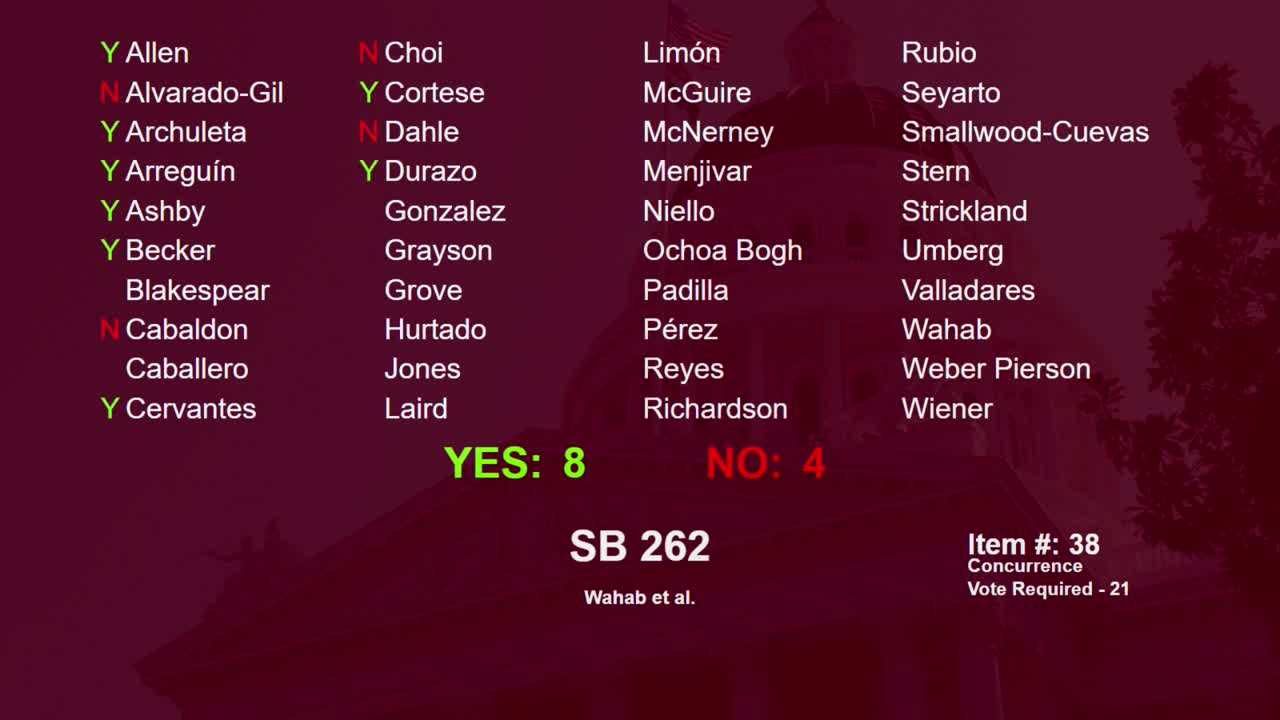
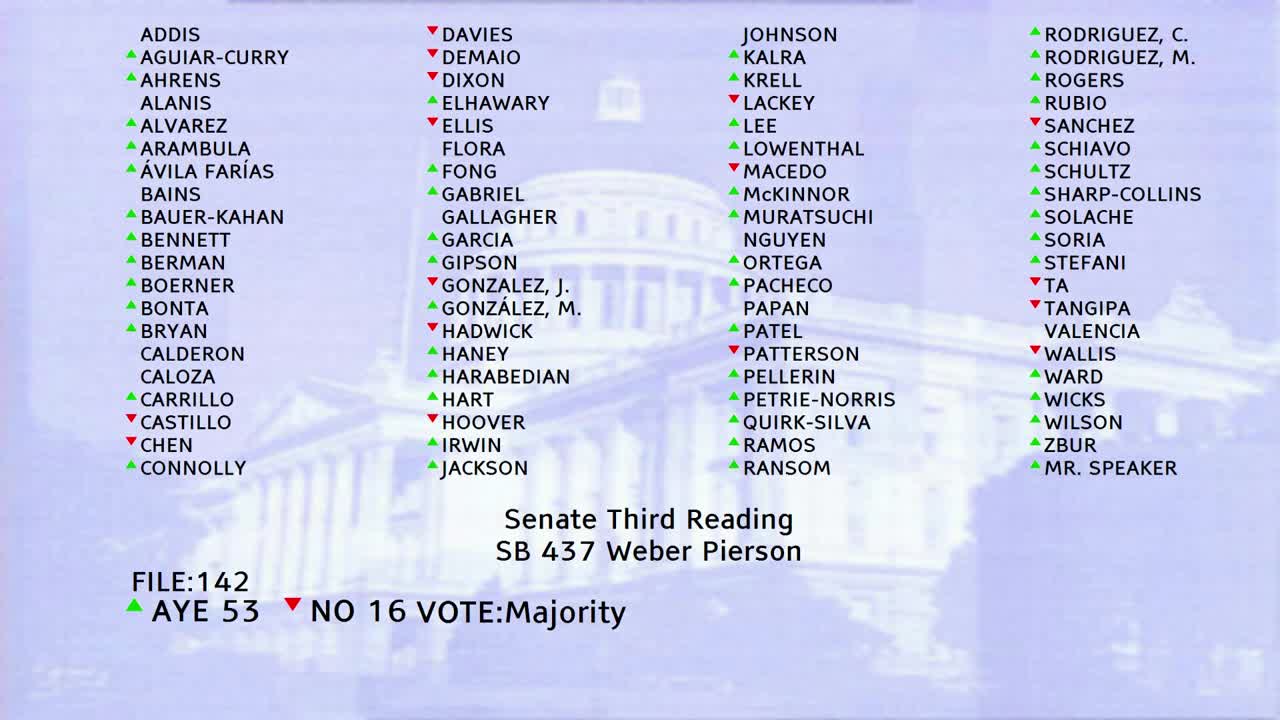


Bill Author

Bill Co-Author(s):