SB 307: Public postsecondary education: immigration enforcement.
- Session Year: 2025-2026
- House: Senate
- Latest Version Date: 2025-10-12
Current Status:
Passed
(2025-10-12: Chaptered by Secretary of State. Chapter 668, Statutes of 2025.)
Introduced
In Committee
Awaiting First Chamber Vote
Passed First Chamber
In Committee
Awaiting Second Chamber Vote
Passed Second Chamber
Enacted
Existing law requires the Trustees of the California State University, the governing boards of community college districts, and independent institutions of higher education that are qualifying institutions for purposes of the Cal Grant Program, and requests the Regents of the University of California, to the fullest extent consistent with state and federal law, to implement various precautionary measures when federal immigration enforcement activities are undertaken on campuses of those segments, as specified. Existing law requires those precautionary measures to include, among other measures, that in the event that an undocumented student is detained, deported, or is unable to attend to their academic requirements due to the action of an immigration officer in relation to a federal immigration order, as specified, a requirement that the college or university make all reasonable efforts to assist the student in retaining any eligibility for financial aid, fellowship stipends, and exemptions from nonresident tuition fees, among other benefits the student has been awarded or received, and a requirement that the student be permitted to reenroll if and when the student is able to return to the college or university.
This bill would require the Trustees of the California State University, and would request the Regents of the University of California, to implement additional precautionary measures, including, among others, requiring adoption of a systemwide policy addressing course grades, administrative withdrawal, and reenrollment for undocumented students who are unable to attend their courses by the final drop date due to immigration enforcement activity, as specified.
Existing law requires the Trustees of the California State University, the governing boards of community college districts, and independent institutions of higher education that are qualifying institutions for purposes of the Cal Grant Program, and requests the Regents of the University of California, to the fullest extent consistent with state and federal law, to implement various precautionary measures when federal immigration enforcement activities are undertaken on campuses of those segments, as specified. Existing law requires those precautionary measures to include, among other measures, that in the event that an undocumented student is detained, deported, or is unable to attend to their academic requirements due to the action of an immigration officer in relation to a federal immigration order, as specified, a requirement that the college or university make all reasonable efforts to assist the student in retaining any eligibility for financial aid, fellowship stipends, and exemptions from nonresident tuition fees, among other benefits the student has been awarded or received, and a requirement that the student be permitted to reenroll if and when the student is able to return to the college or university.
This bill would require the Trustees of the California State University, and would request the Regents of the University of California, to implement additional precautionary measures if an undocumented student is subject to a federal immigration order, measures, including, among others, requiring adoption of a systemwide policy addressing course grades, administrative withdrawal, and reenrollment for undocumented students who are detained, deported, or unable to attend courses due to the actions of immigration authorities in relation to a federal immigration order, unable to attend their courses by the final drop date due to immigration enforcement activity, as specified.
Existing law requires the Trustees of the California State University, the governing boards of community college districts, and independent institutions of higher education that are qualifying institutions for purposes of the Cal Grant Program, and requests the Regents of the University of California, to the fullest extent consistent with state and federal law, to implement various precautionary measures when federal immigration enforcement activities are undertaken on campuses of those segments, as specified. Existing law requires those precautionary measures to include, among other measures, that in the event that an undocumented student is detained, deported, or is unable to attend to their academic requirements due to the action of an immigration officer in relation to a federal immigration order, as specified, a requirement that the college or university make all reasonable efforts to assist the student in retaining any eligibility for financial aid, fellowship stipends, and exemptions from nonresident tuition fees, among other benefits the student has been awarded or received, and a requirement that the student be permitted to reenroll if and when the student is able to return to the college or university.
This bill would require the Trustees of the California State University, and would request the Regents of the University of California, to implement additional precautionary measures if an undocumented student is subject to a federal immigration order, including, among others, requiring adoption of systemwide policy addressing course grades, administrative withdrawal, and reenrollment for undocumented students who are detained, deported, or unable to attend courses due to the actions of an immigration officer immigration authorities in relation to a federal immigration order, as specified.
Existing law requires the Trustees of the California State University, the governing boards of community college districts, and independent institutions of higher education that are qualifying institutions for purposes of the Cal Grant Program, and requests the Regents of the University of California, to the fullest extent consistent with state and federal law, to implement various precautionary measures when federal immigration enforcement activities are undertaken on campuses of those segments, as specified. Existing law requires those precautionary measures to include, among other measures, that in the event that an undocumented student is detained, deported, or is unable to attend to their academic requirements due to the action of an immigration officer in relation to a federal immigration order, as specified, a requirement that the college or university make all reasonable efforts to assist the student in retaining any eligibility for financial aid, fellowship stipends, and exemptions from nonresident tuition fees, among other benefits the student has been awarded or received, and a requirement that the student be permitted to reenroll if and when the student is able to return to the college or university.
This bill would require the Trustees of the California State University, and would request the Regents of the University of California, to implement additional precautionary measures if an undocumented student is subject to a federal immigration order, including, among others, requiring adoption of systemwide policy addressing course grades, administrative withdrawal, and reenrollment for undocumented students who are detained, deported, or unable to attend courses due to the actions of an immigration officer in relation to a federal immigration order, as specified.
Existing law exempts a student, except as specified, from paying nonresident tuition at the California State University and the California Community Colleges if, among other conditions, the student has a total of 3 or more years of full-time attendance in certain California schools or attainment of equivalent credits earned while in those schools, as specified, or the student completes 3 or more years of full-time high school coursework in California and a total of 3 or more years of attendance in California elementary schools or California secondary schools, and, in the case of a person without lawful immigration status, has filed an affidavit with the institution of higher education stating that the student has filed an application to legalize the students immigration status, or will file an application as soon as the student is eligible to do so.This bill would state the intent of the Legislature to enact future legislation to address challenges and barriers in accessing a higher education degree in the event of the arrest, imprisonment, detainment, or deportation of a student, including arrangements for the online continuation of their courses to enable the completion of their degree programs.Existing law exempts a student, except as specified, from paying nonresident tuition at the California State University and the California Community Colleges if, among other conditions, the student has a total of 3 or more years of full-time attendance in certain California schools or attainment of equivalent credits earned while in those schools, as specified, or the student completes 3 or more years of full-time high school coursework in California and a total of 3 or more years of attendance in California elementary schools or California secondary schools, and, in the case of a person without lawful immigration status, has filed an affidavit with the institution of higher education stating that the student has filed an application to legalize the students immigration status, or will file an application as soon as the student is eligible to do so.
This bill would state the intent of the Legislature to enact future legislation to address challenges and barriers in accessing a higher education degree in the event of the arrest, imprisonment, detainment, or deportation of a student, including arrangements for the online continuation of their courses to enable the completion of their degree programs.
(a)For purposes of this section, institution means a California State University or a University of California campus.
(b)The Trustees of the California State University shall, and the Regents of the University of California are requested to, in addition to complying with subdivision (j) of Section 66093.3, do all of the following:
(1)If an undocumented student is subject to immigration enforcement activity, ensure that the undocumented students inability to satisfy the students academic requirements at the institution due to immigration enforcement activity does not affect the students qualification for the exemption from paying nonresident tuition pursuant to Section 68130.5, provided the student meets the requirements described in paragraphs (1) and (2) of subdivision (a) of Section 68130.5.
(2)Ensure that staff and the designated Dreamer Resource Liaison at the institution assist undocumented students in accessing all financial aid and academic resources available to undocumented students.
(3)Adopt a systemwide policy addressing course grades, administrative withdrawal, and reenrollment for undocumented students who are unable to attend their courses by the final drop date due to immigration enforcement activity. The systemwide policy shall include a timeframe during which a student withdrawn for nonattendance is reenrolled and retains the same academic status they held before their withdrawal, upon submitting written confirmation of their intent to return to the institution.
(a)For purposes of this section, institution means a California State University or a University of California campus.
(b)In the event that an undocumented student is subject to a federal immigration order, the The Trustees of the California State University shall, and the Regents of the University of California are requested to, in addition to complying with subdivision (j) of Section 66093.3, do both all of the following:
(1)Ensure that both of the following occur:(1)If an undocumented student is subject to immigration enforcement activity, ensure that the undocumented students inability to satisfy the students academic requirements at the institution due to immigration enforcement activity does not affect the students qualification for the exemption from paying nonresident tuition pursuant to Section 68130.5, provided the student meets the requirements described in paragraphs (1) and (2) of subdivision (a) of Section 68130.5.
(A)That(2)Ensure that staff and the designated Dreamer Resource Liaison at the institution assist undocumented students in accessing all financial aid and academic resources available to undocumented students.
(B)That the undocumented students detainment, deportation, or inability to satisfy the students academic requirements at the institution due to the actions of immigration authorities in relation to a federal immigration order does not affect the students qualification for the exemption from paying nonresident tuition pursuant to Section 68130.5, provided the student meets the requirements described in paragraphs (1) and (2) of subdivision (a) of Section 68130.5. (2)(3)Adopt a systemwide policy addressing course grades, administrative withdrawal, and reenrollment for undocumented students who are unable to attend their courses by the final drop date due to the students detainment, deportation, or inability to attend their courses due to the actions of immigration authorities in relation to a federal immigration order. immigration enforcement activity. The systemwide policy shall include a timeframe during which a student withdrawn for nonattendance is reenrolled and retains the same academic status they held before their withdrawal, upon submitting written confirmation of their intent to return to the institution.
(a)For purposes of this section, institution means a California State University or a University of California campus.
(b)In the event that an undocumented student is subject to a federal immigration order, the Trustees of the California State University shall, and the Regents of the University of California are requested to, in addition to complying with subdivision (j) of Section 66093.3, do both of the following:
(1)Ensure that both of the following occur:
(A)That staff and the designated Dreamer Resource Liaison at the institution assist undocumented students in accessing all financial aid and academic resources available to undocumented students.
(B)That the undocumented students detainment, deportation, or inability to satisfy the students academic requirements at the institution due to the actions of an immigration officer immigration authorities in relation to a federal immigration order does not affect the students qualification for in-state tuition under the California Dream Act, the exemption from paying nonresident tuition pursuant to Section 68130.5, provided the student meets the requirements described in paragraphs (1) and (2) of subdivision (a) of Section 68130.5.
(2)Adopt a systemwide policy addressing course grades, administrative withdrawal, and reenrollment for undocumented students who are unable to attend their courses by the final drop date due to the students detainment, deportation, or inability to attend their courses due to the actions of an immigration officer immigration authorities in relation to a federal immigration order. The systemwide policy shall include a timeframe during which a student withdrawn for nonattendance is reenrolled and retains the same academic status they held before their withdrawal, upon submitting written confirmation of their intent to return to the institution.
(a)For purposes of this section, institution means a California State University or a University of California campus.
(b)In the event that an undocumented student is subject to a federal immigration order, the Trustees of the California State University shall, and the Regents of the University of California are requested to, in addition to complying with subdivision (j) of Section 66093.3, do both of the following:
(1)Ensure that both of the following occur:
(A)That staff and the designated Dreamer Resource Liaison at the institution assist undocumented students in accessing all financial aid and academic resources available to undocumented students.
(B)That the undocumented students detainment, deportation, or inability to satisfy the students academic requirements at the institution due to the actions of an immigration officer in relation to a federal immigration order does not affect the students qualification for in-state tuition under the California Dream Act, provided the student meets the requirements described in paragraphs (1) and (2) of subdivision (a) of Section 68130.5.
(2)Adopt a systemwide policy addressing course grades, administrative withdrawal, and reenrollment for undocumented students who are unable to attend their courses by the final drop date due to the students detainment, deportation, or inability to attend their courses due to the actions of an immigration officer in relation to a federal immigration order. The systemwide policy shall include a timeframe during which a student withdrawn for nonattendance is reenrolled and retains the same academic status they held before their withdrawal, upon submitting written confirmation of their intent to return to the institution.
SECTION 1.It is the intent of the Legislature to enact future legislation to address challenges and barriers in accessing a higher education degree in the event of the arrest, imprisonment, detainment, or deportation of a student, including arrangements for the online continuation of their courses to enable the completion of their degree programs.It is the intent of the Legislature to enact future legislation to address challenges and barriers in accessing a higher education degree in the event of the arrest, imprisonment, detainment, or deportation of a student, including arrangements for the online continuation of their courses to enable the completion of their degree programs.
|
Date
|
Status
|
|---|---|
| Oct 12, 2025 | Chaptered by Secretary of State. Chapter 668, Statutes of 2025. |
| Oct 12, 2025 | Approved by the Governor. |
| Sep 22, 2025 | Enrolled and presented to the Governor at 11 a.m. |
| Sep 11, 2025 | Assembly amendments concurred in. (Ayes 30. Noes 7. Page 2926.) Ordered to engrossing and enrolling. |
| Sep 9, 2025 | In Senate. Concurrence in Assembly amendments pending. |
| Sep 9, 2025 | Read third time. Passed. (Ayes 60. Noes 8. Page 3065.) Ordered to the Senate. |
| Jul 17, 2025 | Read second time. Ordered to third reading. |
| Jul 16, 2025 | From committee: Do pass. (Ayes 9. Noes 4.) (July 16). |
| Jul 2, 2025 | From committee: Do pass and re-refer to Com. on APPR. (Ayes 9. Noes 2.) (July 1). Re-referred to Com. on APPR. |
| Jun 26, 2025 | Read second time and amended. Re-referred to Com. on JUD. |
| Jun 25, 2025 | From committee: Do pass as amended and re-refer to Com. on JUD. (Ayes 7. Noes 2.) (June 24). |
| Jun 9, 2025 | Referred to Coms. on HIGHER ED. and JUD. |
| Jun 3, 2025 | In Assembly. Read first time. Held at Desk. |
| Jun 2, 2025 | Read third time. Passed. (Ayes 30. Noes 3. Page 1387.) Ordered to the Assembly. |
| May 13, 2025 | Read second time. Ordered to third reading. |
| May 12, 2025 | From committee: Be ordered to second reading pursuant to Senate Rule 28.8. |
| May 2, 2025 | Set for hearing May 12. |
| Apr 30, 2025 | From committee: Do pass and re-refer to Com. on APPR. (Ayes 12. Noes 0. Page 939.) (April 29). Re-referred to Com. on APPR. |
| Apr 23, 2025 | From committee: Do pass and re-refer to Com. on JUD. (Ayes 6. Noes 1. Page 865.) (April 23). Re-referred to Com. on JUD. |
| Apr 17, 2025 | Set for hearing April 29 in JUD. pending receipt. |
| Apr 10, 2025 | From committee with author's amendments. Read second time and amended. Re-referred to Com. on ED. |
| Apr 4, 2025 | Set for hearing April 23. |
| Apr 2, 2025 | Re-referred to Coms. on ED. and JUD. |
| Mar 26, 2025 | From committee with author's amendments. Read second time and amended. Re-referred to Com. on RLS. |
| Feb 19, 2025 | Referred to Com. on RLS. |
| Feb 11, 2025 | From printer. May be acted upon on or after March 13. |
| Feb 10, 2025 | Introduced. Read first time. To Com. on RLS. for assignment. To print. |
|
Date
|
Description
|
Location
|
Votes
|
|
|---|---|---|---|---|
| Sep 11, 2025 | Unfinished Business SB307 Cervantes Concurrence | Senate Floor |
Passed |
|
| Sep 9, 2025 | SB 307 Cervantes Senate Third Reading By Fong | Assembly Floor |
Passed |
|
| Jul 16, 2025 | Do pass. | Assembly Standing Committee on Appropriations |
Passed |
|
| Jul 1, 2025 | Do pass and be re-referred to the Committee on [Appropriations] | Assembly Standing Committee on Judiciary |
Passed |
|
| Jun 24, 2025 | Do pass as amended and be re-referred to the Committee on [Judiciary] | Assembly Standing Committee on Higher Education |
Passed |
|
| Jun 2, 2025 | Senate 3rd Reading SB307 Cervantes | Senate Floor |
Passed |
|
| Apr 29, 2025 | Do pass, but first be re-referred to the Committee on [Appropriations] | Senate Standing Committee on Judiciary |
Passed |
|
| Apr 23, 2025 | Do pass, but first be re-referred to the Committee on [Judiciary] | Senate Standing Committee on Education |
Passed |
This list shows positions taken on this bill by organizations on the date displayed, which is linked to the original source.
Positions by individuals are not included.
|
Organization
|
Position
|
Date
|
|---|---|---|
| 1 individual | ** Against | |
| California Charter Schools Association | ** Support | |
| California Faculty Association | ** Support | |
| California State Council of Service Employees International Union | ** Support | |
| California Undocumented Higher Education Coalition | ** Support | |
| California Undocumented Higher Education Coalition- CUHEC | ** Support | |
| CFT- a Union of Educators & Classified Professionals, Aft, Afl-cio | ** Support |
SENATE RULES COMMITTEE Office of Senate Floor Analyses (916) 651-1520 Fax: (916) 327-4478 | SB 307 |
UNFINISHED BUSINESS
Bill No: SB 307
Author: Cervantes (D)
Amended: 6/26/25
Vote: 21
SENATE EDUCATION COMMITTEE: 6-1, 4/23/25
AYES: Pérez, Ochoa Bogh, Cabaldon, Cortese, Gonzalez, Laird
NOES: Choi
SENATE JUDICIARY COMMITTEE: 12-0, 4/29/25
AYES: Umberg, Niello, Allen, Arreguín, Ashby, Caballero, Durazo, Laird, Stern, Wahab, Weber Pierson, Wiener
NO VOTE RECORDED: Valladares
SENATE APPROPRIATIONS COMMITTEE: Senate Rule 28.8
SENATE FLOOR: 30-3, 6/2/25
AYES: Allen, Archuleta, Arreguín, Ashby, Becker, Blakespear, Cabaldon, Caballero, Cervantes, Cortese, Durazo, Gonzalez, Grayson, Laird, Limón, McGuire, McNerney, Menjivar, Niello, Ochoa Bogh, Padilla, Pérez, Richardson, Rubio, Smallwood-Cuevas, Stern, Umberg, Wahab, Weber Pierson, Wiener
NOES: Alvarado-Gil, Choi, Strickland
NO VOTE RECORDED: Dahle, Grove, Hurtado, Jones, Reyes, Seyarto, Valladares
ASSEMBLY FLOOR: 60-8, 9/9/25 - See last page for vote
SUBJECT: Public postsecondary education: immigration enforcement
SOURCE: Author
DIGEST:
This bill requires the California State University (CSU) Trustees and requests the University of California (UC) Regents to implement additional precautionary measures including, among other things, requiring adoption of a systemwide policy on course grades, administrative withdrawal, and reenrollment for undocumented students unable to attend their courses due to immigration enforcement activity.
Assembly Amendments of 6/26/25
broaden the circumstances under which a student may retain their academic status and eligibility for the nonresident tuition exemption by including immigration enforcement activity.
ANALYSIS:
Existing law:
- Establishes the CSU, under the administration of the Trustees of the CSU, and the UC, under the administration of the Regents of the UC. (Education Code (EC) § 66600 and California Constitution, Article IX, Section 9)
- Requires the Trustees of the CSU, the governing boards of community college districts, and independent institutions of higher education that are qualifying institutions for purposes of the Cal Grant Program, and requests the Regents of the UC, to the fullest extent consistent with state and federal law, to implement various precautionary measures when federal immigration enforcement activities are undertaken on campuses of those segments, as specified, including, among others, that those postsecondary entities advise all students, faculty, and staff to notify the Office of the Chancellor or President, or their designee, as soon as possible, if they are advised that an immigration officer is expected to enter, will enter, or has entered the campus to execute a federal immigration order. (EC § 66093.3 et seq.)
- Requires in the event that an undocumented student is subject to a federal immigration order, ensure that both of the following occur:
- In the event that an undocumented student is detained, deported, or is unable to attend to their academic requirements due to the actions of an immigration officer in relation to a federal immigration order, the college or university is to make all reasonable efforts to assist the student in retaining any eligibility for financial aid, fellowship stipends, exemption from nonresident tuition fees, funding for research or other educational projects, housing stipends or services, or other benefits they have been awarded or received, and permit the student to be reenrolled if and when the student is able to return to the college or university. It is the intent of the Legislature that, in implementing this paragraph, California colleges and universities make reasonable and good-faith efforts to provide for a seamless transition in a student’s reenrollment and reacquisition of campus services and supports.
- That staff is available to assist, in a sensitive manner, undocumented students and other students, faculty, and staff who may be subject to a federal immigration order or inquiry or who may face similar issues and whose education or employment is at risk because of federal immigration actions. (EC § 66093.3 (j))
- Requires the California Community Colleges (CCC) and the CSU, and requests the UC, to designate a Dreamer Resource Liaison who is knowledgeable in available financial aid and other support services and academic opportunities for all students meeting the requirements for the exemption from paying nonresident tuition established by AB 540 (Firebaugh, Chapter 814, Statutes of 2001), including undocumented students. (EC § 66021.8.)
- Exempts specified California nonresidents from paying nonresident tuition at UC, CSU, and CCC, also known as the AB 540 nonresident tuition waiver, if they graduated from a California high school and either 1) attended a California high school for three years or 2) earned the equivalent of three years of high school credit at a California high school and attended three years at some combination of California elementary or secondary schools are exempt from paying nonresident tuition. Students may also qualify if they meet a combination of specified time and coursework requirements and degree or unit requirements at a community college or adult school. (EC § 68130.5)
This bill:
- Requires the CSU Trustees and requests the UC Regents do both of the following:
- If an undocumented student is subject to immigration enforcement activity, ensure that the undocumented student’s inability to satisfy the student’s academic requirements at the institution due to immigration enforcement activity does not affect the student’s qualification for the exemption from paying nonresident tuition, provided the student meets the prescribed requirements.
- Ensure that staff and the designated Dreamer Resource Liaison at the institution assist undocumented students in accessing all financial aid and academic resources available to undocumented students.
- Adopt a systemwide policy for addressing course grades, administrative withdrawal, and reenrollment for undocumented students who are unable to attend their courses by the final drop date due to immigration enforcement activity. The systemwide policy is to include a timeframe during which a student withdrawn for nonattendance is reenrolled and retains the same academic status they held before their withdrawal upon submitting written confirmation of their intent to return to the institution.
Comments
Need for this bill. According to the author, “in California, a significant number of undocumented college students face formidable obstacles due to their ineligibility for DACA, creating a complex web of challenges for both the students themselves and the institutions they attend. These challenges encompass not only employment and access to financial aid but also the constant threat of deportation, which looms over their educational aspirations. It is estimated that around 17,000 individuals in California are excluded from DACA because of decisions made during the Trump administration and various court rulings. Furthermore, nearly 100,000 Californians are ineligible for other reasons, adding to the complexity of their situation.
“With approximately 83,000 undocumented college students, California is home to the largest population of its kind in the United States. This demographic represents a vibrant and diverse cohort of young individuals eager to pursue their dreams yet hindered by their status. Recognizing their potential, our higher education systems must go beyond merely designating specific spaces and personnel to support undocumented youth. It is imperative that they establish comprehensive policies that not only facilitate support but also provide tangible resources for Dreamer Resource Liaisons. These resources should encompass well-structured plans and navigational tools aimed at empowering students to chart a successful course for their futures, ensuring that they receive the guidance and assistance necessary to thrive despite the obstacles they face.
“SB 307 seeks to empower our universities to implement comprehensive support systems for undocumented students, ensuring they receive not only legal assistance but also proactive measures that prioritize their educational journey. This legislation encourages institutions to develop tailored strategies and policies that facilitate the continuation of higher education for these students, safeguarding against potential disruptions.
“In an environment where the current federal administration has committed to mass deportations, undocumented students face an urgent threat to their stability and safety. While all undocumented individuals are at risk, those without DACA face an even greater vulnerability. Therefore, it is imperative that we take definitive and preemptive actions to shield undocumented students from the fluctuating immigration policies that may jeopardize their academic pursuits and the relentless efforts they have invested in their education. By fostering a supportive and secure educational environment, we can help ensure that these students can thrive and achieve their dreams despite the challenges they encounter.”
Attempts to fill in gaps in existing policies. Current law requires UC and CSU to designate a Dreamer Resource Liaison who is knowledgeable in available financial aid resources, legal services, and academic opportunities to assist students, including undocumented students. Current law already mandates CSU and UC to provide assistance to undocumented students facing detention, deportation, or inability to fulfill academic requirements as a result of immigration actions. Institutions must make reasonable efforts to help these students retain their benefits and allow them to re-enroll when they return. This bill requires the CSU Trustees and requests UC to make sure that the Dreamer Resource Liaison position offers similar services. It explicitly prohibits immigration actions from affecting a student’s nonresident tuition exemption rather than making a reasonable effort to maintain that benefit. This bill further calls on CSU and UC to adopt a systemwide policy to address course grades, withdrawal, and reenrollment for undocumented students who are impacted by immigration enforcement activity. This bill seems to align with existing efforts aimed at supporting students continuing their college education with minimal disruption after being impacted by immigration enforcement actions.
The right to education is fundamental right. As cited in the Attorney General’s (AG) Guidance and Model Policies to Assist California Colleges and Universities in Responding to Immigration Issues, “Under the U.S. Constitution, all students have a right to receive an education without discrimination based on immigration status. In Plyler v. Doe, the U.S. Supreme Court recognized that undocumented immigrant students cannot be denied equal access to a public education on the basis of their immigration status. Under the California Constitution, all students and staff—regardless of immigration status— have a right to privacy and ‘the inalienable right to attend campuses which are safe, secure and peaceful.’ The California Supreme Court has affirmed that an immigrant student’s right to an equal educational opportunity is ‘a vitally important right in our society.’ Protections are expressly codified in California law to assure educational access for all, regardless of a student’s immigration status, ‘in any [educational] program or activity conducted by an educational institution that receives, or benefits from, state financial assistance, or enrolls pupils who receive state financial aid.’” Notably, this state, as well as its colleges and universities, has invested in undocumented students by creating an affordable path for degree attainment with academic support. This bill attempts to secure continuity of education for these students.
FISCAL EFFECT: Appropriation: No Fiscal Com.: Yes Local: No
According to the Assembly Appropriations Committee analysis, this bill would have no state costs.
SUPPORT: (Verified 9/9/25)
California Charter Schools Association
California Faculty Association
California State Council of Service Employees International Union
California Undocumented Higher Education Coalition
CFT- A Union of Educators & Classified Professionals, AFT, AFL-CIO
OPPOSITION: (Verified 9/9/25)
1 Individual
ASSEMBLY FLOOR: 60-8, 9/9/25
AYES: Addis, Aguiar-Curry, Ahrens, Alvarez, Arambula, Ávila Farías, Bains, Bauer-Kahan, Bennett, Berman, Boerner, Bonta, Bryan, Calderon, Caloza, Carrillo, Connolly, Elhawary, Fong, Gabriel, Garcia, Gipson, Mark González, Haney, Harabedian, Hart, Irwin, Jackson, Kalra, Krell, Lee, Lowenthal, McKinnor, Muratsuchi, Nguyen, Ortega, Pacheco, Papan, Patel, Pellerin, Petrie-Norris, Quirk-Silva, Ramos, Ransom, Celeste Rodriguez, Michelle Rodriguez, Rogers, Blanca Rubio, Schiavo, Schultz, Sharp-Collins, Solache, Soria, Stefani, Valencia, Ward, Wicks, Wilson, Zbur, Rivas
NOES: Chen, DeMaio, Dixon, Gallagher, Jeff Gonzalez, Hadwick, Sanchez, Tangipa
NO VOTE RECORDED: Alanis, Castillo, Davies, Ellis, Flora, Hoover, Johnson, Lackey, Macedo, Patterson, Ta, Wallis
Prepared by: Olgalilia Ramirez / ED. / (916) 651-4105
9/22/26 11:38:44
SENATE RULES COMMITTEE Office of Senate Floor Analyses (916) 651-1520 Fax: (916) 327-4478 | SB 307 |
UNFINISHED BUSINESS
Bill No: SB 307
Author: Cervantes (D)
Amended: 6/26/25
Vote: 21
SENATE EDUCATION COMMITTEE: 6-1, 4/23/25
AYES: Pérez, Ochoa Bogh, Cabaldon, Cortese, Gonzalez, Laird
NOES: Choi
SENATE JUDICIARY COMMITTEE: 12-0, 4/29/25
AYES: Umberg, Niello, Allen, Arreguín, Ashby, Caballero, Durazo, Laird, Stern, Wahab, Weber Pierson, Wiener
NO VOTE RECORDED: Valladares
SENATE APPROPRIATIONS COMMITTEE: Senate Rule 28.8
SENATE FLOOR: 30-3, 6/2/25
AYES: Allen, Archuleta, Arreguín, Ashby, Becker, Blakespear, Cabaldon, Caballero, Cervantes, Cortese, Durazo, Gonzalez, Grayson, Laird, Limón, McGuire, McNerney, Menjivar, Niello, Ochoa Bogh, Padilla, Pérez, Richardson, Rubio, Smallwood-Cuevas, Stern, Umberg, Wahab, Weber Pierson, Wiener
NOES: Alvarado-Gil, Choi, Strickland
NO VOTE RECORDED: Dahle, Grove, Hurtado, Jones, Reyes, Seyarto, Valladares
ASSEMBLY FLOOR: 47-4, 9/9/25 – Roll call not available.
SUBJECT: Public postsecondary education: immigration enforcement
SOURCE: Author
DIGEST:
This bill requires the California State University (CSU) Trustees and requests the University of California (UC) Regents to implement additional precautionary measures including, among other things, requiring adoption of a systemwide policy on course grades, administrative withdrawal, and reenrollment for undocumented students unable to attend their courses due to immigration enforcement activity.
Assembly Amendments of 6/26/25
broaden the circumstances under which a student may retain their academic status and eligibility for the nonresident tuition exemption by including immigration enforcement activity.
ANALYSIS:
Existing law:
- Establishes the CSU, under the administration of the Trustees of the CSU, and the UC, under the administration of the Regents of the UC. (Education Code (EC) § 66600 and California Constitution, Article IX, Section 9)
- Requires the Trustees of the CSU, the governing boards of community college districts, and independent institutions of higher education that are qualifying institutions for purposes of the Cal Grant Program, and requests the Regents of the UC, to the fullest extent consistent with state and federal law, to implement various precautionary measures when federal immigration enforcement activities are undertaken on campuses of those segments, as specified, including, among others, that those postsecondary entities advise all students, faculty, and staff to notify the Office of the Chancellor or President, or their designee, as soon as possible, if they are advised that an immigration officer is expected to enter, will enter, or has entered the campus to execute a federal immigration order. (EC § 66093.3 et seq.)
- Requires in the event that an undocumented student is subject to a federal immigration order, ensure that both of the following occur:
- In the event that an undocumented student is detained, deported, or is unable to attend to their academic requirements due to the actions of an immigration officer in relation to a federal immigration order, the college or university is to make all reasonable efforts to assist the student in retaining any eligibility for financial aid, fellowship stipends, exemption from nonresident tuition fees, funding for research or other educational projects, housing stipends or services, or other benefits they have been awarded or received, and permit the student to be reenrolled if and when the student is able to return to the college or university. It is the intent of the Legislature that, in implementing this paragraph, California colleges and universities make reasonable and good-faith efforts to provide for a seamless transition in a student’s reenrollment and reacquisition of campus services and supports.
- That staff is available to assist, in a sensitive manner, undocumented students and other students, faculty, and staff who may be subject to a federal immigration order or inquiry or who may face similar issues and whose education or employment is at risk because of federal immigration actions. (EC § 66093.3 (j))
- Requires the California Community Colleges (CCC) and the CSU, and requests the UC, to designate a Dreamer Resource Liaison who is knowledgeable in available financial aid and other support services and academic opportunities for all students meeting the requirements for the exemption from paying nonresident tuition established by AB 540 (Firebaugh, Chapter 814, Statutes of 2001), including undocumented students. (EC § 66021.8.)
- Exempts specified California nonresidents from paying nonresident tuition at UC, CSU, and CCC, also known as the AB 540 nonresident tuition waiver, if they graduated from a California high school and either 1) attended a California high school for three years or 2) earned the equivalent of three years of high school credit at a California high school and attended three years at some combination of California elementary or secondary schools are exempt from paying nonresident tuition. Students may also qualify if they meet a combination of specified time and coursework requirements and degree or unit requirements at a community college or adult school. (EC § 68130.5)
This bill:
- Requires the CSU Trustees and requests the UC Regents do both of the following:
- If an undocumented student is subject to immigration enforcement activity, ensure that the undocumented student’s inability to satisfy the student’s academic requirements at the institution due to immigration enforcement activity does not affect the student’s qualification for the exemption from paying nonresident tuition, provided the student meets the prescribed requirements.
- Ensure that staff and the designated Dreamer Resource Liaison at the institution assist undocumented students in accessing all financial aid and academic resources available to undocumented students.
- Adopt a systemwide policy for addressing course grades, administrative withdrawal, and reenrollment for undocumented students who are unable to attend their courses by the final drop date due to immigration enforcement activity. The systemwide policy is to include a timeframe during which a student withdrawn for nonattendance is reenrolled and retains the same academic status they held before their withdrawal upon submitting written confirmation of their intent to return to the institution.
Comments
Need for this bill. According to the author, “in California, a significant number of undocumented college students face formidable obstacles due to their ineligibility for DACA, creating a complex web of challenges for both the students themselves and the institutions they attend. These challenges encompass not only employment and access to financial aid but also the constant threat of deportation, which looms over their educational aspirations. It is estimated that around 17,000 individuals in California are excluded from DACA because of decisions made during the Trump administration and various court rulings. Furthermore, nearly 100,000 Californians are ineligible for other reasons, adding to the complexity of their situation.
“With approximately 83,000 undocumented college students, California is home to the largest population of its kind in the United States. This demographic represents a vibrant and diverse cohort of young individuals eager to pursue their dreams yet hindered by their status. Recognizing their potential, our higher education systems must go beyond merely designating specific spaces and personnel to support undocumented youth. It is imperative that they establish comprehensive policies that not only facilitate support but also provide tangible resources for Dreamer Resource Liaisons. These resources should encompass well-structured plans and navigational tools aimed at empowering students to chart a successful course for their futures, ensuring that they receive the guidance and assistance necessary to thrive despite the obstacles they face.
“SB 307 seeks to empower our universities to implement comprehensive support systems for undocumented students, ensuring they receive not only legal assistance but also proactive measures that prioritize their educational journey. This legislation encourages institutions to develop tailored strategies and policies that facilitate the continuation of higher education for these students, safeguarding against potential disruptions.
“In an environment where the current federal administration has committed to mass deportations, undocumented students face an urgent threat to their stability and safety. While all undocumented individuals are at risk, those without DACA face an even greater vulnerability. Therefore, it is imperative that we take definitive and preemptive actions to shield undocumented students from the fluctuating immigration policies that may jeopardize their academic pursuits and the relentless efforts they have invested in their education. By fostering a supportive and secure educational environment, we can help ensure that these students can thrive and achieve their dreams despite the challenges they encounter.”
Attempts to fill in gaps in existing policies. Current law requires UC and CSU to designate a Dreamer Resource Liaison who is knowledgeable in available financial aid resources, legal services, and academic opportunities to assist students, including undocumented students. Current law already mandates CSU and UC to provide assistance to undocumented students facing detention, deportation, or inability to fulfill academic requirements as a result of immigration actions. Institutions must make reasonable efforts to help these students retain their benefits and allow them to re-enroll when they return. This bill requires the CSU Trustees and requests UC to make sure that the Dreamer Resource Liaison position offers similar services. It explicitly prohibits immigration actions from affecting a student’s nonresident tuition exemption rather than making a reasonable effort to maintain that benefit. This bill further calls on CSU and UC to adopt a systemwide policy to address course grades, withdrawal, and reenrollment for undocumented students who are impacted by immigration enforcement activity. This bill seems to align with existing efforts aimed at supporting students continuing their college education with minimal disruption after being impacted by immigration enforcement actions.
The right to education is fundamental right. As cited in the Attorney General’s (AG) Guidance and Model Policies to Assist California Colleges and Universities in Responding to Immigration Issues, “Under the U.S. Constitution, all students have a right to receive an education without discrimination based on immigration status. In Plyler v. Doe, the U.S. Supreme Court recognized that undocumented immigrant students cannot be denied equal access to a public education on the basis of their immigration status. Under the California Constitution, all students and staff—regardless of immigration status— have a right to privacy and ‘the inalienable right to attend campuses which are safe, secure and peaceful.’ The California Supreme Court has affirmed that an immigrant student’s right to an equal educational opportunity is ‘a vitally important right in our society.’ Protections are expressly codified in California law to assure educational access for all, regardless of a student’s immigration status, ‘in any [educational] program or activity conducted by an educational institution that receives, or benefits from, state financial assistance, or enrolls pupils who receive state financial aid.’” Notably, this state, as well as its colleges and universities, has invested in undocumented students by creating an affordable path for degree attainment with academic support. This bill attempts to secure continuity of education for these students.
FISCAL EFFECT: Appropriation: No Fiscal Com.: Yes Local: No
According to the Assembly Appropriations Committee analysis, this bill would have no state costs.
SUPPORT: (Verified 9/9/25)
California Charter Schools Association
California Faculty Association
California State Council of Service Employees International Union
California Undocumented Higher Education Coalition
CFT- A Union of Educators & Classified Professionals, AFT, AFL-CIO
OPPOSITION: (Verified 9/9/25)
1 Individual
Prepared by: Olgalilia Ramirez / ED. / (916) 651-4105
9/9/25 14:02:42
SENATE THIRD READING
STR Bill Id:SB 307
Author:(Cervantes)
As Amended Ver:June 26, 2025
Majority vote
SUMMARY
Requires the Trustees of the California State University (CSU), and requests the Regents of the University of California (UC), to take a number of actions and adopt a systemwide policy aimed at maintaining the enrollment, financial aid, and academic resources for undocumented students who are unable to attend their courses by the final drop date due to immigration enforcement activity.
Major Provisions
- Requires the CSU Trustees, and requests the UC Regents, to do all of the following:
- If an undocumented student is subject to immigration enforcement activity, ensure that the undocumented student's inability to satisfy the student's academic requirements at the institution due to immigration enforcement activity does not affect the student's qualification for the exemption from paying nonresident tuition;
- Ensure that staff and the designated Dreamer Resource Liaison at the institution assist undocumented students in accessing all financial aid and academic resources available to undocumented students; and,
- Adopt a systemwide policy addressing course grades, administrative withdrawal, and re-enrollment for undocumented students who are unable to attend their courses by the final drop date due to immigration enforcement activity. Specifies that this policy must include a timeframe during which a student withdrawn for non-attendance is re-enrolled and retains the same academic status that they held before their withdrawal, upon submitting written confirmation of their intent to return.
- Defines, for the purposes of its provisions, "institution" to mean a campus of the CSU or UC.
COMMENTS
Undocumented Students and Deferred Action for Childhood Arrivals (DACA). There are an estimated 408,000 undocumented students enrolled in colleges and universities across the United States.[1] 182,000 of these students are students with DACA or who are eligible for DACA.
The DACA process is a federal process that, since 2012, defers removal action of an individual for a specified number of years; and it allows eligible individuals to have work authorization.
In California alone, there are an estimated 87,000 undocumented university students.[2] Many of California's undocumented students have DACA, though the numbers of DACA recipients in California's postsecondary institutions of higher learning have been decreasing in recent years, as the time-based requirements for DACA mean that fewer and fewer incoming undocumented college students are eligible for DACA, and ongoing lawsuits around DACA have prevented the federal government from approving new applications since July 16, 2021.
With the lawsuits against DACA continuing to progress amid an administration that appears non-supportive to the program, the future of DACA remains uncertain. In the event that DACA ends, DACA recipients will lose their protections from deportation and once again, be at risk of deportation like all undocumented individuals. Furthermore, on January 17, 2025, the Fifth Circuit Court of Appeals issued a decision to Texas v. United States, No. 23-40653 finding major parts of the DACA rule as unlawful.
The court also limited the impact of its ruling by indicating that current DACA recipients across the U.S. can still renew their DACA while the case continues to make its way through the courts. The court limited its decision to the State of Texas, and sent the case back to the district court with an instruction to sever the forbearance from the deportation provision from the work authorization. That is to say, no more work permits would be granted, only protection from deportation. The mandate effectuating this ruling was issued on March 11, 2025, and defendants, defendant-intervenors, and plaintiffs had time to request a review by the U.S. Supreme Court (SCOTUS).
At the time of this analysis, there is no legal limitation on the processing of pending or first-time DACA requests in all 50 states, including Texas. The deadline for requesting review by SCOTUS was May 19, 2025; none of the parties filed a request. The case has now moved to the implementation phase and the Fifth Circuit Court of Appeals Judge will determine how best to implement the appeals court's decision that would result in Texas DACA recipients no longer receiving work authorization. According to the Mexican American Legal Defense and Education Fund (MALDEF), the process is expected to take some time, and, for now, all current DACA recipients, including in Texas, receive, including on renewal, full DACA protection and work authorization.
According to the Author
According to the author, "in California, a significant number of undocumented college students face formidable obstacles due to their ineligibility for DACA [Deferred Action for Childhood Arrivals], creating a complex web of challenges for both the students themselves and the institutions they attend. These challenges encompass not only employment and access to financial aid but also the constant threat of deportation, which looms over their educational aspirations."
The author states that, "SB 307 seeks to empower our universities to implement comprehensive support systems for undocumented students, ensuring they receive not only legal assistance but also proactive measures that prioritize their educational journey. This legislation encourages institutions to develop tailored strategies and policies that facilitate the continuation of higher education for these students, safeguarding against potential disruptions. In an environment where the current federal administration has committed to mass deportations, undocumented students face an urgent threat to their stability and safety."
Lastly, the author contends that, "while all undocumented individuals are at risk, those without DACA face an even greater vulnerability. Therefore, it is imperative that we take definitive and preemptive actions to shield undocumented students from the fluctuating immigration policies that may jeopardize their academic pursuits and the relentless efforts they have invested in their education. By fostering a supportive and secure educational environment, we can help ensure that these students can thrive and achieve their dreams despite the challenges they encounter."
Arguments in Support
According to the California Undocumented Higher Education Coalition (CUHEC), "the detainment or deportation of students themselves or family members can have a significant impact on student academic progress. If a student is deported themselves, for example, a student would be unable to attend their academic courses, and as such, experience a change in their academic standing and, subsequently, financial aid eligibility, especially as it pertains to maintaining eligibility for in-state tuition."
Further, CUHEC states that, "SB 307 addresses these concerns by strengthening system policies at the CSU and the UC to ensure that undocumented students within these systems can maintain both academic progress and financial aid access, regardless of actions undertaken by immigration authorities on these students. In light of mounting pressures and anti-immigrant sentiment from the federal government, this bill gives California the opportunity to reaffirm its support for and solidarity with undocumented students."
Arguments in Opposition
None on file.
FISCAL COMMENTS
According to the Assembly Committee on Appropriations, there are no state costs.
VOTES
SENATE FLOOR: 30-3-7
YES: Allen, Archuleta, Arreguín, Ashby, Becker, Blakespear, Cabaldon, Caballero, Cervantes, Cortese, Durazo, Gonzalez, Grayson, Laird, Limón, McGuire, McNerney, Menjivar, Niello, Ochoa Bogh, Padilla, Pérez, Richardson, Rubio, Smallwood-Cuevas, Stern, Umberg, Wahab, Weber Pierson, Wiener
NO: Alvarado-Gil, Choi, Strickland
ABS, ABST OR NV: Dahle, Grove, Hurtado, Jones, Reyes, Seyarto, Valladares
ASM HIGHER EDUCATION: 7-2-1
YES: Fong, Boerner, Jackson, Muratsuchi, Patel, Celeste Rodriguez, Sharp-Collins
NO: Jeff Gonzalez, Tangipa
ABS, ABST OR NV: DeMaio
ASM JUDICIARY: 9-2-1
YES: Kalra, Bauer-Kahan, Bryan, Connolly, Harabedian, Pacheco, Papan, Stefani, Zbur
NO: Dixon, Sanchez
ABS, ABST OR NV: Macedo
ASM APPROPRIATIONS: 9-4-2
YES: Wicks, Calderon, Caloza, Elhawary, Fong, Mark González, Hart, Pacheco, Solache
NO: Sanchez, Dixon, Ta, Tangipa
ABS, ABST OR NV: Arambula, Pellerin
UPDATED
VERSION: June 26, 2025
CONSULTANT: Jeanice Warden / HIGHER ED. / (916) 319-3960 FN: 0001125
Date of Hearing: July 16, 2025
ASSEMBLY COMMITTEE ON APPROPRIATIONS
Buffy Wicks, Chair
SBPCA Bill Id:SB 307
Author:(Cervantes) – As Amended Ver:June 26, 2025
Policy Committee: | Higher Education | Vote: | 7 - 2 |
Judiciary | 9 - 2 | ||
|
|
Urgency: No State Mandated Local Program: No Reimbursable: No
SUMMARY:
This bill requires the Trustees of the California State University (CSU), and requests the Regents of the University of California (UC), to ensure that an undocumented student’s inability to satisfy their academic requirements due to an immigration enforcement activity at their institution does not affect the student’s nonresident tuition exemption.
The bill also requires the CSU, and requests the UC, to ensure that staff and the designated Dreamer Resource Liaisons at each campus assist undocumented students in accessing all financial aid and academic resources available and adopt a systemwide policy to address course grades, administrative withdrawal, and reenrollment for undocumented students.
FISCAL EFFECT:
No state costs.
COMMENTS:
- Purpose. According to the author:
SB 307 seeks to empower our universities to implement comprehensive support systems for undocumented students, ensuring they receive not only legal assistance but also proactive measures that prioritize their educational journey. This legislation encourages institutions to develop tailored strategies and policies that facilitate the continuation of higher education for these students, safeguarding against potential disruptions. In an environment where the current federal administration has committed to mass deportations, undocumented students face an urgent threat to their stability and safety.
- Background. Undocumented Students. According to the American Immigration Council and Presidents’ Alliance on Higher Education and Immigration, there are approximately 408,000 undocumented students enrolled in colleges and universities in the United States, with an estimated 87,000 of these students attending universities in California. Many of California’s undocumented students have Deferred Action for Childhood Arrivals (DACA) status, which is a federal designation, established in 2012, providing for a deferral of removal action of an individual for a specified number of years so that eligible individuals may have work authorization. However, ongoing litigation has prevented the federal government from approving new applications since July 16, 2021. Should DACA end, recipients will face the risk of deportation similar to all other undocumented individuals.
Support for Undocumented Students. The California Legislature has made a concerted effort to ensure that DACA recipients and undocumented students in general have the ability to earn a college degree and feel safe on campus. For example, in 2017, the Legislature passed the California Values Act, SB 54 (De León), Chapter 495, Statutes of 2017, which limited local law enforcement agencies’ sharing of inmate information with federal immigration agencies, and prohibited law enforcement agencies from using their resources for immigration enforcement or from cooperating in immigration enforcement activities. SB 54 also required the Attorney General to publish various model policies regarding local entities’ involvement or cooperation with immigration enforcement. Such policies were updated in December 2024 and include limiting assistance with immigration enforcement at public schools, public libraries, health care facilities, courthouses, various state agencies, and universities, which public schools, health care facilities operated by the state, and courthouses are required to implement.
The model policies for colleges and universities include that colleges and universities must provide students and their families with an annual notice of the institution’s policies for privacy of students’ personal information, including information regarding their immigration status, and that colleges and universities must advise all students, faculty, and staff to immediately notify the office of the campus chancellor or president, or their designee, when they are advised that an immigration officer is planning to, will, or has entered the campus for immigration enforcement purposes.
Further, the model policies require that, if there is reason to suspect that a student, faculty member, or staff member has been taken into custody for immigration enforcement, the college or university must notify the person’s emergency contact that the person may have been taken into custody. SB 54 encouraged, but did not require, that the UC, CSU, and CCCs implement these model policies.
Additionally, current law requires universities to make all reasonable efforts to assist a student subject to an immigration order to retain their eligibility for financial aid, fellowship stipends, exemption from non-resident tuition, housing stipends or services, and other funding or benefits they received. While existing law requires each CSU and UC campus to have a designated Dreamer Resource Liaison knowledgeable in available financial aid resources, legal services, and academic opportunities to assist students, including undocumented students, this bill requires the CSU Trustees, and requests the UC Regents, to ensure that this liaison assists undocumented students in accessing all financial aid and academic resources available to undocumented students. This bill protects a CSU or UC undocumented student’s exemption from nonresident tuition if the student is unable to satisfy their academic requirements as a result of an immigration enforcement activity on their campus while also requiring the CSU Trustees, and requesting the UC Regents, to adopt a systemwide policy addressing course grades, administrative withdrawal, and reenrollment for such students who are unable to attend their course by the final drop date.
Analysis Prepared by: Aaron Heredia / APPR. / (916) 319-2081
Date of Hearing: July 1, 2025
ASSEMBLY COMMITTEE ON JUDICIARY
Ash Kalra, Chair
SBPCA Bill Id:SB 307
Author:(Cervantes) – As Amended Ver:June 26, 2025
SENATE VOTE: 30-3
SUBJECT: PUBLIC POSTSECONDARY EDUCATION: IMMIGRATION ENFORCEMENT
KEY ISSUE: SHOULD PUBLIC COLLEGES AND UNIVERSITIES BE REQUIRED TO IMPLEMENT POLICIES RELATED TO ENSURING CONTINUED ACCESS TO EDUCATION FOR STUDENTS WHO MAY BE SUBJECT TO IMMIGRATION ENFORCEMENT ACTIVITY?
SYNOPSIS
The Legislature has an extensive history of promoting immigrant and undocumented students’ access to institutions of higher education. These measures include AB 540 (Firebaugh) Chap. 814, Stats. 2001, which allowed eligible undocumented students living in California to access in-state tuition, AB 131 (Cedillo) Chap. 604, Stats. 2011, which granted undocumented students access to state-based financial aid, and AB 1645 (Rubio) Chap. 788, Stats. 2019, which established the Dream Resource centers within the California State University and University of California systems. These centers are located on campuses throughout the state to provide resources to help ensure continuity of education and numerous other forms of support to students from mixed-status families or who may be undocumented themselves. Since the inauguration in January of this year, the new presidential administration has implemented sweeping changes to federal immigration policies. These changes have triggered significant fear in immigrant communities, including over their continued access to higher education. In light of these concerns, this bill proposes a number of policies that would be required of the California State University (CSU) system and requested of the University of California (UC) to ensure that students continue to retain access to their classes, tuition status, and other such policies intended to promote their ability to access education.
This bill is sponsored by the California Faculty Association (CFA). It is further supported by the California Charter Schools Association, the California State Council of Service Employees International Union (SEIU), the California Undocumented Higher Education Coalition, and the California Federation of Teachers (CFT). This bill was previously heard by the Assembly Committee on Higher Education where it was approved on a vote of 7-2.
SUMMARY: Requires the Trustees of the California State University system and requests that the Regents of the University of the California implement new policies related to continuing access to their educational programs by students who may be subject to immigration enforcement activity. Specifically, this bill:
- Defines “institution” as a California State University or a University of California campus.
- Requires the Trustees of the California State University, and request of the Regents of the University of California, to, in addition with complying with specified existing law, do all of the following:
- In the event that an undocumented student is subject to immigration enforcement activity, ensure that the undocumented student’s inability to satisfy the student’s academic requirements at the institution due to immigration enforcement activity does not affect the student’s qualification for the exemption from paying nonresident tuition;
- Ensure that staff and the designated Dreamer Resource Liaison at the institution assist undocumented students in accessing all financial aid and academic resources available to undocumented students;
- Adopt a systemwide policy addressing course grades, administrative withdrawal, and reenrollment for undocumented students who are unable to attend their courses by the final drop date due to immigration enforcement activity. Requires the systemwide policy to include a timeframe during which a student withdrawn for nonattendance is reenrolled and retains the same academic status they held before their withdrawal, upon submitting written confirmation of their intent to return to the institution.
EXISTING LAW:
- Establishes the UC as a public trust to be administered by the Regents of the UC, and grants the Regents full powers of organization and government, subject only to such legislative control as may be necessary to insure security of its funds, compliance with the terms of its endowments, statutory requirements around competitive bidding and contracts, sales of property, and the purchase of materials, goods and services. (Cal. Const., Art. IX, Sec. (9) (a).)
- Confers upon the CSU Trustees the powers, duties, and functions with respect to the management, administration, control of the CSU system and provides that the Trustees are responsible for the rule of government of their appointees and employees. (Education Code Sections 66606, 89500 et seq.)
- Requires the Trustees of the CSU, the governing board of each community college district, each independent institution of higher education that is Cal-grant eligible, and requests the Regents of the UC, to take various actions relating to immigration enforcement on campus and students’ immigration-related personal information to the fullest extent consistent with state and federal law. (Education Code Section 66093.3.)
- Prohibits law enforcement agencies from using agency or department moneys or personnel to investigate, interrogate, detain, detect, or arrest persons for immigration enforcement purposes, as specified, place peace officers under the supervision of federal agencies, use immigration authorities as interpreters for law enforcement matters, transfer an individual to immigration authorities unless authorized by a judicial warrant, provide office space exclusively dedicated to immigration authorities, and contract with the federal government for the use of law enforcement agency facilities to house individuals as federal detainees for the purposes of civil immigration custody, as specified. (Government Code Section 7284.6. Unless otherwise noted all further statutory references are to the Government Code.)
- Requires the Attorney General, by April 1, 2018, and in consultation with the appropriate stakeholders, to publish model policies limiting assistance with immigration enforcement at various public institutions, including public schools to the fullest extent possible consistent with federal and state law, and ensuring that public schools remain safe and accessible to all California residents, regardless of immigration status. Requires all public schools to implement the Attorney General’s model policy, or an equivalent. Encourages the University of California, to adopt the model policy. (Section 7284.8.)
- Defines “public schools” to include all elementary and secondary schools under the jurisdiction of local governing boards or a charter school board, the CSU, and California Community Colleges. (Section 7284.4 (j).)
FISCAL EFFECT: As currently in print this bill is keyed fiscal.
COMMENTS: In June of 2012, then-President Barack Obama implemented the Deferred Action for Childhood Arrivals (DACA) policy. The “deferred action” in DACA refers to the United States Citizenship and Immigration Services’ (USCIS) discretionary determination to postpone (defer) an individual’s deportation. Recipients became known as “Dreamers” or DACA-mented. An undocumented immigrant could qualify for DACA so long as they met certain age and residency requirements and are currently enrolled in school, have graduated from high school or obtained a GED, or were honorably discharged from military service, and do not have specific criminal convictions. (U.S. Citizenship and Immigration Services Consideration of Deferred Action for Childhood Arrivals (DACA) accessed June 26, 2025 available at: https://www.uscis.gov/DACA.) Once approved, an applicant’s DACA status is valid for a 2-year period at which point Dreamers must submit a renewal.
In addition to conferring temporary protection from deportation, DACA also provided a number of benefits to recipients, including work authorization. For many, DACA opened the door to economic stability, helping them achieve lofty goals and support not just themselves but their families and communities as well. There are approximately 538,000 DACA recipients in the United States currently, with nearly a third of them living in California. (Kaiser Family Foundation, Key Facts on Deferred Action for Childhood Arrivals (DACA) February 11, 2025 available at: Key Facts on Deferred Action for https://www.kff.org/racial-equity-and-health-policy/fact-sheet/key-facts-on-deferred-action-for-childhood-arrivals-daca/Arrivals (DACA) | KFF.) While ongoing litigation has paused new applications to the program, existing DACA recipients are still able to submit requests for renewals.
Existing law includes a number of statutory schemes intended to facilitate immigrant students’ access to higher education, particularly for DACA recipients. AB 540 (Firebaugh) Chap. 814, Stats. 2001, allowed eligible undocumented students living in California to access in-state tuition. AB 131 (Cedillo) Chap. 604, Stats. 2011, granted undocumented students access to state-based financial aid. In 2019, Governor Newsom signed AB 1645 (Rubio) Chap. 788, Stats. 2019, which established the Dream Resource centers within the California State University and University of California systems. These centers are located on campuses throughout the state to provide resources to help ensure continuity of education and numerous other forms of support to students from mixed-status families or who may be undocumented themselves.
In addition to promoting immigrant and undocumented students’ access to higher education, the California Legislature has taken steps to limit the state’s collaboration with immigration enforcement activity, most notably through passage of SB 54 (De Leon) Chap. 495, Stats. 2017, which limited the use of state and local resources for the purposes of immigration enforcement. The Trump administration challenged SB 54 in court arguing it was preempted by federal law, but in 2019 the Ninth Circuit ruled against the administration. The court argued that because federal immigration law is silent on the role of state or local governments in immigration enforcement, and SB 54 was focused on state and local agencies, the law was not preempted. In particular they stated “SB 54 does not directly conflict with any obligations that the INA or other federal statutes impose on state or local governments, because federal law does not actually mandate any state action[.]” (United States v. California (2019) 921 F.3d 865, 887.) The administration appealed the Ninth Circuit ruling, but the Supreme Court denied the request, leaving the decision untouched.
In addition to imposing restrictions on the use of state and local resources for the purposes of immigration enforcement, SB 54 also established Government Code Section 7284.8, which directs the AG to develop model policies for various public institutions to limit their assistance with immigration enforcement. As of this date, the AG provides these model policies for public institutions including schools and colleges.
The “sensitive locations” memo. Since at least 2007, Immigrations and Customs Enforcement (ICE) had considered schools to be among the “sensitive locations” where immigration enforcement actions were limited, and sharply restricted ICE activity at or surrounding schools to only be allowed under exigent circumstances. The Biden administration reiterated that restriction in a 2021 memo that directed “[t]o the fullest extent possible, [ICE and CBP] should not take enforcement action in or near a location that would restrain people’s access to essential services or engagement in essential activities. Such a location is referred to as a ‘protected area.’” The memo went on to describe a number of protected areas, including “a school, such as a pre-school, primary or secondary school, vocational or trade school, or college or university.” In justifying the directive, the memo stated the “need to consider the fact that an enforcement action taken near – and not necessarily in—the protected area can have the same restraining impact on an individual’s access to the protected area itself. […] The fundamental question is whether our enforcement action would restrain people from accessing the protected area to receive essential services or engage in essential activities.” (U.S. Department of Homeland Security, Guidelines for Enforcement Actions in or Near Protected Areas, October 27, 2021 available at: https://www.dhs.gov/sites/default/files/2022-06/ICE%20-%20Immigration%20Enforcement%20at%20Sensitive%20Locations.pdf.)
On January 21, 2025, Acting Department of Homeland Security (DHS) Secretary Benjamine Huffman rescinded the Biden directive stating that it “thwart[ed] law enforcement in or near so-called ‘sensitive’ areas.’” (U.S. Department of Homeland Security, Statement from a DHS Spokesperson on Directives Expanding Law Enforcement and Ending the Abuse of Humanitarian Parole, January 21, 2025 available at: https://www.dhs.gov/news/2025/01/21/statement-dhs-spokesperson-directives-expanding-law-enforcement-and-ending-abuse.) On January 31, 2025, DHS issued a new directive stating they were “not issuing rules regarding where immigration laws are permitted to be enforced. Instead […] the ICE Director charges Assistant Field Office Directors and Assistant Special Agents in Charge with responsibility for making case-by-case determinations regarding whether, where and when to conduct an immigration enforcement action in or near a protected area.” (U.S. Department of Homeland Security, ICE Directive Common Sense Enforcement Actions in or Near Protected Areas, January 31, 2025 available at: https://www.ice.gov/about-ice/ero/protected-areas.) In March, the Department issued yet another directive, reverting back to the 2021 policy only in relation to places of worship. (U.S. Department of Homeland Security, Enforcement Actions in or Near Places of Worship – Injunction, March 2025 available at: https://www.ice.gov/about-ice/ero/protected-areas.)
In sum, the last three months have seen administrative whiplash on the issue of immigration enforcement actions in and around sensitive areas, including schools. The result is an understandably heightened level of anxiety and fear within immigrant communities about the threat of ICE activity and the safety of accessing otherwise typical areas of everyday life.
According to the author:
In California, a significant number of undocumented college students face formidable obstacles due to their ineligibility for DACA, creating a complex web of challenges for both the students themselves and the institutions they attend. These challenges encompass not only employment and access to financial aid but also the constant threat of deportation, which looms over their educational aspirations. It is estimated that around 17,000 individuals in California are excluded from DACA because of decisions made during the Trump administration and various court rulings. Furthermore, nearly 100,000 Californians are ineligible for other reasons, adding to the complexity of their situation. With approximately 83,000 undocumented college students, California is home to the largest population of its kind in the United States. This demographic represents a vibrant and diverse cohort of young individuals eager to pursue their dreams yet hindered by their status. Recognizing their potential, our higher education systems must go beyond merely designating specific spaces and personnel to support undocumented youth. It is imperative that they establish comprehensive policies that not only facilitate support but also provide tangible resources for Dreamer Resource Liaisons. These resources should encompass well-structured plans and Page 4 of 6 navigational tools aimed at empowering students to chart a successful course for their futures, ensuring that they receive the guidance and assistance necessary to thrive despite the obstacles they face. SB 307 seeks to empower our universities to implement comprehensive support systems for undocumented students, ensuring they receive not only legal assistance but also proactive measures that prioritize their educational journey. This legislation encourages institutions to develop tailored strategies and policies that facilitate the continuation of higher education for these students, safeguarding against potential disruptions. In an environment where the current federal administration has committed to mass deportations, undocumented students face an urgent threat to their stability and safety. While all undocumented individuals are at risk, those without DACA face an even greater vulnerability. Therefore, it is imperative that we take definitive and preemptive actions to shield undocumented students from the fluctuating immigration policies that may jeopardize their academic pursuits and the relentless efforts they have invested in their education. By fostering a supportive and secure educational environment, we can help ensure that these students can thrive and achieve their dreams despite the challenges they encounter.
This bill takes another step in the Legislature’s extensive history of supporting undocumented and immigrant students in the state’s public institutions of higher education by requiring the CSU’s and requesting that the UC’s implement new policies related to students who may face immigration enforcement activity.
First, in the event an undocumented student is subject to immigration enforcement activity, the institutions must ensure that the student’s absence or inability to satisfy academic requirements due to the immigration enforcement activity does not affect their qualification for the exemption from paying nonresident tuition, so long as they otherwise meet the specified requirements.
Second, the staff and the designated Dreamer Resource Liaison at the institution are to assist undocumented students in accessing all financial aid and academic resources available to them.
Finally, the bill requires the CSUs and requests that the UC adopt a systemwide policy of addressing various administrative procedures, such as course grades and administrative withdrawal, for students who are unable to attend class by the final drop date due to being unavailable as a result of immigration enforcement activity.
While any bill proposing immigration-related policies raises the risk of preemption concerns, in order to run afoul of federal law a bill would generally need to either directly conflict with or substantially frustrate the federal policy. This bill does not seem to do either of those things. Instead, the bill would result in implementation of policies within the jurisdiction of the public universities to provide specific services to undocumented and DACA students. None of the considered policies would touch on matters of federal law, and thus there does not appear to be serious preemption concerns triggered by the proposed statute.
Taken together, this bill proposes three new policies for the state’s two largest public university and college systems to further support the student population who faces renewed risks to their education. As previously discussed, the Legislature has an extensive history of promoting undocumented students’ access to higher education. In light of new federal policies that appear to increase the likelihood that this already vulnerable population may face obstacles to the state’s colleges and universities, it seems reasonable to ensure continuity of access.
ARGUMENTS IN SUPPORT: This bill is sponsored by the California Faculty Association (CFA). It is further supported by the California Charter Schools Association, the California State Council of Service Employees International Union (SEIU), the California Undocumented Higher Education Coalition, and the California Federation of Teachers (CFT). In support of the bill, CFA submits:
This bill would mandate the CSU and request the UC to protect academic and financial aid eligibility for undocumented students who are detained, deported, or otherwise are unable to attend school due to actions undertaken by immigration authorities. These protections include maintaining eligibility for in-state tuition, as well as requiring the development of uniform, system-wide policies that would allow impacted students to re-enroll at their respective higher education institutions and retain their previous academic status when they are withdrawn by their institutions for non-attendance due to actions undertaken by immigration authorities.
California is home to the largest number of undocumented students enrolled in higher education, at 87,000 students, and every year, approximately 27,000 undocumented students graduate from our high schools. Earlier this year, the Trump Administration rescinded existing U.S. Department of Homeland Security guidance on immigration enforcement in or near certain “protected areas.” The protected areas policy suggested that immigration enforcement actions by U.S. Immigration and Customs Enforcement (ICE) and U.S. Customs and Border Protection (CBP) be limited in or near locations providing essential services to individuals, including schools and colleges.
This situation has raised the likelihood that undocumented students in California may encounter actions from immigration authorities, such as detention or deportation. The emotional and educational impact of these actions can be profound, not only for the students themselves but also for their families. If a student is detained or deported, they are abruptly removed from their academic environment, making it impossible for them to attend classes, participate in extracurricular activities, or maintain their relationships with peers and educators. Such an abrupt disruption can severely affect their academic progress, leading to a decline in their grades and a potential loss of scholarships and financial aid. Furthermore, if these students are unable to maintain their academic standing due to their absence, they risk losing eligibility for in-state tuition, adding further financial strain to an already challenging situation.
The ripple effects of detention or deportation can create long-lasting barriers to educational attainment and future opportunities.
Senate Bill 307 seeks to require institutions to develop tailored strategies and policies that address the unique challenges of all undocumented students by establishing comprehensive support systems specifically designed for undocumented students. This important legislation ensures these students receive not only crucial legal assistance but also proactive measures that prioritize their educational journey, helping them navigate the complexities they face in higher education. Recognizing the changing landscape of this population, as the number of DACA recipients declines and new groups of undocumented students emerge, we must adapt our approach to meet their needs.
In a climate where the current federal administration is pursuing mass deportations, undocumented students are facing significant challenges to their stability and well-being. While all undocumented individuals are affected, those without DACA (Deferred Action for Childhood Arrivals) status are especially at risk. By creating a nurturing and secure educational environment, we can help ensure that these students are able to flourish and reach their aspirations despite the obstacles they may encounter.
REGISTERED SUPPORT / OPPOSITION:
Support
California Faculty Association (CFA) (sponsor)
California Charter Schools Association
California State Council of Service Employees International Union
California Undocumented Higher Education Coalition
CFT - a Union of Educators & Classified Professionals, AFT, AFL-CIO
SEIU California
Opposition
None on file
Analysis Prepared by: Manuela Boucher-de la Cadena / JUD. / (916) 319-2334
Date of Hearing: June 24, 2025
ASSEMBLY COMMITTEE ON HIGHER EDUCATION
Mike Fong, Chair
SBPCA Bill Id:SB 307
Author:(Cervantes) – As Amended Ver:April 10, 2025
[Note: This bill is double referred to the Assembly Committee on Judiciary and will be heard by that Committee as it relates to issues under its jurisdiction.]
SENATE VOTE: 30-3
SUBJECT: Public postsecondary education: immigration enforcement.
SUMMARY: Requires the Trustees of the California State University (CSU), and requests the Regents of the University of California (UC), to take a number of actions and adopt a systemwide policy aimed at maintaining the enrollment, financial aid, and academic resources of an undocumented student who is subject to a federal immigration order. Specifically, this bill:
- Requires the CSU Trustees, and requests the UC Regents, to do the following in the event that an undocumented student is subject to a federal immigration order:
- Ensure that staff and the designated Dreamer Resource Liaison at the institution assist undocumented students in accessing all financial aid and academic resources available to undocumented students; and,
- Ensure that an undocumented student’s detention, deportation, or inability to satisfy the student’s academic requirements at the institution due to the actions of immigration authorities in relation to an immigration order do not affect the student’s qualification for the existing exemption from paying non-resident tuition as provided for in law as long as the student still meets the requirements for non-resident tuition.
- Requires the CSU Trustees, and requests the UC Regents, to adopt a systemwide policy addressing course grades, administrative withdrawal, and re-enrollment for undocumented students who are unable to attend their courses by the final drop date due to the student’s detention, deportation, or inability to attend courses due to the actions of immigration authorities on an immigration order. Specifies that this policy must include a timeframe during which a student withdrawn for non-attendance is re-enrolled and retains the same academic status that they held before their withdrawal, upon submitting written confirmation of their intent to return.
- Defines, for the purposes of its provisions, “institution” to mean a campus of the CSU or UC.
EXISTING LAW:
- Establishes the UC as a public trust to be administered by the Regents of the UC, and grants the Regents full powers of organization and government, subject only to such legislative control as may be necessary to insure security of its funds, compliance with the terms of its endowments, statutory requirements around competitive bidding and contracts, sales of property, and the purchase of materials, goods and services (California Constitution, Article IX, Section (9)(a)).
- Establishes the CSU system, made of 23 campuses, and bestows upon the CSU Trustees, through the Board of Trustees, the power, duties, and functions with respect to the management, administration, and control of the CSU system (Education Code (EC) Sections 66606 and 89030, et seq.).
- Requires the Trustees of the CSU, the governing boards of community college districts, and independent institutions of higher education that are qualifying institutions for purposes of the Cal Grant Program, and requests the Regents of the UC, to the fullest extent consistent with state and federal law, to implement various precautionary measures when federal immigration enforcement activities are undertaken on campuses of those segments, as specified, including, among others, that those postsecondary entities advise all students, faculty, and staff to notify the office of the chancellor or president, or their designee, as soon as possible, if they are advised that an immigration officer is expected to enter, will enter, or has entered the campus to execute a federal immigration order (EC Section 66093.3, et seq.).
- Requires in the event that an undocumented student is subject to a federal immigration order, that both of the following occur:
- In the event that an undocumented student is detained, deported, or is unable to attend to their academic requirements due to the actions of an immigration officer in relation to a federal immigration order, the college or university is to make all reasonable efforts to assist the student in retaining any eligibility for financial aid, fellowship stipends, exemption from nonresident tuition fees, funding for research or other educational projects, housing stipends or services, or other benefits they have been awarded or received, and permit the student to be reenrolled if and when the student is able to return to the college or university. It is the intent of the Legislature that, in implementing this paragraph, California colleges and universities make reasonable and good-faith efforts to provide for a seamless transition in a student’s reenrollment and reacquisition of campus services and supports; and,
- That staff is available to assist, in a sensitive manner, undocumented students and other students, faculty, and staff who may be subject to a federal immigration order or inquiry or who may face similar issues and whose education or employment is at risk because of federal immigration actions (EC Section 66093.3 (j)).
- Requires the California Community Colleges (CCC) and the CSU, and requests the UC, to designate a Dreamer Resource Liaison who is knowledgeable in available financial aid and other support services and academic opportunities for all students meeting the requirements for the exemption from paying nonresident tuition established by AB 540 (Firebaugh, Chapter 814, Statutes of 2001), including undocumented students (EC Section 66021.8.).
- Exempts specified California nonresidents from paying nonresident tuition at UC, CSU, and CCC, also known as the AB 540 nonresident tuition waiver, if they graduated from a California high school and either: 1) attended a California high school for three years; or, 2) earned the equivalent of three years of high school credit at a California high school and attended three years at some combination of California elementary or secondary schools are exempt from paying nonresident tuition. Students may also qualify if they meet a combination of specified time and coursework requirements and degree or unit requirements at a community college or adult school (EC Section 68130.5).
FISCAL EFFECT: According to the Senate Committee on Appropriations, pursuant to Senate Rule 28.8, negligible state costs.
COMMENTS: Need for the measure. According to the author, “in California, a significant number of undocumented college students face formidable obstacles due to their ineligibility for DACA [Deferred Action for Childhood Arrivals], creating a complex web of challenges for both the students themselves and the institutions they attend. These challenges encompass not only employment and access to financial aid but also the constant threat of deportation, which looms over their educational aspirations.”
The author states that, “SB 307 seeks to empower our universities to implement comprehensive support systems for undocumented students, ensuring they receive not only legal assistance but also proactive measures that prioritize their educational journey. This legislation encourages institutions to develop tailored strategies and policies that facilitate the continuation of higher education for these students, safeguarding against potential disruptions. In an environment where the current federal administration has committed to mass deportations, undocumented students face an urgent threat to their stability and safety.”
Lastly, the author contends that, “while all undocumented individuals are at risk, those without DACA face an even greater vulnerability. Therefore, it is imperative that we take definitive and preemptive actions to shield undocumented students from the fluctuating immigration policies that may jeopardize their academic pursuits and the relentless efforts they have invested in their education. By fostering a supportive and secure educational environment, we can help ensure that these students can thrive and achieve their dreams despite the challenges they encounter.”
Undocumented Students and Deferred Action for Childhood Arrivals (DACA). There are an estimated 408,000 undocumented students enrolled in colleges and universities across the United States.[1] 182,000 of these students are students with DACA or who are eligible for DACA.
The DACA process is a federal process that, since 2012, defers removal action of an individual for a specified number of years; and it allows eligible individuals to have work authorization.
In California alone, there are an estimated 87,000 undocumented university students.[2] Many of California’s undocumented students have DACA, though the numbers of DACA recipients in California’s postsecondary institutions of higher learning have been decreasing in recent years, as the time-based requirements for DACA mean that fewer and fewer incoming undocumented college students are eligible for DACA, and ongoing lawsuits around DACA have prevented the federal government from approving new applications since July 16, 2021.
With the lawsuits against DACA continuing to progress amid an administration that appears non-supportive to the program, the future of DACA remains uncertain. In the event that DACA ends, DACA recipients will lose their protections from deportation and once again, be at risk of deportation like all undocumented individuals. Furthermore, on January 17, 2025, the Fifth Circuit Court of Appeals issued a decision to Texas v. United States, No. 23-40653 finding major parts of the DACA rule as unlawful.
The court also limited the impact of its ruling by indicating that current DACA recipients across the U.S. can still renew their DACA while the case continues to make its way through the courts. The court limited its decision to the State of Texas, and sent the case back to the district court with an instruction to sever the forbearance from the deportation provision from the work authorization. That is to say, no more work permits would be granted, only protection from deportation. The mandate effectuating this ruling was issued on March 11, 2025, and defendants, defendant-intervenors, and plaintiffs had time to request a review by the U.S. Supreme Court (SCOTUS).
At the time of this analysis, there is no legal limitation on the processing of pending or first-time DACA requests in all 50 states, including Texas. The deadline for requesting review by SCOTUS was May 19, 2025; none of the parties filed a request. The case has now moved to the implementation phase and the Fifth Circuit Court of Appeals Judge will determine how best to implement the appeals court’s decision that would result in Texas DACA recipients no longer receiving work authorization. According to the Mexican American Legal Defense and Education Fund (MALDEF), the process is expected to take some time, and, for now, all current DACA recipients, including in Texas, receive, including on renewal, full DACA protection and work authorization.
According the author, “it is estimated that around 17,000 individuals in California are excluded from DACA because of decisions made during the Trump administration and various court rulings. Furthermore, nearly 100,000 Californians are ineligible for other reasons, adding to the complexity of their situation. With approximately 83,000 undocumented college students, California is home to the largest population of its kind in the United States. This demographic represents a vibrant and diverse cohort of young individuals eager to pursue their dreams yet hindered by their status.”
California’s efforts to support DACA and undocumented students. Over the past two decades, the Legislature has made, and continues to make, a commitment to ensuring DACA and undocumented students’ have the ability to earn a college degree and feel safe on campus. Various laws in recent years have been passed and enacted aimed at protecting the State’s undocumented and non-citizen students including those that minimize the disruption that immigration enforcement activities can have at the State’s educational institutions.
In 2017, the Legislature passed the California Values Act (SB 54, De León, Chapter 495, Statutes of 2017). SB 54 limited local law enforcement agencies’ sharing of inmate information with federal immigration agencies, and prohibited law enforcement agencies from using their resources for immigration enforcement or from cooperating in immigration enforcement activities. In addition, SB 54 required the Attorney General to publish various model policies regarding local entities’ involvement or cooperation with immigration enforcement. These model policies included policies for limiting assistance with immigration enforcement at public schools, public libraries, health care facilities, courthouses, various state agencies, and universities, which public schools, health care facilities operated by the state, and courthouses were required to implement.
The Attorney General issued its guidance and model policies in 2018, which were updated in December 2024. The model policies for colleges and universities include that colleges and universities must provide students and their families with an annual notice of the institution’s policies for privacy of students’ personal information, including information regarding their immigration status, and that colleges and universities must advise all students, faculty, and staff to immediately notify the office of the campus chancellor or president, or their designee, when they are advised that an immigration officer is planning to, will, or has entered the campus for immigration enforcement purposes.[3]
Further, the model policies require that, if there is reason to suspect that a student, faculty member, or staff member has been taken into custody for immigration enforcement, the college or university must notify the person’s emergency contact that the person may have been taken into custody. SB 54 encouraged, but did not require, that the UC, CSU, and CCC implement these model policies.
Additionally, the Legislature also passed AB 21 (Kalra), Chapter 488, Statutes of 2017, which requires public higher educational institutions and each Cal Grant eligible institution of higher education to adopt the Attorney General’s model policies for colleges and universities. AB 21 also placed a variety of additional requirements on the CSU, CCC, and independent higher education institutions, and requested that the UC comply with such requirements.
These requirements included that they: 1) refrain from disclosing the personal information of students, faculty, and staff; require campus leadership to verify immigration enforcement requests on campus and the officer’s authority to engage in such activity; 2) provide immigration legal assistance information and resources available to students upon request; and, 3) guarantee that students impacted by immigration enforcement do not lose eligibility for enrollment and other benefits. AB 21 required universities to make all reasonable efforts to assist a student subject to an immigration order to retain their eligibility for financial aid, fellowship stipends, exemption from non-resident tuition, housing stipends or services, and other funding or benefits they received.
Existing law requires the CSU and UC to designate a Dreamer Resource Liaison who is knowledgeable in available financial aid resources, legal services, and academic opportunities to assist students, including undocumented students, and mandates that the CSU and UC provide assistance to undocumented students facing detention, deportation, or inability to fulfill academic requirements as a result of immigration actions. Institutions must make reasonable efforts to help these students retain their benefits and allow them to re-enroll when they return.
This measure requires the CSU Trustees and requests UC Regents to make sure that the Dreamer Resource Liaison position offers similar services. This measure explicitly prohibits immigration actions from affecting a student’s nonresident tuition exemption rather than making a reasonable effort to maintain that benefit. Further, this measure calls on CSU and UC to adopt a systemwide policy to address course grades, withdrawal, and reenrollment for undocumented students who are impacted by immigration enforcement activity.
Committee comments and amendments. As currently drafted, Committee Staff notes that some of the terminology used, and the overall structure of the provisions of this measure, could pose a challenge for interpretation and implementation. As such, the following amendments were suggested, and accepted by the author:
66093.2 (b) In the event that an undocumented student is subject to a federal immigration order, the The Trustees of the California State University shall, and the Regents of the University of California are requested to, in addition to complying with subdivision (j) of Section 66093.3, do both all of the following:
(1) Ensure that both of the following occur: In the event that an undocumented student is subject to immigration enforcement activity, ensure that the undocumented student’s inability to satisfy the student’s academic requirements at the institution due to immigration enforcement activity does not affect the student’s qualification for the exemption from paying nonresident tuition pursuant to Section 68130.5, provided the student meets the requirements described in paragraphs (1) and (2) of subdivision (a) of Section 68130.5.
(A) (2) Ensure That that staff and the designated Dreamer Resource Liaison at the institution assist undocumented students in accessing all financial aid and academic resources available to undocumented students.
(B) That the undocumented student’s detainment, deportation, or inability to satisfy the student’s academic requirements at the institution due to the actions of immigration authorities in relation to a federal immigration order does not affect the student’s qualification for the exemption from paying nonresident tuition pursuant to Section 68130.5, provided the student meets the requirements described in paragraphs (1) and (2) of subdivision (a) of Section 68130.5.
(2) (3) Adopt a systemwide policy addressing course grades, administrative withdrawal, and reenrollment for undocumented students who are unable to attend their courses by the final drop date due to immigration enforcement activity the students’ detainment, deportation, or inability to attend their courses due to the actions of immigration authorities in relation to a federal immigration order. immigration enforcement activity. The systemwide policy shall include a timeframe during which a student withdrawn for nonattendance is reenrolled and retains the same academic status they held before their withdrawal, upon submitting written confirmation of their intent to return to the institution.
Arguments in support. According to the California Undocumented Higher Education Coalition (CUHEC), “the detainment or deportation of students themselves or family members can have a significant impact on student academic progress. If a student is deported themselves, for example, a student would be unable to attend their academic courses, and as such, experience a change in their academic standing and, subsequently, financial aid eligibility, especially as it pertains to maintaining eligibility for in-state tuition.”
Further, CUHEC states that, “SB 307 addresses these concerns by strengthening system policies at the CSU and the UC to ensure that undocumented students within these systems can maintain both academic progress and financial aid access, regardless of actions undertaken by immigration authorities on these students. In light of mounting pressures and anti-immigrant sentiment from the federal government, this bill gives California the opportunity to reaffirm its support for and solidarity with undocumented students.”
Related legislation. SB 98 (Pérez), which is currently awaiting a hearing by the Assembly Committee on Education, in part, requires the governing boards of local educational agencies, the CSU, each CCC district, and each Cal Grant qualifying independent institution of higher education and requests the UC Regents, to issue a notification to specified individuals when the presence of immigration enforcement is confirmed on their respective campuses or schoolsites.
AB 695 (Fong), which is currently awaiting a hearing by the Senate Committee on Education, establishes the CCC Access and Continuity of Deported Students Act, which, in part, stipulates that notwithstanding any other law, a deported student must be exempt from paying nonresident tuition under this measure if the student meets all of the specified requirements; and, requires the CCC Board of Governors, on or before July 1, 2026, to adopt regulations, as specified.
Prior legislation. SB 54 (De León), Chapter 495, Statutes of 2017, prohibited state and local law enforcement agencies from using money or personnel to investigate, interrogate, detain, detect, or arrest persons for immigration enforcement purposes, subject to exception, and required the issuance and adoption by various entities of model policies limiting assistance with immigration enforcement and limiting the availability of information for immigration enforcement.
AB 699 (O’Donnell), Chapter 493, Statutes of 2017, included immigration status in the list of specified characteristics for which law states it is the policy of the State of California to provide equal rights and opportunities in the state’s educational institutions, and prohibited school officials and employees of a school district, county office of education, or charter school from collecting information or documents regarding the citizenship or immigration status of pupils or their family members. Required specified school officials to take certain actions in response to requests for information or access to a schoolsite by an immigration officer for the purposes of immigration enforcement, required the Attorney General to publish, by April 1, 2018, model policies limiting assistance with immigration enforcement at public schools, and required all local educational agencies to adopt these model policies or equivalent policies.
AB 21 (Kalra), Chapter 488, Statutes of 2017, required the CSU Trustees, the governing boards of community college districts, and independent institutions of higher education, and requested the UC Regents, to take certain actions regarding immigration enforcement activities on campus, including: refraining from disclosing personal information concerning students, faculty, and staff except under specified circumstances; advising all students, faculty, and staff to notify the office of the chancellor or president as soon as possible if they are advised that an immigration officer will or has entered campus to execute an immigration order; complying with a request from an immigration officer for access to a non-public area of campus only upon the presentation of a judicial warrant; and designating a staff person to serve as a point of contact for those who may be subject to immigration actions, among other requirements. Required such institutions of higher education to adopt and implement the model policy limiting assistance with immigration enforcement developed by the Attorney General, or an equivalent.
REGISTERED SUPPORT / OPPOSITION:
Support
California Charter Schools Association
California Faculty Association
California State Council of Service Employees International Union
California Undocumented Higher Education Coalition
CFT — A Union of Educators & Classified Professionals, AFT, AFL-CIO
SEIU California
Opposition
None on file.
Analysis Prepared by: Jeanice Warden / HIGHER ED. / (916) 319-3960
American Immigration Council and Presidents’ Alliance on Higher Education and Immigration, “Undocumented Students in U.S. Higher Education” (Jun. 2024). ↑
Ibid. ↑
California Attorney General, Promoting a Safe and Secure Campus for All: Guidance and Model Policies to Assist California’s Colleges and Universities in Responding to Immigration Issues, California Department of Justice (December 2024). ↑
SENATE RULES COMMITTEE Office of Senate Floor Analyses (916) 651-1520 Fax: (916) 327-4478 | SB 307 |
THIRD READING
Bill No: SB 307
Author: Cervantes (D)
Amended: 4/10/25
Vote: 21
SENATE EDUCATION COMMITTEE: 6-1, 4/23/25
AYES: Pérez, Ochoa Bogh, Cabaldon, Cortese, Gonzalez, Laird
NOES: Choi
SENATE JUDICIARY COMMITTEE: 12-0, 4/29/25
AYES: Umberg, Niello, Allen, Arreguín, Ashby, Caballero, Durazo, Laird, Stern, Wahab, Weber Pierson, Wiener
NO VOTE RECORDED: Valladares
SENATE APPROPRIATIONS COMMITTEE: Senate Rule 28.8
SUBJECT: Public postsecondary education: immigration enforcement
SOURCE: Author
DIGEST:
This bill requires the California State University (CSU) Trustees and requests the University of California (UC) Regents to implement additional precautionary measures if an undocumented student is subject to a federal immigration order, including, among other things, requiring adoption of a systemwide policy on course grades, administrative withdrawal, and reenrollment for undocumented students who are detained, deported, or unable to attend courses due to the actions of immigration enforcement related to a federal immigration order.
ANALYSIS:
Existing law:
- Establishes the CSU, under the administration of the Trustees of the CSU, and the UC, under the administration of the Regents of the UC. (Education Code (EC) § 66600 and California Constitution, Article IX, Section 9)
- Requires the Trustees of the CSU, the governing boards of community college districts, and independent institutions of higher education that are qualifying institutions for purposes of the Cal Grant Program, and requests the Regents of the UC, to the fullest extent consistent with state and federal law, to implement various precautionary measures when federal immigration enforcement activities are undertaken on campuses of those segments, as specified, including, among others, that those postsecondary entities advise all students, faculty, and staff to notify the office of the chancellor or president, or their designee, as soon as possible, if they are advised that an immigration officer is expected to enter, will enter, or has entered the campus to execute a federal immigration order. (EC § 66093.3 et seq.)
- Requires in the event that an undocumented student is subject to a federal immigration order, ensure that both of the following occur:
- In the event that an undocumented student is detained, deported, or is unable to attend to their academic requirements due to the actions of an immigration officer in relation to a federal immigration order, the college or university is to make all reasonable efforts to assist the student in retaining any eligibility for financial aid, fellowship stipends, exemption from nonresident tuition fees, funding for research or other educational projects, housing stipends or services, or other benefits they have been awarded or received, and permit the student to be reenrolled if and when the student is able to return to the college or university. It is the intent of the Legislature that, in implementing this paragraph, California colleges and universities make reasonable and good-faith efforts to provide for a seamless transition in a student’s reenrollment and reacquisition of campus services and supports.
- That staff is available to assist, in a sensitive manner, undocumented students and other students, faculty, and staff who may be subject to a federal immigration order or inquiry or who may face similar issues and whose education or employment is at risk because of federal immigration actions. (EC § 66093.3 (j))
- Requires the California Community Colleges (CCC) and the CSU, and requests the UC, to designate a Dreamer Resource Liaison who is knowledgeable in available financial aid and other support services and academic opportunities for all students meeting the requirements for the exemption from paying nonresident tuition established by AB 540 (Firebaugh, Chapter 814, Statutes of 2001), including undocumented students. (EC § 66021.8.)
- Exempts specified California nonresidents from paying nonresident tuition at UC, CSU, and CCC, also known as the AB 540 nonresident tuition waiver, if they graduated from a California high school and either 1) attended a California high school for three years or 2) earned the equivalent of three years of high school credit at a California high school and attended three years at some combination of California elementary or secondary schools are exempt from paying nonresident tuition. Students may also qualify if they meet a combination of specified time and coursework requirements and degree or unit requirements at a community college or adult school. (EC § 68130.5)
This bill:
- Requires the CSU Trustees and requests the UC Regents, in the event that an undocumented student is subject to a federal immigration order, in addition to complying with existing law, do both of the following:
- Ensure that both of the following occur:
- That staff and the designated Dreamer Resource Liaison at the institution assist undocumented students in accessing all financial aid and academic resources available to undocumented students.
- That the undocumented student’s detainment, deportation, or inability to satisfy the student’s academic requirements at the institution due to the actions of immigration authorities in relation to a federal immigration order does not affect the student’s qualification for in-state tuition, provided the student meets the requirements described in state law for the exemption from paying nonresident tuition.
- Adopt a systemwide policy for addressing course grades, administrative withdrawal, and reenrollment for undocumented students who are unable to attend their courses by the final drop date due to the student’s detainment, deportation, or inability to attend their courses due to the actions of immigration authorities in relation to a federal immigration order. The systemwide policy is to include a timeframe during which a student withdrawn for nonattendance is reenrolled and retains the same academic status they held before their withdrawal upon submitting written confirmation of their intent to return to the institution.
- Ensure that both of the following occur:
Comments
- Need for the bill. According to the author, “in California, a significant number of undocumented college students face formidable obstacles due to their ineligibility for DACA, creating a complex web of challenges for both the students themselves and the institutions they attend. These challenges encompass not only employment and access to financial aid but also the constant threat of deportation, which looms over their educational aspirations. It is estimated that around 17,000 individuals in California are excluded from DACA because of decisions made during the Trump administration and various court rulings. Furthermore, nearly 100,000 Californians are ineligible for other reasons, adding to the complexity of their situation.
“With approximately 83,000 undocumented college students, California is home to the largest population of its kind in the United States. This demographic represents a vibrant and diverse cohort of young individuals eager to pursue their dreams yet hindered by their status. Recognizing their potential, our higher education systems must go beyond merely designating specific spaces and personnel to support undocumented youth. It is imperative that they establish comprehensive policies that not only facilitate support but also provide tangible resources for Dreamer Resource Liaisons. These resources should encompass well-structured plans and navigational tools aimed at empowering students to chart a successful course for their futures, ensuring that they receive the guidance and assistance necessary to thrive despite the obstacles they face.
“SB 307 seeks to empower our universities to implement comprehensive support systems for undocumented students, ensuring they receive not only legal assistance but also proactive measures that prioritize their educational journey. This legislation encourages institutions to develop tailored strategies and policies that facilitate the continuation of higher education for these students, safeguarding against potential disruptions.
“In an environment where the current federal administration has committed to mass deportations, undocumented students face an urgent threat to their stability and safety. While all undocumented individuals are at risk, those without DACA face an even greater vulnerability. Therefore, it is imperative that we take definitive and preemptive actions to shield undocumented students from the fluctuating immigration policies that may jeopardize their academic pursuits and the relentless efforts they have invested in their education. By fostering a supportive and secure educational environment, we can help ensure that these students can thrive and achieve their dreams despite the challenges they encounter.”
- Attempts to fill in gaps in existing policies. Current law requires UC and CSU to designate a Dreamer Resource Liaison who is knowledgeable in available financial aid resources, legal services, and academic opportunities to assist students, including undocumented students. Current law already mandates CSU and UC to provide assistance to undocumented students facing detention, deportation, or inability to fulfill academic requirements as a result of immigration actions. Institutions must make reasonable efforts to help these students retain their benefits and allow them to re-enroll when they return. This bill requires the CSU Trustees and requests UC to make sure that the Dreamer Resource Liaison position offers similar services. It explicitly prohibits immigration actions from affecting a student’s nonresident tuition exemption rather than making a reasonable effort to maintain that benefit. This bill further calls on CSU and UC to adopt a systemwide policy to address course grades, withdrawal, and reenrollment for undocumented students who are impacted by immigration enforcement activity. This bill seems to align with existing efforts aimed at supporting students continuing their college education with minimal disruption after being impacted by immigration enforcement actions. As this bill moves forward, the author may wish to consider evaluating whether this bill’s provisions align with campus policies established to meet existing statutory requirements, which have similar objectives, to ensure effective implementation.
- The right to education is fundamental right. As cited in the Attorney General’s (AG) Guidance and Model Policies to Assist California Colleges and Universities in Responding to Immigration Issues, “Under the U.S. Constitution, all students have a right to receive an education without discrimination based on immigration status. In Plyler v. Doe, the U.S. Supreme Court recognized that undocumented immigrant students cannot be denied equal access to a public education on the basis of their immigration status. Under the California Constitution, all students and staff—regardless of immigration status— have a right to privacy and ‘the inalienable right to attend campuses which are safe, secure and peaceful.’ The California Supreme Court has affirmed that an immigrant student’s right to an equal educational opportunity is ‘a vitally important right in our society.’ Protections are expressly codified in California law to assure educational access for all, regardless of a student’s immigration status, ‘in any [educational] program or activity conducted by an educational institution that receives, or benefits from, state financial assistance, or enrolls pupils who receive state financial aid.’” Notably, this state, as well as its colleges and universities, has invested in undocumented students by creating an affordable path for degree attainment with academic support. This bill attempts to secure continuity of education for these students.
Related/Prior Legislation
SB 98 (Perez, 2025) requires the governing boards of local educational agencies, the CSU, each CCC District, and each Cal Grant qualifying independent institution of higher education and requests the UC Regents to issue a notification to specified individuals when the presence of immigration enforcement is confirmed on their respective campuses or schoolsites. SB 98 is pending in the Senate Appropriations Committee.
SB 48 (Gonzalez, 2025), an urgency measure, prohibits a local educational agency and its personnel from granting US immigration officials access to campus without a judicial warrant and from providing information about a student, their family and household, school employees, or teacher without a judicial warrant, including providing the student’s records or information without the written consent of their parent or legal guardian. It further prohibits law enforcement from collaborating with or providing any information about a student, their family and household, school staff, or teacher to US immigration officials in any way regarding planned or ongoing immigration enforcement actions that could happen or are happening within a mile of a school. SB 48 is pending in the Senate Appropriations Committee.
AB 49 (Muratsuchi, 2025) prohibits, except as required by state or federal law or as required to administer a state- or federally supported educational program or childcare program, school officials and employees of a school district, county office of education, charter school, or daycare center from allowing an officer or employee of the US Immigration and Customs Enforcement to enter a schoolsite or daycare center for any purpose without providing valid identification, a written statement of purposes, and a valid judicial warrant, and receiving approval from the specified school or daycare center official. AB 49 is pending in the Assembly Appropriations Committee.
FISCAL EFFECT: Appropriation: No Fiscal Com.: Yes Local: No
SUPPORT: (Verified 5/12/25)
California Faculty Association
California State Council of Service Employees International Union
California Undocumented Higher Education Coalition
CFT
1 Individual
OPPOSITION: (Verified 5/12/25)
None received
Prepared by: Olgalilia Ramirez / ED. / (916) 651-4105
5/14/25 12:26:02
**** END ****
Senator Thomas Umberg, Chair
2025-2026 Regular Session
Bill No: SB 307 (Author:Cervantes)
Version: April 10, 2025
Hearing Date: April 29, 2025
Fiscal: Yes
Urgency: No
Consultant: ID
SUBJECT
Public postsecondary education: immigration enforcement
DIGEST
This bill requires the Trustees of the California State University, and requests the Regents of the University of California, to take a number of actions and adopt a system-wide policy aimed at maintaining the enrollment, financial aid, and academic resources of an undocumented student who is subject to a federal immigration order.
EXECUTIVE SUMMARY
Immigration enforcement and the risk of deportation or family separation it presents is a serious stressor for many immigrant families and students in California. Recent increased immigration enforcement and federal policy changes regarding immigration enforcement on schoolsites have further increased fears among California university communities that undocumented and noncitizen students or their family members will be subject to immigration enforcement actions while at school. However, California has enacted numerous laws to limit public universities and certain independent institutions of higher education’s assistance with immigration enforcement, and to ensure universities take various actions to assist their undocumented and non-citizen students. SB 307 builds on these laws by requiring the Trustees of the California State University (CSU), and requests the Regents of the University of California (UC), to ensure that staff and the designated Dreamer Resource Liaison assist undocumented students subject to a federal immigration order have access to all the financial aid and academic resources available to them. It also requires the CSU and requests the UC to ensure that an undocumented student’s detention, deportation, or inability to satisfy academic requirements because of immigration enforcement do not affect their qualification for in-state tuition, and that the CSU and UC adopt system-wide policies for a student who is detained or deported or otherwise unable to attend classes due to immigration enforcement to be re-enrolled and retain their academic status upon providing a written statement of their intent to return to the university. SB 307 is sponsored by the California Faculty Association, and is supported by SEIU California. The Committee has received no timely letters of opposition. SB 307 previously passed the Senate Education Committee by a vote of 6 to 1.
PROPOSED CHANGES TO THE LAW
Existing law:
- Establishes the UC as a public trust to be administered by the Regents of the UC, and grants the Regents full powers of organization and government, subject only to such legislative control as may be necessary to insure security of its funds, compliance with the terms of its endowments, statutory requirements around competitive bidding and contracts, sales of property, and the purchase of materials, goods and services. (Cal. Const., Art. IX, Sec. (9)(a).)
- Confers upon the CSU Trustees the powers, duties, and functions with respect to the management, administration, control of the CSU system and provides that the Trustees are responsible for the rule of government of their appointees and employees. (Edu. Code §§ 66606, 89500, et seq.)
- Prohibits law enforcement agencies from using agency or department moneys or personnel to investigate, interrogate, detain, detect, or arrest persons for immigration enforcement purposes, as specified, place peace officers under the supervision of federal agencies, use immigration authorities as interpreters for law enforcement matters, transfer an individual to immigration authorities unless authorized by a judicial warrant, provide office space exclusively dedicated to immigration authorities, and contract with the federal government for the use of law enforcement agency facilities to house individuals as federal detainees for the purposes of civil immigration custody, as specified. (Gov. Code § 7284.6.)
- Requires the Attorney General, by April 1, 2018, and in consultation with the appropriate stakeholders, to publish model policies limiting assistance with immigration enforcement at public schools, public libraries, health facilities operated by the state or a political subdivision thereof, courthouses, Division of Labor Standards Enforcement facilities, the Agricultural Labor Relations Board, the Division of Workers Compensation, and shelters, to the fullest extent possible consistent with federal and state law, and ensuring that public schools remain safe and accessible to all California residents, regardless of immigration status.
- Requires all public schools, health facilities operated by the state or a political division thereof, and courthouses to implement the Attorney General’s model policy, or an equivalent.
- Encourages the Agricultural Relations Board, the Division of Workers’ Compensation, the Division of Labor Standards Enforcement, shelters, libraries, and all other organizations and entities that provide services related to physical or mental health and wellness, education, or access to justice, including the University of California, to adopt the model policy. (Gov. Code § 7284.8.)
- Defines, for the purposes of the California Values Act, including (4), above, “public schools” to include all elementary and secondary schools under the jurisdiction of local governing boards or a charter school board, the CSU, and California Community Colleges. (Gov. Code § 7284.4(j).)
- Requires the Trustees of the CSU, the governing board of each community college district, each independent institution of higher education that is Cal-grant eligible, and requests the Regents of the UC, to take various actions relating to immigration enforcement on campus and students’ immigration-related personal information to the fullest extent consistent with state and federal law, including:
- refraining from disclosing personal information about students, faculty, and staff, except with specified consent or in other limited circumstances;
- advising all students, faculty, and staff to notify the office of the chancellor or president, or their designee, as soon as possible if they are advised that an immigration officer is expected to enter, will enter, or has entered campus to execute a federal immigration order;
- notifying the emergency contact of a student, faculty, or staff person as soon as possible, if there is reason to suspect that the individual has been taken into custody as a result of an immigration enforcement action;
- complying with a request from an immigration officer for access to a non-public area of campus only when presented with a judicial warrant, with limited exceptions for non-enforcement activities;
- advising all students, faculty, and staff responding to or having contact with an immigration officer executing a federal immigration order, to refer the entity or individual to the office of the chancellor or president, or their designee, for the purpose of verifying the legality of any warrant, court order, or subpoena;
- designating a staff person to serve as a point of contact for any student, faculty, or staff who may or could be subject to an immigration order or inquiry on campus;
- maintaining a contact list of legal services providers that provide legal immigration representation, and provide this list free of charge to any students who request it;
- adopting and implementing, by March 1, 2019, the model policies developed by the Attorney General or an equivalent policy limiting assistance with immigration enforcement to the fullest extent possible consistent with federal and state law;
- posting on its website and providing by email each quarter or semester to all students, faculty, and staff a copy of the school’s policies limiting assistance with immigration enforcement and guidance relating to their rights under state and federal immigration laws, among other information; and
- ensuring, in the event that an undocumented student is subject to a federal immigration order, that the student can retain eligibility for various school benefits and re-enrollment, and that staff is available to assist students, faculty, and staff who may be subject to a federal immigration order or inquiry. (Edu. Code § 66093.3.)
This bill:
- Requires the Trustees of the CSU, and requests the Regents of the UC, to do the following in the event that an undocumented student is subject to a federal immigration order:
- Ensure that staff and the designated Dreamer Resource Liaison at the institution assists undocumented students in accessing all financial aid and academic resources available to undocumented students; and
- Ensure that an undocumented student’s detention, deportation, or inability to satisfy the student’s academic requirements at the institution due to the actions of immigration authorities in relation to an immigration order do not affect the student’s qualification for the exemption from paying non-resident tuition as provided for in law as long as the student still meets the requirements for non-resident tuition.
- Requires the Trustees of the CSU, and requests the Regents of the UC, to adopt a system-wide policy addressing course grades, administrative withdrawal, and re-enrollment for undocumented students who are unable to attend their courses by the final drop date due to the student’s detention, deportation, or inability to attend courses due to the actions of immigration authorities on an immigration order. Specifies that this policy must include a timeframe during which a student withdrawn for non-attendance is re-enrolled and retains the same academic status that they held before their withdrawal, upon submitting written confirmation of their intent to return.
- Defines, for the purposes of its provisions, “institution” to mean a CSU or a UC campus.
COMMENTS
- Author’s statement
According to the author:
In California, a significant number of undocumented college students face formidable obstacles due to their ineligibility for DACA, creating a complex web of challenges for both the students themselves and the institutions they attend. These challenges encompass not only employment and access to financial aid but also the constant threat of deportation, which looms over their educational aspirations. It is estimated that around 17,000 individuals in California are excluded from DACA because of decisions made during the Trump administration and various court rulings. Furthermore, nearly 100,000 Californians are ineligible for other reasons, adding to the complexity of their situation. With approximately 83,000 undocumented college students, California is home to the largest population of its kind in the United States. This demographic represents a vibrant and diverse cohort of young individuals eager to pursue their dreams yet hindered by their status. Recognizing their potential, our higher education systems must go beyond merely designating specific spaces and personnel to support undocumented youth. It is imperative that they establish comprehensive policies that not only facilitate support but also provide tangible resources for Dreamer Resource Liaisons. These resources should encompass well-structured plans and navigational tools aimed at empowering students to chart a successful course for their futures, ensuring that they receive the guidance and assistance necessary to thrive despite the obstacles they face.
SB 307 seeks to empower our universities to implement comprehensive support systems for undocumented students, ensuring they receive not only legal assistance but also proactive measures that prioritize their educational journey. This legislation encourages institutions to develop tailored strategies and policies that facilitate the continuation of higher education for these students, safeguarding against potential disruptions. In an environment where the current federal administration has committed to mass deportations, undocumented students face an urgent threat to their stability and safety. While all undocumented individuals are at risk, those without DACA face an even greater vulnerability. Therefore, it is imperative that we take definitive and preemptive actions to shield undocumented students from the fluctuating immigration policies that may jeopardize their academic pursuits and the relentless efforts they have invested in their education. By fostering a supportive and secure educational environment, we can help ensure that these students can thrive and achieve their dreams despite the challenges they encounter.
- California’s undocumented and non-citizen students are essential members of their communities and California’s schools
There are an estimated 408,000 undocumented students enrolled in colleges and universities across the United States.[1] 182,000 of these students are students with Deferred Action for Childhood Arrivals (DACA) or who are eligible for DACA, a program created by President Obama in 2012 that provides temporary protection from deportation and the opportunity for employment authorization to certain undocumented youth who entered the United States as children and have, or are, completing some amount of school.[2] In California alone, there are an estimated 87,000 undocumented university students.[3] Many of California’s undocumented students have DACA, though the numbers of DACA recipients in California universities have been decreasing in recent years, as the time-based requirements for DACA mean that fewer and fewer incoming undocumented university students are eligible for DACA, and ongoing lawsuits around DACA have prevented the federal government from approving new applications since July 16, 2021. With the lawsuits against DACA continuing to progress amid an administration hostile to the program, the future of DACA remains uncertain. If DACA is ended, DACA recipients will lose their protections from deportation and once again be at risk of deportation like all undocumented individuals.
Undocumented Californians are important members of their academic communities and California communities at large. Many undocumented students are studying to enter fields greatly impacted by worker shortages, or conduct vital research in important fields of academic study. Additionally, 6,784 DACA recipients work in education, and another 23,369 DACA recipients work in STEM or health professions.[4] Undocumented Californians also contribute millions to the California economy and in taxes every year.
- Non-citizen Californians hold a variety of immigration statuses
The term “undocumented” generally refers to a person who is in the United States without immigration status from the federal government. Many undocumented Californians arrived to the United States when they were young, and have long attended California schools. About 76% of undocumented students arrived in the United States when they were children or adolescents, and those who arrived to the United States as adults have lived in the United States for eight years on average.[5] Many came to the United States with family, and were too young to remember the journey. Lacking immigration status can be incredibly limiting; without immigration status, individuals are usually ineligible for federal public benefits and federal student loans, and may become subject to a deportation proceeding by federal immigration authorities at any time. In addition, undocumented persons are generally not authorized to work in the United States.
An undocumented person may have entered the United States without any visa or immigration status, or they may have entered with an immigration status that has since expired. A person with a visa that is expiring is generally expected to renew or apply to adjust their status to a new category of immigration status, or depart the United States. However, many visas are only designed to be temporary, and eligibility for and availability of permanent immigration status – called lawful permanent residency, or a green card – is incredibly limited. Even those who qualify for a green card may have to wait a decade or even more than two decades to be able to receive it due to backlogs and administrative delays. Without immigration reform from Congress, the United States’ immigration system continues to be broken and fails to provide meaningful opportunities for undocumented students and those who wish to stay in the United States to do so with immigration status.
In addition to undocumented individuals and DACA recipients, many other individuals with immigration status or visas call California’s public schools and universities home for education or for work. These include international students, who are in the United States on student visas that have strict requirements regarding their education and employment. There are an estimated 14,000 international students in California.[6] Many other students and school employees in the state are recipients of immigration statuses like u-nonimmigrant status or asylum, which provide temporary status and the ability to apply for lawful permanent residency. Others have lawful permanent residency, and simply have not obtained U.S. Citizenship yet or do not qualify for citizenship.
- Immigration enforcement poses significant risk of harm to undocumented and non-citizen students in California
Any person in the United States who is not a citizen has some level of risk that they could be deported from the United States. In order to be deported from the United States, an individual needs to be found to have triggered a ground of deportability. There are numerous grounds of deportability, such as making a false claim to U.S. Citizenship or being convicted of certain criminal offenses.[7] An individual who is present in the United States without ever having been admitted or paroled into the United States by an immigration officer is deportable, as is an individual who has violated their immigration status or has had their immigration status expire. Thus, an undocumented person is always at risk of being subject to immigration enforcement activities by the federal government. However, many undocumented individuals reside in the United States for many years or without ever being subject to immigration enforcement, in part because the federal government’s capacity for enforcing immigration laws is limited.
If an individual is apprehended by an officer for immigration enforcement purposes, and the officer believes the individual is undocumented or has done something to trigger a ground of deportability, they may be placed into a deportation proceeding before an immigration judge. Deportation proceedings are informal, administrative proceedings, in which an administrative law judge makes a determination of whether the individual should be granted relief from deportation and some type of immigration status, such as asylee status, or be deported. While such proceedings often take years to resolve, the result of either failing to appear at such a proceeding or failing to defend against the government’s charges of deportability is that the individual is ordered removed from the United States. So serious are the consequences of deportation proceedings that one immigration judge has called deportation proceedings “death penalty cases heard in traffic court.”[8] If an individual has an outstanding removal order, they may be detained and removed at any time, except in narrow circumstances.
In addition, under a process called expedited removal, if an immigration officer stops an individual who cannot provide documentation proving that they have legal status to reside in the United States and that they have been in the United States for a certain period of time, they may be removed through an expedited process without the ability to defend against their deportation before an immigration judge.[9] For much of the time that expedited removal has existed, it was limited to stops within 100 miles of the United States border and cases in which the detained individual was unable to prove that they have resided in the United States for at least two weeks.[10] However, under President Trump’s first term, and again under his second term, expedited removal was expanded to be available throughout the entire United States, and to require that a detained individual must be able to prove that they have been in the United States for at least the past two years. When an individual is stopped by an immigration officer and placed in either expedited removal or a removal proceeding, they may be detained in immigration detention, sometimes indefinitely while awaiting their case or deportation.
- Increased immigration enforcement activity has significant impacts on those targeted by such enforcement and their families
President Trump, since re-entering the White House, has promised to ramp up immigration enforcement and greatly increase deportations. Already, he has attempted to make due on this promise, through various executive actions that have declared a national emergency at the southern border, halted refugee admission, expanded who immigration enforcement officers can prioritize for deportation, expanded expedited removal, increased the hiring of immigration officers, and expanded immigration detention. In addition, the Trump Administration ended long-standing federal policy that limited immigration enforcement activity at “sensitive locations” like schools, places of worship, courthouses, and healthcare facilities.[11] The rescission of this policy places non-citizen students at California’s universities at greater risk of immigration enforcement activity on campus. Already, there have been numerous high-profile reports of non-citizen university students being detained by immigration officials near or on university facilities, and the Trump administration has moved to revoke the student visas of hundreds of international students across the country without explanation.[12]
The consequences of the threat of immigration enforcement activity and these recent changes in policy regarding such activity is significant. Research has shown that many immigrant youth experience high levels of mental health symptoms like anxiety, depression, and post-traumatic stress due to fears of immigration enforcement and separation from their family due to immigration enforcement.[13] Stressors related to immigration status and the risk of deportation negatively impact all aspects of an undocumented or non-citizen’s life. The fear of immigration-related consequences has resulted in many immigrants skipping medical care, being under-insured, and being hesitant to access vital assistance programs like those for health care coverage.[14] In addition, a deportation can severely impact the individual deported, sending them to a country in which they have not lived for many years or where they fear for their life, and separating them from their families. Family members of those subject to immigration enforcement often suffer as well, through the psychological pain of family separation as well as through financial strain and other hardships as a result.
- Recent California laws aim to limit the use of state resources for immigration enforcement activity
Given recent developments in federal immigration policy in the last eight years and the risks that California’s undocumented and non-citizen university students face, the Legislature has passed various laws in recent years aimed at protecting the state’s undocumented and non-citizen students and minimizing the disruption that immigration enforcement activities can have at the state’s educational institutions. In 2017, the Legislature passed the California Values Act (SB 54, De León, Ch. 495, Stats. 2017). SB 54 limited local law enforcement agencies’ sharing of inmate information with federal immigration agencies, and prohibited law enforcement agencies from using their resources for immigration enforcement or from cooperating in immigration enforcement activities. In addition, SB 54 required the Attorney General to publish various model policies regarding local entities’ involvement or cooperation with immigration enforcement. These model policies included policies for limiting assistance with immigration enforcement at public schools, public libraries, health care facilities, courthouses, various state agencies, and universities, which public schools, health care facilities operated by the state, and courthouses were required to implement.
The Attorney General issued its guidance and model policies in 2018, though they were updated in December 2024. The model policies for colleges and universities include that colleges and universities must provide students and their families with an annual notice of the institution’s policies for privacy of students’ personal information, including information regarding their immigration status, and that colleges and universities must advise all students, faculty, and staff to immediately notify the office of the chancellor or president, or their designee, when they are advised that an immigration officer is planning to, will, or has entered the campus for immigration enforcement purposes.[15] In addition, the model policies require that, if there is reason to suspect that a student, faculty member, or staff member has been taken into custody for immigration enforcement, the college or university must notify the person’s emergency contact that the person may have been taken into custody. SB 54 encouraged, but did not require, that the UC, CSU, and California Community Colleges (CCC) implement these model policies.
The Legislature also passed AB 21 (Kalra, Ch. 488, Stats. 2017) that same year, which required public higher educational institutions and each Cal Grant-eligible institution of higher education to adopt the Attorney General’s model policies for colleges and universities. AB 21 also placed a variety of additional requirements on the CSU, CCC, and independent higher education institutions, and requested that the University of California comply with such requirements. These requirements included that they: refrain from disclosing the personal information of students, faculty, and staff; require campus leadership to verify immigration enforcement requests on campus and the officer’s authority to engage in such activity; provide immigration legal assistance information and resources available to students upon request; and guarantee that students impacted by immigration enforcement do not lose eligibility for enrollment and other benefits. AB 21 required universities to make all reasonable efforts to assist a student subject to an immigration order to retain their eligibility for financial aid, fellowship stipends, exemption from non-resident tuition, housing stipends or services, and other funding or benefits they received. This requirement was mean to ensure that universities make a reasonable and good-faith effort to provide for a seamless transition in the reenrollment and re-acquisition of campus services and support for a student who is subject to an immigration enforcement order.
- SB 307 aims to build upon these policies to support CSU and UC students subject to a federal immigration order
SB 307 builds upon these efforts. It requires CSU Trustees, and requests the UC Regents, to take a number of actions to support an undocumented student subject to a federal immigration order. These actions are to: ensure that staff and the designated Dreamer Resource Liaison assist undocumented students in accessing all financial aid and academic resources available to them; and ensure that an undocumented student’s detention, deportation, or inability to satisfy the student’s academic requirements at the institution due to the actions of immigration authorities in relation to an immigration order do not affect the student’s qualification for the exemption from paying nonresident tuition. This second requirement is more strict than the current requirement under AB 21, which only required that the university make reasonable efforts in assisting the student in retaining their eligibility.
SB 307 also requires the CSU Trustees, and request the UC Regents, to adopt a statewide policy addressing course grades, administrative withdrawal, and re-enrollment for undocumented students who are unable to attend their courses due to the student’s detention or deportation. This policy must include a timeframe during which a student withdrawn for non-attendance is reenrolled and provided the same academic status that they held prior to their withdrawal, if they provide a written confirmation of their intent to return to the institution.
SUPPORT
California Faculty Association (sponsor)
California State Council of Service Employees International Union (SEIU California)
OPPOSITION
None received
RELATED LEGISLATION
Pending Legislation:
SB 98 (Pérez, 2025) requires the governing bodies of local educational agencies and California State Universities, community colleges, and specified independent institutions of higher education, and requests the Regents of the University of California, to notify students or their parents and guardians, teachers and other specified school community members when immigration enforcement activity is confirmed on the schoolsite or campus. SB 98 is currently pending before the Senate Appropriations Committee.
SB 48 (Gonzalez, 2025) prohibits a local educational agency and its personnel from granting an immigration official access to schoolsites without a judicial warrant, and from providing information about a student, their family and household, school employees, or a teacher without a judicial warrant. SB 48 also prohibits California law enforcement agencies from collaborating with, or providing any information about a student, the student’s family and household, a school employee, or a teacher to immigration authorities regarding immigration enforcement actions that could be or are taking place within a one mile radius of any schoolsite. SB 48 is currently pending before the Senate Education Committee.
AB 419 (Connolly, 2025) requires the governing board or body of a local educational agency to post the “Know Your Educational Rights” guide developed by the Attorney General in the administrative buildings and on the website of the local educational agency and at each of its schoolsites, including in each language other than English that the school is required to translate documents into pursuant to existing law. AB 419 is currently pending before the Assembly Education Committee.
AB 49 (Muratsuchi, 2025) prohibits school officials and employees of a local educational agency, or employees of a day care facility, from allowing a federal immigration officer to enter a schoolsite or day care facility for any purpose without providing valid identification, a written statement of purpose, and a valid judicial warrant, and without receiving approval from specified school officials, and limits an approved official’s access to only facilities where students or children are not present. AB 49 is currently pending before the Assembly Education Committee.
Prior Legislation:
SB 959 (Hurtado, 2019) would have defined “pupil,” for the purposes of existing law that provides what school officials and employees of a school district cannot do with information related to the citizenship or immigration status of a pupil or their family members, and related provisions, to mean a child enrolled in a childcare or development program, transitional kindergarten, kindergarten, or the first through twelfth grades. SB 959 died in the Senate Education Committee due to COVID-19 related bill limits.
SB 54 (De León, Ch. 495, Stats. 2017) prohibited state and local law enforcement agencies from using money or personnel to investigate, interrogate, detain, detect, or arrest persons for immigration enforcement purposes, subject to exception, and required the issuance and adoption by various entities of model policies limiting assistance with immigration enforcement and limiting the availability of information for immigration enforcement.
AB 699 (O’Donnell, Ch. 493, Stats. 2017) included immigration status in the list of specified characteristics for which law states it is the policy of the State of California to provide equal rights and opportunities in the state’s educational institutions, and prohibited school officials and employees of a school district, county office of education, or charter school from collecting information or documents regarding the citizenship or immigration status of pupils or their family members. Required specified school officials to take certain actions in response to requests for information or access to a schoolsite by an immigration officer for the purposes of immigration enforcement, required the Attorney General to publish, by April 1, 2018, model policies limiting assistance with immigration enforcement at public schools, and required all local educational agencies to adopt these model policies or equivalent policies.
AB 21 (Kalra, Ch. 488, Stats. 2017) required the Trustees of the California State University, the governing boards of community college districts, and independent institutions of higher education, and requested the Regents of the University of California, to take certain actions regarding immigration enforcement activities on campus, including: refraining from disclosing personal information concerning students, faculty, and staff except under specified circumstances; advising all students, faculty, and staff to notify the office of the chancellor or president as soon as possible if they are advised that an immigration officer will or has entered campus to execute an immigration order; complying with a request from an immigration officer for access to a non-public area of campus only upon the presentation of a judicial warrant; and designating a staff person to serve as a point of contact for those who may be subject to immigration actions, among other requirements. Required such institutions of higher education to adopt and implement the model policy limiting assistance with immigration enforcement developed by the Attorney General, or an equivalent.
PRIOR VOTES:
Senate Education Committee (Ayes 6, Noes 1)
**************
American Immigration Council and Presidents’ Alliance on Higher Education and Immigration, “Undocumented Students in U.S. Higher Education” (Jun. 2024), available at https://www.higheredimmigrationportal.org/research/undocumented-students-in-higher-education-updated-march-2021/ (hereafter American Immigration Council). ↑
Id. ↑
Id. Higher Ed Immigration Portal, “California” (accessed Jun 13, 2024), available at https://www.higheredimmigrationportal.org/state/california/ (hereafter Higher Ed Immigration Portal). ↑
Id. ↑
American Immigration Council, supra note 1. ↑
Higher Ed Immigration Portal, supra note 3. ↑
See 8 U.S.C. § 1227. ↑
Dana Leigh Marks, “Immigration judge: death penalty cases in a traffic court setting,” CNN (Jun. 26, 2014), https://www.cnn.com/2014/06/26/opinion/immigration-judge-broken-system/index.html. ↑
8 U.S.C. § 1225(b). ↑
American Immigration Council, “Fact Sheet: A primer on expedited removal,” (Feb. 2025), available at https://www.americanimmigrationcouncil.org/research/expedited-removal. ↑
See Benjamine C. Huffman, Memorandum: Enforcement Actions in or Near Protected Areas, Dept. of Homeland Sec. (Jan. 20, 2025), available at https://www.nafsa.org/regulatory-information/dhs-rescinds-biden-protected-areas-enforcement-policy; James A. Puleo, Memorandum: Enforcement Activities at Schools, Places of Worship, or at funerals or other religious ceremonies, Imm. & Nationality Svcs., HQ 807-P (May 17, 1993); Dept. of Homeland Sec., “Secretary Mayorkas Issues New Guidance for Enforcement Action at Protected Areas,” (Oct. 27, 2021), available at https://www.dhs.gov/archive/news/2021/10/27/secretary-mayorkas-issues-new-guidance-enforcement-action-protected-areas. ↑
Jake Offenhartz, “Immigration agents arrest Palestinian activist who helped lead Columbia University protests,” Associated Press (Mar. 9, 2025), https://apnews.com/article/columbia-university-mahmoud-khalil-ice-15014bcbb921f21a9f704d5acdcae7a8; Jake Offenhartz, “Turkish student at Tufts University detained, video shows masked people handcuffing her,” Associated Press (Mar. 26, 2025), https://apnews.com/article/tufts-student-detained-massachusetts-immigration-6c3978da98a8d0f39ab311e092ffd892; Kimmy Yam, “Student visa terminations have quickly hit over half of all states. What’s behind it,” NBC News (Apr. 10, 2025), https://www.nbcnews.com/news/asian-america/international-students-revoked-visas-reasons-why-rcna200313. ↑
Randy Capps & Michael Fox, “How the fear of immigration enforcement affects the mental health of latino youth,” Migration Policy Institute (Dec. 2020), https://www.migrationpolicy.org/news/how-fear-immigration-enforcement-affects-mental-health-latino-youth. ↑
Kaiser Family Foundation, “Key facts on health coverage of immigrants” (Jan. 15, 2025), https://www.kff.org/racial-equity-and-health-policy/fact-sheet/key-facts-on-health-coverage-of-immigrants/ ↑
California Attorney General, Promoting a Safe and Secure Campus for All: guidance and model policies to assist California’s colleges and universities in responding to immigration issues, Cal. Dept. of Just. (Dec. 2024), available at https://oag.ca.gov/news/press-releases/attorney-general-bonta-issues-guidance-educational-rights-immigrant-students-and. ↑
SENATE COMMITTEE ON EDUCATION
Senator Sasha Renée Pérez, Chair
2025 - 2026 Regular
Bill No: Hearing Date: April 23, 2025
Author: | Cervantes | ||
Version: |
| ||
Urgency: | Fiscal: | ||
Consultant: | |||
Subject: .
NOTE: This bill has been referred to the Committees on Education and Judiciary. A “do pass” motion should include referral to the Committee on Judiciary.
SUMMARY
This bill requires the California State University (CSU) Trustees and requests the University of California (UC) Regents to implement additional precautionary measures if an undocumented student is subject to a federal immigration order, including, among other things, requiring adoption of a systemwide policy on course grades, administrative withdrawal, and reenrollment for undocumented students who are detained, deported, or unable to attend courses due to the actions of immigration enforcement related to a federal immigration order.
BACKGROUND
Existing law:
- Establishes the CSU, under the administration of the Trustees of the CSU, and the UC, under the administration of the Regents of the UC. (Education Code (EC) § 66600 and California Constitution, Article IX, Section 9)
- Requires the Trustees of the CSU, the governing boards of community college districts, and independent institutions of higher education that are qualifying institutions for purposes of the Cal Grant Program, and requests the Regents of the UC, to the fullest extent consistent with state and federal law, to implement various precautionary measures when federal immigration enforcement activities are undertaken on campuses of those segments, as specified, including, among others, that those postsecondary entities advise all students, faculty, and staff to notify the office of the chancellor or president, or their designee, as soon as possible, if they are advised that an immigration officer is expected to enter, will enter, or has entered the campus to execute a federal immigration order. (EC § 66093.3 et seq.)
- Requires in the event that an undocumented student is subject to a federal immigration order, ensure that both of the following occur:
- In the event that an undocumented student is detained, deported, or is unable to attend to their academic requirements due to the actions of an immigration officer in relation to a federal immigration order, the college or university is to make all reasonable efforts to assist the student in retaining any eligibility for financial aid, fellowship stipends, exemption from nonresident tuition fees, funding for research or other educational projects, housing stipends or services, or other benefits they have been awarded or received, and permit the student to be reenrolled if and when the student is able to return to the college or university. It is the intent of the Legislature that, in implementing this paragraph, California colleges and universities make reasonable and good-faith efforts to provide for a seamless transition in a student’s reenrollment and reacquisition of campus services and supports.
- That staff is available to assist, in a sensitive manner, undocumented students and other students, faculty, and staff who may be subject to a federal immigration order or inquiry or who may face similar issues and whose education or employment is at risk because of federal immigration actions. (EC § 66093.3 (j))
- Requires the California Community Colleges (CCC) and the CSU, and requests the UC, to designate a Dreamer Resource Liaison who is knowledgeable in available financial aid and other support services and academic opportunities for all students meeting the requirements for the exemption from paying nonresident tuition established by AB 540 (Firebaugh, Chapter 814, Statutes of 2001), including undocumented students. (EC § 66021.8.)
- Exempts specified California nonresidents from paying nonresident tuition at UC, CSU, and CCC, also known as the AB 540 nonresident tuition waiver, if they graduated from a California high school and either 1) attended a California high school for three years or 2) earned the equivalent of three years of high school credit at a California high school and attended three years at some combination of California elementary or secondary schools are exempt from paying nonresident tuition. Students may also qualify if they meet a combination of specified time and coursework requirements and degree or unit requirements at a community college or adult school. (EC § 68130.5)
ANALYSIS
This bill:
- Requires the CSU Trustees and requests the UC Regents, in the event that an undocumented student is subject to a federal immigration order, in addition to complying with existing law, do both of the following:
- Ensure that both of the following occur:
- That staff and the designated Dreamer Resource Liaison at the
- Ensure that both of the following occur:
institution assist undocumented students in accessing all financial aid and academic resources available to undocumented students.
- That the undocumented student’s detainment, deportation, or
inability to satisfy the student’s academic requirements at the institution due to the actions of immigration authorities in relation to a federal immigration order does not affect the student’s qualification for in-state tuition, provided the student meets the requirements described in state law for the exemption from paying nonresident tuition.
- Adopt a systemwide policy for addressing course grades, administrative
withdrawal, and reenrollment for undocumented students who are unable to attend their courses by the final drop date due to the student’s detainment, deportation, or inability to attend their courses due to the actions of immigration authorities in relation to a federal immigration order. The systemwide policy is to include a timeframe during which a student withdrawn for nonattendance is reenrolled and retains the same academic status they held before their withdrawal upon submitting written confirmation of their intent to return to the institution.
STAFF COMMENTS
- Need for the bill. According to the author, “in California, a significant number of undocumented college students face formidable obstacles due to their ineligibility for DACA, creating a complex web of challenges for both the students themselves and the institutions they attend. These challenges encompass not only employment and access to financial aid but also the constant threat of deportation, which looms over their educational aspirations. It is estimated that around 17,000 individuals in California are excluded from DACA because of decisions made during the Trump administration and various court rulings. Furthermore, nearly 100,000 Californians are ineligible for other reasons, adding to the complexity of their situation.
“With approximately 83,000 undocumented college students, California is home to the largest population of its kind in the United States. This demographic represents a vibrant and diverse cohort of young individuals eager to pursue their dreams yet hindered by their status. Recognizing their potential, our higher education systems must go beyond merely designating specific spaces and personnel to support undocumented youth. It is imperative that they establish comprehensive policies that not only facilitate support but also provide tangible resources for Dreamer Resource Liaisons. These resources should encompass well-structured plans and navigational tools aimed at empowering students to chart a successful course for their futures, ensuring that they receive the guidance and assistance necessary to thrive despite the obstacles they face.
“SB 307 seeks to empower our universities to implement comprehensive support systems for undocumented students, ensuring they receive not only legal assistance but also proactive measures that prioritize their educational journey. This legislation encourages institutions to develop tailored strategies and policies that facilitate the continuation of higher education for these students, safeguarding against potential disruptions.
“In an environment where the current federal administration has committed to mass deportations, undocumented students face an urgent threat to their stability and safety. While all undocumented individuals are at risk, those without DACA face an even greater vulnerability. Therefore, it is imperative that we take definitive and preemptive actions to shield undocumented students from the fluctuating immigration policies that may jeopardize their academic pursuits and the relentless efforts they have invested in their education. By fostering a supportive and secure educational environment, we can help ensure that these students can thrive and achieve their dreams despite the challenges they encounter.”
- Attempts to fill in gaps in existing policies. Current law requires UC and CSU to designate a Dreamer Resource Liaison who is knowledgeable in available financial aid resources, legal services, and academic opportunities to assist students, including undocumented students. Current law already mandates CSU and UC to provide assistance to undocumented students facing detention, deportation, or inability to fulfill academic requirements as a result of immigration actions. Institutions must make reasonable efforts to help these students retain their benefits and allow them to re-enroll when they return. This bill requires the CSU Trustees and requests UC to make sure that the Dreamer Resource Liaison position offers similar services. It explicitly prohibits immigration actions from affecting a student’s nonresident tuition exemption rather than making a reasonable effort to maintain that benefit. This bill further calls on CSU and UC to adopt a systemwide policy to address course grades, withdrawal, and reenrollment for undocumented students who are impacted by immigration enforcement activity. This bill seems to align with existing efforts aimed at supporting students continuing their college education with minimal disruption after being impacted by immigration enforcement actions. As the bill moves forward, the author may wish to consider evaluating whether the bill’s provisions align with campus policies established to meet existing statutory requirements, which have similar objectives, to ensure effective implementation.
- The right to education is fundamental right. As cited in the Attorney General’s (AG) Guidance and Model Policies to Assist California Colleges and Universities in Responding to Immigration Issues, “Under the U.S. Constitution, all students have a right to receive an education without discrimination based on immigration status. In Plyler v. Doe, the U.S. Supreme Court recognized that undocumented immigrant students cannot be denied equal access to a public education on the basis of their immigration status. Under the California Constitution, all students and staff—regardless of immigration status— have a right to privacy and ‘the inalienable right to attend campuses which are safe, secure and peaceful.’ The California Supreme Court has affirmed that an immigrant student’s right to an equal educational opportunity is ‘a vitally important right in our society.’ Protections are expressly codified in California law to assure educational access for all, regardless of a student’s immigration status, ‘in any [educational] program or activity conducted by an educational institution that receives, or benefits from, state financial assistance, or enrolls pupils who receive state financial aid.’” Notably, this state, as well as its colleges and universities, has invested in undocumented students by creating an affordable path for degree attainment with academic support. This bill attempts to secure continuity of education for these students.
- Related legislation.
SB 98 (Perez, 2025) requires the governing boards of local educational agencies, the CSU, each CCC District, and each Cal Grant qualifying independent institution of higher education and requests the UC Regents to issue a notification to specified individuals when the presence of immigration enforcement is confirmed on their respective campuses or schoolsites. SB 98 is pending in the Senate Appropriations Committee.
SB 48 (Gonzalez, 2025), an urgency measure, prohibits a local educational agency and its personnel from granting US immigration officials access to campus without a judicial warrant and from providing information about a student, their family and household, school employees, or teacher without a judicial warrant, including providing the student’s records or information without the written consent of their parent or legal guardian. It further prohibits law enforcement from collaborating with or providing any information about a student, their family and household, school staff, or teacher to US immigration officials in any way regarding planned or ongoing immigration enforcement actions that could happen or are happening within a mile of a school. SB 48 is set for hearing in the Senate Judiciary Committee on April 29.
AB 49 (Muratsuchi, 2025) prohibits, except as required by state or federal law or as required to administer a state- or federally supported educational program or childcare program, school officials and employees of a school district, county office of education, charter school, or daycare center from allowing an officer or employee of the US Immigration and Customs Enforcement to enter a schoolsite or daycare center for any purpose without providing valid identification, a written statement of purposes, and a valid judicial warrant, and receiving approval from the specified school or daycare center official. AB 49 is pending in the Assembly Judiciary Committee.
SUPPORT
California State Council of Service Employees International Union
California Undocumented Higher Education Coalition
OPPOSITION
1 Individual
-- END --
Discussed in Hearing
 3MIN
Senate Floor
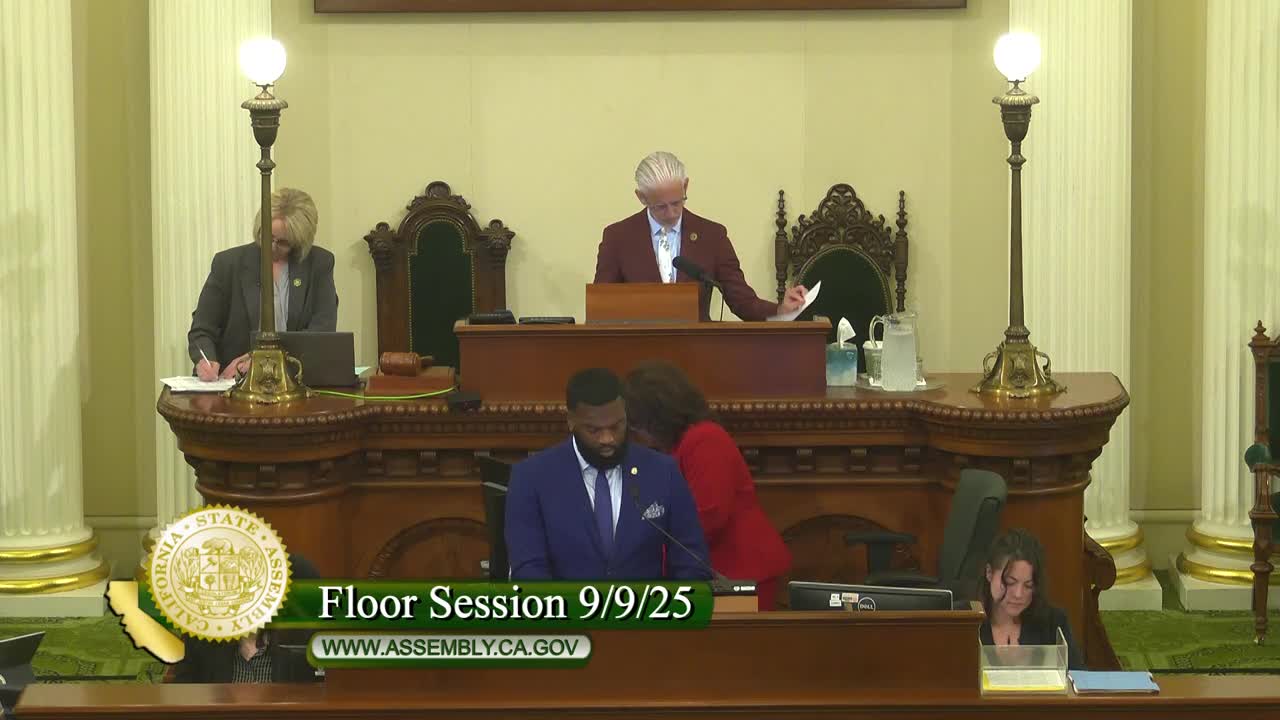 1MIN
Assembly Floor
 4MIN
Assembly Standing Committee on Appropriations
 5MIN
Assembly Standing Committee on Judiciary
 8MIN
Assembly Standing Committee on Higher Education
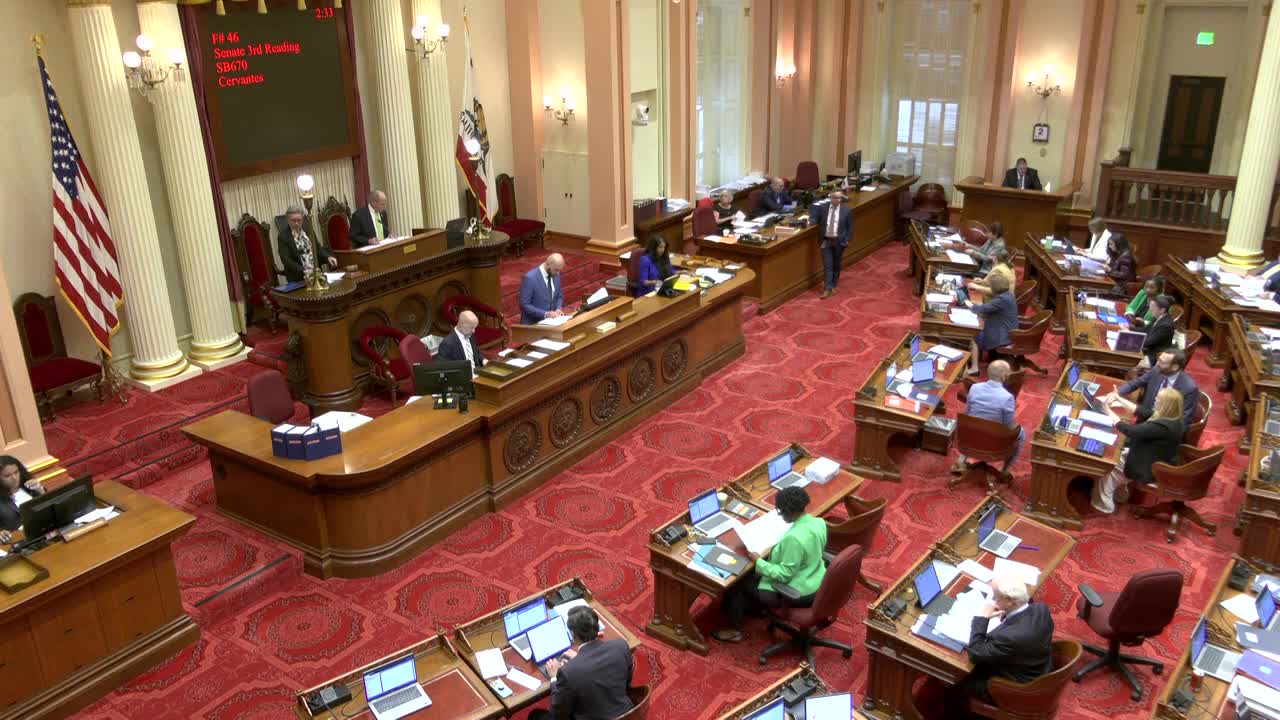 5MIN
Senate Floor
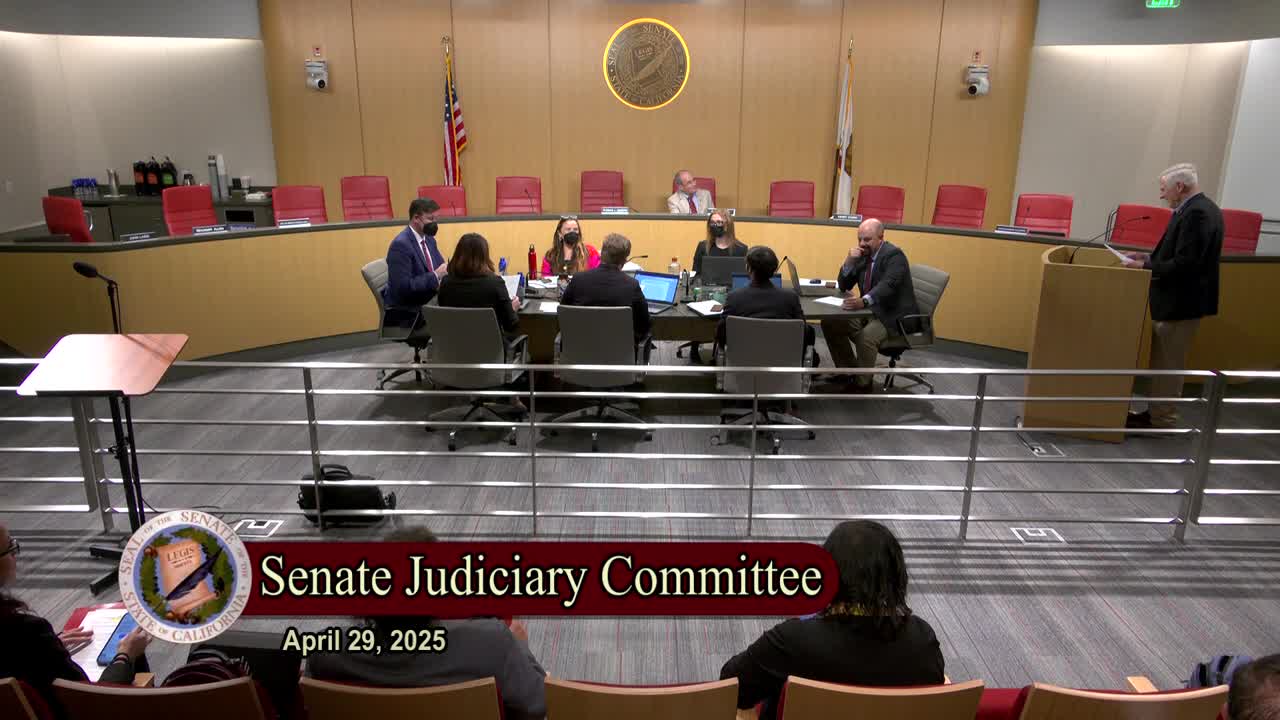 7MIN
Senate Standing Committee on Judiciary
 10MIN
Senate Standing Committee on Education
Bill Author

Bill Co-Author(s):