SB 308: Community colleges: audits: reports.
- Session Year: 2025-2026
- House: Senate
- Latest Version Date: 2026-09-27
Current Status:
Passed
(2026-09-27: Chaptered by Secretary of State. Chapter 644, Statutes of 2026.)
Introduced
In Committee
Awaiting First Chamber Vote
Passed First Chamber
In Committee
Awaiting Second Chamber Vote
Passed Second Chamber
Enacted
Existing law establishes the California Community Colleges, under the administration of the Board of Governors of the California Community Colleges, as one of the segments of public postsecondary education in the state. Existing law requires the board of governors to adopt criteria and standards for periodic assessment of the fiscal condition of community college districts. In so doing, existing law requires the board of governors to develop, by regulation, appropriate procedures and actions for community college districts that fail to achieve fiscal stability or that fail to comply with the board of governors recommendations, and to report to the chairs of the educational policy and fiscal committees of both houses of the Legislature, the Director of Finance, and the Governor, related corrective actions taken by the community college district and related actions taken against the community college district.
This bill would instead require the office of the Chancellor of the California Community Colleges to report the above-described information, as needed, and to additionally report the information to the Joint Legislative Audit Committee. Beginning in the 202728 fiscal year, the bill would also require any information reported to be included with the below-described report related to community college district audits.
Existing law requires the board of governors to annually submit a report to the Joint Legislative Audit Committee on the number and nature of audit exceptions and estimated amount of funds involved in the exceptions, a list of community college districts that failed to file their audits under existing law, and the actions taken by the State Department of Education to eliminate audit exceptions and comply with management improvement recommendations.
This bill would revise the contents of the report to instead include actions taken by the chancellors office to eliminate audit exceptions and comply with management improvement recommendations. The bill would instead require the chancellors office to report that information, and to additionally report that information to the educational policy and fiscal committees of both houses of the Legislature, the Director of Finance, and the Governor. Beginning in the 202728 fiscal year, the bill would also require the report to include any of the above-described information related to corrective actions taken by, and actions taken against, a community college district.
Existing law establishes the California Community Colleges, under the administration of the Board of Governors of the California Community Colleges, as one of the segments of public postsecondary education in the state. Existing law requires the board of governors to adopt criteria and standards for periodic assessment of the fiscal condition of community college districts. In so doing, existing law requires the board of governors to develop, by regulation, appropriate procedures and actions for community college districts that fail to achieve fiscal stability or that fail to comply with the board of governors recommendations, and to report to the chairs of the educational policy and fiscal committees of both houses of the Legislature, the Director of Finance, and the Governor, related corrective actions taken by the community college district and related actions taken against the community college district.
This bill would instead require the office of the Chancellor of the California Community Colleges to report the above-described information, as needed, and to additionally report the information to the Joint Legislative Audit Committee. Beginning in the 202728 fiscal year, the bill would also require any information reported to be included with the below-described report related to community college district audits.
Existing law requires the board of governors to annually submit a report to the Joint Legislative Audit Committee on the number and nature of audit exceptions and estimated amount of funds involved in the exceptions, a list of community college districts that failed to file their audits under existing law, and the actions taken by the State Department of Education to eliminate audit exceptions and comply with management improvement recommendations.
This bill would revise the contents of the report to instead include actions taken by the chancellors office to eliminate audit exceptions and comply with management improvement recommendations. The bill would instead require the office of the Chancellor of the California Community Colleges chancellors office to report that information, and to additionally report that information to the educational policy and fiscal committees of both houses of the Legislature, the Director of Finance, and the Governor. Beginning in the 202728 fiscal year, the bill would also require the report to include any of the above-described information related to corrective actions taken by, and actions taken against, a community college district.
Existing law establishes the California Community Colleges, under the administration of the Board of Governors of the California Community Colleges, as one of the segments of public postsecondary education in the state. Existing law requires the board of governors to adopt criteria and standards for periodic assessment of the fiscal condition of community college districts. In so doing, existing law requires the board of governors to develop, by regulation, appropriate procedures and actions for community college districts that fail to achieve fiscal stability or that fail to comply with the board of governors recommendations, and to report to the chairs of the educational policy and fiscal committees of both houses of the Legislature, the Director of Finance, and the Governor, related corrective actions taken by the community college district and related actions taken against the community college district.
This bill would additionally instead require the board of governors office of the Chancellor of the California Community Colleges to submit report the above-described report information, as needed, and to additionally report the information to the Joint Legislative Audit Committee. Beginning in the 202728 fiscal year, the bill would also require the report any information reported to be submitted included with the below-described report related to community college district audits.
Existing law requires the board of governors to annually submit a report to the Joint Legislative Audit Committee on the number and nature of audit exceptions and estimated amount of funds involved in the exceptions, a list of community college districts that failed to file their audits under existing law, and the actions taken by the State Department of Education to eliminate audit exceptions and comply with management improvement recommendations.
This bill would additionally instead require the board of governors office of the Chancellor of the California Community Colleges to report that information information, and to additionally report that information to the educational policy and fiscal committees of both houses of the Legislature, the Director of Finance, and the Governor. Beginning in the 202728 fiscal year, the bill would also require the report to be submitted with include any of the above-described report information related to corrective actions taken by, and actions taken against, a community college district.
Existing law establishes the California Community Colleges, under the administration of the Board of Governors of the California Community Colleges, as one of the segments of public postsecondary education in the state. Existing law requires the board of governors to adopt criteria and standards for periodic assessment of the fiscal condition of community college districts. In so doing, existing law requires the board of governors to develop, by regulation, appropriate procedures and actions for community college districts that fail to achieve fiscal stability or that fail to comply with the board of governors recommendations, and to report to the chairs of the educational policy and fiscal committees of both houses of the Legislature, the Director of Finance, and the Governor, related corrective actions taken by the community college district and related actions taken against the community college district.
This bill would additionally require the board of governors to submit the above-described report to the Joint Legislative Audit Committee. Beginning in the 202728 fiscal year, the bill would also require the report to be submitted with the below-described report related to community college district audits.
Existing law requires the board of governors to annually submit a report to the Joint Legislative Audit Committee on the number and nature of audit exceptions and estimated amount of funds involved in the exceptions, a list of community college districts that failed to file their audits under existing law, and the actions taken by the State Department of Education to eliminate audit exceptions and comply with management improvement recommendations.
This bill would additionally require the board of governors to report that information to the educational policy and fiscal committees of both houses of the Legislature, the Director of Finance, and the Governor. Beginning in the 202728 fiscal year, the bill would also require the report to be submitted with the above-described report related to corrective actions taken by, and actions taken against, a community college district.
Existing law establishes the California Community Colleges and the California State University as 2 of the 3 segments of public postsecondary education in the state. Existing law requires the office of the Chancellor of California Community Colleges and the office of the Chancellor of the California State University to submit various reports to policy and fiscal committees of the Legislature, the Legislature, the Governor, and state agencies.This bill, notwithstanding any other law, would no longer require the chancellors offices of these 2 segments to provide reports that they deem obsolete, unnecessary, or outdated. The bill would list specific reports as no longer required under the bills provisions, including certain reports related to (1) data and information, (2) year-round academic programs, (3) student transfer and performance measures, (4) property waivers, and (5) accounting, budget controls, and audits.Existing law establishes the California Community Colleges and the California State University as 2 of the 3 segments of public postsecondary education in the state. Existing law requires the office of the Chancellor of California Community Colleges and the office of the Chancellor of the California State University to submit various reports to policy and fiscal committees of the Legislature, the Legislature, the Governor, and state agencies.
This bill, notwithstanding any other law, would no longer require the chancellors offices of these 2 segments to provide reports that they deem obsolete, unnecessary, or outdated. The bill would list specific reports as no longer required under the bills provisions, including certain reports related to (1) data and information, (2) year-round academic programs, (3) student transfer and performance measures, (4) property waivers, and (5) accounting, budget controls, and audits.
(a)It is the intent of the Legislature to encourage sound fiscal management practices among community college districts for the most efficient and effective use of public funds for the education of community college students by strengthening fiscal accountability at the community college district and state levels.
(b)The governing board of each community college district shall provide for an annual audit of all funds, books, and accounts of the district in accordance with regulations of the board of governors. The audit shall be made by certified public accountants licensed by the California Board of Accountancy. If the governing board of a community college district fails to provide for an audit, the board of governors shall provide for an audit, and if the board of governors fails or is unable to make satisfactory arrangements for such an audit, the Department of Finance shall make arrangements for the audit. The cost of any audit described above shall be paid from community college district funds.
(c)The board of governors shall adopt criteria and standards for periodic assessment of the fiscal condition of community college districts, and such regulations regarding the review and improvement of community college district fiscal conditions as necessary to encourage sound fiscal management practices. In so doing:
(1)The governing board of a community college district, as required by regulations of the board of governors, shall periodically report information to the board of governors regarding the fiscal condition of the community college district.
(2)The board of governors, by regulation, shall develop standards for community college district maintenance of sound fiscal conditions. The regulations shall authorize a board comprehensive management review of any community college district that, after assessing itself or being assessed in accordance with board of governors criteria and standards, is shown to be experiencing fiscal difficulty. On the basis of the findings of the management review, the board of governors may recommend appropriate changes in a community college districts management practices.
(3)The board of governors, by regulation, shall develop appropriate procedures and actions for community college districts that fail to achieve fiscal stability or that fail to comply with the board of governors recommendations. The procedures and remedies may include the appointment of a special trustee to manage the community college district. The regulations pursuant to which the board of governors may appoint a special trustee to manage the community college district shall include specific benchmarks to indicate the presence of local capacity to resume management of the community college district and clear standards that require meaningful consultation by a special trustee, or the special trustees designee, with the community college district before decisionmaking. The board of governors may reduce or withhold apportionment to community college districts to pay for the cost of the special trustee, management review, or other extraordinary costs resulting from the community college districts fiscal difficulties and to ensure the stabilization of the community college districts financial condition.
(4)(A)The office of the Chancellor of the California Community Colleges shall report, as needed, to the chairs of the educational policy and fiscal committees of both houses of the Legislature, the Joint Legislative Audit Committee, the Director of Finance, and the Governor any corrective action taken by the community college district and any action taken against the community college district pursuant to paragraph (3).
(B)Beginning in the 202728 fiscal year, if the chancellors office has information to report pursuant to subparagraph (A), the information shall be included with the report submitted pursuant to subdivision (a) of Section 84040.6.
(C)A report submitted to a committee of the Legislature pursuant to this paragraph shall be submitted in compliance with Section 9795 of the Government Code.
SEC. 2.Section 84040.6 of the Education Code is amended to read:84040.6.(a)On June 30, 1991, and each year thereafter, the office of the Chancellor of the California Community Colleges shall report to the chairs of the educational policy and fiscal committees of both houses of the Legislature, the Joint Legislative Audit Committee, the Director of Finance, and the Governor on all of the following:
(1)The number and nature of audit exceptions and estimated amount of funds involved in the exceptions.
(2)A list of community college districts that failed to file their audits pursuant to Section 84040.
(3)The actions taken by the chancellors office to eliminate audit exceptions and comply with management improvement recommendations.
(b)Beginning in the 202728 fiscal year, the chancellors office shall include any information reported pursuant to paragraph (4) of subdivision (c) of Section 84040 with the report required pursuant to subdivision (a).
(c)A report submitted to a committee of the Legislature pursuant to this section shall be submitted in compliance with Section 9795 of the Government Code.
(a)It is the intent of the Legislature to encourage sound fiscal management practices among community college districts for the most efficient and effective use of public funds for the education of community college students by strengthening fiscal accountability at the community college district and state levels.
(b)The governing board of each community college district shall provide for an annual audit of all funds, books, and accounts of the district in accordance with regulations of the board of governors. The audit shall be made by certified public accountants licensed by the California Board of Accountancy. If the governing board of a community college district fails to provide for an audit, the board of governors shall provide for an audit, and if the board of governors fails or is unable to make satisfactory arrangements for such an audit, the Department of Finance shall make arrangements for the audit. The cost of any audit described above shall be paid from community college district funds.
(c)The board of governors shall adopt criteria and standards for periodic assessment of the fiscal condition of community college districts, and such regulations regarding the review and improvement of community college district fiscal conditions as necessary to encourage sound fiscal management practices. In so doing:
(1)The governing board of a community college district, as required by regulations of the board of governors, shall periodically report information to the board of governors regarding the fiscal condition of the community college district.
(2)The board of governors, by regulation, shall develop standards for community college district maintenance of sound fiscal conditions. The regulations shall authorize a board comprehensive management review of any community college district that, after assessing itself or being assessed in accordance with board of governors criteria and standards, is shown to be experiencing fiscal difficulty. On the basis of the findings of the management review, the board of governors may recommend appropriate changes in a community college districts management practices.
(3)The board of governors, by regulation, shall develop appropriate procedures and actions for community college districts that fail to achieve fiscal stability or that fail to comply with the board of governors recommendations. The procedures and remedies may include the appointment of a special trustee to manage the community college district. The regulations pursuant to which the board of governors may appoint a special trustee to manage the community college district shall include specific benchmarks to indicate the presence of local capacity to resume management of the community college district and clear standards that require meaningful consultation by a special trustee, or the special trustees designee, with the community college district before decisionmaking. The board of governors may reduce or withhold apportionment to community college districts to pay for the cost of the special trustee, management review, or other extraordinary costs resulting from the community college districts fiscal difficulties and to ensure the stabilization of the community college districts financial condition.
(4)(A)The office of the Chancellor of the California Community Colleges shall report, as needed, to the chairs of the educational policy and fiscal committees of both houses of the Legislature, the Joint Legislative Audit Committee, the Director of Finance, and the Governor any corrective action taken by the community college district and any action taken against the community college district pursuant to paragraph (3).
(B)Beginning in the 202728 fiscal year, if the chancellors office has information to report pursuant to subparagraph (A), the information shall be included with the report submitted pursuant to subdivision (a) of Section 84040.6.
(C)A report submitted to a committee of the Legislature pursuant to this paragraph shall be submitted in compliance with Section 9795 of the Government Code.
SEC. 2.Section 84040.6 of the Education Code is amended to read:84040.6.(a)On June 30, 1991, and each year thereafter, the office of the Chancellor of the California Community Colleges shall report to the chairs of the educational policy and fiscal committees of both houses of the Legislature, the Joint Legislative Audit Committee, the Director of Finance, and the Governor on all of the following:
(1)The number and nature of audit exceptions and estimated amount of funds involved in the exceptions.
(2)A list of community college districts that failed to file their audits pursuant to Section 84040.
(3)The actions taken by the department chancellors office to eliminate audit exceptions and comply with management improvement recommendations.
(b)Beginning in the 202728 fiscal year, the chancellors office shall include any information reported pursuant to paragraph (4) of subdivision (c) of Section 84040 with the report required pursuant to subdivision (a).
(c)A report submitted to a committee of the Legislature pursuant to this section shall be submitted in compliance with Section 9795 of the Government Code.
(a)It is the intent of the Legislature to encourage sound fiscal management practices among community college districts for the most efficient and effective use of public funds for the education of community college students by strengthening fiscal accountability at the community college district and state levels.
(b)The governing board of each community college district shall provide for an annual audit of all funds, books, and accounts of the district in accordance with regulations of the board of governors. The audit shall be made by certified public accountants licensed by the California Board of Accountancy. If the governing board of a community college district fails to provide for an audit, the board of governors shall provide for an audit, and if the board of governors fails or is unable to make satisfactory arrangements for such an audit, the Department of Finance shall make arrangements for the audit. The cost of any audit described above shall be paid from community college district funds.
(c)The board of governors shall adopt criteria and standards for periodic assessment of the fiscal condition of community college districts, and such regulations regarding the review and improvement of community college district fiscal conditions as necessary to encourage sound fiscal management practices. In so doing:
(1)The governing board of a community college district, as required by regulations of the board of governors, shall periodically report information to the board of governors regarding the fiscal condition of the community college district.
(2)The board of governors, by regulation, shall develop standards for community college district maintenance of sound fiscal conditions. The regulations shall authorize a board comprehensive management review of any community college district that, after assessing itself or being assessed in accordance with board of governors criteria and standards, is shown to be experiencing fiscal difficulty. On the basis of the findings of the management review, the board of governors may recommend appropriate changes in a community college districts management practices.
(3)The board of governors, by regulation, shall develop appropriate procedures and actions for community college districts that fail to achieve fiscal stability or that fail to comply with the board of governors recommendations. The procedures and remedies may include the appointment of a special trustee to manage the community college district. The regulations pursuant to which the board of governors may appoint a special trustee to manage the community college district shall include specific benchmarks to indicate the presence of local capacity to resume management of the community college district and clear standards that require meaningful consultation by a special trustee, or the special trustees designee, with the community college district before decisionmaking. The board of governors may reduce or withhold apportionment to community college districts to pay for the cost of the special trustee, management review, or other extraordinary costs resulting from the community college districts fiscal difficulties and to ensure the stabilization of the community college districts financial condition.
(4)(A)The board of governors office of the Chancellor of the California Community Colleges shall report report, as needed, to the chairs of the educational policy and fiscal committees of both houses of the Legislature, the Joint Legislative Audit Committee, the Director of Finance, and the Governor any corrective action taken by the community college district and any action taken against the community college district pursuant to paragraph (3).(B)Beginning in the 202728 fiscal year, if the board of governors shall report the information described in subparagraph (A) chancellors office has information to report pursuant to subparagraph (A), the information shall be included with the report submitted pursuant to subdivision (a) of Section 84040.6.
(C)A report submitted to a committee of the Legislature pursuant to this paragraph shall be submitted in compliance with Section 9795 of the Government Code.
SEC. 2.Section 84040.6 of the Education Code is amended to read:84040.6.(a)On June 30, 1991, and each year thereafter, the board of governors office of the Chancellor of the California Community Colleges shall report to the chairs of the educational policy and fiscal committees of both houses of the Legislature, the Joint Legislative Audit Committee, the Director of Finance, and the Governor on all of the following:
(1)The number and nature of audit exceptions and estimated amount of funds involved in the exceptions.
(2)A list of community college districts that failed to file their audits pursuant to Section 84040.
(3)The actions taken by the department to eliminate audit exceptions and comply with management improvement recommendations.
(b)Beginning in the 202728 fiscal year, the board of governors chancellors office shall report the include any information described in subdivision (a) with the report required by reported pursuant to paragraph (4) of subdivision (c) of Section 84040. 84040 with the report required pursuant to subdivision (a).
(c)A report submitted to a committee of the Legislature pursuant to this section shall be submitted in compliance with Section 9795 of the Government Code.
REVISIONS: HeadingLine 2.(a)It is the intent of the Legislature to encourage sound fiscal management practices among community college districts for the most efficient and effective use of public funds for the education of community college students by strengthening fiscal accountability at the community college district and state levels.
(b)The governing board of each community college district shall provide for an annual audit of all funds, books, and accounts of the district in accordance with regulations of the board of governors. The audit shall be made by certified public accountants licensed by the California Board of Accountancy. In If the event the governing board of a community college district fails to provide for an audit, the board of governors shall provide for an audit, and if the board of governors fails or is unable to make satisfactory arrangements for such an audit, the Department of Finance shall make arrangements for the audit. The cost of any audit described above shall be paid from community college district funds.
(c)The board of governors shall adopt criteria and standards for periodic assessment of the fiscal condition of community college districts, and such regulations regarding the review and improvement of community college district fiscal conditions as necessary to encourage sound fiscal management practices. In so doing:
(1)The governing board of a community college district, as required by regulations of the board of governors, shall periodically report information to the board of governors regarding the fiscal condition of the community college district.
(2)The board of governors, by regulation, shall develop standards for community college district maintenance of sound fiscal conditions. The regulations shall authorize a board comprehensive management review of any community college district which, that, after assessing itself or being assessed in accordance with board of governors criteria and standards, is shown to be experiencing fiscal difficulty. On the basis of the findings of the management review, the board of governors may recommend appropriate changes in a community college districts management practices.
(3)The board of governors, by regulation, shall develop appropriate procedures and actions for community college districts that fail to achieve fiscal stability or that fail to comply with the board of governors recommendations. The procedures and remedies may include the appointment of a special trustee to manage the community college district. The regulations pursuant to which the board of governors may appoint a special trustee to manage the community college district shall include specific benchmarks to indicate the presence of local capacity to resume management of the community college district and clear standards that require meaningful consultation by a special trustee, or his or her the special trustees designee, with the community college district prior to before decisionmaking. The board of governors shall be authorized to may reduce or withhold apportionment to community college districts to pay for the cost of the special trustee, management review, or other extraordinary costs resulting from the community college districts fiscal difficulties and to ensure the stabilization of the community college districts financial condition.
(4)(A)The board of governors shall report to the chairs of the educational policy and fiscal committees of both houses of the Legislature, the Joint Legislative Audit Committee, the Director of Finance, and the Governor any corrective action taken by the community college district and any action taken against the community college district pursuant to paragraph (3).(B)Beginning in the 202728 fiscal year, the board of governors shall report the information described in subparagraph (A) with the report submitted pursuant to subdivision (a) of Section 84040.6.
(C)A report submitted to a committee of the Legislature pursuant to this paragraph shall be submitted in compliance with Section 9795 of the Government Code.
SEC. 2.Section 84040.6 of the Education Code is amended to read:84040.6.(a)On June 30, 1991, and each year thereafter, the Board of Governors of the California Community Colleges board of governors shall report to the chairs of the educational policy and fiscal committees of both houses of the Legislature, the Joint Legislative Audit Committee on (1) the Committee, the Director of Finance, and the Governor on all of the following:
(1)The number and nature of audit exceptions and estimated amount of funds involved in the exceptions, (2) a exceptions.
(2)A list of community college districts which that failed to file their audits pursuant to Section 84040, and (3) the 84040.
(3)The actions taken by the department to eliminate audit exceptions and comply with management improvement recommendations.
(b)Beginning in the 202728 fiscal year, the board of governors shall report the information described in subdivision (a) with the report required by paragraph (4) of subdivision (c) of Section 84040.
(c)A report submitted to a committee of the Legislature pursuant to this section shall be submitted in compliance with Section 9795 of the Government Code.
SECTION 1.Section 66017.5 is added to the Education Code, to read:66017.5.(a)Notwithstanding any other law, the office of the Chancellor of the California Community Colleges shall not be required to submit any report to a committee of the Legislature, the Legislature, the Governor, or a state agency that the chancellors office deems obsolete, unnecessary, or outdated, including, but not limited to, a report required under Sections 10803, 81254, 84040, 84040.5, 84040.6, 84044, and 84754.5.(b)Notwithstanding any other law, the office of the Chancellor of the California State University shall not be required to submit any reports to a committee of the Legislature, the Legislature, the Governor, or a state agency that the chancellors office deems obsolete, unnecessary, or outdated, including, but not limited to, a report required under Sections 10803, 66057, 66742, and 89295.(a)Notwithstanding any other law, the office of the Chancellor of the California Community Colleges shall not be required to submit any report to a committee of the Legislature, the Legislature, the Governor, or a state agency that the chancellors office deems obsolete, unnecessary, or outdated, including, but not limited to, a report required under Sections 10803, 81254, 84040, 84040.5, 84040.6, 84044, and 84754.5.
(b)Notwithstanding any other law, the office of the Chancellor of the California State University shall not be required to submit any reports to a committee of the Legislature, the Legislature, the Governor, or a state agency that the chancellors office deems obsolete, unnecessary, or outdated, including, but not limited to, a report required under Sections 10803, 66057, 66742, and 89295.
|
Date
|
Status
|
|---|---|
| Sep 27, 2026 | Chaptered by Secretary of State. Chapter 644, Statutes of 2026. |
| Sep 27, 2026 | Approved by the Governor. |
| Aug 21, 2026 | Enrolled and presented to the Governor at 3 p.m. |
| Aug 18, 2026 | Assembly amendments concurred in. (Ayes 40. Noes 0. Page 5514.) Ordered to engrossing and enrolling. |
| Aug 18, 2026 | Assembly amendments concurred in. (Ayes 40. Noes 0.) Ordered to engrossing and enrolling. |
| Aug 18, 2026 | Assembly amendments concurred in. (Ayes 39. Noes 0.) Ordered to engrossing and enrolling. |
| Aug 13, 2026 | In Senate. Concurrence in Assembly amendments pending. |
| Aug 13, 2026 | Read third time. Passed. (Ayes 71. Noes 0. Page 6147.) Ordered to the Senate. |
| Aug 13, 2026 | Read third time. Passed. Ordered to the Senate. |
| Jun 29, 2026 | Read second time. Ordered to third reading. |
| Jun 25, 2026 | Read second time and amended. Ordered to second reading. |
| Jun 24, 2026 | From committee: Do pass as amended. (Ayes 15. Noes 0.) (June 24). |
| Jun 10, 2026 | From committee: Do pass and re-refer to Com. on APPR. with recommendation: To consent calendar. (Ayes 10. Noes 0.) (June 9). Re-referred to Com. on APPR. |
| Jun 10, 2026 | Coauthors revised. |
| May 11, 2026 | From committee with author's amendments. Read second time and amended. Re-referred to Com. on HIGHER ED. |
| May 4, 2026 | Referred to Com. on HIGHER ED. |
| Jan 26, 2026 | In Assembly. Read first time. Held at Desk. |
| Jan 26, 2026 | Read third time. Passed. (Ayes 39. Noes 0. Page 3286.) Ordered to the Assembly. |
| Jan 21, 2026 | Read second time. Ordered to consent calendar. |
| Jan 20, 2026 | From committee: Be ordered to second reading pursuant to Senate Rule 28.8 and ordered to consent calendar. |
| Jan 15, 2026 | Set for hearing January 20. |
| Jan 14, 2026 | From committee: Do pass and re-refer to Com. on APPR. with recommendation: To consent calendar. (Ayes 7. Noes 0. Page 3224.) (January 14). Re-referred to Com. on APPR. |
| Jan 6, 2026 | Set for hearing January 14. |
| Jan 5, 2026 | From committee with author's amendments. Read second time and amended. Re-referred to Com. on ED. |
| Apr 1, 2025 | April 9 set for first hearing canceled at the request of author. |
| Mar 28, 2025 | Set for hearing April 9. |
| Feb 19, 2025 | Referred to Com. on ED. |
| Feb 11, 2025 | From printer. May be acted upon on or after March 13. |
| Feb 10, 2025 | Introduced. Read first time. To Com. on RLS. for assignment. To print. |
|
Date
|
Description
|
Location
|
Votes
|
|
|---|---|---|---|---|
| Aug 18, 2026 | Unfinished Business SB308 Seyarto et al. Concurrence | Senate Floor |
Passed |
|
| Aug 13, 2026 | SB 308 Seyarto Senate Third Reading By Patel | Assembly Floor |
Passed |
|
| Jun 24, 2026 | Do pass as amended. | Assembly Standing Committee on Appropriations |
Passed |
|
| Jun 9, 2026 | Do pass and be re-referred to the Committee on [Appropriations] with recommendation: To Consent Calendar | Assembly Standing Committee on Higher Education |
Passed |
|
| Jan 26, 2026 | Consent Calendar 2nd SB308 Seyarto | Senate Floor |
Passed |
|
| Jan 14, 2026 | Do pass, but first be re-referred to the Committee on [Appropriations] with the recommendation: To Consent Calendar | Senate Standing Committee on Education |
Passed |
This list shows positions taken on this bill by organizations on the date displayed, which is linked to the original source.
Positions by individuals are not included.
|
Organization
|
Position
|
Date
|
|---|---|---|
| California Community Colleges Chancellor’s Office | ** Support | |
| California Community Colleges Chancellor's Office (CCCCO) | ** Support |
SENATE RULES COMMITTEE Office of Senate Floor Analyses (916) 651-4171 | SB 308 |
UNFINISHED BUSINESS
Bill No: SB 308
Author: Seyarto (R), et al.
Amended: 6/25/26
Vote: 21
SENATE EDUCATION COMMITTEE: 7-0, 1/14/26
AYES: Pérez, Ochoa Bogh, Cabaldon, Choi, Cortese, Gonzalez, Reyes
SENATE APPROPRIATIONS COMMITTEE: Senate Rule 28.8
SENATE FLOOR: 39-0, 1/26/26 (Consent)
AYES: Allen, Alvarado-Gil, Archuleta, Arreguín, Ashby, Becker, Blakespear, Cabaldon, Caballero, Cervantes, Choi, Cortese, Dahle, Durazo, Grayson, Grove, Hurtado, Jones, Laird, Limón, McGuire, McNerney, Menjivar, Niello, Ochoa Bogh, Padilla, Pérez, Reyes, Richardson, Rubio, Seyarto, Smallwood-Cuevas, Stern, Strickland, Umberg, Valladares, Wahab, Weber Pierson, Wiener
NO VOTE RECORDED: Gonzalez
ASSEMBLY FLOOR: 71-0, 8/13/26 - See last page for vote
SUBJECT: Community colleges: audits: reports
SOURCE: California Community Colleges Chancellor’s Office
DIGEST:
This bill streamlines the annual reporting requirement for the California Community Colleges Chancellor’s Office (CCCCO) regarding the number and nature of audit fundings, districts that failed to file their audits, and actions taken by the CCCCO to reach compliance, and combines this report with required reporting regarding corrective action taken against a fiscally instable community college district.
Assembly Amendments
require that the report be submitted by the CCCCO and include actions taken by the CCCCO to streamline audit expectations and comply with management improved recommendations.
ANALYSIS:
Existing law:
- States that it is the intent of the Legislature to encourage sound fiscal management practice among California community college (CCC) districts for the most efficient and effective use of public funds for the education of community college students by strengthening fiscal accountability at the district and state levels.
- Requires the governing board of each CCC district provide for an annual audit of all funds, books, and accounts of the district in accordance with regulations of the board of governors, as specified.
- Requires the board of governors adopt criteria and standards for periodic assessment of the fiscal condition of CCC districts, and such regulations regarding the review and improvement of district fiscal conditions as necessary to encourage sound fiscal management practices. In so doing it further requires the board of governors to develop, by regulation, appropriate procedures and actions for CCC districts that fail to achieve fiscal stability or that fail to comply with the board of governors’ recommendations, and to report to the chairs of the educational policy and fiscal committees of both houses of the Legislature, the Director of Finance, and the Governor, related corrective actions taken by the community college district and related actions taken against the CCC district. (Education Code (EC) § 84040 (a – c))
- Requires that the board of governors to report that information to the educational policy and fiscal committees of both houses of the Legislature, the Director of Finance, and the Governor. Beginning in the 2027-28 fiscal year, the bill would also require the report to be submitted with the above-described report related to corrective actions taken by and actions taken against, a CCC district. (EC § 84040.6)
This bill:
- Streamlines the annual reporting requirement for the CCCCO regarding the number and nature of audit fundings, districts that failed to file their audits, and actions taken by the CCCCO to reach compliance, and combines this report with required reporting regarding corrective action taken against a fiscally unstable community college district (CCD).
- Requires that, beginning in the 2027-28 fiscal year, the CCCCO consolidate reporting of fiscal information specified in current law on corrective action taken by or against CCC districts experiencing fiscal instability and on the fiscal audits of CCC districts, into a single report.
- Requires that the report, pursuant to 1) above, be submitted to all of the following:
- Chairs of the educational policy committees of both Houses of the Legislature.
- Chairs of the fiscal committees of both Houses of the Legislature.
- The Joint Legislative Audit Committee.
- The Director of Finance.
- The Governor.
- Requires that the report, pursuant to 1) above, include all of the following:
- Number and nature of audit exceptions.
- Estimated amount of funds associated with exceptions.
- List of CCC districts failing to file audits.
- Actions taken to address audit findings and management improvement recommendations.
Comments
Need for the bill. According to the author, “SB 308 will streamline higher education reporting requirements to eliminate redundancy while maintaining accountability. By directing the Legislature to consolidate duplicative reporting mandates for the California Community Colleges, our colleges can focus more time resources on their core mission of education students rather than paperwork. This practical reform builds on past successful efforts to bring greater efficiency to California’s education system.”
Reduces administrative workload. This bill seeks to reduce administrative workload associated with submitting separate reports on related topics. By consolidating the two reports in the manner proposed, this bill ensures that all entities currently receiving either report will continue to receive the information in a single, consolidated report.
FISCAL EFFECT: Appropriation: No Fiscal Com.: Yes Local: No
Senate Rule 28.8
SUPPORT: (Verified 8/14/26)
California Community Colleges Chancellor’s Office (source)
OPPOSITION: (Verified 8/14/26)
None received
ASSEMBLY FLOOR: 71-0, 8/13/26
AYES: Addis, Aguiar-Curry, Ahrens, Alanis, Arambula, Ávila Farías, Bains, Bauer-Kahan, Bennett, Boerner, Bryan, Calderon, Caloza, Carrillo, Castillo, Chen, Connolly, Davies, DeMaio, Dixon, Elhawary, Ellis, Flora, Fong, Gabriel, Garcia, Gipson, Jeff Gonzalez, Mark González, Hadwick, Haney, Harabedian, Hart, Hoover, Irwin, Johnson, Kalra, Krell, Lackey, Lowenthal, Macedo, McKinnor, Muratsuchi, Nguyen, Ortega, Pacheco, Papan, Patel, Patterson, Pellerin, Ramos, Ransom, Celeste Rodriguez, Michelle Rodriguez, Rogers, Blanca Rubio, Sanchez, Schiavo, Sharp-Collins, Solache, Soria, Stefani, Ta, Tangipa, Valencia, Wallis, Ward, Wicks, Wilson, Zbur, Rivas
NO VOTE RECORDED: Alvarez, Berman, Bonta, Jackson, Lee, Petrie-Norris, Quirk-Silva, Schultz
Prepared by: Olgalilia Ramirez / ED. / (916) 651-4105
8/14/26 17:04:33
**** END ****
SENATE THIRD READING
STR Bill Id:SB 308
Author:(Seyarto)
As Amended Ver:June 25, 2026
Majority vote
SUMMARY
Streamlines the annual reporting requirement for the California Community Colleges Chancellor's Office (CCCCO) regarding the number and nature of audit fundings, districts that failed to file their audits, and actions taken by the CCCCO to reach compliance, and combines this report with required reporting regarding corrective action taken against a fiscally instable community college district (CCD).
Major Provisions
- Requires that, beginning in the 2027-28 fiscal year, the CCCCO consolidate reporting of fiscal information specified in current law on corrective action taken by or against CCC districts experiencing fiscal instability and on the fiscal audits of CCC districts, into a single report.
- Requires that the report, pursuant to 1) above, be submitted to all of the following:
- Chairs of the educational policy committees of both Houses of the Legislature;
- Chairs of the fiscal committees of both Houses of the Legislature;
- The Joint Legislative Audit Committee;
- The Director of Finance; and,
- The Governor.
- Requires that the report, pursuant to (1) above, include all of the following:
- Number and nature of audit exceptions;
- Estimated amount of funds associated with exceptions;
- List of CCC districts failing to file audits; and,
- Actions taken to address audit findings and management improvement recommendations.
COMMENTS
Background. The 73 CCC districts receive substantial state and local funding and maintain significant autonomy over fiscal operations. Existing law requires periodic audits and fiscal monitoring intended to identify financial risks before they become severe enough to affect institutional operations or educational services.
Audit exceptions and fiscal distress indicators may identify weaknesses involving internal controls, financial management practices, or compliance issues. Under current law, related information may be reported through separate mechanisms.
This measure consolidates these reporting processes and aligns them under the CCCCO.
How many reports? According to the CCCCO, the CCCCO is required to submit over 50 legislative reports; with many reports due on an annual basis to the Legislature.
Why consolidate these reports? The two reports referenced in this measure address closely related issues involving district fiscal oversight and accountability. Audit findings frequently serve as indicators of broader fiscal management concerns. Consolidating these reports may do the following:
- Improve legislative access to comprehensive fiscal information;
- Reduce administrative duplication;
- Increase transparency;
- Facilitate identification of patterns across districts; and,
- Strengthen oversight of districts demonstrating financial challenges.
From a public administration perspective, integrating related accountability information into a unified report may improve decision-making by allowing policymakers to assess financial risk indicators and corrective actions within a single framework rather than across multiple reporting documents.
This measure does not appear to reduce audit requirements, eliminate oversight mechanisms, or decrease accountability standards. Rather, it reorganizes and centralizes reporting responsibilities while expanding dissemination of information to oversight entities, including the Joint Legislative Audit Committee.
According to the Author
According to the author, "SB 308 will streamline higher education reporting requirements to eliminate redundancy while maintaining accountability. By directing the Legislature to consolidate duplicative reporting mandates for the California Community Colleges, our colleges can focus more time and resources on their core mission of educating students rather than paperwork. This practical reform builds on past successful efforts to bring greater efficiency to California's education system."
The author states that, "SB 308 does not create a new equity program or directly target a specific student population. However, by reducing unnecessary paperwork while maintaining fiscal accountability, the bill supports a more efficient community college system that can better direct resources toward students and programs that help close opportunity gaps".
Arguments in Support
According to the CCCCO, sponsors of this measure, "this bill would modernize and streamline statutory reporting requirements by allowing the consolidation of specified legislative reports." Further, the CCCCO states that, "the Chancellor's Office is currently required to submit more than 50 legislative reports, many on an annual basis, several of which contain overlapping or duplicative information. SB 308 would streamline two report requirements related to audit exceptions, district audit compliance, and corrective actions currently reported under Education Code Section 84040.6 and 84040. Under existing law, the Chancellor's Office is required to submit two distinct reports that contain overlapping audit-related information, including the number and nature of audit exceptions, districts that fail to submit required audits, and actions taken to address audit findings. SB 308 does not eliminate these reporting obligations—instead, beginning in the 2027–28 fiscal year, it would allow this information to be reported through one consolidated report."
Arguments in Opposition
None on file.
FISCAL COMMENTS
According to the Assembly Committee on Appropriations, no new state costs. According to the CCCCO, this bill creates cost savings due to a consolidation of reporting workload.
VOTES
SENATE FLOOR: 39-0-1
YES: Allen, Alvarado-Gil, Archuleta, Arreguín, Ashby, Becker, Blakespear, Cabaldon, Caballero, Cervantes, Choi, Cortese, Dahle, Durazo, Grayson, Grove, Hurtado, Jones, Laird, Limón, McGuire, McNerney, Menjivar, Niello, Ochoa Bogh, Padilla, Pérez, Reyes, Richardson, Rubio, Seyarto, Smallwood-Cuevas, Stern, Strickland, Umberg, Valladares, Wahab, Weber Pierson, Wiener
ABS, ABST OR NV: Gonzalez
ASM HIGHER EDUCATION: 10-0-0
YES: Fong, DeMaio, Boerner, Ellis, Jackson, Muratsuchi, Patel, Celeste Rodriguez, Sharp-Collins, Tangipa
ASM APPROPRIATIONS: 15-0-0
YES: Wicks, Hoover, Aguiar-Curry, Calderon, Caloza, Dixon, Fong, Mark González, Krell, Pacheco, Pellerin, Sharp-Collins, Solache, Ta, Tangipa
UPDATED
VERSION: June 25, 2026
CONSULTANT: Jeanice Warden / HIGHER ED. / (916) 319-3960 FN: 0003258
Date of Hearing: June 24, 2026
ASSEMBLY COMMITTEE ON APPROPRIATIONS
Buffy Wicks, Chair
SBPCA Bill Id:SB 308
Author:(Seyarto) – As Amended Ver:May 11, 2026
Policy Committee: | Higher Education | Vote: | 10 - 0 |
|
| ||
|
|
Urgency: No State Mandated Local Program: No Reimbursable: No
SUMMARY:
This bill revises the annual reporting requirement for the California Community Colleges Chancellor’s Office (CCCCO) regarding the number and nature of audit fundings, districts that failed to file their audits, and actions taken by the CCCCO to reach compliance, and combines this report with required reporting regarding corrective action taken against a fiscally instable community college district (CCD).
Specifically, the bill requires the report be submitted to the chairs of the educational policy and fiscal committees of both houses of the Legislature, Director of Finance, and the Governor, in addition to the Joint Legislative Audit Committee.
FISCAL EFFECT:
No new state costs. According to the CCCCO, this bill creates cost savings due to a consolidation of reporting workload.
COMMENTS:
- Purpose. According to the CCCCO, sponsors of this bill:
The Chancellor’s Office is currently required to submit more than 50 legislative reports, many on an annual basis, several of which contain overlapping or duplicative information. SB 308 would streamline two report requirements related to audit exceptions, district audit compliance, and corrective actions currently reported under Education Code Section 84040.6 and 84040. Under existing law, the Chancellor’s Office is required to submit two distinct reports that contain overlapping audit-related information, including the number and nature of audit exceptions, districts that fail to submit required audits, and actions taken to address audit findings. SB 308 does not eliminate these reporting obligations—instead, beginning in the 2027–28 fiscal year, it would allow this information to be reported through one consolidated report.
- Background. Current law subjects CCDs and school districts to various annual fiscal health checks and programmatic compliance requirements via reports and auditing, with special attention to fiscal oversight and accountability. Commonly, audit findings represent an indicator that a CCD may be in danger of fiscal difficulty in the near future. Therefore, current law requires reporting to the Legislature on both the outcome of CCD audits as well as any corrective action taken in the case of a CCD experiencing fiscal instability. This bill consolidates these two existing reporting requirements into one report.
Analysis Prepared by: Aaron Heredia / APPR. / (916) 319-2081
Date of Hearing: June 9, 2026
ASSEMBLY COMMITTEE ON HIGHER EDUCATION
Mike Fong, Chair
SBPCA Bill Id:SB 308
Author:(Seyarto) – As Amended Ver:May 11, 2026
SENATE VOTE: 39-0
SUBJECT: Community colleges: audits: reports.
SUMMARY: Streamlines fiscal reporting by the California Community College (CCC) Chancellor’s Office (CCCCO) by consolidating two existing community college fiscal oversight reports into a single report. Specifically, this bill:
- Requires that, beginning in the 2027-28 fiscal year, the CCCCO consolidate reporting of fiscal information specified in current law on corrective action taken by or against CCC districts experiencing fiscal instability and on the fiscal audits of CCC districts, into a single report.
- Requires that the report, pursuant to (1) above, be submitted to all of the following:
- Chairs of the educational policy committees of both Houses of the Legislature;
- Chairs of the fiscal committees of both Houses of the Legislature;
- The Joint Legislative Audit Committee;
- The Director of Finance; and,
- The Governor.
- Requires that the report, pursuant to (1) above, include all of the following:
- Number and nature of audit exceptions;
- Estimated amount of funds associated with exceptions;
- List of CCC districts failing to file audits; and,
- Actions taken to address audit findings and management improvement recommendations.
EXISTING LAW: Federal law. Establishes, under the Single Audit Act, audit requirements for entities receiving specified levels of federal funding (31 U.S.C. Sections 7501 – 7507).
State law.
- Establishes the CCC as one of California’s public higher education systems under the administration of the CCC Board of Governors (BOG) (Education Code (EC) Section 70900, et seq.).
- Requires governing boards of CCC districts to provide for annual audits of district funds, books, and accounts conducted by certified public accountants licensed by the California Board of Accountancy (EC Section 84040(b)).
- Requires the BOG to establish standards and criteria for evaluating the fiscal condition of CCC districts and to develop procedures addressing districts experiencing fiscal instability. These procedures may include management reviews and appointment of special trustees (EC Section 84040(c)).
- Authorizes the BOG to reduce or withhold district apportionments to address extraordinary costs associated with fiscal difficulties and district stabilization efforts (EC Section 84040(c)(3)).
- Requires annual reporting concerning audit exceptions, districts failing to submit audits, and actions taken to address management findings and audit deficiencies (EC Section 84040.6).
FISCAL EFFECT: According to the Senate Committee on Appropriations, pursuant to Senate Rule 28.8, negligible state costs.
COMMENTS: Background. The 73 CCC districts receive substantial state and local funding and maintain significant autonomy over fiscal operations. Existing law requires periodic audits and fiscal monitoring intended to identify financial risks before they become severe enough to affect institutional operations or educational services.
Audit exceptions and fiscal distress indicators may identify weaknesses involving internal controls, financial management practices, or compliance issues. Under current law, related information may be reported through separate mechanisms.
This measure consolidates these reporting processes and aligns them under the CCCCO.
Purpose. According to the author, “SB 308 will streamline higher education reporting requirements to eliminate redundancy while maintaining accountability. By directing the Legislature to consolidate duplicative reporting mandates for the California Community Colleges, our colleges can focus more time and resources on their core mission of educating students rather than paperwork. This practical reform builds on past successful efforts to bring greater efficiency to California's education system.”
The author states that, “SB 308 does not create a new equity program or directly target a specific student population. However, by reducing unnecessary paperwork while maintaining fiscal accountability, the bill supports a more efficient community college system that can better direct resources toward students and programs that help close opportunity gaps”.
How many reports? According to the CCCCO, the CCCCO is required to submit over 50 legislative reports; with many reports due on an annual basis to the Legislature.
Why consolidate these reports? The two reports referenced in this measure address closely related issues involving district fiscal oversight and accountability. Audit findings frequently serve as indicators of broader fiscal management concerns. Consolidating these reports may do the following:
- Improve legislative access to comprehensive fiscal information;
- Reduce administrative duplication;
- Increase transparency;
- Facilitate identification of patterns across districts; and,
- Strengthen oversight of districts demonstrating financial challenges.
From a public administration perspective, integrating related accountability information into a unified report may improve decision-making by allowing policymakers to assess financial risk indicators and corrective actions within a single framework rather than across multiple reporting documents.
Committee comments. This measure does not appear to reduce audit requirements, eliminate oversight mechanisms, or decrease accountability standards. Rather, it reorganizes and centralizes reporting responsibilities while expanding dissemination of information to oversight entities, including the Joint Legislative Audit Committee.
Arguments in support. According to the CCCCO, sponsors of this measure, “this bill would modernize and streamline statutory reporting requirements by allowing the consolidation of specified legislative reports.”
Further, the CCCCO states that, “the Chancellor’s Office is currently required to submit more than 50 legislative reports, many on an annual basis, several of which contain overlapping or duplicative information. SB 308 would streamline two report requirements related to audit exceptions, district audit compliance, and corrective actions currently reported under Education Code Section 84040.6 and 84040. Under existing law, the Chancellor’s Office is required to submit two distinct reports that contain overlapping audit-related information, including the number and nature of audit exceptions, districts that fail to submit required audits, and actions taken to address audit findings. SB 308 does not eliminate these reporting obligations—instead, beginning in the 2027–28 fiscal year, it would allow this information to be reported through one consolidated report.”
REGISTERED SUPPORT / OPPOSITION:
Support
California Community Colleges Chancellor's Office (Sponsor)
Opposition
None on file.
Analysis Prepared by: Jeanice Warden / HIGHER ED. / (916) 319-3960
SENATE RULES COMMITTEE Office of Senate Floor Analyses (916) 651-4171 | SB 308 |
CONSENT
Bill No: SB 308
Author: Seyarto (R)
Amended: 1/5/26
Vote: 21
SENATE EDUCATION COMMITTEE: 7-0, 1/14/26
AYES: Pérez, Ochoa Bogh, Cabaldon, Choi, Cortese, Gonzalez, Reyes
SENATE APPROPRIATIONS COMMITTEE: Senate Rule 28.8
SUBJECT: Community colleges: audits: reports
SOURCE: Author
DIGEST:
This bill streamlines fiscal reporting by the California Community College (CCC) Board of Governors by consolidating two existing community college fiscal oversight reports into a single report.
ANALYSIS:
Existing law:
- States that it is the intent of the Legislature to encourage sound fiscal management practice among CCC districts for the most efficient and effective use of public funds for the education of community college students by strengthening fiscal accountability at the district and state levels.
- Requires the governing board of each CCC district provide for an annual audit of all funds, books, and accounts of the district in accordance with regulations of the board of governors, as specified.
- Requires the board of governors adopt criteria and standards for periodic assessment of the fiscal condition of CCC districts, and such regulations regarding the review and improvement of district fiscal conditions as necessary to encourage sound fiscal management practices. In so doing it further requires the board of governors to develop, by regulation, appropriate procedures and actions for CCC districts that fail to achieve fiscal stability or that fail to comply with the board of governors’ recommendations, and to report to the chairs of the educational policy and fiscal committees of both houses of the Legislature, the Director of Finance, and the Governor, related corrective actions taken by the community college district and related actions taken against the CCC district. (Education Code (EC) § 84040 (a – c))
- Requires that the board of governors to report that information to the educational policy and fiscal committees of both houses of the Legislature, the Director of Finance, and the Governor. Beginning in the 2027-28 fiscal year, the bill requires the report to be submitted with the above-described report related to corrective actions taken by and actions taken against, a CCC districts. (EC § 84040.6)
This bill:
- Streamlines fiscal reporting by the CCC Board of Governors by consolidating two existing community college fiscal oversight reports into a single report.
- Requires that, beginning in the 2027-28 fiscal year, the CCC Board of Governors consolidate reporting of fiscal information specified in current law on corrective action taken by or against a CCC districts experiencing fiscal difficulty and on the fiscal audits of CCC districts, into a single report.
- Requires that the information in 1) above of this analysis be submitted to the educational policy and fiscal committees of both houses of the Legislature, the Director of Finance, the Governor, and the Joint Legislative Audit Committee.
Comments
- Need for the bill. According to the author, “SB 308 will streamline higher education reporting requirements to eliminate redundancy while maintaining accountability. By directing the Legislature to consolidate duplicative reporting mandates for the California Community Colleges, our colleges can focus more time resources on their core mission of education students rather than paperwork. This practical reform builds on past successful efforts to bring greater efficiency to California’s education system.”
- Reduces administrative workload. This bill seeks to reduce administrative workload associated with submitting separate reports on related topics. By consolidating the two reports in the manner proposed, the bill ensures that all entities currently receiving either report will continue to receive the information in a single, consolidated report.
FISCAL EFFECT: Appropriation: No Fiscal Com.: Yes Local: No
SUPPORT: (Verified 1/21/26)
California Community Colleges Chancellor’s Office
OPPOSITION: (Verified 1/21/26)
None received
Prepared by: Olgalilia Ramirez / ED. / (916) 651-4105
1/21/26 16:05:21
**** END ****
SENATE COMMITTEE ON EDUCATION
Senator Sasha Renée Pérez, Chair
2025 - 2026 Regular
Bill No: Hearing Date: January 14, 2026
Author: | |||
Version: | January 5, 2026 | ||
Urgency: | Fiscal: | ||
Consultant: | |||
Subject: Community Colleges: audits: reports.
SUMMARY
This bill streamlines fiscal reporting by the California Community College (CCC) Board of Governors by consolidating two existing community college fiscal oversight reports into a single report.
BACKGROUND
Existing law:
- States that it is the intent of the Legislature to encourage sound fiscal management practice among CCC districts for the most efficient and effective use of public funds for the education of community college students by strengthening fiscal accountability at the district and state levels.
- Requires the governing board of each CCC district provide for an annual audit of all funds, books, and accounts of the district in accordance with regulations of the board of governors, as specified.
- Requires the board of governors adopt criteria and standards for periodic assessment of the fiscal condition of CCC districts, and such regulations regarding the review and improvement of district fiscal conditions as necessary to encourage sound fiscal management practices. In so doing it further requires the board of governors to develop, by regulation, appropriate procedures and actions for CCC districts that fail to achieve fiscal stability or that fail to comply with the board of governors’ recommendations, and to report to the chairs of the educational policy and fiscal committees of both houses of the Legislature, the Director of Finance, and the Governor, related corrective actions taken by the community college district and related actions taken against the CCC district. (Education Code (EC) § 84040 (a – c))
- Requires that the board of governors to report that information to the educational policy and fiscal committees of both houses of the Legislature, the Director of Finance, and the Governor. Beginning in the 2027-28 fiscal year, the bill would also require the report to be submitted with the above-described report related to corrective actions taken by and actions taken against, a CCC districts. (EC § 84040.6)
ANALYSIS
This bill streamlines fiscal reporting by the CCC Board of Governors by consolidating two existing community college fiscal oversight reports into a single report. Specifically, it:
- Requires that, beginning in the 2027-28 fiscal year, the CCC Board of Governors consolidate reporting of fiscal information specified in current law on corrective action taken by or against a CCC districts experiencing fiscal difficulty and on the fiscal audits of CCC districts, into a single report.
- Requires that the information in 1) above of this analysis be submitted to the educational policy and fiscal committees of both houses of the Legislature, the Director of Finance, the Governor, and the Joint Legislative Audit Committee.
STAFF COMMENTS
- Need for the bill. According to the author, “SB 308 will streamline higher education reporting requirements to eliminate redundancy while maintaining accountability. By directing the Legislature to consolidate duplicative reporting mandates for the California Community Colleges, our colleges can focus more time resources on their core mission of education students rather than paperwork. This practical reform builds on past successful efforts to bring greater efficiency to California’s education system.”
- Reduces administrative workload. This bill seeks to reduce administrative workload associated with submitting separate reports on related topics. By consolidating the two reports in the manner proposed, the bill ensures that all entities currently receiving either report will continue to receive the information in a single, consolidated report.
SUPPORT
California Community College Chancellor’s Office
OPPOSITION
None received
-- END --
Discussed in Hearing
View Older Hearings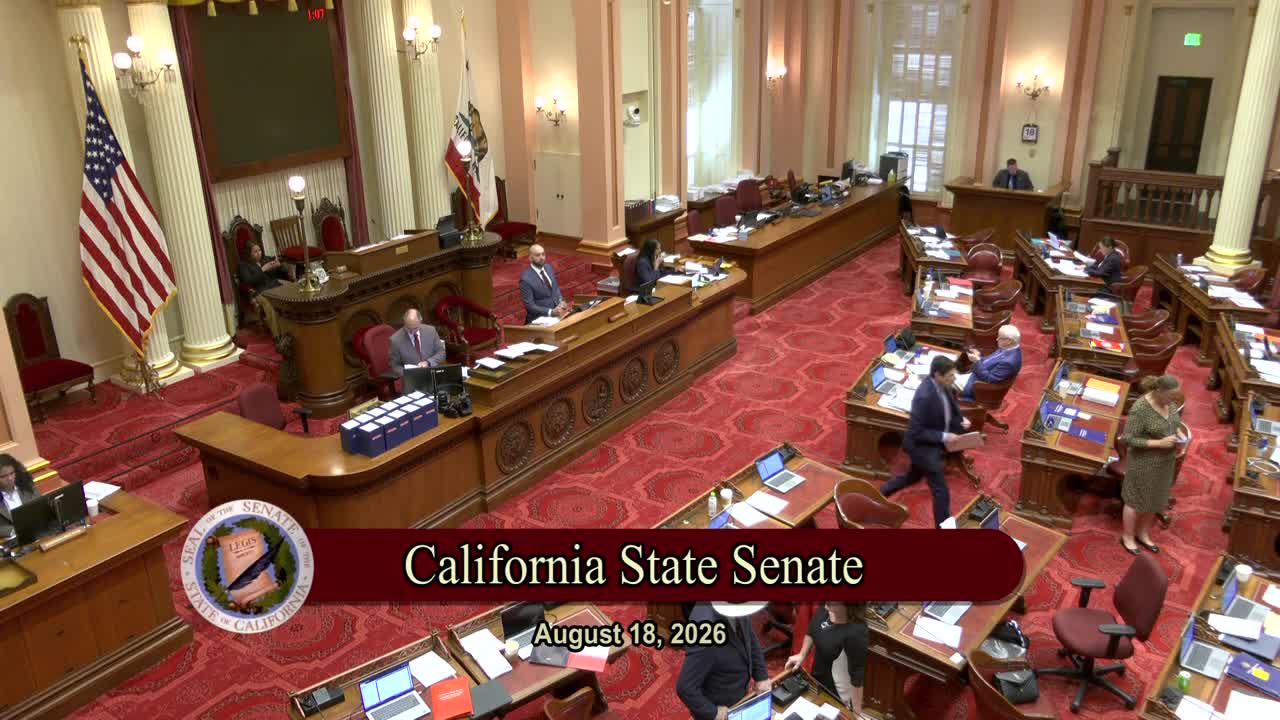

Bill Author