SB 33: Public contracts: claim resolution.
- Session Year: 2025-2026
- House: Senate
- Latest Version Date: 2026-07-16
Current Status:
Passed
(2026-07-16: Chaptered by Secretary of State. Chapter 99, Statutes of 2026.)
Introduced
In Committee
Awaiting First Chamber Vote
Passed First Chamber
In Committee
Awaiting Second Chamber Vote
Passed Second Chamber
Enacted
Existing law prescribes various requirements regarding the formation, content, and enforcement of state and local public contracts. Existing law establishes, until January 1, 2027, for contracts entered into on or after January 1, 2017, a claim resolution process applicable to any claim by a contractor in connection with a public works project against a public entity, as specified. For purposes of these provisions, existing law defines public entity to include, among others, a city, including a charter city, and county, including a charter county. Existing law imposes various requirements on a public entity in relating to the claim resolution process, including, among other things, conducting a reasonable review of the claim and, within 45 days, providing the claimant a written statement identifying the disputed and undisputed portions of the claim.
This bill would repeal the above-described January 1, 2027, repeal date, thereby extending the operation of these provisions indefinitely. By indefinitely extending the duties of local agencies in relation to the above-specified claim resolution process, this bill would impose a state-mandated local program.
The bill would include findings that changes proposed by this bill address a matter of statewide concern rather than a municipal affair and, therefore, apply to all cities, including charter cities.
The California Constitution requires the state to reimburse local agencies and school districts for certain costs mandated by the state. Statutory provisions establish procedures for making that reimbursement.
This bill would provide that, if the Commission on State Mandates determines that the bill contains costs mandated by the state, reimbursement for those costs shall be made pursuant to the statutory provisions noted above.
(1)Existing law establishes various programs to provide assistance to homeless youth, including, among others, homeless youth emergency service pilot projects and the Runaway Youth and Families in Crisis Project.This bill, subject to an appropriation by the Legislature for this purpose, would require the State Department of Social Services to establish the California Success, Opportunity, and Academic Resilience (SOAR) Guaranteed Income Program. The program would award public school pupils who are in grade 12 and are homeless children or youths, as defined, a guaranteed income of $1,000 each month for 4 months from May 1, 2026, to August 1, 2026, inclusive, as provided. The bill would establish the California SOAR Guaranteed Income Fund as the initial depository of all moneys appropriated, donated, or otherwise received for the program, and upon appropriation by the Legislature, would provide moneys in the fund to counties that opt in to the program for distribution to eligible participants.(2)Existing federal law, the McKinney-Vento Homeless Assistance Act, provides grants to states to carry out activities relating to the education of homeless children and youths, as defined, including, among others, providing services and activities to improve the identification of homeless children and youths and to enable them to enroll in and succeed in school. Existing law requires local educational agency liaisons, as defined, to ensure that homeless children and youths are identified by school personnel through outreach and coordination activities, as specified.This bill would require, in counties participating in the California SOAR Guaranteed Income Program, local educational agency liaisons to provide all known eligible participants with program information and enrollment forms, as specified.(3)Existing law, beginning on or after January 1, 2015, in modified conformity with federal income tax law, allows an earned income tax credit, the California Earned Income Tax Credit, against personal income tax. The Personal Income Tax Law also allows, for each taxable year beginning on or after January 1, 2019, a young child tax credit and, for each taxable year beginning on or after January 1, 2022, a foster youth tax credit against the taxes imposed under that law.This bill, for the taxable years beginning on or after January 1, 2026, and before January 1, 2031, would exclude from gross income, for purposes of the personal income tax, any amount received as an award pursuant to the California SOAR Guaranteed Income Program. The bill, for the taxable years beginning on or after January 1, 2026, and before January 1, 2031, would additionally provide that the amount awarded is not earned income for purposes of eligibility for the California Earned Income Tax Credit, the young child tax credit, or the foster youth tax credit.(4)Existing law establishes various public social services programs to provide eligible recipients with certain benefits, including, but not limited to, cash assistance under the California Work Opportunity and Responsibility to Kids (CalWORKs) program, nutrition assistance under the CalFresh program, and health care services under the Medi-Cal program. Under existing law, those programs, among others, are in part federally funded and governed by federal eligibility criteria, including specified income or resource limits.This bill would prohibit any award received by a student through the California SOAR Guaranteed Income Program from being considered income or resources for purposes of determining the students, or any member of their households, eligibility for benefits or assistance, or the amount or extent of benefits or assistance, under any state or local means-tested program, including certain public social services programs. The bill would condition implementation of this provision on not conflicting with federal law, or receipt of any necessary federal waivers or exemptions and the availability of any applicable federal financial participation, as specified.This bill would require the State Department of Social Services, in consultation with stakeholders and the Legislature, to identify the CalWORKs, CalFresh, and Medi-Cal programs and any other state program that implements a federal means-tested program and that would require an exemption or waiver. The bill would require a state department or agency that administers a program identified by the State Department of Social Services or by the department or agency itself, to approve an exemption or waiver or to seek one from the federal government. If the state fails to receive the necessary federal exemption or waiver, the bill would authorize the State Department of Social Services to consider alternatives to prevent adverse consequences for California SOAR Guaranteed Income Program participants.(5)This bill would repeal these provisions on January 1, 2029, except as provided.(6)Existing law requires any bill authorizing a new tax expenditure to contain, among other things, specific goals, purposes, and objectives that the tax expenditure will achieve, detailed performance indicators, and data collection requirements.This bill would include the additional information required for a bill authorizing a new tax expenditure.(1)Existing law establishes various programs to provide assistance to homeless youth, including, among others, homeless youth emergency service pilot projects and the Runaway Youth and Families in Crisis Project.
This bill, subject to an appropriation by the Legislature for this purpose, would require the State Department of Social Services to establish the California Success, Opportunity, and Academic Resilience (SOAR) Guaranteed Income Program. The program would award public school pupils who are in grade 12 and are homeless children or youths, as defined, a guaranteed income of $1,000 each month for 4 months from May 1, 2026, to August 1, 2026, inclusive, as provided. The bill would establish the California SOAR Guaranteed Income Fund as the initial depository of all moneys appropriated, donated, or otherwise received for the program, and upon appropriation by the Legislature, would provide moneys in the fund to counties that opt in to the program for distribution to eligible participants.
(2)Existing federal law, the McKinney-Vento Homeless Assistance Act, provides grants to states to carry out activities relating to the education of homeless children and youths, as defined, including, among others, providing services and activities to improve the identification of homeless children and youths and to enable them to enroll in and succeed in school. Existing law requires local educational agency liaisons, as defined, to ensure that homeless children and youths are identified by school personnel through outreach and coordination activities, as specified.
This bill would require, in counties participating in the California SOAR Guaranteed Income Program, local educational agency liaisons to provide all known eligible participants with program information and enrollment forms, as specified.
(3)Existing law, beginning on or after January 1, 2015, in modified conformity with federal income tax law, allows an earned income tax credit, the California Earned Income Tax Credit, against personal income tax. The Personal Income Tax Law also allows, for each taxable year beginning on or after January 1, 2019, a young child tax credit and, for each taxable year beginning on or after January 1, 2022, a foster youth tax credit against the taxes imposed under that law.
This bill, for the taxable years beginning on or after January 1, 2026, and before January 1, 2031, would exclude from gross income, for purposes of the personal income tax, any amount received as an award pursuant to the California SOAR Guaranteed Income Program. The bill, for the taxable years beginning on or after January 1, 2026, and before January 1, 2031, would additionally provide that the amount awarded is not earned income for purposes of eligibility for the California Earned Income Tax Credit, the young child tax credit, or the foster youth tax credit.
(4)Existing law establishes various public social services programs to provide eligible recipients with certain benefits, including, but not limited to, cash assistance under the California Work Opportunity and Responsibility to Kids (CalWORKs) program, nutrition assistance under the CalFresh program, and health care services under the Medi-Cal program. Under existing law, those programs, among others, are in part federally funded and governed by federal eligibility criteria, including specified income or resource limits.
This bill would prohibit any award received by a student through the California SOAR Guaranteed Income Program from being considered income or resources for purposes of determining the students, or any member of their households, eligibility for benefits or assistance, or the amount or extent of benefits or assistance, under any state or local means-tested program, including certain public social services programs. The bill would condition implementation of this provision on not conflicting with federal law, or receipt of any necessary federal waivers or exemptions and the availability of any applicable federal financial participation, as specified.
This bill would require the State Department of Social Services, in consultation with stakeholders and the Legislature, to identify the CalWORKs, CalFresh, and Medi-Cal programs and any other state program that implements a federal means-tested program and that would require an exemption or waiver. The bill would require a state department or agency that administers a program identified by the State Department of Social Services or by the department or agency itself, to approve an exemption or waiver or to seek one from the federal government. If the state fails to receive the necessary federal exemption or waiver, the bill would authorize the State Department of Social Services to consider alternatives to prevent adverse consequences for California SOAR Guaranteed Income Program participants.
(5)This bill would repeal these provisions on January 1, 2029, except as provided.
(6)Existing law requires any bill authorizing a new tax expenditure to contain, among other things, specific goals, purposes, and objectives that the tax expenditure will achieve, detailed performance indicators, and data collection requirements.
This bill would include the additional information required for a bill authorizing a new tax expenditure.
(1)Existing law establishes various programs to provide assistance to homeless youth, including, among others, homeless youth emergency service pilot projects and the Runaway Youth and Families in Crisis Project.
This bill, subject to an appropriation by the Legislature for this purpose, would require the State Department of Social Services to establish the California Success, Opportunity, and Academic Resilience (SOAR) Guaranteed Income Program. The program would award public school pupils who are in grade 12 and are homeless children or youths, as defined, a guaranteed income of $1,000 each month for 4 months from May 1, 2026, to August 1, 2026, inclusive, as provided. The bill would establish the California SOAR Guaranteed Income Fund as the initial depository of all moneys appropriated, donated, or otherwise received for the program, and upon appropriation by the Legislature, would provide moneys in the fund to counties that opt in to the program for distribution to eligible participants.
(2)Existing federal law, the McKinney-Vento Homeless Assistance Act, provides grants to states to carry out activities relating to the education of homeless children and youths, as defined, including, among others, providing services and activities to improve the identification of homeless children and youths and to enable them to enroll in and succeed in school. Existing law requires local educational agency liaisons, as defined, to ensure that homeless children and youths are identified by school personnel through outreach and coordination activities, as specified.
This bill would require, in counties participating in the California SOAR Guaranteed Income Program, local educational agency liaisons to provide all known eligible participants with program information and enrollment forms, as specified.
(3)Existing law, beginning on or after January 1, 2015, in modified conformity with federal income tax law, allows an earned income tax credit, the California Earned Income Tax Credit, against personal income tax. The Personal Income Tax Law also allows, for each taxable year beginning on or after January 1, 2019, a young child tax credit and, for each taxable year beginning on or after January 1, 2022, a foster youth tax credit against the taxes imposed under that law.
This bill, for the taxable years beginning on or after January 1, 2026, and before January 1, 2031, would exclude from gross income, for purposes of the personal income tax, any amount received as an award pursuant to the California SOAR Guaranteed Income Program. The bill, for the taxable years beginning on or after January 1, 2026, and before January 1, 2031, would additionally provide that the amount awarded is not earned income for purposes of eligibility for the California Earned Income Tax Credit, the young child tax credit, or the foster youth tax credit.
(4)Existing law establishes various public social services programs to provide eligible recipients with certain benefits, including, but not limited to, cash assistance under the California Work Opportunity and Responsibility to Kids (CalWORKs) program, nutrition assistance under the CalFresh program, and health care services under the Medi-Cal program. Under existing law, those programs, among others, are in part federally funded and governed by federal eligibility criteria, including specified income or resource limits.
This bill would prohibit any award received by a student through the California SOAR Guaranteed Income Program from being considered income or resources for purposes of determining the students, or any member of their households, eligibility for benefits or assistance, or the amount or extent of benefits or assistance, under any state or local means-tested program, including certain public social services programs. The bill would condition implementation of this provision on not conflicting with federal law, or receipt of any necessary federal waivers or exemptions and the availability of any applicable federal financial participation, as specified.
This bill would require the State Department of Social Services, in consultation with stakeholders and the Legislature, to identify the CalWORKs, CalFresh, and Medi-Cal programs and any other state program that implements a federal means-tested program and that would require an exemption or waiver. The bill would require a state department or agency that administers a program identified by the State Department of Social Services or by the department or agency itself, to approve an exemption or waiver or to seek one from the federal government. If the state fails to receive the necessary federal exemption or waiver, the bill would authorize the State Department of Social Services to consider alternatives to prevent adverse consequences for California SOAR Guaranteed Income Program participants.
(5)This bill would repeal these provisions on January 1, 2029, except as provided.
(6)Existing law requires any bill authorizing a new tax expenditure to contain, among other things, specific goals, purposes, and objectives that the tax expenditure will achieve, detailed performance indicators, and data collection requirements.
This bill would include the additional information required for a bill authorizing a new tax expenditure.
(a)The Legislature finds and declares that it is in the best interests of the state and its citizens to ensure that all construction business performed on a public works project in the state that is complete and not in dispute is paid in full and in a timely manner.
(b)Notwithstanding any other law, including, but not limited to, Article 7.1 (commencing with Section 10240) of Chapter 1 of Part 2, Chapter 10 (commencing with Section 19100) of Part 2, and Article 1.5 (commencing with Section 20104) of Chapter 1 of Part 3, this section shall apply to any claim by a contractor in connection with a public works project.
(c)For purposes of this section:
(1)Claim means a separate demand by a contractor sent by registered mail or certified mail with return receipt requested, for one or more of the following:
(A)A time extension, including, without limitation, for relief from damages or penalties for delay assessed by a public entity under a contract for a public works project.
(B)Payment by the public entity of money or damages arising from work done by, or on behalf of, the contractor pursuant to the contract for a public works project and payment for which is not otherwise expressly provided or to which the claimant is not otherwise entitled.
(C)Payment of an amount that is disputed by the public entity.
(2)Contractor means any type of contractor within the meaning of Chapter 9 (commencing with Section 7000) of Division 3 of the Business and Professions Code who has entered into a direct contract with a public entity for a public works project.
(3)(A)Public entity means, without limitation, except as provided in subparagraph (B), a state agency, department, office, division, bureau, board, or commission, the California State University, the University of California, a city, including a charter city, county, including a charter county, city and county, including a charter city and county, district, special district, public authority, political subdivision, public corporation, or nonprofit transit corporation wholly owned by a public agency and formed to carry out the purposes of the public agency.
(B)Public entity shall not include the following:
(i)The Department of Water Resources as to any project under the jurisdiction of that department.
(ii)The Department of Transportation as to any project under the jurisdiction of that department.
(iii)The Department of Parks and Recreation as to any project under the jurisdiction of that department.
(iv)The Department of Corrections and Rehabilitation with respect to any project under its jurisdiction pursuant to Chapter 11 (commencing with Section 7000) of Title 7 of Part 3 of the Penal Code.
(v)The Military Department as to any project under the jurisdiction of that department.
(vi)The Department of General Services as to all other projects.
(vii)The High-Speed Rail Authority.
(4)Public works project means the erection, construction, alteration, repair, or improvement of any public structure, building, road, or other public improvement of any kind.
(5)Subcontractor means any type of contractor within the meaning of Chapter 9 (commencing with Section 7000) of Division 3 of the Business and Professions Code who either is in direct contract with a contractor or is a lower tier subcontractor.
(d)(1)(A)Upon receipt of a claim pursuant to this section, the public entity to which the claim applies shall conduct a reasonable review of the claim and, within a period not to exceed 45 days, shall provide the claimant a written statement identifying what portion of the claim is disputed and what portion is undisputed. Upon receipt of a claim, a public entity and a contractor may, by mutual agreement, extend the time period provided in this subdivision.
(B)The claimant shall furnish reasonable documentation to support the claim.
(C)If the public entity needs approval from its governing body to provide the claimant a written statement identifying the disputed portion and the undisputed portion of the claim, and the governing body does not meet within the 45 days or within the mutually agreed to extension of time following receipt of a claim sent by registered mail or certified mail, return receipt requested, the public entity shall have up to three days following the next duly publicly noticed meeting of the governing body after the 45-day period, or extension, expires to provide the claimant a written statement identifying the disputed portion and the undisputed portion.
(D)Any payment due on an undisputed portion of the claim shall be processed and made within 60 days after the public entity issues its written statement. If the public entity fails to issue a written statement, paragraph (3) shall apply.
(2)(A)If the claimant disputes the public entitys written response, or if the public entity fails to respond to a claim issued pursuant to this section within the time prescribed, the claimant may demand in writing an informal conference to meet and confer for settlement of the issues in dispute. Upon receipt of a demand in writing sent by registered mail or certified mail, return receipt requested, the public entity shall schedule a meet and confer conference within 30 days for settlement of the dispute.
(B)Within 10 business days following the conclusion of the meet and confer conference, if the claim or any portion of the claim remains in dispute, the public entity shall provide the claimant a written statement identifying the portion of the claim that remains in dispute and the portion that is undisputed. Any payment due on an undisputed portion of the claim shall be processed and made within 60 days after the public entity issues its written statement. Any disputed portion of the claim, as identified by the contractor in writing, shall be submitted to nonbinding mediation, with the public entity and the claimant sharing the associated costs equally. The public entity and claimant shall mutually agree to a mediator within 10 business days after the disputed portion of the claim has been identified in writing. If the parties cannot agree upon a mediator, each party shall select a mediator and those mediators shall select a qualified neutral third party to mediate with regard to the disputed portion of the claim. Each party shall bear the fees and costs charged by its respective mediator in connection with the selection of the neutral mediator. If mediation is unsuccessful, the parts of the claim remaining in dispute shall be subject to applicable procedures outside this section.
(C)For purposes of this section, mediation includes any nonbinding process, including, but not limited to, neutral evaluation or a dispute review board, in which an independent third party or board assists the parties in dispute resolution through negotiation or by issuance of an evaluation. Any mediation utilized shall conform to the timeframes in this section.
(D)Unless otherwise agreed to by the public entity and the contractor in writing, the mediation conducted pursuant to this section shall excuse any further obligation under Section 20104.4 to mediate after litigation has been commenced.
(E)This section does not preclude a public entity from requiring arbitration of disputes under private arbitration or the Public Works Contract Arbitration Program, if mediation under this section does not resolve the parties dispute.
(3)Failure by the public entity to respond to a claim from a contractor within the time periods described in this subdivision or to otherwise meet the time requirements of this section shall result in the claim being deemed rejected in its entirety. A claim that is denied by reason of the public entitys failure to have responded to a claim, or its failure to otherwise meet the time requirements of this section, shall not constitute an adverse finding with regard to the merits of the claim or the responsibility or qualifications of the claimant.
(4)Amounts not paid in a timely manner as required by this section shall bear interest at 7 percent per annum.
(5)If a subcontractor or a lower tier subcontractor lacks legal standing to assert a claim against a public entity because privity of contract does not exist, the contractor may present to the public entity a claim on behalf of a subcontractor or lower tier subcontractor. A subcontractor may request in writing, either on their own behalf or on behalf of a lower tier subcontractor, that the contractor present a claim for work which was performed by the subcontractor or by a lower tier subcontractor on behalf of the subcontractor. The subcontractor requesting that the claim be presented to the public entity shall furnish reasonable documentation to support the claim. Within 45 days of receipt of this written request, the contractor shall notify the subcontractor in writing as to whether the contractor presented the claim to the public entity and, if the original contractor did not present the claim, provide the subcontractor with a statement of the reasons for not having done so.
(e)The text of this section or a summary of it shall be set forth in the plans or specifications for any public works project that may give rise to a claim under this section.
(f)A waiver of the rights granted by this section is void and contrary to public policy, provided, however, that (1) upon receipt of a claim, the parties may mutually agree to waive, in writing, mediation and proceed directly to the commencement of a civil action or binding arbitration, as applicable; and (2) a public entity may prescribe reasonable change order, claim, and dispute resolution procedures and requirements in addition to the provisions of this section, so long as the contractual provisions do not conflict with or otherwise impair the timeframes and procedures set forth in this section.
(g)This section applies to contracts entered into on or after January 1, 2017.
(h)Nothing in this section shall impose liability upon a public entity that makes loans or grants available through a competitive application process, for the failure of an awardee to meet its contractual obligations.
SEC. 2.The Legislature finds and declares that Section 1 of this act amending Section 9204 of the Public Contract Code address a matter of statewide concern rather than a municipal affair as that term is used in Section 5 of Article XI of the California Constitution. Therefore, Section 1 of this act applies to all cities, including charter cities.
SEC. 3.If the Commission on State Mandates determines that this act contains costs mandated by the state, reimbursement to local agencies and school districts for those costs shall be made pursuant to Part 7 (commencing with Section 17500) of Division 4 of Title 2 of the Government Code.
(a)The Legislature finds and declares that it is in the best interests of the state and its citizens to ensure that all construction business performed on a public works project in the state that is complete and not in dispute is paid in full and in a timely manner.
(b)Notwithstanding any other law, including, but not limited to, Article 7.1 (commencing with Section 10240) of Chapter 1 of Part 2, Chapter 10 (commencing with Section 19100) of Part 2, and Article 1.5 (commencing with Section 20104) of Chapter 1 of Part 3, this section shall apply to any claim by a contractor in connection with a public works project.
(c)For purposes of this section:
(1)Claim means a separate demand by a contractor sent by registered mail or certified mail with return receipt requested, for one or more of the following:
(A)A time extension, including, without limitation, for relief from damages or penalties for delay assessed by a public entity under a contract for a public works project.
(B)Payment by the public entity of money or damages arising from work done by, or on behalf of, the contractor pursuant to the contract for a public works project and payment for which is not otherwise expressly provided or to which the claimant is not otherwise entitled.
(C)Payment of an amount that is disputed by the public entity.
(2)Contractor means any type of contractor within the meaning of Chapter 9 (commencing with Section 7000) of Division 3 of the Business and Professions Code who has entered into a direct contract with a public entity for a public works project.
(3)(A)Public entity means, without limitation, except as provided in subparagraph (B), a state agency, department, office, division, bureau, board, or commission, the California State University, the University of California, a city, including a charter city, county, including a charter county, city and county, including a charter city and county, district, special district, public authority, political subdivision, public corporation, or nonprofit transit corporation wholly owned by a public agency and formed to carry out the purposes of the public agency.
(B)Public entity shall not include the following:
(i)The Department of Water Resources as to any project under the jurisdiction of that department.
(ii)The Department of Transportation as to any project under the jurisdiction of that department.
(iii)The Department of Parks and Recreation as to any project under the jurisdiction of that department.
(iv)The Department of Corrections and Rehabilitation with respect to any project under its jurisdiction pursuant to Chapter 11 (commencing with Section 7000) of Title 7 of Part 3 of the Penal Code.
(v)The Military Department as to any project under the jurisdiction of that department.
(vi)The Department of General Services as to all other projects.
(vii)The High-Speed Rail Authority.
(4)Public works project means the erection, construction, alteration, repair, or improvement of any public structure, building, road, or other public improvement of any kind.
(5)Subcontractor means any type of contractor within the meaning of Chapter 9 (commencing with Section 7000) of Division 3 of the Business and Professions Code who either is in direct contract with a contractor or is a lower tier subcontractor.
(d)(1)(A)Upon receipt of a claim pursuant to this section, the public entity to which the claim applies shall conduct a reasonable review of the claim and, within a period not to exceed 45 days, shall provide the claimant a written statement identifying what portion of the claim is disputed and what portion is undisputed. Upon receipt of a claim, a public entity and a contractor may, by mutual agreement, extend the time period provided in this subdivision.
(B)The claimant shall furnish reasonable documentation to support the claim.
(C)If the public entity needs approval from its governing body to provide the claimant a written statement identifying the disputed portion and the undisputed portion of the claim, and the governing body does not meet within the 45 days or within the mutually agreed to extension of time following receipt of a claim sent by registered mail or certified mail, return receipt requested, the public entity shall have up to three days following the next duly publicly noticed meeting of the governing body after the 45-day period, or extension, expires to provide the claimant a written statement identifying the disputed portion and the undisputed portion.
(D)Any payment due on an undisputed portion of the claim shall be processed and made within 60 days after the public entity issues its written statement. If the public entity fails to issue a written statement, paragraph (3) shall apply.
(2)(A)If the claimant disputes the public entitys written response, or if the public entity fails to respond to a claim issued pursuant to this section within the time prescribed, the claimant may demand in writing an informal conference to meet and confer for settlement of the issues in dispute. Upon receipt of a demand in writing sent by registered mail or certified mail, return receipt requested, the public entity shall schedule a meet and confer conference within 30 days for settlement of the dispute.
(B)Within 10 business days following the conclusion of the meet and confer conference, if the claim or any portion of the claim remains in dispute, the public entity shall provide the claimant a written statement identifying the portion of the claim that remains in dispute and the portion that is undisputed. Any payment due on an undisputed portion of the claim shall be processed and made within 60 days after the public entity issues its written statement. Any disputed portion of the claim, as identified by the contractor in writing, shall be submitted to nonbinding mediation, with the public entity and the claimant sharing the associated costs equally. The public entity and claimant shall mutually agree to a mediator within 10 business days after the disputed portion of the claim has been identified in writing. If the parties cannot agree upon a mediator, each party shall select a mediator and those mediators shall select a qualified neutral third party to mediate with regard to the disputed portion of the claim. Each party shall bear the fees and costs charged by its respective mediator in connection with the selection of the neutral mediator. If mediation is unsuccessful, the parts of the claim remaining in dispute shall be subject to applicable procedures outside this section.
(C)For purposes of this section, mediation includes any nonbinding process, including, but not limited to, neutral evaluation or a dispute review board, in which an independent third party or board assists the parties in dispute resolution through negotiation or by issuance of an evaluation. Any mediation utilized shall conform to the timeframes in this section.
(D)Unless otherwise agreed to by the public entity and the contractor in writing, the mediation conducted pursuant to this section shall excuse any further obligation under Section 20104.4 to mediate after litigation has been commenced.
(E)This section does not preclude a public entity from requiring arbitration of disputes under private arbitration or the Public Works Contract Arbitration Program, if mediation under this section does not resolve the parties dispute.
(3)Failure by the public entity to respond to a claim from a contractor within the time periods described in this subdivision or to otherwise meet the time requirements of this section shall result in the claim being deemed rejected in its entirety. A claim that is denied by reason of the public entitys failure to have responded to a claim, or its failure to otherwise meet the time requirements of this section, shall not constitute an adverse finding with regard to the merits of the claim or the responsibility or qualifications of the claimant.
(4)Amounts not paid in a timely manner as required by this section shall bear interest at 7 percent per annum.
(5)If a subcontractor or a lower tier subcontractor lacks legal standing to assert a claim against a public entity because privity of contract does not exist, the contractor may present to the public entity a claim on behalf of a subcontractor or lower tier subcontractor. A subcontractor may request in writing, either on their own behalf or on behalf of a lower tier subcontractor, that the contractor present a claim for work which was performed by the subcontractor or by a lower tier subcontractor on behalf of the subcontractor. The subcontractor requesting that the claim be presented to the public entity shall furnish reasonable documentation to support the claim. Within 45 days of receipt of this written request, the contractor shall notify the subcontractor in writing as to whether the contractor presented the claim to the public entity and, if the original contractor did not present the claim, provide the subcontractor with a statement of the reasons for not having done so.
(e)The text of this section or a summary of it shall be set forth in the plans or specifications for any public works project that may give rise to a claim under this section.
(f)A waiver of the rights granted by this section is void and contrary to public policy, provided, however, that (1) upon receipt of a claim, the parties may mutually agree to waive, in writing, mediation and proceed directly to the commencement of a civil action or binding arbitration, as applicable; and (2) a public entity may prescribe reasonable change order, claim, and dispute resolution procedures and requirements in addition to the provisions of this section, so long as the contractual provisions do not conflict with or otherwise impair the timeframes and procedures set forth in this section.
(g)This section applies to contracts entered into on or after January 1, 2017.
(h)Nothing in this section shall impose liability upon a public entity that makes loans or grants available through a competitive application process, for the failure of an awardee to meet its contractual obligations.
(i)This section shall remain in effect only until January 1, 2027, and as of that date is repealed, unless a later enacted statute that is enacted before January 1, 2027, deletes or extends that date.SEC. 2.The Legislature finds and declares that Section 1 of this act amending Section 9204 of the Public Contract Code address a matter of statewide concern rather than a municipal affair as that term is used in Section 5 of Article XI of the California Constitution. Therefore, Section 1 of this act applies to all cities, including charter cities.
SEC. 3.If the Commission on State Mandates determines that this act contains costs mandated by the state, reimbursement to local agencies and school districts for those costs shall be made pursuant to Part 7 (commencing with Section 17500) of Division 4 of Title 2 of the Government Code.
All matter omitted in this version of the bill appears in the bill as amended in the Senate, March 10, 2025. (JR11)(a)For the taxable years beginning on or after January 1, 2026, and before January 1, 2031, gross income does not include any amount received as an award pursuant to the California Success, Opportunity, and Academic Resilience (SOAR) Guaranteed Income Program established pursuant to Chapter 9 (commencing with Section 8280) of Division 8 of the Welfare and Institutions Code.
(b)For the taxable years beginning on or after January 1, 2026, and before January 1, 2031, any amount received as an award pursuant to the California SOAR Guaranteed Income Program established pursuant to Chapter 9 (commencing with Section 8280) of Division 8 of the Welfare and Institutions Code shall not be considered earned income for purposes of eligibility for the California Earned Income Tax Credit pursuant to Section 17052, the young child tax credit pursuant to Section 17052.1, or the foster youth tax credit pursuant to Section 17052.2.
(c)(1)For the purposes of complying with Section 41, the Legislature finds and declares both of the following:
(A)The specific goal, purpose, or objective of the exclusions is to ensure the general welfare and to increase economic security, educational attainment, and employment among youth who have experienced homelessness.
(B)The performance indicators for the Legislature to use in determining whether the exclusions meet the goal, purpose, and objective described in subparagraph (A) are college enrollment, attainment, progress towards degree completion, and measures of economic security, including housing security, ability to meet basic needs, income level, and employment.
(2)(A)On or before March 1, 2027, the State Department of Social Services shall analyze and report to the Legislature both of the following:
(i)College or workforce training program enrollment, attainment, and completion among California SOAR Guaranteed Income Program participants compared to youth experiencing homelessness in previous years and compared to similarly situated youth who are not participants.
(ii)Measures of economic security, including housing security, ability to meet basic needs, income level, and employment, among California SOAR Guaranteed Income Program participants compared to youth experiencing homelessness in previous years and compared to similarly situated youth who are not participants.
(B)A report to be submitted pursuant to subparagraph (A) shall be submitted in compliance with Section 9795 of the Government Code.
(d)This section shall remain in effect only until December 1, 2031, and as of that date is repealed.
SEC. 2.Chapter 9 (commencing with Section 8280) is added to Division 8 of the Welfare and Institutions Code, to read:9.California SOAR Guaranteed Income Program8280.This chapter shall be known, and may be cited, as the California Success, Opportunity, and Academic Resilience (SOAR) Guaranteed Income Program.
8281.As used in this chapter, the following definitions apply:
(a)Award means guaranteed income provided to an eligible participant for four months pursuant to this chapter.
(b)Department means the State Department of Social Services.
(c)Eligible participant means a public school pupil who is in grade 12 and is a homeless child or youth, as defined in subsection (2) of Section 725 of the federal McKinney-Vento Homeless Assistance Act (42 U.S.C. Sec. 11434a(2)).
(d)Fund means the California SOAR Guaranteed Income Fund established pursuant to this chapter.
(e)Guaranteed income means unconditional monetary payments issued monthly with the intention of ensuring the economic security of recipients.
(f)Liaison means a local educational agency liaison for homeless children and youths and unaccompanied youths designated pursuant to Section 11432(g)(1)(J)(ii) of Title 42 of the United States Code.
(g)Program means the California Success, Opportunity, and Academic Resilience (SOAR) Guaranteed Income Program established pursuant to this chapter.
8282.(a)(1)Subject to an appropriation by the Legislature for purposes of this chapter, the department shall establish the California SOAR Guaranteed Income Program. Under the program, an eligible participant shall receive a guaranteed income of one thousand dollars ($1,000) each month from May 1, 2026, to August 1, 2026, inclusive, with payments made on May 1, 2026, June 1, 2026, July 1, 2026, and August 1, 2026. The program may be extended by statute or by a county that meets the condition described in subparagraph (D) of paragraph (2).
(2)(A)The department shall work with the State Department of Education to identify the number of eligible participants in a county.
(B)The department shall award funds to a county that opts in to the program based on the number of eligible participants in the county.
(C)To cover administrative costs, the department shall also award a participating county an additional 10 percent of the amount of funds awarded pursuant to subparagraph (B). For purposes of this subparagraph, administrative costs include the costs of facilitating enrollment and outreach.
(D)If a county does not expend all awarded program funds in 2026, the county may use any remaining funds to continue the program in subsequent years to fund additional eligible participants until December 31, 2028, or until those funds are exhausted, whichever occurs sooner.
(3)(A)A liaison in a participating county shall provide all known eligible participants with program information and a county form to enroll in the program during routine initial and final communications required under the federal McKinney-Vento Homeless Assistance Act (42 U.S.C. Sec. 11301 et seq.).
(B)A liaison shall ensure that the enrollment forms are confidentially distributed to both of the following:
(i)All eligible participants 17 years of age and older.
(ii)Parents or guardians of eligible participants younger than 18 years of age.
(C)Liaisons are not required to assist an eligible participant with filling out an enrollment form.
(D)An eligible participant may apply for and participate in the program without a parents or guardians consent or approval, regardless of the eligible participants age.
(b)The California SOAR Guaranteed Income Fund is hereby established as the initial depository of all moneys appropriated, donated, or otherwise received for the program. Upon appropriation by the Legislature, the department shall distribute moneys in the fund to participating counties in accordance with this chapter. The department shall administer the fund.
(c)For purposes of administering the program, the department may accept in-kind contributions, including, but not limited to, financial mentorship services for participants.
8283.The department shall work with at least one independent, research-based institution to identify existing, and establish new, program outcome measurements. These measurements shall inform an evaluation report. The department shall submit the evaluation report to the Legislature, pursuant to Section 9795 of the Government Code, upon the conclusion of the program. The evaluation report shall include educational and economic security outcomes for award recipients, models used, and measures specific to the objectives of the program. Notwithstanding any other law, the department may accept and, upon appropriation, expend funds from nongovernment sources for purposes of preparing the evaluation report, a longitudinal study of the program that is in addition to the report, or both.
8284.(a)Notwithstanding any other law, any amount received by an individual as an award through the program shall not be considered income or resources for purposes of determining the individuals, or any member of their households, eligibility for benefits or assistance, or the amount or extent of benefits or assistance, under any state or local means-tested program. With respect to a state or local program, this subdivision shall be implemented only to the extent that it does not conflict with federal law relating to that program or to the extent that any necessary waivers or exemptions are obtained pursuant to subdivision (b) and that federal financial participation, if applicable, is available and is not otherwise jeopardized.
(b)The department, in consultation with stakeholders and the Legislature, shall identify the California Work Opportunity and Responsibility to Kids (CalWORKs) program, the CalFresh program, the Medi-Cal program, and any other state program that implements a federal means-tested program and that would require an exemption or waiver in order for an award described in subdivision (a) to be excluded from consideration as income or resources for purposes of the federal program. Notwithstanding any other law, a state department or agency that administers a program identified by the department or that the state department or agency itself identifies shall, if possible, approve an exemption or waiver, or provide any other authority deemed necessary by the state department or agency, to exclude the award from consideration as income or resources for purposes of the federal program, or, if the state department or agency does not have that authority, shall seek a federal waiver or exemption. The states failure to be granted a federal exemption or waiver, as described in this subdivision, shall not affect the ability of the department to administer the California SOAR Guaranteed Income Program, and the department may consider alternatives to prevent adverse consequences for participants, in consultation with the Legislature and stakeholders.
8285.The department shall be responsible for promulgating rules and regulations governing the administration of the program and fund.
8286.Notwithstanding any other law:
(a)Contracts or grants awarded pursuant to this chapter are exempt from the personal services contracting requirements of Article 4 (commencing with Section 19130) of Chapter 5 of Part 2 of Division 5 of Title 2 of the Government Code.
(b)Contracts or grants awarded pursuant to this chapter are exempt from the Public Contract Code and the State Contracting Manual and are not subject to the approval of the Department of General Services.
(c)Notwithstanding the rulemaking provisions of the Administrative Procedure Act (Chapter 3.5 (commencing with Section 11340) of Part 1 of Division 3 of Title 2 of the Government Code), the department may implement, interpret, or make specific this chapter without taking any regulatory action.
8287.This chapter shall remain in effect only until January 1, 2029, and as of that date is repealed.
SEC. 3.Section 10007 is added to the Welfare and Institutions Code, to read:10007.(a)Subject to the limitations and conditions described in Section 8284, any amount received by an individual as an award through the California SOAR Guaranteed Income Program established pursuant to Chapter 9 (commencing with Section 8280) of Division 8 shall not be considered income or resources for purposes of determining the individuals, or any member of their households, eligibility for benefits or assistance, or the amount or extent of benefits or assistance, under pursuant to a state or local means-tested public social services program described in this division.
(b)This section shall remain in effect only until January 1, 2029, and as of that date is repealed.
(a)For the taxable years beginning on or after January 1, 2026, and before January 1, 2031, gross income does not include any amount received as an award pursuant to the California Success, Opportunity, and Academic Resilience (SOAR) Guaranteed Income Program established pursuant to Chapter 9 (commencing with Section 8280) of Division 8 of the Welfare and Institutions Code.
(b)For the taxable years beginning on or after January 1, 2026, and before January 1, 2031, any amount received as an award pursuant to the California SOAR Guaranteed Income Program established pursuant to Chapter 9 (commencing with Section 8280) of Division 8 of the Welfare and Institutions Code shall not be considered earned income for purposes of eligibility for the California Earned Income Tax Credit pursuant to Section 17052, the young child tax credit pursuant to Section 17052.1, or the foster youth tax credit pursuant to Section 17052.2.
(c)(1)For the purposes of complying with Section 41, the Legislature finds and declares both of the following:
(A)The specific goal, purpose, or objective of the exclusions is to ensure the general welfare and to increase economic security, educational attainment, and employment among youth who have experienced homelessness.
(B)The performance indicators for the Legislature to use in determining whether the exclusions meet the goal, purpose, and objective described in subparagraph (A) are college enrollment, attainment, progress towards degree completion, and measures of economic security, including housing security, ability to meet basic needs, income level, and employment.
(2)(A)On or before March 1, 2027, the State Department of Social Services shall analyze and report to the Legislature both of the following:
(i)College or workforce training program enrollment, attainment, and completion among California SOAR Guaranteed Income Program participants compared to youth experiencing homelessness in previous years and compared to similarly situated youth who are not participants.
(ii)Measures of economic security, including housing security, ability to meet basic needs, income level, and employment, among California SOAR Guaranteed Income Program participants compared to youth experiencing homelessness in previous years and compared to similarly situated youth who are not participants.
(B)A report to be submitted pursuant to subparagraph (A) shall be submitted in compliance with Section 9795 of the Government Code.
(d)This section shall remain in effect only until December 1, 2031, and as of that date is repealed.
SEC. 2.Chapter 9 (commencing with Section 8280) is added to Division 8 of the Welfare and Institutions Code, to read:9.California SOAR Guaranteed Income Program8280.This chapter shall be known, and may be cited, as the California Success, Opportunity, and Academic Resilience (SOAR) Guaranteed Income Program.
8281.As used in this chapter, the following definitions apply:
(a)Award means guaranteed income provided to an eligible participant for four months pursuant to this chapter.
(b)Department means the State Department of Social Services.
(c)Eligible participant means a public school pupil who is in grade 12 and is a homeless child or youth, as defined in subsection (2) of Section 725 of the federal McKinney-Vento Homeless Assistance Act (42 U.S.C. Sec. 11434a(2)).
(d)Fund means the California SOAR Guaranteed Income Fund established pursuant to this chapter.
(e)Guaranteed income means unconditional monetary payments issued monthly with the intention of ensuring the economic security of recipients.
(f)Liaison means a local educational agency liaison for homeless children and youths and unaccompanied youths designated pursuant to Section 11432(g)(1)(J)(ii) of Title 42 of the United States Code.
(g)Program means the California Success, Opportunity, and Academic Resilience (SOAR) Guaranteed Income Program established pursuant to this chapter.
8282.(a)(1)Subject to an appropriation by the Legislature for purposes of this chapter, the department shall establish the California SOAR Guaranteed Income Program. Under the program, an eligible participant shall receive a guaranteed income of one thousand dollars ($1,000) each month from May 1, 2026, to August 1, 2026, inclusive, with payments made on May 1, 2026, June 1, 2026, July 1, 2026, and August 1, 2026. The program may be extended by statute or by a county that meets the condition described in subparagraph (D) of paragraph (2).
(2)(A)The department shall work with the State Department of Education to identify the number of eligible participants in a county.
(B)The department shall award funds to a county that opts in to the program based on the number of eligible participants in the county.
(C)To cover administrative costs, the department shall also award a participating county an additional 10 percent of the amount of funds awarded pursuant to subparagraph (B). For purposes of this subparagraph, administrative costs include the costs of facilitating enrollment and outreach.
(D)If a county does not expend all awarded program funds in 2026, the county may use any remaining funds to continue the program in subsequent years to fund additional eligible participants until December 31, 2028, or until those funds are exhausted, whichever occurs sooner.
(3)(A)A liaison in a participating county shall provide all known eligible participants with program information and a county form to enroll in the program during routine initial and final communications required under the federal McKinney-Vento Homeless Assistance Act (42 U.S.C. Sec. 11301 et seq.).
(B)A liaison shall ensure that the enrollment forms are confidentially distributed to both of the following:
(i)All eligible participants 17 years of age and older.
(ii)Parents or guardians of eligible participants younger than 18 years of age.
(C)Liaisons are not required to assist an eligible participant with filling out an enrollment form.
(D)An eligible participant may apply for and participate in the program without a parents or guardians consent or approval, regardless of the eligible participants age.
(b)The California SOAR Guaranteed Income Fund is hereby established as the initial depository of all moneys appropriated, donated, or otherwise received for the program. Upon appropriation by the Legislature, the department shall distribute moneys in the fund to participating counties in accordance with this chapter. The department shall administer the fund.
(c)For purposes of administering the program, the department may accept in-kind contributions, including, but not limited to, financial mentorship services for participants.
8283.The department shall work with at least one independent, research-based institution to identify existing, and establish new, program outcome measurements. These measurements shall inform an evaluation report. The department shall submit the evaluation report to the Legislature, pursuant to Section 9795 of the Government Code, upon the conclusion of the program. The evaluation report shall include educational and economic security outcomes for award recipients, models used, and measures specific to the objectives of the program. Notwithstanding any other law, the department may accept and, upon appropriation, expend funds from nongovernment sources for purposes of preparing the evaluation report, a longitudinal study of the program that is in addition to the report, or both.
8284.(a)Notwithstanding any other law, any amount received by an individual as an award through the program shall not be considered income or resources for purposes of determining the individuals, or any member of their households, eligibility for benefits or assistance, or the amount or extent of benefits or assistance, under any state or local means-tested program. With respect to a state or local program, this subdivision shall be implemented only to the extent that it does not conflict with federal law relating to that program or to the extent that any necessary waivers or exemptions are obtained pursuant to subdivision (b) and that federal financial participation, if applicable, is available and is not otherwise jeopardized.
(b)The department, in consultation with stakeholders and the Legislature, shall identify the California Work Opportunity and Responsibility to Kids (CalWORKs) program, the CalFresh program, the Medi-Cal program, and any other state program that implements a federal means-tested program and that would require an exemption or waiver in order for an award described in subdivision (a) to be excluded from consideration as income or resources for purposes of the federal program. Notwithstanding any other law, a state department or agency that administers a program identified by the department or that the state department or agency itself identifies shall, if possible, approve an exemption or waiver, or provide any other authority deemed necessary by the state department or agency, to exclude the award from consideration as income or resources for purposes of the federal program, or, if the state department or agency does not have that authority, shall seek a federal waiver or exemption. The states failure to be granted a federal exemption or waiver, as described in this subdivision, shall not affect the ability of the department to administer the California SOAR Guaranteed Income Program, and the department may consider alternatives to prevent adverse consequences for participants, in consultation with the Legislature and stakeholders.
8285.The department shall be responsible for promulgating rules and regulations governing the administration of the program and fund.
8286.Notwithstanding any other law:
(a)Contracts or grants awarded pursuant to this chapter are exempt from the personal services contracting requirements of Article 4 (commencing with Section 19130) of Chapter 5 of Part 2 of Division 5 of Title 2 of the Government Code.
(b)Contracts or grants awarded pursuant to this chapter are exempt from the Public Contract Code and the State Contracting Manual and are not subject to the approval of the Department of General Services.
(c)Notwithstanding the rulemaking provisions of the Administrative Procedure Act (Chapter 3.5 (commencing with Section 11340) of Part 1 of Division 3 of Title 2 of the Government Code), the department may implement, interpret, or make specific this chapter without taking any regulatory action.
8287.This chapter shall remain in effect only until January 1, 2029, and as of that date is repealed.
SEC. 3.Section 10007 is added to the Welfare and Institutions Code, to read:10007.(a)Subject to the limitations and conditions described in Section 8284, any amount received by an individual as an award through the California SOAR Guaranteed Income Program established pursuant to Chapter 9 (commencing with Section 8280) of Division 8 shall not be considered income or resources for purposes of determining the individuals, or any member of their households, eligibility for benefits or assistance, or the amount or extent of benefits or assistance, under a state or local means-tested public social services program described in this division.
(b)This section shall remain in effect only until January 1, 2029, and as of that date is repealed.
|
Date
|
Status
|
|---|---|
| Jul 16, 2026 | Chaptered by Secretary of State. Chapter 99, Statutes of 2026. |
| Jul 16, 2026 | Approved by the Governor. |
| Jul 15, 2026 | Enrolled and presented to the Governor at 11 a.m. |
| Jul 2, 2026 | In Senate. Ordered to engrossing and enrolling. |
| Jul 2, 2026 | Read third time. Passed. (Ayes 70. Noes 0. Page 5984.) Ordered to the Senate. |
| Jul 2, 2026 | Read third time. Passed. Ordered to the Senate. |
| Jun 25, 2026 | Read second time. Ordered to consent calendar. |
| Jun 24, 2026 | From committee: Do pass. Ordered to consent calendar. (Ayes 15. Noes 0.) (June 24). |
| Jun 10, 2026 | From committee: Do pass and re-refer to Com. on APPR. with recommendation: To consent calendar. (Ayes 18. Noes 0.) (June 10). Re-referred to Com. on APPR. |
| Jun 1, 2026 | Referred to Com. on G.O. |
| Jan 26, 2026 | In Assembly. Read first time. Held at Desk. |
| Jan 26, 2026 | Read third time. Passed. (Ayes 39. Noes 0. Page 3279.) Ordered to the Assembly. |
| Jan 21, 2026 | Read second time. Ordered to third reading. |
| Jan 20, 2026 | From committee: Be ordered to second reading pursuant to Senate Rule 28.8. |
| Jan 15, 2026 | Set for hearing January 20. |
| Jan 14, 2026 | From committee: Do pass and re-refer to Com. on APPR. (Ayes 13. Noes 0. Page 3213.) (January 13). Re-referred to Com. on APPR. |
| Jan 6, 2026 | Set for hearing January 13. |
| Jan 5, 2026 | Re-referred to Com. on JUD. |
| Jan 5, 2026 | Re-referred to Com. on RLS. |
| Jan 5, 2026 | Withdrawn from committee. |
| Jan 5, 2026 | From committee with author's amendments. Read second time and amended. Re-referred to Com. on APPR. |
| May 23, 2025 | May 23 hearing: Held in committee and under submission. |
| May 16, 2025 | Set for hearing May 23. |
| May 5, 2025 | May 5 hearing: Placed on APPR. suspense file. |
| Apr 25, 2025 | Set for hearing May 5. |
| Apr 22, 2025 | From committee: Do pass and re-refer to Com. on APPR. (Ayes 5. Noes 0. Page 811.) (April 21). Re-referred to Com. on APPR. |
| Apr 4, 2025 | Set for hearing April 21. |
| Mar 19, 2025 | From committee: Do pass and re-refer to Com. on HUMAN S. (Ayes 6. Noes 1. Page 419.) (March 19). Re-referred to Com. on HUMAN S. |
| Mar 10, 2025 | From committee with author's amendments. Read second time and amended. Re-referred to Com. on ED. |
| Mar 3, 2025 | Set for hearing March 19. |
| Jan 29, 2025 | Referred to Coms. on ED. and HUMAN S. |
| Dec 3, 2024 | From printer. May be acted upon on or after January 2. |
| Dec 2, 2024 | Introduced. Read first time. To Com. on RLS. for assignment. To print. |
|
Date
|
Description
|
Location
|
Votes
|
|
|---|---|---|---|---|
| Jul 2, 2026 | SB 33 Cortese Consent Calendar Second Day Regular Session | Assembly Floor |
Passed |
|
| Jun 24, 2026 | Do pass. To Consent Calendar. | Assembly Standing Committee on Appropriations |
Passed |
|
| Jun 10, 2026 | Do pass and be re-referred to the Committee on [Appropriations] with recommendation: To Consent Calendar | Assembly Standing Committee on Governmental Organization |
Passed |
|
| Jan 26, 2026 | Senate 3rd Reading SB33 Cortese | Senate Floor |
Passed |
|
| Jan 13, 2026 | Do pass, but first be re-referred to the Committee on [Appropriations] | Senate Standing Committee on Judiciary |
Passed |
|
| May 5, 2025 | Placed on suspense file | Senate Standing Committee on Appropriations |
Passed |
|
| Apr 21, 2025 | Do pass, but first be re-referred to the Committee on [Appropriations] | Senate Standing Committee on Human Services |
Passed |
|
| Mar 19, 2025 | Do pass, but first be re-referred to the Committee on [Human Services] | Senate Standing Committee on Education |
Passed |
This list shows positions taken on this bill by organizations on the date displayed, which is linked to the original source.
Positions by individuals are not included.
|
Organization
|
Position
|
Date
|
|---|---|---|
| Aids Healthcare Foundation | ** Support | |
| Alliance for Boys and Men of Color | ** Support | |
| Alliance for Children's Rights | ** Support | |
| Bay Area Community Services | ** Support | |
| California Alliance Of Child And Family Services | ** Support | |
| CALIFORNIA ASSOCIATION OF SHEET METAL & AIR CONDITIONING CONTRACTORS NATIONAL ASSOCIATION | ** Support | |
| California Coalition For Youth | ** Support | |
| California Faculty Association | ** Support | |
| California Legislative Conference for Plumbing, Heating and Piping Industry | ** Support | |
| California Legislative Conference Of Plumbing, Heating & Piping Industry | ** Support | |
| California State Association Of Electrical Workers | ** Support | |
| California State Council Of Laborers | ** Support | |
| California State Pipe Trades Council | ** Support | |
| City of Alameda | ** Support | |
| Coalition of California Welfare Rights Organizations | ** Support | |
| Community Financial Resources | ** Support | |
| County of Los Angeles Board of Supervisors | ** Support | |
| County of Santa Clara | ** Support | |
| Courage California | ** Support | |
| Destination: Home | ** Support | |
| Disability Rights California | ** Support | |
| Drug Policy Alliance | ** Support | |
| Economic Security California Action | ** Support | |
| End Poverty in California Action | ** Support | |
| Finishing Contractors Association Of Southern California | ** Support | |
| Five Keys | ** Support | |
| Fresno Unified School District | ** Support | |
| Friends Committee On Legislation Of California | ** Support | |
| Glide | ** Support | |
| Golden State Opportunity | ** Support | |
| Grace Institute - End Child Poverty in Ca | ** Support | |
| Homefirst Services of Santa Clara County | ** Support | |
| Housing California | ** Support | |
| Insure the Uninsured Project | ** Support | |
| John Burton Advocates for Youth | ** Support | |
| Michelson Center For Public Policy | ** Support | |
| My New Red Shoes | ** Support | |
| Mypath | ** Support | |
| National Council Of Jewish Women Los Angeles | ** Support | |
| National Electrical Contractors Association | ** Support | |
| Northern California Allied Trades | ** Support | |
| Northern California Floor Covering Association | ** Support | |
| Orange County United Way | ** Support | |
| Pacific Juvenile Defender Center | ** Support | |
| Path | ** Support | |
| Politico Group | ** Support | |
| Public Health Advocates | ** Support | |
| Public Policy School | ** Support | |
| San Jose-Evergreen Community College District | ** Support | |
| Santa Clara County Office Of Education | ** Support | |
| Share Our Strength | ** Support | |
| Smart Justice California, a project of Tides Advocacy | ** Support | |
| Southern California Glass Management Association | ** Support | |
| United Contractors | ** Support | |
| United for a Guaranteed Income Action | ** Support | |
| UNITED FOR A GUARANTEED INCOME ACTION FUND | ** Support | |
| United Way California Capital Region | ** Support | |
| United Ways Of California | ** Support | |
| Wall and Ceiling Alliance | ** Support | |
| western center on law & poverty | ** Support | |
| Western Electrical Contractors Association | ** Support | |
| Western Painting and Coating Contractors Association | ** Support | |
| Western Wall And Ceiling Contractors Association | ** Support | |
| What We All Deserve | ** Support | |
| Young Invincibles | ** Support |
Date of Hearing: June 24, 2026
ASSEMBLY COMMITTEE ON APPROPRIATIONS
Buffy Wicks, Chair
SBPCA Bill Id:SB 33
Author:(Cortese) – As Amended Ver:January 5, 2026
Policy Committee: | Governmental Organization | Vote: | 18 - 0 |
|
| ||
|
|
Urgency: No State Mandated Local Program: Yes Reimbursable: Yes
SUMMARY:
This bill repeals the January 1, 2027, sunset date for a claim resolution process applicable to certain state and local public works contracts.
FISCAL EFFECT:
- Minor and absorbable costs to state and local entities subject to the claim resolution process to continue meeting specified timelines and conference requirements.
Although the claim resolution process generally applies to both local and state public entities, existing law specifically excludes seven state entities with substantial public works contracts from the process: Department of Water Resources, Department of Transportation, Department of Parks and Recreation, Department of Corrections and Rehabilitation, Military Department, Department of General Services, and High-Speed Rail Authority. In effect, the process primarily applies to the University of California, California State University, and local entities. If the Commission on State Mandates determines the provisions of this bill impose a state-mandated local program for which the state must reimburse local costs, local entities could seek reimbursement from the state.
- Potential cost savings of an unknown amount to state and local entities to the extent the claim resolution process reduces construction delays, project costs, and litigation.
COMMENTS:
- Purpose. According to the author:
California is in an infrastructure crisis. To address these vital infrastructure weaknesses, we need contractors to know that they will be paid properly and without delay when they accept public contracts. Even further, contractors require reassurance that if there are discrepancies, there will be equitable options for mediation and resolution. To accomplish this goal, SB 33 eliminates the sunset date of Public Contract Code § 9204 and makes it permanent. This code established the fair, cost-saving process that has decreased construction delays, reduced litigation, and improved project delivery for public agencies, taxpayers, and contractors that has been in use for nearly a decade.
This bill is supported by various contractor associations and labor organizations.
- Claim Resolution Process. Prior to enactment of the claim resolution process, an aggrieved public works contractor had no recourse to resolve a disputed claim outside of arbitration or filing a civil action. AB 626 (Chiu), Chapter 810, Statutes of 2016, established a claim resolution process applicable to certain claims by a contractor in connection with certain public works projects regarding: (a) relief from damages or penalties assessed by a public entity, (b) payment by the public entity of money or damages arising from work done by the contractor, or (c) payment of an amount disputed by the public entity. Under the process, a contractor must submit a claim to the public entity by registered or certified mail, and the public entity must provide a written response to the claim within 45 days identifying what portion of the claim is disputed and undisputed. Payment due on the undisputed portion of the claim must be made within 60 days of the public entity’s written response. A contractor may demand to meet-and-confer with the public entity to settle the disputed portion of the claim, with items not resolved during the conference submitted to nonbinding mediation.
AB 626 imposed a January 1, 2020, sunset date on the claim resolution process. AB 456 (Chiu), Chapter 489, Statutes of 2019, extended the sunset date to January 1, 2027. This bill repeals the sunset date, allowing the claim resolution process to continue indefinitely.
Analysis Prepared by: Irene Ho / APPR. / (916) 319-2081
Date of Hearing: June 10, 2026
ASSEMBLY COMMITTEE ON GOVERNMENTAL ORGANIZATION
Blanca Rubio, Chair
SBPCA Bill Id:SB 33
Author:(Cortese) – As Amended Ver:January 5, 2026
SENATE VOTE: 39-0
SUBJECT: Public contracts: claim resolution
SUMMARY: This bill would delete the sunset date of a claims resolution process that enables contractors to seek public agency review of claims that arise during public works projects. Specifically, this bill:
1) Removes the January 1, 2027, repeal date, thereby making the claim resolution process described above operative indefinitely.
2) Makes legislative findings and declarations.
EXISTING LAW:
1) Establishes the Public Contract Code (PCC), which is the basis of contracts between most public entities in this state and their contractors and subcontractors. With regard to charter cities, this code applies in the absence of an express exemption or a city charter provision or ordinance that conflicts with the relevant provision of the code. (PCC § 1100.7.)
2) Defines “public works contract,” as an agreement for the erection, construction, alteration, repair, or improvement of any public structure, building, road, or other public improvement of any kind. (PCC § 1101.)
3) Establishes, for contracts entered into on or after January 1, 2017, a claim resolution process applicable to any claim by a contractor in connection with a public works project against a public entity. (PCC § 9204)
4) Defines “claim” as a separate demand by the contractor sent by registered mail or certified mail with return receipt requested, as specified.
5) Defines “public entity” to include, among others, a city, including a charter city, and county, including a charter county. “Public entity” shall not include the following: a) Department of Water Resources; b) Department of Transportation; c) Department of Parks and Recreation; d) Department of Corrections and Rehabilitation; e) Military Department; f) Department of General Services; and g) High-Speed Rail Authority. (PCC § 9204(c)(3).)
6) Requires a public entity, upon receipt of a claim from a contractor in connection with a public works project, to conduct a reasonable review and within 45 days provide the claimant with a written statement identifying the disputed and undisputed portions of the claim. Undisputed portions of the claim must be paid within 60 days.
7) Provides that if the claimant disputes the public entity’s written response, or if the public entity fails to respond to a claim issued pursuant to this section within the time prescribed, the claimant may demand in writing an informal conference to meet-and-confer for settlement of the issues in dispute. Requires the public entity to schedule a meet-and-conference within 30 days for settlement of the dispute, as defined (PCC § 9204(d)(2)(A).)
8) Requires, within 10 days following the meet-and-confer conference, the public entity, if the claim or any portion thereof remains in dispute, to provide the claimant a written statement identifying the portion of the claim that remains in dispute and the portion that is undisputed. Any disputed portion of the claim, as identified by the contractor in writing, must be submitted to nonbinding mediation, with the public entity and the claimant sharing the associated costs equally. Undisputed portions of the claim must be paid within 60 days.
9) Specifies, if mediation does not resolve the dispute, that a public entity may require arbitration of the dispute under private arbitration or the Public Works Contract Arbitration Program. (PCC § 9204(d)(3).)
10) Provides that if a subcontractor or a lower tier subcontractor lacks legal standing to assert a claim against a public entity because privity of contract does not exist, the contractor may present to the public entity a claim on behalf of the subcontractor or lower tier subcontractor. A subcontractor may request in writing, either on their own behalf or on behalf of a lower tier subcontractor, that the contractor present a claim for work that was performed by the subcontractor or by a lower tier subcontractor on behalf of the subcontractor. The subcontractor requesting that the claim be presented to the public entity must furnish reasonable documentation to support the claim, as specified. (PCC § 9204(d)(5).)
11) Imposes a 7% annual interest rate on amounts not timely paid. (PCC § 9204(d)(4).)
12) Repeals the claims resolution process on January 1, 2027. PCC § 9204(i).
FISCAL EFFECT: According to the Senate Appropriations Committee, pursuant to Senate Rule 28.8, negligible state costs.
COMMENTS:
Purpose of the bill. The author states, “California is in an infrastructure crisis. To address these vital infrastructure weaknesses, we need contractors to know that they will be paid properly and without delay when they accept public contracts. Even further, contractors require reassurance that if there are discrepancies, there will be equitable options for mediation and resolution. To accomplish this goal, SB 33 eliminates the sunset date of Public Contract Code § 9204 and makes it permanent. This code established the fair, cost-saving process that has decreased construction delays, reduced litigation, and improved project delivery for public agencies, taxpayers, and contractors that has been in use for nearly a decade. Without eliminating the sunset, this cost-saving framework, originally enacted through a carefully negotiated policy that resolved public-agency opposition, will expire on January 1, 2027, and our infrastructure will only suffer for it.”
Background.
In public works projects, a public agency contracts with a general contractor who submits a bid or estimated cost to provide the materials and services for the construction, alteration, demolition, installation, or repair work. In general, “public works” refers to the construction, alteration, demolition, installation, or repair work (including maintenance) of any public structure, building, road, or other improvement done under contract and paid with public funds, or if private funds are used, more than 50% of the square footage is leased to a public entity. Several laws regulate various aspects of public works projects to safeguard the public’s interest. Public works projects do not include those done by a public agency with its own employees.
At times, the cost of the materials and services is more than the general contractor’s bid due to changes in the project, which may result from inaccurate or incomplete project plans and specifications, additional demands by the public agency, or unexpected difficulties. In these cases, contractors generally seek reimbursement for the increased costs by submitting a claim to the public entity, which may lead to a dispute. To facilitate the prompt resolution of these disputes, the Legislature enacted AB 626 (Chiu, Statutes of 2016), which provided a claim resolution process applicable to any claim by a contractor in connection with a public works project against a public entity.
The Senate Committee on Judiciary analysis of AB 626 noted that it would provide a simplified, cost-effective claims resolution procedure to resolve contractor claims before arbitration or civil action.[1] Additionally, the analysis explained that AB 626 would provide a clear process for a subcontractor to submit claims through a general contractor in order to provide the subcontractor with information as to whether the general contractor has rejected the request to submit the subcontractor’s claim to the public agency. In 2019, AB 456 (Chiu, Statutes of 2019) extend the sunset date until January 1, 2027.
Before the enactment of AB 626 in 2016, a general contractor facing cost overruns for which the contractor was not at fault had no recourse to resolve a disputed claim other than pursuing arbitration or filing a civil action. Additionally, a subcontractor that performed additional services or supplied materials beyond the scope of the original contract, but which were necessary to complete the project, could not seek payment directly from the public agency due to the absence of contractual privity. Delays in payment for the extra work provided by the contractor or subcontractor often placed the contractor or subcontractor at financial risk and jeopardized the project. These recurrent issues occasionally culminated in costly litigation that drained the resources of the public agency, contractors, and subcontractors.
This bill removes the sunset date, thereby continuing the process established by AB 626 indefinitely. This bill does not make any other substantive changes to the scope or operation of current law.
In support. This bill is supported by several labor organizations, who write in support, “PCC § 9204 has been in effect for nearly a decade and has proven to be a cost saving, litigation reducing framework that benefits public agencies, taxpayers, and contractors alike. The statute requires public agencies to timely respond to contractor claims for extra or change order work, promptly pay undisputed amounts, and engage in a structured dispute resolution process, including meet-and-confer discussions and nonbinding mediation, before disputes escalate into costly litigation. Prior to enactment of this statute, contractors performing required extra work often waited months or even years for payment, despite continuing to pay wages, benefits, materials, and overhead in real time. These delays strained working capital, reduced competition, increased bid prices, and, in some cases, forced otherwise responsible contractors out of business. This bill preserves a system that restores balance, predictability, and fairness to public works contracting.
Importantly, current law was the product of a carefully negotiated policy compromise that resolved public agency opposition at the time of enactment. Since then, the statute has demonstrated that timely claim review and early dispute resolution improve project delivery without imposing undue burdens on public owners. Absent SB 33, this proven framework will expire on January 1, 2027, undoing years of progress and returning public works to a system that incentivizes delay, increases disputes, and drives up costs for taxpayers.”
Related legislation. SB 1205 (Valladares) of 2026. This bill would prohibit any retention payments for contracts under design bid-build directly between a public entity and an individual or legal entity permitted by law to practice the profession of architecture or engineering from exceeding 5% of the payment. (Assembly Committee on Governmental Organization)
Prior legislation. SB 61 (Cortese), Chapter 49, Statutes of 2025. Imposed limits on the amount an owner can withhold from a direct contractor, or a contractor from a subcontractor, for a private construction projects of improvement to 5% or less. This cap was designed to protect contractors and subcontractors by improving cash flow during the project.
SB 440 (Ochoa Bogh), Statutes of 2025. Established a process, until January 1, 2030, by which disputes between an owner, direct contractor, or subcontractor regarding extensions of time and payment of additional compensation for approved changes to the contractor’s scope of work may be resolved through an informal conference and mediation.
AB 2173 (Petrie-Norris), Chapter 121, Statutes of 2022. Removed the sunset clause on the 5% retention cap policy related to public works projects, thereby permanently establishing it.
SB 1192 (Ochoa Bogh), Chapter 93, Statutes of 2022. Clarified that the term “contractor” includes design professionals for the purposes of authorizing the substitution of alternative securities in lieu of retention payments withheld when contracting with a state agency on a public works project, as specified.
AB 456 (Chiu), Statutes of 2019. Extended the sunset date on the claims process until January 1, 2027.
AB 626 (Chiu), Statutes of 2016. Established a claim resolution process applicable to any claim by a contractor in connection with a public works project against a public entity and repealed these provisions on January 1, 2020.
REGISTERED SUPPORT / OPPOSITION:
Support
National Electrical Contractors Association (NE) (Sponsor)
United Contractors (UCON) (Sponsor)
California Association of Sheet Metal & Air Conditioning Contractors National Association
California Legislative Conference of Plumbing, Heating & Piping Industry
California State Association of Electrical Workers
California State Council of Laborers
California State Pipe Trades Council
Finishing Contractors Association of Southern California
Northern California Allied Trades
Northern California Floor Covering Association
Southern California Glass Management Association (SCGMA)
Wall and Ceiling Alliance
Western Electrical Contractors Association
Western Painting and Coating Contractors Association
Western Wall and Ceiling Contractors Association (WWCCA)
Opposition
None on file
Analysis Prepared by: Eric Johnson / G.O. / (916) 319-2531
Sen. Jud. Comm. analysis of AB 456 as amended June 8, 2016 (2015-16 reg. sess.). ↑
SENATE RULES COMMITTEE Office of Senate Floor Analyses (916) 651-4171 | SB 33 |
THIRD READING
Bill No: SB 33
Author: Cortese (D)
Amended: 1/5/26
Vote: 21
SENATE EDUCATION COMMITTEE: 6-1, 3/19/25
AYES: Pérez, Ochoa Bogh, Cabaldon, Cortese, Gonzalez, Laird
NOES: Choi
SENATE HUMAN SERVICES COMMITTEE: 5-0, 4/21/25
AYES: Arreguín, Ochoa Bogh, Becker, Limón, Pérez
SENATE JUDICIARY COMMITTEE: 13-0, 1/13/26
AYES: Umberg, Niello, Allen, Ashby, Caballero, Durazo, Laird, Reyes, Stern, Valladares, Wahab, Weber Pierson, Wiener
SENATE APPROPRIATIONS COMMITTEE: Senate Rule 28.8
SUBJECT: Public contracts: claim resolution
SOURCE: California Legislative Conference of Plumbing, Heating and Piping Industry
National Electrical Contractors Association (NECA)
United Contractors (UCON)
DIGEST:
This bill deletes the sunset date of a claims resolution process that enables contractors to seek public agency review of claims that arise during public works projects.
ANALYSIS:
Existing law:
- Establishes the Public Contract Code, which is the basis of contracts between most public entities in this state and their contractors and subcontractors. With regard to charter cities, this code applies in the absence of an express exemption or a city charter provision or ordinance that conflicts with the relevant provision of the code. (Public (Pub.) Contract (Cont.) Code § 1100.7.)
- Defines “public works contract,” as an agreement for the erection, construction, alteration, repair, or improvement of any public structure, building, road, or other public improvement of any kind. (Pub. Cont. Code § 1101.)
- Establishes, for contracts entered into on or after January 1, 2017, a claim resolution process applicable to any claim by a contractor in connection with a public works project against a public entity. (Pub. Cont. Code § 9204)
- Defines “claim” as a separate demand by the contractor sent by registered mail or certified mail with return receipt requested, for one or more of the following:
- a time extension, including, without limitation, for relief from damages or penalties for delay assessed by a public entity under a public works contract;
- payment by the public entity of money or damages arising from work done by, or on behalf of, the contractor pursuant to the contract for a public work and payment that is not otherwise expressly provided or to which the claimant is not otherwise entitled; or
- payment of an amount that is disputed by the public entity. (Pub. Cont. Code § 9204(c)(1).)
- Defines “public entity” for these purposes as a state agency, department, office, division, bureau, board, or commission, the California State University, the University of California, a city, including a charter city, county, including a charter county, city and county, including a charter city and county, district, special district, public authority, political subdivision, public corporation, or nonprofit transit corporation wholly owned by a public agency and formed to carry out the purposes of the public agency. Generally, excludes from this definition the:
- Department of Water Resources;
- Department of Transportation;
- Department of Parks and Recreation;
- Department of Corrections and Rehabilitation;
- Military Department;
- Department of General Services; and
- High-Speed Rail Authority. (Pub. Cont. Code § 9204(c)(3).)
- Requires a public entity, upon receipt of a claim from a contractor in connection with a public works project, to conduct a reasonable review and within 45 days provide the claimant with a written statement identifying the disputed and undisputed portions of the claim. (Pub. Cont. Code § 9204(d)(1)(C).) Undisputed portions of the claim must be paid within 60 days. (Pub. Cont. Code § 9204(d)(1)(D).)
- Provides that if the claimant disputes the public entity’s written response, or if the public entity fails to respond to a claim issued pursuant to this section within the time prescribed, the claimant may demand in writing an informal conference to meet and confer for settlement of the issues in dispute. Requires the public entity, upon receipt of a demand in writing sent by registered mail or certified mail, with return receipt requested, to schedule a meet-and-confer conference within 30 days for settlement of the dispute. (Pub. Cont. Code § 9204(d)(2)(A).)
- Requires, within 10 days following the meet-and-confer conference, the public entity, if the claim or any portion thereof remains in dispute, to provide the claimant a written statement identifying the portion of the claim that remains in dispute and the portion that is undisputed. Any disputed portion of the claim, as identified by the contractor in writing, must be submitted to nonbinding mediation, with the public entity and the claimant sharing the associated costs equally. (Pub. Cont. Code § 9204(d)(2)(B).) Undisputed portions of the claim must be paid within 60 days. (Ibid.)
- Specifies, if mediation does not resolve the dispute, that a public entity may require arbitration of the dispute under private arbitration or the Public Works Contract Arbitration Program. (Pub. Cont. Code § 9204(d)(3).)
- Imposes a 7% annual interest rate on amounts not timely paid. (Pub. Cont. Code § 9204(d)(4).)
- Provides that if a subcontractor or a lower tier subcontractor lacks legal standing to assert a claim against a public entity because privity of contract does not exist, the contractor may present to the public entity a claim on behalf of the subcontractor or lower tier subcontractor. A subcontractor may request in writing, either on their own behalf or on behalf of a lower tier subcontractor, that the contractor present a claim for work that was performed by the subcontractor or by a lower tier subcontractor on behalf of the subcontractor. The subcontractor requesting that the claim be presented to the public entity must furnish reasonable documentation to support the claim. Within 45 days of receipt of this written request, the contractor must notify the subcontractor in writing as to whether the contractor presented the claim to the public entity and, if the original contractor did not present the claim, provide the subcontractor with a statement of the reasons for not having done so. (Pub. Cont. Code § 9204(d)(5).)
- Repeals the claims resolution process on January 1, 2027. Pub. Cont. Code § 9204(i).)
This bill removes the January 1, 2027, repeal date, thereby making the claim resolution process described above operative indefinitely.
Comments
In public works projects, a public agency contracts with a general contractor who submits a bid or estimated cost to provide the materials and services for the construction, alteration, demolition, installation, or repair work. At times, the cost of the materials and services is more than the general contractor’s bid due to changes in the project, which may result from inaccurate or incomplete project plans and specifications, additional demands by the public agency, or unexpected difficulties. In these cases, contractors generally seek reimbursement for the increased costs by submitting a claim to the public entity, which may lead to a dispute. To facilitate the prompt resolution of these disputes, the Legislature enacted AB 626 (Chiu, Chapter 810, Statutes of 2016), which provided a claim resolution process applicable to any claim by a contractor in connection with a public works project against a public entity. These provisions are set to sunset on January 1, 2027.
In general, “public works” refers to the construction, alteration, demolition, installation, or repair work (including maintenance) of any public structure, building, road, or other improvement done under contract and paid with public funds, or if private funds are used, more than 50% of the square footage is leased to a public entity. Several laws regulate various aspects of public works projects to safeguard the public’s interest. Public works projects do not include those done by a public agency with its own employees.
Before AB 626, a general contractor with cost overruns for which the contractor was not responsible had no recourse to resolve a claim dispute outside of arbitration or a civil action. Additionally, a subcontractor that performed additional services or provided materials outside the scope of the original contract, but necessary to complete the project, could not seek payment from the public agency for lack of contractual privity. Delays in payment for the extra work provided by the contractor or subcontractor often placed the contractor or subcontractor at financial risk and jeopardized the project. These recurrent issues occasionally culminated in costly litigation that drained the resources of the public agency, contractors, and subcontractors.
In 2016, following multiple failed attempts to address pre-litigation claim disputes, then Governor Brown signed AB 626 into law. AB 626 added section 9204, which provides for a claim resolution process applicable to any claim by a contractor in connection with a public works project against a public entity. Public entities must then provide a written response to claims within 45 days that details disputed and undisputed amounts. Section 9204 requires the payment of undisputed amounts and sets a process to resolve remaining disputes. Contractors can demand a meet-and-confer conference with the entity for remaining disputes. Items not resolved during the conference are submitted to nonbinding mediation. Finally, section 9204 provides that if a subcontractor or a lower tier subcontractor lacks legal standing to assert a claim against a public entity because privity of contract does not exist, the contractor may present to the public entity a claim on behalf of the subcontractor or lower tier subcontractor. AB 626 passed this Committee unanimously. When AB 626 was enacted, it contained a January 1, 2020, sunset date.
The Committee’s analysis of AB 626 noted that it would provide a simplified, cost-effective claims resolution procedure to resolve contractor claims before arbitration or civil action.[1] Additionally, the analysis explained that AB 626 would provide a clear process for a subcontractor to submit claims through a general contractor in order to provide the subcontractor with information as to whether the general contractor has rejected the request to submit the subcontractor’s claim to the public agency.[2] In 2019, AB 456 (Chiu, Chapter 489, Statutes of 2019), as it was heard by this Committee, would have removed the sunset date on the claims process indefinitely and passed the Committee unanimously. AB 456 was subsequently amended to instead extend the sunset date until January 1, 2027.
This bill removes Section 9204’s sunset date, thereby continuing the process established by AB 626 indefinitely. This bill does not make any other substantive changes to the scope or operation of Section 9204.
FISCAL EFFECT: Appropriation: No Fiscal Com.: Yes Local: Yes
California Legislative Conference of Plumbing, Heating and Piping Industry (source)
National Electrical Contractors Association (source)
United Contractors (source)
California State Council of Laborers
Finishing Contractors Association of Southern California
Northern California Allied Trades
Northern California Floor Covering Association
Politico Group
Southern California Glass Management Association
Wall and Ceiling Alliance
Western Painting and Coating Contractors Association
Western Wall and Ceiling Contractors Association
OPPOSITION: (Verified 1/21/26)
None received
ARGUMENTS IN SUPPORT: The author writes:
California is in an infrastructure crisis. To address these vital infrastructure weaknesses, we need contractors to know that they will be paid properly and without delay when they accept public contracts. Even further, contractors need the reassurance that if there are discrepancies, there will be equitable options for mediation and resolution. To accomplish this goal, SB 33 eliminates the sunset date of Public Contract Code §9204 and makes it permanent. This code established the fair, cost-saving process that has decreased construction delays, reduced litigation, and improved project delivery for public agencies, taxpayers, and contractors that has been in use for nearly a decade.
Without eliminating the sunset, this cost-saving framework, originally enacted through a carefully negotiated policy that resolved public-agency opposition, will expire on January 1, 2027, and our infrastructure crisis will only worsen.
This bill is supported by several labor organizations, who write in support stating:
Public Contract Code § 9204 has been in effect for nearly a decade and has proven to be a cost saving, litigation reducing framework that benefits public agencies, taxpayers, and contractors alike. The statute requires public agencies to timely respond to contractor claims for extra or change order work, promptly pay undisputed amounts, and engage in a structured dispute resolution process, including meet and confer discussions and nonbinding mediation, before disputes escalate into costly litigation.
Prior to enactment of this statute, contractors performing required extra work often waited months or even years for payment, despite continuing to pay wages, benefits, materials, and overhead in real time. These delays strained working capital, reduced competition, increased bid prices, and, in some cases, forced otherwise responsible contractors out of business. SB 33 preserves a system that restores balance, predictability, and fairness to public works contracting.
Importantly, § 9204 was the product of a carefully negotiated policy compromise that resolved public agency opposition at the time of enactment. Since then, the statute has demonstrated that timely claim review and early dispute resolution improve project delivery without imposing undue burdens on public owners.
Absent SB 33, this proven framework will expire on January 1, 2027, undoing years of progress and returning public works to a system that incentivizes delay, increases disputes, and drives up costs for taxpayers.
Prepared by: Amanda Mattson / JUD. / (916) 651-4113
1/21/26 16:05:19
**** END ****
Senator Thomas Umberg, Chair
2025-2026 Regular Session
Bill No: SB 33 (Author:Cortese)
Version: January 5, 2026
Hearing Date: January 13, 2026
Fiscal: Yes
Urgency: No
AMConsultant:
SUBJECT
Public contracts: claim resolution.
DIGEST
This bill deletes the sunset date of a claims resolution process that enables contractors to seek public agency review of claims that arise during public works projects.
EXECUTIVE SUMMARY
In public works projects, a public agency contracts with a general contractor who submits a bid or estimated cost to provide the materials and services for the construction, alteration, demolition, installation, or repair work. At times, the cost of the materials and services is more than the general contractor’s bid due to changes in the project, which may result from inaccurate or incomplete project plans and specifications, additional demands by the public agency, or unexpected difficulties. In these cases, contractors generally seek reimbursement for the increased costs by submitting a claim to the public entity, which may lead to a dispute. To facilitate the prompt resolution of these disputes, the Legislature enacted AB 626 (Chiu, Ch. 810, Stats. 2016), which provided a claim resolution process applicable to any claim by a contractor in connection with a public works project against a public entity. This process requires public entities to provide, within 45 days, a written response to any claim received that details disputed and undisputed amounts. Payments of undisputed amounts are required to be paid. For remaining disputes, contractors have a right to demand a meet-and-confer conference with the entity and any claims not resolved during that conference are submitted to nonbinding mediation. These provisions are set to sunset on January 1, 2027. This bill eliminates that sunset date, thereby extending the claims resolution process indefinitely. The bill is sponsored by California Legislative Conference of the Plumbing, Heating and Piping Industry, the National Electrical Contractors Association, and United Contractors. The bill is supported by several labor organizations. There is no known opposition.
PROPOSED CHANGES TO THE LAW
Existing law:
- Establishes the Public Contract Code, which is the basis of contracts between most public entities in this state and their contractors and subcontractors. With regard to charter cities, this code applies in the absence of an express exemption or a city charter provision or ordinance that conflicts with the relevant provision of the code. (Pub. Contract Code § 1100.7.)[1]
- Defines “public works contract,” as an agreement for the erection, construction, alteration, repair, or improvement of any public structure, building, road, or other public improvement of any kind. (§ 1101.)
- Establishes, for contracts entered into on or after January 1, 2017, a claim resolution process applicable to any claim by a contractor in connection with a public works project against a public entity. (§ 9204)
- Defines “claim” as a separate demand by the contractor sent by registered mail or certified mail with return receipt requested, for one or more of the following:
- a time extension, including, without limitation, for relief from damages or penalties for delay assessed by a public entity under a public works contract;
- payment by the public entity of money or damages arising from work done by, or on behalf of, the contractor pursuant to the contract for a public work and payment that is not otherwise expressly provided or to which the claimant is not otherwise entitled; or
- payment of an amount that is disputed by the public entity. (§ 9204(c)(1).)
- Defines “public entity” for these purposes as a state agency, department, office, division, bureau, board, or commission, the California State University, the University of California, a city, including a charter city, county, including a charter county, city and county, including a charter city and county, district, special district, public authority, political subdivision, public corporation, or nonprofit transit corporation wholly owned by a public agency and formed to carry out the purposes of the public agency. Generally excludes from this definition the:
- Department of Water Resources;
- Department of Transportation;
- Department of Parks and Recreation;
- Department of Corrections and Rehabilitation;
- Military Department;
- Department of General Services; and
- High-Speed Rail Authority. (§ 9204(c)(3).)
- Requires a public entity, upon receipt of a claim from a contractor in connection with a public works project, to conduct a reasonable review and within 45 days provide the claimant with a written statement identifying the disputed and undisputed portions of the claim. (§ 9204(d)(1)(C).) Undisputed portions of the claim must be paid within 60 days. (§ 9204(d)(1)(D).)
- Provides that if the claimant disputes the public entity’s written response, or if the public entity fails to respond to a claim issued pursuant to this section within the time prescribed, the claimant may demand in writing an informal conference to meet and confer for settlement of the issues in dispute. Requires the public entity, upon receipt of a demand in writing sent by registered mail or certified mail, with return receipt requested, to schedule a meet-and-confer conference within 30 days for settlement of the dispute. (§ 9204(d)(2)(A).)
- Within 10 days following the meet-and-confer conference, requires the public entity, if the claim or any portion thereof remains in dispute, to provide the claimant a written statement identifying the portion of the claim that remains in dispute and the portion that is undisputed. Any disputed portion of the claim, as identified by the contractor in writing, must be submitted to nonbinding mediation, with the public entity and the claimant sharing the associated costs equally. (§ 9204(d)(2)(B).) Undisputed portions of the claim must be paid within 60 days. (Ibid.)
- If mediation does not resolve the dispute, specifies that a public entity may require arbitration of the dispute under private arbitration or the Public Works Contract Arbitration Program. (§ 9204(d)(3).)
- Imposes a 7 percent annual interest rate on amounts not timely paid. (§ 9204(d)(4).)
- Provides that if a subcontractor or a lower tier subcontractor lacks legal standing to assert a claim against a public entity because privity of contract does not exist, the contractor may present to the public entity a claim on behalf of the subcontractor or lower tier subcontractor. A subcontractor may request in writing, either on their own behalf or on behalf of a lower tier subcontractor, that the contractor present a claim for work that was performed by the subcontractor or by a lower tier subcontractor on behalf of the subcontractor. The subcontractor requesting that the claim be presented to the public entity must furnish reasonable documentation to support the claim. Within 45 days of receipt of this written request, the contractor must notify the subcontractor in writing as to whether the contractor presented the claim to the public entity and, if the original contractor did not present the claim, provide the subcontractor with a statement of the reasons for not having done so. (§ 9204(d)(5).)
- Repeals the claims resolution process on January 1, 2027.
This bill removes the January 1, 2027, repeal date, thereby making the claim resolution process described above operative indefinitely.
COMMENTS
- Stated need for the bill
The author writes:
California is in an infrastructure crisis. To address these vital infrastructure weaknesses, we need contractors to know that they will be paid properly and without delay when they accept public contracts. Even further, contractors need the reassurance that if there are discrepancies, there will be equitable options for mediation and resolution. To accomplish this goal, SB 33 eliminates the sunset date of Public Contract Code §9204 and makes it permanent. This code established the fair, cost-saving process that has decreased construction delays, reduced litigation, and improved project delivery for public agencies, taxpayers, and contractors that has been in use for nearly a decade.
Without eliminating the sunset, this cost-saving framework, originally enacted through a carefully negotiated policy that resolved public-agency opposition, will expire on January 1, 2027, and our infrastructure crisis will only worsen.
2. Background
In general, “public works” refers to the construction, alteration, demolition, installation, or repair work (including maintenance) of any public structure, building, road, or other improvement done under contract and paid with public funds, or if private funds are used, more than 50 percent of the square footage is leased to a public entity. Several laws regulate various aspects of public works projects to safeguard the public’s interest. Public works projects do not include those done by a public agency with its own employees.
In public works projects, a public agency contracts with a general contractor who has submitted a bid or estimated cost to provide the materials and services for the construction, alteration, demolition, installation, or repair work. At times, the cost of the materials and services is more than the general contractor’s bid due to changes in the project, which may result from inaccurate or incomplete project plans and specifications, additional demands by the public agency, or unexpected difficulties. These increases in costs may be submitted to the public agency for payment.
Before AB 626, a general contractor with cost overruns for which the contractor was not responsible had no recourse to resolve a claim dispute outside of arbitration or a civil action. Additionally, a subcontractor that performed additional services or provided materials outside the scope of the original contract, but necessary to complete the project, could not seek payment from the public agency for lack of contractual privity. Delays in payment for the extra work provided by the contractor or subcontractor often placed the contractor or subcontractor at financial risk and jeopardized the project. These recurrent issues occasionally culminated in costly litigation that drained the resources of the public agency, contractors, and subcontractors.
3. Removes the sunset date on a claim resolution process applicable to certain public works contracts
In 2016, following multiple failed attempts to address pre-litigation claim disputes, then Governor Brown signed AB 626 into law. AB 626 added section 9204, which provides for a claim resolution process applicable to any claim by a contractor in connection with a public works project against a public entity. Public entities must then provide a written response to claims within 45 days that details disputed and undisputed amounts. Section 9204 requires the payment of undisputed amounts and sets a process to resolve remaining disputes. Contractors can demand a meet-and-confer conference with the entity for remaining disputes. Items not resolved during the conference are submitted to nonbinding mediation. Finally, section 9204 provides that if a subcontractor or a lower tier subcontractor lacks legal standing to assert a claim against a public entity because privity of contract does not exist, the contractor may present to the public entity a claim on behalf of the subcontractor or lower tier subcontractor. AB 626 passed this Committee unanimously. When AB 626 was enacted, it contained a January 1, 2020, sunset date.
The Committee’s analysis of AB 626 noted that it would provide a simplified, cost-effective claims resolution procedure to resolve contractor claims before arbitration or civil action.[2] Additionally, the analysis explained that AB 626 would provide a clear process for a subcontractor to submit claims through a general contractor in order to provide the subcontractor with information as to whether the general contractor has rejected the request to submit the subcontractor’s claim to the public agency.[3] In 2019, AB 456 (Chiu, Ch. 489, Stats. 2019), as it was heard by this Committee, would have removed the sunset date on the claims process indefinitely and passed the Committee unanimously. AB 456 was subsequently amended to instead extend the sunset date until January 1, 2027.
This bill would remove section 9204’s sunset date, thereby continuing the process established by AB 626 indefinitely. The bill does not make any other substantive changes to the scope or operation of section 9204.
4. Statements in support
The bill is supported by several labor organizations, including the National Electrical Contractors Association and United Contractors, who write in support stating:
Public Contract Code § 9204 has been in effect for nearly a decade and has proven to be a cost saving, litigation reducing framework that benefits public agencies, taxpayers, and contractors alike. The statute requires public agencies to timely respond to contractor claims for extra or change order work, promptly pay undisputed amounts, and engage in a structured dispute resolution process, including meet and confer discussions and nonbinding mediation, before disputes escalate into costly litigation.
Prior to enactment of this statute, contractors performing required extra work often waited months or even years for payment, despite continuing to pay wages, benefits, materials, and overhead in real time. These delays strained working capital, reduced competition, increased bid prices, and, in some cases, forced otherwise responsible contractors out of business. SB 33 preserves a system that restores balance, predictability, and fairness to public works contracting.
Importantly, § 9204 was the product of a carefully negotiated policy compromise that resolved public agency opposition at the time of enactment. Since then, the statute has demonstrated that timely claim review and early dispute resolution improve project delivery without imposing undue burdens on public owners.
Absent SB 33, this proven framework will expire on January 1, 2027, undoing years of progress and returning public works to a system that incentivizes delay, increases disputes, and drives up costs for taxpayers.
SUPPORT
California Legislative Conference of Plumbing, Heating and Piping Industry (sponsor)
National Electrical Contractors Association (NECA) (sponsor)
United Contractors (UCON) (sponsor)
Finishing Contractors Association of Southern California
Northern California Allied Trades
Northern California Floor Covering Association
Politico Group
Southern California Glass Management Association (SCGMA)
Wall and Ceiling Alliance
Western Painting and Coating Contractors Association
Western Wall and Ceiling Contractors Association (WWCCA)
OPPOSITION
None known
RELATED LEGISLATION
Pending Legislation: None known.
Prior Legislation:
SB 440 (Ochoa Bogh, Ch. 583, Stats. 2025) established a process, until January 1, 2030, by which disputes between an owner, direct contractor, or subcontractor regarding extensions of time and payment of additional compensation for approved changes to the contractor’s scope of work may be resolved through an informal conference and mediation.
AB 456 (Chiu, Ch. 489, Stats. 2019) extended the sunset date on the claims process until January 1, 2027.
AB 626 (Chiu, Ch. 810, Stats. 2016) established a claim resolution process applicable to any claim by a contractor in connection with a public works project against a public entity and repealed these provisions on January 1, 2020.
PRIOR VOTES
This bill was amended on January 5, 2026, to address a completely different subject matter and as such the prior votes are not included.
**************
SENATE COMMITTEE ON
Senator Anna Caballero, Chair
2025 - 2026 Regular Session
SB 33 (Cortese) - Homeless pupils: California Success, Opportunity, and Academic Resilience (SOAR) Guaranteed Income Program
Version: | Policy Vote: |
Urgency: | Mandate: |
Hearing Date: | Consultant: |
Bill Summary:
This bill establishes the California Success, Opportunity, and Academic Resilience (SOAR) Guaranteed Income Program, to be administered by the California Department of Social Services (DSS), for purposes of providing monthly payments to homeless students in the 12th grade.
Fiscal Impact:
- While the establishment of the program would be contingent upon an appropriation, the DSS estimates that the bill could result in General Fund costs of approximately $57.6 million in the 2025-26 fiscal year and $53.5 million in the 2026-27 fiscal year. According to the California Department of Education (CDE), there were 24,320 students in grade 12 for the 2023-24 school year who at one point met the federal definition of homelessness. This estimate also assumes one-time contract costs of $4 million for partnership with an independent research institution. To the extent that in-kind donations are received for purposes of administering the program, the General Fund costs could be lower.
- The DSS estimates General Fund costs of approximately $2.1 million in 2025-26 and $2.2 million in 2026-27 for various workload activities to administer the program.
Background:
Existing law defines, in the federal McKinney-Vento Act Homeless Assistance Act (McKinney-Vento), “homeless children and youth” as individuals who lack a fixed, regular, and adequate nighttime residence, including children who are sharing the housing of other people, living in motels, hotels, trailer parks, or camp grounds, emergency or transitional shelters, abandoned in hospitals or awaiting foster care placement, or who are living in a place not generally used for sleeping, cars, parks, public spaces, abandoned buildings, substandard housing, bus or train stations, and migratory children living in the circumstances above.
Existing law requires every local educational agency (LEA) to designate a local liaison for homeless children and youth, who, among other duties, is responsible for ensuring that homeless children and youth are identified by school personnel through outreach and coordination activities with other entities and agencies, and ensuring that homeless families and homeless children and youth have access to and receive educational services for which such families, children, and youth are eligible.
Existing law requires states that receive federal funds to serve homeless children and youth to establish or designate in the State educational agency an Office of the Coordinator for Education of Homeless Children and Youths. The Coordinator for Education of Homeless Children and Youths is required to gather and make publicly available reliable, valid, and comprehensive information on the number of homeless children and youth identified in the State, and requires this information to be posted annually on the State educational agency’s website.
The Budget Act of 2021 provided $35 million for the California Guaranteed Income Pilot Program administered by CDSS. Under this program, cities and counties may apply for funds from CDSS to support local pilot programs that prioritize foster youth who have exited the foster care system. This bill establishes, presumably outside of the CDSS system, a separate program with the similar goal of offering assistance with less prescriptive eligibility requirements to youth who have financial need.
Proposed Law:
This bill requires, upon an appropriation by the Legislature and until January 1, 2029, the CDSS to establish the California SOAR Guaranteed Income Program to provide homeless youth, as defined, in grade 12 who are enrolled in a public high school, a guaranteed income of $1,000 each month from May 1, 2026, to August 1, 2026.
This bill requires the CDSS to work with the CDE to identify the number of eligible participants in a county and award funds to a county that chooses to participate in the SOAR program based on the number of eligible participants in the county.
This bill requires the CDSS to award a participating county an additional 10 percent of the amount of funds awarded to cover administrative costs, including the costs of facilitating program enrollment and outreach.
This bill allows a county that does not expend all awarded program funds in 2026 to extend the SOAR program and use any remaining funds to continue the program in subsequent years to fund additional eligible participants until December 31, 2028, or until those funds are exhausted, whichever occurs sooner.
This bill requires a LEA liaison for homeless children, youth, and unaccompanied youths in a participating county to provide all known eligible participants with SOAR program information and a county enrollment form during routine initial and final communications required under federal law, as well as ensure that the enrollment forms are confidentially distributed to all eligible participants age 17 and older and parents or guardians of eligible participants younger than 18 years of age. The bill specifies that liaisons are not required to assist an eligible participant in completing an enrollment form and allows an eligible participant to apply for and participate in the SOAR program without a parent’s or guardian’s consent or approval, regardless of their age.
This bill establishes a related fund, to be administered by the CDSS, as an initial depository of all moneys received for the SOAR program and requires the CDSS to distribute moneys in the fund to participating counties in accordance with the bill’s provisions. The bill authorizes the CDSS to accept in-kind contributions, including, but not limited to, financial mentorship services for participants.
This bill requires the CDSS to submit an evaluation report to the Legislature upon the conclusion of the SOAR program and work with at least one independent, research-based institution to identify existing and establish new SOAR program outcome measurements to inform an evaluation report, as specified. It authorizes the CDSS to accept and, upon appropriation, expend funds from non-government sources to prepare the evaluation report, or prepare a longitudinal study of the program in addition to the report, or both.
This bill exempts contracts or grants awarded pursuant to the bill’s provisions from personal services contracting requirements prescribed in current law and from the Public Contract Code and the State Contracting Manual and are not subject to the approval of the Department of General Services.
This bill exempts the award amounts from being considered as gross income or income or resources for purposes of determining the individual’s or any member of their household’s eligib8ility for benefits or assistance, as specified.
This bill provides that CDSS is responsible for promulgating rules and regulations governing the administration of the program as well as the associated fund and authorizes them to implement, interpret, or make specific the provisions of this bill without enacting any regulations.
Related Legislation:
SB 333 (Cortese, 2023), similar to this bill, would have established SOAR Guaranteed Income Program to provide monthly payments for a period of four months to homeless students in grade 12. SB 333 failed passage in Assembly Appropriations Committee.
SB 1341 (Cortese, 2022) similar to this bill, would have established SOAR Guaranteed Income Program to provide monthly payments for a period of four months to homeless students in grade 12. SB 1341 failed passage in Assembly Higher Education Committee.
SB 739 (Cortese, 2021) creates a universal basic income pilot project for foster youth who exited foster care at 21 years of age to be administered by the CDSS. Similar provisions found in SB 739 were adopted in the budget. SB 739 was subsequently amended and its contents replaced with those related to housing.
Staff Comments:
This bill proposes to provide $1,000 for each eligible student per month for a four-month period from May 1, 2026 until August 1, 2026. According to CDE, there were over 210,000 (24,320 in grade 12) California public school students in the 2023-24 school year who at one point during that school year met the federal definition of homelessness. The bill’s implementation would be contingent upon an appropriation, but the DSS estimates one-time General Fund costs of about $111.1 million over two years for the program.
-- END --
SENATE COMMITTEE ON HUMAN SERVICES
Senator Arreguín, Chair
2025 - 2026 Regular
Bill No: | SB 33 | ||
Author: | Cortese | ||
Version: | March 10, 2025 | Hearing Date: | April 21, 2025 |
Urgency: | No | Fiscal: | Yes |
Consultant: | Heather Hopkins | ||
Subject: Homeless pupils: California Success, Opportunity, and Academic Resilience (SOAR) Guaranteed Income Program
SUMMARY
This bill establishes, subject to an appropriation, the “California Success, Opportunity, and Academic Resilience (SOAR) Guaranteed Income Pilot Program” (Program) and the “California SOAR Guaranteed Income Fund” (Fund) for purposes of awarding monthly payments to twelfth grade students who are homeless from May 1, 2026 to August 1, 2026.
ABSTRACT
Existing Law:
- Defines, in the federal McKinney-Vento Homeless Assistance Act, “homeless children and youth” as individuals who lack a fixed, regular, and adequate nighttime residence, including children who are sharing the housing of other people, living in motels, hotels, trailer parks, or campgrounds, emergency or transitional shelters, abandoned in hospitals or awaiting foster care placement, or who are living in a place not generally used for sleeping, such as cars, parks, public places, abandoned buildings, substandard housing, bus or train stations, and migratory children living in the circumstances above. (Title 42 United States Code (U.S.C.) 11434a(2))
- Requires every local education agency (LEA) to designate a local liaison for homeless children and youth, who, among other duties, is responsible for ensuring that homeless children and youth are identified by school personnel through outreach and coordination activities with other entities and agencies, and also that homeless families and homeless children and youth have access to and receive educational services for which such families, children, and youth are eligible. (42 U.S.C. 11432(g))
- Establishes the California Interagency Council on Homelessness (Cal-ICH) and requires Cal-ICH to set and measure progress towards goals to prevent and end homelessness among youth in California by setting specific, measurable goals aimed at preventing and ending homelessness among youth in the state and defining outcome measures and gathering data related to their goals. (WIC 8255 et seq.)
- Established, in 1985, the Homeless Youth Emergency Pilot projects in the counties of Los Angeles and San Francisco to examine the conditions experienced by, and create a profile of homeless youth in order to provide for their emergency survival needs and to assist them in reunification with their parents or finding a suitable home. Expanded these pilot projects to the counties of San Diego and Santa Clara and requires the issuance of grants to private, nonprofit agencies with a demonstrated record of success in the delivery of services to homeless youth, as specified. (WIC 13700-13701)
- Requires, subject to an appropriation for this purpose in the annual Budget Act, California Department of Social Services (CDSS) to administer the California Guaranteed Income Pilot (GIP) Program to provide grants to eligible entities for the purpose of administering pilot programs and projects that provide a guaranteed income to participants. Further, requires CDSS to prioritize funding for pilot programs and projects that serve California residents who age out of an extended foster care program at or after 21 years of age or who are pregnant individuals. (WIC 18997(a))
- Requires CDSS, in consultation with relevant stakeholders, to determine the methodology for, and manner of, distributing grants awarded pursuant to the GIP Program, and further requires CDSS ensure the funds are awarded in an equitable manner to eligible entities in both rural and urban counties and in proportion to the number of individuals anticipated to be served by an eligible entity’s pilot program or project. (WIC 18997(a))
- Requires, in order for an eligible entity to receive GIP Program grant funds, the entity to do both of the following:
- Present commitments of additional funding for pilot programs and projects to be funded with a grant received pursuant to this chapter from a nongovernmental source equal to or greater than 50 percent of the amount of funding to be provided to the pilot program or project from a GIP Program grant; and,
- Agree to assist CDSS in obtaining, or to pursue, to the extent necessary, all available exemptions or waivers to ensure that guaranteed income payments made under those pilots and projects are not considered income or resources for the recipient of the GIP or any member of their household in any means-tested federal, state, or local public benefit programs. (WIC 18997(b))
- Present commitments of additional funding for pilot programs and projects to be funded with a grant received pursuant to this chapter from a nongovernmental source equal to or greater than 50 percent of the amount of funding to be provided to the pilot program or project from a GIP Program grant; and,
- Requires, notwithstanding any other law, guaranteed income payments received by an individual from a GIP program or project to not be considered income or resources for purposes of determining the eligibility, amount or the extent of benefits or assistance for an individual or any member of their household, under any state or local benefit assistance program. Further requires CDSS to identify federal benefit and assistance programs that require an exemption or waiver in order for a guaranteed income payment to be excluded as income or resources and seek such a waiver. If unable to obtain an exemption or waiver, CDSS may still implement the GIP Program and consider alternatives to prevent adverse consequences for the participants, in consultation with the Legislature and stakeholders. (WIC 18997(c))
- Requires, subject to federal law and any waivers received for the implementation of this provision, the GIP Program payments to not be considered as income or resources for a period of 12 months from receipt for the purposes of determining eligibility to receive benefits, or the amount or extent of medical assistance, under the Medi-Cal program. (WIC 18997(d))
- Requires CDSS to review and evaluate GIP Program funded pilot programs and projects to determine, at a minimum, the economic impact of the programs and projects and their impact on outcomes of individuals who receive guaranteed income payments, as provided. Provides that to the extent feasible, the evaluation shall include the applicability of the lessons learned from the pilot program for the state’s CalWORKs program, with the objective of reaching the goals of improved outcomes for families and children living in poverty. Further requires CDSS to consult with stakeholders and legislative staff on the data components and details to include in the evaluation, and to submit a report to the Legislature regarding this review and evaluation, as provided. (WIC 18997(e))
- For purposes of the GIP Program, defines “eligible entity” as either of the following:
- A city, county, city and county, tribe, consortium of tribes, or tribal organization, or any combination thereof.
- A nonprofit organization that is exempt from federal income taxation, as provided, and that provides a letter of support for its pilot or project from any county or city and county in which the organization will operate its pilot or project. (WIC 18997(f))
- A city, county, city and county, tribe, consortium of tribes, or tribal organization, or any combination thereof.
This Bill:
- Creates the SOAR Program.
- Provides that for taxable years beginning January 1, 2026-2031, gross income does not include any amount received as an award pursuant to the SOAR Program.
- Provides that SOAR income shall not be considered earned income for purposes of eligibility for the California Earned Income Tax Credit, the young child tax credit, or the foster youth tax credit.
- Makes Legislative findings and declarations that the specific goal, purpose, or objective of the exclusions is to ensure the general welfare and to increase economic security, educational attainment, and employment among youth who have experienced homelessness. Further provides that the performance indicators for the Legislature to use in determining whether the exclusions meet the goal, purpose, and objectives are college enrollment, attainment, progress towards degree completion, and measures of economic security, including housing security, ability to meet basic needs, income level, and employment.
- Provides that on or before March 1, 2027, DSS shall analyze and report to the Legislature both of the following:
- College or workforce training program enrollment, attainment, and completion among California SOAR Guaranteed Income Program participants compared to youth experiencing homelessness in previous years and compared to similarly situated youth who are not participants.
- Measures of economic security, including housing security, ability to meet basic needs, income level, and employment, among California SOAR Guaranteed Income Program participants compared to youth experiencing homelessness in previous years and compared to similarly situated youth who are not participants.
- College or workforce training program enrollment, attainment, and completion among California SOAR Guaranteed Income Program participants compared to youth experiencing homelessness in previous years and compared to similarly situated youth who are not participants.
- Provides this section regarding the taxation of the SOAR program shall remain in effect until December 1, 2031 and is then repealed.
- Requires DSS, subject to an appropriation, to establish the SOAR Program, to provide eligible participants a guaranteed monthly income of $1,000 from May 1, 2026 to August 1, 2026.
- Requires DSS to work with California Department of Education to identify the number of eligible participants in a county.
- Provides that DSS shall award funds to a county that opts in to the program based on the number of eligible participants in the county.
- Requires the CDSS to award a participating county an additional 10 percent of the amount of funds awarded to cover administrative costs, including the costs of facilitating program enrollment and outreach.
- Allows a county who has not expended all the funds awarded in 2026, to use those funds in subsequent years to fund additional eligible participants until December 31, 2028, or until those funds are exhausted, whichever occurs sooner.
- Requires a LEA liaison for homeless children, youth, and unaccompanied youths in a participating county to provide all known eligible participants with SOAR program information and a county enrollment form during routine initial and final communications required under federal law, as well as ensure that the enrollment forms are confidentially distributed to both of the following:
- All eligible participants age 17 and older.
- Parents or guardians of eligible participants younger than 18 years of age.
- Provides that liaisons are not required to assist an eligible participant with filling out an enrollment form.
- Provides that an eligible participant may apply for and participate in the program without a parent’s or guardian’s consent or approval, regardless of the eligible participant’s age.
- Establishes the SOAR Fund as the initial depository of all moneys appropriated, donated, or otherwise received for the program.
- Provides that upon appropriation by the Legislature, DSS shall distribute moneys in the fund to participating counties and DSS shall administer the fund.
- Allows DSS for purposes of administering the program, to accept in-kind contributions, including, but not limited to, financial mentorship services for participants.
- Requires DSS work with at least one independent, research-based institution to identify existing, and establish new, program outcome measurements. These measurements shall inform an evaluation report. DSS shall submit the evaluation report to the Legislature upon the conclusion of the program. The evaluation report shall include educational and economic security outcomes for award recipients, models used, and measures specific to the objectives of the program. Notwithstanding any other law, DSS may accept and, upon appropriation, expend funds from nongovernment sources for purposes of preparing the evaluation report, a longitudinal study of the program that is in addition to the report, or both.
- Excludes any amounts awarded under the SOAR program from being considered as income or resources for purposes of determining the individual’s, or any member of their household’s, eligibility for benefits or assistance, or the amount or extent of benefits or assistance, under any state or local means-tested program.
- Requires DSS, in consultation with stakeholders and the Legislature, shall identify the California Work Opportunity and Responsibility to Kids (CalWORKs) program, the CalFresh program, the Medi-Cal program, and any other state program that implements a federal means-tested program and that would require an exemption or waiver in order for SOAR program award to be excluded from consideration as income or resources for purposes of the federal program.
- Provides that DSS shall be responsible for promulgating rules and regulations governing the administration of the program and fund.
- Provides that contracts or grants awarded pursuant to the SOAR program are exempt from specified contracting requirements.
- Sunsets and repeals the SOAR Program provisions on January 1, 2029.
FISCAL IMPACT
This bill has not been analyzed by a fiscal committee.
BACKGROUND AND DISCUSSION
Purpose of the Bill:
According to the author, “California is a state affected by staggering inequities – we possess the most wealth, yet suffer from the highest rate of poverty. And it is our youth who are stuck in a cycle of generational poverty without the means or opportunities to advance themselves. K-12 students experiencing homelessness receive support through the federal McKinney-Vento Homeless Assistance Act while they are in school. However, once the student graduates, they lose this support system and oftentimes struggle to successfully transition into adulthood. In recognition of the hardship that our most vulnerable students encounter when making this critical transition, SB 33 establishes the California SOAR Guaranteed Income Program, which will equip youth experiencing homelessness with the resources needed to access higher education, employment, and financial stability. Guaranteed income is proving to be an effective policy solution to support marginalized communities struggling to attain financial security. SB 33 follows the guaranteed income model to empower participants to use the funds as they see best fit for their individual needs- whether that be to pursue higher education or enter the workforce.”
Youth Homelessness
Under federal law, homeless children and youth are defined under the McKinney-Vento Homeless Assistance Act of 2011 as minors younger than 18 or young adults between the ages of 18 and 24 years who “lack a fixed, regular, and adequate nighttime residence.” The U.S. Department of Housing and Urban Development (HUD) reported in its Annual Homeless Assessment Report (Report) that on a single night in 2024, 771,480 people experienced homelessness across the United States – the highest ever recorded. Of that total, approximately 38,170 of the counted individuals were unaccompanied youth. HUD further reported that California had the largest number of unaccompanied youth experiencing homelessness, with 9,052 homeless youth being counted. The report notes that between 2022 and 2023 the number of unaccompanied youth experiencing homelessness increased 15 percent, and increased another 10 percent between 2023 and 2024. This count is still likely an underestimate given that many young people experiencing homelessness cycle through informal living arrangements, which may make them invisible to traditional point-in-time counts. Additionally, youth who ‘age out’ of the foster care system are at an increased risk of homelessness and an estimated 20 percent of the youth who leave foster care are homeless.
Universal Basic Income (UBI)
According to Stanford Law School’s Basic Income Lab (BIL), an initiative of the Stanford McCoy Family Center for Ethics in Society, UBI can vary by funding source, level and frequency of payment, and the particular associated policies that are proposed around it. Despite these variables, the BIL provides the following as defining characteristics of UBI:
- Periodic: A recurrent payment, rather than a one-off grant;
- Cash Payment: provided to recipients as cash, so that recipients may convert their benefits into whatever they chose;
- Universal: paid to all, and not targeted to a specific population;
- Individual: paid on an individual basis versus household-basis; and
- Unconditional: it involves no work requirement or sanctions, it is accessible to those in work and out of work, voluntarily or not.
Proponents of UBI suggest that recipient choice in terms of how to spend the funds received and the unconditional nature of UBI are key characteristics that differentiate UBI projects from other, more traditional safety net programs. By not placing restrictions on how the funds may be spent, UBI projects allow the recipient to determine how to spend the funds, and individuals are able to make the choices that are most important to their own well-being and success. Additionally, by not tying UBI to work or other conditions, recipients are given the space and time needed to focus on things like education or skill attainment that might not otherwise be feasible.
UBI has a long history, but has been receiving increased focus since 2016 with the launch of the Economic Security Project, which has devoted millions of dollars to research and advocacy on UBI, and the testing of UBI in Oakland by the technology incubator Y Combinator. Perhaps the most high profile test of UBI begin in 2019 when the then Mayor of Stockton announced the Stockton Economic Empowerment Demonstration, or SEED. SEED, funded by the Economic Security Project, provided 125 Stockton residents with $500 per a month, in the form of unconditional cash payments.
The initial key findings of SEED’s outcomes showed guaranteed income reduced income volatility; enabled recipients to find full-time employment (recipients’ full-time employment increased by 12 percentage points); resulted in recipients being healthier, showing less depression and anxiety and enhanced wellbeing; and, alleviated financial scarcity, creating new opportunities for self-determination, choice, goal-setting, and risk-taking.
Additionally, the preliminary analysis found that recipients spent most of the money on basic needs, including food, merchandise, utilities, and auto costs. Recipients reported that these payments helped them stretch their resources to cover needs like caring for aging or ill family members, school or sports supplies, and transportation to and from doctor’s appointments, all things that might have otherwise skipped. This particularly impacted women, who typically bear the brunt of unpaid care work, allowing them to both care for their families and meet their own basic needs. For example, one participant reported that the extra $500 a month allowed her to continue buying diapers for her grandchildren while also being able to purchase an adequate amount of feminine hygiene products for herself for the first time in months.
Furthermore, SEED considered the potential impacts that this additional income might have on participant eligibility for other public social services, as well as the impact the income could have on determining benefit amounts for those who retained eligibility. SEED was able to secure a waiver for CalWORKs, through collaboration with the San Joaquin County Human Services agency, which enabled SEED disbursements to be exempted from consideration as income for all CalWORKs services, including support services (child care, transportation, and counseling/therapy) and family stabilization (intensive case management). Additionally, SEED developed a Hold Harmless Fund that allowed them to reimburse recipients for any unanticipated benefit losses. In addition to SEED, there are several ongoing UBI pilot programs targeting specific populations in different parts of the state including Los Angeles, Fresno, Pomona and Sacramento.
California GIP Program
The 2021-22 Budget (AB 153, Committee on Budget, Chapter 86, Statutes of 2021) established the California GIP Program to provide grants to eligible entities for the purpose of administering pilot programs and projects that provide a guaranteed income to participants. The GIP Program received $35 million General Fund in the 2021 Budget to be spent over five years. CDSS is the administering department and is responsible for prioritizing funding for pilot programs and projects that serve California residents that age out of the extended foster care program at or after 21 years of age or individuals who are pregnant. CDSS, in consultation with stakeholders, is also responsible for determining the methodology for, and manner of, distributing GIP program grants. CDSS and the entities receiving funding, are also required to seek waivers or exemptions as necessary to prevent guaranteed income payments from being calculated as income or resources for the purpose of determining a recipient, or member of their household’s, eligibility for benefits or assistance, or the amount or extent of benefits or assistance, provided under any state or local benefit or assistance program, the Medi-Cal program, and federal benefit and assistance programs.
Entities eligible to receive the California GIP Program grants are: cities, counties, or a city and county; and, a nonprofit organization, as provided, that provides a letter of support for its pilot or project from any county or city and county in which the organization will operate its pilot project. Additionally, in order to receive funding, the eligible entity must present commitments of additional funding for GIP program pilots and projects from a nongovernmental source equal to or greater than 50 percent of the amount of funding provided by a GIP grant. The eligible entity must also agree to assist CDSS in obtaining, or to pursue, all available exemptions or waivers to ensure that guaranteed income payments made under the funded pilots and projects are not considered income or resources for the recipient of the guaranteed income payments or any member of their household in any means-tested federal, state, or local public benefit programs.
The California GIP Program in part arose from SB 739 (Cortese, 2021) which would have created a UBI pilot project for foster youth who exited care at 21 years of age, administered by CDSS. SB 739 would have provided for monthly $1,000 UBI payments to former foster youth for three years and defined “UBI” as “unconditional cash payments of equal amounts issued monthly to individual residents of California with the intention of ensuring the economic security of the recipients.” In November 2022, CDSS announced their intent to award more than $25 million in grant funding to seven GIP projects across the state, serving approximately 1,975 individuals across California with monthly payments ranging from $600-$1,200 per month, for a period of 12-18 months.[1]
Related/Prior Legislation:
SB 333 (Cortese, 2023) the final version of this bill was virtually identical to this bill. SB 333 was held in Assembly Appropriations Committee.
SB 1341 (Cortese, 2022) was very similar to this bill except that the administrator of the SOAR Program would have been CDE, and would have created the SOAR Guaranteed Income Program for homeless students in grade 12, as provided. SB 1341 was held in the Assembly Higher Education Committee.
AB 153 (Committee on Budget, Chapter 86, Statutes of 2021) created the GIP Program, among other things, to provide grant funding to eligible entities for guaranteed income pilots or projects, as provided.
SB 739 (Cortese, 2021) would have created a UBI pilot project for foster youth exiting foster care at 21 years of age by providing monthly $1,000 payments to those former foster youth for three years, as provided. Prior to being amended out of this committee’s jurisdiction while in the Assembly, portions of the bill were incorporated into AB 153 (2021). SB 739 was held in the Assembly Committee on Natural Resources.
AB 307 (Reyes, 2019) would have required the Cal- ICH to develop and administer a grant program to support young people experiencing homelessness and prevent and end homelessness. The program would have been funded by a combination of funds, gifts and donations, as specified. AB 307 was held in the Senate Appropriations Committee.
SB 918 (Wiener, Chapter 841, Statutes of 2017) expanded the role of the Cal ICH to add a focus on homeless youth by requiring the council to set and measure progress toward goals to prevent and end homelessness among youth
COMMENTS
This bill is intended to support youth experiencing homelessness during the transition period between high school graduation to postsecondary education or employment by establishing the SOAR Program, a statewide GIP. Under the current provisions of the bill, the SOAR Program would provide direct cash assistance to 12th grade students who are homeless as defined by the McKinney-Vento Act beginning on May 1, 2027 through August 1, 2027. Building on success of other GIP, and with youth homelessness increases, this bill is a step to support those youth transition from high school graduation to the next phase of their life.
This bill was also double referred to the Senate Education Committee and passed 6-1 on March 19.
POSITIONS
Support:
Economic Security California Action (Sponsor)
Young Invincibles (Sponsor)
County of Santa Clara (Co-Sponsor)
End Poverty in California Action (Co-Sponsor)
Santa Clara County Office of Education (Co-Sponsor)
United Way California Capital Region (Co-Sponsor)
Aids Healthcare Foundation
Alliance for Boys and Men of Color
Alliance for Children's Rights
Bay Area Community Services
California Alliance of Child and Family Services
California Coalition for Youth
California Faculty Association
City of Alameda
Community Financial Resources
County of Los Angeles Board of Supervisors
Destination: Home
Drug Policy Alliance
Glide
Golden State Opportunity
Grace Institute - End Child Poverty in CA
Homefirst Services of Santa Clara County
Housing California
Insure the Uninsured Project
My New Red Shoes
Mypath
National Council of Jewish Women Los Angeles
Orange County United Way
Pacific Juvenile Defender Center
Path (People Assisting the Homeless)
Public Health Advocates
Public Policy School
San Jose-evergreen Community College District
Share Our Strength
Smart Justice California, a Project of Tides Advocacy
United for A Guaranteed Income Action Fund
Western Center on Law & Poverty
Oppose:
None
-- END --
https://www.cdss.ca.gov/inforesources/guaranteed-basic-income-projects ↑
SENATE COMMITTEE ON EDUCATION
Senator Sasha Renée Pérez, Chair
2025 - 2026 Regular
Bill No: Hearing Date: March 19, 2025
Author: | |||
Version: | March 10, 2025 | ||
Urgency: | Fiscal: | ||
Consultant: | |||
Subject:
NOTE: This bill has been referred to the Committees on Education and Human Services. A “do pass” motion should include referral to the Committee on Human Services.
SUMMARY
This bill requires, upon appropriation by the Legislature and until January 1, 2029, that the Department of Social Services establish the California Success, Opportunity, and Academic Resilience (SOAR) Guaranteed Income Program to provide monthly payments for four months to homeless youth in grade 12 who are enrolled in a public high school.
BACKGROUND
Existing federal law:
- Defines, in the federal McKinney-Vento Homeless Assistance Act (McKinney-Vento), “homeless children and youth” as individuals who lack a fixed, regular, and adequate nighttime residence, including children who are sharing the housing of other people, living in motels, hotels, trailer parks, or campgrounds, emergency or transitional shelters, abandoned in hospitals or awaiting foster care placement, or who are living in a place not generally used for sleeping, cars, parks, public spaces, abandoned buildings, substandard housing, bus or train stations, and migratory children living in the circumstances above. (Title 42 United States Code (USC) § 11434a(2))
- Requires, under the federal McKinney-Vento Act, every local educational agency (LEA) to designate a local liaison for homeless children and youth, who, among other duties, is responsible for ensuring that homeless children and youth are identified by school personnel through outreach and coordination activities with other entities and agencies, and ensuring that homeless families and homeless children and youth have access to and receive educational services for which such families, children, and youth are eligible. (42 USC § 11432(g))
- Requires, under the federal McKinney-Vento Act, states that receive federal funds to serve homeless children and youth to establish or designate in the State educational agency an Office of the Coordinator for Education of Homeless Children and Youths. (42 USC § 11432(d))
- Requires, under the federal McKinney-Vento Act, the Coordinator for Education of Homeless Children and Youth to:
- Gather and make publicly available reliable, valid, and comprehensive information, as specified.
- Develop and carry out the state plan.
- Collect data for and transmit to the federal Secretary of Education a report containing information necessary to assess the educational needs of homeless children and youth within the state.
- Coordinate activities and collaborate, as specified, to improve the provision of comprehensive education and related services to homeless children and youth.
- Provide technical assistance to and conduct monitoring of LEAs in coordination with LEA liaisons.
- Provide professional development opportunities for LEA personnel and the LEA liaison to assist in identifying and meeting the needs of homeless children and youth.
- Respond to inquiries from parents and guardians of homeless children and youth. (42 USC § 11432(f))
- Gather and make publicly available reliable, valid, and comprehensive information, as specified.
- Requires, under the federal McKinney-Vento Act, the Coordinator for Education of Homeless Children and Youths to gather and make publicly available reliable, valid, and comprehensive information on the number of homeless children and youth identified in the State, and requires this information to be posted annually on the State educational agency’s website. (42 USC § 11432(f))
Existing state law:
- Requires the California Department of Education (CDE) and the California Department of Social Services (CDSS) to identify representatives from CDE, CDSS, and other state agencies that have experience in homeless youth issues to develop policies and practices to support homeless children and youths and to ensure that child abuse and neglect reporting requirements do not create barriers to the school enrollment and attendance of homeless children or youths, including but not limited to, ensuring that a student who is a homeless child or youth is not reported to law enforcement by school personnel if the sole reason for the report is the student’s homelessness. (Education Code (EC) § 48850)
- Requires a LEA to ensure that each school within the LEA identifies all homeless children and youths and unaccompanied youths enrolled at the school pursuant to federal law. (EC § 48851 (a))
ANALYSIS
This bill:
- Requires, upon an appropriation by the Legislature and until January 1, 2029, the CDSS to establish the California SOAR Guaranteed Income Program to provide homeless youth, as defined, in grade 12 who are enrolled in a public high school, a guaranteed income of $1,000 each month from May 1, 2026, to August 1, 2026.
- Requires the CDSS to work with the CDE to identify the number of eligible participants in a county and award funds to a county that chooses to participate in the SOAR program based on the number of eligible participants in the county.
- Requires the CDSS to award a participating county an additional 10 percent of the amount of funds awarded to cover administrative costs, including the costs of facilitating program enrollment and outreach.
- Allows a county that does not expend all awarded program funds in 2026 to extend the SOAR program and use any remaining funds to continue the program in subsequent years to fund additional eligible participants until December 31, 2028, or until those funds are exhausted, whichever occurs sooner.
- Requires a LEA liaison for homeless children, youth, and unaccompanied youths in a participating county to provide all known eligible participants with SOAR program information and a county enrollment form during routine initial and final communications required under federal law, as well as ensure that the enrollment forms are confidentially distributed to both of the following:
- All eligible participants age 17 and older.
- Parents or guardians of eligible participants younger than 18 years of age.
- Specifies that liaisons are not required to assist an eligible participant in completing an enrollment form and allows an eligible participant to apply for and participate in the SOAR program without a parent’s or guardian’s consent or approval, regardless of their age.
- Establishes a related fund, to be administered by the CDSS, as an initial depository of all moneys received for the SOAR program and requires the CDSS to distribute moneys in the fund to participating counties in accordance with the bill’s provisions.
- Authorizes the CDSS to accept in-kind contributions, including, but not limited to, financial mentorship services for participants.
- Requires the CDSS to submit an evaluation report to the Legislature upon the conclusion of the SOAR program and work with at least one independent, research-based institution to identify existing and establish new SOAR program outcome measurements to inform an evaluation report, as specified.
- Authorizes the CDSS to accept and, upon appropriation, expend funds from non-government sources to prepare the evaluation report, or prepare a longitudinal study of the program in addition to the report, or both.
- Exempts contracts or grants awarded pursuant to the bill’s provisions from personal services contracting requirements prescribed in current law and from the Public Contract Code and the State Contracting Manual and are not subject to the approval of the Department of General Services.
- Exempts award amount from being considered as:
- Gross income for the taxable year beginning on January 1, 2026, and
before January 1, 2031, and earned income, for the taxable year
beginning on January 1, 2026, and before January 1, 2031, for purposes of eligibility for the California Earned Income Tax Credit or the young child tax credit.
- The bill makes legislative findings and declarations about the
specific purpose and goal of the tax exemptions, aimed at ensuring the general welfare and increasing economic security, educational attainment, and employment among youth who have experienced homelessness. It specifies that performance indicators that are college enrollment, attainment, progress towards degree completion, and measures of economic security, including housing security, ability to meet basic needs, income level, and employment, be used to make the determination of whether tax exclusions meet the specific goal, purpose, and objectives. It further requires by March 1, 2027, that the CDSS analyze and report information relevant to the indicators to the Legislature as specified.
- Income or resources for purposes of determining the individual’s, or any
member of their household’s, eligibility for benefits or assistance, or the amount or extent of benefits or assistance, under any state or local means-tested program. It is only applicable to the extent that provisions do not conflict with federal law relating to that program, any necessary federal waivers or exemptions are obtained, and that federal financial participation is available and not otherwise jeopardized.
- The CDSS, in consultation with stakeholders and the Legislature is
required to, identify the California Work Opportunity and Responsibility to Kids program, the CalFresh program, the Medi-Cal program, and any other state program that implements a federal means-tested program and that would require an exemption or waiver to exclude the SOAR award amount from consideration as income or resources for purposes of the federal program. The bill also requires, if possible, the appropriate state entity to approve an income or resource exemption or waiver for purposes of the federal program. If the state is not granted a federal exemption or waiver, as described, the bill specifies that it not affect CDSS’ ability to administer the SOAR program and that it can consider alternatives, as specified, to prevent adverse consequences for participants.
- Requires that CDSS be responsible for promulgating rules and regulations governing the administration of the program as well as the associated fund and authorizes them to implement, interpret, or make specific the provisions of this bill without enacting any regulations.
- Defines various terms for purposes of this bill, including:
- “Eligible Participant” to mean a public school student who is in grade 12
and is a homeless child or youth, as defined in federal current law under the McKinney-Vento Homeless Assistance Act.
STAFF COMMENTS
- Need for the bill. According to the author, “California is a state affected by staggering inequities – we possess the most wealth, yet suffer from the highest rate of poverty. And it is our youth who are stuck in a cycle of generational poverty without the means or opportunities to advance themselves. K-12 students experiencing homelessness receive support through the federal McKinney-Vento Homeless Assistance Act while they are in school. However, once the student graduates, they lose this support system and oftentimes struggle to successfully transition into adulthood. In recognition of the hardship that our most vulnerable students encounter when making this critical transition, SB 33 establishes the California SOAR Guaranteed Income Program, which will equip youth experiencing homelessness with the resources needed to access higher education, employment, and financial stability. Guaranteed income is proving to be an effective policy solution to support marginalized communities struggling to attain financial security. SB 33 follows the guaranteed income model to empower participants to use the funds as they see best fit for their individual needs- whether that be to pursue higher education or enter the workforce.”
- Guaranteed income program. This bill attempts to establish a source of guaranteed income of $1,000 per month for homeless youth for a period of four months. It would provide direct cash assistance intended to support the basic needs of individuals with no restrictions on how money is spent. Eligibility requirements for the program are minimal. The program is to be administered by the CDSS until January 1, 2029 at which time the provisions of the bill will sunset. The CDSS must collaborate with CDE to identify the number of eligible participants in a county. An evaluation of the SOAR program is due to the Legislature upon its conclusion. The bill makes its provisions contingent upon an appropriation by the Legislature. This committee traditionally reviews financial aid legislation that condition award payments on college enrollment. The SOAR award payments aim to ensure general welfare and increase economic security for youth experiencing homelessness, and while the SOAR program also seeks to encourage college attendance or employment, neither is required to receive payments.
- Who is eligible? Eligible participants are public high school students who are experiencing homelessness near the end of their senior year as they transition from high school into adult life. Under the program, participants may receive reoccurring payments for a minimum of four months from May to August 2026. The bill defines homeless children and youth in accordance with the definition provided in the federal McKinney-Vento Act for supporting homeless students in schools, as outlined in the background section of this analysis. Dwelling types may include temporary shelters, hotels/motels, unsheltered, or a situation where the youth is temporarily doubled-up. The bill specifies that a county agreeing to participate in the program may receive funds. Presumably, only eligible youth who are in a participating county receive payments. Funds are allocated to the county according to the number of eligible participants in that county.
- Role of LEA liaisons. The federal McKinney-Vento Act requires every LEA, including school districts, county offices of education, and charter schools to designate an appropriate person as liaison for children and youth experiencing homelessness. In addition to this district level position, many LEAs in California designate a staff person at each school site to identify and assist students experiencing homelessness. State law requires a LEA to ensure that each school within the LEA identifies all homeless children and youths and unaccompanied youths enrolled at the school. This bill would further require the LEA liaison in a participating county to provide all known eligible participants with SOAR program information and a county enrollment form during routine communications that are required by federal law, as well as ensure that the enrollment forms are distributed to eligible participants and their parents or guardians.
- Students experiencing homelessness. According to CDE, there were over 210,907 (roughly 24,000 in grade 12) California public school students in the 2023-24 school year who, at one point during that school year met the federal definition of homelessness, representing about 3 percent of the total student population. This is an increase from the 2022-23 school year, when there were 187,298 students identified on census day.
- Similar program grants priority to foster youth. The Budget Act of 2021 provided $35 million for the California Guaranteed Income Pilot Program administered by CDSS. Under this program, cities and counties may apply for funds from CDSS to support local pilot programs that prioritize foster youth who have exited the foster care system. The pilot program is currently underway and scheduled to end on July 1, 2026. According to information provided on the CDSS website, evaluation findings are expected by summer 2028. This bill establishes a separate program for youth experiencing homelessness.
- Prior and related legislation.
SB 333 (Cortese, 2023), similar to this bill and subject to an appropriation, would have established the SAOR program, administered by the CDSS, to provide $1,000 monthly payments for four months to homeless youth in grade 12 at a public high school. SB 333 died in the Assembly Appropriations Committee.
SB 739 (Cortese, 2021) would have created a universal basic income pilot project for foster youth who exited foster care at 21 years of age to be administered by the CDSS. Similar provisions found in SB 739 were adopted in the budget. SB 739 was subsequently amended to relate to housing.
AB 65 (Low, 2021) would have created a universal basic income program administered by the Franchise Tax Board. AB 65 died in the Assembly Appropriations Committee.
AB 153 (Committee on Budget, Chapter 86, Statutes of 2021), the public social services trailer budget bill, established a guaranteed income pilot program and required the CDSS to administer the program to provide grants to an eligible city or county to provide income payments to participants. AB 153 required CDSS to prioritize funding for pilots that serve residents exiting the extended foster care program and pregnant individuals. As mentioned, the Budget Act of 2021 provided funds for this purpose.
SUPPORT
County of Santa Clara (Co-Sponsor)
Economic Security California Action (Co-Sponsor)
End Poverty in California Action (Co-Sponsor)
United for a Guaranteed Income Action (Co-Sponsor)
United Way California Capital Region (Co-Sponsor)
What We All Deserve (Co-Sponsor)
Aids Healthcare Foundation
Alliance for Children’s Rights
California Alliance of Child and Family Services
California Faculty Association
Coalition of California Welfare Rights Organizations
Courage California
Destination: Home
Disability Rights California
Five Keys
Fresno Unified School District
Friends Committee on Legislation of California
GLIDE
Golden State Opportunity
John Burton Advocates for Youth
Michelson Center for Public Policy
MyPath
Orange County United Way
Pacific Juvenile Defender Center
United Ways of California
Western Center on Law & Poverty
OPPOSITION
1 individual
-- END --
Discussed in Hearing
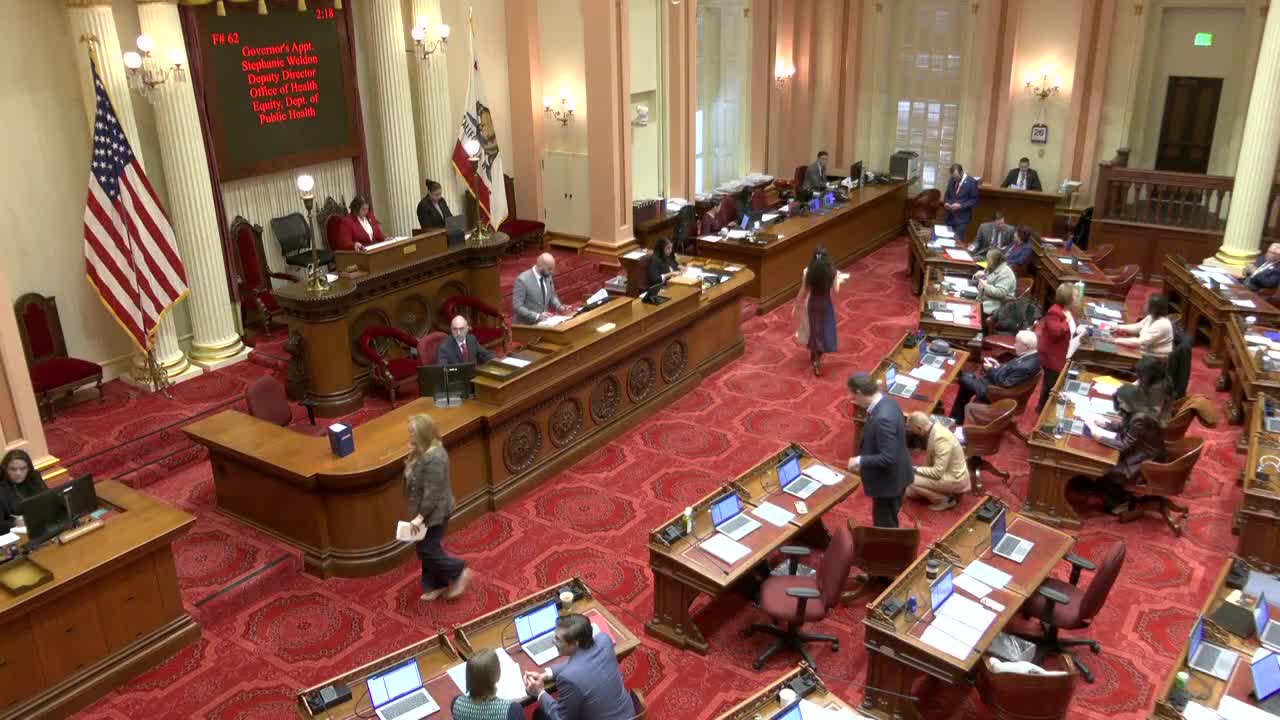 1MIN
Senate Floor
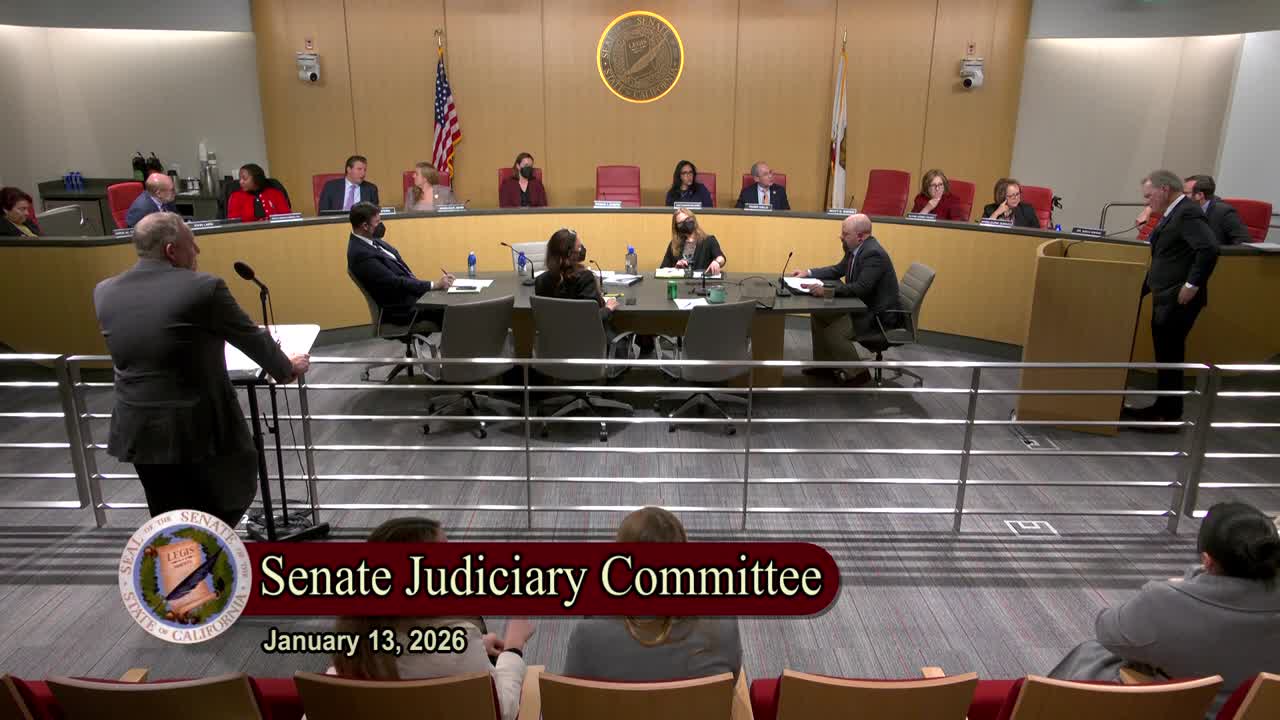 6MIN
Senate Standing Committee on Judiciary
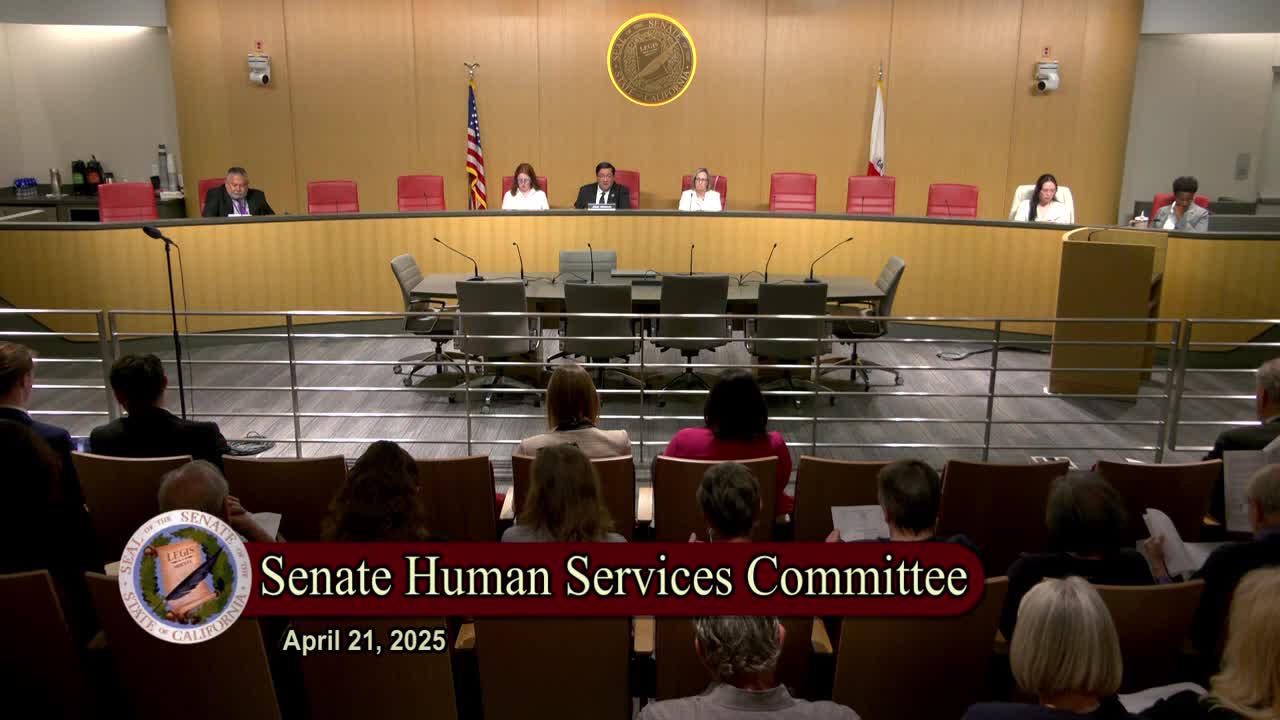 19MIN
Senate Standing Committee on Human Services
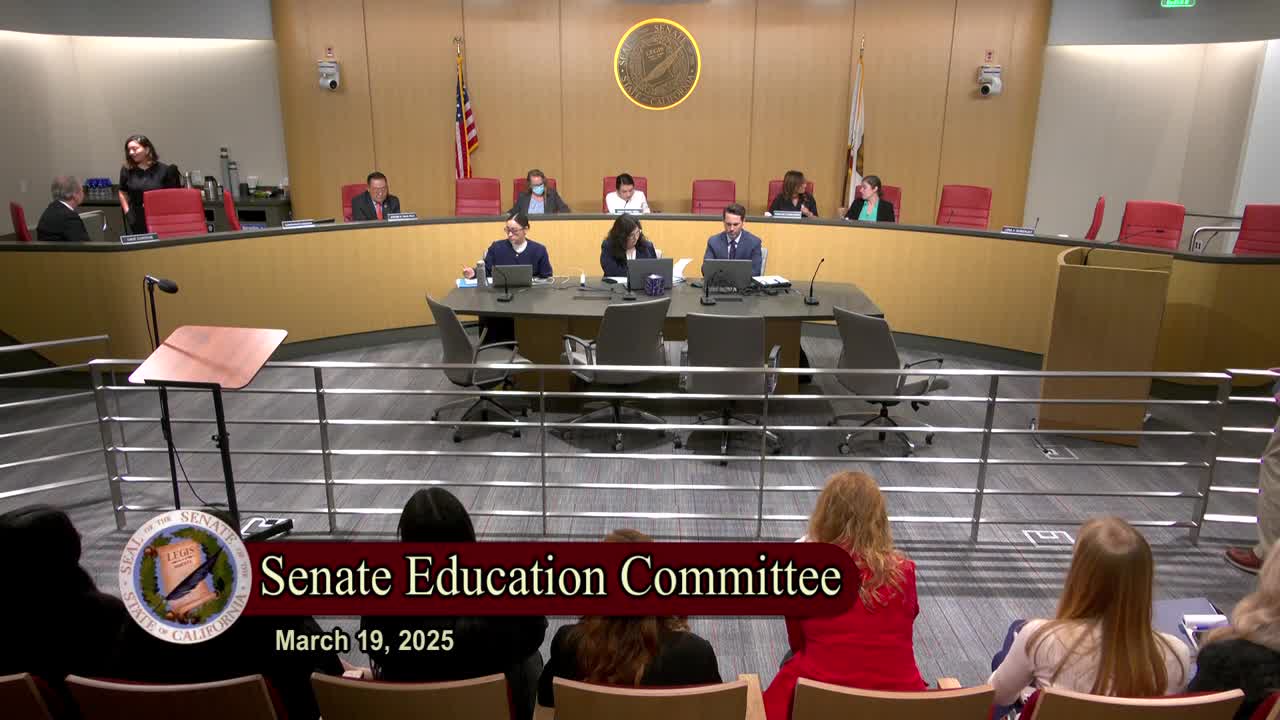 20MIN
Senate Standing Committee on Education
Bill Author