SB 1008: California Environmental Quality Act: Los Angeles Regional Interoperable Communications System: exemption.
- Session Year: 2015-2016
- House: Senate
- Latest Version Date: 2016-09-24
The California Environmental Quality Act (CEQA) requires a lead agency, as defined, to prepare, or cause to be prepared, and certify the completion of an environmental impact report on a project that it proposes to carry out or approve that may have a significant effect on the environment or to adopt a negative declaration if it finds that the project will not have that effect.
Existing law, until January 1, 2017, exempts from CEQA the design, site acquisition, construction, operation, or maintenance of certain structures and equipment of the Los Angeles Regional Interoperable Communications System (LA-RICS) consisting of a long-term evolution broadband mobile data system and a land mobile radio system, if certain criteria are met at the individual project site, including that the site contains either an antenna support structure, as provided, or a public facility that transmits or receives public safety radio signals.
This bill would extend that exemption until January 1, 2020, and would specify that a fire station is not a public facility for purposes of determining if that exemption applies to an individual project site. The bill would provide that the exemption does not apply if the project site is located in certain areas. The bill would require the LA-RICS Joint Powers Authority to hold a public meeting before making a determination that a project is exempted, to file the notice of exemption with the Office of Planning and Research and the county clerk in the county in which the project is located, and to post certain information on its Internet Web site. Because a lead agency, which may include a local agency, would be required to determine whether a project qualifies for this exemption and to perform additional duties, the bill would impose a state-mandated local program.
The California Constitution requires the state to reimburse local agencies and school districts for certain costs mandated by the state. Statutory provisions establish procedures for making that reimbursement.
This bill would provide that no reimbursement is required by this act for a specified reason.
The California Environmental Quality Act (CEQA) requires a lead agency, as defined, to prepare, or cause to be prepared, and certify the completion of an environmental impact report on a project that it proposes to carry out or approve that may have a significant effect on the environment or to adopt a negative declaration if it finds that the project will not have that effect.
Existing law, until January 1, 2017, exempts from CEQA the design, site acquisition, construction, operation, or maintenance of certain structures and equipment of the Los Angeles Regional Interoperable Communications System (LA-RICS) consisting of a long-term evolution broadband mobile data system and a land mobile radio system, if certain criteria are met at the individual project site, including that the site contains either an antenna support structure, as provided, or a public facility that transmits or receives public safety radio signals.
This bill would extend that exemption until January 1, 2020, and would specify that a fire station is not a public facility for purposes of determining if that exemption applies to an individual project site. The bill would provide that the exemption does not apply if the project site is located in certain areas. The bill would require the LA-RICS Joint Powers Authority to hold a public hearing meeting before making a determination that a project is exempted, to file the notice of exemption with the Office of Planning and Research and the county clerk in the county in which the project is located, and to post certain information on its Internet Web site. Because a lead agency, which may include a local agency, would be required to determine whether a project qualifies for this exemption and to perform additional duties, the bill would impose a state-mandated local program.
The California Constitution requires the state to reimburse local agencies and school districts for certain costs mandated by the state. Statutory provisions establish procedures for making that reimbursement.
This bill would provide that no reimbursement is required by this act for a specified reason.
The California Environmental Quality Act (CEQA) requires a lead agency, as defined, to prepare, or cause to be prepared, and certify the completion of, of an environmental impact report on a project that it proposes to carry out or approve that may have a significant effect on the environment or to adopt a negative declaration if it finds that the project will not have that effect.
Existing law, until January 1, 2017, exempts from CEQA the design, site acquisition, construction, operation, or maintenance of certain structures and equipment of the Los Angeles Regional Interoperable Communications System (LA-RICS) consisting of a long-term evolution broadband mobile data system and a land mobile radio system, if certain criteria are met at the individual project site. site, including that the site contains either an antenna support structure, as provided, or a public facility that transmits or receives public safety radio signals.
This bill would extend that exemption until January 1, 2020. 2020, and would specify that a fire station is not a public facility for purposes of determining if that exemption applies to an individual project site. The bill would provide that the exemption does not apply if the project site is located in certain areas. The bill would require the LA-RICS Joint Powers Authority to hold a public hearing before making a determination that a project is exempted, to file the notice of exemption with the Office of Planning and Research and the county clerk of in the county in which the project is located, and to post certain information on its Internet Web site. Because a lead agency, which may include a local agency, would be required to determine whether a project qualifies for this exemption and to perform additional duties, this the bill would impose a state-mandated local program.
The California Constitution requires the state to reimburse local agencies and school districts for certain costs mandated by the state. Statutory provisions establish procedures for making that reimbursement.
This bill would provide that no reimbursement is required by this act for a specified reason.
The California Environmental Quality Act (CEQA) requires a lead agency, as defined, to prepare, or cause to be prepared, and certify the completion of, an environmental impact report on a project that it proposes to carry out or approve that may have a significant effect on the environment or to adopt a negative declaration if it finds that the project will not have that effect.
Existing law, until January 1, 2017, exempts from CEQA the design, site acquisition, construction, operation, or maintenance of certain structures and equipment of the Los Angeles Regional Interoperable Communications System, System (LA-RICS) consisting of a long-term evolution broadband mobile data system and a land mobile radio system, if certain criteria are met at the individual project site.
This bill would extend that exemption until January 1, 2020. The bill would provide that the exemption does not apply if the project site is located in certain areas. The bill would require the LA-RICS Joint Powers Authority to hold a public hearing before making a determination that a project is exempted, to file the notice of exemption with the Office of Planning and Research and the county clerk of the county in which the project is located, and to post certain information on its Internet Web site. Because a lead agency, which may include a local agency, is would be required to determine whether a project qualifies for this exemption, exemption and to perform additional duties, this bill would impose a state-mandated local program.
The California Constitution requires the state to reimburse local agencies and school districts for certain costs mandated by the state. Statutory provisions establish procedures for making that reimbursement.
This bill would provide that no reimbursement is required by this act for a specified reason.
The California Environmental Quality Act (CEQA) requires a lead agency, as defined, to prepare, or cause to be prepared, and certify the completion of, an environmental impact report on a project that it proposes to carry out or approve that may have a significant effect on the environment or to adopt a negative declaration if it finds that the project will not have that effect.
Existing law, until January 1, 2017, exempts from CEQA the design, site acquisition, construction, operation, or maintenance of certain structures and equipment of the Los Angeles Regional Interoperable Communications System, consisting of a long-term evolution broadband mobile data system and a land mobile radio system, if certain criteria are met at the individual project site.
This bill would extend that exemption until January 1, 2020. Because a lead agency, which may include a local agency, is required to determine whether a project qualifies for this exemption, this bill would impose a state-mandated local program.
The California Constitution requires the state to reimburse local agencies and school districts for certain costs mandated by the state. Statutory provisions establish procedures for making that reimbursement.
This bill would provide that no reimbursement is required by this act for a specified reason.
(a)For purposes of this section, the following definitions shall apply:
(1)Antenna support structures means lattice towers, monopoles, and roof-mounts.
(2)Authority means the Los Angeles Regional Interoperable Communication System Joint Powers Authority.
(3)Habitat of significant value includes all of the following:
(A)Wildlife habitat of national, statewide, or regional importance.
(B)Habitat identified as candidate, fully protected, sensitive, or species of special status by a state or federal agency.
(C)Habitat essential to the movement of resident or migratory wildlife.
(4)LA-RICS means the Los Angeles Regional Interoperable Communications System, consisting of a long-term evolution broadband mobile data system, a land mobile radio system, or both.
(5)LMR means a land mobile radio system.
(6)LTE means a long-term evolution broadband mobile data system.
(7)Riparian area means an area that is transitional between terrestrial and aquatic ecosystems, that is distinguished by gradients in biophysical conditions, ecological processes, and biota, and that meets the following criteria:
(A)Is an area through which surface and subsurface hydrology connect bodies of water with their adjacent uplands.
(B)Is adjacent to perennial, intermittent, and ephemeral streams, lakes, or estuarine or marine shorelines.
(C)Includes those portions of terrestrial ecosystems that significantly influence exchanges of energy and matter with aquatic ecosystems.
(8)Wetlands has the same meaning as defined in the United States Fish and Wildlife Service Manual, Part 660 FW 2 (June 21, 1993).
(9)Wildlife habitat means the ecological communities upon which wild animals, birds, plants, fish, amphibians, and invertebrates depend for their conservation and protection.
(b)Except as provided in subdivision (d), if all the criteria specified in subdivision (c) are met at the individual project site, this division does not apply to the design, site acquisition, construction, operation, or maintenance of the following elements of the LA-RICS:
(1)Antennas, including microwave dishes and arrays.
(2)Antenna support structures.
(3)Equipment enclosures.
(4)Central system switch facilities.
(5)Associated foundations and equipment.
(c)As a condition of the exemption specified in subdivision (b), all of the following criteria shall be met at the individual project site:
(1)The project site is publicly owned and already contains either of the following:
(A)An antenna support structure and either of the following components:
(i)Antennas.
(ii)Equipment enclosures.
(B)A police or sheriff station or other public facility that transmits or receives public safety radio signals, except a fire station.
(2)Construction and implementation at the project site would not have a substantial adverse impact on wetlands, riparian areas, or habitat of significant value, and would not harm any species protected by the federal Endangered Species Act of 1973 (16 U.S.C. Sec. 1531 et seq.), the Native Plant Protection Act (Chapter 10 (commencing with Section 1900) of Division 2 of the Fish and Game Code), or the California Endangered Species Act (Chapter 1.5 (commencing with Section 2050) of Division 3 of the Fish and Game Code) or the habitat of those species.
(3)Construction and implementation of the project at the site would not have a substantial adverse impact on historical resources pursuant to Section 21084.1.
(4)Operation of the project at the site would not exceed the maximum permissible exposure standards established by the Federal Communications Commission, as set forth in Sections 1.1307 and 1.1310 of Title 47 of the Code of Federal Regulations.
(5)Any new LTE antenna support structures or LMR antenna support structures would comply with applicable state and federal height restrictions and any height restrictions mandated by an applicable comprehensive land use plan adopted by an airport land use commission. The new monopoles shall not exceed 70 feet in height without appurtenances and attachments, and new lattice towers shall not exceed 180 feet in height without appurtenances and attachments.
(6)Each new central system switch is located within an existing enclosed structure at a publicly owned project site or is housed at an existing private communications facility.
(d)Subdivision (b) does not apply if the individual project site is located on either of the following:
(1)A school site.
(2)A cultural or sacred site, as described in Section 5097.9 or 5097.993.
(e)(1)Before determining that a project is not subject to this division pursuant to this section, the authority shall hold a noticed public meeting in each county supervisorial district in which the project is located to hear and respond to public comments. The notice shall be provided at least 72 hours in advance of the meeting and published no fewer times than required by Section 6061 of the Government Code by the authority in a newspaper of general circulation in each county supervisorial district in which the project is located.
(2)If the authority determines that a project is not subject to this division pursuant to this section, and it determines to approve or carry out that project, the notice of exemption shall be filed with the Office of Planning and Research and the county clerk in the county in which the project is located in the manner specified in subdivisions (b) and (c) of Section 21152. The authority shall post the notice of exemption on its Internet Web site.
(f)The authority shall post on its Internet Web site all of the following, as applicable:
(1)Draft and final environmental documentation in compliance with this division or the federal National Environmental Policy Act of 1969 (42 U.S.C. Sec. 4321 et seq.).
(2)The date of filing of notices required pursuant to this division or the federal National Environmental Policy Act of 1969.
(3)All notice and hearing information regarding review and approval of environmental documentation by federal agencies.
(g)On or after January 1, 2017, the authority and its member agencies shall approve use agreements for the LA-RICS in an open and noticed public meeting.
(h)This section shall remain in effect only until January 1, 2020, and as of that date is repealed, unless a later enacted statute, that is enacted before January 1, 2020, deletes or extends that date.
SEC. 2.No reimbursement is required by this act pursuant to Section 6 of Article XIIIB of the California Constitution because a local agency or school district has the authority to levy service charges, fees, or assessments sufficient to pay for the program or level of service mandated by this act, within the meaning of Section 17556 of the Government Code.
(a)For purposes of this section, the following definitions shall apply:
(1)Antenna support structures means lattice towers, monopoles, and roof-mounts.
(2)Authority means the Los Angeles Regional Interoperable Communication System Joint Powers Authority.
(3)Habitat of significant value includes all of the following:
(A)Wildlife habitat of national, statewide, or regional importance.
(B)Habitat identified as candidate, fully protected, sensitive, or species of special status by a state or federal agency.
(C)Habitat essential to the movement of resident or migratory wildlife.
(4)LA-RICS means the Los Angeles Regional Interoperable Communications System, consisting of a long-term evolution broadband mobile data system, a land mobile radio system, or both.
(5)LMR means a land mobile radio system.
(6)LTE means a long-term evolution broadband mobile data system.
(7)Riparian area means an area that is transitional between terrestrial and aquatic ecosystems, that is distinguished by gradients in biophysical conditions, ecological processes, and biota, and that meets the following criteria:
(A)Is an area through which surface and subsurface hydrology connect bodies of water with their adjacent uplands.
(B)Is adjacent to perennial, intermittent, and ephemeral streams, lakes, or estuarine or marine shorelines.
(C)Includes those portions of terrestrial ecosystems that significantly influence exchanges of energy and matter with aquatic ecosystems.
(8)Wetlands has the same meaning as defined in the United States Fish and Wildlife Service Manual, Part 660 FW 2 (June 21, 1993).
(9)Wildlife habitat means the ecological communities upon which wild animals, birds, plants, fish, amphibians, and invertebrates depend for their conservation and protection.
(b)Except as provided in subdivision (d), if all the criteria specified in subdivision (c) are met at the individual project site, this division does not apply to the design, site acquisition, construction, operation, or maintenance of the following elements of the LA-RICS:
(1)Antennas, including microwave dishes and arrays.
(2)Antenna support structures.
(3)Equipment enclosures.
(4)Central system switch facilities.
(5)Associated foundations and equipment.
(c)As a condition of the exemption specified in subdivision (b), all of the following criteria shall be met at the individual project site:
(1)The project site is publicly owned and already contains either of the following:
(A)An antenna support structure and either of the following components:
(i)Antennas.
(ii)Equipment enclosures.
(B)A police or sheriff station or other public facility that transmits or receives public safety radio signals, except a fire station.
(2)Construction and implementation at the project site would not have a substantial adverse impact on wetlands, riparian areas, or habitat of significant value, and would not harm any species protected by the federal Endangered Species Act of 1973 (16 U.S.C. Sec. 1531 et seq.), the Native Plant Protection Act (Chapter 10 (commencing with Section 1900) of Division 2 of the Fish and Game Code), or the California Endangered Species Act (Chapter 1.5 (commencing with Section 2050) of Division 3 of the Fish and Game Code) or the habitat of those species.
(3)Construction and implementation of the project at the site would not have a substantial adverse impact on historical resources pursuant to Section 21084.1.
(4)Operation of the project at the site would not exceed the maximum permissible exposure standards established by the Federal Communications Commission, as set forth in Sections 1.1307 and 1.1310 of Title 47 of the Code of Federal Regulations.
(5)Any new LTE antenna support structures or LMR antenna support structures would comply with applicable state and federal height restrictions and any height restrictions mandated by an applicable comprehensive land use plan adopted by an airport land use commission. The new monopoles shall not exceed 70 feet in height without appurtenances and attachments, and new lattice towers shall not exceed 180 feet in height without appurtenances and attachments.
(6)Each new central system switch is located within an existing enclosed structure at a publicly owned project site or is housed at an existing private communications facility.
(d)Subdivision (b) does not apply if the individual project site is located on either of the following:
(1)A school site.
(2)A cultural or sacred site, as described in Section 5097.9 or 5097.993.
(e)(1)Before determining that a project is not subject to this division pursuant to this section, the authority shall hold a noticed public hearings in areas affected by the project meeting in each county supervisorial district in which the project is located to hear and respond to public comments. The notice shall be provided at least 72 hours in advance of the meeting and published no fewer times than required by Section 6061 of the Government Code, Code by the authority in a newspaper of general circulation in the area affected by the project. If more than one area will be affected, the notice shall be published in the newspaper of largest circulation from among the newspapers of general circulation in those areas. each county supervisorial district in which the project is located.
(2)If the authority determines that a project is not subject to this division pursuant to this section, and it determines to approve or carry out that project, the notice of exemption shall be filed with the Office of Planning and Research and the county clerk in the county in which the project is located in the manner specified in subdivisions (b) and (c) of Section 21152. The authority shall post the notice of exemption on its Internet Web site.
(f)The authority shall post on its Internet Web site all of the following, as applicable:
(1)Draft and final environmental documentation in compliance with this division or the federal National Environmental Policy Act of 1969 (42 U.S.C. Sec. 4321 et seq.).
(2)The date of filing of notices required pursuant to this division or the federal National Environmental Policy Act of 1969.
(3)All notice and hearing information regarding review and approval of environmental documentation by federal agencies.
(g)On or after January 1, 2017, the authority and its member agencies shall approve use agreements for the LA-RICS in an open and noticed public meeting.
(h)This section shall remain in effect only until January 1, 2020, and as of that date is repealed, unless a later enacted statute, that is enacted before January 1, 2020, deletes or extends that date.
SEC. 2.No reimbursement is required by this act pursuant to Section 6 of Article XIIIB of the California Constitution because a local agency or school district has the authority to levy service charges, fees, or assessments sufficient to pay for the program or level of service mandated by this act, within the meaning of Section 17556 of the Government Code.
(a)For purposes of this section, the following definitions shall apply:
(1)Antenna support structures means lattice towers, monopoles, and roof-mounts.
(2)Authority means the Los Angeles Regional Interoperable Communication System Joint Powers Authority.
(3)Habitat of significant value includes all of the following:
(A)Wildlife habitat of national, statewide, or regional importance.
(B)Habitat identified as candidate, fully protected, sensitive, or species of special status by a state or federal agency.
(C)Habitat essential to the movement of resident or migratory wildlife.
(4)LA-RICS means the Los Angeles Regional Interoperable Communications System, consisting of a long-term evolution broadband mobile data system, a land mobile radio system, or both.
(5)LMR means a land mobile radio system.
(6)LTE means a long-term evolution broadband mobile data system.
(7)Riparian area means an area that is transitional between terrestrial and aquatic ecosystems, that is distinguished by gradients in biophysical conditions, ecological processes, and biota, and that meets the following criteria:
(A)Is an area through which surface and subsurface hydrology connect bodies of water with their adjacent uplands.
(B)Is adjacent to perennial, intermittent, and ephemeral streams, lakes, or estuarine or marine shorelines.
(C)Includes those portions of terrestrial ecosystems that significantly influence exchanges of energy and matter with aquatic ecosystems.
(8)Wetlands has the same meaning as defined in the United States Fish and Wildlife Service Manual, Part 660 FW 2 (June 21, 1993).
(9)Wildlife habitat means the ecological communities upon which wild animals, birds, plants, fish, amphibians, and invertebrates depend for their conservation and protection.
(b)Except as provided in subdivision (d), if all the criteria specified in subdivision (c) are met at the individual project site, this division does not apply to the design, site acquisition, construction, operation, or maintenance of the following elements of the LA-RICS:
(1)Antennas, including microwave dishes and arrays.
(2)Antenna support structures.
(3)Equipment enclosures.
(4)Central system switch facilities.
(5)Associated foundations and equipment.
(c)As a condition of the exemption specified in subdivision (b), all of the following criteria shall be met at the individual project site:
(1)The project site is publicly owned and already contains one or both either of the following:
(A)An antenna support structure and one or both either of the following components:
(i)Antennas.
(ii)Equipment enclosures.
(B)A police, sheriff, or fire police or sheriff station or other public facility that transmits or receives public safety radio signals. signals, except a fire station.
(2)Construction and implementation at the project site would not have a substantial adverse impact on wetlands, riparian areas, or habitat of significant value, and would not harm any species protected by the federal Endangered Species Act of 1973 (16 U.S.C. Sec. 1531 et seq.), the Native Plant Protection Act (Chapter 10 (commencing with Section 1900) of Division 2 of the Fish and Game Code), or the California Endangered Species Act (Chapter 1.5 (commencing with Section 2050) of Division 3 of the Fish and Game Code) or the habitat of those species.
(3)Construction and implementation of the project at the site would not have a substantial adverse impact on historical resources pursuant to Section 21084.1.
(4)Operation of the project at the site would not exceed the maximum permissible exposure standards established by the Federal Communications Commission, as set forth in Sections 1.1307 and 1.1310 of Title 47 of the Code of Federal Regulations.
(5)Any new LTE antenna support structures or LMR antenna support structures would comply with applicable state and federal height restrictions and any height restrictions mandated by an applicable comprehensive land use plan adopted by an airport land use commission. The new monopoles shall not exceed 70 feet in height without appurtenances and attachments, and new lattice towers shall not exceed 180 feet in height without appurtenances and attachments.
(6)Each new central system switch is located within an existing enclosed structure at a publicly owned project site or is housed at an existing private communications facility.
(d)Subdivision (b) does not apply if the individual project site is located on either of the following:
(1)A school site.
(2)A cultural or sacred site, as described in Section 5097.9 or 5097.993.
(e)(1)Before determining that a project is not subject to this division pursuant to this section, the authority shall hold noticed public hearings in areas affected by the project to hear and respond to public comments. The notice shall be published no fewer times than required by Section 6061 of the Government Code, by the authority in a newspaper of general circulation in the area affected by the project. If more than one area will be affected, the notice shall be published in the newspaper of largest circulation from among the newspapers of general circulation in those areas.
(2)If the authority determines that a project is not subject to this division pursuant to this section, and it determines to approve or carry out that project, the notice of exemption shall be filed with the Office of Planning and Research and the county clerk in the county in which the project is located in the manner specified in subdivisions (b) and (c) of Section 21152. The authority shall post the notice of exemption on its Internet Web site.
(f)The authority shall post on its Internet Web site all of the following, as applicable:
(1)Draft and final environmental documentation in compliance with this division or the federal National Environmental Policy Act of 1969 (42 U.S.C. Sec. 4321 et seq.).
(2)The date of filing of notices required pursuant to this division or the federal National Environmental Policy Act of 1969.
(3)All notice and hearing information regarding review and approval of environmental documentation by federal agencies.
(g)On or after January 1, 2017, the authority and its member agencies shall approve use agreements for the LA-RICS in an open and noticed public meeting.
(h)This section shall remain in effect only until January 1, 2020, and as of that date is repealed, unless a later enacted statute, that is enacted before January 1, 2020, deletes or extends that date.
SEC. 2.No reimbursement is required by this act pursuant to Section 6 of Article XIIIB of the California Constitution because a local agency or school district has the authority to levy service charges, fees, or assessments sufficient to pay for the program or level of service mandated by this act, within the meaning of Section 17556 of the Government Code.
(a)For purposes of this section, the following definitions shall apply:
(1)Antenna support structures means lattice towers, monopoles, and roof-mounts.
(2)Authority means the Los Angeles Regional Interoperable Communication System Joint Powers Authority.
(2)
(3)Habitat of significant value includes all of the following:
(A)Wildlife habitat of national, statewide, or regional importance.
(B)Habitat identified as candidate, fully protected, sensitive, or species of special status by a state or federal agency.
(C)Habitat essential to the movement of resident or migratory wildlife.
(3)
(4)LA-RICS means the Los Angeles Regional Interoperable Communications System, consisting of a long-term evolution broadband mobile data system, a land mobile radio system, or both.
(4)
(5)LMR means a land mobile radio system.
(5)
(6)LTE means a long-term evolution broadband mobile data system.
(6)
(7)Riparian area means an area that is transitional between terrestrial and aquatic ecosystems, that is distinguished by gradients in biophysical conditions, ecological processes, and biota, and that meets the following criteria:
(A)Is an area through which surface and subsurface hydrology connect bodies of water with their adjacent uplands.
(B)Is adjacent to perennial, intermittent, and ephemeral streams, lakes, or estuarine or marine shorelines.
(C)Includes those portions of terrestrial ecosystems that significantly influence exchanges of energy and matter with aquatic ecosystems.
(7)
(8)Wetlands has the same meaning as defined in the United States Fish and Wildlife Service Manual, Part 660 FW 2 (June 21, 1993).
(8)
(9)Wildlife habitat means the ecological communities upon which wild animals, birds, plants, fish, amphibians, and invertebrates depend for their conservation and protection.
(b)If Except as provided in subdivision (d), if all the criteria specified in subdivision (c) are met at the individual project site, this division does not apply to the design, site acquisition, construction, operation, or maintenance of the following elements of the LA-RICS:
(1)Antennas, including microwave dishes and arrays.
(2)Antenna support structures.
(3)Equipment enclosures.
(4)Central system switch facilities.
(5)Associated foundations and equipment.
(c)As a condition of the exemption specified in subdivision (b), all of the following criteria shall be met at the individual project site:
(1)The project site is publicly owned and already contains one or both of the following:
(A)An antenna support structure and one or both of the following components:
(i)Antennas.
(ii)Equipment enclosures.
(B)A police, sheriff, or fire station or other public facility that transmits or receives public safety radio signals.
(2)Construction and implementation at the project site would not have a substantial adverse impact on wetlands, riparian areas, or habitat of significant value, and would not harm any species protected by the federal Endangered Species Act of 1973 (16 U.S.C. Sec. 1531 et seq.), the Native Plant Protection Act (Chapter 10 (commencing with Section 1900) of Division 2 of the Fish and Game Code), or the California Endangered Species Act (Chapter 1.5 (commencing with Section 2050) of Division 3 of the Fish and Game Code) or the habitat of those species.
(3)Construction and implementation of the project at the site would not have a substantial adverse impact on historical resources pursuant to Section 21084.1.
(4)Operation of the project at the site would not exceed the maximum permissible exposure standards established by the Federal Communications Commission, as set forth in Sections 1.1307 and 1.1310 of Title 47 of the Code of Federal Regulations.
(5)Any new LTE antenna support structures or LMR antenna support structures would comply with applicable state and federal height restrictions and any height restrictions mandated by an applicable comprehensive land use plan adopted by an airport land use commission. The new monopoles shall not exceed 70 feet in height without appurtenances and attachments, and new lattice towers shall not exceed 180 feet in height without appurtenances and attachments.
(6)Each new central system switch is located within an existing enclosed structure at a publicly owned project site or is housed at an existing private communications facility.
(d)Subdivision (b) does not apply if the individual project site is located on either of the following:
(1)A school site.
(2)A cultural or sacred site, as described in Section 5097.9 or 5097.993.
(e)(1)Before determining that a project is not subject to this division pursuant to this section, the authority shall hold noticed public hearings in areas affected by the project to hear and respond to public comments. The notice shall be published no fewer times than required by Section 6061 of the Government Code, by the authority in a newspaper of general circulation in the area affected by the project. If more than one area will be affected, the notice shall be published in the newspaper of largest circulation from among the newspapers of general circulation in those areas.
(2)If the authority determines that a project is not subject to this division pursuant this section, and it determines to approve or carry out that project, the notice of exemption shall be filed with the Office of Planning and Research and the county clerk in the county in which the project is located in the manner specified in subdivisions (b) and (c) of Section 21152. The authority shall post the notice of exemption on its Internet Web site.
(f)The authority shall post on its Internet Web site all of the following, as applicable:
(1)Draft and final environmental documentation in compliance with this division or the federal National Environmental Policy Act of 1969 (42 U.S.C. Sec. 4321 et seq.).
(2)The date of filing of notices required pursuant to this division or the federal National Environmental Policy Act of 1969.
(3)All notice and hearing information regarding review and approval of environmental documentation by federal agencies.
(g)On or after January 1, 2017, the authority and its member agencies shall approve use agreements for the LA-RICS in an open and noticed public meeting.
(d)
(h)This section shall remain in effect only until January 1, 2020, and as of that date is repealed, unless a later enacted statute, that is enacted before January 1, 2020, deletes or extends that date.
SEC. 2.No reimbursement is required by this act pursuant to Section 6 of Article XIIIB of the California Constitution because a local agency or school district has the authority to levy service charges, fees, or assessments sufficient to pay for the program or level of service mandated by this act, within the meaning of Section 17556 of the Government Code.
(a)For purposes of this section, the following definitions shall apply:
(1)Antenna support structures means lattice towers, monopoles, and roof-mounts.
(2)Habitat of significant value includes all of the following:
(A)Wildlife habitat of national, statewide, or regional importance.
(B)Habitat identified as candidate, fully protected, sensitive, or species of special status by a state or federal agency.
(C)Habitat essential to the movement of resident or migratory wildlife.
(3)LA-RICS means the Los Angeles Regional Interoperable Communications System, consisting of a long-term evolution broadband mobile data system, a land mobile radio system, or both.
(4)LMR means a land mobile radio system.
(5)LTE means a long-term evolution broadband mobile data system.
(6)Riparian area means an area that is transitional between terrestrial and aquatic ecosystems, that is distinguished by gradients in biophysical conditions, ecological processes, and biota, and that meets the following criteria:
(A)Is an area through which surface and subsurface hydrology connect waterbodies bodies of water with their adjacent uplands.
(B)Is adjacent to perennial, intermittent, and ephemeral streams, lakes, or estuarine or marine shorelines.
(C)Includes those portions of terrestrial ecosystems that significantly influence exchanges of energy and matter with aquatic ecosystems.
(7)Wetlands has the same meaning as defined in the United States Fish and Wildlife Service Manual, Part 660 FW 2 (June 21, 1993).
(8)Wildlife habitat means the ecological communities upon which wild animals, birds, plants, fish, amphibians, and invertebrates depend for their conservation and protection.
(b)If all the criteria specified in subdivision (c) are met at the individual project site, this division does not apply to the design, site acquisition, construction, operation, or maintenance of the following elements of the LA-RICS:
(1)Antennas, including microwave dishes and arrays.
(2)Antenna support structures.
(3)Equipment enclosures.
(4)Central system switch facilities.
(5)Associated foundations and equipment.
(c)As a condition of the exemption specified in subdivision (b), all of the following criteria shall be met at the individual project site:
(1)The project site is publicly owned and already contains one or both of the following:
(A)An antenna support structure and one or both of the following components:
(i)Antennas.
(ii)Equipment enclosures.
(B)A police, sheriff, or fire station, station or other public facility that transmits or receives public safety radio signals.
(2)Construction and implementation at the project site would not have a substantial adverse impact on wetlands, riparian areas, or habitat of significant value, and would not harm any species protected by the federal Endangered Species Act of 1973 (16 U.S.C. Sec. 1531 et seq.), the Native Plant Protection Act (Chapter 10 (commencing with Section 1900) of Division 2 of the Fish and Game Code), or the California Endangered Species Act (Chapter 1.5 (commencing with Section 2050) of Division 3 of the Fish and Game Code), Code) or the habitat of those species.
(3)Construction and implementation of the project at the site would not have a substantial adverse impact on historical resources pursuant to Section 21084.1.
(4)Operation of the project at the site would not exceed the maximum permissible exposure standards established by the Federal Communications Commission, as set forth in Sections 1.1307 and 1.1310 of Title 47 of the Code of Federal Regulations.
(5)Any new LTE antenna support structures or LMR antenna support structures would comply with applicable state and federal height restrictions, restrictions and any height restrictions mandated by an applicable comprehensive land use plan adopted by an airport land use commission. The new monopoles shall not exceed 70 feet in height without appurtenances and attachments, and new lattice towers shall not exceed 180 feet in height without appurtenances and attachments.
(6)Each new central system switch is located within an existing enclosed structure at a publicly owned project site, site or is housed at an existing private communications facility.
(d)This section shall remain in effect only until January 1, 2017, 2020, and as of that date is repealed, unless a later enacted statute, that is enacted before January 1, 2017, 2020, deletes or extends that date.
SEC. 2.No reimbursement is required by this act pursuant to Section 6 of Article XIIIB of the California Constitution because a local agency or school district has the authority to levy service charges, fees, or assessments sufficient to pay for the program or level of service mandated by this act, within the meaning of Section 17556 of the Government Code.
|
Date
|
Status
|
|---|---|
| Sep 8, 2016 | Enrolled and presented to the Governor at 5 p.m. |
| Aug 30, 2016 | Assembly amendments concurred in. (Ayes 35. Noes 2. Page 5535.) Ordered to engrossing and enrolling. |
| Aug 30, 2016 | Reconsideration granted. (Ayes 39. Noes 0. Page 5535.) |
| Aug 30, 2016 | Assembly amendments concurred in. (Ayes 34. Noes 2. Page 5531.) Ordered to engrossing and enrolling. |
| Aug 30, 2016 | Assembly amendments concurred in. (Ayes 35. Noes 2.) Ordered to engrossing and enrolling. |
| Aug 30, 2016 | Reconsideration granted. (Ayes 39. Noes 0.) |
| Aug 30, 2016 | Motion to reconsider made by Senator Lara. |
| Aug 30, 2016 | Assembly amendments concurred in. (Ayes 34. Noes 2.) Ordered to engrossing and enrolling. |
| Aug 29, 2016 | In Senate. Concurrence in Assembly amendments pending. |
| Aug 18, 2016 | Read third time. Passed. (Ayes 78. Noes 1. Page 5890.) Ordered to the Senate. |
| Aug 18, 2016 | Read third time. Passed. Ordered to the Senate. |
| Aug 4, 2016 | Read second time. Ordered to third reading. |
| Aug 3, 2016 | From committee: Do pass. (Ayes 20. Noes 0.) (August 3). |
| Aug 1, 2016 | From committee with author's amendments. Read second time and amended. Re-referred to Com. on APPR. |
| Jun 30, 2016 | From committee: Do pass and re-refer to Com. on APPR. (Ayes 8. Noes 0.) (June 29). Re-referred to Com. on APPR. |
| Jun 14, 2016 | From committee: Do pass and re-refer to Com. on L. GOV. (Ayes 8. Noes 1.) (June 13). Re-referred to Com. on L. GOV. |
| May 27, 2016 | Referred to Coms. on NAT. RES. and L. GOV. |
| May 12, 2016 | Read third time. Passed. (Ayes 34. Noes 0. Page 3845.) Ordered to the Assembly. |
| May 12, 2016 | In Assembly. Read first time. Held at Desk. |
| May 12, 2016 | Read third time. Passed. (Ayes 34. Noes 0.) Ordered to the Assembly. |
| May 10, 2016 | Read second time. Ordered to third reading. |
| May 9, 2016 | From committee: Be ordered to second reading pursuant to Senate Rule 28.8. |
| Apr 29, 2016 | Set for hearing May 9. |
| Apr 27, 2016 | From committee with author's amendments. Read second time and amended. Re-referred to Com. on APPR. |
| Apr 6, 2016 | From committee: Do pass and re-refer to Com. on APPR. (Ayes 5. Noes 0. Page 3418.) (April 6). Re-referred to Com. on APPR. |
| Apr 6, 2016 | From committee: Do pass and re-refer to Com. on APPR. (Ayes 5. Noes 0.) (April 6). Re-referred to Com. on APPR. |
| Mar 28, 2016 | From committee with author's amendments. Read second time and amended. Re-referred to Com. on E.Q. |
| Mar 15, 2016 | Set for hearing April 6. |
| Feb 25, 2016 | Referred to Com. on E.Q. |
| Feb 12, 2016 | From printer. May be acted upon on or after March 13. |
| Feb 11, 2016 | Introduced. Read first time. To Com. on RLS. for assignment. To print. |
|
Date
|
Description
|
Location
|
Votes
|
|
|---|---|---|---|---|
| Aug 30, 2016 | Unfinished Business SB1008 Lara Concurrence | Senate Floor |
Passed |
|
| Aug 30, 2016 | Unfinished Business SB1008 Lara Concurrence Reconsider | Senate Floor |
Passed |
|
| Aug 30, 2016 | Unfinished Business SB1008 Lara Concurrence | Senate Floor |
Passed |
|
| Aug 18, 2016 | SB 1008 Lara Senate Third Reading By GIPSON | Assembly Floor |
Passed |
|
| Aug 3, 2016 | Do pass. | Assembly Standing Committee on Appropriations |
Passed |
|
| Jun 29, 2016 | Do pass and be re-referred to the Committee on [Appropriations] | Assembly Standing Committee on Local Government |
Passed |
|
| Jun 13, 2016 | Do pass and be re-referred to the Committee on [Local Government] | Assembly Standing Committee on Natural Resources |
Passed |
|
| May 12, 2016 | Senate 3rd Reading SB1008 Lara | Senate Floor |
Passed |
|
| Apr 6, 2016 | Do pass, but first be re-referred to the Committee on [Appropriations] | Senate Standing Committee on Environmental Quality |
Passed |
This list shows positions taken on this bill by organizations on the date displayed, which is linked to the original source.
Positions by individuals are not included.
Office of Senate Floor Analyses (916) 651-1520 Fax: (916) 327-4478 | SB |
UNFINISHED BUSINESS
Bill No: SB 1008
:
SENATE ENVIRONMENTAL QUALITY COMMITTEE: 5-0, 4/6/16
AYES: Wieckowski, Gaines, Bates, Hill, Leno
NO VOTE RECORDED: Jackson, Pavley
SENATE APPROPRIATIONS COMMITTEE: Senate Rule 28.8
SENATE FLOOR: 34-0, 5/12/16
AYES: Allen, Anderson, Bates, Beall, Berryhill, Block, Cannella, De León, Fuller, Gaines, Glazer, Hall, Hancock, Hernandez, Hertzberg, Hill, Hueso, Huff, Lara, Leno, Leyva, McGuire, Mendoza, Mitchell, Moorlach, Morrell, Nguyen, Nielsen, Pan, Roth, Stone, Vidak, Wieckowski, Wolk
NO VOTE RECORDED: Galgiani, Jackson, Liu, Monning, Pavley, Runner
ASSEMBLY FLOOR: 78-1, 8/18/16 - See last page for vote
County of Los Angeles Sheriff’s Department
DIGEST: This bill exempts from the California Environmental Quality Act (CEQA) the design, site acquisition, construction, operation or maintenance of certain structures and equipment of the Los Angeles Regional Interoperable Communications System (LA-RICS), consisting of long-term evolution (LTE) broadband mobile data system and a land mobile radio (LMR) system, if specified criteria are met.
Assembly Amendments delete the requirement of a public hearing and instead require the LA-RICS Joint Powers Authority (Authority), before determining that a project is exempt from CEQA, to hold a noticed public meeting in each county supervisorial district in which the project is located to hear and respond to public comments.
Existing law:
- Requires, under CEQA, lead agencies with the principal responsibility for carrying out or approving a proposed discretionary project to prepare a negative declaration, mitigated negative declaration, or environmental impact report (EIR) for this action, unless the project is exempt from CEQA. (Public Resources Code (PRC) §21000 et seq.)
- Exempts from CEQA the design, site acquisition, construction, operation or maintenance of certain LA-RICS equipment and structures, if specified criteria are met. This provision sunsets on January 1, 2017. (PRC §21080.25).
This bill:
- Extends the CEQA exemption for eligible LA-RICS projects until January 1, 2020.
- Excludes from eligible sites fire stations, schools, and cultural or sacred sites, as defined.
- Adds the following meeting and notice requirements:
- Requires the Authority, before determining that a project is exempt from CEQA, to hold a noticed public meeting in each county supervisorial district in which the project is located to hear and respond to public comments.
- Requires the Authority to file a notice of exemption with the Office of Planning and Research and the county clerk in which the project is located, and post the notice of exemption on its Internet Web site.
- Requires the Authority to post on its Internet Web site all of the following, as applicable:
- Draft and final environmental documentation in compliance with CEQA or the federal National Environmental Policy Act (NEPA).
- The date of filing of notices required pursuant to CEQA or NEPA.
- All notice and hearing information regarding review and approval of environmental documentation by federal agencies.
- Requires the Authority and its member agencies to approve use agreements for the LA-RICS in an open and noticed public meeting.
Background
- CEQA: Environmental review process. For general background information on the CEQA environmental review process, please refer to the Senate Environmental Committee analysis of this bill.
- LA-RICS. According to the Authority:
[LA-RICS] will provide improved radio and broadband communication for the public safety providers of the greater Los Angeles region. LA-RICS is comprised of two distinct, but compatible projects: a [LMR] communications and a [LTE] broadband communications system. Covering 88 cities and the unincorporated area of Los Angeles County within a 4.084 square mile area, LA-RICS will provide integrated communications for over 50 law enforcement agencies, 31 fire departments as well as Emergency Medical Services (EMS), transportation, and education agencies. The LMR communication system will provide day-to-day voice and narrowband data radio communications service for individual public safety agencies, enable interoperability and interagency communications among member agencies and mutual aid providers, and support communications with regional, state, and federal agencies during disaster events…The LTE wireless network technology will provide day-to-day broadband data communications service for individual public safety agencies, provide emergency responders high speed access to lifesaving multimedia information, and support the National Public Safety Broadband Network (NPSBN) initiative.
Comments
- Purpose of bill. According to the author:
[LA-RICS] is the single greatest emergency preparedness and homeland security need in the Los Angeles region. The system will provide direct communication interoperability between law enforcement, fire, Federal, State and military agencies in major disasters, such as floods, fires, earthquakes, and terrorist incidents. The LA-RICS Project is especially critical given the tragic event of September 11th, which demonstrated the necessity of an interoperable communications system that would assist first-responders in saving lives. SB 1008 would extend the current CEQA exemption deadline for the LA-RICS project for three additional years, from January 1, 2017, to January 1, 2020.
The extension of the current CEQA exemption is needed to continue to build out the LA-RICS LTE broadband system and LMR system, and would facilitate the timely environmental review and construction of sites that would be used for this important project. The Federal environmental review process, under the National Environmental Policy Act, for the LA-RICS Project sites, which is still required for the CEQA-exempt sites, has taken longer than previously anticipated.
The proposed extension is especially essential for the continued build out of the LA-RICS system which is funded by the critical Federal Broadband Technology Opportunities Program (BTOP) grant awarded to the LA-RICS Authority by the U.S. Department of Commerce. Recently enacted Federal legislation provided a five-year extension for BTOP grant recipients, including LA-RICS, through Federal Fiscal Year 2020. The extension would allow much needed additional time for LA-RICS to construct additional sites to increase coverage and capacity of the LTE broadband system, and ensure that these sites are streamlined for environmental review, constructed and completed on time to enable first responders to communicate in all emergencies and major disasters.
The exemption will not apply to undeveloped land or privately-owned land. It will only apply to sites on publicly-owned land where telecommunication infrastructure is already located such as on existing police, sheriff or fire station sites which already contain existing antenna support structure. Sites will not be located in environmentally sensitive areas, such as wetlands, riparian areas, or habitat of significant value, and would not adversely affect historical resources.
- AB 1486 (Lara) Letter to the Journal. On August 24, 2012, AB 1486 (Lara, Chapter 690, Statutes of 2012) was amended to exempt from CEQA certain LA-RICS projects and was passed by the Legislature on August 31, 2012. Because of AB 1486’s rush through the legislative process, some requirements did not make it into the final version of the bill. However, in order to stay true to commitments made on AB 1486, the author wrote a Letter to the Journal on August 31, 2012, stating his intent that the bill includes additional, specified requirements in order for the LA-RICS exemption in AB 1486 to apply to a project. SB 1008 includes those requirements specified in the author’s Letter to the Journal so as to ensure that the exemption more accurately reflects AB 1486 requirements in their entirety.
- What is lost with a CEQA exemption? It is not unusual for certain interests to assert that a particular exemption will expedite construction of a particular type of project and reduce costs. This, however, frequently overlooks the benefits of adequate environmental review where lead and responsible agencies are legally accountable for their actions to:
- Inform decisionmakers and the public about project impacts;
- Identify ways to avoid or significantly reduce environmental damage;
- Prevent environmental damage by requiring feasible alternatives or mitigation measures;
- Disclose to the public reasons why an agency approved a project if significant environmental effects are involved;
- Involve public agencies in the process; and,
- Increase public participation in the environmental review and the planning processes.
If a project is exempt from CEQA, certain issues should be addressed. For example:
- How can decisionmakers and the public be aware of impacts, mitigation measures, and alternatives of a project because of the exemption?
- Is it appropriate for the public to live with the consequences when a project is exempt and impacts may not be mitigated and alternatives may not be considered regarding certain matters, such as air quality, water quality, and noise impacts?
- Because adverse project impacts do not disappear when they are not identified and mitigated, does an exemption result in a direct transfer of responsibility for mitigating impacts from the applicant to the public (i.e., taxpayers) if impacts are ultimately addressed after completion of the project?
- If taxpayers, rather than the project applicant, are ultimately responsible for mitigating certain impacts of such a project after project completion, what assessments or taxes will be increased to fund mitigation or pay for alternatives at a later date?
It is also not unusual for certain interests to blame CEQA lawsuits. However, the total number of CEQA cases filed averages about 200 cases per year statewide and make up approximately 0.02% of 1,100,000 civil cases filed annually in California. The California Attorney General’s Office conducted a case study of CEQA challenges in the City and County of San Francisco from July 2011 through December 2011 and found that 18 lawsuits were filed out of 5,203 projects considered under CEQA. CEQA litigation is low considering the thousands of projects subject to CEQA each year as well as for the volume of civil litigation in general statewide.
In addition, those citing CEQA and CEQA litigation as a problem do not indicate the result of that litigation. Were significant impacts that were not evaluated in the initial document ultimately addressed? What would have been the result if those impacts had not been mitigated (e.g., flooding, exposure of people to hazards, inadequate public services, congestion)?
- LA-RICS past issues. LA-RICS has not been without its share of problems such as labor disputes, environmental concerns, and public protests. Some issues that have arisen over the last year include:
- By mid-February 2015, 13 of the 86 cities dropped out of LA-RICS, which leaves those remaining to carry a larger portion of the costs. Also, some cities refused to approve sites, which reduced the number of sites for the LTE network.
- In March 2015, the Los Angeles County Board of Supervisors ordered a halt to the construction of towers at county fire stations citing a lack of transparency and complaints that the project was moving forward without adequate notice to residents. Firefighters raised concern about radio frequency emissions causing the potential health hazards to them and neighboring residents.
- On April 1, 2015, the Los Angeles City Council members voted to stop build-out of the LTE system as well, citing potential financial burdens on the city.
- On April 3, 2015, the National Telecommunications and Information Administration (NTIA) suspended a $154 million grant to the Authority for LA-RICS, noting the project was “severely behind schedule.” Federal officials ordered communications project managers to “stop all work immediately” and directed LA-RICS authority to submit an amended LTE network plan by April 13, 2015 that was acceptable to the Los Angeles City Council, the Los Angeles County Board of Supervisors, and NTIA. The LTE network plan began with potentially 232 sites; when the suspension occurred, the number of sites had decreased to 177; the revised LTE network plan reduced the number to 82 sites.
- In November 2015, the Los Angeles City Council members unanimously voted to opt out of its membership to LA-RICS citing potential cost advantage of deploying a new city-owned LMR network. According to a city report, if the city had remained a member of LA-RICS after November 24, 2015, the city would have been liable for 29%-33% of all LA-RICS costs.
- The LA-RICS projects subject to this bill require an environmental review under the National Environmental Protection Act (NEPA). According to the author, the federal environmental review process for the LA-RICS project sites has taken longer than previously expected – In fact, the closing date for the public review period for the Draft Programmatic Environmental Assessment for the LA-RICS LMR project is April 5, 2016. The Authority complied with CEQA for the LMR sites that were not exempt pursuant to PRC Section 21080.25; and issued the Final EIR for the LA-RICS LMR System on March 21, 2016.
The author states, “The Authority approved sites in the LTE project in 2014 and 2015 and determined that all LTE sites were exempt from review under CEQA pursuant to PRC §21080.25, the statutory CEQA exemption specifically adopted for LA-RICS.” A question arises as to whether some of these issues could have been avoided or mitigated through the CEQA process such as providing transparency and a forum to address public concerns about health risks to firefighters and local residents, which as noted above, were serious enough concerns to make both the City of Los Angeles and the Los Angeles County Board of Supervisors halt construction in March 2015. Also, considering that the NEPA review was completed in April 2016 for the LMR project and the CEQA review was completed a month earlier, a question arises as to how much time the CEQA exemption actually saved.
Related/Prior Legislation
AB 1486 (Lara, Chapter 690, Statutes of 2012) exempted the design, site acquisition, construction, operation or maintenance of certain LA-RICS equipment, and sunsets January 1, 2017.
FISCAL EFFECT: Appropriation: Fiscal Com.: Local:
According to the Assembly Appropriations Committee, there are no additional state costs.
County of Los Angeles (co-source)
County of Los Angeles Sheriff’s Department (co-source)
California Ambulance Association
California Chamber of Commerce
California State Sheriffs’ Association
LA RICS Authority
Los Angeles Mayor’s Office
OPPOSITION: (Verified 8/12/16)
California League of Conservation Voters
Sierra Club California
ASSEMBLY FLOOR: 78-1, 8/18/16
AYES: Achadjian, Alejo, Travis Allen, Arambula, Atkins, Baker, Bigelow, Bloom, Bonilla, Bonta, Brough, Brown, Burke, Calderon, Campos, Chang, Chau, Chávez, Chiu, Chu, Cooley, Cooper, Dababneh, Dahle, Daly, Dodd, Eggman, Frazier, Beth Gaines, Gallagher, Cristina Garcia, Eduardo Garcia, Gatto, Gipson, Gomez, Gonzalez, Gordon, Gray, Grove, Hadley, Harper, Holden, Irwin, Jones, Jones-Sawyer, Kim, Lackey, Levine, Linder, Lopez, Low, Maienschein, Mathis, Mayes, McCarty, Medina, Melendez, Mullin, Nazarian, Obernolte, O'Donnell, Olsen, Patterson, Quirk, Ridley-Thomas, Rodriguez, Salas, Santiago, Steinorth, Thurmond, Ting, Wagner, Waldron, Weber, Wilk, Williams, Wood, Rendon
NOES: Mark Stone
NO VOTE RECORDED: Roger Hernández
8/29/16 18:45:38
**** END ****
SENATE THIRD READING
STR Bill Id:SB 1008
Author:(Lara)
As Amended Ver:August 1, 2016
Majority vote
SENATE VOTE: 34-0
Committee | Votes | Ayes | Noes |
Natural Resources | 8-1 | Williams, Jones, Cristina Garcia, Gomez, Hadley, Harper, McCarty, Wood | Mark Stone |
Local Government | 8-0 | Eggman, Waldron, Bonilla, Chiu, Cooley, Beth Gaines, Gordon, Linder | |
Appropriations | 20-0 | Gonzalez, Bigelow, Bloom, Bonilla, Bonta, Calderon, Chang, Daly, Eggman, Gallagher, Eduardo Garcia, Holden, Jones, Obernolte, Quirk, Santiago, Wagner, Weber, Wood, Chau |
SUMMARY: Extends until January 1, 2020 the California Environmental Quality Act (CEQA) exemption for the design, site acquisition, construction, operation or maintenance of certain structures and equipment of the Los Angeles Regional Interoperable Communications System (LA-RICS), which was enacted in 2012 and sunsets in 2017. Excludes from the exemption projects at fire stations, school sites, and cultural or sacred sites, and imposes new meeting and notice requirements. Specifically, this bill:
- Extends the CEQA exemption for eligible LA-RICS projects until January 1, 2020.
- Excludes from eligible sites fire stations, schools, and cultural or sacred sites, as defined.
- Adds the following meeting and notice requirements:
- Requires the LA-RICS Joint Powers Authority (Authority), before determining that a project is exempt from CEQA, to hold a noticed public meeting in each county supervisorial district in which the project is located to hear and respond to public comments.
- Requires the Authority to file a notice of exemption with the Office of Planning and Research and the county clerk in which the project is located, and post the notice of exemption on its Internet Web site.
- Requires the Authority to post on its Internet Web site all of the following, as applicable:
- Draft and final environmental documentation in compliance with CEQA or the federal National Environmental Policy Act (NEPA).
- The date of filing of notices required pursuant to CEQA or NEPA.
- All notice and hearing information regarding review and approval of environmental documentation by federal agencies.
- Requires the Authority and its member agencies to approve use agreements for the LA-RICS in an open and noticed public meeting.
FISCAL EFFECT: According to the Assembly Appropriations Committee, no additional state costs.
COMMENTS:
LA-RICS will provide improved radio and broadband communication for the public safety providers of the greater Los Angeles region. LA-RICS is comprised of two distinct, but compatible projects: a land mobile radio (LMR) communications and a long-term evolution (LTE) broadband communications system. Covering 88 cities and the unincorporated area of Los Angeles County, LA-RICS will provide integrated communications for over 50 law enforcement agencies, 31 fire departments, as well as emergency medical services, transportation, and education agencies. The LMR communication system will provide day-to-day voice and narrowband data radio communications service for individual public safety agencies, enable interoperability and interagency communications among member agencies and mutual aid providers, and support communications with regional, state, and federal agencies during disaster events. The LTE wireless network technology will provide day-to-day broadband data communications service for individual public safety agencies, provide emergency responders high speed access to lifesaving multimedia information, and support the National Public Safety Broadband Network (NPSBN) initiative.
Current law, under AB 1486 (Lara), Chapter 690, Statutes of 2012, provides the LA-RICS Authority with a narrowly-focused CEQA exemption, until January 1, 2017. The exemption applies only to sites of the LA-RICS projects that are on publicly owned land (i.e., police and sheriff stations), which already contain existing antenna support structures (i.e., communication towers or monopoles) and related infrastructure. None of these sites are located on environmentally sensitive areas. The required federal environmental review process, under the National Environmental Policy Act, which is still required for the CEQA-exempt LA-RICS project sites, has taken longer than previously anticipated. According to the author, the extension of the current CEQA exemption is needed to continue to build out the LA-RICS LTE broadband system and LMR system, and would facilitate a timely environmental review, and the subsequent construction at those sites.
Analysis Prepared by: Lawrence Lingbloom / NAT. RES. / (916) 319-2092 FN: 0003815
Date of Hearing: August 3, 2016
ASSEMBLY COMMITTEE ON APPROPRIATIONS
Lorena Gonzalez, Chair
SBPCA Bill Id:SB 1008
Author:(Lara) – As Amended Ver:August 1, 2016
Policy Committee: | Natural Resources | Vote: | 8 - 1 |
Local Government | 8 - 0 |
Urgency: No State Mandated Local Program: Yes Reimbursable: No
SUMMARY:
This bill extends the California Environmental Quality Act (CEQA) exemption for the design, site acquisition, construction, operation or maintenance of certain structures and equipment of the Los Angeles Regional Interoperable Communications System (LA-RICS) for three years. Specifically, this bill:
- Extends the CEQA exemption from January 1, 2017, to January 1, 2020.
- Excludes from the exemption projects at fire stations, school sites, and cultural or sacred sites.
- Imposes new public meeting and notice requirements.
FISCAL EFFECT:
No additional state costs.
COMMENTS:
- Purpose. According to the author, the required Federal environmental review process, under the National Environmental Policy Act (NEPA), which is still required for the CEQA-exempt LA-RICS project sites, has taken longer than previously anticipated.
The author further states, the extension of the current CEQA exemption is needed to continue to build out the LA-RICS long-term evolution (LTE) broadband system and land mobile radio (LMR) system, and to facilitate a timely environmental review and the subsequent construction at those sites.
- Background. According to the LA-RICS Joint Powers Authority (Authority), LA-RICS will provide improved radio and broadband communication for the public safety providers of the greater Los Angeles region. LA-RICS is comprised of two distinct, but compatible projects: a land mobile radio (LMR) communications and a long-term evolution (LTE) broadband communications system. Covering 88 cities and the unincorporated area of Los Angeles County, LA-RICS will provide integrated communications for over 50 law enforcement agencies, 31 fire departments, as well as emergency medical services, transportation, and education agencies.
- CEQA. CEQA provides a process for evaluating the environmental effects of applicable projects undertaken or approved by public agencies. If a project is not exempt from CEQA, an initial study is prepared to determine whether the project may have a significant effect on the environment.
If the initial study shows that there would not be a significant effect on the environment, the lead agency must prepare a negative declaration. If the initial study shows that the project may have a significant effect on the environment, the lead agency must prepare an environmental impact report (EIR).
- Prior Legislation. AB 1486 (Lara), Chapter 690, Statutes of 2012, exempted the design, site acquisition, construction, operation or maintenance of certain LA-RICS structures and equipment from CEQA until January 1, 2017.
Analysis Prepared by: Jennifer Galehouse / APPR. / (916) 319-2081
Date of Hearing: June 29, 2016
ASSEMBLY COMMITTEE ON LOCAL GOVERNMENT
Susan Talamantes Eggman, Chair
SBPCA Bill Id:SB 1008
Author:(Lara) – As Amended Ver:April 27, 2016
SENATE VOTE: 34-0
SUBJECT: California Environmental Quality Act: Los Angeles Regional Interoperable Communications System: exemption.
SUMMARY: Extends the current California Environmental Quality Act (CEQA) exemption deadline for the Los Angeles Interoperable Regional Communication System (LA-RICS) project for three additional years, from January 1, 2017, to January 1, 2020. Specifically, this bill:
- Extends until January 1, 2020, the CEQA exemption for the design, site acquisition, construction, operation or maintenance of certain structures and equipment of the LA-RICS.
- Excludes from the exemption projects at fire stations, school sites, and cultural or sacred sites.
- Requires, prior to determining whether this exemption may apply to a project, the LA-RICS Joint Powers Authority (Authority) to a) hold noticed public hearings in areas affected by the project to hear and respond to public comments; and, b) provide public notice in a newspaper of general circulation in the area affected by the project.
- Requires, for an exempted project, the Authority to file a notice of exemption (NOE) with the Office of Planning and Research and the county clerk in the county in which the project is located, as well as post the NOE on its Web site.
- Requires the Authority to post on its Web site information related to environmental reviews of LA-RICS projects.
- Requires the Authority and its member agencies to approve use agreements for the LA-RICS in an open and noticed public meeting.
- Extends the sunset for this exemption from January 1, 2017, to January 1, 2020.
- Declares that no reimbursement is required because a local agency or school district has the authority to levy service charges, fees, or assessments sufficient to pay for the program or level of serviced mandated by this act, as specified.
EXISTING LAW:
- Requires lead agencies with the principal responsibility for carrying out or approving a proposed project to prepare a negative declaration, mitigated negative declaration, or environmental impact report (EIR) for this action, unless the project is exempt from CEQA (CEQA includes various statutory exemptions, as well as categorical exemptions in the CEQA Guidelines).
- Exempts from CEQA the design, site acquisition, construction, operation or maintenance
of specified LA-RICS equipment and structures, including antennas, support structures, equipment enclosures, switch facilities, associated foundations and equipment, at existing publicly-owned sites that include public safety radio facilities.
FISCAL EFFECT: According to the Senate Appropriations Committee, pursuant to Senate Rule 28.8, negligible state costs.
COMMENTS:
- Bill Summary. This bill extends until January 1, 2020, the CEQA exemption for the design, site acquisition, construction, operation or maintenance of certain structures and equipment of the LA-RICS, which was enacted in 2012 and sunsets in 2017. This bill excludes from the exemption projects at fire stations, school sites, and cultural or sacred sites, and imposes new hearing and notice requirements for the Authority to meet.
This bill is sponsored by the County of Los Angeles and the County of Los Angeles Sheriff’s Department.
- Background. In 2009, LA-RICS was established as a joint powers authority specifically to create the Los Angeles Regional Tactical Communications Subsystem - a network that would unite the region's 34,000 first responders through voice and data communications. The need for emergency communications interoperability is especially great in the Los Angeles region with over 50 law enforcement agencies and 31 fire departments serving a 4,084 square mile region and 10 million county residents.
AB 1486 (Lara), Chapter 690, Statutes of 2012, provided the LA-RICS Authority with a CEQA exemption, until January 1, 2017. The bill exempted the design, site acquisition, construction, operation, or maintenance of certain elements of the LA-RICS structures from CEQA if certain conditions were met (e.g., project would not have a substantial adverse impact on wetlands, riparian areas, or historical areas; operation of the project would not exceed certain Federal Communications Commission exposure standards).
- Author’s Statement. According to the author, “The Los Angeles Regional Interoperable Communications System (LA-RICS) is the single greatest emergency preparedness and homeland security need in the Los Angeles region. The system will provide direct communication interoperability between law enforcement, fire, Federal, State and military agencies in major disasters, such as floods, fires, earthquakes and terrorist incidents.
The LA-RICS Project is especially critical given the tragic event of September 11th, which demonstrated the necessity of an interoperable communications system that would assist first-responders in saving lives. SB 1008 would extend the current CEQA exemption deadline for the LA-RICS project for three additional years, from January 1, 2017, to
January 1, 2020.
“The extension of the current CEQA exemption is needed to continue to build out the LA-RICS LTE [long-term evolution] broadband system and LMR [land mobile radio] system, and would facilitate the timely environmental review and construction of sites that would be used for this important project. The Federal environmental review process, under the National Environmental Policy Act, for the LA-RICS Project sites, which is still required for the CEQA-exempt sites, has taken longer than previously anticipated.
“The proposed extension is especially essential for the continued build out of the LA-RICS LTE system which is funded by the critical Federal Broadband Technology Opportunities Program (BTOP) grant awarded to the LA-RICS Authority by the U.S. Department of Commerce. Recently enacted Federal legislation provided a five-year extension for BTOP grant recipients, including LA-RICS, through Federal Fiscal Year 2020. The extension would allow much-needed additional time for LA-RICS to construct additional sites to increase coverage and capacity of the LTE broadband system, and ensure that these sites are streamlined for environmental review, constructed and completed on time to enable first responders to communicate in all emergencies and major disasters.
“The exemption will not apply to undeveloped land or privately owned land. It will only apply to sites on publicly owned land where telecommunication infrastructure is already located such as on existing police, sheriff or fire station sites which already contain existing antenna support structure. Sites will not be located in environmentally sensitive areas, such as wetlands, riparian areas, or habitat of significant value, and would not adversely affect historical resources.”
- Arguments in Support. Supporters argue that this bill is important to continue to build out the project to provide direct communication interoperability between law enforcement, fire, federal, state, and military agencies in major disasters, such as floods, fires, earthquakes and terrorist incidents.
- Arguments in Opposition. Opponents argue that by not complying with CEQA, the public loses out on information about projects around them and lacks assurances that negative impacts in their communities will be mitigated.
- Double-Referral. This bill was heard by the Natural Resources Committee on June 13, 2016 and passed with an 8-1 vote.
REGISTERED SUPPORT / OPPOSITION:
Support
County of Los Angeles [SPONSOR]
County of Los Angeles Sherriff’s Department [SPONSOR]
CalChamber
California Ambulance Association
California State Firefighters’ Association
California State Sheriff’s Association
Department of Health Services, Los Angeles County
Mayor Eric Garcetti, City of Los Angeles
Los Angeles County District Attorney’s Office
LA RICS JPA
Opposition
California League of Conservation Voters
Sierra Club California
Analysis Prepared by: Debbie Michel / L. GOV. / (916) 319-3958
Date of Hearing: June 13, 2016
ASSEMBLY COMMITTEE ON NATURAL RESOURCES
Das Williams, Chair
SBPCA Bill Id:SB 1008
Author:(Lara) – As Amended Ver:April 27, 2016
SENATE VOTE: 34-0
SUBJECT: California Environmental Quality Act: Los Angeles Regional Interoperable Communications System: exemption
SUMMARY: Extends until January 1, 2020 the California Environmental Quality Act (CEQA) exemption for the design, site acquisition, construction, operation or maintenance of certain structures and equipment of the Los Angeles Regional Interoperable Communications System (LA-RICS), which was enacted in 2012 and sunsets in 2017. Excludes from the exemption projects at fire stations, school sites, and cultural or sacred sites, and imposes new hearing and notice requirements.
EXISTING LAW:
- Requires lead agencies with the principal responsibility for carrying out or approving a proposed project to prepare a negative declaration, mitigated negative declaration, or environmental impact report (EIR) for this action, unless the project is exempt from CEQA (CEQA includes various statutory exemptions, as well as categorical exemptions in the CEQA Guidelines).
- Exempts from CEQA the design, site acquisition, construction, operation or maintenance of specified LA-RICS equipment and structures, including antennas, support structures, equipment enclosures, switch facilities, associated foundations and equipment, at existing publicly-owned sites that include public safety radio facilities. This exemption sunsets January 1, 2017.
THIS BILL:
- Extends the CEQA exemption for eligible LA-RICS projects until January 1, 2020.
- Excludes from eligible sites fire stations, schools, and cultural or sacred sites, as defined.
- Adds the following hearing and notice requirements:
- Requires the LA-RICS Joint Powers Authority (Authority), before determining that a project is exempt from CEQA, to hold noticed public hearings in areas affected by the project to hear and respond to public comments.
- Requires the Authority to file a notice of exemption with the Office of Planning and Research and the county clerk in which the project is located, and post the notice of exemption on its Internet Web site.
- Requires the Authority to post on its Internet Web site all of the following, as applicable:
- Draft and final environmental documentation in compliance with CEQA or the federal National Environmental Policy Act (NEPA).
- The date of filing of notices required pursuant to CEQA or NEPA.
- All notice and hearing information regarding review and approval of environmental documentation by federal agencies.
- Requires the Authority and its member agencies to approve use agreements for the LA-RICS in an open and noticed public meeting.
FISCAL EFFECT: According to the Senate Appropriations Committee, pursuant to Senate Rule 28.8, negligible state costs.
COMMENTS:
- Background. CEQA provides a process for evaluating the environmental effects of applicable projects undertaken or approved by public agencies. If a project is not exempt from CEQA, an initial study is prepared to determine whether the project may have a significant effect on the environment. If the initial study shows that there would not be a significant effect on the environment, the lead agency must prepare a negative declaration. If the initial study shows that the project may have a significant effect on the environment, the lead agency must prepare an EIR.
Generally, an EIR must accurately describe the proposed project, identify and analyze each significant environmental impact expected to result from the proposed project, identify mitigation measures to reduce those impacts to the extent feasible, and evaluate a range of reasonable alternatives to the proposed project. Prior to approving any project that has received environmental review, an agency must make certain findings. If mitigation measures are required or incorporated into a project, the agency must adopt a reporting or monitoring program to ensure compliance with those measures.
According to the Authority:
LA-RICS will provide improved radio and broadband communication for the public safety providers of the greater Los Angeles region. LA-RICS is comprised of two distinct, but compatible projects: a land mobile radio (LMR) communications and a long-term evolution (LTE) broadband communications system. Covering 88 cities and the unincorporated area of Los Angeles County, LA-RICS will provide integrated communications for over 50 law enforcement agencies, 31 fire departments, as well as emergency medical services, transportation, and education agencies. The LMR communication system will provide day-to-day voice and narrowband data radio communications service for individual public safety agencies, enable interoperability and interagency communications among member agencies and mutual aid providers, and support communications with regional, state, and federal agencies during disaster events…The LTE wireless network technology will provide day-to-day broadband data communications service for individual public safety agencies, provide emergency responders high speed access to lifesaving multimedia information, and support the National Public Safety Broadband Network (NPSBN) initiative.
- Author's statement:
Current law, under AB 1486 (Lara), Chapter 690, Statutes of 2012, provides the LA-RICS Authority with a narrowly-focused CEQA exemption, until January 1, 2017. The exemption applies only to sites of the LA-RICS projects that are on publicly owned land (i.e., police and sheriff stations), which already contain existing antenna support structures (i.e., communication towers or monopoles) and related infrastructure. None of these sites are located on environmentally sensitive areas.
The required Federal environmental review process, under the National Environmental Policy Act, which is still required for the CEQA-exempt LA-RICS project sites, has taken longer than previously anticipated.
The extension of the current CEQA exemption is needed to continue to build out the LA-RICS LTE broadband system and LMR system, and would facilitate a timely environmental review, and the subsequent construction at those sites.
- LA-RICS complications and delays. LA-RICS has not been without its share of problems, such as labor disputes, environmental concerns, and public protests. Some issues that have arisen over the last year include:
- By mid-February 2015, 13 of the 86 cities dropped out of LA-RICS, which leaves those remaining to carry a larger portion of the costs. Also, some cities refused to approve sites, which reduced the number of sites for the LTE network.
- In March 2015, the Los Angeles County Board of Supervisors ordered a halt to the construction of towers at county fire stations citing a lack of transparency and complaints that the project was moving forward without adequate notice to residents. Firefighters raised concern about radio frequency emissions causing the potential health hazards to them and neighboring residents.
- On April 1, 2015, the Los Angeles City Council members voted to stop build-out of the LTE system as well, citing potential financial burdens on the city.
- On April 3, 2015, the National Telecommunications and Information Administration (NTIA) suspended a $154 million grant to the Authority for LA-RICS, noting the project was “severely behind schedule.” Federal officials ordered communications project managers to “stop all work immediately” and directed LA-RICS authority to submit an amended LTE network plan by April 13, 2015 that was acceptable to the Los Angeles City Council, the Los Angeles County Board of Supervisors, and NTIA. The LTE network plan began with potentially 232 sites; when the suspension occurred, the number of sites had decreased to 177; the revised LTE network plan reduced the number to 82 sites.
- In November 2015, the Los Angeles City Council members unanimously voted to opt out of its membership to LA-RICS citing potential cost advantage of deploying a new city-owned LMR network. According to a city report, if the city had remained a member of LA-RICS after November 24, 2015, the city would have been liable for 29% to 33% of all LA-RICS costs.
- The LA-RICS projects subject to this bill require an environmental review under NEPA. According to the author, the federal environmental review process for the LA-RICS project sites has taken longer than previously expected. In fact, the closing date for the public review period for the Draft Programmatic Environmental Assessment for the LA-RICS LMR project was April 5, 2016. The Authority complied with CEQA for the LMR sites that were not exempt under AB 1486; and issued the Final EIR for the LA-RICS LMR System on March 21, 2016.
- Double referral. This bill has been double-referred to the Assembly Local Government Committee.
REGISTERED SUPPORT / OPPOSITION:
Support
Los Angeles County Board of Supervisors (co-sponsor)
Los Angeles County Sheriff's Department (co-sponsor)
California State Sheriffs' Association
Opposition
California League of Conservation Voters
Sierra Club California
Analysis Prepared by: Lawrence Lingbloom / NAT. RES. / (916) 319-2092
Office of Senate Floor Analyses (916) 651-1520 Fax: (916) 327-4478 | SB |
THIRD READING
Bill No: SB 1008
:
SENATE ENVIRONMENTAL QUALITY COMMITTEE: 5-0, 4/6/16
AYES: Wieckowski, Gaines, Bates, Hill, Leno
NO VOTE RECORDED: Jackson, Pavley
SENATE APPROPRIATIONS COMMITTEE: Senate Rule 28.8
County of Los Angeles Sheriff’s Department
DIGEST: This bill exempts from the California Environmental Quality Act (CEQA) the design, site acquisition, construction, operation or maintenance of certain structures and equipment of the Los Angeles Regional Interoperable Communications System (LA-RICS), consisting of long-term evolution (LTE) broadband mobile data system and a land mobile radio (LMR) system, if specified criteria are met.
Existing law:
- Requires, under CEQA, lead agencies with the principal responsibility for carrying out or approving a proposed discretionary project to prepare a negative declaration, mitigated negative declaration, or environmental impact report (EIR) for this action, unless the project is exempt from CEQA. (Public Resources Code (PRC) §21000 et seq.)
- Exempts from CEQA the design, site acquisition, construction, operation or maintenance of certain LA-RICS equipment and structures, if specified criteria are met. This provision sunsets January 1, 2017. (PRC §21080.25).
This bill:
- Exempts from CEQA the design, site acquisition, construction, operation or maintenance of certain structures and equipment of LA-RICS, consisting of LTE broadband mobile data system and an LMR system, if specified criteria are met.
- Requires each LA-RICS project exempted from CEQA to meet specified criteria, including:
- The project site is publicly owned and already contains antennas and/or equipment enclosures.
- The construction and implementation at the project site does not substantially adversely impact wetlands, riparian areas, or habitat of significant value, and would not harm any protected species.
- The construction and implementation of the project at the site does not substantially adversely impact historical resources.
- Operation of the project does not exceed maximum permissible exposure standards established by the Federal Communications Commission.
- A new LTE antenna support structure or LMR antenna support structure complies with applicable height restrictions; and certain equipment may not exceed specified height limits.
- A new central system switch must be located within an existing enclosed structure at a publicly owned project site or housed at an existing private communications facility.
- The project site is publicly owned and already contains antennas and/or equipment enclosures.
- Specifies that this exemption does not apply if the project site is located on a school site, or cultural or sacred site.
- Requires, prior to determining whether this exemption may apply to a project, the LA-RICS Joint Powers Authority (Authority) to: a) hold noticed public hearings in areas affected by the project to hear and respond to public comments; and, b) provide public notice in a newspaper of general circulation in the area affected by the project.
- Requires, for an exempted project, the Authority to file a notice of exemption (NOE) with the Office of Planning and Research and the county clerk in the county in which the project is located as well as post the NOE on its Web site.
- Requires the Authority to post on its Web site information related to environmental reviews of LA-RICS projects.
- Requires the Authority and its member agencies to approve use agreements for the LA-RICS in an open and noticed public meeting.
- Extends the sunset for this exemption from January 1, 2017 to January 1, 2020.
Background
- CEQA: Environmental review process. For general background information on the CEQA environmental review process, please refer to the Senate Environmental Committee analysis of this bill.
- LA-RICS. According to the Authority:
[LA-RICS] will provide improved radio and broadband communication for the public safety providers of the greater Los Angeles region. LA-RICS is comprised of two distinct, but compatible projects: a [LMR] communications and a [LTE] broadband communications system. Covering 88 cities and the unincorporated area of Los Angeles County within a 4.084 square mile area, LA-RICS will provide integrated communications for over 50 law enforcement agencies, 31 fire departments as well as Emergency Medical Services (EMS), transportation, and education agencies. The LMR communication system will provide day-to-day voice and narrowband data radio communications service for individual public safety agencies, enable interoperability and interagency communications among member agencies and mutual aid providers, and support communications with regional, state, and federal agencies during disaster events…The LTE wireless network technology will provide day-to-day broadband data communications service for individual public safety agencies, provide emergency responders high speed access to lifesaving multimedia information, and support the National Public Safety Broadband Network (NPSBN) initiative.
Comments
- Purpose of bill. According to the author:
[LA-RICS] is the single greatest emergency preparedness and homeland security need in the Los Angeles region. The system will provide direct communication interoperability between law enforcement, fire, Federal, State and military agencies in major disasters, such as floods, fires, earthquakes, and terrorist incidents. The LA-RICS Project is especially critical given the tragic event of September 11th, which demonstrated the necessity of an interoperable communications system that would assist first-responders in saving lives. SB 1008 would extend the current CEQA exemption deadline for the LA-RICS project for three additional years, from January 1, 2017, to January 1, 2020.
The extension of the current CEQA exemption is needed to continue to build out the LA-RICS LTE broadband system and LMR system, and would facilitate the timely environmental review and construction of sites that would be used for this important project. The Federal environmental review process, under the National Environmental Policy Act, for the LA-RICS Project sites, which is still required for the CEQA-exempt sites, has taken longer than previously anticipated.
The proposed extension is especially essential for the continued build out of the LA-RICS system which is funded by the critical Federal Broadband Technology Opportunities Program (BTOP) grant awarded to the LA-RICS Authority by the U.S. Department of Commerce. Recently enacted Federal legislation provided a five-year extension for BTOP grant recipients, including LA-RICS, through Federal Fiscal Year 2020. The extension would allow much needed additional time for LA-RICS to construct additional sites to increase coverage and capacity of the LTE broadband system, and ensure that these sites are streamlined for environmental review, constructed and completed on time to enable first responders to communicate in all emergencies and major disasters.
The exemption will not apply to undeveloped land or privately-owned land. It will only apply to sites on publicly-owned land where telecommunication infrastructure is already located such as on existing police, sheriff or fire station sites which already contain existing antenna support structure. Sites will not be located in environmentally sensitive areas, such as wetlands, riparian areas, or habitat of significant value, and would not adversely affect historical resources.
- AB 1486 (Lara) Letter to the Journal. On August 24, 2012, AB 1486 (Lara, Chapter 690, Statutes of 2012) was amended to exempt from CEQA certain LA-RICS projects and was passed by the Legislature on August 31, 2012. Because of AB 1486’s rush through the legislative process, some requirements did not make it into the final version of the bill. However, in order to stay true to commitments made on AB 1486, the author wrote a Letter to the Journal on August 31, 2012, stating his intent that the bill includes additional, specified requirements in order for the LA-RICS exemption in AB 1486 to apply to a project. SB 1008 includes those requirements specified in the author’s Letter to the Journal so as to ensure that the exemption more accurately reflects AB 1486 requirements in their entirety.
- What is lost with a CEQA exemption? It is not unusual for certain interests to assert that a particular exemption will expedite construction of a particular type of project and reduce costs. This, however, frequently overlooks the benefits of adequate environmental review where lead and responsible agencies are legally accountable for their actions to:
- Inform decisionmakers and the public about project impacts;
- Identify ways to avoid or significantly reduce environmental damage;
- Prevent environmental damage by requiring feasible alternatives or mitigation measures;
- Disclose to the public reasons why an agency approved a project if significant environmental effects are involved;
- Involve public agencies in the process; and,
- Increase public participation in the environmental review and the planning processes.
If a project is exempt from CEQA, certain issues should be addressed. For example:
- How can decisionmakers and the public be aware of impacts, mitigation measures, and alternatives of a project because of the exemption?
- Is it appropriate for the public to live with the consequences when a project is exempt and impacts may not be mitigated and alternatives may not be considered regarding certain matters, such as air quality, water quality, and noise impacts?
- Because adverse project impacts do not disappear when they are not identified and mitigated, does an exemption result in a direct transfer of responsibility for mitigating impacts from the applicant to the public (i.e., taxpayers) if impacts are ultimately addressed after completion of the project?
- If taxpayers, rather than the project applicant, are ultimately responsible for mitigating certain impacts of such a project after project completion, what assessments or taxes will be increased to fund mitigation or pay for alternatives at a later date?
It is also not unusual for certain interests to blame CEQA lawsuits. However, the total number of CEQA cases filed averages about 200 cases per year statewide and make up approximately 0.02% of 1,100,000 civil cases filed annually in California. The California Attorney General’s Office conducted a case study of CEQA challenges in the City and County of San Francisco from July 2011 through December 2011 and found that 18 lawsuits were filed out of 5,203 projects considered under CEQA. CEQA litigation is low considering the thousands of projects subject to CEQA each year as well as for the volume of civil litigation in general statewide.
In addition, those citing CEQA and CEQA litigation as a problem do not indicate the result of that litigation. Were significant impacts that were not evaluated in the initial document ultimately addressed? What would have been the result if those impacts had not been mitigated (e.g., flooding, exposure of people to hazards, inadequate public services, congestion)?
- LA-RICS past issues. LA-RICS has not been without its share of problems such as labor disputes, environmental concerns, and public protests. Some issues that have arisen over the last year include:
- By mid-February 2015, 13 of the 86 cities dropped out of LA-RICS, which leaves those remaining to carry a larger portion of the costs. Also, some cities refused to approve sites, which reduced the number of sites for the LTE network.
- In March 2015, the Los Angeles County Board of Supervisors ordered a halt to the construction of towers at county fire stations citing a lack of transparency and complaints that the project was moving forward without adequate notice to residents. Firefighters raised concern about radio frequency emissions causing the potential health hazards to them and neighboring residents.
- On April 1, 2015, the Los Angeles City Council members voted to stop build-out of the LTE system as well, citing potential financial burdens on the city.
- On April 3, 2015, the National Telecommunications and Information Administration (NTIA) suspended a $154 million grant to the Authority for LA-RICS, noting the project was “severely behind schedule.” Federal officials ordered communications project managers to “stop all work immediately” and directed LA-RICS authority to submit an amended LTE network plan by April 13, 2015 that was acceptable to the Los Angeles City Council, the Los Angeles County Board of Supervisors, and NTIA. The LTE network plan began with potentially 232 sites; when the suspension occurred, the number of sites had decreased to 177; the revised LTE network plan reduced the number to 82 sites.
- In November 2015, the Los Angeles City Council members unanimously voted to opt out of its membership to LA-RICS citing potential cost advantage of deploying a new city-owned LMR network. According to a city report, if the city had remained a member of LA-RICS after November 24, 2015, the city would have been liable for 29%-33% of all LA-RICS costs.
- The LA-RICS projects subject to this bill require an environmental review under the National Environmental Protection Act (NEPA). According to the author, the federal environmental review process for the LA-RICS project sites has taken longer than previously expected – In fact, the closing date for the public review period for the Draft Programmatic Environmental Assessment for the LA-RICS LMR project is April 5, 2016. The Authority complied with CEQA for the LMR sites that were not exempt pursuant to PRC Section 21080.25; and issued the Final EIR for the LA-RICS LMR System on March 21, 2016.
The author states, “The Authority approved sites in the LTE project in 2014 and 2015 and determined that all LTE sites were exempt from review under CEQA pursuant to PRC §21080.25, the statutory CEQA exemption specifically adopted for LA-RICS.” A question arises as to whether some of these issues could have been avoided or mitigated through the CEQA process such as providing transparency and a forum to address public concerns about health risks to firefighters and local residents, which as noted above, were serious enough concerns to make both the City of Los Angeles and the Los Angeles County Board of Supervisors halt construction in March 2015. Also, considering that the NEPA review was completed in April 2016 for the LMR project and the CEQA review was completed a month earlier, a question arises as to how much time the CEQA exemption actually saved.
Related/Prior Legislation
AB 1486 (Lara, Chapter 690, Statutes of 2012) exempted the design, site acquisition, construction, operation or maintenance of certain LA-RICS equipment, and sunsets January 1, 2017.
FISCAL EFFECT: Appropriation: Fiscal Com.: Local:
County of Los Angeles (co-source)
County of Los Angeles Sheriff’s Department (co-source)
California Ambulance Association
California Chamber of Commerce
California State Sheriffs’ Association
City of Los Angeles
County of Los Angeles Department of Health Services
County of Los Angeles Fire Department
LA-RICS Authority
California League of Conservation Voters
Sierra Club California
5/11/16 15:58:22
**** END ****
SENATE COMMITTEE ON ENVIRONMENTAL QUALITY
Senator Wieckowski, Chair
2015 - 2016 Regular
Bill No: SB 1008
Author: | Lara | ||
Version: | 3/28/2016 | Hearing Date: | 4/6/2016 |
Urgency: | No | Fiscal: | Yes |
Consultant: | Joanne Roy | ||
SUBJECT: California Environmental Quality Act: Los Angeles Regional Interoperable Communications System: exemption
ANALYSIS:
Existing law:
- Under the California Environmental Quality Act (CEQA), requires lead agencies with the principal responsibility for carrying out or approving a proposed discretionary project to prepare a negative declaration, mitigated negative declaration, or environmental impact report (EIR) for this action, unless the project is exempt from CEQA (CEQA includes various statutory exemptions, as well as categorical exemptions in the CEQA Guidelines). (Public Resources Code (PRC) §21000 et seq.)
- Exempts the design, site acquisition, construction, operation or maintenance of certain Los Angeles Regional Interoperable Communications System (LA-RICS) equipment and structures, if specified criteria are met. This provision sunsets January 1, 2017. (PRC §21080.25).
This bill:
- Exempts from CEQA the design, site acquisition, construction, operation or maintenance of certain structures and equipment of LA-RICS, consisting of long-term evolution (LTE) broadband mobile data system and a land mobile radio (LMR) system, if specified criteria are met.
- Requires each LA-RICS project exempted from CEQA to meet specified criteria, including:
- The project site is publicly owned and already contains antennas and/or equipment enclosures.
- The construction and implementation at the project site would not substantially adversely impact wetlands, riparian areas, or habitat of significant value, and would not harm any protected species.
- The construction and implementation of the project at the site would not substantially adversely impact historical resources.
- Operation of the project would not exceed the maximum permissible exposure standards established by the Federal Communications Commission.
- A new LTE antenna support structure or LMR antenna support structure would comply with applicable height restrictions; and certain equipment may not exceed specified height limits.
- A new central system switch must be located within an existing enclosed structure at a publicly owned project site or housed at an existing private communications facility.
- The project site is publicly owned and already contains antennas and/or equipment enclosures.
- Specifies that this exemption does not apply if the project site is located on a school site, or cultural or sacred site.
- Prior to determining whether this exemption may apply to a project, requires the LA-RICS Joint Powers Authority (Authority) to do the following:
- Hold noticed public hearings in areas affected by the project to hear and respond to public comments.
- Provide public notice in a newspaper of general circulation in the area affected by the project.
- Hold noticed public hearings in areas affected by the project to hear and respond to public comments.
- For an exempted project, requires the Authority to file a notice of exemption (NOE) with the Office of Planning and Research and the county clerk in the county in which the project is located as well as post the NOE on its website.
- Requires the Authority to post on its website information related to environmental reviews of LA-RICS projects.
- Requires the Authority and its member agencies to approve use agreements for the LA-RICS in an open and noticed public meeting.
- Extends the sunset for this exemption from January 1, 2017 to January 1, 2020.
Background
- CEQA: Environmental review process.
CEQA provides a process for evaluating the environmental effects of a project, and includes statutory exemptions as well as categorical exemptions in the CEQA guidelines. If a project is not exempt from CEQA, an initial study is prepared to determine whether a project may have a significant effect on the environment. If the initial study shows that there would not be a significant effect on the environment, the lead agency must prepare a negative declaration. If the initial study shows that the project may have a significant effect on the environment, then the lead agency must prepare an EIR.
Generally, an EIR must accurately describe the proposed project, identify and analyze each significant environmental impact expected to result from the proposed project, identify mitigation measures to reduce those impacts to the extent feasible, and evaluate a range of reasonable alternatives to the proposed project. Prior to approving any project that has received an environmental review, an agency must make certain findings. If mitigation measures are required or incorporated into a project, the agency must adopt a reporting or monitoring program to ensure compliance with those measures.
If a mitigation measure would cause one or more significant effects in addition to those that would be caused by the proposed project, the effects of the mitigation measure must be discussed but in less detail than the significant effects of the proposed project. - What is analyzed in an environmental review?
Pursuant to CEQA, an environmental review analyzing the significant direct and indirect environmental impacts of a proposed project, may include water quality, surface and subsurface hydrology, land use and agricultural resources, transportation and circulation, air quality and greenhouse gas emissions, terrestrial and aquatic biological resources, aesthetics, geology and soils, recreation, public services and utilities such as water supply and wastewater disposal, cultural resources, and tribal cultural resources.
The analysis must also evaluate the cumulative impacts of any past, present, and reasonably foreseeable projects/activities within study areas that are applicable to the resources being evaluated. A study area for a proposed project must not be limited to the footprint of the project because many environmental impacts of a development extend beyond the identified project boundary. Also, CEQA stipulates that the environmental impacts must be measured against existing physical conditions within the project area, not future, allowable conditions. - LA-RICS.
According to the Authority:
[LA-RICS] will provide improved radio and broadband communication for the public safety providers of the greater Los Angeles region. LA-RICS is comprised of two distinct, but compatible projects: a [LMR] communications and a [LTE] broadband communications system. Covering 88 cities and the unincorporated area of Los Angeles County within a 4.084 square mile area, LA-RICS will provide integrated communications for over 50 law enforcement agencies, 31 fire departments as well as Emergency Medical Services (EMS), transportation, and education agencies. The LMR communication system will provide day-to-day voice and narrowband data radio communications service for individual public safety agencies, enable interoperability and interagency communications among member agencies and mutual aid providers, and support communications with regional, state, and federal agencies during disaster events…The LTE wireless network technology will provide day-to-day broadband data communications service for individual public safety agencies, provide emergency responders high speed access to lifesaving multimedia information, and support the National Public Safety Broadband Network (NPSBN) initiative.
Comments
- Purpose of Bill.
According to the author:
[LA-RICS] is the single greatest emergency preparedness and homeland security need in the Los Angeles region. The system will provide direct communication interoperability between law enforcement, fire, Federal, State and military agencies in major disasters, such as floods, fires, earthquakes, and terrorist incidents. The LA-RICS Project is especially critical given the tragic event of September 11th, which demonstrated the necessity of an interoperable communications system that would assist first-responders in saving lives. SB 1008 would extend the current CEQA exemption deadline for the LA-RICS project for three additional years, from January 1, 2017, to January 1, 2020.
The extension of the current CEQA exemption is needed to continue to build out the LA-RICS LTE broadband system and LMR system, and would facilitate the timely environmental review and construction of sites that would be used for this important project. The Federal environmental review process, under the National Environmental Policy Act, for the LA-RICS Project sites, which is still required for the CEQA-exempt sites, has taken longer than previously anticipated.
The proposed extension is especially essential for the continued build out of the LA-RICS system which is funded by the critical Federal Broadband Technology Opportunities Program (BTOP) grant awarded to the LA-RICS Authority by the U.S. Department of Commerce. Recently enacted Federal legislation provided a five-year extension for BTOP grant recipients, including LA-RICS, through Federal Fiscal Year 2020. The extension would allow much needed additional time for LA-RICS to construct additional sites to increase coverage and capacity of the LTE broadband system, and ensure that these sites are streamlined for environmental review, constructed and completed on time to enable first responders to communicate in all emergencies and major disasters.
The exemption will not apply to undeveloped land or privately-owned land. It will only apply to sites on publicly-owned land where telecommunication infrastructure is already located such as on existing police, sheriff or fire station sites which already contain existing antenna support structure.
Sites will not be located in environmentally sensitive areas, such as wetlands, riparian areas, or habitat of significant value, and would not adversely affect historical resources.
- AB 1486 (Lara) Letter to the Journal.
On August 24, 2012, AB 1486 (Lara, Chapter 690, Statutes of 2012) was amended to exempt from CEQA certain LA-RICS projects and was passed by the Legislature on August 31, 2012. Because of AB 1486’s rush through the legislative process, some requirements did not make it into the final version of the bill. However, in order to stay true to commitments made on AB 1486, the author wrote a Letter to the Journal on August 31, 2012, stating his intent that the bill include additional, specified requirements in order for the LA-RICS exemption in AB 1486 to apply to a project. SB 1008 includes those requirements specified in the author’s Letter to the Journal so as to ensure that the exemption more accurately reflects AB 1486 requirements in their entirety. - What is lost with a CEQA exemption?
It is not unusual for certain interests to assert that a particular exemption will expedite construction of a particular type of project and reduce costs. This, however, frequently overlooks the benefits of adequate environmental review where lead and responsible agencies are legally accountable for their actions to:
- Inform decisionmakers and the public about project impacts;
- Identify ways to avoid or significantly reduce environmental damage;
- Prevent environmental damage by requiring feasible alternatives or mitigation measures;
- Disclose to the public reasons why an agency approved a project if significant environmental effects are involved;
- Involve public agencies in the process; and,
- Increase public participation in the environmental review and the planning processes.
If a project is exempt from CEQA, certain issues should be addressed. For example:
- How can decisionmakers and the public be aware of impacts, mitigation measures, and alternatives of a project because of the exemption?
- Is it appropriate for the public to live with the consequences when a project is exempt and impacts may not be mitigated and alternatives may not be considered regarding certain matters, such as air quality, water quality, and noise impacts?
- Because adverse project impacts do not disappear when they are not identified and mitigated, does an exemption result in a direct transfer of responsibility for mitigating impacts from the applicant to the public (i.e., taxpayers) if impacts are ultimately addressed after completion of the project?
- If taxpayers, rather than the project applicant, are ultimately responsible for mitigating certain impacts of such a project after project completion, what assessments or taxes will be increased to fund mitigation or pay for alternatives at a later date?
It is also not unusual for certain interests to blame CEQA lawsuits. However, the total number of CEQA cases filed averages about 200 cases per year statewide and make up approximately 0.02% of 1,100,000 civil cases filed annually in California. The California Attorney General’s office conducted a case study of CEQA challenges in the City and County of San Francisco from July 2011 through December 2011 and found that 18 lawsuits were filed out of 5,203 projects considered under CEQA. CEQA litigation is low considering the thousands of projects subject to CEQA each year as well as for the volume of civil litigation in general statewide.
In addition, those citing CEQA and CEQA litigation as a problem do not indicate the result of that litigation. Were significant impacts that were not evaluated in the initial document ultimately addressed? What would have been the result if those impacts had not been mitigated (e.g., flooding, exposure of people to hazards, inadequate public services, congestion)?
- LA-RICS past issues.
LA-RICS has not been without its share of problems such as labor disputes, environmental concerns, and public protests. Some issues that have arisen over the last year include:- By mid-February 2015, 13 of the 86 cities dropped out of LA-RICS, which leaves those remaining to carry a larger portion of the costs. Also, some cities refused to approve sites, which reduced the number of sites for the LTE network.
- In March 2015, the Los Angeles County Board of Supervisors ordered a halt to the construction of towers at county fire stations citing a lack of transparency and complaints that the project was moving forward without adequate notice to residents. Firefighters raised concern about radio frequency emissions causing the potential health hazards to them and neighboring residents.
- On April 1, 2015, the Los Angeles City Council members voted to stop build-out of the LTE system as well, citing potential financial burdens on the city.
- On April 3, 2015, the National Telecommunications and Information Administration (NTIA) suspended a $154 million grant to the Authority for LA-RICS, noting the project was “severely behind schedule.” Federal officials ordered communications project managers to “stop all work immediately” and directed LA-RICS authority to submit an amended LTE network plan by April 13, 2015 that was acceptable to the Los Angeles City Council, the Los Angeles County Board of Supervisors, and NTIA.
The LTE network plan began with potentially 232 sites; when the suspension occurred, the number of sites had decreased to 177; the revised LTE network plan reduced the number to 82 sites. - In November 2015, the Los Angeles City Council members unanimously voted to opt out of its membership to LA-RICS citing potential cost advantage of deploying a new city-owned LMR network. According to a city report, if the city had remained a member of LA-RICS after November 24, 2015, the city would have been liable for 29%-33% of all LA-RICS costs.
- The LA-RICS projects subject to this bill require an environmental review under the National Environmental Protection Act (NEPA). According to the author, the federal environmental review process for the LA-RICS project sites has taken longer than previously expected – In fact, the closing date for the public review period for the Draft Programmatic Environmental Assessment (DPEA) for the LA-RICS LMR project is April 5, 2016. The Authority complied with CEQA for the LMR sites that were not exempt pursuant to PRC §21080.25; and issued the Final EIR for the LA-RICS LMR System on March 21, 2016.
- By mid-February 2015, 13 of the 86 cities dropped out of LA-RICS, which leaves those remaining to carry a larger portion of the costs. Also, some cities refused to approve sites, which reduced the number of sites for the LTE network.
The author states, “The Authority approved sites in the LTE project in 2014 and 2015 and determined that all LTE sites were exempt from review under CEQA pursuant to PRC §21080.25, the statutory CEQA exemption specifically adopted for LA-RICS.” A question arises as to whether some of these issues could have been avoided or mitigated through the CEQA process such as providing transparency and a forum to address public concerns about health risks to firefighters and local residents, which as noted above, were serious enough concerns to make both the City of Los Angeles and the Los Angeles County Board of Supervisors halt construction in March 2015.
Also, considering that the NEPA review has yet to be completed for the LMR project and the CEQA review is done, a question arises as to how much time the CEQA exemption actually saved.
Related/Prior Legislation
AB 1486 (Lara, Chapter 690, Statutes of 2012) exempted the design, site acquisition, construction, operation or maintenance of certain LA-RICS equipment, and sunsets January 1, 2017.
SOURCE:
County of Los Angeles
County of Los Angeles Sheriff’s Department
SUPPORT:
California Chamber of Commerce
California State Sheriffs’ Association
OPPOSITION:
California League of Conservation Voters
Sierra Club California
-- END --
Discussed in Hearing
 2MIN
Senate Floor
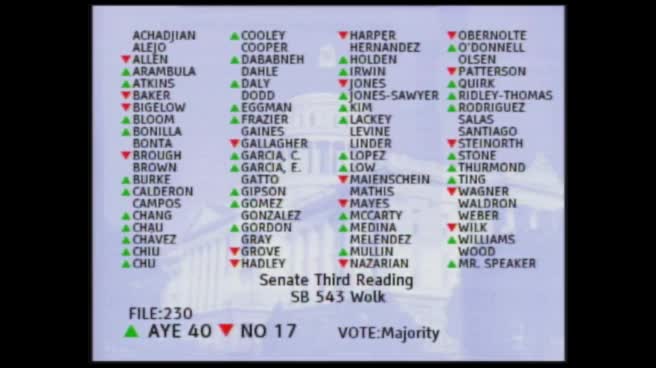 2MIN
Assembly Floor
 1MIN
Assembly Standing Committee on Appropriations
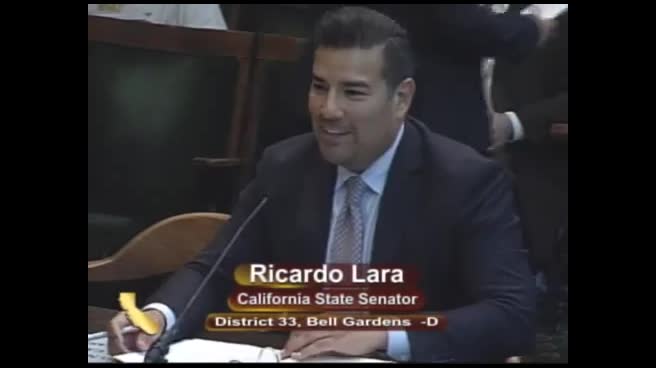 4MIN
Assembly Standing Committee on Local Government
 10MIN
Assembly Standing Committee on Natural Resources
 3MIN
Senate Floor
 11MIN
Senate Standing Committee on Environmental Quality
Bill Author

Bill Co-Author(s):