SB 337: Prisons.
- Session Year: 2025-2026
- House: Senate
- Latest Version Date: 2026-09-27
Current Status:
Passed
(2026-09-27: Chaptered by Secretary of State. Chapter 647, Statutes of 2026.)
Introduced
In Committee
Awaiting First Chamber Vote
Passed First Chamber
In Committee
Awaiting Second Chamber Vote
Passed Second Chamber
Enacted
(1)Existing law establishes the Department of Corrections and Rehabilitation (department) and sets forth its powers and duties regarding the administration of correctional facilities and the care and custody of inmates. Existing law requires law enforcement agencies to consider specified best practices when establishing policies and procedures for downloading and storing data from body-worn cameras, including, among other things, prohibiting the unauthorized use, duplication, or distribution of the data, and establishing storage periods for evidentiary and nonevidentiary data, as defined.
This bill would require the department, by July 1, 2027, to establish policies and procedures that include circumstances under which a body-worn camera may be deactivated and would require the department to ensure that those policies and procedures reflect a minimum amount of time per shift that a body-worn camera be activated, and that the camera is activated when interacting with incarcerated persons. The bill would require the department to develop audit protocols to ensure compliance. The bill would require the departments policies and procedures to authorize deactivation of a body-worn camera during specified confidential interactions and would require staff to inform the subject the reason for the deactivation and to document the time of the deactivation, the reason for the deactivation, and the time of reactivation.
This bill would require the department to adopt, and update regularly, a Prison Sexual Violence Elimination policy that would outline specified principles, including, among others, that the department maintains zero tolerance for sexual violence, staff sexual misconduct, and sexual harassment in its institutions, community correctional facilities, and conservation camps, and for all offenders under its jurisdiction.
(2)Under existing law, a person sentenced to imprisonment in a state prison for a felony offense, as specified, may, during that period of confinement, be deprived only of those rights as is reasonably related to legitimate penological interests. Existing law enumerates certain civil rights of these prisoners.
This bill would, by January 1, 2028, require the department to develop and implement protocols for when an incarcerated person is subject to a nonroutine search or scan, including, among other things, obtaining approval from a supervising officer of rank sergeant or above before the search or scan, documenting specified information about the search or scan, and providing the incarcerated person with a written receipt or other documentation with this information. The bill would require the department, upon appropriation by the Legislature, to establish a pilot program at 3 institutions to evaluate the effectiveness of replacing unclothed body searches with scanning technology, as specified.
(3)Existing law requires members of the departments Office of Internal Affairs to possess certification from the Commission on Peace Officer Standards and Training for investigators, except as specified. Existing law requires the department to conduct a complete and thorough background check prior to training a peace officer who is selected to conduct internal affairs investigations and requires each person to satisfactorily pass the background check. Existing law states that any person who has been the subject of a sustained, serious disciplinary action, as specified, shall not pass the background check.
This bill would require an investigator to disclose an actual or potential conflict of interest they may have in an investigation in which they are participating. The bill would require the department to take appropriate action to remedy that conflict. The bill would require an investigator to recuse themselves from participating in an investigation or a decision related to an investigation if they have a conflict of interest involving a staff member with whom they have a personal relationship, as defined.
(4)Existing law authorizes the secretary of the department to prescribe and amend rules and regulations for the administration of prisons. Under existing law, the State Civil Service Act, certain acts, including convictions of certain crimes, are cause for discipline of a state employee or of a person whose name appears on an employment list.
This bill would prohibit the department from appointing a person to a position that may involve any contact with incarcerated persons, or engaging a contractor for services that may involve contact with incarcerated persons, if the department obtains information that substantiated allegations of sexual abuse in the course of their employment have been reported against them, as specified. The bill would prohibit the department from appointing any person to a position that may involve contact with incarcerated persons, or engaging a contractor for services that may involve contact with incarcerated persons, if the department learns that the person or contractor has been convicted of certain offenses, including felony domestic battery and specified sex offenses, among others. The bill would also prohibit the department from appointing any person to a position that may involve contact with incarcerated persons, or engaging a contractor for any services, if it obtains information that the person or contractor has been civilly or administratively adjudicated to have engaged in that conduct. The bill would require the department to make best efforts to contact all prior institutional employers for information on substantiated allegations of sexual abuse, among other things. The bill would require the department to conduct criminal background checks every 5 years of existing employees or implement a system to otherwise capture that information.
(5)Existing law makes it a misdemeanor for an employee or officer of a public entity health facility, or an employee, officer, or agent of a private person or entity that provides a health facility or staff for a health facility under contract with a public entity, to engage in sexual activity with a consenting adult who is confined in a health facility. Existing law additionally makes it a misdemeanor for specified individuals, including an employee or officer of a public entity detention facility or an employee with a department, board, or authority under the department, to engage in sexual activity with a consenting adult who is confined in a detention facility or who is an inmate, ward, or parolee, as specified. Existing law makes it a felony for any subsequent violations for a person who was previously convicted of these violations. Existing law requires a person convicted of a felony violation of the above-described provisions who is employed by a department, board, or authority within the department to be terminated, as specified, and prohibits that person from being eligible to be hired or reinstated by the department. Existing law requires administrators to report criminal sexual abuse by staff to law enforcement authorities.
This bill would instead require that a person convicted of any violation of these provisions be terminated and prohibited from being reinstated by the department. The bill would also require that a person convicted of any violation of these provisions who is employed by a public entity health facility be terminated and made ineligible to be hired or reinstated by a public entity health facility. This bill would require administrators to report any known or suspected sexual abuse by staff to a local law enforcement agency.
(6)Existing law establishes the Office of the Inspector General that is responsible for, among other things, contemporaneous public oversight of internal affairs investigations and staff grievance inquiries conducted by the departments Office of Internal Affairs. Existing law requires the Office of the Inspector General to have investigatory authority over all staff misconduct cases that involve sexual misconduct with an incarcerated person, as specified.
This bill would authorize an incarcerated person to file an anonymous grievance relating to an allegation of sexual misconduct directly to the Office of the Inspector General, and would authorize the Inspector General to review any grievance filed from an incarcerated person, whether or not that grievance had been previously filed with the institution or hiring authority where the grievance occurred.
(7)Existing regulations establish a grievance procedure for individuals in the custody of, or under the supervision of, the department. Under those regulations, a claimant is required to submit a grievance no later than 60 calendar days after discovering an adverse policy, decision, action, condition, or omission by the department.
This bill would extend that time period to 120 calendar days.
(1)Existing law establishes the Department of Corrections and Rehabilitation (department) and sets forth its powers and duties regarding the administration of correctional facilities and the care and custody of inmates. Existing law requires law enforcement agencies to consider specified best practices when establishing policies and procedures for downloading and storing data from body-worn cameras, including, among other things, prohibiting the unauthorized use, duplication, or distribution of the data, and establishing storage periods for evidentiary and nonevidentiary data, as defined.
This bill would require the department, by July 1, 2027, to establish policies and procedures that include circumstances under which a body-worn camera may be deactivated and would require the department to ensure that those policies and procedures reflect a minimum amount of time per shift that a body-worn camera be activated, and that the camera is activated when interacting with incarcerated persons. The bill would require the department to develop audit protocols to ensure compliance. The bill would require the departments policies and procedures to authorize deactivation of a body-worn camera during specified confidential interactions and would require staff to inform the subject the reason for the deactivation and to document the time of the deactivation, the reason for the deactivation, and the time of reactivation.
This bill would require the department to adopt, and update regularly, a Prison Sexual Violence Elimination policy that would outline specified principles, including, among others, that the department maintains zero tolerance for sexual violence, staff sexual misconduct, and sexual harassment in its institutions, community correctional facilities, and conservation camps, and for all offenders under its jurisdiction.
(2)Under existing law, a person sentenced to imprisonment in a state prison for a felony offense, as specified, may, during that period of confinement, be deprived only of those rights as is reasonably related to legitimate penological interests. Existing law enumerates certain civil rights of these prisoners.
This bill would, by January 1, 2028, require the department to develop and implement protocols for when an incarcerated person is subject to a nonroutine search or scan, including, among other things, obtaining approval from a supervising officer of rank sergeant or above before the search or scan, documenting specified information about the search or scan, and providing the incarcerated person with a written receipt or other documentation with this information. The bill would require the department, upon appropriation by the Legislature, to establish a pilot program at 3 institutions to evaluate the effectiveness of replacing unclothed body searches with scanning technology, as specified.
(3)Existing law requires members of the departments Office of Internal Affairs to possess certification from the Commission on Peace Officer Standards and Training for investigators, except as specified. Existing law requires the department to conduct a complete and thorough background check prior to training a peace officer who is selected to conduct internal affairs investigations and requires each person to satisfactorily pass the background check. Existing law states that any person who has been the subject of a sustained, serious disciplinary action, as specified, shall not pass the background check.
This bill would require an investigator to disclose an actual or potential conflict of interest they may have in an investigation in which they are participating. The bill would require the department to take appropriate action to remedy that conflict. The bill would require an investigator to recuse themselves from participating in an investigation or a decision related to an investigation if they have a conflict of interest involving a staff member with whom they have a personal relationship, as defined.
(4)Existing law authorizes the secretary of the department to prescribe and amend rules and regulations for the administration of prisons. Under existing law, the State Civil Service Act, certain acts, including convictions of certain crimes, are cause for discipline of a state employee or of a person whose name appears on an employment list.
This bill would prohibit the department from appointing or promoting a person to a position that may involve any contact with incarcerated persons, or engaging a contractor for services that may involve contact with incarcerated persons, if the department obtains information that the person or contractor has engaged in sexual misconduct in a prison or other correctional facility or institution, substantiated allegations of sexual abuse in the course of their employment have been reported against them, as specified. The bill would prohibit the department from appointing or promoting any person to a position that may involve contact with incarcerated persons, or engaging a contractor for services that may involve contact with incarcerated persons, if the department learns that the person or contractor has been convicted of certain offenses, including murder and rape, felony domestic battery and specified sex offenses, among others. The bill would also prohibit the department from appointing or promoting any person to a position that may involve contact with incarcerated persons, or engaging a contractor for any services, if it obtains information that the person or contractor has been civilly or administratively adjudicated to have engaged in that conduct. The bill would require the department to consider any information it obtains about substantiated incidents of sexual harassment in determining whether to appoint or promote an applicant and would require the department before appointing a new employee to make best efforts to contact all prior institutional employers for information on substantiated allegations of sexual abuse, among other things. The bill would require the department to conduct criminal background checks every 5 years of existing employees or implement a system to otherwise capture that information.
(5)Existing law makes it a misdemeanor for an employee or officer of a public entity health facility, or an employee, officer, or agent of a private person or entity that provides a health facility or staff for a health facility under contract with a public entity, to engage in sexual activity with a consenting adult who is confined in a health facility. Existing law additionally makes it a misdemeanor for specified individuals, including an employee or officer of a public entity detention facility or an employee with a department, board, or authority under the department, to engage in sexual activity with a consenting adult who is confined in a detention facility or who is an inmate, ward, or parolee, as specified. Existing law makes it a felony for any subsequent violations for a person who was previously convicted of these violations. Existing law requires a person convicted of a felony violation of the above-described provisions who is employed by a department, board, or authority within the department to be terminated, as specified, and prohibits that person from being eligible to be hired or reinstated by the department. Existing law requires administrators to report criminal sexual abuse by staff to law enforcement authorities.
This bill would instead require that a person convicted of any violation of these provisions be terminated and prohibited from being reinstated by the department. The bill would also require that a person convicted of any violation of these provisions who is employed by a public entity health facility be terminated and made ineligible to be hired or reinstated by a public entity health facility. This bill would require administrators to report any known or suspected sexual abuse by staff to a local law enforcement agency.
(6)Existing law establishes the Office of the Inspector General that is responsible for, among other things, contemporaneous public oversight of internal affairs investigations and staff grievance inquiries conducted by the departments Office of Internal Affairs. Existing law requires the Office of the Inspector General to have investigatory authority over all staff misconduct cases that involve sexual misconduct with an incarcerated person, as specified.
This bill would authorize an incarcerated person to file an anonymous grievance relating to an allegation of sexual misconduct directly to the Office of the Inspector General, and would authorize the Inspector General to review any grievance filed from an incarcerated person, whether or not that grievance had been previously filed with the institution or hiring authority where the grievance occurred.
(7)Existing regulations establish a grievance procedure for individuals in the custody of, or under the supervision of, the department. Under those regulations, a claimant is required to submit a grievance no later than 60 calendar days after discovering an adverse policy, decision, action, condition, or omission by the department.
This bill would extend that time period to 120 calendar days.
(1)Existing law establishes the Department of Corrections and Rehabilitation (department) and sets forth its powers and duties regarding the administration of correctional facilities and the care and custody of inmates. Existing law requires law enforcement agencies to consider specified best practices when establishing policies and procedures for downloading and storing data from body-worn cameras, including, among other things, prohibiting the unauthorized use, duplication, or distribution of the data, and establishing storage periods for evidentiary and nonevidentiary data, as defined.
This bill would require the department department, by July 1, 2027, to establish policies and procedures that include circumstances under which a body-worn camera may be deactivated and would require the department to ensure that those policies and procedures prohibit a body-worn camera from being deactivated only because there is no incarcerated person present or if the correctional staff member is not interacting with an incarcerated person. reflect a minimum amount of time per shift that a body-worn camera be activated, and that the camera is activated when interacting with incarcerated persons. The bill would require the department to develop audit protocols to ensure compliance. The bill would require the departments policies and procedures to authorize deactivation of a body-worn camera during specified confidential interactions and would require staff to inform the subject the reason for the deactivation and to document the time of the deactivation, the reason for the deactivation, and the time of reactivation.
This bill would require the department to adopt, and update regularly, a Prison Rape Sexual Violence Elimination policy that would outline specified principles, including, among others, that the department maintains zero tolerance for sexual violence, staff sexual misconduct, and sexual harassment in its institutions, community correctional facilities, and conservation camps, and for all offenders under its jurisdiction.
(2)Under existing law, a person sentenced to imprisonment in a state prison for a felony offense, as specified, may, during that period of confinement, be deprived only of those rights as is reasonably related to legitimate penological interests. Existing law enumerates certain civil rights of these prisoners.
This bill would entitle a person incarcerated in a state prison to request the presence of an advocate during a physical or visual body cavity search, strip search, or body scan. The bill would require the department to document specified information, including whether the presence of an advocate was requested by the incarcerated individual, when an individual incarcerated in state prison is subject to any physical or visual body cavity search, strip search, or body scan of their person using a contraband or metal detection device or an electronic drug detection device. The bill would also require the department to document specified information if, during a medical appointment, an individual incarcerated in state prison requests the presence of an advocate who is not an employee of the department.This bill would, by January 1, 2028, require the department to develop and implement protocols for when an incarcerated person is subject to a nonroutine search or scan, including, among other things, obtaining approval from a supervising officer of rank sergeant or above before the search or scan, documenting specified information about the search or scan, and providing the incarcerated person with a written receipt or other documentation with this information. The bill would require the department, upon appropriation by the Legislature, to establish a pilot program at 3 institutions to evaluate the effectiveness of replacing unclothed body searches with scanning technology, as specified.
(3)Existing law requires members of the departments Office of Internal Affairs to possess certification from the Commission on Peace Officer Standards and Training for investigators, except as specified. Existing law requires the department to conduct a complete and thorough background check prior to training a peace officer who is selected to conduct internal affairs investigations and requires each person to satisfactorily pass the background check. Existing law states that any person who has been the subject of a sustained, serious disciplinary action, as specified, shall not pass the background check.
This bill would require an investigator to disclose an actual or potential conflict of interest they may have in an investigation in which they are participating. The bill would require the department to take appropriate action to remedy that conflict. The bill would require an investigator to recuse themselves from participating in an investigation or a decision related to an investigation if they have a conflict of interest involving a staff member with whom they have a personal relationship, as defined.
(4)Existing law authorizes the secretary of the department to prescribe and amend rules and regulations for the administration of prisons. Under existing law, the State Civil Service Act, certain acts, including convictions of certain crimes, are cause for discipline of a state employee or of a person whose name appears on an employment list.
This bill would prohibit the department from appointing or promoting a person to a position that may involve any contact with incarcerated persons, or engaging a contractor for services that may involve contact with incarcerated persons, if the department obtains information that the person or contractor has engaged in sexual abuse misconduct in a prison or other correctional facility or institution, as specified. The bill would prohibit the department from appointing or promoting any person to a position that may involve contact with incarcerated persons, or engaging a contractor for services that may involve contact with incarcerated persons, if the department learns that the person or contractor has been convicted of certain offenses, including murder and rape, among others, or others. The bill would also prohibit the department from appointing or promoting any person to a position that may involve contact with incarcerated persons, or engaging a contractor for any services, if it obtains information that the person or contractor has been civilly or administratively adjudicated to have engaged in that conduct. The bill would require the department to consider any information it obtains about substantiated incident incidents of sexual harassment in determining whether to appoint or promote an applicant and would require the department before appointing a new employee to make best efforts to contact all prior institutional employers for information on substantiated allegations of sexual abuse, among other things. The bill would require the department to conduct criminal background checks every 5 years of existing employees or implement a system to otherwise capture that information.
(5)Existing law makes it a misdemeanor for an employee or officer of a public entity health facility, or an employee, officer, or agent of a private person or entity that provides a health facility or staff for a health facility under contract with a public entity, to engage in sexual activity with a consenting adult who is confined in a health facility. Existing law additionally makes it a misdemeanor for specified individuals, including an employee or officer of a public entity detention facility or an employee with a department, board, or authority under the department, to engage in sexual activity with a consenting adult who is confined in a detention facility or who is an inmate, ward, or parolee, as specified. Existing law makes it a felony for any subsequent violations for a person who was previously convicted of these violations. Existing law requires a person convicted of a felony violation of the above-described provisions who is employed by a department, board, or authority within the department to be terminated, as specified, and prohibits that person from being eligible to be hired or reinstated by the department. Existing law requires administrators to report criminal sexual abuse by staff to law enforcement authorities.
This bill would instead require that a person convicted of any violation of these provisions be terminated and prohibited from being reinstated by the department. The bill would also require that a person convicted of any violation of these provisions who is employed by a public entity health facility be terminated and made ineligible to be hired or reinstated by a public entity health facility. This bill would require administrators to report any known or suspected sexual abuse by staff to a local law enforcement agency.
(6)Existing law establishes the Office of the Inspector General that is responsible for, among other things, contemporaneous public oversight of internal affairs investigations and staff grievance inquiries conducted by the departments Office of Internal Affairs. Existing law requires the Office of the Inspector General to have investigatory authority over all staff misconduct cases that involve sexual misconduct with an incarcerated person, as specified.
This bill would authorize an incarcerated person to file an anonymous grievance relating to an allegation of sexual violence misconduct directly to the Office of the Inspector General, and would authorize the Inspector General to review any grievance filed from an incarcerated person, whether or not that grievance had been previously filed with the institution or hiring authority where the grievance occurred.
(7)Existing regulations establish a grievance procedure for individuals in the custody of, or under the supervision of, the department. Under those regulations, a claimant is required to submit a grievance no later than 60 calendar days after discovering an adverse policy, decision, action, condition, or omission by the department.
This bill would extend that time period to 120 calendar days.
(1)Existing law establishes the Department of Corrections and Rehabilitation (department) and sets forth its powers and duties regarding the administration of correctional facilities and the care and custody of inmates. Existing law requires law enforcement agencies to consider specified best practices when establishing policies and procedures for downloading and storing data from body-worn cameras, including, among other things, prohibiting the unauthorized use, duplication, or distribution of the data, and establishing storage periods for evidentiary and nonevidentiary data, as defined.
This bill would require the department to establish policies and procedures that include circumstances under which a body-worn camera may be deactivated and would require the department to ensure that those policies and procedures prohibit a body-worn camera from being deactivated only because there is no incarcerated person present or if the correctional staff member is not interacting with an incarcerated person. The bill would require the departments policies and procedures to authorize deactivation of a body-worn camera during specified confidential interactions and would require staff to inform the subject the reason for the deactivation and to document the time of the deactivation, the reason for the deactivation, and the time of reactivation.
This bill would require the department to adopt, and update regularly, a Prison Rape Elimination policy that would outline specified principles, including, among others, that the department maintains zero tolerance for sexual violence, staff sexual misconduct, and sexual harassment in its institutions, community correctional facilities, and conservation camps, and for all offenders under its jurisdiction.
(2)Under existing law, a person sentenced to imprisonment in a state prison for a felony offense, as specified, may, during that period of confinement, be deprived only of those rights as is reasonably related to legitimate penological interests. Existing law enumerates certain civil rights of these prisoners.
This bill would entitle a person incarcerated in a state prison to request the presence of an advocate during a physical or visual body cavity search, strip search, or body scan. The bill would require the department to document specified information, including whether the presence of an advocate was requested by the incarcerated individual, when an individual incarcerated in state prison is subject to any physical or visual body cavity search, strip search, or body scan of their person using a contraband or metal detection device or an electronic drug detection device. The bill would also require the department to document specified information if, during a medical appointment, an individual incarcerated in state prison requests the presence of an advocate who is not an employee of the department.
(3)Existing law requires members of the departments Office of Internal Affairs to possess certification from the Commission on Peace Officer Standards and Training for investigators, except as specified. Existing law requires the department to conduct a complete and thorough background check prior to training a peace officer who is selected to conduct internal affairs investigations and requires each person to satisfactorily pass the background check. Existing law states that any person who has been the subject of a sustained, serious disciplinary action, as specified, shall not pass the background check.
This bill would require an investigator to disclose an actual or potential conflict of interest they may have in an investigation in which they are participating. The bill would require the department to take appropriate action to remedy that conflict. The bill would require an investigator to recuse themselves from participating in an investigation or a decision related to an investigation if they have a conflict of interest involving a staff member with whom they have a personal relationship, as defined.
(4)Existing law authorizes the secretary of the department to prescribe and amend rules and regulations for the administration of prisons. Under existing law, the State Civil Service Act, certain acts, including convictions of certain crimes, are cause for discipline of a state employee or of a person whose name appears on an employment list.
This bill would prohibit the department from appointing or promoting a person to a position that may involve any contact with incarcerated persons, or engaging a contractor for services that may involve contact with incarcerated persons, if that person or contractor has engaged in sexual abuse in a prison or other correctional facility or institution, as specified. The bill would prohibit the department from appointing or promoting any person to a position that may involve contact with incarcerated persons, or engaging a contractor for services that may involve contact with incarcerated persons, if that person or contractor has been convicted of certain offenses, including murder and rape, among others, or has been civilly or administratively adjudicated to have engaged in that conduct. The bill would require the department to consider any substantiated incident of sexual harassment in determining whether to appoint or promote an applicant and would require the department before appointing a new employee to make best efforts to contact all prior institutional employers for information on substantiated allegations of sexual abuse, among other things. The bill would require the department to conduct criminal background checks every 5 years of existing employees or implement a system to otherwise capture that information.
(5)Existing law makes it a misdemeanor for an employee or officer of a public entity health facility, or an employee, officer, or agent of a private person or entity that provides a health facility or staff for a health facility under contract with a public entity, to engage in sexual activity with a consenting adult who is confined in a health facility. Existing law additionally makes it a misdemeanor for specified individuals, including an employee or officer of a public entity detention facility or an employee with a department, board, or authority under the department, to engage in sexual activity with a consenting adult who is confined in a detention facility or who is an inmate, ward, or parolee, as specified. Existing law makes it a felony for any subsequent violations for a person who was previously convicted of these violations. Existing law requires a person convicted of a felony violation of the above-described provisions who is employed by a department, board, or authority within the department to be terminated, as specified, and prohibits that person from being eligible to be hired or reinstated by the department. Existing law requires administrators to report criminal sexual abuse by staff to law enforcement authorities.
This bill would instead require that a person convicted of any violation of these provisions be terminated and prohibited from being reinstated by the department. The bill would also require that a person convicted of any violation of these provisions who is employed by a public entity health facility be terminated and made ineligible to be hired or reinstated by a public entity health facility. This bill would require administrators to report any known or suspected sexual abuse by staff to a local law enforcement agency.
(6)Existing law establishes the Office of the Inspector General that is responsible for, among other things, contemporaneous public oversight of internal affairs investigations and staff grievance inquiries conducted by the departments Office of Internal Affairs. Existing law requires the Office of the Inspector General to have investigatory authority over all staff misconduct cases that involve sexual misconduct with an incarcerated person, as specified.
This bill would authorize an incarcerated person to file an anonymous grievance relating to an allegation of sexual violence directly to the Office of the Inspector General, and would authorize the Inspector General to review any grievance filed from an incarcerated person, whether or not that grievance had been previously filed with the institution or hiring authority where the grievance occurred.
(7)Existing regulations establish a grievance procedure for individuals in the custody of, or under the supervision of, the department. Under those regulations, a claimant is required to submit a grievance no later than 60 calendar days after discovering an adverse policy, decision, action, condition, or omission by the department.
This bill would extend that time period to 120 calendar days.
(1)Existing law establishes the Department of Corrections and Rehabilitation (department) and sets forth its powers and duties regarding the administration of correctional facilities and the care and custody of inmates. Existing law requires law enforcement agencies to consider specified best practices when establishing policies and procedures for downloading and storing data from body-worn cameras, including, among other things, prohibiting the unauthorized use, duplication, or distribution of the data, and establishing storage periods for evidentiary and nonevidentiary data, as defined.
This bill would require the department to establish policies and procedures that include circumstances under which a body-worn camera may be deactivated and would require the department to ensure that those policies and procedures prohibit a body-worn camera from being deactivated only because there is no incarcerated person present or if the correctional staff member is not interacting with an incarcerated person. The bill would require the departments policies and procedures to authorize deactivation of a body-worn camera during specified confidential interactions and would require staff to inform the subject the reason for the deactivation and to document the time of the deactivation, the reason for the deactivation, and the time of reactivation.
(2)Under existing law, a person sentenced to imprisonment in a state prison for a felony offense, as specified, may, during that period of confinement, be deprived only of those rights as is reasonably related to legitimate penological interests. Existing law enumerates certain civil rights of these prisoners.
This bill would entitle a person incarcerated in a state prison to request the presence of an advocate during a physical or visual body cavity search, strip search, or body scan. The bill would require the department to document specified information, including whether the presence of an advocate was requested by the incarcerated individual, when an individual incarcerated in state prison is subject to any physical or visual body cavity search, strip search, or body scan of their person using a contraband or metal detection device or an electronic drug detection device. The bill would also require the department to document specified information if, during a medical appointment, an individual incarcerated in state prison requests the presence of an advocate who is not an employee of the department.
(3)Existing law requires members of the departments Office of Internal Affairs to possess certification from the Commission on Peace Officer Standards and Training for investigators, except as specified. Existing law requires the department to conduct a complete and thorough background check prior to training a peace officer who is selected to conduct internal affairs investigations and requires each person to satisfactorily pass the background check. Existing law states that any person who has been the subject of a sustained, serious disciplinary action, as specified, shall not pass the background check.
This bill would require an investigator to disclose an actual or potential conflict of interest they may have in an investigation in which they are participating. The bill would require the department to take appropriate action to remedy that conflict. The bill would require an investigator to recuse themselves from participating in an investigation or a decision related to an investigation if they have a conflict of interest involving a staff member with whom they have a personal relationship, as defined.
(4)Existing law authorizes the secretary of the department to prescribe and amend rules and regulations for the administration of prisons. Under existing law, the State Civil Service Act, certain acts, including convictions of certain crimes, are cause for discipline of a state employee or of a person whose name appears on an employment list.
This bill would prohibit the department from appointing or promoting a person to a position that may involve any contact with incarcerated persons, or engaging a contractor for services that may involve contact with incarcerated persons, if that person or contractor has engaged in sexual abuse in a prison or other correctional facility or institution, as specified. The bill would prohibit the department from appointing or promoting any person to a position that may involve contact with incarcerated persons, or engaging a contractor for services that may involve contact with incarcerated persons, if that person or contractor has been convicted of certain offenses, including murder and rape, among others, or has been civilly or administratively adjudicated to have engaged in that conduct. The bill would require the department to consider any substantiated incident of sexual harassment in determining whether to appoint or promote an applicant and would require the department before appointing a new employee to make best efforts to contact all prior institutional employers for information on substantiated allegations of sexual abuse, among other things. The bill would require the department to conduct criminal background checks every 5 years of existing employees or implement a system to otherwise capture that information.
(5)Existing law makes it a misdemeanor for an employee or officer of a public entity health facility, or an employee, officer, or agent of a private person or entity that provides a health facility or staff for a health facility under contract with a public entity, to engage in sexual activity with a consenting adult who is confined in a health facility. Existing law additionally makes it a misdemeanor for specified individuals, including an employee or officer of a public entity detention facility or an employee with a department, board, or authority under the department, to engage in sexual activity with a consenting adult who is confined in a detention facility or who is an inmate, ward, or parolee, as specified. Existing law makes it a felony for any subsequent violations for a person who was previously convicted of these violations. Existing law requires a person convicted of a felony violation of the above-described provisions who is employed by a department, board, or authority within the department to be terminated, as specified, and prohibits that person from being eligible to be hired or reinstated by the department. Existing law requires administrators to report criminal sexual abuse by staff to law enforcement authorities.
This bill would instead require that a person convicted of any violation of these provisions be terminated and prohibited from being reinstated by the department. The bill would also require that a person convicted of any violation of these provisions who is employed by a public entity health facility be terminated and made ineligible to be hired or reinstated by a public entity health facility. This bill would require administrators to report any known or suspected sexual abuse by staff to a local law enforcement agency.
(6)Existing law establishes the Office of the Inspector General that is responsible for, among other things, contemporaneous public oversight of internal affairs investigations and staff grievance inquiries conducted by the departments Office of Internal Affairs. Existing law requires the Office of the Inspector General to have investigatory authority over all staff misconduct cases that involve sexual misconduct with an incarcerated person, as specified.
This bill would authorize an incarcerated person to file an anonymous grievance relating to an allegation of sexual violence directly to the Office of the Inspector General, and would authorize the Inspector General to review any grievance filed from an incarcerated person, whether or not that grievance had been previously filed with the institution or hiring authority where the grievance occurred.
(7)Existing regulations establish a grievance procedure for individuals in the custody of, or under the supervision of, the department. Under those regulations, a claimant is required to submit a grievance no later than 60 calendar days after discovering an adverse policy, decision, action, condition, or omission by the department.
This bill would extend that time period to 120 calendar days.
(1)Existing law authorizes the Secretary of the Department of Corrections and Rehabilitation to prescribe and amend rules and regulations for the administration of prisons. Existing law requires, at intake, every incarcerated person to be asked whom they want covered by specified documents, including a next of kin form authorizing control over their body and possessions in case of death.This bill would require the Department of Corrections and Rehabilitation, during the intake process, to provide incarcerated persons with information explaining the departments zero-tolerance policy regarding sexual abuse and sexual harassment and how to report these incidents. The bill would require, within 30 days of intake and as otherwise specified, the department to provide comprehensive education to incarcerated persons regarding their rights to be free from sexual abuse and sexual harassment and to be free from retaliation for reporting these incidents.(2)Existing law requires the department to institute specified practices to prevent sexual violence and promote inmate and ward safety. Existing law requires the department to implement thoughtful, confidential standards of physical and mental health care to reduce the impact of sexual abuse on inmates and wards, and requires the performance of specified procedures in the investigation and prosecution of sexual abuse incidents that occur in department facilities.This bill would require the department to take specified actions to ensure that incarcerated persons with disabilities, including those who are deaf or hard of hearing, who are visually impaired, or who have intellectual, psychiatric, or speech disabilities, and incarcerated persons who are limited English proficient have an equal opportunity to participate in and benefit from all aspects of the departments efforts to prevent, detect, and respond to sexual abuse and sexual harassment, including by providing access to effective interpreters, as specified. The bill would prohibit the department from utilizing incarcerated interpreters for the purposes described above, except in specified circumstances.(3)Existing law requires the department to develop guidelines for allowing outside organizations and service agencies, including gay rights organizations and rape crisis agencies, to provide resources and counseling to inmates and wards.This bill would, instead of gay rights organizations, require the department to develop the guidelines described above for two-spirit, lesbian, gay, bisexual, transgender, queer, and additional sexual orientations and gender identities rights organizations, and would additionally require the department to develop the guidelines described above for victim advocacy organizations and specified community service providers.The bill would require the department to facilitate reasonable communication between incarcerated people and victim advocacy agencies and rape crisis organizations, and to provide contact information of those organizations to incarcerated people, as specified, for the purpose of obtaining emotional support services related to sexual abuse. The bill would require the department to enter into a memoranda of understanding with community-based service providers for confidential mental health and emotional support services related to sexual abuse and sexual harassment and would provide guidelines and requirements for those programs. The bill would require the department to provide prescribed information on those programs to the Legislature, on or before July 1, 2026, and annually thereafter.(1)Existing law authorizes the Secretary of the Department of Corrections and Rehabilitation to prescribe and amend rules and regulations for the administration of prisons. Existing law requires, at intake, every incarcerated person to be asked whom they want covered by specified documents, including a next of kin form authorizing control over their body and possessions in case of death.
This bill would require the Department of Corrections and Rehabilitation, during the intake process, to provide incarcerated persons with information explaining the departments zero-tolerance policy regarding sexual abuse and sexual harassment and how to report these incidents. The bill would require, within 30 days of intake and as otherwise specified, the department to provide comprehensive education to incarcerated persons regarding their rights to be free from sexual abuse and sexual harassment and to be free from retaliation for reporting these incidents.
(2)Existing law requires the department to institute specified practices to prevent sexual violence and promote inmate and ward safety. Existing law requires the department to implement thoughtful, confidential standards of physical and mental health care to reduce the impact of sexual abuse on inmates and wards, and requires the performance of specified procedures in the investigation and prosecution of sexual abuse incidents that occur in department facilities.
This bill would require the department to take specified actions to ensure that incarcerated persons with disabilities, including those who are deaf or hard of hearing, who are visually impaired, or who have intellectual, psychiatric, or speech disabilities, and incarcerated persons who are limited English proficient have an equal opportunity to participate in and benefit from all aspects of the departments efforts to prevent, detect, and respond to sexual abuse and sexual harassment, including by providing access to effective interpreters, as specified. The bill would prohibit the department from utilizing incarcerated interpreters for the purposes described above, except in specified circumstances.
(3)Existing law requires the department to develop guidelines for allowing outside organizations and service agencies, including gay rights organizations and rape crisis agencies, to provide resources and counseling to inmates and wards.
This bill would, instead of gay rights organizations, require the department to develop the guidelines described above for two-spirit, lesbian, gay, bisexual, transgender, queer, and additional sexual orientations and gender identities rights organizations, and would additionally require the department to develop the guidelines described above for victim advocacy organizations and specified community service providers.
The bill would require the department to facilitate reasonable communication between incarcerated people and victim advocacy agencies and rape crisis organizations, and to provide contact information of those organizations to incarcerated people, as specified, for the purpose of obtaining emotional support services related to sexual abuse. The bill would require the department to enter into a memoranda of understanding with community-based service providers for confidential mental health and emotional support services related to sexual abuse and sexual harassment and would provide guidelines and requirements for those programs. The bill would require the department to provide prescribed information on those programs to the Legislature, on or before July 1, 2026, and annually thereafter.
Existing law requires the Department of Corrections and Rehabilitation to ensure that specified procedures are performed in the investigation and prosecution of sexual abuse incidents, including, among others, that an employee must be terminated if an investigation confirms that the employee sexually abused an inmate. Existing law requires administrators to report criminal sexual abuse by staff to law enforcement authorities.This bill would state the intent of the Legislature to enact legislation to address sexual assault against incarcerated persons in prison.Existing law requires the Department of Corrections and Rehabilitation to ensure that specified procedures are performed in the investigation and prosecution of sexual abuse incidents, including, among others, that an employee must be terminated if an investigation confirms that the employee sexually abused an inmate. Existing law requires administrators to report criminal sexual abuse by staff to law enforcement authorities.
This bill would state the intent of the Legislature to enact legislation to address sexual assault against incarcerated persons in prison.
The Legislature finds and declares both of the following:
(a)Sexual abuse by staff is an ongoing issue in Department of Corrections and Rehabilitation facilities, especially in the facilities designated for women where recent lawsuits have revealed serial abuse by staff.
(b)The purpose of this act is to implement safeguards that help to prevent future sexual abuse.
SEC. 2.Section 289.6 of the Penal Code is amended to read:289.6.(a)(1)(A)An employee or officer of a public entity health facility, or an employee, officer, or agent of a private person or entity that provides a health facility or staff for a health facility under contract with a public entity, who engages in sexual activity with a consenting adult who is confined in a health facility is guilty of a public offense.
(B)As used in this section, health facility means a health facility as defined in subdivisions (b), (e), (g), (h), and (j) of, and subparagraph (C) of paragraph (2) of subdivision (i) of, Section 1250 of the Health and Safety Code, in which the victim has been confined involuntarily.
(2)An employee or officer of a public entity detention facility, or an employee, officer, or agent of a private person or entity that provides a detention facility or staff for a detention facility, a person or agent of a public or private entity under contract with a detention facility, a volunteer of a private or public entity detention facility, or a peace officer who engages in sexual activity with a consenting adult who is confined in a detention facility is guilty of a public offense.
(3)An employee with a department, board, or authority under the Department of Corrections and Rehabilitation or a facility under contract with a department, board, or authority under the Department of Corrections and Rehabilitation, who, during the course of their employment directly provides treatment, care, control, or supervision of incarcerated persons, wards, or parolees, and who engages in sexual activity with a consenting adult who is an incarcerated person, ward, or parolee, is guilty of a public offense.
(b)As used in this section, the term public entity means the state, federal government, a city, a county, a city and county, a joint county jail district, or any entity created as a result of a joint powers agreement between two or more public entities.
(c)As used in this section, the term detention facility means:
(1)A prison, jail, camp, or other correctional facility used for the confinement of adults or both adults and minors.
(2)A building or facility used for the confinement of adults or adults and minors pursuant to a contract with a public entity.
(3)A room that is used for holding persons for interviews, interrogations, or investigations and that is separate from a jail or located in the administrative area of a law enforcement facility.
(4)A vehicle used to transport confined persons during their period of confinement, including transporting a person after the person has been arrested but has not been booked.
(5)A court holding facility located within or adjacent to a court building that is used for the confinement of persons for the purpose of court appearances.
(d)As used in this section, sexual activity means:
(1)Sexual intercourse.
(2)Sodomy, as defined in subdivision (a) of Section 286.
(3)Oral copulation, as defined in subdivision (a) of Section 287 or former Section 288a.
(4)Sexual penetration, as defined in subdivision (k) of Section 289.
(5)The rubbing or touching of the breasts or sexual organs of another, or of oneself in the presence of and with knowledge of another, with the intent of arousing, appealing to, or gratifying the lust, passions, or sexual desires of oneself or another.
(e)Consent by a confined person or parolee to sexual activity proscribed by this section is not a defense to a criminal prosecution for violation of this section.
(f)This section does not apply to sexual activity between consenting adults that occurs during an overnight conjugal visit that takes place pursuant to a court order or with the written approval of an authorized representative of the public entity that operates or contracts for the operation of the detention facility where the conjugal visit takes place, to physical contact or penetration made pursuant to a lawful search, or bona fide medical examinations or treatments, including clinical treatments.
(g)Any violation of paragraph (1) of subdivision (a), or a violation of paragraph (2) or (3) of subdivision (a) as described in paragraph (5) of subdivision (d), is a misdemeanor.
(h)Any violation of paragraph (2) or (3) of subdivision (a), as described in paragraph (1), (2), (3), or (4) of subdivision (d), shall be punished by imprisonment in a county jail not exceeding one year, or in the state prison, or by a fine of not more than ten thousand dollars ($10,000) or by both that fine and imprisonment.
(i)Any person previously convicted of a violation of this section shall, upon a subsequent violation, be guilty of a felony.
(j)A person who is convicted of a violation of this section who is employed by a department, board, or authority within the Department of Corrections and Rehabilitation shall be terminated in accordance with the State Civil Service Act (Part 2 (commencing with Section 18500) of Division 5 of Title 2 of the Government Code). A person who has been convicted of a violation of this section shall not be eligible to be hired or reinstated by a department, board, or authority within the Department of Corrections and Rehabilitation.
(k)Notwithstanding any other law, a person who is convicted of a violation of this section who is employed by a public entity health facility shall be terminated and shall not be eligible to be hired or reinstated by a public entity health facility.
SEC. 3.Section 2608 is added to the Penal Code, to read:2608.(a)By January 1, 2028, the department shall develop and implement protocols for when an incarcerated person is subject to a nonroutine search or scan, requiring that the staff conducting the search or scan do all of the following:
(1)Obtain approval from a supervising officer of rank sergeant or above before performing a nonroutine search or scan.
(2)Document the incarcerated persons preference, if any, for the gender of the officer or staff performing the nonroutine search or scan.
(3)Document the date, location, and time of the nonroutine search or scan, the name of the officer who performed the nonroutine search or scan, the reason for the nonroutine search or scan, the supervising officer who approved the nonroutine search or scan, and any other officers, staff or other persons present during the performance of the nonroutine search or scan.
(4)As soon as practicable following the completion of the nonroutine search or scan, provide to the incarcerated person who was subject to the nonroutine search or scan, a written receipt or other documentation with the information described in this section.
(b)For the purposes of this section, the following terms have the following meanings:
(1)Nonroutine search or scan is a search or scan that is based on circumstances specific to an individual and does not include a search or scan conducted regularly as part of security protocols, including, but not limited to, a routine search or scan that precedes or follows standard visitation, family visitation, work change, or transportation to and from the department facilities.
(2)Search or scan means any physical or visual body cavity search, unclothed body search, or body scan of a person, including, but not limited to, ion scanners and low-dose, full-body x-ray scanners.
(c)(1)Upon appropriation by the Legislature, the department shall establish a pilot program at three institutions, including one mens and one womens prison, to evaluate the effectiveness of replacing unclothed body searches, both routine and nonroutine, of incarcerated persons with scanning technology.
(2)As part of a search with scanning technology, the department shall accommodate an incarcerated persons preference, if any, for a gender of the officer or staff performing the search or scan, as described in paragraph (2) of subdivision (a) of Section 2606, to the best of its ability. Incarcerated persons may refuse the use of scanning technology for any reason. If the incarcerated person refuses scanning technology, the department is authorized to conduct an unclothed body search.
(3)The department shall implement privacy settings within the scanning technology to maintain reasonable privacy for the searched individual and restrict the availability of body scan images to only staff processing the scan or involved in any subsequent investigations. If the department does not need to prove that a person was in possession of contraband or a weapon, the department shall delete body scan images immediately.
(4)Nothing in this subdivision prohibits the use of unclothed body searches when necessary.
(5)(A)One year after commencing a pilot program pursuant to paragraph (1), the department shall prepare and submit a report to the Legislature containing information on development of the program, engagement with stakeholders, an overview of the program, an explanation of the internal operations required for the program, the outcomes of the implementation of the program, and recommendations for how the program could be implemented at other department facilities. The report shall also include data regarding the number of searches and scans, and the completion of search and scan documentation.
(B)A report to be submitted pursuant to this subdivision shall be submitted in compliance with Section 9795 of the Government Code.
(d)In developing regulations to enact subdivisions (a) and (c), the department shall engage with incarcerated individuals serving in peer leadership positions at the facilities and the sexual assault response and prevention working group established by the Budget Act of 2023.
SEC. 4.Section 2610 is added to the Penal Code, immediately following Section 2608, to read:2610.Notwithstanding paragraph (1) of subdivision (b) of Section 3482 of Title 15 of the California Code of Regulations, a claimant shall submit a routine grievance pursuant to Article 1 (commencing with Section 3480) of Subchapter 5.1 of Chapter 1 of Division 3 of Title 15 of the California Code of Regulations no later than 120 calendar days after discovering an adverse policy, decision, action, condition, or omission by the department.
SEC. 5.Section 2635.1 is added to the Penal Code, to read:2635.1.(a)The Department of Corrections and Rehabilitation shall adopt, and update regularly, a Prison Sexual Violence Elimination policy.
(b)As part of the policy, the department shall outline all of the following principles:
(1)The department maintains zero tolerance for sexual violence, staff sexual misconduct, and sexual harassment in its institutions, community correctional facilities, and conservation camps, and for all offenders under its jurisdiction.
(2)All sexual violence, staff sexual misconduct, and sexual harassment is strictly prohibited. This policy applies to all incarcerated persons and persons employed by the department, including volunteers and contractors assigned to an institution, a community correctional facility, a conservation camp, or parole.
(3)Retaliatory measures against staff or incarcerated persons who report incidents or cooperate with investigations of sexual violence, staff sexual misconduct, or sexual harassment shall not be tolerated and shall result in disciplinary action and possible referral for criminal prosecution. Retaliatory measures include, but are not limited to, coercion, threats of punishment, or any other activities intended to discourage or prevent a staff member or incarcerated person from reporting the incident or cooperating with an investigation of an incident.
(c)To ensure that the department maintains zero tolerance for sexual violence, staff sexual misconduct, and sexual harassment, the department shall ensure that the definitions and terms used by the department, including, but not limited to, terms such as sexual abuse, sexual violence, abusive sexual contact, nonconsensual sex acts, and sexual harassment, are updated regularly and consistent with federal and state law, are culturally competent and gender inclusive, and are internally consistent.
SEC. 6.Section 2639 of the Penal Code is amended to read:2639.The Department of Corrections and Rehabilitation shall ensure that the following procedures are performed in the investigation and prosecution of sexual abuse incidents:
(a)The provision of safe housing options, medical care, and the like shall not be contingent upon the victims willingness to press charges.
(b)Investigations into allegations of sexual abuse shall include, when deemed appropriate by the investigating agency, the use of forensic rape kits, questioning of suspects and witnesses, and gathering of other relevant evidence.
(c)Physical and testimonial evidence shall be carefully preserved for use in any future proceedings.
(d)Staff attitudes that incarcerated persons and wards cannot provide reliable information shall be discouraged.
(e)If an investigation confirms that any employee has sexually abused an incarcerated person or ward, that employee shall be terminated and shall not be eligible to be hired or reinstated by the department. Administrators shall report any known or suspected sexual abuse by staff to a local law enforcement agency.
(f)Consensual sodomy and oral copulation among incarcerated persons is prohibited by subdivision (e) of Section 286 and subdivision (e) of Section 287 or former Section 288a, respectively. Without repealing those provisions, the increased scrutiny provided by this article shall apply only to nonconsensual sexual contact among incarcerated persons and custodial sexual misconduct.
SEC. 7.Section 5003.7 is added to the Penal Code, to read:5003.7.(a)By July 1, 2027, the department shall establish policies and procedures relating to the implementation and operation of a body-worn camera system that include circumstances under which a body-worn camera may be deactivated. Those circumstances may include, but are not limited to, restroom breaks and confidential departmental meetings or training. The department shall ensure that its policies and procedures reflect a minimum amount of time per shift that a body-worn camera shall be activated and that the body-worn camera shall be activated when interacting with incarcerated persons. The department shall develop audit protocols to ensure compliance with these policies.
(b)The departments policies and procedures shall authorize the deactivation of a body-worn camera during a confidential medical, dental, or mental health assessment, appointment, or consultation. Prior to deactivating a body-worn camera, staff shall do both of the following:
(1)Inform the subject that they are deactivating the body-worn camera and the reason for the deactivation.
(2)Document the time the body-worn camera was deactivated, the reason for the deactivation, and the time the body-worn camera was reactivated.
SEC. 8.Section 6054 is added to the Penal Code, to read:6054.(a)Before appointing new employees to any position that may involve contact with incarcerated persons, the department shall do both of the following:
(1)Perform a criminal background records check.
(2)Consistent with federal, state, and local law, make its best efforts to contact all prior institutional employers that the department has knowledge of for information on substantiated allegations of sexual abuse or any resignation during a pending investigation of an allegation of sexual abuse.
(b)The department shall perform a criminal background records check before enlisting the services of any contractor who may have contact with incarcerated persons.
(c)The department shall either conduct criminal background records checks every five years of employees and contractors who may have contact with incarcerated persons or implement a system to otherwise routinely capture that information for current employees and contractors.
(d)The department shall ask all applicants and employees who may have contact with incarcerated persons directly about previous misconduct described in subdivision (f) in written applications or interviews for appointment.
(e)Material omissions regarding the misconduct described in this section, or the provision of materially false information, are grounds for termination.
(f)The department shall not appoint an individual to a position that may involve contact with incarcerated persons, and shall not engage a contractor for services that may involve contact with incarcerated persons, if it obtains information, pursuant to subdivision (a), that substantiated allegations of sexual abuse in a prison, jail, lockup, community confinement facility, juvenile facility, or other correctional institution, in the course of their role as an employee or contractor of an institutional employer, have been reported against the employee or contractor.
(g)The department shall not appoint an individual to a position that may involve contact with incarcerated persons, and shall not engage a contractor for services that may involve contact with incarcerated persons, if it obtains information, pursuant to subdivision (a), that the individual or contractor has been convicted of engaging or attempting to engage in any of the following offenses in the course of their role as an employee or contractor where the victim is known to have been a confined person at the time of the offense:
(1)Rape, as defined in paragraph (2) or (6) of subdivision (a) of Section 261 or paragraph (1) or (4) of subdivision (a) of former Section 262.
(2)Lewd acts on a child under 14 years of age, as defined in Section 288.
(3)Any sex offense requiring registration pursuant to Section 290.
(4)A felony offense involving domestic violence, as defined in Section 13700.
(5)Sexual battery, as defined in Section 243.4.
(6)Stalking, as defined in Section 646.9.
(7)Sexual activity with a confined person, as defined in Section 289.6.
(h)The department shall not appoint an individual to a position that may involve contact with incarcerated persons, and shall not engage a contractor for any services, if it obtains information, pursuant to subdivision (a), that the individual or contractor has been civilly or administratively adjudicated to have engaged in any of the offenses described in subdivision (g).
(i)Unless prohibited by law, the department shall provide information on substantiated allegations of sexual abuse or sexual harassment involving a former employee upon receiving a request from an institutional employer for whom that individual has applied to work.
(j)For purposes of this section, the following terms have the following meanings:
(1)Confined person includes any of the following:
(A)A person confined in a public entity health facility or a health facility under contract with a public entity.
(B)A person confined in a public or private detention facility.
(C)An incarcerated person, ward, or parolee of the Department of Corrections and Rehabilitation.
(2)Detention facility has the same meaning as defined in Section 289.6.
(3)Institutional employer means an employer, including a detention facility or a public or private entity that provides staff or volunteers to, or is under contract with, a detention facility, as described in Section 289.6.
SEC. 9.Section 6065 of the Penal Code is amended to read:6065.(a)The Legislature finds and declares that investigations of the Department of Corrections and Rehabilitation and its Office of Internal Affairs require appropriately trained personnel who perform their duties with honesty and credibility and without conflict of interest.
(b)To meet the objectives stated in subdivision (a), the following conditions shall be met:
(1)Prior to training a peace officer who is selected to conduct internal affairs investigations, the department shall conduct a complete and thorough background check. This background check shall be in addition to the original background screening that was conducted when the person was hired as a peace officer. Each person shall satisfactorily pass the second background check. A person who has been the subject of a sustained, serious disciplinary action, including, but not limited to, termination, suspension, or demotion, shall not pass the background check.
(2)All internal affairs allegations or complaints, whether investigated or not, shall be logged and numbered sequentially on an annual basis. The log shall specify, but not be limited to, the following information: the sequential number of the allegation or complaint, the date of receipt of the allegation or complaint, the location or facility to which the allegation or complaint pertains, and the disposition of all actions taken, including any final action taken. The log shall be made available to the Inspector General.
(3)(A)An investigator shall disclose an actual or potential conflict of interest they may have in an investigation in which they are participating, and the department shall take appropriate action to remedy the conflict.
(B)(i)An investigator shall recuse themselves from participating in an investigation or a decision related to an investigation if they have a conflict of interest involving a staff member with whom they have a personal relationship.
(ii)A personal relationship is a relationship that interferes with an investigators ability to assess the facts of the investigation in an objective manner, including with a person who is related by blood or marriage to, is a domestic partner of, is a cohabitant with, or is a relative within the third degree of the investigator.
(c)Consistent with the objectives expressed in subdivision (a), investigators shall conduct investigations and inquiries in a manner that provides a complete and thorough presentation of the facts regarding the allegation or complaint. All extenuating and mitigating facts shall be explored and reported. The role of the investigator is that of a factfinder. All reports prepared by an investigator shall provide the appointing authority with a complete recitation of the facts and shall refrain from conjecture or opinion.
(1)Uncorroborated or anonymous allegations shall not constitute the sole basis for disciplinary action by the department, other than an investigation.
(2)A report shall be submitted in a standard format, begin with a statement of the allegation or complaint, provide all relevant facts, and include the investigators signature certifying that they have complied with the provisions of this section subject to compliance with Sections 118.1 and 148.6.
SEC. 10.Section 6126.1 is added to the Penal Code, to read:6126.1.(a)An incarcerated person may file an anonymous grievance relating to an allegation of staff sexual misconduct directly to the Office of the Inspector General.
(b)The Inspector General may review any grievance filed from an incarcerated person, whether or not that grievance had been previously filed with the institution or hiring authority where the grievance occurred.
The Legislature finds and declares both of the following:
(a)Sexual abuse by staff is an ongoing issue in Department of Corrections and Rehabilitation facilities, especially in the facilities designated for women where recent lawsuits have revealed serial abuse by staff.
(b)The purpose of this act is to implement safeguards that help to prevent future sexual abuse.
SEC. 2.Section 289.6 of the Penal Code is amended to read:289.6.(a)(1)(A)An employee or officer of a public entity health facility, or an employee, officer, or agent of a private person or entity that provides a health facility or staff for a health facility under contract with a public entity, who engages in sexual activity with a consenting adult who is confined in a health facility is guilty of a public offense.
(B)As used in this section, health facility means a health facility as defined in subdivisions (b), (e), (g), (h), and (j) of, and subparagraph (C) of paragraph (2) of subdivision (i) of, Section 1250 of the Health and Safety Code, in which the victim has been confined involuntarily.
(2)An employee or officer of a public entity detention facility, or an employee, officer, or agent of a private person or entity that provides a detention facility or staff for a detention facility, a person or agent of a public or private entity under contract with a detention facility, a volunteer of a private or public entity detention facility, or a peace officer who engages in sexual activity with a consenting adult who is confined in a detention facility is guilty of a public offense.
(3)An employee with a department, board, or authority under the Department of Corrections and Rehabilitation or a facility under contract with a department, board, or authority under the Department of Corrections and Rehabilitation, who, during the course of their employment directly provides treatment, care, control, or supervision of incarcerated persons, wards, or parolees, and who engages in sexual activity with a consenting adult who is an incarcerated person, ward, or parolee, is guilty of a public offense.
(b)As used in this section, the term public entity means the state, federal government, a city, a county, a city and county, a joint county jail district, or any entity created as a result of a joint powers agreement between two or more public entities.
(c)As used in this section, the term detention facility means:
(1)A prison, jail, camp, or other correctional facility used for the confinement of adults or both adults and minors.
(2)A building or facility used for the confinement of adults or adults and minors pursuant to a contract with a public entity.
(3)A room that is used for holding persons for interviews, interrogations, or investigations and that is separate from a jail or located in the administrative area of a law enforcement facility.
(4)A vehicle used to transport confined persons during their period of confinement, including transporting a person after the person has been arrested but has not been booked.
(5)A court holding facility located within or adjacent to a court building that is used for the confinement of persons for the purpose of court appearances.
(d)As used in this section, sexual activity means:
(1)Sexual intercourse.
(2)Sodomy, as defined in subdivision (a) of Section 286.
(3)Oral copulation, as defined in subdivision (a) of Section 287 or former Section 288a.
(4)Sexual penetration, as defined in subdivision (k) of Section 289.
(5)The rubbing or touching of the breasts or sexual organs of another, or of oneself in the presence of and with knowledge of another, with the intent of arousing, appealing to, or gratifying the lust, passions, or sexual desires of oneself or another.
(e)Consent by a confined person or parolee to sexual activity proscribed by this section is not a defense to a criminal prosecution for violation of this section.
(f)This section does not apply to sexual activity between consenting adults that occurs during an overnight conjugal visit that takes place pursuant to a court order or with the written approval of an authorized representative of the public entity that operates or contracts for the operation of the detention facility where the conjugal visit takes place, to physical contact or penetration made pursuant to a lawful search, or bona fide medical examinations or treatments, including clinical treatments.
(g)Any violation of paragraph (1) of subdivision (a), or a violation of paragraph (2) or (3) of subdivision (a) as described in paragraph (5) of subdivision (d), is a misdemeanor.
(h)Any violation of paragraph (2) or (3) of subdivision (a), as described in paragraph (1), (2), (3), or (4) of subdivision (d), shall be punished by imprisonment in a county jail not exceeding one year, or in the state prison, or by a fine of not more than ten thousand dollars ($10,000) or by both that fine and imprisonment.
(i)Any person previously convicted of a violation of this section shall, upon a subsequent violation, be guilty of a felony.
(j)A person who is convicted of a violation of this section who is employed by a department, board, or authority within the Department of Corrections and Rehabilitation shall be terminated in accordance with the State Civil Service Act (Part 2 (commencing with Section 18500) of Division 5 of Title 2 of the Government Code). A person who has been convicted of a violation of this section shall not be eligible to be hired or reinstated by a department, board, or authority within the Department of Corrections and Rehabilitation.
(k)Notwithstanding any other law, a person who is convicted of a violation of this section who is employed by a public entity health facility shall be terminated and shall not be eligible to be hired or reinstated by a public entity health facility.
SEC. 3.Section 2608 is added to the Penal Code, to read:2608.(a)By January 1, 2028, the department shall develop and implement protocols for when an incarcerated person is subject to a nonroutine search or scan, requiring that the staff conducting the search or scan do all of the following:
(1)Obtain approval from a supervising officer of rank sergeant or above before performing a nonroutine search or scan.
(2)Document the incarcerated persons preference, if any, for a the gender of the officer or staff performing the nonroutine search or scan.
(3)Document the date, location, and time of the nonroutine search or scan, the name of the officer who performed the nonroutine search or scan, the reason for the nonroutine search or scan, the supervising officer who approved the nonroutine search or scan, and any other officers, staff or other persons present during the performance of the nonroutine search or scan.
(4)As soon as practicable following the completion of the nonroutine search or scan, provide to the incarcerated person who was subject to the nonroutine search or scan, a written receipt or other documentation with the information described in this section.
(b)For the purposes of this section, the following terms have the following meanings:
(1)Nonroutine search or scan is a search or scan that is based on circumstances specific to an individual and does not include a search or scan conducted regularly as part of security protocols, including, but not limited to, a routine search or scan that precedes or follows standard visitation, family visitation, work change, or transportation to and from the department facilities.
(2)Search or scan means any physical or visual body cavity search, unclothed body search, or body scan of a person, including, but not limited to, ion scanners and low-dose, full-body x-ray scanners.
(c)(1)Upon appropriation by the Legislature, the department shall establish a pilot program at three institutions, including one mens and one womens prison, to evaluate the effectiveness of replacing unclothed body searches, both routine and nonroutine, of incarcerated persons with scanning technology.
(2)As part of a search with scanning technology, the department shall accommodate an incarcerated persons preference, if any, for a gender of the officer or staff performing the search or scan, as described in paragraph (2) of subdivision (a) of Section 2606, to the best of its ability. Incarcerated persons may refuse the use of scanning technology for any reason. If the incarcerated person refuses scanning technology, the department is authorized to conduct an unclothed body search.
(3)The department shall implement privacy settings within the scanning technology to maintain reasonable privacy for the searched individual and restrict the availability of body scan images to only staff processing the scan or involved in any subsequent investigations. If the department does not need to prove that a person was in possession of contraband or a weapon, the department shall delete body scan images immediately.
(4)Nothing in this subdivision prohibits the use of unclothed body searches when necessary.
(5)(A)One year after commencing a pilot program pursuant to paragraph (1), the department shall prepare and submit a report to the Legislature containing information on development of the program, engagement with stakeholders, an overview of the program, an explanation of the internal operations required for the program, the outcomes of the implementation of the program, and recommendations for how the program could be implemented at other department facilities. The report shall also include data regarding the number of searches and scans, and the completion of search and scan documentation.
(B)A report to be submitted pursuant to this subdivision shall be submitted in compliance with Section 9795 of the Government Code.
(d)In developing regulations to enact subdivisions (a) and (c), the department shall engage with incarcerated individuals serving in peer leadership positions at the facilities and the sexual assault response and prevention working group established by the Budget Act of 2023.
SEC. 4.Section 2610 is added to the Penal Code, immediately following Section 2608, to read:2610.Notwithstanding paragraph (1) of subdivision (b) of Section 3482 of Title 15 of the California Code of Regulations, a claimant shall submit a routine grievance pursuant to Article 1 (commencing with Section 3480) of Subchapter 5.1 of Chapter 1 of Division 3 of Title 15 of the California Code of Regulations no later than 120 calendar days after discovering an adverse policy, decision, action, condition, or omission by the department.
SEC. 5.Section 2635.1 is added to the Penal Code, to read:2635.1.(a)The Department of Corrections and Rehabilitation shall adopt, and update regularly, a Prison Sexual Violence Elimination policy.
(b)As part of the policy, the department shall outline all of the following principles:
(1)The department maintains zero tolerance for sexual violence, staff sexual misconduct, and sexual harassment in its institutions, community correctional facilities, and conservation camps, and for all offenders under its jurisdiction.
(2)All sexual violence, staff sexual misconduct, and sexual harassment is strictly prohibited. This policy applies to all incarcerated persons and persons employed by the department, including volunteers and contractors assigned to an institution, a community correctional facility, a conservation camp, or parole.
(3)Retaliatory measures against staff or incarcerated persons who report incidents or cooperate with investigations of sexual violence, staff sexual misconduct, or sexual harassment as well as retaliatory measures against those who cooperate with investigations shall not be tolerated and shall result in disciplinary action and possible referral for criminal prosecution. Retaliatory measures include, but are not limited to, coercion, threats of punishment, or any other activities intended to discourage or prevent a staff member or incarcerated person from reporting the incident or cooperating with an investigation of an incident.
(c)To ensure that the department maintains zero tolerance for sexual violence, staff sexual misconduct, and sexual harassment, the department shall ensure that the definitions and terms used by the department, including, but not limited to, terms such as sexual abuse, sexual violence, abusive sexual contact, nonconsensual sex acts, and sexual harassment, are updated regularly and consistent with federal and state law, are culturally competent and gender inclusive, and are internally consistent.
SEC. 6.Section 2639 of the Penal Code is amended to read:2639.The Department of Corrections and Rehabilitation shall ensure that the following procedures are performed in the investigation and prosecution of sexual abuse incidents:
(a)The provision of safe housing options, medical care, and the like shall not be contingent upon the victims willingness to press charges.
(b)Investigations into allegations of sexual abuse shall include, when deemed appropriate by the investigating agency, the use of forensic rape kits, questioning of suspects and witnesses, and gathering of other relevant evidence.
(c)Physical and testimonial evidence shall be carefully preserved for use in any future proceedings.
(d)Staff attitudes that incarcerated persons and wards cannot provide reliable information shall be discouraged.
(e)If an investigation confirms that any employee has sexually abused an incarcerated person or ward, that employee shall be terminated and shall not be eligible to be hired or reinstated by the department. Administrators shall report any known or suspected sexual abuse by staff to a local law enforcement agency.
(f)Consensual sodomy and oral copulation among incarcerated persons is prohibited by subdivision (e) of Section 286 and subdivision (e) of Section 287 or former Section 288a, respectively. Without repealing those provisions, the increased scrutiny provided by this article shall apply only to nonconsensual sexual contact among incarcerated persons and custodial sexual misconduct.
SEC. 7.Section 5003.7 is added to the Penal Code, to read:5003.7.(a)By July 1, 2027, the department shall establish policies and procedures relating to the implementation and operation of a body-worn camera system that include circumstances under which a body-worn camera may be deactivated. Those circumstances may include, but are not limited to, restroom breaks and confidential departmental meetings or training. The department shall ensure that its policies and procedures reflect a minimum amount of time per shift that a body-worn camera shall be activated and that the body worn body-worn camera shall be activated when interacting with incarcerated persons. The department shall develop audit protocols to ensure compliance with these policies.
(b)The departments policies and procedures shall authorize the deactivation of a body-worn camera during a confidential medical, dental, or mental health assessment, appointment, or consultation. Prior to deactivating a body-worn camera, staff shall do both of the following:
(1)Inform the subject that they are deactivating the body-worn camera and the reason for the deactivation.
(2)Document the time the body-worn camera was deactivated, the reason for the deactivation, and the time the body-worn camera was reactivated.
SEC. 8.Section 6054 is added to the Penal Code, to read:6054.(a)Before appointing new employees to any position that may involve contact with incarcerated persons, the department shall do both of the following:
(1)Perform a criminal background records check.
(2)Consistent with federal, state, and local law, make its best efforts to contact all prior institutional employers that the department has knowledge of for information on substantiated allegations of sexual abuse or any resignation during a pending investigation of an allegation of sexual abuse.
(b)The department shall perform a criminal background records check before enlisting the services of any contractor who may have contact with incarcerated persons.
(c)The department shall either conduct criminal background records checks every five years of employees and contractors who may have contact with incarcerated persons or implement a system to otherwise routinely capture that information for current employees and contractors.
(d)The department shall ask all applicants and employees who may have contact with incarcerated persons directly about previous misconduct described in subdivision (f) in written applications or interviews for appointment or promotion and in any interviews or written self-evaluations conducted as part of reviews of employees. The department shall impose upon employees a continuing affirmative duty to disclose any such misconduct. appointment.
(e)Material omissions regarding the misconduct described in this section, or the provision of materially false information, are grounds for termination.
(f)The department shall not appoint or promote an individual to a position that may involve contact with incarcerated persons, and shall not engage a contractor for services that may involve contact with incarcerated persons, if it obtains information that the individual or contractor has engaged in sexual misconduct in a prison, jail, lockup, community confinement facility, juvenile facility, or other correctional institution in the course of their role as an employee or contractor. information, pursuant to subdivision (a), that substantiated allegations of sexual abuse in a prison, jail, lockup, community confinement facility, juvenile facility, or other correctional institution, in the course of their role as an employee or contractor of an institutional employer, have been reported against the employee or contractor.
(g)The department shall not appoint or promote an individual to a position that may involve contact with incarcerated persons, and shall not engage a contractor for services that may involve contact with incarcerated persons, if it obtains information information, pursuant to subdivision (a), that the individual or contractor has been convicted of engaging or attempting to engage in any of the following offenses in the course of their role as an employee or contractor where the victim was a confined person: is known to have been a confined person at the time of the offense:
(1)Murder.(2)Kidnapping.(3)(1)Rape, as defined in paragraph (2) or (6) of subdivision (a) of Section 261 or paragraph (1) or (4) of subdivision (a) of former Section 262.
(4)(2)Lewd acts on a child under 14 years of age, as defined in Section 288.
(5)Any felony punishable by death or imprisonment in the state prison for life.(6)(3)Any sex offense requiring registration pursuant to Section 290.
(7)An(4)A felony offense involving domestic violence, as defined in Section 13700.
(8)(5)Sexual battery, as defined in Section 243.4.
(9)(6)Stalking, as defined in Section 646.9.
(10)(7)Sexual activity with a confined person, as defined in Section 289.6.
(h)The department shall not appoint or promote an individual to a position that may involve contact with incarcerated persons, and shall not engage a contractor for any services, if it obtains information information, pursuant to subdivision (a), that the individual or contractor has been civilly or administratively adjudicated to have engaged in any of the offenses described in subdivision (g).
(i)The department shall consider any information it obtains about substantiated incidents of sexual harassment, including any complaint or allegation of sexual harassment, in determining whether to appoint or promote an applicant, or to enlist the services of any contractor, who may have contact with incarcerated persons.(j)(i)Unless prohibited by law, the department shall provide information on substantiated allegations of sexual abuse or sexual harassment involving a former employee upon receiving a request from an institutional employer for whom that individual has applied to work.
(k)(j)For purposes of this section, all of the following terms have the following meanings:
(1)Confined person includes any of the following:
(A)A person confined in a public entity health facility or a health facility under contract with a public entity.
(B)A person confined in a public or private detention facility.
(C)An incarcerated person, ward, or parolee of the Department of Corrections and Rehabilitation.
(2)Detention facility includes any of the following: has the same meaning as defined in Section 289.6.
(A)A prison, jail, camp, or other correctional facility used for the confinement of adults or both adults and minors.(B)A building or facility used for the confinement of adults or adults and minors pursuant to a contract with a public entity.(C)A room that is used for holding persons for interviews, interrogations, or investigations and that is separate from a jail or located in the administrative area of a law enforcement facility.(D)A vehicle used to transport confined persons during their period of confinement, including transporting a person after the person has been arrested, but has not been booked.(E)A court holding facility located within or adjacent to a court building that is used for the confinement of persons for the purpose of court appearances.(3)Institutional employer means an employer, including a detention facility or a public or private entity that provides staff or volunteers to, or is under contract with, a detention facility, as described in Section 289.6.
SEC. 9.Section 6065 of the Penal Code is amended to read:6065.(a)The Legislature finds and declares that investigations of the Department of Corrections and Rehabilitation and its Office of Internal Affairs require appropriately trained personnel who perform their duties with honesty and credibility and without conflict of interest.
(b)To meet the objectives stated in subdivision (a), the following conditions shall be met:
(1)Prior to training a peace officer who is selected to conduct internal affairs investigations, the department shall conduct a complete and thorough background check. This background check shall be in addition to the original background screening that was conducted when the person was hired as a peace officer. Each person shall satisfactorily pass the second background check. A person who has been the subject of a sustained, serious disciplinary action, including, but not limited to, termination, suspension, or demotion, shall not pass the background check.
(2)All internal affairs allegations or complaints, whether investigated or not, shall be logged and numbered sequentially on an annual basis. The log shall specify, but not be limited to, the following information: the sequential number of the allegation or complaint, the date of receipt of the allegation or complaint, the location or facility to which the allegation or complaint pertains, and the disposition of all actions taken, including any final action taken. The log shall be made available to the Inspector General.
(3)(A)An investigator shall disclose an actual or potential conflict of interest they may have in an investigation in which they are participating, and the department shall take appropriate action to remedy the conflict.
(B)(i)An investigator shall recuse themselves from participating in an investigation or a decision related to an investigation if they have a conflict of interest involving a staff member with whom they have a personal relationship.
(ii)A personal relationship is a relationship that interferes with an investigators ability to assess the facts of the investigation in an objective manner, including with a person who is related by blood or marriage to, is a domestic partner of, is a cohabitant with, or is a relative within the third degree of the investigator.
(c)Consistent with the objectives expressed in subdivision (a), investigators shall conduct investigations and inquiries in a manner that provides a complete and thorough presentation of the facts regarding the allegation or complaint. All extenuating and mitigating facts shall be explored and reported. The role of the investigator is that of a factfinder. All reports prepared by an investigator shall provide the appointing authority with a complete recitation of the facts and shall refrain from conjecture or opinion.
(1)Uncorroborated or anonymous allegations shall not constitute the sole basis for disciplinary action by the department, other than an investigation.
(2)A report shall be submitted in a standard format, begin with a statement of the allegation or complaint, provide all relevant facts, and include the investigators signature certifying that they have complied with the provisions of this section subject to compliance with Sections 118.1 and 148.6.
SEC. 10.Section 6126.1 is added to the Penal Code, to read:6126.1.(a)An incarcerated person may file an anonymous grievance relating to an allegation of staff sexual misconduct directly to the Office of the Inspector General.
(b)The Inspector General may review any grievance filed from an incarcerated person, whether or not that grievance had been previously filed with the institution or hiring authority where the grievance occurred.
The Legislature finds and declares both of the following:
(a)Sexual abuse by staff is an ongoing issue in Department of Corrections and Rehabilitation facilities, especially in the facilities designated for women where recent lawsuits have revealed serial abuse by staff.
(b)The purpose of this act is to implement safeguards that help to prevent future sexual abuse.
SECTION 1.SEC. 2.Section 289.6 of the Penal Code is amended to read:289.6.(a)(1)(A)An employee or officer of a public entity health facility, or an employee, officer, or agent of a private person or entity that provides a health facility or staff for a health facility under contract with a public entity, who engages in sexual activity with a consenting adult who is confined in a health facility is guilty of a public offense.
(B)As used in this section, health facility means a health facility as defined in subdivisions (b), (e), (g), (h), and (j) of, and subparagraph (C) of paragraph (2) of subdivision (i) of, Section 1250 of the Health and Safety Code, in which the victim has been confined involuntarily.
(2)An employee or officer of a public entity detention facility, or an employee, officer, or agent of a private person or entity that provides a detention facility or staff for a detention facility, a person or agent of a public or private entity under contract with a detention facility, a volunteer of a private or public entity detention facility, or a peace officer who engages in sexual activity with a consenting adult who is confined in a detention facility is guilty of a public offense.
(3)An employee with a department, board, or authority under the Department of Corrections and Rehabilitation or a facility under contract with a department, board, or authority under the Department of Corrections and Rehabilitation, who, during the course of their employment directly provides treatment, care, control, or supervision of inmates, incarcerated persons, wards, or parolees, and who engages in sexual activity with a consenting adult who is an inmate, incarcerated person, ward, or parolee, is guilty of a public offense.
(b)As used in this section, the term public entity means the state, federal government, a city, a county, a city and county, a joint county jail district, or any entity created as a result of a joint powers agreement between two or more public entities.
(c)As used in this section, the term detention facility means:
(1)A prison, jail, camp, or other correctional facility used for the confinement of adults or both adults and minors.
(2)A building or facility used for the confinement of adults or adults and minors pursuant to a contract with a public entity.
(3)A room that is used for holding persons for interviews, interrogations, or investigations and that is separate from a jail or located in the administrative area of a law enforcement facility.
(4)A vehicle used to transport confined persons during their period of confinement, including transporting a person after the person has been arrested but has not been booked.
(5)A court holding facility located within or adjacent to a court building that is used for the confinement of persons for the purpose of court appearances.
(d)As used in this section, sexual activity means:
(1)Sexual intercourse.
(2)Sodomy, as defined in subdivision (a) of Section 286.
(3)Oral copulation, as defined in subdivision (a) of Section 287 or former Section 288a.
(4)Sexual penetration, as defined in subdivision (k) of Section 289.
(5)The rubbing or touching of the breasts or sexual organs of another, or of oneself in the presence of and with knowledge of another, with the intent of arousing, appealing to, or gratifying the lust, passions, or sexual desires of oneself or another.
(e)Consent by a confined person or parolee to sexual activity proscribed by this section is not a defense to a criminal prosecution for violation of this section.
(f)This section does not apply to sexual activity between consenting adults that occurs during an overnight conjugal visit that takes place pursuant to a court order or with the written approval of an authorized representative of the public entity that operates or contracts for the operation of the detention facility where the conjugal visit takes place, to physical contact or penetration made pursuant to a lawful search, or bona fide medical examinations or treatments, including clinical treatments.
(g)Any violation of paragraph (1) of subdivision (a), or a violation of paragraph (2) or (3) of subdivision (a) as described in paragraph (5) of subdivision (d), is a misdemeanor.
(h)Any violation of paragraph (2) or (3) of subdivision (a), as described in paragraph (1), (2), (3), or (4) of subdivision (d), shall be punished by imprisonment in a county jail not exceeding one year, or in the state prison, or by a fine of not more than ten thousand dollars ($10,000) or by both that fine and imprisonment.
(i)Any person previously convicted of a violation of this section shall, upon a subsequent violation, be guilty of a felony.
(j)A person who is convicted of a violation of this section who is employed by a department, board, or authority within the Department of Corrections and Rehabilitation shall be terminated in accordance with the State Civil Service Act (Part 2 (commencing with Section 18500) of Division 5 of Title 2 of the Government Code). A person who has been convicted of a violation of this section shall not be eligible to be hired or reinstated by a department, board, or authority within the Department of Corrections and Rehabilitation.
(k)Notwithstanding any other law, a person who is convicted of a violation of this section who is employed by a public entity health facility shall be terminated and shall not be eligible to be hired or reinstated by a public entity health facility.
SEC. 2.Section 2608 is added to the Penal Code, immediately following Section 2607, to read:2608.(a)An individual incarcerated in a state prison shall have the right to request the presence of an advocate, who is not an employee of the Department of Corrections and Rehabilitation, during a physical or visual body cavity search, strip search, or body scan.(b)The department shall accommodate the request to the best of its ability.SEC. 3.Section 2609 is added to the Penal Code, immediately following Section 2608, to read:2609.(a)When an individual incarcerated in state prison is subject to any physical or visual body cavity search, strip search, or body scan of their person using a contraband or metal detection device or an electronic drug detection device, including, but not limited to, ION scanners and low-dose, full-body x-ray scanners, the Department of Corrections and Rehabilitation shall document all of the following:(1)The date and time of the search or scan, the officer who performed the search or scan, the reason for the search or scan, and whether the presence of an advocate was requested by the incarcerated individual pursuant to Section 2608.(2)The advocates identifying information if the request for an advocate was granted.(3)The reason for denial if the request for an advocate was denied.(b)During a medical appointment, if an individual incarcerated in state prison requests the presence of an advocate who is not an employee of the Department of Corrections and Rehabilitation, the department shall document all of the following:(1)The request for the presence of an advocate during the medical appointment.(2)The advocates identifying information if the request for an advocate was granted.(3)The reason for denial if the request for an advocate was denied.(c)For purposes of this section, identifying information includes name, contact information, and affiliation or organization.SEC. 3.Section 2608 is added to the Penal Code, to read:2608.(a)By January 1, 2028, the department shall develop and implement protocols for when an incarcerated person is subject to a nonroutine search or scan, requiring that the staff conducting the search or scan do all of the following:
(1)Obtain approval from a supervising officer of rank sergeant or above before performing a nonroutine search or scan.
(2)Document the incarcerated persons preference, if any, for a gender of the officer or staff performing the nonroutine search or scan.
(3)Document the date, location, and time of the nonroutine search or scan, the name of the officer who performed the nonroutine search or scan, the reason for the nonroutine search or scan, the supervising officer who approved the nonroutine search or scan, and any other officers, staff or other persons present during the performance of the nonroutine search or scan.
(4)As soon as practicable following the completion of the nonroutine search or scan, provide to the incarcerated person who was subject to the nonroutine search or scan, a written receipt or other documentation with the information described in this section.
(b)For the purposes of this section, the following terms have the following meanings:
(1)Nonroutine search or scan is a search or scan that is based on circumstances specific to an individual and does not include a search or scan conducted regularly as part of security protocols, including, but not limited to, a routine search or scan that precedes or follows standard visitation, family visitation, or transportation to and from the department facilities.
(2)Search or scan means any physical or visual body cavity search, unclothed body search, or body scan of a person, including, but not limited to, ion scanners and low-dose, full-body x-ray scanners.
(c)(1)Upon appropriation by the Legislature, the department shall establish a pilot program at three institutions, including one mens and one womens prison, to evaluate the effectiveness of replacing unclothed body searches, both routine and nonroutine, of incarcerated persons with scanning technology.
(2)As part of a search with scanning technology, the department shall accommodate an incarcerated persons preference, if any, for a gender of the officer or staff performing the search or scan, as described in paragraph (2) of subdivision (a) of Section 2606, to the best of its ability. Incarcerated persons may refuse the use of scanning technology for any reason. If the incarcerated person refuses scanning technology, the department is authorized to conduct an unclothed body search.
(3)The department shall implement privacy settings within the scanning technology to maintain reasonable privacy for the searched individual and restrict the availability of body scan images to only staff processing the scan or involved in any subsequent investigations. If the department does not need to prove that a person was in possession of contraband or a weapon, the department shall delete body scan images immediately.
(4)Nothing in this subdivision prohibits the use of unclothed body searches when necessary.
(5)(A)One year after commencing a pilot program pursuant to paragraph (1), the department shall prepare and submit a report to the Legislature containing information on development of the program, engagement with stakeholders, an overview of the program, an explanation of the internal operations required for the program, the outcomes of the implementation of the program, and recommendations for how the program could be implemented at other department facilities. The report shall also include data regarding the number of searches and scans, and the completion of search and scan documentation.
(B)A report to be submitted pursuant to this subdivision shall be submitted in compliance with Section 9795 of the Government Code.
(d)In developing regulations to enact subdivisions (a) and (c), the department shall engage with incarcerated individuals serving in peer leadership positions at the facilities and the sexual assault response and prevention working group established by the Budget Act of 2023.
SEC. 4.Section 2610 is added to the Penal Code, immediately following Section 2609 2608, to read:2610.Notwithstanding paragraph (1) of subdivision (b) of Section 3482 of Title 15 of the California Code of Regulations, a claimant shall submit a routine grievance pursuant to Article 1 (commencing with Section 3480) of Subchapter 5.1 of Chapter 1 of Division 3 of Title 15 of the California Code of Regulations no later than 120 calendar days after discovering an adverse policy, decision, action, condition, or omission by the department.
SEC. 5.Section 2635.1 is added to the Penal Code, to read:2635.1.(a)The Department of Corrections and Rehabilitation shall adopt, and update regularly, a Prison Rape Sexual Violence Elimination policy.
(b)As part of the policy, the department shall outline all of the following principles:
(1)The department maintains zero tolerance for sexual violence, staff sexual misconduct, and sexual harassment in its institutions, community correctional facilities, and conservation camps, and for all offenders under its jurisdiction.
(2)All sexual violence, staff sexual misconduct, and sexual harassment is strictly prohibited. This policy applies to all incarcerated persons and persons employed by the department, including volunteers and independent contractors assigned to an institution, a community correctional facility, a conservation camp, or parole.
(3)Retaliatory measures against employees staff or incarcerated persons who report incidents of sexual violence, staff sexual misconduct, or sexual harassment as well as retaliatory measures against those who cooperate with investigations shall not be tolerated and shall result in disciplinary action and possible referral for criminal prosecution. Retaliatory measures include, but are not limited to, coercion, threats of punishment, or any other activities intended to discourage or prevent a staff member or incarcerated person from reporting the incident or cooperating with investigation of an incident.
(c)To ensure that the department maintains zero tolerance for sexual violence, staff sexual misconduct, and sexual harassment, the department shall ensure that the definitions and terms used by the department, including, but not limited to, terms such as sexual abuse, sexual violence, abusive sexual contact, nonconsensual sex acts, and sexual harassment, are updated regularly and consistent with federal and state law, are culturally competent and gender inclusive, and are internally consistent.
SEC. 6.Section 2639 of the Penal Code is amended to read:2639.The Department of Corrections and Rehabilitation shall ensure that the following procedures are performed in the investigation and prosecution of sexual abuse incidents:
(a)The provision of safe housing options, medical care, and the like shall not be contingent upon the victims willingness to press charges.
(b)Investigations into allegations of sexual abuse shall include, when deemed appropriate by the investigating agency, the use of forensic rape kits, questioning of suspects and witnesses, and gathering of other relevant evidence.
(c)Physical and testimonial evidence shall be carefully preserved for use in any future proceedings.
(d)Staff attitudes that inmates incarcerated persons and wards cannot provide reliable information shall be discouraged.
(e)If an investigation confirms that any employee has sexually abused an inmate incarcerated person or ward, that employee shall be terminated and shall not be eligible to be hired or reinstated by the department. Administrators shall report any known or suspected sexual abuse by staff to a local law enforcement agency.
(f)Consensual sodomy and oral copulation among inmates incarcerated persons is prohibited by subdivision (e) of Section 286 and subdivision (e) of Section 287 or former Section 288a, respectively. Without repealing those provisions, the increased scrutiny provided by this article shall apply only to nonconsensual sexual contact among inmates incarcerated persons and custodial sexual misconduct.
SEC. 7.Section 5003.7 is added to the Penal Code, to read:5003.7.(a)The By July 1, 2027, department shall establish policies and procedures relating to the implementation and operation of a body-worn camera system that include circumstances under which a body-worn camera may be deactivated. Those circumstances may include, but are not limited to, restroom breaks and confidential departmental meetings or training. The department shall ensure that its policies and procedures prohibit a body-worn camera from being deactivated only because there is no incarcerated person present or if the correctional staff member is not interacting with an incarcerated person. The department shall ensure that its policies and procedures reflect a minimum amount of time per shift that a body-worn camera shall be activated and that the body worn camera shall be activated when interacting with incarcerated persons. The department shall develop audit protocols to ensure compliance with these policies.
(b)The departments policies and procedures shall authorize the deactivation of a body-worn camera during a confidential medical, dental, or mental health assessment, appointment, or consultation. Prior to deactivating a body-worn camera, staff shall do both of the following:
(1)Inform the subject that they are deactivating the body-worn camera and the reason for the deactivation.
(2)Document the time the body-worn camera was deactivated, the reason for the deactivation, and the time the body-worn camera was reactivated.
SEC. 8.Section 6054 is added to the Penal Code, to read:6054.(a)The Before appointing new employees to any position that may involve contact with incarcerated persons, the department shall do both of the following:
(1)Perform a criminal background records check.
(2)Consistent with federal, state, and local law, make its best efforts to contact all prior institutional employers for information on substantiated allegations of sexual abuse or any resignation during a pending investigation of an allegation of sexual abuse.
(b)The department shall perform a criminal background records check before enlisting the services of any contractor who may have contact with incarcerated persons.
(c)The department shall either conduct criminal background records checks every five years of employees and contractors who may have contact with incarcerated persons or implement a system to otherwise capture that information for current employees and contractors.
(d)The department shall ask all applicants and employees who may have contact with incarcerated persons directly about previous misconduct described in subdivision (f) in written applications or interviews for appointment or promotion and in any interviews or written self-evaluations conducted as part of reviews of employees. The department shall impose upon employees a continuing affirmative duty to disclose any such misconduct.
(e)Material omissions regarding the misconduct described in this section, or the provision of materially false information, are grounds for termination.
(f)The department shall not appoint or promote an individual to a position that may involve contact with incarcerated persons, and shall not engage a contractor for services that may involve contact with incarcerated persons, if that it obtains information that the individual or contractor has engaged in sexual abuse misconduct in a prison, jail, lockup, community confinement facility, juvenile facility, or other correctional institution. institution in the course of their role as an employee or contractor.
(b)(g)The department shall not appoint or promote an individual to a position that may involve contact with incarcerated persons, and shall not engage a contractor for services that may involve contact with incarcerated persons, if that it obtains information that the individual or contractor has been convicted of engaging or attempting to engage in any of the following offenses: offenses in the course of their role as an employee or contractor where the victim was a confined person:
(1)Murder.
(2)Kidnapping.
(3)Rape, as defined in paragraph (2) or (6) of subdivision (a) of Section 261 or paragraph (1) or (4) of subdivision (a) of former Section 262.
(4)Lewd acts on a child under 14 years of age, as defined in Section 288.
(5)Any felony punishable by death or imprisonment in the state prison for life.
(6)Any sex offense requiring registration pursuant to Section 290.
(7)An offense involving domestic violence, as defined in Section 13700.
(8)Sexual battery, as defined in Section 243.4.
(9)Stalking, as defined in Section 646.9.
(10)Sexual activity with a confined person, as defined in Section 289.6.
(c)(h)The department shall not appoint or promote an individual to a position that may involve contact with incarcerated persons, and shall not engage a contractor for services that may involve contact with incarcerated persons, if that any services, if it obtains information that the individual or contractor has been civilly or administratively adjudicated to have engaged in any of the offenses described in subdivision (b). (g).
(d)(i)The department shall consider any information it obtains about substantiated incidents of sexual harassment, including any complaint or allegation of sexual harassment, in determining whether to appoint or promote an applicant, or to enlist the services of any contractor, who may have contact with incarcerated persons.
(e)Before appointing new employees to any position that may involve contact with incarcerated persons, the department shall do both of the following:(1)Perform a criminal background records check.(2)Consistent with federal, state, and local law, make its best efforts to contact all prior institutional employers for information on substantiated allegations of sexual abuse or any resignation during a pending investigation of an allegation of sexual abuse.(f)The department shall perform a criminal background records check before enlisting the services of any contractor who may have contact with incarcerated persons.(g)The department shall either conduct criminal background records checks every five years of employees and contractors who may have contact with incarcerated persons or implement a system to otherwise capture that information for current employees and contractors.(h)The department shall ask all applicants and employees who may have contact with incarcerated persons directly about previous misconduct described in subdivision (a) in written applications or interviews for appointment or promotion and in any interviews or written self-evaluations conducted as part of reviews of employees. The department shall impose upon employees a continuing affirmative duty to disclose any such misconduct.(i)Material omissions regarding the misconduct described in this section, or the provision of materially false information, are grounds for termination.(j)Unless prohibited by law, the department shall provide information on substantiated allegations of sexual abuse or sexual harassment involving a former employee upon receiving a request from an institutional employer for whom that individual has applied to work.
(k)For purposes of this section, all of the following terms have the following meanings:
(1)Confined person includes any of the following:
(A)A person confined in a public entity health facility or a health facility under contract with a public entity.
(B)A person confined in a public or private detention facility.
(C)An incarcerated person, ward, or parolee of the Department of Corrections and Rehabilitation.
(2)Detention facility includes any of the following:
(A)A prison, jail, camp, or other correctional facility used for the confinement of adults or both adults and minors.
(B)A building or facility used for the confinement of adults or adults and minors pursuant to a contract with a public entity.
(C)A room that is used for holding persons for interviews, interrogations, or investigations and that is separate from a jail or located in the administrative area of a law enforcement facility.
(D)A vehicle used to transport confined persons during their period of confinement, including transporting a person after the person has been arrested, but has not been booked.
(E)A court holding facility located within or adjacent to a court building that is used for the confinement of persons for the purpose of court appearances.
SEC. 9.Section 6065 of the Penal Code is amended to read:6065.(a)The Legislature finds and declares that investigations of the Department of Corrections and Rehabilitation and its Office of Internal Affairs require appropriately trained personnel who perform their duties with honesty and credibility and without conflict of interest.
(b)To meet the objectives stated in subdivision (a), the following conditions shall be met:
(1)Prior to training a peace officer who is selected to conduct internal affairs investigations, the department shall conduct a complete and thorough background check. This background check shall be in addition to the original background screening that was conducted when the person was hired as a peace officer. Each person shall satisfactorily pass the second background check. A person who has been the subject of a sustained, serious disciplinary action, including, but not limited to, termination, suspension, or demotion, shall not pass the background check.
(2)All internal affairs allegations or complaints, whether investigated or not, shall be logged and numbered sequentially on an annual basis. The log shall specify, but not be limited to, the following information: the sequential number of the allegation or complaint, the date of receipt of the allegation or complaint, the location or facility to which the allegation or complaint pertains, and the disposition of all actions taken, including any final action taken. The log shall be made available to the Inspector General.
(3)(A)An investigator shall disclose an actual or potential conflict of interest they may have in an investigation in which they are participating, and the department shall take appropriate action to remedy the conflict.
(B)(i)An investigator shall recuse themselves from participating in an investigation or a decision related to an investigation if they have a conflict of interest involving a staff member with whom they have a personal relationship.
(ii)A personal relationship is a relationship that interferes with an investigators ability to assess the facts of the investigation in an objective manner, including with a person who is related by blood or marriage to, is a domestic partner of, is a cohabitant with, or is a relative within the third degree of the investigator.
(c)Consistent with the objectives expressed in subdivision (a), investigators shall conduct investigations and inquiries in a manner that provides a complete and thorough presentation of the facts regarding the allegation or complaint. All extenuating and mitigating facts shall be explored and reported. The role of the investigator is that of a factfinder. All reports prepared by an investigator shall provide the appointing authority with a complete recitation of the facts and shall refrain from conjecture or opinion.
(1)Uncorroborated or anonymous allegations shall not constitute the sole basis for disciplinary action by the department, other than an investigation.
(2)A report shall be submitted in a standard format, begin with a statement of the allegation or complaint, provide all relevant facts, and include the investigators signature certifying that they have complied with the provisions of this section subject to compliance with Sections 118.1 and 148.6.
SEC. 10.Section 6126.1 is added to the Penal Code, to read:6126.1.(a)An incarcerated person may file an anonymous grievance relating to an allegation of staff sexual violence misconduct directly to the Office of the Inspector General.
(b)The Inspector General may review any grievance filed from an incarcerated person, whether or not that grievance had been previously filed with the institution or hiring authority where the grievance occurred.
(a)(1)(A)An employee or officer of a public entity health facility, or an employee, officer, or agent of a private person or entity that provides a health facility or staff for a health facility under contract with a public entity, who engages in sexual activity with a consenting adult who is confined in a health facility is guilty of a public offense.
(B)As used in this section, health facility means a health facility as defined in subdivisions (b), (e), (g), (h), and (j) of, and subparagraph (C) of paragraph (2) of subdivision (i) of, Section 1250 of the Health and Safety Code, in which the victim has been confined involuntarily.
(2)An employee or officer of a public entity detention facility, or an employee, officer, or agent of a private person or entity that provides a detention facility or staff for a detention facility, a person or agent of a public or private entity under contract with a detention facility, a volunteer of a private or public entity detention facility, or a peace officer who engages in sexual activity with a consenting adult who is confined in a detention facility is guilty of a public offense.
(3)An employee with a department, board, or authority under the Department of Corrections and Rehabilitation or a facility under contract with a department, board, or authority under the Department of Corrections and Rehabilitation, who, during the course of their employment directly provides treatment, care, control, or supervision of inmates, wards, or parolees, and who engages in sexual activity with a consenting adult who is an inmate, ward, or parolee, is guilty of a public offense.
(b)As used in this section, the term public entity means the state, federal government, a city, a county, a city and county, a joint county jail district, or any entity created as a result of a joint powers agreement between two or more public entities.
(c)As used in this section, the term detention facility means:
(1)A prison, jail, camp, or other correctional facility used for the confinement of adults or both adults and minors.
(2)A building or facility used for the confinement of adults or adults and minors pursuant to a contract with a public entity.
(3)A room that is used for holding persons for interviews, interrogations, or investigations and that is separate from a jail or located in the administrative area of a law enforcement facility.
(4)A vehicle used to transport confined persons during their period of confinement, including transporting a person after the person has been arrested but has not been booked.
(5)A court holding facility located within or adjacent to a court building that is used for the confinement of persons for the purpose of court appearances.
(d)As used in this section, sexual activity means:
(1)Sexual intercourse.
(2)Sodomy, as defined in subdivision (a) of Section 286.
(3)Oral copulation, as defined in subdivision (a) of Section 287 or former Section 288a.
(4)Sexual penetration, as defined in subdivision (k) of Section 289.
(5)The rubbing or touching of the breasts or sexual organs of another, or of oneself in the presence of and with knowledge of another, with the intent of arousing, appealing to, or gratifying the lust, passions, or sexual desires of oneself or another.
(e)Consent by a confined person or parolee to sexual activity proscribed by this section is not a defense to a criminal prosecution for violation of this section.
(f)This section does not apply to sexual activity between consenting adults that occurs during an overnight conjugal visit that takes place pursuant to a court order or with the written approval of an authorized representative of the public entity that operates or contracts for the operation of the detention facility where the conjugal visit takes place, to physical contact or penetration made pursuant to a lawful search, or bona fide medical examinations or treatments, including clinical treatments.
(g)Any violation of paragraph (1) of subdivision (a), or a violation of paragraph (2) or (3) of subdivision (a) as described in paragraph (5) of subdivision (d), is a misdemeanor.
(h)Any violation of paragraph (2) or (3) of subdivision (a), as described in paragraph (1), (2), (3), or (4) of subdivision (d), shall be punished by imprisonment in a county jail not exceeding one year, or in the state prison, or by a fine of not more than ten thousand dollars ($10,000) or by both that fine and imprisonment.
(i)Any person previously convicted of a violation of this section shall, upon a subsequent violation, be guilty of a felony.
(j)A person who is convicted of a violation of this section who is employed by a department, board, or authority within the Department of Corrections and Rehabilitation shall be terminated in accordance with the State Civil Service Act (Part 2 (commencing with Section 18500) of Division 5 of Title 2 of the Government Code). A person who has been convicted of a violation of this section shall not be eligible to be hired or reinstated by a department, board, or authority within the Department of Corrections and Rehabilitation.
(k)Notwithstanding any other law, a person who is convicted of a violation of this section who is employed by a public entity health facility shall be terminated and shall not be eligible to be hired or reinstated by a public entity health facility.
SEC. 2.Section 2608 is added to the Penal Code, immediately following Section 2607, to read:2608.(a)An individual incarcerated in a state prison shall have the right to request the presence of an advocate, who is not an employee of the Department of Corrections and Rehabilitation, during a physical or visual body cavity search, strip search, or body scan.
(b)The department shall accommodate the request to the best of its ability.
SEC. 3.Section 2609 is added to the Penal Code, immediately following Section 2608, to read:2609.(a)When an individual incarcerated in state prison is subject to any physical or visual body cavity search, strip search, or body scan of their person using a contraband or metal detection device or an electronic drug detection device, including, but not limited to, ION scanners and low-dose, full-body x-ray scanners, the Department of Corrections and Rehabilitation shall document all of the following:
(1)The date and time of the search or scan, the officer who performed the search or scan, the reason for the search or scan, and whether the presence of an advocate was requested by the incarcerated individual pursuant to Section 2608.
(2)The advocates identifying information if the request for an advocate was granted.
(3)The reason for denial if the request for an advocate was denied.
(b)During a medical appointment, if an individual incarcerated in state prison requests the presence of an advocate who is not an employee of the Department of Corrections and Rehabilitation, the department shall document all of the following:
(1)The request for the presence of an advocate during the medical appointment.
(2)The advocates identifying information if the request for an advocate was granted.
(3)The reason for denial if the request for an advocate was denied.
(c)For purposes of this section, identifying information includes name, contact information, and affiliation or organization.
SEC. 4.Section 2610 is added to the Penal Code, immediately following Section 2609, to read:2610.Notwithstanding paragraph (1) of subdivision (b) of Section 3482 of Title 15 of the California Code of Regulations, a claimant shall submit a grievance pursuant to Article 1 (commencing with Section 3480) of Subchapter 5.1 of Chapter 1 of Division 3 of Title 15 of the California Code of Regulations no later than 120 calendar days after discovering an adverse policy, decision, action, condition, or omission by the department.
SEC. 5.Section 2635.1 is added to the Penal Code, to read:2635.1.(a)The Department of Corrections and Rehabilitation shall adopt, and update regularly, a Prison Rape Elimination policy.
(b)As part of the policy, the department shall outline all of the following principles:
(1)The department maintains zero tolerance for sexual violence, staff sexual misconduct, and sexual harassment in its institutions, community correctional facilities, and conservation camps, and for all offenders under its jurisdiction.
(2)All sexual violence, staff sexual misconduct, and sexual harassment is strictly prohibited. This policy applies to all incarcerated persons and persons employed by the department, including volunteers and independent contractors assigned to an institution, a community correctional facility, a conservation camp, or parole.
(3)Retaliatory measures against employees or incarcerated persons who report incidents of sexual violence, staff sexual misconduct, or sexual harassment as well as retaliatory measures against those who cooperate with investigations shall not be tolerated and shall result in disciplinary action and possible referral for criminal prosecution. Retaliatory measures include, but are not limited to, coercion, threats of punishment, or any other activities intended to discourage or prevent a staff member or incarcerated person from reporting the incident or cooperating with investigation of an incident.
(c)To ensure that the department maintains zero tolerance for sexual violence, staff sexual misconduct, and sexual harassment, the department shall ensure that the definitions and terms used by the department, including, but not limited to, terms such as sexual violence, abusive sexual contact, nonconsensual sex acts, and sexual harassment, are updated regularly and consistent with federal and state law, are culturally competent and gender inclusive, and are internally consistent.
SEC. 5.SEC. 6.Section 2639 of the Penal Code is amended to read:2639.The Department of Corrections and Rehabilitation shall ensure that the following procedures are performed in the investigation and prosecution of sexual abuse incidents:
(a)The provision of safe housing options, medical care, and the like shall not be contingent upon the victims willingness to press charges.
(b)Investigations into allegations of sexual abuse shall include, when deemed appropriate by the investigating agency, the use of forensic rape kits, questioning of suspects and witnesses, and gathering of other relevant evidence.
(c)Physical and testimonial evidence shall be carefully preserved for use in any future proceedings.
(d)Staff attitudes that inmates and wards cannot provide reliable information shall be discouraged.
(e)If an investigation confirms that any employee has sexually abused an inmate or ward, that employee shall be terminated and shall not be eligible to be hired or reinstated by the department. Administrators shall report any known or suspected sexual abuse by staff to a local law enforcement agency.
(f)Consensual sodomy and oral copulation among inmates is prohibited by subdivision (e) of Section 286 and subdivision (e) of Section 287 or former Section 288a, respectively. Without repealing those provisions, the increased scrutiny provided by this article shall apply only to nonconsensual sexual contact among inmates and custodial sexual misconduct.
SEC. 6.SEC. 7.Section 5003.7 is added to the Penal Code, to read:5003.7.(a)The department shall establish policies and procedures relating to the implementation and operation of a body-worn camera system that include circumstances under which a body-worn camera may be deactivated. Those circumstances may include, but are not limited to, restroom breaks and confidential departmental meetings or training. The department shall ensure that its policies and procedures prohibit a body-worn camera from being deactivated only because there is no incarcerated person present or if the correctional staff member is not interacting with an incarcerated person.
(b)The departments policies and procedures shall authorize the deactivation of a body-worn camera during a confidential medical, dental, or mental health assessment, appointment, or consultation. Prior to deactivating a body-worn camera, staff shall do both of the following:
(1)Inform the subject that they are deactivating the body-worn camera and the reason for the deactivation.
(2)Document the time the body-worn camera was deactivated, the reason for the deactivation, and the time the body-worn camera was reactivated.
SEC. 7.SEC. 8.Section 6054 is added to the Penal Code, to read:6054.(a)The department shall not appoint or promote an individual to a position that may involve contact with incarcerated persons, and shall not engage a contractor for services that may involve contact with incarcerated persons, if that individual or contractor has engaged in sexual abuse in a prison, jail, lockup, community confinement facility, juvenile facility, or other correctional institution.
(b)The department shall not appoint or promote an individual to a position that may involve contact with incarcerated persons, and shall not engage a contractor for services that may involve contact with incarcerated persons, if that individual or contractor has been convicted of engaging or attempting to engage in any of the following offenses:
(1)Murder.
(2)Kidnapping.
(3)Rape, as defined in paragraph (2) or (6) of subdivision (a) of Section 261 or paragraph (1) or (4) of subdivision (a) of former Section 262.
(4)Lewd acts on a child under 14 years of age, as defined in Section 288.
(5)Any felony punishable by death or imprisonment in the state prison for life.
(6)Any sex offense requiring registration pursuant to Section 290.
(7)An offense involving domestic violence, as defined in Section 13700.
(c)The department shall not appoint or promote an individual to a position that may involve contact with incarcerated persons, and shall not engage a contractor for services that may involve contact with incarcerated persons, if that individual or contractor has been civilly or administratively adjudicated to have engaged in any of the offenses described in subdivision (b).
(d)The department shall consider any substantiated incidents of sexual harassment, including any complaint or allegation of sexual harassment, in determining whether to appoint or promote an applicant, or to enlist the services of any contractor, who may have contact with incarcerated persons.
(e)Before appointing new employees to any position that may involve contact with incarcerated persons, the department shall do both of the following:
(1)Perform a criminal background records check.
(2)Consistent with federal, state, and local law, make its best efforts to contact all prior institutional employers for information on substantiated allegations of sexual abuse or any resignation during a pending investigation of an allegation of sexual abuse.
(f)The department shall perform a criminal background records check before enlisting the services of any contractor who may have contact with incarcerated persons.
(g)The department shall either conduct criminal background records checks every five years of employees and contractors who may have contact with incarcerated persons or implement a system to otherwise capture that information for current employees and contractors.
(h)The department shall ask all applicants and employees who may have contact with incarcerated persons directly about previous misconduct described in subdivision (a) in written applications or interviews for appointment or promotion and in any interviews or written self-evaluations conducted as part of reviews of employees. The department shall impose upon employees a continuing affirmative duty to disclose any such misconduct.
(i)Material omissions regarding the misconduct described in this section, or the provision of materially false information, are grounds for termination.
(j)Unless prohibited by law, the department shall provide information on substantiated allegations of sexual abuse or sexual harassment involving a former employee upon receiving a request from an institutional employer for whom that individual has applied to work.
SEC. 8.SEC. 9.Section 6065 of the Penal Code is amended to read:6065.(a)The Legislature finds and declares that investigations of the Department of Corrections and Rehabilitation and its Office of Internal Affairs require appropriately trained personnel who perform their duties with honesty and credibility and without conflict of interest.
(b)To meet the objectives stated in subdivision (a), the following conditions shall be met:
(1)Prior to training a peace officer who is selected to conduct internal affairs investigations, the department shall conduct a complete and thorough background check. This background check shall be in addition to the original background screening that was conducted when the person was hired as a peace officer. Each person shall satisfactorily pass the second background check. A person who has been the subject of a sustained, serious disciplinary action, including, but not limited to, termination, suspension, or demotion, shall not pass the background check.
(2)All internal affairs allegations or complaints, whether investigated or not, shall be logged and numbered sequentially on an annual basis. The log shall specify, but not be limited to, the following information: the sequential number of the allegation or complaint, the date of receipt of the allegation or complaint, the location or facility to which the allegation or complaint pertains, and the disposition of all actions taken, including any final action taken. The log shall be made available to the Inspector General.
(3)(A)An investigator shall disclose an actual or potential conflict of interest they may have in an investigation in which they are participating, and the department shall take appropriate action to remedy the conflict.
(B)(i)An investigator shall recuse themselves from participating in an investigation or a decision related to an investigation if they have a conflict of interest involving a staff member with whom they have a personal relationship.
(ii)A personal relationship is a relationship that interferes with an investigators ability to assess the facts of the investigation in an objective manner, including with a person who is related by blood or marriage to, is a domestic partner of, is a cohabitant with, or is a relative within the third degree of the investigator.
(c)Consistent with the objectives expressed in subdivision (a), investigators shall conduct investigations and inquiries in a manner that provides a complete and thorough presentation of the facts regarding the allegation or complaint. All extenuating and mitigating facts shall be explored and reported. The role of the investigator is that of a factfinder. All reports prepared by an investigator shall provide the appointing authority with a complete recitation of the facts and shall refrain from conjecture or opinion.
(1)Uncorroborated or anonymous allegations shall not constitute the sole basis for disciplinary action by the department, other than an investigation.
(2)A report shall be submitted in a standard format, begin with a statement of the allegation or complaint, provide all relevant facts, and include the investigators signature certifying that they have complied with the provisions of this section subject to compliance with Sections 118.1 and 148.6.
SEC. 9.SEC. 10.Section 6126.1 is added to the Penal Code, to read:6126.1.(a)An incarcerated person may file an anonymous grievance relating to an allegation of sexual violence directly to the Office of the Inspector General.
(b)The Inspector General may review any grievance filed from an incarcerated person, whether or not that grievance had been previously filed with the institution or hiring authority where the grievance occurred.
REVISIONS: HeadingLine 2.(a)(1)(A)An employee or officer of a public entity health facility, or an employee, officer, or agent of a private person or entity that provides a health facility or staff for a health facility under contract with a public entity, who engages in sexual activity with a consenting adult who is confined in a health facility is guilty of a public offense. As
(B)As used in this paragraph, section, health facility means a health facility as defined in subdivisions (b), (e), (g), (h), and (j) of, and subparagraph (C) of paragraph (2) of subdivision (i) of, Section 1250 of the Health and Safety Code, in which the victim has been confined involuntarily.
(2)An employee or officer of a public entity detention facility, or an employee, officer, or agent of a private person or entity that provides a detention facility or staff for a detention facility, a person or agent of a public or private entity under contract with a detention facility, a volunteer of a private or public entity detention facility, or a peace officer who engages in sexual activity with a consenting adult who is confined in a detention facility is guilty of a public offense.
(3)An employee with a department, board, or authority under the Department of Corrections and Rehabilitation or a facility under contract with a department, board, or authority under the Department of Corrections and Rehabilitation, who, during the course of his or her their employment directly provides treatment, care, control, or supervision of inmates, wards, or parolees, and who engages in sexual activity with a consenting adult who is an inmate, ward, or parolee, is guilty of a public offense.
(b)As used in this section, the term public entity means the state, federal government, a city, a county, a city and county, a joint county jail district, or any entity created as a result of a joint powers agreement between two or more public entities.
(c)As used in this section, the term detention facility means:
(1)A prison, jail, camp, or other correctional facility used for the confinement of adults or both adults and minors.
(2)A building or facility used for the confinement of adults or adults and minors pursuant to a contract with a public entity.
(3)A room that is used for holding persons for interviews, interrogations, or investigations and that is separate from a jail or located in the administrative area of a law enforcement facility.
(4)A vehicle used to transport confined persons during their period of confinement, including transporting a person after he or she the person has been arrested but has not been booked.
(5)A court holding facility located within or adjacent to a court building that is used for the confinement of persons for the purpose of court appearances.
(d)As used in this section, sexual activity means:
(1)Sexual intercourse.
(2)Sodomy, as defined in subdivision (a) of Section 286.
(3)Oral copulation, as defined in subdivision (a) of Section 287 or former Section 288a.
(4)Sexual penetration, as defined in subdivision (k) of Section 289.
(5)The rubbing or touching of the breasts or sexual organs of another, or of oneself in the presence of and with knowledge of another, with the intent of arousing, appealing to, or gratifying the lust, passions, or sexual desires of oneself or another.
(e)Consent by a confined person or parolee to sexual activity proscribed by this section is not a defense to a criminal prosecution for violation of this section.
(f)This section does not apply to sexual activity between consenting adults that occurs during an overnight conjugal visit that takes place pursuant to a court order or with the written approval of an authorized representative of the public entity that operates or contracts for the operation of the detention facility where the conjugal visit takes place, to physical contact or penetration made pursuant to a lawful search, or bona fide medical examinations or treatments, including clinical treatments.
(g)Any violation of paragraph (1) of subdivision (a), or a violation of paragraph (2) or (3) of subdivision (a) as described in paragraph (5) of subdivision (d), is a misdemeanor.
(h)Any violation of paragraph (2) or (3) of subdivision (a), as described in paragraph (1), (2), (3), or (4) of subdivision (d), shall be punished by imprisonment in a county jail not exceeding one year, or in the state prison, or by a fine of not more than ten thousand dollars ($10,000) or by both that fine and imprisonment.
(i)Any person previously convicted of a violation of this section shall, upon a subsequent violation, be guilty of a felony.
(j)Anyone A person who is convicted of a felony violation of this section who is employed by a department, board, or authority within the Department of Corrections and Rehabilitation shall be terminated in accordance with the State Civil Service Act (Part 2 (commencing with Section 18500) of Division 5 of Title 2 of the Government Code). Anyone A person who has been convicted of a felony violation of this section shall not be eligible to be hired or reinstated by a department, board, or authority within the Department of Corrections and Rehabilitation.
(k)Notwithstanding any other law, a person who is convicted of a violation of this section who is employed by a public entity health facility shall be terminated and shall not be eligible to be hired or reinstated by a public entity health facility.
SEC. 2.Section 2608 is added to the Penal Code, immediately following Section 2607, to read:2608.(a)An individual incarcerated in a state prison shall have the right to request the presence of an advocate, who is not an employee of the Department of Corrections and Rehabilitation, during a physical or visual body cavity search, strip search, or body scan.
(b)The department shall accommodate the request to the best of its ability.
SEC. 3.Section 2609 is added to the Penal Code, immediately following Section 2608, to read:2609.(a)When an individual incarcerated in state prison is subject to any physical or visual body cavity search, strip search, or body scan of their person using a contraband or metal detection device or an electronic drug detection device, including, but not limited to, ION scanners and low-dose, full-body x-ray scanners, the Department of Corrections and Rehabilitation shall document all of the following:
(1)The date and time of the search or scan, the officer who performed the search or scan, the reason for the search or scan, and whether the presence of an advocate was requested by the incarcerated individual pursuant to Section 2608.
(2)The advocates identifying information if the request for an advocate was granted.
(3)The reason for denial if the request for an advocate was denied.
(b)During a medical appointment, if an individual incarcerated in state prison requests the presence of an advocate who is not an employee of the Department of Corrections and Rehabilitation, the department shall document all of the following:
(1)The request for the presence of an advocate during the medical appointment.
(2)The advocates identifying information if the request for an advocate was granted.
(3)The reason for denial if the request for an advocate was denied.
(c)For purposes of this section, identifying information includes name, contact information, and affiliation or organization.
SEC. 4.Section 2610 is added to the Penal Code, immediately following Section 2609, to read:2610.Notwithstanding paragraph (1) of subdivision (b) of Section 3482 of Title 15 of the California Code of Regulations, a claimant shall submit a grievance pursuant to Article 1 (commencing with Section 3480) of Subchapter 5.1 of Chapter 1 of Division 3 of Title 15 of the California Code of Regulations no later than 120 calendar days after discovering an adverse policy, decision, action, condition, or omission by the department.
SEC. 5.Section 2639 of the Penal Code is amended to read:2639.The Department of Corrections and Rehabilitation shall ensure that the following procedures are performed in the investigation and prosecution of sexual abuse incidents:
(a)The provision of safe housing options, medical care, and the like shall not be contingent upon the victims willingness to press charges.
(b)Investigations into allegations of sexual abuse shall include, when deemed appropriate by the investigating agency, the use of forensic rape kits, questioning of suspects and witnesses, and gathering of other relevant evidence.
(c)Physical and testimonial evidence shall be carefully preserved for use in any future proceedings.
(d)Staff attitudes that inmates and wards cannot provide reliable information shall be discouraged.
(e)If an investigation confirms that any employee has sexually abused an inmate or ward, that employee shall be terminated. terminated and shall not be eligible to be hired or reinstated by the department. Administrators shall report criminal any known or suspected sexual abuse by staff to a local law enforcement authorities. agency.
(f)Consensual sodomy and oral copulation among inmates is prohibited by subdivision (e) of Section 286 and subdivision (e) of Section 287 or former Section 288a, respectively. Without repealing those provisions, the increased scrutiny provided by this article shall apply only to nonconsensual sexual contact among inmates and custodial sexual misconduct.
SEC. 6.Section 5003.7 is added to the Penal Code, to read:5003.7.(a)The department shall establish policies and procedures relating to the implementation and operation of a body-worn camera system that include circumstances under which a body-worn camera may be deactivated. Those circumstances may include, but are not limited to, restroom breaks and confidential departmental meetings or training. The department shall ensure that its policies and procedures prohibit a body-worn camera from being deactivated only because there is no incarcerated person present or if the correctional staff member is not interacting with an incarcerated person.
(b)The departments policies and procedures shall authorize the deactivation of a body-worn camera during a confidential medical, dental, or mental health assessment, appointment, or consultation. Prior to deactivating a body-worn camera, staff shall do both of the following:
(1)Inform the subject that they are deactivating the body-worn camera and the reason for the deactivation.
(2)Document the time the body-worn camera was deactivated, the reason for the deactivation, and the time the body-worn camera was reactivated.
SEC. 7.Section 6054 is added to the Penal Code, to read:6054.(a)The department shall not appoint or promote an individual to a position that may involve contact with incarcerated persons, and shall not engage a contractor for services that may involve contact with incarcerated persons, if that individual or contractor has engaged in sexual abuse in a prison, jail, lockup, community confinement facility, juvenile facility, or other correctional institution.
(b)The department shall not appoint or promote an individual to a position that may involve contact with incarcerated persons, and shall not engage a contractor for services that may involve contact with incarcerated persons, if that individual or contractor has been convicted of engaging or attempting to engage in any of the following offenses:
(1)Murder.
(2)Kidnapping.
(3)Rape, as defined in paragraph (2) or (6) of subdivision (a) of Section 261 or paragraph (1) or (4) of subdivision (a) of former Section 262.
(4)Lewd acts on a child under 14 years of age, as defined in Section 288.
(5)Any felony punishable by death or imprisonment in the state prison for life.
(6)Any sex offense requiring registration pursuant to Section 290.
(7)An offense involving domestic violence, as defined in Section 13700.
(c)The department shall not appoint or promote an individual to a position that may involve contact with incarcerated persons, and shall not engage a contractor for services that may involve contact with incarcerated persons, if that individual or contractor has been civilly or administratively adjudicated to have engaged in any of the offenses described in subdivision (b).
(d)The department shall consider any substantiated incidents of sexual harassment, including any complaint or allegation of sexual harassment, in determining whether to appoint or promote an applicant, or to enlist the services of any contractor, who may have contact with incarcerated persons.
(e)Before appointing new employees to any position that may involve contact with incarcerated persons, the department shall do both of the following:
(1)Perform a criminal background records check.
(2)Consistent with federal, state, and local law, make its best efforts to contact all prior institutional employers for information on substantiated allegations of sexual abuse or any resignation during a pending investigation of an allegation of sexual abuse.
(f)The department shall perform a criminal background records check before enlisting the services of any contractor who may have contact with incarcerated persons.
(g)The department shall either conduct criminal background records checks every five years of employees and contractors who may have contact with incarcerated persons or implement a system to otherwise capture that information for current employees and contractors.
(h)The department shall ask all applicants and employees who may have contact with incarcerated persons directly about previous misconduct described in subdivision (a) in written applications or interviews for appointment or promotion and in any interviews or written self-evaluations conducted as part of reviews of employees. The department shall impose upon employees a continuing affirmative duty to disclose any such misconduct.
(i)Material omissions regarding the misconduct described in this section, or the provision of materially false information, are grounds for termination.
(j)Unless prohibited by law, the department shall provide information on substantiated allegations of sexual abuse or sexual harassment involving a former employee upon receiving a request from an institutional employer for whom that individual has applied to work.
SEC. 8.Section 6065 of the Penal Code is amended to read:6065.(a)The Legislature finds and declares that investigations of the Department of Corrections and Rehabilitation and the Department of the Youth Authority that are conducted by their respective offices of internal affairs, or any successor to these offices, require its Office of Internal Affairs require appropriately trained personnel, personnel who perform their duties with honesty, credibility, honesty and credibility and without any conflicts conflict of interest.
(b)To meet the objectives stated in subdivision (a), the following conditions shall be met:
(1)Prior to training any a peace officer who is selected to conduct internal affairs investigations, the department shall conduct a complete and thorough background check. This background check shall be in addition to the original background screening that was conducted when the person was hired as a peace officer. Each person shall satisfactorily pass the second background check. Any A person who has been the subject of a sustained, serious disciplinary action, including, but not limited to, termination, suspension, or demotion, shall not pass the background check.
(2)All internal affairs allegations or complaints, whether investigated or not, shall be logged and numbered sequentially on an annual basis. The log shall specify, but not be limited to, the following information: the sequential number of the allegation or complaint, the date of receipt of the allegation or complaint, the location or facility to which the allegation or complaint pertains, and the disposition of all actions taken, including any final action taken. The log shall be made available to the Inspector General.
(3)(A)An investigator shall disclose an actual or potential conflict of interest they may have in an investigation in which they are participating, and the department shall take appropriate action to remedy the conflict.
(B)(i)An investigator shall recuse themselves from participating in an investigation or a decision related to an investigation if they have a conflict of interest involving a staff member with whom they have a personal relationship.
(ii)A personal relationship is a relationship that interferes with an investigators ability to assess the facts of the investigation in an objective manner, including with a person who is related by blood or marriage to, is a domestic partner of, is a cohabitant with, or is a relative within the third degree of the investigator.
(c)Consistent with the objectives expressed in subdivision (a), investigators shall conduct investigations and inquiries in a manner that provides a complete and thorough presentation of the facts regarding the allegation or complaint. All extenuating and mitigating facts shall be explored and reported. The role of the investigator is that of a factfinder. All reports prepared by an investigator shall provide the appointing authority with a complete recitation of the facts, facts and shall refrain from conjecture or opinion.
(1)Uncorroborated or anonymous allegations shall not constitute the sole basis for disciplinary action by the department, other than an investigation.
(2)All reports A report shall be submitted in a standard format, begin with a statement of the allegation or complaint, provide all relevant facts, and include the investigators signature, signature certifying that the investigator has they have complied with the provisions of this section subject to compliance with Sections 118.1 and 148.6.
SEC. 9.Section 6126.1 is added to the Penal Code, to read:6126.1.(a)An incarcerated person may file an anonymous grievance relating to an allegation of sexual violence directly to the Office of the Inspector General.
(b)The Inspector General may review any grievance filed from an incarcerated person, whether or not that grievance had been previously filed with the institution or hiring authority where the grievance occurred.
SECTION 1.Section 2642 of the Penal Code is amended to read:2642.(a)The Department of Corrections and Rehabilitation shall develop guidelines for allowing outside organizations and service agencies to offer resources to inmates and wards, including, but not limited to, the following:(1)Rape crisis agencies.(2)Hospitals.(3)2SLGBTQ+ rights organizations.(4)HIV/AIDS service providers.(5)Civil rights organizations.(6)Human rights organizations.(7)Victim advocacy organizations.(8)Nonprofit community service providers that provide services related to supporting survivors of sexual abuse.(b)For the purposes of this section, 2SLGBTQ+ means two-spirit, lesbian, gay, bisexual, transgender, queer, and additional sexual orientations and gender identities.SEC. 2.Section 2642.1 is added to the Penal Code, to read:2642.1.(a)(1)The Department of Corrections and Rehabilitation shall facilitate reasonable communication between incarcerated people and victim advocacy organizations and rape crisis agencies for the purpose of obtaining emotional support services related to sexual abuse.(2)The department shall provide incarcerated people the mailing address and telephone number, if available, of local, state, and national victim advocacy organizations and rape crisis agencies for the purpose of obtaining emotional support services related to sexual abuse.(3)The communications described in this subdivision shall be kept as confidential as possible.(4)The department shall inform incarcerated people, prior to giving those people access to the organizations and agencies described in paragraph (1), of the extent to which communications with those organizations and agencies will be monitored and the extent to which reports of abuse disclosed during those communications will be forwarded to authorities in accordance with mandatory reporting laws.(b)(1)The department shall attempt to enter into memoranda of understanding or other agreements with nonprofit community service providers for the provision of confidential emotional support services related to sexual abuse to incarcerated people.(2)(A)If the department enters into a memorandum of understanding or other agreement with a community service provider pursuant to paragraph (1), the department shall maintain that memorandum of understanding or other agreement.(B)(i)If a community service provider described in this subdivision is no longer able to provide services as described in this subdivision, the department may terminate the memorandum of understanding or other agreement.(ii)If the department terminates an agreement pursuant to clause (i), the department shall attempt to enter into a memorandum of understanding or other agreement with a different community service provider for the same or similar services as described in paragraph (1).(3)The department shall maintain copies of agreements and documentation showing any attempt to enter into an agreement described in paragraph (1), including inquiries by community service providers to the department about providing services to incarcerated people.(4)The department shall document the number of hours of in-person services provided per month under each memorandum of understanding or agreement described in this subdivision.(c)(1)The department shall provide the documentation described in paragraphs (3) and (4) of subdivision (b) to the Legislature on or before July 1, 2026, and annually thereafter.(2)A report submitted to the Legislature pursuant to this subdivision shall be submitted in compliance with Section 9795 of the Government Code.SEC. 3.Section 2642.2 is added to the Penal Code, to read:2642.2.(a)(1)The Department of Corrections and Rehabilitation shall annually contact community-based service providers that provide confidential mental health and emotional support services related to sexual abuse and sexual harassment to incarcerated persons, and shall enter into a memorandum of understanding with community-based service providers for the provision of confidential mental health and emotional support services related to sexual abuse and sexual harassment.(2)The department shall ensure that any services provided to incarcerated persons are available in person or virtually.(b)(1)The department shall facilitate reasonable communication between an incarcerated person and the community-based service providers that have a memorandum of understanding with the department.(2)The department shall ensure incarcerated persons have a list of all community-based service providers providing services within the prison.(3)Incarcerated persons shall have access, upon request, to the services provided by the community-based service providers regardless of security level, sentence length, or mental health classification.(c)If an incarcerated person is denied access to a service, the incarcerated person shall be notified of the process for appealing the decision, and the department shall document the reason or reasons for the denial.(d)(1)A community-based service provider may request to enter the prison to deliver in-person services to an incarcerated person. If the request is denied, the department shall provide the reason for the denial in writing to the community-based service provider and the incarcerated person within five days of receipt of the request.(2)The written denial shall address the safety or security concerns for the incarcerated person, public, or staff.SEC. 4.Section 2645 is added to the Penal Code, to read:2645.(a)(1)The department shall take reasonable actions to ensure that incarcerated persons with disabilities, including, but not limited to, persons who are deaf or hard of hearing, persons who are blind or have low vision, and persons who have intellectual, psychiatric, or speech disabilities, have an equal opportunity to participate in and benefit from all aspects of the departments efforts to prevent, detect, and respond to sexual abuse and sexual harassment.(2)Reasonable actions shall include, but are not limited to, both of the following:(A)Providing access to interpreters who can interpret effectively, accurately, and impartially, both receptively and expressively, using any necessary specialized vocabulary when necessary to ensure effective communication with incarcerated persons who are deaf or hard of hearing.(B)Ensuring that written materials are provided in formats or through methods that ensure effective communication with incarcerated persons with disabilities, including incarcerated persons who have intellectual disabilities, limited reading skills, or who are blind or have low vision.(b)The department shall take reasonable actions to ensure meaningful access to all aspects of the departments efforts to prevent, detect, and respond to sexual abuse and sexual harassment to incarcerated persons who are limited English proficient, including, but not limited to, providing interpreters who can interpret effectively, accurately, and impartially, both receptively and expressively, using any necessary specialized vocabulary.(c)The department shall not utilize incarcerated interpreters, incarcerated readers, or other types of incarcerated assistants except in limited circumstances in which an extended delay in obtaining an effective interpreter could compromise the incarcerated persons safety, the provision of emergency medical services, or the investigation of the incarcerated persons allegations of sexual abuse or sexual harassment.SEC. 5.Section 6401.1 is added to the Penal Code, to read:6401.1.(a)During the intake process, incarcerated persons shall receive information explaining the departments zero-tolerance policy regarding sexual abuse and sexual harassment and how to report incidents or suspicions of sexual abuse or sexual harassment.(b)(1)Within 30 days of intake, the department shall provide comprehensive education to incarcerated persons, either in person or through video, regarding their rights to be free from sexual abuse and sexual harassment and to be free from retaliation for reporting these incidents, and regarding department policies and procedures for responding to these incidents.(2)Currently incarcerated persons who have not received the comprehensive education shall be provided with the education within one year of the effective date of this section.(3)An incarcerated person shall receive the comprehensive education upon transfer to a different facility to the extent that the policies and procedures of the incarcerated persons new facility differ from those of the previous facility.(c)The department shall provide the comprehensive education in formats accessible to all incarcerated persons, including, but not limited to, those who have limited English proficiency or are deaf, visually impaired, or otherwise disabled, as well as to incarcerated persons who have limited reading skills.(d)The department shall maintain documentation of participation in these education sessions.(e)In addition to providing the comprehensive education, the department shall ensure that key information is continuously and readily available or visible to incarcerated persons through posters, handbooks, or other written formats.(a)The Department of Corrections and Rehabilitation shall: Develop shall develop guidelines for allowing outside organizations and service agencies to offer resources to inmates and wards, including, but not limited to, the following:
(1)Rape crisis agencies.
(2)Hospitals.
(3)Gay 2SLGBTQ+ rights organizations.
(4)HIV/AIDS service providers.
(5)Civil rights organizations.
(6)Human rights organizations.
(7)Victim advocacy organizations.
(8)Nonprofit community service providers that provide services related to supporting survivors of sexual abuse.
(b)For the purposes of this section, 2SLGBTQ+ means two-spirit, lesbian, gay, bisexual, transgender, queer, and additional sexual orientations and gender identities.
SEC. 2.Section 2642.1 is added to the Penal Code, to read:2642.1.(a)(1)The Department of Corrections and Rehabilitation shall facilitate reasonable communication between incarcerated people and victim advocacy organizations and rape crisis agencies for the purpose of obtaining emotional support services related to sexual abuse.
(2)The department shall provide incarcerated people the mailing address and telephone number, if available, of local, state, and national victim advocacy organizations and rape crisis agencies for the purpose of obtaining emotional support services related to sexual abuse.
(3)The communications described in this subdivision shall be kept as confidential as possible.
(4)The department shall inform incarcerated people, prior to giving those people access to the organizations and agencies described in paragraph (1), of the extent to which communications with those organizations and agencies will be monitored and the extent to which reports of abuse disclosed during those communications will be forwarded to authorities in accordance with mandatory reporting laws.
(b)(1)The department shall attempt to enter into memoranda of understanding or other agreements with nonprofit community service providers for the provision of confidential emotional support services related to sexual abuse to incarcerated people.
(2)(A)If the department enters into a memorandum of understanding or other agreement with a community service provider pursuant to paragraph (1), the department shall maintain that memorandum of understanding or other agreement.
(B)(i)If a community service provider described in this subdivision is no longer able to provide services as described in this subdivision, the department may terminate the memorandum of understanding or other agreement.
(ii)If the department terminates an agreement pursuant to clause (i), the department shall attempt to enter into a memorandum of understanding or other agreement with a different community service provider for the same or similar services as described in paragraph (1).
(3)The department shall maintain copies of agreements and documentation showing any attempt to enter into an agreement described in paragraph (1), including inquiries by community service providers to the department about providing services to incarcerated people.
(4)The department shall document the number of hours of in-person services provided per month under each memorandum of understanding or agreement described in this subdivision.
(c)(1)The department shall provide the documentation described in paragraphs (3) and (4) of subdivision (b) to the Legislature on or before July 1, 2026, and annually thereafter.
(2)A report submitted to the Legislature pursuant to this subdivision shall be submitted in compliance with Section 9795 of the Government Code.
SEC. 3.Section 2642.2 is added to the Penal Code, to read:2642.2.(a)(1)The Department of Corrections and Rehabilitation shall annually contact community-based service providers that provide confidential mental health and emotional support services related to sexual abuse and sexual harassment to incarcerated persons, and shall enter into a memorandum of understanding with community-based service providers for the provision of confidential mental health and emotional support services related to sexual abuse and sexual harassment.
(2)The department shall ensure that any services provided to incarcerated persons are available in person or virtually.
(b)(1)The department shall facilitate reasonable communication between an incarcerated person and the community-based service providers that have a memorandum of understanding with the department.
(2)The department shall ensure incarcerated persons have a list of all community-based service providers providing services within the prison.
(3)Incarcerated persons shall have access, upon request, to the services provided by the community-based service providers regardless of security level, sentence length, or mental health classification.
(c)If an incarcerated person is denied access to a service, the incarcerated person shall be notified of the process for appealing the decision, and the department shall document the reason or reasons for the denial.
(d)(1)A community-based service provider may request to enter the prison to deliver in-person services to an incarcerated person. If the request is denied, the department shall provide the reason for the denial in writing to the community-based service provider and the incarcerated person within five days of receipt of the request.
(2)The written denial shall address the safety or security concerns for the incarcerated person, public, or staff.
SEC. 4.Section 2645 is added to the Penal Code, to read:2645.(a)(1)The department shall take reasonable actions to ensure that incarcerated persons with disabilities, including, but not limited to, persons who are deaf or hard of hearing, persons who are blind or have low vision, and persons who have intellectual, psychiatric, or speech disabilities, have an equal opportunity to participate in and benefit from all aspects of the departments efforts to prevent, detect, and respond to sexual abuse and sexual harassment.
(2)Reasonable actions shall include, but are not limited to, both of the following:
(A)Providing access to interpreters who can interpret effectively, accurately, and impartially, both receptively and expressively, using any necessary specialized vocabulary when necessary to ensure effective communication with incarcerated persons who are deaf or hard of hearing.
(B)Ensuring that written materials are provided in formats or through methods that ensure effective communication with incarcerated persons with disabilities, including incarcerated persons who have intellectual disabilities, limited reading skills, or who are blind or have low vision.
(b)The department shall take reasonable actions to ensure meaningful access to all aspects of the departments efforts to prevent, detect, and respond to sexual abuse and sexual harassment to incarcerated persons who are limited English proficient, including, but not limited to, providing interpreters who can interpret effectively, accurately, and impartially, both receptively and expressively, using any necessary specialized vocabulary.
(c)The department shall not utilize incarcerated interpreters, incarcerated readers, or other types of incarcerated assistants except in limited circumstances in which an extended delay in obtaining an effective interpreter could compromise the incarcerated persons safety, the provision of emergency medical services, or the investigation of the incarcerated persons allegations of sexual abuse or sexual harassment.
SEC. 5.Section 6401.1 is added to the Penal Code, to read:6401.1.(a)During the intake process, incarcerated persons shall receive information explaining the departments zero-tolerance policy regarding sexual abuse and sexual harassment and how to report incidents or suspicions of sexual abuse or sexual harassment.
(b)(1)Within 30 days of intake, the department shall provide comprehensive education to incarcerated persons, either in person or through video, regarding their rights to be free from sexual abuse and sexual harassment and to be free from retaliation for reporting these incidents, and regarding department policies and procedures for responding to these incidents.
(2)Currently incarcerated persons who have not received the comprehensive education shall be provided with the education within one year of the effective date of this section.
(3)An incarcerated person shall receive the comprehensive education upon transfer to a different facility to the extent that the policies and procedures of the incarcerated persons new facility differ from those of the previous facility.
(c)The department shall provide the comprehensive education in formats accessible to all incarcerated persons, including, but not limited to, those who have limited English proficiency or are deaf, visually impaired, or otherwise disabled, as well as to incarcerated persons who have limited reading skills.
(d)The department shall maintain documentation of participation in these education sessions.
(e)In addition to providing the comprehensive education, the department shall ensure that key information is continuously and readily available or visible to incarcerated persons through posters, handbooks, or other written formats.
SECTION 1.It is the intent of the Legislature to enact legislation to address sexual assault against incarcerated persons in prison.It is the intent of the Legislature to enact legislation to address sexual assault against incarcerated persons in prison.
|
Date
|
Status
|
|---|---|
| Sep 27, 2026 | Chaptered by Secretary of State. Chapter 647, Statutes of 2026. |
| Sep 27, 2026 | Approved by the Governor. |
| Sep 9, 2026 | Enrolled and presented to the Governor at 2 p.m. |
| Aug 31, 2026 | Assembly amendments concurred in. (Ayes 39. Noes 0.) Ordered to engrossing and enrolling. |
| Aug 31, 2026 | In Senate. Concurrence in Assembly amendments pending. |
| Aug 31, 2026 | Read third time. Passed. (Ayes 79. Noes 0. Page 6978.) Ordered to the Senate. |
| Aug 31, 2026 | Read third time. Passed. Ordered to the Senate. |
| Aug 20, 2026 | Ordered to third reading. |
| Aug 20, 2026 | Read third time and amended. |
| Aug 17, 2026 | Read second time. Ordered to third reading. |
| Aug 13, 2026 | Read second time and amended. Ordered to second reading. |
| Aug 13, 2026 | From committee: Do pass as amended. (Ayes 11. Noes 0.) (August 13). |
| Aug 13, 2026 | Assembly Rule 63 suspended. |
| Aug 29, 2025 | August 29 hearing postponed by committee. |
| Jul 9, 2025 | July 9 set for first hearing. Placed on APPR. suspense file. |
| Jun 17, 2025 | From committee: Do pass and re-refer to Com. on APPR. (Ayes 9. Noes 0.) (June 17). Re-referred to Com. on APPR. |
| Jun 17, 2025 | Coauthors revised. |
| Jun 5, 2025 | Referred to Com. on PUB. S. |
| May 28, 2025 | In Assembly. Read first time. Held at Desk. |
| May 28, 2025 | Read third time. Passed. (Ayes 38. Noes 0. Page 1305.) Ordered to the Assembly. |
| May 27, 2025 | Read second time. Ordered to third reading. |
| May 23, 2025 | Read second time and amended. Ordered to second reading. |
| May 23, 2025 | From committee: Do pass as amended. (Ayes 6. Noes 0. Page 1196.) (May 23). |
| May 16, 2025 | Set for hearing May 23. |
| May 12, 2025 | May 12 hearing: Placed on APPR. suspense file. |
| May 2, 2025 | Set for hearing May 12. |
| Apr 30, 2025 | From committee: Do pass and re-refer to Com. on APPR. (Ayes 6. Noes 0. Page 945.) (April 29). Re-referred to Com. on APPR. |
| Apr 11, 2025 | Set for hearing April 29. |
| Apr 10, 2025 | From committee with author's amendments. Read second time and amended. Re-referred to Com. on PUB. S. |
| Apr 2, 2025 | Re-referred to Com. on PUB. S. |
| Mar 26, 2025 | From committee with author's amendments. Read second time and amended. Re-referred to Com. on RLS. |
| Feb 19, 2025 | Referred to Com. on RLS. |
| Feb 13, 2025 | From printer. May be acted upon on or after March 15. |
| Feb 12, 2025 | Introduced. Read first time. To Com. on RLS. for assignment. To print. |
|
Date
|
Description
|
Location
|
Votes
|
|
|---|---|---|---|---|
| Aug 31, 2026 | Unfinished Business SB337 Menjivar et al. Concurrence | Senate Floor |
Passed |
|
| Aug 31, 2026 | SB 337 Menjivar Senate Third Reading By Aguiar-Curry | Assembly Floor |
Passed |
|
| Aug 13, 2026 | Do pass as amended. | Assembly Standing Committee on Appropriations |
Passed |
|
| Jun 17, 2025 | Do pass and be re-referred to the Committee on [Appropriations] | Assembly Standing Committee on Public Safety |
Passed |
|
| May 28, 2025 | Senate 3rd Reading SB337 Menjivar | Senate Floor |
Passed |
|
| May 23, 2025 | Do pass as amended | Senate Standing Committee on Appropriations |
Passed |
|
| May 12, 2025 | Placed on suspense file | Senate Standing Committee on Appropriations |
Passed |
|
| Apr 29, 2025 | Do pass, but first be re-referred to the Committee on [Appropriations] | Senate Standing Committee on Public Safety |
Passed |
This list shows positions taken on this bill by organizations on the date displayed, which is linked to the original source.
Positions by individuals are not included.
|
Organization
|
Position
|
Date
|
|---|---|---|
| Aclu California Action | ** Support | |
| An individual | ** Support | |
| Black Women For Wellness Action Project | ** Support | |
| California Coalition for Women Prisoners | ** Support | |
| California Latinas for Reproductive Justice | ** Support | |
| Californians for Safety and Justice | ** Support | |
| Californians United for a Responsible Budget | ** Support | |
| California Public Defenders Association | ** Support | |
| Center on Juvenile and Criminal Justice | ** Support | |
| CHISPA | ** Support | |
| Citizens for Choice | ** Support | |
| Coalition to Abolish Slavery and Trafficking | ** Support | |
| Communities United for Restorative Youth Justice | ** Support | |
| Courage California | ** Support | |
| Critical Resistance Los Angeles | ** Support | |
| Critical Resistance, Los Angeles | ** Support | |
| Disability Rights California | ** Support | |
| Ella Baker Center For Human Rights | ** Support | |
| El/La Para TransLatinas | ** Support | |
| Equality California | ** Support | |
| Fair Chance Project | ** Support | |
| Flying Over Walls | ** Support | |
| Friends Committee On Legislation Of California | ** Support | |
| Initiate Justice | ** Support | |
| Initiate Justice Action | ** Support | |
| Just Detention International | ** Support | |
| Justice2jobs Coalition | ** Support | |
| LA County Public Defenders Union, Local 148 | ** Support | |
| LA Defensa | ** Support | |
| Multiple Individuals | ** Support | |
| Orthwein Law, P.C. | ** Support | |
| Our Duty | ** Against | |
| PFLAG Los Angeles | ** Support | |
| PFLAG San Jose/Peninsula | ** Support | |
| Rainbow Families Action Bay Area | ** Support | |
| San Francisco Public Defender | ** Support | |
| Several individuals | ** Support | |
| Silicon Valley De-Bug | ** Support | |
| Sister Warriors Freedom Coalition | ** Support | |
| Smart Justice California | ** Support | |
| Survived & Punished | ** Support | |
| The W. Haywood Burns Institute | ** Support | |
| Transgender Law Center | ** Support | |
| Universidad Popular | ** Support | |
| Valor US | ** Support | |
| Women’s Foundation California | ** Support | |
| Youth Leadership Institute | ** Support |
SENATE RULES COMMITTEE Office of Senate Floor Analyses (916) 651-4171 | SB 337 |
UNFINISHED BUSINESS
Bill No: SB 337
Author: Menjivar (D), et al.
Amended: 8/20/26
Vote: 21
SENATE PUBLIC SAFETY COMMITTEE: 6-0, 4/29/25
AYES: Arreguín, Seyarto, Caballero, Gonzalez, Pérez, Wiener
SENATE APPROPRIATIONS COMMITTEE: 6-0, 5/23/25
AYES: Caballero, Seyarto, Cabaldon, Grayson, Richardson, Wahab
NO VOTE RECORDED: Dahle
SENATE FLOOR: 38-0, 5/28/25
AYES: Allen, Alvarado-Gil, Archuleta, Arreguín, Ashby, Becker, Blakespear, Cabaldon, Caballero, Cervantes, Choi, Cortese, Dahle, Durazo, Gonzalez, Grayson, Grove, Hurtado, Jones, Laird, McGuire, McNerney, Menjivar, Niello, Ochoa Bogh, Padilla, Pérez, Richardson, Rubio, Seyarto, Smallwood-Cuevas, Stern, Strickland, Umberg, Valladares, Wahab, Weber Pierson, Wiener
NO VOTE RECORDED: Limón, Reyes
ASSEMBLY FLOOR: 79-0, 8/31/26 - See last page for vote
SUBJECT: Prisons
SOURCE: Author
DIGEST:
This bill makes numerous changes to existing law designed to prevent sexual abuse of individuals incarcerated in the state’s prisons and increase accountability when sexual abuse occurs.
Assembly Amendments remove the requirement that the California Department of Corrections and Rehabilitation (CDCR) document all searches of incarcerated individuals; require CDCR to develop and implement protocols for nonroutine searches and scans of incarcerated individuals by January 1, 2028; delay implementation of the requirement that CDCR establish policies and procedures related to body-worn cameras; require that body-worn cameras are activated when interacting with incarcerated persons; limit provisions prohibiting certain people from serving in specified roles to appointments and remove references to promotions; and narrow the set of crimes for which a conviction will bar someone from being hired by CDCR.
ANALYSIS:
Existing law:
- Establishes via the Prison Rape Elimination Act (PREA), a zero-tolerance standard for the incidence of prison rape in prisons in the United States, provides for the development and implementation of national standards for the detection, prevention, reduction, and punishment of prison rape, and mandates the review and analysis of the incidence and effects of prison rape. (34 United States Code § 30301 et seq.)
- Requires the California Department of Corrections and Rehabilitation (CDCR) to develop policies and operational practices that are designed to ensure a safe and productive institutional environment for women incarcerated in the state’s prisons. (Penal (Pen.) Code, § 3430, subd. (b).)
- Provides via the Sexual Abuse in Detention Elimination Act, guidance to CDCR for developing its protocols for responding to sexual abuse, requires certain standards be implemented to reduce the impact of sexual abuse on incarcerated individuals, and requires certain procedures are performed in the investigation and prosecution of sexual abuse incidents. (Pen. Code, §§ 2637-2639.)
- Requires that a CDCR employee, confirmed by an investigation to have sexually abused an incarcerated person, is terminated. Requires administrators to report criminal sexual abuse by staff to law enforcement authorities. (Pen. Code, § 2639, subd. (e).)
- Prohibits a male correctional officer from conducting a pat down search of a female incarcerated individual unless the incarcerated person presents a risk of immediate harm to herself or others or risk of escape and there is not a female correctional officer available to conduct the search. Prohibits a male correctional officer from entering into an area of the institution where female incarcerated individuals may be in a state of undress, or be in an area where they can view female incarcerated individuals in a state of undress, unless an incarcerated person in the area presents a risk of immediate harm to herself or others or if there is a medical emergency in the area. (Pen. Code, § 2644, subds. (a) & (b).)
- Requires, if a male correctional officer conducts a pat down search or enters a prohibited area, the circumstances for and details of the exception to be documented within three days of the incident. (Pen. Code, § 2644, subd. (c).)
- Provides that an employee or officer of a public entity health facility, or an employee, officer, or agent of a private person or entity that provides a health facility or staff for a health facility under contract with a public entity, who engages in sexual activity with a consenting adult who is confined in a health facility is guilty of a public offense. (Pen. Code, § 289.6, subd. (a)(1).)
- Provides that a person who commits the above described offense by rubbing or touching of the breasts or sexual organs of another, or of oneself in the presence of and with knowledge of another, with the intent of arousing, appealing to, or gratifying the lust, passions, or sexual desires of oneself or another, is guilty of a misdemeanor. (Pen. Code, § 289.6, subd. (g).)
- Provides that a person who commits the above described offense by committing sexual intercourse, sodomy, oral copulation, or sexual penetration, is guilty of a misdemeanor punishable by imprisonment in a county jail not exceeding one year, or of a felony punishable by imprisonment in the state prison, or by a fine of not more than $10,000, or by both. (Pen. Code, § 289.6, subd. (h).)
- Provides that any person previously convicted of a violation of the above described offense shall, upon a subsequent violation, be guilty of a felony. (Pen. Code, § 289.6, subd. (i).)
- Requires that anyone convicted of a felony violation of the above described offense who is employed by a department, board, or authority within CDCR, be terminated and provides that the person is not be eligible to be hired or reinstated by a department, board, or authority within CDCR. (Pen. Code, § 289.6, subd. (j).)
- Provides that the Inspector General (IG) is responsible for contemporaneous oversight of internal affairs investigations and the disciplinary process of CDCR under policies to be developed by the IG. (Pen. Code, § 6126, subd. (a).)
- Authorizes the Office of the Inspector General (OIG) to investigate all staff misconduct cases that involve sexual misconduct with an incarcerated person, and authorizes the OIG to monitor and investigate a complaint involving sexual misconduct with an incarcerated person. (Pen. Code, § 6133, subd. (a)(5), (6).)
- Requires an incarcerated person to submit a grievance no later than 60 calendar days after discovering an adverse policy, decision, action, condition, or omission by the department. (Cal. Code of Regs., tit. 15, § 3482, subd. (b)(1).)
This bill:
- Provides that notwithstanding existing regulations, an incarcerated person must submit a grievance no later than 120 calendar days after discovering an adverse policy, decision, action, condition, or omission by the department.
- Prohibits CDCR from hiring or reinstating an employee confirmed by an investigation to have sexually abused an incarcerated person.
- Requires CDCR administrators to report any known or suspected sexual abuse by staff to local law enforcement agency.
- Requires CDCR to establish policies and procedures relating to the implementation and operation of a body-worn camera system that include circumstances under which a body-worn camera may be deactivated.
- Prohibits CDCR from appointing an individual to a position that may involve contact with incarcerated persons, if that person has engaged in sexual abuse in a prison, jail, lockup, community confinement facility, juvenile facility, or other correctional institution. Prohibits CDCR from engaging a contractor for services that may involve contact with incarcerated persons, if that individual or contractor has engaged in sexual abuse in a prison, jail, lockup, community confinement facility, juvenile facility, or other correctional institution.
- Prohibits CDCR from appointing or promoting an individual to a position that may involve contact with incarcerated persons, and from engaging a contractor for services that may involve contact with incarcerated persons, if that individual or contractor has been convicted of engaging or attempting to engage in any of the following offenses: rape; lewd acts on a child under 14 years of age; any sex offense requiring sex offender registration; a felony offense involving domestic violence; sexual battery; stalking; or sexual activity with a confined person.
- Prohibits CDCR from appointing an individual to a position that may involve contact with incarcerated persons, and from engaging a contractor for services that may involve contact with incarcerated persons, if that individual or contractor has been civilly or administratively adjudicated to have engaged in any of the above enumerated offenses.
- Requires CDCR to perform a criminal background records check and make its best efforts to contact all prior institutional employers for information on substantiated allegations of sexual abuse or any resignation during a pending investigation of an allegation of sexual abuse, before appointing new employees to any position that may involve contact with incarcerated persons. Requires CDCR to perform a criminal background records check before enlisting the services of any contractor who may have contact with incarcerated persons.
- Requires CDCR to either conduct criminal background records checks every five years of employees and contractors who may have contact with incarcerated persons or implement a system to otherwise capture that information for current employees and contractors.
- Requires CDCR to ask all applicants and employees who may have contact with incarcerated persons directly about previous sexual misconduct in written applications or interviews for appointment and in any interviews. Provides that material omissions, or providing materially false information, regarding sexual misconduct, are grounds for termination.
- Requires a CDCR internal affairs investigator to disclose an actual or potential conflict of interest they may have in an investigation in which they are participating, and requires the department to take appropriate action to remedy the conflict.
- Requires a CDCR internal affairs investigator to recuse themselves from participating in an investigation or a decision related to an investigation if they have a conflict of interest involving a staff member with whom they have a personal relationship, as defined.
- Authorizes an incarcerated person to file an anonymous grievance relating to an allegation of sexual violence directly to the OIG. Authorizes the IG to review any grievance filed from an incarcerated person, whether or not that grievance had been previously filed with the institution or hiring authority where the grievance occurred.
- Requires that an employee or officer of a public entity health facility, detention facility, or CDCR, who is convicted of engaging in sexual activity with a consenting adult who is confined in a health facility, detention facility, or subject to supervision, be terminated. Prohibits such a person from being eligible to be hired or reinstated by a public entity health facility.
- Requires CDCR to adopt, and update regularly, a Prison Sexual Violence Elimination policy. Specifies the principles that must be included in the policy. Requires the policy to use definitions and terms that are updated regularly and consistent with federal and state law, are culturally competent and gender inclusive, and internally consistent.
Background
California’s prisons—and the women’s prisons in particular—have been plagued with allegations of staff sexual assault and sexual misconduct for years. (See Richard Winton, ‘Every woman’s worst nightmare’: Lawsuit alleges widespread sexual abuse at California prisons for women (Jan. 18, 2024) available at <https://www.latimes.com/california/story/2024-01-18/every-womans-worst-nightmare-lawsuit-alleges-widespread-sexual-abuse-at-californias-womens-prisons .) In 2024, 130 individuals formerly incarcerated at the California Institution for Women (CIW) and the Central California Women’s Facility (CCWF) filed a lawsuit against CDCR and 30 current and former correctional officers alleging that they were sexually abused while in prison. (Id.) The lawsuit alleges that the sexual abuse occurred throughout the prisons, including in cells, closets, and storage rooms, and alleges a variety of sexual abuse, including groping, forced oral copulation, and rape. (Id.)
In 2023, a former correctional officer at CCWF was arrested for sexually assaulting 13 incarcerated individuals over nine years and charged with 96 counts of rape, sodomy, sexual battery, and rape under color of authority. (Jeremy Childs, Ex-corrections officer accused of raping 13 inmates in California women’s prison (May 25, 2023) available at <https://www.latimes.com/california/story/2023-05-25/ex-corrections-officer-accused-of-raping-inmates-at-california-womens-prison .) He was found guilty on 59 of those counts earlier this year. (Elize Manoukian, Former guard at California women’s prison found guilty of 59 counts of sexual abuse (Jan. 15, 2025) available at <https://www.kqed/com/news/12022075/former-guard-california-womens-prison-found-guilty-59-counts-sexual-abuse .)
Six women additionally filed a lawsuit in early 2025 alleging that the sole gynecologist at CIW abused them. (Anabel Sosa, Lawsuit accuses gynecologist at California women’s prison of abusing patients for years (Feb. 5, 2025) available at <https://www.latimes.com/california/story/2025-02-05/gynecologist-womens-prison-abuse-lawsuit .) The women claim that they “endured abusive pap smears and biopsies and coerced exams, including breast and anal examinations, and that those who crossed him…faced retaliation, including withholding of medical treatment.” (Id.)
SB 1069 (Menjivar, Chapter 1012, Statutes of 2024), gave the OIG investigatory authority over all staff misconduct cases that involve sexual misconduct with an incarcerated person, and authorized the OIG to monitor and investigate a complaint involving sexual misconduct with an incarcerated person. SB 1069 also required the OIG to prepare and submit a report following the completion of an investigation to the appropriate hiring authority. This bill expands on those efforts.
FISCAL EFFECT: Appropriation: No Fiscal Com.: Yes Local: No
According to the Assembly Appropriations Committee:
Significant ongoing costs (General Fund) to CDCR, possibly in the tens of millions to low hundreds of millions of dollars annually, largely for additional workload. CDCR reports:
Costs for contracting with non-employee advocates to witness searches and medical appointments, and for additional CDCR custody staff to evaluate advocate requests, facilitate the presence of advocates, and fulfill the bill’s documentation requirements. CDCR estimates these costs may be in the tens of millions of dollars annually. The department currently incarcerates more than 90,000 people; although it does not track the average number of searches per incarcerated person, the department estimates it conducts tens of thousands of routine searches and appointments each day that may prompt requests for an advocate’s presence.
Costs for increased workload to respond to grievances filed during the bill’s extended timelines, possibly in the millions of dollars annually. The bill permits an incarcerated person to file a grievance within 120 days of specified adverse actions, rather than 60 days under existing practice. This will result in the filing of many additional grievances that would otherwise be precluded, requiring additional staff time to process, evaluate, and respond to each grievance. On the other hand, CDCR reports its regulations currently impose no timeline for grievances related to staff misconduct, including sexual misconduct; this bill may preclude some of these grievances from being filed by establishing a timeline.
Cost pressures due to the bill’s prohibition on contracting with people who have certain criminal convictions. CDCR awards grants and contracts to many program providers who are, or who employ, people with lived experience in the criminal justice system, including people with some of the convictions specified in this bill. To the extent this bill precludes CDCR from entering into those contracts, the department may experience some cost savings in the short term, but would likely experience long-term incarceration costs – if fewer rehabilitative programs are available, incarcerated people will earn fewer credits and will remain in CDCR custody for longer periods of time.
Possible cost pressures of an unknown amount for increased litigation. CDCR reports the extended grievance timeline and the potential unavailability of requested advocates may result in additional liability to the department, resulting in more litigation.
Minor costs for the provisions that largely align with CDCR’s existing policies, including those related to body-worn cameras, prison rape elimination policies, conflict-of-interest requirements, and hiring requirements.
Finally, to the extent the bill results in more allegations of sexual violence filed with OIG by incarcerated people, OIG may incur potentially significant workload costs (General Fund).
SUPPORT: (Verified 8/28/26)
ACLU California Action
Black Women for Wellness Action Project
California Coalition for Women Prisoners
California Latinas for Reproductive Justice
California Public Defenders Association
Californians for Safety and Justice
Californians United for a Responsible Budget
Center on Juvenile and Criminal Justice
Chispa
Citizens for Choice
Communities United for Restorative Youth Justice
Courage California
Critical Resistance, Los Angeles
Disability Rights California
El/La Para Translatinas
Ella Baker Center for Human Rights
Equality California
Fair Chance Project
Flying Over Walls
Initiate Justice
Initiate Justice Action
Just Detention International
Justice2Jobs Coalition
LA County Public Defenders Union, Local 148
La Defensa
Orthwein Law, P.C.
PFLAG Los Angeles
PFLAG San Jose/Peninsula
Rainbow Families Action Bay Area
San Francisco Public Defender
Silicon Valley De-Bug
Sister Warriors Freedom Coalition
Smart Justice California
Survived & Punished
The W. Haywood Burns Institute
Transgender Law Center
Universidad Popular
Valor US
Women’s Foundation California
Youth Leadership Institute
Multiple Individuals
OPPOSITION: (Verified 8/28/26)
Assembly Floor: 79 0 0
Ayes: Addis, Aguiar-Curry, Ahrens, Alanis, Alvarez, Arambula, Ávila Farías, Bains, Bauer-Kahan, Bennett, Berman, Boerner, Bonta, Bryan, Calderon, Caloza, Carrillo, Castillo, Chen, Connolly, Davies, DeMaio, Dixon, Elhawary, Ellis, Flora, Fong, Gabriel, Garcia, Gipson, Jeff Gonzalez, Mark González, Hadwick, Haney, Harabedian, Hart, Hoover, Irwin, Jackson, Johnson, Kalra, Krell, Lackey, Lee, Lowenthal, Macedo, McKinnor, Muratsuchi, Nguyen, Ortega, Pacheco, Papan, Patel, Patterson, Pellerin, Petrie-Norris, Quirk-Silva, Ramos, Ransom, Celeste Rodriguez, Michelle Rodriguez, Rogers, Blanca Rubio, Sanchez, Schiavo, Schultz, Sharp-Collins, Solache, Soria, Stefani, Ta, Tangipa, Valencia, Wallis, Ward, Wicks, Wilson, Zbur, Rivas
Noes:
No Vote Recorded:
Prepared by: Stephanie Jordan / PUB. S. / (916) 651-4118
11/5/26 15:01:48
**** END ****
SENATE RULES COMMITTEE Office of Senate Floor Analyses (916) 651-4171 | SB 337 |
UNFINISHED BUSINESS
Bill No: SB 337
Author: Menjivar (D), et al.
Amended: 8/20/26
Vote: 21
SENATE PUBLIC SAFETY COMMITTEE: 6-0, 4/29/25
AYES: Arreguín, Seyarto, Caballero, Gonzalez, Pérez, Wiener
SENATE APPROPRIATIONS COMMITTEE: 6-0, 5/23/25
AYES: Caballero, Seyarto, Cabaldon, Grayson, Richardson, Wahab
NO VOTE RECORDED: Dahle
SENATE FLOOR: 38-0, 5/28/25
AYES: Allen, Alvarado-Gil, Archuleta, Arreguín, Ashby, Becker, Blakespear, Cabaldon, Caballero, Cervantes, Choi, Cortese, Dahle, Durazo, Gonzalez, Grayson, Grove, Hurtado, Jones, Laird, McGuire, McNerney, Menjivar, Niello, Ochoa Bogh, Padilla, Pérez, Richardson, Rubio, Seyarto, Smallwood-Cuevas, Stern, Strickland, Umberg, Valladares, Wahab, Weber Pierson, Wiener
NO VOTE RECORDED: Limón, Reyes
ASSEMBLY FLOOR: Passed, 8/31/26
SUBJECT: Prisons
SOURCE: Author
DIGEST:
This bill makes numerous changes to existing law designed to prevent sexual abuse of individuals incarcerated in the state’s prisons and increase accountability when sexual abuse occurs.
Assembly Amendments remove the requirement that the California Department of Corrections and Rehabilitation (CDCR) document all searches of incarcerated individuals; require CDCR to develop and implement protocols for nonroutine searches and scans of incarcerated individuals by January 1, 2028; delay implementation of the requirement that CDCR establish policies and procedures related to body-worn cameras; require that body-worn cameras are activated when interacting with incarcerated persons; limit provisions prohibiting certain people from serving in specified roles to appointments and remove references to promotions; and narrow the set of crimes for which a conviction will bar someone from being hired by CDCR.
ANALYSIS:
Existing law:
- Establishes via the Prison Rape Elimination Act (PREA), a zero-tolerance standard for the incidence of prison rape in prisons in the United States, provides for the development and implementation of national standards for the detection, prevention, reduction, and punishment of prison rape, and mandates the review and analysis of the incidence and effects of prison rape. (34 United States Code § 30301 et seq.)
- Requires the California Department of Corrections and Rehabilitation (CDCR) to develop policies and operational practices that are designed to ensure a safe and productive institutional environment for women incarcerated in the state’s prisons. (Penal (Pen.) Code, § 3430, subd. (b).)
- Provides via the Sexual Abuse in Detention Elimination Act, guidance to CDCR for developing its protocols for responding to sexual abuse, requires certain standards be implemented to reduce the impact of sexual abuse on incarcerated individuals, and requires certain procedures are performed in the investigation and prosecution of sexual abuse incidents. (Pen. Code, §§ 2637-2639.)
- Requires that a CDCR employee, confirmed by an investigation to have sexually abused an incarcerated person, is terminated. Requires administrators to report criminal sexual abuse by staff to law enforcement authorities. (Pen. Code, § 2639, subd. (e).)
- Prohibits a male correctional officer from conducting a pat down search of a female incarcerated individual unless the incarcerated person presents a risk of immediate harm to herself or others or risk of escape and there is not a female correctional officer available to conduct the search. Prohibits a male correctional officer from entering into an area of the institution where female incarcerated individuals may be in a state of undress, or be in an area where they can view female incarcerated individuals in a state of undress, unless an incarcerated person in the area presents a risk of immediate harm to herself or others or if there is a medical emergency in the area. (Pen. Code, § 2644, subds. (a) & (b).)
- Requires, if a male correctional officer conducts a pat down search or enters a prohibited area, the circumstances for and details of the exception to be documented within three days of the incident. (Pen. Code, § 2644, subd. (c).)
- Provides that an employee or officer of a public entity health facility, or an employee, officer, or agent of a private person or entity that provides a health facility or staff for a health facility under contract with a public entity, who engages in sexual activity with a consenting adult who is confined in a health facility is guilty of a public offense. (Pen. Code, § 289.6, subd. (a)(1).)
- Provides that a person who commits the above described offense by rubbing or touching of the breasts or sexual organs of another, or of oneself in the presence of and with knowledge of another, with the intent of arousing, appealing to, or gratifying the lust, passions, or sexual desires of oneself or another, is guilty of a misdemeanor. (Pen. Code, § 289.6, subd. (g).)
- Provides that a person who commits the above described offense by committing sexual intercourse, sodomy, oral copulation, or sexual penetration, is guilty of a misdemeanor punishable by imprisonment in a county jail not exceeding one year, or of a felony punishable by imprisonment in the state prison, or by a fine of not more than $10,000, or by both. (Pen. Code, § 289.6, subd. (h).)
- Provides that any person previously convicted of a violation of the above described offense shall, upon a subsequent violation, be guilty of a felony. (Pen. Code, § 289.6, subd. (i).)
- Requires that anyone convicted of a felony violation of the above described offense who is employed by a department, board, or authority within CDCR, be terminated and provides that the person is not be eligible to be hired or reinstated by a department, board, or authority within CDCR. (Pen. Code, § 289.6, subd. (j).)
- Provides that the Inspector General (IG) is responsible for contemporaneous oversight of internal affairs investigations and the disciplinary process of CDCR under policies to be developed by the IG. (Pen. Code, § 6126, subd. (a).)
- Authorizes the Office of the Inspector General (OIG) to investigate all staff misconduct cases that involve sexual misconduct with an incarcerated person, and authorizes the OIG to monitor and investigate a complaint involving sexual misconduct with an incarcerated person. (Pen. Code, § 6133, subd. (a)(5), (6).)
- Requires an incarcerated person to submit a grievance no later than 60 calendar days after discovering an adverse policy, decision, action, condition, or omission by the department. (Cal. Code of Regs., tit. 15, § 3482, subd. (b)(1).)
This bill:
- Provides that notwithstanding existing regulations, an incarcerated person must submit a grievance no later than 120 calendar days after discovering an adverse policy, decision, action, condition, or omission by the department.
- Prohibits CDCR from hiring or reinstating an employee confirmed by an investigation to have sexually abused an incarcerated person.
- Requires CDCR administrators to report any known or suspected sexual abuse by staff to local law enforcement agency.
- Requires CDCR to establish policies and procedures relating to the implementation and operation of a body-worn camera system that include circumstances under which a body-worn camera may be deactivated.
- Prohibits CDCR from appointing an individual to a position that may involve contact with incarcerated persons, if that person has engaged in sexual abuse in a prison, jail, lockup, community confinement facility, juvenile facility, or other correctional institution. Prohibits CDCR from engaging a contractor for services that may involve contact with incarcerated persons, if that individual or contractor has engaged in sexual abuse in a prison, jail, lockup, community confinement facility, juvenile facility, or other correctional institution.
- Prohibits CDCR from appointing or promoting an individual to a position that may involve contact with incarcerated persons, and from engaging a contractor for services that may involve contact with incarcerated persons, if that individual or contractor has been convicted of engaging or attempting to engage in any of the following offenses: rape; lewd acts on a child under 14 years of age; any sex offense requiring sex offender registration; a felony offense involving domestic violence; sexual battery; stalking; or sexual activity with a confined person.
- Prohibits CDCR from appointing an individual to a position that may involve contact with incarcerated persons, and from engaging a contractor for services that may involve contact with incarcerated persons, if that individual or contractor has been civilly or administratively adjudicated to have engaged in any of the above enumerated offenses.
- Requires CDCR to perform a criminal background records check and make its best efforts to contact all prior institutional employers for information on substantiated allegations of sexual abuse or any resignation during a pending investigation of an allegation of sexual abuse, before appointing new employees to any position that may involve contact with incarcerated persons. Requires CDCR to perform a criminal background records check before enlisting the services of any contractor who may have contact with incarcerated persons.
- Requires CDCR to either conduct criminal background records checks every five years of employees and contractors who may have contact with incarcerated persons or implement a system to otherwise capture that information for current employees and contractors.
- Requires CDCR to ask all applicants and employees who may have contact with incarcerated persons directly about previous sexual misconduct in written applications or interviews for appointment and in any interviews. Provides that material omissions, or providing materially false information, regarding sexual misconduct, are grounds for termination.
- Requires a CDCR internal affairs investigator to disclose an actual or potential conflict of interest they may have in an investigation in which they are participating, and requires the department to take appropriate action to remedy the conflict.
- Requires a CDCR internal affairs investigator to recuse themselves from participating in an investigation or a decision related to an investigation if they have a conflict of interest involving a staff member with whom they have a personal relationship, as defined.
- Authorizes an incarcerated person to file an anonymous grievance relating to an allegation of sexual violence directly to the OIG. Authorizes the IG to review any grievance filed from an incarcerated person, whether or not that grievance had been previously filed with the institution or hiring authority where the grievance occurred.
- Requires that an employee or officer of a public entity health facility, detention facility, or CDCR, who is convicted of engaging in sexual activity with a consenting adult who is confined in a health facility, detention facility, or subject to supervision, be terminated. Prohibits such a person from being eligible to be hired or reinstated by a public entity health facility.
- Requires CDCR to adopt, and update regularly, a Prison Sexual Violence Elimination policy. Specifies the principles that must be included in the policy. Requires the policy to use definitions and terms that are updated regularly and consistent with federal and state law, are culturally competent and gender inclusive, and internally consistent.
Background
California’s prisons—and the women’s prisons in particular—have been plagued with allegations of staff sexual assault and sexual misconduct for years. (See Richard Winton, ‘Every woman’s worst nightmare’: Lawsuit alleges widespread sexual abuse at California prisons for women (Jan. 18, 2024) available at <https://www.latimes.com/california/story/2024-01-18/every-womans-worst-nightmare-lawsuit-alleges-widespread-sexual-abuse-at-californias-womens-prisons .) In 2024, 130 individuals formerly incarcerated at the California Institution for Women (CIW) and the Central California Women’s Facility (CCWF) filed a lawsuit against CDCR and 30 current and former correctional officers alleging that they were sexually abused while in prison. (Id.) The lawsuit alleges that the sexual abuse occurred throughout the prisons, including in cells, closets, and storage rooms, and alleges a variety of sexual abuse, including groping, forced oral copulation, and rape. (Id.)
In 2023, a former correctional officer at CCWF was arrested for sexually assaulting 13 incarcerated individuals over nine years and charged with 96 counts of rape, sodomy, sexual battery, and rape under color of authority. (Jeremy Childs, Ex-corrections officer accused of raping 13 inmates in California women’s prison (May 25, 2023) available at <https://www.latimes.com/california/story/2023-05-25/ex-corrections-officer-accused-of-raping-inmates-at-california-womens-prison .) He was found guilty on 59 of those counts earlier this year. (Elize Manoukian, Former guard at California women’s prison found guilty of 59 counts of sexual abuse (Jan. 15, 2025) available at <https://www.kqed/com/news/12022075/former-guard-california-womens-prison-found-guilty-59-counts-sexual-abuse .)
Six women additionally filed a lawsuit in early 2025 alleging that the sole gynecologist at CIW abused them. (Anabel Sosa, Lawsuit accuses gynecologist at California women’s prison of abusing patients for years (Feb. 5, 2025) available at <https://www.latimes.com/california/story/2025-02-05/gynecologist-womens-prison-abuse-lawsuit .) The women claim that they “endured abusive pap smears and biopsies and coerced exams, including breast and anal examinations, and that those who crossed him…faced retaliation, including withholding of medical treatment.” (Id.)
SB 1069 (Menjivar, Chapter 1012, Statutes of 2024), gave the OIG investigatory authority over all staff misconduct cases that involve sexual misconduct with an incarcerated person, and authorized the OIG to monitor and investigate a complaint involving sexual misconduct with an incarcerated person. SB 1069 also required the OIG to prepare and submit a report following the completion of an investigation to the appropriate hiring authority. This bill expands on those efforts.
FISCAL EFFECT: Appropriation: No Fiscal Com.: Yes Local: No
According to the Assembly Appropriations Committee:
Significant ongoing costs (General Fund) to CDCR, possibly in the tens of millions to low hundreds of millions of dollars annually, largely for additional workload. CDCR reports:
Costs for contracting with non-employee advocates to witness searches and medical appointments, and for additional CDCR custody staff to evaluate advocate requests, facilitate the presence of advocates, and fulfill the bill’s documentation requirements. CDCR estimates these costs may be in the tens of millions of dollars annually. The department currently incarcerates more than 90,000 people; although it does not track the average number of searches per incarcerated person, the department estimates it conducts tens of thousands of routine searches and appointments each day that may prompt requests for an advocate’s presence.
Costs for increased workload to respond to grievances filed during the bill’s extended timelines, possibly in the millions of dollars annually. The bill permits an incarcerated person to file a grievance within 120 days of specified adverse actions, rather than 60 days under existing practice. This will result in the filing of many additional grievances that would otherwise be precluded, requiring additional staff time to process, evaluate, and respond to each grievance. On the other hand, CDCR reports its regulations currently impose no timeline for grievances related to staff misconduct, including sexual misconduct; this bill may preclude some of these grievances from being filed by establishing a timeline.
Cost pressures due to the bill’s prohibition on contracting with people who have certain criminal convictions. CDCR awards grants and contracts to many program providers who are, or who employ, people with lived experience in the criminal justice system, including people with some of the convictions specified in this bill. To the extent this bill precludes CDCR from entering into those contracts, the department may experience some cost savings in the short term, but would likely experience long-term incarceration costs – if fewer rehabilitative programs are available, incarcerated people will earn fewer credits and will remain in CDCR custody for longer periods of time.
Possible cost pressures of an unknown amount for increased litigation. CDCR reports the extended grievance timeline and the potential unavailability of requested advocates may result in additional liability to the department, resulting in more litigation.
Minor costs for the provisions that largely align with CDCR’s existing policies, including those related to body-worn cameras, prison rape elimination policies, conflict-of-interest requirements, and hiring requirements.
Finally, to the extent the bill results in more allegations of sexual violence filed with OIG by incarcerated people, OIG may incur potentially significant workload costs (General Fund).
SUPPORT: (Verified 8/28/26)
ACLU California Action
Black Women for Wellness Action Project
California Coalition for Women Prisoners
California Latinas for Reproductive Justice
California Public Defenders Association
Californians for Safety and Justice
Californians United for a Responsible Budget
Center on Juvenile and Criminal Justice
Chispa
Citizens for Choice
Communities United for Restorative Youth Justice
Courage California
Critical Resistance, Los Angeles
Disability Rights California
El/La Para Translatinas
Ella Baker Center for Human Rights
Equality California
Fair Chance Project
Flying Over Walls
Initiate Justice
Initiate Justice Action
Just Detention International
Justice2Jobs Coalition
LA County Public Defenders Union, Local 148
La Defensa
Orthwein Law, P.C.
PFLAG Los Angeles
PFLAG San Jose/Peninsula
Rainbow Families Action Bay Area
San Francisco Public Defender
Silicon Valley De-Bug
Sister Warriors Freedom Coalition
Smart Justice California
Survived & Punished
The W. Haywood Burns Institute
Transgender Law Center
Universidad Popular
Valor US
Women’s Foundation California
Youth Leadership Institute
Multiple Individuals
OPPOSITION: (Verified 8/28/26)
Prepared by: Stephanie Jordan / PUB. S. /
8/31/26 12:24:38
**** END ****
SENATE THIRD READING
STR Bill Id:SB 337
Author:(Menjivar)
As Amended Ver:August 20, 2026
Majority vote
SUMMARY
Make a number of changes to existing law designed to prevent sexual misconduct against incarcerated individuals and increase accountability when sexual misconduct occurs; and requires CDCR to establish a pilot program at three institutions to evaluate the effectiveness of replacing unclothed body searches, both routine and nonroutine, of incarcerated persons with scanning technology.
Major Provisions
- Requires CDCR, by January 1, 2028, to develop and implement protocols for when an incarcerated person is subject to a nonroutine search or scan, requiring that the staff conducting the search or scan to do all of the following:
- Obtain approval from a supervising officer of rank sergeant or above before performing a nonroutine search or scan;
- Document the incarcerated person′s preference, if any, for the gender of the officer or staff performing the nonroutine search or scan;
- Document the date, location, and time of the nonroutine search or scan, the name of the officer who performed the nonroutine search or scan, the reason for the nonroutine search or scan, the supervising officer who approved the nonroutine search or scan, and any other officers, staff, or other persons present during the performance of the nonroutine search or scan; and,
- As soon as practicable following the completion of the nonroutine search or scan, provide to the incarcerated person who was subject to the nonroutine search or scan, a written receipt or other documentation with the information described, as specified.
- Defines ″nonroutine search or scan″ as a search or scan that is based on circumstances specific to an individual and does not include a search or scan conducted regularly as part of security protocols, including, but not limited to, a routine search or scan that precedes or follows standard visitation, family visitation, work change, or transportation to and from the department facilities.
- Defines ″search or scan″ as any physical or visual body cavity search, unclothed body search, or body scan of a person, including, but not limited to, ion scanners and low-dose, full-body x-ray scanners.
- Requires CDCR, upon appropriation by the Legislature, to establish a pilot program at three institutions, including one men′s and one women′s prison, to evaluate the effectiveness of replacing unclothed body searches, both routine and nonroutine, of incarcerated persons with scanning technology.
- Requires CDCR, as part of a search with scanning technology, to accommodate an incarcerated person′s preference, if any, for a gender of the officer or staff performing the search or scan to the best of its ability. Incarcerated persons may refuse the use of scanning technology for any reason. If the incarcerated person refuses scanning technology, the department is authorized to conduct an unclothed body search.
- Requires CDCR to implement privacy settings within the scanning technology to maintain reasonable privacy for the searched individual and restrict the availability of body scan images to only staff processing the scan or involved in any subsequent investigations.
- Provides that, if the department does not need to prove that a person was in possession of contraband or a weapon, the department shall delete body scan inmates immediately.
- Provides that unclothed body searches are not prohibited, if necessary.
- Requires CDCR, one year after commencing a pilot program, as specified, to prepare and submit a report to the Legislature containing information on development of the program, engagement with stakeholders, an overview of the program, an explanation of the internal operations required for the program, the outcomes of the implementation of the program, and recommendations for how the program could be implemented at other CDCR facilities.
- Provides that the report shall also include data regarding the number of searches and scans, and the completion of search and scan documentation.
- Requires CDCR, in developing regulations, as specified, to engage with incarcerated individuals serving in peer leadership positions at the facilities and the sexual assault response and prevention working group established by the Budget Act of 2023.
- Provides that notwithstanding existing regulations, an incarcerated person must submit a grievance no later than 120 calendar days after discovering an adverse policy, decision, action, condition, or omission by the department.
- Requires CDCR to adopt, and update regularly, a Prison Sexual Violence Elimination policy.
- Requires CDCR, as part of the policy, to outline all of the following principles:
- The department maintains zero tolerance for sexual violence, staff sexual misconduct, and sexual harassment in its institutions, community correctional facilities, and conservation camps, and for all offenders under its jurisdiction;
- All sexual violence, staff sexual misconduct, and sexual harassment is strictly prohibited. This policy applies to all incarcerated persons and persons employed by the department, including volunteers and contractors assigned to an institution, a community correctional facility, a conservation camp, or parole;
- Retaliatory measures against staff or incarcerated persons who report incidents or cooperate with investigations of sexual violence, staff sexual misconduct, or sexual harassment shall not be tolerated and shall result in disciplinary action and possible referral for criminal prosecution. Retaliatory measures include, but are not limited to, coercion, threats of punishment, or any other activities intended to discourage or prevent a staff member or incarcerated person from reporting the incident or cooperating with investigation of an incident; and,
- To ensure that the department maintains zero tolerance for sexual violence, staff sexual misconduct, and sexual harassment, the department shall ensure that the definitions and terms used by the department, including, but not limited to, terms such as sexual abuse, sexual violence, abusive sexual contact, nonconsensual sex acts, and sexual harassment, are updated regularly and consistent with federal and state law, are culturally competent and gender inclusive, and are internally consistent.
- Provides that, if an investigation into allegation of sexual abuse confirms that any employee has sexually abused an incarcerated person or ward, the employee is not eligible to be hired or reinstated by CDCR.
- Clarifies that CDCR administrators must report any known or suspected sexual abuse by staf to a local law enforcement agency.
- Requires CDCR to establish policies and procedures relating to the implementation and operation of a body-worn camera system that include circumstances under which a body-worn camera may be deactivated. Those circumstances may include, but are not limited to, restroom breaks and confidential departmental meetings or training.
- Requires CDCR to ensure that its policies and procedures reflect a minimum amount of time per shift that a body-worn camera shall be activated and that the body-worn camera shall be activated when interacting with incarcerated persons. CDCR shall develop audit protocols to ensure compliance with these policies.
- Provides that CDCR′s policies and procedures shall authorize the deactivation of a body-worn camera during a confidential medical, dental, or mental health assessment, appointment, or consultation.
- Requires CDCR staff, prior to deactivating a body-worn camera, to do both of the following:
- Inform the subject that they are deactivating the body-worn camera and the reason for the deactivation; and
- Document the time the body-worn camera was deactivated, the reason for the deactivation, and the time the body-worn camera was reactivated.
- Requires CDCR, before appointing new employes to any position that may involve contact with incarcerated persons, to do all of the following:
- Perform a criminal background check; and,
- Consistent with federal, state, and local law, make its best efforts to contact all prior institutional employers that the department has knowledge of for information on substantiated allegations of sexual abuse or any resignation during a pending investigation of an allegation of sexual abuse.
- Requires CDCR to perform a criminal backgrounds records check before enlisting the services of any contractor who may have contact with incarcerated persons.
- Requires CDCR either to conduct criminal background records checks every five years of employees and contractors who may have contact with incarcerated persons or implement a system to otherwise routinely capture that information for current employees and contractors.
- Requires CDCR to ask all applicants and employees who may have contact with incarcerated persons directly about previous misconduct, as specified, in written applications or interviews for appointment.
- Provides that material omissions regarding the misconduct, or the provision of materially false information, are grounds for termination.
- Prohibits CDCR from appointing an individual to a position that may involve contact with incarcerated persons, and from engaging a contractor for services that may involve contact with incarcerated persons, if it obtains information, as specified, that substantiated allegations of sexual abuse in a prison, jail, lockup, community confinement facility, juvenile facility, or other correctional institution in the course of their role as an employee or contractor of an institutional employer, have been reported against the employee or contractor.
- Prohibits CDCR from appointing or promoting an individual to a position that may involve contact with incarcerated persons, and from engaging a contractor for services that may involve contact with incarcerated persons, if it obtains information that the individual or contractor has been convicted of engaging or attempting to engage in any of the following offenses in the course of their role as an employee or contractor where the victim was a confined person, as specified: rape, lewd acts on a child under 14 years of age, any sex offense requiring registration as a sex offender, any felony offense involving domestic violence, sexual battery, stalking, or sexual activity with a confined person.
- Prohibits CDCR from appointing an individual to a position that may involve contact with incarcerated persons, and from engaging a contractor for any services if it obtains information that the individual or contractor has been civilly or administratively adjudicated to have engaged in any of the offenses described above.
- Requires CDCR, unless prohibited by law, to provide information on substantiated allegations of sexual abuse or sexual harassment involving a former employee upon receiving a request from an institutional employer for whom that individual has applied to work.
- Defines ″confided person″ as a person confined in a public entity health facility or a health facility under contract with a public entity; a person confined in a public or private detention facility; or an incarcerated person, ward, or parolee of CDCR.
- Defines ″institutional employer″ as an employer, including a detention facility or a public or private entity that provides staff or volunteers to, or is under contract with, a detention facility, as described.
- Provides that, to ensure that CDCR investigations are conducted by appropriately trained personnel, the following conditions, among others, must be met:
- An investigator shall disclose an actual or potential conflict of interest they may have in an investigation in which they are participating, and the CDCR shall take appropriate action to remedy the conflict;
- An investigator shall recuse themselves from participating in an investigation or a decision related to an investigation if they have a conflict of interest involving a staff member with whom they have a personal relationship; and,
- Defines a ″personal relationship″ as a relationship that interferes with an investigator′s ability to assess the facts of the investigation in an objective manner, including with a person who is related by blood or marriage to, is a domestic partner of, is a cohabitant with, or is a relative within the third degree of the investigator.
- Authorizes an incarcerated person to file an anonymous grievance relating to an allegation of sexual misconduct directly to the Office of the Inspector General.
Authorizes the Inspector General to review any grievance filed from an incarcerated person, whether or not that grievance had been previously filed with the institution or hiring authority where the grievance occurred.
- Provides that a person who is convicted of engaging in sexual activity with a consenting adult, confined in specified facilities, who is employed by a public entity health facility shall be terminated and shall not be eligible to be hired or reinstated by a public entity health facility.
- Include legislative findings and declarations.
COMMENTS
Sexual Abuse of Incarcerated Persons in California Prisons: California′s prisons—and the women′s prisons in particular—have been plagued with allegations of staff sexual assault and sexual misconduct for years. In 2024, 130 individuals formerly incarcerated at the California Institution for Women (CIW) and the Central California Women′s Facility (CCWF) filed a lawsuit against CDCR and 30 current and former correctional officers alleging that they were sexually abused while in prison. (Id.) The lawsuit alleges that the sexual abuse occurred throughout the prisons, including in cells, closets, and storage rooms, and alleges a variety of sexual abuse, including groping, forced oral copulation, and rape. (Id.)
In 2023, the then-acting warden of CCWF was moved to another prison after being implicated in sexual harassment and abuse cases involving other staff. The same year, a former correctional officer at CCWF was arrested for sexually assaulting 13 incarcerated individuals over nine years and charged with 96 counts of rape, sodomy, sexual battery, and rape under color of authority. He was found guilty on 59 of those counts earlier this year.
Six women additionally filed a lawsuit in early 2025 alleging that the sole gynecologist at CIW abused them The women claim that they ″endured abusive pap smears and biopsies and coerced exams, including breast and anal examinations, and that those who crossed him…faced retaliation, including withholding of medical treatment.″ (Id.) [citations omitted]
Sexual Assault Response and Prevention Working Group: The 2023-2024 Budget Act established ″a sexual assault response and prevention working group and ambassador program″ and allocated funds to CDCR as well as the Sister Warriors Freedom Coalition to support the working group in identifying best practices for whistleblower protections and trauma-informed care and support to survivors. The working group consisted of CDCR leadership and staff, correctional officers, community-based organizations led by formerly incarcerated people, representatives from the Sister Warriors Freedom Coalition, and individuals who have survived sexual assault while in custody. The working group met over a six-month period. Two reports were produced as a result of the working group: one authored by CDCR required by the Budget Act and one authored by the community-based organizations that were members of the working group.
The community report on the working group primarily focused on the women′s prisons, CIW and CCWF. The report made several recommendations fitting into five categories: expedited release of survivors, culture shifting, services for survivors, the investigation and reporting process, and accountability. (Id. at p. 6.) Among its many recommendations, the report provided the following:
- Allowing for increased anonymity and confidentiality in reporting.
- More robust monitoring of gynecological or obstetric exams and strip searches.
- Revising local body worn camera policies, particularly the deactivation of cameras, use of audits, and access to footage. (Id. at pp. 38-48.)
SB 1069 (Menjivar), Chapter 1012, Statutes of 2024, adopted elements of some of the report′s recommendations related to the investigation and reporting process. Specifically, SB 1069 gave the OIG investigatory authority over all staff misconduct cases that involve sexual misconduct with an incarcerated person, and authorized the OIG to monitor and investigate a complaint involving sexual misconduct with an incarcerated person. SB 1069 also required the OIG to prepare and submit a report following the completion of an investigation to the appropriate hiring authority. This bill expands on those efforts. [citations omitted]
According to the Author
″CDCR has been plagued for decades with substantiated claims of sexual misconduct and cultivating a culture of fear and abuse within its facilities. Last year I championed legislation to make sure that when abuse happens, our Office of the Inspector General has the ability to step in and ensure the situation is handled correctly and unbiased. While some of SB 337 is following up on that important work. The spirit behind SB 337 is to focus on the preventative side and ensure that abuse does not happen in the first place. Everyone in the custody of CDCR has the right to a safe place with which to engage in rehabilitation and self-reflection. The punishment is the imprisonment, not constant sexual assault, harassment, and fear of abuse. If we want folks to do their time and come back into society reformed, then we have to make sure our prisons do not perpetuate the very violence and harm that put them there in the first place.″
Arguments in Support
According to the California Coalition for Women Prisoners, one of the bill′s sponsors, ″Staff sexual assault has had devastating effects on our members and we strongly believe that SB 337 will help protect incarcerated people and increase reporting.
″CDCR has been plagued with staff sexual misconduct that has cultivated a culture of fear and abuse within its prisons. Staff abuses and staff abuse culture have been particularly concentrated at the Central California Women′s Facility (CCWF) and the California Institution for Women (CIW). Just two years ago, wardens at both institutions were relieved of duty following reports of widespread sexual abuse and unprecedented rates of suicide In February of this year several women incarcerated at CIW filed a class action lawsuit reporting years of systematic sexual abuse at the hands of the sole gynecologist on staff, even aided at times by his medical assistant. Not only were years of complaints ignored, but victims of his abuse were routinely retaliated against for their complaints.
″Despite the attention these scandals have received, systemic change is still desperately needed to effectuate true access to justice for incarcerated survivors of sexual abuse. The solutions to this crisis laid out in SB 337 directly address the concerns of individuals with lived experience of staff abuse while incarcerated in CDCR facilities. The bill reflects numerous recommendations by the CA Sexual Abuse Response and Prevention Working Group, created by the 2023 Budget Act, in our March 2024 Community Report. This report made policy recommendations for CDCR facilities based on the insights and analysis from over 700 people incarcerated at CCWF and CIW whose lived experiences provide invaluable perspective about which corrective and protective actions create safety or generate harm.
″SB 337 seeks to address deficiencies in the reporting and investigation of staff sexual misconduct in several meaningful ways. First, many survivors of staff abuse in CDCR facilities have found that by the time they have recovered sufficiently to consider taking on the risk and labor that comes along with reporting a staff member, the deadline to file a grievance has passed. SB 337 would expand the window that incarcerated people have to file a grievance from 60 to 120 days. It would also allow incarcerated people to file grievances anonymously and directly with the Office of the Inspector General (OIG), reducing some of the risk of retaliation that they experience when reporting staff abuse to CDCR and ensuring that their report will receive external oversight. Finally, it seeks to address the recurring issue of CDCR investigators downplaying the severity reports of sexual abuse by requiring CDCR staff to disclose personal relationships that may interfere with an investigation and recuse themselves if necessary.
″The bill also seeks to ensure that abusers cannot evade accountability. Staff who are found to be abusive during investigations are often merely transferred to different posts or prisons, where they continue to interact with incarcerated people. SB 337 would ensure that when CDCR staff or applicants are found guilty of violent or sexual crimes, they cannot be hired in the first place, and if they commit those crimes on the job or in the community, they are fired and never rehired. The bill would also ensure that abusive medical staff employed within the prison, like the gynecologist described above, cannot be rehired.
″Finally, SB 337 seeks to prevent sexual abuse from happening in the first place by increasing the oversight. Incarcerated people consistently report that custody staff improperly deactivate their body worn cameras (BWC) frequently, including during assaults or other staff misconduct. SB 337 would remove loopholes in CDCR′s Body Worn Camera policy that staff utilize to avoid detection of their abuse.
″SB 337 also seeks to reduce opportunities for abuse during strip searches. Strip searches are a routine and violating practice within CDCR, and a site of sexual misconduct. Strip searches can occur on a daily basis for incarcerated individuals and are required to access medical care and visiting. Traumatizing strip searches are a common experience reported by incarcerated people. Incarcerated individuals frequently report that abusive strip searches related to visits lead individuals to avoid visits with loved ones. SB 337 would require that CDCR document every search and body scan and allow for 3rd party advocates to be requested during the search.
″SB 337 takes necessary steps toward preventing further sexual abuse in California prisons, while holding CDCR accountable when abuses do occur.″
Arguments in Opposition
According to Our Duty, ″The bill has the commendable goal of ″zero tolerance for sexual violence, staff sexual misconduct, and sexual harassment in its institutions, community correctional facilities, and conservation camps, and for all offenders under its jurisdiction.″ Yet, in California, there are incarcerated women who spend twenty-four hours a day with trans-identified males who have been convicted of violent and sexual crimes. Unbelievably, these men share showers, bathrooms and small, locked cells with vulnerable, incarcerated females.
″SB337 must close the obvious gap in protection, created by the ill-conceived and anti-female law SB132, that paved the way for men who identify as women to terrorize, rape and sexually assault female inmates who have nowhere to hide. Since SB132 passed, not only have there been sexual assaults and rapes but the incarcerated females live with constant fear and humiliation. SB337 needs to protect the female inmates from these trans-identified males who are steadily infiltrating the female prisons…
″In its August 2023 special review, the California Office of the Inspector General recognized the obvious fact that female inmates would be harmed by males identifying as women.1 The OIG documented significant safety concerns since SB 132′s implementation. Nearly two-thirds of women interviewed reported fearing for their safety around some or all of the male transferees, with over one-quarter reporting negative experiences, including sexual assault…
″The women in California′s prison system, the vast majority of whom have had life histories of victimization at the hands of men, are being mercilessly subjected to predatory males in a context in which they are powerless to defend themselves. The need to protect male inmates from assault by other men does not justify subjecting vulnerable women to predatory men. The cycle of cruelty towards women, especially black and Hispanic females, continues unabated. Placing male sex-offenders regardless of their inner belief regarding their gender is harming the most oppressed and vulnerable population of females who have no way to protect themselves.″
FISCAL COMMENTS
According to the Assembly Appropriations Committee:
- Costs of an unknown amount (General Fund) to the California Department of Corrections and Rehabilitation (CDCR) to develop and implement, by January 1, 2028, protocols for nonroutine searches and scans. Costs will depend on the volume of nonroutine searches. CDCR previously reported that the department does not track the average number of searches per incarcerated person.
- Costs of an unknown amount (General Fund), contingent upon appropriation by the Legislature, to establish a pilot program at three institutions, including one men′s and one women′s prison, evaluating the replacement of unclothed body searches with scanning technology. Costs would include procurement and installation of scanning equipment, implementation of privacy settings restricting image availability and requiring immediate image deletion where the department does not need to prove possession of contraband or a weapon, staff training, and preparation of the report to the Legislature due one year after the program commences.
- Costs of an unknown amount, possibly in the millions of dollars annually (General Fund), for increased workload to respond to grievances filed under the bill′s extended timeline.
- Costs of an unknown amount (General Fund) to establish, by July 1, 2027, body-worn camera policies and procedures. CDCR previously characterized the body-worn camera provisions as minor and largely aligned with existing policy. The minimum-activation-time requirement and the audit protocol requirement are new duties, and increases in recorded footage carry associated data storage and retention costs.
- Costs of an unknown amount, likely moderate (General Fund), for the bill′s hiring and screening requirements, including criminal background records checks every five years for employees and contractors who may have contact with incarcerated persons.
- Potentially significant workload costs of an unknown amount (General Fund) to the Office of the Inspector General (OIG) to the extent the bill results in additional anonymous grievances filed directly with OIG.
VOTES
SENATE FLOOR: 38-0-2
YES: Allen, Alvarado-Gil, Archuleta, Arreguín, Ashby, Becker, Blakespear, Cabaldon, Caballero, Cervantes, Choi, Cortese, Dahle, Durazo, Gonzalez, Grayson, Grove, Hurtado, Jones, Laird, McGuire, McNerney, Menjivar, Niello, Ochoa Bogh, Padilla, Pérez, Richardson, Rubio, Seyarto, Smallwood-Cuevas, Stern, Strickland, Umberg, Valladares, Wahab, Weber Pierson, Wiener
ABS, ABST OR NV: Limón, Reyes
ASM PUBLIC SAFETY: 9-0-0
YES: Schultz, Alanis, Mark González, Haney, Harabedian, Lackey, Nguyen, Ramos, Sharp-Collins
ASM APPROPRIATIONS: 11-0-4
YES: Wicks, Arambula, Calderon, Caloza, Fong, Mark González, Krell, Pacheco, Pellerin, Sharp-Collins, Solache
ABS, ABST OR NV: Hoover, Dixon, Ta, Tangipa
UPDATED
VERSION: August 20, 2026
CONSULTANT: Andrew Ironside / PUB. S. / (916) 319-3744 FN: 0003915
SENATE THIRD READING
STR Bill Id:SB 337
Author:(Menjivar)
As Amended Ver:August 13, 2026
Majority vote
SUMMARY
Make a number of changes to existing law designed to prevent sexual misconduct against incarcerated individuals and increase accountability when sexual misconduct occurs; and requires CDCR to establish a pilot program at three institutions to evaluate the effectiveness of replacing unclothed body searches, both routine and nonroutine, of incarcerated persons with scanning technology.
Major Provisions
- Requires CDCR, by January 1, 2028, to develop and implement protocols for when an incarcerated person is subject to a nonroutine search or scan, requiring that the staff conducting the search or scan to do all of the following:
- Obtain approval from a supervising officer of rank sergeant or above before performing a nonroutine search or scan;
- Document the incarcerated person′s preference, if any, for a gender of the officer or staff performing the nonroutine search or scan;
- Document the date, location, and time of the nonroutine search or scan, the name of the officer who performed the nonroutine search or scan, the reason for the nonroutine search or scan, the supervising officer who approved the nonroutine search or scan, and any other officers, staff, or other persons present during the performance of the nonroutine search or scan; and,
- As soon as practicable following the completion of the nonroutine search or scan, provide to the incarcerated person who was subject to the nonroutine search or scan, a written receipt or other documentation with the information described, as specified.
- Defines ″nonroutine search or scan″ as a search or scan that is based on circumstances specific to an individual and does not include a search or scan conducted regularly as part of security protocols, including, but not limited to, a routine search or scan that precedes or follows standard visitation, family visitation, or transportation to and from the department facilities.
- Defines ″search or scan″ as any physical or visual body cavity search, unclothed body search, or body scan of a person, including, but not limited to, ion scanners and low-dose, full-body x-ray scanners.
- Requires CDCR, upon appropriation by the Legislature, to establish a pilot program at three institutions, including one men′s and one women′s prison, to evaluate the effectiveness of replacing unclothed body searches, both routine and nonroutine, of incarcerated persons with scanning technology.
- Requires CDCR, as part of a search with scanning technology, to accommodate an incarcerated person′s preference, if any, for a gender of the officer or staff performing the search or scan to the best of its ability. Incarcerated persons may refuse the use of scanning technology for any reason. If the incarcerated person refuses scanning technology, the department is authorized to conduct an unclothed body search.
- Requires CDCR to implement privacy settings within the scanning technology to maintain reasonable privacy for the searched individual and restrict the availability of body scan images to only staff processing the scan or involved in any subsequent investigations.
- Provides that, if the department does not need to prove that a person was in possession of contraband or a weapon, the department shall delete body scan inmates immediately.
- Provides that unclothed body searches are not prohibited, if necessary.
- Requires CDCR, one year after commencing a pilot program, as specified, to prepare and submit a report to the Legislature containing information on development of the program, engagement with stakeholders, an overview of the program, an explanation of the internal operations required for the program, the outcomes of the implementation of the program, and recommendations for how the program could be implemented at other CDCR facilities.
- Provides that the report shall also include data regarding the number of searches and scans, and the completion of search and scan documentation.
- Requires CDCR, in developing regulations, as specified, to engage with incarcerated individuals serving in peer leadership positions at the facilities and the sexual assault response and prevention working group established by the Budget Act of 2023.
- Provides that notwithstanding existing regulations, an incarcerated person must submit a grievance no later than 120 calendar days after discovering an adverse policy, decision, action, condition, or omission by the department.
- Requires CDCR to adopt, and update regularly, a Prison Sexual Violence Elimination policy.
- Requires CDCR, as part of the policy, to outline all of the following principles:
- The department maintains zero tolerance for sexual violence, staff sexual misconduct, and sexual harassment in its institutions, community correctional facilities, and conservation camps, and for all offenders under its jurisdiction;
- All sexual violence, staff sexual misconduct, and sexual harassment is strictly prohibited. This policy applies to all incarcerated persons and persons employed by the department, including volunteers and contractors assigned to an institution, a community correctional facility, a conservation camp, or parole;
- Retaliatory measures against staff or incarcerated persons who report incidents of sexual violence, staff sexual misconduct, or sexual harassment as well as retaliatory measures against those who cooperate with investigations shall not be tolerated and shall result in disciplinary action and possible referral for criminal prosecution. Retaliatory measures include, but are not limited to, coercion, threats of punishment, or any other activities intended to discourage or prevent a staff member or incarcerated person from reporting the incident or cooperating with investigation of an incident; and,
- To ensure that the department maintains zero tolerance for sexual violence, staff sexual misconduct, and sexual harassment, the department shall ensure that the definitions and terms used by the department, including, but not limited to, terms such as sexual abuse, sexual violence, abusive sexual contact, nonconsensual sex acts, and sexual harassment, are updated regularly and consistent with federal and state law, are culturally competent and gender inclusive, and are internally consistent.
- Provides that, if an investigation into allegation of sexual abuse confirms that any employee has sexually abused an incarcerated person or ward, the employee is not eligible to be hired or reinstated by CDCR.
- Clarifies that CDCR administrators must report any known or suspected sexual abuse by staf to a local law enforcement agency.
- Requires CDCR to establish policies and procedures relating to the implementation and operation of a body-worn camera system that include circumstances under which a body-worn camera may be deactivated. Those circumstances may include, but are not limited to, restroom breaks and confidential departmental meetings or training.
- Requires CDCR to ensure that its policies and procedures reflect a minimum amount of time per shift that a body-worn camera shall be activated and that the body worn camera shall be activated when interacting with incarcerated persons. CDCR shall develop audit protocols to ensure compliance with these policies.
- Provides that CDCR′s policies and procedures shall authorize the deactivation of a body-worn camera during a confidential medical, dental, or mental health assessment, appointment, or consultation.
- Requires CDCR staff, prior to deactivating a body-worn camera, to do both of the following:
- Inform the subject that they are deactivating the body-worn camera and the reason for the deactivation; and
- Document the time the body-worn camera was deactivated, the reason for the deactivation, and the time the body-worn camera was reactivated.
- Requires CDCR, before appointing new employes to any position that may involve contact with incarcerated persons, to do all of the following:
- Perform a criminal background check; and,
- Consistent with federal, state, and local law, make its best efforts to contact all prior institutional employers for information on substantiated allegations of sexual abuse or any resignation during a pending investigation of an allegation of sexual abuse.
- Requires CDCR to perform a criminal backgrounds records check before enlisting the services of any contractor who may have contact with incarcerated persons.
- Requires CDCR either to conduct criminal background records checks every five years of employees and contractors who may have contact with incarcerated persons or implement a system to otherwise capture that information for current employees and contractors.
- Requires CDCR to ask all applicants and employees who may have contact with incarcerated persons directly about previous misconduct, as specified, in written applications or interviews for appointment or promotion and in any interviews or written self-evaluations conducted as part of reviews of employees. The department shall impose upon employees a continuing affirmative duty to disclose any such misconduct.
- Provides that material omissions regarding the misconduct, or the provision of materially false information, are grounds for termination.
- Prohibits CDCR from appointing or promoting an individual to a position that may involve contact with incarcerated persons, and from engaging a contractor for services that may involve contact with incarcerated persons, if it obtains information that the individual or contractor has engaged in sexual misconduct in a prison, jail, lockup, community confinement facility, juvenile facility, or other correctional institution in the course of their role as an employee or contractor.
- Prohibits CDCR from appointing or promoting an individual to a position that may involve contact with incarcerated persons, and from engaging a contractor for services that may involve contact with incarcerated persons, if it obtains information that the individual or contractor has been convicted of engaging or attempting to engage in any of the following offenses in the course of their role as an employee or contractor where the victim was a confined person, as specified: murder, kidnapping, rape, lewd acts on a child under 14 years of age, any felony punishable by death or imprisonment in state prison for life, any sex offense requiring registration as a sex offender, any offense involving domestic violence, sexual battery, stalking, or sexual activity with a confined person.
- Prohibits CDCR from appointing or promoting an individual to a position that may involve contact with incarcerated persons, and from engaging a contractor for any services if it obtains information that the individual or contractor has been civilly or administratively adjudicated to have engaged in any of the offenses described above.
- Requires CDCR to consider any information it obtains about substantiated incidents of sexual harassment, including any complaint or allegation of sexual harassment, in determining whether to appoint or promote an applicant, or to enlist the services of any contractor, who may have contact with incarcerated persons.
- Requires CDCR, unless prohibited by law, to provide information on substantiated allegations of sexual abuse or sexual harassment involving a former employee upon receiving a request from an institutional employer for whom that individual has applied to work.
- Defines ″confided person″ as a person confined in a public entity health facility or a health facility under contract with a public entity; a person confined in a public or private detention facility; or an incarcerated person, ward, or parolee of CDCR.
- Defines ″detention facility″ as a prison, jail, camp or other correctional facility used for the confinement of adults or both adults and minors; a building or facility used for the confinement of adults or adults and minors pursuant to a contract with a public entity; a room that is ued for holding person for interviews, interrogations, or investigations and that is separate from a jail or located in the administrative area of a law enforcement facility; a vehicle used to transport confined persons during their period of confinement, including transporting a person after the person has been arrested, but has not been booked; or a court holding facility located within or adjacent to a court building that is used for the confinement of persons for the purpose of court appearances.
- Provides that, to ensure that CDCR investigations are conducted by appropriately trained personnel, the following conditions, among others, must be met:
- An investigator shall disclose an actual or potential conflict of interest they may have in an investigation in which they are participating, and the CDCR shall take appropriate action to remedy the conflict;
- An investigator shall recuse themselves from participating in an investigation or a decision related to an investigation if they have a conflict of interest involving a staff member with whom they have a personal relationship; and,
- Defines a ″personal relationship″ as a relationship that interferes with an investigator′s ability to assess the facts of the investigation in an objective manner, including with a person who is related by blood or marriage to, is a domestic partner of, is a cohabitant with, or is a relative within the third degree of the investigator.
- Authorizes an incarcerated person to file an anonymous grievance relating to an allegation of sexual misconduct directly to the Office of the Inspector General.
- Authorizes the Inspector General to review any grievance filed from an incarcerated person, whether or not that grievance had been previously filed with the institution or hiring authority where the grievance occurred.
- Provides that a person who is convicted of engaging in sexual activity with a consenting adult, confined in specified facilities, who is employed by a public entity health facility shall be terminated and shall not be eligible to be hired or reinstated by a public entity health facility.
- Include legislative findings and declarations.
COMMENTS
Sexual Abuse of Incarcerated Persons in California Prisons: California′s prisons—and the women′s prisons in particular—have been plagued with allegations of staff sexual assault and sexual misconduct for years. In 2024, 130 individuals formerly incarcerated at the California Institution for Women (CIW) and the Central California Women′s Facility (CCWF) filed a lawsuit against CDCR and 30 current and former correctional officers alleging that they were sexually abused while in prison. (Id.) The lawsuit alleges that the sexual abuse occurred throughout the prisons, including in cells, closets, and storage rooms, and alleges a variety of sexual abuse, including groping, forced oral copulation, and rape. (Id.)
In 2023, the then-acting warden of CCWF was moved to another prison after being implicated in sexual harassment and abuse cases involving other staff. The same year, a former correctional officer at CCWF was arrested for sexually assaulting 13 incarcerated individuals over nine years and charged with 96 counts of rape, sodomy, sexual battery, and rape under color of authority. He was found guilty on 59 of those counts earlier this year.
Six women additionally filed a lawsuit in early 2025 alleging that the sole gynecologist at CIW abused them The women claim that they ″endured abusive pap smears and biopsies and coerced exams, including breast and anal examinations, and that those who crossed him…faced retaliation, including withholding of medical treatment.″ (Id.) [citations omitted]
Sexual Assault Response and Prevention Working Group: The 2023-2024 Budget Act established ″a sexual assault response and prevention working group and ambassador program″ and allocated funds to CDCR as well as the Sister Warriors Freedom Coalition to support the working group in identifying best practices for whistleblower protections and trauma-informed care and support to survivors. The working group consisted of CDCR leadership and staff, correctional officers, community-based organizations led by formerly incarcerated people, representatives from the Sister Warriors Freedom Coalition, and individuals who have survived sexual assault while in custody. The working group met over a six-month period. Two reports were produced as a result of the working group: one authored by CDCR required by the Budget Act and one authored by the community-based organizations that were members of the working group.
The community report on the working group primarily focused on the women′s prisons, CIW and CCWF. The report made several recommendations fitting into five categories: expedited release of survivors, culture shifting, services for survivors, the investigation and reporting process, and accountability. (Id. at p. 6.) Among its many recommendations, the report provided the following:
- Allowing for increased anonymity and confidentiality in reporting.
- More robust monitoring of gynecological or obstetric exams and strip searches.
- Revising local body worn camera policies, particularly the deactivation of cameras, use of audits, and access to footage. (Id. at pp. 38-48.)
SB 1069 (Menjivar), Chapter 1012, Statutes of 2024, adopted elements of some of the report′s recommendations related to the investigation and reporting process. Specifically, SB 1069 gave the OIG investigatory authority over all staff misconduct cases that involve sexual misconduct with an incarcerated person, and authorized the OIG to monitor and investigate a complaint involving sexual misconduct with an incarcerated person. SB 1069 also required the OIG to prepare and submit a report following the completion of an investigation to the appropriate hiring authority. This bill expands on those efforts. [citations omitted]
According to the Author
″CDCR has been plagued for decades with substantiated claims of sexual misconduct and cultivating a culture of fear and abuse within its facilities. Last year I championed legislation to make sure that when abuse happens, our Office of the Inspector General has the ability to step in and ensure the situation is handled correctly and unbiased. While some of SB 337 is following up on that important work. The spirit behind SB 337 is to focus on the preventative side and ensure that abuse does not happen in the first place. Everyone in the custody of CDCR has the right to a safe place with which to engage in rehabilitation and self-reflection. The punishment is the imprisonment, not constant sexual assault, harassment, and fear of abuse. If we want folks to do their time and come back into society reformed, then we have to make sure our prisons do not perpetuate the very violence and harm that put them there in the first place.″
Arguments in Support
According to the California Coalition for Women Prisoners, one of the bill′s sponsors: ″Staff sexual assault has had devastating effects on our members and we strongly believe that SB 337 will help protect incarcerated people and increase reporting.
″CDCR has been plagued with staff sexual misconduct that has cultivated a culture of fear and abuse within its prisons. Staff abuses and staff abuse culture have been particularly concentrated at the Central California Women′s Facility (CCWF) and the California Institution for Women (CIW). Just two years ago, wardens at both institutions were relieved of duty following reports of widespread sexual abuse and unprecedented rates of suicide In February of this year several women incarcerated at CIW filed a class action lawsuit reporting years of systematic sexual abuse at the hands of the sole gynecologist on staff, even aided at times by his medical assistant. Not only were years of complaints ignored, but victims of his abuse were routinely retaliated against for their complaints.
″Despite the attention these scandals have received, systemic change is still desperately needed to effectuate true access to justice for incarcerated survivors of sexual abuse. The solutions to this crisis laid out in SB 337 directly address the concerns of individuals with lived experience of staff abuse while incarcerated in CDCR facilities. The bill reflects numerous recommendations by the CA Sexual Abuse Response and Prevention Working Group, created by the 2023 Budget Act, in our March 2024 Community Report. This report made policy recommendations for CDCR facilities based on the insights and analysis from over 700 people incarcerated at CCWF and CIW whose lived experiences provide invaluable perspective about which corrective and protective actions create safety or generate harm.
″SB 337 seeks to address deficiencies in the reporting and investigation of staff sexual misconduct in several meaningful ways. First, many survivors of staff abuse in CDCR facilities have found that by the time they have recovered sufficiently to consider taking on the risk and labor that comes along with reporting a staff member, the deadline to file a grievance has passed. SB 337 would expand the window that incarcerated people have to file a grievance from 60 to 120 days. It would also allow incarcerated people to file grievances anonymously and directly with the Office of the Inspector General (OIG), reducing some of the risk of retaliation that they experience when reporting staff abuse to CDCR and ensuring that their report will receive external oversight. Finally, it seeks to address the recurring issue of CDCR investigators downplaying the severity reports of sexual abuse by requiring CDCR staff to disclose personal relationships that may interfere with an investigation and recuse themselves if necessary.
″The bill also seeks to ensure that abusers cannot evade accountability. Staff who are found to be abusive during investigations are often merely transferred to different posts or prisons, where they continue to interact with incarcerated people. SB 337 would ensure that when CDCR staff or applicants are found guilty of violent or sexual crimes, they cannot be hired in the first place, and if they commit those crimes on the job or in the community, they are fired and never rehired. The bill would also ensure that abusive medical staff employed within the prison, like the gynecologist described above, cannot be rehired.
″Finally, SB 337 seeks to prevent sexual abuse from happening in the first place by increasing the oversight. Incarcerated people consistently report that custody staff improperly deactivate their body worn cameras (BWC) frequently, including during assaults or other staff misconduct. SB 337 would remove loopholes in CDCR′s Body Worn Camera policy that staff utilize to avoid detection of their abuse.
″SB 337 also seeks to reduce opportunities for abuse during strip searches. Strip searches are a routine and violating practice within CDCR, and a site of sexual misconduct. Strip searches can occur on a daily basis for incarcerated individuals and are required to access medical care and visiting. Traumatizing strip searches are a common experience reported by incarcerated people. Incarcerated individuals frequently report that abusive strip searches related to visits lead individuals to avoid visits with loved ones. SB 337 would require that CDCR document every search and body scan and allow for 3rd party advocates to be requested during the search.
″SB 337 takes necessary steps toward preventing further sexual abuse in California prisons, while holding CDCR accountable when abuses do occur.″
Arguments in Opposition
According to Our Duty, ″The bill has the commendable goal of ″zero tolerance for sexual violence, staff sexual misconduct, and sexual harassment in its institutions, community correctional facilities, and conservation camps, and for all offenders under its jurisdiction.″ Yet, in California, there are incarcerated women who spend twenty-four hours a day with trans-identified males who have been convicted of violent and sexual crimes. Unbelievably, these men share showers, bathrooms and small, locked cells with vulnerable, incarcerated females.
″SB337 must close the obvious gap in protection, created by the ill-conceived and anti-female law SB132, that paved the way for men who identify as women to terrorize, rape and sexually assault female inmates who have nowhere to hide. Since SB132 passed, not only have there been sexual assaults and rapes but the incarcerated females live with constant fear and humiliation. SB337 needs to protect the female inmates from these trans-identified males who are steadily infiltrating the female prisons…
″In its August 2023 special review, the California Office of the Inspector General recognized the obvious fact that female inmates would be harmed by males identifying as women.1 The OIG documented significant safety concerns since SB 132′s implementation. Nearly two-thirds of women interviewed reported fearing for their safety around some or all of the male transferees, with over one-quarter reporting negative experiences, including sexual assault…
″The women in California′s prison system, the vast majority of whom have had life histories of victimization at the hands of men, are being mercilessly subjected to predatory males in a context in which they are powerless to defend themselves. The need to protect male inmates from assault by other men does not justify subjecting vulnerable women to predatory men. The cycle of cruelty towards women, especially black and Hispanic females, continues unabated. Placing male sex-offenders regardless of their inner belief regarding their gender is harming the most oppressed and vulnerable population of females who have no way to protect themselves.″
FISCAL COMMENTS
According to the Assembly Appropriations Committee:
- Costs of an unknown amount (General Fund) to the California Department of Corrections and Rehabilitation (CDCR) to develop and implement, by January 1, 2028, protocols for nonroutine searches and scans. Costs will depend on the volume of nonroutine searches. CDCR previously reported that the department does not track the average number of searches per incarcerated person.
- Costs of an unknown amount (General Fund), contingent upon appropriation by the Legislature, to establish a pilot program at three institutions, including one men′s and one women′s prison, evaluating the replacement of unclothed body searches with scanning technology. Costs would include procurement and installation of scanning equipment, implementation of privacy settings restricting image availability and requiring immediate image deletion where the department does not need to prove possession of contraband or a weapon, staff training, and preparation of the report to the Legislature due one year after the program commences.
- Costs of an unknown amount, possibly in the millions of dollars annually (General Fund), for increased workload to respond to grievances filed under the bill′s extended timeline.
- Costs of an unknown amount (General Fund) to establish, by July 1, 2027, body-worn camera policies and procedures. CDCR previously characterized the body-worn camera provisions as minor and largely aligned with existing policy. The minimum-activation-time requirement and the audit protocol requirement are new duties, and increases in recorded footage carry associated data storage and retention costs.
- Costs of an unknown amount, likely moderate (General Fund), for the bill′s hiring and screening requirements, including criminal background records checks every five years for employees and contractors who may have contact with incarcerated persons.
- Potentially significant workload costs of an unknown amount (General Fund) to the Office of the Inspector General (OIG) to the extent the bill results in additional anonymous grievances filed directly with OIG.
VOTES
SENATE FLOOR: 38-0-2
YES: Allen, Alvarado-Gil, Archuleta, Arreguín, Ashby, Becker, Blakespear, Cabaldon, Caballero, Cervantes, Choi, Cortese, Dahle, Durazo, Gonzalez, Grayson, Grove, Hurtado, Jones, Laird, McGuire, McNerney, Menjivar, Niello, Ochoa Bogh, Padilla, Pérez, Richardson, Rubio, Seyarto, Smallwood-Cuevas, Stern, Strickland, Umberg, Valladares, Wahab, Weber Pierson, Wiener
ABS, ABST OR NV: Limón, Reyes
ASM PUBLIC SAFETY: 9-0-0
YES: Schultz, Alanis, Mark González, Haney, Harabedian, Lackey, Nguyen, Ramos, Sharp-Collins
ASM APPROPRIATIONS: 11-0-4
YES: Wicks, Arambula, Calderon, Caloza, Fong, Mark González, Krell, Pacheco, Pellerin, Sharp-Collins, Solache
ABS, ABST OR NV: Hoover, Dixon, Ta, Tangipa
UPDATED
VERSION: August 13, 2026
CONSULTANT: Andrew Ironside / PUB. S. / (916) 319-3744 FN: 0003563
Date of Hearing: July 9, 2025
ASSEMBLY COMMITTEE ON APPROPRIATIONS
Buffy Wicks, Chair
SBPCA Bill Id:SB 337
Author:(Menjivar) – As Amended Ver:May 23, 2025
Policy Committee: | Public Safety | Vote: | 9 - 0 |
|
| ||
|
|
Urgency: No State Mandated Local Program: No Reimbursable: No
SUMMARY:
This bill imposes numerous requirements on the California Department of Corrections and Rehabilitation (CDCR) to address sexual assault and harassment in state prisons.
Specifically, among other provisions, this bill:
- Provides that an individual incarcerated in a state prison shall have the right to request the presence of an advocate who is not an employee of CDCR during a physical or visual body cavity search, strip search, or body scan. Requires CDCR to accommodate such a request to the best of its ability and document specified information about each request and its disposition.
- Requires CDCR, during a medical appointment, if an incarcerated person requests the presence of an advocate who is not a CDCR employee, to document specified information about the request and its disposition.
- Provides that notwithstanding existing regulations, an incarcerated person must submit a grievance no later than 120 calendar days after discovering an adverse policy, decision, action, condition, or omission by the department.
- Requires CDCR to adopt, and update regularly, a prison rape elimination policy, including principles specified in the bill.
- Provides that, if an investigation into allegation of sexual abuse confirms that any employee has sexually abused an inmate or ward, the employee is not eligible to be hired or reinstated by CDCR.
- Requires a CDCR administrator to report any known or suspected sexual abuse by staff to a local law enforcement agency.
- Requires CDCR to establish policies and procedures relating to the implementation and operation of a body-worn camera system that include circumstances under which a body-worn camera may be deactivated, as specified.
- Imposes requirements CDCR must meet when hiring employees and contractors who may have contact with incarcerated people, including (a) asking prospective employees and contractors about prior misconduct, (b) conducting initial and ongoing background checks, and (c) considering of substantiated incidents of sexual harassment, and (d) not hiring employees or engaging contractors who have criminal convictions, administrative adjudications, and civil adjudications relating to certain offenses.
- Requires CDCR to impose on employees a continuing affirmative duty to disclose any such misconduct.
- Provides that material omissions regarding specified misconduct and provision of materially false information, are grounds for termination of an employee or contractor.
- Requires CDCR, unless prohibited by law, to provide information on substantiated allegations of sexual abuse or sexual harassment involving a former employee upon receiving a request from an institutional employer for whom that individual has applied to work.
- Requires CDCR to impose specified conflict of interest requirements for CDCR investigations.
- Authorizes an incarcerated person to file an anonymous grievance relating to an allegation of sexual violence directly to the Office of the Inspector General (OIG), and authorizes the OIG to review any grievance filed from an incarcerated person regardless of whether the grievance has previously been filed with another institution.
- Provides that a person who is convicted of engaging in sexual activity with a consenting adult confined in specified facilities who is employed by a public entity health facility shall be terminated and shall not be eligible to be hired or reinstated by a public entity health facility.
FISCAL EFFECT:
Significant ongoing costs (General Fund) to CDCR, possibly in the tens of millions to low hundreds of millions of dollars annually, largely for additional workload. CDCR reports:
- Costs for contracting with non-employee advocates to witness searches and medical appointments, and for additional CDCR custody staff to evaluate advocate requests, facilitate the presence of advocates, and fulfill the bill’s documentation requirements. CDCR estimates these costs may be in the tens of millions of dollars annually. The department currently incarcerates more than 90,000 people; although it does not track the average number of searches per incarcerated person, the department estimates it conducts tens of thousands of routine searches and appointments each day that may prompt requests for an advocate’s presence.
- Costs for increased workload to respond to grievances filed during the bill’s extended timelines, possibly in the millions of dollars annually. The bill permits an incarcerated person to file a grievance within 120 days of specified adverse actions, rather than 60 days under existing practice. This will result in the filing of many additional grievances that would otherwise be precluded, requiring additional staff time to process, evaluate, and respond to each grievance. On the other hand, CDCR reports its regulations currently impose no timeline for grievances related to staff misconduct, including sexual misconduct; this bill may preclude some of these grievances from being filed by establishing a timeline.
- Cost pressures due to the bill’s prohibition on contracting with people who have certain criminal convictions. CDCR awards grants and contracts to many program providers who are, or who employ, people with lived experience in the criminal justice system, including people with some of the convictions specified in this bill. To the extent this bill precludes CDCR from entering into those contracts, the department may experience some cost savings in the short term, but would likely experience long-term incarceration costs – if fewer rehabilitative programs are available, incarcerated people will earn fewer credits and will remain in CDCR custody for longer periods of time.
- Possible cost pressures of an unknown amount for increased litigation. CDCR reports the extended grievance timeline and the potential unavailability of requested advocates may result in additional liability to the department, resulting in more litigation.
- Minor costs for the provisions that largely align with CDCR’s existing policies, including those related to body-worn cameras, prison rape elimination policies, conflict-of-interest requirements, and hiring requirements.
Finally, to the extent the bill results in more allegations of sexual violence filed with OIG by incarcerated people, OIG may incur potentially significant workload costs (General Fund).
COMMENTS:
- Background. The federal Prison Rape Elimination Act (PREA) established standards that each correctional facility in the country must meet, with the goal of preventing sexual violence in prisons and jails. Under PREA, each correctional facility must adopt a conforming policy that identifies a staff person who must coordinate compliance efforts, create a staffing plan that ensure sufficient levels of staff to monitor and protect incarcerated people against sexual abuse, provide for investigation of allegations of sexual abuse, and provide access to appropriate medical and mental health care for victims of sexual violence in the facility. In addition to federal PREA requirements, CDCR’s internal affairs investigations are subject to oversight by the Office of the Inspector General (OIG), and the OIG is authorized by law to directly investigate CDCR staff misconduct involving sexual misconduct with incarcerated people. Despite these efforts, sexual violence in correctional facilities persists, including instances of sexual violence inflicted by CDCR staff and contractors on people incarcerated in state prisons and other facilities.
- Purpose. The author intends this measure to prevent such staff misconduct and abuse. According to the author:
CDCR has been plagued for decades with substantiated claims of sexual misconduct and cultivating a culture of fear and abuse within its facilities. Everyone in the custody of CDCR has the right to a safe place with which to engage in rehabilitation and self-reflection. The punishment is the imprisonment, not constant sexual assault, harassment, and fear of abuse. If we want folks to do their time and come back into society reformed, then we have to make sure our prisons do not perpetuate the very violence and harm that put them there in the first place.
Analysis Prepared by: Annika Carlson / APPR. / (916) 319-2081
Date of Hearing: June 17, 2025
Chief Counsel: Andrew Ironside
ASSEMBLY COMMITTEE ON PUBLIC SAFETY
Nick Schultz, Chair
SBPCA Bill Id:SB 337
Author:(Menjivar) – As Amended Ver:May 23, 2025
SUMMARY: Make a number of changes to existing law designed to prevent sexual abuse of incarcerated individuals and increase accountability when sexual abuse occurs, including requiring the California Department of Corrections and Rehabilitation (CDCR) to establish policies and procedures relating to the implementation and operation of body-worn cameras; establishing the right of an incarcerated person to request the presence of an advocate during searches; requiring documentation of any physical or visual body cavity search, strip search, or body scan of an incarcerated person; prohibiting the appointing or hiring of, or contracting with, individuals engaged in sexual abuse in a correctional setting; and prohibiting the hiring or reinstatement of a former CDCR employee who was terminated following confirmation that the person sexually abused an incarcerated person. Specifically, this bill:
- Provides that an individual incarcerated in a state prison shall have the right to request the presence of an advocate, who is not an employee of the Department of Corrections and Rehabilitation, during a physical or visual body cavity search, strip search, or body scan; and, requires CDCR to accommodate the request to the best of its ability.
- Requires CDCR, when an individual incarcerated in state prison is subject to any physical or visual body cavity search, strip search, or body scan of their person using a contraband or metal detection device or an electronic drug detection device, including, but not limited to, ION scanners and low-dose, full-body x-ray scanners, to document all of the following:
- The date and time of the search or scan, the officer who performed the search or scan, the reason for the search or scan, and whether the presence of an advocate was requested by the incarcerated individual pursuant to Section 2608;
- The advocate’s identifying information if the request for an advocate was granted; and,
- The reason for denial if the request for an advocate was denied.
- The date and time of the search or scan, the officer who performed the search or scan, the reason for the search or scan, and whether the presence of an advocate was requested by the incarcerated individual pursuant to Section 2608;
- Requires CDCR, during a medical appointment, if an individual incarcerated in state prison requests the presence of an advocate who is not a CDCR employee, to document all of the following:
- The request for the presence of an advocate during the medical appointment;
- The advocate’s identifying information if the request for an advocate was granted; and,
- The reason for denial if the request for an advocate was denied.
- The request for the presence of an advocate during the medical appointment;
- Defines “identifying information” to include name, contact information, and affiliation or organization.
- Provides that notwithstanding existing regulations, an incarcerated person must submit a grievance no later than 120 calendar days after discovering an adverse policy, decision, action, condition, or omission by the department.Requires CDCR to adopt, and update regularly, a Prison Rape Elimination policy.
- Requires CDCR, as part of the policy, to outline all of the following principles:
- The department maintains zero tolerance for sexual violence, staff sexual misconduct, and sexual harassment in its institutions, community correctional facilities, and conservation camps, and for all offenders under its jurisdiction;
- All sexual violence, staff sexual misconduct, and sexual harassment is strictly prohibited. This policy applies to all incarcerated persons and persons employed by the department, including volunteers and independent contractors assigned to an institution, a community correctional facility, a conservation camp, or parole;
- Retaliatory measures against employees or incarcerated persons who report incidents of sexual violence, staff sexual misconduct, or sexual harassment as well as retaliatory measures against those who cooperate with investigations shall not be tolerated and shall result in disciplinary action and possible referral for criminal prosecution. Retaliatory measures include, but are not limited to, coercion, threats of punishment, or any other activities intended to discourage or prevent a staff member or incarcerated person from reporting the incident or cooperating with investigation of an incident; and,
- To ensure that the department maintains zero tolerance for sexual violence, staff sexual misconduct, and sexual harassment, the department shall ensure that the definitions and terms used by the department, including, but not limited to, terms such as sexual violence, abusive sexual contact, nonconsensual sex acts, and sexual harassment, are updated regularly and consistent with federal and state law, are culturally competent and gender inclusive, and are internally consistent.
- The department maintains zero tolerance for sexual violence, staff sexual misconduct, and sexual harassment in its institutions, community correctional facilities, and conservation camps, and for all offenders under its jurisdiction;
- Provides that, if an investigation into allegation of sexual abuse confirms that any employee has sexually abused an inmate or ward, the employee is not eligible to be hired or reinstated by CDCR.
- Clarifies that CDCR administrators must report any known or suspected sexual abuse by staf to a local law enforcement agency.
- Requires CDCR to establish policies and procedures relating to the implementation and operation of a body-worn camera system that include circumstances under which a body-worn camera may be deactivated. Those circumstances may include, but are not limited to, restroom breaks and confidential departmental meetings or training.
- Requires CDCR to ensure that its policies and procedures prohibit a body-worn camera from being deactivated only because there is no incarcerated person present or if the correctional staff member is not interacting with an incarcerated person.
- Provides that CDCR’s policies and procedures shall authorize the deactivation of a body-worn camera during a confidential medical, dental, or mental health assessment, appointment, or consultation.
- Requires CDCR staff, prior to deactivating a body-worn camera, to do both of the following:
- Inform the subject that they are deactivating the body-worn camera and the reason for the deactivation; and
- Document the time the body-worn camera was deactivated, the reason for the deactivation, and the time the body-worn camera was reactivated.
- Inform the subject that they are deactivating the body-worn camera and the reason for the deactivation; and
- Prohibits CDCR from appointing or promoting an individual to a position that may involve contact with incarcerated persons, and from engaging a contractor for services that may involve contact with incarcerated persons, if that individual or contractor has engaged in sexual abuse in a prison, jail, lockup, community confinement facility, juvenile facility, or other correctional institution.
- Prohibits CDCR from appointing or promoting an individual to a position that may involve contact with incarcerated persons, and from engaging a contractor for services that may involve contact with incarcerated persons, if that individual or contractor has been convicted of engaging or attempting to engage in any of the following offenses, as specified: murder, kidnapping, rape, lewd acts on a child under 14 years of age, any felony punishable by death or imprisonment in state prison for life, any sex offense requiring registration as a sex offender, or any offense involving domestic violence.
- Prohibits CDCR from appointing or promoting an individual to a position that may involve contact with incarcerated persons, and from engaging a contractor for services that may involve contact with incarcerated persons, if that individual or contractor has been civilly or administratively adjudicated to have engaged in any of the offenses described above.
- Requires CDCR to consider any substantiated incidents of sexual harassment, including any complaint or allegation of sexual harassment, in determining whether to appoint or promote an applicant, or to enlist the services of any contractor, who may have contact with incarcerated persons.
- Requires CDCR, before appointing new employees to any position that may involve contact with incarcerated persons, to do both of the following:
- Perform a criminal background records check; and
- Consistent with federal, state, and local law, make its best efforts to contact all prior institutional employers for information on substantiated allegations of sexual abuse or any resignation during a pending investigation of an allegation of sexual abuse.
- Perform a criminal background records check; and
- Requires CDCR to perform a criminal background records check before enlisting the services of any contractor who may have contact with incarcerated persons.
- Requires CDCR to either conduct criminal background records checks every five years of employees and contractors who may have contact with incarcerated persons or implement a system to otherwise capture that information for current employees and contractors.
- Requires CDCR to ask all applicants and employees who may have contact with incarcerated persons directly about previous misconduct, as specified, in written applications or interviews for appointment or promotion and in any interviews or written self-evaluations conducted as part of reviews of employees.
- Requires CDCR to impose upon employees a continuing affirmative duty to disclose any such misconduct.
- Provides that material omissions regarding the misconduct, as specified, or the provision of materially false information, are grounds for termination.
- Requires CDCR, unless prohibited by law, to provide information on substantiated allegations of sexual abuse or sexual harassment involving a former employee upon receiving a request from an institutional employer for whom that individual has applied to work.
- Provides that, to ensure that CDCR investigations are conducted by appropriately trained personnel, the following conditions, among others, must be met:
- An investigator shall disclose an actual or potential conflict of interest they may have in an investigation in which they are participating, and the CDCR shall take appropriate action to remedy the conflict;
- An investigator shall recuse themselves from participating in an investigation or a decision related to an investigation if they have a conflict of interest involving a staff member with whom they have a personal relationship; and,
- Defines a “personal relationship” as a relationship that interferes with an investigator’s ability to assess the facts of the investigation in an objective manner, including with a person who is related by blood or marriage to, is a domestic partner of, is a cohabitant with, or is a relative within the third degree of the investigator.
- An investigator shall disclose an actual or potential conflict of interest they may have in an investigation in which they are participating, and the CDCR shall take appropriate action to remedy the conflict;
- Authorizes an incarcerated person to file an anonymous grievance relating to an allegation of sexual violence directly to the Office of the Inspector General.
- Authorizes the Inspector General to review any grievance filed from an incarcerated person, whether or not that grievance had been previously filed with the institution or hiring authority where the grievance occurred.
- Provides that a person who is convicted of engaging in sexual activity with a consenting adult, confined in specified facilities, who is employed by a public entity health facility shall be terminated and shall not be eligible to be hired or reinstated by a public entity health facility.
EXISTING FEDERAL LAW: Establishes, through the Prison Rape Elimination Act (PREA), a zero-tolerance standard for the incidence of prison rape in prisons in the United States, provides for the development and implementation of national standards for the detection, prevention, reduction, and punishment of prison rape, and mandates the review and analysis of the incidence and effects of prison rape. (34 U.S.C. § 30301 et seq.)
EXISTING STATE LAW:
- Requires CDCR to develop policies and operational practices that are designed to ensure a safe and productive institutional environment for women incarcerated in the state’s prisons. (Pen. Code, § 3430, subd. (b).)
- Provides guidance to CDCR for developing its protocols for responding to sexual abuse, requires certain standards be implemented to reduce the impact of sexual abuse on incarcerated individuals, and requires certain procedures are performed in the investigation and prosecution of sexual abuse incidents. (Pen. Code, §§ 2637-2639.)
- Requires that a CDCR employee, confirmed by an investigation to have sexually abused an incarcerated person, is terminated. Requires administrators to report criminal sexual abuse by staff to law enforcement authorities. (Pen. Code, § 2639, subd. (e).)
- Prohibits a male correctional officer from conducting a pat down search of a female incarcerated individual unless the incarcerated person presents a risk of immediate harm to herself or others or risk of escape and there is not a female correctional officer available to conduct the search. (Pen. Code, § 2644, subd. (a).)
- Prohibits a male correctional officer from entering into an area of the institution where female incarcerated individuals may be in a state of undress, or be in an area where they can view female incarcerated individuals in a state of undress, including, but not limited to, restrooms, shower areas, or medical treatment areas, unless an incarcerated person in the area presents a risk of immediate harm to herself or others or if there is a medical emergency in the area. Specifies that a male correctional officer cannot enter into a prohibited area if there is a female correctional officer who can resolve the situation in a safe and timely manner without his assistance. Requires staff of the opposite sex to announce their presence when entering a housing unit to prevent incidental viewing. (Pen. Code, § 2644, subd. (b).)
- Requires, if a male correctional officer conducts a pat down search or enters a prohibited area, the circumstances for and details of the exception to be documented within three days of the incident. Requires the documentation to be reviewed by the warden and retained by the institution for reporting purposes. (Pen. Code, § 2644, subd. (c).)
- Provides that an employee or officer of a public entity health facility, or an employee, officer, or agent of a private person or entity that provides a health facility or staff for a health facility under contract with a public entity, who engages in sexual activity with a consenting adult who is confined in a health facility is guilty of a public offense. (Pen. Code, § 289.6, subd. (a)(1).)
- Provides that any employee, officer, agent, staff, or volunteer of a detention facility, and any peace officer who engages in sexual activity with a consenting adult who is confined in a detention facility is guilty of a public offense. (Pen. Code, § 289.6, subd. (a)(2).)
- Defines “sexual activity” for purposes of this offense as sexual intercourse, sodomy, oral copulation, sexual penetration, and the rubbing or touching of the breasts or sexual organs of another, or of oneself in the presence of and with knowledge of another, with the intent of arousing, appealing to, or gratifying the lust, passions, or sexual desires of oneself or another. (Pen. Code, § 289.6, subd. (d)(1)-(5).)
- Provides that a person who commits the above described offense by rubbing or touching of the breasts or sexual organs of another, or of oneself in the presence of and with knowledge of another, with the intent of arousing, appealing to, or gratifying the lust, passions, or sexual desires of oneself or another, is guilty of a misdemeanor. (Pen. Code, § 289.6, subd. (g).)
- Provides that a person who commits the above described offense by committing sexual intercourse, sodomy, oral copulation, or sexual penetration, is guilty of a misdemeanor punishable by imprisonment in a county jail not exceeding one year, or of a felony punishable by imprisonment in the state prison, or by a fine of not more than $10,000, or by both. (Pen. Code, § 289.6, subd. (h).)
- Provides that any person previously convicted of a violation of the above described offense shall, upon a subsequent violation, be guilty of a felony. (Pen. Code, § 289.6, subd. (i).)
- Requires CDCR to ensure that the following procedures are performed in an investigation and prosecution of sexual abuse incidents:
- The provision of safe housing options, medical care, and the like shall not be contingent upon the victim’s willingness to press charges.
- Investigations into allegations of sexual abuse shall include, when deemed appropriate by the investigating agency, the use of forensic rape kits, questioning of suspects and witnesses, and gathering of other relevant evidence.
- Physical and testimonial evidence shall be carefully preserved for use in any future proceedings.
- Staff attitudes that incarcerated persons and wards cannot provide reliable information shall be discouraged.
- If an investigation confirms that an employee has sexually abused an incarcerated person or ward, that employee shall be terminated. Administrators shall report criminal sexual abuse by staff to law enforcement authorities.
- The above provision only apply to nonconsensual sexual contact among incarcerated persons and custodial sexual misconduct. (Pen. Code, § 2639, subds. (a)-(f).)
- The provision of safe housing options, medical care, and the like shall not be contingent upon the victim’s willingness to press charges.
- Establishes the independent Office of the Inspector General (OIG). (Pen. Code, § 6125.)
- Provides that the Inspector General (IG) is responsible for contemporaneous oversight of internal affairs investigations and the disciplinary process of CDCR under policies to be developed by the IG. (Pen. Code, § 6126, subd. (a).)
- Requires that the IG provide contemporaneous oversight of grievances that fall within CDCR’s process for reviewing and investigating allegations of staff misconduct and other specialty grievances, examining compliance with regulations, department policy, and best practices. Requires the IG to issue annual reports on this topic. (Pen. Code, § 6126, subd. (i).)
- Authorizes the OIG to investigate all staff misconduct cases that involve sexual misconduct with an incarcerated person, and authorizes the OIG to monitor and investigate a complaint involving sexual misconduct with an incarcerated person. (Pen. Code, § 6133, subd. (a)(5), (6).)
- Charges the Office of the Inspector General with contemporaneous public oversight of the CDCR investigations and staff grievance inquiries conducted by the CDCR’s Office of Internal Affairs. (Pen. Code, § 6133, subd. (a)(1).)
- Requires the OIG, to facilitate oversight of CDCR’s internal affairs investigations, to have staff physically co-located with the CDCR’s Office of Internal Affairs, within a reasonable timeframe and without undue delays. (Pen. Code, § 6133, subd. (a)(2).)
- Requires the OIG to be responsible for advising the public regarding the adequacy of each investigation and whether discipline of the subject of the investigation is warranted. (Pen. Code, § 6133, subd. (a)(3).)
- Requires the OIG to have discretion to provide public oversight of other CDCR personnel investigations, as needed. (Pen. Code, § 6133, subd. (a)(4).)
- Requires the OIG to have investigatory authority over all staff misconduct cases that involve sexual misconduct with an incarcerated person. (Pen. Code, § 6133, subd. (a)(5).)
- Authorizes OIG to monitor and investigate a complaint that involves sexual misconduct with an incarcerated person. (Pen. Code, § 6133, subd. (a)(6).)
- Authorizes OIG to exercise its investigatory authority in both of the following situations:
- Into a complaint that involves sexual misconduct that CDCR has not opened for investigation.
- During an investigation being performed CDCR, if the OIG determines that CDCR is not performing an adequate investigation, the OIG may perform the supplemental investigative measures it deems necessary to ensure the investigation is performed adequately. (Pen. Code, § 6133, subd. (a)(7)(A)(i)-(ii).)
- Into a complaint that involves sexual misconduct that CDCR has not opened for investigation.
- Prohibits the OIG from exercising its investigative authority in a manner that duplicates investigative efforts or interferes with an ongoing investigation being performed by CDCR. (Pen. Code, § 6133, subd. (a)(7)(B).)
- Requires OIG, upon completion of an investigation, to compile an investigation report and provide a copy of the report, together with all underlying evidence gathered during the investigation, to the appropriate hiring authority within CDCR. (Pen. Code, § 6133, subd. (a)(8)(A).)
- Requires OIG to monitor the actions the hiring authority takes after receiving the investigation report and report the results of its monitoring, as specified. (Pen. Code, § 6133, subd. (a)(8)(B).)
- Requires OIG to issue regular reports, no less than annually, to the Governor and the Legislature summarizing its recommendations concerning its oversight of CDCR allegations of internal misconduct and use of force.
- Requires OIG to issue regular reports, no less than semiannually, summarizing its oversight of Office of Internal Affairs investigations, as specified. (Pen. Code, § 6133, subd. (b)(1)(A)-(E).)
FISCAL EFFECT: Unknown.
COMMENTS:
- Author's Statement: According to the author, “CDCR has been plagued for decades with substantiated claims of sexual misconduct and cultivating a culture of fear and abuse within its facilities. Last year I championed legislation to make sure that when abuse happens, our Office of the Inspector General has the ability to step in and ensure the situation is handled correctly and unbiased. While some of SB 337 is following up on that important work. The spirit behind SB 337 is to focus on the preventative side and ensure that abuse does not happen in the first place. Everyone in the custody of CDCR has the right to a safe place with which to engage in rehabilitation and self-reflection. The punishment is the imprisonment, not constant sexual assault, harassment, and fear of abuse. If we want folks to do their time and come back into society reformed, then we have to make sure our prisons do not perpetuate the very violence and harm that put them there in the first place.”
- Prison Rape Elimination Act (PREA): PREA was passed by Congress in 2003. It applies to all correctional facilities, including prisons, jails, and juvenile facilities. Among the many stated purposes for PREA are to establish a zero-tolerance standard for the incidence of prison rape in prisons in the United States; to develop and implement national standards for the detection, prevention, reduction, and punishment of prison rape; to increase the available data and information on the incidence of prison rape to improve the management and administration of correctional facilities; and to increase the accountability of prison officials who fail to detect, prevent, reduce, and punish prison rape.[1] PREA also created the National Prison Rape Elimination Commission and charged it with developing standards for the elimination of prison rape.
The PREA standards developed by the National Prison Rape Elimination Commission were issued as a final rule by the U.S. Department of Justice in 2012.[2] Among other things, the standards require each agency and facility to designate a PREA point person to coordinate compliance efforts; develop and document a staffing plan, taking into account a set of specified factors, that provides for adequate levels of staffing, and, where applicable, video monitoring, to protect inmates against sexual abuse; and train staff on key topics related to preventing, detecting, and responding to sexual abuse. In addition, the standards provide requirements regarding the avenues for reporting sexual abuse, investigation of sexual abuse, and access to medical and mental health care for inmate victims of sexual abuse.
- CDCR PREA Policy: AB 550 (Goldberg, Chapter 303, Statutes of 2005) established the Sexual Abuse in Detention Elimination Act. The Act requires CDCR to adopt specified policies, practices, and protocols related to the placement of inmates, physical and mental health care of inmate victims, and investigation of sexual abuse. CDCR’s PREA policy provides guidelines for the prevention, detection, response, investigation, and tracking of sexual violence, staff sexual misconduct, and sexual harassment against CDCR inmates.[3] The policy applies to all offenders and persons employed by CDCR, including volunteers and independent contractors assigned to an institution, community correctional facility, conservation camp, or parole.
- Sexual Abuse of Incarcerated Persons in California Prisons: California’s prisons—and the women’s prisons in particular—have been plagued with allegations of staff sexual assault and sexual misconduct for years.[4] In 2024, 130 individuals formerly incarcerated at the California Institution for Women (CIW) and the Central California Women’s Facility (CCWF) filed a lawsuit against CDCR and 30 current and former correctional officers alleging that they were sexually abused while in prison. (Id.) The lawsuit alleges that the sexual abuse occurred throughout the prisons, including in cells, closets, and storage rooms, and alleges a variety of sexual abuse, including groping, forced oral copulation, and rape. (Id.)
In 2023, the then-acting warden of CCWF was moved to another prison after being implicated in sexual harassment and abuse cases involving other staff.[5] The same year, a former correctional officer at CCWF was arrested for sexually assaulting 13 incarcerated individuals over nine years and charged with 96 counts of rape, sodomy, sexual battery, and rape under color of authority.[6] He was found guilty on 59 of those counts earlier this year.[7]
Six women additionally filed a lawsuit in early 2025 alleging that the sole gynecologist at CIW abused them.[8] The women claim that they “endured abusive pap smears and biopsies and coerced exams, including breast and anal examinations, and that those who crossed him…faced retaliation, including withholding of medical treatment.” (Id.) - Sexual Assault Response and Prevention Working Group: The 2023-2024 Budget Act established “a sexual assault response and prevention working group and ambassador program” and allocated funds to CDCR as well as the Sister Warriors Freedom Coalition to support the working group in identifying best practices for whistleblower protections and trauma-informed care and support to survivors. The working group consisted of CDCR leadership and staff, correctional officers, community-based organizations led by formerly incarcerated people, representatives from the Sister Warriors Freedom Coalition, and individuals who have survived sexual assault while in custody. The working group met over a six-month period. Two reports were produced as a result of the working group: one authored by CDCR required by the Budget Act and one authored by the community-based organizations that were members of the working group.
The community report on the working group primarily focused on the women’s prisons, CIW and CCWF.[9] The report made several recommendations fitting into five categories: expedited release of survivors, culture shifting, services for survivors, the investigation and reporting process, and accountability. (Id. at p. 6.) Among its many recommendations, the report provided the following:
- Allowing for increased anonymity and confidentiality in reporting.
- More robust monitoring of gynecological or obstetric exams and strip searches.
- Revising local body worn camera policies, particularly the deactivation of cameras, use of audits, and access to footage. (Id. at pp. 38-48.)
SB 1069 (Menjivar), Chapter 1012, Statutes of 2024, adopted elements of some of the report’s recommendations related to the investigation and reporting process. Specifically, SB 1069 gave the OIG investigatory authority over all staff misconduct cases that involve sexual misconduct with an incarcerated person, and authorized the OIG to monitor and investigate a complaint involving sexual misconduct with an incarcerated person. SB 1069 also required the OIG to prepare and submit a report following the completion of an investigation to the appropriate hiring authority. This bill expands on those efforts.
- Argument in Support: According to the California Coalition for Women Prisoners, one of the bill’s sponsors: “Staff sexual assault has had devastating effects on our members and we strongly believe that SB 337 will help protect incarcerated people and increase reporting.
“CDCR has been plagued with staff sexual misconduct that has cultivated a culture of fear and abuse within its prisons. Staff abuses and staff abuse culture have been particularly concentrated at the Central California Women’s Facility (CCWF) and the California Institution for Women (CIW). Just two years ago, wardens at both institutions were relieved of duty following reports of widespread sexual abuse and unprecedented rates of suicide In February of this year several women incarcerated at CIW filed a class action lawsuit reporting years of systematic sexual abuse at the hands of the sole gynecologist on staff, even aided at times by his medical assistant. Not only were years of complaints ignored, but victims of his abuse were routinely retaliated against for their complaints.
“Despite the attention these scandals have received, systemic change is still desperately needed to effectuate true access to justice for incarcerated survivors of sexual abuse. The solutions to this crisis laid out in SB 337 directly address the concerns of individuals with lived experience of staff abuse while incarcerated in CDCR facilities. The bill reflects numerous recommendations by the CA Sexual Abuse Response and Prevention Working Group, created by the 2023 Budget Act, in our March 2024 Community Report. This report made policy recommendations for CDCR facilities based on the insights and analysis from over 700 people incarcerated at CCWF and CIW whose lived experiences provide invaluable perspective about which corrective and protective actions create safety or generate harm.
“SB 337 seeks to address deficiencies in the reporting and investigation of staff sexual misconduct in several meaningful ways. First, many survivors of staff abuse in CDCR facilities have found that by the time they have recovered sufficiently to consider taking on the risk and labor that comes along with reporting a staff member, the deadline to file a grievance has passed. SB 337 would expand the window that incarcerated people have to file a grievance from 60 to 120 days. It would also allow incarcerated people to file grievances anonymously and directly with the Office of the Inspector General (OIG), reducing some of the risk of retaliation that they experience when reporting staff abuse to CDCR and ensuring that their report will receive external oversight. Finally, it seeks to address the recurring issue of CDCR investigators downplaying the severity reports of sexual abuse by requiring CDCR staff to disclose personal relationships that may interfere with an investigation and recuse themselves if necessary.
“The bill also seeks to ensure that abusers cannot evade accountability. Staff who are found to be abusive during investigations are often merely transferred to different posts or prisons, where they continue to interact with incarcerated people. SB 337 would ensure that when CDCR staff or applicants are found guilty of violent or sexual crimes, they cannot be hired in the first place, and if they commit those crimes on the job or in the community, they are fired and never rehired. The bill would also ensure that abusive medical staff employed within the prison, like the gynecologist described above, cannot be rehired.
“Finally, SB 337 seeks to prevent sexual abuse from happening in the first place by increasing the oversight. Incarcerated people consistently report that custody staff improperly deactivate their body worn cameras (BWC) frequently, including during assaults or other staff misconduct. SB 337 would remove loopholes in CDCR’s Body Worn Camera policy that staff utilize to avoid detection of their abuse.
“SB 337 also seeks to reduce opportunities for abuse during strip searches. Strip searches are a routine and violating practice within CDCR, and a site of sexual misconduct. Strip searches can occur on a daily basis for incarcerated individuals and are required to access medical care and visiting. Traumatizing strip searches are a common experience reported by incarcerated people. Incarcerated individuals frequently report that abusive strip searches related to visits lead individuals to avoid visits with loved ones. SB 337 would require that CDCR document every search and body scan and allow for 3rd party advocates to be requested during the search.
“SB 337 takes necessary steps toward preventing further sexual abuse in California prisons, while holding CDCR accountable when abuses do occur.” - Argument in Opposition: According to Our Duty, “The bill has the commendable goal of “zero tolerance for sexual violence, staff sexual misconduct, and sexual harassment in its institutions, community correctional facilities, and conservation camps, and for all offenders under its jurisdiction.” Yet, in California, there are incarcerated women who spend twenty-four hours a day with trans-identified males who have been convicted of violent and sexual crimes. Unbelievably, these men share showers, bathrooms and small, locked cells with vulnerable, incarcerated females.
“SB337 must close the obvious gap in protection, created by the ill-conceived and anti-female law SB132, that paved the way for men who identify as women to terrorize, rape and sexually assault female inmates who have nowhere to hide. Since SB132 passed, not only have there been sexual assaults and rapes but the incarcerated females live with constant fear and humiliation. SB337 needs to protect the female inmates from these trans-identified males who are steadily infiltrating the female prisons…
“In its August 2023 special review, the California Office of the Inspector General recognized the obvious fact that female inmates would be harmed by males identifying as women.1 The OIG documented significant safety concerns since SB 132’s implementation. Nearly two-thirds of women interviewed reported fearing for their safety around some or all of the male transferees, with over one-quarter reporting negative experiences, including sexual assault…
“The women in California’s prison system, the vast majority of whom have had life histories of victimization at the hands of men, are being mercilessly subjected to predatory males in a context in which they are powerless to defend themselves. The need to protect male inmates from assault by other men does not justify subjecting vulnerable women to predatory men. The cycle of cruelty towards women, especially black and Hispanic females, continues unabated. Placing male sex-offenders regardless of their inner belief regarding their gender is harming the most oppressed and vulnerable population of females who have no way to protect themselves.”
- Related Legislation: AB 464 (Aguiar-Curry), would require CDCR to monitor an incarcerated person who is reported to have suffered sexual assault for 90 days following the report of sexual assault, and require CDCR to report that allegation to the Office of Internal Affairs. The suspense hearing on AB 464 was postponed by the committee.
- Prior Legislation:
- SB 1069 (Menjivar), Chapter 1012, Statutes of 2024, granted the Office of Inspector General (OIG) investigatory authority over all staff misconduct cases that involve sexual misconduct with an incarcerated person, and authorized the OIG to monitor and investigate a complaint that involves sexual misconduct with an incarcerated person.
- AB 102 (Ting), Chapter 38, Statutes of 2023, established “a sexual assault response and prevention working group and ambassador program” and allocated funds to CDCR as well as the Sister Warriors Freedom Coalition to support the working group in identifying best practices for whistleblower protections and trauma-informed care and support to survivors.
- AB 1039 (Rodriguez) of the 2023-2024 Legislative Session, would have expanded the definition of the type sexual touching that, when done by an employee or agent of a public entity detention or health facility with a consenting adult who is confined in the facility, qualifies as criminal sexual activity, and increased the penalty for this type of criminal sexual touching from a misdemeanor to an alternative felony-misdemeanor. AB 1039 was held in suspense in the Assembly Appropriations Committee.
- AB 1455 (Wicks), Chapter 595, Statutes of 2021, revives otherwise time-barred claims arising out of an alleged sexual assault by a law enforcement officer, modifies the statute of limitations claims arising out of an alleged sexual assault by law enforcement officer, and exempts such claims from all state and local government claim presentation requirements.
- SB 990 (Wiener), of the 2017-2018 Legislative Session, would have required CDCR to consider sexual orientation and gender identity when classifying inmates in order to prevent sexual violence. SB 990 was held in suspense in the Assembly Appropriations Committee.
- AB 550 (Goldberg), Chapter 303, Statutes of 2005, established the Sexual Abuse in Detention Elimination Act, which requires CDCR to adopt specified policies, practices, and protocols related to the placement of inmates, physical and mental health care of inmate victims, and investigation of sexual abuse
- SB 1069 (Menjivar), Chapter 1012, Statutes of 2024, granted the Office of Inspector General (OIG) investigatory authority over all staff misconduct cases that involve sexual misconduct with an incarcerated person, and authorized the OIG to monitor and investigate a complaint that involves sexual misconduct with an incarcerated person.
REGISTERED SUPPORT / OPPOSITION:
Support
ACLU California Action
An Individual
Black Women for Wellness Action Project
California Coalition for Women Prisoners
California Latinas for Reproductive Justice
California Public Defenders Association (CPDA)
Californians for Safety and Justice
Californians United for a Responsible Budget
Chispa
Citizens for Choice
Coalition to Abolish Slavery and Trafficking
Communities United for Restorative Youth Justice
Courage California
Critical Resistance, Los Angeles
Disability Rights California
El/la Para Translatinas
Ella Baker Center for Human Rights
Equality California
Fair Chance Project
Flying Over Walls
Friends Committee on Legislation of California
Initiate Justice
Initiate Justice Action
Just Detention International
Justice2jobs Coalition
LA Defensa
Local 148 LA County Public Defenders Union
Orthwein Law, P.c.
Pflag Los Angeles
Pflag San Jose/peninsula
Rainbow Families Action Bay Area
San Francisco Public Defender
Silicon Valley De-bug
Sister Warriors Freedom Coalition
Smart Justice California, a Project of Tides Advocacy
Survived & Punished
The W. Haywood Burns Institute
Transgender Law Center
Universidad Popular
Valor US
Women's Foundation California
Youth Leadership Institute
Opposition
Our Duty
Analysis Prepared by: Andrew Ironside / PUB. S. / (916) 319-3744
34 U.S.C. § 30301 et seq. (previously classified as 42 U.S.C. § 15601 et seq.) ↑
77 F.R.D. 37106. ↑
DOM §§ 5404.1-5404.22. ↑
See Richard Winton, ‘Every woman’s worst nightmare’: Lawsuit alleges widespread sexual abuse at California prisons for women (Jan. 18, 2024) available at <https://www.latimes.com/california/story/2024-01-18/every-womans-worst-nightmare-lawsuit-alleges-widespread-sexual-abuse-at-californias-womens-prisons>. ↑
Stanton, Warden at troubled California women’s prison faced sexual harassment, misconduct lawsuits, Sacramento Bee (Jan. 21, 2023) available at <https://www.sacbee.com/news/politics-government/the-state-worker/article271879907.html>. ↑
Childs, Ex-corrections officer accused of raping 13 inmates in California women’s prison, L.A. Times (May 25, 2023) available at <https://www.latimes.com/california/story/2023-05-25/ex-corrections-officer-accused-of-raping-inmates-at-california-womens-prison>.) ↑
Manoukian, Former guard at California women’s prison found guilty of 59 counts of sexual abuse, KQED (Jan. 15, 2025) available at <https://www.kqed/com/news/12022075/former-guard-california-womens-prison-found-guilty-59-counts-sexual-abuse>.) ↑
Sosa, Lawsuit accuses gynecologist at California women’s prison of abusing patients for years, L.A. Times (Feb. 5, 2025) available at <https://www.latimes.com/california/story/2025-02-05/gynecologist-womens-prison-abuse-lawsuit>. ↑
Sister Warriors Freedom Coalition et al., California Women’s Prisons—Sexual Abuse Response and Prevention Working Group, Community Report to the Legislature (Mar. 2024) available at <https://assets.nationbuilder.com/swactionfund/pages/342/attachments/original/1709747546/CA_Women’s_Prisons_—_Sexual_Abuse_Response_and_Prevention_Working_Group.pdf?1709747546>. ↑
SENATE RULES COMMITTEE Office of Senate Floor Analyses (916) 651-1520 Fax: (916) 327-4478 | SB 337 |
THIRD READING
Bill No: SB 337
Author: Menjivar (D)
Amended: 5/23/25
Vote: 21
SENATE PUBLIC SAFETY COMMITTEE: 6-0, 4/29/25
AYES: Arreguín, Seyarto, Caballero, Gonzalez, Pérez, Wiener
SENATE APPROPRIATIONS COMMITTEE: 6-0, 5/23/25
AYES: Caballero, Seyarto, Cabaldon, Grayson, Richardson, Wahab
NO VOTE RECORDED: Dahle
SUBJECT: Prisons
SOURCE: Author
DIGEST:
This bill makes a number of changes to existing law designed to prevent sexual abuse of individuals incarcerated in the state’s prisons and increase accountability when sexual abuse occurs.
ANALYSIS:
Existing law:
- Establishes via the Prison Rape Elimination Act (PREA), a zero-tolerance standard for the incidence of prison rape in prisons in the United States, provides for the development and implementation of national standards for the detection, prevention, reduction, and punishment of prison rape, and mandates the review and analysis of the incidence and effects of prison rape. (34 United States Code § 30301 et seq.)
- Requires the California Department of Corrections and Rehabilitation (CDCR) to develop policies and operational practices that are designed to ensure a safe and productive institutional environment for women incarcerated in the state’s prisons. (Penal (Pen.) Code, § 3430, subd. (b).)
- Provides via the Sexual Abuse in Detention Elimination Act, guidance to CDCR for developing its protocols for responding to sexual abuse, requires certain standards be implemented to reduce the impact of sexual abuse on incarcerated individuals, and requires certain procedures are performed in the investigation and prosecution of sexual abuse incidents. (Pen. Code, §§ 2637-2639.)
- Requires that a CDCR employee, confirmed by an investigation to have sexually abused an incarcerated person, is terminated. Requires administrators to report criminal sexual abuse by staff to law enforcement authorities. (Pen. Code, § 2639, subd. (e).)
- Prohibits a male correctional officer from conducting a pat down search of a female incarcerated individual unless the incarcerated person presents a risk of immediate harm to herself or others or risk of escape and there is not a female correctional officer available to conduct the search. Prohibits a male correctional officer from entering into an area of the institution where female incarcerated individuals may be in a state of undress, or be in an area where they can view female incarcerated individuals in a state of undress, unless an incarcerated person in the area presents a risk of immediate harm to herself or others or if there is a medical emergency in the area. (Pen. Code, § 2644, subds. (a) & (b).)
- Requires, if a male correctional officer conducts a pat down search or enters a prohibited area, the circumstances for and details of the exception to be documented within three days of the incident. (Pen. Code, § 2644, subd. (c).)
- Provides that an employee or officer of a public entity health facility, or an employee, officer, or agent of a private person or entity that provides a health facility or staff for a health facility under contract with a public entity, who engages in sexual activity with a consenting adult who is confined in a health facility is guilty of a public offense. (Pen. Code, § 289.6, subd. (a)(1).)
- Provides that a person who commits the above described offense by rubbing or touching of the breasts or sexual organs of another, or of oneself in the presence of and with knowledge of another, with the intent of arousing, appealing to, or gratifying the lust, passions, or sexual desires of oneself or another, is guilty of a misdemeanor. (Pen. Code, § 289.6, subd. (g).)
- Provides that a person who commits the above described offense by committing sexual intercourse, sodomy, oral copulation, or sexual penetration, is guilty of a misdemeanor punishable by imprisonment in a county jail not exceeding one year, or of a felony punishable by imprisonment in the state prison, or by a fine of not more than $10,000, or by both. (Pen. Code, § 289.6, subd. (h).)
- Provides that any person previously convicted of a violation of the above described offense shall, upon a subsequent violation, be guilty of a felony. (Pen. Code, § 289.6, subd. (i).)
- Requires that anyone convicted of a felony violation of the above described offense who is employed by a department, board, or authority within CDCR, be terminated and provides that the person is not be eligible to be hired or reinstated by a department, board, or authority within CDCR. (Pen. Code, § 289.6, subd. (j).)
- Provides that the Inspector General (IG) is responsible for contemporaneous oversight of internal affairs investigations and the disciplinary process of CDCR under policies to be developed by the IG. (Pen. Code, § 6126, subd. (a).)
- Authorizes the Office of the Inspector General (OIG) to investigate all staff misconduct cases that involve sexual misconduct with an incarcerated person, and authorizes the OIG to monitor and investigate a complaint involving sexual misconduct with an incarcerated person. (Pen. Code, § 6133, subd. (a)(5), (6).)
- Requires an incarcerated person to submit a grievance no later than 60 calendar days after discovering an adverse policy, decision, action, condition, or omission by the department. (Cal. Code of Regs., tit. 15, § 3482, subd. (b)(1).)
This bill:
- Provides that an individual incarcerated in a state prison has the right to request the presence of an advocate, who is not a CDCR employee, during a physical or visual body cavity search, strip search, or body scan. Requires the department to accommodate the request to the best of its ability.
- Requires CDCR to document all of the following when an individual incarcerated in state prison is subject to any physical or visual body cavity search, strip search, or body scan of their person using a contraband or metal detection device or an electronic drug detection device, including, but not limited to, ion scanners and low-dose, full-body x-ray scanners: the date and time of the search or scan, the officer who performed the search or scan, the reason for the search or scan, and whether the presence of an advocate was requested by the incarcerated individual; the advocate’s identifying information if the request for an advocate was granted; and the reason for denial if the request for an advocate was denied.
- Requires CDCR to document all of the following during a medical appointment if an individual incarcerated in state prison requests the presence of an advocate who is not a CDCR employee: the request for the presence of an advocate during the medical appointment; the advocate’s identifying information if the request for an advocate was granted; and the reason for denial if the request for an advocate was denied.
- Provides that notwithstanding existing regulations, an incarcerated person must submit a grievance no later than 120 calendar days after discovering an adverse policy, decision, action, condition, or omission by the department.
- Prohibits CDCR from hiring or reinstating an employee confirmed by an investigation to have sexually abused an incarcerated person.
- Requires CDCR administrators to report any known of suspected sexual abuse by staff to local law enforcement agency.
- Requires CDCR to establish policies and procedures relating to the implementation and operation of a body-worn camera system that include circumstances under which a body-worn camera may be deactivated. Specifies that those circumstances may include, but are not limited to, restroom breaks and confidential departmental meetings or training.
- Requires that CDCR ensure that its policies and procedures prohibit a body-worn camera from being deactivated only because there is no incarcerated person present or if the correctional staff member is not interacting with an incarcerated person.
- Requires CDCR’s policies and procedures to authorize the deactivation of a body-worn camera during a confidential medical, dental, or mental health assessment, appointment, or consultation.
- Requires staff to do both of the following prior to deactivating a body-worn camera: inform the subject that they are deactivating the body-worn camera and the reason for the deactivation, and document the time the body-worn camera was deactivated, the reason for the deactivation, and the time the body-worn camera was reactivated.
- Prohibits CDCR from appointing or promoting an individual to a position that may involve contact with incarcerated persons, if that person has engaged in sexual abuse in a prison, jail, lockup, community confinement facility, juvenile facility, or other correctional institution. Prohibits CDCR from engaging a contractor for services that may involve contact with incarcerated persons, if that individual or contractor has engaged in sexual abuse in a prison, jail, lockup, community confinement facility, juvenile facility, or other correctional institution.
- Prohibits CDCR from appointing or promoting an individual to a position that may involve contact with incarcerated persons, and from engaging a contractor for services that may involve contact with incarcerated persons, if that individual or contractor has been convicted of engaging or attempting to engage in any of the following offenses: murder; kidnapping; rape; lewd acts on a child under 14 years of age, any felony punishable by death or imprisonment in the state prison for life, any sex offense requiring sex offender registration; or an offense involving domestic violence.
- Prohibits CDCR from appointing or promoting an individual to a position that may involve contact with incarcerated persons, and from engaging a contractor for services that may involve contact with incarcerated persons, if that individual or contractor has been civilly or administratively adjudicated to have engaged in any of the above enumerated offenses.
- Requires CDCR to consider any substantiated incidents of sexual harassment, including any complaint or allegation of sexual harassment, in determining whether to appoint or promote an applicant, or to enlist the services of any contractor, who may have contact with incarcerated persons.
- Requires CDCR to perform a criminal background records check and make its best efforts to contact all prior institutional employers for information on substantiated allegations of sexual abuse or any resignation during a pending investigation of an allegation of sexual abuse, before appointing new employees to any position that may involve contact with incarcerated persons. Requires CDCR to perform a criminal background records check before enlisting the services of any contractor who may have contact with incarcerated persons.
- Requires CDCR to either conduct criminal background records checks every five years of employees and contractors who may have contact with incarcerated persons or implement a system to otherwise capture that information for current employees and contractors.
- Requires CDCR to ask all applicants and employees who may have contact with incarcerated persons directly about previous sexual misconduct in written applications or interviews for appointment or promotion and in any interviews or written self-evaluations conducted as part of reviews of employees. Requires CDCR to impose upon employees a continuing affirmative duty to disclose any such misconduct. Provides that material omissions, or providing materially false information, regarding sexual misconduct, are grounds for termination.
- Requires a CDCR internal affairs investigator to disclose an actual or potential conflict of interest they may have in an investigation in which they are participating, and requires the department to take appropriate action to remedy the conflict.
- Requires a CDCR internal affairs investigator to recuse themselves from participating in an investigation or a decision related to an investigation if they have a conflict of interest involving a staff member with whom they have a personal relationship. Defines a “personal relationship” as a relationship that interferes with an investigator’s ability to assess the facts of the investigation in an objective manner, including with a person who is related by blood or marriage to, is a domestic partner of, is a cohabitant with, or is a relative within the third degree of the investigator.
- Authorizes an incarcerated person to file an anonymous grievance relating to an allegation of sexual violence directly to the OIG. Authorizes the IG to review any grievance filed from an incarcerated person, whether or not that grievance had been previously filed with the institution or hiring authority where the grievance occurred.
- Requires that an employee or officer of a public entity health facility, detention facility, or CDCR, who is convicted of engaging in sexual activity with a consenting adult who is confined in a health facility, detention facility, or subject to supervision, be terminated. Prohibits such a person from being eligible to be hired or reinstated by a public entity health facility.
- Requires CDCR to adopt, and update regularly, a PREA policy. Specifies the principles that must be included in the policy. Requires the policy to use definitions and terms that are updated regularly and consistent with federal and state law, are culturally competent and gender inclusive, and internally consistent.
Background
California’s prisons—and the women’s prisons in particular—have been plagued with allegations of staff sexual assault and sexual misconduct for years. (See Richard Winton, ‘Every woman’s worst nightmare’: Lawsuit alleges widespread sexual abuse at California prisons for women (Jan. 18, 2024) available at <https://www.latimes.com/california/story/2024-01-18/every-womans-worst-nightmare-lawsuit-alleges-widespread-sexual-abuse-at-californias-womens-prisons .) In 2024, 130 individuals formerly incarcerated at the California Institution for Women (CIW) and the Central California Women’s Facility (CCWF) filed a lawsuit against CDCR and 30 current and former correctional officers alleging that they were sexually abused while in prison. (Id.) The lawsuit alleges that the sexual abuse occurred throughout the prisons, including in cells, closets, and storage rooms, and alleges a variety of sexual abuse, including groping, forced oral copulation, and rape. (Id.)
In 2023, a former correctional officer at CCWF was arrested for sexually assaulting 13 incarcerated individuals over nine years and charged with 96 counts of rape, sodomy, sexual battery, and rape under color of authority. (Jeremy Childs, Ex-corrections officer accused of raping 13 inmates in California women’s prison (May 25, 2023) available at <https://www.latimes.com/california/story/2023-05-25/ex-corrections-officer-accused-of-raping-inmates-at-california-womens-prison .) He was found guilty on 59 of those counts earlier this year. (Elize Manoukian, Former guard at California women’s prison found guilty of 59 counts of sexual abuse (Jan. 15, 2025) available at <https://www.kqed/com/news/12022075/former-guard-california-womens-prison-found-guilty-59-counts-sexual-abuse .)
Six women additionally filed a lawsuit in early 2025 alleging that the sole gynecologist at CIW abused them. (Anabel Sosa, Lawsuit accuses gynecologist at California women’s prison of abusing patients for years (Feb. 5, 2025) available at <https://www.latimes.com/california/story/2025-02-05/gynecologist-womens-prison-abuse-lawsuit .) The women claim that they “endured abusive pap smears and biopsies and coerced exams, including breast and anal examinations, and that those who crossed him…faced retaliation, including withholding of medical treatment.” (Id.)
SB 1069 (Menjivar, Chapter 1012, Statutes of 2024), gave the OIG investigatory authority over all staff misconduct cases that involve sexual misconduct with an incarcerated person, and authorized the OIG to monitor and investigate a complaint involving sexual misconduct with an incarcerated person. SB 1069 also required the OIG to prepare and submit a report following the completion of an investigation to the appropriate hiring authority. This bill expands on those efforts.
FISCAL EFFECT: Appropriation: No Fiscal Com.: Yes Local: No
According to the Senate Appropriations Committee:
CDCR anticipates that this bill would result in significant costs (General Fund) potentially in the low hundreds of millions of dollars primarily due to increased staffing needs to facilitate, process, coordinate, and document the presence of advocates during searches and medical appointments. Various methods of searches – including metal detectors, electronic drug detection devices, ION scanners, and clothed and unclothed body searches – are crucial security measures to prevent the introduction of contraband and dangerous items, and to ensure the safety of incarcerated individuals, staff, and visitors.
While CDCR does not track the average number of searches per incarcerated person per day, with an incarcerated population of approximately 90,775 individuals, it is reasonable to conclude that the number of searches and medical appointments eligible for an advocate’s presence could reach tens of thousands of instances per day across the state’s correctional system. Consequently, a robust staffing complement would be essential to ensure compliance with this bill’s requirements and maintain the safety and security of the department’s institutions. Furthermore, CDCR anticipates potentially significant General Fund costs – likely in tens of millions of dollars – associated with contracting for the services of advocates.
An additional significant cost pressure stems from SB 337’s provision to extend the grievance filing timeline for incarcerated individuals – from 60 days to 120 days – following the discovery of an adverse policy, decision, action, condition, or omission by the department. CDCR anticipates that this change would result in substantial workload increases across the grievance system. While the precise fiscal impact is difficult to quantify, it could be significant, potentially reaching millions of dollars. Extending the filing timelines for administrative cases allows more individuals to come forward, which typically results in a higher volume of filings than would have otherwise been precluded under a shorter timeframe. CDCR notes, however, that the provision would impose a time limit where one does not currently exist for grievances related to allegations of staff misconduct, including staff sexual misconduct, as Title 15, California Code of Regulations § 3084 imposes no filing deadline in such cases. Imposing a timeline for these types of grievances could result in some minor savings. Balancing the costs and savings associated with this change, the department anticipates costs in the low millions of dollars for staff to review and investigate additional grievances.
The department may also face cost pressures associated with the bill’s prohibition on contracting with individuals who have been convicted of a specified list of offenses. The department awards grants and contracts with many program providers who are, or who employ, individuals with lived experience in the criminal justice system. To the extent these programs are no longer able to provide services, this could generate some savings associated with those contracts. Those savings would likely be more than offset by the costs of reduced credit earning and associated longer sentences.
A remaining area of uncertainty is the potential for increased litigation costs – particularly in relation to the use of advocates, instances where an advocate is unavailable, and the extension of grievance filing timelines. While the extent of these legal cost pressures is unknown, they could be substantial.
Finally, CDCR anticipates a minor fiscal impact from other provisions of the bill that largely align with existing policies, including those related to body-worn cameras, conflict-of-interest requirements for internal affairs investigators, and prohibitions on hiring individuals with a history of sexual abuse in a correctional setting.
CDCR will also incur additional workload cost pressures as a result of establishing a prison rape elimination policy.
SUPPORT: (Verified 5/23/25)
ACLU California Action
Black Women for Wellness Action Project
California Coalition for Women Prisoners
California Latinas for Reproductive Justice
California Public Defenders Association
Californians United for a Responsible Budget
Chispa
Citizens for Choice
Communities United for Restorative Youth Justice
Courage California
Critical Resistance, Los Angeles
Disability Rights California
El/La Para Translatinas
Ella Baker Center for Human Rights
Equality California
Fair Chance Project
Flying Over Walls
Initiate Justice
Initiate Justice Action
Just Detention International
Justice2Jobs Coalition
LA County Public Defenders Union, Local 148
La Defensa
Orthwein Law, P.C.
PFLAG Los Angeles
PFLAG San Jose/Peninsula
Rainbow Families Action Bay Area
San Francisco Public Defender
Silicon Valley De-Bug
Sister Warriors Freedom Coalition
Smart Justice California
Survived & Punished
The W. Haywood Burns Institute
Transgender Law Center
Universidad Popular
Valor US
Women’s Foundation California
Youth Leadership Institute
Multiple Individuals
OPPOSITION: (Verified 5/23/25)
Prepared by: Stephanie Jordan / PUB. S. /
5/27/25 11:54:05
**** END ****
SENATE COMMITTEE ON
Senator Anna Caballero, Chair
2025 - 2026 Regular Session
SB 337 (Menjivar) - Prisons
Version: | Policy Vote: |
Urgency: | Mandate: |
Hearing Date: | Consultant: |
Bill Summary:
SB 337 makes several changes to existing law designed to prevent sexual abuse of incarcerated individuals.
*********** ANALYSIS ADDENDUM – SUSPENSE FILE ***********
The following information is revised to reflect amendments
adopted by the committee on May 23, 2025
Fiscal Impact:
CDCR anticipates that this bill would result in significant costs (General Fund) potentially in the low hundreds of millions of dollars primarily due to increased staffing needs to facilitate, process, coordinate, and document the presence of advocates during searches and medical appointments. Various methods of searches – including metal detectors, electronic drug detection devices, ION scanners, and clothed and unclothed body searches – are crucial security measures to prevent the introduction of contraband and dangerous items, and to ensure the safety of incarcerated individuals, staff, and visitors.
While CDCR does not track the average number of searches per incarcerated person per day, with an incarcerated population of approximately 90,775 individuals, it is reasonable to conclude that the number of searches and medical appointments eligible for an advocate’s presence could reach tens of thousands of instances per day across the state’s correctional system. Consequently, a robust staffing complement would be essential to ensure compliance with this bill’s requirements and maintain the safety and security of the department’s institutions. Furthermore, CDCR anticipates potentially significant General Fund costs – likely in tens of millions of dollars – associated with contracting for the services of advocates.
An additional significant cost pressure stems from SB 337’s provision to extend the grievance filing timeline for incarcerated individuals – from 60 days to 120 days – following the discovery of an adverse policy, decision, action, condition, or omission by the department. CDCR anticipates that this change would result in substantial workload increases across the grievance system. While the precise fiscal impact is difficult to quantify, it could be significant, potentially reaching millions of dollars. Extending the filing timelines for administrative cases allows more individuals to come forward, which typically results in a higher volume of filings than would have otherwise been precluded under a shorter timeframe. CDCR notes, however, that the provision would impose a time limit where one does not currently exist for grievances related to allegations of staff misconduct, including staff sexual misconduct, as Title 15, California Code of Regulations § 3084 imposes no filing deadline in such cases. Imposing a timeline for these types of grievances could result in some minor savings. Balancing the costs and savings associated with this change, the department anticipates costs in the low millions of dollars for staff to review and investigate additional grievances.
The department may also face cost pressures associated with the bill’s prohibition on contracting with individuals who have been convicted of a specified list of offenses. The department awards grants and contracts with many program providers who are, or who employ, individuals with lived experience in the criminal justice system. To the extent these programs are no longer able to provide services, this could generate some savings associated with those contracts. Those savings would likely be more than offset by the costs of reduced credit earning and associated longer sentences.
A remaining area of uncertainty is the potential for increased litigation costs – particularly in relation to the use of advocates, instances where an advocate is unavailable, and the extension of grievance filing timelines. While the extent of these legal cost pressures is unknown, they could be substantial.
Finally, CDCR anticipates a minor fiscal impact from other provisions of the bill that largely align with existing policies, including those related to body-worn cameras, conflict-of-interest requirements for internal affairs investigators, and prohibitions on hiring individuals with a history of sexual abuse in a correctional setting.
CDCR will also incur additional workload cost pressures as a result of establishing a prison rape elimination policy.
Committee Amendments:
- Require CDCR to adopt, and update regularly, a Prison Rape Elimination policy. As part of the policy, the CDCR shall outline the following principles:
- CDCR maintains zero tolerance for sexual violence, staff sexual misconduct, and sexual harassment in its institutions, community correctional facilities, conservation camps, and for all offenders under its jurisdiction;
- All sexual violence, staff sexual misconduct, and sexual harassment is strictly prohibited. This policy applies to all incarcerated persons and persons employed by the Department, including volunteers and independent contractors assigned to an institution, community correctional facility, conservation camp, or parole;
- Retaliatory measures against employees or incarcerated persons who report incidents of sexual violence, staff sexual misconduct, or sexual harassment as well as retaliatory measures against those who cooperate with investigations shall not be tolerated and shall result in disciplinary action and possible referral for criminal prosecution. Retaliatory measures include, but are not limited to, coercion, threats of punishment, or any other activities intended to discourage or prevent a staff member or incarcerated person from reporting the incident or cooperating with investigation of an incident and,
- To ensure that the Department maintains zero tolerance for sexual violence, staff sexual misconduct, and sexual harassment, the Department shall ensure that the definitions and terms used by the Department, including but not limited to terms such as sexual violence, abusive sexual contact, nonconsensual sex acts, sexual harassment, are updated regularly and consistent with federal and state law, are culturally competent and gender inclusive, and internally consistent.
-- END --
SENATE COMMITTEE ON APPROPRIATIONS
Senator Anna Caballero, Chair
2025 - 2026 Regular Session
SB 337 (Menjivar) - Prisons
Version: April 10, 2025 | Policy Vote: PUB. S. 6 - 0 |
Urgency: No | Mandate: No |
Hearing Date: May 12, 2025 | Consultant: Liah Burnley |
Bill Summary:
SB 337 makes several changes to existing law designed to prevent sexual abuse of incarcerated individuals.
Fiscal Impact:
CDCR anticipates that this bill would result in significant costs (General Fund) potentially in the low hundreds of millions of dollars primarily due to increased staffing needs to facilitate, process, coordinate, and document the presence of advocates during searches and medical appointments. Various methods of searches – including metal detectors, electronic drug detection devices, ION scanners, and clothed and unclothed body searches – are crucial security measures to prevent the introduction of contraband and dangerous items, and to ensure the safety of incarcerated individuals, staff, and visitors.
While CDCR does not track the average number of searches per incarcerated person per day, with an incarcerated population of approximately 90,775 individuals, it is reasonable to conclude that the number of searches and medical appointments eligible for an advocate’s presence could reach tens of thousands of instances per day across the state’s correctional system. Consequently, a robust staffing complement would be essential to ensure compliance with this bill’s requirements and maintain the safety and security of the department’s institutions. Furthermore, CDCR anticipates potentially significant General Fund costs – likely in tens of millions of dollars – associated with contracting for the services of advocates.
An additional significant cost pressure stems from SB 337’s provision to extend the grievance filing timeline for incarcerated individuals – from 60 days to 120 days – following the discovery of an adverse policy, decision, action, condition, or omission by the department. CDCR anticipates that this change would result in substantial workload increases across the grievance system. While the precise fiscal impact is difficult to quantify, it could be significant, potentially reaching millions of dollars. Extending the filing timelines for administrative cases allows more individuals to come forward, which typically results in a higher volume of filings than would have otherwise been precluded under a shorter timeframe. CDCR notes, however, that the provision would impose a time limit where one does not currently exist for grievances related to allegations of staff misconduct, including staff sexual misconduct, as Title 15, California Code of Regulations § 3084 imposes no filing deadline in such cases. Imposing a timeline for these types of grievances could result in some minor savings. Balancing the costs and savings associated with this change, the department anticipates costs in the low millions of dollars for staff to review and investigate additional grievances.
The department may also face cost pressures associated with the bill’s prohibition on contracting with individuals who have been convicted of a specified list of offenses. The department awards grants and contracts with many program providers who are, or who employ, individuals with lived experience in the criminal justice system. To the extent these programs are no longer able to provide services, this could generate some savings associated with those contracts. Those savings would likely be more than offset by the costs of reduced credit earning and associated longer sentences.
A remaining area of uncertainty is the potential for increased litigation costs – particularly in relation to the use of advocates, instances where an advocate is unavailable, and the extension of grievance filing timelines. While the extent of these legal cost pressures is unknown, they could be substantial.
Finally, CDCR anticipates a minor fiscal impact from other provisions of the bill that largely align with existing policies, including those related to body-worn cameras, conflict-of-interest requirements for internal affairs investigators, and prohibitions on hiring individuals with a history of sexual abuse in a correctional setting.
Background:
According to the Senate Public Safety Committee’s analysis of this bill:
California’s prisons—and the women’s prisons in particular—have been plagued with allegations of staff sexual assault and sexual misconduct for years. In 2024, 130 individuals formerly incarcerated at the California Institution for Women (CIW) and the Central California Women’s Facility (CCWF) filed a lawsuit against CDCR and 30 current and former correctional officers alleging that they were sexually abused while in prison. The lawsuit alleges that the sexual abuse occurred throughout the prisons, including in cells, closets, and storage rooms, and alleges a variety of sexual abuse, including groping, forced oral copulation, and rape.
In 2023, the then-acting warden of CCWF was moved to another prison after being implicated in sexual harassment and abuse cases involving other staff. The same year, a former correctional officer at CCWF was arrested for sexually assaulting 13 incarcerated individuals over nine years and charged with 96 counts of rape, sodomy, sexual battery, and rape under color of authority. He was found guilty on 59 of those counts earlier this year.
Six women additionally filed a lawsuit in early 2025 alleging that the sole gynecologist at CIW abused them. The women claim that they endured abusive pap smears and biopsies and coerced exams, including breast and anal examinations, and that those who crossed him…faced retaliation, including withholding of medical treatment. [Citations omitted.]
Proposed Law:
- Employment:
- A person convicted of engaging in sexual activity with a consenting adult who is confined in a health facility who is employed by a public entity health facility shall to be terminated and not rehired by any public entity health facility.
- Prohibits CDCR from engaging a contractor for services that may involve contact with incarcerated persons, if that individual or contractor has engaged in sexual abuse in a prison, jail, lockup, community confinement facility, juvenile facility, or other correctional institution.
- CDCR shall not appoint or promote an individual to a position that may involve contact with incarcerated persons, and shall not engage a contractor for services that may involve contact with incarcerated persons, if that individual or contractor has been convicted of engaging or attempting to engage in any of the following offenses, has been civilly or administratively adjudicated to have engaged in any of the offenses:
- Murder;
- Kidnapping;
- Rape;
- Lewd acts on a child under 14;
- Any felony punishable by death or imprisonment in the state prison for life,
- Any sex offense requiring registration pursuant to Section 290,
- An offense involving domestic violence.
- The department shall consider any substantiated incidents of sexual harassment, including any complaint or allegation of sexual harassment, in determining whether to appoint or promote an applicant, or to enlist the services of any contractor, who may have contact with incarcerated persons;
- Before appointing new employees to any position that may involve contact with incarcerated persons, the department shall do both of the following:
- Perform a criminal background records check;
- Consistent with federal, state, and local law, make its best efforts to contact all prior institutional employers for information on substantiated allegations of sexual abuse or any resignation during a pending investigation of an allegation of sexual abuse;
- The department shall perform a criminal background records check before enlisting the services of any contractor who may have contact with incarcerated persons;
- The department shall either conduct criminal background records checks every five years of employees and contractors who may have contact with incarcerated persons or implement a system to otherwise capture that information for current employees and contractors.
- The department shall ask all applicants and employees who may have contact with incarcerated persons directly about previous misconduct in written applications or interviews for appointment or promotion and in any interviews or written self-evaluations conducted as part of reviews of employees. The department shall impose upon employees a continuing affirmative duty to disclose any such misconduct. Material omissions regarding the misconduct described in this section, or the provision of materially false information, are grounds for termination.
- Unless prohibited by law, the department shall provide information on substantiated allegations of sexual abuse or sexual harassment involving a former employee upon receiving a request from an institutional employer for whom that individual has applied to work.
- If an investigation of a sexual abuse incident confirms that any employee has sexually abused an inmate or ward the employee shall not eligible to be hired or reinstated by the department.
- Administrators shall report any known or suspected sexual abuse by staff to a local law enforcement authorities.
- Body Worn Cameras:
- Requires CDCR to establish policies and procedures relating to the implementation and operation of a body-worn camera system that include circumstances under which a body-worn camera may be deactivated.
- Those circumstances may include, but are not limited to, restroom breaks and confidential departmental meetings or training.
- CDCR shall ensure that its policies and procedures prohibit a body-worn camera from being deactivated only because there is no incarcerated person present or if the correctional staff member is not interacting with an incarcerated person.
- CDCR’s policies and procedures shall authorize the deactivation of a body-worn camera during a confidential medical, dental, or mental health assessment, appointment, or consultation.
- Prior to deactivating a body-worn camera, staff shall do both of the following:
- Inform the subject that they are deactivating the body-worn camera and the reason for the deactivation; and,
- Document the time the body-worn camera was deactivated, the reason for the deactivation, and the time the body-worn camera was reactivated.
- Requires CDCR to establish policies and procedures relating to the implementation and operation of a body-worn camera system that include circumstances under which a body-worn camera may be deactivated.
- Searches:
- Individuals incarcerated in a state prison shall have the right to request the presence of an advocate, who is not an employee of CDCR, during a physical or visual body cavity search, strip search, or body scan. CDCR shall accommodate the request to the best of its ability.
- When an individual incarcerated in state prison is subject to any physical or visual body cavity search, strip search, or body scan of their person using a contraband or metal detection device or an electronic drug detection device, including, but not limited to, ION scanners and low-dose, full-body x-ray scanners, CDCR shall document all of the following:
- The date and time of the search or scan, the officer who performed the search or scan, the reason for the search or scan, and whether the presence of an advocate was requested by the incarcerated individual;
- The advocate’s identifying information if the request for an advocate was granted; and,
- The reason for denial if the request for an advocate was denied.
- During a medical appointment, if an individual incarcerated in state prison requests the presence of an advocate who is not an employee of CDCR, CDCR shall document all of the following:
- The request for the presence of an advocate during the medical appointment;
- The advocate’s identifying information if the request for an advocate was granted; and,
- The reason for denial if the request for an advocate was denied.
- CDCR Office of Internal Affairs Investigators:
- An investigator shall disclose an actual or potential conflict of interest they may have in an investigation in which they are participating, and the department shall take appropriate action to remedy the conflict.
- An investigator shall recuse themselves from participating in an investigation or a decision related to an investigation if they have a conflict of interest involving a staff member with whom they have a personal relationship.
- “Personal relationship” is a relationship that interferes with an investigator’s ability to assess the facts of the investigation in an objective manner, including with a person who is related by blood or marriage to, is a domestic partner of, is a cohabitant with, or is a relative within the third degree of the investigator.
- An investigator shall disclose an actual or potential conflict of interest they may have in an investigation in which they are participating, and the department shall take appropriate action to remedy the conflict.
- Office of the Inspector General:
- An incarcerated person may file an anonymous grievance relating to an allegation of sexual violence directly to the Office of the Inspector General.
- The Inspector General may review any grievance filed from an incarcerated person, whether or not that grievance had been previously filed with the institution or hiring authority where the grievance occurred.
- Grievances:
- Extends the grievance filing timeline for incarcerated individuals from 60 days to 120 days following the discovery of an adverse policy, decision, action, condition, or omission by the department.
-- END --
SENATE COMMITTEE ON PUBLIC SAFETY
Senator Jesse Arreguín, Chair
2025 - 2026 Regular
Bill No: SB 337 Hearing Date: April 29, 2025
Author: | Menjivar | ||
Version: | April 10, 2025 | ||
Urgency: | No | Fiscal: | Yes |
Consultant: | SJ | ||
Subject: Prisons
HISTORY
Source: Author
Prior Legislation: SB 1069 (Menjivar), Ch. 1012, Stats. of 2024
AB 1039 (Rodriguez), held in Assembly Appropriations, 2024
AB 102 (Ting), Ch. 38, Stats. of 2023
SB 960 (Leyva), Ch. 782, Stats. of 2019
AB 550 (Goldberg), Ch. 303, Stats. of 2005
Support: ACLU California Action; California Coalition for Women Prisoners; California Coalition for Women Prisoners; California Latinas for Reproductive Justice; California Public Defenders Association; Californians United for a Responsible Budget; Citizens for Choice; Communities United for Restorative Youth Justice; Courage California; Critical Resistance, Los Angeles; Disability Rights California; El/La Para Translatinas; Ella Baker Center for Human Rights; Equality California; Fair Chance Project; Flying Over Walls; Initiate Justice; Initiate Justice Action; Just Detention International; Justice2Jobs Coalition; LA County Public Defenders Union, Local 148; La Defensa; Orthwein Law, P.C.; PFLAG Los Angeles; PFLAG San Jose/Peninsula; Rainbow Families Action Bay Area; San Francisco Public Defender; Sister Warriors Freedom Coalition; Smart Justice California; Survived & Punished; The W. Haywood Burns Institute; Transgender Law Center; Universidad Popular; Valor US; Women’s Foundation California; Youth Leadership Institute; several individuals
Opposition: None known
PURPOSE
The purpose of this bill is to make a number of changes to existing law designed to prevent sexual abuse of incarcerated individuals and increase accountability when sexual abuse occurs, including requiring the California Department of Corrections and Rehabilitation (CDCR) to establish policies and procedures relating to the implementation and operation of body-worn cameras; establishing the right of an incarcerated person to request the presence of an advocate during searches; requiring documentation of any physical or visual body cavity search, strip search, or body scan of an incarcerated person; prohibiting the appointing or hiring of, or contracting with, individuals engaged in sexual abuse in a correctional setting; prohibiting the hiring or reinstatement of a former CDCR employee who was terminated following confirmation that the person sexually abused an incarcerated person; and extending the time an incarcerated person has to file a grievance, among other changes.
Existing federal law, the Prison Rape Elimination Act (PREA), establishes a zero-tolerance standard for the incidence of prison rape in prisons in the United States, provides for the development and implementation of national standards for the detection, prevention, reduction, and punishment of prison rape, and mandates the review and analysis of the incidence and effects of prison rape. (34 U.S.C. § 30301 et seq.)
Existing law establishes the California Department of Corrections and Rehabilitation (CDCR) and the state’s prisons. (Gov. Code, § 12383, subd. (a); Pen. Code, §§ 5000, 5003.)
Existing law requires CDCR to develop policies and operational practices that are designed to ensure a safe and productive institutional environment for women incarcerated in the state’s prisons. (Pen. Code, § 3430, subd. (b).)
Existing law, the Sexual Abuse in Detention Elimination Act (SADEA), provides guidance to CDCR for developing its protocols for responding to sexual abuse, requires certain standards be implemented to reduce the impact of sexual abuse on incarcerated individuals, and requires certain procedures are performed in the investigation and prosecution of sexual abuse incidents. (Pen. Code, §§ 2637-2639.)
Existing law requires that a CDCR employee, confirmed by an investigation to have sexually abused an incarcerated person, is terminated. Requires administrators to report criminal sexual abuse by staff to law enforcement authorities. (Pen. Code, § 2639, subd. (e).)
Existing law prohibits a male correctional officer from conducting a pat down search of a female incarcerated individual unless the incarcerated person presents a risk of immediate harm to herself or others or risk of escape and there is not a female correctional officer available to conduct the search. (Pen. Code, § 2644, subd. (a).)
Existing law prohibits a male correctional officer from entering into an area of the institution where female incarcerated individuals may be in a state of undress, or be in an area where they can view female incarcerated individuals in a state of undress, including, but not limited to, restrooms, shower areas, or medical treatment areas, unless an incarcerated person in the area presents a risk of immediate harm to herself or others or if there is a medical emergency in the area. Specifies that a male correctional officer cannot enter into a prohibited area if there is a female correctional officer who can resolve the situation in a safe and timely manner without his assistance. Requires staff of the opposite sex to announce their presence when entering a housing unit to prevent incidental viewing. (Pen. Code, § 2644, subd. (b).)
Existing law requires, if a male correctional officer conducts a pat down search or enters a prohibited area, the circumstances for and details of the exception to be documented within three days of the incident. Requires the documentation to be reviewed by the warden and retained by the institution for reporting purposes. (Pen. Code, § 2644, subd. (c).)
Existing law provides that an employee or officer of a public entity health facility, or an employee, officer, or agent of a private person or entity that provides a health facility or staff for a health facility under contract with a public entity, who engages in sexual activity with a consenting adult who is confined in a health facility is guilty of a public offense. (Pen. Code, § 289.6, subd. (a)(1).)
Existing law provides that any employee, officer, agent, staff, or volunteer of a detention facility, and any peace officer who engages in sexual activity with a consenting adult who is confined in a detention facility is guilty of a public offense. (Pen. Code, § 289.6, subd. (a)(2).)
Existing law defines “sexual activity” for purposes of this offense as sexual intercourse, sodomy, oral copulation, sexual penetration, and the rubbing or touching of the breasts or sexual organs of another, or of oneself in the presence of and with knowledge of another, with the intent of arousing, appealing to, or gratifying the lust, passions, or sexual desires of oneself or another. (Pen. Code, § 289.6, subd. (d)(1)-(5).)
Existing law provides that a person who commits the above described offense by rubbing or touching of the breasts or sexual organs of another, or of oneself in the presence of and with knowledge of another, with the intent of arousing, appealing to, or gratifying the lust, passions, or sexual desires of oneself or another, is guilty of a misdemeanor. (Pen. Code, § 289.6, subd. (g).)
Existing law provides that a person who commits the above described offense by committing sexual intercourse, sodomy, oral copulation, or sexual penetration, is guilty of a misdemeanor punishable by imprisonment in a county jail not exceeding one year, or of a felony punishable by imprisonment in the state prison, or by a fine of not more than $10,000, or by both. (Pen. Code, § 289.6, subd. (h).)
Existing law provides that any person previously convicted of a violation of the above described offense shall, upon a subsequent violation, be guilty of a felony. (Pen. Code, § 289.6, subd. (i).)
Existing law requires that anyone convicted of a felony violation of the above described offense who is employed by a department, board, or authority within CDCR, be terminated and provides that the person is not be eligible to be hired or reinstated by a department, board, or authority within CDCR. (Pen. Code, § 289.6, subd. (j).)
Existing law provides that a correctional officer employed by CDCR is a peace officer. (Pen. Code, § 830.5, subd. (b).)
Existing law establishes the independent Office of the Inspector General (OIG). (Pen. Code, § 6125.)
Existing law provides that the Inspector General (IG) is responsible for contemporaneous oversight of internal affairs investigations and the disciplinary process of CDCR under policies to be developed by the IG. (Pen. Code, § 6126, subd. (a).)
Existing law requires that the IG provide contemporaneous oversight of grievances that fall within CDCR’s process for reviewing and investigating allegations of staff misconduct and other specialty grievances, examining compliance with regulations, department policy, and best practices. Requires the IG to issue annual reports on this topic. (Pen. Code, § 6126, subd. (i).)
Existing law authorizes the OIG to investigate all staff misconduct cases that involve sexual misconduct with an incarcerated person, and authorizes the OIG to monitor and investigate a complaint involving sexual misconduct with an incarcerated person. (Pen. Code, § 6133, subd. (a)(5), (6).)
Existing law provides that CDCR internal affairs investigations require appropriately trained personnel, who perform their duties with honesty, credibility, and without any conflicts of interest. (Pen. Code, § 6065, subd. (a).)
Existing law requires an incarcerated person to submit a grievance no later than 60 calendar days after discovering an adverse policy, decision, action, condition, or omission by the department. (Cal. Code of Regs., tit. 15, § 3482, subd. (b)(1).)
This bill provides that an individual incarcerated in a state prison has the right to request the presence of an advocate, who is not a CDCR employee, during a physical or visual body cavity search, strip search, or body scan. Requires the department to accommodate the request to the best of its ability.
This bill requires CDCR to document all of the following when an individual incarcerated in state prison is subject to any physical or visual body cavity search, strip search, or body scan of their person using a contraband or metal detection device or an electronic drug detection device, including, but not limited to, ion scanners and low-dose, full-body x-ray scanners:
- The date and time of the search or scan, the officer who performed the search or scan, the reason for the search or scan, and whether the presence of an advocate was requested by the incarcerated individual.
- The advocate’s identifying information if the request for an advocate was granted.
- The reason for denial if the request for an advocate was denied.
This bill requires CDCR to document all of the following during a medical appointment if an individual incarcerated in state prison requests the presence of an advocate who is not a CDCR employee:
- The request for the presence of an advocate during the medical appointment.
- The advocate’s identifying information if the request for an advocate was granted.
- The reason for denial if the request for an advocate was denied.
This bill specifies that “identifying information” includes name, contact information, and affiliation or organization.
This bill provides that notwithstanding existing regulations, an incarcerated person must submit a grievance no later than 120 calendar days after discovering an adverse policy, decision, action, condition, or omission by the department.
This bill prohibits CDCR from hiring or reinstating an employee confirmed by an investigation to have sexually abused an incarcerated person.
This bill requires CDCR administrators to report any known of suspected sexual abuse by staff to local law enforcement agency.
This bill requires CDCR to establish policies and procedures relating to the implementation and operation of a body-worn camera system that include circumstances under which a body-worn camera may be deactivated. Specifies that those circumstances may include, but are not limited to, restroom breaks and confidential departmental meetings or training.
This bill requires that CDCR ensure that its policies and procedures prohibit a body-worn camera from being deactivated only because there is no incarcerated person present or if the correctional staff member is not interacting with an incarcerated person.
This bill requires CDCR’s policies and procedures to authorize the deactivation of a body-worn camera during a confidential medical, dental, or mental health assessment, appointment, or consultation.
This bill requires staff to do both of the following prior to deactivating a body-worn camera:
- Inform the subject that they are deactivating the body-worn camera and the reason for the deactivation.
- Document the time the body-worn camera was deactivated, the reason for the deactivation, and the time the body-worn camera was reactivated.
This bill prohibits CDCR from appointing or promoting an individual to a position that may involve contact with incarcerated persons, if that person has engaged in sexual abuse in a prison, jail, lockup, community confinement facility, juvenile facility, or other correctional institution. Prohibits CDCR from engaging a contractor for services that may involve contact with incarcerated persons, if that individual or contractor has engaged in sexual abuse in a prison, jail, lockup, community confinement facility, juvenile facility, or other correctional institution.
This bill prohibits CDCR from appointing or promoting an individual to a position that may involve contact with incarcerated persons, and from engaging a contractor for services that may involve contact with incarcerated persons, if that individual or contractor has been convicted of engaging or attempting to engage in any of the following offenses:
- Murder.
- Kidnapping.
- Rape.
- Lewd acts on a child under 14 years of age.
- Any felony punishable by death or imprisonment in the state prison for life.
- Any sex offense requiring sex offender registration.
- An offense involving domestic violence.
This bill prohibits CDCR from appointing or promoting an individual to a position that may involve contact with incarcerated persons, and from engaging a contractor for services that may involve contact with incarcerated persons, if that individual or contractor has been civilly or administratively adjudicated to have engaged in any of the above enumerated offenses.
This bill requires CDCR to consider any substantiated incidents of sexual harassment, including any complaint or allegation of sexual harassment, in determining whether to appoint or promote an applicant, or to enlist the services of any contractor, who may have contact with incarcerated persons.
This bill requires CDCR to perform a criminal background records check and make its best efforts to contact all prior institutional employers for information on substantiated allegations of sexual abuse or any resignation during a pending investigation of an allegation of sexual abuse, before appointing new employees to any position that may involve contact with incarcerated persons.
This bill requires CDCR to perform a criminal background records check before enlisting the services of any contractor who may have contact with incarcerated persons.
This bill requires CDCR to either conduct criminal background records checks every five years of employees and contractors who may have contact with incarcerated persons or implement a system to otherwise capture that information for current employees and contractors.
This bill requires CDCR to ask all applicants and employees who may have contact with incarcerated persons directly about previous sexual misconduct in written applications or interviews for appointment or promotion and in any interviews or written self-evaluations conducted as part of reviews of employees. Requires CDCR to impose upon employees a continuing affirmative duty to disclose any such misconduct.
This bill provides that material omissions, or providing materially false information, regarding sexual misconduct, are grounds for termination.
This bill requires CDCR to provide information on substantiated allegations of sexual abuse or sexual harassment involving a former employee upon receiving a request from an institutional employer for whom that individual has applied to work, unless prohibited by law.
This bill requires a CDCR internal affairs investigator to disclose an actual or potential conflict of interest they may have in an investigation in which they are participating, and requires the department to take appropriate action to remedy the conflict.
This bill requires a CDCR internal affairs investigator to recuse themselves from participating in an investigation or a decision related to an investigation if they have a conflict of interest involving a staff member with whom they have a personal relationship. Defines a “personal relationship” as a relationship that interferes with an investigator’s ability to assess the facts of the investigation in an objective manner, including with a person who is related by blood or marriage to, is a domestic partner of, is a cohabitant with, or is a relative within the third degree of the investigator.
This bill authorizes an incarcerated person to file an anonymous grievance relating to an allegation of sexual violence directly to the Office of the Inspector General.
This bill authorizes the Inspector General to review any grievance filed from an incarcerated person, whether or not that grievance had been previously filed with the institution or hiring authority where the grievance occurred.
This bill requires that an employee or officer of a public entity health facility, detention facility, or CDCR, who is convicted of engaging in sexual activity with a consenting adult who is confined in a health facility, detention facility, or subject to supervision, be terminated. Prohibits such a person from being eligible to be hired or reinstated by a public entity health facility.
COMMENTS
- Need For This Bill
According to the author:
CDCR has been plagued for decades with substantiated claims of sexual misconduct and cultivating a culture of fear and abuse within its facilities. Last year I championed legislation to make sure that when abuse happens, our Office of the Inspector General has the ability to step in and ensure the situation is handled correctly and unbiased. While some of SB 337 is following up on that important work, the spirit behind SB 337 is to focus on the preventative side and ensure that abuse does not happen in the first place. Everyone in the custody of CDCR has the right to a safe place with which to engage in rehabilitation and self-reflection. The punishment is the imprisonment, not constant sexual assault, harassment, and fear of abuse. If we want folks to do their time and come back into society reformed, then we have to make sure our prisons do not perpetuate the very violence and harm that put them there in the first place.
- Ongoing Concerns Regarding Sexual Abuse of Incarcerated Individuals
California’s prisons—and the women’s prisons in particular—have been plagued with allegations of staff sexual assault and sexual misconduct for years. (See Richard Winton, ‘Every woman’s worst nightmare’: Lawsuit alleges widespread sexual abuse at California prisons for women (Jan. 18, 2024) available at <https://www.latimes.com/california/story/2024-01-18/every-womans-worst-nightmare-lawsuit-alleges-widespread-sexual-abuse-at-californias-womens-prisons>.) In 2024, 130 individuals formerly incarcerated at the California Institution for Women (CIW) and the Central California Women’s Facility (CCWF) filed a lawsuit against CDCR and 30 current and former correctional officers alleging that they were sexually abused while in prison. (Id.) The lawsuit alleges that the sexual abuse occurred throughout the prisons, including in cells, closets, and storage rooms, and alleges a variety of sexual abuse, including groping, forced oral copulation, and rape. (Id.)
In 2023, the then-acting warden of CCWF was moved to another prison after being implicated in sexual harassment and abuse cases involving other staff. (Sam Stanton, Warden at troubled California women’s prison faced sexual harassment, misconduct lawsuits (Jan. 21, 2023) available at <https://www.sacbee.com/news/politics-government/the-state-worker/article271879907.html>.) The same year, a former correctional officer at CCWF was arrested for sexually assaulting 13 incarcerated individuals over nine years and charged with 96 counts of rape, sodomy, sexual battery, and rape under color of authority. (Jeremy Childs, Ex-corrections officer accused of raping 13 inmates in California women’s prison (May 25, 2023) available at <https://www.latimes.com/california/story/2023-05-25/ex-corrections-officer-accused-of-raping-inmates-at-california-womens-prison>.) He was found guilty on 59 of those counts earlier this year. (Elize Manoukian, Former guard at California women’s prison found guilty of 59 counts of sexual abuse (Jan. 15, 2025) available at <https://www.kqed/com/news/12022075/former-guard-california-womens-prison-found-guilty-59-counts-sexual-abuse>.)
Six women additionally filed a lawsuit in early 2025 alleging that the sole gynecologist at CIW abused them. (Anabel Sosa, Lawsuit accuses gynecologist at California women’s prison of abusing patients for years (Feb. 5, 2025) available at <https://www.latimes.com/california/story/2025-02-05/gynecologist-womens-prison-abuse-lawsuit>.) The women claim that they “endured abusive pap smears and biopsies and coerced exams, including breast and anal examinations, and that those who crossed him…faced retaliation, including withholding of medical treatment.” (Id.)
- Prison Rape Elimination Act (PREA)
PREA was passed by Congress in 2003. It applies to all correctional facilities, including prisons, jails, and juvenile facilities. Among the many stated purposes for PREA are: to establish a zero-tolerance standard for the incidence of prison rape in prisons in the United States; to develop and implement national standards for the detection, prevention, reduction, and punishment of prison rape; to increase of the available data and information on the incidence of prison rape to improve the management and administration of correctional facilities; and to increase the accountability of prison officials who fail to detect, prevent, reduce, and punish prison rape. (34 U.S.C. § 30301 et seq.) The act also created the National Prison Rape Elimination Commission and charged it with developing standards for the elimination of prison rape.
The PREA standards developed by the National Prison Rape Elimination Commission were issued as a final rule by the U.S. Department of Justice in 2012. (77 Fed. Reg. 37106 (Jun. 20, 2012).) Among other things, the standards require each agency and facility to: designate a PREA point person to coordinate compliance efforts; develop and document a staffing plan, taking into account a set of specified factors, that provides for adequate levels of staffing, and, where applicable, video monitoring, to protect inmates against sexual abuse; and train staff on key topics related to preventing, detecting, and responding to sexual abuse. In addition, the standards provide requirements regarding the avenues for reporting sexual abuse, investigation of sexual abuse, and access to medical and mental health care for inmate victims of sexual abuse.
CDCR PREA Policy
AB 550 (Goldberg), Chapter 303, Statutes of 2005, established SADEA, which required CDCR to adopt specified policies, practices, and protocols related to the placement of incarcerated individuals, physical and mental health care of victims who are incarcerated individuals, and investigation of sexual abuse.
CDCR’s PREA policy provides guidelines for the prevention, detection, response, investigation, and tracking of sexual violence, staff sexual misconduct, and sexual harassment against individuals incarcerated in CDCR facilities. (Department Operations Manual, §§ 54040.1-54040.22.) The policy applies to all incarcerated individuals and individuals employed by CDCR, including volunteers and independent contractors assigned to an institution, community correctional facility, conservation camp, or parole.
- Sexual Assault Response and Prevention Working Group
The 2023-2024 Budget Act established “a sexual assault response and prevention working group and ambassador program” and allocated funds to CDCR as well as the Sister Warriors Freedom Coalition to support the working group in identifying best practices for whistleblower protections and trauma-informed care and support to survivors. The working group consisted of CDCR leadership and staff, correctional officers, community-based organizations led by formerly incarcerated people, representatives from the Sister Warriors Freedom Coalition, and individuals who have survived sexual assault while in custody. The working group met over a six-month period. Two reports were produced as a result of the working group: one authored by CDCR required by the Budget Act and one authored by the community-based organizations that were members of the working group.
The community report on the working group primarily focused on the women’s prisons, CIW and CCWF.[1] The report made several recommendations fitting into five categories: expedited release of survivors, culture shifting, services for survivors, the investigation and reporting process, and accountability. (Id. at p. 6.) Among its many recommendations, the report provided the following:
- Allowing for increased anonymity and confidentiality in reporting.
- More robust monitoring of gynecological or obstetric exams and strip searches.
- Revising local body worn camera policies, particularly the deactivation of cameras, use of audits, and access to footage. (Id. at pp. 38-48.)
SB 1069 (Menjivar), Chapter 1012, Statutes of 2024, adopted elements of some of the report’s recommendations related to the investigation and reporting process. Specifically, SB 1069 gave the OIG investigatory authority over all staff misconduct cases that involve sexual misconduct with an incarcerated person, and authorized the OIG to monitor and investigate a complaint involving sexual misconduct with an incarcerated person. SB 1069 also required the OIG to prepare and submit a report following the completion of an investigation to the appropriate hiring authority. This bill expands on those efforts.
- Major Provisions of the Bill
This bill includes a number of provisions designed to prevent sexual abuse of incarcerated individuals and increase accountability when sexual abuse occurs.
Right to request presence of an advocate during searches
This bill provides that an individual incarcerated in a state prison has the right to request the presence of an advocate during a physical or visual body cavity search, strip search, or body scan. This bill specifies that the advocate is someone other than a CDCR employee. In an acknowledgement that a request may be difficult to accommodate, the bill states that the department must accommodate the request to the best of its ability.
Requires documentation for any kind of search and request for an advocate during medical appointments
Penal Code section 2644 requires the documentation of a pat down search conducted by a male correctional officer of a female incarcerated person within three days of the incident. Because male officers are generally prohibited from conducting pat down searches of female incarcerated individuals, except under limited circumstances, the details allowing for the exception must be documented.
This bill requires CDCR to document the following whenever an individual incarcerated in state prison is subject to any physical or visual body cavity search, strip search, or body scan of their person: the date and time of the search or scan, the officer who performed the search or scan, the reason for the search or scan, and whether the presence of an advocate was requested by the incarcerated individual; the advocate’s identifying information if the request for an advocate was granted; and the reason for denial if the request for an advocate was denied. This bill specifies that this provision applies when a contraband or metal detection device, or an electronic drug detection device is used.
This bill additionally requires that CDCR document when an individual incarcerated in state prison requests the presence of an advocate during a medical appointment. The documentation must include that the request was made, and the advocate’s identifying information if the request was granted or the reason for denial if the request for an advocate was denied.
Requires policies and procedures for body-worn cameras
CDCR regulations require that correctional officers use body-worn cameras at specified prisons, including the two women’s prisons, and that the camera is activated during the entire course of their shift. (Cal. Code of Regs., tit. 15, § 3270.3, subd. (a).) Body-worn cameras are only allowed to be deactivated during confidential medical, dental, and mental health assessments, appointments, or consultations, as well as permitted events and circumstances.
This bill requires CDCR to establish policies and procedures relating to the implementation and operation of a body-worn camera system. This bill specifies that the policies and procedures include the circumstances under which a body-worn camera may be deactivated, and it prohibits a policy or procedure allowing for the deactivation solely because there is no incarcerated person present or the staff member is not interacting with an incarcerated person. The bill additionally requires that the policies and procedures authorize the deactivation of a body-worn camera during a confidential medical, dental, or mental health assessment, appointment, or consultation. Finally, the bills requires that prior to deactivating a body-worn camera, staff inform the subject that they are deactivating the body-worn camera as well as the reason for the deactivation, and document the deactivation.
Prohibits the appointing or hiring of, or contracting with, individuals engaged in sexual abuse in a correctional setting
CDCR requires that applicants for peace officer roles within the department submit to a background investigation. (Gov. Code, § 1031; Civ. Code, § 1798.15; Lab. Code, § 432.7.) Regulations specify the non-peace officer roles within the department that require a background investigation, including physicians, dentists, psychiatrists, and psychologists, among others. (Cal. Code of Regs., tit. 15, § 3390.)
This bill prohibits CDCR from appointing or promoting an individual to a position that may involve contact with incarcerated persons if that individual has engaged in sexual abuse in any correctional institution, including prisons, jails, or juvenile facilities. This bill further prohibits CDCR from appointing or promoting an individual to a position that may involve contact with incarcerated persons if that individual or contractor has been convicted of the commission of or attempted commission of murder, kidnapping, specified felony sex offenses, or domestic violence. These provisions also apply to contractors. In addition, the prohibitions that are applicable when a person is convicted of the above mentioned offenses also apply when the person was civilly or administratively adjudicated for engaging in any of those offenses.
This bill requires CDCR to consider any substantiated incidents of sexual harassment in determining whether to appoint or promote an applicant, or to contract with an individual, who may have contact with incarcerated persons. This bill also requires CDCR to conduct criminal background checks before hiring new employees to, or contracting with a person for, any position that may involve contact with incarcerated persons, and required CDCR to conduct criminal background records checks every five years of employees and contractors who may have contact with incarcerated persons.
Finally, this bill requires CDCR to ask all applicants and employees who may have contact with incarcerated persons directly about previous sexual misconduct involving incarcerated individuals. The bill specifies that material omissions regarding sexual misconduct, or providing materially false information regarding sexual misconduct, are grounds for termination.
Other provisions
This bill makes several other changes to law. First, it extends the time an incarcerated person has to file a grievance from 60 days to 120 days after discovering an adverse policy, decision, action, condition, or omission by the department. Next, this bill provides that someone convicted of Penal Code section 289.6—engaging in sexual activity with a person confined in a detention or health facility, or who is under the defendant’s supervision—must be terminated by CDCR or the health facility, and cannot be hired or reinstated. Current law only requires termination in the CDCR context when the person has been convicted of a felony violation (i.e., the person is a repeat offender). This bill also amends SADEA to provide that when an investigation confirms that an employee has sexually abused an incarcerated person, the person must be terminated as required under current law, and cannot be hired or reinstated by CDCR. This bill additionally amends provisions of law related to conflicts of interest during CDCR Office of Internal Affairs investigations to require disclosure of actual or potential conflicts of interest, and to mandate recusal when there is a conflict of interest. Finally, this bill allows incarcerated individuals to file anonymous grievances regarding sexual violence to the OIG.
- Argument in Support
The Ella Baker Center for Human Rights writes:
California’s prisons have long faced substantiated claims of sexual misconduct and recent high-profile scandals demonstrate that current safeguards are woefully insufficient. These abuses have been especially concentrated at the Central California Women’s Facility and the California Institution for Women. In 2023, wardens at both institutions were relieved of duty following scandals, including rampant sexual abuse and suicides.
Despite efforts taken at the state and federal levels, staff sexual misconduct remains a persistent problem within CDCR facilities. An estimated 86% of all incarcerated women enter the carceral system already having experienced sexual violence. Numerous reports and studies have shown horrifying rates of sexual abuse by correctional staff … In September 2024, the Department of Justice launched an investigation at both California women’s designated prisons to determine whether CDCR has complied with its constitutional obligations to protect the people in their custody from sexual misconduct by staff.
In February of this year, another scandal was made public after several women from the California Institution for Women filed a class action lawsuit alleging years of horrendous sexual abuse at the hands of the sole gynecologist on staff, even aided at times by his medical assistant. Not only were years of complaints ignored, but victims of his abuse were routinely retaliated against for their complaints. …
These statistics indicate a horrific pattern of abuse and sexual assault targeting women, transgender people, and other vulnerable groups. … SB 337 would help address these systemic failures by requiring documentation of all searches and scans, expanding the grievance window to 120 days, strengthening body-worn camera policies, and allowing for anonymous reporting to the Office of the Inspector General. Additionally, this bill ensures accountability by preventing CDCR from hiring or retaining individuals who commit violent or sexual crimes, and by mandating transparency around conflicts of interest during investigations. …
SB 337 takes important steps toward preventing further sexual abuse in California prisons, while holding CDCR accountable when abuses do occur. …
-- END --
(Sister Warriors Freedom Coalition et al., California Women’s Prisons—Sexual Abuse Response and Prevention Working Group, Community Report to the Legislature (Mar. 2024) available at <https://assets.nationbuilder.com/swactionfund/pages/342/attachments/original/1709747546/CA_Women’s_Prisons_—_Sexual_Abuse_Response_and_Prevention_Working_Group.pdf?1709747546>.) ↑

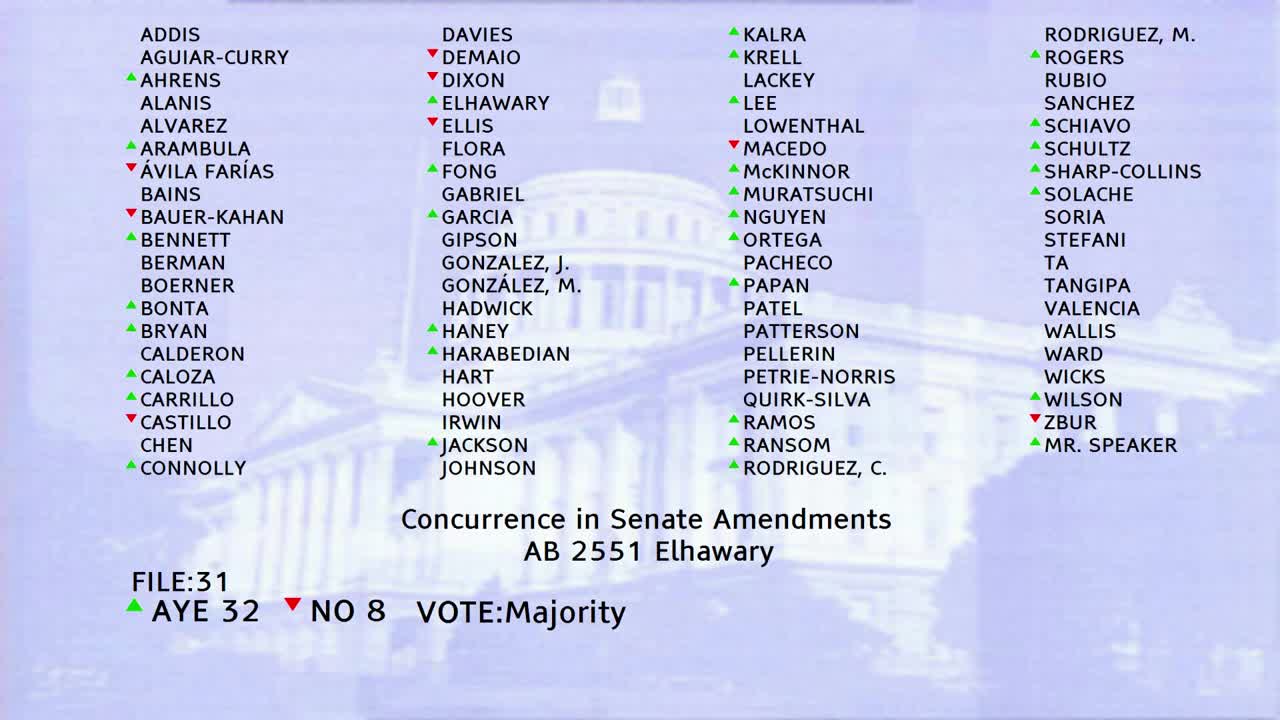

Bill Author