SB 34: Air pollution: South Coast Air Quality Management District: mobile sources: Ports of Long Beach and Los Angeles.
- Session Year: 2025-2026
- House: Senate
- Latest Version Date: 2025-09-17
Current Status:
Failed
(2026-03-02: Veto sustained.)
Introduced
In Committee
Awaiting First Chamber Vote
Passed First Chamber
In Committee
Awaiting Second Chamber Vote
Passed Second Chamber
Enacted
Existing law generally designates the State Air Resources Board as the state agency with the primary responsibility for the control of vehicular air pollution, and air pollution control districts and air quality management districts with the primary responsibility for the control of air pollution from all sources other than vehicular sources. Existing law authorizes air districts to adopt and implement regulations to reduce or mitigate emissions from indirect sources of air pollution.
Existing law provides for the creation of the South Coast Air Quality Management District in those portions of the Counties of Los Angeles, Orange, Riverside, and San Bernardino included within the area of the South Coast Air Basin, as specified. Existing law requires the district to adopt rules and regulations to carry out the south coast district air quality management plan that are not in conflict with state and federal laws and requires those rules and regulations to provide for indirect source controls under certain circumstances.
In the event the board of the district takes an action to amend or adopt a rule or regulation that imposes new or additional emissions reduction requirements on sources of air pollution associated with an operation at the Ports of Long Beach and Los Angeles, this bill would require the action to, among other things, require those ports to prepare assessments of energy demand and supply, cost estimates, and funding source, workforce, and environmental impacts associated with the action and create a process by which those ports can request extensions to the timelines developed to achieve the actions targets. The bill would also prohibit the action from, among other things, imposing a cap on cargo throughput or cruise ship passengers at the ports. The bill would repeal its provisions on January 1, 2031.
By imposing additional duties on the district and the ports, the bill would impose a state-mandated local program.
This bill would make legislative findings and declarations as to the necessity of a special statute for the South Coast Air Quality Management District.
The California Constitution requires the state to reimburse local agencies and school districts for certain costs mandated by the state. Statutory provisions establish procedures for making that reimbursement.
This bill would provide that with regard to certain mandates no reimbursement is required by this act for a specified reason.
With regard to any other mandates, this bill would provide that, if the Commission on State Mandates determines that the bill contains costs so mandated by the state, reimbursement for those costs shall be made pursuant to the statutory provisions noted above.
Existing law generally designates the State Air Resources Board as the state agency with the primary responsibility for the control of vehicular air pollution, and air pollution control districts and air quality management districts with the primary responsibility for the control of air pollution from all sources other than vehicular sources. Existing law authorizes air districts to adopt and implement regulations to reduce or mitigate emissions from indirect sources of air pollution.
Existing law provides for the creation of the South Coast Air Quality Management District in those portions of the Counties of Los Angeles, Orange, Riverside, and San Bernardino included within the area of the South Coast Air Basin, as specified. Existing law requires the district to adopt rules and regulations to carry out the south coast district air quality management plan that are not in conflict with state and federal laws and requires those rules and regulations to provide for indirect source controls under certain circumstances.
In the event the board of the district takes an action to amend or adopt a rule or regulation that imposes new or additional emissions reduction requirements on sources of air pollution associated with an operation at the Ports of Long Beach and Los Angeles, this bill would require the action to, among other things, require those ports to prepare assessments of energy demand and supply, cost estimates, and funding source, workforce, and environmental impacts associated with the action and create a process by which those ports can request extensions to the timelines developed to achieve the actions targets. The bill would also prohibit the action from, among other things, imposing a cap on cargo throughput or cruise ship passengers at the ports, as specified. ports. The bill would repeal its provisions on January 1, 2031.
By imposing additional duties on the district and the ports, the bill would impose a state-mandated local program.
This bill would make legislative findings and declarations as to the necessity of a special statute for the South Coast Air Quality Management District.
The California Constitution requires the state to reimburse local agencies and school districts for certain costs mandated by the state. Statutory provisions establish procedures for making that reimbursement.
This bill would provide that with regard to certain mandates no reimbursement is required by this act for a specified reason.
With regard to any other mandates, this bill would provide that, if the Commission on State Mandates determines that the bill contains costs so mandated by the state, reimbursement for those costs shall be made pursuant to the statutory provisions noted above.
Existing law generally designates the State Air Resources Board as the state agency with the primary responsibility for the control of vehicular air pollution, and air pollution control districts and air quality management districts with the primary responsibility for the control of air pollution from all sources other than vehicular sources. Existing law authorizes air districts to adopt and implement regulations to reduce or mitigate emissions from indirect sources of air pollution.
Existing law provides for the creation of the South Coast Air Quality Management District in those portions of the Counties of Los Angeles, Orange, Riverside, and San Bernardino included within the area of the South Coast Air Basin, as specified. Existing law requires the district to adopt rules and regulations to carry out the south coast district air quality management plan that are not in conflict with state and federal laws and rules and regulations and requires those rules and regulations to provide for indirect source controls under certain circumstances.
Pursuant to its authority, the district has proposed Rule 2304, which would require the Ports of Long Beach and Los Angeles to each develop a comprehensive plan for charging and fueling infrastructure for equipment, vehicles, and vessels used in port operations and whose source of propulsion energy or other use of energy, or both, is not, or is not primarily, derived from combustion of conventional fuels.In the event the board of the district takes an action to amend or adopt that proposed rule or takes one of specified similar actions regarding an operation or marine terminal facility at a public seaport, a rule or regulation that imposes new or additional emissions reduction requirements on sources of air pollution associated with an operation at the Ports of Long Beach and Los Angeles, this bill would require the action to, among other things, require those ports to prepare assessments of energy demand and supply, cost estimates, and funding source, workforce, and environmental impacts associated with the action and create a process by which those ports can request extensions to the timelines developed to achieve the actions targets. The bill would also prohibit the action from, among other things, imposing a cap on cargo throughput or limiting operations at the ports. ports, as specified. The bill would repeal its provisions on January 1, 2036. 2031.
By imposing additional duties on the district and the ports, the bill would impose a state-mandated local program.
This bill would make legislative findings and declarations as to the necessity of a special statute for the South Coast Air Quality Management District.
The California Constitution requires the state to reimburse local agencies and school districts for certain costs mandated by the state. Statutory provisions establish procedures for making that reimbursement.
This bill would provide that with regard to certain mandates no reimbursement is required by this act for a specified reason.
With regard to any other mandates, this bill would provide that, if the Commission on State Mandates determines that the bill contains costs so mandated by the state, reimbursement for those costs shall be made pursuant to the statutory provisions noted above.
Existing law generally designates the State Air Resources Board as the state agency with the primary responsibility for the control of vehicular air pollution, and air pollution control districts and air quality management districts with the primary responsibility for the control of air pollution from all sources other than vehicular sources. Existing law authorizes air districts to adopt and implement regulations to reduce or mitigate emissions from indirect sources of air pollution.
Existing law provides for the creation of the South Coast Air Quality Management District in those portions of the Counties of Los Angeles, Orange, Riverside, and San Bernardino included within the area of the South Coast Air Basin, as specified. Existing law requires the district to adopt rules and regulations to carry out the south coast district air quality management plan that are not in conflict with state and federal laws and rules and regulations and requires those rules and regulations to provide for indirect source controls under certain circumstances.
Pursuant to its authority, the district has proposed Rule 2304, which would require the Ports of Long Beach and Los Angeles to each develop a comprehensive plan for charging and fueling infrastructure for equipment, vehicles, and vessels used in port operations and whose source of propulsion energy or other use of energy, or both, is not, or is not primarily, derived from combustion of conventional fuels.
This bill would, inIn the event the board of the district takes an action, as defined, action to amend or adopt that proposed rule or takes one of specified similar actions regarding an operation or marine terminal facility at a public seaport, this bill would require the action to, among other things, require those ports to prepare assessments of energy demand and supply, cost estimates, and funding source, workforce, and environmental impacts and create a process by which those ports can request extensions to the timelines developed to achieve the actions targets. The bill would also prohibit the action from, among other things, imposing a cap on cargo throughput or limiting operations at the ports. The bill would repeal its provisions on January 1, 2036.
By imposing additional duties on the district and the ports, the bill would impose a state-mandated local program.
This bill would make legislative findings and declarations as to the necessity of a special statute for the South Coast Air Quality Management District.
The California Constitution requires the state to reimburse local agencies and school districts for certain costs mandated by the state. Statutory provisions establish procedures for making that reimbursement.
This bill would provide that with regard to certain mandates no reimbursement is required by this act for a specified reason.
With regard to any other mandates, this bill would provide that, if the Commission on State Mandates determines that the bill contains costs so mandated by the state, reimbursement for those costs shall be made pursuant to the statutory provisions noted above.
Existing law generally designates the State Air Resources Board as the state agency with the primary responsibility for the control of vehicular air pollution, and air pollution control districts and air quality management districts with the primary responsibility for the control of air pollution from all sources other than vehicular sources. Existing law authorizes air districts to adopt and implement regulations to reduce or mitigate emissions from indirect sources of air pollution.
Existing law provides for the creation of the South Coast Air Quality Management District in those portions of the Counties of Los Angeles, Orange, Riverside, and San Bernardino included within the area of the South Coast Air Basin, as specified. Existing law requires the district to adopt rules and regulations to carry out the south coast district air quality management plan that are not in conflict with state and federal laws and rules and regulations and requires those rules and regulations to provide for indirect source controls under certain circumstances.
Pursuant to its authority, the district has proposed Rule 2304, which would require the Ports of Long Beach and Los Angeles to each develop a comprehensive plan for charging and fueling infrastructure for equipment, vehicles, and vessels used in port operations and whose source of propulsion energy or other use of energy, or both, is not, or is not primarily, derived from combustion of conventional fuels.
This bill would require would, in the event the board of the district to ensure that Rule 2304, among other things, requires takes an action, as defined, require the action to, among other things, require those ports to prepare assessments for the rule of energy demand and supply, cost estimates, and funding source, workforce, and environmental impacts and creates create a process by which those ports can request extensions to the timelines developed to achieve the rules actions targets. The bill would also prohibit the rule action from, among other things, imposing a firm cap on cargo throughput or limiting operations at the ports in ways that hinder global competitiveness. The bill would make these provisions applicable to any other rule or regulation adopted by the board of the district to address pollution from any mobile source that is already subject to regulation by the state board and that is associated with an operation at any public seaport or marine terminal facility at a public seaport. ports. The bill would repeal its provisions on January 1, 2036.
By imposing additional duties on the district and the ports, the bill would impose a state-mandated local program.
This bill would make legislative findings and declarations as to the necessity of a special statute for the South Coast Air Quality Management District.
The California Constitution requires the state to reimburse local agencies and school districts for certain costs mandated by the state. Statutory provisions establish procedures for making that reimbursement.
This bill would provide that with regard to certain mandates no reimbursement is required by this act for a specified reason.
With regard to any other mandates, this bill would provide that, if the Commission on State Mandates determines that the bill contains costs so mandated by the state, reimbursement for those costs shall be made pursuant to the statutory provisions noted above.
Existing law generally designates the State Air Resources Board as the state agency with the primary responsibility for the control of vehicular air pollution, and air pollution control districts and air quality management districts with the primary responsibility for the control of air pollution from all sources other than vehicular sources. Existing law authorizes air districts to adopt and implement regulations to reduce or mitigate emissions from indirect sources of air pollution.
Existing law provides for the creation of the South Coast Air Quality Management District in those portions of the Counties of Los Angeles, Orange, Riverside, and San Bernardino included within the area of the South Coast Air Basin, as specified. Existing law requires the district to adopt rules and regulations to carry out the south coast district air quality management plan that are not in conflict with state and federal laws and rules and regulations and requires those rules and regulations to provide for indirect source controls under certain circumstances.
This bill would, until January 1, 2036, prohibit the district from adopting, considering adopting, or requiring that any local agency or city enforce any regulation or indirect source rule to address pollution from any mobile source that is already subject to regulation by the state board and that is associated with an operation at any public seaport or marine terminal facility at a public seaport. The bill would, until January 1, 2036, authorize specified entities, including the district, to enter into a voluntary agreement to address pollution from any mobile source associated with an operation at any public seaport or marine terminal facility at a public seaport if the voluntary agreement meets specified requirements.Pursuant to its authority, the district has proposed Rule 2304, which would require the Ports of Long Beach and Los Angeles to each develop a comprehensive plan for charging and fueling infrastructure for equipment, vehicles, and vessels used in port operations and whose source of propulsion energy or other use of energy, or both, is not, or is not primarily, derived from combustion of conventional fuels.
This bill would require the board of the district to ensure that Rule 2304, among other things, requires those ports to prepare assessments for the rule of energy demand and supply, cost estimates, and funding source, workforce, and environmental impacts and creates a process by which those ports can request extensions to the timelines developed to achieve the rules targets. The bill would also prohibit the rule from, among other things, imposing a firm cap on cargo throughput or limiting operations at the ports in ways that hinder global competitiveness. The bill would make these provisions applicable to any other rule or regulation adopted by the board of the district to address pollution from any mobile source that is already subject to regulation by the state board and that is associated with an operation at any public seaport or marine terminal facility at a public seaport. The bill would repeal its provisions on January 1, 2036.
By imposing additional duties on the district and the ports, the bill would impose a state-mandated local program.
The California Constitution requires the state to reimburse local agencies and school districts for certain costs mandated by the state. Statutory provisions establish procedures for making that reimbursement.
This bill would provide that with regard to certain mandates no reimbursement is required by this act for a specified reason.
With regard to any other mandates, this bill would provide that, if the Commission on State Mandates determines that the bill contains costs so mandated by the state, reimbursement for those costs shall be made pursuant to the statutory provisions noted above.
Existing law generally designates the State Air Resources Board as the state agency with the primary responsibility for the control of vehicular air pollution, and air pollution control districts and air quality management districts with the primary responsibility for the control of air pollution from all sources other than vehicular sources. Existing law authorizes air districts to adopt and implement regulations to reduce or mitigate emissions from indirect sources of air pollution.
Existing law provides for the creation of the South Coast Air Quality Management District in those portions of the Counties of Los Angeles, Orange, Riverside, and San Bernardino included within the area of the South Coast Air Basin, as specified. Existing law requires the district to adopt rules and regulations to carry out the south coast district air quality management plan that are not in conflict with state and federal laws and rules and regulations and requires those rules and regulations to provide for indirect source controls under certain circumstances.
This bill would, until January 1, 2036, prohibit the district from adopting, considering adopting, or requiring that any local agency or city enforce any regulation or indirect source rule to address pollution from any mobile source that is already subject to regulation by the state board and that is associated with an operation at any public seaport or marine terminal facility at a public seaport. The bill would, until January 1, 2036, authorize specified entities, including the district, to enter into a voluntary agreement to address pollution from any mobile source associated with an operation at any public seaport or marine terminal facility at a public seaport if the voluntary agreement meets specified requirements.
Existing law regulates the operation of ports and harbors. Existing law imposes various limitations on emissions of air contaminants for the control of air pollution from vehicular and nonvehicular sources and generally designates the State Air Resources Board as the state agency with primary responsibility for the control of vehicular air pollution.This bill would require the state board to establish an intermodal goods movement stakeholders group consisting of, among others, a member from each specified port district. By requiring a port district to participate in the group, the bill would impose a state-mandated local program. The bill would require the group to develop a plan that specifies short-term thresholds of yellow, orange, and red for port emissions and specifies actions to be taken to reduce port emissions and port-related emissions when the thresholds are reached, as specified. The bill would require the group to submit a report to the Legislature, on or before January 31, 2027, with its findings, recommendations, and the plan.The California Constitution requires the state to reimburse local agencies and school districts for certain costs mandated by the state. Statutory provisions establish procedures for making that reimbursement.This bill would provide that, if the Commission on State Mandates determines that the bill contains costs mandated by the state, reimbursement for those costs shall be made pursuant to the statutory provisions noted above.Existing law regulates the operation of ports and harbors. Existing law imposes various limitations on emissions of air contaminants for the control of air pollution from vehicular and nonvehicular sources and generally designates the State Air Resources Board as the state agency with primary responsibility for the control of vehicular air pollution.
This bill would require the state board to establish an intermodal goods movement stakeholders group consisting of, among others, a member from each specified port district. By requiring a port district to participate in the group, the bill would impose a state-mandated local program. The bill would require the group to develop a plan that specifies short-term thresholds of yellow, orange, and red for port emissions and specifies actions to be taken to reduce port emissions and port-related emissions when the thresholds are reached, as specified. The bill would require the group to submit a report to the Legislature, on or before January 31, 2027, with its findings, recommendations, and the plan.
The California Constitution requires the state to reimburse local agencies and school districts for certain costs mandated by the state. Statutory provisions establish procedures for making that reimbursement.
This bill would provide that, if the Commission on State Mandates determines that the bill contains costs mandated by the state, reimbursement for those costs shall be made pursuant to the statutory provisions noted above.
The Legislature finds and declares all of the following:
(a)It is in the best interest of the State of California to develop strategies that maintain and grow industries, such as goods movement, concurrent with pursuing environmental objectives.
(b)Goods movement is the movement of physical products and raw materials to businesses, consumers, and industries by oceangoing vessels, harbor craft, such as tug boats, trucks, locomotives, and cargo-handling equipment.
(c)In California, there are 11 port authorities. The San Pedro Bay port complex, which historically has encompassed both the Port of Los Angeles and the Port of Long Beach, is the largest port complex in the State of California, the United States, North America, and the Western Hemisphere and is the ninth largest port complex in the world, supporting over 3 million jobs nationwide and economic activity that generated $2.78 billion in state and local taxes, plus an additional $4.73 billion in federal taxes, in 2022.
(d)For more than two decades, the San Pedro Bay port complex has conducted extensive testing of the emissions of air pollutants. The Ports of Los Angeles and Long Beach are two of the cleanest, if not the cleanest, seaport operations in the world, exceeding all of their ambitious voluntary emissions targets by wide margins in 2023, according to the Inventory of Air Emissions 2023, that showed the total San Pedro Bay emissions of diesel particulate matter down 91 percent, nitrogen oxides down 72 percent, sulfur oxides down 98 percent, and greenhouse gases down by 20 percent when compared to 2005 levels.
(e)Furthermore, the Ports of Los Angeles and Long Beach have adopted a joint Clean Air Action Plan whose updated goals include transitioning cargo-handling equipment to zero emissions by 2030 and all drayage trucks calling at marine terminals to zero emissions by 2035.
(f)The State Air Resources Board has adopted regulations on sources of intermodal emissions in operation at the Ports of Los Angeles and Long Beach, most of which are the strictest regulations anywhere in the world, limiting the emissions of every component of the intermodal supply chain, including drayage trucks, transportation refrigeration units, forklifts and warehouse equipment, cargo-handling equipment at marine terminals, cargo-handling equipment at rail terminals, oceangoing vessels at berth, oceangoing vessel fuels while in California waters, and commercial harbor craft and pilot vessels. Furthermore, oceangoing vessels in transit are operating under, and subject to, the regulatory authority of federal and international agencies, including the International Maritime Organization, which has a goal of net zero greenhouse gas emissions from international shipping by or around 2050.
(g)The South Coast Air Quality Management District has expressed its intention to adopt a regulation to control mobile sources of emissions from the Ports of Los Angeles and Long Beach through the implementation of an indirect source rule.
(h)The Ports and the Cities of Los Angeles and Long Beach assert that instead of the adoption of an indirect source rule, a process for a collaborative agreement would be a better alternative, as it would include the impacted stakeholders who are best positioned to achieve both economic and environmental goals concurrently while minimizing delays and barriers.
SEC. 2.Section 40453 is added to the Health and Safety Code, to read:40453.(a)In the event the south coast district board takes an action on or after July 1, 2025, the south coast district board shall ensure the action fulfills both of the following conditions:
(1)The action shall do all of the following:
(A)Recognize the contributions of sources of air pollution outside of the control of the ports.
(B)Require the ports to prepare assessments of energy demand and supply, cost estimates, and funding source, workforce, and environmental impacts associated with the action.
(C)Use the assessments developed by the ports prepared pursuant to subparagraph (B) to determine the timelines for achieving the actions targets.
(D)Create a process by which the ports can request extensions to the timelines developed to achieve the actions targets.
(2)The action shall not do any of the following:
(A)Impose a cap on cargo throughput or cruise ship passengers at the ports.
(B)Use public funds or grants, whether municipal, county, state, or federal funds or grants, to require, incentivize, encourage, or otherwise promote the use of automated, remotely controlled, or remotely operated equipment, or infrastructure to support automated, remotely controlled, or remotely operated equipment.
(b)The action may result in the procurement and operation of human-operated, zero-emission equipment and infrastructure to support human-operated, zero-emission equipment at the ports.
(c)For purposes of this section, the following definitions apply:
(1)Action means the adoption or amendment of a rule or regulation that imposes new or additional emissions reduction requirements on sources of air pollution associated with an operation at the ports.
(2)Ports means the Port of Long Beach and the Port of Los Angeles.
(d)This section shall remain in effect only until January 1, 2031, and as of that date is repealed.
SEC. 3.The Legislature finds and declares that a special statute is necessary and that a general statute cannot be made applicable within the meaning of Section 16 of Article IV of the California Constitution because of the unique circumstances described in Section 1.
SEC. 4.No reimbursement is required by this act pursuant to Section 6 of Article XIIIB of the California Constitution because a local agency or school district has the authority to levy service charges, fees, or assessments sufficient to pay for the program or level of service mandated by this act, within the meaning of Section 17556 of the Government Code.
However, if the Commission on State Mandates determines that this act contains other costs mandated by the state, reimbursement to local agencies and school districts for those costs shall be made pursuant to Part 7 (commencing with Section 17500) of Division 4 of Title 2 of the Government Code.
The Legislature finds and declares all of the following:
(a)It is in the best interest of the State of California to develop strategies that maintain and grow industries, such as goods movement, concurrent with pursuing environmental objectives.
(b)Goods movement is the movement of physical products and raw materials to businesses, consumers, and industries by oceangoing vessels, harbor craft, such as tug boats, trucks, locomotives, and cargo-handling equipment.
(c)In California, there are 11 port authorities. The San Pedro Bay port complex, which historically has encompassed both the Port of Los Angeles and the Port of Long Beach, is the largest port complex in the State of California, the United States, North America, and the Western Hemisphere and is the ninth largest port complex in the world, supporting over 3 million jobs nationwide and economic activity that generated $2.78 billion in state and local taxes, plus an additional $4.73 billion in federal taxes, in 2022.
(d)For more than two decades, the San Pedro Bay port complex has conducted extensive testing of the emissions of air pollutants. The Ports of Los Angeles and Long Beach are two of the cleanest, if not the cleanest, seaport operations in the world, exceeding all of their ambitious voluntary emissions targets by wide margins in 2023, according to the Inventory of Air Emissions 2023, that showed the total San Pedro Bay emissions of diesel particulate matter down 91 percent, nitrogen oxides down 72 percent, sulfur oxides down 98 percent, and greenhouse gases down by 20 percent when compared to 2005 levels.
(e)Furthermore, the Ports of Los Angeles and Long Beach have adopted a joint Clean Air Action Plan whose updated goals include transitioning cargo-handling equipment to zero emissions by 2030 and all drayage trucks calling at marine terminals to zero emissions by 2035.
(f)The State Air Resources Board has adopted regulations on sources of intermodal emissions in operation at the Ports of Los Angeles and Long Beach, most of which are the strictest regulations anywhere in the world, limiting the emissions of every component of the intermodal supply chain, including drayage trucks, transportation refrigeration units, forklifts and warehouse equipment, cargo-handling equipment at marine terminals, cargo-handling equipment at rail terminals, oceangoing vessels at berth, oceangoing vessel fuels while in California waters, and commercial harbor craft and pilot vessels. Furthermore, oceangoing vessels in transit are operating under, and subject to, the regulatory authority of federal and international agencies, including the International Maritime Organization, which has a goal of net zero greenhouse gas emissions from international shipping by or around 2050.
(g)The South Coast Air Quality Management District has expressed its intention to adopt a regulation to control mobile sources of emissions from the Ports of Los Angeles and Long Beach through the implementation of an indirect source rule.
(h)The Ports and the Cities of Los Angeles and Long Beach assert that instead of the adoption of an indirect source rule, a process for a collaborative agreement would be a better alternative, as it would include the impacted stakeholders who are best positioned to achieve both economic and environmental goals concurrently while minimizing delays and barriers.
SEC. 2.Section 40453 is added to the Health and Safety Code, to read:40453.(a)In the event the south coast district board takes an action on or after July 1, 2025, the south coast district board shall ensure the action fulfills both of the following conditions:
(1)The action shall do all of the following:
(A)Recognize the contributions of sources of air pollution outside of the control of the ports.
(B)Require the ports to prepare assessments of energy demand and supply, cost estimates, and funding source, workforce, and environmental impacts associated with the action.
(C)Use the assessments developed by the ports prepared pursuant to subparagraph (B) to determine the timelines for achieving the actions targets.
(D)Create a process by which the ports can request extensions to the timelines developed to achieve the actions targets.
(2)The action shall not do any of the following:
(A)Impose a cap on cargo throughput or cruise ship passengers at the ports, directly or indirectly. ports.
(B)Use public funds or grants, whether municipal, county, state, or federal funds or grants, to require, incentivize, encourage, or otherwise promote the use of automated, remotely controlled, or remotely operated equipment, or infrastructure to support automated, remotely controlled, or remotely operated equipment.
(b)The action may result in the procurement and operation of human-operated, zero-emission equipment and infrastructure to support human-operated, zero-emission equipment at the ports.
(c)For purposes of this section, the following definitions apply:
(1)Action means the adoption or amendment of a rule or regulation that imposes new or additional emissions reduction requirements on sources of air pollution associated with an operation at the ports.
(2)Ports means the Port of Long Beach and the Port of Los Angeles.
(d)This section shall remain in effect only until January 1, 2031, and as of that date is repealed.
SEC. 3.The Legislature finds and declares that a special statute is necessary and that a general statute cannot be made applicable within the meaning of Section 16 of Article IV of the California Constitution because of the unique circumstances described in Section 1.
SEC. 4.No reimbursement is required by this act pursuant to Section 6 of Article XIIIB of the California Constitution because a local agency or school district has the authority to levy service charges, fees, or assessments sufficient to pay for the program or level of service mandated by this act, within the meaning of Section 17556 of the Government Code.
However, if the Commission on State Mandates determines that this act contains other costs mandated by the state, reimbursement to local agencies and school districts for those costs shall be made pursuant to Part 7 (commencing with Section 17500) of Division 4 of Title 2 of the Government Code.
The Legislature finds and declares all of the following:
(a)It is in the best interest of the State of California to develop strategies that maintain and grow industries, such as goods movement, concurrent with pursuing environmental benefits. objectives.
(b)Goods movement is the movement of physical products and raw materials to businesses, consumers, and industries by oceangoing vessels, harbor craft, such as tug boats, trucks, locomotives, and cargo-handling equipment.
(c)In California, there are 11 port authorities. The San Pedro Bay port complex, which historically has encompassed both the Port of Los Angeles and the Port of Long Beach, is the largest port complex in the State of California, the United States, North America, and the Western Hemisphere and is the ninth largest port complex in the world, supporting over 3 million jobs nationwide and economic activity that generated $2.78 billion in state and local taxes, plus an additional $4.73 billion in federal taxes, in 2022.
(d)For more than two decades, the San Pedro Bay port complex has conducted extensive testing of the emissions of air pollutants. The Ports of Los Angeles and Long Beach are two of the cleanest, if not the cleanest, seaport operations in the world, exceeding all of their ambitious voluntary emissions targets by wide margins in 2023, according to the Inventory of Air Emissions 2023, that showed the total San Pedro Bay emissions of diesel particulate matter down 91 percent, nitrogen oxides down 72 percent, sulfur oxides down 98 percent, and greenhouse gases down by 20 percent when compared to 2005 levels.
(e)In pursuing the objective of reducing emissions of air pollutants, the Ports of Los Angeles and Long Beach have adopted significant strategies, such as the Zero Emission Truck Voucher Incentive Program, the Vessel Speed Reduction Program, the Ship Incentive Programs, and Green Shipping Corridors, which have resulted in major environmental benefits while maintaining trade production, even during the complex COVID-19 pandemic.(f)(e)Furthermore, the Ports of Los Angeles and Long Beach have adopted a joint Clean Air Action Plan whose updated goals include transitioning cargo-handling equipment to zero emissions by 2030 and all drayage trucks calling at marine terminals to zero emissions by 2035.
(g)The Ports of Los Angeles and Long Beach operate within the South Coast Air Basin, which is impaired by a lack of attainment with the National Ambient Air Quality Standards set by the United States Environmental Protection Agency. Within that air basin, the State Air Resources Board (state board) has jurisdiction over the control and reduction of mobile sources of emissions, and the regional South Coast Air Quality Management District (south coast district) has jurisdiction over the control and reduction of stationary sources of emissions.(h)All of the current(f)The State Air Resources Board has adopted regulations on sources of intermodal emissions in operation at the Ports of Los Angeles and Long Beach are currently operating under, and subject to, the regulatory authority of the state board, which has adopted regulations, Beach, most of which are the strictest regulations anywhere in the world, limiting the emissions of every component of the intermodal supply chain, including drayage trucks, transportation refrigeration units, forklifts and warehouse equipment, cargo-handling equipment at marine terminals, cargo-handling equipment at rail terminals, oceangoing vessels at berth, oceangoing vessel fuels while in California waters, and commercial harbor craft and pilot vessels. Furthermore, oceangoing vessels in transit are operating under, and subject to, the regulatory authority of federal and international agencies, including the International Maritime Organization, which has a goal of net zero greenhouse gas emissions from international shipping by or around 2050.
(i)(g)The south coast district South Coast Air Quality Management District has expressed its intention to adopt a regulation to control mobile sources of emissions from the Ports of Los Angeles and Long Beach through the exercise implementation of an indirect source rule.
(j)Initial south coast district concepts for a seaport indirect source rule included the imposition of inflexible emissions caps, which would ultimately limit cargo flow at the Ports of Los Angeles and Long Beach due to a lack of technological and economic feasibility and a lack of infrastructure available to accommodate emissions reductions when and if the technology and economic feasibility issues were resolved. This action, in turn, would have catastrophic impacts on jobs, the economy, local communities, environmental quality, and the global supply chain.(k)(h)The Ports and the Cities of Los Angeles and Long Beach assert that instead of the adoption of a unilateral an indirect source rule, a process for a collaborative agreement would be a better alternative, as it would include the impacted stakeholders who are best positioned to achieve both economic and environmental goals concurrently while minimizing delays and barriers.
(l)Maritime industry stakeholders concur with the Ports and Cities of Los Angeles and Long Beach that a process to implement a collaborative work product versus forcing top-down directives is more likely to create a more results-driven approach to environmental and economic improvements.(m)Representatives of maritime labor unions, national, statewide, regional, and local businesses, organized labor, community groups, and other organizations agree with the mayors of the Cities of Los Angeles and Long Beach and are opposed to any indirect source rule that would require, incentivize, encourage, or otherwise promote the use of automated, remotely controlled, or remotely operated equipment, or infrastructure to support automated, remotely controlled, or remotely operated equipment. Representatives of these same organizations would support a collaborative agreement alternative that results in the procurement and operation of human-operated, zero-emissions equipment and infrastructure to support human-operated, zero-emissions equipment at the Ports of Los Angeles and Long Beach. SEC. 2.Section 40453 is added to the Health and Safety Code, to read:40453.(a)In the event the south coast district board takes an action before January 1, 2026, the action shall be updated to fulfill, or, if the south coast district board takes an action on or after January 1, 2026, July 1, 2025, the south coast district board shall ensure the action fulfills, fulfills both of the following conditions:
(1)The action shall do all of the following:
(A)Recognize the contributions of sources of air pollution outside of the control of the ports.
(B)Require the ports to prepare assessments of energy demand and supply, cost estimates, and funding source, workforce, and environmental impacts. impacts associated with the action.
(C)Use the assessments developed by the ports prepared pursuant to subparagraph (B) to determine the timelines for achieving the actions targets.
(D)Create a process by which the ports can request extensions to the timelines developed to achieve the actions targets.
(2)The action shall not do any of the following:
(A)Impose a cap on cargo throughput or limit operations at the ports. ports, directly or indirectly.
(B)Require any actions that reduce pollution from sources that are exclusively under the purview of the state or federal government.(C)Set any shorter timeline for achieving zero-emission technology or zero-emission drayage trucks than what was stated in the 2017 Update to the San Pedro Ports Clean Air Action Plan and the 2017 Joint Declaration of the Mayors of the Cities of Los Angeles and Long Beach.(D)(B)Use public funds or grants, whether municipal, county, state, or federal funds or grants, to require, incentivize, encourage, or otherwise promote the use of automated, remotely controlled, or remotely operated equipment, or infrastructure to support automated, remotely controlled, or remotely operated equipment.
(b)The action may result in the procurement and operation of human-operated, zero-emission equipment and infrastructure to support human-operated, zero-emission equipment at the ports.
(c)For purposes of this section, the following definitions apply:
(1)Action means either of the following: the adoption or amendment of a rule or regulation that imposes new or additional emissions reduction requirements on sources of air pollution associated with an operation at the ports.
(A)The adoption or amendment to Rule 2304 Commercial Marine Ports, or any successor or replacement rule or regulation.(B)The adoption or amendment of any other rule or regulation adopted by, or the entering into of any agreement, including, but not limited to, a compact, pact, contract, pledge, settlement, covenant, accord, letter of agreement, letter or declaration of intent, letter of understanding, or memorandum of understanding by, the south coast district board to address pollution from any mobile source that is already subject to regulation by the state board and that is associated with an operation at any public seaport or marine terminal facility at a public seaport.(2)Ports means the Port of Long Beach and the Port of Los Angeles.
(d)This section shall remain in effect only until January 1, 2036, 2031, and as of that date is repealed.
SEC. 3.The Legislature finds and declares that a special statute is necessary and that a general statute cannot be made applicable within the meaning of Section 16 of Article IV of the California Constitution because of the unique circumstances described in Section 1.
SEC. 4.No reimbursement is required by this act pursuant to Section 6 of Article XIIIB of the California Constitution because a local agency or school district has the authority to levy service charges, fees, or assessments sufficient to pay for the program or level of service mandated by this act, within the meaning of Section 17556 of the Government Code.
However, if the Commission on State Mandates determines that this act contains other costs mandated by the state, reimbursement to local agencies and school districts for those costs shall be made pursuant to Part 7 (commencing with Section 17500) of Division 4 of Title 2 of the Government Code.
The Legislature finds and declares all of the following:
(a)It is in the best interest of the State of California to develop strategies that maintain and grow industries, such as goods movement, concurrent with pursuing environmental benefits.
(b)Goods movement is the movement of physical products and raw materials to businesses, consumers, and industries by oceangoing vessels, harbor craft, such as tug boats, trucks, locomotives, and cargo-handling equipment.
(c)In California, there are 11 port authorities. The San Pedro Bay port complex, which historically has encompassed both the Port of Los Angeles and the Port of Long Beach, is the largest port complex in the State of California, the United States, North America, and the Western Hemisphere and is the ninth largest port complex in the world, supporting over 3 million jobs nationwide and economic activity that generated $2.78 billion in state and local taxes, plus an additional $4.73 billion in federal taxes, in 2022.
(d)For more than two decades, the San Pedro Bay port complex has conducted extensive testing of the emissions of air pollutants. The Ports of Los Angeles and Long Beach are two of the cleanest, if not the cleanest, seaport operations in the world, exceeding all of their ambitious voluntary emissions targets by wide margins in 2023, according to the Inventory of Air Emissions 2023, that showed the total San Pedro Bay emissions of diesel particulate matter down 91 percent, nitrogen oxides down 72 percent, sulfur oxides down 98 percent, and greenhouse gases down by 20 percent when compared to 2005 levels.
(e)In pursuing the objective of reducing emissions of air pollutants, the Ports of Los Angeles and Long Beach have adopted significant strategies, such as the Zero Emission Truck Voucher Incentive Program, the Vessel Speed Reduction Program, the Ship Incentive Programs, and Green Shipping Corridors, which have resulted in major environmental benefits while maintaining trade production, even during the complex COVID-19 pandemic.
(f)Furthermore, the Ports of Los Angeles and Long Beach have adopted a joint Clean Air Action Plan whose updated goals include transitioning cargo-handling equipment to zero emissions by 2030 and all drayage trucks calling at marine terminals to zero emissions by 2035.
(g)The Ports of Los Angeles and Long Beach operate within the South Coast Air Basin, which is impaired by a lack of attainment with the National Ambient Air Quality Standards set by the United States Environmental Protection Agency. Within that air basin, the State Air Resources Board (state board) has jurisdiction over the control and reduction of mobile sources of emissions, and the regional South Coast Air Quality Management District (south coast district) has jurisdiction over the control and reduction of stationary sources of emissions.
(h)All of the current sources of intermodal emissions in operation at the Ports of Los Angeles and Long Beach are currently operating under, and subject to, the regulatory authority of the state board, which has adopted regulations, most of which are the strictest regulations anywhere in the world, limiting the emissions of every component of the intermodal supply chain, including drayage trucks, transportation refrigeration units, forklifts and warehouse equipment, cargo-handling equipment at marine terminals, cargo-handling equipment at rail terminals, oceangoing vessels at berth, oceangoing vessel fuels while in California waters, and commercial harbor craft and pilot vessels. Furthermore, oceangoing vessels in transit are operating under, and subject to, the regulatory authority of federal and international agencies, including the International Maritime Organization, which has a goal of net zero greenhouse gas emissions from international shipping by or around 2050.
(i)The south coast district has expressed its intention to adopt a regulation to control mobile sources of emissions from the Ports of Los Angeles and Long Beach through the exercise of an indirect source rule.
(j)Initial south coast district concepts for a seaport indirect source rule included the imposition of inflexible emissions caps, which would ultimately limit cargo flow at the Ports of Los Angeles and Long Beach due to a lack of technological and economic feasibility and a lack of infrastructure available to accommodate emissions reductions when and if the technology and economic feasibility issues were resolved. This action, in turn, would have catastrophic impacts on jobs, the economy, local communities, environmental quality, and the global supply chain.
(k)The Ports and the Cities of Los Angeles and Long Beach assert that instead of the adoption of a unilateral indirect source rule, a process for a collaborative agreement would be a better alternative, as it would include the impacted stakeholders who are best positioned to achieve both economic and environmental goals concurrently while minimizing delays and barriers.
(l)Maritime industry stakeholders concur with the Ports and Cities of Los Angeles and Long Beach that a process to implement a collaborative work product versus forcing top-down directives is more likely to create a more results-driven approach to environmental and economic improvements.
(m)Representatives of maritime labor unions, national, statewide, regional, and local businesses, organized labor, community groups, and other organizations agree with the mayors of the Cities of Los Angeles and Long Beach and are opposed to any indirect source rule that would require, incentivize, encourage, or otherwise promote the use of automated, remotely controlled, or remotely operated equipment, or infrastructure to support automated, remotely controlled, or remotely operated equipment. Representatives of these same organizations would support a collaborative agreement alternative that results in the procurement and operation of human-operated, zero-emissions equipment and infrastructure to support human-operated, zero-emissions equipment at the Ports of Los Angeles and Long Beach.
SEC. 2.Section 40453 is added to the Health and Safety Code, to read:40453.(a)In the event the south coast district board takes an action before January 1, 2026, the action shall be updated to fulfill, or, if the south coast district board takes an action on or after January 1, 2026, the south coast district board shall ensure the action fulfills, both of the following conditions:
(1)The action shall do all of the following:
(A)Recognize the contributions of sources of air pollution outside of the control of the ports.
(B)Require the ports to prepare assessments of energy demand and supply, cost estimates, and funding source, workforce, and environmental impacts.
(C)Use the assessments developed by the ports prepared pursuant to subparagraph (B) to determine the timelines for achieving the actions targets.
(D)Create a process by which the ports can request extensions to the timelines developed to achieve the actions targets.
(2)The action shall not do any of the following:
(A)Impose a cap on cargo throughput or limit operations at the ports.
(B)Require any actions that reduce pollution from sources that are exclusively under the purview of the state or federal government.
(C)Set any shorter timeline for achieving zero-emission technology or zero-emission drayage trucks than what was stated in the 2017 Update to the San Pedro Ports Clean Air Action Plan and the 2017 Joint Declaration of the Mayors of the Cities of Los Angeles and Long Beach.
(D)Use public funds or grants, whether municipal, county, state, or federal funds or grants, to require, incentivize, encourage, or otherwise promote the use of automated, remotely controlled, or remotely operated equipment, or infrastructure to support automated, remotely controlled, or remotely operated equipment.
(b)The action may result in the procurement and operation of human-operated, zero-emission equipment and infrastructure to support human-operated, zero-emission equipment at the ports.
(b)(c)For purposes of this section, the following definitions apply:
(1)Action means either of the following:
(A)The adoption or amendment to Rule 2304 Commercial Marine Ports, or any successor or replacement rule or regulation.
(B)The adoption or amendment of any other rule or regulation adopted by, or the entering into of any agreement, including, but not limited to, a compact, pact, contract, pledge, settlement, covenant, accord, letter of agreement, letter or declaration of intent, letter of understanding, or memorandum of understanding by, the south coast district board to address pollution from any mobile source that is already subject to regulation by the state board and that is associated with an operation at any public seaport or marine terminal facility at a public seaport.
(2)Ports means the Port of Long Beach and the Port of Los Angeles.
(c)(d)This section shall remain in effect only until January 1, 2036, and as of that date is repealed.
SEC. 3.The Legislature finds and declares that a special statute is necessary and that a general statute cannot be made applicable within the meaning of Section 16 of Article IV of the California Constitution because of the unique circumstances described in Section 1.
SEC. 4.No reimbursement is required by this act pursuant to Section 6 of Article XIIIB of the California Constitution because a local agency or school district has the authority to levy service charges, fees, or assessments sufficient to pay for the program or level of service mandated by this act, within the meaning of Section 17556 of the Government Code.
However, if the Commission on State Mandates determines that this act contains other costs mandated by the state, reimbursement to local agencies and school districts for those costs shall be made pursuant to Part 7 (commencing with Section 17500) of Division 4 of Title 2 of the Government Code.
The Legislature finds and declares all of the following:
(a)It is in the best interest of the State of California to develop strategies that maintain and grow industries, such as goods movement, concurrent with pursuing environmental benefits.
(b)Goods movement is the movement of physical products and raw materials to businesses, consumers, and industries by oceangoing vessels, harbor craft, such as tug boats, trucks, locomotives, and cargo-handling equipment.
(c)In California, there are 11 port authorities. The San Pedro Bay port complex, which historically has encompassed both the Port of Los Angeles and the Port of Long Beach, is the largest port complex in the State of California, the United States, North America, and the Western Hemisphere and is the ninth largest port complex in the world, supporting over 3 million jobs nationwide and economic activity that generated $2.78 billion in state and local taxes, plus an additional $4.73 billion in federal taxes, in 2022.
(d)For more than two decades, the San Pedro Bay port complex has conducted extensive testing of the emissions of air pollutants. The Ports of Los Angeles and Long Beach are two of the cleanest, if not the cleanest, seaport operations in the world, exceeding all of their ambitious voluntary emissions targets by wide margins in 2023, according to the Inventory of Air Emissions 2023, that showed the total San Pedro Bay emissions of diesel particulate matter down 91 percent, nitrogen oxides down 72 percent, sulfur oxides down 98 percent, and greenhouse gases down by 20 percent when compared to 2005 levels.
(e)In pursuing the objective of reducing emissions of air pollutants, the Ports of Los Angeles and Long Beach have adopted significant strategies, such as the Zero Emission Truck Voucher Incentive Program, the Vessel Speed Reduction Program, the Ship Incentive Programs, and Green Shipping Corridors, which have resulted in major environmental benefits while maintaining trade production, even during the complex COVID-19 pandemic.
(f)Furthermore, the Ports of Los Angeles and Long Beach have adopted a joint Clean Air Action Plan whose updated goals include transitioning cargo-handling equipment to zero emissions by 2030 and all drayage trucks calling at marine terminals to zero emissions by 2035.
(g)The Ports of Los Angeles and Long Beach operate within the South Coast Air Basin, which is impaired by a lack of attainment with the National Ambient Air Quality Standards set by the United States Environmental Protection Agency. Within that air basin, the State Air Resources Board (state board) has jurisdiction over the control and reduction of mobile sources of emissions, and the regional South Coast Air Quality Management District (south coast district) has jurisdiction over the control and reduction of stationary sources of emissions.
(h)All of the current sources of intermodal emissions in operation at the Ports of Los Angeles and Long Beach are currently operating under, and subject to, the regulatory authority of the state board, which has adopted regulations, most of which are the strictest regulations anywhere in the world, limiting the emissions of every component of the intermodal supply chain, including drayage trucks, transportation refrigeration units, forklifts and warehouse equipment, cargo-handling equipment at marine terminals, cargo-handling equipment at rail terminals, oceangoing vessels at berth, oceangoing vessel fuels while in California waters, and commercial harbor craft and pilot vessels. Furthermore, oceangoing vessels in transit are operating under, and subject to, the regulatory authority of federal and international agencies, including the International Maritime Organization, which has a goal of net zero greenhouse gas emissions from international shipping by or around 2050.
(i)The south coast district has expressed its intention to adopt a regulation to control mobile sources of emissions from the Ports of Los Angeles and Long Beach through the exercise of an indirect source rule.
(j)Initial south coast district concepts for a seaport indirect source rule included the imposition of inflexible emissions caps, which would ultimately limit cargo flow at the Ports of Los Angeles and Long Beach due to a lack of technological and economic feasibility and a lack of infrastructure available to accommodate emissions reductions when and if the technology and economic feasibility issues were resolved. This action, in turn, would have catastrophic impacts on jobs, the economy, local communities, environmental quality, and the global supply chain.
(k)The Ports and the Cities of Los Angeles and Long Beach assert that instead of the adoption of a unilateral indirect source rule, a process for a collaborative agreement would be a better alternative, as it would include the impacted stakeholders who are best positioned to achieve both economic and environmental goals concurrently while minimizing delays and barriers.
(l)Maritime industry stakeholders concur with the Ports and Cities of Los Angeles and Long Beach that a process to implement a collaborative work product versus forcing top-down directives is more likely to create a more results-driven approach to environmental and economic improvements.
(m)Representatives of maritime labor unions, national, statewide, regional, and local businesses, organized labor, community groups, and other organizations agree with the mayors of the Cities of Los Angeles and Long Beach and are opposed to any indirect source rule that would require, incentivize, encourage, or otherwise promote the use of automated, remotely controlled, or remotely operated equipment, or infrastructure to support automated, remotely controlled, or remotely operated equipment. Representatives of these same organizations would support a collaborative agreement alternative that results in the procurement and operation of human-operated, zero-emissions equipment and infrastructure to support human-operated, zero-emissions equipment at the Ports of Los Angeles and Long Beach.
SEC. 2.Section 40453 is added to the Health and Safety Code, to read:40453.(a)Notwithstanding any other law, In the event the south coast district board shall update Rule 2304 Commercial Marine Ports to, or, if not yet adopted, ensure the final version of Proposed Rule 2304 will, fulfill takes an action before January 1, 2026, the action shall be updated to fulfill, or, if the south coast district board takes an action on or after January 1, 2026, the south coast district board shall ensure the action fulfills, both of the following conditions:
(1)The rule action shall do all of the following:
(A)Recognize the contributions of sources of air pollution outside of the control of the ports.
(B)Require the ports to prepare assessments for the rule of energy demand and supply, cost estimates, and funding source, workforce, and environmental impacts.
(C)Use the assessments developed by the ports prepared pursuant to subparagraph (B) to determine the timelines for achieving the rules actions targets.
(D)Create a process by which the ports can request extensions to the timelines developed to achieve the rules actions targets.
(2)The rule action shall not do any of the following:
(A)Impose a firm cap on cargo throughput or limit operations at the ports in ways that hinder global competitiveness. ports.
(B)Require any actions that reduce pollution from sources that are exclusively under the purview of the state or federal government.
(C)Set any shorter timeline for achieving zero-emission technology or zero-emission drayage trucks than what was stated in the 2017 Update to the San Pedro Ports Clean Air Action Plan and the 2017 Joint Declaration of the Mayors of the Cities of Los Angeles and Long Beach.
(b)This section shall apply to any other rule or regulation adopted by the south coast district board to address pollution from any mobile source that is already subject to regulation by the state board and that is associated with an operation at any public seaport or marine terminal facility at a public seaport.(c)(b)For purposes of this section, ports the following definitions apply:
(1)Action means either of the following:
(A)The adoption or amendment to Rule 2304 Commercial Marine Ports, or any successor or replacement rule or regulation.
(B)The adoption or amendment of any other rule or regulation adopted by, or the entering into of any agreement, including, but not limited to, a compact, pact, contract, pledge, settlement, covenant, accord, letter of agreement, letter or declaration of intent, letter of understanding, or memorandum of understanding by, the south coast district board to address pollution from any mobile source that is already subject to regulation by the state board and that is associated with an operation at any public seaport or marine terminal facility at a public seaport.
(2)Ports means the Port of Long Beach and the Port of Los Angeles.
(d)(c)This section shall remain in effect only until January 1, 2036, and as of that date is repealed.
SEC. 3.The Legislature finds and declares that a special statute is necessary and that a general statute cannot be made applicable within the meaning of Section 16 of Article IV of the California Constitution because of the unique circumstances described in Section 1.
SEC. 3.SEC. 4.No reimbursement is required by this act pursuant to Section 6 of Article XIIIB of the California Constitution because a local agency or school district has the authority to levy service charges, fees, or assessments sufficient to pay for the program or level of service mandated by this act, within the meaning of Section 17556 of the Government Code.
However, if the Commission on State Mandates determines that this act contains other costs mandated by the state, reimbursement to local agencies and school districts for those costs shall be made pursuant to Part 7 (commencing with Section 17500) of Division 4 of Title 2 of the Government Code.
The Legislature finds and declares all of the following:
(a)It is in the best interest of the State of California to develop strategies that maintain and grow industries, such as goods movement, concurrent with pursuing environmental benefits.
(b)In order to timely and effectively meet the zero-emission goals expressed in Executive Order No. N-79-20 within revenue generating service providing industries, such as the goods movement industry, impacted stakeholders need to work in collaborative groups, and through agreements, to develop and implement plans that use zero-emission equipment and infrastructure, while not negatively impacting intermodal trade and jobs.(c)(b)Goods movement is the movement of physical products and raw materials to businesses, consumers, and industries by oceangoing vessels, harbor craft, such as tug boats, trucks, locomotives, and cargo-handling equipment.
(d)(c)In California, there are 11 port authorities. The San Pedro Bay port complex, which historically has encompassed both the Port of Los Angeles and the Port of Long Beach, is the largest port complex in the State of California, the United States, North America, and the Western Hemisphere and is the ninth largest port complex in the world, supporting over 3 million jobs nationwide and economic activity that generated $2.78 billion in state and local taxes, plus an additional $4.73 billion in federal taxes, in 2022.
(e)(d)For more than two decades, the San Pedro Bay port complex has conducted extensive testing of the emissions of air pollutants. The Ports of Los Angeles and Long Beach are two of the cleanest, if not the cleanest, seaport operations in the world, exceeding all of their ambitious voluntary emissions targets by wide margins in 2023, according to the Inventory of Air Emissions 2023, that showed the total San Pedro Bay emissions of diesel particulate matter down 91 percent, nitrogen oxides down 72 percent, sulfur oxides down 98 percent, and greenhouse gases down by 20 percent when compared to 2005 levels.
(f)(e)In pursuing the objective of reducing emissions of air pollutants, the Ports of Los Angeles and Long Beach have adopted significant strategies, such as the Zero Emission Truck Voucher Incentive Program, the Vessel Speed Reduction Program, the Ship Incentive Programs, and Green Shipping Corridors, which have resulted in major environmental benefits while maintaining trade production, even during the complex COVID-19 pandemic.
(g)(f)Furthermore, the Ports of Los Angeles and Long Beach have adopted a joint Clean Air Action Plan whose updated goals include transitioning cargo-handling equipment to zero emissions by 2030 and all drayage trucks calling at marine terminals to zero emissions by 2035.
(h)(g)The Ports of Los Angeles and Long Beach operate within the South Coast Air Basin, which is impaired by a lack of attainment with the National Ambient Air Quality Standards set by the United States Environmental Protection Agency, over which Agency. Within that air basin, the State Air Resources Board (state board) has jurisdiction over the control and reduction of mobile sources of emissions, and the regional South Coast Air Quality Management District (south coast district) has jurisdiction over the control and reduction of stationary sources of emissions.
(i)(h)All of the current sources of intermodal emissions in operation at the Ports of Los Angeles and Long Beach are currently operating under, and subject to, the regulatory authority of the state board, which has adopted regulations, most of which are the strictest regulations anywhere in the world, limiting the emissions of every component of the intermodal supply chain, including drayage trucks, transportation refrigeration units, forklifts and warehouse equipment, cargo-handling equipment at marine terminals, cargo-handling equipment at rail terminals, oceangoing vessels at berth, oceangoing vessel fuels while in California waters, and commercial harbor craft and pilot vessels. Furthermore, oceangoing vessels in transit are operating under, and subject to, the regulatory authority of federal and international agencies, including the International Maritime Organization, which has a goal of net zero greenhouse gas emissions from international shipping by or around 2050.
(j)(i)The south coast district has expressed its intention to adopt a regulation to control mobile sources of emissions from the Ports of Los Angeles and Long Beach through the exercise of an indirect source rule. The use of this authority has no precedent against ports or against seaport facilities in the South Coast Air Basin, in any other local air district in California, or anywhere else in the United States, rendering the action potentially subject to legal claims in a case of first impression.
(k)(j)Initial south coast district concepts for a seaport indirect source rule included the imposition of inflexible emissions caps, which would ultimately limit cargo flow at the Ports of Los Angeles and Long Beach due to a lack of technological and economic feasibility and a lack of infrastructure available to accommodate emissions reductions when and if the technology and economic feasibility issues were resolved. This action, in turn, would have catastrophic impacts on jobs, the economy, local communities, environmental quality, and the global supply chain.
(l)(k)The Ports and the Cities of Los Angeles and Long Beach assert that instead of the adoption of a unilateral indirect source rule, a process for a collaborative agreement would be a better alternative, as it would include the impacted stakeholders who are best positioned to achieve both economic and environmental goals concurrently while minimizing delays and barriers.
(m)(l)Maritime industry stakeholders concur with the Ports and Cities of Los Angeles and Long Beach that a process to implement a collaborative work product versus forcing top-down directives is more likely to create a more results-driven approach to environmental and economic improvements.
(n)(m)Representatives of maritime labor unions, national, statewide, regional, and local businesses, organized labor, community groups, and other organizations agree with the mayors of the Cities of Los Angeles and Long Beach and are opposed to any indirect source rule that would require, incentivize, encourage, or otherwise promote the use of automated, remotely controlled, or remotely operated equipment, or infrastructure to support automated, remotely controlled, or remotely operated equipment. Representatives of these same organizations would support a collaborative agreement alternative that results in the procurement and operation of human-operated, zero-emissions equipment and infrastructure to support human-operated, zero-emissions equipment at the Ports of Los Angeles and Long Beach.
(o)Therefore, it is in the best interests of Californians, the environment, the goods movement industry, and all parties to stop attempts to adopt unprecedented and unnecessary rules, and rather, work in a collaborative fashion within the Ports of Los Angeles and Long Beachs authority, as long as the ports activities are consistently tracking toward the achievement of the 2035 goals expressed in Executive Order No. N-79-20.SEC. 2.Section 40453 is added to the Health and Safety Code, to read:40453.(a)Notwithstanding Sections 40716, 40717, and 40717.5, the south coast district shall not adopt, consider adopting, or require that any local agency or city enforce any regulation or indirect source rule to address pollution from any mobile source that is already subject to regulation by the state board and that is associated with an operation at any public seaport or marine terminal facility at a public seaport.(b)Subdivision (a) does not preclude the implementation of a voluntary agreement to address pollution from any mobile source associated with an operation at any public seaport or marine terminal facility at a public seaport within the South Coast Air Basin if the voluntary agreement meets all of the following requirements:(1)Before the voluntary agreement is adopted, the south coast district holds discussions with relevant stakeholders, including, but not limited to, the Ports and Cities of Los Angeles and Long Beach, maritime industry stakeholders, representatives of maritime labor unions, national, statewide, regional, and local businesses, organized labor, and community groups.(2)The voluntary agreement does not cap, limit, impede, restrict, or hinder port operations.(3)The voluntary agreement shall not use public funds or grants, whether municipal, county, state, or federal funds or grants, to require, incentivize, encourage, or otherwise promote the use of automated, remotely controlled, or remotely operated equipment, or infrastructure to support automated, remotely controlled, or remotely operated equipment.(4)The voluntary agreement may result in the procurement and operation of human-operated, zero-emission equipment and infrastructure to support human-operated, zero-emission equipment at the Ports of Los Angeles and Long Beach.(5)The voluntary agreement does not encroach, infringe, or usurp control from the Ports and Cities of Los Angeles and Long Beach.(6)The voluntary agreement does not attempt to assert control over mobile sources of emissions from the Ports of Los Angeles and Long Beach that are outside of the control of the Ports and Cities of Los Angeles and Long Beach.(7)The voluntary agreement is entered into by all of the following:(A)The Board of Harbor Commissioners of the Port of Long Beach.(B)The Board of Harbor Commissioners of the Port of Los Angeles.(C)The mayor of the City of Long Beach.(D)The mayor of the City of Los Angeles.(E)The south coast district board.(c)This section does restrict any regulation by the state board of any mobile source otherwise authorized by law.(d)This section shall remain in effect only until January 1, 2036, and as of that date is repealed.SEC. 2.Section 40453 is added to the Health and Safety Code, to read:40453.(a)Notwithstanding any other law, the south coast district board shall update Rule 2304 Commercial Marine Ports to, or, if not yet adopted, ensure the final version of Proposed Rule 2304 will, fulfill the following conditions:
(1)The rule shall do all of the following:
(A)Recognize the contributions of sources of air pollution outside of the control of the ports.
(B)Require the ports to prepare assessments for the rule of energy demand and supply, cost estimates, and funding source, workforce, and environmental impacts.
(C)Use the assessments developed by the ports prepared pursuant to subparagraph (B) to determine the timelines for achieving the rules targets.
(D)Create a process by which the ports can request extensions to the timelines developed to achieve the rules targets.
(2)The rule shall not do any of the following:
(A)Impose a firm cap on cargo throughput or limit operations at the ports in ways that hinder global competitiveness.
(B)Require any actions that reduce pollution from sources that are exclusively under the purview of the state or federal government.
(C)Set any shorter timeline for achieving zero-emission technology or zero-emission drayage trucks than what was stated in the 2017 Update to the San Pedro Ports Clean Air Action Plan and the 2017 Joint Declaration of the Mayors of the Cities of Los Angeles and Long Beach.
(b)This section shall apply to any other rule or regulation adopted by the south coast district board to address pollution from any mobile source that is already subject to regulation by the state board and that is associated with an operation at any public seaport or marine terminal facility at a public seaport.
(c)For purposes of this section, ports means the Port of Long Beach and the Port of Los Angeles.
(d)This section shall remain in effect only until January 1, 2036, and as of that date is repealed.
SEC. 3.No reimbursement is required by this act pursuant to Section 6 of Article XIIIB of the California Constitution because a local agency or school district has the authority to levy service charges, fees, or assessments sufficient to pay for the program or level of service mandated by this act, within the meaning of Section 17556 of the Government Code.
However, if the Commission on State Mandates determines that this act contains other costs mandated by the state, reimbursement to local agencies and school districts for those costs shall be made pursuant to Part 7 (commencing with Section 17500) of Division 4 of Title 2 of the Government Code.
The Legislature finds and declares all of the following:
(a)It is in the best interest of the State of California to develop strategies that maintain and grow industries, such as goods movement, concurrent with pursuing environmental benefits.
(b)In order to timely and effectively meet the zero-emission goals expressed in Executive Order No. N-79-20 within revenue generating service providing industries, such as the goods movement industry, impacted stakeholders need to work in collaborative groups, and through agreements, to develop and implement plans that use zero-emission equipment and infrastructure, while not negatively impacting intermodal trade and jobs.
(c)Goods movement is the movement of physical products and raw materials to businesses, consumers, and industries by oceangoing vessels, harbor craft, such as tug boats, trucks, locomotives, and cargo-handling equipment.
(d)In California, there are 11 port authorities. The San Pedro Bay port complex, which historically has encompassed both the Port of Los Angeles and the Port of Long Beach, is the largest port complex in the State of California, the United States, North America, and the Western Hemisphere and is the ninth largest port complex in the world, supporting over 3 million jobs nationwide and economic activity that generated $2.78 billion in state and local taxes, plus an additional $4.73 billion in federal taxes, in 2022.
(e)For more than two decades, the San Pedro Bay port complex has conducted extensive testing of the emissions of air pollutants. The Ports of Los Angeles and Long Beach are two of the cleanest, if not the cleanest, seaport operations in the world, exceeding all of their ambitious voluntary emissions targets by wide margins in 2023, according to the Inventory of Air Emissions 2023, that showed the total San Pedro Bay emissions of diesel particulate matter down 91 percent, nitrogen oxides down 72 percent, sulfur oxides down 98 percent, and greenhouse gases down by 20 percent when compared to 2005 levels.
(f)In pursuing the objective of reducing emissions of air pollutants, the Ports of Los Angeles and Long Beach have adopted significant strategies, such as the Zero Emission Truck Voucher Incentive Program, the Vessel Speed Reduction Program, the Ship Incentive Programs, and Green Shipping Corridors, which have resulted in major environmental benefits while maintaining trade production, even during complex COVID-19 pandemic.
(g)Furthermore, the Ports of Los Angeles and Long Beach have adopted a joint Clean Air Action Plan whose updated goals include transitioning cargo-handling equipment to zero emissions by 2030 and all drayage trucks calling at marine terminals to zero emissions by 2035.
(h)The Ports of Los Angeles and Long Beach operate within the South Coast Air Basin, which is impaired by a lack of attainment with the National Ambient Air Quality Standards set by the United States Environmental Protection Agency, over which the State Air Resources Board (state board) has jurisdiction over the control and reduction of mobile sources of emissions, and the regional South Coast Air Quality Management District (south coast district) has jurisdiction over the control and reduction of stationary sources of emissions.
(i)All of the current sources of intermodal emissions in operation at the Ports of Los Angeles and Long Beach are currently operating under, and subject to, the regulatory authority of the state board, which has adopted regulations, most of which are the strictest regulations anywhere in the world, limiting the emissions of every component of the intermodal supply chain, including drayage trucks, transportation refrigeration units, forklifts and warehouse equipment, cargo-handling equipment at marine terminals, cargo-handling equipment at rail terminals, oceangoing vessels at berth, oceangoing vessel fuels while in California waters, and commercial harbor craft and pilot vessels. Furthermore, oceangoing vessels in transit are operating under, and subject to, the regulatory authority of federal and international agencies, including the International Maritime Organization, which has a goal of net zero greenhouse gas emissions from international shipping by or around 2050.
(j)The south coast district has expressed its intention to adopt a regulation to control mobile sources of emissions from the Ports of Los Angeles and Long Beach through the exercise of an indirect source rule. The use of this authority has no precedent against ports or against seaport facilities in the South Coast Air Basin, in any other local air district in California, or anywhere else in the United States, rendering the action potentially subject to legal claims in a case of first impression.
(k)Initial south coast district concepts for a seaport indirect source rule included the imposition of inflexible emissions caps, which would ultimately limit cargo flow at the Ports of Los Angeles and Long Beach due to a lack of technological and economic feasibility and a lack of infrastructure available to accommodate emissions reductions when and if the technology and economic feasibility issues were resolved. This action, in turn, would have catastrophic impacts on jobs, the economy, local communities, environmental quality, and the global supply chain.
(l)The Ports and the Cities of Los Angeles and Long Beach assert that instead of the adoption of a unilateral indirect source rule, a process for a collaborative agreement would be a better alternative, as it would include the impacted stakeholders who are best positioned to achieve both economic and environmental goals concurrently while minimizing delays and barriers.
(m)Maritime industry stakeholders concur with the Ports and Cities of Los Angeles and Long Beach that a process to implement a collaborative work product versus forcing top-down directives is more likely to create a more results-driven approach to environmental and economic improvements.
(n)Representatives of maritime labor unions, national, statewide, regional, and local businesses, organized labor, community groups, and other organizations agree with the mayors of the Cities of Los Angeles and Long Beach and are opposed to any indirect source rule that would require, incentivize, encourage, or otherwise promote the use of automated, remotely controlled, or remotely operated equipment, or infrastructure to support automated, remotely controlled, or remotely operated equipment. Representatives of these same organizations would support a collaborative agreement alternative that results in the procurement and operation of human-operated, zero-emissions equipment and infrastructure to support human-operated, zero-emissions equipment at the Ports of Los Angeles and Long Beach.
(o)Therefore, it is in the best interests of Californians, the environment, the goods movement industry, and all parties to stop attempts to adopt unprecedented and unnecessary rules, and rather, work in a collaborative fashion within the Ports of Los Angeles and Long Beachs authority, as long as the ports activities are consistently tracking toward the achievement of the 2035 goals expressed in Executive Order No. N-79-20.
SEC. 2.Section 40453 is added to the Health and Safety Code, to read:40453.(a)Notwithstanding Sections 40716, 40717, and 40717.5, the south coast district shall not adopt, consider adopting, or require that any local agency or city enforce any regulation or indirect source rule to address pollution from any mobile source that is already subject to regulation by the state board and that is associated with an operation at any public seaport or marine terminal facility at a public seaport.
(b)Subdivision (a) does not preclude the implementation of a voluntary agreement to address pollution from any mobile source associated with an operation at any public seaport or marine terminal facility at a public seaport within the South Coast Air Basin if the voluntary agreement meets all of the following requirements:
(1)Before the voluntary agreement is adopted, the south coast district holds discussions with relevant stakeholders, including, but not limited to, the Ports and Cities of Los Angeles and Long Beach, maritime industry stakeholders, representatives of maritime labor unions, national, statewide, regional, and local businesses, organized labor, and community groups.
(2)The voluntary agreement does not cap, limit, impede, restrict, or hinder port operations.
(3)The voluntary agreement shall not use public funds or grants, whether municipal, county, state, or federal funds or grants, to require, incentivize, encourage, or otherwise promote the use of automated, remotely controlled, or remotely operated equipment, or infrastructure to support automated, remotely controlled, or remotely operated equipment.
(4)The voluntary agreement may result in the procurement and operation of human-operated, zero-emission equipment and infrastructure to support human-operated, zero-emission equipment at the Ports of Los Angeles and Long Beach.
(5)The voluntary agreement does not encroach, infringe, or usurp control from the Ports and Cities of Los Angeles and Long Beach.
(6)The voluntary agreement does not attempt to assert control over mobile sources of emissions from the Ports of Los Angeles and Long Beach that are outside of the control of the Ports and Cities of Los Angeles and Long Beach.
(7)The voluntary agreement is entered into by all of the following:
(A)The Board of Harbor Commissioners of the Port of Long Beach.
(B)The Board of Harbor Commissioners of the Port of Los Angeles.
(C)The mayor of the City of Long Beach.
(D)The mayor of the City of Los Angeles.
(E)The south coast district board.
(c)This section does restrict any regulation by the state board of any mobile source otherwise authorized by law.
(d)This section shall remain in effect only until January 1, 2036, and as of that date is repealed.
SECTION 1.The Legislature finds and declares all of the following:(a)California has 12 ports through which goods are imported to and exported from international markets.(b)The Port of Oaklands highest value exports are food related, including, but not limited to, fruits, nuts, meats, wines, and spirits. In contrast, the Humboldt Bay Harbor District primarily imports and exports logs and wood chips due to the lumber businesses in its region.(c)The Port of Los Angeles is considered the busiest container port in the Western Hemisphere. It handles around 10,000,000 cargo containers annually. In June 2024, the Port of Los Angeles processed 827,757 twenty-foot equivalent units (TEUs), a 10-percent increase from the previous month. And in the third quarter of 2024, the Port of Los Angeles processed 2,850,000 TEUs, its best quarter in over 116 years. Each year, the cargo flowing through this port generates over $200 billion in economic activity and sustains nearly 3,000,000 jobs in the United States.(d)The Port of Los Angeles is part of the San Pedro Complex, which is the container hub for both the Port of Los Angeles and the Port of Long Beach. The San Pedro Complex is the largest container hub in the United States and accounts for over 30 percent of the TEUs in the United States. It is also the fifth largest container hub in the world.(e)Vehicles and equipment at ports are significant sources of air pollution. Ships, trucks, and cargo handling equipment at ports and offsite goods movement systems are often fueled by diesel and emit air pollutants such as particulate matter and nitrogen oxides. In recent years, California ports have faced several challenges, including, but not limited to, onsite and offsite port congestion and air pollution from associated facilities and vehicles. Both the State of California and the federal government have engaged in legislative, regulatory, and budgetary efforts to help ports address these challenges.(f)State involvement with ports in California is distributed across several agencies, including the Department of Transportation, the Transportation Agency, the State Air Resources Board, the Governors Office of Business and Economic Development, and the local South Coast Air Quality Management District. Each entity has different responsibilities regarding ports and goods movement.(g)The long term plan to reduce port emissions requires ports to adopt new zero-emission technologies. However, ports face several barriers, including, but not limited to, the following:(1)Certain electric vehicles are not yet widely available.(2)Barriers to siting and building a sufficient electrical grid to power zero-emission technologies.(3)High and unbudgeted costs.(4)Unsuitability of current batteries for port operations.(h)As a result of these barriers and others, the timeline for implementing zero-emission technologies at ports remains unclear and the costs remain unknown but are believed to exceed $1 billion.(i)To reduce port emissions in the short term, while 2035 zero-emission goals are implemented, an intermodal goods movement stakeholders group shall be created to develop a plan to reduce port emissions when damaging levels arise.SEC. 2.Section 39619.3 is added to the Health and Safety Code, to read:39619.3.(a)The state board shall establish an intermodal goods movement stakeholders group, consisting of each of the following individuals:(1)An individual representing each of the following:(A)International Longshore and Warehouse Union Local 13.(B)International Longshore and Warehouse Union Local 63.(C)International Longshore and Warehouse Union Local 94.(D)International Longshore and Warehouse Union Southern California District Council.(2)An individual representing terminal and tenant operations.(3)An individual representing ship and vessel operations.(4)An individual representing rail and locomotive operations.(5)An individual representing freight forwarders, as defined in Section 220 of the Public Utilities Code.(6)An individual representing warehouse distribution centers.(7)An individual representing the California Association of Port Authorities.(8)An individual representing each of the following:(A)The Port of Benicia.(B)The Port of Hueneme.(C)The Port of Long Beach.(D)The Port of Los Angeles.(E)The Port of Oakland.(F)The Port of Redwood City.(G)The Port of Richmond.(H)The Port of San Diego.(I)The Port of San Francisco.(J)The Port of Stockton.(K)The Port of West Sacramento.(L)The Humboldt Bay Harbor District.(9)An individual representing the Department of Transportation.(10)An individual representing the state board.(b)The intermodal goods movement stakeholders group shall develop a plan that specifies short-term thresholds of yellow, orange, and red for port emissions and specifies actions to be taken to reduce port emissions and port-related emissions when the thresholds are reached. An action in the plan shall be agreed to by the entity that would be required to perform the action under the plan.(c)In developing the plan described in subdivision (b), the intermodal goods movement stakeholders group shall do both of the following:(1)Hold monthly meetings in person or by video conference.(2)Meet with appropriate state agencies to do all of the following:(A)Determine escalating emission impact levels for the yellow, orange, and red thresholds.(B)Discuss a draft of the plan.(C)Provide and obtain recommendations relating to the performance of the plan, if any.(d)(1)On or before January 31, 2027, the intermodal goods movement stakeholders group shall submit a report to the Legislature and the Governor with its findings, recommendations, and the plan.(2)(A)The requirement for submitting a report imposed under this subdivision is inoperative on January 1, 2031, pursuant to Section 10231.5 of the Government Code.(B)A report to be submitted pursuant to this subdivision shall be submitted in compliance with Section 9795 of the Government Code.(3)The plan shall not be implemented before July 1, 2027.SEC. 3.If the Commission on State Mandates determines that this act contains costs mandated by the state, reimbursement to local agencies and school districts for those costs shall be made pursuant to Part 7 (commencing with Section 17500) of Division 4 of Title 2 of the Government Code.The Legislature finds and declares all of the following:
(a)California has 12 ports through which goods are imported to and exported from international markets.
(b)The Port of Oaklands highest value exports are food related, including, but not limited to, fruits, nuts, meats, wines, and spirits. In contrast, the Humboldt Bay Harbor District primarily imports and exports logs and wood chips due to the lumber businesses in its region.
(c)The Port of Los Angeles is considered the busiest container port in the Western Hemisphere. It handles around 10,000,000 cargo containers annually. In June 2024, the Port of Los Angeles processed 827,757 twenty-foot equivalent units (TEUs), a 10-percent increase from the previous month. And in the third quarter of 2024, the Port of Los Angeles processed 2,850,000 TEUs, its best quarter in over 116 years. Each year, the cargo flowing through this port generates over $200 billion in economic activity and sustains nearly 3,000,000 jobs in the United States.
(d)The Port of Los Angeles is part of the San Pedro Complex, which is the container hub for both the Port of Los Angeles and the Port of Long Beach. The San Pedro Complex is the largest container hub in the United States and accounts for over 30 percent of the TEUs in the United States. It is also the fifth largest container hub in the world.
(e)Vehicles and equipment at ports are significant sources of air pollution. Ships, trucks, and cargo handling equipment at ports and offsite goods movement systems are often fueled by diesel and emit air pollutants such as particulate matter and nitrogen oxides. In recent years, California ports have faced several challenges, including, but not limited to, onsite and offsite port congestion and air pollution from associated facilities and vehicles. Both the State of California and the federal government have engaged in legislative, regulatory, and budgetary efforts to help ports address these challenges.
(f)State involvement with ports in California is distributed across several agencies, including the Department of Transportation, the Transportation Agency, the State Air Resources Board, the Governors Office of Business and Economic Development, and the local South Coast Air Quality Management District. Each entity has different responsibilities regarding ports and goods movement.
(g)The long term plan to reduce port emissions requires ports to adopt new zero-emission technologies. However, ports face several barriers, including, but not limited to, the following:
(1)Certain electric vehicles are not yet widely available.
(2)Barriers to siting and building a sufficient electrical grid to power zero-emission technologies.
(3)High and unbudgeted costs.
(4)Unsuitability of current batteries for port operations.
(h)As a result of these barriers and others, the timeline for implementing zero-emission technologies at ports remains unclear and the costs remain unknown but are believed to exceed $1 billion.
(i)To reduce port emissions in the short term, while 2035 zero-emission goals are implemented, an intermodal goods movement stakeholders group shall be created to develop a plan to reduce port emissions when damaging levels arise.
SEC. 2.Section 39619.3 is added to the Health and Safety Code, to read:39619.3.(a)The state board shall establish an intermodal goods movement stakeholders group, consisting of each of the following individuals:
(1)An individual representing each of the following:
(A)International Longshore and Warehouse Union Local 13.
(B)International Longshore and Warehouse Union Local 63.
(C)International Longshore and Warehouse Union Local 94.
(D)International Longshore and Warehouse Union Southern California District Council.
(2)An individual representing terminal and tenant operations.
(3)An individual representing ship and vessel operations.
(4)An individual representing rail and locomotive operations.
(5)An individual representing freight forwarders, as defined in Section 220 of the Public Utilities Code.
(6)An individual representing warehouse distribution centers.
(7)An individual representing the California Association of Port Authorities.
(8)An individual representing each of the following:
(A)The Port of Benicia.
(B)The Port of Hueneme.
(C)The Port of Long Beach.
(D)The Port of Los Angeles.
(E)The Port of Oakland.
(F)The Port of Redwood City.
(G)The Port of Richmond.
(H)The Port of San Diego.
(I)The Port of San Francisco.
(J)The Port of Stockton.
(K)The Port of West Sacramento.
(L)The Humboldt Bay Harbor District.
(9)An individual representing the Department of Transportation.
(10)An individual representing the state board.
(b)The intermodal goods movement stakeholders group shall develop a plan that specifies short-term thresholds of yellow, orange, and red for port emissions and specifies actions to be taken to reduce port emissions and port-related emissions when the thresholds are reached. An action in the plan shall be agreed to by the entity that would be required to perform the action under the plan.
(c)In developing the plan described in subdivision (b), the intermodal goods movement stakeholders group shall do both of the following:
(1)Hold monthly meetings in person or by video conference.
(2)Meet with appropriate state agencies to do all of the following:
(A)Determine escalating emission impact levels for the yellow, orange, and red thresholds.
(B)Discuss a draft of the plan.
(C)Provide and obtain recommendations relating to the performance of the plan, if any.
(d)(1)On or before January 31, 2027, the intermodal goods movement stakeholders group shall submit a report to the Legislature and the Governor with its findings, recommendations, and the plan.
(2)(A)The requirement for submitting a report imposed under this subdivision is inoperative on January 1, 2031, pursuant to Section 10231.5 of the Government Code.
(B)A report to be submitted pursuant to this subdivision shall be submitted in compliance with Section 9795 of the Government Code.
(3)The plan shall not be implemented before July 1, 2027.
SEC. 3.If the Commission on State Mandates determines that this act contains costs mandated by the state, reimbursement to local agencies and school districts for those costs shall be made pursuant to Part 7 (commencing with Section 17500) of Division 4 of Title 2 of the Government Code.
|
Date
|
Status
|
|---|---|
| Mar 2, 2026 | Veto sustained. |
| Mar 2, 2026 | Stricken from file. |
| Oct 13, 2025 | In Senate. Consideration of Governor's veto pending. |
| Oct 13, 2025 | Vetoed by the Governor. |
| Sep 23, 2025 | Enrolled and presented to the Governor at 2 p.m. |
| Sep 13, 2025 | Assembly amendments concurred in. (Ayes 30. Noes 0. Page 3057.) Ordered to engrossing and enrolling. |
| Sep 13, 2025 | Reconsideration granted. (Ayes 35. Noes 0. Page 3056.) |
| Sep 13, 2025 | Motion to reconsider made by Senator Richardson. |
| Sep 12, 2025 | Assembly amendments concurred in. (Ayes 30. Noes 0. Page 2965.) Ordered to engrossing and enrolling. |
| Sep 12, 2025 | In Senate. Concurrence in Assembly amendments pending. |
| Sep 11, 2025 | Read third time. Passed. (Ayes 59. Noes 0. Page 3315.) Ordered to the Senate. |
| Sep 2, 2025 | Read second time. Ordered to third reading. |
| Aug 29, 2025 | From committee: Do pass. (Ayes 15. Noes 0.) (August 29). |
| Aug 20, 2025 | August 20 set for first hearing. Placed on APPR. suspense file. |
| Jul 16, 2025 | Read second time and amended. Re-referred to Com. on APPR. |
| Jul 15, 2025 | From committee: Do pass as amended and re-refer to Com. on APPR. (Ayes 14. Noes 0.) (July 14). |
| Jul 9, 2025 | July 14 hearing postponed by committee. |
| Jul 9, 2025 | Read second time and amended. Re-referred to Com. on TRANS. |
| Jul 8, 2025 | From committee: Do pass as amended and re-refer to Com. on TRANS. (Ayes 10. Noes 1.) (July 7). |
| Jun 9, 2025 | Referred to Coms. on NAT. RES. and TRANS. |
| Jun 4, 2025 | In Assembly. Read first time. Held at Desk. |
| Jun 3, 2025 | Read third time. Passed. (Ayes 31. Noes 1. Page 1473.) Ordered to the Assembly. |
| May 23, 2025 | From committee: Do pass. (Ayes 6. Noes 0. Page 1188.) (May 23). |
| May 23, 2025 | Read second time. Ordered to third reading. |
| May 16, 2025 | Set for hearing May 23. |
| May 12, 2025 | May 12 hearing: Placed on APPR. suspense file. |
| May 2, 2025 | Set for hearing May 12. |
| Apr 30, 2025 | Read second time and amended. Re-referred to Com. on APPR. |
| Apr 29, 2025 | From committee: Do pass as amended and re-refer to Com. on APPR. (Ayes 14. Noes 0. Page 919.) (April 28). |
| Apr 23, 2025 | From committee: Do pass and re-refer to Com. on TRANS. (Ayes 8. Noes 0. Page 866.) (April 23). Re-referred to Com. on TRANS. |
| Apr 22, 2025 | Set for hearing April 28 in TRANS. pending receipt. |
| Apr 21, 2025 | From committee with author's amendments. Read second time and amended. Re-referred to Com. on E.Q. |
| Apr 17, 2025 | Set for hearing April 23. |
| Apr 11, 2025 | April 30 hearing postponed by committee. |
| Apr 11, 2025 | Set for hearing April 30. |
| Apr 10, 2025 | From committee with author's amendments. Read second time and amended. Re-referred to Com. on E.Q. |
| Mar 28, 2025 | April 2 set for first hearing canceled at the request of author. |
| Mar 24, 2025 | From committee with author's amendments. Read second time and amended. Re-referred to Com. on E.Q. |
| Mar 11, 2025 | Set for hearing April 2. |
| Jan 29, 2025 | Referred to Coms. on E.Q. and TRANS. |
| Dec 3, 2024 | From printer. May be acted upon on or after January 2. |
| Dec 2, 2024 | Introduced. Read first time. To Com. on RLS. for assignment. To print. |
|
Date
|
Description
|
Location
|
Votes
|
|
|---|---|---|---|---|
| Sep 13, 2025 | Unfinished Business SB34 Richardson Concurrence | Senate Floor |
Passed |
|
| Sep 13, 2025 | Unfinished Business SB34 Richardson Motion to Reconsider Concurrence Reconsider | Senate Floor |
Passed |
|
| Sep 13, 2025 | Unfinished Business SB34 Richardson Concurrence | Senate Floor |
Passed |
|
| Sep 12, 2025 | Unfinished Business SB34 Richardson Concurrence | Senate Floor |
Passed |
|
| Sep 12, 2025 | Unfinished Business SB34 Richardson Motion to Reconsider Concurrence | Senate Floor |
Passed |
|
| Sep 12, 2025 | Unfinished Business SB34 Richardson Motion to Reconsider Concurrence Reconsider | Senate Floor |
Passed |
|
| Sep 12, 2025 | Unfinished Business SB34 Richardson Concurrence | Senate Floor |
Passed |
|
| Sep 12, 2025 | Unfinished Business SB34 Richardson Motion to Reconsider Concurrence | Senate Floor |
Passed |
|
| Sep 11, 2025 | SB 34 Richardson Senate Third Reading By Solache | Assembly Floor |
Passed |
|
| Aug 29, 2025 | Do pass. | Assembly Standing Committee on Appropriations |
Passed |
|
| Jul 14, 2025 | Do pass as amended and be re-referred to the Committee on [Appropriations] | Assembly Standing Committee on Transportation |
Passed |
|
| Jul 7, 2025 | Do pass as amended and be re-referred to the Committee on [Transportation] | Assembly Standing Committee on Natural Resources |
Passed |
|
| Jun 3, 2025 | Senate 3rd Reading SB34 Richardson | Senate Floor |
Passed |
|
| May 23, 2025 | Do pass | Senate Standing Committee on Appropriations |
Passed |
|
| May 12, 2025 | Placed on suspense file | Senate Standing Committee on Appropriations |
Passed |
|
| Apr 28, 2025 | Do pass as amended, but first amend, and re-refer to the Committee on [Appropriations] | Senate Standing Committee on Transportation |
Passed |
|
| Apr 23, 2025 | Do pass, but first be re-referred to the Committee on [Transportation] | Senate Standing Committee on Environmental Quality |
Passed |
This list shows positions taken on this bill by organizations on the date displayed, which is linked to the original source.
Positions by individuals are not included.
|
Organization
|
Position
|
Date
|
|---|---|---|
| Active San Gabriel Valley | ** Against | |
| American Lung Association | ** Against | |
| Asian Pacific Environmental Network | ** Against | |
| AVANCE DEMOCRATIC CLUB | ** Support | |
| California Air Pollution Control Officers Association | ** Against | |
| California Coastal Protection Network | ** Against | |
| California Environmental Voters | ** Against | |
| California Environmental Voters (formerly Clcv) | ** Against | |
| California Human Development | ** Support | |
| California Nurses for Environmental Health & Justice | ** Against | |
| California Retailers Association | ** Support | |
| California Trucking Association | ** Support | |
| Center For Biological Diversity | ** Against | |
| Center for Employment Training | ** Support | |
| Central Valley Opportunity Center | ** Support | |
| Ceres | ** Against | |
| Clean Air Task Force | ** Against | |
| cleanearth4kids.org | ** Against | |
| Climate Action Campaign | ** Against | |
| Coalition For Clean Air | ** Against | |
| Communities for a Better Environment | ** Against | |
| Earthjustice | ** Against | |
| East Yard Communities for Environmental Justice | ** Against | |
| Environmental Defense Fund | ** Against | |
| Environmental Health Coalition | ** Against | |
| Environment California | ** Against | |
| Facts Families Advocating for Chemical and Toxics Safety | ** Against | |
| First Day Foundation | ** Support | |
| Garden Grove Chamber Of Commerce | ** Support | |
| GreenLatinos | ** Against | |
| Greenlining Institute | ** Against | |
| Harbor Association of Industry and Commerce | ** Support | |
| International Longshore & Warehouse Union Local 13 (co-source) | ** Support | |
| International Longshore & Warehouse Union Local 63 (co-source) | ** Support | |
| International Longshore & Warehouse Union Local 94 (co-source) | ** Support | |
| la Cooperativa Campesina de California | ** Support | |
| Latino Heritage LA | ** Support | |
| Los Amigos De LA Comunidad, INC. | ** Support | |
| Los Angeles Cleantech Incubator | ** Against | |
| Mothers Out Front - Silicon Valley | ** Against | |
| Move LA | ** Against | |
| Natural Resources Defense Council | ** Against | |
| Ocean Conservancy | ** Against | |
| Pacific Environment | ** Against | |
| Pacific Maritime Association | ** Against | |
| Pacific Merchant Shipping Association | ** Against | |
| People's Collective for Environmental Justice | ** Against | |
| Proteus, Inc. | ** Support | |
| Regional Asthma Management and Prevention | ** Against | |
| Regional Asthma Management & Prevention | ** Against | |
| Resource Renewal Institute | ** Against | |
| San Francisco Bay Physicians for Social Responsibility | ** Against | |
| Santa Cruz Climate Action Network | ** Against | |
| Sierra Club California | ** Against | |
| South Bay Association of Chambers of Commerce | ** Support | |
| South Coast Air Quality Management District | ** Against | |
| Supply Chain Federation | ** Support | |
| The Greenlining Institute | ** Against | |
| Union Of Concerned Scientists | ** Against | |
| Utility Workers Union of America, Local 483 | ** Support |
SENATE RULES COMMITTEE Office of Senate Floor Analyses (916) 651-1520 Fax: (916) 327-4478 | SB 34 |
VETO
Bill No: SB 34
Author: Richardson (D)
Enrolled: 9/17/25
Vote: 27
SENATE ENVIRONMENTAL QUALITY COMMITTEE: 8-0, 4/23/25
AYES: Blakespear, Valladares, Dahle, Gonzalez, Hurtado, Menjivar, Padilla, Pérez
SENATE TRANSPORTATION COMMITTEE: 14-0, 4/28/25
AYES: Cortese, Strickland, Archuleta, Arreguín, Blakespear, Cervantes, Dahle, Gonzalez, Grayson, Menjivar, Richardson, Seyarto, Umberg, Valladares
NO VOTE RECORDED: Limón
SENATE APPROPRIATIONS COMMITTEE: 6-0, 5/23/25
AYES: Caballero, Seyarto, Cabaldon, Grayson, Richardson, Wahab
NO VOTE RECORDED: Dahle
SENATE FLOOR: 35-0, 9/13/25
AYES: Allen, Archuleta, Arreguín, Ashby, Becker, Blakespear, Cabaldon, Caballero, Cervantes, Cortese, Durazo, Gonzalez, Grayson, Grove, Hurtado, Jones, Laird, Limón, McGuire, McNerney, Menjivar, Niello, Ochoa Bogh, Padilla, Pérez, Reyes, Richardson, Rubio, Seyarto, Smallwood-Cuevas, Stern, Strickland, Umberg, Wahab, Wiener
NO VOTE RECORDED: Alvarado-Gil, Choi, Dahle, Valladares, Weber Pierson
ASSEMBLY FLOOR: 59-0, 9/11/25 - See last page for vote
SUBJECT: Air pollution: South Coast Air Quality Management District: mobile sources: Ports of Long Beach and Los Angeles
SOURCE: International Longshore and Warehouse Union Local 13
International Longshore and Warehouse Union Local 63
International Longshore and Warehouse Union Local 94
DIGEST:
This bill imposes specified conditions and limits on actions by the South Coast Air Quality Management District (SCAQMD) to impose new or additional emissions reduction requirements on sources of air pollution associated with operation of the Ports of Long Beach and Los Angeles until 2031.
ANALYSIS:
Existing federal law establishes the Federal Clean Air Act (FCAA) to regulate, reduce, and control air pollution nationwide, including national ambient air quality standards for major air pollutants, hazardous air pollutants standards, state attainment plans, stationary source emissions standards and permits, and enforcement provisions. (42 United States Code §7401)
Existing state law:
- Establishes the SCAQMD to be the sole and exclusive local agency within the South Coast Air Basin with the responsibility for comprehensive air pollution control, and to have the duty to represent the citizens of the basin in influencing the decisions of other public and private agencies whose actions might have an adverse impact on air quality in the basin (Health and Safety Code (HSC) § 40400 et seq.)
- Establishes the California Air Resources Board (CARB) as the air pollution control agency in California and requires CARB, among other things, to control emissions from a wide array of mobile sources and coordinate, encourage, and review the efforts of all levels of government as they affect air quality. (Health and Safety Code (HSC) §39500 et seq.)
This bill:
- For SCAQMD actions taken on or after July 1, 2025 to reduce port-related sources of air pollution:
- Requires the action to:
- Recognize the contributions of sources of air pollution outside of the control of the ports.
- Require the ports to prepare assessments of energy demand and supply, cost estimates, and funding source, workforce, and environmental impacts.
- Use the assessments prepared by the ports to determine the timelines for achieving the action's targets.
- Create a process by which the ports can request extensions to the timelines developed to achieve the action's targets.
- Prohibits the action from:
- Imposing a cap on cargo throughput or cruise ship passengers at the ports.
- Using public funds or grants, whether municipal, county, state, or federal funds or grants, to require, incentivize, encourage, or otherwise promote the use of automated, remotely controlled, or remotely operated equipment, or infrastructure to support automated, remotely controlled, or remotely operated equipment.
- Requires the action to:
- Authorizes actions that result in the procurement and operation of human-operated, zero-emission equipment and infrastructure to support human-operated, zero-emission equipment at the ports.
- Defines "action" as the adoption or amendment of a rule or regulations that imposes new or additional emissions reduction requirements on sources of air pollution associated with an operation at the ports.
- Sunsets January 1, 2031.
- Makes related findings.
Background
- The San Pedro Bay Ports complex. The San Pedro Bay Ports are the busiest in the nation. As such, the Ports are also major economic drivers through direct job creation and by supporting manufacturing and industry related to goods movement activity, generating employment for nearly 3 million Americans nationwide. They handle millions of tons of cargo a year worth hundreds of billions of dollars — 40% of the nation’s imports and exports of goods, from produce to electronics to pharmaceuticals.[1]
These neighboring ports are also the region’s largest single sources of air pollution. Every day, their equipment, trucks, rail yards and ships emit 23 tons of smog-forming nitrogen oxides, half a ton of fine particles and nearly a ton of sulfur into the air, according to 2023 data from the South Coast district. That amounts to 8,472 tons of nitrogen and 183 tons of fine particles a year. - Clean Air Action Plan. Recognizing the need for a comprehensive, far-reaching strategy to reduce port-related air pollution and related health risks, the Port of Los Angeles and Port of Long Beach developed the San Pedro Bay Ports Clean Air Action Plan (CAAP). Originally adopted in 2006, with updates in 2010 and 2017, the CAAP includes goals of achieving 100% zero emissions operations for cargo handling equipment by 2030, and drayage trucks by 2035. Though laudable, these two categories comprise only about 14% of total port emissions, combined.
Port emissions have declined substantially since 2005 and the ports have met the emission reductions goals established in their 2010 CAAP – which the ports elected not to revise in the 2017 CAAP. These targets therefore do not reflect the additional reductions still needed from port operations to meet air quality standards. Moreover, most of the emissions reductions to date at the Ports have been from CARB regulations, including regulations covering Heavy-Duty Trucks and Busses, Drayage Trucks, Ocean Going Vessel Fuels, Ultra Low Sulfur Diesel, Cargo Handling Equipment, and Ocean Going Vessel At-Berth power. - Proposed Rule 2304. The SCAQMD Governing Board had directed staff to work with the Ports on a Memorandum of Understanding (MOU) until February 4, 2022, and then shift efforts to develop a rule if no agreement was reached. Although the Port of Long Beach’s MOU proposal did include a number of clean air investments, the Ports’ overall proposals did not provide sufficient measures to reduce emissions. The Ports’ proposal also did not allow for enforceability should the agreed-upon actions not be implemented.
The SCAQMD published on February 21, 2025, its first draft of a long-awaited proposed rule (Proposed Rule 2304) that would require the two ports to develop a plan by August 2027 to build charging and fueling stations to switch thousands of pieces of diesel equipment, trucks and vessels to electricity and hydrogen.[2]
The rule would aim to ensure that the Los Angeles and Long Beach ports can achieve the clean-air goals they set for themselves back in 2017: converting 100% of their diesel cargo-handling equipment — such as tractors and giant, 60-foot cranes that move containers — to zero emissions by 2030. They also aim for all drayage trucks, which haul the ports’ containers of cargo to warehouses, to run on electricity or hydrogen by 2035.
Proposed Rule 2304 is currently scheduled to go to the South Coast AQMD Board for consideration in August 2025. If approved, the current rule language would require the plan to be submitted two years after rule adoption, with implementation expected to take many years after that.
Comments
- Purpose of Bill. According to the author, in part, “SB 34 is necessary to ensure that a collaborative agreement is reached to concurrently protect jobs in local communities, the local, regional, state, and national economies, while continuing to improve air quality in the San Pedro Bay Port Complex area.
“The Ports of Los Angeles and Long Beach are the largest single intermodal commercial gateway in the State of California, the United States, North America, and the Western Hemisphere, creating one job for every four containers moved, supporting over 3,000,000 jobs nationwide, and supporting economic activity that generated $2.78 billion in state and local taxes, plus an additional $4.73 billion in federal taxes, in 2022.
“An ISR on the Ports of Los Angeles and Long Beach, which the South Coast Air Quality Management District is currently considering, would negatively impact the region’s economy and disrupt the State of California’s access to essential goods that rely on the Ports of Los Angeles and Long Beach. Nearly 40% of the nation’s imports flow through the Ports of Los Angeles and Long Beach, while 30% of the nation’s exports leave through this same gateway. The over-regulation, related excess costs, and added uncertainties will unequivocally lead to the diversion of cargo, and with it jobs and economic benefits, to less environmentally-conscious ports within the United States, Canada and Mexico. The economic impact of these Port activities on local communities, regional, state, and national economies is enormous.” - But what about the air? The South Coast Air Basin has the worst levels of smog in the country and fails to meet multiple air quality standards.[3] While emissions have been reduced over the years, the Ports remain the largest source of smog-forming emissions in the region.[4] According to SCAQMD, the marine terminals and seaports are responsible for 15-20% of total emissions in the air basin.[5] Without further action, the region will fail to meet state and federal clean air standards. There are numerous consequences for failing to meet clean air standards for the region’s residents and economy alike.
The communities near the Ports suffer the highest levels of air toxics risks in the region, with just over double the cancer risk of the regional average. The South Coast region is also home to approximately two-thirds of the state’s environmental justice communities which are disproportionately impacted by air pollution, including emissions related to goods movement. Air pollution causes or contributes to asthma and lung damage, respiratory and cardiac diseases, cancer, birth defects, premature death, and other health issues. Not meeting federal air quality standards results in about 1,500 premature deaths per year, and total monetized health impacts from this air pollution are about $19.4 billion per year in the South Coast Air Basin.
Limiting SCAQMD’s authority to regulate port emissions does not reduce their obligation to clean the air in the air basin, it only redirects and concentrates it. If some regulated entities are not responsible for their fair share of emission reductions, others will have to do more to take up the slack.
- A long time coming. Although Proposed Rule 2304 was released in February of 2025, SCAQMD and the San Pedro Ports Complex have a long history of collaboration. For decades, the air district has been actively engaged with the Ports, industry, labor, community groups, and other stakeholders to craft health protective regulations that do not disrupt the Ports’ vital operations.
Nevertheless—and even in spite of the commendable progress made to reduce emissions from the Ports—SCAQMD recognized that further action was necessary to work towards FCAA compliance and better address the significant remaining pollution at the Ports. The parties were pursuing a MOU-only approach for years (2018-2022) before negotiations ultimately broke down and SCAQMD ultimately pivoted to rulemaking for a port ISR.[6] A particularly notable sticking point was, according to a presentation to the SCAQMD Board in August of 2021, the Ports’ insistence that the MOU not be enforceable.
SCAQMD has worked with the Ports for 4 years to attempt to develop an MOU-only approach to meeting the targets laid out in the CAAPs. Negotiations on doing so were ultimately fruitless, with SCAQMD’s ability to enforce the MOU being a major sticking point. Once the MOU-only approach was abandoned, SCAQMD started developing a rule. That rule—after incorporating stakeholder feedback—has ultimately taken the open-ended approach of letting the regulated Ports set their own targets, their own timelines, and their own milestones in plans to be approved by SCAQMD.
Each year that goes by without an enforceable plan in place means another year of the Ports’ operations proceeding largely as they have been. It also means another year of SCAQMD working to clean the air and achieve FCAA targets with one hand tied behind its back. The regulator has much to lose by being unable to regulate. The regulated Ports have much to gain by drawing out the process.
FISCAL EFFECT: Appropriation: No Fiscal Com.: Yes Local: Yes
According to the Assembly Appropriations Committee:
- CARB asserts it cannot estimate the costs associated with this bill, but warns they may be significant given what ARB sees as the legal ambiguity of what constitutes "imposing a cap" on cargo throughput at the ports. ARB contends that in the event this bill effectively stalls SCAQMD's indirect source rule (ISR) and the South Coast remains out of attainment for National Ambient Air Quality Standards for ozone and the strategies to reduce nitrogen oxides emissions in the region are further limited, the U.S. Environmental Protection Agency may, upon its review and disapproval of the updated State Implementation Strategy, impose highway sanctions, resulting in the loss of tens of billions of dollars of federal funding for highway projects. Additionally, ARB argues this bill may result in cost pressures on ARB in the millions to tens of millions of dollars to find equivalent emissions reductions from other sources in order to meet the state's climate targets.
- By imposing additional duties on SCAQMD and the ports, this bill imposes a state-mandated local program. If the Commission on State Mandates determines this bill's requirements to be a reimbursable state mandate, the state may need to reimburse these costs – which may exceed $150,000 – to local governments (General Fund).
SUPPORT: (Verified 9/11/25)
International Longshore & Warehouse Union Local 13 (co-source)
International Longshore & Warehouse Union Local 63 (co-source)
International Longshore & Warehouse Union Local 94 (co-source)
California Trucking Association
Garden Grove Chamber of Commerce
Harbor Association of Industry and Commerce
South Bay Association of Chambers of Commerce
Supply Chain Federation
OPPOSITION: (Verified 9/11/25)
American Lung Association
California Air Pollution Control Officers Association
California Environmental Voters
California Environmental Voters (formerly CLCV)
Center for Biological Diversity
Clean Air Task Force
Cleanearth4kids.org
Climate Action Campaign
Communities for a Better Environment
Earthjustice
Move LA
Natural Resources Defense Council
Pacific Environment
Pacific Maritime Association
People's Collective for Environmental Justice
Regional Asthma Management & Prevention
Regional Asthma Management and Prevention
San Francisco Bay Physicians for Social Responsibility
Sierra Club California
South Coast Air Quality Management District
Union of Concerned Scientists
GOVERNOR'S VETO MESSAGE:
This bill would impose new requirements on the South Coast Air Quality Management District (SCAQMD) for any adoption or amendment of a rule or regulation passed after July 1, 2025 that imposes new or additional emissions reduction requirements on sources of air pollution associated with port operations. The bill also would prohibit any port-related action that imposes a cap on cargo throughput or cruise ship passengers, or uses public funds to require or incentivize the use of automated or remotely operated equipment or supporting infrastructure. All these prohibitions and requirements would remain in effect until January 1, 2031.
California's ports are critical to the stability of our national and global supply chains and are relied upon by most Americans to meet their everyday needs. Today, our ports handle about 40 percent of the nation's containerized imports and 30 percent of our nation's exports, making them vital points in the flow of goods and commerce. At the same time, ports are also one of the most significant sources of local air pollution due to their reliance on fossil fuels. Over the past several years, our ports have made tremendous progress in building zero-emission infrastructure to reduce harmful air and climate pollution that benefits not just the ports, but also the surrounding communities.
With the current federal Administration directly undermining our state and local air and climate pollution reduction strategies, it is imperative that we maintain the tools we have and encourage cooperative action at all levels to avoid the worst health and climate impacts. To that end, I am encouraged by the productive discussions between the SCAQMD and the Ports of Los Angeles and Long Beach to identify and advance prudent air quality improvement measures and the SCAQMD's recent unanimous direction to staff to further their efforts to reach a Cooperative Agreement. This locally driven and collaborative approach toward reducing air and climate pollution is the type of consensus that should be supported and encouraged. This bill interferes with this approach, the progress made, and the ongoing good faith efforts made by the SCAQMD and the Ports of Los Angeles and Long Beach.
For this reason, I cannot sign this bill.
ASSEMBLY FLOOR: 59-0, 9/11/25
AYES: Aguiar-Curry, Ahrens, Alanis, Alvarez, Ávila Farías, Bains, Bauer-Kahan, Berman, Bonta, Bryan, Calderon, Caloza, Carrillo, Chen, Davies, DeMaio, Dixon, Ellis, Flora, Fong, Gabriel, Gallagher, Gipson, Jeff Gonzalez, Mark González, Hadwick, Harabedian, Hoover, Jackson, Johnson, Lackey, Lowenthal, McKinnor, Muratsuchi, Nguyen, Ortega, Pacheco, Papan, Patterson, Quirk-Silva, Ramos, Ransom, Michelle Rodriguez, Blanca Rubio, Schiavo, Schultz, Sharp-Collins, Solache, Soria, Stefani, Ta, Tangipa, Valencia, Wallis, Ward, Wicks, Wilson, Zbur, Rivas
NO VOTE RECORDED: Addis, Arambula, Bennett, Boerner, Castillo, Connolly, Elhawary, Garcia, Haney, Hart, Irwin, Kalra, Krell, Lee, Macedo, Patel, Pellerin, Petrie-Norris, Celeste Rodriguez, Rogers, Sanchez
Prepared by: Heather Walters / E.Q. / (916) 651-4108
10/14/25 16:29:15
**** END ****
‘Herculean effort’: These port communities have waited decades for clean air. Why a new plan may fall short. Alejandra Reyes-Velarde, CalMatters. March 20, 2025. https://calmatters.org/environment/2025/03/port-communities-air-pollution-plan-los-angeles-long-beach/ ↑
Proposed Rule 2304. SCAQMD. https://www.aqmd.gov/home/rules-compliance/rules/scaqmd-rule-book/proposed-rules/rule-2304 ↑
State of the Air 2024. American Lung Association. https://www.lung.org/getmedia/dabac59e-963b-4e9b-bf0f-73615b07bfd8/State-of-the-Air-2024.pdf ↑
‘Herculean effort’: These port communities have waited decades for clean air. Why a new plan may fall short. Reyes-Velarde, Alejandra, 3/20/2025. CalMatters. https://calmatters.org/environment/2025/03/port-communities-air-pollution-plan-los-angeles-long-beach/ ↑
SCAQMD position letter to the committee dated 3/26/25 ↑
Update on Facility-Based Mobile Source Measure Development for Marine Ports. SCAQMD Board Meeting, February 4, 2022. www.aqmd.gov/docs/default-source/Agendas/Governing-Board/2022/2022-Feb4-017.pdf) ↑
SENATE RULES COMMITTEE Office of Senate Floor Analyses (916) 651-1520 Fax: (916) 327-4478 | SB 34 |
UNFINISHED BUSINESS
Bill No: SB 34
Author: Richardson (D)
Amended: 7/16/25 in Assembly
Vote: 21
SENATE ENVIRONMENTAL QUALITY COMMITTEE: 8-0, 4/23/25
AYES: Blakespear, Valladares, Dahle, Gonzalez, Hurtado, Menjivar, Padilla, Pérez
SENATE TRANSPORTATION COMMITTEE: 14-0, 4/28/25
AYES: Cortese, Strickland, Archuleta, Arreguín, Blakespear, Cervantes, Dahle, Gonzalez, Grayson, Menjivar, Richardson, Seyarto, Umberg, Valladares
NO VOTE RECORDED: Limón
SENATE APPROPRIATIONS COMMITTEE: 6-0, 5/23/25
AYES: Caballero, Seyarto, Cabaldon, Grayson, Richardson, Wahab
NO VOTE RECORDED: Dahle
SENATE FLOOR: 31-1, 6/3/25
AYES: Alvarado-Gil, Archuleta, Arreguín, Ashby, Blakespear, Caballero, Cervantes, Choi, Cortese, Dahle, Durazo, Gonzalez, Grayson, Grove, Hurtado, Jones, Laird, McGuire, McNerney, Menjivar, Niello, Padilla, Pérez, Richardson, Rubio, Seyarto, Smallwood-Cuevas, Strickland, Umberg, Valladares, Weber Pierson
NOES: Stern
NO VOTE RECORDED: Allen, Becker, Cabaldon, Limón, Ochoa Bogh, Reyes, Wahab, Wiener
ASSEMBLY FLOOR: 48-0, 9/11/25 – Roll call not available.
SUBJECT: Air pollution: South Coast Air Quality Management District: mobile sources: Ports of Long Beach and Los Angeles
SOURCE: International Longshore and Warehouse Union Local 13
International Longshore and Warehouse Union Local 63
International Longshore and Warehouse Union Local 94
DIGEST:
This bill imposes specified conditions and limits on actions by the South Coast Air Quality Management District (SCAQMD) to impose new or additional emissions reduction requirements on sources of air pollution associated with operation of the Ports of Long Beach and Los Angeles until 2031.
Assembly Amendments
of 7/16/25 move up this bill’s sunset by five years to 2031, redefine “action,” strike provisions regarding sources outside the air district’s purview and timelines, and make other technical and conforming changes.
ANALYSIS:
Existing federal law establishes the Federal Clean Air Act (FCAA) to regulate, reduce, and control air pollution nationwide, including national ambient air quality standards for major air pollutants, hazardous air pollutants standards, state attainment plans, stationary source emissions standards and permits, and enforcement provisions. (42 United States Code §7401)
Existing state law:
- Establishes the SCAQMD to be the sole and exclusive local agency within the South Coast Air Basin with the responsibility for comprehensive air pollution control, and to have the duty to represent the citizens of the basin in influencing the decisions of other public and private agencies whose actions might have an adverse impact on air quality in the basin (Health and Safety Code (HSC) § 40400 et seq.)
- Establishes the Air Resources Board (CARB) as the air pollution control agency in California and requires CARB, among other things, to control emissions from a wide array of mobile sources and coordinate, encourage, and review the efforts of all levels of government as they affect air quality. (Health and Safety Code (HSC) §39500 et seq.)
This bill:
- For SCAQMD actions taken on or after July 1, 2025 to reduce port-related sources of air pollution:
- Requires the action to:
- Recognize the contributions of sources of air pollution outside of the control of the ports.
- Require the ports to prepare assessments of energy demand and supply, cost estimates, and funding source, workforce, and environmental impacts.
- Use the assessments prepared by the ports to determine the timelines for achieving the action's targets.
- Create a process by which the ports can request extensions to the timelines developed to achieve the action's targets.
- Prohibits the action from:
- Imposing a cap on cargo throughput or cruise ship passengers at the ports.
- Using public funds or grants, whether municipal, county, state, or federal funds or grants, to require, incentivize, encourage, or otherwise promote the use of automated, remotely controlled, or remotely operated equipment, or infrastructure to support automated, remotely controlled, or remotely operated equipment.
- Requires the action to:
- Authorizes actions that result in the procurement and operation of human-operated, zero-emission equipment and infrastructure to support human-operated, zero-emission equipment at the ports.
- Defines "action" as the adoption or amendment of a rule or regulations that imposes new or additional emissions reduction requirements on sources of air pollution associated with an operation at the ports.
- Sunsets January 1, 2031.
- Makes related findings.
Background
- The San Pedro Bay Ports complex. The San Pedro Bay Ports are the busiest in the nation. As such, the Ports are also major economic drivers through direct job creation and by supporting manufacturing and industry related to goods movement activity, generating employment for nearly 3 million Americans nationwide. They handle millions of tons of cargo a year worth hundreds of billions of dollars — 40% of the nation’s imports and exports of goods, from produce to electronics to pharmaceuticals.[1]
These neighboring ports are also the region’s largest single sources of air pollution. Every day, their equipment, trucks, rail yards and ships emit 23 tons of smog-forming nitrogen oxides, half a ton of fine particles and nearly a ton of sulfur into the air, according to 2023 data from the South Coast district. That amounts to 8,472 tons of nitrogen and 183 tons of fine particles a year. - Clean Air Action Plan. Recognizing the need for a comprehensive, far-reaching strategy to reduce port-related air pollution and related health risks, the Port of Los Angeles and Port of Long Beach developed the San Pedro Bay Ports Clean Air Action Plan (CAAP). Originally adopted in 2006, with updates in 2010 and 2017, the CAAP includes goals of achieving 100% zero emissions operations for cargo handling equipment by 2030, and drayage trucks by 2035. Though laudable, these two categories comprise only about 14% of total port emissions, combined.
Port emissions have declined substantially since 2005 and the ports have met the emission reductions goals established in their 2010 CAAP – which the ports elected not to revise in the 2017 CAAP. These targets therefore do not reflect the additional reductions still needed from port operations to meet air quality standards. Moreover, most of the emissions reductions to date at the Ports have been from CARB regulations, including regulations covering Heavy-Duty Trucks and Busses, Drayage Trucks, Ocean Going Vessel Fuels, Ultra Low Sulfur Diesel, Cargo Handling Equipment, and Ocean Going Vessel At-Berth power. - Proposed Rule 2304. The SCAQMD Governing Board had directed staff to work with the Ports on a Memorandum of Understanding (MOU) until February 4, 2022, and then shift efforts to develop a rule if no agreement was reached. Although the Port of Long Beach’s MOU proposal did include a number of clean air investments, the Ports’ overall proposals did not provide sufficient measures to reduce emissions. The Ports’ proposal also did not allow for enforceability should the agreed-upon actions not be implemented.
The SCAQMD published on February 21, 2025, its first draft of a long-awaited proposed rule (Proposed Rule 2304) that would require the two ports to develop a plan by August 2027 to build charging and fueling stations to switch thousands of pieces of diesel equipment, trucks and vessels to electricity and hydrogen.[2]
The rule would aim to ensure that the Los Angeles and Long Beach ports can achieve the clean-air goals they set for themselves back in 2017: converting 100% of their diesel cargo-handling equipment — such as tractors and giant, 60-foot cranes that move containers — to zero emissions by 2030. They also aim for all drayage trucks, which haul the ports’ containers of cargo to warehouses, to run on electricity or hydrogen by 2035.
Proposed Rule 2304 is currently scheduled to go to the South Coast AQMD Board for consideration in August 2025. If approved, the current rule language would require the plan to be submitted two years after rule adoption, with implementation expected to take many years after that.
Comments
- Purpose of Bill. According to the author, in part, “SB 34 is necessary to ensure that a collaborative agreement is reached to concurrently protect jobs in local communities, the local, regional, state, and national economies, while continuing to improve air quality in the San Pedro Bay Port Complex area.
“The Ports of Los Angeles and Long Beach are the largest single intermodal commercial gateway in the State of California, the United States, North America, and the Western Hemisphere, creating one job for every four containers moved, supporting over 3,000,000 jobs nationwide, and supporting economic activity that generated $2.78 billion in state and local taxes, plus an additional $4.73 billion in federal taxes, in 2022.
“An ISR on the Ports of Los Angeles and Long Beach, which the South Coast Air Quality Management District is currently considering, would negatively impact the region’s economy and disrupt the State of California’s access to essential goods that rely on the Ports of Los Angeles and Long Beach. Nearly 40% of the nation’s imports flow through the Ports of Los Angeles and Long Beach, while 30% of the nation’s exports leave through this same gateway. The over-regulation, related excess costs, and added uncertainties will unequivocally lead to the diversion of cargo, and with it jobs and economic benefits, to less environmentally-conscious ports within the United States, Canada and Mexico. The economic impact of these Port activities on local communities, regional, state, and national economies is enormous.”
- But what about the air? The South Coast Air Basin has the worst levels of smog in the country and fails to meet multiple air quality standards.[3] While emissions have been reduced over the years, the Ports remain the largest source of smog-forming emissions in the region.[4] According to SCAQMD, the marine terminals and seaports are responsible for 15-20% of total emissions in the air basin.[5] Without further action, the region will fail to meet state and federal clean air standards. There are numerous consequences for failing to meet clean air standards for the region’s residents and economy alike.
The communities near the Ports suffer the highest levels of air toxics risks in the region, with just over double the cancer risk of the regional average. The South Coast region is also home to approximately two-thirds of the state’s environmental justice communities which are disproportionately impacted by air pollution, including emissions related to goods movement. Air pollution causes or contributes to asthma and lung damage, respiratory and cardiac diseases, cancer, birth defects, premature death, and other health issues. Not meeting federal air quality standards results in about 1,500 premature deaths per year, and total monetized health impacts from this air pollution are about $19.4 billion per year in the South Coast Air Basin.
Limiting SCAQMD’s authority to regulate port emissions does not reduce their obligation to clean the air in the air basin, it only redirects and concentrates it. If some regulated entities are not responsible for their fair share of emission reductions, others will have to do more to take up the slack.
- A long time coming. Although Proposed Rule 2304 was released in February of 2025, SCAQMD and the San Pedro Ports Complex have a long history of collaboration. For decades, the air district has been actively engaged with the Ports, industry, labor, community groups, and other stakeholders to craft health protective regulations that do not disrupt the Ports’ vital operations.
Nevertheless—and even in spite of the commendable progress made to reduce emissions from the Ports—SCAQMD recognized that further action was necessary to work towards FCAA compliance and better address the significant remaining pollution at the Ports. The parties were pursuing a MOU-only approach for years (2018-2022) before negotiations ultimately broke down and SCAQMD ultimately pivoted to rulemaking for a port ISR.[6] A particularly notable sticking point was, according to a presentation to the SCAQMD Board in August of 2021, the Ports’ insistence that the MOU not be enforceable.
SCAQMD has worked with the Ports for 4 years to attempt to develop an MOU-only approach to meeting the targets laid out in the CAAPs. Negotiations on doing so were ultimately fruitless, with SCAQMD’s ability to enforce the MOU being a major sticking point. Once the MOU-only approach was abandoned, SCAQMD started developing a rule. That rule—after incorporating stakeholder feedback—has ultimately taken the open-ended approach of letting the regulated Ports set their own targets, their own timelines, and their own milestones in plans to be approved by SCAQMD.
Each year that goes by without an enforceable plan in place means another year of the Ports’ operations proceeding largely as they have been. It also means another year of SCAQMD working to clean the air and achieve FCAA targets with one hand tied behind its back. The regulator has much to lose by being unable to regulate. The regulated Ports have much to gain by drawing out the process.
FISCAL EFFECT: Appropriation: No Fiscal Com.: Yes Local: Yes
According to the Assembly Appropriations Committee:
- CARB asserts it cannot estimate the costs associated with this bill, but warns they may be significant given what ARB sees as the legal ambiguity of what constitutes "imposing a cap" on cargo throughput at the ports. ARB contends that in the event this bill effectively stalls SCAQMD's indirect source rule (ISR) and the South Coast remains out of attainment for National Ambient Air Quality Standards for ozone and the strategies to reduce nitrogen oxides emissions in the region are further limited, the U.S. Environmental Protection Agency may, upon its review and disapproval of the updated State Implementation Strategy, impose highway sanctions, resulting in the loss of tens of billions of dollars of federal funding for highway projects. Additionally, ARB argues this bill may result in cost pressures on ARB in the millions to tens of millions of dollars to find equivalent emissions reductions from other sources in order to meet the state's climate targets.
2) By imposing additional duties on SCAQMD and the ports, this bill imposes a state-mandated local program. If the Commission on State Mandates determines this bill's requirements to be a reimbursable state mandate, the state may need to reimburse these costs – which may exceed $150,000 – to local governments (General Fund).
SUPPORT: (Verified 9/11/25)
International Longshore & Warehouse Union Local 13 (co-source)
International Longshore & Warehouse Union Local 63 (co-source)
International Longshore & Warehouse Union Local 94 (co-source)
California Trucking Association
Garden Grove Chamber of Commerce
Harbor Association of Industry and Commerce
South Bay Association of Chambers of Commerce
Supply Chain Federation
OPPOSITION: (Verified 9/11/25)
California Air Pollution Control Officers Association
California Environmental Voters
California Environmental Voters (formerly CLCV)
Center for Biological Diversity
Clean Air Task Force
Cleanearth4kids.org
Climate Action Campaign
Communities for a Better Environment
Earthjustice
Move LA
Natural Resources Defense Council
Pacific Environment
Pacific Maritime Association
People's Collective for Environmental Justice
Regional Asthma Management & Prevention
Regional Asthma Management and Prevention
San Francisco Bay Physicians for Social Responsibility
Sierra Club California
South Coast Air Quality Management District
Union of Concerned Scientists
Prepared by: Heather Walters / E.Q. / (916) 651-4108
9/11/25 16:42:50
**** END ****
‘Herculean effort’: These port communities have waited decades for clean air. Why a new plan may fall short. Alejandra Reyes-Velarde, CalMatters. March 20, 2025. https://calmatters.org/environment/2025/03/port-communities-air-pollution-plan-los-angeles-long-beach/ ↑
Proposed Rule 2304. SCAQMD. https://www.aqmd.gov/home/rules-compliance/rules/scaqmd-rule-book/proposed-rules/rule-2304 ↑
State of the Air 2024. American Lung Association. https://www.lung.org/getmedia/dabac59e-963b-4e9b-bf0f-73615b07bfd8/State-of-the-Air-2024.pdf ↑
‘Herculean effort’: These port communities have waited decades for clean air. Why a new plan may fall short. Reyes-Velarde, Alejandra, 3/20/2025. CalMatters. https://calmatters.org/environment/2025/03/port-communities-air-pollution-plan-los-angeles-long-beach/ ↑
SCAQMD position letter to the committee dated 3/26/25 ↑
Update on Facility-Based Mobile Source Measure Development for Marine Ports. SCAQMD Board Meeting, February 4, 2022. www.aqmd.gov/docs/default-source/Agendas/Governing-Board/2022/2022-Feb4-017.pdf) ↑
SENATE THIRD READING
STR Bill Id:SB 34
Author:(Richardson)
As Amended Ver:July 16, 2025
Majority vote
SUMMARY
Imposes specified conditions and limits on actions by the South Coast Air Quality Management District (SCAQMD) to impose new or additional emissions reduction requirements on sources of air pollution associated with operation of the Ports of Long Beach and Los Angeles until 2031.
Major Provisions
- For SCAQMD actions taken on or after July 1, 2025 to reduce port-related sources of air pollution:
- Requires the action to:
- Recognize the contributions of sources of air pollution outside of the control of the ports.
- Require the ports to prepare assessments of energy demand and supply, cost estimates, and funding source, workforce, and environmental impacts.
- Use the assessments prepared by the ports to determine the timelines for achieving the action's targets.
- Create a process by which the ports can request extensions to the timelines developed to achieve the action's targets.
- Prohibits the action from:
- Imposing a cap on cargo throughput or cruise ship passengers at the ports.
- Using public funds or grants, whether municipal, county, state, or federal funds or grants, to require, incentivize, encourage, or otherwise promote the use of automated, remotely controlled, or remotely operated equipment, or infrastructure to support automated, remotely controlled, or remotely operated equipment.
- Requires the action to:
- Authorizes actions that result in the procurement and operation of human-operated, zero-emission equipment and infrastructure to support human-operated, zero-emission equipment at the ports.
- Defines "action" as the adoption or amendment of a rule or regulations that imposes new or additional emissions reduction requirements on sources of air pollution associated with an operation at the ports.
- Sunsets January 1, 2031.
- Makes related findings.
COMMENTS
The San Pedro Bay Ports are the busiest in the nation. As such, the Ports are also major economic drivers through direct job creation and by supporting manufacturing and industry related to goods movement activity, generating employment for nearly three million Americans nationwide. They handle millions of tons of cargo a year worth hundreds of billions of dollars – 40% of the nation's imports and exports of goods, from produce to electronics to pharmaceuticals.
These neighboring ports are also the region's largest single sources of air pollution. Every day, their equipment, trucks, rail yards and ships emit 23 tons of smog-forming nitrogen oxides, half a ton of fine particles and nearly a ton of sulfur into the air, according to 2023 data from SCAQMD. That amounts to 8,472 tons of nitrogen and 183 tons of fine particles a year.
Recognizing the need for a comprehensive, far-reaching strategy to reduce port-related air pollution and related health risks, the Port of Los Angeles and Port of Long Beach developed the San Pedro Bay Ports Clean Air Action Plan (CAAP). Originally adopted in 2006, with updates in 2010 and 2017, the CAAP includes goals of achieving 100% zero emissions operations for cargo handling equipment by 2030, and drayage trucks by 2035. Though laudable, these two categories comprise only about 14% of total port emissions, combined.
Port emissions have declined substantially since 2005 and the ports have met the emission reductions goals established in their 2010 CAAP – which the ports elected not to revise in the 2017 CAAP. These targets therefore do not reflect the additional reductions still needed from port operations to meet air quality standards. Moreover, most of the emissions reductions to date at the Ports have been from ARB regulations, including regulations covering Heavy-Duty Trucks and Busses, Drayage Trucks, Ocean Going Vessel Fuels, Ultra Low Sulfur Diesel, Cargo Handling Equipment, and Ocean Going Vessel At-Berth power.
The SCAQMD Governing Board had directed staff to work with the Ports on a Memorandum of Understanding (MOU) until February 4, 2022, and then shift efforts to develop a rule if no agreement was reached. Although the Port of Long Beach's MOU proposal did include a number of clean air investments, the Ports' overall proposals did not provide sufficient measures to reduce emissions. The Ports' proposal also did not allow for enforceability should the agreed-upon actions not be implemented.
The SCAQMD published on February 21, 2025, its first draft of a proposed rule (Rule 2304) that would require the two ports to develop a plan by August 2027 to build charging and fueling stations to switch thousands of pieces of diesel equipment, trucks and vessels to electricity and hydrogen.
The rule would aim to ensure that the Los Angeles and Long Beach ports can achieve the clean-air goals they set for themselves back in 2017: converting 100% of their diesel cargo-handling equipment – such as tractors and giant, 60-foot cranes that move containers – to zero emissions by 2030. They also aim for all drayage trucks, which haul the ports' containers of cargo to warehouses, to run on electricity or hydrogen by 2035. The draft Rule 2304 published June 13, 2025 states "Nothing in this rule shall be construed to impose a limit on cargo throughput."
On August 1, the SCAQMD Board voted to pause proposed Rule 2304 and to undertake discussion on a draft cooperative agreement submitted by the Ports. According to SCAQMD, if agreement is not reached on the cooperative agreement by September 19, SCAQMD will move forward with Rule 2304 by posting the 75-day package (including a draft socioeconomic analysis). Discussion on the draft cooperative agreement could continue in parallel with the rulemaking. The goal would be to take the issue to the Board for a vote in December.
According to the Author
SB 34 is designed to protect jobs in local communities in addition to the local, regional, state and national economies, while continuing to improve air quality in the communities surrounding the San Pedro Bay Port Complex area. It does not prevent SCAQMD from proposing any action. It simply asks that certain criteria be considered when adopting an action. Given the current fluctuation of the economy, stubborn inflation, and the imposition of tariffs, now is certainly not the time to hinder productivity at our ports. SB 34 seeks to allow the Port of LA and the Port of Long Beach to continue to focus on its joint Clean Air Action Plan to meet 2030 and 2035 goals.
Arguments in Support
According to the International Longshore and Warehouse Union, SB 34 "provides essential certainty for Southern California's ports, protects middle-class union jobs, and ensures that environmental progress continues without undermining economic competitiveness or local governance."
Arguments in Opposition
According to a coalition of environmental groups, SB 34 "would undermine SCAQMD authority to address harmful air pollution from the Ports of Los Angeles and Long Beach—the largest fixed sources of air pollution in the region and major contributors to smog in one of the most air-polluted areas in the nation."
FISCAL COMMENTS
According to the Assembly Appropriations Committee:
- The Air Resources Board (ARB) asserts it cannot estimate the costs associated with this bill, but warns they may be significant given what ARB sees as the legal ambiguity of what constitutes "imposing a cap" on cargo throughput at the ports. ARB contends that in the event this bill effectively stalls SCAQMD's indirect source rule (ISR) and the South Coast remains out of attainment for National Ambient Air Quality Standards for ozone and the strategies to reduce nitrogen oxides emissions in the region are further limited, the U.S. Environmental Protection Agency may, upon its review and disapproval of the updated State Implementation Strategy, impose highway sanctions, resulting in the loss of tens of billions of dollars of federal funding for highway projects. Additionally, ARB argues this bill may result in cost pressures on ARB in the millions to tens of millions of dollars to find equivalent emissions reductions from other sources in order to meet the state's climate targets.
2) By imposing additional duties on SCAQMD and the ports, this bill imposes a state-mandated local program. If the Commission on State Mandates determines this bill's requirements to be a reimbursable state mandate, the state may need to reimburse these costs – which may exceed $150,000 – to local governments (General Fund).
VOTES
SENATE FLOOR: 31-1-8
YES: Alvarado-Gil, Archuleta, Arreguín, Ashby, Blakespear, Caballero, Cervantes, Choi, Cortese, Dahle, Durazo, Gonzalez, Grayson, Grove, Hurtado, Jones, Laird, McGuire, McNerney, Menjivar, Niello, Padilla, Pérez, Richardson, Rubio, Seyarto, Smallwood-Cuevas, Strickland, Umberg, Valladares, Weber Pierson
NO: Stern
ABS, ABST OR NV: Allen, Becker, Cabaldon, Limón, Ochoa Bogh, Reyes, Wahab, Wiener
ASM NATURAL RESOURCES: 10-1-3
YES: Bryan, Alanis, Ellis, Flora, Haney, Hoover, Muratsuchi, Schultz, Wicks, Zbur
NO: Garcia
ABS, ABST OR NV: Connolly, Kalra, Pellerin
ASM TRANSPORTATION: 14-0-2
YES: Wilson, Davies, Aguiar-Curry, Ahrens, Carrillo, Harabedian, Hart, Hoover, Jackson, Lackey, Lowenthal, Papan, Ransom, Ward
ABS, ABST OR NV: Macedo, Rogers
ASM APPROPRIATIONS: 15-0-0
YES: Wicks, Sanchez, Arambula, Calderon, Caloza, Dixon, Elhawary, Fong, Mark González, Ahrens, Pacheco, Pellerin, Solache, Ta, Tangipa
UPDATED
VERSION: July 16, 2025
CONSULTANT: Lawrence Lingbloom / NAT. RES. / (916) 319-2092 FN: 0001393
Date of Hearing: August 20, 2025
ASSEMBLY COMMITTEE ON APPROPRIATIONS
Buffy Wicks, Chair
SBPCA Bill Id:SB 34
Author:(Richardson) – As Amended Ver:July 16, 2025
Policy Committee: | Natural Resources | Vote: | 10 - 1 |
Transportation | 14 - 0 | ||
|
|
Urgency: No State Mandated Local Program: Yes Reimbursable: Yes
SUMMARY:
This bill imposes specified conditions and limits on actions by the South Coast Air Quality Management District (SCAQMD) to reduce emissions from sources of air pollution associated with the operation of the Port of Long Beach and the Port of Los Angeles.
Specifically, this bill, among other things:
- Requires SCAQMD, if it takes an action (defined below) on or after July 1, 2025, to ensure the action fulfills both of the following conditions:
- The action shall do all of the following:
- Recognize the contributions of sources of air pollution outside of the control of the ports.
- Require the ports to prepare assessments of energy demand and supply, cost estimates, and funding source, workforce, and environmental impacts associated with the action.
- Use the assessments prepared by the ports to determine the timelines for achieving the action’s targets.
- Create a process by which the ports may request extensions to the timelines developed to achieve the action’s targets.
- The action shall not do any of the following:
- Impose a cap on cargo throughput or cruise ship passengers at the ports.
- Use public funds or grants, as specified, to require, incentivize, encourage, or otherwise promote the use of automated, remotely controlled, or remotely operated equipment, or infrastructure to support automated, remotely controlled, or remotely operated equipment.
- The action shall do all of the following:
- Provides that the action may result in the procurement and operation of human-operated, zero-emission equipment and infrastructure to support human-operated, zero-emission equipment at the ports.
- Defines “action” as the adoption or amendment of a rule or regulation that imposes new or additional emissions reduction requirements on sources of air pollution associated with an operation at the ports.
- Sunsets on January 1, 2031.
FISCAL EFFECT:
1) The Air Resources Board (ARB) asserts it cannot estimate the costs associated with this bill, but warns they may be significant given what ARB sees as the legal ambiguity of what constitutes “imposing a cap” on cargo throughput at the ports. ARB contends that in the event this bill effectively stalls SCAQMD’s indirect source rule (ISR) and the South Coast remains out of attainment for National Ambient Air Quality Standards for ozone and the strategies to reduce nitrogen oxides emissions in the region are further limited, the U.S. Environmental Protection Agency may, upon its review and disapproval of the updated State Implementation Strategy, impose highway sanctions, resulting in the loss of tens of billions of dollars of federal funding for highway projects. Additionally, ARB argues this bill may result in cost pressures on ARB in the millions to tens of millions of dollars to find equivalent emissions reductions from other sources in order to meet the state’s climate targets.
2) By imposing additional duties on SCAQMD and the ports, this bill imposes a state-mandated local program. If the Commission on State Mandates determines this bill’s requirements to be a reimbursable state mandate, the state may need to reimburse these costs – which may exceed $150,000 – to local governments (General Fund).
COMMENTS:
1) Purpose. According to the author:
SB 34 is designed to protect jobs in local communities in addition to the local, regional, state and national economies, while continuing to improve air quality in the communities surrounding the San Pedro Bay Port Complex area. It does not prevent [SCAQMD] from proposing any action. It simply asks that certain criteria be considered when adopting an action. Given the current fluctuation of the economy, stubborn inflation, and the imposition of tariffs, now is certainly not the time to hinder productivity at our ports. SB 34 seeks to allow the Port of LA and the Port of Long Beach to continue to focus on its joint Clean Air Action Plan to meet 2030 and 2035 goals.
2) Background. The San Pedro Bay Ports (Los Angeles and Long Beach) are the busiest in the nation. As such, the ports are also major economic drivers through direct job creation and by supporting manufacturing and industry related to goods movement activity, generating employment for nearly three million Americans nationwide. The ports handle millions of tons of cargo every year worth hundreds of billions of dollars – 40% of the nation’s imports and exports of goods, from produce to electronics to pharmaceuticals.
These ports are also the region’s largest single sources of air pollution. Every day, their equipment, trucks, rail yards and ships emit 23 tons of smog-forming nitrogen oxides (NOx), half a ton of fine particles, and nearly a ton of sulfur into the air, according to 2023 data from SCAQMD.
Recognizing the need for a comprehensive, far-reaching strategy to reduce port-related air pollution and related health risks, the ports developed and adopted the San Pedro Bay Ports Clean Air Action Plan (CAAP). Originally adopted in 2006, with updates in 2010 and 2017, the CAAP includes goals of achieving 100% zero-emission operations for cargo handling equipment by 2030, and drayage trucks by 2035. Though laudable, these two categories comprise only about 14% of total port emissions, combined.
Port emissions have declined substantially since 2005 and the ports have met the emission reductions goals established in their 2010 CAAP – which the ports elected not to revise in the 2017 CAAP. These targets, therefore, do not reflect the additional reductions still needed from port operations to meet air quality standards. Moreover, most of the emissions reductions to date at the ports have been from ARB regulations, including regulations covering heavy duty trucks and buses, drayage trucks, oceangoing vessel fuels, cargo handling equipment, and ocean-going vessel at-berth power.
The ports, SCAQMD, and other key parties were pursuing a memorandum of understanding (MOU) from 2018 to 2022 to achieve emission reductions, until negotiations broke down. Although the Port of Long Beach’s MOU proposal did include a number of clean air investments, the ports’ overall proposal did not provide sufficient measures to reduce emissions. The ports’ proposal also did not allow for enforceability should the agreed-upon actions not be implemented. According to a presentation to the SCAQMD board in August of 2021, the ports’ insistence that the MOU not be enforceable caused SCAQMD to pivot to an ISR rulemaking process.
An ISR rulemaking is a regulation aimed at reducing air pollution from sources not directly located within a facility but related to its operations, such as the vehicles it attracts. These rules target activities like truck traffic to and from warehouses, ports, and other facilities, focusing on reducing emissions from those sources.
On February 21, 2025, SCAQMD published its first draft of a proposed rule (Proposed Rule 2304) that would require the two ports to develop a plan by August 2027 to build charging and fueling infrastructure to transition equipment, trucks, and vessels to electricity, hydrogen and alternative fuels. The rule aims to ensure the two ports can achieve the clean air goals they set for themselves in the 2017 CAAP, which includes converting cargo handling equipment to zero emissions by 2030 and drayage trucks to zero emissions by 2035.
Proposed Rule 2304 is scheduled to go to the SCAQMD board for consideration in October 2025. If approved, the current rule language would require the plan be submitted two years after rule adoption, with implementation expected to take many years after that.
3) Support and Opposition. This bill is sponsored by the International Longshore and Warehouse Union (ILWU) Local 13, Local 63, and Local 94. ILWU argues, among other things, that it and numerous partners strongly prefer the “collaborative plan incorporating zero-emission infrastructure and human-operated equipment” as opposed to an ISR. ILWU contends SCAQMD staff assert the ISR will be enacted through an incremental approach that “many believe will ultimately lead to emission and cargo caps in future phases. This will drive cargo to other ports across the country and to the neighboring countries of Mexico and Canada, with no comparable regulations exist.” ILWU also notes that “concerns about federal Clean Air Act sanctions are mere fearmongering.”
A coalition of organizations writes in opposition to the bill:
Not only would this bill hamper clean air regulations for this region, but its broad and precedent-setting language would have a chilling effect on air districts statewide, potentially tying the hands of local agencies working to address severe air pollution in their own communities. This comes at the worst possible time. As the federal government attacks California’s clean vehicle standards, it’s more critical than ever that we are using every tool available to clean up our air. Disrupting SCAQMD’s rulemaking process would set the region back in its progress toward meeting critical Clean Air Act attainment mandates and state air quality standards—increasing the risk of federal sanctions and further delaying long-overdue public health protections.
Analysis Prepared by: Nikita Koraddi / APPR. / (916) 319-2081
Date of Hearing: July 14, 2025
ASSEMBLY COMMITTEE ON TRANSPORTATION
Lori D. Wilson, Chair
SBPCA Bill Id:SB 34
Author:(Richardson) – As Amended Ver:July 9, 2025
SENATE VOTE: 31-1
SUBJECT: Air pollution: South Coast Air Quality Management District: mobile sources: Ports of Long Beach and Los Angeles
SUMMARY: Imposes specified conditions and limits on actions by the South Coast Air Quality Management District (SCAQMD) to regulate air pollution from mobile sources associated with operation of the Ports of Long Beach and Los Angeles and sunsets on January 1, 2031. Specifically, this bill:
- Requires SCAQMD to consider the following when taking action to control port-related sources of air pollution on or after July 1, 2025:
- Recognize the contributions of sources of air pollution outside of the control of the ports;
- Require the ports to prepare assessments of energy demand and supply, cost estimates, and funding source, workforce, and environmental impacts associated with the action;
- Use the assessments prepared by the ports to determine the timelines for achieving the action’s targets; and,
- Create a process by which the ports can request extensions to the timelines developed to achieve the action’s targets.
- Prohibits the action from:
- Imposing a cap on cargo throughput at the ports, directly or indirectly; and,
- Using public funds or grants, whether municipal, county, state, or federal funds or grants, to require, incentivize, encourage, or otherwise promote the use of automated, remotely controlled, or remotely operated equipment, or infrastructure to support automated, remotely controlled, or remotely operated equipment.
- Authorizes actions that result in the procurement and operation of human-operated, zero-emission equipment and infrastructure to support human-operated, zero-emission equipment at the ports.
- Defines “action” as the adoption or amendment of a rule or regulation that imposes new or additional emissions reduction requirements on sources of air pollution.
- Sunsets on January 1, 2031.
EXISTING LAW:
- Establishes the South Coast Air Quality Management District (SCAQMD) to be the sole and exclusive local agency within the South Coast Air Basin with the responsibility for comprehensive air pollution control, and to have the duty to represent the citizens of the basin in influencing the decisions of other public and private agencies whose actions might have an adverse impact on air quality in the basin (Health and Safety Code (HSC) 40410)
- Establishes the Air Resources Board (CARB) as the air pollution control agency in California and requires CARB, among other things, to control emissions from a wide array of mobile sources and coordinate, encourage, and review the efforts of all levels of government as they affect air quality. (HSC 39500)
FISCAL EFFECT: According to the Senate Appropriations Committee: “The California Air Resources Board (CARB) estimates cost pressures in the millions to tens of millions of dollars (various funds) to find and fund equivalent emissions reductions from other sources during the period this bill would be in effect, or until January 1, 2036, in order to ensure the same progress toward meeting state climate goals as what otherwise would have occurred absent this bill.
By imposing additional duties on the SCAQMD and the ports, this bill would create a state-mandated local program. To the extent the Commission on State Mandates determines that the provisions of this bill create a new program or impose a higher level of service on local agencies, local agencies could claim reimbursement of those costs. (General Fund).”
COMMENTS: Why regulate mobile source emissions? Mobile sources of air pollution are vehicles or equipment that can be moved from place to place and emit pollutants as they operate. These sources include on-road vehicles like cars, trucks, and buses, as well as non-road vehicles such as aircraft, construction equipment, and marine vessels. Mobile sources and the fossil fuels that power them are the largest contributors to the formation of ozone, GHG emissions, fine particulate matter (PM2.5), and toxic diesel particulate matter (DPM). Statewide, more than 21 million out of over 39 million Californians live in areas that exceed the federal ozone standards; within these areas, there are many low-income and disadvantaged communities that are exposed to not only ozone, but also particulate and toxic, pollutant levels significantly higher than the federal standards which have immediate and detrimental health effects.
In California, mobile sources are responsible for approximately 80% of smog-forming nitrogen oxide (NOx) emissions. They also represent about 50% of GHG emissions when including emissions from fuel production, and more than 95% of toxic DPM emissions.
The National Ambient Air Quality Standard (NAAQS). The Clean Air Act of 1970 instructs the U.S. Environmental Protection Agency (US EPA) to set primary NAAQS to protect public health, and secondary NAAQS to protect plants, forests, crops and materials from damage due to exposure to six criteria air pollutants. These pollutants include: particulate matter, ozone, nitrogen oxides, sulfur oxides, carbon monoxide, and lead.
Federal law (42 United States Code 7409 and 7410) requires that all states attain the NAAQS and develop State Implementation Plans (SIP) for nonattainment areas to attain the NAAQS, and attainment areas to maintain attainment. Failure of a state to reach attainment of the NAAQS by the target date can trigger penalties, including withholding of federal highway funds.
State law (HSC 39602), requires CARB to develop SIP emission reduction strategies for cars, trucks, and other mobile sources to meet the requirements in the Clean Air Act. Local air districts are primarily responsible for controlling emissions from stationary sources such as factories and power plants. CARB coordinates closely with local air districts (such as SCAQMD) in the development of attainment plans which are then incorporated into the SIP.
San Pedro Bay Ports Complex. The San Pedro Bay Ports Complex comprises the Port of Los Angeles and the Port of Long Beach, the two busiest ports in the US, respectively. The complex handles 31% of the nation’s containerized trade through seaports and employs over one million workers throughout the counties of Los Angeles, Orange, Riverside, San Bernardino, and Ventura. In 2024, the value of cargo moved through the complex was approximately $630 billion, making the port complex a key part of California’s economic engine.
Due to the massive scale of operations at the complex and the large number of vehicles and equipment needed to handle the cargo throughput, the port complex is the largest source of air pollutants in the region. According to the ports, in 2023, port operations accounted for 183 tons of PM2.5, 146 tons of DPM, and 8,472 tons of NOx emissions. The American Lung Association’s 2024 State of the Air ranks Los Angeles-Long Beach as the single worst metropolitan area for high ozone days out of 228 nationwide (as well as 6th worst for annual particle pollution out of 204 metropolitan areas). Massive emissions reductions are needed if the region’s residents are ever to breathe air deemed healthy to breathe, according to SCAQMD officials.
Clean Air Action Plan. The Port of Los Angeles and Port of Long Beach developed the San Pedro Bay Ports Clean Air Action Plan (CAAP) in recognition of the need to reduce emissions. Originally adopted in 2006, with updates in 2010 and 2017, the CAAP includes goals of achieving 100% zero emissions operations for cargo handling equipment by 2030, and drayage trucks by 2035. These two categories comprise only about 11.5%, 14.2% and 13.6% of PM2.5, DPM and NOx, respectively.
Port emissions have declined substantially since 2005 and the ports have met the emission reductions goals established in their 2010 CAAP, which the ports elected not to revise in the 2017 CAAP. These targets therefore do not reflect the additional reductions still needed from port operations to meet air quality standards. Moreover, most of the emissions reductions to date at the ports have been from CARB regulations, including regulations covering Heavy-Duty Trucks and Busses, Drayage Trucks, Ocean Going Vessel Fuels, Ultra Low Sulfur Diesel, Cargo Handling Equipment, and Ocean Going Vessel At-Berth. Despite substantial pollution reductions from some sources at ports, the SCAQMD has determined that further measures are essential in order to comply with NAAQS requirements.
Proposed Rule 2304. The ports, SCAQMD and other key parties were pursuing a memorandum of understanding (MOU), from 2018-2022, to achieve emission reductions until negotiations ultimately broke down. Although the Port of Long Beach’s MOU proposal did include a number of clean air investments, the ports’ overall proposals did not provide sufficient measures to reduce emissions. The ports’ proposal also did not allow for enforceability should the agreed-upon actions not be implemented. According to a presentation to the SCAQMD Board in August of 2021, the ports’ insistence that the MOU not be enforceable caused SCAQMD to pivot to an indirect source rule (ISR) rulemaking process.
An ISR rulemaking is a regulation aimed at reducing air pollution from sources not directly located within a facility but related to its operations, such as the vehicles it attracts. These rules target activities like truck traffic to and from warehouses, ports, and other facilities, focusing on reducing emissions from those sources.
On February 21, 2025, SCAQMD published its first draft of a proposed rule (Proposed Rule 2304) that would require the two ports to develop a plan by August 2027 to build charging and fueling infrastructure to transition equipment, trucks and vessels to electricity, hydrogen and alternative fuels. The rule aims to ensure that these two ports can achieve the clean-air goals they set for themselves in the 2017 CAAP which includes converting cargo handling equipment to zero emissions by 2030 and drayage trucks to zero emissions by 2035.
Proposed Rule 2304 is currently scheduled to go to the South Coast AQMD Board for consideration in October 2025. If approved, the current rule language would require the plan to be submitted two years after rule adoption, with implementation expected to take many years after that.
South Coast Air Basin. The South Coast Air Basin has the worst levels of smog in the country and fails to meet multiple air quality standards. While emissions have been reduced over the years, the Ports remain the largest source of smog-forming emissions in the region. According to SCAQMD, the marine terminals and seaports are responsible for 15-20% of total emissions in the air basin. Without further action, the region will fail to meet state and federal clean air standards. There are numerous consequences for failing to meet clean air standards for the region’s residents and economy alike.
The communities near the Ports suffer the highest levels of air toxics risks in the region, with just over double the cancer risk of the regional average. The South Coast region is also home to approximately two-thirds of the state’s environmental justice communities which are disproportionately impacted by air pollution, including emissions related to goods movement. Air pollution causes or contributes to asthma and lung damage, respiratory and cardiac diseases, cancer, birth defects, premature death, and other health issues. Not meeting NAAQS results in about 1,500 premature deaths per year, and total monetized health impacts from this air pollution are about $19.4 billion per year in the South Coast Air Basin.
Beyond the direct impacts on people’s lives, the South Coast region faces a number of other problems if NAAQS are not attained. According to the SCAQMD, consequences specified in the Clean Air Act could include increased difficulty in obtaining permits for major stationary sources, loss of most federal highway transportation funds (estimated to be roughly $35 billion through 2045), an annual penalty fee (estimated to be about $25 million per year in total) upon existing major emitters; and federal takeover of air quality planning, imposing potentially harsh emission reduction measures through a Federal Implementation Plan (FIP).
According to the author. “SB 34 is designed to protect jobs in local communities in addition to the local, regional, state and national economies, while continuing to improve air quality in the communities surrounding the San Pedro Bay Port Complex area. It does not prevent South Coast Air Quality Management District (SCAQMD) from proposing any action. It simply asks that certain criteria be considered when adopting an action. Given the current fluctuation of the economy, stubborn inflation, and the imposition of tariffs, now is certainly not the time to hinder productivity at our ports. SB 34 seeks to allow the Port of LA and the Port of Long Beach to continue to focus on its joint Clean Air Action Plan to meet 2030 and 2035 goals.”
Arguments in support. The sponsors of the bill, the International Longshore and Warehouse Union states, “Despite the urgings of the Mayors of Los Angeles and Long Beach, as well as over 200 national, statewide, regional, and local businesses, organized labor, agricultural and other organizations advocating for a collaborative plan incorporating zero-emission infrastructure and human-operated equipment, the South Coast Air Quality Management District (“SCAQMD”) intends to adopt a regulation to control mobile sources of emissions from the Ports, through the exercise of an indirect source rule (“ISR”).
“Most significantly, an ISR cedes developmental and operational control of the Ports to appointed regulators nearly 50 miles away in Diamond Bar. Such an action eliminates citizens’ rights to elect and interact with leaders who maintain direct control over the Ports and that are accountable to their constituents (i.e., the Mayors and City Councilmembers of Los Angeles and Long Beach, as well as other local, state, and federal elected officials).”
Arguments in opposition. A coalition of environmental groups writes in opposition, “The South Coast Air Basin—which spans all of Orange County and large portions of Los Angeles,
Riverside, and San Bernardino counties—continues to suffer from the worst air quality in the nation. Not only would this bill hamper clean air regulations for this region, but its broad and precedent-setting language would have a chilling effect on air districts statewide, potentially tying the hands of local agencies working to address severe air pollution in their own communities. This comes at the worst possible time. As the federal government attacks California’s clean vehicle standards, it’s more critical than ever that we are using every tool available to clean up our air.
“Not only would SB 34 undermine SCAQMD’s ability to adopt life-saving regulations, if enacted it would derail a transparent, inclusive regulatory process. Frontline communities have been advocating for cleaner air around the ports for decades and have fought hard to ensure their voices are heard in the rulemaking process. SB 34 takes away local control and effectively cuts portside and other pollution-burdened communities out of the conversation by tossing out years of rulemaking progress in favor of select special-interest groups. This is antithetical to the collaboration the bill’s supporters claim to want.
“The risk of nonattainment [of NAAQS] is even more dire after Congressional and Presidential attacks on California’s clean vehicle standards. Limiting the authority of SCAQMD, and potentially air districts across the state, now is reckless. If the SCAQMD is functionally barred from developing a Port indirect source rule due to the threat of broad legal challenges encouraged by SB 34, the resulting regulatory void would fall to the state to fill.”
Committee amendments: The Author and this Committee have agreed to the following amendments.
Section 40453(a)(2)(A) of the Health and Safety code will read, “Impose a cap on cargo throughput or cruise ship passengers at the ports.”
Double referral. This bill was double referred to the Assembly Committee on Natural Resources and passed out of the committee by a vote of 10-1.
Related and previous legislation. SB 298 (Caballero) of this legislative session would require the State Energy Resources Conservation and Development Commission (CEC) in coordination with the State Lands Commission, the Transportation Agency (CalSTA), and the California Air Resources Board (CARB) to develop a plan alternative fuel needs for oceangoing vessels at California’s public seaports to meet emissions goals. The bill is currently pending in the Assembly.
SB 44 (Skinner), Chapter 297, Statutes of 2019 required CARB, in consultation with other agencies, to update the mobile source strategy every five years for the purpose of meeting air quality standards and reducing greenhouse gas emissions.
AB 617 (Garcia), Chapter 136, Statutes of 2017 required CARB to develop a uniform statewide system to report emissions of air pollutants and prepare a monitoring plan for monitoring the emissions of air pollutants.
REGISTERED SUPPORT / OPPOSITION:
Support
Avance Democratic Club
California Human Development
California Retailers Association
California Trucking Association
Center for Employment Training
Central Valley Opportunity Center (CVOC)
First Day Foundation
International Longshore & Warehouse Union Local 13
International Longshore & Warehouse Union Local 63
International Longshore & Warehouse Union Local 94
LA Cooperativa Campesina De California
Latino Heritage LA
Los Amigos De LA Comunidad, INC.
Proteus, INC.
Utility Workers Union of America, Local 483
Oppose
Active San Gabriel Valley
American Lung Association
Asian Pacific Environmental Network
California Air Pollution Control Officers Association
California Coastal Protection Network
California Environmental Voters
California Nurses for Environmental Health & Justice
Center for Biological Diversity
Ceres
Clean Air Task Force
Cleanearth4kids.org
Climate Action Campaign
Coalition for Clean Air
Communities for a Better Environment
Earthjustice
East Yard Communities for Environmental Justice
Environmental Health Coalition
Environment California
Environmental Defense Fund
Environmental Health Coalition
Facts Families Advocating for Chemical and Toxics Safety
Greenlatinos
Greenlining Institute
Los Angeles Cleantech Incubator
Mothers Out Front Silicon Valley
Move LA
National Resources Defense Council
Ocean Conservancy
Pacific Environment
People's Collective for Environmental Justice
Regional Asthma Management and Prevention
Resource Renewal Institute
S.F. Bay Physicians for Social Responsibility
Santa Cruz Climate Action Network
Sierra Club California
South Coast Air Quality Management District
The Greenlining Institute
Union of Concerned Scientists
One Individual
Oppose Unless Amended
Pacific Maritime Association
Pacific Merchant Shipping Association
Analysis Prepared by: Aaron Kurz / TRANS. / (916) 319-2093
SENATE RULES COMMITTEE Office of Senate Floor Analyses (916) 651-1520 Fax: (916) 327-4478 | SB 34 |
THIRD READING
Bill No: SB 34
Author: Richardson (D)
Amended: 4/30/25
Vote: 21
SENATE ENVIRONMENTAL QUALITY COMMITTEE: 8-0, 4/23/25
AYES: Blakespear, Valladares, Dahle, Gonzalez, Hurtado, Menjivar, Padilla, Pérez
SENATE TRANSPORTATION COMMITTEE: 14-0, 4/28/25
AYES: Cortese, Strickland, Archuleta, Arreguín, Blakespear, Cervantes, Dahle, Gonzalez, Grayson, Menjivar, Richardson, Seyarto, Umberg, Valladares
NO VOTE RECORDED: Limón
SENATE APPROPRIATIONS COMMITTEE: 6-0, 5/23/25
AYES: Caballero, Seyarto, Cabaldon, Grayson, Richardson, Wahab
NO VOTE RECORDED: Dahle
SUBJECT: Air pollution: South Coast Air Quality Management District: mobile sources: public seaports
SOURCE: International Longshore and Warehouse Union Local 13
International Longshore and Warehouse Union Local 63
International Longshore and Warehouse Union Local 94
DIGEST:
This bill constrains certain actions taken by the South Coast Air Quality Management District (SCAQMD) to address pollution at public seaports or marine terminal facilities.
ANALYSIS:
Existing federal law establishes the Federal Clean Air Act (FCAA) to regulate, reduce, and control air pollution nationwide, including national ambient air quality standards for major air pollutants, hazardous air pollutants standards, state attainment plans, stationary source emissions standards and permits, and enforcement provisions. (42 United States Code §7401)
Existing state law:
- Establishes the SCAQMD to be the sole and exclusive local agency within the South Coast Air Basin with the responsibility for comprehensive air pollution control, and to have the duty to represent the citizens of the basin in influencing the decisions of other public and private agencies whose actions might have an adverse impact on air quality in the basin (Health and Safety Code (HSC) § 40400 et seq.)
- Establishes the Air Resources Board (CARB) as the air pollution control agency in California and requires CARB, among other things, to control emissions from a wide array of mobile sources and coordinate, encourage, and review the efforts of all levels of government as they affect air quality. (Health and Safety Code (HSC) §39500 et seq.)
This bill:
- Requires, until January 1, 2036, SCAQMD, in the event the board takes any action to reduce emissions at the Ports, to ensure said action:
- Recognizes the contributions of sources of air pollution outside of the control of the ports;
- Requires the ports to prepare assessments of energy demand and supply, cost estimates, and funding source, workforce, and environmental impacts;
- Uses those assessments to determine the timelines for achieving the action’s targets;
- Creates a process by which the Ports can request extensions to the timelines developed to achieve the action’s rule’s targets; and
- Shall not:
- Impose a cap on cargo throughput or limit operations at the ports;
- Require any actions that reduce pollution from sources that are exclusively under the purview of the state or federal government;
- Set any shorter timeline for zero-emission technology or drayage trucks than what was in the Ports’ 2017 Clean Air Action Plans; or
- Use certain funds to promote the use of automated or remotely controlled equipment.
- Defines “action” to mean either:
- The adoption or amendment to Rule 2304 Commercial Marine Ports, or any successor or replacement rule or regulation; or
- The adoption or amendment of any other rule or regulation adopted by, or the entering into of any agreement, including, but not limited to, a compact, pact, contract, pledge, settlement, covenant, accord, letter of agreement, letter or declaration of intent, letter of understanding, or memorandum of understanding by SCAQMD to address pollution from any mobile source that is already subject to regulation by CARB and that is associated with an operation at a public seaport or marine terminal facility at a public seaport.
Background
- The San Pedro Bay Ports complex. The San Pedro Bay Ports are the busiest in the nation. As such, the Ports are also major economic drivers through direct job creation and by supporting manufacturing and industry related to goods movement activity, generating employment for nearly 3 million Americans nationwide. They handle millions of tons of cargo a year worth hundreds of billions of dollars — 40% of the nation’s imports and exports of goods, from produce to electronics to pharmaceuticals.[1]
These neighboring ports are also the region’s largest single sources of air pollution. Every day, their equipment, trucks, rail yards and ships emit 23 tons of smog-forming nitrogen oxides, half a ton of fine particles and nearly a ton of sulfur into the air, according to 2023 data from the South Coast district. That amounts to 8,472 tons of nitrogen and 183 tons of fine particles a year. - Clean Air Action Plan. Recognizing the need for a comprehensive, far-reaching strategy to reduce port-related air pollution and related health risks, the Port of Los Angeles and Port of Long Beach developed the San Pedro Bay Ports Clean Air Action Plan (CAAP). Originally adopted in 2006, with updates in 2010 and 2017, the CAAP includes goals of achieving 100% zero emissions operations for cargo handling equipment by 2030, and drayage trucks by 2035. Though laudable, these two categories comprise only about 14% of total port emissions, combined.
Port emissions have declined substantially since 2005 and the ports have met the emission reductions goals established in their 2010 CAAP – which the ports elected not to revise in the 2017 CAAP. These targets therefore do not reflect the additional reductions still needed from port operations to meet air quality standards. Moreover, most of the emissions reductions to date at the Ports have been from CARB regulations, including regulations covering Heavy-Duty Trucks and Busses, Drayage Trucks, Ocean Going Vessel Fuels, Ultra Low Sulfur Diesel, Cargo Handling Equipment, and Ocean Going Vessel At-Berth power. - Proposed Rule 2304. The SCAQMD Governing Board had directed staff to work with the Ports on a Memorandum of Understanding (MOU) until February 4, 2022, and then shift efforts to develop a rule if no agreement was reached. Although the Port of Long Beach’s MOU proposal did include a number of clean air investments, the Ports’ overall proposals did not provide sufficient measures to reduce emissions. The Ports’ proposal also did not allow for enforceability should the agreed-upon actions not be implemented.
The SCAQMD published on February 21, 2025, its first draft of a long-awaited proposed rule (Proposed Rule 2304) that would require the two ports to develop a plan by August 2027 to build charging and fueling stations to switch thousands of pieces of diesel equipment, trucks and vessels to electricity and hydrogen.[2]
The rule would aim to ensure that the Los Angeles and Long Beach ports can achieve the clean-air goals they set for themselves back in 2017: converting 100% of their diesel cargo-handling equipment — such as tractors and giant, 60-foot cranes that move containers — to zero emissions by 2030. They also aim for all drayage trucks, which haul the ports’ containers of cargo to warehouses, to run on electricity or hydrogen by 2035.
Proposed Rule 2304 is currently scheduled to go to the South Coast AQMD Board for consideration in August 2025. If approved, the current rule language would require the plan to be submitted two years after rule adoption, with implementation expected to take many years after that.
Comments
- Purpose of Bill. According to the author, in part, “SB 34 is necessary to ensure that a collaborative agreement is reached to concurrently protect jobs in local communities, the local, regional, state, and national economies, while continuing to improve air quality in the San Pedro Bay Port Complex area.
“The Ports of Los Angeles and Long Beach are the largest single intermodal commercial gateway in the State of California, the United States, North America, and the Western Hemisphere, creating one job for every four containers moved, supporting over 3,000,000 jobs nationwide, and supporting economic activity that generated $2.78 billion in state and local taxes, plus an additional $4.73 billion in federal taxes, in 2022.
“An ISR on the Ports of Los Angeles and Long Beach, which the South Coast Air Quality Management District is currently considering, would negatively impact the region’s economy and disrupt the State of California’s access to essential goods that rely on the Ports of Los Angeles and Long Beach. Nearly 40% of the nation’s imports flow through the Ports of Los Angeles and Long Beach, while 30% of the nation’s exports leave through this same gateway. The over-regulation, related excess costs, and added uncertainties will unequivocally lead to the diversion of cargo, and with it jobs and economic benefits, to less environmentally-conscious ports within the United States, Canada and Mexico. The economic impact of these Port activities on local communities, regional, state, and national economies is enormous.”
- But what about the air? The South Coast Air Basin has the worst levels of smog in the country and fails to meet multiple air quality standards.[3] While emissions have been reduced over the years, the Ports remain the largest source of smog-forming emissions in the region.[4] According to SCAQMD, the marine terminals and seaports are responsible for 15-20% of total emissions in the air basin.[5] Without further action, the region will fail to meet state and federal clean air standards. There are numerous consequences for failing to meet clean air standards for the region’s residents and economy alike.
The communities near the Ports suffer the highest levels of air toxics risks in the region, with just over double the cancer risk of the regional average. The South Coast region is also home to approximately two-thirds of the state’s environmental justice communities which are disproportionately impacted by air pollution, including emissions related to goods movement. Air pollution causes or contributes to asthma and lung damage, respiratory and cardiac diseases, cancer, birth defects, premature death, and other health issues. Not meeting federal air quality standards results in about 1,500 premature deaths per year, and total monetized health impacts from this air pollution are about $19.4 billion per year in the South Coast Air Basin.
Limiting SCAQMD’s authority to regulate port emissions does not reduce their obligation to clean the air in the air basin, it only redirects and concentrates it. If some regulated entities are not responsible for their fair share of emission reductions, others will have to do more to take up the slack.
- A long time coming. Although Proposed Rule 2304 was released in February of 2025, SCAQMD and the San Pedro Ports Complex have a long history of collaboration. For decades, the air district has been actively engaged with the Ports, industry, labor, community groups, and other stakeholders to craft health protective regulations that do not disrupt the Ports’ vital operations.
Nevertheless—and even in spite of the commendable progress made to reduce emissions from the Ports—SCAQMD recognized that further action was necessary to work towards FCAA compliance and better address the significant remaining pollution at the Ports. The parties were pursuing a MOU-only approach for years (2018-2022) before negotiations ultimately broke down and SCAQMD ultimately pivoted to rulemaking for a port ISR.[6] A particularly notable sticking point was, according to a presentation to the SCAQMD Board in August of 2021, the Ports’ insistence that the MOU not be enforceable.
SCAQMD has worked with the Ports for 4 years to attempt to develop an MOU-only approach to meeting the targets laid out in the CAAPs. Negotiations on doing so were ultimately fruitless, with SCAQMD’s ability to enforce the MOU being a major sticking point. Once the MOU-only approach was abandoned, SCAQMD started developing a rule. That rule—after incorporating stakeholder feedback—has ultimately taken the open-ended approach of letting the regulated Ports set their own targets, their own timelines, and their own milestones in plans to be approved by SCAQMD.
Each year that goes by without an enforceable plan in place means another year of the Ports’ operations proceeding largely as they have been. It also means another year of SCAQMD working to clean the air and achieve FCAA targets with one hand tied behind its back. The regulator has much to lose by being unable to regulate. The regulated Ports have much to gain by drawing out the process. - To be continued. Clearly, the matter of reducing air pollution emissions from the San Pedro Bay Ports has no easy answer. Drastically cutting emissions could have severe economic impacts on the nation’s busiest ports. But failing to drastically cut emissions could have severe public health impacts on the massive population of the nation’s most-polluted metropolitan area. The approach reflected in SB 34 today provides a path forward for this bill in advance of SCAQMD’s planned August 2024 vote on Proposed Rule 2304, but it is far from perfect.
Ultimately, the State Legislature intervening in any local air difcastrict matter should not be done frivolously or taken lightly. California counts on its 35 air districts to know their constituencies, geographies, and economies on a more intimate level than the Legislature can.
FISCAL EFFECT: Appropriation: No Fiscal Com.: Yes Local: Yes
According to the Senate Appropriations Committee:
- The California Air Resources Board (CARB) estimates cost pressures in the millions to tens of millions of dollars (various funds) to find and fund equivalent emissions reductions from other sources during the period this bill would be in effect, or until January 1, 2036, in order to ensure the same progress toward meeting state climate goals as what otherwise would have occurred absent this bill.
- By imposing additional duties on the SCAQMD and the ports, this bill would create a state-mandated local program. To the extent the Commission on State Mandates determines that the provisions of this bill create a new program or impose a higher level of service on local agencies, local agencies could claim reimbursement of those costs. (General Fund).
SUPPORT: (Verified 5/23/25)
International Longshore & Warehouse Union Local 13 (co-source)
International Longshore & Warehouse Union Local 63 (co-source)
International Longshore & Warehouse Union Local 94 (co-source)
California Trucking Association
Garden Grove Chamber of Commerce
Harbor Association of Industry and Commerce (HAIC)
South Bay Association of Chambers of Commerce
Supply Chain Federation
OPPOSITION: (Verified 5/23/25)
American Lung Association
California Air Pollution Control Officers Association
California Environmental Voters
Center for Biological Diversity
Clean Air Task Force
Cleanearth4kids.org
Climate Action Campaign
Communities for a Better Environment
Earthjustice
Move LA
Natural Resources Defense Council (NRDC)
Pacific Environment
People's Collective for Environmental Justice
Regional Asthma Management and Prevention (RAMP)
San Francisco Bay Physicians for Social Responsibility
Sierra Club California
South Coast Air Quality Management District
Union of Concerned Scientists
Prepared by: Eric Walters / E.Q. / (916) 651-4108
5/24/25 23:56:43
**** END ****
‘Herculean effort’: These port communities have waited decades for clean air. Why a new plan may fall short. Alejandra Reyes-Velarde, CalMatters. March 20, 2025. https://calmatters.org/environment/2025/03/port-communities-air-pollution-plan-los-angeles-long-beach/ ↑
Proposed Rule 2304. SCAQMD. https://www.aqmd.gov/home/rules-compliance/rules/scaqmd-rule-book/proposed-rules/rule-2304 ↑
State of the Air 2024. American Lung Association. https://www.lung.org/getmedia/dabac59e-963b-4e9b-bf0f-73615b07bfd8/State-of-the-Air-2024.pdf ↑
‘Herculean effort’: These port communities have waited decades for clean air. Why a new plan may fall short. Reyes-Velarde, Alejandra, 3/20/2025. CalMatters. https://calmatters.org/environment/2025/03/port-communities-air-pollution-plan-los-angeles-long-beach/ ↑
SCAQMD position letter to the committee dated 3/26/25 ↑
Update on Facility-Based Mobile Source Measure Development for Marine Ports. SCAQMD Board Meeting, February 4, 2022. www.aqmd.gov/docs/default-source/Agendas/Governing-Board/2022/2022-Feb4-017.pdf) ↑
SENATE COMMITTEE ON
Senator Anna Caballero, Chair
2025 - 2026 Regular Session
SB 34 (Richardson) - Air pollution: South Coast Air Quality Management District: mobile sources: public seaports
Version: | Policy Vote: |
Urgency: | Mandate: |
Hearing Date: | Consultant: |
Bill Summary:
This bill would constrain certain actions taken by the South Coast Air Quality Management District (SCAQMD) to address pollution at public seaports or marine terminal facilities.
Fiscal Impact:
- The California Air Resources Board (CARB) estimates cost pressures in the millions to tens of millions of dollars (various funds) to find and fund equivalent emissions reductions from other sources during the period this bill would be in effect, or until January 1, 2036, in order to ensure the same progress toward meeting state climate goals as what otherwise would have occurred absent this bill.
- By imposing additional duties on the SCAQMD and the ports, this bill would create a state-mandated local program. To the extent the Commission on State Mandates determines that the provisions of this bill create a new program or impose a higher level of service on local agencies, local agencies could claim reimbursement of those costs. (General Fund).
Background:
California has 12 seaports (11 public, 1 private), including the nation’s two largest seaports, the Port of Los Angeles (POLA) and the Port of Long Beach (POLB)—both operated by public entities—as well as a smaller ports, such as the Port of Benicia (private). The state’s seaports vary not just in size but also in their operations and finances.
Proposed Rule 2304. As numerous air pollution reduction efforts have been made by POLA and POLB over the years, the SCAQMD Governing Board had directed staff to work with the Ports on a Memorandum of Understanding (MOU) to reach FCAA requirements between 2018 through 2022, and then shift efforts to develop a rule if no agreement was reached. Although POLB’s MOU proposal did include a number of clean air investments, the Ports’ overall proposals did not provide sufficient measures to reduce emissions. The Ports’ proposal also did not allow for enforceability should the agreed-upon actions not be implemented.
As a result, SCAQMD published on February 21, 2025, its first draft of a proposed rule (Proposed Rule 2304) that would require the two ports to develop a plan by August 2027 to build charging and fueling stations to switch thousands of pieces of diesel equipment, trucks and vessels to electricity and hydrogen.
The rule would aim to ensure that the Ports can achieve the clean-air goals they set for themselves back in 2017: converting 100% of their diesel cargo-handling equipment — such as tractors and giant, 60-foot cranes that move containers — to zero emissions by 2030. They also aim for all drayage trucks, which haul the Ports’ containers of cargo to warehouses, to run on electricity or hydrogen by 2035.
Proposed Rule 2304 is currently scheduled to go to the SCAQMD Board for final consideration in August 2025. If approved, the current rule language would require the plan to be submitted two years after rule adoption, with implementation expected to take many years after that.
Proposed Law:
This bill would—in the event that the board of SCAQMD takes any action to amend or adopt Proposed Rule 2304 or regarding an operation or marine terminal facility at a public seaport, as specified—constrain the actions that SCAQMD could take to address pollution at public seaports or marine terminal facilities. Specifically, it would:
- Require, until January 1, 2036, SCAQMD to ensure that any action taken by the board to reduce emissions at the Ports:
- Recognizes the contributions of sources of air pollution outside of the control of the ports;
- Requires the ports to prepare assessments of energy demand and supply, cost estimates, and funding source, workforce, and environmental impacts;
- Uses those assessments to determine the timelines for achieving the action’s targets;
- Creates a process by which the Ports can request extensions to the timelines developed to achieve the action’s rule’s targets; and
- Shall not:
- Impose a cap on cargo throughput or limit operations at the ports;
- Require any actions that reduce pollution from sources that are exclusively under the purview of the state or federal government; or
- Set any shorter timeline for zero-emission technology or drayage trucks than what was in the Ports’ 2017 Clean Air Action Plans.
- Use public funds or grants, whether municipal, county, state, or federal funds or grants, to require, incentivize, encourage, or otherwise promote the use of automated, remotely controlled, or remotely operated equipment, or infrastructure to support automated, remotely controlled, or remotely operated equipment.
- Provide that the action may result in the procurement and operation of human-operated, zero-emission equipment and infrastructure to support human-operated, zero-emission equipment at the ports.
- Make findings and declarations pertaining to the economic importance of the San Pedro Port Complex and the environmental mitigation efforts taken to reduce air pollution in and around the port complex, as specified.
Staff Comments:
State mandate. By imposing additional duties on the SCAQMD and the ports, this bill would create a state-mandated local program. This bill would provide that with regard to certain mandates no reimbursement is required because affected local agencies have the authority to levy fees. With regard to any other mandates, this bill would provide that, if the Commission on State Mandates determines that the bill contains costs so mandated by the state, reimbursement for those costs shall be made.
Potential loss of federal funding. CARB notes that this bill could result in unknown but potentially significant costs over the due to the weakening of South Coast Air Quality Management's authority to regulate the Ports of Los Angeles and Long Beach, which could lead to the loss of billions of dollars of federal funding for highway projects. According to CARB, if the South Coast remains out of attainment for National Ambient Air Quality Standards for ozone and the strategies to reduce NOx emissions in the region are further limited, as would be the case with this bill, highway sanctions could be triggered by the U.S. EPA upon review and disapproval of the updated State Implementation Strategy.
-- END --
SENATE COMMITTEE ON TRANSPORTATION
Senator Dave Cortese, Chair
2025 - 2026 Regular
Bill No: SB 34 Hearing Date: 4/28/2025
Author: | Richardson | ||
Version: | 4/21/2025 Amended | ||
Urgency: | No | Fiscal: | Yes |
Consultant: | Manny Leon | ||
SUBJECT: Air pollution: South Coast Air Quality Management District: mobile sources: public seaports
DIGEST: This bill imposes, until January 1, 2036, various constraints on what South Coast Air Quality Management District shall and shall not include in actions taken to address pollution at public seaports or marine terminal facilities.
ANALYSIS:
Existing law:
- Establishes the South Coast Air Quality Management District (SCAQMD) to be the sole and exclusive local agency within the South Coast Air Basin with the responsibility for comprehensive air pollution control, and to have the duty to represent the citizens of the basin in influencing the decisions of other public and private agencies whose actions might have an adverse impact on air quality in the basin.
- Establishes the Air Resources Board (CARB) as the air pollution control agency in California and requires CARB, among other things, to control emissions from a wide array of mobile sources and coordinate, encourage, and review the efforts of all levels of government as they affect air quality.
- At the federal level, establishes the Federal Clean Air Act (FCAA) to regulate, reduce, and control air pollution nationwide, including national ambient air quality standards for major air pollutants, hazardous air pollutants standards, state attainment plans, stationary source emissions standards and permits, and enforcement provisions.
This bill:
- Makes findings and declarations pertaining to the economic importance of the San Pedro Port Complex and the environmental mitigation efforts taken to reduce air pollution in and around the port complex, as specified.
- Requires, until January 1, 2036, SCAQMD, in the event the board takes any action to reduce emissions at the seaports, to ensure said action:
- Recognizes the contributions of sources of air pollution outside of the control of the ports;
- Requires the ports to prepare assessments of energy demand and supply, cost estimates and funding source, workforce, and environmental impacts;
- Uses those assessments to determine the timelines for achieving the action’s targets;
- Creates a process by which the seaports can request extensions to the timelines developed to achieve the action’s rule’s targets; and,
- Shall not:
- Impose a cap on cargo throughput or limit operations at the ports;
- Require any actions that reduce pollution from sources that are exclusively under the purview of the state or federal government; or,
- Set any shorter timeline for zero-emission technology or drayage trucks than what was in the Ports’ 2017 Clean Air Action Plans.
- Defines “action” to mean either:
- The adoption or amendment to Rule 2304 Commercial Marine Ports, or any successor or replacement rule or regulation; or,
- The adoption or amendment of any other rule or regulation adopted by, or the entering into of any agreement, including, but not limited to, a compact, pact, contract, pledge, settlement, covenant, accord, letter of agreement, letter or declaration of intent, letter of understanding, or memorandum of understanding by SCAQMD to address pollution from any mobile source that is already subject to regulation by CARB and that is associated with an operation at a public seaport or marine terminal facility at a public seaport.
COMMENTS:
- Purpose of the bill. According to the author, “SB 34 is necessary to ensure that a collaborative agreement is reached to concurrently protect jobs in local communities, the local, regional, state, and national economies, while continuing to improve air quality in the San Pedro Bay Port Complex area.
“The Ports of Los Angeles and Long Beach are the largest single intermodal commercial gateway in the State of California, the United States, North America, and the Western Hemisphere, creating one job for every four containers moved, supporting over 3,000,000 jobs nationwide, and supporting economic activity that generated $2.78 billion in state and local taxes, plus an additional $4.73 billion in federal taxes, in 2022.
“The Ports of Los Angeles and Long Beach are some of the cleanest, if not the cleanest, seaport operations in the world, exceeding all of their ambitious voluntary emissions targets by wide margins in 2023. According to the latest annual emissions inventory, total San Pedro Bay Port Complex emissions of diesel particulate matter decreased by 91 percent, nitrogen oxides decreased by 72 percent, sulfur oxides decreased by 98 percent, and greenhouse gases decreased by 20 percent, compared to 2005 baseline emissions.
“The Ports of Los Angeles and Long Beach have adopted a joint Clean Air Action Plan (CAAP) whose updated goals include transitioning cargo handling equipment to zero emissions by 2030 and transitioning all drayage trucks calling at marine terminals to zero emissions by 2035.
“The Ports of Los Angeles and Long Beach operate within the South Coast Air Basin, which is impaired by lack of attainment with National Ambient Air Quality Standards, set by the United States Environmental Protection Agency, over which the State Air Resources Board has jurisdiction over the control and reduction of mobile sources of emissions, while the regional South Coast Air Quality Management District has jurisdiction over the control and reduction of stationary sources of emissions.
“An ISR on the Ports of Los Angeles and Long Beach, which the South Coast Air Quality Management District is currently considering, would negatively impact the region’s economy and disrupt the State of California’s access to essential goods that rely on the Ports of Los Angeles and Long Beach. Nearly 40% of the nation’s imports flow through the Ports of Los Angeles and Long Beach, while 30% of the nation’s exports leave through this same gateway. The over-regulation, related excess costs, and added uncertainties will unequivocally lead to the diversion of cargo, and with it jobs and economic benefits, to less environmentally-conscious ports within the United States, Canada and Mexico. The economic impact of these Port activities on local communities, regional, state, and national economies is enormous.
“An ISR on the Ports of Los Angeles and Long Beach, would negatively impact the goods movement industry, damage the regional economy, and eliminate port jobs and jobs throughout Southern California and beyond, all without any assurance that an ISR would result in significant or meaningful improvements to air quality. Instead of a Port ISR, a collaborative agreement should be reached to permit and build the essential infrastructure necessary for the deployment of zero-emissions, human-operated equipment at the Ports of Los Angeles and Long Beach, and in the greater Southern California intermodal supply chain, without impacting jobs and the economy.”
- Seaports in California: California has 12 seaports (11 public, 1 private), through which large volumes of goods are both imported and exported internationally. The 12 seaports vary in size, operations, and finances. For example, California contains the nation’s two largest seaports, the Port of Los Angeles (POLA) and the Port of Long Beach (POLB)—both operated by public entities—as well as a smaller ports, such as the Port of Benicia (private).
With respects to international commerce and volume, according to a 2022 report by the Legislative Analyst Office (LAO), “ports are facilities where goods are loaded and unloaded from ships, as well as where goods are processed and prepared for further distribution to retailers and consumers.” LAO further notes, ports handle a significant portion of international commerce. For example, waterborne vessels were the leading transportation mode for international freight in 2020, moving 40 percent of U.S. international freight value (worth more than $1.5 trillion) and 70 percent of freight by weight (almost 1.5 trillion tons).
- San Pedro Port Complex. As mentioned, the San Pedro Bay Port (Ports) Complex (i.e. POLA and POLB) is the busiest port complex in the nation. As such, the two ports are also major economic drivers through direct job creation and by supporting manufacturing and industry related to goods movement activity, generating employment for nearly 3 million Americans nationwide. They handle millions of tons of cargo a year worth hundreds of billions of dollars — 40% of the nation’s imports and exports of goods, from produce to electronics to pharmaceuticals.[1]
Specifically, for 2024, POLA processed approximately 9.4 million twenty-foot equivalent (TEU) containers (approximately 19% ahead of its 2023 pace) with its top five trading partners including China (#1), Japan, Vietnam, South Korea, and Taiwan. With respects to POLB, for 2024, POLB processed approximately 9.6 million TEUs and its top five trading partners similarly include China (#1), Vietnam, Mexico, Japan, and South Korea.
- Proposed Rule 2304. As numerous air pollution reduction efforts have been made by POLA and POLB over the years, the SCAQMD Governing Board had directed staff to work with the Ports on a Memorandum of Understanding (MOU) to reach FCAA requirements between 2018 through 2022, and then shift efforts to develop a rule if no agreement was reached. Although POLB’s MOU proposal did include a number of clean air investments, the Ports’ overall proposals did not provide sufficient measures to reduce emissions. The Ports’ proposal also did not allow for enforceability should the agreed-upon actions not be implemented.
As a result, SCAQMD published on February 21, 2025, its first draft of a proposed rule (Proposed Rule 2304) that would require the two ports to develop a plan by August 2027 to build charging and fueling stations to switch thousands of pieces of diesel equipment, trucks and vessels to electricity and hydrogen.[2]
The rule would aim to ensure that the Ports can achieve the clean-air goals they set for themselves back in 2017: converting 100% of their diesel cargo-handling equipment — such as tractors and giant, 60-foot cranes that move containers — to zero emissions by 2030. They also aim for all drayage trucks, which haul the Ports’ containers of cargo to warehouses, to run on electricity or hydrogen by 2035.
Proposed Rule 2304 is currently scheduled to go to the SCAQMD Board for final consideration in August 2025. If approved, the current rule language would require the plan to be submitted two years after rule adoption, with implementation expected to take many years after that. - Next steps. While still a work in progress, this measure aims to strike a balance between mitigating air pollution impacts at the San Pedro Port Complex and preserving both jobs and one of the state’s primary economic engines. As previous efforts have demonstrated, striking that balance will require extensive stakeholder discussions to work through complex public policy issues to ensure all goals are met. The legislative discussions / negotiations on this measure will proceed in parallel with SCAQMD’s current timeline of continuing to work through its rulemaking process for Rule 2304 with an anticipated vote on the final version in August of this year.
- Committee amendments. Due to the ongoing discussions between the author and stakeholders coupled with the several amended versions of the bill and combined with this year’s legislative calendar, one of the primary policy issues for the author and sponsors is not included in the current version of this bill. As a result, amendments are proposed to clarify any SCAQMD “action” will not lead to the funding and / or supporting of automated systems and equipment, as specified.
- Double Referral. This bill was double referred to the Senate Environmental Quality Committee, where it passed out on an 8-0 vote at their April 23, 2025 hearing.
FISCAL EFFECT: Appropriation: Fiscal Com.: Local:
POSITIONS: (Communicated to the committee before noon on Wednesday,
April 23, 2025.)
SUPPORT:
California Trucking Association
Garden Grove Chamber of Commerce
Harbor Association of Industry and Commerce (HAIC)
International Longshore & Warehouse Union Local 13
International Longshore & Warehouse Union Local 63
International Longshore & Warehouse Union Local 94
South Bay Association of Chambers of Commerce
Supply Chain Federation
OPPOSITION:
American Lung Association
California Air Pollution Control Officers Association
California Environmental Voters
California Environmental Voters (formerly Clcv)
Clean Air Task Force
Cleanearth4kids.org
Earthjustice
Natural Resources Defense Council (NRDC)
Pacific Environment
People's Collective for Environmental Justice
Regional Asthma Management & Prevention
San Francisco Bay Physicians for Social Responsibility
Sierra Club California
South Coast Air Quality Management District
Union of Concerned Scientists
ARGUMENTS IN SUPPORT: Writing in support, the International Longshore and Warehouse Union Local’s 13, 63, and 94, write, “For nearly 20 years, the Ports have operated under the San Pedro Bay Ports Clean Air Action Plan (“CAAP”), “a landmark air quality agreement that establishes the most comprehensive, far reaching strategy for reducing port-related air pollution and related health risks, while allowing port development, job creation and economic activity associated with that development to continue.” Under the CAAP, and while subject to existing regulations from the California Air Resources Board, the Ports have achieved a 92% reduction in diesel particulate matter (“DPM”), a 72% reduction in Nitrogen Oxides (NOx), a 98% reduction in Sulfur Oxides (SOx) and a 20% reduction in Greenhouse gases (GHGs) based on 2005 levels. These tremendous reductions have all come while there has been a 17% increase in twenty-foot equivalent units (“TEUs.”) These reductions cement the Ports’ position as among the cleanest in the world, if not the cleanest.”
ARGUMENTS IN OPPOSITION: Writing in opposition, SCAQMD writes, “South Coast Air Quality Management District (South Coast AQMD) has taken a position of OPPOSE on SB 34 (Richardson) – Air pollution: South Coast Air Quality Management District: mobile sources: public seaports. South Coast AQMD opposes SB 34: Limits California’s Ability to Improve Air Quality for the South Coast Air Basin: This bill limits South Coast AQMD’s indirect source authority with regards to port emissions, and thus will endanger California’s ability to regulate emissions from the largest source of emissions in a region with the worst pollution in the nation. CARB recently withdrew from U.S. EPA’s consideration its requested waiver and authorization requests for its Advanced Clean Fleets (including drayage trucks), In-Use Locomotive, and part of its Harbor Craft regulations. Based on statements from the current federal Administration, it is unlikely that CARB will be able to successfully obtain a new waiver or authorization for a port source focused regulation in the next four years.”
-- END --
‘Herculean effort’: These port communities have waited decades for clean air. Why a new plan may fall short. Alejandra Reyes-Velarde, CalMatters. March 20, 2025. https://calmatters.org/environment/2025/03/port-communities-air-pollution-plan-los-angeles-long-beach/ ↑
Proposed Rule 2304. SCAQMD. https://www.aqmd.gov/home/rules-compliance/rules/scaqmd-rule-book/proposed-rules/rule-2304 ↑
SENATE COMMITTEE ON ENVIRONMENTAL QUALITY
Senator Blakespear, Chair
2025 - 2026 Regular
Bill No: SB 34
Author: | Richardson | ||
Version: | 4/22/2025 | Hearing Date: | 4/23/2025 |
Urgency: | No | Fiscal: | Yes |
Consultant: | Eric Walters | ||
SUBJECT: Air pollution: South Coast Air Quality Management District: mobile sources: public seaports
DIGEST: This bill imposes, until January 1, 2036, various constraints on what South Coast Air Quality Management District shall and shall not include in actions taken to address pollution at public seaports or marine terminal facilities.
ANALYSIS:
Existing federal law:
- Establishes the Federal Clean Air Act (FCAA) to regulate, reduce, and control air pollution nationwide, including national ambient air quality standards for major air pollutants, hazardous air pollutants standards, state attainment plans, stationary source emissions standards and permits, and enforcement provisions. (42 United States Code §7401)
Existing state law:
- Establishes the South Coast Air Quality Management District (SCAQMD) to be the sole and exclusive local agency within the South Coast Air Basin with the responsibility for comprehensive air pollution control, and to have the duty to represent the citizens of the basin in influencing the decisions of other public and private agencies whose actions might have an adverse impact on air quality in the basin (Health and Safety Code (HSC) § 40400 et seq.)
- Establishes the Air Resources Board (CARB) as the air pollution control agency in California and requires CARB, among other things, to control emissions from a wide array of mobile sources and coordinate, encourage, and review the efforts of all levels of government as they affect air quality. (Health and Safety Code (HSC) §39500 et seq.)
This bill:
- Requires, until January 1, 2036, SCAQMD, in the event the board takes any action to reduce emissions at the Ports, to ensure said action:
- Recognizes the contributions of sources of air pollution outside of the control of the ports;
- Requires the ports to prepare assessments of energy demand and supply, cost estimates, and funding source, workforce, and environmental impacts;
- Uses those assessments to determine the timelines for achieving the action’s targets;
- Creates a process by which the Ports can request extensions to the timelines developed to achieve the action’s rule’s targets; and
- Shall not:
- Impose a cap on cargo throughput or limit operations at the ports;
- Require any actions that reduce pollution from sources that are exclusively under the purview of the state or federal government; or
- Set any shorter timeline for zero-emission technology or drayage trucks than what was in the Ports’ 2017 Clean Air Action Plans.
- Defines “action” to mean either:
- The adoption or amendment to Rule 2304 Commercial Marine Ports, or any successor or replacement rule or regulation; or
- The adoption or amendment of any other rule or regulation adopted by, or the entering into of any agreement, including, but not limited to, a compact, pact, contract, pledge, settlement, covenant, accord, letter of agreement, letter or declaration of intent, letter of understanding, or memorandum of understanding by SCAQMD to address pollution from any mobile source that is already subject to regulation by CARB and that is associated with an operation at a public seaport or marine terminal facility at a public seaport.
Background
- The San Pedro Bay Ports complex. The San Pedro Bay Ports are the busiest in the nation. As such, the Ports are also major economic drivers through direct job creation and by supporting manufacturing and industry related to goods movement activity, generating employment for nearly 3 million Americans nationwide. They handle millions of tons of cargo a year worth hundreds of billions of dollars — 40% of the nation’s imports and exports of goods, from produce to electronics to pharmaceuticals.[1]
These neighboring ports are also the region’s largest single sources of air pollution. Every day, their equipment, trucks, rail yards and ships emit 23 tons of smog-forming nitrogen oxides, half a ton of fine particles and nearly a ton of sulfur into the air, according to 2023 data from the South Coast district. That amounts to 8,472 tons of nitrogen and 183 tons of fine particles a year.
Fine particles are known to trigger asthma and heart attacks, while nitrogen oxides bake in the sun with other pollutants to form a gas in smog that also causes respiratory problems. The American Lung Association’s 2024 State of the Air ranks Los Angeles-Long Beach as the single worst metropolitan area for high ozone days out of 228 nationwide (as well as 6th worst for annual particle pollution out of 204 metropolitan areas).
The two ports are responsible for about a fifth of the Los Angeles region’s nitrogen oxides, so massive reductions are needed — likely not just voluntary efforts — if the region’s residents are ever to breathe air deemed healthy to breathe, according to South Coast air quality district officials. - Clean Air Action Plan. Recognizing the need for a comprehensive, far-reaching strategy to reduce port-related air pollution and related health risks, the Port of Los Angeles and Port of Long Beach developed the San Pedro Bay Ports Clean Air Action Plan (CAAP). Originally adopted in 2006, with updates in 2010 and 2017, the CAAP includes goals of achieving 100% zero emissions operations for cargo handling equipment by 2030, and drayage trucks by 2035. Though laudable, these two categories comprise only about 14% of total port emissions, combined.
Port emissions have declined substantially since 2005 and the ports have met the emission reductions goals established in their 2010 CAAP – which the ports elected not to revise in the 2017 CAAP. These targets therefore do not reflect the additional reductions still needed from port operations to meet air quality standards. Moreover, most of the emissions reductions to date at the Ports have been from CARB regulations, including regulations covering Heavy-Duty Trucks and Busses, Drayage Trucks, Ocean Going Vessel Fuels, Ultra Low Sulfur Diesel, Cargo Handling Equipment, and Ocean Going Vessel At-Berth power.
Despite substantial and commendable pollution reductions from some sources at ports, the SCAQMD recognized that further measures were essential in order to work towards compliance with FCAA requirements. - Proposed Rule 2304. The SCAQMD Governing Board had directed staff to work with the Ports on a Memorandum of Understanding (MOU) until February 4, 2022, and then shift efforts to develop a rule if no agreement was reached. Although the Port of Long Beach’s MOU proposal did include a number of clean air investments, the Ports’ overall proposals did not provide sufficient measures to reduce emissions. The Ports’ proposal also did not allow for enforceability should the agreed-upon actions not be implemented.
The SCAQMD published on February 21, 2025, its first draft of a long-awaited proposed rule (Proposed Rule 2304) that would require the two ports to develop a plan by August 2027 to build charging and fueling stations to switch thousands of pieces of diesel equipment, trucks and vessels to electricity and hydrogen.[2]
The rule would aim to ensure that the Los Angeles and Long Beach ports can achieve the clean-air goals they set for themselves back in 2017: converting 100% of their diesel cargo-handling equipment — such as tractors and giant, 60-foot cranes that move containers — to zero emissions by 2030. They also aim for all drayage trucks, which haul the ports’ containers of cargo to warehouses, to run on electricity or hydrogen by 2035.
Proposed Rule 2304 is currently scheduled to go to the South Coast AQMD Board for consideration in August 2025. If approved, the current rule language would require the plan to be submitted two years after rule adoption, with implementation expected to take many years after that.
Comments
- Purpose of Bill. According to the author, “SB 34 is necessary to ensure that a collaborative agreement is reached to concurrently protect jobs in local communities, the local, regional, state, and national economies, while continuing to improve air quality in the San Pedro Bay Port Complex area.
“The Ports of Los Angeles and Long Beach are the largest single intermodal commercial gateway in the State of California, the United States, North America, and the Western Hemisphere, creating one job for every four containers moved, supporting over 3,000,000 jobs nationwide, and supporting economic activity that generated $2.78 billion in state and local taxes, plus an additional $4.73 billion in federal taxes, in 2022.
“The Ports of Los Angeles and Long Beach are some of the cleanest, if not the cleanest, seaport operations in the world, exceeding all of their ambitious voluntary emissions targets by wide margins in 2023. According to the latest annual emissions inventory, total San Pedro Bay Port Complex emissions of diesel particulate matter decreased by 91 percent, nitrogen oxides decreased by 72 percent, sulfur oxides decreased by 98 percent, and greenhouse gases decreased by 20 percent, compared to 2005 baseline emissions.
“The Ports of Los Angeles and Long Beach have adopted a joint Clean Air Action Plan (CAAP) whose updated goals include transitioning cargo handling equipment to zero emissions by 2030 and transitioning all drayage trucks calling at marine terminals to zero emissions by 2035.
“The Ports of Los Angeles and Long Beach operate within the South Coast Air Basin, which is impaired by lack of attainment with National Ambient Air Quality Standards, set by the United States Environmental Protection Agency, over which the State Air Resources Board has jurisdiction over the control and reduction of mobile sources of emissions, while the regional South Coast Air Quality Management District has jurisdiction over the control and reduction of stationary sources of emissions.
“An ISR on the Ports of Los Angeles and Long Beach, which the South Coast Air Quality Management District is currently considering, would negatively impact the region’s economy and disrupt the State of California’s access to essential goods that rely on the Ports of Los Angeles and Long Beach. Nearly 40% of the nation’s imports flow through the Ports of Los Angeles and Long Beach, while 30% of the nation’s exports leave through this same gateway. The over-regulation, related excess costs, and added uncertainties will unequivocally lead to the diversion of cargo, and with it jobs and economic benefits, to less environmentally-conscious ports within the United States, Canada and Mexico. The economic impact of these Port activities on local communities, regional, state, and national economies is enormous.
“An ISR on the Ports of Los Angeles and Long Beach, would negatively impact the goods movement industry, damage the regional economy, and eliminate port jobs and jobs throughout Southern California and beyond, all without any assurance that an ISR would result in significant or meaningful improvements to air quality. Instead of a Port ISR, a collaborative agreement should be reached to permit and build the essential infrastructure necessary for the deployment of zero-emissions, human-operated equipment at the Ports of Los Angeles and Long Beach, and in the greater Southern California intermodal supply chain, without impacting jobs and the economy.”
- …But what about the air? The extensive author’s statement describes the economic, trade, and past emissions reductions of the San Pedro Bay Ports complex in great detail, but the region’s air pollution deserves consideration as well.
The South Coast Air Basin has the worst levels of smog in the country and fails to meet multiple air quality standards.[3] While emissions have been reduced over the years, the Ports remain the largest source of smog-forming emissions in the region.[4] According to SCAQMD, the marine terminals and seaports are responsible for 15-20% of total emissions in the air basin.[5] Without further action, the region will fail to meet state and federal clean air standards. There are numerous consequences for failing to meet clean air standards for the region’s residents and economy alike.
The communities near the Ports suffer the highest levels of air toxics risks in the region, with just over double the cancer risk of the regional average. The South Coast region is also home to approximately two-thirds of the state’s environmental justice communities which are disproportionately impacted by air pollution, including emissions related to goods movement. Air pollution causes or contributes to asthma and lung damage, respiratory and cardiac diseases, cancer, birth defects, premature death, and other health issues. Not meeting federal air quality standards results in about 1,500 premature deaths per year, and total monetized health impacts from this air pollution are about $19.4 billion per year in the South Coast Air Basin.
Beyond the direct impacts on people’s lives, the South Coast region faces a number of other problems if FCAA pollution levels are not attained. According to the SCAQMD, consequences specified in the FCAA could include: increased difficulty in obtaining permits for major stationary sources; loss of most federal highway transportation funds (estimated to be roughly $35 billion through 2045); an annual penalty fee (estimated to be about $25 million per year in total) upon existing major emitters; and federal takeover of air quality planning, imposing potentially harsh emission reduction measures through a Federal Implementation Plan (FIP).
Notably, according to information submitted to the committee by SCAQMS, although it was never implemented, in 1994 the U.S. EPA proposed a FIP that—in pursuit of emissions reductions—would have imposed draconian measures like no-drive days; fees on marine vessels, ports, locomotives, and aircraft; limitations on interstate vehicle travel in California; etc. The very real risk of these consequences has only increased in recent months as elements of major CARB regulations reducing transportation-related emissions have either come under attack or been negated entirely under a new federal administration.
Limiting SCAQMD’s authority to regulate port emissions does not reduce their obligation to clean the air in the air basin, it only redirects and concentrates it. If some regulated entities are not responsible for their fair share of emission reductions, others will have to do more to take up the slack.
- What’s past is prologue. Although Proposed Rule 2304 was released in February of 2025, SCAQMD and the San Pedro Ports Complex have a long history of collaboration. For decades, the air district has been actively engaged with the Ports, industry, labor, community groups, and other stakeholders to craft health protective regulations that do not disrupt the Ports’ vital operations.
Separate and apart from the rulemaking process, SCAQMD has worked with the Ports to leverage over $660 million in public and private funds to go towards cleaner engine technologies, port equipment, and infrastructure over the past 10 years. Beyond that, SCAQMD led a Climate Pollution Reduction grant proposal that brought in $500 million for zero-emission infrastructure, trucks, last mile freight vehicles, locomotives, and cargo handling equipment.
Nevertheless—and even in spite of the commendable progress made to reduce emissions from the Ports—SCAQMD recognized that further action was necessary to work towards FCAA compliance and better address the significant remaining pollution at the Ports. The parties were pursuing a memorandum of understanding (MOU)-only approach for years (2018-2022) before negotiations ultimately broke down and SCAQMD ultimately pivoted to rulemaking for a port ISR.[6] A particularly notable sticking point was, according to a presentation to the SCAQMD Board in August of 2021, the Ports’ insistence that the MOU not be enforceable. - An MOU by any other name. After four years of working towards an MOU, a port ISR rulemaking was initiated at SCAQMD, and has been under development for several more years. The first concept of the rule included port-wide emission reduction targets, which raised significant concerns among industry. Taking that feedback, SCAQMD ultimately proposed a rule (Proposed Rule 2304) that did not contain any emission reduction targets nor cargo throughput limits, but rather directed the Ports to develop plans on their own timelines towards their own stated goals.
To recap and contextualize: SCAQMD worked with the Ports for 4 years to attempt to develop an MOU-only approach to meeting the targets laid out in the CAAPs. Negotiations on doing so were ultimately fruitless, with SCAQMD’s ability to enforce the MOU being a major sticking point. Once the MOU-only approach was abandoned, SCAQMD started developing a rule. That rule—after incorporating stakeholder feedback—has ultimately taken the remarkably open-ended approach of letting the regulated Ports set their own targets, their own timelines, and their own milestones in plans to be approved by SCAQMD. Nevertheless, the author amended SB 34 on March 24th to expressly prevent SCAQMD from adopting any kind of rule on the Ports for 11 years and require any action before 2036 to be taken strictly through a voluntary agreement.
Ultimately, it is easy to imagine that much of the content of the Ports’ plans under Proposed Rule 2304 would be somewhat similar to the contents of any voluntary agreement developed under the previous version of SB 34 (and probably not all that different than the MOUs considered 2018-2022): substantial investments in zero-emission infrastructure, and aggressive movement towards zero-emission vehicles and equipment as they are available.
What differs is who has the final say, and how the agreement is enforced. Under Proposed Rule 2304 (specifically (d)(1)(B)), SCAQMD must approve the plans the Ports submit. Under the March 24th version of SB 34 (specifically (HSC §40453(b)(7)), any voluntary agreement must be entered into by the Boards of Harbor Commissioners at both Ports, the mayors of both Los Angeles and Long Beach, and the SCAQMD Board. Given the many years all parties have worked towards an agreement to date to no avail so far, it seems believable that 11 more years under the framework detailed in SB 34 could pass without resolution.
Each year that goes by without an enforceable plan in place means another year of the Ports’ operations proceeding largely as they have been. It also means another year of SCAQMD working to clean the air and achieve FCAA targets with one hand tied behind its back. The regulator has much to lose by being unable to regulate. The regulated Ports have much to gain by drawing out the process. - April 10th amendments. After robust engagement with the author and sponsors, SB 34 was ultimately amended on April 10th to substantially reframe and recast the bill. Those amendments—rather than imposing a prohibition on SCAQMD adopting any rule affecting the ports—put guardrails on what SCAQMD shall and shall not do with Proposed Rule 2304. Importantly, this retains SCAQMD’s authority to regulate
Many of these conditions reflect the thoughtful approaches taken by SCAQMD in Proposed Rule 2304 as it exists today. By codifying them, SB 34 can hopefully assure the Ports and those who work around and within them that SCAQMD will not impose unilateral, draconian pollution reduction measures. Notably, the April 10th amendments prohibit SCAQMD from imposing a firm cap on cargo throughput or limiting operations at the ports. The prospect of such caps has been expressed as a major concern among the bill’s supporters, even though SCAQMD has emphasized that the proposed rule does not impose them. - April 22nd amendments. Owing to the Legislature’s spring recess and continuing negotiations between the author, sponsors, and committee, one further round of amendments was made on Monday of this week. These amendments build upon the framework created by the April 10th amendments, but further: 1) Make it clear that SB 34 does not require SCAQMD to adopt Proposed Rule 2304; 2) replace references to “rule” and “Proposed Rule 2304” with the broader “action” (as defined) to encompass other approaches SCAQMD could still take; and 3) make changes to the language around the prohibition on caps and limiting operations.
These actions all generally expand the scope of how SB 34 limits SCAQMD’s authority. Ultimately, the bill still provides SCAQMD significantly more authority to continue to regulate air pollution at the Ports than the March 24th version of the bill did. - To be continued. Clearly, the matter of reducing air pollution emissions from the San Pedro Bay Ports has no easy answer. Drastically cutting emissions could have severe economic impacts on the nation’s busiest ports. But failing to drastically cut emissions could have severe public health impacts on the massive population of the nation’s most-polluted metropolitan area. The approach reflected in SB 34 today provides a path forward for the bill in advance of SCAQMD’s planned August 2024 vote on Proposed Rule 2304, but it is far from perfect.
Notably, the recasting of SB 34 from the March 24th version to the April 10th version removed one significant component of the bill: human-operated equipment. The previous version of SB 34, in stipulating the conditions of any voluntary agreement, required that, “The voluntary agreement shall not use public funds or grants, whether municipal, county, state, or federal funds or grants, to require, incentivize, encourage, or otherwise promote the use of automated, remotely controlled, or remotely operated equipment, or infrastructure to support automated, remotely controlled, or remotely operated equipment.” Although such topics are beyond the scope of this committee’s jurisdiction, this is clearly a priority issue for the bill’s sponsors. They are encouraged to continue working within the framework created by the April 10th amendments to address the issue of automation at the Ports to their satisfaction.
The author and sponsors should continue engaging with SCAQMD—as well as all subsequent policy and fiscal committees this bill may pass through—to strike an appropriate balance between air districts fulfilling their responsibility to clean the air, and the Ports' role as major economic drivers for California. Ultimately, the State Legislature intervening in any local air district matter should not be done frivolously or taken lightly. California counts on its 35 air districts to know their constituencies, geographies, and economies on a more intimate level than the Legislature can. Moreover, air district rules do not exist in isolation; legislation targeting one specific rule has the potential to affect other air district actions as well. For example, SCAQMD recently adopted a warehouse ISR (Rule 2305). What might the effect be if a warehouse regulated by Rule 2305 falls within the footprint of a public seaport, should SB 34 be signed into law? The author and stakeholders should be encouraged to keep working through these and any other issues going forward and continue to endeavor for a non-legislative solution if at all possible.
DOUBLE REFERRAL:
If this measure is approved by the Senate Environmental Quality Committee, the do pass motion must include the action to re-refer the bill to the Senate Transportation Committee.
SOURCE:
International Longshore and Warehouse Union Local 13
International Longshore and Warehouse Union Local 63
International Longshore and Warehouse Union Local 94
SUPPORT:
California Trucking Association
Garden Grove Chamber of Commerce
Harbor Association of Industry and Commerce (HAIC)
International Longshore & Warehouse Union Local 13
International Longshore & Warehouse Union Local 63
International Longshore & Warehouse Union Local 94
South Bay Association of Chambers of Commerce
Supply Chain Federation
OPPOSITION:
California Air Pollution Control Officers Association
California Environmental Voters (formerly Clcv)
Cleanearth4kids.org
Earthjustice
South Coast Air Quality Management District
-- END --
‘Herculean effort’: These port communities have waited decades for clean air. Why a new plan may fall short. Alejandra Reyes-Velarde, CalMatters. March 20, 2025. https://calmatters.org/environment/2025/03/port-communities-air-pollution-plan-los-angeles-long-beach/ ↑
Proposed Rule 2304. SCAQMD. https://www.aqmd.gov/home/rules-compliance/rules/scaqmd-rule-book/proposed-rules/rule-2304 ↑
State of the Air 2024. American Lung Association. https://www.lung.org/getmedia/dabac59e-963b-4e9b-bf0f-73615b07bfd8/State-of-the-Air-2024.pdf ↑
‘Herculean effort’: These port communities have waited decades for clean air. Why a new plan may fall short. Reyes-Velarde, Alejandra, 3/20/2025. CalMatters. https://calmatters.org/environment/2025/03/port-communities-air-pollution-plan-los-angeles-long-beach/ ↑
SCAQMD position letter to the committee dated 3/26/25 ↑
Update on Facility-Based Mobile Source Measure Development for Marine Ports. SCAQMD Board Meeting, February 4, 2022. www.aqmd.gov/docs/default-source/Agendas/Governing-Board/2022/2022-Feb4-017.pdf) ↑
Discussed in Hearing
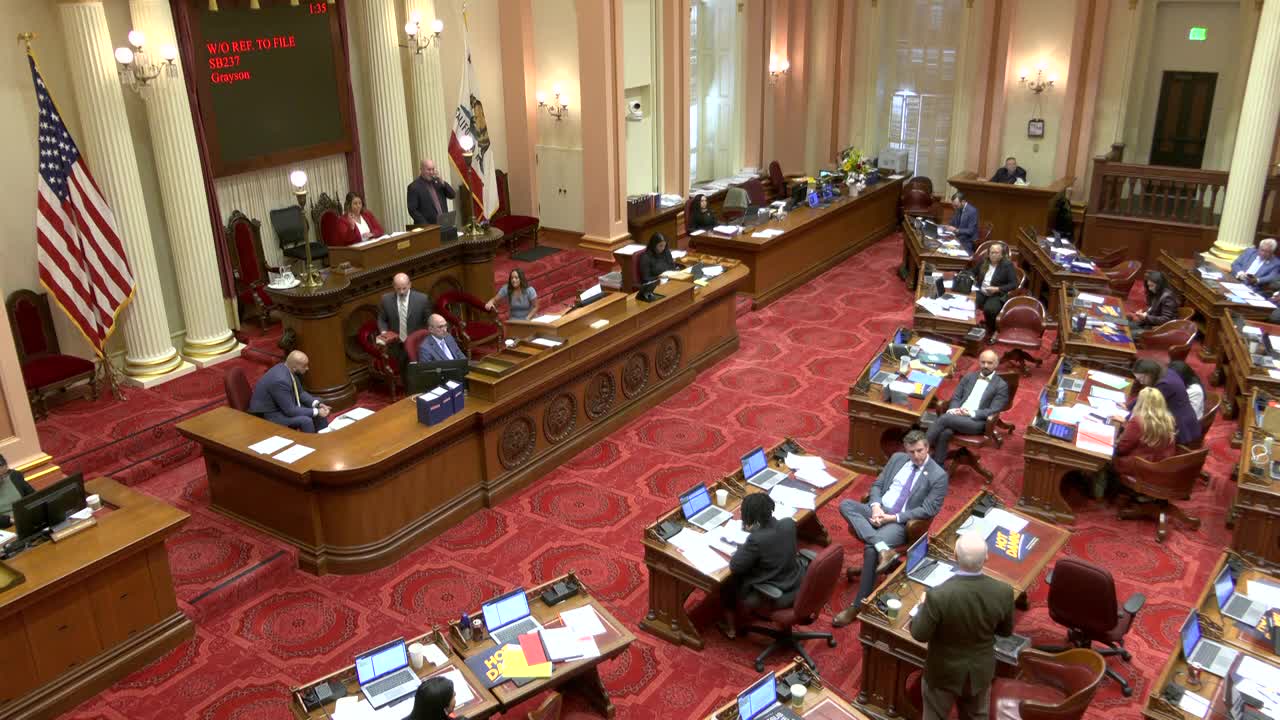 3MIN
Senate Floor
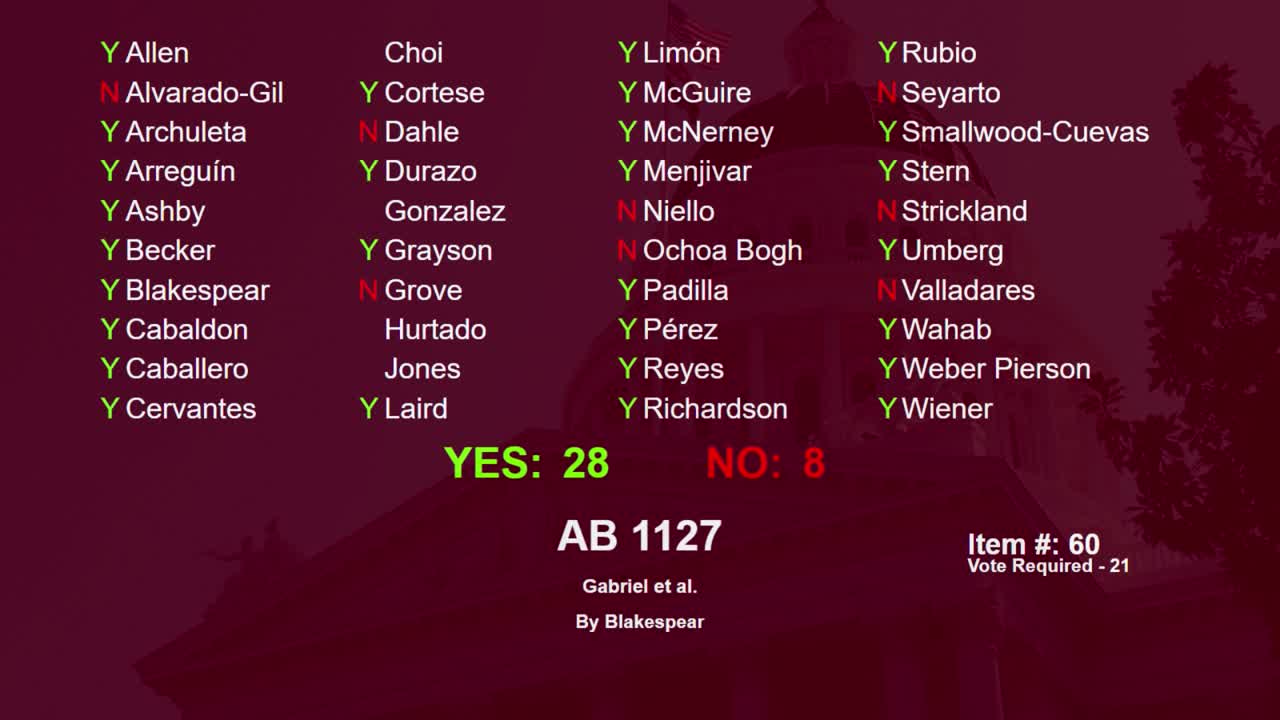 7MIN
Senate Floor
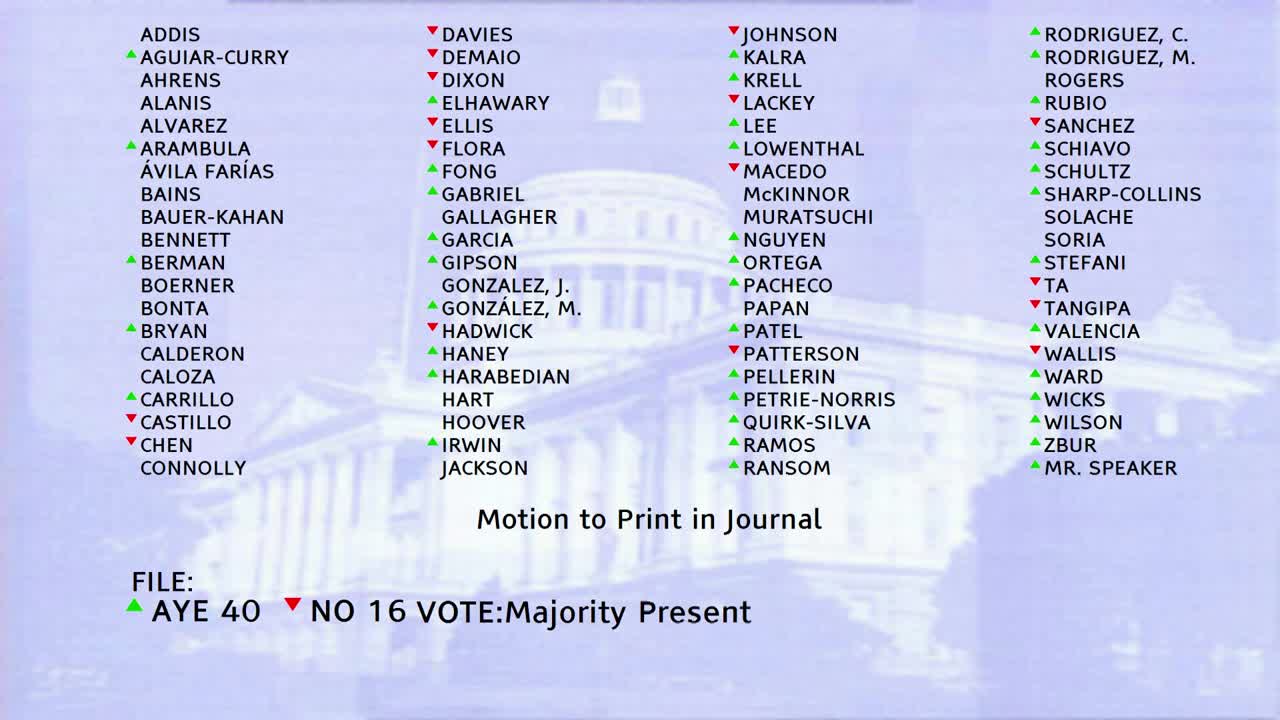 10MIN
Assembly Floor
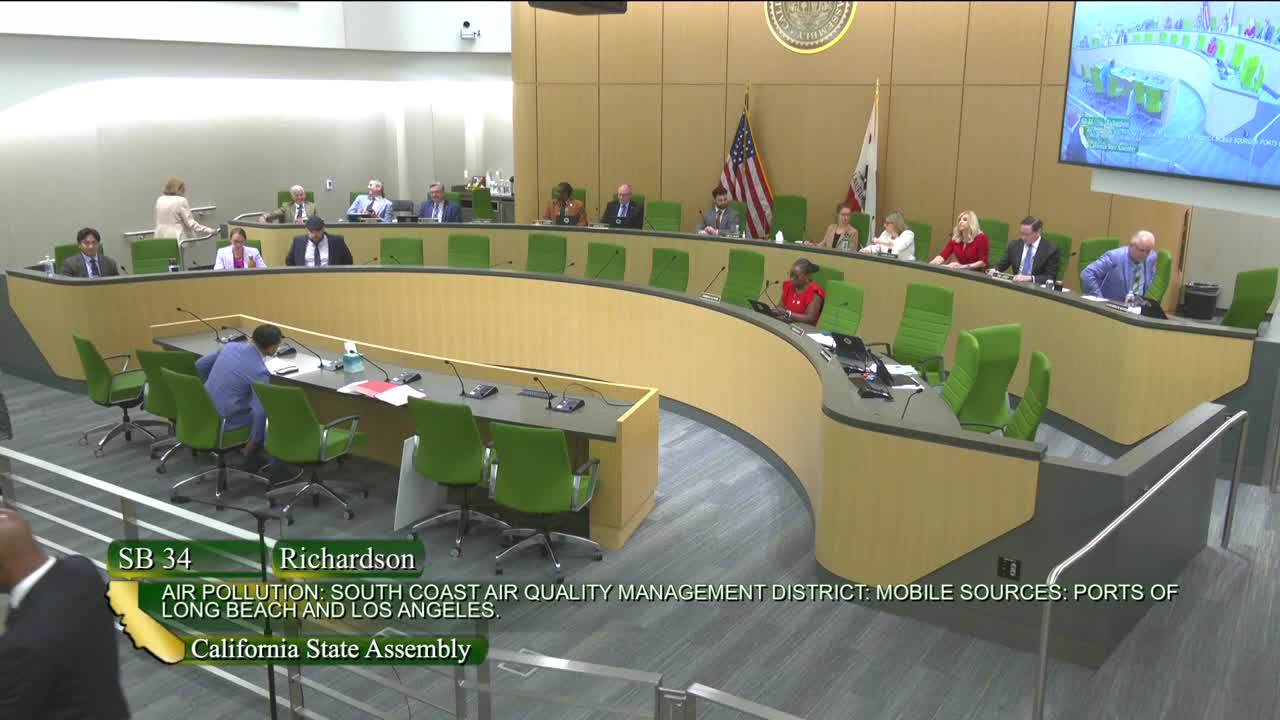 51MIN
Assembly Standing Committee on Transportation
 1H
Assembly Standing Committee on Natural Resources
 14MIN
Senate Floor
 30MIN
Senate Standing Committee on Transportation
 30MIN
Senate Standing Committee on Environmental Quality
Bill Author
Bill Co-Author(s):