SB 340: General plans: housing element: emergency shelter.
- Session Year: 2025-2026
- House: Senate
- Latest Version Date: 2025-10-10
Current Status:
Passed
(2025-10-10: Chaptered by Secretary of State. Chapter 514, Statutes of 2025.)
Introduced
In Committee
Awaiting First Chamber Vote
Passed First Chamber
In Committee
Awaiting Second Chamber Vote
Passed Second Chamber
Enacted
Existing law requires a city or county to prepare and adopt a general plan for its jurisdiction that contains certain mandatory elements, including a housing element. Existing law requires the housing element to identify adequate sites for housing, including rental housing, factory-built housing, mobilehomes, and emergency shelters, among other things. Existing law requires the housing element to contain an assessment of housing needs and an inventory of resources and constraints relevant to the meeting of these needs, including by identifying one or more zoning designations that allow residential uses, including mixed uses, where emergency shelters are allowed as a permitted use without a conditional use or other discretionary permit and that are suitable for residential uses. Existing law requires an emergency shelter to include other interim interventions, including, but not limited to, a navigation center, bridge housing, and respite or recuperative care.
This bill would additionally require an emergency shelter to include all services provided onsite, including the addition or expansion of services that are consistent with certain written, objective standards. By imposing a higher level of service on cities and counties in preparing and adopting a general plan, this bill would impose a state-mandated local program.
Existing law requires the Department of Housing and Community Development to administer the Emergency Housing and Assistance Program. Under the program, moneys from the continuously appropriated Emergency Housing and Assistance Fund are available for the purposes of providing shelter, as specified, to homeless persons at as low of a cost and as quickly as possible, without compromising the health and safety of shelter occupants, to encourage the move of homeless persons from shelters to a self-supporting environment as soon as possible, to encourage provision of services for as many persons at risk of homelessness as possible, to encourage compatible and effective funding of homeless services, and to encourage coordination among public agencies that fund or provide services to homeless individuals, as well as agencies that discharge people from their institutions. Existing law defines emergency shelter to mean, in part, housing with minimal supportive services for homeless persons that is limited to occupancy of 6 months or less by a homeless person.
This bill would modify that definition to mean housing with supportive services for homeless persons that is limited to occupancy of 6 months or less by a homeless person.
This bill would incorporate additional changes to Section 65583 of the Government Code proposed by AB 610 and AB 650, to be operative only if this bill and either or both of those bills are enacted and this bill is enacted last.
The California Constitution requires the state to reimburse local agencies and school districts for certain costs mandated by the state. Statutory provisions establish procedures for making that reimbursement.
This bill would provide that, if the Commission on State Mandates determines that the bill contains costs mandated by the state, reimbursement for those costs shall be made pursuant to the statutory provisions noted above.
Existing law requires a city or county to prepare and adopt a general plan for its jurisdiction that contains certain mandatory elements, including a housing element. Existing law requires the housing element to identify adequate sites for housing, including rental housing, factory-built housing, mobilehomes, and emergency shelters, among other things. Existing law requires the housing element to contain an assessment of housing needs and an inventory of resources and constraints relevant to the meeting of these needs. needs, including by identifying one or more zoning designations that allow residential uses, including mixed uses, where emergency shelters are allowed as a permitted use without a conditional use or other discretionary permit and that are suitable for residential uses. Existing law requires an emergency shelter to include other interim interventions, including, but not limited to, a navigation center, bridge housing, and respite or recuperative care.
This bill would make nonsubstantive changes to those provisions. additionally require an emergency shelter to include all services provided onsite, including the addition or expansion of services that are consistent with certain written, objective standards. By imposing a higher level of service on cities and counties in preparing and adopting a general plan, this bill would impose a state-mandated local program.
Existing law requires the Department of Housing and Community Development to administer the Emergency Housing and Assistance Program. Under the program, moneys from the continuously appropriated Emergency Housing and Assistance Fund are available for the purposes of providing shelter, as specified, to homeless persons at as low of a cost and as quickly as possible, without compromising the health and safety of shelter occupants, to encourage the move of homeless persons from shelters to a self-supporting environment as soon as possible, to encourage provision of services for as many persons at risk of homelessness as possible, to encourage compatible and effective funding of homeless services, and to encourage coordination among public agencies that fund or provide services to homeless individuals, as well as agencies that discharge people from their institutions. Existing law defines emergency shelter to mean, in part, housing with minimal supportive services for homeless persons that is limited to occupancy of 6 months or less by a homeless person.
This bill would modify that definition to mean housing with supportive services for homeless persons that is limited to occupancy of 6 months or less by a homeless person.
The California Constitution requires the state to reimburse local agencies and school districts for certain costs mandated by the state. Statutory provisions establish procedures for making that reimbursement.
This bill would provide that, if the Commission on State Mandates determines that the bill contains costs mandated by the state, reimbursement for those costs shall be made pursuant to the statutory provisions noted above.
Existing law requires a city or county to prepare and adopt a general plan for its jurisdiction that contains certain mandatory elements, including a housing element. Existing law requires the housing element to identify adequate sites for housing, including rental housing, factory-built housing, mobilehomes, and emergency shelters, among other things. Existing law requires the housing element to contain an assessment of housing needs and an inventory of resources and constraints relevant to the meeting of these needs.
This bill would make nonsubstantive changes to those provisions.
The housing element shall consist of an identification and analysis of existing and projected housing needs and a statement of goals, policies, quantified objectives, financial resources, and scheduled programs for the preservation, improvement, and development of housing. The housing element shall identify adequate sites for housing, including rental housing, factory-built housing, mobilehomes, and emergency shelters, and shall make adequate provision for the existing and projected needs of all economic segments of the community. The housing element shall contain all of the following:
(a)An assessment of housing needs, and an inventory of resources and constraints that are relevant to the meeting of those needs. The assessment and inventory shall include all of the following:
(1)An analysis of population and employment trends and documentation of projections and a quantification of the localitys existing and projected housing needs for all income levels. These existing and projected needs shall include the localitys share of the regional housing need in accordance with Section 65584.
(2)An analysis and documentation of household characteristics, including level of payment compared to ability to pay, housing characteristics, including overcrowding, and housing stock condition.
(3)An inventory of land suitable and available for residential development, including vacant sites and sites having realistic and demonstrated potential for redevelopment during the planning period to meet the localitys housing need for a designated income level, and an analysis of the relationship of zoning and public facilities and services to these sites, and an analysis of the relationship of the sites identified in the land inventory to the jurisdictions duty to affirmatively further fair housing.
(4)(A)The identification of one or more zoning designations that allow residential uses, including mixed uses, where emergency shelters are allowed as a permitted use without a conditional use or other discretionary permit and that are suitable for residential uses. The identified zoning designations shall include sufficient sites meeting the requirements of subparagraph (H) with sufficient capacity, as described in subparagraph (I), to accommodate the need for emergency shelter identified in paragraph (7), except that each local government shall identify a zoning designation or designations that can accommodate at least one year-round emergency shelter. If the local government cannot identify a zoning designation or designations with sufficient capacity, the local government shall include a program to amend its zoning ordinance to meet the requirements of this paragraph within one year of the adoption of the housing element. The local government may identify additional zoning designations where emergency shelters are permitted with a conditional use permit. The local government shall also demonstrate that existing or proposed permit processing, development, and management standards that apply to emergency shelters are objective and encourage and facilitate the development of, or conversion to, emergency shelters.
(B)Emergency shelters shall only be subject to the following written, objective standards:
(i)The maximum number of beds or persons permitted to be served nightly by the facility.
(ii)Sufficient parking to accommodate all staff working in the emergency shelter, provided that the standards do not require more parking for emergency shelters than other residential or commercial uses within the same zone.
(iii)The size and location of exterior and interior onsite waiting and client intake areas.
(iv)The provision of onsite management.
(v)The proximity to other emergency shelters, provided that emergency shelters are not required to be more than 300 feet apart.
(vi)The length of stay.
(vii)Lighting.
(viii)Security during hours that the emergency shelter is in operation.
(C)For purposes of this paragraph, emergency shelter shall include other interim interventions, including, but not limited to, a navigation center, bridge housing, and respite or recuperative care, and all services provided onsite, including the addition or expansion of services that are consistent with any written, objective standards pursuant to subparagraph (B).
(D)The permit processing, development, and management standards applied under this paragraph shall not be deemed to be discretionary acts within the meaning of the California Environmental Quality Act (Division 13 (commencing with Section 21000) of the Public Resources Code).
(E)If a local government has adopted written, objective standards pursuant to subparagraph (B), the local government shall include an analysis of the standards in the analysis of constraints pursuant to paragraph (5).
(F)A local government that can demonstrate, to the satisfaction of the department, the existence of one or more emergency shelters either within its jurisdiction or pursuant to a multijurisdictional agreement that can accommodate that jurisdictions need and the needs of the other jurisdictions that are a part of the agreement for emergency shelter identified in paragraph (7) may comply with the zoning requirements of subparagraph (A) by identifying a zoning designation where new emergency shelters are allowed with a conditional use permit.
(G)A local government with an existing ordinance or ordinances that comply with this paragraph shall not be required to take additional action to identify zoning designations for emergency shelters. The housing element must only describe how existing ordinances, policies, and standards are consistent with the requirements of this paragraph.
(H)The zoning designation or designations where emergency shelters are allowed, as described in subparagraph (A), shall include sites that meet at least one of the following standards:
(i)Vacant sites zoned for residential use.
(ii)Vacant sites zoned for nonresidential use that allow residential development, if the local government can demonstrate how the sites with this zoning designation that are being used to satisfy the requirements of paragraph (1) are located near amenities and services that serve people experiencing homelessness, which may include health care, transportation, retail, employment, and social services, or that the local government will provide free transportation to services or offer services onsite.
(iii)Nonvacant sites zoned for residential use or for nonresidential use that allow residential development that are suitable for use as a shelter in the current planning period, or which can be redeveloped for use as a shelter in the current planning period. A nonvacant site with an existing use shall be presumed to impede emergency shelter development absent an analysis based on substantial evidence that the use is likely to be discontinued during the planning period. The analysis shall consider current market demand for the current uses, market conditions, and incentives or standards to encourage shelter development.
(I)The zoning designation or designations shall have sufficient sites meeting the requirements of subparagraph (H) to accommodate the need for shelters identified pursuant to paragraph (7). The number of people experiencing homelessness that can be accommodated on any site shall be demonstrated by dividing the square footage of the site by a minimum of 200 square feet per person, unless the locality can demonstrate that one or more shelters were developed on sites that have fewer square feet per person during the prior planning period or the locality provides similar evidence to the department demonstrating that the site can accommodate more people experiencing homelessness. Any standard applied pursuant to this subparagraph is intended only for calculating site capacity pursuant to this section, and shall not be construed as establishing a development standard applicable to the siting, development, or approval of a shelter.
(J)Notwithstanding subparagraph (H), a local government may accommodate the need for emergency shelters identified pursuant to paragraph (7) on sites owned by the local government if it demonstrates with substantial evidence that the sites will be made available for emergency shelter during the planning period, they are suitable for residential use, and the sites are located near amenities and services that serve people experiencing homelessness, which may include health care, transportation, retail, employment, and social services, or that the local government will provide free transportation to services or offer services onsite.
(5)An analysis of potential and actual governmental constraints upon the maintenance, improvement, or development of housing for all income levels, including the types of housing identified in paragraph (1) of subdivision (c), and for persons with disabilities as identified in the analysis pursuant to paragraph (7), including land use controls, building codes and their enforcement, site improvements, fees, and other exactions required of developers, local processing and permit procedures, historic preservation practices and policies and an assessment of how existing and proposed historic designations affect the localitys ability to meet its share of the housing need pursuant to paragraph (1), and any locally adopted ordinances that directly impact the cost and supply of residential development. The analysis shall also demonstrate local efforts to remove governmental constraints that hinder the locality from meeting its share of the regional housing need in accordance with Section 65584 and from meeting the need for housing for persons with disabilities, supportive housing, transitional housing, and emergency shelters identified pursuant to paragraph (7).
(6)An analysis of potential and actual nongovernmental constraints upon the maintenance, improvement, or development of housing for all income levels, including the availability of financing, the price of land, the cost of construction, the requests to develop housing at densities below those anticipated in the analysis required by subdivision (c) of Section 65583.2, and the length of time between receiving approval for a housing development and submittal of an application for building permits for that housing development that hinder the construction of a localitys share of the regional housing need in accordance with Section 65584. The analysis shall also demonstrate local efforts to remove nongovernmental constraints that create a gap between the localitys planning for the development of housing for all income levels and the construction of that housing.
(7)(A)An analysis of any special housing needs, such as those of the elderly; persons with disabilities, including a developmental disability, as defined in Section 4512 of the Welfare and Institutions Code; extremely low income households; large families; farmworkers; families with female heads of households; and families and persons in need of emergency shelter. The need for emergency shelter shall be assessed based on the capacity necessary to accommodate the most recent homeless point-in-time count conducted before the start of the planning period, the need for emergency shelter based on number of beds available on a year-round and seasonal basis, the number of shelter beds that go unused on an average monthly basis within a one-year period, and the percentage of those in emergency shelters that move to permanent housing solutions. The need for emergency shelter may be reduced by the number of supportive housing units that are identified in an adopted 10-year plan to end chronic homelessness and that are either vacant or for which funding has been identified to allow construction during the planning period. An analysis of special housing needs by a city or county may include an analysis of the need for frequent user coordinated care housing services.
(B)For the seventh and subsequent revisions of the housing element, the analysis required in subparagraph (A) shall also include an analysis of the housing needs of acutely and extremely low income households.
(8)An analysis of opportunities for energy conservation with respect to residential development. Cities and counties are encouraged to include weatherization and energy efficiency improvements as part of publicly subsidized housing rehabilitation projects. This may include energy efficiency measures that encompass the building envelope, its heating and cooling systems, and its electrical system.
(9)An analysis of existing assisted housing developments that are eligible to change from low-income housing uses during the next 10 years due to termination of subsidy contracts, mortgage prepayment, or expiration of restrictions on use. Assisted housing developments, for the purpose of this section, shall mean multifamily rental housing that receives governmental assistance under federal programs listed in subdivision (a) of Section 65863.10, state and local multifamily revenue bond programs, local redevelopment programs, the federal Community Development Block Grant Program, or local in-lieu fees. Assisted housing developments shall also include multifamily rental units that were developed pursuant to a local inclusionary housing program or used to qualify for a density bonus pursuant to Section 65916.
(A)The analysis shall include a listing of each development by project name and address, the type of governmental assistance received, the earliest possible date of change from low-income use, and the total number of elderly and nonelderly units that could be lost from the localitys low-income housing stock in each year during the 10-year period. For purposes of state and federally funded projects, the analysis required by this subparagraph need only contain information available on a statewide basis.
(B)The analysis shall estimate the total cost of producing new rental housing that is comparable in size and rent levels, to replace the units that could change from low-income use, and an estimated cost of preserving the assisted housing developments. This cost analysis for replacement housing may be done aggregately for each five-year period and does not have to contain a project-by-project cost estimate.
(C)The analysis shall identify public and private nonprofit corporations known to the local government that have legal and managerial capacity to acquire and manage these housing developments.
(D)The analysis shall identify and consider the use of all federal, state, and local financing and subsidy programs that can be used to preserve, for lower income households, the assisted housing developments, identified in this paragraph, including, but not limited to, federal Community Development Block Grant Program funds, tax increment funds received by a redevelopment agency of the community, and administrative fees received by a housing authority operating within the community. In considering the use of these financing and subsidy programs, the analysis shall identify the amounts of funds under each available program that have not been legally obligated for other purposes and that could be available for use in preserving assisted housing developments.
(b)(1)A statement of the communitys goals, quantified objectives, and policies relative to affirmatively furthering fair housing and to the maintenance, preservation, improvement, and development of housing.
(2)It is recognized that the total housing needs identified pursuant to subdivision (a) may exceed available resources and the communitys ability to satisfy this need within the content of the general plan requirements outlined in Article 5 (commencing with Section 65300). Under these circumstances, the quantified objectives need not be identical to the total housing needs. The quantified objectives shall establish the maximum number of housing units by income category that can be constructed, rehabilitated, and conserved over a five-year time period.
(c)A program that sets forth a schedule of actions during the planning period, each with a timeline for implementation, that may recognize that certain programs are ongoing, such that there will be beneficial impacts of the programs within the planning period, that the local government is undertaking or intends to undertake to implement the policies and achieve the goals and objectives of the housing element through the administration of land use and development controls, the provision of regulatory concessions and incentives, the utilization of appropriate federal and state financing and subsidy programs when available, and the utilization of moneys in a low- and moderate-income housing fund of an agency if the locality has established a redevelopment project area pursuant to the Community Redevelopment Law (Division 24 (commencing with Section 33000) of the Health and Safety Code). In order to make adequate provision for the housing needs of all economic segments of the community, the program shall do all of the following:
(1)Identify actions that will be taken to make sites available during the planning period with appropriate zoning and development standards and with services and facilities to accommodate that portion of the citys or countys share of the regional housing need for all income levels that could not be accommodated on sites identified in the inventory completed pursuant to paragraph (3) of subdivision (a) without rezoning, and to comply with the requirements of Section 65584.09. Sites shall be identified as needed to affirmatively further fair housing and to facilitate and encourage the development of a variety of types of housing for all income levels, including multifamily rental housing, factory-built housing, mobilehomes, housing for agricultural employees, supportive housing, single-room occupancy units, emergency shelters, and transitional housing.
(A)Where the inventory of sites, pursuant to paragraph (3) of subdivision (a), does not identify adequate sites to accommodate the need for groups of all household income levels pursuant to Section 65584, a program for rezoning of those sites, subject to the following deadlines:
(i)For the adoption of the sixth revision of the housing element, jurisdictions with an eight-year housing element planning period pursuant to Section 65588, including adoption of minimum density and development standards or, for a jurisdiction in the coastal zone, any necessary local coastal program amendments related to land use designations, changes in intensity of land use, zoning ordinances, or zoning district maps, consistent with Sections 30512, 30512.2, 30513, and 30514 of the Public Resources Code, shall be completed no later than three years after either the date the housing element is adopted pursuant to subdivision (f) of Section 65585 or the date that is 90 days after receipt of comments from the department pursuant to subdivision (b) of Section 65585, whichever is earlier, unless the deadline is extended pursuant to subdivision (f). Notwithstanding the foregoing, for a local government that fails to adopt a housing element that the department has found to be in substantial compliance with this article within 120 days of the statutory deadline in Section 65588 for adoption of the housing element, rezoning of those sites, including adoption of minimum density and development standards or, for a jurisdiction in the coastal zone, any necessary local coastal program amendments related to land use designations, changes in intensity of land use, zoning ordinances, or zoning district maps, consistent with Sections 30512, 30512.2, 30513, and 30514 of the Public Resources Code, shall be completed no later than one year from the statutory deadline in Section 65588 for adoption of the housing element.
(ii)For adoption of the seventh and all subsequent revisions of the housing element, rezonings shall be completed no later than one year from the statutory deadline in Section 65588 for adoption of the housing element.
(iii)Notwithstanding clause (ii), for the adoption of the seventh and all subsequent revisions of the housing element, rezonings shall be completed no later than three years and 90 days after the statutory deadline in Section 65588 for adoption of the housing element, unless the deadline is extended pursuant to subdivision (f). This clause shall apply only if the local government complies with all of the following:
(I)The local government submits a draft element or draft amendment to the department for review pursuant to paragraph (1) of subdivision (b) of Section 65585 at least 90 days before the statutory deadline established in Section 65588 for adoption of the housing element.
(II)The local government receives from the department findings that the draft element or draft amendment substantially complies with this article pursuant to paragraph (3) of subdivision (b) of Section 65585 on or before the statutory deadline set forth in Section 65588 for adoption of the housing element.
(III)The local government adopts the draft element or draft amendment that the department found to substantially comply with this article no later than 120 days after the statutory deadline set forth in Section 65588.
(B)Where the inventory of sites, pursuant to paragraph (3) of subdivision (a), does not identify adequate sites to accommodate the need for groups of all household income levels pursuant to Section 65584, the program shall identify sites that can be developed for housing within the planning period pursuant to subdivision (h) of Section 65583.2. The identification of sites shall include all components specified in Section 65583.2.
(C)Where the inventory of sites pursuant to paragraph (3) of subdivision (a) does not identify adequate sites to accommodate the need for farmworker housing, the program shall provide for sufficient sites to meet the need with zoning that permits farmworker housing use by right, including density and development standards that could accommodate and facilitate the feasibility of the development of farmworker housing for low- and very low income households.
(2)(A)Assist in the development of adequate housing to meet the needs of extremely low, very low, low-, and moderate-income households.
(B)For the seventh and subsequent revisions of the housing element, the program shall also assist in the development of adequate housing to meet the needs of acutely low income households.
(3)Address and, where appropriate and legally possible, remove governmental and nongovernmental constraints to the maintenance, improvement, and development of housing, including housing for all income levels and housing for persons with disabilities. The program shall remove constraints to, and provide reasonable accommodations for housing designed for, intended for occupancy by, or with supportive services for, persons with disabilities. Transitional housing and supportive housing shall be considered a residential use of property and shall be subject only to those restrictions that apply to other residential dwellings of the same type in the same zone. Supportive housing, as defined in Section 65650, shall be a use by right in all zones where multifamily and mixed uses are permitted, as provided in Article 11 (commencing with Section 65650).
(4)Conserve and improve the condition of the existing affordable housing stock, which may include addressing ways to mitigate the loss of dwelling units demolished by public or private action.
(5)Promote and affirmatively further fair housing opportunities and promote housing throughout the community or communities for all persons regardless of race, religion, sex, marital status, ancestry, national origin, color, familial status, or disability, and other characteristics protected by the California Fair Employment and Housing Act (Part 2.8 (commencing with Section 12900) of Division 3 of Title 2), Section 65008, and any other state and federal fair housing and planning law.
(6)Preserve for lower income households the assisted housing developments identified pursuant to paragraph (9) of subdivision (a). The program for preservation of the assisted housing developments shall utilize, to the extent necessary, all available federal, state, and local financing and subsidy programs identified in paragraph (9) of subdivision (a), except where a community has other urgent needs for which alternative funding sources are not available. The program may include strategies that involve local regulation and technical assistance.
(7)Develop a plan that incentivizes and promotes the creation of accessory dwelling units that can be offered at affordable rent, as defined in Section 50053 of the Health and Safety Code, for very low, low-, or moderate-income households. For purposes of this paragraph, accessory dwelling units has the same meaning as accessory dwelling unit as defined in subdivision (a) of Section 66313.
(8)Include an identification of the agencies and officials responsible for the implementation of the various actions and the means by which consistency will be achieved with other general plan elements and community goals.
(9)Include a diligent effort by the local government to achieve public participation of all economic segments of the community in the development of the housing element, and the program shall describe this effort.
(10)(A)Affirmatively further fair housing in accordance with Chapter 15 (commencing with Section 8899.50) of Division 1 of Title 2. The program shall include an assessment of fair housing in the jurisdiction that shall include all of the following components:
(i)A summary of fair housing issues in the jurisdiction and an assessment of the jurisdictions fair housing enforcement and fair housing outreach capacity.
(ii)An analysis of available federal, state, and local data and knowledge to identify integration and segregation patterns and trends, racially or ethnically concentrated areas of poverty and affluence, disparities in access to opportunity, and disproportionate housing needs, including displacement risk. The analysis shall identify and examine such patterns, trends, areas, disparities, and needs, both within the jurisdiction and comparing the jurisdiction to the region in which it is located, based on race and other characteristics protected by the California Fair Employment and Housing Act (Part 2.8 (commencing with Section 12900) of Division 3 of Title 2) and Section 65008.
(iii)An assessment of the contributing factors, including the local and regional historical origins and current policies and practices, for the fair housing issues identified under clauses (i) and (ii).
(iv)An identification of the jurisdictions fair housing priorities and goals, giving highest priority to those factors identified in clause (iii) that limit or deny fair housing choice or access to opportunity, or negatively impact fair housing or civil rights compliance, and identifying the metrics and milestones for determining what fair housing results will be achieved.
(v)Strategies and actions to implement those priorities and goals, which may include, but are not limited to, enhancing mobility strategies and encouraging development of new affordable housing in areas of opportunity, as well as place-based strategies to encourage community revitalization, including preservation of existing affordable housing, and protecting existing residents from displacement.
(B)A jurisdiction that completes or revises an assessment of fair housing pursuant to Subpart A (commencing with Section 5.150) of Part 5 of Subtitle A of Title 24 of the Code of Federal Regulations, as published in Volume 80 of the Federal Register, Number 136, page 42272, dated July 16, 2015, or an analysis of impediments to fair housing choice in accordance with the requirements of Section 91.225 of Title 24 of the Code of Federal Regulations in effect before August 17, 2015, may incorporate relevant portions of that assessment or revised assessment of fair housing or analysis or revised analysis of impediments to fair housing into its housing element.
(C)(i)The requirements of this paragraph shall apply to housing elements due to be revised pursuant to Section 65588 on or after January 1, 2021.
(ii)The assessment required pursuant to this paragraph shall be completed before the planning agency makes its first draft revision of a housing element available for public comment pursuant to subdivision (b) of Section 65585.
(D)(i)The department shall develop a standardized reporting format for programs and actions taken pursuant to this paragraph. The standardized reporting format shall enable the reporting of all of the assessment components listed in subparagraph (A) and, at a minimum, include all of the following fields:
(I)Timelines for implementation.
(II)Responsible party or parties.
(III)Resources committed from the local budget to affirmatively further fair housing.
(IV)Action areas.
(V)Potential impacts of the program.
(ii)A local government shall utilize the standardized report format developed pursuant to this subparagraph for the seventh and each subsequent revision of the housing element.
(d)(1)A local government may satisfy all or part of its requirement to identify a zone or zones suitable for the development of emergency shelters pursuant to paragraph (4) of subdivision (a) by adopting and implementing a multijurisdictional agreement, with a maximum of two other adjacent communities, that requires the participating jurisdictions to develop at least one year-round emergency shelter within two years of the beginning of the planning period.
(2)The agreement shall allocate a portion of the new shelter capacity to each jurisdiction as credit toward its emergency shelter need, and each jurisdiction shall describe how the capacity was allocated as part of its housing element.
(3)Each member jurisdiction of a multijurisdictional agreement shall describe in its housing element all of the following:
(A)How the joint facility will meet the jurisdictions emergency shelter need.
(B)The jurisdictions contribution to the facility for both the development and ongoing operation and management of the facility.
(C)The amount and source of the funding that the jurisdiction contributes to the facility.
(4)The aggregate capacity claimed by the participating jurisdictions in their housing elements shall not exceed the actual capacity of the shelter.
(e)Except as otherwise provided in this article, amendments to this article that alter the required content of a housing element shall apply to both of the following:
(1)A housing element or housing element amendment prepared pursuant to subdivision (e) of Section 65588 or Section 65584.02, when a city, county, or city and county submits a draft to the department for review pursuant to Section 65585 more than 90 days after the effective date of the amendment to this section.
(2)Any housing element or housing element amendment prepared pursuant to subdivision (e) of Section 65588 or Section 65584.02, when the city, county, or city and county fails to submit the first draft to the department before the due date specified in Section 65588 or 65584.02.
(f)The deadline for completing required rezoning pursuant to subparagraph (A) of paragraph (1) of subdivision (c) shall be extended by one year if the local government has completed the rezoning at densities sufficient to accommodate at least 75 percent of the units for lower income households and if the legislative body at the conclusion of a public hearing determines, based upon substantial evidence, that any of the following circumstances exists:
(1)The local government has been unable to complete the rezoning because of the action or inaction beyond the control of the local government of any other state, federal, or local agency.
(2)The local government is unable to complete the rezoning because of infrastructure deficiencies due to fiscal or regulatory constraints.
(3)The local government must undertake a major revision to its general plan in order to accommodate the housing-related policies of a sustainable communities strategy or an alternative planning strategy adopted pursuant to Section 65080.
The resolution and the findings shall be transmitted to the department together with a detailed budget and schedule for preparation and adoption of the required rezonings, including plans for citizen participation and expected interim action. The schedule shall provide for adoption of the required rezoning within one year of the adoption of the resolution.
(g)(1)If a local government fails to complete the rezoning by the deadline provided in subparagraph (A) of paragraph (1) of subdivision (c), as it may be extended pursuant to subdivision (f), except as provided in paragraph (2), a local government may not disapprove a housing development project, nor require a conditional use permit, planned unit development permit, or other locally imposed discretionary permit, or impose a condition that would render the project infeasible, if the housing development project, (A) is proposed to be located on a site required to be rezoned pursuant to the program action required by that subparagraph and, (B) complies with applicable, objective general plan and zoning standards and criteria, including design review standards, described in the program action required by that subparagraph. Any subdivision of sites shall be subject to the Subdivision Map Act (Division 2 (commencing with Section 66410)). Design review shall not constitute a project for purposes of Division 13 (commencing with Section 21000) of the Public Resources Code.
(2)A local government may disapprove a housing development described in paragraph (1) if it makes written findings supported by substantial evidence on the record that both of the following conditions exist:
(A)The housing development project would have a specific, adverse impact upon the public health or safety unless the project is disapproved or approved upon the condition that the project be developed at a lower density. As used in this paragraph, a specific, adverse impact means a significant, quantifiable, direct, and unavoidable impact, based on objective, identified written public health or safety standards, policies, or conditions as they existed on the date the application was deemed complete.
(B)There is no feasible method to satisfactorily mitigate or avoid the adverse impact identified pursuant to paragraph (1), other than the disapproval of the housing development project or the approval of the project upon the condition that it be developed at a lower density.
(3)The applicant or any interested person may bring an action to enforce this subdivision. If a court finds that the local agency disapproved a project or conditioned its approval in violation of this subdivision, the court shall issue an order or judgment compelling compliance within 60 days. The court shall retain jurisdiction to ensure that its order or judgment is carried out. If the court determines that its order or judgment has not been carried out within 60 days, the court may issue further orders to ensure that the purposes and policies of this subdivision are fulfilled. In any such action, the city, county, or city and county shall bear the burden of proof.
(4)For purposes of this subdivision, housing development project means a project to construct residential units for which the project developer provides sufficient legal commitments to the appropriate local agency to ensure the continued availability and use of at least 49 percent of the housing units for very low, low-, and moderate-income households with an affordable housing cost or affordable rent, as defined in Section 50052.5 or 50053 of the Health and Safety Code, respectively, for the period required by the applicable financing.
(h)An action to enforce the program actions of the housing element shall be brought pursuant to Section 1085 of the Code of Civil Procedure.
(i)Notwithstanding any other law, the otherwise applicable timeframe set forth in paragraph (2) of subdivision (b) and subdivision (d) of Section 21080.3.1 of the Public Resources Code, and paragraph (3) of subdivision (d) of Section 21082.3 of the Public Resources Code, for a Native American tribe to respond to a lead agency and request consultation in writing is extended by 30 days for any housing development project application determined or deemed to be complete on or after March 4, 2020, and prior to December 31, 2021.
(j)On or after January 1, 2024, at the discretion of the department, the analysis of government constraints pursuant to paragraph (5) of subdivision (a) may include an analysis of constraints upon the maintenance, improvement, or development of housing for persons with a characteristic identified in subdivision (b) of Section 51 of the Civil Code. The implementation of this subdivision is contingent upon an appropriation by the Legislature in the annual Budget Act or another statute for this purpose.
SEC. 1.1.Section 65583 of the Government Code is amended to read:65583.The housing element shall consist of an identification and analysis of existing and projected housing needs and a statement of goals, policies, quantified objectives, financial resources, and scheduled programs for the preservation, improvement, and development of housing. The housing element shall identify adequate sites for housing, including rental housing, factory-built housing, mobilehomes, and emergency shelters, and shall make adequate provision for the existing and projected needs of all economic segments of the community. The housing element shall contain all of the following:
(a)An assessment of housing needs, and an inventory of resources and constraints that are relevant to the meeting of those needs. The assessment and inventory shall include all of the following:
(1)An analysis of population and employment trends and documentation of projections and a quantification of the localitys existing and projected housing needs for all income levels. These existing and projected needs shall include the localitys share of the regional housing need in accordance with Section 65584.
(2)An analysis and documentation of household characteristics, including level of payment compared to ability to pay, housing characteristics, including overcrowding, and housing stock condition.
(3)An inventory of land suitable and available for residential development, including vacant sites and sites having realistic and demonstrated potential for redevelopment during the planning period to meet the localitys housing need for a designated income level, and an analysis of the relationship of zoning and public facilities and services to these sites, and an analysis of the relationship of the sites identified in the land inventory to the jurisdictions duty to affirmatively further fair housing.
(4)(A)The identification of one or more zoning designations that allow residential uses, including mixed uses, where emergency shelters are allowed as a permitted use without a conditional use or other discretionary permit and that are suitable for residential uses. The identified zoning designations shall include sufficient sites meeting the requirements of subparagraph (H) with sufficient capacity, as described in subparagraph (I), to accommodate the need for emergency shelter identified in paragraph (7), except that each local government shall identify a zoning designation or designations that can accommodate at least one year-round emergency shelter. If the local government cannot identify a zoning designation or designations with sufficient capacity, the local government shall include a program to amend its zoning ordinance to meet the requirements of this paragraph within one year of the adoption of the housing element. The local government may identify additional zoning designations where emergency shelters are permitted with a conditional use permit. The local government shall also demonstrate that existing or proposed permit processing, development, and management standards that apply to emergency shelters are objective and encourage and facilitate the development of, or conversion to, emergency shelters.
(B)Emergency shelters shall only be subject to the following written, objective standards:
(i)The maximum number of beds or persons permitted to be served nightly by the facility.
(ii)Sufficient parking to accommodate all staff working in the emergency shelter, provided that the standards do not require more parking for emergency shelters than other residential or commercial uses within the same zone.
(iii)The size and location of exterior and interior onsite waiting and client intake areas.
(iv)The provision of onsite management.
(v)The proximity to other emergency shelters, provided that emergency shelters are not required to be more than 300 feet apart.
(vi)The length of stay.
(vii)Lighting.
(viii)Security during hours that the emergency shelter is in operation.
(C)For purposes of this paragraph, emergency shelter shall include other interim interventions, including, but not limited to, a navigation center, bridge housing, and respite or recuperative care, and all services provided onsite, including the addition or expansion of services that are consistent with any written, objective standards pursuant to subparagraph (B).
(D)The permit processing, development, and management standards applied under this paragraph shall not be deemed to be discretionary acts within the meaning of the California Environmental Quality Act (Division 13 (commencing with Section 21000) of the Public Resources Code).
(E)If a local government has adopted written, objective standards pursuant to subparagraph (B), the local government shall include an analysis of the standards in the analysis of constraints pursuant to paragraph (5).
(F)A local government that can demonstrate, to the satisfaction of the department, the existence of one or more emergency shelters either within its jurisdiction or pursuant to a multijurisdictional agreement that can accommodate that jurisdictions need and the needs of the other jurisdictions that are a part of the agreement for emergency shelter identified in paragraph (7) may comply with the zoning requirements of subparagraph (A) by identifying a zoning designation where new emergency shelters are allowed with a conditional use permit.
(G)A local government with an existing ordinance or ordinances that comply with this paragraph shall not be required to take additional action to identify zoning designations for emergency shelters. The housing element must only describe how existing ordinances, policies, and standards are consistent with the requirements of this paragraph.
(H)The zoning designation or designations where emergency shelters are allowed, as described in subparagraph (A), shall include sites that meet at least one of the following standards:
(i)Vacant sites zoned for residential use.
(ii)Vacant sites zoned for nonresidential use that allow residential development, if the local government can demonstrate how the sites with this zoning designation that are being used to satisfy the requirements of paragraph (1) are located near amenities and services that serve people experiencing homelessness, which may include health care, transportation, retail, employment, and social services, or that the local government will provide free transportation to services or offer services onsite.
(iii)Nonvacant sites zoned for residential use or for nonresidential use that allow residential development that are suitable for use as a shelter in the current planning period, or which can be redeveloped for use as a shelter in the current planning period. A nonvacant site with an existing use shall be presumed to impede emergency shelter development absent an analysis based on substantial evidence that the use is likely to be discontinued during the planning period. The analysis shall consider current market demand for the current uses, market conditions, and incentives or standards to encourage shelter development.
(I)The zoning designation or designations shall have sufficient sites meeting the requirements of subparagraph (H) to accommodate the need for shelters identified pursuant to paragraph (7). The number of people experiencing homelessness that can be accommodated on any site shall be demonstrated by dividing the square footage of the site by a minimum of 200 square feet per person, unless the locality can demonstrate that one or more shelters were developed on sites that have fewer square feet per person during the prior planning period or the locality provides similar evidence to the department demonstrating that the site can accommodate more people experiencing homelessness. Any standard applied pursuant to this subparagraph is intended only for calculating site capacity pursuant to this section, and shall not be construed as establishing a development standard applicable to the siting, development, or approval of a shelter.
(J)Notwithstanding subparagraph (H), a local government may accommodate the need for emergency shelters identified pursuant to paragraph (7) on sites owned by the local government if it demonstrates with substantial evidence that the sites will be made available for emergency shelter during the planning period, they are suitable for residential use, and the sites are located near amenities and services that serve people experiencing homelessness, which may include health care, transportation, retail, employment, and social services, or that the local government will provide free transportation to services or offer services onsite.
(5)An analysis of potential and actual governmental constraints upon the maintenance, improvement, or development of housing for all income levels, including the types of housing identified in paragraph (1) of subdivision (c), and for persons with disabilities as identified in the analysis pursuant to paragraph (7), including land use controls, building codes and their enforcement, site improvements, fees, and other exactions required of developers, local processing and permit procedures, historic preservation practices and policies and an assessment of how existing and proposed historic designations affect the localitys ability to meet its share of the housing need pursuant to paragraph (1), and any locally adopted ordinances that directly impact the cost and supply of residential development.
(A)The analysis shall also demonstrate local efforts to remove governmental constraints that hinder the locality from meeting its share of the regional housing need in accordance with Section 65584 and from meeting the need for housing for persons with disabilities, supportive housing, transitional housing, and emergency shelters identified pursuant to paragraph (7).
(B)(i)For adoption of the seventh and all subsequent revisions of the housing element, the analysis shall also include a potential and actual governmental constraints disclosure statement containing both of the following:
(I)An identification of each new or amended potential or actual governmental constraint, or revision increasing the stringency of a governmental constraint, adopted after the due date of the previous housing element and before submittal of the current draft housing element to the department.
(II)An identification of any new or amended potential or actual governmental constraint, or revision increasing the stringency of a governmental constraint, that the governing body of the local government can anticipate adopting during the first three years of the planning period commencing on the date that a local agencys housing element is considered to be in substantial compliance pursuant to Section 65585.03.
(ii)For the purposes of this subparagraph, anticipate adopting means a legislative body of the local government had, after the due date of the previous housing element and before submittal of the current draft housing element, identified in an agenda published by a legislative body of the local government pursuant to the Ralph M. Brown Act (Chapter 9 (commencing with Section 54950) of Part 1 of Division 2 of Title 5) an action to consider the adoption, amendment, or increase in the stringency of a potential or actual governmental constraint.
(iii)This subparagraph shall not be construed to prohibit a local government from adopting, amending, or increasing the stringency of a potential or actual governmental constraint regardless of whether it was included in a potential and actual governmental constraints disclosure statement pursuant to this subparagraph.
(6)An analysis of potential and actual nongovernmental constraints upon the maintenance, improvement, or development of housing for all income levels, including the availability of financing, the price of land, the cost of construction, the requests to develop housing at densities below those anticipated in the analysis required by subdivision (c) of Section 65583.2, and the length of time between receiving approval for a housing development and submittal of an application for building permits for that housing development that hinder the construction of a localitys share of the regional housing need in accordance with Section 65584. The analysis shall also demonstrate local efforts to remove nongovernmental constraints that create a gap between the localitys planning for the development of housing for all income levels and the construction of that housing.
(7)(A)An analysis of any special housing needs, such as those of the elderly; persons with disabilities, including a developmental disability, as defined in Section 4512 of the Welfare and Institutions Code; extremely low income households; large families; farmworkers; families with female heads of households; and families and persons in need of emergency shelter. The need for emergency shelter shall be assessed based on the capacity necessary to accommodate the most recent homeless point-in-time count conducted before the start of the planning period, the need for emergency shelter based on number of beds available on a year-round and seasonal basis, the number of shelter beds that go unused on an average monthly basis within a one-year period, and the percentage of those in emergency shelters that move to permanent housing solutions. The need for emergency shelter may be reduced by the number of supportive housing units that are identified in an adopted 10-year plan to end chronic homelessness and that are either vacant or for which funding has been identified to allow construction during the planning period. An analysis of special housing needs by a city or county may include an analysis of the need for frequent user coordinated care housing services.
(B)For the seventh and subsequent revisions of the housing element, the analysis required in subparagraph (A) shall also include an analysis of the housing needs of acutely and extremely low income households.
(8)An analysis of opportunities for energy conservation with respect to residential development. Cities and counties are encouraged to include weatherization and energy efficiency improvements as part of publicly subsidized housing rehabilitation projects. This may include energy efficiency measures that encompass the building envelope, its heating and cooling systems, and its electrical system.
(9)An analysis of existing assisted housing developments that are eligible to change from low-income housing uses during the next 10 years due to termination of subsidy contracts, mortgage prepayment, or expiration of restrictions on use. Assisted housing developments, for the purpose of this section, shall mean multifamily rental housing that receives governmental assistance under federal programs listed in subdivision (a) of Section 65863.10, state and local multifamily revenue bond programs, local redevelopment programs, the federal Community Development Block Grant Program, or local in-lieu fees. Assisted housing developments shall also include multifamily rental units that were developed pursuant to a local inclusionary housing program or used to qualify for a density bonus pursuant to Section 65916.
(A)The analysis shall include a listing of each development by project name and address, the type of governmental assistance received, the earliest possible date of change from low-income use, and the total number of elderly and nonelderly units that could be lost from the localitys low-income housing stock in each year during the 10-year period. For purposes of state and federally funded projects, the analysis required by this subparagraph need only contain information available on a statewide basis.
(B)The analysis shall estimate the total cost of producing new rental housing that is comparable in size and rent levels, to replace the units that could change from low-income use, and an estimated cost of preserving the assisted housing developments. This cost analysis for replacement housing may be done aggregately for each five-year period and does not have to contain a project-by-project cost estimate.
(C)The analysis shall identify public and private nonprofit corporations known to the local government that have legal and managerial capacity to acquire and manage these housing developments.
(D)The analysis shall identify and consider the use of all federal, state, and local financing and subsidy programs that can be used to preserve, for lower income households, the assisted housing developments, identified in this paragraph, including, but not limited to, federal Community Development Block Grant Program funds, tax increment funds received by a redevelopment agency of the community, and administrative fees received by a housing authority operating within the community. In considering the use of these financing and subsidy programs, the analysis shall identify the amounts of funds under each available program that have not been legally obligated for other purposes and that could be available for use in preserving assisted housing developments.
(b)(1)A statement of the communitys goals, quantified objectives, and policies relative to affirmatively furthering fair housing and to the maintenance, preservation, improvement, and development of housing.
(2)It is recognized that the total housing needs identified pursuant to subdivision (a) may exceed available resources and the communitys ability to satisfy this need within the content of the general plan requirements outlined in Article 5 (commencing with Section 65300). Under these circumstances, the quantified objectives need not be identical to the total housing needs. The quantified objectives shall establish the maximum number of housing units by income category that can be constructed, rehabilitated, and conserved over a five-year time period.
(c)A program that sets forth a schedule of actions during the planning period, each with a timeline for implementation, that may recognize that certain programs are ongoing, such that there will be beneficial impacts of the programs within the planning period, that the local government is undertaking or intends to undertake to implement the policies and achieve the goals and objectives of the housing element through the administration of land use and development controls, the provision of regulatory concessions and incentives, the utilization of appropriate federal and state financing and subsidy programs when available, and the utilization of moneys in a low- and moderate-income housing fund of an agency if the locality has established a redevelopment project area pursuant to the Community Redevelopment Law (Division 24 (commencing with Section 33000) of the Health and Safety Code). In order to make adequate provision for the housing needs of all economic segments of the community, the program shall do all of the following:
(1)Identify actions that will be taken to make sites available during the planning period with appropriate zoning and development standards and with services and facilities to accommodate that portion of the citys or countys share of the regional housing need for all income levels that could not be accommodated on sites identified in the inventory completed pursuant to paragraph (3) of subdivision (a) without rezoning, and to comply with the requirements of Section 65584.09. Sites shall be identified as needed to affirmatively further fair housing and to facilitate and encourage the development of a variety of types of housing for all income levels, including multifamily rental housing, factory-built housing, mobilehomes, housing for agricultural employees, supportive housing, single-room occupancy units, emergency shelters, and transitional housing.
(A)Where the inventory of sites, pursuant to paragraph (3) of subdivision (a), does not identify adequate sites to accommodate the need for groups of all household income levels pursuant to Section 65584, a program for rezoning of those sites, subject to the following deadlines:
(i)For the adoption of the sixth revision of the housing element, jurisdictions with an eight-year housing element planning period pursuant to Section 65588, including adoption of minimum density and development standards or, for a jurisdiction in the coastal zone, any necessary local coastal program amendments related to land use designations, changes in intensity of land use, zoning ordinances, or zoning district maps, consistent with Sections 30512, 30512.2, 30513, and 30514 of the Public Resources Code, shall be completed no later than three years after either the date the housing element is adopted pursuant to subdivision (f) of Section 65585 or the date that is 90 days after receipt of comments from the department pursuant to subdivision (b) of Section 65585, whichever is earlier, unless the deadline is extended pursuant to subdivision (f). Notwithstanding the foregoing, for a local government that fails to adopt a housing element that the department has found to be in substantial compliance with this article within 120 days of the statutory deadline in Section 65588 for adoption of the housing element, rezoning of those sites, including adoption of minimum density and development standards or, for a jurisdiction in the coastal zone, any necessary local coastal program amendments related to land use designations, changes in intensity of land use, zoning ordinances, or zoning district maps, consistent with Sections 30512, 30512.2, 30513, and 30514 of the Public Resources Code, shall be completed no later than one year from the statutory deadline in Section 65588 for adoption of the housing element.
(ii)For adoption of the seventh and all subsequent revisions of the housing element, rezonings shall be completed no later than one year from the statutory deadline in Section 65588 for adoption of the housing element.
(iii)Notwithstanding clause (ii), for the adoption of the seventh and all subsequent revisions of the housing element, rezonings shall be completed no later than three years and 90 days after the statutory deadline in Section 65588 for adoption of the housing element, unless the deadline is extended pursuant to subdivision (f). This clause shall apply only if the local government complies with all of the following:
(I)The local government submits a draft element or draft amendment to the department for review pursuant to paragraph (1) of subdivision (b) of Section 65585 at least 90 days before the statutory deadline established in Section 65588 for adoption of the housing element.
(II)The local government receives from the department findings that the draft element or draft amendment substantially complies with this article pursuant to paragraph (3) of subdivision (b) of Section 65585 on or before the statutory deadline set forth in Section 65588 for adoption of the housing element.
(III)The local government adopts the draft element or draft amendment that the department found to substantially comply with this article no later than 120 days after the statutory deadline set forth in Section 65588.
(B)Where the inventory of sites, pursuant to paragraph (3) of subdivision (a), does not identify adequate sites to accommodate the need for groups of all household income levels pursuant to Section 65584, the program shall identify sites that can be developed for housing within the planning period pursuant to subdivision (h) of Section 65583.2. The identification of sites shall include all components specified in Section 65583.2.
(C)Where the inventory of sites pursuant to paragraph (3) of subdivision (a) does not identify adequate sites to accommodate the need for farmworker housing, the program shall provide for sufficient sites to meet the need with zoning that permits farmworker housing use by right, including density and development standards that could accommodate and facilitate the feasibility of the development of farmworker housing for low- and very low income households.
(2)(A)Assist in the development of adequate housing to meet the needs of extremely low, very low, low-, and moderate-income households.
(B)For the seventh and subsequent revisions of the housing element, the program shall also assist in the development of adequate housing to meet the needs of acutely low income households.
(3)Address and, where appropriate and legally possible, remove governmental and nongovernmental constraints to the maintenance, improvement, and development of housing, including housing for all income levels and housing for persons with disabilities. The program shall remove constraints to, and provide reasonable accommodations for housing designed for, intended for occupancy by, or with supportive services for, persons with disabilities. Transitional housing and supportive housing shall be considered a residential use of property and shall be subject only to those restrictions that apply to other residential dwellings of the same type in the same zone. Supportive housing, as defined in Section 65650, shall be a use by right in all zones where multifamily and mixed uses are permitted, as provided in Article 11 (commencing with Section 65650).
(4)Conserve and improve the condition of the existing affordable housing stock, which may include addressing ways to mitigate the loss of dwelling units demolished by public or private action.
(5)Promote and affirmatively further fair housing opportunities and promote housing throughout the community or communities for all persons regardless of race, religion, sex, marital status, ancestry, national origin, color, familial status, or disability, and other characteristics protected by the California Fair Employment and Housing Act (Part 2.8 (commencing with Section 12900) of Division 3 of Title 2), Section 65008, and any other state and federal fair housing and planning law.
(6)Preserve for lower income households the assisted housing developments identified pursuant to paragraph (9) of subdivision (a). The program for preservation of the assisted housing developments shall utilize, to the extent necessary, all available federal, state, and local financing and subsidy programs identified in paragraph (9) of subdivision (a), except where a community has other urgent needs for which alternative funding sources are not available. The program may include strategies that involve local regulation and technical assistance.
(7)Develop a plan that incentivizes and promotes the creation of accessory dwelling units that can be offered at affordable rent, as defined in Section 50053 of the Health and Safety Code, for very low, low-, or moderate-income households. For purposes of this paragraph, accessory dwelling units has the same meaning as accessory dwelling unit as defined in subdivision (a) of Section 66313.
(8)Include an identification of the agencies and officials responsible for the implementation of the various actions and the means by which consistency will be achieved with other general plan elements and community goals.
(9)Include a diligent effort by the local government to achieve public participation of all economic segments of the community in the development of the housing element, and the program shall describe this effort.
(10)(A)Affirmatively further fair housing in accordance with Chapter 15 (commencing with Section 8899.50) of Division 1 of Title 2. The program shall include an assessment of fair housing in the jurisdiction that shall include all of the following components:
(i)A summary of fair housing issues in the jurisdiction and an assessment of the jurisdictions fair housing enforcement and fair housing outreach capacity.
(ii)An analysis of available federal, state, and local data and knowledge to identify integration and segregation patterns and trends, racially or ethnically concentrated areas of poverty and affluence, disparities in access to opportunity, and disproportionate housing needs, including displacement risk. The analysis shall identify and examine such patterns, trends, areas, disparities, and needs, both within the jurisdiction and comparing the jurisdiction to the region in which it is located, based on race and other characteristics protected by the California Fair Employment and Housing Act (Part 2.8 (commencing with Section 12900) of Division 3 of Title 2) and Section 65008.
(iii)An assessment of the contributing factors, including the local and regional historical origins and current policies and practices, for the fair housing issues identified under clauses (i) and (ii).
(iv)An identification of the jurisdictions fair housing priorities and goals, giving highest priority to those factors identified in clause (iii) that limit or deny fair housing choice or access to opportunity, or negatively impact fair housing or civil rights compliance, and identifying the metrics and milestones for determining what fair housing results will be achieved.
(v)Strategies and actions to implement those priorities and goals, which may include, but are not limited to, enhancing mobility strategies and encouraging development of new affordable housing in areas of opportunity, as well as place-based strategies to encourage community revitalization, including preservation of existing affordable housing, and protecting existing residents from displacement.
(B)A jurisdiction that completes or revises an assessment of fair housing pursuant to Subpart A (commencing with Section 5.150) of Part 5 of Subtitle A of Title 24 of the Code of Federal Regulations, as published in Volume 80 of the Federal Register, Number 136, page 42272, dated July 16, 2015, or an analysis of impediments to fair housing choice in accordance with the requirements of Section 91.225 of Title 24 of the Code of Federal Regulations in effect before August 17, 2015, may incorporate relevant portions of that assessment or revised assessment of fair housing or analysis or revised analysis of impediments to fair housing into its housing element.
(C)(i)The requirements of this paragraph shall apply to housing elements due to be revised pursuant to Section 65588 on or after January 1, 2021.
(ii)The assessment required pursuant to this paragraph shall be completed before the planning agency makes its first draft revision of a housing element available for public comment pursuant to subdivision (b) of Section 65585.
(D)(i)The department shall develop a standardized reporting format for programs and actions taken pursuant to this paragraph. The standardized reporting format shall enable the reporting of all of the assessment components listed in subparagraph (A) and, at a minimum, include all of the following fields:
(I)Timelines for implementation.
(II)Responsible party or parties.
(III)Resources committed from the local budget to affirmatively further fair housing.
(IV)Action areas.
(V)Potential impacts of the program.
(ii)A local government shall utilize the standardized report format developed pursuant to this subparagraph for the seventh and each subsequent revision of the housing element.
(d)(1)A local government may satisfy all or part of its requirement to identify a zone or zones suitable for the development of emergency shelters pursuant to paragraph (4) of subdivision (a) by adopting and implementing a multijurisdictional agreement, with a maximum of two other adjacent communities, that requires the participating jurisdictions to develop at least one year-round emergency shelter within two years of the beginning of the planning period.
(2)The agreement shall allocate a portion of the new shelter capacity to each jurisdiction as credit toward its emergency shelter need, and each jurisdiction shall describe how the capacity was allocated as part of its housing element.
(3)Each member jurisdiction of a multijurisdictional agreement shall describe in its housing element all of the following:
(A)How the joint facility will meet the jurisdictions emergency shelter need.
(B)The jurisdictions contribution to the facility for both the development and ongoing operation and management of the facility.
(C)The amount and source of the funding that the jurisdiction contributes to the facility.
(4)The aggregate capacity claimed by the participating jurisdictions in their housing elements shall not exceed the actual capacity of the shelter.
(e)Except as otherwise provided in this article, amendments to this article that alter the required content of a housing element shall apply to both of the following:
(1)A housing element or housing element amendment prepared pursuant to subdivision (e) of Section 65588 or Section 65584.02, when a city, county, or city and county submits a draft to the department for review pursuant to Section 65585 more than 90 days after the effective date of the amendment to this section.
(2)Any housing element or housing element amendment prepared pursuant to subdivision (e) of Section 65588 or Section 65584.02, when the city, county, or city and county fails to submit the first draft to the department before the due date specified in Section 65588 or 65584.02.
(f)The deadline for completing required rezoning pursuant to subparagraph (A) of paragraph (1) of subdivision (c) shall be extended by one year if the local government has completed the rezoning at densities sufficient to accommodate at least 75 percent of the units for lower income households and if the legislative body at the conclusion of a public hearing determines, based upon substantial evidence, that any of the following circumstances exists:
(1)The local government has been unable to complete the rezoning because of the action or inaction beyond the control of the local government of any other state, federal, or local agency.
(2)The local government is unable to complete the rezoning because of infrastructure deficiencies due to fiscal or regulatory constraints.
(3)The local government must undertake a major revision to its general plan in order to accommodate the housing-related policies of a sustainable communities strategy or an alternative planning strategy adopted pursuant to Section 65080.
The resolution and the findings shall be transmitted to the department together with a detailed budget and schedule for preparation and adoption of the required rezonings, including plans for citizen participation and expected interim action. The schedule shall provide for adoption of the required rezoning within one year of the adoption of the resolution.
(g)(1)If a local government fails to complete the rezoning by the deadline provided in subparagraph (A) of paragraph (1) of subdivision (c), as it may be extended pursuant to subdivision (f), except as provided in paragraph (2), a local government may not disapprove a housing development project, nor require a conditional use permit, planned unit development permit, or other locally imposed discretionary permit, or impose a condition that would render the project infeasible, if the housing development project, (A) is proposed to be located on a site required to be rezoned pursuant to the program action required by that subparagraph and, (B) complies with applicable, objective general plan and zoning standards and criteria, including design review standards, described in the program action required by that subparagraph. Any subdivision of sites shall be subject to the Subdivision Map Act (Division 2 (commencing with Section 66410)). Design review shall not constitute a project for purposes of Division 13 (commencing with Section 21000) of the Public Resources Code.
(2)A local government may disapprove a housing development described in paragraph (1) if it makes written findings supported by substantial evidence on the record that both of the following conditions exist:
(A)The housing development project would have a specific, adverse impact upon the public health or safety unless the project is disapproved or approved upon the condition that the project be developed at a lower density. As used in this paragraph, a specific, adverse impact means a significant, quantifiable, direct, and unavoidable impact, based on objective, identified written public health or safety standards, policies, or conditions as they existed on the date the application was deemed complete.
(B)There is no feasible method to satisfactorily mitigate or avoid the adverse impact identified pursuant to paragraph (1), other than the disapproval of the housing development project or the approval of the project upon the condition that it be developed at a lower density.
(3)The applicant or any interested person may bring an action to enforce this subdivision. If a court finds that the local agency disapproved a project or conditioned its approval in violation of this subdivision, the court shall issue an order or judgment compelling compliance within 60 days. The court shall retain jurisdiction to ensure that its order or judgment is carried out. If the court determines that its order or judgment has not been carried out within 60 days, the court may issue further orders to ensure that the purposes and policies of this subdivision are fulfilled. In any such action, the city, county, or city and county shall bear the burden of proof.
(4)For purposes of this subdivision, housing development project means a project to construct residential units for which the project developer provides sufficient legal commitments to the appropriate local agency to ensure the continued availability and use of at least 49 percent of the housing units for very low, low-, and moderate-income households with an affordable housing cost or affordable rent, as defined in Section 50052.5 or 50053 of the Health and Safety Code, respectively, for the period required by the applicable financing.
(h)An action to enforce the program actions of the housing element shall be brought pursuant to Section 1085 of the Code of Civil Procedure.
(i)Notwithstanding any other law, the otherwise applicable timeframe set forth in paragraph (2) of subdivision (b) and subdivision (d) of Section 21080.3.1 of the Public Resources Code, and paragraph (3) of subdivision (d) of Section 21082.3 of the Public Resources Code, for a Native American tribe to respond to a lead agency and request consultation in writing is extended by 30 days for any housing development project application determined or deemed to be complete on or after March 4, 2020, and prior to December 31, 2021.
(j)On or after January 1, 2024, at the discretion of the department, the analysis of government constraints pursuant to paragraph (5) of subdivision (a) may include an analysis of constraints upon the maintenance, improvement, or development of housing for persons with a characteristic identified in subdivision (b) of Section 51 of the Civil Code. The implementation of this subdivision is contingent upon an appropriation by the Legislature in the annual Budget Act or another statute for this purpose.
SEC. 1.2.Section 65583 of the Government Code is amended to read:65583.The housing element shall consist of an identification and analysis of existing and projected housing needs and a statement of goals, policies, quantified objectives, financial resources, and scheduled programs for the preservation, improvement, and development of housing. The housing element shall identify adequate sites for housing, including rental housing, factory-built housing, mobilehomes, and emergency shelters, and shall make adequate provision for the existing and projected needs of all economic segments of the community. The housing element shall contain all of the following:
(a)An assessment of housing needs, and an inventory of resources and constraints that are relevant to the meeting of those needs. The assessment and inventory shall include all of the following:
(1)An analysis of population and employment trends and documentation of projections and a quantification of the localitys existing and projected housing needs for all income levels. These existing and projected needs shall include the localitys share of the regional housing need in accordance with Section 65584.
(2)An analysis and documentation of household characteristics, including level of payment compared to ability to pay, housing characteristics, including overcrowding, and housing stock condition.
(3)An inventory of land suitable and available for residential development, including vacant sites and sites having realistic and demonstrated potential for redevelopment during the planning period to meet the localitys housing need for a designated income level, and an analysis of the relationship of zoning and public facilities and services to these sites, and an analysis of the relationship of the sites identified in the land inventory to the jurisdictions duty to affirmatively further fair housing.
(4)(A)The identification of one or more zoning designations that allow residential uses, including mixed uses, where emergency shelters are allowed as a permitted use without a conditional use or other discretionary permit and that are suitable for residential uses. The identified zoning designations shall include sufficient sites meeting the requirements of subparagraph (H) with sufficient capacity, as described in subparagraph (I), to accommodate the need for emergency shelter identified in paragraph (7), except that each local government shall identify a zoning designation or designations that can accommodate at least one year-round emergency shelter. If the local government cannot identify a zoning designation or designations with sufficient capacity, the local government shall include a program to amend its zoning ordinance to meet the requirements of this paragraph within one year of the adoption of the housing element. The local government may identify additional zoning designations where emergency shelters are permitted with a conditional use permit. The local government shall also demonstrate that existing or proposed permit processing, development, and management standards that apply to emergency shelters are objective and encourage and facilitate the development of, or conversion to, emergency shelters.
(B)Emergency shelters shall only be subject to the following written, objective standards:
(i)The maximum number of beds or persons permitted to be served nightly by the facility.
(ii)Sufficient parking to accommodate all staff working in the emergency shelter, provided that the standards do not require more parking for emergency shelters than other residential or commercial uses within the same zone.
(iii)The size and location of exterior and interior onsite waiting and client intake areas.
(iv)The provision of onsite management.
(v)The proximity to other emergency shelters, provided that emergency shelters are not required to be more than 300 feet apart.
(vi)The length of stay.
(vii)Lighting.
(viii)Security during hours that the emergency shelter is in operation.
(C)For purposes of this paragraph, emergency shelter shall include other interim interventions, including, but not limited to, a navigation center, bridge housing, and respite or recuperative care, and all services provided onsite, including the addition or expansion of services that are consistent with any written, objective standards pursuant to subparagraph (B).
(D)The permit processing, development, and management standards applied under this paragraph shall not be deemed to be discretionary acts within the meaning of the California Environmental Quality Act (Division 13 (commencing with Section 21000) of the Public Resources Code).
(E)If a local government has adopted written, objective standards pursuant to subparagraph (B), the local government shall include an analysis of the standards in the analysis of constraints pursuant to paragraph (5).
(F)A local government that can demonstrate, to the satisfaction of the department, the existence of one or more emergency shelters either within its jurisdiction or pursuant to a multijurisdictional agreement that can accommodate that jurisdictions need and the needs of the other jurisdictions that are a part of the agreement for emergency shelter identified in paragraph (7) may comply with the zoning requirements of subparagraph (A) by identifying a zoning designation where new emergency shelters are allowed with a conditional use permit.
(G)A local government with an existing ordinance or ordinances that comply with this paragraph shall not be required to take additional action to identify zoning designations for emergency shelters. The housing element must only describe how existing ordinances, policies, and standards are consistent with the requirements of this paragraph.
(H)The zoning designation or designations where emergency shelters are allowed, as described in subparagraph (A), shall include sites that meet at least one of the following standards:
(i)Vacant sites zoned for residential use.
(ii)Vacant sites zoned for nonresidential use that allow residential development, if the local government can demonstrate how the sites with this zoning designation that are being used to satisfy the requirements of paragraph (1) are located near amenities and services that serve people experiencing homelessness, which may include health care, transportation, retail, employment, and social services, or that the local government will provide free transportation to services or offer services onsite.
(iii)Nonvacant sites zoned for residential use or for nonresidential use that allow residential development that are suitable for use as a shelter in the current planning period, or which can be redeveloped for use as a shelter in the current planning period. A nonvacant site with an existing use shall be presumed to impede emergency shelter development absent an analysis based on substantial evidence that the use is likely to be discontinued during the planning period. The analysis shall consider current market demand for the current uses, market conditions, and incentives or standards to encourage shelter development.
(I)The zoning designation or designations shall have sufficient sites meeting the requirements of subparagraph (H) to accommodate the need for shelters identified pursuant to paragraph (7). The number of people experiencing homelessness that can be accommodated on any site shall be demonstrated by dividing the square footage of the site by a minimum of 200 square feet per person, unless the locality can demonstrate that one or more shelters were developed on sites that have fewer square feet per person during the prior planning period or the locality provides similar evidence to the department demonstrating that the site can accommodate more people experiencing homelessness. Any standard applied pursuant to this subparagraph is intended only for calculating site capacity pursuant to this section, and shall not be construed as establishing a development standard applicable to the siting, development, or approval of a shelter.
(J)Notwithstanding subparagraph (H), a local government may accommodate the need for emergency shelters identified pursuant to paragraph (7) on sites owned by the local government if it demonstrates with substantial evidence that the sites will be made available for emergency shelter during the planning period, they are suitable for residential use, and the sites are located near amenities and services that serve people experiencing homelessness, which may include health care, transportation, retail, employment, and social services, or that the local government will provide free transportation to services or offer services onsite.
(5)An analysis of potential and actual governmental constraints upon the maintenance, improvement, or development of housing for all income levels, including the types of housing identified in paragraph (1) of subdivision (c), and for persons with disabilities as identified in the analysis pursuant to paragraph (7), including land use controls, building codes and their enforcement, site improvements, fees, and other exactions required of developers, local processing and permit procedures, historic preservation practices and policies and an assessment of how existing and proposed historic designations affect the localitys ability to meet its share of the housing need pursuant to paragraph (1), and any locally adopted ordinances that directly impact the cost and supply of residential development. The analysis shall also demonstrate local efforts to remove governmental constraints that hinder the locality from meeting its share of the regional housing need in accordance with Section 65584 and from meeting the need for housing for persons with disabilities, supportive housing, transitional housing, and emergency shelters identified pursuant to paragraph (7).
(6)An analysis of potential and actual nongovernmental constraints upon the maintenance, improvement, or development of housing for all income levels, including the availability of financing, the price of land, the cost of construction, the requests to develop housing at densities below those anticipated in the analysis required by subdivision (c) of Section 65583.2, and the length of time between receiving approval for a housing development and submittal of an application for building permits for that housing development that hinder the construction of a localitys share of the regional housing need in accordance with Section 65584. The analysis shall also demonstrate local efforts to remove nongovernmental constraints that create a gap between the localitys planning for the development of housing for all income levels and the construction of that housing.
(7)(A)An analysis of any special housing needs, such as those of the elderly; persons with disabilities, including a developmental disability, as defined in Section 4512 of the Welfare and Institutions Code; extremely low income households; large families; farmworkers; families with female heads of households; and families and persons in need of emergency shelter. The need for emergency shelter shall be assessed based on the capacity necessary to accommodate the most recent homeless point-in-time count conducted before the start of the planning period, the need for emergency shelter based on number of beds available on a year-round and seasonal basis, the number of shelter beds that go unused on an average monthly basis within a one-year period, and the percentage of those in emergency shelters that move to permanent housing solutions. The need for emergency shelter may be reduced by the number of supportive housing units that are identified in an adopted 10-year plan to end chronic homelessness and that are either vacant or for which funding has been identified to allow construction during the planning period. An analysis of special housing needs by a city or county may include an analysis of the need for frequent user coordinated care housing services.
(B)For the seventh and subsequent revisions of the housing element, the analysis required in subparagraph (A) shall also include an analysis of the housing needs of acutely and extremely low income households.
(8)An analysis of opportunities for energy conservation with respect to residential development. Cities and counties are encouraged to include weatherization and energy efficiency improvements as part of publicly subsidized housing rehabilitation projects. This may include energy efficiency measures that encompass the building envelope, its heating and cooling systems, and its electrical system.
(9)An analysis of existing assisted housing developments that are eligible to change from low-income housing uses during the next 10 years due to termination of subsidy contracts, mortgage prepayment, or expiration of restrictions on use. Assisted housing developments, for the purpose of this section, shall mean multifamily rental housing that receives governmental assistance under federal programs listed in subdivision (a) of Section 65863.10, state and local multifamily revenue bond programs, local redevelopment programs, the federal Community Development Block Grant Program, or local in-lieu fees. Assisted housing developments shall also include multifamily rental units that were developed pursuant to a local inclusionary housing program or used to qualify for a density bonus pursuant to Section 65916.
(A)The analysis shall include a listing of each development by project name and address, the type of governmental assistance received, the earliest possible date of change from low-income use, and the total number of elderly and nonelderly units that could be lost from the localitys low-income housing stock in each year during the 10-year period. For purposes of state and federally funded projects, the analysis required by this subparagraph need only contain information available on a statewide basis.
(B)The analysis shall estimate the total cost of producing new rental housing that is comparable in size and rent levels, to replace the units that could change from low-income use, and an estimated cost of preserving the assisted housing developments. This cost analysis for replacement housing may be done aggregately for each five-year period and does not have to contain a project-by-project cost estimate.
(C)The analysis shall identify public and private nonprofit corporations known to the local government that have legal and managerial capacity to acquire and manage these housing developments.
(D)The analysis shall identify and consider the use of all federal, state, and local financing and subsidy programs that can be used to preserve, for lower income households, the assisted housing developments, identified in this paragraph, including, but not limited to, federal Community Development Block Grant Program funds, tax increment funds received by a redevelopment agency of the community, and administrative fees received by a housing authority operating within the community. In considering the use of these financing and subsidy programs, the analysis shall identify the amounts of funds under each available program that have not been legally obligated for other purposes and that could be available for use in preserving assisted housing developments.
(b)(1)A statement of the communitys goals, quantified objectives, and policies relative to affirmatively furthering fair housing and to the maintenance, preservation, improvement, and development of housing.
(2)It is recognized that the total housing needs identified pursuant to subdivision (a) may exceed available resources and the communitys ability to satisfy this need within the content of the general plan requirements outlined in Article 5 (commencing with Section 65300). Under these circumstances, the quantified objectives need not be identical to the total housing needs. The quantified objectives shall establish the maximum number of housing units by income category that can be constructed, rehabilitated, and conserved over a five-year time period.
(c)A program that sets forth a schedule of actions during the planning period, each with a timeline for implementation, that may recognize that certain programs are ongoing, such that there will be beneficial impacts of the programs within the planning period, that the local government is undertaking or intends to undertake to implement the policies and achieve the goals and objectives of the housing element through the administration of land use and development controls, the provision of regulatory concessions and incentives, the utilization of appropriate federal and state financing and subsidy programs when available, and the utilization of moneys in a low- and moderate-income housing fund of an agency if the locality has established a redevelopment project area pursuant to the Community Redevelopment Law (Division 24 (commencing with Section 33000) of the Health and Safety Code). In order to make adequate provision for the housing needs of all economic segments of the community, the program shall do all of the following:
(1)Identify actions that will be taken to make sites available during the planning period with appropriate zoning and development standards and with services and facilities to accommodate that portion of the citys or countys share of the regional housing need for all income levels that could not be accommodated on sites identified in the inventory completed pursuant to paragraph (3) of subdivision (a) without rezoning, and to comply with the requirements of Section 65584.09. Sites shall be identified as needed to affirmatively further fair housing and to facilitate and encourage the development of a variety of types of housing for all income levels, including multifamily rental housing, factory-built housing, mobilehomes, housing for agricultural employees, supportive housing, single-room occupancy units, emergency shelters, and transitional housing.
(A)Where the inventory of sites, pursuant to paragraph (3) of subdivision (a), does not identify adequate sites to accommodate the need for groups of all household income levels pursuant to Section 65584, a program for rezoning of those sites, subject to the following deadlines:
(i)For the adoption of the sixth revision of the housing element, jurisdictions with an eight-year housing element planning period pursuant to Section 65588, including adoption of minimum density and development standards or, for a jurisdiction in the coastal zone, any necessary local coastal program amendments related to land use designations, changes in intensity of land use, zoning ordinances, or zoning district maps, consistent with Sections 30512, 30512.2, 30513, and 30514 of the Public Resources Code, shall be completed no later than three years after either the date the housing element is adopted pursuant to subdivision (f) of Section 65585 or the date that is 90 days after receipt of comments from the department pursuant to subdivision (b) of Section 65585, whichever is earlier, unless the deadline is extended pursuant to subdivision (f). Notwithstanding the foregoing, for a local government that fails to adopt a housing element that the department has found to be in substantial compliance with this article within 120 days of the statutory deadline in Section 65588 for adoption of the housing element, rezoning of those sites, including adoption of minimum density and development standards or, for a jurisdiction in the coastal zone, any necessary local coastal program amendments related to land use designations, changes in intensity of land use, zoning ordinances, or zoning district maps, consistent with Sections 30512, 30512.2, 30513, and 30514 of the Public Resources Code, shall be completed no later than one year from the statutory deadline in Section 65588 for adoption of the housing element.
(ii)For adoption of the seventh and all subsequent revisions of the housing element, rezonings shall be completed no later than one year from the statutory deadline in Section 65588 for adoption of the housing element.
(iii)Notwithstanding clause (ii), for the adoption of the seventh and all subsequent revisions of the housing element, rezonings shall be completed no later than three years and 90 days after the statutory deadline in Section 65588 for adoption of the housing element, unless the deadline is extended pursuant to subdivision (f). This clause shall apply only if the local government complies with all of the following:
(I)The local government submits a draft element or draft amendment to the department for review pursuant to paragraph (1) of subdivision (b) of Section 65585 at least 90 days before the statutory deadline established in Section 65588 for adoption of the housing element.
(II)The local government receives from the department findings that the draft element or draft amendment substantially complies with this article pursuant to paragraph (3) of subdivision (b) of Section 65585 on or before the statutory deadline set forth in Section 65588 for adoption of the housing element.
(III)The local government adopts the draft element or draft amendment that the department found to substantially comply with this article no later than 120 days after the statutory deadline set forth in Section 65588.
(B)Where the inventory of sites, pursuant to paragraph (3) of subdivision (a), does not identify adequate sites to accommodate the need for groups of all household income levels pursuant to Section 65584, the program shall identify sites that can be developed for housing within the planning period pursuant to subdivision (h) of Section 65583.2. The identification of sites shall include all components specified in Section 65583.2.
(C)Where the inventory of sites pursuant to paragraph (3) of subdivision (a) does not identify adequate sites to accommodate the need for farmworker housing, the program shall provide for sufficient sites to meet the need with zoning that permits farmworker housing use by right, including density and development standards that could accommodate and facilitate the feasibility of the development of farmworker housing for low- and very low income households.
(2)(A)Assist in the development of adequate housing to meet the needs of extremely low, very low, low-, and moderate-income households.
(B)For the seventh and subsequent revisions of the housing element, the program shall also assist in the development of adequate housing to meet the needs of acutely low income households.
(3)Address and, where appropriate and legally possible, remove governmental and nongovernmental constraints to the maintenance, improvement, and development of housing, including housing for all income levels and housing for persons with disabilities. The program shall remove constraints to, and provide reasonable accommodations for housing designed for, intended for occupancy by, or with supportive services for, persons with disabilities. Transitional housing and supportive housing shall be considered a residential use of property and shall be subject only to those restrictions that apply to other residential dwellings of the same type in the same zone. Supportive housing, as defined in Section 65650, shall be a use by right in all zones where multifamily and mixed uses are permitted, as provided in Article 11 (commencing with Section 65650).
(4)Conserve and improve the condition of the existing affordable housing stock, which may include addressing ways to mitigate the loss of dwelling units demolished by public or private action.
(5)Promote and affirmatively further fair housing opportunities and promote housing throughout the community or communities for all persons regardless of race, religion, sex, marital status, ancestry, national origin, color, familial status, or disability, and other characteristics protected by the California Fair Employment and Housing Act (Part 2.8 (commencing with Section 12900) of Division 3 of Title 2), Section 65008, and any other state and federal fair housing and planning law.
(6)Preserve for lower income households the assisted housing developments identified pursuant to paragraph (9) of subdivision (a). The program for preservation of the assisted housing developments shall utilize, to the extent necessary, all available federal, state, and local financing and subsidy programs identified in paragraph (9) of subdivision (a), except where a community has other urgent needs for which alternative funding sources are not available. The program may include strategies that involve local regulation and technical assistance.
(7)Develop a plan that incentivizes and promotes the creation of accessory dwelling units that can be offered at affordable rent, as defined in Section 50053 of the Health and Safety Code, for very low, low-, or moderate-income households. For purposes of this paragraph, accessory dwelling units has the same meaning as accessory dwelling unit as defined in subdivision (a) of Section 66313.
(8)Include an identification of the agencies and officials responsible for the implementation of the various actions and the means by which consistency will be achieved with other general plan elements and community goals.
(9)Include a diligent effort by the local government to achieve public participation of all economic segments of the community in the development of the housing element, and the program shall describe this effort.
(10)(A)Affirmatively further fair housing in accordance with Chapter 15 (commencing with Section 8899.50) of Division 1 of Title 2. The program shall include an assessment of fair housing in the jurisdiction that shall include all of the following components:
(i)A summary of fair housing issues in the jurisdiction and an assessment of the jurisdictions fair housing enforcement and fair housing outreach capacity.
(ii)An analysis of available federal, state, and local data and knowledge to identify integration and segregation patterns and trends, racially or ethnically concentrated areas of poverty and affluence, disparities in access to opportunity, and disproportionate housing needs, including displacement risk. The analysis shall identify and examine such patterns, trends, areas, disparities, and needs, both within the jurisdiction and comparing the jurisdiction to the region in which it is located, based on race and other characteristics protected by the California Fair Employment and Housing Act (Part 2.8 (commencing with Section 12900) of Division 3 of Title 2) and Section 65008.
(iii)An assessment of the contributing factors, including the local and regional historical origins and current policies and practices, for the fair housing issues identified under clauses (i) and (ii).
(iv)An identification of the jurisdictions fair housing priorities and goals, giving highest priority to those factors identified in clause (iii) that limit or deny fair housing choice or access to opportunity, or negatively impact fair housing or civil rights compliance, and identifying the metrics and milestones for determining what fair housing results will be achieved.
(v)Strategies and actions to implement those priorities and goals, which may include, but are not limited to, enhancing mobility strategies and encouraging development of new affordable housing in areas of opportunity, as well as place-based strategies to encourage community revitalization, including preservation of existing affordable housing, and protecting existing residents from displacement.
(B)A jurisdiction that completes or revises an assessment of fair housing pursuant to Subpart A (commencing with Section 5.150) of Part 5 of Subtitle A of Title 24 of the Code of Federal Regulations, as published in Volume 80 of the Federal Register, Number 136, page 42272, dated July 16, 2015, or an analysis of impediments to fair housing choice in accordance with the requirements of Section 91.225 of Title 24 of the Code of Federal Regulations in effect before August 17, 2015, may incorporate relevant portions of that assessment or revised assessment of fair housing or analysis or revised analysis of impediments to fair housing into its housing element.
(C)(i)The requirements of this paragraph shall apply to housing elements due to be revised pursuant to Section 65588 on or after January 1, 2021.
(ii)The assessment required pursuant to this paragraph shall be completed before the planning agency makes its first draft revision of a housing element available for public comment pursuant to subdivision (b) of Section 65585.
(D)(i)On or before December 31, 2026, the department shall develop a standardized reporting format for programs and actions taken pursuant to this paragraph. The standardized reporting format shall enable the reporting of all of the assessment components listed in subparagraph (A) and, at a minimum, include all of the following fields:
(I)Timelines for implementation.
(II)Responsible party or parties.
(III)Resources committed from the local budget to affirmatively further fair housing.
(IV)Action areas.
(V)Potential impacts of the program.
(ii)A local government shall utilize the standardized report format developed pursuant to this subparagraph for the seventh and each subsequent revision of the housing element.
(d)(1)A local government may satisfy all or part of its requirement to identify a zone or zones suitable for the development of emergency shelters pursuant to paragraph (4) of subdivision (a) by adopting and implementing a multijurisdictional agreement, with a maximum of two other adjacent communities, that requires the participating jurisdictions to develop at least one year-round emergency shelter within two years of the beginning of the planning period.
(2)The agreement shall allocate a portion of the new shelter capacity to each jurisdiction as credit toward its emergency shelter need, and each jurisdiction shall describe how the capacity was allocated as part of its housing element.
(3)Each member jurisdiction of a multijurisdictional agreement shall describe in its housing element all of the following:
(A)How the joint facility will meet the jurisdictions emergency shelter need.
(B)The jurisdictions contribution to the facility for both the development and ongoing operation and management of the facility.
(C)The amount and source of the funding that the jurisdiction contributes to the facility.
(4)The aggregate capacity claimed by the participating jurisdictions in their housing elements shall not exceed the actual capacity of the shelter.
(e)Except as otherwise provided in this article, amendments to this article that alter the required content of a housing element shall apply to both of the following:
(1)A housing element or housing element amendment prepared pursuant to subdivision (e) of Section 65588 or Section 65584.02, when a city, county, or city and county submits a draft to the department for review pursuant to Section 65585 more than 90 days after the effective date of the amendment to this section.
(2)Any housing element or housing element amendment prepared pursuant to subdivision (e) of Section 65588 or Section 65584.02, when the city, county, or city and county fails to submit the first draft to the department before the due date specified in Section 65588 or 65584.02.
(f)The deadline for completing required rezoning pursuant to subparagraph (A) of paragraph (1) of subdivision (c) shall be extended by one year if the local government has completed the rezoning at densities sufficient to accommodate at least 75 percent of the units for lower income households and if the legislative body at the conclusion of a public hearing determines, based upon substantial evidence, that any of the following circumstances exists:
(1)The local government has been unable to complete the rezoning because of the action or inaction beyond the control of the local government of any other state, federal, or local agency.
(2)The local government is unable to complete the rezoning because of infrastructure deficiencies due to fiscal or regulatory constraints.
(3)The local government must undertake a major revision to its general plan in order to accommodate the housing-related policies of a sustainable communities strategy or an alternative planning strategy adopted pursuant to Section 65080.
The resolution and the findings shall be transmitted to the department together with a detailed budget and schedule for preparation and adoption of the required rezonings, including plans for citizen participation and expected interim action. The schedule shall provide for adoption of the required rezoning within one year of the adoption of the resolution.
(g)(1)If a local government fails to complete the rezoning by the deadline provided in subparagraph (A) of paragraph (1) of subdivision (c), as it may be extended pursuant to subdivision (f), except as provided in paragraph (2), a local government may not disapprove a housing development project, nor require a conditional use permit, planned unit development permit, or other locally imposed discretionary permit, or impose a condition that would render the project infeasible, if the housing development project, (A) is proposed to be located on a site required to be rezoned pursuant to the program action required by that subparagraph and, (B) complies with applicable, objective general plan and zoning standards and criteria, including design review standards, described in the program action required by that subparagraph. Any subdivision of sites shall be subject to the Subdivision Map Act (Division 2 (commencing with Section 66410)). Design review shall not constitute a project for purposes of Division 13 (commencing with Section 21000) of the Public Resources Code.
(2)A local government may disapprove a housing development described in paragraph (1) if it makes written findings supported by substantial evidence on the record that both of the following conditions exist:
(A)The housing development project would have a specific, adverse impact upon the public health or safety unless the project is disapproved or approved upon the condition that the project be developed at a lower density. As used in this paragraph, a specific, adverse impact means a significant, quantifiable, direct, and unavoidable impact, based on objective, identified written public health or safety standards, policies, or conditions as they existed on the date the application was deemed complete.
(B)There is no feasible method to satisfactorily mitigate or avoid the adverse impact identified pursuant to paragraph (1), other than the disapproval of the housing development project or the approval of the project upon the condition that it be developed at a lower density.
(3)The applicant or any interested person may bring an action to enforce this subdivision. If a court finds that the local agency disapproved a project or conditioned its approval in violation of this subdivision, the court shall issue an order or judgment compelling compliance within 60 days. The court shall retain jurisdiction to ensure that its order or judgment is carried out. If the court determines that its order or judgment has not been carried out within 60 days, the court may issue further orders to ensure that the purposes and policies of this subdivision are fulfilled. In any such action, the city, county, or city and county shall bear the burden of proof.
(4)For purposes of this subdivision, housing development project means a project to construct residential units for which the project developer provides sufficient legal commitments to the appropriate local agency to ensure the continued availability and use of at least 49 percent of the housing units for very low, low-, and moderate-income households with an affordable housing cost or affordable rent, as defined in Section 50052.5 or 50053 of the Health and Safety Code, respectively, for the period required by the applicable financing.
(h)An action to enforce the program actions of the housing element shall be brought pursuant to Section 1085 of the Code of Civil Procedure.
(i)Notwithstanding any other law, the otherwise applicable timeframe set forth in paragraph (2) of subdivision (b) and subdivision (d) of Section 21080.3.1 of the Public Resources Code, and paragraph (3) of subdivision (d) of Section 21082.3 of the Public Resources Code, for a Native American tribe to respond to a lead agency and request consultation in writing is extended by 30 days for any housing development project application determined or deemed to be complete on or after March 4, 2020, and prior to December 31, 2021.
(j)On or after January 1, 2024, at the discretion of the department, the analysis of government constraints pursuant to paragraph (5) of subdivision (a) may include an analysis of constraints upon the maintenance, improvement, or development of housing for persons with a characteristic identified in subdivision (b) of Section 51 of the Civil Code. The implementation of this subdivision is contingent upon an appropriation by the Legislature in the annual Budget Act or another statute for this purpose.
SEC. 1.3.Section 65583 of the Government Code is amended to read:65583.The housing element shall consist of an identification and analysis of existing and projected housing needs and a statement of goals, policies, quantified objectives, financial resources, and scheduled programs for the preservation, improvement, and development of housing. The housing element shall identify adequate sites for housing, including rental housing, factory-built housing, mobilehomes, and emergency shelters, and shall make adequate provision for the existing and projected needs of all economic segments of the community. The housing element shall contain all of the following:
(a)An assessment of housing needs, and an inventory of resources and constraints that are relevant to the meeting of those needs. The assessment and inventory shall include all of the following:
(1)An analysis of population and employment trends and documentation of projections and a quantification of the localitys existing and projected housing needs for all income levels. These existing and projected needs shall include the localitys share of the regional housing need in accordance with Section 65584.
(2)An analysis and documentation of household characteristics, including level of payment compared to ability to pay, housing characteristics, including overcrowding, and housing stock condition.
(3)An inventory of land suitable and available for residential development, including vacant sites and sites having realistic and demonstrated potential for redevelopment during the planning period to meet the localitys housing need for a designated income level, and an analysis of the relationship of zoning and public facilities and services to these sites, and an analysis of the relationship of the sites identified in the land inventory to the jurisdictions duty to affirmatively further fair housing.
(4)(A)The identification of one or more zoning designations that allow residential uses, including mixed uses, where emergency shelters are allowed as a permitted use without a conditional use or other discretionary permit and that are suitable for residential uses. The identified zoning designations shall include sufficient sites meeting the requirements of subparagraph (H) with sufficient capacity, as described in subparagraph (I), to accommodate the need for emergency shelter identified in paragraph (7), except that each local government shall identify a zoning designation or designations that can accommodate at least one year-round emergency shelter. If the local government cannot identify a zoning designation or designations with sufficient capacity, the local government shall include a program to amend its zoning ordinance to meet the requirements of this paragraph within one year of the adoption of the housing element. The local government may identify additional zoning designations where emergency shelters are permitted with a conditional use permit. The local government shall also demonstrate that existing or proposed permit processing, development, and management standards that apply to emergency shelters are objective and encourage and facilitate the development of, or conversion to, emergency shelters.
(B)Emergency shelters shall only be subject to the following written, objective standards:
(i)The maximum number of beds or persons permitted to be served nightly by the facility.
(ii)Sufficient parking to accommodate all staff working in the emergency shelter, provided that the standards do not require more parking for emergency shelters than other residential or commercial uses within the same zone.
(iii)The size and location of exterior and interior onsite waiting and client intake areas.
(iv)The provision of onsite management.
(v)The proximity to other emergency shelters, provided that emergency shelters are not required to be more than 300 feet apart.
(vi)The length of stay.
(vii)Lighting.
(viii)Security during hours that the emergency shelter is in operation.
(C)For purposes of this paragraph, emergency shelter shall include other interim interventions, including, but not limited to, a navigation center, bridge housing, and respite or recuperative care, and all services provided onsite, including the addition or expansion of services that are consistent with any written, objective standards pursuant to subparagraph (B).
(D)The permit processing, development, and management standards applied under this paragraph shall not be deemed to be discretionary acts within the meaning of the California Environmental Quality Act (Division 13 (commencing with Section 21000) of the Public Resources Code).
(E)If a local government has adopted written, objective standards pursuant to subparagraph (B), the local government shall include an analysis of the standards in the analysis of constraints pursuant to paragraph (5).
(F)A local government that can demonstrate, to the satisfaction of the department, the existence of one or more emergency shelters either within its jurisdiction or pursuant to a multijurisdictional agreement that can accommodate that jurisdictions need and the needs of the other jurisdictions that are a part of the agreement for emergency shelter identified in paragraph (7) may comply with the zoning requirements of subparagraph (A) by identifying a zoning designation where new emergency shelters are allowed with a conditional use permit.
(G)A local government with an existing ordinance or ordinances that comply with this paragraph shall not be required to take additional action to identify zoning designations for emergency shelters. The housing element must only describe how existing ordinances, policies, and standards are consistent with the requirements of this paragraph.
(H)The zoning designation or designations where emergency shelters are allowed, as described in subparagraph (A), shall include sites that meet at least one of the following standards:
(i)Vacant sites zoned for residential use.
(ii)Vacant sites zoned for nonresidential use that allow residential development, if the local government can demonstrate how the sites with this zoning designation that are being used to satisfy the requirements of paragraph (1) are located near amenities and services that serve people experiencing homelessness, which may include health care, transportation, retail, employment, and social services, or that the local government will provide free transportation to services or offer services onsite.
(iii)Nonvacant sites zoned for residential use or for nonresidential use that allow residential development that are suitable for use as a shelter in the current planning period, or which can be redeveloped for use as a shelter in the current planning period. A nonvacant site with an existing use shall be presumed to impede emergency shelter development absent an analysis based on substantial evidence that the use is likely to be discontinued during the planning period. The analysis shall consider current market demand for the current uses, market conditions, and incentives or standards to encourage shelter development.
(I)The zoning designation or designations shall have sufficient sites meeting the requirements of subparagraph (H) to accommodate the need for shelters identified pursuant to paragraph (7). The number of people experiencing homelessness that can be accommodated on any site shall be demonstrated by dividing the square footage of the site by a minimum of 200 square feet per person, unless the locality can demonstrate that one or more shelters were developed on sites that have fewer square feet per person during the prior planning period or the locality provides similar evidence to the department demonstrating that the site can accommodate more people experiencing homelessness. Any standard applied pursuant to this subparagraph is intended only for calculating site capacity pursuant to this section, and shall not be construed as establishing a development standard applicable to the siting, development, or approval of a shelter.
(J)Notwithstanding subparagraph (H), a local government may accommodate the need for emergency shelters identified pursuant to paragraph (7) on sites owned by the local government if it demonstrates with substantial evidence that the sites will be made available for emergency shelter during the planning period, they are suitable for residential use, and the sites are located near amenities and services that serve people experiencing homelessness, which may include health care, transportation, retail, employment, and social services, or that the local government will provide free transportation to services or offer services onsite.
(5)An analysis of potential and actual governmental constraints upon the maintenance, improvement, or development of housing for all income levels, including the types of housing identified in paragraph (1) of subdivision (c), and for persons with disabilities as identified in the analysis pursuant to paragraph (7), including land use controls, building codes and their enforcement, site improvements, fees, and other exactions required of developers, local processing and permit procedures, historic preservation practices and policies and an assessment of how existing and proposed historic designations affect the localitys ability to meet its share of the housing need pursuant to paragraph (1), and any locally adopted ordinances that directly impact the cost and supply of residential development.
(A)The analysis shall also demonstrate local efforts to remove governmental constraints that hinder the locality from meeting its share of the regional housing need in accordance with Section 65584 and from meeting the need for housing for persons with disabilities, supportive housing, transitional housing, and emergency shelters identified pursuant to paragraph (7).
(B)(i)For adoption of the seventh and all subsequent revisions of the housing element, the analysis shall also include a potential and actual governmental constraints disclosure statement containing both of the following:
(I)An identification of each new or amended potential or actual governmental constraint, or revision increasing the stringency of a governmental constraint, adopted after the due date of the previous housing element and before submittal of the current draft housing element to the department.
(II)An identification of any new or amended potential or actual governmental constraint, or revision increasing the stringency of a governmental constraint, that the governing body of the local government can anticipate adopting during the first three years of the planning period commencing on the date that a local agencys housing element is considered to be in substantial compliance pursuant to Section 65585.03.
(ii)For the purposes of this subparagraph, anticipate adopting means a legislative body of the local government had, after the due date of the previous housing element and before submittal of the current draft housing element, identified in an agenda published by a legislative body of the local government pursuant to the Ralph M. Brown Act (Chapter 9 (commencing with Section 54950) of Part 1 of Division 2 of Title 5) an action to consider the adoption, amendment, or increase in the stringency of a potential or actual governmental constraint.
(iii)This subparagraph shall not be construed to prohibit a local government from adopting, amending, or increasing the stringency of a potential or actual governmental constraint regardless of whether it was included in a potential and actual governmental constraints disclosure statement pursuant to this subparagraph.
(6)An analysis of potential and actual nongovernmental constraints upon the maintenance, improvement, or development of housing for all income levels, including the availability of financing, the price of land, the cost of construction, the requests to develop housing at densities below those anticipated in the analysis required by subdivision (c) of Section 65583.2, and the length of time between receiving approval for a housing development and submittal of an application for building permits for that housing development that hinder the construction of a localitys share of the regional housing need in accordance with Section 65584. The analysis shall also demonstrate local efforts to remove nongovernmental constraints that create a gap between the localitys planning for the development of housing for all income levels and the construction of that housing.
(7)(A)An analysis of any special housing needs, such as those of the elderly; persons with disabilities, including a developmental disability, as defined in Section 4512 of the Welfare and Institutions Code; extremely low income households; large families; farmworkers; families with female heads of households; and families and persons in need of emergency shelter. The need for emergency shelter shall be assessed based on the capacity necessary to accommodate the most recent homeless point-in-time count conducted before the start of the planning period, the need for emergency shelter based on number of beds available on a year-round and seasonal basis, the number of shelter beds that go unused on an average monthly basis within a one-year period, and the percentage of those in emergency shelters that move to permanent housing solutions. The need for emergency shelter may be reduced by the number of supportive housing units that are identified in an adopted 10-year plan to end chronic homelessness and that are either vacant or for which funding has been identified to allow construction during the planning period. An analysis of special housing needs by a city or county may include an analysis of the need for frequent user coordinated care housing services.
(B)For the seventh and subsequent revisions of the housing element, the analysis required in subparagraph (A) shall also include an analysis of the housing needs of acutely and extremely low income households.
(8)An analysis of opportunities for energy conservation with respect to residential development. Cities and counties are encouraged to include weatherization and energy efficiency improvements as part of publicly subsidized housing rehabilitation projects. This may include energy efficiency measures that encompass the building envelope, its heating and cooling systems, and its electrical system.
(9)An analysis of existing assisted housing developments that are eligible to change from low-income housing uses during the next 10 years due to termination of subsidy contracts, mortgage prepayment, or expiration of restrictions on use. Assisted housing developments, for the purpose of this section, shall mean multifamily rental housing that receives governmental assistance under federal programs listed in subdivision (a) of Section 65863.10, state and local multifamily revenue bond programs, local redevelopment programs, the federal Community Development Block Grant Program, or local in-lieu fees. Assisted housing developments shall also include multifamily rental units that were developed pursuant to a local inclusionary housing program or used to qualify for a density bonus pursuant to Section 65916.
(A)The analysis shall include a listing of each development by project name and address, the type of governmental assistance received, the earliest possible date of change from low-income use, and the total number of elderly and nonelderly units that could be lost from the localitys low-income housing stock in each year during the 10-year period. For purposes of state and federally funded projects, the analysis required by this subparagraph need only contain information available on a statewide basis.
(B)The analysis shall estimate the total cost of producing new rental housing that is comparable in size and rent levels, to replace the units that could change from low-income use, and an estimated cost of preserving the assisted housing developments. This cost analysis for replacement housing may be done aggregately for each five-year period and does not have to contain a project-by-project cost estimate.
(C)The analysis shall identify public and private nonprofit corporations known to the local government that have legal and managerial capacity to acquire and manage these housing developments.
(D)The analysis shall identify and consider the use of all federal, state, and local financing and subsidy programs that can be used to preserve, for lower income households, the assisted housing developments, identified in this paragraph, including, but not limited to, federal Community Development Block Grant Program funds, tax increment funds received by a redevelopment agency of the community, and administrative fees received by a housing authority operating within the community. In considering the use of these financing and subsidy programs, the analysis shall identify the amounts of funds under each available program that have not been legally obligated for other purposes and that could be available for use in preserving assisted housing developments.
(b)(1)A statement of the communitys goals, quantified objectives, and policies relative to affirmatively furthering fair housing and to the maintenance, preservation, improvement, and development of housing.
(2)It is recognized that the total housing needs identified pursuant to subdivision (a) may exceed available resources and the communitys ability to satisfy this need within the content of the general plan requirements outlined in Article 5 (commencing with Section 65300). Under these circumstances, the quantified objectives need not be identical to the total housing needs. The quantified objectives shall establish the maximum number of housing units by income category that can be constructed, rehabilitated, and conserved over a five-year time period.
(c)A program that sets forth a schedule of actions during the planning period, each with a timeline for implementation, that may recognize that certain programs are ongoing, such that there will be beneficial impacts of the programs within the planning period, that the local government is undertaking or intends to undertake to implement the policies and achieve the goals and objectives of the housing element through the administration of land use and development controls, the provision of regulatory concessions and incentives, the utilization of appropriate federal and state financing and subsidy programs when available, and the utilization of moneys in a low- and moderate-income housing fund of an agency if the locality has established a redevelopment project area pursuant to the Community Redevelopment Law (Division 24 (commencing with Section 33000) of the Health and Safety Code). In order to make adequate provision for the housing needs of all economic segments of the community, the program shall do all of the following:
(1)Identify actions that will be taken to make sites available during the planning period with appropriate zoning and development standards and with services and facilities to accommodate that portion of the citys or countys share of the regional housing need for all income levels that could not be accommodated on sites identified in the inventory completed pursuant to paragraph (3) of subdivision (a) without rezoning, and to comply with the requirements of Section 65584.09. Sites shall be identified as needed to affirmatively further fair housing and to facilitate and encourage the development of a variety of types of housing for all income levels, including multifamily rental housing, factory-built housing, mobilehomes, housing for agricultural employees, supportive housing, single-room occupancy units, emergency shelters, and transitional housing.
(A)Where the inventory of sites, pursuant to paragraph (3) of subdivision (a), does not identify adequate sites to accommodate the need for groups of all household income levels pursuant to Section 65584, a program for rezoning of those sites, subject to the following deadlines:
(i)For the adoption of the sixth revision of the housing element, jurisdictions with an eight-year housing element planning period pursuant to Section 65588, including adoption of minimum density and development standards or, for a jurisdiction in the coastal zone, any necessary local coastal program amendments related to land use designations, changes in intensity of land use, zoning ordinances, or zoning district maps, consistent with Sections 30512, 30512.2, 30513, and 30514 of the Public Resources Code, shall be completed no later than three years after either the date the housing element is adopted pursuant to subdivision (f) of Section 65585 or the date that is 90 days after receipt of comments from the department pursuant to subdivision (b) of Section 65585, whichever is earlier, unless the deadline is extended pursuant to subdivision (f). Notwithstanding the foregoing, for a local government that fails to adopt a housing element that the department has found to be in substantial compliance with this article within 120 days of the statutory deadline in Section 65588 for adoption of the housing element, rezoning of those sites, including adoption of minimum density and development standards or, for a jurisdiction in the coastal zone, any necessary local coastal program amendments related to land use designations, changes in intensity of land use, zoning ordinances, or zoning district maps, consistent with Sections 30512, 30512.2, 30513, and 30514 of the Public Resources Code, shall be completed no later than one year from the statutory deadline in Section 65588 for adoption of the housing element.
(ii)For adoption of the seventh and all subsequent revisions of the housing element, rezonings shall be completed no later than one year from the statutory deadline in Section 65588 for adoption of the housing element.
(iii)Notwithstanding clause (ii), for the adoption of the seventh and all subsequent revisions of the housing element, rezonings shall be completed no later than three years and 90 days after the statutory deadline in Section 65588 for adoption of the housing element, unless the deadline is extended pursuant to subdivision (f). This clause shall apply only if the local government complies with all of the following:
(I)The local government submits a draft element or draft amendment to the department for review pursuant to paragraph (1) of subdivision (b) of Section 65585 at least 90 days before the statutory deadline established in Section 65588 for adoption of the housing element.
(II)The local government receives from the department findings that the draft element or draft amendment substantially complies with this article pursuant to paragraph (3) of subdivision (b) of Section 65585 on or before the statutory deadline set forth in Section 65588 for adoption of the housing element.
(III)The local government adopts the draft element or draft amendment that the department found to substantially comply with this article no later than 120 days after the statutory deadline set forth in Section 65588.
(B)Where the inventory of sites, pursuant to paragraph (3) of subdivision (a), does not identify adequate sites to accommodate the need for groups of all household income levels pursuant to Section 65584, the program shall identify sites that can be developed for housing within the planning period pursuant to subdivision (h) of Section 65583.2. The identification of sites shall include all components specified in Section 65583.2.
(C)Where the inventory of sites pursuant to paragraph (3) of subdivision (a) does not identify adequate sites to accommodate the need for farmworker housing, the program shall provide for sufficient sites to meet the need with zoning that permits farmworker housing use by right, including density and development standards that could accommodate and facilitate the feasibility of the development of farmworker housing for low- and very low income households.
(2)(A)Assist in the development of adequate housing to meet the needs of extremely low, very low, low-, and moderate-income households.
(B)For the seventh and subsequent revisions of the housing element, the program shall also assist in the development of adequate housing to meet the needs of acutely low income households.
(3)Address and, where appropriate and legally possible, remove governmental and nongovernmental constraints to the maintenance, improvement, and development of housing, including housing for all income levels and housing for persons with disabilities. The program shall remove constraints to, and provide reasonable accommodations for housing designed for, intended for occupancy by, or with supportive services for, persons with disabilities. Transitional housing and supportive housing shall be considered a residential use of property and shall be subject only to those restrictions that apply to other residential dwellings of the same type in the same zone. Supportive housing, as defined in Section 65650, shall be a use by right in all zones where multifamily and mixed uses are permitted, as provided in Article 11 (commencing with Section 65650).
(4)Conserve and improve the condition of the existing affordable housing stock, which may include addressing ways to mitigate the loss of dwelling units demolished by public or private action.
(5)Promote and affirmatively further fair housing opportunities and promote housing throughout the community or communities for all persons regardless of race, religion, sex, marital status, ancestry, national origin, color, familial status, or disability, and other characteristics protected by the California Fair Employment and Housing Act (Part 2.8 (commencing with Section 12900) of Division 3 of Title 2), Section 65008, and any other state and federal fair housing and planning law.
(6)Preserve for lower income households the assisted housing developments identified pursuant to paragraph (9) of subdivision (a). The program for preservation of the assisted housing developments shall utilize, to the extent necessary, all available federal, state, and local financing and subsidy programs identified in paragraph (9) of subdivision (a), except where a community has other urgent needs for which alternative funding sources are not available. The program may include strategies that involve local regulation and technical assistance.
(7)Develop a plan that incentivizes and promotes the creation of accessory dwelling units that can be offered at affordable rent, as defined in Section 50053 of the Health and Safety Code, for very low, low-, or moderate-income households. For purposes of this paragraph, accessory dwelling units has the same meaning as accessory dwelling unit as defined in subdivision (a) of Section 66313.
(8)Include an identification of the agencies and officials responsible for the implementation of the various actions and the means by which consistency will be achieved with other general plan elements and community goals.
(9)Include a diligent effort by the local government to achieve public participation of all economic segments of the community in the development of the housing element, and the program shall describe this effort.
(10)(A)Affirmatively further fair housing in accordance with Chapter 15 (commencing with Section 8899.50) of Division 1 of Title 2. The program shall include an assessment of fair housing in the jurisdiction that shall include all of the following components:
(i)A summary of fair housing issues in the jurisdiction and an assessment of the jurisdictions fair housing enforcement and fair housing outreach capacity.
(ii)An analysis of available federal, state, and local data and knowledge to identify integration and segregation patterns and trends, racially or ethnically concentrated areas of poverty and affluence, disparities in access to opportunity, and disproportionate housing needs, including displacement risk. The analysis shall identify and examine such patterns, trends, areas, disparities, and needs, both within the jurisdiction and comparing the jurisdiction to the region in which it is located, based on race and other characteristics protected by the California Fair Employment and Housing Act (Part 2.8 (commencing with Section 12900) of Division 3 of Title 2) and Section 65008.
(iii)An assessment of the contributing factors, including the local and regional historical origins and current policies and practices, for the fair housing issues identified under clauses (i) and (ii).
(iv)An identification of the jurisdictions fair housing priorities and goals, giving highest priority to those factors identified in clause (iii) that limit or deny fair housing choice or access to opportunity, or negatively impact fair housing or civil rights compliance, and identifying the metrics and milestones for determining what fair housing results will be achieved.
(v)Strategies and actions to implement those priorities and goals, which may include, but are not limited to, enhancing mobility strategies and encouraging development of new affordable housing in areas of opportunity, as well as place-based strategies to encourage community revitalization, including preservation of existing affordable housing, and protecting existing residents from displacement.
(B)A jurisdiction that completes or revises an assessment of fair housing pursuant to Subpart A (commencing with Section 5.150) of Part 5 of Subtitle A of Title 24 of the Code of Federal Regulations, as published in Volume 80 of the Federal Register, Number 136, page 42272, dated July 16, 2015, or an analysis of impediments to fair housing choice in accordance with the requirements of Section 91.225 of Title 24 of the Code of Federal Regulations in effect before August 17, 2015, may incorporate relevant portions of that assessment or revised assessment of fair housing or analysis or revised analysis of impediments to fair housing into its housing element.
(C)(i)The requirements of this paragraph shall apply to housing elements due to be revised pursuant to Section 65588 on or after January 1, 2021.
(ii)The assessment required pursuant to this paragraph shall be completed before the planning agency makes its first draft revision of a housing element available for public comment pursuant to subdivision (b) of Section 65585.
(D)(i)On or before December 31, 2026, the department shall develop a standardized reporting format for programs and actions taken pursuant to this paragraph. The standardized reporting format shall enable the reporting of all of the assessment components listed in subparagraph (A) and, at a minimum, include all of the following fields:
(I)Timelines for implementation.
(II)Responsible party or parties.
(III)Resources committed from the local budget to affirmatively further fair housing.
(IV)Action areas.
(V)Potential impacts of the program.
(ii)A local government shall utilize the standardized report format developed pursuant to this subparagraph for the seventh and each subsequent revision of the housing element.
(d)(1)A local government may satisfy all or part of its requirement to identify a zone or zones suitable for the development of emergency shelters pursuant to paragraph (4) of subdivision (a) by adopting and implementing a multijurisdictional agreement, with a maximum of two other adjacent communities, that requires the participating jurisdictions to develop at least one year-round emergency shelter within two years of the beginning of the planning period.
(2)The agreement shall allocate a portion of the new shelter capacity to each jurisdiction as credit toward its emergency shelter need, and each jurisdiction shall describe how the capacity was allocated as part of its housing element.
(3)Each member jurisdiction of a multijurisdictional agreement shall describe in its housing element all of the following:
(A)How the joint facility will meet the jurisdictions emergency shelter need.
(B)The jurisdictions contribution to the facility for both the development and ongoing operation and management of the facility.
(C)The amount and source of the funding that the jurisdiction contributes to the facility.
(4)The aggregate capacity claimed by the participating jurisdictions in their housing elements shall not exceed the actual capacity of the shelter.
(e)Except as otherwise provided in this article, amendments to this article that alter the required content of a housing element shall apply to both of the following:
(1)A housing element or housing element amendment prepared pursuant to subdivision (e) of Section 65588 or Section 65584.02, when a city, county, or city and county submits a draft to the department for review pursuant to Section 65585 more than 90 days after the effective date of the amendment to this section.
(2)Any housing element or housing element amendment prepared pursuant to subdivision (e) of Section 65588 or Section 65584.02, when the city, county, or city and county fails to submit the first draft to the department before the due date specified in Section 65588 or 65584.02.
(f)The deadline for completing required rezoning pursuant to subparagraph (A) of paragraph (1) of subdivision (c) shall be extended by one year if the local government has completed the rezoning at densities sufficient to accommodate at least 75 percent of the units for lower income households and if the legislative body at the conclusion of a public hearing determines, based upon substantial evidence, that any of the following circumstances exists:
(1)The local government has been unable to complete the rezoning because of the action or inaction beyond the control of the local government of any other state, federal, or local agency.
(2)The local government is unable to complete the rezoning because of infrastructure deficiencies due to fiscal or regulatory constraints.
(3)The local government must undertake a major revision to its general plan in order to accommodate the housing-related policies of a sustainable communities strategy or an alternative planning strategy adopted pursuant to Section 65080.
The resolution and the findings shall be transmitted to the department together with a detailed budget and schedule for preparation and adoption of the required rezonings, including plans for citizen participation and expected interim action. The schedule shall provide for adoption of the required rezoning within one year of the adoption of the resolution.
(g)(1)If a local government fails to complete the rezoning by the deadline provided in subparagraph (A) of paragraph (1) of subdivision (c), as it may be extended pursuant to subdivision (f), except as provided in paragraph (2), a local government may not disapprove a housing development project, nor require a conditional use permit, planned unit development permit, or other locally imposed discretionary permit, or impose a condition that would render the project infeasible, if the housing development project, (A) is proposed to be located on a site required to be rezoned pursuant to the program action required by that subparagraph and, (B) complies with applicable, objective general plan and zoning standards and criteria, including design review standards, described in the program action required by that subparagraph. Any subdivision of sites shall be subject to the Subdivision Map Act (Division 2 (commencing with Section 66410)). Design review shall not constitute a project for purposes of Division 13 (commencing with Section 21000) of the Public Resources Code.
(2)A local government may disapprove a housing development described in paragraph (1) if it makes written findings supported by substantial evidence on the record that both of the following conditions exist:
(A)The housing development project would have a specific, adverse impact upon the public health or safety unless the project is disapproved or approved upon the condition that the project be developed at a lower density. As used in this paragraph, a specific, adverse impact means a significant, quantifiable, direct, and unavoidable impact, based on objective, identified written public health or safety standards, policies, or conditions as they existed on the date the application was deemed complete.
(B)There is no feasible method to satisfactorily mitigate or avoid the adverse impact identified pursuant to paragraph (1), other than the disapproval of the housing development project or the approval of the project upon the condition that it be developed at a lower density.
(3)The applicant or any interested person may bring an action to enforce this subdivision. If a court finds that the local agency disapproved a project or conditioned its approval in violation of this subdivision, the court shall issue an order or judgment compelling compliance within 60 days. The court shall retain jurisdiction to ensure that its order or judgment is carried out. If the court determines that its order or judgment has not been carried out within 60 days, the court may issue further orders to ensure that the purposes and policies of this subdivision are fulfilled. In any such action, the city, county, or city and county shall bear the burden of proof.
(4)For purposes of this subdivision, housing development project means a project to construct residential units for which the project developer provides sufficient legal commitments to the appropriate local agency to ensure the continued availability and use of at least 49 percent of the housing units for very low, low-, and moderate-income households with an affordable housing cost or affordable rent, as defined in Section 50052.5 or 50053 of the Health and Safety Code, respectively, for the period required by the applicable financing.
(h)An action to enforce the program actions of the housing element shall be brought pursuant to Section 1085 of the Code of Civil Procedure.
(i)Notwithstanding any other law, the otherwise applicable timeframe set forth in paragraph (2) of subdivision (b) and subdivision (d) of Section 21080.3.1 of the Public Resources Code, and paragraph (3) of subdivision (d) of Section 21082.3 of the Public Resources Code, for a Native American tribe to respond to a lead agency and request consultation in writing is extended by 30 days for any housing development project application determined or deemed to be complete on or after March 4, 2020, and prior to December 31, 2021.
(j)On or after January 1, 2024, at the discretion of the department, the analysis of government constraints pursuant to paragraph (5) of subdivision (a) may include an analysis of constraints upon the maintenance, improvement, or development of housing for persons with a characteristic identified in subdivision (b) of Section 51 of the Civil Code. The implementation of this subdivision is contingent upon an appropriation by the Legislature in the annual Budget Act or another statute for this purpose.
SEC. 2.Section 50801 of the Health and Safety Code is amended to read:50801.As used in this chapter:
(a) Department means the Department of Housing and Community Development.
(b) Designated local board means a group, including social service providers and a representative of local government, that has met department requirements for distribution of grants allocated by the department pursuant to this chapter.
(c) Director means the Director of Housing and Community Development.
(d) Eligible organization means an agency of local government or a nonprofit corporation that provides, or contracts with community organizations to provide, emergency shelter or transitional housing, or both.
(e) Emergency shelter means housing with supportive services for homeless persons that is limited to occupancy of six months or less by a homeless person. No individual or household may be denied emergency shelter because of an inability to pay.
(f) Nonurban county means any county with a population of less than 200,000, as published in the most recent edition of Population Estimates of California Cities and Counties, E-1, prepared by the Department of Finance, Demographic Research Unit.
(g) Region means a county or a consortium of counties voluntarily banding together by action of a designated local board.
(h) Safe Haven means supportive housing for seriously mentally ill homeless persons, many of whom have cooccurring substance abuse problems, that have been unable or unwilling to participate in high demand housing programs.
(i) Transitional housing means housing with supportive services for up to 24 months that is exclusively designated and targeted for recently homeless persons. Transitional housing includes self-sufficiency development services, with the ultimate goal of moving recently homeless persons to permanent housing as quickly as possible, and limits rents and service fees to an ability-to-pay formula reasonably consistent with the United States Department of Housing and Urban Developments requirements for subsidized housing for low-income persons. Rents and service fees paid for transitional housing may be reserved, in whole or in part, to assist residents in moving to permanent housing.
(j) Urban county means any county that is not a nonurban county.
SEC. 3.(a)Section 1.1 of this bill incorporates amendments to Section 65583 of the Government Code proposed by both this bill and Assembly Bill 610. That section of this bill shall only become operative if (1) both bills are enacted and become effective on or before January 1, 2026, (2) each bill amends Section 65583 of the Government Code, (3) Assembly Bill 650 is not enacted or as enacted does not amend that section, and (4) this bill is enacted after Assembly Bill 610, in which case Sections 1, 1.2, and 1.3 of this bill shall not become operative.
(b)Section 1.2 of this bill incorporates amendments to Section 65583 of the Government Code proposed by both this bill and Assembly Bill 650. That section of this bill shall only become operative if (1) both bills are enacted and become effective on or before January 1, 2026, (2) each bill amends Section 65583 of the Government Code, (3) Assembly Bill 610 is not enacted or as enacted does not amend that section, and (4) this bill is enacted after Assembly Bill 650 in which case Sections 1, 1.1, and 1.3 of this bill shall not become operative.
(c)Section 1.3 of this bill incorporates amendments to Section 65583 of the Government Code proposed by this bill, Assembly Bill 610, and Assembly Bill 650. That section of this bill shall only become operative if (1) all three bills are enacted and become effective on or before January 1, 2026, (2) all three bills amend Section 65583 of the Government Code, and (3) this bill is enacted after Assembly Bill 610 and Assembly Bill 650, in which case Sections 1, 1.1, and 1.2 of this bill shall not become operative.
SEC. 4.If the Commission on State Mandates determines that this act contains costs mandated by the state, reimbursement to local agencies and school districts for those costs shall be made pursuant to Part 7 (commencing with Section 17500) of Division 4 of Title 2 of the Government Code.
The housing element shall consist of an identification and analysis of existing and projected housing needs and a statement of goals, policies, quantified objectives, financial resources, and scheduled programs for the preservation, improvement, and development of housing. The housing element shall identify adequate sites for housing, including rental housing, factory-built housing, mobilehomes, and emergency shelters, and shall make adequate provision for the existing and projected needs of all economic segments of the community. The housing element shall contain all of the following:
(a)An assessment of housing needs, and an inventory of resources and constraints that are relevant to the meeting of those needs. The assessment and inventory shall include all of the following:
(1)An analysis of population and employment trends and documentation of projections and a quantification of the localitys existing and projected housing needs for all income levels. These existing and projected needs shall include the localitys share of the regional housing need in accordance with Section 65584.
(2)An analysis and documentation of household characteristics, including level of payment compared to ability to pay, housing characteristics, including overcrowding, and housing stock condition.
(3)An inventory of land suitable and available for residential development, including vacant sites and sites having realistic and demonstrated potential for redevelopment during the planning period to meet the localitys housing need for a designated income level, and an analysis of the relationship of zoning and public facilities and services to these sites, and an analysis of the relationship of the sites identified in the land inventory to the jurisdictions duty to affirmatively further fair housing.
(4)(A)The identification of one or more zoning designations that allow residential uses, including mixed uses, where emergency shelters are allowed as a permitted use without a conditional use or other discretionary permit and that are suitable for residential uses. The identified zoning designations shall include sufficient sites meeting the requirements of subparagraph (H) with sufficient capacity, as described in subparagraph (I), to accommodate the need for emergency shelter identified in paragraph (7), except that each local government shall identify a zoning designation or designations that can accommodate at least one year-round emergency shelter. If the local government cannot identify a zoning designation or designations with sufficient capacity, the local government shall include a program to amend its zoning ordinance to meet the requirements of this paragraph within one year of the adoption of the housing element. The local government may identify additional zoning designations where emergency shelters are permitted with a conditional use permit. The local government shall also demonstrate that existing or proposed permit processing, development, and management standards that apply to emergency shelters are objective and encourage and facilitate the development of, or conversion to, emergency shelters.
(B)Emergency shelters shall only be subject to the following written, objective standards:
(i)The maximum number of beds or persons permitted to be served nightly by the facility.
(ii)Sufficient parking to accommodate all staff working in the emergency shelter, provided that the standards do not require more parking for emergency shelters than other residential or commercial uses within the same zone.
(iii)The size and location of exterior and interior onsite waiting and client intake areas.
(iv)The provision of onsite management.
(v)The proximity to other emergency shelters, provided that emergency shelters are not required to be more than 300 feet apart.
(vi)The length of stay.
(vii)Lighting.
(viii)Security during hours that the emergency shelter is in operation.
(C)For purposes of this paragraph, emergency shelter shall include other interim interventions, including, but not limited to, a navigation center, bridge housing, and respite or recuperative care, and all services provided onsite, including the addition or expansion of services that are consistent with any written, objective standards pursuant to subparagraph (B).
(D)The permit processing, development, and management standards applied under this paragraph shall not be deemed to be discretionary acts within the meaning of the California Environmental Quality Act (Division 13 (commencing with Section 21000) of the Public Resources Code).
(E)If a local government has adopted written, objective standards pursuant to subparagraph (B), the local government shall include an analysis of the standards in the analysis of constraints pursuant to paragraph (5).
(F)A local government that can demonstrate, to the satisfaction of the department, the existence of one or more emergency shelters either within its jurisdiction or pursuant to a multijurisdictional agreement that can accommodate that jurisdictions need and the needs of the other jurisdictions that are a part of the agreement for emergency shelter identified in paragraph (7) may comply with the zoning requirements of subparagraph (A) by identifying a zoning designation where new emergency shelters are allowed with a conditional use permit.
(G)A local government with an existing ordinance or ordinances that comply with this paragraph shall not be required to take additional action to identify zoning designations for emergency shelters. The housing element must only describe how existing ordinances, policies, and standards are consistent with the requirements of this paragraph.
(H)The zoning designation or designations where emergency shelters are allowed, as described in subparagraph (A), shall include sites that meet at least one of the following standards:
(i)Vacant sites zoned for residential use.
(ii)Vacant sites zoned for nonresidential use that allow residential development, if the local government can demonstrate how the sites with this zoning designation that are being used to satisfy the requirements of paragraph (1) are located near amenities and services that serve people experiencing homelessness, which may include health care, transportation, retail, employment, and social services, or that the local government will provide free transportation to services or offer services onsite.
(iii)Nonvacant sites zoned for residential use or for nonresidential use that allow residential development that are suitable for use as a shelter in the current planning period, or which can be redeveloped for use as a shelter in the current planning period. A nonvacant site with an existing use shall be presumed to impede emergency shelter development absent an analysis based on substantial evidence that the use is likely to be discontinued during the planning period. The analysis shall consider current market demand for the current uses, market conditions, and incentives or standards to encourage shelter development.
(I)The zoning designation or designations shall have sufficient sites meeting the requirements of subparagraph (H) to accommodate the need for shelters identified pursuant to paragraph (7). The number of people experiencing homelessness that can be accommodated on any site shall be demonstrated by dividing the square footage of the site by a minimum of 200 square feet per person, unless the locality can demonstrate that one or more shelters were developed on sites that have fewer square feet per person during the prior planning period or the locality provides similar evidence to the department demonstrating that the site can accommodate more people experiencing homelessness. Any standard applied pursuant to this subparagraph is intended only for calculating site capacity pursuant to this section, and shall not be construed as establishing a development standard applicable to the siting, development, or approval of a shelter.
(J)Notwithstanding subparagraph (H), a local government may accommodate the need for emergency shelters identified pursuant to paragraph (7) on sites owned by the local government if it demonstrates with substantial evidence that the sites will be made available for emergency shelter during the planning period, they are suitable for residential use, and the sites are located near amenities and services that serve people experiencing homelessness, which may include health care, transportation, retail, employment, and social services, or that the local government will provide free transportation to services or offer services onsite.
(5)An analysis of potential and actual governmental constraints upon the maintenance, improvement, or development of housing for all income levels, including the types of housing identified in paragraph (1) of subdivision (c), and for persons with disabilities as identified in the analysis pursuant to paragraph (7), including land use controls, building codes and their enforcement, site improvements, fees, and other exactions required of developers, local processing and permit procedures, historic preservation practices and policies and an assessment of how existing and proposed historic designations affect the localitys ability to meet its share of the housing need pursuant to paragraph (1), and any locally adopted ordinances that directly impact the cost and supply of residential development. The analysis shall also demonstrate local efforts to remove governmental constraints that hinder the locality from meeting its share of the regional housing need in accordance with Section 65584 and from meeting the need for housing for persons with disabilities, supportive housing, transitional housing, and emergency shelters identified pursuant to paragraph (7).
(6)An analysis of potential and actual nongovernmental constraints upon the maintenance, improvement, or development of housing for all income levels, including the availability of financing, the price of land, the cost of construction, the requests to develop housing at densities below those anticipated in the analysis required by subdivision (c) of Section 65583.2, and the length of time between receiving approval for a housing development and submittal of an application for building permits for that housing development that hinder the construction of a localitys share of the regional housing need in accordance with Section 65584. The analysis shall also demonstrate local efforts to remove nongovernmental constraints that create a gap between the localitys planning for the development of housing for all income levels and the construction of that housing.
(7)(A)An analysis of any special housing needs, such as those of the elderly; persons with disabilities, including a developmental disability, as defined in Section 4512 of the Welfare and Institutions Code; extremely low income households; large families; farmworkers; families with female heads of households; and families and persons in need of emergency shelter. The need for emergency shelter shall be assessed based on the capacity necessary to accommodate the most recent homeless point-in-time count conducted before the start of the planning period, the need for emergency shelter based on number of beds available on a year-round and seasonal basis, the number of shelter beds that go unused on an average monthly basis within a one-year period, and the percentage of those in emergency shelters that move to permanent housing solutions. The need for emergency shelter may be reduced by the number of supportive housing units that are identified in an adopted 10-year plan to end chronic homelessness and that are either vacant or for which funding has been identified to allow construction during the planning period. An analysis of special housing needs by a city or county may include an analysis of the need for frequent user coordinated care housing services.
(B)For the seventh and subsequent revisions of the housing element, the analysis required in subparagraph (A) shall also include an analysis of the housing needs of acutely and extremely low income households.
(8)An analysis of opportunities for energy conservation with respect to residential development. Cities and counties are encouraged to include weatherization and energy efficiency improvements as part of publicly subsidized housing rehabilitation projects. This may include energy efficiency measures that encompass the building envelope, its heating and cooling systems, and its electrical system.
(9)An analysis of existing assisted housing developments that are eligible to change from low-income housing uses during the next 10 years due to termination of subsidy contracts, mortgage prepayment, or expiration of restrictions on use. Assisted housing developments, for the purpose of this section, shall mean multifamily rental housing that receives governmental assistance under federal programs listed in subdivision (a) of Section 65863.10, state and local multifamily revenue bond programs, local redevelopment programs, the federal Community Development Block Grant Program, or local in-lieu fees. Assisted housing developments shall also include multifamily rental units that were developed pursuant to a local inclusionary housing program or used to qualify for a density bonus pursuant to Section 65916.
(A)The analysis shall include a listing of each development by project name and address, the type of governmental assistance received, the earliest possible date of change from low-income use, and the total number of elderly and nonelderly units that could be lost from the localitys low-income housing stock in each year during the 10-year period. For purposes of state and federally funded projects, the analysis required by this subparagraph need only contain information available on a statewide basis.
(B)The analysis shall estimate the total cost of producing new rental housing that is comparable in size and rent levels, to replace the units that could change from low-income use, and an estimated cost of preserving the assisted housing developments. This cost analysis for replacement housing may be done aggregately for each five-year period and does not have to contain a project-by-project cost estimate.
(C)The analysis shall identify public and private nonprofit corporations known to the local government that have legal and managerial capacity to acquire and manage these housing developments.
(D)The analysis shall identify and consider the use of all federal, state, and local financing and subsidy programs that can be used to preserve, for lower income households, the assisted housing developments, identified in this paragraph, including, but not limited to, federal Community Development Block Grant Program funds, tax increment funds received by a redevelopment agency of the community, and administrative fees received by a housing authority operating within the community. In considering the use of these financing and subsidy programs, the analysis shall identify the amounts of funds under each available program that have not been legally obligated for other purposes and that could be available for use in preserving assisted housing developments.
(b)(1)A statement of the communitys goals, quantified objectives, and policies relative to affirmatively furthering fair housing and to the maintenance, preservation, improvement, and development of housing.
(2)It is recognized that the total housing needs identified pursuant to subdivision (a) may exceed available resources and the communitys ability to satisfy this need within the content of the general plan requirements outlined in Article 5 (commencing with Section 65300). Under these circumstances, the quantified objectives need not be identical to the total housing needs. The quantified objectives shall establish the maximum number of housing units by income category that can be constructed, rehabilitated, and conserved over a five-year time period.
(c)A program that sets forth a schedule of actions during the planning period, each with a timeline for implementation, that may recognize that certain programs are ongoing, such that there will be beneficial impacts of the programs within the planning period, that the local government is undertaking or intends to undertake to implement the policies and achieve the goals and objectives of the housing element through the administration of land use and development controls, the provision of regulatory concessions and incentives, the utilization of appropriate federal and state financing and subsidy programs when available, and the utilization of moneys in a low- and moderate-income housing fund of an agency if the locality has established a redevelopment project area pursuant to the Community Redevelopment Law (Division 24 (commencing with Section 33000) of the Health and Safety Code). In order to make adequate provision for the housing needs of all economic segments of the community, the program shall do all of the following:
(1)Identify actions that will be taken to make sites available during the planning period with appropriate zoning and development standards and with services and facilities to accommodate that portion of the citys or countys share of the regional housing need for all income levels that could not be accommodated on sites identified in the inventory completed pursuant to paragraph (3) of subdivision (a) without rezoning, and to comply with the requirements of Section 65584.09. Sites shall be identified as needed to affirmatively further fair housing and to facilitate and encourage the development of a variety of types of housing for all income levels, including multifamily rental housing, factory-built housing, mobilehomes, housing for agricultural employees, supportive housing, single-room occupancy units, emergency shelters, and transitional housing.
(A)Where the inventory of sites, pursuant to paragraph (3) of subdivision (a), does not identify adequate sites to accommodate the need for groups of all household income levels pursuant to Section 65584, a program for rezoning of those sites, subject to the following deadlines:
(i)For the adoption of the sixth revision of the housing element, jurisdictions with an eight-year housing element planning period pursuant to Section 65588, including adoption of minimum density and development standards or, for a jurisdiction in the coastal zone, any necessary local coastal program amendments related to land use designations, changes in intensity of land use, zoning ordinances, or zoning district maps, consistent with Sections 30512, 30512.2, 30513, and 30514 of the Public Resources Code, shall be completed no later than three years after either the date the housing element is adopted pursuant to subdivision (f) of Section 65585 or the date that is 90 days after receipt of comments from the department pursuant to subdivision (b) of Section 65585, whichever is earlier, unless the deadline is extended pursuant to subdivision (f). Notwithstanding the foregoing, for a local government that fails to adopt a housing element that the department has found to be in substantial compliance with this article within 120 days of the statutory deadline in Section 65588 for adoption of the housing element, rezoning of those sites, including adoption of minimum density and development standards or, for a jurisdiction in the coastal zone, any necessary local coastal program amendments related to land use designations, changes in intensity of land use, zoning ordinances, or zoning district maps, consistent with Sections 30512, 30512.2, 30513, and 30514 of the Public Resources Code, shall be completed no later than one year from the statutory deadline in Section 65588 for adoption of the housing element.
(ii)For adoption of the seventh and all subsequent revisions of the housing element, rezonings shall be completed no later than one year from the statutory deadline in Section 65588 for adoption of the housing element.
(iii)Notwithstanding clause (ii), for the adoption of the seventh and all subsequent revisions of the housing element, rezonings shall be completed no later than three years and 90 days after the statutory deadline in Section 65588 for adoption of the housing element, unless the deadline is extended pursuant to subdivision (f). This clause shall apply only if the local government complies with all of the following:
(I)The local government submits a draft element or draft amendment to the department for review pursuant to paragraph (1) of subdivision (b) of Section 65585 at least 90 days before the statutory deadline established in Section 65588 for adoption of the housing element.
(II)The local government receives from the department findings that the draft element or draft amendment substantially complies with this article pursuant to paragraph (3) of subdivision (b) of Section 65585 on or before the statutory deadline set forth in Section 65588 for adoption of the housing element.
(III)The local government adopts the draft element or draft amendment that the department found to substantially comply with this article no later than 120 days after the statutory deadline set forth in Section 65588.
(B)Where the inventory of sites, pursuant to paragraph (3) of subdivision (a), does not identify adequate sites to accommodate the need for groups of all household income levels pursuant to Section 65584, the program shall identify sites that can be developed for housing within the planning period pursuant to subdivision (h) of Section 65583.2. The identification of sites shall include all components specified in Section 65583.2.
(C)Where the inventory of sites pursuant to paragraph (3) of subdivision (a) does not identify adequate sites to accommodate the need for farmworker housing, the program shall provide for sufficient sites to meet the need with zoning that permits farmworker housing use by right, including density and development standards that could accommodate and facilitate the feasibility of the development of farmworker housing for low- and very low income households.
(2)(A)Assist in the development of adequate housing to meet the needs of extremely low, very low, low-, and moderate-income households.
(B)For the seventh and subsequent revisions of the housing element, the program shall also assist in the development of adequate housing to meet the needs of acutely low income households.
(3)Address and, where appropriate and legally possible, remove governmental and nongovernmental constraints to the maintenance, improvement, and development of housing, including housing for all income levels and housing for persons with disabilities. The program shall remove constraints to, and provide reasonable accommodations for housing designed for, intended for occupancy by, or with supportive services for, persons with disabilities. Transitional housing and supportive housing shall be considered a residential use of property and shall be subject only to those restrictions that apply to other residential dwellings of the same type in the same zone. Supportive housing, as defined in Section 65650, shall be a use by right in all zones where multifamily and mixed uses are permitted, as provided in Article 11 (commencing with Section 65650).
(4)Conserve and improve the condition of the existing affordable housing stock, which may include addressing ways to mitigate the loss of dwelling units demolished by public or private action.
(5)Promote and affirmatively further fair housing opportunities and promote housing throughout the community or communities for all persons regardless of race, religion, sex, marital status, ancestry, national origin, color, familial status, or disability, and other characteristics protected by the California Fair Employment and Housing Act (Part 2.8 (commencing with Section 12900) of Division 3 of Title 2), Section 65008, and any other state and federal fair housing and planning law.
(6)Preserve for lower income households the assisted housing developments identified pursuant to paragraph (9) of subdivision (a). The program for preservation of the assisted housing developments shall utilize, to the extent necessary, all available federal, state, and local financing and subsidy programs identified in paragraph (9) of subdivision (a), except where a community has other urgent needs for which alternative funding sources are not available. The program may include strategies that involve local regulation and technical assistance.
(7)Develop a plan that incentivizes and promotes the creation of accessory dwelling units that can be offered at affordable rent, as defined in Section 50053 of the Health and Safety Code, for very low, low-, or moderate-income households. For purposes of this paragraph, accessory dwelling units has the same meaning as accessory dwelling unit as defined in subdivision (a) of Section 66313.
(8)Include an identification of the agencies and officials responsible for the implementation of the various actions and the means by which consistency will be achieved with other general plan elements and community goals.
(9)Include a diligent effort by the local government to achieve public participation of all economic segments of the community in the development of the housing element, and the program shall describe this effort.
(10)(A)Affirmatively further fair housing in accordance with Chapter 15 (commencing with Section 8899.50) of Division 1 of Title 2. The program shall include an assessment of fair housing in the jurisdiction that shall include all of the following components:
(i)A summary of fair housing issues in the jurisdiction and an assessment of the jurisdictions fair housing enforcement and fair housing outreach capacity.
(ii)An analysis of available federal, state, and local data and knowledge to identify integration and segregation patterns and trends, racially or ethnically concentrated areas of poverty and affluence, disparities in access to opportunity, and disproportionate housing needs, including displacement risk. The analysis shall identify and examine such patterns, trends, areas, disparities, and needs, both within the jurisdiction and comparing the jurisdiction to the region in which it is located, based on race and other characteristics protected by the California Fair Employment and Housing Act (Part 2.8 (commencing with Section 12900) of Division 3 of Title 2) and Section 65008.
(iii)An assessment of the contributing factors, including the local and regional historical origins and current policies and practices, for the fair housing issues identified under clauses (i) and (ii).
(iv)An identification of the jurisdictions fair housing priorities and goals, giving highest priority to those factors identified in clause (iii) that limit or deny fair housing choice or access to opportunity, or negatively impact fair housing or civil rights compliance, and identifying the metrics and milestones for determining what fair housing results will be achieved.
(v)Strategies and actions to implement those priorities and goals, which may include, but are not limited to, enhancing mobility strategies and encouraging development of new affordable housing in areas of opportunity, as well as place-based strategies to encourage community revitalization, including preservation of existing affordable housing, and protecting existing residents from displacement.
(B)A jurisdiction that completes or revises an assessment of fair housing pursuant to Subpart A (commencing with Section 5.150) of Part 5 of Subtitle A of Title 24 of the Code of Federal Regulations, as published in Volume 80 of the Federal Register, Number 136, page 42272, dated July 16, 2015, or an analysis of impediments to fair housing choice in accordance with the requirements of Section 91.225 of Title 24 of the Code of Federal Regulations in effect before August 17, 2015, may incorporate relevant portions of that assessment or revised assessment of fair housing or analysis or revised analysis of impediments to fair housing into its housing element.
(C)(i)The requirements of this paragraph shall apply to housing elements due to be revised pursuant to Section 65588 on or after January 1, 2021.
(ii)The assessment required pursuant to this paragraph shall be completed before the planning agency makes its first draft revision of a housing element available for public comment pursuant to subdivision (b) of Section 65585.
(D)(i)The department shall develop a standardized reporting format for programs and actions taken pursuant to this paragraph. The standardized reporting format shall enable the reporting of all of the assessment components listed in subparagraph (A) and, at a minimum, include all of the following fields:
(I)Timelines for implementation.
(II)Responsible party or parties.
(III)Resources committed from the local budget to affirmatively further fair housing.
(IV)Action areas.
(V)Potential impacts of the program.
(ii)A local government shall utilize the standardized report format developed pursuant to this subparagraph for the seventh and each subsequent revision of the housing element.
(d)(1)A local government may satisfy all or part of its requirement to identify a zone or zones suitable for the development of emergency shelters pursuant to paragraph (4) of subdivision (a) by adopting and implementing a multijurisdictional agreement, with a maximum of two other adjacent communities, that requires the participating jurisdictions to develop at least one year-round emergency shelter within two years of the beginning of the planning period.
(2)The agreement shall allocate a portion of the new shelter capacity to each jurisdiction as credit toward its emergency shelter need, and each jurisdiction shall describe how the capacity was allocated as part of its housing element.
(3)Each member jurisdiction of a multijurisdictional agreement shall describe in its housing element all of the following:
(A)How the joint facility will meet the jurisdictions emergency shelter need.
(B)The jurisdictions contribution to the facility for both the development and ongoing operation and management of the facility.
(C)The amount and source of the funding that the jurisdiction contributes to the facility.
(4)The aggregate capacity claimed by the participating jurisdictions in their housing elements shall not exceed the actual capacity of the shelter.
(e)Except as otherwise provided in this article, amendments to this article that alter the required content of a housing element shall apply to both of the following:
(1)A housing element or housing element amendment prepared pursuant to subdivision (e) of Section 65588 or Section 65584.02, when a city, county, or city and county submits a draft to the department for review pursuant to Section 65585 more than 90 days after the effective date of the amendment to this section.
(2)Any housing element or housing element amendment prepared pursuant to subdivision (e) of Section 65588 or Section 65584.02, when the city, county, or city and county fails to submit the first draft to the department before the due date specified in Section 65588 or 65584.02.
(f)The deadline for completing required rezoning pursuant to subparagraph (A) of paragraph (1) of subdivision (c) shall be extended by one year if the local government has completed the rezoning at densities sufficient to accommodate at least 75 percent of the units for lower income households and if the legislative body at the conclusion of a public hearing determines, based upon substantial evidence, that any of the following circumstances exists:
(1)The local government has been unable to complete the rezoning because of the action or inaction beyond the control of the local government of any other state, federal, or local agency.
(2)The local government is unable to complete the rezoning because of infrastructure deficiencies due to fiscal or regulatory constraints.
(3)The local government must undertake a major revision to its general plan in order to accommodate the housing-related policies of a sustainable communities strategy or an alternative planning strategy adopted pursuant to Section 65080.
The resolution and the findings shall be transmitted to the department together with a detailed budget and schedule for preparation and adoption of the required rezonings, including plans for citizen participation and expected interim action. The schedule shall provide for adoption of the required rezoning within one year of the adoption of the resolution.
(g)(1)If a local government fails to complete the rezoning by the deadline provided in subparagraph (A) of paragraph (1) of subdivision (c), as it may be extended pursuant to subdivision (f), except as provided in paragraph (2), a local government may not disapprove a housing development project, nor require a conditional use permit, planned unit development permit, or other locally imposed discretionary permit, or impose a condition that would render the project infeasible, if the housing development project, (A) is proposed to be located on a site required to be rezoned pursuant to the program action required by that subparagraph and, (B) complies with applicable, objective general plan and zoning standards and criteria, including design review standards, described in the program action required by that subparagraph. Any subdivision of sites shall be subject to the Subdivision Map Act (Division 2 (commencing with Section 66410)). Design review shall not constitute a project for purposes of Division 13 (commencing with Section 21000) of the Public Resources Code.
(2)A local government may disapprove a housing development described in paragraph (1) if it makes written findings supported by substantial evidence on the record that both of the following conditions exist:
(A)The housing development project would have a specific, adverse impact upon the public health or safety unless the project is disapproved or approved upon the condition that the project be developed at a lower density. As used in this paragraph, a specific, adverse impact means a significant, quantifiable, direct, and unavoidable impact, based on objective, identified written public health or safety standards, policies, or conditions as they existed on the date the application was deemed complete.
(B)There is no feasible method to satisfactorily mitigate or avoid the adverse impact identified pursuant to paragraph (1), other than the disapproval of the housing development project or the approval of the project upon the condition that it be developed at a lower density.
(3)The applicant or any interested person may bring an action to enforce this subdivision. If a court finds that the local agency disapproved a project or conditioned its approval in violation of this subdivision, the court shall issue an order or judgment compelling compliance within 60 days. The court shall retain jurisdiction to ensure that its order or judgment is carried out. If the court determines that its order or judgment has not been carried out within 60 days, the court may issue further orders to ensure that the purposes and policies of this subdivision are fulfilled. In any such action, the city, county, or city and county shall bear the burden of proof.
(4)For purposes of this subdivision, housing development project means a project to construct residential units for which the project developer provides sufficient legal commitments to the appropriate local agency to ensure the continued availability and use of at least 49 percent of the housing units for very low, low-, and moderate-income households with an affordable housing cost or affordable rent, as defined in Section 50052.5 or 50053 of the Health and Safety Code, respectively, for the period required by the applicable financing.
(h)An action to enforce the program actions of the housing element shall be brought pursuant to Section 1085 of the Code of Civil Procedure.
(i)Notwithstanding any other law, the otherwise applicable timeframe set forth in paragraph (2) of subdivision (b) and subdivision (d) of Section 21080.3.1 of the Public Resources Code, and paragraph (3) of subdivision (d) of Section 21082.3 of the Public Resources Code, for a Native American tribe to respond to a lead agency and request consultation in writing is extended by 30 days for any housing development project application determined or deemed to be complete on or after March 4, 2020, and prior to December 31, 2021.
(j)On or after January 1, 2024, at the discretion of the department, the analysis of government constraints pursuant to paragraph (5) of subdivision (a) may include an analysis of constraints upon the maintenance, improvement, or development of housing for persons with a characteristic identified in subdivision (b) of Section 51 of the Civil Code. The implementation of this subdivision is contingent upon an appropriation by the Legislature in the annual Budget Act or another statute for this purpose.
SEC. 1.1.Section 65583 of the Government Code is amended to read:65583.The housing element shall consist of an identification and analysis of existing and projected housing needs and a statement of goals, policies, quantified objectives, financial resources, and scheduled programs for the preservation, improvement, and development of housing. The housing element shall identify adequate sites for housing, including rental housing, factory-built housing, mobilehomes, and emergency shelters, and shall make adequate provision for the existing and projected needs of all economic segments of the community. The housing element shall contain all of the following:
(a)An assessment of housing needs needs, and an inventory of resources and constraints that are relevant to the meeting of these those needs. The assessment and inventory shall include all of the following:
(1)An analysis of population and employment trends and documentation of projections and a quantification of the localitys existing and projected housing needs for all income levels. These existing and projected needs shall include the localitys share of the regional housing need in accordance with Section 65584.
(2)An analysis and documentation of household characteristics, including level of payment compared to ability to pay, housing characteristics, including overcrowding, and housing stock condition.
(3)An inventory of land suitable and available for residential development, including vacant sites and sites having realistic and demonstrated potential for redevelopment during the planning period to meet the localitys housing need for a designated income level, and an analysis of the relationship of zoning and public facilities and services to these sites, and an analysis of the relationship of the sites identified in the land inventory to the jurisdictions duty to affirmatively further fair housing.
(4)(A)The identification of one or more zoning designations that allow residential uses, including mixed uses, where emergency shelters are allowed as a permitted use without a conditional use or other discretionary permit and that are suitable for residential uses. The identified zoning designations shall include sufficient sites meeting the requirements of subparagraph (H) with sufficient capacity, as described in subparagraph (I), to accommodate the need for emergency shelter identified in paragraph (7), except that each local government shall identify a zoning designation or designations that can accommodate at least one year-round emergency shelter. If the local government cannot identify a zoning designation or designations with sufficient capacity, the local government shall include a program to amend its zoning ordinance to meet the requirements of this paragraph within one year of the adoption of the housing element. The local government may identify additional zoning designations where emergency shelters are permitted with a conditional use permit. The local government shall also demonstrate that existing or proposed permit processing, development, and management standards that apply to emergency shelters are objective and encourage and facilitate the development of, or conversion to, emergency shelters.
(B)Emergency shelters shall only be subject to the following written, objective standards:
(i)The maximum number of beds or persons permitted to be served nightly by the facility.
(ii)Sufficient parking to accommodate all staff working in the emergency shelter, provided that the standards do not require more parking for emergency shelters than other residential or commercial uses within the same zone.
(iii)The size and location of exterior and interior onsite waiting and client intake areas.
(iv)The provision of onsite management.
(v)The proximity to other emergency shelters, provided that emergency shelters are not required to be more than 300 feet apart.
(vi)The length of stay.
(vii)Lighting.
(viii)Security during hours that the emergency shelter is in operation.
(C)For purposes of this paragraph, emergency shelter shall include other interim interventions, including, but not limited to, a navigation center, bridge housing, and respite or recuperative care. care, and all services provided onsite, including the addition or expansion of services that are consistent with any written, objective standards pursuant to subparagraph (B).
(D)The permit processing, development, and management standards applied under this paragraph shall not be deemed to be discretionary acts within the meaning of the California Environmental Quality Act (Division 13 (commencing with Section 21000) of the Public Resources Code).
(E)If a local government has adopted written, objective standards pursuant to subparagraph (B), the local government shall include an analysis of the standards in the analysis of constraints pursuant to paragraph (5).
(F)A local government that can demonstrate, to the satisfaction of the department, the existence of one or more emergency shelters either within its jurisdiction or pursuant to a multijurisdictional agreement that can accommodate that jurisdictions need and the needs of the other jurisdictions that are a part of the agreement for emergency shelter identified in paragraph (7) may comply with the zoning requirements of subparagraph (A) by identifying a zoning designation where new emergency shelters are allowed with a conditional use permit.
(G)A local government with an existing ordinance or ordinances that comply with this paragraph shall not be required to take additional action to identify zoning designations for emergency shelters. The housing element must only describe how existing ordinances, policies, and standards are consistent with the requirements of this paragraph.
(H)The zoning designation or designations where emergency shelters are allowed, as described in subparagraph (A), shall include sites that meet at least one of the following standards:
(i)Vacant sites zoned for residential use.
(ii)Vacant sites zoned for nonresidential use that allow residential development, if the local government can demonstrate how the sites with this zoning designation that are being used to satisfy the requirements of paragraph (1) are located near amenities and services that serve people experiencing homelessness, which may include health care, transportation, retail, employment, and social services, or that the local government will provide free transportation to services or offer services onsite.
(iii)Nonvacant sites zoned for residential use or for nonresidential use that allow residential development that are suitable for use as a shelter in the current planning period, or which can be redeveloped for use as a shelter in the current planning period. A nonvacant site with an existing use shall be presumed to impede emergency shelter development absent an analysis based on substantial evidence that the use is likely to be discontinued during the planning period. The analysis shall consider current market demand for the current uses, market conditions, and incentives or standards to encourage shelter development.
(I)The zoning designation or designations shall have sufficient sites meeting the requirements of subparagraph (H) to accommodate the need for shelters identified pursuant to paragraph (7). The number of people experiencing homelessness that can be accommodated on any site shall be demonstrated by dividing the square footage of the site by a minimum of 200 square feet per person, unless the locality can demonstrate that one or more shelters were developed on sites that have fewer square feet per person during the prior planning period or the locality provides similar evidence to the department demonstrating that the site can accommodate more people experiencing homelessness. Any standard applied pursuant to this subparagraph is intended only for calculating site capacity pursuant to this section, and shall not be construed as establishing a development standard applicable to the siting, development, or approval of a shelter.
(J)Notwithstanding subparagraph (H), a local government may accommodate the need for emergency shelters identified pursuant to paragraph (7) on sites owned by the local government if it demonstrates with substantial evidence that the sites will be made available for emergency shelter during the planning period, they are suitable for residential use, and the sites are located near amenities and services that serve people experiencing homelessness, which may include health care, transportation, retail, employment, and social services, or that the local government will provide free transportation to services or offer services onsite.
(5)An analysis of potential and actual governmental constraints upon the maintenance, improvement, or development of housing for all income levels, including the types of housing identified in paragraph (1) of subdivision (c), and for persons with disabilities as identified in the analysis pursuant to paragraph (7), including land use controls, building codes and their enforcement, site improvements, fees, and other exactions required of developers, local processing and permit procedures, historic preservation practices and policies and an assessment of how existing and proposed historic designations affect the localitys ability to meet its share of the housing need pursuant to paragraph (1), and any locally adopted ordinances that directly impact the cost and supply of residential development. The analysis shall also demonstrate local efforts to remove governmental constraints that hinder the locality from meeting its share of the regional housing need in accordance with Section 65584 and from meeting the need for housing for persons with disabilities, supportive housing, transitional housing, and emergency shelters identified pursuant to paragraph (7).
(A)The analysis shall also demonstrate local efforts to remove governmental constraints that hinder the locality from meeting its share of the regional housing need in accordance with Section 65584 and from meeting the need for housing for persons with disabilities, supportive housing, transitional housing, and emergency shelters identified pursuant to paragraph (7).
(B)(i)For adoption of the seventh and all subsequent revisions of the housing element, the analysis shall also include a potential and actual governmental constraints disclosure statement containing both of the following:
(I)An identification of each new or amended potential or actual governmental constraint, or revision increasing the stringency of a governmental constraint, adopted after the due date of the previous housing element and before submittal of the current draft housing element to the department.
(II)An identification of any new or amended potential or actual governmental constraint, or revision increasing the stringency of a governmental constraint, that the governing body of the local government can anticipate adopting during the first three years of the planning period commencing on the date that a local agencys housing element is considered to be in substantial compliance pursuant to Section 65585.03.
(ii)For the purposes of this subparagraph, anticipate adopting means a legislative body of the local government had, after the due date of the previous housing element and before submittal of the current draft housing element, identified in an agenda published by a legislative body of the local government pursuant to the Ralph M. Brown Act (Chapter 9 (commencing with Section 54950) of Part 1 of Division 2 of Title 5) an action to consider the adoption, amendment, or increase in the stringency of a potential or actual governmental constraint.
(iii)This subparagraph shall not be construed to prohibit a local government from adopting, amending, or increasing the stringency of a potential or actual governmental constraint regardless of whether it was included in a potential and actual governmental constraints disclosure statement pursuant to this subparagraph.
(6)An analysis of potential and actual nongovernmental constraints upon the maintenance, improvement, or development of housing for all income levels, including the availability of financing, the price of land, the cost of construction, the requests to develop housing at densities below those anticipated in the analysis required by subdivision (c) of Section 65583.2, and the length of time between receiving approval for a housing development and submittal of an application for building permits for that housing development that hinder the construction of a localitys share of the regional housing need in accordance with Section 65584. The analysis shall also demonstrate local efforts to remove nongovernmental constraints that create a gap between the localitys planning for the development of housing for all income levels and the construction of that housing.
(7)(A)An analysis of any special housing needs, such as those of the elderly; persons with disabilities, including a developmental disability, as defined in Section 4512 of the Welfare and Institutions Code; extremely low income households; large families; farmworkers; families with female heads of households; and families and persons in need of emergency shelter. The need for emergency shelter shall be assessed based on the capacity necessary to accommodate the most recent homeless point-in-time count conducted before the start of the planning period, the need for emergency shelter based on number of beds available on a year-round and seasonal basis, the number of shelter beds that go unused on an average monthly basis within a one-year period, and the percentage of those in emergency shelters that move to permanent housing solutions. The need for emergency shelter may be reduced by the number of supportive housing units that are identified in an adopted 10-year plan to end chronic homelessness and that are either vacant or for which funding has been identified to allow construction during the planning period. An analysis of special housing needs by a city or county may include an analysis of the need for frequent user coordinated care housing services.
(B)For the seventh and subsequent revisions of the housing element, the analysis required in subparagraph (A) shall also include an analysis of the housing needs of acutely and extremely low income households.
(8)An analysis of opportunities for energy conservation with respect to residential development. Cities and counties are encouraged to include weatherization and energy efficiency improvements as part of publicly subsidized housing rehabilitation projects. This may include energy efficiency measures that encompass the building envelope, its heating and cooling systems, and its electrical system.
(9)An analysis of existing assisted housing developments that are eligible to change from low-income housing uses during the next 10 years due to termination of subsidy contracts, mortgage prepayment, or expiration of restrictions on use. Assisted housing developments, for the purpose of this section, shall mean multifamily rental housing that receives governmental assistance under federal programs listed in subdivision (a) of Section 65863.10, state and local multifamily revenue bond programs, local redevelopment programs, the federal Community Development Block Grant Program, or local in-lieu fees. Assisted housing developments shall also include multifamily rental units that were developed pursuant to a local inclusionary housing program or used to qualify for a density bonus pursuant to Section 65916.
(A)The analysis shall include a listing of each development by project name and address, the type of governmental assistance received, the earliest possible date of change from low-income use, and the total number of elderly and nonelderly units that could be lost from the localitys low-income housing stock in each year during the 10-year period. For purposes of state and federally funded projects, the analysis required by this subparagraph need only contain information available on a statewide basis.
(B)The analysis shall estimate the total cost of producing new rental housing that is comparable in size and rent levels, to replace the units that could change from low-income use, and an estimated cost of preserving the assisted housing developments. This cost analysis for replacement housing may be done aggregately for each five-year period and does not have to contain a project-by-project cost estimate.
(C)The analysis shall identify public and private nonprofit corporations known to the local government that have legal and managerial capacity to acquire and manage these housing developments.
(D)The analysis shall identify and consider the use of all federal, state, and local financing and subsidy programs that can be used to preserve, for lower income households, the assisted housing developments, identified in this paragraph, including, but not limited to, federal Community Development Block Grant Program funds, tax increment funds received by a redevelopment agency of the community, and administrative fees received by a housing authority operating within the community. In considering the use of these financing and subsidy programs, the analysis shall identify the amounts of funds under each available program that have not been legally obligated for other purposes and that could be available for use in preserving assisted housing developments.
(b)(1)A statement of the communitys goals, quantified objectives, and policies relative to affirmatively furthering fair housing and to the maintenance, preservation, improvement, and development of housing.
(2)It is recognized that the total housing needs identified pursuant to subdivision (a) may exceed available resources and the communitys ability to satisfy this need within the content of the general plan requirements outlined in Article 5 (commencing with Section 65300). Under these circumstances, the quantified objectives need not be identical to the total housing needs. The quantified objectives shall establish the maximum number of housing units by income category that can be constructed, rehabilitated, and conserved over a five-year time period.
(c)A program that sets forth a schedule of actions during the planning period, each with a timeline for implementation, that may recognize that certain programs are ongoing, such that there will be beneficial impacts of the programs within the planning period, that the local government is undertaking or intends to undertake to implement the policies and achieve the goals and objectives of the housing element through the administration of land use and development controls, the provision of regulatory concessions and incentives, the utilization of appropriate federal and state financing and subsidy programs when available, and the utilization of moneys in a low- and moderate-income housing fund of an agency if the locality has established a redevelopment project area pursuant to the Community Redevelopment Law (Division 24 (commencing with Section 33000) of the Health and Safety Code). In order to make adequate provision for the housing needs of all economic segments of the community, the program shall do all of the following:
(1)Identify actions that will be taken to make sites available during the planning period with appropriate zoning and development standards and with services and facilities to accommodate that portion of the citys or countys share of the regional housing need for all income levels that could not be accommodated on sites identified in the inventory completed pursuant to paragraph (3) of subdivision (a) without rezoning, and to comply with the requirements of Section 65584.09. Sites shall be identified as needed to affirmatively further fair housing and to facilitate and encourage the development of a variety of types of housing for all income levels, including multifamily rental housing, factory-built housing, mobilehomes, housing for agricultural employees, supportive housing, single-room occupancy units, emergency shelters, and transitional housing.
(A)Where the inventory of sites, pursuant to paragraph (3) of subdivision (a), does not identify adequate sites to accommodate the need for groups of all household income levels pursuant to Section 65584, a program for rezoning of those sites, subject to the following deadlines:
(i)For the adoption of the sixth revision of the housing element, jurisdictions with an eight-year housing element planning period pursuant to Section 65588, including adoption of minimum density and development standards or, for a jurisdiction in the coastal zone, any necessary local coastal program amendments related to land use designations, changes in intensity of land use, zoning ordinances, or zoning district maps, consistent with Sections 30512, 30512.2, 30513, and 30514 of the Public Resources Code, shall be completed no later than three years after either the date the housing element is adopted pursuant to subdivision (f) of Section 65585 or the date that is 90 days after receipt of comments from the department pursuant to subdivision (b) of Section 65585, whichever is earlier, unless the deadline is extended pursuant to subdivision (f). Notwithstanding the foregoing, for a local government that fails to adopt a housing element that the department has found to be in substantial compliance with this article within 120 days of the statutory deadline in Section 65588 for adoption of the housing element, rezoning of those sites, including adoption of minimum density and development standards or, for a jurisdiction in the coastal zone, any necessary local coastal program amendments related to land use designations, changes in intensity of land use, zoning ordinances, or zoning district maps, consistent with Sections 30512, 30512.2, 30513, and 30514 of the Public Resources Code, shall be completed no later than one year from the statutory deadline in Section 65588 for adoption of the housing element.
(ii)For adoption of the seventh and all subsequent revisions of the housing element, rezonings shall be completed no later than one year from the statutory deadline in Section 65588 for adoption of the housing element.
(iii)Notwithstanding clause (ii), for the adoption of the seventh and all subsequent revisions of the housing element, rezonings shall be completed no later than three years and 90 days after the statutory deadline in Section 65588 for adoption of the housing element, unless the deadline is extended pursuant to subdivision (f). This clause shall apply only if the local government complies with all of the following:
(I)The local government submits a draft element or draft amendment to the department for review pursuant to paragraph (1) of subdivision (b) of Section 65585 at least 90 days before the statutory deadline established in Section 65588 for adoption of the housing element.
(II)The local government receives from the department findings that the draft element or draft amendment substantially complies with this article pursuant to paragraph (3) of subdivision (b) of Section 65585 on or before the statutory deadline set forth in Section 65588 for adoption of the housing element.
(III)The local government adopts the draft element or draft amendment that the department found to substantially comply with this article no later than 120 days after the statutory deadline set forth in Section 65588.
(B)Where the inventory of sites, pursuant to paragraph (3) of subdivision (a), does not identify adequate sites to accommodate the need for groups of all household income levels pursuant to Section 65584, the program shall identify sites that can be developed for housing within the planning period pursuant to subdivision (h) of Section 65583.2. The identification of sites shall include all components specified in Section 65583.2.
(C)Where the inventory of sites pursuant to paragraph (3) of subdivision (a) does not identify adequate sites to accommodate the need for farmworker housing, the program shall provide for sufficient sites to meet the need with zoning that permits farmworker housing use by right, including density and development standards that could accommodate and facilitate the feasibility of the development of farmworker housing for low- and very low income households.
(2)(A)Assist in the development of adequate housing to meet the needs of extremely low, very low, low-, and moderate-income households.
(B)For the seventh and subsequent revisions of the housing element, the program shall also assist in the development of adequate housing to meet the needs of acutely low income households.
(3)Address and, where appropriate and legally possible, remove governmental and nongovernmental constraints to the maintenance, improvement, and development of housing, including housing for all income levels and housing for persons with disabilities. The program shall remove constraints to, and provide reasonable accommodations for housing designed for, intended for occupancy by, or with supportive services for, persons with disabilities. Transitional housing and supportive housing shall be considered a residential use of property and shall be subject only to those restrictions that apply to other residential dwellings of the same type in the same zone. Supportive housing, as defined in Section 65650, shall be a use by right in all zones where multifamily and mixed uses are permitted, as provided in Article 11 (commencing with Section 65650).
(4)Conserve and improve the condition of the existing affordable housing stock, which may include addressing ways to mitigate the loss of dwelling units demolished by public or private action.
(5)Promote and affirmatively further fair housing opportunities and promote housing throughout the community or communities for all persons regardless of race, religion, sex, marital status, ancestry, national origin, color, familial status, or disability, and other characteristics protected by the California Fair Employment and Housing Act (Part 2.8 (commencing with Section 12900) of Division 3 of Title 2), Section 65008, and any other state and federal fair housing and planning law.
(6)Preserve for lower income households the assisted housing developments identified pursuant to paragraph (9) of subdivision (a). The program for preservation of the assisted housing developments shall utilize, to the extent necessary, all available federal, state, and local financing and subsidy programs identified in paragraph (9) of subdivision (a), except where a community has other urgent needs for which alternative funding sources are not available. The program may include strategies that involve local regulation and technical assistance.
(7)Develop a plan that incentivizes and promotes the creation of accessory dwelling units that can be offered at affordable rent, as defined in Section 50053 of the Health and Safety Code, for very low, low-, or moderate-income households. For purposes of this paragraph, accessory dwelling units has the same meaning as accessory dwelling unit as defined in subdivision (a) of Section 66313.
(8)Include an identification of the agencies and officials responsible for the implementation of the various actions and the means by which consistency will be achieved with other general plan elements and community goals.
(9)Include a diligent effort by the local government to achieve public participation of all economic segments of the community in the development of the housing element, and the program shall describe this effort.
(10)(A)Affirmatively further fair housing in accordance with Chapter 15 (commencing with Section 8899.50) of Division 1 of Title 2. The program shall include an assessment of fair housing in the jurisdiction that shall include all of the following components:
(i)A summary of fair housing issues in the jurisdiction and an assessment of the jurisdictions fair housing enforcement and fair housing outreach capacity.
(ii)An analysis of available federal, state, and local data and knowledge to identify integration and segregation patterns and trends, racially or ethnically concentrated areas of poverty and affluence, disparities in access to opportunity, and disproportionate housing needs, including displacement risk. The analysis shall identify and examine such patterns, trends, areas, disparities, and needs, both within the jurisdiction and comparing the jurisdiction to the region in which it is located, based on race and other characteristics protected by the California Fair Employment and Housing Act (Part 2.8 (commencing with Section 12900) of Division 3 of Title 2) and Section 65008.
(iii)An assessment of the contributing factors, including the local and regional historical origins and current policies and practices, for the fair housing issues identified under clauses (i) and (ii).
(iv)An identification of the jurisdictions fair housing priorities and goals, giving highest priority to those factors identified in clause (iii) that limit or deny fair housing choice or access to opportunity, or negatively impact fair housing or civil rights compliance, and identifying the metrics and milestones for determining what fair housing results will be achieved.
(v)Strategies and actions to implement those priorities and goals, which may include, but are not limited to, enhancing mobility strategies and encouraging development of new affordable housing in areas of opportunity, as well as place-based strategies to encourage community revitalization, including preservation of existing affordable housing, and protecting existing residents from displacement.
(B)A jurisdiction that completes or revises an assessment of fair housing pursuant to Subpart A (commencing with Section 5.150) of Part 5 of Subtitle A of Title 24 of the Code of Federal Regulations, as published in Volume 80 of the Federal Register, Number 136, page 42272, dated July 16, 2015, or an analysis of impediments to fair housing choice in accordance with the requirements of Section 91.225 of Title 24 of the Code of Federal Regulations in effect before August 17, 2015, may incorporate relevant portions of that assessment or revised assessment of fair housing or analysis or revised analysis of impediments to fair housing into its housing element.
(C)(i)The requirements of this paragraph shall apply to housing elements due to be revised pursuant to Section 65588 on or after January 1, 2021.
(ii)The assessment required pursuant to this paragraph shall be completed before the planning agency makes its first draft revision of a housing element available for public comment pursuant to subdivision (b) of Section 65585.
(D)(i)The department shall develop a standardized reporting format for programs and actions taken pursuant to this paragraph. The standardized reporting format shall enable the reporting of all of the assessment components listed in subparagraph (A) and, at a minimum, include all of the following fields:
(I)Timelines for implementation.
(II)Responsible party or parties.
(III)Resources committed from the local budget to affirmatively further fair housing.
(IV)Action areas.
(V)Potential impacts of the program.
(ii)A local government shall utilize the standardized report format developed pursuant to this subparagraph for the seventh and each subsequent revision of the housing element.
(d)(1)A local government may satisfy all or part of its requirement to identify a zone or zones suitable for the development of emergency shelters pursuant to paragraph (4) of subdivision (a) by adopting and implementing a multijurisdictional agreement, with a maximum of two other adjacent communities, that requires the participating jurisdictions to develop at least one year-round emergency shelter within two years of the beginning of the planning period.
(2)The agreement shall allocate a portion of the new shelter capacity to each jurisdiction as credit toward its emergency shelter need, and each jurisdiction shall describe how the capacity was allocated as part of its housing element.
(3)Each member jurisdiction of a multijurisdictional agreement shall describe in its housing element all of the following:
(A)How the joint facility will meet the jurisdictions emergency shelter need.
(B)The jurisdictions contribution to the facility for both the development and ongoing operation and management of the facility.
(C)The amount and source of the funding that the jurisdiction contributes to the facility.
(4)The aggregate capacity claimed by the participating jurisdictions in their housing elements shall not exceed the actual capacity of the shelter.
(e)Except as otherwise provided in this article, amendments to this article that alter the required content of a housing element shall apply to both of the following:
(1)A housing element or housing element amendment prepared pursuant to subdivision (e) of Section 65588 or Section 65584.02, when a city, county, or city and county submits a draft to the department for review pursuant to Section 65585 more than 90 days after the effective date of the amendment to this section.
(2)Any housing element or housing element amendment prepared pursuant to subdivision (e) of Section 65588 or Section 65584.02, when the city, county, or city and county fails to submit the first draft to the department before the due date specified in Section 65588 or 65584.02.
(f)The deadline for completing required rezoning pursuant to subparagraph (A) of paragraph (1) of subdivision (c) shall be extended by one year if the local government has completed the rezoning at densities sufficient to accommodate at least 75 percent of the units for lower income households and if the legislative body at the conclusion of a public hearing determines, based upon substantial evidence, that any of the following circumstances exists:
(1)The local government has been unable to complete the rezoning because of the action or inaction beyond the control of the local government of any other state, federal, or local agency.
(2)The local government is unable to complete the rezoning because of infrastructure deficiencies due to fiscal or regulatory constraints.
(3)The local government must undertake a major revision to its general plan in order to accommodate the housing-related policies of a sustainable communities strategy or an alternative planning strategy adopted pursuant to Section 65080.
The resolution and the findings shall be transmitted to the department together with a detailed budget and schedule for preparation and adoption of the required rezonings, including plans for citizen participation and expected interim action. The schedule shall provide for adoption of the required rezoning within one year of the adoption of the resolution.
(g)(1)If a local government fails to complete the rezoning by the deadline provided in subparagraph (A) of paragraph (1) of subdivision (c), as it may be extended pursuant to subdivision (f), except as provided in paragraph (2), a local government may not disapprove a housing development project, nor require a conditional use permit, planned unit development permit, or other locally imposed discretionary permit, or impose a condition that would render the project infeasible, if the housing development project, (A) is proposed to be located on a site required to be rezoned pursuant to the program action required by that subparagraph and, (B) complies with applicable, objective general plan and zoning standards and criteria, including design review standards, described in the program action required by that subparagraph. Any subdivision of sites shall be subject to the Subdivision Map Act (Division 2 (commencing with Section 66410)). Design review shall not constitute a project for purposes of Division 13 (commencing with Section 21000) of the Public Resources Code.
(2)A local government may disapprove a housing development described in paragraph (1) if it makes written findings supported by substantial evidence on the record that both of the following conditions exist:
(A)The housing development project would have a specific, adverse impact upon the public health or safety unless the project is disapproved or approved upon the condition that the project be developed at a lower density. As used in this paragraph, a specific, adverse impact means a significant, quantifiable, direct, and unavoidable impact, based on objective, identified written public health or safety standards, policies, or conditions as they existed on the date the application was deemed complete.
(B)There is no feasible method to satisfactorily mitigate or avoid the adverse impact identified pursuant to paragraph (1), other than the disapproval of the housing development project or the approval of the project upon the condition that it be developed at a lower density.
(3)The applicant or any interested person may bring an action to enforce this subdivision. If a court finds that the local agency disapproved a project or conditioned its approval in violation of this subdivision, the court shall issue an order or judgment compelling compliance within 60 days. The court shall retain jurisdiction to ensure that its order or judgment is carried out. If the court determines that its order or judgment has not been carried out within 60 days, the court may issue further orders to ensure that the purposes and policies of this subdivision are fulfilled. In any such action, the city, county, or city and county shall bear the burden of proof.
(4)For purposes of this subdivision, housing development project means a project to construct residential units for which the project developer provides sufficient legal commitments to the appropriate local agency to ensure the continued availability and use of at least 49 percent of the housing units for very low, low-, and moderate-income households with an affordable housing cost or affordable rent, as defined in Section 50052.5 or 50053 of the Health and Safety Code, respectively, for the period required by the applicable financing.
(h)An action to enforce the program actions of the housing element shall be brought pursuant to Section 1085 of the Code of Civil Procedure.
(i)Notwithstanding any other law, the otherwise applicable timeframe set forth in paragraph (2) of subdivision (b) and subdivision (d) of Section 21080.3.1 of the Public Resources Code, and paragraph (3) of subdivision (d) of Section 21082.3 of the Public Resources Code, for a Native American tribe to respond to a lead agency and request consultation in writing is extended by 30 days for any housing development project application determined or deemed to be complete on or after March 4, 2020, and prior to December 31, 2021.
(j)On or after January 1, 2024, at the discretion of the department, the analysis of government constraints pursuant to paragraph (5) of subdivision (a) may include an analysis of constraints upon the maintenance, improvement, or development of housing for persons with a characteristic identified in subdivision (b) of Section 51 of the Civil Code. The implementation of this subdivision is contingent upon an appropriation by the Legislature in the annual Budget Act or another statute for this purpose.
SEC. 1.2.Section 65583 of the Government Code is amended to read:65583.The housing element shall consist of an identification and analysis of existing and projected housing needs and a statement of goals, policies, quantified objectives, financial resources, and scheduled programs for the preservation, improvement, and development of housing. The housing element shall identify adequate sites for housing, including rental housing, factory-built housing, mobilehomes, and emergency shelters, and shall make adequate provision for the existing and projected needs of all economic segments of the community. The housing element shall contain all of the following:
(a)An assessment of housing needs needs, and an inventory of resources and constraints that are relevant to the meeting of these those needs. The assessment and inventory shall include all of the following:
(1)An analysis of population and employment trends and documentation of projections and a quantification of the localitys existing and projected housing needs for all income levels. These existing and projected needs shall include the localitys share of the regional housing need in accordance with Section 65584.
(2)An analysis and documentation of household characteristics, including level of payment compared to ability to pay, housing characteristics, including overcrowding, and housing stock condition.
(3)An inventory of land suitable and available for residential development, including vacant sites and sites having realistic and demonstrated potential for redevelopment during the planning period to meet the localitys housing need for a designated income level, and an analysis of the relationship of zoning and public facilities and services to these sites, and an analysis of the relationship of the sites identified in the land inventory to the jurisdictions duty to affirmatively further fair housing.
(4)(A)The identification of one or more zoning designations that allow residential uses, including mixed uses, where emergency shelters are allowed as a permitted use without a conditional use or other discretionary permit and that are suitable for residential uses. The identified zoning designations shall include sufficient sites meeting the requirements of subparagraph (H) with sufficient capacity, as described in subparagraph (I), to accommodate the need for emergency shelter identified in paragraph (7), except that each local government shall identify a zoning designation or designations that can accommodate at least one year-round emergency shelter. If the local government cannot identify a zoning designation or designations with sufficient capacity, the local government shall include a program to amend its zoning ordinance to meet the requirements of this paragraph within one year of the adoption of the housing element. The local government may identify additional zoning designations where emergency shelters are permitted with a conditional use permit. The local government shall also demonstrate that existing or proposed permit processing, development, and management standards that apply to emergency shelters are objective and encourage and facilitate the development of, or conversion to, emergency shelters.
(B)Emergency shelters shall only be subject to the following written, objective standards:
(i)The maximum number of beds or persons permitted to be served nightly by the facility.
(ii)Sufficient parking to accommodate all staff working in the emergency shelter, provided that the standards do not require more parking for emergency shelters than other residential or commercial uses within the same zone.
(iii)The size and location of exterior and interior onsite waiting and client intake areas.
(iv)The provision of onsite management.
(v)The proximity to other emergency shelters, provided that emergency shelters are not required to be more than 300 feet apart.
(vi)The length of stay.
(vii)Lighting.
(viii)Security during hours that the emergency shelter is in operation.
(C)For purposes of this paragraph, emergency shelter shall include other interim interventions, including, but not limited to, a navigation center, bridge housing, and respite or recuperative care. care, and all services provided onsite, including the addition or expansion of services that are consistent with any written, objective standards pursuant to subparagraph (B).
(D)The permit processing, development, and management standards applied under this paragraph shall not be deemed to be discretionary acts within the meaning of the California Environmental Quality Act (Division 13 (commencing with Section 21000) of the Public Resources Code).
(E)If a local government has adopted written, objective standards pursuant to subparagraph (B), the local government shall include an analysis of the standards in the analysis of constraints pursuant to paragraph (5).
(F)A local government that can demonstrate, to the satisfaction of the department, the existence of one or more emergency shelters either within its jurisdiction or pursuant to a multijurisdictional agreement that can accommodate that jurisdictions need and the needs of the other jurisdictions that are a part of the agreement for emergency shelter identified in paragraph (7) may comply with the zoning requirements of subparagraph (A) by identifying a zoning designation where new emergency shelters are allowed with a conditional use permit.
(G)A local government with an existing ordinance or ordinances that comply with this paragraph shall not be required to take additional action to identify zoning designations for emergency shelters. The housing element must only describe how existing ordinances, policies, and standards are consistent with the requirements of this paragraph.
(H)The zoning designation or designations where emergency shelters are allowed, as described in subparagraph (A), shall include sites that meet at least one of the following standards:
(i)Vacant sites zoned for residential use.
(ii)Vacant sites zoned for nonresidential use that allow residential development, if the local government can demonstrate how the sites with this zoning designation that are being used to satisfy the requirements of paragraph (1) are located near amenities and services that serve people experiencing homelessness, which may include health care, transportation, retail, employment, and social services, or that the local government will provide free transportation to services or offer services onsite.
(iii)Nonvacant sites zoned for residential use or for nonresidential use that allow residential development that are suitable for use as a shelter in the current planning period, or which can be redeveloped for use as a shelter in the current planning period. A nonvacant site with an existing use shall be presumed to impede emergency shelter development absent an analysis based on substantial evidence that the use is likely to be discontinued during the planning period. The analysis shall consider current market demand for the current uses, market conditions, and incentives or standards to encourage shelter development.
(I)The zoning designation or designations shall have sufficient sites meeting the requirements of subparagraph (H) to accommodate the need for shelters identified pursuant to paragraph (7). The number of people experiencing homelessness that can be accommodated on any site shall be demonstrated by dividing the square footage of the site by a minimum of 200 square feet per person, unless the locality can demonstrate that one or more shelters were developed on sites that have fewer square feet per person during the prior planning period or the locality provides similar evidence to the department demonstrating that the site can accommodate more people experiencing homelessness. Any standard applied pursuant to this subparagraph is intended only for calculating site capacity pursuant to this section, and shall not be construed as establishing a development standard applicable to the siting, development, or approval of a shelter.
(J)Notwithstanding subparagraph (H), a local government may accommodate the need for emergency shelters identified pursuant to paragraph (7) on sites owned by the local government if it demonstrates with substantial evidence that the sites will be made available for emergency shelter during the planning period, they are suitable for residential use, and the sites are located near amenities and services that serve people experiencing homelessness, which may include health care, transportation, retail, employment, and social services, or that the local government will provide free transportation to services or offer services onsite.
(5)An analysis of potential and actual governmental constraints upon the maintenance, improvement, or development of housing for all income levels, including the types of housing identified in paragraph (1) of subdivision (c), and for persons with disabilities as identified in the analysis pursuant to paragraph (7), including land use controls, building codes and their enforcement, site improvements, fees, and other exactions required of developers, local processing and permit procedures, historic preservation practices and policies and an assessment of how existing and proposed historic designations affect the localitys ability to meet its share of the housing need pursuant to paragraph (1), and any locally adopted ordinances that directly impact the cost and supply of residential development. The analysis shall also demonstrate local efforts to remove governmental constraints that hinder the locality from meeting its share of the regional housing need in accordance with Section 65584 and from meeting the need for housing for persons with disabilities, supportive housing, transitional housing, and emergency shelters identified pursuant to paragraph (7).
(6)An analysis of potential and actual nongovernmental constraints upon the maintenance, improvement, or development of housing for all income levels, including the availability of financing, the price of land, the cost of construction, the requests to develop housing at densities below those anticipated in the analysis required by subdivision (c) of Section 65583.2, and the length of time between receiving approval for a housing development and submittal of an application for building permits for that housing development that hinder the construction of a localitys share of the regional housing need in accordance with Section 65584. The analysis shall also demonstrate local efforts to remove nongovernmental constraints that create a gap between the localitys planning for the development of housing for all income levels and the construction of that housing.
(7)(A)An analysis of any special housing needs, such as those of the elderly; persons with disabilities, including a developmental disability, as defined in Section 4512 of the Welfare and Institutions Code; extremely low income households; large families; farmworkers; families with female heads of households; and families and persons in need of emergency shelter. The need for emergency shelter shall be assessed based on the capacity necessary to accommodate the most recent homeless point-in-time count conducted before the start of the planning period, the need for emergency shelter based on number of beds available on a year-round and seasonal basis, the number of shelter beds that go unused on an average monthly basis within a one-year period, and the percentage of those in emergency shelters that move to permanent housing solutions. The need for emergency shelter may be reduced by the number of supportive housing units that are identified in an adopted 10-year plan to end chronic homelessness and that are either vacant or for which funding has been identified to allow construction during the planning period. An analysis of special housing needs by a city or county may include an analysis of the need for frequent user coordinated care housing services.
(B)For the seventh and subsequent revisions of the housing element, the analysis required in subparagraph (A) shall also include an analysis of the housing needs of acutely and extremely low income households.
(8)An analysis of opportunities for energy conservation with respect to residential development. Cities and counties are encouraged to include weatherization and energy efficiency improvements as part of publicly subsidized housing rehabilitation projects. This may include energy efficiency measures that encompass the building envelope, its heating and cooling systems, and its electrical system.
(9)An analysis of existing assisted housing developments that are eligible to change from low-income housing uses during the next 10 years due to termination of subsidy contracts, mortgage prepayment, or expiration of restrictions on use. Assisted housing developments, for the purpose of this section, shall mean multifamily rental housing that receives governmental assistance under federal programs listed in subdivision (a) of Section 65863.10, state and local multifamily revenue bond programs, local redevelopment programs, the federal Community Development Block Grant Program, or local in-lieu fees. Assisted housing developments shall also include multifamily rental units that were developed pursuant to a local inclusionary housing program or used to qualify for a density bonus pursuant to Section 65916.
(A)The analysis shall include a listing of each development by project name and address, the type of governmental assistance received, the earliest possible date of change from low-income use, and the total number of elderly and nonelderly units that could be lost from the localitys low-income housing stock in each year during the 10-year period. For purposes of state and federally funded projects, the analysis required by this subparagraph need only contain information available on a statewide basis.
(B)The analysis shall estimate the total cost of producing new rental housing that is comparable in size and rent levels, to replace the units that could change from low-income use, and an estimated cost of preserving the assisted housing developments. This cost analysis for replacement housing may be done aggregately for each five-year period and does not have to contain a project-by-project cost estimate.
(C)The analysis shall identify public and private nonprofit corporations known to the local government that have legal and managerial capacity to acquire and manage these housing developments.
(D)The analysis shall identify and consider the use of all federal, state, and local financing and subsidy programs that can be used to preserve, for lower income households, the assisted housing developments, identified in this paragraph, including, but not limited to, federal Community Development Block Grant Program funds, tax increment funds received by a redevelopment agency of the community, and administrative fees received by a housing authority operating within the community. In considering the use of these financing and subsidy programs, the analysis shall identify the amounts of funds under each available program that have not been legally obligated for other purposes and that could be available for use in preserving assisted housing developments.
(b)(1)A statement of the communitys goals, quantified objectives, and policies relative to affirmatively furthering fair housing and to the maintenance, preservation, improvement, and development of housing.
(2)It is recognized that the total housing needs identified pursuant to subdivision (a) may exceed available resources and the communitys ability to satisfy this need within the content of the general plan requirements outlined in Article 5 (commencing with Section 65300). Under these circumstances, the quantified objectives need not be identical to the total housing needs. The quantified objectives shall establish the maximum number of housing units by income category that can be constructed, rehabilitated, and conserved over a five-year time period.
(c)A program that sets forth a schedule of actions during the planning period, each with a timeline for implementation, that may recognize that certain programs are ongoing, such that there will be beneficial impacts of the programs within the planning period, that the local government is undertaking or intends to undertake to implement the policies and achieve the goals and objectives of the housing element through the administration of land use and development controls, the provision of regulatory concessions and incentives, the utilization of appropriate federal and state financing and subsidy programs when available, and the utilization of moneys in a low- and moderate-income housing fund of an agency if the locality has established a redevelopment project area pursuant to the Community Redevelopment Law (Division 24 (commencing with Section 33000) of the Health and Safety Code). In order to make adequate provision for the housing needs of all economic segments of the community, the program shall do all of the following:
(1)Identify actions that will be taken to make sites available during the planning period with appropriate zoning and development standards and with services and facilities to accommodate that portion of the citys or countys share of the regional housing need for all income levels that could not be accommodated on sites identified in the inventory completed pursuant to paragraph (3) of subdivision (a) without rezoning, and to comply with the requirements of Section 65584.09. Sites shall be identified as needed to affirmatively further fair housing and to facilitate and encourage the development of a variety of types of housing for all income levels, including multifamily rental housing, factory-built housing, mobilehomes, housing for agricultural employees, supportive housing, single-room occupancy units, emergency shelters, and transitional housing.
(A)Where the inventory of sites, pursuant to paragraph (3) of subdivision (a), does not identify adequate sites to accommodate the need for groups of all household income levels pursuant to Section 65584, a program for rezoning of those sites, subject to the following deadlines:
(i)For the adoption of the sixth revision of the housing element, jurisdictions with an eight-year housing element planning period pursuant to Section 65588, including adoption of minimum density and development standards or, for a jurisdiction in the coastal zone, any necessary local coastal program amendments related to land use designations, changes in intensity of land use, zoning ordinances, or zoning district maps, consistent with Sections 30512, 30512.2, 30513, and 30514 of the Public Resources Code, shall be completed no later than three years after either the date the housing element is adopted pursuant to subdivision (f) of Section 65585 or the date that is 90 days after receipt of comments from the department pursuant to subdivision (b) of Section 65585, whichever is earlier, unless the deadline is extended pursuant to subdivision (f). Notwithstanding the foregoing, for a local government that fails to adopt a housing element that the department has found to be in substantial compliance with this article within 120 days of the statutory deadline in Section 65588 for adoption of the housing element, rezoning of those sites, including adoption of minimum density and development standards or, for a jurisdiction in the coastal zone, any necessary local coastal program amendments related to land use designations, changes in intensity of land use, zoning ordinances, or zoning district maps, consistent with Sections 30512, 30512.2, 30513, and 30514 of the Public Resources Code, shall be completed no later than one year from the statutory deadline in Section 65588 for adoption of the housing element.
(ii)For adoption of the seventh and all subsequent revisions of the housing element, rezonings shall be completed no later than one year from the statutory deadline in Section 65588 for adoption of the housing element.
(iii)Notwithstanding clause (ii), for the adoption of the seventh and all subsequent revisions of the housing element, rezonings shall be completed no later than three years and 90 days after the statutory deadline in Section 65588 for adoption of the housing element, unless the deadline is extended pursuant to subdivision (f). This clause shall apply only if the local government complies with all of the following:
(I)The local government submits a draft element or draft amendment to the department for review pursuant to paragraph (1) of subdivision (b) of Section 65585 at least 90 days before the statutory deadline established in Section 65588 for adoption of the housing element.
(II)The local government receives from the department findings that the draft element or draft amendment substantially complies with this article pursuant to paragraph (3) of subdivision (b) of Section 65585 on or before the statutory deadline set forth in Section 65588 for adoption of the housing element.
(III)The local government adopts the draft element or draft amendment that the department found to substantially comply with this article no later than 120 days after the statutory deadline set forth in Section 65588.
(B)Where the inventory of sites, pursuant to paragraph (3) of subdivision (a), does not identify adequate sites to accommodate the need for groups of all household income levels pursuant to Section 65584, the program shall identify sites that can be developed for housing within the planning period pursuant to subdivision (h) of Section 65583.2. The identification of sites shall include all components specified in Section 65583.2.
(C)Where the inventory of sites pursuant to paragraph (3) of subdivision (a) does not identify adequate sites to accommodate the need for farmworker housing, the program shall provide for sufficient sites to meet the need with zoning that permits farmworker housing use by right, including density and development standards that could accommodate and facilitate the feasibility of the development of farmworker housing for low- and very low income households.
(2)(A)Assist in the development of adequate housing to meet the needs of extremely low, very low, low-, and moderate-income households.
(B)For the seventh and subsequent revisions of the housing element, the program shall also assist in the development of adequate housing to meet the needs of acutely low income households.
(3)Address and, where appropriate and legally possible, remove governmental and nongovernmental constraints to the maintenance, improvement, and development of housing, including housing for all income levels and housing for persons with disabilities. The program shall remove constraints to, and provide reasonable accommodations for housing designed for, intended for occupancy by, or with supportive services for, persons with disabilities. Transitional housing and supportive housing shall be considered a residential use of property and shall be subject only to those restrictions that apply to other residential dwellings of the same type in the same zone. Supportive housing, as defined in Section 65650, shall be a use by right in all zones where multifamily and mixed uses are permitted, as provided in Article 11 (commencing with Section 65650).
(4)Conserve and improve the condition of the existing affordable housing stock, which may include addressing ways to mitigate the loss of dwelling units demolished by public or private action.
(5)Promote and affirmatively further fair housing opportunities and promote housing throughout the community or communities for all persons regardless of race, religion, sex, marital status, ancestry, national origin, color, familial status, or disability, and other characteristics protected by the California Fair Employment and Housing Act (Part 2.8 (commencing with Section 12900) of Division 3 of Title 2), Section 65008, and any other state and federal fair housing and planning law.
(6)Preserve for lower income households the assisted housing developments identified pursuant to paragraph (9) of subdivision (a). The program for preservation of the assisted housing developments shall utilize, to the extent necessary, all available federal, state, and local financing and subsidy programs identified in paragraph (9) of subdivision (a), except where a community has other urgent needs for which alternative funding sources are not available. The program may include strategies that involve local regulation and technical assistance.
(7)Develop a plan that incentivizes and promotes the creation of accessory dwelling units that can be offered at affordable rent, as defined in Section 50053 of the Health and Safety Code, for very low, low-, or moderate-income households. For purposes of this paragraph, accessory dwelling units has the same meaning as accessory dwelling unit as defined in subdivision (a) of Section 66313.
(8)Include an identification of the agencies and officials responsible for the implementation of the various actions and the means by which consistency will be achieved with other general plan elements and community goals.
(9)Include a diligent effort by the local government to achieve public participation of all economic segments of the community in the development of the housing element, and the program shall describe this effort.
(10)(A)Affirmatively further fair housing in accordance with Chapter 15 (commencing with Section 8899.50) of Division 1 of Title 2. The program shall include an assessment of fair housing in the jurisdiction that shall include all of the following components:
(i)A summary of fair housing issues in the jurisdiction and an assessment of the jurisdictions fair housing enforcement and fair housing outreach capacity.
(ii)An analysis of available federal, state, and local data and knowledge to identify integration and segregation patterns and trends, racially or ethnically concentrated areas of poverty and affluence, disparities in access to opportunity, and disproportionate housing needs, including displacement risk. The analysis shall identify and examine such patterns, trends, areas, disparities, and needs, both within the jurisdiction and comparing the jurisdiction to the region in which it is located, based on race and other characteristics protected by the California Fair Employment and Housing Act (Part 2.8 (commencing with Section 12900) of Division 3 of Title 2) and Section 65008.
(iii)An assessment of the contributing factors, including the local and regional historical origins and current policies and practices, for the fair housing issues identified under clauses (i) and (ii).
(iv)An identification of the jurisdictions fair housing priorities and goals, giving highest priority to those factors identified in clause (iii) that limit or deny fair housing choice or access to opportunity, or negatively impact fair housing or civil rights compliance, and identifying the metrics and milestones for determining what fair housing results will be achieved.
(v)Strategies and actions to implement those priorities and goals, which may include, but are not limited to, enhancing mobility strategies and encouraging development of new affordable housing in areas of opportunity, as well as place-based strategies to encourage community revitalization, including preservation of existing affordable housing, and protecting existing residents from displacement.
(B)A jurisdiction that completes or revises an assessment of fair housing pursuant to Subpart A (commencing with Section 5.150) of Part 5 of Subtitle A of Title 24 of the Code of Federal Regulations, as published in Volume 80 of the Federal Register, Number 136, page 42272, dated July 16, 2015, or an analysis of impediments to fair housing choice in accordance with the requirements of Section 91.225 of Title 24 of the Code of Federal Regulations in effect before August 17, 2015, may incorporate relevant portions of that assessment or revised assessment of fair housing or analysis or revised analysis of impediments to fair housing into its housing element.
(C)(i)The requirements of this paragraph shall apply to housing elements due to be revised pursuant to Section 65588 on or after January 1, 2021.
(ii)The assessment required pursuant to this paragraph shall be completed before the planning agency makes its first draft revision of a housing element available for public comment pursuant to subdivision (b) of Section 65585.
(D)(i)The On or before December 31, 2026, the department shall develop a standardized reporting format for programs and actions taken pursuant to this paragraph. The standardized reporting format shall enable the reporting of all of the assessment components listed in subparagraph (A) and, at a minimum, include all of the following fields:
(I)Timelines for implementation.
(II)Responsible party or parties.
(III)Resources committed from the local budget to affirmatively further fair housing.
(IV)Action areas.
(V)Potential impacts of the program.
(ii)A local government shall utilize the standardized report format developed pursuant to this subparagraph for the seventh and each subsequent revision of the housing element.
(d)(1)A local government may satisfy all or part of its requirement to identify a zone or zones suitable for the development of emergency shelters pursuant to paragraph (4) of subdivision (a) by adopting and implementing a multijurisdictional agreement, with a maximum of two other adjacent communities, that requires the participating jurisdictions to develop at least one year-round emergency shelter within two years of the beginning of the planning period.
(2)The agreement shall allocate a portion of the new shelter capacity to each jurisdiction as credit toward its emergency shelter need, and each jurisdiction shall describe how the capacity was allocated as part of its housing element.
(3)Each member jurisdiction of a multijurisdictional agreement shall describe in its housing element all of the following:
(A)How the joint facility will meet the jurisdictions emergency shelter need.
(B)The jurisdictions contribution to the facility for both the development and ongoing operation and management of the facility.
(C)The amount and source of the funding that the jurisdiction contributes to the facility.
(4)The aggregate capacity claimed by the participating jurisdictions in their housing elements shall not exceed the actual capacity of the shelter.
(e)Except as otherwise provided in this article, amendments to this article that alter the required content of a housing element shall apply to both of the following:
(1)A housing element or housing element amendment prepared pursuant to subdivision (e) of Section 65588 or Section 65584.02, when a city, county, or city and county submits a draft to the department for review pursuant to Section 65585 more than 90 days after the effective date of the amendment to this section.
(2)Any housing element or housing element amendment prepared pursuant to subdivision (e) of Section 65588 or Section 65584.02, when the city, county, or city and county fails to submit the first draft to the department before the due date specified in Section 65588 or 65584.02.
(f)The deadline for completing required rezoning pursuant to subparagraph (A) of paragraph (1) of subdivision (c) shall be extended by one year if the local government has completed the rezoning at densities sufficient to accommodate at least 75 percent of the units for lower income households and if the legislative body at the conclusion of a public hearing determines, based upon substantial evidence, that any of the following circumstances exists:
(1)The local government has been unable to complete the rezoning because of the action or inaction beyond the control of the local government of any other state, federal, or local agency.
(2)The local government is unable to complete the rezoning because of infrastructure deficiencies due to fiscal or regulatory constraints.
(3)The local government must undertake a major revision to its general plan in order to accommodate the housing-related policies of a sustainable communities strategy or an alternative planning strategy adopted pursuant to Section 65080.
The resolution and the findings shall be transmitted to the department together with a detailed budget and schedule for preparation and adoption of the required rezonings, including plans for citizen participation and expected interim action. The schedule shall provide for adoption of the required rezoning within one year of the adoption of the resolution.
(g)(1)If a local government fails to complete the rezoning by the deadline provided in subparagraph (A) of paragraph (1) of subdivision (c), as it may be extended pursuant to subdivision (f), except as provided in paragraph (2), a local government may not disapprove a housing development project, nor require a conditional use permit, planned unit development permit, or other locally imposed discretionary permit, or impose a condition that would render the project infeasible, if the housing development project, (A) is proposed to be located on a site required to be rezoned pursuant to the program action required by that subparagraph and, (B) complies with applicable, objective general plan and zoning standards and criteria, including design review standards, described in the program action required by that subparagraph. Any subdivision of sites shall be subject to the Subdivision Map Act (Division 2 (commencing with Section 66410)). Design review shall not constitute a project for purposes of Division 13 (commencing with Section 21000) of the Public Resources Code.
(2)A local government may disapprove a housing development described in paragraph (1) if it makes written findings supported by substantial evidence on the record that both of the following conditions exist:
(A)The housing development project would have a specific, adverse impact upon the public health or safety unless the project is disapproved or approved upon the condition that the project be developed at a lower density. As used in this paragraph, a specific, adverse impact means a significant, quantifiable, direct, and unavoidable impact, based on objective, identified written public health or safety standards, policies, or conditions as they existed on the date the application was deemed complete.
(B)There is no feasible method to satisfactorily mitigate or avoid the adverse impact identified pursuant to paragraph (1), other than the disapproval of the housing development project or the approval of the project upon the condition that it be developed at a lower density.
(3)The applicant or any interested person may bring an action to enforce this subdivision. If a court finds that the local agency disapproved a project or conditioned its approval in violation of this subdivision, the court shall issue an order or judgment compelling compliance within 60 days. The court shall retain jurisdiction to ensure that its order or judgment is carried out. If the court determines that its order or judgment has not been carried out within 60 days, the court may issue further orders to ensure that the purposes and policies of this subdivision are fulfilled. In any such action, the city, county, or city and county shall bear the burden of proof.
(4)For purposes of this subdivision, housing development project means a project to construct residential units for which the project developer provides sufficient legal commitments to the appropriate local agency to ensure the continued availability and use of at least 49 percent of the housing units for very low, low-, and moderate-income households with an affordable housing cost or affordable rent, as defined in Section 50052.5 or 50053 of the Health and Safety Code, respectively, for the period required by the applicable financing.
(h)An action to enforce the program actions of the housing element shall be brought pursuant to Section 1085 of the Code of Civil Procedure.
(i)Notwithstanding any other law, the otherwise applicable timeframe set forth in paragraph (2) of subdivision (b) and subdivision (d) of Section 21080.3.1 of the Public Resources Code, and paragraph (3) of subdivision (d) of Section 21082.3 of the Public Resources Code, for a Native American tribe to respond to a lead agency and request consultation in writing is extended by 30 days for any housing development project application determined or deemed to be complete on or after March 4, 2020, and prior to December 31, 2021.
(j)On or after January 1, 2024, at the discretion of the department, the analysis of government constraints pursuant to paragraph (5) of subdivision (a) may include an analysis of constraints upon the maintenance, improvement, or development of housing for persons with a characteristic identified in subdivision (b) of Section 51 of the Civil Code. The implementation of this subdivision is contingent upon an appropriation by the Legislature in the annual Budget Act or another statute for this purpose.
SEC. 1.3.Section 65583 of the Government Code is amended to read:65583.The housing element shall consist of an identification and analysis of existing and projected housing needs and a statement of goals, policies, quantified objectives, financial resources, and scheduled programs for the preservation, improvement, and development of housing. The housing element shall identify adequate sites for housing, including rental housing, factory-built housing, mobilehomes, and emergency shelters, and shall make adequate provision for the existing and projected needs of all economic segments of the community. The housing element shall contain all of the following:
(a)An assessment of housing needs needs, and an inventory of resources and constraints that are relevant to the meeting of these those needs. The assessment and inventory shall include all of the following:
(1)An analysis of population and employment trends and documentation of projections and a quantification of the localitys existing and projected housing needs for all income levels. These existing and projected needs shall include the localitys share of the regional housing need in accordance with Section 65584.
(2)An analysis and documentation of household characteristics, including level of payment compared to ability to pay, housing characteristics, including overcrowding, and housing stock condition.
(3)An inventory of land suitable and available for residential development, including vacant sites and sites having realistic and demonstrated potential for redevelopment during the planning period to meet the localitys housing need for a designated income level, and an analysis of the relationship of zoning and public facilities and services to these sites, and an analysis of the relationship of the sites identified in the land inventory to the jurisdictions duty to affirmatively further fair housing.
(4)(A)The identification of one or more zoning designations that allow residential uses, including mixed uses, where emergency shelters are allowed as a permitted use without a conditional use or other discretionary permit and that are suitable for residential uses. The identified zoning designations shall include sufficient sites meeting the requirements of subparagraph (H) with sufficient capacity, as described in subparagraph (I), to accommodate the need for emergency shelter identified in paragraph (7), except that each local government shall identify a zoning designation or designations that can accommodate at least one year-round emergency shelter. If the local government cannot identify a zoning designation or designations with sufficient capacity, the local government shall include a program to amend its zoning ordinance to meet the requirements of this paragraph within one year of the adoption of the housing element. The local government may identify additional zoning designations where emergency shelters are permitted with a conditional use permit. The local government shall also demonstrate that existing or proposed permit processing, development, and management standards that apply to emergency shelters are objective and encourage and facilitate the development of, or conversion to, emergency shelters.
(B)Emergency shelters shall only be subject to the following written, objective standards:
(i)The maximum number of beds or persons permitted to be served nightly by the facility.
(ii)Sufficient parking to accommodate all staff working in the emergency shelter, provided that the standards do not require more parking for emergency shelters than other residential or commercial uses within the same zone.
(iii)The size and location of exterior and interior onsite waiting and client intake areas.
(iv)The provision of onsite management.
(v)The proximity to other emergency shelters, provided that emergency shelters are not required to be more than 300 feet apart.
(vi)The length of stay.
(vii)Lighting.
(viii)Security during hours that the emergency shelter is in operation.
(C)For purposes of this paragraph, emergency shelter shall include other interim interventions, including, but not limited to, a navigation center, bridge housing, and respite or recuperative care. care, and all services provided onsite, including the addition or expansion of services that are consistent with any written, objective standards pursuant to subparagraph (B).
(D)The permit processing, development, and management standards applied under this paragraph shall not be deemed to be discretionary acts within the meaning of the California Environmental Quality Act (Division 13 (commencing with Section 21000) of the Public Resources Code).
(E)If a local government has adopted written, objective standards pursuant to subparagraph (B), the local government shall include an analysis of the standards in the analysis of constraints pursuant to paragraph (5).
(F)A local government that can demonstrate, to the satisfaction of the department, the existence of one or more emergency shelters either within its jurisdiction or pursuant to a multijurisdictional agreement that can accommodate that jurisdictions need and the needs of the other jurisdictions that are a part of the agreement for emergency shelter identified in paragraph (7) may comply with the zoning requirements of subparagraph (A) by identifying a zoning designation where new emergency shelters are allowed with a conditional use permit.
(G)A local government with an existing ordinance or ordinances that comply with this paragraph shall not be required to take additional action to identify zoning designations for emergency shelters. The housing element must only describe how existing ordinances, policies, and standards are consistent with the requirements of this paragraph.
(H)The zoning designation or designations where emergency shelters are allowed, as described in subparagraph (A), shall include sites that meet at least one of the following standards:
(i)Vacant sites zoned for residential use.
(ii)Vacant sites zoned for nonresidential use that allow residential development, if the local government can demonstrate how the sites with this zoning designation that are being used to satisfy the requirements of paragraph (1) are located near amenities and services that serve people experiencing homelessness, which may include health care, transportation, retail, employment, and social services, or that the local government will provide free transportation to services or offer services onsite.
(iii)Nonvacant sites zoned for residential use or for nonresidential use that allow residential development that are suitable for use as a shelter in the current planning period, or which can be redeveloped for use as a shelter in the current planning period. A nonvacant site with an existing use shall be presumed to impede emergency shelter development absent an analysis based on substantial evidence that the use is likely to be discontinued during the planning period. The analysis shall consider current market demand for the current uses, market conditions, and incentives or standards to encourage shelter development.
(I)The zoning designation or designations shall have sufficient sites meeting the requirements of subparagraph (H) to accommodate the need for shelters identified pursuant to paragraph (7). The number of people experiencing homelessness that can be accommodated on any site shall be demonstrated by dividing the square footage of the site by a minimum of 200 square feet per person, unless the locality can demonstrate that one or more shelters were developed on sites that have fewer square feet per person during the prior planning period or the locality provides similar evidence to the department demonstrating that the site can accommodate more people experiencing homelessness. Any standard applied pursuant to this subparagraph is intended only for calculating site capacity pursuant to this section, and shall not be construed as establishing a development standard applicable to the siting, development, or approval of a shelter.
(J)Notwithstanding subparagraph (H), a local government may accommodate the need for emergency shelters identified pursuant to paragraph (7) on sites owned by the local government if it demonstrates with substantial evidence that the sites will be made available for emergency shelter during the planning period, they are suitable for residential use, and the sites are located near amenities and services that serve people experiencing homelessness, which may include health care, transportation, retail, employment, and social services, or that the local government will provide free transportation to services or offer services onsite.
(5)An analysis of potential and actual governmental constraints upon the maintenance, improvement, or development of housing for all income levels, including the types of housing identified in paragraph (1) of subdivision (c), and for persons with disabilities as identified in the analysis pursuant to paragraph (7), including land use controls, building codes and their enforcement, site improvements, fees, and other exactions required of developers, local processing and permit procedures, historic preservation practices and policies and an assessment of how existing and proposed historic designations affect the localitys ability to meet its share of the housing need pursuant to paragraph (1), and any locally adopted ordinances that directly impact the cost and supply of residential development. The analysis shall also demonstrate local efforts to remove governmental constraints that hinder the locality from meeting its share of the regional housing need in accordance with Section 65584 and from meeting the need for housing for persons with disabilities, supportive housing, transitional housing, and emergency shelters identified pursuant to paragraph (7).
(A)The analysis shall also demonstrate local efforts to remove governmental constraints that hinder the locality from meeting its share of the regional housing need in accordance with Section 65584 and from meeting the need for housing for persons with disabilities, supportive housing, transitional housing, and emergency shelters identified pursuant to paragraph (7).
(B)(i)For adoption of the seventh and all subsequent revisions of the housing element, the analysis shall also include a potential and actual governmental constraints disclosure statement containing both of the following:
(I)An identification of each new or amended potential or actual governmental constraint, or revision increasing the stringency of a governmental constraint, adopted after the due date of the previous housing element and before submittal of the current draft housing element to the department.
(II)An identification of any new or amended potential or actual governmental constraint, or revision increasing the stringency of a governmental constraint, that the governing body of the local government can anticipate adopting during the first three years of the planning period commencing on the date that a local agencys housing element is considered to be in substantial compliance pursuant to Section 65585.03.
(ii)For the purposes of this subparagraph, anticipate adopting means a legislative body of the local government had, after the due date of the previous housing element and before submittal of the current draft housing element, identified in an agenda published by a legislative body of the local government pursuant to the Ralph M. Brown Act (Chapter 9 (commencing with Section 54950) of Part 1 of Division 2 of Title 5) an action to consider the adoption, amendment, or increase in the stringency of a potential or actual governmental constraint.
(iii)This subparagraph shall not be construed to prohibit a local government from adopting, amending, or increasing the stringency of a potential or actual governmental constraint regardless of whether it was included in a potential and actual governmental constraints disclosure statement pursuant to this subparagraph.
(6)An analysis of potential and actual nongovernmental constraints upon the maintenance, improvement, or development of housing for all income levels, including the availability of financing, the price of land, the cost of construction, the requests to develop housing at densities below those anticipated in the analysis required by subdivision (c) of Section 65583.2, and the length of time between receiving approval for a housing development and submittal of an application for building permits for that housing development that hinder the construction of a localitys share of the regional housing need in accordance with Section 65584. The analysis shall also demonstrate local efforts to remove nongovernmental constraints that create a gap between the localitys planning for the development of housing for all income levels and the construction of that housing.
(7)(A)An analysis of any special housing needs, such as those of the elderly; persons with disabilities, including a developmental disability, as defined in Section 4512 of the Welfare and Institutions Code; extremely low income households; large families; farmworkers; families with female heads of households; and families and persons in need of emergency shelter. The need for emergency shelter shall be assessed based on the capacity necessary to accommodate the most recent homeless point-in-time count conducted before the start of the planning period, the need for emergency shelter based on number of beds available on a year-round and seasonal basis, the number of shelter beds that go unused on an average monthly basis within a one-year period, and the percentage of those in emergency shelters that move to permanent housing solutions. The need for emergency shelter may be reduced by the number of supportive housing units that are identified in an adopted 10-year plan to end chronic homelessness and that are either vacant or for which funding has been identified to allow construction during the planning period. An analysis of special housing needs by a city or county may include an analysis of the need for frequent user coordinated care housing services.
(B)For the seventh and subsequent revisions of the housing element, the analysis required in subparagraph (A) shall also include an analysis of the housing needs of acutely and extremely low income households.
(8)An analysis of opportunities for energy conservation with respect to residential development. Cities and counties are encouraged to include weatherization and energy efficiency improvements as part of publicly subsidized housing rehabilitation projects. This may include energy efficiency measures that encompass the building envelope, its heating and cooling systems, and its electrical system.
(9)An analysis of existing assisted housing developments that are eligible to change from low-income housing uses during the next 10 years due to termination of subsidy contracts, mortgage prepayment, or expiration of restrictions on use. Assisted housing developments, for the purpose of this section, shall mean multifamily rental housing that receives governmental assistance under federal programs listed in subdivision (a) of Section 65863.10, state and local multifamily revenue bond programs, local redevelopment programs, the federal Community Development Block Grant Program, or local in-lieu fees. Assisted housing developments shall also include multifamily rental units that were developed pursuant to a local inclusionary housing program or used to qualify for a density bonus pursuant to Section 65916.
(A)The analysis shall include a listing of each development by project name and address, the type of governmental assistance received, the earliest possible date of change from low-income use, and the total number of elderly and nonelderly units that could be lost from the localitys low-income housing stock in each year during the 10-year period. For purposes of state and federally funded projects, the analysis required by this subparagraph need only contain information available on a statewide basis.
(B)The analysis shall estimate the total cost of producing new rental housing that is comparable in size and rent levels, to replace the units that could change from low-income use, and an estimated cost of preserving the assisted housing developments. This cost analysis for replacement housing may be done aggregately for each five-year period and does not have to contain a project-by-project cost estimate.
(C)The analysis shall identify public and private nonprofit corporations known to the local government that have legal and managerial capacity to acquire and manage these housing developments.
(D)The analysis shall identify and consider the use of all federal, state, and local financing and subsidy programs that can be used to preserve, for lower income households, the assisted housing developments, identified in this paragraph, including, but not limited to, federal Community Development Block Grant Program funds, tax increment funds received by a redevelopment agency of the community, and administrative fees received by a housing authority operating within the community. In considering the use of these financing and subsidy programs, the analysis shall identify the amounts of funds under each available program that have not been legally obligated for other purposes and that could be available for use in preserving assisted housing developments.
(b)(1)A statement of the communitys goals, quantified objectives, and policies relative to affirmatively furthering fair housing and to the maintenance, preservation, improvement, and development of housing.
(2)It is recognized that the total housing needs identified pursuant to subdivision (a) may exceed available resources and the communitys ability to satisfy this need within the content of the general plan requirements outlined in Article 5 (commencing with Section 65300). Under these circumstances, the quantified objectives need not be identical to the total housing needs. The quantified objectives shall establish the maximum number of housing units by income category that can be constructed, rehabilitated, and conserved over a five-year time period.
(c)A program that sets forth a schedule of actions during the planning period, each with a timeline for implementation, that may recognize that certain programs are ongoing, such that there will be beneficial impacts of the programs within the planning period, that the local government is undertaking or intends to undertake to implement the policies and achieve the goals and objectives of the housing element through the administration of land use and development controls, the provision of regulatory concessions and incentives, the utilization of appropriate federal and state financing and subsidy programs when available, and the utilization of moneys in a low- and moderate-income housing fund of an agency if the locality has established a redevelopment project area pursuant to the Community Redevelopment Law (Division 24 (commencing with Section 33000) of the Health and Safety Code). In order to make adequate provision for the housing needs of all economic segments of the community, the program shall do all of the following:
(1)Identify actions that will be taken to make sites available during the planning period with appropriate zoning and development standards and with services and facilities to accommodate that portion of the citys or countys share of the regional housing need for all income levels that could not be accommodated on sites identified in the inventory completed pursuant to paragraph (3) of subdivision (a) without rezoning, and to comply with the requirements of Section 65584.09. Sites shall be identified as needed to affirmatively further fair housing and to facilitate and encourage the development of a variety of types of housing for all income levels, including multifamily rental housing, factory-built housing, mobilehomes, housing for agricultural employees, supportive housing, single-room occupancy units, emergency shelters, and transitional housing.
(A)Where the inventory of sites, pursuant to paragraph (3) of subdivision (a), does not identify adequate sites to accommodate the need for groups of all household income levels pursuant to Section 65584, a program for rezoning of those sites, subject to the following deadlines:
(i)For the adoption of the sixth revision of the housing element, jurisdictions with an eight-year housing element planning period pursuant to Section 65588, including adoption of minimum density and development standards or, for a jurisdiction in the coastal zone, any necessary local coastal program amendments related to land use designations, changes in intensity of land use, zoning ordinances, or zoning district maps, consistent with Sections 30512, 30512.2, 30513, and 30514 of the Public Resources Code, shall be completed no later than three years after either the date the housing element is adopted pursuant to subdivision (f) of Section 65585 or the date that is 90 days after receipt of comments from the department pursuant to subdivision (b) of Section 65585, whichever is earlier, unless the deadline is extended pursuant to subdivision (f). Notwithstanding the foregoing, for a local government that fails to adopt a housing element that the department has found to be in substantial compliance with this article within 120 days of the statutory deadline in Section 65588 for adoption of the housing element, rezoning of those sites, including adoption of minimum density and development standards or, for a jurisdiction in the coastal zone, any necessary local coastal program amendments related to land use designations, changes in intensity of land use, zoning ordinances, or zoning district maps, consistent with Sections 30512, 30512.2, 30513, and 30514 of the Public Resources Code, shall be completed no later than one year from the statutory deadline in Section 65588 for adoption of the housing element.
(ii)For adoption of the seventh and all subsequent revisions of the housing element, rezonings shall be completed no later than one year from the statutory deadline in Section 65588 for adoption of the housing element.
(iii)Notwithstanding clause (ii), for the adoption of the seventh and all subsequent revisions of the housing element, rezonings shall be completed no later than three years and 90 days after the statutory deadline in Section 65588 for adoption of the housing element, unless the deadline is extended pursuant to subdivision (f). This clause shall apply only if the local government complies with all of the following:
(I)The local government submits a draft element or draft amendment to the department for review pursuant to paragraph (1) of subdivision (b) of Section 65585 at least 90 days before the statutory deadline established in Section 65588 for adoption of the housing element.
(II)The local government receives from the department findings that the draft element or draft amendment substantially complies with this article pursuant to paragraph (3) of subdivision (b) of Section 65585 on or before the statutory deadline set forth in Section 65588 for adoption of the housing element.
(III)The local government adopts the draft element or draft amendment that the department found to substantially comply with this article no later than 120 days after the statutory deadline set forth in Section 65588.
(B)Where the inventory of sites, pursuant to paragraph (3) of subdivision (a), does not identify adequate sites to accommodate the need for groups of all household income levels pursuant to Section 65584, the program shall identify sites that can be developed for housing within the planning period pursuant to subdivision (h) of Section 65583.2. The identification of sites shall include all components specified in Section 65583.2.
(C)Where the inventory of sites pursuant to paragraph (3) of subdivision (a) does not identify adequate sites to accommodate the need for farmworker housing, the program shall provide for sufficient sites to meet the need with zoning that permits farmworker housing use by right, including density and development standards that could accommodate and facilitate the feasibility of the development of farmworker housing for low- and very low income households.
(2)(A)Assist in the development of adequate housing to meet the needs of extremely low, very low, low-, and moderate-income households.
(B)For the seventh and subsequent revisions of the housing element, the program shall also assist in the development of adequate housing to meet the needs of acutely low income households.
(3)Address and, where appropriate and legally possible, remove governmental and nongovernmental constraints to the maintenance, improvement, and development of housing, including housing for all income levels and housing for persons with disabilities. The program shall remove constraints to, and provide reasonable accommodations for housing designed for, intended for occupancy by, or with supportive services for, persons with disabilities. Transitional housing and supportive housing shall be considered a residential use of property and shall be subject only to those restrictions that apply to other residential dwellings of the same type in the same zone. Supportive housing, as defined in Section 65650, shall be a use by right in all zones where multifamily and mixed uses are permitted, as provided in Article 11 (commencing with Section 65650).
(4)Conserve and improve the condition of the existing affordable housing stock, which may include addressing ways to mitigate the loss of dwelling units demolished by public or private action.
(5)Promote and affirmatively further fair housing opportunities and promote housing throughout the community or communities for all persons regardless of race, religion, sex, marital status, ancestry, national origin, color, familial status, or disability, and other characteristics protected by the California Fair Employment and Housing Act (Part 2.8 (commencing with Section 12900) of Division 3 of Title 2), Section 65008, and any other state and federal fair housing and planning law.
(6)Preserve for lower income households the assisted housing developments identified pursuant to paragraph (9) of subdivision (a). The program for preservation of the assisted housing developments shall utilize, to the extent necessary, all available federal, state, and local financing and subsidy programs identified in paragraph (9) of subdivision (a), except where a community has other urgent needs for which alternative funding sources are not available. The program may include strategies that involve local regulation and technical assistance.
(7)Develop a plan that incentivizes and promotes the creation of accessory dwelling units that can be offered at affordable rent, as defined in Section 50053 of the Health and Safety Code, for very low, low-, or moderate-income households. For purposes of this paragraph, accessory dwelling units has the same meaning as accessory dwelling unit as defined in subdivision (a) of Section 66313.
(8)Include an identification of the agencies and officials responsible for the implementation of the various actions and the means by which consistency will be achieved with other general plan elements and community goals.
(9)Include a diligent effort by the local government to achieve public participation of all economic segments of the community in the development of the housing element, and the program shall describe this effort.
(10)(A)Affirmatively further fair housing in accordance with Chapter 15 (commencing with Section 8899.50) of Division 1 of Title 2. The program shall include an assessment of fair housing in the jurisdiction that shall include all of the following components:
(i)A summary of fair housing issues in the jurisdiction and an assessment of the jurisdictions fair housing enforcement and fair housing outreach capacity.
(ii)An analysis of available federal, state, and local data and knowledge to identify integration and segregation patterns and trends, racially or ethnically concentrated areas of poverty and affluence, disparities in access to opportunity, and disproportionate housing needs, including displacement risk. The analysis shall identify and examine such patterns, trends, areas, disparities, and needs, both within the jurisdiction and comparing the jurisdiction to the region in which it is located, based on race and other characteristics protected by the California Fair Employment and Housing Act (Part 2.8 (commencing with Section 12900) of Division 3 of Title 2) and Section 65008.
(iii)An assessment of the contributing factors, including the local and regional historical origins and current policies and practices, for the fair housing issues identified under clauses (i) and (ii).
(iv)An identification of the jurisdictions fair housing priorities and goals, giving highest priority to those factors identified in clause (iii) that limit or deny fair housing choice or access to opportunity, or negatively impact fair housing or civil rights compliance, and identifying the metrics and milestones for determining what fair housing results will be achieved.
(v)Strategies and actions to implement those priorities and goals, which may include, but are not limited to, enhancing mobility strategies and encouraging development of new affordable housing in areas of opportunity, as well as place-based strategies to encourage community revitalization, including preservation of existing affordable housing, and protecting existing residents from displacement.
(B)A jurisdiction that completes or revises an assessment of fair housing pursuant to Subpart A (commencing with Section 5.150) of Part 5 of Subtitle A of Title 24 of the Code of Federal Regulations, as published in Volume 80 of the Federal Register, Number 136, page 42272, dated July 16, 2015, or an analysis of impediments to fair housing choice in accordance with the requirements of Section 91.225 of Title 24 of the Code of Federal Regulations in effect before August 17, 2015, may incorporate relevant portions of that assessment or revised assessment of fair housing or analysis or revised analysis of impediments to fair housing into its housing element.
(C)(i)The requirements of this paragraph shall apply to housing elements due to be revised pursuant to Section 65588 on or after January 1, 2021.
(ii)The assessment required pursuant to this paragraph shall be completed before the planning agency makes its first draft revision of a housing element available for public comment pursuant to subdivision (b) of Section 65585.
(D)(i)The On or before December 31, 2026, the department shall develop a standardized reporting format for programs and actions taken pursuant to this paragraph. The standardized reporting format shall enable the reporting of all of the assessment components listed in subparagraph (A) and, at a minimum, include all of the following fields:
(I)Timelines for implementation.
(II)Responsible party or parties.
(III)Resources committed from the local budget to affirmatively further fair housing.
(IV)Action areas.
(V)Potential impacts of the program.
(ii)A local government shall utilize the standardized report format developed pursuant to this subparagraph for the seventh and each subsequent revision of the housing element.
(d)(1)A local government may satisfy all or part of its requirement to identify a zone or zones suitable for the development of emergency shelters pursuant to paragraph (4) of subdivision (a) by adopting and implementing a multijurisdictional agreement, with a maximum of two other adjacent communities, that requires the participating jurisdictions to develop at least one year-round emergency shelter within two years of the beginning of the planning period.
(2)The agreement shall allocate a portion of the new shelter capacity to each jurisdiction as credit toward its emergency shelter need, and each jurisdiction shall describe how the capacity was allocated as part of its housing element.
(3)Each member jurisdiction of a multijurisdictional agreement shall describe in its housing element all of the following:
(A)How the joint facility will meet the jurisdictions emergency shelter need.
(B)The jurisdictions contribution to the facility for both the development and ongoing operation and management of the facility.
(C)The amount and source of the funding that the jurisdiction contributes to the facility.
(4)The aggregate capacity claimed by the participating jurisdictions in their housing elements shall not exceed the actual capacity of the shelter.
(e)Except as otherwise provided in this article, amendments to this article that alter the required content of a housing element shall apply to both of the following:
(1)A housing element or housing element amendment prepared pursuant to subdivision (e) of Section 65588 or Section 65584.02, when a city, county, or city and county submits a draft to the department for review pursuant to Section 65585 more than 90 days after the effective date of the amendment to this section.
(2)Any housing element or housing element amendment prepared pursuant to subdivision (e) of Section 65588 or Section 65584.02, when the city, county, or city and county fails to submit the first draft to the department before the due date specified in Section 65588 or 65584.02.
(f)The deadline for completing required rezoning pursuant to subparagraph (A) of paragraph (1) of subdivision (c) shall be extended by one year if the local government has completed the rezoning at densities sufficient to accommodate at least 75 percent of the units for lower income households and if the legislative body at the conclusion of a public hearing determines, based upon substantial evidence, that any of the following circumstances exists:
(1)The local government has been unable to complete the rezoning because of the action or inaction beyond the control of the local government of any other state, federal, or local agency.
(2)The local government is unable to complete the rezoning because of infrastructure deficiencies due to fiscal or regulatory constraints.
(3)The local government must undertake a major revision to its general plan in order to accommodate the housing-related policies of a sustainable communities strategy or an alternative planning strategy adopted pursuant to Section 65080.
The resolution and the findings shall be transmitted to the department together with a detailed budget and schedule for preparation and adoption of the required rezonings, including plans for citizen participation and expected interim action. The schedule shall provide for adoption of the required rezoning within one year of the adoption of the resolution.
(g)(1)If a local government fails to complete the rezoning by the deadline provided in subparagraph (A) of paragraph (1) of subdivision (c), as it may be extended pursuant to subdivision (f), except as provided in paragraph (2), a local government may not disapprove a housing development project, nor require a conditional use permit, planned unit development permit, or other locally imposed discretionary permit, or impose a condition that would render the project infeasible, if the housing development project, (A) is proposed to be located on a site required to be rezoned pursuant to the program action required by that subparagraph and, (B) complies with applicable, objective general plan and zoning standards and criteria, including design review standards, described in the program action required by that subparagraph. Any subdivision of sites shall be subject to the Subdivision Map Act (Division 2 (commencing with Section 66410)). Design review shall not constitute a project for purposes of Division 13 (commencing with Section 21000) of the Public Resources Code.
(2)A local government may disapprove a housing development described in paragraph (1) if it makes written findings supported by substantial evidence on the record that both of the following conditions exist:
(A)The housing development project would have a specific, adverse impact upon the public health or safety unless the project is disapproved or approved upon the condition that the project be developed at a lower density. As used in this paragraph, a specific, adverse impact means a significant, quantifiable, direct, and unavoidable impact, based on objective, identified written public health or safety standards, policies, or conditions as they existed on the date the application was deemed complete.
(B)There is no feasible method to satisfactorily mitigate or avoid the adverse impact identified pursuant to paragraph (1), other than the disapproval of the housing development project or the approval of the project upon the condition that it be developed at a lower density.
(3)The applicant or any interested person may bring an action to enforce this subdivision. If a court finds that the local agency disapproved a project or conditioned its approval in violation of this subdivision, the court shall issue an order or judgment compelling compliance within 60 days. The court shall retain jurisdiction to ensure that its order or judgment is carried out. If the court determines that its order or judgment has not been carried out within 60 days, the court may issue further orders to ensure that the purposes and policies of this subdivision are fulfilled. In any such action, the city, county, or city and county shall bear the burden of proof.
(4)For purposes of this subdivision, housing development project means a project to construct residential units for which the project developer provides sufficient legal commitments to the appropriate local agency to ensure the continued availability and use of at least 49 percent of the housing units for very low, low-, and moderate-income households with an affordable housing cost or affordable rent, as defined in Section 50052.5 or 50053 of the Health and Safety Code, respectively, for the period required by the applicable financing.
(h)An action to enforce the program actions of the housing element shall be brought pursuant to Section 1085 of the Code of Civil Procedure.
(i)Notwithstanding any other law, the otherwise applicable timeframe set forth in paragraph (2) of subdivision (b) and subdivision (d) of Section 21080.3.1 of the Public Resources Code, and paragraph (3) of subdivision (d) of Section 21082.3 of the Public Resources Code, for a Native American tribe to respond to a lead agency and request consultation in writing is extended by 30 days for any housing development project application determined or deemed to be complete on or after March 4, 2020, and prior to December 31, 2021.
(j)On or after January 1, 2024, at the discretion of the department, the analysis of government constraints pursuant to paragraph (5) of subdivision (a) may include an analysis of constraints upon the maintenance, improvement, or development of housing for persons with a characteristic identified in subdivision (b) of Section 51 of the Civil Code. The implementation of this subdivision is contingent upon an appropriation by the Legislature in the annual Budget Act or another statute for this purpose.
SEC. 2.Section 50801 of the Health and Safety Code is amended to read:50801.As used in this chapter:
(a) Department means the Department of Housing and Community Development.
(b) Designated local board means a group, including social service providers and a representative of local government, that has met department requirements for distribution of grants allocated by the department pursuant to this chapter.
(c) Director means the Director of Housing and Community Development.
(d) Eligible organization means an agency of local government or a nonprofit corporation that provides, or contracts with community organizations to provide, emergency shelter or transitional housing, or both.
(e) Emergency shelter means housing with supportive services for homeless persons that is limited to occupancy of six months or less by a homeless person. No individual or household may be denied emergency shelter because of an inability to pay.
(f) Nonurban county means any county with a population of less than 200,000, as published in the most recent edition of Population Estimates of California Cities and Counties, E-1, prepared by the Department of Finance, Demographic Research Unit.
(g) Region means a county or a consortium of counties voluntarily banding together by action of a designated local board.
(h) Safe Haven means supportive housing for seriously mentally ill homeless persons, many of whom have cooccurring substance abuse problems, that have been unable or unwilling to participate in high demand housing programs.
(i) Transitional housing means housing with supportive services for up to 24 months that is exclusively designated and targeted for recently homeless persons. Transitional housing includes self-sufficiency development services, with the ultimate goal of moving recently homeless persons to permanent housing as quickly as possible, and limits rents and service fees to an ability-to-pay formula reasonably consistent with the United States Department of Housing and Urban Developments requirements for subsidized housing for low-income persons. Rents and service fees paid for transitional housing may be reserved, in whole or in part, to assist residents in moving to permanent housing.
(j) Urban county means any county that is not a nonurban county.
SEC. 3.(a)Section 1.1 of this bill incorporates amendments to Section 65583 of the Government Code proposed by both this bill and Assembly Bill 610. That section of this bill shall only become operative if (1) both bills are enacted and become effective on or before January 1, 2026, (2) each bill amends Section 65583 of the Government Code, (3) Assembly Bill 650 is not enacted or as enacted does not amend that section, and (4) this bill is enacted after Assembly Bill 610, in which case Sections 1, 1.2, and 1.3 of this bill shall not become operative.
(b)Section 1.2 of this bill incorporates amendments to Section 65583 of the Government Code proposed by both this bill and Assembly Bill 650. That section of this bill shall only become operative if (1) both bills are enacted and become effective on or before January 1, 2026, (2) each bill amends Section 65583 of the Government Code, (3) Assembly Bill 610 is not enacted or as enacted does not amend that section, and (4) this bill is enacted after Assembly Bill 650 in which case Sections 1, 1.1, and 1.3 of this bill shall not become operative.
(c)Section 1.3 of this bill incorporates amendments to Section 65583 of the Government Code proposed by this bill, Assembly Bill 610, and Assembly Bill 650. That section of this bill shall only become operative if (1) all three bills are enacted and become effective on or before January 1, 2026, (2) all three bills amend Section 65583 of the Government Code, and (3) this bill is enacted after Assembly Bill 610 and Assembly Bill 650, in which case Sections 1, 1.1, and 1.2 of this bill shall not become operative.
SEC. 3.SEC. 4.If the Commission on State Mandates determines that this act contains costs mandated by the state, reimbursement to local agencies and school districts for those costs shall be made pursuant to Part 7 (commencing with Section 17500) of Division 4 of Title 2 of the Government Code.
The housing element shall consist of an identification and analysis of existing and projected housing needs and a statement of goals, policies, quantified objectives, financial resources, and scheduled programs for the preservation, improvement, and development of housing. The housing element shall identify adequate sites for housing, including rental housing, factory-built housing, mobilehomes, and emergency shelters, and shall make adequate provision for the existing and projected needs of all economic segments of the community. The housing element shall contain all of the following:
(a)An assessment of housing needs, and an inventory of resources and constraints that are relevant to the meeting of those needs. The assessment and inventory shall include all of the following:
(1)An analysis of population and employment trends and documentation of projections and a quantification of the localitys existing and projected housing needs for all income levels. These existing and projected needs shall include the localitys share of the regional housing need in accordance with Section 65584.
(2)An analysis and documentation of household characteristics, including level of payment compared to ability to pay, housing characteristics, including overcrowding, and housing stock condition.
(3)An inventory of land suitable and available for residential development, including vacant sites and sites having realistic and demonstrated potential for redevelopment during the planning period to meet the localitys housing need for a designated income level, and an analysis of the relationship of zoning and public facilities and services to these sites, and an analysis of the relationship of the sites identified in the land inventory to the jurisdictions duty to affirmatively further fair housing.
(4)(A)The identification of one or more zoning designations that allow residential uses, including mixed uses, where emergency shelters are allowed as a permitted use without a conditional use or other discretionary permit and that are suitable for residential uses. The identified zoning designations shall include sufficient sites meeting the requirements of subparagraph (H) with sufficient capacity, as described in subparagraph (I), to accommodate the need for emergency shelter identified in paragraph (7), except that each local government shall identify a zoning designation or designations that can accommodate at least one year-round emergency shelter. If the local government cannot identify a zoning designation or designations with sufficient capacity, the local government shall include a program to amend its zoning ordinance to meet the requirements of this paragraph within one year of the adoption of the housing element. The local government may identify additional zoning designations where emergency shelters are permitted with a conditional use permit. The local government shall also demonstrate that existing or proposed permit processing, development, and management standards that apply to emergency shelters are objective and encourage and facilitate the development of, or conversion to, emergency shelters.
(B)Emergency shelters shall only be subject to the following written, objective standards:
(i)The maximum number of beds or persons permitted to be served nightly by the facility.
(ii)Sufficient parking to accommodate all staff working in the emergency shelter, provided that the standards do not require more parking for emergency shelters than other residential or commercial uses within the same zone.
(iii)The size and location of exterior and interior onsite waiting and client intake areas.
(iv)The provision of onsite management.
(v)The proximity to other emergency shelters, provided that emergency shelters are not required to be more than 300 feet apart.
(vi)The length of stay.
(vii)Lighting.
(viii)Security during hours that the emergency shelter is in operation.
(C)For purposes of this paragraph, emergency shelter shall include other interim interventions, including, but not limited to, a navigation center, bridge housing, and respite or recuperative care. care, and all services provided onsite, including the addition or expansion of services that are consistent with any written, objective standards pursuant to subparagraph (B).
(D)The permit processing, development, and management standards applied under this paragraph shall not be deemed to be discretionary acts within the meaning of the California Environmental Quality Act (Division 13 (commencing with Section 21000) of the Public Resources Code).
(E)If a local government has adopted written, objective standards pursuant to subparagraph (B), the local government shall include an analysis of the standards in the analysis of constraints pursuant to paragraph (5).
(F)A local government that can demonstrate, to the satisfaction of the department, the existence of one or more emergency shelters either within its jurisdiction or pursuant to a multijurisdictional agreement that can accommodate that jurisdictions need and the needs of the other jurisdictions that are a part of the agreement for emergency shelter identified in paragraph (7) may comply with the zoning requirements of subparagraph (A) by identifying a zoning designation where new emergency shelters are allowed with a conditional use permit.
(G)A local government with an existing ordinance or ordinances that comply with this paragraph shall not be required to take additional action to identify zoning designations for emergency shelters. The housing element must only describe how existing ordinances, policies, and standards are consistent with the requirements of this paragraph.
(H)The zoning designation or designations where emergency shelters are allowed, as described in subparagraph (A), shall include sites that meet at least one of the following standards:
(i)Vacant sites zoned for residential use.
(ii)Vacant sites zoned for nonresidential use that allow residential development, if the local government can demonstrate how the sites with this zoning designation that are being used to satisfy the requirements of paragraph (1) are located near amenities and services that serve people experiencing homelessness, which may include health care, transportation, retail, employment, and social services, or that the local government will provide free transportation to services or offer services onsite.
(iii)Nonvacant sites zoned for residential use or for nonresidential use that allow residential development that are suitable for use as a shelter in the current planning period, or which can be redeveloped for use as a shelter in the current planning period. A nonvacant site with an existing use shall be presumed to impede emergency shelter development absent an analysis based on substantial evidence that the use is likely to be discontinued during the planning period. The analysis shall consider current market demand for the current uses, market conditions, and incentives or standards to encourage shelter development.
(I)The zoning designation or designations shall have sufficient sites meeting the requirements of subparagraph (H) to accommodate the need for shelters identified pursuant to paragraph (7). The number of people experiencing homelessness that can be accommodated on any site shall be demonstrated by dividing the square footage of the site by a minimum of 200 square feet per person, unless the locality can demonstrate that one or more shelters were developed on sites that have fewer square feet per person during the prior planning period or the locality provides similar evidence to the department demonstrating that the site can accommodate more people experiencing homelessness. Any standard applied pursuant to this subparagraph is intended only for calculating site capacity pursuant to this section, and shall not be construed as establishing a development standard applicable to the siting, development, or approval of a shelter.
(J)Notwithstanding subparagraph (H), a local government may accommodate the need for emergency shelters identified pursuant to paragraph (7) on sites owned by the local government if it demonstrates with substantial evidence that the sites will be made available for emergency shelter during the planning period, they are suitable for residential use, and the sites are located near amenities and services that serve people experiencing homelessness, which may include health care, transportation, retail, employment, and social services, or that the local government will provide free transportation to services or offer services onsite.
(5)An analysis of potential and actual governmental constraints upon the maintenance, improvement, or development of housing for all income levels, including the types of housing identified in paragraph (1) of subdivision (c), and for persons with disabilities as identified in the analysis pursuant to paragraph (7), including land use controls, building codes and their enforcement, site improvements, fees, and other exactions required of developers, local processing and permit procedures, historic preservation practices and policies and an assessment of how existing and proposed historic designations affect the localitys ability to meet its share of the housing need pursuant to paragraph (1), and any locally adopted ordinances that directly impact the cost and supply of residential development. The analysis shall also demonstrate local efforts to remove governmental constraints that hinder the locality from meeting its share of the regional housing need in accordance with Section 65584 and from meeting the need for housing for persons with disabilities, supportive housing, transitional housing, and emergency shelters identified pursuant to paragraph (7).
(6)An analysis of potential and actual nongovernmental constraints upon the maintenance, improvement, or development of housing for all income levels, including the availability of financing, the price of land, the cost of construction, the requests to develop housing at densities below those anticipated in the analysis required by subdivision (c) of Section 65583.2, and the length of time between receiving approval for a housing development and submittal of an application for building permits for that housing development that hinder the construction of a localitys share of the regional housing need in accordance with Section 65584. The analysis shall also demonstrate local efforts to remove nongovernmental constraints that create a gap between the localitys planning for the development of housing for all income levels and the construction of that housing.
(7)(A)An analysis of any special housing needs, such as those of the elderly; persons with disabilities, including a developmental disability, as defined in Section 4512 of the Welfare and Institutions Code; extremely low income households; large families; farmworkers; families with female heads of households; and families and persons in need of emergency shelter. The need for emergency shelter shall be assessed based on the capacity necessary to accommodate the most recent homeless point-in-time count conducted before the start of the planning period, the need for emergency shelter based on number of beds available on a year-round and seasonal basis, the number of shelter beds that go unused on an average monthly basis within a one-year period, and the percentage of those in emergency shelters that move to permanent housing solutions. The need for emergency shelter may be reduced by the number of supportive housing units that are identified in an adopted 10-year plan to end chronic homelessness and that are either vacant or for which funding has been identified to allow construction during the planning period. An analysis of special housing needs by a city or county may include an analysis of the need for frequent user coordinated care housing services.
(B)For the seventh and subsequent revisions of the housing element, the analysis required in subparagraph (A) shall also include an analysis of the housing needs of acutely and extremely low income households.
(8)An analysis of opportunities for energy conservation with respect to residential development. Cities and counties are encouraged to include weatherization and energy efficiency improvements as part of publicly subsidized housing rehabilitation projects. This may include energy efficiency measures that encompass the building envelope, its heating and cooling systems, and its electrical system.
(9)An analysis of existing assisted housing developments that are eligible to change from low-income housing uses during the next 10 years due to termination of subsidy contracts, mortgage prepayment, or expiration of restrictions on use. Assisted housing developments, for the purpose of this section, shall mean multifamily rental housing that receives governmental assistance under federal programs listed in subdivision (a) of Section 65863.10, state and local multifamily revenue bond programs, local redevelopment programs, the federal Community Development Block Grant Program, or local in-lieu fees. Assisted housing developments shall also include multifamily rental units that were developed pursuant to a local inclusionary housing program or used to qualify for a density bonus pursuant to Section 65916.
(A)The analysis shall include a listing of each development by project name and address, the type of governmental assistance received, the earliest possible date of change from low-income use, and the total number of elderly and nonelderly units that could be lost from the localitys low-income housing stock in each year during the 10-year period. For purposes of state and federally funded projects, the analysis required by this subparagraph need only contain information available on a statewide basis.
(B)The analysis shall estimate the total cost of producing new rental housing that is comparable in size and rent levels, to replace the units that could change from low-income use, and an estimated cost of preserving the assisted housing developments. This cost analysis for replacement housing may be done aggregately for each five-year period and does not have to contain a project-by-project cost estimate.
(C)The analysis shall identify public and private nonprofit corporations known to the local government that have legal and managerial capacity to acquire and manage these housing developments.
(D)The analysis shall identify and consider the use of all federal, state, and local financing and subsidy programs that can be used to preserve, for lower income households, the assisted housing developments, identified in this paragraph, including, but not limited to, federal Community Development Block Grant Program funds, tax increment funds received by a redevelopment agency of the community, and administrative fees received by a housing authority operating within the community. In considering the use of these financing and subsidy programs, the analysis shall identify the amounts of funds under each available program that have not been legally obligated for other purposes and that could be available for use in preserving assisted housing developments.
(b)(1)A statement of the communitys goals, quantified objectives, and policies relative to affirmatively furthering fair housing and to the maintenance, preservation, improvement, and development of housing.
(2)It is recognized that the total housing needs identified pursuant to subdivision (a) may exceed available resources and the communitys ability to satisfy this need within the content of the general plan requirements outlined in Article 5 (commencing with Section 65300). Under these circumstances, the quantified objectives need not be identical to the total housing needs. The quantified objectives shall establish the maximum number of housing units by income category that can be constructed, rehabilitated, and conserved over a five-year time period.
(c)A program that sets forth a schedule of actions during the planning period, each with a timeline for implementation, that may recognize that certain programs are ongoing, such that there will be beneficial impacts of the programs within the planning period, that the local government is undertaking or intends to undertake to implement the policies and achieve the goals and objectives of the housing element through the administration of land use and development controls, the provision of regulatory concessions and incentives, the utilization of appropriate federal and state financing and subsidy programs when available, and the utilization of moneys in a low- and moderate-income housing fund of an agency if the locality has established a redevelopment project area pursuant to the Community Redevelopment Law (Division 24 (commencing with Section 33000) of the Health and Safety Code). In order to make adequate provision for the housing needs of all economic segments of the community, the program shall do all of the following:
(1)Identify actions that will be taken to make sites available during the planning period with appropriate zoning and development standards and with services and facilities to accommodate that portion of the citys or countys share of the regional housing need for all income levels that could not be accommodated on sites identified in the inventory completed pursuant to paragraph (3) of subdivision (a) without rezoning, and to comply with the requirements of Section 65584.09. Sites shall be identified as needed to affirmatively further fair housing and to facilitate and encourage the development of a variety of types of housing for all income levels, including multifamily rental housing, factory-built housing, mobilehomes, housing for agricultural employees, supportive housing, single-room occupancy units, emergency shelters, and transitional housing.
(A)Where the inventory of sites, pursuant to paragraph (3) of subdivision (a), does not identify adequate sites to accommodate the need for groups of all household income levels pursuant to Section 65584, a program for rezoning of those sites, subject to the following deadlines:
(i)For the adoption of the sixth revision of the housing element, jurisdictions with an eight-year housing element planning period pursuant to Section 65588, including adoption of minimum density and development standards or, for a jurisdiction in the coastal zone, any necessary local coastal program amendments related to land use designations, changes in intensity of land use, zoning ordinances, or zoning district maps, consistent with Sections 30512, 30512.2, 30513, and 30514 of the Public Resources Code, shall be completed no later than three years after either the date the housing element is adopted pursuant to subdivision (f) of Section 65585 or the date that is 90 days after receipt of comments from the department pursuant to subdivision (b) of Section 65585, whichever is earlier, unless the deadline is extended pursuant to subdivision (f). Notwithstanding the foregoing, for a local government that fails to adopt a housing element that the department has found to be in substantial compliance with this article within 120 days of the statutory deadline in Section 65588 for adoption of the housing element, rezoning of those sites, including adoption of minimum density and development standards or, for a jurisdiction in the coastal zone, any necessary local coastal program amendments related to land use designations, changes in intensity of land use, zoning ordinances, or zoning district maps, consistent with Sections 30512, 30512.2, 30513, and 30514 of the Public Resources Code, shall be completed no later than one year from the statutory deadline in Section 65588 for adoption of the housing element.
(ii)For adoption of the seventh and all subsequent revisions of the housing element, rezonings shall be completed no later than one year from the statutory deadline in Section 65588 for adoption of the housing element.
(iii)Notwithstanding clause (ii), for the adoption of the seventh and all subsequent revisions of the housing element, rezonings shall be completed no later than three years and 90 days after the statutory deadline in Section 65588 for adoption of the housing element, unless the deadline is extended pursuant to subdivision (f). This clause shall apply only if the local government complies with all of the following:
(I)The local government submits a draft element or draft amendment to the department for review pursuant to paragraph (1) of subdivision (b) of Section 65585 at least 90 days before the statutory deadline established in Section 65588 for adoption of the housing element.
(II)The local government receives from the department findings that the draft element or draft amendment substantially complies with this article pursuant to paragraph (3) of subdivision (b) of Section 65585 on or before the statutory deadline set forth in Section 65588 for adoption of the housing element.
(III)The local government adopts the draft element or draft amendment that the department found to substantially comply with this article no later than 120 days after the statutory deadline set forth in Section 65588.
(B)Where the inventory of sites, pursuant to paragraph (3) of subdivision (a), does not identify adequate sites to accommodate the need for groups of all household income levels pursuant to Section 65584, the program shall identify sites that can be developed for housing within the planning period pursuant to subdivision (h) of Section 65583.2. The identification of sites shall include all components specified in Section 65583.2.
(C)Where the inventory of sites pursuant to paragraph (3) of subdivision (a) does not identify adequate sites to accommodate the need for farmworker housing, the program shall provide for sufficient sites to meet the need with zoning that permits farmworker housing use by right, including density and development standards that could accommodate and facilitate the feasibility of the development of farmworker housing for low- and very low income households.
(2)(A)Assist in the development of adequate housing to meet the needs of extremely low, very low, low-, and moderate-income households.
(B)For the seventh and subsequent revisions of the housing element, the program shall also assist in the development of adequate housing to meet the needs of acutely low income households.
(3)Address and, where appropriate and legally possible, remove governmental and nongovernmental constraints to the maintenance, improvement, and development of housing, including housing for all income levels and housing for persons with disabilities. The program shall remove constraints to, and provide reasonable accommodations for housing designed for, intended for occupancy by, or with supportive services for, persons with disabilities. Transitional housing and supportive housing shall be considered a residential use of property and shall be subject only to those restrictions that apply to other residential dwellings of the same type in the same zone. Supportive housing, as defined in Section 65650, shall be a use by right in all zones where multifamily and mixed uses are permitted, as provided in Article 11 (commencing with Section 65650).
(4)Conserve and improve the condition of the existing affordable housing stock, which may include addressing ways to mitigate the loss of dwelling units demolished by public or private action.
(5)Promote and affirmatively further fair housing opportunities and promote housing throughout the community or communities for all persons regardless of race, religion, sex, marital status, ancestry, national origin, color, familial status, or disability, and other characteristics protected by the California Fair Employment and Housing Act (Part 2.8 (commencing with Section 12900) of Division 3 of Title 2), Section 65008, and any other state and federal fair housing and planning law.
(6)Preserve for lower income households the assisted housing developments identified pursuant to paragraph (9) of subdivision (a). The program for preservation of the assisted housing developments shall utilize, to the extent necessary, all available federal, state, and local financing and subsidy programs identified in paragraph (9) of subdivision (a), except where a community has other urgent needs for which alternative funding sources are not available. The program may include strategies that involve local regulation and technical assistance.
(7)Develop a plan that incentivizes and promotes the creation of accessory dwelling units that can be offered at affordable rent, as defined in Section 50053 of the Health and Safety Code, for very low, low-, or moderate-income households. For purposes of this paragraph, accessory dwelling units has the same meaning as accessory dwelling unit as defined in subdivision (a) of Section 66313.
(8)Include an identification of the agencies and officials responsible for the implementation of the various actions and the means by which consistency will be achieved with other general plan elements and community goals.
(9)Include a diligent effort by the local government to achieve public participation of all economic segments of the community in the development of the housing element, and the program shall describe this effort.
(10)(A)Affirmatively further fair housing in accordance with Chapter 15 (commencing with Section 8899.50) of Division 1 of Title 2. The program shall include an assessment of fair housing in the jurisdiction that shall include all of the following components:
(i)A summary of fair housing issues in the jurisdiction and an assessment of the jurisdictions fair housing enforcement and fair housing outreach capacity.
(ii)An analysis of available federal, state, and local data and knowledge to identify integration and segregation patterns and trends, racially or ethnically concentrated areas of poverty and affluence, disparities in access to opportunity, and disproportionate housing needs, including displacement risk. The analysis shall identify and examine such patterns, trends, areas, disparities, and needs, both within the jurisdiction and comparing the jurisdiction to the region in which it is located, based on race and other characteristics protected by the California Fair Employment and Housing Act (Part 2.8 (commencing with Section 12900) of Division 3 of Title 2) and Section 65008.
(iii)An assessment of the contributing factors, including the local and regional historical origins and current policies and practices, for the fair housing issues identified under clauses (i) and (ii).
(iv)An identification of the jurisdictions fair housing priorities and goals, giving highest priority to those factors identified in clause (iii) that limit or deny fair housing choice or access to opportunity, or negatively impact fair housing or civil rights compliance, and identifying the metrics and milestones for determining what fair housing results will be achieved.
(v)Strategies and actions to implement those priorities and goals, which may include, but are not limited to, enhancing mobility strategies and encouraging development of new affordable housing in areas of opportunity, as well as place-based strategies to encourage community revitalization, including preservation of existing affordable housing, and protecting existing residents from displacement.
(B)A jurisdiction that completes or revises an assessment of fair housing pursuant to Subpart A (commencing with Section 5.150) of Part 5 of Subtitle A of Title 24 of the Code of Federal Regulations, as published in Volume 80 of the Federal Register, Number 136, page 42272, dated July 16, 2015, or an analysis of impediments to fair housing choice in accordance with the requirements of Section 91.225 of Title 24 of the Code of Federal Regulations in effect before August 17, 2015, may incorporate relevant portions of that assessment or revised assessment of fair housing or analysis or revised analysis of impediments to fair housing into its housing element.
(C)(i)The requirements of this paragraph shall apply to housing elements due to be revised pursuant to Section 65588 on or after January 1, 2021.
(ii)The assessment required pursuant to this paragraph shall be completed before the planning agency makes its first draft revision of a housing element available for public comment pursuant to subdivision (b) of Section 65585.
(D)(i)The department shall develop a standardized reporting format for programs and actions taken pursuant to this paragraph. The standardized reporting format shall enable the reporting of all of the assessment components listed in subparagraph (A) and, at a minimum, include all of the following fields:
(I)Timelines for implementation.
(II)Responsible party or parties.
(III)Resources committed from the local budget to affirmatively further fair housing.
(IV)Action areas.
(V)Potential impacts of the program.
(ii)A local government shall utilize the standardized report format developed pursuant to this subparagraph for the seventh and each subsequent revision of the housing element.
(d)(1)A local government may satisfy all or part of its requirement to identify a zone or zones suitable for the development of emergency shelters pursuant to paragraph (4) of subdivision (a) by adopting and implementing a multijurisdictional agreement, with a maximum of two other adjacent communities, that requires the participating jurisdictions to develop at least one year-round emergency shelter within two years of the beginning of the planning period.
(2)The agreement shall allocate a portion of the new shelter capacity to each jurisdiction as credit toward its emergency shelter need, and each jurisdiction shall describe how the capacity was allocated as part of its housing element.
(3)Each member jurisdiction of a multijurisdictional agreement shall describe in its housing element all of the following:
(A)How the joint facility will meet the jurisdictions emergency shelter need.
(B)The jurisdictions contribution to the facility for both the development and ongoing operation and management of the facility.
(C)The amount and source of the funding that the jurisdiction contributes to the facility.
(4)The aggregate capacity claimed by the participating jurisdictions in their housing elements shall not exceed the actual capacity of the shelter.
(e)Except as otherwise provided in this article, amendments to this article that alter the required content of a housing element shall apply to both of the following:
(1)A housing element or housing element amendment prepared pursuant to subdivision (e) of Section 65588 or Section 65584.02, when a city, county, or city and county submits a draft to the department for review pursuant to Section 65585 more than 90 days after the effective date of the amendment to this section.
(2)Any housing element or housing element amendment prepared pursuant to subdivision (e) of Section 65588 or Section 65584.02, when the city, county, or city and county fails to submit the first draft to the department before the due date specified in Section 65588 or 65584.02.
(f)The deadline for completing required rezoning pursuant to subparagraph (A) of paragraph (1) of subdivision (c) shall be extended by one year if the local government has completed the rezoning at densities sufficient to accommodate at least 75 percent of the units for lower income households and if the legislative body at the conclusion of a public hearing determines, based upon substantial evidence, that any of the following circumstances exists:
(1)The local government has been unable to complete the rezoning because of the action or inaction beyond the control of the local government of any other state, federal, or local agency.
(2)The local government is unable to complete the rezoning because of infrastructure deficiencies due to fiscal or regulatory constraints.
(3)The local government must undertake a major revision to its general plan in order to accommodate the housing-related policies of a sustainable communities strategy or an alternative planning strategy adopted pursuant to Section 65080.
The resolution and the findings shall be transmitted to the department together with a detailed budget and schedule for preparation and adoption of the required rezonings, including plans for citizen participation and expected interim action. The schedule shall provide for adoption of the required rezoning within one year of the adoption of the resolution.
(g)(1)If a local government fails to complete the rezoning by the deadline provided in subparagraph (A) of paragraph (1) of subdivision (c), as it may be extended pursuant to subdivision (f), except as provided in paragraph (2), a local government may not disapprove a housing development project, nor require a conditional use permit, planned unit development permit, or other locally imposed discretionary permit, or impose a condition that would render the project infeasible, if the housing development project, (A) is proposed to be located on a site required to be rezoned pursuant to the program action required by that subparagraph and, (B) complies with applicable, objective general plan and zoning standards and criteria, including design review standards, described in the program action required by that subparagraph. Any subdivision of sites shall be subject to the Subdivision Map Act (Division 2 (commencing with Section 66410)). Design review shall not constitute a project for purposes of Division 13 (commencing with Section 21000) of the Public Resources Code.
(2)A local government may disapprove a housing development described in paragraph (1) if it makes written findings supported by substantial evidence on the record that both of the following conditions exist:
(A)The housing development project would have a specific, adverse impact upon the public health or safety unless the project is disapproved or approved upon the condition that the project be developed at a lower density. As used in this paragraph, a specific, adverse impact means a significant, quantifiable, direct, and unavoidable impact, based on objective, identified written public health or safety standards, policies, or conditions as they existed on the date the application was deemed complete.
(B)There is no feasible method to satisfactorily mitigate or avoid the adverse impact identified pursuant to paragraph (1), other than the disapproval of the housing development project or the approval of the project upon the condition that it be developed at a lower density.
(3)The applicant or any interested person may bring an action to enforce this subdivision. If a court finds that the local agency disapproved a project or conditioned its approval in violation of this subdivision, the court shall issue an order or judgment compelling compliance within 60 days. The court shall retain jurisdiction to ensure that its order or judgment is carried out. If the court determines that its order or judgment has not been carried out within 60 days, the court may issue further orders to ensure that the purposes and policies of this subdivision are fulfilled. In any such action, the city, county, or city and county shall bear the burden of proof.
(4)For purposes of this subdivision, housing development project means a project to construct residential units for which the project developer provides sufficient legal commitments to the appropriate local agency to ensure the continued availability and use of at least 49 percent of the housing units for very low, low-, and moderate-income households with an affordable housing cost or affordable rent, as defined in Section 50052.5 or 50053 of the Health and Safety Code, respectively, for the period required by the applicable financing.
(h)An action to enforce the program actions of the housing element shall be brought pursuant to Section 1085 of the Code of Civil Procedure.
(i)Notwithstanding any other law, the otherwise applicable timeframe set forth in paragraph (2) of subdivision (b) and subdivision (d) of Section 21080.3.1 of the Public Resources Code, and paragraph (3) of subdivision (d) of Section 21082.3 of the Public Resources Code, for a Native American tribe to respond to a lead agency and request consultation in writing is extended by 30 days for any housing development project application determined or deemed to be complete on or after March 4, 2020, and prior to December 31, 2021.
(j)On or after January 1, 2024, at the discretion of the department, the analysis of government constraints pursuant to paragraph (5) of subdivision (a) may include an analysis of constraints upon the maintenance, improvement, or development of housing for persons with a characteristic identified in subdivision (b) of Section 51 of the Civil Code. The implementation of this subdivision is contingent upon an appropriation by the Legislature in the annual Budget Act or another statute for this purpose.
SEC. 2.Section 50801 of the Health and Safety Code is amended to read:50801.As used in this chapter:
(a) Department means the Department of Housing and Community Development.
(b) Designated local board means a group, including social service providers and a representative of local government, that has met department requirements for distribution of grants allocated by the department pursuant to this chapter.
(c) Director means the Director of Housing and Community Development.
(d) Eligible organization means an agency of local government or a nonprofit corporation that provides, or contracts with community organizations to provide, emergency shelter or transitional housing, or both.
(e) Emergency shelter means housing with minimal supportive services for homeless persons that is limited to occupancy of six months or less by a homeless person. No individual or household may be denied emergency shelter because of an inability to pay.
(f) Nonurban county means any county with a population of less than 200,000, as published in the most recent edition of Population Estimates of California Cities and Counties, E-1, prepared by the Department of Finance, Demographic Research Unit.
(g) Region means a county or a consortium of counties voluntarily banding together by action of a designated local board.
(h) Safe Haven means supportive housing for seriously mentally ill homeless persons, many of whom have cooccurring substance abuse problems, that have been unable or unwilling to participate in high demand housing programs.
(i) Transitional housing means housing with supportive services for up to 24 months that is exclusively designated and targeted for recently homeless persons. Transitional housing includes self-sufficiency development services, with the ultimate goal of moving recently homeless persons to permanent housing as quickly as possible, and limits rents and service fees to an ability-to-pay formula reasonably consistent with the United States Department of Housing and Urban Developments requirements for subsidized housing for low-income persons. Rents and service fees paid for transitional housing may be reserved, in whole or in part, to assist residents in moving to permanent housing.
(j) Urban county means any county that is not a nonurban county.
SEC. 3.If the Commission on State Mandates determines that this act contains costs mandated by the state, reimbursement to local agencies and school districts for those costs shall be made pursuant to Part 7 (commencing with Section 17500) of Division 4 of Title 2 of the Government Code.
REVISIONS: HeadingLine 2.The housing element shall consist of an identification and analysis of existing and projected housing needs and a statement of goals, policies, quantified objectives, financial resources, and scheduled programs for the preservation, improvement, and development of housing. The housing element shall identify adequate sites for housing, including rental housing, factory-built housing, mobilehomes, and emergency shelters, and shall make adequate provision for the existing and projected needs of all economic segments of the community. The housing element shall contain all of the following:
(a)An assessment of housing needs needs, and an inventory of resources and constraints that are relevant to the meeting of these those needs. The assessment and inventory shall include all of the following:
(1)An analysis of population and employment trends and documentation of projections and a quantification of the localitys existing and projected housing needs for all income levels. These existing and projected needs shall include the localitys share of the regional housing need in accordance with Section 65584.
(2)An analysis and documentation of household characteristics, including level of payment compared to ability to pay, housing characteristics, including overcrowding, and housing stock condition.
(3)An inventory of land suitable and available for residential development, including vacant sites and sites having realistic and demonstrated potential for redevelopment during the planning period to meet the localitys housing need for a designated income level, and an analysis of the relationship of zoning and public facilities and services to these sites, and an analysis of the relationship of the sites identified in the land inventory to the jurisdictions duty to affirmatively further fair housing.
(4)(A)The identification of one or more zoning designations that allow residential uses, including mixed uses, where emergency shelters are allowed as a permitted use without a conditional use or other discretionary permit and that are suitable for residential uses. The identified zoning designations shall include sufficient sites meeting the requirements of subparagraph (H) with sufficient capacity, as described in subparagraph (I), to accommodate the need for emergency shelter identified in paragraph (7), except that each local government shall identify a zoning designation or designations that can accommodate at least one year-round emergency shelter. If the local government cannot identify a zoning designation or designations with sufficient capacity, the local government shall include a program to amend its zoning ordinance to meet the requirements of this paragraph within one year of the adoption of the housing element. The local government may identify additional zoning designations where emergency shelters are permitted with a conditional use permit. The local government shall also demonstrate that existing or proposed permit processing, development, and management standards that apply to emergency shelters are objective and encourage and facilitate the development of, or conversion to, emergency shelters.
(B)Emergency shelters shall only be subject to the following written, objective standards:
(i)The maximum number of beds or persons permitted to be served nightly by the facility.
(ii)Sufficient parking to accommodate all staff working in the emergency shelter, provided that the standards do not require more parking for emergency shelters than other residential or commercial uses within the same zone.
(iii)The size and location of exterior and interior onsite waiting and client intake areas.
(iv)The provision of onsite management.
(v)The proximity to other emergency shelters, provided that emergency shelters are not required to be more than 300 feet apart.
(vi)The length of stay.
(vii)Lighting.
(viii)Security during hours that the emergency shelter is in operation.
(C)For purposes of this paragraph, emergency shelter shall include other interim interventions, including, but not limited to, a navigation center, bridge housing, and respite or recuperative care.
(D)The permit processing, development, and management standards applied under this paragraph shall not be deemed to be discretionary acts within the meaning of the California Environmental Quality Act (Division 13 (commencing with Section 21000) of the Public Resources Code).
(E)If a local government has adopted written, objective standards pursuant to subparagraph (B), the local government shall include an analysis of the standards in the analysis of constraints pursuant to paragraph (5).
(F)A local government that can demonstrate, to the satisfaction of the department, the existence of one or more emergency shelters either within its jurisdiction or pursuant to a multijurisdictional agreement that can accommodate that jurisdictions need and the needs of the other jurisdictions that are a part of the agreement for emergency shelter identified in paragraph (7) may comply with the zoning requirements of subparagraph (A) by identifying a zoning designation where new emergency shelters are allowed with a conditional use permit.
(G)A local government with an existing ordinance or ordinances that comply with this paragraph shall not be required to take additional action to identify zoning designations for emergency shelters. The housing element must only describe how existing ordinances, policies, and standards are consistent with the requirements of this paragraph.
(H)The zoning designation or designations where emergency shelters are allowed, as described in subparagraph (A), shall include sites that meet at least one of the following standards:
(i)Vacant sites zoned for residential use.
(ii)Vacant sites zoned for nonresidential use that allow residential development, if the local government can demonstrate how the sites with this zoning designation that are being used to satisfy the requirements of paragraph (1) are located near amenities and services that serve people experiencing homelessness, which may include health care, transportation, retail, employment, and social services, or that the local government will provide free transportation to services or offer services onsite.
(iii)Nonvacant sites zoned for residential use or for nonresidential use that allow residential development that are suitable for use as a shelter in the current planning period, or which can be redeveloped for use as a shelter in the current planning period. A nonvacant site with an existing use shall be presumed to impede emergency shelter development absent an analysis based on substantial evidence that the use is likely to be discontinued during the planning period. The analysis shall consider current market demand for the current uses, market conditions, and incentives or standards to encourage shelter development.
(I)The zoning designation or designations shall have sufficient sites meeting the requirements of subparagraph (H) to accommodate the need for shelters identified pursuant to paragraph (7). The number of people experiencing homelessness that can be accommodated on any site shall be demonstrated by dividing the square footage of the site by a minimum of 200 square feet per person, unless the locality can demonstrate that one or more shelters were developed on sites that have fewer square feet per person during the prior planning period or the locality provides similar evidence to the department demonstrating that the site can accommodate more people experiencing homelessness. Any standard applied pursuant to this subparagraph is intended only for calculating site capacity pursuant to this section, and shall not be construed as establishing a development standard applicable to the siting, development, or approval of a shelter.
(J)Notwithstanding subparagraph (H), a local government may accommodate the need for emergency shelters identified pursuant to paragraph (7) on sites owned by the local government if it demonstrates with substantial evidence that the sites will be made available for emergency shelter during the planning period, they are suitable for residential use, and the sites are located near amenities and services that serve people experiencing homelessness, which may include health care, transportation, retail, employment, and social services, or that the local government will provide free transportation to services or offer services onsite.
(5)An analysis of potential and actual governmental constraints upon the maintenance, improvement, or development of housing for all income levels, including the types of housing identified in paragraph (1) of subdivision (c), and for persons with disabilities as identified in the analysis pursuant to paragraph (7), including land use controls, building codes and their enforcement, site improvements, fees, and other exactions required of developers, local processing and permit procedures, historic preservation practices and policies and an assessment of how existing and proposed historic designations affect the localitys ability to meet its share of the housing need pursuant to paragraph (1), and any locally adopted ordinances that directly impact the cost and supply of residential development. The analysis shall also demonstrate local efforts to remove governmental constraints that hinder the locality from meeting its share of the regional housing need in accordance with Section 65584 and from meeting the need for housing for persons with disabilities, supportive housing, transitional housing, and emergency shelters identified pursuant to paragraph (7).
(6)An analysis of potential and actual nongovernmental constraints upon the maintenance, improvement, or development of housing for all income levels, including the availability of financing, the price of land, the cost of construction, the requests to develop housing at densities below those anticipated in the analysis required by subdivision (c) of Section 65583.2, and the length of time between receiving approval for a housing development and submittal of an application for building permits for that housing development that hinder the construction of a localitys share of the regional housing need in accordance with Section 65584. The analysis shall also demonstrate local efforts to remove nongovernmental constraints that create a gap between the localitys planning for the development of housing for all income levels and the construction of that housing.
(7)(A)An analysis of any special housing needs, such as those of the elderly; persons with disabilities, including a developmental disability, as defined in Section 4512 of the Welfare and Institutions Code; extremely low income households; large families; farmworkers; families with female heads of households; and families and persons in need of emergency shelter. The need for emergency shelter shall be assessed based on the capacity necessary to accommodate the most recent homeless point-in-time count conducted before the start of the planning period, the need for emergency shelter based on number of beds available on a year-round and seasonal basis, the number of shelter beds that go unused on an average monthly basis within a one-year period, and the percentage of those in emergency shelters that move to permanent housing solutions. The need for emergency shelter may be reduced by the number of supportive housing units that are identified in an adopted 10-year plan to end chronic homelessness and that are either vacant or for which funding has been identified to allow construction during the planning period. An analysis of special housing needs by a city or county may include an analysis of the need for frequent user coordinated care housing services.
(B)For the seventh and subsequent revisions of the housing element, the analysis required in subparagraph (A) shall also include an analysis of the housing needs of acutely and extremely low income households.
(8)An analysis of opportunities for energy conservation with respect to residential development. Cities and counties are encouraged to include weatherization and energy efficiency improvements as part of publicly subsidized housing rehabilitation projects. This may include energy efficiency measures that encompass the building envelope, its heating and cooling systems, and its electrical system.
(9)An analysis of existing assisted housing developments that are eligible to change from low-income housing uses during the next 10 years due to termination of subsidy contracts, mortgage prepayment, or expiration of restrictions on use. Assisted housing developments, for the purpose of this section, shall mean multifamily rental housing that receives governmental assistance under federal programs listed in subdivision (a) of Section 65863.10, state and local multifamily revenue bond programs, local redevelopment programs, the federal Community Development Block Grant Program, or local in-lieu fees. Assisted housing developments shall also include multifamily rental units that were developed pursuant to a local inclusionary housing program or used to qualify for a density bonus pursuant to Section 65916.
(A)The analysis shall include a listing of each development by project name and address, the type of governmental assistance received, the earliest possible date of change from low-income use, and the total number of elderly and nonelderly units that could be lost from the localitys low-income housing stock in each year during the 10-year period. For purposes of state and federally funded projects, the analysis required by this subparagraph need only contain information available on a statewide basis.
(B)The analysis shall estimate the total cost of producing new rental housing that is comparable in size and rent levels, to replace the units that could change from low-income use, and an estimated cost of preserving the assisted housing developments. This cost analysis for replacement housing may be done aggregately for each five-year period and does not have to contain a project-by-project cost estimate.
(C)The analysis shall identify public and private nonprofit corporations known to the local government that have legal and managerial capacity to acquire and manage these housing developments.
(D)The analysis shall identify and consider the use of all federal, state, and local financing and subsidy programs that can be used to preserve, for lower income households, the assisted housing developments, identified in this paragraph, including, but not limited to, federal Community Development Block Grant Program funds, tax increment funds received by a redevelopment agency of the community, and administrative fees received by a housing authority operating within the community. In considering the use of these financing and subsidy programs, the analysis shall identify the amounts of funds under each available program that have not been legally obligated for other purposes and that could be available for use in preserving assisted housing developments.
(b)(1)A statement of the communitys goals, quantified objectives, and policies relative to affirmatively furthering fair housing and to the maintenance, preservation, improvement, and development of housing.
(2)It is recognized that the total housing needs identified pursuant to subdivision (a) may exceed available resources and the communitys ability to satisfy this need within the content of the general plan requirements outlined in Article 5 (commencing with Section 65300). Under these circumstances, the quantified objectives need not be identical to the total housing needs. The quantified objectives shall establish the maximum number of housing units by income category that can be constructed, rehabilitated, and conserved over a five-year time period.
(c)A program that sets forth a schedule of actions during the planning period, each with a timeline for implementation, that may recognize that certain programs are ongoing, such that there will be beneficial impacts of the programs within the planning period, that the local government is undertaking or intends to undertake to implement the policies and achieve the goals and objectives of the housing element through the administration of land use and development controls, the provision of regulatory concessions and incentives, the utilization of appropriate federal and state financing and subsidy programs when available, and the utilization of moneys in a low- and moderate-income housing fund of an agency if the locality has established a redevelopment project area pursuant to the Community Redevelopment Law (Division 24 (commencing with Section 33000) of the Health and Safety Code). In order to make adequate provision for the housing needs of all economic segments of the community, the program shall do all of the following:
(1)Identify actions that will be taken to make sites available during the planning period with appropriate zoning and development standards and with services and facilities to accommodate that portion of the citys or countys share of the regional housing need for all income levels that could not be accommodated on sites identified in the inventory completed pursuant to paragraph (3) of subdivision (a) without rezoning, and to comply with the requirements of Section 65584.09. Sites shall be identified as needed to affirmatively further fair housing and to facilitate and encourage the development of a variety of types of housing for all income levels, including multifamily rental housing, factory-built housing, mobilehomes, housing for agricultural employees, supportive housing, single-room occupancy units, emergency shelters, and transitional housing.
(A)Where the inventory of sites, pursuant to paragraph (3) of subdivision (a), does not identify adequate sites to accommodate the need for groups of all household income levels pursuant to Section 65584, a program for rezoning of those sites, subject to the following deadlines:
(i)For the adoption of the sixth revision of the housing element, jurisdictions with an eight-year housing element planning period pursuant to Section 65588, including adoption of minimum density and development standards or, for a jurisdiction in the coastal zone, any necessary local coastal program amendments related to land use designations, changes in intensity of land use, zoning ordinances, or zoning district maps, consistent with Sections 30512, 30512.2, 30513, and 30514 of the Public Resources Code, shall be completed no later than three years after either the date the housing element is adopted pursuant to subdivision (f) of Section 65585 or the date that is 90 days after receipt of comments from the department pursuant to subdivision (b) of Section 65585, whichever is earlier, unless the deadline is extended pursuant to subdivision (f). Notwithstanding the foregoing, for a local government that fails to adopt a housing element that the department has found to be in substantial compliance with this article within 120 days of the statutory deadline in Section 65588 for adoption of the housing element, rezoning of those sites, including adoption of minimum density and development standards or, for a jurisdiction in the coastal zone, any necessary local coastal program amendments related to land use designations, changes in intensity of land use, zoning ordinances, or zoning district maps, consistent with Sections 30512, 30512.2, 30513, and 30514 of the Public Resources Code, shall be completed no later than one year from the statutory deadline in Section 65588 for adoption of the housing element.
(ii)For adoption of the seventh and all subsequent revisions of the housing element, rezonings shall be completed no later than one year from the statutory deadline in Section 65588 for adoption of the housing element.
(iii)Notwithstanding clause (ii), for the adoption of the seventh and all subsequent revisions of the housing element, rezonings shall be completed no later than three years and 90 days after the statutory deadline in Section 65588 for adoption of the housing element, unless the deadline is extended pursuant to subdivision (f). This clause shall apply only if the local government complies with all of the following:
(I)The local government submits a draft element or draft amendment to the department for review pursuant to paragraph (1) of subdivision (b) of Section 65585 at least 90 days before the statutory deadline established in Section 65588 for adoption of the housing element.
(II)The local government receives from the department findings that the draft element or draft amendment substantially complies with this article pursuant to paragraph (3) of subdivision (b) of Section 65585 on or before the statutory deadline set forth in Section 65588 for adoption of the housing element.
(III)The local government adopts the draft element or draft amendment that the department found to substantially comply with this article no later than 120 days after the statutory deadline set forth in Section 65588.
(B)Where the inventory of sites, pursuant to paragraph (3) of subdivision (a), does not identify adequate sites to accommodate the need for groups of all household income levels pursuant to Section 65584, the program shall identify sites that can be developed for housing within the planning period pursuant to subdivision (h) of Section 65583.2. The identification of sites shall include all components specified in Section 65583.2.
(C)Where the inventory of sites pursuant to paragraph (3) of subdivision (a) does not identify adequate sites to accommodate the need for farmworker housing, the program shall provide for sufficient sites to meet the need with zoning that permits farmworker housing use by right, including density and development standards that could accommodate and facilitate the feasibility of the development of farmworker housing for low- and very low income households.
(2)(A)Assist in the development of adequate housing to meet the needs of extremely low, very low, low-, and moderate-income households.
(B)For the seventh and subsequent revisions of the housing element, the program shall also assist in the development of adequate housing to meet the needs of acutely low income households.
(3)Address and, where appropriate and legally possible, remove governmental and nongovernmental constraints to the maintenance, improvement, and development of housing, including housing for all income levels and housing for persons with disabilities. The program shall remove constraints to, and provide reasonable accommodations for housing designed for, intended for occupancy by, or with supportive services for, persons with disabilities. Transitional housing and supportive housing shall be considered a residential use of property and shall be subject only to those restrictions that apply to other residential dwellings of the same type in the same zone. Supportive housing, as defined in Section 65650, shall be a use by right in all zones where multifamily and mixed uses are permitted, as provided in Article 11 (commencing with Section 65650).
(4)Conserve and improve the condition of the existing affordable housing stock, which may include addressing ways to mitigate the loss of dwelling units demolished by public or private action.
(5)Promote and affirmatively further fair housing opportunities and promote housing throughout the community or communities for all persons regardless of race, religion, sex, marital status, ancestry, national origin, color, familial status, or disability, and other characteristics protected by the California Fair Employment and Housing Act (Part 2.8 (commencing with Section 12900) of Division 3 of Title 2), Section 65008, and any other state and federal fair housing and planning law.
(6)Preserve for lower income households the assisted housing developments identified pursuant to paragraph (9) of subdivision (a). The program for preservation of the assisted housing developments shall utilize, to the extent necessary, all available federal, state, and local financing and subsidy programs identified in paragraph (9) of subdivision (a), except where a community has other urgent needs for which alternative funding sources are not available. The program may include strategies that involve local regulation and technical assistance.
(7)Develop a plan that incentivizes and promotes the creation of accessory dwelling units that can be offered at affordable rent, as defined in Section 50053 of the Health and Safety Code, for very low, low-, or moderate-income households. For purposes of this paragraph, accessory dwelling units has the same meaning as accessory dwelling unit as defined in subdivision (a) of Section 66313.
(8)Include an identification of the agencies and officials responsible for the implementation of the various actions and the means by which consistency will be achieved with other general plan elements and community goals.
(9)Include a diligent effort by the local government to achieve public participation of all economic segments of the community in the development of the housing element, and the program shall describe this effort.
(10)(A)Affirmatively further fair housing in accordance with Chapter 15 (commencing with Section 8899.50) of Division 1 of Title 2. The program shall include an assessment of fair housing in the jurisdiction that shall include all of the following components:
(i)A summary of fair housing issues in the jurisdiction and an assessment of the jurisdictions fair housing enforcement and fair housing outreach capacity.
(ii)An analysis of available federal, state, and local data and knowledge to identify integration and segregation patterns and trends, racially or ethnically concentrated areas of poverty and affluence, disparities in access to opportunity, and disproportionate housing needs, including displacement risk. The analysis shall identify and examine such patterns, trends, areas, disparities, and needs, both within the jurisdiction and comparing the jurisdiction to the region in which it is located, based on race and other characteristics protected by the California Fair Employment and Housing Act (Part 2.8 (commencing with Section 12900) of Division 3 of Title 2) and Section 65008.
(iii)An assessment of the contributing factors, including the local and regional historical origins and current policies and practices, for the fair housing issues identified under clauses (i) and (ii).
(iv)An identification of the jurisdictions fair housing priorities and goals, giving highest priority to those factors identified in clause (iii) that limit or deny fair housing choice or access to opportunity, or negatively impact fair housing or civil rights compliance, and identifying the metrics and milestones for determining what fair housing results will be achieved.
(v)Strategies and actions to implement those priorities and goals, which may include, but are not limited to, enhancing mobility strategies and encouraging development of new affordable housing in areas of opportunity, as well as place-based strategies to encourage community revitalization, including preservation of existing affordable housing, and protecting existing residents from displacement.
(B)A jurisdiction that completes or revises an assessment of fair housing pursuant to Subpart A (commencing with Section 5.150) of Part 5 of Subtitle A of Title 24 of the Code of Federal Regulations, as published in Volume 80 of the Federal Register, Number 136, page 42272, dated July 16, 2015, or an analysis of impediments to fair housing choice in accordance with the requirements of Section 91.225 of Title 24 of the Code of Federal Regulations in effect before August 17, 2015, may incorporate relevant portions of that assessment or revised assessment of fair housing or analysis or revised analysis of impediments to fair housing into its housing element.
(C)(i)The requirements of this paragraph shall apply to housing elements due to be revised pursuant to Section 65588 on or after January 1, 2021.
(ii)The assessment required pursuant to this paragraph shall be completed before the planning agency makes its first draft revision of a housing element available for public comment pursuant to subdivision (b) of Section 65585.
(D)(i)The department shall develop a standardized reporting format for programs and actions taken pursuant to this paragraph. The standardized reporting format shall enable the reporting of all of the assessment components listed in subparagraph (A) and, at a minimum, include all of the following fields:
(I)Timelines for implementation.
(II)Responsible party or parties.
(III)Resources committed from the local budget to affirmatively further fair housing.
(IV)Action areas.
(V)Potential impacts of the program.
(ii)A local government shall utilize the standardized report format developed pursuant to this subparagraph for the seventh and each subsequent revision of the housing element.
(d)(1)A local government may satisfy all or part of its requirement to identify a zone or zones suitable for the development of emergency shelters pursuant to paragraph (4) of subdivision (a) by adopting and implementing a multijurisdictional agreement, with a maximum of two other adjacent communities, that requires the participating jurisdictions to develop at least one year-round emergency shelter within two years of the beginning of the planning period.
(2)The agreement shall allocate a portion of the new shelter capacity to each jurisdiction as credit toward its emergency shelter need, and each jurisdiction shall describe how the capacity was allocated as part of its housing element.
(3)Each member jurisdiction of a multijurisdictional agreement shall describe in its housing element all of the following:
(A)How the joint facility will meet the jurisdictions emergency shelter need.
(B)The jurisdictions contribution to the facility for both the development and ongoing operation and management of the facility.
(C)The amount and source of the funding that the jurisdiction contributes to the facility.
(4)The aggregate capacity claimed by the participating jurisdictions in their housing elements shall not exceed the actual capacity of the shelter.
(e)Except as otherwise provided in this article, amendments to this article that alter the required content of a housing element shall apply to both of the following:
(1)A housing element or housing element amendment prepared pursuant to subdivision (e) of Section 65588 or Section 65584.02, when a city, county, or city and county submits a draft to the department for review pursuant to Section 65585 more than 90 days after the effective date of the amendment to this section.
(2)Any housing element or housing element amendment prepared pursuant to subdivision (e) of Section 65588 or Section 65584.02, when the city, county, or city and county fails to submit the first draft to the department before the due date specified in Section 65588 or 65584.02.
(f)The deadline for completing required rezoning pursuant to subparagraph (A) of paragraph (1) of subdivision (c) shall be extended by one year if the local government has completed the rezoning at densities sufficient to accommodate at least 75 percent of the units for lower income households and if the legislative body at the conclusion of a public hearing determines, based upon substantial evidence, that any of the following circumstances exists:
(1)The local government has been unable to complete the rezoning because of the action or inaction beyond the control of the local government of any other state, federal, or local agency.
(2)The local government is unable to complete the rezoning because of infrastructure deficiencies due to fiscal or regulatory constraints.
(3)The local government must undertake a major revision to its general plan in order to accommodate the housing-related policies of a sustainable communities strategy or an alternative planning strategy adopted pursuant to Section 65080.
The resolution and the findings shall be transmitted to the department together with a detailed budget and schedule for preparation and adoption of the required rezonings, including plans for citizen participation and expected interim action. The schedule shall provide for adoption of the required rezoning within one year of the adoption of the resolution.
(g)(1)If a local government fails to complete the rezoning by the deadline provided in subparagraph (A) of paragraph (1) of subdivision (c), as it may be extended pursuant to subdivision (f), except as provided in paragraph (2), a local government may not disapprove a housing development project, nor require a conditional use permit, planned unit development permit, or other locally imposed discretionary permit, or impose a condition that would render the project infeasible, if the housing development project, (A) is proposed to be located on a site required to be rezoned pursuant to the program action required by that subparagraph and, (B) complies with applicable, objective general plan and zoning standards and criteria, including design review standards, described in the program action required by that subparagraph. Any subdivision of sites shall be subject to the Subdivision Map Act (Division 2 (commencing with Section 66410)). Design review shall not constitute a project for purposes of Division 13 (commencing with Section 21000) of the Public Resources Code.
(2)A local government may disapprove a housing development described in paragraph (1) if it makes written findings supported by substantial evidence on the record that both of the following conditions exist:
(A)The housing development project would have a specific, adverse impact upon the public health or safety unless the project is disapproved or approved upon the condition that the project be developed at a lower density. As used in this paragraph, a specific, adverse impact means a significant, quantifiable, direct, and unavoidable impact, based on objective, identified written public health or safety standards, policies, or conditions as they existed on the date the application was deemed complete.
(B)There is no feasible method to satisfactorily mitigate or avoid the adverse impact identified pursuant to paragraph (1), other than the disapproval of the housing development project or the approval of the project upon the condition that it be developed at a lower density.
(3)The applicant or any interested person may bring an action to enforce this subdivision. If a court finds that the local agency disapproved a project or conditioned its approval in violation of this subdivision, the court shall issue an order or judgment compelling compliance within 60 days. The court shall retain jurisdiction to ensure that its order or judgment is carried out. If the court determines that its order or judgment has not been carried out within 60 days, the court may issue further orders to ensure that the purposes and policies of this subdivision are fulfilled. In any such action, the city, county, or city and county shall bear the burden of proof.
(4)For purposes of this subdivision, housing development project means a project to construct residential units for which the project developer provides sufficient legal commitments to the appropriate local agency to ensure the continued availability and use of at least 49 percent of the housing units for very low, low-, and moderate-income households with an affordable housing cost or affordable rent, as defined in Section 50052.5 or 50053 of the Health and Safety Code, respectively, for the period required by the applicable financing.
(h)An action to enforce the program actions of the housing element shall be brought pursuant to Section 1085 of the Code of Civil Procedure.
(i)Notwithstanding any other law, the otherwise applicable timeframe set forth in paragraph (2) of subdivision (b) and subdivision (d) of Section 21080.3.1 of the Public Resources Code, and paragraph (3) of subdivision (d) of Section 21082.3 of the Public Resources Code, for a Native American tribe to respond to a lead agency and request consultation in writing is extended by 30 days for any housing development project application determined or deemed to be complete on or after March 4, 2020, and prior to December 31, 2021.
(j)On or after January 1, 2024, at the discretion of the department, the analysis of government constraints pursuant to paragraph (5) of subdivision (a) may include an analysis of constraints upon the maintenance, improvement, or development of housing for persons with a characteristic identified in subdivision (b) of Section 51 of the Civil Code. The implementation of this subdivision is contingent upon an appropriation by the Legislature in the annual Budget Act or another statute for this purpose.
|
Date
|
Status
|
|---|---|
| Oct 10, 2025 | Chaptered by Secretary of State. Chapter 514, Statutes of 2025. |
| Oct 10, 2025 | Approved by the Governor. |
| Sep 16, 2025 | Enrolled and presented to the Governor at 3 p.m. |
| Sep 9, 2025 | Assembly amendments concurred in. (Ayes 40. Noes 0. Page 2713.) Ordered to engrossing and enrolling. |
| Sep 8, 2025 | In Senate. Concurrence in Assembly amendments pending. |
| Sep 8, 2025 | Read third time. Passed. (Ayes 74. Noes 4. Page 2987.) Ordered to the Senate. |
| Sep 3, 2025 | Ordered to third reading. |
| Sep 3, 2025 | Read third time and amended. |
| Aug 25, 2025 | Ordered to third reading. |
| Aug 25, 2025 | From consent calendar on motion of Assembly Member Garcia. |
| Aug 21, 2025 | Read second time. Ordered to consent calendar. |
| Aug 20, 2025 | From committee: Do pass. Ordered to consent calendar. (Ayes 15. Noes 0.) (August 20). |
| Jul 17, 2025 | From committee: Do pass and re-refer to Com. on APPR. with recommendation: To consent calendar. (Ayes 10. Noes 0.) (July 16). Re-referred to Com. on APPR. |
| Jul 3, 2025 | From committee: Do pass and re-refer to Com. on L. GOV. (Ayes 11. Noes 0.) (July 2). Re-referred to Com. on L. GOV. |
| Jun 18, 2025 | June 18 hearing postponed by committee. |
| Jun 10, 2025 | Coauthors revised. |
| Jun 5, 2025 | Referred to Coms. on H. & C.D. and L. GOV. |
| May 28, 2025 | In Assembly. Read first time. Held at Desk. |
| May 27, 2025 | Read third time. Passed. (Ayes 39. Noes 0. Page 1238.) Ordered to the Assembly. |
| Apr 22, 2025 | Read second time. Ordered to third reading. |
| Apr 21, 2025 | From committee: Be ordered to second reading pursuant to Senate Rule 28.8. |
| Apr 4, 2025 | Set for hearing April 21. |
| Apr 2, 2025 | From committee: Do pass and re-refer to Com. on APPR. (Ayes 11. Noes 0. Page 609.) (April 1). Re-referred to Com. on APPR. |
| Mar 26, 2025 | Re-referred to Com. on HOUSING. |
| Mar 20, 2025 | Set for hearing April 1 in HOUSING pending receipt. |
| Mar 17, 2025 | From committee with author's amendments. Read second time and amended. Re-referred to Com. on RLS. |
| Feb 19, 2025 | Referred to Com. on RLS. |
| Feb 13, 2025 | From printer. May be acted upon on or after March 15. |
| Feb 12, 2025 | Introduced. Read first time. To Com. on RLS. for assignment. To print. |
|
Date
|
Description
|
Location
|
Votes
|
|
|---|---|---|---|---|
| Sep 9, 2025 | Unfinished Business SB340 Laird et al. Concurrence | Senate Floor |
Passed |
|
| Sep 8, 2025 | SB 340 Laird Senate Third Reading By Ávila Farías | Assembly Floor |
Passed |
|
| Aug 20, 2025 | Do pass. To Consent Calendar. | Assembly Standing Committee on Appropriations |
Passed |
|
| Jul 16, 2025 | Do pass and be re-referred to the Committee on [Appropriations] with recommendation: To Consent Calendar | Assembly Standing Committee on Local Government |
Passed |
|
| Jul 16, 2025 | Do pass. To Consent Calendar. | Assembly Standing Committee on Local Government |
Passed |
|
| Jul 2, 2025 | Do pass and be re-referred to the Committee on [Local Government] | Assembly Standing Committee on Housing and Community Development |
Passed |
|
| May 27, 2025 | Senate 3rd Reading SB340 Laird | Senate Floor |
Passed |
|
| Apr 1, 2025 | Do pass, but first be re-referred to the Committee on [Appropriations] | Senate Standing Committee on Housing |
Passed |
This list shows positions taken on this bill by organizations on the date displayed, which is linked to the original source.
Positions by individuals are not included.
|
Organization
|
Position
|
Date
|
|---|---|---|
| California Housing Partnership | ** Support | |
| California Rural Legal Assistance Foundation | ** Support | |
| California State Association Of Counties | ** Support | |
| East Bay Housing Organizations | ** Support | |
| Housing California | ** Support | |
| National Alliance to End Homelessness | ** Support | |
| Public Interest Law Project | ** Support |
SENATE RULES COMMITTEE Office of Senate Floor Analyses (916) 651-1520 Fax: (916) 327-4478 | SB 340 |
UNFINISHED BUSINESS
Bill No: SB 340
Author: Laird (D), et al.
Amended: 9/3/25 in Assembly
Vote: 21
SENATE HOUSING COMMITTEE: 11-0, 4/1/25
AYES: Wahab, Seyarto, Arreguín, Cabaldon, Caballero, Cortese, Durazo, Gonzalez, Grayson, Ochoa Bogh, Padilla
SENATE APPROPRIATIONS COMMITTEE: Senate Rule 28.8
SENATE FLOOR: 39-0, 5/27/25
AYES: Allen, Alvarado-Gil, Archuleta, Arreguín, Ashby, Becker, Blakespear, Cabaldon, Caballero, Cervantes, Choi, Cortese, Dahle, Durazo, Gonzalez, Grayson, Grove, Hurtado, Jones, Laird, Limón, McGuire, McNerney, Menjivar, Niello, Ochoa Bogh, Padilla, Pérez, Richardson, Rubio, Seyarto, Smallwood-Cuevas, Stern, Strickland, Umberg, Valladares, Wahab, Weber Pierson, Wiener
NO VOTE RECORDED: Reyes
ASSEMBLY FLOOR: 74-4, 9/8/25 - See last page for vote
SUBJECT: General plans: housing element: emergency shelter
SOURCE: Public Interest Law Project
DIGEST:
This bill revises the definition of emergency shelters to include onsite support services, as specified.
Assembly Amendments
reconcile chaptering conflicts with AB 610 (Alvarez) and AB 650 (Papan).
ANALYSIS:
Existing law:
- Requires cities and counties to prepare and adopt a general plan, including a housing element, to guide the future growth of a community. The housing element shall consist of an identification and analysis of existing and projected housing needs and a statement of goals, policy objectives, financial resources, and scheduled programs for the preservation, improvement, and development of housing.
- Requires the housing element to contain an inventory of land suitable and available for residential development, including vacant sites and sites having realistic and demonstrated potential for redevelopment during the planning period to meet the locality’s housing need for a designated income level.
- Requires the housing element to contain a program that sets forth a schedule of actions during the planning period that will be taken to make sites available with appropriate zoning and development standards to accommodate that portion of the city’s or county’s share of the regional housing need for each income level that could not be accommodated on sites identified in the inventory of sites without rezoning.
- Requires the housing element to contain the identification of a zone or zones where emergency shelters are allowed as a permitted use without a conditional use or discretionary permit. Shelters may be subject to development and management standards that apply to residential and commercial development within the same zone except that a local government may apply written, objective standards that include all of the following:
- The maximum number of beds or persons permitted to be served nightly by the facility.
- Off-street parking based upon demonstrated need, provided that the standards do not require more parking for emergency shelters than for other residential or commercial uses within the same zone.
- The size and location of exterior and interior onsite waiting and client intake areas.
- The provision of onsite management.
- The proximity to other emergency shelters, provided that emergency shelters are not required to be more than 300 feet apart.
- The length of stay.
- Lighting.
- Security during hours that the emergency shelter is in operation.
- Provides that “emergency shelter” shall include other interim inventions, including but not limited to a navigation center, bridge housing, and respite or recuperative care.
This bill:
- Expands the definition of interim inventions under “emergency shelter” to include all services provided onsite, including the addition or expansion of services that are consistent with any written, objective standards.
- Expands the definition of “emergency shelter” in a cross-referenced section of statute to include all supportive services.
Background
Housing elements and approvals generally. Every city and county in California is required to develop a general plan that outlines the community’s vision of future development through a series of policy statements and goals. General plans are comprised of several elements that address various land use topics. Each community’s general plan must include a housing element, which outlines a long-term plan for meeting the community’s existing and projected housing needs. The housing element demonstrates how the community plans to accommodate its “fair share” of its region’s housing needs. To do so, each community establishes an inventory of sites designated for new housing that is sufficient to accommodate its fair share. State law requires cities and counties to update their housing elements every five or eight years.
Cities and counties enact zoning ordinances to implement their general plans. Zoning determines the type of housing that can be built. In addition, before building new housing, housing developers must obtain one or more permits from local planning departments and must also obtain approval from local planning commissions, city councils, or county board of supervisors. Some housing projects can be permitted by city or county planning staff ministerially or without further approval from elected officials. Projects reviewed ministerially, or by-right, require only an administrative review designed to ensure they are consistent with existing general plan and zoning rules, as well as meet standards for building quality, health, and safety. Most large housing projects are not allowed ministerial review. Instead, these projects are vetted through both public hearings and administrative review. Most housing projects that require discretionary review and approval are subject to review under the California Environmental Quality Act, while projects permitted ministerially generally are not.
Comments
- Author statement. “Senate Bill 340 clarifies that by-right approval for emergency shelters in designated zones includes all services offered by the shelter and any future expansion of wraparound services. These services include essential offerings like meals, shower access, housing navigation, case management, outreach programs, and more. Some emergency shelters located in emergency shelter overlay zones have nevertheless been required to have conditional use permits for wraparound services, or it’s been argued that providing wraparound services disqualifies a shelter from being considered an ‘emergency’ shelter. By removing this ambiguity, Senate Bill 340 ensures that shelters can continue to meet the evolving needs of vulnerable communities without unnecessary delays and denials.”
- By-right for shelters in the housing element. SB 2 (Cedillo, Chapter 633, Statues of 2007) required a local government, in its housing element, to accommodate its need for emergency shelters on sites by right, or ministerially and without a conditional use permit, and requires cities and counties to treat transitional and supportive housing projects as a residential use of property. Local governments must treat supportive housing the same as other multifamily residential housing for zoning purposes, and may only apply the same restrictions as multifamily housing in the same zone to supportive housing. Statute was silent as to where these shelters might be located, and as a result, local governments often identified shelters in industrial areas far from services designed to move people experiencing homelessness from the streets and into permanent housing. Additionally, local governments were not required to identify zones with sufficient capacity to accommodate emergency shelters. As a result, some emergency shelter zones were not actually capable of accommodating a shelter on any of the identified sites.
SB 2 clarified housing element law with regards to where by-right zones for emergency shelters may be identified. SB 2 made it clear that a local government shall only be subject to those development and management standards that apply to residential or commercial development within the same zone, except that a local government may apply the specified objective standards. Additionally, SB 2 requires local governments to identify by-right shelters in zones that allow residential uses, including mixed-use. Finally, SB 2 required that an emergency shelter zone must include vacant sites or sites that are adequate for a shelter.
Subsequent legislation AB 2339 (Bloom, Chapter 654, Statutes of 2022) expanded the definition of emergency shelters in housing element law to include other interim inventions, including but not limited to a navigation center, bridge housing, and respite or recuperative care.
- Strengthening by-right approval for shelters. This bill further expands the emergency shelter definition in housing element law to include all onsite services, including addition or expansion of services.
In addition, several state housing programs – including by-right zones for emergency shelters – reference a now-obsolete program that still exists in statute (the Emergency Housing and Assistance Program, or EHAP). EHAP statute defines “emergency shelter” as “housing with minimal supportive services for homeless persons that is limited to occupancy of six months or less by a homeless person.” This bill strikes the word “minimal” in front of “services.”
The Public Interest Law Project, sponsor of this bill, states that “some cities have required shelter providers to obtain a conditional use permit for services provided at a shelter even if a shelter is located or proposed in a by-right zone, or have argued that in offering wraparound services that the city deems are beyond “minimal” a shelter does not qualify as an emergency shelter and thus is not eligible for by-right approval.” By tightening up these statutory definitions of “emergency shelter,” this bill seeks to ensure that all shelters offering supportive services are eligible for by-right approval.
FISCAL EFFECT: Appropriation: No Fiscal Com.: Yes Local: Yes
According to the Assembly Appropriations Committee:
- HCD estimates minor and absorbable costs to edit the definition of emergency shelter in guidance documents and provide corresponding technical assistance to local agencies.
- Local costs of an unknown, but likely minor amount for local agencies to update definitions in housing element requirements regarding emergency shelters. These costs are not reimbursable by the state because local agencies have general authority to charge and adjust planning and permitting fees to cover their administrative expenses associated with new planning mandates.
SUPPORT: (Verified 9/8/25)
Public Interest Law Project (source)
California Housing Partnership
California Rural Legal Assistance Foundation
California State Association of Counties
East Bay Housing Organizations
National Alliance to End Homelessness
OPPOSITION: (Verified 9/8/25)
None received.
Ayes: Addis, Aguiar-Curry, Ahrens, Alanis, Alvarez, Arambula, Ávila Farías, Bains, Bauer-Kahan, Bennett, Berman, Boerner, Bonta, Bryan, Calderon, Caloza, Carrillo, Chen, Connolly, Davies, Elhawary, Ellis, Flora, Fong, Gabriel, Gallagher, Garcia, Gipson, Jeff Gonzalez, Mark González, Hadwick, Haney, Harabedian, Hart, Hoover, Irwin, Jackson, Johnson, Kalra, Krell, Lackey, Lee, Lowenthal, Macedo, McKinnor, Muratsuchi, Ortega, Pacheco, Papan, Patel, Pellerin, Petrie-Norris, Quirk-Silva, Ramos, Ransom, Celeste Rodriguez, Michelle Rodriguez, Rogers, Blanca Rubio, Sanchez, Schiavo, Schultz, Sharp-Collins, Solache, Soria, Stefani, Ta, Valencia, Wallis, Ward, Wicks, Wilson, Zbur, Rivas
Noes: DeMaio, Dixon, Patterson, Tangipa
No Vote Recorded: Castillo, Nguyen
Prepared by: Alison Hughes / HOUSING / (916) 651-4124
9/8/25 19:36:08
**** END ****
SENATE THIRD READING
STR Bill Id:SB 340
Author:(Laird)
As Amended Ver:September 3, 2025
Majority vote
SUMMARY
Revises the definition of interim interventions under "emergency shelter" in housing element law to include all services provided onsite at a shelter, including the addition or expansion of services that are consistent with any written, objective standards.
Major Provisions
- Expands the definition of interim interventions under "emergency shelter" to include all services provided onsite, including the addition or expansion of services that are consistent with any written, objective standards, as specified.
- Expands the definition of "emergency shelter" in a cross-referenced section of statute to include all supportive services.
COMMENTS
Adoption and Implementation of Housing Elements: All of the state's 539 cities and counties are required to appropriately plan for new housing through the housing element of each community's General Plan, which outlines a long-term plan for meeting the community's existing and projected housing needs. Cities and counties are required to update their housing elements every eight years in most of the high population parts of the state, and five years in areas with smaller populations. Localities must adopt a legally valid housing element by their statutory deadline for adoption. Failure to do so can result in escalating penalties, including an accelerated deadline for completing rezoning, exposure to the "builder's remedy," public or private lawsuits, financial penalties, potential loss of permitting authority, or court receivership.
Among other things, the housing element must demonstrate how the community plans to accommodate its share of its region's housing need. To do so, each community establishes an inventory of sites designated for new housing that is sufficient to accommodate its fair share, as well as sites that can accommodate emergency shelter and interim interventions for those experiencing homelessness in a community. Where a community does not already contain the existing capacity to accommodate its fair share of housing, it must undertake a rezoning program to accommodate the housing planned for in the housing element.
It is critical that local jurisdictions adopt legally compliant housing elements on time in order to meet statewide housing goals and create the environment locally for the successful construction and operation of desperately needed housing and shelter at all income levels. Adequate zoning, removal of regulatory barriers, protection of existing stock and targeting of resources are essential to obtaining a sufficient permanent supply of housing affordable to all economic segments of the community. Although not requiring the community to develop the housing, housing element law requires the community to plan for housing and emergency shelter. Recognizing that local governments may lack adequate resources to house all those in need, the law nevertheless mandates that the community do all that it can and that it not engage in exclusionary and harmful practices.
Cities and counties enact zoning ordinances to implement their general plans. Zoning determines the type of housing that can be built. In addition, before building new housing, housing developers must obtain one or more permits from local planning departments and must also obtain approval from local planning commissions, city councils, or county board of supervisors. Some housing projects can be permitted by city or county planning staff ministerially or without further approval from elected officials. Projects reviewed ministerially, or by-right, require only an administrative review designed to ensure they are consistent with existing general plan and zoning rules, as well as meet standards for building quality, health, and safety. Most large housing projects are not allowed ministerial review. Instead, these projects are vetted through both public hearings and administrative review. Most housing projects that require discretionary review and approval are subject to review under the California Environmental Quality Act, while projects permitted ministerially generally are not.
By-Right for Emergency Shelters in the Housing Element: SB 2 (Cedillo), Chapter 633, Statutes of 2007 required a local government, in its housing element, to accommodate its need for emergency shelters on sites by-right, or ministerially and without a conditional use permit, and requires cities and counties to treat transitional and supportive housing projects as a residential use of property. Local governments must treat supportive housing the same as other multifamily residential housing for zoning purposes, and may only apply the same restrictions as multifamily housing in the same zone to supportive housing. Prior to the enactment of SB 2 (Cedillo), statute was silent as to where these shelters might be located, and as a result, local governments often identified shelters in industrial areas far from services designed to move people experiencing homelessness from the streets and into permanent housing. Additionally, local governments were not required to identify zones with sufficient capacity to accommodate emergency shelters. As a result, some emergency shelter zones were not actually capable of accommodating a shelter on any of the identified sites.
SB 2 (Cedillo) clarified housing element law with regards to where by-right zones for emergency shelters may be identified. SB 2 made clear that a local government shall only subject a shelter to those development and management standards that apply to residential or commercial development within the same zone, except that a local government may apply specified objective standards listed in the statute. Additionally, SB 2 required local governments to identify by-right shelters in zones that allow residential uses, including mixed uses. Finally, SB 2 required that an emergency shelter zone must include vacant sites or sites that are adequate for a shelter.
Subsequent legislation, AB 2339 (Bloom), Chapter 654, Statutes of 2022, expanded the definition of emergency shelters in housing element law to include other interim interventions, including but not limited to a navigation center, bridge housing, and respite or recuperative care.
Strengthening By-Right Approval for Shelters: This bill further expands the emergency shelter definition in housing element law to include all onsite services, including addition or expansion of services. In addition, several state housing programs – including by-right zones for emergency shelters – reference a now-obsolete program that still exists in statute, the Emergency Housing and Assistance Program, or EHAP. EHAP statute defines "emergency shelter" as "housing with minimal supportive services for homeless persons that is limited to occupancy of six months or less by a homeless person." This bill strikes the word "minimal" in front of "services."
According to the Author
"Senate Bill 340 clarifies that by-right approval for emergency shelters in designated zones includes all services offered by the shelter and any future expansion of wraparound services. These services include essential offerings like meals, shower access, housing navigation, case management, outreach programs, and more.
Some emergency shelters located in emergency shelter overlay zones have nevertheless been required to have conditional use permits for wraparound services, or it's been argued that providing wraparound services disqualifies a shelter from being considered an 'emergency' shelter. By removing this ambiguity, Senate Bill 340 ensures that shelters can continue to meet the evolving needs of vulnerable communities without unnecessary delays and denials."
Arguments in Support
According to the Public Interest Law Project, the bill's sponsor, "Since this law was originally passed, it has been amended several times to close loopholes and strengthen its provisions in response to continued reports of some jurisdictions blocking the siting of shelters. Unfortunately, despite these amendments, shelter providers continue to experience barriers that are contrary to the intent of the law. For example, some cities have required shelter providers to obtain a conditional use permit for services provided at a shelter even if the shelter is located or proposed in a by-right zone, or have argued that in offering wraparound services that the city deems are beyond 'minimal' a shelter does not qualify as an emergency shelter and thus is not eligible for by-right approval. Shelters, low-barrier navigation centers, and other forms of interim housing serve our most vulnerable residents and services are an integral part of their function. These services, which may include things like housing navigation, case management, outreach, and access to basic needs like meals, showers, laundry, vocational counseling, and mail service, are critical to effectively serve people experiencing homelessness and put them on a path to securing stable, permanent housing and achieving self-sufficiency. SB 340 will further clarify the law by defining emergency shelters eligible for by-right approval in by-right zones to include services offered by the shelter, including any expansion of services, so long as the services are consistent with any written, objective standards adopted by the jurisdiction. It will also strike a perceived limitation that offered services be 'minimal' in order to be considered an emergency shelter protected by the statute."
Arguments in Opposition
None on file.
FISCAL COMMENTS
According to the Assembly Committee on Appropriations:
- The Department of Housing and Community Development estimates minor and absorbable costs to edit the definition of emergency shelter in guidance documents and provide corresponding technical assistance to local agencies.
- Local costs of an unknown, but likely minor amount for local agencies to update definitions in housing element requirements regarding emergency shelters. These costs are not reimbursable by the state because local agencies have general authority to charge and adjust planning and permitting fees to cover their administrative expenses associated with new planning mandates.
VOTES
SENATE FLOOR: 39-0-1
YES: Allen, Alvarado-Gil, Archuleta, Arreguín, Ashby, Becker, Blakespear, Cabaldon, Caballero, Cervantes, Choi, Cortese, Dahle, Durazo, Gonzalez, Grayson, Grove, Hurtado, Jones, Laird, Limón, McGuire, McNerney, Menjivar, Niello, Ochoa Bogh, Padilla, Pérez, Richardson, Rubio, Seyarto, Smallwood-Cuevas, Stern, Strickland, Umberg, Valladares, Wahab, Weber Pierson, Wiener
ABS, ABST OR NV: Reyes
ASM HOUSING AND COMMUNITY DEVELOPMENT: 11-0-1
YES: Haney, Ávila Farías, Ward, Garcia, Kalra, Lee, Quirk-Silva, Ta, Tangipa, Wicks, Wilson
ABS, ABST OR NV: Patterson
ASM LOCAL GOVERNMENT: 10-0-0
YES: Carrillo, Ta, Hoover, Pacheco, Ramos, Ransom, Blanca Rubio, Stefani, Ward, Wilson
ASM APPROPRIATIONS: 15-0-0
YES: Wicks, Arambula, Calderon, Caloza, Dixon, Elhawary, Fong, Mark González, Hart, Pacheco, Pellerin, Jeff Gonzalez, Solache, Ta, Tangipa
UPDATED
VERSION: September 3, 2025
CONSULTANT: Nicole Restmeyer / H. & C.D. / (916) 319-2085 FN: 0001620
SENATE THIRD READING
STR Bill Id:SB 340
Author:(Laird)
As Amended Ver:March 17, 2025
Majority vote
SUMMARY
Revises the definition of interim interventions under "emergency shelter" in housing element law to include all services provided onsite at a shelter, including the addition or expansion of services that are consistent with any written, objective standards.
Major Provisions
- Expands the definition of interim interventions under "emergency shelter" to include all services provided onsite, including the addition or expansion of services that are consistent with any written, objective standards, as specified.
- Expands the definition of "emergency shelter" in a cross-referenced section of statute to include all supportive services.
COMMENTS
Adoption and Implementation of Housing Elements: All of the state's 539 cities and counties are required to appropriately plan for new housing through the housing element of each community's General Plan, which outlines a long-term plan for meeting the community's existing and projected housing needs. Cities and counties are required to update their housing elements every eight years in most of the high population parts of the state, and five years in areas with smaller populations. Localities must adopt a legally valid housing element by their statutory deadline for adoption. Failure to do so can result in escalating penalties, including an accelerated deadline for completing rezoning, exposure to the "builder's remedy," public or private lawsuits, financial penalties, potential loss of permitting authority, or court receivership.
Among other things, the housing element must demonstrate how the community plans to accommodate its share of its region's housing need. To do so, each community establishes an inventory of sites designated for new housing that is sufficient to accommodate its fair share, as well as sites that can accommodate emergency shelter and interim interventions for those experiencing homelessness in a community. Where a community does not already contain the existing capacity to accommodate its fair share of housing, it must undertake a rezoning program to accommodate the housing planned for in the housing element.
It is critical that local jurisdictions adopt legally compliant housing elements on time in order to meet statewide housing goals and create the environment locally for the successful construction and operation of desperately needed housing and shelter at all income levels. Adequate zoning, removal of regulatory barriers, protection of existing stock and targeting of resources are essential to obtaining a sufficient permanent supply of housing affordable to all economic segments of the community. Although not requiring the community to develop the housing, housing element law requires the community to plan for housing and emergency shelter. Recognizing that local governments may lack adequate resources to house all those in need, the law nevertheless mandates that the community do all that it can and that it not engage in exclusionary and harmful practices.
Cities and counties enact zoning ordinances to implement their general plans. Zoning determines the type of housing that can be built. In addition, before building new housing, housing developers must obtain one or more permits from local planning departments and must also obtain approval from local planning commissions, city councils, or county board of supervisors. Some housing projects can be permitted by city or county planning staff ministerially or without further approval from elected officials. Projects reviewed ministerially, or by-right, require only an administrative review designed to ensure they are consistent with existing general plan and zoning rules, as well as meet standards for building quality, health, and safety. Most large housing projects are not allowed ministerial review. Instead, these projects are vetted through both public hearings and administrative review. Most housing projects that require discretionary review and approval are subject to review under the California Environmental Quality Act, while projects permitted ministerially generally are not.
By-Right for Emergency Shelters in the Housing Element: SB 2 (Cedillo), Chapter 633, Statutes of 2007 required a local government, in its housing element, to accommodate its need for emergency shelters on sites by-right, or ministerially and without a conditional use permit, and requires cities and counties to treat transitional and supportive housing projects as a residential use of property. Local governments must treat supportive housing the same as other multifamily residential housing for zoning purposes, and may only apply the same restrictions as multifamily housing in the same zone to supportive housing. Prior to the enactment of SB 2 (Cedillo), statute was silent as to where these shelters might be located, and as a result, local governments often identified shelters in industrial areas far from services designed to move people experiencing homelessness from the streets and into permanent housing. Additionally, local governments were not required to identify zones with sufficient capacity to accommodate emergency shelters. As a result, some emergency shelter zones were not actually capable of accommodating a shelter on any of the identified sites.
SB 2 (Cedillo) clarified housing element law with regards to where by-right zones for emergency shelters may be identified. SB 2 made clear that a local government shall only subject a shelter to those development and management standards that apply to residential or commercial development within the same zone, except that a local government may apply specified objective standards listed in the statute. Additionally, SB 2 required local governments to identify by-right shelters in zones that allow residential uses, including mixed uses. Finally, SB 2 required that an emergency shelter zone must include vacant sites or sites that are adequate for a shelter.
Subsequent legislation, AB 2339 (Bloom), Chapter 654, Statutes of 2022, expanded the definition of emergency shelters in housing element law to include other interim interventions, including but not limited to a navigation center, bridge housing, and respite or recuperative care.
Strengthening By-Right Approval for Shelters: This bill further expands the emergency shelter definition in housing element law to include all onsite services, including addition or expansion of services. In addition, several state housing programs – including by-right zones for emergency shelters – reference a now-obsolete program that still exists in statute, the Emergency Housing and Assistance Program, or EHAP. EHAP statute defines "emergency shelter" as "housing with minimal supportive services for homeless persons that is limited to occupancy of six months or less by a homeless person." This bill strikes the word "minimal" in front of "services."
According to the Author
"Senate Bill 340 clarifies that by-right approval for emergency shelters in designated zones includes all services offered by the shelter and any future expansion of wraparound services. These services include essential offerings like meals, shower access, housing navigation, case management, outreach programs, and more.
Some emergency shelters located in emergency shelter overlay zones have nevertheless been required to have conditional use permits for wraparound services, or it's been argued that providing wraparound services disqualifies a shelter from being considered an 'emergency' shelter. By removing this ambiguity, Senate Bill 340 ensures that shelters can continue to meet the evolving needs of vulnerable communities without unnecessary delays and denials."
Arguments in Support
According to the Public Interest Law Project, the bill's sponsor, "Since this law was originally passed, it has been amended several times to close loopholes and strengthen its provisions in response to continued reports of some jurisdictions blocking the siting of shelters. Unfortunately, despite these amendments, shelter providers continue to experience barriers that are contrary to the intent of the law. For example, some cities have required shelter providers to obtain a conditional use permit for services provided at a shelter even if the shelter is located or proposed in a by-right zone, or have argued that in offering wraparound services that the city deems are beyond 'minimal' a shelter does not qualify as an emergency shelter and thus is not eligible for by-right approval. Shelters, low-barrier navigation centers, and other forms of interim housing serve our most vulnerable residents and services are an integral part of their function. These services, which may include things like housing navigation, case management, outreach, and access to basic needs like meals, showers, laundry, vocational counseling, and mail service, are critical to effectively serve people experiencing homelessness and put them on a path to securing stable, permanent housing and achieving self-sufficiency. SB 340 will further clarify the law by defining emergency shelters eligible for by-right approval in by-right zones to include services offered by the shelter, including any expansion of services, so long as the services are consistent with any written, objective standards adopted by the jurisdiction. It will also strike a perceived limitation that offered services be 'minimal' in order to be considered an emergency shelter protected by the statute."
Arguments in Opposition
None on file.
FISCAL COMMENTS
According to the Assembly Committee on Appropriations:
- The Department of Housing and Community Development estimates minor and absorbable costs to edit the definition of emergency shelter in guidance documents and provide corresponding technical assistance to local agencies.
- Local costs of an unknown, but likely minor amount for local agencies to update definitions in housing element requirements regarding emergency shelters. These costs are not reimbursable by the state because local agencies have general authority to charge and adjust planning and permitting fees to cover their administrative expenses associated with new planning mandates.
VOTES
SENATE FLOOR: 39-0-1
YES: Allen, Alvarado-Gil, Archuleta, Arreguín, Ashby, Becker, Blakespear, Cabaldon, Caballero, Cervantes, Choi, Cortese, Dahle, Durazo, Gonzalez, Grayson, Grove, Hurtado, Jones, Laird, Limón, McGuire, McNerney, Menjivar, Niello, Ochoa Bogh, Padilla, Pérez, Richardson, Rubio, Seyarto, Smallwood-Cuevas, Stern, Strickland, Umberg, Valladares, Wahab, Weber Pierson, Wiener
ABS, ABST OR NV: Reyes
ASM HOUSING AND COMMUNITY DEVELOPMENT: 11-0-1
YES: Haney, Ávila Farías, Ward, Garcia, Kalra, Lee, Quirk-Silva, Ta, Tangipa, Wicks, Wilson
ABS, ABST OR NV: Patterson
ASM LOCAL GOVERNMENT: 10-0-0
YES: Carrillo, Ta, Hoover, Pacheco, Ramos, Ransom, Blanca Rubio, Stefani, Ward, Wilson
ASM APPROPRIATIONS: 15-0-0
YES: Wicks, Arambula, Calderon, Caloza, Dixon, Elhawary, Fong, Mark González, Hart, Pacheco, Pellerin, Jeff Gonzalez, Solache, Ta, Tangipa
UPDATED
VERSION: March 17, 2025
CONSULTANT: Nicole Restmeyer / H. & C.D. / (916) 319-2085 FN: 0001244
Date of Hearing: August 20, 2025
ASSEMBLY COMMITTEE ON APPROPRIATIONS
Buffy Wicks, Chair
SBPCA Bill Id:SB 340
Author:(Laird) – As Amended Ver:March 17, 2025
Policy Committee: | Housing and Community Development | Vote: | 11 - 0 |
Local Government | 10 - 0 | ||
|
|
Urgency: No State Mandated Local Program: Yes Reimbursable: Yes
SUMMARY:
This bill revises and expands the definition of “emergency shelter” in provisions of housing element law to specify that all onsite services associated with an emergency shelter subject to by-right approval are included as part of the emergency shelter.
Specifically, this bill:
- Expands the interim interventions under the definition of “emergency shelter” in housing element law to include all services provided onsite, including the addition or expansion of services consistent with any written, objective standards, as specified.
- Strikes the word “minimal” from the definition of “emergency shelter” in the Emergency Housing and Assistance Program (EHAP).
FISCAL EFFECT:
- HCD estimates minor and absorbable costs to edit the definition of emergency shelter in guidance documents and provide corresponding technical assistance to local agencies.
- Local costs of an unknown, but likely minor amount for local agencies to update definitions in housing element requirements regarding emergency shelters. These costs are not reimbursable by the state because local agencies have general authority to charge and adjust planning and permitting fees to cover their administrative expenses associated with new planning mandates.
COMMENTS:
- Purpose. According to the author:
[This bill] clarifies that by-right approval for emergency shelters in designated zones includes all services offered by the shelter and any future expansion of wraparound services. These services include essential offerings like meals, shower access, housing navigation, case management, outreach programs, and more. Some emergency shelters located in emergency shelter overlay zones have nevertheless been required to have conditional use permits for wraparound services, or it’s been argued that providing wraparound services disqualifies a shelter from being considered an ‘emergency’ shelter. By removing this ambiguity, [this bill] ensures that shelters can continue to meet the evolving needs of vulnerable communities without unnecessary delays and denials.
- Background. Existing law requires a local government, in its housing element, to identify zones where emergency shelters are permitted as a use by right that does not require a conditional use permit, planned unit development permit, or other discretionary review or approval. If the local government cannot identify a zone or zones with sufficient capacity, it must amend its zoning ordinance to accommodate shelter needs within one year of the adoption of the housing element.
A local government may only impose the same standards on emergency shelters that apply to other residential and commercial development within the same zones, except that it may also apply other specified written, objective standards. AB 2339 (Bloom), Chapter 654, Statutes of 2022, expanded the definition of emergency shelter to include other interim interventions, including navigation centers, bridge housing, and respite or recuperative care.
This bill expands the interim interventions under the definition of “emergency shelter” in housing element law to include all onsite services, including the addition or expansion of services that are consistent with specified written, objective standards.
In addition, several state housing programs – including by-right zones for emergency shelters – reference a now-obsolete program that still exists in statute (the EHAP). EHAP statute defines “emergency shelter” as “housing with minimal supportive services for homeless persons that is limited to occupancy of six months or less by a homeless person.” This bill strikes the limiting word “minimal” from that definition.
Proponents assert these changes will ensure that all shelters offering supportive services are eligible for by-right approvals, and not subject to discretionary or conditional use permits.
Analysis Prepared by: Jennifer Swenson / APPR. / (916) 319-2081
Date of Hearing: July 16, 2025
ASSEMBLY COMMITTEE ON LOCAL GOVERNMENT
Juan Carrillo, Chair
SBPCA Bill Id:SB 340
Author:(Laird) – As Amended Ver:March 17, 2025
SENATE VOTE: 39-0
SUBJECT: General plans: housing element: emergency shelter
SUMMARY: Revises the definition of interim interventions under “emergency shelter” in housing element law to include all services provided onsite at a shelter, including the addition or expansion of services that are consistent with any written, objective standards. Specifically, this bill:
- Expands the definition of interim interventions under “emergency shelter” to include all services provided onsite, including the addition or expansion of services that are consistent with any written, objective standards, as specified.
- Expands the definition of “emergency shelter” in a cross-referenced section of statute to include all supportive services.
- Provides that if the Commission on State Mandate determines that this bill contains costs mandated by the state, reimbursement to local agencies and school districts for those costs shall be made, as specified.
- Makes technical and conforming changes.
EXISTING LAW:
- Requires each city and county to adopt a housing element, which must contain specified information, programs, and objectives, including:
- An assessment of housing needs and an inventory of resources and constraints relevant to the meeting of these needs, including a quantification of the locality’s existing and projected housing needs for all income levels; an inventory of land suitable and available for residential development; an analysis of potential and actual governmental and nongovernmental constraints upon the maintenance, improvement, or development of housing for all income levels; and a demonstration of local efforts to remove constraints that hinder the locality from meeting its share of the regional housing need, among other things;
- A statement of the community’s goals, quantified objectives, and policies relative to affirmatively furthering fair housing and to the maintenance, preservation, improvement, and development of housing; and
- A program that sets forth a schedule of actions during the planning period, and timelines for implementation, that the local government is undertaking to implement the policies and achieve the goals and objectives of the housing element, including actions that will be taken to make sites available during the planning period with appropriate zoning and development standards and with services and facilities to accommodate that portion of the local government’s share of the regional housing need for each income level that could not be accommodated on sites identified in the sites inventory without rezoning, among other things. (Government Code (GOV) Section 65583(a)-(c))
- Requires the assessment under 1)a) above to include the identification of one or more zoning designations that allow residential uses, including mixed uses, where emergency shelters are allowed as a permitted use without a conditional use or other discretionary permit and that are suitable for residential uses. Requires the zoning designations to include sufficient sites with sufficient capacity to accommodate the jurisdiction’s need for emergency shelter, as specified, except that each jurisdiction must identify a zoning designation that can accommodate at least one year-round emergency shelter. (GOV §65583(a)(4)(A))
- Requires a local government, if it cannot identify a zoning designation under 2) above with sufficient emergency shelter capacity, to include a program to amend its zoning ordinance to meet specified emergency shelter requirements within one year of the adoption of the housing element. (GOV §65583(a)(4)(A))
- Requires emergency shelters under 2) above to only be subject to the following written, objective standards:
- The maximum number of beds or persons permitted to be served nightly by the facility;
- Sufficient parking to accommodate all staff working in the emergency shelter, provided that the standards do not require more parking for emergency shelters than other residential or commercial uses within the same zone;
- The size and location of exterior and interior onsite waiting and client intake areas;
- The provision of onsite management;
- The proximity to other emergency shelters, provided that emergency shelters are not required to be more than 300 feet apart;
- The length of stay;
- Lighting; and
- Security during the hours that the emergency shelter is in operation. (GOV §65583(a)(4)(B))
- Defines, for purposes of 2) above, “emergency shelter” to include other interim interventions, including, but not limited to, a navigation center, bridge housing, and respite or recuperative care. (GOV §65583(a)(4)(C))
- Establishes that the permit processing, development, and management standards applied under 2) – 4) above and as provided are not discretionary acts within the meaning of the California Environmental Quality Act. (GOV §65583(a)(4)(D))
- Defines, for purposes of the Emergency Housing and Assistance Program, “emergency shelter” to mean housing with minimal supportive services for homeless persons that is limited to occupancy of six months or less by a homeless person. (Health and Safety Code Section 50801(e))
FISCAL EFFECT: According to the Senate Appropriations Committee, pursuant to Senate Rule 28.8, negligible state costs.
COMMENTS:
- Bill Summary. This revises the definition of interim interventions under “emergency shelter” in housing element law to include all services provided onsite at a shelter, including the addition or expansion of services that are consistent with any written, objective standards. This bill is sponsored by the Public Interest Law Project.
According to the author, “Senate Bill 340 clarifies that by-right approval for emergency shelters in designated zones includes all services offered by the shelter and any future expansion of wraparound services. These services include essential offerings like meals, shower access, housing navigation, case management, outreach programs, and more.
“Some emergency shelters located in emergency shelter overlay zones have nevertheless been required to have conditional use permits for wraparound services, or it’s been argued that providing wraparound services disqualifies a shelter from being considered an ‘emergency’ shelter. By removing this ambiguity, Senate Bill 340 ensures that shelters can continue to meet the evolving needs of vulnerable communities without unnecessary delays and denials.”
- The General Plan. A general plan serves as a local government’s blueprint for long-term growth and development, outlining policies and goals to shape the community’s future. Required by state law, every city and county in California must adopt a general plan that addresses key planning topics, known as elements. At a minimum, these include land use, circulation, housing, conservation, open space, noise, and safety. The general plan provides a foundation for zoning regulations, infrastructure investments, and public services, ensuring that development aligns with both local priorities and state requirements.
According to state law, “The general plan shall consist of a statement of development policies and shall include a diagram or diagrams and text setting forth objectives, principles, standards, and plan proposals”. As communities evolve, general plans are periodically updated to reflect changing demographics, economic conditions, and environmental factors, making them a critical tool for sustainable and equitable development.
While state law mandates that general plans cover specific topics, cities and counties have broad discretion in their structure, content, and level of detail. General plans range from 200 to over 2,000 pages and vary significantly based on local conditions and priorities. This flexibility reflects the Legislature’s recognition that “the diversity of the state’s communities and their residents requires planning agencies and legislative bodies to implement (general plan law) in ways that accommodate local conditions and circumstances, while meeting its minimum requirements”. - Adoption and Implementation of Housing Elements. One important tool in addressing the state’s housing crisis is to ensure that all of the state’s cities and counties appropriately plan for new housing. Such planning is required through the housing element of each community’s General Plan, which outlines a long-term plan for meeting the community’s existing and projected housing needs. Cities and counties are required to update their housing elements every eight years in most of the high population parts of the state, and five years in areas with smaller populations. Localities must adopt a legally valid housing element by their statutory deadline for adoption. Failure to do so can result in certain escalating penalties, including exposure to the “builder’s remedy” as well as public or private lawsuits, financial penalties, potential loss of permitting authority, or even court receivership. Localities that do not adopt a compliant housing element within 120 days from their statutory deadline also must complete any rezones within one year of their deadline, rather than the three years afforded to on-time adopters.
Among other things, the housing element must demonstrate how the community plans to accommodate its share of its regional housing need allocation (RHNA) which is a figure determined by the Department of Housing and Community Development (HCD) through a demographic analysis of housing needs and population projections, also known as the regional housing need determination (RHND). HCD establishes its determination of each council of government’s (COG) regional housing targets across the state for the next five- or eight-year planning cycle. Each COG (or in some areas, HCD acting directly as COG) then sub-allocates the RHNA to each local government within the COG’s jurisdiction, and in turn each jurisdiction uses its housing element to show how it will accommodate that number of new housing units, split out by income level and with a focus on certain special needs housing types and on affirmatively furthering fair housing.
Adequate zoning, removal of regulatory barriers, protection of existing stock and targeting of resources are essential to obtaining a sufficient permanent supply of housing affordable to all economic segments of the community. Although not requiring the community to develop the housing, housing element law requires the community to plan for housing. Recognizing that local governments may lack adequate resources to house all those in need, the law nevertheless mandates that the community do all that it can and not engage in exclusionary zoning practices. - By-Right for Emergency Shelters in the Housing Element. SB 2 (Cedillo), Chapter 633, Statutes of 2007 required a local government, in its housing element, to accommodate its need for emergency shelters on sites by-right, or ministerially and without a conditional use permit, and requires cities and counties to treat transitional and supportive housing projects as a residential use of property. Local governments must treat supportive housing the same as other multifamily residential housing for zoning purposes, and may only apply the same restrictions as multifamily housing in the same zone to supportive housing.
Prior to the enactment of SB 2 (Cedillo), statute was silent as to where these shelters might be located, and as a result, local governments often identified shelters in industrial areas far from services designed to move people experiencing homelessness from the streets and into permanent housing. Additionally, local governments were not required to identify zones with sufficient capacity to accommodate emergency shelters. As a result, some emergency shelter zones were not actually capable of accommodating a shelter on any of the identified sites.
SB 2 (Cedillo) clarified housing element law with regards to where by-right zones for emergency shelters may be identified. SB 2 made clear that a local government shall only subject a shelter to those development and management standards that apply to residential or commercial development within the same zone, except that a local government may apply specified objective standards listed in the statute. Additionally, SB 2 required local governments to identify by-right shelters in zones that allow residential uses, including mixed uses. Finally, SB 2 required that an emergency shelter zone must include vacant sites or sites that are adequate for a shelter.
Subsequent legislation, AB 2339 (Bloom), Chapter 654, Statutes of 2022, expanded the definition of emergency shelters in housing element law to include other interim interventions, including but not limited to a navigation center, bridge housing, and respite or recuperative care.
- Strengthening By-Right Approval for Shelters. Several state housing programs – including by-right zones for emergency shelters – reference a now-obsolete program that still exists in statute, the Emergency Housing and Assistance Program, or EHAP. EHAP statute defines “emergency shelter” as “housing with minimal supportive services for homeless persons that is limited to occupancy of six months or less by a homeless person.”
This bill expands the emergency shelter definition in housing element law to include all onsite services, including addition or expansion of services. Additionally, this bill strikes the word “minimal” in front of “services.” - Arguments in Support. According to the Public Interest Law Project, the bill’s sponsor, “Since this law was originally passed, it has been amended several times to close loopholes and strengthen its provisions in response to continued reports of some jurisdictions blocking the siting of shelters. Unfortunately, despite these amendments, shelter providers continue to experience barriers that are contrary to the intent of the law. For example, some cities have required shelter providers to obtain a conditional use permit for services provided at a shelter even if the shelter is located or proposed in a by-right zone, or have argued that in offering wraparound services that the city deems are beyond ‘minimal’ a shelter does not qualify as an emergency shelter and thus is not eligible for by-right approval.
“Shelters, low-barrier navigation centers, and other forms of interim housing serve our most vulnerable residents and services are an integral part of their function. These services, which may include things like housing navigation, case management, outreach, and access to basic needs like meals, showers, laundry, vocational counseling, and mail service, are critical to effectively serve people experiencing homelessness and put them on a path to securing stable, permanent housing and achieving self-sufficiency. SB 340 will further clarify the law by defining emergency shelters eligible for by-right approval in by-right zones to include services offered by the shelter, including any expansion of services, so long as the services are consistent with any written, objective standards adopted by the jurisdiction. It will also strike a perceived limitation that offered services be ‘minimal’ in order to be considered an emergency shelter protected by the statute.”
- Arguments in Opposition. None on file.
- Double-Referral. This bill is double-referred to the Assembly Housing and Community Development Committee, where it passed on a 11-0 vote on July 2, 2025.
REGISTERED SUPPORT / OPPOSITION:
Support
Public Interest Law Project (Sponsor)
California Housing Partnership
California Rural Legal Assistance Foundation
California State Association of Counties
East Bay Housing Organizations
Housing California
National Alliance to End Homelessness
Opposition
None on file
Analysis Prepared by: Linda Rios / L. GOV. / (916) 319-3958
Date of Hearing: June 18, 2025
ASSEMBLY COMMITTEE ON HOUSING AND COMMUNITY DEVELOPMENT
Matt Haney, Chair
SBPCA Bill Id:SB 340
Author:(Laird) – As Amended Ver:March 17, 2025
SENATE VOTE: 39-0
SUBJECT: General plans: housing element: emergency shelter
SUMMARY: Revises the definition of interim interventions under “emergency shelter” in housing element law to include all services provided onsite at a shelter, including the addition or expansion of services that are consistent with any written, objective standards. Specifically, this bill:
- Expands the definition of interim interventions under “emergency shelter” to include all services provided onsite, including the addition or expansion of services that are consistent with any written, objective standards, as specified.
- Expands the definition of “emergency shelter” in a cross-referenced section of statute to include all supportive services.
EXISTING LAW:
- Requires each city and county to adopt a housing element, which must contain specified information, programs, and objectives, including:
- An assessment of housing needs and an inventory of resources and constraints relevant to the meeting of these needs, including a quantification of the locality’s existing and projected housing needs for all income levels; an inventory of land suitable and available for residential development; an analysis of potential and actual governmental and nongovernmental constraints upon the maintenance, improvement, or development of housing for all income levels; and a demonstration of local efforts to remove constraints that hinder the locality from meeting its share of the regional housing need, among other things;
- A statement of the community’s goals, quantified objectives, and policies relative to affirmatively furthering fair housing and to the maintenance, preservation, improvement, and development of housing; and
- A program that sets forth a schedule of actions during the planning period, and timelines for implementation, that the local government is undertaking to implement the policies and achieve the goals and objectives of the housing element, including actions that will be taken to make sites available during the planning period with appropriate zoning and development standards and with services and facilities to accommodate that portion of the local government’s share of the regional housing need for each income level that could not be accommodated on sites identified in the sites inventory without rezoning, among other things. (Government Code (GOV) Section 65583(a)-(c))
- Requires the assessment under 1)a) above to include the identification of one or more zoning designations that allow residential uses, including mixed uses, where emergency shelters are allowed as a permitted use without a conditional use or other discretionary permit and that are suitable for residential uses. Requires the zoning designations to include sufficient sites with sufficient capacity to accommodate the jurisdiction’s need for emergency shelter, as specified, except that each jurisdiction must identify a zoning designation that can accommodate at least one year-round emergency shelter. (GOV 65583(a)(4)(A))
- Requires a local government, if it cannot identify a zoning designation under 2) above with sufficient emergency shelter capacity, to include a program to amend its zoning ordinance to meet specified emergency shelter requirements within one year of the adoption of the housing element. (GOV 65583(a)(4)(A))
- Requires emergency shelters under 2) above to only be subject to the following written, objective standards:
- The maximum number of beds or persons permitted to be served nightly by the facility;
- Sufficient parking to accommodate all staff working in the emergency shelter, provided that the standards do not require more parking for emergency shelters than other residential or commercial uses within the same zone;
- The size and location of exterior and interior onsite waiting and client intake areas;
- The provision of onsite management;
- The proximity to other emergency shelters, provided that emergency shelters are not required to be more than 300 feet apart;
- The length of stay;
- Lighting; and
- Security during the hours that the emergency shelter is in operation. (GOV 65583(a)(4)(B))
- Defines, for purposes of 2) above, “emergency shelter” to include other interim interventions, including, but not limited to, a navigation center, bridge housing, and respite or recuperative care. (GOV 65583(a)(4)(C))
- Establishes that the permit processing, development, and management standards applied under 2) – 4) above and as provided are not discretionary acts within the meaning of the California Environmental Quality Act. (GOV 65583(a)(4)(D))
- Defines, for purposes of the Emergency Housing and Assistance Program, “emergency shelter” to mean housing with minimal supportive services for homeless persons that is limited to occupancy of six months or less by a homeless person. (Health and Safety Code Section 50801(e))
FISCAL EFFECT: Unknown.
COMMENTS:
Author’s Statement: According to the author, “Senate Bill 340 clarifies that by-right approval for emergency shelters in designated zones includes all services offered by the shelter and any future expansion of wraparound services. These services include essential offerings like meals, shower access, housing navigation, case management, outreach programs, and more.
Some emergency shelters located in emergency shelter overlay zones have nevertheless been required to have conditional use permits for wraparound services, or it’s been argued that providing wraparound services disqualifies a shelter from being considered an ‘emergency’ shelter. By removing this ambiguity, Senate Bill 340 ensures that shelters can continue to meet the evolving needs of vulnerable communities without unnecessary delays and denials.”
Adoption and Implementation of Housing Elements: All of the state’s 539 cities and counties are required to appropriately plan for new housing through the housing element of each community’s General Plan, which outlines a long-term plan for meeting the community’s existing and projected housing needs. Cities and counties are required to update their housing elements every eight years in most of the high population parts of the state, and five years in areas with smaller populations. Localities must adopt a legally valid housing element by their statutory deadline for adoption. Failure to do so can result in escalating penalties, including an accelerated deadline for completing rezoning, exposure to the “builder’s remedy,” public or private lawsuits, financial penalties, potential loss of permitting authority, or court receivership.
Among other things, the housing element must demonstrate how the community plans to accommodate its share of its region’s housing need. To do so, each community establishes an inventory of sites designated for new housing that is sufficient to accommodate its fair share, as well as sites that can accommodate emergency shelter and interim interventions for those experiencing homelessness in a community. Where a community does not already contain the existing capacity to accommodate its fair share of housing, it must undertake a rezoning program to accommodate the housing planned for in the housing element.
It is critical that local jurisdictions adopt legally compliant housing elements on time in order to meet statewide housing goals and create the environment locally for the successful construction and operation of desperately needed housing and shelter at all income levels. Adequate zoning, removal of regulatory barriers, protection of existing stock and targeting of resources are essential to obtaining a sufficient permanent supply of housing affordable to all economic segments of the community. Although not requiring the community to develop the housing, housing element law requires the community to plan for housing and emergency shelter. Recognizing that local governments may lack adequate resources to house all those in need, the law nevertheless mandates that the community do all that it can and that it not engage in exclusionary and harmful practices.
Cities and counties enact zoning ordinances to implement their general plans. Zoning determines the type of housing that can be built. In addition, before building new housing, housing developers must obtain one or more permits from local planning departments and must also obtain approval from local planning commissions, city councils, or county board of supervisors. Some housing projects can be permitted by city or county planning staff ministerially or without further approval from elected officials. Projects reviewed ministerially, or by-right, require only an administrative review designed to ensure they are consistent with existing general plan and zoning rules, as well as meet standards for building quality, health, and safety. Most large housing projects are not allowed ministerial review. Instead, these projects are vetted through both public hearings and administrative review. Most housing projects that require discretionary review and approval are subject to review under the California Environmental Quality Act, while projects permitted ministerially generally are not.
By-Right for Emergency Shelters in the Housing Element: SB 2 (Cedillo), Chapter 633, Statutes of 2007 required a local government, in its housing element, to accommodate its need for emergency shelters on sites by-right, or ministerially and without a conditional use permit, and requires cities and counties to treat transitional and supportive housing projects as a residential use of property. Local governments must treat supportive housing the same as other multifamily residential housing for zoning purposes, and may only apply the same restrictions as multifamily housing in the same zone to supportive housing. Prior to the enactment of SB 2 (Cedillo), statute was silent as to where these shelters might be located, and as a result, local governments often identified shelters in industrial areas far from services designed to move people experiencing homelessness from the streets and into permanent housing. Additionally, local governments were not required to identify zones with sufficient capacity to accommodate emergency shelters. As a result, some emergency shelter zones were not actually capable of accommodating a shelter on any of the identified sites.
SB 2 (Cedillo) clarified housing element law with regards to where by-right zones for emergency shelters may be identified. SB 2 made clear that a local government shall only subject a shelter to those development and management standards that apply to residential or commercial development within the same zone, except that a local government may apply specified objective standards listed in the statute. Additionally, SB 2 required local governments to identify by-right shelters in zones that allow residential uses, including mixed uses. Finally, SB 2 required that an emergency shelter zone must include vacant sites or sites that are adequate for a shelter.
Subsequent legislation, AB 2339 (Bloom), Chapter 654, Statutes of 2022, expanded the definition of emergency shelters in housing element law to include other interim interventions, including but not limited to a navigation center, bridge housing, and respite or recuperative care.
Strengthening By-Right Approval for Shelters: This bill further expands the emergency shelter definition in housing element law to include all onsite services, including addition or expansion of services. In addition, several state housing programs – including by-right zones for emergency shelters – reference a now-obsolete program that still exists in statute, the Emergency Housing and Assistance Program, or EHAP. EHAP statute defines “emergency shelter” as “housing with minimal supportive services for homeless persons that is limited to occupancy of six months or less by a homeless person.” This bill strikes the word “minimal” in front of “services.”
Arguments in Support: According to the Public Interest Law Project, the bill’s sponsor, “Since this law was originally passed, it has been amended several times to close loopholes and strengthen its provisions in response to continued reports of some jurisdictions blocking the siting of shelters. Unfortunately, despite these amendments, shelter providers continue to experience barriers that are contrary to the intent of the law. For example, some cities have required shelter providers to obtain a conditional use permit for services provided at a shelter even if the shelter is located or proposed in a by-right zone, or have argued that in offering wraparound services that the city deems are beyond ‘minimal’ a shelter does not qualify as an emergency shelter and thus is not eligible for by-right approval. Shelters, low-barrier navigation centers, and other forms of interim housing serve our most vulnerable residents and services are an integral part of their function. These services, which may include things like housing navigation, case management, outreach, and access to basic needs like meals, showers, laundry, vocational counseling, and mail service, are critical to effectively serve people experiencing homelessness and put them on a path to securing stable, permanent housing and achieving self-sufficiency. SB 340 will further clarify the law by defining emergency shelters eligible for by-right approval in by-right zones to include services offered by the shelter, including any expansion of services, so long as the services are consistent with any written, objective standards adopted by the jurisdiction. It will also strike a perceived limitation that offered services be ‘minimal’ in order to be considered an emergency shelter protected by the statute.”
Arguments in Opposition: None on file.
Related Legislation:
AB 2339 (Bloom), Chapter 654, Statutes of 2022: Made changes to housing element law with regard to where shelters may be zoned.
SB 2 (Cedillo), Chapter 633, Statutes of 2007: Required a local government, in its housing element, to accommodate its need for emergency shelters on sites by right, or ministerially and without a conditional use permit, and requires cities and counties to treat transitional and supportive housing projects as a residential use of property.
Double Referred: This bill was also referred to the Assembly Committee on Local Government, where it will be heard should it pass out of this committee.
REGISTERED SUPPORT / OPPOSITION:
Support
Public Interest Law Project (Sponsor)
California Housing Partnership
California Rural Legal Assistance Foundation
Housing California
National Alliance to End Homelessness
Opposition
None on file.
Analysis Prepared by: Nicole Restmeyer / H. & C.D. / (916) 319-2085
SENATE RULES COMMITTEE Office of Senate Floor Analyses (916) 651-1520 Fax: (916) 327-4478 | SB 340 |
THIRD READING
Bill No: SB 340
Author: Laird (D)
Amended: 3/17/25
Vote: 21
SENATE HOUSING COMMITTEE: 11-0, 4/1/25
AYES: Wahab, Seyarto, Arreguín, Cabaldon, Caballero, Cortese, Durazo, Gonzalez, Grayson, Ochoa Bogh, Padilla
SENATE APPROPRIATIONS COMMITTEE: Senate Rule 28.8
SUBJECT: General plans: housing element: emergency shelter
SOURCE: Public Interest Law Project
DIGEST:
This bill revises the definition of emergency shelters to include onsite support services, as specified.
ANALYSIS:
Existing law:
- Requires cities and counties to prepare and adopt a general plan, including a housing element, to guide the future growth of a community. The housing element shall consist of an identification and analysis of existing and projected housing needs and a statement of goals, policy objectives, financial resources, and scheduled programs for the preservation, improvement, and development of housing.
- Requires the housing element to contain an inventory of land suitable and available for residential development, including vacant sites and sites having realistic and demonstrated potential for redevelopment during the planning period to meet the locality’s housing need for a designated income level.
- Requires the housing element to contain a program that sets forth a schedule of actions during the planning period that will be taken to make sites available with appropriate zoning and development standards to accommodate that portion of the city’s or county’s share of the regional housing need for each income level that could not be accommodated on sites identified in the inventory of sites without rezoning.
- Requires the housing element to contain the identification of a zone or zones where emergency shelters are allowed as a permitted use without a conditional use or discretionary permit. Shelters may be subject to development and management standards that apply to residential and commercial development within the same zone except that a local government may apply written, objective standards that include all of the following:
- The maximum number of beds or persons permitted to be served nightly by the facility.
- Off-street parking based upon demonstrated need, provided that the standards do not require more parking for emergency shelters than for other residential or commercial uses within the same zone.
- The size and location of exterior and interior onsite waiting and client intake areas.
- The provision of onsite management.
- The proximity to other emergency shelters, provided that emergency shelters are not required to be more than 300 feet apart.
- The length of stay.
- Lighting.
- Security during hours that the emergency shelter is in operation.
- Provides that “emergency shelter” shall include other interim inventions, including but not limited to a navigation center, bridge housing, and respite or recuperative care.
This bill:
- Expands the definition of interim inventions under “emergency shelter” to include all services provided onsite, including the addition or expansion of services that are consistent with any written, objective standards.
- Expands the definition of “emergency shelter” in a cross-referenced section of statute to include all supportive services.
Background
- Housing elements and approvals generally. Every city and county in California is required to develop a general plan that outlines the community’s vision of future development through a series of policy statements and goals. General plans are comprised of several elements that address various land use topics. Each community’s general plan must include a housing element, which outlines a long-term plan for meeting the community’s existing and projected housing needs. The housing element demonstrates how the community plans to accommodate its “fair share” of its region’s housing needs. To do so, each community establishes an inventory of sites designated for new housing that is sufficient to accommodate its fair share. State law requires cities and counties to update their housing elements every five or eight years.
Cities and counties enact zoning ordinances to implement their general plans. Zoning determines the type of housing that can be built. In addition, before building new housing, housing developers must obtain one or more permits from local planning departments and must also obtain approval from local planning commissions, city councils, or county board of supervisors. Some housing projects can be permitted by city or county planning staff ministerially or without further approval from elected officials. Projects reviewed ministerially, or by-right, require only an administrative review designed to ensure they are consistent with existing general plan and zoning rules, as well as meet standards for building quality, health, and safety. Most large housing projects are not allowed ministerial review. Instead, these projects are vetted through both public hearings and administrative review. Most housing projects that require discretionary review and approval are subject to review under the California Environmental Quality Act, while projects permitted ministerially generally are not.
Comments
- Author statement. “Senate Bill 340 clarifies that by-right approval for emergency shelters in designated zones includes all services offered by the shelter and any future expansion of wraparound services. These services include essential offerings like meals, shower access, housing navigation, case management, outreach programs, and more. Some emergency shelters located in emergency shelter overlay zones have nevertheless been required to have conditional use permits for wraparound services, or it’s been argued that providing wraparound services disqualifies a shelter from being considered an ‘emergency’ shelter. By removing this ambiguity, Senate Bill 340 ensures that shelters can continue to meet the evolving needs of vulnerable communities without unnecessary delays and denials.”
- By-right for shelters in the housing element. SB 2 (Cedillo, Chapter 633, Statutes of 2007) required a local government, in its housing element, to accommodate its need for emergency shelters on sites by right, or ministerially and without a conditional use permit, and requires cities and counties to treat transitional and supportive housing projects as a residential use of property. Local governments must treat supportive housing the same as other multifamily residential housing for zoning purposes, and may only apply the same restrictions as multifamily housing in the same zone to supportive housing. Statute was silent as to where these shelters might be located, and as a result, local governments often identified shelters in industrial areas far from services designed to move people experiencing homelessness from the streets and into permanent housing. Additionally, local governments were not required to identify zones with sufficient capacity to accommodate emergency shelters. As a result, some emergency shelter zones were not actually capable of accommodating a shelter on any of the identified sites.
SB 2 clarified housing element law with regards to where by-right zones for emergency shelters may be identified. SB 2 made it clear that a local government shall only be subject to those development and management standards that apply to residential or commercial development within the same zone, except that a local government may apply the specified objective standards. Additionally, SB 2 requires local governments to identify by-right shelters in zones that allow residential uses, including mixed-use. Finally, SB 2 required that an emergency shelter zone must include vacant sites or sites that are adequate for a shelter.
Subsequent legislation AB 2339 (Bloom, Chapter 654, Statutes of 2022) expanded the definition of emergency shelters in housing element law to include other interim inventions, including but not limited to a navigation center, bridge housing, and respite or recuperative care.
- Strengthening by-right approval for shelters. This bill further expands the emergency shelter definition in housing element law to include all onsite services, including addition or expansion of services.
In addition, several state housing programs – including by-right zones for emergency shelters – reference a now-obsolete program that still exists in statute the Emergency Housing and Assistance Program (EHAP). EHAP statute defines “emergency shelter” as “housing with minimal supportive services for homeless persons that is limited to occupancy of six months or less by a homeless person.” This bill strikes the word “minimal” in front of “services.”
The Public Interest Law Project, sponsor of this bill, states that “some cities have required shelter providers to obtain a conditional use permit for services provided at a shelter even if a shelter is located or proposed in a by-right zone, or have argued that in offering wraparound services that the city deems are beyond “minimal” a shelter does not qualify as an emergency shelter and thus is not eligible for by-right approval.” By tightening up these statutory definitions of “emergency shelter,” this bill seeks to ensure that all shelters offering supportive services are eligible for by-right approval.
Related/Prior Legislation
AB 2339 (Bloom, Chapter 654, Statutes of 2022) — made changes to housing element law with regards to where shelters may be zoned, as specified.
SB 1138 (Wiener, 2020) — would have made changes to housing element law with regards to where shelters may be zoned, as specified. Would also have required localities that fail to adopt a legally compliant housing element within 120 days of the statutory deadline, to complete a rezone program within one year instead of the current three-year requirement. This bill died on the Senate Floor.
FISCAL EFFECT: Appropriation: No Fiscal Com.: Yes Local: Yes
SUPPORT: (Verified 4/21/25)
Public Interest Law Project (Source)
California Rural Legal Assistance Foundation
California State Association of Counties
National Alliance to End Homelessness
OPPOSITION: (Verified 4/21/25)
None received
ARGUMENTS IN SUPPORT: The Public Interest Law Project, sponsor of this bill, states that it will clarify existing requirements related to by-right approval of emergency shelters and similar housing types to ensure that jurisdictions do not block or delay these projects in violation of state housing element law.
Prepared by: Erin Riches / HOUSING / (916) 651-4124
4/23/25 16:26:25
**** END ****
SENATE COMMITTEE ON HOUSING
Senator Aisha Wahab, Chair
2025 - 2026 Regular
Bill No: SB 340 Hearing Date: 4/1/2025
Author: | Laird | ||
Version: | 3/17/2025 Amended | ||
Urgency: | No | Fiscal: | Yes |
Consultant: | Hank Brady | ||
SUBJECT: General plans: housing element: emergency shelter
DIGEST: This bill revises the definition of emergency shelters to include onsite support services, as specified.
ANALYSIS:
Existing law:
- Requires cities and counties to prepare and adopt a general plan, including a housing element, to guide the future growth of a community. The housing element shall consist of an identification and analysis of existing and projected housing needs and a statement of goals, policy objectives, financial resources, and scheduled programs for the preservation, improvement, and development of housing.
- Requires the housing element to contain an inventory of land suitable and available for residential development, including vacant sites and sites having realistic and demonstrated potential for redevelopment during the planning period to meet the locality’s housing need for a designated income level.
- Requires the housing element to contain a program that sets forth a schedule of actions during the planning period that will be taken to make sites available with appropriate zoning and development standards to accommodate that portion of the city’s or county’s share of the regional housing need for each income level that could not be accommodated on sites identified in the inventory of sites without rezoning.
- Requires the housing element to contain the identification of a zone or zones where emergency shelters are allowed as a permitted use without a conditional use or discretionary permit. Shelters may be subject to development and management standards that apply to residential and commercial development within the same zone except that a local government may apply written, objective standards that include all of the following:
- The maximum number of beds or persons permitted to be served nightly by the facility.
- Off-street parking based upon demonstrated need, provided that the standards do not require more parking for emergency shelters than for other residential or commercial uses within the same zone.
- The size and location of exterior and interior onsite waiting and client intake areas.
- The provision of onsite management.
- The proximity to other emergency shelters, provided that emergency shelters are not required to be more than 300 feet apart.
- The length of stay.
- Lighting.
- Security during hours that the emergency shelter is in operation.
- Provides that “emergency shelter” shall include other interim inventions, including but not limited to a navigation center, bridge housing, and respite or recuperative care.
This bill:
- Expands the definition of interim inventions under “emergency shelter” to include all services provided onsite, including the addition or expansion of services that are consistent with any written, objective standards.
- Expands the definition of “emergency shelter” in a cross-referenced section of statute to include all supportive services.
Comments
- Author statement. “Senate Bill 340 clarifies that by-right approval for emergency shelters in designated zones includes all services offered by the shelter and any future expansion of wraparound services. These services include essential offerings like meals, shower access, housing navigation, case management, outreach programs, and more. Some emergency shelters located in emergency shelter overlay zones have nevertheless been required to have conditional use permits for wraparound services, or it’s been argued that providing wraparound services disqualifies a shelter from being considered an ‘emergency’ shelter. By removing this ambiguity, Senate Bill 340 ensures that shelters can continue to meet the evolving needs of vulnerable communities without unnecessary delays and denials.”
- Housing elements and approvals generally. Every city and county in California is required to develop a general plan that outlines the community’s vision of future development through a series of policy statements and goals. General plans are comprised of several elements that address various land use topics. Each community’s general plan must include a housing element, which outlines a long-term plan for meeting the community’s existing and projected housing needs. The housing element demonstrates how the community plans to accommodate its “fair share” of its region’s housing needs. To do so, each community establishes an inventory of sites designated for new housing that is sufficient to accommodate its fair share. State law requires cities and counties to update their housing elements every five or eight years.
Cities and counties enact zoning ordinances to implement their general plans. Zoning determines the type of housing that can be built. In addition, before building new housing, housing developers must obtain one or more permits from local planning departments and must also obtain approval from local planning commissions, city councils, or county board of supervisors. Some housing projects can be permitted by city or county planning staff ministerially or without further approval from elected officials. Projects reviewed ministerially, or by-right, require only an administrative review designed to ensure they are consistent with existing general plan and zoning rules, as well as meet standards for building quality, health, and safety. Most large housing projects are not allowed ministerial review. Instead, these projects are vetted through both public hearings and administrative review. Most housing projects that require discretionary review and approval are subject to review under the California Environmental Quality Act, while projects permitted ministerially generally are not.
- By-right for shelters in the housing element. SB 2 (Cedillo, Chapter 633, Statues of 2007) required a local government, in its housing element, to accommodate its need for emergency shelters on sites by right, or ministerially and without a conditional use permit, and requires cities and counties to treat transitional and supportive housing projects as a residential use of property. Local governments must treat supportive housing the same as other multifamily residential housing for zoning purposes, and may only apply the same restrictions as multifamily housing in the same zone to supportive housing. Statute was silent as to where these shelters might be located, and as a result, local governments often identified shelters in industrial areas far from services designed to move people experiencing homelessness from the streets and into permanent housing. Additionally, local governments were not required to identify zones with sufficient capacity to accommodate emergency shelters. As a result, some emergency shelter zones were not actually capable of accommodating a shelter on any of the identified sites.
SB 2 clarified housing element law with regards to where by-right zones for emergency shelters may be identified. SB 2 made it clear that a local government shall only be subject to those development and management standards that apply to residential or commercial development within the same zone, except that a local government may apply the specified objective standards. Additionally, SB 2 requires local governments to identify by-right shelters in zones that allow residential uses, including mixed-use. Finally, SB 2 required that an emergency shelter zone must include vacant sites or sites that are adequate for a shelter.
Subsequent legislation AB 2339 (Bloom, Chapter 654, Statutes of 2022) expanded the definition of emergency shelters in housing element law to include other interim inventions, including but not limited to a navigation center, bridge housing, and respite or recuperative care.
- Strengthening by-right approval for shelters. This bill further expands the emergency shelter definition in housing element law to include all onsite services, including addition or expansion of services.
In addition, several state housing programs – including by-right zones for emergency shelters – reference a now-obsolete program that still exists in statute (the Emergency Housing and Assistance Program, or EHAP). EHAP statute defines “emergency shelter” as “housing with minimal supportive services for homeless persons that is limited to occupancy of six months or less by a homeless person.” This bill strikes the word “minimal” in front of “services.”
The Public Interest Law Project, sponsor of this bill, states that “some cities have required shelter providers to obtain a conditional use permit for services provided at a shelter even if a shelter is located or proposed in a by-right zone, or have argued that in offering wraparound services that the city deems are beyond “minimal” a shelter does not qualify as an emergency shelter and thus is not eligible for by-right approval.” By tightening up these statutory definitions of “emergency shelter,” this bill seeks to ensure that all shelters offering supportive services are eligible for by-right approval.
Related/Prior Legislation
AB 2339 (Bloom, Chapter 654, Statutes of 2022) — made changes to housing element law with regards to where shelters may be zoned, as specified.
SB 1138 (Wiener, 2020) — would have made changes to housing element law with regards to where shelters may be zoned, as specified. Would also have required localities that fail to adopt a legally compliant housing element within 120 days of the statutory deadline, to complete a rezone program within one year instead of the current three-year requirement. This bill died on the Senate Floor.
FISCAL EFFECT: Appropriation: No Fiscal Com.: Yes Local: Yes
POSITIONS: (Communicated to the committee before noon on Wednesday,
March 26, 2025.)
SUPPORT:
Public Interest Law Project (Sponsor)
California Rural Legal Assistance Foundation
California State Association of Counties
OPPOSITION:
None received.
-- END --
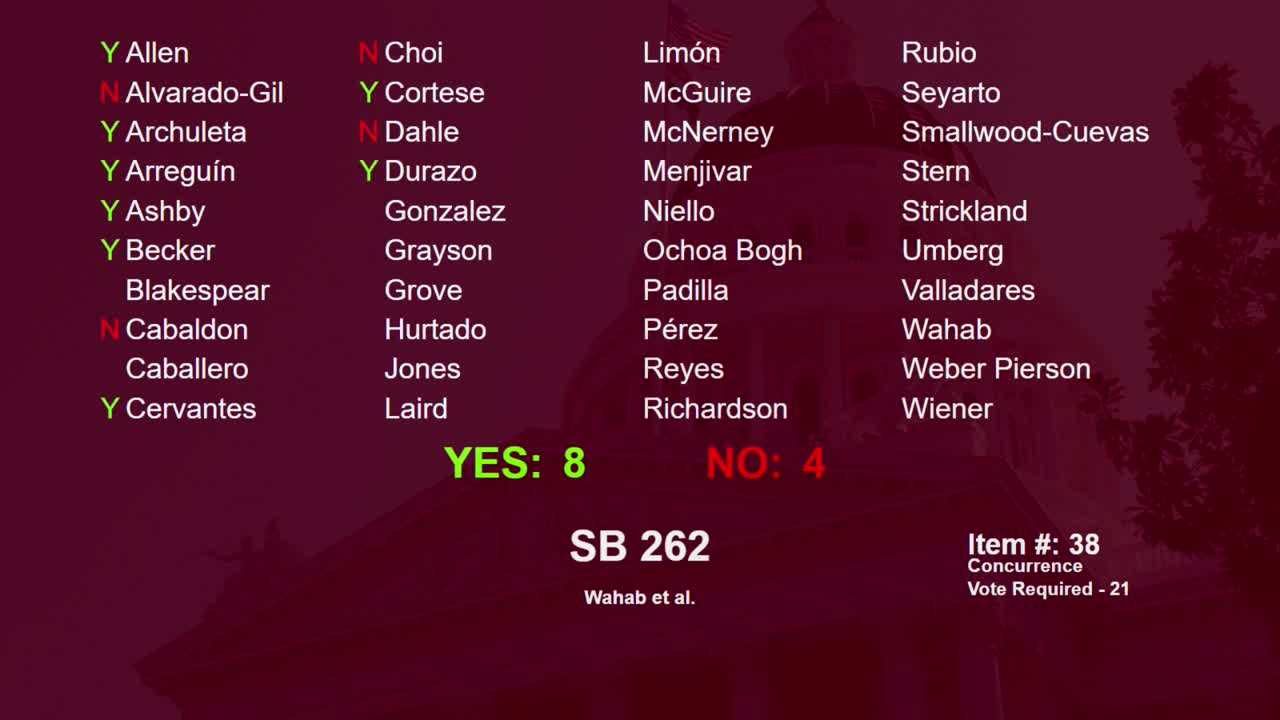

Bill Author

Bill Co-Author(s):