SB 342: Contractors: unlicensed work.
- Session Year: 2025-2026
- House: Senate
- Latest Version Date: 2026-09-30
Current Status:
Passed
(2026-09-30: Chaptered by Secretary of State. Chapter 967, Statutes of 2026.)
Introduced
In Committee
Awaiting First Chamber Vote
Passed First Chamber
In Committee
Awaiting Second Chamber Vote
Passed Second Chamber
Enacted
Existing law, the Contractors State License Law, establishes the Contractors State License Board in the Department of Consumer Affairs to license and regulate contractors. Existing law prohibits a person engaging in the business or acting in the capacity of a contractor from recovering compensation for work performed that requires a contractors license unless the person was a duly licensed contractor at all times during the performance of the act or contract, except as specified.
This bill would further exempt from that prohibition an action for compensation arising from a contract for specified projects, including for a public work of improvement or a commercial or institutional construction project, and would, instead, authorize a person to maintain an action for compensation under one of those contracts if the person was a duly licensed contractor at the time the contract was executed and during the portion of the performance of the contract for which compensation is sought.
Existing law authorizes a person who uses the services of an unlicensed contractor to bring an action to recover all compensation paid to the unlicensed contractor for performance of any act or contract, except as provided.
This bill would additionally exempt from that authorization an action for compensation arising from a contract for specified projects, including for a public work of improvement or a commercial or institutional construction project, and would, instead, authorize a person to bring an action under one of those contracts to recover the portion of compensation paid to the unlicensed contractor for work performed during the time in which the contractor was unlicensed.
Existing law, the Contractors State License Law, establishes the Contractors State License Board in the Department of Consumer Affairs to license and regulate contractors. Existing law prohibits a person engaging in the business or acting in the capacity of a contractor from recovering compensation for work performed that requires a contractors license unless the person was a duly licensed contractor at all times during the performance of the act or contract, except as specified.
This bill would further exempt from that prohibition an action for compensation arising from a contract for a public work of improvement, as specified. specified projects, including for a public work of improvement or a commercial or institutional construction project, and would, instead, authorize a person to maintain an action for compensation under one of those contracts if the person was a duly licensed contractor at the time the contract was executed and during the portion of the performance of the contract for which compensation is sought.
Existing law authorizes a person who uses the services of an unlicensed contractor to bring an action to recover all compensation paid to the unlicensed contractor for performance of any act or contract, except as provided.
This bill would additionally exempt from that authorization an action for compensation arising from a contract for a public work of improvement, as specified. specified projects, including for a public work of improvement or a commercial or institutional construction project, and would, instead, authorize a person to bring an action under one of those contracts to recover the portion of compensation paid to the unlicensed contractor for work performed during the time in which the contractor was unlicensed.
Existing law, the Contractors State License Law, establishes the Contractors State License Board in the Department of Consumer Affairs to license and regulate contractors. Existing law prohibits a person engaging in the business or acting in the capacity of a contractor from recovering compensation for work performed that requires a contractors license unless the person was a duly licensed contractor at all times during the performance of the act or contract, except as specified.
This bill would further exempt an action for compensation arising from a contract for a public work of improvement, as specified.
Existing law authorizes a person who uses the services of an unlicensed contractor to bring an action to recover all compensation paid to the unlicensed contractor for performance of any act or contract, except as provided.
This bill would additionally exempt an action for compensation arising from a contract for a public work of improvement, as specified.
Existing law, the Contractors State License Law, establishes the Contractors State License Board in the Department of Consumer Affairs to license and regulate contractors. Existing law prohibits a person engaging in the business or acting in the capacity of a contractor from recovering compensation for work performed that requires a contractors license unless the person was a duly licensed contractor at all times during the performance of the act or contract, except as specified.
This bill would instead allow that person to recover compensation for that work if the person was a duly licensed contractor at the time the contract was executed and during the portion of the times of the performance of that act or contract for which they are seeking to recover compensation.This bill would further exempt an action for compensation arising from a contract for a public work of improvement, as specified.
Existing law authorizes a person who uses the services of an unlicensed contractor to bring an action to recover all compensation paid to the unlicensed contractor for performance of any act or contract. contract, except as provided.
This bill would instead authorize that person to recover the portion of compensation paid to the unlicensed contractor for work performed during the time in which the contractor was unlicensed.This bill would additionally exempt an action for compensation arising from a contract for a public work of improvement, as specified.
Existing law, the Contractors State License Law, establishes the Contractors State License Board in the Department of Consumer Affairs to license and regulate contractors. Existing law prohibits a person engaging in the business or acting in the capacity of a contractor from recovering compensation for work performed that requires a contractors license unless the person was a duly licensed contractor at all times during the performance of the act or contract, except as specified.
This bill, for construction work other than private construction work for residential real property of 25 units or less, would instead prohibit the collection of compensation for the period of time where the person was unlicensed. If the persons license was suspended only because of an administrative purpose, including failing to renew their license on time, the bill would limit the amount the person is ineligible to recover to actual damages or $10,000 per day, whichever is greater.Existing law makes a security interest taken to secure a payment for the performance of an act or contract that requires a contractors license unenforceable if the person performing the act or contract was not a duly licensed contractor at all times during the performance of the act or contract.This bill, for construction work other than private construction work for residential real property of 25 units or less, would limit the unenforceability of the security interest to any period of time when the person performing the act or contract is not licensed.This bill would instead allow that person to recover compensation for that work if the person was a duly licensed contractor at the time the contract was executed and during the portion of the times of the performance of that act or contract for which they are seeking to recover compensation.
Existing law authorizes a person who uses the services of an unlicensed contractor to bring an action to recover all compensation paid to the unlicensed contractor for performance of any act or contract.
This bill would limit the application of that authorization to private construction work for residential real property of 25 units or less. instead authorize that person to recover the portion of compensation paid to the unlicensed contractor for work performed during the time in which the contractor was unlicensed.
Existing law, the Contractors State License Law, establishes the Contractors State License Board in the Department of Consumer Affairs to license and regulate contractors. Existing law prohibits a person engaging in the business or acting in the capacity of a contractor from recovering compensation for work performed that requires a contractors license unless the person was a duly licensed contractor at all times during the performance of the act or contract, except as specified.
This bill, for construction work other than private construction work for residential real property of 25 units or less, would instead prohibit the collection of compensation for the period of time where the person was unlicensed. If the persons license was suspended only because of an administrative purpose, including failing to renew their license on time, the bill would limit the amount the person is ineligible to recover to actual damages or $10,000 per day, whichever is greater.
Existing law makes a security interest taken to secure a payment for the performance of an act or contract that requires a contractors license unenforceable if the person performing the act or contract was not a duly licensed contractor at all times during the performance of the act or contract.
This bill, for construction work other than private construction work for residential real property of 25 units or less, would limit the unenforceability of the security interest to any period of time when the person performing the act or contract is not licensed.
Existing law authorizes a person who uses the services of an unlicensed contractor to bring an action to recover all compensation paid to the unlicensed contractor for performance of any act or contract.
This bill would limit the application of that authorization to private construction work for residential real property of 25 units or less.
Existing law establishes a system of public elementary and secondary education in this state.This bill would state the intent of the Legislature to enact subsequent legislation relating to secondary education.Existing law establishes a system of public elementary and secondary education in this state.
This bill would state the intent of the Legislature to enact subsequent legislation relating to secondary education.
(a)(1)Except as provided in paragraph (2) or subdivision (e), no person engaged in the business or acting in the capacity of a contractor may bring or maintain any action, or recover in law or equity in any action, in any court of this state for the collection of compensation for the performance of any act or contract where a license is required by this chapter without alleging that they were a duly licensed contractor at all times during the performance of that act or contract, regardless of the merits of the cause of action brought by the person.
(2)Paragraph (1) shall not apply to either of the following:
(A)Any contractor who is individually licensed under this chapter but who fails to comply with Section 7029.
(B)(i)An action for compensation arising from a contract for any of the following:
(I)A public work of improvement.
(II)A commercial construction project.
(III)An institutional construction project.
(IV)Construction of a common interest development, as defined in Section 4100 of the Civil Code, if a tenant or resident is not a party to the contract.
(V)Construction of a multifamily residential project consisting of four or more units if a tenant or resident is not a party to the contract.
(ii)A person may maintain an action for compensation under this subparagraph if the person was a duly licensed contractor at the time the contract was executed and during the portion of the performance of the contract for which compensation is sought, without regard to the underlying merits of the cause of action.
(b)(1)Except as provided in paragraph (2) or subdivision (e), a person who utilizes the services of an unlicensed contractor may bring an action in any court of competent jurisdiction in this state to recover all compensation paid to the unlicensed contractor for performance of any act or contract.
(2)(A)Paragraph (1) does not apply to an action for compensation arising from a contract for any of the following:
(i)A public work of improvement.
(ii)A commercial construction project.
(iii)An institutional construction project.
(iv)Construction of a common interest development, as defined in Section 4100 of the Civil Code, if a tenant or resident is not a party to the contract.
(v)Construction of a multifamily residential project consisting of four or more units if a tenant or resident is not a party to the contract.
(B)A person may bring an action under this paragraph to recover the portion of compensation paid to the unlicensed contractor for work performed during the time in which the contractor was unlicensed.
(c)A security interest taken to secure any payment for the performance of any act or contract for which a license is required by this chapter is unenforceable if the person performing the act or contract was not a duly licensed contractor at all times during the performance of the act or contract.
(d)If licensure or proper licensure is controverted, then proof of licensure pursuant to this section shall be made by production of a verified certificate of licensure from the Contractors State License Board which establishes that the individual or entity bringing the action was duly licensed in the proper classification of contractors at all times during the performance of any act or contract covered by the action. Nothing in this subdivision shall require any person or entity controverting licensure or proper licensure to produce a verified certificate. When licensure or proper licensure is controverted, the burden of proof to establish licensure or proper licensure shall be on the licensee.
(e)The judicial doctrine of substantial compliance shall not apply under this section where the person who engaged in the business or acted in the capacity of a contractor has never been a duly licensed contractor in this state. However, notwithstanding subdivision (b) of Section 143, the court may determine that there has been substantial compliance with licensure requirements under this section if it is shown at an evidentiary hearing that the person who engaged in the business or acted in the capacity of a contractor (1) had been duly licensed as a contractor in this state prior to the performance of the act or contract, (2) acted reasonably and in good faith to maintain proper licensure, and (3) acted promptly and in good faith to remedy the failure to comply with the licensure requirements upon learning of the failure.
(f)The exceptions to the prohibition against the application of the judicial doctrine of substantial compliance found in subdivision (e) shall apply to all contracts entered into on or after January 1, 1992, and to all actions or arbitrations arising therefrom, except that the amendments to subdivisions (e) and (f) enacted during the 1994 portion of the 199394 Regular Session of the Legislature shall not apply to either of the following:
(1)Any legal action or arbitration commenced prior to January 1, 1995, regardless of the date on which the parties entered into the contract.
(2)Any legal action or arbitration commenced on or after January 1, 1995, if the legal action or arbitration was commenced prior to January 1, 1995, and was subsequently dismissed.
(a)(1)Except as provided in paragraph (2) or subdivision (e), no person engaged in the business or acting in the capacity of a contractor may bring or maintain any action, or recover in law or equity in any action, in any court of this state for the collection of compensation for the performance of any act or contract where a license is required by this chapter without alleging that they were a duly licensed contractor at all times during the performance of that act or contract, regardless of the merits of the cause of action brought by the person.
(2)Paragraph (1) shall not apply to either of the following:
(A)Any contractor who is individually licensed under this chapter but who fails to comply with Section 7029.
(B)(i)An action for compensation arising from a contract for any of the following:
(I)A public work of improvement.
(II)A commercial construction project.
(III)An institutional construction project.
(IV)Construction of a common interest development, as defined in Section 4100 of the Civil Code. Code, if a tenant or resident is not a party to the contract.
(V)Construction of a multifamily residential project consisting of four or more units if a tenant or resident is not a party to the contract.
(ii)A person may maintain an action for compensation under this subparagraph if the person was a duly licensed contractor at the time the contract was executed and during the portion of the performance of the contract for which compensation is sought, without regard to the underlying merits of the cause of action.
(b)(1)Except as provided in paragraph (2) or subdivision (e), a person who utilizes the services of an unlicensed contractor may bring an action in any court of competent jurisdiction in this state to recover all compensation paid to the unlicensed contractor for performance of any act or contract.
(2)(A)Paragraph (1) does not apply to an action for compensation arising from a contract for any of the following:
(i)A public work of improvement.
(ii)A commercial construction project.
(iii)An institutional construction project.
(iv)Construction of a common interest development, as defined in Section 4100 of the Civil Code. Code, if a tenant or resident is not a party to the contract.
(v)Construction of a multifamily residential project consisting of four or more units if a tenant or resident is not a party to the contract.
(B)A person may bring an action under this paragraph to recover the portion of compensation paid to the unlicensed contractor for work performed during the time in which the contractor was unlicensed.
(c)A security interest taken to secure any payment for the performance of any act or contract for which a license is required by this chapter is unenforceable if the person performing the act or contract was not a duly licensed contractor at all times during the performance of the act or contract.
(d)If licensure or proper licensure is controverted, then proof of licensure pursuant to this section shall be made by production of a verified certificate of licensure from the Contractors State License Board which establishes that the individual or entity bringing the action was duly licensed in the proper classification of contractors at all times during the performance of any act or contract covered by the action. Nothing in this subdivision shall require any person or entity controverting licensure or proper licensure to produce a verified certificate. When licensure or proper licensure is controverted, the burden of proof to establish licensure or proper licensure shall be on the licensee.
(e)The judicial doctrine of substantial compliance shall not apply under this section where the person who engaged in the business or acted in the capacity of a contractor has never been a duly licensed contractor in this state. However, notwithstanding subdivision (b) of Section 143, the court may determine that there has been substantial compliance with licensure requirements under this section if it is shown at an evidentiary hearing that the person who engaged in the business or acted in the capacity of a contractor (1) had been duly licensed as a contractor in this state prior to the performance of the act or contract, (2) acted reasonably and in good faith to maintain proper licensure, and (3) acted promptly and in good faith to remedy the failure to comply with the licensure requirements upon learning of the failure.
(f)The exceptions to the prohibition against the application of the judicial doctrine of substantial compliance found in subdivision (e) shall apply to all contracts entered into on or after January 1, 1992, and to all actions or arbitrations arising therefrom, except that the amendments to subdivisions (e) and (f) enacted during the 1994 portion of the 199394 Regular Session of the Legislature shall not apply to either of the following:
(1)Any legal action or arbitration commenced prior to January 1, 1995, regardless of the date on which the parties entered into the contract.
(2)Any legal action or arbitration commenced on or after January 1, 1995, if the legal action or arbitration was commenced prior to January 1, 1995, and was subsequently dismissed.
(a)(1)Except as provided in paragraph (2) or subdivision (e), no person engaged in the business or acting in the capacity of a contractor may bring or maintain any action, or recover in law or equity in any action, in any court of this state for the collection of compensation for the performance of any act or contract where a license is required by this chapter without alleging that they were a duly licensed contractor at all times during the performance of that act or contract, regardless of the merits of the cause of action brought by the person.
(2)Paragraph (1) shall not apply to either of the following:
(A)Any contractor who is individually licensed under this chapter but who fails to comply with Section 7029.
(B)(i)An action for compensation arising from a contract for a any of the following:
(I)A public work of improvement. A
(II)A commercial construction project.
(III)An institutional construction project.
(IV)Construction of a common interest development, as defined in Section 4100 of the Civil Code.
(V)Construction of a multifamily residential project consisting of four or more units if a tenant or resident is not a party to the contract.
(ii)A person may maintain an action for compensation under this subparagraph if the person was a duly licensed contractor at the time the contract was executed and during the portion of the performance of the contract for which compensation is sought, without regard to the underlying merits of the cause of action.
(b)(1)Except as provided in paragraph (2) or subdivision (e), a person who utilizes the services of an unlicensed contractor may bring an action in any court of competent jurisdiction in this state to recover all compensation paid to the unlicensed contractor for performance of any act or contract.
(2)(A)Paragraph (1) does not apply to an action for compensation arising from a contract for a any of the following:
(i)A public work of improvement. A
(ii)A commercial construction project.
(iii)An institutional construction project.
(iv)Construction of a common interest development, as defined in Section 4100 of the Civil Code.
(v)Construction of a multifamily residential project consisting of four or more units if a tenant or resident is not a party to the contract.
(B)A person may bring an action under this paragraph to recover the portion of compensation paid to the unlicensed contractor for work performed during the time in which the contractor was unlicensed.
(c)A security interest taken to secure any payment for the performance of any act or contract for which a license is required by this chapter is unenforceable if the person performing the act or contract was not a duly licensed contractor at all times during the performance of the act or contract.
(d)If licensure or proper licensure is controverted, then proof of licensure pursuant to this section shall be made by production of a verified certificate of licensure from the Contractors State License Board which establishes that the individual or entity bringing the action was duly licensed in the proper classification of contractors at all times during the performance of any act or contract covered by the action. Nothing in this subdivision shall require any person or entity controverting licensure or proper licensure to produce a verified certificate. When licensure or proper licensure is controverted, the burden of proof to establish licensure or proper licensure shall be on the licensee.
(e)The judicial doctrine of substantial compliance shall not apply under this section where the person who engaged in the business or acted in the capacity of a contractor has never been a duly licensed contractor in this state. However, notwithstanding subdivision (b) of Section 143, the court may determine that there has been substantial compliance with licensure requirements under this section if it is shown at an evidentiary hearing that the person who engaged in the business or acted in the capacity of a contractor (1) had been duly licensed as a contractor in this state prior to the performance of the act or contract, (2) acted reasonably and in good faith to maintain proper licensure, and (3) acted promptly and in good faith to remedy the failure to comply with the licensure requirements upon learning of the failure.
(f)The exceptions to the prohibition against the application of the judicial doctrine of substantial compliance found in subdivision (e) shall apply to all contracts entered into on or after January 1, 1992, and to all actions or arbitrations arising therefrom, except that the amendments to subdivisions (e) and (f) enacted during the 1994 portion of the 199394 Regular Session of the Legislature shall not apply to either of the following:
(1)Any legal action or arbitration commenced prior to January 1, 1995, regardless of the date on which the parties entered into the contract.
(2)Any legal action or arbitration commenced on or after January 1, 1995, if the legal action or arbitration was commenced prior to January 1, 1995, and was subsequently dismissed.
(a)(1)Except as provided in paragraph (2) or subdivision (e), no person engaged in the business or acting in the capacity of a contractor may bring or maintain any action, or recover in law or equity in any action, in any court of this state for the collection of compensation for the performance of any act or contract where a license is required by this chapter without alleging that they were a duly licensed contractor at all times during the performance of that act or contract, regardless of the merits of the cause of action brought by the person.
(2)Paragraph (1) shall not apply to either of the following:
(A)Any contractor who is individually licensed under this chapter but who fails to comply with Section 7029.
(B)An action for compensation arising from a contract for a public work of improvement. A person may maintain an action for compensation under this subparagraph if the person was a duly licensed contractor at the time the contract was executed and during the portion of the performance of the contract for which compensation is sought, without regard to the underlying merits of the cause of action.
(b)(1)Except as provided in paragraph (2) or subdivision (e), a person who utilizes the services of an unlicensed contractor may bring an action in any court of competent jurisdiction in this state to recover all compensation paid to the unlicensed contractor for performance of any act or contract.
(2)Paragraph (1) does not apply to an action for compensation arising from a contract for a public work of improvement. A person may maintain an action for compensation under this paragraph if the person was a duly licensed contractor at the time the contract was executed and during the portion of the performance of the contract for which compensation is sought, without regard to the underlying merits of the cause of action. bring an action to recover the portion of compensation paid to the unlicensed contractor for work performed during the time in which the contractor was unlicensed.
(c)A security interest taken to secure any payment for the performance of any act or contract for which a license is required by this chapter is unenforceable if the person performing the act or contract was not a duly licensed contractor at all times during the performance of the act or contract.
(d)If licensure or proper licensure is controverted, then proof of licensure pursuant to this section shall be made by production of a verified certificate of licensure from the Contractors State License Board which establishes that the individual or entity bringing the action was duly licensed in the proper classification of contractors at all times during the performance of any act or contract covered by the action. Nothing in this subdivision shall require any person or entity controverting licensure or proper licensure to produce a verified certificate. When licensure or proper licensure is controverted, the burden of proof to establish licensure or proper licensure shall be on the licensee.
(e)The judicial doctrine of substantial compliance shall not apply under this section where the person who engaged in the business or acted in the capacity of a contractor has never been a duly licensed contractor in this state. However, notwithstanding subdivision (b) of Section 143, the court may determine that there has been substantial compliance with licensure requirements under this section if it is shown at an evidentiary hearing that the person who engaged in the business or acted in the capacity of a contractor (1) had been duly licensed as a contractor in this state prior to the performance of the act or contract, (2) acted reasonably and in good faith to maintain proper licensure, and (3) acted promptly and in good faith to remedy the failure to comply with the licensure requirements upon learning of the failure.
(f)The exceptions to the prohibition against the application of the judicial doctrine of substantial compliance found in subdivision (e) shall apply to all contracts entered into on or after January 1, 1992, and to all actions or arbitrations arising therefrom, except that the amendments to subdivisions (e) and (f) enacted during the 1994 portion of the 199394 Regular Session of the Legislature shall not apply to either of the following:
(1)Any legal action or arbitration commenced prior to January 1, 1995, regardless of the date on which the parties entered into the contract.
(2)Any legal action or arbitration commenced on or after January 1, 1995, if the legal action or arbitration was commenced prior to January 1, 1995, and was subsequently dismissed.
(a)(1)Except as provided in paragraph (2) or subdivision (e), no person engaged in the business or acting in the capacity of a contractor may bring or maintain any action, or recover in law or equity in any action, in any court of this state for the collection of compensation for the performance of any act or contract where a license is required by this chapter without alleging that they were a duly licensed contractor at the time the contract was executed and during the portion of the times of the at all times during the performance of that act or contract for which they are seeking to recover compensation, contract, regardless of the merits of the cause of action brought by the person.
(2)Paragraph (1) shall not apply to either of the following:
(2)The prohibition in paragraph (1) shall not apply to contractors who are each(A)Any contractor who is individually licensed under this chapter but who fail fails to comply with Section 7029.
(B)An action for compensation arising from a contract for a public work of improvement. A person may maintain an action for compensation under this subparagraph if the person was a duly licensed contractor at the time the contract was executed and during the portion of the performance of the contract for which compensation is sought, without regard to the underlying merits of the cause of action.
(b)(1)Except as provided in paragraph (2) or subdivision (e), a person who utilizes the services of an unlicensed contractor may bring an action in any court of competent jurisdiction in this state to recover the portion of all compensation paid to the unlicensed contractor for work performed during the time in which the contractor was unlicensed. for performance of any act or contract.
(2)Paragraph (1) does not apply to an action for compensation arising from a contract for a public work of improvement. A person may maintain an action for compensation under this paragraph if the person was a duly licensed contractor at the time the contract was executed and during the portion of the performance of the contract for which compensation is sought, without regard to the underlying merits of the cause of action.
(c)A security interest taken to secure any payment for the performance of any act or contract for which a license is required by this chapter is unenforceable if the person performing the act or contract was not a duly licensed contractor at all times during the performance of the act or contract.
(d)If licensure or proper licensure is controverted, then proof of licensure pursuant to this section shall be made by production of a verified certificate of licensure from the Contractors State License Board which establishes that the individual or entity bringing the action was duly licensed in the proper classification of contractors at all times during the performance of any act or contract covered by the action. Nothing in this subdivision shall require any person or entity controverting licensure or proper licensure to produce a verified certificate. When licensure or proper licensure is controverted, the burden of proof to establish licensure or proper licensure shall be on the licensee.
(e)The judicial doctrine of substantial compliance shall not apply under this section where the person who engaged in the business or acted in the capacity of a contractor has never been a duly licensed contractor in this state. However, notwithstanding subdivision (b) of Section 143, the court may determine that there has been substantial compliance with licensure requirements under this section if it is shown at an evidentiary hearing that the person who engaged in the business or acted in the capacity of a contractor (1) had been duly licensed as a contractor in this state prior to the performance of the act or contract, (2) acted reasonably and in good faith to maintain proper licensure, and (3) acted promptly and in good faith to remedy the failure to comply with the licensure requirements upon learning of the failure.
(f)The exceptions to the prohibition against the application of the judicial doctrine of substantial compliance found in subdivision (e) shall apply to all contracts entered into on or after January 1, 1992, and to all actions or arbitrations arising therefrom, except that the amendments to subdivisions (e) and (f) enacted during the 1994 portion of the 199394 Regular Session of the Legislature shall not apply to either of the following:
(1)Any legal action or arbitration commenced prior to January 1, 1995, regardless of the date on which the parties entered into the contract.
(2)Any legal action or arbitration commenced on or after January 1, 1995, if the legal action or arbitration was commenced prior to January 1, 1995, and was subsequently dismissed.
(a)(1)Except as provided in subdivision (e), no person engaged in the business or acting in the capacity of a contractor, contractor may bring or maintain any action, or recover in law or equity in any action, in any court of this state for the collection of compensation for the performance of any act or contract where a license is required by this chapter without alleging that they were a duly licensed contractor at all times during the time the contract was executed and during the portion of the times of the performance of that act or contract for which they are seeking to recover compensation, regardless of the merits of the cause of action brought by the person, except that this person.
(2)The prohibition in paragraph (1) shall not apply to contractors who are each individually licensed under this chapter but who fail to comply with Section 7029.
(b)Except as provided in subdivision (e), a person who utilizes the services of an unlicensed contractor may bring an action in any court of competent jurisdiction in this state to recover all the portion of compensation paid to the unlicensed contractor for performance of any act or contract. work performed during the time in which the contractor was unlicensed.
(c)A security interest taken to secure any payment for the performance of any act or contract for which a license is required by this chapter is unenforceable if the person performing the act or contract was not a duly licensed contractor at all times during the performance of the act or contract.
(d)If licensure or proper licensure is controverted, then proof of licensure pursuant to this section shall be made by production of a verified certificate of licensure from the Contractors State License Board which establishes that the individual or entity bringing the action was duly licensed in the proper classification of contractors at all times during the performance of any act or contract covered by the action. Nothing in this subdivision shall require any person or entity controverting licensure or proper licensure to produce a verified certificate. When licensure or proper licensure is controverted, the burden of proof to establish licensure or proper licensure shall be on the licensee.
(e)The judicial doctrine of substantial compliance shall not apply under this section where the person who engaged in the business or acted in the capacity of a contractor has never been a duly licensed contractor in this state. However, notwithstanding subdivision (b) of Section 143, the court may determine that there has been substantial compliance with licensure requirements under this section if it is shown at an evidentiary hearing that the person who engaged in the business or acted in the capacity of a contractor (1) had been duly licensed as a contractor in this state prior to the performance of the act or contract, (2) acted reasonably and in good faith to maintain proper licensure, and (3) acted promptly and in good faith to remedy the failure to comply with the licensure requirements upon learning of the failure.
(f)The exceptions to the prohibition against the application of the judicial doctrine of substantial compliance found in subdivision (e) shall apply to all contracts entered into on or after January 1, 1992, and to all actions or arbitrations arising therefrom, except that the amendments to subdivisions (e) and (f) enacted during the 1994 portion of the 199394 Regular Session of the Legislature shall not apply to either of the following:
(1)Any legal action or arbitration commenced prior to January 1, 1995, regardless of the date on which the parties entered into the contract.
(2)Any legal action or arbitration commenced on or after January 1, 1995, if the legal action or arbitration was commenced prior to January 1, 1995, and was subsequently dismissed.
SECTION 1.Section 7031 of the Business and Professions Code is amended to read:7031.(a)This subdivision applies to private construction work for residential real property of 25 units or less.(1)Except as provided in subdivision (c), no person engaged in the business or acting in the capacity of a contractor, may bring or maintain any action, or recover in law or equity in any action, in any court of this state for the collection of compensation for the performance of any act or contract where a license is required by this chapter without alleging that they were a duly licensed contractor at all times during the performance of that act or contract regardless of the merits of the cause of action brought by the person. This prohibition shall not apply to contractors who are each individually licensed under this chapter but who fail to comply with Section 7029.(2)Except as provided in subdivision (c), a person who utilizes the services of an unlicensed contractor may bring an action in any court of competent jurisdiction in this state to recover all compensation paid to the unlicensed contractor for performance of any act or contract.(3)A security interest taken to secure any payment for the performance of any act or contract for which a license is required by this chapter is unenforceable if the person performing the act or contract was not a duly licensed contractor at all times during the performance of the act or contract.(4)If licensure or proper licensure is controverted, then proof of licensure pursuant to this section shall be made by production of a verified certificate of licensure from the board that establishes that the individual or entity bringing the action was duly licensed in the proper classification of contractors at all times during the performance of any act or contract covered by the action. Nothing in this paragraph shall require any person or entity controverting licensure or proper licensure to produce a verified certificate. When licensure or proper licensure is controverted, the burden of proof to establish licensure or proper licensure shall be on the licensee.(b)This subdivision applies to all construction work not specified in subdivision (a), including public works construction, commercial projects, and private residential projects exceeding 25 residential units.(1)Except as provided in subdivision (c), no person engaged in the business or acting in the capacity of a contractor may recover in law or equity in an action in a court of this state for the collection of compensation for any period of time during the performance of an act or contract when the person was unlicensed but was required to be licensed by this chapter. A court of competent jurisdiction or arbitrator shall prohibit the collection of compensation for the period of time that the person was unlicensed. If the persons license was suspended only because they failed to renew their license on time, failed to pay a license renewal fee on time, or for another administrative purpose, the amount that the person is ineligible to recover shall not exceed the amount of actual damages or ten thousand dollars ($10,000) per day, whichever is greater.(2)A security interest taken to secure payment for the performance of any act or contract for which a license is required by this chapter is unenforceable during any period of time when the person performing the act or contract is not licensed.(3)If licensure or proper licensure is controverted, then proof of licensure pursuant to this section shall be made by production of a verified certificate of licensure from the board that establishes that the individual or entity bringing the action was duly licensed in the proper classification of contractors during the performance of any act or contract covered by the action. Nothing in this paragraph shall require any person or entity controverting licensure or proper licensure to produce a verified certificate. When licensure or proper licensure is controverted, the burden of proof to establish licensure or proper licensure shall be on the licensee. (c)The judicial doctrine of substantial compliance shall not apply under this section where the person who engaged in the business or acted in the capacity of a contractor has never been a duly licensed contractor in this state. However, notwithstanding subdivision (b) of Section 143, the court may determine that there has been substantial compliance with licensure requirements under this section if it is shown at an evidentiary hearing that the person who engaged in the business or acted in the capacity of a contractor (1) had been duly licensed as a contractor in this state prior to the performance of the act or contract, (2) acted reasonably and in good faith to maintain proper licensure, and (3) acted promptly and in good faith to remedy the failure to comply with the licensure requirements upon learning of the failure.(d)The exceptions to the prohibition against the application of the judicial doctrine of substantial compliance found in subdivision (c) shall apply to all contracts entered into on or after January 1, 1995.(a)Except This subdivision applies to private construction work for residential real property of 25 units or less.
(1)Except as provided in subdivision (e), (c), no person engaged in the business or acting in the capacity of a contractor, may bring or maintain any action, or recover in law or equity in any action, in any court of this state for the collection of compensation for the performance of any act or contract where a license is required by this chapter without alleging that they were a duly licensed contractor at all times during the performance of that act or contract regardless of the merits of the cause of action brought by the person, except that this person. This prohibition shall not apply to contractors who are each individually licensed under this chapter but who fail to comply with Section 7029.
(b)(2)Except as provided in subdivision (e), (c), a person who utilizes the services of an unlicensed contractor may bring an action in any court of competent jurisdiction in this state to recover all compensation paid to the unlicensed contractor for performance of any act or contract.
(c)(3)A security interest taken to secure any payment for the performance of any act or contract for which a license is required by this chapter is unenforceable if the person performing the act or contract was not a duly licensed contractor at all times during the performance of the act or contract.
(d)(4)If licensure or proper licensure is controverted, then proof of licensure pursuant to this section shall be made by production of a verified certificate of licensure from the Contractors State License Board which board that establishes that the individual or entity bringing the action was duly licensed in the proper classification of contractors at all times during the performance of any act or contract covered by the action. Nothing in this subdivision paragraph shall require any person or entity controverting licensure or proper licensure to produce a verified certificate. When licensure or proper licensure is controverted, the burden of proof to establish licensure or proper licensure shall be on the licensee.
(b)This subdivision applies to all construction work not specified in subdivision (a), including public works construction, commercial projects, and private residential projects exceeding 25 residential units.
(1)Except as provided in subdivision (c), no person engaged in the business or acting in the capacity of a contractor may recover in law or equity in an action in a court of this state for the collection of compensation for any period of time during the performance of an act or contract when the person was unlicensed but was required to be licensed by this chapter. A court of competent jurisdiction or arbitrator shall prohibit the collection of compensation for the period of time that the person was unlicensed. If the persons license was suspended only because they failed to renew their license on time, failed to pay a license renewal fee on time, or for another administrative purpose, the amount that the person is ineligible to recover shall not exceed the amount of actual damages or ten thousand dollars ($10,000) per day, whichever is greater.
(2)A security interest taken to secure payment for the performance of any act or contract for which a license is required by this chapter is unenforceable during any period of time when the person performing the act or contract is not licensed.
(3)If licensure or proper licensure is controverted, then proof of licensure pursuant to this section shall be made by production of a verified certificate of licensure from the board that establishes that the individual or entity bringing the action was duly licensed in the proper classification of contractors during the performance of any act or contract covered by the action. Nothing in this paragraph shall require any person or entity controverting licensure or proper licensure to produce a verified certificate. When licensure or proper licensure is controverted, the burden of proof to establish licensure or proper licensure shall be on the licensee.
(e)(c)The judicial doctrine of substantial compliance shall not apply under this section where the person who engaged in the business or acted in the capacity of a contractor has never been a duly licensed contractor in this state. However, notwithstanding subdivision (b) of Section 143, the court may determine that there has been substantial compliance with licensure requirements under this section if it is shown at an evidentiary hearing that the person who engaged in the business or acted in the capacity of a contractor (1) had been duly licensed as a contractor in this state prior to the performance of the act or contract, (2) acted reasonably and in good faith to maintain proper licensure, and (3) acted promptly and in good faith to remedy the failure to comply with the licensure requirements upon learning of the failure.
(f)(d)The exceptions to the prohibition against the application of the judicial doctrine of substantial compliance found in subdivision (e) (c) shall apply to all contracts entered into on or after January 1, 1992, and to all actions or arbitrations arising therefrom, except that the amendments to subdivisions (e) and (f) enacted during the 1994 portion of the 199394 Regular Session of the Legislature shall not apply to either of the following: 1995.
(1)Any legal action or arbitration commenced prior to January 1, 1995, regardless of the date on which the parties entered into the contract.(2)Any legal action or arbitration commenced on or after January 1, 1995, if the legal action or arbitration was commenced prior to January 1, 1995, and was subsequently dismissed.SECTION 1.It is the intent of the Legislature to enact subsequent legislation relating to secondary education.It is the intent of the Legislature to enact subsequent legislation relating to secondary education.
|
Date
|
Status
|
|---|---|
| Sep 30, 2026 | Chaptered by Secretary of State. Chapter 967, Statutes of 2026. |
| Sep 30, 2026 | Approved by the Governor. |
| Sep 8, 2026 | Enrolled and presented to the Governor at 4 p.m. |
| Aug 30, 2026 | Assembly amendments concurred in. (Ayes 39. Noes 0. Page 6150.) Ordered to engrossing and enrolling. |
| Aug 30, 2026 | Assembly amendments concurred in. (Ayes 38. Noes 0.) Ordered to engrossing and enrolling. |
| Aug 30, 2026 | In Senate. Concurrence in Assembly amendments pending. |
| Aug 30, 2026 | Read third time. Passed. (Ayes 75. Noes 0. Page 6856.) Ordered to the Senate. |
| Aug 30, 2026 | Read third time. Passed. Ordered to the Senate. |
| Aug 27, 2026 | Read second time. Ordered to third reading. |
| Aug 26, 2026 | Read second time and amended. Ordered to second reading. |
| Aug 25, 2026 | From committee: Do pass as amended. (Ayes 19. Noes 0.) (August 25). |
| Aug 24, 2026 | Joint Rule 62(a) suspended. |
| Aug 20, 2026 | Re-referred to Com. on B. & P. pursuant to Assembly Rule 77.2. |
| Aug 19, 2026 | Ordered to third reading. |
| Aug 19, 2026 | Read third time and amended. |
| Aug 17, 2026 | Read second time. Ordered to third reading. |
| Aug 13, 2026 | Read second time and amended. Ordered to second reading. |
| Aug 13, 2026 | From committee: Do pass as amended. (Ayes 11. Noes 0.) (August 13). |
| Aug 13, 2026 | Assembly Rule 63 suspended. |
| Aug 5, 2026 | August 5 set for first hearing. Placed on suspense file. |
| Jul 1, 2026 | Read second time and amended. Re-referred to Com. on APPR. |
| Jun 30, 2026 | From committee: Do pass as amended and re-refer to Com. on APPR. (Ayes 17. Noes 0.) (June 30). |
| Jun 18, 2026 | Pursuant to Assembly Rule 51. |
| Jun 18, 2026 | Referred to Com. on B. & P. |
| Jun 18, 2026 | Re-referred to Com. on B. & P. pursuant to Assembly Rule 51. |
| Jan 26, 2026 | In Assembly. Read first time. Held at Desk. |
| Jan 26, 2026 | Read third time. Passed. (Ayes 39. Noes 0. Page 3283.) Ordered to the Assembly. |
| Jan 22, 2026 | Read second time. Ordered to third reading. |
| Jan 22, 2026 | From committee: Do pass. (Ayes 7. Noes 0. Page 3268.) (January 22). |
| Jan 21, 2026 | Set for hearing January 22. |
| Jan 20, 2026 | January 20 hearing: Placed on APPR. suspense file. |
| Jan 15, 2026 | Set for hearing January 20. |
| Jan 14, 2026 | From committee: Do pass and re-refer to Com. on APPR. (Ayes 13. Noes 0. Page 3214.) (January 13). Re-referred to Com. on APPR. |
| Jan 12, 2026 | From committee: Do pass and re-refer to Com. on JUD. (Ayes 9. Noes 0. Page 3203.) (January 12). Re-referred to Com. on JUD. |
| Jan 9, 2026 | Set for hearing January 13 in JUD. pending receipt. |
| Jan 8, 2026 | Set for hearing January 12. |
| Jan 5, 2026 | From committee with author's amendments. Read second time and amended. Re-referred to Com. on B. P. & E.D. |
| Mar 26, 2025 | Re-referred to Coms. on B. P. & E.D. and JUD. |
| Mar 17, 2025 | From committee with author's amendments. Read second time and amended. Re-referred to Com. on RLS. |
| Feb 19, 2025 | Referred to Com. on RLS. |
| Feb 13, 2025 | From printer. May be acted upon on or after March 15. |
| Feb 12, 2025 | Introduced. Read first time. To Com. on RLS. for assignment. To print. |
|
Date
|
Description
|
Location
|
Votes
|
|
|---|---|---|---|---|
| Aug 30, 2026 | Unfinished Business SB342 Umberg et al. Concurrence | Senate Floor |
Passed |
|
| Aug 30, 2026 | SB 342 Umberg Senate Third Reading By Wicks | Assembly Floor |
Passed |
|
| Aug 25, 2026 | Do pass as amended. | Assembly Standing Committee on Business and Professions |
Passed |
|
| Aug 13, 2026 | Do pass as amended. | Assembly Standing Committee on Appropriations |
Passed |
|
| Jun 30, 2026 | Do pass as amended and be re-referred to the Committee on [Appropriations] | Assembly Standing Committee on Business and Professions |
Passed |
|
| Jan 26, 2026 | Senate 3rd Reading SB342 Umberg | Senate Floor |
Passed |
|
| Jan 22, 2026 | Do pass | Senate Standing Committee on Appropriations |
Passed |
|
| Jan 20, 2026 | Placed on suspense file | Senate Standing Committee on Appropriations |
Passed |
|
| Jan 13, 2026 | Do pass, but first be re-referred to the Committee on [Appropriations] | Senate Standing Committee on Judiciary |
Passed |
|
| Jan 12, 2026 | Do pass, but first be re-referred to the Committee on [Judiciary] | Senate Standing Committee on Business, Professions and Economic Development |
Passed |
This list shows positions taken on this bill by organizations on the date displayed, which is linked to the original source.
Positions by individuals are not included.
|
Organization
|
Position
|
Date
|
|---|---|---|
| Association Of California School Administrators | ** Against | |
| California Coalition for Adequate School Housing | ** Against | |
| California Conference of Carpenters | ** Support | |
| California Legislative Conference Of Plumbing, Heating & Piping Industry | ** Support | |
| California Special Districts Association | ** Against | |
| California State Association Of Counties | ** Against | |
| Construction Employers' Association | ** Support | |
| Finishing Contractors Association Of Southern California | ** Support | |
| League Of California Cities | ** Against | |
| Los Angeles Unified School District | ** Against | |
| National Electrical Contractors Association | ** Support | |
| NECA, INC. | ** Support | |
| Northern California Allied Trades | ** Support | |
| Northern California Floor Covering Association | ** Support | |
| San Bernardino County Transportation Authority | ** Against | |
| Southern California Glass Management Association | ** Support | |
| United Contractors | ** Support | |
| Wall and Ceiling Alliance | ** Support | |
| Western Electrical Contractors Association | ** Support | |
| western line constructors | ** Support | |
| Western Line Constructors Chapter, Inc., Neca, Inc. | ** Support | |
| Western Painting and Coating Contractors Association | ** Support | |
| Western Wall And Ceiling Contractors Association | ** Support |
SENATE RULES COMMITTEE Office of Senate Floor Analyses (916) 651-4171 | SB 342 |
UNFINISHED BUSINESS
Bill No: SB 342
Author: Umberg (D), et al.
Amended: 8/26/26
Vote: 21
SENATE BUS., PROF. & ECON. DEV. COMMITTEE: 9-0, 1/12/26
AYES: Ashby, Choi, Archuleta, Arreguín, Grayson, Niello, Smallwood-Cuevas, Umberg, Weber Pierson
NO VOTE RECORDED: Menjivar, Strickland
SENATE JUDICIARY COMMITTEE: 13-0, 1/13/26
AYES: Umberg, Niello, Allen, Ashby, Caballero, Durazo, Laird, Reyes, Stern, Valladares, Wahab, Weber Pierson, Wiener
SENATE APPROPRIATIONS COMMITTEE: 7-0, 1/22/26
AYES: Caballero, Seyarto, Cabaldon, Dahle, Grayson, Richardson, Wahab
SENATE FLOOR: 39-0, 1/26/26
AYES: Allen, Alvarado-Gil, Archuleta, Arreguín, Ashby, Becker, Blakespear, Cabaldon, Caballero, Cervantes, Choi, Cortese, Dahle, Durazo, Grayson, Grove, Hurtado, Jones, Laird, Limón, McGuire, McNerney, Menjivar, Niello, Ochoa Bogh, Padilla, Pérez, Reyes, Richardson, Rubio, Seyarto, Smallwood-Cuevas, Stern, Strickland, Umberg, Valladares, Wahab, Weber Pierson, Wiener
NO VOTE RECORDED: Gonzalez
ASSEMBLY FLOOR: 75-0, 8/30/26 - See last page for vote
SUBJECT: Contractors: unlicensed work
SOURCE: California Conference of Carpenters
DIGEST:
This bill permits a contractor to bring action against a party for compensation for work conducted while the contractor’s license was not valid on contracts that are public works, commercial construction projects, institutional construction projects, construction of a common interest developments, and construction of multifamily residential projects consisting of four or more units, as long as the license was valid at the time the contract was executed. This bill also restricts consumers from bringing action against an unlicensed contractor in these cases during portions of the project to only during periods when the contractor’s license was not valid.
Assembly Amendments
reinstates the authority for unlicensed contractors to sue for compensation on most contract types, not just public works and limit consumers’ ability to bring action against an unlicensed contractor to only the period when the contractor’s license was not valid.
ANALYSIS:
Existing law:
- Establishes the Contractors State License Board (CSLB) to enforce and administer the Contractors State License Law (License Law). (Business and Professions Code (BPC) § 7000 et seq.)
- Establishes that, unless exempted from licensure, it is a misdemeanor to engage in the business of, or act in the capacity of, a contractor if the person is not licensed in accordance with the License Law and subjects the unlicensed person to punishment as follows:
- A fine not exceeding $5,000, imprisonment in a county jail not exceeding six months, or both for a first offense;
- A fine of 20 percent of the contract price, 20 percent of the aggregate payments made to the unlicensed person, or five thousand dollars ($5,000), whichever is greater, and confinement of not less than 90 days in jail for a second offense; or
- A fine of not less than five thousand dollars ($5,000) nor more than the greater amount of ten thousand dollars ($10,000) or 20 percent of the contract price, or 20 percent of the aggregate payments made to, or at the direction of, the unlicensed person, and by imprisonment in a county jail for not more than one year or less than 90 days for a third or subsequent conviction. (BPC § 7028(a))
- Empowers the Registrar of Contractors to issue citations containing orders of abatement and civil penalties against persons acting in the capacity of or engaging in the business of a contractor without having a license in good standing to so act or engage. (BPC § 7028.6)
- Authorizes CSLB to issue a joint venture license to any combination of individuals, corporations, limited liability companies, partnerships, or other joint ventures, each of which holds a current, active license in good standing; automatically suspends an active joint venture license by operation of law during any period in which any member of the entity does not hold a current, active license in good standing. (BPC § 7029)
- Provides that no person engaged in the business or acting in the capacity of a contractor may bring or maintain any action for the collection of compensation for the performance of any act or contract where a license is required without alleging that he or she was duly licensed at all times during the performance of the act or contract. (BPC § 7031(a))
- Provides that a person who utilizes the services of an unlicensed contractor may bring an action in any court of competent jurisdiction in this state to recover all compensation paid to the unlicensed contractor for performance of any act or contract. (BPC 7031(b))
- States the court may determine that there has been substantial compliance with licensure requirements under this section if it is shown at an evidentiary hearing that the person who engaged in the business or acted in the capacity of a contractor (1) had been duly licensed as a contractor in this state prior to the performance of the act or contract, (2) acted reasonably and in good faith to maintain proper licensure, and (3) acted promptly and in good faith to remedy the failure to comply with the licensure requirements upon learning of the failure. (BPC § 7031(e))
- Provides that all licenses issued under the provisions of the License Law shall expire two years from the last day of the month in which the license is issued, or two years from the date on which the renewed license last expired. Requires the licensee to, before the time at which the license would otherwise expire, apply for renewal on a form prescribed by the registrar and pay the prescribed renewal fee. (BPC § 7140)
- Requires the Registrar to grant retroactive renewal of a license if, within 90 days of the expiration of the license, the otherwise eligible licensee submits a completed application for renewal on a form prescribed by the Registrar and pays the appropriate renewal and delinquency fees. States an application shall be deemed submitted if it is delivered to the board’s headquarters or postmarked within 90 days of the expiration of the license. (BPC § 7141.5)
- Requires an applicant to qualify for licensure by written examination upon appearance of a qualifying individual, responsible managing employee, officer, manager, member, or partner, as applicable. (BPC §§ 7065(c))
- Requires the examination to include questions designed to show that the applicant has the necessary degree of knowledge of the building, safety, health, and lien laws of the state and of the administrative principles of the contracting business that the board deems necessary for the safety and protection of the public and shall include pertinent questions relating to the laws of this state and the contracting business and trade. (BPC § 7068)
This bill:
- Allows a contractor to bring action in a court in this state against a consumer to recover compensation for periods of the contract when the contractor was licensed if they were licensed at the time the contract was executed and meets one of the following criteria:
- The contractor is party to a joint venture, but the joint venture license is suspended pursuant to 4) above;
- The contract is for a public work of improvement;
- The contract is for a commercial construction project;
- The contract is for a commercial construction project;
- The contract is for an institutional construction project;
- The contract is for the construction of a common interest development, as defined in Section 4100 of the Civil Code; or
- The contract is for the construction of a multifamily residential project consisting of four or more units if a tenant or resident is not a party to the contract.
- Limits the period for which a consumer may bring action to recover compensation paid to a contractor to the portion paid while the contractor was unlicensed.
Background
Contractors and the CSLB. CSLB is responsible for implementing and enforcing the License Law and regulations related to the licensure, practice and discipline of the construction industry in California. The CSLB licenses and regulates approximately 242,000 active licensees in 44 licensing classifications, issues two certifications, and registers approximately 30,000 Home Improvement Salespersons.
The License Law protects consumers from those who are unqualified, uninsured, fraudulent, negligent, or otherwise unfit to perform work as contractor. To become licensed, a contractor must obtain worker’s compensation insurance, obtain a contractor’s bond, and employ a qualifying individual with the knowledge of building laws of the state and administrative principles of the contracting business as demonstrated by passing a law and ethics examination, among other requirements. The responsible managing employee, manager, or partner who qualified for the license is also required to be listed as the personnel of record, actively engaged in the contracting business, and held responsible for all violations of the contracting business, including operating while unlicensed. Simply put, there is a person who has agreed to be responsible for maintaining of each of the 242,000 licenses and knows the license needs to be renewed every two years.
Currently, the License Law provides that a contractor may not bring action to recover compensation for performance of a contract while unlicensed. Additionally, a consumer may bring action to recover any compensation paid to a contractor who was unlicensed at any time during performance of the contract. These provisions are intended to prevent unjust enrichment of those who disregard license laws by making it unprofitable to engage in illegal activity.
A previous bill, AB 1793 (Holden, Chapter 244, Statutes of 2016), proposed to remove the requirement for contractors to show they have been duly licensed “at all times” during the performance of an act or contract that requires a license in order to file an action to recover compensation for performance of that contract. AB 1793 was eventually amended to restore “at all times” (see amendment of August 2, 2016) due to concerns raised in the Senate Committee on Judiciary about diminished consumer protection and reducing consequences of failing to maintain licensure. Instead, AB 1793 revised criteria to be used in an evidentiary hearing to determine whether a person acted in the capacity of a contractor.
After AB 1793 did not pass as originally proposed, the Legislature revisited the issue of disproportionate costs incurred by contractors whose licenses lapse through no fault of their own during CSLB’s subsequent sunset review oversight by reviewing the expired license process instead of disgorgement. Originally, if a license expired, a licensee had to prove that the license lapsed for reasons beyond their control and the Registrar had permissive authority to approve or not approve retroactive renewal. Throughout the joint sunset review oversight process, the Senate Committee on Business, Professions, and Economic Development and Assembly Committee on Business and Professions sought to resolve that issue as a way to eliminate the short license lapse problem.
The resulting legislation, SB 1474 (Committee on Business, Professions and Economic Development, Chapter 312, Statutes of 2020), replaced the existing permissive retroactive license renewal authority with required retroactive renewal as long as the renewal form and fees are received by CSLB within 90 days of the license expiration date. SB 1474 also eliminated the requirement that the licensee demonstrate the renewal is late due to reasons beyond the licensee’s control and specified that the renewal application is considered submitted if it is delivered or postmarked 90 days from the date of expiration. Consequently, there is no circumstance in which a one-day lapse in renewal would result in the contractor losing the right to be paid for their work.
Additionally, BPC § 7031(e) allows the judicial doctrine of substantial compliance to be applied in cases when the person who acted in the capacity of a contractor had been duly licensed as a contractor prior to the performance of the act or contract, acted reasonably and in good faith to maintain proper licensure, and acted promptly and in good faith to remedy the failure to comply with the licensure requirements upon learning of the failure. Unless a contractor does not intend to act in good faith to comply with license requirements, this addresses any case that somehow eludes the retroactive renewal process. It is noteworthy that any other licensee within the Department of Consumer Affairs who continues to practice while unlicensed would face enforcement action, yet contractors have multiple ways to collect payment for work done while unlicensed.
Comments
Unlicensed activity is a crime. BPC § 7028(a) specifies that working as a contractor while unlicensed is a misdemeanor, punishable by a fine of up to $5,000, up to six months in jail, or both for a first conviction. However, this bill would not only allow, but may encourage, contractors to continue working while unlicensed because this bill would allow the contractors to be compensated for work performed while committing misdemeanor violations of the law.
Bill would compromise consumer protection. This bill permits a contractor who has had their license suspended or revoked to complete all existing contracts and sue their consumers who, consequently, could be bound to the remainder of the contract with an unlicensed contractor under the threat of legal action. The reason for the discipline is irrelevant – it could be due to a pattern of shoddy work, fraud, theft, or a substantially related arrest that puts the consumer in danger – the contractor can still bring action for compensation, even though the contractor was responsible for maintaining the license and should be aware they are to stop work when their license is not renewed, suspended, or revoked.
This bill restricts consumers to only bringing action to recover money paid to the contractor only during periods when the contractor is unlicensed. It is unreasonable for anyone doing business with a contractor to prove which days the contractor was unlicensed, what work was performed on those days, and the value of the work performed those days, when it was the contractor who violated the law. This bill will lead to fewer consumers exercising their right to file action to recover compensation paid to contractors who had no right to payment in the first place.
Additionally, this bill impedes existing protections of the Licensing Law, which provides a consumer multiple ways to remedy an issue with a contractor. For example, if an issue results in financial harm to the consumer and involves a licensed contractor, the consumer can file a complaint with the CSLB, which can mediate the complaint and negotiate a resolution such as ordering rework, issue a citation that includes a restitution order, or seek disciplinary action that includes a restitution order. The consumer may also file a claim against the contractor’s bond (a condition of licensure (BPC §§ 7071.6 and 7071.6.5)). Without a license (even if the contractor was licensed at the time the contract was executed), none of these options would be available to the consumer or CSLB.
Purpose of this bill is unclear. According to the Author, “Under existing law, a contractor who experiences even a brief lapse in licensure—such as a one-day delay in renewal—risks losing the right to be paid for their work, regardless of whether the project was completed successfully.” This is not true, as existing law allows for a retroactive renewal for contractors who submit the renewal form and pay the renewal fee within 90 days of their license expiration. This bill would only be applicable when a contractor is non-compliant with license laws for more than three months. Since the stated purpose for this bill has a resolution in existing law and the judicial doctrine of substantial compliance applies when a contractor was licensed prior to acting as a contractor and has shown to be acting in good faith, it is not clear why this legislation is necessary.
This bill could increase enforcement workload and/or complexity of complaints.
Because this bill makes civil action a more difficult route for a consumer, complaints to the CSLB are likely to increase, Additionally, by creating a situation where the investigators must determine the work that was performed while the contractor was licensed and unlicensed, CSLB investigators may be faced with determining which work is subject to restitution or a bond claim or not, which work can be mediated or not, the work for which the consumer should seek damages in a civil claim, and a host of other issues not present with current law. This bill was amended in the Assembly to apply the unlicensed contractors’ ability to bring action only to only public works. The amendments reduced CSLB’s fiscal to minor and absorbable. Once this bill passed the Committee on Appropriations, this bill was amended to its current form, which should be reassessed by CSLB.
This bill could exacerbate California’s unlicensed activity problem. It is well established that when a contractor disregards license laws, they are more likely not to carry worker’s compensation insurance, and to not comply with workplace safety, employee tax, and wage and hour laws, among others. Unlicensed contractors are also less likely to pay their subcontractors. This practice is so prevalent, CSLB is a member of two multi-agency statewide enforcement collaborations – the Labor Enforcement Task Force and the Joint Enforcement Strike Force – in which multiple state agencies pool resources to enforce the multiple laws frequently violated by unlicensed contractors. This bill encourages further disregard of California’s laws by allowing contractors to profit while engaging in unlawful behavior.
FISCAL EFFECT: Appropriation: No Fiscal Com.: Yes Local: No
According to the Assembly Committee on Appropriations, CSLB estimates minor and absorbable costs. The committee reviewed a prior version of this bill which substantially narrowed the bill to contracts for public works, which is no longer the case. The bill will also result in cost pressures of an unknown amount, but potentially greater than $150,0000 annually, to the courts to adjudicate any additional filings by contractors to collect compensation for work performed on projects of public works. Actual costs will depend on the number of cases filed and the amount of court time needed to resolve each case.
SUPPORT: (Verified 8/27/26)
California Conference of Carpenters (source)
OPPOSITION: (Verified 8/27/26)
Association of California School Administrators
California Coalition for Adequate School Housing
California Special Districts Association
California State Association of Counties
League of California Cities
Los Angeles Unified School District
San Bernardino County Transportation Authority
ARGUMENTS IN OPPOSITION: The Association of California School Administrators, California’s Coalition for Adequate School Housing, California State Association of Counties, California Special Districts Association, League of California Cities, and Los Angeles Unified School District write, “SB 342 would allow unlicensed contractors to recover compensation for work that actually leads to the revocation of their licenses. SB 342 would allow contractors whose licenses are revoked by the Contractors State License Board, for such violations as project abandonment, failing to pay workers or suppliers, committing financial fraud, or failing to maintain required workers’ compensation insurance or surety bonds, to be compensated for work prior to the revocation, despite this conduct serving as the basis for revocation. California should not allow contractors whose licenses are subsequently revoked to be compensated for their violations of the licensing laws.”
The San Bernardino Transportation Authority writes, “Existing law already provides a pathway for contractors to demonstrate substantial compliance when a lapse is inadvertent and promptly corrected. SB 342 goes beyond addressing these limited circumstances by weakening the broader enforcement framework designed to deter unlicensed activity. For major, multi-year infrastructure projects, this could require extensive review of project schedules, invoices, billing periods, change orders, and overlapping phases of construction – imposing additional administrative, audit, and legal costs on public agencies because of a contractor’s failure to maintain its required license.”
Assembly Floor: 75 0 4
Ayes: Addis, Aguiar-Curry, Ahrens, Alanis, Alvarez, Arambula, Ávila Farías, Bains, Bauer-Kahan, Bennett, Berman, Boerner, Bonta, Bryan, Calderon, Caloza, Castillo, Chen, Connolly, Davies, DeMaio, Dixon, Elhawary, Ellis, Flora, Fong, Gabriel, Garcia, Gipson, Jeff Gonzalez, Mark González, Hadwick, Haney, Harabedian, Hart, Hoover, Irwin, Jackson, Johnson, Kalra, Krell, Lackey, Lee, Lowenthal, Macedo, McKinnor, Nguyen, Ortega, Pacheco, Papan, Patterson, Pellerin, Petrie-Norris, Quirk-Silva, Ramos, Ransom, Celeste Rodriguez, Michelle Rodriguez, Rogers, Blanca Rubio, Sanchez, Schultz, Sharp-Collins, Solache, Soria, Stefani, Ta, Tangipa, Valencia, Wallis, Ward, Wicks, Wilson, Zbur, Rivas
Noes:
No Vote Recorded: Carrillo, Muratsuchi, Patel, Schiavo
Prepared by: Yeaphana La / B., P. & E.D. / (916) 651-4104
11/5/26 15:03:47
SENATE RULES COMMITTEE Office of Senate Floor Analyses (916) 651-4171 | SB 342 |
UNFINISHED BUSINESS
Bill No: SB 342
Author: Umberg (D), et al.
Amended: 8/26/26
Vote: 21
SENATE BUS., PROF. & ECON. DEV. COMMITTEE: 9-0, 1/12/26
AYES: Ashby, Choi, Archuleta, Arreguín, Grayson, Niello, Smallwood-Cuevas, Umberg, Weber Pierson
NO VOTE RECORDED: Menjivar, Strickland
SENATE JUDICIARY COMMITTEE: 13-0, 1/13/26
AYES: Umberg, Niello, Allen, Ashby, Caballero, Durazo, Laird, Reyes, Stern, Valladares, Wahab, Weber Pierson, Wiener
SENATE APPROPRIATIONS COMMITTEE: 7-0, 1/22/26
AYES: Caballero, Seyarto, Cabaldon, Dahle, Grayson, Richardson, Wahab
SENATE FLOOR: 39-0, 1/26/26
AYES: Allen, Alvarado-Gil, Archuleta, Arreguín, Ashby, Becker, Blakespear, Cabaldon, Caballero, Cervantes, Choi, Cortese, Dahle, Durazo, Grayson, Grove, Hurtado, Jones, Laird, Limón, McGuire, McNerney, Menjivar, Niello, Ochoa Bogh, Padilla, Pérez, Reyes, Richardson, Rubio, Seyarto, Smallwood-Cuevas, Stern, Strickland, Umberg, Valladares, Wahab, Weber Pierson, Wiener
NO VOTE RECORDED: Gonzalez
ASSEMBLY FLOOR: Passed, 8/30/26
SUBJECT: Contractors: unlicensed work
SOURCE: California Conference of Carpenters
DIGEST:
This bill permits a contractor to bring action against a party for compensation for work conducted while the contractor’s license was not valid on contracts that are public works, commercial construction projects, institutional construction projects, construction of a common interest developments, and construction of multifamily residential projects consisting of four or more units, as long as the license was valid at the time the contract was executed. This bill also restricts consumers from bringing action against an unlicensed contractor in these cases during portions of the project to only during periods when the contractor’s license was not valid.
Assembly Amendments
reinstates the authority for unlicensed contractors to sue for compensation on most contract types, not just public works and limit consumers’ ability to bring action against an unlicensed contractor to only the period when the contractor’s license was not valid.
ANALYSIS:
Existing law:
- Establishes the Contractors State License Board (CSLB) to enforce and administer the Contractors State License Law (License Law). (Business and Professions Code (BPC) § 7000 et seq.)
- Establishes that, unless exempted from licensure, it is a misdemeanor to engage in the business of, or act in the capacity of, a contractor if the person is not licensed in accordance with the License Law and subjects the unlicensed person to punishment as follows:
- A fine not exceeding $5,000, imprisonment in a county jail not exceeding six months, or both for a first offense;
- A fine of 20 percent of the contract price, 20 percent of the aggregate payments made to the unlicensed person, or five thousand dollars ($5,000), whichever is greater, and confinement of not less than 90 days in jail for a second offense; or
- A fine of not less than five thousand dollars ($5,000) nor more than the greater amount of ten thousand dollars ($10,000) or 20 percent of the contract price, or 20 percent of the aggregate payments made to, or at the direction of, the unlicensed person, and by imprisonment in a county jail for not more than one year or less than 90 days for a third or subsequent conviction. (BPC § 7028(a))
- Empowers the Registrar of Contractors to issue citations containing orders of abatement and civil penalties against persons acting in the capacity of or engaging in the business of a contractor without having a license in good standing to so act or engage. (BPC § 7028.6)
- Authorizes CSLB to issue a joint venture license to any combination of individuals, corporations, limited liability companies, partnerships, or other joint ventures, each of which holds a current, active license in good standing; automatically suspends an active joint venture license by operation of law during any period in which any member of the entity does not hold a current, active license in good standing. (BPC § 7029)
- Provides that no person engaged in the business or acting in the capacity of a contractor may bring or maintain any action for the collection of compensation for the performance of any act or contract where a license is required without alleging that he or she was duly licensed at all times during the performance of the act or contract. (BPC § 7031(a))
- Provides that a person who utilizes the services of an unlicensed contractor may bring an action in any court of competent jurisdiction in this state to recover all compensation paid to the unlicensed contractor for performance of any act or contract. (BPC 7031(b))
- States the court may determine that there has been substantial compliance with licensure requirements under this section if it is shown at an evidentiary hearing that the person who engaged in the business or acted in the capacity of a contractor (1) had been duly licensed as a contractor in this state prior to the performance of the act or contract, (2) acted reasonably and in good faith to maintain proper licensure, and (3) acted promptly and in good faith to remedy the failure to comply with the licensure requirements upon learning of the failure. (BPC § 7031(e))
- Provides that all licenses issued under the provisions of the License Law shall expire two years from the last day of the month in which the license is issued, or two years from the date on which the renewed license last expired. Requires the licensee to, before the time at which the license would otherwise expire, apply for renewal on a form prescribed by the registrar and pay the prescribed renewal fee. (BPC § 7140)
- Requires the Registrar to grant retroactive renewal of a license if, within 90 days of the expiration of the license, the otherwise eligible licensee submits a completed application for renewal on a form prescribed by the Registrar and pays the appropriate renewal and delinquency fees. States an application shall be deemed submitted if it is delivered to the board’s headquarters or postmarked within 90 days of the expiration of the license. (BPC § 7141.5)
- Requires an applicant to qualify for licensure by written examination upon appearance of a qualifying individual, responsible managing employee, officer, manager, member, or partner, as applicable. (BPC §§ 7065(c))
- Requires the examination to include questions designed to show that the applicant has the necessary degree of knowledge of the building, safety, health, and lien laws of the state and of the administrative principles of the contracting business that the board deems necessary for the safety and protection of the public and shall include pertinent questions relating to the laws of this state and the contracting business and trade. (BPC § 7068)
This bill:
- Allows a contractor to bring action in a court in this state against a consumer to recover compensation for periods of the contract when the contractor was licensed if they were licensed at the time the contract was executed and meets one of the following criteria:
- The contractor is party to a joint venture, but the joint venture license is suspended pursuant to 4) above;
- The contract is for a public work of improvement;
- The contract is for a commercial construction project;
- The contract is for a commercial construction project;
- The contract is for an institutional construction project;
- The contract is for the construction of a common interest development, as defined in Section 4100 of the Civil Code; or
- The contract is for the construction of a multifamily residential project consisting of four or more units if a tenant or resident is not a party to the contract.
- Limits the period for which a consumer may bring action to recover compensation paid to a contractor to the portion paid while the contractor was unlicensed.
Background
Contractors and the CSLB. CSLB is responsible for implementing and enforcing the License Law and regulations related to the licensure, practice and discipline of the construction industry in California. The CSLB licenses and regulates approximately 242,000 active licensees in 44 licensing classifications, issues two certifications, and registers approximately 30,000 Home Improvement Salespersons.
The License Law protects consumers from those who are unqualified, uninsured, fraudulent, negligent, or otherwise unfit to perform work as contractor. To become licensed, a contractor must obtain worker’s compensation insurance, obtain a contractor’s bond, and employ a qualifying individual with the knowledge of building laws of the state and administrative principles of the contracting business as demonstrated by passing a law and ethics examination, among other requirements. The responsible managing employee, manager, or partner who qualified for the license is also required to be listed as the personnel of record, actively engaged in the contracting business, and held responsible for all violations of the contracting business, including operating while unlicensed. Simply put, there is a person who has agreed to be responsible for maintaining of each of the 242,000 licenses and knows the license needs to be renewed every two years.
Currently, the License Law provides that a contractor may not bring action to recover compensation for performance of a contract while unlicensed. Additionally, a consumer may bring action to recover any compensation paid to a contractor who was unlicensed at any time during performance of the contract. These provisions are intended to prevent unjust enrichment of those who disregard license laws by making it unprofitable to engage in illegal activity.
A previous bill, AB 1793 (Holden, Chapter 244, Statutes of 2016), proposed to remove the requirement for contractors to show they have been duly licensed “at all times” during the performance of an act or contract that requires a license in order to file an action to recover compensation for performance of that contract. AB 1793 was eventually amended to restore “at all times” (see amendment of August 2, 2016) due to concerns raised in the Senate Committee on Judiciary about diminished consumer protection and reducing consequences of failing to maintain licensure. Instead, AB 1793 revised criteria to be used in an evidentiary hearing to determine whether a person acted in the capacity of a contractor.
After AB 1793 did not pass as originally proposed, the Legislature revisited the issue of disproportionate costs incurred by contractors whose licenses lapse through no fault of their own during CSLB’s subsequent sunset review oversight by reviewing the expired license process instead of disgorgement. Originally, if a license expired, a licensee had to prove that the license lapsed for reasons beyond their control and the Registrar had permissive authority to approve or not approve retroactive renewal. Throughout the joint sunset review oversight process, the Senate Committee on Business, Professions, and Economic Development and Assembly Committee on Business and Professions sought to resolve that issue as a way to eliminate the short license lapse problem.
The resulting legislation, SB 1474 (Committee on Business, Professions and Economic Development, Chapter 312, Statutes of 2020), replaced the existing permissive retroactive license renewal authority with required retroactive renewal as long as the renewal form and fees are received by CSLB within 90 days of the license expiration date. SB 1474 also eliminated the requirement that the licensee demonstrate the renewal is late due to reasons beyond the licensee’s control and specified that the renewal application is considered submitted if it is delivered or postmarked 90 days from the date of expiration. Consequently, there is no circumstance in which a one-day lapse in renewal would result in the contractor losing the right to be paid for their work.
Additionally, BPC § 7031(e) allows the judicial doctrine of substantial compliance to be applied in cases when the person who acted in the capacity of a contractor had been duly licensed as a contractor prior to the performance of the act or contract, acted reasonably and in good faith to maintain proper licensure, and acted promptly and in good faith to remedy the failure to comply with the licensure requirements upon learning of the failure. Unless a contractor does not intend to act in good faith to comply with license requirements, this addresses any case that somehow eludes the retroactive renewal process. It is noteworthy that any other licensee within the Department of Consumer Affairs who continues to practice while unlicensed would face enforcement action, yet contractors have multiple ways to collect payment for work done while unlicensed.
Comments.
Unlicensed activity is a crime. BPC § 7028(a) specifies that working as a contractor while unlicensed is a misdemeanor, punishable by a fine of up to $5,000, up to six months in jail, or both for a first conviction. However, this bill would not only allow, but may encourage, contractors to continue working while unlicensed because this bill would allow the contractors to be compensated for work performed while committing misdemeanor violations of the law.
Bill would compromise consumer protection. This bill permits a contractor who has had their license suspended or revoked to complete all existing contracts and sue their consumers who, consequently, could be bound to the remainder of the contract with an unlicensed contractor under the threat of legal action. The reason for the discipline is irrelevant – it could be due to a pattern of shoddy work, fraud, theft, or a substantially related arrest that puts the consumer in danger – the contractor can still bring action for compensation, even though the contractor was responsible for maintaining the license and should be aware they are to stop work when their license is not renewed, suspended, or revoked.
This bill restricts consumers to only bringing action to recover money paid to the contractor only during periods when the contractor is unlicensed. It is unreasonable for anyone doing business with a contractor to prove which days the contractor was unlicensed, what work was performed on those days, and the value of the work performed those days, when it was the contractor who violated the law. This bill will lead to fewer consumers exercising their right to file action to recover compensation paid to contractors who had no right to payment in the first place.
Additionally, this bill impedes existing protections of the Licensing Law, which provides a consumer multiple ways to remedy an issue with a contractor. For example, if an issue results in financial harm to the consumer and involves a licensed contractor, the consumer can file a complaint with the CSLB, which can mediate the complaint and negotiate a resolution such as ordering rework, issue a citation that includes a restitution order, or seek disciplinary action that includes a restitution order. The consumer may also file a claim against the contractor’s bond (a condition of licensure (BPC §§ 7071.6 and 7071.6.5)). Without a license (even if the contractor was licensed at the time the contract was executed), none of these options would be available to the consumer or CSLB.
Purpose of this bill is unclear. According to the Author, “Under existing law, a contractor who experiences even a brief lapse in licensure—such as a one-day delay in renewal—risks losing the right to be paid for their work, regardless of whether the project was completed successfully.” This is not true, as existing law allows for a retroactive renewal for contractors who submit the renewal form and pay the renewal fee within 90 days of their license expiration. This bill would only be applicable when a contractor is non-compliant with license laws for more than three months. Since the stated purpose for this bill has a resolution in existing law and the judicial doctrine of substantial compliance applies when a contractor was licensed prior to acting as a contractor and has shown to be acting in good faith, it is not clear why this legislation is necessary.
This bill could increase enforcement workload and/or complexity of complaints.
Because this bill makes civil action a more difficult route for a consumer, complaints to the CSLB are likely to increase, Additionally, by creating a situation where the investigators must determine the work that was performed while the contractor was licensed and unlicensed, CSLB investigators may be faced with determining which work is subject to restitution or a bond claim or not, which work can be mediated or not, the work for which the consumer should seek damages in a civil claim, and a host of other issues not present with current law. This bill was amended in the Assembly to apply the unlicensed contractors’ ability to bring action only to only public works. The amendments reduced CSLB’s fiscal to minor and absorbable. Once this bill passed the Committee on Appropriations, this bill was amended to its current form, which should be reassessed by CSLB.
This bill could exacerbate California’s unlicensed activity problem. It is well established that when a contractor disregards license laws, they are more likely not to carry worker’s compensation insurance, and to not comply with workplace safety, employee tax, and wage and hour laws, among others. Unlicensed contractors are also less likely to pay their subcontractors. This practice is so prevalent, CSLB is a member of two multi-agency statewide enforcement collaborations – the Labor Enforcement Task Force and the Joint Enforcement Strike Force – in which multiple state agencies pool resources to enforce the multiple laws frequently violated by unlicensed contractors. This bill encourages further disregard of California’s laws by allowing contractors to profit while engaging in unlawful behavior.
FISCAL EFFECT: Appropriation: No Fiscal Com.: Yes Local: No
According to the Assembly Committee on Appropriations, CSLB estimates minor and absorbable costs. The committee reviewed a prior version of this bill which substantially narrowed the bill to contracts for public works, which is no longer the case. The bill will also result in cost pressures of an unknown amount, but potentially greater than $150,0000 annually, to the courts to adjudicate any additional filings by contractors to collect compensation for work performed on projects of public works. Actual costs will depend on the number of cases filed and the amount of court time needed to resolve each case.
SUPPORT: (Verified 8/27/26)
California Conference of Carpenters (source)
OPPOSITION: (Verified 8/27/26)
Association of California School Administrators
California Coalition for Adequate School Housing
California Special Districts Association
California State Association of Counties
League of California Cities
Los Angeles Unified School District
San Bernardino County Transportation Authority
ARGUMENTS IN OPPOSITION: The Association of California School Administrators, California’s Coalition for Adequate School Housing, California State Association of Counties, California Special Districts Association, League of California Cities, and Los Angeles Unified School District write, “SB 342 would allow unlicensed contractors to recover compensation for work that actually leads to the revocation of their licenses. SB 342 would allow contractors whose licenses are revoked by the Contractors State License Board, for such violations as project abandonment, failing to pay workers or suppliers, committing financial fraud, or failing to maintain required workers’ compensation insurance or surety bonds, to be compensated for work prior to the revocation, despite this conduct serving as the basis for revocation. California should not allow contractors whose licenses are subsequently revoked to be compensated for their violations of the licensing laws.”
The San Bernardino Transportation Authority writes, “Existing law already provides a pathway for contractors to demonstrate substantial compliance when a lapse is inadvertent and promptly corrected. SB 342 goes beyond addressing these limited circumstances by weakening the broader enforcement framework designed to deter unlicensed activity. For major, multi-year infrastructure projects, this could require extensive review of project schedules, invoices, billing periods, change orders, and overlapping phases of construction – imposing additional administrative, audit, and legal costs on public agencies because of a contractor’s failure to maintain its required license.”
Prepared by: Yeaphana La Marr / B., P. & E.D. /
8/30/26 15:20:37
SENATE THIRD READING
STR Bill Id:SB 342
Author:(Umberg)
As Amended Ver:August 19, 2026
Majority vote
SUMMARY
Authorizes a contractor to recover compensation owed for work conducted while the contractor was licensed, and prohibits a person from recovering compensation paid to an unlicensed contractor for work completed while the contractor was licensed, as specified.
Major Provisions
- Authorizes a person to maintain an action for compensation if the person was a duly licensed contractor at the time the contract was executed and during the portion of the performance of the contract for which compensation is sought, without regard to the underlying merits of the cause of action.
- Authorizes a person to bring an action to recover the portion of compensation paid to an unlicensed contractor for work performed during the time in which the contractor was unlicensed.
- Limits these authorizations to an action for compensation arising from a contract for any of the following:
- A public work of improvement.
- A commercial construction project.
- An institutional construction project.
- Construction of a common interest development, as defined in Section 4100 of the Civil Code, if a tenant or resident is not a party to the contract.
- Construction of a multifamily residential project consisting of four or more units if a tenant or resident is not a party to the contract.
COMMENTS
The CSLB is responsible for implementing and enforcing the License Law, which governs the licensure, practice, and discipline of contractors in California. A license is required for construction projects valued at $1,000 or more, including labor and materials. The CSLB issues licenses to business entities and sole proprietors. Each license requires a qualifying individual (a "qualifier") who satisfies the experience and examination requirements for licensure and directly supervises and controls construction work performed under the license. The CSLB issues four types of licenses: "A" General Engineering Contractor; "B" General Building Contractor; "B-2" Residential Remodeling Contractor; and "C" Specialty Contractor, of which there are 42 classifications. Each licensing classification (I.e., electrical, drywall, painting, plumbing, roofing, and fencing) authorizes a specific type of construction work. At the time of this writing, there are more than 244,500 contractors with an active license in California.
A contractor is prohibited from bringing an action to recover compensation for work performed unless the contractor was always licensed while performing the contract. A person who hires an unlicensed contractor may bring an action to recover all compensation paid to an unlicensed contractor. Additionally, any lien that a contractor records to secure payment for work performed is unenforceable unless the contractor was duly licensed at all times during the performance of the contract. These laws are intended to protect consumers and prevent unjust enrichment of unlicensed contractors. Nonetheless, the court is authorized to determine that there has been substantial compliance with licensure requirements of the License Law if it is shown at an evidentiary hearing that the person who engaged in the business or acted in the capacity of a contractor (1) had been duly licensed as a contractor in this state prior to the performance of the act or contract, (2) acted reasonably and in good faith to maintain proper licensure, and (3) acted promptly and in good faith to remedy the failure to comply with the licensure requirements upon learning of the failure. The judicial doctrine of substantial compliance appears to address lapses in licensure exceeding 90 days, provided the contractor is not acting nefariously.
SB 1793 (Holden), Chapter 244, Statutes of 2016, sought to repeal the "at all times" requirement but was ultimately amended to restore it due to concerns about diminishing consumer protections and limiting the severity of consequences for contracting without a license. This issue was revisited in 2020 during the CSLB's sunset review, and SB 1474 (Committee on Business, Professions and Economic Development), Chapter 312, Statutes of 2020, required CSLB to retroactively reinstate any license if a corrected/complete license renewal is received within 90 days of the license expiration date. It resurfaced again in 2024 during the CSLB's most recent sunset review. At the time, the Associated General Contractors suggested that "it might be better to require that the contractor be prohibited from collecting construction fees/costs for ONLY the specific days of non-licensure, not the entire project.” SB 1455 (Ashby), Chapter 485, Statutes of 2024, the CSLB's sunset bill, did not amend Business and Professions Code Section 7031.
This bill creates a narrow exception from the all-or-nothing rule for compensation arising from a contract for a public work of improvement, a commercial construction project, an institutional construction project, construction of a common interest development, as defined, if a tenant or resident is not a party to the contract, or construction of a multifamily residential project consisting of four or more units if a tenant or resident is not a party to the contract. Under this bill, a contractor could recover compensation for work performed while licensed. Furthermore, a person could recover compensation paid to an unlicensed contractor only for the portion of the work performed while the contractor was unlicensed.
According to the Author
"[This bill] strikes a balance between maintaining consumer protections and ensuring that contractors are not unduly punished for administrative missteps. By modernizing California's contractor licensing laws, this bill supports a fairer business environment while upholding the integrity of the licensing system."
Arguments in Support
As the sponsor, the California Conference of Carpenters writes in support:
California Business & Professions Code Section 7031 is currently set up to prohibit contractors with a gap in a contractor's license, no matter how brief, from using the courts to collect against claims and costs incurred on construction project and potentially have to remit back to the project owner all money paid for work conducted on a project, even if the project is completed in full. For example, a contractor could be compelled to return 100% of the contract payments received on a project due to a 1% gap period in the license, with the project's owner receiving the windfall of a free project. This is true even if the gap is for a single day on a multi-year project for an administrative reason, i.e., a renewal application is a day late. The attached proposed modified version of Section 7031 would make a modest but important change. It would simply make any penalty proportional to the period of unlicensed performance. It would correct a problem that leads to inequitable and often absurd results.
Arguments in Opposition
In opposition, the Los Angeles Unified School District writes:
SB 342 would represent a dramatic change in the law for public entities and commercial developers authorizing unlicensed contractors to recover payments for any period during which they were properly licensed and file lawsuits for compensation despite their unlicensed status. At its worst, SB 342 would allow unlicensed contractors to recover compensation for work that actually leads to the revocation of their licenses. SB 342 would allow contractors whose licenses are revoked by the Contractors State License Board, for such violations as project abandonment, failing to pay workers or suppliers, committing financial fraud, or failing to maintain required workers' compensation insurance or surety bonds, to be compensated for work prior to the revocation, despite this conduct serving as the basis for revocation. California should not allow contractors whose licenses are subsequently revoked to be compensated for their violations of the licensing laws. Existing law serves a deterrent to this exploitive conduct and should not be altered.
FISCAL COMMENTS
According to the Assembly Appropriations Committee:
- The Contractors State License Board (CSLB) estimates minor and absorbable costs (special fund). Recent amendments substantially narrowed the bill to contracts for public works. CSLB indicates public works matters represent only a small portion of their complaint and enforcement caseload. They estimate receiving 45 complaints a year, with each complaint taking 16 hours to complete. Actual costs will depend on, among other things, the volume of complaints received and the complexity of any subsequent investigations.
- Cost pressures (Trial Court Trust Fund, General Fund) of an unknown amount, but potentially greater than $150,0000 annually, to the courts to adjudicate any additional filings by contractors and others to collect or recover compensation for work performed on projects of public works. Actual costs will depend on the number of cases filed and the amount of court time needed to resolve each case. It generally costs approximately $1,000 to operate a courtroom for one hour. Although courts are not funded on the basis of workload, increased pressure on the Trial Court Trust Fund may create a demand for increased funding for courts from the General Fund. The state budget provides annual General Fund backfills to the Trial Court Trust Fund to offset revenue reductions. This backfill was $117.3 million in 2025-26.
VOTES
SENATE FLOOR: 39-0-1
YES: Allen, Alvarado-Gil, Archuleta, Arreguín, Ashby, Becker, Blakespear, Cabaldon, Caballero, Cervantes, Choi, Cortese, Dahle, Durazo, Grayson, Grove, Hurtado, Jones, Laird, Limón, McGuire, McNerney, Menjivar, Niello, Ochoa Bogh, Padilla, Pérez, Reyes, Richardson, Rubio, Seyarto, Smallwood-Cuevas, Stern, Strickland, Umberg, Valladares, Wahab, Weber Pierson, Wiener
ABS, ABST OR NV: Gonzalez
ASM BUSINESS AND PROFESSIONS: 17-0-2
YES: Berman, Johnson, Addis, Ahrens, Alanis, Bauer-Kahan, Chen, Elhawary, Hadwick, Haney, Hart, Irwin, Jackson, Lowenthal, Macedo, Nguyen, Pellerin
ABS, ABST OR NV: Bains, Caloza
ASM APPROPRIATIONS: 11-0-4
YES: Wicks, Arambula, Calderon, Caloza, Fong, Mark González, Krell, Pacheco, Pellerin, Sharp-Collins, Solache
ABS, ABST OR NV: Hoover, Dixon, Ta, Tangipa
ASM BUSINESS AND PROFESSIONS: 19-0-0
YES: Berman, Johnson, Addis, Ahrens, Alanis, Bains, Bauer-Kahan, Caloza, Chen, Elhawary, Hadwick, Haney, Hart, Irwin, Jackson, Lowenthal, Macedo, Nguyen, Pellerin
UPDATED
VERSION: August 19, 2026
CONSULTANT: Kaitlin Curry / B. & P. / (916) 319-3301 FN: 0004224
Date of Hearing: August 25, 2026
ASSEMBLY COMMITTEE ON BUSINESS AND PROFESSIONS
Marc Berman, Chair
SBPCA Bill Id:SB 342
Author:(Umberg) – As Amended Ver:August 19, 2026
NOTE: This bill is being heard pursuant to Assembly Rule 77.2.
SENATE VOTE: 39-0
SUBJECT: Contractors: unlicensed work
SUMMARY: Authorizes a contractor to recover compensation owed for work conducted while the contractor was licensed, and prohibits a person from recovering compensation paid to an unlicensed contractor for work completed while the contractor was licensed, as specified.
EXISTING LAW:
- Establishes, until January 1, 2025, the Contractors State License Board (CSLB or Board) under the Department of Consumer Affairs (DCA) to implement and enforce the Contractors State License Law (License Law), which includes the licensing and regulation of contractors and home improvement salespersons. (Business and Professions Code (BPC) §§ 7000 et seq.)
- Requires, until January 1, 2025, the CSLB to appoint a Registrar of Contractors to be the executive officer and secretary of the CSLB and to carry out all of the administrative duties of the Board. (BPC § 7011)
- Establishes an enforcement division within the CSLB to rigorously enforce the License Law, prohibiting all forms of unlicensed activity and enforcing the obligation to secure the payment of valid and current workers’ compensation insurance, as specified. (BPC § 7011.4(a))
- Requires the CSLB to provide an annual report to the Legislature, no later than October 1, related to complaints filed with the CSLB, as specified. (BPC § 7017.3)
- Exempts from the License Law a work or operation on one undertaking or project by one or more contracts if the aggregate price for labor, materials, and all other items is less than $1,000 that work or operation being considered of casual, minor, or inconsequential nature, and the work or operation does not require a building permit. (BPC § 7048)
- Authorizes the CSLB to issue licenses to individual owners, partnerships, corporations, and limited liability companies. (BPC § 7065(b))
- Defines “contractor” to include any person, consultant to an owner-builder, firm, association, organization, partnership, business trust, corporation, or company, who or which undertakes, offers to undertake, purports to have the capacity to undertake, or submits a bid to construct any building or home improvement project, or part thereof. (BPC § 7026.1(a)(2)(A))
- Establishes that, unless exempted from licensure, it is a misdemeanor for a person to engage in the business of, or act in the capacity of, a contractor if the person is not licensed in accordance with the License Law. (BPC § 7028(a)(1))
- Authorizes the Registrar, upon complaint or otherwise, seeing that a licensee has engaged in, or is engaging in, any act, practice, or transaction which constitutes a violation of the License Law whereby another person may be substantially injured, or that any person, who does not hold a state contractor’s license in any classification, has engaged in, or is engaging in, any act, practice, or transaction which constitutes a violation of the License Law, whether or not there is substantial injury, to apply for an injunction restraining such person from acting in the capacity of a contractor without a license in violation of the License Law, or from acting in violation of the License Law when another person may be substantially injured. (BPC § 7028.3)
- Empowers the Registrar of Contractors to issue citations containing orders of abatement and civil penalties against persons acting in the capacity of or engaging in the business of a contractor without having a license in good standing to so act or engage. (BPC § 7028.6)
- Provides that all licenses issued under the provisions of the License Law shall expire two years from the last day of the month in which the license is issued, or two years from the date on which the renewed license last expired. Requires the licensee to, before the time at which the license would otherwise expire, apply for renewal on a form prescribed by the Registrar and pay the prescribed renewal fee. (BPC § 7140)
- Requires the Registrar to grant retroactive renewal of a license if, within 90 days of the expiration of the license, the otherwise eligible licensee submits a completed application for renewal on a form prescribed by the Registrar and pays the appropriate renewal and delinquency fees. An application shall be deemed submitted if it is delivered to the Board’s headquarters or postmarked within 90 days of the expiration of the license. (BPC § 7141.5)
- Prohibits any person engaged in the business or acting in the capacity of a contractor to bring or maintain any action, or recover in law or equity in any action, in any court of this state for the collection of compensation for the performance of any act or contract where a license is required by the License Law without alleging that they were a duly licensed contractor at all times during the performance of that act or contract, regardless of the merits of the cause of action brought by the person, except as specified. (BPC § 7031 (a))
- Authorizes a person who utilizes the services of an unlicensed contractor to bring an action in any court of competent jurisdiction in this state to recover all compensation paid to the unlicensed contractor for the performance of any act or contract. (BPC § 7031 (b))
- Specifies that the judicial doctrine of substantial compliance shall not apply under this section where the person who engaged in the business or acted in the capacity of a contractor has never been a duly licensed contractor in this state. The court may determine that there has been substantial compliance with licensure requirements under this section if it is shown at an evidentiary hearing that the person who engaged in the business or acted in the capacity of a contractor (1) had been duly licensed as a contractor in this state prior to the performance of the act or contract, (2) acted reasonably and in good faith to maintain proper licensure, and (3) acted promptly and in good faith to remedy the failure to comply with the licensure requirements upon learning of the failure. (BPC § 7031(e))
THIS BILL:
- Authorizes a person to maintain an action for compensation if the person was a duly licensed contractor at the time the contract was executed and during the portion of the performance of the contract for which compensation is sought, without regard to the underlying merits of the cause of action.
- Authorizes a person to bring an action to recover the portion of compensation paid to an unlicensed contractor for work performed during the time in which the contractor was unlicensed.
- Limits these authorizations to an action for compensation arising from a contract for any of the following:
- A public work of improvement.
- A commercial construction project.
- An institutional construction project.
- Construction of a common interest development, as defined in Section 4100 of the Civil Code.
- Construction of a multifamily residential project consisting of four or more units if a tenant or resident is not a party to the contract.
FISCAL EFFECT:
According to the Assembly Appropriations Committee:
- The Contractors State License Board (CSLB) estimates minor and absorbable costs (special fund). Recent amendments substantially narrowed the bill to contracts for public works. CSLB indicates public works matters represent only a small portion of their complaint and enforcement caseload. They estimate receiving 45 complaints a year, with each complaint taking 16 hours to complete. Actual costs will depend on, among other things, the volume of complaints received and the complexity of any subsequent investigations.
- Cost pressures (Trial Court Trust Fund, General Fund) of an unknown amount, but potentially greater than $150,0000 annually, to the courts to adjudicate any additional filings by contractors and others to collect or recover compensation for work performed on projects of public works. Actual costs will depend on the number of cases filed and the amount of court time needed to resolve each case. It generally costs approximately $1,000 to operate a courtroom for one hour. Although courts are not funded on the basis of workload, increased pressure on the Trial Court Trust Fund may create a demand for increased funding for courts from the General Fund. The state budget provides annual General Fund backfills to the Trial Court Trust Fund to offset revenue reductions. This backfill was $117.3 million in 2025-26.
COMMENTS:
Purpose. This bill is sponsored by the California Conference of Carpenters. According to the author, “[this bill] strikes a balance between maintaining consumer protections and ensuring that contractors are not unduly punished for administrative missteps. By modernizing California’s contractor licensing laws, this bill supports a fairer business environment while upholding the integrity of the licensing system.”
Background.
The CSLB is responsible for implementing and enforcing the License Law, which governs the licensure, practice, and discipline of contractors in California. A license is required for construction projects valued at $1,000 or more, including labor and materials. The CSLB issues licenses to business entities and sole proprietors. Each license requires a qualifying individual (a “qualifier”) who satisfies the experience and examination requirements for licensure and directly supervises and controls construction work performed under the license. The CSLB issues four types of licenses: “A” General Engineering Contractor; “B” General Building Contractor; “B-2” Residential Remodeling Contractor; and “C” Specialty Contractor, of which there are 42 classifications. Each licensing classification (I.e., electrical, drywall, painting, plumbing, roofing, and fencing) authorizes a specific type of construction work. At the time of this writing, there are more than 244,500 contractors with an active license in California.
A contractor is prohibited from bringing an action to recover compensation for work performed unless the contractor was licensed at all times during the performance of a contract. A person who hires an unlicensed contractor may bring an action to recover all compensation paid to an unlicensed contractor. Additionally, any lien that a contractor records to secure payment for work performed is unenforceable unless the contractor was duly licensed at all times during the performance of the contract. These laws are intended to protect consumers and prevent unjust enrichment of unlicensed contractors. Nonetheless, the court is authorized to determine that there has been substantial compliance with licensure requirements of the License Law if it is shown at an evidentiary hearing that the person who engaged in the business or acted in the capacity of a contractor (1) had been duly licensed as a contractor in this state prior to the performance of the act or contract, (2) acted reasonably and in good faith to maintain proper licensure, and (3) acted promptly and in good faith to remedy the failure to comply with the licensure requirements upon learning of the failure. The judicial doctrine of substantial compliance appears to address lapses in licensure exceeding 90 days, provided the contractor is not acting nefariously.
SB 1793 (Holden), Chapter 244, Statutes of 2026, sought to repeal the “at all times” requirement but was ultimately amended to restore it due to concerns about diminishing consumer protections and limiting the severity of consequences for contracting without a license. This issue was revisited in 2020 during the CSLB’s sunset review,[1] and SB 1474 (Committee on Business, Professions and Economic Development), Chapter 312, Statutes of 2020, required CSLB to retroactively reinstate any license if a corrected/complete license renewal is received within 90 days of the license expiration date. It resurfaced again in 2024 during the CSLB’s most recent sunset review. At the time, the Associated General Contractors suggested that “it might be better to require that the contractor be prohibited from collecting construction fees/costs for ONLY the specific days of non-licensure, not the entire project.” SB 1455 (Ashby), Chapter 485, Statutes of 2024, the CSLB’s sunset bill, did not amend BPC § 7031.
This bill creates an exception from the all-or-nothing rule for compensation arising from a contract for a public work of improvement, a commercial construction project, an institutional construction project, construction of a common interest development, as defined, or construction of a multifamily residential project consisting of four or more units if a tenant or resident is not a party to the contract. For compensation relating to those construction contracts, a contractor could recover compensation for work performed while licensed. Furthermore, a person could recover compensation paid to an unlicensed contractor for the portion of the work performed while the contractor was unlicensed.
Prior Related Legislation. SB 1474 (Committee on Business, Professions and Economic Development), Chapter 312, Statutes of 2020, required CSLB to grant retroactive renewal of a contractor’s license within 90 days of the expiration date if certain requirements are met and removed a previous requirement for the contractor to demonstrate that the renewal was late due to circumstances beyond their control.
AB 1793 (Holden), Chapter 244, Statutes of 2016, initially sought to repeal the requirement for contractors to be a duly licensed contractor “at all times” during performance of the contract to file an action to recover compensation, but was amended to instead delete the requirement for a contractor to provide evidence that they did not know or reasonably should not have known that there were not duly licensed when performance of the act or contract commenced for the judicial doctrine of substantial compliance to apply.
SB 263 (Monning) of 2013 would have provided that a contractor may pursue payment for any work on the contract while duly licensed, but preclude payment for work performed in a classification in which the contractor was not licensed, was under license suspension, or was under an expired or inactive license when the work was performed. That bill was substantially amended to address an unrelated topic.
AB 1386 (Horton), Chapter 289, Statutes of 2003, authorized a court to apply the judicial doctrine of substantial compliance to allow an action for recovery to proceed where a previously licensed contractor: (1) acted reasonably and in good faith to maintain proper licensure; (2) did not know or reasonably should not have known that he or she was not duly licensed when performance of the act or contract commenced; and (3) acted promptly and in good faith to reinstate his or her license upon learning it was invalid.
AB 2693 (Wyman) of 2002 would have provided that an action against an unlicensed contractor for recovery of monies paid to the unlicensed contractor is limited to payments made for work performed while the contractor was unlicensed.
AB 678 (Papan), Chapter 226, Statutes of 2001, authorized people who use the services of an unlicensed contractor to bring an action to recover all compensation paid to the unlicensed contractor for performance of any act or contract.
ARGUMENTS IN SUPPORT:
As the sponsor, the California Conference of Carpenters writes in support:
California Business & Professions Code Section 7031 is currently set up to prohibit contractors with a gap in a contractor’s license, no matter how brief, from using the courts to collect against claims and costs incurred on construction project and potentially have to remit back to the project owner all money paid for work conducted on a project, even if the project is completed in full. For example, a contractor could be compelled to return 100% of the contract payments received on a project due to a 1% gap period in the license, with the project’s owner receiving the windfall of a free project. This is true even if the gap is for a single day on a multi-year project for an administrative reason, i.e., a renewal application is a day late. The attached proposed modified version of Section 7031 would make a modest but important change. It would simply make any penalty proportional to the period of unlicensed performance. It would correct a problem that leads to inequitable and often absurd results.
ARGUMENTS IN OPPOSITION:
In opposition, the Los Angeles Unified School District writes:
SB 342 would represent a dramatic change in the law for public entities and commercial developers authorizing unlicensed contractors to recover payments for any period during which they were properly licensed and file lawsuits for compensation despite their unlicensed status. At its worst, SB 342 would allow unlicensed contractors to recover compensation for work that actually leads to the revocation of their licenses. SB 342 would allow contractors whose licenses are revoked by the Contractors State License Board, for such violations as project abandonment, failing to pay workers or suppliers, committing financial fraud, or failing to maintain required workers’ compensation insurance or surety bonds, to be compensated for work prior to the revocation, despite this conduct serving as the basis for revocation. California should not allow contractors whose licenses are subsequently revoked to be compensated for their violations of the licensing laws. Existing law serves a deterrent to this exploitive conduct and should not be altered.
POLICY ISSUES:
Need for the bill. Current law requires the CSLB to grant a contractor a retroactive license renewal if the contractor applies for renewal within 90 days of the license's expiration. It is unclear why a contractor would not be aware of a licensing lapse lasting more than 90 days. Nonetheless, a court may determine that there has been substantial compliance with licensure requirements if the contractor had been licensed prior to the performance of the contract, acted reasonably and in good faith to maintain licensure, and acted properly and in good faith to remedy license delinquency. Any contractor making a reasonable effort to comply with this state’s licensing laws is presumably already protected by law.
Weakens Consumer Protection and Incentivizes Unlicensed Activity. This bill reduces the amount of compensation a consumer can recover from an unlicensed contractor, which may lead fewer consumers to pursue this option. Furthermore, by allowing contractors to profit while unlicensed, this bill reduces the incentive to obtain a license. There is very little that CSLB can do to bring an unlicensed contractor into compliance. The CSLB may cite and fine the person, but an unlicensed contractor has little incentive to pay, unless they wish to obtain a license. The CSLB largely relies on local law enforcement and district attorneys to assist with enforcement. In contrast, the CSLB is authorized to take disciplinary action against licensed contractors who have violated the License Law and is empowered to impose an escalating range of penalties, from citations and fines to license suspension or revocation. Additionally, the CSLB may order a contractor to pay restitution, and a consumer may file a claim against a contractor’s bond, which is a condition of licensure. These options are not available to consumers when issues arise with unlicensed contractors.
AMENDMENTS:
The author intends to amend the bill as follows to account for individuals who pay for a home to be built or rebuilt in a common interest development:
7031. (a) (1) Except as provided in paragraph (2) or subdivision (e), no person engaged in the business or acting in the capacity of a contractor may bring or maintain any action, or recover in law or equity in any action, in any court of this state for the collection of compensation for the performance of any act or contract where a license is required by this chapter without alleging that they were a duly licensed contractor at all times during the performance of that act or contract, regardless of the merits of the cause of action brought by the person.
(2) Paragraph (1) shall not apply to either of the following:
(A) Any contractor who is individually licensed under this chapter but who fails to comply with Section 7029.
(B) (i) An action for compensation arising from a contract for any of the following:
(I) A public work of improvement.
(II) A commercial construction project.
(III) An institutional construction project.
(IV) Construction of a common interest development, as defined in Section 4100 of the Civil Code, if a tenant or resident is not a party to the contract.
(V) Construction of a multifamily residential project consisting of four or more units if a tenant or resident is not a party to the contract.
(ii) A person may maintain an action for compensation under this subparagraph if the person was a duly licensed contractor at the time the contract was executed and during the portion of the performance of the contract for which compensation is sought, without regard to the underlying merits of the cause of action.
(b) (1) Except as provided in paragraph (2) or subdivision (e), a person who utilizes the services of an unlicensed contractor may bring an action in any court of competent jurisdiction in this state to recover all compensation paid to the unlicensed contractor for performance of any act or contract.
(2) (A) Paragraph (1) does not apply to an action for compensation arising from a contract for any of the following:
(i) A public work of improvement.
(ii) A commercial construction project.
(iii) An institutional construction project.
(iv) Construction of a common interest development, as defined in Section 4100 of the Civil Code, if a tenant or resident is not a party to the contract.
(v) Construction of a multifamily residential project consisting of four or more units if a tenant or resident is not a party to the contract.
(B) A person may bring an action under this paragraph to recover the portion of compensation paid to the unlicensed contractor for work performed during the time in which the contractor was unlicensed.
(c) A security interest taken to secure any payment for the performance of any act or contract for which a license is required by this chapter is unenforceable if the person performing the act or contract was not a duly licensed contractor at all times during the performance of the act or contract.
(d) If licensure or proper licensure is controverted, then proof of licensure pursuant to this section shall be made by production of a verified certificate of licensure from the Contractors State License Board which establishes that the individual or entity bringing the action was duly licensed in the proper classification of contractors at all times during the performance of any act or contract covered by the action. Nothing in this subdivision shall require any person or entity controverting licensure or proper licensure to produce a verified certificate. When licensure or proper licensure is controverted, the burden of proof to establish licensure or proper licensure shall be on the licensee.
(e) The judicial doctrine of substantial compliance shall not apply under this section where the person who engaged in the business or acted in the capacity of a contractor has never been a duly licensed contractor in this state. However, notwithstanding subdivision (b) of Section 143, the court may determine that there has been substantial compliance with licensure requirements under this section if it is shown at an evidentiary hearing that the person who engaged in the business or acted in the capacity of a contractor (1) had been duly licensed as a contractor in this state prior to the performance of the act or contract, (2) acted reasonably and in good faith to maintain proper licensure, and (3) acted promptly and in good faith to remedy the failure to comply with the licensure requirements upon learning of the failure.
(f) The exceptions to the prohibition against the application of the judicial doctrine of substantial compliance found in subdivision (e) shall apply to all contracts entered into on or after January 1, 1992, and to all actions or arbitrations arising therefrom, except that the amendments to subdivisions (e) and (f) enacted during the 1994 portion of the 1993–94 Regular Session of the Legislature shall not apply to either of the following:
(1) Any legal action or arbitration commenced prior to January 1, 1995, regardless of the date on which the parties entered into the contract.
(2) Any legal action or arbitration commenced on or after January 1, 1995, if the legal action or arbitration was commenced prior to January 1, 1995, and was subsequently dismissed.
REGISTERED SUPPORT:
California Conference of Carpenters
California Legislative Conference of Plumbing, Heating & Piping Industry
Construction Employers' Association
Finishing Contractors Association of Southern California
National Electrical Contractors Association
Northern California Allied Trades
Northern California Floor Covering Association
Southern California Glass Management Association
United Contractors
Wall and Ceiling Alliance
Western Electrical Contractors Association
Western Line Constructors
Western Painting and Coating Contractors Association
Western Wall and Ceiling Contractors Association
REGISTERED OPPOSITION:
Association of California School Administrators
California Coalition for Adequate School Housing
California Special Districts Association
California State Association of Counties
League of California Cities
Los Angeles Unified School District
San Bernardino County Transportation Authority
Analysis Prepared by: Kaitlin Curry / B. & P. / (916) 319-3301
Each year, the Assembly Committee on Business and Professions and the Senate Committee on Business, Professions and Economic Development hold joint sunset review oversight hearings to review the licensing entities under the DCA. The sunset review process provides an opportunity for the Legislature, DCA, boards and bureaus, and stakeholders to discuss the licensing entity's performance and make recommendations for improvement. ↑
Date of Hearing: June 30, 2026
ASSEMBLY COMMITTEE ON BUSINESS AND PROFESSIONS
Marc Berman, Chair
SBPCA Bill Id:SB 342
Author:(Umberg) – As Amended Ver:August 19, 2026
NOTE: This bill is being heard pursuant to Assembly Rule 77.2.
SENATE VOTE: 39-0
SUBJECT: Contractors: unlicensed work
SUMMARY: Authorizes a contractor to recover compensation owed for work conducted while the contractor was licensed, and prohibits a person from recovering compensation paid to an unlicensed contractor for work completed while the contractor was licensed, as specified.
EXISTING LAW:
- Establishes, until January 1, 2025, the Contractors State License Board (CSLB or Board) under the Department of Consumer Affairs (DCA) to implement and enforce the Contractors State License Law (License Law), which includes the licensing and regulation of contractors and home improvement salespersons. (Business and Professions Code (BPC) §§ 7000 et seq.)
- Requires, until January 1, 2025, the CSLB to appoint a Registrar of Contractors to be the executive officer and secretary of the CSLB and to carry out all of the administrative duties of the Board. (BPC § 7011)
- Establishes an enforcement division within the CSLB to rigorously enforce the License Law, prohibiting all forms of unlicensed activity and enforcing the obligation to secure the payment of valid and current workers’ compensation insurance, as specified. (BPC § 7011.4(a))
- Requires the CSLB to provide an annual report to the Legislature, no later than October 1, related to complaints filed with the CSLB, as specified. (BPC § 7017.3)
- Exempts from the License Law a work or operation on one undertaking or project by one or more contracts if the aggregate price for labor, materials, and all other items is less than $1,000 that work or operation being considered of casual, minor, or inconsequential nature, and the work or operation does not require a building permit. (BPC § 7048)
- Authorizes the CSLB to issue licenses to individual owners, partnerships, corporations, and limited liability companies. (BPC § 7065(b))
- Defines “contractor” to include any person, consultant to an owner-builder, firm, association, organization, partnership, business trust, corporation, or company, who or which undertakes, offers to undertake, purports to have the capacity to undertake, or submits a bid to construct any building or home improvement project, or part thereof. (BPC § 7026.1(a)(2)(A))
- Establishes that, unless exempted from licensure, it is a misdemeanor for a person to engage in the business of, or act in the capacity of, a contractor if the person is not licensed in accordance with the License Law. (BPC § 7028(a)(1))
- Authorizes the Registrar, upon complaint or otherwise, seeing that a licensee has engaged in, or is engaging in, any act, practice, or transaction which constitutes a violation of the License Law whereby another person may be substantially injured, or that any person, who does not hold a state contractor’s license in any classification, has engaged in, or is engaging in, any act, practice, or transaction which constitutes a violation of the License Law, whether or not there is substantial injury, to apply for an injunction restraining such person from acting in the capacity of a contractor without a license in violation of the License Law, or from acting in violation of the License Law when another person may be substantially injured. (BPC § 7028.3)
- Empowers the Registrar of Contractors to issue citations containing orders of abatement and civil penalties against persons acting in the capacity of or engaging in the business of a contractor without having a license in good standing to so act or engage. (BPC § 7028.6)
- Provides that all licenses issued under the provisions of the License Law shall expire two years from the last day of the month in which the license is issued, or two years from the date on which the renewed license last expired. Requires the licensee to, before the time at which the license would otherwise expire, apply for renewal on a form prescribed by the Registrar and pay the prescribed renewal fee. (BPC § 7140)
- Requires the Registrar to grant retroactive renewal of a license if, within 90 days of the expiration of the license, the otherwise eligible licensee submits a completed application for renewal on a form prescribed by the Registrar and pays the appropriate renewal and delinquency fees. An application shall be deemed submitted if it is delivered to the Board’s headquarters or postmarked within 90 days of the expiration of the license. (BPC § 7141.5)
- Prohibits any person engaged in the business or acting in the capacity of a contractor to bring or maintain any action, or recover in law or equity in any action, in any court of this state for the collection of compensation for the performance of any act or contract where a license is required by the License Law without alleging that they were a duly licensed contractor at all times during the performance of that act or contract, regardless of the merits of the cause of action brought by the person, except as specified. (BPC § 7031 (a))
- Authorizes a person who utilizes the services of an unlicensed contractor to bring an action in any court of competent jurisdiction in this state to recover all compensation paid to the unlicensed contractor for the performance of any act or contract. (BPC § 7031 (b))
- Specifies that the judicial doctrine of substantial compliance shall not apply under this section where the person who engaged in the business or acted in the capacity of a contractor has never been a duly licensed contractor in this state. The court may determine that there has been substantial compliance with licensure requirements under this section if it is shown at an evidentiary hearing that the person who engaged in the business or acted in the capacity of a contractor (1) had been duly licensed as a contractor in this state prior to the performance of the act or contract, (2) acted reasonably and in good faith to maintain proper licensure, and (3) acted promptly and in good faith to remedy the failure to comply with the licensure requirements upon learning of the failure. (BPC § 7031(e))
THIS BILL:
- Authorizes a person to maintain an action for compensation if the person was a duly licensed contractor at the time the contract was executed and during the portion of the performance of the contract for which compensation is sought, without regard to the underlying merits of the cause of action.
- Authorizes a person to bring an action to recover the portion of compensation paid to an unlicensed contractor for work performed during the time in which the contractor was unlicensed.
- Limits these authorizations to an action for compensation arising from a contract for any of the following:
- A public work of improvement.
- A commercial construction project.
- An institutional construction project.
- Construction of a common interest development, as defined in Section 4100 of the Civil Code.
- Construction of a multifamily residential project consisting of four or more units if a tenant or resident is not a party to the contract.
FISCAL EFFECT:
According to the Assembly Appropriations Committee:
- The Contractors State License Board (CSLB) estimates minor and absorbable costs (special fund). Recent amendments substantially narrowed the bill to contracts for public works. CSLB indicates public works matters represent only a small portion of their complaint and enforcement caseload. They estimate receiving 45 complaints a year, with each complaint taking 16 hours to complete. Actual costs will depend on, among other things, the volume of complaints received and the complexity of any subsequent investigations.
- Cost pressures (Trial Court Trust Fund, General Fund) of an unknown amount, but potentially greater than $150,0000 annually, to the courts to adjudicate any additional filings by contractors and others to collect or recover compensation for work performed on projects of public works. Actual costs will depend on the number of cases filed and the amount of court time needed to resolve each case. It generally costs approximately $1,000 to operate a courtroom for one hour. Although courts are not funded on the basis of workload, increased pressure on the Trial Court Trust Fund may create a demand for increased funding for courts from the General Fund. The state budget provides annual General Fund backfills to the Trial Court Trust Fund to offset revenue reductions. This backfill was $117.3 million in 2025-26.
COMMENTS:
Purpose. This bill is sponsored by the California Conference of Carpenters. According to the author, “[this bill] strikes a balance between maintaining consumer protections and ensuring that contractors are not unduly punished for administrative missteps. By modernizing California’s contractor licensing laws, this bill supports a fairer business environment while upholding the integrity of the licensing system.”
Background.
The CSLB is responsible for implementing and enforcing the License Law, which governs the licensure, practice, and discipline of contractors in California. A license is required for construction projects valued at $1,000 or more, including labor and materials. The CSLB issues licenses to business entities and sole proprietors. Each license requires a qualifying individual (a “qualifier”) who satisfies the experience and examination requirements for licensure and directly supervises and controls construction work performed under the license. The CSLB issues four types of licenses: “A” General Engineering Contractor; “B” General Building Contractor; “B-2” Residential Remodeling Contractor; and “C” Specialty Contractor, of which there are 42 classifications. Each licensing classification (I.e., electrical, drywall, painting, plumbing, roofing, and fencing) authorizes a specific type of construction work. At the time of this writing, there are more than 244,500 contractors with an active license in California.
A contractor is prohibited from bringing an action to recover compensation for work performed unless the contractor was licensed at all times during the performance of a contract. A person who hires an unlicensed contractor may bring an action to recover all compensation paid to an unlicensed contractor. Additionally, any lien that a contractor records to secure payment for work performed is unenforceable unless the contractor was duly licensed at all times during the performance of the contract. These laws are intended to protect consumers and prevent unjust enrichment of unlicensed contractors. Nonetheless, the court is authorized to determine that there has been substantial compliance with licensure requirements of the License Law if it is shown at an evidentiary hearing that the person who engaged in the business or acted in the capacity of a contractor (1) had been duly licensed as a contractor in this state prior to the performance of the act or contract, (2) acted reasonably and in good faith to maintain proper licensure, and (3) acted promptly and in good faith to remedy the failure to comply with the licensure requirements upon learning of the failure. The judicial doctrine of substantial compliance appears to address lapses in licensure exceeding 90 days, provided the contractor is not acting nefariously.
SB 1793 (Holden), Chapter 244, Statutes of 2026, sought to repeal the “at all times” requirement but was ultimately amended to restore it due to concerns about diminishing consumer protections and limiting the severity of consequences for contracting without a license. This issue was revisited in 2020 during the CSLB’s sunset review,[1] and SB 1474 (Committee on Business, Professions and Economic Development), Chapter 312, Statutes of 2020, required CSLB to retroactively reinstate any license if a corrected/complete license renewal is received within 90 days of the license expiration date. It resurfaced again in 2024 during the CSLB’s most recent sunset review. At the time, the Associated General Contractors suggested that “it might be better to require that the contractor be prohibited from collecting construction fees/costs for ONLY the specific days of non-licensure, not the entire project.” SB 1455 (Ashby), Chapter 485, Statutes of 2024, the CSLB’s sunset bill, did not amend BPC § 7031.
This bill creates an exception from the all-or-nothing rule for compensation arising from a contract for a public work of improvement, a commercial construction project, an institutional construction project, construction of a common interest development, as defined, or construction of a multifamily residential project consisting of four or more units if a tenant or resident is not a party to the contract. For compensation relating to those construction contracts, a contractor could recover compensation for work performed while licensed. Furthermore, a person could recover compensation paid to an unlicensed contractor for the portion of the work performed while the contractor was unlicensed.
Prior Related Legislation. SB 1474 (Committee on Business, Professions and Economic Development), Chapter 312, Statutes of 2020, required CSLB to grant retroactive renewal of a contractor’s license within 90 days of the expiration date if certain requirements are met and removed a previous requirement for the contractor to demonstrate that the renewal was late due to circumstances beyond their control.
AB 1793 (Holden), Chapter 244, Statutes of 2016, initially sought to repeal the requirement for contractors to be a duly licensed contractor “at all times” during performance of the contract to file an action to recover compensation, but was amended to instead delete the requirement for a contractor to provide evidence that they did not know or reasonably should not have known that there were not duly licensed when performance of the act or contract commenced for the judicial doctrine of substantial compliance to apply.
SB 263 (Monning) of 2013 would have provided that a contractor may pursue payment for any work on the contract while duly licensed, but preclude payment for work performed in a classification in which the contractor was not licensed, was under license suspension, or was under an expired or inactive license when the work was performed. That bill was substantially amended to address an unrelated topic.
AB 1386 (Horton), Chapter 289, Statutes of 2003, authorized a court to apply the judicial doctrine of substantial compliance to allow an action for recovery to proceed where a previously licensed contractor: (1) acted reasonably and in good faith to maintain proper licensure; (2) did not know or reasonably should not have known that he or she was not duly licensed when performance of the act or contract commenced; and (3) acted promptly and in good faith to reinstate his or her license upon learning it was invalid.
AB 2693 (Wyman) of 2002 would have provided that an action against an unlicensed contractor for recovery of monies paid to the unlicensed contractor is limited to payments made for work performed while the contractor was unlicensed.
AB 678 (Papan), Chapter 226, Statutes of 2001, authorized people who use the services of an unlicensed contractor to bring an action to recover all compensation paid to the unlicensed contractor for performance of any act or contract.
ARGUMENTS IN SUPPORT:
As the sponsor, the California Conference of Carpenters writes in support:
California Business & Professions Code Section 7031 is currently set up to prohibit contractors with a gap in a contractor’s license, no matter how brief, from using the courts to collect against claims and costs incurred on construction project and potentially have to remit back to the project owner all money paid for work conducted on a project, even if the project is completed in full. For example, a contractor could be compelled to return 100% of the contract payments received on a project due to a 1% gap period in the license, with the project’s owner receiving the windfall of a free project. This is true even if the gap is for a single day on a multi-year project for an administrative reason, i.e., a renewal application is a day late. The attached proposed modified version of Section 7031 would make a modest but important change. It would simply make any penalty proportional to the period of unlicensed performance. It would correct a problem that leads to inequitable and often absurd results.
ARGUMENTS IN OPPOSITION:
In opposition, the Los Angeles Unified School District writes:
SB 342 would represent a dramatic change in the law for public entities and commercial developers authorizing unlicensed contractors to recover payments for any period during which they were properly licensed and file lawsuits for compensation despite their unlicensed status. At its worst, SB 342 would allow unlicensed contractors to recover compensation for work that actually leads to the revocation of their licenses. SB 342 would allow contractors whose licenses are revoked by the Contractors State License Board, for such violations as project abandonment, failing to pay workers or suppliers, committing financial fraud, or failing to maintain required workers’ compensation insurance or surety bonds, to be compensated for work prior to the revocation, despite this conduct serving as the basis for revocation. California should not allow contractors whose licenses are subsequently revoked to be compensated for their violations of the licensing laws. Existing law serves a deterrent to this exploitive conduct and should not be altered.
POLICY ISSUES:
Need for the bill. Current law requires the CSLB to grant a contractor a retroactive license renewal if the contractor applies for renewal within 90 days of the license's expiration. It is unclear why a contractor would not be aware of a licensing lapse lasting more than 90 days. Nonetheless, a court may determine that there has been substantial compliance with licensure requirements if the contractor had been licensed prior to the performance of the contract, acted reasonably and in good faith to maintain licensure, and acted properly and in good faith to remedy license delinquency. Any contractor making a reasonable effort to comply with this state’s licensing laws is presumably already protected by law.
Weakens Consumer Protection and Incentivizes Unlicensed Activity. This bill reduces the amount of compensation a consumer can recover from an unlicensed contractor, which may lead fewer consumers to pursue this option. Furthermore, by allowing contractors to profit while unlicensed, this bill reduces the incentive to obtain a license. There is very little that CSLB can do to bring an unlicensed contractor into compliance. The CSLB may cite and fine the person, but an unlicensed contractor has little incentive to pay, unless they wish to obtain a license. The CSLB largely relies on local law enforcement and district attorneys to assist with enforcement. In contrast, the CSLB is authorized to take disciplinary action against licensed contractors who have violated the License Law and is empowered to impose an escalating range of penalties, from citations and fines to license suspension or revocation. Additionally, the CSLB may order a contractor to pay restitution, and a consumer may file a claim against a contractor’s bond, which is a condition of licensure. These options are not available to consumers when issues arise with unlicensed contractors.
AMENDMENTS:
The author intends to amend the bill as follows to account for individuals who pay for a home to be built or rebuilt in a common interest development:
7031. (a) (1) Except as provided in paragraph (2) or subdivision (e), no person engaged in the business or acting in the capacity of a contractor may bring or maintain any action, or recover in law or equity in any action, in any court of this state for the collection of compensation for the performance of any act or contract where a license is required by this chapter without alleging that they were a duly licensed contractor at all times during the performance of that act or contract, regardless of the merits of the cause of action brought by the person.
(2) Paragraph (1) shall not apply to either of the following:
(A) Any contractor who is individually licensed under this chapter but who fails to comply with Section 7029.
(B) (i) An action for compensation arising from a contract for any of the following:
(I) A public work of improvement.
(II) A commercial construction project.
(III) An institutional construction project.
(IV) Construction of a common interest development, as defined in Section 4100 of the Civil Code, if a tenant or resident is not a party to the contract.
(V) Construction of a multifamily residential project consisting of four or more units if a tenant or resident is not a party to the contract.
(ii) A person may maintain an action for compensation under this subparagraph if the person was a duly licensed contractor at the time the contract was executed and during the portion of the performance of the contract for which compensation is sought, without regard to the underlying merits of the cause of action.
(b) (1) Except as provided in paragraph (2) or subdivision (e), a person who utilizes the services of an unlicensed contractor may bring an action in any court of competent jurisdiction in this state to recover all compensation paid to the unlicensed contractor for performance of any act or contract.
(2) (A) Paragraph (1) does not apply to an action for compensation arising from a contract for any of the following:
(i) A public work of improvement.
(ii) A commercial construction project.
(iii) An institutional construction project.
(iv) Construction of a common interest development, as defined in Section 4100 of the Civil Code, if a tenant or resident is not a party to the contract.
(v) Construction of a multifamily residential project consisting of four or more units if a tenant or resident is not a party to the contract.
(B) A person may bring an action under this paragraph to recover the portion of compensation paid to the unlicensed contractor for work performed during the time in which the contractor was unlicensed.
(c) A security interest taken to secure any payment for the performance of any act or contract for which a license is required by this chapter is unenforceable if the person performing the act or contract was not a duly licensed contractor at all times during the performance of the act or contract.
(d) If licensure or proper licensure is controverted, then proof of licensure pursuant to this section shall be made by production of a verified certificate of licensure from the Contractors State License Board which establishes that the individual or entity bringing the action was duly licensed in the proper classification of contractors at all times during the performance of any act or contract covered by the action. Nothing in this subdivision shall require any person or entity controverting licensure or proper licensure to produce a verified certificate. When licensure or proper licensure is controverted, the burden of proof to establish licensure or proper licensure shall be on the licensee.
(e) The judicial doctrine of substantial compliance shall not apply under this section where the person who engaged in the business or acted in the capacity of a contractor has never been a duly licensed contractor in this state. However, notwithstanding subdivision (b) of Section 143, the court may determine that there has been substantial compliance with licensure requirements under this section if it is shown at an evidentiary hearing that the person who engaged in the business or acted in the capacity of a contractor (1) had been duly licensed as a contractor in this state prior to the performance of the act or contract, (2) acted reasonably and in good faith to maintain proper licensure, and (3) acted promptly and in good faith to remedy the failure to comply with the licensure requirements upon learning of the failure.
(f) The exceptions to the prohibition against the application of the judicial doctrine of substantial compliance found in subdivision (e) shall apply to all contracts entered into on or after January 1, 1992, and to all actions or arbitrations arising therefrom, except that the amendments to subdivisions (e) and (f) enacted during the 1994 portion of the 1993–94 Regular Session of the Legislature shall not apply to either of the following:
(1) Any legal action or arbitration commenced prior to January 1, 1995, regardless of the date on which the parties entered into the contract.
(2) Any legal action or arbitration commenced on or after January 1, 1995, if the legal action or arbitration was commenced prior to January 1, 1995, and was subsequently dismissed.
REGISTERED SUPPORT:
California Conference of Carpenters
California Legislative Conference of Plumbing, Heating & Piping Industry
Construction Employers' Association
Finishing Contractors Association of Southern California
National Electrical Contractors Association
Northern California Allied Trades
Northern California Floor Covering Association
Southern California Glass Management Association
United Contractors
Wall and Ceiling Alliance
Western Electrical Contractors Association
Western Line Constructors
Western Painting and Coating Contractors Association
Western Wall and Ceiling Contractors Association
REGISTERED OPPOSITION:
Los Angeles Unified School District
Analysis Prepared by: Kaitlin Curry / B. & P. / (916) 319-3301
Each year, the Assembly Committee on Business and Professions and the Senate Committee on Business, Professions and Economic Development hold joint sunset review oversight hearings to review the licensing entities under the DCA. The sunset review process provides an opportunity for the Legislature, DCA, boards and bureaus, and stakeholders to discuss the licensing entity's performance and make recommendations for improvement. ↑
SENATE THIRD READING
STR Bill Id:SB 342
Author:(Umberg)
As Amended Ver:August 19, 2026
Majority vote
SUMMARY
Authorizes a contractor to recover compensation owed for work conducted while the contractor was licensed, and prohibits a person from recovering compensation paid to an unlicensed contractor for work completed while the contractor was licensed, as specified.
Major Provisions
- Authorizes a person to maintain an action for compensation if the person was a duly licensed contractor at the time the contract was executed and during the portion of the performance of the contract for which compensation is sought, without regard to the underlying merits of the cause of action.
- Authorizes a person to bring an action to recover the portion of compensation paid to an unlicensed contractor for work performed during the time in which the contractor was unlicensed.
- Limits these authorizations to an action for compensation arising from a contract for any of the following:
- A public work of improvement.
- A commercial construction project.
- An institutional construction project.
- Construction of a common interest development, as defined in Section 4100 of the Civil Code.
- Construction of a multifamily residential project consisting of four or more units if a tenant or resident is not a party to the contract.
COMMENTS
The Contractors State License Board (CSLB) is responsible for implementing and enforcing the License Law, which governs the licensure, practice, and discipline of contractors in California. A license is required for construction projects valued at $1,000 or more, including labor and materials. The CSLB issues licenses to business entities and sole proprietors. Each license requires a qualifying individual (a "qualifier") who satisfies the experience and examination requirements for licensure and directly supervises and controls construction work performed under the license. The CSLB issues four types of licenses: "A" General Engineering Contractor; "B" General Building Contractor; "B-2" Residential Remodeling Contractor; and "C" Specialty Contractor, of which there are 42 classifications. Each licensing classification (I.e., electrical, drywall, painting, plumbing, roofing, and fencing) authorizes a specific type of construction work. At the time of this writing, there are more than 244,500 contractors with an active license in California.
A contractor is prohibited from bringing an action to recover compensation for work performed unless the contractor was always licensed while performing the contract. A person who hires an unlicensed contractor may bring an action to recover all compensation paid to an unlicensed contractor. Additionally, any lien that a contractor records to secure payment for work performed is unenforceable unless the contractor was duly licensed at all times during the performance of the contract. These laws are intended to protect consumers and prevent unjust enrichment of unlicensed contractors. Nonetheless, the court is authorized to determine that there has been substantial compliance with licensure requirements of the License Law if it is shown at an evidentiary hearing that the person who engaged in the business or acted in the capacity of a contractor (1) had been duly licensed as a contractor in this state prior to the performance of the act or contract, (2) acted reasonably and in good faith to maintain proper licensure, and (3) acted promptly and in good faith to remedy the failure to comply with the licensure requirements upon learning of the failure. The judicial doctrine of substantial compliance appears to address lapses in licensure exceeding 90 days, provided the contractor is not acting nefariously.
SB 1793 (Holden), Chapter 244, Statutes of 2016, sought to repeal the “at all times” requirement but was ultimately amended to restore it due to concerns about diminishing consumer protections and limiting the severity of consequences for contracting without a license. This issue was revisited in 2020 during the CSLB’s sunset review, and SB 1474 (Committee on Business, Professions and Economic Development), Chapter 312, Statutes of 2020, required CSLB to retroactively reinstate any license if a corrected/complete license renewal is received within 90 days of the license expiration date. It resurfaced again in 2024 during the CSLB’s most recent sunset review. At the time, the Associated General Contractors suggested that “it might be better to require that the contractor be prohibited from collecting construction fees/costs for ONLY the specific days of non-licensure, not the entire project.” SB 1455 (Ashby), Chapter 485, Statutes of 2024, the CSLB's sunset bill, did not amend Business and Professions Code (BPC) Section 7031.
This bill creates a narrow exception from the all-or-nothing rule for compensation arising from a contract for a public work of improvement, a commercial construction project, an institutional construction project, construction of a common interest development, as defined, or construction of a multifamily residential project consisting of four or more units if a tenant or resident is not a party to the contract. Under this bill, a contractor could recover compensation for work performed while licensed. Furthermore, a person could recover compensation paid to an unlicensed contractor only for the portion of the work performed while the contractor was unlicensed.
According to the Author
"[This bill] strikes a balance between maintaining consumer protections and ensuring that contractors are not unduly punished for administrative missteps. By modernizing California's contractor licensing laws, this bill supports a fairer business environment while upholding the integrity of the licensing system."
Arguments in Support
As the sponsor, the California Conference of Carpenters writes in support:
California Business & Professions Code Section 7031 is currently set up to prohibit contractors with a gap in a contractor’s license, no matter how brief, from using the courts to collect against claims and costs incurred on construction project and potentially have to remit back to the project owner all money paid for work conducted on a project, even if the project is completed in full. For example, a contractor could be compelled to return 100% of the contract payments received on a project due to a 1% gap period in the license, with the project’s owner receiving the windfall of a free project. This is true even if the gap is for a single day on a multi-year project for an administrative reason, i.e., a renewal application is a day late. The attached proposed modified version of Section 7031 would make a modest but important change. It would simply make any penalty proportional to the period of unlicensed performance. It would correct a problem that leads to inequitable and often absurd results.
Arguments in Opposition
There is no opposition on file.
FISCAL COMMENTS
According to the Assembly Appropriations Committee:
- The Contractors State License Board (CSLB) estimates minor and absorbable costs (special fund). Recent amendments substantially narrowed the bill to contracts for public works. CSLB indicates public works matters represent only a small portion of their complaint and enforcement caseload. They estimate receiving 45 complaints a year, with each complaint taking 16 hours to complete. Actual costs will depend on, among other things, the volume of complaints received and the complexity of any subsequent investigations.
- Cost pressures (Trial Court Trust Fund, General Fund) of an unknown amount, but potentially greater than $150,0000 annually, to the courts to adjudicate any additional filings by contractors and others to collect or recover compensation for work performed on projects of public works. Actual costs will depend on the number of cases filed and the amount of court time needed to resolve each case. It generally costs approximately $1,000 to operate a courtroom for one hour. Although courts are not funded on the basis of workload, increased pressure on the Trial Court Trust Fund may create a demand for increased funding for courts from the General Fund. The state budget provides annual General Fund backfills to the Trial Court Trust Fund to offset revenue reductions. This backfill was $117.3 million in 2025-26.
VOTES
SENATE FLOOR: 39-0-1
YES: Allen, Alvarado-Gil, Archuleta, Arreguín, Ashby, Becker, Blakespear, Cabaldon, Caballero, Cervantes, Choi, Cortese, Dahle, Durazo, Grayson, Grove, Hurtado, Jones, Laird, Limón, McGuire, McNerney, Menjivar, Niello, Ochoa Bogh, Padilla, Pérez, Reyes, Richardson, Rubio, Seyarto, Smallwood-Cuevas, Stern, Strickland, Umberg, Valladares, Wahab, Weber Pierson, Wiener
ABS, ABST OR NV: Gonzalez
ASM BUSINESS AND PROFESSIONS: 17-0-2
YES: Berman, Johnson, Addis, Ahrens, Alanis, Bauer-Kahan, Chen, Elhawary, Hadwick, Haney, Hart, Irwin, Jackson, Lowenthal, Macedo, Nguyen, Pellerin
ABS, ABST OR NV: Bains, Caloza
ASM APPROPRIATIONS: 11-0-4
YES: Wicks, Arambula, Calderon, Caloza, Fong, Mark González, Krell, Pacheco, Pellerin, Sharp-Collins, Solache
ABS, ABST OR NV: Hoover, Dixon, Ta, Tangipa
UPDATED
VERSION: August 19, 2026
CONSULTANT: Kaitlin Curry / B. & P. / (916) 319-3301 FN: 0003766
SENATE THIRD READING
STR Bill Id:SB 342
Author:(Umberg)
As Amended Ver:August 13, 2026
Majority vote
SUMMARY
Authorizes a contractor to recover compensation owed for work conducted while the contractor was licensed, and prohibits a person from recovering compensation paid to an unlicensed contractor for work completed while the contractor was licensed, as specified.
Major Provisions
- Authorizes a person to maintain an action for compensation if the person was a duly licensed contractor at the time the contract was executed and during the portion of the performance of the contract for which compensation is sought, without regard to the underlying merits of the cause of action.
- Authorizes a person to bring an action to recover the portion of compensation paid to an unlicensed contractor for work performed during the time in which the contractor was unlicensed.
- Limits these authorizations to an action for compensation arising from a contract for any of the following:
- A public work of improvement.
- A commercial construction project.
- An institutional construction project.
- Construction of a common interest development, as defined in Section 4100 of the Civil Code.
- Construction of a multifamily residential project consisting of four or more units if a tenant or resident is not a party to the contract.
COMMENTS
The Contractor's State License Board (CSLB) is responsible for implementing and enforcing the License Law, which governs the licensure, practice, and discipline of contractors in California. A license is required for construction projects valued at $1,000 or more, including labor and materials. The CSLB issues licenses to business entities and sole proprietors. Each license requires a qualifying individual (a "qualifier") who satisfies the experience and examination requirements for licensure and directly supervises and controls construction work performed under the license. The CSLB issues four types of licenses: "A" General Engineering Contractor; "B" General Building Contractor; "B-2" Residential Remodeling Contractor; and "C" Specialty Contractor, of which there are 42 classifications. Each licensing classification (I.e., electrical, drywall, painting, plumbing, roofing, and fencing) authorizes a specific type of construction work. At the time of this writing, there are more than 244,500 contractors with an active license in California.
A contractor is prohibited from bringing an action to recover compensation for work performed unless the contractor was always licensed while performing the contract. A person who hires an unlicensed contractor may bring an action to recover all compensation paid to an unlicensed contractor. Additionally, any lien that a contractor records to secure payment for work performed is unenforceable unless the contractor was duly licensed at all times during the performance of the contract. These laws are intended to protect consumers and prevent unjust enrichment of unlicensed contractors. Nonetheless, the court is authorized to determine that there has been substantial compliance with licensure requirements of the License Law if it is shown at an evidentiary hearing that the person who engaged in the business or acted in the capacity of a contractor (1) had been duly licensed as a contractor in this state prior to the performance of the act or contract, (2) acted reasonably and in good faith to maintain proper licensure, and (3) acted promptly and in good faith to remedy the failure to comply with the licensure requirements upon learning of the failure. The judicial doctrine of substantial compliance appears to address lapses in licensure exceeding 90 days, provided the contractor is not acting nefariously.
SB 1793 (Holden), Chapter 244, Statutes of 2016, sought to repeal the "at all times" requirement but was ultimately amended to restore it due to concerns about diminishing consumer protections and limiting the severity of consequences for contracting without a license. This issue was revisited in 2020 during the CSLB's sunset review, and SB 1474 (Committee on Business, Professions and Economic Development), Chapter 312, Statutes of 2020, required CSLB to retroactively reinstate any license if a corrected/complete license renewal is received within 90 days of the license expiration date. It resurfaced again in 2024 during the CSLB's most recent sunset review. At the time, the Associated General Contractors suggested that "it might be better to require that the contractor be prohibited from collecting construction fees/costs for ONLY the specific days of non-licensure, not the entire project." SB 1455 (Ashby), Chapter 485, Statutes of 2024, the CSLB's sunset bill, did not amend BPC § 7031.
This bill creates a narrow exception from the all-or-nothing rule for compensation arising from a contract for a public work of improvement, a commercial construction project, an institutional construction project, construction of a common interest development, as defined, or construction of a multifamily residential project consisting of four or more units if a tenant or resident is not a party to the contract. Under this bill, a contractor could recover compensation for work performed while licensed. Furthermore, a person could recover compensation paid to an unlicensed contractor only for the portion of the work performed while the contractor was unlicensed.
According to the Author
"[This bill] strikes a balance between maintaining consumer protections and ensuring that contractors are not unduly punished for administrative missteps. By modernizing California's contractor licensing laws, this bill supports a fairer business environment while upholding the integrity of the licensing system."
Arguments in Support
As the sponsor, the California Conference of Carpenters writes in support:
California Business & Professions Code Section 7031 is currently set up to prohibit contractors with a gap in a contractor's license, no matter how brief, from using the courts to collect against claims and costs incurred on construction project and potentially have to remit back to the project owner all money paid for work conducted on a project, even if the project is completed in full. For example, a contractor could be compelled to return 100% of the contract payments received on a project due to a 1% gap period in the license, with the project's owner receiving the windfall of a free project. This is true even if the gap is for a single day on a multi-year project for an administrative reason, i.e., a renewal application is a day late. The attached proposed modified version of Section 7031 would make a modest but important change. It would simply make any penalty proportional to the period of unlicensed performance. It would correct a problem that leads to inequitable and often absurd results.
Arguments in Opposition
There is no opposition on file.
FISCAL COMMENTS
According to the Assembly Appropriations Committee:
- The Contractors State License Board (CSLB) estimates minor and absorbable costs (special fund). Recent amendments substantially narrowed the bill to contracts for public works. CSLB indicates public works matters represent only a small portion of their complaint and enforcement caseload. They estimate receiving 45 complaints a year, with each complaint taking 16 hours to complete. Actual costs will depend on, among other things, the volume of complaints received and the complexity of any subsequent investigations.
- Cost pressures (Trial Court Trust Fund, General Fund) of an unknown amount, but potentially greater than $150,0000 annually, to the courts to adjudicate any additional filings by contractors and others to collect or recover compensation for work performed on projects of public works. Actual costs will depend on the number of cases filed and the amount of court time needed to resolve each case. It generally costs approximately $1,000 to operate a courtroom for one hour. Although courts are not funded on the basis of workload, increased pressure on the Trial Court Trust Fund may create a demand for increased funding for courts from the General Fund. The state budget provides annual General Fund backfills to the Trial Court Trust Fund to offset revenue reductions. This backfill was $117.3 million in 2025-26.
VOTES
SENATE FLOOR: 39-0-1
YES: Allen, Alvarado-Gil, Archuleta, Arreguín, Ashby, Becker, Blakespear, Cabaldon, Caballero, Cervantes, Choi, Cortese, Dahle, Durazo, Grayson, Grove, Hurtado, Jones, Laird, Limón, McGuire, McNerney, Menjivar, Niello, Ochoa Bogh, Padilla, Pérez, Reyes, Richardson, Rubio, Seyarto, Smallwood-Cuevas, Stern, Strickland, Umberg, Valladares, Wahab, Weber Pierson, Wiener
ABS, ABST OR NV: Gonzalez
ASM BUSINESS AND PROFESSIONS: 17-0-2
YES: Berman, Johnson, Addis, Ahrens, Alanis, Bauer-Kahan, Chen, Elhawary, Hadwick, Haney, Hart, Irwin, Jackson, Lowenthal, Macedo, Nguyen, Pellerin
ABS, ABST OR NV: Bains, Caloza
ASM APPROPRIATIONS: 11-0-4
YES: Wicks, Arambula, Calderon, Caloza, Fong, Mark González, Krell, Pacheco, Pellerin, Sharp-Collins, Solache
ABS, ABST OR NV: Hoover, Dixon, Ta, Tangipa
UPDATED
VERSION: August 13, 2026
CONSULTANT: Kaitlin Curry / B. & P. / (916) 319-3301 FN: 0003766
SENATE THIRD READING
STR Bill Id:SB 342
Author:(Umberg)
As Amended Ver:August 13, 2026
Majority vote
SUMMARY
As it relates to a public work of improvement, authorizes a contractor to recover compensation owed for work conducted while the contractor was licensed, and prohibits a person from recovering compensation paid to an unlicensed contractor for work completed while the contractor was licensed.
Major Provisions
- Authorizes a person to maintain an action for compensation arising from a contractor for a public work of improvement if the person was a duly licensed contractor at the time the contract was executed and during the portion of the performance of the contract for which compensation is sought, without regard to the underlying merits of the cause of action.
- Authorizes a person to bring an action to recover the portion of compensation paid to an unlicensed contractor for work arising from a contract for a public work of improvement and performed during the time in which the contractor was unlicensed.
COMMENTS
The Contractor's State License Board (CSLB) is responsible for implementing and enforcing the License Law, which governs the licensure, practice, and discipline of contractors in California. A license is required for construction projects valued at $1,000 or more, including labor and materials. The CSLB issues licenses to business entities and sole proprietors. Each license requires a qualifying individual (a "qualifier") who satisfies the experience and examination requirements for licensure and directly supervises and controls construction work performed under the license. The CSLB issues four types of licenses: "A" General Engineering Contractor; "B" General Building Contractor; "B-2" Residential Remodeling Contractor; and "C" Specialty Contractor, of which there are 42 classifications. Each licensing classification (I.e., electrical, drywall, painting, plumbing, roofing, and fencing) authorizes a specific type of construction work. At the time of this writing, there are more than 244,500 contractors with an active license in California.
A contractor is prohibited from bringing an action to recover compensation for work performed unless the contractor was always licensed while performing the contract. A person who hires an unlicensed contractor may bring an action to recover all compensation paid to an unlicensed contractor. Additionally, any lien that a contractor records to secure payment for work performed is unenforceable unless the contractor was duly licensed at all times during the performance of the contract. These laws are intended to protect consumers and prevent unjust enrichment of unlicensed contractors. Nonetheless, the court is authorized to determine that there has been substantial compliance with licensure requirements of the License Law if it is shown at an evidentiary hearing that the person who engaged in the business or acted in the capacity of a contractor (1) had been duly licensed as a contractor in this state prior to the performance of the act or contract, (2) acted reasonably and in good faith to maintain proper licensure, and (3) acted promptly and in good faith to remedy the failure to comply with the licensure requirements upon learning of the failure. The judicial doctrine of substantial compliance appears to address lapses in licensure exceeding 90 days, provided the contractor is not acting nefariously.
SB 1793 (Holden), Chapter 244, Statutes of 2026, sought to repeal the "at all times" requirement but was ultimately amended to restore it due to concerns about diminishing consumer protections and limiting the severity of consequences for contracting without a license. This issue was revisited in 2020 during the CSLB's sunset review, and SB 1474 (Committee on Business, Professions and Economic Development), Chapter 312, Statutes of 2020, required CSLB to retroactively reinstate any license if a corrected/complete license renewal is received within 90 days of the license expiration date. It resurfaced again in 2024 during the CSLB's most recent sunset review. At the time, the Associated General Contractors suggested that "it might be better to require that the contractor be prohibited from collecting construction fees/costs for ONLY the specific days of non-licensure, not the entire project." SB 1455 (Ashby), Chapter 485, Statutes of 2024, the CSLB's sunset bill, did not amend BPC Section 7031.
This bill creates a narrow exception from the all-or-nothing rule for compensation arising from a contract for a public work of improvement. Under this bill, a contractor could recover compensation for work performed while licensed. Furthermore, a person could recover compensation paid to an unlicensed contractor only for the portion of the work performed while the contractor was unlicensed.
According to the Author
"[This bill] strikes a balance between maintaining consumer protections and ensuring that contractors are not unduly punished for administrative missteps. By modernizing California's contractor licensing laws, this bill supports a fairer business environment while upholding the integrity of the licensing system."
Arguments in Support
As the sponsor, the California Conference of Carpenters writes in support:
California Business & Professions Code Section 7031 is currently set up to prohibit contractors with a gap in a contractor's license, no matter how brief, from using the courts to collect against claims and costs incurred on construction project and potentially have to remit back to the project owner all money paid for work conducted on a project, even if the project is completed in full. For example, a contractor could be compelled to return 100% of the contract payments received on a project due to a 1% gap period in the license, with the project's owner receiving the windfall of a free project. This is true even if the gap is for a single day on a multi-year project for an administrative reason, i.e., a renewal application is a day late. The attached proposed modified version of Section 7031 would make a modest but important change. It would simply make any penalty proportional to the period of unlicensed performance. It would correct a problem that leads to inequitable and often absurd results.
Arguments in Opposition
There is no opposition on file.
FISCAL COMMENTS
According to the Assembly Appropriations Committee:
- The Contractors State License Board (CSLB) estimates minor and absorbable costs (special fund). Recent amendments substantially narrowed the bill to contracts for public works. CSLB indicates public works matters represent only a small portion of their complaint and enforcement caseload. They estimate receiving 45 complaints a year, with each complaint taking 16 hours to complete. Actual costs will depend on, among other things, the volume of complaints received and the complexity of any subsequent investigations.
- Cost pressures (Trial Court Trust Fund, General Fund) of an unknown amount, but potentially greater than $150,0000 annually, to the courts to adjudicate any additional filings by contractors and others to collect or recover compensation for work performed on projects of public works. Actual costs will depend on the number of cases filed and the amount of court time needed to resolve each case. It generally costs approximately $1,000 to operate a courtroom for one hour. Although courts are not funded on the basis of workload, increased pressure on the Trial Court Trust Fund may create a demand for increased funding for courts from the General Fund. The state budget provides annual General Fund backfills to the Trial Court Trust Fund to offset revenue reductions. This backfill was $117.3 million in 2025-26.
VOTES
SENATE FLOOR: 39-0-1
YES: Allen, Alvarado-Gil, Archuleta, Arreguín, Ashby, Becker, Blakespear, Cabaldon, Caballero, Cervantes, Choi, Cortese, Dahle, Durazo, Grayson, Grove, Hurtado, Jones, Laird, Limón, McGuire, McNerney, Menjivar, Niello, Ochoa Bogh, Padilla, Pérez, Reyes, Richardson, Rubio, Seyarto, Smallwood-Cuevas, Stern, Strickland, Umberg, Valladares, Wahab, Weber Pierson, Wiener
ABS, ABST OR NV: Gonzalez
ASM BUSINESS AND PROFESSIONS: 17-0-2
YES: Berman, Johnson, Addis, Ahrens, Alanis, Bauer-Kahan, Chen, Elhawary, Hadwick, Haney, Hart, Irwin, Jackson, Lowenthal, Macedo, Nguyen, Pellerin
ABS, ABST OR NV: Bains, Caloza
ASM APPROPRIATIONS: 11-0-4
YES: Wicks, Arambula, Calderon, Caloza, Fong, Mark González, Krell, Pacheco, Pellerin, Sharp-Collins, Solache
ABS, ABST OR NV: Hoover, Dixon, Ta, Tangipa
UPDATED
VERSION: August 13, 2026
CONSULTANT: Kaitlin Curry / B. & P. / (916) 319-3301 FN: 0003626
Date of Hearing: August 5, 2026
ASSEMBLY COMMITTEE ON APPROPRIATIONS
Buffy Wicks, Chair
SBPCA Bill Id:SB 342
Author:(Umberg) – As Amended Ver:July 1, 2026
Policy Committee: | Business and Professions | Vote: | 17 - 0 |
|
| ||
|
|
Urgency: No State Mandated Local Program: No Reimbursable: No
SUMMARY:
This bill authorizes a contractor to bring an action in court to collect compensation for the performance of a contract for a public work of improvement during the period the contractor was licensed, even if the contractor was not licensed at all times during the contract, so long as the license was valid when the contract was executed.
Additionally, this bill, in an action in court, limits the amount a person can recover in compensation paid to an unlicensed contractor for the performance of a contract for a public work of improvement.
FISCAL EFFECT:
- The Contractors State License Board (CSLB) estimates minor and absorbable costs (special fund). Recent amendments substantially narrowed the bill to contracts for public works. CSLB indicates public works matters represent only a small portion of their complaint and enforcement caseload. They estimate receiving 45 complaints a year, with each complaint taking 16 hours to complete. Actual costs will depend on, among other things, the volume of complaints received and the complexity of any subsequent investigations.
- Cost pressures (Trial Court Trust Fund, General Fund) of an unknown amount, but potentially greater than $150,0000 annually, to the courts to adjudicate any additional filings by contractors to collect compensation for work performed on projects of public works. Actual costs will depend on the number of cases filed and the amount of court time needed to resolve each case. It generally costs approximately $1,000 to operate a courtroom for one hour. Although courts are not funded on the basis of workload, increased pressure on the Trial Court Trust Fund may create a demand for increased funding for courts from the General Fund. The state budget provides annual General Fund backfills to the Trial Court Trust Fund to offset revenue reductions. This backfill was $117.3 million in 2025-26.
COMMENTS:
- Purpose. According to the author:
[This bill] strikes a balance between maintaining consumer protections and ensuring that contractors are not unduly punished for administrative missteps. By modernizing California’s contractor licensing laws, this bill supports a fairer business environment while upholding the integrity of the licensing system.
This bill is sponsored by the California Conference of Carpenters and supported by numerous contractor groups. There is no known opposition.
- Background. The CSLB, within the Department of Consumer Affairs, is responsible for implementing and enforcing the Contractors State License Law, which governs the licensure, practice, and discipline of the construction industry in California. A license is required for construction projects valued at $1,000 or more, including labor and materials, for projects that do not require a permit to be undertaken.
The Contractors State License Law prohibits a contractor from bringing an action to recover compensation for performance of a contract while unlicensed. Additionally, a consumer may bring action to recover any compensation paid to a contractor who was unlicensed at any time during performance of the contract. Further, any lien a contractor records to secure payment for work performed is unenforceable unless the contractor was duly licensed at all times during the performance of the contract. The Contractors State License Law requires retroactive renewal of a license as long as the renewal form and fees are received by CSLB within 90 days of the license expiration date.
This bill exempts an action to recover compensation arising from a public works contract from these provisions under specified conditions.
- Clarifying Amendments. Recent amendments were incorrectly drafted. To clarify the author’s intent, paragraph (2) of subdivision (b) (page 3, lines 4 through 10, inclusive) should be amended to read:
(2) Paragraph (1) does not apply to an action for compensation arising from a contract for a public work of improvement. A person may bring an action to recover the portion of compensation paid to the unlicensed contractor for work performed during the time in which the contractor was unlicensed.
Analysis Prepared by: Jennifer Swenson / APPR. / (916) 319-2081
Date of Hearing: June 30, 2026
ASSEMBLY COMMITTEE ON BUSINESS AND PROFESSIONS
Marc Berman, Chair
SBPCA Bill Id:SB 342
Author:(Umberg) – As Amended Ver:January 5, 2026
SENATE VOTE: 39-0
SUBJECT: Contractors: unlicensed work
SUMMARY: Authorizes a contractor to bring an action against a party for compensation for work conducted while licensed, as specified, and prohibits a consumer from bringing an action in any court to recover compensation paid to an unlicensed contractor for work completed while the contractor was licensed.
EXISTING LAW:
- Establishes, until January 1, 2025, the Contractors State License Board (CSLB or Board) under the Department of Consumer Affairs (DCA) to implement and enforce the Contractors State License Law (License Law), which includes the licensing and regulation of contractors and home improvement salespersons. (Business and Professions Code (BPC) §§ 7000 et seq.)
- Requires, until January 1, 2025, the CSLB to appoint a Registrar of Contractors to be the executive officer and secretary of the CSLB and to carry out all of the administrative duties of the Board. (BPC § 7011)
- Establishes an enforcement division within the CSLB to rigorously enforce the License Law, prohibiting all forms of unlicensed activity and enforcing the obligation to secure the payment of valid and current workers’ compensation insurance, as specified. (BPC § 7011.4(a))
- Requires the CSLB to provide an annual report to the Legislature, no later than October 1, related to complaints filed with the CSLB, as specified. (BPC § 7017.3)
- Exempts from the License Law a work or operation on one undertaking or project by one or more contracts if the aggregate price for labor, materials, and all other items is less than $1,000 that work or operation being considered of casual, minor, or inconsequential nature, and the work or operation does not require a building permit. (BPC § 7048)
- Authorizes the CSLB to issue licenses to individual owners, partnerships, corporations, and limited liability companies. (BPC § 7065(b))
- Defines “contractor” to include any person, consultant to an owner-builder, firm, association, organization, partnership, business trust, corporation, or company, who or which undertakes, offers to undertake, purports to have the capacity to undertake, or submits a bid to construct any building or home improvement project, or part thereof. (BPC § 7026.1(a)(2)(A))
- Establishes that, unless exempted from licensure, it is a misdemeanor for a person to engage in the business of, or act in the capacity of, a contractor if the person is not licensed in accordance with the License Law. (BPC § 7028(a)(1))
- Authorizes the Registrar, upon complaint or otherwise, seeing that a licensee has engaged in, or is engaging in, any act, practice, or transaction which constitutes a violation of the License Law whereby another person may be substantially injured, or that any person, who does not hold a state contractor’s license in any classification, has engaged in, or is engaging in, any act, practice, or transaction which constitutes a violation of the License Law, whether or not there is substantial injury, to apply for an injunction restraining such person from acting in the capacity of a contractor without a license in violation of the License Law, or from acting in violation of the License Law when another person may be substantially injured. (BPC § 7028.3)
- Empowers the Registrar of Contractors to issue citations containing orders of abatement and civil penalties against persons acting in the capacity of or engaging in the business of a contractor without having a license in good standing to so act or engage. (BPC § 7028.6)
- Provides that all licenses issued under the provisions of the License Law shall expire two years from the last day of the month in which the license is issued, or two years from the date on which the renewed license last expired. Requires the licensee to, before the time at which the license would otherwise expire, apply for renewal on a form prescribed by the Registrar and pay the prescribed renewal fee. (BPC § 7140)
- Requires the Registrar to grant retroactive renewal of a license if, within 90 days of the expiration of the license, the otherwise eligible licensee submits a completed application for renewal on a form prescribed by the Registrar and pays the appropriate renewal and delinquency fees. An application shall be deemed submitted if it is delivered to the Board’s headquarters or postmarked within 90 days of the expiration of the license. (BPC § 7141.5)
- Prohibits any person engaged in the business or acting in the capacity of a contractor to bring or maintain any action, or recover in law or equity in any action, in any court of this state for the collection of compensation for the performance of any act or contract where a license is required by the License Law without alleging that they were a duly licensed contractor at all times during the performance of that act or contract, regardless of the merits of the cause of action brought by the person, except as specified. (BPC § 7031 (a))
- Authorizes a person who utilizes the services of an unlicensed contractor to bring an action in any court of competent jurisdiction in this state to recover all compensation paid to the unlicensed contractor for the performance of any act or contract. (BPC § 7031 (b))
- Specifies that the judicial doctrine of substantial compliance shall not apply under this section where the person who engaged in the business or acted in the capacity of a contractor has never been a duly licensed contractor in this state. The court may determine that there has been substantial compliance with licensure requirements under this section if it is shown at an evidentiary hearing that the person who engaged in the business or acted in the capacity of a contractor (1) had been duly licensed as a contractor in this state prior to the performance of the act or contract, (2) acted reasonably and in good faith to maintain proper licensure, and (3) acted promptly and in good faith to remedy the failure to comply with the licensure requirements upon learning of the failure. (BPC § 7031(e))
THIS BILL:
- Repeals a requirement that a contractor be licensed at all times during the performance of any act or contract to bring or maintain any action in court to collect compensation for the performance of that act or contract and instead allows a contractor to bring an action in court to collect compensation for the period when the contractor was licensed, so long as the license was valid when the contract was executed.
- Repeals the ability for a consumer to bring an action to recover all compensation paid to an unlicensed contractor and instead limits the amount a consumer can recover to what they paid while the contractor was unlicensed.
FISCAL EFFECT: According to the Senate Appropriations Committee, the CSLB anticipates a significant increase in complaints and associated enforcement workload to conduct investigations resulting from this bill. These costs are estimated at $2.24 million in Fiscal Year (FY) 2027-28 and $2.21 million in FY 2028-29 and annually ongoing (Contractors License Fund). Costs include five additional licensing and enforcement staff, as well as increased Attorney General (AG) and Office of Administrative Hearings (OAH) costs. CSLB’s IT Division estimates additional costs of approximately $120,000 to make changes to the board’s licensing system.
COMMENTS:
Purpose. This bill is sponsored by the California Conference of Carpenters. According to the author, “[this bill] strikes a balance between maintaining consumer protections and ensuring that contractors are not unduly punished for administrative missteps. By modernizing California’s contractor licensing laws, this bill supports a fairer business environment while upholding the integrity of the licensing system.”
Background. The CSLB is responsible for implementing and enforcing the License Law, which governs the licensure, practice, and discipline of contractors in California. A license is required for construction projects valued at $1,000 or more, including labor and materials. The CSLB issues licenses to business entities and sole proprietors. Each license requires a qualifying individual (a “qualifier”) who satisfies the experience and examination requirements for licensure and directly supervises and controls construction work performed under the license. The CSLB issues four types of licenses: “A” General Engineering Contractor; “B” General Building Contractor; “B-2” Residential Remodeling Contractor; and “C” Specialty Contractor, of which there are 42 classifications. Each licensing classification (I.e., electrical, drywall, painting, plumbing, roofing, and fencing) authorizes a specific type of construction work. At the time of this writing, there are more than 244,500 contractors with an active license in California.
A contractor is prohibited from bringing an action to recover compensation for work performed unless the contractor was licensed at all times during the performance of a contract. A person who hires an unlicensed contractor may bring an action to recover all compensation paid to an unlicensed contractor. Additionally, any lien that a contractor records to secure payment for work performed is unenforceable unless the contractor was duly licensed at all times during the performance of the contract. These laws are intended to protect consumers and prevent unjust enrichment of unlicensed contractors. Nonetheless, the court is authorized to determine that there has been substantial compliance with licensure requirements of the License Law if it is shown at an evidentiary hearing that the person who engaged in the business or acted in the capacity of a contractor (1) had been duly licensed as a contractor in this state prior to the performance of the act or contract, (2) acted reasonably and in good faith to maintain proper licensure, and (3) acted promptly and in good faith to remedy the failure to comply with the licensure requirements upon learning of the failure. The judicial doctrine of substantial compliance appears to address lapses in licensure exceeding 90 days, provided the contractor is not acting nefariously.
SB 1793 (Holden), Chapter 244, Statutes of 2026, sought to repeal the “at all times” requirement but was ultimately amended to restore it due to concerns about diminishing consumer protections and limiting the severity of consequences for contracting without a license. This issue was revisited in 2020 during the CSLB’s sunset review,[1] and SB 1474 (Committee on Business, Professions and Economic Development), Chapter 312, Statutes of 2020, required CSLB to retroactively reinstate any license if a corrected/complete license renewal is received within 90 days of the license expiration date. It resurfaced again in 2024 during the CSLB’s most recent sunset review. At the time, the Associated General Contractors suggested that “it might be better to require that the contractor be prohibited from collecting construction fees/costs for ONLY the specific days of non-licensure, not the entire project.” SB 1455 (Ashby), Chapter 485, Statutes of 2024, the CSLB’s sunset bill, did not amend BPC § 7031.
This bill would repeal the requirement that a contractor be licensed at all times and authorize a contractor to recover compensation for the portion of work performed while licensed. Additionally, this bill would not allow a consumer to recover all compensation paid to an unlicensed contractor; instead, it would allow recovery only for compensation paid for work completed while the contractor was unlicensed.
Prior Related Legislation. SB 1474 (Committee on Business, Professions and Economic Development), Chapter 312, Statutes of 2020, required CSLB to grant retroactive renewal of a contractor’s license within 90 days of the expiration date if certain requirements are met and removed a previous requirement for the contractor to demonstrate that the renewal was late due to circumstances beyond their control.
AB 1793 (Holden), Chapter 244, Statutes of 2016, initially sought to repeal the requirement for contractors to be a duly licensed contractor “at all times” during performance of the contract to file an action to recover compensation, but was amended to instead delete the requirement for a contractor to provide evidence that they did not know or reasonably should not have known that there were not duly licensed when performance of the act or contract commenced for the judicial doctrine of substantial compliance to apply.
SB 263 (Monning) of 2013 would have provided that a contractor may pursue payment for any work on the contract while duly licensed, but preclude payment for work performed in a classification in which the contractor was not licensed, was under license suspension, or was under an expired or inactive license when the work was performed. That bill was substantially amended to address an unrelated topic.
AB 1386 (Horton), Chapter 289, Statutes of 2003, authorized a court to apply the judicial doctrine of substantial compliance to allow an action for recovery to proceed where a previously licensed contractor: (1) acted reasonably and in good faith to maintain proper licensure; (2) did not know or reasonably should not have known that he or she was not duly licensed when performance of the act or contract commenced; and (3) acted promptly and in good faith to reinstate his or her license upon learning it was invalid.
AB 2693 (Wyman) of 2002 would have provided that an action against an unlicensed contractor for recovery of monies paid to the unlicensed contractor is limited to payments made for work performed while the contractor was unlicensed.
AB 678 (Papan), Chapter 226, Statutes of 2001, authorized people who use the services of an unlicensed contractor to bring an action to recover all compensation paid to the unlicensed contractor for performance of any act or contract.
ARGUMENTS IN SUPPORT:
As the sponsor, the California Conference of Carpenters writes in support:
California Business & Professions Code Section 7031 is currently set up to prohibit contractors with a gap in a contractor’s license, no matter how brief, from using the courts to collect against claims and costs incurred on construction project and potentially have to remit back to the project owner all money paid for work conducted on a project, even if the project is completed in full. For example, a contractor could be compelled to return 100% of the contract payments received on a project due to a 1% gap period in the license, with the project’s owner receiving the windfall of a free project. This is true even if the gap is for a single day on a multi-year project for an administrative reason, i.e., a renewal application is a day late. The attached proposed modified version of Section 7031 would make a modest but important change. It would simply make any penalty proportional to the period of unlicensed performance. It would correct a problem that leads to inequitable and often absurd results.
ARGUMENTS IN OPPOSITION:
There is no opposition on file.
POLICY ISSUES:
Need for the bill. Current law requires the CSLB to grant a contractor a retroactive license renewal if the contractor applies for renewal within 90 days of the license's expiration. It is unclear why a contractor would not be aware of a licensing lapse lasting more than 90 days. Nonetheless, a court may determine that there has been substantial compliance with licensure requirements if the contractor had been licensed prior to the performance of the contract, acted reasonably and in good faith to maintain licensure, and acted properly and in good faith to remedy license delinquency. Any contractor making a reasonable effort to comply with this state’s licensing laws is presumably already protected by law.
Weakens Consumer Protection and Incentivizes Unlicensed Activity. This bill reduces the amount of compensation a consumer can recover from an unlicensed contractor, which may lead fewer consumers to pursue this option. Furthermore, by allowing contractors to profit while unlicensed, this bill reduces the incentive to obtain a license. There is very little that CSLB can do to bring an unlicensed contractor into compliance. The CSLB may cite and fine the person, but an unlicensed contractor has little incentive to pay, unless they wish to obtain a license. The CSLB largely relies on local law enforcement and district attorneys to assist with enforcement. In contrast, the CSLB is authorized to take disciplinary action against licensed contractors who have violated the License Law and is empowered to impose an escalating range of penalties, from citations and fines to license suspension or revocation. Additionally, the CSLB may order a contractor to pay restitution, and a consumer may file a claim against a contractor’s bond, which is a condition of licensure. These options are not available to consumers when issues arise with unlicensed contractors.
IMPLEMENTATION ISSUES:
CSLB Workload. According to the CSLB:
As currently drafted, this bill is expected to generate approximately 400 additional complaints each year, substantially increasing enforcement workload. Managing this increase will require hiring additional staff and will result in added enforcement costs for contested administrative cases, estimated at $2,248,000 in fiscal year 2027-28 and $2,208,000 ongoing. These costs cannot be absorbed within existing resources and would require additional funding.[2]
AMENDMENTS:
In response to the aforementioned issues, this bill should be amended as follows to limit the bill’s applicability to public works construction only:
SECTION 1. Section 7031 of the Business and Professions Code is amended to read:
7031. (a) (1) Except as provided in paragraph (2) or subdivision (e), no person engaged in the business or acting in the capacity of a contractor may bring or maintain any action, or recover in law or equity in any action, in any court of this state for the collection of compensation for the performance of any act or contract where a license is required by this chapter without alleging that they were a duly licensed contractor at the time the contract was executed and during the portion of the times of the at all times during the performance of that act or contract for which they are seeking to recover compensation, contract, regardless of the merits of the cause of action brought by the person.
(2) Paragraph (1) shall not apply to either of the following:
(2) The prohibition in paragraph (1) shall not apply to contractors who are each
(A) Any contractor who is individually licensed under this chapter but who failfails to comply with Section 7029.
(B) An action for compensation arising from a contract for a public work of improvement. A person may maintain an action for compensation under this subparagraph if the person was a duly licensed contractor at the time the contract was executed and during the portion of the performance of the contract for which compensation is sought, without regard to the underlying merits of the cause of action.
(b) (1) Except as provided in paragraph (2) or subdivision (e), a person who utilizes the services of an unlicensed contractor may bring an action in any court of competent jurisdiction in this state to recover the portion of all compensation paid to the unlicensed contractor for work performed during the time in which the contractor was unlicensed. for performance of any act or contract.
(2) Paragraph (1) does not apply to an action for compensation arising from a contract for a public work of improvement. A person may maintain an action for compensation under this paragraph if the person was a duly licensed contractor at the time the contract was executed and during the portion of the performance of the contract for which compensation is sought, without regard to the underlying merits of the cause of action.
(c) A security interest taken to secure any payment for the performance of any act or contract for which a license is required by this chapter is unenforceable if the person performing the act or contract was not a duly licensed contractor at all times during the performance of the act or contract.
(d) If licensure or proper licensure is controverted, then proof of licensure pursuant to this section shall be made by production of a verified certificate of licensure from the Contractors State License Board which establishes that the individual or entity bringing the action was duly licensed in the proper classification of contractors at all times during the performance of any act or contract covered by the action. Nothing in this subdivision shall require any person or entity controverting licensure or proper licensure to produce a verified certificate. When licensure or proper licensure is controverted, the burden of proof to establish licensure or proper licensure shall be on the licensee.
(e) The judicial doctrine of substantial compliance shall not apply under this section where the person who engaged in the business or acted in the capacity of a contractor has never been a duly licensed contractor in this state. However, notwithstanding subdivision (b) of Section 143, the court may determine that there has been substantial compliance with licensure requirements under this section if it is shown at an evidentiary hearing that the person who engaged in the business or acted in the capacity of a contractor (1) had been duly licensed as a contractor in this state prior to the performance of the act or contract, (2) acted reasonably and in good faith to maintain proper licensure, and (3) acted promptly and in good faith to remedy the failure to comply with the licensure requirements upon learning of the failure.
(f) The exceptions to the prohibition against the application of the judicial doctrine of substantial compliance found in subdivision (e) shall apply to all contracts entered into on or after January 1, 1992, and to all actions or arbitrations arising therefrom, except that the amendments to subdivisions (e) and (f) enacted during the 1994 portion of the 1993–94 Regular Session of the Legislature shall not apply to either of the following:
(1) Any legal action or arbitration commenced prior to January 1, 1995, regardless of the date on which the parties entered into the contract.
(2) Any legal action or arbitration commenced on or after January 1, 1995, if the legal action or arbitration was commenced prior to January 1, 1995, and was subsequently dismissed.
REGISTERED SUPPORT:
California Conference of Carpenters (Sponsor)
California Legislative Conference of Plumbing, Heating & Piping Industry
Construction Employers' Association
Finishing Contractors Association of Southern California
National Electrical Contractors Association
Northern California Allied Trades
Northern California Floor Covering Association
Southern California Glass Management Association
United Contractors
Wall and Ceiling Alliance
Western Line Constructors Chapter
Western Painting and Coating Contractors Association
Western Wall and Ceiling Contractors Association
One individual
REGISTERED OPPOSITION:
There is no opposition on file.
Analysis Prepared by: Kaitlin Curry / B. & P. / (916) 319-3301
Each year, the Assembly Committee on Business and Professions and the Senate Committee on Business, Professions and Economic Development hold joint sunset review oversight hearings to review the licensing entities under the DCA. The sunset review process provides an opportunity for the Legislature, DCA, boards and bureaus, and stakeholders to discuss the licensing entity's performance and make recommendations for improvement. ↑
Contractors State License Board, June 5, 2026 Board Meeting Packet, at 100-103. ↑
SENATE RULES COMMITTEE Office of Senate Floor Analyses (916) 651-4171 | SB 342 |
THIRD READING
Bill No: SB 342
Author: Umberg (D)
Amended: 1/5/26
Vote: 21
SENATE BUS., PROF. & ECON. DEV. COMMITTEE: 9-0, 1/12/26
AYES: Ashby, Choi, Archuleta, Arreguín, Grayson, Niello, Smallwood-Cuevas, Umberg, Weber Pierson
NO VOTE RECORDED: Menjivar, Strickland
SENATE JUDICIARY COMMITTEE: 13-0, 1/13/26
AYES: Umberg, Niello, Allen, Ashby, Caballero, Durazo, Laird, Reyes, Stern, Valladares, Wahab, Weber Pierson, Wiener
SENATE APPROPRIATIONS COMMITTEE: 7-0, 1/22/26
AYES: Caballero, Seyarto, Cabaldon, Dahle, Grayson, Richardson, Wahab
SUBJECT: Contractors: unlicensed work
SOURCE: California Conference of Carpenters
DIGEST:
This bill removes a requirement that contractors be licensed by the Contractors State License Board (CSLB or Board) at all times during performance of a contract in order to bring or maintain an action to recover compensation owed to them for performance of the contract. This bill permits a contractor to bring action against a party for compensation for work conducted while the contractor’s license was valid if the contractor was licensed at the time the contract was executed. This bill limits the period for which a consumer may bring action to recover compensation paid to an unlicensed contractor.
ANALYSIS:
Existing law:
- Establishes the CSLB to enforce and administer the Contractors State License Law (License Law). (Business and Professions Code (BPC) § 7000 et seq.)
- Establishes that, unless exempted from licensure, it is a misdemeanor for a person to engage in the business of, or act in the capacity of, a contractor if the person is not licensed in accordance with the License Law. (BPC § 7028(a)(1))
- Empowers the Registrar of Contractors to issue citations containing orders of abatement and civil penalties against persons acting in the capacity of or engaging in the business of a contractor without having a license in good standing to so act or engage. (BPC § 7028.6)
- Provides that no person engaged in the business or acting in the capacity of a contractor may bring or maintain any action for the collection of compensation for the performance of any act or contract where a license is required without alleging that he or she was duly licensed at all times during the performance of the act or contract. (BPC § 7031(a))
- Provides that a person who utilizes the services of an unlicensed contractor may bring an action in any court of competent jurisdiction in this state to recover all compensation paid to the unlicensed contractor for performance of any act or contract. (BPC 7031(b))
- States the court may determine that there has been substantial compliance with licensure requirements under this section if it is shown at an evidentiary hearing that the person who engaged in the business or acted in the capacity of a contractor (a) had been duly licensed as a contractor in this state prior to the performance of the act or contract, (b) acted reasonably and in good faith to maintain proper licensure, and (c) acted promptly and in good faith to remedy the failure to comply with the licensure requirements upon learning of the failure. (BPC § 7031(e))
- Provides that all licenses issued under the provisions of the License Law shall expire two years from the last day of the month in which the license is issued, or two years from the date on which the renewed license last expired. Requires the licensee to, before the time at which the license would otherwise expire, apply for renewal on a form prescribed by the registrar and pay the prescribed renewal fee. (BPC § 7140)
- Requires the Registrar to grant retroactive renewal of a license if, within 90 days of the expiration of the license, the otherwise eligible licensee submits a completed application for renewal on a form prescribed by the Registrar and pays the appropriate renewal and delinquency fees. States an application shall be deemed submitted if it is delivered to the board’s headquarters or postmarked within 90 days of the expiration of the license. (BPC § 7141.5)
- Requires an applicant to qualify for licensure by written examination upon appearance of a qualifying individual, responsible managing employee, officer, manager, member, or partner, as applicable. (BPC §§ 7065(c))
- Requires the examination to include questions designed to show that the applicant has the necessary degree of knowledge of the building, safety, health, and lien laws of the state and of the administrative principles of the contracting business that the board deems necessary for the safety and protection of the public and shall include pertinent questions relating to the laws of this state and the contracting business and trade. (BPC § 7068)
This bill:
- Removes the existing requirement that a contractor be licensed at all times during performance of a contract in order to bring or maintain any action in any court of this state to collect compensation for the performance of the contract.
- Allows a contractor to bring action in a court in this state against a consumer to recover compensation for periods of the contract when the contractor was licensed if they were licensed at the time the contract was executed.
- Limits the period for which a consumer may bring action to recover compensation paid to a contractor to the portion paid while the contractor was unlicensed.
Background
Contractors and the CSLB. CSLB is responsible for implementing and enforcing the License Law and regulations related to the licensure, practice and discipline of the construction industry in California. The CSLB licenses and regulates approximately 285,000 licensees in 44 licensing classifications, issues two certifications, and registers approximately 18,000 Home Improvement Salespersons.
The License Law protects consumers from those who are unqualified, uninsured, fraudulent, negligent, or otherwise unfit to perform work as contractor. To become licensed, a contractor must obtain worker’s compensation insurance, obtain a contractor’s bond, and employ a qualifying individual with the knowledge of building laws of the state and administrative principles of the contracting business as demonstrated by passing a law and ethics examination, among other requirements. The responsible managing employee, manager, or partner who qualified for the license is also required to be listed as the personnel of record, actively engaged in the contracting business, and held responsible for all violations of the contracting business, including operating while unlicensed. Simply put, there is a person who has agreed to be responsible for maintaining of each of the 285,000 licenses and knows the license needs to be renewed every two years.
Currently, the License Law provides that a contractor may not bring action to recover compensation for performance of a contract while unlicensed. Additionally, a consumer may bring action to recover any compensation paid to a contractor who was unlicensed at any time during performance of the contract. These provisions are intended to prevent unjust enrichment of those who disregard license laws by making it unprofitable to engage in illegal activity.
A previous bill, AB 1793 (Holden, Chapter 244, Statutes of 2016), proposed to remove the requirement for contractors to show they have been duly licensed “at all times” during the performance of an act or contract that requires a license in order to file an action to recover compensation for performance of that contract. AB 1793 was eventually amended to restore “at all times” (see amendment of August 2, 2016) due to concerns raised in the Senate Committee on Judiciary about diminished consumer protection and reducing consequences of failing to maintain licensure and this bill instead revised criteria to be used in an evidentiary hearing to determine whether a person acted in the capacity of a contractor.
After AB 1793 did not pass as originally proposed, the Legislature revisited the issue of disproportionate costs incurred by contractors whose licenses lapse through no fault of their own during CSLB’s subsequent sunset review oversight by reviewing the expired license process instead of disgorgement. Originally, if a license expired, a licensee had to prove that the license lapsed for reasons beyond their control and the Registrar had permissive authority to approve or not approve retroactive renewal. Throughout the joint sunset review oversight process, the Senate Committee on Business, Professions, and Economic Development and Assembly Committee on Business and Professions sought to resolve that issue as a way to eliminate the short license lapse problem.
The resulting legislation, SB 1474 (Committee on Business, Professions and Economic Development, Chapter 312, Statutes of 2020), replaced the existing permissive retroactive license renewal authority with required retroactive renewal as long as the renewal form and fees are received by CSLB within 90 days of the license expiration date. SB 1474 also eliminated the requirement that the licensee demonstrate the renewal is late due to reasons beyond the licensee’s control and specified that the renewal application is considered submitted if it is delivered or postmarked 90 days from the date of expiration. Consequently, there is no circumstance in which a one-day lapse in renewal would result in the contractor losing the right to be paid for their work.
Additionally, BPC Section 7031(e) allows the judicial doctrine of substantial compliance to be applied in cases when the person who acted in the capacity of a contractor had been duly licensed as a contractor prior to the performance of the act or contract, acted reasonably and in good faith to maintain proper licensure, and acted promptly and in good faith to remedy the failure to comply with the licensure requirements upon learning of the failure. Unless a contractor does not intend to act in good faith to comply with license requirements, this addresses any case that somehow eludes the retroactive renewal process. It is noteworthy that any other licensee within the Department of Consumer Affairs who continues to practice while unlicensed would face enforcement action, yet contractors have multiple ways to collect payment for work done while unlicensed.
Comments
Purpose of this bill is unclear. According to the Author, “Under existing law, a contractor who experiences even a brief lapse in licensure—such as a one-day delay in renewal—risks losing the right to be paid for their work, regardless of whether the project was completed successfully.” Because existing law allows for a retroactive renewal for contractors who submit the renewal form and pay the renewal fee within 90 days of their license expiration, this claim is not valid. This bill would only be applicable when a contractor is non-compliant with license laws for more than three months. Since the stated purpose for the bill has a resolution in existing law and the judicial doctrine of substantial compliance applies when a contractor was licensed prior to acting as a contractor and has shown to be acting in good faith, it is not clear why this legislation is necessary.
Bill would compromise consumer protection. This bill would allow a consumer to file action to recover money paid to a contractor during periods when the contractor is unlicensed. However, it is not reasonable for a consumer to be required to prove what work was performed on which days and which days the contractor was licensed when it is the contractor who violated the law. This bill will likely lead to fewer consumers exercising their right to file action to recover compensation paid to contractors who had no right to payment in the first place.
Additionally, this bill would impede existing protections of the Licensing Law, which provides a consumer multiple ways to remedy an issue with a contractor. For example, if an issue results in financial harm to the consumer and involves a licensed contractor, the consumer can file a complaint with the CSLB, which can mediate the complaint and negotiate a resolution such as ordering rework, issue a citation that includes a restitution order, or seek disciplinary action that includes a restitution order. The consumer may also file a claim against the contractor’s bond (a condition of licensure (BPC §§ 7071.6 and 7071.6.5)). Without a license (even if the contractor was licensed at the time the contract was executed), none of these options would be available to the consumer or CSLB.
This bill could increase enforcement workload and/or complexity of complaints.
Because this bill would make civil action a more difficult route for a consumer, complaints to the CSLB are likely to increase, Additionally, by creating a situation where the investigators must determine the work that was performed while the contractor was licensed and unlicensed, CSLB investigators may be faced with determining which work is subject to restitution or a bond claim or not, which work can be mediated or not, the work for which the consumer should seek damages in a civil claim, and a host of other issues not present with current law.
This bill could exacerbate California’s unlicensed activity problem. It is well established that when a contractor disregards license laws, they are more likely not to carry worker’s compensation insurance, and to not comply with workplace safety, employee tax, and wage and hour laws, among others. Unlicensed contractors are also less likely to pay their subcontractors. This practice is so prevalent, CSLB is a member of two multi-agency statewide enforcement collaborations – the Labor Enforcement Task Force and the Joint Enforcement Strike Force – in which multiple state agencies pool resources to enforce the multiple laws frequently violated by unlicensed contractors. This bill would encourage further disregard of California’s laws by allowing contractors to profit while engaging in unlawful behavior.
FISCAL EFFECT: Appropriation: No Fiscal Com.: Yes Local: No
According to the Senate Committee on Appropriations, CSLB anticipates a significant increase in complaints and associated enforcement workload to conduct investigations resulting from this bill. These costs are estimated at $2.24 million in Fiscal Year (FY) 2027-28 and $2.21 million in FY 2028-29 and annually ongoing (Contractors License Fund). Costs include five additional licensing and enforcement staff, as well as increased Attorney General (AG) and Office of Administrative Hearings (OAH) costs. CSLB’s IT Division estimates additional costs of approximately $120,000 to make changes to the Board’s licensing system.
SUPPORT: (Verified 1/22/26)
California Conference of Carpenters (source)
California Legislative Conference of Plumbing, Heating & Piping Industry
Construction Employers’ Association
Finishing Contractors Association of Southern California
National Electrical Contractors Association
Northern California Allied Trades
Northern California Floor Covering Association
Southern California Glass Management Association
United Contractors
Wall and Ceiling Alliance
Western Line Constructors Chapter, Inc., Neca, INC.
Western Painting and Coating Contractors Association
Western Wall and Ceiling Contractors Association
OPPOSITION: (Verified 1/22/26)
None received
ARGUMENTS IN SUPPORT: The California Conference of Carpenters writes that the, “…modified version of Section 7031 would make a modest but important change. It would simply make any penalty proportional to the period of unlicensed performance.”
A coalition of trade associations write, “For construction contractors, SB 342 promotes fairness, predictability, and stability in project delivery, while maintaining strong incentives to remain properly licensed at all times.”
The Construction Employers’ Association writes, “SB 342 provides that a contractor may recover payments for work performed while a contractor was licensed, while continuing to bar compensation for any period of unlicensed activity.”
Prepared by: Yeaphana La Marr / B., P. & E.D. /
1/23/26 15:39:11
**** END ****
SENATE COMMITTEE ON
Senator Anna Caballero, Chair
2025 - 2026 Regular Session
SB 342 (Umberg) - Contractors: unlicensed work
Version: | Policy Vote: |
Urgency: | Mandate: |
Hearing Date: | Consultant: |
Bill Summary:
SB 342 removes a requirement that licensees of the Contractors State License Board (CSLB) be licensed at all times during the performance of a contract in order to bring or maintain an action to recover compensation owed to them for performance of the contract. SB 342 further permits a contractor to bring an action against a party for compensation for work conducted while the contractor’s license was valid as long as the contractor was licensed at the time the contract was executed, and limits the period for which a consumer may bring action to recover compensation paid to a contractor to the portion paid while the contractor was unlicensed.
Fiscal Impact:
The CSLB anticipates a significant increase in complaints and associated enforcement workload to conduct investigations resulting from this bill. These costs are estimated at $2.24 million in Fiscal Year (FY) 2027-28 and $2.21 million in FY 2028-29 and annually ongoing (Contractors License Fund). Costs include five additional licensing and enforcement staff, as well as increased Attorney General (AG) and Office of Administrative Hearings (OAH) costs.
CSLB’s IT Division estimates additional costs of approximately $120,000 to make changes to the board’s licensing system.
Background:
CSLB is responsible for implementing and enforcing the Contractors State License Law (License Law) and regulations related to the licensure, practice and discipline of the construction industry in California. The CSLB licenses and regulates approximately 285,000 licensees in 44 licensing classifications, issues two certifications, and registers approximately 18,000 Home Improvement Salespersons. The CSLB license requirement threshold is $1,000 for labor and materials for projects completed without employees and that do not require a permit to be undertaken.
Currently, the License Law provides that a contractor may not bring action to recover compensation for performance of a contract while unlicensed. Additionally, a consumer may bring action to recover any compensation paid to a contractor who was unlicensed at any time during performance of the contract. These provisions are intended to prevent unjust enrichment of those who disregard license laws by making it unprofitable to engage in illegal activity.
However, the License Law also provides some flexibility to contractors whose licenses lapse. SB 1474 (Committee on Business, Professions and Economic Development, Chapter 312, Statutes of 2020) requires retroactive renewal of a license as long as the renewal form and fees are received by CSLB within 90 days of the license expiration date. SB 1474 also eliminated the requirement that the licensee demonstrate the renewal is late due to reasons beyond the licensee’s control and specified that the renewal application is considered submitted if it is delivered or postmarked 90 days from the date of expiration.
Proposed Law:
- Removes the existing requirement that a contractor be licensed at all times during performance of a contract in order to bring or maintain any action in any court of this state to collect compensation for the performance of the contract.
- Allows a contractor to bring action in a court in this state against a consumer to recover compensation for periods of the contract when the contractor was licensed if they were licensed at the time the contract was executed.
- Limits the period for which a consumer may bring action to recover compensation paid to a contractor to the portion paid while the contractor was unlicensed.
Staff Comments:
CSLB anticipates an increase in contested administrative cases involving licensed respondents, and estimates receiving an additional 400 complaints annually. Based on this estimate, CSLB anticipates approximately 25 percent (or about 100 cases) may be referred to administrative action. Based on historical data, CSLB estimates about 75 percent (or 75 cases) will be contested or settled. In addition, CSLB notes that it would need to utilize industry experts to inspect the work and testify at hearings. Based on historical data, CSLB estimates half (or 200 cases) would require an industry expert. CSLB notes the AG costs average $10,000 per case, OAH costs average $20,000 per case, and industry expert costs average $1,500 per inspection.
The breakdown of CSLB’s cost estimate based on an anticipated 400 additional annual complaints is as follows:
2027-28 | 2028-29 | 2029-30 | |
5.0 Licensing and Enforcement staff | $848,000 | $808,000 | $808,000 |
AG Cost (based on 40 cases) | $400,000 | $400,000 | $400,000 |
OAH Cost (based on 35 cases) | $700,000 | $700,000 | $700,000 |
Industry expert (based on 200 cases) | 300,000 | $300,000 | $300,000 |
Total | $2,248,000 | $2,208,000 | $2,208,000 |
Staff notes that the actual fiscal impact to CSLB will depend on, among other things, the volume of complaints received and the complexity of any subsequent investigations.
-- END --
Senator Thomas Umberg, Chair
2025-2026 Regular Session
Bill No: SB 342 (Author:Umberg)
Version: January 5, 2026
Hearing Date: January 13, 2026
Fiscal: Yes
Urgency: No
Consultant: ID
SUBJECT
Contractors: unlicensed work
DIGEST
This bill permits a contractor to recover compensation for work performed if the person was a duly licensed contractor at the time that the contract for the work was executed and during the portion of times of the performance of the act or contract for which they are seeking to recover, and limits the cause of action that a person who utilized an unlicensed contractor’s services may bring to recover compensation paid to the unlicensed contractor to the compensation paid for work performed during the time in which the contractor was unlicensed.
EXECUTIVE SUMMARY
In California, a contractor is defined as an individual who undertakes the construction, repair, alteration, improvement, or demolition of any building, highway, road, or other structure. Under California law, a contractor needs a license for construction projects valued at $1,000 or more. The licensure, regulation, and discipline of contractors is prescribed by the Contractors State License Law, and is administered and regulated by the Contractor State Licensing Board (CSLB). The CSLB is empowered to discipline contractors who violate the Contractors State License Law and other specified laws. California law also places a number of limitations on the collection of compensation by a contractor who is not licensed. Current law prohibits a contractor from suing to recover any compensation owed them for work that requires a contractor’s license when they were not duly licensed to perform that work at all times during the performance of the work or contract. It also permits a person who uses a contractor’s services to sue an unlicensed contractor to recover all compensation that they paid the delinquent contractor for the performance of any act or contract for which a license was required. SB 342 would permit a contractor to instead sue to recover compensation for work performed if the person was a duly licensed contractor at the time the contract was executed during the portion of times for which they are seeking to recover. It also would limit a person who utilized an unlicensed contractor’s services to bringing a civil action to recover compensation paid to the unlicensed contractor only for the portion of compensation paid for work performed during the time in which the contractor was unlicensed.
This bill is sponsored by the California Conference of Carpenters and supported by various contractors’ organizations and construction associations, and the Committee has received no other letters of opposition. This bill is pending receipt from the Senate Business, Professions, and Economic Development Committee, which will hear the bill on January 12, 2026, the day before the bill will be heard in this Committee.
PROPOSED CHANGES TO THE LAW
Existing law:
- Establishes the Contractors State License Law to regulate and enforce licensure requirements upon contractors engaged in the construction, alteration, repair, addition to or subtraction from, improvement, moving, or wrecking or demolishing of any building, highway, road, parking facility, railroad, excavation or other structure, project, development, or improvement. (Bus. & Prof. Code §§ 7000 et seq.)
- Establishes, until January 1, 2029, the CSLB under the Department of Consumer Affairs to implement and enforce the Contractors State License Law, including the licensing and regulation of contractors and home improvement salespersons. (Bus. & Prof. Code §§ 7000 et seq.)
- Authorizes the CSLB to appoint a registrar of contractors to be the executive officer and secretary of the CSLB. (Bus. & Prof. Code § 7011.)
- Exempts from the Contractors State License Law work or operation on one undertaking or project by one or more contracts if the aggregate price for labor, materials, and all other items is less than $1,000 and the work or operation is considered of casual, minor, or inconsequential nature, and the work or operation does not require a building permit. (Bus. & Prof. Code § 7048.)
- Requires the CSLB to promulgate regulations covering the assessment of civil penalties that consider the gravity of the violation, the good faith of the licensee or applicant for licensure being charged, and the history of previous violations. Except as otherwise provided, prohibits the CSLB from assessing a civil penalty that exceeds $8,000. Specifies that the CSLB may assess a civil penalty up to $30,000 for specified violations, including willful or deliberate disregard and violation of state and local building laws and committing workers’ compensation fraud. (Bus. & Prof. Code § 7099.2.)
- Specifies that willful or deliberate disregard and violation of the building laws of the state, or of any of the following, constitutes a cause for disciplinary action against a licensee:
- Business and Professions Code Sections 8550–8556 relating to structural pest control.
- Civil Code Sections 1689.5–1689.15 relating to home solicitation contracts or offers.
- The safety laws or labor laws or compensation insurance laws or Unemployment Insurance Code of the state.
- The Subletting and Subcontracting Fair Practices Act.
- Any provision of the Health and Safety Code or Water Code relating to the digging, boring, or drilling of water wells.
- Any provision of Article 2 of Chapter 3.1 of Division 5 of Title 1 of the Government Code relating to excavations and subsurface installations.
- Penal Code Section 374.3 or any substantially similar law or ordinance that is promulgated by a local government agency relating to illegal dumping.
- Any state or local law relating to the issuance of building permits. (Bus. & Prof. Code § 7110.)
- Provides that the doing of any willful or fraudulent act by the licensee as a contractor in consequence of which another is substantially injured constitutes a cause for disciplinary action. (Bus. & Prof. Code § 7116.)
- Makes it a misdemeanor for any person to advertise for construction work or work of improvement for which a contractors’ license is a requirement unless that person holds a valid contractor’s license, as specified. (Bus. & Prof. Code § 7027.1.)
- Makes it a misdemeanor for any person to engage in the business of, or act in the capacity of, a contractor when they are not licensed as a contractor or are operating under a license that is suspended for failure to pay a civil penalty or to comply with an order of correction from the CSLB, as specified. (Bus. & Prof. Code § 7028.)
- Specifies that all contractor’s licenses expire two years from the last day of the month in which the license was issued, or two years from the date on which the renewed license last expired, and requires a licensee to submit an application for renewal and pay a renewal fee before the expiration of their license in order to renew their license. (Bus. & Prof. Code § 7140.)
- Permits, except as specified, a licensee to renew their license at any time within five years after its expiration by filing a renewal application with the CSLB, and provides that the renewal will be effective as of the date on which the application for renewal was submitted. Specifies that an incomplete renewal application that had been submitted on or before the license expiration date must be returned to the licensee by the CSLB with an explanation of its incompleteness, and provides that, if a corrected and acceptable renewal application is returned within 30 days after the expiration date, a delinquency fee may not apply. (Bus. & Prof. Code § 7141.)
- Requires the registrar to grant a retroactive renewal of a license if, within 90 days of the expiration of the license, an otherwise eligible licensee submits a completed renewal application and pays the appropriate renewal fee and delinquency fee, as specified. (Bus. & Prof. Code § 7141.5.)
- Prohibits any person engaged in the business of or acting in the capacity of a contractor to bring or maintain a civil action to recover compensation for the performance of any act or contract when the licensee was required for that act or contract to be licensed, unless the person alleges that they were a duly licensed contractor at all times during the performance of the act or contract, regardless of the merits of the cause of action. (Bus. & Prof. Code § 7031(a).)
- Permits a person who utilizes the services of an unlicensed contractor to bring a civil cause of action to recover all compensation paid to the unlicensed contractor for the performance of any act or contract. (Bus. & Prof. Code § 7031(b).)
- Specifies that, if licensure or proper licensure is controverted for the purposes of (14), above, proof of licensure must be made by a production of a verified certificate of licensure from the CSLB which establishes that the person bringing the action was duly licensed at all times during the performance of any act or contract covered by the cause of action. Specifies that, when proper licensure is controverted, the burden of proof to establish licensure shall be on the licensee. (Bus. & Prof. Code § 7031(d).)
- Specifies that the judicial doctrine of substantial compliance does not apply to a licensee bringing a cause of action under (14), above, where the contractor has never been a duly licensed contractor in the state, but that the court may determine that the contractor substantially complied with their requirement to be licensed if it is shown that the contractor: (1) had been duly licensed as a contractor prior to the performance of the act or contract; (2) acted reasonably and in good faith to maintain proper licensure; and (3) acted promptly and in good faith to remedy the failure to comply with the licensure requirements upon learning of the failure. (Bus. & Prof. Code § 7031(e).)
This bill:
- Specifies that a person engaged in the business or acting in the capacity of a contractor may not bring or maintain any cause of action to recover compensation for the performance of any act or contract for which a license is required without alleging that they were a duly licensed contractor at the time that the contract was executed for during the portion of the times of the performance for which they are seeking to recover compensation.
- Specifies that a person who utilizes the services of an unlicensed contractor may bring a civil cause of action only to recover the portion of compensation paid to the unlicensed contractor for work performed during the time in which the contractor was unlicensed.
COMMENTS
- Author’s statement
According to the author:
SB 342 provides a fair and reasonable solution to an overly rigid contractor licensing law that can result in severe financial penalties for minor administrative oversights. Under existing law, a contractor who experiences even a brief lapse in licensure—such as a one-day delay in renewal—risks losing the right to be paid for their work, regardless of whether the project was completed successfully. In some cases, clients may demand full repayment of project costs, creating financial instability for contractors and small businesses.
This bill addresses these concerns by ensuring that contractors can still recover payment for work completed while they were licensed, even if a gap in licensure occurred. SB 342 maintains accountability by continuing to prohibit payment for any days worked without a valid license.
SB 342 strikes a balance between maintaining consumer protections and ensuring that contractors are not unduly punished for administrative missteps. By modernizing California’s contractor licensing laws, this bill supports a fairer business environment while upholding the integrity of the licensing system.
- Licensed Contractors and the State Contractor Licensing Board (CSLB)
Construction projects must be completed by individuals with specialized knowledge and experience to ensure that the construction is completed safely and up to code. In California, this work is completed by a contractor, which is defined as an individual who undertakes the construction, repair, alteration, improvement, or demolition of any building, highway, road, or other structure. (Bus. & Prof. Code § 7026.) Under California law, a contractor needs a license for construction projects valued at $1,000 or more. (Bus. & Prof. Code § 7027.2.) The licensure, regulation, and discipline of contractors is prescribed by the Contractors State License Law. (Bus. & Prof. Code §§ 700 et seq.)
The Contractors State License Law establishes the CSLB as the agency responsible for administering the law and licensing and regulating contractors for the protection of the public. In order to obtain a license from the CSLB, a contractor generally must meet certain experience and examination requirements for licensure, and must also obtain a contractor’s bond and a certificate of workers’ compensation. Not only does the CSLB issue contractor licenses, but also it is empowered to discipline contractors who violate the Contractors State License Law and other specified laws. This discipline can include citations and fines, as well as license suspension and revocation. Current law also makes it a misdemeanor for a contractor to advertise or perform services for which a contractor’s license is required when they do not have a valid license. (Bus. & Prof. Code §§ 7027.1, 7028.)
- Contractor license renewals
A contractor’s license is valid for two years, at which point it may be renewed. (Bus. & Prof. Code § 7140.) A contractor may renew their license any time up to five years after it expires, to be effective upon the date that they file the renewal. (Bus. & Prof. Code § 7142.) However, if a contractor submits a renewal application and the renewal fee within 90 days of their license’s expiration, the CSLB will grant the retroactive renewal of the contractor’s license. (Bus. & Prof. Code § 7141.5.)
The State Contractors License Law also places a number of limitations on the collection of compensation by a contractor who is not licensed. These limitations are the subject of this bill. Current law prohibits a contractor from suing to recover any compensation owed them for work that requires a contractor’s license when they were not duly licensed to perform that work at all times during the performance of the work or contract. (Bus. & Prof. Code § 7031.) It also permits a person who uses a contractor’s services to sue an unlicensed contractor to recover all compensation that they paid the delinquent contractor for the performance of any act or contract for which a license was required. (Id.) If the contractor’s licensure is contested in any lawsuit regarding compensation, the burden of establishing the contractor’s licensure falls upon the contractor, and must be proven by a certificate of licensure from the CSLB. (Id.) However, the law does permit a court to find that a contractor has substantially complied with their licensure requirements sufficient to seek compensation in court when: the contractor had been duly licensed as a contractor prior to the performance of the act or contract; the contractor acted reasonably and in good faith to maintain proper licensure; and the contractor acted promptly and in good faith to remedy the failure to comply with the licensure requirements upon learning of the failure. (Bus. & Prof. Code § 7031(e).)
The prohibition under Business and Professions Code section 7031 could result, as courts have recognized, in the “unjust enrichment” of a person who utilizes an unlicensed contractor’s services and obtains the contractor’s performance without subsequently having to pay for the work.[1] However, courts have found that this prohibition was enacted to deter unlicensed contract work, regardless of any unequitable result or unjust enrichment to a person utilizing an unlicensed contractor’s services, and thus applies whenever a contractor does not maintain their license during the entire time of performance of the act or contract.[2]
- SB 342 proposes to permit contractors to recover compensation for periods of work on a project during which they were licensed
According to the author, this provision is harsh and allows for no flexibility for minor administrative licensure issues, such as a late license renewal. The author proposes SB 342 to provide a more balanced approach to circumstances when a contractor can sue or be sued for the compensation due them when they fail to maintain their contractor’s license for the entirety of the contract or act. Instead of requiring, for a lawsuit to recover the compensation owed the contractor, that the contractor prove they were duly licensed at all times during the performance of the act or contract for which they hope to recover, SB 342 would require that the contractor show that they were licensed when the contract was executed and during the portion of the times of the performance of the act or the contract for which they seek to recover compensation. SB 342 also limits lawsuits by a person who uses a contractor’s services to recover compensation paid to an unlicensed contractor to only the portion of compensation paid to the unlicensed contractor for work that they performed while unlicensed.
- Arguments in support
According to the California Conference of Carpenters, the sponsor of this bill:
California Business & Professions Code Section 7031 is currently set up to prohibit contractors with a gap in a contractor’s license, no matter how brief, from using the courts to collect against claims and costs incurred on a construction project and potentially have to remit back to the project owner all money paid for work conducted on a project, even if the project is completed in full. For example, a contractor could be compelled to return 100% of the contract payments received on a project due to a 1% gap period in the license, with the project’s owner receiving the windfall of a free project. This is true even if the gap is for a single day on a multi-year project for an administrative reason, i.e., a renewal application is a day late.
[The bill] would make a modest but important change. It would simply make any penalty proportional to the period of unlicensed performance. It would correct a problem that leads to inequitable and often absurd results.
SUPPORT
California Conference of Carpenters (sponsor)
California Legislative Conference of Plumbing, Heating & Piping Industry (CLC)
Construction Employer’s Association (CEA)
Finishing Contractors Association of Southern California (FCASC)
National Electrical Contractors Association (NECA)
Northern California Allied Trades (NCAT)
Northern California Floor Covering Association
Southern California Glass Management Association (SCGMA)
United Contractors (UCON)
Wall and Ceiling Alliance (WACA)
Western Line Constructors
Western Painting and Coating Contractors Association (WPCCA)
Western Wall and Ceiling Contractors Association (WWCCA)
OPPOSITION
None received
RELATED LEGISLATION
Pending Legislation: AB 559 (Berman, 2025) includes in the definition of a “home improvement,” for the purposes of various laws regarding home improvement contracts, to include the construction, erection, installation, replacement, or improvement of an accessory dwelling unit on residentially zoned property, and makes a contractor or unlicensed person who violates specified provisions relating to home improvement contracts subject to the revocation of their license and a civil penalty, as specified. AB 559 is currently in the inactive file of the Senate.
Prior Legislation:
SB 779 (Archuleta, Ch. 233, Stats. 2025) increased the minimum civil penalties for violations related to unlicensed contractors to $1,500 and imposed minimum civil penalties of at least $500 or $,1500 for other violations, as specified, and permits the CSLB to adjust the limits of these civil penalties for inflation every 5 years.
SB 456 (Ashby, Ch. 758, Stats. 2025) exempted from the requirements of the Contractors State License Law that a contractor be licensed as an artist who draws, paints, applies, executes, restores, or conserves a mural, as specified.
AB 1002 (Gabriel, Ch. 567, Stats. 2025) permitted the Attorney General to bring a civil action to deny or impose discipline upon a contractor’s license when a contractor fails to pay its workers, fails to fulfill a wage judgment, or is in violation of an injunction or court order relating to the payment of wages to its workers, as specified, and permitted the CSLB to intervene in any such proceeding.
SB 1474 (Senate Committee on Business, Professions, and Economic Development, Ch. 312, Stats. 2020) required, among other changes to the Contractors State License Law, that the CSLB grant a retroactive renewal of a contractor’s license if, within 90 days from the due date, the licensee is otherwise eligible and submits a completed application for renewal and pays the renewal and delinquency fees, removing the previous requirement that the contractor show that delay was due to circumstances beyond their control.
AB 3275 (Chen, 2020) would have provided that the prohibition under the Contractors State License Law for the recovery of compensation for work performed while unlicensed does not apply to a limited partnership in which the license is held by a general partner of the limited partnership. AB 3275 died in the Assembly Business and Professions Committee.
SB 822 (Senate Committee on Business, Professions, and Economic Development, Ch. 319, Stats. 2013) provided that a contractor who fails to renew their license before it expires may not be required to pay a delinquency fee where an incomplete renewal application had been submitted before their license’s expiration, and a corrected and acceptable renewal application was returned to the CSLB within 30 days of notice of the insufficiency of the renewal application.
PRIOR VOTES:
Senate Business, Professions, and Economic Development Committee (Vote not available at the time of publishing this analysis)
**************
SENATE COMMITTEE ON
BUSINESS, PROFESSIONS AND ECONOMIC DEVELOPMENT
Senator Angelique Ashby, Chair
2025 - 2026 Regular
Bill No: Hearing Date: January 12, 2026
Author: | |||
Version: |
| ||
Urgency: | Fiscal: | ||
Consultant: | |||
Subject:
SUMMARY:
Removes a requirement that licensees of the Contractors State License Board (CSLB or Board) be licensed at all times during the performance of a contract in order to bring or maintain an action to recover compensation owed to them for performance of the contract. Permits a contractor to bring action against a party for compensation for work conducted while the contractor’s license was valid as long as the contractor was licensed at the time the contract was executed. Limits the period for which a consumer may bring action to recover compensation paid to a contractor to the portion paid while the contractor was unlicensed.
NOTE:
This bill is double-referred to the Senate Committee on Judiciary, second.
Existing law:
- Establishes the CSLB to enforce and administer the Contractors State License Law (License Law). (Business and Professions Code (BPC) § 7000 et seq.)
- Defines “contractor” to include any person, consultant to an owner-builder, firm, association, organization, partnership, business trust, corporation, or company, who or which undertakes, offers to undertake, purports to have the capacity to undertake, or submits a bid to construct any building or home improvement project, or part thereof. (BPC § 7026.1(a)(2)(A))
- Establishes that, unless exempted from licensure, it is a misdemeanor for a person to engage in the business of, or act in the capacity of, a contractor if the person is not licensed in accordance with the License Law. (BPC § 7028(a)(1))
- Authorizes the Registrar, upon complaint or otherwise, seeing that a licensee has engaged in, or is engaging in, any act, practice, or transaction which constitutes a violation of this chapter whereby another person may be substantially injured, or that any person, who does not hold a state contractor’s license in any classification, has engaged in, or is engaging in, any act, practice, or transaction which constitutes a violation of this chapter, whether or not there is substantial injury, to apply for an injunction restraining such person from acting in the capacity of a contractor without a license in violation of this chapter, or from acting in violation of this chapter when another person may be substantially injured. (BPC § 7028.3)
- Empowers the Registrar of Contractors to issue citations containing orders of abatement and civil penalties against persons acting in the capacity of or engaging in the business of a contractor without having a license in good standing to so act or engage. (BPC § 7028.6)
- Provides that no person engaged in the business or acting in the capacity of a contractor may bring or maintain any action for the collection of compensation for the performance of any act or contract where a license is required without alleging that he or she was duly licensed at all times during the performance of the act or contract. (BPC § 7031(a))
- Provides that a person who utilizes the services of an unlicensed contractor may bring an action in any court of competent jurisdiction in this state to recover all compensation paid to the unlicensed contractor for performance of any act or contract. (BPC 7031(b))
- States the court may determine that there has been substantial compliance with licensure requirements under this section if it is shown at an evidentiary hearing that the person who engaged in the business or acted in the capacity of a contractor (1) had been duly licensed as a contractor in this state prior to the performance of the act or contract, (2) acted reasonably and in good faith to maintain proper licensure, and (3) acted promptly and in good faith to remedy the failure to comply with the licensure requirements upon learning of the failure. (BPC § 7031(e))
- Provides that all licenses issued under the provisions of the License Law shall expire two years from the last day of the month in which the license is issued, or two years from the date on which the renewed license last expired. Requires the licensee to, before the time at which the license would otherwise expire, apply for renewal on a form prescribed by the registrar and pay the prescribed renewal fee. (BPC § 7140)
- Requires the Registrar to grant retroactive renewal of a license if, within 90 days of the expiration of the license, the otherwise eligible licensee submits a completed application for renewal on a form prescribed by the Registrar and pays the appropriate renewal and delinquency fees. States an application shall be deemed submitted if it is delivered to the board’s headquarters or postmarked within 90 days of the expiration of the license. (BPC § 7141.5)
- Requires an applicant to qualify for licensure by written examination as follows:
a) An individual owner may qualify upon appearance of the owner or a qualifying individual appearing as a responsible managing employee on behalf of the owner.
b) A partnership may qualify upon appearance of a partner or a qualifying individual appearing as a responsible managing employee on behalf of the partnership.
c) A corporation or participating tribe may qualify upon appearance of a qualifying individual appearing as a responsible managing officer or a responsible managing employee on behalf of the corporation.
d) A limited liability company may qualify upon appearance of a qualifying individual appearing as a responsible managing officer, a responsible managing manager, a responsible managing member, or a responsible managing employee on behalf of the company. (BPC §§ 7065(c))
- Requires the examination to include questions designed to show that the applicant has the necessary degree of knowledge of the building, safety, health, and lien laws of the state and of the administrative principles of the contracting business that the board deems necessary for the safety and protection of the public and shall include pertinent questions relating to the laws of this state and the contracting business and trade. (BPC § 7068)
This bill:
- Removes the existing requirement that a contractor be licensed at all times during performance of a contract in order to bring or maintain any action in any court of this state to collect compensation for the performance of the contract.
- Allows a contractor to bring action in a court in this state against a consumer to recover compensation for periods of the contract when the contractor was licensed if they were licensed at the time the contract was executed.
- Limits the period for which a consumer may bring action to recover compensation paid to a contractor to the portion paid while the contractor was unlicensed.
FISCAL EFFECT:
Unknown. This bill is keyed fiscal by Legislative Counsel.
COMMENTS:
- Purpose. The California Conference of Carpenters is the sponsor of this bill. The Author states, “SB 342 provides a fair and reasonable solution to an overly rigid contractor licensing law that can result in severe financial penalties for minor administrative oversights. Under existing law, a contractor who experiences even a brief lapse in licensure—such as a one-day delay in renewal—risks losing the right to be paid for their work, regardless of whether the project was completed successfully. In some cases, clients may demand full repayment of project costs, creating financial instability for contractors and small businesses.
This bill addresses these concerns by ensuring that contractors can still recover payment for work completed while they were licensed, even if a gap in licensure occurred. SB 342 maintains accountability by continuing to prohibit payment for any days worked without a valid license.
SB 342 strikes a balance between maintaining consumer protections and ensuring that contractors are not unduly punished for administrative missteps. By modernizing California’s contractor licensing laws, this bill supports a fairer business environment while upholding the integrity of the licensing system.”
- Background.
Contractors and the CSLB. CSLB is responsible for implementing and enforcing the License Law and regulations related to the licensure, practice and discipline of the construction industry in California. The CSLB licenses and regulates approximately 285,000 licensees in 44 licensing classifications, issues two certifications, and registers approximately 18,000 Home Improvement Salespersons.
The CSLB license requirement threshold was recently updated by AB 2622 (Carillo, Chapter 240, Statutes of 2024). Effective January 1, 2025, the value of a construction project that requires the contractor to be licensed was increased from $500 to $1,000 for labor and materials when the project does not require a permit to undertake and is to be completed without employees.
The License Law protects consumers from those who are unqualified, uninsured, fraudulent, negligent, or otherwise unfit to perform work as contractor. To become licensed, a contractor must obtain worker’s compensation insurance, obtain a contractor’s bond, and employ a qualifying individual with the knowledge of building laws of the state and administrative principles of the contracting business as demonstrated by passing a law and ethics examination, among other requirements. The responsible managing employee, manager, or partner who qualified for the license is also required to be listed as the personnel of record, actively engaged in the contracting business, and held responsible for all violations of the contracting business, including operating while unlicensed. Simply put, there is a person who has agreed to be responsible for maintaining of each of the 285,000 licenses and knows the license needs to be renewed every two years.
Previous Effort to Weaken Disgorgement Law. Currently, the License Law provides that a contractor may not bring action to recover compensation for performance of a contract while unlicensed. Additionally, a consumer may bring action to recover any compensation paid to a contractor who was unlicensed at any time during performance of the contract. These provisions are intended to prevent unjust enrichment of those who disregard license laws by making it unprofitable to engage in illegal activity.
A previous bill, AB 1793 (Holden, Chapter 244, Statutes of 2016), proposed to remove the requirement for contractors to show they have been duly licensed “at all times” during the performance of an act or contract that requires a license in order to file an action to recover compensation for performance of that contract. AB 1793 was eventually amended to restore “at all times” (see amendment of August 2, 2016) due to concerns raised in the Senate Committee on Judiciary about diminished consumer protection and reducing consequences of failing to maintain licensure and this bill instead revised criteria to be used in an evidentiary hearing to determine whether a person acted in the capacity of a contractor.
Existing remedies address stated concerns. After AB 1793 did not pass as originally proposed, the Legislature revisited the issue of disproportionate costs incurred by contractors whose licenses lapse through no fault of their own during CSLB’s subsequent sunset review oversight by reviewing the expired license process instead of disgorgement. Originally, if a license expired, a licensee had to prove that the license lapsed for reasons beyond their control and the Registrar had permissive authority to approve or not approve retroactive renewal. Throughout the joint sunset review oversight process, the Senate Committee on Business, Professions, and Economic Development and Assembly Committee on Business and Professions sought to resolve that issue as a way to eliminate the short license lapse problem.
The resulting legislation, SB 1474 (Committee on Business, Professions and Economic Development, Chapter 312, Statutes of 2020), replaced the existing permissive retroactive license renewal authority with required retroactive renewal as long as the renewal form and fees are received by CSLB within 90 days of the license expiration date. SB 1474 also eliminated the requirement that the licensee demonstrate the renewal is late due to reasons beyond the licensee’s control and specified that the renewal application is considered submitted if it is delivered or postmarked 90 days from the date of expiration. Consequently, there is no circumstance in which a one-day lapse in renewal would result in the contractor losing the right to be paid for their work.
Additionally, BPC § 7031(e) allows the judicial doctrine of substantial compliance to be applied in cases when the person who acted in the capacity of a contractor had been duly licensed as a contractor prior to the performance of the act or contract, acted reasonably and in good faith to maintain proper licensure, and acted promptly and in good faith to remedy the failure to comply with the licensure requirements upon learning of the failure. Unless a contractor does not intend to act in good faith to comply with license requirements, this addresses any case that somehow eludes the retroactive renewal process.
- Related Legislation. AB 2622 (Carillo, Chapter 240, Statutes of 2024) increases the value of a construction project that triggers required licensure by the CSLB from $500 to $1,000 for labor and materials. Specifies that projects for which the threshold is $1,000 do not require a permit to undertake and to be completed without employees.
SB 1474 (Committee on Business, Professions and Economic Development, Chapter 312, Statutes of 2020) replaces permissive retroactive license renewal with required retroactive renewal if the renewal form and fees are received by CSLB within 90 days of the license expiration date. Eliminates a requirement that the licensee demonstrate the renewal is late due to reasons beyond the licensee’s control and specifies that the renewal application is considered submitted if it is delivered or postmarked 90 days from the date of expiration.
AB 1793 (Holden, Chapter 244, Statutes of 2016) would have removed the requirement for contractors to be a duly licensed contractor “at all times” during performance of the contract in order to file action to recover compensation. Due to Senate Committee on Judiciary concerns, “At all times,” was restored and this bill instead revised criteria to be used in an evidentiary hearing to determine whether a person acted in the capacity of a contractor.
- Policy Comments.
Purpose of this bill is unclear. According to the Author, “Under existing law, a contractor who experiences even a brief lapse in licensure—such as a one-day delay in renewal—risks losing the right to be paid for their work, regardless of whether the project was completed successfully.” Because existing law allows for a retroactive renewal for contractors who submit the renewal form and pay the renewal fee within 90 days of their license expiration, this claim is not valid. This bill would only be applicable when a contractor is non-compliant with license laws for more than three months. Since the stated purpose for the bill has a resolution in existing law and the judicial doctrine of substantial compliance applies when a contractor was licensed prior to acting as a contractor and has shown to be acting in good faith, it is not clear why this legislation is necessary.
Bill would compromise consumer protection. This bill would allow a consumer to file action to recover money paid to a contractor during periods when the contractor is unlicensed. However, it is not reasonable for a consumer to be required to prove what work was performed on which days and which days the contractor was licensed when it is the contractor who violated the law. This bill will likely lead to fewer consumers exercising their right to file action to recover compensation paid to contractors who had no right to payment in the first place.
Additionally, this bill would impede existing protections of the Licensing Law, which provides a consumer multiple ways to remedy an issue with a contractor. For example, if an issue results in financial harm to the consumer and involves a licensed contractor, the consumer can file a complaint with the CSLB, which can mediate the complaint and negotiate a resolution, issue a citation that includes a restitution order, or seek disciplinary action that includes a restitution order. The consumer may also file a claim against the contractor’s bond (a condition of licensure (BPC §§ 7071.6 and 7071.6.5)). Without a license (even if the contractor was licensed at the time the contract was executed), none of these options would be available to the consumer or CSLB.
This bill could increase enforcement workload and/or complexity of complaints.
Because this bill would make civil action a more difficult route for a consumer, complaints to the CSLB are likely to increase, Additionally, by creating a situation where the investigators must determine the work that was performed while the contractor was licensed and unlicensed, CSLB investigators may be faced with determining which work is subject to restitution or a bond claim or not, which work can be mediated or not, the work for which the consumer should seek damages in a civil claim, and a host of other issues that are not present with current law.
This bill could exacerbate California’s unlicensed activity problem. It is well established that when a contractor disregards license laws, they are more likely not to carry worker’s compensation insurance, and to not comply with workplace safety, employee tax, and wage and hour laws, among others. Unlicensed contractors are also less likely to pay their subcontractors. This practice is so prevalent, CSLB is a member of two multi-agency statewide enforcement collaborations – the Labor Enforcement Task Force and the Joint Enforcement Strike Force – in which multiple state agencies pool resources to enforce the multiple laws frequently violated by unlicensed contractors. This bill would encourage further disregard of California’s laws by allowing contractors to profit while engaging in unlawful behavior.
SUPPORT AND OPPOSITION:
Support:
California Conference of Carpenters (sponsor)
California Legislative Conference of Plumbing, Heating & Piping Industry
Finishing Contractors Association of Southern California
National Electrical Contractors Association
Northern California Allied Trades
Northern California Floor Covering Association
Southern California Glass Management Association
United Contractors
Wall and Ceiling Alliance
Western Line Constructors Chapter, Inc., Neca, INC.
Western Painting and Coating Contractors Association
Western Wall and Ceiling Contractors Association
Opposition:
None received
-- END --
Discussed in Hearing
 1MIN
Assembly Floor
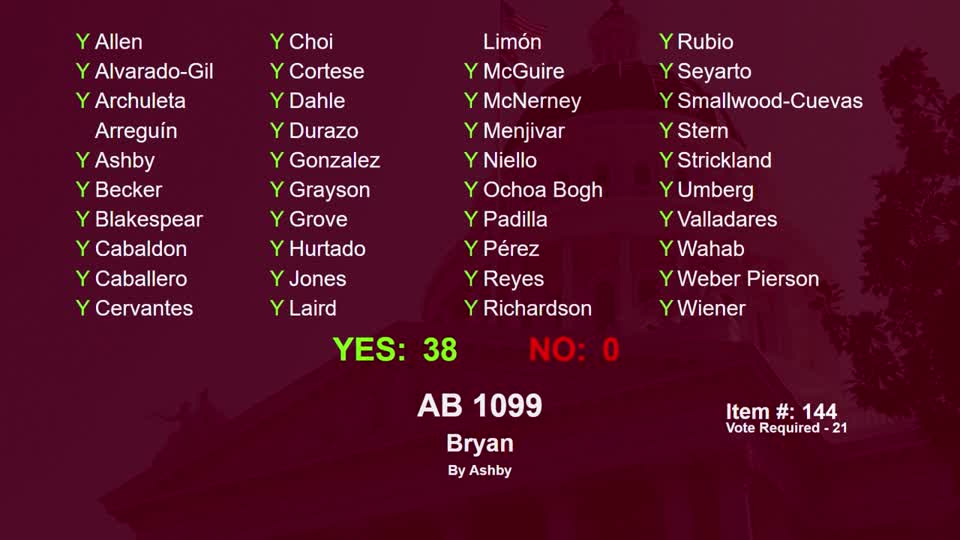 1MIN
Senate Floor
 7MIN
Assembly Standing Committee on Business and Professions
 5MIN
Assembly Standing Committee on Business and Professions
 1MIN
Senate Floor
 9MIN
Senate Standing Committee on Judiciary
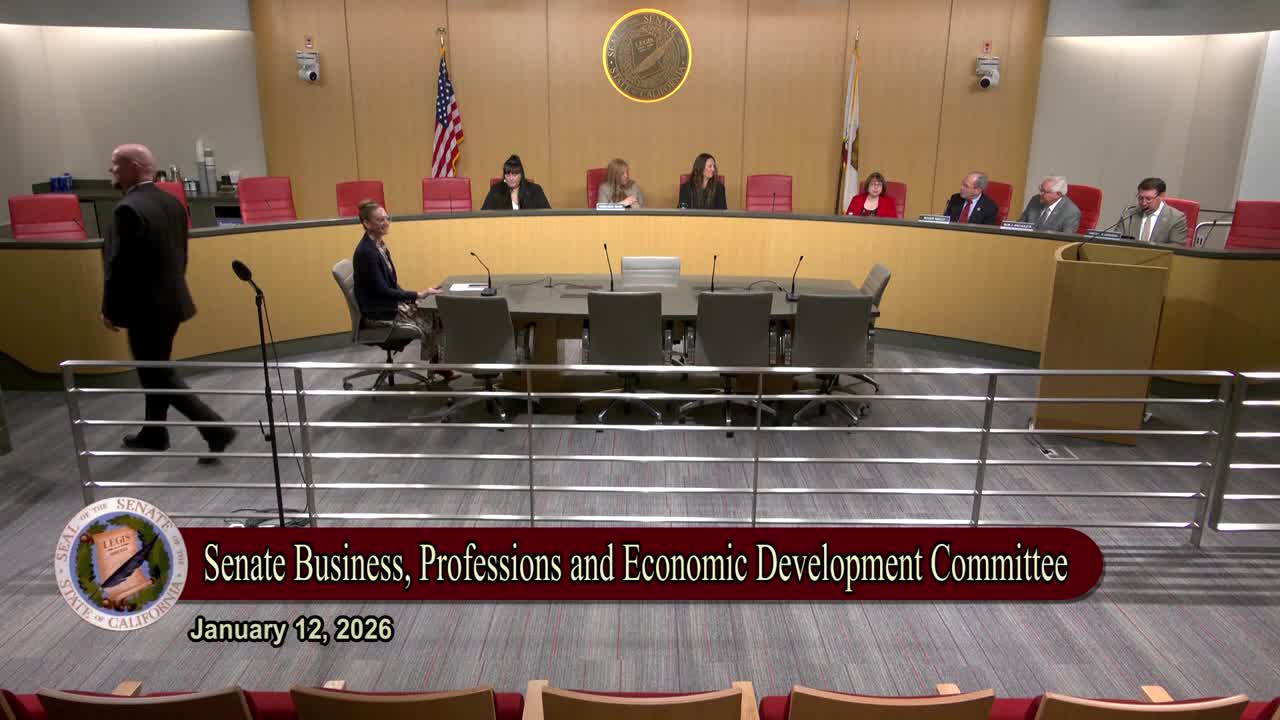 22MIN
Senate Standing Committee on Business, Professions and Economic Development
Bill Author

Bill Co-Author(s):
