SB 344: California Environmental Quality Act: City of San Diego: mixed-use development project.
- Session Year: 2025-2026
- House: Senate
- Latest Version Date: 2026-09-29
Current Status:
Passed
(2026-09-29: Chaptered by Secretary of State. Chapter 786, Statutes of 2026.)
Introduced
In Committee
Awaiting First Chamber Vote
Passed First Chamber
In Committee
Awaiting Second Chamber Vote
Passed Second Chamber
Enacted
The California Environmental Quality Act (CEQA) requires a lead agency, as defined, to prepare, or cause to be prepared, and certify the completion of an environmental impact report on a project that it proposes to carry out or approve that may have a significant effect on the environment or to adopt a negative declaration if it finds that the project will not have that effect. CEQA also requires a lead agency to prepare a mitigated negative declaration for a project that may have a significant effect on the environment if revisions in the project would avoid or mitigate that effect and there is no substantial evidence that the project, as revised, would have a significant effect on the environment.
This bill would provide that a specified City of San Diego environmental impact report for a mixed-use development project, known as the Midway Rising project, is deemed sufficient, adequate, and complete for full compliance with CEQA and that any approval of the project may rely conclusively on that report for compliance with CEQA. The bill would require that all mitigation measures adopted by the City of San Diego as the lead agency be conditions of approval of the project. The bill would require the lead agency to monitor and enforce those conditions for the life of each applicable obligation. To the extent this requirement would impose new duties on a local agency, the bill would impose a state-mandated local program. The bill would require the project applicant to submit to the lead agency an annual status report on the implementation of those conditions. The bill would make its provisions operative upon the effective date of the bill or on the date the City Council of the City of San Diego certifies the report, whichever occurs later.
This bill would make legislative findings and declarations as to the necessity of a special statute for the City of San Diego.
The California Constitution requires the state to reimburse local agencies and school districts for certain costs mandated by the state. Statutory provisions establish procedures for making that reimbursement.
This bill would provide that no reimbursement is required by this act for a specified reason.
This bill would declare that it is to take effect immediately as an urgency statute.
The California Environmental Quality Act (CEQA) requires a lead agency, as defined, to prepare, or cause to be prepared, and certify the completion of an environmental impact report on a project that it proposes to carry out or approve that may have a significant effect on the environment or to adopt a negative declaration if it finds that the project will not have that effect. CEQA also requires a lead agency to prepare a mitigated negative declaration for a project that may have a significant effect on the environment if revisions in the project would avoid or mitigate that effect and there is no substantial evidence that the project, as revised, would have a significant effect on the environment.
This bill would provide that a specified City of San Diego environmental impact report for a mixed-use development project, known as the Midway Rising project, is deemed sufficient, adequate, and complete for full compliance with CEQA and that any approval of the Midway Rising project may rely conclusively on the that report for purposes of compliance with CEQA. The bill would require that all mitigation measures adopted by the City of San Diego as the lead agency be conditions of approval of the project. The bill would require the lead agency to monitor and enforce those conditions for the life of each applicable obligation. To the extent this requirement would impose new duties on a local agency, the bill would impose a state-mandated local program. The bill would require the project applicant to submit to the lead agency an annual status report on the implementation of those conditions. The bill would make its provisions operative upon the effective date of the bill or on the date the City Council of the City of San Diego certifies the report, whichever occurs later.
This bill would make legislative findings and declarations as to the necessity of a special statute for the City of San Diego.
The California Constitution requires the state to reimburse local agencies and school districts for certain costs mandated by the state. Statutory provisions establish procedures for making that reimbursement.
This bill would provide that no reimbursement is required by this act for a specified reason.
This bill would declare that it is to take effect immediately as an urgency statute.
The California Environmental Quality Act (CEQA) requires a lead agency, as defined, to prepare, or cause to be prepared, and certify the completion of an environmental impact report on a project that it proposes to carry out or approve that may have a significant effect on the environment or to adopt a negative declaration if it finds that the project will not have that effect. CEQA also requires a lead agency to prepare a mitigated negative declaration for a project that may have a significant effect on the environment if revisions in the project would avoid or mitigate that effect and there is no substantial evidence that the project, as revised, would have a significant effect on the environment.
This bill would provide that a specified City of San Diego environmental impact report for a mixed-use development project, known as the Midway Rising project, is deemed sufficient, adequate, and complete for full compliance with CEQA and that any approval of the Midway Rising project may rely conclusively on the report for purposes of compliance with CEQA. The bill would require that all mitigation measures adopted by the City of San Diego as the lead agency be conditions of approval of the project. The bill would require the lead agency to monitor and enforce those conditions for the life of each applicable obligation. To the extent this requirement would impose new duties on a local agency, the bill would impose a state-mandated local program. The bill would require the project applicant to submit to the lead agency an annual status report on the implementation of those conditions. The bill would make its provisions operative upon the effective date of the bill or on the date the City Council of the City of San Diego certifies the report, whichever occurs later.
This bill would make legislative findings and declarations as to the necessity of a special statute for the City of San Diego.
The California Constitution requires the state to reimburse local agencies and school districts for certain costs mandated by the state. Statutory provisions establish procedures for making that reimbursement.
This bill would provide that no reimbursement is required by this act for a specified reason.
This bill would declare that it is to take effect immediately as an urgency statute.
Existing law provides for the disposition of human remains and makes specified acts relating to human remains, including improperly disposing of human remains, a crime. Existing law authorizes cremated remains or hydrolyzed human remains to be taken by boat from any harbor in this state, or by air, and scattered at sea. Existing law defines the phrase at sea to include the inland navigable waters of this state, exclusive of lakes and streams, provided that no such scattering may take place within 500 yards of the shoreline. Existing law specifies that these provisions do not allow the scattering of cremated human remains or hydrolyzed human remains from a bridge or pier.This bill would additionally specify that these provisions do not allow the scattering of cremated human remains or hydrolyzed human remains from a dock attached to the shore. By expanding the definition of a crime, this bill would impose a state-mandated local program.The California Constitution requires the state to reimburse local agencies and school districts for certain costs mandated by the state. Statutory provisions establish procedures for making that reimbursement.This bill would provide that no reimbursement is required by this act for a specified reason.Existing law provides for the disposition of human remains and makes specified acts relating to human remains, including improperly disposing of human remains, a crime. Existing law authorizes cremated remains or hydrolyzed human remains to be taken by boat from any harbor in this state, or by air, and scattered at sea. Existing law defines the phrase at sea to include the inland navigable waters of this state, exclusive of lakes and streams, provided that no such scattering may take place within 500 yards of the shoreline. Existing law specifies that these provisions do not allow the scattering of cremated human remains or hydrolyzed human remains from a bridge or pier.
This bill would additionally specify that these provisions do not allow the scattering of cremated human remains or hydrolyzed human remains from a dock attached to the shore. By expanding the definition of a crime, this bill would impose a state-mandated local program.
The California Constitution requires the state to reimburse local agencies and school districts for certain costs mandated by the state. Statutory provisions establish procedures for making that reimbursement.
This bill would provide that no reimbursement is required by this act for a specified reason.
Existing law, the Knox-Keene Health Care Service Plan Act of 1975, provides for the licensure and regulation of health care service plans by the Department of Managed Health Care, and makes a willful violation of the act a crime. Existing law requires a health care service plan to demonstrate that it has a fiscally sound operation and adequate provision against the risk of insolvency, that it assumes full financial risk on a prospective basis for the provision of covered health care services, and that it has a procedure for the prompt payment or denial of provider and subscriber or enrollee claims.This bill would make technical, nonsubstantive changes to these provisions.Existing law, the Knox-Keene Health Care Service Plan Act of 1975, provides for the licensure and regulation of health care service plans by the Department of Managed Health Care, and makes a willful violation of the act a crime. Existing law requires a health care service plan to demonstrate that it has a fiscally sound operation and adequate provision against the risk of insolvency, that it assumes full financial risk on a prospective basis for the provision of covered health care services, and that it has a procedure for the prompt payment or denial of provider and subscriber or enrollee claims.
This bill would make technical, nonsubstantive changes to these provisions.
(a)The Legislature finds and declares all of the following:
(1)The City of San Diego has approved, or may approve, a mixed-use development project known as the Midway Rising project, consisting of approximately 4,254 new homes, of which 2,000 are deed-restricted affordable homes at or below 80 percent of area median income, up to 130,000 square feet of commercial uses, approximately 14.5 acres of public parks and open space, and a new 16,000-seat multipurpose entertainment center.
(2)The scale of the Midway Rising project makes the project one of the largest mixed-income housing communities on the west coast and the single largest affordable housing development in Californias history.
(3)The Midway Rising project developer intends to have the construction work performed pursuant to a project labor agreement that would provide for the payment of prevailing wages and use of apprentices registered in state-approved programs.
(4)In connection with the approval of the Midway Rising project, the City of San Diego has certified, or may certify, the Midway Rising Specific Plan Subsequent Final Environmental Impact Report (SCH No. 2023120451) pursuant to this division. The City of San Diegos Midway Rising Specific Plan Subsequent Final Environmental Impact Report (SCH No. 2023120451) imposes comprehensive mitigation measures to address potential environmental impacts associated with the development of the Midway Rising project. The City of San Diego Planning Commission reviewed and considered the Midway Rising Specific Plan Subsequent Final Environmental Impact Report (SCH No. 2023120451) pursuant to this division on September 25, 2025, and voted unanimously to recommend that the City Council of the City of San Diego certify the report and adopt the associated findings pursuant to this division.
(b)The City of San Diegos Midway Rising Specific Plan Subsequent Final Environmental Impact Report (SCH No. 2023120451) considered by the City of San Diego Planning Commission, including technical corrections or clarifications made by the City Council of the City of San Diego in connection with the reports certification that do not affect the comprehensive mitigation measures recommended by the City of San Diego Planning Commission, is deemed sufficient, adequate, and complete for full compliance with this division and shall be final and conclusive for purposes of reliance on that report. Any approval of the project reviewed in the Midway Rising Specific Plan Subsequent Final Environmental Impact Report may rely conclusively on that report for compliance with this division.
(c)All mitigation measures required pursuant to this division adopted by the City of San Diego as the lead agency, and incorporated into the Midway Rising Specific Plan Subsequent Final Environmental Impact Report (SCH No. 2023120451), including the Mitigation Monitoring and Reporting Program, shall be conditions of approval of the project. Those conditions shall be fully enforceable by the lead agency or another agency designated by the lead agency and shall be monitored and enforced by the lead agency for the life of each applicable obligation. The project applicant shall submit to the lead agency an annual status report on the implementation of those mitigation measures.
(d)This section shall become operative upon the effective date of this section or on the date the City Council of the City of San Diego certifies the Midway Rising Specific Plan Subsequent Final Environmental Impact Report (SCH No. 2023120451), whichever occurs later.
SEC. 2.The Legislature finds and declares that a special statute is necessary and that a general statute cannot be made applicable within the meaning of Section 16 of Article IV of the California Constitution because of the unique circumstances of the Midway Rising project in the City of San Diego.
SEC. 3.No reimbursement is required by this act pursuant to Section 6 of Article XIIIB of the California Constitution because a local agency or school district has the authority to levy service charges, fees, or assessments sufficient to pay for the program or level of service mandated by this act, within the meaning of Section 17556 of the Government Code.
SEC. 4.This act is an urgency statute necessary for the immediate preservation of the public peace, health, or safety within the meaning of Article IV of the California Constitution and shall go into immediate effect. The facts constituting the necessity are:
In order to promote the swift and deliberate development of affordable housing in the City of San Diego, it is necessary for this act to take effect immediately.
(a)The Legislature finds and declares all of the following:
(1)The City of San Diego has approved, or may approve, a mixed-use development project known as the Midway Rising project, consisting of approximately 4,254 new homes, of which 2,000 are deed-restricted affordable homes at or below 80 percent of area median income, up to 130,000 square feet of commercial uses, approximately 14.5 acres of public parks and open space, and a new 16,000-seat multipurpose entertainment center.
(2)The scale of the Midway Rising project makes the project one of the largest mixed-income housing communities on the west coast and the single largest affordable housing development in Californias history.
(3)The Midway Rising project developer intends to have the construction work performed pursuant to a project labor agreement that would provide for the payment of prevailing wages and use of apprentices registered in state-approved programs.
(4)In connection with the approval of the Midway Rising project, the City of San Diego has certified, or may certify, the Midway Rising Specific Plan Subsequent Final Environmental Impact Report (SCH No. 2023120451) pursuant to this division. The City of San Diegos Midway Rising Specific Plan Subsequent Final Environmental Impact Report (SCH No. 2023120451) imposes comprehensive mitigation measures to address potential environmental impacts associated with the development of the Midway Rising project. The City of San Diego Planning Commission reviewed and considered the Midway Rising Specific Plan Subsequent Final Environmental Impact Report (SCH No. 2023120451) pursuant to this division on September 25, 2025, and voted unanimously to recommend that the City Council of the City of San Diego certify the report and adopt the associated findings pursuant to this division.
(b)The City of San Diegos Midway Rising Specific Plan Subsequent Final Environmental Impact Report (SCH No. 2023120451) considered by the City of San Diego Planning Commission, including technical corrections or clarifications made by the City Council of the City of San Diego in connection with the reports certification that do not affect the comprehensive mitigation measures recommended by the City of San Diego Planning Commission, is deemed sufficient, adequate, and complete for full compliance with this division and shall be final and conclusive for purposes of reliance on that report. Any approval of the Midway Rising project reviewed in the Midway Rising Specific Plan Subsequent Final Environmental Impact Report may rely conclusively on the that report for purposes of compliance with this division.
(c)All mitigation measures required pursuant to this division adopted by the City of San Diego as the lead agency, and incorporated into the Midway Rising Specific Plan Subsequent Final Environmental Impact Report (SCH No. 2023120451), including the Mitigation Monitoring and Reporting Program, shall be conditions of approval of the project. Those conditions shall be fully enforceable by the lead agency or another agency designated by the lead agency and shall be monitored and enforced by the lead agency for the life of each applicable obligation. The project applicant shall submit to the lead agency an annual status report on the implementation of those mitigation measures.
(d)This section shall become operative upon the effective date of this section or on the date the City Council of the City of San Diego certifies the Midway Rising Specific Plan Subsequent Final Environmental Impact Report (SCH No. 2023120451), whichever occurs later.
SEC. 2.The Legislature finds and declares that a special statute is necessary and that a general statute cannot be made applicable within the meaning of Section 16 of Article IV of the California Constitution because of the unique circumstances of the Midway Rising project in the City of San Diego.
SEC. 3.No reimbursement is required by this act pursuant to Section 6 of Article XIIIB of the California Constitution because a local agency or school district has the authority to levy service charges, fees, or assessments sufficient to pay for the program or level of service mandated by this act, within the meaning of Section 17556 of the Government Code.
SEC. 4.This act is an urgency statute necessary for the immediate preservation of the public peace, health, or safety within the meaning of Article IV of the California Constitution and shall go into immediate effect. The facts constituting the necessity are:
In order to promote the swift and deliberate development of affordable housing in the City of San Diego, it is necessary for this act to take effect immediately.
(a)The Legislature finds and declares all of the following:
(1)The City of San Diego has approved, or may approve, a mixed-use development project known as the Midway Rising project, consisting of approximately 4,254 new homes, of which 2,000 are deed-restricted affordable homes at or below 80 percent of area median income, up to 130,000 square feet of commercial uses, approximately 14.5 acres of public parks and open space, and a new 16,000-seat multipurpose entertainment center.
(2)The scale of the Midway Rising project makes the project one of the largest mixed-income housing communities on the west coast and the single largest affordable housing development in Californias history.
(3)The Midway Rising project developer intends to have the construction work performed pursuant to a project labor agreement that would provide for the payment of prevailing wages and use of apprentices registered in state-approved programs.
(4)In connection with the approval of the Midway Rising project, the City of San Diego has certified, or may certify, the Midway Rising Specific Plan Subsequent Final Environmental Impact Report (SCH No. 2023120451) pursuant to this division. The City of San Diegos Midway Rising Specific Plan Subsequent Final Environmental Impact Report (SCH No. 2023120451) imposes comprehensive mitigation measures to address potential environmental impacts associated with the development of the Midway Rising project. The City of San Diego Planning Commission reviewed and considered the Midway Rising Specific Plan Subsequent Final Environmental Impact Report (SCH No. 2023120451) pursuant to this division on September 25, 2025, and voted unanimously to recommend that the City Council of the City of San Diego certify the report and adopt the associated findings pursuant to this division.
(b)The City of San Diegos Midway Rising Specific Plan Subsequent Final Environmental Impact Report (SCH No. 2023120451) considered by the City of San Diego Planning Commission, including technical corrections or clarifications made by the City Council of the City of San Diego in connection with the reports certification that do not affect the comprehensive mitigation measures recommended by the City of San Diego Planning Commission, is deemed sufficient, adequate, and complete for full compliance with this division and shall be final and conclusive for purposes of reliance on that report. Any approval of the Midway Rising project may rely conclusively on the report for purposes of compliance with this division.
(c)All mitigation measures required pursuant to this division adopted by the City of San Diego as the lead agency, and incorporated into the Midway Rising Specific Plan Subsequent Final Environmental Impact Report (SCH No. 2023120451), including the Mitigation Monitoring and Reporting Program, shall be conditions of approval of the project. Those conditions shall be fully enforceable by the lead agency or another agency designated by the lead agency and shall be monitored and enforced by the lead agency for the life of each applicable obligation. The project applicant shall submit to the lead agency an annual status report on the implementation of those mitigation measures.
(d)This section shall become operative upon the effective date of this section or on the date the City Council of the City of San Diego certifies the Midway Rising Specific Plan Subsequent Final Environmental Impact Report (SCH No. 2023120451), whichever occurs later.
SEC. 2.The Legislature finds and declares that a special statute is necessary and that a general statute cannot be made applicable within the meaning of Section 16 of Article IV of the California Constitution because of the unique circumstances of the Midway Rising project in the City of San Diego.
SEC. 3.No reimbursement is required by this act pursuant to Section 6 of Article XIIIB of the California Constitution because a local agency or school district has the authority to levy service charges, fees, or assessments sufficient to pay for the program or level of service mandated by this act, within the meaning of Section 17556 of the Government Code.
SEC. 4.This act is an urgency statute necessary for the immediate preservation of the public peace, health, or safety within the meaning of Article IV of the California Constitution and shall go into immediate effect. The facts constituting the necessity are:
In order to promote the swift and deliberate development of affordable housing in the City of San Diego, it is necessary for this act to take effect immediately.
SECTION 1.Section 7117 of the Health and Safety Code is amended to read:7117.(a)Cremated remains or hydrolyzed human remains may be taken by boat from any harbor in this state, or by air, and scattered at sea. Cremated remains or hydrolyzed human remains shall be removed from their container before the remains are scattered at sea.(b)Any person who scatters at sea, either from a boat or from the air, any cremated human remains or hydrolyzed human remains shall file with the local registrar of births and deaths in the county nearest the point where the remains were scattered, a verified statement containing the name of the deceased person, the time and place of death, the place at which the cremated remains or hydrolyzed human remains were scattered, and any other information that the local registrar of births and deaths may require. The first copy of the endorsed permit shall be filed with the local registrar of births and deaths within 10 days of disposition. The third copy shall be returned to the office of issuance.(c)For purposes of this section, the phrase at sea includes the inland navigable waters of this state, exclusive of lakes and streams, provided that no such scattering may take place within 500 yards of the shoreline. This section does not allow the scattering of cremated human remains or hydrolyzed human remains from a bridge, dock attached to the shore, or pier.(d)Notwithstanding any other provision of this code, the cremated remains or hydrolyzed human remains of a deceased person may be scattered at sea as provided in this section and Section 103060.(e)This section shall become operative on July 1, 2020.SEC. 2.No reimbursement is required by this act pursuant to Section 6 of Article XIIIB of the California Constitution because the only costs that may be incurred by a local agency or school district will be incurred because this act creates a new crime or infraction, eliminates a crime or infraction, or changes the penalty for a crime or infraction, within the meaning of Section 17556 of the Government Code, or changes the definition of a crime within the meaning of Section 6 of Article XIIIB of the California Constitution.(a)Cremated remains or hydrolyzed human remains may be taken by boat from any harbor in this state, or by air, and scattered at sea. Cremated remains or hydrolyzed human remains shall be removed from their container before the remains are scattered at sea.
(b)Any person who scatters at sea, either from a boat or from the air, any cremated human remains or hydrolyzed human remains shall file with the local registrar of births and deaths in the county nearest the point where the remains were scattered, a verified statement containing the name of the deceased person, the time and place of death, the place at which the cremated remains or hydrolyzed human remains were scattered, and any other information that the local registrar of births and deaths may require. The first copy of the endorsed permit shall be filed with the local registrar of births and deaths within 10 days of disposition. The third copy shall be returned to the office of issuance.
(c)For purposes of this section, the phrase at sea includes the inland navigable waters of this state, exclusive of lakes and streams, provided that no such scattering may take place within 500 yards of the shoreline. This section does not allow the scattering of cremated human remains or hydrolyzed human remains from a bridge bridge, dock attached to the shore, or pier.
(d)Notwithstanding any other provision of this code, the cremated remains or hydrolyzed human remains of a deceased person may be scattered at sea as provided in this section and Section 103060.
(e)This section shall become operative on July 1, 2020.
SEC. 2.No reimbursement is required by this act pursuant to Section 6 of Article XIIIB of the California Constitution because the only costs that may be incurred by a local agency or school district will be incurred because this act creates a new crime or infraction, eliminates a crime or infraction, or changes the penalty for a crime or infraction, within the meaning of Section 17556 of the Government Code, or changes the definition of a crime within the meaning of Section 6 of Article XIIIB of the California Constitution.
SECTION 1.Section 1375.1 of the Health and Safety Code is amended to read:1375.1.(a)Every plan shall have, and shall demonstrate to the director that it has, all of the following:(1)A fiscally sound operation and adequate provision against the risk of insolvency.(2)Assumed full financial risk on a prospective basis for the provision of covered health care services, except that a plan may obtain insurance or make other arrangements for the cost of providing to any subscriber or enrollee covered health care services, the aggregate value of which exceeds five thousand dollars ($5,000) in any year, for the cost of covered health care services provided to its members other than through the plan because medical necessity required their provision before they could be secured through the plan, and for not more than 90 percent of the amount by which its costs for any of its fiscal years exceed 115 percent of its income for that fiscal year.(3)A procedure for prompt payment or denial of provider and subscriber or enrollee claims, including those telehealth services, as defined in subdivision (a) of Section 2290.5 of the Business and Professions Code, covered by the plan. Except as provided in Section 1371, a procedure meeting the requirements of Subchapter G of the regulations (29 C.F.R. Part 2560) under Public Law 93-406 (88 Stats. 829-1035, 29 U.S.C. Secs. 1001 et seq.) shall satisfy this requirement.(b)In determining whether the conditions of this section have been met, the director shall consider, but not be limited to, the following:(1)The financial soundness of the plans arrangements for health care services and the schedule of rates and charges used by the plan.(2)The adequacy of working capital.(3)Agreements with providers for the provision of health care services.(c)For the purposes of this section, covered health care services means health care services provided under all plan contracts.(a)Every plan shall have have, and shall demonstrate to the director that it has has, all of the following:
(1)A fiscally sound operation and adequate provision against the risk of insolvency.
(2)Assumed full financial risk on a prospective basis for the provision of covered health care services, except that a plan may obtain insurance or make other arrangements for the cost of providing to any subscriber or enrollee covered health care services, the aggregate value of which exceeds five thousand dollars ($5,000) in any year, for the cost of covered health care services provided to its members other than through the plan because medical necessity required their provision before they could be secured through the plan, and for not more than 90 percent of the amount by which its costs for any of its fiscal years exceed 115 percent of its income for that fiscal year.
(3)A procedure for prompt payment or denial of provider and subscriber or enrollee claims, including those telehealth services, as defined in subdivision (a) of Section 2290.5 of the Business and Professions Code, covered by the plan. Except as provided in Section 1371, a procedure meeting the requirements of Subchapter G of the regulations (29 C.F.R. Part 2560) under Public Law 93-406 (88 Stats. 829-1035, 29 U.S.C. Secs. 1001 et seq.) shall satisfy this requirement.
(b)In determining whether the conditions of this section have been met, the director shall consider, but not be limited to, the following:
(1)The financial soundness of the plans arrangements for health care services and the schedule of rates and charges used by the plan.
(2)The adequacy of working capital.
(3)Agreements with providers for the provision of health care services.
(c)For the purposes of this section, covered health care services means health care services provided under all plan contracts.
|
Date
|
Status
|
|---|---|
| Sep 29, 2026 | Chaptered by Secretary of State. Chapter 786, Statutes of 2026. |
| Sep 29, 2026 | Approved by the Governor. |
| Sep 8, 2026 | Enrolled and presented to the Governor at 4 p.m. |
| Aug 30, 2026 | Assembly amendments concurred in. (Ayes 39. Noes 0.) Ordered to engrossing and enrolling. |
| Aug 30, 2026 | Assembly amendments concurred in. (Ayes 40. Noes 0. Page 6148.) Ordered to engrossing and enrolling. |
| Aug 30, 2026 | Assembly amendments concurred in. (Ayes 40. Noes 0.) Ordered to engrossing and enrolling. |
| Aug 30, 2026 | Urgency clause adopted. |
| Aug 30, 2026 | In Senate. Concurrence in Assembly amendments pending. |
| Aug 30, 2026 | Read third time. Urgency clause adopted. Passed. Ordered to the Senate. |
| Aug 30, 2026 | Read third time. Urgency clause adopted. Passed. (Ayes 72. Noes 2. Page 6860.) Ordered to the Senate. |
| Aug 28, 2026 | Read second time. Ordered to third reading. |
| Aug 27, 2026 | From committee: Do pass. (Ayes 12. Noes 0.) (August 27). |
| Aug 27, 2026 | From committee with author's amendments. Read second time and amended. Re-referred to Com. on NAT. RES. |
| Aug 26, 2026 | Joint Rule 62(a) suspended. (Ayes 61. Noes 0. Page 6562.) |
| Aug 26, 2026 | Joint Rule 61(b)(16) suspended. (Ayes 61. Noes 0. Page 6562.) |
| Aug 26, 2026 | Read third time and amended. |
| Aug 26, 2026 | Joint Rule 61(b)(16) suspended. |
| Aug 26, 2026 | Joint Rule 62(a) suspended. |
| Aug 26, 2026 | Re-referred to Com. on NAT. RES. pursuant to Assembly Rule 77.2. |
| Aug 26, 2026 | Ordered to third reading. |
| Aug 13, 2026 | Ordered to third reading. |
| Aug 13, 2026 | From inactive file. |
| Aug 12, 2026 | Notice of intention to remove from inactive file given by Assembly Member Ward. |
| Jul 17, 2025 | Ordered to inactive file on request of Assembly Member Garcia. |
| Jul 17, 2025 | Read second time. Ordered to consent calendar. |
| Jul 16, 2025 | From committee: Do pass. Ordered to consent calendar. (Ayes 13. Noes 0.) (July 16). |
| Jul 1, 2025 | From committee: Do pass and re-refer to Com. on APPR. with recommendation: To consent calendar. (Ayes 17. Noes 0.) (July 1). Re-referred to Com. on APPR. |
| May 29, 2025 | Referred to Com. on B. & P. |
| May 15, 2025 | In Assembly. Read first time. Held at Desk. |
| May 15, 2025 | Read third time. Passed. (Ayes 34. Noes 0. Page 1090.) Ordered to the Assembly. |
| May 13, 2025 | Read second time. Ordered to consent calendar. |
| May 12, 2025 | From committee: Be ordered to second reading pursuant to Senate Rule 28.8 and ordered to consent calendar. |
| May 2, 2025 | Set for hearing May 12. |
| Apr 28, 2025 | From committee: Do pass and re-refer to Com. on APPR. with recommendation: To consent calendar. (Ayes 11. Noes 0. Page 916.) (April 28). Re-referred to Com. on APPR. |
| Apr 3, 2025 | Set for hearing April 28. |
| Apr 2, 2025 | Re-referred to Com. on B. P. & E.D. |
| Mar 20, 2025 | From committee with author's amendments. Read second time and amended. Re-referred to Com. on RLS. |
| Feb 19, 2025 | Referred to Com. on RLS. |
| Feb 13, 2025 | From printer. May be acted upon on or after March 15. |
| Feb 12, 2025 | Introduced. Read first time. To Com. on RLS. for assignment. To print. |
|
Date
|
Description
|
Location
|
Votes
|
|
|---|---|---|---|---|
| Aug 30, 2026 | Unfinished Business SB344 Weber Pierson et al. Urgency Clause Concurrence | Senate Floor |
Passed |
|
| Aug 30, 2026 | SB 344 Weber Pierson Third Reading Urgency By Ward | Assembly Floor |
Passed |
|
| Aug 27, 2026 | Do pass. | Assembly Standing Committee on Natural Resources |
Passed |
|
| Jul 16, 2025 | Do pass. To Consent Calendar. | Assembly Standing Committee on Appropriations |
Passed |
|
| Jul 1, 2025 | Do pass and be re-referred to the Committee on [Appropriations] with recommendation: To Consent Calendar | Assembly Standing Committee on Business and Professions |
Passed |
|
| May 15, 2025 | Consent Calendar 2nd SB344 Weber Pierson | Senate Floor |
Passed |
|
| Apr 28, 2025 | Do pass, but first be re-referred to the Committee on [Appropriations] with the recommendation: To Consent Calendar | Senate Standing Committee on Business, Professions and Economic Development |
Passed |
This list shows positions taken on this bill by organizations on the date displayed, which is linked to the original source.
Positions by individuals are not included.
|
Organization
|
Position
|
Date
|
|---|---|---|
| Building Industry Association Of San Diego | ** Support | |
| California Conference of Carpenters | ** Support | |
| California State Council Of Laborers | ** Support | |
| California YIMBY | ** Support | |
| Circulate Planning & Policy | ** Support | |
| City Of San Diego | ** Support | |
| Mayor Todd Gloria, City of San Diego | ** Support | |
| San Diego Regional Chamber Of Commerce | ** Support | |
| State Building and Construction Trades Council | ** Support | |
| State Building & Construction Trades Council Of California | ** Support |
SENATE RULES COMMITTEE Office of Senate Floor Analyses (916) 651-4171 | SB 344 |
UNFINISHED BUSINESS
Bill No: SB 344
Author: Weber Pierson (D), et al.
Amended: 8/26/26
Vote: 27- Urgency
SENATE BUS., PROF. & ECON. DEV. COMMITTEE: 11-0, 4/28/25
AYES: Ashby, Choi, Archuleta, Arreguín, Grayson, Menjivar, Niello, Smallwood-Cuevas, Strickland, Umberg, Weber Pierson
SENATE APPROPRIATIONS COMMITTEE: Senate Rule 28.8
SENATE FLOOR: 34-0, 5/15/25 (Consent)
AYES: Allen, Archuleta, Arreguín, Ashby, Becker, Blakespear, Cabaldon, Caballero, Choi, Cortese, Dahle, Durazo, Gonzalez, Grayson, Hurtado, Jones, Laird, Limón, McGuire, McNerney, Menjivar, Niello, Ochoa Bogh, Pérez, Richardson, Seyarto, Smallwood-Cuevas, Stern, Strickland, Umberg, Valladares, Wahab, Weber Pierson, Wiener
NO VOTE RECORDED: Alvarado-Gil, Cervantes, Grove, Padilla, Reyes, Rubio
ASSEMBLY FLOOR: 72-2, 8/30/26 - See last page for vote
SUBJECT: California Environmental Quality Act: City of San Diego: mixed-use development project
SOURCE: Author
DIGEST:
This bill declares the City of San Diego's Midway Rising Specific Plan Subsequent Environmental Impact Report (SPSEIR), which is pending certification by the City, fully complies with the California Environmental Quality Act (CEQA).
Assembly Amendments
remove the provisions that were previously in the bill and replace them with the current version of this bill, which declares that Midway Rising’s Specific Plan Subsequent EIR fully complies with CEQA.
ANALYSIS:
Existing law:
- Requires under CEQA that a lead agency determines whether a project is exempt from CEQA, or if it must do an initial study to determine if a project will have significant effects on the environment. If a project has no effect on the environment or effects that can be mitigated, the lead agency prepares a negative declaration (ND) or mitigated ND (MND). If the project will have significant impacts, the lead agency prepares an environmental impact report (EIR) to evaluate and propose mitigation measures for any effects on the environment, including impacts or likely impacts to land, air, water, minerals, flora, fauna, ambient noise, and historic or aesthetic significance. (Public Resources Code (PRC) §§21000 et seq.)
- Establishes over 135 statutory CEQA exemptions in the public resources code, water code, government code and other statutes.
- Establishes 33 categorical CEQA exemptions in the California Code of Regulations. (CEQA guidelines §15260- 15285). Categorical exemptions generally do not apply if there are significant environmental effects of the project, and specific exclusions include the site being located in a sensitive environment, on a hazardous waste site, having cumulative impacts over time, significantly adversely impacting a historic resource, or it there are other unusual circumstances that would cause a project to have a reasonable possibility for a significant effect on the environment due to unusual circumstances.
This bill:
- Deems the Midway Rising SPSEIR is sufficient, adequate, and complete for full compliance with CEQA, and shall be final and conclusive for purposes of reliance on that report. Authorizes any approval of the project reviewed in the SPSEIR to rely on that report for compliance with CEQA.
- Requires all SPSEIR mitigation measures to be conditions of approval of the project, fully enforcement by the lead and responsible agencies, and monitored and enforced for the life of each mitigation obligation. Requires the project applicant to submit annual status reports to the lead agency.
- Requires this bill to become operative upon its effective date, or on the date the City certifies the SPSEIR, whichever occurs later.
- Makes related findings regarding the Midway Rising project.
- Includes an urgency measure.
Background
- The A, B, C’s of CEQA. CEQA is designed to (a) make government agencies and the public aware of the environmental impacts of a proposed project, (b) ensure the public can take part in the review process, and (c) identify and implement measures to mitigate or eliminate any negative impact the project may have on the environment. CEQA is enforced by civil lawsuits that can challenge any project’s environmental review. Nonprofits, private individuals, public agencies, advocacy groups, and other organizations can all file lawsuits under CEQA: CEQA is the only state environmental protection law that allows for citizen lawsuits. In the case of a CEQA lawsuit, it is ultimately up to the courts to determine if the environmental review was sufficient to meet the requirements of CEQA.
- Environmental Review under CEQA. Under CEQA, projects (unless they have a specific exemption) must undergo environmental analysis. This process starts with an initial study which determines what level of further environmental review is needed for a given project. If a project has no significant effects on the environment, or if those effects can be fully mitigated, the project can move forward with a negative declaration (ND) or mitigated negative declaration (MND). If the initial study finds that the project has potential significant effects on the environment, then a full EIR is conducted. An EIR provides thorough environmental review of a proposed project, analyzing the significant direct and indirect environmental impacts of a proposed project on water quality, transportation, air quality and greenhouse gas emissions, terrestrial and aquatic biological resources, surface and subsurface hydrology, land use and agricultural resources, aesthetics, geology and soils, recreation, public services and utilities such as water supply and wastewater disposal, and cultural resources, among other factors. The EIR also includes proposed mitigation measures for any significant effects that it identifies and considers alternatives to the proposed project.
- Midway Rising. Midway Rising is a proposed development in the City of San Diego that covers 49 acres of City-owned land at the San Diego Sports Arena site in the Midway-Pacific Highway community. The project is envisioned to include a 16,000-seat sports arena, 14 acres of parks and public space, a mixed-use entertainment, arts, and cultural district, and 4,250 housing units (2,000 of which will be affordable at 80% below area median income). The project is intended to replace an older stadium and associated parking lots. When built, Midway Rising will include one of the largest mixed-income and affordable housing projects in California. The project is also expected to generate roughly 21,900 temporary construction jobs and 3,100 permanent positions in entertainment, hospitality, and retail, and is subject to a project labor agreement with the San Diego County Building and Construction Trades Council.
The path to permitting Midway Rising has not been smooth. The project is located within an area of San Diego that is subject to San Diego’s Coastal Height Limit Overlay Zone, which generally limits building heights to 30 feet. In 2018, the City completed a program environmental impact report (PEIR) for the land use plans governing the area to enable development of the project. Because aspects of the project exceeded the 30-foot height limit, the City submitted a ballot measure to voters to raise the height limit for the project area in 2020. The City relied on the PEIR as the environmental analysis for the project. However, the Fourth District Court of Appeals invalidated that ballot measure because the PEIR did not consider potential environmental impacts of removing the height limit. While that appeal was pending, in 2022 the City prepared a supplemental environmental impact report (SEIR) and approved a second ballot measure to remove the height limit from the same area. The Fourth District also invalidated the second ballot measure for similar reasons. The Court noted:
“The 2022 draft SEIR recognized removal of the Coastal Zone height limit was a changed circumstance from the 2018 PEIR. Yet, for almost every category of potential environmental impacts the initial study addressed, it said the PEIR adequately examined potential impacts because the project ‘would be limited to the [Midway Rising] area footprint and land use, density, and zoning analyzed in the 2018 PEIR.’”[1]
The Court went on to identify a litany of impacts that could be related to building height that were not examined in the PEIR. The City of San Diego wants to streamline the CEQA process for the Midway Rising project.
Comments
- Purpose of Bill. According to the author, “The Midway Rising Project will transform nearly 50 acres of underused, blighted City-owned land into a vibrant, modern district that directly addresses our region’s housing shortage while delivering lasting economic and community benefits. It will deliver more than 4,000 homes, including 2,000 affordable and income-restricted, a state-of-the-art sports and entertainment venue, and more than 14 acres of parks and open space. SB 958 is a targeted, catalytic solution to move this transformational project forward after years of planning, extensive environmental review, and voter approval through two separate ballot measures. The bill upholds environmental accountability and is explicitly contingent on the certification and adoption of the final Environmental Impact Report already completed by the City of San Diego.
“Once completed, Midway Rising is projected to generate millions in local economic impact, create thousands of permanent jobs, support new businesses, utilize a highly-skilled and trained workforce, and produce long-term economic opportunities and tax revenue for the City and County of San Diego. Proposed to be the largest affordable housing project in the western United States, Midway Rising carries significant statewide importance and promise. At a time when California faces an urgent housing crisis, SB 958 advances a meaningful solution for San Diego and the state.”
- What does SB 344 do? This bill is intended to advance the Midway Rising project by shielding the City of San Diego from judicial review of its CEQA actions. The City’s prior CEQA reviews in connection with the Midway Rising project have been subject to adverse court decisions, most recently by the Fourth District Court of Appeal in 2025.
The project is located within an area of San Diego that is subject to San Diego’s Coastal Height Limit Overlay Zone, which was established by the voters in 1972 and generally limits building heights to 30 feet west of I-5 to protect coastal views. In 2018, the City completed a program environmental impact report (PEIR) for the land use plans governing the area to enable development of the project. The project includes a 250-foot high-rise residential building, 105-foot mid-rise mixed-use buildings, and 165-foot arena.
The City submitted a ballot measure to voters in 2020 to raise the height limit for the project area, relying on the PEIR as the environmental analysis for the project. However, the Fourth District Court of Appeals invalidated that ballot measure because the PEIR did not consider potential environmental impacts of removing the height limit. While that appeal was pending, in 2022 the City prepared a supplemental environmental impact report (SEIR) and approved a second ballot measure to remove the height limit for the same area. In October 2025, the Fourth District invalidated the second ballot measure for similar reasons. The Court noted:
The 2022 draft SEIR recognized removal of the Coastal Zone height limit was a changed circumstance from the 2018 PEIR. Yet, for almost every category of potential environmental impacts the initial study addressed, it said the PEIR adequately examined potential impacts because the project “would be limited to the [Midway Rising] area footprint and land use, density, and zoning analyzed in the 2018 PEIR.”
The Court went on to identify a litany of impacts that could be related to building height that were not examined in the PEIR.
However, this building height issue is addressed by SB 958 (Weber Pierson), which passed this committee and the Assembly and is pending concurrence in the Senate. SB 958 provides that building height is not a significant impact on the environment under CEQA for specified non-industrial infill projects, including Midway Rising. However, on August 24, the City Council repealed the measure exempting the Midway Rising site from the 30-foot coastal height limit to comply with the 2025 court decision. Instead, the City intends to override the height limit for the entire project, including for the sports arena, pursuant to the state density bonus law. Moreover, the City prepared a new EIR specifically for the Midway Rising project, which was approved by the city planning commission last September, prior to the October Court of Appeal decision. The project, including the EIR, is now scheduled for final approval by the City Council in November.
This bill is not necessary for the City to certify the new EIR and approve the project. Rather, this bill is intended to shield the City, and the project, from litigation claiming that the new EIR does not comply with CEQA.
FISCAL EFFECT: Appropriation: No Fiscal Com.: Yes Local: Yes
SUPPORT: (Verified 8/30/26)
Building Industry Association of San Diego
California Conference of Carpenters
California State Council of Laborers
California Yimby
Circulate Planning & Policy
City of San Diego
Mayor Todd Gloria, City of San Diego
San Diego Regional Chamber of Commerce
State Building & Construction Trades Council of California
State Building and Construction Trades Council
OPPOSITION: (Verified 8/30/26)
None received.
Assembly Floor 72 2 5
Ayes: Aguiar-Curry, Ahrens, Alanis, Alvarez, Arambula, Ávila Farías, Bains, Bauer-Kahan, Bennett, Berman, Bonta, Bryan, Calderon, Caloza, Carrillo, Chen, Davies, Dixon, Elhawary, Ellis, Flora, Fong, Gabriel, Garcia, Gipson, Jeff Gonzalez, Mark González, Hadwick, Haney, Harabedian, Hoover, Irwin, Jackson, Johnson, Kalra, Krell, Lackey, Lee, Lowenthal, Macedo, McKinnor, Nguyen, Ortega, Pacheco, Papan, Patel, Patterson, Pellerin, Petrie-Norris, Quirk-Silva, Ramos, Ransom, Celeste Rodriguez, Michelle Rodriguez, Rogers, Blanca Rubio, Sanchez, Schiavo, Schultz, Sharp-Collins, Solache, Soria, Stefani, Ta, Tangipa, Valencia, Wallis, Ward, Wicks, Wilson, Zbur, Rivas
Noes: Castillo, DeMaio
No Vote Recorded: Addis, Boerner, Connolly, Hart, Muratsuchi
Prepared by: Brynn Cook / E.Q. / (916) 651-4108
11/5/26 15:06:00
**** END ****
Save Our Access v. City of San Diego, 115 Cal. App. 5th 388 ↑
SENATE RULES COMMITTEE Office of Senate Floor Analyses (916) 651-4171 | SB 344 |
UNFINISHED BUSINESS
Bill No: SB 344
Author: Weber Pierson (D), et al.
Amended: 8/27/26
Vote: 27 - Urgency
SENATE BUS., PROF. & ECON. DEV. COMMITTEE: 11-0, 4/28/25
AYES: Ashby, Choi, Archuleta, Arreguín, Grayson, Menjivar, Niello, Smallwood-Cuevas, Strickland, Umberg, Weber Pierson
SENATE APPROPRIATIONS COMMITTEE: Senate Rule 28.8
SENATE FLOOR: 34-0, 5/15/25 (Consent)
AYES: Allen, Archuleta, Arreguín, Ashby, Becker, Blakespear, Cabaldon, Caballero, Choi, Cortese, Dahle, Durazo, Gonzalez, Grayson, Hurtado, Jones, Laird, Limón, McGuire, McNerney, Menjivar, Niello, Ochoa Bogh, Pérez, Richardson, Seyarto, Smallwood-Cuevas, Stern, Strickland, Umberg, Valladares, Wahab, Weber Pierson, Wiener
NO VOTE RECORDED: Alvarado-Gil, Cervantes, Grove, Padilla, Reyes, Rubio
ASSEMBLY FLOOR: Passed, 8/30/26
SUBJECT: California Environmental Quality Act: City of San Diego: mixed-use development project
SOURCE: Author
DIGEST:
This bill declares the City of San Diego's Midway Rising Specific Plan Subsequent Environmental Impact Report (SPSEIR), which is pending certification by the City, fully complies with the California Environmental Quality Act (CEQA).
Assembly Amendments
remove the provisions that were previously in the bill and replace them with the current version of this bill, which declares that Midway Rising’s Specific Plan Subsequent EIR fully complies with CEQA.
ANALYSIS:
Existing Law
- Requires under CEQA that a lead agency determines whether a project is exempt from CEQA, or if it must do an initial study to determine if a project will have significant effects on the environment. If a project has no effect on the environment or effects that can be mitigated, the lead agency prepares a negative declaration (ND) or mitigated ND (MND). If the project will have significant impacts, the lead agency prepares an environmental impact report (EIR) to evaluate and propose mitigation measures for any effects on the environment, including impacts or likely impacts to land, air, water, minerals, flora, fauna, ambient noise, and historic or aesthetic significance. (Public Resources Code (PRC) §§21000 et seq.)
- Establishes over 135 statutory CEQA exemptions in the public resources code, water code, government code and other statutes.
- Establishes 33 categorical CEQA exemptions in the California Code of Regulations. (CEQA guidelines §15260- 15285). Categorical exemptions generally do not apply if there are significant environmental effects of the project, and specific exclusions include the site being located in a sensitive environment, on a hazardous waste site, having cumulative impacts over time, significantly adversely impacting a historic resource, or it there are other unusual circumstances that would cause a project to have a reasonable possibility for a significant effect on the environment due to unusual circumstances.
This bill:
- Deems the Midway Rising SPSEIR is sufficient, adequate, and complete for full compliance with CEQA, and shall be final and conclusive for purposes of reliance on that report. Authorizes any approval of the project reviewed in the SPSEIR to rely on that report for compliance with CEQA.
- Requires all SPSEIR mitigation measures to be conditions of approval of the project, fully enforcement by the lead and responsible agencies, and monitored and enforced for the life of each mitigation obligation. Requires the project applicant to submit annual status reports to the lead agency.
- Requires this bill to become operative upon its effective date, or on the date the City certifies the SPSEIR, whichever occurs later.
- Makes related findings regarding the Midway Rising project.
- Includes an urgency measure.
Background
- The A, B, C’s of CEQA. CEQA is designed to (a) make government agencies and the public aware of the environmental impacts of a proposed project, (b) ensure the public can take part in the review process, and (c) identify and implement measures to mitigate or eliminate any negative impact the project may have on the environment. CEQA is enforced by civil lawsuits that can challenge any project’s environmental review. Nonprofits, private individuals, public agencies, advocacy groups, and other organizations can all file lawsuits under CEQA: CEQA is the only state environmental protection law that allows for citizen lawsuits. In the case of a CEQA lawsuit, it is ultimately up to the courts to determine if the environmental review was sufficient to meet the requirements of CEQA.
- Environmental Review under CEQA. Under CEQA, projects (unless they have a specific exemption) must undergo environmental analysis. This process starts with an initial study which determines what level of further environmental review is needed for a given project. If a project has no significant effects on the environment, or if those effects can be fully mitigated, the project can move forward with a negative declaration (ND) or mitigated negative declaration (MND). If the initial study finds that the project has potential significant effects on the environment, then a full EIR is conducted. An EIR provides thorough environmental review of a proposed project, analyzing the significant direct and indirect environmental impacts of a proposed project on water quality, transportation, air quality and greenhouse gas emissions, terrestrial and aquatic biological resources, surface and subsurface hydrology, land use and agricultural resources, aesthetics, geology and soils, recreation, public services and utilities such as water supply and wastewater disposal, and cultural resources, among other factors. The EIR also includes proposed mitigation measures for any significant effects that it identifies and considers alternatives to the proposed project.
- Midway Rising. Midway Rising is a proposed development in the City of San Diego that covers 49 acres of City-owned land at the San Diego Sports Arena site in the Midway-Pacific Highway community. The project is envisioned to include a 16,000-seat sports arena, 14 acres of parks and public space, a mixed-use entertainment, arts, and cultural district, and 4,250 housing units (2,000 of which will be affordable at 80% below area median income). The project is intended to replace an older stadium and associated parking lots. When built, Midway Rising will include one of the largest mixed-income and affordable housing projects in California. The project is also expected to generate roughly 21,900 temporary construction jobs and 3,100 permanent positions in entertainment, hospitality, and retail, and is subject to a project labor agreement with the San Diego County Building and Construction Trades Council.
The path to permitting Midway Rising has not been smooth. The project is located within an area of San Diego that is subject to San Diego’s Coastal Height Limit Overlay Zone, which generally limits building heights to 30 feet. In 2018, the City completed a program environmental impact report (PEIR) for the land use plans governing the area to enable development of the project. Because aspects of the project exceeded the 30-foot height limit, the City submitted a ballot measure to voters to raise the height limit for the project area in 2020. The City relied on the PEIR as the environmental analysis for the project. However, the Fourth District Court of Appeals invalidated that ballot measure because the PEIR did not consider potential environmental impacts of removing the height limit. While that appeal was pending, in 2022 the City prepared a supplemental environmental impact report (SEIR) and approved a second ballot measure to remove the height limit from the same area. The Fourth District also invalidated the second ballot measure for similar reasons. The Court noted:
“The 2022 draft SEIR recognized removal of the Coastal Zone height limit was a changed circumstance from the 2018 PEIR. Yet, for almost every category of potential environmental impacts the initial study addressed, it said the PEIR adequately examined potential impacts because the project ‘would be limited to the [Midway Rising] area footprint and land use, density, and zoning analyzed in the 2018 PEIR.’”[1]
The Court went on to identify a litany of impacts that could be related to building height that were not examined in the PEIR. The City of San Diego wants to streamline the CEQA process for the Midway Rising project.
Comments
- Purpose of Bill. According to the author, “The Midway Rising Project will transform nearly 50 acres of underused, blighted City-owned land into a vibrant, modern district that directly addresses our region’s housing shortage while delivering lasting economic and community benefits. It will deliver more than 4,000 homes, including 2,000 affordable and income-restricted, a state-of-the-art sports and entertainment venue, and more than 14 acres of parks and open space. SB 958 is a targeted, catalytic solution to move this transformational project forward after years of planning, extensive environmental review, and voter approval through two separate ballot measures. The bill upholds environmental accountability and is explicitly contingent on the certification and adoption of the final Environmental Impact Report already completed by the City of San Diego.
“Once completed, Midway Rising is projected to generate millions in local economic impact, create thousands of permanent jobs, support new businesses, utilize a highly-skilled and trained workforce, and produce long-term economic opportunities and tax revenue for the City and County of San Diego. Proposed to be the largest affordable housing project in the western United States, Midway Rising carries significant statewide importance and promise. At a time when California faces an urgent housing crisis, SB 958 advances a meaningful solution for San Diego and the state.”
- What does SB 344 do? This bill is intended to advance the Midway Rising project by shielding the City of San Diego from judicial review of its CEQA actions. The City’s prior CEQA reviews in connection with the Midway Rising project have been subject to adverse court decisions, most recently by the Fourth District Court of Appeal in 2025.
The project is located within an area of San Diego that is subject to San Diego’s Coastal Height Limit Overlay Zone, which was established by the voters in 1972 and generally limits building heights to 30 feet west of I-5 to protect coastal views. In 2018, the City completed a program environmental impact report (PEIR) for the land use plans governing the area to enable development of the project. The project includes a 250-foot high-rise residential building, 105-foot mid-rise mixed-use buildings, and 165-foot arena.
The City submitted a ballot measure to voters in 2020 to raise the height limit for the project area, relying on the PEIR as the environmental analysis for the project. However, the Fourth District Court of Appeals invalidated that ballot measure because the PEIR did not consider potential environmental impacts of removing the height limit. While that appeal was pending, in 2022 the City prepared a supplemental environmental impact report (SEIR) and approved a second ballot measure to remove the height limit for the same area. In October 2025, the Fourth District invalidated the second ballot measure for similar reasons. The Court noted:
The 2022 draft SEIR recognized removal of the Coastal Zone height limit was a changed circumstance from the 2018 PEIR. Yet, for almost every category of potential environmental impacts the initial study addressed, it said the PEIR adequately examined potential impacts because the project “would be limited to the [Midway Rising] area footprint and land use, density, and zoning analyzed in the 2018 PEIR.”
The Court went on to identify a litany of impacts that could be related to building height that were not examined in the PEIR.
However, this building height issue is addressed by SB 958 (Weber Pierson), which passed this committee and the Assembly and is pending concurrence in the Senate. SB 958 provides that building height is not a significant impact on the environment under CEQA for specified non-industrial infill projects, including Midway Rising. However, on August 24, the City Council repealed the measure exempting the Midway Rising site from the 30-foot coastal height limit to comply with the 2025 court decision. Instead, the City intends to override the height limit for the entire project, including for the sports arena, pursuant to the state density bonus law.
Moreover, the City prepared a new EIR specifically for the Midway Rising project, which was approved by the city planning commission last September, prior to the October Court of Appeal decision. The project, including the EIR, is now scheduled for final approval by the City Council in November.
This bill is not necessary for the City to certify the new EIR and approve the project. Rather, this bill is intended to shield the City, and the project, from litigation claiming that the new EIR does not comply with CEQA.
FISCAL EFFECT: Appropriation: No Fiscal Com.: Yes Local: Yes
Unknown
SUPPORT: (Verified 8/30/26)
Building Industry Association of San Diego
California Conference of Carpenters
California State Council of Laborers
California Yimby
Circulate Planning & Policy
City of San Diego
Mayor Todd Gloria, City of San Diego
San Diego Regional Chamber of Commerce
State Building & Construction Trades Council of California
State Building and Construction Trades Council
OPPOSITION: (Verified 8/30/26)
None received.
Prepared by: Brynn Cook / E.Q. / (916) 651-4108
8/30/26 16:08:06
**** END ****
Save Our Access v. City of San Diego, 115 Cal. App. 5th 388 ↑
SENATE THIRD READING
STR Bill Id:SB 344
Author:(Weber Pierson)
As Amended Ver:August 27, 2026
2/3 vote. Urgency
SUMMARY
Declares the City of San Diego's Midway Rising Specific Plan Subsequent Environmental Impact Report (SPSEIR), which is pending certification by the City, fully complies with the California Environmental Quality Act (CEQA).
Major Provisions
- Deems the Midway Rising SPSEIR is sufficient, adequate, and complete for full compliance with CEQA, and shall be final and conclusive for purposes of reliance on that report. Authorizes any approval of the project reviewed in the SPSEIR to rely on that report for compliance with CEQA.
- Requires all SPSEIR mitigation measures to be conditions of approval of the project, fully enforcement by the lead and responsible agencies, and monitored and enforced for the life of each mitigation obligation. Requires the project applicant to submit annual status reports to the lead agency.
- Requires the bill to become operative upon its effective date, or on the date the City certifies the SPSEIR, whichever occurs later.
- Makes related findings regarding the Midway Rising project.
- Is an urgency measure.
COMMENTS
Midway Rising is a proposed development in the City of San Diego that covers 49 acres of City-owned land at the San Diego Sports Arena site in the Midway-Pacific Highway community (west of I-5 and south of I-8). The project is envisioned to include a 16,000-seat sports arena, 14 acres of parks and public space, a mixed-use entertainment, arts, and cultural district, and 4,250 housing units (2,000 of which will be affordable at 80% below area median income). The project is intended to replace an older stadium and associated parking lots.
This bill is intended to advance the Midway Rising project by shielding the City of San Diego from judicial review of its CEQA actions. The City’s prior CEQA reviews in connection with the Midway Rising project have been subject to adverse court decisions, most recently by the Fourth District Court of Appeal in 2025.
The project is located within an area of San Diego that is subject to San Diego’s Coastal Height Limit Overlay Zone, which was established by the voters in 1972 and generally limits building heights to 30 feet west of I-5 to protect coastal views. In 2018, the City completed a program environmental impact report (PEIR) for the land use plans governing the area to enable development of the project. The project includes a 250-foot high-rise residential building, 105-foot mid-rise mixed-use buildings, and 165-foot arena.
The City submitted a ballot measure to voters in 2020 to raise the height limit for the project area, relying on the PEIR as the environmental analysis for the project. However, the Fourth District Court of Appeals invalidated that ballot measure because the PEIR did not consider potential environmental impacts of removing the height limit. While that appeal was pending, in 2022 the City prepared a supplemental environmental impact report (SEIR) and approved a second ballot measure to remove the height limit for the same area. In October 2025, the Fourth District invalidated the second ballot measure for similar reasons. The Court noted:
The 2022 draft SEIR recognized removal of the Coastal Zone height limit was a changed circumstance from the 2018 PEIR. Yet, for almost every category of potential environmental impacts the initial study addressed, it said the PEIR adequately examined potential impacts because the project “would be limited to the [Midway Rising] area footprint and land use, density, and zoning analyzed in the 2018 PEIR.”
The Court went on to identify a litany of impacts that could be related to building height that were not examined in the PEIR.
This building height issue is addressed by SB 958 (Weber Pierson), which passed this committee and the Assembly and is pending concurrence in the Senate. SB 958 provides that building height is not a significant impact on the environment under CEQA for specified non-industrial infill projects, including Midway Rising. However, on August 24, the City Council repealed the measure exempting the Midway Rising site from the 30-foot coastal height limit to comply with the 2025 court decision. Instead, the City intends to override the height limit for the entire project, including for the sports arena, pursuant to the state density bonus law.
Meanwhile, the City prepared a new EIR specifically for the Midway Rising project, which was approved by the city planning commission last September, prior to the October Court of Appeal decision. The project, including the EIR, is now scheduled for final approval by the City Council in November. This bill is not necessary for the City to certify the new EIR and approve the project. Rather, this bill is intended to shield the City, and the project, from litigation claiming that the new EIR does not comply with CEQA.
According to the Author
The Midway Rising project has the potential to transform an underutilized area into a destination where people can live, work, shop, dine and enjoy entertainment and community spaces. Midway Rising can bring quality and affordable housing, permanent jobs, new businesses, and new experiences, while generating economic activity and investment in the Midway District. At a time when San Diego is facing an affordable housing crisis, we need to think boldly about how we use the land and resources we have to meet the needs of a growing region.
The City of San Diego must still review and certify the project’s EIR, demonstrating that the project’s developers have thoughtfully planned to address the issues in the area. Once that process is completed, this project will have taken the necessary steps to move forward. This mixed-use project will deliver thousands of much-needed affordable housing units, vibrant park spaces, childcare partnerships with the YMCA, and a signed Memorandum of Understanding (MOU) with a hospital to provide on-site healthcare services for both future residents and workers at Midway Rising. SB 344 will provide a path for Midway Rising to move forward once the City of San Diego certifies its EIR.
Arguments in Support
According to San Diego Mayor Todd Gloria, (a)fter nearly seven years—and despite two separate voter-approved measures—the City continues to face delays that undermine redevelopment efforts and stall the delivery of urgently needed housing and community benefits. SB 344 will help ensure that this transformative, publicly owned site can finally be redeveloped in a manner consistent with voter intent, state housing goals, and climate priorities.
Arguments in Opposition
Eight individual San Diego residents write in opposition to SB 344, with concerns about the environmental impacts of the Midway Rising project, as well as the bill’s effect of undermining potential legal challenges.
FISCAL COMMENTS
Unknown.
VOTES
SENATE FLOOR: 34-0-6
YES: Allen, Archuleta, Arreguín, Ashby, Becker, Blakespear, Cabaldon, Caballero, Choi, Cortese, Dahle, Durazo, Gonzalez, Grayson, Hurtado, Jones, Laird, Limón, McGuire, McNerney, Menjivar, Niello, Ochoa Bogh, Pérez, Richardson, Seyarto, Smallwood-Cuevas, Stern, Strickland, Umberg, Valladares, Wahab, Weber Pierson, Wiener
ABS, ABST OR NV: Alvarado-Gil, Cervantes, Grove, Padilla, Reyes, Rubio
ASM BUSINESS AND PROFESSIONS: 17-0-1
YES: Berman, Flora, Alanis, Bains, Bauer-Kahan, Caloza, Chen, Elhawary, Hadwick, Haney, Irwin, Jackson, Krell, Lowenthal, Macedo, Nguyen, Pellerin
ABS, ABST OR NV: Ahrens
ASM APPROPRIATIONS: 13-0-2
YES: Wicks, Sanchez, Calderon, Caloza, Dixon, Elhawary, Fong, Mark González, Hart, Pacheco, Solache, Ta, Tangipa
ABS, ABST OR NV: Arambula, Pellerin
ASM NATURAL RESOURCES: 12-0-2
YES: Bryan, Ellis, Alanis, Garcia, Haney, Hoover, Kalra, Macedo, Pellerin, Schultz, Wicks, Zbur
ABS, ABST OR NV: Connolly, Muratsuchi
UPDATED
VERSION: August 27, 2026
CONSULTANT: Lawrence Lingbloom / NAT. RES. / (916) 319-2092 FN: 0004449
Date of Hearing: August 27, 2026
ASSEMBLY COMMITTEE ON NATURAL RESOURCES
Isaac G. Bryan, Chair
SBPCA Bill Id:SB 344
Author:(Weber Pierson) – As Amended Ver:August 27, 2026
SENATE VOTE: 34-0 (not relevant)
SUBJECT: California Environmental Quality Act: City of San Diego: mixed-use development project
SUMMARY: Declares the City of San Diego’s Midway Rising Specific Plan Subsequent Environmental Impact Report (SPSEIR), which is pending certification by the City, fully complies with the California Environmental Quality Act (CEQA).
EXISTING LAW:
- Requires lead agencies with the principal responsibility for carrying out or approving a proposed project to prepare a negative declaration, mitigated negative declaration, or environmental impact report (EIR) for this action, unless the project is exempt from CEQA. (Public Resources Code (PRC) 21000 et seq.)
- Requires the lead agency, when finding that measures are needed to mitigate or avoid a project’s significant effects on the environment, to adopt a reporting or monitoring program for the changes made to the project or conditions of project approval. Requires the agency to provide that mitigation measures are fully enforceable through permit conditions, agreements, or other measures. (PRC 21181.6)
- Authorizes judicial review of CEQA actions taken by public agencies, following the agency’s decision to carry out or approve the project. Challenges alleging improper determination that a project may have a significant effect on the environment, or alleging an EIR does not comply with CEQA, must be filed in the superior court within 30 days of filing of the notice of approval. The courts are required to give CEQA actions preference over all other civil actions. (PRC 21167 et seq.)
THIS BILL:
- Deems the Midway Rising SPSEIR is sufficient, adequate, and complete for full compliance with CEQA, and shall be final and conclusive for purposes of reliance on that report. Authorizes any approval of the project reviewed in the SPSEIR to rely on that report for compliance with CEQA.
- Requires all SPSEIR mitigation measures to be conditions of approval of the project, fully enforcement by the lead and responsible agencies, and monitored and enforced for the life of each mitigation obligation. Requires the project applicant to submit annual status reports to the lead agency.
- Requires the bill to become operative upon its effective date, or on the date the City certifies the SPSEIR, whichever occurs later.
- Makes related findings regarding the Midway Rising project.
- Is an urgency measure.
FISCAL EFFECT: Unknown
COMMENTS:
- Background. CEQA provides a process for evaluating the environmental effects of applicable projects undertaken or approved by public agencies. If a project is not exempt from CEQA, an initial study is prepared to determine whether the project may have a significant effect on the environment. If the initial study shows that the project would not have a significant effect on the environment, the lead agency must prepare a negative declaration. If the initial study shows that the project may have a significant effect, the lead agency must prepare an EIR.
Generally, an EIR must accurately describe the proposed project, identify and analyze each significant environmental impact expected to result from the proposed project, identify mitigation measures to reduce those impacts to the extent feasible, and evaluate a range of reasonable alternatives to the proposed project. Prior to approving any project that has received environmental review, an agency must make certain findings. If mitigation measures are required or incorporated into a project, the agency must adopt a reporting or monitoring program to ensure compliance with those measures.
To enforce compliance with CEQA, actions taken by public agencies can be challenged in superior court once the agency approves the project. CEQA appeals are subject to unusually short statutes of limitations. Under current law, CEQA lawsuits generally must be filed within 30 to 35 days, depending on the type of decision. The courts are required to give CEQA actions preference over all other civil actions. The petitioner must request a hearing within 90 days of filing the petition and, generally, briefing must be completed within 90 days of the request for hearing. Courts are required to commence hearings on CEQA appeals within one year of filing, to the extent feasible.
Midway Rising is a proposed development in the City of San Diego that covers 49 acres of City-owned land at the San Diego Sports Arena site in the Midway-Pacific Highway community (west of I-5 and south of I-8). The project is envisioned to include a 16,000-seat sports arena, 14 acres of parks and public space, a mixed-use entertainment, arts, and cultural district, and 4,250 housing units (2,000 of which will be affordable at 80% below area median income). The project is intended to replace an older stadium and associated parking lots.
This bill is intended to advance the Midway Rising project by shielding the City of San Diego from judicial review of its CEQA actions. The City’s prior CEQA reviews in connection with the Midway Rising project have been subject to adverse court decisions, most recently by the Fourth District Court of Appeal in 2025.
The project is located within an area of San Diego that is subject to San Diego’s Coastal Height Limit Overlay Zone, which was established by the voters in 1972 and generally limits building heights to 30 feet west of I-5 to protect coastal views. In 2018, the City completed a program environmental impact report (PEIR) for the land use plans governing the area to enable development of the project. The project includes a 250-foot high-rise residential building, 105-foot mid-rise mixed-use buildings, and 165-foot arena.
The City submitted a ballot measure to voters in 2020 to raise the height limit for the project area, relying on the PEIR as the environmental analysis for the project. However, the Fourth District Court of Appeals invalidated that ballot measure because the PEIR did not consider potential environmental impacts of removing the height limit. While that appeal was pending, in 2022 the City prepared a supplemental environmental impact report (SEIR) and approved a second ballot measure to remove the height limit for the same area. In October 2025, the Fourth District invalidated the second ballot measure for similar reasons. The Court noted:
The 2022 draft SEIR recognized removal of the Coastal Zone height limit was a changed circumstance from the 2018 PEIR. Yet, for almost every category of potential environmental impacts the initial study addressed, it said the PEIR adequately examined potential impacts because the project “would be limited to the [Midway Rising] area footprint and land use, density, and zoning analyzed in the 2018 PEIR.”
The Court went on to identify a litany of impacts that could be related to building height that were not examined in the PEIR.
This building height issue is addressed by SB 958 (Weber Pierson), which passed this committee and the Assembly and is pending concurrence in the Senate. SB 958 provides that building height is not a significant impact on the environment under CEQA for specified non-industrial infill projects, including Midway Rising. However, on August 24, the City Council repealed the measure exempting the Midway Rising site from the 30-foot coastal height limit to comply with the 2025 court decision. Instead, the City intends to override the height limit for the entire project, including for the sports arena, pursuant to the state density bonus law.
Meanwhile, the City prepared a new EIR specifically for the Midway Rising project, which was approved by the city planning commission last September, prior to the October Court of Appeal decision. The project, including the EIR, is now scheduled for final approval by the City Council in November. This bill is not necessary for the City to certify the new EIR and approve the project. Rather, this bill is intended to shield the City, and the project, from litigation claiming that the new EIR does not comply with CEQA.
- Author’s statement:
The Midway Rising project has the potential to transform an underutilized area into a destination where people can live, work, shop, dine and enjoy entertainment and community spaces. Midway Rising can bring quality and affordable housing, permanent jobs, new businesses, and new experiences, while generating economic activity and investment in the Midway District. At a time when San Diego is facing an affordable housing crisis, we need to think boldly about how we use the land and resources we have to meet the needs of a growing region.
The City of San Diego must still review and certify the project’s EIR, demonstrating that the project’s developers have thoughtfully planned to address the issues in the area. Once that process is completed, this project will have taken the necessary steps to move forward. This mixed-use project will deliver thousands of much-needed affordable housing units, vibrant park spaces, childcare partnerships with the YMCA, and a signed Memorandum of Understanding (MOU) with a hospital to provide on-site healthcare services for both future residents and workers at Midway Rising. SB 344 will provide a path for Midway Rising to move forward once the City of San Diego certifies its EIR.
REGISTERED SUPPORT / OPPOSITION:
Support
California Conference of Carpenters
California State Council of Laborers
Circulate Planning & Policy
City of San Diego
Mayor Todd Gloria, City of San Diego
State Building & Construction Trades Council of California
Opposition
8 individuals
Analysis Prepared by: Lawrence Lingbloom / NAT. RES. /
SENATE THIRD READING
STR Bill Id:SB 344
Author:(Weber Pierson)
As Amended Ver:March 20, 2025
Majority vote
SUMMARY
Clarifies that, in addition to bridges and docks, cremated or hydrolyzed human remains cannot be scattered from a "dock attached to a shore."
Major Provisions
- Prohibit cremated human remains or hydrolyzed human remains from being scattered from a dock attached to the shore.
COMMENTS
Cemetery and Funeral Bureau. The Cemetery and Funeral Bureau (CFB) was established in 1995 when the previously distinct Cemetery Board and Board of Funeral Directors and Embalmers were merged into a consolidated program under the Department of Consumer Affairs (DCA). As a bureau under the DCA, the CFB is charged with administering and enforcing the Cemetery and Funeral Act. A voluntarily established Advisory Committee, comprised of representatives of both the industry and the public, assists the CFB in engaging consumers and licensees in its regulatory activities.
The CFB oversees 14 different professional categories within the so-called "death care" industry, with approximately 11,315 licensees currently active with the CFB. The CFB's licensing program includes funeral establishments and directors; embalmers and apprentice embalmers; cremated remains disposers, crematories, crematory managers, and hydrolysis facilities; cemetery managers, brokers, branches, and salespersons; and certain private, nonreligious cemeteries. Beginning in 2027, the CFB will also license reduction facilities. The CFB is additionally tasked with the fiduciary responsibility of overseeing more than three billion dollars in funds held and invested by funeral establishments and cemeteries, including endowment care funds and preneed trust funds.
Cremation and Disposition of Remains. Cremation of human remains is the most popular method of body disposition in the United States, offering a more cost-effective and often more streamlined process of disposition for loved ones of the deceased than a traditional burial. The body is placed in a cremation chamber that is heated between 1400 and 1800 Degrees Fahrenheit, which over the course of hours combusts much of the soft tissue of the body. The remaining bone fragments and organic ash, or "cremated remains", are then swept out of the chamber and finely pulverized. Cremated remains are then placed in a box, bag, or urn and returned to the family of the deceased. Alkaline hydrolysis, or “water cremation”, is a newer and more environmentally friendly form of cremation by which human remains are reduced to bone fragments with the utilization of water and a blended alkaline solution, combined with heat and pressure. Similar to cremation, the body is reduced to bone fragments after the remaining by-product, which is a sterile effluent or hydrolysate, is removed from the hydrolysis chamber. Since July 1, 2020, the CFB has licensed and regulated the process of alkaline hydrolysis and hydrolysis facilities.
Whether traditionally cremated or hydrolyzed, cremated remains are often scattered by loved ones of the deceased over land or water. Any person who has right to control the disposition of the deceased can scatter cremated or hydrolyzed remains, subject to local, state, and federal regulation. However, in order to scatter the remains of more than 10 people annually, an individual must register as a "cremated remains disposer" with the CFB and abide by relevant CFB regulations, including receiving and following proper written instructions regarding the scattering from those with the right to control the disposition. Additionally, any person who scatters more than 10 remains annually without a CFB registration is subject to a misdemeanor.
Scattering Regulations. Federal law permits cremated remains to be buried in, or on, ocean waters so long as it occurs at least three nautical miles from land, and the burial or scattering event must be reported to the U.S. Environmental Protection Agency within 30 days of occurrence. Specific to California, cremated remains may be scattered in an area where no local prohibition otherwise exists, provided that the remains are not distinguishable by the public and are not in a container. Moreover, when scattering remains on land, the person with control over the disposition of remains must obtain written permission from the property owner or local agency in control of the area where the scattering occurs.
For scatterings at sea, California law requires that the person with control over the disposition of remains file specified information to the county nearest the point where the remains are scattered, including a verified statement containing the name of the deceased, the time and place of death, the location where the cremated remains were scattered, and any other information required by the county. Additionally, California law specifies that scatterings "at sea" do not include lakes and streams, and must occur at least 500 yards from the shoreline. Law further clarifies that the shoreline prohibition includes bridges and piers.
The author notes that, in her district, there are many docks extending further off of the shoreline into the water, and in these cases it is unclear whether the shoreline prohibition still applies. As such, this bill clarifies that, in addition to bridges and docks, cremated remains cannot be scattered from a "dock attached to a shore".
According to the Author
"With San Diego having so much water front property, it is critical that the public know that the scattering of cremated human remains includes docks. We keep remains from being spread from bridges and piers, it's also important we extend this prohibition to docks as well."
Arguments in Support
None on file.
Arguments in Opposition
None on file.
FISCAL COMMENTS
According to the Assembly Committee on Appropriations:
- The Cemetery and Funeral Bureau (Bureau) anticipates no costs.
- To the extent this bill makes it easier to prosecute illegal scatterings of human remains, this bill creates potential cost pressures of an unknown amount on the courts. Because scattering human remains close to the shoreline, including from bridges and piers, is largely illegal now, the increase in cases resulting from this bill, while unknown, is likely small.
3) Any local enforcement costs are not reimbursable by the state.
VOTES
SENATE FLOOR: 34-0-6
YES: Allen, Archuleta, Arreguín, Ashby, Becker, Blakespear, Cabaldon, Caballero, Choi, Cortese, Dahle, Durazo, Gonzalez, Grayson, Hurtado, Jones, Laird, Limón, McGuire, McNerney, Menjivar, Niello, Ochoa Bogh, Pérez, Richardson, Seyarto, Smallwood-Cuevas, Stern, Strickland, Umberg, Valladares, Wahab, Weber Pierson, Wiener
ABS, ABST OR NV: Alvarado-Gil, Cervantes, Grove, Padilla, Reyes, Rubio
ASM BUSINESS AND PROFESSIONS: 17-0-1
YES: Berman, Flora, Alanis, Bains, Bauer-Kahan, Caloza, Chen, Elhawary, Hadwick, Haney, Irwin, Jackson, Krell, Lowenthal, Macedo, Nguyen, Pellerin
ABS, ABST OR NV: Ahrens
ASM APPROPRIATIONS: 13-0-2
YES: Wicks, Sanchez, Calderon, Caloza, Dixon, Elhawary, Fong, Mark González, Hart, Pacheco, Solache, Ta, Tangipa
ABS, ABST OR NV: Arambula, Pellerin
UPDATED
VERSION: March 20, 2025
CONSULTANT: Edward Franco / B. & P. / (916) 319-3301 FN: 0003447
Date of Hearing: July 16, 2025
ASSEMBLY COMMITTEE ON APPROPRIATIONS
Buffy Wicks, Chair
SBPCA Bill Id:SB 344
Author:(Weber Pierson) – As Amended Ver:March 20, 2025
Policy Committee: | Business and Professions | Vote: | 17 - 0 |
|
| ||
|
|
Urgency: No State Mandated Local Program: Yes Reimbursable: No
SUMMARY:
This bill prohibits cremated or hydrolyzed human remains from being scattered from a “dock attached to the shore.”
FISCAL EFFECT:
- The Cemetery and Funeral Bureau (Bureau) anticipates no costs.
- To the extent this bill makes it easier to prosecute illegal scatterings of human remains, this bill creates potential cost pressures of an unknown amount on the courts. Because scattering human remains close to the shoreline, including from bridges and piers, is largely illegal now, the increase in cases resulting from this bill, while unknown, is likely small.
- Any local enforcement costs are not reimbursable by the state.
COMMENTS:
- Purpose. According to the author:
With San Diego having so much water front property, it is critical that the public know that the scattering of cremated human remains [is prohibited from] docks. We keep remains from being spread from bridges and piers, it’s also important we extend this prohibition to docks as well.
There is no registered support or opposition for this bill.
- Background. The Bureau, under the Department of Consumer Affairs (DCA), administers and enforces the Cemetery and Funeral Act. An advisory committee comprised of representatives of both the industry and the public assists the Bureau in engaging consumers and licensees in its regulatory activities. The Bureau’s licensing program includes funeral establishments and directors; embalmers and apprentice embalmers; and cremated remains disposers, crematories, crematory managers, and hydrolysis (water cremation) facilities.
Any person with the legal right to control the disposition of a deceased person can scatter cremated or hydrolyzed remains, subject to local, state, and federal regulation. Existing law makes specified acts relating to human remains, including improperly disposing of human remains, a crime.
Existing law authorizes cremated remains or hydrolyzed human remains to be taken by boat from any harbor in the state, or by air, and scattered at sea. Existing law specifies that “at sea” includes the inland navigable waters of the state, but does not include lakes and streams. For scatterings at sea, state law requires the person with control over the disposition of the remains to file specified information with the county nearest the point where the remains are scattered. Existing law prohibits the scattering of cremated human remains or hydrolyzed human remains at sea within 500 yards of the shoreline or from a bridge or pier.
This bill additionally specifies that cremated remains may not be scattered from a “dock attached to the shore.”
Analysis Prepared by: Jennifer Swenson / APPR. / (916) 319-2081
Date of Hearing: July 1, 2025
ASSEMBLY COMMITTEE ON BUSINESS AND PROFESSIONS
Marc Berman, Chair
SBPCA Bill Id:SB 344
Author:(Weber Pierson) – As Amended Ver:March 20, 2025
SENATE VOTE: 34-0
SUBJECT: Disposition of human remains: scattering at sea
SUMMARY: Clarifies that, in addition to bridges and docks, cremated or hydrolyzed human remains cannot be scattered from a “dock attached to a shore.”
EXISTING LAW:
- Establishes the Cemetery and Funeral Bureau (CFB) under the jurisdiction of the Department of Consumer Affairs (DCA) to license and regulate licensure and regulation of cemetery brokers, cemetery salespersons, cemetery managers, cemeteries, crematories, crematory managers, cremated remains disposers, licensed hydrolysis facilities, and licensed reduction facilities. (Business and Professions Code (BPC) §§ 7600 et. seq).
- Defines a “cremated remains disposer” as a person who, for their own account or for another, disposes of or offers to dispose of cremated human remains or hydrolyzed human remains by scattering over or on land or sea, and beginning January 1, 2027 integrates into the soil or offers to integrate into the soil, reduced human remains. (BPC § 7611.9)
- Prohibits a person from disposing or offering to dispose cremated human remains, hydrolyzed human remains, and beginning January 1, 2027, reduced human remains, unless registered as a cremated remains disposer by the CFB and clarifies that the above does not apply to a person having the right to control the disposition of the cremated, hydrolyzed or reduced human remains if that person does not dispose of, or offer to dispose of, more than 10 cremated, hydrolyzed, or reduced remains each year. (BPC § 7672)
- Requires the CFB to prepare and deliver to each registered cremate remains dispenser a booklet that includes at a minimum details about the registration and renewal requirements for cremated remains disposers; requirements for obtaining state permits to dispose of cremated, reduced, or hydrolyzed human remains; and beginning January 1, 2027 reduced human remains, state storage requirements, if any; statutory duties pursuant to this article, and other applicable state laws. (BPC § 7672.2)
- Requires all aircraft used for the scattering of cremated or hydrolyzed human remains to be validly certified by the Federal Aviation Administration and all boats or vessels be registered with the Department of Motor Vehicles or documented federal agency and all certificates of registration must be available for inspection by the CFB. (BPC § 7672.3)
- Makes it a misdemeanor for a person to scatter cremated human remains or hydrolyzed human remains, and beginning January 1, 2027, integrates reduced human remains without a registration from the CFB, as specified. (BPC § 7672.10)
- Authorizes cremated remains or hydrolyzed human remains to be scattered in an area where no local prohibition exists, provided that the cremated remains or hydrolyzed human remains are not distinguishable to the public, are not in a container, and that the person who has control over disposition of the cremated remains or hydrolyzed human remains has obtained written permission of the property owner or governing agency to scatter on the property, as specified, and beginning January 1, 2027, establishes similar requirements for the disposition of reduced human remains. (Health and Safety Code (HSC) § 7116)
- Permits cremated remains or hydrolyzed human remains to be taken by boat from any harbor in the state, or by air, and scattered at sea, and specifies that cremated remains or hydrolyzed human remains shall be removed from their container before the remains are scattered at sea. (HSC § 7117(a))
- Requires any person who scatters any cremated human remains or hydrolyzed human remains at sea, either from a boat or from the air, to file with the local registrar of births and deaths in the county nearest the point where the remains are scattered, a verified statement containing the following:
- The name of the deceased person;
- The time and place of death;
- The place at which the cremated remains or hydrolyzed human remains were scattered; and
- Any other information that the local registrar of births and deaths may require, as specified.
- (HSC § 7117(b))
- Defines “at sea” to include the inland navigable waters of this state, exclusive of lakes and streams, and no scattering may take place within 500 yards of the shoreline. (HSC § 7117(c))
- Prohibits the scattering of cremated human remains or hydrolyzed human remains from a bridge or pier. (HSC § 7117(c))
- Prohibits a person from disposing of human remains unless a death certificate has been obtained and filed with a local registrar and a permit for disposition has been obtained from a local registrar. (HSC § 103050(a))
- Requires a permit for disposition, for the purpose of removing cremated, reduced, or hydrolyzed human remains from the place of cremation, hydrolysis and beginning January 1, 2027, reduction, or interment to include a description of the final place of disposition sufficient to identify the place, and issued by the local registrar upon application of the person having the right to control the disposition of the remains. (HSC § 103060(a))
- Requires the permit for disposition to be issued only upon a signed acknowledgment by the person making application that trespass and nuisance laws apply to the disposition and that the permit gives no right of unrestricted access to property not owned by the person for the purpose of disposing of the remains. (HSC § 103060(b))
- Requires the person to whom the disposition permit was issued to sign the permit, endorse upon it the date of final disposition and, within 10 days, return the first copy of the endorsed permit to the local registrar of the district in which the disposition took place and the third copy of the permit be returned to the office of issuance. (HSC § 103060(c))
THIS BILL:
- Prohibits cremated human remains or hydrolyzed human remains from being scattered from a dock attached to the shore.
FISCAL EFFECT: According to the Senate Appropriations Committee, pursuant to Senate Rule 28.8, no significant state costs anticipated.
COMMENTS:
Purpose. This bill is sponsored by the author. According to the author:
With San Diego having so much water front property, it is critical that the public know that the scattering of cremated human remains includes docks. We keep remains from being spread from bridges and piers, it’s also important we extend this prohibition to docks as well.
Background.
Cemetery and Funeral Bureau. The Cemetery and Funeral Bureau (CFB) was established in 1995 when the previously distinct Cemetery Board and Board of Funeral Directors and Embalmers were merged into a consolidated program under the Department of Consumer Affairs (DCA). As a bureau under the DCA, the CFB is charged with administering and enforcing the Cemetery and Funeral Act. A voluntarily established Advisory Committee, comprised of representatives of both the industry and the public, assists the CFB in engaging consumers and licensees in its regulatory activities.
The CFB oversees 14 different professional categories within the so-called “death care” industry, with approximately 11,315 licensees currently active with the CFB. The CFB’s licensing program includes funeral establishments and directors; embalmers and apprentice embalmers; cremated remains disposers, crematories, crematory managers, and hydrolysis facilities; cemetery managers, brokers, branches, and salespersons; and certain private, nonreligious cemeteries. Beginning in 2027, the CFB will also license reduction facilities. The CFB is additionally tasked with the fiduciary responsibility of overseeing more than three billion dollars in funds held and invested by funeral establishments and cemeteries, including endowment care funds and preneed trust funds.
Cremation and Disposition of Remains. Cremation of human remains is the most popular method of body disposition in the United States, offering a more cost-effective and often more streamlined process of disposition for loved ones of the deceased than a traditional burial. The body is placed in a cremation chamber that is heated between 1400 and 1800 Degrees Fahrenheit, which over the course of hours combusts much of the soft tissue of the body. The remaining bone fragments and organic ash, or “cremated remains”, are then swept out of the chamber and finely pulverized. Cremated remains are then placed in a box, bag, or urn and returned to the family of the deceased. Alkaline hydrolysis, or “water cremation”, is a newer and more environmentally friendly form of cremation by which human remains are reduced to bone fragments with the utilization of water and a blended alkaline solution, combined with heat and pressure. Similar to cremation, the body is reduced to bone fragments after the remaining by-product, which is a sterile effluent or hydrolysate, is removed from the hydrolysis chamber. Since July 1, 2020, the CFB has licensed and regulated the process of alkaline hydrolysis and hydrolysis facilities.
Whether traditionally cremated or hydrolyzed, cremated remains are often scattered by loved ones of the deceased over land or water. Any person who has right to control the disposition of the deceased can scatter cremated or hydrolyzed remains, subject to local, state, and federal regulation. However, in order to scatter the remains of more than 10 people annually, an individual must register as a “cremated remains disposer” with the CFB and abide by relevant CFB regulations, including receiving and following proper written instructions regarding the scattering from those with the right to control the disposition. Additionally, any person who scatters more than 10 remains annually without a CFB registration is subject to a misdemeanor.
Scattering Regulations. Federal law permits cremated remains to be buried in, or on, ocean waters so long as it occurs at least three nautical miles from land, and the burial or scattering event must be reported to the U.S. Environmental Protection Agency within 30 days of occurrence. Specific to California, cremated remains may be scattered in an area where no local prohibition otherwise exists, provided that the remains are not distinguishable by the public and are not in a container. Moreover, when scattering remains on land, the person with control over the disposition of remains must obtain written permission from the property owner or local agency in control of the area where the scattering occurs.
For scatterings at sea, California law requires that the person with control over the disposition of remains file specified information to the county nearest the point where the remains are scattered, including a verified statement containing the name of the deceased, the time and place of death, the location where the cremated remains were scattered, and any other information required by the county. Additionally, California law specifies that scatterings “at sea” do not include lakes and streams, and must occur at least 500 yards from the shoreline. Law further clarifies that the shoreline prohibition includes bridges and piers.
The author notes that, in her district, there are many docks extending further off of the shoreline into the water, and in these cases it is unclear whether the shoreline prohibition still applies. As such, this bill clarifies that, in addition to bridges and docks, cremated remains cannot be scattered from a “dock attached to a shore”.
Current Related Legislation. SB 777 (Richardson) would, among other reforms, establish a process whereby control of abandoned endowment care cemeteries is assumed by local authorities, require the CFB to establish and administer Abandonment Grant Funding Program, raise all fees under CFB authority by 150%, require a cemetery authority to include a 4th quarter bank statement as part of their annual audit report submitted to the CFB, and more. This bill is pending in this Committee.
Prior Related Legislation. AB 3254 (Berman), Chapter 589, Statutes of 2024, extended the sunset date for the CFB until January 1, 2029, required a cemetery authority to provide information to the CFB related to the licensee’s cemetery and endowment care funds, required the CFB to establish a work group to discuss abandoned cemeteries, and made other reforms and technical changes.
AB 351 (Cristina Garcia), Chapter 399, Statutes of 2022 established a regulatory structure for reduced human remains, imposed the same requirements for reduced human remains as cremated and hydrolyzed remains, and required the CFB and Department of Public Health to implement specified regulations by January 1, 2027.
REGISTERED SUPPORT:
None on file
REGISTERED OPPOSITION:
None on file
Analysis Prepared by: Edward Franco / B. & P. / (916) 319-3301
SENATE RULES COMMITTEE Office of Senate Floor Analyses (916) 651-1520 Fax: (916) 327-4478 | SB 344 |
CONSENT
Bill No: SB 344
Author: Weber Pierson (D)
Amended: 3/20/25
Vote: 21
SENATE BUS., PROF. & ECON. DEV. COMMITTEE: 11-0, 4/28/25
AYES: Ashby, Choi, Archuleta, Arreguín, Grayson, Menjivar, Niello, Smallwood-Cuevas, Strickland, Umberg, Weber Pierson
SENATE APPROPRIATIONS COMMITTEE: Senate Rule 28.8
SUBJECT: Disposition of human remains: scattering at sea
SOURCE: Author
DIGEST:
This bill prohibits the scattering of cremated or hydrolyzed human remains on a dock attached to the shore, as specified.
ANALYSIS:
Existing law:
- Establishes the Cemetery and Funeral Bureau (Bureau) under the jurisdiction of the Department of Consumer Affairs to license and regulate cemetery brokers, cemetery salespersons, cemetery managers, cemeteries, crematories, crematory managers, cremated remains disposers, licensed hydrolysis facilities, and licensed reduction facilities. (Business and Professions Code (BPC) § 7600 et. seq).
- Defines a “cremated remains disposer” as a person who, for their own account or for another, disposes of or offers to dispose of cremated human remains or hydrolyzed human remains by scattering over or on land or sea, and beginning January 1, 2027 integrates into the soil or offers to integrate into the soil, reduced human remains. (BPC § 7611.9)
- Prohibits a person from disposing or offering to dispose cremated human remains, hydrolyzed human remains, and beginning January 1, 2027, reduced human remains, unless registered as a cremated remains disposer by the Bureau and clarifies that the above does not apply to a person having the right to control the disposition of the cremated, hydrolyzed or reduced human remains if that person does not dispose of, or offer to dispose of, more than 10 cremated, hydrolyzed, or reduced remains each year. (BPC § 7672)
- Requires the Bureau to prepare and deliver to each registered cremate remains dispenser a booklet that includes at a minimum details about the registration and renewal requirements for cremated remains disposers; requirements for obtaining state permits to dispose of cremated, reduced, or hydrolyzed human remains; and beginning January 1, 2027 reduced human remains, state storage requirements, if any; statutory duties pursuant to this article, and other applicable state laws. (BPC § 7672.2)
- Requires all aircraft used for the scattering of cremated or hydrolyzed human remains to be validly certified by the Federal Aviation Administration and all boats or vessels be registered with the Department of Motor Vehicles or documented federal agency and all certificates of registration must be available for inspection by the Bureau. (BPC § 7672.3)
- Makes it a misdemeanor for a person to scatter cremated human remains or hydrolyzed human remains, and beginning January 1, 2027, integrates reduced human remains without a registration from the Bureau, as specified. (BPC § 7672.10)
- Permits Cremated remains or hydrolyzed human remains to be taken by boat from any harbor in this state, or by air, and scattered at sea. Cremated remains or hydrolyzed human remains shall be removed from their container before the remains are scattered at sea. (Health and Safety Code (HSC) § 7117(a))
- Requires any person who scatters any cremated human remains or hydrolyzed human remains at sea, either from a boat or from the air, to file with the local registrar of births and deaths in the county nearest the point where the remains are scattered, a verified statement containing the name of the deceased person, the time and place of death, the place at which the cremated remains or hydrolyzed human remains were scattered, and any other information that the local registrar of births and deaths may require, as specified. (HSC 7117(b))
- Defines “at sea” to include the inland navigable waters of this state, exclusive of lakes and streams, and no scattering may take place within 500 yards of the shoreline. (HSC § 7117(c))
- Prohibits the scattering of cremated human remains or hydrolyzed human remains from a bridge or pier. (HSC § 7117(c))
This bill adds a dock attached to the shore to the places prohibited from scattering cremated or hydrolyzed human remains.
Background
Disposition of Human Remains. In order to “scatter” the cremated or hydrolyzed human remains of more than 10 people annually, an individual must be registered with the Bureau as a cremated remains disposer, and abide the requirements in HSC with respect to the permit requirements for disposing of cremated and hydrolyzed human remains and the custody and duty of those responsible for the human remains. In order to scatter cremated or hydrolyzed human remains, a cremated remains disposer must have specific written instructions from the individual(s) with the right to control disposition and must scatter in accordance with those instructions.
Current California law permits cremated remains or hydrolyzed human remains to be taken by boat from any harbor in the state, or by air, removed from their container and scattered at sea. Federal law permits cremated remains to be buried in or on ocean waters of any depth provided that such burial takes place at least three nautical miles from land, and the burial is to be reported to the EPA within 30 days of the event. States have varying requirements governing the scattering of cremated remains into internal, non-ocean waters, like lakes and rivers of the state. Burial of cremated remains in inland waters is prohibited in some states.
In California, any boat or aircraft used by the cremated remains disposer must meet federal aviation and state motor vehicle requirements, of the cremated remains disposer is subject to discipline by the Bureau. In addition, the cremated remains disposer must obtain the appropriate permit to from, and filed with, a local registrar of births and deaths. Although exiting law authorizes the scattering of human remains at sea, the law prohibits scattering cremated or hydrolyzed human remains from a bridge or pier. In addition, scattering remains at sea cannot take place within 500 yards of the shoreline and includes the inland navigable waters of the state. Scattering at sea does not include lakes and streams, nor does it include scattering from a bridge or pier.
This bill would include in the list of prohibited places where a cremated remains disposer is prohibited from scattering of remains to include on a dock from the shoreline.
FISCAL EFFECT: Appropriation: No Fiscal Com.: Yes Local: Yes
SUPPORT: (Verified 5/12/25)
None received
OPPOSITION: (Verified 5/12/25)
Prepared by: Elissa Silva / B., P. & E.D. / 916-651-4104
5/14/25 12:26:03
**** END ****
SENATE COMMITTEE ON
BUSINESS, PROFESSIONS AND ECONOMIC DEVELOPMENT
Senator Angelique Ashby, Chair
2025 - 2026 Regular
Bill No: SB 344 Hearing Date: April 28, 2025
Author: | Weber Pierson | ||
Version: |
| ||
Urgency: | Fiscal: | ||
Consultant: | |||
Subject: Disposition of human remains: scattering at sea
SUMMARY:
Prohibits the scattering of cremated or hydrolyzed human remains on a dock attached to the shore, as specified.
Existing law:
- Establishes the Cemetery and Funeral Bureau (Bureau) under the jurisdiction of the Department of Consumer Affairs (DCA) to license and regulate licensure and regulation of cemetery brokers, cemetery salespersons, cemetery managers, cemeteries, crematories, crematory managers, cremated remains disposers, licensed hydrolysis facilities, and licensed reduction facilities. (Business and Professions Code (BPC) § 7600 et. seq).
- Defines a “cremated remains disposer” as a person who, for their own account or for another, disposes of or offers to dispose of cremated human remains or hydrolyzed human remains by scattering over or on land or sea, and beginning January 1, 2027 integrates into the soil or offers to integrate into the soil, reduced human remains. (BPC § 7611.9)
- Prohibits a person from disposing or offering to dispose cremated human remains, hydrolyzed human remains, and beginning January 1, 2027, reduced human remains, unless registered as a cremated remains disposer by the Bureau and clarifies that the above does not apply to a person having the right to control the disposition of the cremated, hydrolyzed or reduced human remains if that person does not dispose of, or offer to dispose of, more than 10 cremated, hydrolyzed, or reduced remains each year. (BPC § 7672)
- Requires the Bureau to prepare and deliver to each registered cremate remains dispenser a booklet that includes at a minimum details about the registration and renewal requirements for cremated remains disposers; requirements for obtaining state permits to dispose of cremated, reduced, or hydrolyzed human remains; and beginning January 1, 2027 reduced human remains, state storage requirements, if any; statutory duties pursuant to this article, and other applicable state laws. (BPC § 7672.2)
- Requires all aircraft used for the scattering of cremated or hydrolyzed human remains to be validly certified by the Federal Aviation Administration and all boats or vessels be registered with the Department of Motor Vehicles or documented federal agency and all certificates of registration must be available for inspection by the Bureau. (BPC § 7672.3)
- Makes it a misdemeanor for a person to scatter cremated human remains or hydrolyzed human remains, and beginning January 1, 2027, integrates reduced human remains without a registration from the Bureau, as specified. (BPC § 7672.10)
- Authorizes Cremated remains or hydrolyzed human remains to be scattered in an area where no local prohibition exists, provided that the cremated remains or hydrolyzed human remains are not distinguishable to the public, are not in a container, and that the person who has control over disposition of the cremated remains or hydrolyzed human remains has obtained written permission of the property owner or governing agency to scatter on the property, as specified, and beginning January 1, 2027, reduced human remains may be integrated into the soil in an area where no local prohibition exists, provided that the reduced human remains are not distinguishable to the public, are not in a container, and that the person who has control over disposition of the reduced human remains has obtained written permission of the property owner or governing agency to integrate into soil on the property. (Health and Safety Code (HSC) § 7116)
- Permits Cremated remains or hydrolyzed human remains to be taken by boat from any harbor in this state, or by air, and scattered at sea. Cremated remains or hydrolyzed human remains shall be removed from their container before the remains are scattered at sea. (HSC § 7117(a))
- Requires any person who scatters any cremated human remains or hydrolyzed human remains at sea, either from a boat or from the air, to file with the local registrar of births and deaths in the county nearest the point where the remains are scattered, a verified statement containing the name of the deceased person, the time and place of death, the place at which the cremated remains or hydrolyzed human remains were scattered, and any other information that the local registrar of births and deaths may require, as specified. (HSC 7117(b))
- Defines “at sea” to include the inland navigable waters of this state, exclusive of lakes and streams, and no scattering may take place within 500 yards of the shoreline. (HSC § 7117(c))
- Prohibits the scattering of cremated human remains or hydrolyzed human remains from a bridge or pier. (HSC § 7117(c))
- Prohibits a person from disposing of human remains unless a death certificate has been obtained and filed with a local registrar and a permit for disposition ,
has been obtained from a local registrar. (HSC § 103050(a)) - Requires a permit for disposition, for the purpose of removing cremated, reduced, or hydrolyzed human remains from the place of cremation, hydrolysis and beginning January 1, 2027, reduction, or interment to include a description of the final place of disposition sufficient to identify the place, and issued by the local registrar upon application of the person having the right to control the disposition of the remains. (HSC § 103060(a))
- Requires the permit for disposition to be issued only upon a signed acknowledgment by the person making application that trespass and nuisance laws apply to the disposition and that the permit gives no right of unrestricted access to property not owned by the person for the purpose of disposing of the remains. (HSC § 103060(b))
- Requires the person to whom the disposition permit was issued to sign the permit, endorse upon it the date of final disposition and, within 10 days, return the first copy of the endorsed permit to the local registrar of the district in which the disposition took place and the third copy of the permit be returned to the office of issuance. (HSC § 103060(c))
This bill adds a dock attached to the shore to the places prohibited from scattering cremated or hydrolyzed human remains.
FISCAL EFFECT:
Unknown. This bill is keyed fiscal by Legislative Counsel.
COMMENTS:
- Purpose. The Author is the sponsor of this bill. According to the Author, “With San Diego having so much water front property, it is critical that the public know that the scattering of cremated human remains or hydrolyzed remains, includes docks. We keep remains from being spread on bridges and piers, it’s also important we extend this prohibition to docks as well.”
- Background.
Regulatory Function of the Bureau. The Bureau regulates more than 11,000 licensees in various licensing categories. The Bureau does not license or regulate cemeteries operated by religious organizations, cities, counties, cemetery districts, the military, Native American tribal organizations, or other groups. The Bureau has the oversight responsibility for both fiduciary and operational activities of its licensing population and has the statutory authority to enforce the licensing and practice acts in the BPC along with jurisdiction over specified provisions of the HSC dealing specifically with human remains, cemetery, and crematory provisions. The Bureau's licensing population includes cemetery brokers, cemetery managers, cemeteries, funeral directors, funeral establishments, embalmers and apprentice embalmers, crematory managers, crematories, hydrolysis facilities, cremated remains disposers, and beginning January 1, 2027, reduction facilities.
Disposition of Human Remains. When a body is cremated by flame, it is heated to between 1500 and 1800 Degrees Fahrenheit in a cremator until the body is reduced to ash and bone fragments. The “remains” can then be placed in an urn or other container to be buried, stored, or scattered over land or water. Alkaline hydrolysis is a process by which human remains are reduced to bone fragments with the utilization of water and a blended alkaline solution, combined with heat and pressure. The process typically involves placing a human body into a pressurized steel cremation chamber where water and alkali are automatically added and the temperature is raised to approximately 350 degrees Fahrenheit. During a typical cycle, similar to cremation, the body is reduced to bone fragments after the remaining by-product which is a sterile effluent or hydrolysate is removed from the hydrolysis chamber. Similar to cremated remains, existing law authorizes the “remains” be placed in an urn or other container to be buried, stored, or scattered over land or water.
In order to “scatter” the cremated or hydrolyzed human remains of more than 10 people annually, an individual must be registered with the Bureau as a cremated remains disposer, and abide the requirements in HSC with respect to the permit requirements for disposing of cremated and hydrolyzed human remains and the custody and duty of those responsible for the human remains. In order to scatter cremated or hydrolyzed human remains, a cremated remains disposer must have specific written instructions from the individual(s) with the right to control disposition and must scatter in accordance with those instructions.
Current California law permits cremated remains or hydrolyzed human remains to be taken by boat from any harbor in the state, or by air, removed from their container and scattered at sea. Federal law permits cremated remains to be buried in or on ocean waters of any depth provided that such burial takes place at least three nautical miles from land, and the burial is to be reported to the EPA within 30 days of the event. States have varying requirements governing the scattering of cremated remains into internal, non-ocean waters, like lakes and rivers of the state. Burial of cremated remains in inland waters is prohibited in some states.
In California, any boat or aircraft used by the cremated remains disposer must meet federal aviation and state motor vehicle requirements, of the cremated remains disposer is subject to discipline by the Bureau. In addition, the cremated remains disposer must obtain the appropriate permit to from, and filed with, a local registrar of births and deaths. Although exiting law authorizes the scattering of human remains at sea, the law prohibits scattering cremated or hydrolyzed human remains from a bridge or pier. In addition, scattering remains at sea cannot take place within 500 yards of the shoreline and includes the inland navigable waters of the state. Scattering at sea does not include lakes and streams, nor does it include scattering from a bridge or pier.
This bill would include in the list of prohibited places where a cremated remains disposer is prohibited from scattering of remains to include on a dock from the shoreline.
Reduction facilities. A cremated remains disposer will be authorized to integrate reduced human remains into the soil beginning in January 1, 2027. However, reduced human remains resulting from a reduction facility are only permitted to be integrated into soil and not authorized to be “scattered” in any other setting.
SUPPORT AND OPPOSITION:
Support:
None received.
Opposition:
None received.
-- END --
Discussed in Hearing
 6MIN
Assembly Floor
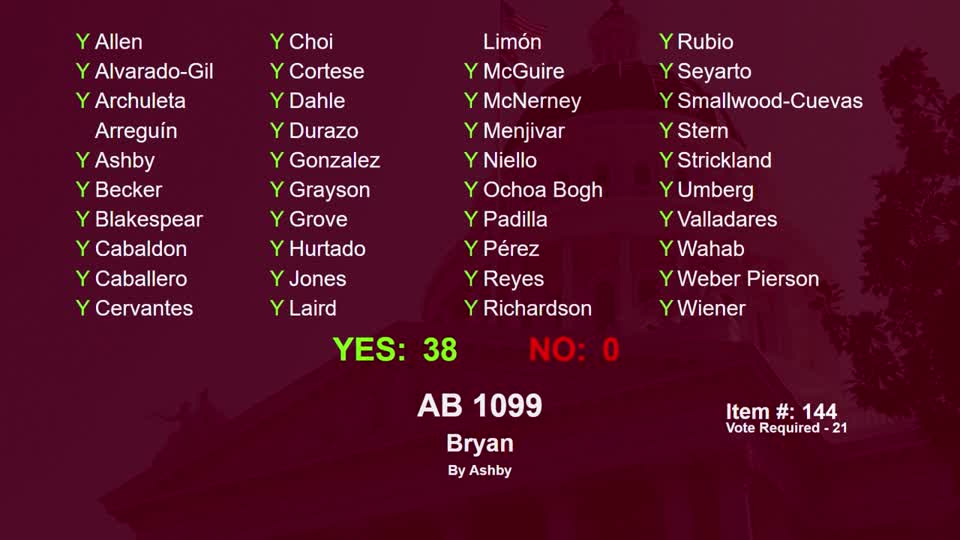 6MIN
Senate Floor
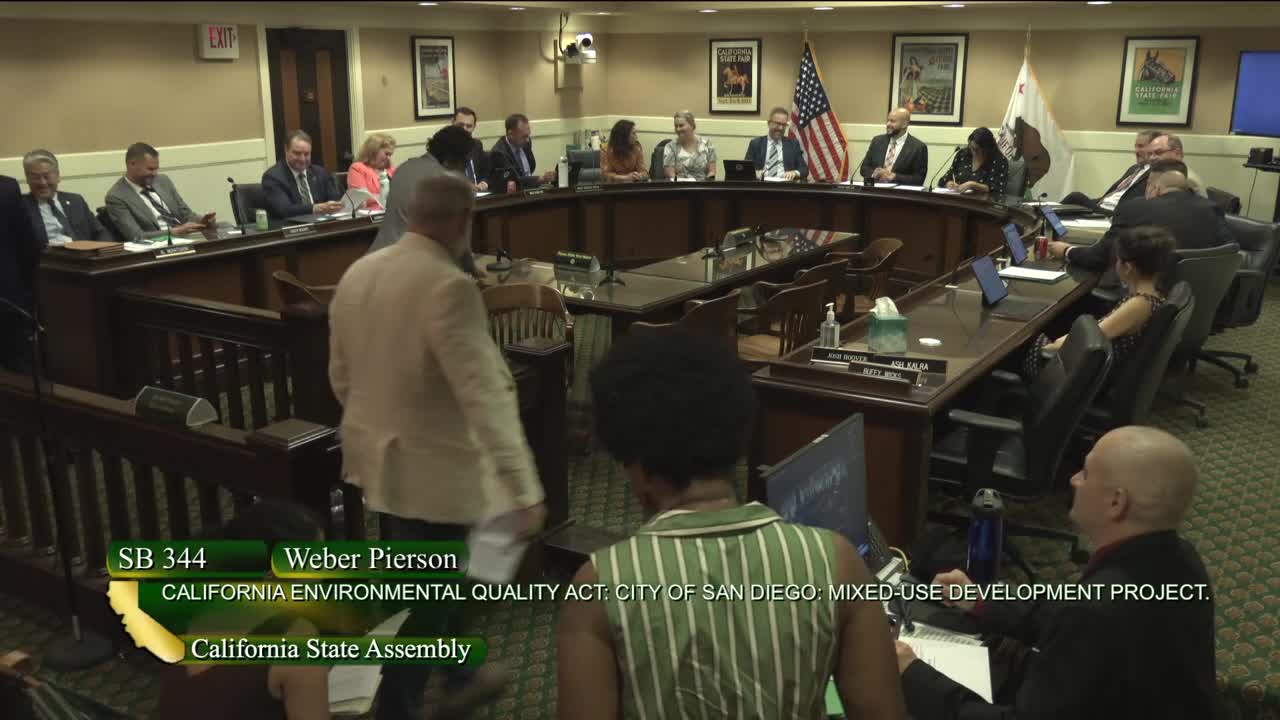 16MIN
Assembly Standing Committee on Natural Resources
Bill Author