SB 346: Local agencies: transient occupancy taxes: short-term rental facilitator.
- Session Year: 2025-2026
- House: Senate
- Latest Version Date: 2025-10-13
Current Status:
Passed
(2025-10-13: Chaptered by Secretary of State. Chapter 751, Statutes of 2025.)
Introduced
In Committee
Awaiting First Chamber Vote
Passed First Chamber
In Committee
Awaiting Second Chamber Vote
Passed Second Chamber
Enacted
Existing law authorizes a local authority, by ordinance or resolution, to regulate the occupancy of a room or rooms, or other living space, in a hotel, inn, tourist home or house, motel, or other lodging for a period of less than 30 days.
This bill would authorize a local agency, defined to mean a city, county, or city and county, to enact an ordinance to require a short-term rental facilitator, as defined, to report, in the form and manner prescribed by the local agency, the physical address, including 9-digit ZIP Code, of each short-term rental, as defined, during the reporting period. The bill would also authorize a local agency to request additional information, as provided, when the physical address is not sufficient for the local agency to identify a specific short-term rental. The bill would authorize the local agency to impose an administrative fine or penalty for failure to file the report, and would authorize the local agency to initiate an audit of a short-term rental facilitator, as described. The bill would require a short-term rental facilitator, in a jurisdiction that has adopted an ordinance, to include in the listing of a short-term rental any applicable local license number associated with the short-term rental and any transient occupancy tax certification issued by a local agency. The bill would state these provisions do not preempt a local agency from adopting an ordinance that regulates short-term rentals, short-term rental facilitators, or the payment and collection of transient occupancy taxes in a manner that differs from those described in the bill.
Existing law authorizes a local authority, by ordinance or resolution, to regulate the occupancy of a room or rooms, or other living space, in a hotel, inn, tourist home or house, motel, or other lodging for a period of less than 30 days.
This bill would authorize a local agency, defined to mean a city, county, or city and county, to enact an ordinance to require a short-term rental facilitator, as defined, to report, in the form and manner prescribed by the local agency, the physical address, including 9-digit ZIP Code, of each short-term rental, as defined, during the reporting period, as well as any additional information necessary to identify the property as may be required by the local agency. period. The bill would also authorize a local agency to request additional information, as provided, when the physical address is not sufficient for the local agency to identify a specific short-term rental. The bill would authorize the local agency to impose an administrative fine or penalty for failure to file the report, and would authorize the local agency to initiate an audit of a short-term rental facilitator, as described. The bill would require a short-term rental facilitator, in a jurisdiction that has adopted an ordinance, to include in the listing of a short-term rental any applicable local license number associated with the short-term rental and any transient occupancy tax certification issued by a local agency. The bill would state these provisions do not preempt a local agency from adopting an ordinance that regulates short-term rentals, short-term rental facilitators, or the payment and collection of transient occupancy taxes in a manner that differs from those described in the bill.
Existing law authorizes a local authority, by ordinance or resolution, to regulate the occupancy of a room or rooms, or other living space, in a hotel, inn, tourist home or house, motel, or other lodging for a period of less than 30 days.
This bill would authorize a local agency, defined to mean a city, county, or city and county, to enact an ordinance to require a short-term rental facilitator, as defined, to report, in the form and manner prescribed by the local agency, the physical address, including 9-digit ZIP Code, of each short-term rental, as defined, during the reporting period, as well as any additional information necessary to identify the property as may be required by the local agency. The bill would authorize the local agency to impose an administrative fine or penalty for failure to file the report, and would authorize the local agency to initiate an audit of a short-term rental facilitator, as described. The bill would require a short-term rental facilitator, in a jurisdiction that has adopted an ordinance, to include in the listing of a short-term rental any applicable local license number associated with the short-term rental and any transient occupancy tax certification issued by a local agency. The bill would state these provisions do not preempt a local agency from adopting an ordinance that regulates short-term rentals, short-term rental facilitators, or the payment and collection of transient occupancy taxes in a manner that differs from those described in the bill.
Existing law authorizes a local authority, by ordinance or resolution, to regulate the occupancy of a room or rooms, or other living space, in a hotel, inn, tourist home or house, motel, or other lodging for a period of less than 30 days.
This bill would authorize a local agency, defined to mean a city, county, or city and county, to enact an ordinance to require a short-term rental facilitator, as defined, to report, in the form and manner prescribed by the local agency, the assessor parcel number physical address, including 9-digit ZIP Code, of each short-term rental, as defined, during the reporting period, as well as any additional information necessary to identify the property as may be required by the local agency. The bill would authorize the local agency to impose an administrative fine or penalty for failure to file the report, and would authorize the local agency to initiate an audit of a short-term rental facilitator, as described. The bill would require a short-term rental facilitator, in a jurisdiction that has adopted an ordinance, to include in the listing of a short-term rental any applicable local license number associated with the short-term rental and any transient occupancy tax certification issued by a local agency. The bill would state these provisions do not preempt a local agency from adopting an ordinance that regulates short-term rentals, short-term rental facilitators, or the payment and collection of transient occupancy taxes in a manner that differs from those described in the bill.
Existing law authorizes a local authority, by ordinance or resolution, to regulate the occupancy of a room or rooms, or other living space, in a hotel, inn, tourist home or house, motel, or other lodging for a period of less than 30 days.
This bill would authorize a local agency, defined to mean a city, county, or city and county, to enact an ordinance to require a short-term rental facilitator, as defined, to report, in the form and manner prescribed by the local agency, the assessor parcel number of each short-term rental, as defined, during the reporting period, as well as any additional information necessary to identify the property as may be required by the local agency. The bill would authorize the local agency to impose an administrative fine or penalty for failure to file the report, and would authorize the local agency to initiate an audit of a short-term rental facilitator, as described. The bill would require a short-term rental facilitator, in a jurisdiction that has adopted an ordinance, to include in the listing of a short-term rental any applicable local license number associated with the short-term rental and any transient occupancy tax certification issued by a local agency. The bill would state these provisions do not preempt a local agency from adopting an ordinance that regulates short-term rentals, short-term rental facilitators, or the payment and collection of transient occupancy taxes in a manner that differs from those described in the bill.
(a)Short-term rental facilitators are essentially online marketplaces that allow guests seeking accommodations and hosts offering accommodations to connect and enter rental agreements with one another.
(b)Many cities and counties impose a transient occupancy tax on guests who occupy those accommodations. The transient occupancy tax is payable with the hosts charge for the accommodation.
(c)It is the intent of the Legislature to authorize cities and counties to adopt an ordinance that requires a short-term rental facilitator to transmit information that allows cities and counties to effectively enforce the payment of transient occupancy taxes by guests in these accommodations.
(d)As determined by the Ninth Circuit Court of Appeals in HomeAway.com, Inc. v. City of Santa Monica (9th Cir. 2019) 918 F.3d 676, requiring the transmittal of this information violates neither the federal Communications Decency Act nor the First Amendment.
SEC. 2.Chapter 4.6 (commencing with Section 50990) is added to Part 1 of Division 1 of Title 5 of the Government Code, to read:4.6.The Short-Term Rental Facilitator Act of 202550990.(a)This chapter shall be known, and may be cited, as the Short-Term Rental Facilitator Act of 2025.
(b)This chapter shall only apply to a local agency that adopts an ordinance that makes the provisions of this chapter applicable within its jurisdictional boundaries.
50991.All of the following definitions shall apply for purposes of this chapter:
(a)Hotel means a commercially operated hotel, motel, bed and breakfast inn, or similar transient lodging establishment, when all or part of the transient occupancy is or would be subject to tax under Section 7280 of the Revenue and Taxation Code. For purposes of this chapter, a hotel shall not include a short-term rental facilitator as defined in subdivision (g).
(b)Local agency means a city, county, or city and county.
(c)Marketplace means a physical or electronic place, including, but not limited to, a store, booth, internet website, catalog, television or radio broadcast, or a dedicated sales software application, where a marketplace seller facilitates the occupancy of a short-term rental for delivery in this state regardless of whether the short-term rental, marketplace seller, or marketplace has a physical presence in this state.
(d)Ordinance refers to an ordinance of a local agency imposing a transient occupancy tax.
(e)Purchaser means a person who is required to pay the transient occupancy tax and who uses a short-term rental facilitator to facilitate the occupation of a short-term rental within the jurisdiction of the local agency imposing the transient occupancy tax.
(f)Short-term rental means the occupancy of a home, house, a room in a home or house, a campsite, or other lodging that is not a hotel in this state for a period of 30 consecutive days or less and under any other circumstances specified by the local agency in its ordinance that is facilitated by a short-term rental facilitator.
(g)Short-term rental facilitator means a person or entity that facilitates for consideration, regardless of whether it is deducted as fees from the transaction, the occupancy of a short-term rental that is not owned by the person facilitating the rental, through a marketplace operated by the person or a related person or entity, and that does both of the following:
(1)Directly or indirectly, through one or more related persons, engages in any of the following:
(A)Transmits or otherwise communicates the offer or acceptance between the purchaser and the operator.
(B)Owns or operates the infrastructure, electronic or physical, or technology that brings purchasers and operators together.
(C)Provides a virtual currency that purchasers are allowed or required to use to facilitate the occupancy of a short-term rental from the operator.
(D)Software development or research and development activities related to any of the activities described in paragraph (2), if such activities are directly related to facilitating short-term rentals.
(2)Directly or indirectly, through one or more related persons, engages in any of the following activities with respect to facilitating short-term rentals:
(A)Payment processing services.
(B)Listing homes, houses, or rooms in homes or houses, campsites, or other lodgings that are not a hotel or motel, and that are not owned by that person or a related person, for rental on a short-term basis.
(C)Setting prices.
(D)Branding short-term rentals as those of the short-term rental facilitator.
(E)Taking orders or reservations.
(h)Transient Occupancy Tax means a tax imposed by a local agency on the privilege of occupying a short-term rental as specified and defined by the local agency in its ordinance.
50992.For purposes of this chapter, a person is related to another person if both persons are related to each other pursuant to Section 267(b) of Title 26 of the United States Code, as that section was amended by Public Law 114-113, and the regulations thereunder.
50993.(a)Upon request by the local agency, each short-term rental facilitator shall report, in the form and manner prescribed by the local agency, the physical address, including nine-digit ZIP Code, of each short-term rental during the reporting period.
(b)If the information provided by the short-term rental facilitator pursuant to subdivision (a) is not sufficient for the local agency to identify a specific short-term rental at the provided address, the local agency may request the following:
(1)The assessor parcel number of each short-term rental.
(2)The URL associated with the specific short-term rental listing.
(3)Information exclusively related to the identification of an accessory dwelling unit, guest house, or single unit of a timeshare or multifamily housing project located at a single address, which is located at the address or assessor parcel number requested.
(c)Except as provided in subdivision (d), the reporting period in subdivision (a) may be no more frequently than in intervals of every 3 months within a 12-month period.
(d)The reporting period in subdivision (a) may be monthly if a local agency requires remittance of transient occupancy tax monthly.
(e)A local agency may make the failure of a short-term rental facilitator to report the information required by this section subject to an administrative fine or penalty pursuant to Section 53069.4.
50994.A short-term rental facilitator shall include in the listing of a short-term rental any applicable local license number associated with the short-term rental and any transient occupancy tax certification issued by a local agency.
50995.(a)A local agency may conduct an audit or otherwise examine the records of the short-term rental facilitator documenting the receipt of the transient occupancy tax due and payable to the local agency if the short-term rental facilitator is responsible for collecting and remitting the transient occupancy tax to the local agency pursuant to a local ordinance or collection agreement.
(b)Any costs associated with an audit or examination shall be paid for by the local agency.
50996.Nothing in this chapter shall be construed to preempt a local agency from adopting an ordinance that regulates short-term rentals, short-term rental facilitators, or the payment and collection of transient occupancy taxes in a manner different from the procedures prescribed in this chapter.
(a)Short-term rental facilitators are essentially online marketplaces that allow guests seeking accommodations and hosts offering accommodations to connect and enter rental agreements with one another.
(b)Many cities and counties impose a transient occupancy tax on guests who occupy those accommodations. The transient occupancy tax is payable with the hosts charge for the accommodation.
(c)It is the intent of the Legislature to authorize cities and counties to adopt an ordinance that requires a short-term rental facilitator to transmit information that allows cities and counties to effectively enforce the payment of transient occupancy taxes by guests in these accommodations.
(d)As determined by the Ninth Circuit Court of Appeals in HomeAway.com, Inc. v. City of Santa Monica (9th Cir. 2019) 918 F.3d 676, requiring the transmittal of this information violates neither the federal Communications Decency Act nor the First Amendment.
SEC. 2.Chapter 4.6 (commencing with Section 50990) is added to Part 1 of Division 1 of Title 5 of the Government Code, to read:4.6.The Short-Term Rental Facilitator Act of 202550990.(a)This chapter shall be known, and may be cited, as the Short-Term Rental Facilitator Act of 2025.
(b)This chapter shall only apply to a local agency that adopts an ordinance that makes the provisions of this chapter applicable within its jurisdictional boundaries.
50991.All of the following definitions shall apply for purposes of this chapter:
(a)Hotel means a commercially operated hotel, motel, bed and breakfast inn, or similar transient lodging establishment, when all or part of the transient occupancy is or would be subject to tax under Section 7280 of the Revenue and Taxation Code. For purposes of this chapter, a hotel shall not include a short-term rental facilitator as defined in subdivision (g).
(b)Local agency means a city, county, or city and county.
(c)Marketplace means a physical or electronic place, including, but not limited to, a store, booth, internet website, catalog, television or radio broadcast, or a dedicated sales software application, where a marketplace seller facilitates the occupancy of a short-term rental for delivery in this state regardless of whether the short-term rental, marketplace seller, or marketplace has a physical presence in this state.
(d)Ordinance refers to an ordinance of a local agency imposing a transient occupancy tax.
(e)Purchaser means a person who is required to pay the transient occupancy tax and who uses a short-term rental facilitator to facilitate the occupation of a short-term rental within the jurisdiction of the local agency imposing the transient occupancy tax.
(f)Short-term rental means the occupancy of a home, house, a room in a home or house, a campsite, or other lodging that is not a hotel in this state for a period of 30 consecutive days or less and under any other circumstances specified by the local agency in its ordinance that is facilitated by a short-term rental facilitator.
(g)Short-term rental facilitator means a person or entity that facilitates for consideration, regardless of whether it is deducted as fees from the transaction, the occupancy of a short-term rental that is not owned by the person facilitating the rental, through a marketplace operated by the person or a related person or entity, and that does both of the following:
(1)Directly or indirectly, through one or more related persons, engages in any of the following:
(A)Transmits or otherwise communicates the offer or acceptance between the purchaser and the operator.
(B)Owns or operates the infrastructure, electronic or physical, or technology that brings purchasers and operators together.
(C)Provides a virtual currency that purchasers are allowed or required to use to facilitate the occupancy of a short-term rental from the operator.
(D)Software development or research and development activities related to any of the activities described in paragraph (2), if such activities are directly related to facilitating short-term rentals.
(2)Directly or indirectly, through one or more related persons, engages in any of the following activities with respect to facilitating short-term rentals:
(A)Payment processing services.
(B)Listing homes, houses, or rooms in homes or houses, campsites, or other lodgings that are not a hotel or motel, and that are not owned by that person or a related person, for rental on a short-term basis.
(C)Setting prices.
(D)Branding short-term rentals as those of the short-term rental facilitator.
(E)Taking orders or reservations.
(h)Transient Occupancy Tax means a tax imposed by a local agency on the privilege of occupying a short-term rental as specified and defined by the local agency in its ordinance.
50992.For purposes of this chapter, a person is related to another person if both persons are related to each other pursuant to Section 267(b) of Title 26 of the United States Code, as that section was amended by Public Law 114-113, and the regulations thereunder.
50993.(a)Upon request by the local agency, each short-term rental facilitator shall report, in the form and manner prescribed by the local agency, the physical address, including nine-digit ZIP Code, of each short-term rental during the reporting period, as well as any additional information necessary to identify the property required by the local agency, including, but not limited to: period.
(b)If the information provided by the short-term rental facilitator pursuant to subdivision (a) is not sufficient for the local agency to identify a specific short-term rental at the provided address, the local agency may request the following:
(1)The assessor parcel number of each short-term rental.
(2)The URL associated with the specific short-term rental listing.
(3)Information exclusively related to the identification of an accessory dwelling unit, guest house, or single unit of a timeshare or multifamily housing project located at a single address, which is located at the address or assessor parcel number requested.
(c)Except as provided in subdivision (d), the reporting period in subdivision (a) may be no more frequently than in intervals of every 3 months within a 12-month period.
(d)The reporting period in subdivision (a) may be monthly if a local agency requires remittance of transient occupancy tax monthly.
(b)(e)A local agency may make the failure of a short-term rental facilitator to report the information required by this section subject to an administrative fine or penalty pursuant to Section 53069.4.
(c)(1)A local agency may conduct an audit or otherwise examine the records of the short-term rental facilitator documenting the receipt of the transient occupancy tax due and payable to the local agency.(2)Any costs associated with an audit or examination shall be paid for by the local agency.50994.A short-term rental facilitator shall include in the listing of a short-term rental any applicable local license number associated with the short-term rental and any transient occupancy tax certification issued by a local agency.
50995.(a)A local agency may conduct an audit or otherwise examine the records of the short-term rental facilitator documenting the receipt of the transient occupancy tax due and payable to the local agency if the short-term rental facilitator is responsible for collecting and remitting the transient occupancy tax to the local agency pursuant to a local ordinance or collection agreement.
(b)Any costs associated with an audit or examination shall be paid for by the local agency.
50995.50996.Nothing in this chapter shall be construed to preempt a local agency from adopting an ordinance that regulates short-term rentals, short-term rental facilitators, or the payment and collection of transient occupancy taxes in a manner different from the procedures prescribed in this chapter.
(a)Short-term rental facilitators are essentially online marketplaces that allow guests seeking accommodations and hosts offering accommodations to connect and enter rental agreements with one another.
(b)Many cities and counties impose a transient occupancy tax on guests who occupy those accommodations. The transient occupancy tax is payable with the hosts charge for the accommodation.
(c)It is the intent of the Legislature to authorize cities and counties to adopt an ordinance that requires a short-term rental facilitator to transmit information that allows cities and counties to effectively enforce the payment of transient occupancy taxes by guests in these accommodations.
(d)As determined by the Ninth Circuit Court of Appeals in HomeAway.com, Inc. v. City of Santa Monica (9th Cir. 2019) 918 F.3d 676, requiring the transmittal of this information violates neither the federal Communications Decency Act nor the First Amendment.
SEC. 2.Chapter 6.4 (commencing with Section 51043) is added to Part 1 of Division 1 of Title 5 of the Government Code, to read:6.4.The Short-Term Rental Facilitator Act of 202551043.SEC. 2.Chapter 4.6 (commencing with Section 50990) is added to Part 1 of Division 1 of Title 5 of the Government Code, to read:4.6.The Short-Term Rental Facilitator Act of 202550990.(a)This chapter shall be known, and may be cited, as the Short-Term Rental Facilitator Act of 2025.
(b)This chapter shall only apply to a local agency that adopts an ordinance that makes the provisions of this chapter applicable within its jurisdictional boundaries.
51044.50991.All of the following definitions shall apply for purposes of this chapter:
(a)Hotel means a commercially operated hotel, motel, bed and breakfast inn, or similar transient lodging establishment, when all or part of the transient occupancy is or would be subject to tax under Section 7280 of the Revenue and Taxation Code. For purposes of this chapter, a hotel shall not include a short-term rental facilitator as defined in subdivision (g).
(b)Local agency means a city, county, or city and county.
(c)Marketplace means a physical or electronic place, including, but not limited to, a store, booth, internet website, catalog, television or radio broadcast, or a dedicated sales software application, where a marketplace seller facilitates the occupancy of a short-term rental for delivery in this state regardless of whether the short-term rental, marketplace seller, or marketplace has a physical presence in this state.
(d)Ordinance refers to an ordinance of a local agency imposing a transient occupancy tax.
(e)Purchaser means a person who is required to pay the transient occupancy tax and who uses a short-term rental facilitator to facilitate the occupation of a short-term rental within the jurisdiction of the local agency imposing the transient occupancy tax.
(f)Short-term rental means the occupancy of a home, house, a room in a home or house, a campsite, or other lodging that is not a hotel in this state for a period of 30 consecutive days or less and under any other circumstances specified by the local agency in its ordinance that is facilitated by a short-term rental facilitator.
(g)Short-term rental facilitator means a person or entity that facilitates for consideration, regardless of whether it is deducted as fees from the transaction, the occupancy of a short-term rental that is not owned by the person facilitating the rental, through a marketplace operated by the person or a related person or entity, and that does both of the following:
(1)Directly or indirectly, through one or more related persons, engages in any of the following:
(A)Transmits or otherwise communicates the offer or acceptance between the purchaser and the operator.
(B)Owns or operates the infrastructure, electronic or physical, or technology that brings purchasers and operators together.
(C)Provides a virtual currency that purchasers are allowed or required to use to facilitate the occupancy of a short-term rental from the operator.
(D)Software development or research and development activities related to any of the activities described in paragraph (2), if such activities are directly related to facilitating short-term rentals.
(2)Directly or indirectly, through one or more related persons, engages in any of the following activities with respect to facilitating short-term rentals:
(A)Payment processing services.
(B)Listing homes, houses, or rooms in homes or houses, campsites, or other lodgings that are not a hotel or motel, and that are not owned by that person or a related person, for rental on a short-term basis.
(C)Setting prices.
(D)Branding short-term rentals as those of the short-term rental facilitator.
(E)Taking orders or reservations.
(h)Transient Occupancy Tax means a tax imposed by a local agency on the privilege of occupying a short-term rental as specified and defined by the local agency in its ordinance.
51045.50992.For purposes of this chapter, a person is related to another person if both persons are related to each other pursuant to Section 267(b) of Title 26 of the United States Code, as that section was amended by Public Law 114-113, and the regulations thereunder.
51046.50993.(a)Upon request by the local agency, each short-term rental facilitator shall report, in the form and manner prescribed by the local agency, the physical address, including nine-digit ZIP Code, of each short-term rental during the reporting period, as well as any additional information necessary to identify the property required by the local agency, including, but not limited to:
(1)The assessor parcel number of the host property. each short-term rental.
(2)The URL associated with the specific host property short-term rental listing.
(b)A local agency may make the failure of a short-term rental facilitator to report the information required by this section subject to an administrative fine or penalty pursuant to Section 53069.4.
(c)(1)A local agency may conduct an audit or otherwise examine the records of the short-term rental facilitator documenting the receipt of the transient occupancy tax due and payable to the local agency.
(2)Any costs associated with an audit or examination shall be paid for by the local agency.
51047.50994.A short-term rental facilitator shall include in the listing of a short-term rental any applicable local license number associated with the short-term rental and any transient occupancy tax certification issued by a local agency.
51048.50995.Nothing in this chapter shall be construed to preempt a local agency from adopting an ordinance that regulates short-term rentals, short-term rental facilitators, or the payment and collection of transient occupancy taxes in a manner different from the procedures prescribed in this chapter.
(a)Short-term rental facilitators are essentially online marketplaces that allow guests seeking accommodations and hosts offering accommodations to connect and enter rental agreements with one another.
(b)Many cities and counties impose a transient occupancy tax on guests who occupy those accommodations. The transient occupancy tax is payable with the hosts charge for the accommodation.
(c)It is the intent of the Legislature to authorize cities and counties to adopt an ordinance that requires a short-term rental facilitator to transmit information that allows cities and counties to effectively enforce the payment of transient occupancy taxes by guests in these accommodations.
(d)As determined by the Ninth Circuit Court of Appeals in HomeAway.com, Inc. v. City of Santa Monica (9th Cir. 2019) 918 F.3d 676, requiring the transmittal of this information violates neither the federal Communications Decency Act nor the First Amendment.
SEC. 2.Chapter 6.4 (commencing with Section 51043) is added to Part 1 of Division 1 of Title 5 of the Government Code, to read:6.4.The Short-Term Rental Facilitator Act of 202551043.(a)This chapter shall be known, and may be cited, as the Short-Term Rental Facilitator Act of 2025.
(b)This chapter shall only apply to a local agency that adopts an ordinance that makes the provisions of this chapter applicable within its jurisdictional boundaries.
51044.All of the following definitions shall apply for purposes of this chapter:
(a)Hotel means a commercially operated hotel, motel, bed and breakfast inn, or similar transient lodging establishment, when all or part of the transient occupancy is or would be subject to tax under Section 7280 of the Revenue and Taxation Code. For purposes of this chapter, a hotel shall not include a short-term rental facilitator as defined in subdivision (g).
(b)Local agency means a city, county, or city and county.
(c)Marketplace means a physical or electronic place, including, but not limited to, a store, booth, internet website, catalog, television or radio broadcast, or a dedicated sales software application, where a marketplace seller facilitates the occupancy of a short-term rental for delivery in this state regardless of whether the short-term rental, marketplace seller, or marketplace has a physical presence in this state.
(d)Ordinance refers to an ordinance of a local agency imposing a transient occupancy tax.
(e)Purchaser means a person who is required to pay the transient occupancy tax and who uses a short-term rental facilitator to facilitate the occupation of a short-term rental within the jurisdiction of the local agency imposing the transient occupancy tax.
(f)Short-term rental means the occupancy of a home, house, a room in a home or house, or other lodging that is not a hotel in this state for a period of 30 consecutive days or less and under any other circumstances specified by the local agency in its ordinance that is facilitated by a short-term rental facilitator.
(g)Short-term rental facilitator means a person or entity that facilitates for consideration, regardless of whether it is deducted as fees from the transaction, the occupancy of a short-term rental that is not owned by the person facilitating the rental, through a marketplace operated by the person or a related person or entity, and that does both of the following:
(1)Directly or indirectly, through one or more related persons, engages in any of the following:
(A)Transmits or otherwise communicates the offer or acceptance between the purchaser and the operator.
(B)Owns or operates the infrastructure, electronic or physical, or technology that brings purchasers and operators together.
(C)Provides a virtual currency that purchasers are allowed or required to use to facilitate the occupancy of a short-term rental from the operator.
(D)Software development or research and development activities related to any of the activities described in paragraph (2), if such activities are directly related to facilitating short-term rentals.
(2)Directly or indirectly, through one or more related persons, engages in any of the following activities with respect to facilitating short-term rentals:
(A)Payment processing services.
(B)Listing homes, houses, or rooms in homes or houses, or other lodgings that are not a hotel or motel, and that are not owned by that person or a related person, for rental on a short-term basis.
(C)Setting prices.
(D)Branding short-term rentals as those of the short-term rental facilitator.
(E)Taking orders or reservations.
(h)Transient Occupancy Tax means a tax imposed by a local agency on the privilege of occupying a short-term rental as specified and defined by the local agency in its ordinance.
51045.For purposes of this chapter, a person is related to another person if both persons are related to each other pursuant to Section 267(b) of Title 26 of the United States Code, as that section was amended by Public Law 114-113, and the regulations thereunder.
51046.(a)Upon request by the local agency, each short-term rental facilitator shall report, in the form and manner prescribed by the local agency, the assessor parcel number physical address, including nine-digit ZIP Code, of each short-term rental during the reporting period, as well as any additional information necessary to identify the property required by the local agency, including, but not limited to:
(1)The physical address of the host property. The assessor parcel number of the host property.
(2)The URL associated with the specific host property listing.
(2)The following information associated with the physical address of the host property:(A)Marketplace identification number.(B)Website address.(C)Listing identification number.(D)Property type.(b)A local agency may make the failure of a short-term rental facilitator to report the information required by this section subject to an administrative fine or penalty pursuant to Section 53069.4.
(c)(1)A local agency may conduct an audit or otherwise examine the records of the short-term rental facilitator documenting the receipt of the transient occupancy tax due and payable to the local agency.
(2)Any costs associated with an audit or examination shall be paid for by the local agency.
51047.A short-term rental facilitator shall include in the listing of a short-term rental any applicable local license number associated with the short-term rental and any transient occupancy tax certification issued by a local agency.
51048.Nothing in this chapter shall be construed to preempt a local agency from adopting an ordinance that regulates short-term rentals, short-term rental facilitators, or the payment and collection of transient occupancy taxes in a manner different from the procedures prescribed in this chapter.
(a)Short-term rental facilitators are essentially online marketplaces that allow guests seeking accommodations and hosts offering accommodations to connect and enter rental agreements with one another.
(b)Many cities and counties impose a transient occupancy tax on guests who occupy those accommodations. The transient occupancy tax is payable with the hosts charge for the accommodation.
(c)It is the intent of the Legislature to authorize cities and counties to adopt an ordinance that requires a short-term rental facilitator to transmit information that allows cities and counties to effectively enforce the payment of transient occupancy taxes by guests in these accommodations.
(d)As determined by the Ninth Circuit Court of Appeals in HomeAway.com, Inc. v. City of Santa Monica (9th Cir. 2019) 918 F.3d 676, requiring the transmittal of this information violates neither the federal Communications Decency Act nor the First Amendment.
SEC. 2.Chapter 6.4 (commencing with Section 51043) is added to Part 1 of Division 1 of Title 5 of the Government Code, to read:6.4.The Short-Term Rental Facilitator Act of 202551043.(a)This chapter shall be known, and may be cited, as the Short-Term Rental Facilitator Act of 2025.
(b)This chapter shall only apply to a local agency that adopts an ordinance that makes the provisions of this chapter applicable within its jurisdictional boundaries.
51044.All of the following definitions shall apply for purposes of this chapter:
(a)Hotel means a commercially operated hotel, motel, bed and breakfast inn, or similar transient lodging establishment, when all or part of the transient occupancy is or would be subject to tax under Section 7280 of the Revenue and Taxation Code. For purposes of this chapter, a hotel shall not include a short-term rental facilitator as defined in subdivision (g).
(b)Local agency means a city, county, or city and county.
(c)Marketplace means a physical or electronic place, including, but not limited to, a store, booth, internet website, catalog, television or radio broadcast, or a dedicated sales software application, where a marketplace seller facilitates the occupancy of a short-term rental for delivery in this state regardless of whether the short-term rental, marketplace seller, or marketplace has a physical presence in this state.
(d)Ordinance refers to an ordinance of a local agency imposing a transient occupancy tax.
(e)Purchaser means a person who is required to pay the transient occupancy tax and who uses a short-term rental facilitator to facilitate the occupation of a short-term rental within the jurisdiction of the local agency imposing the transient occupancy tax.
(f)Short-term rental means the occupancy of a home, house, a room in a home or house, or other lodging that is not a hotel in this state for a period of 30 consecutive days or less and under any other circumstances specified by the local agency in its ordinance that is facilitated by a short-term rental facilitator.
(g)Short-term rental facilitator means a person or entity that facilitates for consideration, regardless of whether it is deducted as fees from the transaction, the occupancy of a short-term rental that is not owned by the person facilitating the rental, through a marketplace operated by the person or a related person or entity, and that does both of the following:
(1)Directly or indirectly, through one or more related persons, engages in any of the following:
(A)Transmits or otherwise communicates the offer or acceptance between the purchaser and the operator.
(B)Owns or operates the infrastructure, electronic or physical, or technology that brings purchasers and operators together.
(C)Provides a virtual currency that purchasers are allowed or required to use to facilitate the occupancy of a short-term rental from the operator.
(D)Software development or research and development activities related to any of the activities described in paragraph (2), if such activities are directly related to facilitating short-term rentals.
(2)Directly or indirectly, through one or more related persons, engages in any of the following activities with respect to facilitating short-term rentals:
(A)Payment processing services.
(B)Listing homes, houses, or rooms in homes or houses, or other lodgings that are not a hotel or motel, and that are not owned by that person or a related person, for rental on a short-term basis.
(C)Setting prices.
(D)Branding short-term rentals as those of the short-term rental facilitator.
(E)Taking orders or reservations.
(h)Transient Occupancy Tax means a tax imposed by a local agency on the privilege of occupying a short-term rental as specified and defined by the local agency in its ordinance.
51045.For purposes of this chapter, a person is related to another person if both persons are related to each other pursuant to Section 267(b) of Title 26 of the United States Code, as that section was amended by Public Law 114-113, and the regulations thereunder.
51046.(a)Upon request by the local agency, each short-term rental facilitator shall report, in the form and manner prescribed by the local agency, the assessor parcel number of each short-term rental during the reporting period, as well as any additional information necessary to identify the property required by the local agency, including, but not limited to, the physical address of the host property marketplace identification number, website address, listing identification number, and property type. to:
(1)The physical address of the host property.
(2)The following information associated with the physical address of the host property:
(A)Marketplace identification number.
(B)Website address.
(C)Listing identification number.
(D)Property type.
(b)A local agency may make the failure of a short-term rental facilitator to report the information required by this section subject to an administrative fine or penalty pursuant to Section 53069.4.
(c)(1)A local agency may conduct an audit or otherwise examine the records of the short-term rental facilitator documenting the receipt of the local charge transient occupancy tax due and payable to the local agency.
(2)Any costs association associated with an audit or examination shall be paid for by the local agency.
51047.A short-term rental facilitator shall include in the listing of a short-term rental any applicable local license number associated with the short-term rental and any transient occupancy tax certification issued by a local agency.
51048.Nothing in this chapter shall be construed to preempt a local agency from adopting an ordinance that regulates short-term rentals, short-term rental facilitators, or the payment and collection of transient occupancy taxes in a manner different from the procedures prescribed in this chapter.
(a)Short-term rental facilitators are essentially online marketplaces that allow guests seeking accommodations and hosts offering accommodations to connect and enter rental agreements with one another.
(b)Many cities and counties impose a transient occupancy tax on guests who occupy those accommodations. The transient occupancy tax is payable with the hosts charge for the accommodation.
(c)It is the intent of the Legislature to authorize cities and counties to adopt an ordinance that requires a short-term rental facilitator to transmit information that allows cities and counties to effectively enforce the payment of transient occupancy taxes by guests in these accommodations.
(d)As determined by the Ninth Circuit Court of Appeals in HomeAway.com, Inc. v. City of Santa Monica (9th Cir. 2019) 918 F.3d 676, requiring the transmittal of this information violates neither the federal Communications Decency Act nor the First Amendment.
SEC. 2.Chapter 6.4 (commencing with Section 51043) is added to Part 1 of Division 1 of Title 5 of the Government Code, to read:6.4.The Short-Term Rental Facilitator Act of 202551043.(a)This chapter shall be known, and may be cited, as the Short-Term Rental Facilitator Act of 2025.
(b)This chapter shall only apply to a local agency that adopts an ordinance that makes the provisions of this chapter applicable within its jurisdictional boundaries.
51044.All of the following definitions shall apply for purposes of this chapter:
(a)Hotel means a commercially operated hotel, motel, bed and breakfast inn, or similar transient lodging establishment, when all or part of the transient occupancy is or would be subject to tax under Section 7280 of the Revenue and Taxation Code. For purposes of this chapter, a hotel shall not include a short-term rental facilitator as defined in subdivision (g).
(b)Local agency means a city, county, or city and county.
(c)Marketplace means a physical or electronic place, including, but not limited to, a store, booth, internet website, catalog, television or radio broadcast, or a dedicated sales software application, where a marketplace seller facilitates the occupancy of a short-term rental for delivery in this state regardless of whether the short-term rental, marketplace seller, or marketplace has a physical presence in this state.
(d)Ordinance refers to an ordinance of a local agency imposing a transient occupancy tax.
(e)Purchaser means a person who is required to pay the transient occupancy tax and who uses a short-term rental facilitator to facilitate the occupation of a short-term rental within the jurisdiction of the local agency imposing the transient occupancy tax.
(f)Short-term rental means the occupancy of a home, house, a room in a home or house, or other lodging that is not a hotel in this state for a period of 30 consecutive days or less and under any other circumstances specified by the local agency in its ordinance that is facilitated by a short-term rental facilitator.
(g)Short-term rental facilitator means a person or entity that facilitates for consideration, regardless of whether it is deducted as fees from the transaction, the occupancy of a short-term rental that is not owned by the person facilitating the rental, through a marketplace operated by the person or a related person or entity, and that does both of the following:
(1)Directly or indirectly, through one or more related persons, engages in any of the following:
(A)Transmits or otherwise communicates the offer or acceptance between the purchaser and the operator.
(B)Owns or operates the infrastructure, electronic or physical, or technology that brings purchasers and operators together.
(C)Provides a virtual currency that purchasers are allowed or required to use to facilitate the occupancy of a short-term rental from the operator.
(D)Software development or research and development activities related to any of the activities described in paragraph (2), if such activities are directly related to facilitating short-term rentals.
(2)Directly or indirectly, through one or more related persons, engages in any of the following activities with respect to facilitating short-term rentals:
(A)Payment processing services.
(B)Listing homes, houses, or rooms in homes or houses, or other lodgings that are not a hotel or motel, and that are not owned by that person or a related person, for rental on a short-term basis.
(C)Setting prices.
(D)Branding short-term rentals as those of the short-term rental facilitator.
(E)Taking orders or reservations.
(h)Transient Occupancy Tax means a tax imposed by a local agency on the privilege of occupying a short-term rental as specified and defined by the local agency in its ordinance.
51045.For purposes of this chapter, a person is related to another person if both persons are related to each other pursuant to Section 267(b) of Title 26 of the United States Code, as that section was amended by Public Law 114-113, and the regulations thereunder.
51046.(a)Upon request by the local agency, each short-term rental facilitator shall report, in the form and manner prescribed by the local agency, the assessor parcel number of each short-term rental during the reporting period, as well as any additional information necessary to identify the property required by the local agency, including, but not limited to, the physical address of the host property marketplace identification number, website address, listing identification number, and property type.
(b)A local agency may make the failure of a short-term rental facilitator to report the information required by this section subject to an administrative fine or penalty pursuant to Section 53069.4.
(c)(1)A local agency may conduct an audit or otherwise examine the records of the short-term rental facilitator documenting the receipt of the local charge due and payable to the local agency.
(2)Any costs association with an audit or examination shall be paid for by the local agency.
51047.A short-term rental facilitator shall include in the listing of a short-term rental any applicable local license number associated with the short-term rental and any transient occupancy tax certification issued by a local agency.
51048.Nothing in this chapter shall be construed to preempt a local agency from adopting an ordinance that regulates short-term rentals, short-term rental facilitators, or the payment and collection of transient occupancy taxes in a manner different from the procedures prescribed in this chapter.
|
Date
|
Status
|
|---|---|
| Oct 13, 2025 | Chaptered by Secretary of State. Chapter 751, Statutes of 2025. |
| Oct 13, 2025 | Approved by the Governor. |
| Sep 9, 2025 | Enrolled and presented to the Governor at 2 p.m. |
| Sep 2, 2025 | Assembly amendments concurred in. (Ayes 40. Noes 0. Page 2409.) Ordered to engrossing and enrolling. |
| Aug 29, 2025 | In Senate. Concurrence in Assembly amendments pending. |
| Aug 29, 2025 | Read third time. Passed. (Ayes 64. Noes 0. Page 2793.) Ordered to the Senate. |
| Jul 17, 2025 | Read second time. Ordered to third reading. |
| Jul 16, 2025 | From committee: Do pass. (Ayes 11. Noes 0.) (July 15). |
| Jul 7, 2025 | Read second time and amended. Re-referred to Com. on JUD. |
| Jul 3, 2025 | From committee: Do pass as amended and re-refer to Com. on JUD. (Ayes 9. Noes 0.) (July 2). |
| Jun 24, 2025 | From committee with author's amendments. Read second time and amended. Re-referred to Com. on L. GOV. |
| Jun 5, 2025 | Referred to Coms. on L. GOV. and JUD. |
| May 28, 2025 | In Assembly. Read first time. Held at Desk. |
| May 27, 2025 | Read third time. Passed. (Ayes 38. Noes 0. Page 1243.) Ordered to the Assembly. |
| May 8, 2025 | Read second time and amended. Ordered to third reading. |
| May 7, 2025 | From committee: Do pass as amended. (Ayes 12. Noes 0. Page 1026.) (May 6). |
| Apr 22, 2025 | Set for hearing May 6. |
| Mar 20, 2025 | Read second time and amended. Re-referred to Com. on JUD. |
| Mar 19, 2025 | From committee: Do pass as amended and re-refer to Com. on JUD. (Ayes 7. Noes 0. Page 422.) (March 19). |
| Mar 4, 2025 | Set for hearing March 19. |
| Feb 19, 2025 | Referred to Coms. on L. GOV. and JUD. |
| Feb 13, 2025 | From printer. May be acted upon on or after March 15. |
| Feb 12, 2025 | Introduced. Read first time. To Com. on RLS. for assignment. To print. |
|
Date
|
Description
|
Location
|
Votes
|
|
|---|---|---|---|---|
| Sep 2, 2025 | The committee(s) on WAM recommend(s) that the measure be PASSED, WITH AMENDMENTS | Senate Floor |
Passed |
|
| Aug 29, 2025 | SB 346 Durazo Senate Third Reading By Bauer-Kahan | Assembly Floor |
Passed |
|
| Jul 15, 2025 | Do pass. | Assembly Standing Committee on Judiciary |
Passed |
|
| Jul 2, 2025 | Do pass as amended and be re-referred to the Committee on [Judiciary] | Assembly Standing Committee on Local Government |
Passed |
|
| May 27, 2025 | Senate 3rd Reading SB346 Durazo et al. | Senate Floor |
Passed |
|
| May 6, 2025 | Do pass as amended | Senate Standing Committee on Judiciary |
Passed |
|
| Mar 19, 2025 | Do pass as amended, but first amend, and re-refer to the Committee on [Judiciary] | Senate Standing Committee on Local Government |
Passed |
This list shows positions taken on this bill by organizations on the date displayed, which is linked to the original source.
Positions by individuals are not included.
|
Organization
|
Position
|
Date
|
|---|---|---|
| Airbnb, Inc | ** Against | |
| Asian American Hotel Owners Association | ** Support | |
| Better Neighbors LA | ** Support | |
| Board of Supervisors for the City and County of San Francisco | ** Support | |
| Booking.com | ** Against | |
| BOOKING.COM, B.V. | ** Against | |
| California Association of County Treasurers and Tax Collectors (Source) | ** Support | |
| California Association Of County Treasurers & Tax Collectors | ** Support | |
| California Business Roundtable | ** Support | |
| California Chamber Of Commerce | ** Support | |
| California Contract Cities Association | ** Support | |
| California Hotel & Lodging Association | ** Support | |
| California Outdoors Recreation Partnership (Corp) | ** Against | |
| California State Association Of Counties | ** Support | |
| California State Council of Service Employees International Union | ** Support | |
| California YIMBY | ** Support | |
| Century City Chamber of Commerce | ** Support | |
| City of Alameda | ** Support | |
| City of Alhambra | ** Support | |
| City of Arcata | ** Support | |
| City of Belmont | ** Support | |
| City Of Beverly Hills | ** Support | |
| City of Big Bear Lake | ** Support | |
| City of Buena Park | ** Support | |
| city of carlsbad | ** Support | |
| City of Carpinteria | ** Support | |
| City of Claremont - Mayor Corey Calaycay | ** Support | |
| City of Concord | ** Support | |
| City of Downey | ** Support | |
| City of Duarte | ** Support | |
| City of Dublin | ** Support | |
| City of Ferndale | ** Support | |
| City Of Folsom | ** Support | |
| City Of Fullerton | ** Support | |
| City Of Garden Grove | ** Support | |
| City of Goleta | ** Support | |
| City of Grand Terrace | ** Support | |
| City of Hanford | ** Support | |
| City of Hesperia | ** Support | |
| City Of Huntington Beach | ** Support | |
| City of Indian Wells | ** Support | |
| City of Indio | ** Support | |
| City Of Laguna Beach | ** Support | |
| City of La Habra | ** Support | |
| City Of Lake Forest | ** Support | |
| City of Lakeport | ** Support | |
| City of Lakewood | ** Support | |
| City of Lakewood CA | ** Support | |
| City Of Lathrop | ** Support | |
| City of Long Beach | ** Support | |
| City of Los Alamitos | ** Support | |
| City Of Los Angeles | ** Support | |
| City of Madera | ** Support | |
| City of Manhattan Beach | ** Support | |
| City of Manteca | ** Support | |
| City of Milpitas | ** Support | |
| City of Morgan Hill | ** Support | |
| City of Morro Bay | ** Support | |
| City of Napa | ** Support | |
| City of Norwalk | ** Support | |
| City Of Ontario | ** Support | |
| City of Orinda | ** Support | |
| City of Oxnard | ** Support | |
| City of Palm Desert | ** Support | |
| City Of Palo Alto | ** Support | |
| city of paramount | ** Support | |
| City of Pasadena | ** Support | |
| City of Pismo Beach | ** Support | |
| City Of Placentia | ** Support | |
| City of Rancho Cucamonga | ** Support | |
| City of Rancho Mirage | ** Support | |
| City of Redding | ** Support | |
| City Of Reedley | ** Support | |
| City of Riverbank | ** Support | |
| City of Riverside | ** Support | |
| City Of San Bernardino | ** Support | |
| City of San Luis Obispo | ** Support | |
| City of Santa Barbara | ** Support | |
| City of Santa Monica | ** Support | |
| City of Simi Valley | ** Support | |
| City of Stanton | ** Support | |
| City of Sunnyvale | ** Support | |
| City Of Temecula | ** Support | |
| City of Thousand Oaks | ** Support | |
| City of Tulare | ** Support | |
| City Of Tustin | ** Support | |
| City Of Upland | ** Support | |
| City Of Visalia | ** Support | |
| City of Vista | ** Support | |
| City of Walnut Creek | ** Support | |
| City Of Wildomar | ** Support | |
| CIVITAS | ** Support | |
| Council Member Norma Campos Kurtz, City of Anaheim | ** Support | |
| County of Contra Costa | ** Support | |
| County of Fresno | ** Support | |
| County of Humboldt | ** Support | |
| County of Imperial | ** Support | |
| County of Lake | ** Support | |
| County Of Los Angeles | ** Support | |
| County of Los Angeles Board of Supervisors | ** Support | |
| County of Marin | ** Support | |
| County of Merced | ** Support | |
| County Of Mono | ** Support | |
| County of Monterey | ** Support | |
| County of Napa | ** Support | |
| County of Orange | ** Support | |
| County Of Placer | ** Support | |
| County Of Plumas | ** Support | |
| County of Riverside | ** Support | |
| county of sacramento | ** Support | |
| County of San Bernardino | ** Support | |
| County of San Luis Obispo | ** Support | |
| County of San Mateo | ** Support | |
| County of Santa Clara | ** Support | |
| County of Solano | ** Support | |
| County of Sonoma | ** Support | |
| County of Trinity | ** Support | |
| Expedia Group | ** Against | |
| James W. Hamilton, San Luis Obispo County Treasurer-tax Collector (Co-Sponsor) | ** Support | |
| LAKE FOREST; CITY OF | ** Support | |
| Long Beach Area Chamber of Commerce | ** Support | |
| Los Angeles County Business Federation | ** Support | |
| Mammoth Lakes Tourism | ** Support | |
| Marin County Council of Mayors and Council Members | ** Support | |
| Mayor's and Councilimembers' Association of Sonoma County Legislative Committee | ** Support | |
| Muniservices | ** Support | |
| Napa County Board of Supervisors | ** Support | |
| Northeast Los Angeles Hotel Owners Association | ** Support | |
| OUTDOOR INDUSTRY ASSOCIATION (OIA) | ** Against | |
| Plumas County Board of Supervisors | ** Support | |
| Redwood Empire Division, League of California Cities | ** Support | |
| Rural County Representatives of California | ** Support | |
| San Bernardino County | ** Support | |
| San Francisco Board of Supervisors | ** Support | |
| SAN RAFAEL/MARIN COUNTY COUNCIL OF MAYORS & COUNCIL MEMBERS; CITY OF | ** Support | |
| Santa Barbara South Coast Chamber of Commerce | ** Support | |
| Shari Freidenrich, Orange County Treasurer-Tax Collector | ** Support | |
| Solano County | ** Support | |
| South Bay Cities Council of Governments | ** Support | |
| Technet | ** Against | |
| The San Francisco Peninsula | ** Support | |
| Torrance Area Chamber of Commerce | ** Support | |
| Town of Truckee | ** Support | |
| Travel Technology Association | ** Against | |
| Treasurer-tax Collector Shari Freidenrich, County of Orange | ** Support | |
| Unite Here International Union, Afl-Cio | ** Support | |
| Urban Counties of California | ** Support | |
| Visit Berkeley | ** Support | |
| Visit Huntington Beach | ** Support | |
| Visit Oceanside | ** Support | |
| Visit Rancho Cordova | ** Support | |
| Visit Sacramento | ** Support | |
| Visit San Luis Obispo | ** Support | |
| Visit Santa Barbara | ** Support | |
| Visit Temecula Valley | ** Support | |
| Visit the Santa Ynez Valley | ** Support | |
| Visit Ventura | ** Support | |
| Visit Yosemite Madera County | ** Support | |
| Visit Yosemite/Madera County | ** Support | |
| West Hollywood Chamber of Commerce | ** Support | |
| West Hollywood/hernan Molina, Governmental Affairs Liaison | ** Support | |
| Westside Council Of Chambers Of Commerce | ** Support |
SENATE RULES COMMITTEE Office of Senate Floor Analyses (916) 651-1520 Fax: (916) 327-4478 | SB 346 |
UNFINISHED BUSINESS
Bill No: SB 346
Author: Durazo (D), et al.
Amended: 7/7/25
Vote: 21
SENATE LOCAL GOVERNMENT COMMITTEE: 7-0, 3/19/25
AYES: Durazo, Choi, Arreguín, Cabaldon, Laird, Seyarto, Wiener
SENATE JUDICIARY COMMITTEE: 12-0, 5/6/25
AYES: Umberg, Niello, Allen, Arreguín, Ashby, Caballero, Durazo, Laird, Stern, Valladares, Wahab, Weber Pierson
NO VOTE RECORDED: Wiener
SENATE FLOOR: 38-0, 5/27/25
AYES: Allen, Alvarado-Gil, Archuleta, Arreguín, Ashby, Becker, Blakespear, Cabaldon, Caballero, Cervantes, Choi, Cortese, Dahle, Durazo, Gonzalez, Grayson, Grove, Hurtado, Jones, Laird, Limón, McGuire, McNerney, Menjivar, Niello, Ochoa Bogh, Padilla, Pérez, Richardson, Rubio, Seyarto, Smallwood-Cuevas, Stern, Strickland, Umberg, Valladares, Wahab, Weber Pierson
NO VOTE RECORDED: Reyes, Wiener
ASSEMBLY FLOOR: 64-0, 8/29/25 - See last page for vote
SUBJECT: Local agencies: transient occupancy taxes: short-term rental facilitator
SOURCE: California Association of Treasurers and Tax Collectors
League of California Cities
DIGEST:
This bill enacts the Short-Term Rental Facilitator Act of 2025, which permits local agencies to enact ordinances to require short-term rental facilitators to provide specified information on their platform’s rentals to the local agency.
Assembly Amendments
explicitly include campsites in the definition of short-term rental, limit the information that local agencies may require, and make other minor changes.
ANALYSIS:
Existing law:
- Authorizes the legislative body of any city, county, or city and county to levy a tax on the privilege of occupying a room or rooms, or other living space, in a hotel, inn, tourist home or house, motel, or other lodging unless the occupancy is for a period of more than 30 days. The tax, when levied by the legislative body of a county, applies only to the unincorporated areas of the county.
- Authorizes a local agency, by ordinance, to make any violation of any ordinance enacted by the local agency subject to an administrative fine or penalty. The local agency shall set forth the administrative procedures that shall govern the imposition, enforcement, collection, and administrative review by the local agency of those administrative fines or penalties, as specified. The local agency must provide for a reasonable period of time for the violator to correct or otherwise remedy a violation and any final determination must be subject to appeal to the superior court.
- Authorizes a county or city to make and enforce within its limits all local, police, sanitary, and other ordinances and regulations not in conflict with general laws.
- Authorizes a county or city to impose fines for violating short-term rental ordinances as an infraction subject to the following fine amounts:
- A fine not exceeding $1,500 for a first violation;
- A fine not exceeding $3,000 for a second violation of the same ordinance within one year; and,
- A fine not exceeding $5,000 for each additional violation of the same ordinance within one year of the first violation.
- Specifies that the above penalty limits apply only to infractions that pose a threat to public health and safety, and do not apply to a first time offense of failure to register or pay a business license fee. Additionally, the local agency must establish a process for granting a hardship waiver to reduce the amount of the fine.
This bill:
- Establishes the “Short-Term Rental Facilitator Act of 2025,” which applies only to those local agencies that adopt an ordinance that makes these provisions applicable.
- Requires each short-term rental facilitator to report, pursuant to a specified schedule and in the form and manner prescribed by the local agency, the physical address including nine-digit zip code of each short-term rental during the reporting period. If the information provided by the short-term rental facilitator is not sufficient for the local agency to identify a specific short-term rental at the provided address, the local agency may request the following:
- The assessor parcel number of the host property.
- The URL associated with the specific host property listing.
- Information exclusively related to the identification of an accessory dwelling unit, guest house, or single unit of a timeshare or multifamily housing project located at a single address, which is located at the address or assessor parcel number requested.
- A local agency may make the failure of a short-term rental facilitator to report the information required by this section subject to an administrative fine or penalty, as specified.
- Allows a local agency to conduct an audit or otherwise examine the records of the short-term rental facilitator documenting the receipt of the transient occupancy tax due and payable to the local agency, if the short-term rental facilitator is responsible for collecting and remitting the transient occupancy tax to the local agency pursuant to a local ordinance or collection agreement.
- Provides that any costs associated with an audit or examination must be paid for by the local agency.
FISCAL EFFECT: Appropriation: No Fiscal Com.: No Local: No
SUPPORT: (Verified 8/30/25)
California Association of County Treasurers and Tax Collectors (Source)
League of California Cities (Source)
James W. Hamilton, San Luis Obispo County Treasurer-tax Collector (Co-Sponsor)
Asian American Hotel Owners Association
Better Neighbors LA
Board of Supervisors for the City and County of San Francisco
California Association of County Treasurers & Tax Collectors
California Business Roundtable
California Contract Cities Association
California Hotel & Lodging Association
California State Association of Counties
California State Council of Service Employees International Union (seiu California)
California Yimby
Century City Chamber of Commerce
City of Alameda
City of Alhambra
City of Arcata
City of Belmont
City of Beverly Hills
City of Big Bear Lake
City of Buena Park
City of Carlsbad
City of Carpinteria
City of Claremont - Mayor Corey Calaycay
City of Concord
City of Downey
City of Duarte
City of Dublin
City of Ferndale
City of Folsom
City of Fullerton
City of Garden Grove
City of Goleta
City of Grand Terrace
City of Hanford
City of Hesperia
City of Huntington Beach
City of Indian Wells
City of Indio
City of LA Habra
City of Laguna Beach
City of Lake Forest
City of Lakeport
City of Lakewood
City of Lakewood CA
City of Lathrop
City of Long Beach
City of Los Alamitos
City of Los Angeles
City of Madera
City of Manhattan Beach
City of Manteca
City of Milpitas
City of Morgan Hill
City of Morro Bay
City of Napa
City of Norwalk
City of Ontario
City of Orinda
City of Oxnard
City of Palm Desert
City of Palo Alto
City of Paramount
City of Pasadena
City of Pismo Beach
City of Placentia
City of Rancho Cucamonga
City of Rancho Mirage
City of Redding
City of Reedley
City of Riverbank
City of Riverside
City of San Bernardino
City of San Luis Obispo
City of Santa Barbara
City of Santa Monica
City of Simi Valley
City of Stanton
City of Sunnyvale
City of Temecula
City of Thousand Oaks
City of Tulare
City of Tustin
City of Upland
City of Visalia
City of Vista
City of Walnut Creek
City of Wildomar
Civitas
Council Member Norma Campos Kurtz, City of Anaheim
County of Contra Costa
County of Fresno
County of Humboldt
County of Imperial
County of Lake
County of Los Angeles
County of Marin
County of Merced
County of Mono
County of Monterey
County of Napa
County of Orange
County of Placer
County of Plumas
County of Riverside
County of Sacramento
County of San Bernardino
County of San Luis Obispo
County of San Mateo
County of Santa Clara
County of Solano
County of Sonoma
County of Trinity
Long Beach Area Chamber of Commerce
Los Angeles County Business Federation
Mammoth Lakes Tourism
Mayor's and Councilimembers' Association of Sonoma County Legislative Committee
Muniservices
Northeast Los Angeles Hotel Owners Association
Redwood Empire Division, League of California Cities
Rural County Representatives of California
San Francisco Board of Supervisors
San Rafael/marin County Council of Mayors & Council Members; City of
Santa Barbara South Coast Chamber of Commerce
South Bay Cities Council of Governments
The San Francisco Peninsula
Torrance Area Chamber of Commerce
Town of Truckee
Treasurer-tax Collector Shari Freidenrich, County of Orange
Unite Here International Union, Afl-cio
Urban Counties of California
Visit Berkeley
Visit Huntington Beach
Visit Oceanside
Visit Rancho Cordova
Visit Sacramento
Visit San Luis Obispo
Visit Santa Barbara
Visit Temecula Valley
Visit the Santa Ynez Valley
Visit Ventura
Visit Yosemite Madera County
Visit Yosemite/madera County
West Hollywood Chamber of Commerce
West Hollywood/hernan Molina, Governmental Affairs Liaison
Westside Council of Chambers of Commerce
OPPOSITION: (Verified 8/30/25)
Airbnb, INC
Booking.com, B.v.
California Outdoors Recreation Partnership (CORP)
Expedia Group
Outdoor Industry Association (OIA)
Technet
Travel Technology Association
ARGUMENTS IN SUPPORT: According to the California Association of Treasurers and Tax Collectors, one of the sponsors of the measure, “In the ongoing absence of State Statute mandating that short-term rental platforms provide specific information to the local tax authority to ensure TOT is applied, collected, and remitted accurately, the platform operators will continue to participate in evading local tax and land use laws. Because current statute does not reflect the evolution of the internet’s use to facilitate short-term rentals, platform operators have continuously avoided reporting the locations of the short-term rental housing they make available on their website… SB 346 will increase TOT compliance and ensure that local agencies are not receiving unlawfully-generated tax revenue from properties not authorized to be used for short-term rental lodging. In communities facing housing shortfalls and a lack of workforce housing, more tools are needed to control the erosion of long-term housing stock. However, absent State action to compel platforms to cooperate fully with local agencies regarding the location of properties listed on their site, TOT collection will remain a concern with respect to accuracy and lawfulness, and local governments will remain hampered in their abilities to truly preserve housing stock in their jurisdictions. SB 346 will ensure that this business model - that purposefully obscures the location and legality of their revenue streams to maximize profit and minimize tax obligations and land use control – is finally ended. This legislation is vitally needed to modernize California statute and provide the tools needed to fairly and effectively apply existing laws to evolving technologies.”
ARGUMENTS IN OPPOSITION: According to the short-term rental platform Airbnb, “While the stated intent of SB 346 is to help local governments collect tourism taxes, the language requires a potentially broad collection of hosts’ private and sensitive information that is unnecessary for tax collection, threatens hosts’ privacy, and violates federal law. Cities and counties already have the ability to formally audit short-term rental platforms regarding their tax remittance. As currently written, SB 346 would empower jurisdictions to collect hosts’ private information without legal due process, such as their home parcel number or “any identifiable information” from a platform, with an undefined ability to use it – even for purposes unrelated to tax collection. To protect hosts' privacy, accommodations platforms should only share limited amounts of information for the sole purpose of ensuring the integrity of tourism tax collection and returns to local governments. Several federal courts have already ruled that non-public information, like addresses of short-term rental hosts, are considered private business records and platforms must be afforded due process before those records could be accessed. To that end, Airbnb has worked hand-in-hand with local governments over the past ten years to help verify the accuracy of tourism occupancy tax (TOT) collection. For example, we regularly share addresses and gross receipts with local governments during the course of an audit, while implementing guardrails to ensure the information is only used to verify the accuracy of the tourism taxes remitted. Without clear guardrails in SB 346 on how hosts’ private information will be used, we cannot ensure our hosts’ information will be protected. We request an amendment that requires local governments to provide a valid legal request to short-term rental platforms in order to obtain private business records.”
ASSEMBLY FLOOR: 64-0, 8/29/25
AYES: Addis, Aguiar-Curry, Ahrens, Arambula, Ávila Farías, Bains, Bauer-Kahan, Bennett, Boerner, Bonta, Calderon, Caloza, Carrillo, Castillo, Connolly, Davies, DeMaio, Dixon, Fong, Gabriel, Garcia, Gipson, Jeff Gonzalez, Mark González, Hadwick, Haney, Harabedian, Hart, Irwin, Jackson, Kalra, Krell, Lackey, Macedo, Muratsuchi, Nguyen, Ortega, Pacheco, Papan, Patel, Pellerin, Petrie-Norris, Quirk-Silva, Ramos, Ransom, Celeste Rodriguez, Michelle Rodriguez, Rogers, Blanca Rubio, Sanchez, Schiavo, Schultz, Sharp-Collins, Solache, Soria, Stefani, Ta, Tangipa, Wallis, Ward, Wicks, Wilson, Zbur, Rivas
NO VOTE RECORDED: Alanis, Alvarez, Berman, Bryan, Chen, Elhawary, Ellis, Flora, Gallagher, Hoover, Lee, Lowenthal, McKinnor, Patterson, Valencia
Prepared by: Jonathan Peterson / L. GOV. / (916) 651-4119
8/30/25 19:58:48
**** END ****
SENATE THIRD READING
STR Bill Id:SB 346
Author:(Durazo)
As Amended Ver:July 7, 2025
Majority vote
SUMMARY
Enacts the ″Short-Term Rental Facilitator Act of 2025″, which permits cities and counties to enact ordinances that require short-term rental facilitators to provide specified information on short-term rentals.
Major Provisions
- Enacts the ″Short-Term Rental Facilitator Act of 2025″.
- Specifies that this bill shall only apply to a local agency that adopts an ordinance that makes the provisions of this bill applicable within its jurisdictional boundaries.
- Specifies that, upon request by the local agency, each short-term rental facilitator shall report, in the form and manner prescribed by the local agency, the physical address, including nine-digit ZIP Code, of each short-term rental during the reporting period.
- Provides that if the information provided by the short-term rental facilitator pursuant to 3), above, is not sufficient for the local agency to identify a specific short-term rental at the provided address, the local agency may request the following:
- The assessor parcel number of each short-term rental.
- The URL associated with the specific short-term rental listing.
- Information exclusively related to the identification of an accessory dwelling unit, guest house, or single unit of a timeshare or multifamily housing project located at a single address, which is located at the address or assessor parcel number requested.
- Specifies that the reporting period in 3), above, may be no more frequently than in intervals of every 3 months within a 12-month period except it may be monthly if a local agency requires remittance of transient occupancy tax (TOT) monthly.
- Provides that a local agency may make the failure of a short-term rental facilitator to report the information required by this bill subject to an administrative fine or penalty pursuant to existing law.
- Authorizes a local agency to conduct an audit or otherwise examine the records of the short-term rental facilitator documenting the receipt of the TOT due and payable to the local agency if the short-term rental facilitator is responsible for collecting and remitting the TOT to the local agency pursuant to a local ordinance or collection agreement.
- Specifies that any costs associated with an audit or examination shall be paid for by the local agency.
- Requires a short-term rental facilitator to include in the listing of a short-term rental any applicable local license number associated with the short-term rental and any TOT certification by a local agency.
COMMENTS
Ordinances. The California Constitution allows cities and counties to ″make and enforce within its limits, all local, police, sanitary and other ordinances and regulations not in conflict with general laws.″ It is from this fundamental power, commonly called the police power, that cities and counties derive their authority to regulate behavior to preserve the health, safety, and welfare of the public, including regulating business activity.
Current law allows counties and cities to establish ordinances, and makes violations of ordinances misdemeanors, unless the county or city makes them infractions. The violation of an ordinance may be prosecuted by county or city authorities in the name of the people of the State of California, or redressed by civil action. Current law outlines the fine structure for ordinance violations.
Transient Occupancy Taxes. State law allows cities and counties to levy a tax on the privilege of occupying a room or rooms, or other living space, in a hotel, inn, tourist home, motel or other lodging unless the occupancy is for a period of more than 30 days. These taxes, commonly known as TOTs, are typically collected by lodging providers as an itemized charge based on a percentage of a customer′s bill, who then remit proceeds to the local agency where the lodging was provided. According to the State Controller′s Office, in the 2022-2023 fiscal year, at least 429 cities and 55 counties levied a TOT, mostly for general revenue purposes, at rates that can reach as high as 15.5%. TOTs generated approximately $3.3 billion in revenue for local agencies in the 2022-23 fiscal year. The state does not currently impose its own TOT. According to the sponsors, local agencies can require, by ordinance, short-term rental facilitators to collect and remit TOTs to the local agency. Some jurisdictions have entered into voluntary collection agreements with the facilitator to collect the TOT on their behalf. However, in cases where the facilitator does not collect the TOT, the local agency would need to collect it directly from the host property.
Short-Term Rentals. California has seen a rise in the home sharing industry with companies such as Airbnb, Homeaway, and VRBO gaining popularity due to their short-term rental practice. Short-term rentals, also known as vacation-rentals, are usually an individual′s residential property, such as a home, room, apartment, or condominium that is rented out to a visitor for fewer than 30 consecutive days. Generally, the home sharing industry involves three primary participants: (1) the home sharing platforms, such as Airbnb, that advertise residential property offered for temporary rental and facilitates connecting renters with hosts for a fee, (2) the consumer who is often referred to as the ″renter,″ ″guest,″ or ″visitor″ of the residential property, and (3) the supplier, owner, operator, or ″host″ of the residential property. Short-term rentals are not a new practice, but the development of online hosting platforms, bookings, advertisements, and payments has increased the level and popularity of short-term rentals usage.
The popularity of short-term rentals could be attributed to its tourist and economic benefits. Utilizing online home sharing platforms, like Airbnb, can provide homeowners an opportunity to earn additional income to offset the cost of maintaining their residential property. For travelers, online rental platforms provide an online streamlined approach to obtaining booking as opposed to traditional booking of motels or hotels. However, short-term rentals also present some local elected officials with a new set of challenges with short-term renters creating parking, trash, and safety concerns. As local agencies contend with the impacts from the growing popularity of short-term rentals, cities and counties have adopted ordinances to regulate or to prohibit short-term rentals.
A number of reports have been released in recent years indicate that, when short-term rentals accumulate in certain locales, it can have an impact on the housing market, potentially leading to higher rents and fewer long-term rentals available as well as reducing the overall supply of affordable housing and altering the character of certain neighborhoods. However, the studies are divided over how big of an impact there really is and note that this could be dependent upon local factors. According to an October 28, 2024 article published by CNN, ″Over the past few years, Airbnb and Vrbo, two of the most well-known short-term home rental platforms, have faced increasing restrictions and even outright bans from some local governments who say the platforms have worsened housing affordability.
″Yet economists are divided over how much impact Airbnb and other short-term rentals (generally defined as a rental unit offered for 30 days or less) truly have on America′s once-in-a-generation housing affordability crisis. It′s a complex problem, and one characterized by high prices for both rentals and sales, elevated mortgage rates and a historic undersupply of homes.″
Short-Term Rental Ordinances. Generally, many of the current short-term rental ordinances include regulations on permitting, tax compliance, noise, parking, and occupancy, as well as host and platform obligations and responsibilities. For instance, some ordinances require short-term rentals to limit the number of occupants per bedroom in the residential property. However, short-term rental ordinances′ regulations and requirements vary from jurisdiction to jurisdiction. Many other jurisdictions in California have implemented more modest regulations or simply assess TOTs.
Nonetheless, some California cities have implemented caps or even bans on short-term rentals to address this issue. The City of Irvine has banned short-term rentals. Last year, the Santa Ana City Council voted to ban short-term residential rentals ″to preserve the character of neighborhoods, address the negative impacts caused by these unpermitted business operations, and to open up much-needed housing supplies.″ The City website states, ″The proliferation of online vacation rental platforms such as Airbnb.com and Vrbo.com has led to a spike in short-term rental activities in Santa Ana. However, these rentals, typically lasting less than 30 days, have been linked to a range of issues including trash and litter, excessive noise, parking problems, and neighborhood degradation. City staff identified over 1,100 active short-term rental units operating in Santa Ana, representing approximately 35% of the City′s new housing needs as determined by the State of California. By banning short-term rentals, the City aims to preserve housing stock for long-term rental or sale, thus addressing the ongoing housing crisis. The ordinance expressly prohibits the offering, rental, or maintenance of any short-term rental for less than 30 days.″
Local ordinances adopted by local agencies in California and nationwide in recent years have faced legal challenges from short term-rental facilitators. For instance, the Senate Judiciary Committee Analysis of this bill mentioned that, ″It should be noted that one local ordinance in Santa Monica was challenged by short-term rental facilitators on a number of grounds. The ordinance at issue prohibited most types of short-term rentals and imposed four obligations on hosting platforms directly: (1) collecting and remitting TOT; (2) disclosing certain listing and booking information regularly; (3) refraining from completing any booking transaction for properties not licensed and listed on Santa Monica′s registry; and (4) refraining from collecting or receiving a fee for ′facilitating or providing services ancillary to a vacation rental or unregistered home-share.′ The Ninth Circuit Court of Appeals found that the ordinance was not violative of Section 230 of the Communications Decency Act or the First Amendment to the United States Constitution.″
Additionally, according to a May 1, 2017 New York Times article, ″Airbnb agreed on Monday to settle a lawsuit against the city of San Francisco, putting to rest litigation that could have hampered the company′s efforts to expand and go public.
″...Under the settlement between the city and the companies, Airbnb and other services like HomeAway will collect data from people who rent their homes out for less than a month on their sites. San Francisco will use that information to vet and register hosts. Companies like Airbnb will have to regularly provide the city with the data it needs to enforce local laws. The companies will also cancel reservations and deactivate listings if the city notifies them of an invalid registration.″
According to the Author
″As the short-term rental industry has grown in California, many local governments have been forced into Voluntary Collection Agreements (VCAs) that restrict their access to key data, such as property addresses, and severely limit their audit authority. Without receiving this data from platforms, it is difficult for local governments to discern if a given short-term rental is operating lawfully (having already submitted their address to obtain a small business license with the local government, and paying taxes), or unlawfully.
″Right now, with anywhere from 25% to 70% of short-term rental properties operating unlicensed, two problems arise: 1) unclear tax collection practices, and 2) unlicensed operators in excess of local limits. This results in increased price and reduction in availability of long-term housing stock, exacerbating California′s housing crisis. It also results in local governments having to conduct full-on investigations with third-party companies to discover basic information (namely property addresses) that they should already have, having to spend taxpayer dollars in order to collect due tax dollars.″
Arguments in Support
According to the League of California Cities, ″Short-term rentals are regulated exclusively at the local level via the adoption of an ordinance that often includes regulations on permitting, tax compliance, noise, parking, occupancy, as well as other responsibilities for hosts and short-term rental facilitators. In some instances, ordinances limit the number of short-term rentals allowed to operate lawfully, other ordinances ban short-term rentals entirely. Short-term rentals can present numerous challenges to neighborhoods and adjacent property owners. They may create additional noise, traffic, parking, and public safety issues, decrease available housing stock, and in some cases turn residential neighborhoods into de-facto hotel rows, collectively creating additional demands on local public service providers.
″Unfortunately, the enforcement of TOT ordinances and the collection and remittance of these taxes from short-term rentals can be inconsistent, even when voluntary collection agreements are in place with a short-term rental facilitator. Cities lack access to property addresses or other property-related information, even under these agreements, resulting in a difficult choice to either accept tax payments without any way to verify their accuracy and legality or attempt to collect taxes directly from property owners—a costly and time-consuming process. Meanwhile, short-term rental facilitators have full knowledge of these properties′ locations and resist disclosing this information. Cities can only compel short-term rental facilitators to disclose this critical information through certain legal action, such as subpoenas. This is not how oversight of public dollars should work.
″SB 346 would address the above issues by providing cities with the physical address of each short-term rental listed on the facilitator′s website and full audit authority of TOT dollars. These changes would ensure the correct amount of TOT is being collected and remitted and would allow for more efficient enforcement against unlicensed units.″
Arguments in Opposition
According to Airbnb, ″While the stated intent of SB 346 is to help local governments collect tourism taxes, the language requires a potentially broad collection of hosts′ private and sensitive information that is unnecessary for tax collection, threatens hosts′ privacy, and violates federal law. Cities and counties already have the ability to formally audit short-term rental platforms regarding their tax remittance. As currently written, SB 346 would empower jurisdictions to collect hosts′ private information without legal due process, such as their home parcel number or ″any identifiable information″ from a platform, with an undefined ability to use it – even for purposes unrelated to tax collection.
″To protect hosts′ privacy, accommodations platforms should only share limited amounts of information for the sole purpose of ensuring the integrity of tourism tax collection and returns to local governments. Several federal courts have already ruled that non-public information, like addresses of short-term rental hosts, are considered private business records and platforms must be afforded due process before those records could be accessed. To that end, Airbnb has worked hand-in-hand with local governments over the past ten years to help verify the accuracy of tourism occupancy tax (TOT) collection. For example, we regularly share addresses and gross receipts with local governments during the course of an audit, while implementing guardrails to ensure the information is only used to verify the accuracy of the tourism taxes remitted. Without clear guardrails in SB 346 on how hosts′ private information will be used, we cannot ensure our hosts′ information will be protected. We request an amendment that requires local governments to provide a valid legal request to short-term rental platforms in order to obtain private business records.
″...Local governments are well aware that private companies do not ordinarily disclose, and are not expected to disclose, commercially sensitive records. The privacy of those records are constitutionally protected, and require a subpoena or other legal process. We remain concerned that SB 346 misleads local governments about these constitutional requirements. SB 346 is an unnecessary and overreaching proposal that requires California hosts′ private and sensitive information and violates federal law. Our hosts have expressed strong concern about their personal privacy if SB 346 is enacted. As a company that depends on our host community, we must oppose SB 346.″
FISCAL COMMENTS
None.
VOTES
SENATE FLOOR: 38-0-2
YES: Allen, Alvarado-Gil, Archuleta, Arreguín, Ashby, Becker, Blakespear, Cabaldon, Caballero, Cervantes, Choi, Cortese, Dahle, Durazo, Gonzalez, Grayson, Grove, Hurtado, Jones, Laird, Limón, McGuire, McNerney, Menjivar, Niello, Ochoa Bogh, Padilla, Pérez, Richardson, Rubio, Seyarto, Smallwood-Cuevas, Stern, Strickland, Umberg, Valladares, Wahab, Weber Pierson
ABS, ABST OR NV: Reyes, Wiener
ASM LOCAL GOVERNMENT: 9-0-1
YES: Carrillo, Ta, Pacheco, Ramos, Ransom, Blanca Rubio, Stefani, Ward, Wilson
ABS, ABST OR NV: Hoover
ASM JUDICIARY: 11-0-1
YES: Kalra, Dixon, Bauer-Kahan, Bryan, Connolly, Harabedian, Macedo, Pacheco, Papan, Stefani, Zbur
ABS, ABST OR NV: Sanchez
UPDATED
VERSION: July 7, 2025
CONSULTANT: Jimmy MacDonald / L. GOV. / (916) 319-3958 FN: 0001137
Date of Hearing: July 15, 2025
ASSEMBLY COMMITTEE ON JUDICIARY
Ash Kalra, Chair
SBPCA Bill Id:SB 346
Author:(Durazo) – As Amended Ver:July 7, 2025
SENATE VOTE: 38-0
SUBJECT: Local agencies: transient occupancy taxes: short-term rental facilitator
KEY ISSUE: should cities and counties be authorized to enact ordinances that require short-term rental facilitators to provide specified information about rental properties in order to better facilitate the collection of transient occupancy taxes?
SYNOPSIS
This bill would authorize a city or county (local agency) to enact ordinances that require “short-term rental facilitators” (e.g. Airbnb, HomeAway, Expedia, etc.) to provide addresses and other specified information about listed rental properties within the local agency’s jurisdiction. According to the author and sponsor, this information is necessary to facilitate the collection and enforcement of transient occupancy taxes (TOT). The cities and counties that support this bill contend that short-term rentals (STR) create additional costs that make TOT necessary. Moreover, while the local agency might already possess information about hosts who are licensed by the local agency, they cannot easily obtain information about rentals that are operating without a license.
In addition to requiring STR facilitators to provide requested information, the bill would permit the local agency to subject any short-term rental facilitator to an administrative fine or penalty for failing to provide the information that is requested. The bill would clarify that the local ordinance could permit the local agency to conduct an audit or otherwise examine the records of a short-term rental facilitator. Finally, the bill specifies that nothing in its provisions would preempt a local agency from enacting an ordinance that differs from the provisions of this bill.
This bill is sponsored by the League of California Cities and supported by many local cities and counties. The bill is opposed by the companies that facilitate short-term rentals, including Airbnb and Expedia. Although the bill was amended in the prior Committee to narrow the kinds of information a local agency or tax collector may request, proponents and opponents remain divided, primarily as to whether the platforms can be required to provide the host’s address without a subpoena. The bill recently passed out of the Assembly Local Government Committee on a 9-0 vote, with one member not voting.
SUMMARY: Enacts the Short-Term Rental Facilitator Act of 2025, which authorizes cities and counties to enact ordinances that require short-term rental facilitators to provide specified information. Specifically, this bill:
- Defines the following terms:
- “Short-term rental” to mean the occupancy of a home, house, a room in a home or house, a campsite, or other lodging that is not a hotel in this state for a period of 30 consecutive days or less and under any other circumstances specified by the local agency in its ordinance that is facilitated by a short-term rental facilitator.
- “Short-term rental facilitator” to mean a person or entity that facilitates for consideration, regardless of whether it is deducted as fees from the transaction, the occupancy of a short-term rental that is not owned by the person facilitating the rental, through a marketplace operated by the person or a related person or entity, and that directly or indirectly transmits or communicates the offer or acceptance between the purchaser and the operator.
- Defines “local agency” to mean a city, county, or city and county.
- Authorizes a local agency to enact an ordinance that, upon request by the local agency, requires each short-term rental facilitator to report, in the manner prescribed by the local agency, the physical address, including nine-digit ZIP Code, of each short-term rental within the local agency’s jurisdiction during the reporting period.
- Provides that if the information provided pursuant to 2) above is not sufficient for the local agency to identify a specific short-term rental at the provided address, the local agency may request the following:
- The assessor parcel number of each short-term rental.
- The URL associated with the specific short-term rental listing.
- Information related to the identification of an accessory dwelling unit, guest house, or single unit located at the address or parcel number requested.
- Permits a local agency to subject a short-term rental facilitator that fails to report the information to an administrative fine or penalty, as specified.
- Authorizes a local agency to conduct an audit or otherwise examine the records of the short-term rental facilitator documenting the receipt of the TOT due and payable to the local agency. Specifies that any costs associated with an audit or examination shall be paid for by the local agency.
- Requires a short-term rental facilitator to include in the rental listing any applicable local license number associated with the short-term rental and any TOT certification by a local agency.
- Specifies that the provisions above only apply to a local agency that adopts an ordinance that makes the provisions applicable in their jurisdiction.
- Specifies that nothing in this bill shall be construed to preempt a local agency from adopting an ordinance that regulates short-term rentals, short-term rental facilitators, or the payment and collection of TOTs in manner different from the procedures prescribed in this bill.
EXISTING LAW:
- Authorizes the legislative body of any city, county, or city and county to levy a “transient occupant tax” (TOT) on the privilege of occupying a room or rooms, or other living space, in a hotel, inn, tourist home or house, motel, or other lodging unless the occupancy is for a period of more than 30 days. (Revenue and Taxation Code Section 7280.)
- Authorizes a local agency, by ordinance, to make any violation of any ordinance enacted by the local agency subject to an administrative fine or penalty. The local agency shall set forth the administrative procedures that shall govern the imposition, enforcement, collection, and administrative review by the local agency of those administrative fines or penalties, as specified. The local agency must provide for a reasonable period of time for the violator to correct or otherwise remedy a violation and any final determination must be subject to appeal to the superior court. (Government Code Section 53069.4.)
- Authorizes a county or city to make and enforce within its limits all local, police, sanitary, and other ordinances and regulations not in conflict with general laws. (California Constitution Article XI Section 7.)
FISCAL EFFECT: As currently in print this bill is keyed non-fiscal.
COMMENTS: According to the author:
As the short-term rental industry has grown in California, many local governments have been forced into Voluntary Collection Agreements (VCAs) that restrict their access to key data, such as property addresses, and severely limit their audit authority. Without receiving this data from platforms, it is difficult for local governments to discern if a given short-term rental is operating lawfully (having already submitted their address to obtain a small business license with the local government, and paying taxes), or unlawfully.
Right now, with anywhere from 25% to 70% of short-term rental properties operating unlicensed, two problems arise: 1) unclear tax collection practices, and 2) unlicensed operators in excess of local limits. This results in increased price and reduction in availability of long-term housing stock, exacerbating California’s housing crisis. It also results in local governments having to conduct full-on investigations with third-party companies to discover basic information (namely property addresses) that they should already have, having to spend taxpayer dollars in order to collect due tax dollars.
This bill attempts to achieve the author’s objectives by authorizing cities and counties (local agencies) to enact ordinances that will allow them to more effectively regulate short-term rentals (STR) and collect transient occupancy taxes (TOT) which they clearly have the authority, and the need, to collect. Specifically, in any local jurisdiction that adopts an ordinance authorized by the bill, each STR facilitator would, upon request, report to the local agency the physical address, including the ZIP code, of any STR within the agency’s jurisdiction for the reporting period identified in the request. (The requests could not be more frequent than three-month intervals within a 12-month period.) If the information provided is not sufficient to identify a specific STR, the agency may request the assessor parcel number, the URL associated with the listing, and information related to any accessory dwelling unit, guest house, or single unit at the address or parcel number.
Any ordinance authorized by the bill could allow the local agency to impose an administrative fine or penalty, as specified, if the STR facilitator fails to provide the information requested. The ordinance could also require the STR facilitator to include in the STR listing any applicable local license number or any transient occupancy tax certification issued by the local agency. Any ordinance enacted could also permit the local agency – at the local agency’s expenses – to conduct and audit any STR facilitator that is responsible for collecting and remitting the TOT. Finally, the bill provides that nothing in its provision would preempt a local agency from adopting a local ordinance that is different from the procedures described in the bill.
Transient occupancy taxes and the local impact of STRs. State law allows local agencies to levy “transient occupancy taxes” or TOT, typically calculated as a percentage of the amount charged to the guest. A TOT is a tax on the privilege of occupying a room or rooms, or other living space, in a hotel, inn, tourist home, motel, STR, or other lodging for a period of less than 30 days. According to the author and sponsors, enforcing the collection TOT is critical, because the increasing use of STRs imposes costs on local government, including increased demands for public safety and other public services. In addition, because STRs remove property from the stock of permanent rental housing, they contribute to the problem of rising rents and the associated costs of homelessness.
Although the TOT is imposed on the guest for the privilege of occupying the property, the taxes are typically collected and remitted to the local agency by a hotel, motel or STR facilitator that handles the payments. According to the analysis prepared by the Senate Local Government Committee, approximately 430 cities and 55 counties in California levy a TOT, at rates ranging from 3% to over 15.5%. According to the State Controller’s Office, TOTs generated over $3.3 billion in revenue for local agencies in the 2022-2023 fiscal year.
While local agencies and tax assessors already have the authority to audit businesses subject to TOT, the author and sponsors of this bill claim that local agencies have been forced into Voluntary Collection Agreements (VCAs) that severely limit their audit authority and deny them access to key data, including property addresses. If local agencies cannot obtain this data from the platform, the supporters contend, it is difficult to enforce the TOT on short-term rentals or determine how many short-term rental hosts are complying with the law.
Opposition arguments have largely been rejected by courts in California. Although the supporters and opponents have very different views on the frequency of litigation between local governments and STR facilitators, there is no question that litigation has occurred, most notably in San Francisco and Santa Monica. After San Francisco adopted an ordinance that, among other things, subjected STR facilitators to fines if they allowed unregistered hosts on their platforms, they were sued by Airbnb and HomeAway, who alleged that the ordinance violated various federal statutes and the First Amendment. San Francisco and Airbnb eventually settled this suit in 2017. Among other things, the settlement required Airbnb to only allow permitted hosts on its platform and to provide the city with information it needed to enforce its laws.
A year after the settlement, HomeAway (also known as VRBO and acquired by Expedia in 2015) challenged a subpoena served upon it by the city tax collector requesting information about rentals arranged through the HomeAway website. When HomeAway refused to provide the information, the city filed a petition in superior court to enforce the subpoena. After the superior granted the city’s petition, HomeAway appealed to the First District Court of Appeal. On appeal, HomeAway claimed that the subpoena violated the federal Stored Communications Act (SCA), which prohibits the government from disclosing electronic communications stored on the internet. The appellate court rejected these claims, largely because the information about the rental properties were not “electronic communications” within the meaning of the SCA. HomeAway also raised various constitutional claims, including that the subpoena’s breadth violated the Fourth Amendment. The appellate similarly rejected these claims. [City and County of San Francisco v. HomeAway (2018) Court of Appeal of the State of California, First Appellate District, A150385, San Francisco Superior Court No. CPF-16-515136.]
HomeAway and Airbnb also sued the City of Santa Monica, challenging a 2017 ordinance that imposed four obligations on the hosting platforms: (1) collecting and remitting TOT; (2) regularly disclosing listings and booking information to the city; (3) refraining from booking unlicensed properties; and (4) refraining from collecting fees for ancillary services. The platforms first alleged that the provision requiring them to not accept or remove unlicensed listings violated the federal Communications Decency Act (CDA), which protects internet companies from liability for posting third-party content. The platforms also raised the SCA and constitutional claims that had failed in the San Francisco case. The district court dismissed the complaint and all of its claims. On appeal, the Ninth Circuit Court of Appeal rejected the platforms’ CDA and First Amendment claims. (The platforms did not raise the SCA and Fourth Amendment claims on appeal.) As to the CDA claim, the Ninth Circuit pointed out that the ordinance did not hold a platform liable because of the “content” of the third party listing, but because of the third party’s unlawful “conduct” of listing a property without a license and because of a platform’s unlawful conduct in allowing the unlicensed listing. As for the First Amendment claim, the court reasoned similarly that the ordinance only regulated non-expressive conduct, not speech or expressive conduct. [HomeAway, et.al. v. City of Santa Monica (2019) 918 F.3d 676.]
Not only does this case law suggest that any ordinance passed under the authorization provided by this bill would be upheld, it also shows that state and federal courts have already rejected most of the opposition’s claims, including that such ordinances violate “federal statutes” (presumably the CDA and SCA) or the Fourth Amendment. In addition to raising their own statutory and due process rights, the platforms also claim that requesting addresses will violate the privacy rights of their hosts. The opponents have directed the Committee’s attention to cases in Boston and New York that, they claim, support the view that such ordinances violate the host’s privacy rights. In addition to the fact that those cases are not as relevant as the California case, the ordinances at issue did not merely ask for a host’s address; they asked for much more detailed information concerning the length of visits and the number of guests, which bear no relation to the local government’s legitimate interest in collecting a tax or regulating STR. While it is true that a physical address is deemed “personally identifiable information” under state law, it is difficult to believe that a court would find that STR hosts have a “reasonable expectation of privacy” in an address that, if properly licensed, is already a matter of public record.
Finally, the lawsuits suggest that even if the bill were amended in the manner that opponents have proposed – requiring the local agency to obtain a subpoena – the litigation history suggests that the platforms will simply challenge the scope of the subpoenas.
Can cities and counties already enact the kinds of ordinances authorized by this bill? The author, co-sponsors, and supporters make a compelling case as to why such ordinances are necessary for the effective enforcement of TOT, especially when it comes to hosts that do not comply with existing permitting requirements, but who nonetheless unlawfully list their properties with STR facilitators. Against these compelling reasons, the claims made by the opponents have been largely asked and answered by courts in California, and in favor of the local governments. Yet, the opponents may not be wrong when they state that this bill “seeks to grant cities and counties the authority they already have.” Indeed, the bill tacitly acknowledges the power of local governments to enact ordinances by specifying that nothing in the bill would prevent them from enacting ordinances that are different from (and presumably stronger than) the provisions set forth in the bill.
There does not appear to be anything in existing state law that prevents local governments from enacting ordinances that this bill authorizes. Local governments in California can already require facilitators to collect and remit TOT, and local ordinances have already required facilitators to limit listings to licensed or permitted hosts, and they have enacted ordinances that require the license or permit number to appear in the listing. Indeed, some local ordinances have gone further and effectively banned short-term rentals, or limited them to owner-occupied properties only. If local governments can enact ordinances that ban short-term rentals, then certainly they can exercise the lesser power of requesting information for TOT enforcement as a condition of operating within the jurisdiction.
Given that cities and counties appear to already possess this authority one wonders why the supporters think that this bill is so urgently needed and, equally, why the opponents so strongly object. Contrary to the statements in many of the letters of support, this bill does not require short-term rental facilitators to do, or refrain from doing, anything. When Committee staff have asked supporters why they think the bill is necessary – given that there is apparently nothing in existing law that would prevent them from enacting such ordinances now – the response has been that the existing ordinances are not very effective because the STR facilitators find a way around them, challenge them in court, or “force” the local governments into “voluntary” VCAs. As discussed above, the STR facilitators have indeed brought legal challenges, against ordinances themselves and against the scope of subpoenas. But it is not entirely clear how this bill, if enacted, would shield local governments from these lawsuits, however many there may be. The lawsuits have not alleged that the ordinances are unauthorized by state law; they have alleged (albeit not very successfully) that the ordinances violate federal statutes, the Fourth Amendment, the First Amendment, the due process rights of the platforms, and the privacy rights of their hosts.
Perhaps this bill will provide a template for local governments to follow and avoid entering into VCAs, but it is not at all clear that local ordinances that look like this bill will be any more effective than the ordinances that have already passed. And if more effective ordinances are needed, they can presumably be enacted with or without this bill.
ARGUMENTS IN SUPPORT: The League of California Cities, one of the co-sponsors, supports the bill because it “would better equip cities to enforce local ordinances related to short-term rentals, including the collection and remittance of transient occupancy taxes (TOT).” The League explains:
Short-term rentals are regulated exclusively at the local level via the adoption of an ordinance that often includes regulations on permitting, tax compliance, noise, parking, occupancy, as well as other responsibilities for hosts and short-term rental facilitators. In some instances, ordinances limit the number of short-term rentals allowed to operate lawfully, other ordinances ban short-term rentals entirely.
Short-term rentals can present numerous challenges to neighborhoods and adjacent property owners. They may create additional noise, traffic, parking, and public safety issues, decrease available housing stock, and in some cases turn residential neighborhoods into de-facto hotel rows, collectively creating additional demands on local public service providers.
Unfortunately, the enforcement of TOT ordinances and the collection and remittance of these taxes from short-term rentals can be inconsistent, even when voluntary collection agreements are in place with a short-term rental facilitator. Cities lack access to property addresses or other property-related information, even under these agreements, resulting in a difficult choice to either accept tax payments without any way to verify their accuracy and legality or attempt to collect taxes directly from property owners—a costly and time-consuming process. Meanwhile, short-term rental facilitators have full knowledge of these properties’ locations and resist disclosing this information. Cities can only compel short-term rental facilitators to disclose this critical information through certain legal action, such as subpoenas. This is not how oversight of public dollars should work.
ARGUMENTS IN OPPOSITION: Airbnb opposes the bill as “an unnecessary and overreaching proposal that seeks to grant cities and counties the authority they already have. Local governments already have the authority to approve local ordinances requiring accommodation platforms to facilitate tax collection, verify tax returns, and submit to tax audits.” Airbnb continues:
Requiring hosts’ private information is unnecessary to collect tourism taxes. While the stated intent of SB 346 is to help local governments collect tourism taxes, the language requires a potentially broad collection of hosts’ private and sensitive information that is unnecessary for tax collection, threatens hosts’ privacy, and violates federal law. Cities and counties already have the ability to formally audit short-term rental platforms regarding their tax remittance.
As currently written, SB 346 would empower jurisdictions to collect hosts’ private information without legal due process, such as their home parcel number or “any identifiable information” from a platform, with an undefined ability to use it – even for purposes unrelated to tax collection.
To protect hosts' privacy, accommodations platforms should only share limited amounts of information for the sole purpose of ensuring the integrity of tourism tax collection and returns to local governments. Several federal courts have already ruled that non-public information, like addresses of short-term rental hosts, are considered private business records and platforms must be afforded due process before those records could be accessed.
Without clear guardrails in SB 346 on how hosts’ private information will be used, we cannot ensure our hosts’ information will be protected. We request an amendment that requires local governments to provide a valid legal request to short-term rental platforms in order to obtain private business records. . . Airbnb already works with many cities to help them enforce their short-term rental rules, including by displaying license numbers on listings in places that have adopted local ordinances requiring platforms to do so, alongside other tools and resources we offer local governments.
In 2020, Airbnb launched the City Portal as a first-of-its-kind resource to help local governments better understand the short-term rental landscape in their community, as well as offer tools to help cities enforce their laws. In jurisdictions with applicable regulations, city officials can use the City Portal to search for listings in their registration system and take action on listings they determine violate local regulations. Since its creation, we’ve expanded the City Portal to more than 430 jurisdictions around the world – including cities across California – and we remain the only short-term rental platform that offer local governments this kind of technology. Coupled with the City Portal, we believe that the provisions in the bill requiring short term rental hosts to include an applicable license number in a listing can sufficiently address the short-term rental compliance concerns that the author and sponsors have expressed.
REGISTERED SUPPORT / OPPOSITION:
Support
Asian American Hotel Owners Association
Board of Supervisors for the City and County of San Francisco
Buena Park; City of
California Association of County Treasurers & Tax Collectors
California Business Roundtable
California Contract Cities Association
California Hotel & Lodging Association
California State Association of Counties (CSAC)
California State Council of Service Employees International Union (SEIU California)
California Yimby
City of Alameda
City of Carlsbad
City of Duarte
City of Garden Grove
City of Hanford
City of Huntington Beach
City of Lakewood CA
City of Morro Bay
City of Norwalk
City of Rancho Cucamonga
City of Riverside
City of Stanton
City of Thousand Oaks
City of Walnut Creek
Civitas
County of Humboldt
County of Imperial
County of Lake
County of Los Angeles Board of Supervisors
County of Merced
County of Monterey
County of Napa
County of Placer
County of Riverside
County of San Luis Obispo
County of Santa Clara
County of Solano
County of Sonoma
County of Trinity
Fullerton; City of
Lake Forest; City of
Lakewood; City of
League of California Cities
Long Beach Area Chamber of Commerce
Los Angeles County Business Federation
Mammoth Lakes Tourism
Mayor's and Councilimembers' Association of Sonoma County Legislative Committee
Monterey; County of
Muniservices
Northeast Los Angeles Hotel Owners Association
Orange; County of
Palo Alto; City of
Pismo Beach; City of
Placentia; City of
Redwood Empire Division, League of California Cities
Rural County Representatives of California (RCRC)
San Bernardino County
San Francisco Board of Supervisors
San Rafael/Marin County Council of Mayors & Council Members; City of
Santa Barbara South Coast Chamber of Commerce
Santa Barbara; City of
The San Francisco Peninsula
Torrance Area Chamber of Commerce
Tustin, City of
Unite Here International Union, Afl-cio
Urban Counties of California (UCC)
Visit Berkeley
Visit Huntington Beach
Visit Oceanside
Visit Rancho Cordova
Visit Sacramento
Visit Santa Barbara
Visit Temecula Valley
Visit the Santa Ynez Valley
Visit Ventura
Visit Yosemite/Madera County
West Hollywood Chamber of Commerce
West Hollywood City
Support if amended
California Chamber of Commerce
Opposition
Airbnb
TechNet
Travel Technology Association
Oppose Unless Amended
Booking.com
Expedia Group
Analysis Prepared by: Tom Clark / JUD. / (916) 319-2334
SENATE RULES COMMITTEE Office of Senate Floor Analyses (916) 651-1520 Fax: (916) 327-4478 | SB 346 |
THIRD READING
Bill No: SB 346
Author: Durazo (D), et al.
Amended: 5/8/25
Vote: 21
SENATE LOCAL GOVERNMENT COMMITTEE: 7-0, 3/19/25
AYES: Durazo, Choi, Arreguín, Cabaldon, Laird, Seyarto, Wiener
SENATE JUDICIARY COMMITTEE: 12-0, 5/6/25
AYES: Umberg, Niello, Allen, Arreguín, Ashby, Caballero, Durazo, Laird, Stern, Valladares, Wahab, Weber Pierson
NO VOTE RECORDED: Wiener
SUBJECT: Local agencies: transient occupancy taxes: short-term rental facilitator
SOURCE: California Association of Treasurers and Tax Collectors and
League of California Cities
DIGEST:
This bill enacts the Short-Term Rental Facilitator Act of 2025, which permits local agencies to enact ordinances to require short-term rental facilitators to provide specified information on their platform’s rentals to the local agency.
ANALYSIS:
Existing law:
- Authorizes the legislative body of any city, county, or city and county to levy a tax on the privilege of occupying a room or rooms, or other living space, in a hotel, inn, tourist home or house, motel, or other lodging unless the occupancy is for a period of more than 30 days. The tax, when levied by the legislative body of a county, applies only to the unincorporated areas of the county.
- Authorizes a local agency, by ordinance, to make any violation of any ordinance enacted by the local agency subject to an administrative fine or penalty. The local agency shall set forth the administrative procedures that shall govern the imposition, enforcement, collection, and administrative review by the local agency of those administrative fines or penalties, as specified. The local agency must provide for a reasonable period of time for the violator to correct or otherwise remedy a violation and any final determination must be subject to appeal to the superior court.
- Authorizes a county or city to make and enforce within its limits all local, police, sanitary, and other ordinances and regulations not in conflict with general laws.
- Authorizes a county or city to impose fines for violating short-term rental ordinances as an infraction subject to the following fine amounts:
- A fine not exceeding $1,500 for a first violation;
- A fine not exceeding $3,000 for a second violation of the same ordinance within one year; and,
- A fine not exceeding $5,000 for each additional violation of the same ordinance within one year of the first violation.
- Specifies that the above penalty limits apply only to infractions that pose a threat to public health and safety, and do not apply to a first time offense of failure to register or pay a business license fee. Additionally, the local agency must establish a process for granting a hardship waiver to reduce the amount of the fine.
This bill:
- Establishes the “Short-Term Rental Facilitator Act of 2025,” which applies only to those local agencies that adopt an ordinance that makes these provisions applicable.
- Requires, upon request by the local agency, each short-term rental facilitator to report, in the form and manner prescribed by the local agency, the physical address including nine-digit zip code of each short-term rental during the reporting period, as well as any additional information necessary to identify the property required by the local agency, including, but not limited to:
- The assessor parcel number of the host property.
- The URL associated with the specific host property listing.
- A local agency may make the failure of a short-term rental facilitator to report the information required by this section subject to an administrative fine or penalty, as specified.
- Allows a local agency to conduct an audit or otherwise examine the records of the short-term rental facilitator documenting the receipt of the transient occupancy tax due and payable to the local agency.
- Provides that any costs associated with an audit or examination must be paid for by the local agency.
FISCAL EFFECT: Appropriation: No Fiscal Com.: No Local: No
SUPPORT: (Verified 5/8/25)
California Association of County Treasurers and Tax Collectors (Co-Source)
League of California Cities (Co-Source)
James W. Hamilton, San Luis Obispo County Treasurer-Tax Collector
Shari Freidenrich, Orange County Treasurer-Tax Collector
Asian American Hotel Owners Association
California Business Roundtable
California Contract Cities Association
California Hotel & Lodging Association
California State Association of Counties
California State Council of Service Employees International Union
California Yimby
Century City Chamber of Commerce
City of Alameda
City of Arcata
City of Beverly Hills
City of Big Bear Lake
City of Buena Park
City of Concord
City of Ferndale
City of Fullerton
City of Huntington Beach
City of Indian Wells
City of Indio
City of Laguna Beach
City of Lakeport
City of Long Beach
City of Los Alamitos
City of Morro Bay
City of Napa
City of Norwalk
City of Palm Desert
City of Paramount
City of Pismo Beach
City of Placentia
City of Rancho Mirage
City of San Luis Obispo
City of Santa Barbara
City of Simi Valley
City of Temecula
City of Thousand Oaks
City of Tustin
Civitas
County of Humboldt
County of Mono
County of Monterey
County of Napa
County of Placer
County of Plumas
County of Riverside
County of Sacramento
County of San Bernardino
County of San Mateo
County of Santa Clara
County of Solano
County of Trinity
Long Beach Area Chamber of Commerce
Los Angeles County Business Federation
Mammoth Lakes Tourism
Muniservices
Northeast Los Angeles Hotel Owners Association
Rural County Representatives of California
San Rafael/Marin County Council of Mayors & Council Members; City of
Santa Barbara South Coast Chamber of Commerce
The San Francisco Peninsula
Torrance Area Chamber of Commerce
Town of Truckee
Tustin, City of
Unite Here International Union, Afl-cio
Urban Counties of California
Visit Berkeley
Visit Huntington Beach
Visit Oceanside
Visit Rancho Cordova
Visit Sacramento
Visit San Luis Obispo
Visit Santa Barbara
Visit Temecula Valley
Visit the Santa Ynez Valley
Visit Ventura
Visit Yosemite Madera County
Visit Yosemite/madera County
West Hollywood Chamber of Commerce
OPPOSITION: (Verified 5/8/25)
Airbnb, INC
Expedia Group
Technet-technology Network
Travel Technology Association
ARGUMENTS IN SUPPORT: According to the California Association of Treasurers and Tax Collectors, one of the sponsors of the measure, “In the ongoing absence of State Statute mandating that short-term rental platforms provide specific information to the local tax authority to ensure TOT is applied, collected, and remitted accurately, the platform operators will continue to participate in evading local tax and land use laws. Because current statute does not reflect the evolution of the internet’s use to facilitate short-term rentals, platform operators have continuously avoided reporting the locations of the short-term rental housing they make available on their website… SB 346 will increase TOT compliance and ensure that local agencies are not receiving unlawfully-generated tax revenue from properties not authorized to be used for short-term rental lodging. In communities facing housing shortfalls and a lack of workforce housing, more tools are needed to control the erosion of long-term housing stock. However, absent State action to compel platforms to cooperate fully with local agencies regarding the location of properties listed on their site, TOT collection will remain a concern with respect to accuracy and lawfulness, and local governments will remain hampered in their abilities to truly preserve housing stock in their jurisdictions. SB 346 will ensure that this business model - that purposefully obscures the location and legality of their revenue streams to maximize profit and minimize tax obligations and land use control – is finally ended. This legislation is vitally needed to modernize California statute and provide the tools needed to fairly and effectively apply existing laws to evolving technologies.”
ARGUMENTS IN OPPOSITION: According to the short-term rental platform Airbnb, “The truth is, unlike the hotel industry purports – Cities and counties already have the ability to formally audit short-term rental platforms regarding their tax remittance. Invasive, unlimited data reporting that violates hosts’ privacy is not needed to accomplish this. While the stated intent of SB 346 is to help local governments collect tourism taxes, the language requires an overly broad collection of hosts’ private and sensitive information in a way that is unnecessary for tax collection and violates federal law. As currently written, it would empower jurisdictions to collect hosts’ private information or “any identifiable information” from a platform with an undefined ability to use it – even for purposes unrelated to tax collection.”
Prepared by: Jonathan Peterson / L. GOV. / (916) 651-4119
5/9/25 13:49:39
**** END ****
Senator Thomas Umberg, Chair
2025-2026 Regular Session
Bill No: SB 346 (Author:Durazo)
Version: March 20, 2025
Hearing Date: May 6, 2025
Fiscal: No
Urgency: No
Consultant: CK
SUBJECT
Local agencies: transient occupancy taxes: short-term rental facilitator
DIGEST
This bill authorizes local agencies to establish ordinances to require “short-term rental facilitators” to report specified information regarding short-term rentals.
EXECUTIVE SUMMARY
The dramatic increase in short-term rentals in California has wreaked havoc in many localities, with a number imposing strong restrictions and even outright bans. Concerns range from deterioration of the fabric of local communities to an escalation of the housing supply and affordability crises. Local agencies are authorized under current law to levy taxes on short term occupancies of rooms, living spaces, and other lodging. This allows jurisdictions to be compensated for this burgeoning business, but issues have arisen about identifying and fully collecting these “transient occupancy taxes” (TOTs), especially when facilitated through online platforms.
This bill addresses the issue by authorizing local agencies to adopt ordinances that require “short-term rental facilitators,” such as Airbnb and VRBO, to transmit information allowing for cities and counties to effectively enforce and collect the payment of TOTs within their jurisdictions. Local agencies, under such an ordinance, are allowed to require the facilitators to provide them the assessor parcel number of each short-term rental during the applicable reporting period, as well as any additional information necessary to identify the property.
This bill is sponsored by the California Association of County Treasurers and Tax Collectors and the League of California Cities. It is supported by a wide array of local agencies, business associations, and labor groups, including the County of Sacramento and SEIU California. It is opposed by several entities, including Airbnb and Technet. This bill passed out of the Senate Local Government Committee on a 7 to 0 vote.
PROPOSED CHANGES TO THE LAW
Existing law:
- Authorizes the legislative body of any city, county, or city and county to levy a tax on the privilege of occupying a room or rooms, or other living space, in a hotel, inn, tourist home or house, motel, or other lodging unless the occupancy is for a period of more than 30 days. The tax, when levied by the legislative body of a county, applies only to the unincorporated areas of the county. (Rev. & Tax Code § 7280.)
- Authorizes a local agency, by ordinance, to make any violation of any ordinance enacted by the local agency subject to an administrative fine or penalty. The local agency shall set forth the administrative procedures that shall govern the imposition, enforcement, collection, and administrative review by the local agency of those administrative fines or penalties, as specified. The local agency must provide for a reasonable period of time for the violator to correct or otherwise remedy a violation and any final determination must be subject to appeal to the superior court. (Gov. Code § 53069.4.)
- Authorizes a county or city to make and enforce within its limits all local, police, sanitary, and other ordinances and regulations not in conflict with general laws. (Cal. Const., Art XI, § 7
This bill:
- Establishes the “Short-Term Rental Facilitator Act of 2025,” which applies only to those local agencies that adopt an ordinance that makes these provisions applicable.
- Requires a short-term rental facilitator, upon request by the local agency, to report, in the form and manner prescribed by the local agency, the assessor parcel number of each short-term rental during the reporting period, as well as any additional information necessary to identify the property required by the local agency, including, but not limited to:
- The physical address of the host property.
- The following information associated with the physical address of the host property:
- Marketplace identification number.
- Website address.
- Listing identification number.
- Property type.
- Authorizes a local agency to do the following:
- Subject a short-term rental facilitator that fails to report the required information to an administrative fine or penalty pursuant to Section 53069.4.
- Conduct an audit or otherwise examine the records of the short-term rental facilitator documenting the receipt of the transient occupancy tax due and payable to the local agency with all costs paid for by the local agency.
- Requires a short-term rental facilitator to include in the listing of a short-term rental any applicable local license number associated with the short-term rental and any transient occupancy tax certification issued by a local agency.
- Specifies that nothing therein shall be construed to preempt a local agency from adopting an ordinance that regulates short-term rentals, short-term rental facilitators, or the payment and collection of transient occupancy taxes in a manner different from the procedures prescribed in this chapter.
- Defines the relevant terms, including:
- “Short-term rental” means the occupancy of a home, house, a room in a home or house, or other lodging that is not a hotel in this state for a period of 30 consecutive days or less and under any other circumstances specified by the local agency in its ordinance that is facilitated by a short-term rental facilitator.
- “Short-term rental facilitator” means a person or entity that facilitates for consideration the occupancy of a short-term rental that is not owned by the person facilitating the rental, through a marketplace operated by the person or a related person or entity, and that does both of the following:
- Directly or indirectly, through one or more related persons, engages in any of the following:
- Transmits or otherwise communicates the offer or acceptance between the purchaser and the operator.
- Owns or operates the infrastructure, electronic or physical, or technology that brings purchasers and operators together.
- Provides a virtual currency that purchasers are allowed or required to use to facilitate the occupancy of a short-term rental from the operator.
- Software development or research and development activities related to any of the activities described in paragraph (2), if such activities are directly related to facilitating short-term rentals.
- Directly or indirectly, through one or more related persons, engages in any of the following activities with respect to facilitating short-term rentals:
- Payment processing services.
- Listing homes, houses, or rooms in homes or houses, or other lodgings that are not a hotel or motel, and that are not owned by that person or a related person, for rental on a short-term basis.
- Setting prices.
- Branding short-term rentals as those of the short-term rental facilitator.
- Taking orders or reservations.
- Directly or indirectly, through one or more related persons, engages in any of the following:
COMMENTS
- Responding to the surge of short-term rentals
The Senate Local Government Committee analysis provides useful context for the bill:
In recent years, internet-based platforms like Homeaway, VRBO and Airbnb have facilitated increasing numbers of short-term rentals of homes and rooms within residences. Short-term rentals, also known as vacation-rentals, are usually an individual’s residential property, such as a home, room, apartment, or condominium they rent out to a visitor for fewer than 30 consecutive days. Generally, the home sharing industry involves three primary participants: (1) the short-term rental facilitator, such as Airbnb, that advertises residential properties offered for temporary rental and facilitates connecting renters with hosts for a fee, and process payment for the rental, (2) the consumer who is often referred to as the “renter,” “guest,” or “visitor” of the residential property, and (3) the supplier, owner, operator, or “host” of the residential property. Short-term rentals are not a new practice, but the development of online hosting platforms, bookings, advertisements, and payments has increased. By some reports, in 2023, there were nearly 2.5 million short-term rental listings in the United States.
When short-term rentals accumulate in certain locales, it can have an impact on the housing market, potentially leading to higher rents and fewer long-term rentals available, as well as reducing the overall supply of affordable housing and altering the character of certain neighborhoods. However, the studies are divided over how big of an impact there really is.[1]
Nonetheless, some California cities have implemented regulations or even bans on short-term rentals to address this issue. The City of Irvine has banned short-term rentals.[2] The Long Beach City Council passed an ordinance in 2020 that allowed individual neighborhoods to petition their census block about such a policy. If over half of the residents signed, unhosted short-term rentals would be banned from operating in that neighborhood. After an alleged shooting took place within such a rental, this type of short-term rental was banned through this process in one Long Beach neighborhood.[3]
Last year, the Santa Ana City Council voted to ban short-term residential rentals “to preserve the character of neighborhoods, address the negative impacts caused by these unpermitted business operations, and to open up much-needed housing supplies.”[4] The City website states:
The proliferation of online vacation rental platforms such as Airbnb.com and Vrbo.com has led to a spike in short-term rental activities in Santa Ana. However, these rentals, typically lasting less than 30 days, have been linked to a range of issues including trash and litter, excessive noise, parking problems, and neighborhood degradation.
City staff identified over 1,100 active short-term rental units operating in Santa Ana, representing approximately 35% of the City’s new housing needs as determined by the State of California. By banning short-term rentals, the City aims to preserve housing stock for long-term rental or sale, thus addressing the ongoing housing crisis.
The ordinance expressly prohibits the offering, rental, or maintenance of any short-term rental for less than 30 days.
However, many other jurisdictions in California have implemented more modest regulations or simply assess TOTs, transient occupancy taxes, that are applied to hotels and other rooms rented out on a temporary, usually less than 30-day, basis. Los Angeles County imposes one in the unincorporated areas of the county:
The Transient Occupancy Tax (TOT) is a tax of 12% of the rent charged to transient guests in hotels/motels, including properties rented through home sharing services like Airbnb, located in the unincorporated areas of Los Angeles County. The TOT is commonly known as a “bed tax”.[5]
Existing law explicitly authorizes the legislative body of any city, county, or city and county to levy a tax on the privilege of occupying a room or rooms, or other living space, in a hotel, inn, tourist home or house, motel, or other lodging unless the occupancy is for a period of more than 30 days. The tax, when levied by the legislative body of a county, applies only to the unincorporated areas of the county.[6] The California Constitution explicitly provides the authority for a county or city to make and enforce within its limits all local, police, sanitary, and other ordinances and regulations not in conflict with general laws.
However, there are concerns that many of these regulations and TOTs are being circumvented and the evasion is being facilitated through these online short-term rental facilitators. As stated by the author:
[O]nline hosting platforms receive revenues from short-term rental transactions that are not permitted by local ordinances, and in some communities, transient occupancy taxes can go uncollected or collected and remitted incorrectly. Furthermore, local governments often enter into Voluntary Collection Agreements (VCAs) with short-term rental platforms that allow the platform to collect and remit the applicable TOT. Unfortunately, it is often the case that entering into these agreements results in the local agency waiving or significantly restricting their ability to audit these dollars. This raises the question, is the correct amount of tax being collected and remitted?
Local agencies with VCAs were required, as part of that agreement, to waive access to addresses of the actual host properties. As such, the information that can be yielded from an audit is limited and could prevent local governments from recovering taxes owed from activity generated at those properties. Furthermore, it creates a circumstance where local governments could be unknowingly accepting collections from properties that are operating illegally. This raises serious policy concerns and underscores the critical nature of local agencies having the statutory tools to ensure operators are operating legally, are in compliance with local ordinances and are collecting and remitting the correct amounts of transient occupancy taxes to the correct local agency.
TOT collections fund, among other local needs, housing, local grant programs for community-based organizations, activities to further promote tourism, and support of a local agency’s general fund, which is a critical source of dollars that can flexibly be used to meet community needs.
These issues will be front and center over the next three years, as California will host major tourism events across the state including the X Games, FIFA World Cup, Super Bowl LX & LXI, and the LA28 Olympics & Paralympics.
- Ensuring enforcement of applicable short-term rental laws
This bill attempts to address these barriers to proper enforcement by placing modest obligations on “short-term rental facilitators,” defined as a person or entity that facilitates for consideration the occupancy of a short-term rental that is not owned by the person facilitating the rental, through a marketplace operated by the person or a related person or entity, and that meets certain other conditions.
In 2020, a similar measure to this one was introduced, SB 1072 (McGuire, 2020), which would have established the “Fair and Effective Collection of Due and Payable Transient Occupancy Taxes Derived from Short-term Rentals Arranged by Online Short-term Rental Facilitators Act of 2020.” SB 1072 would have required short-term rental facilitators to collect “local charges” imposed by local agencies to be collected from purchasers by the online short-term rental facilitators. SB 1072 died in the Senate Governance and Finance Committee.
The next year, SB 555 (McGuire, 2021) would have established a system by which local governments could require short-term rental platforms to collect local charges and contract with the California Department of Tax and Fee Administration (CDTFA) to collect those charges from the short-term rental platforms and remit them to the local governments. SB 555 died in the Assembly Appropriations Committee.
This bill takes a more modest approach from what was proposed above. It simply requires short-term rental facilitators to report certain information to local agencies upon request, so that they may, among other things, ensure proper collection of any applicable TOTs. The bill provides that facilitators must provide the assessor parcel number of each short-term rental during the reporting period, as well as any additional information necessary to identify the property required by the local agency including, but not limited to, the physical address of the host property and certain information associated with the address, including, where applicable, the website address and the listing identification number.
These provisions only apply where a local agency implements such an ordinance. Once enacted, a local agency is authorized to make the failure of a short-term rental facilitator to report the information required subject to an administrative fine or penalty as authorized by Section 53069.4 of the Government Code. To ensure compliance, local agencies are permitted to conduct audits and other records examinations at their own cost.
According to the author:
As a longtime advocate for working families, affordable housing, and community well-being, I am proud to introduce Senate Bill 346, which addresses the growing challenges posed by the short-term rental industry in California. Local governments need tools to ensure that transient occupancy taxes (TOT) are correctly collected and used to benefit our communities.
In recent years, short-term rentals have grown rapidly across California. While the industry can support local economies, it has also created disruptions in many communities. Unlicensed rentals contribute to rising housing costs, strain public services, and can even pose public safety risks. Short-term rental platforms like Airbnb and VRBO have expanded quickly, and local governments are increasingly finding it difficult to keep up with these changes.
A significant challenge is the lack of transparency in how transient occupancy taxes are collected and remitted. Though local governments often have agreements with short-term rental platforms to collect these taxes, these agreements limit auditing capabilities. This makes it difficult to verify that the correct amount of tax is being collected, and raises concerns that illegal rentals may go unnoticed.
Senate Bill 346 takes decisive action to address these issues. This bill will require short-term rental platforms to provide the Assessor Parcel Number (APN) of a listing upon request. The bill also mandates that short-term rental listings display the local license number and a valid TOT certification. Additionally, the bill grants local governments audit authority over the collection and remittance of transient occupancy taxes.
TOT revenue supports essential local programs, such as affordable housing initiatives and community-based grants. Without proper enforcement and oversight, local governments risk losing out on these vital funds, while illegal rentals continue to operate unchecked.
By empowering local governments to ensure compliance with local laws and guarantee proper tax collection, we can protect communities, and ensure that public resources are used effectively.
It should be noted that one local ordinance in Santa Monica was challenged by short-term rental facilitators on a number of grounds. The ordinance at issue prohibited most types of short-term rentals and imposed four obligations on hosting platforms directly: (1) collecting and remitting TOT; (2) disclosing certain listing and booking information regularly; (3) refraining from completing any booking transaction for properties not licensed and listed on Santa Monica’s registry; and (4) refraining from collecting or receiving a fee for "facilitating or providing services ancillary to a vacation rental or unregistered home-share." The Ninth Circuit Court of Appeals found that the ordinance was not violative of Section 230 of the Communications Decency Act or the First Amendment to the United States Constitution.[7]
- Stakeholder positions
The League of California Cities, a sponsor of the bill, writes:
Short-term rentals can present numerous challenges to neighborhoods and adjacent property owners. They may create additional noise, traffic, parking, and public safety issues, decrease available housing stock, and in some cases turn residential neighborhoods into de-facto hotel rows, collectively creating additional demands on local public service providers.
Unfortunately, the enforcement of TOT ordinances and the collection and remittance of these taxes from short-term rentals can be inconsistent, even when voluntary collection agreements are in place with a short-term rental facilitator. Cities lack access to property addresses or other property-related information, even under these agreements, resulting in a difficult choice to either accept tax payments without any way to verify their accuracy and legality or attempt to collect taxes directly from property owners—a costly and time-consuming process. Meanwhile, short-term rental facilitators have full knowledge of these properties’ locations and resist disclosing this information. Cities can only compel short-term rental facilitators to disclose this critical information through certain legal action, such as subpoenas. This is not how oversight of public dollars should work.
SB 346 would address the above issues by providing cities with the assessor parcel number of each short-term rental listed on the facilitator’s website and full audit authority of TOT dollars. These changes would ensure the correct amount of TOT is being collected and remitted and would allow for more efficient enforcement against unlicensed units.
Expedia Group writes in opposition:
The data reporting requirements and potential audits required of [short-term rental] platforms in the bill would create substantial and unnecessary administrative burden, particularly in jurisdictions in which platforms are not responsible for collecting and remitting the tax. Expedia already works with local governments across California and the United States to collect and remit applicable TOT, either by enacting a local ordinance or entering into a voluntary collection agreement (“VCA”) between the local government and Expedia. Local lawmakers are also empowered to subpoena or otherwise require the reporting of STR operator data from platforms to the extent allowed by Federal Law. Once again, SB 346 imposes a state-level requirement that is not only unnecessary given existing local authority but is often incompatible with existing local tax or regulatory regimes.
The other sponsor of the bill, the California Association of County Treasurers and Tax Collectors explains the need for the bill over the current practice of entering into VCAs:
Entering into these agreements [(VCAs)] (of which approximately 80 cities and counties in California have) leaves those jurisdictions in the untenable position of choosing between collecting some taxes through this process and trusting that it is accurate and lawfully collected, or trying to pursue collection directly from property owners, which is time- and cost-intensive due to the sheer volume of listings in some jurisdictions; made worse by deliberately vague and purposefully misleading descriptions of the locations of the properties, to make it harder for local agencies to enforce local laws on these operators. Only through continual court action, such as a subpoena, could a county tax collector force platform operators to provide this critical information. This is not efficient; this is not fair, and this is not how government should work.
Furthermore, it has recently come to the attention of Tax Collectors that one platform, AirBNB, offers their hosts the ability to opt out of having AirBNB collect the TOT for remittance even in the jurisdictions where a VCA exists. This means that in about 80 jurisdictions in California, where a city or county has entered into a good faith agreement with AirBNB for AirBNB to collect and remit TOT while accepting that AirBNB will not ever identify the properties from where those taxes were generated, also have operators within their city or county that have host properties listed on AirBNB’s website who are able to decline to have TOT collected, knowing AirBNB will not have to identify which properties have opted out of TOT collection by AirBNB. Said another way, AirBNB is helping hosts hide from local agencies and avoid taxes.
Writing in opposition, Airbnb argues the creation of a centralized system that supports local government with tax collection is a better avenue to address the stated concerns and asserts the current bill is unnecessary and violative of the law:
Cities and counties already have the ability to formally audit short-term rental platforms regarding their tax remittance. Invasive, unlimited data reporting that violates hosts’ privacy is not needed to accomplish this. While the stated intent of SB 346 is to help local governments collect tourism taxes, the language requires an overly broad collection of hosts’ private and sensitive information in a way that is unnecessary for tax collection and violates federal law. As currently written, it would empower jurisdictions to collect hosts’ private information or “any identifiable information” from a platform with an undefined ability to use it – even for purposes unrelated to tax collection. There are limits to the data that can be provided due to several federal laws that protect user data privacy and ensure due process, including the 4th Amendment of the U.S. Constitution. Decisions by federal courts have enjoined enforcement of data reporting provisions of similar laws on these grounds.
A coalition of business groups, including the California Hotel and Lodging Association and the Los Angeles County Business Federation, write in support:
California’s business community relies upon the maintenance of a level playing field and equal contributions to mutually beneficial services. By requiring disclosure of short-term rental property Assessor Parcel Numbers and identifying information, Senate Bill 346 (Durazo) would provide the transparency local governments need to ensure that participation and create a fair operating environment for our communities. California’s legislature has a longstanding tradition of establishing equal standards across all businesses - and we believe this measure to be no different.
SUPPORT
California Association of County Treasurers and Tax Collectors (sponsor)
League of California Cities (sponsor)
Asian American Hotel Owners Association
California Business Roundtable
California Contract Cities Association
California Hotel & Lodging Association
California State Association of Counties
California State Council of Service Employees International Union (SEIU California)
California YIMBY
Century City Chamber of Commerce
City of Alameda
City of Arcata
City of Beverly Hills
City of Big Bear Lake
City of Buena Park
City of Concord
City of Ferndale
City of Fullerton
City of Huntington Beach
City of Indio
City of Laguna Beach
City of Los Alamitos
City of Morro Bay
City of Napa
City of Norwalk
City of Palm Desert
City of Paramount
City of Pismo Beach
City of Placentia
City of Rancho Mirage
City of San Luis Obispo
City of Santa Barbara
City of Simi Valley
City of Temecula
City of Thousand Oaks
City of Tustin
Civitas
County of Humboldt
County of Monterey
County of Placer
County of Sacramento
County of San Mateo
County of Santa Clara
County of Trinity
James W. Hamilton, San Luis Obispo County Treasurer-tax Collector
League of California Cities
Long Beach Area Chamber of Commerce
Los Angeles County Business Federation (BIZFED)
Mammoth Lakes Tourism
Marin County Council of Mayors and Council members
Mono County Board of Supervisors
Muniservices
Napa County Board of Supervisors
Northeast Los Angeles Hotel Owners Association
Placer County Board of Supervisors
Plumas County Board of Supervisors
Rural County Representatives of California (RCRC)
San Bernardino County
Santa Barbara South Coast Chamber of Commerce
Solano County
The San Francisco Peninsula
Torrance Area Chamber of Commerce
Town of Truckee
Treasurer-tax Collector Shari Freidenrich, County of Orange
UNITE HERE International Union, AFL-CIO
Urban Counties of California (UCC)
Visit Berkeley
Visit Huntington Beach
Visit Oceanside
Visit Rancho Cordova
Visit Sacramento
Visit San Luis Obispo
Visit Santa Barbara
Visit Temecula Valley
Visit the Santa Ynez Valley
Visit Ventura
Visit Yosemite Madera County
West Hollywood Chamber of Commerce
OPPOSITION
Airbnb, INC
Expedia Group
Technet
Travel Technology Association
RELATED LEGISLATION
Pending Legislation: None known.
Prior Legislation:
SB 60 (Glazer, Ch. 307, Stats. 2021) allowed cities to impose a fine of up to $5,000 for public and health and safety violations of a short-term rental ordinance.
SB 555 (McGuire, 2021) See Comment 2.
SB 1072 (McGuire, 2020) See Comment 2.
PRIOR VOTES:
Senate Local Government Committee (Ayes 7, Noes 0)
**************
Samantha Delouya, As the housing affordability crisis deepens, Airbnb and Vrbo face backlash (October 28, 2024) CNN, https://www.cnn.com/2024/10/28/economy/housing-affordability-airbnb-vrbo-backlash/index.html#:~:text=%E2%80%9CEverything%20that%20someone%20says%20is,may%20not%20significantly%20lower%20rents. All internet citations are current as of April 30, 2025. ↑
Ibid. ↑
Kathleen Wong, After a shooting, this type of short-term rentals were banned at this California neighborhood (May 21, 2024) USA Today, https://www.usatoday.com/story/travel/news/2024/05/21/california-neighborhood-ban-vacation-rentals/73792254007/. ↑
City Council bans short-term residential rentals (April 17, 2024) City of Santa Ana, https://www.santa-ana.org/short-term-rentals-ban/. ↑
Transient Occupancy Tax (TOT), Los Angeles County Treasurer and Tax Collector, https://ttc.lacounty.gov/tot/. ↑
Rev. & Tax Code § 7280. ↑
HomeAway.com v. City of Santa Monica (9th Cir. 2018) 918 F.3d 676, 680. ↑
SENATE COMMITTEE ON LOCAL GOVERNMENT
Senator María Elena Durazo, Chair
2025 - 2026 Regular
Bill No: | SB 346 | Hearing Date: | 3/19/25 |
Author: | Durazo | Fiscal: | No |
Version: | 2/12/25 | Consultant: | Peterson |
Local agencies: transient occupancy taxes: short-term rental facilitator
Enacts the Short-Term Rental Facilitator Act of 2025, which permits local agencies to enact ordinances to require short-term rental facilitators to provide specified information on their platform’s rentals to the local agency.
Background
The California Constitution allows cities and counties to “make and enforce within its limits, all local, police, sanitary and other ordinances and regulations not in conflict with general laws.” It is from this fundamental power (commonly called the police power) that cities and counties derive their authority to regulate behavior to preserve the health, safety, and welfare of the public—including regulating business activity.
Local ordinances. Existing law provides that a city or county legislative body, such as a city council or county board of supervisors, can impose fines, penalties, and forfeitures for violations of local ordinances. In general, every ordinance violation that is determined to be an infraction is punishable by:
- A fine not more than $100 for a first violation.
- A fine not more than $200 for a second violation of the same ordinance within one year.
- A fine not more than $500 for each additional violation of the same ordinance within one year.
As an exception to the general limits on fines for infractions, a violation of local building and safety codes determined to be an infraction is punishable by:
- A fine not more than $130 for a first violation.
- A fine not more than $700 for a second violation of the same ordinance within one year.
- A fine not more than $1,300 for each additional violation of the same ordinance within one year.
- A fine not exceeding $2,500 for each additional violation of the same ordinance within two years of the first violation if the property is a commercial property that has an existing building at the time of the violation, and the violation is due to failure by the owner to remove visible refuse or failure to prohibit unauthorized use of the property.
A local agency can make any violation of any of its ordinances subject to an administrative fine or penalty (SB 814, Alquist, 1995). Administrative fines and penalties are subject to the same maximum fine limits that state law generally applies for ordinance violations determined to be an infraction. The local agency must adopt an ordinance specifying the administrative procedures that govern the imposition, enforcement, collection, and administrative review of the fines or penalties. The administrative procedures must grant a reasonable time to remedy a continuing violation before the imposition of administrative fines or penalties when the violation pertains to building, plumbing, electrical, or other similar structural and zoning issues that do not create an immediate danger to health or safety. Within 20 days after service of a final administrative order or decision regarding administrative fines or penalties, a person contesting that final administrative order or decision may appeal in Superior Court. Local agencies must go through a civil court proceeding to collect unpaid fines and penalties. They may also impose fines and penalties through civil or criminal proceedings, which are limited to $1,000 per violation and six months of imprisonment.
Transient occupancy taxes. State law allows cities and counties to levy a tax on the privilege of occupying a room or rooms, or other living space, in a hotel, inn, tourist home, motel or other lodging unless the occupancy is for a period of more than 30 days. These taxes—commonly known as Transient Occupancy Taxes (TOTs)—are typically collected by lodging providers as an itemized charge based on a percentage of a customer’s bill, who then remit proceeds to the local agency where the lodging was provided. In California, around 430 cities and 55 counties levy a TOT, mostly for general revenue purposes, at rates from 3% to over 15.5%. According to the State Controller’s Office, TOTs generated over $3.3 billion in revenue for local agencies in the 2022-23 fiscal year. The state does not currently impose its own TOT.
Short-term rentals. In recent years, internet-based platforms like Homeaway, VRBO and Airbnb have facilitated increasing numbers of short-term rentals of homes and rooms within residences. Short-term rentals, also known as vacation-rentals, are usually an individual’s residential property, such as a home, room, apartment, or condominium they rent out to a visitor for fewer than 30 consecutive days. Generally, the home sharing industry involves three primary participants: (1) the short-term rental facilitator, such as Airbnb, that advertises residential properties offered for temporary rental and facilitates connecting renters with hosts for a fee, and process payment for the rental, (2) the consumer who is often referred to as the “renter,” “guest,” or “visitor” of the residential property, and (3) the supplier, owner, operator, or “host” of the residential property. Short-term rentals are not a new practice, but the development of online hosting platforms, bookings, advertisements, and payments has increased. By some reports, in 2023, there were nearly 2.5 million short-term rental listings in the United States.[1]
Unlike hotels and motels, local agencies have difficulty collecting and enforcing TOT collections from short-term rental hosts, who may be unaware of requirements to collect TOT, and cities and counties may not be aware that hosts are using their properties for taxable short-term rental purposes. Platforms do not collect and remit tax in all jurisdictions in which they facilitate short-term rentals. As a result, cities and counties may not be receiving due and payable TOT revenue. Former Multistate Tax Commission Executive Director Dan Bucks estimated revenue loss from uncollected TOT for short-term rentals at $20.75 million annually for the median U.S. state,[2] a figure that should be higher for local agencies in California because of its status as a major tourism destination.
Short-term rental platforms have entered into voluntary agreements with some cities, states, and nations to collect and remit taxes on behalf of its hosts. Agreements generally allow the local agency to audit the platform instead of the operator, but preclude platforms from disclosing to local information that could identify operators outside the terms of the agreement. The agreements generally state that the platform is not an operator for purposes of local ordinances or state laws, but that they will register as one for purposes of TOT collection. Either party can usually terminate the agreement without cause with 30 days’ notice.
Short-term rental effects on housing. California faces a severe housing shortage. In its most recent statewide housing plan, the Department of Housing and Community Development estimated that California needs to build an additional 170,000 units per year over recent averages of 140,000 units per year to meet the projected need for housing in the state.
Recent research has attempted to estimate the impact that short-term rentals have on the housing market. A 2020 study from the National Bureau of Economic Research found that for that for every 1% increase in short-term rental listings, overall rents increase by 0.018% and housing prices increase by 0.026%.[3] A 2022 study from McGill University estimates that in Los Angeles, short-term rentals have increased rents $810 per year for the average renter in Los Angeles, and took roughly 2,000 to 8,000 units per month off the longer-term rental market in Los Angeles from 2017 to 2022.[4] Other research points to similar effects in California and across the United States.
Short-term rental ordinances. Short-term rentals also present local elected officials with a new set of challenges. Short-term renters can create parking, trash, public health, and safety concerns in areas of the city that are not zoned for—and therefore less prepared for—an influx of visitors. As local agencies struggle with the impacts from the growing popularity of short-term rentals, cities and counties are adopting ordinances to regulate or to prohibit short-term rentals.
Many short-term rental ordinances include regulations on permitting, tax compliance, noise, parking, and occupancy, as well as host and platform obligations and responsibilities. For instance, many short-term rental ordinances require short-term rentals to limit the number of occupants per bedroom in the residential property and require the host to be physically present to monitor and regulate activity during the short-term rental for a specified number of days. However, short-term rental ordinances’ regulations and requirements vary from jurisdiction to jurisdiction with different fine amounts and schedules and may or may not specify whether the penalty is imposed on the host, guest, or platform. Violating a short-term rental ordinance usually results in a penalty.
SB 60 (Glazer, 2021). Orinda, a city of about 20,000 residents in Contra Costa County, adopted a short-term rental ordinance in 2017, which imposes various restrictions on hosts. Despite having this ordinance in place, a 2019 shooting at a party held at a short-term rental, and attended by over one hundred people, which violated various provisions of the City’s ordinance, resulted in the death of five people. In response, the Legislature enacted SB 60, which increased fines for violating a short-term rental ordinance. Under the measure, such a violation that is an infraction is punishable by the following:
- A fine not exceeding $1,500 for a first violation;
- A fine not exceeding $3,000 for a second violation of the same ordinance within one year; and,
- A fine not exceeding $5,000 for each additional violation of the same ordinance within one year of the first violation.
The measure specified that the penalty limits set by this bill apply only to infractions that pose a threat to public health and safety, and do not apply to a first time offense of failure to register or pay a business license fee. Additionally, the local agency must establish a process for granting a hardship waiver to reduce the amount of the fine.
The League of California Cities and the California Association of Treasurers and Tax Collectors want to allow cities and counties that impose a TOT to receive more information from short-term rental facilitators than what they have been able to negotiate in their voluntary collection agreements.
Proposed Law
Senate Bill 346 enacts the Short-Term Rental Facilitator Act of 2025 (the Act), which allows a city or county that imposes transient occupancy taxes to enact an ordinance that does the following:
- Upon request from the local agency, requires each short-term rental facilitator to report the assessor parcel number of each short-term rental, and any additional information necessary to identify the property, which can include the physical address of the host property, marketplace identification number, website address, listening identification number, and property type; and
- Makes a failure of a short-term rental facilitator to report the above information subject to an administrative fine or penalty pursuant to existing state limits on the amount of these fines or penalties.
The measure allows a local agency to conduct an audit or examine the records of the short-term rental facilitator documenting the receipt of the transient occupancy tax revenue due to the local agency. The local agency must pay for their costs associated with an audit or examination.
A short-term rental facilitator must include in the listing of a short-term rental any applicable local license number associated with the short-term rental and any transient occupancy tax certification a local agency issued.
SB 346 also states that nothing in the Act should be construed to preempt a local agency from enacting an ordinance that regulates short-term rentals, short-term rental facilitators, or the collection of transient occupancy taxes differently from the provisions in the Act.
The measure makes findings and declarations to support its purposes and defines its terms.
Comments
1. Purpose of the bill. According to the author, “This proposed measure seeks to provide local governments with the tools necessary to address the challenges posed by short-term rentals in California. As short-term rental platforms (e.g. Airbnb, VRBO) continue to grow, many short-term rentals operate without proper local licenses or fail to remit the correct transient occupancy taxes (TOT). This negatively impacts neighborhoods, public safety, and the availability of affordable housing.
Local governments often enter Voluntary Collection Agreements (VCAs) with short-term rental platforms, allowing them to collect and remit TOT. However, these agreements often limit the ability of local agencies to audit transactions fully or access essential information, such as Assessor Parcel Numbers (APNs) and property addresses. This lack of transparency makes it difficult to ensure compliance and recover taxes owed.
This bill will address these issues by requiring short-term rental platforms to provide APNs upon request and display local license numbers and TOT certifications on their listings. This will enable local agencies to more effectively enforce local ordinances, audit TOT collections, and ensure that only licensed rentals are posted. By empowering local governments with the necessary audit authority and information, the bill will help ensure that the correct amount of TOT is collected and remitted.
Ultimately, this measure will strengthen local enforcement, support housing initiatives, and ensure that TOT revenues are used to benefit local communities throughout California.”
2. Necessary? Cities and counties can enact many different ordinances without legislative approval. In fact, many have already enacted their own short-term rental ordinances. What prevents a city or county from enacting an ordinance with the provisions that SB 346 includes? According to the local governments supporting this measure, while these ordinances do exist, the collection of TOT from short-term rentals is inconsistent. Even when voluntary collection agreements exist whereby the short-term rental facilitator collects the revenue and remits it to a city or county, rather than leaving it up to the host, cities and counties report having been unsuccessful at getting information like property addresses included in many voluntary collection agreements. They argue this is because the facilitators resist disclosing this information, which leaves them unable to accurately assess how much TOT revenue they should receive. SB 346 would help ensure that short-term rental facilitators cannot deny their requests for information that SB 346 allows them to request. While SB 346 does not allow cities and counties to enact a new type of ordinance, it may provide the necessary clarity to ensure that local agencies get the information necessary to accurate collect TOT revenue, rather than enter into, or continue, a voluntary collection agreement that does not provide them this information.
3. Who are you? Local agencies face several problems enforcing ordinances that apply to short-term rentals. Public nuisances occurring in short-term rentals can be hard to detect and prevent when property owners can list their property on a platform one day, but take it off the next. Local agencies generally cannot compel platforms to disclose which properties in their jurisdictions are being used as short-term rentals, and most voluntary agreements entered into between platforms and local agencies preclude platforms from sharing any information that could be used to identify a host. Not having the information necessary to enforce their ordinances presents challenges for local governments when regulating short-term rentals. For example, in July 2024, the Los Angeles City Attorney filed suit against several hosts for allegedly lying about the location of their rentals so they could rent them out without following the city’s ordinance, such as by renting out rent-controlled dwellings as short-term rentals. The litigation is ongoing. Local governments claim that short-term rental facilitators only will enter into voluntary collection agreements if the local government agrees not to ask for information they could use to identify these hosts and properties. Short-term rental facilitators argue this information compromises their hosts’ privacy, and is unnecessary to collect TOT revenue. However, short-term rental facilitators do give information like property addresses to some local governments. For example, San Francisco receives the name of the host, their host identification number, physical address of the property, and booking dates. It is unclear why San Francisco receives this information, but other cities and counties are precluding from receiving it pursuant to a voluntary collection agreement. SB 346 could help create consistency in the types of information that local agencies receive from short-term rental facilitators.
4. Convenience or nuisance? While short-term rentals provide a convenient option for travelers, using a new or existing housing unit for short-term rentals, instead of providing a longer-term housing opportunity, has impacts on that community’s efforts to address the housing crisis. For example, certain California communities, like Los Angeles have particularly acute housing issues. Los Angeles is dealing with rebuilding housing damaged or destroyed by the January 2025 wildfires, while also trying to plan for the 2026 World Cup and 2028 Summer Olympics. A family looking for a home loses the opportunity to rent or buy a property used as a short-term rental, and a site that could be used to address the housing crisis is instead used to provide a private business opportunity. Studies, like those cited above, show that taking this housing opportunity off the table increases costs. Short-term rental facilitators discount this analysis of the impacts that short-term rentals having on the housing market. For example, Airbnb points to staff reports from San Luis Obispo, San Bernardino, and Tuolumne counties where they did not find significant impacts on the housing market, in part because some of homes used as short-term rentals were second homes, or homes available at higher-income levels. Those reports noted that due to the price of these homes, if they were not used as short-term rentals, they would not be an affordable longer-term rental option for many residents. They also found that other factors like the costs of housing production were more significant. However, these three counties are not representative of urban metropolitan areas facing land constraints, like Los Angeles, so it is not clear that this information can be extrapolated to other parts of the state. Additionally, this analysis runs counter to the prevailing analysis in the housing space that more homes on the market, even costly homes, reduces supply constraints and pushes down costs. While undoubtedly many factors contribute to California’s housing crisis, and impacts of short-term rentals may not be felt to the same degree across the state, using units as short-term rentals instead of longer-term housing options for existing residents deepens the housing crisis.
5. Statewide approach. Even if SB 346 does help local governments improve their TOT collection, smaller cities and counties that do not have the resources to construct an effective ordinance, or enough short-term rentals to make it worth their while, may still not receive TOT revenue they are entitled to. Previous efforts in this space have focused on creating a statewide short-term rental TOT collection mechanism. For example, SB 555 (McGuire, 2021) would have authorized a local agency to enact an ordinance delegating its authority to collect TOT on short-term rentals to the California Department of Tax and Fee Administration (CDTFA). Assembly Appropriations Committee held the measure on their suspense file. A statewide approach could bring consistency for both local agencies and short-term rental facilitators, but would come at a much higher price tag, since CDTFA would have to standup a new collection program.
6. Let’s get technical. Committee staff makes the following suggested technical amendments:
- On page 4, lines 27-31, convert the paragraph description of information cities and counties can request in addition to a property address into a list.
- On page 4, line 37, replace “local charge” with “transient occupancy tax”
- On page 4, line 38, replace “association” with “associated”
7. Coming and going. The Senate Rules Committee has ordered a double referral of SB 346: first to the Senate Local Government Committee to hear issues related to local government, and second to the Senate Judiciary Committee.
Support and Opposition
(3/14/2025)
Support: California Association of County Treasurers and Tax Collectors (Co-Sponsor)
League of California Cities (Co-Sponsor)
James W. Hamilton, San Luis Obispo County Treasurer-tax Collector
Asian American Hotel Owners Association
California Contract Cities Association
California Hotel & Lodging Association
California State Association of Counties (CSAC)
California State Council of Service Employees International Union (seiu California)
California Yimby
City of Buena Park
City of Fullerton
City of Huntington Beach
City of Indio
City of Laguna Beach
City of Los Alamitos
City of Napa
City of Pismo Beach
City of Placentia
City of San Luis Obispo
City of Santa Barbara
City of Temecula
Civitas
County of Monterey
County of Napa
County of Placer
County of Riverside
County of Sacramento
County of San Mateo
Long Beach Area Chamber of Commerce
Mammoth Lakes Tourism
Northeast Los Angeles Hotel Owners Association
Rural County Representatives of California (RCRC)
Santa Barbara South Coast Chamber of Commerce
The San Francisco Peninsula
Torrance Area Chamber of Commerce
Unite Here International Union, Afl-cio
Urban Counties of California (UCC)
Visit Berkeley
Visit Oceanside
Visit Rancho Cordova
Visit San Luis Obispo
Visit Santa Barbara
Visit the Santa Ynez Valley
Visit Ventura
Visit Yosemite/madera County
West Hollywood Chamber of Commerce
Opposition: Airbnb, INC
Expedia Group
Technet-technology Network
-- END --
https://www.airdna.co/blog/2023-short-term-rental-statistics-key-numbers-to-know ↑
https://www.ahla.com/sites/default/files/bucks_report_states_localities_losing_money_on_airbnb_tax_deals_june_2019.pdf ↑
Barron et al. The Effect of Home-Sharing on House Prices and Rents: Evidence from Airbnb. Marketing Science. 2020. https://doi.org/10.1287/mksc.2020.1227 ↑
Wachsmuth, David. The economic impacts of short-term rentals in Los Angeles. School of Urban Planning, McGill University. 2022. https://upgo.lab.mcgill.ca/publication/strs-in-los-angeles-2022/Wachsmuth_LA_2022.pdf ↑
Discussed in Hearing
 2MIN
Senate Floor
 5MIN
Assembly Floor
 36MIN
Assembly Standing Committee on Judiciary
 48MIN
Assembly Standing Committee on Local Government
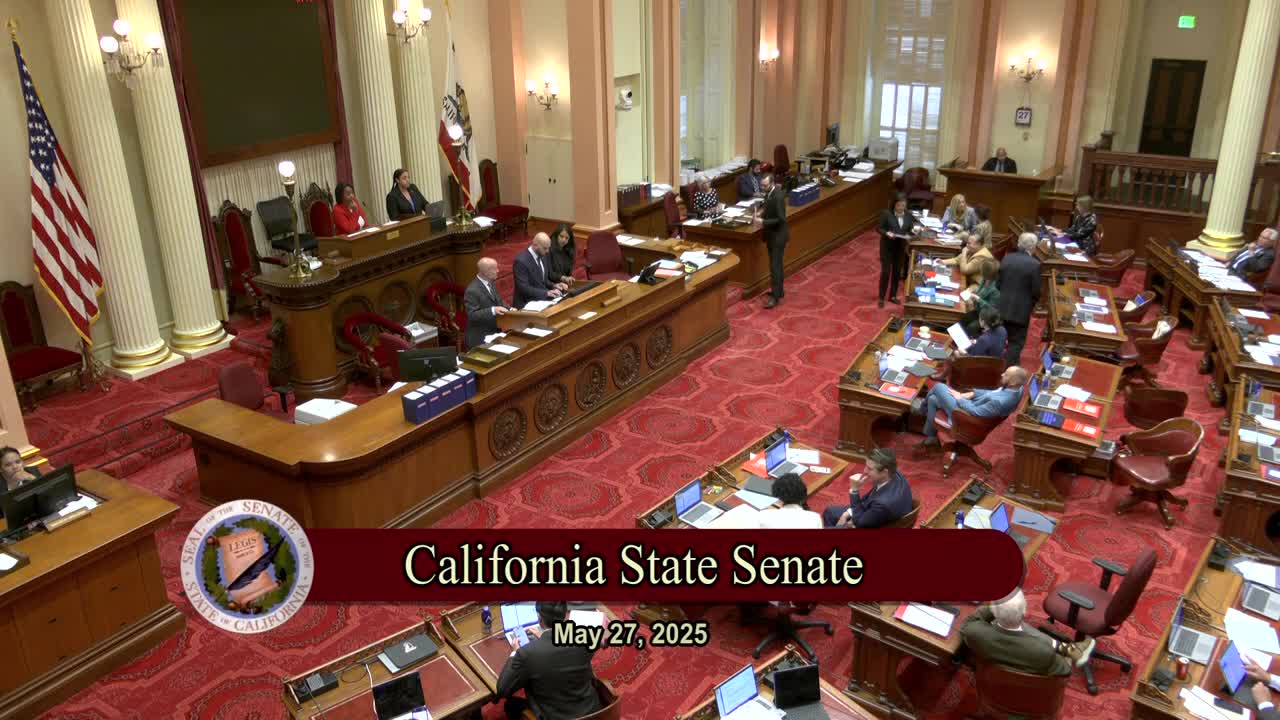 6MIN
Senate Floor
 21MIN
Senate Standing Committee on Judiciary
 34MIN
Senate Standing Committee on Local Government
Bill Author