SB 358: Mitigation Fee Act: mitigating vehicular traffic impacts.
- Session Year: 2025-2026
- House: Senate
- Latest Version Date: 2025-10-10
Current Status:
Passed
(2025-10-10: Chaptered by Secretary of State. Chapter 515, Statutes of 2025.)
Introduced
In Committee
Awaiting First Chamber Vote
Passed First Chamber
In Committee
Awaiting Second Chamber Vote
Passed Second Chamber
Enacted
Existing law, the Mitigation Fee Act, imposes various requirements with respect to the establishment, increase, or imposition of a fee by a local agency as a condition of approval of a development project. Existing law requires a local agency that imposes a fee on a housing development for the purpose of mitigating vehicular traffic impacts to set the rate for that fee, if the housing development satisfies all of certain prescribed characteristics, to reflect a lower rate of automobile trip generation associated with such housing developments in comparison with housing developments without the prescribed characteristics, unless the local agency adopts findings after a public hearing establishing that the housing development, even with those characteristics, would not generate fewer automobile trips than a housing development without those characteristics.
This bill would require those findings to be supported by substantial evidence in the record before or as part of the housing development project approval process.
Existing law specifies one of those prescribed characteristics described above is that the housing development provides either the minimum number of parking spaces required by the local ordinance, or no more than one onsite parking space for zero- to 2-bedroom units, and 2 onsite parking spaces for 3 or more bedroom units, whichever is less. Under existing law, another prescribed characteristic is that convenience retail uses, as specified, are located within 1/2 mile of the housing development.
This bill would revise the characteristic relating to parking spaces, to instead, specify that the housing development provides no more than one onsite parking space for zero- to 2-bedroom units, and 2 onsite parking spaces for 3 or more bedroom units. The bill would eliminate the characteristic related to convenience retail uses, and instead would add a characteristic that the housing development is located within 1/2 mile from 3 or more specified locations, including, among other locations, a supermarket or grocery store, a pharmacy or drugstore, or a restaurant, as defined.
Existing law authorizes a local agency, if a housing development does not satisfy all the prescribed characteristics, to charge a fee that is proportional to the estimated rate of automobile trip generation associated with the housing development.
This bill would eliminate that express authorization.
By imposing a mandate on local agencies that approve housing development projects with regard to impact fees, this bill would impose a state-mandated local program.
The California Constitution requires the state to reimburse local agencies and school districts for certain costs mandated by the state. Statutory provisions establish procedures for making that reimbursement.
This bill would provide that no reimbursement is required by this act for a specified reason.
Existing law, the Mitigation Fee Act, imposes various requirements with respect to the establishment, increase, or imposition of a fee by a local agency as a condition of approval of a development project. Existing law requires a local agency that imposes a fee on a housing development for the purpose of mitigating vehicular traffic impacts to set the rate for that fee, if the housing development satisfies all of certain prescribed characteristics, to reflect a lower rate of automobile trip generation associated with such housing developments in comparison with housing developments without the prescribed characteristics, unless the local agency adopts findings after a public hearing establishing that the housing development, even with those characteristics, would not generate fewer automobile trips than a housing development without those characteristics.
This bill would require those findings to be supported by substantial evidence in the record before or as part of the housing development project approval process.
Existing law specifies one of those prescribed characteristics described above is that the housing development provides either the minimum number of parking spaces required by the local ordinance, or no more than one onsite parking space for zero- to 2-bedroom units, and 2 onsite parking spaces for 3 or more bedroom units, whichever is less. Under existing law, another prescribed characteristic is that convenience retail uses, as specified, are located within 1/2 mile of the housing development.
This bill would revise the characteristic relating to parking spaces, to instead, specify that the housing development provides no more than one onsite parking space for zero- to 2-bedroom units, and 2 onsite parking spaces for 3 or more bedroom units. The bill would eliminate the characteristic related to convenience retail uses, and instead would add a characteristic that the housing development is located within 1/2 mile from 3 or more specified locations, including, among other locations, a restaurant, supermarket, or drugstore. supermarket or grocery store, a pharmacy or drugstore, or a restaurant, as defined.
Existing law authorizes a local agency, if a housing development does not satisfy all the prescribed characteristics, to charge a fee that is proportional to the estimated rate of automobile trip generation associated with the housing development.
This bill would eliminate that express authorization.
By imposing a mandate on local agencies that approve housing development projects with regard to impact fees, this bill would impose a state-mandated local program.
The California Constitution requires the state to reimburse local agencies and school districts for certain costs mandated by the state. Statutory provisions establish procedures for making that reimbursement.
This bill would provide that no reimbursement is required by this act for a specified reason.
Existing law, the Mitigation Fee Act, imposes various requirements with respect to the establishment, increase, or imposition of a fee by a local agency as a condition of approval of a development project. Existing law requires a local agency that imposes a fee on a housing development for the purpose of mitigating vehicular traffic impacts to set the rate for that fee, if the housing development satisfies all of certain prescribed characteristics, to reflect a lower rate of automobile trip generation associated with such housing developments in comparison with housing developments without the prescribed characteristics, unless the local agency adopts findings after a public hearing establishing that the housing development, even with those characteristics, would not generate fewer automobile trips than a housing development without those characteristics.
This bill would require those findings to be supported by substantial evidence in the record before or as part of the housing development project approval process.
Existing law specifies one of those prescribed characteristics described above is that the housing development provides either the minimum number of parking spaces required by the local ordinance, or no more than one onsite parking space for zero- to 2-bedroom units, and 2 onsite parking spaces for 3 or more bedroom units, whichever is less. Under existing law, another prescribed characteristic is that convenience retail uses, as specified, are located within 1/2 mile of the housing development.
This bill would revise the characteristic relating to parking spaces, to instead, specify that the housing development provides no more than one onsite parking space for zero- to 2-bedroom units, and 2 onsite parking spaces for 3 or more bedroom units. The bill would eliminate the characteristic related to convenience retail uses, and instead would add a characteristic that the housing development is located within 1/2 mile from 3 or more specified locations, including, among other locations, a restaurant, supermarket, or drugstore.
Existing law authorizes a local agency, if a housing development does not satisfy all the prescribed characteristics, to charge a fee that is proportional to the estimated rate of automobile trip generation associated with the housing development.
This bill would eliminate that express authorization.
By imposing a mandate on local agencies that approve housing development projects with regard to impact fees, this bill would impose a state-mandated local program.
The California Constitution requires the state to reimburse local agencies and school districts for certain costs mandated by the state. Statutory provisions establish procedures for making that reimbursement.
This bill would provide that no reimbursement is required by this act for a specified reason.
Existing law, the Mitigation Fee Act, imposes various requirements with respect to the establishment, increase, or imposition of a fee by a local agency as a condition of approval of a development project. Existing law requires a local agency that imposes a fee on a housing development for the purpose of mitigating vehicular traffic impacts to set the rate for that fee fee, if the housing development satisfies all of certain prescribed characteristics, to reflect a lower rate of automobile trip generation associated with such housing developments in comparison with housing developments without the prescribed characteristics, unless the local agency adopts findings after a public hearing establishing that the housing development, even with those characteristics, would not generate fewer automobile trips than a housing development without those specified characteristics. For purposes of these provisions, existing
This bill would require those findings to be supported by substantial evidence in the record before or as part of the housing development project approval process.
Existing law specifies one of those prescribed characteristics described above is that the housing development provides either the minimum number of parking spaces required by the local ordinance, or no more than one onsite parking space for zero- to 2-bedroom units, and 2 onsite parking spaces for 3 or more bedroom units, whichever is less. Under existing law, another prescribed characteristic is that convenience retail uses, as specified, are located within 1/2 mile of the housing development.
For purposes of a local agency setting the rate for a mitigating vehicular traffic impacts fee, this bill would delete the provision about adopting findings after a public hearing and would, instead, require the rate for housing developments that satisfy those specified characteristics be at least 50% less than the rate for housing developments without all of those characteristics. With regard to the above-described characteristic, the bill would,
This bill would revise the characteristic relating to parking spaces, to instead, specify that the housing development provides no more than one onsite parking space for zero- to 2-bedroom units, and 2 onsite parking spaces for 3 or more bedroom units. The bill would eliminate the characteristic related to convenience retail uses, and instead would add a characteristic that the housing development is located within 1/2 mile from 3 or more specified locations, including, among other locations, a restaurant, supermarket, or drugstore.
Existing law authorizes a local agency, if a housing development does not satisfy all the prescribed characteristics, to charge a fee that is proportional to the estimated rate of automobile trip generation associated with the housing development.
This bill would eliminate that express authorization.
By imposing a mandate on local agencies that approve housing development projects with regard to impact fees, this bill would impose a state-mandated local program.
The California Constitution requires the state to reimburse local agencies and school districts for certain costs mandated by the state. Statutory provisions establish procedures for making that reimbursement.This bill would provide that, if the Commission on State Mandates determines that the bill contains costs mandated by the state, reimbursement for those costs shall be made pursuant to the statutory provisions noted above.The California Constitution requires the state to reimburse local agencies and school districts for certain costs mandated by the state. Statutory provisions establish procedures for making that reimbursement.
This bill would provide that no reimbursement is required by this act for a specified reason.
Existing law, the Mitigation Fee Act, imposes various requirements with respect to the establishment, increase, or imposition of a fee by a local agency as a condition of approval of a development project. Existing law requires a local agency that imposes a fee on a housing development for the purpose of mitigating vehicular traffic impacts to set the rate for that fee to reflect a lower rate of automobile trip generation associated with such housing developments in comparison with housing developments without prescribed characteristics, unless the local agency adopts findings after a public hearing establishing that the housing development, even with those characteristics, would not generate fewer automobile trips than a housing development without those specified characteristics. For purposes of these provisions, existing law specifies one of those characteristics is that the housing development provides either the minimum number of parking spaces required by the local ordinance, or no more than one onsite parking space for zero- to 2-bedroom units, and 2 onsite parking spaces for 3 or more bedroom units, whichever is less.
For purposes of a local agency setting the rate for a mitigating vehicular traffic impacts fee, this bill would delete the provision about adopting findings after a public hearing and would, instead, require the rate for housing developments that satisfy those specified characteristics be at least 50% less than the rate for housing developments without all of those characteristics. With regard to the above-described characteristic, the bill would, instead, specify that the housing development provides no more than one onsite parking space for zero- to 2-bedroom units, and 2 onsite parking spaces for 3 or more bedroom units.
By imposing a mandate on local agencies that approve housing development projects with regard to impact fees, this bill would impose a state-mandated local program.
The California Constitution requires the state to reimburse local agencies and school districts for certain costs mandated by the state. Statutory provisions establish procedures for making that reimbursement.
This bill would provide that, if the Commission on State Mandates determines that the bill contains costs mandated by the state, reimbursement for those costs shall be made pursuant to the statutory provisions noted above.
(a)Except as otherwise provided in subdivision (b), when a local agency imposes a fee on a housing development pursuant to Section 66001 for the purpose of mitigating vehicular traffic impacts, if that housing development satisfies all of the following characteristics, the fee, or the portion thereof relating to vehicular traffic impacts, shall be set at a rate that reflects a lower rate of automobile trip generation associated with such housing developments in comparison with housing developments without all of these characteristics:
(1)The housing development is located within a transit priority area and the major transit stop, if planned, is programmed to be completed before or within one year from the scheduled completion and occupancy of the housing development.
(2)The housing development is located within one-half mile from three or more of the following:
(A)A supermarket or grocery store.
(B)A public park.
(C)A community center.
(D)A pharmacy or drugstore.
(E)A medical clinic or hospital.
(F)A public library.
(G)A school that maintains a kindergarten or any of grades 1 to 12, inclusive.
(H)A licensed childcare facility.
(I)A restaurant. For purposes of this paragraph, a restaurant means a retail food establishment that prepares, serves, and vends food directly to the consumer.
(3)The housing development provides no more than one onsite parking space for zero- to two-bedroom units, and two onsite parking spaces for three or more bedroom units.
(b)Notwithstanding subdivision (a), the local agency may charge a fee that does not reflect a lower rate of automobile trip generation if the local agency makes written findings that the housing development, even with all the characteristics described in subdivision (a), would not generate fewer automobile trips than a housing development without all of those characteristics. These findings shall be supported by substantial evidence in the record before or as part of the housing development project approval process.
(c)(1)A local agency shall not impose a land dedication requirement on a housing development pursuant to Section 66001 to widen a roadway if the land dedication requirement is for the purpose of mitigating vehicular traffic impacts, achieving an adopted traffic level of service related to vehicular traffic, or achieving a desired roadway width.
(2)Notwithstanding paragraph (1), a local agency may do any of the following:
(A)Impose a land dedication requirement on a housing development if both of the following conditions are met:
(i)The housing development is not located in a transit priority area.
(ii)The housing development has a linear street frontage of 500 feet or more.
(B)Discretionarily impose a land dedication requirement as a condition of approval of a specific housing development project for traffic safety features if the local agency makes a finding, specific to the housing development project and supported by substantial evidence, that the land dedication requirement is necessary to preserve the health, safety, and welfare of the public, including pedestrians, cyclists, and children.
(C)Impose a land dedication requirement to construct public improvements, including, but not limited to, sidewalk and sewer improvements.
(d)For purposes of this section:
(1)Housing development means a development project with common ownership and financing consisting of residential use or mixed use where not less than 50 percent of the floorspace is for residential use.
(2)Land dedication means a physical exaction of property for public use without compensation, whether imposed on an ad hoc or legislative basis, that is charged by a local agency to the applicant in connection with approval of a development project for the purpose of defraying all or a portion of the cost of public facilities related to the development project.
(3)Major transit stop has the meaning as the term is defined in Section 21064.3 of the Public Resources Code, except that, for purposes of this section, it also includes major transit stops that are included in the applicable regional transportation plan. Major transit stop includes planned major transit stops otherwise meeting this definition whose construction is programmed to be completed before or within one year from the scheduled completion and occupancy of the housing development.
(4)Roadway means the same as defined in Section 530 of the Vehicle Code.
(5)Transit priority area means the same as defined in paragraph (7) of subdivision (a) of Section 21099 of the Public Resources Code.
SEC. 2.No reimbursement is required by this act pursuant to Section 6 of Article XIIIB of the California Constitution because a local agency or school district has the authority to levy service charges, fees, or assessments sufficient to pay for the program or level of service mandated by this act, within the meaning of Section 17556 of the Government Code.
(a)Except as otherwise provided in subdivision (b), when a local agency imposes a fee on a housing development pursuant to Section 66001 for the purpose of mitigating vehicular traffic impacts, if that housing development satisfies all of the following characteristics, the fee, or the portion thereof relating to vehicular traffic impacts, shall be set at a rate that reflects a lower rate of automobile trip generation associated with such housing developments in comparison with housing developments without all of these characteristics:
(1)The housing development is located within a transit priority area and the major transit stop, if planned, is programmed to be completed before or within one year from the scheduled completion and occupancy of the housing development.
(2)The housing development is located within one-half mile from three or more of the following:
(A)A restaurant.(B)A coffee shop.(C)A supermarket.(D)A grocery store.(E)A hardware store.(F)A park.(G)A pharmacy.(H)A drugstore.(I)A bar.(J)A childcare facility.(A)A supermarket or grocery store.
(B)A public park.
(C)A community center.
(D)A pharmacy or drugstore.
(E)A medical clinic or hospital.
(F)A public library.
(G)A school that maintains a kindergarten or any of grades 1 to 12, inclusive.
(H)A licensed childcare facility.
(I)A restaurant. For purposes of this paragraph, a restaurant means a retail food establishment that prepares, serves, and vends food directly to the consumer.
(3)The housing development provides no more than one onsite parking space for zero- to two-bedroom units, and two onsite parking spaces for three or more bedroom units.
(b)Notwithstanding subdivision (a), the local agency may charge a fee that does not reflect a lower rate of automobile trip generation if the local agency makes written findings that the housing development, even with all the characteristics described in subdivision (a), would not generate fewer automobile trips than a housing development without all of those characteristics. These findings shall be supported by substantial evidence in the record before or as part of the housing development project approval process.
(c)(1)A local agency shall not impose a land dedication requirement on a housing development pursuant to Section 66001 to widen a roadway if the land dedication requirement is for the purpose of mitigating vehicular traffic impacts, achieving an adopted traffic level of service related to vehicular traffic, or achieving a desired roadway width.
(2)Notwithstanding paragraph (1), a local agency may do any of the following:
(A)Impose a land dedication requirement on a housing development if both of the following conditions are met:
(i)The housing development is not located in a transit priority area.
(ii)The housing development has a linear street frontage of 500 feet or more.
(B)Discretionarily impose a land dedication requirement as a condition of approval of a specific housing development project for traffic safety features if the local agency makes a finding, specific to the housing development project and supported by substantial evidence, that the land dedication requirement is necessary to preserve the health, safety, and welfare of the public, including pedestrians, cyclists, and children.
(C)Impose a land dedication requirement to construct public improvements, including, but not limited to, sidewalk and sewer improvements.
(d)For purposes of this section:
(1)Housing development means a development project with common ownership and financing consisting of residential use or mixed use where not less than 50 percent of the floorspace is for residential use.
(2)Land dedication means a physical exaction of property for public use without compensation, whether imposed on an ad hoc or legislative basis, that is charged by a local agency to the applicant in connection with approval of a development project for the purpose of defraying all or a portion of the cost of public facilities related to the development project.
(3)Major transit stop has the meaning as the term is defined in Section 21064.3 of the Public Resources Code, except that, for purposes of this section, it also includes major transit stops that are included in the applicable regional transportation plan. Major transit stop includes planned major transit stops otherwise meeting this definition whose construction is programmed to be completed before or within one year from the scheduled completion and occupancy of the housing development.
(4)Roadway means the same as defined in Section 530 of the Vehicle Code.
(5)Transit priority area means the same as defined in paragraph (7) of subdivision (a) of Section 21099 of the Public Resources Code.
SEC. 2.No reimbursement is required by this act pursuant to Section 6 of Article XIIIB of the California Constitution because a local agency or school district has the authority to levy service charges, fees, or assessments sufficient to pay for the program or level of service mandated by this act, within the meaning of Section 17556 of the Government Code.
(a)Except as otherwise provided in subdivision (b), when a local agency imposes a fee on a housing development pursuant to Section 66001 for the purpose of mitigating vehicular traffic impacts, if that housing development satisfies all of the following characteristics, the fee, or the portion thereof relating to vehicular traffic impacts, shall be set at a rate that reflects a lower rate of automobile trip generation associated with such housing developments in comparison with housing developments without all of these characteristics:
(1)The housing development is located within a transit priority area and the major transit stop, if planned, is programmed to be completed before or within one year from the scheduled completion and occupancy of the housing development.
(2)The housing development is located within one-half mile from three or more of the following:
(A)A restaurant.
(B)A coffee shop.
(C)A supermarket.
(D)A grocery store.
(E)A hardware store.
(F)A park.
(G)A pharmacy.
(H)A drugstore.
(I)A bar.
(J)A childcare facility.
(3)The housing development provides no more than one onsite parking space for zero- to two-bedroom units, and two onsite parking spaces for three or more bedroom units.
(b)Notwithstanding subdivision (a), the local agency may charge a fee that does not reflect a lower rate of automobile trip generation if the local agency makes written findings that the housing development, even with all the characteristics described in subdivision (a), would not generate fewer automobile trips than a housing development without all of those characteristics. These findings shall be supported by substantial evidence in the record before or as part of the housing development project approval process.
(c)(1)A local agency shall not impose a land dedication requirement on a housing development pursuant to Section 66001 to widen a roadway if the land dedication requirement is for the purpose of mitigating vehicular traffic impacts, achieving an adopted traffic level of service related to vehicular traffic, or achieving a desired roadway width.
(2)Notwithstanding paragraph (1), a local agency may do any of the following:
(A)Impose a land dedication requirement on a housing development if both of the following conditions are met:
(i)The housing development is not located in a transit priority area.
(ii)The housing development has a linear street frontage of 500 feet or more.
(B)Discretionarily impose a land dedication requirement as a condition of approval of a specific housing development project for traffic safety features if the local agency makes a finding, specific to the housing development project and supported by substantial evidence, that the land dedication requirement is necessary to preserve the health, safety, and welfare of the public, including pedestrians, cyclists, and children.
(C)Impose a land dedication requirement to construct public improvements, including, but not limited to, sidewalk and sewer improvements.
(d)For purposes of this section:
(1)Housing development means a development project with common ownership and financing consisting of residential use or mixed use where not less than 50 percent of the floorspace is for residential use.
(2)Land dedication means a physical exaction of property for public use without compensation, whether imposed on an ad hoc or legislative basis, that is charged by a local agency to the applicant in connection with approval of a development project for the purpose of defraying all or a portion of the cost of public facilities related to the development project.
(3)Major transit stop has the meaning as the term is defined in Section 21064.3 of the Public Resources Code, except that, for purposes of this section, it also includes major transit stops that are included in the applicable regional transportation plan. Major transit stop includes planned major transit stops otherwise meeting this definition whose construction is programmed to be completed before or within one year from the scheduled completion and occupancy of the housing development.
(4)Roadway means the same as defined in Section 530 of the Vehicle Code.
(5)Transit priority area means the same as defined in paragraph (7) of subdivision (a) of Section 21099 of the Public Resources Code.
SEC. 2.No reimbursement is required by this act pursuant to Section 6 of Article XIIIB of the California Constitution because a local agency or school district has the authority to levy service charges, fees, or assessments sufficient to pay for the program or level of service mandated by this act, within the meaning of Section 17556 of the Government Code.
(a)When Except as otherwise provided in subdivision (b), when a local agency imposes a fee on a housing development pursuant to Section 66001 for the purpose of mitigating vehicular traffic impacts, if that housing development satisfies all of the following characteristics, the fee, or the portion thereof relating to vehicular traffic impacts, shall be set at a rate that is at least 50 percent less than the rate for a housing development reflects a lower rate of automobile trip generation associated with such housing developments in comparison with housing developments without all of these characteristics:
(1)The housing development is located within a transit priority area and the major transit stop, if planned, is programmed to be completed before or within one year from the scheduled completion and occupancy of the housing development.
(2)Convenience retail uses, including a store that sells food, are located within one-half mile of the housing development.(2)The housing development is located within one-half mile from three or more of the following:
(A)A restaurant.
(B)A coffee shop.
(C)A supermarket.
(D)A grocery store.
(E)A hardware store.
(F)A park.
(G)A pharmacy.
(H)A drugstore.
(I)A bar.
(3)The housing development provides no more than one onsite parking space for zero- to two-bedroom units, and two onsite parking spaces for three or more bedroom units.
(b)If a housing development does not satisfy the characteristics in subdivision (a), the local agency may charge a fee that is proportional to the estimated rate of automobile trip generation associated with the housing development.(b)Notwithstanding subdivision (a), the local agency may charge a fee that does not reflect a lower rate of automobile trip generation if the local agency makes written findings that the housing development, even with all the characteristics described in subdivision (a), would not generate fewer automobile trips than a housing development without all of those characteristics. These findings shall be supported by substantial evidence in the record before or as part of the housing development project approval process.
(c)(1)A local agency shall not impose a land dedication requirement on a housing development pursuant to Section 66001 to widen a roadway if the land dedication requirement is for the purpose of mitigating vehicular traffic impacts, achieving an adopted traffic level of service related to vehicular traffic, or achieving a desired roadway width.
(2)Notwithstanding paragraph (1), a local agency may do any of the following:
(A)Impose a land dedication requirement on a housing development if both of the following conditions are met:
(i)The housing development is not located in a transit priority area.
(ii)The housing development has a linear street frontage of 500 feet or more.
(B)Discretionarily impose a land dedication requirement as a condition of approval of a specific housing development project for traffic safety features if the local agency makes a finding, specific to the housing development project and supported by substantial evidence, that the land dedication requirement is necessary to preserve the health, safety, and welfare of the public, including pedestrians, cyclists, and children.
(C)Impose a land dedication requirement to construct public improvements, including, but not limited to, sidewalk and sewer improvements.
(d)For purposes of this section:
(1)Housing development means a development project with common ownership and financing consisting of residential use or mixed use where not less than 50 percent of the floorspace is for residential use.
(2)Land dedication means a physical exaction of property for public use without compensation, whether imposed on an ad hoc or legislative basis, that is charged by a local agency to the applicant in connection with approval of a development project for the purpose of defraying all or a portion of the cost of public facilities related to the development project.
(3)Major transit stop has the meaning as the term is defined in Section 21064.3 of the Public Resources Code, except that, for purposes of this section, it also includes major transit stops that are included in the applicable regional transportation plan. Major transit stop includes planned major transit stops otherwise meeting this definition whose construction is programmed to be completed before or within one year from the scheduled completion and occupancy of the housing development.
(4)Roadway means the same as defined in Section 530 of the Vehicle Code.
(5)Transit priority area means the same as defined in paragraph (7) of subdivision (a) of Section 21099 of the Public Resources Code.
SEC. 2.If the Commission on State Mandates determines that this act contains costs mandated by the state, reimbursement to local agencies and school districts for those costs shall be made pursuant to Part 7 (commencing with Section 17500) of Division 4 of Title 2 of the Government Code.SEC. 2.No reimbursement is required by this act pursuant to Section 6 of Article XIIIB of the California Constitution because a local agency or school district has the authority to levy service charges, fees, or assessments sufficient to pay for the program or level of service mandated by this act, within the meaning of Section 17556 of the Government Code.
(a)When a local agency imposes a fee on a housing development pursuant to Section 66001 for the purpose of mitigating vehicular traffic impacts, if that housing development satisfies all of the following characteristics, the fee, or the portion thereof relating to vehicular traffic impacts, shall be set at a rate that reflects a lower rate of automobile trip generation associated with such housing developments in comparison with housing developments without these characteristics, unless the local agency adopts findings after a public hearing establishing that the housing development, even with these characteristics, would not generate fewer automobile trips than a housing development without those is at least 50 percent less than the rate for a housing development without all of these characteristics:
(1)The housing development is located within a transit priority area and the major transit stop, if planned, is programmed to be completed before or within one year from the scheduled completion and occupancy of the housing development.
(2)Convenience retail uses, including a store that sells food, are located within one-half mile of the housing development.
(3)The housing development provides either the minimum number of parking spaces required by the local ordinance, or no more than one onsite parking space for zero- to two-bedroom units, and two onsite parking spaces for three or more bedroom units, whichever is less. units.
(b)If a housing development does not satisfy the characteristics in subdivision (a), the local agency may charge a fee that is proportional to the estimated rate of automobile trip generation associated with the housing development.
(c)(1)A local agency shall not impose a land dedication requirement on a housing development pursuant to Section 66001 to widen a roadway if the land dedication requirement is for the purpose of mitigating vehicular traffic impacts, achieving an adopted traffic level of service related to vehicular traffic, or achieving a desired roadway width.
(2)Notwithstanding paragraph (1), a local agency may do any of the following:
(A)Impose a land dedication requirement on a housing development if both of the following conditions are met:
(i)The housing development is not located in a transit priority area.
(ii)The housing development has a linear street frontage of 500 feet or more.
(B)Discretionarily impose a land dedication requirement as a condition of approval of a specific housing development project for traffic safety features if the local agency makes a finding, specific to the housing development project and supported by substantial evidence, that the land dedication requirement is necessary to preserve the health, safety, and welfare of the public, including pedestrians, cyclists, and children.
(C)Impose a land dedication requirement to construct public improvements, including, but not limited to, sidewalk and sewer improvements.
(d)For purposes of this section:
(1)Housing development means a development project with common ownership and financing consisting of residential use or mixed use where not less than 50 percent of the floorspace is for residential use.
(2)Land dedication means a physical exaction of property for public use without compensation, whether imposed on an ad hoc or legislative basis, that is charged by a local agency to the applicant in connection with approval of a development project for the purpose of defraying all or a portion of the cost of public facilities related to the development project.
(3)Major transit stop has the meaning as the term is defined in Section 21064.3 of the Public Resources Code, except that, for purposes of this section, it also includes major transit stops that are included in the applicable regional transportation plan. Major transit stop includes planned major transit stops otherwise meeting this definition whose construction is programmed to be completed before or within one year from the scheduled completion and occupancy of the housing development.
(4)Roadway means the same as defined in Section 530 of the Vehicle Code.
(5)Transit priority area means the same as defined in paragraph (7) of subdivision (a) of Section 21099 of the Public Resources Code.
(e)This section shall become operative on January 1, 2011.SEC. 2.If the Commission on State Mandates determines that this act contains costs mandated by the state, reimbursement to local agencies and school districts for those costs shall be made pursuant to Part 7 (commencing with Section 17500) of Division 4 of Title 2 of the Government Code.
|
Date
|
Status
|
|---|---|
| Oct 10, 2025 | Chaptered by Secretary of State. Chapter 515, Statutes of 2025. |
| Oct 10, 2025 | Approved by the Governor. |
| Sep 16, 2025 | Enrolled and presented to the Governor at 3 p.m. |
| Sep 8, 2025 | Assembly amendments concurred in. (Ayes 28. Noes 9. Page 2605.) Ordered to engrossing and enrolling. |
| Sep 3, 2025 | In Senate. Concurrence in Assembly amendments pending. |
| Sep 3, 2025 | Read third time. Passed. (Ayes 53. Noes 14. Page 2869.) Ordered to the Senate. |
| Aug 21, 2025 | Read second time. Ordered to third reading. |
| Aug 20, 2025 | From committee: Do pass. (Ayes 11. Noes 2.) (August 20). |
| Jul 7, 2025 | Read second time and amended. Re-referred to Com. on APPR. |
| Jul 3, 2025 | From committee: Do pass as amended and re-refer to Com. on APPR. (Ayes 9. Noes 0.) (July 2). |
| Jun 9, 2025 | Referred to Com. on L. GOV. |
| Jun 3, 2025 | In Assembly. Read first time. Held at Desk. |
| Jun 2, 2025 | Read third time. Passed. (Ayes 27. Noes 11. Page 1378.) Ordered to the Assembly. |
| May 28, 2025 | Read second time. Ordered to third reading. |
| May 27, 2025 | Ordered to second reading. |
| May 27, 2025 | Read third time and amended. |
| May 20, 2025 | Read second time. Ordered to third reading. |
| May 19, 2025 | From committee: Be ordered to second reading pursuant to Senate Rule 28.8. |
| May 9, 2025 | Set for hearing May 19. |
| May 1, 2025 | Read second time and amended. Re-referred to Com. on APPR. |
| Apr 30, 2025 | From committee: Do pass as amended and re-refer to Com. on APPR. (Ayes 5. Noes 2. Page 968.) (April 30). |
| Apr 11, 2025 | Set for hearing April 30. |
| Apr 10, 2025 | April 23 set for first hearing canceled at the request of author. |
| Mar 24, 2025 | Set for hearing April 23. |
| Feb 19, 2025 | Referred to Com. on L. GOV. |
| Feb 13, 2025 | From printer. May be acted upon on or after March 15. |
| Feb 12, 2025 | Introduced. Read first time. To Com. on RLS. for assignment. To print. |
|
Date
|
Description
|
Location
|
Votes
|
|
|---|---|---|---|---|
| Sep 8, 2025 | Unfinished Business SB358 Becker Concurrence | Senate Floor |
Passed |
|
| Sep 3, 2025 | SB 358 Becker Senate Third Reading By Ward | Assembly Floor |
Passed |
|
| Aug 20, 2025 | Do pass. | Assembly Standing Committee on Appropriations |
Passed |
|
| Jul 2, 2025 | Do pass as amended and be re-referred to the Committee on [Appropriations] | Assembly Standing Committee on Local Government |
Passed |
|
| Jun 2, 2025 | Senate 3rd Reading SB358 Becker | Senate Floor |
Passed |
|
| Apr 30, 2025 | Do pass as amended, but first amend, and re-refer to the Committee on [Appropriations] | Senate Standing Committee on Local Government |
Passed |
This list shows positions taken on this bill by organizations on the date displayed, which is linked to the original source.
Positions by individuals are not included.
|
Organization
|
Position
|
Date
|
|---|---|---|
| Abundant Housing LA | ** Support | |
| Active San Gabriel Valley | ** Support | |
| Bike East Bay | ** Support | |
| Bike Long Beach | ** Support | |
| California Council For Affordable Housing | ** Support | |
| California YIMBY | ** Support | |
| Car-Lite Long Beach | ** Support | |
| Circulate San Diego | ** Support | |
| City of Camarillo | ** Against | |
| city of carlsbad | ** Against | |
| City of La Verne | ** Against | |
| City Of Merced | ** Against | |
| City of Rancho Cucamonga | ** Against | |
| City of San Marcos | ** Against | |
| Costa Mesa Alliance for Better Streets | ** Support | |
| East Bay for Everyone | ** Support | |
| East Bay YIMBY | ** Support | |
| Equitable Land Use Alliance | ** Against | |
| Everybody's Long Beach | ** Support | |
| Families for Safe Streets San Diego | ** Support | |
| Glendale Yimby | ** Support | |
| Grow the Richmond | ** Support | |
| Housing Action Coalition | ** Support | |
| League Of California Cities | ** Against | |
| Los Angeles Walks | ** Support | |
| Mountain View YIMBY | ** Support | |
| Napa-Solano for Everyone | ** Support | |
| Northern Neighbors | ** Support | |
| Norwalk Unides | ** Support | |
| Peninsula for Everyone | ** Support | |
| People For Housing Orange County | ** Support | |
| Remake Irvine Streets for Everyone | ** Support | |
| San Diego County Bicycle Coalition | ** Support | |
| San Francisco Bay Area Planning and Urban Research Association (co-source) | ** Support | |
| Santa Cruz Yimby | ** Support | |
| Santa Rosa Yimby | ** Support | |
| Sf Yimby | ** Support | |
| South Bay Cities Council of Governments | ** Against | |
| South Bay Yimby | ** Support | |
| SPUR | ** Support | |
| Streets Are For Everyone | ** Support | |
| Streets for All (co-source) | ** Support | |
| Strong Towns Artesia | ** Support | |
| Strong Towns Santa Barbara | ** Support | |
| The Two Hundred for Homeownership | ** Support | |
| Ventura County YIMBY | ** Support | |
| Yimby Action | ** Support | |
| YIMBY LA | ** Support | |
| Yimby SLO | ** Support |
SENATE RULES COMMITTEE Office of Senate Floor Analyses (916) 651-1520 Fax: (916) 327-4478 | SB 358 |
UNFINISHED BUSINESS
Bill No: SB 358
Author: Becker (D)
Amended: 7/7/25 in Assembly
Vote: 21
SENATE LOCAL GOVERNMENT COMMITTEE: 5-2, 4/30/25
AYES: Durazo, Arreguín, Cabaldon, Laird, Wiener
NOES: Choi, Seyarto
SENATE APPROPRIATIONS COMMITTEE: Senate Rule 28.8
SENATE FLOOR: 27-11, 6/2/25
AYES: Allen, Archuleta, Arreguín, Ashby, Becker, Blakespear, Cabaldon, Caballero, Cervantes, Cortese, Durazo, Gonzalez, Grayson, Laird, Limón, McGuire, McNerney, Menjivar, Padilla, Pérez, Richardson, Rubio, Smallwood-Cuevas, Stern, Umberg, Weber Pierson, Wiener
NOES: Alvarado-Gil, Choi, Dahle, Grove, Jones, Niello, Ochoa Bogh, Seyarto, Strickland, Valladares, Wahab
NO VOTE RECORDED: Hurtado, Reyes
ASSEMBLY FLOOR: 53-14, 9/3/25 - See last page for vote
SUBJECT: Mitigation Fee Act: mitigating vehicular traffic impacts
SOURCE: San Francisco Bay Area Planning and Urban Research Association
Streets for All
DIGEST:
This bill requires local agencies to reduce vehicle mitigation fees for housing developments near transit unless they make findings supported by substantial evidence in the record that projects are not expected to reduce automobile trips.
Assembly Amendments
of 7/7/25 add K-12 schools, community centers, medical clinics, and hospitals to the list of amenities a project can be near to qualify for reduced fees.
ANALYSIS:
Existing law:
- Allows local governments to require applicants for development projects to pay fees to mitigate the project’s effects, known as mitigation or development impact fees.
- Requires, under the Mitigation Fee Act, local officials that are establishing, increasing, or imposing a fee as a condition of approving a development project to:
- Identify the fee's purpose.
- Identify the fee's use, including the public facilities to be financed.
- Determine a reasonable relationship between the fee's use and the development.
- Determine a reasonable relationship between the public facility's need and the development.
- Determine a reasonable relationship between the fee's amount and the cost of the public facility.
- Hold at least one open and public meeting prior to levying a new fee or increasing an existing one.
- If they decide to adopt capital improvement plans, indicate the approximate location, size, time of availability, and estimates of cost for all facilities or improvements to be financed with the fees.
- Deposit and spend the fees within five years of collecting them.
- Refund fees or make specific findings on when and how the fees will be spent for construction, if the fees aren’t spent within five years of collection.
- Requires local agencies to conduct and adopt a nexus study prior to the adoption of an impact fee, and specified standards and practices.
- Defines “Transit Priority Area” (TPA) as an area within one-half mile of a major transit stop that is existing or planned, if the planned stop is scheduled to be completed within the planning horizon included in a Transportation Improvement Program or applicable regional transportation plan.
- Provides that if a local agency imposes a fee on a housing development to mitigate traffic impacts the fee should reflect a lower rate of automobile trips, unless the local agency makes a finding at a public hearing that the housing development would not generate fewer automobile trips than a development further away from transit.
- Requires, a project to meet the following characteristics for it to receive lower fees as described above:
- Is located within a TPA and the major transit stop, if planned, is programmed to be completed before or within one year from the scheduled completion and occupancy of the housing development.
- Is located within one-half mile of convenience retail uses, including a store that sells food;
- At least 50% of the floor space of the development is for residential use;
- The development provides either the minimum number of parking spaces required by the local ordinances, or no more than one onsite parking space for zero to two bedroom units, and two onsite parking spaces for three or more bedroom units, whichever is less.
- Prohibits a local agency from imposing a land dedication requirement on a housing development to widen a roadway if the purpose of the land dedication requirement is for mitigating vehicular traffic impacts or achieving an adopted traffic level of service related to vehicular traffic, or achieving a desired roadway width, unless as specified.
This bill:
- Requires local agencies to reduce vehicle mitigation fees for housing developments within transit priority areas that meet specified characteristics to a rate that reflects a lower rate of automobile trip generation in comparison to those without these characteristics, unless the local agency makes findings supported by substantial evidence in the record that projects are not expected to reduce automobile trips.
- Requires a housing development project to be near three or more specified retail and convenience establishments to qualify for lower fees as described above.
- Provides that housing development projects with the minimum number of parking spaces required by local ordinance no longer qualify for this reduction.
Background
In addition to mitigation fees, local governments have other options to mitigate the impacts of a development, including requiring a developer to dedicate land for the public agency to use for infrastructure improvements, rather than require a fee. For example, if a developer plans to build a new apartment complex on a vacant parcel, many new vehicle trips will occur when residents occupy the development. The local government might decide these additional trips warrant additional traffic safety features, such as turn lanes or a wider street, and condition approval of the project on whether the developer dedicates land for that purpose.
Comments
Purpose of this bill. According to the author, “With California’s housing supply still falling drastically short of demand, we need to remove unnecessary barriers that make development more expensive. Impact fees can add nearly 20% to the cost of construction, making new housing more expensive to build and to rent. SB 358 helps lower these costs and ensures that transit-friendly housing is more financially feasible.”
Déjà vu. Last year, the Legislature approved AB 3177 (Wendy Carrillo, Chapter 436, Statutes of 2024), which changed the types of projects that local agencies can construct to mitigate vehicle impacts. Specifically, the measure prohibited a local agency from imposing a land dedication requirement on a housing development to widen a roadway for the purpose of mitigating vehicular traffic impacts or achieving an adopted traffic level of service related to vehicular traffic. Less than a year after losing the authority to construct these traffic mitigation projects, SB 358 further limits the revenue local agencies can receive to finance vehicle mitigation projects. Local agencies will now have to update their vehicle mitigation fees once again. Should the Legislature make further changes to reduce local agencies’ ability to mitigate vehicle impacts on their roads?
FISCAL EFFECT: Appropriation: No Fiscal Com.: Yes Local: Yes
According to the Assembly Appropriations Committee:
- No state costs. Local costs to revise criteria used to determine whether a housing development qualifies for a reduced traffic mitigation fee are not state-reimbursable because local agencies have general authority to charge and adjust planning and permitting fees to offset any increased costs associated with new planning mandates.
SUPPORT: (Verified 9/3/25)
San Francisco Bay Area Planning and Urban Research Association (co-source)
Streets for All (co-source)
Abundant Housing LA
Active San Gabriel Valley
Bike East Bay
Bike Long Beach
California Council for Affordable Housing
California Yimby
Car-lite Long Beach
Circulate San Diego
Costa Mesa Alliance for Better Streets
East Bay for Everyone
East Bay Yimby
Everybody's Long Beach
Families for Safe Streets San Diego
Glendale Yimby
Grow the Richmond
Housing Action Coalition
Los Angeles Walks
Mountain View Yimby
Napa-solano for Everyone
Northern Neighbors
Norwalk Unides
Peninsula for Everyone
People for Housing - Orange County
Remake Irvine Streets for Everyone
San Diego County Bicycle Coalition
Santa Cruz Yimby
Santa Rosa Yimby
Sf Yimby
South Bay Yimby
Spur
Streets are for Everyone
Strong Towns Artesia
Strong Towns Santa Barbara
The Two Hundred for Homeownership
Ventura County Yimby
Yimby Action
Yimby LA
Yimby Slo
OPPOSITION: (Verified 9/3/25)
City of Camarillo
City of Carlsbad
City of LA Verne
City of Merced
City of Rancho Cucamonga
City of San Marcos
Equitable Land Use Alliance
League of California Cities
South Bay Cities Council of Governments
ASSEMBLY FLOOR: 53-14, 9/3/25
AYES: Addis, Aguiar-Curry, Ahrens, Alvarez, Arambula, Ávila Farías, Bains, Bauer-Kahan, Berman, Bonta, Bryan, Caloza, Carrillo, Connolly, Elhawary, Fong, Gabriel, Garcia, Gipson, Mark González, Haney, Harabedian, Hoover, Jackson, Kalra, Krell, Lee, Lowenthal, McKinnor, Nguyen, Ortega, Pacheco, Papan, Patel, Pellerin, Petrie-Norris, Quirk-Silva, Ramos, Ransom, Michelle Rodriguez, Rogers, Blanca Rubio, Schiavo, Schultz, Sharp-Collins, Solache, Stefani, Valencia, Ward, Wicks, Wilson, Zbur, Rivas
NOES: Alanis, Chen, Davies, DeMaio, Dixon, Ellis, Gallagher, Jeff Gonzalez, Hadwick, Lackey, Macedo, Sanchez, Tangipa, Wallis
NO VOTE RECORDED: Bennett, Boerner, Calderon, Castillo, Flora, Hart, Irwin, Muratsuchi, Patterson, Celeste Rodriguez, Soria, Ta
Prepared by: Jonathan Peterson / L. GOV. / (916) 651-4119
9/3/25 18:38:10
**** END ****
SENATE THIRD READING
STR Bill Id:SB 358
Author:(Becker)
As Amended Ver:July 7, 2025
Majority vote
SUMMARY
Revises the criteria a proposed housing development near transit must meet to qualify for a reduced traffic mitigation fee, and authorizes a local agency to charge the full fee if it makes written findings, supported by substantial evidence in the record, the housing development would not generate fewer automobile trips.
Major Provisions
- Revises the authority for a local agency to charge a non-reduced traffic mitigation fee for an otherwise qualified housing development project to require the local agency make written findings supported by substantial evidence in the record, as specified, rather than be adopted after a public hearing, that the housing development will not generate fewer automobile trips than a housing development without all of the qualifying characteristics.
- Revises two of the prescribed characteristics necessary for a housing development to qualify for a reduced traffic mitigation fee as follows:
- Deletes the requirement that a housing development be within one-half mile of convenience retail uses, and instead requires a housing development be within one-half mile of three or more of the following:
- A supermarket or grocery store.
- A public park.
- A community center.
- A pharmacy or drugstore.
- A medical clinic or hospital.
- A public library.
- A school that maintains a kindergarten or any of grades 1 to 12, inclusive.
- A licensed childcare facility.
- A restaurant, as defined.
- Revises the parking requirement to eliminate as a qualifying option a housing development providing the minimum number of parking spaces required by local ordinance.
COMMENTS
Existing law, the Mitigation Fee Act, specifies that a local agency imposing a fee on a housing development to mitigate traffic impacts must set the fee to reflect a lower rate of automobile trips, if the development is within one-half mile of a transit station and meets certain requirements, unless it makes a finding at a public hearing that the housing development would not generate fewer automobile trips than a non-transit oriented development. To qualify for the lower fee, a housing development all of the following criteria:
- Be located within a transit priority area and the major transit stop, if planned, is programmed to be completed before or within one year from the scheduled completion and occupancy of the housing development.
- Be located within one-half mile of convenience retail uses, including a store that sells food.
- Provide either the minimum number of parking spaces required by the local ordinances, or no more than one onsite parking space for units with zero to two bedrooms, and two onsite parking spaces for units with three or more bedrooms, whichever is less.
If the housing project does not satisfy all of these characteristics, the local agency may charge a fee that is proportional to the estimated rate of automobile trip generations.
According to the Author
"With California's housing supply still falling drastically short of demand, we need to remove unnecessary barriers that make development more expensive. Impact fees can add nearly 20% to the cost of construction, making new housing more expensive to build and to rent. [This bill] helps lower these costs and ensures that transit-friendly housing is more financially feasible."
Arguments in Support
SPUR and Streets For All, sponsors of the bill, write in support, "We support this bill since it would require local agencies to provide a reduced vehicular traffic impact fee to developments located within a transit priority area that is at least 50% less than developments out of these areas.
"The cost of housing in California continues to grow, and thus every aspect of the housing development process deserves examination to pinpoint strategies to reduce costs and increase supply. This includes development fees, which make up an increasingly significant portion of the development budget. Expensive fees continue to increase the cost of development, which limits supply and raises the cost of housing for tenants and homebuyers."
Arguments in Opposition
The South Bay Cities Council of Governments (SBCCOG) writes in opposition, "The SBCCOG understands and acknowledges the housing affordability crisis in our state, with affordably priced homes out of reach for many people. While the intentions behind SB 358 may be to encourage greater use of transit and lower development costs, we believe the consequences could ultimately harm California cities, including many of those in the South Bay. In the South Bay, bus service can be every ½ hour or less and it is not 7 days a week. Restricting parking requirements creates a burden on those who cannot use the transit service and does not guarantee individuals living, working, or shopping on those parcels will have their trip needs met by public transit. Additionally, proximity to a transit priority area does not equate to a convenient bus stop."
FISCAL COMMENTS
No state costs. Local costs to revise criteria used to determine whether a housing development qualifies for a reduced traffic mitigation fee are not state-reimbursable because local agencies have general authority to charge and adjust planning and permitting fees to offset any increased costs associated with new planning mandates.
VOTES
SENATE FLOOR: 27-11-2
YES: Allen, Archuleta, Arreguín, Ashby, Becker, Blakespear, Cabaldon, Caballero, Cervantes, Cortese, Durazo, Gonzalez, Grayson, Laird, Limón, McGuire, McNerney, Menjivar, Padilla, Pérez, Richardson, Rubio, Smallwood-Cuevas, Stern, Umberg, Weber Pierson, Wiener
NO: Alvarado-Gil, Choi, Dahle, Grove, Jones, Niello, Ochoa Bogh, Seyarto, Strickland, Valladares, Wahab
ABS, ABST OR NV: Hurtado, Reyes
ASM LOCAL GOVERNMENT: 9-0-1
YES: Carrillo, Hoover, Pacheco, Ramos, Ransom, Blanca Rubio, Stefani, Ward, Wilson
ABS, ABST OR NV: Ta
ASM APPROPRIATIONS: 11-2-2
YES: Wicks, Arambula, Calderon, Caloza, Elhawary, Fong, Mark González, Hart, Pacheco, Pellerin, Solache
NO: Dixon, Jeff Gonzalez
ABS, ABST OR NV: Ta, Tangipa
UPDATED
VERSION: July 7, 2025
CONSULTANT: Linda Rios / L. GOV. / (916) 319-3958 FN: 0001223
Date of Hearing: August 20, 2025
ASSEMBLY COMMITTEE ON APPROPRIATIONS
Buffy Wicks, Chair
SBPCA Bill Id:SB 358
Author:(Becker) – As Amended Ver:July 7, 2025
Policy Committee: | Local Government | Vote: | 9 - 0 |
|
| ||
|
|
Urgency: No State Mandated Local Program: Yes Reimbursable: No
SUMMARY:
This bill revises the criteria a proposed housing development near transit must meet to qualify for a reduced traffic mitigation fee, and authorizes a local agency to charge the full fee if it makes written findings, supported by substantial evidence in the record, the housing development would not generate fewer automobile trips.
Specifically, this bill:
- Revises the authority for a local agency to charge a non-reduced traffic mitigation fee for an otherwise qualified housing development project to require the local agency make written findings supported by substantial evidence in the record, as specified, rather than be adopted after a public hearing, that the housing development will not generate fewer automobile trips than a housing development without all of the qualifying characteristics.
- Revises two of the prescribed characteristics necessary for a housing development to qualify for a reduced traffic mitigation fee as follows:
- Deletes the requirement that a housing development be within one-half mile of convenience retail uses, and instead requires a housing development be within one-half mile of three or more of the following:
- A supermarket or grocery store.
- A public park.
- A community center.
- A pharmacy or drugstore.
- A medical clinic or hospital.
- A public library.
- A school that maintains a kindergarten or any of grades 1 to 12, inclusive.
- A licensed childcare facility.
- A restaurant, as defined.
- Revises the parking requirement to eliminate as a qualifying option a housing development providing the minimum number of parking spaces required by local ordinance.
FISCAL EFFECT:
No state costs. Local costs to revise criteria used to determine whether a housing development qualifies for a reduced traffic mitigation fee are not state-reimbursable because local agencies have general authority to charge and adjust planning and permitting fees to offset any increased costs associated with new planning mandates.
COMMENTS:
- Purpose. According to the author:
With California’s housing supply still falling drastically short of demand, we need to remove unnecessary barriers that make development more expensive. Impact fees can add nearly 20% to the cost of construction, making new housing more expensive to build and to rent. [This bill] helps lower these costs and ensures that transit-friendly housing is more financially feasible.
- Background. Existing law, the Mitigation Fee Act, specifies that a local agency imposing a fee on a housing development to mitigate traffic impacts must set the fee to reflect a lower rate of automobile trips, if the development is within one-half mile of a transit station and meets certain requirements, unless it makes a finding at a public hearing that the housing development would not generate fewer automobile trips than a non-transit oriented development. To qualify for the lower fee, a housing development all of the following criteria:
- Be located within a transit priority area and the major transit stop, if planned, is programmed to be completed before or within one year from the scheduled completion and occupancy of the housing development.
- Be located within one-half mile of convenience retail uses, including a store that sells food.
- Provide either the minimum number of parking spaces required by the local ordinances, or no more than one onsite parking space for units with zero to two bedrooms, and two onsite parking spaces for units with three or more bedrooms, whichever is less.
If the housing project does not satisfy all of these characteristics, the local agency may charge a fee that is proportional to the estimated rate of automobile trip generations.
- Support and Opposition. Supporters, including Streets for All and SPUR, sponsors of the bill, assert the bill will make it more affordable to build housing where residents do not need a car for every trip, thereby reducing vehicle trips and emissions, and decreasing household transportation expenses. Opponents, including several cities, assert that eliminating the ability for a city to hold public hearings to demonstrate when developments near transit will not generate fewer trips could create inaccuracies in the way fees are developed, and make cities vulnerable to costly legal challenges.
Analysis Prepared by: Jennifer Swenson / APPR. / (916) 319-2081
SENATE RULES COMMITTEE Office of Senate Floor Analyses (916) 651-1520 Fax: (916) 327-4478 | SB 358 |
THIRD READING
Bill No: SB 358
Author: Becker (D)
Amended: 5/1/25
Vote: 21
SENATE LOCAL GOVERNMENT COMMITTEE: 5-2, 4/30/25
AYES: Durazo, Arreguín, Cabaldon, Laird, Wiener
NOES: Choi, Seyarto
SENATE APPROPRIATIONS COMMITTEE: Senate Rule 28.8
SUBJECT: Mitigation Fee Act: mitigating vehicular traffic impacts
SOURCE: San Francisco Bay Area Planning and Urban Research Association and Streets for All
DIGEST:
This bill requires local agencies to reduce vehicle mitigation fees for housing developments near transit unless they make findings supported by substantial evidence in the record that projects are not expected to reduce automobile trips.
Senate Floor Amendments of 5/23/25 add childcare facilities to the list of amenities a project can be near to qualify for reduced fees.
ANALYSIS:
Existing law:
- Allows local governments to require applicants for development projects to pay fees to mitigate the project’s effects, known as mitigation or development impact fees.
- Requires, under the Mitigation Fee Act, local officials that are establishing, increasing, or imposing a fee as a condition of approving a development project to:
- Identify the fee's purpose.
- Identify the fee's use, including the public facilities to be financed.
- Determine a reasonable relationship between the fee's use and the development.
- Determine a reasonable relationship between the public facility's need and the development.
- Determine a reasonable relationship between the fee's amount and the cost of the public facility.
- Hold at least one open and public meeting prior to levying a new fee or increasing an existing one.
- If they decide to adopt capital improvement plans, indicate the approximate location, size, time of availability, and estimates of cost for all facilities or improvements to be financed with the fees.
- Deposit and spend the fees within five years of collecting them.
- Refund fees or make specific findings on when and how the fees will be spent for construction, if the fees aren’t spent within five years of collection.
- Requires local agencies to conduct and adopt a nexus study prior to the adoption of an impact fee, and specified standards and practices.
- Defines “Transit Priority Area” (TPA) as an area within one-half mile of a major transit stop that is existing or planned, if the planned stop is scheduled to be completed within the planning horizon included in a Transportation Improvement Program or applicable regional transportation plan.
- Provides that if a local agency imposes a fee on a housing development to mitigate traffic impacts the fee should reflect a lower rate of automobile trips, unless the local agency makes a finding at a public hearing that the housing development would not generate fewer automobile trips than a development further away from transit.
- Requires, a project to meet the following characteristics for it to receive lower fees as described above:
- Is located within a TPA and the major transit stop, if planned, is programmed to be completed before or within one year from the scheduled completion and occupancy of the housing development.
- Is located within one-half mile of convenience retail uses, including a store that sells food;
- At least 50% of the floor space of the development is for residential use;
- The development provides either the minimum number of parking spaces required by the local ordinances, or no more than one onsite parking space for zero to two bedroom units, and two onsite parking spaces for three or more bedroom units, whichever is less.
- Prohibits a local agency from imposing a land dedication requirement on a housing development to widen a roadway if the purpose of the land dedication requirement is for mitigating vehicular traffic impacts or achieving an adopted traffic level of service related to vehicular traffic, or achieving a desired roadway width, unless as specified.
This bill:
- Requires local agencies to reduce vehicle mitigation fees for housing developments within transit priority areas that meet specified characteristics to a rate that reflects a lower rate of automobile trip generation in comparison to those without these characteristics, unless the local agency makes findings supported by substantial evidence in the record that projects are not expected to reduce automobile trips.
- Requires a housing development project to be near three or more specified retail and convenience establishments to qualify for lower fees as described above.
- Provides that housing development projects with the minimum number of parking spaces required by local ordinance no longer qualify for this reduction.
Background
In addition to mitigation fees, local governments have other options to mitigate the impacts of a development, including requiring a developer to dedicate land for the public agency to use for infrastructure improvements, rather than require a fee. For example, if a developer plans to build a new apartment complex on a vacant parcel, many new vehicle trips will occur when residents occupy the development. The local government might decide these additional trips warrant additional traffic safety features, such as turn lanes or a wider street, and condition approval of the project on whether the developer dedicates land for that purpose.
Comments
Purpose of the bill. According to the author, “With California’s housing supply still falling drastically short of demand, we need to remove unnecessary barriers that make development more expensive. Impact fees can add nearly 20% to the cost of construction, making new housing more expensive to build and to rent. SB 358 helps lower these costs and ensures that transit-friendly housing is more financially feasible.”
Déjà vu. Last year, the Legislature approved AB 3177 (Wendy Carrillo, Chapter 436, Statutes of 2024), which changed the types of projects that local agencies can construct to mitigate vehicle impacts. Specifically, the measure prohibited a local agency from imposing a land dedication requirement on a housing development to widen a roadway for the purpose of mitigating vehicular traffic impacts or achieving an adopted traffic level of service related to vehicular traffic. Less than a year after losing the authority to construct these traffic mitigation projects, SB 358 further limits the revenue local agencies can receive to finance vehicle mitigation projects. Local agencies will now have to update their vehicle mitigation fees once again. Should the Legislature make further changes to reduce local agencies’ ability to mitigate vehicle impacts on their roads?
FISCAL EFFECT: Appropriation: No Fiscal Com.: Yes Local: Yes
SUPPORT: (Verified 5/23/25)
San Francisco Bay Area Planning and Urban Research Association (Co-Source)
Streets for All (Co-Source)
Abundant Housing LA
Active San Gabriel Valley
Bike East Bay
Bike Long Beach
California Yimby
Car-lite Long Beach
Circulate San Diego
Costa Mesa Alliance for Better Streets
East Bay for Everyone
East Bay Yimby
Everybody's Long Beach
Families for Safe Streets San Diego
Glendale Yimby
Grow the Richmond
Housing Action Coalition
Los Angeles Walks
Mountain View Yimby
Napa-Solano for Everyone
Northern Neighbors
Norwalk Unides
Peninsula for Everyone
People for Housing - Orange County
Remake Irvine Streets for Everyone
San Diego County Bicycle Coalition
Santa Cruz Yimby
Santa Rosa Yimby
Sf Yimby
South Bay Yimby
Spur
Streets are for Everyone
Strong Towns Artesia
Strong Towns Santa Barbara
The Two Hundred
Ventura County Yimby
Yimby Action
Yimby LA
Yimby SLO
OPPOSITION: (Verified 5/23/25)
City of Camarillo
City of Carlsbad
City of La Verne
City of Merced
City of Rancho Cucamonga
League of California Cities
South Bay Cities Council of Governments
Prepared by: Jonathan Peterson / L. GOV. / (916) 651-4119
5/26/25 16:32:02
**** END ****
SENATE RULES COMMITTEE Office of Senate Floor Analyses (916) 651-1520 Fax: (916) 327-4478 | SB 358 |
THIRD READING
Bill No: SB 358
Author: Becker (D)
Amended: 5/1/25
Vote: 21
SENATE LOCAL GOVERNMENT COMMITTEE: 5-2, 4/30/25
AYES: Durazo, Arreguín, Cabaldon, Laird, Wiener
NOES: Choi, Seyarto
SENATE APPROPRIATIONS COMMITTEE: Senate Rule 28.8
SUBJECT: Mitigation Fee Act: mitigating vehicular traffic impacts
SOURCE: San Francisco Bay Area Planning and Urban Research Association and Streets for All
DIGEST:
This bill requires local agencies to reduce vehicle mitigation fees for housing developments near transit unless they make findings supported by substantial evidence in the record that projects are not expected to reduce automobile trips.
ANALYSIS:
Existing law:
- Allows local governments to require applicants for development projects to pay fees to mitigate the project’s effects, known as mitigation or development impact fees.
- Requires, under the Mitigation Fee Act, local officials that are establishing, increasing, or imposing a fee as a condition of approving a development project to:
- Identify the fee's purpose.
- Identify the fee's use, including the public facilities to be financed.
- Determine a reasonable relationship between the fee's use and the development.
- Determine a reasonable relationship between the public facility's need and the development.
- Determine a reasonable relationship between the fee's amount and the cost of the public facility.
- Hold at least one open and public meeting prior to levying a new fee or increasing an existing one.
- If they decide to adopt capital improvement plans, indicate the approximate location, size, time of availability, and estimates of cost for all facilities or improvements to be financed with the fees.
- Deposit and spend the fees within five years of collecting them.
- Refund fees or make specific findings on when and how the fees will be spent for construction, if the fees aren’t spent within five years of collection.
- Requires local agencies to conduct and adopt a nexus study prior to the adoption of an impact fee, and specified standards and practices.
- Defines “Transit Priority Area” (TPA) as an area within one-half mile of a major transit stop that is existing or planned, if the planned stop is scheduled to be completed within the planning horizon included in a Transportation Improvement Program or applicable regional transportation plan.
- Provides that if a local agency imposes a fee on a housing development to mitigate traffic impacts the fee should reflect a lower rate of automobile trips, unless the local agency makes a finding at a public hearing that the housing development would not generate fewer automobile trips than a development further away from transit.
- Requires, a project to meet the following characteristics for it to receive lower fees as described above:
- Is located within a TPA and the major transit stop, if planned, is programmed to be completed before or within one year from the scheduled completion and occupancy of the housing development.
- Is located within one-half mile of convenience retail uses, including a store that sells food;
- At least 50% of the floor space of the development is for residential use;
- The development provides either the minimum number of parking spaces required by the local ordinances, or no more than one onsite parking space for zero to two bedroom units, and two onsite parking spaces for three or more bedroom units, whichever is less.
- Prohibits a local agency from imposing a land dedication requirement on a housing development to widen a roadway if the purpose of the land dedication requirement is for mitigating vehicular traffic impacts or achieving an adopted traffic level of service related to vehicular traffic, or achieving a desired roadway width, unless as specified.
This bill:
- Requires local agencies to reduce vehicle mitigation fees for housing developments within transit priority areas that meet specified characteristics to a rate that reflects a lower rate of automobile trip generation in comparison to those without these characteristics, unless the local agency makes findings supported by substantial evidence in the record that projects are not expected to reduce automobile trips.
- Requires a housing development project to be near three or more specified retail and convenience establishments to qualify for lower fees as described above.
- Provides that housing development projects with the minimum number of parking spaces required by local ordinance no longer qualify for this reduction.
Background
In addition to mitigation fees, local governments have other options to mitigate the impacts of a development, including requiring a developer to dedicate land for the public agency to use for infrastructure improvements, rather than require a fee. For example, if a developer plans to build a new apartment complex on a vacant parcel, many new vehicle trips will occur when residents occupy the development. The local government might decide these additional trips warrant additional traffic safety features, such as turn lanes or a wider street, and condition approval of the project on whether the developer dedicates land for that purpose.
Comments
Purpose of the bill. According to the author, “With California’s housing supply still falling drastically short of demand, we need to remove unnecessary barriers that make development more expensive. Impact fees can add nearly 20% to the cost of construction, making new housing more expensive to build and to rent. SB 358 helps lower these costs and ensures that transit-friendly housing is more financially feasible.”
Déjà vu. Last year, the Legislature approved AB 3177 (Wendy Carrillo, Chapter 436, Statutes of 2024), which changed the types of projects that local agencies can construct to mitigate vehicle impacts. Specifically, the measure prohibited a local agency from imposing a land dedication requirement on a housing development to widen a roadway for the purpose of mitigating vehicular traffic impacts or achieving an adopted traffic level of service related to vehicular traffic. Less than a year after losing the authority to construct these traffic mitigation projects, SB 358 further limits the revenue local agencies can receive to finance vehicle mitigation projects. Local agencies will now have to update their vehicle mitigation fees once again. Should the Legislature make further changes to reduce local agencies’ ability to mitigate vehicle impacts on their roads?
FISCAL EFFECT: Appropriation: No Fiscal Com.: Yes Local: Yes
SUPPORT: (Verified 5/19/25)
San Francisco Bay Area Planning and Urban Research Association (Co-Source)
Streets for All (Co-Source)
Abundant Housing LA
Active San Gabriel Valley
Bike East Bay
Bike Long Beach
California Yimby
Car-lite Long Beach
Circulate San Diego
Costa Mesa Alliance for Better Streets
East Bay for Everyone
East Bay Yimby
Everybody's Long Beach
Families for Safe Streets San Diego
Glendale Yimby
Grow the Richmond
Housing Action Coalition
Los Angeles Walks
Mountain View Yimby
Napa-Solano for Everyone
Northern Neighbors
Norwalk Unides
Peninsula for Everyone
People for Housing - Orange County
Remake Irvine Streets for Everyone
San Diego County Bicycle Coalition
Santa Cruz Yimby
Santa Rosa Yimby
Sf Yimby
South Bay Yimby
Spur
Streets are for Everyone
Strong Towns Artesia
Strong Towns Santa Barbara
The Two Hundred
Ventura County Yimby
Yimby Action
Yimby LA
Yimby SLO
OPPOSITION: (Verified 5/19/25)
City of Camarillo
City of Carlsbad
City of La Verne
City of Merced
City of Rancho Cucamonga
League of California Cities
South Bay Cities Council of Governments
Prepared by: Jonathan Peterson / L. GOV. / (916) 651-4119
5/20/25 16:51:13
**** END ****
SENATE COMMITTEE ON LOCAL GOVERNMENT
Senator María Elena Durazo, Chair
2025 - 2026 Regular
Bill No: | SB 358 | Hearing Date: | 4/30/25 |
Author: | Becker | Fiscal: | Yes |
Version: | 2/12/25 | Consultant: | Peterson |
Mitigation Fee Act: mitigating vehicular traffic impacts
Requires local agencies to reduce vehicle mitigation fees for transit-oriented development projects to at least 50% lower than other projects.
Background
Local government finance after Proposition 13. A series of propositions have drastically cut into local revenue sources, requiring local governments to look elsewhere to fund services that the public demands. First, Proposition 13 (1978) capped property tax rates at 1% of assessed value (which only changes upon new construction or when ownership changes) and required 2/3 voter approval for special taxes; as a result local governments turned to general taxes to avoid the higher voter threshold. When Proposition 62 (1986) required majority voter approval of general taxes, local agencies imposed assessments that were more closely tied to the benefit that an individual property owner receives. Subsequently, Proposition 218 (1996) required voter approval of parcel taxes, assessments, and property-related fees.
Since they cannot impose broad-based taxes without great difficulty, cities and counties follow a simple principle: new developments should pay for the impacts they have on the community and the burden they impose on public services.
Mitigation Fee Act. When approving development projects, counties and cities can require the applicants to mitigate the project's effects by paying fees—known as mitigation fees, impact fees, or developer fees. The California courts have upheld impact fees for sidewalks, parks, school construction, and many other public purposes.
When establishing, increasing, or imposing a fee as a condition of approving a development project, the Mitigation Fee Act requires local officials to:
- Identify the fee’s purpose;
- Identify the fee’s use, including the public facilities to be financed;
- Determine a reasonable relationship between the fee’s use and the development; and
- Determine a reasonable relationship between the public facility’s need and the development.
When imposing a fee as a condition of approving a development project, the Mitigation Fee Act also requires local officials to determine a reasonable relationship between the fee’s amount and the cost of the public facility. In its 1987 Nollan decision, the U.S. Supreme Court said there must be an “essential nexus” between a project's impacts and the conditions for approval. In the 1994 Dolan decision, the U.S. Supreme Court said that conditions on development must have a "rough proportionality" to a project's impacts.
In the 1996 Ehrlich decision, the California Supreme Court distinguished between “legislatively enacted” conditions that apply to all projects and “ad hoc” conditions imposed on a project-by- project basis. Ehrlich applied the “essential nexus” test from Nollan and the “rough proportionality” test from Dolan to “ad hoc’ conditions. The Court did not apply the Nollan and Dolan tests to the conditions that were “legislatively enacted.” In other words, local officials face greater scrutiny when they impose conditions on a project-by-project basis. In the 2024 U.S. Supreme Court decision Sheetz vs. County of El Dorado, the Supreme Court opined that that the U.S. Constitution does not distinguish between legislatively enacted and ad-hoc conditions.
As a result of these decisions and the Mitigation Fee Act, local agencies must conduct a nexus study to ensure any proposed impact fees meet these legal tests for most impact fees. Other requirements in the Mitigation Fee Act ensure that impact fees are appropriately levied and spent, including that a local agency must:
- Hold at least one open and public meeting prior to levying a new fee or increasing an existing one;
- If it decides to adopt capital improvement plans, indicate the approximate location, size, time of availability, and estimates of cost for all facilities or improvements to be financed with the fees;
- Deposit and spend the fees within five years of collecting them; and
- Refund fees or make specific findings on when and how the fees will be spent for construction, if the fees are not spent within five years of collection.
If a local agency levies an impact fee to fund a capital improvement associated with a development, it must deposit the fees with any other fees for that improvement in a separate account or fund. Any person may request an independent audit of how the impact fees have been collected and spent, including an assessment of whether the fees exceed the amount reasonably necessary to cover the costs of the stated projects or services.
Traffic mitigation impact fees. Cities and counties must set lower traffic impact mitigation fees for specified transit-oriented housing developments unless the city or county makes a finding that the development will not generate fewer automobile trips than a non-transit oriented housing development. Specifically, this lower fee applies to housing developments that meet all of the following criteria:
- The development is located within a transit priority area and the major transit stop, if planned, is programmed to be completed before or within one year from the scheduled completion and occupancy of the housing development;
- The development is located within one-half mile of convenience retail uses, including a store that sells food;
- At least 50 percent of the floor space of the development is for residential use; and
- The development provides either the minimum number of parking spaces required by the local ordinances, or no more than one onsite parking space for zero to two bedroom units, and two onsite parking spaces for three or more bedroom units, whichever is less.
The lower fee must reflect the lower rate of automobile trip generation associated with such housing developments in comparison with housing developments without these characteristics.
Streets for All and SPUR want to require local agencies to reduce their vehicle mitigation fees.
Proposed Law
Senate Bill 358 replaces the requirement for local agencies to reduce vehicle mitigation fees for transit-oriented housing developments compared to other projects based on the estimated reduction in automobile trips, and instead requires local agencies to reduce their vehicle mitigation fees so that they are at least 50 percent lower than other projects.
The measure also no longer allows projects with the minimum number of parking spaces required by a local ordinance to qualify for this reduction.
Comments
1. Purpose of the bill. According to the author, “With California’s housing supply still falling drastically short of demand, we need to remove unnecessary barriers that make development more expensive. Impact fees can add nearly 20% to the cost of construction, making new housing more expensive to build and to rent. SB 358 helps lower these costs and ensures that transit-friendly housing is more financially feasible.”
2. Winners and losers. Current law requires local agencies to reduce vehicle mitigation fees for certain projects near transit based on the lower number of expected vehicle trips compared to a development that is not near transit. SB 358 replaces that requirement with a requirement to reduce vehicle mitigation fees by 50 percent regardless of whether or not the local agency determines that the project will generate fewer vehicle trips compared to a project that is not near transit. While this certainly benefits housing developers because they get a fee reduction regardless of whether they reduce trips or not, the benefits to the public are less clear. First, there is no guarantee that developers will pass on the savings of reduced fees onto renters or homeowners. Second, since projects receive the same benefit regardless of the number of vehicle trips they reduce, housing developers may be less likely to seek opportunities to actually reduce vehicle trips, such as reducing the amount of parking or providing transit passes. SB 358 does not require the project to provide other public benefits, such as deed-restricted affordable housing, but it does reduce the fee revenue local agencies can receive to manage the impact of the development on transportation. While this could allow for more housing units to be produced, SB 358 does not include any explicit public benefits to mitigate for the lost revenue for vehicle mitigation projects.
3. To find or not to find. Existing law allows a local agency to avoid reducing their vehicle mitigation fees if they adopt findings after a public hearing establishing that the housing development, even with these characteristics, would not generate fewer automobile trips than a housing development without those characteristics. This gives local agencies an opportunity to avoid lowering their fees if a majority of their members agree that the project would not generate fewer automobile trips. This allows local agencies to ensure that projects near transit actually reduce vehicle trips before lowering their fees. However, some local agencies could use these findings as a way to make it more difficult to produce housing. The Committee may wish to consider amending the bill to continue to allow such findings, but clarify the standard of evidence the local agency must use when making those findings.
4. Déjà vu. Last year, the Legislature approved AB 3177 (Wendy Carrillo), which changed the types of projects that local agencies can construct to mitigate vehicle impacts. Specifically, the measure prohibited a local agency from imposing a land dedication requirement on a housing development to widen a roadway for the purpose of mitigating vehicular traffic impacts or achieving an adopted traffic level of service related to vehicular traffic. Less than a year after losing the authority to construct these traffic mitigation projects, SB 358 further limits the revenue local agencies can receive to finance vehicle mitigation projects. Local agencies will now have to update their vehicle mitigation fees once again. Should the Legislature make further changes to reduce local agencies’ ability to mitigate vehicle impacts on their roads?
5. Mandate. The California Constitution requires the state to reimburse local governments for the costs of new or expanded state mandated local programs. Because SB 358 imposes new duties on local governments, Legislative Counsel says it imposes a new state mandate. The measure states that if the Commission on State Mandates determines that the bill imposes a reimbursable mandate, then reimbursement must be made pursuant to existing statutory provisions. However, measures dealing with impact fees typically disclaim this mandate because local agencies can recover costs through the impact fees they charge. The Committee may wish to consider amending the bill include this disclaimer.
Support and Opposition
(4/25/2025)
Support: San Francisco Bay Area Planning and Urban Research Association (SPUR) (Co-Sponsor)
Streets for All (Co-Sponsor)
Abundant Housing LA
Active San Gabriel Valley
Bike East Bay
Bike Long Beach
California Yimby
Car-lite Long Beach
Circulate San Diego
Costa Mesa Alliance for Better Streets
East Bay for Everyone
East Bay Yimby
Everybody's Long Beach
Families for Safe Streets San Diego
Glendale Yimby
Grow the Richmond
Los Angeles Walks
Mountain View Yimby
Napa-solano for Everyone
Northern Neighbors
Norwalk Unides
Peninsula for Everyone
People for Housing - Orange County
Remake Irvine Streets for Everyone (RISE)
San Diego County Bicycle Coalition
Santa Cruz Yimby
Santa Rosa Yimby
Sf Yimby
South Bay Yimby
Spur
Streets are for Everyone
Strong Towns Artesia
Strong Towns Santa Barbara
The Two Hundred
Ventura County Yimby
Yimby Action
Yimby LA
Yimby Slo
Opposition: City of Camarillo
City of Rancho Cucamonga
South Bay Cities Council of Governments
-- END --
Discussed in Hearing
 1MIN
Senate Floor
 2MIN
Assembly Floor
 1MIN
Assembly Standing Committee on Appropriations
 6MIN
Assembly Standing Committee on Local Government
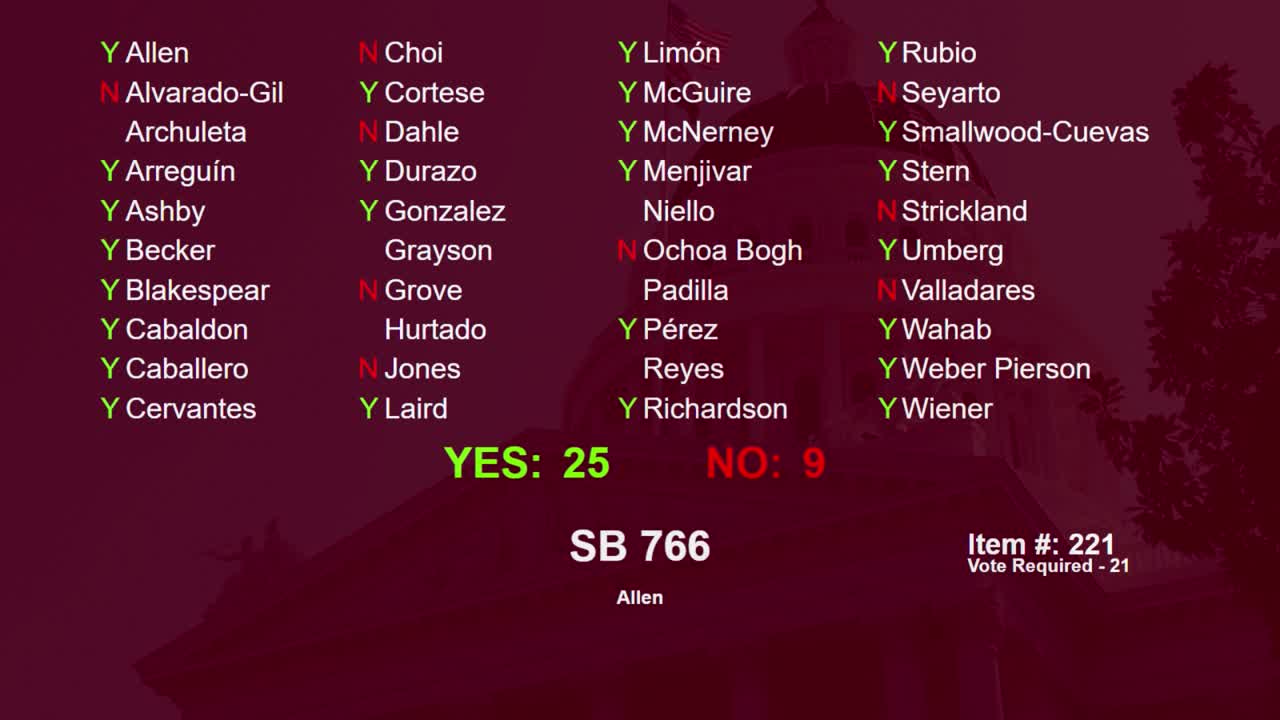 3MIN
Senate Floor
 17MIN
Senate Standing Committee on Local Government
Bill Author

Bill Co-Author(s):