SB 37: Attorneys: unlawful solicitations and advertisements.
- Session Year: 2025-2026
- House: Senate
- Latest Version Date: 2025-10-11
Current Status:
Passed
(2025-10-11: Chaptered by Secretary of State. Chapter 645, Statutes of 2025.)
Introduced
In Committee
Awaiting First Chamber Vote
Passed First Chamber
In Committee
Awaiting Second Chamber Vote
Passed Second Chamber
Enacted
(1)Existing law makes it unlawful for any person, firm, corporation, partnership, or association to act as a runner or capper for any attorneys or to solicit any business for any attorneys in and about certain locations, including prisons, jails, and county hospitals, or in any public place or upon private property, as specified. Existing law also makes it unlawful for a person to solicit another person to commit or join in the commission of a violation of that provision. Existing law defines runner or capper for these provisions to mean a person, firm, association, or corporation acting for consideration in any manner or in any capacity as an agent for an attorney or law firm in the solicitation or procurement of business for the attorney or law firm, as provided. Existing law prescribes a schedule of punishments for violating these provisions, including imprisonment and fines, as specified.
Existing law also prohibits an individual, partnership, corporation, association, or any other nongovernmental entity from operating for the direct or indirect purpose of referring potential clients to attorneys, and prohibits an attorney from accepting a referral of those potential clients, unless certain requirements are met. Existing law additionally prohibits a referral service from being owned or operated by those lawyers to whom more than 20% of referrals are made. Existing law makes an individual, partnership, association, corporation, or other entity that engages, has engaged, or proposes to engage in violations of these provisions liable for a civil penalty, as provided.
This bill would additionally authorize any person to bring a civil action for a violation of these provisions for statutory damages, as provided, attorneys fees, injunctive relief, and any other relief the court deems proper. The bill would require the court, in assessing the amount of statutory damages, to consider all relevant circumstances presented by the case, including the nature and seriousness of the misconduct and the defendants assets, liabilities, and net worth.
(2)Existing law imposes various requirements on the ownership of a lawyer referral service. Existing law provides that certain provisions relating to these lawyer referral services requirements shall not be construed to prohibit attorneys from jointly advertising their services. Existing law states that permissible joint advertising, among other things, identifies by name the advertising attorneys or law firms whom the consumer of legal services may select and initiate contact with.
This bill would also provide that permissible joint advertising requires that each participating attorney or law firm execute a joint advertising agreement with the entity managing the joint advertising agreement with the entity managing the joint advertising services, under which the attorney or law firm expressly takes liability for the content of the advertising.
(3)Existing law prohibits an advertisement, as defined, made by an attorney or law firm from making various prohibited statements and requires the advertisement to include certain disclosures, as specified. Existing law defines advertise and advertisement for these provisions to mean any communication, as specified, that solicits employment of legal services provided by an attorney, agent of an attorney, or law firm, and is directed to the general public and is paid for by, or on the behalf of, an attorney.
This bill would revise those definitions and would define advertisement for purposes of those provisions to mean any communication, through any written, recorded, or electronic means, whether available to or directed generally to members of the public or to a limited group of individuals, that provides information concerning a lawyer or the lawyers services for the purpose of encouraging individuals to secure the services of the lawyer or a law firm. The bill would define advertise for purposes of those provisions to mean to engage in any communication constituting an advertisement.
(4)Existing law prohibits a legal advertisement from containing or referring to specified statements or representations, including prohibiting an advertisement from containing a guarantee or warranty regarding the outcome of a legal matter as a result of representation by an attorney, attorneys agent, or law firm.
This bill would additionally prohibit an advertisement from containing misleading, deceptive, or false statements, words, or phrases regarding a lawyers or a law firms skills, experience, or record, and would also prohibit an advertisement from containing references to a lawyers or a law firms recognition by, or awards from, an organization, unless the recognition or award is not conferred by virtue of being a member of the organization and the organization does not charge or solicit a fee, cost, or payment for the recognition or award. The bill would also require a legal advertisement to contain specified information conspicuously displayed, or intelligible, if spoken, including disclosure of the city, town, or county of at least one bona fide office location or the address of record listed with the State Bar of California (State Bar) for the lawyer or law firm, as specified.
(5)Existing law authorizes a person claiming a violation of specified provisions of law governing false, misleading, or deceptive legal advertising to file a complaint with the State Bar and requires a copy of the complaint to be served simultaneously upon the advertiser. Existing law provides a process whereby an advertiser may voluntarily withdraw the advertisement, within specified timelines, before or after the State Bar makes a determination of whether substantial evidence of a violation exists. Existing law provides that the State Bar review procedure applies only to licensees and certified referral services. Under existing law, if the State Bar determines that substantial evidence of a violation exists and the licensee or certified lawyer referral service who broadcasts the advertisement fails to withdraw the advertisement within 72 hours, a civil enforcement action may be commenced for an amount up to $5,000 for each individual broadcast.
This bill would require a copy of the complaint to be personally served simultaneously upon the advertiser. The bill would limit the 72-hour deadline to withdraw an advertisement to an electronic broadcast, and for any other medium would require notice of withdrawal to be submitted to the State Bar within 72 hours and withdrawal to occur as soon as practicable, not to exceed 30 days. The bill would extend the application of the State Bar review procedure to individuals or entities that participate in joint legal advertising arrangements in compliance with specified provisions. The bill would authorize a consumer who was misled by an advertisement in violation of the bills provisions to bring a civil action for specified damages and relief if the consumer first files a complaint with the State Bar under the above-described process, the State Bar determines that substantial evidence of a violation exists, and the advertiser does not withdraw the advertisement, or the advertiser withdraws the advertisement, but then subsequently rebroadcasts the advertisement, as provided. The bill would authorize a civil action under these circumstances for the damages described above, or for statutory damages, as provided, attorneys fees, injunctive relief, and any other relief the court deems proper, as provided.
(6)Existing law prohibits, in advertising by electronic media for compliance with certain provisions, a message from being false, misleading, or deceptive, and requires the message as a whole to be factually substantiated. Existing law provides that a violation of this prohibition and requirement, among other provisions, is cause for discipline by the State Bar, as specified.
This bill would expand the types of violations that would be a cause for licensee discipline, including, but not limited to, the provision prohibiting an advertisement from containing any false, misleading, or deceptive statement, or from omitting any fact necessary to make the statements made, in light of circumstances under which they are made, not false, misleading, or deceptive.
(7)Existing law excludes media in which advertising in displayed and advertising agencies that prepare advertising content from specified provisions regulating to legal advertisement content.
This bill would also exclude broadcasters that disseminate advertisements from the provisions regulating legal advertisement content.
(8)This bill would make conforming changes.
(1)Existing law makes it unlawful for any person, firm, corporation, partnership, or association to act as a runner or capper for any attorneys or to solicit any business for any attorneys in and about certain locations, including prisons, jails, and county hospitals, or in any public place or upon private property, as specified. Existing law also makes it unlawful for a person to solicit another person to commit or join in the commission of a violation of that provision. Existing law defines runner or capper for these provisions to mean a person, firm, association, or corporation acting for consideration in any manner or in any capacity as an agent for an attorney or law firm in the solicitation or procurement of business for the attorney or law firm, as provided. Existing law prescribes a schedule of punishments for violating these provisions, including imprisonment and fines, as specified.
Existing law also prohibits an individual, partnership, corporation, association, or any other nongovernmental entity from operating for the direct or indirect purpose of referring potential clients to attorneys, and prohibits an attorney from accepting a referral of those potential clients, unless certain requirements are met. Existing law additionally prohibits a referral service from being owned or operated by those lawyers to whom more than 20% of referrals are made. Existing law makes an individual, partnership, association, corporation, or other entity that engages, has engaged, or proposes to engage in violations of these provisions liable for a civil penalty, as provided.
This bill would additionally authorize any person to bring a civil action for a violation of these provisions for statutory damages, as provided, attorneys fees, injunctive relief, and any other relief the court deems proper. The bill would require the court, in assessing the amount of statutory damages, to consider all relevant circumstances presented by the case, including the nature and seriousness of the misconduct and the defendants assets, liabilities, and net worth.
(2)Existing law imposes various requirements on the ownership of a lawyer referral service. Existing law provides that certain provisions relating to these lawyer referral services requirements shall not be construed to prohibit attorneys from jointly advertising their services. Existing law states that permissible joint advertising, among other things, identifies by name the advertising attorneys or law firms whom the consumer of legal services may select and initiate contact with.
This bill would also provide that permissible joint advertising requires that each participating attorney or law firm execute a joint advertising agreement with the entity managing the joint advertising agreement with the entity managing the joint advertising services, under which the attorney or law firm expressly takes liability for the content of the advertising.
(2)(3)Existing law prohibits an advertisement, as defined, made by an attorney or law firm from making various prohibited statements and requires the advertisement to include certain disclosures, as specified. Existing law defines advertise and advertisement for these provisions to mean any communication, as specified, that solicits employment of legal services provided by an attorney, agent of an attorney, or law firm, and is directed to the general public and is paid for by, or on the behalf of, an attorney.
This bill would revise those definitions and would define advertisement for purposes of those provisions to mean any communication, through any written, recorded, or electronic means, whether available to or directed generally to members of the public or to a limited group of individuals, that provides information concerning a lawyer or the lawyers services for the purpose of encouraging individuals to secure the services of the lawyer or a law firm. The bill would define advertise for purposes of those provisions to mean to engage in any communication constituting an advertisement.
(3)(4)Existing law prohibits a legal advertisement from containing or referring to specified statements or representations, including prohibiting an advertisement from containing a guarantee or warranty regarding the outcome of a legal matter as a result of representation by an attorney, attorneys agent, or law firm.
This bill would additionally prohibit an advertisement from containing misleading, deceptive, or false statements, words, or phrases regarding a lawyers or a law firms skills, experience, or record, and would also prohibit an advertisement from containing references to a lawyers or a law firms recognition by, or awards from, an organization, unless the recognition or award is not conferred by virtue of being a member of the organization and the organization does not charge or solicit a fee, cost, or payment for the recognition or award. The bill would also require a legal advertisement to contain specified information conspicuously displayed, or intelligible, if spoken, including the name of at least one lawyer licensed to practice law in California, the law firm, or the certified lawyer referral service responsible for the advertisement. disclosure of the city, town, or county of at least one bona fide office location or the address of record listed with the State Bar of California (State Bar) for the lawyer or law firm, as specified.
(4)(5)Existing law authorizes a person claiming a violation of specified provisions of law governing false, misleading, or deceptive legal advertising to file a complaint with the State Bar and requires a copy of the complaint to be served simultaneously upon the advertiser. Existing law provides a process whereby an advertiser may voluntarily withdraw the advertisement, within specified timelines, before or after the State Bar makes a determination of whether substantial evidence of a violation exists. Existing law provides that the State Bar review procedure applies only to licensees and certified referral services. Under existing law, if the State Bar determines that substantial evidence of a violation exists and the licensee or certified lawyer referral service who broadcasts the advertisement fails to withdraw the advertisement within 72 hours, a civil enforcement action may be commenced for an amount up to $5,000 for each individual broadcast.
This bill would require a copy of the complaint to be personally served simultaneously upon the advertiser. The bill would limit the 72-hour deadline to withdraw an advertisement to an electronic broadcast, and for any other medium would require notice of withdrawal to be submitted to the State Bar within 72 hours and withdrawal to occur as soon as practicable, not to exceed 30 days. The bill would extend the application of the State Bar review procedure to individuals or entities that participate in joint legal advertising arrangements in compliance with specified provisions. The bill would authorize a consumer who was misled by an advertisement in violation of the bills provisions to bring a civil action for specified damages and relief if the consumer first files a complaint with the State Bar under the above-described process, the State Bar determines that substantial evidence of a violation exists, and the advertiser does not withdraw the advertisement, or the advertiser withdraws the advertisement, but then subsequently rebroadcasts the advertisement, as provided. The bill would authorize a civil action under these circumstances for the damages described above, or for statutory damages, as provided, attorneys fees, injunctive relief, and any other relief the court deems proper, as provided. The
(6)Existing law prohibits, in advertising by electronic media for compliance with certain provisions, a message from being false, misleading, or deceptive, and requires the message as a whole to be factually substantiated. Existing law provides that a violation of this prohibition and requirement, among other provisions, is cause for discipline by the State Bar, as specified.
This bill would expand the types of violations that would be a cause for licensee discipline, including, but not limited to, the provision prohibiting an advertisement from containing any false, misleading, or deceptive statement, or from omitting any fact necessary to make the statements made, in light of circumstances under which they are made, not false, misleading, or deceptive.
(7)Existing law excludes media in which advertising in displayed and advertising agencies that prepare advertising content from specified provisions regulating to legal advertisement content.
This bill would also exclude broadcasters that disseminate advertisements from the provisions regulating legal advertisement content.
(8)This bill would make conforming changes.
(1)Existing law makes it unlawful for any person, firm, corporation, partnership, or association to act as a runner or capper for any attorneys or to solicit any business for any attorneys in and about certain locations, including prisons, jails, and county hospitals, or in any public place or upon private property, as specified. Existing law also makes it unlawful for a person to solicit another person to commit or join in the commission of a violation of that provision. Existing law defines runner or capper for these provisions to mean a person, firm, association, or corporation acting for consideration in any manner or in any capacity as an agent for an attorney or law firm in the solicitation or procurement of business for the attorney or law firm, as provided. Existing law prescribes a schedule of punishments for violating these provisions, including imprisonment and fines, as specified.
Existing law also prohibits an individual, partnership, corporation, association, or any other nongovernmental entity from operating for the direct or indirect purpose of referring potential clients to attorneys, and prohibits an attorney from accepting a referral of those potential clients, unless certain requirements are met. Existing law additionally prohibits a referral service from being owned or operated by those lawyers to whom more than 20% of referrals are made. Existing law makes an individual, partnership, association, corporation, or other entity that engages, has engaged, or proposes to engage in violations of these provisions liable for a civil penalty, as provided.
This bill would additionally authorize any person to bring a civil action for a violation of these provisions for statutory damages, as provided, attorneys fees, injunctive relief, and any other relief the court deems proper. The bill would require the court, in assessing the amount of statutory damages, to consider all relevant circumstances presented by the case, including the nature and seriousness of the misconduct and the defendants assets, liabilities, and net worth.
(2)Existing law prohibits an advertisement, as defined, made by an attorney or law firm from making various prohibited statements and requires the advertisement to include certain disclosures, as specified. Existing law defines advertise and advertisement for these provisions to mean any communication, as specified, that solicits employment of legal services provided by an attorney, agent of an attorney, or law firm, and is directed to the general public and is paid for by, or on the behalf of, an attorney.
This bill would revise those definitions and would define advertisement for purposes of those provisions to mean any communication, through any written, recorded, or electronic means, whether available to or directed generally to members of the public or to a limited group of individuals, that provides information concerning a lawyer or the lawyers services for the purpose of encouraging individuals to secure the services of the lawyer or a law firm. The bill would define advertise for purposes of those provisions to mean to engage in any communication constituting an advertisement.
(3)Existing law prohibits a legal advertisement from containing or referring to specified statements or representations, including prohibiting an advertisement from containing a guarantee or warranty regarding the outcome of a legal matter as a result of representation by an attorney, attorneys agent, or law firm.
This bill would additionally prohibit an advertisement from containing misleading, deceptive, or false statements, words, or phrases regarding a lawyers or a law firms skills, experience, or record, and would also prohibit an advertisement from containing references to a lawyers or a law firms recognition by, or awards from, an organization, unless the recognition or award is not conferred by virtue of being a member of the organization and the organization does not charge or solicit a fee, cost, or payment for the recognition or award. The bill would also require a legal advertisement to contain specified information conspicuously displayed, or intelligible, if spoken, including the name of at least one lawyer licensed to practice law in California, the law firm, or the certified lawyer referral service responsible for the advertisement.
(4)Existing law authorizes a person claiming a violation of specified provisions of law governing false, misleading, or deceptive legal advertising to file a complaint with the State Bar and requires a copy of the complaint to be served simultaneously upon the advertiser. Existing law provides a process whereby an advertiser may voluntarily withdraw the advertisement, within specified timelines, before or after the State Bar makes a determination of whether substantial evidence of a violation exists. Under existing law, if the State Bar determines that substantial evidence of a violation exists and the licensee or certified lawyer referral service who broadcasts the advertisement fails to withdraw the advertisement within 72 hours, a civil enforcement action may be commenced for an amount up to $5,000 for each individual broadcast.
This bill would require a copy of the complaint to be personally served simultaneously upon the advertiser. The bill would limit the 72-hour deadline to withdraw an advertisement to an electronic broadcast, and for any other medium would require notice of withdrawal to be submitted to the State Bar within 72 hours and withdrawal to occur as soon as practicable, not to exceed 30 days. The bill would authorize a consumer who was misled by an advertisement in violation of the bills provisions to bring a civil action for specified damages and relief if the consumer first files a complaint with the State Bar under the above-described process, the State Bar determines that substantial evidence of a violation exists, and the advertiser does not withdraw the advertisement, or the advertiser withdraws the advertisement, but then subsequently rebroadcasts the advertisement, as provided. The bill would authorize a civil action under these circumstances for the damages described above, or for statutory damages, as provided, attorneys fees, injunctive relief, and any other relief the court deems proper, as provided. The bill would make conforming changes.
(1)Existing law makes it unlawful for any person, firm, corporation, partnership, or association to act as a runner or capper for any attorneys or to solicit any business for any attorneys in and about certain locations, including prisons, jails, and county hospitals, or in any public place or upon private property, as specified. Existing law also makes it unlawful for a person to solicit another person to commit or join in the commission of a violation of that provision. Existing law defines runner or capper for these provisions to mean a person, firm, association, or corporation acting for consideration in any manner or in any capacity as an agent for an attorney or law firm in the solicitation or procurement of business for the attorney or law firm, as provided. Existing law prescribes a schedule of punishments for violating these provisions, including imprisonment and fines, as specified.
Existing law also prohibits an individual, partnership, corporation, association, or any other nongovernmental entity from operating for the direct or indirect purpose of referring potential clients to attorneys, and prohibits an attorney from accepting a referral of those potential clients, unless certain requirements are met. Existing law additionally prohibits a referral service from being owned or operated by those lawyers to whom more than 20% of referrals are made. Existing law makes an individual, partnership, association, corporation, or other entity that engages, has engaged, or proposes to engage in violations of these provisions liable for a civil penalty, as provided.
This bill would additionally authorize any person to bring a civil action for a violation of these provisions for statutory damages, as provided, attorneys fees, injunctive relief, and any other relief the court deems proper. The bill would require the court, in assessing the amount of statutory damages, to consider all relevant circumstances presented by the case, including the nature and seriousness of the misconduct and the defendants assets, liabilities, and net worth.
(2)Existing law prohibits an advertisement, as defined, made by an attorney or law firm from making various prohibited statements and requires the advertisement to include certain disclosures, as specified. Existing law defines advertise and advertisement for these provisions to mean any communication, as specified, that solicits employment of legal services provided by an attorney, agent of an attorney, or law firm, and is directed to the general public and is paid for by, or on the behalf of, an attorney.
This bill would revise those definitions and would define advertisement for purposes of those provisions to mean any communication, through any written, recorded, or electronic means, whether available to or directed generally to members of the public or to a limited group of individuals, that provides information concerning a lawyer or the lawyers services for the purpose of encouraging individuals to secure the services of the lawyer or a law firm. The bill would define advertise for purposes of those provisions to mean to engage in any communication constituting an advertisement.
(3)Existing law prohibits a legal advertisement from containing or referring to specified statements or representations, including prohibiting an advertisement from containing a guarantee or warranty regarding the outcome of a legal matter as a result of representation by an attorney, attorneys agent, or law firm.
This bill would additionally prohibit an advertisement from containing or referring to a prediction of success regarding the outcome of a legal matter, from referencing past results, unless the information or characterization is objectively verifiable, as provided, and from containing misleading, deceptive, or false statements, words, or phrases regarding a lawyers or a law firms skills, experience, reputation, or record. The bill or record, and would also prohibit an advertisement from containing references to a lawyers or a law firms recognition by, or awards from, an organization, unless the entity conferring the recognition or award is recognized within the legal profession as being a bona fide organization or recognition or award is not conferred by virtue of being a member of the organization and the organization does not charge or solicit a fee, cost, or payment for the recognition or award. The bill would also require a legal advertisement to contain specified information conspicuously displayed, or intelligible, if spoken, including the name of at least one lawyer licensed to practice law in California, the law firm, or the certified lawyer referral service responsible for the advertisement. The
(4)Existing law authorizes a person claiming a violation of specified provisions of law governing false, misleading, or deceptive legal advertising to file a complaint with the State Bar and requires a copy of the complaint to be served simultaneously upon the advertiser. Existing law provides a process whereby an advertiser may voluntarily withdraw the advertisement, within specified timelines, before or after the State Bar makes a determination of whether substantial evidence of a violation exists. Under existing law, if the State Bar determines that substantial evidence of a violation exists and the licensee or certified lawyer referral service who broadcasts the advertisement fails to withdraw the advertisement within 72 hours, a civil enforcement action may be commenced for an amount up to $5,000 for each individual broadcast.
This bill would require a copy of the complaint to be personally served simultaneously upon the advertiser. The bill would authorize a consumer who was misled by an advertisement in violation of these the bills provisions to bring a civil action for specified damages and relief if the consumer first files a complaint with the State Bar under the above-described process, the State Bar determines that substantial evidence of a violation exists, and the advertiser does not withdraw the advertisement, or the advertiser withdraws the advertisement, but then subsequently rebroadcasts the advertisement, as provided. The bill would authorize a civil action under these circumstances for the damages described above, or for statutory damages, as provided, attorneys fees, injunctive relief, and any other relief the court deems proper. The bill would require the court, in assessing the amount of statutory damages, to consider all relevant circumstances presented by case, including the nature and seriousness of the misconduct and the defendants assets, liabilities, and net worth. proper, as provided. The bill would make conforming changes.
(1)Existing law makes it unlawful for any person, firm, corporation, partnership, or association to act as a runner or capper for any attorneys or to solicit any business for any attorneys in and about certain locations, including prisons, jails, and county hospitals, or in any public place or upon private property, as specified. Existing law also makes it unlawful for a person to solicit another person to commit or join in the commission of a violation of that provision. Existing law defines runner or capper for these provisions to mean a person, firm, association, or corporation acting for consideration in any manner or in any capacity as an agent for an attorney or law firm in the solicitation or procurement of business for the attorney or law firm, as provided. Existing law prescribes a schedule of punishments for violating these provisions, including imprisonment and fines, as specified.
Existing law also prohibits an individual, partnership, corporation, association, or any other nongovernmental entity from operating for the direct or indirect purpose of referring potential clients to attorneys, and prohibits an attorney from accepting a referral of those potential clients, unless certain requirements are met. Existing law additionally prohibits a referral service from being owned or operated by those lawyers to whom more than 20% of referrals are made. Existing law makes an individual, partnership, association, corporation, or other entity that engages, has engaged, or proposes to engage in violations of these provisions liable for a civil penalty, as provided.
This bill would additionally authorize any person to bring a civil action for a violation of these provisions for statutory damages, as provided, attorneys fees, injunctive relief, and any other relief the court deems proper. The bill would require the court, in assessing the amount of statutory damages, to consider all relevant circumstances presented by the case, including the nature and seriousness of the misconduct and the defendants assets, liabilities, and net worth.
(2)Existing law prohibits an advertisement, as defined, made by an attorney or law firm from making various prohibited statements and requires the advertisement to include certain disclosures, as specified. Existing law defines advertise and advertisement for these provisions to mean any communication, as specified, that solicits employment of legal services provided by an attorney, agent of an attorney, or law firm, and is directed to the general public and is paid for by, or on the behalf of, an attorney.
This bill would revise the definition of advertise and advertisement for purposes of those provisions to mean any written, recorded, or electronic means of communication that is subject to compliance with specified provisions of law governing legal advertising or the State Bar of California Rules of Professional Conduct.This bill would revise those definitions and would define advertisement for purposes of those provisions to mean any communication, through any written, recorded, or electronic means, whether available to or directed generally to members of the public or to a limited group of individuals, that provides information concerning a lawyer or the lawyers services for the purpose of encouraging individuals to secure the services of the lawyer or a law firm. The bill would define advertise for purposes of those provisions to mean to engage in any communication constituting an advertisement.
(3)Existing law prohibits a legal advertisement from containing or referring to specified statements or representations, including prohibiting an advertisement from containing a guarantee or warranty regarding the outcome of a legal matter as a result of representation by an attorney, attorneys agent, or law firm.
This bill would additionally prohibit an advertisement from containing or referring to a prediction of success regarding the outcome of a legal matter, and from referencing past results or including statements that characterize a lawyers or law firms skills, experience, reputation, or record, results, unless the information or characterization is objectively verifiable, as provided. provided, and from containing misleading, deceptive, or false statements, words, or phrases regarding a lawyers or a law firms skills, experience, reputation, or record. The bill would also prohibit an advertisement from containing references to a lawyers membership in, or a law firms recognition by, or awards from, an organization, unless the entity conferring the membership, recognition, recognition or award is generally recognized within the legal profession as being a bona fide organization that meets certain requirements. or does not charge or solicit a fee, cost, or payment for the recognition or award. The bill would also require a legal advertisement to contain specified information conspicuously displayed, or intelligible, if spoken, including the name of at least one lawyer licensed to practice law in California, the law firm, or the certified lawyer referral service responsible for the advertisement. The bill would authorize any person a consumer who was misled by an advertisement in violation of these provisions to bring a civil action for a violation of these provisions for statutory damages, as provided, attorneys fees, injunctive relief, and any other relief the court deems proper. The bill would require the court, in assessing the amount of statutory damages, to consider all relevant circumstances presented by case, including the nature and seriousness of the misconduct and the defendants assets, liabilities, and net worth.
(1)Existing law makes it unlawful for any person, firm, corporation, partnership, or association to act as a runner or capper for any attorneys or to solicit any business for any attorneys in and about certain locations, including prisons, jails, and county hospitals, or in any public place or upon private property, as specified. Existing law also makes it unlawful for a person to solicit another person to commit or join in the commission of a violation of that provision. Existing law defines runner or capper for these provisions to mean a person, firm, association, or corporation acting for consideration in any manner or in any capacity as an agent for an attorney or law firm in the solicitation or procurement of business for the attorney or law firm, as provided. Existing law prescribes a schedule of punishments for violating these provisions, including imprisonment and fines, as specified.
Existing law also prohibits an individual, partnership, corporation, association, or any other nongovernmental entity from operating for the direct or indirect purpose of referring potential clients to attorneys, and prohibits an attorney from accepting a referral of those potential clients, unless certain requirements are met. Existing law additionally prohibits a referral service from being owned or operated by those lawyers to whom more than 20% of referrals are made. Existing law makes an individual, partnership, association, corporation, or other entity that engages, has engaged, or proposes to engage in violations of these provisions liable for a civil penalty, as provided.
This bill would additionally authorize any person to bring a civil action for a violation of these provisions for statutory damages, as provided, attorneys fees, injunctive relief, and any other relief the court deems proper. The bill would require the court, in assessing the amount of statutory damages, to consider all relevant circumstances presented by the case, including the nature and seriousness of the misconduct and the defendants assets, liabilities, and net worth.
(2)Existing law prohibits an advertisement, as defined, made by an attorney or law firm from making various prohibited statements and requires the advertisement to include certain disclosures, as specified. Existing law defines advertise and advertisement for these provisions to mean any communication, as specified, that solicits employment of legal services provided by an attorney, agent of an attorney, or law firm, and is directed to the general public and is paid for by, or on the behalf of, an attorney.
This bill would revise the definition of advertise and advertisement for purposes of those provisions to mean any written, recorded, or electronic means of communication that is subject to compliance with specified provisions of law governing legal advertising or the State Bar of California Rules of Professional Conduct.
(3)Existing law prohibits a legal advertisement from containing or referring to specified statements or representations, including prohibiting an advertisement from containing a guarantee or warranty regarding the outcome of a legal matter as a result of representation by an attorney, attorneys agent, or law firm.
This bill would additionally prohibit an advertisement from containing or referring to a prediction of success regarding the outcome of a legal matter, and from referencing past results or including statements that characterize a lawyers or law firms skills, experience, reputation, or record, unless the information or characterization is objectively verifiable, as provided. The bill would also prohibit an advertisement from containing references to a lawyers membership in, recognition by, or awards from, an organization, unless the entity conferring the membership, recognition, or award is generally recognized within the legal profession as being a bona fide organization that meets certain requirements. The bill would also require a legal advertisement to contain specified information conspicuously displayed, or intelligible, if spoken, including the name of at least one lawyer licensed to practice law in California, the law firm, or the certified lawyer referral service responsible for the advertisement. The bill would authorize any person to bring a civil action for a violation of these provisions for statutory damages, as provided, attorneys fees, injunctive relief, and any other relief the court deems proper. The bill would require the court, in assessing the amount of statutory damages, to consider all relevant circumstances presented by case, including the nature and seriousness of the misconduct and the defendants assets, liabilities, and net worth.
Existing law specifies procedures to be followed in civil actions. Existing law requires the word action for these purposes to be construed, whenever it is necessary to do so, as including a special proceeding of a civil nature.This bill would make a technical, nonsubstantive change to this provision.Existing law specifies procedures to be followed in civil actions. Existing law requires the word action for these purposes to be construed, whenever it is necessary to do so, as including a special proceeding of a civil nature.
This bill would make a technical, nonsubstantive change to this provision.
(a)A person, firm, partnership, association, or corporation violating subdivision (a) of Section 6152 is punishable, upon a first conviction, by imprisonment in a county jail for not more than one year or by a fine not exceeding fifteen thousand dollars ($15,000), or by both that imprisonment and fine. Upon a second or subsequent conviction, a person, firm, partnership, association, or corporation is punishable by imprisonment in a county jail for not more than one year, or by imprisonment pursuant to subdivision (h) of Section 1170 of the Penal Code for two, three, or four years, or by a fine not exceeding fifteen thousand dollars ($15,000), or by both that imprisonment and fine.
(b)A person employed either as an officer, director, trustee, clerk, servant or agent of this state or of any county or other municipal corporation or subdivision thereof, who is found guilty of violating any of the provisions of this article, shall forfeit the right to their office and employment in addition to any other penalty provided in this article.
(c)Any person may bring a civil action for a violation of subdivision (a) of Section 6152 for the following remedies:
(1)Statutory damages of a minimum of five thousand dollars ($5,000) up to a maximum of one hundred thousand dollars ($100,000) per violation, or three times the amount of actual damages, whichever is larger. The amount of statutory damages in this subdivision shall be determined pursuant to subdivision (d).
(2)Attorneys fees.
(3)Injunctive or declaratory relief.
(4)Any other relief the court deems proper.
(d)In assessing the amount of statutory damages, the court shall consider any one or more of the relevant circumstances presented by the case, including, but not limited to, the nature and seriousness of the misconduct, the number of violations, the persistence of the misconduct, the length of time over which the misconduct occurred, the willfulness of the defendants misconduct, and the defendants assets, liabilities, and net worth.
(e)The right of action under this section exists independently of any enforcement action or inaction by any governmental agency or official.
SEC. 2.Section 6155 of the Business and Professions Code is amended to read:6155.(a)An individual, partnership, corporation, association, or any other nongovernmental entity shall not operate for the direct or indirect purpose, in whole or in part, of referring potential clients to attorneys, and no attorney shall accept a referral of such potential clients, unless all of the following requirements are met:
(1)The service is certified by the State Bar of California and is operated in conformity with minimum standards for a lawyer referral service established by the State Bar and approved by the Supreme Court.
(2)The combined charges to the potential client by the referral service and the attorney to whom the potential client is referred do not exceed the total cost that the client would normally pay if no referral service were involved.
(b)A referral service shall not be owned or operated, in whole or in part, directly or indirectly, by those lawyers to whom, individually or collectively, more than 20 percent of referrals are made. For purposes of this subdivision, a referral service that is owned or operated by a bar association, as defined in the minimum standards, shall be deemed to be owned or operated by its governing committee so long as the governing committee is constituted and functions in the manner prescribed by the minimum standards.
(c)None of the following is a lawyer referral service:
(1)A plan of legal insurance as defined in Section 119.6 of the Insurance Code.
(2)A group or prepaid legal plan, whether operated by a union, trust, mutual benefit or aid association, public or private corporation, or other entity or person, which meets both of the following conditions:
(A)It recommends, furnishes, or pays for legal services to its members or beneficiaries.
(B)It provides telephone advice or personal consultation.
(3)A program having as its purpose the referral of clients to attorneys for representation on a pro bono basis.
(4)A nonprofit organization that partners with a referral service as provided in this article.
(d)The following are in the public interest and do not constitute an unlawful restraint of trade or commerce:
(1)An agreement between a referral service and a participating attorney to eliminate or restrict the attorneys fee for an initial office consultation for each potential client or to provide free or reduced fee services.
(2)Requirements by a referral service that attorneys meet reasonable participation requirements, including experience, education, and training requirements.
(3)Provisions of the minimum standards as approved by the Supreme Court.
(4)Requirements that the application and renewal fees for certification as a lawyer referral service be determined, in whole or in part, by a consideration of any combination of the following factors: a referral services gross annual revenues, number of panels, number of panel members, amount of fees charged to panel members, or for-profit or nonprofit status; provided that the application and renewal fees are reasonable and necessary to cover the cost of the program and established by the State Bar through the rulemaking process.
(5)Requirements that, to increase access to the justice system for all Californians, lawyer referral services establish separate ongoing activities or arrangements that serve persons of limited means.
(6)Partnerships or agreements between a referral service and a participants nonprofit organization to refer potential clients for assistance.
(e)With the approval of the Supreme Court, the State Bar shall formulate and enforce rules and regulations for carrying out this section, including rules and regulations which do the following:
(1)Establish minimum standards for lawyer referral services.
(2)Require that an entity seeking to qualify as a lawyer referral service register with the State Bar and obtain certification from the State Bar.
(3)Require that the certificate may be obtained, maintained, suspended, or revoked pursuant to procedures set forth in the rules and regulations.
(4)Require the lawyer referral service to pay an application and renewal fee for the certificate in such reasonable amounts as may be determined by the State Bar. The State Bar shall adopt rules authorizing the waiver or reduction of the fees upon a demonstration of financial necessity. The State Bar may require that the application and renewal fees for certification as a lawyer referral service be determined, in whole or in part, by a consideration of any combination of the following factors: a referral services gross annual revenues, number of panels, number of panel members, amount of fees charged to panel members, or for-profit or nonprofit status.
(5)Require that, to increase access to the justice system for all Californians, lawyer referral services establish separate ongoing activities or arrangements that serve persons of limited means.
(6)Require each lawyer who is a member of a certified lawyer referral service to comply with all applicable professional standards, rules, and regulations, and to possess a policy of errors and omissions insurance in an amount not less than one hundred thousand dollars ($100,000) for each occurrence and three hundred thousand dollars ($300,000) aggregate, per year. By rule, the State Bar may provide for alternative proof of financial responsibility to meet this requirement.
(7)Establish minimum standards for nonprofit organizations that partner with lawyer referral services.
(f)Provide that cause for denial of certification or recertification or revocation of certification of a lawyer referral service shall include, but not be limited to:
(1)Noncompliance with the statutes or minimum standards governing lawyer referral services as adopted and from time to time amended.
(2)Sharing common or cross ownership, interests, or operations with any entity which engages in referrals to licensed or unlicensed health care providers.
(3)Direct or indirect consideration regarding referrals between an owner, operator, or member of a lawyer referral service and any licensed or unlicensed health care provider.
(4)Advertising on behalf of attorneys in violation of the Rules of Professional Conduct or the Business and Professions Code.
(g)This section shall not be construed to prohibit attorneys from jointly advertising their services.
(1)Permissible joint advertising, among other things, satisfies both of the following:
(A)The advertisement identifies by name the advertising attorneys or law firms whom the consumer of legal services may select and initiate contact with.
(B)Each participating attorney or law firm shall have executed a joint advertising agreement with the entity managing the joint advertising agreement with the entity managing the joint advertising services, under which the attorney or law firm expressly takes liability for the content of the advertising.
(2)Certifiable referral activity involves, among other things, some person or entity other than the consumer and advertising attorney or law firms which, in person, electronically, or otherwise, refers the consumer to an attorney or law firm not identified in the advertising.
(h)A lawyer referral service certified under this section and operating in full compliance with this section, and in full compliance with the minimum standards and the rules and regulations of the State Bar governing lawyer referral services, shall not be deemed to be in violation of Section 3215 of the Labor Code or Section 750 of the Insurance Code.
(i)The payment by an attorney or law firm member of a certified referral service of the normal fees of that service shall not be deemed to be in violation of Section 3215 of the Labor Code or Section 750 of the Insurance Code, provided that the attorney or law firm member is in full compliance with the minimum standards and the rules and regulations of the State Bar governing lawyer referral services.
(j)Certifications of lawyer referral services issued by the State Bar shall not be transferable.
SEC. 3.Section 6156.5 is added to the Business and Professions Code, to read:6156.5.(a)Any person may bring a civil action for a violation of Section 6155 for the following remedies:
(1)Statutory damages of a minimum of five thousand dollars ($5,000) up to a maximum of one hundred thousand dollars ($100,000) per violation or three times the amount of actual damages, whichever is larger. The amount of statutory damages in this subdivision shall be determined pursuant to subdivision (b).
(2)Attorneys fees.
(3)Injunctive or declaratory relief.
(4)Any other relief the court deems proper.
(b)In assessing the amount of statutory damages, the court shall consider any one or more of the relevant circumstances presented by the case, including, but not limited to, the nature and seriousness of the misconduct, the number of violations, the persistence of the misconduct, the length of time over which the misconduct occurred, the willfulness of the defendants misconduct, and the defendants assets, liabilities, and net worth.
(c)The right of action under this section exists independently of any enforcement action or inaction by any governmental agency or official.
(d)This section shall not be construed to prohibit attorneys from jointly advertising their services in compliance with subdivision (g) of Section 6155.
SEC. 4.Section 6157 of the Business and Professions Code is amended to read:6157.As used in this article, the following definitions apply:
(a)Advertise means to engage in any communication constituting an advertisement.
(b)Advertisement means any communication, through any written, recorded, or electronic means, whether available to, or directed generally to, members of the public or to a limited group of individuals, that provides information concerning a lawyer or the lawyers services for the purpose of encouraging individuals to secure the services of the lawyer or their law firm.
(c)Electronic medium means television, radio, or computer networks.
(d)Lawyer means a licensee of the State Bar of California or a person who is admitted in good standing and eligible to practice before the bar of any United States court or the highest court of the District of Columbia or any state, territory, or insular possession of the United States, or is licensed to practice law in, or is admitted in good standing and eligible to practice before the bar of the highest court of, a foreign country or any political subdivision thereof, and includes any agent of the lawyer, law firm, or law corporation doing business in the state.
(e)Licensee means a licensee in good standing of the State Bar and includes any agent of the licensee and any law firm or law corporation doing business in the State of California.
SEC. 5.Section 6157.2 of the Business and Professions Code is amended to read:6157.2.(a)An advertisement shall not contain or refer to any of the following:
(1)A guarantee or warranty of success regarding the outcome of a legal matter as a result of representation by the licensee.
(2)Statements or symbols stating that the licensee featured in the advertisement can generally obtain immediate cash or quick settlements.
(3)(A)An impersonation of the name, voice, photograph, or electronic image of any person other than the lawyer, directly or implicitly purporting to be that of a lawyer.
(B)An impersonation of the name, voice, photograph, or electronic image of any person, directly or implicitly purporting to be a client of the licensee featured in the advertisement, or a dramatization of events, unless disclosure of the impersonation or dramatization is made in the advertisement.
(C)A spokesperson, including a celebrity spokesperson, unless there is disclosure of the spokespersons title.
(4)A statement that a licensee offers representation on a contingent basis unless the statement also advises whether a client will be held responsible for any costs advanced by the licensee when no recovery is obtained on behalf of the client. If the client will not be held responsible for costs, no disclosure is required.
(5)Misleading, deceptive, or false statements, words, or phrases regarding a lawyers or law firms skills, experience, or record.
(6)References to a lawyers or a law firms recognition by, or awards from, an organization, unless both of the following requirements are met:
(A)The recognition or award is not conferred by virtue of being a member of the organization.
(B)The organization does not charge or solicit a fee, cost, or payment for the recognition or award.
(b)An advertisement subject to this chapter shall contain the following information conspicuously displayed, or intelligible, if spoken:
(1)The name of at least one lawyer licensed to practice law in California, the law firm, the certified lawyer referral service responsible for the advertisement, or the joint advertiser responsible for the advertisement together with the name of each lawyer or law firm participating in the joint advertisement, as required by subdivision (g) of Section 6155.
(2)Disclosure of the city, town, or county of at least one bona fide office location or the address of record listed with the State Bar for the lawyer or law firm.
(3)A joint advertisement disseminated by a joint advertiser acting in compliance with subdivision (g) of Section 6155 via a platform or medium that imposes character, display, or time limitations shall be deemed compliant with the disclosure requirement of this subdivision if it contains the name of the joint advertiser responsible for the advertisement and provides a clear and prominent link or direction to a landing page or equivalent resource that includes all disclosures required by this subdivision.
(c)(1)A consumer who was misled by an advertisement in violation of this section may bring a civil action for the remedies provided in paragraph (2) if all of the following requirements are met:
(A)The consumer files a complaint under subdivision (a) of Section 6158.4.
(B)The State Bar determines that substantial evidence of a violation exists pursuant to the process set forth in Section 6158.4.
(C)The advertiser does not withdraw the advertisement as provided in subdivision (a) or (b) of Section 6158.4, or the advertiser withdraws an advertisement upon a State Bar determination that substantial evidence of a violation exists and subsequently rebroadcasts the same advertisement without a finding by the trier of fact in a civil action that the advertisement does not violate this section.
(2)A consumer who satisfies the requirements of paragraph (1) may bring a civil action for the following remedies:
(A)Statutory damages of a minimum of five thousand dollars ($5,000) up to a maximum of one hundred thousand dollars ($100,000) per each unique advertisement or three times the amount of actual damages, whichever is larger. The amount of statutory damages in this subdivision may be determined pursuant to subdivision (d).
(B)Attorneys fees.
(C)Injunctive or declaratory relief.
(D)Any other relief the court deems proper.
(d)In assessing the amount of statutory damages, the court may consider any one or more of the relevant circumstances presented by the case, including, but not limited to, the nature and seriousness of the misconduct, the number of violations, the persistence of the misconduct, the length of time over which the misconduct occurred, the willfulness of the defendants misconduct, and the defendants assets, liabilities, and net worth.
(e)The right of action under this section exists independently of any enforcement action or inaction by any governmental agency or official.
(f)This section does not restrict any other right available under existing law or otherwise available to a citizen seeking redress for false, misleading, or deceptive advertisements.
SEC. 6.Section 6158.4 of the Business and Professions Code is amended to read:6158.4.(a)Any person claiming a violation of Section 6157.2, 6158, 6158.1, or 6158.3 may file a complaint with the State Bar that states the name of the advertiser, a description of the advertisement claimed to violate these sections, and that specifically identifies the alleged violation. A copy of the complaint shall be personally served simultaneously upon the advertiser. The advertiser shall have nine days from the date of personal service of the complaint to voluntarily withdraw from broadcast the advertisement that is the subject of the complaint. If the advertiser elects to withdraw the advertisement, the advertiser shall notify the State Bar and the complainant of that fact in writing, and no further action may be taken by the complainant, including, but not limited to, seeking remedies pursuant to subdivision (c) of Section 6157.2. The advertiser shall provide a copy of the complained of advertisement to the State Bar for review within seven days of service of the complaint. Within 21 days of the delivery of the complained of advertisement, the State Bar shall determine whether substantial evidence of a violation of these sections exists. The review shall be conducted by a State Bar attorney who has expertise in the area of lawyer advertising.
(b)(1)Upon a State Bar determination that substantial evidence of a violation exists, if the licensee or certified lawyer referral service withdraws that advertisement from electronic media within 72 hours, no further action may be taken by the complainant. For any other medium, notice of withdrawal shall be submitted to the State Bar within 72 hours and withdrawal shall occur as soon as practicable but not to exceed 30 days.
(2)Upon a State Bar determination that substantial evidence of a violation exists, if the licensee or certified lawyer referral service fails to withdraw the advertisement as provided in paragraph (1), a civil enforcement action brought pursuant to subdivision (e) for a violation of Section 6157.2, 6158, 6158.1, or 6158.3, or brought pursuant to subdivision (c) of Section 6157.2 for a violation of Section 6157.2, may be commenced within one year of the State Bar decision. If the licensee or certified lawyer referral service withdraws an advertisement upon a State Bar determination that substantial evidence of a violation exists and subsequently rebroadcasts the same advertisement without a finding by the trier of fact in an action brought pursuant to subdivision (c) or (e), or pursuant to subdivision (c) of Section 6157.2, that the advertisement does not violate Section 6157.2, 6158, 6158.1, or 6158.3, a civil enforcement action may be commenced within one year of the rebroadcast.
(3)Upon a determination that substantial evidence of a violation does not exist, the complainant is barred from bringing a civil enforcement action pursuant to subdivision (e) of this section or subdivision (c) of Section 6157.2, but may bring an action for declaratory relief pursuant to subdivision (c).
(c)Any licensee or certified lawyer referral service who was the subject of a complaint and any complainant affected by the decision of the State Bar may bring an action for declaratory relief in the superior court to obtain a judicial declaration of whether Section 6158, 6158.1, or 6158.3 has been violated, and, if applicable, may also request injunctive relief. Any defense otherwise available at law may be raised for the first time in the declaratory relief action, including any constitutional challenge. Any civil enforcement action filed pursuant to subdivision (e) shall be stayed pending the resolution of the declaratory relief action. The action shall be defended by the real party in interest. The State Bar shall not be considered a party to the action unless it elects to intervene in the action.
(1)Upon a State Bar determination that substantial evidence of a violation exists, if the complainant or the licensee or certified lawyer referral service brings an action for declaratory relief to obtain a judicial declaration of whether the advertisement violates Section 6158, 6158.1, or 6158.3, and the court declares that the advertisement violates one or more of the sections, a civil enforcement action pursuant to subdivision (e) may be filed or maintained if the licensee or certified lawyer referral service failed to withdraw the advertisement within 72 hours of the State Bar determination. The decision of the court that an advertisement violates Section 6158, 6158.1, or 6158.3 shall be binding on the issue of whether the advertisement is unlawful in any pending or prospective civil enforcement action brought pursuant to subdivision (e) if that binding effect is supported by the doctrine of collateral estoppel or res judicata.
If, in that declaratory relief action, the court declares that the advertisement does not violate Section 6158, 6158.1, or 6158.3, the licensee or lawyer referral service may broadcast the advertisement. The decision of the court that an advertisement does not violate Section 6158, 6158.1, or 6158.3 shall bar any pending or prospective civil enforcement action brought pursuant to subdivision (e) if that prohibitive effect is supported by the doctrine of collateral estoppel or res judicata.
(2)If, following a State Bar determination that does not find substantial evidence that an advertisement violates Section 6158, 6158.1, or 6158.3, the complainant or the licensee or certified lawyer referral service brings an action for declaratory relief to obtain a judicial declaration of whether the advertisement violates Section 6158, 6158.1, or 6158.3, and the court declares that the advertisement violates one or more of the sections, a civil enforcement action pursuant to subdivision (e) may be filed or maintained if the licensee or certified lawyer referral service broadcasts the same advertisement following the decision in the declaratory relief action. The decision of the court that an advertisement violates Section 6158, 6158.1, or 6158.3 shall be binding on the issue of whether the advertisement is unlawful in any pending or prospective civil enforcement action brought pursuant to subdivision (e) if that binding effect is supported by the doctrine of collateral estoppel or res judicata.
If, in that declaratory relief action, the court declares that the advertisement does not violate Section 6158, 6158.1, or 6158.3, the licensee or lawyer referral service may continue broadcast of the advertisement. The decision of the court that an advertisement does not violate Section 6158, 6158.1, or 6158.3 shall bar any pending or prospective civil enforcement action brought pursuant to subdivision (e) if that prohibitive effect is supported by the doctrine of collateral estoppel or res judicata.
(d)The State Bar review procedure shall apply only to licensees, certified referral services, and individuals or entities who participate in joint legal advertising arrangements in compliance with subdivision (g) of Section 6155. A direct civil enforcement action for a violation of Section 6158, 6158.1, or 6158.3 may be maintained against any other advertiser after first giving 14 days notice to the advertiser of the alleged violation. If the advertiser does not withdraw from broadcast the advertisement that is the subject of the notice within 14 days of service of the notice, a civil enforcement action pursuant to subdivision (e) may be commenced. The civil enforcement action shall be commenced within one year of the date of the last publication or broadcast of the advertisement that is the subject of the action.
(e)Subject to Section 6158.5, a violation of Section 6157.2, 6158, 6158.1, or 6158.3 shall be cause for a civil enforcement action brought by any person residing within the State of California for an amount up to five thousand dollars ($5,000) for each individual broadcast that violates Section 6157.2, 6158, 6158.1, or 6158.3. Venue shall be in a county where the advertisement was broadcast.
(f)In any civil action brought pursuant to this section, the matter shall be determined according to the law and procedure relating to the trial of civil actions, including trial by jury, if demanded.
(g)The decision of the State Bar pursuant to subdivision (a) shall be admissible in the civil enforcement action brought pursuant to subdivision (e). However, the State Bar shall not be a party or a witness in either a declaratory relief proceeding brought pursuant to subdivision (c) or the civil enforcement action brought pursuant to subdivision (e). Additionally, no direct action may be filed against the State Bar challenging the State Bars decision pursuant to subdivision (a).
(h)Amounts recovered pursuant to this section shall be paid into the Client Security Fund maintained by the State Bar.
(i)In any civil action brought pursuant to this section, the court shall award attorneys fees pursuant to Section 1021.5 of the Code of Civil Procedure if the court finds that the action has resulted in the enforcement of an important public interest or that a significant benefit has been conferred on the public.
(j)The State Bar shall maintain records of all complainants and complaints filed pursuant to subdivision (a) for a period of seven years. If a complainant files five or more unfounded complaints within seven years, the complainant shall be considered a vexatious litigant for purposes of this section. The State Bar shall require any person deemed a vexatious litigant to post security in the minimum amount of twenty-five thousand dollars ($25,000) prior to considering any complaint filed by that person and shall refrain from taking any action until the security is posted. In any civil action arising from this section brought by a person deemed a vexatious litigant, the defendant may advise the court and trier of fact that the plaintiff is deemed to be a vexatious litigant under the provisions of this section and disclose the basis for this determination.
(k)Nothing in this section shall restrict any other right available under existing law or otherwise available to a citizen seeking redress for false, misleading, or deceptive advertisements.
SEC. 7.Section 6158.5 of the Business and Professions Code is amended to read:6158.5.(a)This article applies to all lawyers, licensees, law partnerships, law corporations, entities subject to regulation under Section 6155, advertising collectives, cooperatives, or other individuals, including nonlawyers, or groups advertising the availability of legal services.
(b)Subdivisions (a) to (k), inclusive, of Section 6158.4 do not apply to qualified legal services projects as defined in Article 14 (commencing with Section 6210) and nonprofit lawyer referral services certified under Section 6155.
(c)Sections 6157 to 6158.5, inclusive, do not apply to the media in which the advertising is displayed or to an advertising agency that prepares the contents of an advertisement and is not directly involved in the formation or operation of lawyer advertising collectives or cooperatives, referral services, or other groups existing primarily for the purpose of advertising the availability of legal services or making referrals to attorneys.
(d)This article does not apply to broadcasters that disseminate the advertisements subject to this article.
SEC. 8.Section 6158.7 of the Business and Professions Code is amended to read:6158.7.A violation of Section 6157.1, subdivision (a) or (b) of Section 6157.2, or Section 6157.3, 6158, 6158.1, or 6158.3 by a licensee shall be cause for discipline by the State Bar. In addition to the existing grounds for initiating a disciplinary proceeding set forth in a statute or in the Rules of Professional Conduct, the State Bar may commence an investigation based upon a complaint filed by a person pursuant to Section 6158.4. The State Bars decision pursuant to subdivision (a) of Section 6158.4 shall be admissible, but shall not be determinative, in any disciplinary proceeding brought as a result of that complaint.
(a)A person, firm, partnership, association, or corporation violating subdivision (a) of Section 6152 is punishable, upon a first conviction, by imprisonment in a county jail for not more than one year or by a fine not exceeding fifteen thousand dollars ($15,000), or by both that imprisonment and fine. Upon a second or subsequent conviction, a person, firm, partnership, association, or corporation is punishable by imprisonment in a county jail for not more than one year, or by imprisonment pursuant to subdivision (h) of Section 1170 of the Penal Code for two, three, or four years, or by a fine not exceeding fifteen thousand dollars ($15,000), or by both that imprisonment and fine.
(b)A person employed either as an officer, director, trustee, clerk, servant or agent of this state or of any county or other municipal corporation or subdivision thereof, who is found guilty of violating any of the provisions of this article, shall forfeit the right to their office and employment in addition to any other penalty provided in this article.
(c)Any person may bring a civil action for a violation of subdivision (a) of Section 6152 for the following remedies:
(1)Statutory damages of a minimum of five thousand dollars ($5,000) up to a maximum of one hundred thousand dollars ($100,000) per violation, or three times the amount of actual damages, whichever is larger. The amount of statutory damages in this subdivision shall be determined pursuant to subdivision (d).
(2)Attorneys fees.
(3)Injunctive or declaratory relief.
(4)Any other relief the court deems proper.
(d)In assessing the amount of statutory damages, the court shall consider any one or more of the relevant circumstances presented by the case, including, but not limited to, the nature and seriousness of the misconduct, the number of violations, the persistence of the misconduct, the length of time over which the misconduct occurred, the willfulness of the defendants misconduct, and the defendants assets, liabilities, and net worth.
(e)The right of action under this section exists independently of any enforcement action or inaction by any governmental agency or official.
SEC. 2.Section 6155 of the Business and Professions Code is amended to read:6155.(a)An individual, partnership, corporation, association, or any other nongovernmental entity shall not operate for the direct or indirect purpose, in whole or in part, of referring potential clients to attorneys, and no attorney shall accept a referral of such potential clients, unless all of the following requirements are met:
(1)The service is certified by the State Bar of California and is operated in conformity with minimum standards for a lawyer referral service established by the State Bar and approved by the Supreme Court.
(2)The combined charges to the potential client by the referral service and the attorney to whom the potential client is referred do not exceed the total cost that the client would normally pay if no referral service were involved.
(b)A referral service shall not be owned or operated, in whole or in part, directly or indirectly, by those lawyers to whom, individually or collectively, more than 20 percent of referrals are made. For purposes of this subdivision, a referral service that is owned or operated by a bar association, as defined in the minimum standards, shall be deemed to be owned or operated by its governing committee so long as the governing committee is constituted and functions in the manner prescribed by the minimum standards.
(c)None of the following is a lawyer referral service:
(1)A plan of legal insurance as defined in Section 119.6 of the Insurance Code.
(2)A group or prepaid legal plan, whether operated by a union, trust, mutual benefit or aid association, public or private corporation, or other entity or person, which meets both of the following conditions:
(A)It recommends, furnishes, or pays for legal services to its members or beneficiaries.
(B)It provides telephone advice or personal consultation.
(3)A program having as its purpose the referral of clients to attorneys for representation on a pro bono basis.
(4)A nonprofit organization that partners with a referral service as provided in this article.
(d)The following are in the public interest and do not constitute an unlawful restraint of trade or commerce:
(1)An agreement between a referral service and a participating attorney to eliminate or restrict the attorneys fee for an initial office consultation for each potential client or to provide free or reduced fee services.
(2)Requirements by a referral service that attorneys meet reasonable participation requirements, including experience, education, and training requirements.
(3)Provisions of the minimum standards as approved by the Supreme Court.
(4)Requirements that the application and renewal fees for certification as a lawyer referral service be determined, in whole or in part, by a consideration of any combination of the following factors: a referral services gross annual revenues, number of panels, number of panel members, amount of fees charged to panel members, or for-profit or nonprofit status; provided that the application and renewal fees are reasonable and necessary to cover the cost of the program and established by the State Bar through the rulemaking process.
(5)Requirements that, to increase access to the justice system for all Californians, lawyer referral services establish separate ongoing activities or arrangements that serve persons of limited means.
(6)Partnerships or agreements between a referral service and a participants nonprofit organization to refer potential clients for assistance.
(e)A violation or threatened violation of this section may be enjoined by any person.(f)(e)With the approval of the Supreme Court, the State Bar shall formulate and enforce rules and regulations for carrying out this section, including rules and regulations which do the following:
(1)Establish minimum standards for lawyer referral services.
(2)Require that an entity seeking to qualify as a lawyer referral service register with the State Bar and obtain certification from the State Bar.
(3)Require that the certificate may be obtained, maintained, suspended, or revoked pursuant to procedures set forth in the rules and regulations.
(4)Require the lawyer referral service to pay an application and renewal fee for the certificate in such reasonable amounts as may be determined by the State Bar. The State Bar shall adopt rules authorizing the waiver or reduction of the fees upon a demonstration of financial necessity. The State Bar may require that the application and renewal fees for certification as a lawyer referral service be determined, in whole or in part, by a consideration of any combination of the following factors: a referral services gross annual revenues, number of panels, number of panel members, amount of fees charged to panel members, or for-profit or nonprofit status.
(5)Require that, to increase access to the justice system for all Californians, lawyer referral services establish separate ongoing activities or arrangements that serve persons of limited means.
(6)Require each lawyer who is a member of a certified lawyer referral service to comply with all applicable professional standards, rules, and regulations, and to possess a policy of errors and omissions insurance in an amount not less than one hundred thousand dollars ($100,000) for each occurrence and three hundred thousand dollars ($300,000) aggregate, per year. By rule, the State Bar may provide for alternative proof of financial responsibility to meet this requirement.
(7)Establish minimum standards for nonprofit organizations that partner with lawyer referral services.
(g)(f)Provide that cause for denial of certification or recertification or revocation of certification of a lawyer referral service shall include, but not be limited to:
(1)Noncompliance with the statutes or minimum standards governing lawyer referral services as adopted and from time to time amended.
(2)Sharing common or cross ownership, interests, or operations with any entity which engages in referrals to licensed or unlicensed health care providers.
(3)Direct or indirect consideration regarding referrals between an owner, operator, or member of a lawyer referral service and any licensed or unlicensed health care provider.
(4)Advertising on behalf of attorneys in violation of the Rules of Professional Conduct or the Business and Professions Code.
(h)(g)This section shall not be construed to prohibit attorneys from jointly advertising their services.
(1)Permissible joint advertising, among other things, identifies satisfies both of the following:
(A)The advertisement identifies by name the advertising attorneys or law firms whom the consumer of legal services may select and initiate contact with.
(B)Each participating attorney or law firm shall have executed a joint advertising agreement with the entity managing the joint advertising agreement with the entity managing the joint advertising services, under which the attorney or law firm expressly takes liability for the content of the advertising.
(2)Certifiable referral activity involves, among other things, some person or entity other than the consumer and advertising attorney or law firms which, in person, electronically, or otherwise, refers the consumer to an attorney or law firm not identified in the advertising.
(i)(h)A lawyer referral service certified under this section and operating in full compliance with this section, and in full compliance with the minimum standards and the rules and regulations of the State Bar governing lawyer referral services, shall not be deemed to be in violation of Section 3215 of the Labor Code or Section 750 of the Insurance Code.
(j)(i)The payment by an attorney or law firm member of a certified referral service of the normal fees of that service shall not be deemed to be in violation of Section 3215 of the Labor Code or Section 750 of the Insurance Code, provided that the attorney or law firm member is in full compliance with the minimum standards and the rules and regulations of the State Bar governing lawyer referral services.
(k)(j)Certifications of lawyer referral services issued by the State Bar shall not be transferable.
SEC. 2.SEC. 3.Section 6156.5 is added to the Business and Professions Code, to read:6156.5.(a)Any person may bring a civil action for a violation of Section 6155 for the following remedies:
(1)Statutory damages of a minimum of five thousand dollars ($5,000) up to a maximum of one hundred thousand dollars ($100,000) per violation or three times the amount of actual damages, whichever is larger. The amount of statutory damages in this subdivision shall be determined pursuant to subdivision (b).
(2)Attorneys fees.
(3)Injunctive or declaratory relief.
(4)Any other relief the court deems proper.
(b)In assessing the amount of statutory damages, the court shall consider any one or more of the relevant circumstances presented by the case, including, but not limited to, the nature and seriousness of the misconduct, the number of violations, the persistence of the misconduct, the length of time over which the misconduct occurred, the willfulness of the defendants misconduct, and the defendants assets, liabilities, and net worth.
(c)The right of action under this section exists independently of any enforcement action or inaction by any governmental agency or official.
(d)This section shall not be construed to prohibit attorneys from jointly advertising their services in compliance with subdivision (g) of Section 6155.
SEC. 3.SEC. 4.Section 6157 of the Business and Professions Code is amended to read:6157.As used in this article, the following definitions apply:
(a)Advertise means to engage in any communication constituting an advertisement.
(b)Advertisement means any communication, through any written, recorded, or electronic means, whether available to, or directed generally to, members of the public or to a limited group of individuals, that provides information concerning a lawyer or the lawyers services for the purpose of encouraging individuals to secure the services of the lawyer or their law firm.
(c)Electronic medium means television, radio, or computer networks.
(c)(d)Lawyer means a licensee of the State Bar of California or a person who is admitted in good standing and eligible to practice before the bar of any United States court or the highest court of the District of Columbia or any state, territory, or insular possession of the United States, or is licensed to practice law in, or is admitted in good standing and eligible to practice before the bar of the highest court of, a foreign country or any political subdivision thereof, and includes any agent of the lawyer, law firm, or law corporation doing business in the state.
(d)(e)Licensee means a licensee in good standing of the State Bar and includes any agent of the licensee and any law firm or law corporation doing business in the State of California.
SEC. 4.SEC. 5.Section 6157.2 of the Business and Professions Code is amended to read:6157.2.(a)An advertisement shall not contain or refer to any of the following:
(1)A guarantee or warranty of success regarding the outcome of a legal matter as a result of representation by the licensee.
(2)Statements or symbols stating that the licensee featured in the advertisement can generally obtain immediate cash or quick settlements.
(3)(A)An impersonation of the name, voice, photograph, or electronic image of any person other than the lawyer, directly or implicitly purporting to be that of a lawyer.
(B)An impersonation of the name, voice, photograph, or electronic image of any person, directly or implicitly purporting to be a client of the licensee featured in the advertisement, or a dramatization of events, unless disclosure of the impersonation or dramatization is made in the advertisement.
(C)A spokesperson, including a celebrity spokesperson, unless there is disclosure of the spokespersons title.
(4)A statement that a licensee offers representation on a contingent basis unless the statement also advises whether a client will be held responsible for any costs advanced by the licensee when no recovery is obtained on behalf of the client. If the client will not be held responsible for costs, no disclosure is required.
(5)Misleading, deceptive, or false statements, words, or phrases regarding a lawyers or law firms skills, experience, or record.
(6)References to a lawyers or a law firms recognition by, or awards from, an organization, unless both of the following requirements are met:
(A)The recognition or award is not conferred by virtue of being a member of the organization.
(B)The organization does not charge or solicit a fee, cost, or payment for the recognition or award.
(b)An advertisement subject to this chapter shall contain the following information conspicuously displayed, or intelligible, if spoken:
(1)The name of at least one lawyer licensed to practice law in California, the law firm, or the certified lawyer referral service responsible for the advertisement. advertisement, or the joint advertiser responsible for the advertisement together with the name of each lawyer or law firm participating in the joint advertisement, as required by subdivision (g) of Section 6155.
(2)Disclosure of the city, town, or county of at least one bona fide office location or the address of record listed with the State Bar for the lawyer or law firm.
(3)A joint advertisement disseminated by a joint advertiser acting in compliance with subdivision (g) of Section 6155 via a platform or medium that imposes character, display, or time limitations shall be deemed compliant with the disclosure requirement of this subdivision if it contains the name of the joint advertiser responsible for the advertisement and provides a clear and prominent link or direction to a landing page or equivalent resource that includes all disclosures required by this subdivision.
(c)(1)A consumer who was misled by an advertisement in violation of this section may bring a civil action for the remedies provided in paragraph (2) if all of the following requirements are met:
(A)The consumer files a complaint under subdivision (a) of Section 6158.4.
(B)The State Bar determines that substantial evidence of a violation exists pursuant to the process set forth in Section 6158.4.
(C)The advertiser does not withdraw the advertisement as provided in subdivision (a) or (b) of Section 6158.4, or the advertiser withdraws an advertisement upon a State Bar determination that substantial evidence of a violation exists and subsequently rebroadcasts the same advertisement without a finding by the trier of fact in a civil action that the advertisement does not violate this section.
(2)A consumer who satisfies the requirements of paragraph (1) may bring a civil action for the following remedies:
(A)Statutory damages of a minimum of five thousand dollars ($5,000) up to a maximum of one hundred thousand dollars ($100,000) per each unique advertisement or three times the amount of actual damages, whichever is larger. The amount of statutory damages in this subdivision may be determined pursuant to subdivision (d).
(B)Attorneys fees.
(C)Injunctive or declaratory relief.
(D)Any other relief the court deems proper.
(d)In assessing the amount of statutory damages, the court may consider any one or more of the relevant circumstances presented by the case, including, but not limited to, the nature and seriousness of the misconduct, the number of violations, the persistence of the misconduct, the length of time over which the misconduct occurred, the willfulness of the defendants misconduct, and the defendants assets, liabilities, and net worth.
(e)The right of action under this section exists independently of any enforcement action or inaction by any governmental agency or official.
(f)This section does not restrict any other right available under existing law or otherwise available to a citizen seeking redress for false, misleading, or deceptive advertisements.
SEC. 5.SEC. 6.Section 6158.4 of the Business and Professions Code is amended to read:6158.4.(a)Any person claiming a violation of Section 6157.2, 6158, 6158.1, or 6158.3 may file a complaint with the State Bar that states the name of the advertiser, a description of the advertisement claimed to violate these sections, and that specifically identifies the alleged violation. A copy of the complaint shall be personally served simultaneously upon the advertiser. The advertiser shall have nine days from the date of personal service of the complaint to voluntarily withdraw from broadcast the advertisement that is the subject of the complaint. If the advertiser elects to withdraw the advertisement, the advertiser shall notify the State Bar and the complainant of that fact in writing, and no further action may be taken by the complainant, including, but not limited to, seeking remedies pursuant to subdivision (c) of Section 6157.2. The advertiser shall provide a copy of the complained of advertisement to the State Bar for review within seven days of service of the complaint. Within 21 days of the delivery of the complained of advertisement, the State Bar shall determine whether substantial evidence of a violation of these sections exists. The review shall be conducted by a State Bar attorney who has expertise in the area of lawyer advertising.
(b)(1)Upon a State Bar determination that substantial evidence of a violation exists, if the licensee or certified lawyer referral service withdraws that advertisement from electronic broadcast media within 72 hours, no further action may be taken by the complainant. For any other medium, notice of withdrawal shall be submitted to the State Bar within 72 hours and withdrawal shall occur as soon as practicable but not to exceed 30 days.
(2)Upon a State Bar determination that substantial evidence of a violation exists, if the licensee or certified lawyer referral service fails to withdraw the advertisement as provided in paragraph (1), a civil enforcement action brought pursuant to subdivision (e) for a violation of Section 6157.2, 6158, 6158.1, or 6158.3, or brought pursuant to subdivision (c) of Section 6157.2 for a violation of Section 6157.2, may be commenced within one year of the State Bar decision. If the licensee or certified lawyer referral service withdraws an advertisement upon a State Bar determination that substantial evidence of a violation exists and subsequently rebroadcasts the same advertisement without a finding by the trier of fact in an action brought pursuant to subdivision (c) or (e), or pursuant to subdivision (c) of Section 6157.2, that the advertisement does not violate Section 6157.2, 6158, 6158.1, or 6158.3, a civil enforcement action may be commenced within one year of the rebroadcast.
(3)Upon a determination that substantial evidence of a violation does not exist, the complainant is barred from bringing a civil enforcement action pursuant to subdivision (e) of this section or subdivision (c) of Section 6157.2, but may bring an action for declaratory relief pursuant to subdivision (c).
(c)Any licensee or certified lawyer referral service who was the subject of a complaint and any complainant affected by the decision of the State Bar may bring an action for declaratory relief in the superior court to obtain a judicial declaration of whether Section 6158, 6158.1, or 6158.3 has been violated, and, if applicable, may also request injunctive relief. Any defense otherwise available at law may be raised for the first time in the declaratory relief action, including any constitutional challenge. Any civil enforcement action filed pursuant to subdivision (e) shall be stayed pending the resolution of the declaratory relief action. The action shall be defended by the real party in interest. The State Bar shall not be considered a party to the action unless it elects to intervene in the action.
(1)Upon a State Bar determination that substantial evidence of a violation exists, if the complainant or the licensee or certified lawyer referral service brings an action for declaratory relief to obtain a judicial declaration of whether the advertisement violates Section 6158, 6158.1, or 6158.3, and the court declares that the advertisement violates one or more of the sections, a civil enforcement action pursuant to subdivision (e) may be filed or maintained if the licensee or certified lawyer referral service failed to withdraw the advertisement within 72 hours of the State Bar determination. The decision of the court that an advertisement violates Section 6158, 6158.1, or 6158.3 shall be binding on the issue of whether the advertisement is unlawful in any pending or prospective civil enforcement action brought pursuant to subdivision (e) if that binding effect is supported by the doctrine of collateral estoppel or res judicata.
If, in that declaratory relief action, the court declares that the advertisement does not violate Section 6158, 6158.1, or 6158.3, the licensee or lawyer referral service may broadcast the advertisement. The decision of the court that an advertisement does not violate Section 6158, 6158.1, or 6158.3 shall bar any pending or prospective civil enforcement action brought pursuant to subdivision (e) if that prohibitive effect is supported by the doctrine of collateral estoppel or res judicata.
(2)If, following a State Bar determination that does not find substantial evidence that an advertisement violates Section 6158, 6158.1, or 6158.3, the complainant or the licensee or certified lawyer referral service brings an action for declaratory relief to obtain a judicial declaration of whether the advertisement violates Section 6158, 6158.1, or 6158.3, and the court declares that the advertisement violates one or more of the sections, a civil enforcement action pursuant to subdivision (e) may be filed or maintained if the licensee or certified lawyer referral service broadcasts the same advertisement following the decision in the declaratory relief action. The decision of the court that an advertisement violates Section 6158, 6158.1, or 6158.3 shall be binding on the issue of whether the advertisement is unlawful in any pending or prospective civil enforcement action brought pursuant to subdivision (e) if that binding effect is supported by the doctrine of collateral estoppel or res judicata.
If, in that declaratory relief action, the court declares that the advertisement does not violate Section 6158, 6158.1, or 6158.3, the licensee or lawyer referral service may continue broadcast of the advertisement. The decision of the court that an advertisement does not violate Section 6158, 6158.1, or 6158.3 shall bar any pending or prospective civil enforcement action brought pursuant to subdivision (e) if that prohibitive effect is supported by the doctrine of collateral estoppel or res judicata.
(d)The State Bar review procedure shall apply only to licensees and licensees, certified referral services. services, and individuals or entities who participate in joint legal advertising arrangements in compliance with subdivision (g) of Section 6155. A direct civil enforcement action for a violation of Section 6158, 6158.1, or 6158.3 may be maintained against any other advertiser after first giving 14 days notice to the advertiser of the alleged violation. If the advertiser does not withdraw from broadcast the advertisement that is the subject of the notice within 14 days of service of the notice, a civil enforcement action pursuant to subdivision (e) may be commenced. The civil enforcement action shall be commenced within one year of the date of the last publication or broadcast of the advertisement that is the subject of the action.
(e)Subject to Section 6158.5, a violation of Section 6157.2, 6158, 6158.1, or 6158.3 shall be cause for a civil enforcement action brought by any person residing within the State of California for an amount up to five thousand dollars ($5,000) for each individual broadcast that violates Section 6157.2, 6158, 6158.1, or 6158.3. Venue shall be in a county where the advertisement was broadcast.
(f)In any civil action brought pursuant to this section, the matter shall be determined according to the law and procedure relating to the trial of civil actions, including trial by jury, if demanded.
(g)The decision of the State Bar pursuant to subdivision (a) shall be admissible in the civil enforcement action brought pursuant to subdivision (e). However, the State Bar shall not be a party or a witness in either a declaratory relief proceeding brought pursuant to subdivision (c) or the civil enforcement action brought pursuant to subdivision (e). Additionally, no direct action may be filed against the State Bar challenging the State Bars decision pursuant to subdivision (a).
(h)Amounts recovered pursuant to this section shall be paid into the Client Security Fund maintained by the State Bar.
(i)In any civil action brought pursuant to this section, the court shall award attorneys fees pursuant to Section 1021.5 of the Code of Civil Procedure if the court finds that the action has resulted in the enforcement of an important public interest or that a significant benefit has been conferred on the public.
(j)The State Bar shall maintain records of all complainants and complaints filed pursuant to subdivision (a) for a period of seven years. If a complainant files five or more unfounded complaints within seven years, the complainant shall be considered a vexatious litigant for purposes of this section. The State Bar shall require any person deemed a vexatious litigant to post security in the minimum amount of twenty-five thousand dollars ($25,000) prior to considering any complaint filed by that person and shall refrain from taking any action until the security is posted. In any civil action arising from this section brought by a person deemed a vexatious litigant, the defendant may advise the court and trier of fact that the plaintiff is deemed to be a vexatious litigant under the provisions of this section and disclose the basis for this determination.
(k)Nothing in this section shall restrict any other right available under existing law or otherwise available to a citizen seeking redress for false, misleading, or deceptive advertisements.
SEC. 7.Section 6158.5 of the Business and Professions Code is amended to read:6158.5.(a)This article applies to all lawyers, licensees, law partnerships, law corporations, entities subject to regulation under Section 6155, advertising collectives, cooperatives, or other individuals, including nonlawyers, or groups advertising the availability of legal services. Subdivisions
(b)Subdivisions (a) to (k), inclusive, of Section 6158.4 do not apply to qualified legal services projects as defined in Article 14 (commencing with Section 6210) and nonprofit lawyer referral services certified under Section 6155. Sections
(c)Sections 6157 to 6158.5, inclusive, do not apply to the media in which the advertising is displayed or to an advertising agency that prepares the contents of an advertisement and is not directly involved in the formation or operation of lawyer advertising collectives or cooperatives, referral services, or other groups existing primarily for the purpose of advertising the availability of legal services or making referrals to attorneys.
(d)This article does not apply to broadcasters that disseminate the advertisements subject to this article.
SEC. 8.Section 6158.7 of the Business and Professions Code is amended to read:6158.7.A violation of Section 6157.1, subdivision (a) or (b) of Section 6157.2, or Section 6157.3, 6158, 6158.1, or 6158.3 by a licensee shall be cause for discipline by the State Bar. In addition to the existing grounds for initiating a disciplinary proceeding set forth in a statute or in the Rules of Professional Conduct, the State Bar may commence an investigation based upon a complaint filed by a person pursuant to Section 6158.4. The State Bars decision pursuant to subdivision (a) of Section 6158.4 shall be admissible, but shall not be determinative, in any disciplinary proceeding brought as a result of that complaint.
(a)A person, firm, partnership, association, or corporation violating subdivision (a) of Section 6152 is punishable, upon a first conviction, by imprisonment in a county jail for not more than one year or by a fine not exceeding fifteen thousand dollars ($15,000), or by both that imprisonment and fine. Upon a second or subsequent conviction, a person, firm, partnership, association, or corporation is punishable by imprisonment in a county jail for not more than one year, or by imprisonment pursuant to subdivision (h) of Section 1170 of the Penal Code for two, three, or four years, or by a fine not exceeding fifteen thousand dollars ($15,000), or by both that imprisonment and fine.
(b)A person employed either as an officer, director, trustee, clerk, servant or agent of this state or of any county or other municipal corporation or subdivision thereof, who is found guilty of violating any of the provisions of this article, shall forfeit the right to their office and employment in addition to any other penalty provided in this article.
(c)Any person may bring a civil action for a violation of subdivision (a) of Section 6152 for the following remedies:
(1)Statutory damages of a minimum of five thousand dollars ($5,000) up to a maximum of one hundred thousand dollars ($100,000) per violation, or three times the amount of actual damages, whichever is larger. The amount of statutory damages in this subdivision shall be determined pursuant to subdivision (d).
(2)Attorneys fees.
(3)Injunctive or declaratory relief.
(4)Any other relief the court deems proper.
(d)In assessing the amount of statutory damages, the court shall consider any one or more of the relevant circumstances presented by the case, including, but not limited to, the nature and seriousness of the misconduct, the number of violations, the persistence of the misconduct, the length of time over which the misconduct occurred, the willfulness of the defendants misconduct, and the defendants assets, liabilities, and net worth.
(e)The right of action under this section exists independently of any enforcement action or inaction by any governmental agency or official.
SEC. 2.Section 6156.5 is added to the Business and Professions Code, to read:6156.5.(a)Any person may bring a civil action for a violation of Section 6155 for the following remedies:
(1)Statutory damages of a minimum of five thousand dollars ($5,000) up to a maximum of one hundred thousand dollars ($100,000) per violation or three times the amount of actual damages, whichever is larger. The amount of statutory damages in this subdivision shall be determined pursuant to subdivision (b).
(2)Attorneys fees.
(3)Injunctive or declaratory relief.
(4)Any other relief the court deems proper.
(b)In assessing the amount of statutory damages, the court shall consider any one or more of the relevant circumstances presented by the case, including, but not limited to, the nature and seriousness of the misconduct, the number of violations, the persistence of the misconduct, the length of time over which the misconduct occurred, the willfulness of the defendants misconduct, and the defendants assets, liabilities, and net worth.
(c)The right of action under this section exists independently of any enforcement action or inaction by any governmental agency or official.
SEC. 3.Section 6157 of the Business and Professions Code is amended to read:6157.As used in this article, the following definitions apply:
(a)Advertise means to engage in any communication constituting an advertisement.
(b)Advertisement means any communication, through any written, recorded, or electronic means, whether available to, or directed generally to, members of the public or to a limited group of individuals, that provides information concerning a lawyer or the lawyers services for the purpose of encouraging individuals to secure the services of the lawyer or their law firm.
(c)Lawyer means a licensee of the State Bar of California or a person who is admitted in good standing and eligible to practice before the bar of any United States court or the highest court of the District of Columbia or any state, territory, or insular possession of the United States, or is licensed to practice law in, or is admitted in good standing and eligible to practice before the bar of the highest court of, a foreign country or any political subdivision thereof, and includes any agent of the lawyer, law firm, or law corporation doing business in the state.
(d)Licensee means a licensee in good standing of the State Bar and includes any agent of the licensee and any law firm or law corporation doing business in the State of California.
SEC. 4.Section 6157.2 of the Business and Professions Code is amended to read:6157.2.(a)An advertisement shall not contain or refer to any of the following:
(1)A guarantee or warranty of success regarding the outcome of a legal matter as a result of representation by the licensee.
(2)Statements or symbols stating that the licensee featured in the advertisement can generally obtain immediate cash or quick settlements.
(3)(A)An impersonation of the name, voice, photograph, or electronic image of any person other than the lawyer, directly or implicitly purporting to be that of a lawyer.
(B)An impersonation of the name, voice, photograph, or electronic image of any person, directly or implicitly purporting to be a client of the licensee featured in the advertisement, or a dramatization of events, unless disclosure of the impersonation or dramatization is made in the advertisement.
(C)A spokesperson, including a celebrity spokesperson, unless there is disclosure of the spokespersons title.
(4)A statement that a licensee offers representation on a contingent basis unless the statement also advises whether a client will be held responsible for any costs advanced by the licensee when no recovery is obtained on behalf of the client. If the client will not be held responsible for costs, no disclosure is required.
(5)Misleading, deceptive, or false statements, words, or phrases regarding a lawyers or law firms skills, experience, or record.
(6)References to a lawyers or a law firms recognition by, or awards from, an organization, unless both of the following requirements are met:
(A)The recognition or award is not conferred by virtue of being a member of the organization.
(B)The organization does not charge or solicit a fee, cost, or payment for the recognition or award.
(b)An advertisement subject to this chapter shall contain the following information conspicuously displayed, or intelligible, if spoken:
(1)The name of at least one lawyer licensed to practice law in California, the law firm, or the certified lawyer referral service responsible for the advertisement.
(2)Disclosure of the city, town, or county of at least one bona fide office location or the address of record listed with the State Bar for the lawyer or law firm.
(c)(1)A consumer who was misled by an advertisement in violation of this section may bring a civil action for the remedies provided in paragraph (2) if all of the following requirements are met:
(A)The consumer files a complaint under subdivision (a) of Section 6158.4.
(B)The State Bar determines that substantial evidence of a violation exists pursuant to the process set forth in Section 6158.4.
(C)The advertiser does not withdraw the advertisement as provided in subdivision (a) or (b) of Section 6158.4, or the advertiser withdraws an advertisement upon a State Bar determination that substantial evidence of a violation exists and subsequently rebroadcasts the same advertisement without a finding by the trier of fact in a civil action that the advertisement does not violate this section.
(2)A consumer who satisfies the requirements of paragraph (1) may bring a civil action for the following remedies:
(A)Statutory damages of a minimum of five thousand dollars ($5,000) up to a maximum of one hundred thousand dollars ($100,000) per each unique advertisement or three times the amount of actual damages, whichever is larger. The amount of statutory damages in this subdivision may be determined pursuant to subdivision (d).
(B)Attorneys fees.
(C)Injunctive or declaratory relief.
(D)Any other relief the court deems proper.
(d)In assessing the amount of statutory damages, the court may consider any one or more of the relevant circumstances presented by the case, including, but not limited to, the nature and seriousness of the misconduct, the number of violations, the persistence of the misconduct, the length of time over which the misconduct occurred, the willfulness of the defendants misconduct, and the defendants assets, liabilities, and net worth.
(e)The right of action under this section exists independently of any enforcement action or inaction by any governmental agency or official.
(f)This section does not restrict any other right available under existing law or otherwise available to a citizen seeking redress for false, misleading, or deceptive advertisements.
SEC. 5.Section 6158.4 of the Business and Professions Code is amended to read:6158.4.(a)Any person claiming a violation of Section 6157.2, 6158, 6158.1, or 6158.3 may file a complaint with the State Bar that states the name of the advertiser, a description of the advertisement claimed to violate these sections, and that specifically identifies the alleged violation. A copy of the complaint shall be personally served simultaneously upon the advertiser. The advertiser shall have nine days from the date of personal service of the complaint to voluntarily withdraw from broadcast the advertisement that is the subject of the complaint. If the advertiser elects to withdraw the advertisement, the advertiser shall notify the State Bar and the complainant of that fact in writing, and no further action may be taken by the complainant, including, but not limited to, seeking remedies pursuant to subdivision (c) of Section 6157.2. The advertiser shall provide a copy of the complained of advertisement to the State Bar for review within seven days of service of the complaint. Within 21 days of the delivery of the complained of advertisement, the State Bar shall determine whether substantial evidence of a violation of these sections exists. The review shall be conducted by a State Bar attorney who has expertise in the area of lawyer advertising.
(b)(1)Upon a State Bar determination that substantial evidence of a violation exists, if the licensee or certified lawyer referral service withdraws that advertisement from electronic broadcast within 72 hours, no further action may be taken by the complainant. For any other medium, notice of withdrawal shall be submitted to the State Bar within 72 hours and withdrawal shall occur as soon as practicable but not to exceed 30 days.
(2)Upon a State Bar determination that substantial evidence of a violation exists, if the licensee or certified lawyer referral service fails to withdraw the advertisement within 72 hours, as provided in paragraph (1), a civil enforcement action brought pursuant to subdivision (e) for a violation of Section 6157.2, 6158, 6158.1, or 6158.3, or brought pursuant to subdivision (c) of Section 6157.2 for a violation of Section 6157.2, may be commenced within one year of the State Bar decision. If the licensee or certified lawyer referral service withdraws an advertisement upon a State Bar determination that substantial evidence of a violation exists and subsequently rebroadcasts the same advertisement without a finding by the trier of fact in an action brought pursuant to subdivision (c) or (e), or pursuant to subdivision (c) of Section 6157.2, that the advertisement does not violate Section 6157.2, 6158, 6158.1, or 6158.3, a civil enforcement action may be commenced within one year of the rebroadcast.
(3)Upon a determination that substantial evidence of a violation does not exist, the complainant is barred from bringing a civil enforcement action pursuant to subdivision (e) of this section or subdivision (c) of Section 6157.2, but may bring an action for declaratory relief pursuant to subdivision (c).
(c)Any licensee or certified lawyer referral service who was the subject of a complaint and any complainant affected by the decision of the State Bar may bring an action for declaratory relief in the superior court to obtain a judicial declaration of whether Section 6158, 6158.1, or 6158.3 has been violated, and, if applicable, may also request injunctive relief. Any defense otherwise available at law may be raised for the first time in the declaratory relief action, including any constitutional challenge. Any civil enforcement action filed pursuant to subdivision (e) shall be stayed pending the resolution of the declaratory relief action. The action shall be defended by the real party in interest. The State Bar shall not be considered a party to the action unless it elects to intervene in the action.
(1)Upon a State Bar determination that substantial evidence of a violation exists, if the complainant or the licensee or certified lawyer referral service brings an action for declaratory relief to obtain a judicial declaration of whether the advertisement violates Section 6158, 6158.1, or 6158.3, and the court declares that the advertisement violates one or more of the sections, a civil enforcement action pursuant to subdivision (e) may be filed or maintained if the licensee or certified lawyer referral service failed to withdraw the advertisement within 72 hours of the State Bar determination. The decision of the court that an advertisement violates Section 6158, 6158.1, or 6158.3 shall be binding on the issue of whether the advertisement is unlawful in any pending or prospective civil enforcement action brought pursuant to subdivision (e) if that binding effect is supported by the doctrine of collateral estoppel or res judicata.
If, in that declaratory relief action, the court declares that the advertisement does not violate Section 6158, 6158.1, or 6158.3, the licensee or lawyer referral service may broadcast the advertisement. The decision of the court that an advertisement does not violate Section 6158, 6158.1, or 6158.3 shall bar any pending or prospective civil enforcement action brought pursuant to subdivision (e) if that prohibitive effect is supported by the doctrine of collateral estoppel or res judicata.
(2)If, following a State Bar determination that does not find substantial evidence that an advertisement violates Section 6158, 6158.1, or 6158.3, the complainant or the licensee or certified lawyer referral service brings an action for declaratory relief to obtain a judicial declaration of whether the advertisement violates Section 6158, 6158.1, or 6158.3, and the court declares that the advertisement violates one or more of the sections, a civil enforcement action pursuant to subdivision (e) may be filed or maintained if the licensee or certified lawyer referral service broadcasts the same advertisement following the decision in the declaratory relief action. The decision of the court that an advertisement violates Section 6158, 6158.1, or 6158.3 shall be binding on the issue of whether the advertisement is unlawful in any pending or prospective civil enforcement action brought pursuant to subdivision (e) if that binding effect is supported by the doctrine of collateral estoppel or res judicata.
If, in that declaratory relief action, the court declares that the advertisement does not violate Section 6158, 6158.1, or 6158.3, the licensee or lawyer referral service may continue broadcast of the advertisement. The decision of the court that an advertisement does not violate Section 6158, 6158.1, or 6158.3 shall bar any pending or prospective civil enforcement action brought pursuant to subdivision (e) if that prohibitive effect is supported by the doctrine of collateral estoppel or res judicata.
(d)The State Bar review procedure shall apply only to licensees and certified referral services. A direct civil enforcement action for a violation of Section 6158, 6158.1, or 6158.3 may be maintained against any other advertiser after first giving 14 days notice to the advertiser of the alleged violation. If the advertiser does not withdraw from broadcast the advertisement that is the subject of the notice within 14 days of service of the notice, a civil enforcement action pursuant to subdivision (e) may be commenced. The civil enforcement action shall be commenced within one year of the date of the last publication or broadcast of the advertisement that is the subject of the action.
(e)Subject to Section 6158.5, a violation of Section 6157.2, 6158, 6158.1, or 6158.3 shall be cause for a civil enforcement action brought by any person residing within the State of California for an amount up to five thousand dollars ($5,000) for each individual broadcast that violates Section 6157.2, 6158, 6158.1, or 6158.3. Venue shall be in a county where the advertisement was broadcast.
(f)In any civil action brought pursuant to this section, the matter shall be determined according to the law and procedure relating to the trial of civil actions, including trial by jury, if demanded.
(g)The decision of the State Bar pursuant to subdivision (a) shall be admissible in the civil enforcement action brought pursuant to subdivision (e). However, the State Bar shall not be a party or a witness in either a declaratory relief proceeding brought pursuant to subdivision (c) or the civil enforcement action brought pursuant to subdivision (e). Additionally, no direct action may be filed against the State Bar challenging the State Bars decision pursuant to subdivision (a).
(h)Amounts recovered pursuant to this section shall be paid into the Client Security Fund maintained by the State Bar.
(i)In any civil action brought pursuant to this section, the court shall award attorneys fees pursuant to Section 1021.5 of the Code of Civil Procedure if the court finds that the action has resulted in the enforcement of an important public interest or that a significant benefit has been conferred on the public.
(j)The State Bar shall maintain records of all complainants and complaints filed pursuant to subdivision (a) for a period of seven years. If a complainant files five or more unfounded complaints within seven years, the complainant shall be considered a vexatious litigant for purposes of this section. The State Bar shall require any person deemed a vexatious litigant to post security in the minimum amount of twenty-five thousand dollars ($25,000) prior to considering any complaint filed by that person and shall refrain from taking any action until the security is posted. In any civil action arising from this section brought by a person deemed a vexatious litigant, the defendant may advise the court and trier of fact that the plaintiff is deemed to be a vexatious litigant under the provisions of this section and disclose the basis for this determination.
(k)Nothing in this section shall restrict any other right available under existing law or otherwise available to a citizen seeking redress for false, misleading, or deceptive advertisements.
(a)A person, firm, partnership, association, or corporation violating subdivision (a) of Section 6152 is punishable, upon a first conviction, by imprisonment in a county jail for not more than one year or by a fine not exceeding fifteen thousand dollars ($15,000), or by both that imprisonment and fine. Upon a second or subsequent conviction, a person, firm, partnership, association, or corporation is punishable by imprisonment in a county jail for not more than one year, or by imprisonment pursuant to subdivision (h) of Section 1170 of the Penal Code for two, three, or four years, or by a fine not exceeding fifteen thousand dollars ($15,000), or by both that imprisonment and fine.
(b)A person employed either as an officer, director, trustee, clerk, servant or agent of this state or of any county or other municipal corporation or subdivision thereof, who is found guilty of violating any of the provisions of this article, shall forfeit the right to their office and employment in addition to any other penalty provided in this article.
(c)Any person may bring a civil action for a violation of subdivision (a) of Section 6152 for the following remedies:
(1)Statutory damages of a minimum of five thousand dollars ($5,000) up to a maximum of one hundred thousand dollars ($100,000) per violation, or three times the amount of actual damages, whichever is larger. The amount of statutory damages in this subdivision shall be determined pursuant to subdivision (d).
(2)Attorneys fees.
(3)Injunctive or declaratory relief.
(4)Any other relief the court deems proper.
(d)In assessing the amount of statutory damages, the court shall consider any one or more of the relevant circumstances presented by the case, including, but not limited to, the nature and seriousness of the misconduct, the number of violations, the persistence of the misconduct, the length of time over which the misconduct occurred, the willfulness of the defendants misconduct, and the defendants assets, liabilities, and net worth.
(e)The right of action under this section exists independently of any enforcement action or inaction by any governmental agency or official.
SEC. 2.Section 6156.5 is added to the Business and Professions Code, to read:6156.5.(a)Any person may bring a civil action for a violation of Section 6155 for the following remedies:
(1)Statutory damages of a minimum of five thousand dollars ($5,000) up to a maximum of one hundred thousand dollars ($100,000) per violation or three times the amount of actual damages, whichever is larger. The amount of statutory damages in this subdivision shall be determined pursuant to subdivision (b).
(2)Attorneys fees.
(3)Injunctive or declaratory relief.
(4)Any other relief the court deems proper.
(b)In assessing the amount of statutory damages, the court shall consider any one or more of the relevant circumstances presented by the case, including, but not limited to, the nature and seriousness of the misconduct, the number of violations, the persistence of the misconduct, the length of time over which the misconduct occurred, the willfulness of the defendants misconduct, and the defendants assets, liabilities, and net worth.
(c)The right of action under this section exists independently of any enforcement action or inaction by any governmental agency or official.
SEC. 3.Section 6157 of the Business and Professions Code is amended to read:6157.As used in this article, the following definitions apply:
(a)Advertise means to engage in any communication constituting an advertisement.
(b)Advertisement means any communication, through any written, recorded, or electronic means, whether available to, or directed generally to, members of the public or to a limited group of individuals, that provides information concerning a lawyer or the lawyers services for the purpose of encouraging individuals to secure the services of the lawyer or their law firm.
(c)Lawyer means a licensee of the State Bar of California or a person who is admitted in good standing and eligible to practice before the bar of any United States court or the highest court of the District of Columbia or any state, territory, or insular possession of the United States, or is licensed to practice law in, or is admitted in good standing and eligible to practice before the bar of the highest court of, a foreign country or any political subdivision thereof, and includes any agent of the lawyer, law firm, or law corporation doing business in the state.
(d)Licensee means a licensee in good standing of the State Bar and includes any agent of the licensee and any law firm or law corporation doing business in the State of California.
SEC. 4.Section 6157.2 of the Business and Professions Code is amended to read:6157.2.(a)An advertisement shall not contain or refer to any of the following:
(1)A guarantee, warranty, or prediction guarantee or warranty of success regarding the outcome of a legal matter as a result of representation by the licensee.
(2)Statements or symbols stating that the licensee featured in the advertisement can generally obtain immediate cash or quick settlements.
(3)(A)An impersonation of the name, voice, photograph, or electronic image of any person other than the lawyer, directly or implicitly purporting to be that of a lawyer.
(B)An impersonation of the name, voice, photograph, or electronic image of any person, directly or implicitly purporting to be a client of the licensee featured in the advertisement, or a dramatization of events, unless disclosure of the impersonation or dramatization is made in the advertisement.
(C)A spokesperson, including a celebrity spokesperson, unless there is disclosure of the spokespersons title.
(4)A statement that a licensee offers representation on a contingent basis unless the statement also advises whether a client will be held responsible for any costs advanced by the licensee when no recovery is obtained on behalf of the client. If the client will not be held responsible for costs, no disclosure is required.
(5)References to past results, unless the information is objectively verifiable and does not omit facts that would make the purported results misleading.(6)(5)Misleading, deceptive, or false statements, words, or phrases regarding a lawyers or law firms skills, experience, reputation, or record.
(7)(6)References to a lawyers or a law firms recognition by, or awards from, an organization, unless the entity conferring the recognition or award is recognized within the legal profession as being a bona fide organization or both of the following requirements are met:
(A)The recognition or award is not conferred by virtue of being a member of the organization.
(B)The organization does not charge or solicit a fee, cost, or payment for the recognition or award.
(b)An advertisement subject to this chapter shall contain the following information conspicuously displayed, or intelligible, if spoken:
(1)The name of at least one lawyer licensed to practice law in California, the law firm, or the certified lawyer referral service responsible for the advertisement.
(2)Disclosure of the city, town, or county of at least one bona fide office location or the address of record listed with the State Bar for the lawyer or law firm.
(c)(1)A consumer who was misled by an advertisement in violation of this section may bring a civil action for the following remedies: remedies provided in paragraph (2) if all of the following requirements are met:
(A)The consumer files a complaint under subdivision (a) of Section 6158.4.
(B)The State Bar determines that substantial evidence of a violation exists pursuant to the process set forth in Section 6158.4.
(C)The advertiser does not withdraw the advertisement as provided in subdivision (a) or (b) of Section 6158.4, or the advertiser withdraws an advertisement upon a State Bar determination that substantial evidence of a violation exists and subsequently rebroadcasts the same advertisement without a finding by the trier of fact in a civil action that the advertisement does not violate this section.
(2)A consumer who satisfies the requirements of paragraph (1) may bring a civil action for the following remedies:
(1)(A)Statutory damages of a minimum of five thousand dollars ($5,000) up to a maximum of one hundred thousand dollars ($100,000) per violation each unique advertisement or three times the amount of actual damages, whichever is larger. The amount of statutory damages in this subdivision shall may be determined pursuant to subdivision (d).
(2)(B)Attorneys fees.
(3)(C)Injunctive or declaratory relief.
(4)(D)Any other relief the court deems proper.
(d)In assessing the amount of statutory damages, the court shall may consider any one or more of the relevant circumstances presented by the case, including, but not limited to, the nature and seriousness of the misconduct, the number of violations, the persistence of the misconduct, the length of time over which the misconduct occurred, the willfulness of the defendants misconduct, and the defendants assets, liabilities, and net worth.
(e)The right of action under this section exists independently of any enforcement action or inaction by any governmental agency or official.
(f)This section does not restrict any other right available under existing law or otherwise available to a citizen seeking redress for false, misleading, or deceptive advertisements.
SEC. 5.Section 6158.4 of the Business and Professions Code is amended to read:6158.4.(a)Any person claiming a violation of Section 6157.2, 6158, 6158.1, or 6158.3 may file a complaint with the State Bar that states the name of the advertiser, a description of the advertisement claimed to violate these sections, and that specifically identifies the alleged violation. A copy of the complaint shall be personally served simultaneously upon the advertiser. The advertiser shall have nine days from the date of personal service of the complaint to voluntarily withdraw from broadcast the advertisement that is the subject of the complaint. If the advertiser elects to withdraw the advertisement, the advertiser shall notify the State Bar and the complainant of that fact, fact in writing, and no further action may be taken by the complainant. complainant, including, but not limited to, seeking remedies pursuant to subdivision (c) of Section 6157.2. The advertiser shall provide a copy of the complained of advertisement to the State Bar for review within seven days of service of the complaint. Within 21 days of the delivery of the complained of advertisement, the State Bar shall determine whether substantial evidence of a violation of these sections exists. The review shall be conducted by a State Bar attorney who has expertise in the area of lawyer advertising.
(b)(1)Upon a State Bar determination that substantial evidence of a violation exists, if the licensee or certified lawyer referral service withdraws that advertisement from broadcast within 72 hours, no further action may be taken by the complainant.
(2)Upon a State Bar determination that substantial evidence of a violation exists, if the licensee or certified lawyer referral service fails to withdraw the advertisement within 72 hours, a civil enforcement action brought pursuant to subdivision (e) for a violation of Section 6157.2, 6158, 6158.1, or 6158.3, or brought pursuant to subdivision (c) of Section 6157.2 for a violation of Section 6157.2, may be commenced within one year of the State Bar decision. If the licensee or certified lawyer referral service withdraws an advertisement upon a State Bar determination that substantial evidence of a violation exists and subsequently rebroadcasts the same advertisement without a finding by the trier of fact in an action brought pursuant to subdivision (c) or (e) (e), or pursuant to subdivision (c) of Section 6157.2, that the advertisement does not violate Section 6157.2, 6158, 6158.1, or 6158.3, a civil enforcement action may be commenced within one year of the rebroadcast.
(3)Upon a determination that substantial evidence of a violation does not exist, the complainant is barred from bringing a civil enforcement action pursuant to subdivision (e), (e) of this section or subdivision (c) of Section 6157.2, but may bring an action for declaratory relief pursuant to subdivision (c).
(c)Any licensee or certified lawyer referral service who was the subject of a complaint and any complainant affected by the decision of the State Bar may bring an action for declaratory relief in the superior court to obtain a judicial declaration of whether Section 6158, 6158.1, or 6158.3 has been violated, and, if applicable, may also request injunctive relief. Any defense otherwise available at law may be raised for the first time in the declaratory relief action, including any constitutional challenge. Any civil enforcement action filed pursuant to subdivision (e) shall be stayed pending the resolution of the declaratory relief action. The action shall be defended by the real party in interest. The State Bar shall not be considered a party to the action unless it elects to intervene in the action.
(1)Upon a State Bar determination that substantial evidence of a violation exists, if the complainant or the licensee or certified lawyer referral service brings an action for declaratory relief to obtain a judicial declaration of whether the advertisement violates Section 6158, 6158.1, or 6158.3, and the court declares that the advertisement violates one or more of the sections, a civil enforcement action pursuant to subdivision (e) may be filed or maintained if the licensee or certified lawyer referral service failed to withdraw the advertisement within 72 hours of the State Bar determination. The decision of the court that an advertisement violates Section 6158, 6158.1, or 6158.3 shall be binding on the issue of whether the advertisement is unlawful in any pending or prospective civil enforcement action brought pursuant to subdivision (e) if that binding effect is supported by the doctrine of collateral estoppel or res judicata.
If, in that declaratory relief action, the court declares that the advertisement does not violate Section 6158, 6158.1, or 6158.3, the licensee or lawyer referral service may broadcast the advertisement. The decision of the court that an advertisement does not violate Section 6158, 6158.1, or 6158.3 shall bar any pending or prospective civil enforcement action brought pursuant to subdivision (e) if that prohibitive effect is supported by the doctrine of collateral estoppel or res judicata.
(2)If, following a State Bar determination that does not find substantial evidence that an advertisement violates Section 6158, 6158.1, or 6158.3, the complainant or the licensee or certified lawyer referral service brings an action for declaratory relief to obtain a judicial declaration of whether the advertisement violates Section 6158, 6158.1, or 6158.3, and the court declares that the advertisement violates one or more of the sections, a civil enforcement action pursuant to subdivision (e) may be filed or maintained if the licensee or certified lawyer referral service broadcasts the same advertisement following the decision in the declaratory relief action. The decision of the court that an advertisement violates Section 6158, 6158.1, or 6158.3 shall be binding on the issue of whether the advertisement is unlawful in any pending or prospective civil enforcement action brought pursuant to subdivision (e) if that binding effect is supported by the doctrine of collateral estoppel or res judicata.
If, in that declaratory relief action, the court declares that the advertisement does not violate Section 6158, 6158.1, or 6158.3, the licensee or lawyer referral service may continue broadcast of the advertisement. The decision of the court that an advertisement does not violate Section 6158, 6158.1, or 6158.3 shall bar any pending or prospective civil enforcement action brought pursuant to subdivision (e) if that prohibitive effect is supported by the doctrine of collateral estoppel or res judicata.
(d)The State Bar review procedure shall apply only to licensees and certified referral services. A direct civil enforcement action for a violation of Section 6158, 6158.1, or 6158.3 may be maintained against any other advertiser after first giving 14 days notice to the advertiser of the alleged violation. If the advertiser does not withdraw from broadcast the advertisement that is the subject of the notice within 14 days of service of the notice, a civil enforcement action pursuant to subdivision (e) may be commenced. The civil enforcement action shall be commenced within one year of the date of the last publication or broadcast of the advertisement that is the subject of the action.
(e)Subject to Section 6158.5, a violation of Section 6157.2, 6158, 6158.1, or 6158.3 shall be cause for a civil enforcement action brought by any person residing within the State of California for an amount up to five thousand dollars ($5,000) for each individual broadcast that violates Section 6157.2, 6158, 6158.1, or 6158.3. Venue shall be in a county where the advertisement was broadcast.
(f)In any civil action brought pursuant to this section, the matter shall be determined according to the law and procedure relating to the trial of civil actions, including trial by jury, if demanded.
(g)The decision of the State Bar pursuant to subdivision (a) shall be admissible in the civil enforcement action brought pursuant to subdivision (e). However, the State Bar shall not be a party or a witness in either a declaratory relief proceeding brought pursuant to subdivision (c) or the civil enforcement action brought pursuant to subdivision (e). Additionally, no direct action may be filed against the State Bar challenging the State Bars decision pursuant to subdivision (a).
(h)Amounts recovered pursuant to this section shall be paid into the Client Security Fund maintained by the State Bar.
(i)In any civil action brought pursuant to this section, the court shall award attorneys fees pursuant to Section 1021.5 of the Code of Civil Procedure if the court finds that the action has resulted in the enforcement of an important public interest or that a significant benefit has been conferred on the public.
(j)The State Bar shall maintain records of all complainants and complaints filed pursuant to subdivision (a) for a period of seven years. If a complainant files five or more unfounded complaints within seven years, the complainant shall be considered a vexatious litigant for purposes of this section. The State Bar shall require any person deemed a vexatious litigant to post security in the minimum amount of twenty-five thousand dollars ($25,000) prior to considering any complaint filed by that person and shall refrain from taking any action until the security is posted. In any civil action arising from this section brought by a person deemed a vexatious litigant, the defendant may advise the court and trier of fact that the plaintiff is deemed to be a vexatious litigant under the provisions of this section and disclose the basis for this determination.
(k)Nothing in this section shall restrict any other right available under existing law or otherwise available to a citizen seeking redress for false, misleading, or deceptive advertisements.
(a)A person, firm, partnership, association, or corporation violating subdivision (a) of Section 6152 is punishable, upon a first conviction, by imprisonment in a county jail for not more than one year or by a fine not exceeding fifteen thousand dollars ($15,000), or by both that imprisonment and fine. Upon a second or subsequent conviction, a person, firm, partnership, association, or corporation is punishable by imprisonment in a county jail for not more than one year, or by imprisonment pursuant to subdivision (h) of Section 1170 of the Penal Code for two, three, or four years, or by a fine not exceeding fifteen thousand dollars ($15,000), or by both that imprisonment and fine.
(b)A person employed either as an officer, director, trustee, clerk, servant or agent of this state or of any county or other municipal corporation or subdivision thereof, who is found guilty of violating any of the provisions of this article, shall forfeit the right to their office and employment in addition to any other penalty provided in this article.
(c)Any person may bring a civil action for a violation of subdivision (a) of Section 6152 for the following remedies:
(1)Statutory damages of a minimum of five thousand dollars ($5,000) up to a maximum of one hundred thousand dollars ($100,000) per violation, or three times the amount of actual damages, whichever is larger. The amount of statutory damages in this subdivision shall be determined pursuant to subdivision (d).
(2)Attorneys fees.
(3)Injunctive or declaratory relief.
(4)Any other relief the court deems proper.
(d)In assessing the amount of statutory damages, the court shall consider any one or more of the relevant circumstances presented by the case, including, but not limited to, the nature and seriousness of the misconduct, the number of violations, the persistence of the misconduct, the length of time over which the misconduct occurred, the willfulness of the defendants misconduct, and the defendants assets, liabilities, and net worth.
(e)The right of action under this section exists independently of any enforcement action or inaction by any governmental agency or official.
SEC. 2.Section 6156.5 is added to the Business and Professions Code, to read:6156.5.(a)Any person may bring a civil action for a violation of Section 6155 for the following remedies:
(1)Statutory damages of a minimum of five thousand dollars ($5,000) up to a maximum of one hundred thousand dollars ($100,000) per violation or three times the amount of actual damages, whichever is larger. The amount of statutory damages in this subdivision shall be determined pursuant to subdivision (b).
(2)Attorneys fees.
(3)Injunctive or declaratory relief.
(4)Any other relief the court deems proper.
(b)In assessing the amount of statutory damages, the court shall consider any one or more of the relevant circumstances presented by the case, including, but not limited to, the nature and seriousness of the misconduct, the number of violations, the persistence of the misconduct, the length of time over which the misconduct occurred, the willfulness of the defendants misconduct, and the defendants assets, liabilities, and net worth.
(c)The right of action under this section exists independently of any enforcement action or inaction by any governmental agency or official.
SEC. 3.Section 6157 of the Business and Professions Code is amended to read:6157.As used in this article, the following definitions apply:
(a)Advertise or advertisement means any written, recorded, or electronic means of communication, including public media, that is subject to compliance with this article or the State Bar of California Rules of Professional Conduct.(a)Advertise means to engage in any communication constituting an advertisement.
(b)Advertisement means any communication, through any written, recorded, or electronic means, whether available to, or directed generally to, members of the public or to a limited group of individuals, that provides information concerning a lawyer or the lawyers services for the purpose of encouraging individuals to secure the services of the lawyer or their law firm.
(b)(c)Lawyer means a licensee of the State Bar of California or a person who is admitted in good standing and eligible to practice before the bar of any United States court or the highest court of the District of Columbia or any state, territory, or insular possession of the United States, or is licensed to practice law in, or is admitted in good standing and eligible to practice before the bar of the highest court of, a foreign country or any political subdivision thereof, and includes any agent of the lawyer, law firm, or law corporation doing business in the state.
(c)(d)Licensee means a licensee in good standing of the State Bar and includes any agent of the licensee and any law firm or law corporation doing business in the State of California.
SEC. 4.Section 6157.2 of the Business and Professions Code is amended to read:6157.2.(a)An advertisement shall not contain or refer to any of the following:
(1)A guarantee, warranty, or prediction of success regarding the outcome of a legal matter as a result of representation by the licensee.
(2)Statements or symbols stating that the licensee featured in the advertisement can generally obtain immediate cash or quick settlements.
(3)(A)An impersonation of the name, voice, photograph, or electronic image of any person other than the lawyer, directly or implicitly purporting to be that of a lawyer.
(B)An impersonation of the name, voice, photograph, or electronic image of any person, directly or implicitly purporting to be a client of the licensee featured in the advertisement, or a dramatization of events, unless disclosure of the impersonation or dramatization is made in the advertisement.
(C)A spokesperson, including a celebrity spokesperson, unless there is disclosure of the spokespersons title.
(4)A statement that a licensee offers representation on a contingent basis unless the statement also advises whether a client will be held responsible for any costs advanced by the licensee when no recovery is obtained on behalf of the client. If the client will not be held responsible for costs, no disclosure is required.
(5)References to past results, unless the information is objectively verifiable and does not omit facts that would make the purported results misleading.
(6)Statements, words, or phrases that characterize a lawyers or law firms skills, experience, reputation, or record, unless the characterization is objectively verifiable.(6)Misleading, deceptive, or false statements, words, or phrases regarding a lawyers or law firms skills, experience, reputation, or record.
(7)References to a lawyers membership in, or a law firms recognition by, or awards from, an organization, unless the entity conferring the membership, recognition, recognition or award is generally recognized within the legal profession as being a bona fide organization that makes its selection based on uniformly applied criteria and that includes among its members those recognized as a reasonable cross section of the legal community the entity purports to cover. or does not charge or solicit a fee, cost, or payment for the recognition or award.
(b)An advertisement subject to this chapter shall contain the following information conspicuously displayed, or intelligible, if spoken:
(1)The name of at least one lawyer licensed to practice law in California, the law firm, or the certified lawyer referral service responsible for the advertisement.
(2)Disclosure of the city, town, or county of at least one bona fide office location. location or the address of record listed with the State Bar for the lawyer or law firm.
(c)Any person A consumer who was misled by an advertisement in violation of this section may bring a civil action for a violation of this section for the following remedies:
(1)Statutory damages of a minimum of five thousand dollars ($5,000) up to a maximum of one hundred thousand dollars ($100,000) per violation or three times the amount of actual damages, whichever is larger. The amount of statutory damages in this subdivision shall be determined pursuant to subdivision (d).
(2)Attorneys fees.
(3)Injunctive or declaratory relief.
(4)Any other relief the court deems proper.
(d)In assessing the amount of statutory damages, the court shall consider any one or more of the relevant circumstances presented by the case, including, but not limited to, the nature and seriousness of the misconduct, the number of violations, the persistence of the misconduct, the length of time over which the misconduct occurred, the willfulness of the defendants misconduct, and the defendants assets, liabilities, and net worth.
(e)The right of action under this section exists independently of any enforcement action or inaction by any governmental agency or official.
Any (a)A person, firm, partnership, association, or corporation violating subdivision (a) of Section 6152 is punishable, upon a first conviction, by imprisonment in a county jail for not more than one year or by a fine not exceeding fifteen thousand dollars ($15,000), or by both that imprisonment and fine. Upon a second or subsequent conviction, a person, firm, partnership, association, or corporation is punishable by imprisonment in a county jail for not more than one year, or by imprisonment pursuant to subdivision (h) of Section 1170 of the Penal Code for two, three, or four years, or by a fine not exceeding fifteen thousand dollars ($15,000), or by both that imprisonment and fine.
Any(b)A person employed either as an officer, director, trustee, clerk, servant or agent of this state or of any county or other municipal corporation or subdivision thereof, who is found guilty of violating any of the provisions of this article, shall forfeit the right to his their office and employment in addition to any other penalty provided in this article.
(c)Any person may bring a civil action for a violation of subdivision (a) of Section 6152 for the following remedies:
(1)Statutory damages of a minimum of five thousand dollars ($5,000) up to a maximum of one hundred thousand dollars ($100,000) per violation, or three times the amount of actual damages, whichever is larger. The amount of statutory damages in this subdivision shall be determined pursuant to subdivision (d).
(2)Attorneys fees.
(3)Injunctive or declaratory relief.
(4)Any other relief the court deems proper.
(d)In assessing the amount of statutory damages, the court shall consider any one or more of the relevant circumstances presented by the case, including, but not limited to, the nature and seriousness of the misconduct, the number of violations, the persistence of the misconduct, the length of time over which the misconduct occurred, the willfulness of the defendants misconduct, and the defendants assets, liabilities, and net worth.
(e)The right of action under this section exists independently of any enforcement action or inaction by any governmental agency or official.
SEC. 2.Section 6156.5 is added to the Business and Professions Code, to read:6156.5.(a)Any person may bring a civil action for a violation of Section 6155 for the following remedies:
(1)Statutory damages of a minimum of five thousand dollars ($5,000) up to a maximum of one hundred thousand dollars ($100,000) per violation or three times the amount of actual damages, whichever is larger. The amount of statutory damages in this subdivision shall be determined pursuant to subdivision (b).
(2)Attorneys fees.
(3)Injunctive or declaratory relief.
(4)Any other relief the court deems proper.
(b)In assessing the amount of statutory damages, the court shall consider any one or more of the relevant circumstances presented by the case, including, but not limited to, the nature and seriousness of the misconduct, the number of violations, the persistence of the misconduct, the length of time over which the misconduct occurred, the willfulness of the defendants misconduct, and the defendants assets, liabilities, and net worth.
(c)The right of action under this section exists independently of any enforcement action or inaction by any governmental agency or official.
SEC. 3.Section 6157 of the Business and Professions Code is amended to read:6157.As used in this article, the following definitions apply:
(a)Advertise or advertisement means any written, recorded, or electronic means of communication, including public media, that is subject to compliance with this article or the State Bar of California Rules of Professional Conduct.
(b)Lawyer means a licensee of the State Bar of California or a person who is admitted in good standing and eligible to practice before the bar of any United States court or the highest court of the District of Columbia or any state, territory, or insular possession of the United States, or is licensed to practice law in, or is admitted in good standing and eligible to practice before the bar of the highest court of, a foreign country or any political subdivision thereof, and includes any agent of the lawyer, law firm, or law corporation doing business in the state.
(a)(c)Licensee means a licensee in good standing of the State Bar and includes any agent of the licensee and any law firm or law corporation doing business in the State of California.
(b)Lawyer means a licensee of the State Bar or a person who is admitted in good standing and eligible to practice before the bar of any United States court or the highest court of the District of Columbia or any state, territory, or insular possession of the United States, or is licensed to practice law in, or is admitted in good standing and eligible to practice before the bar of the highest court of, a foreign country or any political subdivision thereof, and includes any agent of the lawyer, law firm, or law corporation doing business in the state.(c)Advertise or advertisement means any communication, disseminated by television or radio, by any print medium, including, but not limited to, newspapers and billboards, or by means of a mailing directed generally to members of the public and not to a specific person, that solicits employment of legal services provided by a licensee, and is directed to the general public and is paid for by, or on the behalf of, an attorney.(d)Electronic medium means television, radio, or computer networks.SEC. 4.Section 6157.2 of the Business and Professions Code is amended to read:6157.2.No (a)An advertisement shall not contain or refer to any of the following:
(a)Any guarantee or warranty(1)A guarantee, warranty, or prediction of success regarding the outcome of a legal matter as a result of representation by the licensee.
(b)(2)Statements or symbols stating that the licensee featured in the advertisement can generally obtain immediate cash or quick settlements.
(c)(1)(3)(A)An impersonation of the name, voice, photograph, or electronic image of any person other than the lawyer, directly or implicitly purporting to be that of a lawyer.
(2)(B)An impersonation of the name, voice, photograph, or electronic image of any person, directly or implicitly purporting to be a client of the licensee featured in the advertisement, or a dramatization of events, unless disclosure of the impersonation or dramatization is made in the advertisement.
(3)(C)A spokesperson, including a celebrity spokesperson, unless there is disclosure of the spokespersons title.
(d)(4)A statement that a licensee offers representation on a contingent basis unless the statement also advises whether a client will be held responsible for any costs advanced by the licensee when no recovery is obtained on behalf of the client. If the client will not be held responsible for costs, no disclosure is required.
(5)References to past results, unless the information is objectively verifiable and does not omit facts that would make the purported results misleading.
(6)Statements, words, or phrases that characterize a lawyers or law firms skills, experience, reputation, or record, unless the characterization is objectively verifiable.
(7)References to a lawyers membership in, recognition by, or awards from, an organization, unless the entity conferring the membership, recognition, or award is generally recognized within the legal profession as being a bona fide organization that makes its selection based on uniformly applied criteria and that includes among its members those recognized as a reasonable cross section of the legal community the entity purports to cover.
(b)An advertisement subject to this chapter shall contain the following information conspicuously displayed, or intelligible, if spoken:
(1)The name of at least one lawyer licensed to practice law in California, the law firm, or the certified lawyer referral service responsible for the advertisement.
(2)Disclosure of the city, town, or county of at least one bona fide office location.
(c)Any person may bring a civil action for a violation of this section for the following remedies:
(1)Statutory damages of a minimum of five thousand dollars ($5,000) up to a maximum of one hundred thousand dollars ($100,000) per violation or three times the amount of actual damages, whichever is larger. The amount of statutory damages in this subdivision shall be determined pursuant to subdivision (d).
(2)Attorneys fees.
(3)Injunctive or declaratory relief.
(4)Any other relief the court deems proper.
(d)In assessing the amount of statutory damages, the court shall consider any one or more of the relevant circumstances presented by the case, including, but not limited to, the nature and seriousness of the misconduct, the number of violations, the persistence of the misconduct, the length of time over which the misconduct occurred, the willfulness of the defendants misconduct, and the defendants assets, liabilities, and net worth.
(e)The right of action under this section exists independently of any enforcement action or inaction by any governmental agency or official.
SECTION 1.Section 363 of the Code of Civil Procedure is amended to read:363.The word action as used in this title shall be construed, whenever it is necessary so to do, as including a special proceeding of a civil nature.The word action as used in this Title is to title shall be construed, whenever it is necessary so to do, as including a special proceeding of a civil nature.
|
Date
|
Status
|
|---|---|
| Oct 11, 2025 | Chaptered by Secretary of State. Chapter 645, Statutes of 2025. |
| Oct 11, 2025 | Approved by the Governor. |
| Sep 23, 2025 | Enrolled and presented to the Governor at 2 p.m. |
| Sep 12, 2025 | Assembly amendments concurred in. (Ayes 37. Noes 0. Page 2966.) Ordered to engrossing and enrolling. |
| Sep 12, 2025 | In Senate. Concurrence in Assembly amendments pending. |
| Sep 11, 2025 | Read third time. Passed. (Ayes 78. Noes 1. Page 3278.) Ordered to the Senate. |
| Sep 3, 2025 | Read second time. Ordered to third reading. |
| Sep 2, 2025 | Read second time and amended. Ordered to second reading. |
| Aug 29, 2025 | From committee: Do pass as amended. (Ayes 11. Noes 0.) (August 29). |
| Jul 16, 2025 | July 16 set for first hearing. Placed on APPR. suspense file. |
| Jul 9, 2025 | From committee: Do pass and re-refer to Com. on APPR. (Ayes 12. Noes 0.) (July 8). Re-referred to Com. on APPR. |
| Jul 3, 2025 | From committee with author's amendments. Read second time and amended. Re-referred to Com. on JUD. |
| Jun 23, 2025 | July 1 set for first hearing canceled at the request of author. |
| Jun 16, 2025 | Referred to Coms. on JUD. and APPR. |
| Jun 5, 2025 | In Assembly. Read first time. Held at Desk. |
| Jun 5, 2025 | Read third time. Passed. (Ayes 36. Noes 0. Page 1529.) Ordered to the Assembly. |
| Jun 2, 2025 | Read second time. Ordered to third reading. |
| May 29, 2025 | Ordered to second reading. |
| May 29, 2025 | Read third time and amended. |
| May 23, 2025 | Read second time. Ordered to third reading. |
| May 23, 2025 | From committee: Do pass. (Ayes 6. Noes 0. Page 1188.) (May 23). |
| May 16, 2025 | Set for hearing May 23. |
| May 12, 2025 | May 12 hearing: Placed on APPR. suspense file. |
| May 2, 2025 | Set for hearing May 12. |
| Apr 30, 2025 | From committee: Do pass and re-refer to Com. on APPR. (Ayes 13. Noes 0. Page 938.) (April 29). Re-referred to Com. on APPR. |
| Apr 21, 2025 | From committee with author's amendments. Read second time and amended. Re-referred to Com. on JUD. |
| Apr 11, 2025 | Set for hearing April 29. |
| Apr 2, 2025 | Re-referred to Coms. on JUD. and APPR. |
| Mar 26, 2025 | From committee with author's amendments. Read second time and amended. Re-referred to Com. on RLS. |
| Jan 29, 2025 | Referred to Com. on RLS. |
| Jan 6, 2025 | Read first time. |
| Dec 4, 2024 | From printer. May be acted upon on or after January 3. |
| Dec 3, 2024 | Introduced. To Com. on RLS. for assignment. To print. |
|
Date
|
Description
|
Location
|
Votes
|
|
|---|---|---|---|---|
| Sep 12, 2025 | Unfinished Business SB37 Umberg Concurrence | Senate Floor |
Passed |
|
| Sep 11, 2025 | SB 37 Umberg Senate Third Reading By Stefani | Assembly Floor |
Passed |
|
| Aug 29, 2025 | Do pass as amended. | Assembly Standing Committee on Appropriations |
Passed |
|
| Jul 8, 2025 | Do pass and be re-referred to the Committee on [Appropriations] | Assembly Standing Committee on Judiciary |
Passed |
|
| Jun 5, 2025 | Senate 3rd Reading SB37 Umberg | Senate Floor |
Passed |
|
| May 23, 2025 | Do pass | Senate Standing Committee on Appropriations |
Passed |
|
| May 12, 2025 | Placed on suspense file | Senate Standing Committee on Appropriations |
Passed |
|
| Apr 29, 2025 | Do pass, but first be re-referred to the Committee on [Appropriations] | Senate Standing Committee on Judiciary |
Passed |
This list shows positions taken on this bill by organizations on the date displayed, which is linked to the original source.
Positions by individuals are not included.
|
Organization
|
Position
|
Date
|
|---|---|---|
| Capitol City Trial Lawyers Association | ** Support | |
| Central Valley Trial Lawyers Association | ** Support | |
| Consumer Attorneys Of California | ** Support | |
| Orange County Trial Lawyers Association | ** Support | |
| San Francisco Trial Lawyers Association | ** Support | |
| San Joaquin County Trial Lawyers Association | ** Support | |
| United Policyholders | ** Support | |
| Walker Advertising | ** Support |
SENATE RULES COMMITTEE Office of Senate Floor Analyses (916) 651-1520 Fax: (916) 327-4478 | SB 37 |
UNFINISHED BUSINESS
Bill No: SB 37
Author: Umberg (D)
Amended: 10/11/25
Vote: 21
SENATE JUDICIARY COMMITTEE: 13-0, 4/29/25
AYES: Umberg, Niello, Allen, Arreguín, Ashby, Caballero, Durazo, Laird, Stern, Valladares, Wahab, Weber Pierson, Wiener
SENATE APPROPRIATIONS COMMITTEE: 6-0, 5/23/25
AYES: Caballero, Seyarto, Cabaldon, Grayson, Richardson, Wahab
NO VOTE RECORDED: Dahle
SENATE FLOOR: 36-0, 6/5/25
AYES: Allen, Archuleta, Arreguín, Ashby, Becker, Blakespear, Cabaldon, Caballero, Cervantes, Choi, Cortese, Dahle, Durazo, Gonzalez, Grayson, Grove, Hurtado, Jones, Laird, Limón, McGuire, McNerney, Menjivar, Niello, Ochoa Bogh, Padilla, Richardson, Rubio, Seyarto, Stern, Strickland, Umberg, Valladares, Wahab, Weber Pierson, Wiener
NO VOTE RECORDED: Alvarado-Gil, Pérez, Reyes, Smallwood-Cuevas
ASSEMBLY FLOOR: 78-1, 9/11/25 – See last page for vote
SUBJECT: Attorneys: unlawful solicitations and advertisements
SOURCE: Author
DIGEST:
This bill enhances existing prohibitions on misleading attorney advertisements, attorney solicitations, and the use of referral services by, among other things, providing private rights of action to enforce violations of these provisions, and prohibits advertisements by attorneys from containing or referring to certain additional statements or information.
Assembly Amendments
require a permissible joint advertising agreement between each participating attorney or law firm, as provided; extend the application of the State Bar review procedure to individuals or entities that participate in joint legal advertising arrangements; limit the 72-hour deadline to withdraw an advertisement to an electronic broadcast and, for any other medium, requires notice of withdrawal to be submitted to the State Bar within 72 hours and withdrawal to occur as soon as practicable, not to exceed 30 days; expand the types of violations that would be a cause for licensee discipline for prohibited advertising rules; and exclude broadcasters that disseminate advertisements from the provisions regulating legal advertisement content.
ANALYSIS:
Existing law:
- Establishes the State Bar Act and requires all attorneys who practice law in California to be licensed by the State Bar of California (State Bar). (Business (Bus.) & Professions (Prof.) Code §§ 6000 et seq.) The State Bar is established within the judicial branch of state government for the purpose of regulating the legal profession. (California Constitution, art. VI.)
- Prohibits an advertisement from containing or referring to any of the following listed in a) through f), below.
- Any guarantee or warranty regarding the outcome of a legal matter as a result of representation by the licensee.
- Statements or symbols stating that the licensee featured in the advertisement can generally obtain immediate cash or quick settlements.
- An impersonation of the name, voice, photograph, or electronic image of any person other than the lawyer, directly or implicitly purporting to be that of a lawyer.
- An impersonation of the name, voice, photograph, or electronic image of any person, directly or implicitly purporting to be a client of the licensee featured in the advertisement, or a dramatization of events, unless disclosure of the impersonation or dramatization is made in the advertisement.
- A spokesperson, including a celebrity spokesperson, unless there is disclosure of the spokesperson’s title.
- A statement that a licensee offers representation on a contingent basis unless the statement also advises whether a client will be held responsible for any costs advanced by the licensee when no recovery is obtained on behalf of the client. If the client will not be held responsible for costs, no disclosure is required. (Bus. & Prof. Code § 6157.2.)
- Makes it unlawful for any person, in an individual capacity or in a capacity as a public or private employee, or for any firm, corporation, partnership or association to act as a runner or capper for any attorneys or to solicit any business for any attorneys in and about the state prisons, county jails, city jails, city prisons, or other places of detention of persons, city receiving hospitals, city and county receiving hospitals, county hospitals, superior courts, or in any public institution or in any public place or upon any public street or highway or in and about private hospitals, sanitariums or in and about any private institution or upon private property of any character whatsoever. Makes it unlawful for any person to solicit another person to commit or join in the commission of a violation of any of these aforementioned things. (Bus. & Prof. Code § 6152(a).)
- Any person, firm, partnership, association, or corporation violating 3), above, is punishable, upon a first conviction, by imprisonment in a county jail for not more than one year or by a fine not exceeding $15,000, or by both that imprisonment and fine. Upon a second or subsequent conviction, a person, firm, partnership, association, or corporation is punishable by imprisonment in a county jail for not more than one year, or by imprisonment pursuant to subdivision (h) of Section 1170 of the Penal Code for two, three, or four years, or by a fine not exceeding $15,000, or by both that imprisonment and fine. (Bus. & Prof. Code § 6153.)
- Any person employed as an officer, director, trustee, clerk, servant or agent of this state or of any county or other municipal corporation or subdivision thereof, who is found guilty of violating any of these provisions must forfeit the right to their office and employment in addition to any other penalty provided. (Ibid.)
- Prohibits an individual, partnership, corporation, association, or any other nongovernmental entity from operating for the direct or indirect purpose, in whole or in part, of referring potential clients to attorneys, and prohibits an attorney from accepting a referral of such potential clients, unless: the service is certified by the State Bar and is operated in conformity with minimum standards for a lawyer referral service established by the State Bar and approved by the California Supreme Court; and the combined charges to the potential client by the referral service and the attorney to whom the potential client is referred do not exceed the total cost that the client would normally pay if no referral service were involved. (Bus. & Prof. Code § 6155(a).)
- Prohibits a referral service from being owned or operated, in whole or in part, directly or indirectly, by those lawyers to whom, individually or collectively, more than 20 percent of referrals are made. (Bus. & Prof. Code § 6155(b).)
- Authorizes any person to bring an action to enjoin a violation or threatened violation of the provisions of 5) and 6), above. (Bus. & Prof. Code § 6155(e).) Authorizes the State Bar to, with the approval of the California Supreme Court, formulate and enforce rules and regulations to carry out the provisions of 5) and 6), above. (Bus. & Prof. Code § 6155(f).)
This bill:
- Authorizes any person to bring a civil action for a violation of 3), above.
- Remedies available are: statutory damages of a minimum of $5,000 up to a maximum of $100,000 per violation, or three times the amount of actual damages, whichever is larger; attorney’s fees; injunctive or declaratory relief; and any other relief the court deems proper.
- Authorizes any person to bring a civil action for a violation of 4) through 6), above. Remedies available are: statutory damages of a minimum of $5,000 up to a maximum of $100,000 per violation, or three times the amount of actual damages, whichever is larger; attorney’s fees; injunctive or declaratory relief; and any other relief the court deems proper.
- Defines the following terms:
- “advertise” means to engage in any communication constituting an advertisement.
- “advertisement” means any communication, through any written, recorded, or electronic means, whether available to, or directed generally to, members of the public or to a limited group of individuals, that provides information concerning a lawyer or the lawyer’s services for the purpose of encouraging individuals to secure the services of the lawyer or their law firm.
- Prohibits, additionally an advertisement from containing or referring to any of the following: misleading, deceptive, or false statements, words, or phrases regarding a lawyer’s or law firm’s skills, experience, or record; and references to a lawyer’s or a law firm’s recognition by, or awards from, an organization, unless the entity conferring the recognition does not charge or solicit a fee, cost, or payment for the recognition or award or it is not conferred by virtue of being a member of the organization.
- Requires an advertisement to contain the following information conspicuously displayed, or intelligible, if spoken: the name of at least one lawyer licensed to practice law in California, the law firm, or the certified lawyer referral service responsible for the advertisement; and disclosure of the city, town, or county of at least one bona fide office location or the address of record listed with the State Bar for the lawyer or law firm.
- Authorizes a consumer who was misled by an advertisement in violation of requirements related to advertising under the State Bar to bring a civil action, if the consumer files a complaint with the State Bar, the State Bar determines that substantial evidence of a violation exits, and the advertiser does not withdraw the advertisement, as specified. Remedies available are: statutory damages of a minimum of $5,000 up to a maximum of $100,000 per each unique advertisement, or three times the amount of actual damages, whichever is larger; attorney’s fees; injunctive or declaratory relief; and any other relief the court deems proper.
Comments
The practice known as capping, using nonattorneys to solicit business for an attorney, is unlawful and subject to punishment by imprisonment in a county jail for not more than one year or by a fine not exceeding $15,000, or by both that imprisonment and fine for a first conviction. Any contract for professional services secured by any licensee or law firm in this state through the services of a runner or capper is void and any judgement for a violation of these statutes is to include an order divesting the attorney or law firm of any fees and other compensation received pursuant to any such void contract. (Bus. & Prof. Code § 6154.) This bill provides a private right of action to enforce the existing prohibition on capping.
Existing law specifies various items that an advertisement is prohibited from containing. Additionally, the Rules of Professional Conduct prohibit a lawyer from making any false or misleading statement about themselves or their services. (Rule 7.1) The Rules of Professional Conduct also prohibit a lawyer from compensating, promising, or giving anything of value to a person for the purpose of recommending or securing the services of the lawyer or lawyer’s firm, with certain limited exceptions. (Rule 7.2.) A violation of the advertising prohibitions are subject to punishment by imprisonment in a county jail for not more than one year or by a fine not exceeding $15,000, or by both that imprisonment and fine for a first conviction. (Bus. & Prof. Code § 6152 & 6153.)
This bill seeks to enhance the existing prohibitions on advertising by additionally prohibiting certain misleading and unverifiable statements. These include prohibiting an advertisement from containing or referring to any misleading, deceptive, or false statements, words, or phrases regarding a lawyer’s or law firm’s skills, experience, reputation, or record or references to a lawyer’s or a law firm’s recognition by, or awards from, an organization, unless the entity conferring the recognition does not charge or solicit a fee, cost, or payment for the recognition or award or it is not conferred by virtue of being a member of the organization.
In 2021, the Federal Trade Commission (FTC) issued a consumer advisory warning consumers regarding attorney awards which they noted could be vanity or ego awards that are bought by an attorney.[1] The FTC wrote, “[i]f you suddenly need to hire a lawyer, you might start searching online. When you do, you’re likely to see lawyers and law firms with fancy-looking seals and badges on their websites claiming they’re among the best in their field. Before you move forward, know that some of these seals or badges might be “vanity” or “ego” awards that lawyers can buy.”[2]
These provisions implicate the First Amendment, as it both restricts and compels speech. Compelled speech in the commercial context, however, is subjected to much less exacting scrutiny than in other arenas; a law concerning commercial speech is generally upheld if the law advances a substantial government interest and directly advances that interest.[3] Here, the state’s interest in protecting the public from misleading and potentially deceptive statements in attorney advertising is clearly substantial, and the requirements that advertisements not contain such misleading or deceptive statements and include factual information about the location and name of lawyer or firm responsible for the advertisement is clearly related to the state’s interest. It therefore does not appear that there is a First Amendment impediment to this bill.
The bill also updates the definition of “advertise” and “advertisement” to align with Rule 7.2 of the Professional Rules of Conduct by expanding the definitions to include any written, recorded, or electronic means of communication instead of referencing specific media, such as television, radio, or mail. The bill provides a consumer who is misled by an advertisement has a right to bring a cause of action if they: file a complaint with the State Bar; the State Bar determines that substantial evidence of a violation exits; and the advertiser does not withdraw the advertisement, as specified.
Under existing law, legal referral services must register with the State Bar and comply with certain requirements and standards. (Bus. & Prof. Code § 6155.) These provisions are designed to ensure that referrals are not paid for and are made to pair the consumer with an appropriate and competent attorney to address the consumer’s specific legal issue. This bill provides a private right of action to enforce the existing prohibitions on lawyer referrals and referral services.
FISCAL EFFECT: Appropriation: No Fiscal Com.: No Local: No
The Senate Appropriations Committee writes that the fiscal impact is:
Unknown, potentially significant costs to the Department of Justice (DOJ), resulting from the implementation of this bill, with annual costs potentially reaching into the millions of dollars. These costs would be associated with the development, implementation, and maintenance of a secure electronic filing system capable of preventing the inadvertent disclosure of confidential or sensitive information. Additional ongoing expenditures would be required for staff to review submitted notices for statutory compliance and for legal costs for associated litigation. Notably, this bill prohibits the imposition of filing fees, thereby removing the DOJ’s ability to offset expenditures.
Cost pressures to the state funded trial court system by allowing the Attorney General to bring civil penalties for violations of this bill and by authorizing disclosure of specified materials pursuant to a protective order. Cost pressures may also arise to the extent that this bill contributes to litigation regarding potential business mergers that otherwise would not have been brought. It is unclear how many proceedings would actually be commenced that otherwise would not have as a result of this bill. The fiscal impact of this bill to the courts will depend on many unknown factors, including the number or proceedings and the factors unique to each case. An eight-hour court day costs approximately $10,500 in staff workload. The Governor’s 2025-26 budget proposes a $40 million ongoing increase in discretionary funding from the General Fund to help pay for increased trial court operation costs beginning in 2025-26. Although courts are not funded on the basis of workload, increased pressure on the Trial Court Trust Fund may create a need for increased funding for courts from the General Fund to fund additional staff and resources and to increase the amount appropriated to backfill for trial court operations. If funding is not provided for the new workload created by this bill, it may result in delays and prioritization of court cases.
SUPPORT: (Verified 9/9/25)
Consumer Attorneys of California (source)
Capitol City Trial Lawyers Association
Central Valley Trial Lawyers Association
Orange County Trial Lawyers Association
San Francisco Trial Lawyers Association
San Joaquin County Trial Lawyers Association
United Policyholders
Walker Advertising
Over 75 Individual Attorneys
OPPOSITION: (Verified 9/9/25)
None received
ARGUMENTS IN SUPPORT: The author writes:
Unethical attorney advertising misleads consumers, who often lack legal expertise to distinguish between deceptive promises and legitimate legal representation. False guarantees, misleading settlements, and undisclosed conflicts of interest erode public trust in the legal profession. Current law in statute and ethics rules regulate attorney conduct for advertising. However, these rules are currently enforced by The State Bar of California, the regulatory arm for California attorneys, which has limited resources to investigate and prosecute every violation of attorney advertising rules.
Updating the advertising definitions and adding prohibitions paired with authorizing citizen lawsuits against unethical attorney advertising is a necessary step to protect consumers, supplement state regulatory efforts, deter misconduct, empower victims, and foster a fair legal marketplace. By giving individuals the ability to hold unethical attorneys accountable, the legal profession can restore public trust and ensure that consumers receive honest and competent representation.
The Consumer Attorneys of California, the sponsor of the bill, writes in support, stating:
Unethical attorney advertising misleads vulnerable consumers—many of whom are navigating the legal system for the first time. False guarantees, exaggerated claims, and undisclosed affiliations confuse the public and undermine confidence in the legal profession. While existing ethics rules and statutes already prohibit many of these practices, enforcement has been hampered by limited resources at the State Bar. SB 37 empowers harmed consumers by authorizing citizen enforcement against unlawful attorney advertising, capping, and illegal referral services. […]
Allowing consumer enforcement provides a powerful deterrent against deceptive advertising practices and ensures ethical attorneys are not disadvantaged by bad actors who bend or break the rules to attract clients. SB 37 strikes the right balance between regulatory oversight and consumer empowerment, and we urge your support.
ASSEMBLY FLOOR, 9/11/25
Ayes: Addis, Aguiar-Curry, Ahrens, Alanis, Alvarez, Arambula, Ávila Farías, Bains, Bauer-Kahan, Bennett, Berman, Boerner, Bonta, Bryan, Calderon, Caloza, Carrillo, Castillo, Chen, Connolly, Davies, Dixon, Elhawary, Ellis, Fong, Gabriel, Gallagher, Garcia, Gipson, Jeff Gonzalez, Mark González, Hadwick, Haney, Harabedian, Hart, Hoover, Irwin, Jackson, Johnson, Kalra, Krell, Lackey, Lee, Lowenthal, Macedo, McKinnor, Muratsuchi, Nguyen, Ortega, Pacheco, Papan, Patel, Patterson, Pellerin, Petrie-Norris, Quirk-Silva, Ramos, Ransom, Celeste Rodriguez, Michelle Rodriguez, Rogers, Blanca Rubio, Sanchez, Schiavo, Schultz, Sharp-Collins, Solache, Soria, Stefani, Ta, Tangipa, Valencia, Wallis, Ward, Wicks, Wilson, Zbur, Rivas
Noes: DeMaio
No Vote Recorded: Flora
Prepared by: Amanda Mattson/ JUD/ (916)651-4113
7/20/26 12:06:34
**** END ****
Fed. Trade Comm., Consumer Alert: Look beyond the award when you hire a lawyer (Dec. 16, 2021), available at https://consumer.ftc.gov/consumer-alerts/2021/12/look-beyond-award-when-you-hire-lawyer. ↑
Ibid. ↑
Central Hudson Gas & Elec. Corp. v. Public Service Commission of New York (1980) 477 U.S. 556, 566. ↑
SENATE RULES COMMITTEE Office of Senate Floor Analyses (916) 651-1520 Fax: (916) 327-4478 | SB 37 |
UNFINISHED BUSINESS
Bill No: SB 37
Author: Umberg (D)
Amended: 9/2/25 in Assembly
Vote: 21
SENATE JUDICIARY COMMITTEE: 13-0, 4/29/25
AYES: Umberg, Niello, Allen, Arreguín, Ashby, Caballero, Durazo, Laird, Stern, Valladares, Wahab, Weber Pierson, Wiener
SENATE APPROPRIATIONS COMMITTEE: 6-0, 5/23/25
AYES: Caballero, Seyarto, Cabaldon, Grayson, Richardson, Wahab
NO VOTE RECORDED: Dahle
SENATE FLOOR: 36-0, 6/5/25
AYES: Allen, Archuleta, Arreguín, Ashby, Becker, Blakespear, Cabaldon, Caballero, Cervantes, Choi, Cortese, Dahle, Durazo, Gonzalez, Grayson, Grove, Hurtado, Jones, Laird, Limón, McGuire, McNerney, Menjivar, Niello, Ochoa Bogh, Padilla, Richardson, Rubio, Seyarto, Stern, Strickland, Umberg, Valladares, Wahab, Weber Pierson, Wiener
NO VOTE RECORDED: Alvarado-Gil, Pérez, Reyes, Smallwood-Cuevas
ASSEMBLY FLOOR: 62-1, 9/11/25 – Roll call vote not available.
SUBJECT: Attorneys: unlawful solicitations and advertisements
SOURCE: Author
DIGEST:
This bill enhances existing prohibitions on misleading attorney advertisements, attorney solicitations, and the use of referral services by, among other things, providing private rights of action to enforce violations of these provisions, and prohibits advertisements by attorneys from containing or referring to certain additional statements or information.
Assembly Amendments
require a permissible joint advertising agreement between each participating attorney or law firm, as provided; extend the application of the State Bar review procedure to individuals or entities that participate in joint legal advertising arrangements; limit the 72-hour deadline to withdraw an advertisement to an electronic broadcast and, for any other medium, requires notice of withdrawal to be submitted to the State Bar within 72 hours and withdrawal to occur as soon as practicable, not to exceed 30 days; expand the types of violations that would be a cause for licensee discipline for prohibited advertising rules; and exclude broadcasters that disseminate advertisements from the provisions regulating legal advertisement content.
ANALYSIS:
Existing law:
- Establishes the State Bar Act and requires all attorneys who practice law in California to be licensed by the State Bar of California (State Bar). (Business (Bus.) & Professions (Prof.) Code §§ 6000 et seq.) The State Bar is established within the judicial branch of state government for the purpose of regulating the legal profession. (California Constitution, art. VI.)
- Prohibits an advertisement from containing or referring to any of the following listed in a) through f), below.
- Any guarantee or warranty regarding the outcome of a legal matter as a result of representation by the licensee.
- Statements or symbols stating that the licensee featured in the advertisement can generally obtain immediate cash or quick settlements.
- An impersonation of the name, voice, photograph, or electronic image of any person other than the lawyer, directly or implicitly purporting to be that of a lawyer.
- An impersonation of the name, voice, photograph, or electronic image of any person, directly or implicitly purporting to be a client of the licensee featured in the advertisement, or a dramatization of events, unless disclosure of the impersonation or dramatization is made in the advertisement.
- A spokesperson, including a celebrity spokesperson, unless there is disclosure of the spokesperson’s title.
- A statement that a licensee offers representation on a contingent basis unless the statement also advises whether a client will be held responsible for any costs advanced by the licensee when no recovery is obtained on behalf of the client. If the client will not be held responsible for costs, no disclosure is required. (Bus. & Prof. Code § 6157.2.)
- Makes it unlawful for any person, in an individual capacity or in a capacity as a public or private employee, or for any firm, corporation, partnership or association to act as a runner or capper for any attorneys or to solicit any business for any attorneys in and about the state prisons, county jails, city jails, city prisons, or other places of detention of persons, city receiving hospitals, city and county receiving hospitals, county hospitals, superior courts, or in any public institution or in any public place or upon any public street or highway or in and about private hospitals, sanitariums or in and about any private institution or upon private property of any character whatsoever. Makes it unlawful for any person to solicit another person to commit or join in the commission of a violation of any of these aforementioned things. (Bus. & Prof. Code § 6152(a).)
- Any person, firm, partnership, association, or corporation violating 3), above, is punishable, upon a first conviction, by imprisonment in a county jail for not more than one year or by a fine not exceeding $15,000, or by both that imprisonment and fine. Upon a second or subsequent conviction, a person, firm, partnership, association, or corporation is punishable by imprisonment in a county jail for not more than one year, or by imprisonment pursuant to subdivision (h) of Section 1170 of the Penal Code for two, three, or four years, or by a fine not exceeding $15,000, or by both that imprisonment and fine. (Bus. & Prof. Code § 6153.)
- Any person employed as an officer, director, trustee, clerk, servant or agent of this state or of any county or other municipal corporation or subdivision thereof, who is found guilty of violating any of these provisions must forfeit the right to their office and employment in addition to any other penalty provided. (Ibid.)
- Prohibits an individual, partnership, corporation, association, or any other nongovernmental entity from operating for the direct or indirect purpose, in whole or in part, of referring potential clients to attorneys, and prohibits an attorney from accepting a referral of such potential clients, unless: the service is certified by the State Bar and is operated in conformity with minimum standards for a lawyer referral service established by the State Bar and approved by the California Supreme Court; and the combined charges to the potential client by the referral service and the attorney to whom the potential client is referred do not exceed the total cost that the client would normally pay if no referral service were involved. (Bus. & Prof. Code § 6155(a).)
- Prohibits a referral service from being owned or operated, in whole or in part, directly or indirectly, by those lawyers to whom, individually or collectively, more than 20 percent of referrals are made. (Bus. & Prof. Code § 6155(b).)
- Authorizes any person to bring an action to enjoin a violation or threatened violation of the provisions of 5) and 6), above. (Bus. & Prof. Code § 6155(e).) Authorizes the State Bar to, with the approval of the California Supreme Court, formulate and enforce rules and regulations to carry out the provisions of 5) and 6), above. (Bus. & Prof. Code § 6155(f).)
This bill:
- Authorizes any person to bring a civil action for a violation of 3), above.
- Remedies available are: statutory damages of a minimum of $5,000 up to a maximum of $100,000 per violation, or three times the amount of actual damages, whichever is larger; attorney’s fees; injunctive or declaratory relief; and any other relief the court deems proper.
- Authorizes any person to bring a civil action for a violation of 4) through 6), above. Remedies available are: statutory damages of a minimum of $5,000 up to a maximum of $100,000 per violation, or three times the amount of actual damages, whichever is larger; attorney’s fees; injunctive or declaratory relief; and any other relief the court deems proper.
- Defines the following terms:
- “advertise” means to engage in any communication constituting an advertisement.
- “advertisement” means any communication, through any written, recorded, or electronic means, whether available to, or directed generally to, members of the public or to a limited group of individuals, that provides information concerning a lawyer or the lawyer’s services for the purpose of encouraging individuals to secure the services of the lawyer or their law firm.
- Prohibits, additionally an advertisement from containing or referring to any of the following: misleading, deceptive, or false statements, words, or phrases regarding a lawyer’s or law firm’s skills, experience, or record; and references to a lawyer’s or a law firm’s recognition by, or awards from, an organization, unless the entity conferring the recognition does not charge or solicit a fee, cost, or payment for the recognition or award or it is not conferred by virtue of being a member of the organization.
- Requires an advertisement to contain the following information conspicuously displayed, or intelligible, if spoken: the name of at least one lawyer licensed to practice law in California, the law firm, or the certified lawyer referral service responsible for the advertisement; and disclosure of the city, town, or county of at least one bona fide office location or the address of record listed with the State Bar for the lawyer or law firm.
- Authorizes a consumer who was misled by an advertisement in violation of requirements related to advertising under the State Bar to bring a civil action, if the consumer files a complaint with the State Bar, the State Bar determines that substantial evidence of a violation exits, and the advertiser does not withdraw the advertisement, as specified. Remedies available are: statutory damages of a minimum of $5,000 up to a maximum of $100,000 per each unique advertisement, or three times the amount of actual damages, whichever is larger; attorney’s fees; injunctive or declaratory relief; and any other relief the court deems proper.
Comments
The practice known as capping, using nonattorneys to solicit business for an attorney, is unlawful and subject to punishment by imprisonment in a county jail for not more than one year or by a fine not exceeding $15,000, or by both that imprisonment and fine for a first conviction. Any contract for professional services secured by any licensee or law firm in this state through the services of a runner or capper is void and any judgement for a violation of these statutes is to include an order divesting the attorney or law firm of any fees and other compensation received pursuant to any such void contract. (Bus. & Prof. Code § 6154.) This bill provides a private right of action to enforce the existing prohibition on capping.
Existing law specifies various items that an advertisement is prohibited from containing. Additionally, the Rules of Professional Conduct prohibit a lawyer from making any false or misleading statement about themselves or their services. (Rule 7.1) The Rules of Professional Conduct also prohibit a lawyer from compensating, promising, or giving anything of value to a person for the purpose of recommending or securing the services of the lawyer or lawyer’s firm, with certain limited exceptions. (Rule 7.2.) A violation of the advertising prohibitions are subject to punishment by imprisonment in a county jail for not more than one year or by a fine not exceeding $15,000, or by both that imprisonment and fine for a first conviction. (Bus. & Prof. Code § 6152 & 6153.)
This bill seeks to enhance the existing prohibitions on advertising by additionally prohibiting certain misleading and unverifiable statements. These include prohibiting an advertisement from containing or referring to any misleading, deceptive, or false statements, words, or phrases regarding a lawyer’s or law firm’s skills, experience, reputation, or record or references to a lawyer’s or a law firm’s recognition by, or awards from, an organization, unless the entity conferring the recognition does not charge or solicit a fee, cost, or payment for the recognition or award or it is not conferred by virtue of being a member of the organization.
In 2021, the Federal Trade Commission (FTC) issued a consumer advisory warning consumers regarding attorney awards which they noted could be vanity or ego awards that are bought by an attorney.[1] The FTC wrote, “[i]f you suddenly need to hire a lawyer, you might start searching online. When you do, you’re likely to see lawyers and law firms with fancy-looking seals and badges on their websites claiming they’re among the best in their field. Before you move forward, know that some of these seals or badges might be “vanity” or “ego” awards that lawyers can buy.”[2]
These provisions implicate the First Amendment, as it both restricts and compels speech. Compelled speech in the commercial context, however, is subjected to much less exacting scrutiny than in other arenas; a law concerning commercial speech is generally upheld if the law advances a substantial government interest and directly advances that interest.[3] Here, the state’s interest in protecting the public from misleading and potentially deceptive statements in attorney advertising is clearly substantial, and the requirements that advertisements not contain such misleading or deceptive statements and include factual information about the location and name of lawyer or firm responsible for the advertisement is clearly related to the state’s interest. It therefore does not appear that there is a First Amendment impediment to this bill.
The bill also updates the definition of “advertise” and “advertisement” to align with Rule 7.2 of the Professional Rules of Conduct by expanding the definitions to include any written, recorded, or electronic means of communication instead of referencing specific media, such as television, radio, or mail. The bill provides a consumer who is misled by an advertisement has a right to bring a cause of action if they: file a complaint with the State Bar; the State Bar determines that substantial evidence of a violation exits; and the advertiser does not withdraw the advertisement, as specified.
Under existing law, legal referral services must register with the State Bar and comply with certain requirements and standards. (Bus. & Prof. Code § 6155.) These provisions are designed to ensure that referrals are not paid for and are made to pair the consumer with an appropriate and competent attorney to address the consumer’s specific legal issue. This bill provides a private right of action to enforce the existing prohibitions on lawyer referrals and referral services.
FISCAL EFFECT: Appropriation: No Fiscal Com.: No Local: No
The Senate Appropriations Committee writes that the fiscal impact is:
Unknown, potentially significant costs to the Department of Justice (DOJ), resulting from the implementation of this bill, with annual costs potentially reaching into the millions of dollars. These costs would be associated with the development, implementation, and maintenance of a secure electronic filing system capable of preventing the inadvertent disclosure of confidential or sensitive information. Additional ongoing expenditures would be required for staff to review submitted notices for statutory compliance and for legal costs for associated litigation. Notably, this bill prohibits the imposition of filing fees, thereby removing the DOJ’s ability to offset expenditures.
Cost pressures to the state funded trial court system by allowing the Attorney General to bring civil penalties for violations of this bill and by authorizing disclosure of specified materials pursuant to a protective order. Cost pressures may also arise to the extent that this bill contributes to litigation regarding potential business mergers that otherwise would not have been brought. It is unclear how many proceedings would actually be commenced that otherwise would not have as a result of this bill. The fiscal impact of this bill to the courts will depend on many unknown factors, including the number or proceedings and the factors unique to each case. An eight-hour court day costs approximately $10,500 in staff workload. The Governor’s 2025-26 budget proposes a $40 million ongoing increase in discretionary funding from the General Fund to help pay for increased trial court operation costs beginning in 2025-26. Although courts are not funded on the basis of workload, increased pressure on the Trial Court Trust Fund may create a need for increased funding for courts from the General Fund to fund additional staff and resources and to increase the amount appropriated to backfill for trial court operations. If funding is not provided for the new workload created by this bill, it may result in delays and prioritization of court cases.
SUPPORT: (Verified 9/9/25)
Consumer Attorneys of California (source)
Capitol City Trial Lawyers Association
Central Valley Trial Lawyers Association
Orange County Trial Lawyers Association
San Francisco Trial Lawyers Association
San Joaquin County Trial Lawyers Association
United Policyholders
Walker Advertising
Over 75 Individual Attorneys
OPPOSITION: (Verified 9/9/25)
None received
ARGUMENTS IN SUPPORT: The author writes:
Unethical attorney advertising misleads consumers, who often lack legal expertise to distinguish between deceptive promises and legitimate legal representation. False guarantees, misleading settlements, and undisclosed conflicts of interest erode public trust in the legal profession. Current law in statute and ethics rules regulate attorney conduct for advertising. However, these rules are currently enforced by The State Bar of California, the regulatory arm for California attorneys, which has limited resources to investigate and prosecute every violation of attorney advertising rules.
Updating the advertising definitions and adding prohibitions paired with authorizing citizen lawsuits against unethical attorney advertising is a necessary step to protect consumers, supplement state regulatory efforts, deter misconduct, empower victims, and foster a fair legal marketplace. By giving individuals the ability to hold unethical attorneys accountable, the legal profession can restore public trust and ensure that consumers receive honest and competent representation.
The Consumer Attorneys of California, the sponsor of the bill, writes in support, stating:
Unethical attorney advertising misleads vulnerable consumers—many of whom are navigating the legal system for the first time. False guarantees, exaggerated claims, and undisclosed affiliations confuse the public and undermine confidence in the legal profession. While existing ethics rules and statutes already prohibit many of these practices, enforcement has been hampered by limited resources at the State Bar. SB 37 empowers harmed consumers by authorizing citizen enforcement against unlawful attorney advertising, capping, and illegal referral services. […]
Allowing consumer enforcement provides a powerful deterrent against deceptive advertising practices and ensures ethical attorneys are not disadvantaged by bad actors who bend or break the rules to attract clients. SB 37 strikes the right balance between regulatory oversight and consumer empowerment, and we urge your support.
Prepared by: Amanda Mattson / JUD. / (916) 651-4113
9/11/25 11:13:57
**** END ****
Fed. Trade Comm., Consumer Alert: Look beyond the award when you hire a lawyer (Dec. 16, 2021), available at https://consumer.ftc.gov/consumer-alerts/2021/12/look-beyond-award-when-you-hire-lawyer. ↑
Ibid. ↑
Central Hudson Gas & Elec. Corp. v. Public Service Commission of New York (1980) 477 U.S. 556, 566. ↑
SENATE THIRD READING
STR Bill Id:SB 37
Author:(Umberg)
As Amended Ver:September 2, 2025
Majority vote
SUMMARY
Strengthens the existing prohibitions on misleading attorney advertisements, attorney solicitations, and the use of referral services.
Major Provisions
- Authorizes a person to bring a civil action against a person who acts as a runner or capper for any attorneys or to solicit any business on behalf of any attorney at a location in which such solicitation is prohibited in existing law, as specified.
- Requires, when assessing the damages provided in 1), the court to consider any one or more of the relevant circumstances presented by the case, including, but not limited to, the nature and seriousness of the misconduct, the number of violations, the persistence of the misconduct, the length of time over which the misconduct occurred, the willfulness of the defendant′s misconduct, and the defendant′s assets, liabilities, and net worth.
- Authorizes a person to bring a civil action against a person who operates an attorney referral service not authorized by the State Bar of California.
- Provides that a person found to have violated the prohibition in 3) is liable for statutory damages of a minimum of five thousand dollars ($5,000) up to a maximum of one hundred thousand dollars ($100,000) per violation, or three times the amount of actual damages, whichever is larger, and specified fees and costs.
- Requires, when assessing the damages provided in 4), the court to consider any one or more of the relevant circumstances presented by the case, including, but not limited to, the nature and seriousness of the misconduct, the number of violations, the persistence of the misconduct, the length of time over which the misconduct occurred, the willfulness of the defendant′s misconduct, and the defendant′s assets, liabilities, and net worth.
- Prohibits, in addition to the prohibitions in existing law, an advertisement for legal services from containing any of the following:
- Misleading, deceptive, or false statements, words, or phrases regarding a lawyer′s or law firm′s skills, experience, or record;
- References to a lawyer′s or a law firm′s recognition by, or awards from, an organization, unless the recognition or award is not conferred by virtue of being a member of the organization and the organization does not charge or solicit a fee, cost, or payment for the recognition or award.
- Requires an advertisement for legal services to a conspicuously displayed, or intelligible, if spoken disclosure specifying the city, town, or county of at least one bona fide office location or the address of record listed with the State Bar for the lawyer or law firm.
- Authorizes a person misled by an advertisement in violation of 6) or 7) to bring a civil action if the following conditions are met:
- The consumer files a complaint in accordance with the procedures of existing law;
- The State Bar determines that substantial evidence of a violation exists, as specified; and
- The advertiser does not withdraw the advertisement as specified in 9) or the advertiser withdraws an advertisement upon a State Bar determination that substantial evidence of a violation exists and subsequently rebroadcasts the same advertisement without a finding by the trier of fact in a civil action that the advertisement does not violate the law.
- Provides that upon a State Bar determination that substantial evidence of a violation exists, if the licensee or certified lawyer referral service withdraws that advertisement from electronic media within 72 hours, no further action may be taken by the complainant. For any other medium, notice of withdrawal must be submitted to the State Bar within 72 hours and withdrawal shall occur as soon as practicable but not to exceed 30 days. Specifies that this review applies to joint legal advertising arrangements.
- Provides that a violation of 6) or 7) subjects a person to statutory damages of a minimum of five thousand dollars ($5,000) up to a maximum of one hundred thousand dollars ($100,000) per violation, or three times the amount of actual damages, whichever is larger, plus specified costs and fees.
- Requires, when assessing the damages provided in 10), the court to consider any one or more of the relevant circumstances presented by the case, including, but not limited to, the nature and seriousness of the misconduct, the number of violations, the persistence of the misconduct, the length of time over which the misconduct occurred, the willfulness of the defendant′s misconduct, and the defendant′s assets, liabilities, and net worth.
- Provides that nothing in this bill limits any other right available under existing law or otherwise available to a citizen seeking redress for false, misleading, or deceptive advertisements.
- Clarifies that a permissible joint advertising arrangement requires each participating attorney or law firm to execute a joint advertising agreement with the advertising agency that states that the attorney is to assume express liability for the content of the advertisement.
- Clarifies that liability for legal advertising does not attach to the broadcaster of the advertisement.
- Makes various technical and conforming changes.
COMMENTS
The existing law regulating attorney′s ability to solicit business stems from the unfortunate reality that some attorneys have resorted to highly unethical practices to obtain business. One of the most notorious practices historically used by some attorneys and law firms involves the practice of ″capping″ or using non-attorneys to retain clients when they are at their most vulnerable. Many people are familiar with the term ″ambulance chasing,″ which refers to soliciting legal business from persons recently detained, injured in an accident, or involved in other mishaps that may require future legal representation. Recognizing that people are highly vulnerable to solicitations in these circumstances, the existing law prohibits soliciting would-be clients at hospitals, law enforcement detention facilities, and other public places in which vulnerable parties may not be able to resist the high-pressure tactics of cappers seeking to sign up clients. In recognition of how unethical capping is, the existing law provides severe sanctions for the practice. A person convicted of capping may face imprisonment for up to five years and fines of up to $15,000 per violation. Similarly, the existing law seeks to prevent attorney referral services from receiving kickbacks in return for directing clients to a law firm. These laws are in place to prevent a referral service from sending a client to a firm that may not be properly equipped to handle a specific legal case simply to receive a payout. Indeed, in order to ensure that referral services act ethically, all such services must be registered with the State Bar of California and submit to the State Bar′s rules for such services.
Furthermore, while not as unseemly as capping or taking kickbacks for legal referrals, the existing law also prevents attorneys from making overly grandiose statements promising positive outcomes in litigation. No matter how strong a legal case may appear, the legal system is unpredictable. Accordingly, existing law prohibits legal advertising from making any false, misleading, or deceptive statements. Similarly, the existing law limits attorneys from using endorsements or testimonials that promise specific legal outcomes in court.
Despite these prohibitions, the highly competitive nature of the legal market, particularly for attorneys taking on personal injury, family law, and consumer-facing legal matters, results in some legal professionals pushing the limits of the existing law in order to obtain business. Questionable attorney advertisements can mislead consumers, who often lack the expertise necessary to distinguish between deceptive promises and legitimate legal representation. Additionally, many in the business community complain that these advertisements do little more than generate business for ″litigation mills″ or law firms that file a high volume of legally suspect lawsuits seeking quick settlements from unsophisticated business owners who would rather pay a quick settlement than defend their rights in court. In totality, these tactics, including false guarantees, hurried settlements, and undisclosed conflicts of interest, erode public trust in the legal profession.
Currently, the enforcement of most regulations of attorney advertisements and solicitations falls to only the State Bar of California and the Bar′s Office of Chief Trial Counsel. As the Judiciary Committee is well aware, the State Bar′s enforcement unit has struggled, at times, in the last decade to adequately police the profession. While the Office of Chief Trial Counsel, under its current leadership, has made great strides in improving oversight and regulation of the profession, stakeholders note that more tools may be needed to police the industry.
This bill, sponsored by the Consumer Attorneys of California and supported by dozens of individual attorneys, reflects the legal profession′s attempt to better regulate itself and restore public confidence. First, this bill enhances the existing regulations on attorney advertising by prohibiting attorneys from making misleading, deceptive, or false statements regarding a lawyer′s or law firm′s skills, experience, or record. Similarly, the bill limits attorneys and firms from making claims about awards and other honors, most notably prohibiting an attorney from claiming credit for honors awarded to the attorney for simply being a paid member of a professional organization.
Recognizing that the State Bar′s Office of Chief Trial Counsel, like all government regulators, faces resource constraints, this bill enables the public to assist in policing attorney advertisements and client solicitations. The bill authorizes a private right of action to be filed against an attorney, law firm, ″capper,″ referral service, or other individual who violates the prohibitions on unethical attorney advertising and client solicitation. The bill provides significant deterrence in the form of statutory damages of a minimum of five thousand dollars up to a maximum of one hundred thousand dollars per violation or three times the amount of actual damages, whichever is larger. The bill directs the court, when assessing these damages, to consider any one or more of the relevant circumstances presented by the case, including, but not limited to, the nature and seriousness of the misconduct, the number of violations, the persistence of the misconduct, the length of time over which the misconduct occurred, the willfulness of the defendant′s misconduct, and the defendant′s assets, liabilities, and net worth. This balancing test is designed to delineate between a solo practitioner who may inadvertently over promise in a quirky ad for legal services and a firm with a pattern and practice of deceptive behavior. Similarly, this bill provides a 72-hour ″safe harbor″ whereby an attorney may withdraw an unlawful advertisement from public circulation and avoid civil liability.
The bill also seeks to improve transparency in attorney advertisements. Currently, it is difficult to determine if some advertisements for legal services are from an actual law firm, or an attorney referral service.
According to the Author
Unethical attorney advertising misleads consumers, who often lack legal expertise to distinguish between deceptive promises and legitimate legal representation. False guarantees, misleading settlements, and undisclosed conflicts of interest erode public trust in the legal profession. Current law in statute and ethics rules regulate attorney conduct for advertising. However, these rules are currently enforced by The State Bar of California, the regulatory arm for California attorneys, which has limited resources to investigate and prosecute every violation of attorney advertising rules.
Updating the advertising definitions and adding prohibitions paired with authorizing citizen lawsuits against unethical attorney advertising is a necessary step to protect consumers, supplement state regulatory efforts, deter misconduct, empower victims, and foster a fair legal marketplace. By giving individuals the ability to hold unethical attorneys accountable, the legal profession can restore public trust and ensure that consumers receive honest and competent representation.
Arguments in Support
This bill is sponsored by the Consumer Attorneys of California. In support of the bill, they write:
Unethical attorney advertising misleads vulnerable consumers—many of whom are navigating the legal system for the first time. False guarantees, exaggerated claims, and undisclosed affiliations confuse the public and undermine confidence in the legal profession. While existing ethics rules and statutes already prohibit many of these practices, enforcement has been hampered by limited resources at the State Bar. SB 37 empowers harmed consumers by authorizing citizen enforcement against unlawful attorney advertising, capping, and illegal referral services.
A significant concern in attorney advertising is the proliferation of so-called ″vanity″ or ″ego″ awards. As highlighted in a Reuters article, the Federal Trade Commission (FTC) has cautioned consumers about these awards, which often involve lawyers paying for seals or badges that falsely suggest professional excellence. Such accolades can mislead individuals seeking legal assistance, making it challenging to distinguish between genuinely qualified attorneys and those leveraging purchased recognitions.
SB 37 directly tackles this issue by prohibiting references to awards or recognitions in attorney advertisements unless they are not conferred simply by virtue of being a member of the organization and there is no payment for the award. This measure ensures that consumers are not swayed by misleading claims and can make informed decisions when selecting legal representation.
The bill also codifies current ethics rules to prohibit misleading, deceptive, or false statements about an attorneys experience or record. Further all ads must identify who is responsible for the ad and disclosure of one office location for the lawyer or law firm.
Arguments in Opposition
None on file
FISCAL COMMENTS
According to the Assembly Appropriations Committee, cost pressures (Trial Court Trust Fund, General Fund) of an unknown but potentially significant amount to the courts to adjudicate civil actions authorized by this bill, possibly in the hundreds of thousands of dollars annually. Actual costs will depend on the number of cases filed and the amount of court time needed to resolve each case. It generally costs approximately $1,000 to operate a courtroom for one hour. Although courts are not funded on the basis of workload, increased pressure on the Trial Court Trust Fund may create a demand for increased funding for courts from the General Fund. The fiscal year 2025-26 state budget provides $82 million ongoing General Fund to the Trial Court Trust Fund for court operations.
VOTES
SENATE FLOOR: 36-0-4
YES: Allen, Archuleta, Arreguín, Ashby, Becker, Blakespear, Cabaldon, Caballero, Cervantes, Choi, Cortese, Dahle, Durazo, Gonzalez, Grayson, Grove, Hurtado, Jones, Laird, Limón, McGuire, McNerney, Menjivar, Niello, Ochoa Bogh, Padilla, Richardson, Rubio, Seyarto, Stern, Strickland, Umberg, Valladares, Wahab, Weber Pierson, Wiener
ABS, ABST OR NV: Alvarado-Gil, Pérez, Reyes, Smallwood-Cuevas
ASM JUDICIARY: 12-0-0
YES: Kalra, Dixon, Hart, Bryan, Connolly, Harabedian, Macedo, Pacheco, Papan, Sanchez, Stefani, Zbur
ASM APPROPRIATIONS: 11-0-4
YES: Wicks, Arambula, Calderon, Caloza, Elhawary, Fong, Mark González, Ahrens, Pacheco, Pellerin, Solache
ABS, ABST OR NV: Sanchez, Dixon, Ta, Tangipa
UPDATED
VERSION: September 2, 2025
CONSULTANT: Nicholas Liedtke / JUD. / (916) 319-2334 FN: 0001371
Date of Hearing: July 16, 2025
ASSEMBLY COMMITTEE ON APPROPRIATIONS
Buffy Wicks, Chair
SBPCA Bill Id:SB 37
Author:(Umberg) – As Amended Ver:July 3, 2025
Policy Committee: | Judiciary | Vote: | 12 - 0 |
|
| ||
|
|
Urgency: No State Mandated Local Program: No Reimbursable: No
SUMMARY:
This bill strengthens existing laws regarding attorney advertising and solicitation and authorizes private rights of action to enforce violations.
Specifically, among other provisions, this bill:
- Authorizes a person to bring a civil action against a person who acts as a runner or capper for any attorneys or to solicit any business on behalf of any attorney at a location in which such solicitation is prohibited in existing law.
- Authorizes a person to bring a civil action against a person who operates an attorney referral service not authorized by the State Bar of California.
- Prohibits an advertisement for legal services from containing any of the following:
- Misleading, deceptive, or false statements, words, or phrases regarding a lawyer’s or law firm’s skills, experience, or record.
- References to a lawyer’s or law firm’s recognition by, or awards from, an organization, unless the recognition or award is not conferred by virtue of being a member of the organization and the organization does not charge or solicit a fee, cost, or payment for the recognition or award.
- Requires an advertisement for legal services to contain (a) the name of at least one lawyer licensed to practice law in California, the law firm, or the certified lawyer referral service responsible for the advertisement and (b) the city, town, or county of at least one bona fide office location or the address of record listed with the State Bar for the lawyer or law firm.
- Authorizes a person misled by an advertisement that violates the requirements referenced in items 3 and 4, above, to bring a civil action under specified conditions.
- Specifies available remedies for the civil actions referenced in items 1, 2, and 5, above.
- States the bill does not limit any other right available under existing law or otherwise available to a person seeking redress for false, misleading, or deceptive advertisements.
FISCAL EFFECT:
Cost pressures (Trial Court Trust Fund, General Fund) of an unknown but potentially significant amount to the courts to adjudicate civil actions authorized by this bill, possibly in the hundreds of thousands of dollars annually. Actual costs will depend on the number of cases filed and the amount of court time needed to resolve each case. It generally costs approximately $1,000 to operate a courtroom for one hour. Although courts are not funded on the basis of workload, increased pressure on the Trial Court Trust Fund may create a demand for increased funding for courts from the General Fund. The fiscal year 2025-26 state budget provides $82 million ongoing General Fund to the Trial Court Trust Fund for court operations.
COMMENTS:
- Background. California’s False Advertising Law (FAL) prohibits a person or business from making untrue and misleading statements about the goods and services they provide. The FAL is enforced through civil actions filed by public prosecutors, and the law includes a narrow private right of action that allows a person to bring a lawsuit if they suffered an injury and monetary or property damage as a result of a violation of the law. In addition to the FAL, advertisements by attorneys and law firms are subject to additional statutory requirements. For example, an advertisement for legal services may not contain any guarantee about the outcome of a legal matter as a result of an attorney’s legal representation and may not promise quick settlements for an attorney’s clients. According to the Assembly Committee on Judiciary’s analysis of this bill:
The enforcement of most regulations of attorney advertisements and solicitations falls to only the State Bar of California and the Bar’s Office of Chief Trial Counsel. As this Committee is well aware, the State Bar’s enforcement unit has struggled, at times, in the last decade to adequately police the profession. While the Office of Chief Trial Counsel, under its current leadership, has made great strides in improving oversight and regulation of the profession, stakeholders note that more tools may be needed to police the industry.
- Purpose. This bill, which is sponsored by the Consumer Attorneys of California, seeks to strengthen both the laws that govern attorney and legal services advertisements and the enforcement of those laws. According to the author:
Updating the advertising definitions and adding prohibitions paired with authorizing citizen lawsuits against unethical attorney advertising is a necessary step to protect consumers, supplement state regulatory efforts, deter misconduct, empower victims, and foster a fair legal marketplace.
Analysis Prepared by: Annika Carlson / APPR. / (916) 319-2081
SENATE RULES COMMITTEE Office of Senate Floor Analyses (916) 651-1520 Fax: (916) 327-4478 | SB 37 |
THIRD READING
Bill No: SB 37
Author: Umberg (D)
Amended: 5/29/25
Vote: 21
SENATE JUDICIARY COMMITTEE: 13-0, 4/29/25
AYES: Umberg, Niello, Allen, Arreguín, Ashby, Caballero, Durazo, Laird, Stern, Valladares, Wahab, Weber Pierson, Wiener
SUBJECT: Attorneys: unlawful solicitations and advertisements
SOURCE: Consumer Attorneys of California
DIGEST:
This bill (1) enhances existing prohibitions on misleading attorney advertisements, attorney solicitations, and the use of referral services by, among other things, providing private rights of action to enforce violations of these provisions. The bill also (2) prohibits advertisements by attorneys from containing or referring to certain additional statements or information, including references to past results, unless the information is objectively verifiable and does not omit facts that would make the purported results misleading, and misleading, deceptive, or false statements, words, or phrases regarding a lawyer’s or law firm’s skills, experience, reputation, or record.
Senate floor amendments of 5/29/25 remove the prohibition on making references to past results or a prediction of success regarding the outcome of a legal matter, requires a consumer to file a complaint with the State Bar, as specified, before bringing a civil action for being misled by an advertisement, and makes other conforming changes.
ANALYSIS: Existing law:
- Establishes the State Bar Act and requires all attorneys who practice law in California to be licensed by the State Bar of California (State Bar). (Business (Bus.) & Professions (Prof.) Code §§ 6000 et seq.) The State Bar is established within the judicial branch of state government for the purpose of regulating the legal profession. (California Constitution, art. VI.)
- Prohibits an advertisement from containing or referring to any of the following listed in a) through f), below.
- Any guarantee or warranty regarding the outcome of a legal matter as a result of representation by the licensee.
- Statements or symbols stating that the licensee featured in the advertisement can generally obtain immediate cash or quick settlements.
- An impersonation of the name, voice, photograph, or electronic image of any person other than the lawyer, directly or implicitly purporting to be that of a lawyer.
- An impersonation of the name, voice, photograph, or electronic image of any person, directly or implicitly purporting to be a client of the licensee featured in the advertisement, or a dramatization of events, unless disclosure of the impersonation or dramatization is made in the advertisement.
- A spokesperson, including a celebrity spokesperson, unless there is disclosure of the spokesperson’s title.
- A statement that a licensee offers representation on a contingent basis unless the statement also advises whether a client will be held responsible for any costs advanced by the licensee when no recovery is obtained on behalf of the client. If the client will not be held responsible for costs, no disclosure is required. (Bus. & Prof. Code § 6157.2.)
- Makes it unlawful for any person, in an individual capacity or in a capacity as a public or private employee, or for any firm, corporation, partnership or association to act as a runner or capper for any attorneys or to solicit any business for any attorneys in and about the state prisons, county jails, city jails, city prisons, or other places of detention of persons, city receiving hospitals, city and county receiving hospitals, county hospitals, superior courts, or in any public institution or in any public place or upon any public street or highway or in and about private hospitals, sanitariums or in and about any private institution or upon private property of any character whatsoever. Makes it unlawful for any person to solicit another person to commit or join in the commission of a violation of any of these aforementioned things. (Bus. & Prof. Code § 6152(a).)
- Any person, firm, partnership, association, or corporation violating 3), above, is punishable, upon a first conviction, by imprisonment in a county jail for not more than one year or by a fine not exceeding $15,000, or by both that imprisonment and fine. Upon a second or subsequent conviction, a person, firm, partnership, association, or corporation is punishable by imprisonment in a county jail for not more than one year, or by imprisonment pursuant to subdivision (h) of Section 1170 of the Penal Code for two, three, or four years, or by a fine not exceeding $15,000, or by both that imprisonment and fine. (Bus. & Prof. Code § 6153.)
- Any person employed as an officer, director, trustee, clerk, servant or agent of this state or of any county or other municipal corporation or subdivision thereof, who is found guilty of violating any of these provisions must forfeit the right to their office and employment in addition to any other penalty provided. (Ibid.)
- Prohibits an individual, partnership, corporation, association, or any other nongovernmental entity from operating for the direct or indirect purpose, in whole or in part, of referring potential clients to attorneys, and prohibits an attorney from accepting a referral of such potential clients, unless: the service is certified by the State Bar and is operated in conformity with minimum standards for a lawyer referral service established by the State Bar and approved by the California Supreme Court; and the combined charges to the potential client by the referral service and the attorney to whom the potential client is referred do not exceed the total cost that the client would normally pay if no referral service were involved. (Bus. & Prof. Code § 6155(a).)
- Prohibits a referral service from being owned or operated, in whole or in part, directly or indirectly, by those lawyers to whom, individually or collectively, more than 20 percent of referrals are made. (Bus. & Prof. Code § 6155(b).)
- Authorizes any person to bring an action to enjoin a violation or threatened violation of the provisions of 5) and 6), above. (Bus. & Prof. Code § 6155(e).) Authorizes the State Bar to, with the approval of the California Supreme Court, formulate and enforce rules and regulations to carry out the provisions of 5) and 6), above. (Bus. & Prof. Code § 6155(f).)
This bill:
- Authorizes any person to bring a civil action for a violation of 3), above.
- Remedies available are: statutory damages of a minimum of $5,000 up to a maximum of $100,000 per violation, or three times the amount of actual damages, whichever is larger; attorney’s fees; injunctive or declaratory relief; and any other relief the court deems proper.
- Authorizes any person to bring a civil action for a violation of 4) through 6), above. Remedies available are: statutory damages of a minimum of $5,000 up to a maximum of $100,000 per violation, or three times the amount of actual damages, whichever is larger; attorney’s fees; injunctive or declaratory relief; and any other relief the court deems proper.
- Defines the following terms:
- “advertise” means to engage in any communication constituting an advertisement.
- “advertisement” means any communication, through any written, recorded, or electronic means, whether available to, or directed generally to, members of the public or to a limited group of individuals, that provides information concerning a lawyer or the lawyer’s services for the purpose of encouraging individuals to secure the services of the lawyer or their law firm.
- Prohibits, additionally an advertisement from containing or referring to any of the following: misleading, deceptive, or false statements, words, or phrases regarding a lawyer’s or law firm’s skills, experience, or record; and references to a lawyer’s or a law firm’s recognition by, or awards from, an organization, unless the entity conferring the recognition does not charge or solicit a fee, cost, or payment for the recognition or award or it is not conferred by virtue of being a member of the organization.
- Requires an advertisement to contain the following information conspicuously displayed, or intelligible, if spoken: the name of at least one lawyer licensed to practice law in California, the law firm, or the certified lawyer referral service responsible for the advertisement; and disclosure of the city, town, or county of at least one bona fide office location or the address of record listed with the State Bar for the lawyer or law firm.
- Authorizes a consumer who was misled by an advertisement in violation of requirements related to advertising under the State Bar to bring a civil action, if the consumer files a complaint with the State Bar, the State Bar determines that substantial evidence of a violation exits, and the advertiser does not withdraw the advertisement, as specified. Remedies available are: statutory damages of a minimum of $5,000 up to a maximum of $100,000 per each unique advertisement, or three times the amount of actual damages, whichever is larger; attorney’s fees; injunctive or declaratory relief; and any other relief the court deems proper.
Comments
The practice known as capping, using nonattorneys to solicit business for an attorney, is unlawful and subject to punishment by imprisonment in a county jail for not more than one year or by a fine not exceeding $15,000, or by both that imprisonment and fine for a first conviction. Any contract for professional services secured by any licensee or law firm in this state through the services of a runner or capper is void and any judgement for a violation of these statutes is to include an order divesting the attorney or law firm of any fees and other compensation received pursuant to any such void contract. (Bus. & Prof. Code § 6154.) This bill provides a private right of action to enforce the existing prohibition on capping.
Existing law specifies various items that an advertisement is prohibited from containing. Additionally, the Rules of Professional Conduct prohibit a lawyer from making any false or misleading statement about themselves or their services. (Rule 7.1) The Rules of Professional Conduct also prohibit a lawyer from compensating, promising, or giving anything of value to a person for the purpose of recommending or securing the services of the lawyer or lawyer’s firm, with certain limited exceptions. (Rule 7.2.) A violation of the advertising prohibitions are subject to punishment by imprisonment in a county jail for not more than one year or by a fine not exceeding $15,000, or by both that imprisonment and fine for a first conviction. (Bus. & Prof. Code § 6152 & 6153.)
This bill seeks to enhance the existing prohibitions on advertising by additionally prohibiting certain misleading and unverifiable statements. These include prohibiting an advertisement from containing or referring to any misleading, deceptive, or false statements, words, or phrases regarding a lawyer’s or law firm’s skills, experience, reputation, or record or references to a lawyer’s or a law firm’s recognition by, or awards from, an organization, unless the entity conferring the recognition does not charge or solicit a fee, cost, or payment for the recognition or award or it is not conferred by virtue of being a member of the organization.
In 2021, the Federal Trade Commission (FTC) issued a consumer advisory warning consumers regarding attorney awards which they noted could be vanity or ego awards that are bought by an attorney.[1] The FTC wrote, “[i]f you suddenly need to hire a lawyer, you might start searching online. When you do, you’re likely to see lawyers and law firms with fancy-looking seals and badges on their websites claiming they’re among the best in their field. Before you move forward, know that some of these seals or badges might be “vanity” or “ego” awards that lawyers can buy.”[2]
These provisions implicate the First Amendment, as it both restricts and compels speech. Compelled speech in the commercial context, however, is subjected to much less exacting scrutiny than in other arenas; a law concerning commercial speech is generally upheld if the law advances a substantial government interest and directly advances that interest.[3] Here, the state’s interest in protecting the public from misleading and potentially deceptive statements in attorney advertising is clearly substantial, and the requirements that advertisements not contain such misleading or deceptive statements and include factual information about the location and name of lawyer or firm responsible for the advertisement is clearly related to the state’s interest. It therefore does not appear that there is a First Amendment impediment to this bill.
The bill also updates the definition of “advertise” and “advertisement” to align with Rule 7.2 of the Professional Rules of Conduct by expanding the definitions to include any written, recorded, or electronic means of communication instead of referencing specific media, such as television, radio, or mail. The bill provides a consumer who is misled by an advertisement has a right to bring a cause of action if they: file a complaint with the State Bar; the State Bar determines that substantial evidence of a violation exits; and the advertiser does not withdraw the advertisement, as specified.
Under existing law, legal referral services must register with the State Bar and comply with certain requirements and standards. (Bus. & Prof. Code § 6155.) These provisions are designed to ensure that referrals are not paid for and are made to pair the consumer with an appropriate and competent attorney to address the consumer’s specific legal issue. This bill provides a private right of action to enforce the existing prohibitions on lawyer referrals and referral services.
FISCAL EFFECT: Appropriation: No Fiscal Com.: No Local: No
The Senate Appropriations Committee writes that the fiscal impact is:
Unknown, potentially significant costs to the Department of Justice (DOJ), resulting from the implementation of this bill, with annual costs potentially reaching into the millions of dollars. These costs would be associated with the development, implementation, and maintenance of a secure electronic filing system capable of preventing the inadvertent disclosure of confidential or sensitive information. Additional ongoing expenditures would be required for staff to review submitted notices for statutory compliance and for legal costs for associated litigation. Notably, this bill prohibits the imposition of filing fees, thereby removing the DOJ’s ability to offset expenditures.
Cost pressures to the state funded trial court system by allowing the Attorney General to bring civil penalties for violations of this bill and by authorizing disclosure of specified materials pursuant to a protective order. Cost pressures may also arise to the extent that this bill contributes to litigation regarding potential business mergers that otherwise would not have been brought. It is unclear how many proceedings would actually be commenced that otherwise would not have as a result of this bill. The fiscal impact of this bill to the courts will depend on many unknown factors, including the number or proceedings and the factors unique to each case. An eight-hour court day costs approximately $10,500 in staff workload. The Governor’s 2025-26 budget proposes a $40 million ongoing increase in discretionary funding from the General Fund to help pay for increased trial court operation costs beginning in 2025-26. Although courts are not funded on the basis of workload, increased pressure on the Trial Court Trust Fund may create a need for increased funding for courts from the General Fund to fund additional staff and resources and to increase the amount appropriated to backfill for trial court operations. If funding is not provided for the new workload created by this bill, it may result in delays and prioritization of court cases.
SUPPORT: (Verified 5/29/25)
Consumer Attorneys of California (source)
Capitol City Trial Lawyers Association
Central Valley Trial Lawyers Association
Orange County Trial Lawyers Association
San Francisco Trial Lawyers Association
San Joaquin County Trial Lawyers Association
United Policyholders
OPPOSITION: (Verified 5/29/25)
None received
ARGUMENTS IN SUPPORT: The author writes:
Unethical attorney advertising misleads consumers, who often lack legal expertise to distinguish between deceptive promises and legitimate legal representation. False guarantees, misleading settlements, and undisclosed conflicts of interest erode public trust in the legal profession. Current law in statute and ethics rules regulate attorney conduct for advertising. However, these rules are currently enforced by The State Bar of California, the regulatory arm for California attorneys, which has limited resources to investigate and prosecute every violation of attorney advertising rules.
Updating the advertising definitions and adding prohibitions paired with authorizing citizen lawsuits against unethical attorney advertising is a necessary step to protect consumers, supplement state regulatory efforts, deter misconduct, empower victims, and foster a fair legal marketplace. By giving individuals the ability to hold unethical attorneys accountable, the legal profession can restore public trust and ensure that consumers receive honest and competent representation.
The Consumer Attorneys of California, the sponsor of the bill, writes in support, stating:
Unethical attorney advertising misleads vulnerable consumers—many of whom are navigating the legal system for the first time. False guarantees, exaggerated claims, and undisclosed affiliations confuse the public and undermine confidence in the legal profession. While existing ethics rules and statutes already prohibit many of these practices, enforcement has been hampered by limited resources at the State Bar. SB 37 empowers harmed consumers by authorizing citizen enforcement against unlawful attorney advertising, capping, and illegal referral services. […]
Allowing consumer enforcement provides a powerful deterrent against deceptive advertising practices and ensures ethical attorneys are not disadvantaged by bad actors who bend or break the rules to attract clients. SB 37 strikes the right balance
between regulatory oversight and consumer empowerment, and we urge your support.
Prepared by: Amanda Mattson / JUD. / (916) 651-4113
6/2/25 23:03:33
**** END ****
Fed. Trade Comm., Consumer Alert: Look beyond the award when you hire a lawyer (Dec. 16, 2021), available at https://consumer.ftc.gov/consumer-alerts/2021/12/look-beyond-award-when-you-hire-lawyer. ↑
Ibid. ↑
Central Hudson Gas & Elec. Corp. v. Public Service Commission of New York (1980) 477 U.S. 556, 566. ↑
SENATE RULES COMMITTEE Office of Senate Floor Analyses (916) 651-1520 Fax: (916) 327-4478 | SB 37 |
THIRD READING
Bill No: SB 37
Author: Umberg (D)
Amended: 4/21/25
Vote: 21
SENATE JUDICIARY COMMITTEE: 13-0, 4/29/25
AYES: Umberg, Niello, Allen, Arreguín, Ashby, Caballero, Durazo, Laird, Stern, Valladares, Wahab, Weber Pierson, Wiener
SENATE APPROPRIATIONS COMMITTEE: 6-0, 5/23/25
AYES: Caballero, Seyarto, Cabaldon, Grayson, Richardson, Wahab
NO VOTE RECORDED: Dahle
SUBJECT: Attorneys: unlawful solicitations and advertisements
SOURCE: Consumer Attorneys of California
DIGEST:
This bill enhances existing prohibitions on misleading attorney advertisements, attorney solicitations, and the use of referral services by, among other things, providing private rights of action to enforce violations of these provisions. This bill also prohibits advertisements by attorneys from containing or referring to certain additional statements or information, including references to past results, unless the information is objectively verifiable and does not omit facts that would make the purported results misleading, and misleading, deceptive, or false statements, words, or phrases regarding a lawyer’s or law firm’s skills, experience, reputation, or record.
ANALYSIS: Existing law:
- Establishes the State Bar Act and requires all attorneys who practice law in California to be licensed by the State Bar of California (State Bar). (Bus. & Prof. Code §§ 6000 et seq.) The State Bar is established within the judicial branch of state government for the purpose of regulating the legal profession. (Cal. const., art. VI.)
- Prohibits an advertisement from containing or referring to any of the following listed in a) through f), below:
- Any guarantee or warranty regarding the outcome of a legal matter as a result of representation by the licensee.
- Statements or symbols stating that the licensee featured in the advertisement can generally obtain immediate cash or quick settlements.
- An impersonation of the name, voice, photograph, or electronic image of any person other than the lawyer, directly or implicitly purporting to be that of a lawyer.
- An impersonation of the name, voice, photograph, or electronic image of any person, directly or implicitly purporting to be a client of the licensee featured in the advertisement, or a dramatization of events, unless disclosure of the impersonation or dramatization is made in the advertisement.
- A spokesperson, including a celebrity spokesperson, unless there is disclosure of the spokesperson’s title.
- A statement that a licensee offers representation on a contingent basis unless the statement also advises whether a client will be held responsible for any costs advanced by the licensee when no recovery is obtained on behalf of the client. If the client will not be held responsible for costs, no disclosure is required. (Bus. & Prof. Code § 6157.2.)
- Makes it unlawful for any person, in an individual capacity or in a capacity as a public or private employee, or for any firm, corporation, partnership or association to act as a runner or capper for any attorneys or to solicit any business for any attorneys in and about the state prisons, county jails, city jails, city prisons, or other places of detention of persons, city receiving hospitals, city and county receiving hospitals, county hospitals, superior courts, or in any public institution or in any public place or upon any public street or highway or in and about private hospitals, sanitariums or in and about any private institution or upon private property of any character whatsoever. Makes it unlawful for any person to solicit another person to commit or join in the commission of a violation of any of these aforementioned things. (Bus. & Prof. Code § 6152(a).):
- Any person, firm, partnership, association, or corporation violating 3), above, is punishable, upon a first conviction, by imprisonment in a county jail for not more than one year or by a fine not exceeding $15,000, or by both that imprisonment and fine. Upon a second or subsequent conviction, a person, firm, partnership, association, or corporation is punishable by imprisonment in a county jail for not more than one year, or by imprisonment pursuant to subdivision (h) of Section 1170 of the Penal Code for two, three, or four years, or by a fine not exceeding $15,000, or by both that imprisonment and fine. (Bus. & Prof. Code § 6153.)
- Any person employed as an officer, director, trustee, clerk, servant or agent of this state or of any county or other municipal corporation or subdivision thereof, who is found guilty of violating any of these provisions must forfeit the right to their office and employment in addition to any other penalty provided. (Ibid.)
- Prohibits an individual, partnership, corporation, association, or any other nongovernmental entity from operating for the direct or indirect purpose, in whole or in part, of referring potential clients to attorneys, and prohibits an attorney from accepting a referral of such potential clients, unless: the service is certified by the State Bar and is operated in conformity with minimum standards for a lawyer referral service established by the State Bar and approved by the California Supreme Court; and the combined charges to the potential client by the referral service and the attorney to whom the potential client is referred do not exceed the total cost that the client would normally pay if no referral service were involved. (Bus. & Prof. Code § 6155(a).)
- Prohibits a referral service from being owned or operated, in whole or in part, directly or indirectly, by those lawyers to whom, individually or collectively, more than 20 percent of referrals are made. (Bus. & Prof. Code § 6155(b).)
- Authorizes any person to bring an action to enjoin a violation or threatened violation of the provisions of 5) and 6), above. (Bus. & Prof. Code § 6155(e).) Authorizes the State Bar to, with the approval of the California Supreme Court, formulate and enforce rules and regulations to carry out the provisions of 5) and 6), above. (Bus. & Prof. Code § 6155(f).)
This bill:
- Authorizes any person to bring a civil action for a violation of 3), above.
- Remedies available are: statutory damages of a minimum of $5,000 up to a maximum of $100,000 per violation, or three times the amount of actual damages, whichever is larger; attorney’s fees; injunctive or declaratory relief; and any other relief the court deems proper.
- Authorizes any person to bring a civil action for a violation of 4) through 6), above. Remedies available are: statutory damages of a minimum of $5,000 up to a maximum of $100,000 per violation, or three times the amount of actual damages, whichever is larger; attorney’s fees; injunctive or declaratory relief; and any other relief the court deems proper.
- Defines the following terms:
- “advertise” means to engage in any communication constituting an advertisement.
- “advertisement” means any communication, through any written, recorded, or electronic means, whether available to, or directed generally to, members of the public or to a limited group of individuals, that provides information concerning a lawyer or the lawyer’s services for the purpose of encouraging individuals to secure the services of the lawyer or their law firm.
- Additionally prohibits an advertisement from containing or referring to any of the following: a prediction of success regarding the legal matter; references to past results, unless the information is objectively verifiable and does not omit facts that would make the purported results misleading; misleading, deceptive, or false statements, words, or phrases regarding a lawyer’s or law firm’s skills, experience, reputation, or record; and references to a lawyer’s or a law firm’s recognition by, or awards from, an organization, unless the entity conferring the recognition or award is recognized within the legal profession as being a bona fide organization or does not charge or solicit a fee, cost, or payment for the recognition or award.
- Requires an advertisement to contain the following information conspicuously displayed, or intelligible, if spoken: the name of at least one lawyer licensed to practice law in California, the law firm, or the certified lawyer referral service responsible for the advertisement; and disclosure of the city, town, or county of at least one bona fide office location or the address of record listed with the State Bar for the lawyer or law firm.
- Authorizes a consumer who was misled by an advertisement in violation of requirements related to advertising under the State Bar to bring a civil action. Remedies available are: statutory damages of a minimum of $5,000 up to a maximum of $100,000 per violation, or three times the amount of actual damages, whichever is larger; attorney’s fees; injunctive or declaratory relief; and any other relief the court deems proper.
Comments
The practice known as capping, using nonattorneys to solicit business for an attorney, is unlawful and subject to punishment by imprisonment in a county jail for not more than one year or by a fine not exceeding $15,000, or by both that imprisonment and fine for a first conviction. Any contract for professional services secured by any licensee or law firm in this state through the services of a runner or capper is void and any judgement for a violation of these statutes is to include an order divesting the attorney or law firm of any fees and other compensation received pursuant to any such void contract. (Bus. & Prof. Code § 6154.) This bill provides a private right of action to enforce the existing prohibition on capping.
Existing law specifies various items that an advertisement is prohibited from containing. Additionally, the Rules of Professional Conduct prohibit a lawyer from making any false or misleading statement about themselves or their services. (Rule 7.1) The Rules of Professional Conduct also prohibit a lawyer from compensating, promising, or giving anything of value to a person for the purpose of recommending or securing the services of the lawyer or lawyer’s firm, with certain limited exceptions. (Rule 7.2.) A violation of the advertising prohibitions are subject to punishment by imprisonment in a county jail for not more than one year or by a fine not exceeding $15,000, or by both that imprisonment and fine for a first conviction. (Bus. & Prof. Code § 6152 & 6153.)
This bill seeks to enhance the existing prohibitions on advertising by additionally prohibiting certain misleading and unverifiable statements. These include prohibiting an advertisement from containing or referring to any of the following: a prediction of success regarding the legal matter; references to past results, unless the information is objectively verifiable and does not omit facts that would make the purported results misleading; and misleading, deceptive, or false statements, words, or phrases regarding a lawyer’s or law firm’s skills, experience, reputation, or record.
In 2021, the Federal Trade Commission (FTC) issued a consumer advisory warning consumers regarding attorney awards which they noted could be vanity or ego awards that are bought by an attorney.[1] The FTC wrote, “[i]f you suddenly need to hire a lawyer, you might start searching online. When you do, you’re likely to see lawyers and law firms with fancy-looking seals and badges on their websites claiming they’re among the best in their field. Before you move forward, know that some of these seals or badges might be “vanity” or “ego” awards that lawyers can buy.”[2]
These provisions implicate the First Amendment, as it both restricts and compels speech. Compelled speech in the commercial context, however, is subjected to much less exacting scrutiny than in other arenas; a law concerning commercial speech is generally upheld if the law advances a substantial government interest and directly advances that interest.[3] Here, the state’s interest in protecting the public from misleading and potentially deceptive statements in attorney advertising is clearly substantial, and the requirements that advertisements not contain such misleading or deceptive statements and include factual information about the location and name of lawyer or firm responsible for the advertisement is clearly related to the state’s interest. It therefore does not appear that there is a First Amendment impediment to this bill.
This bill also updates the definition of “advertise” and “advertisement” to align with Rule 7.2 of the Professional Rules of Conduct by expanding the definitions to include any written, recorded, or electronic means of communication instead of referencing specific media, such as television, radio, or mail.
Under existing law, legal referral services must register with the State Bar and comply with certain requirements and standards. (Bus. & Prof. Code § 6155.) These provisions are designed to ensure that referrals are not paid for and are made to pair the consumer with an appropriate and competent attorney to address the consumer’s specific legal issue. This bill provides a private right of action to enforce the existing prohibitions on lawyer referrals and referral services.
FISCAL EFFECT: Appropriation: No Fiscal Com.: No Local: No
The Senate Appropriations Committee writes that the fiscal impact is:
Unknown, potentially significant costs to the DOJ, resulting from the implementation of this bill, with annual costs potentially reaching into the millions of dollars (General Fund). These costs would be associated with the development, implementation, and maintenance of a secure electronic filing system capable of preventing the inadvertent disclosure of confidential or sensitive information. Additional ongoing expenditures would be required for staff to review submitted notices for statutory compliance and for legal costs for associated litigation. Notably, this bill prohibits the imposition of filing fees, thereby removing the DOJ’s ability to offset expenditures.
Cost pressures to the state funded trial court system (Trial Court Trust Fund, General Fund) by allowing the Attorney General to bring civil penalties for violations of this bill and by authorizing disclosure of specified materials pursuant to a protective order. Cost pressures may also arise to the extent that this bill contributes to litigation regarding potential business mergers that otherwise would not have been brought. It is unclear how many proceedings would actually be commenced that otherwise would not have as a result of this bill. The fiscal impact of this bill to the courts will depend on many unknown factors, including the number or proceedings and the factors unique to each case. An eight-hour court day costs approximately $10,500 in staff workload. The Governor’s 2025-26 budget proposes a $40 million ongoing increase in discretionary funding from the General Fund to help pay for increased trial court operation costs beginning in 2025-26. Although courts are not funded on the basis of workload, increased pressure on the Trial Court Trust Fund may create a need for increased funding for courts from the General Fund to fund additional staff and resources and to increase the amount appropriated to backfill for trial court operations. If funding is not provided for the new workload created by this bill, it may result in delays and prioritization of court cases.
SUPPORT: (Verified 5/23/25)
Consumer Attorneys of California (source)
Capitol City Trial Lawyers Association
Central Valley Trial Lawyers Association
Orange County Trial Lawyers Association
San Francisco Trial Lawyers Association
San Joaquin County Trial Lawyers Association
United Policyholders
OPPOSITION: (Verified 5/23/25)
None received
ARGUMENTS IN SUPPORT: The author writes:
Unethical attorney advertising misleads consumers, who often lack legal expertise to distinguish between deceptive promises and legitimate legal representation. False guarantees, misleading settlements, and undisclosed conflicts of interest erode public trust in the legal profession. Current law in statute and ethics rules regulate attorney conduct for advertising. However, these rules are currently enforced by The State Bar of California, the regulatory arm for California attorneys, which has limited resources to investigate and prosecute every violation of attorney advertising rules.
Updating the advertising definitions and adding prohibitions paired with authorizing citizen lawsuits against unethical attorney advertising is a necessary step to protect consumers, supplement state regulatory efforts, deter misconduct, empower victims, and foster a fair legal marketplace. By giving individuals the ability to hold unethical attorneys accountable, the legal profession can restore public trust and ensure that consumers receive honest and competent representation.
The Consumer Attorneys of California, the sponsor of this bill, writes in support, stating:
Unethical attorney advertising misleads vulnerable consumers—many of whom are navigating the legal system for the first time. False guarantees, exaggerated claims, and undisclosed affiliations confuse the public and undermine confidence in the legal profession. While existing ethics rules and statutes already prohibit many of these practices, enforcement has been hampered by limited resources at the State Bar. SB 37 empowers harmed consumers by authorizing citizen enforcement against unlawful attorney advertising, capping, and illegal referral services. […]
Allowing consumer enforcement provides a powerful deterrent against deceptive advertising practices and ensures ethical attorneys are not disadvantaged by bad actors who bend or break the rules to attract clients. SB 37 strikes the right balance between regulatory oversight and consumer empowerment, and we urge your support.
Prepared by: Amanda Mattson / JUD. / (916) 651-4113
5/25/25 10:51:54
**** END ****
Fed. Trade Comm., Consumer Alert: Look beyond the award when you hire a lawyer (Dec. 16, 2021), available at https://consumer.ftc.gov/consumer-alerts/2021/12/look-beyond-award-when-you-hire-lawyer. ↑
Ibid. ↑
Central Hudson Gas & Elec. Corp. v. Public Service Commission of New York (1980) 477 U.S. 556, 566. ↑
SENATE COMMITTEE ON APPROPRIATIONS
Senator Anna Caballero, Chair
2025 - 2026 Regular Session
SB 37 (Umberg) - Attorneys: unlawful solicitations and advertisements
Version: April 21, 2025 | Policy Vote: JUD. 13 - 0 |
Urgency: No | Mandate: No |
Hearing Date: May 12, 2025 | Consultant: Liah Burnley |
Bill Summary:
SB 37 creates private rights of action related to unlawful attorney solicitations and advertisements.
Fiscal Impact:
Unknown, potentially significant cost to the state funded trial court system (Trial Court Trust Fund, General Fund) to adjudicate civil actions. By creating new private causes of action that allows for the recovery of statutory damages and attorneys fees, this bill may lead to additional filings that may have otherwise not been brought. Creating new causes of action could lead to lengthier and more complex court proceedings with attendant workload and resource costs to the court. The fiscal impact of this bill to the courts will depend on many unknown factors, including the number of cases filed and the factors unique to each case. An eight-hour court day costs approximately $10,500 in staff in workload. If court days exceed 10, costs to the trial courts could reach hundreds of thousands of dollars. In 2023–24, over 4.8 million cases were filed statewide in the superior courts. Filings increased over the past year, driven mostly by misdemeanors and infractions, and civil limited cases. The increase in filings from the previous year is greater than 5% for civil limited and unlimited, appellate division appeals, juvenile delinquency, misdemeanors and infractions, and probate. While the courts are not funded on a workload basis, an increase in workload could result in delayed court services and would put pressure on the General Fund to fund additional staff and resources and to increase the amount appropriated to backfill for trial court operations. The Governor’s 2025-26 budget proposes a $40 million ongoing increase in discretionary funding from the General Fund to help pay for increased trial court operation costs beginning in 2025-26.
Background:
Existing law provides various prohibitions and standards for attorney advertisements, solicitations, and the use of referrals and referral services. These provisions serve important consumer protections and help to prevent unethical behavior and business practices. Under existing law, these provisions are generally enforced by the State Bar of California, which is currently facing budgetary pressures. This bill seeks to supplement existing regulatory enforcement by providing private rights of actions to enforce these prohibitions.
Proposed Law:
- Prohibits an attorney’s advertisement from containing:
- A prediction of success regarding the outcome of a legal matter as a result of representation;
- References to past results, unless the information is objectively verifiable and does not omit facts that would make the purported results misleading;
- Misleading, deceptive, or false statements, words, or phrases regarding a lawyer’s or law firm’s skills, experience, reputation, or record; or,
- References to a lawyer’s or a law firm’s recognition by, or awards from, an organization, unless the entity conferring the recognition or award is recognized within the legal profession as being a bona fide organization or does not charge or solicit a fee, cost, or payment for the recognition or award.
- Requires an attorney’s advertisement to contain the following information conspicuously displayed, or intelligible, if spoken:
- The name of at least one lawyer licensed to practice law in California, the law firm, or the certified lawyer referral service responsible for the advertisement; and,
- Disclosure of the city, town, or county of at least one bona fide office location or the address of record listed with the State Bar for the lawyer or law firm.
- Establishes a private right of action for misuse of referral services by an attorney, as specified, for the following remedies:
- Statutory damages of a minimum $5,000 up to a maximum of $100,000 per violation, or three times the amount of actual damages, whichever is larger. In assessing the amount of statutory damages, the court shall consider any one or more of the relevant circumstances presented by the case, including, but not limited to, the nature and seriousness of the misconduct, the number of violations, the persistence of the misconduct, the length of time over which the misconduct occurred, the willfulness of the defendant’s misconduct, and the defendant’s assets, liabilities, and net worth.
- Attorney’s fees.
- Injunctive or declaratory relief.
- Any other relief the court deems proper.
- Establishes a private right of action for soliciting business in hospitals and correctional facilities for any attorney, for the following remedies:
- Statutory damages of a minimum $5,000 up to a maximum of $100,000 per violation, or three times the amount of actual damages, whichever is larger. In assessing the amount of statutory damages, the court shall consider any one or more of the relevant circumstances presented by the case, including, but not limited to, the nature and seriousness of the misconduct, the number of violations, the persistence of the misconduct, the length of time over which the misconduct occurred, the willfulness of the defendant’s misconduct, and the defendant’s assets, liabilities, and net worth.
- Attorney’s fees.
- Injunctive or declaratory relief.
- Any other relief the court deems proper.
- Establishes a private right of action for a consumer who was misled by an attorney’s advertisement for the following remedies:
- Statutory damages of a minimum $5,000 up to a maximum of $100,000 per violation, or three times the amount of actual damages, whichever is larger. In assessing the amount of statutory damages, the court shall consider any one or more of the relevant circumstances presented by the case, including, but not limited to, the nature and seriousness of the misconduct, the number of violations, the persistence of the misconduct, the length of time over which the misconduct occurred, the willfulness of the defendant’s misconduct, and the defendant’s assets, liabilities, and net worth.
- Attorney’s fees.
- Injunctive or declaratory relief.
- Any other relief the court deems proper.
- Defines the following:
- “Advertise” means to engage in any communication constituting an advertisement.
- “Advertisement” means any communication, through any written, recorded, or electronic means, whether available to, or directed generally to, members of the public or to a limited group of individuals, that provides information concerning a lawyer or the lawyer’s services for the purpose of encouraging individuals to secure the services of the lawyer or their law firm.
-- END --
Senator Thomas Umberg, Chair
2025-2026 Regular Session
Bill No: SB 37 (Author:Umberg)
Version: April 21, 2025
Hearing Date: April 29, 2025
Fiscal: No
Urgency: No
Consultant: AM
SUBJECT
Attorneys: unlawful solicitations and advertisements
DIGEST
This bill enhances existing prohibitions on misleading attorney advertisements, attorney solicitations, and the use of referral services by, among other things, providing private rights of action to enforce violations of these provisions. The bill also prohibits advertisements by attorneys from containing or referring to certain additional statements or information, including references to past results, unless the information is objectively verifiable and does not omit facts that would make the purported results misleading, and misleading, deceptive, or false statements, words, or phrases regarding a lawyer’s or law firm’s skills, experience, reputation, or record.
EXECUTIVE SUMMARY
Existing law provides various prohibitions and standards for attorney advertisements, solicitations, and the use of referrals and referral services. These provisions serve important consumer protections and help to prevent unethical behavior and business practices. Under existing law, these provisions are generally enforced by the State Bar of California, which is currently facing budgetary pressures. This bill seeks to supplement existing regulatory enforcement by providing private rights of actions to enforce these prohibitions. The bill enhances the existing prohibitions on advertising by adding new restrictions on the use of misleading, deceptive, or false statements and requiring advertisements to identify the name of at least one lawyer licensed to practice law in California, the law firm, or the certified lawyer referral service responsible for the advertisement and the location in the state of as least one bona fide office location or address. The bill is sponsored by the Consume Attorneys of California. The bill is supported by a various local bar associations and United Policyholders. The Committee did not receive any timely opposition. Should the bill pass this Committee, it will next be heard in the Senate Appropriations Committee.
PROPOSED CHANGES TO THE LAW
Existing law:
- Establishes the State Bar Act and requires all attorneys who practice law in California to be licensed by the State Bar of California (State Bar). (Bus. & Prof. Code §§ 6000 et seq.)
- The State Bar is established within the judicial branch of state government for the purpose of regulating the legal profession. (Cal. const., art. VI.)
- Prohibits an advertisement from containing or referring to any of the following listed in a) through f), below.
- Any guarantee or warranty regarding the outcome of a legal matter as a result of representation by the licensee.
- Statements or symbols stating that the licensee featured in the advertisement can generally obtain immediate cash or quick settlements.
- An impersonation of the name, voice, photograph, or electronic image of any person other than the lawyer, directly or implicitly purporting to be that of a lawyer.
- An impersonation of the name, voice, photograph, or electronic image of any person, directly or implicitly purporting to be a client of the licensee featured in the advertisement, or a dramatization of events, unless disclosure of the impersonation or dramatization is made in the advertisement.
- A spokesperson, including a celebrity spokesperson, unless there is disclosure of the spokesperson’s title.
- A statement that a licensee offers representation on a contingent basis unless the statement also advises whether a client will be held responsible for any costs advanced by the licensee when no recovery is obtained on behalf of the client. If the client will not be held responsible for costs, no disclosure is required. (Bus. & Prof. Code § 6157.2.)
- Defines the following terms for purposes of 2), above:
- “advertise” or “advertisement” means any communication, disseminated by television or radio, by any print medium, including, but not limited to, newspapers and billboards, or by means of a mailing directed generally to members of the public and not to a specific person, that solicits employment of legal services provided by a licensee, and is directed to the general public and is paid for by, or on the behalf of, an attorney;
- “licensee” means a licensee in good standing of the State Bar and includes any agent of the licensee and any law firm or law corporation doing business in the State of California; and
- “lawyer” means a licensee of the State Bar or a person who is admitted in good standing and eligible to practice before the bar of any United States court or the highest court of the District of Columbia or any state, territory, or insular possession of the United States, or is licensed to practice law in, or is admitted in good standing and eligible to practice before the bar of the highest court of, a foreign country or any political subdivision thereof, and includes any agent of the lawyer, law firm, or law corporation doing business in the state. (Bus. & Prof. Code § 6157.)
- Makes it unlawful for any person, in an individual capacity or in a capacity as a public or private employee, or for any firm, corporation, partnership or association to act as a runner or capper for any attorneys or to solicit any business for any attorneys in and about the state prisons, county jails, city jails, city prisons, or other places of detention of persons, city receiving hospitals, city and county receiving hospitals, county hospitals, superior courts, or in any public institution or in any public place or upon any public street or highway or in and about private hospitals, sanitariums or in and about any private institution or upon private property of any character whatsoever. Makes it unlawful for any person to solicit another person to commit or join in the commission of a violation of any of these aforementioned things. (Bus. & Prof. Code § 6152(a).)
- Any person, firm, partnership, association, or corporation violating 4), above, is punishable, upon a first conviction, by imprisonment in a county jail for not more than one year or by a fine not exceeding $15,000, or by both that imprisonment and fine. Upon a second or subsequent conviction, a person, firm, partnership, association, or corporation is punishable by imprisonment in a county jail for not more than one year, or by imprisonment pursuant to subdivision (h) of Section 1170 of the Penal Code for two, three, or four years, or by a fine not exceeding $15,000, or by both that imprisonment and fine. (Bus. & Prof. Code § 6153.)
- Any person employed as an officer, director, trustee, clerk, servant or agent of this state or of any county or other municipal corporation or subdivision thereof, who is found guilty of violating any of these provisions must forfeit the right to their office and employment in addition to any other penalty provided. (Ibid.)
- Prohibits an individual, partnership, corporation, association, or any other nongovernmental entity from operating for the direct or indirect purpose, in whole or in part, of referring potential clients to attorneys, and prohibits an attorney from accepting a referral of such potential clients, unless all of the following requirements are met:
- the service is certified by the State Bar and is operated in conformity with minimum standards for a lawyer referral service established by the State Bar and approved by the California Supreme Court; and
- the combined charges to the potential client by the referral service and the attorney to whom the potential client is referred do not exceed the total cost that the client would normally pay if no referral service were involved. (Bus. & Prof. Code § 6155(a).)
- Prohibits a referral service from being owned or operated, in whole or in part, directly or indirectly, by those lawyers to whom, individually or collectively, more than 20 percent of referrals are made.
- For purposes of this provision, a referral service that is owned or operated by a bar association, as defined in the minimum standards, is deemed to be owned or operated by its governing committee so long as the governing committee is constituted and functions in the manner prescribed by the minimum standards. (Bus. & Prof. Code § 6155(b).)
- Authorizes any person to bring an action to enjoin a violation or threatened violation of the provisions of 5) and 6), above. (Bus. & Prof. Code § 6155(e).)
- Authorizes the State Bar to, with the approval of the California Supreme Court, formulate and enforce rules and regulations to carry out the provisions of 5) and 6), above, including, among others:
- establishing minimum standards for lawyer referral services;
- requiring that an entity seeking to qualify as a lawyer referral service register with the State Bar and obtain certification from the State Bar;
- requiring that the certificate may be obtained, maintained, suspended, or revoked pursuant to procedures set forth in the rules and
- establishing minimum standards for nonprofit organizations that partner with lawyer referral services. (Bus. & Prof. Code § 6155(f).)
- Authorizes the State Bar to, with the approval of the California Supreme Court, formulate and enforce rules and regulations to carry out the provisions of 5) and 6), above, including, among others:
- Provides that any individual, partnership, association, corporation, or other entity, including, but not limited to, any person or entity having an ownership interest in a lawyer referral service, that engages, has engaged, or proposes to engage in violations of the prohibitions or requirements for lawyer referral services is liable for a civil penalty as provided under the unfair competition statutes. (Bus. & Prof. Code § 6156.)
- An action to recover the civil penalty described above is to be brought in a civil action as provided for under the unfair competition statutes. (Ibid.)
This bill:
- Authorizes any person to bring a civil action for a violation of 4), above.
- Remedies available are:
- statutory damages of a minimum of $5,000 up to a maximum of $100,000 per violation, or three times the amount of actual damages, whichever is larger.
- attorney’s fees;
- injunctive or declaratory relief; and
- any other relief the court deems proper.
- Requires the court, in assessing the amount of statutory damages, to consider any one or more of the relevant circumstances presented by the case, including, but not limited to, the nature and seriousness of the misconduct, the number of violations, the persistence of the misconduct, the length of time over which the misconduct occurred, the willfulness of the defendant’s misconduct, and the defendant’s assets, liabilities, and net worth.
- This right of action is independent of any enforcement action or inaction by any governmental agency or official.
- Remedies available are:
- Authorizes any person to bring a civil action for a violation of 5) through 7), above.
- Remedies available are:
- statutory damages of a minimum of $5,000 up to a maximum of $100,000 per violation, or three times the amount of actual damages, whichever is larger;
- attorney’s fees;
- injunctive or declaratory relief; and
- any other relief the court deems proper.
- Requires the court, in assessing the amount of statutory damages, to consider any one or more of the relevant circumstances presented by the case, including, but not limited to, the nature and seriousness of the misconduct, the number of violations, the persistence of the misconduct, the length of time over which the misconduct occurred, the willfulness of the defendant’s misconduct, and the defendant’s assets, liabilities, and net worth.
- This right of action is independent of any enforcement action or inaction by any governmental agency or official.
- Remedies available are:
- Defines the following terms:
- “advertise” means to engage in any communication constituting an advertisement.
- “advertisement” means any communication, through any written, recorded, or electronic means, whether available to, or directed generally to, members of the public or to a limited group of individuals, that provides information concerning a lawyer or the lawyer’s services for the purpose of encouraging individuals to secure the services of the lawyer or their law firm.
- Additionally prohibits an advertisement from containing or referring to any of the following:
- a prediction of success regarding the legal matter;
- references to past results, unless the information is objectively verifiable and does not omit facts that would make the purported results misleading;
- misleading, deceptive, or false statements, words, or phrases regarding a lawyer’s or law firm’s skills, experience, reputation, or record; and
- references to a lawyer’s or a law firm’s recognition by, or awards from, an organization, unless the entity conferring the recognition or award is recognized within the legal profession as being a bona fide organization or does not charge or solicit a fee, cost, or payment for the recognition or award.
- Requires an advertisement to contain the following information conspicuously displayed, or intelligible, if spoken:
- the name of at least one lawyer licensed to practice law in California, the law firm, or the certified lawyer referral service responsible for the advertisement; and
- disclosure of the city, town, or county of at least one bona fide office location or the address of record listed with the State Bar for the lawyer or law firm.
- Authorizes a consumer who was misled by an advertisement in violation of requirements related to advertising under the State Bar to bring a civil action.
- Remedies available are:
- statutory damages of a minimum of $5,000 up to a maximum of $100,000 per violation, or three times the amount of actual damages, whichever is larger;
- attorney’s fees;
- injunctive or declaratory relief; and
- any other relief the court deems proper.
- Requires the court, in assessing the amount of statutory damages, to consider any one or more of the relevant circumstances presented by the case, including, but not limited to, the nature and seriousness of the misconduct, the number of violations, the persistence of the misconduct, the length of time over which the misconduct occurred, the willfulness of the defendant’s misconduct, and the defendant’s assets, liabilities, and net worth.
- This right of action is independent of any enforcement action or inaction by any governmental agency or official.
COMMENTS
- Stated need for the bill
The author writes:
Unethical attorney advertising misleads consumers, who often lack legal expertise to distinguish between deceptive promises and legitimate legal representation. False guarantees, misleading settlements, and undisclosed conflicts of interest erode public trust in the legal profession. Current law in statute and ethics rules regulate attorney conduct for advertising. However, these rules are currently enforced by The State Bar of California, the regulatory arm for California attorneys, which has limited resources to investigate and prosecute every violation of attorney advertising rules.
Updating the advertising definitions and adding prohibitions paired with authorizing citizen lawsuits against unethical attorney advertising is a necessary step to protect consumers, supplement state regulatory efforts, deter misconduct, empower victims, and foster a fair legal marketplace. By giving individuals the ability to hold unethical attorneys accountable, the legal profession can restore public trust and ensure that consumers receive honest and competent representation.
- Attorney solicitations and advertising
Attorneys who wish to practice law in California generally must be admitted and licensed in this state and must be members of the State Bar. (Cal. Const., art. VI, Sec. 9.) Existing law provides various requirements and prohibitions regarding attorney advertising and solicitation of clients. (Bus. & Prof. Code §§ 6150 et seq.) The purpose of these statutes is to protect consumers from being misled into obtaining legal services through unethical or fraudulent solicitation tactics and to preserve the integrity of attorney-client relationship. Additionally, the Rules of Professional Conduct also specify various requirements and prohibitions around attorney advertising and solicitation of legal services. (Cal. Rules of Prof. Conduct, rules 7.1-7.16.) Any licensee that violates the State Bar Act or the Rules of Professional Conduct can be disciplined by the State Bar.
- Capping
The practice known as capping, using nonattorneys to solicit business for an attorney, is unlawful and subject to punishment by imprisonment in a county jail for not more than one year or by a fine not exceeding $15,000, or by both that imprisonment and fine for a first conviction. Upon any subsequent convictions, a person, firm, partnership, association, or corporation is punishable by imprisonment in a county jail for not more than one year, or by imprisonment pursuant to subdivision (h) of Section 1170 of the Penal Code for two, three, or four years, or by a fine not exceeding $15,000, or by both that imprisonment and fine. (Bus. & Prof. Code § 6152 & 6153.) Any contract for professional services secured by any licensee or law firm in this state through the services of a runner or capper is void and any judgement for a violation of these statutes is to include an order divesting the attorney or law firm of any fees and other compensation received pursuant to any such void contract. (Bus. & Prof. Code § 6154.)
This bill provides a private right of action to enforce the existing prohibition on capping. Remedies available under this cause of action are:
- statutory damages of a minimum of $5,000 up to a maximum of $100,000 per violation, or three times the amount of actual damages, whichever is larger.
- attorney’s fees;
- injunctive or declaratory relief; and
- any other relief the court deems proper.
Under the bill, the court, when assessing the amount of statutory damages, is to consider any one or more of the relevant circumstances presented by the case, including, but not limited to: the nature and seriousness of the misconduct; the number of violations; the persistence of the misconduct; the length of time over which the misconduct occurred; the willfulness of the defendant’s misconduct; and the defendant’s assets, liabilities, and net worth. This right of action is independent of any enforcement action or inaction by any governmental agency or official.
- Advertising
Existing law specifies various items that an advertisement is prohibited from containing. These include, among others, any guarantee of warranty regarding the outcome of a legal matter as a result of representation by the licensee. Additionally, the Rules of Professional Conduct prohibit a lawyer from making any false or misleading statement about themselves or their services. (Rule 7.1) The Rules of Professional Conduct also prohibit a lawyer from compensating, promising, or giving anything of value to a person for the purpose of recommending or securing the services of the lawyer or lawyer’s firm, with certain limited exceptions. (Rule 7.2.) A violation of the advertising prohibitions under the State Bar Act are subject to punishment by imprisonment in a county jail for not more than one year or by a fine not exceeding $15,000, or by both that imprisonment and fine for a first conviction. Upon any subsequent convictions, a person, firm, partnership, association, or corporation is punishable by imprisonment in a county jail for not more than one year, or by imprisonment pursuant to subdivision (h) of Section 1170 of the Penal Code for two, three, or four years, or by a fine not exceeding $15,000, or by both that imprisonment and fine. (Bus. & Prof. Code § 6152 & 6153.)
This bill seeks to enhance the existing prohibitions on advertising by additionally prohibiting certain misleading and unverifiable statements. These include prohibiting an advertisement from containing or referring to any of the following: a prediction of success regarding the legal matter; references to past results, unless the information is objectively verifiable and does not omit facts that would make the purported results misleading; and misleading, deceptive, or false statements, words, or phrases regarding a lawyer’s or law firm’s skills, experience, reputation, or record.
In 2021, the Federal Trade Commission (FTC) issued a consumer advisory warning consumers regarding attorney awards which they noted could be vanity or ego awards that are bought by an attorney.[1] They wrote:
If you suddenly need to hire a lawyer, you might start searching online. When you do, you’re likely to see lawyers and law firms with fancy-looking seals and badges on their websites claiming they’re among the best in their field. Before you move forward, know that some of these seals or badges might be “vanity” or “ego” awards that lawyers can buy.[2]
To address the concerns raised by the FTC, the bill prohibits an advertisement from
containing references to a lawyer’s or a law firm’s recognition by, or awards from, an
organization, unless the entity conferring the recognition or award is recognized within
the legal profession as being a bona fide organization or does not charge or solicit a fee,
cost, or payment for the recognition or award. The bill also places affirmative
requirements on advertisements to contain both of the following information: (1) the
name of at least one lawyer licensed to practice law in California, the law firm, or the
certified lawyer referral service responsible for the advertisement; and (2) disclosure of
the city, town, or county of at least one bona fide office location or the address of record
listed with the State Bar for the lawyer or law firm. These statements must be
conspicuously displayed or, if spoken, be spoken intelligibly.
These provisions implicate the First Amendment, as it both restricts and compels speech. Compelled speech in the commercial context, however, is subjected to much less exacting scrutiny than in other arenas; a law concerning commercial speech is generally upheld if the law advances a substantial government interest and directly advances that interest.[3] Here, the state’s interest in protecting the public from misleading and potentially deceptive statements in attorney advertising is clearly substantial, and the requirements that advertisements not contain such misleading or deceptive statements and include factual information about the location and name of lawyer or firm responsible for the advertisement is clearly related to the state’s interest. It therefore does not appear that there is a First Amendment impediment to this bill.
The bill also updates the definition of “advertise” and “advertisement” to align with Rule 7.2 of the Professional Rules of Conduct by expanding the definitions to include any written, recorded, or electronic means of communication instead of referencing specific media, such as television, radio, or mail.
This bill authorizes a consumer who is misled by an advertisement in violation of the provisions related to attorney advertising to bring a civil action for the following remedies:
- statutory damages of a minimum of $5,000 up to a maximum of $100,000 per violation, or three times the amount of actual damages, whichever is larger.
- attorney’s fees;
- injunctive or declaratory relief; and
- any other relief the court deems proper.
Under the bill, the court, when assessing the amount of statutory damages, is to consider any one or more of the relevant circumstances presented by the case, including, but not limited to: the nature and seriousness of the misconduct; the number of violations; the persistence of the misconduct; the length of time over which the misconduct occurred; the willfulness of the defendant’s misconduct; and the defendant’s assets, liabilities, and net worth. This right of action is independent of any enforcement action or inaction by any governmental agency or official.
- Lawyer referrals and referral services
Under existing law, legal referral services must register with the State Bar and comply with certain requirements and standards. (Bus. & Prof. Code § 6155.) These provisions are designed to ensure that referrals are not paid for and are made to pair the consumer with an appropriate and competent attorney to address the consumer’s specific legal issue. This bill provides a private right of action to enforce the existing prohibitions on lawyer referrals and referral services. Remedies available under this cause of action are:
- statutory damages of a minimum of $5,000 up to a maximum of $100,000 per violation, or three times the amount of actual damages, whichever is larger;
- attorney’s fees;
- injunctive or declaratory relief; and
- any other relief the court deems proper.
Under the bill, the court, when assessing the amount of statutory damages, is to consider any one or more of the relevant circumstances presented by the case, including, but not limited to: the nature and seriousness of the misconduct; the number of violations; the persistence of the misconduct; the length of time over which the misconduct occurred; the willfulness of the defendant’s misconduct; and the defendant’s assets, liabilities, and net worth. This right of action is independent of any enforcement action or inaction by any governmental agency or official.
- Private rights of action under the bill
The author notes that under existing law violations of attorney advertising and solicitation prohibitions are generally enforced by the State Bar of California, which has limited resources and is currently facing budgetary pressures. By enacting these specific rights of action, the bill protects consumers and supplements existing state regulatory efforts. This will act to deter misconduct and empower victims leading to a fairer marketplace for consumers of legal services.
- Statements in support
The Consumer Attorneys of California, the sponsor of the bill, writes in support, stating:
Unethical attorney advertising misleads vulnerable consumers—many of whom are navigating the legal system for the first time. False guarantees, exaggerated claims, and undisclosed affiliations confuse the public and undermine confidence in the legal profession. While existing ethics rules and statutes already prohibit many of these practices, enforcement has been hampered by limited resources at the State Bar. SB 37 empowers harmed consumers by authorizing citizen enforcement against unlawful attorney advertising, capping, and illegal referral services. […]
Allowing consumer enforcement provides a powerful deterrent against deceptive advertising practices and ensures ethical attorneys are not disadvantaged by bad actors who bend or break the rules to attract clients. SB 37 strikes the right balance between regulatory oversight and consumer empowerment, and we urge your support.
SUPPORT
Consumer Attorneys of California (sponsor)
Capitol City Trial Lawyers Association
Central Valley Trial Lawyers Association
Orange County Trial Lawyers Association
San Francisco Trial Lawyers Association
San Joaquin County Trial Lawyers Association
United Policyholders
OPPOSITION
None received
RELATED LEGISLATION
Pending Legislation: None known.
Prior Legislation: None known.
**************
Fed. Trade Comm., Consumer Alert: Look beyond the award when you hire a lawyer (Dec. 16, 2021), available at https://consumer.ftc.gov/consumer-alerts/2021/12/look-beyond-award-when-you-hire-lawyer. ↑
Ibid. ↑
Central Hudson Gas & Elec. Corp. v. Public Service Commission of New York (1980) 477 U.S. 556, 566. ↑
Discussed in Hearing
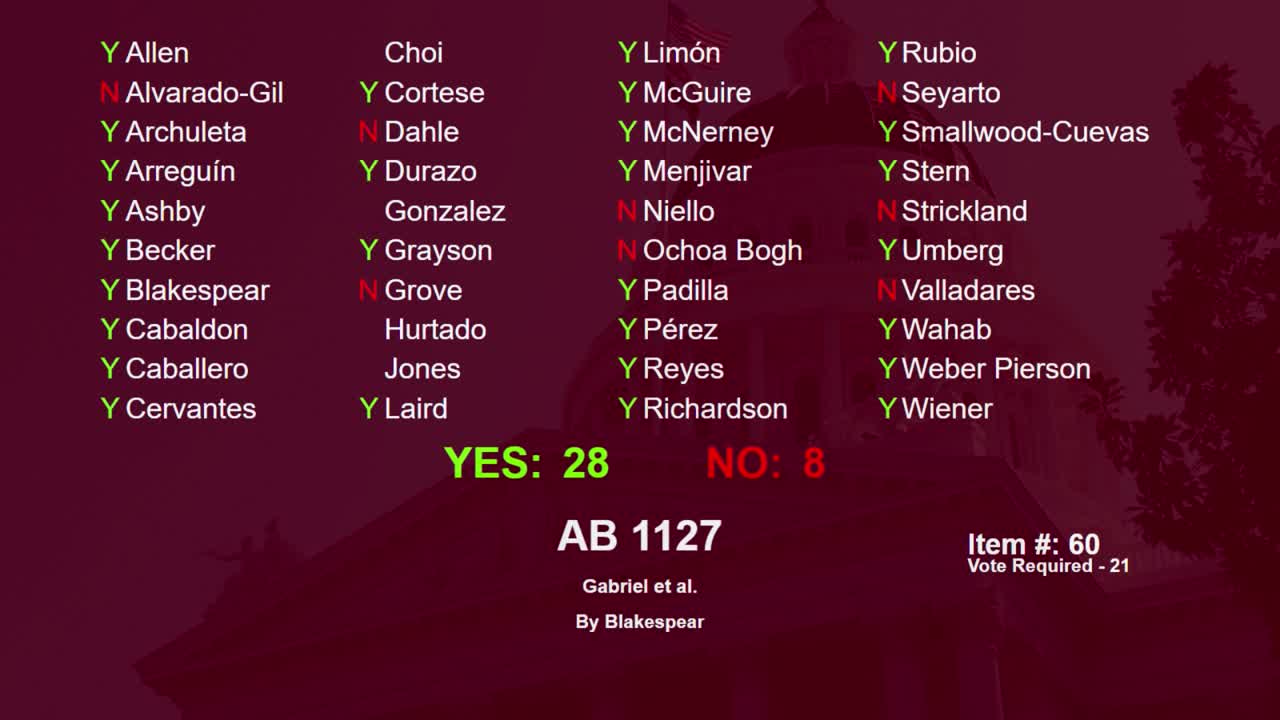 3MIN
Senate Floor
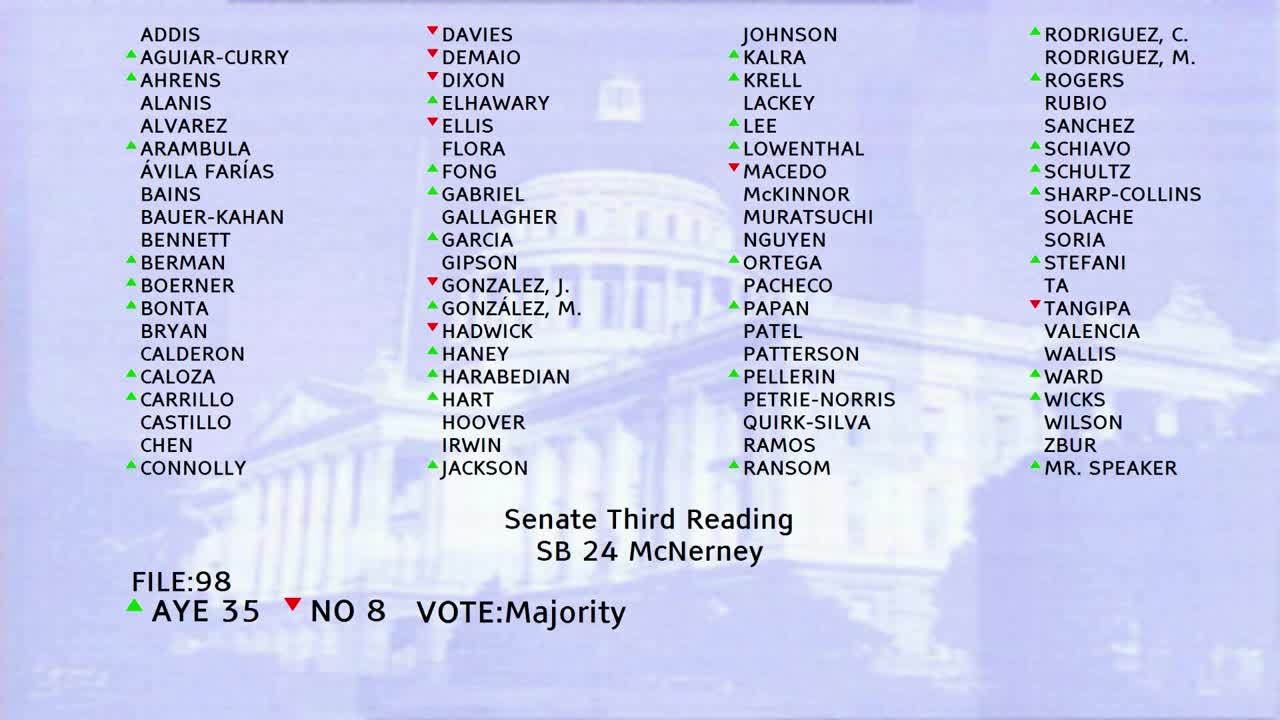 2MIN
Assembly Floor
 13MIN
Assembly Standing Committee on Judiciary
 2MIN
Senate Floor
 4SEC
Senate Standing Committee on Judiciary
3MIN
Senate Standing Committee on Judiciary
Bill Author

Bill Co-Author(s):