SB 386: Dental providers: fee-based payments.
- Session Year: 2025-2026
- House: Senate
- Latest Version Date: 2025-10-01
Current Status:
Passed
(2025-10-01: Chaptered by Secretary of State. Chapter 219, Statutes of 2025.)
Introduced
In Committee
Awaiting First Chamber Vote
Passed First Chamber
In Committee
Awaiting Second Chamber Vote
Passed Second Chamber
Enacted
Existing law, the Knox-Keene Health Care Service Plan Act of 1975, provides for the licensure and regulation of health care service plans by the Department of Managed Health Care and makes a willful violation of the acts requirements a crime. Existing law provides for the regulation of health insurers by the Department of Insurance. Existing law imposes specified coverage and disclosure requirements on health care service plans and health insurers, including specialized plans and insurers, that cover dental services.
This bill would require a health care service plan or health insurer that provides payment directly or through a contracted vendor to a dental provider to have a non-fee-based default method of payment, as specified. The bill would require a health care service plan, health insurer, or contracted vendor to obtain affirmative consent from a dental provider who opts in to a fee-based payment method before the plan or vendor provides a fee-based payment method to the provider. The bill would authorize a dental provider to opt out of a fee-based payment method at any time by providing affirmative consent to the health care service plan, health insurer, or contracted vendor. The bill would require a health care service plan, health insurer, or contracted vendor that obtains affirmative consent to opt in or opt out of fee-based payment to apply the decision to include both the dental providers entire practice and all products or services covered pursuant to a contract with the dental provider, as specified. The bill would specify that its provisions do not apply if a health care service plan or health insurer has a direct contract with a provider that allows the provider to choose payment methods, including a non-fee-based payment method for services rendered. The bill would make its provisions operative on April 1, 2026, and apply to health care service plan contracts and health insurance policies issued, amended, or renewed on or after that date.
Because a violation of the bills requirements by a health care service plan would be a crime, the bill would impose a state-mandated local program.
The California Constitution requires the state to reimburse local agencies and school districts for certain costs mandated by the state. Statutory provisions establish procedures for making that reimbursement.
This bill would provide that no reimbursement is required by this act for a specified reason.
Existing law, the Knox-Keene Health Care Service Plan Act of 1975, provides for the licensure and regulation of health care service plans by the Department of Managed Health Care and makes a willful violation of the acts requirements a crime. Existing law provides for the regulation of health insurers by the Department of Insurance. Existing law imposes specified coverage and disclosure requirements on health care service plans and health insurers, including specialized plans and insurers, that cover dental services.
This bill would require a health care service plan contract or health insurance policy, as defined, issued, amended, or renewed on and after April 1, 2026, or health insurer that provides payment directly or through a contracted vendor to a dental provider to have a non-fee-based default method of payment, as specified. The bill, beginning April 1, 2026, bill would require a health care service plan, health insurer, or contracted vendor to obtain affirmative consent from a dental provider who opts in to a fee-based payment method before the plan or vendor provides a fee-based payment method to the provider. The bill would authorize a dental provider to opt out of a fee-based payment method at any time by providing affirmative consent to the health care service plan, health insurer, or contracted vendor. The bill would require a health care service plan, health insurer, or contracted vendor that obtains affirmative consent to opt in or opt out of fee-based payment to apply the decision to include both the dental providers entire practice and all products or services covered pursuant to a contract with the dental provider, as specified. The bill would specify that its provisions do not apply if a health care service plan or health insurer has a direct contract with a provider that allows the provider to choose payment methods, including a non-fee-based payment method for services rendered. The bill would make its provisions operative on April 1, 2026, and apply to health care service plan contracts and health insurance policies issued, amended, or renewed on or after that date.
Because a violation of the bills requirements by a health care service plan would be a crime, the bill would impose a state-mandated local program.
The California Constitution requires the state to reimburse local agencies and school districts for certain costs mandated by the state. Statutory provisions establish procedures for making that reimbursement.
This bill would provide that no reimbursement is required by this act for a specified reason.
Existing law, the Knox-Keene Health Care Service Plan Act of 1975, provides for the licensure and regulation of health care service plans by the Department of Managed Health Care and makes a willful violation of the acts requirements a crime. Existing law provides for the regulation of health insurers by the Department of Insurance. Existing law imposes specified coverage and disclosure requirements on health care service plans and health insurers, including specialized plans and insurers, that cover dental services.
This bill would require a health care service plan contract or health insurance policy, as defined, issued, amended, or renewed on and after January April 1, 2026, that provides payment directly or through a contracted vendor to a dental provider to have a non-fee-based default method of payment, as specified. The bill bill, beginning April 1, 2026, would require a health care service plan, health insurer, or contracted vendor to obtain written authorization affirmative consent from a dental provider opting who opts in to a fee-based payment method before the plan or vendor provides a fee-based payment method to the provider and provider. The bill would authorize the a dental provider to opt out of the a fee-based payment method at any time by providing written authorization affirmative consent to the health care service plan, health insurer, or contracted vendor. The bill would require a health care service plan, health insurer, or contracted vendor that obtains written authorization affirmative consent to opt in or opt out of fee-based payment to apply the decision to include both the dental providers entire practice and all products or services covered pursuant to a contract with the dental provider, as specified. The bill would specify that its provisions do not apply if a health care service plan or health insurer has a direct contract with a provider that allows the provider to choose payment methods, including a non-fee-based payment method for services rendered.
Because a violation of the bills requirements by a health care service plan would be a crime, the bill would impose a state-mandated local program.
The California Constitution requires the state to reimburse local agencies and school districts for certain costs mandated by the state. Statutory provisions establish procedures for making that reimbursement.
This bill would provide that no reimbursement is required by this act for a specified reason.
Existing law, the Knox-Keene Health Care Service Plan Act of 1975, provides for the licensure and regulation of health care service plans by the Department of Managed Health Care and makes a willful violation of the acts requirements a crime. Existing law provides for the regulation of health insurers by the Department of Insurance. Existing law imposes specified coverage and disclosure requirements on health care service plans and health insurers, including specialized plans and insurers, that cover dental services.
This bill would require a health care service plan contract or health insurance policy, as defined, issued, amended, or renewed on and after January 1, 2026, that provides payment directly or through a contracted vendor to a dental provider to have a non-fee-based default method of payment, as specified. The bill would require a health care service plan, health insurer, or contracted vendor to obtain written authorization from a dental provider opting in to a fee-based payment method before the plan or vendor provides a fee-based payment method to the provider and would authorize the dental provider to opt out of the fee-based payment method at any time by providing written authorization to the health care service plan, health insurer, or contracted vendor. The bill would require a health care service plan, health insurer, or contracted vendor that obtains written authorization to opt in or opt out of fee-based payment to apply the decision to include both the dental providers entire practice and all products or services covered pursuant to a contract with the dental provider, as specified. The bill would specify that its provisions do not apply if a health care service plan or health insurer has a direct contract with a provider that allows the provider to choose payment methods methods, including a non-fee-based payment method for services rendered.
Because a violation of the bills requirements by a health care service plan would be a crime, the bill would impose a state-mandated local program.
The California Constitution requires the state to reimburse local agencies and school districts for certain costs mandated by the state. Statutory provisions establish procedures for making that reimbursement.
This bill would provide that no reimbursement is required by this act for a specified reason.
Existing law, the Knox-Keene Health Care Service Plan Act of 1975, provides for the licensure and regulation of health care service plans by the Department of Managed Health Care and makes a willful violation of the acts requirements a crime. Existing law provides for the regulation of health insurers by the Department of Insurance. Existing law imposes specified coverage and disclosure requirements on health care service plans and health insurers, including specialized plans and insurers, that cover dental services.
This bill would require a health care service plan contract or health insurance policy, as defined, issued, amended, or renewed on and after January 1, 2026, that provides payment directly or through a contracted vendor to a dental provider to have a non-fee-based default method of payment, as specified. The bill would require a health care service plan, health insurer, or contracted vendor to obtain written authorization from a dental provider opting in to a fee-based payment method before the plan or vendor provides a fee-based payment method to the provider and would authorize the dental provider to opt out of the fee-based payment method at any time by providing written authorization to the health care service plan, health insurer, or contracted vendor. The bill would require a health care service plan, health insurer, or contracted vendor that obtains written authorization to opt in or opt out of fee-based payment to apply the decision to include both the dental providers entire practice and all products or services covered pursuant to a contract with the dental provider, as specified. The bill would specify that its provisions do not apply if a health care service plan or health insurer has a direct contract with a provider that allows the provider to choose payment methods for services rendered.
Because a violation of the bills requirements by a health care service plan would be a crime, the bill would impose a state-mandated local program.
The California Constitution requires the state to reimburse local agencies and school districts for certain costs mandated by the state. Statutory provisions establish procedures for making that reimbursement.
This bill would provide that no reimbursement is required by this act for a specified reason.
(a)The following definitions shall apply for purposes of this section:
(1)(A)Affirmative consent means a dental providers express consent to opt in or opt out of receiving fee-based payment. Affirmative consent requires a dental providers signature. The terms of the affirmative consent shall be clear and readily understandable.
(B)Affirmative consent may be given through email.
(C)A provider accessing funds does not constitute affirmative consent to receive a fee-based payment.
(2)Contracted vendor means a third party facilitating payment processing on behalf of the health care service plan.
(3)Dental provider means an individual or group of individuals licensed under Chapter 4 (commencing with Section 1600) of Division 2 of the Business and Professions Code.
(4)Fee-based payment refers to any payment type that requires the dental provider to incur a fee from the health care service plan or its contracted vendor to access payment from a plan or its contracted vendor.
(5)Health care service plan or plan means a health care service plan defined in paragraph (2) of subdivision (a) of Section 1374.194.
(6)Signature includes an electronic or digital signature if the form of the signature is recognized as a valid signature under applicable federal or state law, including, but not limited to, checking a box indicating affirmative consent.
(b)(1)A health care service plan that provides payment directly, or through a contracted vendor, to a dental provider shall have a non-fee-based default method of payment.
(2)The health care service plan shall remit or associate with each payment the claims and claim details associated with payment.
(c)(1)A health care service plan or its contracted vendor shall obtain affirmative consent from a dental provider who opts in to a fee-based payment method before the plan or vendor provides a fee-based payment method to the provider.
(2)At the time a dental provider opts in to a fee-based payment method, the health care service plan or its contracted vendor shall provide information on the payment method, including a notice of the fees charged by the plan or contracted vendor, alternative methods of payment, instructions on how to opt out of the fee-based payment method, and a notice of the dental providers ability to opt out of the fee-based payment method at any time.
(3)Upon receipt of the dental providers affirmative consent, the health care service plan or its contracted vendor subsequently may issue payments to the dental provider using a fee-based payment method.
(4)The health care service plan also shall notify the dental provider if its contracted vendor is sharing a part of the profit, fee arrangement, or board composition with the plan.
(d)(1)A dental provider may opt out of a fee-based payment method and opt in to a non-fee-based payment method at any time by providing affirmative consent to the health care service plan or its contracted vendor.
(2)If a dental provider opts in or opts out of a fee-based method of payment pursuant to this subdivision, the providers payment method decision shall remain in effect until the provider informs the plan or contracted vendor of another preferred method of payment, including fee-based or non-fee-based methods.
(e)A health care service plan or its contracted vendor that obtains a dental providers affirmative consent to opt in or opt out of a fee-based payment method shall apply the decision to include both of the following:
(1)The dental providers entire practice.
(2)To all products or services covered by the health care service plan pursuant to a contract with the dental provider, including network provider contracts, as described in Section 1374.193.
(f)This section does not apply if a health care service plan has a direct contract with a provider that allows the provider to choose payment methods, including a non-fee-based payment method for services rendered.
(g)This section does not change, alter, or extend the scope of Section 1367.
(h)This section shall become operative on April 1, 2026, and apply to all health care service plan contracts issued, amended, or renewed on or after that date.
SEC. 2.Section 10123.146 is added to the Insurance Code, to read:10123.146.(a)The following definitions shall apply for purposes of this section:
(1)(A)Affirmative consent means a dental providers express consent to opt in or opt out of receiving fee-based payment. Affirmative consent requires a dental providers signature. The terms of the affirmative consent shall be clear and readily understandable.
(B)Affirmative consent may be given through email.
(C)A provider accessing funds does not constitute affirmative consent to receive a fee-based payment.
(2)Contracted vendor means a third party facilitating payment processing on behalf of the health insurer.
(3)Dental provider means an individual or group of individuals licensed under Chapter 4 (commencing with Section 1600) of Division 2 of the Business and Professions Code.
(4)Fee-based payment refers to any payment type that requires the dental provider to incur a fee from the health insurer or its contracted vendor to access payment from a plan or its contracted vendor.
(5)Health insurer has the same meaning as defined in paragraph (2) of subdivision (a) of Section 10120.41.
(6)Signature includes an electronic or digital signature if the form of the signature is recognized as a valid signature under applicable federal or state law, including, but not limited to, checking a box indicating affirmative consent.
(b)(1)A health insurer that provides payment directly, or through a contracted vendor, to a dental provider shall have a non-fee-based default method of payment.
(2)The health insurer shall remit or associate with each payment the claims and claim details associated with payment.
(c)(1)A health insurer or its contracted vendor shall obtain affirmative consent from a dental provider who opts in to a fee-based payment method before the insurer or vendor provides a fee-based payment method to the provider.
(2)At the time a dental provider opts in to a fee-based payment method, the health insurer or its contracted vendor shall provide information on the payment method, including a notice of the fees charged by the health insurer or contracted vendor, alternative methods of payment, instructions on how to opt out of the fee-based payment method, and a notice of the dental providers ability to opt out of the fee-based payment method at any time.
(3)Upon receipt of the dental providers affirmative consent, the health insurer or its contracted vendor subsequently may issue payments to the dental provider using a fee-based payment method.
(4)The health insurer also shall notify the dental provider if its contracted vendor is sharing a part of the profit, fee arrangement, or board composition with the health insurer.
(d)(1)A dental provider may opt out of a fee-based payment method and opt in to a non-fee-based payment method at any time by providing affirmative consent to the health insurer or its contracted vendor.
(2)If a dental provider opts in or opts out of a method of payment pursuant to this subdivision, the providers payment method decision shall remain in effect until the provider informs the health insurer or contracted vendor of another preferred method of payment, including fee-based or non-fee-based methods.
(e)A health insurer or its contracted vendor that obtains a dental providers affirmative consent to opt in or opt out of a fee-based payment method shall apply the decision to include both of the following:
(1)The dental providers entire practice.
(2)To all products or services covered by the health insurer pursuant to a contract with the dental provider, including network provider contracts, as described in Section 10120.4.
(f)This section does not apply if a health insurer has a direct contract with a provider that allows the provider to choose payment methods, including a non-fee-based payment method for services rendered.
(g)This section shall become operative on April 1, 2026, and apply to all health insurance policies issued, amended, or renewed on or after that date.
SEC. 3.No reimbursement is required by this act pursuant to Section 6 of Article XIIIB of the California Constitution because the only costs that may be incurred by a local agency or school district will be incurred because this act creates a new crime or infraction, eliminates a crime or infraction, or changes the penalty for a crime or infraction, within the meaning of Section 17556 of the Government Code, or changes the definition of a crime within the meaning of Section 6 of Article XIIIB of the California Constitution.
(a)The following definitions shall apply for purposes of this section:
(1)(A)Affirmative consent means a dental providers express consent to opt in or opt out of receiving fee-based payment. Affirmative consent requires a dental providers signature. The terms of the affirmative consent shall be clear and readily understandable.
(B)Affirmative consent may be given through email.
(C)A provider accessing funds does not constitute affirmative consent to receive a fee-based payment.
(2)Contracted vendor means a third party facilitating payment processing on behalf of the health care service plan.
(3)Dental provider means an individual or group of individuals licensed under Chapter 4 (commencing with Section 1600) of Division 2 of the Business and Professions Code.
(4)Fee-based payment refers to any payment type that requires the dental provider to incur a fee from the health care service plan or its contracted vendor to access payment from a plan or its contracted vendor.
(5)Health care service plan or plan means a health care service plan defined in paragraph (2) of subdivision (a) of Section 1374.194.
(6)Signature includes an electronic or digital signature if the form of the signature is recognized as a valid signature under applicable federal or state law, including, but not limited to, checking a box indicating affirmative consent.
(b)(1)A health care service plan contract issued, amended, or renewed on and after April 1, 2026, that provides payment directly, or through a contracted vendor, to a dental provider shall have a non-fee-based default method of payment.
(2)The health care service plan shall remit or associate with each payment the claims and claim details associated with payment.
(c)(1)Beginning April 1, 2026, a A health care service plan or its contracted vendor shall obtain affirmative consent from a dental provider who opts in to a fee-based payment method before the plan or vendor provides a fee-based payment method to the provider.
(2)At the time a dental provider opts in to a fee-based payment method, the health care service plan or its contracted vendor shall provide information on the payment method, including a notice of the fees charged by the plan or contracted vendor, alternative methods of payment, instructions on how to opt out of the fee-based payment method, and a notice of the dental providers ability to opt out of the fee-based payment method at any time.
(3)Upon receipt of the dental providers affirmative consent, the health care service plan or its contracted vendor subsequently may issue payments to the dental provider using a fee-based payment method.
(4)The health care service plan also shall notify the dental provider if its contracted vendor is sharing a part of the profit, fee arrangement, or board composition with the plan.
(d)(1)A dental provider may opt out of a fee-based payment method and opt in to a non-fee-based payment method at any time by providing affirmative consent to the health care service plan or its contracted vendor.
(2)If a dental provider opts in or opts out of a fee-based method of payment pursuant to paragraph (1), this subdivision, the providers payment method decision shall remain in effect until the provider informs the plan or contracted vendor of another preferred method of payment, including fee-based or non-fee-based methods.
(e)A health care service plan or its contracted vendor that obtains a dental providers affirmative consent to opt in or opt out of a fee-based payment method shall apply the decision to include both of the following:
(1)The dental providers entire practice.
(2)To all products or services covered by the health care service plan pursuant to a contract with the dental provider, including network provider contracts, as described in Section 1374.193.
(f)This section does not apply if a health care service plan has a direct contract with a provider that allows the provider to choose payment methods, including a non-fee-based payment method for services rendered.
(g)This section does not change, alter, or extend the scope of Section 1367.
(h)This section shall become operative on April 1, 2026, and apply to all health care service plan contracts issued, amended, or renewed on or after that date.
SEC. 2.Section 10123.146 is added to the Insurance Code, to read:10123.146.(a)The following definitions shall apply for purposes of this section:
(1)(A)Affirmative consent means a dental providers express consent to opt in or opt out of receiving fee-based payment. Affirmative consent requires a dental providers signature. The terms of the affirmative consent shall be clear and readily understandable.
(B)Affirmative consent may be given through email.
(C)A provider accessing funds does not constitute affirmative consent to receive a fee-based payment.
(2)Contracted vendor means a third party facilitating payment processing on behalf of the health insurer.
(3)Dental provider means an individual or group of individuals licensed under Chapter 4 (commencing with Section 1600) of Division 2 of the Business and Professions Code.
(4)Fee-based payment refers to any payment type that requires the dental provider to incur a fee from the health insurer or its contracted vendor to access payment from a plan or its contracted vendor.
(5)Health insurer has the same meaning as defined in paragraph (2) of subdivision (a) of Section 10120.41.
(6)Signature includes an electronic or digital signature if the form of the signature is recognized as a valid signature under applicable federal or state law, including, but not limited to, checking a box indicating affirmative consent.
(b)(1)A health insurance policy issued, amended, or renewed on and after April 1, 2026, insurer that provides payment directly, or through a contracted vendor, to a dental provider shall have a non-fee-based default method of payment.
(2)The health insurer shall remit or associate with each payment the claims and claim details associated with payment.
(c)(1)Beginning April 1, 2026, a A health insurer or its contracted vendor shall obtain affirmative consent from a dental provider who opts in to a fee-based payment method before the insurer or vendor provides a fee-based payment method to the provider.
(2)At the time a dental provider opts in to a fee-based payment method, the health insurer or its contracted vendor shall provide information on the payment method, including a notice of the fees charged by the health insurer or contracted vendor, alternative methods of payment, instructions on how to opt out of the fee-based payment method, and a notice of the dental providers ability to opt out of the fee-based payment method at any time.
(3)Upon receipt of the dental providers affirmative consent, the health insurer or its contracted vendor subsequently may issue payments to the dental provider using a fee-based payment method.
(4)The health insurer also shall notify the dental provider if its contracted vendor is sharing a part of the profit, fee arrangement, or board composition with the health insurer.
(d)(1)A dental provider may opt out of a fee-based payment method and opt in to a non-fee-based payment method at any time by providing affirmative consent to the health insurer or its contracted vendor.
(2)If a dental provider opts in or opts out of a method of payment pursuant to paragraph (1), this subdivision, the providers payment method decision shall remain in effect until the provider informs the health insurer or contracted vendor of another preferred method of payment, including fee-based or non-fee-based methods.
(e)A health insurer or its contracted vendor that obtains a dental providers affirmative consent to opt in or opt out of a fee-based payment method shall apply the decision to include both of the following:
(1)The dental providers entire practice.
(2)To all products or services covered by the health insurer pursuant to a contract with the dental provider, including network provider contracts, as described in Section 10120.4.
(f)This section does not apply if a health insurer has a direct contract with a provider that allows the provider to choose payment methods, including a non-fee-based payment method for services rendered.
(g)This section shall become operative on April 1, 2026, and apply to all health insurance policies issued, amended, or renewed on or after that date.
SEC. 3.No reimbursement is required by this act pursuant to Section 6 of Article XIIIB of the California Constitution because the only costs that may be incurred by a local agency or school district will be incurred because this act creates a new crime or infraction, eliminates a crime or infraction, or changes the penalty for a crime or infraction, within the meaning of Section 17556 of the Government Code, or changes the definition of a crime within the meaning of Section 6 of Article XIIIB of the California Constitution.
(a)The following definitions shall apply for purposes of this section:
(1)(A)Affirmative consent means a dental providers express consent to opt in or opt out of receiving fee-based payment. Affirmative consent requires a dental providers signature. The terms of the affirmative consent shall be clear and readily understandable.
(B)Affirmative consent may be given through email.
(C)A provider accessing funds does not constitute affirmative consent to receive a fee-based payment.
(1)(2)Contracted vendor means a third party facilitating payment processing on behalf of the health care service plan.
(2)(3)Dental provider means an individual or group of individuals licensed under Chapter 4 (commencing with Section 1600) of Division 2 of the Business and Professions Code.
(3)(4)Fee-based payment refers to any payment type that requires the dental provider to incur a fee from the health care service plan or its contracted vendor to access payment from a plan or its contracted vendor.
(4)(5)Health care service plan or plan means a health care service plan defined in paragraph (2) of subdivision (a) of Section 1374.194.
(5)Written authorization means a dental providers express consent to opt in or opt out of receiving fee-based payment indicated by a providers written, signed, or similar authentication, including electronic signature or checking a box to indicate authorization. A written authorization shall be identified as an authorization to the provider. The terms of the written authorization shall be clear and readily understandable. A provider accessing funds does not constitute consent to receive fee-based payment.(6)Signature includes an electronic or digital signature if the form of the signature is recognized as a valid signature under applicable federal or state law, including, but not limited to, checking a box indicating affirmative consent.
(b)(1)A health care service plan contract issued, amended, or renewed on and after January April 1, 2026, that provides payment directly, or through a contracted vendor, to a dental provider, provider shall have a non-fee-based default method of payment.
(2)The health care service plan shall remit or associate with each payment the claims and claim details associated with payment.
(c)(1)A Beginning April 1, 2026, a health care service plan or its contracted vendor shall obtain written authorization affirmative consent from a dental provider opting who opts in to a fee-based payment method before the plan or vendor provides a fee-based payment method to the provider.
(2)At the time a dental provider opts in to a fee-based payment method, the health care service plan or its contracted vendor shall provide information on the payment method, including a notice of the fees charged by the plan or contracted vendor, alternative methods of payment, instructions on how to opt out of the fee-based payment method, and a notice of the dental providers ability to opt out of the fee-based payment method at any time.
(3)Upon receipt of the dental providers written authorization, affirmative consent, the health care service plan or its contracted vendor subsequently may issue payments to the dental provider using a fee-based payment method.
(4)The health care service plan also shall notify the dental provider if its contracted vendor is sharing any a part of the profit, fee arrangement, or board composition with the plan.
(d)(1)A dental provider may opt out of a fee-based payment method and opt in to a non-fee-based payment method at any time by providing written authorization affirmative consent to the health care service plan or its contracted vendor.
(2)If a dental provider opts in or opts out of a fee-based method of payment pursuant to paragraph (1), the providers payment method decision shall remain in effect until the provider informs the plan or contracted vendor of another preferred method of payment, including fee-based or non-fee-based methods.
(e)A health care service plan or its contracted vendor that obtains a dental providers written authorization affirmative consent to opt in or opt out of a fee-based payment method shall apply the decision to include both of the following:
(1)The dental providers entire practice.
(2)To all products or services covered by the health care service plan pursuant to a contract with the dental provider, including network provider contracts, as described in Section 1374.193.
(f)This section does not apply if a health care service plan has a direct contract with a provider that allows the provider to choose payment methods, including a non-fee-based payment method for services rendered.
(g)This section does not change, alter, or extend the scope of Section 1367.
SEC. 2.Section 10123.146 is added to the Insurance Code, to read:10123.146.(a)The following definitions shall apply for purposes of this section:
(1)(A)Affirmative consent means a dental providers express consent to opt in or opt out of receiving fee-based payment. Affirmative consent requires a dental providers signature. The terms of the affirmative consent shall be clear and readily understandable.
(B)Affirmative consent may be given through email.
(C)A provider accessing funds does not constitute affirmative consent to receive a fee-based payment.
(1)(2)Contracted vendor means a third party facilitating payment processing on behalf of the health insurer.
(2)(3)Dental provider means an individual or group of individuals licensed under Chapter 4 (commencing with Section 1600) of Division 2 of the Business and Professions Code.
(3)(4)Fee-based payment refers to any payment type that requires the dental provider to incur a fee from the health insurer or its contracted vendor to access payment from a plan or its contracted vendor.
(4)(5)Health insurer has the same meaning as defined in paragraph (2) of subdivision (a) of Section 10120.41.
(5)Written authorization means a dental providers express consent to opt in or opt out of receiving fee-based payment indicated by a providers written, signed, or similar authentication, including electronic signature or checking a box to indicate authorization. A written authorization shall be identified as an authorization to the provider. The terms of the written authorization shall be clear and readily understandable. A provider accessing funds does not constitute consent to receive fee-based payment.(6)Signature includes an electronic or digital signature if the form of the signature is recognized as a valid signature under applicable federal or state law, including, but not limited to, checking a box indicating affirmative consent.
(b)(1)A health insurance policy issued, amended, or renewed on and after January April 1, 2026, that provides payment directly, or through a contracted vendor vendor, to a dental provider, provider shall have a non-fee-based default method of payment.
(2)A The health insurer shall remit or associate with each payment the claims and claim details associated with payment.
(c)(1)A Beginning April 1, 2026, a health insurer or its contracted vendor shall obtain written authorization affirmative consent from a dental provider opting who opts in to a fee-based payment method before the insurer or vendor provides a fee-based payment method to the provider.
(2)At the time a dental provider opts in to a fee-based payment method, the health insurer or its contracted vendor shall provide information on the payment method, including a notice of the fees charged by the health insurer or contracted vendor, alternative methods of payment, instructions on how to opt-out opt out of the fee-based payment method, and a notice of the dental providers ability to opt out of a the fee-based payment method at any time.
(3)Upon receipt of the written authorization, dental providers affirmative consent, the health insurer or its contracted vendor subsequently may issue payments to the dental provider using a fee-based payment method.
(4)A The health insurer also shall notify the dental provider if its contracted vendor is sharing a part of the profit, fee arrangement, or board composition with the plan. health insurer.
(d)(1)A dental provider may opt out of a fee-based payment method and opt in to a non-fee-based payment method at any time by providing written authorization affirmative consent to the health insurer or its contracted vendor.
(2)If a dental provider opts in or opts out of a method of payment pursuant to paragraph (1), the providers payment method decision shall remain in effect until the provider informs the health insurer or contracted vendor of another preferred method of payment, including fee-based or non-fee-based methods.
(e)A health insurer or its contracted vendor that obtains a dental providers written authorization affirmative consent to opt in or opt out of a fee-based payment method shall apply the decision to include both of the following:
(1)The dental providers entire practice.
(2)To all products or services covered by the health insurer pursuant to a contract with the dental provider, including network provider contracts, as described in Section 10120.4.
(f)This section does not apply if a health insurer has a direct contract with a provider that allows the provider to choose payment methods, including a non-fee-based payment method for services rendered.
SEC. 3.No reimbursement is required by this act pursuant to Section 6 of Article XIIIB of the California Constitution because the only costs that may be incurred by a local agency or school district will be incurred because this act creates a new crime or infraction, eliminates a crime or infraction, or changes the penalty for a crime or infraction, within the meaning of Section 17556 of the Government Code, or changes the definition of a crime within the meaning of Section 6 of Article XIIIB of the California Constitution.
(a)The following definitions apply for purposes of this section:
(1)Contracted vendor means a third party facilitating payment processing on behalf of the health care service plan.
(2)Dental provider means an individual or group of individuals licensed under Chapter 4 (commencing with Section 1600) of Division 2 of the Business and Professions Code.
(3)Fee-based payment refers to any payment type that requires the dental provider to incur a fee to access payment from a plan or its contracted vendor.
(4)Health care service plan or plan means a health care service plan defined in paragraph (2) of subdivision (a) of Section 1374.194.
(5)Written authorization means a dental providers express consent to opt in or opt out of receiving fee-based payment indicated by a providers written, signed, or similar authentication, including electronic signature or checking a box to indicate authorization. A written authorization shall be identified as an authorization to the provider. The terms of the written authorization shall be clear and readily understandable. A provider accessing funds does not constitute consent to receive fee-based payment.
(b)(1)A health care service plan contract issued, amended, or renewed on and after January 1, 2026, that provides payment directly, or through a contracted vendor, to a dental provider, shall have a non-fee-based default method of payment.
(2)The health care service plan shall remit or associate with each payment the claims and claim details associated with payment.
(c)(1)A health care service plan or its contracted vendor shall obtain written authorization from a dental provider opting in to a fee-based payment method before the plan or vendor provides a fee-based payment method to the provider.
(2)At the time a dental provider opts in to a fee-based payment method, the health care service plan or its contracted vendor shall provide information on the payment method, including a notice of the fees charged by the plan or contracted vendor, alternative methods of payment, instructions on how to opt out of the fee-based payment method, and a notice of the dental providers ability to opt out of the fee-based payment method at any time.
(3)Upon receipt of the dental providers written authorization, the health care service plan or its contracted vendor subsequently may issue payments to the dental provider using a fee-based payment method.
(4)The health care service plan also shall notify the dental provider if its contracted vendor is sharing any part of the profit, fee arrangement, or board composition with the plan.
(d)(1)A dental provider may opt out of a fee-based payment method and opt in to a non-fee-based payment method at any time by providing written authorization to the health care service plan or its contracted vendor.
(2)If a dental provider opts out of a fee-based method of payment pursuant to paragraph (1), the providers payment method decision shall remain in effect until the provider informs the plan or contracted vendor of another preferred method of payment, including fee-based or non-fee-based methods.
(e)A health care service plan or its contracted vendor that obtains a dental providers written authorization to opt in or opt out of a fee-based payment method shall apply the decision to include both of the following:
(1)The dental providers entire practice.
(2)To all products or services covered by the health care service plan pursuant to a contract with the dental provider, including network provider contracts, as described in Section 1374.193.
(f)This section does not apply if a health care service plan has a direct contract with a provider that allows the provider to choose payment methods methods, including a non-fee-based payment method for services rendered.
(g)This section does not change, alter, or extend the scope of Section 1367.
SEC. 2.Section 10123.146 is added to the Insurance Code, to read:10123.146.(a)The following definitions shall apply for purposes of this section:
(1)Contracted vendor means a third party facilitating payment processing on behalf of the health insurer.
(2)Dental provider means an individual or group of individuals licensed under Chapter 4 (commencing with Section 1600) of Division 2 of the Business and Professions Code.
(3)Fee-based payment refers to any payment type that requires the dental provider to incur a fee to access payment from a plan or its contracted vendor.
(4)Health insurer has the same meaning as defined in paragraph (2) of subdivision (a) of Section 10120.41.
(5)Written authorization means a dental providers express consent to opt in or opt out of receiving fee-based payment indicated by a providers written, signed, or similar authentication, including electronic signature or checking a box to indicate authorization. A written authorization shall be identified as an authorization to the provider. The terms of the written authorization shall be clear and readily understandable. A provider accessing funds does not constitute consent to receive fee-based payment.
(b)(1)A health insurance policy issued, amended, or renewed on and after January 1, 2026, that provides payment directly, or through a contracted vendor to a dental provider, shall have a non-fee-based default method of payment.
(2)A health insurer shall remit or associate with each payment the claims and claim details associated with payment.
(c)(1)A health insurer or its contracted vendor shall obtain written authorization from a dental provider opting in to a fee-based payment method before the insurer or vendor provides a fee-based payment method to the provider.
(2)At the time a dental provider opts in to a fee-based payment method, the health insurer or its contracted vendor shall provide information on the payment method, including a notice of the fees charged by the health insurer or contracted vendor, alternative methods of payment, instructions on how to opt-out of the fee-based payment method, and a notice of the dental providers ability to opt out of a fee-based payment method at any time.
(3)Upon receipt of the written authorization, the health insurer or its contracted vendor subsequently may issue payments using a fee-based payment method.
(4)A health insurer also shall notify the dental provider if its contracted vendor is sharing a part of the profit, fee arrangement, or board composition with the plan.
(d)(1)A dental provider may opt out of a fee-based payment method and opt in to a non-fee-based payment method at any time by providing written authorization to the health insurer or its contracted vendor.
(2)If a dental provider opts out of a method of payment pursuant to paragraph (1), the providers payment method decision shall remain in effect until the provider informs the health insurer or contracted vendor of another preferred method of payment, including fee-based or non-fee-based methods.
(e)A health insurer or its contracted vendor that obtains a dental providers written authorization to opt in or opt out of a fee-based payment method shall apply the decision to include both of the following:
(1)The dental providers entire practice.
(2)To all products or services covered by the health insurer pursuant to a contract with the dental provider, including network provider contracts, as described in Section 10120.4.
(f)This section does not apply if a health insurer has a direct contract with a provider that allows the provider to choose payment methods methods, including a non-fee-based payment method for services rendered.
SEC. 3.No reimbursement is required by this act pursuant to Section 6 of Article XIIIB of the California Constitution because the only costs that may be incurred by a local agency or school district will be incurred because this act creates a new crime or infraction, eliminates a crime or infraction, or changes the penalty for a crime or infraction, within the meaning of Section 17556 of the Government Code, or changes the definition of a crime within the meaning of Section 6 of Article XIIIB of the California Constitution.
(a)The following definitions apply for purposes of this section:
(1)Contracted vendor means a third party facilitating payment processing on behalf of the health care service plan.
(2)Dental provider means an individual or group of individuals licensed under Chapter 4 (commencing with Section 1600) of Division 2 of the Business and Professions Code.
(3)Fee-based payment refers to any payment type that requires the dental provider to incur a fee to access payment from a plan or its contracted vendor.
(4)Health care service plan or plan means a health care service plan defined in paragraph (2) of subdivision (a) of Section 1374.194.
(5)Written authorization means a dental providers express consent to opt in or opt out of receiving fee-based payment indicated by a providers written, signed, or similar authentication, including electronic signature or checking a box to indicate authorization. A written authorization shall be identified as an authorization to the provider. The terms of the written authorization shall be clear and readily understandable. A provider accessing funds does not constitute consent to receive fee-based payment.
(b)(1)A health care service plan contract issued, amended, or renewed on and after January 1, 2026, that provides payment directly, or through a contracted vendor, to a dental provider, shall have a non-fee-based default method of payment.
(2)The health care service plan shall remit or associate with each payment the claims and claim details associated with payment.
(c)(1)A health care service plan or its contracted vendor shall obtain written authorization from a dental provider opting in to a fee-based payment method before the plan or vendor provides a fee-based payment method to the provider.
(2)At the time a dental provider opts in to a fee-based payment method, the health care service plan or its contracted vendor shall provide information on the payment method, including a notice of the fees charged by the plan or contracted vendor, alternative methods of payment, instructions on how to opt out of the fee-based payment method, and a notice of the dental providers ability to opt out of the fee-based payment method at any time.
(3)Upon receipt of the dental providers written authorization, the health care service plan or its contracted vendor subsequently may issue payments to the dental provider using a fee-based payment method.
(4)The health care service plan also shall notify the dental provider if its contracted vendor is sharing any part of the profit, fee arrangement, or board composition with the plan.
(d)(1)A dental provider may opt out of a fee-based payment method and opt in to a non-fee-based payment method at any time by providing written authorization to the health care service plan or its contracted vendor.
(2)If a dental provider opts out of a fee-based method of payment pursuant to paragraph (1), the providers payment method decision shall remain in effect until the provider informs the plan or contracted vendor of another preferred method of payment, including fee-based or non-fee-based methods.
(e)A health care service plan or its contracted vendor that obtains a dental providers written authorization to opt in or opt out of a fee-based payment method shall apply the decision to include both of the following:
(1)The dental providers entire practice.
(2)To all products or services covered by the health care service plan pursuant to a contract with the dental provider, including network provider contracts, as described in Section 1374.193.
(f)This section does not apply if a health care service plan has a direct contract with a provider that allows the provider to choose payment methods for services rendered.
(g)This section does not change, alter, or extend the scope of Section 1367.
SEC. 2.Section 10123.146 is added to the Insurance Code, to read:10123.146.(a)The following definitions shall apply for purposes of this section:
(1)Contracted vendor means a third party facilitating payment processing on behalf of the health insurer.
(2)Dental provider means an individual or group of individuals licensed under Chapter 4 (commencing with Section 1600) of Division 2 of the Business and Professions Code.
(3)Fee-based payment refers to any payment type that requires the dental provider to incur a fee to access payment from a plan or its contracted vendor.
(4)Health insurer has the same meaning as defined in paragraph (2) of subdivision (a) of Section 10120.41.
(5)Written authorization means a dental providers express consent to opt in or opt out of receiving fee-based payment indicated by a providers written, signed, or similar authentication, including electronic signature or checking a box to indicate authorization. A written authorization shall be identified as an authorization to the provider. The terms of the written authorization shall be clear and readily understandable. A provider accessing funds does not constitute consent to receive fee-based payment.
(b)(1)A health insurance policy issued, amended, or renewed on and after January 1, 2026, that provides payment directly, or through a contracted vendor to a dental provider, shall have a non-fee-based default method of payment.
(2)A health insurer shall remit or associate with each payment the claims and claim details associated with payment.
(c)(1)A health insurer or its contracted vendor shall obtain written authorization from a dental provider opting in to a fee-based payment method before the insurer or vendor provides a fee-based payment method to the provider.
(2)At the time a dental provider opts in to a fee-based payment method, the health insurer or its contracted vendor shall provide information on the payment method, including a notice of the fees charged by the health insurer or contracted vendor, alternative methods of payment, instructions on how to opt-out of the fee-based payment method, and a notice of the dental providers ability to opt out of a fee-based payment method at any time.
(3)Upon receipt of the written authorization, the health insurer or its contracted vendor subsequently may issue payments using a fee-based payment method.
(4)A health insurer also shall notify the dental provider if its contracted vendor is sharing a part of the profit, fee arrangement, or board composition with the plan.
(d)(1)A dental provider may opt out of a fee-based payment method and opt in to a non-fee-based payment method at any time by providing written authorization to the health insurer or its contracted vendor.
(2)If a dental provider opts out of a method of payment pursuant to paragraph (1), the providers payment method decision shall remain in effect until the provider informs the health insurer or contracted vendor of another preferred method of payment, including fee-based or non-fee-based methods.
(e)A health insurer or its contracted vendor that obtains a dental providers written authorization to opt in or opt out of a fee-based payment method shall apply the decision to include both of the following:
(1)The dental providers entire practice.
(2)To all products or services covered by the health insurer pursuant to a contract with the dental provider, including network provider contracts, as described in Section 10120.4.
(f)This section does not apply if a health insurer has a direct contract with a provider that allows the provider to choose payment methods for services rendered.
SEC. 3.No reimbursement is required by this act pursuant to Section 6 of Article XIIIB of the California Constitution because the only costs that may be incurred by a local agency or school district will be incurred because this act creates a new crime or infraction, eliminates a crime or infraction, or changes the penalty for a crime or infraction, within the meaning of Section 17556 of the Government Code, or changes the definition of a crime within the meaning of Section 6 of Article XIIIB of the California Constitution.
|
Date
|
Status
|
|---|---|
| Oct 1, 2025 | Chaptered by Secretary of State. Chapter 219, Statutes of 2025. |
| Oct 1, 2025 | Approved by the Governor. |
| Sep 16, 2025 | Enrolled and presented to the Governor at 3 p.m. |
| Sep 9, 2025 | Assembly amendments concurred in. (Ayes 40. Noes 0. Page 2714.) Ordered to engrossing and enrolling. |
| Sep 8, 2025 | In Senate. Concurrence in Assembly amendments pending. |
| Sep 8, 2025 | Read third time. Passed. (Ayes 79. Noes 0. Page 2978.) Ordered to the Senate. |
| Aug 21, 2025 | Ordered to third reading. |
| Aug 21, 2025 | Read third time and amended. |
| Jul 7, 2025 | Ordered to third reading. |
| Jul 7, 2025 | From consent calendar on motion of Assembly Member Garcia. |
| Jul 3, 2025 | Read second time. Ordered to consent calendar. |
| Jul 2, 2025 | From committee: Do pass. Ordered to consent calendar. (Ayes 14. Noes 0.) (July 2). |
| Jun 17, 2025 | From committee: Do pass and re-refer to Com. on APPR. with recommendation: To consent calendar. (Ayes 15. Noes 0.) (June 17). Re-referred to Com. on APPR. |
| Jun 9, 2025 | Referred to Com. on HEALTH. |
| Jun 3, 2025 | In Assembly. Read first time. Held at Desk. |
| Jun 2, 2025 | Read third time. Passed. (Ayes 38. Noes 0. Page 1384.) Ordered to the Assembly. |
| Apr 22, 2025 | Read second time. Ordered to third reading. |
| Apr 21, 2025 | From committee: Be ordered to second reading pursuant to Senate Rule 28.8. |
| Apr 8, 2025 | Set for hearing April 21. |
| Apr 7, 2025 | Read second time and amended. Re-referred to Com. on APPR. |
| Apr 3, 2025 | From committee: Do pass as amended and re-refer to Com. on APPR. (Ayes 11. Noes 0. Page 636.) (April 2). |
| Mar 25, 2025 | Set for hearing April 2. |
| Mar 18, 2025 | From committee with author's amendments. Read second time and amended. Re-referred to Com. on HEALTH. |
| Feb 26, 2025 | Referred to Com. on HEALTH. |
| Feb 18, 2025 | From printer. May be acted upon on or after March 17. |
| Feb 14, 2025 | Introduced. Read first time. To Com. on RLS. for assignment. To print. |
|
Date
|
Description
|
Location
|
Votes
|
|
|---|---|---|---|---|
| Sep 9, 2025 | Unfinished Business SB386 Limón Concurrence | Senate Floor |
Passed |
|
| Sep 8, 2025 | SB 386 Limón Senate Third Reading By Sharp-Collins | Assembly Floor |
Passed |
|
| Jul 2, 2025 | Do pass. To Consent Calendar. | Assembly Standing Committee on Appropriations |
Passed |
|
| Jun 17, 2025 | Do pass and be re-referred to the Committee on [Appropriations] with recommendation: To Consent Calendar | Assembly Standing Committee on Health |
Passed |
|
| Jun 2, 2025 | Senate 3rd Reading SB386 Limón | Senate Floor |
Passed |
|
| Apr 2, 2025 | Do pass as amended, but first amend, and re-refer to the Committee on [Appropriations] | Senate Standing Committee on Health |
Passed |
This list shows positions taken on this bill by organizations on the date displayed, which is linked to the original source.
Positions by individuals are not included.
|
Organization
|
Position
|
Date
|
|---|---|---|
| California Academy of General Dentistry | ** Support | |
| California Association Of Orthodontists | ** Support | |
| California Dental Association | ** Support | |
| California Dental Hygienists Association | ** Support | |
| California Society of Pediatric Dentistry | ** Support | |
| ChildrenS Choice Dental Care | ** Support |
SENATE RULES COMMITTEE Office of Senate Floor Analyses (916) 651-1520 Fax: (916) 327-4478 | SB 386 |
UNFINISHED BUSINESS
Bill No: SB 386
Author: Limón (D)
Amended: 8/21/25 in Assembly
Vote: 21
SENATE HEALTH COMMITTEE: 11-0, 4/2/25
AYES: Menjivar, Valladares, Durazo, Gonzalez, Grove, Limón, Padilla, Richardson, Rubio, Weber Pierson, Wiener
SENATE APPROPRIATIONS COMMITTEE: Senate Rule 28.8
SENATE FLOOR: 38-0, 6/2/25
AYES: Allen, Alvarado-Gil, Archuleta, Arreguín, Ashby, Becker, Blakespear, Cabaldon, Caballero, Cervantes, Choi, Cortese, Dahle, Durazo, Gonzalez, Grayson, Grove, Jones, Laird, Limón, McGuire, McNerney, Menjivar, Niello, Ochoa Bogh, Padilla, Pérez, Richardson, Rubio, Seyarto, Smallwood-Cuevas, Stern, Strickland, Umberg, Valladares, Wahab, Weber Pierson, Wiener
NO VOTE RECORDED: Hurtado, Reyes
ASSEMBLY FLOOR: 79-0, 9/8/25 - See last page for vote
SUBJECT: Dental providers: fee-based payments
SOURCE: California Dental Association
DIGEST:
This bill requires a health plan or health insurer that provides direct payment to a dental provider, or payment through a contracted vendor, to have a non-fee-based default method of payment, and, obtain affirmative consent from a dental provider who opts in, prior to providing a fee-based payment.
Assembly Amendments
make clarifying changes such as that this bill’s provisions are operative on April 1, 2026, and apply to health plan contracts and insurance policies issued, amended, or renewed after that date.
ANALYSIS:
Existing law:
- Establishes the Department of Managed Health Care to regulate health plans under the Knox-Keene Health Care Service Plan Act of 1975 and the California Department of Insurance to regulate health and other insurers. [Health and Safety Code (HSC) §1340, et seq. and Insurance Code (INS) §106, et seq.]
- Requires health plans and insurers to reimburse provider claims within specified time frames, including contested claims, or pay interest and penalties, as specified. [HSC §1371.35 and INS §10123.13]
- Requires every plan to have a procedure for prompt payment or denial of provider and subscriber or enrollee claims covered by the plan. [HSC §1375.1]
- Permits a plan or insurer covering dental services, including a specialized health plan contract or health insurance policy covering dental services, or a contracting entity, to grant a third party access to a provider network contract, or a provider’s dental services or contractual discounts if certain conditions exist and the provider chooses to participate. [HSC §1374.193 and INS §10120.4]
This bill:
- Requires health plans and insurers, for contracts and policies that provide payment directly to a dental provider, or through a contracted vendor, to have a non-fee-based default method of payment. Requires the plan or insurer to remit or associate with each payment the claims and claim details associated with the payment. This bill becomes operative on and after April 1, 2026 and applies to contracts, policies, issued, amended, or renewed on or after that date.
- Requires the plan or insurer to obtain affirmative consent from a dental provider who opts in to a fee-based payment method before the plan or vendor provides a fee-based payment method to the dental provider.
- Requires, at the time a dental provider opts in to a fee-based payment method, information to be provided on the payment method, including a notice of the fees charged by the plan, insurer or contracted vendor, alternative methods of payment, instructions on opting out, and that the dental provider can opt out at any time.
- Requires disclosure, if the plan’s or insurer’s contracted vendor is sharing any part of the profit, fee arrangement, or board composition with the plan or insurer.
- Requires any decision to opt in or opt out of a fee-based payment method to apply to the dental provider’s entire practice, and to all products or services covered under the contract or policy, including third party access, as specified.
- Exempts from this bill a direct contract with a provider that allows the provider to choose payment methods, including a non-fee-based payment method for services rendered.
Comments
Author’s statement. According to the author, dental plans will often contract with third-party companies to issue provider payments to dental practices with virtual credit cards (VCCs). However, accepting this form of payment charges the dental office processing fees of up to 10% of the total payment amount – in addition to – the standard merchant fee of 2% to 5% for processing the payment through their credit card terminal. These unjustly high fees simply to access contracted payments owed by the dental plans often force dentists to accept payment via VCC even when they have requested another method of payment. This bill requires that any provider payment that includes a processing fee must be disclosed to dentists and cannot be the default payment method. This bill also mandates that dental plans and VCC companies clearly outline opt in and opt out procedures for VCC payments. The process must also outline alternative payment methods; ensuring dentists receive full payment for their services. This does not apply if the health insurer directly contracts and allows providers to choose payment methods.
VCCs. According to J.P. Morgan, VCCs are digital credit cards that function like physical credit cards. Companies can limit their exposure to potential fraud by generating unique card numbers and expiration dates for each transaction. These cards can be used for accounts payable transactions, claims payments, travel management, and reimbursements to independent contractors. Some VCCs operate through networks such as Visa or MasterCard.
Related/Prior Legislation
SB 1369 (Limón of 2024) was substantially similar to this bill. SB 1369 was vetoed by Governor Newsom who said in his veto message:
“This bill would require dental plans to default to a non-fee-based method of payment to providers, and to remit with each payment the associated claims and claim details, beginning April 1, 2025. Currently, a dental provider and a plan determine the method of reimbursement during contract negotiations. A provider may opt into direct payments or payments through a contracted vendor. While I appreciate the author's intent to increase dental providers' reimbursements through changing the default payment method, this should be addressed during contract negotiations. For this reason, I cannot sign this bill.”
FISCAL EFFECT: Appropriation: No Fiscal Com.: Yes Local: Yes
According to the Assembly Appropriations Committee, DMHC estimates minor and absorbable costs, and CDI anticipates no fiscal impact.
SUPPORT: (Verified 9/8/25)
California Dental Association (source)
California Academy of General Dentistry
California Association of Orthodontists
California Dental Hygienists’ Association
California Society of Pediatric Dentistry
Children’s Choice Dental Care
OPPOSITION: (Verified 9/8/25)
None received
ARGUMENTS IN SUPPORT:
This bill is sponsored by the California Dental Association (CDA), which writes that there is a growing trend in dentistry with the use of VCC companies as a mechanism for plans to pay providers. Dental plans contract with third-party vendors to issue provider payment via VCCs, which includes a 16-digit credit card number that is commonly faxed or emailed to the provider. To withdraw or access the funds, dental offices must run VCCs through their credit card terminals. Vendor processing fees can range from 2% to 5% of the total amount, on top of which the dentist pays the usual merchant transaction fee when processing the payment. Dental offices can sometimes pay up to 10% in fees before accessing payments they are owed. These fees are compounded by coercive behavior that forces dental offices to accept payment via VCCs. Attempts to opt-out are disregarded shortly after opting out. This bill restricts these predatory practices. CDA writes, dentists deserve to be able to fully understand and choose whether to accept payment processing fees, rather than being trapped into accepting payment methods that charge fees. The California Dental Hygienists Association writes that it supports restricting these predatory payment practices, which syphon away resources from dental offices that are already operating on a thin margin. This activity harms the entire dental team and as a result, these practices reduce a dental office’s ability to provide optimum access to oral health care for patients. This bill is a critical step in correcting these predatory payment practices.Click or tap here to enter text.
AYES: Addis, Aguiar-Curry, Ahrens, Alanis, Alvarez, Arambula, Ávila Farías, Bains, Bauer-Kahan, Bennett, Berman, Boerner, Bonta, Bryan, Calderon, Caloza, Carrillo, Castillo, Chen, Connolly, Davies, DeMaio, Dixon, Elhawary, Ellis, Flora, Fong, Gabriel, Gallagher, Garcia, Gipson, Jeff Gonzalez, Mark González, Hadwick, Haney, Harabedian, Hart, Hoover, Irwin, Jackson, Johnson, Kalra, Krell, Lackey, Lee, Lowenthal, Macedo, McKinnor, Muratsuchi, Ortega, Pacheco, Papan, Patel, Patterson, Pellerin, Petrie-Norris, Quirk-Silva, Ramos, Ransom, Celeste Rodriguez, Michelle Rodriguez, Rogers, Blanca Rubio, Sanchez, Schiavo, Schultz, Sharp-Collins, Solache, Soria, Stefani, Ta, Tangipa, Valencia, Wallis, Ward, Wicks, Wilson, Zbur, Rivas
NOES:
NO VOTE RECORDED: Nguyen
Prepared by: Teri Boughton / HEALTH / (916) 651-4111
9/8/25 19:32:02
SENATE THIRD READING
STR Bill Id:SB 386
Author:(Limón)
As Amended Ver:August 21, 2025
Majority vote
SUMMARY
Requires a health plan and health insurer covering dental services that provides payment directly to a dental provider to have a default method of payment that does not require the dental provider to incur a fee to access payment. Requires a health plan and health insurer to obtain affirmative consent from a dental provider who opts in to a fee-based payment method (where the provider incurs a fee to access payment) before the plan or vendor provides a fee-based payment method to the provider. Delays implementation of these provisions until April 1, 2026.
Major Provisions
COMMENTS
Health plans and health insurers pay claims to health care providers providing services to covered patients through the fee-for-system model of payment. Claims for payment are typically submitted by health care providers to plans and insurers manually (via paper) or electronically (via computer).
Some health plans pay health care claims by sending health care providers a single use credit card number in lieu of sending paper checks or paying health care claims electronically. To receive payments from the card processing networks, providers must manually enter virtual credit card (VCC) numbers into their Point-of-Sale (POS) processing terminals. Card processing networks typically charge providers fees of a percent value of each payment.
In 2022, the federal Department of Health and Human Services (DHHS) issued guidance to clarify requirements for electronic transactions using electronic funds transfer (EFT) and electronic remittance advice (ERA) standards adopted under federal regulation. The DHHS guidance stated that the adopted standards permit health plans to pay claims by VCC, and that DHHS has not promulgated regulations governing claims payments made with VCCs. DHHS stated it therefore does not regulate common business practices associated with VCC payments, including fees assessed by health plans or credit card networks for VCC payments. However, DHHS guidance states that health plan must comply with a federal regulation that dictates that if an entity (such as a health care provider) requests that a health plan conduct a transaction as a standard transaction, the health plan must do so. This bill, by requiring a health plan and insurer to obtain affirmative consent from a dental provider who opts in to a fee-based payment method and allowing providers to opt out of a fee-based payment, would allow dental providers to avail themselves of this federal option.
According to the Author
Dental plans will often contract with third-party companies to issue provider payments to dental practices with virtual credit cards (VCCs). However, accepting this form of payment charges the dental office processing fees of up to 10% of the total payment amount, in addition to the standard merchant fee of 2% to 5% for processing the payment through their credit card terminal. These unjustly high fees simply to access contracted payments owed by the dental plans often force dentists to accept payment via VCC even when they have requested another method of payment. This bill requires that any provider payment that includes a processing fee must be disclosed to dentists and cannot be the default payment method. This bill also mandates that dental plans and VCC companies clearly outline opt-in and opt-out procedures for VCC payments. The process must also outline alternative payment methods, ensuring dentists receive full payment for their services. The author notes that this bill does not apply if the health insurer directly contracts and allows providers to choose payment methods.
Arguments in Support
This bill is sponsored by the California Dental Association (CDA), which writes that the use of VCC companies as a mechanism for plans to pay providers. Dental plans contract with third-party vendors to issue provider payment via VCCs, which includes a 16-digit credit card number that is commonly faxed or emailed to the provider. To withdraw or access the funds, dental offices must run VCCs through their credit card terminals. Vendor processing fees can range from 2% to 5% of the total amount, on top of which the dentist pays the usual merchant transaction fee when processing the payment. Dental offices can sometimes pay up to 10% in fees before accessing payments they are owed. These fees are compounded by coercive behavior that forces dental offices to accept payment via VCCs. Attempts to opt-out are disregarded shortly after opting out. This bill restricts these predatory practices. CDA writes, dentists deserve to be able to fully understand and choose whether to accept payment processing fees, rather than being trapped into accepting payment methods that charge fees.
The California Dental Hygienists Association (CDHA) writes that it supports restricting these predatory payment practices, which syphon away resources from dental offices that are already operating on a thin margin. This activity harms the entire dental team and as a result, these practices reduce a dental office's ability to provide optimum access to oral health care for patients. CDHA states this bill is a critical step in correcting these predatory payment practices.
Arguments in Opposition
None.
FISCAL COMMENTS
According to the Assembly Appropriations Committee, the Department of Managed Health Care estimates minor and absorbable costs, and the California Department of Insurance anticipates no fiscal impact.
VOTES
SENATE FLOOR: 38-0-2
YES: Allen, Alvarado-Gil, Archuleta, Arreguín, Ashby, Becker, Blakespear, Cabaldon, Caballero, Cervantes, Choi, Cortese, Dahle, Durazo, Gonzalez, Grayson, Grove, Jones, Laird, Limón, McGuire, McNerney, Menjivar, Niello, Ochoa Bogh, Padilla, Pérez, Richardson, Rubio, Seyarto, Smallwood-Cuevas, Stern, Strickland, Umberg, Valladares, Wahab, Weber Pierson, Wiener
ABS, ABST OR NV: Hurtado, Reyes
ASM HEALTH: 15-0-1
YES: Bonta, Chen, Addis, Aguiar-Curry, Caloza, Carrillo, Flora, Mark González, Krell, Patel, Patterson, Celeste Rodriguez, Sanchez, Schiavo, Sharp-Collins
ABS, ABST OR NV: Stefani
ASM APPROPRIATIONS: 14-0-1
YES: Wicks, Sanchez, Arambula, Calderon, Nguyen, Dixon, Elhawary, Aguiar-Curry, Hart, Pacheco, Pellerin, Solache, Ta, Tangipa
ABS, ABST OR NV: Mark González
UPDATED
VERSION: August 21, 2025
CONSULTANT: Scott Bain / HEALTH / (916) 319-2097 FN: 0001232
SENATE THIRD READING
STR Bill Id:SB 386
Author:(Limón)
As Amended Ver:April 7, 2025
Majority vote
SUMMARY
Requires a health plan and health insurer covering dental services that provides payment directly to a dental provider to have a default method of payment that does not require the dental provider to incur a fee to access payment. Requires a health plan and health insurer to obtain affirmative consent from a dental provider who opts in to a fee-based payment method (where the provider incurs a fee to access payment) before the plan or vendor provides a fee-based payment method to the provider. Delays implementation of these provisions until April 1, 2026.
Major Provisions
COMMENTS
Health plans and health insurers pay claims to health care providers providing services to covered patients through the fee-for-system model of payment. Claims for payment are typically submitted by health care providers to plans and insurers manually (via paper) or electronically (via computer).
Some health plans pay health care claims by sending health care providers a single use credit card number in lieu of sending paper checks or paying health care claims electronically. To receive payments from the card processing networks, providers must manually enter virtual credit card (VCC) numbers into their Point-of-Sale (POS) processing terminals. Card processing networks typically charge providers fees of a percent value of each payment.
In 2022, the federal Department of Health and Human Services (DHHS) issued guidance to clarify requirements for electronic transactions using electronic funds transfer (EFT) and electronic remittance advice (ERA) standards adopted under federal regulation. The DHHS guidance stated that the adopted standards permit health plans to pay claims by VCC, and that DHHS has not promulgated regulations governing claims payments made with VCCs. DHHS stated it therefore does not regulate common business practices associated with VCC payments, including fees assessed by health plans or credit card networks for VCC payments. However, DHHS guidance states that health plan must comply with a federal regulation that dictates that if an entity (such as a health care provider) requests that a health plan conduct a transaction as a standard transaction, the health plan must do so. This bill, by requiring a health plan and insurer to obtain affirmative consent from a dental provider who opts in to a fee-based payment method and allowing providers to opt out of a fee-based payment, would allow dental providers to avail themselves of this federal option.
According to the Author
Dental plans will often contract with third-party companies to issue provider payments to dental practices with virtual credit cards (VCCs). However, accepting this form of payment charges the dental office processing fees of up to 10% of the total payment amount, in addition to the standard merchant fee of 2% to 5% for processing the payment through their credit card terminal. These unjustly high fees simply to access contracted payments owed by the dental plans often force dentists to accept payment via VCC even when they have requested another method of payment. This bill requires that any provider payment that includes a processing fee must be disclosed to dentists and cannot be the default payment method. This bill also mandates that dental plans and VCC companies clearly outline opt-in and opt-out procedures for VCC payments. The process must also outline alternative payment methods, ensuring dentists receive full payment for their services. The author notes that this bill does not apply if the health insurer directly contracts and allows providers to choose payment methods.
Arguments in Support
This bill is sponsored by the California Dental Association (CDA), which writes that the use of VCC companies as a mechanism for plans to pay providers. Dental plans contract with third-party vendors to issue provider payment via VCCs, which includes a 16-digit credit card number that is commonly faxed or emailed to the provider. To withdraw or access the funds, dental offices must run VCCs through their credit card terminals. Vendor processing fees can range from 2% to 5% of the total amount, on top of which the dentist pays the usual merchant transaction fee when processing the payment. Dental offices can sometimes pay up to 10% in fees before accessing payments they are owed. These fees are compounded by coercive behavior that forces dental offices to accept payment via VCCs. Attempts to opt-out are disregarded shortly after opting out. This bill restricts these predatory practices. CDA writes, dentists deserve to be able to fully understand and choose whether to accept payment processing fees, rather than being trapped into accepting payment methods that charge fees.
The California Dental Hygienists Association (CDHA) writes that it supports restricting these predatory payment practices, which syphon away resources from dental offices that are already operating on a thin margin. This activity harms the entire dental team and as a result, these practices reduce a dental office's ability to provide optimum access to oral health care for patients. CDHA states this bill is a critical step in correcting these predatory payment practices.
Arguments in Opposition
None.
FISCAL COMMENTS
According to the Assembly Appropriations Committee, the Department of Managed Health Care estimates minor and absorbable costs, and the California Department of Insurance anticipates no fiscal impact.
VOTES
SENATE FLOOR: 38-0-2
YES: Allen, Alvarado-Gil, Archuleta, Arreguín, Ashby, Becker, Blakespear, Cabaldon, Caballero, Cervantes, Choi, Cortese, Dahle, Durazo, Gonzalez, Grayson, Grove, Jones, Laird, Limón, McGuire, McNerney, Menjivar, Niello, Ochoa Bogh, Padilla, Pérez, Richardson, Rubio, Seyarto, Smallwood-Cuevas, Stern, Strickland, Umberg, Valladares, Wahab, Weber Pierson, Wiener
ABS, ABST OR NV: Hurtado, Reyes
ASM HEALTH: 15-0-1
YES: Bonta, Chen, Addis, Aguiar-Curry, Caloza, Carrillo, Flora, Mark González, Krell, Patel, Patterson, Celeste Rodriguez, Sanchez, Schiavo, Sharp-Collins
ABS, ABST OR NV: Stefani
ASM APPROPRIATIONS: 14-0-1
YES: Wicks, Sanchez, Arambula, Calderon, Nguyen, Dixon, Elhawary, Aguiar-Curry, Hart, Pacheco, Pellerin, Solache, Ta, Tangipa
ABS, ABST OR NV: Mark González
UPDATED
VERSION: April 7, 2025
CONSULTANT: Scott Bain / HEALTH / (916) 319-2097 FN: 0001084
Date of Hearing: June 17, 2025
ASSEMBLY COMMITTEE ON HEALTH
Mia Bonta, Chair
SBPCA Bill Id:SB 386
Author:(Limón) – As Amended Ver:April 7, 2025
SENATE VOTE: 38-0
SUBJECT: Dental providers: fee-based payments.
SUMMARY: Requires a health plan and health insurer covering dental services that provides payment directly to a dental provider to have a default method of payment that does not require the dental provider to incur a fee to access payment. Requires a health plan and health insurer to obtain affirmative consent from a dental provider who opts in to a fee-based payment method (where the provider incurs a fee to access payment) before the plan or vendor provides a fee-based payment method to the provider. Delays implementation of these provisions until April 1, 2026. Specifically, this bill:
- Requires a health care service plan contract and a health insurance policy covering dental services that is issued, amended, or renewed on and after April 1, 2026, that provides payment directly, or through a contracted vendor, to a dental provider to have a non-fee-based default method of payment.
- Defines a “fee-based payment” to refer to any payment type that requires the dental provider to incur a fee from the health plan or health insurer or its contracted vendor to access payment from a plan or its contracted vendor.
- Defines a “contracted vendor” to mean a third party facilitating payment processing on behalf of the health plan or health insurer.
- Requires a health plan and health insurer or their contracted vendor, beginning April 1, 2026, to obtain affirmative consent from a dental provider who opts in to a fee-based payment method before the plan or vendor provides a fee-based payment method to the provider.
Defines “affirmative consent” to mean a dental provider’s express consent to opt in or opt out of receiving fee-based payment, to require a dental provider’s signature or to be given through email, and requires the terms of the affirmative consent to be clear and readily understandable. - Defines a “signature” for purposes of the affirmative consent requirement, to include an electronic or digital signature if the form of the signature that is recognized as a valid signature under applicable federal or state law, including, but not limited to, checking a box indicating affirmative consent.
- Specifies that a dental provider accessing funds does not constitute affirmative consent to receive a fee-based payment.
- Requires a health plan, health insurer, or its contracted vendor to provide information on the payment method at the time a dental provider opts in to a fee-based payment method, including a notice of the fees charged by the plan/insurer or contracted vendor, alternative methods of payment, instructions on how to opt out of the fee-based payment method, and a notice of the dental provider’s ability to opt out of the fee-based payment method at any time.
- Permits a health plan, health insurer, or its contracted vendor, upon receipt of the dental provider’s affirmative consent, to subsequently issue payments to the dental provider using a fee-based payment method.
- Requires the health plan and health insurer to also notify the dental provider if its contracted vendor is sharing a part of the profit, fee arrangement, or board composition with the plan/insurer.
- Permits a dental provider to opt out of a fee-based payment method and opt in to a non-fee-based payment method at any time by providing affirmative consent to the health plan, health insurer, or its contracted vendor.
- Requires, if a dental provider opts in or opts out of a fee-based method of payment, the provider’s payment method decision to remain in effect until the provider informs the plan, insurer or contracted vendor of another preferred method of payment, including fee-based or non-fee-based methods.
- Requires a health plan, health insurer, or its contracted vendor that obtains a dental provider’s affirmative consent to opt in or opt out of a fee-based payment method to apply the decision to include both of the following:
- The dental provider’s entire practice; and,
- To all products or services covered by the health plan or health insurer pursuant to a contract with the dental provider, including network provider contracts, as described.
- Exempts a health plan or health insurer that has a direct contract with a provider that allows the provider to choose payment methods, including a non-fee-based payment method for services rendered.
- Prohibits the health plan provisions of this bill from changing, altering, or extending the scope of a provision of an existing law provision that establishes requirements for plan contracts with facilities, personnel and equipment, requires contracts with subscribers and providers to be fair and reasonable, and requires health plan contracts to cover basic health care services, except where exempt.
EXISTING LAW:
- Establishes the Department of Managed Health Care to regulate health plans under the Knox-Keene Health Care Service Plan Act of 1975 and the California Department of Insurance to regulate health and other insurers. [Health and Safety Code (HSC) § 1340, et seq. and Insurance Code (INS) § 106, et seq.]
- Requires health plans and insurers to reimburse provider claims within specified time frames, including contested claims, or pay interest and penalties, as specified. [HSC § 1371.35 and INS § 10123.13]
- Requires every plan to have a procedure for prompt payment or denial of provider and subscriber or enrollee claims covered by the plan. [HSC § 1375.1
- Permits a plan or insurer covering dental services, including a specialized health plan contract or health insurance policy covering dental services, or a contracting entity, to grant a third party access to a provider network contract, or a provider’s dental services or contractual discounts if certain conditions exist and the provider chooses to participate. [HSC § 1374.193 and INS § 10120.4]
- Requires, pursuant to federal regulation, if an entity (such as a health care provider) requests a health plan to conduct a transaction (such as a health care claim) as a standard transaction, the health plan must do so. [Title 45, Code of Federal Regulations (CFR), § 162.925]
FISCAL EFFECT: According to the Senate Appropriations Committee, pursuant to Senate Rule 28.8, negligible state costs.
COMMENTS:
- PURPOSE OF THIS BILL. According to the author, dental plans will often contract with third-party companies to issue provider payments to dental practices with virtual credit cards (VCCs). However, accepting this form of payment charges the dental office processing fees of up to 10% of the total payment amount, in addition to the standard merchant fee of 2% to 5% for processing the payment through their credit card terminal. These unjustly high fees simply to access contracted payments owed by the dental plans often force dentists to accept payment via VCC even when they have requested another method of payment. This bill requires that any provider payment that includes a processing fee must be disclosed to dentists and cannot be the default payment method. This bill also mandates that dental plans and VCC companies clearly outline opt-in and opt-out procedures for VCC payments. The process must also outline alternative payment methods, ensuring dentists receive full payment for their services. The author notes that this bill does not apply if the health insurer directly contracts and allows providers to choose payment methods.
- BACKGROUND. Health plans and health insurers pay claims to health care providers providing services to covered patients through the fee-for-system model of payment. Claims for payment are typically submitted by health care providers to plans and insurers manually (via paper) or electronically (via computer).
Some health plans pay health care claims by sending health care providers a single use credit card number in lieu of sending paper checks or paying health care claims electronically. To receive payments from the card processing networks, providers must manually enter VCC numbers into their Point-of-Sale (POS) processing terminals. Card processing networks typically charge providers fees of a percent value of each payment.
In 2022, the federal Department of Health and Human Services (DHHS) issued guidance to clarify requirements for electronic transactions using electronic funds transfer (EFT) and electronic remittance advice (ERA) standards adopted under federal regulation. The DHHS guidance stated that the adopted standards permit health plans to pay claims by VCC, and that DHHS has not promulgated regulations governing claims payments made with VCCs., DHHS stated it therefore does not regulate common business practices associated with VCC payments, including fees assessed by health plans or credit card networks for VCC payments. However, DHHS guidance states that health plan must comply with a federal regulation that dictates that if an entity (such as a health care provider) requests that a health plan conduct a transaction as a standard transaction, the health plan must do so. This bill, by requiring a health plan and insurer to obtain affirmative consent from a dental provider who opts in to a fee-based payment method and allowing providers to opt out of a fee-based payment, would allow dental providers to avail themselves of this federal option.
- SUPPORT. This bill is sponsored by the California Dental Association (CDA), which writes that the use of VCC companies as a mechanism for plans to pay providers. Dental plans contract with third-party vendors to issue provider payment via VCCs, which includes a 16-digit credit card number that is commonly faxed or emailed to the provider. To withdraw or access the funds, dental offices must run VCCs through their credit card terminals. Vendor processing fees can range from 2% to 5% of the total amount, on top of which the dentist pays the usual merchant transaction fee when processing the payment. Dental offices can sometimes pay up to 10% in fees before accessing payments they are owed. These fees are compounded by coercive behavior that forces dental offices to accept payment via VCCs. Attempts to opt-out are disregarded shortly after opting out. This bill restricts these predatory practices. CDA writes, dentists deserve to be able to fully understand and choose whether to accept payment processing fees, rather than being trapped into accepting payment methods that charge fees.
The California Dental Hygienists Association (CDHA) writes that it supports restricting these predatory payment practices, which syphon away resources from dental offices that are already operating on a thin margin. This activity harms the entire dental team and as a result, these practices reduce a dental office’s ability to provide optimum access to oral health care for patients. CDHA states this bill is a critical step in correcting these predatory payment practices.
- PREVIOUS LEGISLATION. SB 1369 (Limón) of 2024 was substantially similar to this bill. SB 1369 was vetoed by Governor Newsom who said in his veto message: “This bill would require dental plans to default to a non-fee-based method of payment to providers, and to remit with each payment the associated claims and claim details, beginning April 1, 2025. Currently, a dental provider and a plan determine the method of reimbursement during contract negotiations. A provider may opt into direct payments or payments through a contracted vendor. While I appreciate the author's intent to increase dental providers' reimbursements through changing the default payment method, this should be addressed during contract negotiations. For this reason, I cannot sign this bill.”
REGISTERED SUPPORT / OPPOSITION:
Support
California Dental Association (sponsor)
California Academy of General Dentistry
California Association of Orthodontists
California Dental Hygienists' Association
California Society of Pediatric Dentistry
Opposition
None on file
Analysis Prepared by: Scott Bain / HEALTH / (916) 319-2097
Date of Hearing: June 17, 2025
ASSEMBLY COMMITTEE ON HEALTH
Mia Bonta, Chair
SBPCA Bill Id:SB 386
Author:(Limón) – As Amended Ver:April 7, 2025
SENATE VOTE: 38-0
SUBJECT: Dental providers: fee-based payments.
SUMMARY: Requires a health plan and health insurer covering dental services that provides payment directly to a dental provider to have a default method of payment that does not require the dental provider to incur a fee to access payment. Requires a health plan and health insurer to obtain affirmative consent from a dental provider who opts in to a fee-based payment method (where the provider incurs a fee to access payment) before the plan or vendor provides a fee-based payment method to the provider. Delays implementation of these provisions until April 1, 2026. Specifically, this bill:
- Requires a health care service plan contract and a health insurance policy covering dental services that is issued, amended, or renewed on and after April 1, 2026, that provides payment directly, or through a contracted vendor, to a dental provider to have a non-fee-based default method of payment.
- Defines a “fee-based payment” to refer to any payment type that requires the dental provider to incur a fee from the health plan or health insurer or its contracted vendor to access payment from a plan or its contracted vendor.
- Defines a “contracted vendor” to mean a third party facilitating payment processing on behalf of the health plan or health insurer.
- Requires a health plan and health insurer or their contracted vendor, beginning April 1, 2026, to obtain affirmative consent from a dental provider who opts in to a fee-based payment method before the plan or vendor provides a fee-based payment method to the provider.
Defines “affirmative consent” to mean a dental provider’s express consent to opt in or opt out of receiving fee-based payment, to require a dental provider’s signature or to be given through email, and requires the terms of the affirmative consent to be clear and readily understandable. - Defines a “signature” for purposes of the affirmative consent requirement, to include an electronic or digital signature if the form of the signature that is recognized as a valid signature under applicable federal or state law, including, but not limited to, checking a box indicating affirmative consent.
- Specifies that a dental provider accessing funds does not constitute affirmative consent to receive a fee-based payment.
- Requires a health plan, health insurer, or its contracted vendor to provide information on the payment method at the time a dental provider opts in to a fee-based payment method, including a notice of the fees charged by the plan/insurer or contracted vendor, alternative methods of payment, instructions on how to opt out of the fee-based payment method, and a notice of the dental provider’s ability to opt out of the fee-based payment method at any time.
- Permits a health plan, health insurer, or its contracted vendor, upon receipt of the dental provider’s affirmative consent, to subsequently issue payments to the dental provider using a fee-based payment method.
- Requires the health plan and health insurer to also notify the dental provider if its contracted vendor is sharing a part of the profit, fee arrangement, or board composition with the plan/insurer.
- Permits a dental provider to opt out of a fee-based payment method and opt in to a non-fee-based payment method at any time by providing affirmative consent to the health plan, health insurer, or its contracted vendor.
- Requires, if a dental provider opts in or opts out of a fee-based method of payment, the provider’s payment method decision to remain in effect until the provider informs the plan, insurer or contracted vendor of another preferred method of payment, including fee-based or non-fee-based methods.
- Requires a health plan, health insurer, or its contracted vendor that obtains a dental provider’s affirmative consent to opt in or opt out of a fee-based payment method to apply the decision to include both of the following:
- The dental provider’s entire practice; and,
- To all products or services covered by the health plan or health insurer pursuant to a contract with the dental provider, including network provider contracts, as described.
- Exempts a health plan or health insurer that has a direct contract with a provider that allows the provider to choose payment methods, including a non-fee-based payment method for services rendered.
- Prohibits the health plan provisions of this bill from changing, altering, or extending the scope of a provision of an existing law provision that establishes requirements for plan contracts with facilities, personnel and equipment, requires contracts with subscribers and providers to be fair and reasonable, and requires health plan contracts to cover basic health care services, except where exempt.
EXISTING LAW:
- Establishes the Department of Managed Health Care to regulate health plans under the Knox-Keene Health Care Service Plan Act of 1975 and the California Department of Insurance to regulate health and other insurers. [Health and Safety Code (HSC) § 1340, et seq. and Insurance Code (INS) § 106, et seq.]
- Requires health plans and insurers to reimburse provider claims within specified time frames, including contested claims, or pay interest and penalties, as specified. [HSC § 1371.35 and INS § 10123.13]
- Requires every plan to have a procedure for prompt payment or denial of provider and subscriber or enrollee claims covered by the plan. [HSC § 1375.1
- Permits a plan or insurer covering dental services, including a specialized health plan contract or health insurance policy covering dental services, or a contracting entity, to grant a third party access to a provider network contract, or a provider’s dental services or contractual discounts if certain conditions exist and the provider chooses to participate. [HSC § 1374.193 and INS § 10120.4]
- Requires, pursuant to federal regulation, if an entity (such as a health care provider) requests a health plan to conduct a transaction (such as a health care claim) as a standard transaction, the health plan must do so. [Title 45, Code of Federal Regulations (CFR), § 162.925]
FISCAL EFFECT: According to the Senate Appropriations Committee, pursuant to Senate Rule 28.8, negligible state costs.
COMMENTS:
- PURPOSE OF THIS BILL. According to the author, dental plans will often contract with third-party companies to issue provider payments to dental practices with virtual credit cards (VCCs). However, accepting this form of payment charges the dental office processing fees of up to 10% of the total payment amount, in addition to the standard merchant fee of 2% to 5% for processing the payment through their credit card terminal. These unjustly high fees simply to access contracted payments owed by the dental plans often force dentists to accept payment via VCC even when they have requested another method of payment. This bill requires that any provider payment that includes a processing fee must be disclosed to dentists and cannot be the default payment method. This bill also mandates that dental plans and VCC companies clearly outline opt-in and opt-out procedures for VCC payments. The process must also outline alternative payment methods, ensuring dentists receive full payment for their services. The author notes that this bill does not apply if the health insurer directly contracts and allows providers to choose payment methods.
- BACKGROUND. Health plans and health insurers pay claims to health care providers providing services to covered patients through the fee-for-system model of payment. Claims for payment are typically submitted by health care providers to plans and insurers manually (via paper) or electronically (via computer).
Some health plans pay health care claims by sending health care providers a single use credit card number in lieu of sending paper checks or paying health care claims electronically. To receive payments from the card processing networks, providers must manually enter VCC numbers into their Point-of-Sale (POS) processing terminals. Card processing networks typically charge providers fees of a percent value of each payment.
In 2022, the federal Department of Health and Human Services (DHHS) issued guidance to clarify requirements for electronic transactions using electronic funds transfer (EFT) and electronic remittance advice (ERA) standards adopted under federal regulation. The DHHS guidance stated that the adopted standards permit health plans to pay claims by VCC, and that DHHS has not promulgated regulations governing claims payments made with VCCs., DHHS stated it therefore does not regulate common business practices associated with VCC payments, including fees assessed by health plans or credit card networks for VCC payments. However, DHHS guidance states that health plan must comply with a federal regulation that dictates that if an entity (such as a health care provider) requests that a health plan conduct a transaction as a standard transaction, the health plan must do so. This bill, by requiring a health plan and insurer to obtain affirmative consent from a dental provider who opts in to a fee-based payment method and allowing providers to opt out of a fee-based payment, would allow dental providers to avail themselves of this federal option.
- SUPPORT. This bill is sponsored by the California Dental Association (CDA), which writes that the use of VCC companies as a mechanism for plans to pay providers. Dental plans contract with third-party vendors to issue provider payment via VCCs, which includes a 16-digit credit card number that is commonly faxed or emailed to the provider. To withdraw or access the funds, dental offices must run VCCs through their credit card terminals. Vendor processing fees can range from 2% to 5% of the total amount, on top of which the dentist pays the usual merchant transaction fee when processing the payment. Dental offices can sometimes pay up to 10% in fees before accessing payments they are owed. These fees are compounded by coercive behavior that forces dental offices to accept payment via VCCs. Attempts to opt-out are disregarded shortly after opting out. This bill restricts these predatory practices. CDA writes, dentists deserve to be able to fully understand and choose whether to accept payment processing fees, rather than being trapped into accepting payment methods that charge fees.
The California Dental Hygienists Association (CDHA) writes that it supports restricting these predatory payment practices, which syphon away resources from dental offices that are already operating on a thin margin. This activity harms the entire dental team and as a result, these practices reduce a dental office’s ability to provide optimum access to oral health care for patients. CDHA states this bill is a critical step in correcting these predatory payment practices.
- PREVIOUS LEGISLATION. SB 1369 (Limón) of 2024 was substantially similar to this bill. SB 1369 was vetoed by Governor Newsom who said in his veto message: “This bill would require dental plans to default to a non-fee-based method of payment to providers, and to remit with each payment the associated claims and claim details, beginning April 1, 2025. Currently, a dental provider and a plan determine the method of reimbursement during contract negotiations. A provider may opt into direct payments or payments through a contracted vendor. While I appreciate the author's intent to increase dental providers' reimbursements through changing the default payment method, this should be addressed during contract negotiations. For this reason, I cannot sign this bill.”
REGISTERED SUPPORT / OPPOSITION:
Support
California Dental Association (sponsor)
California Association of Orthodontists
California Dental Hygienists' Association
California Society of Pediatric Dentistry
Opposition
None on file
Analysis Prepared by: Scott Bain / HEALTH / (916) 319-2097
SENATE RULES COMMITTEE Office of Senate Floor Analyses (916) 651-1520 Fax: (916) 327-4478 | SB 386 |
THIRD READING
Bill No: SB 386
Author: Limón (D)
Amended: 4/7/25
Vote: 21
SENATE HEALTH COMMITTEE: 11-0, 4/2/25
AYES: Menjivar, Valladares, Durazo, Gonzalez, Grove, Limón, Padilla, Richardson, Rubio, Weber Pierson, Wiener
SENATE APPROPRIATIONS COMMITTEE: Senate Rule 28.8
SUBJECT: Dental providers: fee-based payments
SOURCE: California Dental Association
DIGEST:
This bill requires a health plan or health insurance policy that provides direct payment to a dental provider, or payment through a contracted vendor, to have a non-fee-based default method of payment, and, obtain affirmative consent from a dental provider who opts in, prior to providing a fee-based payment.
ANALYSIS:
Existing law:
- Establishes the Department of Managed Health Care to regulate health plans under the Knox-Keene Health Care Service Plan Act of 1975 and the California Department of Insurance to regulate health and other insurers. [Health and Safety Code (HSC) §1340, et seq. and Insurance Code (INS) §106, et seq.]
- Requires health plans and insurers to reimburse provider claims within specified time frames, including contested claims, or pay interest and penalties, as specified. [HSC §1371.35 and INS §10123.13]
- Requires every plan to have a procedure for prompt payment or denial of provider and subscriber or enrollee claims covered by the plan. [HSC §1375.1]
- Permits a plan or insurer covering dental services, including a specialized health plan contract or health insurance policy covering dental services, or a contracting entity, to grant a third party access to a provider network contract, or a provider’s dental services or contractual discounts if certain conditions exist and the provider chooses to participate. [HSC §1374.193 and INS §10120.4]
This bill:
- Requires health plans and insurers, for contracts and policies that provide payment directly to a dental provider, or through a contracted vendor, to have a non-fee-based default method of payment. Requires the plan or insurer to remit or associate with each payment the claims and claim details associated with the payment. This bill applies to contracts and policies issued, amended, or renewed on and after April 1, 2026.
- Requires the plan or insurer to obtain affirmative consent from a dental provider who opts in to a fee-based payment method before the plan or vendor provides a fee-based payment method to the dental provider.
- Requires, at the time a dental provider opts in to a fee-based payment method, information to be provided on the payment method, including a notice of the fees charged by the plan, insurer or contracted vendor, alternative methods of payment, instructions on opting out, and that the dental provider can opt out at any time.
- Requires disclosure, if the plan’s or insurer’s contracted vendor is sharing any part of the profit, fee arrangement, or board composition with the plan or insurer.
- Requires any decision to opt in or opt out of a fee-based payment method to apply to the dental provider’s entire practice, and to all products or services covered under the contract or policy, including third party access, as specified.
- Exempts from this bill a direct contract with a provider that allows the provider to choose payment methods, including a non-fee-based payment method for services rendered.
- Defines the following:
- “Contracted vendor” is a third party facilitating payment processing on behalf of a plan or insurer;
- “Dental provider” is an individual or group of individuals licensed, as specified;
- “Fee-based payment” is any payment type that requires the dental provider to incur a fee to access payment from a plan, insurer, or its contracted vendor; and,
- “Affirmative consent” is a dental provider’s express consent to opt in or opt out of receiving a fee-based payment. It requires a dental provider’s signature, and to be clear and readily understandable. It may be given through email. A provider accessing funds does not constitute affirmative consent to receive a fee-based payment.
- “Signature” includes an electronic or digital signature if the form of the signature is recognized as a valid signature under applicable federal law, including, but not limited to, checking a box indicating affirmative consent.
Comments
Author’s statement. According to the author, dental plans will often contract with third-party companies to issue provider payments to dental practices with virtual credit cards (VCCs). However, accepting this form of payment charges the dental office processing fees of up to 10% of the total payment amount – in addition to – the standard merchant fee of 2% to 5% for processing the payment through their credit card terminal. These unjustly high fees simply to access contracted payments owed by the dental plans often force dentists to accept payment via VCC even when they have requested another method of payment. This bill requires that any provider payment that includes a processing fee must be disclosed to dentists and cannot be the default payment method. This bill also mandates that dental plans and VCC companies clearly outline opt in and opt out procedures for VCC payments. The process must also outline alternative payment methods; ensuring dentists receive full payment for their services. This does not apply if the health insurer directly contracts and allows providers to choose payment methods.
VCCs. According to J.P. Morgan, VCCs are digital credit cards that function like physical credit cards. Companies can limit their exposure to potential fraud by generating unique card numbers and expiration dates for each transaction. These cards can be used for accounts payable transactions, claims payments, travel management, and reimbursements to independent contractors. Some VCCs operate through networks such as Visa or MasterCard.
National Council of Insurance Legislators (NCOIL). A model law related to VCC was approved by NCOIL, which is an organization of legislators “represented principally by legislators serving in their states’ insurance and financial institutions committees.” NCOIL writes model laws in insurance and financial services, works to preserve state jurisdiction over insurance, and serves as an educational forum for public policymakers and interested parties. The model law would prohibit dental benefit plans from restricting methods of payments to only VCCs, and would require when initiating or changing payments to a dentist using electronic funds transfer payments, including VCC, the plan or contractor to notify the dentist of any fees associated with the payment model, advise the dentist of the available method of payments and provide clear instructions on how to select an alternative payment method. Additionally, the model law would prohibit a fee from being charged unless the dentist has consented to the fee. The model law would allow a dentist’s agent to charge reasonable fees when transmitting an Automated Clearing House Network payment related to transaction management, data management, portal services and other value-added services in addition to the bank transmittal.
Related/Prior Legislation
SB 1369 (Limón of 2024) was substantially similar to this bill. SB 1369 was vetoed by Governor Newsom who said in his veto message:
“This bill would require dental plans to default to a non-fee-based method of payment to providers, and to remit with each payment the associated claims and claim details, beginning April 1, 2025. Currently, a dental provider and a plan determine the method of reimbursement during contract negotiations. A provider may opt into direct payments or payments through a contracted vendor. While I appreciate the author's intent to increase dental providers' reimbursements through changing the default payment method, this should be addressed during contract negotiations. For this reason, I cannot sign this bill.”
FISCAL EFFECT: Appropriation: No Fiscal Com.: Yes Local: Yes
SUPPORT: (Verified 4/17/25)
California Dental Association (source)
California Association of Orthodontists
California Dental Hygienists’ Association
California Society of Pediatric Dentistry
OPPOSITION: (Verified 4/17/25)
None Received
ARGUMENTS IN SUPPORT: This bill is sponsored by the California Dental Association (CDA), which writes that there is a growing trend in dentistry with the use of VCC companies as a mechanism for plans to pay providers. Dental plans contract with third-party vendors to issue provider payment via VCCs, which includes a 16-digit credit card number that is commonly faxed or emailed to the provider. To withdraw or access the funds, dental offices must run VCCs through their credit card terminals. Vendor processing fees can range from 2% to 5% of the total amount, on top of which the dentist pays the usual merchant transaction fee when processing the payment. Dental offices can sometimes pay up to 10% in fees before accessing payments they are owed. These fees are compounded by coercive behavior that forces dental offices to accept payment via VCCs. Attempts to opt-out are disregarded shortly after opting out. This bill restricts these predatory practices. CDA writes, dentists deserve to be able to fully understand and choose whether to accept payment processing fees, rather than being trapped into accepting payment methods that charge fees. The California Dental Hygienists Association writes that it supports restricting these predatory payment practices, which syphon away resources from dental offices that are already operating on a thin margin. This activity harms the entire dental team and as a result, these practices reduce a dental office’s ability to provide optimum access to oral health care for patients. This bill is a critical step in correcting these predatory payment practices.
Prepared by: Teri Boughton / HEALTH / (916) 651-4111
4/23/25 16:26:28
**** END ****
SENATE COMMITTEE ON HEALTH
Senator Caroline Menjivar, Chair
BILL NO: SB 386
AUTHOR: | Limón | ||
VERSION: | March 18, 2025 | ||
HEARING DATE: | August 2, 2025 | ||
CONSULTANT: | Teri Boughton | ||
SUBJECT: Dental providers: fee-based payments
SUMMARY:
Requires a health plan or health insurance policy that provides direct payment to a dental provider, or payment through a contracted vendor, to have a non-fee-based default method of payment, and, obtain written authorization from a dental provider who opts in, prior to providing a fee-based payment.
Existing law:
- Establishes the Department of Managed Health Care (DMHC) to regulate health plans under the Knox-Keene Health Care Service Plan Act of 1975 (Knox-Keene Act) and the California Department of Insurance (CDI) to regulate health and other insurers. [HSC §1340, et seq. and INS §106, et seq.]
- Requires health plans and insurers to reimburse provider claims within specified time frames, including contested claims, or pay interest and penalties, as specified. [HSC §1371.35 and INS §10123.13]
- Requires every plan to have a procedure for prompt payment or denial of provider and subscriber or enrollee claims covered by the plan. [HSC §1375.1]
- Permits a plan or insurer covering dental services, including a specialized health plan contract or health insurance policy covering dental services, or a contracting entity, to grant a third party access to a provider network contract, or a provider’s dental services or contractual discounts if certain conditions exist and the provider chooses to participate. [HSC §1374.193 and INS §10120.4]
This bill:
- Requires health plans and insurers, for contracts and policies that provide payment directly to a dental provider, or through a contracted vendor, to have a non-fee-based default method of payment. Requires the plan or insurer to remit or associate with each payment the claims and claim details associated with the payment. This bill applies to contracts and policies issued, amended, or renewed on and after January 1, 2026.
- Requires the plan or insurer to obtain written authorization from a dental provider opting in to a fee-based payment method before the plan or vendor provides a fee-based payment method to the dental provider.
- Requires, at the time a dental provider opts in to a fee-based payment method, information to be provided on the payment method, including a notice of the fees charged by the plan, insurer or contracted vendor, alternative methods of payment, instructions on opting out, and that the dental provider can opt out at any time.
- Requires disclosure, if the plan’s or insurer’s contracted vendor is sharing any part of the profit, fee arrangement, or board composition with the plan or insurer.
- Requires any decision to opt in or opt out of a fee-based payment method to apply to the dental provider’s entire practice, and to all products or services covered under the contract or policy, including third party access, as specified.
- Exempts from this bill a direct contract with a provider that allows the provider to choose payment methods, including a non-fee-based payment method for services rendered.
- Defines the following:
- “Contracted vendor” is a third party facilitating payment processing on behalf of a plan or insurer;
- “Dental provider” is an individual or group of individuals licensed, as specified;
- “Fee-based payment” is any payment type that requires the dental provider to incur a fee to access payment from a plan, insurer, or its contracted vendor; and,
- “Written authorization” is a dental provider’s express consent to opt in or opt out of receiving a fee-based payment indicated by a provider’s written, signed, or similar authentication, including electronic signature or checking a box to indicate authorization.
- Requires a written authorization to be identified as an authorization to the provider, and the terms of the written authorization to be clear and readily understandable. States that a provider accessing funds does not constitute consent to receive fee-based payment.
FISCAL EFFECT:
This bill has not been analyzed by a fiscal committee.
COMMENTS:
- Author’s statement. According to the author, dental plans will often contract with third-party companies to issue provider payments to dental practices with virtual credit cards (VCCs). However, accepting this form of payment charges the dental office processing fees of up to 10% of the total payment amount – in addition to – the standard merchant fee of 2% to 5% for processing the payment through their credit card terminal. These unjustly high fees simply to access contracted payments owed by the dental plans often force dentists to accept payment via VCC even when they have requested another method of payment. This bill requires that any provider payment that includes a processing fee must be disclosed to dentists and cannot be the default payment method. This bill also mandates that dental plans and VCC companies clearly outline opt in and opt out procedures for VCC payments. The process must also outline alternative payment methods; ensuring dentists receive full payment for their services. This does not apply if the health insurer directly contracts and allows providers to choose payment methods.
- VCCs. According to J.P. Morgan, VCCs are digital credit cards that function like physical credit cards. Companies can limit their exposure to potential fraud by generating unique card numbers and expiration dates for each transaction. These cards can be used for accounts payable transactions, claims payments, travel management, and reimbursements to independent contractors. Some VCCs operate through networks such as Visa or MasterCard.
- National Council of Insurance Legislators (NCOIL). A model law related to VCC was approved by NCOIL, which is an organization of legislators “represented principally by legislators serving in their states’ insurance and financial institutions committees.” NCOIL writes model laws in insurance and financial services, works to preserve state jurisdiction over insurance, and serves as an educational forum for public policymakers and interested parties. The model law would prohibit dental benefit plans from restricting methods of payments to only VCCs, and would require when initiating or changing payments to a dentist using electronic funds transfer payments, including VCC, the plan or contractor to notify the dentist of any fees associated with the payment model, advise the dentist of the available method of payments and provide clear instructions on how to select an alternative payment method. Additionally, the model law would prohibit a fee from being charged unless the dentist has consented to the fee. The model law would allow a dentist’s agent to charge reasonable fees when transmitting an Automated Clearing House Network payment related to transaction management, data management, portal services and other value-added services in addition to the bank transmittal.
- Prior legislation. SB 1369 (Limón of 2024) was substantially similar to this bill. SB 1369 was vetoed by Governor Newsom who said in his veto message:
This bill would require dental plans to default to a non-fee-based method of payment to providers, and to remit with each payment the associated claims and claim details, beginning April 1, 2025. Currently, a dental provider and a plan determine the method of reimbursement during contract negotiations. A provider may opt into direct payments or payments through a contracted vendor. While I appreciate the author's intent to increase dental providers' reimbursements through changing the default payment method, this should be addressed during contract negotiations. For this reason, I cannot sign this bill. - Support. This bill is sponsored by the California Dental Association (CDA), which writes that there is a growing trend in dentistry with the use of VCC companies as a mechanism for plans to pay providers. Dental plans contract with third-party vendors to issue provider payment via VCCs, which includes a 16-digit credit card number that is commonly faxed or emailed to the provider. To withdraw or access the funds, dental offices must run VCCs through their credit card terminals. Vendor processing fees can range from 2% to 5% of the total amount, on top of which the dentist pays the usual merchant transaction fee when processing the payment. Dental offices can sometimes pay up to 10% in fees before accessing payments they are owed. These fees are compounded by coercive behavior that forces dental offices to accept payment via VCCs. Attempts to opt-out are disregarded shortly after opting out. This bill restricts these predatory practices. CDA writes, dentists deserve to be able to fully understand and choose whether to accept payment processing fees, rather than being trapped into accepting payment methods that charge fees. The California Dental Hygienists Association writes that it supports restricting these predatory payment practices, which syphon away resources from dental offices that are already operating on a thin margin. This activity harms the entire dental team and as a result, these practices reduce a dental office’s ability to provide optimum access to oral health care for patients. This bill is a critical step in correcting these predatory payment practices.
- Opposition unless amended. The California Association of Dental Plans (CADP) writes that this bill burdens plans by requiring a written authorization that does not allow for email communications; it delays provider reimbursement for providers currently enrolled in VCC programs; creates implementation costs unique to California by requiring standards that are different than what has been implemented in other states; it reduces administrative efficiencies of electronic transactions; and it is almost identical to a bill previously vetoed by the Governor. CADP developed amendments which mitigate their concerns.
- Amendments.
- CDI has suggested technical amendments to fix the erroneous reference to health care service plan, and suggests explaining or defining “board composition” as its meaning is unclear.
- CADP has requested clarifying amendments regarding the disclosure of fees from plans or its contracted vendor, to add a delay of the bill to July 1, 2026, and that “written authorization” be referred to as “affirmative consent” and be revised as follows:
(5) “Affirmative consentWritten authorization” means a dental provider’s express consent to opt in or opt out of receiving fee-based payment, which may be given through e-mail, and must bear the signature of the dental provider. Such signature includes an electronic or digital signature if the form of the signature is recognized as a valid signature under applicable federal law or state contract law or an act that demonstrates affirmative consent, including, but not limited to, checking a box indicating affirmative consent.indicated by a provider’s written, signed, or similar authentication, including electronic signature or checking a box to indicate authorization. A written authorization shall be identified as an authorization to the provider.The terms of the affirmative consentwritten authorizationshall be clear and readily understandable. A provider accessing funds does not constitute affirmative consent to continuously receive a fee-based payment.
(d) (1) A dental provider may opt in or opt out of a fee-based payment method or and opt in to a non-fee-based payment method at any time by providing affirmative consent written authorization to the health care service plan or its contracted vendor.
(2) If a dental provider opts in or opts out of a fee-based method of payment pursuant to paragraph (1), the provider’s payment method decision shall remain in effect until the provider informs the plan or contracted vendor of another preferred method of payment, including fee-based or non-fee-based methods.
- The bill’s sponsors have agreed to the following amendments.
- Affirmative consent means a dental providers’ express consent to opt in or opt out of receiving fee-based-payment. Affirmative consent requires a dental provider’s signature. The terms of the affirmative consent shall be clear and readily understandable.
- Affirmative consent may be given through e-mail.
- A provider accessing funds does not constitute affirmative consent to receive a fee-based-payment.
- Signature means an electronic or digital signature if the form of the signature is recognized as a valid signature under applicable federal or state law, including, but not limited to, checking a box indicating affirmative consent.
- Fee-based payment” refers to any payment type that requires the dental provider to incur a fee from the health care service plan or its contracted vendor to access payment from a plan or its contracted vendor.
- Delay of the bill’s requirements to April 1, 2026.
- (d) (1) A dental provider may opt out of a fee-based payment method and opt-in to a non-fee-based payment method at any time by providing affirmative consent
written authorizationto the health insurer or its contracted vendor.
- Affirmative consent means a dental providers’ express consent to opt in or opt out of receiving fee-based-payment. Affirmative consent requires a dental provider’s signature. The terms of the affirmative consent shall be clear and readily understandable.
- The bill’s sponsors have agreed to the following amendments.
(2) If a dental provider opts in or opts out of a fee-based method of payment pursuant to paragraph (1), the provider’s payment method decision shall remain in effect until the provider informs the plan or contracted vendor of another preferred method of payment, including fee-based or non-fee-based methods.
SUPPORT AND OPPOSITION:
Support: California Dental Association (sponsor)
California Association of Orthodontists
California Dental Hygienists’ Association
Oppose: California Association of Dental Plans (unless amended)
-- END --
Discussed in Hearing
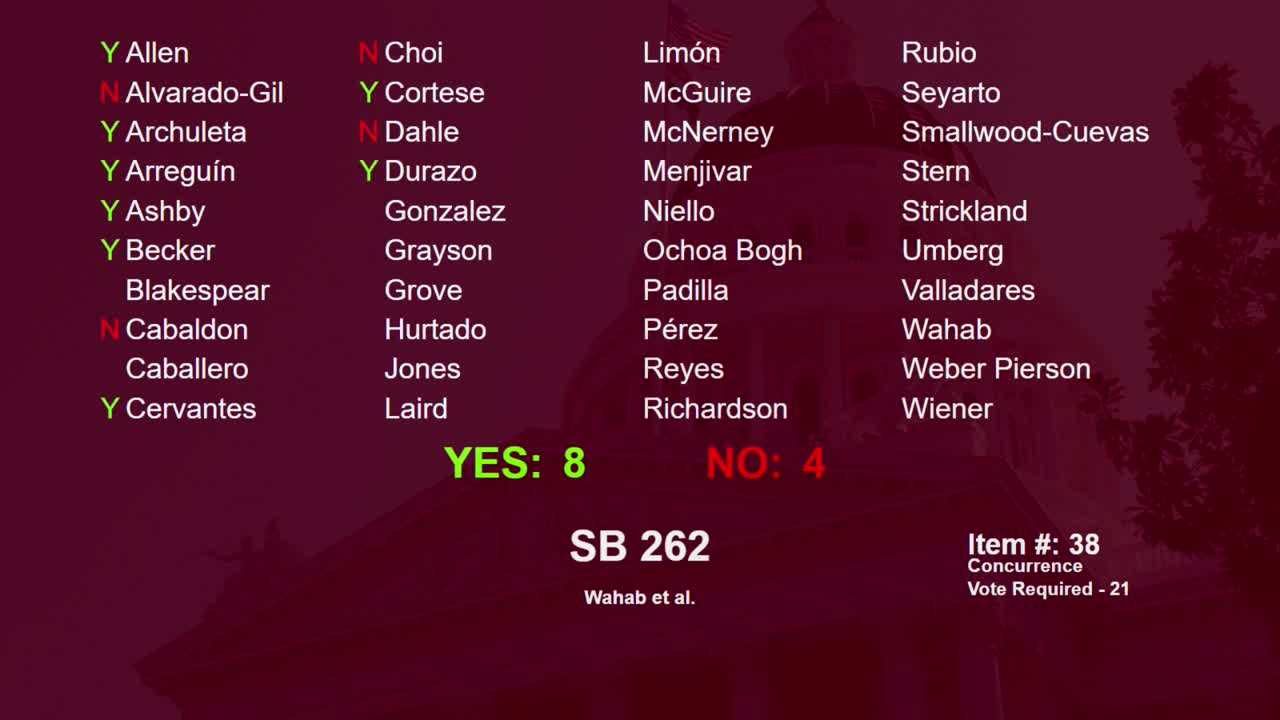 1MIN
Senate Floor
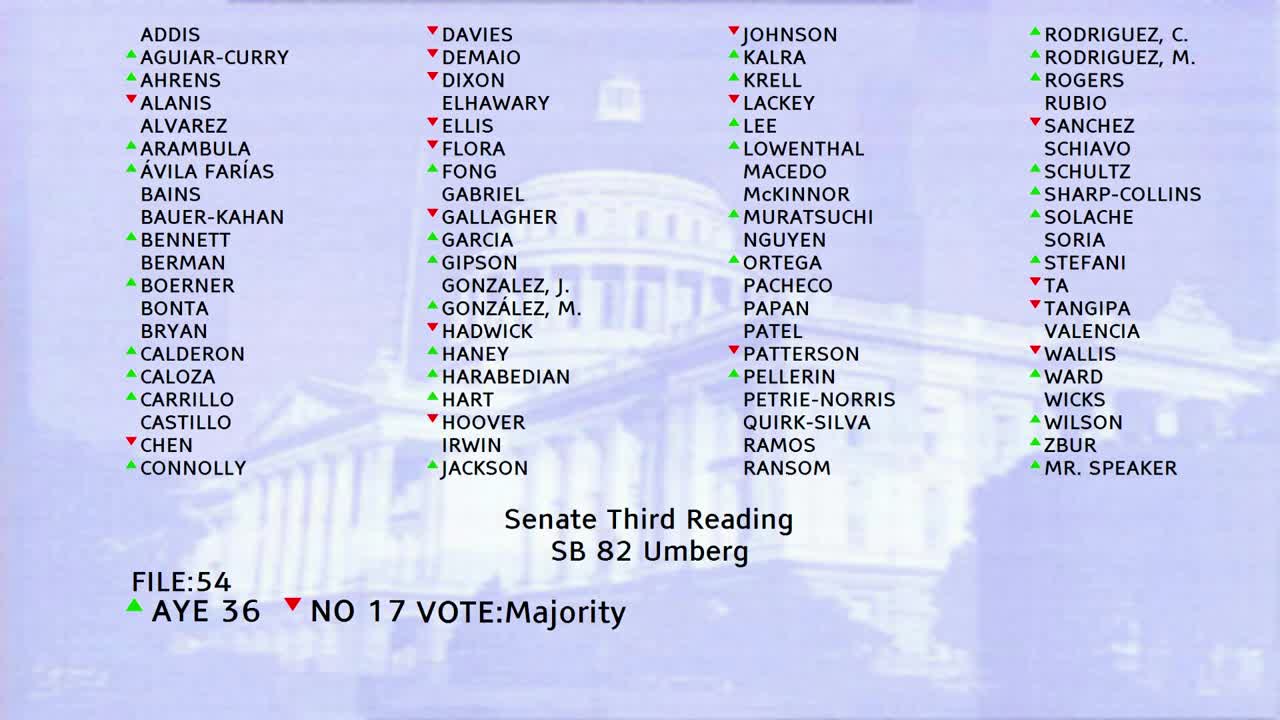 2MIN
Assembly Floor
 2MIN
Senate Floor
 5MIN
Senate Standing Committee on Health
Bill Author

Bill Co-Author(s):