SB 395: Alcoholic beverages: additional licenses: hospitality zone.
- Session Year: 2025-2026
- House: Senate
- Latest Version Date: 2025-10-06
Current Status:
Passed
(2025-10-06: Chaptered by Secretary of State. Chapter 412, Statutes of 2025.)
Introduced
In Committee
Awaiting First Chamber Vote
Passed First Chamber
In Committee
Awaiting Second Chamber Vote
Passed Second Chamber
Enacted
Existing law, the Alcoholic Beverage Control Act, administered by the Department of Alcoholic Beverage Control, regulates the sale and distribution of alcoholic beverages and the granting of licenses for the manufacture, distribution, and sale of alcoholic beverages within the state. Existing law limits the amount of on-sale general licenses that may be issued by the department based on the population of the county in which the licensed premises are located.
This bill would provide an exception to the limitation described above by authorizing the issuance of up to 20 additional new original on-sale general licenses, as specified, for bona fide public eating places located within a designated hospitality zone in the City and County of San Francisco, as defined. In order to authorize the issuance of additional licenses as described above, the bill would require an ordinance adopted by the local governing body of the City and County of San Francisco to designate or modify a hospitality zone to include specified information and findings. The bill would authorize the local governing body, in an ordinance designating or modifying a hospitality zone, to further limit, among other things, the maximum number of additional licenses to be issued within its hospitality zone. The bill would require the local governing body to submit the ordinance to the department upon the adoption of an ordinance to modify or repeal a hospitality zone. The bill would require any ordinance to establish, modify, or repeal a hospitality zone to be effective commencing the following July 1. The bill would require the department to follow specified procedures concerning the issuance of these licenses, and would authorize the department to designate these licenses as on-sale general for special use. The bill would prohibit licenses issued under its provisions from being, among other things, transferred from one county to another. If one of those licenses is canceled or revoked, the bill would authorize the department to issue an additional license. The bill would prohibit the department from issuing any license under these provisions after July 1, 2033.
This bill would make legislative findings and declarations as to the necessity of a special statute for the City and County of San Francisco.
Existing law, the Alcoholic Beverage Control Act, administered by the Department of Alcoholic Beverage Control, regulates the sale and distribution of alcoholic beverages and the granting of licenses for the manufacture, distribution, and sale of alcoholic beverages within the state. Existing law limits the amount of on-sale general licenses that may be issued by the department based on the population of the county in which the licensed premises are located.
This bill would provide an exception to the limitation described above by authorizing the issuance of up to 20 additional new original on-sale general licenses, as specified, for bona fide public eating places located within a designated hospitality zone in the City and County of San Francisco, as defined. In order to authorize the issuance of additional licenses as described above, the bill would require an ordinance adopted by the local governing body of the City and County of San Francisco to designate or modify a hospitality zone to include specified information and findings. The bill would authorize the local governing body, in an ordinance designating or modifying a hospitality zone, to further limit, among other things, the maximum number of additional licenses to be issued within its hospitality zone. The bill would require the local governing body to submit the ordinance to the department upon the adoption of an ordinance to modify or repeal a hospitality zone. The bill would require any ordinance to establish, modify, or repeal a hospitality zone to be effective commencing the following July 1. The bill would require the department to follow specified procedures concerning the issuance of these licenses, and would authorize the department to designate these licenses as on-sale general for special use. The bill would prohibit licenses issued under its provisions from being, among other things, transferred from one county to another. If one of those licenses is canceled or revoked, the bill would authorize the department to issue an additional license.
This bill would make legislative findings and declarations as to the necessity of a special statute for the City and County of San Francisco.
Existing law, the Alcoholic Beverage Control Act, administered by the Department of Alcoholic Beverage Control, regulates the sale and distribution of alcoholic beverages and the granting of licenses for the manufacture, distribution, and sale of alcoholic beverages within the state. Existing law limits the amount of on-sale general licenses that may be issued by the department based on the population of the county in which the licensed premises are located.
This bill would provide an exception to the limitation described above by authorizing the issuance of up to 20 additional new original on-sale general licenses, as specified, for bona fide public eating places located within a designated retail district hospitality zone in the City and County of San Francisco, as defined. In order to authorize the issuance of additional licenses as described above, the bill would require an ordinance adopted by the local governing body of the City and County of San Francisco to designate or modify a retail district hospitality zone to include specified information and findings. The bill would authorize the local governing body, in an ordinance designating or modifying a retail district, hospitality zone, to further limit, among other things, the maximum number of additional licenses to be issued within its retail district. hospitality zone. The bill would require the local governing body to submit the ordinance to the department upon the adoption of an ordinance to modify or repeal a retail district. hospitality zone. The bill would require any ordinance to establish, modify, or repeal a retail district hospitality zone to be effective commencing the following July 1. The bill would require the department to follow specified procedures concerning the issuance of these licenses, and would authorize the department to designate these licenses as on-sale general for special use. The bill would prohibit licenses issued under its provisions from being, among other things, transferred from one county to another. If one of those licenses is canceled or revoked, the bill would authorize the department to issue an additional license.
This bill would make legislative findings and declarations as to the necessity of a special statute for the City and County of San Francisco.
Existing law, the Alcoholic Beverage Control Act, administered by the Department of Alcoholic Beverage Control, regulates the sale and distribution of alcoholic beverages and the granting of licenses for the manufacture, distribution, and sale of alcoholic beverages within the state. Existing law limits the amount of on-sale general licenses that may be issued by the department based on the population of the county in which the licensed premises are located.
This bill would provide an exception to the limitation described above by authorizing the issuance of up to 20 additional new original on-sale general licenses, as specified, for bona fide public eating places located within a designated retail district in the City and County of San Francisco, as defined. In order to authorize the issuance of additional licenses as described above, the bill would require an ordinance adopted by the local governing body of the City and County of San Francisco to designate or modify a retail district to include specified information and findings. The bill would authorize the local governing body, in an ordinance designating or modifying a retail district, to further limit, among other things, the maximum number of additional licenses to be issued within its retail district. The bill would require the local governing body to submit the ordinance to the department upon the adoption of an ordinance to modify or repeal a retail district. The bill would require any ordinance to establish, modify, or repeal a retail district to be effective commencing the following July 1. The bill would require the department to follow specified procedures concerning the issuance of these licenses, and would authorize the department to designate these licenses as on-sale general for special use. The bill would prohibit licenses issued under its provisions from being, among other things, transferred from one county to another. If one of those licenses is canceled or revoked, the bill would authorize the department to issue an additional license.
This bill would make legislative findings and declarations as to the necessity of a special statute for the City and County of San Francisco.
(a)For purposes of this section, the following definitions apply:
(1)Hospitality zone means an area designated by an ordinance in the City and County of San Francisco on or after January 1, 2026, that contains at least 1,000,000 square feet of retail shopping space open to the public. The City and County of San Francisco shall not designate more than one hospitality zone pursuant to this section.
(2)Local governing body means the local governing body of the City and County of San Francisco.
(b)(1)Notwithstanding any other provision of this chapter, the department, subject to subdivision (c), may issue up to 20 additional new original on-sale general licenses for bona fide public eating places located within a designated hospitality zone.
(2)(A)During the first year following the adoption of a valid ordinance to designate a hospitality zone and the submission of that ordinance to the department by the local governing body, the department may issue up to 10 of the 20 licenses during the same calendar year.
(B)In any subsequent year, the department may issue any licenses that have not been issued, not exceeding five licenses per calendar year.
(c)(1)In order to authorize the issuance of additional licenses pursuant to this section, an ordinance adopted by a local governing body to designate or modify a hospitality zone shall include all of the following:
(A)Information as may be necessary to identify the boundaries of the hospitality zone.
(B)A finding that the designated area meets the definition of hospitality zone established in this section.
(C)A finding that the issuance of additional licenses within this hospitality zone would serve the public convenience or necessity.
(2)A local governing body may, in an ordinance designating or modifying a hospitality zone, further limit the maximum number of additional licenses to be issued within its hospitality zone.
(3)(A)A local governing body may, in an ordinance designating or modifying a hospitality zone, further limit the areas within the boundaries of the hospitality zone where additional licenses may be issued.
(B)Notwithstanding subparagraph (A), an ordinance shall designate a single contiguous area that qualifies as a hospitality zone to meet the requirements of this section.
(4)Upon the adoption of an ordinance to modify or repeal a hospitality zone, the local governing body shall submit the ordinance to the department.
(d)Any ordinance to establish, modify, or repeal a hospitality zone shall be effective commencing the following July 1.
(e)In issuing the licenses provided for in this section, the department shall follow the procedure set forth in Section 23961.
(f)A licensee that holds an on-sale general license for a bona fide public eating place that is in a hospitality zone shall not be eligible to apply for a license under this section for the same licensed premises.
(g)(1)A license issued pursuant to this section shall not be transferred between counties, nor shall it be transferred to any location outside of the hospitality zone or otherwise not qualifying under this section.
(2)A license issued pursuant to this section shall not be transferred to any person, partnership, limited partnership, limited liability company, or corporation. This provision shall not apply to licenses transferred under Section 24071, 24071.1, or 24071.2.
(3)A license issued pursuant to this section shall not be sold or transferred for a price greater than the original fee paid by the seller or transferor.
(h)Following the cancellation or revocation of a license issued under this section, the department shall issue one additional license pursuant to the procedures set forth in Section 23961 and this section.
(i)(1)The department may designate licenses issued pursuant to this section as on-sale general for special use.
(2)A designation pursuant to this subdivision shall not alter any license privileges or restrictions established pursuant to this section.
(j)The department shall not issue any license under this section after July 1, 2033.
SEC. 2.The Legislature finds and declares that a special statute is necessary and that a general statute cannot be made applicable within the meaning of Section 16 of Article IV of the California Constitution because of the unique needs of San Francisco in that Californias population-based limits on the number of full liquor licenses available in each county have effectively capped the number of full licenses for restaurants and bars in San Francisco for 80 years.
(a)For purposes of this section, the following definitions apply:
(1)Hospitality zone means an area designated by an ordinance in the City and County of San Francisco on or after January 1, 2026, that contains at least 1,000,000 square feet of retail shopping space open to the public. The City and County of San Francisco shall not designate more than one hospitality zone pursuant to this section.
(2)Local governing body means the local governing body of the City and County of San Francisco.
(b)(1)Notwithstanding any other provision of this chapter, the department, subject to subdivision (c), may issue up to 20 additional new original on-sale general licenses for bona fide public eating places located within a designated hospitality zone.
(2)(A)During the first year following the adoption of a valid ordinance to designate a hospitality zone and the submission of that ordinance to the department by the local governing body, the department may issue up to 10 of the 20 licenses during the same calendar year.
(B)In any subsequent year, the department may issue any licenses that have not been issued, not exceeding five licenses per calendar year.
(c)(1)In order to authorize the issuance of additional licenses pursuant to this section, an ordinance adopted by a local governing body to designate or modify a hospitality zone shall include all of the following:
(A)Information as may be necessary to identify the boundaries of the hospitality zone.
(B)A finding that the designated area meets the definition of hospitality zone established in this section.
(C)A finding that the issuance of additional licenses within this hospitality zone would serve the public convenience or necessity.
(2)A local governing body may, in an ordinance designating or modifying a hospitality zone, further limit the maximum number of additional licenses to be issued within its hospitality zone.
(3)(A)A local governing body may, in an ordinance designating or modifying a hospitality zone, further limit the areas within the boundaries of the hospitality zone where additional licenses may be issued.
(B)Notwithstanding subparagraph (A), an ordinance shall designate a single contiguous area that qualifies as a hospitality zone to meet the requirements of this section.
(4)Upon the adoption of an ordinance to modify or repeal a hospitality zone, the local governing body shall submit the ordinance to the department.
(d)Any ordinance to establish, modify, or repeal a hospitality zone shall be effective commencing the following July 1.
(e)In issuing the licenses provided for in this section, the department shall follow the procedure set forth in Section 23961.
(f)A licensee that holds an on-sale general license for a bona fide public eating place that is in a hospitality zone shall not be eligible to apply for a license under this section for the same licensed premises.
(f)(g)(1)A license issued pursuant to this section shall not be transferred between counties, nor shall it be transferred to any location outside of the hospitality zone or otherwise not qualifying under this section.
(2)A license issued pursuant to this section shall not be transferred to any person, partnership, limited partnership, limited liability company, or corporation. This provision shall not apply to licenses transferred under Section 24071, 24071.1, or 24071.2.
(3)A license issued pursuant to this section shall not be sold or transferred for a price greater than the original fee paid by the seller or transferor.
(g)(h)Following the cancellation or revocation of a license issued under this section, the department shall issue one additional license pursuant to the procedures set forth in Section 23961 and this section.
(h)(i)(1)The department may designate licenses issued pursuant to this section as on-sale general for special use.
(2)A designation pursuant to this subdivision shall not alter any license privileges or restrictions established pursuant to this section.
(j)The department shall not issue any license under this section after July 1, 2033.
SEC. 2.The Legislature finds and declares that a special statute is necessary and that a general statute cannot be made applicable within the meaning of Section 16 of Article IV of the California Constitution because of the unique needs of San Francisco in that Californias population-based limits on the number of full liquor licenses available in each county have effectively capped the number of full licenses for restaurants and bars in San Francisco for 80 years.
REVISIONS: HeadingLine 2.(a)For purposes of this section, the following definitions apply:
(1)Hospitality zone means an area designated by an ordinance in the City and County of San Francisco on or after January 1, 2026, that contains at least 1,000,000 square feet of retail shopping space open to the public. The City and County of San Francisco shall not designate more than one hospitality zone pursuant to this section.
(2)Local governing body means the local governing body of the City and County of San Francisco.
(b)(1)Notwithstanding any other provision of this chapter, the department, subject to subdivision (c), may issue up to 20 additional new original on-sale general licenses for bona fide public eating places located within a designated hospitality zone.
(2)(A)During the first year following the adoption of a valid ordinance to designate a hospitality zone and the submission of that ordinance to the department by the local governing body, the department may issue up to 10 of the 20 licenses during the same calendar year.
(B)In any subsequent year, the department may issue any licenses that have not been issued, not exceeding five licenses per calendar year.
(c)(1)In order to authorize the issuance of additional licenses pursuant to this section, an ordinance adopted by a local governing body to designate or modify a hospitality zone shall include all of the following:
(A)Information as may be necessary to identify the boundaries of the hospitality zone.
(B)A finding that the designated area meets the definition of hospitality zone established in this section.
(C)A finding that the issuance of additional licenses within this hospitality zone would serve the public convenience or necessity.
(2)A local governing body may, in an ordinance designating or modifying a hospitality zone, further limit the maximum number of additional licenses to be issued within its hospitality zone.
(3)(A)A local governing body may, in an ordinance designating or modifying a hospitality zone, further limit the areas within the boundaries of the hospitality zone where additional licenses may be issued.
(B)Notwithstanding subparagraph (A), an ordinance shall designate a single contiguous area that qualifies as a hospitality zone to meet the requirements of this section.
(4)Upon the adoption of an ordinance to modify or repeal a hospitality zone, the local governing body shall submit the ordinance to the department.
(d)Any ordinance to establish, modify, or repeal a hospitality zone shall be effective commencing the following July 1.
(e)In issuing the licenses provided for in this section, the department shall follow the procedure set forth in Section 23961.
(f)A licensee that holds an on-sale general license for a bona fide public eating place that is in a hospitality zone shall not be eligible to apply for a license under this section for the same licensed premises. (g)(f)(1)A license issued pursuant to this section shall not be transferred between counties, nor shall it be transferred to any location outside of the hospitality zone or otherwise not qualifying under this section.
(2)A license issued pursuant to this section shall not be transferred to any person, partnership, limited partnership, limited liability company, or corporation. This provision shall not apply to licenses transferred under Section 24071, 24071.1, or 24071.2.
(3)A license issued pursuant to this section shall not be sold or transferred for a price greater than the original fee paid by the seller or transferor.
(h)(g)Following the cancellation or revocation of a license issued under this section, the department shall issue one additional license pursuant to the procedures set forth in Section 23961 and this section.
(i)(h)(1)The department may designate licenses issued pursuant to this section as on-sale general for special use.
(2)A designation pursuant to this subdivision shall not alter any license privileges or restrictions established pursuant to this section.
SEC. 2.The Legislature finds and declares that a special statute is necessary and that a general statute cannot be made applicable within the meaning of Section 16 of Article IV of the California Constitution because of the unique needs of San Francisco in that Californias population-based limits on the number of full liquor licenses available in each county have effectively capped the number of full licenses for restaurants and bars in San Francisco for 80 years.
(a)For purposes of this section, the following definitions apply:
(1)Hospitality zone means an area designated by an ordinance in the City and County of San Francisco on or after January 1, 2026, that contains at least 1,000,000 square feet of retail shopping space open to the public. The City and County of San Francisco shall not designate more than one hospitality zone pursuant to this section.
(1)(2)Local governing body means the local governing body of the City and County of San Francisco.
(2)Retail district means an area designated by an ordinance in the City and County of San Francisco on or after January 1, 2026, that contains at least 1,000,000 square feet of retail shopping space open to the public. The City and County of San Francisco shall not designate more than one retail district pursuant to this section.(b)(1)Notwithstanding any other provision of this chapter, the department, subject to subdivision (c), may issue up to 20 additional new original on-sale general licenses for bona fide public eating places located within a designated retail district. hospitality zone.
(2)(A)During the first year following the adoption of a valid ordinance to designate a retail district hospitality zone and the submission of that ordinance to the department by the local governing body, the department may issue up to 10 of the 20 licenses during the same calendar year.
(B)In any subsequent year, the department may issue any licenses that have not been issued, not exceeding five licenses per calendar year.
(c)(1)In order to authorize the issuance of additional licenses pursuant to this section, an ordinance adopted by a local governing body to designate or modify a retail district hospitality zone shall include all of the following:
(A)Information as may be necessary to identify the boundaries of the retail district. hospitality zone.
(B)A finding that the designated area meets the definition of retail district hospitality zone established in this section.
(C)A finding that the issuance of additional licenses within this district hospitality zone would serve the public convenience or necessity.
(2)A local governing body may, in an ordinance designating or modifying a retail district, hospitality zone, further limit the maximum number of additional licenses to be issued within its retail district. hospitality zone.
(3)(A)A local governing body may, in an ordinance designating or modifying a retail district, hospitality zone, further limit the areas within the boundaries of the retail district hospitality zone where additional licenses may be issued.
(B)Notwithstanding subparagraph (A), an ordinance shall designate a single contiguous area that qualifies as a retail district hospitality zone to meet the requirements of this section.
(4)Upon the adoption of an ordinance to modify or repeal a retail district, hospitality zone, the local governing body shall submit the ordinance to the department.
(d)Any ordinance to establish, modify, or repeal a retail district hospitality zone shall be effective commencing the following July 1.
(e)In issuing the licenses provided for in this section, the department shall follow the procedure set forth in Section 23961.
(f)A licensee that holds an on-sale general license for a bona fide public eating place that is in a retail district hospitality zone shall not be eligible to apply for a license under this section for the same licensed premises.
(g)(1)A license issued pursuant to this section shall not be transferred between counties, nor shall it be transferred to any premises location outside of the hospitality zone or otherwise not qualifying under this section.
(2)A license issued pursuant to this section shall not be transferred to any person, partnership, limited partnership, limited liability company, or corporation. This provision shall not apply to licenses transferred under Section 24071, 24071.1, or 24071.2.
(3)A license issued pursuant to this section shall not be sold or transferred for a price greater than the original fee paid by the seller or transferor.
(h)Following the cancellation or revocation of a license issued under this section, the department shall issue one additional license pursuant to the procedures set forth in Section 23961 and this section.
(i)(1)The department may designate licenses issued pursuant to this section as on-sale general for special use.
(2)A designation pursuant to this subdivision shall not alter any license privileges or restrictions established pursuant to this section.
SEC. 2.The Legislature finds and declares that a special statute is necessary and that a general statute cannot be made applicable within the meaning of Section 16 of Article IV of the California Constitution because of the unique needs of San Francisco in that Californias population-based limits on the number of full liquor licenses available in each county have effectively capped the number of full licenses for restaurants and bars in San Francisco for 80 years.
(a)For purposes of this section, the following definitions apply:
(1)Local governing body means the local governing body of the City and County of San Francisco.
(2)Retail district means an area designated by an ordinance in the City and County of San Francisco on or after January 1, 2026, that contains at least 1,000,000 square feet of retail shopping space open to the public. The City and County of San Francisco shall not designate more than one retail district pursuant to this section.
(b)(1)Notwithstanding any other provision of this chapter, the department, subject to subdivision (c), may issue up to 20 additional new original on-sale general licenses for bona fide public eating places located within a designated retail district.
(2)(A)During the first year following the adoption of a valid ordinance to designate a retail district and the submission of that ordinance to the department by the local governing body, the department may issue up to 10 of the 20 licenses during the same calendar year.
(B)In any subsequent year, the department may issue any licenses that have not been issued, not exceeding five licenses per calendar year.
(c)(1)In order to authorize the issuance of additional licenses pursuant to this section, an ordinance adopted by a local governing body to designate or modify a retail district shall include all of the following:
(A)Information as may be necessary to identify the boundaries of the retail district.
(B)A finding that the designated area meets the definition of retail district established in this section.
(C)A finding that the issuance of additional licenses within this district would serve the public convenience or necessity.
(2)A local governing body may, in an ordinance designating or modifying a retail district, further limit the maximum number of additional licenses to be issued within its retail district.
(3)(A)A local governing body may, in an ordinance designating or modifying a retail district, further limit the areas within the boundaries of the retail district where additional licenses may be issued.
(B)Notwithstanding subparagraph (A), an ordinance shall designate a single contiguous area that qualifies as a retail district to meet the requirements of this section.
(4)Upon the adoption of an ordinance to modify or repeal a retail district, the local governing body shall submit the ordinance to the department.
(d)Any ordinance to establish, modify, or repeal a retail district shall be effective commencing the following July 1.
(e)In issuing the licenses provided for in this section, the department shall follow the procedure set forth in Section 23961.
(f)A licensee that holds an on-sale general license for a bona fide public eating place that is in a retail district shall not be eligible to apply for a license under this section for the same licensed premises.
(g)(1)A license issued pursuant to this section shall not be transferred between counties, nor shall it be transferred to any premises not qualifying under this section.
(2)A license issued pursuant to this section shall not be transferred to any person, partnership, limited partnership, limited liability company, or corporation. This provision shall not apply to licenses transferred under Section 24071, 24071.1, or 24071.2.
(h)Following the cancellation or revocation of a license issued under this section, the department shall issue one additional license pursuant to the procedures set forth in Section 23961 and this section.
(i)(1)The department may designate licenses issued pursuant to this section as on-sale general for special use.
(2)A designation pursuant to this subdivision shall not alter any license privileges or restrictions established pursuant to this section.
SEC. 2.The Legislature finds and declares that a special statute is necessary and that a general statute cannot be made applicable within the meaning of Section 16 of Article IV of the California Constitution because of the unique needs of San Francisco in that Californias population-based limits on the number of full liquor licenses available in each county have effectively capped the number of full licenses for restaurants and bars in San Francisco for 80 years.
|
Date
|
Status
|
|---|---|
| Oct 6, 2025 | Chaptered by Secretary of State. Chapter 412, Statutes of 2025. |
| Oct 6, 2025 | Approved by the Governor. |
| Sep 9, 2025 | Enrolled and presented to the Governor at 2 p.m. |
| Sep 2, 2025 | Assembly amendments concurred in. (Ayes 40. Noes 0. Page 2408.) Ordered to engrossing and enrolling. |
| Aug 28, 2025 | In Senate. Concurrence in Assembly amendments pending. |
| Aug 28, 2025 | Read third time. Passed. (Ayes 74. Noes 0. Page 7277.) Ordered to the Senate. |
| Aug 21, 2025 | Read second time. Ordered to third reading. |
| Aug 20, 2025 | From committee: Do pass. (Ayes 15. Noes 0.) (August 20). |
| Jul 10, 2025 | From committee: Do pass and re-refer to Com. on APPR. (Ayes 22. Noes 0.) (July 9). Re-referred to Com. on APPR. |
| Jul 10, 2025 | Coauthors revised. |
| Jun 30, 2025 | From committee with author's amendments. Read second time and amended. Re-referred to Com. on G.O. |
| Jun 18, 2025 | From committee with author's amendments. Read second time and amended. Re-referred to Com. on G.O. |
| Jun 5, 2025 | Referred to Com. on G.O. |
| May 28, 2025 | In Assembly. Read first time. Held at Desk. |
| May 27, 2025 | Read third time. Passed. (Ayes 39. Noes 0. Page 1238.) Ordered to the Assembly. |
| Apr 22, 2025 | Read second time. Ordered to third reading. |
| Apr 21, 2025 | From committee: Be ordered to second reading pursuant to Senate Rule 28.8. |
| Apr 9, 2025 | Set for hearing April 21. |
| Apr 8, 2025 | From committee: Do pass and re-refer to Com. on APPR. (Ayes 15. Noes 0. Page 703.) (April 8). Re-referred to Com. on APPR. |
| Mar 28, 2025 | From committee with author's amendments. Read second time and amended. Re-referred to Com. on G.O. |
| Mar 27, 2025 | Set for hearing April 8. |
| Feb 26, 2025 | Referred to Com. on G.O. |
| Feb 18, 2025 | From printer. May be acted upon on or after March 17. |
| Feb 14, 2025 | Introduced. Read first time. To Com. on RLS. for assignment. To print. |
|
Date
|
Description
|
Location
|
Votes
|
|
|---|---|---|---|---|
| Sep 2, 2025 | The committee(s) on EIG recommend(s) that the measure be PASSED, WITH AMENDMENTS | Senate Floor |
Passed |
|
| Aug 28, 2025 | SB 395 Wiener Senate Third Reading By Haney | Assembly Floor |
Passed |
|
| Aug 20, 2025 | Do pass. | Assembly Standing Committee on Appropriations |
Passed |
|
| Jul 9, 2025 | Do pass and be re-referred to the Committee on [Appropriations] | Assembly Standing Committee on Governmental Organization |
Passed |
|
| May 27, 2025 | Senate 3rd Reading SB395 Wiener | Senate Floor |
Passed |
|
| Apr 8, 2025 | Do pass, but first be re-referred to the Committee on [Appropriations] | Senate Standing Committee on Governmental Organization |
Passed |
This list shows positions taken on this bill by organizations on the date displayed, which is linked to the original source.
Positions by individuals are not included.
|
Organization
|
Position
|
Date
|
|---|---|---|
| Alcohol Justice | ** Against | |
| Bsc Management | ** Support | |
| California Council on Alcohol Problems | ** Against | |
| City and County of San Francisco | ** Support | |
| Daniel Lurie, Mayor, City of San Francisco | ** Support | |
| Local business groups | ** Support | |
| San Francisco Chamber of Commerce | ** Support | |
| San Francisco Office of Economic & Workforce Development | ** Support |
SENATE RULES COMMITTEE Office of Senate Floor Analyses (916) 651-1520 Fax: (916) 327-4478 | SB 395 |
UNFINISHED BUSINESS
Bill No: SB 395
Author: Wiener (D), et al.
Amended: 6/30/25
Vote: 21
SENATE GOVERNMENTAL ORG. COMMITTEE: 15-0, 4/8/25
AYES: Padilla, Valladares, Archuleta, Ashby, Blakespear, Cervantes, Dahle, Hurtado, Jones, Ochoa Bogh, Richardson, Rubio, Smallwood-Cuevas, Wahab, Weber Pierson
SENATE APPROPRIATIONS COMMITTEE: Senate Rule 28.8
SENATE FLOOR: 39-0, 5/27/25
AYES: Allen, Alvarado-Gil, Archuleta, Arreguín, Ashby, Becker, Blakespear, Cabaldon, Caballero, Cervantes, Choi, Cortese, Dahle, Durazo, Gonzalez, Grayson, Grove, Hurtado, Jones, Laird, Limón, McGuire, McNerney, Menjivar, Niello, Ochoa Bogh, Padilla, Pérez, Richardson, Rubio, Seyarto, Smallwood-Cuevas, Stern, Strickland, Umberg, Valladares, Wahab, Weber Pierson, Wiener
NO VOTE RECORDED: Reyes
ASSEMBLY FLOOR: 74-0, 8/28/25 - See last page for vote
SUBJECT: Alcoholic beverages: additional licenses: hospitality zone
SOURCE: Daniel Lurie, Mayor, City of San Francisco
DIGEST:
This bill authorizes the Department of Alcoholic Beverage Control (ABC) to issue up to 20 additional new original on-sale general licenses for bona fide public eating places located within a designated hospitality zone, as specified, in the City and County of San Francisco.
Assembly Amendments
of 6/30/25 prohibit the Department of ABC from issuing any license under the provisions of this bill after July 1, 2033.
ANALYSIS:
Existing law:
- Establishes the Department of ABC and grants it exclusive authority to administer the provisions of the ABC Act in accordance with laws enacted by the Legislature. This involves licensing individuals and businesses associated with the manufacture, importation, and sale of alcoholic beverages in this State and the collection of license fees.
- Provides that the Department of ABC must deny an application for a license if issuance would create a law enforcement problem, or if issuance would result in, or add to, an undue concentration of licenses in the area where the license is desired. However, for liquor stores and other specified retail licenses, the Department of ABC is authorized to issue a license if the respective local government determines that public convenience or necessity would be served by granting the license.
- Caps the number of new on-sale and off-sale general licenses issued by the Department of ABC. The ratios are one on-sale general license for each 2,000 persons in the county in which the premises are situated and one off-sale general license for each 2,500 persons.
- Defines “bona fide public eating place” to mean a place which is regularly and in a bona fide manner used and kept open for the serving of meals to guests for compensation and which has suitable kitchen facilities connected therewith, containing conveniences for cooking an assortment of foods which may be required for ordinary meals, the kitchen of which must be kept in a sanitary condition with the proper amount of refrigeration for keeping of food on said premises and must comply with all the regulations of the local Department of Health.
This bill:
- Authorizes the Department of ABC to issue up to 20 additional new original on-sale general licenses for bona fide public eating places located within a designated hospitality zone in the City and County of San Francisco.
- Defines “hospitality zone” to mean an area designated by an ordinance in the City and County of San Francisco on or after January 1, 2026, that contains at least 1 million square feet of retail shopping space open to the public. The City and County of San Francisco shall not designate more than one hospitality zone.
- Provides that during the first year following adoption of a valid ordinance, the Department of ABC may issue 10 of the 20 licenses during the calendar year. In any subsequent year, the department may issue any licenses that have not been issued, not exceeding five licenses per year.
- Provides that in order to authorize the issuance of additional licenses, an ordinance adopted by a local governing body to designate or modify a hospitality zone shall include all of the following:
- Information as may be necessary to identify the boundaries of the hospitality zone.
- A finding that the designated area meets the definition of hospitality zone.
- A finding that the issuance of additional licenses would serve the public convenience or necessity.
- Authorizes a local governing body to further limit the maximum number of additional licenses to be issued within its hospitality zone and to further limit the area within the boundaries of the hospitality zone where additional licenses may be issued.
- Prohibits, with specified exemptions, a license issued under this bill from being transferred to any person, partnership, limited partnership, limited liability company, or corporation.
- Prohibits a license issued by the provisions of this bill from being sold or transferred for a price greater than the original fee paid by the seller or transferor.
Background
Author’s Statement. According to the author’s office, “SB 395 will boost nightlife activity, support small businesses, and speed economic recovery in downtown San Francisco by creating 20 new liquor licenses in a special downtown hospitality zone. In recent years, San Francisco has pursued a number of creative solutions to help fill vacant office and retail spaces. One of the goals of those initiatives has been to attract a more diverse industry base to help transform downtown, which overwhelmingly consist of office space, into a leading arts, culture, and nightlife destination. Providing new entertainment experiences through a hospitality zone supports this goal and allows downtown to recover faster. San Francisco is home to spectacular array of street fairs and special events, these new small businesses will reimagine night life back in downtown.”
Type 47 Alcohol License. An on-sale general eating-place license, or Type 47 license, authorizes the consumption of beer, wine, and distilled spirits for consumption on the licensed premise. The licensee is required to operate and maintain the licensed premises as a bona fide eating-place, which must include suitable kitchen facilities. The licensee must make actual and substantial sales of meals for consumption on the premises. Generally, this means that the business must generate at least 51% of all gross sales from food. As such, a Type 47 license is one of the most common types of liquor licenses for restaurants in California.
Some common businesses that use the Type 47 license include full-service restaurants, hotels and resorts, bowling alleys, golf courses and other eating establishments. As of March 19, 2025, there were approximately 16,175 on-sale general (Type 47) licenses statewide.
Alcohol License Limitation. Existing law provides for a limitation on the number of new on-sale general licenses that may be issued in a given year by the Department of ABC based on the population growth of the county in which the licensed premises are located. The ratio is one on-sale general license for each 2,000 residents. For example, if a county grows by 10,000 people in a given year, the Department ABC will issue five new licenses in that county.
If the Department of ABC receives more applications than there are licenses available, a public drawing is held. To participate in such a drawing, an applicant must have been a resident of California for at least 90 days prior to the date of the scheduled drawing. Successful drawing participants will be notified that they have 90 days to complete a formal application for their specific premises. The cost of these new licenses is $15,835 each.
Individuals seeking to open a full-service restaurant with a bar or cocktail menu who fail to obtain a liquor license through this process typically must locate an existing licensed owner willing to sell their license. Usually, that is done by contacting a liquor license broker. The cost of obtaining a license on the secondary market is driven by supply and demand and can reach upwards of $300,000 to $400,000 in certain counties.
In San Francisco, because of its strong restaurant and nightlife scene, prices typically range from $100,000 to $200,000, depending on factors like location. Current listings show asking prices such as $125,000 on the low end and as high as $195,000. These figures can fluctuate based on market conditions and specific license details.
Related/Prior Legislation
AB 445 (Aguiar-Curry, 2025) authorizes the Department of ABC to issue no more than 10 new original on-sale general licenses for bona fide public eating places in the County of Colusa, as specified. (Pending in the Senate Appropriations Committee Suspense File)
AB 828 (Mark Gonzalez, 2025) authorizes the Department of ABC to issue no more than 12 new original neighborhood-restricted special on-sale general licenses per year to bona fide public eating places located in specified United States Census Bureau census tracts in the County of Los Angeles beginning on January 1, 2026, until a total of 40 new licenses have been issued, as specified. (Pending on the Senate Floor)
AB 1008 (Addis, 2025) authorizes the Department of ABC to issue no more than 10 new original on-sale general licenses for bona fide public eating places in the County of San Luis Obispo, as specified. (Pending on the Senate Floor)
SB 1028 (Alvarado-Gil, 2024) would have authorized the Department of ABC, in counties that have reached its limit of on-sale general licenses, to issue up to 10 additional new original on-sale general licenses for bona fide eating-places, as specified. (Held in the Senate Appropriations Committee Suspense File)
AB 2359 (Ting, Chapter 393, Statutes of 2024) revised an existing exemption in law authorizing the Department of ABC to issue no more than five new original neighborhood restricted special on-sale general licenses (Type 87 licenses) per year, until a total of 40 licenses (currently 30) are issued, to premises located in specific census tracts within the City and County of San Francisco, as specified.
AB 2589 (Joe Patterson, Chapter 312, Statutes of 2024) authorizes the Department of ABC to issue up to 10 additional new original on-sale general licenses for bona fide public eating places located in a retail center, in both the County of El Dorado and the County of Placer, as specified.
AB 1668 (Patterson, Chapter 282, Statutes of 2023) authorizes the Department of ABC to issue no more than 10 new original on-sale general licenses for bona fide public eating places in the County of Placer, as specified.
SB 787 (Dahle, Chapter 113, Statutes of 2023) authorizes the Department of ABC to issue to more than 10 new original on-sale general licenses for bona fide public eating places in the County of Nevada, as specified.
FISCAL EFFECT: Appropriation: No Fiscal Com.: Yes Local: No
According to the Assembly Appropriations Committee, costs of approximately $50,000 to ABC to integrate special tracking features into ABC’s licensing system (Alcohol Beverage Control Fund). Since this bill allows a limited issuance of licenses within a zone established and modified by a separate government entity, ABC notes it will need to track these licenses in a different manner than existing license types. Additionally, minor and absorbable costs to ABC related to licensing and enforcement investigations, as any workload generated by the 20 new licenses issued over at least three years should be covered by corresponding licensing fees.
This committee sees a wide array of bills that propose to modify the scope of alcohol laws. Generally, the majority of proposals do not generate significant new workload for ABC, but taken together, these proposals could lead to significant new costs and future budget requests. In this case, however, the proposed increase in new licenses is relatively minor in volume.
SUPPORT: (Verified 8/28/25)
Daniel Lurie, Mayor, City of San Francisco (Source)
BSC Management
City and County of San Francisco
San Francisco Chamber of Commerce
OPPOSITION: (Verified 8/28/25)
Alcohol Justice
California Council on Alcohol Problems
ARGUMENTS IN SUPPORT: According to San Francisco Mayor Daniel Lurie, “San Francisco’s downtown has always been a core neighborhood of our city. It is our economic engine, where people shop, and where business is conducted. Despite the vital role that is plays, downtown has not yet recovered from the pandemic. For example, Union Square currently has a commercial vacancy rate of 43%. SB 395 will help contribute to San Francisco’s economic recovery by bringing more restaurants and bars to our downtown hospitality zone. It will augment our message that San Francisco is open for business, and introduce another permanent solution to support our city in recovering once and for all.”
ARGUMENTS IN OPPOSITION: According to Alcohol Justice, “[a]n additional [20] outlets would be an enormous and highly concentrated influx of alcohol outlets. There is no question it will make the streets of San Francisco – already plagued, fairly or not, with a reputation for violent crime – more dangerous; there is every reason to believe it will make neighboring highways more deadly as well. It is also unnecessary to populate the specific area with licensed premises, since San Francisco’s overabundance of liquor licenses means they are perpetually available on the market. Indeed, as recently as last year, San Francisco legislators were arguing that the alcohol code needed to be overhauled because of existing bars and restaurants were in existential economic peril.”
ASSEMBLY FLOOR: 74-0, 8/28/25
Ayes: Addis, Aguiar-Curry, Ahrens, Alanis, Arambula, Ávila Farías, Bauer-Kahan, Bennett, Boerner, Bonta, Bryan, Calderon, Caloza, Carrillo, Castillo, Chen, Connolly, Davies, DeMaio, Dixon, Elhawary, Ellis, Flora, Fong, Gabriel, Gallagher, Garcia, Gipson, Jeff Gonzalez, Mark González, Hadwick, Haney, Harabedian, Hart, Hoover, Irwin, Jackson, Kalra, Krell, Lackey, Lee, Lowenthal, Macedo, McKinnor, Muratsuchi, Nguyen, Ortega, Pacheco, Papan, Patel, Patterson, Pellerin, Petrie-Norris, Quirk-Silva, Ransom, Celeste Rodriguez, Michelle Rodriguez, Rogers, Blanca Rubio, Sanchez, Schiavo, Schultz, Sharp-Collins, Solache, Soria, Stefani, Ta, Tangipa, Wallis, Ward, Wicks, Wilson, Zbur, Rivas
Noes:
No Vote Recorded: Alvarez, Bains, Berman, Ramos, Valencia
Prepared by: Felipe Lopez / G.O. / (916) 651-1530
10/7/26 12:00:19
**** END ****
SENATE RULES COMMITTEE Office of Senate Floor Analyses (916) 651-1520 Fax: (916) 327-4478 | SB 395 |
UNFINISHED BUSINESS
Bill No: SB 395
Author: Wiener (D), et al.
Amended: 6/30/25 in Assembly
Vote: 21
SENATE GOVERNMENTAL ORG. COMMITTEE: 15-0, 4/8/25
AYES: Padilla, Valladares, Archuleta, Ashby, Blakespear, Cervantes, Dahle, Hurtado, Jones, Ochoa Bogh, Richardson, Rubio, Smallwood-Cuevas, Wahab, Weber Pierson
SENATE APPROPRIATIONS COMMITTEE: Senate Rule 28.8
SENATE FLOOR: 39-0, 5/27/25
AYES: Allen, Alvarado-Gil, Archuleta, Arreguín, Ashby, Becker, Blakespear, Cabaldon, Caballero, Cervantes, Choi, Cortese, Dahle, Durazo, Gonzalez, Grayson, Grove, Hurtado, Jones, Laird, Limón, McGuire, McNerney, Menjivar, Niello, Ochoa Bogh, Padilla, Pérez, Richardson, Rubio, Seyarto, Smallwood-Cuevas, Stern, Strickland, Umberg, Valladares, Wahab, Weber Pierson, Wiener
NO VOTE RECORDED: Reyes
ASSEMBLY FLOOR: 74-0, 8/28/25 - See last page for vote
SUBJECT: Alcoholic beverages: additional licenses: hospitality zone
SOURCE: Daniel Lurie, Mayor, City of San Francisco
DIGEST:
This bill authorizes the Department of Alcoholic Beverage Control (ABC) to issue up to 20 additional new original on-sale general licenses for bona fide public eating places located within a designated hospitality zone, as specified, in the City and County of San Francisco.
Assembly Amendments
of 6/30/25 prohibit the Department of ABC from issuing any license under the provisions of this bill after July 1, 2033.
ANALYSIS:
Existing law:
- Establishes the Department of ABC and grants it exclusive authority to administer the provisions of the ABC Act in accordance with laws enacted by the Legislature. This involves licensing individuals and businesses associated with the manufacture, importation, and sale of alcoholic beverages in this State and the collection of license fees.
- Provides that the Department of ABC must deny an application for a license if issuance would create a law enforcement problem, or if issuance would result in, or add to, an undue concentration of licenses in the area where the license is desired. However, for liquor stores and other specified retail licenses, the Department of ABC is authorized to issue a license if the respective local government determines that public convenience or necessity would be served by granting the license.
- Caps the number of new on-sale and off-sale general licenses issued by the Department of ABC. The ratios are one on-sale general license for each 2,000 persons in the county in which the premises are situated and one off-sale general license for each 2,500 persons.
- Defines “bona fide public eating place” to mean a place which is regularly and in a bona fide manner used and kept open for the serving of meals to guests for compensation and which has suitable kitchen facilities connected therewith, containing conveniences for cooking an assortment of foods which may be required for ordinary meals, the kitchen of which must be kept in a sanitary condition with the proper amount of refrigeration for keeping of food on said premises and must comply with all the regulations of the local Department of Health.
This bill:
- Authorizes the Department of ABC to issue up to 20 additional new original on-sale general licenses for bona fide public eating places located within a designated hospitality zone in the City and County of San Francisco.
- Defines “hospitality zone” to mean an area designated by an ordinance in the City and County of San Francisco on or after January 1, 2026, that contains at least 1 million square feet of retail shopping space open to the public. The City and County of San Francisco shall not designate more than one hospitality zone.
- Provides that during the first year following adoption of a valid ordinance, the Department of ABC may issue 10 of the 20 licenses during the calendar year. In any subsequent year, the department may issue any licenses that have not been issued, not exceeding five licenses per year.
- Provides that in order to authorize the issuance of additional licenses, an ordinance adopted by a local governing body to designate or modify a hospitality zone shall include all of the following:
- Information as may be necessary to identify the boundaries of the hospitality zone.
- A finding that the designated area meets the definition of hospitality zone.
- A finding that the issuance of additional licenses would serve the public convenience or necessity.
- Authorizes a local governing body to further limit the maximum number of additional licenses to be issued within its hospitality zone and to further limit the area within the boundaries of the hospitality zone where additional licenses may be issued.
- Prohibits, with specified exemptions, a license issued under this bill from being transferred to any person, partnership, limited partnership, limited liability company, or corporation.
- Prohibits a license issued by the provisions of this bill from being sold or transferred for a price greater than the original fee paid by the seller or transferor.
Background
Author’s Statement. According to the author’s office, “SB 395 will boost nightlife activity, support small businesses, and speed economic recovery in downtown San Francisco by creating 20 new liquor licenses in a special downtown hospitality zone. In recent years, San Francisco has pursued a number of creative solutions to help fill vacant office and retail spaces. One of the goals of those initiatives has been to attract a more diverse industry base to help transform downtown, which overwhelmingly consist of office space, into a leading arts, culture, and nightlife destination. Providing new entertainment experiences through a hospitality zone supports this goal and allows downtown to recover faster. San Francisco is home to spectacular array of street fairs and special events, these new small businesses will reimagine night life back in downtown.”
Type 47 Alcohol License. An on-sale general eating-place license, or Type 47 license, authorizes the consumption of beer, wine, and distilled spirits for consumption on the licensed premise. The licensee is required to operate and maintain the licensed premises as a bona fide eating-place, which must include suitable kitchen facilities. The licensee must make actual and substantial sales of meals for consumption on the premises. Generally, this means that the business must generate at least 51% of all gross sales from food. As such, a Type 47 license is one of the most common types of liquor licenses for restaurants in California.
Some common businesses that use the Type 47 license include full-service restaurants, hotels and resorts, bowling alleys, golf courses and other eating establishments. As of March 19, 2025, there were approximately 16,175 on-sale general (Type 47) licenses statewide.
Alcohol License Limitation. Existing law provides for a limitation on the number of new on-sale general licenses that may be issued in a given year by the Department of ABC based on the population growth of the county in which the licensed premises are located. The ratio is one on-sale general license for each 2,000 residents. For example, if a county grows by 10,000 people in a given year, the Department ABC will issue five new licenses in that county.
If the Department of ABC receives more applications than there are licenses available, a public drawing is held. To participate in such a drawing, an applicant must have been a resident of California for at least 90 days prior to the date of the scheduled drawing. Successful drawing participants will be notified that they have 90 days to complete a formal application for their specific premises. The cost of these new licenses is $15,835 each.
Individuals seeking to open a full-service restaurant with a bar or cocktail menu who fail to obtain a liquor license through this process typically must locate an existing licensed owner willing to sell their license. Usually, that is done by contacting a liquor license broker. The cost of obtaining a license on the secondary market is driven by supply and demand and can reach upwards of $300,000 to $400,000 in certain counties.
In San Francisco, because of its strong restaurant and nightlife scene, prices typically range from $100,000 to $200,000, depending on factors like location. Current listings show asking prices such as $125,000 on the low end and as high as $195,000. These figures can fluctuate based on market conditions and specific license details.
Related/Prior Legislation
AB 445 (Aguiar-Curry, 2025) authorizes the Department of ABC to issue no more than 10 new original on-sale general licenses for bona fide public eating places in the County of Colusa, as specified. (Pending in the Senate Appropriations Committee Suspense File)
AB 828 (Mark Gonzalez, 2025) authorizes the Department of ABC to issue no more than 12 new original neighborhood-restricted special on-sale general licenses per year to bona fide public eating places located in specified United States Census Bureau census tracts in the County of Los Angeles beginning on January 1, 2026, until a total of 40 new licenses have been issued, as specified. (Pending on the Senate Floor)
AB 1008 (Addis, 2025) authorizes the Department of ABC to issue no more than 10 new original on-sale general licenses for bona fide public eating places in the County of San Luis Obispo, as specified. (Pending on the Senate Floor)
SB 1028 (Alvarado-Gil, 2024) would have authorized the Department of ABC, in counties that have reached its limit of on-sale general licenses, to issue up to 10 additional new original on-sale general licenses for bona fide eating-places, as specified. (Held in the Senate Appropriations Committee Suspense File)
AB 2359 (Ting, Chapter 393, Statutes of 2024) revised an existing exemption in law authorizing the Department of ABC to issue no more than five new original neighborhood restricted special on-sale general licenses (Type 87 licenses) per year, until a total of 40 licenses (currently 30) are issued, to premises located in specific census tracts within the City and County of San Francisco, as specified.
AB 2589 (Joe Patterson, Chapter 312, Statutes of 2024) authorizes the Department of ABC to issue up to 10 additional new original on-sale general licenses for bona fide public eating places located in a retail center, in both the County of El Dorado and the County of Placer, as specified.
AB 1668 (Patterson, Chapter 282, Statutes of 2023) authorizes the Department of ABC to issue no more than 10 new original on-sale general licenses for bona fide public eating places in the County of Placer, as specified.
SB 787 (Dahle, Chapter 113, Statutes of 2023) authorizes the Department of ABC to issue to more than 10 new original on-sale general licenses for bona fide public eating places in the County of Nevada, as specified.
FISCAL EFFECT: Appropriation: No Fiscal Com.: Yes Local: No
According to the Assembly Appropriations Committee, costs of approximately $50,000 to ABC to integrate special tracking features into ABC’s licensing system (Alcohol Beverage Control Fund). Since this bill allows a limited issuance of licenses within a zone established and modified by a separate government entity, ABC notes it will need to track these licenses in a different manner than existing license types. Additionally, minor and absorbable costs to ABC related to licensing and enforcement investigations, as any workload generated by the 20 new licenses issued over at least three years should be covered by corresponding licensing fees.
This committee sees a wide array of bills that propose to modify the scope of alcohol laws. Generally, the majority of proposals do not generate significant new workload for ABC, but taken together, these proposals could lead to significant new costs and future budget requests. In this case, however, the proposed increase in new licenses is relatively minor in volume.
SUPPORT: (Verified 8/28/25)
Daniel Lurie, Mayor, City of San Francisco (Source)
BSC Management
City and County of San Francisco
San Francisco Chamber of Commerce
OPPOSITION: (Verified 8/28/25)
Alcohol Justice
California Council on Alcohol Problems
ARGUMENTS IN SUPPORT: According to San Francisco Mayor Daniel Lurie, “San Francisco’s downtown has always been a core neighborhood of our city. It is our economic engine, where people shop, and where business is conducted. Despite the vital role that is plays, downtown has not yet recovered from the pandemic. For example, Union Square currently has a commercial vacancy rate of 43%. SB 395 will help contribute to San Francisco’s economic recovery by bringing more restaurants and bars to our downtown hospitality zone. It will augment our message that San Francisco is open for business, and introduce another permanent solution to support our city in recovering once and for all.”
ARGUMENTS IN OPPOSITION: According to Alcohol Justice, “[a]n additional [20] outlets would be an enormous and highly concentrated influx of alcohol outlets. There is no question it will make the streets of San Francisco – already plagued, fairly or not, with a reputation for violent crime – more dangerous; there is every reason to believe it will make neighboring highways more deadly as well. It is also unnecessary to populate the specific area with licensed premises, since San Francisco’s overabundance of liquor licenses means they are perpetually available on the market. Indeed, as recently as last year, San Francisco legislators were arguing that the alcohol code needed to be overhauled because of existing bars and restaurants were in existential economic peril.”
Click or tap here to enter text.
Prepared by: Felipe Lopez / G.O. / (916) 651-1530
8/28/25 16:50:05
**** END ****
SENATE THIRD READING
STR Bill Id:SB 395
Author:(Wiener)
As Amended Ver:June 30, 2025
Majority vote
SUMMARY
This bill would authorize the Department of Alcoholic Beverage Control (ABC or department) to issue up to 20 additional new original on-sale general licenses for bona fide public eating places located within a designated hospitality zone, as specified, in the City and County of San Francisco.
Major Provisions
1) Authorizes the ABC to issue up to 20 additional new original on-sale general licenses for bona fide public eating places located within a designated hospitality zone in the City and County of San Francisco.
2) Defines "hospitality zone" to mean an area designated by an ordinance in the City and County of San Francisco on or after January 1, 2026, that contains at least 1 million square feet of retail shopping space open to the public. The City and County of San Francisco shall not designate more than one hospitality zone.
3) Provides that during the first year following adoption of a valid ordinance, the ABC may issue 10 of the 20 licenses during the calendar year. In any subsequent year, the department may issue any licenses that have not been issued, not exceeding five licenses per year.
4) Provides that in order to authorize the issuance of additional licenses, an ordinance adopted by a local governing body to designate or modify a hospitality zone shall include all of the following:
a) Information as may be necessary to identify the boundaries of the hospitality zone.
b) A finding that the designated area meets the definition of hospitality zone.
c) A finding that the issuance of additional licenses would serve the public convenience or necessity.
5) Authorizes a local governing body to further limit the maximum number of additional licenses to be issued within its hospitality zone and to further limit the area within the boundaries of the hospitality zone where additional licenses may be issued.
6) Prohibits, with specified exemptions, a license issued under this bill from being transferred to any person, partnership, limited partnership, limited liability company, or corporation. Also, prohibits a license issued by the provisions of this bill from being sold or transferred for a price greater than the original fee paid by the seller or transferor.
7) Provides a licensee that holds an on-sale general license for a bona fide public eating place that is in a hospitality zone shall not be eligible to apply for a license under this measure for the same licensed premises.
8) Prohibits the ABC from issuing any license under this measure after July 1, 2033.
COMMENTS
Background.
Type 47 alcohol license. An on-sale general eating-place license, or Type 47 license, authorizes the consumption of beer, wine, and distilled spirits for consumption on the licensed premise. The licensee is required to operate and maintain the license premises as a bona fide eating-place, which must include suitable kitchen facilities. The licensee must make actual and substantial sales of meals for consumption on the premises. Generally, this means that the business must generate at least 51% of all gross sales from food. As such, a Type 47 license is one of the most common types of liquor licenses for restaurants in California.
Some common businesses that use the Type 47 license include full-service restaurants, hotels and resorts, bowling alleys, golf courses and other eating establishments. As of February 29, 2025, there were approximately 15,934 on-sale general (Type 47) licenses statewide.
Alcohol license limitation. There are more than 60 different types of ABC licenses authorized in California, each with its own set of privileges and obligations specific to the category of license involved. Existing law provides for a limit on the number of new on-sale general licenses ABC may issue each year based on the population growth of the county in which the licensed premises are located. The ratio is one on-sale general license for each 2,000 residents. For example, if a county grows by 10,000 people in a specific year, the department will issue five new licenses in that county.
If ABC receives more applications than there are licenses available, a public drawing is held. To take part in such a drawing, an applicant must have been a resident of California for at least 90 days prior to the scheduled drawing. ABC notifies successful drawing participants that they have 90 days to complete a formal application for their specific premises. The cost of these new licenses is $17,335 each.
Individuals seeking to open a full-service restaurant with a bar or cocktail menu who cannot obtain a liquor license through this process must locate an existing licensed owner willing to sell their license. This usually happens by contacting an alcohol license broker. The cost of acquiring a license on the secondary market is driven by supply and demand and can reach upwards of $400,000.
In San Francisco, because of its strong restaurant and nightlife scene, prices typically range from $100,000 to $200,000, depending on factors like location. Current listings show asking prices such as $125,000 on the low end and as high as $195,000. These figures can fluctuate based on market conditions and specific license details.
AB 471 (Ting), Chapter 442, Statutes of 2017, created a new neighborhood-restricted on-sale general license (Type 87) and allowed ABC to issue a total of 30 new Type 87 licenses, with up to five licenses issued per year and a certain number of licenses reserved for enumerated census tract corridors in San Francisco. AB 2359 (Ting), Chapter 393, Statutes of 2024, increased the total allowable number of Type 87 licenses to 40 and allowed licensees to offer to-go alcohol sales, consistent with privileges extended to other bona fide eating place licensees. This bill creates a 20-license program for a designated hospitality zone in San Francisco.
If this bill becomes law, the ABC shall conduct a random drawing to establish priority rankings for applicants in cases where the number of applicants exceeds the available alcohol licenses. Selected applicants must still complete the standard application process, including local posting requirements, and pay all applicable fees.
According to the Author
According to the author's office, "SB 395 will boost nightlife activity, support small businesses, and speed economic recovery in downtown San Francisco by creating 20 new liquor licenses in a special downtown hospitality zone. In recent years, San Francisco has pursued a number of creative solutions to help fill vacant office and retail spaces. One of the goals of those initiatives has been to attract a more diverse industry base to help transform downtown, which overwhelmingly consist of office space, into a leading arts, culture, and nightlife destination. Providing new entertainment experiences through a hospitality zone supports this goal and allows downtown to recover faster. San Francisco is home to spectacular array of street fairs and special events, these new small businesses will reimagine night life back in downtown."
Arguments in Support
This bill is sponsored by San Francisco Mayor Daniel Lurie, who states "San Francisco's downtown has always been a core neighborhood of our city. It is our economic engine, where people shop, and where business is conducted. Despite the vital role that is plays, downtown has not yet recovered from the pandemic. For example, Union Square currently has a commercial vacancy rate of 43%. SB 395 will help contribute to San Francisco's economic recovery by bringing more restaurants and bars to our downtown hospitality zone. It will augment our message that San Francisco is open for business, and introduce another permanent solution to support our city in recovering once and for all."
Arguments in Opposition
This bill is opposed by groups concerned about loosening alcohol restrictions, with Alcohol Justice arguing this bill "an additional (20) outlets would be an enormous and highly concentrated influx of alcohol outlets. There is no question it will make the streets of San Francisco – already plagued, fairly or not, with a reputation for violent crime – more dangerous; there is every reason to believe it will make neighboring highways more deadly as well. It is also unnecessary to populate the specific area with licensed premises, since San Francisco's overabundance of liquor licenses means they are perpetually available on the market."
FISCAL COMMENTS
According to the Assembly Committee on Appropriations analysis, "Costs of approximately $50,000 to ABC to integrate special tracking features into ABC's licensing system (Alcohol Beverage Control Fund). Since this bill allows a limited issuance of licenses within a zone established and modified by a separate government entity, ABC notes it will need to track these licenses in a different manner than existing license types. Additionally, minor and absorbable costs to ABC related to licensing and enforcement investigations, as any workload generated by the 20 new licenses issued over at least three years should be covered by corresponding licensing fees.
This committee sees a wide array of bills that propose to modify the scope of alcohol laws. Generally, the majority of proposals do not generate significant new workload for ABC, but taken together, these proposals could lead to significant new costs and future budget requests. In this case, however, the proposed increase in new licenses is relatively minor in volume."
VOTES
SENATE FLOOR: 39-0-1
YES: Allen, Alvarado-Gil, Archuleta, Arreguín, Ashby, Becker, Blakespear, Cabaldon, Caballero, Cervantes, Choi, Cortese, Dahle, Durazo, Gonzalez, Grayson, Grove, Hurtado, Jones, Laird, Limón, McGuire, McNerney, Menjivar, Niello, Ochoa Bogh, Padilla, Pérez, Richardson, Rubio, Seyarto, Smallwood-Cuevas, Stern, Strickland, Umberg, Valladares, Wahab, Weber Pierson, Wiener
ABS, ABST OR NV: Reyes
ASM GOVERNMENTAL ORGANIZATION: 22-0-0
YES: Blanca Rubio, Davies, Alvarez, Berman, Bryan, Carrillo, Dixon, Fong, Gabriel, Gipson, Macedo, McKinnor, Nguyen, Pacheco, Ramos, Michelle Rodriguez, Sanchez, Solache, Soria, Ta, Valencia, Wallis
ASM APPROPRIATIONS: 15-0-0
YES: Wicks, Arambula, Calderon, Caloza, Dixon, Elhawary, Fong, Mark González, Hart, Pacheco, Pellerin, Jeff Gonzalez, Solache, Ta, Tangipa
UPDATED
VERSION: June 30, 2025
CONSULTANT: Eric Johnson / G.O. / (916) 319-2531 FN: 0001239
Date of Hearing: August 20, 2025
ASSEMBLY COMMITTEE ON APPROPRIATIONS
Buffy Wicks, Chair
SBPCA Bill Id:SB 395
Author:(Wiener) – As Amended Ver:June 30, 2025
Policy Committee: | Governmental Organization | Vote: | 22 - 0 |
|
| ||
|
|
Urgency: No State Mandated Local Program: No Reimbursable: No
SUMMARY:
This bill authorizes the Department of Alcoholic Beverage Control (ABC) to issue up to 20 new, original on-sale general licenses to bona fide public eating places within a designated hospitality zone in the City and County of San Francisco (San Francisco).
Specifically, this bill:
- Defines a “hospitality zone” to mean an area designated by ordinance in San Francisco that contains at least one million square feet of retail shopping space open to the public. San Francisco is prohibited from designating more than one hospitality zone.
- Authorizes, until July 1, 2033, ABC to issue up to 20 new, original on-sale general licenses to bona fide public eating places within a designated hospitality zone. ABC may issue up to 10 of the 20 licenses during the same calendar year the hospitality zone is designated, and up to five licenses each subsequent year, until a total of 20 licenses have been issued.
- Requires the ordinance designating a hospitality zone meet certain requirements and requires the local governing body submit the ordinance to ABC.
- Prohibits the transfer of a hospitality zone license to a premises outside the zone and establishes other license restrictions.
FISCAL EFFECT:
Costs of approximately $50,000 to ABC to integrate special tracking features into ABC’s licensing system (Alcohol Beverage Control Fund). Since this bill allows a limited issuance of licenses within a zone established and modified by a separate government entity, ABC notes it will need to track these licenses in a different manner than existing license types. Additionally, minor and absorbable costs to ABC related to licensing and enforcement investigations, as any workload generated by the 20 new licenses issued over at least three years should be covered by corresponding licensing fees.
This committee sees a wide array of bills that propose to modify the scope of alcohol laws. Generally, the majority of proposals do not generate significant new workload for ABC, but taken together, these proposals could lead to significant new costs and future budget requests. In this case, however, the proposed increase in new licenses is relatively minor in volume.
COMMENTS:
- Purpose. According to the author:
SB 395 will boost nightlife activity, support small businesses, and speed economic recovery in downtown San Francisco by creating 20 new liquor licenses in a special downtown hospitality zone. In recent years, San Francisco has pursued a number of creative solutions to help fill vacant office and retail spaces. One of the goals of those initiatives has been to attract a more diverse industry base to help transform downtown, which overwhelmingly consist of office space, into a leading arts, culture, and nightlife destination. Providing new entertainment experiences through a hospitality zone supports this goal and allows downtown to recover faster.
- Limited On-sale General Licenses. An on-sale general license for a business primarily serving food as a “bona fide eating place” (Type 47) allows the licensee to also serve beer, wine and distilled spirits for consumption on the licensed premises. Existing law limits the number of new on-sale general licenses ABC may issue based on the population growth of the county in which the licensed premises are located. The ratio is one on-sale general license for each 2,000 residents. Because many counties have reached their caps, businesses seeking a license may need to buy one on the secondary market, which can cost up to $400,000. While ABC’s formula generally works for most counties, demand for licenses far outweighs the population-based allotment in some counties, generally due to the county’s slower population growth or the local economy’s reliance on tourism.
AB 471 (Ting), Chapter 442, Statutes of 2017, created a new neighborhood-restricted on-sale general license (Type 87) and allowed ABC to issue a total of 30 new Type 87 licenses, with up to five licenses issued per year and a certain number of licenses reserved for enumerated census tract corridors in San Francisco. AB 2359 (Ting), Chapter 393, Statutes of 2024, increased the total allowable number of Type 87 licenses to 40 and allowed licensees to offer to-go alcohol sales, consistent with privileges extended to other bona fide eating place licensees. This bill creates a 20-license program for a designated hospitality zone in San Francisco.
- Support and Opposition. This bill is sponsored by San Francisco Mayor Daniel Lurie, who argues this bill “will contribute to our city’s economic recovery by bringing more restaurants and bars to areas such as Union Square and Yerba Buena” and “augment our message that San Francisco is open for business.” This bill is also supported by local business groups.
This bill is opposed by groups concerned about loosening alcohol restrictions, with Alcohol Justice arguing this bill “will make the streets of San Francisco – already plagued, fairly or not, with a reputation for violent crime – more dangerous; there is every reason to believe it will make neighboring highways more deadly as well.”
- Related Legislation. AB 342 (Haney) allows an on-sale licensee to sell alcoholic beverages until 4 a.m. on certain Fridays, Saturdays, and holidays within a hospitality zone. AB 342’s hearing by the Senate Governmental Organization Committee was canceled at the request of the author.
AB 445 (Aguiar-Curry) authorizes ABC to issue up to 10 additional Type 47 licenses in the County of Colusa and requires ABC to study and report on the need for issuing additional off-sale general licenses. AB 445 is pending on the Senate Appropriations Committee’s suspense file.
AB 828 (Gonzalez) authorizes ABC to issue up to 40 new, original neighborhood-restricted special on-sale general licenses to bona fide public eating places within specified census tracts in the County of Los Angeles. AB 828 is pending hearing by the Senate Appropriations Committee.
AB 1008 (Addis) authorizes ABC to issue up to 10 additional Type 47 licenses in the County of San Luis Obispo. AB 1008 is pending on the Senate Third Reading File.
Analysis Prepared by: Irene Ho / APPR. / (916) 319-2081
Date of Hearing: July 9, 2025
ASSEMBLY COMMITTEE ON GOVERNMENTAL ORGANIZATION
Blanca Rubio, Chair
SBPCA Bill Id:SB 395
Author:(Wiener) – As Amended Ver:June 30, 2025
SENATE VOTE: 39-0
SUBJECT: Alcoholic beverages: additional licenses: hospitality zone
SUMMARY: This bill would authorize the Department of Alcoholic Beverage Control (ABC or department) to issue up to 20 additional new original on-sale general licenses for bona fide public eating places located within a designated hospitality zone, as specified, in the City and County of San Francisco. Specifically, this bill:
1) Authorizes the ABC to issue up to 20 additional new original on-sale general licenses for bona fide public eating places located within a designated hospitality zone in the City and County of San Francisco.
2) Defines “hospitality zone” to mean an area designated by an ordinance in the City and County of San Francisco on or after January 1, 2026, that contains at least 1 million square feet of retail shopping space open to the public. The City and County of San Francisco shall not designate more than one hospitality zone.
3) Provides that during the first year following adoption of a valid ordinance, the ABC may issue 10 of the 20 licenses during the calendar year. In any subsequent year, the department may issue any licenses that have not been issued, not exceeding five licenses per year.
4) Provides that in order to authorize the issuance of additional licenses, an ordinance adopted by a local governing body to designate or modify a hospitality zone shall include all of the following:
- Information as may be necessary to identify the boundaries of the hospitality zone.
- A finding that the designated area meets the definition of hospitality zone.
- A finding that the issuance of additional licenses would serve the public convenience or necessity.
5) Authorizes a local governing body to further limit the maximum number of additional licenses to be issued within its hospitality zone and to further limit the area within the boundaries of the hospitality zone where additional licenses may be issued.
6) Prohibits, with specified exemptions, a license issued under this bill from being transferred to any person, partnership, limited partnership, limited liability company, or corporation.
7) Prohibits a license issued by the provisions of this bill from being sold or transferred for a price greater than the original fee paid by the seller or transferor.
8) Provides a licensee that holds an on-sale general license for a bona fide public eating place that is in a hospitality zone shall not be eligible to apply for a license under this measure for the same licensed premises.
9) Prohibits the ABC from issuing any license under this measure after July 1, 2033.
EXISTING LAW:
1) Establishes the ABC and grants it exclusive authority to administer the provisions of the Alcoholic Beverage Control Act (Act) in accordance with laws enacted by the Legislature. This involves licensing individuals and businesses associated with the manufacture, importation, and sale of alcoholic beverages in this State and the collection of license fees.
2) Provides that the ABC must deny an application for a license if issuance would create a law enforcement problem, or if issuance would result in, or add to, an undue concentration of licenses in the area where the license is desired. However, for liquor stores and other specified retail licenses, the ABC is authorized to issue a license if the respective local government determines that public convenience or necessity would be served
by granting the license.
3) Caps the number of new on-sale and off-sale general licenses issued by the ABC. The ratios are one on-sale general license for each 2,000 persons in the county in which the premises are situated and one off-sale general license for each 2,500 persons.
4) Defines “bona fide public eating place” to mean a place which is regularly and in a bona fide manner used and kept open for the serving of meals to guests for compensation and which has suitable kitchen facilities connected therewith, containing conveniences for cooking an assortment of foods which may be required for ordinary meals, the kitchen of which must be kept in a sanitary condition with the proper amount of refrigeration for keeping of food on said
premises and must comply with all the regulations of the local Department of Health.
5) Authorizes, beginning January 1, 2017, the ABC to issue no more than five new original neighborhood-restricted special on-sale general licenses, for premises located within specified City and County of San Francisco neighborhoods, subject to certain requirements and restrictions.
6) Authorizes, beginning January 1, 2018, the ABC to issue no more than five new original neighborhood-restricted special on-sale general licenses per year, until a total of 30 licenses are issued, to premises located in any of the census tracts, as specified, within the City and County of San Francisco. Subsequent legislation increased the total number of these type of specific licenses to 40 total licenses.
7) Authorizes, beginning on January 1, 2023, the ABC to issue up to 10 new original on-sale general licenses for bona fide public eating places in both the County of El Dorado and in the County of Shasta, as specified.
8) Provides that a city, county, or city and county may create an “entertainment zone” via
ordinance. The entertainment zone allows consumers to leave the licensed premises with open containers of alcoholic beverages for consumption off the premises (public streets, sidewalks, and public rights-of-ways) within an "entertainment zone", as specified.
FISCAL EFFECT: This bill is keyed fiscal by Legislative Counsel.
COMMENTS:
Purpose of the bill. According to the author’s office, “SB 395 will boost nightlife activity, support small businesses, and speed economic recovery in downtown San Francisco by creating 20 new liquor licenses in a special downtown hospitality zone. In recent years, San Francisco has pursued a number of creative solutions to help fill vacant office and retail spaces. One of the goals of those initiatives has been to attract a more diverse industry base to help transform downtown, which overwhelmingly consist of office space, into a leading arts, culture, and nightlife destination. Providing new entertainment experiences through a hospitality zone supports this goal and allows downtown to recover faster. San Francisco is home to spectacular array of street fairs and special events, these new small businesses will reimagine night life back in downtown.”
Background.
Type 47 alcohol license. An on-sale general eating-place license, or Type 47 license, authorizes the consumption of beer, wine, and distilled spirits for consumption on the licensed premise. The licensee is required to operate and maintain the license premises as a bona fide eating-place, which must include suitable kitchen facilities. The licensee must make actual and substantial sales of meals for consumption on the premises. Generally, this means that the business must generate at least 51% of all gross sales from food. As such, a Type 47 license is one of the most common types of liquor licenses for restaurants in California.
Some common businesses that use the Type 47 license include full-service restaurants, hotels and resorts, bowling alleys, golf courses and other eating establishments. As of February 29, 2025, there were approximately 15,934 on-sale general (Type 47) licenses statewide.
Alcohol license limitation. There are more than 60 different types of ABC licenses authorized in California, each with its own set of privileges and obligations specific to the category of license involved. Existing law provides for a limit on the number of new on-sale general licenses ABC may issue each year based on the population growth of the county in which the licensed premises are located. The ratio is one on-sale general license for each 2,000 residents. For example, if a county grows by 10,000 people in a specific year, the department will issue five new licenses in that county.
If ABC receives more applications than there are licenses available, a public drawing is held. To take part in such a drawing, an applicant must have been a resident of California for at least 90 days prior to the scheduled drawing. ABC notifies successful drawing participants that they have 90 days to complete a formal application for their specific premises. The cost of these new licenses is $17,335 each.
Individuals seeking to open a full-service restaurant with a bar or cocktail menu who cannot obtain a liquor license through this process must locate an existing licensed owner willing to sell their license. This usually happens by contacting an alcohol license broker. The cost of acquiring a license on the secondary market is driven by supply and demand and can reach upwards of $400,000.
In San Francisco, because of its strong restaurant and nightlife scene, prices typically range from $100,000 to $200,000, depending on factors like location. Current listings show asking prices such as $125,000 on the low end and as high as $195,000. These figures can fluctuate based on market conditions and specific license details.
If this bill becomes law, the ABC shall conduct a random drawing to establish priority rankings for applicants in cases where the number of applicants exceeds the available alcohol licenses. Selected applicants must still complete the standard application process, including local posting requirements, and pay all applicable fees.
State v. local control of alcohol policy. ABC is vested with the exclusive authority to license and regulate the manufacture, distribution, and sale of alcoholic beverages in California. ABC issues licenses in California for the legal manufacture and sale of alcoholic beverages. Each license has its own set of privileges and obligations specific to the category of license involved. The privileges of a license are expressly limited to those conferred by the specific type of license involved for the premises and time period covered by the license. Over the years, local governments have often petitioned the Legislature for greater authority to regulate establishments that sell alcohol in respective communities. Much of this activity has been centered on local government's use of zoning laws and conditional use permits that place operating conditions on new businesses that sell alcohol.
In support. According to San Francisco Mayor Daniel Lurie, “San Francisco’s downtown has always been a core neighborhood of our city. It is our economic engine, where people shop, and where business is conducted. Despite the vital role that is plays, downtown has not yet recovered from the pandemic. For example, Union Square currently has a commercial vacancy rate of 43%. SB 395 will help contribute to San Francisco’s economic recovery by bringing more restaurants and bars to our downtown hospitality zone. It will augment our message that San Francisco is open for business, and introduce another permanent solution to support our city in recovering once and for all.”
The San Francisco Office of Economic and Workforce Development writes, “After the pandemic, downtown San Francisco must evolve into a thriving 24/7 neighborhood that provides a variety of amenities. New investment in restaurants and nightlife can help this evolution by attracting residents, workers and visitors to the downtown retail core. Creating a targeted set of affordable liquor licenses is an important tool to attract new nightlife operators to fill vacant downtown storefronts and support our economic comeback. SB 395 is an innovative measure that will help catalyze downtown San Francisco’s transformation and our city’s economic recovery. Thank you for your consideration of this important piece of legislation.”
In opposition. According to Alcohol Justice, “an additional (20) outlets would be an enormous and highly concentrated influx of alcohol outlets. There is no question it will make the streets of San Francisco – already plagued, fairly or not, with a reputation for violent crime – more dangerous; there is every reason to believe it will make neighboring highways more deadly as well. It is also unnecessary to populate the specific area with licensed premises, since San Francisco’s overabundance of liquor licenses means they are perpetually available on the market. Indeed, as recently as last year, San Francisco legislators were arguing that the alcohol code needed to be overhauled because of existing bars and restaurants were in existential economic peril.”
Related legislation. AB 342 (Haney) of 2025. This bill would authorize, until January 1, 2031, on-sale licensees to sell alcoholic beverages on any state holiday, as specified, and on every other Friday or Saturday, between the hours of 2 a.m. and 4 a.m. in a Hospitality Zone or a Special Event Hospitality Zone, as specified. (Senate Committee on Governmental Organization)
AB 445 (Aguiar-Curry) of 2025. This bill would authorize the ABC to issue no more than 10 new original on-sale general licenses for bona fide public eating places in the County of Colusa, as specified. (Senate Committee on Appropriations)
AB 828 (Mark Gonzalez) of 2025. This bill would authorize the ABC to issue no m more than 12 new original neighborhood-restricted special on-sale general licenses per year to bona fide public eating places located in specified United States Census Bureau census tracts in the County of Los Angeles beginning on January 1, 2026, until a total of 40 new licenses have been issued, as specified. (Senate Committee on Appropriations)
AB 1008 (Addis) of 2025. This bill would authorize the ABC to issue no more than 10 new original on-sale general licenses for bona fide public eating places in the County of San Luis Obispo, as specified. (Pending on the Senate Floor)
Prior legislation. AB 2359 (Ting), Chapter 393 Statutes of 2024. Revised an existing exemption in law authorizing the ABC to issue no more than five new original neighborhood restricted special on-sale general licenses (Type 87 licenses) per year, until a total of 40 licenses (was 30) are issued, to premises located in specific census tracts within the City and County of San Francisco, as specified.
AB 2589 (Joe Patterson), Chapter 312, Statutes of 2024. Authorized the ABC to issue up to 10 additional new original on-sale general licenses for bona fide public eating places located in a retail center, in both the County of El Dorado and the County of Placer, as specified.
SB 969 (Wiener), Chapter 869, Statutes of 2024. Extended an authorization by ordinance to all cities and counties on or after January 1, 2025 for specified ABC licensees (on-sale licensees, Beer manufacturers, and winegrowers) to allow consumers to leave the licensed premises with open containers of alcoholic beverages for consumption off the premises (public streets, sidewalks, and public rights-of-ways) within an "entertainment zone", as specified.
AB 1668 (Patterson), Chapter 282, Statutes of 2023. Authorized the ABC to issue no more than 10 new original on-sale general licenses for bona fide public eating places in the County of Placer, as specified.
SB 787 (Dahle), Chapter 113, Statutes of 2023. Authorized the ABC to issue to more than 10 new original on-sale general licenses for bona fide public eating places in the County of Nevada, as specified.
SB 1452 (Dahle), Chapter 889, Statutes of 2022. Authorized, beginning on January 1, 2022, the ABC to issue up to 10 new original on-sale general licenses for bona fide public eating places in both the County of El Dorado and in the County of Shasta, as specified.
AB 2459 (Bigelow), Chapter 53, Statutes of 2020. Authorized the ABC to issue up to 10 additional new original on-sale general licenses in Mariposa County and up to 10 additional new original on-sale general licenses per year in Napa County for a period of five years.
AB 471 (Ting), Chapter 442, Statutes of 2017. Authorized the ABC to issue no more than five new original neighborhood-restricted special on-sale general licenses per year, until a total of 30 licenses are issues, to premises located in any of the census tracts, as specified, within the City and County of San Francisco. Additionally, authorized the ABC to issue a maximum of 20 new original on-sale general licenses, over a four-year period, in the County of Napa, as specified.
SB 1285 (Leno), Chapter 790, Statutes of 2016. Authorized, beginning January 1, 2017, the ABC to issue no more than a total of five new original “neighborhood-restricted” special on-sale general licenses, for premises located within specified City and County of San Francisco neighborhoods, subject to certain requirements and restrictions.
AB 1670 (Dodd), Chapter 347, Statutes of 2016. Authorized the ABC to issue a maximum of five new original on-sale general licenses, over a one-year period, for bona fide public eating-places in the County of Napa, as specified.
AB 1558 (Mathis), Chapter 256, Statutes of 2016. Authorized the ABC to issue, over a two-year period, five additional new on-sale general licenses for restaurants, with a seating capacity of 50 or more, in Inyo County.
REGISTERED SUPPORT / OPPOSITION:
Support
BSC Management
City and County of San Francisco
Mayor Daniel Lurie, City and County of San Francisco
San Francisco Chamber of Commerce
San Francisco Office of Economic & Workforce Development
Oppose
Alcohol Justice
California Council on Alcohol Problems
Analysis Prepared by: Eric Johnson / G.O. / (916) 319-2531
SENATE RULES COMMITTEE Office of Senate Floor Analyses (916) 651-1520 Fax: (916) 327-4478 | SB 395 |
THIRD READING
Bill No: SB 395
Author: Wiener (D)
Amended: 3/28/25
Vote: 21
SENATE GOVERNMENTAL ORG. COMMITTEE: 15-0, 4/8/25
AYES: Padilla, Valladares, Archuleta, Ashby, Blakespear, Cervantes, Dahle, Hurtado, Jones, Ochoa Bogh, Richardson, Rubio, Smallwood-Cuevas, Wahab, Weber Pierson
SUBJECT: Alcoholic beverages: additional licenses: hospitality zone
SOURCE: Daniel Lurie, Mayor, City of San Francisco
DIGEST: This bill authorizes the Department of Alcoholic Beverage Control (ABC) to issue up to 20 additional new original on-sale general licenses for bona fide public eating places located within a designated hospitality zone, as specified, in the City and County of San Francisco.
ANALYSIS:
Existing law:
- Establishes the Department of ABC and grants it exclusive authority to administer the provisions of the ABC Act in accordance with laws enacted by the Legislature. This involves licensing individuals and businesses associated with the manufacture, importation, and sale of alcoholic beverages in this State and the collection of license fees.
- Provides that the Department of ABC must deny an application for a license if issuance would create a law enforcement problem, or if issuance would result in, or add to, an undue concentration of licenses in the area where the license is desired. However, for liquor stores and other specified retail licenses, the Department of ABC is authorized to issue a license if the respective local government determines that public convenience or necessity would be served by granting the license.
- Caps the number of new on-sale and off-sale general licenses issued by the Department of ABC. The ratios are one on-sale general license for each 2,000 persons in the county in which the premises are situated and one off-sale general license for each 2,500 persons.
- Defines “bona fide public eating place” to mean a place which is regularly and in a bona fide manner used and kept open for the serving of meals to guests for compensation and which has suitable kitchen facilities connected therewith, containing conveniences for cooking an assortment of foods which may be required for ordinary meals, the kitchen of which must be kept in a sanitary condition with the proper amount of refrigeration for keeping of food on said premises and must comply with all the regulations of the local Department of Health.
This bill:
- Authorizes the Department of ABC to issue up to 20 additional new original on-sale general licenses for bona fide public eating places located within a designated hospitality zone in the City and County of San Francisco.
- Defines “hospitality zone” to mean an area designated by an ordinance in the City and County of San Francisco on or after January 1, 2026, that contains at least 1 million square feet of retail shopping space open to the public. The City and County of San Francisco shall not designate more than one hospitality zone.
- Provides that during the first year following adoption of a valid ordinance, the Department of ABC may issue 10 of the 20 licenses during the calendar year. In any subsequent year, the department may issue any licenses that have not been issued, not exceeding five licenses per year.
- Provides that in order to authorize the issuance of additional licenses, an ordinance adopted by a local governing body to designate or modify a hospitality zone shall include all of the following:
- Information as may be necessary to identify the boundaries of the hospitality zone.
- A finding that the designated area meets the definition of hospitality zone.
- A finding that the issuance of additional licenses would serve the public convenience or necessity.
- Authorizes a local governing body to further limit the maximum number of additional licenses to be issued within its hospitality zone and to further limit the area within the boundaries of the hospitality zone where additional licenses may be issued.
- Prohibits, with specified exemptions, a license issued under this bill from being transferred to any person, partnership, limited partnership, limited liability company, or corporation.
- Prohibits a license issued by the provisions of this bill from being sold or transferred for a price greater than the original fee paid by the seller or transferor.
Background
Author Statement. According to the author’s office, “SB 395 will boost nightlife activity, support small businesses, and speed economic recovery in downtown San Francisco by creating 20 new liquor licenses in a special downtown hospitality zone. In recent years, San Francisco has pursued a number of creative solutions to help fill vacant office and retail spaces. One of the goals of those initiatives has been to attract a more diverse industry base to help transform downtown, which overwhelmingly consist of office space, into a leading arts, culture, and nightlife destination. Providing new entertainment experiences through a hospitality zone supports this goal and allows downtown to recover faster. San Francisco is home to spectacular array of street fairs and special events, these new small businesses will reimagine night life back in downtown.”
Type 47 Alcohol License. An on-sale general eating-place license, or Type 47 license, authorizes the consumption of beer, wine, and distilled spirits for consumption on the licensed premise. The licensee is required to operate and maintain the licensed premises as a bona fide eating-place, which must include suitable kitchen facilities. The licensee must make actual and substantial sales of meals for consumption on the premises. Generally, this means that the business must generate at least 51% of all gross sales from food. As such, a Type 47 license is one of the most common types of liquor licenses for restaurants in California.
Some common businesses that use the Type 47 license include full-service restaurants, hotels and resorts, bowling alleys, golf courses and other eating establishments. As of March 19, 2025, there were approximately 16,175 on-sale general (Type 47) licenses statewide.
Alcohol License Limitation. Existing law provides for a limitation on the number of new on-sale general licenses that may be issued in a given year by the Department of ABC based on the population growth of the county in which the licensed premises are located. The ratio is one on-sale general license for each 2,000 residents. For example, if a county grows by 10,000 people in a given year, the Department ABC will issue five new licenses in that county.
If the Department of ABC receives more applications than there are licenses available, a public drawing is held. To participate in such a drawing, an applicant must have been a resident of California for at least 90 days prior to the date of the scheduled drawing. Successful drawing participants will be notified that they have 90 days to complete a formal application for their specific premises. The cost of these new licenses is $15,835 each.
Individuals seeking to open a full-service restaurant with a bar or cocktail menu who fail to obtain a liquor license through this process typically must locate an existing licensed owner willing to sell their license. Usually, that is done by contacting a liquor license broker. The cost of obtaining a license on the secondary market is driven by supply and demand and can reach upwards of $300,000 to $400,000 in certain counties.
In San Francisco, because of its strong restaurant and nightlife scene, prices typically range from $100,000 to $200,000, depending on factors like location. Current listings show asking prices such as $125,000 on the low end and as high as $195,000. These figures can fluctuate based on market conditions and specific license details.
Prior/Related Legislation
SB 1028 (Alvarado-Gil, 2024) would have authorized the Department of ABC, in counties that have reached its limit of on-sale general licenses, to issue up to 10 additional new original on-sale general licenses for bona fide eating-places, as specified. (Held in the Senate Appropriations Committee Suspense File)
AB 2359 (Ting, Chapter 393, Statutes of 2024) revised an existing exemption in law authorizing the Department of ABC to issue no more than five new original neighborhood restricted special on-sale general licenses (Type 87 licenses) per year, until a total of 40 licenses (currently 30) are issued, to premises located in specific census tracts within the City and County of San Francisco, as specified.
AB 2589 (Joe Patterson, Chapter 312, Statutes of 2024) authorizes the Department of ABC to issue up to 10 additional new original on-sale general licenses for bona fide public eating places located in a retail center, in both the County of El Dorado and the County of Placer, as specified.
AB 1668 (Patterson, Chapter 282, Statutes of 2023) authorizes the Department of ABC to issue no more than 10 new original on-sale general licenses for bona fide public eating places in the County of Placer, as specified.
SB 787 (Dahle, Chapter 113, Statutes of 2023) authorizes the Department of ABC to issue to more than 10 new original on-sale general licenses for bona fide public eating places in the County of Nevada, as specified.
FISCAL EFFECT: Appropriation: No Fiscal Com.: Yes Local: No
SUPPORT: (Verified 4/21/25)
Daniel Lurie, Mayor, City of San Francisco (Source)
OPPOSITION: (Verified 4/21/25)
Alcohol Justice
California Council on Alcohol Problems
ARGUMENTS IN SUPPORT: According to San Francisco Mayor Daniel Lurie, “San Francisco’s downtown has always been a core neighborhood of our city. It is our economic engine, where people shop, and where business is conducted. Despite the vital role that is plays, downtown has not yet recovered from the pandemic. For example, Union Square currently has a commercial vacancy rate of 43%. SB 395 will help contribute to San Francisco’s economic recovery by bringing more restaurants and bars to our downtown hospitality zone. It will augment our message that San Francisco is open for business, and introduce another permanent solution to support our city in recovering once and for all.”
ARGUMENTS IN OPPOSITION: According to Alcohol Justice, “[a]n additional [20] outlets would be an enormous and highly concentrated influx of alcohol outlets. There is no question it will make the streets of San Francisco – already plagued, fairly or not, with a reputation for violent crime – more dangerous; there is every reason to believe it will make neighboring highways more deadly as well. It is also unnecessary to populate the specific area with licensed premises, since San Francisco’s overabundance of liquor licenses means they are perpetually available on the market. Indeed, as recently as last year, San Francisco legislators were arguing that the alcohol code needed to be overhauled because of existing bars and restaurants were in existential economic peril.”
Prepared by: Felipe Lopez / G.O. / (916) 651-1530
4/23/25 16:26:30
**** END ****
SENATE COMMITTEE ON GOVERNMENTAL ORGANIZATION
Senator Steve Padilla
Chair
2025 - 2026 Regular
Bill No: 395 Hearing Date: 4/8/2025
Author: | |||
Version: | 3/28/2025 Amended | ||
Urgency: | No | Fiscal: | Yes |
Consultant: | Felipe Lopez | ||
SUBJECT: Alcoholic beverages: additional licenses: hospitality zone
DIGEST: This bill authorizes the Department of Alcoholic Beverage Control (ABC) to issue up to 20 additional new original on-sale general licenses for bona fide public eating places located within a designated hospitality zone, as specified, in the City and County of San Francisco.
ANALYSIS:
Existing law:
- Establishes the Department of ABC and grants it exclusive authority to administer the provisions of the ABC Act in accordance with laws enacted by the Legislature. This involves licensing individuals and businesses associated with the manufacture, importation, and sale of alcoholic beverages in this State and the collection of license fees.
- Provides that the Department of ABC must deny an application for a license if issuance would create a law enforcement problem, or if issuance would result in, or add to, an undue concentration of licenses in the area where the license is desired. However, for liquor stores and other specified retail licenses, the Department of ABC is authorized to issue a license if the respective local government determines that public convenience or necessity would be served by granting the license.
- Caps the number of new on-sale and off-sale general licenses issued by the Department of ABC. The ratios are one on-sale general license for each 2,000 persons in the county in which the premises are situated and one off-sale general license for each 2,500 persons.
- Defines an “on-sale” license as authorizing the sale of all types of alcoholic beverages: namely, beer, wine and distilled spirits, for consumption on the premises (such as at a restaurant or bar) and an “off-sale” license as authorizing the sale of all types of alcoholic beverages for consumption off the premises in original, sealed containers.
- Defines “bona fide public eating place” to mean a place which is regularly and in a bona fide manner used and kept open for the serving of meals to guests for compensation and which has suitable kitchen facilities connected therewith, containing conveniences for cooking an assortment of foods which may be required for ordinary meals, the kitchen of which must be kept in a sanitary condition with the proper amount of refrigeration for keeping of food on said premises and must comply with all the regulations of the local Department of Health.
- Authorizes, beginning January 1, 2017, the Department of ABC to issue no more than five new original neighborhood-restricted special on-sale general licenses, for premises located within specified City and County of San Francisco neighborhoods, subject to certain requirements and restrictions.
- Authorizes, beginning January 1, 2018, the Department of ABC to issue no more than five new original neighborhood-restricted special on-sale general licenses per year, until a total of 30 licenses are issued, to premises located in any of the census tracts, as specified, within the City and County of San Francisco. Subsequent legislation increased the total number of these type of specific licenses to 40 total licenses.
This bill:
- Authorizes the Department of ABC to issue up to 20 additional new original on-sale general licenses for bona fide public eating places located within a designated hospitality zone in the City and County of San Francisco.
- Defines “hospitality zone” to mean an area designated by an ordinance in the City and County of San Francisco on or after January 1, 2026, that contains at least 1,000,000 square feet of retail shopping space open to the public. The City and County of San Francisco shall not designate more than one hospitality zone.
- Provides that during the first year following adoption of a valid ordinance, the Department of ABC may issue 10 of the 20 licenses during the calendar year. In any subsequent year, the department may issue any licenses that have not been issued, not exceeding five licenses per year.
- Provides that in order to authorize the issuance of additional licenses, an ordinance adopted by a local governing body to designate or modify a hospitality zone shall include all of the following:
- Information as may be necessary to identify the boundaries of the hospitality zone.
- A finding that the designated area meets the definition of hospitality zone.
- A finding that the issuance of additional licenses would serve the public convenience or necessity.
- Authorizes a local governing body to further limit the maximum number of additional licenses to be issued within its hospitality zone and to further limit the area within the boundaries of the hospitality zone where additional licenses may be issued.
- Requires the ordinance to designate a single contiguous area that qualifies as a hospitality zone.
- Requires, upon the adoption of an ordinance to modify or repeal a hospitality zone, the local governing body to submit the ordinance to the Department of ABC.
- Prohibits, with specified exemptions, a license issued under this bill from being transferred to any person, partnership, limited partnership, limited liability company, or corporation.
- Authorizes the Department of ABC to designate licenses issued under this bill as on-sale general for special use.
- Prohibits a license issued by the provisions of this bill from being sold or transferred for a price greater than the original fee paid by the seller or transferor.
Background
Author Statement. According to the author’s office, “SB 395 will boost nightlife activity, support small businesses, and speed economic recovery in downtown San Francisco by creating 20 new liquor licenses in a special downtown hospitality zone. In recent years, San Francisco has pursued a number of creative solutions to help fill vacant office and retail spaces. One of the goals of those initiatives has been to attract a more diverse industry base to help transform downtown, which overwhelmingly consist of office space, into a leading arts, culture, and nightlife destination. Providing new entertainment experiences through a hospitality zone supports this goal and allows downtown to recover faster. San Francisco is home to spectacular array of street fairs and special events, these new small businesses will reimagine night life back in downtown.”
Type 47 Alcohol License. An on-sale general eating-place license, or Type 47 license, authorizes the consumption of beer, wine, and distilled spirits for consumption on the licensed premise. The licensee is required to operate and maintain the licensed premises as a bona fide eating-place, which must include suitable kitchen facilities. The licensee must make actual and substantial sales of meals for consumption on the premises. Generally, this means that the business must generate at least 51% of all gross sales from food. As such, a Type 47 license is one of the most common types of liquor licenses for restaurants in California.
Some common businesses that use the Type 47 license include full-service restaurants, hotels and resorts, bowling alleys, golf courses and other eating establishments. As of March 19, 2025, there were approximately 16,175 on-sale general (Type 47) licenses statewide.
Alcohol License Limitation. Existing law provides for a limitation on the number of new on-sale general licenses that may be issued in a given year by the Department of ABC based on the population growth of the county in which the licensed premises are located. The ratio is one on-sale general license for each 2,000 residents. For example, if a county grows by 10,000 people in a given year, the Department ABC will issue five new licenses in that county.
If the Department of ABC receives more applications than there are licenses available, a public drawing is held. To participate in such a drawing, an applicant must have been a resident of California for at least 90 days prior to the date of the scheduled drawing. Successful drawing participants will be notified that they have 90 days to complete a formal application for their specific premises. The cost of these new licenses is $15,835 each.
Individuals seeking to open a full-service restaurant with a bar or cocktail menu who fail to obtain a liquor license through this process typically must locate an existing licensed owner willing to sell their license. Usually, that is done by contacting a liquor license broker. The cost of obtaining a license on the secondary market is driven by supply and demand and can reach upwards of $300,000 to $400,000 in certain counties.
In San Francisco, because of its strong restaurant and nightlife scene, prices typically range from $100,000 to $200,000, depending on factors like location. Current listings show asking prices such as $125,000 on the low end and as high as $195,000. These figures can fluctuate based on market conditions and specific license details.
Impact on Cities/Counties. As previously noted, when a county experiences a population growth, the Department of ABC issues additional licenses based on the population growth; currently 2,000 residents per one on-sale license. While this system tends to work for some counties, there are a substantial number of counties where the demand for alcohol licenses far outweighs the current number of alcohol licenses in those counties. The reasons for the lack of licenses are generally a lack of population growth or because of the amount of tourism in the particular county, which results in higher demand for these types of businesses.
For example, in Napa County the number of visitors to Napa continues to increase while the population of the county has not grown. While the majority of visitors to Napa take day trips, more than one million of these visitors spend at least one night in local lodgings. Tourism has therefore become one of the major economic drivers in the region. While legislation in 2017 authorized the issuance of five additional license over a four-year span, demand far outweighs the availability of these licenses. In 2018 for instance, while the Department of ABC issued five new licenses to Napa, there were a total of 38 applications for those five licenses.
According to the Department of ABC, in 2022 there were 31 counties that were eligible for more licenses because of population growth and 27 counties that were not eligible for more licenses because of a lack of population. Of those 27 counties, five counties received a handful of licenses through special legislation.
Issuance of Additional Licenses. Over the years, various counties have sponsored legislation to authorize the Department of ABC to issue additional Type 47 licenses in their county. Like this bill, previous bills also prohibit the sale of these licenses from being sold for a price greater than they were obtain from the department and prohibit the license from being transferred between counties.
Generally, these bills receive unanimous support in the Legislature and are signed into law. Once those bills become law, the Department of ABC, if there are more applicants than there are licenses available to be issued, holds a random drawing that establishes priority rankings to apply for alcohol licenses. Applicants must still go through the normal application process, which includes local posting requirements and pay all appropriate fees.
Prior/Related Legislation
SB 1028 (Alvarado-Gil, 2024) would have authorized the Department of ABC, in counties that have reached its limit of on-sale general licenses, to issue up to 10 additional new original on-sale general licenses for bona fide eating-places, as specified. (Held in the Senate Appropriations Committee Suspense File)
AB 2359 (Ting, Chapter 393 Statutes of 2024) revised an existing exemption in law authorizing the Department of ABC to issue no more than five new original neighborhood restricted special on-sale general licenses (Type 87 licenses) per year, until a total of 40 licenses (currently 30) are issued, to premises located in specific census tracts within the City and County of San Francisco, as specified.
AB 2589 (Joe Patterson, Chapter 312, Statutes of 2024) authorizes the Department of ABC to issue up to 10 additional new original on-sale general licenses for bona fide public eating places located in a retail center, in both the County of El Dorado and the County of Placer, as specified.
AB 1668 (Patterson, Chapter 282, Statutes of 2023) authorizes the Department of ABC to issue no more than 10 new original on-sale general licenses for bona fide public eating places in the County of Placer, as specified.
SB 787 (Dahle, Chapter 113, Statutes of 2023) authorizes the Department of ABC to issue to more than 10 new original on-sale general licenses for bona fide public eating places in the County of Nevada, as specified.
SB 1452 (Dahle, Chapter 889, Statutes of 2022) authorized, beginning on January 1, 2022, the Department of ABC to issue up to 10 new original on-sale general licenses for bona fide public eating places in both the County of El Dorado and in the County of Shasta, as specified.
AB 2459 (Bigelow, Chapter 53, Statutes of 2020) authorizes the Department of ABC to issue up to 10 additional new original on-sale general licenses in Mariposa County and up to 10 additional new original on-sale general licenses per year in Napa County for a period of five years.
SB 866 (Dodd, 2020) would have authorized the Department of ABC to issue up to 10 additional new original on-sale general licenses per year to bona fide public eating places in Napa County for a period of five years. (Never heard in Senate Governmental Organization Committee)
SB 352 (Dodd, 2019) would have authorized the Department of ABC in counties that have reached its limit of on-sale general licenses, to issue up to 10 additional new original on-sale general licenses for bona fide eating places following the year the limit is reached. (Held in the Assembly Appropriations Suspense File)
AB 471 (Ting, Chapter 442, Statutes of 2017) authorized the Department of ABC to issue no more than five new original neighborhood-restricted special on-sale general licenses per year, until a total of 30 licenses are issues, to premises located in any of the census tracts, as specified, within the City and County of San Francisco. Additionally, authorized the Department of ABC to issue a maximum of 20 new original on-sale general licenses, over a four-year period, in the County of Napa, as specified.
SB 1285 (Leno, Chapter 790, Statutes of 2016) authorized, beginning January 1, 2017, the Department of ABC to issue no more than a total of five new original “neighborhood-restricted” special on-sale general licenses, for premises located within specified City and County of San Francisco neighborhoods, subject to certain requirements and restrictions.
AB 1670 (Dodd, Chapter 347, Statutes of 2016) authorized the Department of ABC to issue a maximum of five new original on-sale general licenses, over a one-year period, for bona fide public eating-places in the County of Napa, as specified.
AB 1558 (Mathis, Chapter 256, Statutes of 2016) authorized the Department of ABC to issue, over a two-year period, five additional new on-sale general licenses for restaurants, with a seating capacity of 50 or more, in Inyo County.
FISCAL EFFECT: Appropriation: Fiscal Com.: Local:
SUPPORT:
Daniel Lurie, Mayor, City of San Francisco (Source)
OPPOSITION:
Alcohol Justice
California Council on Alcohol Problems
ARGUMENTS IN SUPPORT: According to San Francisco Mayor Daniel Lurie, “San Francisco’s downtown has always been a core neighborhood of our city. It is our economic engine, where people shop, and where business is conducted. Despite the vital role that is plays, downtown has not yet recovered form the pandemic. For example, Union Square currently has a commercial vacancy rate of 43%. SB 395 will help contribute to San Francisco’s economic recovery by bringing more restaurants and bars to our downtown hospitality zone. It will augment our message that San Francisco is open for business, and introduce another permanent solution to support our city in recovering once and for all.”
ARGUMENTS IN OPPOSITION: According to Alcohol Justice, “[a]n additional [20] outlets would be an enormous and highly concentrated influx of alcohol outlets. There is no question it will make the streets of San Francisco – already plagued, fairly or not, with a reputation for violent crime – more dangerous; there is every reason to believe it will make neighboring highways more deadly as well. It is also unnecessary to populate the specific area with licensed premises, since San Francisco’s overabundance of liquor licenses means they are perpetually available on the market. Indeed, as recently as last year, San Francisco legislators were arguing that the alcohol code needed to be overhauled because of existing bars and restaurants were in existential economic peril.”
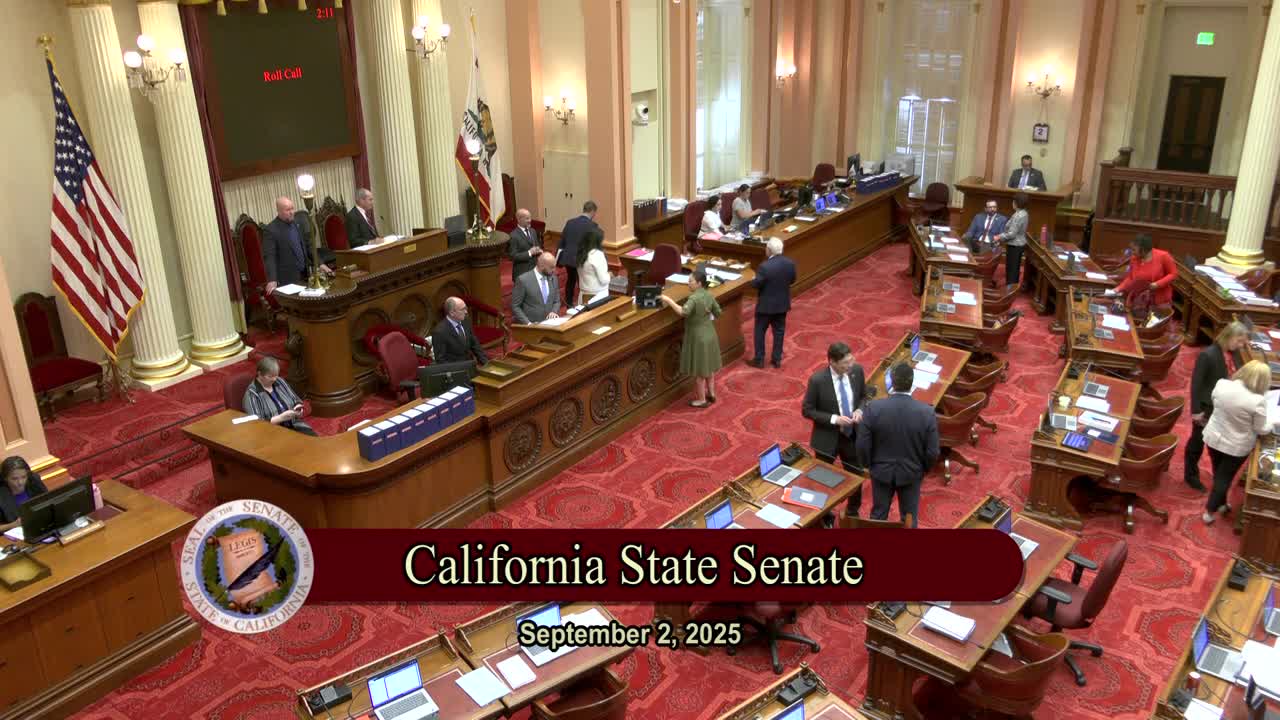
Bill Author

Bill Co-Author(s):
