SB 401: Political Reform Act of 1974: filing deadlines: emergency situations.
- Session Year: 2025-2026
- House: Senate
- Latest Version Date: 2026-09-30
Current Status:
Passed
(2026-09-30: Chaptered by Secretary of State. Chapter 968, Statutes of 2026.)
Introduced
In Committee
Awaiting First Chamber Vote
Passed First Chamber
In Committee
Awaiting Second Chamber Vote
Passed Second Chamber
Enacted
Under the Political Reform Act of 1974, various individuals and entities, including candidates, committees that support candidates and ballot measures, lobbyists, slate mailer organizations, and public officials, are required to periodically file certain statements and reports that disclose their financial activities. When an original statement or report is filed after the deadline for its filing under the act, the person responsible for making the filing is subject to a late filing penalty of $10 per day, as specified, in addition to any other penalties or remedies under the act.
This bill would authorize the Fair Political Practices Commission to extend any filing deadline established by the act, by no more than 60 days, for individuals that live in an area impacted by an emergency situation if the emergency situation is reasonably likely to affect the individuals ability to timely file. The bill would prohibit the commission from extending a deadline under these provisions during the 90 days before an election. The bill would define emergency situation to mean an emergency proclaimed by the Governor or a local governing body pursuant to a specified law.
The Political Reform Act of 1974, an initiative measure, provides that the Legislature may amend the act to further the acts purposes upon a 2/3 vote of each house of the Legislature and compliance with specified procedural requirements.
This bill would declare that it furthers the purposes of the act.
Under the Political Reform Act of 1974, various individuals and entities, including candidates, committees that support candidates and ballot measures, lobbyists, slate mailer organizations, and public officials, are required to periodically file certain statements and reports that disclose their financial activities. When an original statement or report is filed after the deadline for its filing under the act, the person responsible for making the filing is subject to a late filing penalty of $10 per day, as specified, in addition to any other penalties or remedies under the act.
This bill would authorize the Fair Political Practices Commission to extend any filing deadline established by the act act, by no more than 60 days, for individuals that live in an area impacted by an emergency situation. situation if the emergency situation is reasonably likely to affect the individuals ability to timely file. The bill would prohibit the commission from extending a deadline under these provisions during the 90 days before an election. The bill would define emergency situation to mean an emergency proclaimed by the Governor or a local governing body pursuant to a specified law.
The Political Reform Act of 1974, an initiative measure, provides that the Legislature may amend the act to further the acts purposes upon a 2/3 vote of each house of the Legislature and compliance with specified procedural requirements.
This bill would declare that it furthers the purposes of the act.
Under the Political Reform Act of 1974, various individuals and entities, including candidates, committees that support candidates and ballot measures, lobbyists, slate mailer organizations, and public officials, are required to periodically file certain statements and reports that disclose their financial activities. When an original statement or report is filed after the deadline for its filing under the act, the person responsible for making the filing is subject to a late filing penalty of $10 per day, as specified, in addition to any other penalties or remedies under the act.
This bill would authorize the Fair Political Practices Commission to extend any filing deadline established by the act for individuals that live in an area impacted by an emergency situation. The bill would define emergency situation to mean an emergency proclaimed by the Governor or a local governing body pursuant to a specified law.
The Political Reform Act of 1974, an initiative measure, provides that the Legislature may amend the act to further the acts purposes upon a 2/3 vote of each house of the Legislature and compliance with specified procedural requirements.
This bill would declare that it furthers the purposes of the act.
The Political Reform Act of 1974 prohibits a public official, including an employee of a state agency, from using their official position to make, participate in making, or influence a governmental decision in which the official knows or has reason to know that the official has a financial interest, as specified. Any person who knowingly or willfully violates the act is guilty of a misdemeanor.
This bill would further prohibit an employee of a state agency from owning or controlling a financial interest in any business entity that is subject to the regulatory authority of the state agency, or that does business with the state agency. The bill would authorize the head of a state agency to grant an employee a waiver from this prohibition only upon a finding that ownership or control of the financial interest is otherwise consistent with the act and that the employee will not make, participate in making, or attempt to influence a governmental decision in which the employee has a financial interest. By expanding the scope of an existing crime, this bill would impose a state-mandated local program.
The California Constitution requires the state to reimburse local agencies and school districts for certain costs mandated by the state. Statutory provisions establish procedures for making that reimbursement.
This bill would provide that no reimbursement is required by this act for a specified reason.
The Political Reform Act of 1974, an initiative measure, provides that the Legislature may amend the act to further the acts purposes upon a 2/3 vote of each house of the Legislature and compliance with specified procedural requirements.
This bill would declare that it furthers the purposes of the act.
The Political Reform Act of 1974 regulates conflicts of interest of public officials and requires specified elected and appointed officers at the state and local levels of government to disclose specified financial interests by filing periodic statements of economic interests. Existing law also prohibits a state officer or employee from engaging in any employment, activity, or enterprise that is clearly inconsistent, incompatible, in conflict with, or inimical to their duties as a state officer or employee and requires each appointing power to determine those activities. If those provisions are in conflict with a memorandum of understanding, existing law provides that the memorandum of understanding is controlling, except as specified.This bill would express the intent of the Legislature to enact subsequent legislation relating to conflicts of interest for all state employees and officers, as specified.The Political Reform Act of 1974 regulates conflicts of interest of public officials and requires specified elected and appointed officers at the state and local levels of government to disclose specified financial interests by filing periodic statements of economic interests.
Existing law also prohibits a state officer or employee from engaging in any employment, activity, or enterprise that is clearly inconsistent, incompatible, in conflict with, or inimical to their duties as a state officer or employee and requires each appointing power to determine those activities. If those provisions are in conflict with a memorandum of understanding, existing law provides that the memorandum of understanding is controlling, except as specified.
This bill would express the intent of the Legislature to enact subsequent legislation relating to conflicts of interest for all state employees and officers, as specified.
(a)Notwithstanding any other law, the commission may extend any filing deadline established by this title, except as provided in subdivisions (b) and (c), for individuals that live in an area impacted by an emergency situation if the emergency situation is reasonably likely to affect the individuals ability to timely file.
(b)A filing extension granted by the commission shall not exceed 60 days from the original filing deadline.
(c)This section does not authorize the commission to extend the filing deadline for a campaign statement or report during the 90 days before an election.
(d)For purposes of this section, emergency situation means an emergency proclaimed by the Governor or a local governing body pursuant to Section 8625 or Section 8630 of the California Emergency Services Act (Chapter 7 (commencing with Section 8550) of Division 1 of Title 2).
SEC. 2.The Legislature finds and declares that this bill furthers the purposes of the Political Reform Act of 1974 within the meaning of subdivision (a) of Section 81012 of the Government Code.
(a)Notwithstanding any other law, the commission may extend any filing deadline established by this title title, except as provided in subdivisions (b) and (c), for individuals that live in an area impacted by an emergency situation. situation if the emergency situation is reasonably likely to affect the individuals ability to timely file.
(b)A filing extension granted by the commission shall not exceed 60 days from the original filing deadline.
(c)This section does not authorize the commission to extend the filing deadline for a campaign statement or report during the 90 days before an election.
(b)(d)For purposes of this section, emergency situation means an emergency proclaimed by the Governor or a local governing body pursuant to Section 8625 or Section 8630 of the California Emergency Services Act (Chapter 7 (commencing with Section 8550) of Division 1 of Title 2).
SEC. 2.The Legislature finds and declares that this bill furthers the purposes of the Political Reform Act of 1974 within the meaning of subdivision (a) of Section 81012 of the Government Code.
(a)Notwithstanding any other law, the commission may extend any filing deadline established by this title for individuals that live in an area impacted by an emergency situation.
(b)For purposes of this section, emergency situation means an emergency proclaimed by the Governor or a local governing body pursuant to Section 8625 or Section 8630 of the California Emergency Services Act (Chapter 7 (commencing with Section 8550) of Division 1 of Title 2).
SEC. 2.No reimbursement is required by this act pursuant to Section 6 of Article XIIIB of the California Constitution because the only costs that may be incurred by a local agency or school district will be incurred because this act creates a new crime or infraction, eliminates a crime or infraction, or changes the penalty for a crime or infraction, within the meaning of Section 17556 of the Government Code, or changes the definition of a crime within the meaning of Section 6 of Article XIIIB of the California Constitution.SEC. 3.SEC. 2.The Legislature finds and declares that this bill furthers the purposes of the Political Reform Act of 1974 within the meaning of subdivision (a) of Section 81012 of the Government Code.
(a)An employee of a state agency shall not own or control a financial interest in any business entity that is subject to the regulatory authority of the state agency, or that does business with the state agency, except as provided in subdivision (b).
(b)(1)(A)An employee of a state agency may request from the head of the state agency a written waiver exempting them from the prohibition in subdivision (a).
(B)The head of the state agency may approve the request for a waiver only upon a finding that both of the following conditions are satisfied:
(i)Ownership or control of the financial interest is otherwise consistent with the requirements of this title.
(ii)The employee will not make, participate in making, or attempt to influence a governmental decision in which the employee has a financial interest pursuant to Section 87100.
(C)(i)The decision of the head of the state agency to approve or deny the waiver is final.
(ii)The written approval or denial of the waiver constitutes a public record subject to disclosure under the California Public Records Act (Division 10 (commencing with Section 7920.000) of Title 1).
(2)This subdivision does not authorize the head of the state agency to waive the requirements of Section 87100, Section 1090, or any other law relating to conflicts of interest.
(c)The commission shall adopt regulations for purposes of implementing this section, and it shall provide advisory opinions on the meaning of this section upon request.
(d)For purposes of this section, financial interest has the same meaning as specified in Section 87103.
SEC. 2.No reimbursement is required by this act pursuant to Section 6 of Article XIIIB of the California Constitution because the only costs that may be incurred by a local agency or school district will be incurred because this act creates a new crime or infraction, eliminates a crime or infraction, or changes the penalty for a crime or infraction, within the meaning of Section 17556 of the Government Code, or changes the definition of a crime within the meaning of Section 6 of Article XIIIB of the California Constitution.
SEC. 3.The Legislature finds and declares that this bill furthers the purposes of the Political Reform Act of 1974 within the meaning of subdivision (a) of Section 81012 of the Government Code.
SECTION 1.It is the intent of the Legislature to enact subsequent legislation relating to conflicts of interest for all state employees and officers that would do the following:(a)Prohibit any state officer or employee from owning or controlling any financial interest in a business or market sector regulated by their appointing authority or department unless written approval is granted by the appointing authority.(b)Require every department to identify specific activities or financial interests that constitute a conflict of interest and submit the activities and interests to the Department of Human Resources for approval.(c)Prohibit all state officers and employees from using their official position to influence decisions that benefit their financial interests or the financial interests of their family members; accepting gifts, gratuities, or other forms of compensation from entities regulated by or doing business with their department; or using state resources for personal gain or private advantage.(d)Require exceptions to the prohibitions identified in subdivision (c) to be granted in writing by the head of the department or agency, subject to review and approval by the Department of Human Resources, and only when the financial interest or activity does not pose a material risk of influencing the employees duties or the publics trust in the departments objectivity.(e)Require all state employees to annually file a statement of economic interest and disclose any changes in financial interest within 10 days.(f)Require any state employee with disqualifying financial interest to recuse themselves from any decision, inspection, or enforcement action that materially affects those interests, and require every department to document and publicly disclose instances of recusal.(g)Subject an employee who violates the conflict-of-interest provisions to disciplinary action, including termination of employment, and make void and unenforceable any agreement, decision, or contract made in violation of those provisions. (h)Require every department to adopt policies to implement the conflict-of-interest provisions and require the Department of Human Resources to issue guidance to assist departments in developing and enforcing policies, including standardized procedures for reviewing and approving exceptions.(i)Require the Fair Political Practices Commission to conduct periodic audits to ensure compliance by the departments.It is the intent of the Legislature to enact subsequent legislation relating to conflicts of interest for all state employees and officers that would do the following:
(a)Prohibit any state officer or employee from owning or controlling any financial interest in a business or market sector regulated by their appointing authority or department unless written approval is granted by the appointing authority.
(b)Require every department to identify specific activities or financial interests that constitute a conflict of interest and submit the activities and interests to the Department of Human Resources for approval.
(c)Prohibit all state officers and employees from using their official position to influence decisions that benefit their financial interests or the financial interests of their family members; accepting gifts, gratuities, or other forms of compensation from entities regulated by or doing business with their department; or using state resources for personal gain or private advantage.
(d)Require exceptions to the prohibitions identified in subdivision (c) to be granted in writing by the head of the department or agency, subject to review and approval by the Department of Human Resources, and only when the financial interest or activity does not pose a material risk of influencing the employees duties or the publics trust in the departments objectivity.
(e)Require all state employees to annually file a statement of economic interest and disclose any changes in financial interest within 10 days.
(f)Require any state employee with disqualifying financial interest to recuse themselves from any decision, inspection, or enforcement action that materially affects those interests, and require every department to document and publicly disclose instances of recusal.
(g)Subject an employee who violates the conflict-of-interest provisions to disciplinary action, including termination of employment, and make void and unenforceable any agreement, decision, or contract made in violation of those provisions.
(h)Require every department to adopt policies to implement the conflict-of-interest provisions and require the Department of Human Resources to issue guidance to assist departments in developing and enforcing policies, including standardized procedures for reviewing and approving exceptions.
(i)Require the Fair Political Practices Commission to conduct periodic audits to ensure compliance by the departments.
|
Date
|
Status
|
|---|---|
| Sep 30, 2026 | Chaptered by Secretary of State. Chapter 968, Statutes of 2026. |
| Sep 30, 2026 | Approved by the Governor. |
| Aug 30, 2026 | Enrolled and presented to the Governor at 6 p.m. |
| Aug 24, 2026 | Assembly amendments concurred in. (Ayes 40. Noes 0. Page 5681.) Ordered to engrossing and enrolling. |
| Aug 24, 2026 | Assembly amendments concurred in. (Ayes 40. Noes 0.) Ordered to engrossing and enrolling. |
| Aug 24, 2026 | Assembly amendments concurred in. (Ayes 39. Noes 0.) Ordered to engrossing and enrolling. |
| Aug 19, 2026 | In Senate. Concurrence in Assembly amendments pending. |
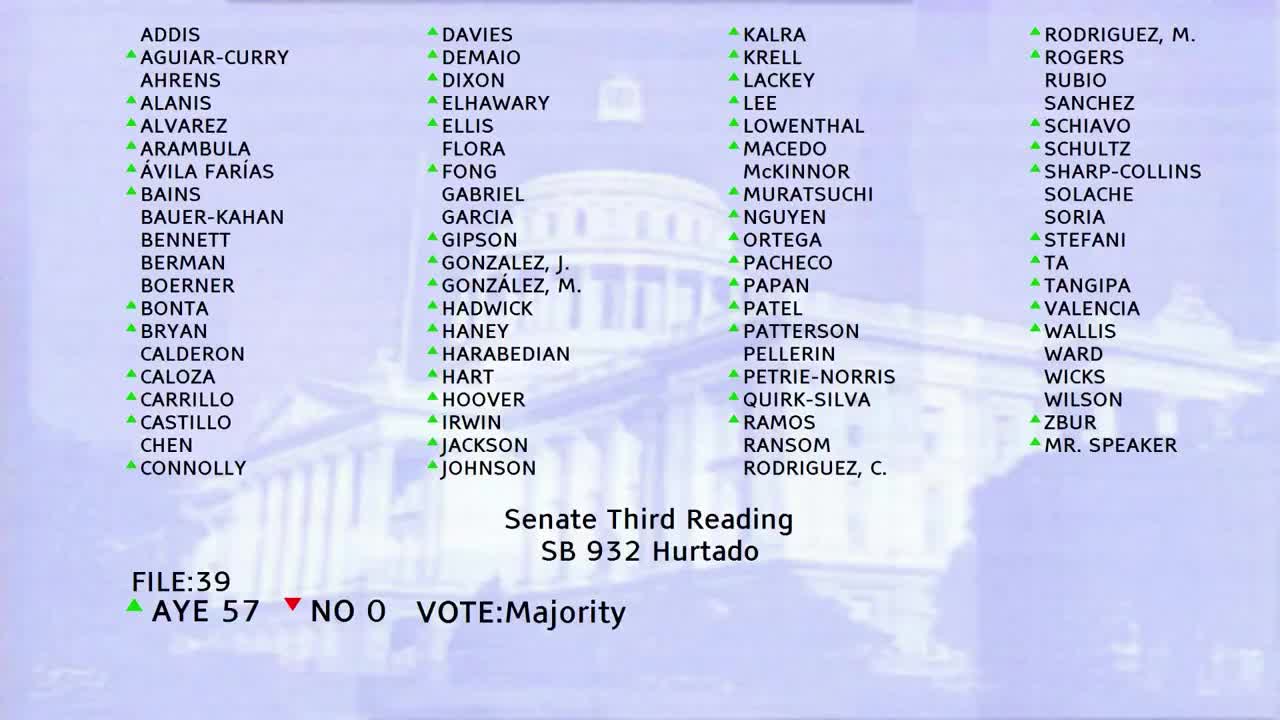
| Aug 19, 2026 | Read third time. Passed. (Ayes 76. Noes 0. Page 6264.) Ordered to the Senate. |
| Aug 19, 2026 | Read third time. Passed. Ordered to the Senate. |
| Aug 13, 2026 | Read second time. Ordered to third reading. |
| Aug 13, 2026 | From committee: Do pass. (Ayes 15. Noes 0.) (August 13). |
| Aug 13, 2026 | Assembly Rule 63 suspended. |
| Aug 5, 2026 | August 5 set for first hearing. Placed on suspense file. |
| Jun 17, 2026 | From committee: Do pass and re-refer to Com. on APPR. with recommendation: To consent calendar. (Ayes 7. Noes 0.) (June 17). Re-referred to Com. on APPR. |
| Jun 1, 2026 | From committee with author's amendments. Read second time and amended. Re-referred to Com. on ELECTIONS. |
| May 4, 2026 | Referred to Com. on ELECTIONS. |
| Jan 27, 2026 | In Assembly. Read first time. Held at Desk. |
| Jan 27, 2026 | Read third time. Passed. (Ayes 40. Noes 0. Page 3307.) Ordered to the Assembly. |
| Jan 21, 2026 | Read second time. Ordered to third reading. |
| Jan 20, 2026 | From committee: Be ordered to second reading pursuant to Senate Rule 28.8. |
| Jan 15, 2026 | Set for hearing January 20. |
| Jan 14, 2026 | Re-referred to Com. on APPR. |
| Jan 14, 2026 | Withdrawn from committee. |
| Jan 13, 2026 | From committee: Do pass and re-refer to Com. on L., P.E. & R. (Ayes 5. Noes 0. Page 3212.) (January 13). Re-referred to Com. on L., P.E. & R. |
| Jan 7, 2026 | Set for hearing January 13. |
| Jan 5, 2026 | From committee with author's amendments. Read second time and amended. Re-referred to Com. on E. & C.A. |
| Apr 10, 2025 | April 29 set for first hearing canceled at the request of author. |
| Apr 4, 2025 | Set for hearing April 29. |
| Apr 2, 2025 | Re-referred to Coms. on E. & C.A. and L., P.E. & R. |
| Mar 25, 2025 | From committee with author's amendments. Read second time and amended. Re-referred to Com. on RLS. |
| Feb 26, 2025 | Referred to Com. on RLS. |
| Feb 18, 2025 | From printer. May be acted upon on or after March 17. |
| Feb 14, 2025 | Introduced. Read first time. To Com. on RLS. for assignment. To print. |
|
Date
|
Description
|
Location
|
Votes
|
|
|---|---|---|---|---|
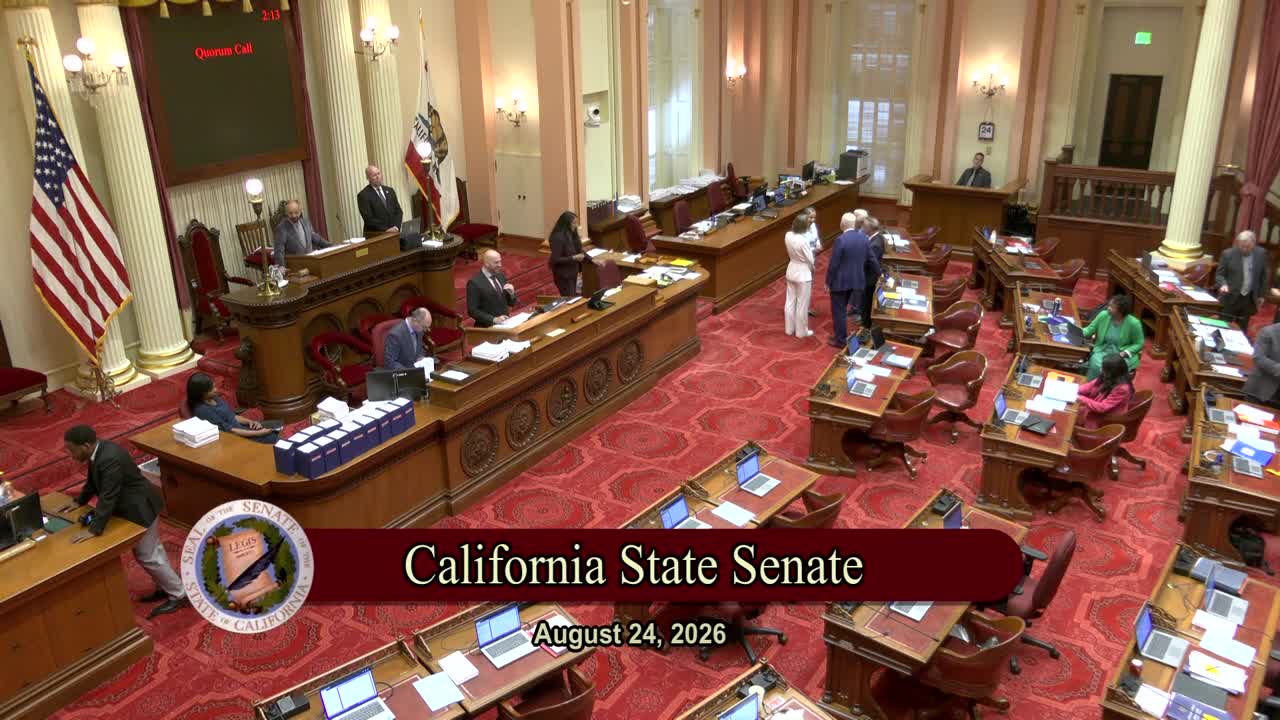
| Aug 24, 2026 | Unfinished Business SB401 Hurtado Concurrence | Senate Floor |
Passed |
|
| Aug 19, 2026 | SB 401 Hurtado Senate Third Reading By Irwin | Assembly Floor |
Passed |
|
| Aug 13, 2026 | Do pass. | Assembly Standing Committee on Appropriations |
Passed |
|
| Jun 17, 2026 | Do pass and be re-referred to the Committee on [Appropriations] with recommendation: To Consent Calendar | Assembly Standing Committee on Elections |
Passed |
|
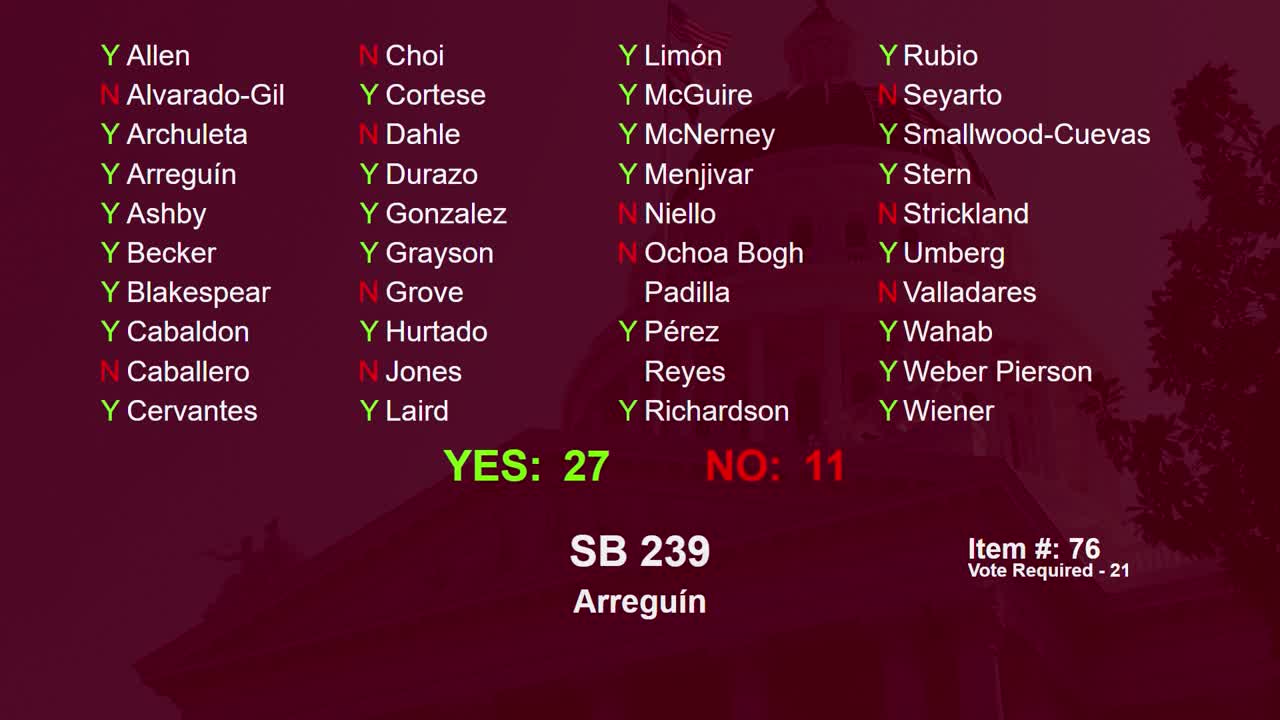
| Jan 27, 2026 | Senate 3rd Reading SB401 Hurtado | Senate Floor |
Passed |
|
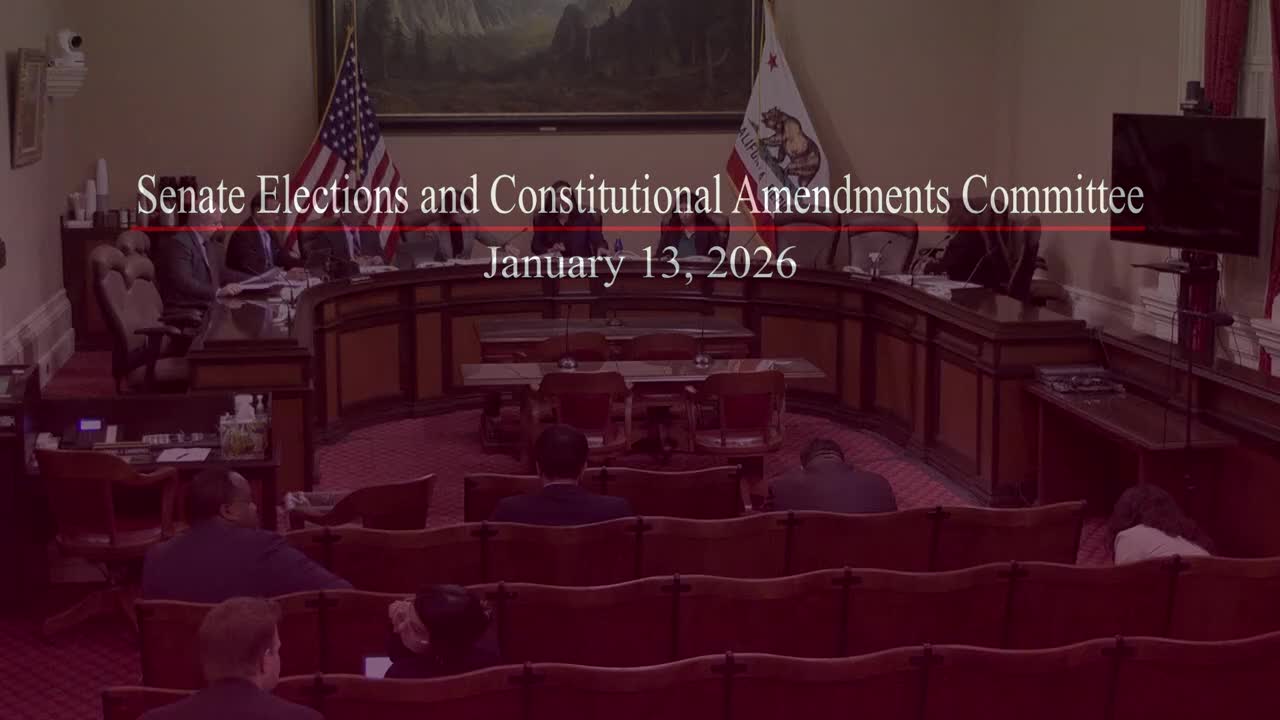
| Jan 13, 2026 | Do pass, but first be re-referred to the Committee on [Labor, Public Employment and Retirement ] | Senate Standing Committee on Elections and Constitutional Amendments |
Passed |
This list shows positions taken on this bill by organizations on the date displayed, which is linked to the original source.
Positions by individuals are not included.
|
Organization
|
Position
|
Date
|
|---|---|---|
| California Common Cause | ** Support | |
| Fair Political Practices Commission | ** Support |
SENATE RULES COMMITTEE Office of Senate Floor Analyses (916) 651-4171 | SB 401 |
UNFINISHED BUSINESS
Bill No: SB 401
Author: Hurtado (D)
Amended: 6/1/26
Vote: 27
SENATE ELECTIONS & C.A. COMMITTEE: 5-0, 1/13/26
AYES: Cervantes, Choi, Allen, Durazo, Umberg
SENATE APPROPRIATIONS COMMITTEE: Senate Rule 28.8
SENATE FLOOR: 40-0, 1/27/26
AYES: Allen, Alvarado-Gil, Archuleta, Arreguín, Ashby, Becker, Blakespear, Cabaldon, Caballero, Cervantes, Choi, Cortese, Dahle, Durazo, Gonzalez, Grayson, Grove, Hurtado, Jones, Laird, Limón, McGuire, McNerney, Menjivar, Niello, Ochoa Bogh, Padilla, Pérez, Reyes, Richardson, Rubio, Seyarto, Smallwood-Cuevas, Stern, Strickland, Umberg, Valladares, Wahab, Weber Pierson, Wiener
ASSEMBLY FLOOR: 76-0, 8/19/26 - See last page for vote
SUBJECT: Political Reform Act of 1974: filing deadlines: emergency situations
SOURCE: Fair Political Practices Commission
DIGEST:
This bill allows the Fair Political Practices Commission (FPPC) to extend any filing deadline under the Political Reform Act (PRA) for an individual who lives in an area impacted by an emergency situation that is likely to affect the individual’s ability to timely file.
Assembly Amendments
limit the time of the filing extension, prohibit extending filing deadlines for campaign statements during the 90 days before an election, and set a standard to ensure that the emergency situation would affect the ability to timely file.
ANALYSIS:
Existing law:
- Creates the PRA, which regulates lobbyists and sets campaign finance and disclosure laws for state and local campaigns, candidates, officeholders, and ballot measures. The PRA establishes the FPPC to implement, administer, and enforce the PRA.
- Requires, pursuant to the PRA, that:
- Candidates for elective offices, committees formed to support or oppose candidates for public office or ballot measures, slate mailer organizations, and other specified entities, file periodic and activity-based campaign statements and reports disclosing contributions, expenditures, and other related matters.
- An elected officer or member of the Public Utilities Commission file reports of specified payments in excess of $5,000 annually made at the behest of that officer or member.
- Public officials and candidates periodically file statements of economic interests to disclose to the public their financial interests. These are filed on the Form 700.
- Lobbyists and their employers file registrations and periodic activity reports to identify those lobbying, for whom they are lobbying, and the financial arrangements of that lobbying, as well as a recounting of campaign contributions delivered by each lobbyist.
- Prescribes, pursuant to the California Emergency Services Act, processes for the governor to declare a state of emergency and local governing bodies to declare a local emergency, when specified conditions of disaster or extreme peril to the safety of persons and property exist.
This bill:
- Allows the FPPC to extend by up to 60 days any filing deadline set in the PRA for any individuals living in an area impacted by an emergency the governor or a local governing body has proclaimed, provided that the emergency is reasonably likely to impact the individual’s ability to file on time.
- Precludes the FPPC from using this authority to extend a filing deadline for a campaign statement or report in the 90 days before an election.
Comments
Author’s Statement. Victims of natural disasters and other declared emergencies should not face unnecessary penalties when circumstances outside their control make it difficult to meet filing deadlines under the Political Reform Act.
Recent emergencies, including the Palisades and Eaton fires, have shown how quickly extraordinary circumstances can disrupt the lives of Californians and make timely filing difficult or impossible.
This bill provides a narrow and commonsense solution by authorizing the FPPC to extend certain filing deadlines when a declared emergency is reasonably likely to affect a filer’s ability to file on time. The bill also includes important safeguards to protect transparency and accountability by limiting any extension to no more than 60 days and prohibiting extensions for campaign reports or statements due within 90 days before an election.
This measure ensures that the FPPC has the flexibility to respond appropriately during emergencies while maintaining the integrity of California’s disclosure laws.
Previous Executive Orders. In past instances, governors through executive orders accompanying declared emergencies have extended deadlines for filings under the PRA. These extensions have typically been restricted to those related to the Form 700 or behested payments. Most recently, this occurred due to the fires in Los Angeles and Ventura counties in January of 2025. This bill grants the FPPC broad authority to extend any deadline under the PRA, including the filing of campaign reports, provided that it is not within 90 days of an election.
FISCAL EFFECT: Appropriation: No Fiscal Com.: Yes Local: No
According to the Assembly Committee on Appropriations:
- Minor and absorbable costs to the FPPC.
- One-time costs ranging between approximately $275,000 to $375,000 to the Secretary of State (SOS) to update the CAL-ACCESS Replacement System (CARS) to be able to reflect the correct filing due date for the specific subset of filers for which the FPPC extends a PRA filing deadline (GF). The SOS anticipates being able to manually waive late filing penalties for impacted filers, but notes that that without the system enhancement, the filings would continue to display as “late” in CARS and on the public-facing website, despite the filer having an approved extension.
SUPPORT: (Verified 8/17/26)
Fair Political Practices Commission (source)
California Common Cause
OPPOSITION: (Verified 8/17/26)
ARGUMENTS IN SUPPORT: California Common Cause writes that it supports “the bill's goal of ensuring that filers are not penalized when emergencies disrupt their ability to comply with PRA reporting requirements.” Specifically, Common Cause believes that providing reasonable flexibility during genuine emergencies helps promote fairness while recognizing that circumstances beyond a filer's control may make compliance temporarily impossible. The organization is “particularly appreciative that the bill now includes important safeguards to ensure that flexibility does not come at the expense of transparency.”
ASSEMBLY FLOOR: 8/19/26, 76-0
Ayes: Addis, Aguiar-Curry, Ahrens, Alanis, Alvarez, Arambula, Ávila Farías, Bains, Bauer-Kahan, Bennett, Berman, Boerner, Bonta, Bryan, Calderon, Caloza, Carrillo, Castillo, Chen, Connolly, Davies, DeMaio, Dixon, Elhawary, Ellis, Flora, Fong, Gabriel, Garcia, Gipson, Jeff Gonzalez, Mark González, Hadwick, Haney, Harabedian, Hart, Hoover, Irwin, Jackson, Johnson, Kalra, Krell, Lackey, Lee, Lowenthal, Macedo, McKinnor, Muratsuchi, Nguyen, Ortega, Pacheco, Papan, Patel, Pellerin, Petrie-Norris, Ramos, Ransom, Celeste Rodriguez, Michelle Rodriguez, Rogers, Sanchez, Schiavo, Schultz, Sharp-Collins, Solache, Soria, Stefani, Ta, Tangipa, Valencia, Wallis, Ward, Wicks, Wilson, Zbur, Rivas.
No Vote Recorded: Patterson, Quirk-Silva, Blanca Rubio.
Prepared by: Carrie Cornwell / E. & C.A. / (916) 651-4106
8/19/26 14:39:00
**** END ****
SENATE THIRD READING
STR Bill Id:SB 401
Author:(Hurtado)
As Amended Ver:June 1, 2026
2/3 vote
SUMMARY
Permits the Fair Political Practices Commission (FPPC) to extend Political Reform Act (PRA) filing deadlines in the event of an emergency.
Major Provisions
- Permits the FPPC to extend the filing deadline established by the PRA for individuals that live in an area impacted by an emergency situation that is reasonably likely to affect the individual′s ability to timely file the required report or statement. Prohibits the FPPC from granting an extension of more than 60 days, or for a campaign statement or report due during the 90 days before an election.
- Defines ″emergency situation,″ for the purpose of this bill, as an emergency proclaimed by the Governor or a local governing body pursuant to the California Emergency Services Act (CESA).
COMMENTS
The PRA requires candidates, elected officers, political committees, lobbyists, and other individuals to file various reports and statements. In limited circumstances, the FPPC has extended filing deadlines when emergency conditions interfered with a person′s ability to comply with applicable filing requirements. For example, at the outset of the COVID-19 pandemic, the FPPC adopted an emergency regulation extending the deadline by 60 days for certain public officials to file their annual statement of economic interests (SEI). More recently, the FPPC adopted a similar emergency regulation for individuals affected by wildfires in Los Angeles County.
Despite these actions, the FPPC generally lacks authority under existing law to extend PRA filing deadlines. In the examples above, the FPPC was able to grant filing extensions because the affected deadlines were established by regulation rather than by statute. Most PRA filing deadlines, however, are prescribed in the Government Code, leaving the FPPC without authority to modify or extend those deadlines to account for extenuating circumstances. Nevertheless, in its enforcement proceedings, the FPPC generally considers individual circumstances, including whether a respondent was affected by a declared emergency.
The CESA authorizes the Governor to proclaim a state of emergency when conditions of disaster or extreme peril to the safety of persons or property exist within the state. During a declared state of emergency, CESA grants the Governor broad authority to suspend regulatory statutes and the orders, rules, and regulations of state agencies when strict compliance would prevent, hinder, or delay efforts to mitigate the effects of the emergency. Accordingly, gubernatorial emergency proclamations have occasionally provided relief from PRA filing deadlines. For example, in February 2025, Governor Newsom issued Executive Order N-17-25 in response to fire and windstorm conditions in Los Angeles and Ventura Counties. Among other provisions, the order extended by 60 days the deadlines for public officials in Los Angeles County to file behested payment reports and SEIs.
This bill authorizes the FPPC to extend PRA filing deadlines for individuals affected by a declared state of emergency. The bill limits any such extension to no more than 60 days, consistent with filing extensions provided during prior emergencies, and prohibits extensions for disclosure reports due during the 90-day period preceding an election.
California voters passed an initiative, Proposition 9, in 1974 that created the FPPC and codified significant restrictions and prohibitions on candidates, officeholders, and lobbyists. That initiative is commonly known as the PRA. Amendments to the PRA that are not submitted to the voters, such as those contained in this bill, must further the purposes of the initiative and require a two-thirds vote of both houses of the Legislature.
According to the Author
″Public officials who are victims of natural disasters and other emergency situations like the Palisades and Eaton fires in 2025 and during the COVID-19 Pandemic should not be overburdened when it may be difficult or downright impossible to file various statements of interest required under the Political Reform Act on time. This bill removes bureaucratic barriers so the FPPC may extend deadlines when appropriate, so the state does not unfairly penalize families for failing to meet filing deadlines outside of their control. SB 401 would allow families to focus on rebuilding more quickly, access essential services, and not be overburdened at a time when they should be focused on making sure their family is safe and secure.″
Arguments in Support
In support of this bill, California Common Cause writes, ″California Common Cause supports the bill′s goal of ensuring that filers are not penalized when emergencies disrupt their ability to comply with PRA reporting requirements. Providing reasonable flexibility during genuine emergencies helps promote fairness while recognizing that circumstances beyond a filer′s control may make compliance temporarily impossible. We are particularly appreciative that the bill now includes important safeguards to ensure that flexibility does not come at the expense of transparency.″
Arguments in Opposition
None received.
FISCAL COMMENTS
According to the Assembly Appropriations Committee:
- Minor and absorbable costs to the FPPC.
- One-time costs ranging between approximately $275,000 to $375,000 to the Secretary of State (SOS) to update the CAL-ACCESS Replacement System (CARS) to be able to reflect the correct filing due date for the specific subset of filers for which the FPPC extends a PRA filing deadline (General Fund). The SOS anticipates being able to manually waive late filing penalties for impacted filers, but notes that that without the system enhancement, the filings would continue to display as ″late″ in CARS and on the public-facing website, despite the filer having an approved extension.
VOTES
SENATE FLOOR: 40-0-0
YES: Allen, Alvarado-Gil, Archuleta, Arreguín, Ashby, Becker, Blakespear, Cabaldon, Caballero, Cervantes, Choi, Cortese, Dahle, Durazo, Gonzalez, Grayson, Grove, Hurtado, Jones, Laird, Limón, McGuire, McNerney, Menjivar, Niello, Ochoa Bogh, Padilla, Pérez, Reyes, Richardson, Rubio, Seyarto, Smallwood-Cuevas, Stern, Strickland, Umberg, Valladares, Wahab, Weber Pierson, Wiener
ASM ELECTIONS: 7-0-0
YES: Pellerin, Bennett, Berman, Elhawary, Lackey, Solache, Stefani
ASM APPROPRIATIONS: 15-0-0
YES: Wicks, Hoover, Arambula, Calderon, Caloza, Dixon, Fong, Mark González, Krell, Pacheco, Pellerin, Sharp-Collins, Solache, Ta, Tangipa
UPDATED
VERSION: June 1, 2026
CONSULTANT: Ethan Jones / ELECTIONS / (916) 319-2094 FN: 0003490
Date of Hearing: August 5, 2026
ASSEMBLY COMMITTEE ON APPROPRIATIONS
Buffy Wicks, Chair
SBPCA Bill Id:SB 401
Author:(Hurtado) – As Amended Ver:June 1, 2026
Policy Committee: | Elections | Vote: | 7 - 0 |
|
| ||
|
|
Urgency: No State Mandated Local Program: No Reimbursable: No
SUMMARY:
This bill authorizes the Fair Political Practices Commission (FPPC) to extend certain filing deadlines under the Political Reform Act (PRA) in response to certain emergency situations.
Specifically, this bill:
- Authorizes the FPPC to extend a PRA filing deadline by up to 60 days for an individual that lives in an area impacted by an emergency proclaimed pursuant to the California Emergency Services Act (CESA) if the emergency situation is reasonably likely to affect the individual’s ability to timely file.
- Prohibits the FPPC from extending the filing deadline for a campaign statement or report during the 90 days before an election.
FISCAL EFFECT:
- Minor and absorbable costs to the FPPC.
- One-time costs ranging between approximately $275,000 to $375,000 to the Secretary of State (SOS) to update the CAL-ACCESS Replacement System (CARS) to be able to reflect the correct filing due date for the specific subset of filers for which the FPPC extends a PRA filing deadline (GF). The SOS anticipates being able to manually waive late filing penalties for impacted filers, but notes that that without the system enhancement, the filings would continue to display as “late” in CARS and on the public-facing website, despite the filer having an approved extension.
COMMENTS:
- Purpose. According to the author:
Public officials who are victims of natural disasters and other emergency situations like the Palisades and Eaton fires in 2025 and during the COVID-19 Pandemic should not be overburdened when it may be difficult or downright impossible to file various statements of interest required under the [PRA] on time. This bill removes bureaucratic barriers so the FPPC may extend deadlines when appropriate, so the state does not unfairly penalize families for failing to meet filing deadlines outside of their control.
This bill is sponsored by the FPPC and supported by California Common Cause.
- Background. PRA Filing Deadlines. Although some FPPC filing deadlines are set by regulation, most deadlines are prescribed in the Government Code, which means the FPPC lacks the authority to modify or extend most deadlines to account for extenuating circumstances. However, the FPPC generally considers individual circumstances during an enforcement proceeding, including whether a respondent was affected by an emergency.
CESA. The CESA authorizes the Governor to proclaim a state of emergency when conditions of disaster or extreme peril to the safety of people or property exist within the state. During such an emergency, the CESA grants the Governor broad authority to suspend state statutes and the orders, rules, and regulations of state agencies when strict compliance would prevent, hinder, or delay efforts to mitigate the effects of the emergency.
As authorized by the CESA, gubernatorial emergency proclamations have occasionally provided relief from PRA filing deadlines. For example, Governor Newsom’s Executive Order N-17-25, issued in response to the 2025 Los Angeles-area wildfire disaster, extended by 60 days the deadline for public officials in Los Angeles County to file behested payment reports and statements of economic interest. This bill authorizes the FPPC to extend PRA filing deadlines for individuals affected by a CESA-proclaimed emergency. However, this bill limits such an extension to no more than 60 days, consistent with extensions provided during prior emergencies, and prohibits an extension for campaign disclosure reports due in the 90-day period preceding an election.
Analysis Prepared by: Irene Ho / APPR. / (916) 319-2081
Date of Hearing: June 17, 2026
ASSEMBLY COMMITTEE ON ELECTIONS
Gail Pellerin, Chair
SBPCA Bill Id:SB 401
Author:(Hurtado) – As Amended Ver:June 1, 2026
SENATE VOTE: 40-0
SUBJECT: Political Reform Act of 1974: filing deadlines: emergency situations.
SUMMARY: Permits the Fair Political Practices Commission (FPPC) to extend Political Reform Act (PRA) filing deadlines in the event of an emergency. Specifically, this bill:
- Defines “emergency situation,” for the purpose of this bill, as an emergency proclaimed by the Governor or a local governing body pursuant to the California Emergency Services Act (CESA).
- Permits the FPPC to extend the filing deadline established by the PRA for individuals that live in an area impacted by an emergency situation that is reasonably likely to affect the individual’s ability to timely file the required report or statement. Prohibits the FPPC from granting an extension of more than 60 days, or for a campaign statement or report due during the 90 days before an election.
EXISTING LAW:
- Creates the FPPC, and makes it responsible for the impartial, effective administration and implementation of the PRA. (Government Code §§83100, 83111)
- Requires, pursuant to the PRA, that various reports and statements be filed, including the following:
- Requires candidates for elective office, political committees, and slate mailer organizations to file periodic and activity-based campaign statements and reports disclosing their financial activities, including contributions received and made, and expenditures made. (Government Code §§84200-84223, 84600-84616)
- Requires an elected officer or member of the Public Utilities Commission to file reports of specified payments exceeding $5,000 annually made at the behest of the officer or member. (Government Code §84224)
- Requires candidates for, and current holders of, specified elected or appointed state and local offices, and designated employees of state and local agencies, to file statements of economic interests (SEIs) disclosing their financial interests, including investments, real property interests, and income. (Government Code §§87100-87505)
- Requires lobbyists, lobbying firms, lobbyist employers, and certain lobbying coalitions to file periodic disclosure reports detailing lobbying activity, payments, and expenses. (Government Code §§86100-86118)
- Permits the Governor, pursuant to CESA, to proclaim a state of emergency in an area affected or likely to be affected by that state of emergency when conditions of disaster or of extreme peril exist to the safety of persons and property within the state, as specified. Permits a city, county, or city and county, as specified, to proclaim a local emergency where conditions of disaster or of extreme peril exist to the safety of persons and property within the jurisdiction. (Chapter 7 (commencing with Section 8550) of Division 1 of Title 2 of the Government Code)
FISCAL EFFECT: According to the Senate Appropriations Committee, pursuant to Senate Rule 28.8, negligible state costs.
COMMENTS:
- Purpose of the Bill: According to the author:
Public officials who are victims of natural disasters and other emergency situations like the Palisades and Eaton fires in 2025 and during the COVID-19 Pandemic should not be overburdened when it may be difficult or downright impossible to file various statements of interest required under the Political Reform Act on time. This bill removes bureaucratic barriers so the FPPC may extend deadlines when appropriate, so the state does not unfairly penalize families for failing to meet filing deadlines outside of their control. SB 401 would allow families to focus on rebuilding more quickly, access essential services, and not be overburdened at a time when they should be focused on making sure their family is safe and secure.
- PRA Filings in Emergency Situations: As detailed above, the PRA requires candidates, elected officers, political committees, lobbyists, and other individuals to file various reports and statements. In limited circumstances, the FPPC has extended filing deadlines when emergency conditions interfered with a person's ability to comply with applicable filing requirements. For example, at the outset of the COVID-19 pandemic, the FPPC adopted an emergency regulation extending the deadline by 60 days for certain public officials to file their annual SEI. More recently, the FPPC adopted a similar emergency regulation for individuals affected by wildfires in Los Angeles County.
Despite these actions, the FPPC generally lacks authority under existing law to extend PRA filing deadlines. In the examples above, the FPPC was able to grant filing extensions because the affected deadlines were established by regulation rather than by statute. Most PRA filing deadlines, however, are prescribed in the Government Code, leaving the FPPC without authority to modify or extend those deadlines to account for extenuating circumstances. Nevertheless, in its enforcement proceedings, the FPPC generally considers individual circumstances, including whether a respondent was affected by a declared emergency.
As discussed above, the CESA authorizes the Governor to proclaim a state of emergency when conditions of disaster or extreme peril to the safety of persons or property exist within the state. During a declared state of emergency, CESA grants the Governor broad authority to suspend regulatory statutes and the orders, rules, and regulations of state agencies when strict compliance would prevent, hinder, or delay efforts to mitigate the effects of the emergency. Accordingly, gubernatorial emergency proclamations have occasionally provided relief from PRA filing deadlines. For example, in February 2025, Governor Newsom issued Executive Order N-17-25 in response to fire and windstorm conditions in Los Angeles and Ventura Counties. Among other provisions, the order extended by 60 days the deadlines for public officials in Los Angeles County to file behested payment reports and SEIs.
This bill authorizes the FPPC to extend PRA filing deadlines for individuals affected by a declared state of emergency. The bill limits any such extension to no more than 60 days, consistent with filing extensions provided during prior emergencies, and prohibits extensions for disclosure reports due during the 90-day period preceding an election. - Arguments in Support: In support of this bill, California Common Cause writes:
California Common Cause supports the bill's goal of ensuring that filers are not penalized when emergencies disrupt their ability to comply with PRA reporting requirements. Providing reasonable flexibility during genuine emergencies helps promote fairness while recognizing that circumstances beyond a filer's control may make compliance temporarily impossible.
We are particularly appreciative that the bill now includes important safeguards to ensure that flexibility does not come at the expense of transparency.
- Political Reform Act of 1974: California voters passed an initiative, Proposition 9, in 1974 that created the FPPC and codified significant restrictions and prohibitions on candidates, officeholders, and lobbyists. That initiative is commonly known as the PRA. Amendments to the PRA that are not submitted to the voters, such as those contained in this bill, must further the purposes of the initiative and require a two-thirds vote of both houses of the Legislature.
REGISTERED SUPPORT / OPPOSITION:
Support
Fair Political Practices Commission (Sponsor) (prior version)
California Common Cause
Opposition
None on file.
Analysis Prepared by: Ethan Jones / ELECTIONS / (916) 319-2094
SENATE RULES COMMITTEE Office of Senate Floor Analyses (916) 651-4171 | SB 401 |
THIRD READING
Bill No: SB 401
Author: Hurtado (D)
Amended: 1/5/26
Vote: 27
SENATE ELECTIONS & C.A. COMMITTEE: 5-0, 1/13/26
AYES: Cervantes, Choi, Allen, Durazo, Umberg
SENATE APPROPRIATIONS COMMITTEE: Senate Rule 28.8
SUBJECT: Political Reform Act of 1974: filing deadlines: emergency situations
SOURCE: Fair Political Practices Commission
DIGEST:
This bill allows the Fair Political Practices Commission (FPPC) to extend any filing deadline under the Political Reform Act (PRA) for any individual who lives in an area of a declared emergency
ANALYSIS:
Existing law:
- Creates the PRA, which regulates lobbyists and sets campaign finance and disclosure laws for state and local campaigns, candidates, officeholders, and ballot measures. The PRA establishes the FPPC to implement, administer, and enforce the PRA.
- Requires, pursuant to the PRA, that:
- Candidates for elective office, committees formed to support or oppose candidates for public office or ballot measures, slate mailer organizations, and other specified entities, file periodic and activity-based campaign statements and reports disclosing contributions, expenditures, and other related matters.
- An elected officer or member of the Public Utilities Commission file reports of specified payments in excess of $5,000 annually made at the behest of that officer or member.
- Public officials and candidates periodically file statements of economic interests to disclose to the public their financial interests. These are filed on the Form 700.
- Lobbyists and their employers file registrations and periodic activity reports to identify those lobbying, for whom they are lobbying, and the financial arrangements of that lobbying, as well as a recounting of campaign contributions delivered by each lobbyist.
- Prescribes, pursuant to the California Emergency Services Act, the process for the governor to declare a state of emergency and local governing bodies to declare a local emergency, when specified conditions of disaster or extreme peril to the safety of persons and property exist.
This bill allows the FPPC to extend any filing deadline set in the PRA for any individuals living in an area impacted by an emergency the governor or a local governing body has proclaimed.
Comments
Author’s Statement. Victims of natural disaster and other emergency situations like the Palisades and Eaton fires should not be overburdened when it may be difficult or downright impossible to file statements of economic interest on time. This bill removes bureaucratic barriers so that the FPPC may extend deadlines when appropriate, so the state does not unfairly penalize families for failing to meet program deadlines out of a filer’s control. This bill would allow families to focus on rebuilding more quickly, access essential services, and not be overburdened at a time when they should be focused on making sure their family is safe and secure.
Previous Executive Orders. In past instances, governors through executive orders have extended deadlines for filings under the PRA, but these have typically been restricted to those related to the Form 700 or behested payments. Most recently, this occurred due to the fires in Los Angeles and Ventura counties in January of 2025.
Broad grant of authority. This bill grants the FPPC very broad authority to extend any filing deadline in the PRA, whether it be for candidates, lobbyists, non-elected Form 700 filers, or elected officials. The qualification for this extension is simply that “individuals … live in an area impacted by an emergency situation.” This bill does not define “an area” or require the individual to be actually impacted. This bill further does not set a timeframe for these extensions. Based on discussion during the committee hearing on this bill and comments made by the author’s staff, amendments are expected to address these concerns.
The FPPC does not currently have explicit statutory or regulatory authority to issue filing extensions under the PRA, but during the enforcement process, the FPPC considers individual circumstances, potentially including that the respondent was affected by a declared emergency.
FISCAL EFFECT: Appropriation: No Fiscal Com.: Yes Local: No
SUPPORT: (Verified 1/21/26)
Fair Political Practices Commission (source)
OPPOSITION: (Verified 1/21/26)
Prepared by: Carrie Cornwell / E. & C.A. / (916) 651-4106
1/21/26 16:05:22
**** END ****
SENATE COMMITTEE ON
ELECTIONS AND CONSTITUTIONAL AMENDMENTS
Senator Sabrina Cervantes, Chair
2025 - 2026 Regular
Bill No: Hearing Date: 1/13/26
Author: | |||
Version: | 1/5/26 | ||
Urgency: | Fiscal: | ||
Consultant: | |||
Subject:
DIGEST
This bill allows the Fair Political Practices Commission (FPPC) to extend any filing deadline under the Political Reform Act (PRA) for any individual who lives in an area of a declared emergency.
ANALYSIS
Existing law:
- Creates the PRA, which regulates lobbyists and sets campaign finance and disclosure laws for state and local campaigns, candidates, officeholders, and ballot measures. The PRA establishes the FPPC to implement, administer, and enforce the PRA.
- Requires, pursuant to the PRA, that:
- Candidates for elective office, committees formed to support or oppose candidates for public office or ballot measures, slate mailer organizations, and other specified entities, file periodic and activity-based campaign statements and reports disclosing contributions, expenditures, and other related matters.
- An elected officer or member of the Public Utilities Commission file reports of specified payments in excess of $5,000 annually made at the behest of that officer or member.
- Public officials and candidates periodically file statements of economic interests to disclose to the public their financial interests. These are filed on the Form 700.
- Lobbyists and their employers file registrations and periodic activity reports to identify those lobbying, for whom they are lobbying, and the financial arrangements of that lobbying, as well as a recounting of campaign contributions delivered by each lobbyist.
- Prescribes, pursuant to the California Emergency Services Act, the process for the governor to declare a state of emergency and local governing bodies to declare a local emergency, when specified conditions of disaster or extreme peril to the safety of persons and property exist.
This bill allows the FPPC to extend any filing deadline set in the PRA for any individuals living in an area impacted by an emergency the governor or a local governing body has proclaimed.
COMMENTS
- Author’s Statement. Victims of natural disaster and other emergency situations like the Palisades and Eaton fires should not be overburdened when it may be difficult or downright impossible to file statements of economic interest on time. This bill removes bureaucratic barriers so that the FPPC may extend deadlines when appropriate, so the state does not unfairly penalize families for failing to meet program deadlines out of a filer’s control. This bill would allow families to focus on rebuilding more quickly, access essential services, and not be overburdened at a time when they should be focused on making sure their family is safe and secure.
- Previous Executive Orders. In past instances, governors through executive orders have extended deadlines for filings under the PRA, but these have typically been restricted to those related to the Form 700 or behested payments. Most recently, this occurred due to the fires in Los Angeles and Ventura counties in January of 2025.
- Broad grant of authority. The bill grants the FPPC very broad authority to extend any filing deadline in the PRA, whether it be for candidates, lobbyists, non-elected Form 700 filers, or elected officials. The qualification for this extension is simply that “individuals …live in an area impacted by an emergency situation.” The bill does not define “an area” or require the individual to be actually impacted.
The FPPC does not currently have explicit statutory or regulatory authority to issue filing extensions under the PRA, but during the enforcement process, the FPPC considers individual circumstances, potentially including that the respondent was affected by a declared emergency.
FPPC staff presented something very similar to this bill to the FPPC in November so that the FPPC could consider sponsoring a bill like this in 2026. The FPPC staff memo on the sponsored-bill proposals notes this proposal would give the FPPC “authority to respond with appropriate consideration when filing is delayed due to extreme circumstances out of the filer’s control.” The author cites the FPPC as the source of the idea for the bill.
- Double referral. Should this bill pass this committee, it will next move to the Committee on Labor, Public Employment and Retirement, where it will be withdrawn due to the recent amendments.
POSITIONS
Sponsor: Author
Support: None received
Oppose: None received
-- END --
Discussed in Hearing
 1MIN
Senate Floor
 1MIN
Assembly Floor
 2MIN
Senate Floor
 10MIN
Senate Standing Committee on Elections and Constitutional Amendments
Bill Author

Bill Co-Author(s):