SB 405: Elections: voter identification.
- Session Year: 2025-2026
- House: Senate
- Latest Version Date: 2025-02-14
Current Status:
Failed
(2026-02-02: Returned to Secretary of Senate pursuant to Joint Rule 56.)
Introduced
In Committee
Awaiting First Chamber Vote
Passed First Chamber
In Committee
Awaiting Second Chamber Vote
Passed Second Chamber
Enacted
Existing law prohibits local governments from enacting or enforcing any charter provision, ordinance, or regulation requiring a person to present identification for the purpose of voting or submitting a ballot at any polling place, vote center, or other location where ballots are cast or submitted.
This bill would repeal that prohibition.
|
Date
|
Status
|
|---|---|
| Feb 2, 2026 | Returned to Secretary of Senate pursuant to Joint Rule 56. |
| Apr 1, 2025 | April 1 set for first hearing. Held in committee without recommendation. |
| Mar 20, 2025 | Set for hearing April 1. |
| Mar 19, 2025 | Referred to Coms. on E. & C.A., L. GOV., and APPR. |
| Feb 18, 2025 | From printer. May be acted upon on or after March 17. |
| Feb 14, 2025 | Introduced. Read first time. To Com. on RLS. for assignment. To print. |
This list shows positions taken on this bill by organizations on the date displayed, which is linked to the original source.
Positions by individuals are not included.
|
Organization
|
Position
|
Date
|
|---|---|---|
| American Civil Liberties Union California Action | ** Against | |
| American Federation Of State, County And Municipal Employees, Afl-Cio | ** Against | |
| Asian Law Caucus | ** Against | |
| CFT- a Union of Educators & Classified Professionals, Aft, Afl-cio | ** Against | |
| Disability Rights California | ** Against | |
| Election Integrity Project California, Inc. | ** Support | |
| League Of Women Voters Of California | ** Against | |
| Shasta County Board of Supervisors | ** Support | |
| VoteRiders | ** Against |
SENATE COMMITTEE ON
ELECTIONS AND CONSTITUTIONAL AMENDMENTS
Senator Sabrina Cervantes, Chair
2025 - 2026 Regular
Bill No: SB Hearing Date: 4/1/25
Author: | |||
Version: | 2/14/25 | ||
Urgency: | No | Fiscal: | No |
Consultant: | Scott Matsumoto | ||
Subject: Elections: voter identification.
DIGEST
This bill repeals a prohibition on local governments enacting and enforcing provisions requiring a person to present identification for voting.
ANALYSIS
Existing law:
- Prohibits a local government from enacting or enforcing any charter provision, ordinance, or regulation requiring a person to present identification for the purpose of voting or submitting a ballot at any polling place, vote center, or other location where ballots are cast or submitted, unless required by state or federal law.
- Requires all city charters to provide for the conduct of city elections, in addition to other provisions allowable by the California Constitution, and by the laws of California, as specified.
- Provides that every person who willfully causes, procures, or allows themself or any other person to be registered as a voter, knowing that they or that other person is not entitled to register, is punishable by imprisonment for 16 months or two or three years, or in a county jail for not more than one year, as specified.
- Provides that every person who knowingly and willfully signs, or causes or procures the signing of, an affidavit of registration of a nonexistent person, and who mails or delivers, or causes or procures the mailing or delivery of, that affidavit to a county elections official is guilty of a crime punishable by imprisonment for 16 months or two or three years, or in a county jail for not more than one year, as specified.
- Provides that any person who commits fraud or attempts to commit fraud, and any person who aids or abets fraud or attempts to aid or abet fraud, in connection with any vote cast, to be cast, or attempted to be cast, is guilty of a felony, punishable by imprisonment for 16 months or two or three years.
This bill repeals a prohibition on any local government from enacting or enforcing any charter provision, ordinance, or regulation requiring a person to present identification for the purpose of voting or submitting a ballot at any polling place, vote center, or other location where ballots are cast or submitted, unless required by state or federal law.
BACKGROUND
Voter Identification in California. In California, an individual registering to vote declares under penalty of perjury that the information provided on a voter registration form is true and correct. The registration form includes questions related to a person’s eligibility to vote, date of birth, California driver’s license or identification card number, and the last four numbers of the registrant’s social security number, if available. This all typically occurs prior to voting and during the registration process.
If a first-time voter does not provide a California driver’s license number, California identification card number, or the last four digits of their social security number on the registration form when they register to vote, they must provide identification prior to being eligible to vote in a federal election. If a voter does not provide the required information with their voted vote by mail ballot, the county elections official is advised to reach out to the voter to request and receive the required proof prior to counting the ballot. The vote by mail ballot is treated as a provisional ballot where it is processed after the voter is verified. If the first time voter does not provide the necessary identification, then the vote by mail ballot is not accepted. For the November 5, 2024 statewide general election, there were 1,565 vote by mail ballots rejected for a lack of identification.
When voting in person, if the person is voting for the first time after registering to vote by mail and did not provide a driver’s license number, California identification card number, or the last four digits of their social security number on the registration form, then the person may be asked to show a form of identification when at the polling location. The Secretary of State (SOS) provides a list of acceptable identification and includes, but is not limited to, a driver’s license, an identification card, passport, student identification card, a credit/debit card, health club identification card, or an identification card provided by a commercial establishment. If no identification is provided by the voter, then the ballot is considered a provisional ballot.
Measure A in Huntington Beach. On March 5, 2024, voters in the City of Huntington Beach voted on an amendment to the city’s charter related to voter identification, known as Measure A. Measure A specifically placed the following into the city’s charter:
Beginning in 2026, for all municipal elections:
(1) “Elector” means a person who is a United States citizen 18 years of age or older, and a resident of the City on or before the day of an election.
(2) The City may verify the eligibility of Electors by voter identification.
(3) The City may provide at least 20 Americans with Disabilities Act compliant voting locations for in-person voting dispersed evenly throughout the City, in addition to any City facility voting locations.
(4) The City may monitor ballot drop boxes located within the City for compliance with all applicable laws.
Measure A passed with 53.40 percent of the vote amending the city charter.
Recent Litigation. When the City of Huntington Beach considered placing Measure A on the ballot, the Attorney General (AG) and the SOS submitted a letter to Huntington Beach with concerns about the legality of the ballot measure. Their letter, stated in part:
Huntington Beach’s voter ID proposal would destroy this careful balance by placing the onus on the voter to establish their identity and right to vote with some form of identification at the time they cast their ballot. By requiring additional documentation to establish a voter’s identity and eligibility to vote at the time of voting—a higher standard of proof than set out in the Elections Code—Huntington Beach’s proposal conflicts with state law. Indeed, the City’s proposal would arguably constitute “mass, indiscriminate, and groundless challenging of voters,” in violation of Elections Code section 18543.
Following the passage of Measure A, the AG and the SOS filed a lawsuit against Huntington Beach challenging Measure A. The lawsuit alleges that Measure A unlawfully conflicts with and is preempted by state law. On November 15, 2024, the Orange County Superior Court concluded that the state’s lawsuit against Huntington Beach over Measure A was “not ripe for adjudication” because the measure “is permissive and discretionary in character, and thus currently presents no conflict with state elections law.”
While Measure A was being litigated, the Legislature passed and the Governor signed SB 1174 (Min), Chapter 990, Statutes of 2024. SB 1174 prohibits a local government from enacting or enforcing any charter provision, ordinance, or regulation requiring a person to present identification for the purpose of voting or submitting a ballot at any polling place, vote center, or other location where ballots are cast or submitted, unless required by state or federal law. The provisions of SB 1174 went into effect January 1, 2025. The Superior Court ruling was silent on the provisions of SB 1174.
In February 2025, the AG and the SOS appealed the Superior Court ruling. The case is pending.
COMMENTS
- Author’s Statement. California is only one of 14 states to not require any form of identification whatsoever for purposes of voting. According to the National Conference of State Legislatures, eight states have instituted voter identification laws since 2020, requiring some form of identification for voters as a way to restore the public’s trust in their respective elections systems. SB 405 would promote confidence and fairness in our election system by restoring local governments’ ability to institute reasonable voter identification requirements in order to vote in local elections. This bill would not seek to impose any specific sort of voter identification mandate, but instead, empower cities, counties, and their voters to decide whether or not to institute identification requirements for purposes of voting.
- Election Fraud Statistics. According to the Heritage Foundation’s database on election fraud, there were 69 instances of fraud between 1982 and 2024 in California. This includes, but not limited to, ineligible voting, ballot petition fraud, vote buying, voting twice, and false voter registrations. The most recent instance noted was a person who voted twice in both the 2022 statewide primary and the 2022 general election. Charged with two felony counts, the individual pleaded guilty to one of the charges and was sentenced to 6 months of probation, ordered to complete 40 hours of community service, and pay $500 in restitution. The database does not show other instances in 2022 of election fraud in California.
It should be noted that 7,285,230 people voted in the June 2022 statewide primary election and 11,146,620 voted in the November 2022 statewide general election, totaling 18,431,850 votes. Using the Heritage Foundation’s database noting one instance of election fraud taking place in both elections from the same person, this represents 0.0000108 percent of the total number of votes cast in California in statewide elections in 2022. In other words, election fraud is exceedingly rare in California.
- Potential Effect on Election Administration. If a jurisdiction is permitted to have their own voter identification standards, it could present a challenge for county election officials. Elections are typically conducted and administered at the county level. Election officials would need to figure out a way to check the voters of a city that has implemented a voter identification law while ensuring that voters outside of the city and within the county have access that applies to all other voters in California. This becomes more complicated when factoring in counties that operate using vote centers, because voters are able to visit any vote center within the county to vote. The committee should consider the ramifications on election administration before acting on this bill.
- Double Referral. If approved by this committee, SB 405 will be referred to the Committee on Local Government for further consideration.
RELATED/PRIOR LEGISLATION
AB 25 (DeMaio) of 2025, among other provisions, repeals a prohibition on local governments to enact and enforce provisions requiring a person to present identification for voting. AB 25 is pending in the Assembly Committee on Elections.
SB 1174 (Min), Chapter 990, Statutes of 2024, prohibited a local government from enacting or enforcing any charter provision, ordinance, or regulation requiring a person to present identification for the purpose of voting or submitting a ballot at any polling place, vote center, or other location where ballots are cast or submitted.
AB 2742 (Allen) of 2018 would have required a voter to provide specified identification in order to have their ballot counted. AB 2742 was not heard by a committee.
AB 1356 (Berryhill and Garrick) of 2009 would have required a voter to present photo identification before receiving a ballot at the polling place. AB 1356 failed passage in the Assembly Committee on Elections and Redistricting.
POSITIONS
Sponsor: Author
Support: Election Integrity Project California, Inc.
Shasta County Board of Supervisors
Oppose: American Civil Liberties Union California Action
American Federation of State, County and Municipal Employees, AFL-CIO
Asian Law Caucus
CFT – A Union of Educators & Classified Professionals, AFT, AFL-CIO
Disability Rights California
League of Women Voters of California
VoteRiders
-- END --
Discussed in Hearing
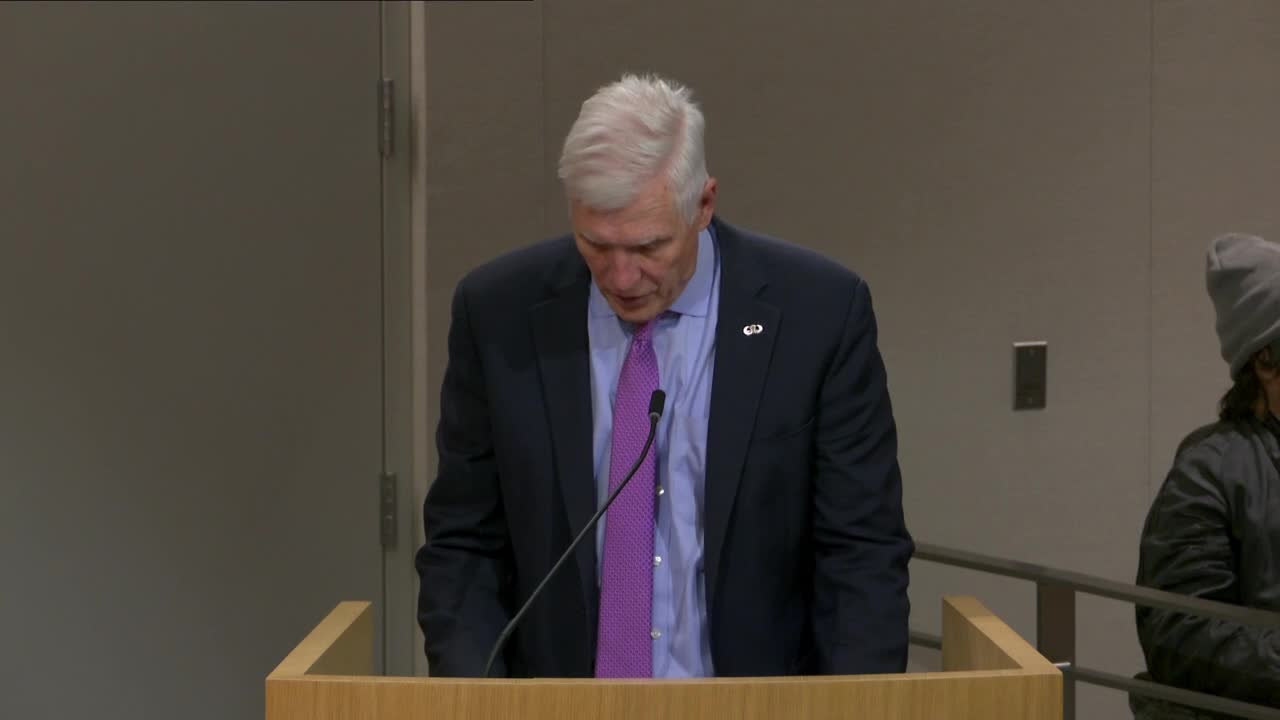 22MIN
Senate Standing Committee on Elections and Constitutional Amendments
Bill Author