SB 411: Stop Child Hunger Act of 2025.
- Session Year: 2025-2026
- House: Senate
- Latest Version Date: 2025-09-12
Current Status:
Failed
(2026-03-02: Veto sustained.)
Introduced
In Committee
Awaiting First Chamber Vote
Passed First Chamber
In Committee
Awaiting Second Chamber Vote
Passed Second Chamber
Enacted
Existing federal law establishes the Summer Electronic Benefit Transfer for Children (Summer EBT) program, under which pupils who are eligible for free and reduced-price school meals receive $40 per month, with specified adjustments, during summer months for grocery benefits. Existing federal regulations require, by 2025, the designated state agency to make a Summer EBT application available to households whose children are enrolled in schools participating in the National School Lunch Program or the School Breakfast Program and who do not already have an individual eligibility determination.
Existing state law requires the State Department of Social Services, as the lead agency in partnership with the State Department of Education, to maximize participation in the Summer EBT program. Existing law requires the governing board of a school district and the county superintendent of schools to make paper applications for free or reduced-price meals available to pupils at all times during each regular schoolday.
Existing law authorizes those entities to make an application electronically available online if the online application complies with certain requirements, including, among others, the inclusion of links to certain internet websites providing information on, and applications for, other government programs, such as CalFresh.
This bill, the Stop Child Hunger Act of 2025, would require, upon an appropriation made by the Legislature, the State Department of Education, with support from the State Department of Social Services, to comply with the above-described federal regulations by developing, and providing families with, a statewide application that is made available through a single statewide internet website that enables families to submit federally required information relating to the Summer EBT program, as specified. The bill would require the internet website to, among other things, have the capability of routing a familys completed information to the familys local educational agency to determine Summer EBT eligibility.
The bill would require the governing board of a school district, a county superintendent of schools, and the governing body of a charter school to make the above-described paper applications available if required by federal law and guidance, as specified.
The bill would require the governing board of a school district, a county office of education, the governing body of a charter school, or a school food authority that provides an application online for free or reduced-price meals, as described above, to also provide links to the internet website providing information about the Summer EBT program.
To the extent that the bill would create new duties for local educational agencies or county or other local officials, the bill would impose a state-mandated local program.
The California Constitution requires the state to reimburse local agencies and school districts for certain costs mandated by the state. Statutory provisions establish procedures for making that reimbursement.
This bill would provide that, if the Commission on State Mandates determines that the bill contains costs mandated by the state, reimbursement for those costs shall be made pursuant to the statutory provisions noted above.
Existing federal law establishes the Summer Electronic Benefit Transfer for Children (Summer EBT) program, under which pupils who are eligible for free and reduced-price school meals receive $40 per month, with specified adjustments, during summer months for grocery benefits. Existing federal regulations require, by 2025, the designated state agency to make a Summer EBT application available to households whose children are enrolled in schools participating in the National School Lunch Program or the School Breakfast Program and who do not already have an individual eligibility determination.
Existing state law requires the State Department of Social Services, as the lead agency in partnership with the State Department of Education, to maximize participation in the Summer EBT program. Existing law requires the governing board of a school district and the county superintendent of schools to make paper applications for free or reduced-price meals available to pupils at all times during each regular schoolday.
Existing law authorizes those entities to make an application electronically available online if the online application complies with certain requirements, including, among others, the inclusion of links to certain internet websites providing information on, and applications for, other government programs, such as CalFresh.
This bill, the Stop Child Hunger Act of 2025, would require require, upon an appropriation made by the Legislature, the State Department of Education, with support from the State Department of Social Services, to comply with the above-described federal regulations by developing, and providing families with, a statewide application that is made available through a single statewide internet website that enables families to submit federally required information relating to the Summer EBT program, as specified. The bill would require the internet website to, among other things, have the capability of routing a familys completed information to the familys local educational agency to determine Summer EBT eligibility.
The bill would require the governing board of a school district, a county superintendent of schools, and the governing body of a charter school to make the above-described paper applications available if required by federal law and guidance, as specified.
The bill would require governing boards of school districts, county superintendents of schools, and governing bodies of charter schools that provide the governing board of a school district, a county office of education, the governing body of a charter school, or a school food authority that provides an application online for free or reduced-price meals, as described above, to also provide links to the internet websites website providing information about the Summer EBT program.
To the extent that the bill would create new duties for local educational agencies or county or other local officials, the bill would impose a state-mandated local program.
The California Constitution requires the state to reimburse local agencies and school districts for certain costs mandated by the state. Statutory provisions establish procedures for making that reimbursement.
This bill would provide that, if the Commission on State Mandates determines that the bill contains costs mandated by the state, reimbursement for those costs shall be made pursuant to the statutory provisions noted above.
Existing federal law establishes the Summer Electronic Benefit Transfer for Children (Summer EBT) program, under which pupils who are eligible for free and reduced-price school meals receive $40 per month, with specified adjustments, during summer months for grocery benefits. Existing federal regulations require, by 2025, the designated state agency to make a Summer EBT application available to households whose children are enrolled in schools participating in the National School Lunch Program or the School Breakfast Program and who do not already have an individual eligibility determination.
Existing state law requires the State Department of Social Services, as the lead agency in partnership with the State Department of Education, to maximize participation in the Summer EBT program. Existing law requires the governing board of a school district and the county superintendent of schools to make paper applications for free or reduced-price meals available to pupils at all times during each regular schoolday.
Existing law authorizes those entities to make an application electronically available online if the online application complies with certain requirements, including, among others, the inclusion of links to certain internet websites providing information on, and applications for, other government programs, such as CalFresh.
This bill, the Stop Child Hunger Act of 2025, would require the State Department of Education, with support from the State Department of Social Services, to comply with the above-described federal regulations by developing, and providing families with, a statewide application that is made available through a single statewide internet website that enables families to submit federally required information relating to the Summer EBT program, as specified. The bill would require the internet website to, among other things, have the capability of routing a familys completed information to the familys local educational agency to determine Summer EBT eligibility. The bill would require an application submitted through the internet website to constitute an application for purposes of free or reduced-price meals, as specified.
The bill would require the governing board of a school district and district, a county superintendent of schools schools, and the governing body of a charter school to (1) make the above-described paper applications available if required by federal law and guidance, (2) provide, to the extent allowed by federal law and guidance, alternative income verification forms instead of the paper applications, and (3) use the model alternative verification form developed and adopted by the State Department of Education, guidance, as specified.
The bill would require governing boards of school districts and districts, county superintendents of schools schools, and governing bodies of charter schools that provide an application online for free or reduced-price meals, as described above, to also provide links to internet websites providing information about the Summer EBT program.
To the extent that the bill would create new duties for local educational agencies or county or other local officials, the bill would impose a state-mandated local program.
The California Constitution requires the state to reimburse local agencies and school districts for certain costs mandated by the state. Statutory provisions establish procedures for making that reimbursement.
This bill would provide that, if the Commission on State Mandates determines that the bill contains costs mandated by the state, reimbursement for those costs shall be made pursuant to the statutory provisions noted above.
Existing federal law establishes the Summer Electronic Benefit Transfer for Children (Summer EBT) program, under which pupils who are eligible for free and reduced-price school meals receive $40 per month, with specified adjustments, during summer months for grocery benefits. Existing federal regulations require, by 2025, the designated state agency to make a Summer EBT application available to households whose children are enrolled in schools participating in the National School Lunch Program or the School Breakfast Program and who do not already have an individual eligibility determination.
Existing state law requires the State Department of Social Services, as the lead agency in partnership with the State Department of Education, to maximize participation in the Summer EBT program. Existing law requires the governing board of a school district and the county superintendent of schools to make paper applications for free or reduced-price meals available to pupils at all times during each regular schoolday.
Existing law authorizes those entities to make an application electronically available online if the online application complies with certain requirements, including, among others, the inclusion of links to certain internet websites providing information on, and applications for, other government programs, such as CalFresh.
This bill, the Stop Child Hunger Act of 2025, would require the State Department of Education, with support from the State Department of Social Services, to comply with the above-described federal regulations by developing, and providing families with, a statewide application that is made available through a single statewide internet website that enables families to submit federally required information relating to the Summer EBT program, as specified. The bill would require the internet website to, among other things, have the capability of routing a familys completed information to the familys local educational agency to determine Summer EBT eligibility. The bill would require an application submitted through the internet website to constitute an application for purposes of free or reduced-price meals, as specified.
The bill would require the governing board of a school district and a county superintendent of schools to (1) only make the above-described paper applications available if required by federal law and guidance, (2) provide, to the extent allowed by federal law and guidance, alternative income verification forms instead of the paper applications, and (3) use the model alternative verification form developed and adopted by the State Department of Education, as provided. specified.
The bill would require the State Department of Social Services, subject to an appropriation, to establish the Better Out of School Time (BOOST) Nutrition EBT Program. The bill would require the department to issue benefits to an eligible pupil, in a specified amount, for each day during either of the following circumstances that last 5 or more schooldays: (1) a regularly scheduled school break, except for the summer period; or (2) the closure of a school campus caused by a condition for which a state of emergency has been proclaimed by the Governor. Under the bill, to the extent permitted by federal law, BOOST Nutrition EBT benefits would not be considered as income or resources in determining other public benefits.The bill would require the State Department of Education, subject to an appropriation, to establish a program designed to serve meals to pupils during either of the above-described circumstances, with regard to school breaks or closures, that last 5 or more schooldays, as specified. Under the bill, the meal program would be made available in school districts, county offices of education, and charter schools that participate in, and comply with the requirements of, the federal School Breakfast Program and National School Lunch Program.The bill would require governing boards of school districts and county superintendents of schools that provide an application online for free or reduced-price meals, as described above, to also provide links to internet websites providing information about the Summer EBT program and the BOOST Nutrition EBT Program. program.
To the extent that the bill would create new duties for local educational agencies or county or other local officials, the bill would impose a state-mandated local program.
The California Constitution requires the state to reimburse local agencies and school districts for certain costs mandated by the state. Statutory provisions establish procedures for making that reimbursement.
This bill would provide that, if the Commission on State Mandates determines that the bill contains costs mandated by the state, reimbursement for those costs shall be made pursuant to the statutory provisions noted above.
Existing federal law establishes the Summer Electronic Benefit Transfer for Children (Summer EBT) program, under which pupils who are eligible for free and reduced-price school meals receive $40 per month, with specified adjustments, during summer months for grocery benefits. Existing federal regulations require, by 2025, the designated state agency to make a Summer EBT application available to households whose children are enrolled in schools participating in the National School Lunch Program or the School Breakfast Program and who do not already have an individual eligibility determination.
Existing state law requires the State Department of Social Services, as the lead agency in partnership with the State Department of Education, to maximize participation in the Summer EBT program. Existing law requires the governing board of a school district and the county superintendent of schools to make paper applications for free or reduced-price meals available to pupils at all times during each regular schoolday.
Existing law authorizes those entities to make an application electronically available online if the online application complies with certain requirements, including, among others, the inclusion of links to certain internet websites providing information on, and applications for, other government programs, such as CalFresh.
This bill, the Stop Child Hunger Act of 2025, would require the State Department of Education, with support from the State Department of Social Services, to comply with the above-described federal regulations by developing, and providing families with, a statewide application that is made available through a single statewide internet website that enables families to submit federally required information relating to the Summer EBT program, as specified. The bill would require the internet website to, among other things, have the capability of routing a familys completed information to the familys local educational agency to determine Summer EBT eligibility. The bill would require an application submitted through the internet website to constitute an application for purposes of free or reduced-price meals, as specified.
The bill would require the governing board of a school district and a county superintendent of schools to (1) only make the above-described paper applications available if required by federal law and guidance, (2) provide, to the extent allowed by federal law and guidance, alternative income verification forms instead of the paper applications, and (3) use the model alternative verification form developed and adopted by the State Department of Education, as provided.
The bill would require the State Department of Social Services, subject to an appropriation, to establish the Better Out of School Time (BOOST) Nutrition EBT Program. The bill would require the department to issue benefits to an eligible pupil, in a specified amount, for each day during either of the following circumstances that last 5 or more schooldays: (1) a regularly scheduled school break, except for the summer period; or (2) the closure of a school campus caused by a condition for which a state of emergency has been proclaimed by the Governor. Under the bill, to the extent permitted by federal law, BOOST Nutrition EBT benefits would not be considered as income or resources in determining other public benefits.
The bill would require the State Department of Education, subject to an appropriation, to establish a program designed to serve meals to pupils during either of the above-described circumstances, with regard to school breaks or closures, that last 5 or more schooldays, as specified. Under the bill, the meal program would be made available in school districts, county offices of education, and charter schools that participate in, and comply with the requirements of, the federal School Breakfast Program and National School Lunch Program.
The bill would require governing boards of school districts and county superintendents of schools that provide an application online for free or reduced-price meals, as described above, to also provide links to internet websites providing information about the Summer EBT program and the BOOST Nutrition EBT Program.
To the extent that the bill would create new duties for local educational agencies or county or other local officials, the bill would impose a state-mandated local program.
The California Constitution requires the state to reimburse local agencies and school districts for certain costs mandated by the state. Statutory provisions establish procedures for making that reimbursement.
This bill would provide that, if the Commission on State Mandates determines that the bill contains costs mandated by the state, reimbursement for those costs shall be made pursuant to the statutory provisions noted above.
Existing federal law establishes the Summer Electronic Benefit Transfer for Children (Summer EBT) program, under which pupils who are eligible for free and reduced-price school meals receive $40 per month, with specified adjustments, during summer months for grocery benefits. Existing federal regulations require, by 2025, the designated state agency to make a Summer EBT application available to households whose children are enrolled in schools participating in the National School Lunch Program or the School Breakfast Program and who do not already have an individual eligibility determination.
Existing state law requires the State Department of Social Services, as the lead agency in partnership with the State Department of Education, to maximize participation in the Summer EBT program. Existing law requires the governing board of a school district and the county superintendent of schools to make paper applications for free or reduced-price meals available to pupils at all times during each regular schoolday.
Existing law authorizes those entities to make an application electronically available online if the online application complies with certain requirements, including, among others, the inclusion of links to certain internet websites providing information on, and applications for, other government programs, such as CalFresh.
This bill, the Stop Child Hunger Act of 2025, would require the State Department of Education, with support from the State Department of Social Services, to comply with the above-described federal regulations by developing, and providing families with, a statewide application that is made available through a single statewide internet website that enables families to submit federally required information relating to the Summer EBT program, as specified. The bill would require the internet website to, among other things, have the capability of routing a familys completed information to the familys local educational agency to determine Summer EBT eligibility. The bill would require an application submitted through the internet website to constitute an application for purposes of free or reduced-price meals, as specified.
The bill would require the State Department of Social Services, subject to an appropriation, to establish the Better Out of School Time (BOOST) Nutrition EBT Program. The bill would require the department to issue benefits to an eligible pupil, in a specified amount, for each day during either of the following circumstances that last 5 or more schooldays: (1) a regularly scheduled school break, except for the summer period; or (2) the closure of a school campus caused by a condition for which a state of emergency has been proclaimed by the Governor. Under the bill, to the extent permitted by federal law, BOOST Nutrition EBT benefits would not be considered as income or resources in determining other public benefits.
The bill would require the State Department of Education, subject to an appropriation, to establish a program designed to serve meals to pupils during either of the above-described circumstances, with regard to school breaks or closures, that last 5 or more schooldays, as specified. Under the bill, the meal program would be made available in school districts, county offices of education, and charter schools that participate in, and comply with the requirements of, the federal School Breakfast Program and National School Lunch Program.
The bill would require governing boards of school districts and county superintendents of schools that provide an application online for free or reduced-price meals, as described above, to also provide links to internet websites providing information about the Summer EBT program and the BOOST Nutrition EBT Program.
To the extent that the bill would create new duties for local educational agencies or county or other local officials, the bill would impose a state-mandated local program.
The California Constitution requires the state to reimburse local agencies and school districts for certain costs mandated by the state. Statutory provisions establish procedures for making that reimbursement.
This bill would provide that, if the Commission on State Mandates determines that the bill contains costs mandated by the state, reimbursement for those costs shall be made pursuant to the statutory provisions noted above.
This act shall be known, and may be cited, as the Stop Child Hunger Act of 2025.
SEC. 2.The Legislature finds and declares all of the following:
(a)No child in California should experience hunger, and all children deserve access to nutrition year round.
(b)Families across the country are struggling to afford healthy and adequate groceries.
(c)California has led the nation in establishing a universal school meals program for all students, ensuring access to healthy, locally grown breakfasts and lunches during the school year, and in implementing the federal Summer Electronic Benefit Transfer for Children (Summer EBT) program, known in California as SUN Bucks, which provided five million children with a supplemental food benefit in summer of 2024.
(d)These programs have made life more affordable for families with children, helping to reduce monthly food bills by an average of $150 per week.
(e)The United States Congress established the Summer EBT program as the first new federal entitlement in decades, under the Consolidated Appropriations Act of 2023 (Public Law 117-328), as set forth in Section 1762 of Title 42 of the United States Code. In turn, SUN Bucks was launched in summer of 2024.
(f)SUN Bucks, based on a pilot program that produced a decade of evidence that it reduced hunger and helped the hungriest children the most, is remarkably effective in reducing summer child hunger.
(g)California is urged to build on its leadership in the fight against child hunger by extending these child nutrition programs to prevent hunger among children during school closures of a week or more and during disasters that cause schools to close.
(h)The Legislature is urged to direct the SUN Bucks administrating departments, including the State Department of Social Services, as the lead SUN Bucks agency, and the State Department of Education, to annually maximize receipt of as much as $216 million in federally funded food assistance for the 1.8 million children who need to apply, and to protect the private information of participating families by immediately implementing Section 292.13 of Title 7 of the Code of Federal Regulations, which requires states to provide a statewide application for the Summer EBT program.
(i)The United States Department of Agriculture has established that every $1 in federal food aid creates as much as $1.80 in total gross domestic product (GDP), as benefits support Californias vital food economy and workers. Accordingly, increasing access to federally funded meals and food benefits is not only good for children, but also good for our economy.
(j)A statewide web application will support families who have been devastated by the firestorms in the County of Los Angeles and who are already navigating the Federal Emergency Management Agency (FEMA) and programs to easily access the food aid to which their children are federally entitled.
SEC. 3.Section 49506 of the Education Code is amended to read:49506.(a)(1)The department shall work with the State Department of Social Services to maximize participation in the federal Summer Electronic Benefit Transfer for Children (Summer EBT) program established pursuant to Section 1762 of Title 42 of the United States Code.
(2)The department shall share all data determined by the departments to be necessary to adhere to the requirements of paragraph (1) and Section 18901.57 of the Welfare and Institutions Code.
(b)The department shall follow the federal guidelines and regulations established pursuant to Section 502 of Title IV of Division HH of the Consolidated Appropriations Act, 2023 to maximize flexibility for local educational agencies, including school districts, county offices of education, and charter schools, to distribute summer meals through noncongregate distributions.
(c)(1)Upon an appropriation made by the Legislature for the express purpose of implementing this subdivision, the department, with support from the State Department of Social Services, shall comply with Section 292.13 of Title 7 of the Code of Federal Regulations by developing, and providing families with, a statewide application that is made available through a single statewide internet website that enables families to submit federally required information and that adheres to all of the following:
(A)Is made available with sufficient time for families to apply for summer of 2028 benefits.
(B)Has the ability to, upon completion of the application, be routed to the applicant familys local educational agency to determine Summer EBT eligibility.
(C)Meets the requirements of Section 102 of Chapter 38 of the Statutes of 2024.
(D)Is limited, with regard to information requested, to minimum requirements under federal law and guidance.
(E)Is translated with accessible language into at least all threshold languages that are required for the CalFresh program.
(2)Implementation of paragraph (1) shall be in accordance with the funding timeline of any appropriation made pursuant to paragraph (1).
(d)The statewide application developed pursuant to subdivision (c) shall not be subject to the Project Approval Lifecycle of the Department of Technology, pursuant to Section 4819.35 of the State Administrative Manual and all other relevant sections.
(e)Upon request, a school district, county office of education, or charter school shall make an electronic device available for families to use to access the statewide application developed pursuant to subdivision (c).
SEC. 4.Section 49557 of the Education Code is amended to read:49557.(a)(1)If required by federal law and guidance, the governing board of a school district, the county superintendent of schools, and the governing body of a charter school shall make paper applications for free or reduced-price meals available to pupils at all times during each regular schoolday, and may also make an application electronically available online, provided that the online application complies with paragraph (3). If required by federal law and guidance, the application shall contain clear instructions for families that are homeless or are migrants, and shall also contain, in at least 8-point boldface type, each of the following statements:
(A)Applications for free and reduced-price meals may be submitted at any time during a schoolday.
(B)Children participating in the federal National School Lunch Program will not be overtly identified by the use of special tokens, special tickets, special serving lines, separate entrances, separate dining areas, or by any other means.
(2)A school district, county superintendent of schools, or charter school shall use all other paper applications that it has for free or reduced-price meals before using the applications pursuant to this subdivision.
(3)If the governing board of a school district, a county office of education, the governing body of a charter school, or a school food authority chooses to provide access to an online application for free or reduced-price meals pursuant to paragraph (1), the online application shall comply with all of the following requirements:
(A)Include a link to the internet website on which translated applications are posted by the United States Department of Agriculture, with instructions in that language that inform the applicant how to submit the application. The Legislature finds and declares that federal guidelines require school food authorities to accept and process these applications if they are submitted to the school food authority.
(B)Require completion of only those questions that are necessary for determining eligibility.
(C)Include clear instructions for families that are homeless or are migrants.
(D)Comply with the privacy rights and disclosure protections established by the federal Richard B. Russell National School Lunch Act (Public Law 113-79) and the federal Childrens Online Privacy Protection Act of 1998 (Public Law 105-277).
(E)Include links to all of the following:
(i)The online application to CalFresh.
(ii)The online single state application for health care.
(iii)The internet website maintained by the State Department of Public Health entitled About WIC and How to Apply, or another internet website identified by the State Department of Public Health that connects families to the California Special Supplemental Nutrition Program for Women, Infants, and Children (WIC Program).
(iv)The internet website of a summer lunch program authorized to participate within the city or school district.
(v)The internet website providing information about the federal Summer Electronic Benefit Transfer for Children (Summer EBT) program established pursuant to Section 1762 of Title 42 of the United States Code.
(F)No online application for free or reduced-price meals shall be made available online or made accessible online by a school district, a county office of education, a charter school, or a school food authority if the online application allows for the information provided by an applicant to be used by a private entity for any purpose not related to the administration of a school food program, or if the online application requires an applicant to waive any right or to create a user account in order to submit the application.
(b)The governing board of each school district, each county superintendent of schools, and the governing body of each charter school shall formulate a plan for schools that do not serve meals universally to all children, which shall be mailed to the department for its approval, that will ensure that children eligible to receive free or reduced-price meals and milk shall not be treated differently from other children. These plans shall ensure each of the following:
(1)Unless otherwise specified, the names of the children shall not be published, posted, or announced in any manner, or used for any purpose other than the federal National School Lunch Program.
(2)There shall be no overt identification of any of the children by the use of special tokens or tickets or by any other means.
(3)The children shall not be required to work for their meals or milk.
(4)The children shall not be required to use a separate dining area, go through a separate serving line, enter the dining area through a separate entrance, or consume their meals or milk at a different time.
SEC. 5.Section 18901.57 of the Welfare and Institutions Code is amended to read:18901.57.(a)The department, as the lead agency in partnership with the State Department of Education, shall maximize participation in the federal Summer Electronic Benefit Transfer for Children (Summer EBT) program established pursuant to Section 1762 of Title 42 of the United States Code.
(b)The department shall support the State Department of Education in implementing the requirements described in subdivision (c) of Section 49506 of the Education Code with regard to developing, and providing families with, a statewide application that is made available through a single statewide internet website for purposes of the Summer EBT program.
SEC. 6.If the Commission on State Mandates determines that this act contains costs mandated by the state, reimbursement to local agencies and school districts for those costs shall be made pursuant to Part 7 (commencing with Section 17500) of Division 4 of Title 2 of the Government Code.
This act shall be known, and may be cited, as the Stop Child Hunger Act of 2025.
SEC. 2.The Legislature finds and declares all of the following:
(a)No child in California should experience hunger, and all children deserve access to nutrition year round.
(b)Families across the country are struggling to afford healthy and adequate groceries.
(c)California has led the nation in establishing a universal school meals program for all students, ensuring access to healthy, locally grown breakfasts and lunches during the school year, and in implementing the federal Summer Electronic Benefit Transfer for Children (Summer EBT) program, known in California as SUN Bucks, which provided five million children with a supplemental food benefit in summer of 2024.
(d)These programs have made life more affordable for families with children, helping to reduce monthly food bills by an average of $150 per week.
(e)The United States Congress established the Summer EBT program as the first new federal entitlement in decades, under the Consolidated Appropriations Act of 2023 (Public Law 117-328), as set forth in Section 1762 of Title 42 of the United States Code. In turn, SUN Bucks was launched in summer of 2024.
(f)SUN Bucks, based on a pilot program that produced a decade of evidence that it reduced hunger and helped the hungriest children the most, is remarkably effective in reducing summer child hunger.
(g)California is urged to build on its leadership in the fight against child hunger by extending these child nutrition programs to prevent hunger among children during school closures of a week or more and during disasters that cause schools to close.
(h)The Legislature is urged to direct the SUN Bucks administrating departments, including the State Department of Social Services, as the lead SUN Bucks agency, and the State Department of Education, to annually maximize receipt of as much as $216 million in federally funded food assistance for the 1.8 million children who need to apply, and to protect the private information of participating families by immediately implementing Section 292.13 of Title 7 of the Code of Federal Regulations, which requires states to provide a statewide application for the Summer EBT program.
(i)The United States Department of Agriculture has established that every $1 in federal food aid creates as much as $1.80 in total gross domestic product (GDP), as benefits support Californias vital food economy and workers. Accordingly, increasing access to federally funded meals and food benefits is not only good for children, but also good for our economy.
(j)A statewide web application will support families who have been devastated by the firestorms in the County of Los Angeles and who are already navigating the Federal Emergency Management Agency (FEMA) and programs to easily access the food aid to which their children are federally entitled.
SEC. 3.Section 49506 of the Education Code is amended to read:49506.(a)(1)The department shall work with the State Department of Social Services to maximize participation in the federal Summer Electronic Benefit Transfer for Children (Summer EBT) program established pursuant to Section 1762 of Title 42 of the United States Code.
(2)The department shall share all data determined by the departments to be necessary to adhere to the requirements of paragraph (1) and Section 18901.57 of the Welfare and Institutions Code.
(b)The department shall follow the federal guidelines and regulations established pursuant to Section 502 of Title IV of Division HH of the Consolidated Appropriations Act, 2023 to maximize flexibility for local educational agencies, including school districts, county offices of education, and charter schools, to distribute summer meals through noncongregate distributions.
(c)The (1)Upon an appropriation made by the Legislature for the express purpose of implementing this subdivision, the department, with support from the State Department of Social Services, shall comply with Section 292.13 of Title 7 of the Code of Federal Regulations by developing, and providing families with, a statewide application that is made available through a single statewide internet website that enables families to submit federally required information and that adheres to all of the following:
(1)(A)Is made available with sufficient time for families to apply for summer of 2028 benefits.
(2)(B)Has the ability to, upon completion of the application, be routed to the applicant familys local educational agency to determine Summer EBT eligibility.
(3)(C)Meets the requirements of Section 102 of Chapter 38 of the Statutes of 2024.
(4)(D)Is limited, with regard to information requested, to minimum requirements under federal law and guidance.
(5)(E)Is translated with accessible language into at least all threshold languages that are required for the CalFresh program.
(2)Implementation of paragraph (1) shall be in accordance with the funding timeline of any appropriation made pursuant to paragraph (1).
(d)The statewide application developed pursuant to subdivision (c) shall not be subject to the Project Approval Lifecycle of the Department of Technology, pursuant to Section 4819.35 of the State Administrative Manual and all other relevant sections.
(e)Upon request, a school district, county office of education, or charter school shall make an electronic device available for families to use to access the statewide application developed pursuant to subdivision (c).
SEC. 4.Section 49557 of the Education Code is amended to read:49557.(a)(1)If required by federal law and guidance, the governing board of a school district, the county superintendent of schools, and the governing body of a charter school shall make paper applications for free or reduced-price meals available to pupils at all times during each regular schoolday, and may also make an application electronically available online, provided that the online application complies with paragraph (3). If required by federal law and guidance, the application shall contain clear instructions for families that are homeless or are migrants, and shall also contain, in at least 8-point boldface type, each of the following statements:
(A)Applications for free and reduced-price meals may be submitted at any time during a schoolday.
(B)Children participating in the federal National School Lunch Program will not be overtly identified by the use of special tokens, special tickets, special serving lines, separate entrances, separate dining areas, or by any other means.
(2)A school district, county superintendent of schools, or charter school shall use all other paper applications that it has for free or reduced-price meals before using the applications pursuant to this subdivision.
(3)If the governing board of a school district, a county office of education, the governing body of a charter school, or a school food authority chooses to provide access to an online application for free or reduced-price meals pursuant to paragraph (1), the online application shall comply with all of the following requirements:
(A)Include a link to the internet website on which translated applications are posted by the United States Department of Agriculture, with instructions in that language that inform the applicant how to submit the application. The Legislature finds and declares that federal guidelines require school food authorities to accept and process these applications if they are submitted to the school food authority.
(B)Require completion of only those questions that are necessary for determining eligibility.
(C)Include clear instructions for families that are homeless or are migrants.
(D)Comply with the privacy rights and disclosure protections established by the federal Richard B. Russell National School Lunch Act (Public Law 113-79) and the federal Childrens Online Privacy Protection Act of 1998 (Public Law 105-277).
(E)Include links to all of the following:
(i)The online application to CalFresh.
(ii)The online single state application for health care.
(iii)The internet website maintained by the State Department of Public Health entitled About WIC and How to Apply, or another internet website identified by the State Department of Public Health that connects families to the California Special Supplemental Nutrition Program for Women, Infants, and Children (WIC Program).
(iv)The internet website of a summer lunch program authorized to participate within the city or school district.
(v)The internet website providing information about the federal Summer Electronic Benefit Transfer for Children (Summer EBT) program established pursuant to Section 1762 of Title 42 of the United States Code.
(F)No online application for free or reduced-price meals shall be made available online or made accessible online by a school district, a county office of education, a charter school, or a school food authority if the online application allows for the information provided by an applicant to be used by a private entity for any purpose not related to the administration of a school food program, or if the online application requires an applicant to waive any right or to create a user account in order to submit the application.
(b)The governing board of each school district, each county superintendent of schools, and the governing body of each charter school shall formulate a plan for schools that do not serve meals universally to all children, which shall be mailed to the department for its approval, that will ensure that children eligible to receive free or reduced-price meals and milk shall not be treated differently from other children. These plans shall ensure each of the following:
(1)Unless otherwise specified, the names of the children shall not be published, posted, or announced in any manner, or used for any purpose other than the federal National School Lunch Program.
(2)There shall be no overt identification of any of the children by the use of special tokens or tickets or by any other means.
(3)The children shall not be required to work for their meals or milk.
(4)The children shall not be required to use a separate dining area, go through a separate serving line, enter the dining area through a separate entrance, or consume their meals or milk at a different time.
SEC. 5.Section 18901.57 of the Welfare and Institutions Code is amended to read:18901.57.(a)The department, as the lead agency in partnership with the State Department of Education, shall maximize participation in the federal Summer Electronic Benefit Transfer for Children (Summer EBT) program established pursuant to Section 1762 of Title 42 of the United States Code.
(b)The department shall support the State Department of Education in implementing the requirements described in subdivision (c) of Section 49506 of the Education Code with regard to developing, and providing families with, a statewide application that is made available through a single statewide internet website for purposes of the Summer EBT program.
SEC. 6.If the Commission on State Mandates determines that this act contains costs mandated by the state, reimbursement to local agencies and school districts for those costs shall be made pursuant to Part 7 (commencing with Section 17500) of Division 4 of Title 2 of the Government Code.
This act shall be known, and may be cited, as the Stop Child Hunger Act of 2025.
SEC. 2.The Legislature finds and declares all of the following:
(a)No child in California should experience hunger, and all children deserve access to nutrition year round.
(b)Families across the country are struggling to afford healthy and adequate groceries.
(c)California has led the nation in establishing a universal school meals program for all students, ensuring access to healthy, locally grown breakfasts and lunches during the school year, and in implementing the federal Summer Electronic Benefit Transfer for Children (Summer EBT) program, known in California as SUN Bucks, which provided five million children with a supplemental food benefit in summer of 2024.
(d)These programs have made life more affordable for families with children, helping to reduce monthly food bills by an average of $150 per week.
(e)The United States Congress established the Summer EBT program as the first new federal entitlement in decades, under the Consolidated Appropriations Act of 2023 (Public Law 117-328), as set forth in Section 1762 of Title 42 of the United States Code. In turn, SUN Bucks was launched in summer of 2024.
(f)SUN Bucks, based on a pilot program that produced a decade of evidence that it reduced hunger and helped the hungriest children the most, is remarkably effective in reducing summer child hunger.
(g)California is urged to build on its leadership in the fight against child hunger by extending these child nutrition programs to prevent hunger among children during school closures of a week or more and during disasters that cause schools to close.
(h)The Legislature is urged to direct the SUN Bucks administrating departments, including the State Department of Social Services, as the lead SUN Bucks agency, and the State Department of Education, to annually maximize receipt of as much as $216 million in federally funded food assistance for the 1.8 million children who need to apply, and to protect the private information of participating families by immediately implementing Section 292.13 of Title 7 of the Code of Federal Regulations, which requires states to provide a statewide application for the Summer EBT program.
(i)The United States Department of Agriculture has established that every $1 in federal food aid creates as much as $1.80 in total gross domestic product (GDP), as benefits support Californias vital food economy and workers. Accordingly, increasing access to federally funded meals and food benefits is not only good for children, but also good for our economy.
(j)A statewide web application will support families who have been devastated by the firestorms in the County of Los Angeles and who are already navigating the Federal Emergency Management Agency (FEMA) and programs to easily access the food aid to which their children are federally entitled.
SEC. 3.Section 49506 of the Education Code is amended to read:49506.(a)(1)The department shall work with the State Department of Social Services to maximize participation in the federal Summer Electronic Benefit Transfer for Children (Summer EBT) program established pursuant to Section 1762 of Title 42 of the United States Code.
(2)The department shall share all data determined by the departments to be necessary to adhere to the requirements of paragraph (1) and Section 18901.57 of the Welfare and Institutions Code.
(b)The department shall follow the federal guidelines and regulations established pursuant to Section 502 of Title IV of Division HH of the Consolidated Appropriations Act, 2023 to maximize flexibility for local educational agencies agencies, including school districts, county offices of education, and charter schools, to distribute summer meals through noncongregate distributions.
(c)The department, with support from the State Department of Social Services, shall comply with Section 292.13 of Title 7 of the Code of Federal Regulations by developing, and providing families with, a statewide application that is made available through a single statewide internet website that enables families to submit federally required information and that adheres to all of the following:
(1)Is made available with sufficient time for families to apply for summer of 2027 2028 benefits.
(2)Has the ability to, upon completion of the application, be routed to the applicant familys local educational agency to determine Summer EBT eligibility.
(3)Meets the requirements of Section 102 of Chapter 38 of the Statutes of 2024.
(4)Is limited, with regard to information requested, to minimum requirements under federal law and guidance.
(5)Is translated with accessible language into at least all threshold languages that are required for the CalFresh program.
(d)The statewide application developed pursuant to subdivision (c) shall not be subject to the Project Approval Lifecycle of the Department of Technology, pursuant to Section 4819.35 of the State Administrative Manual and all other relevant sections.
(e)Upon request, a school district, county office of education, or charter school shall make an electronic device available for families to use to access the statewide application developed pursuant to subdivision (c).
SEC. 4.Section 49557 of the Education Code is amended to read:49557.(a)(1)If required by federal law and guidance, the governing board of a school district and district, the county superintendent of schools schools, and the governing body of a charter school shall make paper applications for free or reduced-price meals available to pupils at all times during each regular schoolday, and may also make an application electronically available online, provided that the online application complies with paragraph (3). If required by federal law and guidance, the application shall contain clear instructions for families that are homeless or are migrants, and shall also contain, in at least 8-point boldface type, each of the following statements:
(A)Applications for free and reduced-price meals may be submitted at any time during a schoolday.
(B)Children participating in the federal National School Lunch Program will not be overtly identified by the use of special tokens, special tickets, special serving lines, separate entrances, separate dining areas, or by any other means.
(2)A school district and the district, county superintendent of schools schools, or charter school shall use all other paper applications that it has for free or reduced-price meals before utilizing using the applications pursuant to this subdivision.
(3)If a the governing board of a school district, a county office of education, the governing body of a charter school, or a school food authority chooses to provide access to an online application for free or reduced-price meals pursuant to paragraph (1), the online application shall comply with all of the following requirements:
(A)Include a link to the internet website on which translated applications are posted by the United States Department of Agriculture, with instructions in that language that inform the applicant how to submit the application. The Legislature finds and declares that federal guidelines require school food authorities to accept and process these applications if they are submitted to the school food authority.
(B)Require completion of only those questions that are necessary for determining eligibility.
(C)Include clear instructions for families that are homeless or are migrants.
(D)Comply with the privacy rights and disclosure protections established by the federal Richard B. Russell National School Lunch Act (Public Law 113-79) and the federal Childrens Online Privacy Protection Act of 1998 (Public Law 105-277).
(E)Include links to all of the following:
(i)The online application to CalFresh.
(ii)The online single state application for health care.
(iii)The internet website maintained by the State Department of Public Health entitled About WIC and How to Apply, or another internet website identified by the State Department of Public Health that connects families to the California Special Supplemental Nutrition Program for Women, Infants, and Children (WIC Program).
(iv)The internet website of a summer lunch program authorized to participate within the city or school district.
(v)The internet website providing information about the federal Summer Electronic Benefit Transfer for Children (Summer EBT) program established pursuant to Section 1762 of Title 42 of the United States Code.
(F)No online application for free or reduced-price meals shall be made available online or made accessible online by a school district, a county office of education, a charter school, or a school food authority if the online application allows for the information provided by an applicant to be used by a private entity for any purpose not related to the administration of a school food program, or if the online application requires an applicant to waive any right or to create a user account in order to submit the application.
(4)An application submitted through the internet website developed by the department pursuant to subdivision (c) of Section 49506 shall constitute an application for free or reduced-price meals pursuant to this section.(b)The governing board of each school district and district, each county superintendent of schools schools, and the governing body of each charter school shall formulate a plan for schools that do not serve meals universally to all children, which shall be mailed to the department for its approval, that will ensure that children eligible to receive free or reduced-price meals and milk shall not be treated differently from other children. These plans shall ensure each of the following:
(1)Unless otherwise specified, the names of the children shall not be published, posted, or announced in any manner, or used for any purpose other than the federal National School Lunch Program.
(2)There shall be no overt identification of any of the children by the use of special tokens or tickets or by any other means.
(3)The children shall not be required to work for their meals or milk.
(4)The children shall not be required to use a separate dining area, go through a separate serving line, enter the dining area through a separate entrance, or consume their meals or milk at a different time.
(c)(1)To the extent allowed by federal law and guidance, the governing board of each school district and each county superintendent of schools shall provide alternative income verification forms instead of the application specified in subdivision (a). The form shall be made available in paper form at all times during each regular schoolday and shall be made electronically available online. Information collected on the form shall comply with the requirements specified in paragraph (3) of subdivision (a) and shall comply with the protections afforded to pupils and their family members pursuant to Section 234.7.(2)(A)After the department has developed and adopted a model alternative income verification form, the governing board of each school district and each county superintendent of schools shall use the model form to meet the requirements of paragraph (1).(B)An alternative income verification form shall not require questions to be answered that are determined by the department to be unnecessary.SEC. 5.Section 18901.57 of the Welfare and Institutions Code is amended to read:18901.57.(a)The department, as the lead agency in partnership with the State Department of Education, shall maximize participation in the federal Summer Electronic Benefit Transfer for Children (Summer EBT) program established pursuant to Section 1762 of Title 42 of the United States Code.
(b)The department shall support the State Department of Education in implementing the requirements described in subdivision (c) of Section 49506 of the Education Code with regard to developing, and providing families with, a statewide application that is made available through a single statewide internet website for purposes of the Summer EBT program.
SEC. 6.If the Commission on State Mandates determines that this act contains costs mandated by the state, reimbursement to local agencies and school districts for those costs shall be made pursuant to Part 7 (commencing with Section 17500) of Division 4 of Title 2 of the Government Code.
CORRECTIONS: HeadingLine 2. REVISIONS: HeadingLine 2.This act shall be known, and may be cited, as the Stop Child Hunger Act of 2025.
SEC. 2.The Legislature finds and declares all of the following:
(a)No child in California should experience hunger, and all children deserve access to nutrition year round.
(b)Families across the country are struggling to afford healthy and adequate groceries.
(c)California has led the nation in establishing a universal school meals program for all students, ensuring access to healthy, locally grown breakfasts and lunches during the school year, and in implementing the federal Summer Electronic Benefit Transfer for Children (Summer EBT) program, known in California as SUN Bucks, which provided five million children with a supplemental food benefit in summer of 2024.
(d)These programs have made life more affordable for families with children, helping to reduce monthly food bills by an average of $150 per week.
(e)The United States Congress established the Summer EBT program as the first new federal entitlement in decades, under the Consolidated Appropriations Act of 2023 (Public Law 117-328), as set forth in Section 1762 of Title 42 of the United States Code. In turn, SUN Bucks was launched in summer of 2024.
(f)SUN Bucks, based on a pilot program that produced a decade of evidence that it reduced hunger and helped the hungriest children the most, is remarkably effective in reducing summer child hunger.
(g)California is urged to build on its leadership in the fight against child hunger by extending these child nutrition programs to prevent hunger among children during school closures of a week or more and during disasters that cause schools to close.
(h)The Legislature is urged to direct the SUN Bucks administrating departments, including the State Department of Social Services, as the lead SUN Bucks agency, and the State Department of Education, to annually maximize receipt of as much as $216 million in federally funded food assistance for the 1.8 million children who need to apply, and to protect the private information of participating families by immediately implementing Section 292.13 of Title 7 of the Code of Federal Regulations, which requires states to provide a statewide application for the Summer EBT program.
(i)The United States Department of Agriculture has established that every $1 in federal food aid creates as much as $1.80 in total gross domestic product (GDP), as benefits support Californias vital food economy and workers. Accordingly, increasing access to federally funded meals and food benefits is not only good for children, but also good for our economy.
(j)A statewide web application will support families who have been devastated by the firestorms in the County of Los Angeles and who are already navigating the Federal Emergency Management Agency (FEMA) and programs to easily access the food aid to which their children are federally entitled.
SEC. 3.Section 49506 of the Education Code is amended to read:49506.(a)(1)The department shall work with the State Department of Social Services to maximize participation in the federal Summer Electronic Benefit Transfer for Children (Summer EBT) program established pursuant to Section 1762 of Title 42 of the United States Code.
(2)The department shall share all data determined by the departments to be necessary to adhere to the requirements of paragraph (1) and Section 18901.57 of the Welfare and Institutions Code.
(b)The department shall follow the federal guidelines and regulations established pursuant to Section 502 of Title IV of Division HH of the Consolidated Appropriations Act, 2023 to maximize flexibility for local educational agencies to distribute summer meals through noncongregate distributions.
(c)The department, with support from the State Department of Social Services, shall comply with Section 292.13 of Title 7 of the Code of Federal Regulations by developing, and providing families with, a statewide application that is made available through a single statewide internet website that enables families to submit federally required information and that adheres to all of the following:
(1)Is made available with sufficient time for families to apply for summer of 2027 benefits.
(2)Has the ability to, upon completion of the application, be routed to the applicant familys local educational agency to determine Summer EBT eligibility.
(3)Meets the requirements of Section 102 of Chapter 38 of the Statutes of 2024.
(4)Is limited, with regard to information requested, to minimum requirements under federal law and guidance.
(5)Is translated with accessible language into at least all threshold languages that are required for the CalFresh program.
SEC. 4.Section 49507 is added to the Education Code, to read:49507.(a)The department shall establish a program designed to serve meals to pupils during either of the circumstances described in subdivision (a) of Section 18901.571 of the Welfare and Institutions Code, with regard to school breaks or closures, that last five or more schooldays.(b)The meal program described in subdivision (a) shall be made available in school districts, county offices of education, and charter schools that participate in, and comply with the requirements of, the federal School Breakfast Program and National School Lunch Program, and any applicable state laws and regulations, as described in Section 49501.5.(c)The meals under the program may be made available through congregate or noncongregate settings or for individual pickup.(d)This section shall be implemented subject to an appropriation made by the Legislature for the purpose of the meal program described in this section.SEC. 5.SEC. 4.Section 49557 of the Education Code is amended to read:49557.(a)(1)If required by federal law and guidance, the governing board of a school district and the county superintendent of schools shall make paper applications for free or reduced-price meals available to pupils at all times during each regular schoolday, and may also make an application electronically available online, provided that the online application complies with paragraph (3). If required by federal law and guidance, the application shall contain clear instructions for families that are homeless or are migrants, and shall also contain, in at least 8-point boldface type, each of the following statements:
(A)Applications for free and reduced-price meals may be submitted at any time during a schoolday.
(B)Children participating in the federal National School Lunch Program will not be overtly identified by the use of special tokens, special tickets, special serving lines, separate entrances, separate dining areas, or by any other means.
(2)A school district and the county superintendent of schools shall use all other paper applications that it has for free or reduced-price meals before utilizing the applications pursuant to this subdivision.
(3)If a governing board of a school district, a county office of education, or a school food authority chooses to provide access to an online application for free or reduced-price meals pursuant to paragraph (1), the online application shall comply with all of the following requirements:
(A)Include a link to the internet website on which translated applications are posted by the United States Department of Agriculture, with instructions in that language that inform the applicant how to submit the application. The Legislature finds and declares that federal guidelines require school food authorities to accept and process these applications if they are submitted to the school food authority.
(B)Require completion of only those questions that are necessary for determining eligibility.
(C)Include clear instructions for families that are homeless or are migrants.
(D)Comply with the privacy rights and disclosure protections established by the federal Richard B. Russell National School Lunch Act (Public Law 113-79) and the federal Childrens Online Privacy Protection Act of 1998 (Public Law 105-277).
(E)Include links to all of the following:
(i)The online application to CalFresh.
(ii)The online single state application for health care.
(iii)The internet website maintained by the State Department of Public Health entitled About WIC and How to Apply, or another internet website identified by the State Department of Public Health that connects families to the California Special Supplemental Nutrition Program for Women, Infants, and Children (WIC Program).
(iv)The internet website of a summer lunch program authorized to participate within the city or school district.
(v)The internet website providing information about the federal Summer Electronic Benefit Transfer for Children (Summer EBT) program established pursuant to Section 1762 of Title 42 of the United States Code.
(vi)The internet website providing information about the Better Out of School Time (BOOST) Nutrition Electronic Benefit Transfer (EBT) Program established in Section 18901.571 of the Welfare and Institutions Code.(F)No online application for free or reduced-price meals shall be made available online or made accessible online by a school district, a county office of education, or a school food authority if the online application allows for the information provided by an applicant to be used by a private entity for any purpose not related to the administration of a school food program, or if the online application requires an applicant to waive any right or to create a user account in order to submit the application.
(4)An application submitted through the internet website developed by the department pursuant to subdivision (c) of Section 49506 shall constitute an application for free or reduced-price meals pursuant to this section.
(b)The governing board of each school district and each county superintendent of schools shall formulate a plan for schools that do not serve meals universally to all children, which shall be mailed to the department for its approval, that will ensure that children eligible to receive free or reduced-price meals and milk shall not be treated differently from other children. These plans shall ensure each of the following:
(1)Unless otherwise specified, the names of the children shall not be published, posted, or announced in any manner, or used for any purpose other than the federal National School Lunch Program.
(2)There shall be no overt identification of any of the children by the use of special tokens or tickets or by any other means.
(3)The children shall not be required to work for their meals or milk.
(4)The children shall not be required to use a separate dining area, go through a separate serving line, enter the dining area through a separate entrance, or consume their meals or milk at a different time.
(c)(1)To the extent allowed by federal law and guidance, the governing board of each school district and each county superintendent of schools shall provide alternative income verification forms instead of the application specified in subdivision (a). The form shall be made available in paper form at all times during each regular schoolday and shall be made electronically available online. Information collected on the form shall comply with the requirements specified in paragraph (3) of subdivision (a) and shall comply with the protections afforded to pupils and their family members pursuant to Section 234.7.
(2)(A)After the department has developed and adopted a model alternative income verification form, the governing board of each school district and each county superintendent of schools shall use the model form to meet the requirements of paragraph (1).
(B)An alternative income verification form shall not require questions to be answered that are determined by the department to be unnecessary.
SEC. 6.SEC. 5.Section 18901.57 of the Welfare and Institutions Code is amended to read:18901.57.(a)The department, as the lead agency in partnership with the State Department of Education, shall maximize participation in the federal Summer Electronic Benefit Transfer for Children (Summer EBT) program established pursuant to Section 1762 of Title 42 of the United States Code.
(b)The department shall support the State Department of Education in implementing the requirements described in subdivision (c) of Section 49506 of the Education Code with regard to developing, and providing families with, a statewide application that is made available through a single statewide internet website for purposes of the Summer EBT program.
SEC. 7.Section 18901.571 is added to the Welfare and Institutions Code, immediately following Section 18901.57, to read:18901.571.(a)The department shall establish the Better Out of School Time (BOOST) Nutrition Electronic Benefit Transfer (EBT) Program to prevent child hunger during either of the following circumstances that last five or more schooldays:(1)A regularly scheduled school break. This paragraph does not apply to a summer period during which the Summer EBT program is implemented pursuant to Section 18901.57.(2)The closure of a school campus caused by a condition for which a state of emergency has been proclaimed by the Governor pursuant to Section 8625 of the Government Code or any other applicable law.(b)By utilizing the infrastructure of the Summer EBT program described in Section 18901.57, the department shall issue BOOST Nutrition EBT benefits to an eligible pupil, in the amount described in subdivision (d), for each day during either of the circumstances described in subdivision (a) that last five or more schooldays.(c)Pupil eligibility for the BOOST Nutrition EBT program shall follow the same criteria set forth for pupil eligibility for the Summer EBT program.(d)The department shall set the amount of the daily BOOST Nutrition EBT benefit at the beginning of each school year in an amount that equals the reimbursement rate of a free breakfast under the federal School Breakfast Program (Section 4 of the federal Child Nutrition Act of 1966 (42 U.S.C. Sec. 1773)), a free lunch under the National School Lunch Program (Richard B. Russell National School Lunch Act (42 U.S.C. Sec. 1751 et seq.)), and an after-school snack.(e)The department shall issue BOOST Nutrition EBT benefits to an eligible pupil according to the following timelines:(1)By the seventh schoolday before the start of a regularly scheduled break as described in subdivision (a).(2)If feasible, by the seventh schoolday before the start of the closure of a school campus caused by a condition for which a state of emergency has been proclaimed by the Governor as described in subdivision (a), or otherwise as soon as possible.(f)To the extent permitted by federal law, BOOST Nutrition EBT benefits issued pursuant to this section shall not be considered as income or resources in determining other public benefits.(g)This section shall be implemented subject to an appropriation made by the Legislature for the purpose of the BOOST Nutrition EBT Program.SEC. 8.SEC. 6.If the Commission on State Mandates determines that this act contains costs mandated by the state, reimbursement to local agencies and school districts for those costs shall be made pursuant to Part 7 (commencing with Section 17500) of Division 4 of Title 2 of the Government Code.
This act shall be known, and may be cited, as the Stop Child Hunger Act of 2025.
SEC. 2.The Legislature finds and declares all of the following:
(a)No child in California should experience hunger, and all children deserve access to nutrition year round.
(b)Families across the country are struggling to afford healthy and adequate groceries.
(c)California has led the nation in establishing a universal school meals program for all students, ensuring access to healthy, locally grown breakfasts and lunches during the school year, and in implementing the federal Summer Electronic Benefit Transfer for Children (Summer EBT) program, known in California as SUN Bucks, which provided five million children with a supplemental food benefit in summer of 2024.
(d)These programs have made life more affordable for families with children, helping to reduce monthly food bills by an average of $150 per week.
(e)The United States Congress established the Summer EBT program as the first new federal entitlement in decades, under the Consolidated Appropriations Act of 2023 (Public Law 117-328), as set forth in Section 1762 of Title 42 of the United States Code. In turn, SUN Bucks was launched in summer of 2024.
(f)SUN Bucks, based on a pilot program that produced a decade of evidence that it reduced hunger and helped the hungriest children the most, is remarkably effective in reducing summer child hunger.
(g)California is urged to build on its leadership in the fight against child hunger by extending these child nutrition programs to prevent hunger among children during school closures of a week or more and during disasters that cause schools to close.
(h)The Legislature is urged to direct the SUN Bucks administrating departments, including the State Department of Social Services, as the lead SUN Bucks agency, and the State Department of Education, to annually maximize receipt of as much as $216 million in federally funded food assistance for the 1.8 million children who need to apply, and to protect the private information of participating families by immediately implementing Section 292.13 of Title 7 of the Code of Federal Regulations, which requires states to provide a statewide application for the Summer EBT program.
(i)The United States Department of Agriculture has established that every $1 in federal food aid creates as much as $1.80 in total gross domestic product (GDP), as benefits support Californias vital food economy and workers. Accordingly, increasing access to federally funded meals and food benefits is not only good for children, but also good for our economy.
(j)A statewide web application will support families who have been devastated by the firestorms in the County of Los Angeles and who are already navigating the Federal Emergency Management Agency (FEMA) and programs to easily access the food aid to which their children are federally entitled.
SEC. 3.Section 49506 of the Education Code is amended to read:49506.(a)(1)The department shall work with the State Department of Social Services to maximize participation in the federal Summer Electronic Benefit Transfer for Children (Summer EBT) program established pursuant to Section 1762 of Title 42 of the United States Code.
(2)The department shall share all data determined by the departments to be necessary to adhere to the requirements of paragraph (1) and Section 18901.57 of the Welfare and Institutions Code.
(b)The department shall follow the federal guidelines and regulations established pursuant to Section 502 of Title IV of Division HH of the Consolidated Appropriations Act, 2023 to maximize flexibility for local educational agencies to distribute summer meals through noncongregate distributions.
(c)The department, with support from the State Department of Social Services, shall comply with Section 292.13 of Title 7 of the Code of Federal Regulations by developing, and providing families with, a statewide application that is made available through a single statewide internet website that enables families to submit federally required information and that adheres to all of the following:
(1)Is made available with sufficient time for families to apply for summer of 2027 benefits.
(2)Has the ability to, upon completion of the application, be routed to the applicant familys local educational agency to determine Summer EBT eligibility.
(3)Meets the requirements of Section 102 of Chapter 38 of the Statutes of 2024.
(4)Is limited, with regard to information requested, to minimum requirements under federal law and guidance.
(5)Is translated with accessible language into at least all threshold languages that are required for the CalFresh program.
SEC. 4.Section 49507 is added to the Education Code, to read:49507.(a)The department shall establish a program designed to serve meals to pupils during either of the circumstances described in subdivision (a) of Section 18901.571 of the Welfare and Institutions Code, with regard to school breaks or closures, that last five or more schooldays.
(b)The meal program described in subdivision (a) shall be made available in school districts, county offices of education, and charter schools that participate in, and comply with the requirements of, the federal School Breakfast Program and National School Lunch Program, and any applicable state laws and regulations, as described in Section 49501.5.
(c)The meals under the program may be made available through congregate or noncongregate settings or for individual pickup.
(d)This section shall be implemented subject to an appropriation made by the Legislature for the purpose of the meal program described in this section.
SEC. 5.Section 49557 of the Education Code is amended to read:49557.(a)(1)The If required by federal law and guidance, the governing board of a school district and the county superintendent of schools shall make paper applications for free or reduced-price meals available to pupils at all times during each regular schoolday, and may also make an application electronically available online, provided that the online application complies with paragraph (3). Pursuant to federal and state guidelines, If required by federal law and guidance, the application shall contain clear instructions for families that are homeless or are migrants, and shall also contain, in at least 8-point boldface type, each of the following statements:
(A)Applications for free and reduced-price meals may be submitted at any time during a schoolday.
(B)Children participating in the federal National School Lunch Program will not be overtly identified by the use of special tokens, special tickets, special serving lines, separate entrances, separate dining areas, or by any other means.
(2)A school district and the county superintendent of schools shall use all other paper applications that it has for free or reduced-price meals before utilizing the applications pursuant to this subdivision.
(3)If a governing board of a school district, a county office of education, or a school food authority chooses to provide access to an online application for free or reduced-price meals pursuant to paragraph (1), the online application shall comply with all of the following requirements:
(A)Include a link to the internet website on which translated applications are posted by the United States Department of Agriculture, with instructions in that language that inform the applicant how to submit the application. The Legislature finds and declares that federal guidelines require school food authorities to accept and process these applications if they are submitted to the school food authority.
(B)Require completion of only those questions that are necessary for determining eligibility.
(C)Include clear instructions for families that are homeless or are migrants.
(D)Comply with the privacy rights and disclosure protections established by the federal Richard B. Russell National School Lunch Act (Public Law 113-79) and the federal Childrens Online Privacy Protection Act of 1998 (Public Law 105-277).
(E)Include links to all of the following:
(i)The online application to CalFresh.
(ii)The online single state application for health care.
(iii)The internet website maintained by the State Department of Public Health entitled About WIC and How to Apply, or another internet website identified by the State Department of Public Health that connects families to the California Special Supplemental Nutrition Program for Women, Infants, and Children (WIC Program).
(iv)The internet website of a summer lunch program authorized to participate within the city or school district.
(v)The internet website providing information about the federal Summer Electronic Benefit Transfer for Children (Summer EBT) program established pursuant to Section 1762 of Title 42 of the United States Code.
(vi)The internet website providing information about the Better Out of School Time (BOOST) Nutrition Electronic Benefit Transfer (EBT) Program established in Section 18901.571 of the Welfare and Institutions Code.
(F)No online application for free or reduced-price meals shall be made available online or made accessible online by a school district, a county office of education, or a school food authority if the online application allows for the information provided by an applicant to be used by a private entity for any purpose not related to the administration of a school food program, or if the online application requires an applicant to waive any right or to create a user account in order to submit the application.
(4)An application submitted through the internet website developed by the State Department of Education department pursuant to subdivision (c) of Section 49506 shall constitute an application for free or reduced-price meals pursuant to this section.
(b)The governing board of each school district and each county superintendent of schools shall formulate a plan, plan for schools that do not serve meals universally to all children, which shall be mailed to the State Department of Education department for its approval, that will ensure that children eligible to receive free or reduced-price meals and milk shall not be treated differently from other children. These plans shall ensure each of the following:
(1)Unless otherwise specified, the names of the children shall not be published, posted, or announced in any manner, or used for any purpose other than the federal National School Lunch Program.
(2)There shall be no overt identification of any of the children by the use of special tokens or tickets or by any other means.
(3)The children shall not be required to work for their meals or milk.
(4)The children shall not be required to use a separate dining area, go through a separate serving line, enter the dining area through a separate entrance, or consume their meals or milk at a different time.
(c)When more than one lunch or breakfast or type of milk is offered pursuant to this article, the children shall have the same choice of meals or milk that is available to those children who pay the full price for their meal or milk.(c)(1)To the extent allowed by federal law and guidance, the governing board of each school district and each county superintendent of schools shall provide alternative income verification forms instead of the application specified in subdivision (a). The form shall be made available in paper form at all times during each regular schoolday and shall be made electronically available online. Information collected on the form shall comply with the requirements specified in paragraph (3) of subdivision (a) and shall comply with the protections afforded to pupils and their family members pursuant to Section 234.7.
(2)(A)After the department has developed and adopted a model alternative income verification form, the governing board of each school district and each county superintendent of schools shall use the model form to meet the requirements of paragraph (1).
(B)An alternative income verification form shall not require questions to be answered that are determined by the department to be unnecessary.
SEC. 6.Section 18901.57 of the Welfare and Institutions Code is amended to read:18901.57.(a)The department, as the lead agency in partnership with the State Department of Education, shall maximize participation in the federal Summer Electronic Benefit Transfer for Children (Summer EBT) program established pursuant to Section 1762 of Title 42 of the United States Code.
(b)The department shall support the State Department of Education in implementing the requirements described in subdivision (c) of Section 49506 of the Education Code with regard to developing, and providing families with, a statewide application that is made available through a single statewide internet website for purposes of the Summer EBT program.
SEC. 7.Section 18901.571 is added to the Welfare and Institutions Code, immediately following Section 18901.57, to read:18901.571.(a)The department shall establish the Better Out of School Time (BOOST) Nutrition Electronic Benefit Transfer (EBT) Program to prevent child hunger during either of the following circumstances that last five or more schooldays:
(1)A regularly scheduled school break. This paragraph does not apply to a summer period during which the Summer EBT program is implemented pursuant to Section 18901.57.
(2)The closure of a school campus caused by a condition for which a state of emergency has been proclaimed by the Governor pursuant to Section 8625 of the Government Code or any other applicable law.
(b)By utilizing the infrastructure of the Summer EBT program described in Section 18901.57, the department shall issue BOOST Nutrition EBT benefits to an eligible pupil, in the amount described in subdivision (d), for each day during either of the circumstances described in subdivision (a) that last five or more schooldays.
(c)Pupil eligibility for the BOOST Nutrition EBT program shall follow the same criteria set forth for pupil eligibility for the Summer EBT program.
(d)The department shall set the amount of the daily BOOST Nutrition EBT benefit at the beginning of each school year in an amount that equals the reimbursement rate of a free breakfast under the federal School Breakfast Program (Section 4 of the federal Child Nutrition Act of 1966 (42 U.S.C. Sec. 1773)), a free lunch under the National School Lunch Program (Richard B. Russell National School Lunch Act (42 U.S.C. Sec. 1751 et seq.)), and an after-school snack.
(e)The department shall issue BOOST Nutrition EBT benefits to an eligible pupil according to the following timelines:
(1)By the seventh schoolday before the start of a regularly scheduled break as described in subdivision (a).
(2)If feasible, by the seventh schoolday before the start of the closure of a school campus caused by a condition for which a state of emergency has been proclaimed by the Governor as described in subdivision (a), or otherwise as soon as possible.
(f)To the extent permitted by federal law, BOOST Nutrition EBT benefits issued pursuant to this section shall not be considered as income or resources in determining other public benefits.
(g)This section shall be implemented subject to an appropriation made by the Legislature for the purpose of the BOOST Nutrition EBT Program.
SEC. 8.If the Commission on State Mandates determines that this act contains costs mandated by the state, reimbursement to local agencies and school districts for those costs shall be made pursuant to Part 7 (commencing with Section 17500) of Division 4 of Title 2 of the Government Code.
This act shall be known, and may be cited, as the Stop Child Hunger Act of 2025.
SEC. 2.The Legislature finds and declares all of the following:
(a)No child in California should experience hunger, and all children deserve access to nutrition year round.
(b)Families across the country are struggling to afford healthy and adequate groceries.
(c)California has led the nation in establishing a universal school meals program for all students, ensuring access to healthy, locally grown breakfasts and lunches during the school year, and in implementing the federal Summer Electronic Benefit Transfer for Children (Summer EBT) program, known in California as SUN Bucks, which provided five million children with a supplemental food benefit in summer of 2024.
(d)These programs have made life more affordable for families with children, helping to reduce monthly food bills by an average of $150 per week.
(e)The United States Congress established the Summer EBT program as the first new federal entitlement in decades, under the Consolidated Appropriations Act of 2023 (Public Law 117-328), as set forth in Section 1762 of Title 42 of the United States Code. In turn, SUN Bucks was launched in summer of 2024.
(f)SUN Bucks, based on a pilot program that produced a decade of evidence that it reduced hunger and helped the hungriest children the most, is remarkably effective in reducing summer child hunger.
(g)California is urged to build on its leadership in the fight against child hunger by extending these child nutrition programs to prevent hunger among children during school closures of a week or more and during disasters that cause schools to close.
(h)The Legislature is urged to direct the SUN Bucks administrating departments, including the State Department of Social Services, as the lead SUN Bucks agency, and the State Department of Education, to annually maximize receipt of as much as $216 million in federally funded food assistance for the 1.8 million children who need to apply, and to protect the private information of participating families by immediately implementing Section 292.13 of Title 7 of the Code of Federal Regulations, which requires states to provide a statewide application for the Summer EBT program.
(i)The United States Department of Agriculture has established that every $1 in federal food aid creates as much as $1.80 in total gross domestic product (GDP), as benefits support Californias vital food economy and workers. Accordingly, increasing access to federally funded meals and food benefits is not only good for children, but also good for our economy.
(j)A statewide web application will support families who have been devastated by the firestorms in the County of Los Angeles and who are already navigating the Federal Emergency Management Agency (FEMA) and programs to easily access the food aid to which their children are federally entitled.
SEC. 3.Section 49506 of the Education Code is amended to read:49506.(a)(1)The department shall work with the State Department of Social Services to maximize participation in the federal Summer Electronic Benefit Transfer for Children (Summer EBT) program established pursuant to the federal Consolidated Appropriations Act, 2023. Section 1762 of Title 42 of the United States Code.
(2)The department shall share all data determined by the departments to be necessary to adhere to the requirements of paragraph (1) and Section 18901.57 of the Welfare and Institutions Code.
(b)The department shall follow the federal guidelines and regulations established pursuant to Section 502 of Title IV of Division HH of the Consolidated Appropriations Act, 2023 to maximize flexibility for local educational agencies to distribute summer meals through noncongregate distributions.
(c)The department, with support from the State Department of Social Services, shall comply with Section 292.13 of Title 7 of the Code of Federal Regulations by developing, and providing families with, a statewide application that is made available through a single statewide internet website that enables families to submit federally required information and that adheres to all of the following:
(1)Is made available with sufficient time for families to apply for summer of 2027 benefits.
(2)Has the ability to, upon completion of the application, be routed to the applicant familys local educational agency to determine Summer EBT eligibility.
(3)Meets the requirements of Section 102 of Chapter 38 of the Statutes of 2024.
(4)Is limited, with regard to information requested, to minimum requirements under federal law and guidance.
(5)Is translated with accessible language into at least all threshold languages that are required for the CalFresh program.
SEC. 4.Section 49507 is added to the Education Code, to read:49507.(a)The department shall establish a program designed to serve meals to pupils during either of the circumstances described in subdivision (a) of Section 18901.571 of the Welfare and Institutions Code, with regard to school breaks or closures, that last five or more schooldays.
(b)The meal program described in subdivision (a) shall be made available in school districts, county offices of education, and charter schools that participate in, and comply with the requirements of, the federal School Breakfast Program and National School Lunch Program, and any applicable state laws and regulations, as described in Section 49501.5.
(c)The meals under the program may be made available through congregate or noncongregate settings or for individual pickup.
(d)This section shall be implemented subject to an appropriation made by the Legislature for the purpose of the meal program described in this section.
SEC. 5.Section 49557 of the Education Code is amended to read:49557.(a)(1)The governing board of a school district and the county superintendent of schools shall make paper applications for free or reduced-price meals available to pupils at all times during each regular schoolday, and may also make an application electronically available online, provided that the online application complies with paragraph (3). Pursuant to federal and state guidelines, the application shall contain clear instructions for families that are homeless or are migrants, and shall also contain, in at least 8-point boldface type, each of the following statements:
(A)Applications for free and reduced-price meals may be submitted at any time during a schoolday.
(B)Children participating in the federal National School Lunch Program will not be overtly identified by the use of special tokens, special tickets, special serving lines, separate entrances, separate dining areas, or by any other means.
(2)A school district and the county superintendent of schools shall use all other paper applications that it has for free or reduced-price meals before utilizing the applications pursuant to this subdivision.
(3)If a governing board of a school district, a county office of education, or a school food authority chooses to provide access to an online application for free or reduced-price meals pursuant to paragraph (1), the online application shall comply with all of the following requirements:
(A)Include a link to the Internet Web site internet website on which translated applications are posted by the United States Department of Agriculture, with instructions in that language that inform the applicant how to submit the application. The Legislature finds and declares that federal guidelines require school food authorities to accept and process these applications if they are submitted to the school food authority.
(B)Require completion of only those questions that are necessary for determining eligibility.
(C)Include clear instructions for families that are homeless or are migrants.
(D)Comply with the privacy rights and disclosure protections established by the federal Richard B. Russell National School Lunch Act (Public Law 113-79) and the federal Childrens Online Privacy Protection Act of 1998 (Public Law 105-277).
(E)Include links to all of the following:
(i)The online application to CalFresh.
(ii)The online single state application for health care.
(iii)The Internet Web page internet website maintained by the State Department of Public Health entitled About WIC and How to Apply, or another Internet Web page internet website identified by the State Department of Public Health that connects families to the California Special Supplemental Nutrition Program for Women, Infants and Children. Infants, and Children (WIC Program).
(iv)The Internet Web site internet website of a summer lunch program authorized to participate within the city or school district.
(v)The internet website providing information about the federal Summer Electronic Benefit Transfer for Children (Summer EBT) program established pursuant to Section 1762 of Title 42 of the United States Code.
(vi)The internet website providing information about the Better Out of School Time (BOOST) Nutrition Electronic Benefit Transfer (EBT) Program established in Section 18901.571 of the Welfare and Institutions Code.
(F)No online application for free or reduced-price meals shall be made available online or made accessible online by a school district, a county office of education, or a school food authority if the online application allows for the information provided by an applicant to be used by a private entity for any purpose not related to the administration of a school food program, or if the online application requires an applicant to waive any right or to create a user account in order to submit the application.
(4)An application submitted through the internet website developed by the State Department of Education pursuant to subdivision (c) of Section 49506 shall constitute an application for free or reduced-price meals pursuant to this section.
(b)The governing board of each school district and each county superintendent of schools shall formulate a plan, which shall be mailed to the State Department of Education for its approval, that will ensure that children eligible to receive free or reduced-price meals and milk shall not be treated differently from other children. These plans shall ensure each of the following:
(1)Unless otherwise specified, the names of the children shall not be published, posted, or announced in any manner, or used for any purpose other than the federal National School Lunch Program.
(2)There shall be no overt identification of any of the children by the use of special tokens or tickets or by any other means.
(3)The children shall not be required to work for their meals or milk.
(4)The children shall not be required to use a separate dining area, go through a separate serving line, enter the dining area through a separate entrance, or consume their meals or milk at a different time.
(c)When more than one lunch or breakfast or type of milk is offered pursuant to this article, the children shall have the same choice of meals or milk that is available to those children who pay the full price for their meal or milk.
SEC. 6.Section 18901.57 of the Welfare and Institutions Code is amended to read:18901.57.(a)The department, as the lead agency in partnership with the State Department of Education, shall maximize participation in the federal Summer Electronic Benefit Transfer for Children (Summer EBT) program established pursuant to Section 1762 of Title 42 of the United States Code.
(b)The department shall support the State Department of Education in implementing the requirements described in subdivision (c) of Section 49506 of the Education Code with regard to developing, and providing families with, a statewide application that is made available through a single statewide internet website for purposes of the Summer EBT program.
SEC. 7.Section 18901.571 is added to the Welfare and Institutions Code, immediately following Section 18901.57, to read:18901.571.(a)The department shall establish the Better Out of School Time (BOOST) Nutrition Electronic Benefit Transfer (EBT) Program to prevent child hunger during either of the following circumstances that last five or more schooldays:
(1)A regularly scheduled school break. This paragraph does not apply to a summer period during which the Summer EBT program is implemented pursuant to Section 18901.57.
(2)The closure of a school campus caused by a condition for which a state of emergency has been proclaimed by the Governor pursuant to Section 8625 of the Government Code or any other applicable law.
(b)By utilizing the infrastructure of the Summer EBT program described in Section 18901.57, the department shall issue BOOST Nutrition EBT benefits to an eligible pupil, in the amount described in subdivision (d), for each day during either of the circumstances described in subdivision (a) that last five or more schooldays.
(c)Pupil eligibility for the BOOST Nutrition EBT program shall follow the same criteria set forth for pupil eligibility for the Summer EBT program.
(d)The department shall set the amount of the daily BOOST Nutrition EBT benefit at the beginning of each school year in an amount that equals the reimbursement rate of a free breakfast under the federal School Breakfast Program (Section 4 of the federal Child Nutrition Act of 1966 (42 U.S.C. Sec. 1773)), a free lunch under the National School Lunch Program (Richard B. Russell National School Lunch Act (42 U.S.C. Sec. 1751 et seq.)), and an after-school snack.
(e)The department shall issue BOOST Nutrition EBT benefits to an eligible pupil according to the following timelines:
(1)By the seventh schoolday before the start of a regularly scheduled break as described in subdivision (a).
(2)If feasible, by the seventh schoolday before the start of the closure of a school campus caused by a condition for which a state of emergency has been proclaimed by the Governor as described in subdivision (a), or otherwise as soon as possible.
(f)To the extent permitted by federal law, BOOST Nutrition EBT benefits issued pursuant to this section shall not be considered as income or resources in determining other public benefits.
(g)This section shall be implemented subject to an appropriation made by the Legislature for the purpose of the BOOST Nutrition EBT Program.
SEC. 8.If the Commission on State Mandates determines that this act contains costs mandated by the state, reimbursement to local agencies and school districts for those costs shall be made pursuant to Part 7 (commencing with Section 17500) of Division 4 of Title 2 of the Government Code.
|
Date
|
Status
|
|---|---|
| Mar 2, 2026 | Veto sustained. |
| Mar 2, 2026 | Stricken from file. |
| Oct 13, 2025 | In Senate. Consideration of Governor's veto pending. |
| Oct 13, 2025 | Vetoed by the Governor. |
| Sep 16, 2025 | Enrolled and presented to the Governor at 3 p.m. |
| Sep 9, 2025 | Assembly amendments concurred in. (Ayes 40. Noes 0. Page 2714.) Ordered to engrossing and enrolling. |
| Sep 8, 2025 | In Senate. Concurrence in Assembly amendments pending. |
| Sep 8, 2025 | Read third time. Passed. (Ayes 79. Noes 0. Page 3004.) Ordered to the Senate. |
| Sep 3, 2025 | Read second time. Ordered to third reading. |
| Sep 2, 2025 | Read second time and amended. Ordered to second reading. |
| Aug 29, 2025 | From committee: Do pass as amended. (Ayes 11. Noes 0.) (August 29). |
| Aug 20, 2025 | August 20 set for first hearing. Placed on APPR. suspense file. |
| Jul 16, 2025 | (Corrected July 21). |
| Jul 16, 2025 | From committee: Do pass and re-refer to Com. on APPR. with recommendation: To consent calendar. (Ayes 7. Noes 0.) (July 15). Re-referred to Com. on APPR. |
| Jul 16, 2025 | Coauthors revised. |
| Jul 7, 2025 | Read second time and amended. Re-referred to Com. on HUM. S. |
| Jul 3, 2025 | From committee: Do pass as amended and re-refer to Com. on HUM. S. with recommendation: To consent calendar. (Ayes 9. Noes 0.) (July 2). |
| Jun 5, 2025 | Referred to Coms. on ED. and HUM. S. |
| May 28, 2025 | In Assembly. Read first time. Held at Desk. |
| May 28, 2025 | Read third time. Passed. (Ayes 38. Noes 0. Page 1292.) Ordered to the Assembly. |
| May 27, 2025 | Read second time. Ordered to third reading. |
| May 23, 2025 | Read second time and amended. Ordered to second reading. |
| May 23, 2025 | From committee: Do pass as amended. (Ayes 6. Noes 0. Page 1199.) (May 23). |
| May 16, 2025 | Set for hearing May 23. |
| May 5, 2025 | May 5 hearing: Placed on APPR. suspense file. |
| Apr 25, 2025 | Set for hearing May 5. |
| Apr 22, 2025 | From committee: Do pass and re-refer to Com. on APPR. (Ayes 5. Noes 0. Page 811.) (April 21). Re-referred to Com. on APPR. |
| Apr 4, 2025 | Set for hearing April 21. |
| Apr 2, 2025 | From committee: Do pass and re-refer to Com. on HUMAN S. (Ayes 7. Noes 0. Page 633.) (April 2). Re-referred to Com. on HUMAN S. |
| Mar 20, 2025 | From committee with author's amendments. Read second time and amended. Re-referred to Com. on ED. |
| Mar 19, 2025 | Set for hearing April 2. |
| Feb 26, 2025 | Referred to Coms. on ED. and HUMAN S. |
| Feb 18, 2025 | From printer. May be acted upon on or after March 17. |
| Feb 14, 2025 | Introduced. Read first time. To Com. on RLS. for assignment. To print. |
|
Date
|
Description
|
Location
|
Votes
|
|
|---|---|---|---|---|
| Sep 9, 2025 | Unfinished Business SB411 Pérez et al. Concurrence | Senate Floor |
Passed |
|
| Sep 8, 2025 | SB 411 Pérez Senate Third Reading By Lee | Assembly Floor |
Passed |
|
| Aug 29, 2025 | Do pass as amended. | Assembly Standing Committee on Appropriations |
Passed |
|
| Jul 15, 2025 | Do pass and be re-referred to the Committee on [Appropriations] with recommendation: To Consent Calendar | Assembly Standing Committee on Human Services |
Passed |
|
| Jul 2, 2025 | Do pass as amended, and be re-referred to the Committee on [Human Services] with recommendation: To Consent Calendar | Assembly Standing Committee on Education |
Passed |
|
| May 28, 2025 | Senate 3rd Reading SB411 Pérez | Senate Floor |
Passed |
|
| May 23, 2025 | Do pass as amended | Senate Standing Committee on Appropriations |
Passed |
|
| May 5, 2025 | Placed on suspense file | Senate Standing Committee on Appropriations |
Passed |
|
| Apr 21, 2025 | Do pass, but first be re-referred to the Committee on [Appropriations] | Senate Standing Committee on Human Services |
Passed |
|
| Apr 2, 2025 | Do pass, but first be re-referred to the Committee on [Human Services] | Senate Standing Committee on Education |
Passed |
This list shows positions taken on this bill by organizations on the date displayed, which is linked to the original source.
Positions by individuals are not included.
|
Organization
|
Position
|
Date
|
|---|---|---|
| Alameda County Community Food Bank | ** Support | |
| Alchemist CDC | ** Support | |
| American Academy Of Pediatrics, California | ** Support | |
| asian pacific islander forward movement | ** Support | |
| Back to the Start | ** Support | |
| California Academy of Nutrition and Dietetics | ** Support | |
| California Association Of Food Banks | ** Support | |
| California Catholic Conference | ** Support | |
| California Food and Farming Network | ** Support | |
| California Immigrant Policy Center | ** Support | |
| California State Council of Service Employees International Union | ** Support | |
| California State PTA | ** Support | |
| California Teachers Association | ** Support | |
| California Wic Association | ** Support | |
| Center for Ecoliteracy | ** Support | |
| Ceres Community Project | ** Support | |
| CFT- a Union of Educators & Classified Professionals, Aft, Afl-cio | ** Support | |
| City of Glendale | ** Support | |
| cleanearth4kids.org | ** Support | |
| Community Action Partnership of Orange County | ** Support | |
| Community Foodbank of San Benito | ** Support | |
| Courage California | ** Support | |
| Early Matters Fresno | ** Support | |
| Farm2people | ** Support | |
| Feeding San Diego | ** Support | |
| Food Access LA | ** Support | |
| Food Bank of Contra Costa and Solano | ** Support | |
| Food for People, the Food Bank for Humboldt County | ** Support | |
| Food in Need of Distribution Food Bank | ** Support | |
| Friends Committee On Legislation Of California | ** Support | |
| Fullwell | ** Support | |
| Glide | ** Support | |
| GRACE/End Child Poverty California | ** Support | |
| Grace Institute - End Child Poverty in Ca | ** Support | |
| Hadassah | ** Support | |
| Hunger Action Los Angeles | ** Support | |
| JCC/Federation of San Luis Obispo | ** Support | |
| JCRC Bay Area | ** Support | |
| Jewish Community Federation and Endowment Fund | ** Support | |
| Jewish Community Relations Council, Santa Barbara | ** Support | |
| Jewish Democratic Club of Marin | ** Support | |
| Jewish Family and Children’s Service of Long Beach and Orange County | ** Support | |
| Jewish Family and Children's Services of San Francisco, the Peninsula, Marin and Sonoma Counties | ** Support | |
| Jewish Family & Community Services East Bay | ** Support | |
| Jewish Family Service LA | ** Support | |
| Jewish Family Service of Los Angeles | ** Support | |
| Jewish Family Service of San Diego | ** Support | |
| Jewish Family Service of the Desert | ** Support | |
| Jewish Family Services of Silicon Valley | ** Support | |
| Jewish Federation Los Angeles | ** Support | |
| Jewish Federation of The Greater San Gabriel and Pomona Valleys | ** Support | |
| Jewish Free Loan Association | ** Support | |
| Jewish Long Beach | ** Support | |
| Jewish Public Affairs Committee | ** Support | |
| JVS SoCal | ** Support | |
| Latino Coalition for a Healthy California | ** Support | |
| Los Angeles Community Action Network | ** Support | |
| Los Angeles Food Policy Council | ** Support | |
| Los Angeles Regional Food Bank | ** Support | |
| Marin Food Policy Council | ** Support | |
| Mazon: A Jewish Response to Hunger | ** Support | |
| National Council of Jewish Women-California | ** Support | |
| NextGen California | ** Support | |
| Nourish California | ** Support | |
| Oakland Unified School District | ** Support | |
| Parent Voices California | ** Support | |
| Pesticide Action Network North America | ** Support | |
| Roots of Change | ** Support | |
| Sacramento Food Bank & Family Services | ** Support | |
| Second Harvest Food Bank of Orange County | ** Support | |
| second harvest food bank of santa cruz county | ** Support | |
| Second Harvest of Silicon Valley | ** Support | |
| Share Our Strength | ** Support | |
| Sierra Harvest | ** Support | |
| western center on law & poverty | ** Support | |
| What We All Deserve | ** Support |
SENATE RULES COMMITTEE Office of Senate Floor Analyses (916) 651-1520 Fax: (916) 327-4478 | SB 411 |
VETO
Bill No: SB 411
Author: Pérez (D), et al.
Enrolled: 9/12/25
Vote: 27
SENATE EDUCATION COMMITTEE: 7-0, 4/2/25
AYES: Pérez, Ochoa Bogh, Cabaldon, Choi, Cortese, Gonzalez, Laird
SENATE HUMAN SERVICES COMMITTEE: 5-0, 4/21/25
AYES: Arreguín, Ochoa Bogh, Becker, Limón, Pérez
SENATE APPROPRIATIONS COMMITTEE: 6-0, 5/23/25
AYES: Caballero, Seyarto, Cabaldon, Grayson, Richardson, Wahab
NO VOTE RECORDED: Dahle
SENATE FLOOR: 40-0, 9/9/25
AYES: Allen, Alvarado-Gil, Archuleta, Arreguín, Ashby, Becker, Blakespear, Cabaldon, Caballero, Cervantes, Choi, Cortese, Dahle, Durazo, Gonzalez, Grayson, Grove, Hurtado, Jones, Laird, Limón, McGuire, McNerney, Menjivar, Niello, Ochoa Bogh, Padilla, Pérez, Reyes, Richardson, Rubio, Seyarto, Smallwood-Cuevas, Stern, Strickland, Umberg, Valladares, Wahab, Weber Pierson, Wiener
ASSEMBLY FLOOR: 79-0, 9/8/25 - See last page for vote
SUBJECT: Stop Child Hunger Act of 2025
SOURCE: California Association of Food Banks
California State Council of Service Employees International Union
GRACE/End Child Poverty California
DIGEST:
This bill requires the California Department of Education (CDE), subject to an appropriation, with support from the Department of Social Services (DSS), to develop a statewide application that is made available through a single statewide website that enables families to submit federally required information for meal eligibility, as specified.
ANALYSIS:
Existing law:
- Requires local educational agencies (LEAs), beginning with the 2022-23 school year, to make available a nutritionally adequate breakfast and a nutritionally adequate lunch (that qualify for federal reimbursement) free of charge during each school day to any student who requests a meal without consideration of the student’s eligibility for a federally funded free or reduced-price meal. (Education Code (EC) § 49501.5)
- Requires CDE to work with DSS to maximize participation in the federal Summer Electronic Benefit Transfer for Children (Summer EBT) program. CDE is required to share all data determined by the departments to be necessary. (EC § 49506)
- Requires LEAs to make paper applications for free or reduced-price meals available to students at all times during each regular school day, and are authorized to also make an application electronically available online, as specified. Online applications must comply with the following requirements, among other things:
- Require completion of only those questions that are necessary for determining eligibility.
- Comply with specified privacy rights and disclosure protections.
- Include links to all of the following:
- The online application to CalFresh.
- The online single state application for health care.
- The Department of Public Health’s web page entitled “About WIC and How to Apply,” or another web page that connects families to the Special Supplemental Nutrition Program for Women, Infants, and Children.
- The website of a summer lunch program authorized to participate within the city or school district. (EC § 49557)
This bill:
- Requires CDE, subject to an appropriation, with support from DSS, to develop, and provide families with, a statewide application that is made available through a single statewide website that enables families to submit federally required information.
- Requires the statewide application to adhere to all of the following:
- Is made available with sufficient time for families to apply for summer of 2028 benefits.
- Has the ability to, upon completion of the application, be routed to the applicant family’s LEA to determine Summer EBT eligibility.
- Meets the requirements for CDE’s new student benefit form that is in an alternative electronic format that meets the requirements and purposes of the Local Control Funding Formula, and also the federal requirements to determine eligibility for the National School Lunch Program, School Breakfast Program, and Summer EBT Program (SUN Bucks).
- Is limited, with regard to information requested, to minimum requirements under federal law and guidance.
- Is translated with accessible language into at least all threshold languages that are required for the CalFresh program.
- Requires LEAs to make an electronic device available for families to use to access the statewide application, upon request.
- Modifies the existing requirement that LEAs make paper applications for free- or reduced-price meals available to students at all times during each regular school day to specify this requirement is only if required by federal law and guidance.
- Expands the links required to be included in an online application for free- or reduced-price meals to also include a link to the website providing information about the federal Summer EBT program.
- Clarifies that the plan LEAs must formulate to ensure students eligible for free- or reduced-price meals are not treated differently from other children, are only for schools that do not serve meals universally to all students.
- Prohibits the statewide application developed pursuant to this bill from being subject to the Project Approval Lifecycle of the Department of Technology.
- Applies the provisions of this bill to charter schools.
Comments
School meal applications and forms. Student eligibility for the National School Lunch Program and School Breakfast program is determined based on a family’s income, as reported by families via the National School Lunch Program meal application, and verified by the LEA. LEAs are reimbursed with federal and state funds for meals served to eligible students at either the Free, Reduced-Price or Paid category. For schools operating the National School Lunch and School Breakfast programs under standard meal counting and claiming, the National School Lunch Program application can also be used to identify low-income students for purposes of the Local Control Funding Formula (LCFF). Federal regulations prohibit schools operating the National School Lunch and School Breakfast programs under a federal provision (see next below) from collecting meal applications. These schools can use the Alternative Income Form for LCFF purposes. The Alternative Income Form cannot be used for determining eligibility for the National School Lunch or School Breakfast programs or for SUN Bucks. While state law now requires LEAs to offer two meals per day free of charge to all students, income eligibility information is still needed for the purposes described above.
This bill requires LEAs, to the extent allowed by federal law and guidance, to provide alternative income verification forms instead of the application for free- or reduced-price meals.
The federal SUN Bucks program requires that each student be individually identified for eligibility (even while LEAs may be approved to provide meals to all students under the federal Community Eligibility Provision or Provision 2, which allow schools with a high percentage of low-income students to serve all students at that schoolsite free of charge). Therefore, the information required for the National School Lunch Program and for SUN Bucks is not aligned.
Due to the need for updated applications to accommodate the information required to determine eligibility for SUN Bucks, SB 153 (Committee on Budget and Fiscal Review, Chapter 38, Statutes of 2024) required CDE to develop a student benefit form in an alternative electronic format that meets the requirements and purposes of the LCFF, and also the federal requirements to determine eligibility for the National School Lunch Program, School Breakfast Program, and Summer EBT Program (SUN Bucks). CDE recently released the new Universal Benefits Application template for these purposes. Federal regulations require states to make a Summer EBT application available to households whose children are enrolled in the National School Lunch or School Breakfast programs and who do not already have an individual eligibility determination; however, federal regulations do not require the application to be an interactive web-based tool.
Beginning in the 2025-26 school year, schools participating in the National School Lunch Program or School Breakfast Program that are approved to operate a federal provision, such as the Community Eligibility Provision or Provision 2, must collect Universal Benefits Applications for SUN Bucks eligibility on an annual basis. This will ensure that the estimated 1.8 million students who attend schools serving meals to all students under the federal Community Eligibility Provision or Provision 2 can apply for SUN Bucks eligibility.
The author notes that, while the new Universal Benefits Application is an important step, it is a static PDF that does not allow families to complete and submit it online. This bill requires CDE to develop a statewide application that is made available through a single statewide website that enables families to submit federally required information.
FISCAL EFFECT: Appropriation: No Fiscal Com.: Yes Local: Yes
According to the Assembly Appropriations Committee, this bill would impose the following costs:
- One-time General Fund costs of approximately $3.2 million in the first year of implementation, and $2.8 million ongoing, for the CDE to acquire an additional 12 staff and information technology resources necessary to develop and maintain the data system to collect income eligibility applications from families.
- Minor and absorbable workload for the CDSS to support the CDE in developing the application website.
SUPPORT: (Verified 10/19/25)
California Association of Food Banks (co-source)
California State Council of Service Employees International Union (co-source)
GRACE/End Child Poverty California (co-source)
Alameda County Community Food Bank
Alchemist CDC
American Academy of Pediatrics, California
Asian Pacific Islander Forward Movement
Back to the Start
California Academy of Nutrition and Dietetics
California Catholic Conference
California Food and Farming Network
California Immigrant Policy Center
California State PTA
California Teachers Association
California WIC Association
Ceres Community Project
CFT- A Union of Educators & Classified Professionals, AFT, AFL-CIO
CleanEarth4Kids.org
Community Action Partnership of Orange County
Community Foodbank of San Benito
Courage California
Early Matters Fresno
Farm2people
Feeding San Diego
Food Access LA
Food Bank of Contra Costa and Solano
Food for People, the Food Bank for Humboldt County
Food in Need of Distribution Food Bank
Friends Committee on Legislation of California
Fullwell
GLIDE
Grace Institute - End Child Poverty in CA
Hunger Action Los Angeles
Latino Coalition for a Healthy California
Los Angeles Community Action Network
Los Angeles Food Policy Council
Los Angeles Regional Food Bank
Marin Food Policy Council
Mazon: A Jewish Response to Hunger
National Council of Jewish Women-California
NextGen California
Nourish California
Parent Voices California
Pesticide Action Network North America
Roots of Change
Sacramento Food Bank & Family Services
Second Harvest Food Bank of Orange County
Second Harvest Food Bank of Santa Cruz County
Second Harvest of Silicon Valley
Share Our Strength
Sierra Harvest
Western Center on Law & Poverty
What We All Deserve
OPPOSITION: (Verified 10/19/25)
None received
GOVERNOR'S VETO MESSAGE:
This bill requires the California Department of Education (CDE), with support from the California Department of Social Services (CDSS), to develop and provide a statewide web application enabling families to submit federally required information, in adherence with specified requirements, to determine eligibility for school meal programs beginning with the application for summer 2028 benefits, contingent upon an appropriation.
Through California's Universal School Meals program, all students, regardless of income, now have access to two free meals each school day. In addition, the Summer Electronic Benefits Transfer (SUN Bucks) program assists eligible families to ensure students are fed during the summer months. While I wholeheartedly support the author's intent to increase access to school meal programs, this bill imposes additional costs on the Department of Education to build, maintain, and operate a new statewide online data management system to determine eligibility. This should be considered as part of the budget process, rather than through legislation.
In partnership with the Legislature this year, my Administration has enacted a balanced budget that recognizes the challenging fiscal landscape our state faces while maintaining our commitment to working families and our most vulnerable communities. With significant fiscal pressures and the federal government's hostile economic policies, it is vital that we remain disciplined when considering bills with significant fiscal implications that are not included in the budget, such as this measure.
For this reason, I cannot sign this bill.
ASSEMBLY FLOOR: 79-0, 9/8/25
AYES: Addis, Aguiar-Curry, Ahrens, Alanis, Alvarez, Arambula, Ávila Farías, Bains, Bauer-Kahan, Bennett, Berman, Boerner, Bonta, Bryan, Calderon, Caloza, Carrillo, Castillo, Chen, Connolly, Davies, DeMaio, Dixon, Elhawary, Ellis, Flora, Fong, Gabriel, Gallagher, Garcia, Gipson, Jeff Gonzalez, Mark González, Hadwick, Haney, Harabedian, Hart, Hoover, Irwin, Jackson, Johnson, Kalra, Krell, Lackey, Lee, Lowenthal, Macedo, McKinnor, Muratsuchi, Ortega, Pacheco, Papan, Patel, Patterson, Pellerin, Petrie-Norris, Quirk-Silva, Ramos, Ransom, Celeste Rodriguez, Michelle Rodriguez, Rogers, Blanca Rubio, Sanchez, Schiavo, Schultz, Sharp-Collins, Solache, Soria, Stefani, Ta, Tangipa, Valencia, Wallis, Ward, Wicks, Wilson, Zbur, Rivas
NO VOTE RECORDED: Nguyen
Prepared by: Lynn Lorber / ED. / (916) 651-4105
10/20/25 9:57:29
**** END ****
SENATE RULES COMMITTEE Office of Senate Floor Analyses (916) 651-1520 Fax: (916) 327-4478 | SB 411 |
UNFINISHED BUSINESS
Bill No: SB 411
Author: Pérez (D), et al.
Amended: 9/2/25 in Assembly
Vote: 21
SENATE EDUCATION COMMITTEE: 7-0, 4/2/25
AYES: Pérez, Ochoa Bogh, Cabaldon, Choi, Cortese, Gonzalez, Laird
SENATE HUMAN SERVICES COMMITTEE: 5-0, 4/21/25
AYES: Arreguín, Ochoa Bogh, Becker, Limón, Pérez
SENATE APPROPRIATIONS COMMITTEE: 6-0, 5/23/25
AYES: Caballero, Seyarto, Cabaldon, Grayson, Richardson, Wahab
NO VOTE RECORDED: Dahle
SENATE FLOOR: 38-0, 5/28/25
AYES: Allen, Alvarado-Gil, Archuleta, Arreguín, Ashby, Becker, Blakespear, Cabaldon, Caballero, Cervantes, Choi, Cortese, Dahle, Durazo, Gonzalez, Grayson, Grove, Hurtado, Jones, Laird, McGuire, McNerney, Menjivar, Niello, Ochoa Bogh, Padilla, Pérez, Richardson, Rubio, Seyarto, Smallwood-Cuevas, Stern, Strickland, Umberg, Valladares, Wahab, Weber Pierson, Wiener
NO VOTE RECORDED: Limón, Reyes
ASSEMBLY FLOOR: 79-0, 9/8/25 - See last page for vote
SUBJECT: Stop Child Hunger Act of 2025
SOURCE: California Association of Food Banks
California State Council of Service Employees International Union
GRACE/End Child Poverty California
DIGEST:
This bill requires the California Department of Education (CDE), subject to an appropriation, with support from the Department of Social Services (DSS), to develop a statewide application that is made available through a single statewide website that enables families to submit federally required information for meal eligibility, as specified.
Assembly Amendments
(1) condition the requirements of this bill on an appropriations; (2) applies the provisions of this bill to charter schools; (3) requires local educational agencies (LEAs) to make an electronic device available for families to use to access the statewide application, upon request; (4) strikes provisions related to alternative income verification forms; and, (5) extends the timeline by which the statewide application is to be available.
ANALYSIS:
Existing law:
- Requires local educational agencies (LEAs), beginning with the 2022-23 school year, to make available a nutritionally adequate breakfast and a nutritionally adequate lunch (that qualify for federal reimbursement) free of charge during each school day to any student who requests a meal without consideration of the student’s eligibility for a federally funded free or reduced-price meal. (Education Code (EC) § 49501.5)
- Requires CDE to work with DSS to maximize participation in the federal Summer Electronic Benefit Transfer for Children (Summer EBT) program. CDE is required to share all data determined by the departments to be necessary. (EC § 49506)
- Requires LEAs to make paper applications for free or reduced-price meals available to students at all times during each regular school day, and are authorized to also make an application electronically available online, as specified. Online applications must comply with the following requirements, among other things:
- Require completion of only those questions that are necessary for determining eligibility.
- Comply with specified privacy rights and disclosure protections.
- Include links to all of the following:
- The online application to CalFresh.
- The online single state application for health care.
- The Department of Public Health’s web page entitled “About WIC and How to Apply,” or another web page that connects families to the Special Supplemental Nutrition Program for Women, Infants, and Children.
- The website of a summer lunch program authorized to participate within the city or school district. (EC § 49557)
This bill:
- Requires CDE, subject to an appropriation, with support from DSS, to develop, and provide families with, a statewide application that is made available through a single statewide website that enables families to submit federally required information.
- Requires the statewide application to adhere to all of the following:
- Is made available with sufficient time for families to apply for summer of 2028 benefits.
- Has the ability to, upon completion of the application, be routed to the applicant family’s LEA to determine Summer EBT eligibility.
- Meets the requirements for CDE’s new student benefit form that is in an alternative electronic format that meets the requirements and purposes of the Local Control Funding Formula, and also the federal requirements to determine eligibility for the National School Lunch Program, School Breakfast Program, and Summer EBT Program (SUN Bucks).
- Is limited, with regard to information requested, to minimum requirements under federal law and guidance.
- Is translated with accessible language into at least all threshold languages that are required for the CalFresh program.
- Requires LEAs to make an electronic device available for families to use to access the statewide application, upon request.
- Modifies the existing requirement that LEAs make paper applications for free- or reduced-price meals available to students at all times during each regular school day to specify this requirement is only if required by federal law and guidance.
- Expands the links required to be included in an online application for free- or reduced-price meals to also include a link to the website providing information about the federal Summer EBT program.
- Clarifies that the plan LEAs must formulate to ensure students eligible for free- or reduced-price meals are not treated differently from other children, are only for schools that do not serve meals universally to all students.
- Prohibits the statewide application developed pursuant to this bill from being subject to the Project Approval Lifecycle of the Department of Technology.
- Applies the provisions of this bill to charter schools.
Comments
School meal applications and forms. Student eligibility for the National School Lunch Program and School Breakfast program is determined based on a family’s income, as reported by families via the National School Lunch Program meal application, and verified by the LEA. LEAs are reimbursed with federal and state funds for meals served to eligible students at either the Free, Reduced-Price or Paid category. For schools operating the National School Lunch and School Breakfast programs under standard meal counting and claiming, the National School Lunch Program application can also be used to identify low-income students for purposes of the Local Control Funding Formula (LCFF). Federal regulations prohibit schools operating the National School Lunch and School Breakfast programs under a federal provision (see next below) from collecting meal applications. These schools can use the Alternative Income Form for LCFF purposes. The Alternative Income Form cannot be used for determining eligibility for the National School Lunch or School Breakfast programs or for SUN Bucks. While state law now requires LEAs to offer two meals per day free of charge to all students, income eligibility information is still needed for the purposes described above.
This bill requires LEAs, to the extent allowed by federal law and guidance, to provide alternative income verification forms instead of the application for free- or reduced-price meals.
The federal SUN Bucks program requires that each student be individually identified for eligibility (even while LEAs may be approved to provide meals to all students under the federal Community Eligibility Provision or Provision 2, which allow schools with a high percentage of low-income students to serve all students at that schoolsite free of charge). Therefore, the information required for the National School Lunch Program and for SUN Bucks is not aligned.
Due to the need for updated applications to accommodate the information required to determine eligibility for SUN Bucks, SB 153 (Committee on Budget and Fiscal Review, Chapter 38, Statutes of 2024) required CDE to develop a student benefit form in an alternative electronic format that meets the requirements and purposes of the LCFF, and also the federal requirements to determine eligibility for the National School Lunch Program, School Breakfast Program, and Summer EBT Program (SUN Bucks). CDE recently released the new Universal Benefits Application template for these purposes. Federal regulations require states to make a Summer EBT application available to households whose children are enrolled in the National School Lunch or School Breakfast programs and who do not already have an individual eligibility determination; however, federal regulations do not require the application to be an interactive web-based tool.
Beginning in the 2025-26 school year, schools participating in the National School Lunch Program or School Breakfast Program that are approved to operate a federal provision, such as the Community Eligibility Provision or Provision 2, must collect Universal Benefits Applications for SUN Bucks eligibility on an annual basis. This will ensure that the estimated 1.8 million students who attend schools serving meals to all students under the federal Community Eligibility Provision or Provision 2 can apply for SUN Bucks eligibility.
The author notes that, while the new Universal Benefits Application is an important step, it is a static PDF that does not allow families to complete and submit it online. This bill requires CDE to develop a statewide application that is made available through a single statewide website that enables families to submit federally required information.
FISCAL EFFECT: Appropriation: No Fiscal Com.: Yes Local: Yes
According to the Assembly Appropriations Committee, this bill would impose the following costs:
- One-time General Fund costs of approximately $3.2 million in the first year of implementation, and $2.8 million ongoing, for the CDE to acquire an additional 12 staff and information technology resources necessary to develop and maintain the data system to collect income eligibility applications from families.
- Minor and absorbable workload for the CDSS to support the CDE in developing the application website.
SUPPORT: (Verified 9/8/25)
California Association of Food Banks (co-source)
California State Council of Service Employees International Union (co-source)
GRACE/End Child Poverty California (co-source)
Alameda County Community Food Bank
Alchemist CDC
American Academy of Pediatrics, California
Asian Pacific Islander Forward Movement
Back to the Start
California Academy of Nutrition and Dietetics
California Catholic Conference
California Food and Farming Network
California Immigrant Policy Center
California State PTA
California Teachers Association
California WIC Association
Ceres Community Project
CFT- A Union of Educators & Classified Professionals, AFT, AFL-CIO
CleanEarth4Kids.org
Community Action Partnership of Orange County
Community Foodbank of San Benito
Courage California
Early Matters Fresno
Farm2people
Feeding San Diego
Food Access LA
Food Bank of Contra Costa and Solano
Food for People, the Food Bank for Humboldt County
Food in Need of Distribution Food Bank
Friends Committee on Legislation of California
Fullwell
GLIDE
Grace Institute - End Child Poverty in CA
Hunger Action Los Angeles
Latino Coalition for a Healthy California
Los Angeles Community Action Network
Los Angeles Food Policy Council
Los Angeles Regional Food Bank
Marin Food Policy Council
Mazon: A Jewish Response to Hunger
National Council of Jewish Women-California
NextGen California
Nourish California
Parent Voices California
Pesticide Action Network North America
Roots of Change
Sacramento Food Bank & Family Services
Second Harvest Food Bank of Orange County
Second Harvest Food Bank of Santa Cruz County
Second Harvest of Silicon Valley
Share Our Strength
Sierra Harvest
Western Center on Law & Poverty
What We All Deserve
OPPOSITION: (Verified 9/8/25)
None received
ASSEMBLY FLOOR: 79-0, 9/8/25
AYES: Addis, Aguiar-Curry, Ahrens, Alanis, Alvarez, Arambula, Ávila Farías, Bains, Bauer-Kahan, Bennett, Berman, Boerner, Bonta, Bryan, Calderon, Caloza, Carrillo, Castillo, Chen, Connolly, Davies, DeMaio, Dixon, Elhawary, Ellis, Flora, Fong, Gabriel, Gallagher, Garcia, Gipson, Jeff Gonzalez, Mark González, Hadwick, Haney, Harabedian, Hart, Hoover, Irwin, Jackson, Johnson, Kalra, Krell, Lackey, Lee, Lowenthal, Macedo, McKinnor, Muratsuchi, Ortega, Pacheco, Papan, Patel, Patterson, Pellerin, Petrie-Norris, Quirk-Silva, Ramos, Ransom, Celeste Rodriguez, Michelle Rodriguez, Rogers, Blanca Rubio, Sanchez, Schiavo, Schultz, Sharp-Collins, Solache, Soria, Stefani, Ta, Tangipa, Valencia, Wallis, Ward, Wicks, Wilson, Zbur, Rivas
NO VOTE RECORDED: Nguyen
Prepared by: Lynn Lorber / ED. / (916) 651-4105
9/8/25 19:49:47
**** END ****
SENATE THIRD READING
STR Bill Id:SB 411
Author:(Pérez)
As Amended Ver:September 02, 2025
Majority vote
SUMMARY
Requires the California Department of Education (CDE), with support from the California Department of Social Services (CDSS), to develop and provide a statewide web application on the internet enabling families to submit federally required information, in adherence with specified requirements, to determine eligibility for school meal programs beginning with the application for summer 2028 benefits, contingent upon an appropriation.
Major Provisions
- Requires the CDE, with support from the CDSS, to comply with federal regulations by developing and providing families with a statewide application that is made available through a single statewide website that enables families to submit federally required information, contingent upon an appropriation made by the Legislature for the express purpose of implementation of the website.
- Requires the statewide application to adhere to all of the following:
- Is made available with sufficient time for families to apply for summer of 2028 benefits;
- Has the ability to, upon completion of the application, be routed to the applicant family's LEA to determine Summer Electronic Benefits Transfer (Summer EBT) Program (SUN Bucks in California) eligibility;
- Meets the requirements for CDE's new student benefit form that is in an alternative electronic format that meets the requirements and purposes of the Local Control Funding Formula (LCFF), and also the federal requirements to determine eligibility for the National School Lunch Program (NSLP), School Breakfast Program (SBP), and SUN Bucks;
- Is limited, with regard to information requested, to minimum requirements under federal law and guidance; and,
- Is translated with accessible language into at least all threshold languages that are required for the CalFresh program.
- Exempts the statewide application from the Project Approval Lifecycle of the Department of Technology.
- Requires, upon request, a school district, COE, or charter school to make an electronic device available for families to use to access the statewide application.
- Clarifies that no online application for free or reduced-price meals shall be made available online or made accessible online by a school district, COE, or a school food authority if the online application allows for the information provided by an applicant to be used by a private entity for any purpose not related to the administration of a school food program, or if the online application requires an applicant to waive any right or to create a user account in order to submit the application, to include charter schools.
- Clarifies that school districts, county offices of education (COEs), and charter schools are included in the current requirement for the CDE to follow federal guidelines and regulations to maximize flexibility for local educational agencies (LEAs) to distribute summer meals through noncongregate distributions.
COMMENTS
School Meal Programs. Federal nutrition programs such as the National School Lunch Program (NSLP) and the School Breakfast Program support LEAs serving meals to students during the school day. LEAs participating in these programs receive a per-meal reimbursement rate which varies by student based on household income (commonly referred to as eligibility for free- or reduced-price meals). Additionally, the state supplements federal funds for these programs with additional state funds for each meal served.
AB 130 (Committee on Budget), Chapter 44, Statutes of 2021, establishes California's Universal Meal Program which requires every school district, COE, and charter school to provide two nutritionally adequate meals to any student who requests them, regardless of income eligibility. LEAs must participate in the NSLP and School Breakfast program in order to receive reimbursement from the state for these meals. However, federal funds are provided only for meals served to income-eligible students, which necessitates LEAs to still collect family income information for purposes of federal reimbursement. Additionally, because the Local Control Funding Formula (LCFF) provides supplemental funding to LEAs partially based on their concentration of low-income students, defined as students eligible for free- or reduced-price meals, accurate reporting of this information has significant fiscal implications for LEAs.
SUN Bucks and the Universal Benefits Application. Established by the federal government in 2023, the SUN Bucks, or Summer Electronic Benefit Transfer (EBT) program provides permanent EBT benefits to students over the summer when school is not in session. Eligible students receive an EBT card with $120 to purchase eligible groceries. The CDSS administers the SUN Bucks program in collaboration with the CDE.
While existing federal requirements allow some LEAs to receive reimbursement for students without each student individually identified as eligible (known as Community Eligible Provision or Provision 2 schools), the SUN Bucks program requires individual student eligibility verification to receive the benefit. This misalignment across federal meal programs created the need for a universal benefits application (UBA), which the Legislature, through SB 153 (Committee on Budget and Fiscal Review), Chapter 38, Statutes of 2024, required CDE to develop to meet the purposes of eligibility for supplemental LCFF funding and federal meal programs, including SUN Bucks. Recently, the CDE completed and published the UBA, however, federal regulations did not require the UBA to be an interactive web-based tool and it exists as a downloadable form on CDE's website for LEA use, translated into several languages. This bill requires the CDE, with support from the CDSS, to develop and provide a UBA that allows families to complete and submit the required information completely online.
According to the Author
"California has largely led in nationwide efforts to expand access to school meals for students. The state's leadership on this front includes action in 2022 to become the first state in the nation to provide free school meals, regardless of income eligibility. Complementary to uniform school meals, California enacted efforts to adopt the SUN Bucks program in 2023. The SUN Bucks program is a summer based program where students are provided an EBT card with $120 during the summer to purchase eligible groceries from eligible providers.
Although California has undertaken tremendous efforts to provide and expand access to school meals, there are still existing gaps in accessibility on three major fronts. First, while California enrolled 5 million eligible students for SUN Bucks, there are still approximately 1.8 million eligible children yet to apply due because these students are not directly determined and eligible and enrolled. The second factor contributing to gap in access to school meals is reservations from families to apply for meals if their student's school is using a third party platform application. There are examples of third party based applications collecting sensitive information, which can be sold or compromised without notification.
SB 411 addresses the aforementioned gaps in school meal access by creating an accessible and secure year-round child nutrition safety net program by: establishing a statewide website for families to apply for SUN Bucks; requiring school meal applications to include the SUN Bucks application; codifying key child privacy protections to protect personal data; as well as supporting school nutrition professional opportunities to work additional hours providing on-site meal options during school breaks and emergency closures."
Arguments in Support
The California Teachers Association writes, "CTA also believes nutrition has a direct effect on a student's ability to learn. School breakfast, lunch and other nutrition programs should focus on quality food with a healthy balance of nutrients and that all students should have access to sufficient quantities of quality, affordable and nutritious food. The opportunity to participate in nutritious breakfast, lunch and other school nutrition programs shall be uniformly available in all public schools including charter schools every day that school is in session. By requiring the CDE to coordinate with the DSS to comply with federal Summer EBT laws, this bill will help to streamline the process, making it easier for students and their families to receive the benefits when students are not in school and do not have the same access to food. This ensures our students are healthier and happier during Summer School and outside school hours."
Arguments in Opposition
None on file
FISCAL COMMENTS
According to the Assembly Appropriations Committee:
- One-time General Fund costs of approximately $3.2 million in the first year of implementation, and $2.8 million ongoing, for the CDE to acquire an additional 12 staff and information technology resources necessary to develop and maintain the data system to collect income eligibility applications from families.
- Minor and absorbable workload for the CDSS to support the CDE in developing the application website.
VOTES
SENATE FLOOR: 38-0-2
YES: Allen, Alvarado-Gil, Archuleta, Arreguín, Ashby, Becker, Blakespear, Cabaldon, Caballero, Cervantes, Choi, Cortese, Dahle, Durazo, Gonzalez, Grayson, Grove, Hurtado, Jones, Laird, McGuire, McNerney, Menjivar, Niello, Ochoa Bogh, Padilla, Pérez, Richardson, Rubio, Seyarto, Smallwood-Cuevas, Stern, Strickland, Umberg, Valladares, Wahab, Weber Pierson, Wiener
ABS, ABST OR NV: Limón, Reyes
ASM EDUCATION: 9-0-0
YES: Muratsuchi, Hoover, Addis, Alvarez, Bonta, Castillo, Garcia, Lowenthal, Patel
ASM HUMAN SERVICES: 7-0-0
YES: Lee, Castillo, Calderon, Elhawary, Jackson, Celeste Rodriguez, Tangipa
ASM APPROPRIATIONS: 11-0-4
YES: Wicks, Arambula, Calderon, Caloza, Elhawary, Fong, Mark González, Ahrens, Pacheco, Pellerin, Solache
ABS, ABST OR NV: Sanchez, Dixon, Ta, Tangipa
UPDATED
VERSION: September 02, 2025
CONSULTANT: Marguerite Ries / Chelsea Kelley / ED. / (916) 319-2087 FN: 0001339
Date of Hearing: August 20, 2025
ASSEMBLY COMMITTEE ON APPROPRIATIONS
Buffy Wicks, Chair
SBPCA Bill Id:SB 411
Author:(Pérez) – As Amended Ver:July 7, 2025
Policy Committee: | Education | Vote: | 9 - 0 |
Human Services | 7 - 0 | ||
|
|
Urgency: No State Mandated Local Program: Yes Reimbursable: Yes
SUMMARY:
This bill requires the California Department of Education (CDE), with support from the State Department of Social Services (CDSS), to develop and provide a statewide web application on the internet enabling families to submit federally required information, in adherence with specified requirements, to determine eligibility for school meal programs beginning with the application for summer 2028 benefits.
FISCAL EFFECT:
- One-time General Fund costs of approximately $3.2 million in the first year of implementation, and $2.8 million ongoing, for the CDE to acquire an additional 12 staff and information technology resources necessary to develop and maintain the data system to collect income eligibility applications from families.
- Minor and absorbable workload for the CDSS to support the CDE in developing the application website.
COMMENTS:
- Purpose. According to the author:
Although California has undertaken tremendous efforts to provide and expand access to school meals, there are still existing gaps in accessibility on three major fronts. First, while California enrolled 5 million eligible students for SUN Bucks, there are still approximately 1.8 million eligible children yet to apply due because these students are not directly determined and eligible and enrolled. The second factor contributing to gap in access to school meals is reservations from families to apply for meals if their student’s school is using a third party platform application. There are examples of third party based applications collecting sensitive information, which can be sold or compromised without notification.
SB 411 addresses the aforementioned gaps in school meal access by creating an accessible and secure year-round child nutrition safety net program by: establishing a statewide website for families to apply for SUN Bucks; requiring school meal applications to include the SUN Bucks application; codifying key child privacy protections to protect personal data; as well as supporting school nutrition professional opportunities to work additional hours providing on-site meal options during school breaks and emergency closures.
- Background. School Meal Programs. Federal nutrition programs such as the National School Lunch Program (NSLP) and the School Breakfast Program support LEAs serving meals to students during the school day. LEAs participating in these programs receive a per-meal reimbursement rate which varies by student based on household income (commonly referred to as eligibility for free- or reduced-price meals). Additionally, the state supplements federal funds for these programs with additional state funds for each meal served.
The Budget Act of 2022 established California’s Universal Meal Program requiring every school district, COE, and charter school to provide two nutritionally adequate meals to any student who requests them, regardless of income eligibility. LEAs must participate in the NSLP and School Breakfast program in order to receive reimbursement from the state for these meals. However, federal funds are provided only for meals served to income-eligible students, which necessitates LEAs to still collect family income information for purposes of federal reimbursement. Additionally, because the Local Control Funding Formula (LCFF) provides supplemental funding to LEAs partially based on their concentration of low-income students, defined as students eligible for free- or reduced-price meals, accurate reporting of this information has significant fiscal implications for LEAs.
SUN Bucks and the Universal Benefits Application. Established by the federal government in 2023, the SUN Bucks, or Summer Electronic Benefit Transfer (EBT) program provides permanent EBT benefits to students over the summer when school is not in session. Eligible students receive an EBT card with $120 to purchase eligible groceries. The CDSS administers the SUN Bucks program in collaboration with the CDE.
While existing federal requirements allow some LEAs to receive reimbursement for students without each student individually identified as eligible (known as Community Eligible Provision or Provision 2 schools), the SUN Bucks program requires individual student eligibility verification to receive the benefit. This misalignment across federal meal programs created the need for a universal benefits application (UBA), which the Legislature, through SB 153 (Committee on Budget and Fiscal Review), Chapter 38, Statutes of 2024, required CDE to develop to meet the purposes of eligibility for supplemental LCFF funding and federal meal programs, including SUN Bucks. Recently, the CDE completed and published the UBA, however, federal regulations did not require the UBA to be an interactive web-based tool and it exists as a downloadable form on CDE’s website for LEA use, translated into several languages. This bill requires the CDE, with support from the CDSS, to develop and provide a UBA that allows families to complete and submit the required information completely online.
Analysis Prepared by: Aaron Heredia / APPR. / (916) 319-2081
Date of Hearing: July 15, 2025
ASSEMBLY COMMITTEE ON HUMAN SERVICES
Alex Lee, Chair
SBPCA Bill Id:SB 411
Author:(Pérez) – As Amended Ver:July 7, 2025
SENATE VOTE: 38-0
SUBJECT: Stop Child Hunger Act of 2025
SUMMARY: Requires the California Department of Education (CDE), with support from the California Department of Social Services (CDSS), to develop a statewide application that is made available through a single statewide website that enables families to submit federally required information for meal eligibility and adheres to specified requirements. Adds charter schools to existing requirements for school meal programs. Specifically, this bill:
- Establishes the Stop Child Hunger Act of 2025.
- Clarifies that school districts, county offices of education (COEs), and charter schools are included in the current requirement for CDE to follow federal guidelines and regulations to maximize flexibility for local educational agencies (LEAs) to distribute summer meals through noncongregate distributions.
- Requires CDE, with support from CDSS, to comply with federal regulations described in
10) below in existing law, by developing and providing families with a statewide application that is made available through a single statewide internet website that enables families to submit federally required information. - Requires the statewide application to adhere to all of the following:
- Is made available with sufficient time for families to apply for summer of 2028 benefits;
- Has the ability to, upon completion of the application, be routed to the applicant family’s LEA to determine Summer Electronic Benefits Transfer (Summer EBT) Program (SUN Bucks in California) eligibility;
- Meets the requirements for CDE’s new student benefit form that is in an alternative electronic format that meets the requirements and purposes of the Local Control Funding Formula (LCFF), and also the federal requirements to determine eligibility for the National School Lunch Program (NSLP), School Breakfast Program (SBP), and SUN Bucks;
- Is limited, with regard to information requested, to minimum requirements under federal law and guidance; and,
- Is translated with accessible language into at least all threshold languages that are required for the CalFresh program.
- Exempts the statewide application from the Project Approval Lifecycle of the Department of Technology, as described in 7) below, in existing law.
- Requires, upon request, a school district, COE, or charter school to make an electronic device available for families to use to access the statewide application.
- Specifies, if required by federal law and guidance, the governing board of a school district, the county superintendent of schools, and the governing body of a charter school shall make paper applications for free or reduced-price meals available to pupils at all times during each regular schoolday, and may also make an application electronically available online.
- Clarifies that in addition to a school district and county superintendent of schools, that a charter school must also use all other paper applications that it has for free or reduced-price meals before utilizing the applications pursuant to this subdivision.
- Clarifies that the online application shall comply with specified requirements if a governing board of a school district, a COE, or a school food authority chooses to provide access to an online application for free or reduced-price meals, to include the governing body of a charter school.
- Requires the online application for free or reduced-price meals to include links to the internet website providing information about the federal Summer EBT program.
- Clarifies that no online application for free or reduced-price meals shall be made available online or made accessible online by a school district, COE, or a school food authority if the online application allows for the information provided by an applicant to be used by a private entity for any purpose not related to the administration of a school food program, or if the online application requires an applicant to waive any right or to create a user account in order to submit the application, to include charter schools.
- Requires the governing board of each school district, each county superintendent of schools, and the governing body of each charter school to formulate a plan for schools that do not serve meals universally to all children to ensure that children eligible to receive free or reduced-price meals and milk are not be treated differently from other children rather than only requiring all school districts and county superintendent of schools to formulate a plan.
- Removes the requirement for plans as described in 12) above, to include when more than one lunch or breakfast or type of milk is offered, the children shall have the same choice of meals or milk that is available to those children who pay the full price for their meal or milk.
- Requires CDSS to support CDE in implementing requirements with regard to developing and providing families with, a statewide application that is made available through a single statewide internet website for purposes of the Summer EBT program.
- Makes technical changes.
- Makes the following findings and declarations:
- No child in California should experience hunger, and all children deserve access to nutrition year round.
- Families across the country are struggling to afford healthy and adequate groceries.
- California has led the nation in establishing a universal school meals program for all students, ensuring access to healthy, locally grown breakfasts and lunches during the school year, and in implementing the Summer EBT program, known in California as SUN Bucks, which provided five million children with a supplemental food benefit in summer of 2024.
- These programs have made life more affordable for families with children, helping to reduce monthly food bills by an average of $150 per week.
- The United States Congress established the Summer EBT program as the first new federal entitlement in decades, under the Consolidated Appropriations Act of 2023 (Public Law 117-328), as set forth in Section 1762 of Title 42 of the United States Code. In turn, SUN Bucks was launched in summer of 2024.
- SUN Bucks, based on a pilot program that produced a decade of evidence that it reduced hunger and helped the hungriest children the most, is remarkably effective in reducing summer child hunger.
- California is urged to build on its leadership in the fight against child hunger by extending these child nutrition programs to prevent hunger among children during school closures of a week or more and during disasters that cause schools to close.
- The Legislature is urged to direct the SUN Bucks administrating departments, including CDSS, as the lead SUN Bucks agency, and CDE, to annually maximize receipt of as much as $216 million in federally funded food assistance for the 1.8 million children who need to apply, and to protect the private information of participating families by immediately implementing Section 292.13 of Title 7 of the Code of Federal Regulations, which requires states to provide a statewide application for the Summer EBT program.
- The United States Department of Agriculture (USDA) has established that every $1 in federal food aid creates as much as $1.80 in total gross domestic product, as benefits support California’s vital food economy and workers. Accordingly, increasing access to federally funded meals and food benefits is not only good for children, but also good for our economy.
- A statewide web application will support families who have been devastated by the firestorms in the County of Los Angeles and who are already navigating the Federal Emergency Management Agency and programs to easily access the food aid to which their children are federally entitled.
EXISTING LAW:
State law:
- Establishes that access to sufficient affordable and healthy food is a human right and requires state agencies and departments to consider this state policy when it is pertinent to the distribution of sufficient affordable food. (Welfare and Institutions Code [WIC] § 18700)
- Establishes the CalFresh program to administer the provision of federal Supplemental Nutrition Assistance Program (SNAP) benefits to families and individuals meeting certain criteria, as specified. (WIC § 18900 et seq.)
- Establishes in the Electronic Benefits Transfer (EBT) Act, a system for the distribution and use of public assistance benefits, such as California Work Opportunities and Responsibilities to Kids (CalWORKs) and CalFresh, and requires EBT access to be provided through automated teller machines, point-of-sale devices and other devices that accept EBT transactions. (WIC § 10065 et seq.)
- Requires school districts, COEs, and charter schools, beginning with the 2022-23 school year, to make available a nutritionally adequate breakfast and a nutritionally adequate lunch (that qualify for federal reimbursement) free of charge during each school day to any student who requests a meal without consideration of the student’s eligibility for a federally funded free or reduced-price meal. (Education Code [EDC] § 49501.5(a)(1)(A)(i))
- Requires CDE to work with CDSS to maximize participation in the federal Summer EBT program. Requires CDE to share all data determined by the departments to be necessary. (EDC § 49506(a)(1-2))
- Requires school districts and COEs to make paper applications for free or reduced-price meals available to students at all times during each regular school day, and are authorized to also make an application electronically available online, as specified. Requires online applications to comply with the following requirements, among other things:
- Include a link to the internet website on which translated applications are posted by the USDA, with instructions in that language that inform the applicant how to submit the application;
- Require completion of only those questions that are necessary for determining eligibility;
- Include clear instructions for families that are homeless or are migrants;
- Comply with specified privacy rights and disclosure protections;
- Include links to all of the following:
- The online application to CalFresh;
- The online single state application for health care;
- The Department of Public Health’s web page, About Women, Infant, and Children (WIC) Program and How to Apply, or another web page that connects families to the Special Supplemental Nutrition Program for Women, Infants, and Children; and,
- The website of a summer lunch program authorized to participate within the city or school district. (EDC § 49557(a)(3))
- Establishes the Project Approval Lifecycle as the mandatory process for approving state information technology projects to ensure planning, cost accuracy, and oversight before expending resources. (State Administrative Manual § 4819.35)
Federal law:
- Establishes SNAP pursuant to the Food Stamp Act of 1964. (7 United States Code [U.S.C.] § 2011 et seq.)
- Establishes the Summer EBT program, which provides nutritional assistance to eligible households with children during the summer months when school is not in session. (42 U.S.C § 1762)
- Requires states to provide a statewide application for the Summer EBT program by 2025 and establishes Summer EBT application requirements. (7 Code of Federal Regulations § 292.13)
FISCAL EFFECT: According to the Senate Committee on Appropriations on May 23, 2025, the bill’s requirement for CDE to develop a statewide application that enables families to submit federally required information for meal eligibility could result in additional, one-time costs that are likely to be minor and absorbable within existing resources.
COMMENTS:
Background: Child Hunger & Food Insecurity. For millions of children in California, school meals serve as a primary source of daily nutrition. During the academic year, federally funded school food programs help ensure that students from low-income households receive consistent, healthy meals. However, when schools are out for the summer, many of these children lose access to that critical food support, creating a seasonal gap that puts their health and well-being at risk. This period, commonly referred to as “summer hunger,” disproportionately affects families already struggling to afford adequate groceries. Without the structure and resources of the school meal system, caregivers are often forced to stretch limited household food budgets, sometimes going without meals themselves so their children can eat. Studies have shown that food insecurity increases during summer months, particularly among households with children eligible for free or reduced-price meals during the school year.
Children who experience hunger face significant challenges. Young children with inadequate or interrupted food intake are at a higher risk of iron deficiency, respiratory illnesses, infections, and developmental delays. In school-aged children, food insecurity is associated with poor academic performance, attention difficulties, and behavioral issues. These children are more likely to repeat a grade, struggle in math and reading, and experience social difficulties. While parents may try to shield their children from food insecurity, research shows that school-aged children are aware of it and often feel helpless or angry when food is scarce. In adolescence, food insecurity is associated with risky sexual behaviors, drug and alcohol abuse, greater exposure to violence, high-risk pregnancy, and suicide ideation. Long-term, these disadvantages contribute to lower educational attainment, reduced job opportunities, and intergenerational cycles of poverty and food insecurity.
Beyond physical health, food insecurity leads to emotional and psychological distress, often referred to as “hunger of the mind.” The stress of uncertain food access causes anxiety, depression, and social isolation. Feelings of shame, fear, and powerlessness are common, particularly among parents struggling to provide for their families. Adolescents experiencing food insecurity face higher risks of mental health struggles, suicidal ideation, and risky behaviors. Any health conditions resulting from food insecurity can be an added cost burden to families.
CalFresh. SNAP (formerly known as the Food Stamp Program) is the largest federal food safety-net program that serves as the first line of defense against hunger and food insecurity for low-income households. In California, federal SNAP funds are administered through the CalFresh program. Overseen by CDSS and administered locally by county human services departments, CalFresh serves a large and diverse caseload, with substantial shares comprising low-income working families with children, elderly and disabled people, and low-income individuals with barriers to employment. Participants use EBT cards to purchase eligible food items such as fruits and vegetables, meat, dairy products, and seeds and plants that produce food at authorized retailers, including grocery stores, supermarkets, and farmers’ markets.
The USDA establishes the gross and net income requirements for CalFresh eligibility, limiting California’s flexibility in setting its own criteria. If a family passes the gross income test, the net income test is computed, and the amount is determined by deducting certain income from a household’s gross income. Currently, the maximum allowable gross income is 200% of the federal poverty level, although households with elderly members or members with disabilities are not subject to gross income criteria. Effective October 1, 2024, through September 30, 2025, the maximum annual gross income for a household size of three is $33,576.
CalFresh plays a critical role in reducing food insecurity in California. Research shows that SNAP reduces overall food insecurity by about 20% and reduces food insecurity among children by approximately 33%. According to the CalFresh dashboard, maintained by CDSS, in 2024, there were 5,477,497 CalFresh recipients in California with 1,913,371 recipients being under 18 years of age. Effective October 1, 2024, to September 30, 2025, the maximum CalFresh benefit for a household of one was $292 per month, while a household of three was $768 per month. However, most households do not receive the maximum benefit. In 2024, the average monthly benefit in California was $189 per person.
School-Year Meal Programs. The National School Lunch Program and the School Breakfast Program are federally funded programs that help LEAs, including school districts, COEs, and charter schools, serve nutritious meals to students during the school year. By following federal requirements, such as meeting nutrition standards and meal pattern guidelines, LEAs receive per-meal reimbursements. Reimbursement rates vary depending on a student's household’s income, with higher rates provided for meals served to students who qualify for free or reduced-price meals. To receive state funding for school meals, California law requires LEAs to participate in both the NSLP and SBP. The state supplements federal meal reimbursements with additional funding per meal served, helping cover the cost of providing meals to all students.
In fiscal year 2023, NSLP served 4.6 billion lunches at a cost of $17.2 billion, while SBP served 2.4 billion breakfasts nationwide to 2.2 million children at a cost of $5.2 billion.
California’s Universal Meal Program started in the 2022-23 school year, which requires all public school districts, COEs, and charter schools to provide two free, nutritionally adequate meals each school day to any student who requests them, regardless of income eligibility. To receive this state’s supplemental reimbursement, LEAs must participate in the NSLP and SBP. While the state covers the cost of meals for all students, the federal government only reimburses meals served to students who meet income eligibility criteria, unless the school participates in the Community Eligibility Provision (CEP) or Provision 2, which allows schools with a higher percentage of low-income students to offer meals to all students and claim federal reimbursements accordingly. As a result, LEAs still need to collect income information from families to qualify for maximum federal reimbursement and meet requirements related to other education funding streams, such as the LCFF.
Summer Meal Programs. Established in 1975, the Summer Food Service Program (SFSP) is a federal program administered by the USDA that reimburses sponsors for the cost of providing free meals to children up to 18 years of age during traditional summer breaks and school vacation periods lasting more than 15 days for year-round schools. Eligible sponsors include school food authorities, local governments, colleges and universities, residential summer camps, and nonprofit organizations. Meals are typically served in congregate settings such as schools, parks, libraries, and community centers in areas where at least 50% of children are eligible for free or reduced-price meals. Sponsors may choose to serve breakfast, lunch, dinner, snacks, or a certain combination of meals. SFSP meals are reimbursed at a higher rate than NSLP and SBP meals.
In fiscal year 2023, the program served 136 million meals at a cost of about $547 million nationwide. In July 2023, the month when SFSP operations typically peak, the program provided meals to 2.2 million children each day across more than 35,000 sites.
The Seamless Summer Option (SSO) is an alternative summer meal program available to schools already participating in the NSLP or SBP. It allows these schools to provide free summer meals to children up to 18 years of age with reduced administrative burden compared to the SFSP. SSO can be operated at similar sites, including schools, libraries, community centers, and other approved locations during traditional summer breaks and school vacations longer than 10 days. It streamlines paperwork by aligning with school-year operations.
SUN Bucks. The Consolidated Appropriations Act of 2023 authorized the creation of a new federal food and nutrition assistance program called Summer EBT, known as SUN Bucks in California. This program began operating in summer 2024 and provides households with school-aged children eligible for free and reduced-price school meals with benefits that can be used to purchase groceries during the summer months when most schools are closed for instruction. Specifically, SUN Bucks provides eligible children with $40 per month, or $120 total, during summer breaks to purchase groceries using their existing EBT cards at any authorized retailer, including grocery stores and farmers markets. As a federally funded entitlement program, SUN Bucks is available to all qualifying children, which is an estimated 31 million nationwide, with annual federal costs projected at $3.5 to $4 billion.
SUN Bucks complements rather than replaces the SFSP and SSO. While meal sites remain available in many communities, SUN Bucks gives families flexibility to shop for groceries on their own schedule, removing barriers such as transportation and rigid site schedules. Evaluations of pilot programs show that families use most of their benefits to buy healthy food, and that the program is more cost-effective than traditional meal distribution because it avoids food prep and service overhead. States operate the program in partnership with their education and human services agencies, which in California are CDE and CDSS, and are required to cover 50% of administrative costs to participate.
By operating like CalFresh during the summer, SUN Bucks can reduce hunger, improve nutrition, and boost school readiness, all at a cost of roughly 1% of SNAP’s annual budget, according to a Brookings Institution article published on June 26, 2025, titled, “SUN Bucks: A new chapter in the fight against child hunger.” By preventing summer hunger, SUN Bucks may also help combat learning loss, commonly known as “summer slide,” and ensure children return to school ready to succeed. Beyond reducing hardship, the program’s $3.5 billion in benefits is projected to generate over $5 billion in local economic activity each summer, providing a boost to families, small businesses, farmers, and entire communities.
Eligibility for SUN Bucks is primarily determined through automatic or “streamlined” certification using existing state data systems. Most eligible children are identified without needing to apply if they are between 6 and 18 years of age and enrolled in CalFresh, CalWORKs, or Medi-Cal, with household income at or below 185% of the federal poverty level. These students are identified through CDSS’ California Statewide Automated Welfare System. Children can also qualify if they attend a school that participates in the NSLP or SBP and are identified as eligible for free or reduced-price meals. This can happen through an NSLP application, a Universal Benefits Application (UBA), local direct certification, or a designation as homeless, migrant, or foster youth.
CDE provides a federally compliant UBA template for schools operating under CEP or Provision 2. These applications may also be used for LCFF and other local benefits. LEAs may also use their own SUN Bucks-compliant form if it meets federal requirements, and can offer UBAs through online portals or in paper form. First-time students in the 2025-26 school year are required to submit a UBA, as Alternative Income Forms will no longer qualify them for SUN Bucks at CEP or Provision 2 schools. While California’s Universal Meals Program provides free meals to all students, it does not determine SUN Bucks eligibility, which still depends on household income verification. To ensure program integrity, LEAs are required to verify eligibility determinations made through the UBA or other compliant SUN Bucks applications, which involves confirming application information using administrative records or documentation from the household, as required by federal regulations.
State law requires CDSS, in collaboration with CDE, to maximize participation in the federal Summer EBT program, and share necessary data to meet program requirements. This bill requires CDE, with support from CDSS, to develop and provide families with a single statewide online application to apply for SUN Bucks benefits, in compliance with federal regulations. This bill further requires the application to be made available in time for families to apply for benefits for the summer of 2028 and to have the capacity to route completed applications to the appropriate LEA for eligibility determination. This bill also limits data collection to federally required information and requires the application to be translated into all threshold languages required under CalFresh. Upon request, an electronic device must be available through school districts, COEs, or charter schools to help families access the application. Lastly, if a school district, COE, charter school, or school food authority offers an online application for free or reduced-price meals, this bill requires the application to include a link to the SUN Bucks program website.
Federal Actions. Designed as a massive omnibus reconciliation act, H.R. 1 was signed into law by President Trump on July 4, 2025, which among other things, enacted significant changes to social programs, including major reductions to Medicaid (Medi-Cal in California) and SNAP, adding hundreds of billions in cuts to these programs. While H.R. 1 does not directly change or eliminate the Summer EBT program, keeping the program’s structure, benefit amount, and eligibility criteria intact, H.R. 1’s drastic cuts to SNAP could indirectly impact families’ access to Summer EBT. Because many children are automatically eligible for Summer EBT if they receive benefits through programs like CalFresh, CalWORKs, or Medi-Cal, reductions in participation in these programs could mean fewer children are automatically certified for SUN Bucks. H.R. 1 imposes stricter work requirements and eligibility limits for SNAP, increasing the age range for work requirements from 18 to 54 years of age, to 18 to 64 years of age, and reducing federal spending on food assistance by an estimated $186 billion over the next decade. These changes could result in families losing access to public benefit programs that qualify their children for SUN Bucks.
Author’s Statement: According to the Author, “[This bill] addresses gaps in school meal access by creating an accessible and secure statewide website for families to apply for SUN Bucks, requiring school meal applications to include the SUN Bucks application, and codifying key child privacy protections to protect personal data.”
Equity Implications: While California has made major strides addressing child hunger through universal school meals and SUN Bucks, an estimated 1.8 million eligible children may still be missing out on summer nutrition benefits. This bill aims to address those disparities by streamlining the enrollment process through a centralized, statewide online application. By creating a single platform that allows families to submit required information, this bill seeks to remove administrative barriers that often disproportionately affect families with limited time, internet access, or familiarity with public programs.
Furthermore, this bill requires the application to be available in all CalFresh threshold languages and requires that schools provide electronic devices upon request, helping to ensure that language barriers and technology gaps, often tied to race, income, and geography, do not prevent eligible children from accessing food assistance.
Double referral: This bill was previously heard in the Assembly Education Committee on July 3, 2025, and was approved on a 9-0 vote.
RELATED AND PRIOR LEGISLATION:
SB 225 (McKerney) of 2025, would have required CDE to establish a reimbursement process for federal summer meal program operators for meals served to guardians of eligible pupils who participate in a summer meal program. SB 225 was held on the Senate Appropriations Committee suspense file.
AB 2595 (L. Rivas) of 2024, was substantially similar to SB 225. AB 2595 was held on the Senate Appropriations Committee suspense file.
AB 1178 (L. Rivas) of 2023, was substantially similar to SB 225. AB 1178 was held on the Senate Appropriations Committee suspense file.
AB 95 (Hoover), Chapter 318, Statutes of 2023, clarified that a school may sell an additional meal to a pupil after that pupil has already received a nutritionally adequate meal that qualifies for federal reimbursement.
SB 364 (Skinner) of 2021, would have required CDSS to issue EBT benefits to certain low-income students for each summer break, contingent on an appropriation, and would have made various changes to free and-reduced price meal processes at LEAs. SB 364 was held on the Assembly Appropriations Committee suspense file.
AB 130 (Committee on Budget), Chapter 44, Statutes of 2021, established a California Universal Meals Program with changes to the state meal mandate and new requirements for high-poverty schools to apply for a federal provision.
REGISTERED SUPPORT / OPPOSITION:
Support
California Association of Food Banks (Co-Sponsor)
California State Council of Service Employees International Union (SEIU California) (Co-Sponsor)
GRACE/End Child Poverty California (Co-Sponsor)
Alameda County Community Food Bank
Alchemist CDC
Asian Pacific Islander Forward Movement
Back to the Start
California Food and Farming Network
California Immigrant Policy Center
California Teachers Association
California WIC Association
Center for Ecoliteracy (UNREG)
Ceres Community Project
City of Glendale
Community Action Partnership of Orange County
Courage California
Farm2People
Feeding San Diego
Food Access LA
Food for People, the Food Bank for Humboldt County
Food in Need of Distribution Food Bank
Friends Committee on Legislation of California
Fullwell
Glide
Hadassah
JCC/Federation of San Luis Obispo
JCRC Bay Area
Jewish Community Federation and Endowment Fund
Jewish Community Relations Council, Santa Barbara
Jewish Democratic Club of Marin
Jewish Family & Community Services East Bay
Jewish Family and Children's Service of Long Beach and Orange County
Jewish Family and Children's Services of San Francisco, the Peninsula, Marin and Sonoma Counties
Jewish Family Service LA
Jewish Family Service of Los Angeles
Jewish Family Service of San Diego
Jewish Family Service of the Desert
Jewish Family Services of Silicon Valley
Jewish Federation Los Angeles
Jewish Federation of the Greater San Gabriel and Pomona Valleys
Jewish Free Loan Association
Jewish Long Beach
Jewish Public Affairs Committee
JVS SoCal
Latino Coalition for a Healthy California
Los Angeles Regional Food Bank
Marin Food Policy Council
Mazon: a Jewish Response to Hunger
NextGen California
Nourish California
Oakland Unifed School District
Pesticide Action Network North America
Roots of Change
Second Harvest Food Bank of Orange County
Second Harvest Food Bank of Santa Cruz County
Second Harvest of Silicon Valley
Sierra Harvest
Western Center on Law & Poverty
What We All Deserve (WWAD)
Opposition
None on file.
Analysis Prepared by: Bri-Ann Hernández-Mengual / HUM. S. / (916) 319-2089
SENATE RULES COMMITTEE Office of Senate Floor Analyses (916) 651-1520 Fax: (916) 327-4478 | SB 411 |
THIRD READING
Bill No: SB 411
Author: Pérez (D)
Amended: 5/23/25
Vote: 21
SENATE EDUCATION COMMITTEE: 7-0, 4/2/25
AYES: Pérez, Ochoa Bogh, Cabaldon, Choi, Cortese, Gonzalez, Laird
SENATE HUMAN SERVICES COMMITTEE: 5-0, 4/21/25
AYES: Arreguín, Ochoa Bogh, Becker, Limón, Pérez
SENATE APPROPRIATIONS COMMITTEE: 6-0, 5/23/25
AYES: Caballero, Seyarto, Cabaldon, Grayson, Richardson, Wahab
NO VOTE RECORDED: Dahle
SUBJECT: Stop Child Hunger Act of 2025
SOURCE: California Association of Food Banks
California State Council of Service Employees International Union
GRACE/End Child Poverty California
DIGEST:
This bill requires the California Department of Education (CDE), with support from the Department of Social Services (DSS), to develop a statewide application that is made available through a single statewide website that enables families to submit federally required information for meal eligibility, as specified.
ANALYSIS:
Existing law:
- Requires local educational agencies (LEAs), beginning with the 2022-23 school year, to make available a nutritionally adequate breakfast and a nutritionally adequate lunch (that qualify for federal reimbursement) free of charge during each school day to any student who requests a meal without consideration of the student’s eligibility for a federally funded free or reduced-price meal. (Education Code (EC) § 49501.5)
- Requires CDE to work with DSS to maximize participation in the federal Summer Electronic Benefit Transfer for Children (Summer EBT) program. CDE is required to share all data determined by the departments to be necessary. (EC § 49506)
- Requires LEAs to make paper applications for free or reduced-price meals available to students at all times during each regular school day, and are authorized to also make an application electronically available online, as specified. Online applications must comply with the following requirements, among other things:
- Require completion of only those questions that are necessary for determining eligibility.
- Comply with specified privacy rights and disclosure protections.
- Include links to all of the following:
- The online application to CalFresh.
- The online single state application for health care.
- The Department of Public Health’s web page entitled “About WIC and How to Apply,” or another web page that connects families to the Special Supplemental Nutrition Program for Women, Infants, and Children.
- The website of a summer lunch program authorized to participate within the city or school district. (EC § 49557)
This bill:
- Requires CDE, with support from DSS, to develop, and provide families with, a statewide application that is made available through a single statewide website that enables families to submit federally required information.
- Requires the statewide application to adhere to all of the following:
- Is made available with sufficient time for families to apply for summer of 2027 benefits.
- Has the ability to, upon completion of the application, be routed to the applicant family’s LEA to determine Summer EBT eligibility.
- Meets the requirements for CDE’s new student benefit form that is in an alternative electronic format that meets the requirements and purposes of the Local Control Funding Formula, and also the federal requirements to determine eligibility for the National School Lunch Program, School Breakfast Program, and Summer EBT Program (SUN Bucks).
- Is limited, with regard to information requested, to minimum requirements under federal law and guidance.
- Is translated with accessible language into at least all threshold languages that are required for the CalFresh program.
- Requires the governing board of each school district and each county superintendent of schools, to the extent allowed by federal law and guidance, to provide alternative income verification forms instead of the application for free- or reduced-price meals.
- Requires the alternative income verification form to be made available in paper form at all times during each regular school day and be made electronically available online.
- Requires that information collected on the form comply with the requirements described under # 3 in the existing law portion of this analysis, and comply with the protections afforded to students and their family members pursuant to existing Education Code provisions relative to immigration and citizenship status.
- Requires the governing board of each school district and each county superintendent of schools to use the model alternative income verification form, after CDE has developed and adopted to, to meet the requirements of 3).
- Prohibits an alternative income verification form from requiring questions to be answered that are determined by CDE to be unnecessary.
- Modifies the existing requirement that LEAs make paper applications for free- or reduced-price meals available to students at all times during each regular school day to specify this requirement is only if required by federal law and guidance.
- Expands the links required to be included in an online application for free- or reduced-price meals to also include a link to the website providing information about the federal Summer EBT program.
- Specifies that an application submitted through the website developed pursuant to 1) constitutes an application for free- or reduced-price meals.
- Clarifies that the plan LEAs must formulate to ensure students eligible for free- or reduced-price meals are not treated differently from other children, are only for schools that do not serve meals universally to all students.
Comments
School meal applications and forms. Student eligibility for the National School Lunch Program and School Breakfast program is determined based on a family’s income, as reported by families via the National School Lunch Program meal application, and verified by the LEA. LEAs are reimbursed with federal and state funds for meals served to eligible students at either the Free, Reduced-Price or Paid category. For schools operating the National School Lunch and School Breakfast programs under standard meal counting and claiming, the National School Lunch Program application can also be used to identify low-income students for purposes of the Local Control Funding Formula (LCFF). Federal regulations prohibit schools operating the National School Lunch and School Breakfast programs under a federal provision (see next below) from collecting meal applications. These schools can use the Alternative Income Form for LCFF purposes. The Alternative Income Form cannot be used for determining eligibility for the National School Lunch or School Breakfast programs or for SUN Bucks. While state law now requires LEAs to offer two meals per day free of charge to all students, income eligibility information is still needed for the purposes described above.
This bill requires the governing board of each school district and each county superintendent of schools, to the extent allowed by federal law and guidance, to provide alternative income verification forms instead of the application for free- or reduced-price meals.
The federal SUN Bucks program requires that each student be individually identified for eligibility (even while LEAs may be approved to provide meals to all students under the federal Community Eligibility Provision or Provision 2, which allow schools with a high percentage of low-income students to serve all students at that schoolsite free of charge). Therefore, the information required for the National School Lunch Program and for SUN Bucks is not aligned.
Due to the need for updated applications to accommodate the information required to determine eligibility for SUN Bucks, SB 153 (Committee on Budget and Fiscal Review, Chapter 38, Statutes of 2024) required CDE to develop a student benefit form in an alternative electronic format that meets the requirements and purposes of the LCFF, and also the federal requirements to determine eligibility for the National School Lunch Program, School Breakfast Program, and Summer EBT Program (SUN Bucks). CDE recently released the new Universal Benefits Application template for these purposes. Federal regulations require states to make a Summer EBT application available to households whose children are enrolled in the National School Lunch or School Breakfast programs and who do not already have an individual eligibility determination; however, federal regulations do not require the application to be an interactive web-based tool.
Beginning in the 2025-26 school year, schools participating in the National School Lunch Program or School Breakfast Program that are approved to operate a federal provision, such as the Community Eligibility Provision or Provision 2, must collect Universal Benefits Applications for SUN Bucks eligibility on an annual basis. This will ensure that the estimated 1.8 million students who attend schools serving meals to all students under the federal Community Eligibility Provision or Provision 2 can apply for SUN Bucks eligibility.
The author notes that, while the new Universal Benefits Application is an important step, it is a static PDF that does not allow families to complete and submit it online. This bill requires CDE to develop a statewide application that is made available through a single statewide website that enables families to submit federally required information.
FISCAL EFFECT: Appropriation: No Fiscal Com.: Yes Local: Yes
According to the Senate Appropriations Committee:
This bill’s requirement for CDE to develop a statewide application that enables families to submit federally required information for meal eligibility could result in additional, one-time costs that are likely to be minor and absorbable within existing resources.
SUPPORT: (Verified 5/23/25)
California Association of Food Banks (co-source)
California State Council of Service Employees International Union (co-source)
GRACE/End Child Poverty California (co-source)
Alameda County Community Food Bank
Alchemist CDC
American Academy of Pediatrics, California
Asian Pacific Islander Forward Movement
Back to the Start
California Academy of Nutrition and Dietetics
California Catholic Conference
California Food and Farming Network
California Immigrant Policy Center
California State PTA
California Teachers Association
California WIC Association
Ceres Community Project
CFT- A Union of Educators & Classified Professionals, AFT, AFL-CIO
Community Action Partnership of Orange County
Community Foodbank of San Benito
Courage California
Early Matters Fresno
Farm2people
Feeding San Diego
Food Access LA
Food Bank of Contra Costa and Solano
Food for People, the Food Bank for Humboldt County
Friends Committee on Legislation of California
Fullwell
GLIDE
Hunger Action Los Angeles
Latino Coalition for a Healthy California
Los Angeles Community Action Network
Los Angeles Food Policy Council
Los Angeles Regional Food Bank
Marin Food Policy Council
Mazon: A Jewish Response to Hunger
National Council of Jewish Women-California
NextGen California
Nourish California
Parent Voices California
Pesticide Action Network North America
Roots of Change
Sacramento Food Bank & Family Services
Second Harvest Food Bank of Orange County
Second Harvest Food Bank of Santa Cruz County
Second Harvest of Silicon Valley
Share Our Strength
Sierra Harvest
Western Center on Law & Poverty
What We All Deserve
OPPOSITION: (Verified 5/23/25)
Prepared by: Lynn Lorber / ED. / (916) 651-4105
5/27/25 13:39:08
**** END ****
SENATE COMMITTEE ON APPROPRIATIONS
Senator Anna Caballero, Chair
2025 - 2026 Regular Session
SB 411 (Pérez) - Stop Child Hunger Act of 2025
Version: March 20, 2025 | Policy Vote: ED. 7 - 0, HUMAN S. 5 - 0 |
Urgency: No | Mandate: Yes |
Hearing Date: May 23, 2025 | Consultant: Lenin Del Castillo |
Bill Summary:
This bill, subject to an appropriation, would create two school nutrition programs—one administered by the California Department of Education (CDE) for local educational agencies (LEAs) to provide meals to students during school breaks or closures lasting longer than five school days, and the other administered by the Department of Social Services (DSS) which would provide Electronic Benefit Transfer (EBT) cards to students during school breaks or closures that last longer than five schooldays. This bill also requires CDE to develop a statewide application that is made available through a single statewide website that enables families to submit federally required information for meal eligibility, as specified.
*********** ANALYSIS ADDENDUM – SUSPENSE FILE ***********
The following information is revised to reflect amendments
adopted by the committee on May 23, 2025
Fiscal Impact:
The bill’s requirement for CDE to develop a statewide application that enables families to submit federally required information for meal eligibility could result in additional, one-time costs that are likely to be minor and absorbable within existing resources.
Committee Amendments:
Remove the provisions that would create the school meals program for students during school breaks or closures, and the program that would provide EBT cards to students during school breaks or closures.
-- END --
SENATE COMMITTEE ON APPROPRIATIONS
Senator Anna Caballero, Chair
2025 - 2026 Regular Session
SB 411 (Pérez) - Stop Child Hunger Act of 2025
Version: March 20, 2025 | Policy Vote: ED. 7 - 0, HUMAN S. 5 - 0 |
Urgency: No | Mandate: Yes |
Hearing Date: May 5, 2025 | Consultant: Lenin Del Castillo |
Bill Summary:
This bill, subject to an appropriation, would create two school nutrition programs—one administered by the California Department of Education (CDE) for local educational agencies (LEAs) to provide meals to students during school breaks or closures lasting longer than five school days, and the other administered by the Department of Social Services (DSS) which would provide Electronic Benefit Transfer (EBT) cards to students during school breaks or closures that last longer than five schooldays. This bill also requires CDE to develop a statewide application that is made available through a single statewide website that enables families to submit federally required information for meal eligibility, as specified.
Fiscal Impact:
- While the bill’s provisions would be contingent upon an appropriation, it could result in substantial General Fund cost pressures to fund the new school nutrition programs. The CDE estimates Proposition 98 General Fund costs ranging from $283 million to $696 million in additional state meal reimbursements each year to serve meals to students during school breaks or closures. The DSS estimates annual General Fund costs of approximately $1.0 billion for the EBT program. This estimate assumes a caseload of approximately 5.6 million children and a benefit amount of $8.45 per day in the 2026-27 fiscal year.
- The CDE estimates one-time General Fund costs of approximately $3.3 million and ongoing costs of $3.0 million to build and maintain the operations of a new data system necessary to collect applications from families to determine program eligibility. The CDE also indicates staffing costs of $803,000 to provide technical assistance and training to LEAs on the new application process, and an additional $1.7 million (one-time) and $192,000 (ongoing) to develop a state information technology database to be used from program administration and meal reimbursement distribution. Further, the CDE estimates $1.9 million to support staffing and managerial costs needed to administer the new state meal program, and $203,000 to establish a new school calendar collection and process to identify eligible students. (General Fund)
- The DSS estimates General Fund costs of $2.7 million in the 2025-26 fiscal year and $2.7 million in the 2026-27 fiscal year and 16.0 positions for various state operations expenses necessary to implement the new EBT program.
Background:
Existing law requires LEAs, beginning with the 2022-23 school year, to make available a nutritionally adequate breakfast and a nutritionally adequate lunch (that qualify for federal reimbursement) free of charge during each schoolday to any student who requests a meal without consideration of the student’s eligibility for a federally funded free or reduced-price meal. The law defines needy children as those who meet federal eligibility criteria for free and reduced-price meals. Existing state law provides that a nutritionally adequate meal for this purpose is a breakfast or lunch meeting specified requirements that qualifies for reimbursement under the federal child nutrition program regulations.
Existing law requires CDE to work with DSS to maximize participation in the federal Summer Electronic Benefit Transfer for Children (Summer EBT) program. CDE is required to share all data determined by the departments to be necessary.
Existing law requires LEAs to make paper applications for free or reduced-price meals available to students at all times during each regular schoolday, and are authorized to also make an application electronically available online, as specified. Online applications must comply with specified requirements, including the completion of only those questions that are necessary for determining eligibility and compliance with specified privacy rights and disclosure protections.
Proposed Law:
This bill requires CDE, with support from DSS, to develop and provide families with a statewide application that is made available through a single statewide website that enables families to submit federally required information.
This bill requires the statewide application to adhere to specific requirements, including a provision that it is made available with sufficient time for families to apply for summer of 2027 benefits and has the ability to, upon completion of the application, be routed to the applicant family’s LEA to determine Summer EBT eligibility.
This bill requires CDE to establish a program designed to serve meals to students during a regularly scheduled school break or the closure of a school campus caused by a condition for which a state of emergency has been proclaimed by the Governor that lasts five or more schooldays. The bill requires the meal program to be made available in school districts, county offices of education, and charter schools that participate in, and comply with the requirements of, the federal National School Lunch and School Breakfast programs, and any applicable state laws and regulations. The meals under this program are to be made available through congregate or non-congregate settings or for individual pickup.
This bill requires the DSS to support CDE in developing, and providing families with, a statewide application made available through a single statewide website for the Summer EBT program.
The bill provides that implementation of this new meal program is subject to an appropriation for this purpose.
This bill requires the DSS to establish the Better Out of School Time (BOOST) Nutrition EBT Program to prevent child hunger during either of the following circumstances that last five or more schooldays: a regularly scheduled school break, other than a summer period during which the Summer EBT program is implemented or the closure of a school campus caused by a condition for which a state of emergency has been proclaimed by the Governor. The bill requires DSS to issue BOOST Nutrition EBT benefits to an eligible student, using the infrastructure of the Summer EBT program, for each day during either of the circumstances described above that last five or more schooldays.
This bill requires DSS to set the amount of the daily BOOST Nutrition EBT benefit at the beginning of each school year in an amount that equals the reimbursement rate of a free breakfast under the federal School Breakfast Program, a free lunch under the National School Lunch Program, and an after-school snack.
This bill requires student eligibility for the BOOST Nutrition EBT Program to follow the same criteria set forth for student eligibility for the Summer EBT program. This bill requires DSS to issue BOOST Nutrition EBT benefits to an eligible student according to the following timelines: by the seventh schoolday before the start of a regularly scheduled break; and if feasible, by the seventh schoolday before the start of the closure of a school campus caused by a condition for which a state of emergency has been proclaimed by the Governor, or otherwise as soon as possible.
This bill prohibits BOOST Nutrition EBT benefits from being considered as income or resources in determining other public benefits, to the extent permitted by federal law. The bill also provides that implementation of this new BOOST Nutrition EBT benefits program is subject to an appropriation for this purpose.
This bill requires the governing board of each school district and each county superintendent of schools, to the extent allowed by federal law and guidance, to provide alternative income verification forms instead of the application for free- or reduced-price meals, as specified. The alternative income verification form shall be made available in paper form at all times during each regular school day and be made electronically available online. This bill prohibits an alternative income verification form from requiring questions to be answered that are determined by CDE to be unnecessary.
This bill modifies the existing requirement that LEAs make paper applications for free- or reduced-price meals available to students at all times during each regular school day to specify this requirement is only if required by federal law and guidance. It also expands the links required to be included in an online application for free- or reduced-price meals to also include links to the website providing information about the federal Summer EBT program and the website providing information about the BOOST Nutrition EBT Program. The bill specifies that an application submitted through the website constitutes an application for free- or reduced-price meals.
This bill clarifies that the plan LEAs must formulate to ensure students eligible for free- or reduced-price meals are not treated differently from other children, are only for schools that do not serve meals universally to all students.
Related Legislation:
SB 225 (McNerney, 2025) requires CDE to establish a process for state reimbursement for federal summer meal program operators for meals served to guardians of eligible students who participate in a summer meal program. SB 225 is pending in this Committee.
SB 364 (Skinner, 2022) would have required DSS to establish the BOOST EBT program. SB 364 was held in the Assembly Appropriations Committee.
Staff Comments:
Schools are currently required to make available a nutritionally adequate breakfast and a nutritionally adequate lunch free of charge during each schoolday to any student who requests a meal without consideration of the student’s eligibility for a federally funded free or reduced-price meal. Existing school nutrition programs for students also provide meals during the summer or school breaks and closures lasting at least 10 or 15 school days (depending on the program), and provide a $120 EBT card during the summer. Many schools have breaks of five or more days during the fall, winter and spring.
This bill requires CDE to establish a program designed to serve meals to students during regularly scheduled school breaks lasting at least five school days, and school closures lasting at least five school days caused by a condition for which a state of emergency has been proclaimed by the Governor. The CDE estimates that assuming an average of 4,231 meals served each day during school breaks or closures and there will be a total of 15 days (three break periods of five schooldays per year), the statewide cost would be about $282.6 million each year for 477 participating LEAs. To the extent all 1,175 LEAs currently operating the school nutrition programs participated in this new program, the CDE estimates that the state meal reimbursement cost would be $696.3 million each year.
This bill also requires DSS to establish the BOOST EBT Program for students during regularly scheduled school breaks lasting at least five school days, and school closures lasting at least five school days caused by a condition for which a state of emergency has been proclaimed by the Governor. The amount of BOOST EBT a student receives would be determined at the beginning of each school year and equal to the federal reimbursement rates for a free breakfast under the federal School breakfast Program or a free lunch under the National School Lunch Program, and an after school snack.
-- END --
SENATE COMMITTEE ON HUMAN SERVICES
Senator Arreguín, Chair
2025 - 2026 Regular
Bill No: | SB 411 | ||
Author: | Pérez | ||
Version: | March 20, 2025 | Hearing Date: | April 21, 2025 |
Urgency: | No | Fiscal: | Yes |
Consultant: | Naima Ford Antal | ||
Subject: Stop Child Hunger Act of 2025
SUMMARY
This bill creates the Better Out Of School Time (BOOST) EBT benefit, administered by the California Department of Social Services (CDSS), to allow eligible students to receive cash aid for food during school breaks that are not summer breaks and emergency school closures. The California Department of Education (CDE) is also required to create a meal program available to students during the same school breaks, subject to appropriation. The bill also requires CDE and CDSS to create a statewide application that is made available online, as specified.
ABSTRACT
Existing Law:
- Establishes the Summer EBT Program (known as SUN Bucks), to provide nutrition assistance through electronic benefit transfer or other methods during the summer months for each eligible student, to ensure continued access to food when school is not in session for the summer. (42 USC 1762)
- Acknowledges access to sufficient affordable and healthy food as human right and requires state agencies and departments to consider this state policy. (WIC 18700)
- Requires public school districts, county offices of education, and charter schools serving students in transitional kindergarten through grade 12 to provide two meals free of charge during each school day to students requesting a meal, regardless of their free or reduced-price meal eligibility. (Education Code (EDC) 49501.5)
- Establishes CalFresh as California’s implementation of the federal SNAP program. (WIC 18900)
- Establishes in the Electronic Benefits Transfer (EBT) Act, a system for the distribution and use of public assistance benefits, such as CalWORKs and CalFresh, and requires EBT access to be provided through automated teller machines (ATMs), point-of-sale devices and other devices that accept EBT transactions. (WIC 10065, et seq.)
- Requires CDE to work with DSS to maximize participation in the federal Summer EBT program (known in California as SUN Bucks). CDE is required to share all data determined by the departments to be necessary. (EDC 49506)
- Provides that a nutritionally adequate meal is a breakfast or lunch meeting specified requirements that qualifies for reimbursement under the federal child nutrition program regulations. (EDC 49553)
- Requires LEAs to make paper applications for free or reduced-price meals available to students at all times during each regular schoolday, and are authorized to also make an application electronically available online, as specified. Online applications must comply with the following requirements, among other things:
- Require completion of only those questions that are necessary for determining eligibility.
- Comply with specified privacy rights and disclosure protections.
- Include links to all of the following:
- The online application to CalFresh.
- The online single state application for health care.
- The Department of Public Health’s web page entitled “About WIC and How to Apply,” or another web page that connects families to the Special Supplemental Nutrition Program for Women, Infants, and Children.
- The website of a summer lunch program authorized to participate within the city or school district. (EDC 49557)
- Allows the Governor to proclaim a state of emergency, as specified, when he finds that the necessary circumstances exist and/or when he is requested to do so by a local government official, as specified, or finds that the local authority is inadequate to cope with the emergency. (Government Code 8625)
This Bill:
- Makes findings and declarations about childhood hunger and nutrition programs for children.
- Requires CDE to work with CDSS to create a statewide application for SUN Bucks that is made available through a single statewide internet website and requires that application to:
- Be ready for families to apply for summer of 2027 benefits.
- Have the ability to be routed to the applicant’s local educational agency to determine Summer EBT eligibility.
- Meet the requirements of the new student benefit form that will be in an alternative electronic format and meet the requirements of the local control funding formula, federal requirements to determine eligibility for the National School Lunch Program, the School Breakfast Program, and the federal Summer EBT Program.
- Limit the information requested to minimum requirements under federal law and guidance.
- Be translated into at least all threshold languages that are required for the CalFresh program.
- Requires CDE to create a program designed to serve meals to students during a regularly scheduled school break that lasts five or more schooldays, or a closure of a school campus as a result a state of emergency that has been proclaimed by the Governor that lasts five or more schooldays.
- Requires the school break meal program created by this bill to be made available in school districts, county offices of education, and charter schools that participate in, and comply with the requirements of, the federal School Breakfast Program and National School Lunch Program.
- Allows the school break meal program created by this bill to be made available through congregate or non-congregate settings or for individual pickup.
- Makes the school break meal program created by this bill subject to an appropriation by the Legislature.
- Makes paper applications for free or reduced-price meals only mandatory if required by federal statute.
- Requires that if a governing board of a school district, a county office of education, or a school food authority chooses to provide access to an online application for free or reduced-price meals, the online application must also include links to the federal Summer EBT website and the BOOST EBT website.
- Specifies that an application submitted through the website created in this bill constitutes an application for free- or reduced-price meals.
- Requires the governing board of each school district and each county superintendent of schools to provide alternative income verification forms instead of the application for free or reduced-price meals and requires the form to be made available in paper form at all times during each regular schoolday and be made electronically available online.
- Requires all the governing boards of each school district and each county superintendent of schools to use the model form, after CDE has created a model alternative income verification form.
- States that an alternative income verification form shall not require questions to be answered that are determined by CDE to be unnecessary.
- Requires CDSS to issue BOOST Nutrition EBT benefits to eligible pupils, in the amount specified by CDSS at the beginning of each school year, as specified, for each day during which a school campus is closed due to either of the following circumstances:
- A regularly scheduled school break that lasts five or more schooldays, or
- A closure of a school campus as a result a condition for which a state of emergency has been proclaimed by the Governor that lasts five or more schooldays.
- Requires CDSS to issue BOOST Nutrition EBT benefits to eligible pupils no later than seven business days prior to regularly scheduled breaks, when applicable.
- Requires CDSS to issue BOOST Nutrition EBT benefits to eligible pupils no later than seven business days prior to a school closure due to a state of emergency, or as soon as possible.
- Requires CDSS to set the amount of the daily BOOST Nutrition EBT benefit at the beginning of each school year in an amount that equals the reimbursement rate of a free breakfast under the federal School Breakfast Program and a free lunch under the NSLP.
- Provides that, to the extent permitted by federal law, BOOST Nutrition EBT benefits issued shall not be considered as income or resources in determining other public benefits.
FISCAL IMPACT
This bill has not been analyzed by a fiscal committee.
BACKGROUND AND DISCUSSION
Purpose of the Bill:
According to the author, “California has largely led in nationwide efforts to expand access to school meals for students. The state’s leadership on this front includes action in 2022 to become the first state in the nation to provide free school meals, regardless of income eligibility. Complementary to uniform school meals, California enacted efforts to adopt the SUN Bucks program in 2023. The SUN Bucks program is a summer based program where students are provided an EBT card with 120 dollars during the summer to purchase eligible groceries from eligible providers.
“Although California has undertaken tremendous efforts to provide and expand access to school and summer meals, there are still existing gaps in accessibility on three major fronts. First, while California enrolled 5.6 million eligible students for SUN Bucks, only 3.8 million of those children were “streamline certified,” while 1.8 million children had to submit a school meal or alternative income form in order to enroll in the program. The second factor contributing to a gap in access to school meals is reservations from families to apply for meals if their student’s school is using a third party platform application. There are examples of third party based applications collecting sensitive information about children and their families, which can be sold or compromised without notification. Lastly, while SUN Bucks and on-site school meals are helping to address summer hunger, there remains a gap in access to meals during other regular and unanticipated school closures like fall/winter/spring breaks, and during natural disasters.
“SB 411 addresses the aforementioned gaps in school meal access by creating an accessible and secure year-round child nutrition safety net program by: establishing a statewide website for families to apply for SUN Bucks; requiring school meal applications to include the SUN Bucks application; codifying key child privacy protections to protect personal data; establishing the Better Out of School Time (BOOST) Nutrition benefit to address child hunger during regularly scheduled school breaks and emergency school campus closures; as well as supporting school nutrition professional opportunities to work additional hours providing on-site meal options during school breaks and emergency closures.”
Food Insecurity
Food insecurity can lead to chronic health conditions such as diabetes, high blood pressure and heart disease. It can also have long term effects on children including delays in child development, hampered school performance, and increased likelihood of conditions like asthma or behavioral problems.
One study found that hunger is a significant predictor of future chronic illness for school age children, even when controlling for other factors like housing and low birth weight. Severe hunger in young children was also highly correlated with behavioral problems and episodes of depression and anxiety. Mothers of young children with severe hunger were more likely to be diagnosed with posttraumatic stress disorder. Any health conditions resulting from food insecurity can be an added cost burden to families as well.
CalFresh and Electronic Benefits Transfer (EBT) cards
CalFresh, California’s version of federal the SNAP program, provides monthly food benefits to qualified low-income individuals and families to assist with the purchase of the food they need to maintain adequate nutrition levels. With 2.38 million households (and over 4.44 million people) receiving benefits, CalFresh is the largest nutrition assistance program in California. The program is administered by CDSS at the state level and California’s 58 counties are responsible for administering CalFresh at the local level. CalFresh benefits are 100 percent federally funded and national income eligibility standards and benefit levels are established by the federal government.
For most households, monthly gross income must be at or below 200 percent of federal poverty level (FPL), which amounts to $4,144 for a family of three, in order to be eligible for CalFresh. Additionally, eligible households’ adjusted net income must be at or below 100 percent of FPL or $2,072 for a family of three. The benefit amount a household may receive is dependent on circumstances such as household size, countable income, and monthly household expenses.
California’s EBT system automates the delivery, redemption, and reconciliation of public assistance benefits such as CalWORKs, CalFresh, and SUNBucks. EBT cards function like a bank-issued ATM cards. EBT cardholders can slide the card through a point-of-sale device, or use the card at an ATM. California EBT cards can be used at more than 15,000 businesses and more than 54,000 ATMs in California. Unlike other types of benefits that may be accessed through an EBT card, CalFresh and other food benefits cannot be withdrawn as cash. Additionally, unlike ATM and credit cards, EBT cards cannot be used for any online transactions.
California School Nutrition Programs
The CDE’s School Nutrition Programs (SNP) include meal, snack, and milk programs offered at public and private nonprofit schools and residential child care institutions. SNP includes the National School Lunch Program, School Breakfast Program, Fresh Fruit and Vegetable Program, Special Milk Program, and Seamless Summer Option.
The National School Lunch Program and School Breakfast Program are federally funded programs overseen by the United States Department of Agriculture Food and Nutrition Service (USDA FNS). Both programs assist schools in providing nutritious lunches to children at reasonable prices. Additionally, the National School Lunch Program provides donated commodity foods to help reduce lunch program costs. Schools are reimbursed by the federal government based on the cost of buying food in bulk, administrative and operational costs.
California became the first state to implement a statewide Universal Meals Program for school children in the 2022–23 school year. California’s Universal Meals Program builds on the foundations of two federal programs, the National School Lunch Program and School Breakfast Program. The Universal Meals Program has three pillars:
- Local educational agencies, including public school districts, county offices of education, and charter schools serving students in transitional kindergarten through 12th grade (TK-12) to provide both a nutritiously adequate breakfast and lunch available for all children each school day, regardless of their free or reduced-price meal eligibility.
- Local educational agencies with high poverty schools must participate in a federal universal meal service provision. A school is considered high poverty if 40 percent or more of enrolled students are determined eligible for free school meals through direct certification or identification as homeless, migrant, foster, or runaway.
- The CDE, with funding appropriated by the Legislature, provides meal reimbursement to local educational agencies for all nutritionally adequate meals served to students.
The Summer Meal Programs include the Summer Food Service Program and the Seamless Summer Option (SSO). The programs provide meals during out-of-school time to children in communities of need where at least 50 percent of enrolled children at a nearby school site have been determined eligible for free or reduced-price school meals. Meals can be provided at community or recreational centers, libraries, camps, schools, and other eligible summer meal sites.
The Seamless Summer Option is a federal and state funded program overseen by the USDA. The program supports school food authorities (school food service operations) to provide meals in low-income areas during the summer. School food authorities may operate the Seamless Summer Option at community or recreational centers, libraries, camps, and schools.
This bill proposes to make a number of changes to expand access to school meals. These changes include updating the application for the school meals program, creating new alternative income verification forms, and creating an additional meal program during school breaks. These policy proposals are discussed in detail in the April 2, 2025 Senate Education Committee analysis of this bill.
SUN Bucks
SUN Bucks provides an eligible family with additional cash aid for groceries for the summer months when children are out of school. Families are eligible for $120 per child per summer. The program is administered primarily through CDSS with support from the CDE. SUN Bucks is a federally funded program overseen by the USDA and administered by CDSS.
To qualify for SUN Bucks a student will need to be:
- 6 to 18 years old and receive CalFresh, CalWORKs, or Medi-Cal (certified at or under 185% of the Federal Poverty Level) benefits, or
- 0 to 22 years old and attend a school that participates in the National School Lunch Program or the School Breakfast Program and are eligible for free or reduced-price meals based on a school meal application or Alternative Income Form.
Many students who fall under the first qualifier are automatically enrolled through “streamlined certification” and do not need to apply. If they are not, a parent can apply for free or reduced price meals through a school meal application or Universal Benefits Application. In 2024, the first summer that SUN Bucks was administered in California, students received EBT cards throughout the summer, between mid- June and August, because of the large number of new enrollees.
This bill would create the BOOST EBT benefit which would give all students who are eligible for SUN Bucks the opportunity to receive cash aid for food during school breaks, other than summer, that are five days or longer. The benefit would be set at an amount that equals the reimbursement rate of a free breakfast under the federal School Breakfast Program and a free lunch under the NSLP, which, according to the 2024- 25 school year rate, would be approximately $9.60 per day. The cards would need to be issued by the seventh school day before the start of a regularly scheduled break.
Disaster Guidance for Child Nutrition Programs
In cases of disasters and unanticipated school closures, there are a number of federal and state policies that govern how schools and school districts can maintain services to students and claim reimbursement for services if needed. According to the CDE, the USDA FNS Memo SP 04-2020 “encourages National School Lunch Program and Summer Food Service Program sponsors to use certain flexibilities to help ensure that students do not experience a lapse in food security when natural disasters or other events force area schools to close.” The memo describes unanticipated school closures as closures due to “natural disasters, unscheduled major building repairs, court orders relating to school safety or other issues, labor-management disputes, or, when approved by the State agency”.[1] Specifically, it allows some Summer Food Service Programs to be reimbursed for meals to students who would normally get free meals during school hours, as specified. During a federally declared disaster, the federal and state government will also allow disaster relief organizations to “designate schools as community feeding sites or request schools to provide their foods to other feeding sites,”, allows children made homeless as a result of the disaster eligible for free meals and waives certain meal planning requirements.[2]
Disaster CalFresh
Disaster CalFresh is the state specific version of federal Disaster SNAP. The program can be enabled after a natural or human- made disaster to help victims purchase food. Before California can offer Disaster CalFresh to victims, a Presidential Major Disaster Declaration for Individual Assistance must be declared, commercial food distribution channels must have been disrupted and restored, and the state must be approved by the federal government to provide it. Disaster areas are defined by the Presidential Declaration.
Disaster CalFresh provides disaster victims with a month’s worth of benefits on an EBT card if they are not eligible for the regular CalFresh. For a household to be eligible, a person in that household must (1) live or work in the disaster area, (2) planned to have purchased food during the time of the disaster, (3) have experienced an adverse effect like loss of income or inaccessible resources, and (4) meet the disaster gross income limit which is set by the federal government. Households can receive up to $292 for a month and do not need to be CalFresh recipients before the disaster.
This bill would require CDSS to issue BOOST EBT cards to eligible students during Governor declared state of emergencies. Unlike Disaster CalFresh, the funding eligibility would be connected solely to a student’s eligibility for SUN Bucks and the declaration of disaster by the Governor, not the President.
Related/Prior Legislation:
SB 348 (Skinner, Chaptered 348, Statutes of 2023) requires the California Department of Education (CDE), in collaboration with the Department of Social Services (CDSS) to maximize participation in the federal SUN Bucks program. It also requires CDE to pursue several changes to expand school meals programs, especially at charter schools.
AB 120 (Gabriel, Chapter 43, Statutes of 2023) requires the State Department of Social Services, as the lead agency in partnership with the State Department of Education, to maximize participation in the Summer EBT benefit program and allows limited information sharing.
SB 364 (Skinner, 2022) would have made changes to the free and reduced lunch application and created the BOOST EBT benefit similar to the provisions of this bill. This bill died on the Assembly Appropriations suspense file.
COMMENTS
This bill codifies federal requirements, makes new requirements for the SUN Bucks application, makes changes to the free and reduced price lunch program application, and creates the BOOST EBT benefit. These changes will expand access to nutritious food to children, specifically during shorter school breaks. California is the first state in the nation to makes school lunches universal, recognizing the importance of school lunch to families facing economic challenges and homelessness. That commitment has been extended to implementing multiple summer nutrition programs including meals and SUN Bucks. However, that need does not end during school breaks in the spring or winter. This bill extends programs and creates new programs that address the need during these predictable school breaks and during unpredictable school closures after a disaster. The author may want to consider whether the timelines for administering BOOST EBT during disasters are feasible and how to accommodate families who are displaced due to a disaster.
PRIOR VOTES
Senate Education Committee: | 7 - 0 |
POSITIONS
Support:
California Association of Food Banks (Sponsor)
California State Council of Service Employees International Union (Co-Sponsor)
End Child Poverty (Co-Sponsor)
Alameda County Community Food Bank
Alchemist CDC
Asian Pacific Islander Forward Movement
California Food and Farming Network
California Immigrant Policy Center
California Wic Association
Ceres Community Project
Community Action Partnership of Orange County
Community Foodbank of San Benito
Courage California
Early Matters Fresno
Farm2people
Feeding San Diego
Food Access LA
Food Bank of Contra Costa and Solano
Food for People, the Food Bank for Humboldt County
Friends Committee on Legislation of California
Fullwell
Glide
Hunger Action Los Angeles
Latino Coalition for A Healthy California
Los Angeles Community Action Network
Los Angeles Food Policy Council
Los Angeles Regional Food Bank
Marin Food Policy Council
Mazon: a Jewish Response to Hunger
National Council of Jewish Women-california
Nextgen California
Parent Voices California
Pesticide Action Network North America
Roots of Change
Sacramento Food Bank & Family Services
Second Harvest Food Bank of Orange County
Second Harvest Food Bank of Santa Cruz County
Share Our Strength
Sierra Harvest
Western Center on Law & Poverty
What We All Deserve
Oppose:
None
-- END --
SENATE COMMITTEE ON EDUCATION
Senator Sasha Renée Pérez, Chair
2025 - 2026 Regular
Bill No: Hearing Date: April 2, 2025
Author: | Pérez | ||
Version: |
| ||
Urgency: | Fiscal: | ||
Consultant: | |||
Subject: .
NOTE: This bill has been referred to the Committees on Education and Human Services. A “do pass” motion should include referral to the Committee on Human Services.
SUMMARY
This bill (1) requires the California Department of Education (CDE), with support from the Department of Social Services (DSS), to develop a statewide application that is made available through a single statewide website that enables families to submit federally required information for meal eligibility, as specified; (2) requires CDE to establish a program designed to serve meals to students during school breaks or closures that last five or more schooldays; and, (3) requires DSS to establish the Better Out of School Time Nutrition Electronic Benefit Transfer Program for school breaks or closures that last five or more schooldays.
BACKGROUND
Existing law:
- Requires local educational agencies (LEAs), beginning with the 2022-23 school year, to make available a nutritionally adequate breakfast and a nutritionally adequate lunch (that qualify for federal reimbursement) free of charge during each schoolday to any student who requests a meal without consideration of the student’s eligibility for a federally funded free or reduced-price meal. (Education Code (EC) § 49501.5)
- Requires CDE to work with DSS to maximize participation in the federal Summer Electronic Benefit Transfer for Children (Summer EBT) program. CDE is required to share all data determined by the departments to be necessary. (EC § 49506)
- Requires LEAs to make paper applications for free or reduced-price meals available to students at all times during each regular schoolday, and are authorized to also make an application electronically available online, as specified. Online applications must comply with the following requirements, among other things:
- Require completion of only those questions that are necessary for determining eligibility.
- Comply with specified privacy rights and disclosure protections.
- Include links to all of the following:
- The online application to CalFresh.
- The online single state application for health care.
- The Department of Public Health’s web page entitled “About WIC and How to Apply,” or another web page that connects families to the Special Supplemental Nutrition Program for Women, Infants, and Children.
- The website of a summer lunch program authorized to participate within the city or school district. (EC § 49557)
ANALYSIS
Statewide web-based application
- Requires CDE, with support from DSS, to develop, and provide families with, a statewide application that is made available through a single statewide website that enables families to submit federally required information.
- Requires the statewide application to adhere to all of the following:
- Is made available with sufficient time for families to apply for summer of 2027 benefits.
- Has the ability to, upon completion of the application, be routed to the applicant family’s LEA to determine Summer EBT eligibility.
- Meets the requirements for CDE’s new student benefit form that is in an alternative electronic format that meets the requirements and purposes of the Local Control Funding Formula, and also the federal requirements to determine eligibility for the National School Lunch Program, School Breakfast Program, and Summer EBT Program (SUN Bucks).
- Is limited, with regard to information requested, to minimum requirements under federal law and guidance.
- Is translated with accessible language into at least all threshold languages that are required for the CalFresh program.
- Is made available with sufficient time for families to apply for summer of 2027 benefits.
New state program to serve meals during school breaks
- Requires CDE to establish a program designed to serve meals to students during either the circumstances described below, with regard to school breaks or closures, that last five or more schooldays:
- A regularly scheduled school break.
- The closure of a school campus caused by a condition for which a state of emergency has been proclaimed by the Governor.
- A regularly scheduled school break.
- Requires this meal program to be made available in school districts, county offices of education, and charter schools that participate in, and comply with the requirements of, the federal National School Lunch and School Breakfast programs, and any applicable state laws and regulations.
- Authorizes the meals under this program to be made available through congregate or non-congregate settings or for individual pickup.
- Requires DSS to support CDE in developing, and providing families with, a statewide application made available through a single statewide website for the Summer EBT program.
- Provides that implementation of this new meal program is subject to an appropriation for this purpose.
Better Out of School Time (BOOST) Nutrition EBT Program
- Requires DSS to establish the Better Out of School Time (BOOST) Nutrition EBT Program to prevent child hunger during either of the following circumstances that last five or more schooldays:
- A regularly scheduled school break, other than a summer period during which the Summer EBT program is implemented.
- The closure of a school campus caused by a condition for which a state of emergency has been proclaimed by the Governor.
- A regularly scheduled school break, other than a summer period during which the Summer EBT program is implemented.
- Requires DSS to issue BOOST Nutrition EBT benefits to an eligible student, using the infrastructure of the Summer EBT program, in the amount described in # 10, for each day during either of the circumstances described above that last five or more schooldays.
- Requires DSS to set the amount of the daily BOOST Nutrition EBT benefit at the beginning of each school year in an amount that equals the reimbursement rate of a free breakfast under the federal School Breakfast Program, a free lunch under the National School Lunch Program, and an after-school snack.
- Requires student eligibility for the BOOST Nutrition EBT Program to follow the same criteria set forth for student eligibility for the Summer EBT program.
- Requires DSS to issue BOOST Nutrition EBT benefits to an eligible student according to the following timelines:
- By the seventh schoolday before the start of a regularly scheduled break.
- If feasible, by the seventh schoolday before the start of the closure of a school campus caused by a condition for which a state of emergency has been proclaimed by the Governor, or otherwise as soon as possible.
- By the seventh schoolday before the start of a regularly scheduled break.
- Prohibits BOOST Nutrition EBT benefits from being considered as income or resources in determining other public benefits, to the extent permitted by federal law.
- Provides that implementation of this new BOOST Nutrition EBT benefits program is subject to an appropriation for this purpose.
Income verification form
- Requires the governing board of each school district and each county superintendent of schools, to the extent allowed by federal law and guidance, to provide alternative income verification forms instead of the application for free- or reduced-price meals.
- Requires the alternative income verification form to be made available in paper form at all times during each regular school day and be made electronically available online.
- Requires that information collected on the form comply with the requirements described under # 3 in the existing law portion of this analysis, and comply with the protections afforded to students and their family members pursuant to existing Education Code provisions relative to immigration and citizenship status.
- Requires the governing board of each school district and each county superintendent of schools to use the model alternative income verification form, after CDE has developed and adopted to, to meet the requirements of # 15.
- Prohibits an alternative income verification form from requiring questions to be answered that are determined by CDE to be unnecessary.
Applications for free- or reduced-price meals
- Modifies the existing requirement that LEAs make paper applications for free- or reduced-price meals available to students at all times during each regular school day to specify this requirement is only if required by federal law and guidance.
- Expands the links required to be included in an online application for free- or reduced-price meals to also include links to:
- The website providing information about the federal Summer EBT program.
- The website providing information about the BOOST Nutrition EBT Program established pursuant to # 8.
- The website providing information about the federal Summer EBT program.
- Specifies that an application submitted through the website developed pursuant to # 1 constitutes an application for free- or reduced-price meals.
- Clarifies that the plan LEAs must formulate to ensure students eligible for free- or reduced-price meals are not treated differently from other children, are only for schools that do not serve meals universally to all students.
STAFF COMMENTS
- Need for the bill. According to the author, “Although California has undertaken tremendous efforts to provide and expand access to school meals, there are still existing gaps in accessibility on three major fronts. First, while California enrolled 5 million eligible students for SUN Bucks, there are still approximately 1.8 million eligible children yet to apply due because these students are not directly determined and eligible and enrolled. The second factor contributing to gap in access to school meals is reservations from families to apply for meals if their student’s school is using a third party platform application. There are examples of third party based applications collecting sensitive information, which can be sold or compromised without notification. Lastly, school meal accessibility is also being impacted by the lack of access to either the SUN Bucks and on-site school meals during unanticipated school site closures due to disasters.
“SB 411 addresses the aforementioned gaps in school meal access by creating an accessible and secure year-round child nutrition safety net program by: establishing a statewide website for families to apply for SUN Bucks; requiring school meal applications to include the SUN Bucks application; codifying key child privacy protections to protect personal data; establishing the Better Out of School Time (BOOST) Nutrition benefit to address child hunger during regularly scheduled school breaks and emergency school campus closures; as well as supporting school nutrition professional opportunities to work additional hours providing on-site meal options during school breaks and emergency closures.” - Meal programs for students. The National School Lunch Program and the School Breakfast Program are federal school meal programs that support LEAs in serving meals to students during the school day. These federal programs have many requirements that LEAs must follow, such as serving meals that meet certain nutritional standards. These federal nutrition programs reimburse LEAs based on the number of meals they serve, with the per‑meal reimbursement rate varying by student household income (such as eligibility for free- or reduced-price meals). To receive state reimbursement for school meals, state law requires schools to participate in the National School Lunch Program and the School Breakfast Program. The state supplements federal funds with additional state funds for each meal served.
California’s Universal Meal Program
Beginning with the 2002-23 school year, all LEAs are required to provide two nutritionally adequate meals to all students who request meals. LEAs must participate in the National School Lunch and School Breakfast programs to receive the state meal reimbursement for these meals. While the state provides reimbursement for meals served to all students, federal funds only provide reimbursement for meals served to students who are income-eligible (notwithstanding Community Eligibility Provision and Provision 2 for schools with a high percentage of students who are low-income). As a result, there continues to be a need for LEAs to collect information about family income and determine eligibility for federal reimbursement.
Summer Food Service Program
The Summer Food Service Program is a federally funded program administered by the United States Department of Agriculture that reimburses “sponsors” for administrative and operational costs to provide meals for children through age 18 in low-income areas during traditional summer vacation periods and during school vacation periods of more than 15 days for year-round schools. Eligible sponsors include public or private non-profit school food authorities; public or private non-profit colleges or universities; public or private non-profit residential summer camps; units of local, county, municipal, state, or federal governments; or any other type of tax-exempt private non-profit organizations.
National School Lunch Program’s Seamless Summer Option
Schools participating in the National School Lunch or School Breakfast Program are eligible to apply for the Seamless Summer Option to provide meals for children through age 18 in low-income areas during traditional summer vacation periods and during school vacation periods of more than 10 days for year-round schools. The Seamless Summer Option may be operated at community or recreational centers, libraries, camps, schools, and other eligible summer meal sites. Participating in the Seamless Summer Option reduces paperwork and administrative burdens for schools, as schools must already be participating in the National School Lunch or School Breakfast programs.
SUN Bucks – Summer EBT
In 2023, the Secretary of the United States Department of Agriculture was required to establish a permanent summer electronic benefits transfer for children program (Summer EBT) for the purpose of ensuring continued access to food when school is not in session for the summer. This program, known as the SUN Bucks program, provides eligible students with an EBT card with $120 during the summer to purchase eligible groceries from eligible providers. In California, SUN Bucks is administered by DSS, in partnership with CDE.
SUN Bucks is a unique summer meal program because it provides an EBT card that students and their families can use to purchase their own food at grocery stores and farmers markets (similar to CalFresh), while the summer meal programs described above provide complete meals to students in area-eligible communities in a congregate setting and in some cases, in non-congregate settings.
This bill creates two additional state-funded nutrition programs – one administered by CDE for LEAs to provide meals to students during school breaks or closures lasting longer than five school days, and one administered by DSS to provide EBT cards to students during school breaks or closures lasting longer than five school days. - School meal applications and forms. Student eligibility for the National School Lunch Program and School Breakfast program is determined based on a family’s income, as reported by families via the National School Lunch Program meal application, and verified by the LEA. LEAs are reimbursed with federal and state funds for meals served to eligible students at either the Free, Reduced-Price or Paid category. For schools operating the National School Lunch and School Breakfast programs under standard meal counting and claiming, the National School Lunch Program application can also be used to identify low-income students for purposes of the Local Control Funding Formula (LCFF). Federal regulations prohibit schools operating the National School Lunch and School Breakfast programs under a federal provision (see next below) from collecting meal applications. These schools can use the Alternative Income Form for LCFF purposes. The Alternative Income Form cannot be used for determining eligibility for the National School Lunch or School Breakfast programs or for SUN Bucks. While state law now requires LEAs to offer two meals per day free of charge to all students, income eligibility information is still needed for the purposes described above.
This bill requires the governing board of each school district and each county superintendent of schools, to the extent allowed by federal law and guidance, to provide alternative income verification forms instead of the application for free- or reduced-price meals.
The federal SUN Bucks program requires that each student be individually identified for eligibility (even while LEAs may be approved to provide meals to all students under the federal Community Eligibility Provision or Provision 2, which allow schools with a high percentage of low-income students to serve all students at that schoolsite free of charge). Therefore, the information required for the National School Lunch Program and for SUN Bucks is not aligned.
Due to the need for updated applications to accommodate the information required to determine eligibility for SUN Bucks, SB 153 (Committee on Budget and Fiscal Review, Chapter 38, Statutes of 2024) required CDE to develop a student benefit form in an alternative electronic format that meets the requirements and purposes of the LCFF, and also the federal requirements to determine eligibility for the National School Lunch Program, School Breakfast Program, and Summer EBT Program (SUN Bucks). CDE recently released the new Universal Benefits Application template for these purposes. Federal regulations require states to make a Summer EBT application available to households whose children are enrolled in the National School Lunch or School Breakfast programs and who do not already have an individual eligibility determination; however, federal regulations do not require the application to be an interactive web-based tool.
Beginning in the 2025-26 school year, schools participating in the National School Lunch Program or School Breakfast Program that are approved to operate a federal provision, such as the Community Eligibility Provision or Provision 2, must collect Universal Benefits Applications for SUN Bucks eligibility on an annual basis. This will ensure that the estimated 1.8 million students who attend schools serving meals to all students under the federal Community Eligibility Provision or Provision 2 can apply for SUN Bucks eligibility.
The author notes that, while the new Universal Benefits Application is an important step, it is a static PDF that does not allow families to complete and submit it online. This bill requires CDE to develop a statewide application that is made available through a single statewide website that enables families to submit federally required information. - New state program to serve meals during school breaks. Existing meal programs for students provide meals during the summer or school breaks and closures lasting at least 10 or 15 school days (depending on the program), and provide a $120 EBT card during the summer. Many schools have breaks of five or more days during the fall, winter and spring. For example in the Sacramento City Unified School District, there are four full weeks during the school year when campuses are closed (one week in late November for fall break, two weeks in late December for winter break, and one week in April for spring break). This bill requires CDE to establish a program designed to serve meals to students during regularly scheduled school breaks lasting at least five school days, and school closures lasting at least five school days caused by a condition for which a state of emergency has been proclaimed by the Governor.
- Better Out of School Time (BOOST) EBT Program. As noted above, existing meal programs for students provide meals during the summer or school breaks and closures lasting at least 10 or 15 school days (depending on the program), and provide a $120 EBT card during the summer. This bill requires DSS to establish the BOOST EBT Program for students during regularly scheduled school breaks lasting at least five school days, and school closures lasting at least five school days caused by a condition for which a state of emergency has been proclaimed by the Governor. The amount of BOOST EBT a student receives would be determined at the beginning of each school year, to be equal to the reimbursement rate for a free breakfast (under the federal School breakfast Program) and a free lunch (under the National School Lunch Program), and an after school snack. As an example, for the 2024-25 school year, this would amount to $9.60 per day.
BOOST is similar to SUN Bucks (which is administered by DSS), but BOOST is for school breaks or closures of five or more school days, while SUN Bucks is for the summer break. - Related legislation.
SB 225 (McNerney, 2025) requires CDE to establish a process for state reimbursement for federal summer meal program operators for meals served to guardians of eligible students who participate in a summer meal program. SB 225 is scheduled to be heard by this Committee on April 2. - Prior legislation.
SB 364 (Skinner, 2022) would have required DSS to establish the BOOST EBT program. SB 364 was held in the Assembly Appropriations Committee.
SUPPORT
California Association of Food Banks (co-sponsor)
California State Council of Service Employees International Union co-sponsor)
GRACE/End Child Poverty California (co-sponsor)
Alchemist CDC
American Academy of Pediatrics, California
Asian Pacific Islander Forward Movement
California Catholic Conference
California Food and Farming Network
Ceres Community Project
Community Action Partnership of Orange County
Community Foodbank of San Benito
Early Matters Fresno
Farm2people
Feeding San Diego
Food Access LA
Food Bank of Contra Costa and Solano
Friends Committee on Legislation of California
Fullwell
GLIDE
Hunger Action Los Angeles
Latino Coalition for a Healthy California
Marin Food Policy Council
National Council of Jewish Women-California
NextGen California
Parent Voices California
Pesticide Action Network North America
Roots of Change
Sacramento Food Bank & Family Services
Second Harvest Food Bank of Orange County
Second Harvest Food Bank of Santa Cruz County
Second Harvest of Silicon Valley
Sierra Harvest
What We All Deserve
OPPOSITION
None received
-- END --
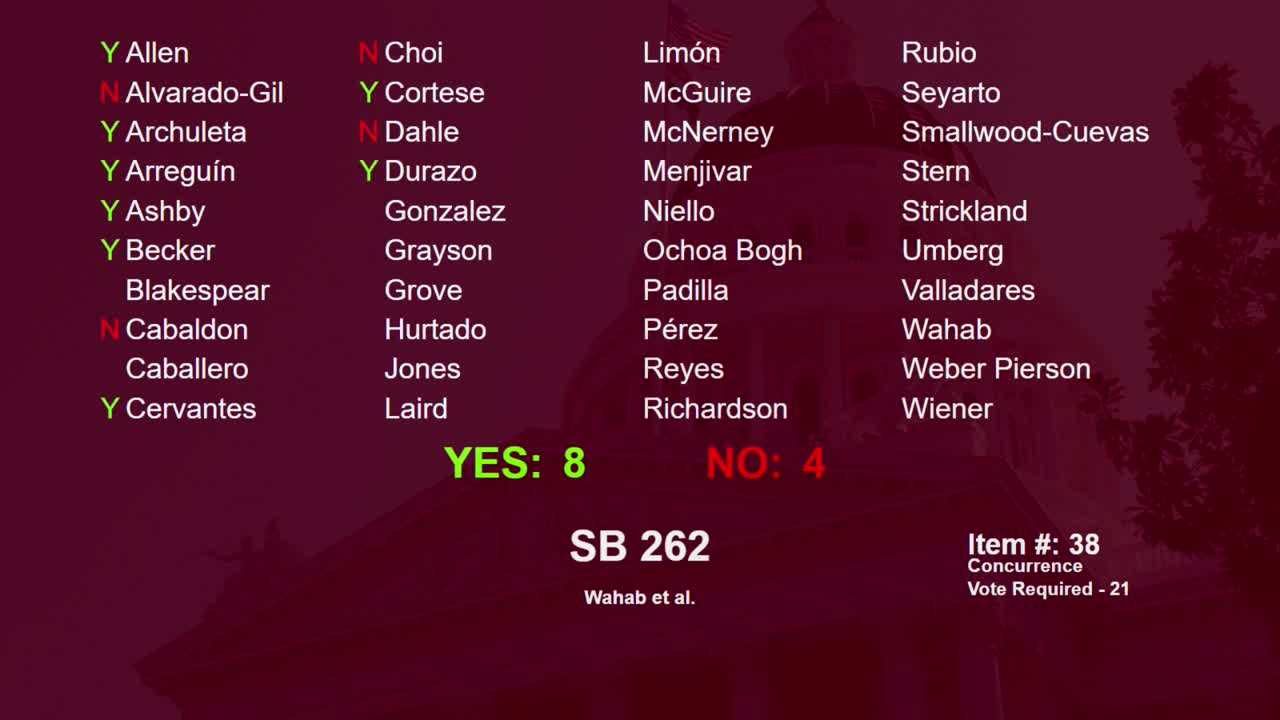
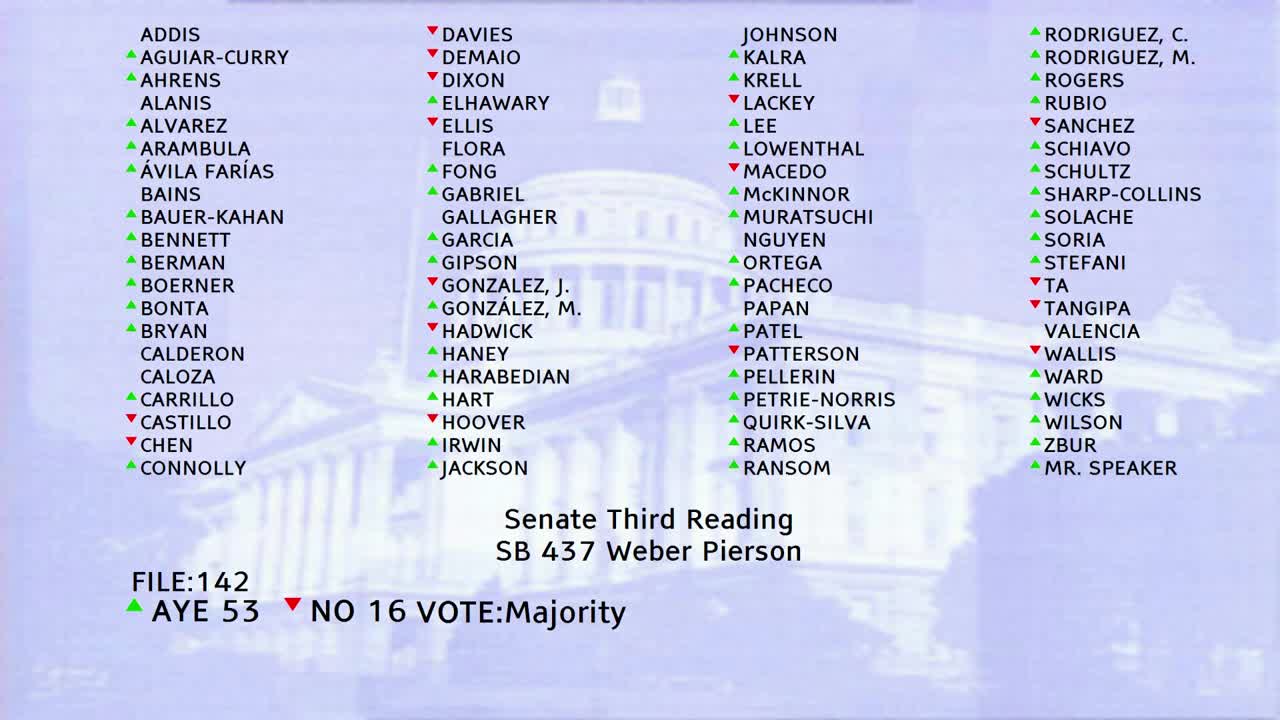
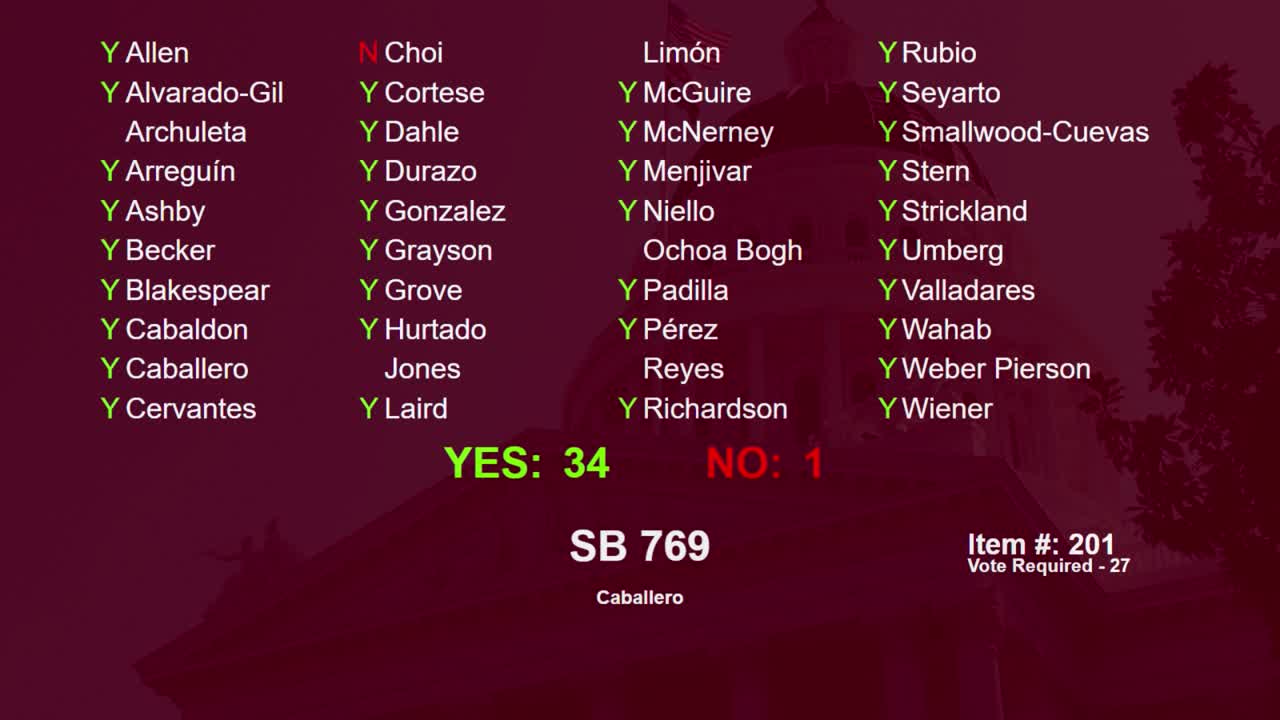
Bill Author