SB 413: Juveniles: case file inspection.
- Session Year: 2025-2026
- House: Senate
- Latest Version Date: 2025-10-01
Current Status:
Passed
(2025-10-01: Chaptered by Secretary of State. Chapter 221, Statutes of 2025.)
Introduced
In Committee
Awaiting First Chamber Vote
Passed First Chamber
In Committee
Awaiting Second Chamber Vote
Passed Second Chamber
Enacted
Existing law generally provides for the confidentiality of information regarding a minor in proceedings in the juvenile court and related court proceedings and limits access to juvenile case files, as defined. Existing law authorizes only certain individuals to inspect a juvenile case file, including, among others, the county counsel, city attorney, or any other attorney representing the petitioning agency in a dependency action.
This bill would delete that authority and instead specify that the county counsel, city attorney, or any other attorney representing the county child welfare agency in dependency proceedings, and the county counsel or city attorney representing the child welfare agency or probation department in connection with the administration or review of child welfare or probation services, as specified, may access juvenile case files. The bill would also authorize an attorney representing a party in a civil proceeding, as defined, filed by, or on behalf of, the person who is the subject of the juvenile case file in which the defendant is either the child welfare agency, probation department, or an employee of those entities to inspect and receive copies of a juvenile case file for use in the civil proceeding, as specified. The bill would additionally authorize an attorney representing a person who is or was the subject of juvenile proceedings under specified provisions to access juvenile case files. By imposing additional duties on local entities to provide access to these records, this bill would impose a state-mandated local program.
The California Constitution requires the state to reimburse local agencies and school districts for certain costs mandated by the state. Statutory provisions establish procedures for making that reimbursement.
This bill would provide that, if the Commission on State Mandates determines that the bill contains costs mandated by the state, reimbursement for those costs shall be made pursuant to the statutory provisions noted above.
Existing law generally provides for the confidentiality of information regarding a minor in proceedings in the juvenile court and related court proceedings and limits access to juvenile case files, as defined. Existing law authorizes only certain individuals to inspect a juvenile case file, including, among others, the county counsel, city attorney, or any other attorney representing the petitioning agency in a dependency action.
This bill would delete that authority and instead specify that the county counsel or city attorney counsel, city attorney, or any other attorney representing the county child welfare agency in dependency proceedings, and the county counsel or city attorney representing the child welfare agency or probation department in connection with the administration or review of child welfare or probation services, as specified, may access juvenile case files. The bill would also authorize an attorney representing a party in a civil action or in a government claim in which a local agency, child welfare agency, or probation department, or an employee of one of those entities, when the employee is acting in their official capacity, is a party, proceeding, as defined, filed by, or on behalf of, the person who is the subject of the juvenile case file in which the defendant is either the child welfare agency, probation department, or an employee of those entities to inspect and receive copies of a juvenile case file for use in the civil action or government claim. proceeding, as specified. The bill would additionally authorize an attorney representing a person who is or was the subject of juvenile proceedings under specified provisions to access juvenile case files. By imposing additional duties on local entities to provide access to these records, this bill would impose a state-mandated local program.
The California Constitution requires the state to reimburse local agencies and school districts for certain costs mandated by the state. Statutory provisions establish procedures for making that reimbursement.
This bill would provide that, if the Commission on State Mandates determines that the bill contains costs mandated by the state, reimbursement for those costs shall be made pursuant to the statutory provisions noted above.
Existing law generally provides for the confidentiality of information regarding a minor in proceedings in the juvenile court and related court proceedings and limits access to juvenile case files, as defined. Existing law authorizes only certain individuals to inspect a juvenile case file, including, among others, the county counsel, city attorney, or any other attorney representing the petitioning agency in a dependency action.
This bill would delete that authority and instead specify that the county counsel or city attorney representing the county child welfare agency or probation department may access juvenile case files. The bill would also authorize an attorney representing a party in a civil action or in a government claim in which a local agency, child welfare agency, or probation department, or an employee of one of those entities, when the employee is acting in their official capacity, is a party, to inspect and receive copies of a juvenile case file for use in the civil action or government claim. By imposing additional duties on local entities to provide access to these records, this bill would impose a state-mandated local program.
The California Constitution requires the state to reimburse local agencies and school districts for certain costs mandated by the state. Statutory provisions establish procedures for making that reimbursement.
This bill would provide that, if the Commission on State Mandates determines that the bill contains costs mandated by the state, reimbursement for those costs shall be made pursuant to the statutory provisions noted above.
(a)(1)Except as provided in Section 828, a case file may be inspected only by the following:
(A)Court personnel.
(B)The district attorney, a city attorney, or city prosecutor authorized to prosecute criminal or juvenile cases under state law.
(C)The minor who is the subject of the proceeding.
(D)The minors parent or guardian.
(E)The attorneys for the parties, judges, referees, other hearing officers, probation officers, and law enforcement officers who are actively participating in criminal or juvenile proceedings involving the minor.
(F)(i)The county counsel, city attorney, or any other attorney representing the county child welfare agency in dependency proceedings.
(ii)The county counsel or city attorney representing the child welfare agency or probation department in connection with the administration or review of child welfare or probation services provided by the agency or department to the subject of the case file or to that persons sibling, parent, or legal guardian.
(G)The superintendent or designee of the school district where the minor is enrolled or attending school.
(H)Members of the child protective agencies as described in Section 11165.9 of the Penal Code.
(I)The State Department of Social Services, to carry out its duties pursuant to Division 9 (commencing with Section 10000) of this code and Part 5 (commencing with Section 7900) of Division 12 of the Family Code to oversee and monitor county child welfare agencies, children in foster care or receiving foster care assistance, and out-of-state placements, Section 10850.4, and paragraph (2).
(J)(i)Authorized staff who are employed by, or authorized staff of entities who are licensed by, the State Department of Social Services, as necessary to the performance of their duties related to resource family approval, and authorized staff who are employed by the State Department of Social Services as necessary to inspect, approve, or license, and monitor or investigate community care facilities or resource families, and to ensure that the standards of care and services provided in those facilities are adequate and appropriate, and to ascertain compliance with the rules and regulations to which the facilities are subject.
(ii)The confidential information shall remain confidential except for purposes of inspection, approval or licensing, or monitoring or investigation pursuant to Chapter 3 (commencing with Section 1500) and Chapter 3.4 (commencing with Section 1596.70) of Division 2 of the Health and Safety Code and Article 2 (commencing with Section 16519.5) of Chapter 5 of Part 4 of Division 9. The confidential information may also be used by the State Department of Social Services in a criminal, civil, or administrative proceeding. The confidential information shall be available only to the judge or hearing officer and to the parties to the case. Names that are confidential shall be listed in attachments separate to the general pleadings. The confidential information shall be sealed after the conclusion of the criminal, civil, or administrative hearings, and may not subsequently be released except in accordance with this subdivision. If the confidential information does not result in a criminal, civil, or administrative proceeding, it shall be sealed after the State Department of Social Services determines that no further action will be taken in the matter. Except as otherwise provided in this subdivision, confidential information shall not contain the name of the minor.
(K)Members of childrens multidisciplinary teams, persons, or agencies providing treatment or supervision of the minor.
(L)A judge, commissioner, or other hearing officer assigned to a family law case with issues concerning custody or visitation, or both, involving the minor, and the following persons, if actively participating in the family law case: a family court mediator assigned to a case involving the minor pursuant to Article 1 (commencing with Section 3160) of Chapter 11 of Part 2 of Division 8 of the Family Code, a court-appointed evaluator or a person conducting a court-connected child custody evaluation, investigation, or assessment pursuant to Section 3111 or 3118 of the Family Code, and counsel appointed for the minor in the family law case pursuant to Section 3150 of the Family Code. Prior to allowing counsel appointed for the minor in the family law case to inspect the file, the court clerk may require counsel to provide a certified copy of the court order appointing the minors counsel.
(M)When acting within the scope of investigative duties of an active case, a statutorily authorized or court-appointed investigator who is conducting an investigation pursuant to Section 7663, 7851, or 9001 of the Family Code, or who is actively participating in a guardianship case involving a minor pursuant to Part 2 (commencing with Section 1500) of Division 4 of the Probate Code and acting within the scope of the investigators duties in that case.
(N)A local child support agency for the purpose of establishing paternity and establishing and enforcing child support orders.
(O)Juvenile justice commissions as established under Section 225. The confidentiality provisions of Section 10850 shall apply to a juvenile justice commission and its members.
(P)The Department of Justice, to carry out its duties pursuant to Sections 290.008 and 290.08 of the Penal Code as the repository for sex offender registration and notification in California.
(Q)Any other person who may be designated by court order of the judge of the juvenile court upon filing a petition.
(R)A probation officer who is preparing a report pursuant to Section 1178 on behalf of a person who was in the custody of the Department of Corrections and Rehabilitation, Division of Juvenile Justice and who has petitioned the Board of Juvenile Hearings for an honorable discharge.
(S)(i)The attorneys in an administrative hearing involving the minor or nonminor only as necessary to meet the requirements of Sections 10952 and 10952.5.
(ii)The confidential information shall remain confidential for purposes of the administrative proceeding. The confidential information shall be available only to the judge or hearing officer and to the parties to the case. The confidential information shall be sealed after the conclusion of the administrative hearing, and shall not subsequently be released except in accordance with this subdivision.
(T)Personnel of the State Department of Social Services, to carry out the duties of the department pursuant to paragraph (1) of subdivision (c) of Section 9100 of the Family Code or paragraph (3) of subdivision (e) of Section 366.26.
(U)Personnel of the Office of Youth and Community Restoration, to carry out the duties of the office pursuant to Sections 2200, 2200.2, 2200.5, and 2200.7.
(V)The attorney representing a person who is, or was, subject to juvenile proceedings under Section 300, 601, or 602.
(W)(i)An attorney representing a party in a civil proceeding filed by, or on behalf of, the person who is the subject of the juvenile case file, in which the defendant is either the child welfare agency, or probation department, or an employee of one of those entities, for use in the civil proceeding as provided in this subparagraph.
(ii)Information and copies of records from a juvenile case file received pursuant to this subparagraph may only be used in the civil proceeding and, consistent with paragraph (4), shall not be disseminated to anyone who is not entitled to access under this subparagraph or any other state law or federal law or regulation, and shall not be used or made as an attachment to any other document in any other proceeding without the prior approval of the juvenile court.
(iii)Notwithstanding any other law, and subject to subparagraph (A) of paragraph (3), the immigration status of any individual in the juvenile case file, and information contained in the juvenile case file that pertains only to a sibling or to a minor who is not the subject of the juvenile case file, shall remain confidential and shall not be released pursuant to this subparagraph absent an order by the juvenile court.
(iv)Notwithstanding paragraph (4), information and copies of records from a juvenile case file may be provided to persons assisting the attorneys for the parties in the civil proceeding for their use in that proceeding without the prior approval of the court. Persons assisting the attorneys shall return all copies of records from a juvenile case file provided by an attorney pursuant to this subparagraph at the conclusion of the civil proceeding.
(v)An attorney who obtains access to a juvenile case file pursuant to this subparagraph and provides copies of records to persons assisting the attorneys for the parties in the civil proceeding for their use in that proceeding pursuant to clause (iii) shall take appropriate steps to ensure that all of the copies of the records are returned to the attorney upon conclusion of the civil proceeding. The attorney shall also take appropriate steps to ensure that all copies of records from a juvenile case file obtained pursuant to this subparagraph are destroyed upon the conclusion of the civil proceeding consistent with other applicable laws.
(vi)Any information and copies of records from a juvenile case file received pursuant to this subparagraph that is submitted to the court or attached to pleadings in a civil action by an attorney representing a party other than the person who is the subject of the juvenile case file shall be submitted to the court with a motion or application for an order by the court for the submission or pleadings to be filed under seal, unless the judicial officer presiding over the civil matter rules otherwise. The person who is the subject of the juvenile case file may object during, or upon the conclusion of, the civil proceeding to any information or copies of records being filed under seal and may request that the information or records be filed without sealing. The court shall grant the request of the person who is the subject of the case file in regards to all information or records contained in the case file, except upon a finding of unusual circumstances.
(vii)For purposes of this subparagraph, civil proceeding means a civil action or a government claim filed pursuant to Part 3 (commencing with Section 900) of Division 3.6 of Title 1 of the Government Code.
(2)(A)Notwithstanding any other law, and subject to subparagraph (A) of paragraph (3), juvenile case files, except those relating to matters within the jurisdiction of the court pursuant to Section 601 or 602, that pertain to a deceased child who was within the jurisdiction of the juvenile court pursuant to Section 300, shall be released to the public pursuant to an order by the juvenile court after a petition has been filed and interested parties have been afforded an opportunity to file an objection. Any information relating to another child or that could identify another child, except for information about the deceased, shall be redacted from the juvenile case file prior to release, unless a specific order is made by the juvenile court to the contrary. Except as provided in this paragraph, the presiding judge of the juvenile court may issue an order prohibiting or limiting access to the juvenile case file, or any portion thereof, of a deceased child only upon a showing by a preponderance of evidence that release of the juvenile case file or any portion thereof is detrimental to the safety, protection, or physical or emotional well-being of another child who is directly or indirectly connected to the juvenile case that is the subject of the petition.
(B)This paragraph represents a presumption in favor of the release of documents when a child is deceased unless the statutory reasons for confidentiality are shown to exist.
(C)If a child whose records are sought has died, and documents are sought pursuant to this paragraph, no weighing or balancing of the interests of those other than a child is permitted.
(D)A petition filed under this paragraph shall be served on interested parties by the petitioner, if the petitioner is in possession of their identity and address, and on the custodian of records. Upon receiving a petition, the custodian of records shall serve a copy of the request upon all interested parties that have not been served by the petitioner or on the interested parties served by the petitioner if the custodian of records possesses information, such as a more recent address, indicating that the service by the petitioner may have been ineffective.
(E)The custodian of records shall serve the petition within 10 calendar days of receipt. If an interested party, including the custodian of records, objects to the petition, the party shall file and serve the objection on the petitioning party no later than 15 calendar days after service of the petition.
(F)The petitioning party shall have 10 calendar days to file a reply. The juvenile court shall set the matter for hearing no more than 60 calendar days from the date the petition is served on the custodian of records. The court shall render its decision within 30 days of the hearing. The matter shall be decided solely upon the basis of the petition and supporting exhibits and declarations, if any, the objection and any supporting exhibits or declarations, if any, and the reply and any supporting declarations or exhibits thereto, and argument at hearing. The court may, solely upon its own motion, order the appearance of witnesses. If an objection is not filed to the petition, the court shall review the petition and issue its decision within 10 calendar days of the final day for filing the objection. An order of the court shall be immediately reviewable by petition to the appellate court for the issuance of an extraordinary writ.
(3)Access to juvenile case files pertaining to matters within the jurisdiction of the juvenile court pursuant to Section 300 or Section 601 or 602 shall be limited as follows:
(A)If a juvenile case file, or any portion thereof, is privileged or confidential pursuant to any other state law or federal law or regulation, the requirements of that state law or federal law or regulation prohibiting or limiting release of the juvenile case file or any portions thereof shall prevail. Unless a person is listed in subparagraphs (A) to (P), inclusive, or (V) or (W) of paragraph (1) and is entitled to access under the other state law or federal law or regulation without a court order, all those seeking access, pursuant to other authorization, to portions of, or information relating to the contents of, juvenile case files protected under another state law or federal law or regulation, shall petition the juvenile court. The juvenile court may only release the portion of, or information relating to the contents of, juvenile case files protected by another state law or federal law or regulation if disclosure is not detrimental to the safety, protection, or physical or emotional well-being of a child, minor, or person who is directly or indirectly connected to the juvenile case that is the subject of the petition. This paragraph does not limit the ability of the juvenile court to carry out its duties in conducting juvenile court proceedings.
(B)Prior to the release of the juvenile case file or any portion thereof, the court shall afford due process, including a notice of, and an opportunity to file an objection to, the release of the record or report to all interested parties.
(C)This paragraph does not limit or repeal any other applicable legal standard or protections designed to safeguard private, confidential, or privileged information.
(4)A juvenile case file, any portion thereof, and information relating to the content of the juvenile case file, may not be disseminated by the receiving persons or agencies to a person or agency, other than a person or agency authorized to receive documents pursuant to this section. Further, a juvenile case file, any portion thereof, and information relating to the content of the juvenile case file, may not be made as an attachment to any other documents without the prior approval of the presiding judge of the juvenile court, unless it is used in connection with, and in the course of, a criminal investigation or a proceeding brought to declare a person a dependent child or ward of the juvenile court, or as authorized by subparagraph (W) of paragraph (1).
(5)Individuals listed in subparagraphs (A), (B), (C), (D), (E), (F), (H), (I), (J), (P), (S), (T), (U), (V), and (W) of paragraph (1) may also receive copies of the case file. For authorized staff of entities who are licensed by the State Department of Social Services, the confidential information shall be obtained through a child protective agency, as defined in subparagraph (H) of paragraph (1). In these circumstances, the requirements of paragraph (4) shall continue to apply to the information received.
(6)An individual other than a person described in subparagraphs (A) to (P), inclusive, of paragraph (1) who files a notice of appeal or petition for writ challenging a juvenile court order, or who is a respondent in that appeal or real party in interest in that writ proceeding, may, for purposes of that appeal or writ proceeding, inspect and copy any records in a juvenile case file to which the individual was previously granted access by the juvenile court pursuant to subparagraph (Q) of paragraph (1), including any records or portions thereof that are made a part of the appellate record. The requirements of paragraph (3) shall continue to apply to any other record, or a portion thereof, in the juvenile case file or made a part of the appellate record. The requirements of paragraph (4) shall continue to apply to files received pursuant to this paragraph. The Judicial Council shall adopt rules to implement this paragraph.
(b)(1)While the Legislature reaffirms its belief that juvenile court records, in general, should be confidential, it is the intent of the Legislature in enacting this subdivision to provide for a limited exception to juvenile court record confidentiality to promote more effective communication among juvenile courts, family courts, law enforcement agencies, and schools to ensure the rehabilitation of juvenile criminal offenders as well as to lessen the potential for drug use, violence, other forms of delinquency, and child abuse.
(2)(A)Notwithstanding subdivision (a), written notice that a minor enrolled in a public school, kindergarten to grade 12, inclusive, has been found by a court of competent jurisdiction to have committed a felony or misdemeanor involving curfew, gambling, alcohol, drugs, tobacco products, carrying of weapons, a sex offense listed in Section 290 of the Penal Code, assault or battery, larceny, vandalism, or graffiti shall be provided by the court, within seven days, to the superintendent of the school district of attendance. Written notice shall include only the offense found to have been committed by the minor and the disposition of the minors case. This notice shall be expeditiously transmitted by the district superintendent to the principal at the school of attendance. The principal shall expeditiously disseminate the information to those counselors directly supervising or reporting on the behavior or progress of the minor. In addition, the principal shall disseminate the information to any teacher or administrator directly supervising or reporting on the behavior or progress of the minor whom the principal believes needs the information to work with the pupil in an appropriate fashion to avoid being needlessly vulnerable or to protect other persons from needless vulnerability.
(B)Any information received by a teacher, counselor, or administrator under this subdivision shall be received in confidence for the limited purpose of rehabilitating the minor and protecting students and staff, and shall not be further disseminated by the teacher, counselor, or administrator, except insofar as communication with the juvenile, the juveniles parents or guardians, law enforcement personnel, and the juveniles probation officer is necessary to effectuate the juveniles rehabilitation or to protect students and staff.
(C)An intentional violation of the confidentiality provisions of this paragraph is a misdemeanor punishable by a fine not to exceed five hundred dollars ($500).
(3)If a minor is removed from public school as a result of the courts finding described in subdivision (b), the superintendent shall maintain the information in a confidential file and shall defer transmittal of the information received from the court until the minor is returned to public school. If the minor is returned to a school district other than the one from which the minor came, the parole or probation officer having jurisdiction over the minor shall so notify the superintendent of the last district of attendance, who shall transmit the notice received from the court to the superintendent of the new district of attendance.
(c)Each probation report filed with the court concerning a minor whose record is subject to dissemination pursuant to subdivision (b) shall include on the face sheet the school at which the minor is currently enrolled. The county superintendent shall provide the court with a listing of all of the schools within each school district, within the county, along with the name and mailing address of each district superintendent.
(d)(1)Each notice sent by the court pursuant to subdivision (b) shall be stamped with the instruction: Unlawful Dissemination Of This Information Is A Misdemeanor. Any information received from the court shall be kept in a separate confidential file at the school of attendance and shall be transferred to the minors subsequent schools of attendance and maintained until the minor graduates from high school, is released from juvenile court jurisdiction, or reaches 18 years of age, whichever occurs first. After that time, the confidential record shall be destroyed. At any time after the date by which a record required to be destroyed by this section should have been destroyed, the minor or the minors parent or guardian shall have the right to make a written request to the principal of the school that the minors school records be reviewed to ensure that the record has been destroyed. Upon completion of the requested review and no later than 30 days after the request for the review was received, the principal or a designee shall respond in writing to the written request and either shall confirm that the record has been destroyed or, if the record has not been destroyed, shall explain why destruction has not yet occurred.
(2)Except as provided in paragraph (2) of subdivision (b), liability shall not attach to a person who transmits or fails to transmit notice or information required under subdivision (b).
(e)For purposes of this section, a juvenile case file means a petition filed in a juvenile court proceeding, reports of the probation officer, and all other records, including any writing as defined in Section 250 of the Evidence Code, or electronically stored information relating to the minor, that is filed in that case or made available to the probation officer in making the probation officers report, or to the judge, referee, or other hearing officer, and thereafter retained by the probation officer, judge, referee, or other hearing officer.
(f)The persons described in subparagraphs (A), (E), (F), (H), (K), (L), (M), and (N) of paragraph (1) of subdivision (a) include persons serving in a similar capacity for an Indian tribe, reservation, or tribal court when the case file involves a child who is a member of, or who is eligible for membership in, that tribe.
(g)Any portion of a case file that is covered by, or included in, an order of the court sealing a record pursuant to Section 781 or 786, or that is covered by a record sealing requirement pursuant to Section 786.5 or 827.95, may not be inspected, except as specified by those sections.
SEC. 2.If the Commission on State Mandates determines that this act contains costs mandated by the state, reimbursement to local agencies and school districts for those costs shall be made pursuant to Part 7 (commencing with Section 17500) of Division 4 of Title 2 of the Government Code.
(a)(1)Except as provided in Section 828, a case file may be inspected only by the following:
(A)Court personnel.
(B)The district attorney, a city attorney, or city prosecutor authorized to prosecute criminal or juvenile cases under state law.
(C)The minor who is the subject of the proceeding.
(D)The minors parent or guardian.
(E)The attorneys for the parties, judges, referees, other hearing officers, probation officers, and law enforcement officers who are actively participating in criminal or juvenile proceedings involving the minor.
(F)(i)The county counsel, city attorney, or any other attorney representing the county child welfare agency in dependency proceedings.
(ii)The county counsel or city attorney representing the child welfare agency or probation department in connection with the administration or review of child welfare or probation services provided by the agency or department to the subject of the case file or to that persons sibling, parent, or legal guardian.
(G)The superintendent or designee of the school district where the minor is enrolled or attending school.
(H)Members of the child protective agencies as described in Section 11165.9 of the Penal Code.
(I)The State Department of Social Services, to carry out its duties pursuant to Division 9 (commencing with Section 10000) of this code and Part 5 (commencing with Section 7900) of Division 12 of the Family Code to oversee and monitor county child welfare agencies, children in foster care or receiving foster care assistance, and out-of-state placements, Section 10850.4, and paragraph (2).
(J)(i)Authorized staff who are employed by, or authorized staff of entities who are licensed by, the State Department of Social Services, as necessary to the performance of their duties related to resource family approval, and authorized staff who are employed by the State Department of Social Services as necessary to inspect, approve, or license, and monitor or investigate community care facilities or resource families, and to ensure that the standards of care and services provided in those facilities are adequate and appropriate, and to ascertain compliance with the rules and regulations to which the facilities are subject.
(ii)The confidential information shall remain confidential except for purposes of inspection, approval or licensing, or monitoring or investigation pursuant to Chapter 3 (commencing with Section 1500) and Chapter 3.4 (commencing with Section 1596.70) of Division 2 of the Health and Safety Code and Article 2 (commencing with Section 16519.5) of Chapter 5 of Part 4 of Division 9. The confidential information may also be used by the State Department of Social Services in a criminal, civil, or administrative proceeding. The confidential information shall be available only to the judge or hearing officer and to the parties to the case. Names that are confidential shall be listed in attachments separate to the general pleadings. The confidential information shall be sealed after the conclusion of the criminal, civil, or administrative hearings, and may not subsequently be released except in accordance with this subdivision. If the confidential information does not result in a criminal, civil, or administrative proceeding, it shall be sealed after the State Department of Social Services determines that no further action will be taken in the matter. Except as otherwise provided in this subdivision, confidential information shall not contain the name of the minor.
(K)Members of childrens multidisciplinary teams, persons, or agencies providing treatment or supervision of the minor.
(L)A judge, commissioner, or other hearing officer assigned to a family law case with issues concerning custody or visitation, or both, involving the minor, and the following persons, if actively participating in the family law case: a family court mediator assigned to a case involving the minor pursuant to Article 1 (commencing with Section 3160) of Chapter 11 of Part 2 of Division 8 of the Family Code, a court-appointed evaluator or a person conducting a court-connected child custody evaluation, investigation, or assessment pursuant to Section 3111 or 3118 of the Family Code, and counsel appointed for the minor in the family law case pursuant to Section 3150 of the Family Code. Prior to allowing counsel appointed for the minor in the family law case to inspect the file, the court clerk may require counsel to provide a certified copy of the court order appointing the minors counsel.
(M)When acting within the scope of investigative duties of an active case, a statutorily authorized or court-appointed investigator who is conducting an investigation pursuant to Section 7663, 7851, or 9001 of the Family Code, or who is actively participating in a guardianship case involving a minor pursuant to Part 2 (commencing with Section 1500) of Division 4 of the Probate Code and acting within the scope of the investigators duties in that case.
(N)A local child support agency for the purpose of establishing paternity and establishing and enforcing child support orders.
(O)Juvenile justice commissions as established under Section 225. The confidentiality provisions of Section 10850 shall apply to a juvenile justice commission and its members.
(P)The Department of Justice, to carry out its duties pursuant to Sections 290.008 and 290.08 of the Penal Code as the repository for sex offender registration and notification in California.
(Q)Any other person who may be designated by court order of the judge of the juvenile court upon filing a petition.
(R)A probation officer who is preparing a report pursuant to Section 1178 on behalf of a person who was in the custody of the Department of Corrections and Rehabilitation, Division of Juvenile Justice and who has petitioned the Board of Juvenile Hearings for an honorable discharge.
(S)(i)The attorneys in an administrative hearing involving the minor or nonminor only as necessary to meet the requirements of Sections 10952 and 10952.5.
(ii)The confidential information shall remain confidential for purposes of the administrative proceeding. The confidential information shall be available only to the judge or hearing officer and to the parties to the case. The confidential information shall be sealed after the conclusion of the administrative hearing, and shall not subsequently be released except in accordance with this subdivision.
(T)Personnel of the State Department of Social Services, to carry out the duties of the department pursuant to paragraph (1) of subdivision (c) of Section 9100 of the Family Code or paragraph (3) of subdivision (e) of Section 366.26.
(U)Personnel of the Office of Youth and Community Restoration, to carry out the duties of the office pursuant to Sections 2200, 2200.2, 2200.5, and 2200.7.
(V)The attorney representing a person who is, or was, subject to juvenile proceedings under Section 300, 601, or 602.
(W)(i)An attorney representing a party in a civil proceeding filed by, or on behalf of, the person who is the subject of the juvenile case file, in which the defendant is either the child welfare agency, or probation department, or an employee of one of those entities, for use in the civil proceeding as provided in this subparagraph.
(ii)Information and copies of records from a juvenile case file received pursuant to this subparagraph may only be used in the civil proceeding and, consistent with paragraph (4), shall not be disseminated to anyone who is not entitled to access under this subparagraph or any other state law or federal law or regulation, and shall not be used or made as an attachment to any other document in any other proceeding without the prior approval of the juvenile court.
(iii)Notwithstanding any other law, and subject to subparagraph (A) of paragraph (3), the immigration status of any individual in the juvenile case file, and information contained in the juvenile case file that pertains only to a sibling or to a minor who is not the subject of the juvenile case file, shall remain confidential and shall not be released pursuant to this subparagraph absent an order by the juvenile court.
(iii)(iv)Notwithstanding paragraph (4), information and copies of records from a juvenile case file may be provided to persons assisting the attorneys for the parties in the civil proceeding for their use in that proceeding without the prior approval of the court. Persons assisting the attorneys shall return all copies of records from a juvenile case file provided by an attorney pursuant to this subparagraph at the conclusion of the civil proceeding.
(iv)(v)An attorney who obtains access to a juvenile case file pursuant to this subparagraph and provides copies of records to persons assisting the attorneys for the parties in the civil proceeding for their use in that proceeding pursuant to clause (iii) shall take appropriate steps to ensure that all of the copies of the records are returned to the attorney upon conclusion of the civil proceeding. The attorney shall also take appropriate steps to ensure that all copies of records from a juvenile case file obtained pursuant to this subparagraph are destroyed upon the conclusion of the civil proceeding consistent with other applicable laws.
(v)(vi)Any information and copies of records from a juvenile case file received pursuant to this subparagraph that is submitted to the court or attached to pleadings in a civil action by an attorney representing a party other than the person who is the subject of the juvenile case file shall be submitted to the court with a motion or application for an order by the court for the submission or pleadings to be filed under seal, unless the judicial officer presiding over the civil matter rules otherwise. The person who is the subject of the juvenile case file may object during, or upon the conclusion of, the civil proceeding to any information or copies of records being filed under seal and may request that the information or records be filed without sealing. The court shall grant the request of the person who is the subject of the case file in regards to all information or records contained in the case file, except upon a finding of unusual circumstances.
(vi)(vii)For purposes of this subparagraph, civil proceeding means a civil action or a government claim filed pursuant to Part 3 (commencing with Section 900) of Division 3.6 of Title 1 of the Government Code.
(2)(A)Notwithstanding any other law, and subject to subparagraph (A) of paragraph (3), juvenile case files, except those relating to matters within the jurisdiction of the court pursuant to Section 601 or 602, that pertain to a deceased child who was within the jurisdiction of the juvenile court pursuant to Section 300, shall be released to the public pursuant to an order by the juvenile court after a petition has been filed and interested parties have been afforded an opportunity to file an objection. Any information relating to another child or that could identify another child, except for information about the deceased, shall be redacted from the juvenile case file prior to release, unless a specific order is made by the juvenile court to the contrary. Except as provided in this paragraph, the presiding judge of the juvenile court may issue an order prohibiting or limiting access to the juvenile case file, or any portion thereof, of a deceased child only upon a showing by a preponderance of evidence that release of the juvenile case file or any portion thereof is detrimental to the safety, protection, or physical or emotional well-being of another child who is directly or indirectly connected to the juvenile case that is the subject of the petition.
(B)This paragraph represents a presumption in favor of the release of documents when a child is deceased unless the statutory reasons for confidentiality are shown to exist.
(C)If a child whose records are sought has died, and documents are sought pursuant to this paragraph, no weighing or balancing of the interests of those other than a child is permitted.
(D)A petition filed under this paragraph shall be served on interested parties by the petitioner, if the petitioner is in possession of their identity and address, and on the custodian of records. Upon receiving a petition, the custodian of records shall serve a copy of the request upon all interested parties that have not been served by the petitioner or on the interested parties served by the petitioner if the custodian of records possesses information, such as a more recent address, indicating that the service by the petitioner may have been ineffective.
(E)The custodian of records shall serve the petition within 10 calendar days of receipt. If an interested party, including the custodian of records, objects to the petition, the party shall file and serve the objection on the petitioning party no later than 15 calendar days after service of the petition.
(F)The petitioning party shall have 10 calendar days to file a reply. The juvenile court shall set the matter for hearing no more than 60 calendar days from the date the petition is served on the custodian of records. The court shall render its decision within 30 days of the hearing. The matter shall be decided solely upon the basis of the petition and supporting exhibits and declarations, if any, the objection and any supporting exhibits or declarations, if any, and the reply and any supporting declarations or exhibits thereto, and argument at hearing. The court may, solely upon its own motion, order the appearance of witnesses. If an objection is not filed to the petition, the court shall review the petition and issue its decision within 10 calendar days of the final day for filing the objection. An order of the court shall be immediately reviewable by petition to the appellate court for the issuance of an extraordinary writ.
(3)Access to juvenile case files pertaining to matters within the jurisdiction of the juvenile court pursuant to Section 300 or Section 601 or 602 shall be limited as follows:
(A)If a juvenile case file, or any portion thereof, is privileged or confidential pursuant to any other state law or federal law or regulation, the requirements of that state law or federal law or regulation prohibiting or limiting release of the juvenile case file or any portions thereof shall prevail. Unless a person is listed in subparagraphs (A) to (P), inclusive, or (V) or (W) of paragraph (1) and is entitled to access under the other state law or federal law or regulation without a court order, all those seeking access, pursuant to other authorization, to portions of, or information relating to the contents of, juvenile case files protected under another state law or federal law or regulation, shall petition the juvenile court. The juvenile court may only release the portion of, or information relating to the contents of, juvenile case files protected by another state law or federal law or regulation if disclosure is not detrimental to the safety, protection, or physical or emotional well-being of a child, minor, or person who is directly or indirectly connected to the juvenile case that is the subject of the petition. This paragraph does not limit the ability of the juvenile court to carry out its duties in conducting juvenile court proceedings.
(B)Prior to the release of the juvenile case file or any portion thereof, the court shall afford due process, including a notice of, and an opportunity to file an objection to, the release of the record or report to all interested parties.
(C)This paragraph does not limit or repeal any other applicable legal standard or protections designed to safeguard private, confidential, or privileged information.
(4)A juvenile case file, any portion thereof, and information relating to the content of the juvenile case file, may not be disseminated by the receiving persons or agencies to a person or agency, other than a person or agency authorized to receive documents pursuant to this section. Further, a juvenile case file, any portion thereof, and information relating to the content of the juvenile case file, may not be made as an attachment to any other documents without the prior approval of the presiding judge of the juvenile court, unless it is used in connection with, and in the course of, a criminal investigation or a proceeding brought to declare a person a dependent child or ward of the juvenile court, or as authorized by subparagraph (W) of paragraph (1).
(5)Individuals listed in subparagraphs (A), (B), (C), (D), (E), (F), (H), (I), (J), (P), (S), (T), (U), (V), and (W) of paragraph (1) may also receive copies of the case file. For authorized staff of entities who are licensed by the State Department of Social Services, the confidential information shall be obtained through a child protective agency, as defined in subparagraph (H) of paragraph (1). In these circumstances, the requirements of paragraph (4) shall continue to apply to the information received.
(6)An individual other than a person described in subparagraphs (A) to (P), inclusive, of paragraph (1) who files a notice of appeal or petition for writ challenging a juvenile court order, or who is a respondent in that appeal or real party in interest in that writ proceeding, may, for purposes of that appeal or writ proceeding, inspect and copy any records in a juvenile case file to which the individual was previously granted access by the juvenile court pursuant to subparagraph (Q) of paragraph (1), including any records or portions thereof that are made a part of the appellate record. The requirements of paragraph (3) shall continue to apply to any other record, or a portion thereof, in the juvenile case file or made a part of the appellate record. The requirements of paragraph (4) shall continue to apply to files received pursuant to this paragraph. The Judicial Council shall adopt rules to implement this paragraph.
(b)(1)While the Legislature reaffirms its belief that juvenile court records, in general, should be confidential, it is the intent of the Legislature in enacting this subdivision to provide for a limited exception to juvenile court record confidentiality to promote more effective communication among juvenile courts, family courts, law enforcement agencies, and schools to ensure the rehabilitation of juvenile criminal offenders as well as to lessen the potential for drug use, violence, other forms of delinquency, and child abuse.
(2)(A)Notwithstanding subdivision (a), written notice that a minor enrolled in a public school, kindergarten to grade 12, inclusive, has been found by a court of competent jurisdiction to have committed a felony or misdemeanor involving curfew, gambling, alcohol, drugs, tobacco products, carrying of weapons, a sex offense listed in Section 290 of the Penal Code, assault or battery, larceny, vandalism, or graffiti shall be provided by the court, within seven days, to the superintendent of the school district of attendance. Written notice shall include only the offense found to have been committed by the minor and the disposition of the minors case. This notice shall be expeditiously transmitted by the district superintendent to the principal at the school of attendance. The principal shall expeditiously disseminate the information to those counselors directly supervising or reporting on the behavior or progress of the minor. In addition, the principal shall disseminate the information to any teacher or administrator directly supervising or reporting on the behavior or progress of the minor whom the principal believes needs the information to work with the pupil in an appropriate fashion to avoid being needlessly vulnerable or to protect other persons from needless vulnerability.
(B)Any information received by a teacher, counselor, or administrator under this subdivision shall be received in confidence for the limited purpose of rehabilitating the minor and protecting students and staff, and shall not be further disseminated by the teacher, counselor, or administrator, except insofar as communication with the juvenile, the juveniles parents or guardians, law enforcement personnel, and the juveniles probation officer is necessary to effectuate the juveniles rehabilitation or to protect students and staff.
(C)An intentional violation of the confidentiality provisions of this paragraph is a misdemeanor punishable by a fine not to exceed five hundred dollars ($500).
(3)If a minor is removed from public school as a result of the courts finding described in subdivision (b), the superintendent shall maintain the information in a confidential file and shall defer transmittal of the information received from the court until the minor is returned to public school. If the minor is returned to a school district other than the one from which the minor came, the parole or probation officer having jurisdiction over the minor shall so notify the superintendent of the last district of attendance, who shall transmit the notice received from the court to the superintendent of the new district of attendance.
(c)Each probation report filed with the court concerning a minor whose record is subject to dissemination pursuant to subdivision (b) shall include on the face sheet the school at which the minor is currently enrolled. The county superintendent shall provide the court with a listing of all of the schools within each school district, within the county, along with the name and mailing address of each district superintendent.
(d)(1)Each notice sent by the court pursuant to subdivision (b) shall be stamped with the instruction: Unlawful Dissemination Of This Information Is A Misdemeanor. Any information received from the court shall be kept in a separate confidential file at the school of attendance and shall be transferred to the minors subsequent schools of attendance and maintained until the minor graduates from high school, is released from juvenile court jurisdiction, or reaches 18 years of age, whichever occurs first. After that time, the confidential record shall be destroyed. At any time after the date by which a record required to be destroyed by this section should have been destroyed, the minor or the minors parent or guardian shall have the right to make a written request to the principal of the school that the minors school records be reviewed to ensure that the record has been destroyed. Upon completion of the requested review and no later than 30 days after the request for the review was received, the principal or a designee shall respond in writing to the written request and either shall confirm that the record has been destroyed or, if the record has not been destroyed, shall explain why destruction has not yet occurred.
(2)Except as provided in paragraph (2) of subdivision (b), liability shall not attach to a person who transmits or fails to transmit notice or information required under subdivision (b).
(e)For purposes of this section, a juvenile case file means a petition filed in a juvenile court proceeding, reports of the probation officer, and all other records, including any writing as defined in Section 250 of the Evidence Code, or electronically stored information relating to the minor, that is filed in that case or made available to the probation officer in making the probation officers report, or to the judge, referee, or other hearing officer, and thereafter retained by the probation officer, judge, referee, or other hearing officer.
(f)The persons described in subparagraphs (A), (E), (F), (H), (K), (L), (M), and (N) of paragraph (1) of subdivision (a) include persons serving in a similar capacity for an Indian tribe, reservation, or tribal court when the case file involves a child who is a member of, or who is eligible for membership in, that tribe.
(g)Any portion of a case file that is covered by, or included in, an order of the court sealing a record pursuant to Section 781 or 786, or that is covered by a record sealing requirement pursuant to Section 786.5 or 827.95, may not be inspected, except as specified by those sections.
SEC. 2.If the Commission on State Mandates determines that this act contains costs mandated by the state, reimbursement to local agencies and school districts for those costs shall be made pursuant to Part 7 (commencing with Section 17500) of Division 4 of Title 2 of the Government Code.
(a)(1)Except as provided in Section 828, a case file may be inspected only by the following:
(A)Court personnel.
(B)The district attorney, a city attorney, or city prosecutor authorized to prosecute criminal or juvenile cases under state law.
(C)The minor who is the subject of the proceeding.
(D)The minors parent or guardian.
(E)The attorneys for the parties, judges, referees, other hearing officers, probation officers, and law enforcement officers who are actively participating in criminal or juvenile proceedings involving the minor.
(F)(i)The county counsel or city attorney counsel, city attorney, or any other attorney representing the county child welfare agency or probation department. in dependency proceedings.
(ii)The county counsel or city attorney representing the child welfare agency or probation department in connection with the administration or review of child welfare or probation services provided by the agency or department to the subject of the case file or to that persons sibling, parent, or legal guardian.
(G)The superintendent or designee of the school district where the minor is enrolled or attending school.
(H)Members of the child protective agencies as described in Section 11165.9 of the Penal Code.
(I)The State Department of Social Services, to carry out its duties pursuant to Division 9 (commencing with Section 10000) of this code and Part 5 (commencing with Section 7900) of Division 12 of the Family Code to oversee and monitor county child welfare agencies, children in foster care or receiving foster care assistance, and out-of-state placements, Section 10850.4, and paragraph (2).
(J)(i)Authorized staff who are employed by, or authorized staff of entities who are licensed by, the State Department of Social Services, as necessary to the performance of their duties related to resource family approval, and authorized staff who are employed by the State Department of Social Services as necessary to inspect, approve, or license, and monitor or investigate community care facilities or resource families, and to ensure that the standards of care and services provided in those facilities are adequate and appropriate, and to ascertain compliance with the rules and regulations to which the facilities are subject.
(ii)The confidential information shall remain confidential except for purposes of inspection, approval or licensing, or monitoring or investigation pursuant to Chapter 3 (commencing with Section 1500) and Chapter 3.4 (commencing with Section 1596.70) of Division 2 of the Health and Safety Code and Article 2 (commencing with Section 16519.5) of Chapter 5 of Part 4 of Division 9. The confidential information may also be used by the State Department of Social Services in a criminal, civil, or administrative proceeding. The confidential information shall be available only to the judge or hearing officer and to the parties to the case. Names that are confidential shall be listed in attachments separate to the general pleadings. The confidential information shall be sealed after the conclusion of the criminal, civil, or administrative hearings, and may not subsequently be released except in accordance with this subdivision. If the confidential information does not result in a criminal, civil, or administrative proceeding, it shall be sealed after the State Department of Social Services determines that no further action will be taken in the matter. Except as otherwise provided in this subdivision, confidential information shall not contain the name of the minor.
(K)Members of childrens multidisciplinary teams, persons, or agencies providing treatment or supervision of the minor.
(L)A judge, commissioner, or other hearing officer assigned to a family law case with issues concerning custody or visitation, or both, involving the minor, and the following persons, if actively participating in the family law case: a family court mediator assigned to a case involving the minor pursuant to Article 1 (commencing with Section 3160) of Chapter 11 of Part 2 of Division 8 of the Family Code, a court-appointed evaluator or a person conducting a court-connected child custody evaluation, investigation, or assessment pursuant to Section 3111 or 3118 of the Family Code, and counsel appointed for the minor in the family law case pursuant to Section 3150 of the Family Code. Prior to allowing counsel appointed for the minor in the family law case to inspect the file, the court clerk may require counsel to provide a certified copy of the court order appointing the minors counsel.
(M)When acting within the scope of investigative duties of an active case, a statutorily authorized or court-appointed investigator who is conducting an investigation pursuant to Section 7663, 7851, or 9001 of the Family Code, or who is actively participating in a guardianship case involving a minor pursuant to Part 2 (commencing with Section 1500) of Division 4 of the Probate Code and acting within the scope of the investigators duties in that case.
(N)A local child support agency for the purpose of establishing paternity and establishing and enforcing child support orders.
(O)Juvenile justice commissions as established under Section 225. The confidentiality provisions of Section 10850 shall apply to a juvenile justice commission and its members.
(P)The Department of Justice, to carry out its duties pursuant to Sections 290.008 and 290.08 of the Penal Code as the repository for sex offender registration and notification in California.
(Q)Any other person who may be designated by court order of the judge of the juvenile court upon filing a petition.
(R)A probation officer who is preparing a report pursuant to Section 1178 on behalf of a person who was in the custody of the Department of Corrections and Rehabilitation, Division of Juvenile Justice and who has petitioned the Board of Juvenile Hearings for an honorable discharge.
(S)(i)The attorneys in an administrative hearing involving the minor or nonminor only as necessary to meet the requirements of Sections 10952 and 10952.5.
(ii)The confidential information shall remain confidential for purposes of the administrative proceeding. The confidential information shall be available only to the judge or hearing officer and to the parties to the case. The confidential information shall be sealed after the conclusion of the administrative hearing, and shall not subsequently be released except in accordance with this subdivision.
(T)Personnel of the State Department of Social Services, to carry out the duties of the department pursuant to paragraph (1) of subdivision (c) of Section 9100 of the Family Code or paragraph (3) of subdivision (e) of Section 366.26.
(U)Personnel of the Office of Youth and Community Restoration, to carry out the duties of the office pursuant to Sections 2200, 2200.2, 2200.5, and 2200.7.
(V)The attorney representing a person who is, or was, subject to juvenile proceedings under Section 601 300, 601, or 602.
(W)(i)An attorney representing a party in a civil action or in a government claim filed pursuant to Part 3 (commencing with Section 900) of Division 3.6 of Title 1 of the Government Code, proceeding filed by, or on behalf of, the person who is the subject of the juvenile case file, in which a local agency, the defendant is either the child welfare agency, or probation department, or an employee of one of those entities, when the employee is acting in their official capacity, is a party, for use in the civil action or government claim. proceeding as provided in this subparagraph.
(ii)Information and copies of records from a juvenile case file that is received pursuant to this subparagraph may only be used in connection with a civil action or government claim and the civil proceeding and, consistent with paragraph (4), shall not be disseminated to anyone other than the court, the parties, counsel for the parties, and those assisting counsel for the parties who is not entitled to access under this subparagraph or any other state law or federal law or regulation, and shall not be used or made as an attachment to any other document in any other proceeding without the prior approval of the juvenile court.
(iii)Notwithstanding paragraph (4), information and copies of records from a juvenile case file may be provided to persons assisting the attorneys for the parties in the civil proceeding for their use in that proceeding without the prior approval of the court. Persons assisting the attorneys shall return all copies of records from a juvenile case file provided by an attorney pursuant to this subparagraph at the conclusion of the civil proceeding.
(iii)(iv)An attorney in possession who obtains access to a juvenile case file pursuant to this subparagraph and provides copies of records to persons assisting the attorneys for the parties in the civil proceeding for their use in that proceeding pursuant to clause (iii) shall take appropriate steps to ensure that all of the copies of the records are returned to the attorney upon conclusion of the civil proceeding. The attorney shall also take appropriate steps to ensure that all copies of records from a juvenile case file obtained pursuant to this subparagraph shall destroy the records are destroyed upon the conclusion of the civil action or government claim, whichever is later. proceeding consistent with other applicable laws.
(iv)(v)Any portion of information and copies of records from a juvenile case file that is received pursuant to this subparagraph that is submitted to the court or attached to pleadings in a civil action by an attorney representing a party other than the person who is the subject of the juvenile case file shall be submitted to the court with a motion or application for an order by the court for the submission or pleadings to be filed under seal, unless the judicial officer presiding over the civil matter rules otherwise. The person who is the subject of the juvenile case file may object during, or upon the conclusion of, the civil proceeding to any information or copies of records being filed under seal and may request that the information or records be filed without sealing. The court shall grant the request of the person who is the subject of the case file in regards to all information or records contained in the case file, except upon a finding of unusual circumstances.
(vi)For purposes of this subparagraph, civil proceeding means a civil action or a government claim filed pursuant to Part 3 (commencing with Section 900) of Division 3.6 of Title 1 of the Government Code.
(2)(A)Notwithstanding any other law, and subject to subparagraph (A) of paragraph (3), juvenile case files, except those relating to matters within the jurisdiction of the court pursuant to Section 601 or 602, that pertain to a deceased child who was within the jurisdiction of the juvenile court pursuant to Section 300, shall be released to the public pursuant to an order by the juvenile court after a petition has been filed and interested parties have been afforded an opportunity to file an objection. Any information relating to another child or that could identify another child, except for information about the deceased, shall be redacted from the juvenile case file prior to release, unless a specific order is made by the juvenile court to the contrary. Except as provided in this paragraph, the presiding judge of the juvenile court may issue an order prohibiting or limiting access to the juvenile case file, or any portion thereof, of a deceased child only upon a showing by a preponderance of evidence that release of the juvenile case file or any portion thereof is detrimental to the safety, protection, or physical or emotional well-being of another child who is directly or indirectly connected to the juvenile case that is the subject of the petition.
(B)This paragraph represents a presumption in favor of the release of documents when a child is deceased unless the statutory reasons for confidentiality are shown to exist.
(C)If a child whose records are sought has died, and documents are sought pursuant to this paragraph, no weighing or balancing of the interests of those other than a child is permitted.
(D)A petition filed under this paragraph shall be served on interested parties by the petitioner, if the petitioner is in possession of their identity and address, and on the custodian of records. Upon receiving a petition, the custodian of records shall serve a copy of the request upon all interested parties that have not been served by the petitioner or on the interested parties served by the petitioner if the custodian of records possesses information, such as a more recent address, indicating that the service by the petitioner may have been ineffective.
(E)The custodian of records shall serve the petition within 10 calendar days of receipt. If an interested party, including the custodian of records, objects to the petition, the party shall file and serve the objection on the petitioning party no later than 15 calendar days after service of the petition.
(F)The petitioning party shall have 10 calendar days to file a reply. The juvenile court shall set the matter for hearing no more than 60 calendar days from the date the petition is served on the custodian of records. The court shall render its decision within 30 days of the hearing. The matter shall be decided solely upon the basis of the petition and supporting exhibits and declarations, if any, the objection and any supporting exhibits or declarations, if any, and the reply and any supporting declarations or exhibits thereto, and argument at hearing. The court may, solely upon its own motion, order the appearance of witnesses. If an objection is not filed to the petition, the court shall review the petition and issue its decision within 10 calendar days of the final day for filing the objection. An order of the court shall be immediately reviewable by petition to the appellate court for the issuance of an extraordinary writ.
(3)Access to juvenile case files pertaining to matters within the jurisdiction of the juvenile court pursuant to Section 300 or Section 601 or 602 shall be limited as follows:
(A)If a juvenile case file, or any portion thereof, is privileged or confidential pursuant to any other state law or federal law or regulation, the requirements of that state law or federal law or regulation prohibiting or limiting release of the juvenile case file or any portions thereof shall prevail. Unless a person is listed in subparagraphs (A) to (P), inclusive, or (V) or (W) of paragraph (1) and is entitled to access under the other state law or federal law or regulation without a court order, all those seeking access, pursuant to other authorization, to portions of, or information relating to the contents of, juvenile case files protected under another state law or federal law or regulation, shall petition the juvenile court. The juvenile court may only release the portion of, or information relating to the contents of, juvenile case files protected by another state law or federal law or regulation if disclosure is not detrimental to the safety, protection, or physical or emotional well-being of a child, minor, or person who is directly or indirectly connected to the juvenile case that is the subject of the petition. This paragraph does not limit the ability of the juvenile court to carry out its duties in conducting juvenile court proceedings.
(B)Prior to the release of the juvenile case file or any portion thereof, the court shall afford due process, including a notice of, and an opportunity to file an objection to, the release of the record or report to all interested parties.
(C)This paragraph does not limit or repeal any other applicable legal standard or protections designed to safeguard private, confidential, or privileged information.
(4)A juvenile case file, any portion thereof, and information relating to the content of the juvenile case file, may not be disseminated by the receiving persons or agencies to a person or agency, other than a person or agency authorized to receive documents pursuant to this section. Further, a juvenile case file, any portion thereof, and information relating to the content of the juvenile case file, may not be made as an attachment to any other documents without the prior approval of the presiding judge of the juvenile court, unless it is used in connection with, and in the course of, a criminal investigation or a proceeding brought to declare a person a dependent child or ward of the juvenile court. court, or as authorized by subparagraph (W) of paragraph (1).
(5)Individuals listed in subparagraphs (A), (B), (C), (D), (E), (F), (H), (I), (J), (P), (S), (T), (U), (V), and (W) of paragraph (1) may also receive copies of the case file. For authorized staff of entities who are licensed by the State Department of Social Services, the confidential information shall be obtained through a child protective agency, as defined in subparagraph (H) of paragraph (1). In these circumstances, the requirements of paragraph (4) shall continue to apply to the information received.
(6)An individual other than a person described in subparagraphs (A) to (P), inclusive, of paragraph (1) who files a notice of appeal or petition for writ challenging a juvenile court order, or who is a respondent in that appeal or real party in interest in that writ proceeding, may, for purposes of that appeal or writ proceeding, inspect and copy any records in a juvenile case file to which the individual was previously granted access by the juvenile court pursuant to subparagraph (Q) of paragraph (1), including any records or portions thereof that are made a part of the appellate record. The requirements of paragraph (3) shall continue to apply to any other record, or a portion thereof, in the juvenile case file or made a part of the appellate record. The requirements of paragraph (4) shall continue to apply to files received pursuant to this paragraph. The Judicial Council shall adopt rules to implement this paragraph.
(b)(1)While the Legislature reaffirms its belief that juvenile court records, in general, should be confidential, it is the intent of the Legislature in enacting this subdivision to provide for a limited exception to juvenile court record confidentiality to promote more effective communication among juvenile courts, family courts, law enforcement agencies, and schools to ensure the rehabilitation of juvenile criminal offenders as well as to lessen the potential for drug use, violence, other forms of delinquency, and child abuse.
(2)(A)Notwithstanding subdivision (a), written notice that a minor enrolled in a public school, kindergarten to grade 12, inclusive, has been found by a court of competent jurisdiction to have committed a felony or misdemeanor involving curfew, gambling, alcohol, drugs, tobacco products, carrying of weapons, a sex offense listed in Section 290 of the Penal Code, assault or battery, larceny, vandalism, or graffiti shall be provided by the court, within seven days, to the superintendent of the school district of attendance. Written notice shall include only the offense found to have been committed by the minor and the disposition of the minors case. This notice shall be expeditiously transmitted by the district superintendent to the principal at the school of attendance. The principal shall expeditiously disseminate the information to those counselors directly supervising or reporting on the behavior or progress of the minor. In addition, the principal shall disseminate the information to any teacher or administrator directly supervising or reporting on the behavior or progress of the minor whom the principal believes needs the information to work with the pupil in an appropriate fashion to avoid being needlessly vulnerable or to protect other persons from needless vulnerability.
(B)Any information received by a teacher, counselor, or administrator under this subdivision shall be received in confidence for the limited purpose of rehabilitating the minor and protecting students and staff, and shall not be further disseminated by the teacher, counselor, or administrator, except insofar as communication with the juvenile, the juveniles parents or guardians, law enforcement personnel, and the juveniles probation officer is necessary to effectuate the juveniles rehabilitation or to protect students and staff.
(C)An intentional violation of the confidentiality provisions of this paragraph is a misdemeanor punishable by a fine not to exceed five hundred dollars ($500).
(3)If a minor is removed from public school as a result of the courts finding described in subdivision (b), the superintendent shall maintain the information in a confidential file and shall defer transmittal of the information received from the court until the minor is returned to public school. If the minor is returned to a school district other than the one from which the minor came, the parole or probation officer having jurisdiction over the minor shall so notify the superintendent of the last district of attendance, who shall transmit the notice received from the court to the superintendent of the new district of attendance.
(c)Each probation report filed with the court concerning a minor whose record is subject to dissemination pursuant to subdivision (b) shall include on the face sheet the school at which the minor is currently enrolled. The county superintendent shall provide the court with a listing of all of the schools within each school district, within the county, along with the name and mailing address of each district superintendent.
(d)(1)Each notice sent by the court pursuant to subdivision (b) shall be stamped with the instruction: Unlawful Dissemination Of This Information Is A Misdemeanor. Any information received from the court shall be kept in a separate confidential file at the school of attendance and shall be transferred to the minors subsequent schools of attendance and maintained until the minor graduates from high school, is released from juvenile court jurisdiction, or reaches 18 years of age, whichever occurs first. After that time, the confidential record shall be destroyed. At any time after the date by which a record required to be destroyed by this section should have been destroyed, the minor or the minors parent or guardian shall have the right to make a written request to the principal of the school that the minors school records be reviewed to ensure that the record has been destroyed. Upon completion of the requested review and no later than 30 days after the request for the review was received, the principal or a designee shall respond in writing to the written request and either shall confirm that the record has been destroyed or, if the record has not been destroyed, shall explain why destruction has not yet occurred.
(2)Except as provided in paragraph (2) of subdivision (b), liability shall not attach to a person who transmits or fails to transmit notice or information required under subdivision (b).
(e)For purposes of this section, a juvenile case file means a petition filed in a juvenile court proceeding, reports of the probation officer, and all other records, including any writing as defined in Section 250 of the Evidence Code, or electronically stored information relating to the minor, that is filed in that case or made available to the probation officer in making the probation officers report, or to the judge, referee, or other hearing officer, and thereafter retained by the probation officer, judge, referee, or other hearing officer.
(f)The persons described in subparagraphs (A), (E), (F), (H), (K), (L), (M), and (N) of paragraph (1) of subdivision (a) include persons serving in a similar capacity for an Indian tribe, reservation, or tribal court when the case file involves a child who is a member of, or who is eligible for membership in, that tribe.
(g)Any portion of a case file that is covered by, or included in, an order of the court sealing a record pursuant to Section 781 or 786, or that is covered by a record sealing requirement pursuant to Section 786.5 or 827.95, may not be inspected, except as specified by those sections.
SEC. 2.If the Commission on State Mandates determines that this act contains costs mandated by the state, reimbursement to local agencies and school districts for those costs shall be made pursuant to Part 7 (commencing with Section 17500) of Division 4 of Title 2 of the Government Code.
(a)(1)Except as provided in Section 828, a case file may be inspected only by the following:
(A)Court personnel.
(B)The district attorney, a city attorney, or city prosecutor authorized to prosecute criminal or juvenile cases under state law.
(C)The minor who is the subject of the proceeding.
(D)The minors parent or guardian.
(E)The attorneys for the parties, judges, referees, other hearing officers, probation officers, and law enforcement officers who are actively participating in criminal or juvenile proceedings involving the minor.
(F)The county counsel, city attorney, or any other attorney representing the petitioning agency in a dependency action. counsel or city attorney representing the county child welfare agency or probation department.
(G)The superintendent or designee of the school district where the minor is enrolled or attending school.
(H)Members of the child protective agencies as described in Section 11165.9 of the Penal Code.
(I)The State Department of Social Services, to carry out its duties pursuant to Division 9 (commencing with Section 10000) of this code and Part 5 (commencing with Section 7900) of Division 12 of the Family Code to oversee and monitor county child welfare agencies, children in foster care or receiving foster care assistance, and out-of-state placements, Section 10850.4, and paragraph (2).
(J)(i)Authorized staff who are employed by, or authorized staff of entities who are licensed by, the State Department of Social Services, as necessary to the performance of their duties related to resource family approval, and authorized staff who are employed by the State Department of Social Services as necessary to inspect, approve, or license, and monitor or investigate community care facilities or resource families, and to ensure that the standards of care and services provided in those facilities are adequate and appropriate, and to ascertain compliance with the rules and regulations to which the facilities are subject.
(ii)The confidential information shall remain confidential except for purposes of inspection, approval or licensing, or monitoring or investigation pursuant to Chapter 3 (commencing with Section 1500) and Chapter 3.4 (commencing with Section 1596.70) of Division 2 of the Health and Safety Code and Article 2 (commencing with Section 16519.5) of Chapter 5 of Part 4 of Division 9. The confidential information may also be used by the State Department of Social Services in a criminal, civil, or administrative proceeding. The confidential information shall be available only to the judge or hearing officer and to the parties to the case. Names that are confidential shall be listed in attachments separate to the general pleadings. The confidential information shall be sealed after the conclusion of the criminal, civil, or administrative hearings, and may not subsequently be released except in accordance with this subdivision. If the confidential information does not result in a criminal, civil, or administrative proceeding, it shall be sealed after the State Department of Social Services determines that no further action will be taken in the matter. Except as otherwise provided in this subdivision, confidential information shall not contain the name of the minor.
(K)Members of childrens multidisciplinary teams, persons, or agencies providing treatment or supervision of the minor.
(L)A judge, commissioner, or other hearing officer assigned to a family law case with issues concerning custody or visitation, or both, involving the minor, and the following persons, if actively participating in the family law case: a family court mediator assigned to a case involving the minor pursuant to Article 1 (commencing with Section 3160) of Chapter 11 of Part 2 of Division 8 of the Family Code, a court-appointed evaluator or a person conducting a court-connected child custody evaluation, investigation, or assessment pursuant to Section 3111 or 3118 of the Family Code, and counsel appointed for the minor in the family law case pursuant to Section 3150 of the Family Code. Prior to allowing counsel appointed for the minor in the family law case to inspect the file, the court clerk may require counsel to provide a certified copy of the court order appointing the minors counsel.
(M)When acting within the scope of investigative duties of an active case, a statutorily authorized or court-appointed investigator who is conducting an investigation pursuant to Section 7663, 7851, or 9001 of the Family Code, or who is actively participating in a guardianship case involving a minor pursuant to Part 2 (commencing with Section 1500) of Division 4 of the Probate Code and acting within the scope of the investigators duties in that case.
(N)A local child support agency for the purpose of establishing paternity and establishing and enforcing child support orders.
(O)Juvenile justice commissions as established under Section 225. The confidentiality provisions of Section 10850 shall apply to a juvenile justice commission and its members.
(P)The Department of Justice, to carry out its duties pursuant to Sections 290.008 and 290.08 of the Penal Code as the repository for sex offender registration and notification in California.
(Q)Any other person who may be designated by court order of the judge of the juvenile court upon filing a petition.
(R)A probation officer who is preparing a report pursuant to Section 1178 on behalf of a person who was in the custody of the Department of Corrections and Rehabilitation, Division of Juvenile Justice and who has petitioned the Board of Juvenile Hearings for an honorable discharge.
(S)(i)The attorneys in an administrative hearing involving the minor or nonminor only as necessary to meet the requirements of Sections 10952 and 10952.5.
(ii)The confidential information shall remain confidential for purposes of the administrative proceeding. The confidential information shall be available only to the judge or hearing officer and to the parties to the case. The confidential information shall be sealed after the conclusion of the administrative hearing, and shall not subsequently be released except in accordance with this subdivision.
(T)Personnel of the State Department of Social Services, to carry out the duties of the department pursuant to paragraph (1) of subdivision (c) of Section 9100 of the Family Code or paragraph (3) of subdivision (e) of Section 366.26.
(U)Personnel of the Office of Youth and Community Restoration, to carry out the duties of the office pursuant to Sections 2200, 2200.2, 2200.5, and 2200.7.
(V)The attorney representing a person who is, or was, subject to juvenile proceedings under Section 601 or 602.
(W)(i)An attorney representing a party in a civil action or in a government claim filed pursuant to Part 3 (commencing with Section 900) of Division 3.6 of Title 1 of the Government Code, in which a local agency, child welfare agency, or probation department, or an employee of one of those entities, when the employee is acting in their official capacity, is a party, for use in the civil action or government claim.
(ii)Information from a juvenile case file that is received pursuant to this subparagraph may only be used in connection with a civil action or government claim and shall not be disseminated to anyone other than the court, the parties, counsel for the parties, and those assisting counsel for the parties without the prior approval of the juvenile court.
(iii)An attorney in possession of records from a juvenile case file obtained pursuant to this subparagraph shall destroy the records upon the conclusion of the civil action or government claim, whichever is later.
(iv)Any portion of a juvenile case file that is received pursuant to this subparagraph that is submitted to the court or attached to pleadings in a civil action shall be filed under seal, unless the judicial officer presiding over the civil matter rules otherwise.
(2)(A)Notwithstanding any other law, and subject to subparagraph (A) of paragraph (3), juvenile case files, except those relating to matters within the jurisdiction of the court pursuant to Section 601 or 602, that pertain to a deceased child who was within the jurisdiction of the juvenile court pursuant to Section 300, shall be released to the public pursuant to an order by the juvenile court after a petition has been filed and interested parties have been afforded an opportunity to file an objection. Any information relating to another child or that could identify another child, except for information about the deceased, shall be redacted from the juvenile case file prior to release, unless a specific order is made by the juvenile court to the contrary. Except as provided in this paragraph, the presiding judge of the juvenile court may issue an order prohibiting or limiting access to the juvenile case file, or any portion thereof, of a deceased child only upon a showing by a preponderance of evidence that release of the juvenile case file or any portion thereof is detrimental to the safety, protection, or physical or emotional well-being of another child who is directly or indirectly connected to the juvenile case that is the subject of the petition.
(B)This paragraph represents a presumption in favor of the release of documents when a child is deceased unless the statutory reasons for confidentiality are shown to exist.
(C)If a child whose records are sought has died, and documents are sought pursuant to this paragraph, no weighing or balancing of the interests of those other than a child is permitted.
(D)A petition filed under this paragraph shall be served on interested parties by the petitioner, if the petitioner is in possession of their identity and address, and on the custodian of records. Upon receiving a petition, the custodian of records shall serve a copy of the request upon all interested parties that have not been served by the petitioner or on the interested parties served by the petitioner if the custodian of records possesses information, such as a more recent address, indicating that the service by the petitioner may have been ineffective.
(E)The custodian of records shall serve the petition within 10 calendar days of receipt. If an interested party, including the custodian of records, objects to the petition, the party shall file and serve the objection on the petitioning party no later than 15 calendar days after service of the petition.
(F)The petitioning party shall have 10 calendar days to file a reply. The juvenile court shall set the matter for hearing no more than 60 calendar days from the date the petition is served on the custodian of records. The court shall render its decision within 30 days of the hearing. The matter shall be decided solely upon the basis of the petition and supporting exhibits and declarations, if any, the objection and any supporting exhibits or declarations, if any, and the reply and any supporting declarations or exhibits thereto, and argument at hearing. The court may, solely upon its own motion, order the appearance of witnesses. If an objection is not filed to the petition, the court shall review the petition and issue its decision within 10 calendar days of the final day for filing the objection. An order of the court shall be immediately reviewable by petition to the appellate court for the issuance of an extraordinary writ.
(3)Access to juvenile case files pertaining to matters within the jurisdiction of the juvenile court pursuant to Section 300 or Section 601 or 602 shall be limited as follows:
(A)If a juvenile case file, or any portion thereof, is privileged or confidential pursuant to any other state law or federal law or regulation, the requirements of that state law or federal law or regulation prohibiting or limiting release of the juvenile case file or any portions thereof shall prevail. Unless a person is listed in subparagraphs (A) to (P), inclusive, or (W) of paragraph (1) and is entitled to access under the other state law or federal law or regulation without a court order, all those seeking access, pursuant to other authorization, to portions of, or information relating to the contents of, juvenile case files protected under another state law or federal law or regulation, shall petition the juvenile court. The juvenile court may only release the portion of, or information relating to the contents of, juvenile case files protected by another state law or federal law or regulation if disclosure is not detrimental to the safety, protection, or physical or emotional well-being of a child, minor, or person who is directly or indirectly connected to the juvenile case that is the subject of the petition. This paragraph does not limit the ability of the juvenile court to carry out its duties in conducting juvenile court proceedings.
(B)Prior to the release of the juvenile case file or any portion thereof, the court shall afford due process, including a notice of, and an opportunity to file an objection to, the release of the record or report to all interested parties.
(C)This paragraph does not limit or repeal any other applicable legal standard or protections designed to safeguard private, confidential, or privileged information.
(4)A juvenile case file, any portion thereof, and information relating to the content of the juvenile case file, may not be disseminated by the receiving agencies to a person or agency, other than a person or agency authorized to receive documents pursuant to this section. Further, a juvenile case file, any portion thereof, and information relating to the content of the juvenile case file, may not be made as an attachment to any other documents without the prior approval of the presiding judge of the juvenile court, unless it is used in connection with, and in the course of, a criminal investigation or a proceeding brought to declare a person a dependent child or ward of the juvenile court.
(5)Individuals listed in subparagraphs (A), (B), (C), (D), (E), (F), (H), (I), (J), (P), (S), (T), and (U) (U), and (W) of paragraph (1) may also receive copies of the case file. For authorized staff of entities who are licensed by the State Department of Social Services, the confidential information shall be obtained through a child protective agency, as defined in subparagraph (H) of paragraph (1). In these circumstances, the requirements of paragraph (4) shall continue to apply to the information received.
(6)An individual other than a person described in subparagraphs (A) to (P), inclusive, of paragraph (1) who files a notice of appeal or petition for writ challenging a juvenile court order, or who is a respondent in that appeal or real party in interest in that writ proceeding, may, for purposes of that appeal or writ proceeding, inspect and copy any records in a juvenile case file to which the individual was previously granted access by the juvenile court pursuant to subparagraph (Q) of paragraph (1), including any records or portions thereof that are made a part of the appellate record. The requirements of paragraph (3) shall continue to apply to any other record, or a portion thereof, in the juvenile case file or made a part of the appellate record. The requirements of paragraph (4) shall continue to apply to files received pursuant to this paragraph. The Judicial Council shall adopt rules to implement this paragraph.
(b)(1)While the Legislature reaffirms its belief that juvenile court records, in general, should be confidential, it is the intent of the Legislature in enacting this subdivision to provide for a limited exception to juvenile court record confidentiality to promote more effective communication among juvenile courts, family courts, law enforcement agencies, and schools to ensure the rehabilitation of juvenile criminal offenders as well as to lessen the potential for drug use, violence, other forms of delinquency, and child abuse.
(2)(A)Notwithstanding subdivision (a), written notice that a minor enrolled in a public school, kindergarten to grade 12, inclusive, has been found by a court of competent jurisdiction to have committed a felony or misdemeanor involving curfew, gambling, alcohol, drugs, tobacco products, carrying of weapons, a sex offense listed in Section 290 of the Penal Code, assault or battery, larceny, vandalism, or graffiti shall be provided by the court, within seven days, to the superintendent of the school district of attendance. Written notice shall include only the offense found to have been committed by the minor and the disposition of the minors case. This notice shall be expeditiously transmitted by the district superintendent to the principal at the school of attendance. The principal shall expeditiously disseminate the information to those counselors directly supervising or reporting on the behavior or progress of the minor. In addition, the principal shall disseminate the information to any teacher or administrator directly supervising or reporting on the behavior or progress of the minor whom the principal believes needs the information to work with the pupil in an appropriate fashion to avoid being needlessly vulnerable or to protect other persons from needless vulnerability.
(B)Any information received by a teacher, counselor, or administrator under this subdivision shall be received in confidence for the limited purpose of rehabilitating the minor and protecting students and staff, and shall not be further disseminated by the teacher, counselor, or administrator, except insofar as communication with the juvenile, the juveniles parents or guardians, law enforcement personnel, and the juveniles probation officer is necessary to effectuate the juveniles rehabilitation or to protect students and staff.
(C)An intentional violation of the confidentiality provisions of this paragraph is a misdemeanor punishable by a fine not to exceed five hundred dollars ($500).
(3)If a minor is removed from public school as a result of the courts finding described in subdivision (b), the superintendent shall maintain the information in a confidential file and shall defer transmittal of the information received from the court until the minor is returned to public school. If the minor is returned to a school district other than the one from which the minor came, the parole or probation officer having jurisdiction over the minor shall so notify the superintendent of the last district of attendance, who shall transmit the notice received from the court to the superintendent of the new district of attendance.
(c)Each probation report filed with the court concerning a minor whose record is subject to dissemination pursuant to subdivision (b) shall include on the face sheet the school at which the minor is currently enrolled. The county superintendent shall provide the court with a listing of all of the schools within each school district, within the county, along with the name and mailing address of each district superintendent.
(d)(1)Each notice sent by the court pursuant to subdivision (b) shall be stamped with the instruction: Unlawful Dissemination Of This Information Is A Misdemeanor. Any information received from the court shall be kept in a separate confidential file at the school of attendance and shall be transferred to the minors subsequent schools of attendance and maintained until the minor graduates from high school, is released from juvenile court jurisdiction, or reaches 18 years of age, whichever occurs first. After that time, the confidential record shall be destroyed. At any time after the date by which a record required to be destroyed by this section should have been destroyed, the minor or the minors parent or guardian shall have the right to make a written request to the principal of the school that the minors school records be reviewed to ensure that the record has been destroyed. Upon completion of the requested review and no later than 30 days after the request for the review was received, the principal or a designee shall respond in writing to the written request and either shall confirm that the record has been destroyed or, if the record has not been destroyed, shall explain why destruction has not yet occurred.
(2)Except as provided in paragraph (2) of subdivision (b), liability shall not attach to a person who transmits or fails to transmit notice or information required under subdivision (b).
(e)For purposes of this section, a juvenile case file means a petition filed in a juvenile court proceeding, reports of the probation officer, and all other records, including any writing as defined in Section 250 of the Evidence Code, or electronically stored information relating to the minor, that is filed in that case or made available to the probation officer in making the probation officers report, or to the judge, referee, or other hearing officer, and thereafter retained by the probation officer, judge, referee, or other hearing officer.
(f)The persons described in subparagraphs (A), (E), (F), (H), (K), (L), (M), and (N) of paragraph (1) of subdivision (a) include persons serving in a similar capacity for an Indian tribe, reservation, or tribal court when the case file involves a child who is a member of, or who is eligible for membership in, that tribe.
(g)Any portion of a case file that is covered by, or included in, an order of the court sealing a record pursuant to Section 781 or 786, or that is covered by a record sealing requirement pursuant to Section 786.5 or 827.95, may not be inspected, except as specified by those sections.
SEC. 2.If the Commission on State Mandates determines that this act contains costs mandated by the state, reimbursement to local agencies and school districts for those costs shall be made pursuant to Part 7 (commencing with Section 17500) of Division 4 of Title 2 of the Government Code.
|
Date
|
Status
|
|---|---|
| Oct 1, 2025 | Chaptered by Secretary of State. Chapter 221, Statutes of 2025. |
| Oct 1, 2025 | Approved by the Governor. |
| Sep 22, 2025 | Enrolled and presented to the Governor at 11 a.m. |
| Sep 10, 2025 | Assembly amendments concurred in. (Ayes 40. Noes 0. Page 2821.) Ordered to engrossing and enrolling. |
| Sep 9, 2025 | In Senate. Concurrence in Assembly amendments pending. |
| Sep 9, 2025 | Read third time. Passed. (Ayes 79. Noes 0. Page 3066.) Ordered to the Senate. |
| Sep 4, 2025 | Ordered to third reading. |
| Sep 4, 2025 | Read third time and amended. |
| Jul 17, 2025 | Read second time. Ordered to third reading. |
| Jul 16, 2025 | From committee: Do pass. (Ayes 12. Noes 0.) (July 16). |
| Jun 25, 2025 | Read second time and amended. Re-referred to Com. on APPR. |
| Jun 24, 2025 | From committee: Do pass as amended and re-refer to Com. on APPR. (Ayes 11. Noes 1.) (June 24). |
| May 12, 2025 | Referred to Com. on JUD. |
| Apr 24, 2025 | In Assembly. Read first time. Held at Desk. |
| Apr 24, 2025 | Read third time. Passed. (Ayes 37. Noes 0. Page 887.) Ordered to the Assembly. |
| Apr 22, 2025 | Read second time. Ordered to consent calendar. |
| Apr 21, 2025 | From committee: Be ordered to second reading pursuant to Senate Rule 28.8 and ordered to consent calendar. |
| Apr 10, 2025 | Set for hearing April 21. |
| Apr 9, 2025 | From committee: Do pass and re-refer to Com. on APPR. with recommendation: To consent calendar. (Ayes 13. Noes 0. Page 706.) (April 8). Re-referred to Com. on APPR. |
| Mar 17, 2025 | Set for hearing April 8. |
| Feb 26, 2025 | Referred to Com. on JUD. |
| Feb 18, 2025 | From printer. May be acted upon on or after March 17. |
| Feb 14, 2025 | Introduced. Read first time. To Com. on RLS. for assignment. To print. |
|
Date
|
Description
|
Location
|
Votes
|
|
|---|---|---|---|---|
| Sep 10, 2025 | Unfinished Business SB413 Allen Concurrence | Senate Floor |
Passed |
|
| Sep 9, 2025 | SB 413 Allen Senate Third Reading By McKinnor | Assembly Floor |
Passed |
|
| Jul 16, 2025 | Do pass. | Assembly Standing Committee on Appropriations |
Passed |
|
| Jun 24, 2025 | Do pass as amended and be re-referred to the Committee on [Appropriations] | Assembly Standing Committee on Judiciary |
Passed |
|
| Apr 24, 2025 | Consent Calendar 2nd SB413 Allen | Senate Floor |
Passed |
|
| Apr 8, 2025 | Do pass, but first be re-referred to the Committee on [Appropriations] with the recommendation: To Consent Calendar | Senate Standing Committee on Judiciary |
Passed |
This list shows positions taken on this bill by organizations on the date displayed, which is linked to the original source.
Positions by individuals are not included.
|
Organization
|
Position
|
Date
|
|---|---|---|
| California State Association Of Counties | ** Support | |
| Consumer Attorneys Of California | ** Support | |
| County Of Los Angeles | ** Support | |
| County of Los Angeles Board of Supervisors | ** Support | |
| Dependency Legal Services San Diego | ** Support | |
| Los Angeles Dependency Lawyers, Inc. | ** Support | |
| Riverside County Board of Supervisors | ** Support | |
| Rural County Representatives of California | ** Support | |
| Sacramento County Board of Supervisors | ** Support | |
| San Mateo County Board of Supervisors | ** Support | |
| San Mateo; County Of | ** Support | |
| Urban Counties of California | ** Support | |
| Youth Law Center | ** Against |
SENATE RULES COMMITTEE Office of Senate Floor Analyses (916) 651-1520 Fax: (916) 327-4478 | SB 413 |
UNFINISHED BUSINESS
Bill No: SB 413
Author: Allen (D)
Amended: 9/4/25
Vote: 21
SENATE JUDICIARY COMMITTEE: 13-0, 4/8/25
AYES: Umberg, Niello, Allen, Arreguín, Ashby, Caballero, Durazo, Laird, Stern, Valladares, Wahab, Weber Pierson, Wiener
SENATE APPROPRIATIONS COMMITTEE: Senate Rule 28.8
SENATE FLOOR: 37-0, 4/24/25 (Consent)
AYES: Allen, Alvarado-Gil, Arreguín, Ashby, Becker, Blakespear, Cabaldon, Caballero, Cervantes, Choi, Cortese, Dahle, Durazo, Gonzalez, Grayson, Grove, Hurtado, Jones, Laird, Limón, McGuire, McNerney, Menjivar, Niello, Ochoa Bogh, Padilla, Pérez, Richardson, Seyarto, Smallwood-Cuevas, Stern, Strickland, Umberg, Valladares, Wahab, Weber Pierson, Wiener
NO VOTE RECORDED: Archuleta, Reyes, Rubio
ASSEMBLY FLOOR: 79-0, 9/9/25 - See last page for vote
SUBJECT: Juveniles: case file inspection
SOURCE: County of Los Angeles
DIGEST:
This bill provides specified attorneys access to a juvenile case file without a court order for specified purposes.
Assembly Amendments
of 9/4/25 narrow the types of cases in which attorneys in a case involving the subject of a juvenile case file can view the case file without a court order; and add protections for information in a case file relating to individuals’ immigration status and pertaining only to minors who are not the subject of the case.
ANALYSIS:
Existing law:
- Defines “juvenile case file” as a petition filed in a juvenile court proceeding, reports of the probation officer, and all other physical records and electronically stored information relating to the minor that is filed in the case or made available to the probation officer in making the probation officer’s report, or to the judge, referee, or other hearing officer and thereafter retained by the probation officer, judge, referee, or other hearing officer. (Welfare (Welf.) & Institutions (Inst.) Code, § 827(e).)
- Provides the general rule that a juvenile case file may be inspected only with a court order. (Welf. & Inst. Code, § 827 (“Section 827”).)
- Exempts, in Section 827, a number of persons, notwithstanding the general rule in 2), who may inspect, or receive a copy of, a juvenile case file without a court order, including:
- Court personnel;
- The district attorney, a city attorney, or city prosecutor authorized to prosecute criminal or juvenile justice cases under state law;
- The minor who is the subject of the proceeding;
- The minor’s parent or guardian;
- The city counsel, city attorney, or any other attorney representing the petitioning agency in a dependency action;
- Authorized state and county staff, as specified; and
- Persons serving in a similar capacity as the persons listed above for an Indian tribe, reservation, or tribal court, when the case file involves a member of, or person who is eligible for membership in, that tribe. (Welf. & Inst. Code, § 827(a)(1) & (f).)
- States that the intent of the Legislature in enacting the exemptions set forth in 3) is to promote more effective communication among the juvenile courts, family courts, law enforcement agencies, and schools to ensure the rehabilitation of criminal offenders as well as to lessen the potential for drug use, violence, other forms of delinquency, and child abuse. (Welf. & Inst. Code, § 827(b).)
This bill:
- Permits the county counsel or a city attorney representing a child welfare agency or probation department in connection with the administration or review of child welfare or probation services provided by the agency or department to the subject of the case file or to that person’s sibling, parent, or legal guardian.
- Permits an attorney representing a party in a civil proceeding filed by, or on behalf of, the person who is the subject of the juvenile case file, in which the defendant is either the child welfare agency, or probation department, or an employee of one of those entities, for use in the civil proceeding, subject to the following limitations:
- Information and copies of records from the juvenile case file may be used only in the civil proceeding and, consistent with existing law, shall not be disseminated to anyone who is not entitled access under state or federal law or regulation, and shall not be used or made as an attachment to any other document in any other proceeding without the prior approval of the juvenile court.
- Notwithstanding existing law, and subject to existing limitations in Section 827, the immigration status of any individual in the juvenile case file, and information contained in the juvenile case file that pertains only to a sibling or to a minor who is not the subject of the juvenile case file, shall remain confidential and shall not be released absent an order by the juvenile court.
- Notwithstanding existing law, information and copies of records from a juvenile file may be provided to persons assisting the attorneys for the parties in the civil proceeding for their use in that proceeding without the prior approval of the court; persons assisting the attorneys shall return all copies of records from a juvenile case file provided by an attorney at the conclusion of the civil proceeding.
- An attorney who obtains access to a juvenile case file and provides copies of records to persons assisting the attorneys for the parties in the civil proceeding for their use in that proceeding shall take appropriate steps to ensure that all of the copies of the records are returned to the attorney upon conclusion of the civil proceeding, and shall take appropriate steps to ensure that all copies of records from a juvenile case file obtained are destroyed upon the conclusion of the civil proceeding, consistent with other applicable laws.
- Any information and copies of records from a juvenile case file that is submitted to the court or attached to pleadings in a civil action by an attorney representing a party other than the person who is the subject of the juvenile case file shall be submitted to the court with a motion or application for an order by the court for the submission or pleadings to be filed under seal, unless the judicial officer presiding over the civil matter rules otherwise. The person who is the subject of the juvenile case file may object during, or upon the conclusion of, the civil proceeding to any information or copies of records being filed under seal and may request that the information or records be filed without sealing; the court shall grant such a request except upon a finding of unusual circumstances.
- Defines “civil proceeding,” for purposes of 2), as a government claim filed pursuant to Part 3 of Division 3.6 of Title 1 of the Government Code.
- Makes conforming changes to reflect the addition of the new category of exempt persons in 2).
Comments
A juvenile case file is the collection of records filed or created in connection with a minor’s juvenile dependency case, including the petition, any probation officer reports, and reports filed by the county welfare agency. The law recognizes the importance of maintaining the confidentiality of juvenile case files in order to protect the privacy rights of the child. Section 827 of the Welfare and Institutions Code sets forth the categories of persons the Legislature has determined should automatically have access to juvenile case records. All other persons who wish to view a juvenile case record must petition the court for permission to do so.
Section 827 is currently unclear as to when the attorneys in a lawsuit relating to the minor’s, or then-minor’s, time under county supervision view the plaintiff’s juvenile case file without a court order. According to the author and sponsor, this ambiguity is significantly slowing down lawsuits brought by minors (or former minors) against local agencies seeking damages during their time under the juvenile dependency jurisdiction of the court. Because the juvenile case file is likely to contain key evidence about what the local agency knew at the time, the litigation has to pause while the defendants go through the petition process in order to obtain access to the file. The sponsors report that the petition process can take months, and even over a year.
This bill amends Section 827 to clarify that the attorneys in a lawsuit against a local agency filed by, or on behalf of, the subject of the juvenile case file can view the plaintiff’s juvenile case file without a court order. The bill adds guardrails for a juvenile case file released under these circumstances, including protecting the immigration status of persons discussed in the case file, and information relating only to minors other than the plaintiff, from disclosure without a court order; requiring the defendant to seek to file any material from the case file under seal; and requiring copies of the file obtained by attorneys to be destroyed at the end of the litigation. These measures are intended to enable cases filed against a local agency to move forward without the delay of petitioning for juvenile case file access.
FISCAL EFFECT: Appropriation: No Fiscal Com.: Yes Local: Yes
According to the Assembly Appropriations Committee, the fiscal effect is:
- Possible cost savings to the court system to the extent the bill eliminates the need for certain parties to petition the court for access to juvenile case files.
- Possible costs (local funds, General Fund) to county child welfare agencies and probation departments to provide records to parties authorized by this bill. However, these costs may be minor; it appears that courts generally grant petitions for access to records from the parties affected by this bill, so this bill may not substantially increase workload to local agencies. Local agencies may also experience some cost savings to the extent the bill streamlines litigation involving juvenile case files. If the bill results in costs to local agencies, the state must reimburse those costs from the General Fund if the Commission on State Mandates determines the duties imposed by this bill constitute a reimbursable state mandate.
SUPPORT: (Verified 9/8/25)
County of Los Angeles (source)
California State Association of Counties
Consumer Attorneys of California
Dependency Legal Services San Diego
Los Angeles Dependency Lawyers, Inc.
Riverside County Board of Supervisors
Rural County Representatives of California
Sacramento County Board of Supervisors
San Mateo County Board of Supervisors
Urban Counties of California
OPPOSITION: (Verified 9/8/25)
Youth Law Center
ARGUMENTS IN SUPPORT: According to the Sacramento County Board of Supervisors:
SB 413 will address the slow and cumbersome undertaking the current Welfare and Institutions Code (WIC) section 827 petition process requires. Sacramento County has seen a vast increase in civil litigation claims against Child Protective Services since the passage of AB 218 (2019). As a result, the volume of WIC § 827 petitions, filed by both plaintiff’s counsel and outside defense counsel for the County, has grown exponentially. This increase and the number of records provided to the juvenile court for review on each case has created a significant delay in delivering records to the parties. Additionally, WIC § 827 court orders can be overly restrictive, inconsistent and/ or confusing requiring subsequent § 827 petitions to be filed to ultimately obtain the records necessary for the civil litigation. SB 413 will allow timely resolution of government tort claims while at the same time ensuring that the confidentiality rights of minors are protected.
ARGUMENTS IN OPPOSITION: According to Youth Law Center:
SB 413, unfortunately, seeks to upend California’s longstanding approach of limiting dissemination of juvenile case file information by carving out civil litigation as an exemption to juvenile court review. Under current law, a defined list of individuals and entities are authorized to inspect and receive copies of juvenile case file information, but these individuals may not further disseminate such information without juvenile court authorization. This juvenile court review is critically important, as a juvenile judge is in the best position to weigh the sensitive nature of the records against the needs of the person seeking to distribute them, and the judge can also issue orders imposing appropriate limitations on that distribution. SB 413 cuts out this important juvenile court review for civil cases filed by the youth against the county, allowing use of juvenile case file records in public civil litigation without any prior review or limitations on use that may have been deemed necessary by the juvenile court. This approach takes away a carefully considered judicial process and gives authority to the civil parties—whose interests are shaped by the needs of the
litigation—to decide whether and how highly sensitive information will become subject to public view.
ASSEMBLY FLOOR: 79-0, 9/9/25
AYES: Addis, Aguiar-Curry, Ahrens, Alanis, Alvarez, Arambula, Ávila Farías, Bains, Bauer-Kahan, Bennett, Berman, Boerner, Bonta, Bryan, Calderon, Caloza, Carrillo, Castillo, Chen, Connolly, Davies, DeMaio, Elhawary, Ellis, Flora, Fong, Gabriel, Gallagher, Garcia, Gipson, Jeff Gonzalez, Mark González, Hadwick, Haney, Harabedian, Hart, Hoover, Irwin, Jackson, Johnson, Kalra, Krell, Lackey, Lee, Lowenthal, Macedo, McKinnor, Muratsuchi, Nguyen, Ortega, Pacheco, Papan, Patel, Patterson, Pellerin, Petrie-Norris, Quirk-Silva, Ramos, Ransom, Celeste Rodriguez, Michelle Rodriguez, Rogers, Blanca Rubio, Sanchez, Schiavo, Schultz, Sharp-Collins, Solache, Soria, Stefani, Ta, Tangipa, Valencia, Wallis, Ward, Wicks, Wilson, Zbur, Rivas
NO VOTE RECORDED: Dixon
Prepared by: Allison Whitt / JUD. / (916) 651-4113
10/13/26 11:04:56
**** END ****
SENATE RULES COMMITTEE Office of Senate Floor Analyses (916) 651-1520 Fax: (916) 327-4478 | SB 413 |
UNFINISHED BUSINESS
Bill No: SB 413
Author: Allen (D)
Amended: 9/4/25
Vote: 21
SENATE JUDICIARY COMMITTEE: 13-0, 4/8/25
AYES: Umberg, Niello, Allen, Arreguín, Ashby, Caballero, Durazo, Laird, Stern, Valladares, Wahab, Weber Pierson, Wiener
SENATE APPROPRIATIONS COMMITTEE: Senate Rule 28.8
SENATE FLOOR: 37-0, 4/24/25 (Consent)
AYES: Allen, Alvarado-Gil, Arreguín, Ashby, Becker, Blakespear, Cabaldon, Caballero, Cervantes, Choi, Cortese, Dahle, Durazo, Gonzalez, Grayson, Grove, Hurtado, Jones, Laird, Limón, McGuire, McNerney, Menjivar, Niello, Ochoa Bogh, Padilla, Pérez, Richardson, Seyarto, Smallwood-Cuevas, Stern, Strickland, Umberg, Valladares, Wahab, Weber Pierson, Wiener
NO VOTE RECORDED: Archuleta, Reyes, Rubio
ASEMBLY FLOOR: 61-0, 9/9/25 – Roll call vote not available.
SUBJECT: Juveniles: case file inspection
SOURCE: County of Los Angeles
DIGEST:
This bill provides specified attorneys access to a juvenile case file without a court order for specified purposes.
Assembly Amendments
of 9/4/25 narrow the types of cases in which attorneys in a case involving the subject of a juvenile case file can view the case file without a court order; and add protections for information in a case file relating to individuals’ immigration status and pertaining only to minors who are not the subject of the case.
ANALYSIS:
Existing law:
- Defines “juvenile case file” as a petition filed in a juvenile court proceeding, reports of the probation officer, and all other physical records and electronically stored information relating to the minor that is filed in the case or made available to the probation officer in making the probation officer’s report, or to the judge, referee, or other hearing officer and thereafter retained by the probation officer, judge, referee, or other hearing officer. (Welfare (Welf.) & Institutions (Inst.) Code, § 827(e).)
- Provides the general rule that a juvenile case file may be inspected only with a court order. (Welf. & Inst. Code, § 827 (“Section 827”).)
- Exempts, in Section 827, a number of persons, notwithstanding the general rule in 2), who may inspect, or receive a copy of, a juvenile case file without a court order, including:
- Court personnel;
- The district attorney, a city attorney, or city prosecutor authorized to prosecute criminal or juvenile justice cases under state law;
- The minor who is the subject of the proceeding;
- The minor’s parent or guardian;
- The city counsel, city attorney, or any other attorney representing the petitioning agency in a dependency action;
- Authorized state and county staff, as specified; and
- Persons serving in a similar capacity as the persons listed above for an Indian tribe, reservation, or tribal court, when the case file involves a member of, or person who is eligible for membership in, that tribe. (Welf. & Inst. Code, § 827(a)(1) & (f).)
- States that the intent of the Legislature in enacting the exemptions set forth in 3) is to promote more effective communication among the juvenile courts, family courts, law enforcement agencies, and schools to ensure the rehabilitation of criminal offenders as well as to lessen the potential for drug use, violence, other forms of delinquency, and child abuse. (Welf. & Inst. Code, § 827(b).)
This bill:
- Permits the county counsel or a city attorney representing a child welfare agency or probation department in connection with the administration or review of child welfare or probation services provided by the agency or department to the subject of the case file or to that person’s sibling, parent, or legal guardian.
- Permits an attorney representing a party in a civil proceeding filed by, or on behalf of, the person who is the subject of the juvenile case file, in which the defendant is either the child welfare agency, or probation department, or an employee of one of those entities, for use in the civil proceeding, subject to the following limitations:
- Information and copies of records from the juvenile case file may be used only in the civil proceeding and, consistent with existing law, shall not be disseminated to anyone who is not entitled access under state or federal law or regulation, and shall not be used or made as an attachment to any other document in any other proceeding without the prior approval of the juvenile court.
- Notwithstanding existing law, and subject to existing limitations in Section 827, the immigration status of any individual in the juvenile case file, and information contained in the juvenile case file that pertains only to a sibling or to a minor who is not the subject of the juvenile case file, shall remain confidential and shall not be released absent an order by the juvenile court.
- Notwithstanding existing law, information and copies of records from a juvenile file may be provided to persons assisting the attorneys for the parties in the civil proceeding for their use in that proceeding without the prior approval of the court; persons assisting the attorneys shall return all copies of records from a juvenile case file provided by an attorney at the conclusion of the civil proceeding.
- An attorney who obtains access to a juvenile case file and provides copies of records to persons assisting the attorneys for the parties in the civil proceeding for their use in that proceeding shall take appropriate steps to ensure that all of the copies of the records are returned to the attorney upon conclusion of the civil proceeding, and shall take appropriate steps to ensure that all copies of records from a juvenile case file obtained are destroyed upon the conclusion of the civil proceeding, consistent with other applicable laws.
- Any information and copies of records from a juvenile case file that is submitted to the court or attached to pleadings in a civil action by an attorney representing a party other than the person who is the subject of the juvenile case file shall be submitted to the court with a motion or application for an order by the court for the submission or pleadings to be filed under seal, unless the judicial officer presiding over the civil matter rules otherwise. The person who is the subject of the juvenile case file may object during, or upon the conclusion of, the civil proceeding to any information or copies of records being filed under seal and may request that the information or records be filed without sealing; the court shall grant such a request except upon a finding of unusual circumstances.
- Defines “civil proceeding,” for purposes of 2), as a government claim filed pursuant to Part 3 of Division 3.6 of Title 1 of the Government Code.
- Makes conforming changes to reflect the addition of the new category of exempt persons in 2).
Comments
A juvenile case file is the collection of records filed or created in connection with a minor’s juvenile dependency case, including the petition, any probation officer reports, and reports filed by the county welfare agency. The law recognizes the importance of maintaining the confidentiality of juvenile case files in order to protect the privacy rights of the child. Section 827 of the Welfare and Institutions Code sets forth the categories of persons the Legislature has determined should automatically have access to juvenile case records. All other persons who wish to view a juvenile case record must petition the court for permission to do so.
Section 827 is currently unclear as to when the attorneys in a lawsuit relating to the minor’s, or then-minor’s, time under county supervision view the plaintiff’s juvenile case file without a court order. According to the author and sponsor, this ambiguity is significantly slowing down lawsuits brought by minors (or former minors) against local agencies seeking damages during their time under the juvenile dependency jurisdiction of the court. Because the juvenile case file is likely to contain key evidence about what the local agency knew at the time, the litigation has to pause while the defendants go through the petition process in order to obtain access to the file. The sponsors report that the petition process can take months, and even over a year.
This bill amends Section 827 to clarify that the attorneys in a lawsuit against a local agency filed by, or on behalf of, the subject of the juvenile case file can view the plaintiff’s juvenile case file without a court order. The bill adds guardrails for a juvenile case file released under these circumstances, including protecting the immigration status of persons discussed in the case file, and information relating only to minors other than the plaintiff, from disclosure without a court order; requiring the defendant to seek to file any material from the case file under seal; and requiring copies of the file obtained by attorneys to be destroyed at the end of the litigation. These measures are intended to enable cases filed against a local agency to move forward without the delay of petitioning for juvenile case file access.
FISCAL EFFECT: Appropriation: No Fiscal Com.: Yes Local: Yes
According to the Assembly Appropriations Committee, the fiscal effect is:
- Possible cost savings to the court system to the extent the bill eliminates the need for certain parties to petition the court for access to juvenile case files.
- Possible costs (local funds, General Fund) to county child welfare agencies and probation departments to provide records to parties authorized by this bill. However, these costs may be minor; it appears that courts generally grant petitions for access to records from the parties affected by this bill, so this bill may not substantially increase workload to local agencies. Local agencies may also experience some cost savings to the extent the bill streamlines litigation involving juvenile case files. If the bill results in costs to local agencies, the state must reimburse those costs from the General Fund if the Commission on State Mandates determines the duties imposed by this bill constitute a reimbursable state mandate.
SUPPORT: (Verified 9/8/25)
County of Los Angeles (source)
California State Association of Counties
Consumer Attorneys of California
Dependency Legal Services San Diego
Los Angeles Dependency Lawyers, Inc.
Riverside County Board of Supervisors
Rural County Representatives of California
Sacramento County Board of Supervisors
San Mateo County Board of Supervisors
Urban Counties of California
OPPOSITION: (Verified 9/8/25)
Youth Law Center
ARGUMENTS IN SUPPORT: According to the Sacramento County Board of Supervisors:
SB 413 will address the slow and cumbersome undertaking the current Welfare and Institutions Code (WIC) section 827 petition process requires. Sacramento County has seen a vast increase in civil litigation claims against Child Protective Services since the passage of AB 218 (2019). As a result, the volume of WIC § 827 petitions, filed by both plaintiff’s counsel and outside defense counsel for the County, has grown exponentially. This increase and the number of records provided to the juvenile court for review on each case has created a significant delay in delivering records to the parties. Additionally, WIC § 827 court orders can be overly restrictive, inconsistent and/ or confusing requiring subsequent § 827 petitions to be filed to ultimately obtain the records necessary for the civil litigation. SB 413 will allow timely resolution of government tort claims while at the same time ensuring that the confidentiality rights of minors are protected.
ARGUMENTS IN OPPOSITION: According to Youth Law Center:
SB 413, unfortunately, seeks to upend California’s longstanding approach of limiting dissemination of juvenile case file information by carving out civil litigation as an exemption to juvenile court review. Under current law, a defined list of individuals and entities are authorized to inspect and receive copies of juvenile case file information, but these individuals may not further disseminate such information without juvenile court authorization. This juvenile court review is critically important, as a juvenile judge is in the best position to weigh the sensitive nature of the records against the needs of the person seeking to distribute them, and the judge can also issue orders imposing appropriate limitations on that distribution. SB 413 cuts out this important juvenile court review for civil cases filed by the youth against the county, allowing use of juvenile case file records in public civil litigation without any prior review or limitations on use that may have been deemed necessary by the juvenile court. This approach takes away a carefully considered judicial process and gives authority to the civil parties—whose interests are shaped by the needs of the
litigation—to decide whether and how highly sensitive information will become subject to public view.
Prepared by: Allison Whitt Meredith / JUD. / (916) 651-4113
9/9/25 12:37:05
**** END ****
SENATE THIRD READING
STR Bill Id:SB 413
Author:(Allen)
As Amended Ver:September 4, 2025
Majority vote
SUMMARY
Provides additional attorneys with access to juvenile case files for limited purposes and prohibits the disclosure of information about the immigration status of any individual in the juvenile case file, as well as information contained in the juvenile case file that pertains only to a sibling or to a minor who is not the subject of the juvenile case file.
Major Provisions
- Allows the county counsel, city attorney, or any other attorney representing the county child welfare agency in juvenile delinquency proceedings to inspect a juvenile case file without obtaining a juvenile court order.
- Allows the county counsel or city attorney, representing the child welfare agency or probation department, to inspect a juvenile case file without a juvenile court order when their inspection is in connection with the administration or review of child welfare or probation services provided by the agency or department, to the subject of the case file, or to that person's sibling, parent, or legal guardian.
- Allows an attorney representing a person who is, or was, subject to juvenile dependency proceedings, like an attorney representing such a person subject to juvenile delinquency proceedings, to inspect their client's juvenile case file without a court order.
- Allows an attorney representing a party in a civil proceeding (as defined in 9, below) that is filed by, or on behalf of the person who is the subject of the juvenile case file against the county welfare agency or probation department or an employee of one of those entities, to inspect the juvenile case file and use information and documents from the file in the civil proceeding without a juvenile court order.
- Conditions 4) upon the information and copies of records from the juvenile case file received not being disseminated to anyone who is not entitled to access under the language of the bill or any other state law or federal law or regulation, and shall not be used or made as an attachment to any other document in any other proceeding, without the prior approval of the juvenile court.
- Provides that notwithstanding any other law, but subject to state and federal confidentiality and privilege laws, the immigration status of any individual in the juvenile case file, and information contained in the juvenile case file that pertains only to a sibling or to a minor who is not the subject of the juvenile case file, shall remain confidential and shall not be released pursuant to this subparagraph absent an order by the juvenile court.
- Requires persons assisting the attorneys to return all copies of records from a juvenile case file provided by an attorney pursuant to this subparagraph at the conclusion of the civil proceeding; and requires the attorney who provides copies of records to other persons assisting them in the litigation to shall take appropriate steps to ensure that all of the copies of the records are returned to the attorney upon conclusion of the civil proceeding.
- Requires the attorney to take appropriate steps to ensure that all copies of records from a juvenile case file obtained pursuant to this subparagraph are destroyed upon the conclusion of the civil proceeding consistent with other applicable laws.
- Requires that any information and copies of records from a juvenile case file and submitted to the court or attached to pleadings in a civil action by an attorney representing a party other than the person who is the subject of the juvenile case file to be submitted to the court with a motion or application for an order by the court for the submission or pleadings to be filed under seal; but allows the person who is the subject of the juvenile case file to object during, or upon the conclusion of, the civil proceeding to any information or copies of records being filed under seal and may request that the information or records be filed without sealing. The court shall grant the request of the person who is the subject of the case file in regards to all information or records contained in the case file, except upon a finding of unusual circumstances.
- Defines, for purposes of the above, "civil proceeding" to mean a civil action or a government claim filed pursuant to Part 3 (commencing with Section 900) of Division 3.6 of Title 1 of the Government Code.
- Makes other clarifying and conforming changes.
COMMENTS
A juvenile case file is the collection of records filed or created in connection with a minor's juvenile dependency case, including the petition, any probation officer reports, and reports filed by the county welfare agency. The law recognizes the importance of maintaining the confidentiality of juvenile case files in order to protect the privacy rights of the child. Section 827 of the Welfare and Institutions (WIC) Code sets forth the categories of persons the Legislature has determined should automatically have access to juvenile case records. All other persons who wish to view a juvenile case record must petition the court for permission to do so. According to the author of this bill, the limitations in existing law are too narrow and the process to petition the juvenile court for access to the case files is too time-consuming, difficult, and – given that juvenile courts reportedly nearly always grant the petitions – almost always unnecessary.
Background – Confidential Nature of Juvenile Court Case Files. Existing law recognizes the importance of maintaining the confidentiality of juvenile case files about a youth's involvement in the foster youth and/or probation system in order to protect the privacy rights of the youth, including after the youth ages out of one or both of those systems. The Legislature has determined that only certain categories of persons should automatically have access to juvenile case records. All other persons who wish to view a juvenile case record must petition the court for permission to do so.
For a person not authorized by WIC Section 827 to view a juvenile case record, the procedure for petitioning the court to obtain an order is extensive. Once the petition is filed, the court may deny it summarily if the petitioner did not show good cause to view the court file. If the petitioner did show good cause, the court must conduct an in camera hearing of the records sought by the petitioner and must assume that all legal claims of privilege are asserted. The court may hold a hearing to assist in determination of the issue. The court may grant the petition only if the petitioner shows, by a preponderance of the evidence, that the records are necessary and have substantial relevance to the petitioner's legitimate need for access. If the court finds that the need outweighs the policy considerations favoring confidentiality of juvenile case files, the court must include in its order specific information about what material may be accessed and the procedure for obtaining access, and may issue protective orders to accompany the access. (See Cal. Rules of Court, Rule 5.552 (d)(1) – (d)(8).)
The author, sponsor, and supporters of the bill allege that this process is overly cumbersome and time-consuming. According to the author:
Petitions drain limited resources by requiring all parties to go through the arduous process of drafting petitions, noticing the interested parties, and filing the request with the juvenile court. The juvenile court is then required to review the requests, consider any responses, possibly hold hearings, and issue orders. If access is granted, the court and county department staff must then review, redact, and produce the case file. This process can result in delays of more than a year for civil lawsuits and increases civil court and juvenile court congestion. These delays negatively impact parties, including plaintiffs, because litigation becomes needlessly protracted. They also overwhelm the courts, preventing timely consideration of other important matters, such as access requests from public defenders in criminal cases. In addition, delays to attorneys' access to records can prevent timely discovery planning or legal advice that may prevent future harm or litigation.
It is a cumbersome and costly process, especially since the court regularly grants these petitions.
This process has been particularly cumbersome and time-consuming for Los Angeles County, given that it is in litigation, or has recently settled, civil and government claims brought by hundreds of litigants who were formerly held in the county's juvenile camps and detention halls and allege that they were grievously mistreated there.
The bill would provide additional attorneys with additional access to juvenile case files, but would authorize such access for very limited purposes.
Attorneys representing parties in civil proceedings initiated by the subject of the case file against the county. The bill would allow an attorney representing a party in a civil proceeding (defined to mean either a civil action or a government claim filed pursuant to the Government Claims Act) to inspect and use information and records in a juvenile case file, the type of civil claim would be restricted to civil proceedings that are filed by, or on behalf of the person who is the subject of the juvenile case file.
Procedural protections. The bill would allow information and copies of records from a juvenile case file to be provided to persons assisting the attorneys for the parties in the civil proceeding for their use in that proceeding without the prior approval of the court, but requires them to return all copies of records from a juvenile case file provided by an attorney pursuant to this subparagraph at the conclusion of the civil proceeding.
Furthermore, an attorney who obtains access to a juvenile case file pursuant to the bill and provides copies of records to persons assisting them must take appropriate steps to ensure that all of the copies of the records are returned to the attorney upon conclusion of the civil proceeding. The attorney must also take appropriate steps to ensure that all copies of records from a juvenile case file obtained pursuant to this subparagraph are destroyed upon the conclusion of the civil proceeding consistent with other applicable laws.
Sealing requirements (that allow the subject of the case file to opt out of having their court records sealed). The bill includes a sealing requirement, but only applies that requirement to information and copies of records that are submitted by an attorney representing a party other than the person who is the subject of the juvenile case file. (Therefore, the subject of the case file could make such a motion if they chose, but would not be required to do so.) The person who is the subject of the juvenile case file may object during, or upon the conclusion of, the civil proceeding to any information or copies of records being filed under seal and may request that the information or records be filed without sealing. The bill requires the court to grant that request, except upon a finding of unusual circumstances.
According to the Author
The delays caused by the current requirements for attorneys for parties in these instances to file petitions with the juvenile court, notice appropriate parties, wait for rulings by the court, and redact records significantly impacts the ability for the lawsuits to move forward at an acceptable pace.
SB 413 would streamline litigation processes, facilitate timely and comprehensive legal advice, and reduce costs for legal matters involving juvenile case files, all while continuing to safeguard foster youths' confidentiality. . . . This proposal represents an important step in ensuring that plaintiffs who are filing redress for alleged harm caused by the child welfare agency or probation department obtain more efficient resolution of their claims.
Arguments in Support
Sponsor County of Los Angeles writes:
This proposal represents a tremendous step in ensuring plaintiffs who are filing claims against a county, the child welfare department, and/or the probation department obtain timely resolution of their claims. In addition to saving time, this proposal will reduce litigation costs by eliminating the now necessary, time-consuming, and costly WIC §827 petition process. And, significantly, it protects the confidentiality rights of minors by including very specific requirements for the care, handling, and ultimate destruction of the juvenile records. SB 413 strikes the appropriate balance between the Code's presumption that juvenile files are unavailable to the public except under specified circumstances, and the need for county counsel and attorneys representing counties to access the files when counties are sued for damages by current or former wards and dependents.
Arguments in Opposition
The Youth Law Center writes that the bill does not adequately protect the privacy interests of current and former welfare and probation system-involved youth:
Because these records are extremely private, California has a long history of strictly limiting access to this information and requiring juvenile court permission before it can be distributed outside of the juvenile court sphere.
[J]uvenile court review is critically important, as a juvenile judge is in the best position to weigh the sensitive nature of the records against the needs of the person seeking to distribute them, and the judge can also issue orders imposing appropriate limitations on that distribution. SB 413 cuts out this important juvenile court review for civil cases filed by the youth against the county, allowing use of juvenile case file records in public civil litigation without any prior review or limitations on use that may have been deemed necessary by the juvenile court. This approach takes away a carefully considered judicial process and gives authority to the civil parties—whose interests are shaped by the needs of the litigation—to decide whether and how highly sensitive information will become subject to public view.
We understand that the sponsor, Los Angeles County, is seeking to address existing juvenile court backlogs of case file requests; however, we do not believe that these efficiency needs outweigh the privacy interests of youth and their families. While juvenile court review may appear to be a formality, in our experience it offers important protections for youth. It also ensures that a youth is not forced to forgo the privacy of their entire juvenile file just because they are seeking to vindicate their rights in civil court. While parts of a juvenile file may be relevant to a civil case, much of it will not be, and the juvenile court is in the best position to make that determination.
FISCAL COMMENTS
According to the Assembly Appropriations Committee:
- Possible cost savings to the court system to the extent the bill eliminates the need for certain parties to petition the court for access to juvenile case files.
- Possible costs (local funds, General Fund) to county child welfare agencies and probation departments to provide records to parties authorized by this bill. However, these costs may be minor; it appears that courts generally grant petitions for access to records from the parties affected by this bill, so this bill may not substantially increase workload to local agencies. Local agencies may also experience some cost savings to the extent the bill streamlines litigation involving juvenile case files. If the bill results in costs to local agencies, the state must reimburse those costs from the General Fund if the Commission on State Mandates determines the duties imposed by this bill constitute a reimbursable state mandate.
VOTES
SENATE FLOOR: 37-0-3
YES: Allen, Alvarado-Gil, Arreguín, Ashby, Becker, Blakespear, Cabaldon, Caballero, Cervantes, Choi, Cortese, Dahle, Durazo, Gonzalez, Grayson, Grove, Hurtado, Jones, Laird, Limón, McGuire, McNerney, Menjivar, Niello, Ochoa Bogh, Padilla, Pérez, Richardson, Seyarto, Smallwood-Cuevas, Stern, Strickland, Umberg, Valladares, Wahab, Weber Pierson, Wiener
ABS, ABST OR NV: Archuleta, Reyes, Rubio
ASM JUDICIARY: 11-1-0
YES: Kalra, Garcia, Bryan, Connolly, Harabedian, Tangipa, Pacheco, Papan, Sanchez, Lee, Zbur
NO: Dixon
ASM APPROPRIATIONS: 12-0-3
YES: Wicks, Sanchez, Calderon, Caloza, Elhawary, Fong, Mark González, Hart, Pacheco, Solache, Ta, Tangipa
ABS, ABST OR NV: Arambula, Dixon, Pellerin
UPDATED
VERSION: September 4, 2025
CONSULTANT: Alison Merrilees / JUD. / (916) 319-2334 FN: 0001713
SENATE THIRD READING
STR Bill Id:SB 413
Author:(Allen)
As Amended Ver:June 25, 2025
Majority vote
SUMMARY
Provides additional attorneys with access to juvenile case files for limited purposes.
Major Provisions
- Allows the county counsel, city attorney, or any other attorney representing the county child welfare agency in juvenile delinquency proceedings to inspect a juvenile case file without obtaining a juvenile court order.
- Allows the county counsel or city attorney, representing the child welfare agency or probation department, to inspect a juvenile case file without a juvenile court order when their inspection is in connection with the administration or review of child welfare or probation services provided by the agency or department, to the subject of the case file, or to that person's sibling, parent, or legal guardian.
- Allows an attorney representing a person who is, or was, subject to juvenile dependency proceedings, like an attorney representing such a person subject to juvenile delinquency proceedings, to inspect their client's juvenile case file without a court order.
- Allows an attorney representing a party in a civil proceeding (as defined in 9, below) that is filed by, or on behalf of the person who is the subject of the juvenile case file against the county welfare agency or probation department or an employee of one of those entities, to inspect the juvenile case file and use information and documents from the file in the civil proceeding without a juvenile court order.
- Conditions 4) upon the information and copies of records from the juvenile case file received not being disseminated to anyone who is not entitled to access under the language of the bill or any other state law or federal law or regulation, and shall not be used or made as an attachment to any other document in any other proceeding, without the prior approval of the juvenile court.
- Requires persons assisting the attorneys to return all copies of records from a juvenile case file provided by an attorney pursuant to this subparagraph at the conclusion of the civil proceeding; and requires the attorney who provides copies of records to other persons assisting them in the litigation to shall take appropriate steps to ensure that all of the copies of the records are returned to the attorney upon conclusion of the civil proceeding.
- Requires the attorney to take appropriate steps to ensure that all copies of records from a juvenile case file obtained pursuant to this subparagraph are destroyed upon the conclusion of the civil proceeding consistent with other applicable laws.
- Requires that any information and copies of records from a juvenile case file and submitted to the court or attached to pleadings in a civil action by an attorney representing a party other than the person who is the subject of the juvenile case file to be submitted to the court with a motion or application for an order by the court for the submission or pleadings to be filed under seal; but allows the person who is the subject of the juvenile case file to object during, or upon the conclusion of, the civil proceeding to any information or copies of records being filed under seal and may request that the information or records be filed without sealing. The court shall grant the request of the person who is the subject of the case file in regards to all information or records contained in the case file, except upon a finding of unusual circumstances.
- Defines, for purposes of the above, "civil proceeding" to mean a civil action or a government claim filed pursuant to Part 3 (commencing with Section 900) of Division 3.6 of Title 1 of the Government Code.
- Makes other clarifying and conforming changes.
COMMENTS
A juvenile case file is the collection of records filed or created in connection with a minor's juvenile dependency case, including the petition, any probation officer reports, and reports filed by the county welfare agency. The law recognizes the importance of maintaining the confidentiality of juvenile case files in order to protect the privacy rights of the child. Section 827 of the Welfare and Institutions (WIC) Code sets forth the categories of persons the Legislature has determined should automatically have access to juvenile case records. All other persons who wish to view a juvenile case record must petition the court for permission to do so. According to the author of this bill, the limitations in existing law are too narrow and the process to petition the juvenile court for access to the case files is too time-consuming, difficult, and – given that juvenile courts reportedly nearly always grant the petitions – almost always unnecessary.
Background – Confidential Nature of Juvenile Court Case Files. Existing law recognizes the importance of maintaining the confidentiality of juvenile case files about a youth's involvement in the foster youth and/or probation system in order to protect the privacy rights of the youth, including after the youth ages out of one or both of those systems. The Legislature has determined that only certain categories of persons should automatically have access to juvenile case records. All other persons who wish to view a juvenile case record must petition the court for permission to do so.
For a person not authorized by WIC Section 827 to view a juvenile case record, the procedure for petitioning the court to obtain an order is extensive. Once the petition is filed, the court may deny it summarily if the petitioner did not show good cause to view the court file. If the petitioner did show good cause, the court must conduct an in camera hearing of the records sought by the petitioner and must assume that all legal claims of privilege are asserted. The court may hold a hearing to assist in determination of the issue. The court may grant the petition only if the petitioner shows, by a preponderance of the evidence, that the records are necessary and have substantial relevance to the petitioner's legitimate need for access. If the court finds that the need outweighs the policy considerations favoring confidentiality of juvenile case files, the court must include in its order specific information about what material may be accessed and the procedure for obtaining access, and may issue protective orders to accompany the access. (See Cal. Rules of Court, Rule 5.552 (d)(1) – (d)(8).)
The author, sponsor, and supporters of the bill allege that this process is overly cumbersome and time-consuming. According to the author:
Petitions drain limited resources by requiring all parties to go through the arduous process of drafting petitions, noticing the interested parties, and filing the request with the juvenile court. The juvenile court is then required to review the requests, consider any responses, possibly hold hearings, and issue orders. If access is granted, the court and county department staff must then review, redact, and produce the case file. This process can result in delays of more than a year for civil lawsuits and increases civil court and juvenile court congestion. These delays negatively impact parties, including plaintiffs, because litigation becomes needlessly protracted. They also overwhelm the courts, preventing timely consideration of other important matters, such as access requests from public defenders in criminal cases. In addition, delays to attorneys' access to records can prevent timely discovery planning or legal advice that may prevent future harm or litigation.
It is a cumbersome and costly process, especially since the court regularly grants these petitions.
This process has been particularly cumbersome and time-consuming for Los Angeles County, given that it is in litigation, or has recently settled, civil and government claims brought by hundreds of litigants who were formerly held in the county's juvenile camps and detention halls and allege that they were grievously mistreated there.
The bill would provide additional attorneys with additional access to juvenile case files, but would authorize such access for very limited purposes.
Attorneys representing parties in civil proceedings initiated by the subject of the case file against the county. The bill would allow an attorney representing a party in a civil proceeding (defined to mean either a civil action or a government claim filed pursuant to the Government Claims Act) to inspect and use information and records in a juvenile case file, the type of civil claim would be restricted to civil proceedings that are filed by, or on behalf of the person who is the subject of the juvenile case file.
Procedural protections. The bill would allow information and copies of records from a juvenile case file to be provided to persons assisting the attorneys for the parties in the civil proceeding for their use in that proceeding without the prior approval of the court, but requires them to return all copies of records from a juvenile case file provided by an attorney pursuant to this subparagraph at the conclusion of the civil proceeding.
Furthermore, an attorney who obtains access to a juvenile case file pursuant to the bill and provides copies of records to persons assisting them must take appropriate steps to ensure that all of the copies of the records are returned to the attorney upon conclusion of the civil proceeding. The attorney must also take appropriate steps to ensure that all copies of records from a juvenile case file obtained pursuant to this subparagraph are destroyed upon the conclusion of the civil proceeding consistent with other applicable laws.
Sealing requirements (that allow the subject of the case file to opt out of having their court records sealed). The bill includes a sealing requirement, but only applies that requirement to information and copies of records that are submitted by an attorney representing a party other than the person who is the subject of the juvenile case file. (Therefore, the subject of the case file could make such a motion if they chose, but would not be required to do so.) The person who is the subject of the juvenile case file may object during, or upon the conclusion of, the civil proceeding to any information or copies of records being filed under seal and may request that the information or records be filed without sealing. The bill requires the court to grant that request, except upon a finding of unusual circumstances.
According to the Author
The delays caused by the current requirements for attorneys for parties in these instances to file petitions with the juvenile court, notice appropriate parties, wait for rulings by the court, and redact records significantly impacts the ability for the lawsuits to move forward at an acceptable pace.
SB 413 would streamline litigation processes, facilitate timely and comprehensive legal advice, and reduce costs for legal matters involving juvenile case files, all while continuing to safeguard foster youths' confidentiality. . . . This proposal represents an important step in ensuring that plaintiffs who are filing redress for alleged harm caused by the child welfare agency or probation department obtain more efficient resolution of their claims.
Arguments in Support
Sponsor County of Los Angeles writes:
This proposal represents a tremendous step in ensuring plaintiffs who are filing claims against a county, the child welfare department, and/or the probation department obtain timely resolution of their claims. In addition to saving time, this proposal will reduce litigation costs by eliminating the now necessary, time-consuming, and costly WIC §827 petition process. And, significantly, it protects the confidentiality rights of minors by including very specific requirements for the care, handling, and ultimate destruction of the juvenile records. SB 413 strikes the appropriate balance between the Code's presumption that juvenile files are unavailable to the public except under specified circumstances, and the need for county counsel and attorneys representing counties to access the files when counties are sued for damages by current or former wards and dependents.
Arguments in Opposition
The Youth Law Center writes that the bill does not adequately protect the privacy interests of current and former welfare and probation system-involved youth:
Because these records are extremely private, California has a long history of strictly limiting access to this information and requiring juvenile court permission before it can be distributed outside of the juvenile court sphere.
. . . [J]uvenile court review is critically important, as a juvenile judge is in the best position to weigh the sensitive nature of the records against the needs of the person seeking to distribute them, and the judge can also issue orders imposing appropriate limitations on that distribution. SB 413 cuts out this important juvenile court review for civil cases filed by the youth against the county, allowing use of juvenile case file records in public civil litigation without any prior review or limitations on use that may have been deemed necessary by the juvenile court. This approach takes away a carefully considered judicial process and gives authority to the civil parties—whose interests are shaped by the needs of the litigation—to decide whether and how highly sensitive information will become subject to public view.
We understand that the sponsor, Los Angeles County, is seeking to address existing juvenile court backlogs of case file requests; however, we do not believe that these efficiency needs outweigh the privacy interests of youth and their families. While juvenile court review may appear to be a formality, in our experience it offers important protections for youth. It also ensures that a youth is not forced to forgo the privacy of their entire juvenile file just because they are seeking to vindicate their rights in civil court. While parts of a juvenile file may be relevant to a civil case, much of it will not be, and the juvenile court is in the best position to make that determination.
FISCAL COMMENTS
According to the Assembly Appropriations Committee:
- Possible cost savings to the court system to the extent the bill eliminates the need for certain parties to petition the court for access to juvenile case files.
- Possible costs (local funds, General Fund) to county child welfare agencies and probation departments to provide records to parties authorized by this bill. However, these costs may be minor; it appears that courts generally grant petitions for access to records from the parties affected by this bill, so this bill may not substantially increase workload to local agencies. Local agencies may also experience some cost savings to the extent the bill streamlines litigation involving juvenile case files. If the bill results in costs to local agencies, the state must reimburse those costs from the General Fund if the Commission on State Mandates determines the duties imposed by this bill constitute a reimbursable state mandate.
VOTES
SENATE FLOOR: 37-0-3
YES: Allen, Alvarado-Gil, Arreguín, Ashby, Becker, Blakespear, Cabaldon, Caballero, Cervantes, Choi, Cortese, Dahle, Durazo, Gonzalez, Grayson, Grove, Hurtado, Jones, Laird, Limón, McGuire, McNerney, Menjivar, Niello, Ochoa Bogh, Padilla, Pérez, Richardson, Seyarto, Smallwood-Cuevas, Stern, Strickland, Umberg, Valladares, Wahab, Weber Pierson, Wiener
ABS, ABST OR NV: Archuleta, Reyes, Rubio
ASM JUDICIARY: 11-1-0
YES: Kalra, Garcia, Bryan, Connolly, Harabedian, Tangipa, Pacheco, Papan, Sanchez, Lee, Zbur
NO: Dixon
ASM APPROPRIATIONS: 12-0-3
YES: Wicks, Sanchez, Calderon, Caloza, Elhawary, Fong, Mark González, Hart, Pacheco, Solache, Ta, Tangipa
ABS, ABST OR NV: Arambula, Dixon, Pellerin
UPDATED
VERSION: June 25, 2025
CONSULTANT: Alison Merrilees / JUD. / (916) 319-2334 FN: 0001126
Date of Hearing: July 16, 2025
ASSEMBLY COMMITTEE ON APPROPRIATIONS
Buffy Wicks, Chair
SBPCA Bill Id:SB 413
Author:(Allen) – As Amended Ver:June 25, 2025
Policy Committee: | Judiciary | Vote: | 11 - 1 |
|
| ||
|
|
Urgency: No State Mandated Local Program: Yes Reimbursable: Yes
SUMMARY:
This bill authorizes additional attorneys to access juvenile case files without obtaining a juvenile court order.
Specifically, among other provisions, this bill:
- Allows the county counsel, city attorney, or any other attorney representing a county child welfare agency in a juvenile delinquency proceeding to inspect a juvenile case file without obtaining a juvenile court order.
- Allows the county counsel or city attorney representing a child welfare agency or probation department to inspect a juvenile case file without a juvenile court order in connection with the administration or review of child welfare or probation services provided by the agency or department, to the subject of the case file, or to the juvenile’s sibling, parent, or legal guardian.
- Allows an attorney representing a person who is, or was, subject to juvenile dependency proceedings to inspect their client’s juvenile case file without a court order.
- Allows an attorney representing a party in a specified civil proceeding that is filed by, or on behalf of a person who is the subject of a juvenile case file against the county welfare agency or probation department or an employee of one of those entities, to inspect the relevant juvenile case file and use information and documents from the file in the civil proceeding without a juvenile court order.
- Specifies restrictions and procedures for the dissemination, sharing, and filing of information and records from juvenile case files authorized to be accessed by the bill.
FISCAL EFFECT:
- Possible cost savings to the court system to the extent the bill eliminates the need for certain parties to petition the court for access to juvenile case files.
- Possible costs (local funds, General Fund) to county child welfare agencies and probation departments to provide records to parties authorized by this bill. However, these costs may be minor; it appears that courts generally grant petitions for access to records from the parties affected by this bill, so this bill may not substantially increase workload to local agencies. Local agencies may also experience some cost savings to the extent the bill streamlines litigation involving juvenile case files. If the bill results in costs to local agencies, the state must reimburse those costs from the General Fund if the Commission on State Mandates determines the duties imposed by this bill constitute a reimbursable state mandate.
COMMENTS:
- Background. Existing law provides strong protections for records about juveniles maintained by county child welfare agencies and probation departments. These records often involve a juvenile’s private personal information and are generated during sensitive circumstances like child dependency investigations, foster care, and juvenile adjudications. There is a significant public interest in maintaining the confidentiality of juvenile case files and the information they contain. Statute authorizes certain parties to access juvenile case files without petitioning the court, including court personnel, public prosecutors, the juvenile who is the subject of a file, such a juvenile’s parent or guardian, and certain parties from the Department of Social Services and Department of Justice, among others. Anyone else who wants to access juvenile case records must petition the court, and the court must determine whether to grant access and, if access is granted, whether redaction of the files is necessary.
- Purpose. This bill is sponsored by the County of Los Angeles. In recent years, the county has been sued by hundreds of litigants who were incarcerated as juveniles in the county’s juvenile detention and camp facilities, and who allege sexual assault and other abuses by county staff during their detention. The sponsor and author believe it is too onerous to require parties to petition the court for access to juvenile case files in each lawsuit. According to the author:
Petitions drain limited resources by requiring all parties to go through the arduous process of drafting petitions, noticing the interested parties, and filing the request with the juvenile court…This process can result in delays of more than a year for civil lawsuits and increases civil court and juvenile court congestion. These delays negatively impact parties, including plaintiffs, because litigation becomes needlessly protracted.
This bill would streamline litigation by granting automatic access to juvenile case files for certain attorneys representing county departments that are sued and people with juvenile case files who file lawsuits, rather than requiring those attorneys to petition the court for access to the case files.
In opposition, the Youth Law Center (YLC) argues that Los Angeles County’s desire for efficiency in litigation does not outweigh the privacy interest of juveniles in their records, particularly since this bill applies statewide. YLC writes:
A better policy approach would maintain the critical gatekeeping function of the juvenile court for dissemination of juvenile case file information, and would instead work to improve the efficiency of the juvenile court review process.
YLC indicates it has proposed amendments to that end.
Analysis Prepared by: Annika Carlson / APPR. / (916) 319-2081
Date of Hearing: June 24, 2025
ASSEMBLY COMMITTEE ON JUDICIARY
Ash Kalra, Chair
SBPCA Bill Id:SB 413
Author:(Allen) – As Introduced Ver:February 14, 2025
As Proposed to be Amended
SENATE VOTE: 37-0
SUBJECT: JUVENILES: CASE FILE INSPECTION
KEY ISSUES:
- SHOULD THE COUNTY COUNSEL OR CITY ATTORNEY REPRESENTING THE CHILD WELFARE AGENCY OR PROBATION DEPARTMENT IN CONNECTION WITH THE ADMINISTRATION OR REVIEW OF CHILD WELFARE OR PROBATION SERVICES PROVIDED BY THE AGENCY OR DEPARTMENT BE AUTHORIZED TO REVIEW A JUVENILE CASE FILE WITHOUT OBTAINING A COURT ORDER?
- SHOULD AN ATTORNEY FOR A PARTY IN A CIVIL PROCEEDING INITIATED BY THE SUBJECT OF A JUVENILE COURT PROCEEDING THAT IS AGAINST THE COUNTY WELFARE AGENCY OR PROBATION DEPARTMENT OR THEIR EMPLOYEE, HAVE THE ABILITY TO ACCESS AND USE INFORMATION AND RECORDS IN THE PLAINTIFF’S JUVENILE CASE FILE IN THE CIVIL PROCEEDING, WITHOUT OBTAINING A COURT ORDER?
SYNOPSIS
A juvenile case file is the collection of records filed or created in connection with a minor’s juvenile dependency case, including the petition, any probation officer reports, and reports filed by the county welfare agency. The law recognizes the importance of maintaining the confidentiality of juvenile case files in order to protect the privacy rights of the child. Section 827 of the Welfare and Institutions Code sets forth the categories of persons the Legislature has determined should automatically have access to juvenile case records. All other persons who wish to view a juvenile case record must petition the court for permission to do so. According to the author of this bill, the limitations in existing law are too narrow and the process to petition the juvenile court for access to the case files is too time-consuming, difficult, and – given that juvenile courts reportedly nearly always grant the petitions – almost always unnecessary. The process has been particularly burdensome to the County of Los Angeles, sponsor of the bill, given that it is in litigation, or has recently settled, civil and government claims brought by hundreds of litigants who were formerly held in the county’s juvenile camps and detention halls and allege that they were grievously mistreated there.
While the goal of the bill may have merit, the bill in print seeks to address these issues but arguably does so in a way that is far more broad than necessary. As a result, the bill in print could provide access to highly sensitive personal information of welfare and probation system-involved youth in a manner that seriously compromises their privacy and allows for abuse. It would allow sensitive juvenile case file information and copies of records to be used in all civil litigation (and government claims act proceedings) where a “local agency” or child welfare agency, or probation department, or their employee, is a party. It has no restriction on the type of claim that is involved (other than it being civil). The bill in print arguably does not strike the right balance between the author’s stated goal to expedite unnecessary litigation over access to juvenile court files with the competing public interest in the protection of the extremely sensitive and private information within those files.
As proposed to be amended, the bill would provide additional attorneys with additional access to juvenile case files, but would authorize such access for very limited purposes. While the amendments would allow an attorney representing a party in a civil proceeding (defined to mean either a civil action or a government claim filed pursuant to the Government Claims Act) to inspect and use information and records in a juvenile case file, the type of civil claim would be restricted to civil proceedings that are filed by, or on behalf of the person who is the subject of the juvenile case file. Rather than any “local agency” being “a party” to the proceeding, the amendments provide that “the county welfare agency or probation department or an employee of one of those entities” would have to be the “defendant” in the proceeding. The amendments are incorporated into the SUMMARY, below, and explained in the analysis. These amendments would achieve the author and sponsor’s goal of expediting the process of inspecting juvenile case files by removing the petition requirements in some civil cases.
Even as proposed to be amended, the Youth Law Center (YLC) continues to have concerns with the bill, which are legitimate and explained the analysis. YLC proposes amendments that are explained in the analysis. Many organizations representing counties support the bill.
SUMMARY: Provides additional attorneys with access to juvenile case files for limited purposes. Specifically, this bill:
- Allows the county counsel, city attorney, or any other attorney representing the county child welfare agency in juvenile delinquency proceedings to inspect a juvenile case file without obtaining a juvenile court order.
- Allows the county counsel or city attorney, representing the child welfare agency or probation department, to inspect a juvenile case file without a juvenile court order when their inspection is in connection with the administration or review of child welfare or probation services provided by the agency or department, to the subject of the case file, or to that person’s sibling, parent, or legal guardian.
- Allows an attorney representing a person who is, or was, subject to juvenile dependency proceedings, like an attorney representing such a person subject to juvenile delinquency proceedings, to inspect their client’s juvenile case file without a court order.
- Allows an attorney representing a party in a civil proceeding (as defined in 11, below) that is filed by, or on behalf of the person who is the subject of the juvenile case file against the county welfare agency or probation department or an employee of one of those entities, to inspect the juvenile case file and use information and documents from the file in the civil proceeding without a juvenile court order.
- Conditions 4) upon the information and copies of records from the juvenile case file received not being disseminated to anyone who is not entitled to access under the language of the bill or any other state law or federal law or regulation, and shall not be used or made as an attachment to any other document in any other proceeding, without the prior approval of the juvenile court.
- Allows information and copies of records from a juvenile case file may be provided to persons assisting the attorneys for the parties in the civil proceeding for their use in that proceeding without the prior approval of the court.
- Requires persons assisting the attorneys shall return all copies of records from a juvenile case file provided by an attorney pursuant to this subparagraph at the conclusion of the civil proceeding.
- Provides that an attorney who obtains access to a juvenile case file pursuant to this subparagraph and provides copies of records to persons assisting the attorneys for the parties in the civil proceeding for their use in that proceeding pursuant to 4) shall take appropriate steps to ensure that all of the copies of the records are returned to the attorney upon conclusion of the civil proceeding. The attorney shall also take appropriate steps to ensure that all copies of records from a juvenile case file obtained pursuant to this subparagraph are destroyed upon the conclusion of the civil proceeding consistent with other applicable laws.
- Requires that any information and copies of records from a juvenile case file that is received pursuant to 4) and submitted to the court or attached to pleadings in a civil action by an attorney representing a party other than the person who is the subject of the juvenile case file shall be submitted to the court with a motion or application for an order by the court for the submission or pleadings to be filed under seal.
- Allows the person who is the subject of the juvenile case file may object during, or upon the conclusion of, the civil proceeding to any information or copies of records being filed under seal and may request that the information or records be filed without sealing. The court shall grant the request of the person who is the subject of the case file in regards to all information or records contained in the case file, except upon a finding of unusual circumstances.
- Defines, for purposes of the above, “civil proceeding” to mean a civil action or a government claim filed pursuant to Part 3 (commencing with Section 900) of Division 3.6 of Title 1 of the Government Code.
- Makes other clarifying and conforming changes.
EXISTING LAW:
- Requires that the juvenile court’s findings in a juvenile case be entered in the form of a written record known as the “juvenile court record.” (Welfare & Institutions Code Section 825. All further statutory references are to this code, unless otherwise indicated.)
- Defines the “juvenile case file” as a petition filed in a juvenile court proceeding, reports of the probation officer, and all other documents filed in that case or made available to the probation officer, judge, referee, or other hearing officer and thereafter retained. (Section 827 (e).)
- Provides that, unless a person is authorized to inspect a juvenile case file without a court order, the person seeking access to a juvenile case file must petition the juvenile court for the information. The court must afford due process to all interested parties before releasing a juvenile case file, including notice and an opportunity to file an objection. (Section 827 (a)(3).)
- Provides that the following persons and agencies are authorized to inspect a juvenile case file without a court order:
- Court personnel.
- The district attorney, city attorney, or city prosecutor authorized to prosecute criminal or juvenile cases.
- The minor who is the subject of the proceeding.
- The minor’s parent or guardian.
- The attorneys for the parties, judges, referees, other hearing officers, probation officers, and law enforcement officers who are actively participating in juvenile proceedings involving the minor.
- The county counsel, city attorney, or any other attorney representing the petitioning agency in a dependency action.
- The superintendent or designee of the school district where the minor is enrolled or attending school.
- Members of specified child protective agencies.
- The State Department of Social Services (DSS), to carry out its duties relating to DSS-administered programs, overseeing and monitoring county child welfare agencies, foster children, and out-of-state placements.
- Authorized DSS staff and staff of other entities licensed by DSS as necessary to perform their duties related to resource family approval, or as necessary to inspect, approve, or license, and monitor and investigate community care facilities or resource families.
- Members of children’s multidisciplinary teams, persons, or agencies providing treatment or supervision of the minor.
- Specified persons actively involved in a family law case concerning custody and/or visitation of the minor, including the judge, commissioner, or hearing officer; a family court mediator; a court-appointed evaluator or other person conducting a court-appointed custody evaluation or investigation; and counsel appointed for the minor in the case.
- A statutorily authorized or court-appointed investigator conducting an investigation relating to, or participating in, a guardianship case involving a minor, while acting in the scope of the investigator’s duties in the case.
- A local child support agency for the purpose of establishing paternity and establishing and enforcing child support orders.
- Juvenile justice commissions and their members.
- The Department of Justice, to carry out its duties relating to the repository for sex offender registration and notification.
- Any other person who may be designated by court order of the judge of the juvenile court upon filing a petition.
- A probation officer who is preparing a report relating to a hearing for an honorable discharge before the Board of Juvenile Hearings.
- The attorneys in an administrative hearing involving the minor or nonminor only as necessary to meet specified requirements.
- Personnel of the State Department of Social Services, to carry out the duties of the department.
- Personnel of the Office of Youth and Community Restoration, to carry out the duties of the office.
- The attorney representing a person who is, or was, subject to juvenile proceedings under Section 601 or 602. (Section 827 (a)(1).)
- Prohibits an agency or a person authorized to receive a juvenile case file from disseminating the file or information relating to its content to persons not authorized to receive the information without prior approval of the presiding judge of the juvenile court, unless it is used in connection with and in the course of a criminal investigation or a proceeding brought to declare a person a dependent child or ward of the juvenile court. (Section 827 (a)(4).)
- Provides, in the Government Claims Act, a mandatory process as a prerequisite to filing a civil claim against a public entity. (Part 3 (commencing with Section 900) of Division 3.6 of Title 1 of the Government Code.)
- Requires all claims for money or damages against local public entities to be presented, except as specified. (Section 905.)
- Requires a claim relating to a cause of action for death or for injury to person or to personal property, among other things, to be presented not later than six months after the accrual of the cause of action. (Section 911.2 (a).)
FISCAL EFFECT: As currently in print this bill is keyed fiscal.
COMMENTS: A juvenile case file is the collection of records filed or created in connection with a minor’s juvenile dependency case, including the petition, any probation officer reports, and reports filed by the county welfare agency. The law recognizes the importance of maintaining the confidentiality of juvenile case files in order to protect the privacy rights of the child. Section 827 of the Welfare and Institutions Code sets forth the categories of persons the Legislature has determined should automatically have access to juvenile case records. All other persons who wish to view a juvenile case record must petition the court for permission to do so. According to the author of this bill, the limitations in existing law are too narrow and the process to petition the juvenile court for access to the case files is too time-consuming, difficult, and – given that juvenile courts reportedly nearly always grant the petitions – almost always unnecessary. According to the author:
The delays caused by the current requirements for attorneys for parties in these instances to file petitions with the juvenile court, notice appropriate parties, wait for rulings by the court, and redact records significantly impacts the ability for the lawsuits to move forward at an acceptable pace.
SB 413 would streamline litigation processes, facilitate timely and comprehensive legal advice, and reduce costs for legal matters involving juvenile case files, all while continuing to safeguard foster youths’ confidentiality. . . . This proposal represents an important step in ensuring that plaintiffs who are filing redress for alleged harm caused by the child welfare agency or probation department obtain more efficient resolution of their claims.
Background: foster care and probation-involved youth. Children who are at risk of abuse, neglect, or abandonment may be deemed dependents of the juvenile court and provided with services, supports and interventions aimed at protecting them and their health and safety. The system aims to preserve and strengthen families by maintaining or reuniting children with their parents whenever appropriate. The dependency process begins when child abuse, neglect, or abandonment is reported to the local child welfare agency. A social worker with the child welfare agency investigates the allegation to determine if the child requires protection in order to ensure their safety. If so, the child welfare agency files a petition with the juvenile court to make the child a dependent of the court. If necessary, the social worker will remove the child from their home and take the child into protective custody. Throughout this system, there are multiple court hearings – including the detention hearing, the jurisdictional hearing and the dispositional hearing, followed by ongoing review hearings and the permanency hearing – where the custody of a child or their placement is evaluated, reviewed, and determined by the court, in consultation with the child’s social worker appointed by the county and the child's attorney, to help provide the best possible support and services to the child.
Like children in the child welfare system, children in the probation-involved system (a.k.a. “delinquent” youth) are subject to an extensive system of supervision and oversight but generally provided by the county probation department, rather than the county welfare department. A probation officer may refer the minor to services, as specified, in any case in which the probation officer, after investigation of an application for a petition or any other investigation the probation officer is authorized to make, concludes that a minor is within the jurisdiction of the juvenile court, or would come within the jurisdiction of the court if a petition were filed, and with consent of the minor and the minor’s parent or guardian, in lieu of filing a petition to declare a minor a ward of the court or requesting that a petition be filed by the prosecuting attorney to declare a minor a ward of the court. (Section 654 (a).) The probation officer may recommend informal supervision if the minor is eligible for informal supervision, and the probation officer believes the minor would benefit. (Section 654.2 (b).)
Background – Confidential Nature of Juvenile Court Case Files. Existing law recognizes the importance of maintaining the confidentiality of juvenile case files about a youth’s involvement in the foster youth and/or probation system in order to protect the privacy rights of the youth, including after the youth ages out of one or both of those systems. The Legislature has determined that only certain categories of persons should automatically have access to juvenile case records. All other persons who wish to view a juvenile case record must petition the court for permission to do so.
For a person not authorized by Section 827 to view a juvenile case record, the procedure for petitioning the court to obtain an order is extensive. At least ten days before submitting the petition, the person must serve forms developed by the Judicial Council of California setting forth the petition, the notice of the petition, and a blank form for objections to the petition on all of the following persons:
- The county counsel, city attorney, district attorney, or other attorney representing the child, depending on whether the child is a ward or dependent of the court;
- The child if the child is ten years of age or older;
- The attorney of record for the child who remains a ward or dependent of the court;
- The parents or guardians of the child, if the child is under 18 or the child is subject to the juvenile court’s jurisdiction through a dependency petition;
- The probation department, child welfare agency, or both, if applicable;
- The child’s Indian tribe; and
- The child’s CASA volunteer. (Cal. Rules of Court, Rule 5.552 (c).)
Once the petition is filed, the court may deny it summarily if the petitioner did not show good cause to view the court file. If the petitioner did show good cause, the court must conduct an in camera hearing of the records sought by the petitioner and must assume that all legal claims of privilege are asserted. The court may hold a hearing to assist in determination of the issue. The court may grant the petition only if the petitioner shows, by a preponderance of the evidence, that the records are necessary and have substantial relevance to the petitioner’s legitimate need for access. If the court finds that the need outweighs the policy considerations favoring confidentiality of juvenile case files, the court must include in its order specific information about what material may be accessed and the procedure for obtaining access, and may issue protective orders to accompany the access. (See Cal. Rules of Court, Rule 5.552 (d)(1) – (d)(8).)
The author, sponsor, and supporters of the bill allege that this process is overly cumbersome and time-consuming. According to the author:
Petitions drain limited resources by requiring all parties to go through the arduous process of drafting petitions, noticing the interested parties, and filing the request with the juvenile court. The juvenile court is then required to review the requests, consider any responses, possibly hold hearings, and issue orders. If access is granted, the court and county department staff must then review, redact, and produce the case file. This process can result in delays of more than a year for civil lawsuits and increases civil court and juvenile court congestion. These delays negatively impact parties, including plaintiffs, because litigation becomes needlessly protracted. They also overwhelm the courts, preventing timely consideration of other important matters, such as access requests from public defenders in criminal cases. In addition, delays to attorneys' access to records can prevent timely discovery planning or legal advice that may prevent future harm or litigation.
It is a cumbersome and costly process, especially since the court regularly grants these petitions.
This process has been particularly cumbersome and time-consuming for Los Angeles County, given that it is in litigation, or has recently settled, civil and government claims brought by hundreds of litigants who were formerly held in the county’s juvenile camps and detention halls and allege that they were grievously mistreated there. According to the Los Angeles Times:
For five decades, boys and girls in Los Angeles County juvenile camps and detention halls have suffered repeated sexual assaults at the hands of probation and detention officers, according to a lawsuit filed by nearly 300 former detainees.
Page after page of the 359-page lawsuit filed Dec. 20 details allegations of systemic failures and horrific scenes of sexual abuse that lawyers say went unchecked by the L.A. County Probation Department, which operates the camps and halls. (Winton, Richard. Nearly 300 sue over alleged sexual abuse at L.A. County juvenile halls and camps, The Los Angeles Times (Dec. 27, 2022), available at https://www.latimes.com/california/story/2022-12-27/hundreds-sue-alleging-sexual-abuse-at-l-a-juvenile-halls.)
In April of this year, the County of Los Angeles announced that it had reached a tentative $4 billion dollar settlement of thousands of sexual abuse cases. According to a press release from the County:
The majority of the claims date from the 1980s, 1990s and 2000s and are alleged to have happened at Probation Department facilities and at the MacLaren Children’s Center, which was permanently closed in 2003. Investigations are continuing, and two cases have been referred to the District Attorney for possible prosecution. (County of Los Angeles, LA County Reaches $4 Billion Tentative Settlement in Thousands of Sexual Abuse Cases. If approved, settlement will be the costliest in County history, with long-lasting budgetary impacts. (April 4, 2025), available at https://lacounty.gov/2025/04/04/la-county-reaches-4-billion-tentative-settlement-in-thousands-of-sexual-abuse-cases/.)
Litigation about these and similar claims is ongoing in Los Angeles County. According to the author of this bill:
Due to its size, the County of Los Angeles has always had a significant number of WIC 827 petitions filed each month. However, the passage of AB 218 (Gonzalez, Chaptered 2019), which extended the statute of limitations for childhood sexual assault claims, has greatly increased the volume of WIC 827 petitions. Currently, the County of Los Angeles receives approximately 150 new petitions every month.
In response, according to information provided by the author of the bill, the Los Angeles Juvenile Court issued a memorandum to partially streamline the process for the plaintiffs and their attorneys to obtain authorization to inspect relevant juvenile case files. However, the author asserts, the memorandum has not fully addressed or resolved the problem, “as civil actions continue to face significant delays and unnecessary expenses due to the current language of the statute.” According to the County of Los Angeles, sponsor of this bill, subdivision (a) of Section 827—which sets forth a list of persons who are authorized to inspect a juvenile case file without a court order and the process for other persons to obtain a court order -- needs to be revised in order to accomplish the following goals:
- Save counties, as well child litigants suing counties, money;
- Expedite civil claims against counties (for everything from claims of child sexual assault to dangerous conditions);
- Clarify the statute to reduce inconsistencies among counties and courts; and,
- Ensure that juvenile records are handled with care and confidentiality.
The bill in print seeks to address these issues but arguably does so in a way that is far more broad than necessary. As a result, the bill in print could provide access to highly sensitive personal information of welfare and probation system-involved youth in a manner that seriously compromises their privacy and allows for abuse.
Attorneys representing parties in civil action and government claims in which a local government is a party. In its most controversial provision, the bill in print gives attorneys involved in civil litigation access to juvenile case files in a manner that arguably is too broad in multiple ways:
- Who has access to the files; and in what types of cases:
The bill in print allows any attorney representing any party in any civil action (or in a government claim) in which a local agency, child welfare agency, or probation department, or their employee, is a party. It has no restriction on the type of claim that is involved (as long as it is civil in nature) or who the plaintiff or defendant is as long as they are parties in a civil matter in which “a local agency” – which presumably includes a city or special district—or a child welfare agency, probation department, or an employee of one of those entities, when the employee is acting in their official capacity, is a party. Therefore, in theory, under the bill in print, a discharged former county employee could be involved in an unlawful discharge case against a county; a pedestrian could sue a city after being injured in a cross-walk; or two drivers could be involved in a traffic accident, sue one another, and then join the city as a defendant in their civil suit. Under the bill in print, attorneys for the fired former employee; the injured pedestrian; and both of the drivers would be entitled to inspect, peruse, copy, and use any information or record in any juvenile case file -- by merely presenting paperwork indicating that they represented a party in a civil claim where a local public agency was a party. Why would they want to do so? Perhaps to find damaging personal information about the parties or witnesses in their civil disputes (or their children). While these scenarios may sound far-fetched, they would seem to be possible under the broad language of the bill in print.
- How the information and records, once inspected, could be used.
Under the bill in print, an attorney for a party involved in civil litigation against a local agency, county welfare agency, or probation department would not only be able to inspect a juvenile case file, but also would be able to receive copies of the case file “for use in the civil action or government claim.” As a result, the information could be discussed in open court, cited in pleadings, and copies of records could be attached to documents filed with the court – without a court order allowing them to do so, which would be required under existing law (Section 827 (a)(4)). As apparent compensation of this infringement on privacy, the bill in print seeks to offer protection against public access and further dissemination of the information and records by requiring that “any portion” of a juvenile case file that is received by an attorney and submitted to the court or attached to pleadings in a civil action “shall be filed under seal, unless the judicial officer presiding over the civil matter rules otherwise.”
However, this confidentiality protection arguably comes too late in the process (i.e. after the damage has been done by the disclosure of the information to persons who may not have a legitimate need or justification to have it) to protect the privacy interests of the minor or former minor who is the subject of the juvenile case file. Also, youth advocates argue that the bill in print’s overly broad sealing requirement would violate competing public interests: the interest of the public to be able to access court records; and the rights of minors and former minors to have information about their cases to be public when they—as the subject of the juvenile case file – want that information to be public.
County attorneys representing the probation department and welfare agency having greater access to juvenile case files. Another provision of the bill in print (that is far less problematic than the civil litigation provision discussed above) seeks to clarify access of the county counsel or city attorney representing the county child welfare agency or probation department to juvenile case files, even in the absence of a dependency action. Current law – subparagraph (F) of paragraph (a) of subdivision (a) of Section 827—authorizes the following public attorneys to inspect juvenile case files without a court order:
(F) The county counsel, city attorney, or any other attorney representing the petitioning agency in a dependency action.
The language of the existing statute does not apply to an attorney representing the petitioning agency in a delinquency action. It also does not make clear the scope of the authority that an attorney authorized to inspect a juvenile case file pursuant to subparagraph (F) should have. In re Christian P. (2012) 208 Cal.App.4th 437 shed light on that issue by holding that county counsel representing a child welfare agency in a dependency action is “permitted to access juvenile court files generally” without filing a petition. (Id., at p. 447.) Another subparagraph of Section 827 (a)(1) gives access to attorneys representing the county in delinquency matters, but only when there is an active juvenile proceeding.
(E) The attorneys for the parties, judges, referees, other hearing officers, probation officers, and law enforcement officers who are actively participating in criminal or juvenile proceedings involving the minor.
The sponsor of the bill argues, that in order to provide better oversight by county attorneys of the procedures and practices used by county probation departments, as well as county welfare agencies, that attorneys for both should be able to access these files “generally” without filing a petition. However, the language of the bill in print does not tether such access to oversight of the juvenile dependency and delinquency matters in general or to a specific juvenile case file in particular.
Conclusion about the bill in print. Given the language of these two provisions taken together, the bill in print arguably does not strike the right balance between the author’s stated goal to expedite unnecessary litigation over access to juvenile court files with the competing public interest in the protection of the extremely sensitive and private information within those files.
The bill, as proposed to be amended, would strike a better balance between these interests. As proposed to be amended, the bill would provide additional attorneys with additional access to juvenile case files, but would authorize such access for very limited purposes.
Attorneys representing parties in civil proceedings initiated by the subject of the case file against the county. The proposed amendments would significantly narrow the language of the bill regarding the ability of an attorney involved in civil litigation to access and use information and records from juvenile court files. While the amendments would allow an attorney representing a party in a civil proceeding (defined to mean either a civil action or a government claim filed pursuant to the Government Claims Act) to inspect and use information and records in a juvenile case file, the type of civil claim would be restricted to civil proceedings that are filed by, or on behalf of the person who is the subject of the juvenile case file. Rather than any “local agency” being “a party” to the proceeding, the amendments provide that “the county welfare agency or probation department or an employee of one of those entities” would have to be the “defendant” in the proceeding. As proposed to be amended, subparagraph (W) of Section 827 (a)(1) would read as follows:
(W) (i) An attorney representing a party in a civil action or in a government claim filed pursuant to Part 3 (commencing with Section 900) of Division 3.6 of Title 1 of the Government Code proceeding filed by, or on behalf of, the person who is the subject of the juvenile case file, in which a local agency, the defendant is either the child welfare agency, or probation department, or an employee of one of those entities, when the employee is acting in their official capacity , is a party for use in the civil action or government claim proceeding as provided in this subparagraph.
(ii) Information and copies of records from a juvenile case file that is received pursuant to this subparagraph may only be used in connection with a civil action or government claim and the civil proceeding and, consistent with paragraph (4), shall not be disseminated to anyone other than the court, the parties, counsel for the parties, and those assisting counsel for the parties who is not entitled to access under this subparagraph or any other state law or federal law or regulation, and shall not be used or made as an attachment to any other document in any other proceeding, without the prior approval of the juvenile court.
(iii) Notwithstanding paragraph (4), information and copies of records from a juvenile case file may be provided to persons assisting the attorneys for the parties in the civil proceeding for their use in that proceeding without the prior approval of the court. Persons assisting the attorneys shall return all copies of records from a juvenile case file provided by an attorney pursuant to this subparagraph at the conclusion of the civil proceeding.
(iii) (iv) An attorney who obtains access to a juvenile case file pursuant to this subparagraph and provides copies of records to persons assisting the attorneys for the parties in the civil proceeding for their use in that proceeding pursuant to clause (iii) shall take appropriate steps to ensure that all of the copies of the records are returned to the attorney upon conclusion of the civil proceeding. The attorney shall also take appropriate steps to ensure that all copies in possession of records from a juvenile case file obtained pursuant to this subparagraph shall destroy the records are destroyed upon the conclusion of the civil action or government claim, whichever is later proceeding consistent with other applicable laws.
(iv) (v) Any portion of information and copies of records from a juvenile case file that is received pursuant to this subparagraph that is submitted to the court or attached to pleadings in a civil action by an attorney representing a party other than the person who is the subject of the juvenile case file shall be submitted to the court with a motion or application for an order by the court for the submission or pleadings to be filed under seal. The person who is the subject of the juvenile case file may object during, or upon the conclusion of, the civil proceeding to any information or copies of records being filed under seal and may request that the information or records be filed without sealing. The court shall grant the request of the person who is the subject of the case file in regards to all information or records contained in the case file, except upon a finding of unusual circumstances.
(vi) For purposes of this subparagraph, “civil proceeding” means a civil action or a government claim filed pursuant to Part 3 (commencing with Section 900) of Division 3.6 of Title 1 of the Government Code.
Procedural protections. This language would add a number of conditions and procedural protections to ensure that once disclosed to an attorney, the information and records from a juvenile case file are not inappropriately used or disseminated. For example, as proposed to be amended, the bill would both all of the following:
- Prohibit the information and copies of records from the juvenile case file received by the attorney from being disseminated to anyone who is not entitled to access under the language of the bill or any other state law or federal law or regulation.
- Prohibit the information and records from being used or made as an attachment to any other document in any other proceeding, without the prior approval of the juvenile court.
The amendments allow information and copies of records from a juvenile case file to be provided to persons assisting the attorneys for the parties in the civil proceeding for their use in that proceeding without the prior approval of the court, but requires them to return all copies of records from a juvenile case file provided by an attorney pursuant to this subparagraph at the conclusion of the civil proceeding.
Furthermore, an attorney who obtains access to a juvenile case file pursuant to the bill and provides copies of records to persons assisting them must take appropriate steps to ensure that all of the copies of the records are returned to the attorney upon conclusion of the civil proceeding. The attorney must also take appropriate steps to ensure that all copies of records from a juvenile case file obtained pursuant to this subparagraph are destroyed upon the conclusion of the civil proceeding consistent with other applicable laws.
In order to account to the manner in which the bill (both in print and as proposed to be amended) conflicts with the strict language of Section 827 (a)(4), the bill, as proposed to be amended, would modify that paragraph as follow:
(4) A juvenile case file, any portion thereof, and information relating to the content of the juvenile case file, may not be disseminated by the receiving persons or agencies to a person or agency, other than a person or agency authorized to receive documents pursuant to this section. Further, a juvenile case file, any portion thereof, and information relating to the content of the juvenile case file, may not be made as an attachment to any other documents without the prior approval of the presiding judge of the juvenile court, unless it is used in connection with, and in the course of, a criminal investigation or a proceeding brought to declare a person a dependent child or ward of the juvenile court, or as authorized by subparagraph (W) of paragraph (1).
Sealing requirements (that allow the subject of the case file to opt out of having their court records sealed). As proposed to be amended, the bill includes a sealing requirement, but only applies that requirement to information and copies of records that are submitted by an attorney representing a party other than the person who is the subject of the juvenile case file. (Therefore, the subject of the case file could make such a motion if they chose, but would not be required to do so.) The person who is the subject of the juvenile case file may object during, or upon the conclusion of, the civil proceeding to any information or copies of records being filed under seal and may request that the information or records be filed without sealing. The amendments require the court to grant that request, except upon a finding of unusual circumstances.
Attorneys for probation and welfare having greater access to juvenile case files for oversight purposes. The amendments also provide greater access of public attorneys to juvenile court files in order to improve oversight of both welfare agencies and probation departments. As proposed to be amended, subparagraph (F) of Section 827 (a)(1) would maintain existing law in terms of attorneys who are involved in dependency proceedings being able to inspect juvenile case files, but add a new (ii) to allow attorneys for the city and county to provide oversight of city and county services that would read as follows:
(F)(i) The county counsel, or city attorney, or any other attorney representing the county child welfare agency in dependency proceedings.
(ii) The county counsel or city attorney representing the child welfare agency or probation department in connection with the administration or review of child welfare or probation services provided by the agency or department to the subject of the case file or to that person’s sibling, parent, or legal guardian.
Thus, while the public attorneys would have general access to juvenile case files for the purposes of administration or review, their access to a particular file must be related to the subject of that case file and the “child welfare or probation services provided by the agency or department to [them] or [their] sibling, parent, or legal guardian.”
Conclusion about the bill as it is proposed to be amended. These amendments would achieve the author and sponsor’s goal of expediting the process of inspecting juvenile case files by removing the petition requirements in some civil cases. The bill would significantly reduce the difficulty of accessing juvenile case files and allow information and copies of records to be used in civil proceedings without a court order. At the same time, the proposed amendments greatly narrow the types of civil cases in which inspection and use is allowed without a court order to only those civil proceedings that are initiated by the minor or former minor who is the subject of a juvenile case file against the county welfare agency or probation department. Thus, based upon the nature of the claim, the minor or former minor arguably has put the content of their juvenile case file at issue in the proceeding. This seems to be a reasonable compromise, especially given all of the procedural protections provided by the proposed amendments.
Continuing concerns of youth advocates. Despite the fact that the bill as proposed to be amended is far more narrow than the bill in print, the proposed amendments do not resolve all of the concerns of the youth advocates. They point out that the plain wording of Section 827 (a)(1) reads:
Except as provided. . ., a [juvenile] case file may be inspected only by the following:” and lists certain persons and entities may “inspect” the file without a court order.
Furthermore, paragraph (4) of Section 827 (a) provides as follows:
(4) A juvenile case file, any portion thereof, and information relating to the content of the juvenile case file, may not be disseminated by the receiving persons or agencies to a person or agency, other than a person or agency authorized to receive documents pursuant to this section. Further, a juvenile case file, any portion thereof, and information relating to the content of the juvenile case file, may not be made as an attachment to any other documents without the prior approval of the presiding judge of the juvenile court, unless it is used in connection with, and in the course of, a criminal investigation or a proceeding brought to declare a person a dependent child or ward of the juvenile court.
The clear purpose of Section 827’s statutory scheme, they argue, is to limit access, require court review, and not only limit inspection of juvenile case files, but also to prohibit use of the information and copies of records in any other proceeding absent a court order. So under the current statutory scheme, adding a new subparagraph to Section 827 (a)(1) would authorize inspection of the case file, but nothing more than inspection, without a court order.
Nevertheless, the current wording of Section 827 (a)(1) does allow for more than inspection in a few cases. For example, subparagraph (J) authorizes staff of the State Department of Social Services (DSS) and authorized staff of its licenses to not only inspect a juvenile case file, but also to use the information as follows:
. . .as necessary to the performance of their duties related to resource family approval, and . . as necessary to inspect, approve, or license, and monitor or investigate community care facilities or resource families, and to ensure that the standards of care and services provided in those facilities are adequate and appropriate, and to ascertain compliance with the rules and regulations to which the facilities are subject. (Section 827 (a)(1)(J)(i).)
Furthermore, existing law allows DSS to use confidential information and records from juvenile case files “in a criminal, civil, or administrative proceeding.” (Section 827 (a)(1)(J)(ii).) That provision also includes a number of safeguards on the juvenile case file information – similar to what the bill in print proposes as follows:
The confidential information shall be available only to the judge or hearing officer and to the parties to the case. Names that are confidential shall be listed in attachments separate to the general pleadings. The confidential information shall be sealed after the conclusion of the criminal, civil, or administrative hearings, and may not subsequently be released except in accordance with this subdivision. If the confidential information does not result in a criminal, civil, or administrative proceeding, it shall be sealed after the State Department of Social Services determines that no further action will be taken in the matter. Except as otherwise provided in this subdivision, confidential information shall not contain the name of the minor. (Section 827 (a)(1)(J)(ii).)
Nevertheless, youth advocates argue, not unreasonably, that the juvenile court review process provides a critical protection for youth privacy. In their view, the efficiency needs of counties – even the critical needs of Los Angeles County as it deals with a crippling onslaught of civil litigation -- does not justify stripping away privacy protections for youth statewide, particularly where it doesn't appear that they considered an approach of streamlining the juvenile court review. From this perspective, the slow process of petitioning a juvenile court to have access to inspect a juvenile case file (if the petitioner is not authorized) or to further use or disseminate the information in a manner not authorized by statute is an important feature, rather than a defect, of current law. Youth Law Center proposes that the bill be amended to allow inspection of juvenile case files by attorneys representing the parties to civil proceedings that are initiated by the minor or former minor who is the subject of the case file, and for the information to be shared among members of the attorney’s litigation support team, but not to allow that information be included in pleadings or copies of records to be attached to documents in the proceeding without authorization from the juvenile court. They explain the rationale for this more cautious approach:
We have proposed amendments that would address many of the efficiency concerns raised by the sponsor, while also maintaining the juvenile court as the most qualified entity to determine when and how juvenile case file information should be disseminated beyond those individuals pre-authorized by law to receive it. Our amendments would allow the parties in a civil action filed by a youth to become “authorized recipients” of juvenile case file records, which would expedite case 3 investigations, promote early settlement discussions, and facilitate exchange of records in the discovery process. As the civil case proceeds, the parties can simultaneously seek juvenile court authorization for any further dissemination or use of the records, resulting in major efficiency gains while preserving the important gatekeeping role of the juvenile court.
The Committee may wish to consider whether the relatively short-term crisis of the Los Angeles County courts justifies the long-term expansion of laws that protect the privacy of foster youth and probation youth and the confidentiality of the highly sensitive information in the case files. The Committee may wish to inquire of the author whether the changes in the bill could be limited to the Los Angeles County courts; and perhaps the bill should include a sunset on the changes proposed in subparagraph (W) of Section 827 (a)(1) so the impact of the law can be reevaluated by the Legislature in the future.
ARGUMENTS IN SUPPORT: Sponsor County of Los Angeles writes:
This proposal represents a tremendous step in ensuring plaintiffs who are filing claims against a county, the child welfare department, and/or the probation department obtain timely resolution of their claims. In addition to saving time, this proposal will reduce litigation costs by eliminating the now necessary, time-consuming, and costly WIC §827 petition process. And, significantly, it protects the confidentiality rights of minors by including very specific requirements for the care, handling, and ultimate destruction of the juvenile records. SB 413 strikes the appropriate balance between the Code’s presumption that juvenile files are unavailable to the public except under specified circumstances, and the need for county counsel and attorneys representing counties to access the files when counties are sued for damages by current or former wards and dependents. Your leadership is sincerely appreciated.
ARGUMENTS IN OPPOSITION (UNLESS AMENDED): The Youth Law Center writes that the bill, even as proposed to be amended, does not adequately protect the privacy interests of current and former welfare and probation system-involved youth:
While we acknowledge and appreciate the significant recent amendments to SB 413, we continue to believe that it strikes the wrong balance between litigation efficiency and the privacy rights of youth and families impacted by the dependency and delinquency systems. Juvenile case files consist of all records related to a young person and their families (including parents, siblings, children, and extended family members), and they document a wide range of highly sensitive information, from health and mental health records, to investigations of physical or sexual abuse, to reports of highly traumatic or violent events in the young person’s life. Because these records are extremely private, California has a long history of strictly limiting access to this information and requiring juvenile court permission before it can be distributed outside of the juvenile court sphere.
SB 413, unfortunately, seeks to upend California’s longstanding approach of limiting dissemination of juvenile case file information by carving out civil litigation as an exemption to juvenile court review. Under current law, a defined list of individuals and entities are authorized to inspect and receive copies of juvenile case file information, but these individuals may not further disseminate such information without juvenile court authorization. This juvenile court review is critically important, as a juvenile judge is in the best position to weigh the sensitive nature of the records against the needs of the person seeking to distribute them, and the judge can also issue orders imposing appropriate limitations on that distribution. SB 413 cuts out this important juvenile court review for civil cases filed by the youth against the county, allowing use of juvenile case file records in public civil litigation without any prior review or limitations on use that may have been deemed necessary by the juvenile court. This approach takes away a carefully considered judicial process and gives authority to the civil parties—whose interests are shaped by the needs of the litigation—to decide whether and how highly sensitive information will become subject to public view.
We understand that the sponsor, Los Angeles County, is seeking to address existing juvenile court backlogs of case file requests; however, we do not believe that these efficiency needs outweigh the privacy interests of youth and their families. While juvenile court review may appear to be a formality, in our experience it offers important protections for youth. It also ensures that a youth is not forced to forgo the privacy of their entire juvenile file just because they are seeking to vindicate their rights in civil court. While parts of a juvenile file may be relevant to a civil case, much of it will not be, and the juvenile court is in the best position to make that determination. We are very concerned that, without the protection of juvenile court review, youth may be chilled from exercising their rights to free speech and access to the courts. As a result of this bill, youth may also decline to serve as a named plaintiff in class action cases that are needed to address pervasive problems in the foster care and delinquency systems.
REGISTERED SUPPORT / OPPOSITION:
Support
County of Los Angeles Board of Supervisors (sponsor)
California State Association of Counties (CSAC)
Consumer Attorneys of California
County of Riverside Board of Supervisors
Los Angeles Dependency Lawyers, INC
Rural County Representatives of California (RCRC)
Sacramento; County of
San Mateo; County of
Urban Counties of California (UCC)
Opposition (unless amended)
Youth Law Center
Analysis Prepared by: Alison Merrilees / JUD. / (916) 319-2334
SENATE RULES COMMITTEE Office of Senate Floor Analyses (916) 651-1520 Fax: (916) 327-4478 | SB 413 |
CONSENT
Bill No: SB 413
Author: Allen (D)
Introduced: 2/14/25
Vote: 21
SENATE JUDICIARY COMMITTEE: 13-0, 4/8/25
AYES: Umberg, Niello, Allen, Arreguín, Ashby, Caballero, Durazo, Laird, Stern, Valladares, Wahab, Weber Pierson, Wiener
SENATE APPROPRIATIONS COMMITTEE: Senate Rule 28.8
SUBJECT: Juveniles: case file inspection
SOURCE: County of Los Angeles
DIGEST:
This bill clarifies and adds to the list of persons who may view a juvenile case file without a court order, to ensure that counsel for parties in a case filed by a minor or former minor can expeditiously view the file.
ANALYSIS:
Existing law:
- Defines “juvenile case file” as a petition filed in a juvenile court proceeding, reports of the probation officer, and all other physical records and electronically stored information relating to the minor that is filed in the case or made available to the probation officer in making the probation officer’s report, or to the judge, referee, or other hearing officer and thereafter retained by the probation officer, judge, referee, or other hearing officer. (Welfare & Institutions (Welf. & Inst.) Code, § 827(e).)
- Provides the general rule that a juvenile case file may be inspected only with a court order. (Welf. & Inst. Code, § 827.)
- Exempts a number of persons, notwithstanding the general rule in 2), who may inspect, or receive a copy of, a juvenile case file without a court order, including:
- Court personnel;
- The district attorney, a city attorney, or city prosecutor authorized to prosecute criminal or juvenile justice cases under state law;
- The minor who is the subject of the proceeding;
- The minor’s parent or guardian;
- The city counsel, city attorney, or any other attorney representing the petitioning agency in a dependency action;
- Authorized state and county staff, as specified; and
- Persons serving in a similar capacity as the persons listed above for an Indian tribe, reservation, or tribal court, when the case file involves a member of, or person who is eligible for membership in, that tribe. (Welf. & Inst. Code, § 827(a)(1) & (f).)
- States that the intent of the Legislature in enacting the exemptions set forth in 3) is to promote more effective communication among the juvenile courts, family courts, law enforcement agencies, and schools to ensure the rehabilitation of criminal offenders as well as to lessen the potential for drug use, violence, other forms of delinquency, and child abuse. (Welf. & Inst. Code, § 827(b).)
This bill:
- Modifies the exemption for inspecting a juvenile case file without a court order for county counsel, city attorney, or other attorney representing the petitioning agency in a dependency action to instead include the “county counsel or city attorney representing the county child welfare agency or probation department.”
- Adds a category of persons who may inspect a juvenile case file without a court order: attorneys representing a party in a civil action or in a specified government claim in which a local agency, child welfare agency, or probation department, or employee of one of those entities acting in their official capacity, is a party, for use in that civil action or government claim.
- Limits access by the persons in 2), as follows:
- Information from a juvenile case file received pursuant to 2) may be used only in connection with a civil action or government claim and shall not be disseminated to anyone other than the court, the parties, counsel for the parties, and those assisting counsel for the parties without the prior approval of the juvenile court.
- Attorneys in possession of records from a juvenile case file pursuant to 2) shall destroy the records upon the conclusion of the civil action or government claim, whichever is later.
- Any portion of a juvenile case file that is received pursuant to 2) that is submitted to the court or attached to pleadings in a civil action shall be filed under seal, unless the judicial officer presiding over the civil matter rules otherwise.
- Makes conforming changes to reflect the addition of the new category of exempt persons in 2).
Comments
A juvenile case file is the collection of records filed or created in connection with a minor’s juvenile dependency case, including the petition, any probation officer reports, and reports filed by the county welfare agency. The law recognizes the importance of maintaining the confidentiality of juvenile case files in order to protect the privacy rights of the child. Section 827 of the Welfare and Institutions Code sets forth the categories of persons the Legislature has determined should automatically have access to juvenile case records. All other persons who wish to view a juvenile case record must petition the court for permission to do so.
Section 827 is currently unclear as to when the attorneys in a lawsuit relating to the minor’s, or then-minor’s, time under county supervision view the plaintiff’s juvenile case file without a court order. According to the author and sponsor, this ambiguity is significantly slowing down lawsuits brought by minors (or former minors) against local agencies seeking damages during their time under the juvenile dependency jurisdiction of the court. Because the juvenile case file is likely to contain key evidence about what the local agency knew at the time, the litigation has to pause while the defendants go through the petition process in order to obtain access to the file. The sponsors report that the petition process can take months, and even over a year.
This bill amends Section 827 to clarify that the attorneys in cases where the minor, or former minor, is a party in a lawsuit against a local agency can view the plaintiff’s juvenile case file without a court order. This bill adds guardrails for a juvenile case file released under these circumstances, including requiring any material obtained from the case file to be filed under seal, and requiring copies of the file obtained by attorneys to be destroyed at the end of the litigation. These measures are intended to enable cases filed against a local agency to move forward without the delay of petitioning for juvenile case file access.
FISCAL EFFECT: Appropriation: No Fiscal Com.: Yes Local: Yes
SUPPORT: (Verified 4/21/25)
County of Los Angeles (source)
California State Association of Counties
Consumer Attorneys of California
Dependency Legal Services San Diego
Los Angeles Dependency Lawyers, Inc.
Rural County Representatives of California
Sacramento County Board of Supervisors
Urban Counties of California
OPPOSITION: (Verified 4/21/25)
None received
ARGUMENTS IN SUPPORT: According to the Sacramento County Board of Supervisors:
SB 413 will address the slow and cumbersome undertaking the current Welfare and Institutions Code (WIC) section 827 petition process requires. Sacramento County has seen a vast increase in civil litigation claims against Child Protective Services since the passage of AB 218 (2019). As a result, the volume of WIC § 827 petitions, filed by both plaintiff’s counsel and outside defense counsel for the County, has grown exponentially. This increase and the number of records provided to the juvenile court for review on each case has created a significant delay in delivering records to the parties. Additionally, WIC § 827 court orders can be overly restrictive, inconsistent and/ or confusing requiring subsequent §
827 petitions to be filed to ultimately obtain the records necessary for the civil litigation. SB 413 will allow timely resolution of government tort claims while at the same time ensuring that the confidentiality rights of minors are protected.
Prepared by: Allison Whitt Meredith / JUD. / (916) 651-4113
4/23/25 16:26:32
**** END ****
Senator Thomas Umberg, Chair
2025-2026 Regular Session
Bill No: SB 413 (Author:Allen)
Version: February 14, 2025
Hearing Date: April 8, 2025
Fiscal: Yes
Urgency: No
Consultant: AWM
SUBJECT
Juveniles: case file inspection
DIGEST
This bill clarifies and adds to the list of persons who may view a juvenile case file without a court order, to ensure that counsel for parties in a case filed by a minor or former minor can expeditiously view the file.
EXECUTIVE SUMMARY
A juvenile case file is the collection of records filed or created in connection with a minor’s juvenile dependency case, including the petition, any probation officer reports, and reports filed by the county welfare agency. The law recognizes the importance of maintaining the confidentiality of juvenile case files in order to protect the privacy rights of the child. Section 827 of the Welfare and Institutions Code sets forth the categories of persons the Legislature has determined should automatically have access to juvenile case records.[1] All other persons who wish to view a juvenile case record must petition the court for permission to do so.
Section 827 is currently unclear as to when the attorneys in a lawsuit relating to the minor’s, or then-minor’s, time under county supervision view the plaintiff’s juvenile case file without a court order. According to the author and sponsor, this ambiguity is significantly slowing down lawsuits brought by minors (or former minors) against local agencies seeking damages during their time under the juvenile dependency jurisdiction of the court. Because the juvenile case file is likely to contain key evidence about what the local agency knew at the time, the litigation has to pause while the defendants go through the petition process in order to obtain access to the file. The sponsors report that the petition process can take months, and even over a year.
This bill amends Section 827 to clarify that the attorneys in cases where the minor, or former minor, is a party in a lawsuit against a local agency can view the plaintiff’s juvenile case file without a court order. The bill adds guardrails for a juvenile case file released under these circumstances, including requiring any material obtained from the case file to be filed under seal, and requiring copies of the file obtained by attorneys to be destroyed at the end of the litigation. These measures are intended to enable cases filed against a local agency to move forward without the delay of petitioning for juvenile case file access.
This bill is sponsored by the County of Los Angeles and is supported by the Consumer Attorneys of California. The Committee has not received timely opposition to this bill.
PROPOSED CHANGES TO THE LAW
Existing law:
- Defines “juvenile case file” as a petition filed in a juvenile court proceeding, reports of the probation officer, and all other physical records and electronically stored information relating to the minor that is filed in the case or made available to the probation officer in making the probation officer’s report, or to the judge, referee, or other hearing officer and thereafter retained by the probation officer, judge, referee, or other hearing officer. (Welf. & Inst. Code, § 827(e).)
- Provides the general rule that a juvenile case file may be inspected only with a court order. (Welf. & Inst. Code, § 827.)
- Exempts a number of persons, notwithstanding the general rule in 2), who may inspect, or receive a copy of, a juvenile case file without a court order, including:
- Court personnel;
- The district attorney, a city attorney, or city prosecutor authorized to prosecute criminal or juvenile justice cases under state law;
- The minor who is the subject of the proceeding;
- The minor’s parent or guardian;
- The city counsel, city attorney, or any other attorney representing the petitioning agency in a dependency action;
- Authorized state and county staff, as specified; and
- Persons serving in a similar capacity as the persons listed above for an Indian tribe, reservation, or tribal court, when the case file involves a member of, or person who is eligible for membership in, that tribe. (Welf. & Inst. Code, § 827(a)(1) & (f).)
- States that the intent of the Legislature in enacting the exemptions set forth in 3) is to promote more effective communication among the juvenile courts, family courts, law enforcement agencies, and schools to ensure the rehabilitation of criminal offenders as well as to lessen the potential for drug use, violence, other forms of delinquency, and child abuse. (Welf. & Inst. Code, § 827(b).)
This bill:
- Modifies the exemption for inspecting a juvenile case file without a court order for county counsel, city attorney, or other attorney representing the petitioning agency in a dependency action to instead include the “county counsel or city attorney representing the county child welfare agency or probation department.”
- Adds a category of persons who may inspect a juvenile case file without a court order: attorneys representing a party in a civil action or in a specified government claim in which a local agency, child welfare agency, or probation department, or employee of one of those entities acting in their official capacity, is a party, for use in that civil action or government claim.
- Limits access by the persons in 2), as follows:
- Information from a juvenile case file received pursuant to 2) may be used only in connection with a civil action or government claim and shall not be disseminated to anyone other than the court, the parties, counsel for the parties, and those assisting counsel for the parties without the prior approval of the juvenile court.
- Attorneys in possession of records from a juvenile case file pursuant to 2) shall destroy the records upon the conclusion of the civil action or government claim, whichever is later.
- Any portion of a juvenile case file that is received pursuant to 2) that is submitted to the court or attached to pleadings in a civil action shall be filed under seal, unless the judicial officer presiding over the civil matter rules otherwise.
- Makes conforming changes to reflect the addition of the new category of exempt persons in 2).
COMMENTS
- Author’s comment
According to the author:
SB 413 would streamline litigation processes, facilitate timely and comprehensive legal advice, and reduce costs for legal matters involving juvenile case files, all while continuing to safeguard foster youths’ confidentiality. This bill would allow attorneys representing a party in a civil action or in a government claim in which a local agency, child welfare agency, or probation department, or their employee, is a party, to inspect and receive copies of a juvenile case file for use in the civil action or government claim. It would also clarify access of the county counsel or city attorney representing the county child welfare agency or probation department to juvenile case files, even in the absence of a dependency action.
The delays caused by the current requirements for attorneys for parties in these instances to file petitions with the juvenile court, notice appropriate parties, wait for rulings by the court, and redact records significantly impacts the ability for the lawsuits to move forward at an acceptable pace. This problem has exponentially grown over the last few years with the passage of AB 218 (2019). Since then, thousands of child sexual assault claims have been filed in Los Angeles County alone which has had a major impact on delaying civil court procedures. This proposal represents an important step in ensuring that plaintiffs who are filing redress for alleged harm caused by the child welfare agency or probation department obtain more efficient resolution of their claims.
2. Juvenile case files are presumptively confidential, but there is a long list of persons who may nevertheless view a juvenile case file without a court order
A juvenile case file is the collection of records filed or created in connection with a minor’s juvenile dependency case, including the petition, probation officer reports, and reports filed by the county welfare agency.[2] The law recognizes the importance of maintaining the confidentiality of juvenile case files in order to protect the privacy rights of the child. Section 827 sets forth the categories of persons the Legislature has determined should automatically have access to juvenile case records.[3] All other persons who wish to view a juvenile case record must petition the court for permission to do so.[4] Section 827 grants the juvenile court “exclusive authority to determine whether and to what extent to grant access to confidential juvenile records” to persons not automatically granted access by the statute.[5]
For a person not pre-authorized by section 827 to view a juvenile case record as a matter of course, the procedure for petitioning the court to obtain an order is extensive. At least ten days before submitting the petition, the person must serve forms developed by the Judicial Council of California setting forth the petition, the notice of the petition, and a blank form for objections to the petition on all of the following persons:
- The county counsel, city attorney, district attorney, or other attorney representing the child, depending on whether the child is a ward or dependent of the court;
- The child if the child is ten years of age or older;
- The attorney of record for the child who remains a ward or dependent of the court;
- The parents or guardians of the child, if the child is under 18 or the child is subject to the juvenile court’s jurisdiction through a dependency petition;
- The probation department, child welfare agency, or both, if applicable;
- The child’s Indian tribe, if applicable; and
- The child’s Court Appointed Special Advocate (CASA) volunteer.[6]
Once the petitioner files the petition, the court may deny it summarily if the petitioner did not show good cause to view the court file.[7] If the petitioner did show good cause, the court must conduct an in camera hearing of the records sought by the petitioner and must assume that all legal claims of privilege are asserted.[8] The court may hold a hearing to assist in determination of the issue.[9] The court may grant the petition only if the petitioner shows, by a preponderance of the evidence, that the records are necessary and have substantial relevance to the petitioner’s legitimate need for access, and if the court finds that the need outweighs the policy considerations favoring confidentiality of juvenile case files.[10] The court must include in its order specific information about what material may be accessed and the procedure for obtaining access, and may issue protective orders to accompany the access.[11]
3. Juvenile case files are often necessary evidence in cases filed against a local agency by persons who were harmed while under the jurisdiction of the juvenile court
In recent years, the Legislature has significantly expanded the time in which a person can bring a civil action for childhood sexual assault.[12] This chance has led to a significant increase in the number of lawsuits filed against institutions across the state.[13] Local entities, including county dependency and juvenile justice agencies, are among the institutions who have seen a dramatic uptick in lawsuits, often alleging that the county failed to properly supervise children placed into foster homes or juvenile justice facilities.[14]
In these cases, if the plaintiff had a juvenile case file while under dependency or juvenile justice jurisdiction, the juvenile case file will typically be relevant evidence in the case, or, at a minimum, provide the parties with information about the case that might not be available from any other source. Given that some of the cases filed go back decades, the juvenile case file can be the only source of information about a child’s placement or the thought processes involved in the child’s case. Section 827, however, is unclear as to whether the attorneys representing the parties in a civil suit filed by the minor or former minor against a local government entity can view a juvenile case file[15] As a result, in many counties, parties have to go through the petition process, which can significantly delay the litigation. According to the author, obtaining an order for the release of the file can take a year or more.
4. This bill clarifies and adds to section 827 to allow juvenile case files to be accessed by counsel for the parties in an action brought by a minor or former minor
This bill makes two clarifications and additions to section 827 to ensure that counsel in actions filed by a minor can obtain the minor’s juvenile case file in a timely manner.
First, the bill clarifies that county counsel or city attorneys representing the county child welfare agency or probation department may inspect a juvenile case file without a court order, rather than restricting these individuals to access in dependency actions only.
Second, this bill adds to section 827’s list of authorized parties an attorney representing a party in a civil action or government claim in which a local agency, child welfare agency, probation department, or employee of one of those entities acting in their official capacity, is a party. The bill adds guardrails to this provision, specifying that a case file received pursuant to this provision can be used only in connection with the claim at issue and shall not be disseminated to anyone other than the court, the parties and their counsel, and those assisting counsel without a court order. The bill also specifies that an attorney in possession of a juvenile case file pursuant to this provision must be destroy the file upon the conclusion of the action and that all portions of the juvenile case file filed with the court must be filed under seal, unless otherwise ordered by the court.
Together, these changes are intended to permit parties in childhood sexual assault, and other lawsuits, to access the documents they need in order for those suits to move forward. The author is continuing to work with children’s advocacy groups to ensure that the language is crafted as narrowly as possible to avoid inadvertent disclosure of private information.
5. Arguments in support
According to the bill’s sponsor, the County of Los Angeles:
Los Angeles County is proud to sponsor SB 413, which makes two important clarifying amendments to Welfare and Institutions Code section 827. First, this bill clarifies that the use of the term "county counsel" in subparagraph (a)(1)(F) applies to the county counsel attorneys who represent the child welfare agency or probation department in any capacity. Second, this bill ensures that attorneys representing parties in a government tort claim or civil action, where a local agency, child welfare agency, or probation department, or their employees acting in their official capacity, are named, are entitled parties for the purpose of accessing juvenile records.
These two modest amendments will provide significant benefits. They will:
- Save counties, as well child litigants suing counties, money;
- Expedite civil claims against counties (for everything from claims of child sexual assault to dangerous conditions);
- Clarify the statute to reduce inconsistencies among counties and courts; and,
- Ensure that juvenile records are handled with care and confidentiality.
This proposal represents a tremendous step in ensuring plaintiffs who are filing claims against a county, the child welfare department, and/or the probation department obtain timely resolution of their claims. In addition to saving time, this proposal will reduce litigation costs by eliminating the now necessary, time-consuming, and costly WIC §827 petition process. And, significantly, it protects the confidentiality rights of minors by including very specific requirements for the care, handling, and ultimate destruction of the juvenile records.
SUPPORT
County of Los Angeles (sponsor)
Consumer Attorneys of California
OPPOSITION
None received
RELATED LEGISLATION
Pending legislation:
SB 794 (Ochoa Bogh, 2025) expands the categories of persons who may view a juvenile case file without a court order, to include members of a minor’s parent’s treatment team and the minor’s counsel in specified circumstances. SB 794 is pending before this Committee.
AB 243 (Ahrens, 2025) expands the categories of persons who may view a juvenile case file without a court order to include personnel at institutions of higher education, as specified, for the purpose of facilitating the minor’s institution’s attendance at the institution. AB 243 is pending before the Assembly Judiciary Committee.
Prior legislation:
SB 1161 (Becker, Ch. 782, Stats. 2024) among other things, clarified what material is included in, and who may view, a juvenile case file.
SB 1071 (Umberg, Ch. 613, Stats. 2022) authorized the attorneys in an administrative appeal pertaining to a foster child or caregiver’s receipt of certain state-administered public assistance programs to access the portions of the confidential juvenile case file that the agency relied on in reaching the appealed decision, without a court order.
AB 2711 (Calderon, Ch. 870, Stats. 2022) allowed staff of the California Department of Social Services (CDSS) to view a juvenile case file without a court order for the purpose of completing CDSS’s duties relating to the adoption of minors.
AB 2659 (Cooley, 2018) would have authorized an individual seeking access to juvenile case files in child dependency proceedings to petition the criminal court for the release of information to a criminal prosecutor or defense attorney of record if the court determined that the file contained information that is material to a current criminal prosecution, as specified. AB 2659 died in the Assembly Appropriations Committee.
**************
Id., § 827(a)(1)(A)-(V). ↑
Welf. & Inst. Code, § 827(e). ↑
Id., § 827(a)(1)(A)-(V). ↑
Id., § 827(a)(2). ↑
In re Elijah S. (2005) 125 Cal.App.4th 1532, 1541. ↑
Cal. Rules of Court, r. 5.552(c). ↑
Id., r. 5.552(d)(1). ↑
Id., r. 5.552(d)(3). ↑
Id., r. 5.552(d)(2). ↑
Id., r. 5.552(d)(5), (6). ↑
Id., r. 5.552(7), (8). ↑
See AB 452 (Addis, Ch. 655, Stats. 2024); AB 218 (Gonzalez, Ch. 861, Stats. 2019). ↑
E.g., Nelson, As deadline looms, California’s institutions face thousands of childhood sexual abuse claims (Dec. 28, 2022) L.A. Times, available at https://www.latimes.com/california/story/2022-12-28/child-sex-abuse-lawsuits-california-deadline-ab218. All links in this analysis are current as of April 4, 2025. ↑
E.g., Blakinger & Ellis, L.A. County hit with record number of lawsuits amid flood of childhood sex abuse claims (Feb. 6, 2025), available at https://www.latimes.com/california/story/2025-02-06/l-a-county-hit-with-record-number-of-lawsuits-amid-flood-of-sex-abuse-claims. ↑
See Welf. & Inst. Code, § 827(a). ↑
Discussed in Hearing
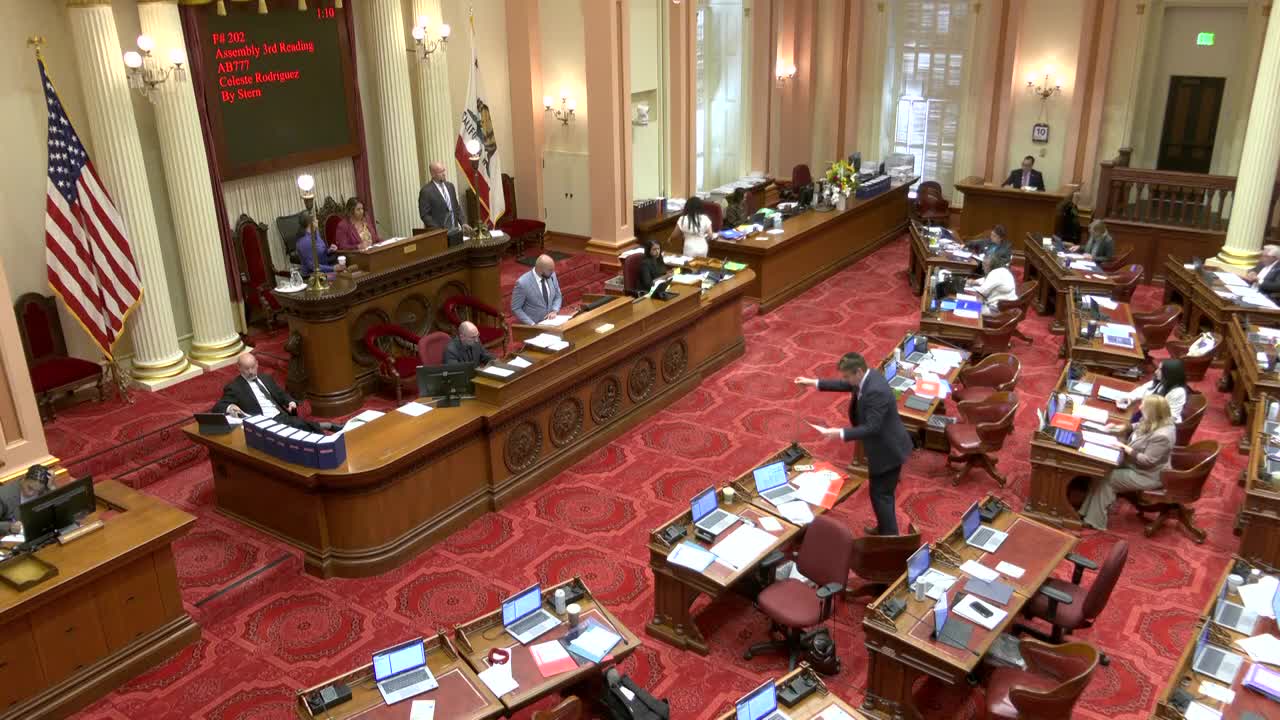 1MIN
Senate Floor
 1MIN
Assembly Floor
 3MIN
Assembly Standing Committee on Appropriations
 13MIN
Assembly Standing Committee on Judiciary
Bill Author

Bill Co-Author(s):