SB 417: The Veterans and Affordable Housing Bond Act of 2026.
- Session Year: 2025-2026
- House: Senate
- Latest Version Date: 2026-06-25
Current Status:
Passed
(2026-06-25: Chaptered by Secretary of State. Chapter 16, Statutes of 2026.)
Introduced
In Committee
Awaiting First Chamber Vote
Passed First Chamber
In Committee
Awaiting Second Chamber Vote
Passed Second Chamber
Enacted
This bill would enact the Veterans and Affordable Housing Bond Act of 2026, which, if adopted, would authorize the issuance of bonds in the amount of $11,250,000,000, pursuant to the State General Obligation Bond Law. Of the proceeds from the sale of these bonds, $10,000,000,000 would be used to finance programs to fund affordable rental housing and home ownership programs, including, among others, the Multifamily Housing Program, the CalHome Program, and the Joe Serna, Jr. Farmworker Housing Grant Program, and $1,250,000,000 would be used to provide additional funding for the above-described program for farm, home, and mobilehome purchase assistance for veterans, as provided.
This bill would provide for submission of the bond act to the voters at the November 3, 2026, statewide general election, in accordance with specified law.
This bill would declare that it is to take effect immediately as an urgency statute.This bill would enact the Veterans and Affordable Housing Bond Act of 2026, which, if adopted, would authorize the issuance of bonds in the amount of $11,250,000,000, pursuant to the State General Obligation Bond Law. Of the proceeds from the sale of these bonds, $10,000,000,000 would be used to finance programs to fund affordable rental housing and home ownership programs, including, among others, the Multifamily Housing Program, the CalHome Program, and the Joe Serna, Jr. Farmworker Housing Grant Program, and $1,250,000,000 would be used to provide additional funding for the above-described program for farm, home, and mobilehome purchase assistance for veterans, as provided.
This bill would provide for submission of the bond act to the voters at the November 3, 2026, statewide general election, in accordance with specified law.
This bill would declare that it is to take effect immediately as an urgency statute.This bill would enact the Veterans and Affordable Housing Bond Act of 2026, which, if adopted, would authorize the issuance of bonds in the amount of $10,000,000,000 $11,250,000,000, pursuant to the State General Obligation Bond Law. Proceeds Of the proceeds from the sale of these bonds bonds, $10,000,000,000 would be used to finance programs to fund affordable rental housing and home ownership programs, including, among others, the Multifamily Housing Program, the CalHome Program, and the Joe Serna, Jr. Farmworker Housing Grant Program. Program, and $1,250,000,000 would be used to provide additional funding for the above-described program for farm, home, and mobilehome purchase assistance for veterans, as provided.
This bill would provide for submission of the bond act to the voters at the November 3, 2026, statewide general election, in accordance with specified law.
This bill would declare that it is to take effect immediately as an urgency statute.Under existing law, there are programs providing assistance for, among other things, emergency housing, multifamily housing, farmworker housing, home ownership for very low and low-income households, and downpayment assistance for first-time home buyers. Existing law also authorizes the issuance of bonds in specified amounts pursuant to the State General Obligation Bond Law and requires that proceeds from the sale of these bonds be used to finance various existing housing programs, capital outlay related to infill development, brownfield cleanup that promotes infill development, and housing-related parks.
This bill would enact the Affordable Housing Bond Act of 2026, which, if adopted, would authorize the issuance of bonds in the amount of $10,000,000,000 pursuant to the State General Obligation Bond Law. Proceeds from the sale of these bonds would be used to finance programs to fund affordable rental housing and home ownership programs, including, among others, the Multifamily Housing Program, the CalHome Program, and the Joe Serna, Jr. Farmworker Housing Grant Program.
This bill would provide for submission of the bond act to the voters at the June 2, November 3, 2026, statewide primary general election, in accordance with specified law.
This bill would declare that it is to take effect immediately as an urgency statute.
Under existing law, there are programs providing assistance for, among other things, emergency housing, multifamily housing, farmworker housing, home ownership for very low and low-income households, and downpayment assistance for first-time home buyers. Existing law also authorizes the issuance of bonds in specified amounts pursuant to the State General Obligation Bond Law and requires that proceeds from the sale of these bonds be used to finance various existing housing programs, capital outlay related to infill development, brownfield cleanup that promotes infill development, and housing-related parks.
This bill would enact the Affordable Housing Bond Act of 2026, which, if adopted, would authorize the issuance of bonds in the amount of $10,000,000,000 pursuant to the State General Obligation Bond Law. Proceeds from the sale of these bonds would be used to finance programs to fund affordable rental housing and home ownership programs, including, among others, the Multifamily Housing Program, the CalHome Program, and the Joe Serna, Jr. Farmworker Housing Grant Program.
This bill would provide for submission of the bond act to the voters at the June 2, 2026, statewide primary election, in accordance with specified law.
This bill would declare that it is to take effect immediately as an urgency statute.
This act shall be known, and may be cited, as the Veterans and Affordable Housing Bond Act of 2026.
SEC. 2.Part 16.1 (commencing with Section 54050) is added to Division 31 of the Health and Safety Code, to read:16.1.Veterans and Affordable Housing Bond Act of 20261.General Provisions54050.Together with Article 5ab (commencing with Section 998.750) of Chapter 6 of Division 4 of the Military and Veterans Code, this part shall be known, and may be cited, as the Veterans and Affordable Housing Bond Act of 2026.
54051.This part shall only become operative upon adoption by the voters at the November 3, 2026, statewide general election.
54052.For purposes of this part, fund means the Affordable Housing Bond Act Trust Fund of 2026 created pursuant to Section 54054.
2.Affordable Housing Bond Act Trust Fund of 2026 and Program54054.(a)The Affordable Housing Bond Act Trust Fund of 2026 is hereby created within the State Treasury. It is the intent of the Legislature that the proceeds of bonds issued and sold pursuant to this part, exclusive of refunding bonds issued pursuant to Section 54076, be deposited into the fund and used to fund affordable rental housing and home ownership programs as described in this chapter.
(b)The proceeds of bonds issued and sold pursuant to this part for the purposes specified in this chapter shall be allocated in the following manner:
(1)Five billion one hundred million dollars ($5,100,000,000) to be deposited into the Housing Rehabilitation Loan Fund established pursuant to Section 50661 to be used for the Multifamily Housing Program authorized by Chapter 6.7 (commencing with Section 50675) of Part 2. At least 10 percent of assisted units in each development receiving these funds shall be affordable to extremely low income households.
(2)One billion one hundred fifty million dollars ($1,150,000,000) to be deposited into the Housing Rehabilitation Loan Fund established pursuant to Section 50661 to be used for supportive housing, as described in Section 50675.14, pursuant to the Multifamily Housing Program authorized by Chapter 6.7 (commencing with Section 50675) of Part 2. The administering entity shall offer capitalized operating subsidy reserves for supportive housing units in developments receiving these funds.
(A)(i)Up to 15 percent of this amount shall be made available as grants to eligible entities specified in Section 50675.1.3 to acquire capital assets for the acquisition, conversion, or rehabilitation of interim housing to permanent housing, including scattered site projects for persons who are homeless, chronically homeless, or are at risk of homelessness, as defined in Part 578.3 of Title 24 of the Code of Federal Regulations, the purchase of affordability covenants and restrictions for units, relocation costs for individuals who are being displaced as a result of rehabilitation of existing units, and capitalized operating subsidies for units purchased, converted, or altered with funds provided by this section.
(ii)Any program or project that uses funds received for any of the purposes described in this subparagraph shall be subject to the regulatory streamlining provisions of Section 50675.1.5 of the Health and Safety Code and subdivision (i) of Section 50675.1.3.
(iii)Any conflict between the other requirements of the Multifamily Housing Program (Chapter 6.7 (commencing with Section 50675) of Part 2) and this paragraph shall be resolved in favor of this paragraph, as may be set forth in the guidelines authorized pursuant to Section 54077.
(B)(i)One hundred fifty million dollars ($150,000,000) of this sum shall be used for youth housing.
(ii)For purposes of this subdivision, youth housing means housing for current or former foster youth, homeless minors or youth, or youth at risk of homelessness, including, but not limited to, housing that assists them develop the skills and resources they need to make a successful transition to independent, self-sufficient adulthood.
(iii)Funds made available under this subparagraph shall be used only for the capital costs of developing, acquiring, rehabilitating, or preserving youth housing, and shall not be used to fund the operation or delivery of services.
(iv)Any funds not encumbered for the purpose of this subparagraph within three years of availability shall revert for general use in the Multifamily Housing Program authorized by Chapter 6.7 (commencing with Section 50675) of Part 2.
(3)Seven hundred fifty million dollars ($750,000,000) to be appropriated by the Legislature, to the program commonly known as the Portfolio Reinvestment Program established pursuant to Chapter 5.5 (commencing with Section 50606) of Part 2. Any funds not encumbered for the purposes of this paragraph by November 3, 2036, shall revert for general use in the Multifamily Housing Program authorized by Chapter 6.7 (commencing with Section 50675) of Part 2.
(4)Two hundred million dollars ($200,000,000) to be appropriated by the Legislature, to a program to fund the acquisition and rehabilitation of unrestricted housing units and attach long-term affordability restrictions on the housing units, while safeguarding against the displacement of current residents. Any funds not allocated by the administering entity within the first three years shall be made available by the administering entity for the Multifamily Housing Program (Chapter 6.7 (commencing with Section 50675) of Part 2).
(5)Six hundred million dollars ($600,000,000) to be deposited into the Self-Help Housing Fund established pursuant to Section 50697.1. The moneys in the fund shall be available for the CalHome Program authorized by Chapter 6 (commencing with Section 50650) of Part 2, to provide direct, forgivable loans to assist development projects involving multiple home ownership units, including single-family subdivision, for self-help mortgage assistance programs, and for manufactured homes. These funds may also be expended for any authorized purpose of the program. Any funds not encumbered for the purposes of this paragraph by November 3, 2036, shall revert for general use in the Multifamily Housing Program authorized by Chapter 6.7 (commencing with Section 50675) of Part 2.
(6)Five hundred million dollars ($500,000,000) to be deposited into the Home Purchase Assistance Fund established pursuant to Section 51342. Notwithstanding Section 13340 of the Government Code and Section 50697.1, these funds are hereby continuously appropriated to the California Housing Finance Agency without regard to fiscal years, for purposes of the home purchase assistance program established pursuant to Chapter 6.8 (commencing with Section 51341) of Part 3.
(7)Four hundred fifty million dollars ($450,000,000) to be deposited into the Joe Serna, Jr. Farmworker Housing Grant Fund, established pursuant to Section 50517.5, to fund grants or loans, or both, for the construction or rehabilitation of housing for agricultural employees and their families or for the acquisition of manufactured housing as part of a program to address and remedy the impact of current and potential displacement of farmworker families from existing labor camps, mobilehome parks, or other housing. These funds may also be expended for any authorized purpose of the program. These funds may also be used to provide technical assistance pursuant to Section 54007. Any funds not encumbered for the purposes of this paragraph by November 3, 2036, shall revert for general use in the Multifamily Housing Program authorized by Chapter 6.7 (commencing with Section 50675) of Part 2.
(8)Two hundred million dollars($200,000,000) to be appropriated by the Legislature, to the Tribal Housing Grant Program established pursuant to Chapter 6.4 (commencing with Section 50651) to finance housing and housing-related activities that will enable tribes to rebuild and reconstitute their communities. Any funds not encumbered for the purposes of this paragraph by November 3, 2036, shall revert for general use in the Multifamily Housing Program authorized by Chapter 6.7 (commencing with Section 50675) of Part 2.
(9)Five hundred million dollars ($500,000,000) for the Infill Infrastructure Grant Program of 2019 established pursuant to Section 53559 of the Health and Safety Code for infill incentive grants to assist in the new construction and rehabilitation of infrastructure that supports high-density affordable and mixed-income housing in locations designated as infill. Any funds not encumbered for the purposes of this paragraph by November 3, 2036, shall revert for general use in the Multifamily Housing Program authorized by Chapter 6.7 (commencing with Section 50675) of Part 2.
(10)Three hundred fifty million dollars ($350,000,000) to be appropriated by the Legislature for new affordable student housing projects. This funding shall be split evenly among the University of California and the California State University. Funded student housing projects shall meet the terms specified in subdivision (f) of Section 17201 of the Education Code. For these projects, the University of California and California State University shall meet the accountability and reporting requirements specified in subdivisions (i) and (o) of Section 17201 of the Education Code.
(11)Two hundred million dollars ($200,000,000) to be deposited in the Affordable Housing Innovation Fund established pursuant to subparagraph (F) of paragraph (1) of subdivision (a) of Section 53545. Moneys in the fund shall be available, upon appropriation by the Legislature, pursuant to the Local Housing Trust Fund Matching Grant Program established pursuant to Section 50842.2 to fund competitive grants or loans to local housing trust funds that develop, own, lend, or invest in affordable housing and be used to create pilot programs to demonstrate innovative, cost-saving approaches to creating or preserving affordable housing. Local housing trust funds shall be derived on an ongoing basis from private contribution or governmental sources that are not otherwise restricted in use for housing programs. These funds may also be expended for any authorized purpose of this program. Any funds not encumbered for the purposes of this paragraph within three years of availability shall be reverted for general use in the Multifamily Housing Program authorized by Chapter 6.7 (commencing with Section 50675) of Part 2, unless the Department of Housing and Community Development determines that the funds should revert sooner due to diminished demand.
(12)Notwithstanding paragraphs (1) to (11), inclusive, the Business, Consumer Services and Housing Agency or its successor and its administering departments may, upon appropriation by the Legislature, align or streamline the programs funded pursuant to this subdivision to improve efficiency and accelerate the deployment of funds, provided that expenditures remain consistent with the purposes and eligible uses approved by the voters and the Legislature.
54056.(a)The Legislature may, from time to time, amend any law related to programs to which funds are, or have been, allocated pursuant to this chapter for the purposes of improving the efficiency and effectiveness of those programs or to further the goals of those programs.
(b)The Legislature may amend this chapter in order to reallocate the proceeds of bonds issued and sold pursuant to this part among the programs to which funds are to be allocated pursuant to this chapter as necessary to effectively promote the development of affordable housing in this state.
(c)The Department of Housing and Community Development or administering entity may disburse any funds made available to housing development projects pursuant to this chapter during the construction period.
3.Fiscal Provisions54060.Bonds in the total amount of ten billion dollars ($10,000,000,000), exclusive of refunding bonds issued pursuant to Section 54076, or so much thereof as is necessary as determined by the committee, are hereby authorized to be issued and sold for carrying out the purposes expressed in this part and to reimburse the General Obligation Bond Expense Revolving Fund pursuant to Section 16724.5 of the Government Code. Any bond, when sold, issued, and delivered, shall be and constitute a valid and binding general obligation of the state, and the full faith and credit of the state is hereby pledged for the punctual payment of both principal of, and interest on, those bonds as the principal and interest become due and payable.
54062.The bonds authorized by this part shall be prepared, executed, issued, sold, paid, retired, and redeemed as provided in the State General Obligation Bond Law (Chapter 4 (commencing with Section 16720) of Part 3 of Division 4 of Title 2 of the Government Code), except subdivisions (a) and (b) of Section 16727 of the Government Code, and all of the provisions of that law as amended from time to time apply to the bonds and to this part, except as provided in Section 54078, and are hereby incorporated in this part as though set forth in full in this part.
54064.(a)Solely for the purpose of authorizing the issuance and sale, pursuant to the State General Obligation Bond Law, of the bonds authorized by this part, the Housing Finance Committee created by Section 53524 is continued in existence. For the purposes of this part, the Housing Finance Committee is the committee as that term is used in the State General Obligation Bond Law.
(b)References to the board as used in this part and in the State General Obligation Bond Law, shall mean the Housing Development and Finance Committee. This authority may be delegated to the Department of Housing and Community Development or the California Housing Finance Agency for programs they administer. The Department of Housing and Community Development is designated the board for programs administered by the department, and the California Housing Finance Agency is the board for programs administered by the agency.
54066.Upon request of the board stating that funds are needed for purposes of this part, the committee shall determine by resolution whether or not it is necessary or desirable to issue and sell bonds, and, if so, the amount of bonds to be issued and sold. Successive issues of bonds may be authorized and sold to carry out those actions progressively, and it is not necessary that all of the bonds authorized to be issued be sold at any one time. Bonds may bear interest subject to federal income tax.
54068.There shall be collected annually, in the same manner and at the same time as other state revenue is collected, in addition to the ordinary revenues of the state, a sum in the amount required to pay the principal of, and interest on, the bonds each year. It is the duty of all officers charged by law with any duty in regard to the collections of state revenues to do and perform each and every act that is necessary to collect that additional sum.
54070.Notwithstanding Section 13340 of the Government Code, there is hereby continuously appropriated from the General Fund in the State Treasury, for the purposes of this part, an amount that will equal the total of both of the following:
(a)The sum annually necessary to pay the principal of, and interest on, bonds issued and sold pursuant to this part, as the principal and interest become due and payable.
(b)The sum that is necessary to carry out Section 54074, appropriated without regard to fiscal years.
54072.The board may request the Pooled Money Investment Board to make a loan from the Pooled Money Investment Account, in accordance with Section 16312 of the Government Code, for purposes of this part. The amount of the request shall not exceed the amount of the unsold bonds that the committee has, by resolution, authorized to be sold, excluding any refunding bonds authorized pursuant to Section 54076, less any amount loaned pursuant to this section and not yet repaid and any amount withdrawn from the General Fund pursuant to Section 54074 and not yet returned to the General Fund. The board shall execute any documents as required by the Pooled Money Investment Board to obtain and repay the loan. Any amount loaned shall be deposited into the fund to be allocated in accordance with this part.
54074.For purposes of carrying out this part, the Director of Finance may authorize the withdrawal from the General Fund of an amount not to exceed the amount of the unsold bonds that the committee has, by resolution, authorized to be sold, excluding any refunding bonds authorized pursuant to Section 54076, less any amount loaned pursuant to Section 54072 and not yet repaid and any amount withdrawn from the General Fund pursuant to this section and not yet returned to the General Fund. Any amounts withdrawn shall be deposited into the fund to be allocated in accordance with this part. Any moneys made available under this section shall be returned to the General Fund, plus the interest that the amounts would have earned in the Pooled Money Investment Account, from moneys received from the sale of bonds that would otherwise be deposited into that fund.
54076.The bonds issued and sold pursuant to this part may be refunded in accordance with Article 6 (commencing with Section 16780) of Chapter 4 of Part 3 of Division 4 of Title 2 of the Government Code. Approval by the voters of the sale and issuance of bonds as described in this part includes approval of the sale and issuance of bonds issued to refund bonds issued pursuant to this part, including any prior issued refunding bonds. A bond refunded with the proceeds of a refunding bond as authorized by this section may be legally defeased to the extent permitted by law in the manner and to the extent set forth in the resolution, as amended from time to time, authorizing that refunded bond.
54076.5.Proceeds of the bonds, in an amount not to exceed the principal amount of bonds authorized to be issued by the Veterans and Affordable Housing Bond Act of 2026 (excluding any refunding bonds issued pursuant to Section 54076), are expected to be and may be used to reimburse any lawfully available source used to pay costs of projects or programs (including funds of particular state departments or agencies that may be spent on costs of the projects or programs) authorized pursuant to the Veterans and Affordable Housing Bond Act of 2026 and paid after November 3, 2026, provided, however, any costs that are to be reimbursed from proceeds of bonds shall not have been paid from the proceeds of any other indebtedness unless that prior indebtedness will be retired with the proceeds of the bonds.
54077.To implement the funding detailed in Section 54054, the administering entity may adopt guidelines establishing requirements for administration of its financing programs. The guidelines are not subject to Chapter 3.5 (commencing with Section 11340) of Part 1 of Division 3 of Title 2 of the Government Code.
54078.Notwithstanding any provisions in the State General Obligation Bond Law, the maturity date of any bond authorized by this part shall not be later than 35 years from the date of issuance of the bond.
54080.The proceeds from the sale of bonds authorized by this part are not proceeds of taxes as that term is used in Article XIII B of the California Constitution, and the disbursement of these proceeds is not subject to the limitations imposed by that article.
54082.Notwithstanding any provision of the State General Obligation Bond Law with regard to the proceeds from the sale of bonds authorized by this part that are subject to investment under Article 4 (commencing with Section 16470) of Chapter 3 of Part 2 of Division 4 of Title 2 of the Government Code, the Treasurer may maintain a separate account for investment earnings.
54083.Notwithstanding any other provision of this part, or of the State General Obligation Bond Law, if the Treasurer sells bonds pursuant to this chapter that include a bond counsel opinion to the effect that the interest on the bonds is excluded from gross income for federal tax purposes under designated conditions or is otherwise entitled to any federal tax advantage, the Treasurer may maintain separate accounts for the investment of bond proceeds and for the earnings and investment of earnings on those proceeds. The Treasurer may use or direct the use of those proceeds or earnings to pay any rebate, penalty, or other payment required under federal law or take any other action with respect to the investment and use of those bond proceeds required or desirable under federal law to maintain the tax exempt status of those bonds and to obtain any other advantage under federal law on behalf of the funds of this state.
54084.(a)Subject to subdivision (b), all moneys derived from premiums and accrued interest on bonds sold pursuant to this part shall be transferred to the General Fund as a credit to expenditures for bond interest.
(b)Amounts derived from premiums may be reserved and used to pay the costs of bond issuance before transfer to the General Fund.
4.Accountability54088.The administering entity shall publish in an annual report detailed information regarding the investments resulting from this bond pursuant to Section 50408 of the Health and Safety Code.
SEC. 3.Article 5ab (commencing with Section 998.750) is added to Chapter 6 of Division 4 of the Military and Veterans Code, to read:5ab.The Veterans and Affordable Housing Bond Act of 2026998.750.Together with Part 16.1 (commencing with Section 54050) of Division 31 of the Health and Safety Code, this article shall be known, and may be cited, as the Veterans and Affordable Housing Bond Act of 2026.
998.751.(a)(1)The State General Obligation Bond Law (Chapter 4 (commencing with Section 16720) of Part 3 of Division 4 of Title 2 of the Government Code), as it may be amended from time to time, is adopted for the purpose of the preparation, execution, issuance, sale, retirement, redemption, and repayment of, and otherwise providing with respect to, the bonds authorized to be issued by this article, and the provisions of that law are included in this article, as though set out in full in this article, except for both of the following:
(A)Subdivisions (a) and (b) of Section 16727 and subdivision (a) of Section 16755 of the State General Obligation Bond Law shall not apply.
(B)Paragraph (1) of subdivision (c) of Section 16753 of the State General Obligation Bond law shall be replaced in full by the following: The Treasurer shall require that a successful bidder in a competitive sale or underwriter in a negotiated sale provide a good faith deposit of at least one-half of 1 percent of the principal amount of the bonds for which the bidder is the successful bidder or for which an underwriter submits a proposal. The good faith deposit shall be in the amount that is reasonably determined by the Treasurer at least one day prior to a competitive sale or negotiated sale of bonds, as applicable. The Treasurer shall specify the form of the deposit, which may be a cashiers check, a surety bond, a wire transfer of funds, or a combination thereof. The deposit shall not bear interest.
(2)All references in this article to herein refer both to this article and that law as incorporated herein.
(b)For purposes of the State General Obligation Bond Law, the Department of Veterans Affairs is designated the board.
998.752.As used herein, the following terms have the following meanings:
(a)Board means the Department of Veterans Affairs.
(b)Bond means a veterans bond, a state general obligation bond, issued pursuant to this article adopting the provisions of the State General Obligation Bond Law as provided herein.
(c)Bond act means this article authorizing the issuance of state general obligation bonds and adopting the State General Obligation Bond Law by reference.
(d)Committee means the Veterans Finance Committee of 1943 established by Section 991.
(e)Fund means the Veterans Farm and Home Building Fund of 1943 established by Section 988.
(f)Payment Fund means the Veterans Bonds Payment Fund established by Section 988.6.
998.753.For the purpose of creating a fund to provide farm and home aid for veterans in accordance with the Veterans Farm and Home Purchase Act of 1974 (Article 3.1 (commencing with Section 987.50)), and of all acts amendatory thereof and supplemental thereto, the committee may create a debt or debts, liability or liabilities, of the State of California, in the aggregate amount of not more than one billion two hundred fifty million dollars ($1,250,000,000), not including the amount of any refunding bonds issued in accordance with Section 998.762, in the manner provided herein.
998.754.(a)All bonds authorized by this article, when sold, issued, and delivered, shall be and constitute a valid and legally binding general obligation of the State of California, and the full faith and credit of the State of California is hereby pledged for the punctual payment of both principal of and interest on the bonds as the principal and interest become due and payable.
(b)There shall be collected annually, in the same manner and at the same time as other state revenue is collected, the sum, in addition to the ordinary revenues of the state, as is required to pay the principal of, and interest on, these bonds becoming due and payable each year. It is the duty of all officers charged by law with any duty in regard to the collection of state revenues to do and perform each and every act that is necessary to collect that additional sum.
(c)On the dates on which funds are to be remitted pursuant to Section 16676 of the Government Code for the payment of debt service on the bonds in each fiscal year, there shall be transferred to the Payment Fund to pay the debt service all of the moneys in the fund, not in excess of the amount of debt service then due and payable. If the moneys transferred on the remittance dates is less than the debt service then due and payable, the balance remaining unpaid shall be transferred to the General Fund out of the fund as soon as it shall become available, together with interest thereon from the remittance date until paid, at the same rate of interest as borne by the bonds, compounded semiannually. Notwithstanding any other provision of law to the contrary, this subdivision shall apply to all veterans farm and home purchase bond acts pursuant to this chapter. This subdivision does not grant any lien on the fund, the Payment Fund, or the moneys therein to the holders of any bonds issued under this article. For the purposes of this subdivision, debt service means the principal (whether due at maturity, by redemption, or acceleration), premium, if any, or interest payable on any date with respect to any series of bonds. This subdivision shall not apply, however, in the case of any debt service that is payable from the proceeds of any refunding bonds.
998.755.Notwithstanding Section 13340 of the Government Code, there is hereby continuously appropriated from the General Fund in the State Treasury, for purposes of this article, without regard to fiscal year, a sum of moneys that will equal both of the following:
(a)That sum annually necessary to pay the principal of, and the interest on, the bonds issued and sold as provided herein, as that principal and interest become due and payable.
(b)That sum necessary to carry out Section 998.756.
998.756.For the purposes of this article, the Director of Finance may authorize the withdrawal from the General Fund of a sum of moneys not to exceed the amount of the unsold bonds which have been authorized by the committee to be sold pursuant to this article, excluding any refunding bonds authorized pursuant to Section 998.762, less any amount loaned pursuant to Section 998.757 and not yet repaid and any amount withdrawn pursuant to this section and not yet returned to the General Fund. Any sums withdrawn shall be deposited into the fund. Any moneys made available under this section to the board shall be returned by the board to the General Fund, plus the interest that the amounts would have earned in the Pooled Money Investment Account, from the sale of bonds for the purpose of carrying out this article.
998.757.The board may request the Pooled Money Investment Board to make a loan from the Pooled Money Investment Account, in accordance with Section 16312 of the Government Code, for the purposes of carrying out this article, less any amount withdrawn pursuant to Section 998.756 and not yet returned to the General Fund. The amount of the request shall not exceed the amount of unsold bonds which the committee has, by resolution, authorized to be sold for the purpose of carrying out this article, excluding any refunding bonds authorized pursuant to Section 998.762, less any amount loaned pursuant to this section and not yet repaid and any amount withdrawn pursuant to Section 998.756 and not yet returned to the General Fund. The board shall execute whatever documents are required by the Pooled Money Investment Board to obtain and repay the loan. Any amounts loaned shall be deposited into the fund to be allocated by the board in accordance with this article.
998.758.Upon request of the board, supported by a statement of its plans and projects approved by the Governor, the committee shall determine by resolution whether or not it is necessary or desirable to issue any bonds authorized pursuant to this article in order to carry out the boards plans and projects, and, if so, the amount of bonds to be issued and sold. Successive issues of bonds may be authorized and sold to carry out these plans and projects, progressively, and it is not necessary that all the bonds be issued or sold at any one time.
998.759.(a)As long as any bonds authorized pursuant to this article are outstanding, the Secretary of Veterans Affairs shall, at the close of each fiscal year, require a survey of the financial condition of the Division of Farm and Home Purchases, together with a projection of the divisions operations, to be made by an independent public accountant of recognized standing. The results of each survey and projection shall be reported in writing by the public accountant to the Secretary of Veterans Affairs, the California Veterans Board, the appropriate policy committees dealing with veterans affairs in the Senate and the Assembly, and the committee.
(b)The Division of Farm and Home Purchases shall reimburse the public accountant for these services out of any moneys that the division may have available on deposit with the Treasurer.
998.760.(a)The Treasurer shall issue and sell the bonds authorized by this article in the amount determined by the committee to be necessary and desirable pursuant to Section 998.758. The bonds shall be issued and sold upon the terms and conditions specified in a resolution to be adopted by the committee pursuant to Section 16731 of the Government Code.
(b)Whenever the committee deems it necessary for an effective sale of the bonds, the committee may authorize the Treasurer to sell any issue of bonds at less than their par value, notwithstanding Section 16754 of the Government Code. However, the discount on the bonds shall not exceed 3 percent of the par value thereof.
998.761.Out of the first moneys realized from the sale of bonds as provided herein, there shall be redeposited into the General Obligation Bond Expense Revolving Fund, established by Section 16724.5 of the Government Code, the amount of all expenditures made for the purposes specified in that section, and the moneys may be used for the same purpose and repaid in the same manner whenever additional bond sales are made. All moneys deposited in the fund that are derived from premium and accrued interest on bonds sold pursuant to this article shall be reserved in the fund and shall be available for transfer to the General Fund as a credit to expenditures for bond interest, except that amounts derived from premium may be reserved and used to pay costs of bond issuance prior to any transfer to the General Fund.
998.762.Any bonds issued and sold pursuant to this article may be refunded in accordance with Article 6 (commencing with Section 16780) of Chapter 4 of Part 3 of Division 4 of Title 2 of the Government Code. The approval of the voters for the issuance of bonds pursuant to this article includes approval for the issuance of bonds issued to refund bonds originally issued under this article or any previously issued refunding bonds. Any bond refunded with the proceeds of refunding bonds as authorized by this section may be legally defeased to the extent permitted by law in the manner and to the extent set forth in the resolution, as amended from time to time, authorizing that refunded bond.
998.763.Notwithstanding any provision of the State General Obligation Bond Law or this article, if the Treasurer sells bonds pursuant to this article for which bond counsel has issued an opinion to the effect that the interest on the bonds is excludable from gross income for purposes of federal income tax purposes, subject to any conditions that may be designated, or otherwise entitled to any federal tax advantage, the Treasurer may maintain separate accounts for the investment of bond proceeds and for the earnings on those proceeds, and may use or direct those proceeds or earnings to pay any rebate, penalty, or other payment required by federal law or take any other action with respect to the investment and use of bond proceeds required or permitted pursuant to federal law necessary or desirable to maintain the tax-exempt status of the bonds or to obtain any other advantage pursuant to federal law on behalf of the funds of this state.
998.764.The proceeds from the sale of bonds authorized by this article are not proceeds of taxes as that term is used in Article XIIIB of the California Constitution, and the disbursement of these proceeds is not subject to the limitations imposed by Article XIIIB. Declaration of Intent proceeds of the bonds, in an amount not to exceed the principal amount of bonds authorized to be issued by this article (excluding any refunding bonds issued pursuant to Section 998.762), are expected to be and may be used to reimburse any lawfully available source used to pay costs of projects or programs (including funds of particular state departments or agencies that may be spent on costs of those projects or programs) authorized pursuant to this article and paid after November 3, 2026, provided, however, any costs that are to be reimbursed from proceeds of bonds shall not have been paid from the proceeds of any other indebtedness unless that prior indebtedness will be retired with the proceeds of the bonds.
SEC. 4.Sections 2 and 3 of this act shall become operative upon the adoption by the voters of the Veterans and Affordable Housing Bond Act of 2026.
SEC. 5.Sections 2 and 3 of this act shall be submitted to the voters as a single measure, the Veterans and Affordable Housing Bond Act of 2026, at the November 3, 2026, statewide general election, in accordance with provisions of the Government Code and the Elections Code governing the submission of a statewide measure to the voters.
SEC. 6.This act is an urgency statute necessary for the immediate preservation of the public peace, health, or safety within the meaning of Article IV of the California Constitution and shall go into immediate effect. The facts constituting the necessity are:
In order to maximize the time available for the analysis and preparation of the proposed issuance of bonds pursuant to this act, it is necessary that this act take effect immediately.
This act shall be known, and may be cited, as the Veterans and Affordable Housing Bond Act of 2026.
SECTION 1.SEC. 2.Part 16.1 (commencing with Section 54050) is added to Division 31 of the Health and Safety Code, to read:16.1.Veterans and Affordable Housing Bond Act of 20261.General Provisions54050.This Together with Article 5ab (commencing with Section 998.750) of Chapter 6 of Division 4 of the Military and Veterans Code, this part shall be known, and may be cited, as the Veterans and Affordable Housing Bond Act of 2026.
54051.This part shall only become operative upon adoption by the voters at the November 3, 2026, statewide general election.
54052.For purposes of this part, fund means the Affordable Housing Bond Act Trust Fund of 2026 created pursuant to Section 54054.
2.Affordable Housing Bond Act Trust Fund of 2026 and Program54054.(a)The Affordable Housing Bond Act Trust Fund of 2026 is hereby created within the State Treasury. It is the intent of the Legislature that the proceeds of bonds, bonds issued and sold pursuant to this part, exclusive of refunding bonds issued pursuant to Section 54076, be deposited in into the fund and used to fund affordable rental housing and home ownership programs. programs as described in this chapter.
(b)The proceeds of bonds issued and sold pursuant to this part for the purposes specified in this chapter shall be allocated in the following manner:
(1)Five billion two hundred fifty one hundred million dollars ($5,250,000,000), ($5,100,000,000) to be deposited in into the Housing Rehabilitation Loan Fund established pursuant to Section 50661 to be used for the Multifamily Housing Program authorized by Chapter 6.7 (commencing with Section 50675) of Part 2 and the Infill Infrastructure Grant Program of 2019 established by Section 53559. 2. At least 10 percent of assisted units in each development receiving these funds shall be affordable to extremely low income households.
(2)One billion seven one hundred fifty million dollars ($1,750,000,000), ($1,150,000,000) to be deposited in into the Housing Rehabilitation Loan Fund established pursuant to Section 50661 to be used for supportive housing, as described in Section 50675.14, pursuant to the Multifamily Housing Program authorized by Chapter 6.7 (commencing with Section 50675) of Part 2. The department administering entity shall offer capitalized operating subsidy reserves for supportive housing units in developments receiving these funds.
(A)(i)Up to 15 percent of this amount shall be made available as grants to eligible entities specified in Section 50675.1.3 to acquire capital assets for the acquisition, conversion, or rehabilitation of interim housing to permanent housing, including scattered site projects for persons who are homeless, chronically homeless, or are at risk of homelessness, as defined in Part 578.3 of Title 24 of the Code of Federal Regulations, the purchase of affordability covenants and restrictions for units, relocation costs for individuals who are being displaced as a result of rehabilitation of existing units, and capitalized operating subsidies for units purchased, converted, or altered with funds provided by this section.
(ii)Any program or project that uses funds received for any of the purposes described in this subparagraph shall be subject to the regulatory streamlining provisions of Section 50675.1.5 of the Health and Safety Code and subdivision (i) of Section 50675.1.3.
(iii)Any conflict between the other requirements of the Multifamily Housing Program (Chapter 6.7 (commencing with Section 50675) of Part 2) and this paragraph shall be resolved in favor of this paragraph, as may be set forth in the guidelines authorized pursuant to Section 54077.
(B)(i)One hundred fifty million dollars ($150,000,000) of this sum shall be used for youth housing.
(ii)For purposes of this subdivision, youth housing means housing for current or former foster youth, homeless minors or youth, or youth at risk of homelessness, including, but not limited to, housing that assists them develop the skills and resources they need to make a successful transition to independent, self-sufficient adulthood.
(iii)Funds made available under this subparagraph shall be used only for the capital costs of developing, acquiring, rehabilitating, or preserving youth housing, and shall not be used to fund the operation or delivery of services.
(iv)Any funds not encumbered for the purpose of this subparagraph within three years of availability shall revert for general use in the Multifamily Housing Program authorized by Chapter 6.7 (commencing with Section 50675) of Part 2.
(3)Eight hundred Seven hundred fifty million dollars ($800,000,000), ($750,000,000) to be appropriated by the Legislature, to the program commonly known as the Portfolio Reinvestment Program established pursuant to Chapter 5.5 (commencing with Section 50606) of Part 2. Any funds not encumbered for the purposes of this paragraph by November 3, 2036, shall revert for general use in the Multifamily Housing Program authorized by Chapter 6.7 (commencing with Section 50675) of Part 2.
(4)Five Two hundred million dollars ($500,000,000), ($200,000,000) to be appropriated by the Legislature, to a program, to be administered by the Department of Housing and Community Development, program to fund the acquisition and rehabilitation of unrestricted housing units and attach long-term affordability restrictions on the housing units, while safeguarding against the displacement of current residents, and to rehabilitate housing that has been significantly damaged or eliminated by a federally recognized natural disaster. It is the intent of the Legislature that the specific criteria establishing eligibility for, and use of, the funds shall be established in statute. residents. Any funds not allocated by the administering entity within the first three years shall be made available by the administering entity for the Multifamily Housing Program (Chapter 6.7 (commencing with Section 50675) of Part 2).
(5)Two hundred million dollars ($200,000,000), to be appropriated by the Legislature, to wildfire prevention and mitigation, wildfire displacement assistance, and acceleration of construction of affordable housing in rental markets impacted by wildfires.(6)One billion dollars ($1,000,000,000), to be appropriated by the Legislature, to provide home ownership opportunities through the following programs:(A)The CalHome Program established pursuant to Chapter 6 (commencing with Section 50650) of Part 2.(B)The home purchase assistance program established pursuant to Chapter 6.8 (commencing with Section 51341) of Part 3.(5)Six hundred million dollars ($600,000,000) to be deposited into the Self-Help Housing Fund established pursuant to Section 50697.1. The moneys in the fund shall be available for the CalHome Program authorized by Chapter 6 (commencing with Section 50650) of Part 2, to provide direct, forgivable loans to assist development projects involving multiple home ownership units, including single-family subdivision, for self-help mortgage assistance programs, and for manufactured homes. These funds may also be expended for any authorized purpose of the program. Any funds not encumbered for the purposes of this paragraph by November 3, 2036, shall revert for general use in the Multifamily Housing Program authorized by Chapter 6.7 (commencing with Section 50675) of Part 2.
(6)Five hundred million dollars ($500,000,000) to be deposited into the Home Purchase Assistance Fund established pursuant to Section 51342. Notwithstanding Section 13340 of the Government Code and Section 50697.1, these funds are hereby continuously appropriated to the California Housing Finance Agency without regard to fiscal years, for purposes of the home purchase assistance program established pursuant to Chapter 6.8 (commencing with Section 51341) of Part 3.
(7)Two Four hundred fifty million dollars ($250,000,000), ($450,000,000) to be appropriated by the Legislature, to deposited into the Joe Serna, Jr. Farmworker Housing Grant Program established pursuant to Chapter 3.2 (commencing with Section 50515.2) of Part 2. Fund, established pursuant to Section 50517.5, to fund grants or loans, or both, for the construction or rehabilitation of housing for agricultural employees and their families or for the acquisition of manufactured housing as part of a program to address and remedy the impact of current and potential displacement of farmworker families from existing labor camps, mobilehome parks, or other housing. These funds may also be expended for any authorized purpose of the program. These funds may also be used to provide technical assistance pursuant to Section 54007. Any funds not encumbered for the purposes of this paragraph by November 3, 2036, shall revert for general use in the Multifamily Housing Program authorized by Chapter 6.7 (commencing with Section 50675) of Part 2.
(8)Two hundred fifty million dollars ($250,000,000),($200,000,000) to be appropriated by the Legislature, to the Tribal Housing Grant Program Trust Fund established pursuant to Section 50651.1. established pursuant to Chapter 6.4 (commencing with Section 50651) to finance housing and housing-related activities that will enable tribes to rebuild and reconstitute their communities. Any funds not encumbered for the purposes of this paragraph by November 3, 2036, shall revert for general use in the Multifamily Housing Program authorized by Chapter 6.7 (commencing with Section 50675) of Part 2.
(9)Five hundred million dollars ($500,000,000) for the Infill Infrastructure Grant Program of 2019 established pursuant to Section 53559 of the Health and Safety Code for infill incentive grants to assist in the new construction and rehabilitation of infrastructure that supports high-density affordable and mixed-income housing in locations designated as infill. Any funds not encumbered for the purposes of this paragraph by November 3, 2036, shall revert for general use in the Multifamily Housing Program authorized by Chapter 6.7 (commencing with Section 50675) of Part 2.
(10)Three hundred fifty million dollars ($350,000,000) to be appropriated by the Legislature for new affordable student housing projects. This funding shall be split evenly among the University of California and the California State University. Funded student housing projects shall meet the terms specified in subdivision (f) of Section 17201 of the Education Code. For these projects, the University of California and California State University shall meet the accountability and reporting requirements specified in subdivisions (i) and (o) of Section 17201 of the Education Code.
(11)Two hundred million dollars ($200,000,000) to be deposited in the Affordable Housing Innovation Fund established pursuant to subparagraph (F) of paragraph (1) of subdivision (a) of Section 53545. Moneys in the fund shall be available, upon appropriation by the Legislature, pursuant to the Local Housing Trust Fund Matching Grant Program established pursuant to Section 50842.2 to fund competitive grants or loans to local housing trust funds that develop, own, lend, or invest in affordable housing and be used to create pilot programs to demonstrate innovative, cost-saving approaches to creating or preserving affordable housing. Local housing trust funds shall be derived on an ongoing basis from private contribution or governmental sources that are not otherwise restricted in use for housing programs. These funds may also be expended for any authorized purpose of this program. Any funds not encumbered for the purposes of this paragraph within three years of availability shall be reverted for general use in the Multifamily Housing Program authorized by Chapter 6.7 (commencing with Section 50675) of Part 2, unless the Department of Housing and Community Development determines that the funds should revert sooner due to diminished demand.
(12)Notwithstanding paragraphs (1) to (11), inclusive, the Business, Consumer Services and Housing Agency or its successor and its administering departments may, upon appropriation by the Legislature, align or streamline the programs funded pursuant to this subdivision to improve efficiency and accelerate the deployment of funds, provided that expenditures remain consistent with the purposes and eligible uses approved by the voters and the Legislature.
54056.(a)The Legislature may, from time to time, amend any law related to programs to which funds are, or have been, allocated pursuant to this chapter for the purposes of improving the efficiency and effectiveness of those programs or to further the goals of those programs.
(b)The Legislature may amend this chapter in order to reallocate the proceeds of bonds issued and sold pursuant to this part among the programs to which funds are to be allocated pursuant to this chapter as necessary to effectively promote the development of affordable housing in this state.
(c)The Department of Housing and Community Development or administering entity may disburse any funds made available to housing development projects pursuant to this chapter during the construction period.
3.Fiscal Provisions54060.Bonds in the total amount of ten billion dollars ($10,000,000,000), exclusive of refunding bonds issued pursuant to Section 54076, or so much thereof as is necessary as determined by the committee, are hereby authorized to be issued and sold for carrying out the purposes expressed in this part and to reimburse the General Obligation Bond Expense Revolving Fund pursuant to Section 16724.5 of the Government Code. All bonds herein authorized that have been duly issued, sold, and delivered as provided herein shall constitute valid and binding general obligations of the state, Any bond, when sold, issued, and delivered, shall be and constitute a valid and binding general obligation of the state, and the full faith and credit of the state is hereby pledged for the punctual payment of both principal of, and interest on, those bonds when due. as the principal and interest become due and payable.
54062.The bonds authorized by this part shall be prepared, executed, issued, sold, paid, retired, and redeemed as provided in the State General Obligation Bond Law (Chapter 4 (commencing with Section 16720) of Part 3 of Division 4 of Title 2 of the Government Code), except subdivisions (a) and (b) of Section 16727 of the Government Code, and all of the provisions of that law as amended from time to time apply to the bonds and to this part, except as provided in Section 54078, and are hereby incorporated in this part as though set forth in full in this part.
54064.(a)Solely for the purpose of authorizing the issuance and sale, pursuant to the State General Obligation Bond Law, of the bonds authorized by this part, the committee Housing Finance Committee created by Section 53524 is continued in existence. For the purposes of this part, the Housing Finance Committee is the committee as that term is used in the State General Obligation Bond Law.
(b)For the purposes of References to the board as used in this part and in the State General Obligation Bond Law, the shall mean the Housing Development and Finance Committee. This authority may be delegated to the Department of Housing and Community Development or the California Housing Finance Agency for programs they administer. The Department of Housing and Community Development is designated the board for programs administered by the department, and the California Housing Finance Agency is the board for programs administered by the agency.
54066.Upon request of the board stating that funds are needed for purposes of this part, the committee shall determine by resolution whether or not it is necessary or desirable to issue and sell bonds, and, if so, the amount of bonds to be issued and sold. Successive issues of bonds may be authorized and sold to carry out those actions progressively, and are not required to it is not necessary that all of the bonds authorized to be issued be sold at any one time. Bonds may bear interest subject to federal income tax.
54068.There shall be collected annually, in the same manner and at the same time as other state revenue is collected, a sum of money in addition to the ordinary revenues of the state, sufficient a sum in the amount required to pay the principal of, and interest on, the bonds each year. It is the duty of all officers charged by law with any duty in regard to the collections of state revenues to do or and perform each and every act that is necessary to collect that additional sum.
54070.Notwithstanding Section 13340 of the Government Code, there is hereby continuously appropriated from the General Fund in the State Treasury, for the purposes of this part, an amount that will equal the total of both of the following:
(a)The sum annually necessary to pay the principal of, and interest on, bonds issued and sold pursuant to this part, as the principal and interest become due and payable.
(b)The sum that is necessary to carry out Section 54074, appropriated without regard to fiscal years.
54072.The board may request the Pooled Money Investment Board to make a loan from the Pooled Money Investment Account, in accordance with Section 16312 of the Government Code, for purposes of this part. The amount of the request shall not exceed the amount of the unsold bonds that the committee has, by resolution, authorized to be sold, excluding any refunding bonds authorized pursuant to Section 54076, for purposes of this part, less any amount loaned pursuant to this section and not yet repaid and any amount withdrawn from the General Fund pursuant to Section 54074 and not yet returned to the General Fund. The board shall execute any documents as required by the Pooled Money Investment Board to obtain and repay the loan. Any amount loaned shall be deposited in into the fund to be allocated in accordance with this part.
54074.For purposes of carrying out this part, the Director of Finance may, by executive order, may authorize the withdrawal from the General Fund of an amount or amounts not to exceed the amount of the unsold bonds that the committee has, by resolution, authorized to be sold, excluding any refunding bonds authorized pursuant to Section 54076, for purposes of this part, less any amount loaned pursuant to Section 54072 and not yet repaid and any amount withdrawn from the General Fund pursuant to this section and not yet returned to the General Fund. Any amounts withdrawn shall be deposited in into the fund to be allocated in accordance with this part. Any moneys made available under this section shall be returned to the General Fund, plus the interest that the amounts would have earned in the Pooled Money Investment Account, from moneys received from the sale of bonds that would otherwise be deposited in into that fund.
54076.The bonds issued and sold pursuant to this part may be refunded in accordance with Article 6 (commencing with Section 16780) of Chapter 4 of Part 3 of Division 4 of Title 2 of the Government Code. Approval by the electors of this act shall constitute approval of any refunding voters of the sale and issuance of bonds as described in this part includes approval of the sale and issuance of bonds issued to refund bonds issued pursuant to this part, including any prior issued refunding bonds. A bond refunded with the proceeds of a refunding bond as authorized by this section may be legally defeased to the extent permitted by law in the manner and to the extent set forth in the resolution, as amended from time to time, authorizing that refunded bond.
54076.5.Proceeds of the bonds, in an amount not to exceed the principal amount of bonds authorized to be issued by the Veterans and Affordable Housing Bond Act of 2026 (excluding any refunding bonds issued pursuant to Section 54076), are expected to be and may be used to reimburse any lawfully available source used to pay costs of projects or programs (including funds of particular state departments or agencies that may be spent on costs of the projects or programs) authorized pursuant to the Veterans and Affordable Housing Bond Act of 2026 and paid after November 3, 2026, provided, however, any costs that are to be reimbursed from proceeds of bonds shall not have been paid from the proceeds of any other indebtedness unless that prior indebtedness will be retired with the proceeds of the bonds.
54077.To implement the funding detailed in Section 54054, the administering entity may adopt guidelines establishing requirements for administration of its financing programs. The guidelines are not subject to Chapter 3.5 (commencing with Section 11340) of Part 1 of Division 3 of Title 2 of the Government Code.
54078.Notwithstanding any provisions in the State General Obligation Bond Law, the maturity date of bonds any bond authorized by this part shall not be later than 35 years from the date of each issuance of the bond. The maturity of each series shall be calculated from the date of issuance of each bond.
54080.The Legislature hereby finds and declares that, inasmuch as the proceeds from the sale of bonds authorized by this part are not proceeds of taxes as that term is used in Article XIII B of the California Constitution, and the disbursement of these proceeds is not subject to the limitations imposed by that article.
54082.Notwithstanding any provision of the State General Obligation Bond Law with regard to the proceeds from the sale of bonds authorized by this part that are subject to investment under Article 4 (commencing with Section 16470) of Chapter 3 of Part 2 of Division 4 of Title 2 of the Government Code, the Treasurer may maintain a separate account for investment earnings, may order the payment of those earnings to comply with any rebate requirement applicable under federal law, and may otherwise direct the use and investment of those proceeds so as to maintain the tax-exempt status of tax-exempt bonds and to obtain any other advantage under federal law on behalf of the funds of this state. earnings.
54083.Notwithstanding any other provision of this part, or of the State General Obligation Bond Law, if the Treasurer sells bonds pursuant to this chapter that include a bond counsel opinion to the effect that the interest on the bonds is excluded from gross income for federal tax purposes under designated conditions or is otherwise entitled to any federal tax advantage, the Treasurer may maintain separate accounts for the investment of bond proceeds and for the earnings and investment of earnings on those proceeds. The Treasurer may use or direct the use of those proceeds or earnings to pay any rebate, penalty, or other payment required under federal law or take any other action with respect to the investment and use of those bond proceeds required or desirable under federal law to maintain the tax exempt status of those bonds and to obtain any other advantage under federal law on behalf of the funds of this state.
54084.(a)Subject to subdivision (b), all moneys derived from premiums and accrued interest on bonds sold pursuant to this part shall be transferred to the General Fund as a credit to expenditures for bond interest.
(b)Amounts derived from premiums may be reserved and used to pay the costs of bond issuance before transfer to the General Fund.
4.Accountability54088.The administering entity shall publish in an annual report detailed information regarding the investments resulting from this bond pursuant to Section 50408 of the Health and Safety Code.
SEC. 3.Article 5ab (commencing with Section 998.750) is added to Chapter 6 of Division 4 of the Military and Veterans Code, to read:5ab.The Veterans and Affordable Housing Bond Act of 2026998.750.Together with Part 16.1 (commencing with Section 54050) of Division 31 of the Health and Safety Code, this article shall be known, and may be cited, as the Veterans and Affordable Housing Bond Act of 2026.
998.751.(a)(1)The State General Obligation Bond Law (Chapter 4 (commencing with Section 16720) of Part 3 of Division 4 of Title 2 of the Government Code), as it may be amended from time to time, is adopted for the purpose of the preparation, execution, issuance, sale, retirement, redemption, and repayment of, and otherwise providing with respect to, the bonds authorized to be issued by this article, and the provisions of that law are included in this article, as though set out in full in this article, except for both of the following:
(A)Subdivisions (a) and (b) of Section 16727 and subdivision (a) of Section 16755 of the State General Obligation Bond Law shall not apply.
(B)Paragraph (1) of subdivision (c) of Section 16753 of the State General Obligation Bond law shall be replaced in full by the following: The Treasurer shall require that a successful bidder in a competitive sale or underwriter in a negotiated sale provide a good faith deposit of at least one-half of 1 percent of the principal amount of the bonds for which the bidder is the successful bidder or for which an underwriter submits a proposal. The good faith deposit shall be in the amount that is reasonably determined by the Treasurer at least one day prior to a competitive sale or negotiated sale of bonds, as applicable. The Treasurer shall specify the form of the deposit, which may be a cashiers check, a surety bond, a wire transfer of funds, or a combination thereof. The deposit shall not bear interest.
(2)All references in this article to herein refer both to this article and that law as incorporated herein.
(b)For purposes of the State General Obligation Bond Law, the Department of Veterans Affairs is designated the board.
998.752.As used herein, the following terms have the following meanings:
(a)Board means the Department of Veterans Affairs.
(b)Bond means a veterans bond, a state general obligation bond, issued pursuant to this article adopting the provisions of the State General Obligation Bond Law as provided herein.
(c)Bond act means this article authorizing the issuance of state general obligation bonds and adopting the State General Obligation Bond Law by reference.
(d)Committee means the Veterans Finance Committee of 1943 established by Section 991.
(e)Fund means the Veterans Farm and Home Building Fund of 1943 established by Section 988.
(f)Payment Fund means the Veterans Bonds Payment Fund established by Section 988.6.
998.753.For the purpose of creating a fund to provide farm and home aid for veterans in accordance with the Veterans Farm and Home Purchase Act of 1974 (Article 3.1 (commencing with Section 987.50)), and of all acts amendatory thereof and supplemental thereto, the committee may create a debt or debts, liability or liabilities, of the State of California, in the aggregate amount of not more than one billion two hundred fifty million dollars ($1,250,000,000), not including the amount of any refunding bonds issued in accordance with Section 998.762, in the manner provided herein.
998.754.(a)All bonds authorized by this article, when sold, issued, and delivered, shall be and constitute a valid and legally binding general obligation of the State of California, and the full faith and credit of the State of California is hereby pledged for the punctual payment of both principal of and interest on the bonds as the principal and interest become due and payable.
(b)There shall be collected annually, in the same manner and at the same time as other state revenue is collected, the sum, in addition to the ordinary revenues of the state, as is required to pay the principal of, and interest on, these bonds becoming due and payable each year. It is the duty of all officers charged by law with any duty in regard to the collection of state revenues to do and perform each and every act that is necessary to collect that additional sum.
(c)On the dates on which funds are to be remitted pursuant to Section 16676 of the Government Code for the payment of debt service on the bonds in each fiscal year, there shall be transferred to the Payment Fund to pay the debt service all of the moneys in the fund, not in excess of the amount of debt service then due and payable. If the moneys transferred on the remittance dates is less than the debt service then due and payable, the balance remaining unpaid shall be transferred to the General Fund out of the fund as soon as it shall become available, together with interest thereon from the remittance date until paid, at the same rate of interest as borne by the bonds, compounded semiannually. Notwithstanding any other provision of law to the contrary, this subdivision shall apply to all veterans farm and home purchase bond acts pursuant to this chapter. This subdivision does not grant any lien on the fund, the Payment Fund, or the moneys therein to the holders of any bonds issued under this article. For the purposes of this subdivision, debt service means the principal (whether due at maturity, by redemption, or acceleration), premium, if any, or interest payable on any date with respect to any series of bonds. This subdivision shall not apply, however, in the case of any debt service that is payable from the proceeds of any refunding bonds.
998.755.Notwithstanding Section 13340 of the Government Code, there is hereby continuously appropriated from the General Fund in the State Treasury, for purposes of this article, without regard to fiscal year, a sum of moneys that will equal both of the following:
(a)That sum annually necessary to pay the principal of, and the interest on, the bonds issued and sold as provided herein, as that principal and interest become due and payable.
(b)That sum necessary to carry out Section 998.756.
998.756.For the purposes of this article, the Director of Finance may authorize the withdrawal from the General Fund of a sum of moneys not to exceed the amount of the unsold bonds which have been authorized by the committee to be sold pursuant to this article, excluding any refunding bonds authorized pursuant to Section 998.762, less any amount loaned pursuant to Section 998.757 and not yet repaid and any amount withdrawn pursuant to this section and not yet returned to the General Fund. Any sums withdrawn shall be deposited into the fund. Any moneys made available under this section to the board shall be returned by the board to the General Fund, plus the interest that the amounts would have earned in the Pooled Money Investment Account, from the sale of bonds for the purpose of carrying out this article.
998.757.The board may request the Pooled Money Investment Board to make a loan from the Pooled Money Investment Account, in accordance with Section 16312 of the Government Code, for the purposes of carrying out this article, less any amount withdrawn pursuant to Section 998.756 and not yet returned to the General Fund. The amount of the request shall not exceed the amount of unsold bonds which the committee has, by resolution, authorized to be sold for the purpose of carrying out this article, excluding any refunding bonds authorized pursuant to Section 998.762, less any amount loaned pursuant to this section and not yet repaid and any amount withdrawn pursuant to Section 998.756 and not yet returned to the General Fund. The board shall execute whatever documents are required by the Pooled Money Investment Board to obtain and repay the loan. Any amounts loaned shall be deposited into the fund to be allocated by the board in accordance with this article.
998.758.Upon request of the board, supported by a statement of its plans and projects approved by the Governor, the committee shall determine by resolution whether or not it is necessary or desirable to issue any bonds authorized pursuant to this article in order to carry out the boards plans and projects, and, if so, the amount of bonds to be issued and sold. Successive issues of bonds may be authorized and sold to carry out these plans and projects, progressively, and it is not necessary that all the bonds be issued or sold at any one time.
998.759.(a)As long as any bonds authorized pursuant to this article are outstanding, the Secretary of Veterans Affairs shall, at the close of each fiscal year, require a survey of the financial condition of the Division of Farm and Home Purchases, together with a projection of the divisions operations, to be made by an independent public accountant of recognized standing. The results of each survey and projection shall be reported in writing by the public accountant to the Secretary of Veterans Affairs, the California Veterans Board, the appropriate policy committees dealing with veterans affairs in the Senate and the Assembly, and the committee.
(b)The Division of Farm and Home Purchases shall reimburse the public accountant for these services out of any moneys that the division may have available on deposit with the Treasurer.
998.760.(a)The Treasurer shall issue and sell the bonds authorized by this article in the amount determined by the committee to be necessary and desirable pursuant to Section 998.758. The bonds shall be issued and sold upon the terms and conditions specified in a resolution to be adopted by the committee pursuant to Section 16731 of the Government Code.
(b)Whenever the committee deems it necessary for an effective sale of the bonds, the committee may authorize the Treasurer to sell any issue of bonds at less than their par value, notwithstanding Section 16754 of the Government Code. However, the discount on the bonds shall not exceed 3 percent of the par value thereof.
998.761.Out of the first moneys realized from the sale of bonds as provided herein, there shall be redeposited into the General Obligation Bond Expense Revolving Fund, established by Section 16724.5 of the Government Code, the amount of all expenditures made for the purposes specified in that section, and the moneys may be used for the same purpose and repaid in the same manner whenever additional bond sales are made. All moneys deposited in the fund that are derived from premium and accrued interest on bonds sold pursuant to this article shall be reserved in the fund and shall be available for transfer to the General Fund as a credit to expenditures for bond interest, except that amounts derived from premium may be reserved and used to pay costs of bond issuance prior to any transfer to the General Fund.
998.762.Any bonds issued and sold pursuant to this article may be refunded in accordance with Article 6 (commencing with Section 16780) of Chapter 4 of Part 3 of Division 4 of Title 2 of the Government Code. The approval of the voters for the issuance of bonds pursuant to this article includes approval for the issuance of bonds issued to refund bonds originally issued under this article or any previously issued refunding bonds. Any bond refunded with the proceeds of refunding bonds as authorized by this section may be legally defeased to the extent permitted by law in the manner and to the extent set forth in the resolution, as amended from time to time, authorizing that refunded bond.
998.763.Notwithstanding any provision of the State General Obligation Bond Law or this article, if the Treasurer sells bonds pursuant to this article for which bond counsel has issued an opinion to the effect that the interest on the bonds is excludable from gross income for purposes of federal income tax purposes, subject to any conditions that may be designated, or otherwise entitled to any federal tax advantage, the Treasurer may maintain separate accounts for the investment of bond proceeds and for the earnings on those proceeds, and may use or direct those proceeds or earnings to pay any rebate, penalty, or other payment required by federal law or take any other action with respect to the investment and use of bond proceeds required or permitted pursuant to federal law necessary or desirable to maintain the tax-exempt status of the bonds or to obtain any other advantage pursuant to federal law on behalf of the funds of this state.
998.764.The proceeds from the sale of bonds authorized by this article are not proceeds of taxes as that term is used in Article XIIIB of the California Constitution, and the disbursement of these proceeds is not subject to the limitations imposed by Article XIIIB. Declaration of Intent proceeds of the bonds, in an amount not to exceed the principal amount of bonds authorized to be issued by this article (excluding any refunding bonds issued pursuant to Section 998.762), are expected to be and may be used to reimburse any lawfully available source used to pay costs of projects or programs (including funds of particular state departments or agencies that may be spent on costs of those projects or programs) authorized pursuant to this article and paid after November 3, 2026, provided, however, any costs that are to be reimbursed from proceeds of bonds shall not have been paid from the proceeds of any other indebtedness unless that prior indebtedness will be retired with the proceeds of the bonds.
SEC. 2.Section 1 SEC. 4.Sections 2 and 3 of this act shall become operative upon the adoption by the voters of the Veterans and Affordable Housing Bond Act of 2026.
SEC. 3.Section 1 SEC. 5.Sections 2 and 3 of this act shall be submitted to the voters as a single measure, the Veterans and Affordable Housing Bond Act of 2026, at the November 3, 2026, statewide general election, in accordance with provisions of the Government Code and the Elections Code governing the submission of a statewide measure to the voters.
SEC. 4.SEC. 6.This act is an urgency statute necessary for the immediate preservation of the public peace, health, or safety within the meaning of Article IV of the California Constitution and shall go into immediate effect. The facts constituting the necessity are:
In order to maximize the time available for the analysis and preparation of the proposed issuance of bonds pursuant to this act, it is necessary that this act take effect immediately.
REVISIONS: HeadingLines 7 and 11.This part shall be known, and may be cited, as the Affordable Housing Bond Act of 2026.
54051.This part shall only become operative upon adoption by the voters at the June 2, November 3, 2026, statewide general election.
54052.For purposes of this part, fund means the Affordable Housing Bond Act Trust Fund of 2026 created pursuant to Section 54054.
2.Affordable Housing Bond Act Trust Fund of 2026 and Program54054.(a)The Affordable Housing Bond Act Trust Fund of 2026 is hereby created within the State Treasury. It is the intent of the Legislature that the proceeds of bonds, exclusive of refunding bonds issued pursuant to Section 54076, be deposited in the fund and used to fund affordable rental housing and home ownership programs.
(b)The proceeds of bonds issued and sold pursuant to this part for the purposes specified in this chapter shall be allocated in the following manner:
(1)Five billion two hundred fifty million dollars ($5,250,000,000), to be deposited in the Housing Rehabilitation Loan Fund established pursuant to Section 50661 to be used for the Multifamily Housing Program authorized by Chapter 6.7 (commencing with Section 50675) of Part 2 and the Infill Infrastructure Grant Program of 2019 established by Section 53559. At least 10 percent of assisted units in each development receiving these funds shall be affordable to extremely low income households.
(2)One billion seven hundred fifty million dollars ($1,750,000,000), to be deposited in the Housing Rehabilitation Loan Fund established pursuant to Section 50661 to be used for supportive housing, as described in Section 50675.14, pursuant to the Multifamily Housing Program authorized by Chapter 6.7 (commencing with Section 50675) of Part 2. The department shall offer capitalized operating subsidy reserves for supportive housing units in developments receiving these funds.
(3)Eight hundred million dollars ($800,000,000), to be appropriated by the Legislature, to the program commonly known as the Portfolio Reinvestment Program established pursuant to Chapter 5.5 (commencing with Section 50606) of Part 2.
(4)Five hundred million dollars ($500,000,000), to be appropriated by the Legislature, to a program, to be administered by the Department of Housing and Community Development, to fund the acquisition and rehabilitation of unrestricted housing units and attach long-term affordability restrictions on the housing units, while safeguarding against the displacement of current residents, and to rehabilitate housing that has been significantly damaged or eliminated by a federally recognized natural disaster. It is the intent of the Legislature that the specific criteria establishing eligibility for, and use of, the funds shall be established in statute.
(5)Two hundred million dollars ($200,000,000), to be appropriated by the Legislature, to wildfire prevention and mitigation, wildfire displacement assistance, and acceleration of construction of affordable housing in rental markets impacted by wildfires.
(6)One billion dollars ($1,000,000,000), to be appropriated by the Legislature, to provide home ownership opportunities through the following programs:
(A)The CalHome Program established pursuant to Chapter 6 (commencing with Section 50650) of Part 2.
(B)The home purchase assistance program established pursuant to Chapter 6.8 (commencing with Section 51341) of Part 3.
(7)Two hundred fifty million dollars ($250,000,000), to be appropriated by the Legislature, to the Joe Serna, Jr. Farmworker Housing Grant Program established pursuant to Chapter 3.2 (commencing with Section 50515.2) of Part 2.
(8)Two hundred fifty million dollars ($250,000,000), to be appropriated by the Legislature, to the Tribal Housing Grant Program Trust Fund established pursuant to Section 50651.1.
54056.(a)The Legislature may, from time to time, amend any law related to programs to which funds are, or have been, allocated pursuant to this chapter for the purposes of improving the efficiency and effectiveness of those programs or to further the goals of those programs.
(b)The Legislature may amend this chapter in order to reallocate the proceeds of bonds issued and sold pursuant to this part among the programs to which funds are to be allocated pursuant to this chapter as necessary to effectively promote the development of affordable housing in this state.
(c)The Department of Housing and Community Development may disburse any funds made available to housing development projects pursuant to this chapter during the construction period.
3.Fiscal Provisions54060.Bonds in the total amount of ten billion dollars ($10,000,000,000), exclusive of refunding bonds issued pursuant to Section 54076, or so much thereof as is necessary as determined by the committee, are hereby authorized to be issued and sold for carrying out the purposes expressed in this part and to reimburse the General Obligation Bond Expense Revolving Fund pursuant to Section 16724.5 of the Government Code. All bonds herein authorized that have been duly issued, sold, and delivered as provided herein shall constitute valid and binding general obligations of the state, and the full faith and credit of the state is hereby pledged for the punctual payment of both principal of, and interest on, those bonds when due.
54062.The bonds authorized by this part shall be prepared, executed, issued, sold, paid, and redeemed as provided in the State General Obligation Bond Law (Chapter 4 (commencing with Section 16720) of Part 3 of Division 4 of Title 2 of the Government Code), except subdivisions (a) and (b) of Section 16727 of the Government Code, and all of the provisions of that law as amended from time to time apply to the bonds and to this part, except as provided in Section 54078, and are hereby incorporated in this part as though set forth in full in this part.
54064.(a)Solely for the purpose of authorizing the issuance and sale, pursuant to the State General Obligation Bond Law, of the bonds authorized by this part, the committee is continued in existence. For the purposes of this part, the Housing Finance Committee is the committee as that term is used in the State General Obligation Bond Law.
(b)For the purposes of the State General Obligation Bond Law, the Department of Housing and Community Development is designated the board for programs administered by the department, and the California Housing Finance Agency is the board for programs administered by the agency.
54066.Upon request of the board stating that funds are needed for purposes of this part, the committee shall determine whether or not it is necessary or desirable to issue bonds, and, if so, the amount of bonds to be issued and sold. Successive issues of bonds may be authorized and sold to carry out those actions progressively, and are not required to be sold at any one time. Bonds may bear interest subject to federal income tax.
54068.There shall be collected annually, in the same manner and at the same time as other state revenue is collected, a sum of money in addition to the ordinary revenues of the state, sufficient to pay the principal of, and interest on, the bonds each year. It is the duty of all officers charged by law with any duty in regard to the collections of state revenues to do or perform each and every act that is necessary to collect that additional sum.
54070.Notwithstanding Section 13340 of the Government Code, there is hereby continuously appropriated from the General Fund in the State Treasury, for the purposes of this part, an amount that will equal the total of both of the following:
(a)The sum annually necessary to pay the principal of, and interest on, bonds issued and sold pursuant to this part, as the principal and interest become due and payable.
(b)The sum that is necessary to carry out Section 54074, appropriated without regard to fiscal years.
54072.The board may request the Pooled Money Investment Board to make a loan from the Pooled Money Investment Account, in accordance with Section 16312 of the Government Code, for purposes of this part. The amount of the request shall not exceed the amount of the unsold bonds that the committee has, by resolution, authorized to be sold, excluding any refunding bonds authorized pursuant to Section 54076, for purposes of this part, less any amount loaned pursuant to this section and not yet repaid and any amount withdrawn from the General Fund pursuant to Section 54074 and not yet returned to the General Fund. The board shall execute any documents as required by the Pooled Money Investment Board to obtain and repay the loan. Any amount loaned shall be deposited in the fund to be allocated in accordance with this part.
54074.For purposes of carrying out this part, the Director of Finance may, by executive order, authorize the withdrawal from the General Fund of an amount or amounts not to exceed the amount of the unsold bonds that the committee has, by resolution, authorized to be sold, excluding any refunding bonds authorized pursuant to Section 54076, for purposes of this part, less any amount loaned pursuant to Section 54072 and not yet repaid and any amount withdrawn from the General Fund pursuant to this section and not yet returned to the General Fund. Any amounts withdrawn shall be deposited in the fund to be allocated in accordance with this part. Any moneys made available under this section shall be returned to the General Fund, plus the interest that the amounts would have earned in the Pooled Money Investment Account, from moneys received from the sale of bonds that would otherwise be deposited in that fund.
54076.The bonds may be refunded in accordance with Article 6 (commencing with Section 16780) of Chapter 4 of Part 3 of Division 4 of Title 2 of the Government Code. Approval by the electors of this act shall constitute approval of any refunding bonds issued to refund bonds issued pursuant to this part, including any prior issued refunding bonds. A bond refunded with the proceeds of a refunding bond as authorized by this section may be legally defeased to the extent permitted by law in the manner and to the extent set forth in the resolution, as amended from time to time, authorizing that refunded bond.
54078.Notwithstanding any provisions in the State General Obligation Bond Law, the maturity date of bonds authorized by this part shall not be later than 35 years from the date of each bond. The maturity of each series shall be calculated from the date of issuance of each bond.
54080.The Legislature hereby finds and declares that, inasmuch as the proceeds from the sale of bonds authorized by this part are not proceeds of taxes as that term is used in Article XIII B of the California Constitution, the disbursement of these proceeds is not subject to the limitations imposed by that article.
54082.Notwithstanding any provision of the State General Obligation Bond Law with regard to the proceeds from the sale of bonds authorized by this part that are subject to investment under Article 4 (commencing with Section 16470) of Chapter 3 of Part 2 of Division 4 of Title 2 of the Government Code, the Treasurer may maintain a separate account for investment earnings, may order the payment of those earnings to comply with any rebate requirement applicable under federal law, and may otherwise direct the use and investment of those proceeds so as to maintain the tax-exempt status of tax-exempt bonds and to obtain any other advantage under federal law on behalf of the funds of this state.
54084.(a)Subject to subdivision (b), all moneys derived from premiums and accrued interest on bonds sold pursuant to this part shall be transferred to the General Fund as a credit to expenditures for bond interest.
(b)Amounts derived from premiums may be reserved and used to pay the costs of bond issuance before transfer to the General Fund.
SEC. 2.Section 1 of this act shall become operative upon the adoption by the voters of the Affordable Housing Bond Act of 2026.
SEC. 3.Section 1 of this act shall be submitted to the voters at the June 2, November 3, 2026, statewide primary general election, in accordance with provisions of the Government Code and the Elections Code governing the submission of a statewide measure to the voters.
SEC. 4.This act is an urgency statute necessary for the immediate preservation of the public peace, health, or safety within the meaning of Article IV of the California Constitution and shall go into immediate effect. The facts constituting the necessity are:
In order to maximize the time available for the analysis and preparation of the proposed issuance of bonds pursuant to this act, it is necessary that this act take effect immediately.
REVISIONS: HeadingLine 9.This part shall be known, and may be cited, as the Affordable Housing Bond Act of 2026.
54051.This part shall only become operative upon adoption by the voters at the June 2, 2026, statewide general election.
54052.For purposes of this part, fund means the Affordable Housing Bond Act Trust Fund of 2026 created pursuant to Section 54054.
2.Affordable Housing Bond Act Trust Fund of 2026 and Program54054.(a)The Affordable Housing Bond Act Trust Fund of 2026 is hereby created within the State Treasury. It is the intent of the Legislature that the proceeds of bonds, exclusive of refunding bonds issued pursuant to Section 54076, be deposited in the fund and used to fund affordable rental housing and home ownership programs.
(b)The proceeds of bonds issued and sold pursuant to this part for the purposes specified in this chapter shall be allocated in the following manner:
(1)Five billion two hundred fifty million dollars ($5,250,000,000), to be deposited in the Housing Rehabilitation Loan Fund established pursuant to Section 50661 to be used for the Multifamily Housing Program authorized by Chapter 6.7 (commencing with Section 50675) of Part 2 and the Infill Infrastructure Grant Program of 2019 established by Section 53559. At least 10 percent of assisted units in each development receiving these funds shall be affordable to extremely low income households.
(2)One billion seven hundred fifty million dollars ($1,750,000,000), to be deposited in the Housing Rehabilitation Loan Fund established pursuant to Section 50661 to be used for supportive housing, as described in Section 50675.14, pursuant to the Multifamily Housing Program authorized by Chapter 6.7 (commencing with Section 50675) of Part 2. The department shall offer capitalized operating subsidy reserves for supportive housing units in developments receiving these funds.
(3)Eight hundred million dollars ($800,000,000), to be appropriated by the Legislature, to the program commonly known as the Portfolio Reinvestment Program established pursuant to Chapter 5.5 (commencing with Section 50606) of Part 2.
(4)Five hundred million dollars ($500,000,000), to be appropriated by the Legislature, to a program, to be administered by the Department of Housing and Community Development, to fund the acquisition and rehabilitation of unrestricted housing units and attach long-term affordability restrictions on the housing units, while safeguarding against the displacement of current residents, and to rehabilitate housing that has been significantly damaged or eliminated by a federally recognized natural disaster. It is the intent of the Legislature that the specific criteria establishing eligibility for, and use of, the funds shall be established in statute.
(5)Two hundred million dollars ($200,000,000), to be appropriated by the Legislature, to wildfire prevention and mitigation, wildfire displacement assistance, and acceleration of construction of affordable housing in rental markets impacted by wildfires.
(6)One billion dollars ($1,000,000,000), to be appropriated by the Legislature, to provide home ownership opportunities through the following programs:
(A)The CalHome Program established pursuant to Chapter 6 (commencing with Section 50650) of Part 2.
(B)The home purchase assistance program established pursuant to Chapter 6.8 (commencing with Section 51341) of Part 3.
(7)Two hundred fifty million dollars ($250,000,000), to be appropriated by the Legislature, to the Joe Serna, Jr. Farmworker Housing Grant Program established pursuant to Chapter 3.2 (commencing with Section 50515.2) of Part 2.
(8)Two hundred fifty million dollars ($250,000,000), to be appropriated by the Legislature, to the Tribal Housing Grant Program Trust Fund established pursuant to Section 50651.1.
54056.(a)The Legislature may, from time to time, amend any law related to programs to which funds are, or have been, allocated pursuant to this chapter for the purposes of improving the efficiency and effectiveness of those programs or to further the goals of those programs.
(b)The Legislature may amend this chapter in order to reallocate the proceeds of bonds issued and sold pursuant to this part among the programs to which funds are to be allocated pursuant to this chapter as necessary to effectively promote the development of affordable housing in this state.
(c)The Department of Housing and Community Development may disburse any funds made available to housing development projects pursuant to this chapter during the construction period.
3.Fiscal Provisions54060.Bonds in the total amount of ten billion dollars ($10,000,000,000), exclusive of refunding bonds issued pursuant to Section 54076, or so much thereof as is necessary as determined by the committee, are hereby authorized to be issued and sold for carrying out the purposes expressed in this part and to reimburse the General Obligation Bond Expense Revolving Fund pursuant to Section 16724.5 of the Government Code. All bonds herein authorized that have been duly issued, sold, and delivered as provided herein shall constitute valid and binding general obligations of the state, and the full faith and credit of the state is hereby pledged for the punctual payment of both principal of, and interest on, those bonds when due.
54062.The bonds authorized by this part shall be prepared, executed, issued, sold, paid, and redeemed as provided in the State General Obligation Bond Law (Chapter 4 (commencing with Section 16720) of Part 3 of Division 4 of Title 2 of the Government Code), except subdivisions (a) and (b) of Section 16727 of the Government Code, and all of the provisions of that law as amended from time to time apply to the bonds and to this part, except as provided in Section 54078, and are hereby incorporated in this part as though set forth in full in this part.
54064.(a)Solely for the purpose of authorizing the issuance and sale, pursuant to the State General Obligation Bond Law, of the bonds authorized by this part, the committee is continued in existence. For the purposes of this part, the Housing Finance Committee is the committee as that term is used in the State General Obligation Bond Law.
(b)For the purposes of the State General Obligation Bond Law, the Department of Housing and Community Development is designated the board for programs administered by the department, and the California Housing Finance Agency is the board for programs administered by the agency.
54066.Upon request of the board stating that funds are needed for purposes of this part, the committee shall determine whether or not it is necessary or desirable to issue bonds, and, if so, the amount of bonds to be issued and sold. Successive issues of bonds may be authorized and sold to carry out those actions progressively, and are not required to be sold at any one time. Bonds may bear interest subject to federal income tax.
54068.There shall be collected annually, in the same manner and at the same time as other state revenue is collected, a sum of money in addition to the ordinary revenues of the state, sufficient to pay the principal of, and interest on, the bonds each year. It is the duty of all officers charged by law with any duty in regard to the collections of state revenues to do or perform each and every act that is necessary to collect that additional sum.
54070.Notwithstanding Section 13340 of the Government Code, there is hereby continuously appropriated from the General Fund in the State Treasury, for the purposes of this part, an amount that will equal the total of both of the following:
(a)The sum annually necessary to pay the principal of, and interest on, bonds issued and sold pursuant to this part, as the principal and interest become due and payable.
(b)The sum that is necessary to carry out Section 54074, appropriated without regard to fiscal years.
54072.The board may request the Pooled Money Investment Board to make a loan from the Pooled Money Investment Account, in accordance with Section 16312 of the Government Code, for purposes of this part. The amount of the request shall not exceed the amount of the unsold bonds that the committee has, by resolution, authorized to be sold, excluding any refunding bonds authorized pursuant to Section 54076, for purposes of this part, less any amount loaned pursuant to this section and not yet repaid and any amount withdrawn from the General Fund pursuant to Section 54074 and not yet returned to the General Fund. The board shall execute any documents as required by the Pooled Money Investment Board to obtain and repay the loan. Any amount loaned shall be deposited in the fund to be allocated in accordance with this part.
54074.For purposes of carrying out this part, the Director of Finance may, by executive order, authorize the withdrawal from the General Fund of an amount or amounts not to exceed the amount of the unsold bonds that the committee has, by resolution, authorized to be sold, excluding any refunding bonds authorized pursuant to Section 54076, for purposes of this part, less any amount loaned pursuant to Section 54072 and not yet repaid and any amount withdrawn from the General Fund pursuant to this section and not yet returned to the General Fund. Any amounts withdrawn shall be deposited in the fund to be allocated in accordance with this part. Any moneys made available under this section shall be returned to the General Fund, plus the interest that the amounts would have earned in the Pooled Money Investment Account, from moneys received from the sale of bonds that would otherwise be deposited in that fund.
54076.The bonds may be refunded in accordance with Article 6 (commencing with Section 16780) of Chapter 4 of Part 3 of Division 4 of Title 2 of the Government Code. Approval by the electors of this act shall constitute approval of any refunding bonds issued to refund bonds issued pursuant to this part, including any prior issued refunding bonds. A bond refunded with the proceeds of a refunding bond as authorized by this section may be legally defeased to the extent permitted by law in the manner and to the extent set forth in the resolution, as amended from time to time, authorizing that refunded bond.
54078.Notwithstanding any provisions in the State General Obligation Bond Law, the maturity date of bonds authorized by this part shall not be later than 35 years from the date of each bond. The maturity of each series shall be calculated from the date of issuance of each bond.
54080.The Legislature hereby finds and declares that, inasmuch as the proceeds from the sale of bonds authorized by this part are not proceeds of taxes as that term is used in Article XIII B of the California Constitution, the disbursement of these proceeds is not subject to the limitations imposed by that article.
54082.Notwithstanding any provision of the State General Obligation Bond Law with regard to the proceeds from the sale of bonds authorized by this part that are subject to investment under Article 4 (commencing with Section 16470) of Chapter 3 of Part 2 of Division 4 of Title 2 of the Government Code, the Treasurer may maintain a separate account for investment earnings, may order the payment of those earnings to comply with any rebate requirement applicable under federal law, and may otherwise direct the use and investment of those proceeds so as to maintain the tax-exempt status of tax-exempt bonds and to obtain any other advantage under federal law on behalf of the funds of this state.
54084.(a)Subject to subdivision (b), all moneys derived from premiums and accrued interest on bonds sold pursuant to this part shall be transferred to the General Fund as a credit to expenditures for bond interest.
(b)Amounts derived from premiums may be reserved and used to pay the costs of bond issuance before transfer to the General Fund.
SEC. 2.Section 1 of this act shall become operative upon the adoption by the voters of the Affordable Housing Bond Act of 2026.
SEC. 3.Section 1 of this act shall be submitted to the voters at the June 2, 2026, statewide primary election, in accordance with provisions of the Government Code and the Elections Code governing the submission of a statewide measure to the voters.
SEC. 4.This act is an urgency statute necessary for the immediate preservation of the public peace, health, or safety within the meaning of Article IV of the California Constitution and shall go into immediate effect. The facts constituting the necessity are:
In order to maximize the time available for the analysis and preparation of the proposed issuance of bonds pursuant to this act, it is necessary that this act take effect immediately.
|
Date
|
Status
|
|---|---|
| Jun 25, 2026 | Chaptered by Secretary of State. Chapter 16, Statutes of 2026. |
| Jun 25, 2026 | Approved by the Governor. |
| Jun 25, 2026 | Enrolled and presented to the Governor at 12:30 p.m. |
| Jun 25, 2026 | Assembly amendments concurred in. (Ayes 29. Noes 2. Page 5002.) Ordered to engrossing and enrolling. |
| Jun 25, 2026 | Assembly amendments concurred in. (Ayes 29. Noes 2.) Ordered to engrossing and enrolling. |
| Jun 25, 2026 | In Senate. Concurrence in Assembly amendments pending. |
| Jun 25, 2026 | Read third time. Urgency clause adopted. Passed. (Ayes 61. Noes 7. Page 5852.) Ordered to the Senate. |
| Jun 25, 2026 | Read third time. Urgency clause adopted. Passed. Ordered to the Senate. |
| Jun 22, 2026 | Ordered to third reading. |
| Jun 22, 2026 | Read third time and amended. |
| Jun 22, 2026 | Coauthors revised. |
| May 18, 2026 | Read second time. Ordered to third reading. |
| May 14, 2026 | From committee: Do pass. (Ayes 12. Noes 3.) (May 14). |
| May 14, 2026 | Joint Rule 62(a) suspended. |
| May 13, 2026 | May 13 set for first hearing. Placed on suspense file. |
| Apr 23, 2026 | From committee: Do pass and re-refer to Com. on APPR. (Ayes 10. Noes 2.) (April 22). Re-referred to Com. on APPR. |
| Apr 23, 2026 | Coauthors revised. |
| Apr 13, 2026 | Referred to Com. on H. & C.D. |
| Jan 27, 2026 | In Assembly. Read first time. Held at Desk. |
| Jan 27, 2026 | Read third time. Urgency clause adopted. Passed. (Ayes 30. Noes 9. Page 3305.) Ordered to the Assembly. |
| Jan 26, 2026 | Read second time. Ordered to third reading. |
| Jan 22, 2026 | Read second time and amended. Ordered to second reading. |
| Jan 22, 2026 | From committee: Do pass as amended. (Ayes 5. Noes 2. Page 3269.) (January 22). |
| Jan 21, 2026 | Set for hearing January 22. |
| Jan 20, 2026 | January 20 hearing: Placed on APPR. suspense file. |
| Jan 9, 2026 | Set for hearing January 20. |
| Jan 7, 2026 | From committee: Do pass and re-refer to Com. on APPR. (Ayes 8. Noes 1. Page 3184.) (January 6). Re-referred to Com. on APPR. |
| Jan 5, 2026 | Referred to Com. on HOUSING. |
| Jan 5, 2026 | Set for hearing January 6 in HOUSING pending receipt. |
| Feb 19, 2025 | From printer. May be acted upon on or after March 21. |
| Feb 18, 2025 | Introduced. Read first time. To Com. on RLS. for assignment. To print. |
|
Date
|
Description
|
Location
|
Votes
|
|
|---|---|---|---|---|
| Jun 25, 2026 | Unfinished Business SB417 Limón et al. Urgency Clause Concurrence | Senate Floor |
Passed |
|
| Jun 25, 2026 | SB 417 Limón Third Reading Urgency By Wicks | Assembly Floor |
Passed |
|
| May 14, 2026 | Do pass. | Assembly Standing Committee on Appropriations |
Passed |
|
| Apr 22, 2026 | Do pass and be re-referred to the Committee on [Appropriations] | Assembly Standing Committee on Housing and Community Development |
Passed |
|
| Jan 27, 2026 | Senate 3rd Reading SB417 Cabaldon et al. Urgency Clause | Senate Floor |
Passed |
|
| Jan 22, 2026 | Do pass as amended | Senate Standing Committee on Appropriations |
Passed |
|
| Jan 20, 2026 | Placed on suspense file | Senate Standing Committee on Appropriations |
Passed |
|
| Jan 6, 2026 | Do pass, but first be re-referred to the Committee on [Appropriations] | Senate Standing Committee on Housing |
Passed |
This list shows positions taken on this bill by organizations on the date displayed, which is linked to the original source.
Positions by individuals are not included.
|
Organization
|
Position
|
Date
|
|---|---|---|
| Abode Housing Development | ** Support | |
| Aclu California Action | ** Support | |
| A Community of Friends | ** Support | |
| Affordable Housing Management Association-Northern CA Hawaii | ** Support | |
| Aids Healthcare Foundation | ** Support | |
| All Home | ** Support | |
| Alliance for Children's Rights | ** Support | |
| Alliance for Housing and Healing | ** Support | |
| Alliance of Californians for Community Empowerment (ACCE) | ** Support | |
| ALLIED FRAMERS | ** Support | |
| Alta Housing | ** Support | |
| Amazon.com | ** Support | |
| American Legion-Department of California | ** Support | |
| American Planning Association, California Chapter | ** Support | |
| AMVETS-Department of California | ** Support | |
| Architects Fora | ** Support | |
| Asian Americans Advancing Justice Southern California | ** Support | |
| Associated General Contractors, California Chapters | ** Support | |
| Audubon California | ** Support | |
| Azul | ** Support | |
| Bay Area Council | ** Support | |
| Berkeley City Councilmember Igor Tregub | ** Support | |
| Better Opportunities Builder | ** Support | |
| Better Opportunities Builder, INC. | ** Support | |
| Board of Supervisors for the City and County of San Francisco | ** Support | |
| Brilliant Corners | ** Support | |
| Brooks + Scarpa | ** Support | |
| Buen Vecino | ** Support | |
| Burbank-Glendale-Pasadena Regional Housing Trust | ** Support | |
| Burbank Housing | ** Support | |
| CAA Consultants | ** Support | |
| CA Assn of Winegrape Growers | ** Support | |
| Cabrillo Economic Development Corporation | ** Support | |
| California Apartment Association | ** Support | |
| California Association Of Housing Authorities | ** Support | |
| California Center for Cooperative Development | ** Support | |
| California Coalition for Community Investment | ** Support | |
| California Coalition For Rural Housing | ** Support | |
| California Coalition For Youth | ** Support | |
| California Coastal Protection Network | ** Support | |
| California Community Land Trust Network | ** Support | |
| California Conference of Carpenters | ** Support | |
| California-Hawaii State Conference Of The Naacp | ** Support | |
| California Housing Coalition | ** Support | |
| California Housing Consortium | ** Support | |
| California Housing Partnership | ** Support | |
| California National Organization For Women | ** Support | |
| California Rural Legal Assistance Foundation | ** Support | |
| California State Commanders Veterans Council | ** Support | |
| California State University, Office Of The Chancellor | ** Support | |
| Care Clt (a Division of Care Assn, Inc) | ** Support | |
| Care CLT Champions for Progress. | ** Support | |
| C&C Development | ** Support | |
| Cesar Chavez Foundation | ** Support | |
| Champions for Progress INC. | ** Support | |
| Chelro Care Institute | ** Support | |
| Children Now | ** Support | |
| Chinatown Community Development Center | ** Support | |
| Christian Church Homes (CCH) | ** Support | |
| City Of Anaheim | ** Support | |
| City of Arcadia | ** Support | |
| City of Berkeley | ** Support | |
| City of Brea | ** Support | |
| City of Duarte | ** Support | |
| City of Eureka | ** Support | |
| City of Fairfield | ** Support | |
| City of Glendora | ** Support | |
| City of La Habra | ** Support | |
| City of Mill Valley | ** Support | |
| City of Monterey Park | ** Support | |
| City Of Oakland | ** Support | |
| City Of Palo Alto | ** Support | |
| City of Riverside | ** Support | |
| City of Santa Ana Councilwoman Jessie Lopez | ** Support | |
| City of Santa Barbara | ** Support | |
| City of Soledad | ** Support | |
| City of South Pasadena | ** Support | |
| City of Thousand Oaks | ** Support | |
| City of Woodland | ** Support | |
| Coachella Valley Housing Coalition | ** Support | |
| Collective Operation | ** Support | |
| Community Corp. of Santa Monica | ** Support | |
| Corporation For Supportive Housing | ** Support | |
| Council of Community Housing Organizations | ** Support | |
| County of Orange | ** Support | |
| County Of San Diego | ** Support | |
| County of Santa Barbara | ** Support | |
| Courage California | ** Support | |
| Destination: Home | ** Support | |
| Disability Rights California | ** Support | |
| Drug Policy Alliance | ** Support | |
| EAH Housing | ** Support | |
| East Bay Housing Organization - Ebho | ** Support | |
| East Bay YIMBY | ** Support | |
| Eden Housing | ** Support | |
| Eden I&R | ** Support | |
| Endangered Habitats League | ** Support | |
| End Poverty in California (EPIC) | ** Support | |
| ENTERPRISE COMMUNITY PARTNERS, INC. | ** Support | |
| Environmental Action Committee of West Marin | ** Support | |
| Environmental Center of San Diego | ** Support | |
| Environmental Protection Information Center | ** Support | |
| Episcopal Community Services of San Francisco | ** Support | |
| Equal Rights Advocates | ** Support | |
| Eviction Defense Network | ** Support | |
| evolve california | ** Support | |
| Fantastic Calculator | ** Support | |
| Firm Foundation Community Housing | ** Support | |
| Friends Committee On Legislation Of California | ** Support | |
| FSY Architects, INC | ** Support | |
| Generation Housing | ** Support | |
| Grow the Richmond | ** Support | |
| Gubb & Barshay | ** Support | |
| Gubb & Barshay LLP | ** Support | |
| Habitat For Humanity | ** Against | |
| Health in Partnership | ** Support | |
| Heavin Helps | ** Support | |
| Homebase | ** Support | |
| Homefirst | ** Support | |
| Homes & Hope | ** Support | |
| Hope Cooperative | ** Support | |
| Hope Cooperative (tlcs, Inc.) | ** Support | |
| Hope Solutions | ** Support | |
| House Farm Workers! | ** Support | |
| Housing Accelerator Fund | ** Support | |
| Housing Action Coalition | ** Support | |
| Housing Authority of City of Santa Paula | ** Support | |
| Housing Authority of the City of San Buenaventura | ** Support | |
| Housing Authority of The City of San Luis Obispo | ** Support | |
| Housing California | ** Support | |
| Housing Leadership Council of San Mateo County | ** Support | |
| Housing Now! | ** Support | |
| Housing Trust Fund Ventura County | ** Support | |
| Housing Trust Silicon Valley | ** Support | |
| Human Good | ** Support | |
| Human Impact Partners | ** Support | |
| Humboldt Waterkeeper | ** Support | |
| Indivisible Ca: Statestrong | ** Support | |
| Initiate Justice | ** Support | |
| Inland Abundant Housing and Housing Claremont | ** Support | |
| Inland Empire Waterkeeper | ** Support | |
| Inland Socal Housing Collective | ** Support | |
| Inland So Cal Housing Collective | ** Support | |
| Inner City Law Center | ** Support | |
| Jamboree Housing Corporation | ** Support | |
| Larkin Street Youth Services | ** Support | |
| League Of California Cities | ** Support | |
| League Of Women Voters Of California | ** Support | |
| Legal Aid of Sonoma County | ** Support | |
| Let Spirit Lead, INC. | ** Support | |
| Lieutenant Governor Eleni Kounalakis | ** Support | |
| Lifehouse, INC | ** Support | |
| LifeSTEPS | ** Support | |
| Lift To Rise | ** Support | |
| Lighthouse Silicon Valley | ** Support | |
| LINC Housing | ** Support | |
| Lisc San Diego | ** Support | |
| Long Beach Gray Panthers | ** Support | |
| Los Angeles County Affordable Housing Solutions Agency | ** Support | |
| Making Housing and Community Happen | ** Support | |
| Many Mansions | ** Support | |
| Mayor Daniel Lurie, City and County of San Francisco | ** Support | |
| Mayor's and Councilimembers' Association of Sonoma County Legislative Committee | ** Support | |
| Mayor Todd Gloria, City of San Diego | ** Support | |
| Merritt Community Capital Corporation | ** Support | |
| Michelson Center For Public Policy | ** Support | |
| MidPen Housing | ** Support | |
| MidPen Housing Corporation | ** Support | |
| Military Officers Association of America-California Council of Chapters | ** Support | |
| Mission Economic Development Agency | ** Support | |
| mithun | ** Support | |
| Mogavero Architects | ** Support | |
| Monterey Bay Economic Partnership | ** Support | |
| Monterey Peninsula YIMBY | ** Support | |
| Mountain View YIMBY | ** Support | |
| Move California | ** Support | |
| Multi-faith Action Coalition | ** Support | |
| Napa-Solano for Everyone | ** Support | |
| National Alliance to End Homelessness | ** Support | |
| National CORE | ** Support | |
| National Housing Law Project | ** Support | |
| Neighborhood Partnership Housing Services INC | ** Support | |
| Nonprofit Housing Association of Northern California | ** Support | |
| Northern Circle Indian Housing Authority | ** Support | |
| Northern Dreamcatcher | ** Support | |
| Northern Neighbors | ** Support | |
| Orange County Coastkeeper | ** Support | |
| Orange County Housing Finance Trust | ** Support | |
| Our Future Los Angeles | ** Support | |
| Oxnard Union High School District | ** Support | |
| Partnership for the Bay's Future | ** Support | |
| Peninsula for Everyone | ** Support | |
| People for Housing - Orange County | ** Support | |
| People For Housing Orange County | ** Support | |
| People's Self-Help Housing | ** Support | |
| PEP Housing | ** Support | |
| PICO California | ** Support | |
| Planning And Conservation League | ** Support | |
| PolicyLink | ** Support | |
| Prosperity California | ** Support | |
| Public Advocates | ** Support | |
| Public Counsel | ** Support | |
| Public Interest Law Project | ** Support | |
| Queer Surf | ** Support | |
| Redwood Community Services | ** Support | |
| Related California | ** Support | |
| Renewal Enterprise District | ** Support | |
| Resource Renewal Institute | ** Support | |
| Resources for Community Development | ** Support | |
| Riverside; City of | ** Support | |
| Sacramento Area Congregation Together | ** Support | |
| Sacramento Community Land Trust | ** Support | |
| Sacramento Housing Alliance | ** Support | |
| Sacramento Transit Advocates and Riders STAR | ** Support | |
| Sacred Heart Community Service | ** Support | |
| Saida + Sullivan Design Partners | ** Support | |
| Salted Roots | ** Support | |
| San Francisco Board of Supervisors | ** Support | |
| San Francisco Community Land Trust | ** Support | |
| San Francisco Department of Homelessness and Supportive Housing | ** Support | |
| San Francisco Safehouse | ** Support | |
| San Francisco Yimby | ** Support | |
| San Gabriel Valley Council Of Governments | ** Support | |
| San Gabriel Valley Economic Partnership | ** Support | |
| San Gabriel Valley Regional Housing Trust | ** Support | |
| San Joaquin Valley Housing Collaborative | ** Support | |
| Santa Clara County Housing Authority | ** Support | |
| Satellite Affordable Housing Associates | ** Support | |
| Save The Bay | ** Support | |
| Save the Sonoma Coast | ** Support | |
| Self-Help Enterprises | ** Support | |
| Self-Help for the Elderly | ** Support | |
| Serving Seniors | ** Support | |
| Sierra Business Council | ** Support | |
| Silicon Valley Community Foundation | ** Support | |
| SLOCo YIMBY | ** Support | |
| Smart Justice California | ** Support | |
| SoCal 350 Climate Action | ** Support | |
| Somos Mayfair | ** Support | |
| South Bay Community Land Trust | ** Support | |
| South Bay Yimby | ** Support | |
| Southern California Association Of Governments | ** Support | |
| Southern California Association of Non-profit Housing (SCANPH) | ** Support | |
| Starting Over Strong | ** Support | |
| Stinson Beach Affordable Housing Committee | ** Support | |
| Sun Light & Power | ** Support | |
| Supportive Housing Alliance | ** Support | |
| Supportive Housing Community Land Alliance | ** Support | |
| Surfrider Foundation | ** Support | |
| SV@HOME ACTION FUND | ** Support | |
| Techeqiuty Action | ** Support | |
| Tenderloin Neighborhood Development Corporation | ** Support | |
| TerraCorp | ** Support | |
| The John Stewart Company | ** Support | |
| The Kennedy Commission | ** Support | |
| The Lived Experience Advisory Board of Silicon Valley | ** Support | |
| The Unity Council | ** Support | |
| Transform | ** Support | |
| Truckee Tahoe Workforce Housing Agency | ** Support | |
| Two Valleys Community Land Trust | ** Support | |
| United Domestic Workers/AFSCME Local 3930 | ** Support | |
| United Wholesale Mortgage | ** Support | |
| UNITED WHOLESALE MORTGAGE, LLC | ** Support | |
| University of California | ** Support | |
| University of California Office of the President | ** Support | |
| Urban Habitat | ** Support | |
| Valley Industry and Commerce Association (VICA) | ** Support | |
| Van Meter Williams Pollack, Llp | ** Support | |
| VAN METER WILLIAMS POLLACK LLP | ** Support | |
| Venice Community Housing | ** Support | |
| Ventura County YIMBY | ** Support | |
| Ventura Homeless Prevention | ** Support | |
| Victor Valley Family Resource Center | ** Support | |
| Vietnam Veterans of America-California State Council | ** Support | |
| Vital Arts | ** Support | |
| Wakeland Housing and Development Corporation | ** Support | |
| western center on law & poverty | ** Support | |
| West Sacramento; City of | ** Support | |
| Women's Empowerment | ** Support | |
| WPH Holdings | ** Support | |
| Wph Holdings, LLC | ** Support | |
| WUNZ Apparel in Action | ** Support | |
| Yimby Action | ** Support | |
| YIMBY LA | ** Support | |
| YIMBY Los Angeles | ** Support | |
| YIMBY Oceanside | ** Support | |
| Yimby SLO | ** Support | |
| YOLO YIMBY | ** Support | |
| young community developers | ** Support | |
| Zen Development Consultants LLC | ** Support | |
| Zillow Group | ** Support |
SENATE RULES COMMITTEE Office of Senate Floor Analyses (916) 651-4171 | SB 417 |
UNFINISHED BUSINESS
Bill No: SB 417
Author: Limón (D) and Rivas (D), et al.
Chaptered: 6/25/26
Vote: 27 - Urgency
SENATE HOUSING COMMITTEE: 8-1, 1/6/26
AYES: Wahab, Arreguín, Cabaldon, Caballero, Cortese, Durazo, Grayson, Padilla
NOES: Seyarto
NO VOTE RECORDED: Ochoa Bogh, Reyes
SENATE APPROPRIATIONS COMMITTEE: 5-2, 1/22/26
AYES: Caballero, Cabaldon, Grayson, Richardson, Wahab
NOES: Seyarto, Dahle
SENATE FLOOR: 30-9, 1/27/26
AYES: Allen, Archuleta, Arreguín, Ashby, Becker, Blakespear, Cabaldon, Caballero, Cervantes, Cortese, Durazo, Gonzalez, Grayson, Hurtado, Laird, Limón, McGuire, McNerney, Menjivar, Padilla, Pérez, Reyes, Richardson, Rubio, Smallwood-Cuevas, Stern, Umberg, Wahab, Weber Pierson, Wiener
NOES: Alvarado-Gil, Choi, Dahle, Grove, Jones, Niello, Seyarto, Strickland, Valladares
NO VOTE RECORDED: Ochoa Bogh
ASSEMBLY FLOOR: 61-7, 6/25/26 - See last page for vote
SUBJECT: The Veterans and Affordable Housing Bond Act of 2026
SOURCE: Author
DIGEST:
This urgency bill would enact the Veterans and Affordable Housing Bond Act of 2026, which, if adopted by the voters in the statewide election November 2, 2026, would authorize $11.25 billion in general obligation bonds to fund specified housing programs.
Assembly Amendments
of 6/22/26:
- Increase the bond authorization by $1.25 billion for the Department of Veteran Affairs (CalVet) Home Loan Program, for a total bond authorization of $11.25 billion.
- Add funds for youth housing, student housing, the Local Housing Trust Fund Matching Grant Program, and funds for the acquisition, conversion, or rehabilitation of interim housing to permanent housing, including scattered site projects for persons who are homeless, chronically homeless, or are at risk of homelessness, as specified.
- Revise funding allocations to the following programs: Multifamily Housing Program (MHP), MHP-Supportive Housing, Portfolio Reinvestment Program (PRP), CalHome, Joe Serna Jr. Farmworker Housing Program (Serna), Tribal Housing Grant Program, Infill Infrastructure Grant (IIG) Program of 2019, and California Housing Finance Agency (CalHFA) downpayment assistance program.
ANALYSIS:
Existing law:
- Authorized the Veterans and Affordable Housing Bond Act of 2018, which provided $4 billion in funding, including $1 billion for the Department of Veterans Affairs (CalVet) program and $3 billion for various affordable housing programs.
- Establishes MHP at the California Department of Housing and Community Development (HCD) to assist the new construction, rehabilitation, and preservation of permanent and transitional rental housing for lower income households through loans to local governments and non- and for-profit developers.
- Establishes the PRP to provide loans or grants to rehabilitate, capitalize operating subsidy or replacement reserves for, and extend the long-term affordability of HCD-funded housing projects that have an affordability restriction that has either expired, that has a remaining term of less than 10 years, or are otherwise at-risk for conversion to market-rate housing.
- Establishes the Serna Program at HCD to finance the new construction, rehabilitation, and acquisition of owner-occupied and rental units for agricultural workers, with a priority for lower income households.
- Establishes CalHome at HCD to provide grants to local public agencies and non-profit developers to assist individuals and households through deferred-payment loans. The funds provide direct, forgivable loans to assist development projects involving multiple ownership units, including single-family subdivisions.
- Authorizes CalHFA to provide first time homebuyer assistance, including but not limited to a deferred-payment, low-interest, subordinate mortgage loan, including down payment assistance, closing cost assistance, or both, to make financing affordable to low- and moderate-income households.
This urgency bill:
- Enacts the Veterans and Affordable Housing Bond Act of 2026, which, if adopted by the voters in the statewide election on November 2, 2026 statewide election, would authorize $11.25 billion in general obligation bonds to fund the following programs:
- $5.1 billion to MHP. At least 10% of units in a MHP development must be available for extremely low-income households;
- $1.25 billion to the CalVet Home Loan Program to assist veterans in purchasing homes;
- $1.15 billion to supportive housing administered through the MHP program. Requires the administering agency to offer capitalized operating subsidy reserves for supportive housing developments receiving funding;
- Up to 15% shall be made available as grants to acquire capital assets for the acquisition, conversion, or rehabilitation of interim housing to permanent housing, including scattered site projects for persons who are homeless, chronically homeless, or are at risk of homelessness, the purchase of affordability covenants and restrictions for units, relocation costs for individuals who are being displaced as a result of rehabilitation of existing units, and capitalized operating subsidies for units purchased, converted, or altered with funds made available by this measure.
- $150 million shall be used for youth housing, as specified.
- $750 million to PRP. Funds not encumbered by November 3, 2036, shall revert to MHP.
- $200 million to a program to fund the acquisition and rehabilitation of unrestricted housing units and attach long-term affordability restrictions on the housing units, while safeguarding against the displacement of current residents. Any funds not allocated within the first three years shall be made available for MHP.
- $600 million to CalHome to provide direct, forgivable loans to assist development projects involving multiple home ownership units, including single-family subdivisions, for self-help mortgage assistance programs, and for manufactured homes. Funds not encumbered by November 3, 2036, shall revert to MHP.
- $500 million to CalHFA for purposes of the home purchase assistance program.
- $450 million to the Serna Program to fund grants or loans, or both, for the construction or rehabilitation of housing for agricultural employees and their families or for the acquisition of manufactured housing as part of a program to address and remedy the impact of current and potential displacement of farmworker families from existing labor camps, mobilehome parks, or other housing. Funds not encumbered by November 3, 2036, shall revert to MHP.
- $200 million to the Tribal Housing Grant Program to finance housing and housing-related activities that will enable tribes to rebuild and reconstitute their communities. Funds not encumbered by November 3, 2036, shall revert to MHP.
- $500 million to the Infill Infrastructure Grant Program of 2019 for infill incentive grants to assist in the new construction and rehabilitation of infrastructure that supports high-density affordable and mixed-income housing in locations designated as infill. Funds not encumbered by November 3, 2036, shall revert to MHP.
- $350 million for new affordable student housing projects. This funding shall be split evenly among the University of California and the California State University.
- $200 million for the Local Housing Trust Fund Matching Grant Program to fund competitive grants or loans to local housing trust funds that develop, own, lend, or invest in affordable housing and to create pilot programs to demonstrate innovative, cost-saving approaches to creating or preserve affordable housing. Any funds not encumbered within the first three years shall be made available for MHP.
- Authorizes the Business, Consumer Services, and Housing Agency, or its successor, to align or streamline the programs funded by the bond to improve efficiency and accelerate the deployment of funds, provided the expenditures remain consistent with the purposes and eligible uses approved by the voters and the Legislature.
- Authorizes the Legislature to reallocate the proceeds of bonds issued and sold pursuant to this bill among the programs to which funds are to be allocated to effectively promote the development of affordable housing in this state.
Background
Affordable housing finance generally. California has the largest concentration of severely unaffordable housing markets in the nation, with the average home value in California at $877,285. To keep up with demand, HCD estimates that California must plan for the development of more than 2.5 million homes by 2031, and no less than one million of those homes must meet the needs of lower-income households (more than 640,000 very low-income and 385,000 low-income units are needed).
Developing housing that is affordable to very low- and low-income families almost always requires some amount of public investment. Unlike market-rate housing, tenants in affordable housing are only required to pay 30% of their income toward rent, so the state provides enough long-term subsidy to reduce the overall debt service on a development. The high cost of land and construction, as well as regulatory barriers, in California generally makes it economically impossible to build new housing that can be sold or rented at prices affordable to such households. The private sector sometimes provides financial subsidies or land donations mandatorily through inclusionary zoning policies or voluntarily through density bonus ordinances. In most cases, however, some amount of public financial subsidy is needed from federal, state, and/or local governments.
Comments
Publicly available funds for affordable housing. Prior to 1974, the federal government invested heavily in affordable housing construction. When those units began to deteriorate, the Housing and Community Development Act ended most new construction of public housing and the Housing Choice Voucher Program (Section 8) was created in its place. This new program allowed eligible tenants to pay only a portion of their rent (based on their income) and shifted funds from public housing authorities to the private sector. The goal was to eliminate concentrations of low-income people in housing developments. In 1981, the Reagan administration dismantled federal affordable housing funding. From 1978 to 1983, the funding for low- to moderate-income housing decreased by 77%. In 1970, there were 300,000 more low-cost rental units (6.5 million) than low-income renter households (6.2 million). By 1985, however, the number of low-cost units had fallen to 5.6 million, and the number of low-income renter households had grown to 8.9 million, a disparity of 3.3 million units. Federal investments have not gone back up to pre-1978 levels, and measures like the Faircloth amendment have hamstrung federal investments in new publicly-funded affordable units.
At the state level, California has invested significantly in affordable housing construction and rehabilitation in recent years through the passage of one-time discretionary actions in the budget and the passage of voter approved bonds.
Only in the last few years have the Legislature and Governor allocated General Fund dollars to affordable housing programs. Beginning in 2019, an unprecedented $8 billion from the General Fund has gone to a variety of affordable housing programs. The Veterans and Affordable Housing Bond Act of 2018 (Proposition 1), authorized $3 billion to fund state affordable housing programs and $1 billion for the CalVet program, which provides advantageous mortgages to veterans. All of the funding from the bond was fully allocated by the end of 2023. Proposition 2 of 2018 authorized the state to issue $2 billion in General Obligations bonds against revenues from the Mental Health Services Act for purposes of funding the No Place Like Home Program (NPLH). Those funds supported the construction of over 7,000 supportive housing units and the funds are now exhausted.
It should be noted that of these investments, only funds from the Affordable Housing and Sustainable Communities program (AHSC) – funded by the state’s Cap and Invest Program, federal and state low income housing tax credits, and funds from SB 2 (Atkins, Chapter 364, Statutes of 2017), are ongoing sources of funding for the development of affordable housing in the state.
These investments, while critical, have not made up for decades of disinvestment from the federal level, resulting in a supply-side shortage of affordable housing to meet the growing demand. Significant ongoing investments are necessary to meet the current undersupply of housing affordable to lower-income families. According to the bill sponsors, California has nearly 45,000 shovel-ready affordable homes that cannot move forward due to lack of gap financing.
Who benefits from affordable housing? Most subsidized affordable housing developments are built for families and individuals with household incomes at or below 60% of the Area Median Income (AMI); as noted above, AMI is set regionally and means different things in different areas of the state. While these income limits may seem low, many middle- and working-class families fall into these income categories due to the high cost of housing in their region. For example, a renter earning minimum wage (e.g., pre-school teacher, janitor, or retail employee) needs to earn 2.8 times the state minimum wage to afford the average asking rent in California. The average beginning elementary school teacher in California makes between $55,000 - $62,000 per year and a beginning high school teacher makes between $55,000 and $67,000 per year[1], which in some areas of the state falls into the low- or even very low-income categories.
A renewed GO Bond for Housing. According to the sponsors, this new bond could produce more than 40,000 new affordable homes for lower-income households, preserve more than 5,500 existing units, create more than 53,000 construction jobs, and generate $1.3 billion in state and local tax revenue. This bond, if approved by the voters, will fund a number of existing programs that serve lower-income and homeless individuals: MHP, MHP-Supportive Housing, Homekey, PRP, and Local Housing Trust Fund Matching Grant Program. This bond would assist with meeting multifamily infrastructure needs through investments in IIG of 2019, as well as strengthening the state’s affordable housing stock through a new acquisition and rehabilitation program that attaches long-term affordability restrictions on subsidies and unrestricted units that are “naturally affordable.” This bond would also serve populations with unique economic challenges, including homeless youth, farmworkers, tribes, and students at UCs and CSUs. Lastly, these funds would help families achieve homeownership by investing in CalHome, the CalHFA home purchase program, and the CalVet’s Home Loan Program.
CalVet Home Loan Program. This program is funded primarily by veterans' bonds, a type of tax-exempt GO bond. However, the program is fully self-supporting and does not impose any cost to the General Fund. Further, the bonds backing the program are more like revenue bonds in that they are repaid by CalVet loan holders through the payment of principal and interest on their mortgage loans.
Since 1921, California voters have approved 23 bonds for the program, and more than 423,000 veterans have been provided loans since the program's inception. CalVet offers at or below market interest rate loans, with low- or no-down payment requirements. There are also no lender fees other than a one-percent origination fee. Loans are reviewed by underwriters who approve loans that make sense for applicants. CalVet loans carry unparalleled fire, flood, earthquake and hazard insurance, for low deductibles. CalVet loans are serviced by the department, not by bank loan officers. The voters last approved $1 billion for the CalVet program in 2008 with the passage of Proposition 1. Should this bond measure be approved by the voters, it would add an additional $1.25 billion to the program.
FISCAL EFFECT: Appropriation: No Fiscal Com.: Yes Local: No
According to the Assembly Appropriations Committee:
- Bond Costs. Estimated total principal and interest costs to pay off the bonds of approximately $17.39 billion ($10 billion in principal and $7.39 billion in interest), with General Fund (GF) debt service payments of approximately $580 million annually when all bonds are sold. This assumes an interest rate of 4.02% (the rate secured by the State Treasurer over several general obligation bond sales in 2025) and a 30-year maturity. Actual costs would depend on the interest rate and the timing of the sales.
- Administrative Costs. HCD estimates it would incur significant increased staffing and operating costs to administer the various housing programs funded by the bond act. Consistent with previous housing bond measures, HCD expects to utilize up to 5% of bond proceeds for administrative purposes. HCD indicates final staffing estimates would fall within these parameters and it does not anticipate a GF impact.
CalHFA which administers the downpayment assistance program, does not anticipate significant additional administrative costs.
- Ballot Costs. Estimated one-time GF costs to the Secretary of State (SOS) in the range of $984,000 to $1.23 million for printing and mailing costs to place the measure on the ballot in the November 3, 2026, statewide election. This estimate assumes an average per-page cost of $123,000 and the addition of eight to ten pages in the Voter Information Guide.
The Legislative Analyst’s Office recently warned of General Fund structural deficits of around $35 billion per year in the 2027-28 fiscal year and ongoing.
SUPPORT: (Verified 6/23/26)
A Community of Friends
Abode Housing Development
ACLU California Action
Affordable Housing Management Association-northern CA Hawaii
Alliance for Children's Rights
Alliance for Housing and Healing
Alliance of Californians for Community Empowerment (ACCE)
Alta Housing
Amazon.com
American Planning Association, California Chapter
Architects Fora
Audubon California
Azul
Berkeley City Councilmember Igor Tregub
Better Opportunities Builder, INC.
Board of Supervisors for the City and County of San Francisco
Brilliant Corners
Buen Vecino
Burbank Housing
CA Assn of Winegrape Growers
CAA Consultants
Cabrillo Economic Development Corporation
California Apartment Association
California Association of Housing Authorities
California Center for Cooperative Development
California Coalition for Community Investment
California Coalition for Rural Housing
California Coalition for Youth
California Coastal Protection Network
California Conference of Carpenters
California Housing Consortium
California Housing Partnership
California National Organization for Women
California Rural Legal Assistance Foundation
California State University, Office of the Chancellor
California-hawaii State Conference of the NAACP
Care Clt (a Division of Care Assn, Inc)
Champions for Progress INC.
Chelro Care Institute
Children Now
Chinatown Community Development Center
Christian Church Homes (CCH)
City of Anaheim
City of Eureka
City of Fairfield
City of Oakland
City of Santa Ana Councilwoman Jessie Lopez
City of Thousand Oaks
City of Woodland
Coachella Valley Housing Coalition
Collective Operation
Community Corp. of Santa Monica
Corporation for Supportive Housing
Council of Community Housing Organizations
County of San Diego
County of Santa Barbara
Courage California
Destination: Home
Disability Rights California
Drug Policy Alliance
Eah Housing
East Bay Housing Organization - Ebho
East Bay Yimby
Eden Housing
End Poverty in California (EPIC)
Endangered Habitats League
Enterprise Community Partners, INC.
Environmental Action Committee of West Marin
Environmental Center of San Diego
Environmental Protection Information Center
Episcopal Community Services of San Francisco
Equal Rights Advocates
Eviction Defense Network
Evolve California
Fantastic Calculator
Firm Foundation Community Housing
Friends Committee on Legislation of California
Fsy Architects, INC
Generation Housing
Grow the Richmond
Gubb & Barshay Llp
Health in Partnership
Heavin Helps
Homebase
Homefirst
Homes & Hope
Hope Cooperative (tlcs, Inc.)
Hope Solutions
House Farm Workers!
Housing Accelerator Fund
Housing Action Coalition
Housing Authority of City of Santa Paula
Housing Authority of the City of San Buenaventura
Housing Authority of the City of San Luis Obispo
Housing California
Housing Leadership Council of San Mateo County
Housing Now!
Housing Trust Silicon Valley
Human Good
Human Impact Partners
Humboldt Waterkeeper
Indivisible Ca: Statestrong
Initiate Justice
Inland Abundant Housing and Housing Claremont
Inland Empire Waterkeeper
Inland Socal Housing Collective
Inner City Law Center
Jamboree Housing Corporation
League of California Cities
Legal Aid of Sonoma County
Let Spirit Lead, INC.
Lieutenant Governor Eleni Kounalakis
Lifehouse, INC
Lifesteps
Lift to Rise
Lighthouse Silicon Valley
Linc Housing
Lisc San Diego
Long Beach Gray Panthers
Making Housing and Community Happen
Many Mansions
Mayor Daniel Lurie, City and County of San Francisco
Mayor Todd Gloria, City of San Diego
Mayor's and Councilimembers' Association of Sonoma County Legislative Committee
Merritt Community Capital Corporation
Michelson Center for Public Policy
Midpen Housing
Midpen Housing Corporation
Mission Economic Development Agency
Mithun
Monterey Bay Economic Partnership
Monterey Peninsula Yimby
Mountain View Yimby
Move California
Napa-solano for Everyone
National Alliance to End Homelessness
National Housing Law Project
Neighborhood Partnership Housing Services INC
Nonprofit Housing Association of Northern California
Northern Circle Indian Housing Authority
Northern Dreamcatcher
Northern Neighbors
Orange County Coastkeeper
Our Future Los Angeles
Oxnard Union High School District
Partnership for the Bay's Future
Peninsula for Everyone
People for Housing - Orange County
People's Self-help Housing
Pep Housing
Pico California
Planning and Conservation League
Policylink
Prosperity California
Public Advocates
Public Counsel
Public Interest Law Project
Queer Surf
Redwood Community Services
Renewal Enterprise District
Resource Renewal Institute
Resources for Community Development
Riverside; City of
Sacramento Area Congregation Together
Sacramento Community Land Trust
Sacramento Housing Alliance
Sacramento Transit Advocates and Riders STAR
Sacred Heart Community Service
Salted Roots
San Francisco Board of Supervisors
San Francisco Community Land Trust
San Francisco Department of Homelessness and Supportive Housing
San Francisco Safehouse
San Francisco Yimby
San Joaquin Valley Housing Collaborative
Santa Clara County Housing Authority
Santa Cruz Yimby
Santa Rosa Yimby
Satellite Affordable Housing Associates
Save the Bay
Save the Sonoma Coast
Self-help Enterprises
Self-help for the Elderly
Serving Seniors
Sf Yimby
Sierra Business Council
Silicon Valley Community Foundation
Sloco Yimby
Smart Justice California
Socal 350 Climate Action
Somos Mayfair
South Bay Community Land Trust
South Bay Yimby
Southern California Association of Non-profit Housing (SCANPH)
Starting Over Strong
Stinson Beach Affordable Housing Committee
Sun Light & Power
Supportive Housing Alliance
Supportive Housing Community Land Alliance
Surfrider Foundation
Sv@home Action Fund
Techeqiuty Action
Tenderloin Neighborhood Development Corporation
Terracorp
The John Stewart Company
The Kennedy Commission
The Lived Experience Advisory Board of Silicon Valley
The Unity Council
Transform
Truckee Tahoe Workforce Housing Agency
Two Valleys Community Land Trust
United Domestic Workers/afscme Local 3930
United Wholesale Mortgage, LLC
University of California Office of the President
Urban Habitat
Valley Industry and Commerce Association (VICA)
Van Meter Williams Pollack, Llp
Venice Community Housing
Ventura County Yimby
Ventura Homeless Prevention
Victor Valley Family Resource Center
Vital Arts
Wakeland Housing and Development Corporation
West Sacramento; City of
Western Center on Law & Poverty
Women's Empowerment
Wph Holdings, LLC
Wunz Apparel in Action
Yimby Action
Yimby LA
Yimby Los Angeles
Yimby Oceanside
Yimby Slo
Yolo Yimby
Young Community Developers
Zen Development Consultants LLC
Zillow Group
OPPOSITION: (Verified 6/23/26)
Habitat for Humanity
ARGUMENTS IN SUPPORT: According to the authors, “SB 417 is the reflection of the hard work done in the Legislature to address and respond to the critical housing needs that Californians are facing across the state. The Veterans and Affordable Housing Bond Act of 2026 is a historic, $11.25 billion investment that will accelerate the construction, rehabilitation, and preservation of affordable housing, support homeownership programs, and provide funding for a variety of state housing initiatives. This bond targets investments to serve Californians with special housing needs – including people experiencing homelessness, farmworker families, public university students, members of California’s tribal communities, young adults, and veterans, through proven, cost-effective programs. Resources will also expand local infrastructure capacity and innovative local housing trust fund programs. The Veterans and Affordable Housing Bond Act of 2026 continues our commitment to prioritize access to housing in the Golden State for everyone.”
ARGUMENTS IN OPPOSITION: Habitat for Humanity, writing on a prior version of this bill, is opposed unless it is amended to specify that 10% of the bond proceeds go to CalHOME.
ASSEMBLY FLOOR: 61-7 6/25/26
AYES: Addis, Aguiar-Curry, Ahrens, Alvarez, Arambula, Ávila Farías, Bains, Bauer-Kahan, Bennett, Berman, Boerner, Bonta, Bryan, Calderon, Caloza, Carrillo, Connolly, Elhawary, Fong, Gabriel, Garcia, Gipson, Mark González, Haney, Harabedian, Hart, Hoover, Irwin, Jackson, Kalra, Krell, Lee, Lowenthal, McKinnor, Muratsuchi, Nguyen, Ortega, Pacheco, Papan, Patel, Patterson, Pellerin, Petrie-Norris, Ramos, Ransom, Michelle Rodriguez, Rogers, Blanca Rubio, Schiavo, Schultz, Sharp-Collins, Solache, Soria, Stefani, Valencia, Wallis, Ward, Wicks, Wilson, Zbur, Rivas
NOES: Chen, DeMaio, Ellis, Hadwick, Macedo, Sanchez, Tangipa
NO VOTE RECORDED: Alanis, Castillo, Davies, Dixon, Flora, Jeff Gonzalez, Johnson, Lackey, Quirk-Silva, Celeste Rodriguez, Ta
Prepared by: Alison Hughes / HOUSING / (916) 651-4124
7/7/26 14:32:34
Statewide Average Salaries and Expenditure Percentages: 2023-24. California Department of Education. Accessible here: Average Salaries & Expenditure Percentage - CalEdFacts (CA Dept of Education) ↑
SENATE RULES COMMITTEE Office of Senate Floor Analyses (916) 651-4171 | SB 417 |
UNFINISHED BUSINESS
Bill No: SB 417
Author: Limón (D) and Rivas (D), et al.
Amended: 6/22/26
Vote: 27 - Urgency
SENATE HOUSING COMMITTEE: 8-1, 1/6/26
AYES: Wahab, Arreguín, Cabaldon, Caballero, Cortese, Durazo, Grayson, Padilla
NOES: Seyarto
NO VOTE RECORDED: Ochoa Bogh, Reyes
SENATE APPROPRIATIONS COMMITTEE: 5-2, 1/22/26
AYES: Caballero, Cabaldon, Grayson, Richardson, Wahab
NOES: Seyarto, Dahle
SENATE FLOOR: 30-9, 1/27/26
AYES: Allen, Archuleta, Arreguín, Ashby, Becker, Blakespear, Cabaldon, Caballero, Cervantes, Cortese, Durazo, Gonzalez, Grayson, Hurtado, Laird, Limón, McGuire, McNerney, Menjivar, Padilla, Pérez, Reyes, Richardson, Rubio, Smallwood-Cuevas, Stern, Umberg, Wahab, Weber Pierson, Wiener
NOES: Alvarado-Gil, Choi, Dahle, Grove, Jones, Niello, Seyarto, Strickland, Valladares
NO VOTE RECORDED: Ochoa Bogh
ASSEMBLY FLOOR: 6/25/26 – Roll call not available
SUBJECT: The Veterans and Affordable Housing Bond Act of 2026
SOURCE: Author
DIGEST:
This urgency bill would enact the Veterans and Affordable Housing Bond Act of 2026, which, if adopted by the voters in the statewide election November 2, 2026, would authorize $11.25 billion in general obligation bonds to fund specified housing programs.
Assembly Amendments
of 6/22/26:
- Increase the bond authorization by $1.25 billion for the Department of Veteran Affairs (CalVet) Home Loan Program, for a total bond authorization of $11.25 billion.
- Add funds for youth housing, student housing, the Local Housing Trust Fund Matching Grant Program, and funds for the acquisition, conversion, or rehabilitation of interim housing to permanent housing, including scattered site projects for persons who are homeless, chronically homeless, or are at risk of homelessness, as specified.
- Revise funding allocations to the following programs: Multifamily Housing Program (MHP), MHP-Supportive Housing, Portfolio Reinvestment Program (PRP), CalHome, Joe Serna Jr. Farmworker Housing Program (Serna), Tribal Housing Grant Program, Infill Infrastructure Grant (IIG) Program of 2019, and California Housing Finance Agency (CalHFA) downpayment assistance program.
ANALYSIS:
Existing law:
- Authorized the Veterans and Affordable Housing Bond Act of 2018, which provided $4 billion in funding, including $1 billion for the Department of Veterans Affairs (CalVet) program and $3 billion for various affordable housing programs.
- Establishes MHP at the California Department of Housing and Community Development (HCD) to assist the new construction, rehabilitation, and preservation of permanent and transitional rental housing for lower income households through loans to local governments and non- and for-profit developers.
- Establishes the PRP to provide loans or grants to rehabilitate, capitalize operating subsidy or replacement reserves for, and extend the long-term affordability of HCD-funded housing projects that have an affordability restriction that has either expired, that has a remaining term of less than 10 years, or are otherwise at-risk for conversion to market-rate housing.
- Establishes the Serna Program at HCD to finance the new construction, rehabilitation, and acquisition of owner-occupied and rental units for agricultural workers, with a priority for lower income households.
- Establishes CalHome at HCD to provide grants to local public agencies and non-profit developers to assist individuals and households through deferred-payment loans. The funds provide direct, forgivable loans to assist development projects involving multiple ownership units, including single-family subdivisions.
- Authorizes CalHFA to provide first time homebuyer assistance, including but not limited to a deferred-payment, low-interest, subordinate mortgage loan, including down payment assistance, closing cost assistance, or both, to make financing affordable to low- and moderate-income households.
This urgency bill:
- Enacts the Veterans and Affordable Housing Bond Act of 2026, which, if adopted by the voters in the statewide election on November 2, 2026 statewide election, would authorize $11.25 billion in general obligation bonds to fund the following programs:
- $5.1 billion to MHP. At least 10% of units in a MHP development must be available for extremely low-income households;
- $1.25 billion to the CalVet Home Loan Program to assist veterans in purchasing homes;
- $1.15 billion to supportive housing administered through the MHP program. Requires the administering agency to offer capitalized operating subsidy reserves for supportive housing developments receiving funding;
- Up to 15% shall be made available as grants to acquire capital assets for the acquisition, conversion, or rehabilitation of interim housing to permanent housing, including scattered site projects for persons who are homeless, chronically homeless, or are at risk of homelessness, the purchase of affordability covenants and restrictions for units, relocation costs for individuals who are being displaced as a result of rehabilitation of existing units, and capitalized operating subsidies for units purchased, converted, or altered with funds made available by this measure.
- $150 million shall be used for youth housing, as specified.
- $750 million to PRP. Funds not encumbered by November 3, 2036, shall revert to MHP.
- $200 million to a program to fund the acquisition and rehabilitation of unrestricted housing units and attach long-term affordability restrictions on the housing units, while safeguarding against the displacement of current residents. Any funds not allocated within the first three years shall be made available for MHP.
- $600 million to CalHome to provide direct, forgivable loans to assist development projects involving multiple home ownership units, including single-family subdivisions, for self-help mortgage assistance programs, and for manufactured homes. Funds not encumbered by November 3, 2036, shall revert to MHP.
- $500 million to CalHFA for purposes of the home purchase assistance program.
- $450 million to the Serna Program to fund grants or loans, or both, for the construction or rehabilitation of housing for agricultural employees and their families or for the acquisition of manufactured housing as part of a program to address and remedy the impact of current and potential displacement of farmworker families from existing labor camps, mobilehome parks, or other housing. Funds not encumbered by November 3, 2036, shall revert to MHP.
- $200 million to the Tribal Housing Grant Program to finance housing and housing-related activities that will enable tribes to rebuild and reconstitute their communities. Funds not encumbered by November 3, 2036, shall revert to MHP.
- $500 million to the Infill Infrastructure Grant Program of 2019 for infill incentive grants to assist in the new construction and rehabilitation of infrastructure that supports high-density affordable and mixed-income housing in locations designated as infill. Funds not encumbered by November 3, 2036, shall revert to MHP.
- $350 million for new affordable student housing projects. This funding shall be split evenly among the University of California and the California State University.
- $200 million for the Local Housing Trust Fund Matching Grant Program to fund competitive grants or loans to local housing trust funds that develop, own, lend, or invest in affordable housing and to create pilot programs to demonstrate innovative, cost-saving approaches to creating or preserve affordable housing. Any funds not encumbered within the first three years shall be made available for MHP.
- Authorizes the Business, Consumer Services, and Housing Agency, or its successor, to align or streamline the programs funded by the bond to improve efficiency and accelerate the deployment of funds, provided the expenditures remain consistent with the purposes and eligible uses approved by the voters and the Legislature.
- Authorizes the Legislature to reallocate the proceeds of bonds issued and sold pursuant to this bill among the programs to which funds are to be allocated to effectively promote the development of affordable housing in this state.
Background
Affordable housing finance generally. California has the largest concentration of severely unaffordable housing markets in the nation, with the average home value in California at $877,285. To keep up with demand, HCD estimates that California must plan for the development of more than 2.5 million homes by 2031, and no less than one million of those homes must meet the needs of lower-income households (more than 640,000 very low-income and 385,000 low-income units are needed).
Developing housing that is affordable to very low- and low-income families almost always requires some amount of public investment. Unlike market-rate housing, tenants in affordable housing are only required to pay 30% of their income toward rent, so the state provides enough long-term subsidy to reduce the overall debt service on a development. The high cost of land and construction, as well as regulatory barriers, in California generally makes it economically impossible to build new housing that can be sold or rented at prices affordable to such households. The private sector sometimes provides financial subsidies or land donations mandatorily through inclusionary zoning policies or voluntarily through density bonus ordinances. In most cases, however, some amount of public financial subsidy is needed from federal, state, and/or local governments.
Comments
Publicly available funds for affordable housing. Prior to 1974, the federal government invested heavily in affordable housing construction. When those units began to deteriorate, the Housing and Community Development Act ended most new construction of public housing and the Housing Choice Voucher Program (Section 8) was created in its place. This new program allowed eligible tenants to pay only a portion of their rent (based on their income) and shifted funds from public housing authorities to the private sector. The goal was to eliminate concentrations of low-income people in housing developments. In 1981, the Reagan administration dismantled federal affordable housing funding. From 1978 to 1983, the funding for low- to moderate-income housing decreased by 77%. In 1970, there were 300,000 more low-cost rental units (6.5 million) than low-income renter households (6.2 million). By 1985, however, the number of low-cost units had fallen to 5.6 million, and the number of low-income renter households had grown to 8.9 million, a disparity of 3.3 million units. Federal investments have not gone back up to pre-1978 levels, and measures like the Faircloth amendment have hamstrung federal investments in new publicly-funded affordable units.
At the state level, California has invested significantly in affordable housing construction and rehabilitation in recent years through the passage of one-time discretionary actions in the budget and the passage of voter approved bonds.
Only in the last few years have the Legislature and Governor allocated General Fund dollars to affordable housing programs. Beginning in 2019, an unprecedented $8 billion from the General Fund has gone to a variety of affordable housing programs. The Veterans and Affordable Housing Bond Act of 2018 (Proposition 1), authorized $3 billion to fund state affordable housing programs and $1 billion for the CalVet program, which provides advantageous mortgages to veterans. All of the funding from the bond was fully allocated by the end of 2023. Proposition 2 of 2018 authorized the state to issue $2 billion in General Obligations bonds against revenues from the Mental Health Services Act for purposes of funding the No Place Like Home Program (NPLH). Those funds supported the construction of over 7,000 supportive housing units and the funds are now exhausted.
It should be noted that of these investments, only funds from the Affordable Housing and Sustainable Communities program (AHSC) – funded by the state’s Cap and Invest Program, federal and state low income housing tax credits, and funds from SB 2 (Atkins, Chapter 364, Statutes of 2017), are ongoing sources of funding for the development of affordable housing in the state.
These investments, while critical, have not made up for decades of disinvestment from the federal level, resulting in a supply-side shortage of affordable housing to meet the growing demand. Significant ongoing investments are necessary to meet the current undersupply of housing affordable to lower-income families. According to the bill sponsors, California has nearly 45,000 shovel-ready affordable homes that cannot move forward due to lack of gap financing.
Who benefits from affordable housing? Most subsidized affordable housing developments are built for families and individuals with household incomes at or below 60% of the Area Median Income (AMI); as noted above, AMI is set regionally and means different things in different areas of the state. While these income limits may seem low, many middle- and working-class families fall into these income categories due to the high cost of housing in their region. For example, a renter earning minimum wage (e.g., pre-school teacher, janitor, or retail employee) needs to earn 2.8 times the state minimum wage to afford the average asking rent in California. The average beginning elementary school teacher in California makes between $55,000 - $62,000 per year and a beginning high school teacher makes between $55,000 and $67,000 per year[1], which in some areas of the state falls into the low- or even very low-income categories.
A renewed GO Bond for Housing. According to the sponsors, this new bond could produce more than 40,000 new affordable homes for lower-income households, preserve more than 5,500 existing units, create more than 53,000 construction jobs, and generate $1.3 billion in state and local tax revenue. This bond, if approved by the voters, will fund a number of existing programs that serve lower-income and homeless individuals: MHP, MHP-Supportive Housing, Homekey, PRP, and Local Housing Trust Fund Matching Grant Program. This bond would assist with meeting multifamily infrastructure needs through investments in IIG of 2019, as well as strengthening the state’s affordable housing stock through a new acquisition and rehabilitation program that attaches long-term affordability restrictions on subsidies and unrestricted units that are “naturally affordable.” This bond would also serve populations with unique economic challenges, including homeless youth, farmworkers, tribes, and students at UCs and CSUs. Lastly, these funds would help families achieve homeownership by investing in CalHome, the CalHFA home purchase program, and the CalVet’s Home Loan Program.
CalVet Home Loan Program. This program is funded primarily by veterans' bonds, a type of tax-exempt GO bond. However, the program is fully self-supporting and does not impose any cost to the General Fund. Further, the bonds backing the program are more like revenue bonds in that they are repaid by CalVet loan holders through the payment of principal and interest on their mortgage loans.
Since 1921, California voters have approved 23 bonds for the program, and more than 423,000 veterans have been provided loans since the program's inception. CalVet offers at or below market interest rate loans, with low- or no-down payment requirements. There are also no lender fees other than a one-percent origination fee. Loans are reviewed by underwriters who approve loans that make sense for applicants. CalVet loans carry unparalleled fire, flood, earthquake and hazard insurance, for low deductibles. CalVet loans are serviced by the department, not by bank loan officers. The voters last approved $1 billion for the CalVet program in 2008 with the passage of Proposition 1. Should this bond measure be approved by the voters, it would add an additional $1.25 billion to the program.
FISCAL EFFECT: Appropriation: No Fiscal Com.: Yes Local: No
According to the Assembly Appropriations Committee:
- Bond Costs. Estimated total principal and interest costs to pay off the bonds of approximately $17.39 billion ($10 billion in principal and $7.39 billion in interest), with General Fund (GF) debt service payments of approximately $580 million annually when all bonds are sold. This assumes an interest rate of 4.02% (the rate secured by the State Treasurer over several general obligation bond sales in 2025) and a 30-year maturity. Actual costs would depend on the interest rate and the timing of the sales.
- Administrative Costs. HCD estimates it would incur significant increased staffing and operating costs to administer the various housing programs funded by the bond act. Consistent with previous housing bond measures, HCD expects to utilize up to 5% of bond proceeds for administrative purposes. HCD indicates final staffing estimates would fall within these parameters and it does not anticipate a GF impact.
CalHFA which administers the downpayment assistance program, does not anticipate significant additional administrative costs.
- Ballot Costs. Estimated one-time GF costs to the Secretary of State (SOS) in the range of $984,000 to $1.23 million for printing and mailing costs to place the measure on the ballot in the November 3, 2026, statewide election. This estimate assumes an average per-page cost of $123,000 and the addition of eight to ten pages in the Voter Information Guide.
The Legislative Analyst’s Office recently warned of General Fund structural deficits of around $35 billion per year in the 2027-28 fiscal year and ongoing.
SUPPORT: (Verified 6/23/26)
A Community of Friends
Abode Housing Development
ACLU California Action
Affordable Housing Management Association-northern CA Hawaii
Alliance for Children's Rights
Alliance for Housing and Healing
Alliance of Californians for Community Empowerment (ACCE)
Alta Housing
Amazon.com
American Planning Association, California Chapter
Architects Fora
Audubon California
Azul
Berkeley City Councilmember Igor Tregub
Better Opportunities Builder, INC.
Board of Supervisors for the City and County of San Francisco
Brilliant Corners
Buen Vecino
Burbank Housing
CA Assn of Winegrape Growers
CAA Consultants
Cabrillo Economic Development Corporation
California Apartment Association
California Association of Housing Authorities
California Center for Cooperative Development
California Coalition for Community Investment
California Coalition for Rural Housing
California Coalition for Youth
California Coastal Protection Network
California Conference of Carpenters
California Housing Consortium
California Housing Partnership
California National Organization for Women
California Rural Legal Assistance Foundation
California State University, Office of the Chancellor
California-hawaii State Conference of the NAACP
Care Clt (a Division of Care Assn, Inc)
Champions for Progress INC.
Chelro Care Institute
Children Now
Chinatown Community Development Center
Christian Church Homes (CCH)
City of Anaheim
City of Eureka
City of Fairfield
City of Oakland
City of Santa Ana Councilwoman Jessie Lopez
City of Thousand Oaks
City of Woodland
Coachella Valley Housing Coalition
Collective Operation
Community Corp. of Santa Monica
Corporation for Supportive Housing
Council of Community Housing Organizations
County of San Diego
County of Santa Barbara
Courage California
Destination: Home
Disability Rights California
Drug Policy Alliance
Eah Housing
East Bay Housing Organization - Ebho
East Bay Yimby
Eden Housing
End Poverty in California (EPIC)
Endangered Habitats League
Enterprise Community Partners, INC.
Environmental Action Committee of West Marin
Environmental Center of San Diego
Environmental Protection Information Center
Episcopal Community Services of San Francisco
Equal Rights Advocates
Eviction Defense Network
Evolve California
Fantastic Calculator
Firm Foundation Community Housing
Friends Committee on Legislation of California
Fsy Architects, INC
Generation Housing
Grow the Richmond
Gubb & Barshay Llp
Health in Partnership
Heavin Helps
Homebase
Homefirst
Homes & Hope
Hope Cooperative (tlcs, Inc.)
Hope Solutions
House Farm Workers!
Housing Accelerator Fund
Housing Action Coalition
Housing Authority of City of Santa Paula
Housing Authority of the City of San Buenaventura
Housing Authority of the City of San Luis Obispo
Housing California
Housing Leadership Council of San Mateo County
Housing Now!
Housing Trust Silicon Valley
Human Good
Human Impact Partners
Humboldt Waterkeeper
Indivisible Ca: Statestrong
Initiate Justice
Inland Abundant Housing and Housing Claremont
Inland Empire Waterkeeper
Inland Socal Housing Collective
Inner City Law Center
Jamboree Housing Corporation
League of California Cities
Legal Aid of Sonoma County
Let Spirit Lead, INC.
Lieutenant Governor Eleni Kounalakis
Lifehouse, INC
Lifesteps
Lift to Rise
Lighthouse Silicon Valley
Linc Housing
Lisc San Diego
Long Beach Gray Panthers
Making Housing and Community Happen
Many Mansions
Mayor Daniel Lurie, City and County of San Francisco
Mayor Todd Gloria, City of San Diego
Mayor's and Councilimembers' Association of Sonoma County Legislative Committee
Merritt Community Capital Corporation
Michelson Center for Public Policy
Midpen Housing
Midpen Housing Corporation
Mission Economic Development Agency
Mithun
Monterey Bay Economic Partnership
Monterey Peninsula Yimby
Mountain View Yimby
Move California
Napa-solano for Everyone
National Alliance to End Homelessness
National Housing Law Project
Neighborhood Partnership Housing Services INC
Nonprofit Housing Association of Northern California
Northern Circle Indian Housing Authority
Northern Dreamcatcher
Northern Neighbors
Orange County Coastkeeper
Our Future Los Angeles
Oxnard Union High School District
Partnership for the Bay's Future
Peninsula for Everyone
People for Housing - Orange County
People's Self-help Housing
Pep Housing
Pico California
Planning and Conservation League
Policylink
Prosperity California
Public Advocates
Public Counsel
Public Interest Law Project
Queer Surf
Redwood Community Services
Renewal Enterprise District
Resource Renewal Institute
Resources for Community Development
Riverside; City of
Sacramento Area Congregation Together
Sacramento Community Land Trust
Sacramento Housing Alliance
Sacramento Transit Advocates and Riders STAR
Sacred Heart Community Service
Salted Roots
San Francisco Board of Supervisors
San Francisco Community Land Trust
San Francisco Department of Homelessness and Supportive Housing
San Francisco Safehouse
San Francisco Yimby
San Joaquin Valley Housing Collaborative
Santa Clara County Housing Authority
Santa Cruz Yimby
Santa Rosa Yimby
Satellite Affordable Housing Associates
Save the Bay
Save the Sonoma Coast
Self-help Enterprises
Self-help for the Elderly
Serving Seniors
Sf Yimby
Sierra Business Council
Silicon Valley Community Foundation
Sloco Yimby
Smart Justice California
Socal 350 Climate Action
Somos Mayfair
South Bay Community Land Trust
South Bay Yimby
Southern California Association of Non-profit Housing (SCANPH)
Starting Over Strong
Stinson Beach Affordable Housing Committee
Sun Light & Power
Supportive Housing Alliance
Supportive Housing Community Land Alliance
Surfrider Foundation
Sv@home Action Fund
Techeqiuty Action
Tenderloin Neighborhood Development Corporation
Terracorp
The John Stewart Company
The Kennedy Commission
The Lived Experience Advisory Board of Silicon Valley
The Unity Council
Transform
Truckee Tahoe Workforce Housing Agency
Two Valleys Community Land Trust
United Domestic Workers/afscme Local 3930
United Wholesale Mortgage, LLC
University of California Office of the President
Urban Habitat
Valley Industry and Commerce Association (VICA)
Van Meter Williams Pollack, Llp
Venice Community Housing
Ventura County Yimby
Ventura Homeless Prevention
Victor Valley Family Resource Center
Vital Arts
Wakeland Housing and Development Corporation
West Sacramento; City of
Western Center on Law & Poverty
Women's Empowerment
Wph Holdings, LLC
Wunz Apparel in Action
Yimby Action
Yimby LA
Yimby Los Angeles
Yimby Oceanside
Yimby Slo
Yolo Yimby
Young Community Developers
Zen Development Consultants LLC
Zillow Group
OPPOSITION: (Verified 6/23/26)
Habitat for Humanity
ARGUMENTS IN SUPPORT: According to the authors, “SB 417 is the reflection of the hard work done in the Legislature to address and respond to the critical housing needs that Californians are facing across the state. The Veterans and Affordable Housing Bond Act of 2026 is a historic, $11.25 billion investment that will accelerate the construction, rehabilitation, and preservation of affordable housing, support homeownership programs, and provide funding for a variety of state housing initiatives. This bond targets investments to serve Californians with special housing needs – including people experiencing homelessness, farmworker families, public university students, members of California’s tribal communities, young adults, and veterans, through proven, cost-effective programs. Resources will also expand local infrastructure capacity and innovative local housing trust fund programs. The Veterans and Affordable Housing Bond Act of 2026 continues our commitment to prioritize access to housing in the Golden State for everyone.”
ARGUMENTS IN OPPOSITION: Habitat for Humanity, writing on a prior version of this bill, is opposed unless it is amended to specify that 10% of the bond proceeds go to CalHOME.
Prepared by: Alison Hughes / HOUSING / (916) 651-4124
6/25/26 9:18:43
Statewide Average Salaries and Expenditure Percentages: 2023-24. California Department of Education. Accessible here: Average Salaries & Expenditure Percentage - CalEdFacts (CA Dept of Education) ↑
SENATE THIRD READING
STR Bill Id:SB 417
Author:(Limón and Rivas)
As Amended Ver:June 22, 2026
2/3 vote. Urgency
SUMMARY
Authorizes the Veterans and Affordable Housing Bond Act of 2026 to place a $11.25 billion bond on the November 3, 2026, ballot to fund veteran's home ownership program and affordable housing programs.
Major Provisions
- Authorizes $11.25 billion in bonds for the November 3, 2026, statewide general election to fund the following programs:
- $1.25 billion for the Department of Veteran Affairs (CalVet) Home Loan Program to fund loans for veterans purchasing homes;
- $5.10 billion to Multifamily Housing Program (MHP). At least 10% of units in a MHP development must be available for extremely low-income households;
- $1.15 billion to supportive housing administered through MHP. Requires the Department of Housing and Community Development (HCD) to offer capitalized operating subsidy reserves for supportive housing developments receiving funding;
- Up to 15% of this amount shall be made available for the HomeKey program to fund interim housing for people who are homelessness or at risk of homelessness; and
- $150 million of this amount shall used for housing for current or former foster youth who are homelessness or at risk of homelessness. Requires any funds not encumbered for this purpose within three years of being made available to revert to MHP.
- $750 million for the Portfolio Reinvestment Program, which provides funding to extend the long-term affordability of HCD-funded rental multifamily housing projects that are at-risk of conversion to market-rate housing;
- $200 million for a program to be created by the Legislature that funds acquisition and rehabilitation of unrestricted housing units (i.e., unsubsidized housing that may naturally be affordable) and the attachment of long-term affordability restrictions to the units. Requires any funds not encumbered for this purpose within three years of being made available to revert to MHP;
- $600 million to the CalHOME Program to provide direct, forgivable loans to assist homeownership development projects. Requires any funds not encumbered for this program by November 3, 2036 to revert to the MHP program.
- $500 million for the My Home down payment assistance program administered by California Housing Finance Agency (CalHFA) to provide down payments for lower and moderate income households to purchase homes;
- $450 million to the Joe Serna, Jr. Farmworker Housing (Serna) Program to fund grants or loans for the construction or rehabilitation of housing for agricultural employees and their families;
- $200 million for the Tribal Housing Grant Program to finance housing and housing related activities that will enable tribes to rebuild and reconstitute their communities; Requires any funds that are not encumbered by for this program by November 3, 2036 to revert to the MHP program;
- $500 million to the Infill Infrastructure Grant (IIG) Program of 2019 for grants to assist in the new construction and rehabilitation of infrastructures that supports high-density affordable and missed income housing on infill sites;
- $350 million for new affordable student housing projects for the University of California and the California State University; and
- $200 million to the Local Housing Trust Fund (LHTF) Program to fund competitive grants and loans to local housing trust funds that develop, own, lend, or create or preserve affordable housing.
- Authorizes the Legislature to amend any law related to programs which have been allocated funds by the bond to further improve the efficacy and effectiveness of those programs.
- Authorizes the Legislature to reallocate funds authorized by the bond to effectively promote affordable housing in the state.
- Authorizes HCD to disperse funds made available through the bond to housing developments during the construction period.
- Includes the following definitions:
- "Board" means HCD for programs administered by the department and CalHFA for programs administered by the agency;
- "Committee" means the Housing Finance Committee; and
- "Fund" means the Affordable Housing Bond Act of 2026.
- Authorizes the Committee, upon a request by the board, to determine whether or not it is necessary and desirable to issue bonds, upon a request by the board, and if so, the bonds will be issued and sold.
- Authorizes the board to request the Pooled Money Investment Board to make a loan from the Pooled Money Investment Account to support the bond.
- Includes an urgency clause.
COMMENTS
Affordable Housing Need: According to the 2022 Statewide Housing Plan, to meet California's unmet housing needs, the state needs an additional 2.5 million housing units, including 1.2 million for lower-income households. Decades of underbuilding have led to a lack of housing overall, particularly housing that is affordable to lower-income households. The state needs an additional 180,000 new units of housing a year to keep up with demand – including about 80,000 units of housing affordable to lower-income households. By contrast, production in the past decade has been under 100,000 units per year – including less than 20,000 units of affordable housing per year.
Furthermore, the state's homelessness crisis is driven by the lack of affordable rental housing for lower income people. According to the California Housing Partnership's (CHP's) Housing Need Dashboard, in the current market, over 2 million extremely low-income and very low-income renter households are competing for roughly 750,000 available and affordable rental units in the state. Over three-quarters of the state's extremely low-income households and over half of the state's very low-income households are severely rent burdened, paying more than 50% of their income toward rent each month.
Despite recent investments over the last few years, state and local governments have not significantly invested in affordable housing production in decades, leading to a lack of supply. In addition, local governments have failed to adequately zone or plan for affordable housing for decades. In the last eight years, the state has taken major steps to increase the supply of housing by requiring local governments to plan and zone for 2.5 million new housing units, holding local governments accountable for approving housing, and streamlining both affordable housing and mixed-income housing.
Affordable Housing Funding: Developing housing that is affordable to very low- and low-income families requires some amount of public investment. Due to the high cost of land and construction materials and significant regulatory barriers, the private market does not build housing that is affordable for lower income households. The state provides public subsidies to non-profit and for-profit developers to build affordable housing that is deed restricted for 55 years. It is important to note that a single affordable housing unit serves more than one individual over the course of its 55-year affordability term. Most affordable housing units will serve 17.5 people over the term. Historically, the state has funded affordable housing production through voter-approved bonds and low-income housing tax credits (LIHTC). Only in the last few years have the Legislature and the Governor allocated General Fund dollars to affordable housing.
Beginning in 2019, an unprecedented $8 billion in General Fund has gone to a variety of affordable housing programs. The last voter-approved bond, the Veterans and Affordable Housing Bond Act of 2018, authorized $3 billion to fund state affordable housing programs and $1 billion for the CalVet program, which provides mortgages to veterans. All of the funding from the bond, including $1.5 billion for the state's flagship affordable multi-family rental housing program – MHP – has been fully allocated.
CalVet Home Loan Program: The CalVet program is funded primarily by veterans' bonds, a type of tax-exempt General Obligation (GO) bond. However, the program is fully self-supporting and does not impose any cost to the General Fund (GF). Further, the bonds backing the program are more like revenue bonds in that they are repaid by CalVet loan holders through the payment of principal and interest on their farm and home loans. Since 1921, California voters have approved 24 bonds for the program, and the program provided more than $8.5 billion in loans to nearly 500,000 veterans since its inception more than 100 years ago. The program currently services approximately 4,800 loans with an aggregate outstanding portfolio balance of nearly $1.2 billion. CalVet offers at or below market interest rate loans, with low- or no-down payment requirements. There are no lender fees other than a one-percent origination fee. Loans are reviewed by underwriters who approve loans that make sense for applicants. CalVet loans carry unparalleled fire, flood, earthquake, and hazard insurance, for low deductibles. CalVet loans are serviced by CalVet, not by bank loan officers and they are never sold.
According to the Author
"SB 417 is the reflection of the hard work done in the Legislature to address and respond to the critical housing needs that Californians are facing across the state. The Veterans and Affordable Housing Bond Act of 2026 is a historic, $11.25 billion investment that will accelerate the construction, rehabilitation, and preservation of affordable housing, support homeownership programs, and provide funding for a variety of state housing initiatives. This bond targets investments to serve Californians with special housing needs – including people experiencing homelessness, farmworker families, public university students, members of California's tribal communities, young adults, and veterans, through proven, cost-effective programs. Resources will also expand local infrastructure capacity and innovative local housing trust fund programs. The Veterans and Affordable Housing Bond Act of 2026 continues our commitment to prioritize access to housing in the Golden State for everyone."
Arguments in Support
The American Legion-Department of California, AMVETS-Department of California, California State Commanders Veterans Council, Military Officers Association of America-California Council of Chapters, and the Vietnam Veterans of America-California State Council all write in strong support of this bill. Supporters state that the CalVet Home and Farm Loan Program is one of California's oldest and most successful veterans' benefits. The program has provided nearly 500,000 low-interest home and farm loans to California veterans over more than a century, deploying more than $8.5 billion in lending authority across 27 separate voter-approved bond measures. California voters have approved every one of those measures. This bill continues a promise the state has kept, and the voters have honored, for more than one hundred years. Additionally, the support argues that there is no cost to the General Fund, the bonds are self-liquidating. The veterans who participate in the program repay their loans, and those repayments, not state taxpayers, service the debt through the Veterans' Farm and Home Building Fund. The program has operated at effectively zero net cost to the General Fund for its entire history, which makes it one of the most fiscally responsible bond programs the state administers.
Arguments in Opposition
None on file.
FISCAL COMMENTS
- Bond Costs. Affordable Housing Programs. Estimated total principal and interest costs to pay off the bonds of approximately $17.39 billion ($10 billion in principal and $7.39 billion in interest), with General Fund (GF) debt service payments of approximately $580 million annually when all bonds are sold. This assumes an interest rate of 4.02% (the rate secured by the State Treasurer over several general obligation bond sales in 2025) and a 30-year maturity. Actual costs would depend on the interest rate and the timing of the sales.
Veterans’ Homeownership Program. The CalVet Home Loan Program is funded primarily by veterans’ bonds, a type of tax-exempt general obligation bond. The CalVet program is fully self-supporting and does not impose any cost to the GF. The bonds backing the program function like revenue bonds in that they are repaid by CalVet loan holders through the payment of principal and interest on their farm and home loans.
- Administrative Costs. HCD would incur significant increased staffing and operating costs to administer the various housing programs funded by the bond act. Consistent with previous housing bond measures, HCD expects to utilize up to 5% of bond proceeds for administrative purposes. HCD indicates final staffing estimates would fall within these parameters and it does not anticipate a GF impact.
The California Housing Finance Agency (CalHFA), which administers the downpayment assistance program, does not anticipate significant additional administrative costs.
CalVet would incur costs of an unknown amount to continue to administer the Home Loan Program.
- Ballot Costs. Estimated one-time GF costs to the Secretary of State (SOS) in the range of $984,000 to $1.23 million for printing and mailing costs to place the measure on the ballot in the November 3, 2026, statewide election. This estimate assumes an average per-page cost of $123,000 and the addition of eight to ten pages in the Voter Information Guide
VOTES
SENATE FLOOR: 30-9-1
YES: Allen, Archuleta, Arreguín, Ashby, Becker, Blakespear, Cabaldon, Caballero, Cervantes, Cortese, Durazo, Gonzalez, Grayson, Hurtado, Laird, Limón, McGuire, McNerney, Menjivar, Padilla, Pérez, Reyes, Richardson, Rubio, Smallwood-Cuevas, Stern, Umberg, Wahab, Weber Pierson, Wiener
NO: Alvarado-Gil, Choi, Dahle, Grove, Jones, Niello, Seyarto, Strickland, Valladares
ABS, ABST OR NV: Ochoa Bogh
ASM HOUSING AND COMMUNITY DEVELOPMENT: 10-2-0
YES: Haney, Patterson, Ávila Farías, Caloza, Garcia, Kalra, Lee, Quirk-Silva, Wicks, Wilson
NO: Ta, Tangipa
ASM APPROPRIATIONS: 12-3-0
YES: Wicks, Hoover, Aguiar-Curry, Calderon, Caloza, Fong, Mark González, Krell, Pacheco, Pellerin, Sharp-Collins, Solache
NO: Dixon, Ta, Tangipa
UPDATED
VERSION: June 22, 2026
CONSULTANT: Lisa Engel / H. & C.D. / (916) 319-2085 FN: 0003188
SENATE THIRD READING
STR Bill Id:SB 417
Author:(Cabaldon)
As Amended Ver:January 22, 2026
2/3 vote. Urgency
SUMMARY
Authorizes the Affordable Housing Bond Act of 2026 to place a $10 billion bond on the November 3, 2026, ballot to fund affordable multi-family housing and supportive housing.
Major Provisions
- Authorizes $10 billion in general obligation bonds at the November 3, 2026, statewide general election to fund the following programs:
- $5.25 billion to Multifamily Housing Program (MHP). At least 10% of units in a MHP development must be available for extremely low-income households;
- $1.75 billion to supportive housing administered through the MHP program. Requires HCD to offer capitalized operating subsidy reserves for supportive housing developments receiving funding;
- $800 million for the Portfolio Reinvestment Program, which provides funding to rehabilitate, fund short-term capitalized operating subsidy reserve, and extend the long-term affordability of HCD-funded rental multifamily housing projects that are at-risk of conversion to market-rate housing;
- $250 million for the Tribal Housing Grant Program;
- $500 million for a program to be created by the Legislature that funds acquisition and rehabilitation of unrestricted housing units (i.e., unsubsidized housing that may naturally be affordable) and the attachment of long-term affordability restrictions to the units;
- $1 billion to the CalHOME Program and the My Home down payment assistance program administered by CalHFA;
- $250 million to the Joe Serna, Jr. Farmworker Housing (Serna) Program and a dedicated program for tribes to finance housing and housing related activities that will enable tribes to rebuild and reconstitute their communities; and
- $200 million for wildfire prevention, rental assistance, and affordable housing construction.
- Authorizes the Legislature to amend any law related to programs which have been allocated funds by the bond to further improve the efficacy and effectiveness of those programs.
- Authorizes the Legislature to reallocate funds authorized by the bond to effectively promote affordable housing in the state.
- Authorizes HCD to disperse funds made available through the bond to housing developments during the construction period.
- Includes the following definitions:
- "Board" means HCD for programs administered by the department and CalHFA for programs administered by the agency;
- "Committee" means the Housing Finance Committee; and
- "Fund" means the Affordable Housing Bond Act of 2026.
- Authorizes the Committee, upon a request by the board, to determine whether or not it is necessary and desirable to issue bonds, upon a request by the board, and if so, the bonds will be issued and sold.
- Authorizes the board to request the Pooled Money Investment Board to make a loan from the Pooled Money Investment Account to support the bond.
- Includes an urgency clause.
COMMENTS
Affordable Housing Need: According to the 2022 Statewide Housing Plan, to meet California's unmet housing needs, the state needs an additional 2.5 million housing units, including 1.2 million for lower-income households. Decades of underbuilding have led to a lack of housing overall, particularly housing that is affordable to lower-income households. The state needs an additional 180,000 new units of housing a year to keep up with demand – including about 80,000 units of housing affordable to lower-income households. By contrast, production in the past decade has been under 100,000 units per year – including less than 20,000 units of affordable housing per year.
Furthermore, the state's homelessness crisis is driven by the lack of affordable rental housing for lower income people. According to the California Housing Partnership's (CHP's) Housing Need Dashboard, in the current market, over 2 million extremely low-income and very low-income renter households are competing for roughly 750,000 available and affordable rental units in the state. Over three-quarters of the state’s extremely low-income households and over half of the state's very low-income households are severely rent burdened, paying more than 50% of their income toward rent each month.
Despite recent investments over the last few years, state and local governments have not significantly invested in affordable housing production in decades, leading to a lack of supply. In addition, local governments have failed to adequately zone or plan for affordable housing for decades. In the last eight years, the state has taken major steps to increase the supply of housing by requiring local governments to plan and zone for 2.5 million new housing units, holding local governments accountable for approving housing, and streamlining both affordable housing and mixed-income housing.
Affordable Housing Funding: Developing housing that is affordable to very low- and low-income families requires some amount of public investment. Due to the high cost of land and construction materials and significant regulatory barriers, the private market does not build housing that is affordable for lower income households. The state provides public subsidies to non-profit and for-profit developers to build affordable housing that is deed restricted for 55 years. It is important to note that a single affordable housing unit serves more than one individual over the course of its 55-year affordability term. Most affordable housing units will serve 17.5 people over the term. Historically, the state has funded affordable housing production through voter-approved bonds and low-income housing tax credits (LIHTC). Only in the last few years have the Legislature and the Governor allocated General Fund dollars to affordable housing.
Beginning in 2019, an unprecedented $8 billion in General Fund has gone to a variety of affordable housing programs. According to the Legislative Analyst's Office, while the budget picture is fair for the upcoming year, the outlook suggests that the state faces double‑digit operating deficits in the years to come. The last voter-approved bond, the Veterans and Affordable Housing Bond Act of 2018, authorized $3 billion to fund state affordable housing programs and $1 billion for the CalVet program, which provides mortgages to veterans. All of the funding from the bond, including $1.5 billion for the state’s flagship affordable multi-family rental housing program – MHP – has been fully allocated.
In addition to bond proceeds and the General Fund, the federal and state government both subsidize affordable housing through LIHTC. The federal government offers two forms of tax credits, a 9% and a 4% credit. The 9% credit equates to approximately $109 million in annual subsidy. The 4% credits are unlimited but must be paired with private activity bonds (PABs), which are capped. Since 1986, the state has offered a state LIHTC that generally equates to about $100 million each year. In 2019, AB 101 (Budget Committee, Chapter 159) was signed into law, providing an additional $500 million in "enhanced" state LIHTCs in 2020 and future years, subject to appropriation. Twenty-five million of the $500 million in enhanced LIHTC is available for farmworker housing developments. The enhanced LIHTC must be paired with 4% federal credits in an effort to capitalize on the unlimited nature of those credits and to leverage PABs. The Governor did not include any funding for affordable housing in his January budget, including zeroing out the $500 million in enhanced state LIHTC that has been allocated since 2019.
In 2025, H.R.1 lowered the private activity bond (PAB) financing threshold from 50% to 25% of land and building costs. Due to this change, affordable housing developments financed with PABs issued after Dec. 31, 2025, qualify for 4% LIHTCs with much fewer bonds than before. As a result, the PABs and 4% LIHTC will be able to stretch much further than in the past. To fully leverage this change, the state will need additional gap financing to pair with these PABS and credits. Estimates suggest that the state may be able to double our affordable housing production, from 20,000 to 40,000 units, with the additional bond cap.
Other Funding for Affordable Housing: In 2017, the Legislature passed SB 2 (Atkins), Chapter 364, which created a permanent funding source for affordable housing through a $75 recording fee on real estate documents, excluding those recorded at the time of sale of a property. The fee generates between $300 million and $500 million each year. Seventy percent of the funds must go directly to counties to spend on housing priorities. The remaining 30% is split between the CalHFA Mixed Income Housing program, the Joe Serna, Jr. Farmworker Housing Program, and funds for state incentive programs.
The Affordable Housing and Sustainable Communities (AHSC) Program is one of the state's few affordable housing programs that receives ongoing funds. The program is funded by a continuous appropriation of 20% of funds from the Greenhouse Gas Reduction Fund (GGRF), funded by proceeds of the cap-and-trade system. Because AHSC is a GHG reduction program, applicants who receive awards are responsible for monitoring and reporting their projects' emissions reductions using a quantification methodology certified by the California Air Resources Board. Since 2015, there have been ten rounds of AHSC funding, investing $2.5 billion in affordable housing to produce 15,324 affordable housing units and reducing 4.4 million tons of CO2e. In 2025, the budget extended the GGRF through 2045, and the investments were adjusted so that AHSC was locked in at $800 million a year, provided Cap and Invest proceeds are maintained.
Supportive Housing: Supportive housing combines non-time-limited affordable housing assistance with wrap-around supportive services for people experiencing homelessness, as well as other people with disabilities. The state has funded supportive housing through MHP and the No Place Like Home Program (NPLH). NPLH authorized the state to issue $2 billion in General Obligations bonds against revenues from the Mental Health Services Act – a 1% tax on millionaires in the state. Those funds supported the construction of over 7,000 supportive housing units, and the funds are now exhausted. The voters passed Proposition 1 in March of 2024 to strengthen California's behavioral health system by funding mental health treatment, substance use disorder services, and supportive housing for veterans and individuals facing homelessness. The Proposition 1 bond included $1.98 billion for supportive, with $1.065 billion designated for veterans and $922 million for other people experiencing or at risk of homelessness with behavioral health challenges. SB 417 would provide $1.75 billion to supportive housing for people at risk or experiencing homelessness. In addition, the bond would require that 10% of any units created through MHP go to people who are extremely low-income (at or below 30% of area median income), who may be at greater risk of homelessness.
Other Programs: SB 417 would require a portion of the bond proceeds to go toward a program to finance housing and housing-related activities that will enable tribes to rebuild and reconstitute their communities. SB 1187 (McGuire), Chapter 295, Statutes of 2024, created the Tribal Housing Grant Program (THGP) at HCD for the construction and rehabilitation of rental and for-sale housing. SB 417 also references funding for a program to be created by the Legislature that funds the acquisition and rehabilitation of unrestricted housing units and attachment of long-term affordability restrictions to the units. SB 490 (Caballero) of 2022 and SB 225 (Caballero) of 2024 would have created such a program, but both bills were held at various stages during the legislative process. In addition, SB 417 would set aside $200 million for wildfire prevention, rental assistance, and affordable housing construction.
Funding Infrastructure: Funding for infrastructure was significantly reduced with the loss of redevelopment over a decade ago. The Legislature has prioritized policies and funding for infrastructure for mixed income and affordable housing. The Infrastructure Grant (IIG) Program was created in 2007 to provide funding for infrastructure that supports higher-density affordable and mixed-income housing in locations designated as infill. Under the program, developers and local governments can partner to apply for infrastructure funding, including the development or rehabilitation of parks or open space; water, sewer, or other utility service improvements; streets; roads; sidewalks; and environmental remediation. Originally, bond funding was provided for the program through the Housing and Emergency Shelter Trust Fund Act of 2006 (Proposition 1C) and the Veterans and Affordable Housing Bond Act of 2018 (Proposition 1). Since 2019-20, the budget included $775 million General Fund for the IIG Program. The IIG program was changed in 2019 to include funding for small jurisdictions, ensuring that funds were allocated across the state. The program includes a 10% set-aside in rural areas and allows a local government to apply for funding without a developer partner. The funds can be used in areas where developers are not building because the infrastructure is not adequate to support development.
In 2022, through the budget process, the state created an IIG Catalytic program with the goal of providing financial assistance for Capital Improvement Projects (CIPs or Projects) that are necessary to facilitate the development of Catalytic Qualifying Infill Areas. Sites and parcels that make up Catalytic Qualifying Infill Areas must have been either previously developed (within the last ten years) or largely surrounded by sites developed with Urban Uses. IIG does not directly fund the construction of housing units, but is estimated to have supported the creation of 10,628 homes between 2019-20 and 2022-23. SB 417 includes some funding for IIG as part of the $5.25 billion allocated to MHP, but does not specify the amount that would go to IIG.
Differences Between SB 417 and AB 736 (Wicks) (2026): This bill funds all of the same programs as AB 736 (Wicks), also a $10 billion affordable housing bond, with a few differences. SB 417 has an additional $25 million in MHP; includes IIG in the MHP funding for the bond but does not specify how much goes to the program, includes $100 million less for the Joe Serna Jr. Farmworker Housing Program, and includes $200 million for a new wildfire prevention, rental assistance, and affordable housing construction program.
According to the Author
"California has provided affordable housing developers with new tools to streamline permitting for affordable housing on hundreds of thousands of parcels throughout the state. Unlocking the promise of the state's landmark housing policies requires cash to move to construction.SB 417 proposes placing the $10 billion Affordable Housing Bond Act of 2026 on the November ballot, allowing voters to decide whether to make a critical investment in expanding the state's affordable housing stock.
This bond would also enable California to leverage matching federal resources, including federal housing tax credits, maximizing the impact of state dollars. The Affordable Housing Bond Act of 2026 represents a necessary and effective step toward addressing the housing crisis Californians face every day."
Arguments in Support
A larger coalition of affordable housing organizations writes in support of this bill, "the Affordable Housing Bond Act of 2026 (SB 417, Cabaldon) comes at a crucial time for California. Historically, the state has used voter-approved General Obligation bonds to fund the construction and rehabilitation of affordable housing. However, the $3 billion bond funds authorized by the Veterans and Affordable Housing Bond Act of 2018 was fully allocated by the end of 2024. Further, recent federal changes make it possible for California to nearly double affordable housing production, but only if the State invests $4.1 billion annually to leverage $6.7 billion in available federal funding. The average state investment in affordable housing leverages public and private dollars at a rate of 5 to 1. Without additional state resources, we cannot take full advantage of 4% federal Low-Income Housing Tax Credits, leaving billions of dollars of federal assistance on the table."
Arguments in Opposition
Habitat for Humanity is opposed to this bill unless it is amended to specify that 10% of the bond proceeds go to CalHOME. This bill currently designates $1 billion to the CalHOME Program and the My Home down payment assistance program administered by CalHFA, but does not specify how much would be allocated to each program.
FISCAL COMMENTS
According to the Assembly Committee on Appropriations:
- Bond Costs. Estimated total principal and interest costs to pay off the bonds of approximately $17.39 billion ($10 billion in principal and $7.39 billion in interest), with General Fund (GF) debt service payments of approximately $580 million annually when all bonds are sold. This assumes an interest rate of 4.02% (the rate secured by the State Treasurer over several general obligation bond sales in 2025) and a 30-year maturity. Actual costs would depend on the interest rate and the timing of the sales.
- Administrative Costs. HCD would incur significant increased staffing and operating costs to administer the various housing programs funded by the bond act. Consistent with previous housing bond measures, HCD expects to utilize up to 5% of bond proceeds for administrative purposes. HCD indicates final staffing estimates would fall within these parameters and it does not anticipate a GF impact.
The California Housing Finance Agency (CalHFA), which administers the downpayment assistance program, does not anticipate significant additional administrative costs.
- Ballot Costs. Estimated one-time GF costs to the Secretary of State (SOS) in the range of $984,000 to $1.23 million for printing and mailing costs to place the measure on the ballot in the November 3, 2026, statewide election. This estimate assumes an average per-page cost of $123,000 and the addition of eight to ten pages in the Voter Information Guide.
The Legislative Analyst’s Office recently warned of General Fund structural deficits of around $35 billion per year in the 2027-28 fiscal year and ongoing.
VOTES
SENATE FLOOR: 30-9-1
YES: Allen, Archuleta, Arreguín, Ashby, Becker, Blakespear, Cabaldon, Caballero, Cervantes, Cortese, Durazo, Gonzalez, Grayson, Hurtado, Laird, Limón, McGuire, McNerney, Menjivar, Padilla, Pérez, Reyes, Richardson, Rubio, Smallwood-Cuevas, Stern, Umberg, Wahab, Weber Pierson, Wiener
NO: Alvarado-Gil, Choi, Dahle, Grove, Jones, Niello, Seyarto, Strickland, Valladares
ABS, ABST OR NV: Ochoa Bogh
ASM HOUSING AND COMMUNITY DEVELOPMENT: 10-2-0
YES: Haney, Patterson, Ávila Farías, Caloza, Garcia, Kalra, Lee, Quirk-Silva, Wicks, Wilson
NO: Ta, Tangipa
ASM APPROPRIATIONS: 12-3-0
YES: Wicks, Hoover, Aguiar-Curry, Calderon, Caloza, Fong, Mark González, Krell, Pacheco, Pellerin, Sharp-Collins, Solache
NO: Dixon, Ta, Tangipa
UPDATED
VERSION: January 22, 2026
CONSULTANT: Lisa Engel / H. & C.D. / (916) 319-2085 FN: 0002589
Date of Hearing: May 13, 2026
ASSEMBLY COMMITTEE ON APPROPRIATIONS
Buffy Wicks, Chair
SBPCA Bill Id:SB 417
Author:(Cabaldon) – As Amended Ver:January 22, 2026
Policy Committee: | Housing and Community Development | Vote: | 10 - 2 |
|
| ||
|
|
Urgency: Yes State Mandated Local Program: No Reimbursable: No
SUMMARY:
This bill, an urgency measure, enacts the Affordable Housing Bond Act of 2026, which authorizes the sale of $10 billion in general obligation bonds for specified affordable housing programs, upon approval by voters at the November 3, 2026, statewide general election.
Specifically, this bill:
- Places a $10 billion general obligation bond before voters in the November 2026 statewide general election to finance the following programs:
- $5.25 billion to Multifamily Housing Program (MHP). At least 10% of units in a MHP development must be available for extremely low-income households.
- $1.75 billion to supportive housing administered through the MHP program. Requires HCD to offer capitalized operating subsidy reserves for supportive housing developments receiving funding.
- $800 million for the Portfolio Reinvestment Program.
- $250 million for the Tribal Housing Grant Program.
- $500 million for a new program to fund the acquisition and rehabilitation of unrestricted housing units and attach long-term affordability restrictions to the units.
- $1 billion to the CalHOME Program and the My Home down payment assistance program.
- $250 million to the Joe Serna, Jr. Farmworker Housing (Serna) Program and a dedicated program for tribes to finance housing and housing related activities that will enable tribes to rebuild and reconstitute their communities.
- $200 million for a new program to fund wildfire prevention, rental assistance, and affordable housing construction.
- Authorizes the Legislature to amend any of the statutes related to programs funded by this measure to improve the efficiency and effectiveness of those programs, and to reallocate proceeds of bonds among those programs as necessary to effectively promote the development of affordable housing in this state.
- Authorizes the Department of Housing and Community Development (HCD) to disburse funds made available to housing development projects funded by this measure during the construction period.
FISCAL EFFECT:
- Bond Costs. Estimated total principal and interest costs to pay off the bonds of approximately $17.39 billion ($10 billion in principal and $7.39 billion in interest), with General Fund (GF) debt service payments of approximately $580 million annually when all bonds are sold. This assumes an interest rate of 4.02% (the rate secured by the State Treasurer over several general obligation bond sales in 2025) and a 30-year maturity. Actual costs would depend on the interest rate and the timing of the sales.
- Administrative Costs. HCD would incur significant increased staffing and operating costs to administer the various housing programs funded by the bond act. Consistent with previous housing bond measures, HCD expects to utilize up to 5% of bond proceeds for administrative purposes. HCD indicates final staffing estimates would fall within these parameters and it does not anticipate a GF impact.
The California Housing Finance Agency (CalHFA), which administers the downpayment assistance program, does not anticipate significant additional administrative costs.
- Ballot Costs. Estimated one-time GF costs to the Secretary of State (SOS) in the range of $984,000 to $1.23 million for printing and mailing costs to place the measure on the ballot in the November 3, 2026, statewide election. This estimate assumes an average per-page cost of $123,000 and the addition of eight to ten pages in the Voter Information Guide.
The Legislative Analyst’s Office recently warned of General Fund structural deficits of around $35 billion per year in the 2027-28 fiscal year and ongoing.
COMMENTS:
- Purpose. According to the author:
California has provided affordable housing developers with new tools to streamline permitting for affordable housing on hundreds of thousands of parcels throughout the state. Unlocking the promise of the state’s landmark housing policies requires cash to move to construction. This bill proposes placing the $10 billion Affordable Housing Bond Act of 2026 on the November ballot, allowing voters to decide whether to make a critical investment in expanding the state’s affordable housing stock.
- Background. According to the 2022 Statewide Housing Plan, to meet California’s unmet housing needs, the state needs an additional 2.5 million housing units, including 1.2 million for lower-income households. Decades of underbuilding have led to a lack of housing overall, particularly housing that is affordable to lower-income households. The state needs an additional 180,000 new units of housing a year to keep up with demand – including about 80,000 units of housing affordable to lower-income households. By contrast, production in the past decade has been under 100,000 units per year, including less than 20,000 units of affordable housing per year.
The state provides public subsidy to non-profit and for-profit developers to build affordable housing that is deed restricted for 55 years. Historically the state has funded affordable housing production through voter-approved bonds and low-income housing tax credits (LIHTC). Only in the last few years have the Legislature and Governor allocated GF dollars to affordable housing programs. Since 2019, an unprecedented $8 billion in GF has gone to a variety of affordable housing programs. The last voter-approved bond, the Veterans and Affordable Housing Bond Act of 2018, authorized $3 billion to fund state affordable housing programs and $1 billion for the CalVet program providing mortgages to veterans. All of the funding from the bond, including $1.5 billion for MHP, was fully allocated by the end of 2023.
In addition to bond proceeds and the GF, the federal and state government both subsidize affordable housing through LIHTC. The federal government offers two forms of tax credits, a 9% credit and a 4 % credit. The 9% credit equates to approximately $109 million in subsidy. The 4% credit is unlimited but must be paired with private activity bonds (PABs), which are capped. Since 1986, the state has offered a state LIHTC that generally equates to about $100 million each year. In 2019, AB 101 (Budget Committee) provided an additional $500 million in “enhanced” state LIHTCs in 2020 and future years, subject to appropriation. $25 million of the $500 million in enhanced LIHTC is available for farmworker housing developments.
This bill submits to California voters a ballot proposition to provide $10 billion in general obligation bonds to continue affordable housing programs. If approved at the November 3, 2026, election, it would allow for several years of continued funding for the development of affordable, supportive, and transitional housing.
Related Legislation: AB 736 (Wicks), of this legislative session, authorizes the sale of $10 billion in general obligation bonds to fund various affordable housing programs, upon approval of the voters at the statewide primary election on June 2, 2026. AB 736 is substantially similar to this bill but has an additional $25 million in MHP; includes the Infill Infrastructure Grant Program of 2109 in the MHP funding for the bond but does not specify how much goes to the program, includes $100 million less for the Serna program, and includes $200 million for a new wildfire prevention, rental assistance, and affordable housing construction program.
Analysis Prepared by: Jennifer Swenson / APPR. / (916) 319-2081
Date of Hearing: April 22, 2026
ASSEMBLY COMMITTEE ON HOUSING AND COMMUNITY DEVELOPMENT
Matt Haney, Chair
SBPCA Bill Id:SB 417
Author:(Cabaldon) – As Amended Ver:January 22, 2026
SENATE VOTE: 30-9
SUBJECT: The Affordable Housing Bond Act of 2026
SUMMARY: Authorizes the Affordable Housing Bond Act of 2026 to place a $10 billion bond on the November 3, 2026, ballot to fund affordable multi-family housing and supportive housing. Specifically, this bill:
- Authorizes $10 billion in general obligation bonds at the November 3, 2026, statewide general election to fund the following programs:
- $5.25 billion to Multifamily Housing Program (MHP). At least 10% of units in a MHP development must be available for extremely low-income households;
- $1.75 billion to supportive housing administered through the MHP program. Requires HCD to offer capitalized operating subsidy reserves for supportive housing developments receiving funding;
- $800 million for the Portfolio Reinvestment Program, which provides funding to rehabilitate, fund short-term capitalized operating subsidy reserve, and extend the long-term affordability of HCD-funded rental multifamily housing projects that are at-risk of conversion to market-rate housing;
- $250 million for the Tribal Housing Grant Program;
- $500 million for a program to be created by the Legislature that funds acquisition and rehabilitation of unrestricted housing units (i.e., unsubsidized housing that may naturally be affordable) and the attachment of long-term affordability restrictions to the units;
- $1 billion to the CalHOME Program and the My Home down payment assistance program administered by CalHFA;
- $250 million to the Joe Serna, Jr. Farmworker Housing (Serna) Program and a dedicated program for tribes to finance housing and housing related activities that will enable tribes to rebuild and reconstitute their communities; and
- $200 million for wildfire prevention, rental assistance, and affordable housing construction.
- Authorizes the Legislature to amend any law related to programs which have been allocated funds by the bond to further improve the efficacy and effectiveness of those programs.
- Authorizes the Legislature to reallocate funds authorized by the bond to effectively promote affordable housing in the state.
- Authorizes HCD to disperse funds made available through the bond to housing developments during the construction period.
- Includes the following definitions:
- “Board” means HCD for programs administered by the department and CalHFA for programs administered by the agency;
- “Committee” means the Housing Finance Committee; and
- “Fund” means the Affordable Housing Bond Act of 2026.
- Authorizes the Committee, upon a request by the board, to determine whether or not it is necessary and desirable to issue bonds, upon a request by the board, and if so, the bonds will be issued and sold.
- Authorizes the board to request the Pooled Money Investment Board to make a loan from the Pooled Money Investment Account to support the bond.
- Includes an urgency clause.
EXISTING LAW:
- Authorized the Veterans and Affordable Housing Bond Act of 2018, which provided $4 billion in funding, including $1 billion for the Department of Veterans Affairs (CalVet) program and $3 billion for various affordable housing programs.
- Establishes the Multifamily Housing Program (MHP) at the California Department of Housing and Community Development (HCD) to assist the new construction, rehabilitation, and preservation of permanent and transitional rental housing for lower income households through loans to local governments and non- and for-profit developers.
- Establishes the Portfolio Reinvestment Program to provide loans or grants to rehabilitate, capitalize operating subsidy or replacement reserves for, and extend the long-term affordability of HCD-funded housing projects that have an affordability restriction that has expired, that have an affordability restriction with a remaining term of less than 10 years, or are otherwise at-risk for conversion to market-rate housing.
- Establishes the Energy Efficiency Low-Income Weatherization Program, which provides technical assistance and incentives for the installation of energy efficiency measures and solar photovoltaic systems in low-income multifamily dwellings serving priority populations.
- Establishes the Joe Serna, Jr. Farmworker Housing Grant Program (Serna Program) at HCD to finance the new construction, rehabilitation, and acquisition of owner-occupied and rental units for agricultural workers, with a priority for lower income households.
- Establishes CalHOME at HCD to provide grants to local public agencies and non-profit developers to assist individuals and households through deferred-payment loans. The funds provide direct, forgivable loans to assist development projects involving multiple ownership units, including single-family subdivisions.
- Authorizes CalHFA to provide first time homebuyer assistance, including but not limited to a deferred-payment, low-interest, subordinate mortgage loan, including down payment assistance, closing cost assistance, or both, to make financing affordable to low- and moderate-income households.
FISCAL EFFECT: Unknown.
COMMENTS:
Author’s Statement: According to the author, “California has provided affordable housing developers with new tools to streamline permitting for affordable housing on hundreds of thousands of parcels throughout the state. Unlocking the promise of the state’s landmark housing policies requires cash to move to construction.SB 417 proposes placing the $10 billion Affordable Housing Bond Act of 2026 on the November ballot, allowing voters to decide whether to make a critical investment in expanding the state’s affordable housing stock.
This bond would also enable California to leverage matching federal resources, including federal housing tax credits, maximizing the impact of state dollars. The Affordable Housing Bond Act of 2026 represents a necessary and effective step toward addressing the housing crisis Californians face every day.”
Affordable Housing Need: According to the 2022 Statewide Housing Plan, to meet California’s unmet housing needs, the state needs an additional 2.5 million housing units, including 1.2 million for lower-income households. Decades of underbuilding have led to a lack of housing overall, particularly housing that is affordable to lower-income households. The state needs an additional 180,000 new units of housing a year to keep up with demand – including about 80,000 units of housing affordable to lower-income households. By contrast, production in the past decade has been under 100,000 units per year – including less than 20,000 units of affordable housing per year.
Furthermore, the state’s homelessness crisis is driven by the lack of affordable rental housing for lower income people. According to the California Housing Partnership’s (CHP’s) Housing Need Dashboard, in the current market, over 2 million extremely low-income and very low-income renter households are competing for roughly 750,000 available and affordable rental units in the state. Over three-quarters of the state’s extremely low-income households and over half of the state’s very low-income households are severely rent burdened, paying more than 50% of their income toward rent each month.
Despite recent investments over the last few years, state and local governments have not significantly invested in affordable housing production in decades, leading to a lack of supply. In addition, local governments have failed to adequately zone or plan for affordable housing for decades. In the last eight years, the state has taken major steps to increase the supply of housing by requiring local governments to plan and zone for 2.5 million new housing units, holding local governments accountable for approving housing, and streamlining both affordable housing and mixed-income housing.
Affordable Housing Funding: Developing housing that is affordable to very low- and low-income families requires some amount of public investment. Due to the high cost of land and construction materials and significant regulatory barriers, the private market does not build housing that is affordable for lower income households. The state provides public subsidies to non-profit and for-profit developers to build affordable housing that is deed restricted for 55 years. It is important to note that a single affordable housing unit serves more than one individual over the course of its 55-year affordability term. Most affordable housing units will serve 17.5 people over the term. Historically, the state has funded affordable housing production through voter-approved bonds and low-income housing tax credits (LIHTC). Only in the last few years have the Legislature and the Governor allocated General Fund dollars to affordable housing.
Beginning in 2019, an unprecedented $8 billion in General Fund has gone to a variety of affordable housing programs. According to the Legislative Analyst’s Office, while the budget picture is fair for the upcoming year, the outlook suggests that the state faces double‑digit operating deficits in the years to come. The last voter-approved bond, the Veterans and Affordable Housing Bond Act of 2018, authorized $3 billion to fund state affordable housing programs and $1 billion for the CalVet program, which provides mortgages to veterans. All of the funding from the bond, including $1.5 billion for the state’s flagship affordable multi-family rental housing program – MHP – has been fully allocated.
In addition to bond proceeds and the General Fund, the federal and state government both subsidize affordable housing through LIHTC. The federal government offers two forms of tax credits, a 9% and a 4% credit. The 9% credit equates to approximately $109 million in annual subsidy. The 4% credits are unlimited but must be paired with private activity bonds (PABs), which are capped. Since 1986, the state has offered a state LIHTC that generally equates to about $100 million each year. In 2019, AB 101 (Budget Committee, Chapter 159) was signed into law, providing an additional $500 million in “enhanced” state LIHTCs in 2020 and future years, subject to appropriation. Twenty-five million of the $500 million in enhanced LIHTC is available for farmworker housing developments. The enhanced LIHTC must be paired with 4% federal credits in an effort to capitalize on the unlimited nature of those credits and to leverage PABs. The Governor did not include any funding for affordable housing in his January budget, including zeroing out the $500 million in enhanced state LIHTC that has been allocated since 2019.
In 2025, H.R.1 lowered the private activity bond (PAB) financing threshold from 50% to 25% of land and building costs. Due to this change, affordable housing developments financed with PABs issued after Dec. 31, 2025, qualify for 4% LIHTCs with much fewer bonds than before. As a result, the PABs and 4% LIHTC will be able to stretch much further than in the past. To fully leverage this change, the state will need additional gap financing to pair with these PABS and credits. Estimates suggest that the state may be able to double our affordable housing production, from 20,000 to 40,000 units, with the additional bond cap.
Other Funding for Affordable Housing: In 2017, the Legislature passed SB 2 (Atkins), Chapter 364, which created a permanent funding source for affordable housing through a $75 recording fee on real estate documents, excluding those recorded at the time of sale of a property. The fee generates between $300 million and $500 million each year. Seventy percent of the funds must go directly to counties to spend on housing priorities. The remaining 30% is split between the CalHFA Mixed Income Housing program, the Joe Serna, Jr. Farmworker Housing Program, and funds for state incentive programs.
The Affordable Housing and Sustainable Communities (AHSC) Program is one of the state’s few affordable housing programs that receives ongoing funds. The program is funded by a continuous appropriation of 20% of funds from the Greenhouse Gas Reduction Fund (GGRF), funded by proceeds of the cap-and-trade system. Because AHSC is a GHG reduction program, applicants who receive awards are responsible for monitoring and reporting their projects’ emissions reductions using a quantification methodology certified by the California Air Resources Board. Since 2015, there have been ten rounds of AHSC funding, investing $2.5 billion in affordable housing to produce 15,324 affordable housing units and reducing 4.4 million tons of CO2e. In 2025, the budget extended the GGRF through 2045, and the investments were adjusted so that AHSC was locked in at $800 million a year, provided Cap and Invest proceeds are maintained.
Supportive Housing: Supportive housing combines non-time-limited affordable housing assistance with wrap-around supportive services for people experiencing homelessness, as well as other people with disabilities. The state has funded supportive housing through MHP and the No Place Like Home Program (NPLH). NPLH authorized the state to issue $2 billion in General Obligations bonds against revenues from the Mental Health Services Act – a 1% tax on millionaires in the state. Those funds supported the construction of over 7,000 supportive housing units, and the funds are now exhausted. The voters passed Proposition 1 in March of 2024 to strengthen California’s behavioral health system by funding mental health treatment, substance use disorder services, and supportive housing for veterans and individuals facing homelessness. The Proposition 1 bond included $1.98 billion for supportive, with $1.065 billion designated for veterans and $922 million for other people experiencing or at risk of homelessness with behavioral health challenges. SB 417 would provide $1.75 billion to supportive housing for people at risk or experiencing homelessness. In addition, the bond would require that 10% of any units created through MHP go to people who are extremely low-income (at or below 30% of area median income), who may be at greater risk of homelessness.
Other Programs: SB 417 would require a portion of the bond proceeds to go toward a program to finance housing and housing-related activities that will enable tribes to rebuild and reconstitute their communities. SB 1187 (McGuire), Chapter 295, Statutes of 2024, created the Tribal Housing Grant Program (THGP) at HCD for the construction and rehabilitation of rental and for-sale housing. SB 417 also references funding for a program to be created by the Legislature that funds the acquisition and rehabilitation of unrestricted housing units and attachment of long-term affordability restrictions to the units. SB 490 (Caballero) of 2022 and SB 225 (Caballero) of 2024 would have created such a program, but both bills were held at various stages during the legislative process. In addition, SB 417 would set aside $200 million for wildfire prevention, rental assistance, and affordable housing construction.
Funding Infrastructure: Funding for infrastructure was significantly reduced with the loss of redevelopment over a decade ago. The Legislature has prioritized policies and funding for infrastructure for mixed income and affordable housing. The Infrastructure Grant (IIG) Program was created in 2007 to provide funding for infrastructure that supports higher-density affordable and mixed-income housing in locations designated as infill. Under the program, developers and local governments can partner to apply for infrastructure funding, including the development or rehabilitation of parks or open space; water, sewer, or other utility service improvements; streets; roads; sidewalks; and environmental remediation. Originally, bond funding was provided for the program through the Housing and Emergency Shelter Trust Fund Act of 2006 (Proposition 1C) and the Veterans and Affordable Housing Bond Act of 2018 (Proposition 1). Since 2019-20, the budget included $775 million General Fund for the IIG Program. The IIG program was changed in 2019 to include funding for small jurisdictions, ensuring that funds were allocated across the state. The program includes a 10% set-aside in rural areas and allows a local government to apply for funding without a developer partner. The funds can be used in areas where developers are not building because the infrastructure is not adequate to support development.
In 2022, through the budget process, the state created an IIG Catalytic program with the goal of providing financial assistance for Capital Improvement Projects (CIPs or Projects) that are necessary to facilitate the development of Catalytic Qualifying Infill Areas. Sites and parcels that make up Catalytic Qualifying Infill Areas must have been either previously developed (within the last ten years) or largely surrounded by sites developed with Urban Uses. IIG does not directly fund the construction of housing units, but is estimated to have supported the creation of 10,628 homes between 2019-20 and 2022-23. SB 417 includes some funding for IIG as part of the $5.25 billion allocated to MHP, but does not specify the amount that would go to IIG.
Differences Between SB 417 and AB 736 (Wicks) (2026): This bill funds all of the same programs as AB 736, also a $10 billion affordable housing bond, that is pending hearing in Senate Housing Committee, with a few differences. SB 417 has an additional $25 million in MHP; includes IIG in the MHP funding for the bond but does not specify how much goes to the program, includes $100 million less for the Joe Serna Jr. Farmworker Housing Program, and includes $200 million for a new wildfire prevention, rental assistance, and affordable housing construction program
Arguments in Support: A larger coalition of affordable housing organizations writes in support of this bill, “the Affordable Housing Bond Act of 2026 (SB 417, Cabaldon) comes at a crucial time for California. Historically, the state has used voter-approved General Obligation bonds to fund the construction and rehabilitation of affordable housing. However, the $3 billion bond funds authorized by the Veterans and Affordable Housing Bond Act of 2018 was fully allocated by the end of 2024. Further, recent federal changes make it possible for California to nearly double affordable housing production, but only if the State invests $4.1 billion annually to leverage $6.7 billion in available federal funding. The average state investment in affordable housing leverages public and private dollars at a rate of 5 to 1. Without additional state resources, we cannot take full advantage of 4% federal Low-Income Housing Tax Credits, leaving billions of dollars of federal assistance on the table.”
Arguments in Opposition: Habitat for Humanity is opposed to this bill unless it is amended to specify that 10% of the bond proceeds go to CalHOME. This bill currently designates $1 billion to the CalHOME Program and the My Home down payment assistance program administered by CalHFA, but does not specify how much would be allocated to each program.
Related Legislation:
AB 736 (Wicks) of this legislative session would place a $10 billion bond on the November 2026 ballot. This bill is scheduled to be heard in Senate Housing Committee on April 21, 2026.
REGISTERED SUPPORT / OPPOSITION:
Support
A Community of Friends
ACCE Action
Affordable Housing Management Association-northern CA Hawaii
AIDS Healthcare Foundation
All Home
Alliance for Housing and Healing
Allied Framers
Alta Housing
Amazon.com
American Federation of State, County and Municipal Employees, AFL-CIO
Architects Fora
Asian Americans Advancing Justice Southern California
Associated General Contractors, California Chapters
Bay Area Council
Berkeley City Councilmember Igor Tregub
Better Opportunities Builder
Board of Supervisors for the City and County of San Francisco
Brilliant Corners
Brooks + Scarpa
Buen Vecino
Burbank Housing
CAA Consultants
Cabrillo Economic Development Corporation
California Apartment Association
California Coalition for Community Investment
California Coalition for Rural Housing
California Community Land Trust Network
California Housing Consortium
California Rural Legal Assistance Foundation
Care CLT Champions for Progress.
Chelro Care Institute
Christian Church Homes
City of Riverside
City of Santa Ana Councilwoman Jessie Lopez
City of Soledad
City of Thousand Oaks
Coachella Valley Housing Coalition
Community Corp. of Santa Monica
Corporation for Supportive Housing
Council of Community Housing Organizations
Council of Community Housing Organizations
Courage California
Destination: Home
EAH Housing
East Bay Housing Organizations
East Bay YIMBY
Eden Housing
Eden I&R
End Poverty in California
Enterprise Community Loan Fund
Enterprise Community Partners
Episcopal Community Services of San Francisco
Eviction Defense Network
Evolve California
Fantastic Calculator
Firm Foundation Community Housing
FSY Architects
Gubb & Barshay
Homebase
Hope Cooperative
Hope Solutions
Housing Action Coalition
Housing Authority of City of Santa Paula
Housing Authority of the City of San Buenaventura
Housing Authority of the City of San Luis Obispo
Housing California
Human Good
Larkin Street Youth Services
League of Women Voters of California
Legal Aid of Sonoma County
Lifehouse, INC
LifeSTEPS
Lift to Rise
Linc Housing
LISC San Diego
Long Beach Gray Panthers
Los Angeles County Affordable Housing Solutions Agency
Making Housing and Community Happen
Many Mansions
Merritt Community Capital Corporation
Michelson Center for Public Policy
MidPen Housing
Mithun
Mogavero Architects
Monterey Bay Economic Partnership
Monterey Peninsula YIMBY
Mountain View YIMBY
Multi-faith Action Coalition
National Alliance to End Homelessness
Our Future Los Angeles
Pep Housing
Pico California
PolicyLink
Public Interest Law Project
Redwood Community Services
Related California
Renewal Enterprise District
Sacred Heart Community Service
Saida + Sullivan Design Partners
San Francisco Community Land Trust
San Francisco YIMBY
Santa Clara County Housing Authority
Self Help Enterprises
Self-help for the Elderly
Serving Seniors
Sierra Business Council
Silicon Valley Community Foundation
SOMOS Mayfair
Southern California Association of Governments
Stinson Beach Affordable Housing Committee
Supportive Housing Alliance
SV@Home
Tech Equity
Tenderloin Neighborhood Development Corporation
TerraCorp
The Lived Experience Advisory Board of Silicon Valley
The Unity Council
Transform
Truckee Tahoe Workforce Housing Agency
Two Valleys Community Land Trust
United Domestic Workers/AFSCME Local 3930
United Wholesale Mortgage
University of California
Urban Habitat
Victor Valley Family Resource Center
WPH Holdings
WUNZ Apparel in Action
YIMBY Los Angeles
YIMBY Oceanside
Young Community Developers
Support If Amended
Burbank-Glendale-Pasadena Regional Housing Trust
C&C Development
California State University, Office of the Chancellor
Cesar Chavez Foundation
City of Arcadia
City of Berkeley
City of Brea
City of Duarte
City of Glendora
City of LA Habra
City of Mill Valley
City of Monterey Park
City of Palo Alto
City of Santa Barbara
City of South Pasadena
County of Orange
Housing Trust Fund Ventura County
National Core
Orange County Housing Finance Trust
San Gabriel Valley Council of Governments
San Gabriel Valley Economic Partnership
San Gabriel Valley Regional Housing Trust
Opposition
None on file.
Oppose Unless Amended
Habitat for Humanity California
Analysis Prepared by: Lisa Engel / H. & C.D. / (916) 319-2085
SENATE RULES COMMITTEE Office of Senate Floor Analyses (916) 651-4171 | SB 417 |
THIRD READING
Bill No: SB 417
Author: Cabaldon (D), et al.
Amended: 1/22/26
Vote: 27 - Urgency
SENATE HOUSING COMMITTEE: 8-1, 1/6/26
AYES: Wahab, Arreguín, Cabaldon, Caballero, Cortese, Durazo, Grayson, Padilla
NOES: Seyarto
NO VOTE RECORDED: Ochoa Bogh, Reyes
SENATE APPROPRIATIONS COMMITTEE: 5-2, 1/22/26
AYES: Caballero, Cabaldon, Grayson, Richardson, Wahab
NOES: Seyarto, Dahle
SUBJECT: The Affordable Housing Bond Act of 2026
SOURCE: Author
DIGEST:
This urgency bill authorizes the Affordable Housing Bond Act of 2026 to place a $10 billion housing bond on the November 3, 2026 statewide general election ballot to fund production of affordable housing and supportive housing.
ANALYSIS:
Existing law:
- Authorized the Veterans and Affordable Housing Bond Act of 2018, which provided $4 billion in funding, including $1 billion for the Department of Veterans Affairs (CalVet) program and $3 billion for various affordable housing programs.
- Establishes the Multifamily Housing Program (MHP) at the California Department of Housing and Community Development (HCD) to assist the new construction, rehabilitation, and preservation of permanent and transitional rental housing for lower income households through loans to local governments and non- and for-profit developers.
- Establishes the Portfolio Reinvestment Program to provide loans or grants to rehabilitate, capitalize operating subsidy or replacement reserves for, and extend the long-term affordability of HCD-funded housing projects that have an affordability restriction that has expired, that have an affordability restriction with a remaining term of less than 10 years, or are otherwise at-risk for conversion to market-rate housing.
- Establishes the Energy Efficiency Low-Income Weatherization Program, which provides technical assistance and incentives for the installation of energy efficiency measures and solar photovoltaic systems in low-income multifamily dwellings serving priority populations.
- Establishes the Joe Serna, Jr. Farmworker Housing Grant Program (Serna Program) at HCD to finance the new construction, rehabilitation, and acquisition of owner-occupied and rental units for agricultural workers, with a priority for lower income households.
- Establishes CalHome at HCD to provide grants to local public agencies and non-profit developers to assist individuals and households through deferred-payment loans. The funds provide direct, forgivable loans to assist development projects involving multiple ownership units, including single-family subdivisions.
- Authorizes the California Housing Finance Agency (CalHFA) to provide first time homebuyer assistance, including but not limited to a deferred-payment, low-interest, subordinate mortgage loan, including down payment assistance, closing cost assistance, or both, to make financing affordable to low- and moderate-income households.
This bill:
- Authorizes $10 billion in general obligation bonds at the November 3, 2026 statewide general election to fund the following programs:
- $5.25 billion to MHP. At least 10% of units in a MHP development must be available for extremely low-income households;
- $1.75 billion to supportive housing administered through the MHP program. Requires HCD to offer capitalized operating subsidy reserves for supportive housing developments receiving funding;
- $800 million for the Portfolio Reinvestment Program, which provides funding to rehabilitate, fund short-term capitalized operating subsidy reserve, and extend the long-term affordability of HCD-funded rental multifamily housing projects that are at-risk of conversion to market-rate housing;
- $250 million for the Tribal Housing Grant Program;
- $500 million for a program to be created by the Legislature that funds acquisition and rehabilitation of unrestricted housing units (i.e., unsubsidized housing that may naturally be affordable) and the attachment of long-term affordability restrictions to the units;
- $1 billion to the CalHOME Program and the My Home down payment assistance program administered by CalHFA; and
- $250 million to the Joe Serna, Jr. Farmworker Housing (Serna) Program and a dedicated program for tribes to finance housing and housing related activities that will enable tribes to rebuild and reconstitute their communities;
- $200 million for wildfire prevention, rental assistance, and affordable housing construction.
- Authorizes the Legislature to amend any law related to programs, which have been allocated funds by the bond, to further improve the efficacy and effectiveness of those programs.
- Authorizes the Legislature to reallocate funds authorized by the bond to effectively promote affordable housing in the state.
- Authorizes HCD to disperse funds made available through the bond to housing developments during the construction period.
Background
Affordable housing finance generally. California has the largest concentration of severely unaffordable housing markets in the nation, with the average home value in California at $877,285. To keep up with demand, the state Department of Housing and Community Development (HCD) estimates that California must plan for the development of more than 2.5 million homes by 2031, and no less than one million of those homes must meet the needs of lower-income households (more than 640,000 very low-income and 385,000 low-income units are needed).
Developing housing that is affordable to very low- and low-income families almost always requires some amount of public investment. Unlike market-rate housing, tenants in affordable housing are only required to pay 30% of their income toward rent, so the state provides enough long-term subsidy to reduce the overall debt service on a development. The high cost of land and construction, as well as regulatory barriers, in California generally makes it economically impossible to build new housing that can be sold or rented at prices affordable to such households. The private sector sometimes provides financial subsidies or land donations mandatorily through inclusionary zoning policies or voluntarily through density bonus ordinances, described below. In most cases, however, some amount of public financial subsidy is needed from federal, state, and/or local governments.
Comments
- Publicly available funds for affordable housing. Prior to 1974, the federal government invested heavily in affordable housing construction. When those units began to deteriorate, the Housing Community and Development Act ended most new construction of public housing and the Housing Choice Voucher Program (Section 8) was created in its place. This new program allowed eligible tenants to pay only a portion of their rent (based on their income) and shifted funds from public housing authorities to the private sector. The goal was to eliminate concentrations of low-income people in housing developments. In 1981, the Reagan administration dismantled federal affordable housing funding. From 1978 to 1983, the funding for low- to moderate-income housing decreased by 77%. In 1970, there were 300,000 more low-cost rental units (6.5 million) than low-income renter households (6.2 million). By 1985, however, the number of low-cost units had fallen to 5.6 million, and the number of low-income renter households had grown to 8.9 million, a disparity of 3.3 million units. Federal investments have not gone back up to pre-1978 levels, and measures like the Faircloth amendment hamstringing federal investments in new publicly-funded affordable units.
At the state level, California has invested significantly in affordable housing construction and rehabilitation in recent years through the passage of one-time discretionary actions in the budget and the passage of voter approved bonds.
Only in the last few years have the Legislature and Governor allocated General Fund dollars to affordable housing programs. Beginning in 2019, an unprecedented $8 billion from the General Fund has gone to a variety of affordable housing programs. The Veterans and Affordable Housing Bond Act of 2018 (Proposition 1), authorized $3 billion to fund state affordable housing programs and $1 billion for the CalVet program, which provides advantageous mortgages to veterans. All of the funding from the bond will be fully allocated by the end of 2023. Proposition 2 of 2018 authorized the state to issue $2 billion in General Obligations bonds against revenues from the Mental Health Services Act for purposes of funding the No Place Like Home Program (NPLH). Those funds supported the construction of over 7,000 supportive housing units and the funds are now exhausted.
It should be noted that of these investments, only funds from the Affordable Housing and Sustainable Communities program (AHSC), federal and state low income housing tax credits, and funds from SB 2 (Atkins, Chapter 364, Statutes of 2017), are ongoing sources of funding.
These investments, while critical, have not made up for decades of disinvestment from the federal level, resulting in a supply-side shortage of affordable housing to meet the growing demand. Significant ongoing investments are necessary to meet the current undersupply of housing affordable to lower-income families. According to the bill sponsors, California has nearly 45,000 shovel-ready affordable homes that cannot move forward due to lack of gap financing.
- Who benefits from affordable housing? Most subsidized affordable housing developments are built for families and individuals with incomes of 60% or less than AMI; as noted above, AMI is set regionally and means different things in different areas of the state. While these income limits may seem low, many “middle-class” and working families fall into low-income categories due to the high cost of housing. For example, a renter earning minimum wage (such as a pre-school teacher, janitor, or retail employee) needs to earn 2.8 times the state minimum wage to afford the average asking rent in California. The average beginning elementary school teacher in California makes between $55,000 - $62,000 per year and a beginning high school teacher makes between $55,000 and $67,000 per year[1], which in some areas of the state falls into the low- or even very low-income categories.
- A renewed GO Bond for Housing. According to the sponsors, this new bond could produce more than 40,000 new affordable homes for lower-income households, preserve more than 5,500 existing units, create more than 53,000 construction jobs, and generate $1.3 billion in state and local tax revenue. This bill would provide $1.75 billion to supportive housing for people at-risk or experiencing homelessness. In addition, the bond would require that 10% of any units created through MHP go to people who are extremely low-income (at or below 30% of area median income), who may be at greater risk of homelessness. It would also reinvest in the Serna Program and CalHOME. These three programs benefited from funding through Proposition 1.
The bond would also fund two new programs: (1) a wildfire prevention program and (2) a program to support acquisition and rehabilitation of unrestricted housing units and attach long-term affordability restrictions to the units (contemplated by SB 490 (Caballero, 2022) and SB 225 (Caballero, 2023)). This bill is substantially similar to AB 736 (Wicks, 2025), which is pending in the Senate Rules Committee. Below is a chart comparing the funding proposed in both bills.
Program Funded | AB 736 (Wicks) Housing Bond($10 BN) | SB 417 (Cabaldon) Housing Bond ($10 BN) |
Multifamily Housing Program (MHP) | $5.25 BN (at least 10% to ELI) | $5.25 BN (at least 10% for ELI) |
MHP Supportive Housing | $1.75 BN | $1.75 BN |
CalHome | $1 BN combined for both | $1 BN combined for both |
Downpayment Assistance Program (CalHFA) | ||
Portfolio Reinvestment Program (PRP) | $800 MN | $800 MN |
Tribal Housing Grant Program (SB 1187, McGuire, 2024) | $250 MN | $250 MN |
Joe Serna Jr., Farmworker Housing Program | $250 MN | $250 MN |
Low Income Weatherization Program | $200 MN | $0 |
NEW Community Anti-Displacement and Preservation Program (contemplates SB 225, Caballero, 2024) | $500 MN | $500 MN |
NEW Wildfire Prevention, rental assistance, and affordable housing construction program | $0 | $200 MN |
- Appropriations amendments. Senate Appropriations processed authors amendments, which do the following: (a) place the Bond Act before the voters at the November 3, 2026 statewide general election, rather than the June 2, 2026 statewide primary election, and (b) add co-authors.
FISCAL EFFECT: Appropriation: No Fiscal Com.: Yes Local: No
According to the Senate Appropriations Committee:
- Bond costs: Total principal and interest costs to pay off the bonds would be approximately $17.39 billion ($10 billion in principal and $7.39 billion in interest), with average annual debt service payments of $580 million (General Fund), when all bonds are sold, and assuming a 30-year maturity and an interest rate of 4.02% (the average weighted interest rate secured by the State Treasurer over several general obligation bond sales in 2025). If interest rates increase to 5% in the near future, annual debt service would be approximately $651 million (General Fund) and total principal and interest costs over the repayment period would be approximately $19.5 billion. Staff notes that this bill explicitly authorizes a maturity date of up to 35 years from the date of issuance of each bond. The estimated annual debt service costs would be lower, but total interest costs would be higher over the repayment period, if the bonds are sold with a 35-year maturity date.
- Administrative costs: The Department of Housing and Community Development (HCD) would incur significant increased staffing and operations costs to administer the new and existing housing programs funded by this Bond Act (Affordable Housing Bond Act Trust Fund of 2026). HCD expects to utilize up to 5% of bond proceeds dedicated to the programs it administers, or up to $465 million in total, for overall administrative costs, with some immediate personnel needs and others added over a subsequent decade. The department does not anticipate a General Fund impact related to its administrative costs.
The California Housing Finance Agency (CalHFA), which administers the Downpayment Assistance Program, does not anticipate significant additional administrative costs as a result of this measure. - Ballot costs: One-time Secretary of State (SOS) costs, likely in the range of $784,000 to $984,000 in the 2026-27 fiscal year (General Fund), assuming this Bond Act would add 6-8 additional pages to the Voter Information Guide ballot pamphlet for the November 3, 2026 statewide general election. Actual costs would depend upon the length of the title and summary, analysis by the Legislative Analyst’s Office, proponent and opponent arguments, and text of the proposal.
SUPPORT: (Verified 1/22/2026)
A Community of Friends
Abode Housing Development
Affordable Housing Management Association-northern CA Hawaii
Alliance for Housing and Healing
Alliance of Californians for Community Empowerment
Alta Housing
Architects Fora
Audubon California
Azul
Berkeley City Councilmember Igor Tregub
Better Opportunities Builder, INC.
Board of Supervisors for the City and County of San Francisco
Brilliant Corners
Buen Vecino
CA Assn of Winegrape Growers
CAA Consultants
Cabrillo Economic Development Corporation
California Apartment Association
California Association of Housing Authorities
California Center for Cooperative Development
California Coalition for Community Investment
California Coalition for Rural Housing
California Coastal Protection Network
California Housing Consortium
California Housing Partnership
California National Organization for Women
California Rural Legal Assistance Foundation
Care Clt (a Division of Care Assn, Inc)
Champions for Progress INC.
Chelro Care Institute
Chinatown Community Development Center
Christian Church Homes
City of Eureka
City of Oakland
City of Santa Ana Councilwoman Jessie Lopez
City of Woodland
Coachella Valley Housing Coalition
Collective Operation
Community Corp. of Santa Monica
Corporation for Supportive Housing
Council of Community Housing Organizations
County of San Diego
Courage California
Destination: Home
Disability Rights California
Drug Policy Alliance
Eah Housing
East Bay Housing Organization - Ebho
East Bay Yimby
Eden Housing
End Poverty in California
Endangered Habitats League
Enterprise Community Partners, INC.
Environmental Action Committee of West Marin
Environmental Center of San Diego
Environmental Protection Information Center
Episcopal Community Services of San Francisco
Equal Rights Advocates
Eviction Defense Network
Evolve California
Fantastic Calculator
Firm Foundation Community Housing
Friends Committee on Legislation of California
Fsy Architects, INC
Generation Housing
Grow the Richmond
Gubb & Barshay Llp
Health in Partnership
Heavin Helps
Homebase
Homefirst
Homes & Hope
Hope Cooperative (tlcs, Inc.)
Hope Solutions
House Farm Workers!
Housing Accelerator Fund
Housing Action Coalition
Housing Authority of City of Santa Paula
Housing Authority of the City of San Buenaventura
Housing Authority of the City of San Luis Obispo
Housing California
Housing Leadership Council of San Mateo County
Housing Now!
Housing Trust Silicon Valley
Human Good
Human Impact Partners
Humboldt Waterkeeper
Indivisible Ca: Statestrong
Initiate Justice
Inland Abundant Housing and Housing Claremont
Inland Empire Waterkeeper
Inland Socal Housing Collective
Inner City Law Center
Jamboree Housing Corporation
League of California Cities
Legal Aid of Sonoma County
Let Spirit Lead, INC.
Lifehouse, INC
Lifesteps
Lift to Rise
Lighthouse Silicon Valley
Linc Housing
Lisc San Diego
Long Beach Gray Panthers
Making Housing and Community Happen
Many Mansions
Mayor Daniel Lurie, City and County of San Francisco
Mayor's and Councilimembers' Association of Sonoma County Legislative Committee
Merritt Community Capital Corporation
Michelson Center for Public Policy
Midpen Housing
Midpen Housing Corporation
Mission Economic Development Agency
Mithun
Monterey Bay Economic Partnership
Monterey Peninsula Yimby
Mountain View Yimby
Move California
Napa-solano for Everyone
National Alliance to End Homelessness
National Housing Law Project
Neighborhood Partnership Housing Services INC
Nonprofit Housing Association of Northern California
Northern Circle Indian Housing Authority
Northern Dreamcatcher
Northern Neighbors
Orange County Coastkeeper
Our Future Los Angeles
Partnership for the Bay's Future
Peninsula for Everyone
People for Housing - Orange County
People's Self-help Housing
Pep Housing
Pico California
Planning and Conservation League
Policylink
Prosperity California
Public Counsel
Public Interest Law Project
Queer Surf
Redwood Community Services
Renewal Enterprise District
Resource Renewal Institute
Resources for Community Development
Sacramento Area Congregation Together
Sacramento Community Land Trust
Sacramento Housing Alliance
Sacramento Transit Advocates and Riders
Sacred Heart Community Service
Salted Roots
San Francisco Board of Supervisors
San Francisco Community Land Trust
San Francisco Department of Homelessness and Supportive Housing
San Francisco Safehouse
San Francisco Yimby
San Joaquin Valley Housing Collaborative
Santa Clara County Housing Authority
Santa Cruz Yimby
Santa Rosa Yimby
Satellite Affordable Housing Associates
Save the Bay
Save the Sonoma Coast
Self-help Enterprises
Self-help for the Elderly
Serving Seniors
Sf Yimby
Sierra Business Council
Silicon Valley Community Foundation
Sloco Yimby
Smart Justice California
Socal 350 Climate Action
Somos Mayfair
South Bay Community Land Trust
South Bay Yimby
Southern California Association of Non-profit Housing
Starting Over Strong
Stinson Beach Affordable Housing Committee
Sun Light & Power
Supportive Housing Alliance
Supportive Housing Community Land Alliance
Surfrider Foundation
Sv@home Action Fund
Techeqiuty Action
Tenderloin Neighborhood Development Corporation
Terracorp
The John Stewart Company
The Kennedy Commission
The Lived Experience Advisory Board of Silicon Valley
The Unity Council
Transform
Truckee Tahoe Workforce Housing Agency
Two Valleys Community Land Trust
United Domestic Workers/afscme Local 3930
Urban Habitat
Valley Industry and Commerce Association
Van Meter Williams Pollack, Llp
Venice Community Housing
Ventura County Yimby
Ventura Homeless Prevention
Victor Valley Family Resource Center
Vital Arts
Wakeland Housing and Development Corporation
Western Center on Law & Poverty
Women's Empowerment
Wph Holdings, LLC
Wunz Apparel in Action
Yimby Action
Yimby LA
Yimby Los Angeles
Yimby Oceanside
Yimby Slo
Yolo Yimby
Young Community Developers
Zen Development Consultants LLC
OPPOSITION: (Verified 1/22/2026)
Habitat for Humanity California
ARGUMENTS IN SUPPORT: According to the author, “California has provided affordable housing developers with new tools to streamline permitting for affordable housing on hundreds of thousands of parcels throughout the state. Unlocking the promise of the state’s landmark housing policies requires cash to move to construction. SB 417 proposes placing the $10 billion Affordable Housing Bond Act of 2026 on the November ballot, allowing voters to decide whether to make a critical investment in expanding the state’s affordable housing stock. This bond would also enable California to leverage matching federal resources, including federal housing tax credits, maximizing the impact of state dollars. Collectively, these investments would support over 135,000 affordable homes, the construction of new affordable homes statewide, and generate tens of thousands of high-paying construction jobs. The Affordable Housing Bond Act of 2026 represents a necessary and effective step toward addressing the housing crisis Californians face every day.”
ARGUMENTS IN OPPOSITION: Habitat for Humanity California is opposed to this bill unless it is amended “to designate a $1 billion appropriation specifically to the CalHome Program to increase the production of affordable homes for ownership in our state.”
Prepared by: Alison Hughes / HOUSING / (916) 651-4124
1/26/26 13:22:01
**** END ****
Statewide Average Salaries and Expenditure Percentages: 2023-24. California Department of Education. Accessible here: Average Salaries & Expenditure Percentage - CalEdFacts (CA Dept of Education) ↑
SENATE COMMITTEE ON
Senator Anna Caballero, Chair
2025 - 2026 Regular Session
SB 417 (Cabaldon) - The Affordable Housing Bond Act of 2026
Version: | Policy Vote: |
Urgency: | Mandate: |
Hearing Date: | Consultant: |
Bill Summary:
SB 417, an urgency measure, would enact the Affordable Housing Bond Act of 2026, and authorize the sale of $10 billion in general obligation bonds for specified affordable housing programs, upon approval by voters at the June 2, 2026 statewide primary election.
*********** ANALYSIS ADDENDUM – SUSPENSE FILE ***********
The following information is revised to reflect amendments
adopted by the committee on January 22, 2026
Fiscal Impact:
- Bond costs: Total principal and interest costs to pay off the bonds would be approximately $17.39 billion ($10 billion in principal and $7.39 billion in interest), with average annual debt service payments of $580 million (General Fund), when all bonds are sold, and assuming a 30-year maturity and an interest rate of 4.02% (the average weighted interest rate secured by the State Treasurer over several general obligation bond sales in 2025). If interest rates increase to 5% in the near future, annual debt service would be approximately $651 million (General Fund) and total principal and interest costs over the repayment period would be approximately $19.5 billion. Staff notes that this bill explicitly authorizes a maturity date of up to 35 years from the date of issuance of each bond. The estimated annual debt service costs would be lower, but total interest costs would be higher over the repayment period, if the bonds are sold with a 35-year maturity date.
- Administrative costs: The Department of Housing and Community Development (HCD) would incur significant increased staffing and operations costs to administer the new and existing housing programs funded by this Bond Act (Affordable Housing Bond Act Trust Fund of 2026). HCD expects to utilize up to 5% of bond proceeds dedicated to the programs it administers, or up to $465 million in total, for overall administrative costs, with some immediate personnel needs and others added over a subsequent decade. The department does not anticipate a General Fund impact related to its administrative costs.
The California Housing Finance Agency (CalHFA), which administers the Downpayment Assistance Program, does not anticipate significant additional administrative costs as a result of this measure. - Ballot costs: One-time Secretary of State (SOS) costs, likely in the range of $784,000 to $984,000 in the 2026-27 fiscal year (General Fund), assuming this Bond Act would add 6-8 additional pages to the Voter Information Guide ballot pamphlet for the November 3, 2026 statewide general election. Actual costs would depend upon the length of the title and summary, analysis by the Legislative Analyst’s Office, proponent and opponent arguments, and text of the proposal.
Author Amendments:
- Place the Bond Act before the voters at the November 3, 2026 statewide general election, rather than the June 2, 2026 statewide primary election.
- Add co-authors.
-- END --
SENATE COMMITTEE ON
Senator Anna Caballero, Chair
2025 - 2026 Regular Session
SB 417 (Cabaldon) - The Affordable Housing Bond Act of 2026
Version: | Policy Vote: |
Urgency: | Mandate: |
Hearing Date: | Consultant: |
Bill Summary:
SB 417, an urgency measure, would enact the Affordable Housing Bond Act of 2026, and authorize the sale of $10 billion in general obligation bonds for specified affordable housing programs, upon approval by voters at the June 2, 2026 statewide primary election.
Fiscal Impact:
- Bond costs: Total principal and interest costs to pay off the bonds would be approximately $17.39 billion ($10 billion in principal and $7.39 billion in interest), with average annual debt service payments of $580 million (General Fund), when all bonds are sold, and assuming a 30-year maturity and an interest rate of 4.02% (the average weighted interest rate secured by the State Treasurer over several general obligation bond sales in 2025). If interest rates increase to 5% in the near future, annual debt service would be approximately $651 million (General Fund) and total principal and interest costs over the repayment period would be approximately $19.5 billion. Staff notes that this bill explicitly authorizes a maturity date of up to 35 years from the date of issuance of each bond. The estimated annual debt service costs would be lower, but total interest costs would be higher over the repayment period, if the bonds are sold with a 35-year maturity date.
- Administrative costs: The Department of Housing and Community Development (HCD) would incur significant increased staffing and operations costs to administer the various housing programs funded by this Bond Act (Affordable Housing Bond Act Trust Fund of 2026). HCD expects to utilize up to 5% of bond proceeds dedicated to the programs it administers, or up to $465 million in total, for administrative costs. See staff comments.
The California Housing Finance Agency (CalHFA), which administers the Downpayment Assistance Program, does not anticipate significant additional administrative costs as a result of this measure. - Ballot costs: One-time Secretary of State (SOS) costs, likely in the range of $4 million in the 2025-26 fiscal year (General Fund), to generate and mail a supplemental pamphlet to voters for the June 2, 2026 primary election, due to the compressed timeline and deadlines in the Elections Code for measures to be included in the main Voter Information Guide pamphlet that is mailed to voters. See Recommended Amendments below.
Background:
Existing law establishes the following programs:
- The Multifamily Housing Program (MHP), which is administered by HCD to assist the new construction, rehabilitation, and preservation of permanent and transitional rental housing, including supportive housing, for lower income households through loans to local governments and non- and for-profit developers.
- The Infill Infrastructure Grant Program of 2019 (IIG), which is administered by HCD to allocate grant funds for capital improvement projects that are an integral part of, or necessary to facilitate the development of, affordable and mixed-income housing projects on qualifying infill sites, as specified.
- The Portfolio Reinvestment Program, which is administered by HCD to provide loans or grants to rehabilitate, capitalize operating subsidy or replacement reserves for, and extend the long-term affordability of HCD-funded housing projects that have an affordability restriction that has expired, that have an affordability restriction with a remaining term of less than 10 years, or are otherwise at-risk for conversion to market-rate housing.
- The Tribal Housing Grant Program, which is administered by HCD to allocate competitive and entitlement grant funding to federally-recognized Indian reservations and Rancherias, and tribally designated housing entities, for specified affordable housing projects and purposes.
- The Joe Serna, Jr. Farmworker Housing Grant Program (Serna Program), which is administered by HCD to finance the new construction, rehabilitation, and acquisition of owner-occupied and rental units for agricultural workers, with a priority for lower income households.
- The CalHome, which is administered by HCD to provide grants to local public agencies and non-profit developers to assist individuals and households through deferred-payment loans. The funds provide direct, forgivable loans to assist development projects involving multiple ownership units, including single-family subdivisions.
Existing law authorizes CalHFA to provide first time homebuyer assistance, including but not limited to a deferred-payment, low-interest, subordinate mortgage loan, including down payment assistance, closing cost assistance, or both, to make financing affordable to low- and moderate-income households.
Proposed Law:
SB 417, an urgency measure, would enact the Affordable Housing Bond Act of 2026, which places a $10 billion general obligation bond before voters in the June 2026 statewide primary election to finance specified affordable housing and homeownership programs. If approved, the measure directs proceeds of bonds issued and sold for the following:
- $5.25 billion deposited in the Housing Rehabilitation Loan Fund to be used for the MHP and IIG Programs. At least 10% of assisted units in each development receiving funding must be available for extremely low-income households.
- $1.75 billion to be deposited in the Housing Rehabilitation Loan Fund to be used for supportive housing administered through the MHP program. The measure requires HCD to offer capitalized operating subsidy reserves for supportive housing developments receiving funding.
- $800 million to be appropriated by the Legislature for the Portfolio Reinvestment Program.
- $500 million to be appropriated by the Legislature to HCD for a new program to fund the acquisition and rehabilitation of unrestricted housing units and attach long-term affordability restrictions on the housing units, while safeguarding against the displacement of current residents, and to rehabilitate housing that has been significantly damaged or eliminated by a federally-recognized natural disaster. The measure includes legislative intent that criteria regarding eligibility and use for the funds would be established in statute.
- $200 million to be appropriated by the Legislature for a new program to fund wildfire prevention and mitigation, wildfire displacement assistance, and acceleration of construction of affordable housing in rental markets impacted by wildfires.
- $1 billion to be appropriated by the Legislature to provide homeownership opportunities through the CalHOME Program administered by HCD, and the home purchase assistance program administered by CalHFA.
- $250 million to be appropriated by the Legislature for the Joe Serna, Jr. Farmworker Housing (Serna) Program.
- $250 million to be appropriated by the Legislature for the Tribal Housing Grant Program administered by HCD.
SB 417 would authorize the Legislature to amend any of the statutes related to programs funded by this measure to improve the efficiency and effectiveness of those programs, and to reallocate proceeds of bonds among those programs as necessary to effectively promote the development of affordable housing in this state. The bill would also authorize HCD to disburse any funds made available to housing development projects funded by this measure during the construction period.
The measure only takes effect if adopted by the voters at the June 2, 2026 statewide election, and contains an urgency clause giving the measure immediate effect if enacted.
Related Legislation:
AB 736 (Wicks), the Affordable Housing Bond Act of 2026, which is currently pending in the Senate Rules Committee, would authorize the sale of $10 billion in general obligation bonds to fund various affordable housing programs, upon approval of the voters at the June 2, 2026 statewide primary election. AB 736 is substantially similar to this bill, but includes funding for the existing Low-Income Weatherization Program, rather than funding for a new wildfire prevention, rental assistance, and affordable housing construction program.
SB 492 (Menjivar), which is currently pending in this Committee, would authorize the sale of an unspecified amount of general obligation bonds for purposes of funding youth centers and youth housing programs, upon approval of the voters at the next statewide general election.
AB 1657 (Wicks), which was placed on this Committee’s Suspense File in 2023, and did not advance to the Senate Floor, would have enacted the Affordable Housing Bond Act of 2024, which authorized the sale of $10 billion in general obligation bonds, upon approval of the voters at the March 5, 2024 statewide election.
SB 225 (Caballero), which died on the Assembly Inactive File in 2024, would have established the Community Anti-Displacement and Preservation Program to fund the acquisition and rehabilitation of unrestricted housing units, and attach affordability restrictions on those units, while safeguarding against the displacement of current residents, as specified.
Staff Comments:
The State Treasurer sold over $6 billion in general obligation bonds for various purposes in 2025 (including both new money bonds and refunding bonds to refinance previously issued general obligation bonds). The weighted average all-in interest rate on general obligation bond sales over the 2025 calendar year was approximately 4.02%. The fiscal impact estimates noted above assume equivalent rates but also note the difference in debt service costs if the rate rose to historical averages of 5%. Staff notes that interest rates for general obligation bond sales have fluctuated in recent years, with rates as low as 2% in 2021 and as high as 5.06% in October of 2025. California’s GO Bonds are currently rated Aa2 by Moody’s Investor Service, AA- by S&P Global Ratings, and AA by Fitch Ratings.
The General Obligation Bond Law generally requires proceeds from the sale of bonds to be used for the costs of construction or acquisition of “capital assets.” This term is defined as tangible physical property with a useful life of 15 years or more, but may also include other physical property and associated construction work and equipment with a lower expected useful life, as specified. Staff notes that this measure provides an explicit exemption from the requirement that bonds be used for the construction or acquisition of capital assets, as specified in the General Obligation Bond Law. The Committee may wish to consider whether it would be more prudent to use the General Fund, or another appropriate funding source, to pay for any expenditures that would not qualify as a “capital asset” with a sufficient useful life, rather than incurring interest to repay bonds over 30-35 years for goods or services that do not have an extended useful life.
SB 417 would allocate proceeds from the sale of general obligation bonds for seven existing programs, six of which are administered by HCD, and for two new programs to be created by the Legislature and likely administered by HCD: one to fund the acquisition and rehabilitation of unrestricted housing units and attachment of affordability restrictions to those units, and one for a wildfire prevention, mitigation, and displacement assistance program. Staff notes that the former program anticipates passage of a measure that would be similar to bills introduced in a previous legislative session (SB 490 (Caballero, 2022) and SB 225 (Caballero, 2023)). To date, no new bills have been introduced in the current legislative session to establish either of the new programs specified in this bill.
HCD indicates that it would incur significant increased staffing and operating costs to create and administer two new housing programs, including costs to engaging stakeholders in program design, drafting program guidelines and application documents, reviewing applications and conducting financial feasibility and underwriting activities, disbursement of funds, and performing long-term monitoring and compliance duties for funded projects and activities. While HCD did not provide a detailed estimate of projected staffing needs associated with these new programs or the staffing and operational needs associated with substantial new funding for existing programs, their previous estimates associated with AB 1657 (Wicks) from the 2023-24 legislative session, a substantially similar measure, may serve as an approximation of needs for illustrative purposes. The following is an excerpt from this Committee’s analysis of AB 1657 (Wicks):
HCD anticipates that this bond program would allow MHP to triple its annual funding allocation, in addition to the creation of two new programs, as specified, which would require an additional 25.0 to 30.0 PY of new staff in the first budget year and ongoing. In addition, HCD anticipates that this bond would allow for the issuance of approximately 1,000 new loans to support the development of affordable housing and 300 grants over 10 years. To close this volume of loans and manage those grants, HCD estimates a need for approximately 70.0 to 75.0 PY of new personnel, and an additional 30.0 to 35.0 PY of staffing to be hired on a staggered basis over the life of the bond for long term management and compliance monitoring of the funded projects. Total staffing needs are estimated to be between 125.0 and 140.0 PY, with some immediate needs and others added over a subsequent decade.
HCD expects total staffing needs associated with SB 417 to be within the typical 5% cap for administrative costs authorized by housing bond measures, and does not anticipate a General Fund impact related to its administrative costs. Staff notes that the measure does not include explicit authority for HCD and other administering entities to use up to 5% of bond allocations for administrative purposes, but the General Obligation Bond law authorizes bond proceeds to be used to pay the costs of a state agency for administering a grant or loan program, as specified. (Government Code Sec. 16727). The Committee may wish to consider an amendment to explicitly authorize administering entities to use up to 5% of bond proceeds for administrative purposes.
Recommended Amendments:
As noted above, the SOS would incur significant costs to produce and mail a supplemental pamphlet and ballot to voters that includes information related to this Bond Act because there would be insufficient time to include it in the main Voter Information Guide ballot pamphlet for the June 2, 2026 statewide primary election. Staff recommends an amendment to instead require the Affordable Housing Bond Act of 2026 to be submitted to voters at the November 3, 2026 statewide general election. The SOS indicates that printing and mailing costs associated with placing a measure on the statewide ballot are generally estimated to be approximately $123,000 per page, based on the average costs for recent elections, and depending on the length of the ballot. These per page costs assume that SB 417 is enacted with sufficient time to include the Bond Act as part of the main November 3, 2026 general election ballot pamphlet. Assuming this Bond Act would add 6-8 additional pages to the Voter Information Guide ballot pamphlet, SOS costs would be reduced to a range of $784,000 to $984,000 in the 2026-27 fiscal year (General Fund). Actual costs would depend upon the length of the title and summary, analysis by the Legislative Analyst’s Office, proponent and opponent arguments, and text of the proposal.
-- END --
SENATE COMMITTEE ON HOUSING
Senator Aisha Wahab, Chair
2025 - 2026 Regular
Bill No: SB 417 Hearing Date: 1/6/2026
Author: | Cabaldon | ||
Version: | 2/18/2025 Introduced | ||
Urgency: | Yes | Fiscal: | Yes |
Consultant: | Alison Hughes | ||
SUBJECT: The Affordable Housing Bond Act of 2026
DIGEST: This urgency bill authorizes the Affordable Housing Bond Act of 2026 to place a $10 billion housing bond on the June 2, 2026 ballot to fund production of affordable housing and supportive housing,
ANALYSIS:
Existing law:
- Authorized the Veterans and Affordable Housing Bond Act of 2018, which provided $4 billion in funding, including $1 billion for the Department of Veterans Affairs (CalVet) program and $3 billion for various affordable housing programs.
- Establishes the Multifamily Housing Program (MHP) at the California Department of Housing and Community Development (HCD) to assist the new construction, rehabilitation, and preservation of permanent and transitional rental housing for lower income households through loans to local governments and non- and for-profit developers.
- Establishes the Portfolio Reinvestment Program to provide loans or grants to rehabilitate, capitalize operating subsidy or replacement reserves for, and extend the long-term affordability of HCD-funded housing projects that have an affordability restriction that has expired, that have an affordability restriction with a remaining term of less than 10 years, or are otherwise at-risk for conversion to market-rate housing.
- Establishes the Energy Efficiency Low-Income Weatherization Program, which provides technical assistance and incentives for the installation of energy efficiency measures and solar photovoltaic systems in low-income multifamily dwellings serving priority populations.
- Establishes the Joe Serna, Jr. Farmworker Housing Grant Program (Serna Program) at HCD to finance the new construction, rehabilitation, and acquisition of owner-occupied and rental units for agricultural workers, with a priority for lower income households.
- Establishes CalHome at HCD to provide grants to local public agencies and non-profit developers to assist individuals and households through deferred-payment loans. The funds provide direct, forgivable loans to assist development projects involving multiple ownership units, including single-family subdivisions.
- Authorizes CalHFA to provide first time homebuyer assistance, including but not limited to a deferred-payment, low-interest, subordinate mortgage loan, including down payment assistance, closing cost assistance, or both, to make financing affordable to low- and moderate-income households.
This urgency bill:
- Authorizes $10 billion in general obligation bonds to fund the following programs:
- $5.25 billion to MHP. At least 10% of units in a MHP development must be available for extremely low-income households;
- $1.75 billion to supportive housing administered through the MHP program. Requires HCD to offer capitalized operating subsidy reserves for supportive housing developments receiving funding;
- $800 million for the Portfolio Reinvestment Program, which provides funding to rehabilitate, fund short-term capitalized operating subsidy reserve, and extend the long-term affordability of HCD-funded rental multifamily housing projects that are at-risk of conversion to market-rate housing;
- $250 million for the Tribal Housing Grant Program;
- $500 million for a program to be created by the Legislature that funds acquisition and rehabilitation of unrestricted housing units (i.e., unsubsidized housing that may naturally be affordable) and the attachment of long-term affordability restrictions to the units;
- $1 billion to the CalHOME Program and the My Home down payment assistance program administered by the California Housing Finance Agency (CalHFA); and
- $250 million to the Joe Serna, Jr. Farmworker Housing (Serna) Program and a dedicated program for tribes to finance housing and housing related activities that will enable tribes to rebuild and reconstitute their communities;
- $200 million for wildfire prevention, rental assistance, and affordable housing construction.
- Authorizes the Legislature to amend any law related to programs, which have been allocated funds by the bond, to further improve the efficacy and effectiveness of those programs.
- Authorizes the Legislature to reallocate funds authorized by the bond to effectively promote affordable housing in the state.
- Authorizes HCD to disperse funds made available through the bond to housing developments during the construction period.
Background
Affordable housing finance generally. California has the largest concentration of severely unaffordable housing markets in the nation , with the average home value in California at $877,285 . To keep up with demand, the state Department of Housing and Community Development (HCD) estimates that California must plan for the development of more than 2.5 million homes by 2031, and no less than one million of those homes must meet the needs of lower-income households (more than 640,000 very low-income and 385,000 low-income units are needed).
Developing housing that is affordable to very low- and low-income families almost always requires some amount of public investment. Unlike market-rate housing, tenants in affordable housing are only required to pay 30% of their income toward rent, so the state provides enough long-term subsidy to reduce the overall debt service on a development. The high cost of land and construction, as well as regulatory barriers, in California generally makes it economically impossible to build new housing that can be sold or rented at prices affordable to such households. The private sector sometimes provides financial subsidies or land donations mandatorily through inclusionary zoning policies or voluntarily through density bonus ordinances, described below. In most cases, however, some amount of public financial subsidy is needed from federal, state, and/or local governments.
Comments
- Author’s statement. “California has provided affordable housing developers with new tools to streamline permitting for affordable housing on hundreds of thousands of parcels throughout the state. Unlocking the promise of the state’s landmark housing policies requires cash to move to construction. SB 417 proposes placing the $10 billion Affordable Housing Bond Act of 2026 on the November ballot, allowing voters to decide whether to make a critical investment in expanding the state’s affordable housing stock. This bond would also enable California to leverage matching federal resources, including federal housing tax credits, maximizing the impact of state dollars. Collectively, these investments would support over 135,000 affordable homes, the construction of new affordable homes statewide, and generate tens of thousands of high-paying construction jobs. The Affordable Housing Bond Act of 2026 represents a necessary and effective step toward addressing the housing crisis Californians face every day.”
- Publicly available funds for affordable housing. Prior to 1974, the federal government invested heavily in affordable housing construction. When those units began to deteriorate, the Housing Community and Development Act ended most new construction of public housing and the Housing Choice Voucher Program (Section 8) was created in its place. This new program allowed eligible tenants to pay only a portion of their rent (based on their income) and shifted funds from public housing authorities to the private sector. The goal was to eliminate concentrations of low-income people in housing developments. In 1981, the Reagan administration dismantled federal affordable housing funding. From 1978 to 1983, the funding for low- to moderate-income housing decreased by 77%. In 1970, there were 300,000 more low-cost rental units (6.5 million) than low-income renter households (6.2 million). By 1985, however, the number of low-cost units had fallen to 5.6 million, and the number of low-income renter households had grown to 8.9 million, a disparity of 3.3 million units. Federal investments have not gone back up to pre-1978 levels, and measures like the Faircloth amendment hamstringing federal investments in new publicly-funded affordable units.
At the state level, California has invested significantly in affordable housing construction and rehabilitation in recent years through the passage of one-time discretionary actions in the budget and the passage of voter approved bonds.
Only in the last few years have the Legislature and Governor allocated General Fund dollars to affordable housing programs. Beginning in 2019, an unprecedented $8 billion from the General Fund has gone to a variety of affordable housing programs. The Veterans and Affordable Housing Bond Act of 2018 (Proposition 1), authorized $3 billion to fund state affordable housing programs and $1 billion for the CalVet program, which provides advantageous mortgages to veterans. All of the funding from the bond will be fully allocated by the end of 2023. Proposition 2 of 2018 authorized the state to issue $2 billion in General Obligations bonds against revenues from the Mental Health Services Act for purposes of funding the No Place Like Home Program (NPLH). Those funds supported the construction of over 7,000 supportive housing units and the funds are now exhausted.
It should be noted that of these investments, only funds from the Affordable Housing and Sustainable Communities program (AHSC), federal and state low income housing tax credits, and funds from SB 2 (Atkins, Chapter 364, Statutes of 2017), are ongoing sources of funding.
These investments, while critical, have not made up for decades of disinvestment from the federal level, resulting in a supply-side shortage of affordable housing to meet the growing demand. Significant ongoing investments are necessary to meet the current undersupply of housing affordable to lower-income families. According to the bill sponsors, California has nearly 45,000 shovel-ready affordable homes that cannot move forward due to lack of gap financing.
- Who benefits from affordable housing? Most subsidized affordable housing developments are built for families and individuals with incomes of 60% or less than AMI; as noted above, AMI is set regionally and means different things in different areas of the state. While these income limits may seem low, many “middle-class” and working families fall into low-income categories due to the high cost of housing. For example, a renter earning minimum wage (such as a pre-school teacher, janitor, or retail employee) needs to earn 2.8 times the state minimum wage to afford the average asking rent in California. The average beginning elementary school teacher in California makes between $55,000 - $62,000 per year and a beginning high school teacher makes between $55,000 and $67,000 per year[1], which in some areas of the state falls into the low- or even very low-income categories.
- A renewed GO Bond for Housing. According to the sponsors, this new bond could produce more than 40,000 new affordable homes for lower-income households, preserve more than 5,500 existing units, create more than 53,000 construction jobs, and generate $1.3 billion in state and local tax revenue. This bill would provide $1.75 billion to supportive housing for people at-risk or experiencing homelessness. In addition, the bond would require that 10% of any units created through MHP go to people who are extremely low-income (at or below 30% of area median income), who may be at greater risk of homelessness. It would also reinvest in the Serna Program and CalHOME. These three programs benefited from funding through Proposition 1.
The bond would also fund two new programs: (1) a wildfire prevention program and (2) a program to support acquisition and rehabilitation of unrestricted housing units and attach long-term affordability restrictions to the units (contemplated by SB 490 (Caballero, 2022) and SB 225 (Caballero, 2023)).
This bill is substantially similar to AB 736 (Wicks, 2025), which is pending in the Senate Rules Committee. Below is a chart comparing the funding proposed in both bills.
Program Funded | AB 736 (Wicks) Housing Bond($10 BN) | SB 417 (Cabaldon) Housing Bond ($10 BN) |
Multifamily Housing Program (MHP) | $5.25 BN (at least 10% to ELI) | $5.25 BN (at least 10% for ELI) |
MHP Supportive Housing | $1.75 BN | $1.75 BN |
CalHome | $1 BN combined for both | $1 BN combined for both |
Downpayment Assistance Program (CalHFA) | ||
Portfolio Reinvestment Program (PRP) | $800 MN | $800 MN |
Tribal Housing Grant Program (SB 1187, McGuire, 2024) | $250 MN | $250 MN |
Joe Serna Jr., Farmworker Housing Program | $250 MN | $250 MN |
Low Income Weatherization Program | $200 MN | $0 |
NEW Community Anti-Displacement and Preservation Program (contemplates SB 225, Caballero, 2024) | $500 MN | $500 MN |
NEW Wildfire Prevention, rental assistance, and affordable housing construction program | $0 | $200 MN |
Given the decades of disinvestment of affordable housing funding and the demand for more funding to build affordable housing, the author moving forward may wish to consider increasing the funding in the bond.
- Opposition. Habitat for Humanity California is opposed to this bill unless it is amended “to designate a $1 billion appropriation specifically to the CalHome Program to increase the production of affordable homes for ownership in our state.”
Related/Prior Legislation
SB 492 (Menjivar, 2026) — creates the Youth Housing Bond Act of 2025, which would propose the sale of an unspecified amount of general obligations bonds at the next statewide election for purposes of funding youth housing programs. This bill will be heard on January 6th in Senate Housing Committee.
AB 1657 (Wicks, 2024) — urgency bill would have authorized the Affordable Housing Bond Act of 2024 to place a $10 billion housing bond on the March 5, 2024 primary ballot to fund production of affordable housing and supportive housing. This bill is pending in Senate Rules Committee.
SB 3 (Beall, Chapter 365, Statutes of 2017) — enacted the Veterans and Affordable Housing Bond Act of 2018 (Proposition 1, 2018) and authorized the issuance of $4 billion in general obligation (GO) bonds for affordable housing programs and a veteran’s homeownership program, subject to approval by the voters in the November 6, 2018 election.
FISCAL EFFECT: Appropriation: Fiscal Com.: Local:
POSITIONS: (Communicated to the committee before noon on Tuesday,
December 30th.)
SUPPORT:
A Community of Friends
Abode Housing Development
Affordable Housing Management Association-northern CA Hawaii
Alliance for Housing and Healing
Alliance of Californians for Community Empowerment (ACCE)
Alta Housing
Architects Fora
Audubon California
Azul
Berkeley City Councilmember Igor Tregub
Better Opportunities Builder, INC.
Board of Supervisors for the City and County of San Francisco
Brilliant Corners
Buen Vecino
CA Assn of Winegrape Growers
CAA Consultants
Cabrillo Economic Development Corporation
California Apartment Association
California Association of Housing Authorities
California Center for Cooperative Development
California Coalition for Community Investment
California Coalition for Rural Housing
California Coastal Protection Network
California Housing Consortium
California Housing Partnership
California National Organization for Women
California Rural Legal Assistance Foundation
Care Clt (a Division of Care Assn, Inc)
Champions for Progress INC.
Chelro Care Institute
Chinatown Community Development Center
Christian Church Homes (CCH)
City of Eureka
City of Oakland
City of Santa Ana Councilwoman Jessie Lopez
Coachella Valley Housing Coalition
Collective Operation
Community Corp. of Santa Monica
Corporation for Supportive Housing
Council of Community Housing Organizations
County of San Diego
Courage California
Destination: Home
Disability Rights California
Drug Policy Alliance
Eah Housing
East Bay Housing Organization - Ebho
East Bay Yimby
Eden Housing
End Poverty in California (EPIC)
Endangered Habitats League
Enterprise Community Partners, INC.
Environmental Action Committee of West Marin
Environmental Center of San Diego
Environmental Protection Information Center
Episcopal Community Services of San Francisco
Equal Rights Advocates
Eviction Defense Network
Evolve California
Fantastic Calculator
Firm Foundation Community Housing
Friends Committee on Legislation of California
Fsy Architects, INC
Generation Housing
Grow the Richmond
Gubb & Barshay Llp
Health in Partnership
Heavin Helps
Homebase
Homefirst
Homes & Hope
Hope Cooperative (tlcs, Inc.)
Hope Solutions
House Farm Workers!
Housing Accelerator Fund
Housing Action Coalition
Housing Authority of City of Santa Paula
Housing Authority of the City of San Buenaventura
Housing Authority of the City of San Luis Obispo
Housing California
Housing Leadership Council of San Mateo County
Housing Now!
Housing Trust Silicon Valley
Human Good
Human Impact Partners
Humboldt Waterkeeper
Indivisible Ca: Statestrong
Initiate Justice
Inland Abundant Housing and Housing Claremont
Inland Empire Waterkeeper
Inland Socal Housing Collective
Inner City Law Center
Jamboree Housing Corporation
League of California Cities
Legal Aid of Sonoma County
Let Spirit Lead, INC.
Lifehouse, INC
Lifesteps
Lift to Rise
Lighthouse Silicon Valley
Linc Housing
Lisc San Diego
Long Beach Gray Panthers
Making Housing and Community Happen
Many Mansions
Mayor Daniel Lurie, City and County of San Francisco
Mayor's and Councilimembers' Association of Sonoma County Legislative Committee
Merritt Community Capital Corporation
Michelson Center for Public Policy
Midpen Housing
Midpen Housing Corporation
Mission Economic Development Agency
Mithun
Monterey Bay Economic Partnership
Monterey Peninsula Yimby
Mountain View Yimby
Move California
Napa-solano for Everyone
National Alliance to End Homelessness
National Housing Law Project
Neighborhood Partnership Housing Services INC
Nonprofit Housing Association of Northern California
Northern Circle Indian Housing Authority
Northern Dreamcatcher
Northern Neighbors
Orange County Coastkeeper
Our Future Los Angeles
Partnership for the Bay's Future
Peninsula for Everyone
People for Housing - Orange County
People's Self-help Housing
Pep Housing
Pico California
Planning and Conservation League
Policylink
Prosperity California
Public Counsel
Public Interest Law Project
Queer Surf
Redwood Community Services
Renewal Enterprise District
Resource Renewal Institute
Resources for Community Development
Sacramento Area Congregation Together
Sacramento Community Land Trust
Sacramento Housing Alliance
Sacramento Transit Advocates and Riders STAR
Sacred Heart Community Service
Salted Roots
San Francisco Board of Supervisors
San Francisco Community Land Trust
San Francisco Department of Homelessness and Supportive Housing
San Francisco Safehouse
San Francisco Yimby
San Joaquin Valley Housing Collaborative
Santa Clara County Housing Authority
Santa Cruz Yimby
Santa Rosa Yimby
Satellite Affordable Housing Associates
Save the Bay
Save the Sonoma Coast
Self-help Enterprises
Self-help for the Elderly
Serving Seniors
Sf Yimby
Sierra Business Council
Silicon Valley Community Foundation
Sloco Yimby
Smart Justice California
Socal 350 Climate Action
Somos Mayfair
South Bay Community Land Trust
South Bay Yimby
Southern California Association of Non-profit Housing (SCANPH)
Starting Over Strong
Stinson Beach Affordable Housing Committee
Sun Light & Power
Supportive Housing Alliance
Supportive Housing Community Land Alliance
Surfrider Foundation
Sv@home Action Fund
Techeqiuty Action
Tenderloin Neighborhood Development Corporation
Terracorp
The John Stewart Company
The Kennedy Commission
The Lived Experience Advisory Board of Silicon Valley
The Unity Council
Transform
Truckee Tahoe Workforce Housing Agency
Two Valleys Community Land Trust
United Domestic Workers/afscme Local 3930
Urban Habitat
Valley Industry and Commerce Association (VICA)
Van Meter Williams Pollack, Llp
Venice Community Housing
Ventura County Yimby
Ventura Homeless Prevention
Victor Valley Family Resource Center
Vital Arts
Wakeland Housing and Development Corporation
Western Center on Law & Poverty
Women's Empowerment
Wph Holdings, LLC
Wunz Apparel in Action
Yimby Action
Yimby LA
Yimby Los Angeles
Yimby Oceanside
Yimby Slo
Yolo Yimby
Young Community Developers
Zen Development Consultants LLC
OPPOSITION:
Habitat for Humanity California
-- END --
Statewide Average Salaries and Expenditure Percentages: 2023-24. California Department of Education. Accessible here: Average Salaries & Expenditure Percentage - CalEdFacts (CA Dept of Education) ↑
Discussed in Hearing
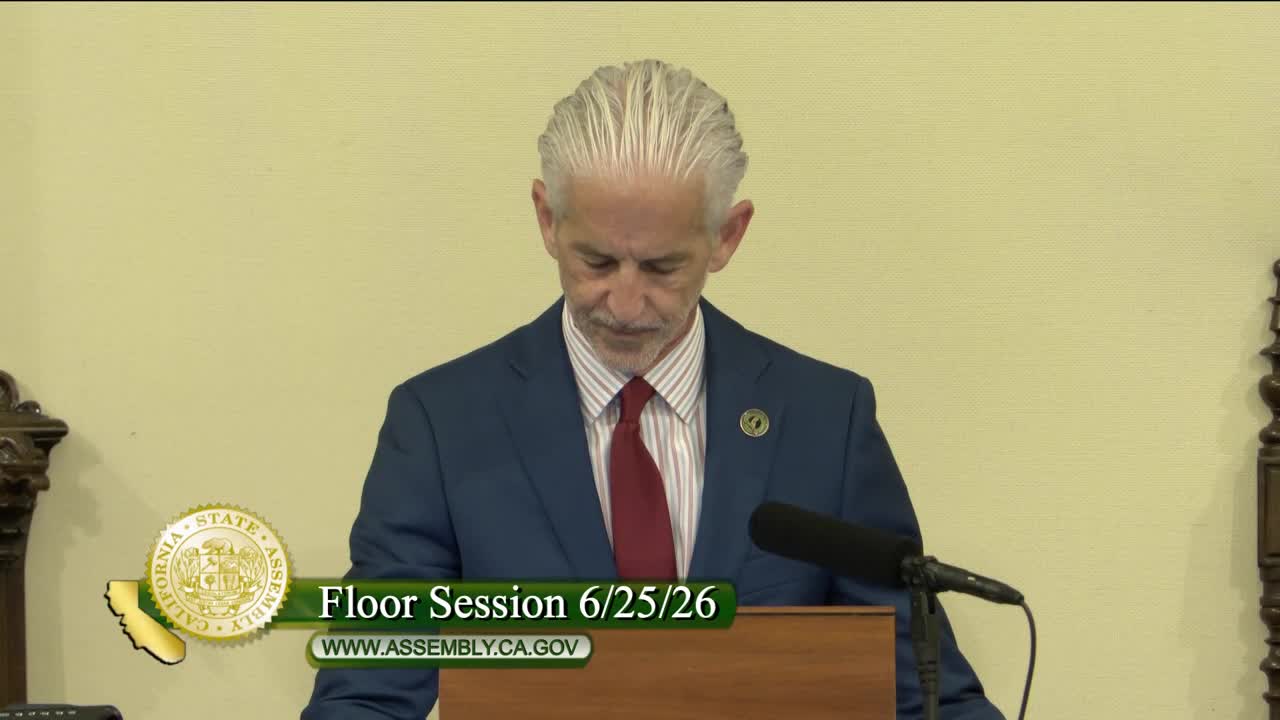 20MIN
Assembly Floor
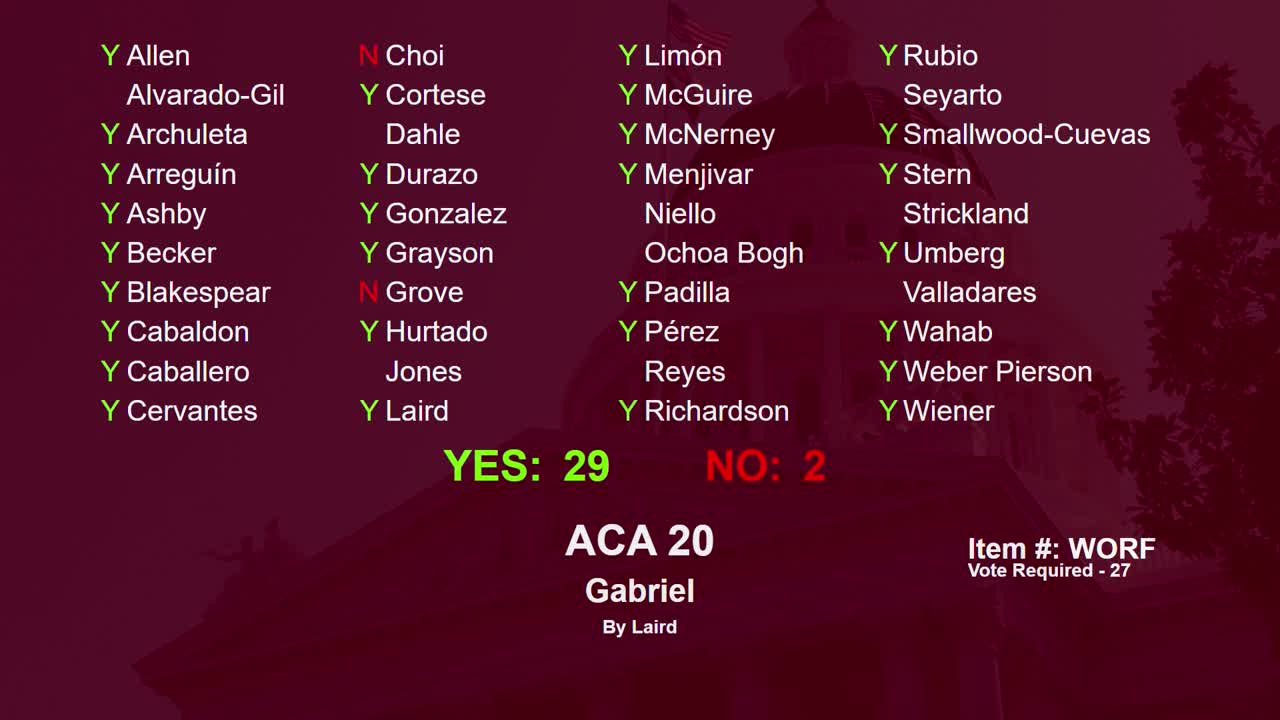 49MIN
Senate Floor
 29MIN
Assembly Standing Committee on Housing and Community Development
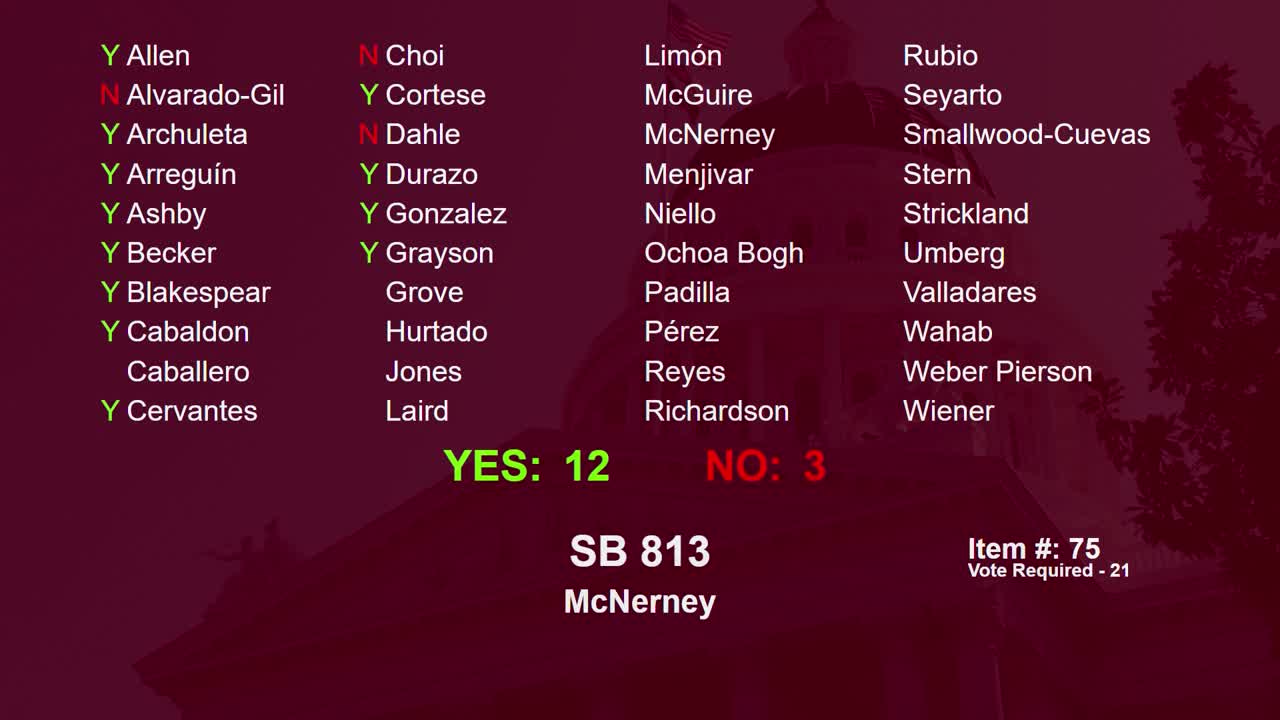 33MIN
Senate Floor
 1MIN
Senate Standing Committee on Appropriations
 59MIN
Senate Standing Committee on Housing
 8MIN
Assembly Standing Committee on Local Government



Bill Co-Author(s):