SB 419: Hydrogen fuel.
- Session Year: 2025-2026
- House: Senate
- Latest Version Date: 2025-09-12
Current Status:
Failed
(2026-03-02: Veto sustained.)
Introduced
In Committee
Awaiting First Chamber Vote
Passed First Chamber
In Committee
Awaiting Second Chamber Vote
Passed Second Chamber
Enacted
Existing state sales and use tax laws impose a tax on retailers measured by the gross receipts from the sale of tangible personal property sold at retail in this state or on the storage, use, or other consumption in this state of tangible personal property purchased from a retailer for storage, use, or other consumption in this state. The Sales and Use Tax Law provides various exemptions from those taxes.
This bill would, on and after July 1, 2026, provide an exemption from the taxes imposed by the Sales and Use Tax Law for the gross receipts from the sale in this state of, and the storage, use, or other consumption in this state of, hydrogen fuel, as defined.
The Bradley-Burns Uniform Local Sales and Use Tax Law authorizes counties and cities to impose local sales and use taxes in conformity with the Sales and Use Tax Law, and existing laws authorize districts, as specified, to impose transactions and use taxes in accordance with the Transactions and Use Tax Law, which generally conforms to the Sales and Use Tax Law. Amendments to the Sales and Use Tax Law are automatically incorporated into the local tax laws.
This bill would provide that the exemption created by the bill does not apply to local sales and use taxes or transactions and use taxes.
Existing law imposes or dedicates certain state sales and use tax rates for local funding, including through the Local Revenue Fund 2011.
This bill would provide that the exemption created by the bill does not apply to those state sales and use tax rates imposed or dedicated for local government funding, including those rates for which revenues are deposited into the Local Revenue Fund 2011.
Existing law requires any bill authorizing a new tax expenditure to contain, among other things, specific goals, purposes, and objectives that the tax credit will achieve, detailed performance indicators, and data collection requirements.
This bill would also include additional information required for any bill authorizing a new tax expenditure.
This bill would take effect immediately as a tax levy.
Existing state sales and use tax laws impose a tax on retailers measured by the gross receipts from the sale of tangible personal property sold at retail in this state or on the storage, use, or other consumption in this state of tangible personal property purchased from a retailer for storage, use, or other consumption in this state. The Sales and Use Tax Law provides various exemptions from those taxes.
This bill would, on and after July 1, 2026, provide an exemption from the taxes imposed by the Sales and Use Tax Law for the gross receipts from the sale in this state of, and the storage, use, or other consumption in this state of, hydrogen fuel, as defined.
The Bradley-Burns Uniform Local Sales and Use Tax Law authorizes counties and cities to impose local sales and use taxes in conformity with the Sales and Use Tax Law, and existing laws authorize districts, as specified, to impose transactions and use taxes in accordance with the Transactions and Use Tax Law, which generally conforms to the Sales and Use Tax Law. Amendments to the Sales and Use Tax Law are automatically incorporated into the local tax laws.
This bill would provide that the exemption created by the bill does not apply to local sales and use taxes or transactions and use taxes.
Existing law imposes or dedicates certain state sales and use tax rates for local funding, including through the Local Revenue Fund 2011.
This bill would provide that the exemption created by the bill does not apply to those state sales and use tax rates imposed or dedicated for local government funding, including those rates for which revenues are deposited into the Local Revenue Fund 2011.
Existing law requires any bill authorizing a new tax expenditure to contain, among other things, specific goals, purposes, and objectives that the tax credit will achieve, detailed performance indicators, and data collection requirements.
This bill would also include additional information required for any bill authorizing a new tax expenditure.
This bill would take effect immediately as a tax levy.
Existing state sales and use tax laws impose a tax on retailers measured by the gross receipts from the sale of tangible personal property sold at retail in this state or on the storage, use, or other consumption in this state of tangible personal property purchased from a retailer for storage, use, or other consumption in this state. The Sales and Use Tax Law provides various exemptions from those taxes.
This bill would, on and after July 1, 2026, provide an exemption from the taxes imposed by the Sales and Use Tax Law for the gross receipts from the sale in this state of, and the storage, use, or other consumption in this state of, hydrogen fuel, as defined.
The Bradley-Burns Uniform Local Sales and Use Tax Law authorizes counties and cities to impose local sales and use taxes in conformity with the Sales and Use Tax Law, and existing laws authorize districts, as specified, to impose transactions and use taxes in accordance with the Transactions and Use Tax Law, which generally conforms to the Sales and Use Tax Law. Amendments to the Sales and Use Tax Law are automatically incorporated into the local tax laws.
This bill would provide that the exemption created by the bill does not apply to local sales and use taxes or transactions and use taxes.
Existing law imposes or dedicates certain state sales and use tax rates for local funding, including through the Local Revenue Fund 2011.
This bill would provide that the exemption created by the bill does not apply to those state sales and use tax rates imposed or dedicated for local government funding, including those rates for which revenues are deposited into the Local Revenue Fund 2011.
Existing law requires any bill authorizing a new tax expenditure to contain, among other things, specific goals, purposes, and objectives that the tax credit will achieve, detailed performance indicators, and data collection requirements.
The
This bill would also include additional information required for any bill authorizing a new tax expenditure.
This bill would take effect immediately as a tax levy.
Existing state sales and use tax laws impose a tax on retailers measured by the gross receipts from the sale of tangible personal property sold at retail in this state or on the storage, use, or other consumption in this state of tangible personal property purchased from a retailer for storage, use, or other consumption in this state. The Sales and Use Tax Law provides various exemptions from those taxes.
This bill would, on and after January July 1, 2026, provide an exemption from the taxes imposed by the Sales and Use Tax Law for the gross receipts from the sale in this state of, and the storage, use, or other consumption in this state of, hydrogen fuel. fuel, as defined.
The Bradley-Burns Uniform Local Sales and Use Tax Law authorizes counties and cities to impose local sales and use taxes in conformity with the Sales and Use Tax Law, and existing laws authorize districts, as specified, to impose transactions and use taxes in accordance with the Transactions and Use Tax Law, which generally conforms to the Sales and Use Tax Law. Amendments to the Sales and Use Tax Law are automatically incorporated into the local tax laws.
This bill would provide that the exemption created by the bill does not apply to local sales and use taxes or transactions and use taxes.
Existing law imposes or dedicates certain state sales and use tax rates for local funding, including through the Local Revenue Fund 2011.
This bill would provide that the exemption created by the bill does not apply to those state sales and use tax rates imposed or dedicated for local government funding, including those rates for which revenues are deposited into the Local Revenue Fund 2011.
Existing law requires any bill authorizing a new tax expenditure to contain, among other things, specific goals, purposes, and objectives that the tax credit will achieve, detailed performance indicators, and data collection requirements.
The bill would also include additional information required for any bill authorizing a new tax expenditure.
This bill would take effect immediately as a tax levy.
Existing state sales and use tax laws impose a tax on retailers measured by the gross receipts from the sale of tangible personal property sold at retail in this state or on the storage, use, or other consumption in this state of tangible personal property purchased from a retailer for storage, use, or other consumption in this state. The Sales and Use Tax Law provides various exemptions from those taxes.
This bill would, on and after January 1, 2026, provide an exemption from the taxes imposed by the Sales and Use Tax Law for the gross receipts from the sale in this state of, and the storage, use, or other consumption in this state of, hydrogen fuel.
The Bradley-Burns Uniform Local Sales and Use Tax Law authorizes counties and cities to impose local sales and use taxes in conformity with the Sales and Use Tax Law, and existing laws authorize districts, as specified, to impose transactions and use taxes in accordance with the Transactions and Use Tax Law, which generally conforms to the Sales and Use Tax Law. Amendments to the Sales and Use Tax Law are automatically incorporated into the local tax laws.
This bill would provide that the exemption created by the bill does not apply to local sales and use taxes or transactions and use taxes.
Existing law imposes or dedicates certain state sales and use tax rates for local funding, including through the Local Revenue Fund 2011.
This bill would provide that the exemption created by the bill does not apply to those state sales and use tax rates imposed or dedicated for local government funding, including those rates for which revenues are deposited into the Local Revenue Fund 2011.
Existing law requires any bill authorizing a new tax expenditure to contain, among other things, specific goals, purposes, and objectives that the tax credit will achieve, detailed performance indicators, and data collection requirements.
The bill would also include additional information required for any bill authorizing a new tax expenditure.
This bill would take effect immediately as a tax levy.
(a)On or after July 1, 2026, there are exempted from the taxes imposed by this part the gross receipts from the sale in this state of, and the storage, use, or other consumption in this state of, hydrogen fuel.
(b)For the purposes of this section:
(1)Hydrogen fuel means a fuel composed of molecular hydrogen intended for consumption in a surface motor vehicle or electricity production device with an internal combustion engine or fuel cell that meets any of the following criteria:
(A)The fuel is sold by a hydrogen fuel station.
(B)The fuel is sold for use in a hydrogen fuel cell electric vehicle.
(C)The fuel is sold for use in a hydrogen internal combustion engine vehicle.
(2)Hydrogen fuel cell means an electrochemical energy conversion device in which molecular hydrogen and an oxidant react to generate electricity as intended by the manufacturer.
(3)Hydrogen fuel cell electric vehicle means a vehicle that uses a hydrogen fuel cell for a means of propulsion.
(4)Hydrogen fuel station means a business selling hydrogen fuel by dispensing the hydrogen fuel directly into a consumers vehicle.
(5)Hydrogen internal combustion engine vehicle means a vehicle that is fueled exclusively by hydrogen by injecting hydrogen fuel into an engine which detonates the gaseous fuel for a means of propulsion.
(c)(1)Notwithstanding any provision of the Bradley-Burns Uniform Local Sales and Use Tax Law (Part 1.5 (commencing with Section 7200)) or the Transactions and Use Tax Law (Part 1.6 (commencing with Section 7251)), the exemption established by this section does not apply with respect to any tax levied by a county, city, or district pursuant to, or in accordance with, either of those laws.
(2)Notwithstanding subdivision (a), the exemption established by this section does not apply with respect to any tax levied pursuant to Section 6051.2 or 6201.2, pursuant to Section 35 of Article XIII of the California Constitution, or any tax levied pursuant to Section 6051 or 6201 that is deposited in the State Treasury to the credit of the Local Revenue Fund 2011 pursuant to Section 6051.15 or 6201.15.
(d)For the purposes of complying with Section 41, the Legislature finds and declares all of the following:
(1)The specific purpose that the exemption will achieve is to create immediate parity in the rate of taxation for zero-emission vehicles until California adopts a new future-facing transportation funding mechanism that contemplates hydrogen as a fuel source for mobility applications.
(2)Detailed performance indicators to measure whether the exemption meets the purpose described in paragraph (1) are the following:
(A)The estimated amount of hydrogen fuel sold at retail in the state each fiscal year.
(B)The estimated gross receipts from the sale of hydrogen fuel in the state each fiscal year.
(3)On or before October 1, 2027, and annually thereafter, the California Department of Tax and Fee Administration shall analyze the performance indicators in paragraph (2) for the previous fiscal year and shall report its findings, in compliance with Section 9795 of the Government Code, to the Legislature.
(e)This section shall remain in effect only until July 1, 2030, and as of that date is repealed.
SEC. 2.This act provides for a tax levy within the meaning of Article IV of the California Constitution and shall go into immediate effect.
(a)On or after July 1, 2026, there are exempted from the taxes imposed by this part the gross receipts from the sale in this state of, and the storage, use, or other consumption in this state of, hydrogen fuel.
(b)For the purposes of this section:
(1)Hydrogen fuel means a fuel composed of molecular hydrogen intended for consumption in a surface motor vehicle or electricity production device with an internal combustion engine or fuel cell that meets any of the following criteria:
(A)The fuel is sold by a hydrogen fuel station.
(B)The fuel is sold for use in a hydrogen fuel cell electric vehicle.
(C)The fuel is sold for use in a hydrogen internal combustion engine vehicle.
(2)Hydrogen fuel cell means an electrochemical energy conversion device in which molecular hydrogen and an oxidant react to generate electricity as intended by the manufacturer.
(3)Hydrogen fuel cell electric vehicle means a vehicle that uses a hydrogen fuel cell for a means of propulsion.
(4)Hydrogen fuel station means a business selling hydrogen fuel by dispensing the hydrogen fuel directly into a consumers vehicle.
(5)Hydrogen internal combustion engine vehicle means a vehicle that is fueled exclusively by hydrogen by injecting hydrogen fuel into an engine which detonates the gaseous fuel for a means of propulsion.
(c)(1)Notwithstanding any provision of the Bradley-Burns Uniform Local Sales and Use Tax Law (Part 1.5 (commencing with Section 7200)) or the Transactions and Use Tax Law (Part 1.6 (commencing with Section 7251)), the exemption established by this section does not apply with respect to any tax levied by a county, city, or district pursuant to, or in accordance with, either of those laws.
(2)Notwithstanding subdivision (a), the exemption established by this section does not apply with respect to any tax levied pursuant to Section 6051.2 or 6201.2, pursuant to Section 35 of Article XIII of the California Constitution, or any tax levied pursuant to Section 6051 or 6201 that is deposited in the State Treasury to the credit of the Local Revenue Fund 2011 pursuant to Section 6051.15 or 6201.15.
(d)For the purposes of complying with Section 41, the Legislature finds and declares all of the following:
(1)The specific purpose that the exemption will achieve is to create immediate parity in the rate of taxation for zero-emission vehicles until California adopts a new future-facing transportation funding mechanism that contemplates hydrogen as a fuel source for mobility applications.
(2)Detailed performance indicators to measure whether the exemption meets the purpose described in paragraph (1) are the following:
(A)The estimated amount of hydrogen fuel sold at retail in the state each fiscal year.
(B)The estimated gross receipts from the sale of hydrogen fuel in the state each fiscal year.
(3)On or before October 1, 2027, and annually thereafter, the California Department of Tax and Fee Administration shall analyze the performance indicators in paragraph (2) for the previous fiscal year and shall report its findings, in compliance with Section 9795 of the Government Code, to the Legislature.
(e)This section shall remain in effect only until July 1, 2030, and as of that date is repealed.
SEC. 2.This act provides for a tax levy within the meaning of Article IV of the California Constitution and shall go into immediate effect.
(a)On or after July 1, 2026, there are exempted from the taxes imposed by this part the gross receipts from the sale in this state of, and the storage, use, or other consumption in this state of, hydrogen fuel.
(b)For the purposes of this section:
(1)Hydrogen fuel means a fuel composed of molecular hydrogen intended for consumption in a surface motor vehicle or electricity production device with an internal combustion engine or fuel cell that meets any of the following criteria:
(A)The fuel is sold by a hydrogen fuel station.
(B)The fuel is sold for use in a hydrogen fuel cell electric vehicle.
(C)The fuel is sold for use in a hydrogen internal combustion engine vehicle.
(2)Hydrogen fuel cell means an electrochemical energy conversion device in which molecular hydrogen and an oxidant react to generate electricity as intended by the manufacturer.
(3)Hydrogen fuel cell electric vehicle means a vehicle that uses a hydrogen fuel cell for a means of propulsion.
(4)Hydrogen fuel station means a business selling hydrogen fuel by dispensing the hydrogen fuel directly into a consumers vehicle.
(5)Hydrogen internal combustion engine vehicle means a vehicle that is fueled exclusively by hydrogen by directly injecting hydrogen fuel into an engine which detonates the gaseous fuel for a means of propulsion.
(c)(1)Notwithstanding any provision of the Bradley-Burns Uniform Local Sales and Use Tax Law (Part 1.5 (commencing with Section 7200)) or the Transactions and Use Tax Law (Part 1.6 (commencing with Section 7251)), the exemption established by this section does not apply with respect to any tax levied by a county, city, or district pursuant to, or in accordance with, either of those laws.
(2)Notwithstanding subdivision (a), the exemption established by this section does not apply with respect to any tax levied pursuant to Section 6051.2 or 6201.2, pursuant to Section 35 of Article XIII of the California Constitution, or any tax levied pursuant to Section 6051 or 6201 that is deposited in the State Treasury to the credit of the Local Revenue Fund 2011 pursuant to Section 6051.15 or 6201.15.
(d)For the purposes of complying with Section 41, the Legislature finds and declares all of the following:
(1)The specific purpose that the exemption will achieve is to create immediate parity in the rate of taxation for zero-emission vehicles until California adopts a new future-facing transportation funding mechanism that contemplates hydrogen as a fuel source for mobility applications.
(2)Detailed performance indicators to measure whether the exemption meets the purpose described in paragraph (1) are the following:
(A)The amount of hydrogen fuel sold at retail in the state each fiscal year.
(B)The estimated gross receipts from the sale of hydrogen fuel in the state each fiscal year.
(3)On or before October 1, 2027, and annually thereafter, the California Department of Tax and Fee Administration shall analyze the performance indicators in paragraph (2) for the previous fiscal year and shall report its findings, in compliance with Section 9795 of the Government Code, to the Legislature.
(e)This section shall remain in effect only until July 1, 2030, and as of that date is repealed.
SEC. 2.This act provides for a tax levy within the meaning of Article IV of the California Constitution and shall go into immediate effect.
(a)On or after January July 1, 2026, there are exempted from the taxes imposed by this part the gross receipts from the sale in this state of, and the storage, use, or other consumption in this state of, hydrogen fuel.
(b)For the purposes of this section:
(1)Hydrogen fuel means a fuel composed of molecular hydrogen intended for consumption in a surface motor vehicle or electricity production device with an internal combustion engine or fuel cell that meets any of the following criteria:
(A)The fuel is sold by a hydrogen fuel station.
(B)The fuel is sold for use in a hydrogen fuel cell electric vehicle.
(C)The fuel is sold for use in a hydrogen internal combustion engine vehicle.
(2)Hydrogen fuel cell means an electrochemical energy conversion device in which molecular hydrogen and an oxidant react to generate electricity as intended by the manufacturer.
(3)Hydrogen fuel cell electric vehicle means a vehicle that uses a hydrogen fuel cell for a means of propulsion.
(4)Hydrogen fuel station means a business selling hydrogen fuel by dispensing the hydrogen fuel directly into a consumers vehicle.
(5)Hydrogen internal combustion engine vehicle means a vehicle that is fueled exclusively by hydrogen by directly injecting hydrogen fuel into an engine which detonates the gaseous fuel for a means of propulsion.
(b)(c)(1)Notwithstanding any provision of the Bradley-Burns Uniform Local Sales and Use Tax Law (Part 1.5 (commencing with Section 7200)) or the Transactions and Use Tax Law (Part 1.6 (commencing with Section 7251)), the exemption established by this section does not apply with respect to any tax levied by a county, city, or district pursuant to, or in accordance with, either of those laws.
(2)Notwithstanding subdivision (a), the exemption established by this section does not apply with respect to any tax levied pursuant to Section 6051.2 or 6201.2, pursuant to Section 35 of Article XIII of the California Constitution, or any tax levied pursuant to Section 6051 or 6201 that is deposited in the State Treasury to the credit of the Local Revenue Fund 2011 pursuant to Section 6051.15 or 6201.15.
(c)(d)For the purposes of complying with Section 41, the Legislature finds and declares all of the following:
(1)The specific purpose that the exemption will achieve is to create immediate parity in the rate of taxation for zero-emission vehicles until California adopts a new future-facing transportation funding mechanism that contemplates hydrogen as a fuel source for mobility applications.
(2)Detailed performance indicators to measure whether the exemption meets the purpose described in paragraph (1) are the following:
(A)The amount of hydrogen fuel sold at retail in the state each fiscal year.
(B)The estimated gross receipts from the sale of hydrogen fuel in the state each fiscal year.
(3)On or before March October 1, 2027, and annually thereafter, the California Department of Tax and Fee Administration shall analyze the performance indicators in paragraph (2) for the previous fiscal year and shall report its findings, in compliance with Section 9795 of the Government Code, to the Legislature.
(d)(e)This section shall remain in effect only until January July 1, 2030, and as of that date is repealed.
SEC. 2.This act provides for a tax levy within the meaning of Article IV of the California Constitution and shall go into immediate effect.
(a)On or after January 1, 2026, there are exempted from the taxes imposed by this part the gross receipts from the sale in this state of, and the storage, use, or other consumption in this state of, hydrogen fuel.
(b)(1)Notwithstanding any provision of the Bradley-Burns Uniform Local Sales and Use Tax Law (Part 1.5 (commencing with Section 7200)) or the Transactions and Use Tax Law (Part 1.6 (commencing with Section 7251)), the exemption established by this section does not apply with respect to any tax levied by a county, city, or district pursuant to, or in accordance with, either of those laws.
(2)Notwithstanding subdivision (a), the exemption established by this section does not apply with respect to any tax levied pursuant to Section 6051.2 or 6201.2, pursuant to Section 35 of Article XIII of the California Constitution, or any tax levied pursuant to Section 6051 or 6201 that is deposited in the State Treasury to the credit of the Local Revenue Fund 2011 pursuant to Section 6051.15 or 6201.15.
(c)For the purposes of complying with Section 41, the Legislature finds and declares all of the following:
(1)The specific purpose that the exemption will achieve is to create immediate parity in the rate of taxation for zero-emission vehicles until California adopts a new future-facing transportation funding mechanism that contemplates hydrogen as a fuel source for mobility applications.
(2)Detailed performance indicators to measure whether the exemption meets the purpose described in paragraph (1) are the following:
(A)The amount of hydrogen fuel sold at retail in the state each year.
(B)The estimated gross receipts from the sale of hydrogen fuel in the state each year.
(3)On or before March 1, 2027, and annually thereafter, the California Department of Tax and Fee Administration shall analyze the performance indicators in paragraph (2) and shall report its findings, in compliance with Section 9795 of the Government Code, to the Legislature.
(d)This section shall remain in effect only until January 1, 2030, and as of that date is repealed.
SEC. 2.This act provides for a tax levy within the meaning of Article IV of the California Constitution and shall go into immediate effect.
|
Date
|
Status
|
|---|---|
| Mar 2, 2026 | Veto sustained. |
| Mar 2, 2026 | Stricken from file. |
| Oct 1, 2025 | In Senate. Consideration of Governor's veto pending. |
| Oct 1, 2025 | Vetoed by the Governor. |
| Sep 16, 2025 | Enrolled and presented to the Governor at 3 p.m. |
| Sep 9, 2025 | Assembly amendments concurred in. (Ayes 37. Noes 3. Page 2715.) Ordered to engrossing and enrolling. |
| Sep 8, 2025 | In Senate. Concurrence in Assembly amendments pending. |
| Sep 8, 2025 | Read third time. Passed. (Ayes 70. Noes 0. Page 3004.) Ordered to the Senate. |
| Sep 3, 2025 | Read second time. Ordered to third reading. |
| Sep 2, 2025 | Read second time and amended. Ordered to second reading. |
| Aug 29, 2025 | From committee: Do pass as amended. (Ayes 11. Noes 0.) (August 29). |
| Aug 20, 2025 | August 20 set for first hearing. Placed on APPR. suspense file. |
| Jul 15, 2025 | From committee: Do pass and re-refer to Com. on APPR. (Ayes 7. Noes 0.) (July 14). Re-referred to Com. on APPR. |
| Jul 7, 2025 | July 7 set for first hearing. Placed on REV. & TAX. suspense file. |
| Jul 1, 2025 | June 30 hearing postponed by committee. |
| Jun 23, 2025 | From committee with author's amendments. Read second time and amended. Re-referred to Com. on REV. & TAX. |
| Jun 9, 2025 | Referred to Com. on REV. & TAX. |
| Jun 3, 2025 | In Assembly. Read first time. Held at Desk. |
| Jun 2, 2025 | Read third time. Passed. (Ayes 36. Noes 0. Page 1393.) Ordered to the Assembly. |
| May 23, 2025 | Read second time. Ordered to third reading. |
| May 23, 2025 | From committee: Do pass. (Ayes 5. Noes 0. Page 1199.) (May 23). |
| May 20, 2025 | Set for hearing May 23. |
| May 19, 2025 | May 19 hearing: Placed on APPR. suspense file. |
| May 15, 2025 | Set for hearing May 19. |
| May 14, 2025 | From committee: Do pass and re-refer to Com. on APPR. (Ayes 5. Noes 0. Page 1082.) (May 14). Re-referred to Com. on APPR. |
| May 5, 2025 | From committee with author's amendments. Read second time and amended. Re-referred to Com. on REV. & TAX. |
| Mar 18, 2025 | Set for hearing May 14. |
| Feb 26, 2025 | Referred to Com. on REV. & TAX. |
| Feb 19, 2025 | From printer. May be acted upon on or after March 21. |
| Feb 18, 2025 | Introduced. Read first time. To Com. on RLS. for assignment. To print. |
|
Date
|
Description
|
Location
|
Votes
|
|
|---|---|---|---|---|
| Sep 9, 2025 | Unfinished Business SB419 Caballero et al. Concurrence | Senate Floor |
Passed |
|
| Sep 8, 2025 | SB 419 Caballero Senate Third Reading By Gipson | Assembly Floor |
Passed |
|
| Aug 29, 2025 | Do pass as amended. | Assembly Standing Committee on Appropriations |
Passed |
|
| Jul 14, 2025 | Do pass and be re-referred to the Committee on [Appropriations] | Assembly Standing Committee on Revenue and Taxation |
Passed |
|
| Jun 2, 2025 | Senate 3rd Reading SB419 Caballero et al. | Senate Floor |
Passed |
|
| May 23, 2025 | Do pass | Senate Standing Committee on Appropriations |
Passed |
|
| May 19, 2025 | Placed on suspense file | Senate Standing Committee on Appropriations |
Passed |
|
| May 14, 2025 | Do pass, but first be re-referred to the Committee on [Appropriations] | Senate Standing Committee on Revenue and Taxation |
Passed |
This list shows positions taken on this bill by organizations on the date displayed, which is linked to the original source.
Positions by individuals are not included.
|
Organization
|
Position
|
Date
|
|---|---|---|
| 350 Bay Area Action | ** Against | |
| 350 Humboldt: Grass Roots Climate Action | ** Against | |
| 350 Sacramento | ** Against | |
| Air Products and Chemicals, Inc. | ** Support | |
| Alameda-Contra Costa Transit District | ** Support | |
| Author (Caballero) | ** Support | |
| California Hydrogen Business Council | ** Support | |
| California Hydrogen Coalition | ** Support | |
| California Teachers Association | ** Against | |
| Center For Biological Diversity | ** Against | |
| Center for Community Action and Environmental Justice | ** Against | |
| Center on Race, Poverty & the Environment | ** Against | |
| Climate Action California | ** Against | |
| Communities for a Better Environment | ** Against | |
| County of Fresno | ** Support | |
| Foothill Transit | ** Support | |
| Green Hydrogen Coalition | ** Support | |
| Long Beach Area Chamber of Commerce | ** Support | |
| Natural Resources Defense Council | ** Against | |
| People’s Collective for Environmental Justice | ** Against | |
| Port of Long Beach | ** Support | |
| Port Of Oakland | ** Support | |
| Restore the Delta | ** Against | |
| Santa Cruz Climate Action Network | ** Against | |
| Sierra Club California | ** Against | |
| Sunline Transit Agency | ** Support |
SENATE RULES COMMITTEE Office of Senate Floor Analyses (916) 651-1520 Fax: (916) 327-4478 | SB 419 |
VETO
Bill No: SB 419
Author: Caballero (D), et al.
Enrolled: 9/12/25
Vote: 27- Urgency
SENATE REVENUE AND TAXATION COMMITTEE: 5-0, 5/14/25
AYES: McNerney, Valladares, Ashby, Grayson, Umberg
SENATE APPROPRIATIONS COMMITTEE: 5-0, 5/23/25
AYES: Caballero, Seyarto, Cabaldon, Grayson, Richardson
NO VOTE RECORDED: Dahle, Wahab
SENATE FLOOR: 36-0, 6/2/25
AYES: Allen, Alvarado-Gil, Archuleta, Arreguín, Ashby, Blakespear, Cabaldon, Caballero, Cervantes, Choi, Cortese, Dahle, Durazo, Gonzalez, Grayson, Grove, Jones, Laird, Limón, McGuire, McNerney, Menjivar, Niello, Ochoa Bogh, Padilla, Pérez, Richardson, Rubio, Seyarto, Smallwood-Cuevas, Stern, Strickland, Umberg, Valladares, Weber Pierson, Wiener
NO VOTE RECORDED: Becker, Hurtado, Reyes, Wahab
SENATE FLOOR: 37-3, 9/9/25
AYES: Alvarado-Gil, Archuleta, Arreguín, Ashby, Blakespear, Cabaldon, Caballero, Cervantes, Choi, Cortese, Dahle, Durazo, Gonzalez, Grayson, Grove, Hurtado, Jones, Laird, Limón, McGuire, McNerney, Menjivar, Niello, Ochoa Bogh, Padilla, Pérez, Reyes, Richardson, Rubio, Seyarto, Smallwood-Cuevas, Strickland, Umberg, Valladares, Wahab, Weber Pierson, Wiener
NOES: Allen, Becker, Stern
ASSEMBLY FLOOR: 70-0, 9/8/25 - See last page for vote
SUBJECT: Hydrogen fuel
SOURCE: California Hydrogen Coalition
DIGEST:
This bill enacts a state General Fund-only (3.9375%) sales and use tax exemption for purchases of hydrogen fuel made on or after July 1, 2026.
ANALYSIS:
Existing law:
- Imposes the sales tax on every retailer “engaged in business in this state” that sells tangible personal property, and requires them to register with the California Department of Tax and Fee Administration (CDTFA), as well as remit taxes collected from purchasers to CDTFA.
- Applies the sales tax whenever a retail sale occurs, which is generally any sale other than one for resale in the regular course of business.
- Provides that unless the purchaser pays the sales tax to the retailer, they are liable for the use tax, which is imposed on any person consuming tangible personal property in the state, and requires the purchaser to remit use tax to CDTFA.
- Sets the state sales and use tax rate at 7.25% of the sales price of the property sold or used, of which 3.9375% flows to the state General Fund.
- Allows cities, counties, and specified special districts to increase the sales and use tax, also known as district or transactions and use taxes, up to a 2% countywide cap, with some exceptions.
- Exempts some items from the state and local sales and use tax, while others are exempt from the state sales tax, but not the local share.
- Subjects sales of hydrogen fuel to the sales and use tax.
- Subjects certain sales of hydrogen fuel to the excise taxes under the Use Fuel Tax Law.
- Includes excise taxes under the Use Fuel Tax Law in the gross receipts of the sales and use tax.
- Authorizes a state General Fund-only sales and use tax exemption for specified zero-emission technology transit buses sold to a city, county, city and county, transportation or transit district, or other public agency providing transit services to the public until January 1, 2024 (AB 784, Mullin, Chapter 684, Statues of 2019) which the Legislature extended to January 1, 2026 (AB 2622, Mullin, Chapter 353, Statues of 2022).
- Authorizes a state General Fund-only sales and use tax exemption on qualifying zero or near-zero emission motor vehicles purchased or leased by qualified buyers under the Clean Cars 4 All program on purchases made purchases made between January 1, 2023, and December 31, 2027 (SB 1382, Gonzalez, Chapter 375, Statues of 2022).
- Imposes the road improvement fee, an annual registration fee, on battery‑electric and hydrogen fuel cell electric vehicles that are model year 2020 or later.
This bill:
- Authorizes a state General Fund-only (3.9375%) sales and use tax exemption for sales of hydrogen fuel, as defined, made on or after July 1, 2026.
- Defines “hydrogen fuel” as fuel composed of molecular hydrogen intended for consumption in a surface motor vehicle or electricity production device with an internal combustion engine or fuel cell that meets any of the following criteria:
- The fuel is sold by a hydrogen fuel station.
- The fuel is sold for use in a hydrogen fuel cell electric vehicle.
- The fuel is sold for use in a hydrogen internal combustion engine vehicle.
- Sunsets on July 1, 2030.
- Makes legislative findings and declarations to comply with Section 41 of the Revenue and Taxation Code, specifically to require CDTFA to report to the Legislature by October 1, 2027, and annually thereafter, the amount of hydrogen fuel sold at retail in the state each fiscal year, and the estimated gross receipts from the sale of hydrogen fuel in the state each fiscal year.
Background
Clean Transportation Program (CTP). The CTP, administered by the California Energy Commission (CEC), was established by AB 118 (Nunez, Chapter 750, Statutes of 2007) to accelerate the development and deployment of clean, efficient, low-carbon alternative fuels and technologies. AB 118 was re-authorized by AB 8 (Perea, Chapter 401, Statutes of 2013), which preempted California Air Resources Board (CARB) authority to require publicly available hydrogen-fueling stations through regulation, and instead required CEC to fund the development of up to 100 such hydrogen stations from vehicle registration fee revenues in the amount of up to $220 million over the next 11-plus years. AB 118 also required CEC and CARB to jointly report annually on progress toward establishing a hydrogen fueling network, beginning on December 31, 2015. The CTP was re-authorized again by AB 126 (Reyes, Chapter 319, Statutes of 2023). AB 126 required CEC to fund at least $15 million annually through 2030 for hydrogen fueling stations and continue the annual reporting mandated by AB 118.
According to the most recent published joint report by CEC and CARB, as of July 15, 2024, California’s hydrogen fueling network has 62 stations (four fewer than last year) and faces supply and reliability challenges. As such, it is unlikely that the 200 hydrogen fueling station target set by Governor Brown’s Executive Order B-48-18 will be achieved. Additionally, according to the 2024 report, there were 14,429 hydrogen fuel cell vehicles (HFCV) with an active registration status in California, with projections to reach 20,500 by 2030 (one-third of the previously reported estimate of 62,600 on-road HFCVs by 2029).
FISCAL EFFECT: Appropriation: No Fiscal Com.: Yes Local: No
According to the Assembly Appropriations Committee:
- General Fund (GF) revenue loss of approximately $3.8 million. By decreasing SUT revenue, this bill also likely decreases Proposition 98 GF spending by approximately 40% of the GF revenue loss (the exact amount depends on the specific amount of the annual Proposition 98 guarantee).
- Absorbable costs to CDTFA to notify industry stakeholders, revise the SUT return and related publications, and answer public inquiries.
SUPPORT: (Verified 10/14/25)
California Hydrogen Coalition (Source)
Air Products and Chemicals, Inc.
Alameda-Contra Costa Transit District
California Hydrogen Business Council
County of Fresno
Foothill Transit
Green Hydrogen Coalition
Long Beach Area Chamber of Commerce
Port of Long Beach
Sunline Transit Agency
OPPOSITION: (Verified 10/14/25)
350 Bay Area Action
350 Humboldt: Grass Roots Climate Action
350 Sacramento
California Teachers Association
Center for Biological Diversity
Center for Community Action and Environmental Justice
Center on Race, Poverty & the Environment
Climate Action California
Communities for a Better Environment
Natural Resources Defense Council
People’s Collective for Environmental Justice
Restore the Delta
Santa Cruz Climate Action Network
Sierra Club California
ARGUMENTS IN SUPPORT: According to the author, “Currently, hydrogen-powered vehicle owners in California face an unfair double taxation system, paying both a Sales and Use Tax (SUT) at the pump and a $100 annual road improvement fee at registration. SB 419 seeks to correct this imbalance by aligning hydrogen taxation with local utility tax, to ensure a more equitable, clear, and streamlined system without altering the existing registration fee. This bill will create tax parity for Zero Emissions Vehicles to encourage alternative vehicle fuel options, specifically hydrogen fuel cell vehicles. This bill will encourage the development of new hydrogen fuel stations, more hydrogen powered vehicles, and more options for consumers. SB 419 will reinforce California’s climate change goals to reduce carbon emissions in the transportations sector. The bill will help encourage the production, consumption and proliferation of hydrogen fuel markets across the state.”
ARGUMENTS IN OPPOSITION: According to The Center for Biological Diversity, this bill “will incentivize the use of hydrogen fuel without consideration of how that fuel is produced or its necessity, or lack thereof, in a clean energy future. This bill will (1) incentivize the use of hydrogen fuel derived from harmful feedstocks that pose well-documented environmental and public health harms; (2) incentivize hydrogen combustion as a form of motor vehicle propulsion, despite the criteria pollutant emissions that could result; and (3) attempt to put hydrogen fuel on equal footing with battery-electric motor vehicle propulsion, even though battery-electric propulsion is already established, more efficient and economical (with a lower total cost of ownership), and far beyond hydrogen in deployment.”
GOVERNOR'S VETO MESSAGE:
This bill would establish a sales and use tax exemption for the purchase of hydrogen fuel.
I appreciate the author's ongoing commitment to encourage the deployment and adoption of more hydrogen-powered vehicles. I share this goal, which is why my Administration, in partnership with the Legislature, has invested billions of dollars in recent years toward zero-emission vehicles (ZEVs) and supporting infrastructure, including hydrogen fuel cell electric vehicles. This marks the most significant investments in the ZEV market in the state's history. However, new tax expenditures, such as this, should be included as part of the annual budget process, given their implications for the General Fund.
In partnership with the Legislature this year, my Administration has enacted a balanced budget that recognizes the challenging fiscal landscape our state faces while maintaining our commitment to working families and our most vulnerable communities. With significant fiscal pressures and the federal government's hostile economic policies, it is vital that we remain disciplined when considering bills with significant fiscal implications that are not included in the budget, such as this measure. For these reasons, I cannot sign this bill.
ASSEMBLY FLOOR: 70-0, 9/8/25
AYES: Addis, Aguiar-Curry, Ahrens, Alanis, Alvarez, Arambula, Ávila Farías, Bains, Bauer-Kahan, Bennett, Berman, Boerner, Bonta, Bryan, Calderon, Caloza, Carrillo, Castillo, Chen, Connolly, Davies, DeMaio, Dixon, Elhawary, Ellis, Flora, Fong, Gallagher, Garcia, Gipson, Jeff Gonzalez, Mark González, Hadwick, Haney, Harabedian, Hoover, Irwin, Jackson, Johnson, Kalra, Krell, Lackey, Lowenthal, Macedo, Ortega, Pacheco, Papan, Patel, Patterson, Pellerin, Petrie-Norris, Quirk-Silva, Ramos, Ransom, Michelle Rodriguez, Rogers, Blanca Rubio, Sanchez, Schiavo, Sharp-Collins, Solache, Soria, Stefani, Ta, Tangipa, Valencia, Wallis, Wicks, Wilson, Rivas
NO VOTE RECORDED: Gabriel, Hart, Lee, McKinnor, Muratsuchi, Nguyen, Celeste Rodriguez, Schultz, Ward, Zbur
Prepared by: Haley Summers / REV. & TAX. / (916) 651-4117
10/15/25 12:19:12
SENATE RULES COMMITTEE Office of Senate Floor Analyses (916) 651-1520 Fax: (916) 327-4478 | SB 419 |
UNFINISHED BUSINESS
Bill No: SB 419
Author: Caballero (D), et al.
Amended: 9/2/25
Vote: 21- Urgency
SENATE REVENUE AND TAXATION COMMITTEE: 5-0, 5/14/25
AYES: McNerney, Valladares, Ashby, Grayson, Umberg
SENATE APPROPRIATIONS COMMITTEE: 5-0, 5/23/25
AYES: Caballero, Seyarto, Cabaldon, Grayson, Richardson
NO VOTE RECORDED: Dahle, Wahab
SENATE FLOOR: 36-0, 6/2/25
AYES: Allen, Alvarado-Gil, Archuleta, Arreguín, Ashby, Blakespear, Cabaldon, Caballero, Cervantes, Choi, Cortese, Dahle, Durazo, Gonzalez, Grayson, Grove, Jones, Laird, Limón, McGuire, McNerney, Menjivar, Niello, Ochoa Bogh, Padilla, Pérez, Richardson, Rubio, Seyarto, Smallwood-Cuevas, Stern, Strickland, Umberg, Valladares, Weber Pierson, Wiener
NO VOTE RECORDED: Becker, Hurtado, Reyes, Wahab
ASSEMBLY FLOOR: 70-0, 9/8/25 - See last page for vote
SUBJECT: Hydrogen fuel
SOURCE: California Hydrogen Coalition
DIGEST:
This bill enacts a state General Fund-only (3.9375%) sales and use tax exemption for purchases of hydrogen fuel made on or after July 1, 2026.
Assembly Amendments
of 9/2/25 strike the word “directly” in the definition of “hydrogen internal combustion engine vehicle” and insert the word “estimated” in front of “amount of hydrogen fuel sold at retail in the state each fiscal year.”
ANALYSIS:
Existing law:
- Imposes the sales tax on every retailer “engaged in business in this state” that sells tangible personal property, and requires them to register with the California Department of Tax and Fee Administration (CDTFA), as well as remit taxes collected from purchasers to CDTFA.
- Applies the sales tax whenever a retail sale occurs, which is generally any sale other than one for resale in the regular course of business.
- Provides that unless the purchaser pays the sales tax to the retailer, they are liable for the use tax, which is imposed on any person consuming tangible personal property in the state, and requires the purchaser to remit use tax to CDTFA.
- Sets the state sales and use tax rate at 7.25% of the sales price of the property sold or used, of which 3.9375% flows to the state General Fund.
- Allows cities, counties, and specified special districts to increase the sales and use tax, also known as district or transactions and use taxes, up to a 2% countywide cap, with some exceptions.
- Exempts some items from the state and local sales and use tax, while others are exempt from the state sales tax, but not the local share.
- Subjects sales of hydrogen fuel to the sales and use tax.
- Subjects certain sales of hydrogen fuel to the excise taxes under the Use Fuel Tax Law.
- Includes excise taxes under the Use Fuel Tax Law in the gross receipts of the sales and use tax.
- Authorizes a state General Fund-only sales and use tax exemption for specified zero-emission technology transit buses sold to a city, county, city and county, transportation or transit district, or other public agency providing transit services to the public until January 1, 2024 (AB 784, Mullin, Chapter 684, Statues of 2019) which the Legislature extended to January 1, 2026 (AB 2622, Mullin, Chapter 353, Statues of 2022).
- Authorizes a state General Fund-only sales and use tax exemption on qualifying zero or near-zero emission motor vehicles purchased or leased by qualified buyers under the Clean Cars 4 All program on purchases made purchases made between January 1, 2023, and December 31, 2027 (SB 1382, Gonzalez, Chapter 375, Statues of 2022).
- Imposes the road improvement fee, an annual registration fee, on battery‑electric and hydrogen fuel cell electric vehicles that are model year 2020 or later.
This bill:
- Authorizes a state General Fund-only (3.9375%) sales and use tax exemption for sales of hydrogen fuel, as defined, made on or after July 1, 2026.
- Defines “hydrogen fuel” as fuel composed of molecular hydrogen intended for consumption in a surface motor vehicle or electricity production device with an internal combustion engine or fuel cell that meets any of the following criteria:
- The fuel is sold by a hydrogen fuel station.
- The fuel is sold for use in a hydrogen fuel cell electric vehicle.
- The fuel is sold for use in a hydrogen internal combustion engine vehicle.
- Sunsets on July 1, 2030.
- Makes legislative findings and declarations to comply with Section 41 of the Revenue and Taxation Code, specifically to require CDTFA to report to the Legislature by October 1, 2027, and annually thereafter, the amount of hydrogen fuel sold at retail in the state each fiscal year, and the estimated gross receipts from the sale of hydrogen fuel in the state each fiscal year.
Background:
Clean Transportation Program (CTP). The CTP, administered by the California Energy Commission (CEC), was established by AB 118 (Nunez, Chapter 750, Statutes of 2007) to accelerate the development and deployment of clean, efficient, low-carbon alternative fuels and technologies. AB 118 was re-authorized by AB 8 (Perea, Chapter 401, Statutes of 2013), which preempted California Air Resources Board (CARB) authority to require publicly available hydrogen-fueling stations through regulation, and instead required CEC to fund the development of up to 100 such hydrogen stations from vehicle registration fee revenues in the amount of up to $220 million over the next 11-plus years. AB 118 also required CEC and CARB to jointly report annually on progress toward establishing a hydrogen fueling network, beginning on December 31, 2015. The CTP was re-authorized again by AB 126 (Reyes, Chapter 319, Statutes of 2023). AB 126 required CEC to fund at least $15 million annually through 2030 for hydrogen fueling stations and continue the annual reporting mandated by AB 118.
According to the most recent published joint report by CEC and CARB, as of July 15, 2024, California’s hydrogen fueling network has 62 stations (four fewer than last year) and faces supply and reliability challenges. As such, it is unlikely that the 200 hydrogen fueling station target set by Governor Brown’s Executive Order B-48-18 will be achieved. Additionally, according to the 2024 report, there were 14,429 hydrogen fuel cell vehicles (HFCV) with an active registration status in California, with projections to reach 20,500 by 2030 (one-third of the previously reported estimate of 62,600 on-road HFCVs by 2029).
FISCAL EFFECT: Appropriation: No Fiscal Com.: Yes Local: No
According to the Assembly Appropriations Committee:
- General Fund (GF) revenue loss of approximately $3.8 million. By decreasing SUT revenue, this bill also likely decreases Proposition 98 GF spending by approximately 40% of the GF revenue loss (the exact amount depends on the specific amount of the annual Proposition 98 guarantee).
- Absorbable costs to CDTFA to notify industry stakeholders, revise the SUT return and related publications, and answer public inquiries.
SUPPORT: (Verified 9/3/25)
California Hydrogen Coalition (Source)
Air Products and Chemicals, Inc.
Alameda-Contra Costa Transit District
California Hydrogen Business Council
County of Fresno
Foothill Transit
Green Hydrogen Coalition
Long Beach Area Chamber of Commerce
Port of Long Beach
Sunline Transit Agency
OPPOSITION: (Verified 9/3/25)
350 Bay Area Action
350 Humboldt: Grass Roots Climate Action
350 Sacramento
California Teachers Association
Center for Biological Diversity
Center for Community Action and Environmental Justice
Center on Race, Poverty & the Environment
Climate Action California
Communities for a Better Environment
Natural Resources Defense Council
People's Collective for Environmental Justice
Restore the Delta
Santa Cruz Climate Action Network
Sierra Club California
ARGUMENTS IN SUPPORT: According to the author, “Currently, hydrogen-powered vehicle owners in California face an unfair double taxation system, paying both a Sales and Use Tax (SUT) at the pump and a $100 annual road improvement fee at registration. SB 419 seeks to correct this imbalance by aligning hydrogen taxation with local utility tax, to ensure a more equitable, clear, and streamlined system without altering the existing registration fee. This bill will create tax parity for Zero Emissions Vehicles to encourage alternative vehicle fuel options, specifically hydrogen fuel cell vehicles. This bill will encourage the development of new hydrogen fuel stations, more hydrogen powered vehicles, and more options for consumers. SB 419 will reinforce California’s climate change goals to reduce carbon emissions in the transportations sector. The bill will help encourage the production, consumption and proliferation of hydrogen fuel markets across the state.”
ARGUMENTS IN OPPOSITION: According to The Center for Biological Diversity, this bill “will incentivize the use of hydrogen fuel without consideration of how that fuel is produced or its necessity, or lack thereof, in a clean energy future. This bill will (1) incentivize the use of hydrogen fuel derived from harmful feedstocks that pose well-documented environmental and public health harms; (2) incentivize hydrogen combustion as a form of motor vehicle propulsion, despite the criteria pollutant emissions that could result; and (3) attempt to put hydrogen fuel on equal footing with battery-electric motor vehicle propulsion, even though battery-electric propulsion is already established, more efficient and economical (with a lower total cost of ownership), and far beyond hydrogen in deployment.”
AYES: Addis, Aguiar-Curry, Ahrens, Alanis, Alvarez, Arambula, Ávila Farías, Bains, Bauer-Kahan, Bennett, Berman, Boerner, Bonta, Bryan, Calderon, Caloza, Carrillo, Castillo, Chen, Connolly, Davies, DeMaio, Dixon, Elhawary, Ellis, Flora, Fong, Gallagher, Garcia, Gipson, Jeff Gonzalez, Mark González, Hadwick, Haney, Harabedian, Hoover, Irwin, Jackson, Johnson, Kalra, Krell, Lackey, Lowenthal, Macedo, Ortega, Pacheco, Papan, Patel, Patterson, Pellerin, Petrie-Norris, Quirk-Silva, Ramos, Ransom, Michelle Rodriguez, Rogers, Blanca Rubio, Sanchez, Schiavo, Sharp-Collins, Solache, Soria, Stefani, Ta, Tangipa, Valencia, Wallis, Wicks, Wilson, Rivas
NO VOTE RECORDED: Gabriel, Hart, Lee, McKinnor, Muratsuchi, Nguyen, Celeste Rodriguez, Schultz, Ward, Zbur
Prepared by: Haley Summers / REV. & TAX. / (916) 651-4117
9/8/25 19:49:48
**** END ****
SENATE THIRD READING
STR Bill Id:SB 419
Author:(Caballero)
As Amended Ver:September 02, 2025
Majority vote
SUMMARY
Exempts, under the sales tax law, the state General Fund portion (3.9375%) of the Sales and Use Tax (SUT) tax rate on the sale or purchase of "hydrogen fuel", as defined.
Major Provisions
- Provides the partial sales tax exemption from July 1, 2026, until July 1, 2030.
- Defines all of the following terms:
- "Hydrogen fuel" is a fuel composed of molecular hydrogen intended for consumption in a surface motor vehicle or electricity production device with an internal combustion engine or fuel cell that meets any of the following criteria:
- The fuel is sold by a hydrogen fuel station;
- The fuel is sold for use in a hydrogen fuel cell electric vehicle; or,
- The fuel is sold for use in a hydrogen internal combustion engine vehicle;
- "Hydrogen fuel cell" is an electrochemical energy conversion device in which molecular hydrogen and an oxidant react to generate electricity as intended by the manufacturer;
- "Hydrogen fuel cell electric vehicle" is a vehicle that uses a hydrogen fuel cell for a means of propulsion;
- "Hydrogen fuel station" is a business selling hydrogen fuel by dispensing the hydrogen fuel directly into a consumer's vehicle; and,
- "Hydrogen internal combustion engine vehicle" is a vehicle that is fueled exclusively by hydrogen by injecting hydrogen fuel into an engine which detonates the gaseous fuel for a means of propulsion.
- "Hydrogen fuel" is a fuel composed of molecular hydrogen intended for consumption in a surface motor vehicle or electricity production device with an internal combustion engine or fuel cell that meets any of the following criteria:
- Finds and declares the following for the purposes of satisfying the requirements of Revenue and Taxation Code (R&TC) Section 41:
- The specific goals, purposes, and objectives of this bill are to provide to create immediate parity in the rate of taxation for zero-emission vehicles until California adopts a new future-facing transportation funding mechanism that contemplates hydrogen as a fuel source for mobility applications.
- The detailed performance indicators to measure whether the expenditure meets the purposed outlined above are the estimated amount of hydrogen fuel sold at retail in the state each fiscal year and the estimated gross receipts from the sale of hydrogen fuel in the state each fiscal year.
COMMENTS
- A uniquely Californian experiment: California is currently the only state that has any significant hydrogen refueling infrastructure and has been seen by the hydrogen industry as the critical test-case for this new economy. There have been numerous initiatives and programs in this state, including the Hydrogen Fuel Cell Partnership and the Alliance for Renewable Clean Hydrogen Energy Systems (ARCHES).
Since 2015, three hydrogen-powered cars have been offered for sale from three different car companies: the Honda Clarity Fuel Cell, the Hyundai Nexo, and the Toyota Mirai. Chevrolet, Mercedes, and Audi have also introduced FCEVs in recent years and there are multiple passenger buses powered by hydrogen fuel cells. According to the Hydrogen Fuel Cell Partnership, as of June 18, 2025, 18,696 fuel cell cars have been sold and leased in the United States, which are almost entirely located in California. Additionally, there are 66 fuel cell buses in operation in California. Currently, there are 50 retail hydrogen stations available in California, 8 retail stations are currently unavailable, and there are a total of 106 retail hydrogen stations in various stages of development. Currently, there are four truck hydrogen stations in operation in California with nine additional truck hydrogen stations funded but not yet in development.[1]
To encourage adoption of fuel cell electric vehicles (FCEVs), many sellers of these vehicles offered promotions that provided purchasers an allowance towards future purchases of hydrogen fuel. Toyota, for example, advertised that buyers of the Mirai would get $15,000 or three years of fuel as part of their purchase, whichever came first. These promotions were intended to help early adopters live with some of the challenges associated with owning a vehicle that could only be refueled at a few specific locations. Attracting new customers to the FCEV market was seen as essential to attracting investment so that more refueling stations could be built, which was hoped to then drive additional demand for FCEVs, ideally resulting in a positive feedback loop and growing the hydrogen industry.
- Challenges for FCEV adoption: While there are less than 20,000 FCEVs on the road in California, over 1.7 million battery electric vehicles (BEVs) have been sold in this state and batteries have taken a clear lead over hydrogen as the preferred zero-emission vehicle technology for passenger vehicles. While there are many factors that may have contributed to this reality, it is worth highlighting several challenges faced by proponents of a hydrogen-powered future.
- Where does the hydrogen come from? Hydrogen is the most abundant element in the universe, but it is never found naturally in its pure state. Creating pure hydrogen for FCEVs requires a great deal of energy because it requires breaking down larger molecules; most hydrogen is currently derived from fossil fuels like natural gas (CH4). Thus, while FCEVs do not produce GHG emissions themselves, some object to the classification of FCEVs as a zero-emission technology at all because of how the fuel is currently produced.
A similar argument could be made regarding BEVs that are charged by the power grid, which can also rely on fossil fuels, but California has made significant progress in expanding renewable electricity generation through solar and wind. Still, BEVs that are charged overnight – the most common practice among BEV owners – are being charged when the power grid is at its dirtiest and renewables are at their lowest output. Proponents of hydrogen fuels argue that increased uptake of FCEVs will help encourage additional investment in producing hydrogen fuel that is not derived from fossil fuels (often called "green hydrogen").
- Why is refueling still so limited? As described above, proponents hoped that enough buyers would purchase FCEVs to trigger additional investment into the refueling network, which would then encourage additional uptake. The rapid advancement of BEVs, however, has led to much less investment in hydrogen as a fuel than was previously hoped.
Additionally, the retail hydrogen refueling process in reality is not as similar to the familiar gas station experience that it was initially compared to. FCEV drivers have been frustrated by long lines at the limited number of hydrogen stations, which can become quickly overwhelmed if one or more stations in a region are taken offline for maintenance or upgrades. Compounding this problem, the hydrogen in the retail station tanks has to be compressed properly, which can make back-to-back refilling impossible and only contributing to long lines.
- Why did hydrogen fuel get so expensive? A 2019 joint-agency report from the California Energy Commission (CEC), CARB, the Governor's Office of Business Development (GO-Biz), and the California Natural Resources Agency found that the average retail price of hydrogen was "relatively stable at around $16.50 per kilogram." This report also estimated that the price "should continue to decrease as hydrogen production costs fall" and that there would be roughly 48,000 FCEVs on the road by 2025.[2]
In March of 2025, the average price of hydrogen in the United States was $34 per kilogram, closing the year with a clear upward trend, having increased by more than 30% through 2024.[3] In California, the price for hydrogen fuel has roughly doubled from just a few years ago. Additionally, this price increase is particularly noticeable for FCEV owners who have exhausted the fuel allowance that was bundled with the purchase of the vehicle. While it cost roughly $80 to fill the tank of a Toyota Mirai in 2019, it can cost roughly $180 today.
- What does this bill do? This bill seeks to make hydrogen fuel cheaper for consumers by providing a partial sales tax exemption for the state General Fund portion of the sales tax. Portions of the sales tax allocated to local governments would not be exempted by this bill. Building on the example described above, this bill would result in a savings of approximately $7 for every $180 worth of hydrogen fuel purchased.
The author and proponents argue that exempting hydrogen fuel from the sales tax would provide parity with BEVs, which are not required to pay sales taxes on the electricity that is used to charge their vehicles. Existing law exempts gas and electricity that is sold through mains, lines, or pipes from the sales tax, so home-based chargers and public charging stations connected to the utility's power lines that sell electricity to BEV drivers would be exempt. Hydrogen fuel pumped through a retail station, however, does not qualify for this exemption, similar to how gas stations are not exempt for their sales of gasoline because it is not directly piped to the consumer.
According to the Author
The author has provided the following statement in support of this bill:
This bill will create greater tax parity between fuel cell electric vehicles and traditional fuel and vehicle types including electricity and alternative fuels with the goal of ensuring all viable options are available to drivers. This bill will encourage the deployment and adoption of more hydrogen powered vehicles across all vehicle classes and drive the development of more hydrogen fuel stations. SB 419 will support California's goal to reduce carbon emissions in the transportations sector and help encourage the production, consumption and proliferation of hydrogen fuel markets across the state.
Arguments in Support
Writing in support of this bill, the California Hydrogen Coalition notes, in part:
According to the Air Resources Board's most recent Mobile Source Strategy and 2022 Scoping Plan, approximately 20% of light-duty electric vehicles will be hydrogen powered because of the many drivers needing "fast and convenient" refueling. According to the State Transportation Agency in its SB 671 report, more than 2,000 hydrogen fueling stations will be needed to support the medium and heavy-duty vehicle classes in 2035. SB 419 (Caballero) will go a long way to encourage early deployment in this industry critical to achieving California's climate goals.
And unlike gasoline, diesel, alternative fuels and even electricity for battery electric vehicles, hydrogen, specifically zero carbon and renewable hydrogen, is a new entrant to the fuels market. California's first hydrogen production facilities are being built today and work building an adequate distribution network has not even begun. Nevertheless, there are +14,000 fuel cell vehicles on the road today paying more than $30 per kilogram for predominately renewable hydrogen fuel. SB 419 would provide an immediate but short-term boost to early adopters of this technology by reducing fuels costs at the pump.
Arguments in Opposition
Writing in opposition to this bill unless it is amended, Climate Action California notes, in part:
Currently, most hydrogen not used in petroleum refining is used for ground transportation. Although we favor most policies that decrease costs of fueling zero-emission vehicles, our position is that incentives are best used to promote only the most efficient power technologies. Electric vehicles (EVs) have an overall efficiency of 77% (well to wheel), while hydrogen fuel cell vehicles (FCVs) have an overall electrical efficiency between 7% and 29%. Hydrogen FCVs have lower lifecycle emissions if they use green hydrogen. We recommend that the minimum standards for green hydrogen match those determined by the US Treasury Department.
FISCAL COMMENTS
According to the Assembly Committee on Appropriations:
- Annual GF revenue loss of approximately $3.8 million. By decreasing SUT revenue, this bill also likely decreases Proposition 98 GF spending by approximately 40% of the GF revenue loss (the exact amount depends on the specific amount of the annual Proposition 98 guarantee).
- Absorbable costs to CDTFA to notify industry stakeholders, revise the SUT return and related publications, and answer public inquiries.
VOTES
SENATE FLOOR: 36-0-4
YES: Allen, Alvarado-Gil, Archuleta, Arreguín, Ashby, Blakespear, Cabaldon, Caballero, Cervantes, Choi, Cortese, Dahle, Durazo, Gonzalez, Grayson, Grove, Jones, Laird, Limón, McGuire, McNerney, Menjivar, Niello, Ochoa Bogh, Padilla, Pérez, Richardson, Rubio, Seyarto, Smallwood-Cuevas, Stern, Strickland, Umberg, Valladares, Weber Pierson, Wiener
ABS, ABST OR NV: Becker, Hurtado, Reyes, Wahab
ASM REVENUE AND TAXATION: 7-0-0
YES: Gipson, Ta, Bains, Carrillo, DeMaio, McKinnor, Quirk-Silva
ASM APPROPRIATIONS: 11-0-4
YES: Wicks, Arambula, Calderon, Caloza, Elhawary, Fong, Mark González, Ahrens, Pacheco, Pellerin, Solache
ABS, ABST OR NV: Sanchez, Dixon, Ta, Tangipa
UPDATED
VERSION: September 02, 2025
CONSULTANT: Wesley Whitaker / REV. & TAX. / (916) 319-2098 FN: 0001473
By The Numbers – FCEV Sales, FCEB, & Hydrogen Station Data, Hydrogen Fuel Cell Partnership (July 28, 2025). https://h2fcp.org/content/numbers. ↑
Joint Agency Staff Report on Assembly Bill 8: 2019 Annual Assessment of Time and Cost Needed to Attain 100 Hydrogen Refueling Stations (December 2019). https://www.energy.ca.gov/sites/default/files/2021-05/CEC-600-2019-039.pdf. ↑
Hydrogen Prices at USA Stations, GLPAutoGas.info. https://www.glpautogas.info/en/hydrogen-sale-price-united-states.html. ↑
Date of Hearing: August 20, 2025
ASSEMBLY COMMITTEE ON APPROPRIATIONS
Buffy Wicks, Chair
SBPCA Bill Id:SB 419
Author:(Caballero) – As Amended Ver:June 23, 2025
Policy Committee: | Revenue and Taxation | Vote: | 7 - 0 |
|
| ||
|
|
Urgency: No State Mandated Local Program: No Reimbursable: No
SUMMARY:
This bill exempts, under the Sales and Use Tax (SUT) Law, hydrogen fuel from the state General Fund (GF) portion of the SUT rate.
Specifically, this bill:
- Exempts, beginning July 1, 2026, until July 1, 2030, hydrogen fuel from the GF-portion of SUT rate.
- Defines “hydrogen fuel” and provides that the fuel must be: (a) sold by a hydrogen fuel station, (b) sold for use in a hydrogen fuel cell electric vehicle, or (c) sold for use in a hydrogen internal combustion engine vehicle.
- Declares the purpose of the new SUT exemption and requires the Department of Tax and Fee Administration (CDTFA) analyze, by October 1, 2027, and annually thereafter, specified performance indicators and report findings to the Legislature.
FISCAL EFFECT:
- Annual GF revenue loss of approximately $3.8 million. By decreasing SUT revenue, this bill also likely decreases Proposition 98 GF spending by approximately 40% of the GF revenue loss (the exact amount depends on the specific amount of the annual Proposition 98 guarantee).
- Absorbable costs to CDTFA to notify industry stakeholders, revise the SUT return and related publications, and answer public inquiries.
COMMENTS:
- Purpose. According to the author:
This bill will create greater tax parity between fuel cell electric vehicles and traditional fuel and vehicle types including electricity and alternative fuels with the goal of ensuring all viable options are available to drivers. This bill will encourage the deployment and adoption of more hydrogen powered vehicles across all vehicle classes and drive the deployment of more hydrogen fuel stations.
- Background. Erosion of the SUT Base. Despite being the state’s third largest source of GF revenues, the past several decades have seen a dramatic reduction in the state’s reliance on SUT and a corresponding increase in reliance on personal income tax revenues. California’s economy has seen dramatic growth in the service and information sectors, resulting in a significant erosion of the SUT base that further shrinks with any additional SUT exemption. The SUT is also widely criticized as a regressive tax that disproportionately impacts lower-income individuals. However, the shrinking SUT base compounds fiscal pressure to maintain or even increase California’s relatively high SUT rate.
Zero Emission Vehicles (ZEVs). ZEVs generally fall into two broad categories based on the energy used for power: battery electric vehicles (BEVs) and hydrogen fuel cell electric vehicles (FCEVs). FCEVs use high-pressure tanks to store pure hydrogen. Tanks may be refilled at retail hydrogen fueling stations within five minutes, similar to refueling a gasoline-powered car. Both hydrogen and gasoline pumped through a retail station are subject to SUT, as SUT applies to all non-exempt tangible personal property sold to a consumer. In contrast, existing law exempts gas and electricity sold through mains, lines, or pipes from SUT. Thus, the electricity sold to a consumer charging a BEV at a home-based or public charging station connected to a utility’s power lines is exempt from SUT. This bill provides a partial SUT exemption for hydrogen fuel. According to the Assembly Revenue and Taxation Committee’s analysis of this bill, “this bill would result in a savings of approximately $7 for every $180 worth of hydrogen fuel purchased.”
- Support and Opposition. This bill is sponsored by the California Hydrogen Coalition, which argues, “inconsistencies in the structure of fuels taxes are putting hydrogen drivers at a disadvantage.” This bill is also supported by other hydrogen groups, transit agencies, and local government entities.
This bill is opposed by the California Teachers Association, which acknowledges the intent of this bill, but “does not support this approach, as it would reduce overall funding for education…Proposition 98 should be protected from reductions through the creation of new or expanding existing tax expenditures.” This bill is also opposed by various environmental groups, unless amended to focus incentives on green hydrogen.
- Prior Legislation. AB 745 (Petrie-Norris), of the 2019-20 Legislative Session, was similar to this bill, except AB 745 would have limited the exemption to hydrogen fuel sold in a retail setting only and additionally applied the exemption to the local portion of the SUT. AB 745 was held on this committee’s suspense file.
AB 3000 (Friedman), of the 2017-18 Legislative Session, was substantively similar to AB 745. AB 3000 was held on this committee’s suspense file.
Analysis Prepared by: Irene Ho / APPR. / (916) 319-2081
Date of Hearing: July 14, 2025
ASSEMBLY COMMITTEE ON REVENUE AND TAXATION
Mike Gipson, Chair
SBPCA Bill Id:SB 419
Author:(Caballero) – As Amended Ver:June 23, 2025
SUSPENSE
Majority vote. Tax levy. Fiscal committee.
SENATE VOTE: 36-0
SUBJECT: Hydrogen fuel
SUMMARY: Exempts, under the sales tax law, the state General Fund portion (3.9375%) of the Sales and Use Tax (SUT) tax rate on the sale or purchase of "hydrogen fuel", as defined. Specifically, this bill:
- Provides the partial sales tax exemption from July 1, 2026, until July 1, 2030.
- Defines all of the following terms:
- "Hydrogen fuel" is a fuel composed of molecular hydrogen intended for consumption in a surface motor vehicle or electricity production device with an internal combustion engine or fuel cell that meets any of the following criteria:
- The fuel is sold by a hydrogen fuel station;
- The fuel is sold for use in a hydrogen fuel cell electric vehicle; or,
- The fuel is sold for use in a hydrogen internal combustion engine vehicle;
- "Hydrogen fuel cell" is an electrochemical energy conversion device in which molecular hydrogen and an oxidant react to generate electricity as intended by the manufacturer;
- "Hydrogen fuel cell electric vehicle" is a vehicle that uses a hydrogen fuel cell for a means of propulsion;
- "Hydrogen fuel station" is a business selling hydrogen fuel by dispensing the hydrogen fuel directly into a consumer’s vehicle; and,
- "Hydrogen internal combustion engine vehicle" is a vehicle that is fueled exclusively by hydrogen by injecting hydrogen fuel into an engine which detonates the gaseous fuel for a means of propulsion.
- "Hydrogen fuel" is a fuel composed of molecular hydrogen intended for consumption in a surface motor vehicle or electricity production device with an internal combustion engine or fuel cell that meets any of the following criteria:
- Finds and declares the following for the purposes of satisfying the requirements of Revenue and Taxation Code (R&TC) Section 41:
- The specific goals, purposes, and objectives of this bill are to provide to create immediate parity in the rate of taxation for zero-emission vehicles until California adopts a new future-facing transportation funding mechanism that contemplates hydrogen as a fuel source for mobility applications.
- The detailed performance indicators to measure whether the expenditure meets the purposed outlined above are the amount of hydrogen fuel sold at retail in the state each fiscal year and the estimated gross receipts from the sale of hydrogen fuel in the state each fiscal year.
EXISTING LAW:
- Imposes a sales tax on retailers for the privilege of selling tangible personal property (TPP), absent a specific exemption. The tax is based upon the retailer's gross receipts from TPP sales in California. (R&TC Section 6001 et seq.).
- Imposes a complimentary use tax on the storage, use, or other consumption of TPP purchased out-of-state and brought into California. The use tax is set at the same rate as the state's sales tax and both must generally be remitted to the California Department of Tax and Fee Administration (CDTFA). (R&TC Section 6201 et seq.)
- Exempts all of the following from the sales tax:
- Gas, electricity, and water, including steam and geothermal steam, brines, and heat, when delivered to consumers through mains, lines, or pipes;
- Liquefied petroleum gas (LPG), delivered to a qualified residence by the seller, that is sold for household use in the qualified residence, or LPG that is purchased for use by a qualified person to be used in producing and harvesting agricultural products, as specified;
- Water, when sold to an individual in bulk quantities of 50 gallons or more, for general household use in their residence if the residence is located in an area not serviced by mains, lines, or pipes; and,
- Exhaust steam, waste steam, heat, or resultant energy, produced in connection with cogeneration technology, as defined in Public Resources Code (PRC) Section 25134. (R&TC Section 6353.)
- Imposes, as part of the Use Fuel Tax Law, an excise tax on the use of specified alternative fuels[1] when either of the following occur:
- Specified alternative fuel is placed into any receptacle on a motor vehicle from which fuel is supplied for the propulsion of the vehicle; or,
- Specified alternative fuel that is brought into this state in any such receptacle is consumed in this state. (R&TC Section 8607.)
- Requires any bill introduced on or after January 1, 2020, that authorizes a SUT exemption, to contain all of the following:
- Specific goals, purposes, and objectives that the tax expenditure will achieve;
- Detailed performance indicators for the Legislature to use when measuring whether the tax expenditure meets the goals, purposes, and objectives stated in the bill; and,
- Specified data collection requirements to enable the Legislature to determine whether the tax expenditure is meeting, failing to meet, or exceeding those specific goals, purposes, and objectives. (R&TC Section 41(a).)
- Specific goals, purposes, and objectives that the tax expenditure will achieve;
FISCAL EFFECT: The CDTFA estimates this bill would result in a revenue loss of $3.79 million in fiscal year 2026-27.
COMMENTS:
- The author has provided the following statement in support of this bill:
This bill will create greater tax parity between fuel cell electric vehicles and traditional fuel and vehicle types including electricity and alternative fuels with the goal of ensuring all viable options are available to drivers. This bill will encourage the deployment and adoption of more hydrogen powered vehicles across all vehicle classes and drive the development of more hydrogen fuel stations. SB 419 will support California’s goal to reduce carbon emissions in the transportations sector and help encourage the production, consumption and proliferation of hydrogen fuel markets across the state.
- Writing in support of this bill, the California Hydrogen Coalition notes, in part:
According to the Air Resources Board’s most recent Mobile Source Strategy and 2022 Scoping Plan, approximately 20% of light-duty electric vehicles will be hydrogen powered because of the many drivers needing “fast and convenient” refueling. According to the State Transportation Agency in its SB 671 report, more than 2,000 hydrogen fueling stations will be needed to support the medium and heavy-duty vehicle classes in 2035. SB 419 (Caballero) will go a long way to encourage early deployment in this industry critical to achieving California’s climate goals.
And unlike gasoline, diesel, alternative fuels and even electricity for battery electric vehicles, hydrogen, specifically zero carbon and renewable hydrogen, is a new entrant to the fuels market. California’s first hydrogen production facilities are being built today and work building an adequate distribution network has not even begun. Nevertheless, there are +14,000 fuel cell vehicles on the road today paying more than $30 per kilogram for predominately renewable hydrogen fuel. SB 419 would provide an immediate but short-term boost to early adopters of this technology by reducing fuels costs at the pump.
- Writing in opposition to this bill unless it is amended, Climate Action California notes, in part:
Currently, most hydrogen not used in petroleum refining is used for ground transportation. Although we favor most policies that decrease costs of fueling zero-emission vehicles, our position is that incentives are best used to promote only the most efficient power technologies. Electric vehicles (EVs) have an overall efficiency of 77% (well to wheel), while hydrogen fuel cell vehicles (FCVs) have an overall electrical efficiency between 7% and 29%. Hydrogen FCVs have lower lifecycle emissions if they use green hydrogen. We recommend that the minimum standards for green hydrogen match those determined by the US Treasury Department.
- Committee Staff Comments:
- What is a "tax expenditure"? Existing law provides various credits, deductions, exclusions, and exemptions for particular taxpayer groups. In the late 1960s, U.S. Treasury officials began arguing that these features of the tax law should be referred to as "expenditures" since they are generally enacted to accomplish some governmental purpose and there is a determinable cost associated with each (in the form of foregone revenues).
As the Department of Finance notes in its annual Tax Expenditure Report, there are several key differences between tax expenditures and direct expenditures. First, tax expenditures are typically reviewed less frequently than direct expenditures. Second, there is generally no control over the amount of revenue losses associated with any given tax expenditure. Finally, it should also be noted that, once enacted, it takes a two-thirds vote to rescind an existing tax expenditure absent a sunset date. This effectively results in a "one-way ratchet" whereby tax expenditures can be conferred by majority vote, but cannot be rescinded, irrespective of their efficacy or cost, without a supermajority vote.
- Transportation is largest source of emissions: Mobile sources of pollution and the fossil fuels that power them are the largest contributors of greenhouse gas emissions (GHG) in California. The majority of emissions of diesel particulate matter as well as smog- and particulate‑forming pollutants such as oxides of nitrogen (NOx) come from mobile sources.
Light-duty vehicles – e.g., cars, vans, SUVs, and pickup trucks with a gross vehicle weight rating (GVWR) less than or equal to 10,000 pounds – are responsible for most of the GHG emissions produced by the transportation sector. Medium-duty vehicles typically weigh between 14,001 and 26,000 pounds and are mostly used for transporting goods or people within the same state. Examples include box trucks, firetrucks, and school buses. Heavy-duty vehicles include any vehicle exceeding 26,000 pounds and includes examples such as city transit buses, mobile cranes, cement mixers, garbage trucks, and tractors designed to pull refrigerated trailers, dry vans, and other equipment.
 Source: Legislative Analyst's Office. https://lao.ca.gov/Resources/Emissions.
- California's clean transportation goals & strategy: California established the goal to reduce GHG emissions by 40% compared to 1990 levels no later than 2030, pursuant to SB 32 (Pavley) Chapter 249, Statutes of 2016. On September 23, 2020, Governor Newsom issued Executive Order (EO) N-79-20, committing California to the goal of 100% of light-duty vehicle sales being zero emission vehicles (ZEVs) by 2035. Additionally, the EO set a target of 100% of medium- and heavy-duty truck sales being zero-emission by 2045 for all operations where feasible and by 2035 for drayage trucks. Pursuant to SB 44 (Skinner), Chapter 297, Statutes of 2019, the California Air Resources Board (CARB) is required to update the Mobile Source Strategy (MSS) every five years, which attempts to describe an integrated approach for meeting California’s clean air mandates by identifying the technology pathways and programmatic concepts needed for the numerous mobile source sectors into the future. The MSS has informed state policies relating to transportation, including the development of the multiple Advanced Clean Cars (ACC) regulations, which are intended to drive the vehicle market in California towards greater adoption of ZEVs.
- A tale of two technologies: Currently, ZEVs fall into two broad categories based on the technology they use: battery electric vehicles (BEVs) and hydrogen fuel cell electric vehicles (FCEVs). Both types of vehicles use electric motors to drive the wheels and propel the vehicle; however, how the energy is stored and accessed is very different.
Batteries store energy in the form of chemical energy and, when connected to a device, a series of chemical reactions occur involving a cathode, anode, and electrolyte that create a flow of electrical energy to the device. Rechargeable batteries are designed so that electrical energy from an outside source can be applied to the chemical system and reverse its operation, restoring the battery’s charge. Batteries have existed for centuries and early BEVs competed with gasoline and steam-powered automobiles at the beginning of the 20th Century, but their utility has grown exponentially in recent decades due to advances in battery chemical technology. Lead-acid and cadmium-nickel batteries have been largely replaced by lithium-ion batteries, which are lighter, have higher energy density, and can be recharged many more times before the cells are depleted.
For much of the 20th Century, hydrogen was presumed to be “the fuel of the future,” with electric vehicles limited to the niche of small, short-range urban or industrial use. In fact, General Motors debuted an innovative prototype in 1966 with a powertrain derived from technology first employed by NASA in the space race: a hydrogen fuel cell. Instead of a heavy battery pack, FCEVs use a fuel cell stack in which pure hydrogen (H2) passes through a membrane to combine with oxygen (O2) from the air, producing the electricity that turns the motors and wheels while emitting only water vapor (H2O).[2]
FCEVs use high-pressure tanks to store the pure hydrogen and refill these tanks at retail hydrogen fueling stations in about five minutes, similar to refueling a gasoline-powered car. This more familiar process may appeal to drivers who cannot charge a BEV at home or who do not want to wait to recharge while taking longer trips. Hydrogen fuel is sold on a per kilogram – rather than per gallon – basis. FCEV fuel tanks usually hold up to five kilograms and provide an estimated range of between 250 and 350 miles depending on the make and model.2
- What about hydrogen internal combustion engine vehicles (HICEVs)? Unlike FCEVs, HICEVs burn hydrogen fuel in an internal combustion engine and are an emerging technology primarily found in medium- and heavy-duty trucks. As pure hydrogen does not contain carbon, there are no carbon-based emissions, such as carbon monoxide (CO) or hydrocarbons, nor is there any carbon dioxide (CO2) in the exhaust. However, as hydrogen combustion occurs in an atmosphere containing nitrogen and oxygen, it can produce oxides of nitrogen known as NOx. In this respect, the combustion process is much like other high temperature combustion fuels, such as kerosene, gasoline, diesel and natural gas, and thus is not typically considered zero-emission.[3]
Under existing law, hydrogen fuel that is burned in a HICEV would be subject to both the SUT Law and the Use Fuel Law, which imposes an excise tax on compressed or liquefied gases that are burned in a combustion engine to propel a vehicle on public roadways. This bill would not exempt hydrogen fuel used by HICEVs from the Use Fuel Law excise tax, which is imposed at a rate of $0.18 per gallon. Exempt Bus Operator and User Use Fuel Tax Permit holders may choose to register for the flat rate fuel tax decal, which imposes an annual flat rate based on the weight of the vehicle.[4] - A uniquely Californian experiment: California is currently the only state that has any significant hydrogen refueling infrastructure and has been seen by the hydrogen industry as the critical test-case for this new economy. There have been numerous initiatives and programs in this state, including the Hydrogen Fuel Cell Partnership and the Alliance for Renewable Clean Hydrogen Energy Systems (ARCHES). In July 2024, ARCHES and the U.S. Department of Energy announced that California would be launching a renewable hydrogen hub, including a $12.6 billion agreement comprised of federal, state, and private matching funds.[5]
- What about hydrogen internal combustion engine vehicles (HICEVs)? Unlike FCEVs, HICEVs burn hydrogen fuel in an internal combustion engine and are an emerging technology primarily found in medium- and heavy-duty trucks. As pure hydrogen does not contain carbon, there are no carbon-based emissions, such as carbon monoxide (CO) or hydrocarbons, nor is there any carbon dioxide (CO2) in the exhaust. However, as hydrogen combustion occurs in an atmosphere containing nitrogen and oxygen, it can produce oxides of nitrogen known as NOx. In this respect, the combustion process is much like other high temperature combustion fuels, such as kerosene, gasoline, diesel and natural gas, and thus is not typically considered zero-emission.[3]
Since 2015, three hydrogen-powered cars have been offered for sale from three different car companies: the Honda Clarity Fuel Cell, the Hyundai Nexo, and the Toyota Mirai. Chevrolet, Mercedes, and Audi have also introduced FCEVs in recent years and there are multiple passenger buses powered by hydrogen fuel cells. According to the Hydrogen Fuel Cell Partnership, as of June 18, 2025, 18,671 fuel cell cars have been sold and leased in the United States, which are almost entirely located in California. Additionally, there are 66 fuel cell buses in operation in California. Currently, there are 50 retail hydrogen stations available in California, 9 retail stations are currently unavailable, and there are a total of 109 retail hydrogen stations in various stages of development. Currently, there are four truck hydrogen stations in operation in California with nine additional truck hydrogen stations funded but not yet in development.[6]
To encourage adoption of FCEVs, many sellers of these vehicles offered promotions that provided purchasers an allowance towards future purchases of hydrogen fuel. Toyota, for example, advertised that buyers of the Mirai would get $15,000 or three years of fuel as part of their purchase, whichever came first. These promotions were intended to help early adopters live with some of the challenges associated with owning a vehicle that could only be refueled at a few specific locations. Attracting new customers to the FCEV market was seen as essential to attracting investment so that more refueling stations could be built, which was hoped to then drive additional demand for FCEVs, ideally resulting in a positive feedback loop and growing the hydrogen industry.
- Challenges for FCEV adoption: While there are less than 20,000 FCEVs on the road in California, over 1.7 million BEVs have been sold in this state and batteries have taken a clear lead over hydrogen as the preferred ZEV technology for passenger vehicles. While there are many factors that may have contributed to this reality, it is worth highlighting several challenges faced by proponents of a hydrogen-powered future.
- Where does the hydrogen come from? Hydrogen is the most abundant element in the universe, but it is never found naturally in its pure state. Creating pure hydrogen for FCEVs requires a great deal of energy because it requires breaking down larger molecules; most hydrogen is currently derived from fossil fuels like natural gas (CH4). Thus, while FCEVs do not produce GHG emissions themselves, some object to the classification of FCEVs as a zero-emission technology at all because of how the fuel is currently produced.
A similar argument could be made regarding BEVs that are charged by the power grid, which can also rely on fossil fuels, but California has made significant progress in expanding renewable electricity generation through solar and wind. Still, BEVs that are charged overnight – the most common practice among BEV owners – are being charged when the power grid is at its dirtiest and renewables are at their lowest output. Proponents of hydrogen fuels argue that increased uptake of FCEVs will help encourage additional investment in producing hydrogen fuel that is not derived from fossil fuels (often called "green hydrogen"). - Why is refueling still so limited? As described above, proponents hoped that enough buyers would purchase FCEVs to trigger additional investment into the refueling network, which would then encourage additional uptake. The rapid advancement of BEVs, however, has led to much less investment in hydrogen as a fuel than was previously hoped.
- Where does the hydrogen come from? Hydrogen is the most abundant element in the universe, but it is never found naturally in its pure state. Creating pure hydrogen for FCEVs requires a great deal of energy because it requires breaking down larger molecules; most hydrogen is currently derived from fossil fuels like natural gas (CH4). Thus, while FCEVs do not produce GHG emissions themselves, some object to the classification of FCEVs as a zero-emission technology at all because of how the fuel is currently produced.
- Challenges for FCEV adoption: While there are less than 20,000 FCEVs on the road in California, over 1.7 million BEVs have been sold in this state and batteries have taken a clear lead over hydrogen as the preferred ZEV technology for passenger vehicles. While there are many factors that may have contributed to this reality, it is worth highlighting several challenges faced by proponents of a hydrogen-powered future.
Additionally, the retail hydrogen refueling process in reality is not as similar to the familiar gas station experience that it was initially compared to. FCEV drivers have been frustrated by long lines at the limited number of hydrogen stations, which can become quickly overwhelmed if one or more stations in a region are taken offline for maintenance or upgrades. Compounding this problem, the hydrogen in the retail station tanks has to be compressed properly, which can make back-to-back refilling impossible and only contributing to long lines.
- Why did hydrogen fuel get so expensive? A 2019 joint-agency report from the California Energy Commission (CEC), CARB, the Governor's Office of Business Development (GO-Biz), and the California Natural Resources Agency found that the average retail price of hydrogen was "relatively stable at around $16.50 per kilogram." This report also estimated that the price "should continue to decrease as hydrogen production costs fall" and that there would be roughly 48,000 FCEVs on the road by 2025.[7]
In March of 2025, the average price of hydrogen in the United States was $34 per kilogram, closing the year with a clear upward trend, having increased by more than 30% through 2024.[8] In California, the price for hydrogen fuel has roughly doubled from just a few years ago. Additionally, this price increase is particularly noticeable for FCEV owners who have exhausted the fuel allowance that was bundled with the purchase of the vehicle. While it cost roughly $80 to fill the tank of a Toyota Mirai in 2019, it can cost roughly $180 today.
- Why did hydrogen fuel get so expensive? A 2019 joint-agency report from the California Energy Commission (CEC), CARB, the Governor's Office of Business Development (GO-Biz), and the California Natural Resources Agency found that the average retail price of hydrogen was "relatively stable at around $16.50 per kilogram." This report also estimated that the price "should continue to decrease as hydrogen production costs fall" and that there would be roughly 48,000 FCEVs on the road by 2025.[7]
- What does this bill do? This bill seeks to make hydrogen fuel cheaper for consumers by providing a partial sales tax exemption for the state General Fund portion of the sales tax. Portions of the sales tax allocated to local governments would not be exempted by this bill. Building on the example described above, this bill would result in a savings of approximately $7 for every $180 worth of hydrogen fuel purchased.
The author and proponents argue that exempting hydrogen fuel from the sales tax would provide parity with BEVs, which are not required to pay sales taxes on the electricity that is used to charge their vehicles. Existing law exempts gas and electricity that is sold through mains, lines, or pipes from the sales tax, so home-based chargers and public charging stations connected to the utility's power lines that sell electricity to BEV drivers would be exempt. Hydrogen fuel pumped through a retail station, however, does not qualify for this exemption, similar to how gas stations are not exempt for their sales of gasoline because it is not directly piped to the consumer. - Committee's tax expenditure policy: Both R&TC Section 41 and Committee policy require any tax expenditure bill to outline specific goals, purposes, and objectives that the tax expenditure will achieve, along with detailed performance indicators for the Legislature to use when measuring whether the tax expenditure meets those stated goals, purposes, and objectives. A tax expenditure bill will not be eligible for a Committee vote unless it has complied with these requirements.
In its current form, this bill states that the exemption is designed to create immediate parity in the rate of taxation for zero-emission vehicles until California adopts a new future-facing transportation funding mechanism that contemplates hydrogen as a fuel source for mobility applications. In addition, this bill provides that the exemption's effectiveness shall be measured by the amount of hydrogen fuel sold at retail and the estimated gross receipts from the sale of hydrogen fuel each fiscal year. The Committee may wish to consider whether hydrogen fuel sales, in and of itself, is a sufficient rubric by which to measure this exemption's effectiveness.
In addition to the R&TC Section 41 requirements, this Committee's policy also requires that all tax expenditure proposals contain an appropriate sunset provision to be eligible for a vote. According to this policy, an "appropriate sunset provision" means five years, except in the case of a tax expenditure measure providing relief to California veterans, in which case "appropriate sunset provision" means ten years. This bill, as currently drafted, complies with the Committee's policy on sunset dates.
- Prior legislation:
- AB 906 (Carrillo) of the 2021-2022 Legislative Session, would have exempted from the SUT all sales of zero-emission medium- and heavy-duty trucks – including hydrogen fuel cell trucks – and exempted those vehicles from the Vehicle License Fee, as specified. AB 906 was not heard by this Committee.
- AB 1312 (Rodriguez) of the 2021-2022 Legislative Session, would have provided tax credits under the Personal Income Tax Law and Corporation Tax Law to "green hydrogen" production facilities and hydrogen fueling stations, as specified. AB 1312 was not heard by the Assembly Committee on Natural Resources.
- AB 745 (Petrie-Norris) of the 2019-2020 Legislative Session, would have exempted sales of retail hydrogen vehicle fuel from the sales tax law, including the portions allocated to local governments. AB 745 was held on the Assembly Appropriations Committee's Suspense File.
- AB 3000 (Friedman), of the 2017-18 Legislative Session, contained provisions substantially similar to AB 745. AB 3000 was held on the Assembly Appropriations Committee's Suspense File.
- AB 2673 (Harper), of the 2015-16 Legislative Session, would have, among other things, provided a SUT exemption for specified hydrogen refueling station equipment. AB 2673 failed passage in this Committee by a vote of 4 to 4.
- Prior legislation:
REGISTERED SUPPORT / OPPOSITION:
Support
Air Products and Chemicals, Inc.
Alameda-Contra Costa Transit District (AC Transit)
California Hydrogen Business Council
California Hydrogen Coalition
County of Fresno
Green Hydrogen Coalition
Long Beach Area Chamber of Commerce
Sunline Transit Agency
Opposition
California Teachers Association
350 Bay Area Action (unless amended)
350 Humboldt: Grass Roots Climate Action (unless amended)
350 Sacramento (unless amended)
Climate Action California (unless amended)
Santa Cruz Climate Action Network (unless amended)
Analysis Prepared by: Wesley Whitaker / REV. & TAX. / (916) 319-2098
"Specified alternative fuels" include alcohol fuels, LPG, dimethyl ether (DME), and DME-LPG Blends, liquid natural gas (LNG), compressed natural gas (CNG), and kerosene, stove oil, and other fuels. Hydrogen used in hydrogen fuel cell vehicles, which use electrochemical conversion of hydrogen rather than combustion, is not currently subject to any fuel excise tax. However, the use fuel tax rate of $0.18 per gallon applies when hydrogen is used in a hydrogen internal combustion engine vehicle (HICEV). ↑
Voelcker, Hydrogen Fuel-Cell Vehicles: Everything You Need to Know, Car and Driver (Updated April 29, 2024). https://www.caranddriver.com/features/a41103863/hydrogen-cars-fcev/. ↑
Nebergall, Hydrogen internal combustion engines and hydrogen fuel cells, Cummins (January 27, 2022). https://www.cummins.com/news/2022/01/27/hydrogen-internal-combustion-engines-and-hydrogen-fuel-cells. ↑
Use Fuel Tax – Getting Started, CDTFA. https://cdtfa.ca.gov/taxes-and-fees/fuel-tax-and-fee-guides/use-fuel-tax/getting-started.htm. ↑
Carbullido, California's renewable hydrogen hub officially launches, Hydrogen Fuel Cell Partnership (July 17, 2024). https://h2fcp.org/content/californias-renewable-hydrogen-hub-officially-launches-0. ↑
By The Numbers – FCEV Sales, FCEB, & Hydrogen Station Data, Hydrogen Fuel Cell Partnership (June 18, 2025). https://h2fcp.org/content/numbers. ↑
Joint Agency Staff Report on Assembly Bill 8: 2019 Annual Assessment of Time and Cost Needed to Attain 100 Hydrogen Refueling Stations (December 2019). https://www.energy.ca.gov/sites/default/files/2021-05/CEC-600-2019-039.pdf. ↑
Hydrogen Prices at USA Stations, GLPAutoGas.info. https://www.glpautogas.info/en/hydrogen-sale-price-united-states.html. ↑
Date of Hearing: June 30, 2025
ASSEMBLY COMMITTEE ON REVENUE AND TAXATION
Mike Gipson, Chair
SBPCA Bill Id:SB 419
Author:(Caballero) – As Amended Ver:June 23, 2025
Majority vote. Tax levy. Fiscal committee.
SENATE VOTE: 36-0
SUBJECT: Hydrogen fuel
SUMMARY: Exempts, under the sales tax law, the state General Fund portion (3.9375%) of the Sales and Use Tax (SUT) tax rate on the sale or purchase of "hydrogen fuel", as defined. Specifically, this bill:
- Provides the partial sales tax exemption from July 1, 2026, until July 1, 2030.
- Defines all of the following terms:
- "Hydrogen fuel" is a fuel composed of molecular hydrogen intended for consumption in a surface motor vehicle or electricity production device with an internal combustion engine or fuel cell that meets any of the following criteria:
- The fuel is sold by a hydrogen fuel station;
- The fuel is sold for use in a hydrogen fuel cell electric vehicle; or,
- The fuel is sold for use in a hydrogen internal combustion engine vehicle;
- "Hydrogen fuel cell" is an electrochemical energy conversion device in which molecular hydrogen and an oxidant react to generate electricity as intended by the manufacturer;
- "Hydrogen fuel cell electric vehicle" is a vehicle that uses a hydrogen fuel cell for a means of propulsion;
- "Hydrogen fuel station" is a business selling hydrogen fuel by dispensing the hydrogen fuel directly into a consumer’s vehicle; and,
- "Hydrogen internal combustion engine vehicle" is a vehicle that is fueled exclusively by hydrogen by injecting hydrogen fuel into an engine which detonates the gaseous fuel for a means of propulsion.
- "Hydrogen fuel" is a fuel composed of molecular hydrogen intended for consumption in a surface motor vehicle or electricity production device with an internal combustion engine or fuel cell that meets any of the following criteria:
- Finds and declares the following for the purposes of satisfying the requirements of Revenue and Taxation Code (R&TC) Section 41:
- The specific goals, purposes, and objectives of this bill are to provide to create immediate parity in the rate of taxation for zero-emission vehicles until California adopts a new future-facing transportation funding mechanism that contemplates hydrogen as a fuel source for mobility applications.
- The detailed performance indicators to measure whether the expenditure meets the purposed outlined above are the amount of hydrogen fuel sold at retail in the state each fiscal year and the estimated gross receipts from the sale of hydrogen fuel in the state each fiscal year.
EXISTING LAW:
- Imposes a sales tax on retailers for the privilege of selling tangible personal property (TPP), absent a specific exemption. The tax is based upon the retailer's gross receipts from TPP sales in California. (R&TC Section 6001 et seq.).
- Imposes a complimentary use tax on the storage, use, or other consumption of TPP purchased out-of-state and brought into California. The use tax is set at the same rate as the state's sales tax and both must generally be remitted to the California Department of Tax and Fee Administration (CDTFA). (R&TC Section 6201 et seq.)
- Exempts all of the following from the sales tax:
- Gas, electricity, and water, including steam and geothermal steam, brines, and heat, when delivered to consumers through mains, lines, or pipes;
- Liquefied petroleum gas (LPG), delivered to a qualified residence by the seller, that is sold for household use in the qualified residence, or LPG that is purchased for use by a qualified person to be used in producing and harvesting agricultural products, as specified;
- Water, when sold to an individual in bulk quantities of 50 gallons or more, for general household use in their residence if the residence is located in an area not serviced by mains, lines, or pipes; and,
- Exhaust steam, waste steam, heat, or resultant energy, produced in connection with cogeneration technology, as defined in Public Resources Code (PRC) Section 25134. (R&TC Section 6353.)
- Imposes, as part of the Use Fuel Tax Law, an excise tax on the use of specified alternative fuels[1] when either of the following occur:
- Specified alternative fuel is placed into any receptacle on a motor vehicle from which fuel is supplied for the propulsion of the vehicle; or,
- Specified alternative fuel that is brought into this state in any such receptacle is consumed in this state. (R&TC Section 8607.)
- Requires any bill introduced on or after January 1, 2020, that authorizes a SUT exemption, to contain all of the following:
- Specific goals, purposes, and objectives that the tax expenditure will achieve;
- Detailed performance indicators for the Legislature to use when measuring whether the tax expenditure meets the goals, purposes, and objectives stated in the bill; and,
- Specified data collection requirements to enable the Legislature to determine whether the tax expenditure is meeting, failing to meet, or exceeding those specific goals, purposes, and objectives. (R&TC Section 41(a).)
- Specific goals, purposes, and objectives that the tax expenditure will achieve;
FISCAL EFFECT: The CDTFA estimates this bill would result in a revenue loss of $3.79 million in fiscal year 2026-27.
COMMENTS:
- The author has provided the following statement in support of this bill:
This bill will create greater tax parity between fuel cell electric vehicles and traditional fuel and vehicle types including electricity and alternative fuels with the goal of ensuring all viable options are available to drivers. This bill will encourage the deployment and adoption of more hydrogen powered vehicles across all vehicle classes and drive the development of more hydrogen fuel stations. SB 419 will support California’s goal to reduce carbon emissions in the transportations sector and help encourage the production, consumption and proliferation of hydrogen fuel markets across the state.
- Writing in support of this bill, the California Hydrogen Coalition notes, in part:
According to the Air Resources Board’s most recent Mobile Source Strategy and 2022 Scoping Plan, approximately 20% of light-duty electric vehicles will be hydrogen powered because of the many drivers needing “fast and convenient” refueling. According to the State Transportation Agency in its SB 671 report, more than 2,000 hydrogen fueling stations will be needed to support the medium and heavy-duty vehicle classes in 2035. SB 419 (Caballero) will go a long way to encourage early deployment in this industry critical to achieving California’s climate goals.
And unlike gasoline, diesel, alternative fuels and even electricity for battery electric vehicles, hydrogen, specifically zero carbon and renewable hydrogen, is a new entrant to the fuels market. California’s first hydrogen production facilities are being built today and work building an adequate distribution network has not even begun. Nevertheless, there are +14,000 fuel cell vehicles on the road today paying more than $30 per kilogram for predominately renewable hydrogen fuel. SB 419 would provide an immediate but short-term boost to early adopters of this technology by reducing fuels costs at the pump.
- Writing in opposition to this bill unless it is amended, Climate Action California notes, in part:
Currently, most hydrogen not used in petroleum refining is used for ground transportation. Although we favor most policies that decrease costs of fueling zero-emission vehicles, our position is that incentives are best used to promote only the most efficient power technologies. Electric vehicles (EVs) have an overall efficiency of 77% (well to wheel), while hydrogen fuel cell vehicles (FCVs) have an overall electrical efficiency between 7% and 29%. Hydrogen FCVs have lower lifecycle emissions if they use green hydrogen. We recommend that the minimum standards for green hydrogen match those determined by the US Treasury Department.
- Committee Staff Comments:
- What is a "tax expenditure"? Existing law provides various credits, deductions, exclusions, and exemptions for particular taxpayer groups. In the late 1960s, U.S. Treasury officials began arguing that these features of the tax law should be referred to as "expenditures" since they are generally enacted to accomplish some governmental purpose and there is a determinable cost associated with each (in the form of foregone revenues).
As the Department of Finance notes in its annual Tax Expenditure Report, there are several key differences between tax expenditures and direct expenditures. First, tax expenditures are typically reviewed less frequently than direct expenditures. Second, there is generally no control over the amount of revenue losses associated with any given tax expenditure. Finally, it should also be noted that, once enacted, it takes a two-thirds vote to rescind an existing tax expenditure absent a sunset date. This effectively results in a "one-way ratchet" whereby tax expenditures can be conferred by majority vote, but cannot be rescinded, irrespective of their efficacy or cost, without a supermajority vote.
- Transportation is largest source of emissions: Mobile sources of pollution and the fossil fuels that power them are the largest contributors of greenhouse gas emissions (GHG) in California. The majority of emissions of diesel particulate matter as well as smog- and particulate‑forming pollutants such as oxides of nitrogen (NOx) come from mobile sources.
Light-duty vehicles – e.g., cars, vans, SUVs, and pickup trucks with a gross vehicle weight rating (GVWR) less than or equal to 10,000 pounds – are responsible for most of the GHG emissions produced by the transportation sector. Medium-duty vehicles typically weigh between 14,001 and 26,000 pounds and are mostly used for transporting goods or people within the same state. Examples include box trucks, firetrucks, and school buses. Heavy-duty vehicles include any vehicle exceeding 26,000 pounds and includes examples such as city transit buses, mobile cranes, cement mixers, garbage trucks, and tractors designed to pull refrigerated trailers, dry vans, and other equipment.
Source: Legislative Analyst's Office. https://lao.ca.gov/Resources/Emissions.
- California's clean transportation goals & strategy: California established the goal to reduce GHG emissions by 40% compared to 1990 levels no later than 2030, pursuant to SB 32 (Pavley) Chapter 249, Statutes of 2016. On September 23, 2020, Governor Newsom issued Executive Order (EO) N-79-20, committing California to the goal of 100% of light-duty vehicle sales being zero emission vehicles (ZEVs) by 2035. Additionally, the EO set a target of 100% of medium- and heavy-duty truck sales being zero-emission by 2045 for all operations where feasible and by 2035 for drayage trucks. Pursuant to SB 44 (Skinner), Chapter 297, Statutes of 2019, the California Air Resources Board (CARB) is required to update the Mobile Source Strategy (MSS) every five years, which attempts to describe an integrated approach for meeting California’s clean air mandates by identifying the technology pathways and programmatic concepts needed for the numerous mobile source sectors into the future. The MSS has informed state policies relating to transportation, including the development of the multiple Advanced Clean Cars (ACC) regulations, which are intended to drive the vehicle market in California towards greater adoption of ZEVs.
- A tale of two technologies: Currently, ZEVs fall into two broad categories based on the technology they use: battery electric vehicles (BEVs) and hydrogen fuel cell electric vehicles (FCEVs). Both types of vehicles use electric motors to drive the wheels and propel the vehicle; however, how the energy is stored and accessed is very different.
Batteries store energy in the form of chemical energy and, when connected to a device, a series of chemical reactions occur involving a cathode, anode, and electrolyte that create a flow of electrical energy to the device. Rechargeable batteries are designed so that electrical energy from an outside source can be applied to the chemical system and reverse its operation, restoring the battery’s charge. Batteries have existed for centuries and early BEVs competed with gasoline and steam-powered automobiles at the beginning of the 20th Century, but their utility has grown exponentially in recent decades due to advances in battery chemical technology. Lead-acid and cadmium-nickel batteries have been largely replaced by lithium-ion batteries, which are lighter, have higher energy density, and can be recharged many more times before the cells are depleted.
For much of the 20th Century, hydrogen was presumed to be “the fuel of the future,” with electric vehicles limited to the niche of small, short-range urban or industrial use. In fact, General Motors debuted an innovative prototype in 1966 with a powertrain derived from technology first employed by NASA in the space race: a hydrogen fuel cell. Instead of a heavy battery pack, FCEVs use a fuel cell stack in which pure hydrogen (H2) passes through a membrane to combine with oxygen (O2) from the air, producing the electricity that turns the motors and wheels while emitting only water vapor (H2O).[2]
FCEVs use high-pressure tanks to store the pure hydrogen and refill these tanks at retail hydrogen fueling stations in about five minutes, similar to refueling a gasoline-powered car. This more familiar process may appeal to drivers who cannot charge a BEV at home or who do not want to wait to recharge while taking longer trips. Hydrogen fuel is sold on a per kilogram – rather than per gallon – basis. FCEV fuel tanks usually hold up to five kilograms and provide an estimated range of between 250 and 350 miles depending on the make and model.
- What about hydrogen internal combustion engine vehicles (HICEVs)? Unlike FCEVs, HICEVs burn hydrogen fuel in an internal combustion engine and are an emerging technology primarily found in medium- and heavy-duty trucks. As pure hydrogen does not contain carbon, there are no carbon-based emissions, such as carbon monoxide (CO) or hydrocarbons, nor is there any carbon dioxide (CO2) in the exhaust. However, as hydrogen combustion occurs in an atmosphere containing nitrogen and oxygen, it can produce oxides of nitrogen known as NOx. In this respect, the combustion process is much like other high temperature combustion fuels, such as kerosene, gasoline, diesel and natural gas, and thus is not typically considered zero-emission.[3]
Under existing law, hydrogen fuel that is burned in a HICEV would be subject to both the SUT Law and the Use Fuel Law, which imposes an excise tax on compressed or liquefied gases that are burned in a combustion engine to propel a vehicle on public roadways. This bill would not exempt hydrogen fuel used by HICEVs from the Use Fuel Law excise tax, which is imposed at a rate of $0.18 per gallon. Exempt Bus Operator and User Use Fuel Tax Permit holders may choose to register for the flat rate fuel tax decal, which imposes an annual flat rate based on the weight of the vehicle.[4] - A uniquely Californian experiment: California is currently the only state that has any significant hydrogen refueling infrastructure and has been seen by the hydrogen industry as the critical test-case for this new economy. There have been numerous initiatives and programs in this state, including the Hydrogen Fuel Cell Partnership and the Alliance for Renewable Clean Hydrogen Energy Systems (ARCHES). In July 2024, ARCHES and the U.S. Department of Energy announced that California would be launching a renewable hydrogen hub, including a $12.6 billion agreement comprised of federal, state, and private matching funds.[5]
- What about hydrogen internal combustion engine vehicles (HICEVs)? Unlike FCEVs, HICEVs burn hydrogen fuel in an internal combustion engine and are an emerging technology primarily found in medium- and heavy-duty trucks. As pure hydrogen does not contain carbon, there are no carbon-based emissions, such as carbon monoxide (CO) or hydrocarbons, nor is there any carbon dioxide (CO2) in the exhaust. However, as hydrogen combustion occurs in an atmosphere containing nitrogen and oxygen, it can produce oxides of nitrogen known as NOx. In this respect, the combustion process is much like other high temperature combustion fuels, such as kerosene, gasoline, diesel and natural gas, and thus is not typically considered zero-emission.[3]
Since 2015, three hydrogen-powered cars have been offered for sale from three different car companies: the Honda Clarity Fuel Cell, the Hyundai Nexo, and the Toyota Mirai. Chevrolet, Mercedes, and Audi have also introduced FCEVs in recent years and there are multiple passenger buses powered by hydrogen fuel cells. According to the Hydrogen Fuel Cell Partnership, as of June 18, 2025, 18,671 fuel cell cars have been sold and leased in the United States, which are almost entirely located in California. Additionally, there are 66 fuel cell buses in operation in California. Currently, there are 50 retail hydrogen stations available in California, 9 retail stations are currently unavailable, and there are a total of 109 retail hydrogen stations in various stages of development. Currently, there are four truck hydrogen stations in operation in California with nine additional truck hydrogen stations funded but not yet in development.[6]
To encourage adoption of FCEVs, many sellers of these vehicles offered promotions that provided purchasers an allowance towards future purchases of hydrogen fuel. Toyota, for example, advertised that buyers of the Mirai would get $15,000 or three years of fuel as part of their purchase, whichever came first. These promotions were intended to help early adopters live with some of the challenges associated with owning a vehicle that could only be refueled at a few specific locations. Attracting new customers to the FCEV market was seen as essential to attracting investment so that more refueling stations could be built, which was hoped to then drive additional demand for FCEVs, ideally resulting in a positive feedback loop and growing the hydrogen industry.
- Challenges for FCEV adoption: While there are less than 20,000 FCEVs on the road in California, over 1.7 million BEVs have been sold in this state and batteries have taken a clear lead over hydrogen as the preferred ZEV technology for passenger vehicles. While there are many factors that may have contributed to this reality, it is worth highlighting several challenges faced by proponents of a hydrogen-powered future.
- Where does the hydrogen come from? Hydrogen is the most abundant element in the universe, but it is never found naturally in its pure state. Creating pure hydrogen for FCEVs requires a great deal of energy because it requires breaking down larger molecules; most hydrogen is currently derived from fossil fuels like natural gas (CH4). Thus, while FCEVs do not produce GHG emissions themselves, some object to the classification of FCEVs as a zero-emission technology at all because of how the fuel is currently produced.
A similar argument could be made regarding BEVs that are charged by the power grid, which can also rely on fossil fuels, but California has made significant progress in expanding renewable electricity generation through solar and wind. Still, BEVs that are charged overnight – the most common practice among BEV owners – are being charged when the power grid is at its dirtiest and renewables are at their lowest output. Proponents of hydrogen fuels argue that increased uptake of FCEVs will help encourage additional investment in producing hydrogen fuel that is not derived from fossil fuels (often called "green hydrogen"). - Why is refueling still so limited? As described above, proponents hoped that enough buyers would purchase FCEVs to trigger additional investment into the refueling network, which would then encourage additional uptake. The rapid advancement of BEVs, however, has led to much less investment in hydrogen as a fuel than was previously hoped.
- Where does the hydrogen come from? Hydrogen is the most abundant element in the universe, but it is never found naturally in its pure state. Creating pure hydrogen for FCEVs requires a great deal of energy because it requires breaking down larger molecules; most hydrogen is currently derived from fossil fuels like natural gas (CH4). Thus, while FCEVs do not produce GHG emissions themselves, some object to the classification of FCEVs as a zero-emission technology at all because of how the fuel is currently produced.
- Challenges for FCEV adoption: While there are less than 20,000 FCEVs on the road in California, over 1.7 million BEVs have been sold in this state and batteries have taken a clear lead over hydrogen as the preferred ZEV technology for passenger vehicles. While there are many factors that may have contributed to this reality, it is worth highlighting several challenges faced by proponents of a hydrogen-powered future.
Additionally, the retail hydrogen refueling process in reality is not as similar to the familiar gas station experience that it was initially compared to. FCEV drivers have been frustrated by long lines at the limited number of hydrogen stations, which can become quickly overwhelmed if one or more stations in a region are taken offline for maintenance or upgrades. Compounding this problem, the hydrogen in the retail station tanks has to be compressed properly, which can make back-to-back refilling impossible and only contributing to long lines.
- Why did hydrogen fuel get so expensive? A 2019 joint-agency report from the California Energy Commission (CEC), CARB, the Governor's Office of Business Development (GO-Biz), and the California Natural Resources Agency found that the average retail price of hydrogen was "relatively stable at around $16.50 per kilogram." This report also estimated that the price "should continue to decrease as hydrogen production costs fall" and that there would be roughly 48,000 FCEVs on the road by 2025.[7]
In March of 2025, the average price of hydrogen in the United States was $34 per kilogram, closing the year with a clear upward trend, having increased by more than 30% through 2024.[8] In California, the price for hydrogen fuel has roughly doubled from just a few years ago. Additionally, this price increase is particularly noticeable for FCEV owners who have exhausted the fuel allowance that was bundled with the purchase of the vehicle. While it cost roughly $80 to fill the tank of a Toyota Mirai in 2019, it can cost roughly $180 today.
- Why did hydrogen fuel get so expensive? A 2019 joint-agency report from the California Energy Commission (CEC), CARB, the Governor's Office of Business Development (GO-Biz), and the California Natural Resources Agency found that the average retail price of hydrogen was "relatively stable at around $16.50 per kilogram." This report also estimated that the price "should continue to decrease as hydrogen production costs fall" and that there would be roughly 48,000 FCEVs on the road by 2025.[7]
- What does this bill do? This bill seeks to make hydrogen fuel cheaper for consumers by providing a partial sales tax exemption for the state General Fund portion of the sales tax. Portions of the sales tax allocated to local governments would not be exempted by this bill. Building on the example described above, this bill would result in a savings of approximately $7 for every $180 worth of hydrogen fuel purchased.
The author and proponents argue that exempting hydrogen fuel from the sales tax would provide parity with BEVs, which are not required to pay sales taxes on the electricity that is used to charge their vehicles. Existing law exempts gas and electricity that is sold through mains, lines, or pipes from the sales tax, so home-based chargers and public charging stations connected to the utility's power lines that sell electricity to BEV drivers would be exempt. Hydrogen fuel pumped through a retail station, however, does not qualify for this exemption, similar to how gas stations are not exempt for their sales of gasoline because it is not directly piped to the consumer. - Committee's tax expenditure policy: Both R&TC Section 41 and Committee policy require any tax expenditure bill to outline specific goals, purposes, and objectives that the tax expenditure will achieve, along with detailed performance indicators for the Legislature to use when measuring whether the tax expenditure meets those stated goals, purposes, and objectives. A tax expenditure bill will not be eligible for a Committee vote unless it has complied with these requirements.
In its current form, this bill states that the exemption is designed to create immediate parity in the rate of taxation for zero-emission vehicles until California adopts a new future-facing transportation funding mechanism that contemplates hydrogen as a fuel source for mobility applications. In addition, this bill provides that the exemption's effectiveness shall be measured by the amount of hydrogen fuel sold at retail and the estimated gross receipts from the sale of hydrogen fuel each fiscal year. The Committee may wish to consider whether hydrogen fuel sales, in and of itself, is a sufficient rubric by which to measure this exemption's effectiveness.
In addition to the R&TC Section 41 requirements, this Committee's policy also requires that all tax expenditure proposals contain an appropriate sunset provision to be eligible for a vote. According to this policy, an "appropriate sunset provision" means five years, except in the case of a tax expenditure measure providing relief to California veterans, in which case "appropriate sunset provision" means ten years. This bill, as currently drafted, complies with the Committee's policy on sunset dates.
- Prior legislation:
- AB 906 (Carrillo) of the 2021-2022 Legislative Session, would have exempted from the SUT all sales of zero-emission medium- and heavy-duty trucks – including hydrogen fuel cell trucks – and exempted those vehicles from the Vehicle License Fee, as specified. AB 906 was not heard by this Committee.
- AB 1312 (Rodriguez) of the 2021-2022 Legislative Session, would have provided tax credits under the Personal Income Tax Law and Corporation Tax Law to "green hydrogen" production facilities and hydrogen fueling stations, as specified. AB 1312 was not heard by the Assembly Committee on Natural Resources.
- AB 745 (Petrie-Norris) of the 2019-2020 Legislative Session, would have exempted sales of retail hydrogen vehicle fuel from the sales tax law, including the portions allocated to local governments. AB 745 was held on the Assembly Appropriations Committee's Suspense File.
- AB 3000 (Friedman), of the 2017-18 Legislative Session, contained provisions substantially similar to AB 745. AB 3000 was held on the Assembly Appropriations Committee's Suspense File.
- AB 2673 (Harper), of the 2015-16 Legislative Session, would have, among other things, provided a SUT exemption for specified hydrogen refueling station equipment. AB 2673 failed passage in this Committee by a vote of 4 to 4.
- Prior legislation:
REGISTERED SUPPORT / OPPOSITION:
Support
California Hydrogen Coalition
Green Hydrogen Coalition
Sunline Transit Agency
Opposition
California Teachers Association
350 Humboldt: Grass Roots Climate Action (unless amended)
350 Sacramento (unless amended)
Climate Action California (unless amended)
Santa Cruz Climate Action Network (unless amended)
Analysis Prepared by: Wesley Whitaker / REV. & TAX. / (916) 319-2098
"Specified alternative fuels" include alcohol fuels, LPG, dimethyl ether (DME), and DME-LPG Blends, liquid natural gas (LNG), compressed natural gas (CNG), and kerosene, stove oil, and other fuels. Hydrogen used in hydrogen fuel cell vehicles, which use electrochemical conversion of hydrogen rather than combustion, is not currently subject to any fuel excise tax. However, the use fuel tax rate of $0.18 per gallon applies when hydrogen is used in a hydrogen internal combustion engine vehicle (HICEV). ↑
Voelcker, Hydrogen Fuel-Cell Vehicles: Everything You Need to Know, Car and Driver (Updated April 29, 2024). https://www.caranddriver.com/features/a41103863/hydrogen-cars-fcev/. ↑
Nebergall, Hydrogen internal combustion engines and hydrogen fuel cells, Cummins (January 27, 2022). https://www.cummins.com/news/2022/01/27/hydrogen-internal-combustion-engines-and-hydrogen-fuel-cells. ↑
Use Fuel Tax – Getting Started, CDTFA. https://cdtfa.ca.gov/taxes-and-fees/fuel-tax-and-fee-guides/use-fuel-tax/getting-started.htm. ↑
Carbullido, California's renewable hydrogen hub officially launches, Hydrogen Fuel Cell Partnership (July 17, 2024). https://h2fcp.org/content/californias-renewable-hydrogen-hub-officially-launches-0. ↑
By The Numbers – FCEV Sales, FCEB, & Hydrogen Station Data, Hydrogen Fuel Cell Partnership (June 18, 2025). https://h2fcp.org/content/numbers. ↑
Joint Agency Staff Report on Assembly Bill 8: 2019 Annual Assessment of Time and Cost Needed to Attain 100 Hydrogen Refueling Stations (December 2019). https://www.energy.ca.gov/sites/default/files/2021-05/CEC-600-2019-039.pdf. ↑
Hydrogen Prices at USA Stations, GLPAutoGas.info. https://www.glpautogas.info/en/hydrogen-sale-price-united-states.html. ↑
SENATE RULES COMMITTEE Office of Senate Floor Analyses (916) 651-1520 Fax: (916) 327-4478 | SB 419 |
THIRD READING
Bill No: SB 419
Author: Caballero (D), et al.
Amended: 5/5/25
Vote: 21
SENATE REVENUE AND TAXATION COMMITTEE: 5-0, 5/14/25
AYES: McNerney, Valladares, Ashby, Grayson, Umberg
SENATE APPROPRIATIONS COMMITTEE: 5-0, 5/23/25
AYES: Caballero, Seyarto, Cabaldon, Grayson, Richardson
NO VOTE RECORDED: Dahle, Wahab
SUBJECT: Hydrogen fuel
SOURCE: Author
DIGEST:
This bill enacts a state General Fund-only (3.9375%) sales and use tax exemption for purchases of hydrogen fuel made on or after July 1, 2026.
ANALYSIS:
Existing law:
- Imposes the sales tax on every retailer “engaged in business in this state” that sells tangible personal property, and requires them to register with the California Department of Tax and Fee Administration (CDTFA), as well as remit taxes collected from purchasers to CDTFA.
- Applies the sales tax whenever a retail sale occurs, which is generally any sale other than one for resale in the regular course of business.
- Provides that unless the purchaser pays the sales tax to the retailer, they are liable for the use tax, which is imposed on any person consuming tangible personal property in the state, and requires the purchaser to remit use tax to CDTFA.
- Sets the state sales and use tax rate at 7.25% of the sales price of the property sold or used, of which 3.9375% flows to the state General Fund.
- Allows cities, counties, and specified special districts to increase the sales and use tax, also known as district or transactions and use taxes, up to a 2% countywide cap, with some exceptions.
- Exempts some items from the state and local sales and use tax, while others are exempt from the state sales tax, but not the local share.
- Subjects sales of hydrogen fuel to the sales and use tax.
- Subjects certain sales of hydrogen fuel to the excise taxes under the Use Fuel Tax Law.
- Includes excise taxes under the Use Fuel Tax Law in the gross receipts of the sales and use tax.
- Authorizes a state General Fund-only sales and use tax exemption for specified zero-emission technology transit buses sold to a city, county, city and county, transportation or transit district, or other public agency providing transit services to the public until January 1, 2024 AB 784 (Mullin, Chapter 684, Statues of 2019) which the Legislature extended to January 1, 2026 AB 2622, (Mullin, Chapter 353, Statues of 2022).
- Authorizes a state General Fund-only sales and use tax exemption on qualifying zero or near-zero emission motor vehicles purchased or leased by qualified buyers under the Clean Cars 4 All program on purchases made purchases made between January 1, 2023, and December 31, 2027 SB 1382, (Gonzalez, Chapter 375, Statues of 2022).
- Imposes the road improvement fee, an annual registration fee, on battery‑electric and hydrogen fuel cell electric vehicles that are model year 2020 or later.
This bill:
- Authorizes a state General Fund-only (3.9375%) sales and use tax exemption for sales of hydrogen fuel, as defined, made on or after July 1, 2026.
- Defines “hydrogen fuel” as fuel composed of molecular hydrogen intended for consumption in a surface motor vehicle or electricity production device with an internal combustion engine or fuel cell that meets any of the following criteria:
- The fuel is sold by a hydrogen fuel station.
- The fuel is sold for use in a hydrogen fuel cell electric vehicle.
- The fuel is sold for use in a hydrogen internal combustion engine vehicle.
- Sunsets on July 1, 2030.
- Makes legislative findings and declarations to comply with Section 41 of the Revenue and Taxation Code, specifically to require CDTFA to report to the Legislature by October 1, 2027, and annually thereafter, the amount of hydrogen fuel sold at retail in the state each fiscal year, and the estimated gross receipts from the sale of hydrogen fuel in the state each fiscal year.
Background:
Clean Transportation Program (CTP). The CTP, administered by the California Energy Commission (CEC), was established by AB 118 (Nunez, Chapter 750, Statutes of 2007) to accelerate the development and deployment of clean, efficient, low-carbon alternative fuels and technologies. AB 118 was re-authorized by AB 8 (Perea, Chapter 401, Statutes of 2013), which preempted California Air Resources Board (CARB) authority to require publicly available hydrogen-fueling stations through regulation, and instead required CEC to fund the development of up to 100 such hydrogen stations from vehicle registration fee revenues in the amount of up to $220 million over the next 11-plus years. AB 118 also required CEC and CARB to jointly report annually on progress toward establishing a hydrogen fueling network, beginning on December 31, 2015. The CTP was re-authorized again by AB 126 (Reyes, Chapter 319, Statutes of 2023). AB 126 required CEC to fund at least $15 million annually through 2030 for hydrogen fueling stations and continue the annual reporting mandated by AB 118.
According to the most recent published joint report by CEC and CARB, as of July 15, 2024, California’s hydrogen fueling network has 62 stations (four fewer than last year) and faces supply and reliability challenges. As such, it is unlikely that the 200 hydrogen fueling station target set by Governor Brown’s Executive Order B-48-18 will be achieved. Additionally, according to the 2024 report, there were 14,429 hydrogen fuel cell vehicles (HFCV) with an active registration status in California, with projections to reach 20,500 by 2030 (one-third of the previously reported estimate of 62,600 on-road HFCVs by 2029).
FISCAL EFFECT: Appropriation: No Fiscal Com.: Yes Local: No
According to the Senate Appropriations Committee, the CDTFA estimates that this bill would result in a General Fund revenue loss of $3.8 million in 2026-27. CDTDF’s administrative costs would be minor and absorbable.
SUPPORT: (Verified 5/23/25)
California Hydrogen Coalition (Sponsor)
Air Products and Chemicals, Inc.
California Hydrogen Business Council
Fresno County
Long Beach Area Chamber of Commerce
Port of Long Beach
Port of Oakland
Sunline Transit Agency
OPPOSITION: (Verified 5/23/25)
California Teachers Association
Center for Biological Diversity
Center for Community Action and Environmental Justice
Center on Race, Poverty & the Environment
Communities for a Better Environment
Natural Resources Defense Council
People’s Collective for Environmental Justice
Restore the Delta
Sierra Club California
ARGUMENTS IN SUPPORT: According to the author, “Currently, hydrogen-powered vehicle owners in California face an unfair double taxation system, paying both a Sales and Use Tax (SUT) at the pump and a $100 annual road improvement fee at registration. SB 419 seeks to correct this imbalance by aligning hydrogen taxation with local utility tax, to ensure a more equitable, clear, and streamlined system without altering the existing registration fee. This bill will create tax parity for Zero Emissions Vehicles to encourage alternative vehicle fuel options, specifically hydrogen fuel cell vehicles. This bill will encourage the development of new hydrogen fuel stations, more hydrogen powered vehicles, and more options for consumers. SB 419 will reinforce California’s climate change goals to reduce carbon emissions in the transportations sector. The bill will help
encourage the production, consumption and proliferation of hydrogen fuel markets across the state.”
ARGUMENTS IN OPPOSITION: According to The Center for Biological Diversity, SB 419 “will incentivize the use of hydrogen fuel without consideration of how that fuel is produced or its necessity, or lack thereof, in a clean energy future. This bill will (1) incentivize the use of hydrogen fuel derived from harmful feedstocks that pose well-documented environmental and public health harms; (2) incentivize hydrogen combustion as a form of motor vehicle propulsion, despite the criteria pollutant emissions that could result; and (3) attempt to put hydrogen fuel on equal footing with battery-electric motor vehicle propulsion, even though battery-electric propulsion is already established, more efficient and economical (with a lower total cost of ownership), and far beyond hydrogen in deployment.”
Prepared by: Haley Summers / REV. & TAX. / (916) 651-4117
5/25/25 16:56:33
**** END ****
SENATE COMMITTEE ON APPROPRIATIONS
Senator Anna Caballero, Chair
2025 - 2026 Regular Session
SB 419 (Caballero) - Hydrogen fuel
Version: May 5, 2025 | Policy Vote: REV. & TAX. 5 - 0 |
Urgency: No | Mandate: No |
Hearing Date: May 19, 2025 | Consultant: Robert Ingenito |
Bill Summary:
SB 419 would enact a state General Fund-only sales and use tax (SUT) exemption for purchases of hydrogen fuel, as specified.
Fiscal Impact:
The California Department of Tax and Fee Administration (CDTFA) estimates that this bill would result in a General Fund revenue loss of $3.8 million in 2026-27. CDTDF’s administrative costs would be minor and absorbable.
Background:
Tax expenditure programs (TEPs) are special tax provisions that reduce the amount of revenues the “basic” tax system would otherwise generate in order to provide (1) benefits to certain groups of taxpayers, and/or (2) incentives to encourage certain types of behavior and activities, such as charitable giving. Specifically, current law provides for, among other things, various income and corporation tax credits and deductions, as well as exemptions from the sales and use tax. The Department of Finance is required to publish a list of TEPs (currently totaling several hundred), which currently exceed $91 billion annually.
Except where a specific exemption or exclusion is provided, current law imposes SUT on all retailers for the privilege of selling tangible personal property (TPP) at retail in California, or on the storage, use, or other consumption in this state of TPP purchased from a retailer. Unless purchasers pay the sales tax to the retailer, they are liable for the use tax, which the law imposes on any person consuming tangible personal property in the state. The use tax is the same rate as the sales tax.
After CDTFA collects SUT revenue ($80 billion in 2022-23), it allocates the money to various state and local funds. Roughly half—collected from an approximately 3.9 percent rate—goes to the General Fund and can be spent on any state program, such as education, health care, and criminal justice. Another 1.25 percent, known as the Bradley-Burns rate, goes to cities and counties for general purposes. Three sales tax funds have uniform state rates and support specified programs—a 1.0625 percent rate for 2011 realignment (county-administered criminal justice, mental health, and social service programs); a 0.5 percent rate for 1991 realignment (county-administered health and social services programs); and a 0.5 percent rate for city and county public safety programs pursuant to Proposition 172 (1993). Additionally, some local governments levy optional local rates—known as Transactions and Use Taxes (TUTs)—and a small portion of these funds are used for general purposes. As of December 31, 2024, the average statewide SUT rate was 8.71 percent.
Many items, such as prescription drugs, food, and poultry litter, are fully exempt from the SUT in California. Other items are exempted only from the state sales tax of 3.9375%, but not the local share, such as farm equipment and machinery, diesel fuel used for farming and food processing, teleproduction and postproduction equipment, timber harvesting equipment and machinery, and racehorse breeding stock.
State law also provides SUT exemptions for specified vehicles purchased by certain buyers. Specifically, in 2019, the Legislature enacted AB 784 (Mullin), authorizing a state General Fund-only SUT exemption for specified zero-emission technology transit buses sold to a city, county, city and county, transportation or transit district, or other public agency providing transit services to the public. In 2022, the Legislature extended the exemption for an additional two years, to January 1, 2026 (AB 2622, Mullin). Additionally, in 2022, the Legislature enacted a state General Fund-only SUT exemption on qualifying zero or near zero emission motor vehicles purchased or leased by qualified buyers under the Clean Cars 4 All program (SB 1382, Gonzalez). Eligibility for the Clean Cars 4 All program depends on the buyer’s household income level, where they reside, and whether the vehicle is leased or purchased, and this SUT exemption sunsets on December 31, 2027.
The term “hydrogen fuel” is generally regarded as two separate products: liquid hydrogen fuel and gaseous hydrogen fuel. The liquid form is primarily used to propel rockets and hydrogen-combustion engine vehicles, and the gaseous form is used mainly to power hydrogen fuel-cell vehicles and hydrogen fuel-cell backup power generators. The gaseous and liquid forms are tangible personal property subject to the SUT. Additionally, certain sales of hydrogen fuel may be subject to an excise tax under the Use Fuel Tax Law, which is included in the gross receipts of the SUT.
Proposed Law:
This bill would enact a state General Fund-only (3.9375 percent) SUT exemption for sales of hydrogen fuel for fiscal years 2026-27 through 2029-30. Hydrogen fuel would be defined as fuel composed of molecular hydrogen intended for consumption in a surface motor vehicle or electricity production device with an internal combustion engine or fuel cell that meets any of the following criteria: (1) the fuel is sold by a hydrogen fuel station, (2) the fuel is sold for use in a hydrogen fuel cell electric vehicle, or (3) the fuel is sold for use in a hydrogen internal combustion engine vehicle.
Related Legislation:
- AB 3000 (Friedman, 2018) and AB 745 (Petrie-Norris, 2019) would have exempted from SUT sales for retail hydrogen vehicle fuel purchases. Both bills were held under submission on the Suspense File of the Assembly Appropriations Committee.
- AB 906 (Carrillo, 2021) would have exempted from SUT sales or purchases of hydrogen fuel used to operate a zero-emission medium- or heavy-duty truck. The bill died in the Assembly Revenue and Taxation Committee.
- AB 745 (Petrie-Norris, 2019) would have exempted from SUT sales or purchases of retail hydrogen vehicle fuel from January 1, 2020, until January 1, 2024. This bill limited the exemption to hydrogen sold in a retail setting, either exclusively or concurrently with other motor vehicle fuels, for any zero-emission motor vehicle that uses hydrogen in a fuel cell for some or all of its propulsion. This bill was held under submission on the Suspense File of the Assembly Appropriations Committee.
Staff Comments: Currently, there are only a few light-duty hydrogen powered vehicle models available for purchase in the State. About 18,000 such vehicles were purchased in 2024. Per the California Energy Commission (CEC), as of February 2025, there are 41 active hydrogen fueling stations in California and 18 stations that are temporarily non-operational.
-- END --
SENATE COMMITTEE ON REVENUE AND TAXATION
Senator Jerry McNerney, Chair
2025 - 2026 Regular
Bill No: | SB 419 | Hearing Date: |
|
Author: | Caballero | Tax Levy: | Yes |
Version: | 5/5/25 Amended | Fiscal: | Yes |
Consultant: | Summers | ||
Hydrogen fuel
Enacts a state General Fund-only (3.9375%) sales and use tax exemption for purchases of hydrogen fuel made on or after July 1, 2026.
Background
Tax expenditures. California law allows various tax incentives, such as credits, deductions, exemptions, and exclusions. When a tax law is determined to have a cost in the form of foregone revenues, such as a sales and use tax exemption, state law refers to them as "tax expenditures." The Legislature enacts such tax incentives to compensate taxpayers for incurring certain expenses, such as costs related to child adoption, or to influence certain behaviors, such as participating in charitable giving. The Legislature uses tax incentives to encourage taxpayers to do something they would not otherwise do but for the tax incentive. The Department of Finance must annually publish a list of tax expenditures, which currently totals around $91.5 billion per year.
Sales and use tax (SUT). State law imposes the sales tax on every retailer selling tangible personal property in this state. Retailers must register with the California Department of Tax and Fee Administration (CDTFA) and remit sales tax amounts collected at sale to CDTFA. If the purchaser does not pay the sales tax to the retailer, the purchaser is liable for paying use tax to the CDTFA. The use tax is imposed on any person consuming tangible personal property in the state. The use tax must be remitted on or before the last day of the month following the quarterly period in which the person made the purchase. The use tax rate is the same as the sales tax rate. The table below shows that the current statewide SUT rate is 7.25%. Additionally, cities and counties may increase the sales and use tax rate up to 2% with voter approval for specific or general purposes pursuant to the California Constitution’s vote requirements.
Rate | Jurisdiction | Purpose/Authority | |
|---|---|---|---|
3.9375% | State (General Fund) | State general purposes | |
1.0625% |
| Local governments to fund local public safety services | |
0.50% | State (1991 Realignment) | Local governments to fund health and welfare programs | |
0.50% | State (Proposition 172 - 1993) | Local governments to fund public safety services | |
1.25% | Local (City/County) 1.00% City and County | City and county general operations. Dedicated to county transportation purposes | |
7.25% | Total Statewide Rate |
Tax exemptions. Many items, such as prescription drugs, food, and poultry litter, are fully exempt from the SUT in California. Other items are exempted only from the state sales tax of 3.9375%, but not the local share, such as farm equipment and machinery, diesel fuel used for farming and food processing, teleproduction and postproduction equipment, timber harvesting equipment and machinery, and racehorse breeding stock.
Zero-emission vehicle SUT exemptions. State law also provides SUT exemptions for specific vehicles purchased by certain buyers. In 2019, the Legislature enacted AB 784 (Mullin), authorizing a state General Fund-only SUT exemption for specified zero-emission technology transit buses sold to a city, county, city and county, transportation or transit district, or other public agency providing transit services to the public. In 2022, the Legislature extended the exemption from January 1, 2024, to January 1, 2026 (AB 2622, Mullin). Additionally, in 2022, the Legislature enacted a state General Fund-only SUT exemption on qualifying zero or near-zero emission motor vehicles purchased or leased by qualified buyers under the Clean Cars 4 All program (SB 1382, Gonzalez). Eligibility for the Clean Cars 4 All program depends on the buyer’s household income level, where they reside, and whether the vehicle is leased or purchased. The SUT exemption under SB 1382 applies to purchases made between January 1, 2023, and December 31, 2027.
SUT on hydrogen fuel. The term “hydrogen fuel” is generally regarded as two separate products: liquid hydrogen fuel and gaseous hydrogen fuel.[1] The liquid form is primarily used to propel rockets and hydrogen-combustion engine vehicles, and the gaseous form is used mainly to power hydrogen fuel-cell vehicles and hydrogen fuel-cell backup power generators.[2] The gaseous and liquid forms are tangible personal property subject to the SUT. Additionally, certain sales of hydrogen fuel may be subject to an excise tax under the Use Fuel Tax Law, which is included in the gross receipts of the SUT.
Vehicle fees. The state collects three major vehicle fees to support its transportation system: weight fees, the transportation improvement fee (TIF), and the road improvement fee (RIF). Weight fees are annual registration fees charged to commercial vehicles based on their weight. TIF is an annual registration fee that varies based on the market value of a vehicle. The RIF is an annual registration fee charged to battery‑electric and hydrogen fuel cell electric vehicles that are model year 2020 or later and applies in addition to the TIF. Both the TIF and RIF fees are adjusted each January for inflation.
Seeking to reduce the taxes on hydrogen fuel sellers and users, the author seeks to provide an SUT exemption for hydrogen fuel.
Proposed Law
Senate Bill 419 enacts a state General Fund-only (3.9375%) SUT exemption for sales of hydrogen fuel, as defined, made on or after July 1, 2026. Hydrogen fuel is defined as fuel composed of molecular hydrogen intended for consumption in a surface motor vehicle or electricity production device with an internal combustion engine or fuel cell that meets any of the following criteria:
- The fuel is sold by a hydrogen fuel station.
- The fuel is sold for use in a hydrogen fuel cell electric vehicle.
- The fuel is sold for use in a hydrogen internal combustion engine vehicle.
The bill sunsets on July 1, 2030, and includes legislative findings and declarations to comply with Section 41 of the Revenue and Taxation Code.
State Revenue Impact
According to CDTFA, the estimated revenue loss from this bill will be $3.79 million in fiscal year 2026-27.
Comments
- Purpose of the bill. According to the author, “Currently, hydrogen-powered vehicle owners in California face an unfair double taxation system, paying both a Sales and Use Tax (SUT) at the pump and a $100 annual road improvement fee at registration. SB 419 seeks to correct this imbalance by aligning hydrogen taxation with local utility tax, to ensure a more equitable, clear, and streamlined system without altering the existing registration fee. This bill will create tax parity for Zero Emissions Vehicles to encourage alternative vehicle fuel options, specifically hydrogen fuel cell vehicles. This bill will encourage the development of new hydrogen fuel stations, more hydrogen powered vehicles, and more options for consumers. SB 419 will reinforce California’s climate change goals to reduce carbon emissions in the transportations sector. The bill will help encourage the production, consumption and proliferation of hydrogen fuel markets across the state.”
- “Windfall” or “but for” tax benefit? Tax expenditures produce two different outcomes. The first outcome is a “windfall,” where the tax expenditure rewards behavior that would have occurred without the tax benefit. The second outcome is a “but for tax benefit,” where a particular activity would not have occurred without the incentive created by the tax expenditure. Here, the SUT exemption likely serves as a “windfall” to retailers who entered the industry knowing they would have a SUT liability and were prepared to pass that cost on to their customers. However, this bill may also be considered a “but for” incentive if reducing SUT liability for hydrogen fuel retailers leads to their ability to create more fueling stations and reduce the ultimate consumer price for hydrogen vehicle ownership by lowering fuel costs. In which case, this tax incentive may also encourage the sale of hydrogen vehicles.
- Revenue loss. Existing tax law provides various credits, deductions, exclusions, and exemptions for certain taxpayers. By authorizing a SUT exemption for hydrogen, SB 419 will result in the State General Fund receiving less revenue. As a result, the state will have to reduce spending or increase taxes to account for the loss.
- Precedent. Tangible personal property is generally taxable, regardless of the purpose for purchase. If the Legislature allows a SUT exemption for hydrogen fuel for use in vehicles, why should it not extend the same treatment for hydrogen fuel use as back-up power or for other alternative vehicle fuels which are currently subject to the SUT? This may lead to a slippery slope where hydrogen and alternative fuel are more broadly exempt from SUT, thereby eroding the tax base. Such base erosion to the SUT would be compounded as our state’s reliance shifts away from taxed carbon-based fuels and towards a zero-emission future that includes increased utilization of alternative fuels.
- State, not local. In recent years, most new sales and use tax exemptions have been limited to the state share of the sales tax, such as equipment used in research and manufacturing, and equipment and fuel used in agriculture. SB 419 continues this trend by extending an existing exemption that only applies against the State General Fund portion of the Sales and Use Tax. As a result, the bill should not negatively affect local revenues.
- Clean Transportation Program (CTP). The CTP, administered by the California Energy Commission (CEC), was established by AB 118 (Nunez, 2007) to accelerate the development and deployment of clean, efficient, low-carbon alternative fuels and technologies. AB 118 was re-authorized by AB 8 (Perea, 2013), which preempted California Air Resources Board (CARB) authority to require publicly available hydrogen-fueling stations through regulation, and instead required CEC to fund the development of up to 100 such hydrogen stations from vehicle registration fee revenues in the amount of up to $220 million over the next 11-plus years. AB 118 also required CEC and CARB to jointly report annually on progress toward establishing a hydrogen fueling network, beginning on December 31, 2015. The CTP was re-authorized again by AB 126 (Reyes, 2023). AB 126 required CEC to fund at least $15 million annually through 2030 for hydrogen fueling stations and continue the annual reporting mandated by AB 118.
According to the most recent published joint report by CEC and CARB, as of July 15, 2024, California’s hydrogen fueling network has 62 stations (4 fewer than last year) and faces supply and reliability challenges. As such, it is unlikely that the 200 hydrogen fueling station target set by Governor Brown’s Executive Order B-48-18 will be achieved. Additionally, according to the 2024 report, there were 14,429 HFCVs with an active registration status in California, with projections to reach 20,500 by 2030 (one-third of the previously reported estimate of 62,600 on-road HFCVs by 2029).
- Related legislation. AB 3000 (2018, Friedman) and AB 745 (2019, Petrie-Norris) would have exempted from SUT sales for retail hydrogen vehicle fuel purchases. Both bills were approved by the Assembly Revenue and Taxation Committee but died in the Assembly Appropriations Committee. AB 906 (Carrillo, 2021,) would have exempted from SUT sales or purchases of hydrogen fuel used to operate a zero-emission medium- or heavy-duty truck. That bill died in the Assembly Revenue Taxation Committee.
- Section 41. Section 41 of the Revenue and Taxation Code requires any bill authorizing a new tax expenditure to contain, among other things, specific goals, purposes, and objectives that the tax expenditure will achieve, detailed performance indicators, and data collection and reporting requirements (SB 1335, Leno, 2014). SB 419 states the specific purpose of the exemption is to create immediate parity in the rate of taxation for zero-emission vehicles until California adopts a new future-facing transportation funding mechanism that contemplates hydrogen as a fuel source for mobility applications. The performance indicators for the stated goals are the amount of hydrogen fuel sold at retail in the state each year and the estimated gross receipts from the sale of hydrogen fuel in the state each year. The measure directs the CDTFA to review the effectiveness of the tax exemption and publish an annual report by October 1, 2027, and annually thereafter.
Support and Opposition
(5/9/25)
Support: California Hydrogen Coalition (Sponsor)
Air Products and Chemicals, Inc.
California Hydrogen Business Council
Long Beach Area Chamber of Commerce
Port of Long Beach
Port of Oakland
Sunline Transit Agency
Opposition: California Teachers Association
Center for Biological Diversity
Center for Community Action and Environmental Justice
Center on Race, Poverty & the Environment
Communities for a Better Environment
Natural Resources Defense Council
People's Collective for Environmental Justice
Restore the Delta
Sierra Club California
-- END --
U.S. Department of Energy. Hydrogen storage. https://www.energy.gov/eere/fuelcells/hydrogen-storage. ↑
NASA Glenn Research Center. Laying the hydrogen foundation. https://www1.grc.nasa.gov/historic-facilities/rocket-laboratory/high-energy-propellants/; Jack Roberts (2024, June 14). Red ICE and Blue: On the Hunt for a Hydrogen Truck Engine Part 1. TruckingInfo. https://www.truckinginfo.com/10223238/red-ice-and-blue-on-the-hunt-for-a-hydrogen-truck-engine-part-1; Gaussin. H2 powered generator. https://www.gaussin.com/h2-powered-generator. ↑
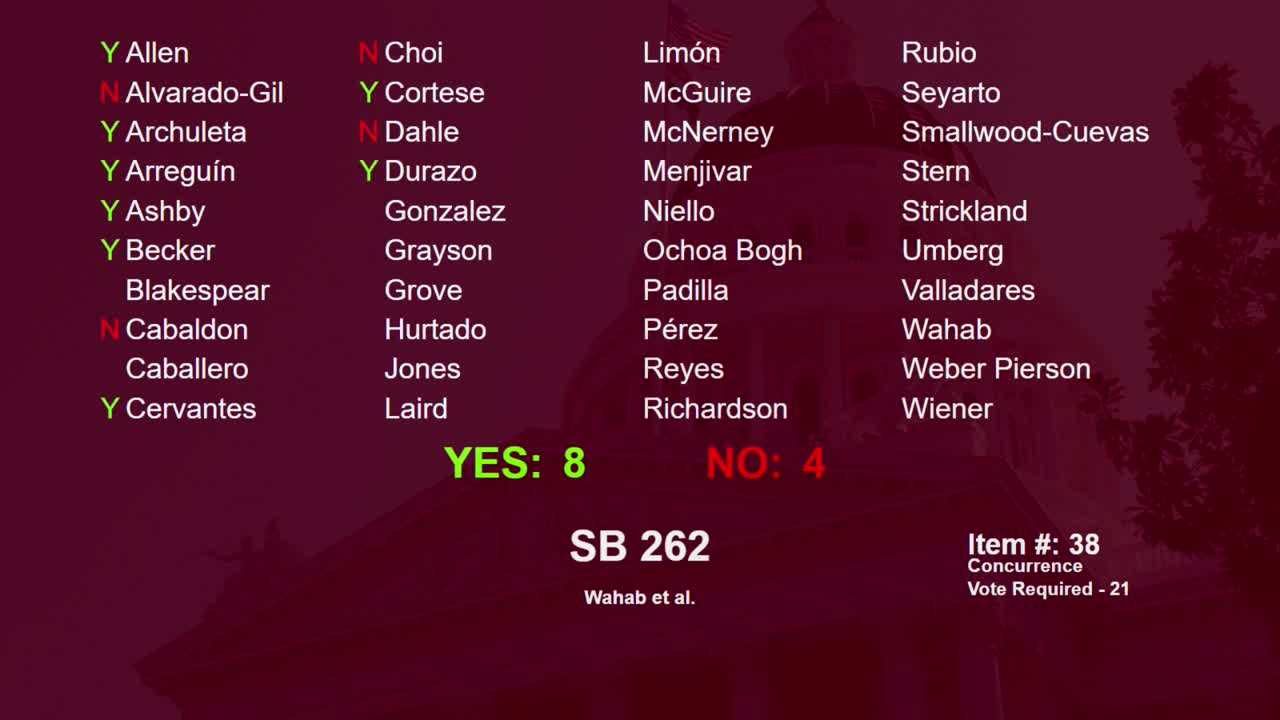
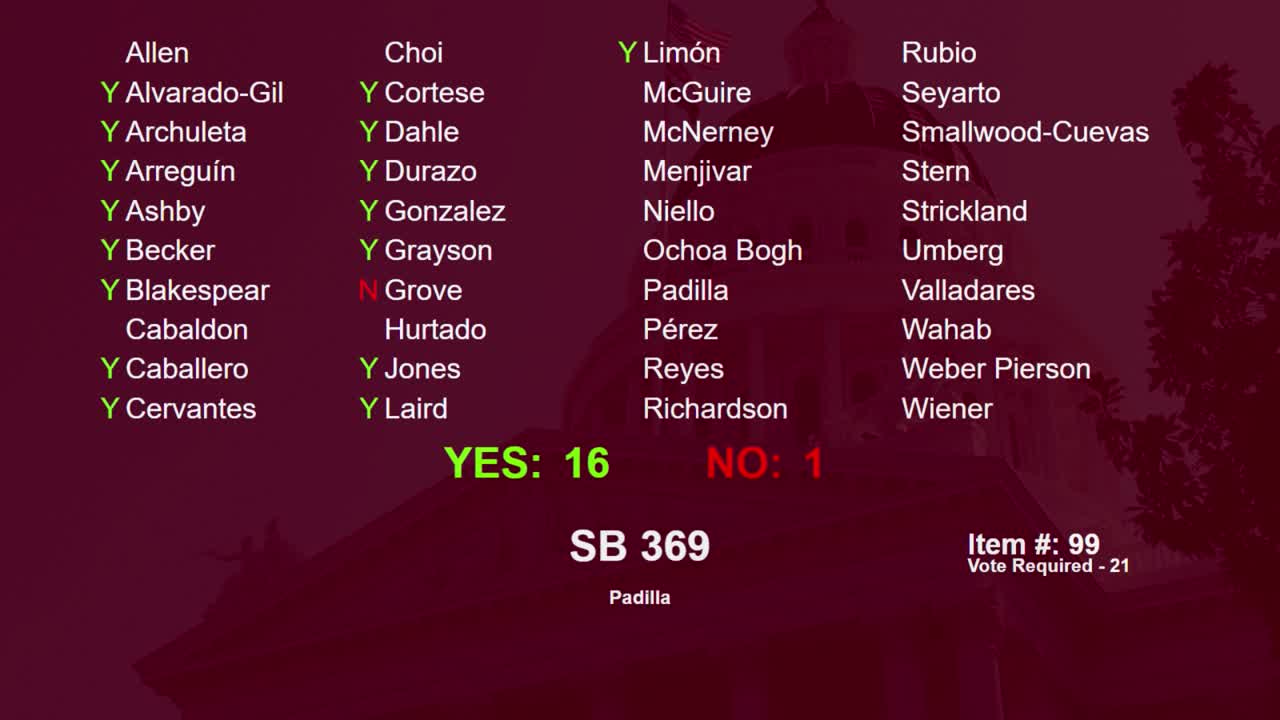
Bill Author