SB 429: Wildfire Safety and Risk Mitigation Program.
- Session Year: 2025-2026
- House: Senate
- Latest Version Date: 2025-10-10
Current Status:
Passed
(2025-10-10: Chaptered by Secretary of State. Chapter 541, Statutes of 2025.)
Introduced
In Committee
Awaiting First Chamber Vote
Passed First Chamber
In Committee
Awaiting Second Chamber Vote
Passed Second Chamber
Enacted
Existing law creates the Department of Insurance and prescribes the departments powers and duties. Existing law generally regulates the business of insurance in the state, including the underwriting and ongoing monitoring of insured risks. Existing law generally requires an insurer or insurance producer to have underwriting guidelines that establish the criteria and process under which an insurer makes its decision to provide or to deny coverage.
Existing law requires an admitted insurer with written California premiums totaling $10,000,000 or more, to submit a report, as specified, to the commissioner with specified fire risk information on its residential property policies. Existing law requires the commissioner to post on the departments internet website a report on wildfire risk compiled from data collected from specified insurers.
This bill, upon appropriation for these purposes, would establish the Wildfire Safety and Risk Mitigation Program to fund the development, demonstration, and deployment of a public wildfire catastrophe model, as defined, and to provide grant funding to one or more universities for eligible projects with specified criteria for the purpose of creating a research and educational center responsible for developing, demonstrating, and deploying a public wildfire catastrophe model that provides significant wildfire safety benefits to California communities and assists alignment of federal, state, and local wildfire risk reduction efforts. The bill would create the Wildfire Safety and Risk Mitigation Account within the Insurance Fund for these purposes.
The bill, also upon appropriation for these purposes, would require the department to create a framework and multiyear plan with available data for the development, demonstration, and deployment of a public wildfire catastrophe model that includes specified information and to publish the plan on the departments internet website. The bill would require the department to provide recommendations to the Senate Committee on Insurance, Assembly Committee on Insurance, Assembly Committee on Emergency Management, Budget Committees, and the Governor for future budget allocations related to these provisions before September 1, 2026.
Existing law creates the Department of Insurance and prescribes the departments powers and duties. Existing law generally regulates the business of insurance in the state, including the underwriting and ongoing monitoring of insured risks. Existing law generally requires an insurer or insurance producer to have underwriting guidelines that establish the criteria and process under which an insurer makes its decision to provide or to deny coverage.
Existing law requires an admitted insurer with written California premiums totaling $10,000,000 or more, to submit a report, as specified, to the commissioner with specified fire risk information on its residential property policies. Existing law requires the commissioner to post on the departments internet website a report on wildfire risk compiled from data collected from specified insurers.
This bill, upon appropriation for these purposes, would establish the Wildfire Safety and Risk Mitigation Program to fund the development, demonstration, and deployment of a public wildfire catastrophe model, as defined, and to provide grant funding to one or more universities for eligible projects with specified criteria for the purpose of creating a research and educational center responsible for developing, demonstrating, and deploying a public wildfire catastrophe model that provides significant wildfire safety benefits to California communities and assists alignment of federal, state, and local wildfire risk reduction efforts. The bill would create the Wildfire Safety and Risk Mitigation Account within the Insurance Fund for these purposes.
The bill, also upon appropriation for these purposes, would require the department to create a framework and multiyear plan, to the extent possible and with available data, plan with available data for the development, demonstration, and deployment of a public wildfire catastrophe model that includes specified information and to publish the plan on the departments internet website. The bill would require the department to provide recommendations to the Legislature, Senate Committee on Insurance, Assembly Committee on Insurance, Budget Committees, and the Governor for future budget allocations related to these provisions before September 1, 2026.
Existing law creates the Department of Insurance and prescribes the departments powers and duties. Existing law generally regulates the business of insurance in the state, including the underwriting and ongoing monitoring of insured risks. Existing law generally requires an insurer or insurance producer to have underwriting guidelines that establish the criteria and process under which an insurer makes its decision to provide or to deny coverage.
Existing law requires an admitted insurer with written California premiums totaling $10,000,000 or more, to submit a report, as specified, to the commissioner with specified fire risk information on its residential property policies. Existing law requires the commissioner to post on the departments internet website a report on wildfire risk compiled from data collected from specified insurers.
This bill, upon appropriation for these purposes, would establish the Wildfire Safety and Risk Mitigation Program to fund the development, demonstration, and deployment of a public wildfire catastrophe model, as defined, and to provide grant funding to one or more universities for eligible projects with specified criteria for the purpose of creating a research and educational center responsible for developing, demonstrating, and deploying a public wildfire catastrophe model that provides significant wildfire safety benefits to California communities and assists alignment of federal, state, and local wildfire risk reduction efforts. The bill would create the Wildfire Safety and Risk Mitigation Account within the Insurance Fund for these purposes.
The bill, also upon appropriation for these purposes, would require the department to create a framework and multiyear plan, to the extent possible and with available data, for the development, demonstration, and deployment of a public wildfire catastrophe model that includes specified information and to publish the plan on the departments internet website. The bill would require the department to provide recommendations to the Legislature, Budget Committees, and the Governor for future budget allocations related to these provisions before September 1, 2026.
Existing law prohibits an admitted insurer licensed to issue policies of residential property insurance from failing or refusing to accept an application for, or issuing a policy to an applicant for, that insurance, except as specified, or from canceling the insurance, under conditions less favorable to the insured than in other comparable cases, except for reasons applicable alike to persons of every sex, race, color, religion, ancestry, national origin, disability, medical condition, genetic information, marital status, or sexual orientation. Existing law provides that sex, race, color, religion, ancestry, national origin, disability, medical condition, genetic information, marital status, or sexual orientation shall not, of itself, constitute a condition or risk for which a higher rate, premium, or charge may be required of the insured.Existing law also adds, for specified types of real property, certain other characteristics relating to the insured or the insured property to the categories that an insurer is prohibited from using for the purposes described above, including, under certain circumstances, the level or source of income and the receipt of government or public assistance by an individual or group of individuals residing or intending to reside upon the property, as specified. This bill would make a nonsubstantive, technical change to these provisions.Existing law prohibits an admitted insurer licensed to issue policies of residential property insurance from failing or refusing to accept an application for, or issuing a policy to an applicant for, that insurance, except as specified, or from canceling the insurance, under conditions less favorable to the insured than in other comparable cases, except for reasons applicable alike to persons of every sex, race, color, religion, ancestry, national origin, disability, medical condition, genetic information, marital status, or sexual orientation. Existing law provides that sex, race, color, religion, ancestry, national origin, disability, medical condition, genetic information, marital status, or sexual orientation shall not, of itself, constitute a condition or risk for which a higher rate, premium, or charge may be required of the insured.
Existing law also adds, for specified types of real property, certain other characteristics relating to the insured or the insured property to the categories that an insurer is prohibited from using for the purposes described above, including, under certain circumstances, the level or source of income and the receipt of government or public assistance by an individual or group of individuals residing or intending to reside upon the property, as specified.
This bill would make a nonsubstantive, technical change to these provisions.
(a)The Wildfire Safety and Risk Mitigation Program is hereby established.
(b)The purpose of the program is to provide funding to one or more universities for the purpose of creating a research and educational center responsible for developing, demonstrating, and deploying a public wildfire catastrophe model that provides significant wildfire safety benefits to California communities and assists alignment of federal, state, and local wildfire risk reduction efforts.
(c)Projects eligible for a grant under this article include either of the following:
(1)The development of a public wildfire catastrophe model that can provide insight for state and local emergency planners, aid wildfire safety efforts that protect lives and property, increase research and development on wildfire risk mitigation strategies, inform actuarial analyses, create training opportunities for students and professionals, and support effective insurance regulation and financial oversight of insurance, risk assessments, and insurance company solvency risks and risk management.
(2)The development of outreach initiatives to identify and educate potential users of a public wildfire catastrophe model, including, but not limited to, state and local emergency planners, wildfire safety groups, agricultural and business groups, research organizations, and educators.
(d)For the purposes of this article, a public wildfire catastrophe model means a computerized process that uses the best available science to simulate potential property damage caused by major wildfires and has readily accessible documentation and programs, including, but not limited to, underlying data and algorithms, for use by public agencies, organizations, and individuals.
971.(a)The Wildfire Safety and Risk Mitigation Program shall be administered by the department.
(b)The department shall award grants on a competitive basis. The department shall establish minimum standards, funding schedules, and procedures for awarding grants. In determining these standards, the department shall do all of the following:
(1)Outline performance criteria and metrics.
(2)Ensure that the program is administered in furtherance of applicable insurance laws and regulations, including, but not limited to, Sections 2642.7, 2644.16, 2644.25, 2644.4.5, and 2644.9 of Title 10 of the California Code of Regulations.
(3)Consider research and development of modeling techniques and actuarial analyses specific to the effectiveness of actions to mitigate and prevent the risk of loss due to wildfires, including those actions at the property, community, and regional scale by utilities and local, state, and federal governments.
(4)Promote publicly accessible information to inform individual property and community-scale mitigation planning, focusing on reducing the primary risk factors for wildfire catastrophes through providing regional and property-level risk assessments.
(5)Leverage, to the maximum extent feasible, federal or private funding.
(6)Ensure activities undertaken pursuant to this article complement efforts by the federal government and private industries, including insurance, to achieve wildfire safety at the community scale.
(7)Ensure activities undertaken pursuant to this article complement wildfire mitigation priorities identified in local and state hazard mitigation plans and in after-action reports following federal major disaster declarations related to wildfires.
(8)Consider recommendations to the commissioner by the Public Wildfire Catastrophe Model Strategy Group.
972.In evaluating grant proposals pursuant to this article, the department shall give priority to projects that demonstrate one or more of the following:
(a)A benefit to disadvantaged communities determined under Sections 39711 and 39713 of the Health and Safety Code, vulnerable communities as defined in subdivision (d) of Section 71340 of the Public Resources Code, and where insurance access has become a major challenge for the public due to wildfire risk.
(b)Assistance to state and local governments in protecting communities from devastating wildfire disasters and promoting equitable recovery.
(c)An educational benefit for California students to train a future workforce in the effective use of available data and modeling tools for planning, risk analysis and reduction, and actuarial approaches, with a focus on collaboration between multiple universities and public higher education institutions.
(d)The availability for use by governments and others in running scenarios to help reduce the risks of loss of life and property.
(e)The availability of publicly accessible information useful for property-level risk assessments with sufficient detail to be useful for community and property mitigation planning, focusing on reducing the primary risk factors for wildfire catastrophes, including property- and community-level actions.
(f)The understanding of environmental factors that affect the risk of loss, including extreme temperatures, drought, and other conditions.
(g)The ability to improve consumer information, relief, transparency, and understanding about catastrophe modeling.
973.(a)The department shall create a framework and multiyear plan with available data for the development, demonstration, and deployment of a public wildfire catastrophe model created pursuant to a grant provided by this article.
(b)The framework and plan shall be published on the departments internet website upon completion.
974.The Wildfire Safety and Risk Mitigation Account is hereby created within the Insurance Fund. Funds in the account shall fund the development, demonstration, and deployment of public wildfire catastrophe modeling.
975.Upon implementation of the first round of grants issued pursuant to this article, the department shall identify, publish, and make available on its internet website key milestones for the completion of a public wildfire catastrophe model, including additional research, outreach, and operational steps needed to fully establish the model.
976.The department shall provide recommendations to the Senate Committee on Insurance, Assembly Committee on Insurance, Assembly Committee on Emergency Management, Budget Committees, and the Governor for future budget allocations related to this article before September 1, 2026.
977.This article shall not be construed to limit or conflict with the commissioners authority regarding rate regulation, or any other provisions of this code.
978.This article shall be operative upon appropriation by the Legislature for these purposes.
(a)The Wildfire Safety and Risk Mitigation Program is hereby established.
(b)The purpose of the program is to provide funding to one or more universities for the purpose of creating a research and educational center responsible for developing, demonstrating, and deploying a public wildfire catastrophe model that provides significant wildfire safety benefits to California communities and assists alignment of federal, state, and local wildfire risk reduction efforts.
(c)Projects eligible for a grant under this article include either of the following:
(1)The development of a public wildfire catastrophe model that can provide insight for state and local emergency planners, aid wildfire safety efforts that protect lives and property, increase research and development on wildfire risk mitigation strategies, inform actuarial analyses, create training opportunities for students and professionals, and support effective insurance regulation and financial oversight of insurance, risk assessments, and insurance company solvency risks and risk management.
(2)The development of outreach initiatives to identify and educate potential users of a public wildfire catastrophe model, including, but not limited to, state and local emergency planners, wildfire safety groups, agricultural and business groups, research organizations, and educators.
(d)For the purposes of this article, a public wildfire catastrophe model means a computerized process that uses the best available science to simulate potential property damage caused by major wildfires and has readily accessible documentation and programs programs, including, but not limited to, underlying data and algorithms, for use by public agencies, organizations, and individuals.
971.(a)The Wildfire Safety and Risk Mitigation Program shall be administered by the department.
(b)The department shall award grants on a competitive basis. The department shall establish minimum standards, funding schedules, and procedures for awarding grants. In determining these standards, the department shall do all of the following:
(1)Outline performance criteria and metrics.
(2)Ensure that the program is administered in furtherance of applicable insurance laws and regulations, including, but not limited to, Sections 2642.7, 2644.16, 2644.25, 2644.4.5, and 2644.9 of Title 10 of the California Code of Regulations.
(3)Consider research and development of modeling techniques and actuarial analyses specific to the effectiveness of actions to mitigate and prevent the risk of loss due to wildfires, including those actions at the property, community, and regional scale by utilities and local, state, and federal governments.
(4)Promote publicly accessible information to inform individual property and community-scale mitigation planning, focusing on reducing the primary risk factors for wildfire catastrophes. catastrophes through providing regional and property-level risk assessments.
(5)Leverage, to the maximum extent feasible, federal or private funding.
(6)Ensure activities undertaken pursuant to this article complement efforts by the federal government and private industries, including insurance, to achieve wildfire safety at the community scale.
(7)Ensure activities undertaken pursuant to this article complement wildfire mitigation priorities identified in local and state hazard mitigation plans and in after-action reports following federal major disaster declarations related to wildfires.
(8)Consider recommendations to the commissioner by the Public Wildfire Catastrophe Model Strategy Group.
972.In evaluating grant proposals pursuant to this article, the department shall give priority to projects that demonstrate one or more of the following:
(a)A benefit to disadvantaged communities determined under Sections 39711 and 39713 of the Health and Safety Code, vulnerable communities as defined in subdivision (d) of Section 71340 of the Public Resources Code, and where insurance access has become a major challenge for the public due to wildfire risk.
(b)Assistance to state and local governments in protecting communities from devastating wildfire disasters and promoting equitable recovery.
(c)An educational benefit for California students to train a future workforce in the effective use of available data and modeling tools for planning, risk analysis and reduction, and actuarial approaches, with a focus on collaboration between multiple universities and public higher education institutions.
(d)The availability for use by governments and others in running scenarios to help reduce the risks of loss of life and property.
(e)The availability of publicly accessible information useful for property level property-level risk assessments with sufficient detail to be useful for community and property mitigation planning, focusing on reducing the primary risk factors for wildfire catastrophes, including property- and community-level actions.
(f)The understanding of environmental factors that affect the risk of loss, including extreme temperatures, drought, and other conditions.
(g)The ability to improve consumer information, relief, transparency, and understanding about catastrophe modeling.
973.(a)The department shall create a framework and multiyear plan with available data for the development, demonstration, and deployment of a public wildfire catastrophe model created pursuant to a grant provided by this article.
(b)The framework and plan shall be published on the departments internet website upon completion.
974.The Wildfire Safety and Risk Mitigation Account is hereby created within the Insurance Fund. Funds in the account shall fund the development, demonstration, and deployment of public wildfire catastrophe modeling.
975.Upon implementation of the first round of grants issued pursuant to this article, the department shall identify, publish, and make available on its internet website key milestones for the completion of a public wildfire catastrophe model, including additional research, outreach, and operational steps needed to fully establish the model.
976.The department shall provide recommendations to the Senate Committee on Insurance, Assembly Committee on Insurance, Assembly Committee on Emergency Management, Budget Committees, and the Governor for future budget allocations related to this article before September 1, 2026.
977.This article shall not be construed to limit or conflict with the commissioners authority regarding rate regulation, or any other provisions of this code.
978.This article shall be operative upon appropriation by the Legislature for these purposes.
(a)The Wildfire Safety and Risk Mitigation Program is hereby established.
(b)The purpose of the program is to provide funding to one or more universities for the purpose of creating a research and educational center responsible for developing, demonstrating, and deploying a public wildfire catastrophe model that provides significant wildfire safety benefits to California communities and assists alignment of federal, state, and local wildfire risk reduction efforts.
(c)Projects eligible for a grant under this article include either of the following:
(1)The development of a public wildfire catastrophe model that can provide insight for state and local emergency planners, aid wildfire safety efforts that protect lives and property, increase research and development on wildfire risk mitigation strategies, inform actuarial analyses, create training opportunities for students and professionals, and support effective insurance regulation and financial oversight of insurance, risk assessments, and insurance company solvency risks and risk management.
(2)The development of outreach initiatives to identify and educate potential users of a public wildfire catastrophe model, including, but not limited to, state and local emergency planners, wildfire safety groups, agricultural and business groups, research organizations, and educators.
(d)For the purposes of this article, a public wildfire catastrophe model means a computerized process that uses the best available science to simulate potential property damage caused by major wildfires and has readily accessible documentation and programs for use by public agencies, organizations, and individuals.
971.(a)The Wildfire Safety and Risk Mitigation Program shall be administered by the department.
(b)The department shall award grants on a competitive basis. The department shall establish minimum standards, funding schedules, and procedures for awarding grants. In determining these standards, the department shall do all of the following:
(1)Outline performance criteria and metrics.
(2)Ensure that the program is administered in furtherance of applicable insurance laws and regulations, including, but not limited to, Sections 2642.7, 2644.16, 2644.25, 2644.4.5, and 2644.9 of Title 10 of the California Code of Regulations.
(3)Consider research and development of modeling techniques and actuarial analyses specific to the effectiveness of actions to mitigate and prevent the risk of loss due to wildfires, including those actions at the property, community, and regional scale by utilities and local, state, and federal governments.
(4)Promote publicly accessible information to inform individual property and community-scale mitigation planning, focusing on reducing the primary risk factors for wildfire catastrophes.
(5)Leverage, to the maximum extent feasible, federal or private funding.
(6)Ensure activities undertaken pursuant to this article complement efforts by the federal government and private industries, including insurance, to achieve wildfire safety at the community scale.
(7)Ensure activities undertaken pursuant to this article complement wildfire mitigation priorities identified in local and state hazard mitigation plans and in after-action reports following federal major disaster declarations related to wildfires.
(7)(8)Consider recommendations to the commissioner by the Public Wildfire Catastrophe Model Strategy Group.
972.In evaluating grant proposals pursuant to this article, the department shall give priority to projects that demonstrate one or more of the following:
(a)A benefit to disadvantaged communities determined under Sections 39711 and 39713 of the Health and Safety Code, vulnerable communities as defined in subdivision (d) of Section 71340 of the Public Resources Code, and where insurance access has become a major challenge for the public due to wildfire risk.
(b)Assistance to state and local governments in protecting communities from devastating wildfire disasters and promoting equitable recovery.
(c)An educational benefit for California students to train a future workforce in the effective use of available data and modeling tools for planning, risk analysis and reduction, and actuarial approaches, with a focus on collaboration between multiple universities and public higher education institutions.
(d)The availability for use by governments and others in running scenarios to help reduce the risks of loss of life and property.
(e)The availability of publicly accessible information useful for property level risk assessments with sufficient detail to be useful for community and property mitigation planning, focusing on reducing the primary risk factors for wildfire catastrophes, including property- and community-level actions.
(f)The understanding of environmental factors that affect the risk of loss, including extreme temperatures, drought, and other conditions.
(g)The ability to improve consumer information, relief, transparency, and understanding about catastrophe modeling.
973.(a)The department shall create a framework and multiyear plan with available data for the development, demonstration, and deployment of a public wildfire catastrophe model created pursuant to a grant provided by this article.
(b)The framework and plan shall be published on the departments internet website upon completion.
974.The Wildfire Safety and Risk Mitigation Account is hereby created within the Insurance Fund. Funds in the account shall fund the development, demonstration, and deployment of public wildfire catastrophe modeling.
975.Upon implementation of the first round of grants issued pursuant to this article, the department shall identify, publish, and make available on its internet website key milestones for the completion of a public wildfire catastrophe model, including additional research, outreach, and operational steps needed to fully establish the model.
976.The department shall provide recommendations to the Senate Committee on Insurance, Assembly Committee on Insurance, Assembly Committee on Emergency Management, Budget Committees, and the Governor for future budget allocations related to this article before September 1, 2026.
977.This article shall not be construed to limit or conflict with the commissioners authority regarding rate regulation, or any other provisions of this code.
978.This article shall be operative upon appropriation by the Legislature for these purposes.
(a)The Wildfire Safety and Risk Mitigation Program is hereby established.
(b)The purpose of the program is to provide funding to one or more universities for the purpose of creating a research and educational center responsible for developing, demonstrating, and deploying a public wildfire catastrophe model that provides significant wildfire safety benefits to California communities and assists alignment of federal, state, and local wildfire risk reduction efforts.
(c)Projects eligible for a grant under this article include either of the following:
(1)The development of a public wildfire catastrophe model that can provide insight for state and local emergency planners, aid wildfire safety efforts that protect lives and property, increase research and development on wildfire risk mitigation strategies, inform actuarial analyses, create training opportunities for students and professionals, and support effective insurance regulation and financial oversight of insurance rates, insurance, risk assessments, and insurance company solvency risks and risk management.
(2)The development of outreach initiatives to identify and educate potential users of a public wildfire catastrophe model, including, but not limited to, state and local emergency planners, wildfire safety groups, agricultural and business groups, research organizations, and educators.
(d)For the purposes of this article, a public wildfire catastrophe model means a computerized process that uses the best available science to simulate potential property damage caused by major wildfires and has readily accessible documentation and programs for use by public agencies, organizations, and individuals.
971.(a)The Wildfire Safety and Risk Mitigation Program shall be administered by the department.
(b)The department shall award grants on a competitive basis. The department shall establish minimum standards, funding schedules, and procedures for awarding grants. In determining these standards, the department shall do all of the following:
(1)Outline performance criteria and metrics.
(2)Ensure that the program is administered in furtherance of applicable insurance laws and regulations, including, but not limited to, Sections 2642.7, 2644.16, 2644.25, 2644.4.5, and 2644.9 of Title 10 of the California Code of Regulations.
(3)Consider research and development of modeling techniques and actuarial analyses specific to the effectiveness of actions to mitigate and prevent the risk of loss due to wildfires, including those actions at the property, community, and regional scale by utilities and local, state, and federal governments.
(4)Promote publicly accessible information to inform individual property and community-scale mitigation planning, focusing on reducing the primary risk factors for wildfire catastrophes.
(5)Leverage, to the maximum extent feasible, federal or private funding.
(6)Ensure activities undertaken pursuant to this article complement efforts by the federal government and private industries, including insurance, to achieve wildfire safety at the community scale.
(7)Consider recommendations to the commissioner by the Public Wildfire Catastrophe Model Strategy Group.
972.In evaluating grant proposals pursuant to this article, the department shall give priority to projects that demonstrate one or more of the following:
(a)A benefit to disadvantaged communities determined under Sections 39711 and 39713 of the Health and Safety Code, vulnerable communities as defined in subdivision (d) of Section 71340 of the Public Resources Code, and where insurance access has become a major challenge for the public due to wildfire risk.
(b)Assistance to state and local governments in protecting communities from devastating wildfire disasters and promoting equitable recovery.
(c)An educational benefit for California students to train a future workforce in the effective use of available data and modeling tools for planning, risk analysis and reduction, and actuarial approaches, with a focus on collaboration between multiple universities and public higher education institutions.
(d)The availability for use by governments and others in running scenarios to help reduce the risks of loss of life and property.
(e)The availability of publicly accessible information useful for property level risk assessments with sufficient detail to be useful for community and property mitigation planning, focusing on reducing the primary risk factors for wildfire catastrophes, including property- and community-level actions.
(f)The understanding of environmental factors that affect the risk of loss, including extreme temperatures, drought, and other conditions.
(g)The ability to improve consumer information, relief, transparency, and understanding about catastrophe modeling.
973.(a)The department shall create a framework and plan, to the extent possible and multiyear plan with available data, data for the development, demonstration, and deployment of a public wildfire catastrophe model created pursuant to a grant provided by this article.
(b)The framework and plan shall articulate a multiyear plan for the development, demonstration, and deployment of a public wildfire catastrophe model.(c)(b)The framework and plan shall be published on the departments internet website upon completion.
974.The Wildfire Safety and Risk Mitigation Account is hereby created within the Insurance Fund. Funds in the account shall fund the development, demonstration, and deployment of public wildfire catastrophe modeling.
975.Upon implementation of the first round of grants issued pursuant to this article, the department shall identify, publish, and make available on its internet website key milestones for the completion of a public wildfire catastrophe model, including additional research, outreach, and operational steps needed to fully establish the model.
976.The department shall provide recommendations to the Legislature, Senate Committee on Insurance, Assembly Committee on Insurance, Budget Committees, and the Governor for future budget allocations related to this article before September 1, 2026.
977.This article shall not be construed to limit or conflict with the commissioners authority regarding rate regulation, or any other provisions of this code.
978.This article shall be operative upon appropriation by the Legislature for these purposes.
(a)The Wildfire Safety and Risk Mitigation Program is hereby established.
(b)The purpose of the program is to provide funding to one or more universities for the purpose of creating a research and educational center responsible for developing, demonstrating, and deploying a public wildfire catastrophe model that provides significant wildfire safety benefits to California communities and assists alignment of federal, state, and local wildfire risk reduction efforts.
(c)Projects eligible for a grant under this article include either of the following:
(1)The development of a public wildfire catastrophe model that can provide insight for state and local emergency planners, aid wildfire safety efforts that protect lives and property, increase research and development on wildfire risk mitigation strategies, inform actuarial analyses, create training opportunities for students and professionals, and support effective regulation and financial oversight of insurance rates, risk assessments, and insurance company solvency risks and risk management.
(2)The development of outreach initiatives to identify and educate potential users of a public wildfire catastrophe model, including, but not limited to, state and local emergency planners, wildfire safety groups, agricultural and business groups, research organizations, and educators.
(d)For the purposes of this article, a public wildfire catastrophe model means a computerized process that uses the best available science to simulate potential property damage caused by major wildfires and has readily accessible documentation and programs for use by public agencies, organizations, and individuals.
971.(a)The Wildfire Safety and Risk Mitigation Program shall be administered by the department.
(b)The department shall award grants on a competitive basis. The department shall establish minimum standards, funding schedules, and procedures for awarding grants. In determining these standards, the department shall do all of the following:
(1)Outline performance criteria and metrics.
(2)Ensure that the program is administered in furtherance of applicable insurance laws and regulations, including, but not limited to, Sections 2642.7, 2644.16, 2644.25, 2644.4.5, and 2644.9 of Title 10 of the California Code of Regulations.
(3)Consider research and development of modeling techniques and actuarial analyses specific to the effectiveness of actions to mitigate and prevent the risk of loss due to wildfires, including those actions at the property, community, and regional scale by utilities and local, state, and federal governments.
(4)Promote publicly accessible information to inform individual property and community-scale mitigation planning, focusing on reducing the primary risk factors for wildfire catastrophes.
(5)Leverage, to the maximum extent feasible, federal or private funding.
(6)Ensure activities undertaken pursuant to this article complement efforts by the federal government and private industries, including insurance, to achieve wildfire safety at the community scale.
(7)Consider recommendations to the commissioner by the Public Wildfire Catastrophe Model Strategy Group.
972.In evaluating grant proposals pursuant to this article, the department shall give priority to projects that demonstrate one or more of the following:
(a)A benefit to disadvantaged communities determined under Sections 39711 and 39713 of the Health and Safety Code, vulnerable communities as defined in subdivision (d) of Section 71340 of the Public Resources Code, and where insurance access has become a major challenge for the public due to wildfire risk.
(b)Assistance to state and local governments in protecting communities from devastating wildfire disasters and promoting equitable recovery.
(c)An educational benefit for California students to train a future workforce in the effective use of available data and modeling tools for planning, risk analysis and reduction, and actuarial approaches, with a focus on collaboration between multiple universities and public higher education institutions.
(d)The availability for use by governments and others in running scenarios to help reduce the risks of loss of life and property.
(e)The availability of publicly accessible information useful for property level risk assessments with sufficient detail to be useful for community and property mitigation planning, focusing on reducing the primary risk factors for wildfire catastrophes, including property- and community-level actions.
(f)The understanding of environmental factors that affect the risk of loss, including extreme temperatures, drought, and other conditions.
(g)The ability to improve consumer information, relief, transparency, and understanding about catastrophe modeling.
973.(a)The department shall create a framework and plan, to the extent possible and with available data, for the development, demonstration, and deployment of a public wildfire catastrophe model created pursuant to a grant provided by this article.
(b)The framework and plan shall articulate a multiyear plan for the development, demonstration, and deployment of a public wildfire catastrophe model.
(c)The framework and plan shall be published on the departments internet website upon completion.
974.The Wildfire Safety and Risk Mitigation Account is hereby created within the Insurance Fund. Funds in the account shall fund the development, demonstration, and deployment of public wildfire catastrophe modeling.
975.Upon implementation of the first round of grants issued pursuant to this article, the department shall identify, publish, and make available on its internet website key milestones for the completion of a public wildfire catastrophe model, including additional research, outreach, and operational steps needed to fully establish the model.
976.The department shall provide recommendations to the Legislature, Budget Committees, and the Governor for future budget allocations related to this article before September 1, 2026.
977.This article shall not be construed to limit or conflict with the commissioners authority regarding rate regulation, or any other provisions of this code.
978.This article shall be operative upon appropriation by the Legislature for these purposes.
SECTION 1.Section 679.74 of the Insurance Code is amended to read:679.74.(a)An admitted insurer that is licensed to issue a policy of insurance upon real property of the type described in paragraph (1) of subdivision (a) of Section 675 or paragraph (1) of subdivision (b) of Section 675.5, when that real property is used for residential purposes, or property of the type described in subdivision (a) of Section 10087, shall not fail or refuse to accept an application for, or to issue a policy to an applicant for, that insurance unless the insurance is to be issued to the applicant by another insurer under the same management and control, or cancel that insurance, based upon the following characteristics:(1)The level or source of income of an individual or group of individuals residing or intending to reside upon the property to be insured, if the individual or group of individuals is not the owner of the real property.(2)The receipt of assistance, intended for housing, from the federal or state government, or from a local public entity, as defined in Section 50079 of the Health and Safety Code, including, but not limited to, federal vouchers issued under Section 8 of the United States Housing Act of 1937 (42 U.S.C. Sec. 1437f), by an individual or group of individuals residing or intending to reside upon the property insured or to be insured.(b)An application for a policy of insurance upon real property of the type described in subdivision (a), or an insurance investigation report furnished by an insurer to its agents or employees for use in determining the insurability of an applicant under such a policy, shall not carry any identification, or any requirement for identification, of the following characteristics:(1)The level or source of income of an individual or group of individuals residing or intending to reside upon the property to be insured, if the individual or group of individuals is not the owner of the real property.(2)The receipt of assistance, intended for housing, from the federal or state government, or from a local public entity, as defined in Section 50079 of the Health and Safety Code, including, but not limited to, federal vouchers issued under Section 8 of the United States Housing Act of 1937 (42 U.S.C. Sec. 1437f), by an individual or group of individuals residing or intending to reside upon the property insured or to be insured.(c)In the case of real property of the type described in paragraph (1) of subdivision (a) of Section 675, paragraph (1) of subdivision (b) of Section 675.5, or subdivision (a) of Section 10087 that is used for both residential and commercial purposes, the insurer, or its agent or employee, may consider the source of income of a nonresidential tenant of the property in determining the insurability of an applicant.(d)Nothing in this section prohibits an insurer from failing or refusing to accept an application for, issuing, canceling, or failing to renew, a policy of insurance covered by this chapter as a result of underwriting or assessment of factors other than those characteristics listed in subdivision (a), or as otherwise prohibited by law.(a)An admitted insurer that is licensed to issue a policy of insurance upon real property of the type described in paragraph (1) of subdivision (a) of Section 675 or paragraph (1) of subdivision (b) of Section 675.5, when that real property is used for residential purposes, or property of the type described in subdivision (a) of Section 10087, shall not fail or refuse to accept an application for, or to issue a policy to an applicant for, that insurance unless the insurance is to be issued to the applicant by another insurer under the same management and control, or cancel that insurance, based upon the following characteristics:
(1)The level or source of income of an individual or group of individuals residing or intending to reside upon the property to be insured, if the individual or group of individuals is not the owner of the real property.
(2)The receipt of assistance, intended for housing, from the federal or state government, or from a local public entity, as defined in Section 50079 of the Health and Safety Code, including, but not limited to, federal vouchers issued under Section 8 of the United States Housing Act of 1937 (42 U.S.C. Sec. 1437f), by an individual or group of individuals residing or intending to reside upon the property insured or to be insured.
(b)An application for a policy of insurance upon real property of the type described in subdivision (a), or an insurance investigation report furnished by an insurer to its agents or employees for use in determining the insurability of an applicant under such a policy, shall not carry any identification, or any requirement for identification, of the following characteristics:
(1)The level or source of income of an individual or group of individuals residing or intending to reside upon the property to be insured, if the individual or group of individuals is not the owner of the real property.
(2)The receipt of assistance, intended for housing, from the federal or state government, or from a local public entity, as defined in Section 50079 of the Health and Safety Code, including, but not limited to, federal vouchers issued under Section 8 of the United States Housing Act of 1937 (42 U.S.C. Sec. 1437f), by an individual or group of individuals residing or intending to reside upon the property insured or to be insured.
(c)In the case of real property of the type described in paragraph (1) of subdivision (a) of Section 675, paragraph (1) of subdivision (b) of Section 675.5, or subdivision (a) of Section 10087 that is used for both residential and commercial purposes, the insurer, or its agent or employee, may consider the source of income of a nonresidential tenant of the property in determining the insurability of an applicant.
(d)Nothing in this section prohibits an insurer from failing or refusing to accept an application for, issuing, or canceling canceling, or failing to renew, a policy of insurance covered by this chapter as a result of underwriting or assessment of factors other than those characteristics listed in subdivision (a), or as otherwise prohibited by law.
|
Date
|
Status
|
|---|---|
| Oct 10, 2025 | Chaptered by Secretary of State. Chapter 541, Statutes of 2025. |
| Oct 10, 2025 | Approved by the Governor. |
| Sep 23, 2025 | Enrolled and presented to the Governor at 2 p.m. |
| Sep 13, 2025 | Assembly amendments concurred in. (Ayes 34. Noes 0. Page 3061.) Ordered to engrossing and enrolling. |
| Sep 13, 2025 | In Senate. Concurrence in Assembly amendments pending. |
| Sep 13, 2025 | Joint Rule 61(a)(14) and 51(a)(4) suspended. (Ayes 59. Noes 20. Page 3413.) |
| Sep 13, 2025 | Read third time. Passed. (Ayes 79. Noes 0. Page 3462.) Ordered to the Senate. |
| Sep 3, 2025 | Read second time. Ordered to third reading. |
| Sep 2, 2025 | Read second time and amended. Ordered to second reading. |
| Aug 29, 2025 | From committee: Do pass as amended. (Ayes 11. Noes 0.) (August 29). |
| Aug 20, 2025 | August 20 set for first hearing. Placed on APPR. suspense file. |
| Jul 17, 2025 | Read second time and amended. Re-referred to Com. on APPR. |
| Jul 16, 2025 | From committee: Do pass as amended and re-refer to Com. on APPR. (Ayes 7. Noes 0.) (July 14). |
| Jul 9, 2025 | From committee: Do pass and re-refer to Com. on E.M. (Ayes 15. Noes 0.) (July 9). Re-referred to Com. on E.M. |
| Jul 2, 2025 | From committee with author's amendments. Read second time and amended. Re-referred to Com. on INS. |
| Jun 9, 2025 | Referred to Coms. on INS. and E.M. |
| Jun 4, 2025 | In Assembly. Read first time. Held at Desk. |
| Jun 3, 2025 | Read third time. Passed. (Ayes 39. Noes 0. Page 1456.) Ordered to the Assembly. |
| May 29, 2025 | Ordered to third reading. |
| May 29, 2025 | From special consent calendar on motion of Senator Cortese. |
| May 27, 2025 | Ordered to special consent calendar. |
| May 23, 2025 | Read second time. Ordered to third reading. |
| May 23, 2025 | From committee: Do pass. (Ayes 6. Noes 0. Page 1200.) (May 23). |
| May 16, 2025 | Set for hearing May 23. |
| May 5, 2025 | May 5 hearing: Placed on APPR. suspense file. |
| Apr 25, 2025 | Set for hearing May 5. |
| Apr 24, 2025 | From committee: Do pass and re-refer to Com. on APPR. with recommendation: To consent calendar. (Ayes 7. Noes 0. Page 869.) (April 23). Re-referred to Com. on APPR. |
| Apr 4, 2025 | Set for hearing April 23. |
| Apr 2, 2025 | Re-referred to Com. on INS. |
| Mar 26, 2025 | From committee with author's amendments. Read second time and amended. Re-referred to Com. on RLS. |
| Feb 26, 2025 | Referred to Com. on RLS. |
| Feb 19, 2025 | From printer. May be acted upon on or after March 21. |
| Feb 18, 2025 | Introduced. Read first time. To Com. on RLS. for assignment. To print. |
|
Date
|
Description
|
Location
|
Votes
|
|
|---|---|---|---|---|
| Sep 13, 2025 | Unfinished Business SB429 Cortese et al. Concurrence | Senate Floor |
Passed |
|
| Sep 13, 2025 | SB 429 Cortese Senate Third Reading By Alvarez | Assembly Floor |
Passed |
|
| Sep 12, 2025 | Unfinished Business SB429 Cortese et al. Concurrence | Senate Floor |
Passed |
|
| Aug 29, 2025 | Do pass as amended. | Assembly Standing Committee on Appropriations |
Passed |
|
| Jul 14, 2025 | Do pass as amended and be re-referred to the Committee on [Appropriations] | Assembly Standing Committee on Emergency Management |
Passed |
|
| Jul 9, 2025 | Do pass and be re-referred to the Committee on [Emergency Management] | Assembly Standing Committee on Insurance |
Passed |
|
| Jun 3, 2025 | Senate 3rd Reading SB429 Cortese | Senate Floor |
Passed |
|
| May 23, 2025 | Do pass | Senate Standing Committee on Appropriations |
Passed |
|
| May 5, 2025 | Placed on suspense file | Senate Standing Committee on Appropriations |
Passed |
|
| Apr 23, 2025 | Do pass, but first be re-referred to the Committee on [Appropriations] with the recommendation: To Consent Calendar | Senate Standing Committee on Insurance |
Passed |
This list shows positions taken on this bill by organizations on the date displayed, which is linked to the original source.
Positions by individuals are not included.
|
Organization
|
Position
|
Date
|
|---|---|---|
| Americans for Financial Reform | ** Support | |
| California Association Of Realtors | ** Support | |
| California Association Of Winegrape Growers | ** Support | |
| California Farm Bureau Federation | ** Support | |
| Carbon Plan | ** Support | |
| Consumer Federation of America | ** Support | |
| Consumer Federation Of California | ** Support | |
| Consumer Watchdog | ** Support | |
| Environmental Defense Fund | ** Support | |
| Little Hoover Commission | ** Support | |
| Livable California | ** Support | |
| Natural Resources Defense Council | ** Support | |
| Natural Resources Defense Council (NRDC) | ** Support | |
| Plant-based Advocates | ** Support | |
| Public Citizen | ** Support | |
| Ricardo Lara, Insurance Commissioner/California Department of Insurance (Source) | ** Support | |
| Silicon Valley Youth Climate Action | ** Support | |
| SoCal 350 Climate Action | ** Support | |
| Tri-Valley Cities of Dublin, Livermore, Pleasanton, San Ramon and the Town of Danville | ** Support | |
| Tri-valley Cities of Dublin, Livermore, Pleasanton, San Ramon, and Town of Danville | ** Support | |
| United Policyholders | ** Support | |
| various consumer and environmental groups | ** Support |
SENATE RULES COMMITTEE Office of Senate Floor Analyses (916) 651-1520 Fax: (916) 327-4478 | SB 429 |
UNFINISHED BUSINESS
Bill No: SB 429
Author: Cortese (D), et al.
Amended: 9/2/25
Vote: 21
SENATE INSURANCE COMMITTEE: 7-0, 4/23/25
AYES: Rubio, Niello, Becker, Caballero, Jones, Padilla, Wahab
SENATE APPROPRIATIONS COMMITTEE: 6-0, 5/23/25
AYES: Caballero, Seyarto, Cabaldon, Grayson, Richardson, Wahab
NO VOTE RECORDED: Dahle
SENATE FLOOR: 39-0, 6/3/25
AYES: Allen, Alvarado-Gil, Archuleta, Arreguín, Ashby, Becker, Blakespear, Cabaldon, Caballero, Cervantes, Choi, Cortese, Dahle, Durazo, Gonzalez, Grayson, Grove, Hurtado, Jones, Laird, Limón, McGuire, McNerney, Menjivar, Niello, Ochoa Bogh, Padilla, Pérez, Richardson, Rubio, Seyarto, Smallwood-Cuevas, Stern, Strickland, Umberg, Valladares, Wahab, Weber Pierson, Wiener
NO VOTE RECORDED: Reyes
ASSEMBLY FLOOR: 79-0, 9/13/25 - See last page for vote
SUBJECT: Wildfire Safety and Risk Mitigation Program
SOURCE: Insurance Commissioner Ricardo Lara/California Department of Insurance
DIGEST:
This bill 1) establishes, upon appropriation, the Wildfire Safety and Risk Mitigation Program, administered by the California Department of Insurance (CDI), for the purpose of guiding and funding the development and deployment of a public wildfire catastrophe model; 2) creates the Wildfire Safety and Risk Mitigation Account within the Insurance Fund to support this purpose; 3) requires CDI to publish information on its website regarding the progress and plan to complete the model; and 4) specifies that CDI will provide recommendations to certain committees of the Legislature, and the Governor for budget allocations related to the purpose of the program.
Assembly Amendments
:
- Specify which committees of the Legislature will receive the report from CDI regarding recommendations for budget allocations related to the program.
- Further clarify program grant criteria to include complementing wildfire mitigation priorities identified in local and state hazard mitigation plans and in after-action reports following federal major disaster declarations related to wildfires.
- Add regional and property-level risk assessments to the promotion of publicly accessible information as part of the grant program criteria.
- Specify that any data or algorithms used in such a catastrophe model should be made available for use by the public.
- Make other clarifying and technical changes.
ANALYSIS:
Existing law:
- Requires an admitted insurer with premiums of $10,000,000 or more to submit a report to the Insurance Commissioner every two years that includes the following information regarding risk factors in its residential property policies:
- Fire- or wildfire-incurred losses, if any, reported by property coverage category and the date of the loss
- The public protection class or its equivalent, if utilized by the insurer. These are scores assigned to evaluate fire protection and suppression activities in a community, and thus the risk associated with insuring them
- The specific numerical or other fire risk score and source of fire risk score, if applicable
- Premium
- ZIP Code
- Requires the Insurance Commissioner to post information on the Department of Insurance’s website on wildfire risk compiled from the data collected pursuant to the above provisions.
This bill:
- Establishes the Wildfire Safety and Risk Mitigation Program (Program), to be administered by CDI, with the purpose of providing funding to one or more universities to create a research and educational center responsible for developing, demonstrating, and deploying a public wildfire catastrophe model that provides wildfire safety benefits to California communities and assists alignment of federal, state, and local wildfire risk reduction efforts.
- Defines a “public wildfire catastrophe model” (model) as a computerized process that uses the best available science to simulate potential property damage caused by major wildfires and has readily accessible documentation and programs, including but not limited to underlying data and algorithms, for use by public agencies, organizations, and individuals.
- Stipulates that funding eligibility under the Program shall be as follows:
- Projects focused on the development of a public wildfire catastrophe model that can provide information to assist wildfire safety efforts, develop wildfire risk mitigation strategies, inform actuarial analyses, create training opportunities, and support regulation and oversight of insurance rates, risk assessment and management, and insurer solvency.
- Projects that develop outreach initiatives that identify and educate potential users of a model.
- States that CDI will award grants on competitive basis, and develop standards for doing so, including:
- Outlining performance criteria and metrics.
- Considering relevant data and efforts at all levels of government to mitigate and prevent wildfire-related loss.
- Promoting pubic access to such information to mitigate the risk of wildfire catastrophes.
- Leveraging federal and state funding.
- Complementing current community wildfire safety priorities and efforts in the public and private sector.
- Considering the recommendations of the Public Wildfire Catastrophe Model Strategy Group.
- States that CDI shall give priority to proposals that demonstrate one or more of the following:
- A benefit to disadvantaged communities, and to those areas where insurance access has become challenging due to wildfire risk.
- Assistance to state and local governments in protecting communities from wildfire disasters and promoting equitable recovery.
- Educational benefit to students in higher education by developing workforce skills related to use of modeling, and affiliated data and efforts.
- Availability for use by governments and others in postulating how to help reduce the risks of loss of life and property.
- Availability of publicly accessible information for community and property-level wildfire risk assessment and mitigation.
- Understanding of environmental factors that affect wildfire loss risk.
- Ability to improve consumer information, relief, transparency, and understanding regarding catastrophe modeling.
- Requires CDI to create, and publish on its website, a multi-year framework and plan to develop, demonstrate, and deploy a model created by a grant from the Program.
- Creates the Wildfire Safety and Risk Mitigation Account within the Insurance Fund, with the purpose of funding the development, demonstration, and deployment of public wildfire catastrophe modeling.
- Specifies that after initial grant funding is issued under the Program, CDI will provide information on its website regarding accomplishments and further actions needed to complete the model.
- Requires CDI to provide, before September 1, 2026, recommendations to the Legislature, Budget Committees, and the Governor for budget allocations related to the purposes of the Program.
- Stipulates that this bill’s provisions will become operative upon legislative appropriation.
FISCAL EFFECT: Appropriation: No Fiscal Com.: Yes Local: No
According to the Assembly Appropriations Committee:
“Annual cost pressures of an unknown amount, likely in the millions of dollars, depending on the amount of any appropriation made by the Legislature to CDI to award Program grants (General Fund (GF)). CDI notes that the Budget Act of 2025 provided $12.5 million to CDI to support community hardening oversight and wildfire risk mitigation efforts, including measuring risk for communities and individual residential property owners, pursuant to pending legislation, which includes this bill, among others.
Annual costs of an unknown amount, likely in the hundreds of thousands of dollars, to CDI to administer the Program (Insurance Fund). Generally, an agency will use approximately 5% of the amount appropriated for a grant program for administrative costs.”
SUPPORT: (Verified 9/12/25)
Ricardo Lara, Insurance Commissioner/California Department of Insurance (Source)
Americans for Financial Reform
California Association of Winegrape Growers
California Association of Realtors
California Farm Bureau Federation
Carbon Plan
Consumer Federation of America
Consumer Federation of California
Consumer Watchdog
Environmental Defense Fund
Little Hoover Commission
Livable California
Natural Resources Defense Council (NRDC)
Plant-Based Advocates
Public Citizen
Silicon Valley Youth Climate Action
SoCal 350 Climate Action
Tri-valley Cities of Dublin, Livermore, Pleasanton, San Ramon, and Town of Danville
United Policyholders
OPPOSITION: (Verified 9/12/25)
None received
ARGUMENTS IN SUPPORT: Insurance Commissioner Ricardo Lara, sponsor of this bill, states:
“Wildfire catastrophe models are computerized processes that simulate potential property damage caused by major wildfires at the community-wide or regional level. Catastrophe models have been rapidly evolving since their introduction in the 1980s, and they inform wildfire safety planning, building construction, insurance rate-setting, and other areas. Currently there are multiple privately owned wildfire models, but no publicly owned and operated model. The Wildfire Public Model Act would be a first-of-its-kind, establishing California as a national leader on innovation and safety.
With extreme wildfires increasing over the past decade, there’s a need to better plan and prepare communities at a level we have never seen before. Publicly accessible data and computer modeling can help California achieve wildfire mitigation at the community-wide scale needed to prevent more tragic losses. A first-in-the-nation public wildfire model will be a critical tool for firefighters, city leaders, scientists and students – and keep California at the forefront of safety and innovation. SB 429 harnesses the power of California’s public and private university systems, charging the Department with initiating a competitive grant program to create a research and educational center housed at one or more California universities.
Publicly accessible information is essential to driving positive changes on the ground. A public wildfire model will be an important resource for state agencies, local governments, and other groups focused on protecting lives and homes from catastrophic wildfires and making insurance more available and affordable. Wildfire models can provide insight for state and local emergency planners, aid wildfire safety efforts that save lives and property, and support effective regulation of insurance rates. By analyzing past wildfire disasters, a model can point to changes needed to prevent future ones. Wildfire modeling can also provide a consistent foundation for the alignment of planning and risk mitigation actions among multiple jurisdictions.”
ASSEMBLY FLOOR: 79-0, 9/13/25
AYES: Addis, Aguiar-Curry, Ahrens, Alanis, Alvarez, Arambula, Ávila Farías, Bains, Bauer-Kahan, Bennett, Berman, Boerner, Bonta, Bryan, Calderon, Caloza, Carrillo, Castillo, Chen, Connolly, Davies, DeMaio, Dixon, Elhawary, Ellis, Flora, Fong, Gabriel, Gallagher, Garcia, Gipson, Jeff Gonzalez, Mark González, Hadwick, Haney, Harabedian, Hart, Hoover, Irwin, Jackson, Johnson, Kalra, Krell, Lackey, Lee, Lowenthal, Macedo, Muratsuchi, Nguyen, Ortega, Pacheco, Papan, Patel, Patterson, Pellerin, Petrie-Norris, Quirk-Silva, Ramos, Ransom, Celeste Rodriguez, Michelle Rodriguez, Rogers, Blanca Rubio, Sanchez, Schiavo, Schultz, Sharp-Collins, Solache, Soria, Stefani, Ta, Tangipa, Valencia, Wallis, Ward, Wicks, Wilson, Zbur, Rivas
NO VOTE RECORDED: McKinnor
Prepared by: Brandon Seto / INS. / (916) 651-4110
10/13/26 12:15:12
**** END ****
SENATE RULES COMMITTEE Office of Senate Floor Analyses (916) 651-1520 Fax: (916) 327-4478 | SB 429 |
UNFINISHED BUSINESS
Bill No: SB 429
Author: Cortese (D), et al.
Amended: 9/2/25 in Assembly
Vote: 21
SENATE INSURANCE COMMITTEE: 7-0, 4/23/25
AYES: Rubio, Niello, Becker, Caballero, Jones, Padilla, Wahab
SENATE APPROPRIATIONS COMMITTEE: 6-0, 5/23/25
AYES: Caballero, Seyarto, Cabaldon, Grayson, Richardson, Wahab
NO VOTE RECORDED: Dahle
SENATE FLOOR: 39-0, 6/3/25
AYES: Allen, Alvarado-Gil, Archuleta, Arreguín, Ashby, Becker, Blakespear, Cabaldon, Caballero, Cervantes, Choi, Cortese, Dahle, Durazo, Gonzalez, Grayson, Grove, Hurtado, Jones, Laird, Limón, McGuire, McNerney, Menjivar, Niello, Ochoa Bogh, Padilla, Pérez, Richardson, Rubio, Seyarto, Smallwood-Cuevas, Stern, Strickland, Umberg, Valladares, Wahab, Weber Pierson, Wiener
NO VOTE RECORDED: Reyes
ASSEMBLY FLOOR: 60/0, 9/13/25 – Roll call not available
SUBJECT: Wildfire Safety and Risk Mitigation Program
SOURCE: Insurance Commissioner Ricardo Lara/California Department of Insurance
DIGEST:
This bill, upon appropriation, establishes the Wildfire Safety and Risk Mitigation Program, administered by the California Department of Insurance (CDI), for the purpose of guiding and funding the development and deployment of a public wildfire catastrophe model. Creates the Wildfire Safety and Risk Mitigation Account within the Insurance Fund to support this purpose. Requires CDI to publish information on its website regarding the progress and plan to complete the model. Specifies that CDI will provide recommendations to certain committees of the Legislature, and the Governor for budget allocations related to the purpose of the program.
Assembly Amendments
:
- Specify which committees of the Legislature will receive the report from CDI regarding recommendations for budget allocations related to the program.
- Further clarify program grant criteria to include complementing wildfire mitigation priorities identified in local and state hazard mitigation plans and in after-action reports following federal major disaster declarations related to wildfires.
- Add regional and property-level risk assessments to the promotion of publicly accessible information as part of the grant program criteria.
- Specify that any data or algorithms used in such a catastrophe model should be made available for use by the public.
- Make other clarifying and technical changes.
ANALYSIS:
Existing law:
- Requires an admitted insurer with premiums of $10,000,000 or more to submit a report to the Insurance Commissioner every two years that includes the following information regarding risk factors in its residential property policies:
- Fire- or wildfire-incurred losses, if any, reported by property coverage category and the date of the loss
- The public protection class or its equivalent, if utilized by the insurer. These are scores assigned to evaluate fire protection and suppression activities in a community, and thus the risk associated with insuring them
- The specific numerical or other fire risk score and source of fire risk score, if applicable
- Premium
- ZIP Code
- Requires the Insurance Commissioner to post information on the Department of Insurance’s website on wildfire risk compiled from the data collected pursuant to the above provisions.
This bill:
- Establishes the Wildfire Safety and Risk Mitigation Program (Program), to be administered by CDI, with the purpose of providing funding to one or more universities to create a research and educational center responsible for developing, demonstrating, and deploying a public wildfire catastrophe model that provides wildfire safety benefits to California communities and assists alignment of federal, state, and local wildfire risk reduction efforts.
- Defines a “public wildfire catastrophe model” (model) as a computerized process that uses the best available science to simulate potential property damage caused by major wildfires and has readily accessible documentation and programs, including but not limited to underlying data and algorithms, for use by public agencies, organizations, and individuals.
- Stipulates that funding eligibility under the Program shall be as follows:
- Projects focused on the development of a public wildfire catastrophe model that can provide information to assist wildfire safety efforts, develop wildfire risk mitigation strategies, inform actuarial analyses, create training opportunities, and support regulation and oversight of insurance rates, risk assessment and management, and insurer solvency.
- Projects that develop outreach initiatives that identify and educate potential users of a model.
- States that CDI will award grants on competitive basis, and develop standards for doing so, including:
- Outlining performance criteria and metrics.
- Considering relevant data and efforts at all levels of government to mitigate and prevent wildfire-related loss.
- Promoting pubic access to such information to mitigate the risk of wildfire catastrophes.
- Leveraging federal and state funding.
- Complementing current community wildfire safety priorities and efforts in the public and private sector.
- Considering the recommendations of the Public Wildfire Catastrophe Model Strategy Group.
- States that CDI shall give priority to proposals that demonstrate one or more of the following:
- A benefit to disadvantaged communities, and to those areas where insurance access has become challenging due to wildfire risk.
- Assistance to state and local governments in protecting communities from wildfire disasters and promoting equitable recovery.
- Educational benefit to students in higher education by developing workforce skills related to use of modeling, and affiliated data and efforts.
- Availability for use by governments and others in postulating how to help reduce the risks of loss of life and property.
- Availability of publicly accessible information for community and property-level wildfire risk assessment and mitigation.
- Understanding of environmental factors that affect wildfire loss risk.
- Ability to improve consumer information, relief, transparency, and understanding regarding catastrophe modeling.
- Requires CDI to create, and publish on its website, a multi-year framework and plan to develop, demonstrate, and deploy a model created by a grant from the Program.
- Creates the Wildfire Safety and Risk Mitigation Account within the Insurance Fund, with the purpose of funding the development, demonstration, and deployment of public wildfire catastrophe modeling.
- Specifies that after initial grant funding is issued under the Program, CDI will provide information on its website regarding accomplishments and further actions needed to complete the model.
- Requires CDI to provide, before September 1, 2026, recommendations to the Legislature, Budget Committees, and the Governor for budget allocations related to the purposes of the Program.
- Stipulates that this bill’s provisions will become operative upon legislative appropriation.
FISCAL EFFECT: Appropriation: No Fiscal Com.: Yes Local: No
According to the Assembly Appropriations Committee:
“Annual cost pressures of an unknown amount, likely in the millions of dollars, depending on the amount of any appropriation made by the Legislature to CDI to award Program grants (General Fund (GF)). CDI notes that the Budget Act of 2025 provided $12.5 million to CDI to support community hardening oversight and wildfire risk mitigation efforts, including measuring risk for communities and individual residential property owners, pursuant to pending legislation, which includes this bill, among others.
Annual costs of an unknown amount, likely in the hundreds of thousands of dollars, to CDI to administer the Program (Insurance Fund). Generally, an agency will use approximately 5% of the amount appropriated for a grant program for administrative costs.”
SUPPORT: (Verified 9/12/25)
Ricardo Lara, Insurance Commissioner/California Department of Insurance (Source)
Americans for Financial Reform
California Association of Winegrape Growers
California Association of Realtors
California Farm Bureau Federation
Carbon Plan
Consumer Federation of America
Consumer Federation of California
Consumer Watchdog
Environmental Defense Fund
Little Hoover Commission
Livable California
Natural Resources Defense Council (NRDC)
Plant-Based Advocates
Public Citizen
Silicon Valley Youth Climate Action
SoCal 350 Climate Action
Tri-valley Cities of Dublin, Livermore, Pleasanton, San Ramon, and Town of Danville
United Policyholders
OPPOSITION: (Verified 9/12/25)
None received
ARGUMENTS IN SUPPORT:
Insurance Commissioner Ricardo Lara, sponsor of this bill, states:
“Wildfire catastrophe models are computerized processes that simulate potential property damage caused by major wildfires at the community-wide or regional level. Catastrophe models have been rapidly evolving since their introduction in the 1980s, and they inform wildfire safety planning, building construction, insurance rate-setting, and other areas. Currently there are multiple privately owned wildfire models, but no publicly owned and operated model. The Wildfire Public Model Act would be a first-of-its-kind, establishing California as a national leader on innovation and safety.
With extreme wildfires increasing over the past decade, there’s a need to better plan and prepare communities at a level we have never seen before. Publicly accessible data and computer modeling can help California achieve wildfire mitigation at the community-wide scale needed to prevent more tragic losses. A first-in-the-nation public wildfire model will be a critical tool for firefighters, city leaders, scientists and students – and keep California at the forefront of safety and innovation. SB 429 harnesses the power of California’s public and private university systems, charging the Department with initiating a competitive grant program to create a research and educational center housed at one or more California universities.
Publicly accessible information is essential to driving positive changes on the ground. A public wildfire model will be an important resource for state agencies, local governments, and other groups focused on protecting lives and homes from catastrophic wildfires and making insurance more available and affordable. Wildfire models can provide insight for state and local emergency planners, aid wildfire safety efforts that save lives and property, and support effective regulation of insurance rates. By analyzing past wildfire disasters, a model can point to changes needed to prevent future ones. Wildfire modeling can also provide a consistent foundation for the alignment of planning and risk mitigation actions among multiple jurisdictions.”
Click here to enter text.
Prepared by: Brandon Seto / INS. / (916) 651-4110
9/13/25 1:57:34
**** END ****
SENATE THIRD READING
STR Bill Id:SB 429
Author:(Cortese)
As Amended Ver:September 02, 2025
Majority vote
SUMMARY
Puts together the outline for the creation of a "public wildfire catastrophe model," as defined, within the California Department of Insurance (CDI).
Major Provisions
- Creates the Wildfire Safety and Risk Mitigation Program (Program) for the purpose of providing funding to one or more universities to create a research and educational center responsible for developing, demonstrating, and deploying a public wildfire catastrophe model that provides significant wildfire safety benefits to California Communities and assists alignment of federal, state, and local wildfire risk reduction efforts.
- Specifies that projects eligible for a grant include either of the following :
- Development of a public wildfire catastrophe model that can provide insight for state and local emergency planners, aid wildfire safety efforts that protect life and property, increase research and development on wildfire risk mitigation strategies, inform actuarial analyses, create training opportunities for students and professionals, and support effective regulation and financial oversight of insurance, risk assessments, and insurance company solvency risks and risk management; or,
- Development of outreach initiatives to identify and educate potential users of a public wildfire catastrophe model, including, but not limited to, state and local emergency planners, wildfire safety groups, agricultural and business groups, research organizations, and educators.
- Defines "public wildfire catastrophe model" as a computerized process that uses the best available science to simulate potential property damage caused by major wildfires and has readily accessible documentation and programs for use by public agencies, organizations, and individuals.
- Specifies how CDI will award grants.
- Specifies how CDI will prioritize grant proposals.
- Requires CDI to create and publish a framework and multiyear plan for the development, demonstration and deployment of a public wildfire catastrophe model.
- Establishes the Wildfire Safety and Risk Mitigation Account within the Insurance Fund.
- Requires CDI, upon implementation of the first round of grants to identify, publish, and make available on its internet website key milestones for the completion of a public wildfire catastrophe model, including additional research, outreach, and operational steps needed to fully establish the model.
- Requires CDI to provide recommendations to the Senate Committee on Insurance, Assembly Committee on Insurance, Budget Committees, and the Governor for the future budget allocations before September 1, 2026.
- Provides the Program is operative upon appropriation by the Legislature.
COMMENTS
- Florida Public Hurricane Loss Model (FPHLM): This measure seems to model itself on the Florida Public Model. Difference of course being that Florida fears hurricanes and California fears wildfires. The Florida Department of Insurance tasked a group of researchers in 2000 with developing a public hurricane loss projection model. A joint effort between Florida Tech, Florida International University, University of Florida, Florida State University, University of Miami, University of Notre Dame, among others. The FPHLM is described as a complex collection of computer programs that simulate and predict how, where and when hurricanes form, their wind speeds, intensity and sizes, their tracks, how they are affected by the terrain after landfall, how the winds interact with different types of structures, how much damage they can cause to house roofs, windows, doors, and interiors, how much it will cost to rebuild the damaged parts, and how much of the loss will be paid by insurers.
- Sustainable Insurance Strategy (SIS): A component of the SIS is allowing the use of catastrophe-modeling by insurers. CDI held a number of public workshops which allowed all stakeholder to voice input in regards to the use of this type of modeling which was previously prohibited. A number of stakeholders asked for a public model which this measure attempts to create.
The Assembly Insurance Committee held an informational hearing on catastrophe modeling. The background paper can be found here Microsoft Word - 6.14.23 Joint Informational Hearing background [https://ains.assembly.ca.gov/sites/ains.assembly.ca.gov/files/Final%206.14.23%20background.pdf]
- Public Wildfire Catastrophe Model Strategy Group: In September, 2024, The Insurance Commissioner asked CalPoly Humboldt to lead and convene a strategy group with the purpose of determining how to create a public model in California. The strategy group was tasked with making recommendations to the Insurance Commissioner regarding steps to take to create a public model. The group released the report on May 6, 2025. Although this measure was introduced prior to the release the report, much of what is in this measure was recommended in the report which can be found here: Public-Wildfire-Model-Strategy-Group-Chaired-by-Cal-Poly-Humboldt-Future-Directions-and-Considerations-05-16-2025.pdf [https://www.insurance.ca.gov/01-consumers/180-climate-change/upload/Public-Wildfire-Model-Strategy-Group-Chaired-by-Cal-Poly-Humboldt-Future-Directions-and-Considerations-05-16-2025.pdf].
It should be noted when announced it was highlighted on CDIs website that "Among U.S. states, only Florida has a public catastrophe model used for estimating the future costs of hurricanes and windstorms. That model required five years and millions of dollars to establish and maintain." The funding and timeline in SB 429 is vague at best.
- California Risk Modeling Advisory Workgroup: AB 642 from 2021 required the creation of a risk modeling advisory working group to advise CAL FIRE, in consultation with the State Fire Marshal and the Insurance Commissioner on wildfire risk modeling. The working group was tasked to make recommendations on understanding and modeling wildfire risk for a community and specific parcels within the local responsibility or state responsibility area and to include a strategy to account for mitigating factors designed to reduce risk. It was noted that the report did not attempt to address the use of catastrophe models in insurance pricing. The report was published on October 10, 2023 and can be found here RISK MODELING ADVISORY WORKGROUP REPORT [https://cdn.ymaws.com/www.calchiefs.org/resource/resmgr/documents/membernews/2024/FINAL_Risk_Modeling_Advisory.pdf]
This working group is highlighted because while there seems to be many areas of collaboration between the Insurance Commissioner and CAL FIRE, this measure is silent on whether CAL FIRE should play a role in a new public wildfire catastrophe model.
According to the Author
According to the author, "This first-in-the-nation public wildfire catastrophe model will be transparent, science-driven and work for everyone – homeowners, communities, emergency responders and local governments. By investing in a university-led research center, this bill ensures a model that not only improves wildfire preparedness and planning, but also gives consumers and communities a clearer picture of wildfire risk and if they are getting a fair deal on insurance. SB 429 levels the playing field and makes California safer for all."
Arguments in Support
According to California's Insurance Commissioner Ricardo Lara, "SB 429 harnesses the power of California's public and private university systems -- charging the Department with initiating a competitive grant program to create a research and educational center housed at one or more California universities. Under the new Wildfire Safety and Risk Mitigation Program, the Department would: Establish criteria to make sure a future model is usable by local communities in supporting risk reduction efforts and effective wildfire safety education; Consider recommendations due in April to the Insurance Commissioner by a Public Wildfire Model Strategy Group being led by Cal Poly Humboldt and including researchers from the California State University and University of California systems, Stanford, and non-profit organizations; Create a framework and plan for a public wildfire catastrophe model that includes a multi-year plan for development, demonstration, and deployment of a public wildfire catastrophe model; Identify funding sources at the state and federal level.
Arguments in Opposition
None on file.
FISCAL COMMENTS
According to the Assembly Appropriations Committee, annual cost pressures of an unknown amount, likely in the millions of dollars, depending on the amount of any appropriation made by the Legislature to CDI to award Program grants (General Fund (GF)). CDI notes that the Budget Act of 2025 provided $12.5 million to CDI to support community hardening oversight and wildfire risk mitigation efforts, including measuring risk for communities and individual residential property owners, pursuant to pending legislation, which includes this bill, among others. Annual costs of an unknown amount, likely in the hundreds of thousands of dollars, to CDI to administer the Program (Insurance Fund). Generally, an agency will use approximately 5% of the amount appropriated for a grant program for administrative costs.
VOTES
SENATE FLOOR: 39-0-1
YES: Allen, Alvarado-Gil, Archuleta, Arreguín, Ashby, Becker, Blakespear, Cabaldon, Caballero, Cervantes, Choi, Cortese, Dahle, Durazo, Gonzalez, Grayson, Grove, Hurtado, Jones, Laird, Limón, McGuire, McNerney, Menjivar, Niello, Ochoa Bogh, Padilla, Pérez, Richardson, Rubio, Seyarto, Smallwood-Cuevas, Stern, Strickland, Umberg, Valladares, Wahab, Weber Pierson, Wiener
ABS, ABST OR NV: Reyes
ASM INSURANCE: 15-0-2
YES: Calderon, Wallis, Addis, Alvarez, Ávila Farías, Berman, Chen, Ellis, Gipson, Hadwick, Harabedian, Nguyen, Ortega, Petrie-Norris, Michelle Rodriguez
ABS, ABST OR NV: Krell, Valencia
ASM EMERGENCY MANAGEMENT: 7-0-0
YES: Ransom, Hadwick, Arambula, Bains, Bennett, Calderon, DeMaio
ASM APPROPRIATIONS: 11-0-4
YES: Wicks, Arambula, Calderon, Caloza, Elhawary, Fong, Mark González, Ahrens, Pacheco, Pellerin, Solache
ABS, ABST OR NV: Sanchez, Dixon, Ta, Tangipa
UPDATED
VERSION: September 02, 2025
CONSULTANT: Kathleen O'Malley / INS. / (916) 319-2086 FN: 0001456
Date of Hearing: August 20, 2025
ASSEMBLY COMMITTEE ON APPROPRIATIONS
Buffy Wicks, Chair
SBPCA Bill Id:SB 429
Author:(Cortese) – As Amended Ver:July 17, 2025
Policy Committee: | Insurance | Vote: | 15 - 0 |
Emergency Management | 7 - 0 | ||
|
|
Urgency: No State Mandated Local Program: No Reimbursable: No
SUMMARY:
This bill establishes the Wildfire Safety and Risk Mitigation Program (Program) administered by the Department of Insurance (CDI) to provide grant funding to universities to develop a public wildfire catastrophe model.
Specifically, this bill:
- Establishes, upon appropriation, the Program to fund one or more universities to create a research and educational center responsible for developing, demonstrating, and deploying a public wildfire catastrophe model that provides wildfire safety benefits to California communities. CDI must: (a) establish minimum standards and award grants on a competitive basis, (b) create and publish on CDI’s website a framework and multiyear plan for the Program, (c) upon implementation of the first round of grants, identify and publish on CDI’s website key milestones for the completion of a catastrophe model, and (d) by September 1, 2026, provide recommendations to the Legislature and Governor for future Program budget allocations.
- Creates, upon appropriation, the Wildfire Safety and Risk Mitigation Account within the Insurance Fund to fund the Program.
FISCAL EFFECT:
- Annual cost pressures of an unknown amount, likely in the millions of dollars, depending on the amount of any appropriation made by the Legislature to CDI to award Program grants (General Fund (GF)). CDI notes that the Budget Act of 2025 provided $12.5 million to CDI to support community hardening oversight and wildfire risk mitigation efforts, including measuring risk for communities and individual residential property owners, pursuant to pending legislation, which includes this bill, among others.
- Annual costs of an unknown amount, likely in the hundreds of thousands of dollars, to CDI to administer the Program (Insurance Fund). Generally, an agency will use approximately 5% of the amount appropriated for a grant program for administrative costs.
COMMENTS:
- Purpose. According to the author:
This first-in-the-nation public wildfire catastrophe model will be transparent, science-driven and work for everyone – homeowners, communities, emergency responders and local governments. By investing in a university-led research center, this bill ensures a model that not only improves wildfire preparedness and planning, but also gives consumers and communities a clearer picture of wildfire risk and if they are getting a fair deal on insurance.
This bill is sponsored by Insurance Commissioner (IC) Ricardo Lara and supported by various consumer and environmental groups.
- Background. Catastrophe Modeling. Historically, insurers depended on past claims experiences to assess possible losses from a catastrophic event. After Hurricane Andrew in 1992 and the 1994 Northridge Earthquake, actuaries realized that probabilistic computer simulation models would help estimate maximum losses for future severe events, such as regional property damage caused by a major wildfire.
Public Wildfire Catastrophe Model. AB 642 (Friedman), Chapter 375, Statutes of 2021, created the Risk Modeling Advisory Workgroup to advise the Department of Forestry and Fire Protection (CAL FIRE), in consultation with the IC, on understanding and modeling wildfire risk. The workgroup’s October 2023 report focused on modeling the risk to structures and communities and specified that the workgroup did not attempt to address the use of catastrophe models in insurance pricing.
Although there are multiple privately owned wildfire models, there are no publicly owned and operated models. In September 2024, the IC asked California State Polytechnic University, Humboldt, to convene a strategy group to determine how to create a public wildfire catastrophe model in California. The group’s May 6, 2025, report contained the following recommendation:
Policymakers should create a grant program at [CDI] to create a research and educational center housed at one or more California universities…In this initial phase, the new research and educational center would identify the core elements of a public wildfire catastrophe model and a multi-year implementation plan. The center would identify a user base and do initial community education and research about the uses of a model.
This bill implements the strategy group’s recommendation to establish, upon appropriation, a CDI-administered grant program to support a university’s development and deployment of a public wildfire catastrophe model. As noted in the Assembly Insurance Committee’s analysis of this bill, “this measure is silent on whether CAL FIRE should play a role in a new public wildfire catastrophe model.”
Florida Public Hurricane Loss Model. In 2000, the Florida Department of Insurance tasked a group of university researchers with developing a public hurricane loss projection model. The resultant collection of computer programs simulate and predict how, where, and when a hurricane will form and interact with different types of structures, including the amount of damage the hurricane will cause, the cost to rebuild damaged structures, and how much of the loss will be paid by insurers. The Assembly Insurance Committee’s analysis of this bill cites that CDI’s website acknowledged Florida’s public catastrophe model required five years and millions of dollars to establish and maintain, and notes, in comparison, “The funding and timeline in SB 429 is vague at best.”
- Related Legislation. SB 616 (Rubio) establishes the Community Hardening Commission, chaired by the IC, to develop new wildfire community hardening standards to reduce fire risk and improve access to fire insurance. SB 616 is pending hearing by this committee.
AB 888 (Calderon) establishes the California Safe Homes grant program within CDI to reduce wildfire losses, improve insurability and resilience of vulnerable communities, and support home hardening measures. AB 888 is pending hearing by the Senate Appropriations Committee.
Analysis Prepared by: Irene Ho / APPR. / (916) 319-2081
Date of Hearing: July 14, 2025
ASSEMBLY COMMITTEE ON EMERGENCY MANAGEMENT
Rhodesia Ransom, Chair
SBPCA Bill Id:SB 429
Author:(Cortese) – As Amended Ver:July 2, 2025
SENATE VOTE: 39-0
SUBJECT: Wildfire Safety and Risk Mitigation Program
SUMMARY: Upon appropriation, establishes the Wildfire Safety and Risk Mitigation Program, administered by the Department of Insurance (CDI), for the purpose of guiding and funding the development and deployment of a public wildfire catastrophe model. Specifically, this bill:
- Creates the Wildfire Safety and Risk Mitigation Program (Program) for the purpose of providing funding to one or more universities to create a research and educational center responsible for developing, demonstrating, and deploying a public wildfire catastrophe model that provides significant wildfire safety benefits to California Communities and assists alignment of federal, state, and local wildfire risk reduction efforts.
- Provides that projects eligible for a grant include either of the following :
- Development of a public wildfire catastrophe model that can provide insight for state and local emergency planners, aid wildfire safety efforts that protect life and property, increase research and development on wildfire risk mitigation strategies, inform actuarial analyses, create training opportunities for students and professionals, and support effective regulation and financial oversight of insurance, risk assessments, and insurance company solvency risks and risk management; or,
- Development of outreach initiatives to identify and educate potential users of a public wildfire catastrophe model, including, but not limited to, state and local emergency planners, wildfire safety groups, agricultural and business groups, research organizations, and educators.
- Defines “public wildfire catastrophe model” as a computerized process that uses the best available science to simulate potential property damage caused by major wildfires and has readily accessible documentation and programs for use by public agencies, organizations, and individuals.
- Provides CDI shall administer the grant program and requires CDI to award grants on a competitive basis considering certain criteria, as specified.
- Requires CDI to create and publish a framework and multiyear plan for the development, demonstration and deployment of a public wildfire catastrophe model.
- Establishes the Wildfire Safety and Risk Mitigation Account within the Insurance Fund.
- Requires CDI, upon implementation of the first round of grants to identify, publish, and make available on its internet website key milestones for the completion of a public wildfire catastrophe model, including additional research, outreach, and operational steps needed to fully establish the model.
- Requires CDI to provide recommendations to the Senate Committee on Insurance, Assembly Committee on Insurance, Budget Committees, and the Governor for the future budget allocations before September 1, 2026.
- Provides the Program is operative upon appropriation by the Legislature.
EXISTING LAW:
- Provides for the regulation of insurers, agents and brokers, and other insurance-like organizations by the Insurance Commissioner, and imposes a broad range of financial solvency, licensing, and market behavior requirements, as set forth in the Insurance Code.
- Establishes the “Safer from Wildfires” Framework. (Section 2644.9 of Title 10 of the California Code of Regulations)
FISCAL EFFECT: Unknown.
COMMENTS:
Purpose of the bill: According to the author, “This first-in-the-nation public wildfire catastrophe model will be transparent, science-driven and work for everyone – homeowners, communities, emergency responders and local governments. By investing in a university-led research center, this bill ensures a model that not only improves wildfire preparedness and planning, but also gives consumers and communities a clearer picture of wildfire risk and if they are getting a fair deal on insurance. SB 429 levels the playing field and makes California safer for all.”
Equity impact: According to the author’s staff, “Publicly accessible data on catastrophe risks promotes equitable access to risk information that can be critical to planning, preparation, and training in underserved and vulnerable communities. For historically marginalized communities, additional public wildfire risk resources like public wildfire modeling will provide a core level of information to inform local governments, businesses, and emergency services to reduce the impacts to people and households. Without public wildfire modeling, only businesses or local governments able to purchase private modeling information would have the benefits of important risk information.”
Catastrophe Modeling: While the inception of probabilistic catastrophe risk modeling materialized in the late 1980s, the use of catastrophe models to monitor risks became more widely accepted in the 90s. Models for catastrophes were initially created to assist insurers in assessing infrequent yet expensive catastrophic events. Hurricane Andrew made landfall in South Florida in 1992, and the Northridge Earthquake occurred in Southern California in 1994. Both events led actuaries to recognize that probabilistic computer simulation models would help estimate probable maximum losses for these severe events. Andrew was the costliest natural disaster in U.S. history as insurance payouts for damaged homes, vehicles, and businesses damaged by the storm in both Florida and Louisiana. Hurricane Andrew established that calculations based strictly on historical losses underestimated the projected losses. Before Hurricane Andrew, insurers depended only on historical claims experience to assess possible losses.
Wildfire catastrophe models are computerized processes that simulate potential property damage caused by major wildfires at the community-wide or regional level. Catastrophe models have been rapidly evolving since their introduction in the 1980s, and they inform wildfire safety planning, building construction, insurance rate setting, and other areas. Currently there are multiple privately owned wildfire models, but no publicly owned and operated model.
Public Wildfire Catastrophe Model Strategy Group: In September 2024, The Insurance Commissioner asked CalPoly Humboldt to lead and convene a strategy group with the purpose of determining how to create a public model in California. The strategy group was tasked with making recommendations to the Insurance Commissioner regarding steps to take to create a public model. The group released the report on May 6, 2025 with, among other things, the following initial recommendation:
We recommend the creation of a grant program at the Department of Insurance to fund a center harnessing the power of California’s higher-education and non-profit expertise on wildfire safety. Policymakers should create a grant program at the Department of Insurance to create a research and educational center housed at one or more California universities. The grant program can include university and non-profit researchers on modeling, wildfire science, and risk communication. The grant program should specify that any public model supports consistent, accurate data collection on risk mitigation programs at all levels, and publicly available outputs usable by local communities in supporting risk reduction efforts and effective wildfire safety education. In this initial phase, the new research and educational center would identify the core elements of a public wildfire catastrophe model and a multi-year implementation plan. The center would identify a user base and do initial community education and research about the uses of a model.
California Risk Modeling Advisory Workgroup: AB 642 from 2021 required the creation of a risk modeling advisory working group to advise CAL FIRE, in consultation with the State Fire Marshal and the Insurance Commissioner on wildfire risk modeling. The working group was tasked to make recommendations on understanding and modeling wildfire risk for a community and specific parcels within the local responsibility or state responsibility area and to include a strategy to account for mitigating factors designed to reduce risk. It was noted that the report did not attempt to address the use of catastrophe models in insurance pricing.
Arguments in support: Insurance Commissioner Ricardo Lara writes, “As the proud sponsor, I respectfully request your support of SB 429 authored by Senator Dave Cortese, when it comes before your committee. SB 429 would establish the Wildfire Safety and Risk Mitigation Program and allow the Department to pursue partnerships to research public catastrophe modeling. With extreme wildfires increasing over the past decade, there’s a need to better plan and prepare communities at a level we have never seen before. Publicly accessible data and computer modeling can help California achieve wildfire mitigation at the community-wide scale needed to prevent more tragic losses. A first-in-the-nation public wildfire model will be a critical tool for firefighters, city leaders, scientists and students – and keep California at the forefront of safety and innovation.”
United Policy Holders writes, “I write on behalf of United Policyholders in strong support of SB 429, The California Wildfire Public Model Act, introduced by Senator Cortese. This bill will facilitate the creation of a tool that will serve as a measuring stick/benchmark for the California Department of Insurance Rate Regulation Bureau and other stakeholders to use to evaluate the validity of Catastrophe (“CAT”) Models created by private companies for insurance industry clients. The public CAT Model contemplated by this bill will help expose if and when private CAT Models are overstating risk, understating mitigation, and/or being used to justify excessive rates.”
The Natural Resources Defense Council writes, “On behalf of Natural Resources Defense Council (NRDC) and NRDC Action Fund, we are writing to express our support for SB 429 (Cortese), which would direct California universities to develop a publicly accessible wildfire catastrophe model. As wildfire risk continues to escalate throughout California, insurers and reinsurers are increasingly turning to sophisticated catastrophe models to estimate climate-related threats and project potential financial losses. However, these models are often proprietary and operate with limited transparency, obscuring critical details about their data inputs and underlying assumptions. This lack of openness leaves regulators, policymakers, and the public with little insight into the rationale behind rising insurance rates and shifting underwriting practices.”
Committee Amendments:
- To ensure the Wildfire Risk Mitigation Program incorporates wildfire risks and hazards known to state and local emergency management and hazard mitigation officials, the author may want to add:
(7) Ensure activities undertaken pursuant to this article complement wildfire mitigation priorities identified in local and state hazard mitigation plans and in after-action reports following federal Major Disaster Declarations related to wildfires.
- The author may wish to add the Assembly Committee on Emergency Management to the list of legislative committees that shall receive CDI’s recommendations.
Double referral: This bill was double referred and passed the Assembly Committee on Insurance on the July 9, 2025.
Related legislation: - AB 1 (Connelly) of this Session. This bill would require the department, on or before January 1, 2030, and every 5 years thereafter, to consider whether or not to update its regulations to include additional building hardening measures for property-level mitigation efforts and communitywide wildfire mitigation programs. As part of this consideration, the bill would require the department to consult with specified agencies to identify additional building hardening measures to consider, as well as to develop and implement a public participation process during the evaluation. (Pending before the Senate Committee on Appropriations)
AB 1531 (Committee on Emergency Management) of this Session. This bill adds CDI to the California Wildfire Mitigation Program (CWMP) Board. (Pending before the Senate Committee on Appropriations)
SB 616 (Rubio): Would create an independent Community Hardening Commission within the Department of Insurance, with the goals of developing a unified and centralized fire mitigation standard for all levels of government across the state, as well as generating guidelines to enable the creation of a wildfire data sharing platform. (Set to be heard in the Assembly Committee on Emergency Management on July 14, 2025)
Prior legislation: SB 824 (Lara, Chapter 616, Statutes of 2018): Requires, among other things, that commencing April 1, 2020, insurers with premiums of $10,000,000 or more report to the Insurance Commissioner specified residential property experience data for policies written in California for the two previous years, and increases the reporting threshold amount every five years thereafter. Also requires that such information is posted to the CDI website in the form of a report on wildfire risk, and updated every two years with new data submitted by insurers.
AB 3164 (Friedman, 2020, Vetoed by the Governor): Would have required the California Department of Forestry and Fire Protection (CAL FIRE) to develop a wildland-urban interface wildfire risk model.
AB 642 (Friedman, Chapter 375, Statutes of 2021): Created a Risk Modeling Advisory Workgroup to advise CAL FIRE, in consultation with the State Fire Marshal, and the Insurance Commissioner on wildfire risk modeling.
AB 1933 (Calderon) 2024 Legislative year. This measure would have required CDI to report to the Assembly Committee on Insurance and the Senate Committee on Insurance regarding wildfire risk models, on or before, January 1, 2026, and annually, thereafter. (Died in Senate Insurance Committee.)
REGISTERED SUPPORT / OPPOSITION:
Support
Americans for Financial Reform
Carbon Plan
Consumer Federation of America
Consumer Federation of California
Consumer Watchdog
Environmental Defense Fund
Insurance Commissioner Ricardo Lara / California Department of Insurance
Little Hoover Commission (org & Economy Comm.)
Livable California
Natural Resources Defense Council (NRDC)
Public Citizen
Silicon Valley Youth Climate Action
Socal 350 Climate Action
United Policyholders
Opposition
None on file.
Analysis Prepared by: Mike Dayton / E.M. / (916) 319-3802
Date of Hearing: July 9, 2025
ASSEMBLY COMMITTEE ON INSURANCE
Lisa Calderon, Chair
SBPCA Bill Id:SB 429
Author:(Cortese) – As Amended Ver:July 2, 2025
SENATE VOTE: 39-0
SUBJECT: Wildfire Safety and Risk Mitigation Program
SUMMARY: Puts together the outline for the creation of a “public wildfire catastrophe model,” as defined, within the California Department of Insurance (CDI). Specifically, this bill:
- Creates the Wildfire Safety and Risk Mitigation Program (Program) for the purpose of providing funding to one or more universities to create a research and educational center responsible for developing, demonstrating, and deploying a public wildfire catastrophe model that provides significant wildfire safety benefits to California Communities and assists alignment of federal, state, and local wildfire risk reduction efforts.
- Specifies that projects eligible for a grant include either of the following :
- Development of a public wildfire catastrophe model that can provide insight for state and local emergency planners, aid wildfire safety efforts that protect life and property, increase research and development on wildfire risk mitigation strategies, inform actuarial analyses, create training opportunities for students and professionals, and support effective regulation and financial oversight of insurance, risk assessments, and insurance company solvency risks and risk management; or,
- Development of outreach initiatives to identify and educate potential users of a public wildfire catastrophe model, including, but not limited to, state and local emergency planners, wildfire safety groups, agricultural and business groups, research organizations, and educators.
- Defines “public wildfire catastrophe model” as a computerized process that uses the best available science to simulate potential property damage caused by major wildfires and has readily accessible documentation and programs for use by public agencies, organizations, and individuals.
- Specifies how CDI will award grants.
- Specifies how CDI will prioritize grant proposals.
- Requires CDI to create and publish a framework and multiyear plan for the development, demonstration and deployment of a public wildfire catastrophe model.
- Establishes the Wildfire Safety and Risk Mitigation Account within the Insurance Fund.
- Requires CDI, upon implementation of the first round of grants to identify, publish, and make available on its internet website key milestones for the completion of a public wildfire catastrophe model, including additional research, outreach, and operational steps needed to fully establish the model.
- Requires CDI to provide recommendations to the Senate Committee on Insurance, Assembly Committee on Insurance, Budget Committees, and the Governor for the future budget allocations before September 1, 2026.
- Provides the Program is operative upon appropriation by the Legislature.
EXISTING LAW:
- Provides for the regulation of insurers, agents and brokers, and other insurance-like organizations by the Insurance Commissioner, and imposes a broad range of financial solvency, licensing, and market behavior requirements, as set forth in the Insurance Code.
- Establishes the “Safer from Wildfires” Framework. (Section 2644.9 of Title 10 of the California Code of Regulations)
FISCAL EFFECT: Unknown.
COMMENTS:
- Purpose of the bill: According to the author, “This first-in-the-nation public wildfire catastrophe model will be transparent, science-driven and work for everyone – homeowners, communities, emergency responders and local governments. By investing in a university-led research center, this bill ensures a model that not only improves wildfire preparedness and planning, but also gives consumers and communities a clearer picture of wildfire risk and if they are getting a fair deal on insurance. SB 429 levels the playing field and makes California safer for all.”
- Florida Public Hurricane Loss Model (FPHLM): This measure seems to model itself on the Florida Public Model. Difference of course being that Florida fears hurricanes and California fears wildfires. The Florida Department of Insurance tasked a group of researchers in 2000 with developing a public hurricane loss projection model. A joint effort between Florida Tech, Florida International University, University of Florida, Florida State University, University of Miami, University of Notre Dame, among others. The FPHLM is described as a complex collection of computer programs that simulate and predict how, where and when hurricanes form, their wind speeds, intensity and sizes, their tracks, how they are affected by the terrain after landfall, how the winds interact with different types of structures, how much damage they can cause to house roofs, windows, doors, and interiors, how much it will cost to rebuild the damaged parts, and how much of the loss will be paid by insurers.
- Sustainable Insurance Strategy (SIS): A component of the SIS is allowing the use of catastrophe-modeling by insurers. CDI held a number of public workshops which allowed all stakeholder to voice input in regards to the use of this type of modeling which was previously prohibited. A number of stakeholders asked for a public model which this measure attempts to create.
The Assembly Insurance Committee held an informational hearing on catastrophe modeling. The background paper can be found here Microsoft Word - 6.14.23 Joint Informational Hearing background
- Public Wildfire Catastrophe Model Strategy Group: In September, 2024, The Insurance Commissioner asked CalPoly Humboldt to lead and convene a strategy group with the purpose of determining how to create a public model in California. The strategy group was tasked with making recommendations to the Insurance Commissioner regarding steps to take to create a public model. The group released the report on May 6, 2025. Although this measure was introduced prior to the release the report, much of what is in this measure was recommended in the report which can be found here: Public-Wildfire-Model-Strategy-Group-Chaired-by-Cal-Poly-Humboldt-Future-Directions-and-Considerations-05-16-2025.pdf
It should be noted when announced it was highlighted on CDIs website that “Among U.S. states, only Florida has a public catastrophe model used for estimating the future costs of hurricanes and windstorms. That model required five years and millions of dollars to establish and maintain.” The funding and timeline in SB 429 is vague at best.
- California Risk Modeling Advisory Workgroup: AB 642 from 2021 required the creation of a risk modeling advisory working group to advise CAL FIRE, in consultation with the State Fire Marshal and the Insurance Commissioner on wildfire risk modeling. The working group was tasked to make recommendations on understanding and modeling wildfire risk for a community and specific parcels within the local responsibility or state responsibility area and to include a strategy to account for mitigating factors designed to reduce risk. It was noted that the report did not attempt to address the use of catastrophe models in insurance pricing. The report was published on October 10, 2023 and can be found here RISK MODELING ADVISORY WORKGROUP REPORT
This working group is highlighted because while there seems to be many areas of collaboration between the Insurance Commissioner and CAL FIRE, this measure is silent on whether CAL FIRE should play a role in a new public wildfire catastrophe model.
- Pending/Previous legislation: AB 1531 (E&M Committee) 2025 Legislative Year. This bill adds CDI to the California Wildfire Mitigation Program (CWMP) Board. Pending before the Senate Natural Resources Committee.
AB 1933 (Calderon) 2024 Legislative year. This measure would have required CDI to report to the Assembly Committee on Insurance and the Senate Committee on Insurance regarding wildfire risk models, on or before, January 1, 2026, and annually, thereafter. Died in Senate Insurance Committee.
AB 642 (Friedman, Chapter 375, Statutes of 2021) This measure created a Risk Modeling Advisory Workgroup to advise CAL FIRE, in consultation with the State Fire Marshal, and the Insurance Commissioner on wildfire risk modeling.
AB 3164 (Friedman, 2020, Vetoed by the Governor) This measure would have required the CAL FIRE to develop a wildland-urban interface wildfire risk model.
- Double-referral: Should this measure pass out of the Assembly Insurance Committee, it will move onto the Assembly Emergency Management Committee.
REGISTERED SUPPORT / OPPOSITION:
Support
Consumer Watchdog
Environmental Defense Fund
Insurance Commissioner Ricardo Lara / California Department of Insurance
Little Hoover Commission (org & Economy Comm.)
New Livable California Dba Livable California
Public Citizen
Silicon Valley Youth Climate Action
Opposition
None on file.
Analysis Prepared by: Kathleen O'Malley / INS. / (916) 319-2086
SENATE RULES COMMITTEE Office of Senate Floor Analyses (916) 651-1520 Fax: (916) 327-4478 | SB 429 |
THIRD READING
Bill No: SB 429
Author: Cortese (D)
Amended: 3/26/25
Vote: 21
SENATE INSURANCE COMMITTEE: 7-0, 4/23/25
AYES: Rubio, Niello, Becker, Caballero, Jones, Padilla, Wahab
SENATE APPROPRIATIONS COMMITTEE: 6-0, 5/23/25
AYES: Caballero, Seyarto, Cabaldon, Grayson, Richardson, Wahab
NO VOTE RECORDED: Dahle
SUBJECT: Wildfire Safety and Risk Mitigation Program
SOURCE: Insurance Commissioner Ricardo Lara/California Department of Insurance
DIGEST:
This bill, upon appropriation, establishes the Wildfire Safety and Risk Mitigation Program, administered by the Department of Insurance, for the purpose of guiding and funding the development and deployment of a public wildfire catastrophe model. Creates the Wildfire Safety and Risk Mitigation Account within the Insurance Fund to support this purpose. Requires the Department to publish information on its website regarding the progress and plan to complete the model. Specifies that the Department of Insurance will provide recommendations to the Legislature and the Governor for budget allocations related to the purpose of the program.
ANALYSIS:
Existing law:
- Requires an admitted insurer with premiums of $10,000,000 or more to submit a report to the Insurance Commissioner every two years that includes the following information regarding risk factors in its residential property policies:
- Fire- or wildfire-incurred losses, if any, reported by property coverage category and the date of the loss
- The public protection class or its equivalent, if utilized by the insurer. These are scores assigned to evaluate fire protection and suppression activities in a community, and thus the risk associated with insuring them
- The specific numerical or other fire risk score and source of fire risk score, if applicable
- Premium
- ZIP Code
- Requires the Insurance Commissioner to post information on the Department of Insurance’s website on wildfire risk compiled from the data collected pursuant to the above provisions.
This bill:
- Establishes the Wildfire Safety and Risk Mitigation Program (Program), to be administered by the Department of Insurance (CDI), with the purpose of providing funding to one or more universities to create a research and educational center responsible for developing, demonstrating, and deploying a public wildfire catastrophe model that provides wildfire safety benefits to California communities and assists alignment of federal, state, and local wildfire risk reduction efforts.
- Defines a “public wildfire catastrophe model” (model) as a computerized process that uses the best available science to simulate potential property damage caused by major wildfires and has readily accessible documentation and programs for use by public agencies, organizations, and individuals.
- Stipulates that funding eligibility under the Program shall be as follows:
- Projects focused on the development of a public wildfire catastrophe model that can provide information to assist wildfire safety efforts, develop wildfire risk mitigation strategies, inform actuarial analyses, create training opportunities, and support regulation and oversight of insurance rates, risk assessment and management, and insurer solvency
- Projects that develop outreach initiatives that identify and educate potential users of a model
- States that CDI will award grants on competitive basis, and develop standards for doing so, including:
- Outlining performance criteria and metrics
- Considering relevant data and efforts at all levels of government to mitigate and prevent wildfire-related loss
- Promoting pubic access to such information to mitigate the risk of wildfire catastrophes
- Leveraging federal and state funding
- Complementing current community wildfire safety efforts in the public and private sector
- Considering the recommendations of the Public Wildfire Catastrophe Model Strategy Group
- States that CDI shall give priority to proposals that demonstrate one or more of the following:
- A benefit to disadvantaged communities, and to those areas where insurance access has become challenging due to wildfire risk
- Assistance to state and local governments in protecting communities from wildfire disasters and promoting equitable recovery
- Educational benefit to students in higher education by developing workforce skills related to use of modeling, and affiliated data and efforts
- Availability for use by governments and others in postulating how to help reduce the risks of loss of life and property
- Availability of publicly accessible information for community and property-level wildfire risk assessment and mitigation
- Understanding of environmental factors that affect wildfire loss risk
- Ability to improve consumer information, relief, transparency, and understanding regarding catastrophe modeling
- Requires CDI to create, and publish on its website, a multi-year framework and plan to develop, demonstrate, and deploy a model created by a grant from the Program.
- Creates the Wildfire Safety and Risk Mitigation Account within the Insurance Fund, with the purpose of funding the development, demonstration, and deployment of public wildfire catastrophe modeling.
- Specifies that after initial grant funding is issued under the Program, CDI will provide information on its website regarding accomplishments and further actions needed to complete the model.
- Requires CDI to provide, before September 1, 2026, recommendations to the Legislature, Budget Committees, and the Governor for budget allocations related to the purposes of the Program.
- Stipulates that this bill’s provisions will become operative upon legislative appropriation.
Background
Public Wildfire Catastrophe Model Strategy Group. This strategy group, convened and chaired by California State Polytechnic University, Humboldt (Cal Poly Humboldt), is composed of researchers and fire experts, and focused on making recommendations to the Insurance Commissioner regarding steps to create a public wildfire catastrophe model. The group will submit these recommendations, which identify next steps for technical needs, public benefits, and potential funding sources, to the Insurance Commissioner.
Related/Prior Legislation
SB 824 (Lara, Chapter 616, Statutes of 2018). Requires, among other things, that commencing April 1, 2020, insurers with premiums of $10,000,000 or more report to the Insurance Commissioner specified residential property experience data for policies written in California for the two previous years, and increases the reporting threshold amount every five years thereafter. Also requires that such information is posted to the CDI website in the form of a report on wildfire risk, and updated every two years with new data submitted by insurers.
AB 3164 (Friedman) of 2020, Vetoed by the Governor. Would have required the California Department of Forestry and Fire Protection (CAL FIRE) to develop a wildland-urban interface wildfire risk model.
AB 642 (Friedman, Chapter 375, Statutes of 2021). Created a Risk Modeling Advisory Workgroup to advise CAL FIRE, in consultation with the State Fire Marshal, and the Insurance Commissioner on wildfire risk modeling.
SB 616 of the current legislative session (Rubio, Cortese, Stern) would create an independent Community Hardening Commission within the Department of Insurance, with the goals of developing a unified and centralized fire mitigation standard for all levels of government across the state, as well as generating guidelines to enable the creation of a wildfire data sharing platform.
FISCAL EFFECT: Appropriation: No Fiscal Com.: Yes Local: No
According to the Senate Appropriations Committee:
“Unknown one-time General Fund costs to fund the grant program. The bill notes the program is contingent upon appropriation by the Legislature. It is unknown at what level the program would be funded at, however CDI submitted a budget letter in March of this year requesting $5 million to implement the provisions of this bill.”
SUPPORT: (Verified 5/23/25)
Ricardo Lara, Insurance Commissioner/California Department of Insurance (Source)
Americans for Financial Reform
Carbon Plan
Consumer Federation of America
Consumer Federation of California
Consumer Watchdog
Little Hoover Commission (org & Economy Comm.)
Livable California
Natural Resources Defense Council (NRDC)
Public Citizen
SoCal 350 Climate Action
United Policyholders
OPPOSITION: (Verified 5/23/25)
None received
ARGUMENTS IN SUPPORT:
Insurance Commissioner Ricardo Lara, sponsor of this bill, states:
“Wildfire catastrophe models are computerized processes that simulate potential property damage caused by major wildfires at the community-wide or regional level. Catastrophe models have been rapidly evolving since their introduction in the 1980s, and they inform wildfire safety planning, building construction, insurance rate-setting, and other areas. Currently there are multiple privately owned wildfire models, but no publicly owned and operated model. The Wildfire Public Model Act would be a first-of-its-kind, establishing California as a national leader on innovation and safety.
With extreme wildfires increasing over the past decade, there’s a need to better plan and prepare communities at a level we have never seen before. Publicly accessible data and computer modeling can help California achieve wildfire mitigation at the community-wide scale needed to prevent more tragic losses. A first-in-the-nation public wildfire model will be a critical tool for firefighters, city leaders, scientists and students – and keep California at the forefront of safety and innovation. SB 429 harnesses the power of California’s public and private university systems, charging the Department with initiating a competitive grant program to create a research and educational center housed at one or more California universities.
Publicly accessible information is essential to driving positive changes on the ground. A public wildfire model will be an important resource for state agencies, local governments, and other groups focused on protecting lives and homes from catastrophic wildfires and making insurance more available and affordable. Wildfire models can provide insight for state and local emergency planners, aid wildfire safety efforts that save lives and property, and support effective regulation of insurance rates. By analyzing past wildfire disasters, a model can point to changes needed to prevent future ones. Wildfire modeling can also provide a consistent foundation for the alignment of planning and risk mitigation actions among multiple jurisdictions.”
Prepared by: Brandon Seto / INS. / (916) 651-4110
5/25/25 17:04:55
**** END ****
SENATE COMMITTEE ON APPROPRIATIONS
Senator Anna Caballero, Chair
2025 - 2026 Regular Session
SB 429 (Cortese) - Wildfire Safety and Risk Mitigation Program
Version: March 26, 2025 | Policy Vote: INS. 7 - 0 |
Urgency: No | Mandate: No |
Hearing Date: May 5, 2025 | Consultant: Janelle Miyashiro |
Bill Summary:
SB 429 establishes a grant program upon appropriation by the Legislature, to be administered by the California Department of Insurance (CDI), for the development and deployment of a public wildfire catastrophe model, as specified.
Fiscal Impact:
Unknown one-time General Fund costs to fund the grant program. The bill notes the program is contingent upon appropriation by the Legislature. It is unknown at what level the program would be funded at, however CDI submitted a budget letter in March of this year requesting $5 million to implement the provisions of this bill.
Background:
A public wildfire catastrophe model predicts future losses and can be a benchmark for use in the review of catastrophe risks for the insurance sector and provide accessible data for wildfire safety efforts.
In September 2024, Commissioner Lara and Cal Poly Humboldt announced the formation of a strategy group to create a public wildfire catastrophe model. The strategy group includes researchers, wildland fire experts, and higher education leaders from the California State University, the University of California, and other areas. The strategy group is tasked with creating recommendations for development of a public wildfire catastrophe model, and is slated to submit recommendations that identify next steps for technical needs, achieving broad public benefits, and potential funding sources to the Insurance Commissioner by April 2025.
Proposed Law:
- Establishes the Wildfire Safety and Risk Mitigation Program to provide funding to one or more universities for creating a research and educational center responsible for developing, demonstrating, and deploying a public wildfire catastrophe model, as defined, that provides significant wildfire safety benefits while aligning federal, state, and local wildfire risk reduction efforts.
- Provides that eligible projects for a grant include:
- The development of a public wildfire catastrophe model that can provide insight for state and local emergency planners, aid wildfire safety efforts that protect lives and property, increase research and development on wildfire risk mitigation strategies, inform actuarial analyses, create training opportunities for students and professionals, and support effective regulation and financial oversight of insurance rates, risk assessments, and insurance company solvency risks and risk management.
- The development of outreach initiatives to identify and educate potential users of a public wildfire catastrophe model, including, but not limited to, state and local emergency planners, wildfire safety groups, agricultural and business groups, research organizations, and educators.
- Tasks CDI with administering the grant program and requires CDI to award grants on a competitive basis considering certain criteria.
- Requires CDI to establish minimum standards, funding schedules, and procedures for awarding grants, as specified.
- Requires CDI to create a framework and plan with available data for the development, demonstration, and deployment of a public wildfire catastrophe model created through the grant program.
- Upon implementation of the first round of grants, requires CDI to identify and publish key milestones for the completion of a public wildfire catastrophe model, including additional research, outreach, and operational steps needed to fully establish the model.
- By September 1, 2026, requires CDI to provide recommendations to the Legislature, Budget Committees, and the Governor for future budget allocations related to the grant program.
- Establishes the Wildfire Safety and Risk Mitigation Account within the Insurance Fund to fund the development, demonstration, and deployment of public wildfire catastrophe modeling.
- Provides the grant program be operative upon appropriation by the Legislature.
Related Legislation:
SB 326 (Becker, 2025) requires the Deputy Director of Community Wildfire Preparedness and Mitigation within the Office of the State Fire Marshal (OSFM) to prepare a Wildfire Risk Mitigation Planning Framework, a Wildfire Risk Baseline and Forecast, and a Wildfire Mitigation Scenarios Report, each to be released and updated on a specified schedule. SB 326 is pending in this committee.
SB 616 (Rubio, 2025) creates an independent Community Hardening Commission within the Department of Insurance, with the goals of developing a unified and centralized fire mitigation standard for all levels of government across the state, as well as generating guidelines to enable the creation of a wildfire data-sharing platform. SB 616 is pending in this committee.
Staff Comments:
While not explicitly mentioned in the bill, CDI administrative costs will likely be covered by some portion of appropriated funds. Based on other grant programs of similar size and related mission, CDI’s administrative costs may be covered by up to five percent of grant funds. However, actual costs to CDI to administer the program will depend on the extent this workload is absorbable within existing resources.
-- END --
SENATE COMMITTEE ON INSURANCE
Senator Susan Rubio, Chair
2025 - 2026 Regular
Bill No: SB 429 Hearing Date: April 23, 2025
Author: | Cortese | ||
Version: | March 26, 2025 Amended | ||
Urgency: | No | Fiscal: | Yes |
Consultant: | Brandon Seto | ||
SUBJECT: Wildfire Safety and Risk Mitigation Program
DIGEST:
Upon appropriation, establishes the Wildfire Safety and Risk Mitigation Program, administered by the Department of Insurance, for the purpose of guiding and funding the development and deployment of a public wildfire catastrophe model. Creates the Wildfire Safety and Risk Mitigation Account within the Insurance Fund to support this purpose. Requires the Department to publish information on its website regarding the progress and plan to complete the model. Specifies that the Department of Insurance will provide recommendations to the Legislature and the Governor for budget allocations related to the purpose of the program.
ANALYSIS:
Existing law:
- Requires an admitted insurer with premiums of $10,000,000 or more to submit a report to the Insurance Commissioner every two years that includes the following information regarding risk factors in its residential property policies:
- Fire- or wildfire-incurred losses, if any, reported by property coverage category and the date of the loss
- The public protection class or its equivalent, if utilized by the insurer. These are scores assigned to evaluate fire protection and suppression activities in a community, and thus the risk associated with insuring them
- The specific numerical or other fire risk score and source of fire risk score, if applicable
- Premium
- ZIP Code
- Requires the Insurance Commissioner to post information on the Department of Insurance’s website on wildfire risk compiled from the data collected pursuant to the above provisions.
This bill:
- Establishes the Wildfire Safety and Risk Mitigation Program (Program), to be administered by the Department of Insurance (CDI), with the purpose of providing funding to one or more universities to create a research and educational center responsible for developing, demonstrating, and deploying a public wildfire catastrophe model that provides wildfire safety benefits to California communities and assists alignment of federal, state, and local wildfire risk reduction efforts.
- Defines a “public wildfire catastrophe model” (model) as a computerized process that uses the best available science to simulate potential property damage caused by major wildfires and has readily accessible documentation and programs for use by public agencies, organizations, and individuals.
- Stipulates that funding eligibility under the Program shall be as follows:
- Projects focused on the development of a public wildfire catastrophe model that can provide information to assist wildfire safety efforts, develop wildfire risk mitigation strategies, inform actuarial analyses, create training opportunities, and support regulation and oversight of insurance rates, risk assessment and management, and insurer solvency
- Projects that develop outreach initiatives that identify and educate potential users of a model
- States that CDI will award grants on competitive basis, and develop standards for doing so, including:
- Outlining performance criteria and metrics
- Considering relevant data and efforts at all levels of government to mitigate and prevent wildfire-related loss
- Promoting pubic access to such information to mitigate the risk of wildfire catastrophes
- Leveraging federal and state funding
- Complementing current community wildfire safety efforts in the public and private sector
- Considering the recommendations of the Public Wildfire Catastrophe Model Strategy Group
- States that CDI shall give priority to proposals that demonstrate one or more of the following:
- A benefit to disadvantaged communities, and to those areas where insurance access has become challenging due to wildfire risk
- Assistance to state and local governments in protecting communities from wildfire disasters and promoting equitable recovery
- Educational benefit to students in higher education by developing workforce skills related to use of modeling, and affiliated data and efforts
- Availability for use by governments and others in postulating how to help reduce the risks of loss of life and property
- Availability of publicly accessible information for community and property-level wildfire risk assessment and mitigation
- Understanding of environmental factors that affect wildfire loss risk
- Ability to improve consumer information, relief, transparency, and understanding regarding catastrophe modeling
- Requires CDI to create, and publish on its website, a multi-year framework and plan to develop, demonstrate, and deploy a model created by a grant from the Program.
- Creates the Wildfire Safety and Risk Mitigation Account within the Insurance Fund, with the purpose of funding the development, demonstration, and deployment of public wildfire catastrophe modeling.
- Specifies that after initial grant funding is issued under the Program, CDI will provide information on its website regarding accomplishments and further actions needed to complete the model.
- Requires CDI to provide, before September 1, 2026, recommendations to the Legislature, Budget Committees, and the Governor for budget allocations related to the purposes of the Program.
- Stipulates that the bill’s provisions will become operative upon legislative appropriation.
Background
According to the author:
This first-in-the-nation public wildfire catastrophe model will be transparent, science-driven and work for everyone – homeowners, communities, emergency responders and local governments. By investing in a university-led research center, this bill ensures a model that not only improves wildfire preparedness and planning, but also gives consumers and communities a clearer picture of wildfire risk and if they are getting a fair deal on insurance. SB 429 levels the playing field and makes California safer for all.
Public Wildfire Catastrophe Model Strategy Group
This strategy group, convened and chaired by California State Polytechnic University, Humboldt (Cal Poly Humboldt), is composed of researchers and fire experts, and focused on making recommendations to the Insurance Commissioner regarding steps to create a public wildfire catastrophe model. The group will submit these recommendations, which identify next steps for technical needs, public benefits, and potential funding sources, to the Insurance Commissioner by April 2025.
Related/Prior Legislation
SB 824 (Lara, Chapter 616, Statutes of 2018): Requires, among other things, that commencing April 1, 2020, insurers with premiums of $10,000,000 or more report to the Insurance Commissioner specified residential property experience data for policies written in California for the two previous years, and increases the reporting threshold amount every five years thereafter. Also requires that such information is posted to the CDI website in the form of a report on wildfire risk, and updated every two years with new data submitted by insurers.
AB 3164 (Friedman, 2020, Vetoed by the Governor): Would have required the California Department of Forestry and Fire Protection (CAL FIRE) to develop a wildland-urban interface wildfire risk model.
AB 642 (Friedman, Chapter 375, Statutes of 2021): Created a Risk Modeling Advisory Workgroup to advise CAL FIRE, in consultation with the State Fire Marshal, and the Insurance Commissioner on wildfire risk modeling.
SB 616 (Rubio, Cortese, Stern): Would create an independent Community Hardening Commission within the Department of Insurance, with the goals of developing a unified and centralized fire mitigation standard for all levels of government across the state, as well as generating guidelines to enable the creation of a wildfire data sharing platform. This bill is pending in Senate Judiciary Committee.
ARGUMENTS IN SUPPORT:
Supporters state:
Wildfire catastrophe models are computerized processes that simulate potential property damage caused by major wildfires at the community-wide or regional level. Catastrophe models have been rapidly evolving since their introduction in the 1980s, and they inform wildfire safety planning, building construction, insurance rate-setting, and other areas. Currently there are multiple privately owned wildfire models, but no publicly owned and operated model. The Wildfire Public Model Act would be a first-of-its-kind, establishing California as a national leader on innovation and safety.
With extreme wildfires increasing over the past decade, there’s a need to better plan and prepare communities at a level we have never seen before. Publicly accessible data and computer modeling can help California achieve wildfire mitigation at the community-wide scale needed to prevent more tragic losses. A first-in-the-nation public wildfire model will be a critical tool for firefighters, city leaders, scientists and students – and keep California at the forefront of safety and innovation. SB 429 harnesses the power of California’s public and private university systems, charging the Department with initiating a competitive grant program to create a research and educational center housed at one or more California universities.
Publicly accessible information is essential to driving positive changes on the ground. A public wildfire model will be an important resource for state agencies, local governments, and other groups focused on protecting lives and homes from catastrophic wildfires and making insurance more available and affordable. Wildfire models can provide insight for state and local emergency planners, aid wildfire safety efforts that save lives and property, and support effective regulation of insurance rates. By analyzing past wildfire disasters, a model can point to changes needed to prevent future ones. Wildfire modeling can also provide a consistent foundation for the alignment of planning and risk mitigation actions among multiple jurisdictions.
ARGUMENTS IN OPPOSITION:
None received.
SUPPORT:
Insurance Commissioner Ricardo Lara/California Department of Insurance (Sponsor)
Consumer Federation of California
Consumer Watchdog
Little Hoover Commission
Livable California
United Policyholders
OPPOSITION:
None.
-- END --
Discussed in Hearing
 29SEC
Senate Floor
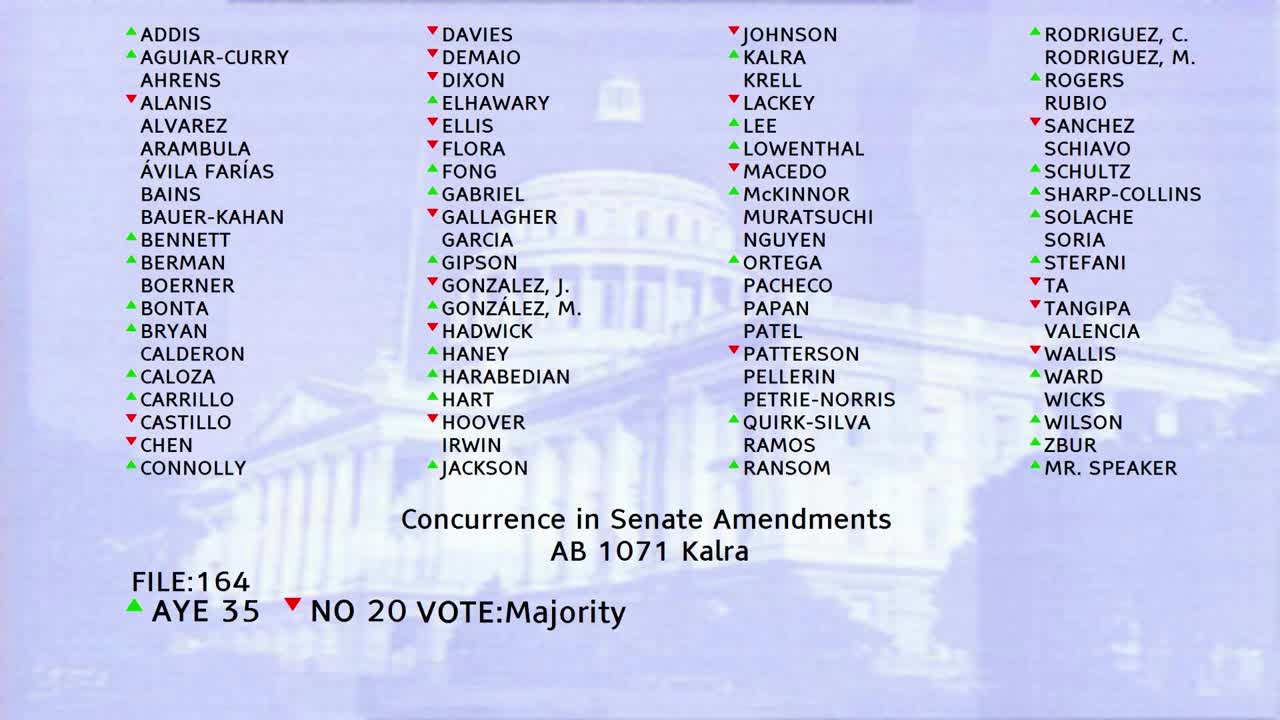 1MIN
Assembly Floor
 5MIN
Assembly Standing Committee on Emergency Management
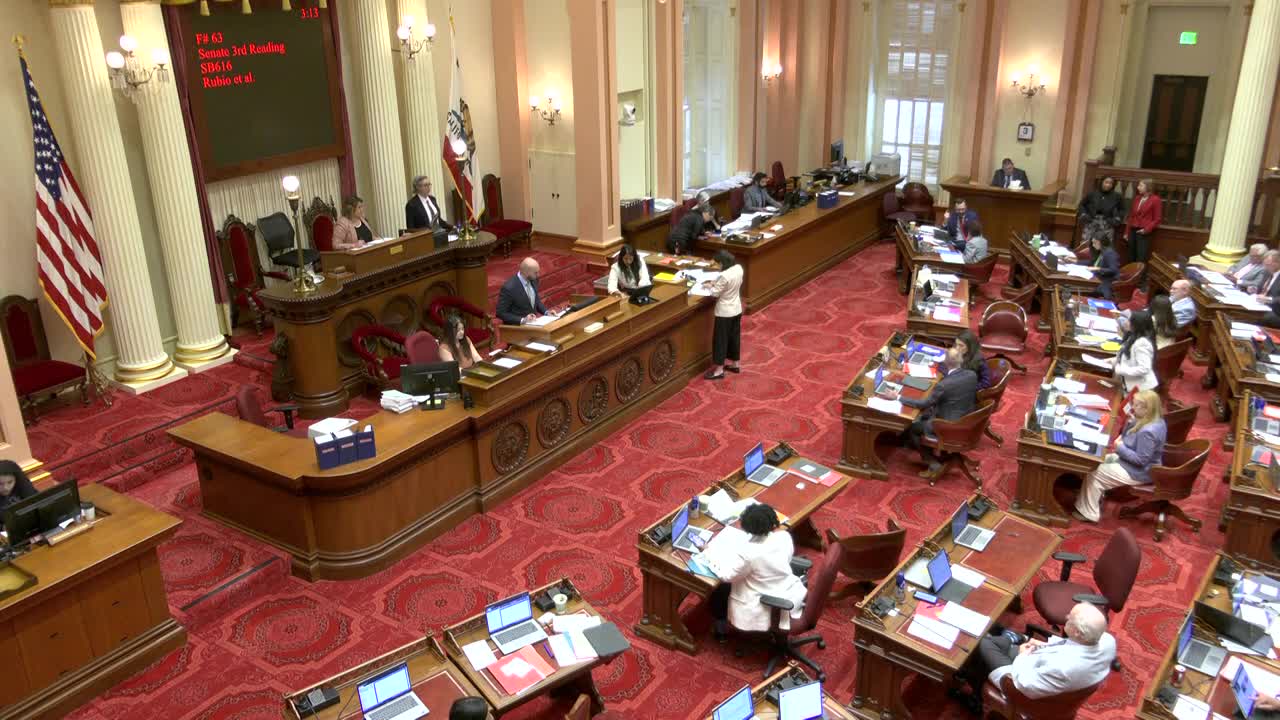 2MIN
Senate Floor
Bill Author