SB 437: California State University: claim eligibility: genealogy and descendancy.
- Session Year: 2025-2026
- House: Senate
- Latest Version Date: 2025-10-13
Current Status:
Passed
(2025-10-13: Chaptered by Secretary of State. Chapter 755, Statutes of 2025.)
Introduced
In Committee
Awaiting First Chamber Vote
Passed First Chamber
In Committee
Awaiting Second Chamber Vote
Passed Second Chamber
Enacted
Existing law establishes the California State University, under the administration of the Trustees of the California State University, as one of the segments of public postsecondary education in the state. Existing law requires the trustees to control and expend all money appropriated for the support and maintenance of the university.
Former law, until July 1, 2023, established the Task Force to Study and Develop Reparation Proposals for African Americans, with a Special Consideration for African Americans Who are Descendants of Persons Enslaved in the United States (Task Force).
Former law required the Task Force, among other things, to identify, compile, and synthesize the relevant corpus of evidentiary documentation of the institution of slavery that existed within the United States and the colonies, as specified, and to recommend the form of compensation that should be awarded, the instrumentalities through which it should be awarded, and who should be eligible for this compensation.
This bill would authorize the use of up to $6,000,000, as specified, for the purpose of enabling the California State University to conduct research in furtherance of the recommendations of the Task Force, thereby making an appropriation. The bill would authorize the California State University to partner with other universities or nonprofit institutions in furtherance of the bill. The bill would require, before the start of each fiscal year, the California State University to consult with the California Legislative Black Caucus to propose a list of research components to be addressed through the appropriation, as provided.
This bill would require the California State University to explore options to determine how to confirm an individuals status as a descendant of an enslaved person, as defined. The bill would also require the California State University to establish a process for conducting or verifying genealogical research for the purpose of confirming an individuals status as a descendant of an enslaved person for eligibility for reparative claims on or before the start of the 202930 academic year and to commence the work of establishing the process on or before the start of the 202627 academic year. The bill would authorize the funding described above to be used to support student participation in support of this goal. The bill would require the California State University, on or before October 1 of each year and until funding is exhausted, to submit to the Legislature and Governor a report with a status update of pending research projects, and any research projects that have been completed within the prior year. The bill would require the final report to include research findings, recommendations with options, and timelines for statewide implementation, including costs, developed pursuant to these provisions.
Existing law establishes the California State University, under the administration of the Trustees of the California State University, as one of the segments of public postsecondary education in the state. Existing law requires the trustees to control and expend all money appropriated for the support and maintenance of the university.
Former law, until July 1, 2023, established the Task Force to Study and Develop Reparation Proposals for African Americans, with a Special Consideration for African Americans Who are Descendants of Persons Enslaved in the United States (Task Force).
Former law required the Task Force, among other things, to identify, compile, and synthesize the relevant corpus of evidentiary documentation of the institution of slavery that existed within the United States and the colonies, as specified, and to recommend the form of compensation that should be awarded, the instrumentalities through which it should be awarded, and who should be eligible for this compensation.
This bill would authorize the use of up to $6,000,000, as specified, for the purpose of enabling the California State University to conduct research in furtherance of the recommendations of the Task Force, thereby making an appropriation. The bill would authorize the California State University to partner with other universities or nonprofit institutions in furtherance of the bill. The bill would require, before the start of each fiscal year, the California State University to consult with the California Legislative Black Caucus to propose a list of research components to be addressed through the appropriation, as provided.
This bill would require the California State University to explore options to determine how to confirm an individuals status as a descendant. descendant of an enslaved person, as defined. The bill would also require the California State University to establish a process for conducting or verifying genealogical research to confirm eligibility for reparative claims for the purpose of confirming an individuals status as a descendant of an enslaved person for eligibility for reparative claims on or before the start of the 202930 academic year and to commence the work of establishing the process on or before the start of the 202627 academic year. The bill would authorize the funding described above to be used to support student participation in support of this goal. The bill would require the California State University, on or before October 1 of each year and until funding is exhausted, to submit to the Legislature and Governor a report with a status update of pending research projects, and any research projects that have been completed within the prior year. The bill would require the final report to include research findings, recommendations with options, and timelines for statewide implementation, including costs, developed pursuant to these provisions.
Existing law establishes the California State University, under the administration of the Trustees of the California State University, as one of the segments of public postsecondary education in the state. Existing law requires the trustees to control and expend all money appropriated for the support and maintenance of the university.
Former law, until July 1, 2023, established the Task Force to Study and Develop Reparation Proposals for African Americans, with a Special Consideration for African Americans Who are Descendants of Persons Enslaved in the United States (Task Force).
Former law required the Task Force, among other things, to identify, compile, and synthesize the relevant corpus of evidentiary documentation of the institution of slavery that existed within the United States and the colonies, as specified, and to recommend the form of compensation that should be awarded, the instrumentalities through which it should be awarded, and who should be eligible for this compensation.
This bill would authorize the use of up to $6,000,000, as specified, for the purpose of enabling the California State University to conduct research in furtherance of the recommendations of the Task Force, thereby making an appropriation. The bill would authorize the California State University to partner with other universities or nonprofit institutions in furtherance of the bill. The bill would require, before the start of each fiscal year, the California State University to consult with the California Legislative Black Caucus to propose a list of research components to be addressed through the appropriation, as provided.
This bill would require the California State University to explore options to determine how to confirm an individuals status as a descendant. The bill would also require the California State University to establish a process for conducting or verifying genealogical research to confirm eligibility for reparative claims on or before the start of the 202930 academic year and to commence the work of establishing the process on or before the start of the 202627 academic year. The bill would authorize the funding described above to be used to support student participation in support of this goal. The bill would require the California State University, on or before October 1 of each year and until funding is exhausted, to submit to the Legislature and Governor a report with a status update of pending research projects, and any research projects that have been completed within the prior year. The bill would require the final report to include research findings, recommendations with options, and timelines for statewide implementation, including costs, developed pursuant to these provisions.
Existing law establishes the California State University, under the administration of the Trustees of the California State University, as one of the segments of public postsecondary education in the state. Existing law requires the trustees to control and expend all money appropriated for the support and maintenance of the university.
Former law, until July 1, 2023, established the Task Force to Study and Develop Reparation Proposals for African Americans, with a Special Consideration for African Americans Who are Descendants of Persons Enslaved in the United States (Task Force).
Former law required the Task Force, among other things, to identify, compile, and synthesize the relevant corpus of evidentiary documentation of the institution of slavery that existed within the United States and the colonies, as specified, and to recommend the form of compensation that should be awarded, the instrumentalities through which it should be awarded, and who should be eligible for this compensation.
This bill would require the Director of Finance to allocate authorize the use of up to $6,000,000, as specified, for the purpose of enabling the California State University to conduct research in furtherance of the recommendations of the Task Force, thereby making an appropriation. The bill would authorize the California State University to partner with other universities or nonprofit institutions in furtherance of the bill. The bill would require, before the start of each fiscal year, the California State University to consult with the California Legislative Black Caucus to propose a list of research components to be addressed through the appropriation, as provided.
This bill would require the California State University to explore options to determine how to confirm an individuals status as a descendant. The bill would also require the California State University to establish a process for conducting or verifying genealogical research to confirm eligibility for reparative claims and to commence the work of establishing the process on or before the start of the 202627 academic year. The bill would authorize the funding described above to be used to support student participation in support of this goal. The bill would require the California State University, on or before October 1 of each year and until funding is exhausted, to submit to the Legislature and Governor a report with a status update of pending research projects, and any research projects that have been completed within the prior year. The bill would require the final report to include research findings, recommendations with options, and timelines for statewide implementation, including costs, developed pursuant to these provisions.
Existing law establishes the California State University, under the administration of the Trustees of the California State University, as one of the segments of public postsecondary education in the state. Existing law requires the trustees to control and expend all money appropriated for the support and maintenance of the university.
Former law, until July 1, 2023, established the Task Force to Study and Develop Reparation Proposals for African Americans, with a Special Consideration for African Americans Who are Descendants of Persons Enslaved in the United States (Task Force).
Former law required the Task Force, among other things, to identify, compile, and synthesize the relevant corpus of evidentiary documentation of the institution of slavery that existed within the United States and the colonies, as specified, and to recommend the form of compensation that should be awarded, the instrumentalities through which it should be awarded, and who should be eligible for this compensation.
This bill would require the Director of Finance to allocate $6,000,000, as specified, for the purpose of enabling the California State University to conduct research in furtherance of the recommendations of the Task Force, thereby making an appropriation. The bill would authorize the California State University to partner with other universities or nonprofit institutions in furtherance of the bill. The bill would require, before the start of each fiscal year, the California State University to consult with the California Legislative Black Caucus to propose a list of research components to be addressed through the appropriation, as provided.
This bill would require the California State University to explore options to determine how to confirm an individuals status as a descendant and descendant. The bill would also require the California State University to establish a process for conducting or verifying genealogical research to confirm eligibility for reparative claims. claims and to commence the work of establishing the process on or before the start of the 202627 academic year. The bill would authorize the funding described above to be used to support student participation in support of this goal. The bill would require the California State University, on or before October 1 of each year and until funding is exhausted, to submit to the Legislature and Governor a report with a status update of pending research projects, and any research projects that have been completed within the prior year. The bill would require the final report to include research findings, recommendations with options, and timelines for statewide implementation, including costs, developed pursuant to these provisions.
Existing law establishes the California State University, under the administration of the Trustees of the California State University, as one of the segments of public postsecondary education in the state. Existing law requires the trustees to control and expend all money appropriated for the support and maintenance of the university.
Former law, until July 1, 2023, established the Task Force to Study and Develop Reparation Proposals for African Americans, with a Special Consideration for African Americans Who are Descendants of Persons Enslaved in the United States (Task Force).
Former law required the Task Force, among other things, to identify, compile, and synthesize the relevant corpus of evidentiary documentation of the institution of slavery that existed within the United States and the colonies, as specified, and to recommend the form of compensation that should be awarded, the instrumentalities through which it should be awarded, and who should be eligible for this compensation.
This bill would require the Director of Finance to allocate $6,000,000, as specified, for the purpose of enabling the California State University to conduct research in furtherance of the recommendations of the Task Force, thereby making an appropriation. The bill would authorize the California State University to partner with other universities or nonprofit institutions in furtherance of the bill. The bill would require, before the start of each fiscal year, the California State University to consult with the California Legislative Black Caucus to propose a list of research components to be addressed through the appropriation, as provided.
This bill would require the California State University to explore options to determine how to confirm an individuals status as a descendant and to establish a process for conducting or verifying genealogical research to confirm eligibility for reparative claims. The bill would authorize the funding described above to be used to support student participation in support of this goal. The bill would require the California State University, on or before October 1 of each year and until funding is exhausted, to submit to the Legislature and Governor a report with a status update of pending research projects, and any research projects that have been completed within the prior year. The bill would require the final report to include research findings, recommendations with options, and timelines for statewide implementation, including costs, developed pursuant to these provisions.
(a)Up to six million dollars ($6,000,000) of the funds provided for this purpose in Item 6610-001-0001 of the Budget Act of 2025 may be used for the purpose of enabling the California State University to conduct research in furtherance of the recommendations of the Task Force to Study and Develop Reparation Proposals for African Americans, with a Special Consideration for African Americans Who are Descendants of Persons Enslaved in the United States as established under former Section 8301.1, added by Section 1 of Chapter 319 of the Statutes of 2020. The California State University may partner with other universities or nonprofit institutions in furtherance of this section.
(b)The California State University shall explore options to determine how to confirm an individuals status as a descendant of an enslaved person. The California State University shall also establish a process for conducting or verifying genealogical research for the purpose of confirming an individuals status as a descendant of an enslaved person for eligibility for reparative claims on or before the start of the 202930 academic year and commence the work of establishing the process on or before the start of the 202627 academic year. Funding from subdivision (a) may be used to support student participation in support of this goal.
(c)Before the start of each fiscal year, the California State University shall consult with the California Legislative Black Caucus to propose a list of research components to be addressed through the appropriation in subdivision (a) and each year until funding is exhausted.
(d)(1)Notwithstanding Section 10231.5, the California State University shall, on or before October 1 of each year and until funding from subdivision (a) is exhausted, submit to the Legislature and Governor a report with a status update of pending research projects, and any research projects that have been completed within the prior year. The final report shall include research findings, recommendations with options, and timelines for statewide implementation, including costs, developed pursuant to this section.
(2)A report submitted pursuant to this subdivision shall be submitted in compliance with Section 9795.
(e)For purposes of this section, descendant of an enslaved person means an individual who can establish direct lineage to a person who, before 1900, was subjected to American chattel slavery and meets at least one of the following criteria:
(1)Was emancipated through legal or extralegal means, including self-purchase, manumission, legislative action, military service, or judicial ruling.
(2)Obtained freedom through gradual abolition statutes or constitutional amendments.
(3)Was classified as a fugitive from bondage under federal or state law.
(4)Was deemed contraband by military authorities.
(5)Rendered military or civic service while subject to legal restrictions based on ancestry historically associated with slavery.
(a)Up to six million dollars ($6,000,000) of the appropriation provided in Section 15.80 of the Budget Act of 2024 (Chs. 22, 35, and 994, Stats. 2024) funds provided for this purpose in Item 6610-001-0001 of the Budget Act of 2025 may be used for the purpose of enabling the California State University to conduct research in furtherance of the recommendations of the Task Force to Study and Develop Reparation Proposals for African Americans, with a Special Consideration for African Americans Who are Descendants of Persons Enslaved in the United States as established under former Section 8301.1, added by Section 1 of Chapter 319 of the Statutes of 2020. The California State University may partner with other universities or nonprofit institutions in furtherance of this section.
(b)The California State University shall explore options to determine how to confirm an individuals status as a descendant of an enslaved person. The California State University shall also establish a process for conducting or verifying genealogical research for the purpose of confirming an individuals status as a descendant of an enslaved person for eligibility for reparative claims on or before the start of the 202930 academic year and commence the work of establishing the process on or before the start of the 202627 academic year. Funding from subdivision (a) may be used to support student participation in support of this goal.
(c)Before the start of each fiscal year, the California State University shall consult with the California Legislative Black Caucus to propose a list of research components to be addressed through the appropriation in subdivision (a) and each year until funding is exhausted.
(d)(1)Notwithstanding Section 10231.5, the California State University shall, on or before October 1 of each year and until funding from subdivision (a) is exhausted, submit to the Legislature and Governor a report with a status update of pending research projects, and any research projects that have been completed within the prior year. The final report shall include research findings, recommendations with options, and timelines for statewide implementation, including costs, developed pursuant to this section.
(2)A report submitted pursuant to this subdivision shall be submitted in compliance with Section 9795.
(e)For purposes of this section, descendant of an enslaved person means an individual who can establish direct lineage to a person who, before 1900, was subjected to American chattel slavery and meets at least one of the following criteria:
(1)Was emancipated through legal or extralegal means, including self-purchase, manumission, legislative action, military service, or judicial ruling.
(2)Obtained freedom through gradual abolition statutes or constitutional amendments.
(3)Was classified as a fugitive from bondage under federal or state law.
(4)Was deemed contraband by military authorities.
(5)Rendered military or civic service while subject to legal restrictions based on ancestry historically associated with slavery.
(a)Up to six million dollars ($6,000,000) of the appropriation provided in Section 15.80 of the Budget Act of 2024 (Chs. 22, 35, and 994, Stats. 2024) may be used for the purpose of enabling the California State University to conduct research in furtherance of the recommendations of the Task Force to Study and Develop Reparation Proposals for African Americans, with a Special Consideration for African Americans Who are Descendants of Persons Enslaved in the United States as established under former Section 8301.1, added by Section 1 of Chapter 319 of the Statutes of 2020. The California State University may partner with other universities or nonprofit institutions in furtherance of this section.
(b)The California State University shall explore options to determine how to confirm an individuals status as a descendant. descendant of an enslaved person. The California State University shall also establish a process for conducting or verifying genealogical research to confirm eligibility for reparative claims for the purpose of confirming an individuals status as a descendant of an enslaved person for eligibility for reparative claims on or before the start of the 202930 academic year and commence the work of establishing the process on or before the start of the 202627 academic year. Funding from subdivision (a) may be used to support student participation in support of this goal.
(c)Before the start of each fiscal year, the California State University shall consult with the California Legislative Black Caucus to propose a list of research components to be addressed through the appropriation in subdivision (a) and each year until funding is exhausted.
(d)(1)Notwithstanding Section 10231.5, the California State University shall, on or before October 1 of each year and until funding from subdivision (a) is exhausted, submit to the Legislature and Governor a report with a status update of pending research projects, and any research projects that have been completed within the prior year. The final report shall include research findings, recommendations with options, and timelines for statewide implementation, including costs, developed pursuant to this section.
(2)A report submitted pursuant to this subdivision shall be submitted in compliance with Section 9795.
(e)For purposes of this section, descendant of an enslaved person means an individual who can establish direct lineage to a person who, before 1900, was subjected to American chattel slavery and meets at least one of the following criteria:
(1)Was emancipated through legal or extralegal means, including self-purchase, manumission, legislative action, military service, or judicial ruling.
(2)Obtained freedom through gradual abolition statutes or constitutional amendments.
(3)Was classified as a fugitive from bondage under federal or state law.
(4)Was deemed contraband by military authorities.
(5)Rendered military or civic service while subject to legal restrictions based on ancestry historically associated with slavery.
(a)Up to six million dollars ($6,000,000) of the appropriation provided in Section 15.80 of the Budget Act of 2024 (Chs. 22, 35, and 994, Stats. 2024) may be used for the purpose of enabling the California State University to conduct research in furtherance of the recommendations of the Task Force to Study and Develop Reparation Proposals for African Americans, with a Special Consideration for African Americans Who are Descendants of Persons Enslaved in the United States as established under former Section 8301.1, added by Section 1 of Chapter 319 of the Statutes of 2020. The California State University may partner with other universities or nonprofit institutions in furtherance of this section.
(b)The California State University shall explore options to determine how to confirm an individuals status as a descendant. The California State University shall also establish a process for conducting or verifying genealogical research to confirm eligibility for reparative claims on or before the start of the 202930 academic year and commence the work of establishing the process on or before the start of the 202627 academic year. Funding from subdivision (a) may be used to support student participation in support of this goal.
(c)Before the start of each fiscal year, the California State University shall consult with the California Legislative Black Caucus to propose a list of research components to be addressed through the appropriation in subdivision (a) and each year until funding is exhausted.
(d)(1)Notwithstanding Section 10231.5, the California State University shall, on or before October 1 of each year and until funding from subdivision (a) is exhausted, submit to the Legislature and Governor a report with a status update of pending research projects, and any research projects that have been completed within the prior year. The final report shall include research findings, recommendations with options, and timelines for statewide implementation, including costs, developed pursuant to this section.
(2)A report submitted pursuant to this subdivision shall be submitted in compliance with Section 9795.
(a)Pursuant to Section 15.80 of the Budget Act of 2024 (Chs. 22, 35, and 994, Stats. 2024), the Director of Finance shall allocate Up to six million dollars ($6,000,000) to Item 6610-001-0001 of the appropriation provided in Section 15.80 of the Budget Act of 2024 (Chs. 22, 35, and 994, Stats. 2024) may be used for the purpose of enabling the California State University to conduct research in furtherance of the recommendations of the Task Force to Study and Develop Reparation Proposals for African Americans, with a Special Consideration for African Americans Who are Descendants of Persons Enslaved in the United States as established under former Section 8301.1, added by Section 1 of Chapter 319 of the Statutes of 2020. The California State University may partner with other universities or nonprofit institutions in furtherance of this section.
(b)The California State University shall explore options to determine how to confirm an individuals status as a descendant. The California State University shall also establish a process for conducting or verifying genealogical research to confirm eligibility for reparative claims and commence the work of establishing the process on or before the start of the 202627 academic year. Funding from subdivision (a) may be used to support student participation in support of this goal.
(c)Before the start of each fiscal year, the California State University shall consult with the California Legislative Black Caucus to propose a list of research components to be addressed through the appropriation in subdivision (a) and each year until funding is exhausted.
(d)(1)Notwithstanding Section 10231.5, the California State University shall, on or before October 1 of each year and until funding from subdivision (a) is exhausted, submit to the Legislature and Governor a report with a status update of pending research projects, and any research projects that have been completed within the prior year. The final report shall include research findings, recommendations with options, and timelines for statewide implementation, including costs, developed pursuant to this section.
(2)A report submitted pursuant to this subdivision shall be submitted in compliance with Section 9795.
(a)Pursuant to Section 15.80 of the Budget Act of 2024 (Chs. 22, 35, and 994, Stats. 2024), the Director of Finance shall allocate six million dollars ($6,000,000) to Item 6610-001-0001 of the Budget Act of 2024 (Chs. 22, 35, and 994, Stats. 2024) for the purpose of enabling the California State University to conduct research in furtherance of the recommendations of the Task Force to Study and Develop Reparation Proposals for African Americans, with a Special Consideration for African Americans Who are Descendants of Persons Enslaved in the United States as established under former Section 8301.1, added by Section 1 of Chapter 319 of the Statutes of 2020. The California State University may partner with other universities or nonprofit institutions in furtherance of this section.
(b)The California State University shall explore options to determine how to confirm an individuals status as a descendant. The California State University shall also establish a process for conducting or verifying genealogical research to confirm eligibility for reparative claims. claims and commence the work of establishing the process on or before the start of the 202627 academic year. Funding from subdivision (a) may be used to support student participation in support of this goal.
(c)Before the start of each fiscal year, the California State University shall consult with the California Legislative Black Caucus to propose a list of research components to be addressed through the appropriation in subdivision (a) and each year until funding is exhausted.
(d)(1)Notwithstanding Section 10231.5, the California State University shall, on or before October 1 of each year and until funding from subdivision (a) is exhausted, submit to the Legislature and Governor a report with a status update of pending research projects, and any research projects that have been completed within the prior year. The final report shall include research findings, recommendations with options, and timelines for statewide implementation, including costs, developed pursuant to this section.
(2)A report submitted pursuant to this subdivision shall be submitted in compliance with Section 9795.
(a)Pursuant to Section 15.80 of the Budget Act of 2024 (Chs. 22, 35, and 994, Stats. 2024), the Director of Finance shall allocate six million dollars ($6,000,000) to Item 6610-001-0001 of the Budget Act of 2024 (Chs. 22, 35, and 994, Stats. 2024) for the purpose of enabling the California State University to conduct research in furtherance of the recommendations of the Task Force to Study and Develop Reparation Proposals for African Americans, with a Special Consideration for African Americans Who are Descendants of Persons Enslaved in the United States as established under former Section 8301.1, added by Section 1 of Chapter 319 of the Statutes of 2020. The California State University may partner with other universities or nonprofit institutions in furtherance of this section.
(b)The California State University shall explore options to determine how to confirm an individuals status as a descendant. The California State University shall also establish a process for conducting or verifying genealogical research to confirm eligibility for reparative claims. Funding from subdivision (a) may be used to support student participation in support of this goal.
(c)Before the start of each fiscal year, the California State University shall consult with the California Legislative Black Caucus to propose a list of research components to be addressed through the appropriation in subdivision (a) and each year until funding is exhausted.
(d)(1)Notwithstanding Section 10231.5, the California State University shall, on or before October 1 of each year and until funding from subdivision (a) is exhausted, submit to the Legislature and Governor a report with a status update of pending research projects, and any research projects that have been completed within the prior year. The final report shall include research findings, recommendations with options, and timelines for statewide implementation, including costs, developed pursuant to this section.
(2)A report submitted pursuant to this subdivision shall be submitted in compliance with Section 9795.
|
Date
|
Status
|
|---|---|
| Oct 13, 2025 | Chaptered by Secretary of State. Chapter 755, Statutes of 2025. |
| Oct 13, 2025 | Approved by the Governor. |
| Sep 17, 2025 | Enrolled and presented to the Governor at 2 p.m. |
| Sep 9, 2025 | Assembly amendments concurred in. (Ayes 30. Noes 10. Page 2742.) Ordered to engrossing and enrolling. |
| Sep 8, 2025 | In Senate. Concurrence in Assembly amendments pending. |
| Sep 8, 2025 | Read third time. Passed. (Ayes 61. Noes 17. Page 2993.) Ordered to the Senate. |
| Sep 4, 2025 | Ordered to third reading. |
| Sep 4, 2025 | Read third time and amended. |
| Sep 2, 2025 | Read second time. Ordered to third reading. |
| Aug 29, 2025 | From committee: Do pass. (Ayes 11. Noes 4.) (August 29). |
| Jul 16, 2025 | July 16 set for first hearing. Placed on APPR. suspense file. |
| Jul 2, 2025 | From committee: Do pass and re-refer to Com. on APPR. (Ayes 9. Noes 3.) (July 1). Re-referred to Com. on APPR. |
| Jun 26, 2025 | Read second time and amended. Re-referred to Com. on JUD. |
| Jun 25, 2025 | From committee: Do pass as amended and re-refer to Com. on JUD. (Ayes 7. Noes 3.) (June 24). |
| Jun 9, 2025 | From committee with author's amendments. Read second time and amended. Re-referred to Com. on HIGHER ED. |
| Jun 9, 2025 | Referred to Coms. on HIGHER ED. and JUD. |
| Jun 3, 2025 | In Assembly. Read first time. Held at Desk. |
| Jun 2, 2025 | Read third time. Passed. (Ayes 28. Noes 10. Page 1401.) Ordered to the Assembly. |
| May 27, 2025 | Read second time. Ordered to third reading. |
| May 23, 2025 | Read second time and amended. Ordered to second reading. |
| May 23, 2025 | From committee: Do pass as amended. (Ayes 5. Noes 1. Page 1200.) (May 23). |
| May 16, 2025 | Set for hearing May 23. |
| May 5, 2025 | May 5 hearing: Placed on APPR. suspense file. |
| Apr 25, 2025 | Set for hearing May 5. |
| Apr 23, 2025 | From committee: Do pass and re-refer to Com. on APPR. (Ayes 11. Noes 2. Page 835.) (April 22). Re-referred to Com. on APPR. |
| Apr 8, 2025 | From committee with author's amendments. Read second time and amended. Re-referred to Com. on JUD. |
| Apr 3, 2025 | Set for hearing April 22. |
| Mar 26, 2025 | From committee: Do pass and re-refer to Com. on JUD. (Ayes 5. Noes 2. Page 566.) (March 26). Re-referred to Com. on JUD. |
| Mar 11, 2025 | Set for hearing March 26. |
| Feb 26, 2025 | Referred to Coms. on ED. and JUD. |
| Feb 19, 2025 | From printer. May be acted upon on or after March 21. |
| Feb 18, 2025 | Introduced. Read first time. To Com. on RLS. for assignment. To print. |
|
Date
|
Description
|
Location
|
Votes
|
|
|---|---|---|---|---|
| Sep 9, 2025 | Unfinished Business SB437 Weber Pierson et al. Concurrence | Senate Floor |
Passed |
|
| Sep 8, 2025 | SB 437 Weber Pierson Senate Third Reading By JACKSON | Assembly Floor |
Passed |
|
| Aug 29, 2025 | Do pass. | Assembly Standing Committee on Appropriations |
Passed |
|
| Jul 1, 2025 | Do pass and be re-referred to the Committee on [Appropriations] | Assembly Standing Committee on Judiciary |
Passed |
|
| Jun 24, 2025 | Do pass as amended and be re-referred to the Committee on [Judiciary] | Assembly Standing Committee on Higher Education |
Passed |
|
| Jun 2, 2025 | Senate 3rd Reading SB437 Weber Pierson et al. | Senate Floor |
Passed |
|
| May 23, 2025 | Do pass as amended | Senate Standing Committee on Appropriations |
Passed |
|
| May 5, 2025 | Placed on suspense file | Senate Standing Committee on Appropriations |
Passed |
|
| Apr 22, 2025 | Do pass, but first be re-referred to the Committee on [Appropriations] | Senate Standing Committee on Judiciary |
Passed |
|
| Mar 26, 2025 | Do pass, but first be re-referred to the Committee on [Judiciary] | Senate Standing Committee on Education |
Passed |
This list shows positions taken on this bill by organizations on the date displayed, which is linked to the original source.
Positions by individuals are not included.
|
Organization
|
Position
|
Date
|
|---|---|---|
| AAPI Force | ** Support | |
| AAPIs for Civic Empowerment | ** Support | |
| ADOS Advocacy Foundation California Chapter | ** Support | |
| Alliance for Reparations, Reconciliation and Truth | ** Support | |
| Alliance for Reparations, Reconciliation, and Truth | ** Support | |
| Alliance San Diego | ** Support | |
| American Descendants of Slavery Advocacy Foundation - California Chapter | ** Support | |
| American Redress Coalition of California, Bay Area | ** Against | |
| American Redress Coalition of California – Sacramento | ** Against | |
| Asian Americans and Pacific Islanders for Civic Empowerment | ** Support | |
| Bay Area Regional Health Inequity Initiative | ** Support | |
| Black Californians United for Early Care and Education | ** Support | |
| Black Californians United for Early Care & Education | ** Support | |
| Black Equity Collective | ** Support | |
| Black Lives Matter Los Angeles | ** Against | |
| Black Women For Wellness Action Project | ** Support | |
| California Alliance for Youth and Community Justice | ** Against | |
| California Black Lineage Society | ** Against | |
| California Black Power Network | ** Support | |
| California-Hawaii State Conference Of The Naacp | ** Support | |
| California Juneteenth State Capitol Celebration | ** Support | |
| California Organizations for Reparations | ** Against | |
| California Reparations Task Force | ** Support | |
| California Reparations Task Force Member Don Tamaki | ** Support | |
| California Reparations Task Force Member Dr. Cheryl Grills | ** Support | |
| California Reparations Task Force Member Lisa Holder | ** Support | |
| California State Capitol Juneteenth | ** Support | |
| California State University (CSU) | ** Support | |
| California State University, Office Of The Chancellor | ** Support | |
| Catalyst California | ** Support | |
| Coalition for A Just and Equitable California | ** Against | |
| Committee For Racial Justice | ** Against | |
| Congregations Organized for Prophetic Engagement | ** Support | |
| Courage California | ** Support | |
| Don Tamaki, former Task Force Member | ** Support | |
| Dr. Cheryl Grills, former Task Force Member | ** Support | |
| Emend the Mass Media Group | ** Against | |
| Equality California (EQCA) | ** Support | |
| Equal Justice Society | ** Support | |
| Freedom 4 Youth | ** Against | |
| Greater Los Angeles African American Chamber of Commerce | ** Support | |
| Greater Sacramento Urban League | ** Support | |
| Japanese American Citizens League, Berkeley Chapter | ** Support | |
| Lineage Equity Advancement Project | ** Against | |
| Lineage Equity and Advancement Project | ** Against | |
| Lineage Equity and Advancement Project- LEAP | ** Against | |
| Lisa Holder, former Task Force Member | ** Support | |
| Live Free California | ** Support | |
| Numerous individuals | ** Against | |
| San Francisco Bay Area Black & Jewish Unity Coalition | ** Support | |
| San Francisco Public Defender | ** Support | |
| Sarah Webster Fabio Center for Social Justice | ** Support | |
| Secure Justice | ** Support | |
| Western Center on Law & Poverty, INC. | ** Support | |
| Where Is My Land | ** Support |
SENATE RULES COMMITTEE Office of Senate Floor Analyses (916) 651-1520 Fax: (916) 327-4478 | SB 437 |
UNFINISHED BUSINESS
Bill No: SB 437
Author: Weber Pierson (D), et al.
Amended: 9/4/25 in Assembly
Vote: 21
SENATE EDUCATION COMMITTEE: 5-2, 3/26/25
AYES: Pérez, Cabaldon, Cortese, Gonzalez, Laird
NOES: Ochoa Bogh, Choi
SENATE JUDICIARY COMMITTEE: 11-2, 4/22/25
AYES: Umberg, Allen, Arreguín, Ashby, Caballero, Durazo, Laird, Stern, Wahab, Weber Pierson, Wiener
NOES: Niello, Valladares
SENATE APPROPRIATIONS COMMITTEE: 5-1, 5/23/25
AYES: Caballero, Cabaldon, Grayson, Richardson, Wahab
NOES: Seyarto
NO VOTE RECORDED: Dahle
SENATE FLOOR: 28-10, 6/2/25
AYES: Allen, Archuleta, Arreguín, Ashby, Becker, Blakespear, Cabaldon, Caballero, Cervantes, Cortese, Durazo, Gonzalez, Grayson, Laird, Limón, McGuire, McNerney, Menjivar, Padilla, Pérez, Richardson, Rubio, Smallwood-Cuevas, Stern, Umberg, Wahab, Weber Pierson, Wiener
NOES: Alvarado-Gil, Choi, Dahle, Grove, Jones, Niello, Ochoa Bogh, Seyarto, Strickland, Valladares
NO VOTE RECORDED: Hurtado, Reyes
ASSEMBLY FLOOR: 61-17, 9/8/25 - See last page for vote
SUBJECT: California State University: claim eligibility: genealogy and descendancy
SOURCE: Author
DIGEST:
This bill authorizes up to $6 million of funds appropriated in the 2025 Budget Act for purposes of enabling the California State University (CSU) to explore options to determine how to confirm an individual’s status as a descendant of an enslaved person. It also requires that the CSU annually submit a report to the Legislature and Governor on pending and completed research projects along with a final report that includes recommendations for statewide implementation.
Assembly Amendments
of 9/4/25 define descendant of an enslaved person, establish a deadline for CSU research, and update funding source.
ANALYSIS:
Existing law:
- Establishes the CSU, under the administration of the Trustees of the CSU, as one of the segments of public postsecondary education in the state. (Education Code (EC) § 66600)
- Requires that the CSU’s Statewide Central Office for Advancement of Black Excellence, housed at Sacramento State, manage the state’s California Black-Serving Institutions program designation. (EC § 66076.3)
- Authorizes the Trustees to establish an African American Political and Economic Institute at CSU, Dominguez Hills and requires CSU, Dominguez Hills to rename the institute the Mervyn M. Dymally African American Political and Economic Institute.
- Establishes, until July 1, 2023, the Task Force to Study and Develop Reparation Proposals for African Americans, with a Special Consideration for African Americans Who are Descendants of Persons Enslaved in the United States (Task Force).
- Requires the Task Force, among other things, to identify, compile, and synthesize the relevant corpus of evidentiary documentation of the institution of slavery that existed within the United States and the colonies, as specified, and to recommend the form of compensation that should be awarded, the instrumentalities through which it should be awarded, and who should be eligible for this compensation.
- States that the State of California recognizes and accepts responsibility for all of the harms committed by the state in connection with chattel slavery and its enduring legacy, issues an apology from the State of California for perpetuating the harms African Americans face through state and private action, and requires a plaque memorializing the apology to be installed in the State Capitol. (Government Code § 8301.2)
This bill:
- Authorizes up to $6 million of funds appropriated pursuant to the 2025 Budget Act for purposes of enabling CSU to conduct research in furtherance of the Task Force to Study and Develop Reparation Proposals for African Americans (Task Force) recommendations, and it authorizes CSU to partner with other universities or nonprofit institutions for the purpose of conducting that research.
- Requires the CSU to explore options for confirming an individual’s descendant status, establish a process for conducting or verifying genealogical research for purposes of confirming an individual’s status as a descendant of an enslaved person for eligibility for reparative claims by the 2029-30 academic year, and commence that work by the 2026–27 academic year. It also authorizes funds to support student participation in support of this goal.
- Requires, prior to the start of each fiscal year, the CSU consultant with the California Legislative Black Caucus to propose research components to be addressed through the specified appropriation and each year until funding is exhausted.
- Requires CSU, by October 1 of each year and until funding is exhausted, to submit to the Legislature and Governor a report with a status update of pending research projects and research projects that have been completed within the prior year.
- Requires CSU to submit a final report that includes its research findings, recommendations with options, and timelines for statewide implementation, including costs, developed according to the bill’s provisions.
- Defines for purposes of the bill the term, “descendant of an enslaved person” to mean an individual who can establish direct lineage to a person who before 1900, was subjected to American chattel slavery and meets at least one of the following:
- Was emancipated through legal or extralegal means, including self- purchase, manumission, legislative action, military service, or judicial ruling.
- Obtained freedom through gradual abolition statutes or constitutional amendments.
- Was classified as a fugitive from bondage under federal or state law.
- Was deemed contraband by military authorities.
- Rendered military or civic service while subject to legal restrictions based on ancestry historically associated with slavery
Comments
Need for this bill. According to the author, “Senate Bill (SB) 437 would require the California State University to independently research and report on scientific methodologies for determining an individual’s genealogical fingerprint to verify their status as a descendant of an enslaved person in the United States.
“This bill is essential for the successful implementation of the California Reparations Task Force’s final recommendations. To establish eligibility for the recommendations outlined by the Task Force, we must first have a clear and accurate method to identify descendants of American chattel slavery. Many African Americans face significant challenges in tracing their lineage due to incomplete records, forced family separations, and the systemic erasure of their histories. By tasking California State University with determining the best methods for establishing lineage, this bill would provide Black Californians with access to reliable, state-supported genealogical research that might otherwise be costly or difficult to obtain.”
Task Force. The Legislature enacted AB 3121 (Weber, Chapter 319, Statutes of 2020), establishing the first-in-the-nation Task Force to investigate options for providing reparations to African Americans, and particularly the descendants of enslaved persons in recognition of California’s role in accommodating and facilitating slavery and the continuation of racist institutions post-abolition. AB 3121 also required the Task Force to recommend appropriate ways to educate the public of its findings, recommend appropriate remedies, and submit a report of its work. The Task Force submitted its final 74-page report to the Legislature on June 29, 2023. The final report summarizes the harms caused by slavery and the lingering negative effects of the institution of slavery on descendants of persons enslaved in the US and, more broadly, on living African Americans and on society in California. The report includes Task Force recommendations for reparations, taking into account: 1) how any form of compensation to African Americans, with a special consideration for African Americans who are descendants of persons enslaved in the US, should be calculated; 2) what form of compensation should be awarded, though what instrumentalities, and who should be eligible for such compensation; and 3) whether any other forms of rehabilitation or restitution to African descendants are warranted and what form and scope those measures should take.
CSU responsible for research, recommendations and annual reporting. This bill seeks to advance Task Force recommendations by identifying CSU as the entity to investigate and develop ways to confirm an individual’s descendant status. Specifically, it requires CSU to establish a framework for conducting genealogical research that can be used to verify eligibility for reparative claims. The money allocated by this measure is to support CSU in achieving these research objectives and developing recommendations based on that research. The CSU must annually consult with the California Legislative Black Caucus on research components and annually report to the Legislature and Governor until the funding is exhausted. This is in addition to providing a final report including its findings and recommendations for statewide implementation.
Why CSU? The CSU system consists of 23 universities and roughly 28,000 fulltime and part-time faculty. It is the nation’s largest and most diverse public university system. As reported by the CSU, it educates the most ethnically, economically, and academically diverse student bodies in the country. The CSU also houses the Central Office for the Advancement of Black Student Success at Sacramento State, which is focused on addressing the barriers to Black student success and the Mervyn Dymally African American Political and Economic Institute at CSU, Dominguez Hills. The institute dedicates itself to exploring and documenting the professional lives and achievements of African American leaders and examines the impact of their public policy efforts on the political and economic development of African Americans and other disadvantaged communities. These centers demonstrate CSU’s commitment to the African American and Black community. Lastly, CSU promotes its capacity to utilize classroom based knowledge for problem-solving through applied research to address state’s needs. Having CSU conduct research and develop applicable solutions seems to fall within its scope of practice. Presumably, all of these factors are likely to have influenced the decision to select CSU for implementing the provisions in this measure. This bill additionally allows CSU to collaborate with other universities or nonprofit institutions in conducting its research.
FISCAL EFFECT: Appropriation: Yes Fiscal Com.: Yes Local: No
According to the Assembly Appropriations Committee analysis, this bill would have the following fiscal impact:
- The Budget Act of 2024 allows the Director of the Department of Finance to augment one more items by no more than $12 million from the General fund for implementation of reparations legislation enacted into law, $6 million of which this bill authorizes for its purposes.
- The CSU indicates that the $6 million appropriated by this bill should be sufficient to cover the costs for participating campuses.
SUPPORT: (Verified 9/8/25)
None received
OPPOSITION: (Verified 6/8/25)
None received
ASSEMBLY FLOOR: 61-17, 9/8/25
AYES: Addis, Aguiar-Curry, Ahrens, Alanis, Alvarez, Arambula, Ávila Farías, Bains, Bauer-Kahan, Bennett, Berman, Boerner, Bonta, Bryan, Calderon, Caloza, Carrillo, Connolly, Elhawary, Fong, Gabriel, Garcia, Gipson, Mark González, Haney, Harabedian, Hart, Irwin, Jackson, Johnson, Kalra, Krell, Lee, Lowenthal, McKinnor, Muratsuchi, Ortega, Pacheco, Papan, Patel, Pellerin, Petrie-Norris, Quirk-Silva, Ramos, Ransom, Celeste Rodriguez, Michelle Rodriguez, Rogers, Blanca Rubio, Schiavo, Schultz, Sharp-Collins, Solache, Soria, Stefani, Valencia, Ward, Wicks, Wilson, Zbur, Rivas
NOES: Castillo, Chen, Davies, DeMaio, Dixon, Ellis, Gallagher, Jeff Gonzalez, Hadwick, Hoover, Lackey, Macedo, Patterson, Sanchez, Ta, Tangipa, Wallis
NO VOTE RECORDED: Flora, Nguyen
Prepared by: Olgalilia Ramirez / ED. / (916) 651-4105
9/8/25 19:42:26
SENATE THIRD READING
STR Bill Id:SB 437
Author:(Weber Pierson)
As Amended Ver:September 04, 2025
Majority vote
SUMMARY
Authorizes up to $6 million dollars of an appropriation from funds provided in Item 6610-001-0001 of the Budget Act of 2025, to fund the California State University (CSU) to conduct research in furtherance of the recommendations of the Task Force to Study and Develop Reparation Proposals for African Americans, with a Special Consideration for African Americans Who are Descendants of Persons Enslaved in the United States (Task Force) specifically with regard to determining options for how to confirm an individual′s descendant status and verification of eligibility for reparative claims.
Major Provisions
- Appropriates up to $6 million to enable the CSU to conduct research in furtherance of the recommendations of the Task Force, as specified. Permits CSU to partner with other universities or nonprofit institutions in furtherance of this purpose.
- Requires CSU to explore options to determine how to confirm an individual′s status as a descendant of a person enslaved in the United States and to establish a process for conducting or verifying genealogical research to confirm eligibility for reparations on or before the start of the 2029-30 academic year. Specifies that the work of establishing the process shall commence on or before the start of 2026-27 year. Specifies that funding may be used to support student participation in support of this goal.
- Defines ″descendant of an enslaved person″ as an individual who can establish direct lineage to a person who, before 1900, was subjected to American chattel slavery and meets at least one of the following criteria:
- Was emancipated through legal or extralegal means, including self-purchase, manumission, legislative action, military service, or judicial ruling;
- Obtained freedom through gradual abolition statutes or constitutional amendments;
- Was classified as a fugitive from bondage under federal or state law;
- Was deemed contraband by military authorities; and,
- Rendered military or civic service while subject to legal restrictions based on ancestry historically associated with slavery.
- Requires CSU, before the start of each fiscal year, to consult with the California Legislative Black Caucus to propose a list of research components to be addressed, and to submit status reports of pending research projects to the Legislature and the Governor. Specifies that the final report shall include research findings, recommendations with options, and times for statewide implementation, including costs.
COMMENTS
Task Force. The Legislature enacted AB 3121 (Shirley Weber), Chapter 319, Statutes of 2020, establishing the first-in-the-nation Task Force to investigate options for providing reparations to Black individuals, and particularly the descendants of enslaved persons in recognition of California′s role in accommodating and facilitating slavery and the continuation of racist institutions post-abolition. AB 3121 also required the Task Force to recommend appropriate ways to educate the public of its findings, recommend appropriate remedies, and submit a report of its work.
The Task Force submitted its final 74-page report to the Legislature on June 29, 2023. The final report summarizes the harms caused by slavery and the lingering negative effects of the institution of slavery on descendants of persons enslaved in the U.S. and, more broadly, on living Black individuals and on society in California.
The report includes Task Force recommendations for reparations, taking into account: 1) how any form of compensation to Black individuals, with a special consideration for Black individuals who are descendants of persons enslaved in the U.S. should be calculated; 2) what form of compensation should be awarded, though what instrumentalities, and who should be eligible for such compensation; and, 3) whether any other forms of rehabilitation or restitution to African descendants are warranted and what form and scope those measures should take.
Recent budget action. The 2024-25 Budget Act appropriated $12 million for the implementation of reparations legislation.
This measure authorizes up to $6 million of these funds for the CSU to conduct this work; and authorizes the CSU to partner with other universities or nonprofit institutions in furtherance of the objectives of the measure.
Why the CSU? According to the CSU, ″the CSU is committed to engaging in applied research and study that lifts communities and addresses our state′s most pressing challenges. Our universities are well positioned to conduct research projects of this magnitude. Twenty-one of twenty-three CSU universities have been recognized by the American Council on Education and the Carnegie Foundation for the Advancement of Teaching for their research, with twelve of these recognized as either R [Research] 1 or R [Research] 2 designated research institutions.″
At R1 Status postsecondary institutions, the research study spans the academic spectrum, engaging graduate students with research opportunities from the creative arts and humanities to the social sciences and applied sciences. R1 Status universities are at the forefront of research and innovation, and they receive federal and/or private funding specifically for their academic research.
The R2 Status postsecondary institutions, while also deeply invested in research, may not scale up to the same quantitative metrics as R1 Status institutions in terms of research funding, the range of Ph.D. fields, or the number of awarded doctoral degrees. Nonetheless, the importance of research is still integral to these institutions′ missions, and they continue to foster a conducive environment for inquiry and discovery.
Additionally, the CSU system consists of 23 universities and with approximately 28,000 fulltime and part-time faculty. The CSU is the nation′s largest and most diverse public university system. The CSU also houses the Central Office for the Advancement of Black Student Success at Sacramento State, which is focused on addressing the barriers to Black student success and the Mervyn Dymally African American Political and Economic Institute at CSU, Dominguez Hills. The Dymally Institute dedicates itself to exploring and documenting the professional lives and achievements of Black leaders and examines the impact of their public policy efforts on the political and economic development of Black individuals and other disadvantaged communities.
In the words of the CSU, ″if SB 437 were signed into law, the CSU will work with state partners to conduct a systemwide request for proposal process to all our universities who would be interested in leading this project. Through our initial conversations, several universities have already expressed preliminary interest and demonstrated expertise in the fields of study essential in conducting this work, including—but not limited to—anthropology, history and genealogical research, among others.″
According to the Author
Establishing lineage to former enslaved persons of American chattel slavery is a complex and sensitive task that requires careful study for several reasons. The author states that the reasons for prudent and judicial study of this issue, include, but are not limited to:
″Historical Gaps: Many records from the era of slavery are incomplete, lost, or destroyed. This bill can help identify the best methods to fill these gaps using available documents, oral histories, and other resources.
Legal and Ethical Considerations: Determining lineage has significant legal and ethical implications, especially when it comes to reparative benefits and inheritance claims. This bill ensures that the process is fair, transparent, and respects the rights of all individuals involved.
Accuracy and Reliability: Different methods of establishing lineage, such as genetic testing, historical records, and oral histories, have varying degrees of accuracy and reliability. This bill will allow an evaluation of these methods to determine the most effective and reliable approach.
Educational Value: Understanding the best ways to establish lineage can also contribute to broader historical and genealogical knowledge, helping to educate future generations about the experiences and contributions of former slaves and their descendants.″
Additionally, the author states that, ″Senate Bill 437 would require the California State University to independently research and report on scientific methodologies for determining an individual′s genealogical fingerprint to verify their status as a descendant of an enslaved person in the United States. This bill is essential for the successful implementation of the California Reparations Task Force′s final recommendations.″
Lastly, the author contends that, ″to establish eligibility for the recommendations outlined by the Task Force, we must first have a clear and accurate method to identify descendants of American chattel slavery. Many African Americans face significant challenges in tracing their lineage due to incomplete records, forced family separations, and the systemic erasure of their histories. By tasking California State University with determining the best methods for establishing lineage, this bill would provide Black Californians with access to reliable, state-supported genealogical research that might otherwise be costly or difficult to obtain.″
Arguments in Support
According to Equality California (EQCA), ″SB 437 builds on the foundational work of the California Reparations Task Force, which recommended the establishment of a clear and evidence-based process for verifying descendants of enslaved individuals. By directing the California State University (CSU) system to research and implement a genealogical verification process, SB 437 ensures that reparative benefits are accessible to those most directly impacted. It also ensures that the process is rooted in rigorous, scientifically sound methodologies.″
Additionally, EQCA states that, ″this legislation also promotes transparency and accountability by requiring CSU to submit annual reports to the Legislature and Governor detailing its progress. These provisions will help ensure the verification process remains equitable, effective, and responsive to community needs. At a time when the path to reparative justice must be met with urgency, SB 437 provides a practical and forward-looking framework to move this work from recommendation to reality.″
Arguments in Opposition
According to the Lineage Equity and Advancement Project (LEAP), ″the bill [SB 437] requires the CSUs to ′explore options to determine how to confirm an individual′s status as a descendant.′ Not only is this in direct contradiction to the recommendation of the State Reparations′ Task Force, but genealogists recently testifying against SB 437 to the California Senate Judiciary Committee [hearing occurred April 22, 2025] said that the proposed research is unnecessary. This is because, according to these experts, genealogical proof standards have been well-established for decades, are practiced every day, and require no further research (exploration).″
Further, LEAP states that, ″SB 437 is a threat to successfully implementing any state proposals targeted to residents who descend from people emancipated from Chattel Slavery in the U.S., now or in the future, regardless of whether or not those programs or policies are related to Reparations. Here′s how: for any state program or policy targeting these descendants, residents will need a way to confirm that they are, in fact, descendants of emancipated people. If SB 437 becomes law, before anyone can confirm that status, the CSUs will need to complete their genealogy research first. This means delays implementing those targeted programs and policies could last years, even decades. In short, SB 437 stalls state efforts to improve the lives of millions of California residents.″
FISCAL COMMENTS
According to the Assembly Committee on Appropriations:
- The Budget Act of 2024 allows the Director of the Department of Finance to augment one more items by no more than $12 million from the General fund for implementation of reparations legislation enacted into law, $6 million of which this bill authorizes for its purposes.
- The CSU indicates that the $6 million appropriated by this bill should be sufficient to cover the costs for participating campuses.
VOTES
SENATE FLOOR: 28-10-2
YES: Allen, Archuleta, Arreguín, Ashby, Becker, Blakespear, Cabaldon, Caballero, Cervantes, Cortese, Durazo, Gonzalez, Grayson, Laird, Limón, McGuire, McNerney, Menjivar, Padilla, Pérez, Richardson, Rubio, Smallwood-Cuevas, Stern, Umberg, Wahab, Weber Pierson, Wiener
NO: Alvarado-Gil, Choi, Dahle, Grove, Jones, Niello, Ochoa Bogh, Seyarto, Strickland, Valladares
ABS, ABST OR NV: Hurtado, Reyes
ASM HIGHER EDUCATION: 7-3-0
YES: Fong, Boerner, Jackson, Muratsuchi, Patel, Celeste Rodriguez, Sharp-Collins
NO: DeMaio, Jeff Gonzalez, Tangipa
ASM JUDICIARY: 9-3-0
YES: Kalra, Bauer-Kahan, Bryan, Connolly, Harabedian, Pacheco, Papan, Stefani, Zbur
NO: Dixon, Macedo, Sanchez
ASM APPROPRIATIONS: 11-4-0
YES: Wicks, Arambula, Calderon, Caloza, Elhawary, Fong, Mark González, Ahrens, Pacheco, Pellerin, Solache
NO: Sanchez, Dixon, Ta, Tangipa
UPDATED
VERSION: September 04, 2025
CONSULTANT: Jeanice Warden / HIGHER ED. / (916) 319-3960 FN: 0001688
SENATE THIRD READING
STR Bill Id:SB 437
Author:(Weber Pierson)
As Amended Ver:June 26, 2025
Majority vote
SUMMARY
Authorizes up to $6 million dollars of an appropriation provided in the Budget Act of 2024 to fund the California State University (CSU) to conduct research in furtherance of the recommendations of the Task Force to Study and Develop Reparation Proposals for African Americans, with a Special Consideration for African Americans Who are Descendants of Persons Enslaved in the United States (Task Force) specifically with regard to determining options for how to confirm an individual's descendant status and verification of eligibility for reparative claims.
Major Provisions
- Appropriates up to $6 million to enable the CSU to conduct research in furtherance of the recommendations of the Task Force, as specified. Permits CSU to partner with other universities or nonprofit institutions in furtherance of this purpose.
- Requires CSU to explore options to determine how to confirm an individual's status as a descendant of a person enslaved in the United States and to establish a process for conducting or verifying genealogical research to confirm eligibility for reparations on or before the start of the 2029-30 academic year. Specifies that the work of establishing the process shall commence on or before the start of 2026-27 year. Specifies that funding may be used to support student participation in support of this goal.
- Defines "descendant of an enslaved person" as an individual who can establish direct lineage to a person who, before 1900, was subjected to American chattel slavery and meets at least one of the following criteria:
- Was emancipated through legal or extralegal means, including self-purchase, manumission, legislative action, military service, or judicial ruling;
- Obtained freedom through gradual abolition statutes or constitutional amendments;
- Was classified as a fugitive from bondage under federal or state law;
- Was deemed contraband by military authorities; and,
- Rendered military or civic service while subject to legal restrictions based on ancestry historically associated with slavery.
- Requires CSU, before the start of each fiscal year, to consult with the California Legislative Black Caucus to propose a list of research components to be addressed, and to submit status reports of pending research projects to the Legislature and the Governor. Specifies that the final report shall include research findings, recommendations with options, and times for statewide implementation, including costs.
COMMENTS
Task Force. The Legislature enacted AB 3121 (Shirley Weber), Chapter 319, Statutes of 2020, establishing the first-in-the-nation Task Force to investigate options for providing reparations to Black individuals, and particularly the descendants of enslaved persons in recognition of California's role in accommodating and facilitating slavery and the continuation of racist institutions post-abolition. AB 3121 also required the Task Force to recommend appropriate ways to educate the public of its findings, recommend appropriate remedies, and submit a report of its work.
The Task Force submitted its final 74-page report to the Legislature on June 29, 2023. The final report summarizes the harms caused by slavery and the lingering negative effects of the institution of slavery on descendants of persons enslaved in the U.S. and, more broadly, on living Black individuals and on society in California.
The report includes Task Force recommendations for reparations, taking into account: 1) how any form of compensation to Black individuals, with a special consideration for Black individuals who are descendants of persons enslaved in the U.S. should be calculated; 2) what form of compensation should be awarded, though what instrumentalities, and who should be eligible for such compensation; and, 3) whether any other forms of rehabilitation or restitution to African descendants are warranted and what form and scope those measures should take.
Recent budget action. The 2024-25 Budget Act appropriated $12 million for the implementation of reparations legislation.
This measure authorizes up to $6 million of these funds for the CSU to conduct this work; and authorizes the CSU to partner with other universities or nonprofit institutions in furtherance of the objectives of the measure.
Why the CSU? According to the CSU, "the CSU is committed to engaging in applied research and study that lifts communities and addresses our state's most pressing challenges. Our universities are well positioned to conduct research projects of this magnitude. Twenty-one of twenty-three CSU universities have been recognized by the American Council on Education and the Carnegie Foundation for the Advancement of Teaching for their research, with twelve of these recognized as either R [Research] 1 or R [Research] 2 designated research institutions."
At R1 Status postsecondary institutions, the research study spans the academic spectrum, engaging graduate students with research opportunities from the creative arts and humanities to the social sciences and applied sciences. R1 Status universities are at the forefront of research and innovation, and they receive federal and/or private funding specifically for their academic research.
The R2 Status postsecondary institutions, while also deeply invested in research, may not scale up to the same quantitative metrics as R1 Status institutions in terms of research funding, the range of Ph.D. fields, or the number of awarded doctoral degrees. Nonetheless, the importance of research is still integral to these institutions' missions, and they continue to foster a conducive environment for inquiry and discovery.
Additionally, the CSU system consists of 23 universities and with approximately 28,000 fulltime and part-time faculty. The CSU is the nation's largest and most diverse public university system. The CSU also houses the Central Office for the Advancement of Black Student Success at Sacramento State, which is focused on addressing the barriers to Black student success and the Mervyn Dymally African American Political and Economic Institute at CSU, Dominguez Hills. The Dymally Institute dedicates itself to exploring and documenting the professional lives and achievements of Black leaders and examines the impact of their public policy efforts on the political and economic development of Black individuals and other disadvantaged communities.
In the words of the CSU, "if SB 437 were signed into law, the CSU will work with state partners to conduct a systemwide request for proposal process to all our universities who would be interested in leading this project. Through our initial conversations, several universities have already expressed preliminary interest and demonstrated expertise in the fields of study essential in conducting this work, including—but not limited to—anthropology, history and genealogical research, among others."
According to the Author
Establishing lineage to former enslaved persons of American chattel slavery is a complex and sensitive task that requires careful study for several reasons. The author states that the reasons for prudent and judicial study of this issue, include, but are not limited to:
"Historical Gaps: Many records from the era of slavery are incomplete, lost, or destroyed. This bill can help identify the best methods to fill these gaps using available documents, oral histories, and other resources.
Legal and Ethical Considerations: Determining lineage has significant legal and ethical implications, especially when it comes to reparative benefits and inheritance claims. This bill ensures that the process is fair, transparent, and respects the rights of all individuals involved.
Accuracy and Reliability: Different methods of establishing lineage, such as genetic testing, historical records, and oral histories, have varying degrees of accuracy and reliability. This bill will allow an evaluation of these methods to determine the most effective and reliable approach.
Educational Value: Understanding the best ways to establish lineage can also contribute to broader historical and genealogical knowledge, helping to educate future generations about the experiences and contributions of former slaves and their descendants."
Additionally, the author states that, "Senate Bill 437 would require the California State University to independently research and report on scientific methodologies for determining an individual's genealogical fingerprint to verify their status as a descendant of an enslaved person in the United States. This bill is essential for the successful implementation of the California Reparations Task Force's final recommendations."
Lastly, the author contends that, "to establish eligibility for the recommendations outlined by the Task Force, we must first have a clear and accurate method to identify descendants of American chattel slavery. Many African Americans face significant challenges in tracing their lineage due to incomplete records, forced family separations, and the systemic erasure of their histories. By tasking California State University with determining the best methods for establishing lineage, this bill would provide Black Californians with access to reliable, state-supported genealogical research that might otherwise be costly or difficult to obtain."
Arguments in Support
According to Equality California (EQCA), "SB 437 builds on the foundational work of the California Reparations Task Force, which recommended the establishment of a clear and evidence-based process for verifying descendants of enslaved individuals. By directing the California State University (CSU) system to research and implement a genealogical verification process, SB 437 ensures that reparative benefits are accessible to those most directly impacted. It also ensures that the process is rooted in rigorous, scientifically sound methodologies."
Additionally, EQCA states that, "this legislation also promotes transparency and accountability by requiring CSU to submit annual reports to the Legislature and Governor detailing its progress. These provisions will help ensure the verification process remains equitable, effective, and responsive to community needs. At a time when the path to reparative justice must be met with urgency, SB 437 provides a practical and forward-looking framework to move this work from recommendation to reality."
Arguments in Opposition
According to the Lineage Equity and Advancement Project (LEAP), "the bill [SB 437] requires the CSUs to 'explore options to determine how to confirm an individual's status as a descendant.' Not only is this in direct contradiction to the recommendation of the State Reparations' Task Force, but genealogists recently testifying against SB 437 to the California Senate Judiciary Committee [hearing occurred April 22, 2025] said that the proposed research is unnecessary. This is because, according to these experts, genealogical proof standards have been well-established for decades, are practiced every day, and require no further research (exploration)."
Further, LEAP states that, "SB 437 is a threat to successfully implementing any state proposals targeted to residents who descend from people emancipated from Chattel Slavery in the U.S., now or in the future, regardless of whether or not those programs or policies are related to Reparations. Here's how: for any state program or policy targeting these descendants, residents will need a way to confirm that they are, in fact, descendants of emancipated people. If SB 437 becomes law, before anyone can confirm that status, the CSUs will need to complete their genealogy research first. This means delays implementing those targeted programs and policies could last years, even decades. In short, SB 437 stalls state efforts to improve the lives of millions of California residents."
FISCAL COMMENTS
According to the Assembly Committee on Appropriations:
- The Budget Act of 2024 allows the Director of the Department of Finance to augment one more items by no more than $12 million from the General fund for implementation of reparations legislation enacted into law, $6 million of which this bill authorizes for its purposes.
- The CSU indicates that the $6 million appropriated by this bill should be sufficient to cover the costs for participating campuses.
VOTES
SENATE FLOOR: 28-10-2
YES: Allen, Archuleta, Arreguín, Ashby, Becker, Blakespear, Cabaldon, Caballero, Cervantes, Cortese, Durazo, Gonzalez, Grayson, Laird, Limón, McGuire, McNerney, Menjivar, Padilla, Pérez, Richardson, Rubio, Smallwood-Cuevas, Stern, Umberg, Wahab, Weber Pierson, Wiener
NO: Alvarado-Gil, Choi, Dahle, Grove, Jones, Niello, Ochoa Bogh, Seyarto, Strickland, Valladares
ABS, ABST OR NV: Hurtado, Reyes
ASM HIGHER EDUCATION: 7-3-0
YES: Fong, Boerner, Jackson, Muratsuchi, Patel, Celeste Rodriguez, Sharp-Collins
NO: DeMaio, Jeff Gonzalez, Tangipa
ASM JUDICIARY: 9-3-0
YES: Kalra, Bauer-Kahan, Bryan, Connolly, Harabedian, Pacheco, Papan, Stefani, Zbur
NO: Dixon, Macedo, Sanchez
ASM APPROPRIATIONS: 11-4-0
YES: Wicks, Arambula, Calderon, Caloza, Elhawary, Fong, Mark González, Ahrens, Pacheco, Pellerin, Solache
NO: Sanchez, Dixon, Ta, Tangipa
UPDATED
VERSION: June 26, 2025
CONSULTANT: Jeanice Warden / HIGHER ED. / (916) 319-3960 FN: 0001399
Date of Hearing: July 16, 2025
ASSEMBLY COMMITTEE ON APPROPRIATIONS
Buffy Wicks, Chair
SBPCA Bill Id:SB 437
Author:(Weber Pierson) – As Amended Ver:June 26, 2025
Policy Committee: | Higher Education | Vote: | 7 - 3 |
Judiciary | 9 - 3 | ||
|
|
Urgency: No State Mandated Local Program: No Reimbursable: No
SUMMARY:
This bill authorizes up to $6 million dollars of an appropriation provided in the Budget Act of 2024 to fund the California State University (CSU) to conduct research in furtherance of the recommendations of the Task Force to Study and Develop Reparation Proposals for African Americans, with a Special Consideration for African Americans Who are Descendants of Persons Enslaved in the United States (Task Force) specifically with regard to determining options for how to confirm an individual’s descendant status and verification of eligibility for reparative claims.
FISCAL EFFECT:
The Budget Act of 2024 allows the Director of the Department of Finance to augment one more items by no more than $12 million from the General fund for implementation of reparations legislation enacted into law, $6 million of which this bill authorizes for its purposes.
The CSU indicates that the $6 million appropriated by this bill should be sufficient to cover the costs for participating campuses.
COMMENTS:
- Purpose. According to the author:
Senate Bill 437 would require the California State University to independently research and report on scientific methodologies for determining an individual’s genealogical fingerprint to verify their status as a descendant of an enslaved person in the United States. This bill is essential for the successful implementation of the California Reparations Task Force’s final recommendations.
- Background. Task Force. In 2020, the Legislature established the first-in-the-nation Task Force to determine options and develop recommendations for the provision of reparations to Black individuals, particularly those descending from enslaved persons. The Task Force submitted its final 1080-page report to the Legislature on June 29, 2023, which summarized the harms caused by slavery and the ways in which the institution of slavery continues to have negative impacts on the descendants of enslaved person in the United States. The report makes several recommendations for appropriate remedies for the Legislature to consider including how any form of compensation for persons descended from enslaved persons should be calculated and that only an individual able to demonstrate they are descended from either an enslaved African American in the United States or a free African American living in the United States before 1900 should be eligible for monetary reparations. However, the Task Force did not make a definitive recommendation on which entity should verify an individual’s claim for eligibility, other than recommending that the State of California should take this responsibility. Therefore, while the Task Force did recommend the provision of monetary reparations, among other things, for descendants of African American enslaved persons, there is still not a clear path forward for how a claimant of such reparations would demonstrate eligibility. This bill tasks the CSU with exploring options for determining how to confirm an individual’s status as a descendant of an enslaved person.
Existing CSU Work to Advance Black Student Achievement. The CSU is the nation’s largest and most diverse public university system. The CSU also houses the Central Office for the Advancement of Black Student Success at Sacramento State, focused on addressing the barriers to Black student success. Similarly CSU Dominguez Hills is home to the Mervyn Dymally African American Political and Economic Institute. The Dymally Institute dedicates itself to exploring and documenting the professional lives and achievements of Black leaders and examines the impact of their public policy efforts on the political and economic development of Black individuals and other disadvantaged communities.
According to the CSU:
If SB 437 were signed into law, the CSU will work with state partners to conduct a systemwide request for proposal process to all our universities who would be interested in leading this project. Through our initial conversations, several universities have already expressed preliminary interest and demonstrated expertise in the fields of study essential in conducting this work, including—but not limited to—anthropology, history and genealogical research, among others.
- Related Legislation. AB 7 (Bryan) of the current legislative session, permits the CSU, the University of California, independent institutions of higher education, and private postsecondary educational institutions, to consider providing a preference in admissions to an applicant who is a descendant of slavery. The bill is currently awaiting hearing in the Senate Education Committee.
SB 518 (Weber Pierson) of the current legislative session, establishes the Bureau for Descendants of American Slavery within state government, and establishes the Bureau’s duties relating to determining an individual’s status as a descendant, as defined, and to reviewing and investigating complaints of property taken as a result of racially motivated eminent domain. The bill is currently awaiting a hearing by this committee.
Analysis Prepared by: Aaron Heredia / APPR. / (916) 319-2081
Date of Hearing: July 1, 2025
ASSEMBLY COMMITTEE ON JUDICIARY
Ash Kalra, Chair
SBPCA Bill Id:SB 437
Author:(Weber Pierson) – As Amended Ver:June 26, 2025
SENATE VOTE: 28-10
SUBJECT: California State University: claim eligibility: genealogy and descendancy
KEY ISSUE: should the legislature appropriate funds to the California State University to (1) conduct research in furtherance of the recommendations of the Reparations Task Force; and (2) explore options to determine how best to confirm an individual’s status as a descendant of an enslaved person?
SYNOPSIS
This bill is one of several that this Committee has heard that seeks to implement the recommendations of the Reparations Task Force, which was established by AB 3121 (Chap. 319, Stats. 2020). The Task Force issued a final report in June of 2022 setting forth several policy recommendations needed to redress the harms documented in the first thirteen chapters of the report. The final report made clear that reparations to descendants of enslaved persons may take several forms. Many, but not all, of the recommended proposals will require that individuals claiming certain benefits demonstrate that they are a descendant of a person enslaved under the American system of chattel slavery. (“Chattel slavery” typically means a system of slavery where the enslaved are deemed, as a matter for formal law, the “property” or “possession” of their “owner.”)
This bill would appropriate up to $6 million to the California State University (CSU) to (1) conduct research in furtherance of the recommendations of the Reparations Task Force and (2) explore options to determine how to confirm an individual’s status as a descendant of an enslaved person, as defined. The bill requires CSU to complete this research and establish a process for conducting and verifying genealogical research to confirm an individual’s status on or before the start of the 2029-2030 academic year. The bill also requires CSU to annually consult with the California Legislative Black Caucus and provide status reports, as specified.
The author has stressed that this bill is not contingent upon, or necessary to, any other past or pending Reparations Task Force bills, including the author’s SB 518, which is also before the Committee today. Nonetheless, the CSU research may assist various agencies in carrying out the recommendations of the Task Force.
The bill is supported by several groups who, like the author, argue that research is needed in order to establish a threshold issue essential to any reparations policy: the best methods for determining an individual’s status as a “descendant.” It is opposed by groups who support reparations, but who believe that such research is not necessary because African American genealogists have already established methods for tracing ones lineage to an enslaved person.
SUMMARY: Appropriates funds to the California Statute University to conduct research in furtherance of the recommendations of the Reparations Task Force and to explore options to determine how to confirm an individual’s status as a descendant of an enslaved person. Specifically, this bill:
- Appropriates up to $6 million to enable the California State University (CSU) to conduct research in furtherance of the recommendations of the Reparations Task Force, as specified. Permits CSU to partner with other universities or nonprofit institutions in furtherance of this purpose.
- Requires CSU to explore options to determine how to confirm an individual’s status as a descendant of a person enslaved in the United States and to establish a process for conducting or verifying genealogical research to confirm eligibility for reparations on or before the start of the 2029-2030 academic year. Specifies that the work of establishing the process shall commence on or before the start of 2026-2027 year. Specifies further that funding may be used to support student participation in support of this goal.
- Requires CSU, before the start of each fiscal year, to consult with the California Legislative Black Caucus to propose a list of research components to be addressed, and to submit status reports of pending research projects to the Legislature and the Governor. Specifies that the final report shall include research findings, recommendations with options, and times for statewide implementation, including costs.
EXISTING LAW:
- Establishes CSU under the administration of the Trustees of CSU, as one of the segments of pubic postsecondary education in the state, and requires the trustees to control and expend all money appropriated for the support and maintenance of the university.
- Established, under former law, the Task Force To Develop Reparations Proposals for African Americans, with Special Consideration for African Americans Descended from Persons Enslaved in the United States (Task Force), and provided that the Task Force statute would remain in effect until July 1, 2023, and as of that date be repealed. (Former Government Code Sections 8301-8301.7, repealed by Section 8301.7.)
FISCAL EFFECT: As currently in print this bill is keyed fiscal.
COMMENTS: According to the author:
Senate Bill (SB) 437 would require the California State University to independently research and report on scientific methodologies for determining an individual’s genealogical fingerprint to verify their status as a descendant of an enslaved person in the United States.
This bill is essential for the successful implementation of the California Reparations Task Force’s final recommendations. To establish eligibility for the recommendations outlined by the Task Force, we must first have a clear, accurate, and evidence-based method for identifying descendants of American chattel slavery. Many African Americans face significant challenges in tracing their lineage due to incomplete records, forced family separations, and the systemic erasure of their histories. By tasking California State University with determining the best methods for establishing lineage, this bill would provide Black Californians with access to scientifically reliable, state-supported genealogical research that might otherwise be costly or difficult to obtain.
AB 3121 and the Reparations Task Force. With AB 3121 (Chap. 319, Stats. 2020), California belatedly confronted parts of its past and created the Task Force to Study and Develop Reparations Proposals for African Americans (Task Force). The legislation required the Task Force to gather and synthesize the documentary evidence of slavery and its ongoing legacy in California, develop ways to educate Californians about its findings, and recommend appropriate remedies in a report to the Legislature. The more than 1100-page Task Force report details both the past and continuing legacy of California laws and policy designed to prevent African Americans in California from enjoying the full benefits of their citizenship. (California Reparations Report (Report), “Executive Summary,” p. 48.) The first 13 chapters of the Report identify a breathtaking range of laws and policies that have harmed African Americans: enslavement, racial terror, political disfranchisement, housing segregation, separate and unequal education, employment discrimination, and an unjust legal system that has led to unconscionable rates of incarceration for Black Californians.
The concluding chapters of the Report set forth a robust set of recommendations. In order to oversee the process, the Task Force called for the establishment of a California American Freedmen Affairs Agency (Agency). In the 2023-2024 session, Senator Steven Bradford introduced two bills– SB 490 in 2023, and SB 1403 in 2024 – attempting to create such an agency. While SB 490 never received a hearing in the Assembly, SB 1403 passed out of this Committee as well as the Assembly Appropriations Committee; it died on the Assembly Floor late in the session.
The Agency proposed by the Task Force was to include, among other things, a Genealogy Office that would “support potential reparations claimants by providing access to expert genealogical research to confirm reparations eligibility and expedited assistance with the reparations claims process.” (Report, chapter 18, p. 636.) According to the author’s background statement, while the Task Force report recognized the need for genealogical research to determine eligibility, the task force itself “did not outline a clear framework for how lineage should be determined.” This bill, the author contends, will fill this gap “by tasking the CSU with creating a transparent and evidence-based methodology for verifying ancestry.”
The relationship between SB 437, SB 518, and other reparations legislation. As noted below, one of the questions raised by the reparations advocates who oppose this bill concerns the relationship between this bill and past, pending, and future bills that seek to implement the recommendations of the Task Force, including the author’s SB 518, which is also before the Committee. As the author’s office has stressed in material provided to this Committee, and in statements in prior Committee hearings, SB 437 is not linked to SB 518, or any other bill implementing Task Force recommendations, nor is any of the other legislation contingent upon the enactment of SB 437. However, while the bills are not formally linked, the author sees an essential relationship between this bill and the others. As noted in the author’s statement above, “This bill is essential for the successful implementation of the California Task Force’s final recommendations,” because before the state can establish eligibility for any Task Force recommendation, “we must first have a clear, accurate, and evidence-based method for identifying descendants of American chattel slavery.”
As applied to the author’s SB 518, this apparently means that SB 437 will develop the overall method or best practices of determining one’s lineage to an enslaved person, while the Bureau for Descendants of American Slavery (see analysis of SB 518) presumably will use these general methods and best practices in carrying out the specific task of verifying an individual claimant’s status as a descendant. However, while this distinction makes logical sense, one can understand the opposition’s questions and concern. For example, while the bills may not be formally linked – and the Bureau created by SB 518 could begin its tasks before CSU completes its research – it is not entirely clear how the Bureau will verify a claimant’s status before CSU develops the necessary method for doing so. If the Bureau can begin verifying claimants before CSU develops a verification method, then perhaps it does not need the benefit of the CSU research. This may be a moot point if the Bureau is not up and running before CSU completes the report sometime before the start of the 2029-2030 fiscal year. And it may be that the Bureau will not be up and running because the implementation of SB 518 is contingent upon an appropriation of sufficient funding by the Legislature, which may or may not come about.
Whether the Bureau is operative before or after CSU completes its research, the author is surely correct that there is no formal link between SB 437 and SB 518, such that one could not go into effect without the other. In short, it appears that the author’s purpose is not to make the Bureau dependent upon the completion of the CSU research, but rather that the CSU research will aid the Bureau in its tasks. On the other hand, as the opposition points out, there is nothing in SB 518 that requires the Bureau to accept or make use of the CSU findings. Presumably, the Bureau will welcome the advice and recommendations that appear in the CSU final report, but under SB 518 the Bureau is not obliged to follow the report’s advice and recommendations.
Is a three-year academic study necessary? As noted above, this bill appropriates $6 million to CSU and requires CSU to conduct research to develop methods for determining an individual’s status as a descendant. The opposition’s core argument against this bill is that the research funded by this bill is not necessary, in part because African American genealogists have already developed methods for determining whether a person is a descendant of an enslaved person. As both the author’s background material and some of the letters of support point out quite persuasively, genealogy – already a difficult task – is even more difficult for descendants of persons who have been enslaved. As the author notes, the CSU study is especially important because many African Americans “face significant challenges in tracing their lineage due to incomplete records, forced family separations, and systematic erasure of their histories.”
While tracing one’s lineage to an enslaved person no doubt presents unique problems, this is well known to African American genealogists. African American genealogical societies have been around for some time. The Afro-American Historical and Genealogical Society, founded in 1977, publishes the Journal of the Afro-American Historical and Genealogical Society and the bi-monthly newsletter, AAHRGS News. Online versions of both are accessible through the CSU Sacramento library, and presumably through the libraries of other CSU campuses. (The journal is also accessible, to dues-paying members, at https://www.aahgs.org.) More generally, for all genealogists, the Board of Certification of Genealogists (BCG), founded in 1964 by the Fellows of the American Society of Genealogists, is the nationally and internationally recognized body that grants the “Certified Genealogist” credential to persons who demonstrate their competence in “research, analysis, and kinship determination.” (https://bcgcertification.org.) The bill authorizes CSU to partner with other universities or nonprofit institutions, which might include groups like the Afro-American Historical and Genealogical Society or similar organizations that have developed standards that address the difficulties unique to tracing lineage to an enslaved person.
In addition to questioning the need for additional research to develop best practices of genealogical research, the opposition claims that this bill is contrary to the recommendation of the Task Force, which did not call for more research but instead called for the creation of a Genealogy Division that would “support potential claimants by providing access to expert genealogical research.” (Task Force Report, p. 636.) Opponents understood this to indicate that the Task Force assumed that established methods of genealogical research already existed, and that the agency that would support and assist claimants in accessing those already-existing resources. (NOTE: The author will amend SB 518 in this Committee, adding language, similar to that in the Task Force report, which will require the Bureau for Descendants of Slavery to provide access and support.)
In sum, the author and supporters may be correct that additional research might assist agencies, including the Bureau created by SB 518, in determining whether a particular claimant for a reparation benefit is a qualified descendant. And they are certainly correct that CSU is a well-respected and independent institution that will provide credibility to the process. However, the opponents raise legitimate questions about the need for, and value of, up to three years of academic research when African American genealogists have been developing methods for decades. Ideally, the Bureau, in consultation with African American genealogists, could commence its work without awaiting further action by the Legislature.
ARGUMENTS IN SUPPORT: The Alliance for Reparations, Reconciliation, and Truth write in support of SB 437:
SB 437 is a critical piece of legislation that builds on the work of the California Reparations Task Force’s Final Report, which called for the establishment of a clear, fair, and scientifically rigorous process for verifying the descendants of enslaved individuals. This bill would require the California State University (CSU) to explore options to determine how to confirm an individual’s status as a descendant. The bill would also require the CSU to establish a process for conducting or verifying genealogical research to confirm eligibility for reparative claims on or before the start of the 2029–30 academic year and to commence the work of establishing the process on or before the start of the 2026–27 academic year.
As the nation’s largest and most diverse public university system, the CSU system has demonstrated commitment to the African American and Black communities. The Central Office for the Advancement of Black Student Success at Sacramento State, which is focused on addressing the barriers to Black student success and the Mervyn Dymally African American Political and Economic Institute at CSU, Dominguez Hills, which dedicates itself to examining African American leaders and the impact of their public policy efforts on the political and economic development of African Americans and other disadvantaged communities.
Having CSU conduct the research and develop applicable solutions as described in SB 437 adheres to the high standards of evidence-based research, prevents misidentification, and guarantees that reparative benefits are directed to the communities harmed. The bill also creates systems of transparency and accountability by creating a process of oversight of the CSUs through annual reporting on or before October 1 of each year, until funding is exhausted. Furthermore, CSU is authorized to support student participation, partner with other universities or nonprofit institutions to achieve its goals.
SB 437 takes a measured approach by utilizing the expertise of our CSU system to research and develop a scientifically rigorous methodology to verify descendancy while establishing transparent reporting requirements and encouragement of collaboration to achieve its goals.
ARGUMENTS IN OPPOSITION: The Coalition for a Just and Equitable California (CJEC), a reparations advocacy group, and one of its coalition members, Black Lives Matter, Los Angeles (BLM-LA), write in opposition:
Instead of providing individual residents with direct genealogy research services so that they can confirm that they are descendants of people emancipated from Chattel Slavery in the U.S. as recommended by the state Reparations Task Force, SB 437 (in part) diverts millions of tax dollars toward an academic study of genealogy, and would not offer any genealogy research services of any kind to residents. The bill requires the CSUs to “explore options to determine how to confirm an individual’s status as a descendant”. Not only is this in direct contradiction to the recommendation of the state Reparations’ Task Force, but genealogists recently testifying against SB 437 to the California Senate Judiciary Committee said that the proposed research is unnecessary. This is because, according to these experts, genealogical proof standards have been well-established for decades, are practiced every day, and require no further research (exploration). Furthermore, the state Reparations Task Force also explicitly rejected calls for further research, emphasizing the need for the state to create a genealogy verification process without additional studies like that proposed in parts of SB 437.
In addition, SB 437 is a threat to successfully implementing any state proposals targeted to residents who descend from people emancipated from Chattel Slavery in the U.S., now or in the future, regardless of whether or not those programs or policies are related to Reparations. Here’s how: For any state program or policy targeting these descendants, residents will need a way to confirm that they are, in fact, descendants of emancipated people. If SB 437 becomes law, before anyone can confirm that status, the CSUs will need to complete their genealogy research first. This means delays implementing those targeted programs and policies could last years, even decades.
In short, SB 437 stalls state efforts to improve the lives of millions of California residents. According to the author, the findings of the research proposed in SB 437 will be shared with a proposed Bureau for Descendants of American Slavery (SB 518) in order for the Bureau to implement. However, the Bureau is under no legal obligation to accept or implement any of the research findings, and the Bureau has the power to develop its own separate genealogy verification criteria. This brings us to another serious flaw in SB 437: the bill conflicts with the proposal in SB 518 (Weber-Pierson). The existence of multiple, conflicting administrative efforts will create confusion, mistrust, more delays, and waste even more tax dollars
REGISTERED SUPPORT / OPPOSITION:
Support
AAPI Force
AAPIS for Civic Empowerment
ADOS Advocacy Foundation California Chapter
Alliance San Diego
American Descendants of Slavery Advocacy Foundation - California Chapter
Asian Americans and Pacific Islanders for Civic Empowerment
Bay Area Regional Health Inequity Initiative
Black Californians United for Early Care and Education
Black Equity Collective
Black Women for Wellness Action Project
California Black Power Network
California Juneteenth State Capitol Celebration
California Reparations Task Force Members Dr. Cheryl Grills, Lisa Holder, and Don Tamaki
California State University, Office of the Chancellor
California-Hawaii State Conference of the NAACP
Catalyst California
Congregations Organized for Prophetic Engagement
Courage California
Equal Justice Society
Equality California
Greater Los Angeles African American Chamber of Commerce
Greater Sacramento Urban League
Japanese American Citizens League, Berkeley Chapter
Live Free California
San Francisco Bay Area Black & Jewish Unity Coalition
San Francisco Public Defender
Sarah Webster Fabio Center for Social Justice
Secure Justice
Western Center on Law & Poverty, INC.
Where Is My Land
Opposition
American Redress Coalition of California - Sacramento
American Redress Coalition of California - Bay Area
Black Lives Matter - Los Angeles
California Alliance for Youth and Community Justice
California Black Lineage Society
California Organizations for Reparations
Coalition for a Just and Equitable California
Committee for Racial Justice
Emend the Mass Media Group
Freedom 4 Youth
Lineage Equity and Advancement Project
Analysis Prepared by: Tom Clark / JUD. / (916) 319-2334
Date of Hearing: June 24, 2025
ASSEMBLY COMMITTEE ON HIGHER EDUCATION
Mike Fong, Chair
SBPCA Bill Id:SB 437
Author:(Weber Pierson) – As Amended Ver:June 9, 2025
[Note: This bill is double referred to the Assembly Committee on Judiciary and will be heard by that Committee as it relates to issues under its jurisdiction.]
SENATE VOTE: 28-10
SUBJECT: California State University: claim eligibility: genealogy and descendancy.
SUMMARY: Permits the reapportionment of up to $6 million of funds from the 2024 Budget Act for the purpose of enabling the California State University (CSU) to conduct research to support the recommendations of the Task Force to Study and Develop Reparation Proposals for African Americans, with a Special Consideration for African Americans Who are Descendants of Persons Enslaved in the United States (Task Force). It also requires that the CSU annually submit a report to the Legislature and Governor on pending and completed research projects along with a final report that includes recommendations for statewide implementation. Specifically, this bill:
- Authorizes up to $6 million of funds appropriated pursuant to the 2024 Budget Act for purposes of enabling CSU to conduct research in furtherance of the Task Force’s recommendations, and authorizes the CSU to partner with other universities or nonprofit institutions for the purpose of conducting that research.
- Requires the CSU to explore options for determining how to confirm an individual’s descendant status and establish a process for conducting or verifying genealogical research to confirm eligibility for reparative claims on or before the start of the 2029-30 academic year and commence the work of establishing the process on or before the start of the 2026–27 academic year. It also authorizes funds to support student participation in support of this goal.
- Requires, prior to the start of each fiscal year, the CSU to consultant with the California Legislative Black Caucus to propose a list of research components to be addressed through the appropriation and each year until funding is exhausted.
- Requires CSU, by October 1 of each year and until funding is exhausted, to submit to the Legislature and Governor a report with a status update of pending research projects and research projects that have been completed within the prior year.
- Requires CSU to submit a final report that includes its research findings, recommendations with options, and timelines for statewide implementation, including costs, developed according to the bill’s provisions.
EXISTING LAW:
- Establishes the CSU, under the administration of the Trustees of the CSU, as one of the segments of public postsecondary education in the state (Education Code (EC) Section 66600).
- Requires that the CSU’s Statewide Central Office for Advancement of Black Excellence, housed at Sacramento State, manage the state’s California Black-Serving Institutions program designation (EC Section 66076.3).
- Authorizes the CSU Trustees to establish an African American Political and Economic Institute at CSU, Dominguez Hills and requires CSU, Dominguez Hills to rename the institute the Mervyn M. Dymally African American Political and Economic Institute (SB 807 (Price, et al.), Chapter 170, Statutes of 2013).
- Establishes, until July 1, 2023, the Task Force.
- Requires the Task Force, in part, to identify, compile, and synthesize the relevant corpus of evidentiary documentation of the institution of slavery that existed within the United States and the colonies, as specified, and to recommend the form of compensation that should be awarded, the instrumentalities through which it should be awarded, and who should be eligible for this compensation; and,
- States that the State of California recognizes and accepts responsibility for all of the harms committed by the state in connection with chattel slavery and its enduring legacy, issues an apology from the State of California for perpetuating the harms African Americans face through state and private action, and requires a plaque memorializing the apology to be installed in the State Capitol (Government Code Section 8301, et seq.).
FISCAL EFFECT: According to the Senate Committee on Appropriations:
- Control Section 15.80 of the 2024 Budget Act allows the Director of Finance to augment one or more items in this act by no more than $12 million from the General Fund for implementation of reparations legislation that is enacted into law.
- This bill would authorize up to $6 million of those funds to be used for the purposes specified in the bill.
- While the CSU indicates that the overall cost for participating campuses is unknown, it anticipates that the amount of $6 million would be sufficient.
COMMENTS: Purpose of the measure. Establishing lineage to former enslaved persons of American chattel slavery is a complex and sensitive task that requires careful study for several reasons. The author states that the reasons for prudent and judicial study of this issue, include, but are not limited to:
“Historical Gaps: Many records from the era of slavery are incomplete, lost, or destroyed. This bill can help identify the best methods to fill these gaps using available documents, oral histories, and other resources.
Legal and Ethical Considerations: Determining lineage has significant legal and ethical implications, especially when it comes to reparative benefits and inheritance claims. This bill ensures that the process is fair, transparent, and respects the rights of all individuals involved.
Accuracy and Reliability: Different methods of establishing lineage, such as genetic testing, historical records, and oral histories, have varying degrees of accuracy and reliability. This bill will allow an evaluation of these methods to determine the most effective and reliable approach.
Educational Value: Understanding the best ways to establish lineage can also contribute to broader historical and genealogical knowledge, helping to educate future generations about the experiences and contributions of former slaves and their descendants.”
Additionally, the author states that, “Senate Bill 437 would require the California State University to independently research and report on scientific methodologies for determining an individual’s genealogical fingerprint to verify their status as a descendant of an enslaved person in the United States. This bill is essential for the successful implementation of the California Reparations Task Force’s final recommendations.”
Lastly, the author contends that, “to establish eligibility for the recommendations outlined by the Task Force, we must first have a clear and accurate method to identify descendants of American chattel slavery. Many African Americans face significant challenges in tracing their lineage due to incomplete records, forced family separations, and the systemic erasure of their histories. By tasking California State University with determining the best methods for establishing lineage, this bill would provide Black Californians with access to reliable, state-supported genealogical research that might otherwise be costly or difficult to obtain.”
Task Force. The Legislature enacted AB 3121 (Shirley Weber), Chapter 319, Statutes of 2020, establishing the first-in-the-nation Task Force to investigate options for providing reparations to Black individuals, and particularly the descendants of enslaved persons in recognition of California’s role in accommodating and facilitating slavery and the continuation of racist institutions post-abolition. AB 3121 also required the Task Force to recommend appropriate ways to educate the public of its findings, recommend appropriate remedies, and submit a report of its work.
The Task Force submitted its final 74-page report to the Legislature on June 29, 2023. The final report summarizes the harms caused by slavery and the lingering negative effects of the institution of slavery on descendants of persons enslaved in the U.S. and, more broadly, on living Black individuals and on society in California.
The report includes Task Force recommendations for reparations, taking into account: 1) how any form of compensation to Black individuals, with a special consideration for Black individuals who are descendants of persons enslaved in the U.S. should be calculated; 2) what form of compensation should be awarded, though what instrumentalities, and who should be eligible for such compensation; and, 3) whether any other forms of rehabilitation or restitution to African descendants are warranted and what form and scope those measures should take.
Recent budget action. The 2024-25 Budget Act appropriated $12 million for the implementation of reparations legislation.
This measure authorizes up to $6 million of these funds for the CSU to conduct this work; and authorizes the CSU to partner with other universities or nonprofit institutions in furtherance of the objectives of the measure.
Why the CSU? According to the CSU, “the CSU is committed to engaging in applied research and study that lifts communities and addresses our state’s most pressing challenges. Our universities are well positioned to conduct research projects of this magnitude. Twenty-one of twenty-three CSU universities have been recognized by the American Council on Education and the Carnegie Foundation for the Advancement of Teaching for their research, with twelve of these recognized as either R [Research] 1 or R [Research] 2 designated research institutions.”
Committee Staff understands that at R1 Status postsecondary institutions, the research study spans the academic spectrum, engaging graduate students with research opportunities from the creative arts and humanities to the social sciences and applied sciences. R1 Status universities are at the forefront of research and innovation, and they receive federal and/or private funding specifically for their academic research.
The R2 Status postsecondary institutions, while also deeply invested in research, may not scale up to the same quantitative metrics as R1 Status institutions in terms of research funding, the range of Ph.D. fields, or the number of awarded doctoral degrees. Nonetheless, the importance of research is still integral to these institutions' missions, and they continue to foster a conducive environment for inquiry and discovery.
Additionally, the CSU system consists of 23 universities and with approximately 28,000 fulltime and part-time faculty. The CSU is the nation’s largest and most diverse public university system. The CSU also houses the Central Office for the Advancement of Black Student Success at Sacramento State, which is focused on addressing the barriers to Black student success and the Mervyn Dymally African American Political and Economic Institute at CSU, Dominguez Hills. The Dymally Institute dedicates itself to exploring and documenting the professional lives and achievements of Black leaders and examines the impact of their public policy efforts on the political and economic development of Black individuals and other disadvantaged communities.
In the words of the CSU, “if SB 437 were signed into law, the CSU will work with state partners to conduct a systemwide request for proposal process to all our universities who would be interested in leading this project. Through our initial conversations, several universities have already expressed preliminary interest and demonstrated expertise in the fields of study essential in conducting this work, including—but not limited to—anthropology, history and genealogical research, among others.”
Committee comments and amendments. As currently drafted, this measure was somewhat ambiguous as to how the CSU must confirm an individual’s status for eligibility for reparative claims. Additionally, the measure, does not define the term “descendant of slavery or enslaved persons.”
With that in mind, the Committee recommends, and the author has accepted all of the following amendments:
(b) The California State University shall explore options to determine how to confirm an individual’s status as a descendant. The California State University shall also establish a process for conducting or verifying genealogical research for the purpose of confirming an individual’s status as a descendant of slavery, as defined in subdivision (c), for eligibility for reparative claims to confirm eligibility for reparative claims on or before the start of the 2029–30 academic year and commence the work of establishing the process on or before the start of the 2026–27 academic year. Funding from subdivision (a) may be used to support student participation in support of this goal.
(c) For purposes of this section, “descendant of slavery” means individuals who can establish direct lineage to a person who, prior to 1900, was subjected to American chattel slavery and meets at least one of the following criteria:
- Was emancipated through legal or extralegal means, including self-purchase, manumission, legislative action, military service, or judicial ruling.
- Obtained freedom through gradual abolition statutes or constitutional amendments.
- Was classified as a fugitive from bondage under federal or state law.
- Was deemed contraband by military authorities.
- Rendered military or civic service while subject to legal restrictions based on ancestry historically associated with slavery.
Arguments in support. According to Equality California (EQCA), “SB 437 builds on the foundational work of the California Reparations Task Force, which recommended the establishment of a clear and evidence-based process for verifying descendants of enslaved individuals. By directing the California State University (CSU) system to research and implement a genealogical verification process, SB 437 ensures that reparative benefits are accessible to those most directly impacted. It also ensures that the process is rooted in rigorous, scientifically sound methodologies.”
Additionally, EQCA states that, “this legislation also promotes transparency and accountability by requiring CSU to submit annual reports to the Legislature and Governor detailing its progress. These provisions will help ensure the verification process remains equitable, effective, and responsive to community needs. At a time when the path to reparative justice must be met with urgency, SB 437 provides a practical and forward-looking framework to move this work from recommendation to reality.”
Arguments in opposition. According to the Lineage Equity and Advancement Project (LEAP), “the bill [SB 437] requires the CSUs to ‘explore options to determine how to confirm an individual’s status as a descendant.’ Not only is this in direct contradiction to the recommendation of the State Reparations’ Task Force, but genealogists recently testifying against SB 437 to the California Senate Judiciary Committee [hearing occurred April 22, 2025] said that the proposed research is unnecessary. This is because, according to these experts, genealogical proof standards have been well-established for decades, are practiced every day, and require no further research (exploration).”
Further, LEAP states that, “SB 437 is a threat to successfully implementing any state proposals targeted to residents who descend from people emancipated from Chattel Slavery in the U.S., now or in the future, regardless of whether or not those programs or policies are related to Reparations. Here’s how: for any state program or policy targeting these descendants, residents will need a way to confirm that they are, in fact, descendants of emancipated people. If SB 437 becomes law, before anyone can confirm that status, the CSUs will need to complete their genealogy research first. This means delays implementing those targeted programs and policies could last years, even decades. In short, SB 437 stalls state efforts to improve the lives of millions of California residents.”
Related legislation. AB 7 (Bryan), which is currently awaiting a hearing by the Senate Committee on Education, in part, permits the CSU, the University of California, independent institutions of higher education, as defined, and private postsecondary educational institutions, as defined, to consider providing a preference in admissions to an applicant who is a descendant of slavery. Specifies that this provision shall be implemented only to the extent that it does not conflict with federal law.
SB 518 (Weber Pierson), which is currently awaiting a hearing by the Assembly Committee on Judiciary, establishes the Bureau for Descendants of American Slavery within state government, and establishes the Bureau’s duties relating to determining an individual’s status as a descendant, as defined, and to reviewing and investigating complaints of property taken as a result of racially motivated eminent domain.
Prior legislation. SB 1331 (Bradford) of 2024, which died on the Assembly Floor, would have established the Fund for Reparations and Reparative Justice in the State Treasury with the purpose of funding policies approved by the Legislature and the Governor that address the harm that the State of California caused to descendants of an African American chattel enslaved person or descendants of a free Black person living in the United States prior to the end of the 19th century.
AB 3121 (Shirley Weber), Chapter 319, Statutes of 2020, established the Task Force and its mission, with a sunset date of July 1, 2023.
REGISTERED SUPPORT / OPPOSITION:
Support
Black Equity Collective
California Black Power Network
California Reparations Task Force Members Dr. Cheryl Grills, Lisa Holder, and Don Tamaki
California State University, Office of the Chancellor
Catalyst California
Congregations Organized for Prophetic Engagement (COPE)
Equal Justice Society
Equality California
Greater Sacramento Urban League
Japanese American Citizens League, Berkeley Chapter
Live Free California
Secure Justice
Opposition
American Redress Coalition of California Bay Area (ARCC Bay Area)
Black Lives Matter - Los Angeles
Emend the Mass Media Group
Lineage Equity and Advancement Project
Analysis Prepared by: Jeanice Warden / HIGHER ED. / (916) 319-3960
SENATE RULES COMMITTEE Office of Senate Floor Analyses (916) 651-1520 Fax: (916) 327-4478 | SB 437 |
THIRD READING
Bill No: SB 437
Author: Weber Pierson (D), et al.
Amended: 5/23/25
Vote: 21
SENATE EDUCATION COMMITTEE: 5-2, 3/26/25
AYES: Pérez, Cabaldon, Cortese, Gonzalez, Laird
NOES: Ochoa Bogh, Choi
SENATE JUDICIARY COMMITTEE: 11-2, 4/22/25
AYES: Umberg, Allen, Arreguín, Ashby, Caballero, Durazo, Laird, Stern, Wahab, Weber Pierson, Wiener
NOES: Niello, Valladares
SENATE APPROPRIATIONS COMMITTEE: 5-1, 5/23/25
AYES: Caballero, Cabaldon, Grayson, Richardson, Wahab
NOES: Seyarto
NO VOTE RECORDED: Dahle
SUBJECT: California State University: claim eligibility: genealogy and descendancy
SOURCE: Author
DIGEST:
This bill authorizes up to $6 million of funds appropriated in the 2024 Budget act for purposes of enabling the California State University (CSU) to conduct research to support the recommendations of the Task Force to Study and Develop Reparation Proposals for African Americans, with a Special Consideration for African Americans Who are Descendants of Persons Enslaved in the United States (Task Force). It also requires that the CSU annually submit a report to the Legislature and Governor on pending and completed research projects along with a final report that includes recommendations for statewide implementation.
ANALYSIS:
Existing law:
- Establishes the CSU, under the administration of the Trustees of the CSU, as one of the segments of public postsecondary education in the state. (Education Code (EC) § 66600)
- Requires that the CSU’s Statewide Central Office for Advancement of Black Excellence, housed at Sacramento State, manage the state’s California Black-Serving Institutions program designation. (EC § 66076.3)
- Authorized the Trustees to establish an African American Political and Economic Institute at CSU, Dominguez Hills and required CSU, Dominguez Hills to rename the institute the Mervyn M. Dymally African American Political and Economic Institute.
- Established, until July 1, 2023, the Task Force to Study and Develop Reparation Proposals for African Americans, with a Special Consideration for African Americans Who are Descendants of Persons Enslaved in the United States (Task Force).
- Required the Task Force, among other things, to identify, compile, and synthesize the relevant corpus of evidentiary documentation of the institution of slavery that existed within the United States and the colonies, as specified, and to recommend the form of compensation that should be awarded, the instrumentalities through which it should be awarded, and who should be eligible for this compensation.
- States that the State of California recognizes and accepts responsibility for all of the harms committed by the state in connection with chattel slavery and its enduring legacy, issues an apology from the State of California for perpetuating the harms African Americans face through state and private action, and requires a plaque memorializing the apology to be installed in the State Capitol. (Government Code § 8301.2)
This bill:
- Authorizes up to $6 million of funds appropriated pursuant to the 2024 Budget Act for purposes of enabling CSU to conduct research in furtherance of the Task Force’s recommendations, and it authorizes CSU to partner with other universities or nonprofit institutions for the purpose of conducting that research.
- Requires the CSU to explore options for confirming an individual’s descendant status and establish a process for conducting or verifying genealogical research to confirm eligibility for reparative claims and commence the work of establishing the process on or before the start of the 2026–27 academic year. It also authorizes funds to support student participation in support of this goal.
- Requires, prior to the start of each fiscal year, the CSU consultant with the California Legislative Black Caucus to propose a list of research components to be addressed through the appropriation and each year until funding is exhausted.
- Requires CSU, by October 1 of each year and until funding is exhausted, to submit to the Legislature and Governor a report with a status update of pending research projects and research projects that have been completed within the prior year.
- Requires CSU to submit a final report that includes its research findings, recommendations with options, and timelines for statewide implementation, including costs, developed according to the bill’s provisions.
Comments
Need for the bill. According to the author,
“Senate Bill (SB) 437 would require the California State University to independently research and report on scientific methodologies for determining an individual’s genealogical fingerprint to verify their status as a descendant of an enslaved person in the United States.
“This bill is essential for the successful implementation of the California Reparations Task Force’s final recommendations. To establish eligibility for the recommendations outlined by the Task Force, we must first have a clear and accurate method to identify descendants of American chattel slavery. Many African Americans face significant challenges in tracing their lineage due to incomplete records, forced family separations, and the systemic erasure of their histories. By tasking California State University with determining the best methods for establishing lineage, this bill would provide Black Californians with access to reliable, state-supported genealogical research that might otherwise be costly or difficult to obtain.”
Task Force. The Legislature enacted AB 3121 (Weber, Chapter 319, Statutes of 2020), establishing the first-in-the-nation Task Force to investigate options for providing reparations to African Americans, and particularly the descendants of enslaved persons in recognition of California’s role in accommodating and facilitating slavery and the continuation of racist institutions post-abolition. AB 3121 also required the Task Force to recommend appropriate ways to educate the public of its findings, recommend appropriate remedies, and submit a report of its work. The Task Force submitted its final 74-page report to the Legislature on June 29, 2023. The final report summarizes the harms caused by slavery and the lingering negative effects of the institution of slavery on descendants of persons enslaved in the US and, more broadly, on living African Americans and on society in California. The report includes Task Force recommendations for reparations, taking into account: 1) how any form of compensation to African Americans, with a special consideration for African Americans who are descendants of persons enslaved in the US, should be calculated; 2) what form of compensation should be awarded, though what instrumentalities, and who should be eligible for such compensation; and 3) whether any other forms of rehabilitation or restitution to African descendants are warranted and what form and scope those measures should take.
CSU responsible for research, recommendations and annual reporting. This bill seeks to advance Task Force recommendations by identifying CSU as the entity to investigate and develop ways to confirm an individual’s descendant status. Specifically, it requires CSU to establish a framework for conducting genealogical research that can be used to verify eligibility for reparative claims. The money allocated by this measure is to support CSU in achieving these research objects and developing recommendations based on that research. The CSU must annually consult with the California Legislative Black Caucus on research components and annually report to the Legislature and Governor until the funding is exhausted. This is in addition to providing a final report including its findings and recommendations for statewide implementation.
Why CSU? The CSU system consists of 23 universities and roughly 28,000 fulltime and part-time faculty. It is the nation’s largest and most diverse public university system. As reported by the CSU, it educates the most ethnically, economically, and academically diverse student bodies in the country. The CSU also houses the Central Office for the Advancement of Black Student Success at Sacramento State, which is focused on addressing the barriers to Black student success and the Mervyn Dymally African American Political and Economic Institute at CSU, Dominguez Hills. The institute dedicates itself to exploring and documenting the professional lives and achievements of African American leaders and examines the impact of their public policy efforts on the political and economic development of African Americans and other disadvantaged communities. These centers demonstrate CSU’s commitment to the African American and Black community. Lastly, CSU promotes its capacity to utilize classroom based knowledge for problem-solving through applied research to address state’s needs. Having CSU conduct research and develop applicable solutions seems to fall within its scope of practice. Presumably, all of these factors are likely to have influenced the decision to select CSU for implementing the provisions in this measure. This bill additionally allows CSU to collaborate with other universities or nonprofit institutions in conducting its research.
FISCAL EFFECT: Appropriation: Yes Fiscal Com.: Yes Local: No
According to the Senate Appropriations Committee analysis, this bill would have the following fiscal impact:
Control Section 15.80 of the 2024 Budget Act allows the Director of Finance to augment one or more items in this act by no more than $12 million from the General Fund for implementation of reparations legislation that is enacted into law. This bill would authorize up to $6 million of those funds to be used for the purposes specified in the bill. While the CSU indicates that the overall cost for participating campuses is unknown, it anticipates that the amount of $6 million would be sufficient.
SUPPORT: (Verified 5/23/25)
AAPI Force
Alliance San Diego
Black Californians United for Early Care and Education
Black Equity Collective
Black Women for Wellness Action Project
California Black Power Network
California Reparations Task Force
California-Hawaii State Conference of the NAACP
Catalyst California
Courage California
Equal Justice Society
Greater Los Angeles African American Chamber of Commerce
Greater Sacramento Urban League
Live Free California
San Francisco Public Defender
Western Center on Law & Poverty
Where Is My Land
4 Individuals
OPPOSITION: (Verified 5/23/25)
California Alliance for Youth and Community Justice
Coalition for a Just and Equitable California
Emend the Mass Media Group
Lineage Equity and Advancement Project
13 Individuals
ARGUMENTS IN SUPPORT: According to the letter of support submitted to this committee from the Greater Sacramento Urban League, “California has taken significant steps toward addressing historical injustices through the work of the Reparations Task Force. Still, a critical component of any reparative initiative is ensuring that eligibility is clear, accessible, and based on a rigorous and standardized process. SB 437 provides a necessary framework to ensure that individuals who are descendants of enslaved persons can access the benefits and opportunities designed to address systemic inequities.” The group further argues that, “This bill builds on the findings of AB 3121, which highlighted persistent disparities in economic, health, and educational outcomes for Black Californians. By requiring CSU to research and develop genealogical verification processes, SB 437 strengthens California’s commitment to justice and ensures that reparative programs are implemented with integrity and clarity.”
ARGUMENTS IN OPPOSITION: Numerous individuals argue, in their opposition letter, “SB437 would waste millions of taxpayer dollars on an unnecessary study of genealogy, with no start date and no end date to the study/research. To make matters worse, the study would be conducted by unnamed academics and unaccountable non-profit organizations! California’s Reparations Task Force, which already spent 2 years researching and studying issues including genealogy, made it clear: We don’t need to STUDY genealogy, we need to DO genealogy!”
Prepared by: Olgalilia Ramirez / ED. / (916) 651-4105
5/27/25 13:49:28
SENATE COMMITTEE ON APPROPRIATIONS
Senator Anna Caballero, Chair
2025 - 2026 Regular Session
SB 437 (Weber Pierson) - California State University: claim eligibility: genealogy and descendancy
Version: April 8, 2025 | Policy Vote: ED. 5 - 2, JUD. 11 - 2 |
Urgency: No | Mandate: No |
Hearing Date: May 23, 2025 | Consultant: Lenin Del Castillo |
Bill Summary:
This bill requires the Department of Finance to allocate $6 million, as specified, to the California State University (CSU) to conduct research to support the recommendations of the Task Force to Study and Develop Reparation Proposals for African Americans, with a Special Consideration for African Americans Who are Descendants of Persons Enslaved in the United States. The bill also requires CSU submit an annual report on pending and completed research projects along with a final report that includes recommendations for statewide implementation.
*********** ANALYSIS ADDENDUM – SUSPENSE FILE ***********
The following information is revised to reflect amendments
adopted by the committee on May 23, 2025
Fiscal Impact:
Control Section 15.80 of the 2024 Budget Act allows the Director of Finance to augment one or more items in this act by no more than $12 million from the General Fund for implementation of reparations legislation that is enacted into law. This bill would authorize up to $6 million of those funds to be used for the purposes specified in the bill. While the CSU indicates that the overall cost for participating campuses is unknown, it anticipates that the amount of $6 million would be sufficient.
Committee Amendments:
Remove the provision that requires the Department of Finance to allocate $6 million to the CSU, as specified, and instead authorize that up to $6 million of the funds appropriated pursuant to Control Section 15.80 of the 2024 Budget Act may be used for the bill’s purposes.
-- END --
SENATE COMMITTEE ON APPROPRIATIONS
Senator Anna Caballero, Chair
2025 - 2026 Regular Session
SB 437 (Weber Pierson) - California State University: claim eligibility: genealogy and descendancy
Version: April 8, 2025 | Policy Vote: ED. 5 - 2, JUD. 11 - 2 |
Urgency: No | Mandate: No |
Hearing Date: May 5, 2025 | Consultant: Lenin Del Castillo |
Bill Summary:
This bill would require the Department of Finance to allocate $6 million, as specified, to the California State University (CSU) to conduct research to support the recommendations of the Task Force to Study and Develop Reparation Proposals for African Americans, with a Special Consideration for African Americans Who are Descendants of Persons Enslaved in the United States. The bill also requires CSU submit an annual report on pending and completed research projects along with a final report that includes recommendations for statewide implementation.
Fiscal Impact:
This bill requires the Department of Finance to allocate $6 million to the CSU pursuant to Control Section 15.80 of the 2024 Budget Act for its purposes. While the CSU indicates that the overall cost for participating campuses is unknown, it anticipates that the proposed allocation of $6 million would be sufficient.
Background:
AB 3121 (Weber, Chapter 319) created the Task Force to Study and Develop Reparation Proposals for African Americans, with a Special Consideration for African Americans Who are Descendants of Persons Enslaved in the United States (Task Force) to explore options for providing reparations to African Americans, and particularly the descendants of enslaved persons, in recognition of California’s role in slavery and the post-abolition perpetuation of racist institutions. The Task Force was responsible for recommending appropriate remedies of compensation, rehabilitation, and restitution and to issue a public report. In June 2023, the Task Force issued its final report to the Legislature. The report includes detailed information about the horrors of slavery, the ongoing harms experienced by African Americans as a result of slavery, and the task force’s reparations proposals. The report also includes policy recommendations that relate to disenfranchisement, education, and racism in environment and infrastructure, among others. Further, the Task Force included a recommendation in its report to establish and fund the California American Freedman Affairs Agency, the mission of which would be to support the implementation of the other recommendations of the Task Force that are approved by the Legislature and the Governor. “In the Task Force’s view, adoption and implementation of these recommendations are crucial to effectuating AB 3121’s purpose and beginning the long-overdue process of providing true reparations for African Americans.”
Proposed Law:
This bill requires the Director of Finance to reallocate $6 million as specified for the purposes of enabling CSU to conduct research in furtherance of the Task Force’s recommendations. It also authorizes CSU to partner with other universities or nonprofit institutions for the purpose of conducting that research.
This bill requires the CSU to explore options for confirming an individual’s descendant status and establish a process for conducting or verifying genealogical research to confirm eligibility for reparative claims and commence work of establishing the process on or before the start of the 2026-27 academic year. It provides that funds may be used to support student participation in support of this goal.
This bill requires, prior to the start of each fiscal year, the CSU consultant with the California Legislative Black Caucus to propose a list of research components to be addressed through the appropriation and each year until funding is exhausted.
This bill requires CSU by October 1 of each year and until funding is exhausted, submit to the Legislature and Governor a report with a status update of pending research projects and research projects that have been completed within the prior year. The CSU shall also submit a final report that includes its research findings, recommendations with options, and timelines for statewide implementation, including costs.
Related Legislation:
SB 518 (Weber Pierson, 2025) establishes the Bureau for Descendants of American Slavery within state government and requires the bureau to determine how an individual’s status as a descendant would be confirmed. It further requires proof of an individual’s descendant status to be qualifying criterion for benefits authorized by the state for descendants. SB 518 is pending in this Committee.
SB 1403 (Bradford, 2024) would have established the California American Freedmen Affairs Agency, which would implement the recommendations of the Task Force as approved by the Legislature and the Governor. It further required as part of its duties, the Agency to determine how an individual’s status as a descendant is confirmed and required proof of an individual’s descendant status be a qualifying criterion for benefits authorized by the state for descendants. SB 1403 was held on the Assembly Floor.
Staff Comments:
Control Section 15.80 of the 2024 Budget Act (Chapters 22, 35 and 994, Statutes of 2024) authorizes the Department of Finance to augment one or more items in the act by no more than $12 million from the General Fund for implementation of reparations legislation that is enacted into law. This bill would require Finance to allocate $6 million of these funds to enable CSU to conduct research in furtherance of the Task Force’s recommendations and explore options for how to determine whether an individual is a descendent. The CSU would be required to commence the work of establishing the process on or before the start of the 2026-27 academic year, and must file annual reports with the Legislature and the Governor regarding its progress.
-- END --
Senator Thomas Umberg, Chair
2025-2026 Regular Session
Bill No: SB 437 (Author:Weber Pierson)
Version: April 8, 2025
Hearing Date: April 22, 2025
Fiscal: Yes
Urgency: No
Consultant: AWM
SUBJECT
California State University: claim eligibility: genealogy and descendancy
DIGEST
This bill requires the Director of Finance to allocate $6 million, as specified, for the purpose of enabling the California State University (CSU) to conduct research in furtherance of the recommendations of the Task Force to Study and Develop Reparation Proposals for African Americans (Task Force).
EXECUTIVE SUMMARY
In 2020, the Legislature passed, and the Governor signed, SB 3121 (Weber, Ch. 319, Stats. 2020), which established the first-in-the nation Task Force to study and develop reparations proposals for California’s role in accommodating and facilitating slavery, perpetuating the vestiges of enslavement, enforcing state-sanctioned discrimination, and permitting pervasive, systematic structures of discrimination against African Americans. The Task Force completed its work and issued its final report in 2023. The report contains a number of recommended remedies the state could implement in order to atone for its decades of state-sanctioned white supremacy, including providing reparatory compensation and restitution to persons who are descended from chattel enslaved persons or free Black persons living in the United States prior to the 19th Century.
This bill is intended to take another step towards implementing the Task Force’s reparations recommendations by requiring the Director of Finance, subject to an appropriation in the Budget Act, to allocate $6 million to the CSU to enable to CSU to conduct research and explore options for how to determine whether an individual is a descendent, within the meaning of the Task Force’s recommendations, who is eligible for reparations. The CSU must commence the work of establishing the process on or before the start of the 2026-2027 academic year, and must file annual reports with the Legislature and the Governor regarding its progress until funding is exhausted. This bill is intended to move the state closer to being able to fulfill the Task Force’s recommendations for providing reparations to descendants of persons enslaved in the United States in the nineteenth century.
This bill is sponsored by the author and is supported by 13 equity, nonprofit, and reparations-focused organizations and four individuals, including three former Task Force members. This bill is opposed by nine equity, nonprofit, and reparations-focused organizations and one individual. The Senate Education Committee passed this bill with a vote of 5-2.
PROPOSED CHANGES TO THE LAW
Former state law established the Task Force to develop reparations proposals for African Americans, with special consideration for African Americans who are descended from persons enslaved in the United States, and provided that the Task Force statutes would remain in effect until July 1, 2023, and as of that date be repealed. (Former Gov. Code, §§ 8301-8301.7, repealed by Gov. Code § 8301.7.)
This bill:
- Requires the Director of Finance to allocate $6 million for the purpose of enabling the CSU to conduct research in furtherance of the Task Force’s recommendations.
- Provides that the CSU, pursuant to the moneys allocated in 1):
- May partner with other universities or nonprofit institutions in furtherance of its further research.
- Shall explore options to determine how to confirm an individual’s status as a descendant.
- Shall establish a process for conducting or verifying genealogical research to confirm eligibility for reparative claims. The CSU must commence the work of establishing the process on or before the start of the 2026-2027 academic year, and funding from 1) may be used to support student participation in support of this objective.
- Shall consult, before the start of each fiscal year, with the California Legislative Black Caucus to propose a list of research components to be addressed through the appropriation in 1) until the funding is exhausted.
- Shall, notwithstanding Government Code section 10231.5, on or before October 1 of each year until funding is exhausted, submit to the Legislature and Governor a report with a status update of pending research projects and any research projects that were completed in the prior year. The final report shall include research findings, recommendations with options, and timelines for statewide implementation, including costs, developed by CSU. These reports shall be submitted pursuant to Government Code section 9795.
COMMENTS
- Author’s comment
According to the author:
Senate Bill (SB) 437 would require the California State University to independently research and report on scientific methodologies for determining an individual’s genealogical fingerprint to verify their status as a descendant of an enslaved person in the United States.
This bill is essential for the successful implementation of the California Reparations Task Force’s final recommendations. To establish eligibility for the recommendations outlined by the Task Force, we must first have a clear, accurate, and evidence-based method for identifying descendants of American chattel slavery. Many African Americans face significant challenges in tracing their lineage due to incomplete records, forced family separations, and the systemic erasure of their histories. By tasking California State University with determining the best methods for establishing lineage, this bill would provide Black Californians with access to scientifically reliable, state-supported genealogical research that might otherwise be costly or difficult to obtain.
2. The Task Force’s report and recommendations
In 2020, the Legislature enacted AB 3121 (Weber, Ch. 319, Stats. 2020), which created the first-in-the-nation Task Force to explore options for providing reparations to African Americans, and particularly the descendants of enslaved persons, in recognition of California’s role in the heinous institution of slavery and the post-abolition perpetuation of racist institutions.[1] The Task Force released an interim report on June 1, 2022, which provided the Task Force’s preliminary findings regarding the ongoing and compounding harms caused by federal, state, and local governments from slavery and the “ ‘badges and incidents of slavery’ ” that continued to be imposed on African Americans long after slavery was formally abolished.[2] The report notes that, because “the effects of slavery infected every aspect of American society over the last 400 years…it is nearly impossible to identify every ‘badge and incident of slavery,’ to include every piece of evidence, or describe every harm done to African Americans.”[3]
On June 29, 2023, the Task Force issued its final report to the California Legislature, known as the California Reparations Report.[4] The California Reparations Report incorporates and updates the interim report and recommends appropriate remedies, including compensation, for African Americans as recompense for the State’s gross human rights violations against African Americans and their descendants.[5] The California Reparations Report explains:
[T]he harms inflicted upon African Americans have not been incidental or accidental—they have been by design. They are the result of an all-encompassing web of discriminatory laws, regulations, and policies enacted by government. These laws and policies have enabled government officials and private individuals and entities to perpetuate the legacy of slavery by subjecting African Americans as a group to discrimination, exclusion, neglect, and violence in every facet of American life. And there has been no comprehensive effort to disrupt and dismantle institutionalized racism, stop the harm, and redress the specific injuries caused to descendants and the larger African American community.[6]
The Task Force developed its recommendations for reparations taking into account this willful infliction of harm and applying international standards and principles for the remedy of wrongs and injuries caused by a government.[7]
Last year, the Legislature enacted, and the Governor signed, AB 3089, which fulfilled the Task Force’s recommendation that the state formally apologize, accept responsibility, and request forgiveness for the harms and atrocities committed by the state in connection with the institution of chattel slavery.[8] Most of the Task Force’s remaining recommendations, however, have not been implemented. One such recommendation is that the Legislature establish a Genealogy Office “to support genealogical research to confirm reparations eligibility and expedited assistance with the reparations claims process.”[9]
3. This bill allocates funds to the CSU to conduct research to determine how to confirm an individual’s status as a descendant who will be eligible for reparations
This bill requires the Director of Finance, subject to an appropriation in the Budget Act, to allocate $6 million to the CSU to enable the CSU to conduct research and explore options for how to determine whether an individual is a descendent, within the meaning of the Task Force’s recommendations, who is eligible for reparations. As part of this mission, the CSU will develop a process for conducting or verifying genealogical research to confirm eligibility claims. The bill specifies that the CSU must commence the work of establishing the process on or before the start of the 2026-2027 academic year. The CSU will file annual reports with the Legislature and the Governor regarding its progress until funding is exhausted. This bill is intended to move the state closer to being able to fulfill the Task Force’s recommendations for providing reparations to descendants of persons enslaved in the United States in the nineteenth century.
The exact scope of who could qualify as a “descendant” who is eligible for reparations is not yet set in statute. The Equal Protection Clause of the Fourteenth Amendment of the United States Constitution leaves little room for race-based classifications,[10] so developing eligibility criteria based in sound genealogical science is of particular importance. According to the author, this bill will help identify the best methods to fill the gaps left by incomplete historical records and ensure the most effective and reliable approach for identifying descendants.
Opponents of the bill argue that this bill will unnecessarily delay the process of awarding reparations, which has already been unjustly delayed for generations. They argue that existing genealogical research methodologies and databases are sufficient to verify a person’s status as a descendent, meaning no further research is necessary. Supporters of the bill argue that the CSU’s research project will ensure that the methodologies adopted do not lead to misidentification or exclusion of descendants.
4. This bill’s relationship to SB 518 (Weber Pierson)
This Committee is also hearing SB 518 (Weber Pierson), which would establish the Bureau for Descendants of American Slavery (Bureau) for purposes of carrying out a mission consistent with the recommendations of the Task Force. SB 518 requires the Bureau to, among other things, determine how an individual’s status as a descendant for reparations shall be confirmed, and establishes a Genealogy Division within the Bureau to establish a certification process for descendants. Although SB 518 does not expressly require the Bureau to adopt the CSU’s recommendations, the Bureau would certainly have the option to do so.
5. Arguments in support
According to the Greater Sacramento Urban League:
California has taken significant steps toward addressing historical injustices through the work of the Reparations Task Force. Still, a critical component of any reparative initiative is ensuring that eligibility is clear, accessible, and based on a rigorous and standardized process. SB 437 provides a necessary framework to ensure that individuals who are descendants of enslaved persons can access the benefits and opportunities designed to address systemic inequities.
This bill builds on the findings of AB 3121, which highlighted persistent disparities in economic, health, and educational outcomes for Black Californians. By requiring CSU to research and develop genealogical verification processes, SB 437 strengthens California’s commitment to justice and ensures that reparative programs are implemented with integrity and clarity.
6. Arguments in opposition
According to the Lineage Equity & Advancement Project:
First, SB 437 directly contradicts the California Reparations Task Force's recommendation that the state establish a process to conduct genealogy, not merely study or research genealogy. The Task Force explicitly rejected calls for further research or delays in its work, emphasizing the urgency of implementing Reparations rather than prolonging studies. By allocating substantial taxpayer funds to additional research, SB 437 ignores the Task Force's carefully considered conclusions and undermines the momentum necessary for Reparative action.
Second, this bill conflicts with another legislative proposal, namely SB 518 (Weber-Pierson) that mandates the state to create a process for conducting genealogy. The existence of multiple, conflicting legislative efforts creates unnecessary confusion, redundancy, and inefficiency in addressing eligibility determinations for Reparative claims. Instead of funding duplicative research, the state should prioritize the implementation of a direct genealogical verification process.
Further, additional genealogical research is unnecessary at this stage. Existing genealogical research methodologies and databases are already sufficient to verify an individual’s status as a descendant of persons enslaved and emancipated in the United States. Expending millions of dollars on indefinite studies—without a clear start date or end date for the studies—risks significant implementation delays and will further hinder the progress of Reparative justice initiatives.
SUPPORT
Alliance for Reparations, Reconciliation and Truth
Asian Americans & Pacific Islanders for Civic Empowerment
Black Californians United for Early Care & Education
Black Equity Collective
California Black Power Network
California State Capitol Juneteenth
Catalyst California
Don Tamaki, former Task Force Member
Dr. Cheryl Grills, former Task Force Member
Greater Los African American Chamber of Commerce
Greater Sacramento Urban League
Lisa Holder, former Task Force Member
Live Free California
NAACP California-Hawai’i State Conference
Western Center on Law and Poverty
Where Is My Land
One individual
OPPOSITION
American Redress Coalition of California Bay Area
American Redress Coalition of California Sacramento
California Alliance for Youth & Community Justice
California Black Lineage Society
California Organizations for Reparations
Coalition for a Just and Equitable California
Freedom 4 Youth
Emend the Mass Media Group
Lineage Equity & Advancement Project
One individual
RELATED LEGISLATION
Pending legislation:
SB 518 (Weber Pierson, 2025) establishes the Bureau for Descendants of American Slavery within state government, and establishes the Bureau’s duties relating to determining an individual’s status as a descendant, as defined, and to reviewing and investigating complaints of property taken as a result of racially motivated eminent domain. SB 518 is pending before this Committee and is set to be heard on the same date as this bill.
AB 1315 (Essayli, 2025) establishes the California Freedman Affairs Agency as an agency within state government, for the purpose of verifying a resident’s status as an American Freedman, as defined, and maintaining a database of American Freedman residents. AB 1315 is pending before the Assembly Rules Committee.
AB 62 (McKinnor, 2025) establishes, within an agency to be determined, a process by which persons could submit applications for compensation for property taken as a result of racially motivated eminent domain, and by which compensation could be awarded. AB 62 is pending before the Assembly Judiciary Committee.
Prior legislation:
SB 1331 (Bradford, 2024) would have established the Fund for Reparations and Reparative Justice in the State Treasury with the purpose of funding policies approved by the Legislature and the Governor that address the harm that the State of California caused to descendants of an African American chattel enslaved person or descendants of a free Black person living in the United States prior to the end of the 19th century. SB 1331 died on the Assembly Floor.
AB 3121 (Weber, Ch. 319, Stats. 2020) established the Task Force and its mission, with a sunset date of July 1, 2023.
PRIOR VOTES:
Senate Education Committee (Ayes 5, Noes 2)
**************
HR 40 (Pressley, 119th Cong., 2025-2026), a federal bill to create a federal commission to study the effects of slavery and discrimination on African Americans and devise reparations proposals, is pending before the House Committee on Judiciary. The bill has been introduced every year since 1989. ↑
California Task Force to Study and Develop Reparation Proposals for African Americans, Interim Report (June 1, 2022), available at https://oag.ca.gov/ab3121/reports. All links in this analysis are current as of April 17, 2025. ↑
Id. at p. 5. ↑
See generally California Reparations Report (2023), available at https://oag.ca.gov/ab3121/report. ↑
Id. at p. 4. ↑
Id. at p. 48. ↑
Id. at p. 512. ↑
See AB 3089 (Jones-Sawyer, Ch. 624, Stats. 2024). ↑
California Reparations Report, supra, at p. 658. ↑
See Students for Fair Admissions, Inc. v. President and Fellows of Harvard College (2023) 600 U.S. 181, 207. ↑
SENATE COMMITTEE ON EDUCATION
Senator Sasha Renée Pérez, Chair
2025 - 2026 Regular
Bill No: SB 437 Hearing Date: March 26, 2025
Author: | |||
Version: | February 18, 2025 | ||
Urgency: | No | Fiscal: | Yes |
Consultant: | Olgalilia Ramirez | ||
Subject: California State University: claim eligibility: genealogy and descendancy.
NOTE: This bill has been referred to the Committees on Education and Judiciary. A “do pass” motion should include referral to the Committee on Judiciary.
SUMMARY
This bill allocates $6 million as specified to enable the California State University (CSU) to conduct research to support the recommendations of the Task Force to Study and Develop Reparation Proposals for African Americans, with a Special Consideration for African Americans Who are Descendants of Persons Enslaved in the United States (Task Force). It also requires that the CSU annually submit a report to the Legislature and Governor on pending and completed research projects along with a final report that includes recommendations for statewide implementation.
BACKGROUND
- Existing law establishes the CSU, under the administration of the Trustees of the CSU, as one of the segments of public postsecondary education in the state. (Education Code (EC) § 66600)
- Existing law requires that the CSU’s Statewide Central Office for Advancement of Black Excellence, housed at Sacramento State, manage the state’s California Black-Serving Institutions program designation. (EC § 66076.3)
- Former law, authorized the Trustees to establish an African American Political and Economic Institute at CSU, Dominguez Hills and required CSU, Dominguez Hills to rename the institute the Mervyn M. Dymally African American Political and Economic Institute.
- Former law, until July 1, 2023, established the Task Force to Study and Develop Reparation Proposals for African Americans, with a Special Consideration for African Americans Who are Descendants of Persons Enslaved in the United States (Task Force).
- Former law required the Task Force, among other things, to identify, compile, and synthesize the relevant corpus of evidentiary documentation of the institution of slavery that existed within the United States and the colonies, as specified, and to recommend the form of compensation that should be awarded, the instrumentalities through which it should be awarded, and who should be eligible for this compensation.
- Existing law states that the State of California recognizes and accepts responsibility for all of the harms committed by the state in connection with chattel slavery and its enduring legacy, issues an apology from the State of California for perpetuating the harms African Americans face through state and private action, and requires a plaque memorializing the apology to be installed in the State Capitol. (Government Code § 8301.2)
ANALYSIS
This bill:
- Requires the Director of Finance to reallocate $6 million as specified to enable CSU to conduct research in furtherance of the Task Force’s recommendations, and it authorizes CSU to partner with other universities or nonprofit institutions for the purpose of conducting that research.
- Requires the CSU to explore options for confirming an individual’s descendant status and establish a process for conducting or verifying genealogical research to confirm eligibility for reparative claims. It also authorizes funds to support student participation in support of this goal.
- Requires, prior to the start of each fiscal year, the CSU consultant with the California Legislative Black Caucus to propose a list of research components to be addressed through the appropriation and each year until funding is exhausted.
- Requires CSU by October 1 of each year and until funding is exhausted, submit to the Legislature and Governor a report with a status update of pending research projects and research projects that have been completed within the prior year.
- Requires CSU to submit a final report that includes its research findings, recommendations with options, and timelines for statewide implementation, including costs, developed according to the bill’s provisions.
STAFF COMMENTS
- Need for the bill. According to the author, “Senate Bill (SB) 437 would require the California State University to independently research and report on scientific methodologies for determining an individual’s genealogical fingerprint to verify their status as a descendant of an enslaved person in the United States.
“This bill is essential for the successful implementation of the California Reparations Task Force’s final recommendations. To establish eligibility for the recommendations outlined by the Task Force, we must first have a clear and accurate method to identify descendants of American chattel slavery. Many African Americans face significant challenges in tracing their lineage due to incomplete records, forced family separations, and the systemic erasure of their histories. By tasking California State University with determining the best methods for establishing lineage, this bill would provide Black Californians with access to reliable, state-supported genealogical research that might otherwise be costly or difficult to obtain.”
- Task Force. The Legislature enacted AB 3121 (Weber, Chapter 319, Statutes of 2020), establishing the first-in-the-nation Task Force to investigate options for providing reparations to African Americans, and particularly the descendants of enslaved persons in recognition of California’s role in accommodating and facilitating slavery and the continuation of racist institutions post-abolition. AB 3121 also required the Task Force to recommend appropriate ways to educate the public of its findings, recommend appropriate remedies, and submit a report of its work. The Task Force submitted its final 74-page report to the Legislature on June 29, 2023. The final report summarizes the harms caused by slavery and the lingering negative effects of the institution of slavery on descendants of persons enslaved in the US and, more broadly, on living African Americans and on society in California. The report includes Task Force recommendations for reparations, taking into account: 1) how any form of compensation to African Americans, with a special consideration for African Americans who are descendants of persons enslaved in the US, should be calculated; 2) what form of compensation should be awarded, though what instrumentalities, and who should be eligible for such compensation; and 3) whether any other forms of rehabilitation or restitution to African descendants are warranted and what form and scope those measures should take.
In developing the recommendations regarding methodologies for reparations, the Task Force considered, among numerous other factors, harms inflicted on African Americans attributable to the state of California and its local jurisdictions and the availability of data. As it relates to descendant status and reparative claims, one of the Task Force’s recommendations determined that only those individuals who are able to demonstrate their lineage as descendants of either an enslaved African American in the US or a free African American residing in the US before 1900 be eligible for monetary reparations. The Task Force also concluded that the state, potentially through an agency established for this purpose, should take responsibility for assisting any requester in determining their eligibility. This assistance would involve funding or otherwise handling the tracing and confirmation of this lineage through whatever means necessary. Because of the lack of available data, recommendations directed the Legislature to begin collecting data pertaining to descendant status, and when calculating reparations, consider this data in formulating the most accurate amount of needed reparations as possible.
- CSU responsible for research, recommendations and annual reporting. This bill seeks to advance Task Force recommendations by identifying CSU as the entity to investigate and develop ways to confirm an individual’s descendant status. Specifically, it requires CSU to establish a framework for conducting genealogical research that can be used to verify eligibility for reparative claims. The money allocated by this measure is to support CSU in achieving these research objects and developing recommendations based on that research. The CSU must annually consult with the California Legislative Black Caucus on research components and annually report to the Legislature and Governor until the funding is exhausted. This is in addition to providing a final report including its findings and recommendations for statewide implementation. The author may wish to consider whether annual reporting is overly burdensome, potentially detracting from research efforts, and whether less frequent updates are merited. Additionally the bill does not specify a start or end date for the duration of the research. The author may wish to consider identifying a timeline for which research should commence and conclude.
- Why CSU? The CSU system consists of 23 universities and roughly 28,000 fulltime and part-time faculty. It is the nation’s largest and most diverse public university system. As reported by the CSU, it educates the most ethnically, economically, and academically diverse student bodies in the country. The CSU also houses the Central Office for the Advancement of Black Student Success at Sacramento State, which is focused on addressing the barriers to Black student success and the Mervyn Dymally African American Political and Economic Institute at CSU, Dominguez Hills. The institute dedicates itself to exploring and documenting the professional lives and achievements of African American leaders and examines the impact of their public policy efforts on the political and economic development of African Americans and other disadvantaged communities. These centers demonstrate CSU’s commitment to the African American and Black community. Lastly, CSU promotes its capacity to utilize classroom based knowledge for problem-solving through applied research to address state’s needs. Having CSU conduct research and develop applicable solutions seems to fall within its scope of practice. Presumably, all of these factors are likely to have influenced the decision to select CSU for implementing the provisions in this measure. This bill additionally allows CSU to collaborate with other universities or nonprofit institutions in conducting its research.
- Related budget activity. The Budget Act of 2024 AB 108 (Gabriel, Chapter 22, Statutes of 2024) allocated moneys from the General Fund for implementation of reparations legislation that is enacted into law. This bill allocates a portion of those funds to CSU to conduct related work.
- Arguments in opposition. Numerous individuals argue, in their opposition letter, “SB437 would waste millions of taxpayer dollars on an unnecessary study of genealogy, with no start date and no end date to the study/research. To make matters worse, the study would be conducted by unnamed academics and unaccountable non-profit organizations! California’s Reparations Task Force, which already spent 2 years researching and studying issues including genealogy, made it clear: We don’t need to STUDY genealogy, we need to DO genealogy!”
- Arguments in support. According to the letter of support submitted to this committee from the Greater Sacramento Urban League, “California has taken significant steps toward addressing historical injustices through the work of the Reparations Task Force. Still, a critical component of any reparative initiative is ensuring that eligibility is clear, accessible, and based on a rigorous and standardized process. SB 437 provides a necessary framework to ensure that individuals who are descendants of enslaved persons can access the benefits and opportunities designed to address systemic inequities.” The group further argues that, “This bill builds on the findings of AB 3121, which highlighted persistent disparities in economic, health, and educational outcomes for Black Californians. By requiring CSU to research and develop genealogical verification processes, SB 437 strengthens California’s commitment to justice and ensures that reparative programs are implemented with integrity and clarity.”
- Prior and related legislation.
SB 518 (Weber Pierson, 2025) establishes the Bureau for Descendants of American Slavery within state government and requires the bureau to determine how an individual’s status as a descendant would be confirmed. It further requires proof of an individual’s descendant status to be qualifying criterion for benefits authorized by the state for descendants. To accomplish these goals, SB 518 would require the bureau to be comprised of a Genealogy Division, a Property Reclamation Division, an Education and Outreach Division, and a Legal Affairs Division. SB 518 has been referred to the Committees on Governmental Organizations and Judiciary.
AB 1315 (Essayli, 2025), establishes the California American Freedmen Affairs Agency as an agency within state government, and specifies that the purpose of the agency is to verify a resident’s status as an American Freedman, as defined, and create and maintain an accurate database registry of American Freedmen residents. AB 1315 is pending referral in the Assembly.
SB 1403 (Bradford, 2024) similar to SB 490, would have established the California American Freedmen Affairs Agency, which would implement the recommendations of the Task Force as approved by the Legislature and the Governor. It further required as part of its duties, the Agency to determine how an individual’s status as a descendant is confirmed and required proof of an individual’s descendant status be a qualifying criterion for benefits authorized by the state for descendants. SB 1403 died in the Assembly.
SB 490 (Bradford, 2023) would have established the California American Freedmen Affairs Agency in state government and required the agency to implement the recommendations of the Task Force. It would have required the agency to be comprised of specified offices, including a Genealogy Office and an Office of Strategic Communications and Media Affairs that would be responsible for specified duties related to reparations and claims. The agency would have been charged with overseeing and monitoring existing state agencies and departments tasked with engaging in direct implementation of the policies that fall within the scope of the existing state agencies and departments’ authority. Among other things, the bill would have also required the agency to include certain offices, including a Medical Services Office and a Legal Affairs Office, to perform other specified oversight and monitoring duties related to the goals of the Task Force. SB 490 died in the Assembly Judiciary Committee.
SUPPORT
Greater Los Angeles African American Chamber of Commerce
Greater Sacramento Urban League
Western Center on Law & Poverty
OPPOSITION
Numerous individuals
-- END --
Discussed in Hearing
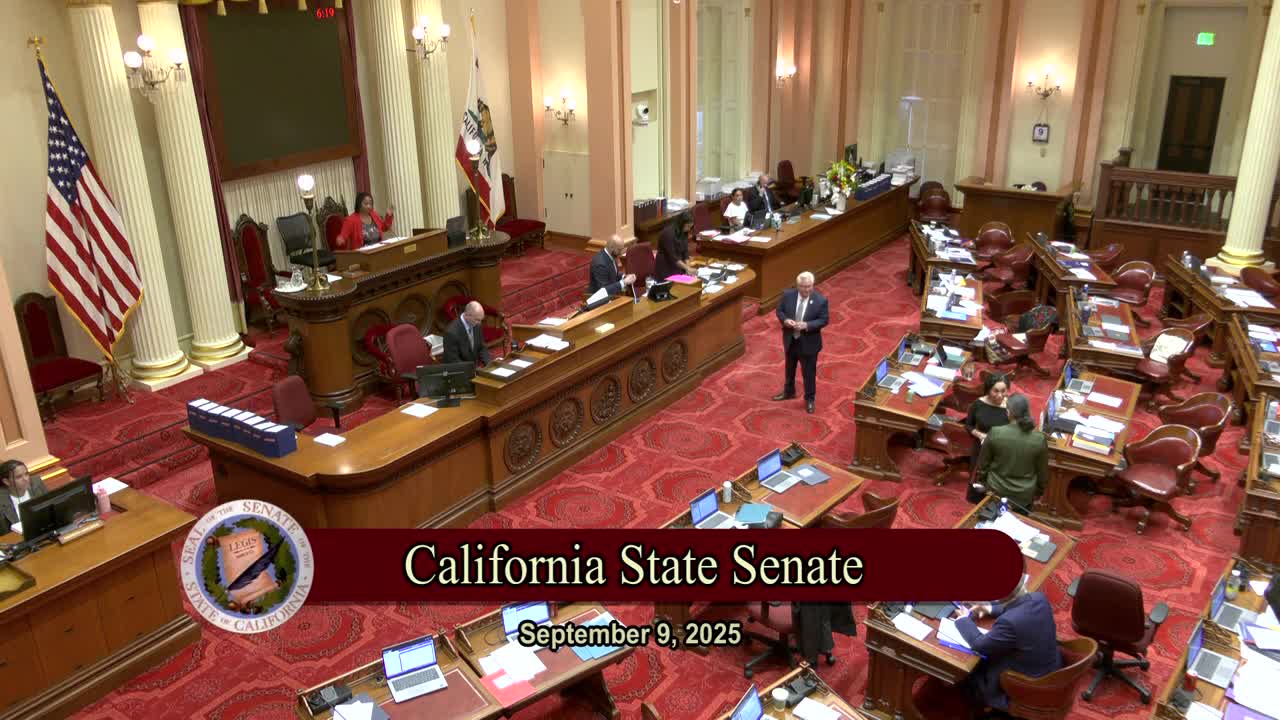 1MIN
Senate Floor
 2MIN
Assembly Floor
 31MIN
Assembly Standing Committee on Judiciary
 47MIN
Assembly Standing Committee on Higher Education
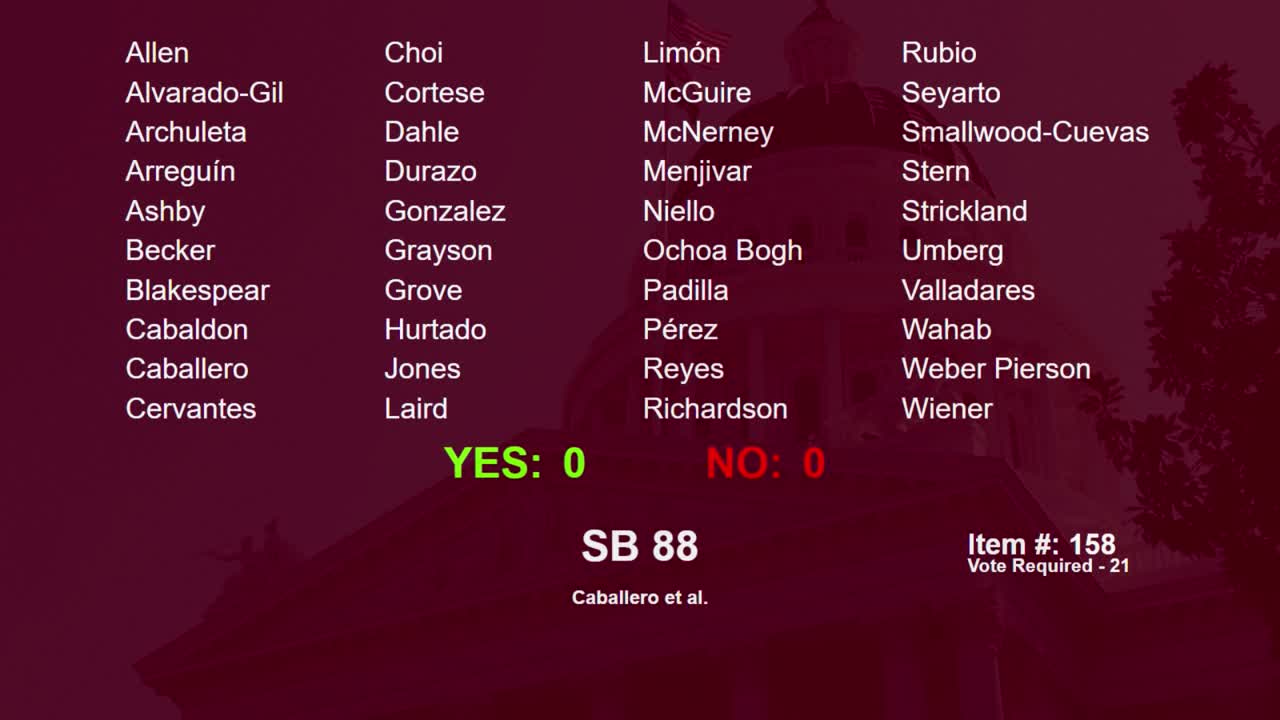 4MIN
Senate Floor
 20MIN
Senate Standing Committee on Judiciary
 35MIN
Senate Standing Committee on Education
Bill Author