SB 439: California Health Benefit Review Program: extension.
- Session Year: 2025-2026
- House: Senate
- Latest Version Date: 2025-10-03
Current Status:
Passed
(2025-10-03: Chaptered by Secretary of State. Chapter 318, Statutes of 2025.)
Introduced
In Committee
Awaiting First Chamber Vote
Passed First Chamber
In Committee
Awaiting Second Chamber Vote
Passed Second Chamber
Enacted
Existing law establishes the Health Care Benefits Fund to support the University of Californias implementation of the California Health Benefit Review Program. Under the program, the University of California assesses legislation proposing to repeal or mandate a benefit or service requirement on health care insurance plans or health insurers. Under the program, the University of California provides a written analysis that includes, among other data, financial impacts of legislation on publicly funded state health insurance programs, including the Medi-Cal program and the Healthy Families Program. Existing law imposes an annual charge on health care service plans and health insurers for the 202223 to 202627 fiscal years, inclusive, as specified, to be deposited into the fund. Existing law prohibits the total annual assessment on health care service plans and health insurers from exceeding $2,200,000. Under existing law, the fund and the program become inoperative on July 1, 2027, and are repealed as of January 1, 2028.
This bill would extend the operation of the California Health Benefit Review Program and the Health Care Benefits Fund through July 1, 2033, and would authorize the continued assessment of the annual charge on health care service plans and health insurers for that purpose for the 202627 to 203233 fiscal years, inclusive. The bill would increase the allowable total annual assessment on health care service plans and health insurers to $3,200,000. The bill would remove the Healthy Families Program as an example of the publicly funded state health insurance programs within an analysis of financial impacts of legislation.
This bill would make these provisions inoperative on July 1, 2033, and would repeal it as of January 1, 2034.
This bill would include a change in state statute that would result in a taxpayer paying a higher tax within the meaning of Section 3 of Article XIIIA of the California Constitution, and thus would require for passage the approval of 2/3 of the membership of each house of the Legislature.
Existing law establishes the Health Care Benefits Fund to support the University of Californias implementation of the California Health Benefit Review Program. Under the program, the University of California assesses legislation proposing to repeal or mandate a benefit or service requirement on health care insurance plans or health insurers. Under the program, the University of California provides a written analysis that includes, among other data, financial impacts of legislation on publicly funded state health insurance programs, including the Medi-Cal program and the Healthy Families Program. Existing law imposes an annual charge on health care service plans and health insurers for the 202223 to 202627 fiscal years, inclusive, as specified, to be deposited into the fund. Existing law prohibits the total annual assessment on health care service plans and health insurers from exceeding $2,200,000. Under existing law, the fund and the program become inoperative on July 1, 2027, and are repealed as of January 1, 2028.
This bill would extend the operation of the California Health Benefit Review Program and the Health Care Benefits Fund through July 1, 2032, 2033, and would authorize the continued assessment of the annual charge on health care service plans and health insurers for that purpose for the 202627 to 203233 fiscal years, inclusive. The bill would increase the allowable total annual assessment on health care service plans and health insurers to $3,200,000. The bill would remove the Healthy Families Program as an example of the publicly funded state health insurance programs within an analysis of financial impacts of legislation.
This bill would make these provisions inoperative on July 1, 2032, 2033, and would repeal it as of January 1, 2033. 2034.
This bill would include a change in state statute that would result in a taxpayer paying a higher tax within the meaning of Section 3 of Article XIIIA of the California Constitution, and thus would require for passage the approval of 2/3 of the membership of each house of the Legislature.
Existing law establishes the Health Care Benefits Fund to support the University of Californias implementation of the California Health Benefit Review Program. Under the program, the University of California assesses legislation proposing to repeal or mandate a benefit or service requirement on health care insurance plans or health insurers. Under the program, the University of California provides a written analysis that includes, among other data, financial impacts of legislation on publicly funded state health insurance programs, including the Medi-Cal program and the Healthy Families Program. Existing law imposes an annual charge on health care service plans and health insurers for the 202223 to 202627 fiscal years, inclusive, as specified, to be deposited into the fund. Existing law prohibits the total annual assessment on health care service plans and health insurers from exceeding $2,200,000. Under existing law, the fund and the program become inoperative on July 1, 2027, and are repealed as of January 1, 2028.
This bill would extend the operation of the California Health Benefit Review Program and the Health Care Benefits Fund through July 1, 2032, and would authorize the continued assessment of the annual charge on health care service plans and health insurers for that purpose for the 202627 to 203233 fiscal years, inclusive. The bill would increase the allowable total annual assessment on health care service plans and health insurers to $3,200,000. The bill would remove the Healthy Families Program as an example of the publicly funded state health insurance programs within an analysis of financial impacts of legislation.
This bill would make these provisions inoperative on July 1, 2032, and would repeal it as of January 1, 2033.
This bill would include a change in state statute that would result in a taxpayer paying a higher tax within the meaning of Section 3 of Article XIIIA of the California Constitution, and thus would require for passage the approval of 2/3 of the membership of each house of the Legislature.
(a)The Legislature hereby requests the University of California to establish the California Health Benefit Review Program to assess legislation proposing to mandate a benefit or service, as defined in subdivision (d), and legislation proposing to repeal a mandated benefit or service, as defined in subdivision (e), and to prepare a written analysis with relevant data on the following:
(1)Public health impacts, including, but not limited to, all of the following:
(A)The impact on the health of the community, including the reduction of communicable disease and the benefits of prevention such as those provided by childhood immunizations and prenatal care.
(B)The impact on the health of the community, including diseases and conditions where disparities in outcomes associated with the social determinants of health as well as gender, race, sexual orientation, or gender identity are established in peer-reviewed scientific and medical literature.
(C)The extent to which the benefit or service reduces premature death and the economic loss associated with disease.
(2)Medical impacts, including, but not limited to, all of the following:
(A)The extent to which the benefit or service is generally recognized by the medical community as being effective in the screening, diagnosis, or treatment of a condition or disease, as demonstrated by a review of scientific and peer-reviewed medical literature.
(B)The extent to which the benefit or service is generally available and utilized by treating physicians.
(C)The contribution of the benefit or service to the health status of the population, including the results of any research demonstrating the efficacy of the benefit or service compared to alternatives, including not providing the benefit or service.
(D)The extent to which mandating or repealing the benefits or services would not diminish or eliminate access to currently available health care benefits or services.
(3)Financial impacts, including, but not limited to, all of the following:
(A)The extent to which the coverage or repeal of coverage will increase or decrease the benefit or cost of the benefit or service.
(B)The extent to which the coverage or repeal of coverage will increase the utilization of the benefit or service, or will be a substitute for, or affect the cost of, alternative benefits or services.
(C)The extent to which the coverage or repeal of coverage will increase or decrease the administrative expenses of health care service plans and health insurers and the premium and expenses of subscribers, enrollees, and policyholders.
(D)The impact of this coverage or repeal of coverage on the total cost of health care.
(E)The impact of this coverage or repeal of coverage on anticipated costs or savings estimated upon implementation for one subsequent calendar year, or, if applicable, two subsequent calendar years through a long-range estimate.
(F)The potential cost or savings to the private sector, including the impact on small employers as defined in paragraph (1) of subdivision (l) of Section 1357, the Public Employees Retirement System, other retirement systems funded by the state or by a local government, individuals purchasing individual health insurance, and publicly funded state health insurance programs, including the Medi-Cal program.
(G)The extent to which costs resulting from lack of coverage or repeal of coverage are or would be shifted to other payers, including both public and private entities.
(H)The extent to which mandating or repealing the proposed benefit or service would not diminish or eliminate access to currently available health care benefits or services.
(I)The extent to which the benefit or service is generally utilized by a significant portion of the population.
(J)The extent to which health care coverage for the benefit or service is already generally available.
(K)The level of public demand for health care coverage for the benefit or service, including the level of interest of collective bargaining agents in negotiating privately for inclusion of this coverage in group contracts, and the extent to which the mandated benefit or service is covered by self-funded employer groups.
(L)In assessing and preparing a written analysis of the financial impact of legislation proposing to mandate a benefit or service and legislation proposing to repeal a mandated benefit or service pursuant to this paragraph, the Legislature requests the University of California to use a certified actuary or other person with relevant knowledge and expertise to determine the financial impact.
(4)The impact on essential health benefits, as defined in Section 1367.005 of this code and Section 10112.27 of the Insurance Code, and the impact on the California Health Benefit Exchange.
(b)The Legislature further requests that the California Health Benefit Review Program assess legislation that impacts health insurance benefit design, cost sharing, premiums, and other health insurance topics.
(c)The Legislature requests that the University of California provide every analysis to the appropriate policy and fiscal committees of the Legislature not later than 60 days, or in a manner and pursuant to a timeline agreed to by the Legislature and the California Health Benefit Review Program, after receiving a request made pursuant to Section 127661. In addition, the Legislature requests that the university post every analysis on the Internet and make every analysis available to the public upon request.
(d)As used in this section, legislation proposing to mandate a benefit or service means a proposed statute that requires a health care service plan or a health insurer, or both, to do any of the following:
(1)Permit a person insured or covered under the policy or contract to obtain health care treatment or services from a particular type of health care provider.
(2)Offer or provide coverage for the screening, diagnosis, or treatment of a particular disease or condition.
(3)Offer or provide coverage of a particular type of health care treatment or service, or of medical equipment, medical supplies, or drugs used in connection with a health care treatment or service.
(e)As used in this section, legislation proposing to repeal a mandated benefit or service means a proposed statute that would repeal an existing requirement that a health care service plan or a health insurer, or both, do any of the following:
(1)Permit a person insured or covered under the policy or contract to obtain health care treatment or services from a particular type of health care provider.
(2)Offer or provide coverage for the screening, diagnosis, or treatment of a particular disease or condition.
(3)Offer or provide coverage of a particular type of health care treatment or service, or of medical equipment, medical supplies, or drugs used in connection with a health care treatment or service.
SEC. 2.Section 127662 of the Health and Safety Code is amended to read:127662.(a)In order to effectively support the University of California and its work in implementing this chapter, there is hereby established in the State Treasury, the Health Care Benefits Fund. The universitys work in providing the bill analyses shall be supported from the fund.
(b)For the 202627 to 203233 fiscal years, inclusive, each health care service plan, except a specialized health care service plan, and each health insurer offering health insurance, as defined in Section 106 of the Insurance Code, shall be assessed an annual fee in an amount determined through regulation. The amount of the fee shall be determined by the Department of Managed Health Care and the Department of Insurance in consultation with the university and shall be limited to the amount necessary to fund the actual and necessary expenses of the university and its work in implementing this chapter. The total annual assessment on health care service plans and health insurers shall not exceed three million two hundred thousand dollars ($3,200,000).
(c)The Department of Managed Health Care and the Department of Insurance, in coordination with the university, shall assess the health care service plans and health insurers, respectively, for the costs required to fund the universitys activities pursuant to subdivision (b).
(1)Health care service plans shall be notified of the assessment on or before June 15 of each year with the annual assessment notice issued pursuant to Section 1356. The assessment pursuant to this section is separate and independent of the assessments in Section 1356.
(2)Health insurers shall be noticed of the assessment in accordance with the notice for the annual assessment or quarterly premium tax revenues.
(3)The assessed fees required pursuant to subdivision (b) shall be paid on an annual basis no later than August 1 of each year. The Department of Managed Health Care and the Department of Insurance shall forward the assessed fees to the Controller for deposit in the Health Care Benefits Fund immediately following their receipt.
(4)Health insurance, as used in this subdivision, does not include Medicare supplement, vision-only, dental-only, or CHAMPUS supplement insurance, or hospital indemnity, accident-only, or specified disease insurance that does not pay benefits on a fixed benefit, cash payment only basis.
SEC. 3.Section 127665 of the Health and Safety Code is amended to read:127665.This chapter shall become inoperative on July 1, 2033, and, as of January 1, 2034, is repealed.
(a)The Legislature hereby requests the University of California to establish the California Health Benefit Review Program to assess legislation proposing to mandate a benefit or service, as defined in subdivision (d), and legislation proposing to repeal a mandated benefit or service, as defined in subdivision (e), and to prepare a written analysis with relevant data on the following:
(1)Public health impacts, including, but not limited to, all of the following:
(A)The impact on the health of the community, including the reduction of communicable disease and the benefits of prevention such as those provided by childhood immunizations and prenatal care.
(B)The impact on the health of the community, including diseases and conditions where disparities in outcomes associated with the social determinants of health as well as gender, race, sexual orientation, or gender identity are established in peer-reviewed scientific and medical literature.
(C)The extent to which the benefit or service reduces premature death and the economic loss associated with disease.
(2)Medical impacts, including, but not limited to, all of the following:
(A)The extent to which the benefit or service is generally recognized by the medical community as being effective in the screening, diagnosis, or treatment of a condition or disease, as demonstrated by a review of scientific and peer-reviewed medical literature.
(B)The extent to which the benefit or service is generally available and utilized by treating physicians.
(C)The contribution of the benefit or service to the health status of the population, including the results of any research demonstrating the efficacy of the benefit or service compared to alternatives, including not providing the benefit or service.
(D)The extent to which mandating or repealing the benefits or services would not diminish or eliminate access to currently available health care benefits or services.
(3)Financial impacts, including, but not limited to, all of the following:
(A)The extent to which the coverage or repeal of coverage will increase or decrease the benefit or cost of the benefit or service.
(B)The extent to which the coverage or repeal of coverage will increase the utilization of the benefit or service, or will be a substitute for, or affect the cost of, alternative benefits or services.
(C)The extent to which the coverage or repeal of coverage will increase or decrease the administrative expenses of health care service plans and health insurers and the premium and expenses of subscribers, enrollees, and policyholders.
(D)The impact of this coverage or repeal of coverage on the total cost of health care.
(E)The impact of this coverage or repeal of coverage on anticipated costs or savings estimated upon implementation for one subsequent calendar year, or, if applicable, two subsequent calendar years through a long-range estimate.
(F)The potential cost or savings to the private sector, including the impact on small employers as defined in paragraph (1) of subdivision (l) of Section 1357, the Public Employees Retirement System, other retirement systems funded by the state or by a local government, individuals purchasing individual health insurance, and publicly funded state health insurance programs, including the Medi-Cal program.
(G)The extent to which costs resulting from lack of coverage or repeal of coverage are or would be shifted to other payers, including both public and private entities.
(H)The extent to which mandating or repealing the proposed benefit or service would not diminish or eliminate access to currently available health care benefits or services.
(I)The extent to which the benefit or service is generally utilized by a significant portion of the population.
(J)The extent to which health care coverage for the benefit or service is already generally available.
(K)The level of public demand for health care coverage for the benefit or service, including the level of interest of collective bargaining agents in negotiating privately for inclusion of this coverage in group contracts, and the extent to which the mandated benefit or service is covered by self-funded employer groups.
(L)In assessing and preparing a written analysis of the financial impact of legislation proposing to mandate a benefit or service and legislation proposing to repeal a mandated benefit or service pursuant to this paragraph, the Legislature requests the University of California to use a certified actuary or other person with relevant knowledge and expertise to determine the financial impact.
(4)The impact on essential health benefits, as defined in Section 1367.005 of this code and Section 10112.27 of the Insurance Code, and the impact on the California Health Benefit Exchange.
(b)The Legislature further requests that the California Health Benefit Review Program assess legislation that impacts health insurance benefit design, cost sharing, premiums, and other health insurance topics.
(c)The Legislature requests that the University of California provide every analysis to the appropriate policy and fiscal committees of the Legislature not later than 60 days, or in a manner and pursuant to a timeline agreed to by the Legislature and the California Health Benefit Review Program, after receiving a request made pursuant to Section 127661. In addition, the Legislature requests that the university post every analysis on the Internet and make every analysis available to the public upon request.
(d)As used in this section, legislation proposing to mandate a benefit or service means a proposed statute that requires a health care service plan or a health insurer, or both, to do any of the following:
(1)Permit a person insured or covered under the policy or contract to obtain health care treatment or services from a particular type of health care provider.
(2)Offer or provide coverage for the screening, diagnosis, or treatment of a particular disease or condition.
(3)Offer or provide coverage of a particular type of health care treatment or service, or of medical equipment, medical supplies, or drugs used in connection with a health care treatment or service.
(e)As used in this section, legislation proposing to repeal a mandated benefit or service means a proposed statute that would repeal an existing requirement that a health care service plan or a health insurer, or both, do any of the following:
(1)Permit a person insured or covered under the policy or contract to obtain health care treatment or services from a particular type of health care provider.
(2)Offer or provide coverage for the screening, diagnosis, or treatment of a particular disease or condition.
(3)Offer or provide coverage of a particular type of health care treatment or service, or of medical equipment, medical supplies, or drugs used in connection with a health care treatment or service.
SEC. 2.Section 127662 of the Health and Safety Code is amended to read:127662.(a)In order to effectively support the University of California and its work in implementing this chapter, there is hereby established in the State Treasury, the Health Care Benefits Fund. The universitys work in providing the bill analyses shall be supported from the fund.
(b)For the 202627 to 203233 fiscal years, inclusive, each health care service plan, except a specialized health care service plan, and each health insurer offering health insurance, as defined in Section 106 of the Insurance Code, shall be assessed an annual fee in an amount determined through regulation. The amount of the fee shall be determined by the Department of Managed Health Care and the Department of Insurance in consultation with the university and shall be limited to the amount necessary to fund the actual and necessary expenses of the university and its work in implementing this chapter. The total annual assessment on health care service plans and health insurers shall not exceed three million two hundred thousand dollars ($3,200,000).
(c)The Department of Managed Health Care and the Department of Insurance, in coordination with the university, shall assess the health care service plans and health insurers, respectively, for the costs required to fund the universitys activities pursuant to subdivision (b).
(1)Health care service plans shall be notified of the assessment on or before June 15 of each year with the annual assessment notice issued pursuant to Section 1356. The assessment pursuant to this section is separate and independent of the assessments in Section 1356.
(2)Health insurers shall be noticed of the assessment in accordance with the notice for the annual assessment or quarterly premium tax revenues.
(3)The assessed fees required pursuant to subdivision (b) shall be paid on an annual basis no later than August 1 of each year. The Department of Managed Health Care and the Department of Insurance shall forward the assessed fees to the Controller for deposit in the Health Care Benefits Fund immediately following their receipt.
(4)Health insurance, as used in this subdivision, does not include Medicare supplement, vision-only, dental-only, or CHAMPUS supplement insurance, or hospital indemnity, accident-only, or specified disease insurance that does not pay benefits on a fixed benefit, cash payment only basis.
SEC. 3.Section 127665 of the Health and Safety Code is amended to read:127665.This chapter shall become inoperative on July 1, 2032, 2033, and, as of January 1, 2033, 2034, is repealed.
(a)The Legislature hereby requests the University of California to establish the California Health Benefit Review Program to assess legislation proposing to mandate a benefit or service, as defined in subdivision (d), and legislation proposing to repeal a mandated benefit or service, as defined in subdivision (e), and to prepare a written analysis with relevant data on the following:
(1)Public health impacts, including, but not limited to, all of the following:
(A)The impact on the health of the community, including the reduction of communicable disease and the benefits of prevention such as those provided by childhood immunizations and prenatal care.
(B)The impact on the health of the community, including diseases and conditions where disparities in outcomes associated with the social determinants of health as well as gender, race, sexual orientation, or gender identity are established in peer-reviewed scientific and medical literature.
(C)The extent to which the benefit or service reduces premature death and the economic loss associated with disease.
(2)Medical impacts, including, but not limited to, all of the following:
(A)The extent to which the benefit or service is generally recognized by the medical community as being effective in the screening, diagnosis, or treatment of a condition or disease, as demonstrated by a review of scientific and peer-reviewed medical literature.
(B)The extent to which the benefit or service is generally available and utilized by treating physicians.
(C)The contribution of the benefit or service to the health status of the population, including the results of any research demonstrating the efficacy of the benefit or service compared to alternatives, including not providing the benefit or service.
(D)The extent to which mandating or repealing the benefits or services would not diminish or eliminate access to currently available health care benefits or services.
(3)Financial impacts, including, but not limited to, all of the following:
(A)The extent to which the coverage or repeal of coverage will increase or decrease the benefit or cost of the benefit or service.
(B)The extent to which the coverage or repeal of coverage will increase the utilization of the benefit or service, or will be a substitute for, or affect the cost of, alternative benefits or services.
(C)The extent to which the coverage or repeal of coverage will increase or decrease the administrative expenses of health care service plans and health insurers and the premium and expenses of subscribers, enrollees, and policyholders.
(D)The impact of this coverage or repeal of coverage on the total cost of health care.
(E)The impact of this coverage or repeal of coverage on anticipated costs or savings estimated upon implementation for one subsequent calendar year, or, if applicable, two subsequent calendar years through a long-range estimate.
(F)The potential cost or savings to the private sector, including the impact on small employers as defined in paragraph (1) of subdivision (l) of Section 1357, the Public Employees Retirement System, other retirement systems funded by the state or by a local government, individuals purchasing individual health insurance, and publicly funded state health insurance programs, including the Medi-Cal program and the Healthy Families Program. program.
(G)The extent to which costs resulting from lack of coverage or repeal of coverage are or would be shifted to other payers, including both public and private entities.
(H)The extent to which mandating or repealing the proposed benefit or service would not diminish or eliminate access to currently available health care benefits or services.
(I)The extent to which the benefit or service is generally utilized by a significant portion of the population.
(J)The extent to which health care coverage for the benefit or service is already generally available.
(K)The level of public demand for health care coverage for the benefit or service, including the level of interest of collective bargaining agents in negotiating privately for inclusion of this coverage in group contracts, and the extent to which the mandated benefit or service is covered by self-funded employer groups.
(L)In assessing and preparing a written analysis of the financial impact of legislation proposing to mandate a benefit or service and legislation proposing to repeal a mandated benefit or service pursuant to this paragraph, the Legislature requests the University of California to use a certified actuary or other person with relevant knowledge and expertise to determine the financial impact.
(4)The impact on essential health benefits, as defined in Section 1367.005 of this code and Section 10112.27 of the Insurance Code, and the impact on the California Health Benefit Exchange.
(b)The Legislature further requests that the California Health Benefit Review Program assess legislation that impacts health insurance benefit design, cost sharing, premiums, and other health insurance topics.
(c)The Legislature requests that the University of California provide every analysis to the appropriate policy and fiscal committees of the Legislature not later than 60 days, or in a manner and pursuant to a timeline agreed to by the Legislature and the California Health Benefit Review Program, after receiving a request made pursuant to Section 127661. In addition, the Legislature requests that the university post every analysis on the Internet and make every analysis available to the public upon request.
(d)As used in this section, legislation proposing to mandate a benefit or service means a proposed statute that requires a health care service plan or a health insurer, or both, to do any of the following:
(1)Permit a person insured or covered under the policy or contract to obtain health care treatment or services from a particular type of health care provider.
(2)Offer or provide coverage for the screening, diagnosis, or treatment of a particular disease or condition.
(3)Offer or provide coverage of a particular type of health care treatment or service, or of medical equipment, medical supplies, or drugs used in connection with a health care treatment or service.
(e)As used in this section, legislation proposing to repeal a mandated benefit or service means a proposed statute that would repeal an existing requirement that a health care service plan or a health insurer, or both, do any of the following:
(1)Permit a person insured or covered under the policy or contract to obtain health care treatment or services from a particular type of health care provider.
(2)Offer or provide coverage for the screening, diagnosis, or treatment of a particular disease or condition.
(3)Offer or provide coverage of a particular type of health care treatment or service, or of medical equipment, medical supplies, or drugs used in connection with a health care treatment or service.
SEC. 2.Section 127662 of the Health and Safety Code is amended to read:127662.(a)In order to effectively support the University of California and its work in implementing this chapter, there is hereby established in the State Treasury, the Health Care Benefits Fund. The universitys work in providing the bill analyses shall be supported from the fund.
(b)For the 202223 to 202627 202627 to 203233 fiscal years, inclusive, each health care service plan, except a specialized health care service plan, and each health insurer offering health insurance, as defined in Section 106 of the Insurance Code, shall be assessed an annual fee in an amount determined through regulation. The amount of the fee shall be determined by the Department of Managed Health Care and the Department of Insurance in consultation with the university and shall be limited to the amount necessary to fund the actual and necessary expenses of the university and its work in implementing this chapter. The total annual assessment on health care service plans and health insurers shall not exceed two million two hundred thousand dollars ($2,200,000). three million two hundred thousand dollars ($3,200,000).
(c)The Department of Managed Health Care and the Department of Insurance, in coordination with the university, shall assess the health care service plans and health insurers, respectively, for the costs required to fund the universitys activities pursuant to subdivision (b).
(1)Health care service plans shall be notified of the assessment on or before June 15 of each year with the annual assessment notice issued pursuant to Section 1356. The assessment pursuant to this section is separate and independent of the assessments in Section 1356.
(2)Health insurers shall be noticed of the assessment in accordance with the notice for the annual assessment or quarterly premium tax revenues.
(3)The assessed fees required pursuant to subdivision (b) shall be paid on an annual basis no later than August 1 of each year. The Department of Managed Health Care and the Department of Insurance shall forward the assessed fees to the Controller for deposit in the Health Care Benefits Fund immediately following their receipt.
(4)Health insurance, as used in this subdivision, does not include Medicare supplement, vision-only, dental-only, or CHAMPUS supplement insurance, or hospital indemnity, accident-only, or specified disease insurance that does not pay benefits on a fixed benefit, cash payment only basis.
SEC. 3.Section 127665 of the Health and Safety Code is amended to read:127665.This chapter shall become inoperative on July 1, 2027, 2032, and, as of January 1, 2028, 2033, is repealed.
|
Date
|
Status
|
|---|---|
| Oct 3, 2025 | Chaptered by Secretary of State. Chapter 318, Statutes of 2025. |
| Oct 3, 2025 | Approved by the Governor. |
| Sep 9, 2025 | Enrolled and presented to the Governor at 2 p.m. |
| Sep 4, 2025 | In Senate. Ordered to engrossing and enrolling. |
| Sep 3, 2025 | Read third time. Passed. (Ayes 75. Noes 1. Page 2868.) Ordered to the Senate. |
| Sep 2, 2025 | Read second time. Ordered to third reading. |
| Aug 29, 2025 | From committee: Do pass. (Ayes 13. Noes 0.) (August 29). |
| Jul 2, 2025 | July 2 set for first hearing. Placed on APPR. suspense file. |
| Jun 17, 2025 | From committee: Do pass and re-refer to Com. on APPR. (Ayes 15. Noes 0.) (June 17). Re-referred to Com. on APPR. |
| Jun 9, 2025 | Referred to Com. on HEALTH. |
| Jun 3, 2025 | In Assembly. Read first time. Held at Desk. |
| Jun 2, 2025 | Read third time. Passed. (Ayes 38. Noes 0. Page 1393.) Ordered to the Assembly. |
| May 23, 2025 | Read second time. Ordered to third reading. |
| May 23, 2025 | From committee: Do pass. (Ayes 6. Noes 0. Page 1200.) (May 23). |
| May 16, 2025 | Set for hearing May 23. |
| Apr 28, 2025 | April 28 hearing: Placed on APPR. suspense file. |
| Apr 17, 2025 | Set for hearing April 28. |
| Apr 10, 2025 | Read second time and amended. Re-referred to Com. on APPR. |
| Apr 10, 2025 | From committee: Do pass as amended and re-refer to Com. on APPR. with recommendation: To consent calendar. (Ayes 11. Noes 0. Page 737.) (April 9). |
| Mar 28, 2025 | Set for hearing April 9. |
| Feb 26, 2025 | Referred to Com. on HEALTH. |
| Feb 19, 2025 | From printer. May be acted upon on or after March 21. |
| Feb 18, 2025 | Introduced. Read first time. To Com. on RLS. for assignment. To print. |
|
Date
|
Description
|
Location
|
Votes
|
|
|---|---|---|---|---|
| Sep 3, 2025 | SB 439 Weber Pierson Senate Third Reading By Flora | Assembly Floor |
Passed |
|
| Aug 29, 2025 | Do pass. | Assembly Standing Committee on Appropriations |
Passed |
|
| Jun 17, 2025 | Do pass and be re-referred to the Committee on [Appropriations] | Assembly Standing Committee on Health |
Passed |
|
| Jun 2, 2025 | Senate 3rd Reading SB439 Weber Pierson | Senate Floor |
Passed |
|
| May 23, 2025 | Do pass | Senate Standing Committee on Appropriations |
Passed |
|
| Apr 28, 2025 | Placed on suspense file | Senate Standing Committee on Appropriations |
Passed |
|
| Apr 9, 2025 | Do pass as amended, but first amend, and re-refer to the Committee on [Appropriations] with the recommendation: To Consent Calendar | Senate Standing Committee on Health |
Passed |
This list shows positions taken on this bill by organizations on the date displayed, which is linked to the original source.
Positions by individuals are not included.
|
Organization
|
Position
|
Date
|
|---|---|---|
| California Academy of General Dentistry | ** Support | |
| California Association Of Medical Product Suppliers | ** Support | |
| California Chamber Of Commerce | ** Support | |
| Health Access California | ** Support | |
| UCLA Center for Health Policy Research | ** Support | |
| UCLA Department of Health Policy and Management | ** Support | |
| University of California (UC) | ** Support |
SENATE THIRD READING
STR Bill Id:SB 439
Author:(Weber Pierson)
As Amended Ver:April 10, 2025
2/3 vote
SUMMARY
Extends the operation of the University of California (UC)-administered California Health Benefit Review Program (CHBRP) and the Health Care Benefits Fund (the fund for CHBRP) through July 1, 2033. Extends the continued assessment of the annual charge on health plans and health insurers for the purpose of funding CHBRP for the 2026–27 to 2032–33 fiscal years, inclusive. Increases the maximum allowable total annual assessment on health plans and health insurers from $2.2 million to $3.2 million. Deletes an obsolete reference to the Healthy Families Program.
Major Provisions
COMMENTS
CHBRP was created by AB 1996 (Thomson), Chapter 795, Statutes of 2002 with the intent to provide current, accurate data and quality information on both the quality and cost of proposed legislation for the purpose of determining whether certain mandated health insurance benefits should be part of the basic health insurance benefit package, enabling the Legislature to be better informed when making decisions on mandated benefit legislative proposals.
According to CHBRP, a team of analytic staff at UC Berkeley works with a task force of faculty and researchers from several campuses of the UC, as well as actuarial consultants to complete each analysis during a 60-day period, usually before the Legislature begins formal consideration of a mandate bill. CHBRP indicates that each analysis summarizes sound scientific evidence relevant to the proposed legislation but does not make recommendations, deferring policy decision-making to the Legislature.
Over the last 22 years, CHBRP indicates it produced nearly 300 analyses in addition to dozens of supporting publications to assist policymakers in understanding the impact of proposed legislation. Legislative requests for analyses vary by year, and can range from between 10 and 22. CHBRP indicates it aims to have the capacity to complete between 12 to 15 bill analyses per year. CHBRP also indicates the cost of each analysis varies significantly, and depending upon the complexity of the bill, actuarial costs generally range from $15,000 to $70,000 or more, most of which are $45,000 and up. CHBRP's expenses include staff salary and benefits (42%), operational expenses such as training, rent, travel, information technology (4%), faculty and researcher task force (28%), actuarial costs (19%- 28%), editors, contractors, librarians, and content experts (3%-6%), and National Advisory Council Honorariums (1%).
According to the Author
CHBRP utilizes faculty and researchers from UC to provide the Legislature with timely, neutral, and evidence-based analyses of health insurance benefits-related legislation. Very frequently, CHBRP analyzes proposed health insurance benefit mandates. These analyses include information related to medical effectiveness and utilization rates of treatments and services, and the impact on individual plan premiums if benefits coverage was expanded. The Legislature, and other stakeholders involved in the legislative process, rely on these analyses to inform their discussions and decisions throughout the process. The analyses published by CHBRP provide valuable information that is challenging to access in such detail on a legislative timeframe. This bill extends the program's operating date until 2032-33 and increases the program's funding by $1 million to meet the growing demand of requests and increased operational costs.
Arguments in Support
This bill is sponsored by UC and supported by the California Chamber of Commerce and Health Access California. UC writes that CHBRP provides independent, objective analysis to the California Legislature on the medical, financial, and public health impacts of proposed health insurance benefit mandates and the repeal of any benefit mandates. CHBRP staff work in partnership with appointed faculty and researchers selected from across the UC system in order to deliver a rigorous, scientific, high-quality analysis in a tight 60-day timeline. UC states it values the work of CHBRP and its partnership with the State of California, and that CHBRP needs a funding increase and a sunset extension to maintain quality and meet its legislative workload. UC states the bills sent by the Legislature to CHBRP for analysis are increasingly complex and require full analytic teams to comprehensively and successfully deliver useful analyses. While CHBRP's budget has remained mostly flat, the costs of operating the analytical program have steadily increased over the years due to inflationary pressures for faculty and staff expertise, an increase in the complexity of bills, and rising costs for actuarial analyses. There has also been a steady increase in the annual number of requests, and the requested workload is typically higher than CHBRP can undertake. An increase to $3.2 million would mitigate these challenges and ensure quality, appropriate levels of expertise, sustainable staffing levels, and meet legislative needs to analyze more bills. UC concludes that CHBRP's continued existence and ongoing funding helps support UC faculty and students, expands health policy research and analysis efforts and informs legislative decision-making.
Health Access California writes in support that CHBRP analyses are crucial to consumer advocates across the state as CHBRP analyzes critical policy that affect different populations, including low-income groups, and communities of color, and their access to health care. CHBRP's analyses are critical to understand the gaps in health care, impacts of policies and crucial to help push inclusive and equitable health policy that improves coverage for Californians in underserved communities. Health Access concludes that the funding increase is important as it ensures CHBRP can deliver comprehensive and well-resourced analyses for the legislature every year.
Arguments in Opposition
None.
FISCAL COMMENTS
According to the Assembly Appropriations Committee, annual costs of $1 million in fiscal year (FY) 2026-27 (due to increasing the assessment from the current maximum of $2.2 million, to $3.2 million) and $3.2 million in FY 2027-28 through FY 2032-33 (Health Care Benefits Fund). The Department of Health Care Services (DHCS) notes 13 million Medi-Cal beneficiaries are enrolled in managed care plans that are subject to the CHBRP fee; therefore, $300,000 to $400,000 of the assessments in the Health Care Benefits Fund would be paid by Medi-Cal managed care plans (General Fund, federal funds). DHCS anticipates resulting rate increases would be negligible.
VOTES
SENATE FLOOR: 38-0-2
YES: Allen, Alvarado-Gil, Archuleta, Arreguín, Ashby, Becker, Blakespear, Cabaldon, Caballero, Cervantes, Choi, Cortese, Dahle, Durazo, Gonzalez, Grayson, Grove, Jones, Laird, Limón, McGuire, McNerney, Menjivar, Niello, Ochoa Bogh, Padilla, Pérez, Richardson, Rubio, Seyarto, Smallwood-Cuevas, Stern, Strickland, Umberg, Valladares, Wahab, Weber Pierson, Wiener
ABS, ABST OR NV: Hurtado, Reyes
ASM HEALTH: 15-0-1
YES: Bonta, Chen, Addis, Aguiar-Curry, Caloza, Carrillo, Flora, Mark González, Krell, Patel, Patterson, Celeste Rodriguez, Sanchez, Schiavo, Sharp-Collins
ABS, ABST OR NV: Stefani
ASM APPROPRIATIONS: 13-0-2
YES: Wicks, Sanchez, Arambula, Calderon, Caloza, Dixon, Elhawary, Fong, Mark González, Ahrens, Pacheco, Pellerin, Solache
ABS, ABST OR NV: Ta, Tangipa
UPDATED
VERSION: April 10, 2025
CONSULTANT: Scott Bain / HEALTH / (916) 319-2097 FN: 0001415
Date of Hearing: June 17, 2025
ASSEMBLY COMMITTEE ON HEALTH
Mia Bonta, Chair
SBPCA Bill Id:SB 439
Author:(Weber Pierson) – As Amended Ver:April 10, 2025
SENATE VOTE: 38-0
SUBJECT: California Health Benefit Review Program: extension.
SUMMARY: Extends the operation of the University of California (UC)-administered California Health Benefit Review Program (CHBRP) and the Health Care Benefits Fund (the fund for CHBRP) through July 1, 2033. Extends the continued assessment of the annual charge on health plans and health insurers for the purpose of funding CHBRP for the 2026–27 to 2032–33 fiscal years, inclusive. Increases the maximum allowable total annual assessment on health plans and health insurers from $2.2 million to $3.2 million. Removes an obsolete reference to the Healthy Families Program.
EXISTING LAW:
- Requests the UC to establish CHBRP to assess legislation proposing to mandate a benefit or service or to repeal a mandated benefit or service, and to prepare a written analysis with relevant data on public health, medical and financial impacts, as defined. [Health and Safety Code (HSC) § 127660]
- Defines “legislation proposing to mandate a benefit or service” as a proposed statute that requires a health plan or a health insurer, or both, to do any of the following:
- Permit a person insured or covered under the policy or contract to obtain health care treatment or services from a particular type of health care provider;
- Offer or provide coverage for the screening, diagnosis, or treatment of a particular disease or condition; or,
- Offer or provide coverage of a particular type of health care treatment or service, or of medical equipment, medical supplies, or drugs used in connection with a health care treatment or service. [Ibid.]
- Establishes in the State Treasury the Health Care Benefits Fund to support UC and its work in implementing CHBRP. [HSC § 127662]
- Requires, for the 2022–23 to 2025–26 fiscal years, inclusive, each health plan, except a specialized health plan, and each health insurer offering health insurance, to be assessed an annual fee in an amount determined through regulation. Requires the amount of the fee to be determined by the Department of Managed Health Care and the Department of Insurance in consultation with the UC and to be limited to the amount necessary to fund the actual and necessary expenses of UC and its work in implementing the CHBRP-related provisions. [Ibid.]
- Prohibits the total annual assessment on health plans and health insurers from exceeding $2.2 million dollars. [Ibid.]
- Sunsets the CHBRP and its related financing and operational provisions on July 1, 2027. [HSC § 127665]
FISCAL EFFECT: According to the Senate Appropriations Committee, extending the program and increasing the funding cap would result in costs of $1 million in 2026-27 (due to increasing the current cap in 2026-27 from $2.2 million to $3.2 million); and $3.2 million each year 2027-28 through 2032-33 (Health Care Benefits Fund).
COMMENTS:
- PURPOSE OF THIS BILL. According to the author, CHBRP utilizes faculty and researchers from UC to provide the Legislature with timely, neutral, and evidence-based analyses of health insurance benefits-related legislation. Very frequently, CHBRP analyzes proposed health insurance benefit mandates. These analyses include information related to medical effectiveness and utilization rates of treatments and services, and the impact on individual plan premiums if benefits coverage was expanded. The Legislature, and other stakeholders involved in the legislative process, rely on these analyses to inform their discussions and decisions throughout the process. The analyses published by CHBRP provide valuable information that is challenging to access in such detail on a legislative timeframe. This bill extends the program’s operating date until 2032-33 and increases the program’s funding by $1 million to meet the growing demand of requests and increased operational costs.
- BACKGROUND. CHBRP was created by AB 1996 (Thomson), Chapter 795, Statutes of 2002 with the intent to provide current, accurate data and quality information on both the quality and cost of proposed legislation for the purpose of determining whether certain mandated health insurance benefits should be part of the basic health insurance benefit package, enabling the Legislature to be better informed when making decisions on mandated benefit legislative proposals.
According to CHBRP, a team of analytic staff at UC Berkeley works with a task force of faculty and researchers from several campuses of the UC, as well as actuarial consultants to complete each analysis during a 60-day period, usually before the Legislature begins formal consideration of a mandate bill. CHBRP indicates that a strict conflict of interest policy ensures that the analyses are undertaken without financial or other interests that could bias the results. A National Advisory Council, made up of experts from outside the state of California and designed to provide balanced representation among groups with an interest in health insurance benefit-related legislation, reviews draft analyses to assure their quality before they are transmitted to the Legislature. CHBRP indicates that each analysis summarizes sound scientific evidence relevant to the proposed legislation but does not make recommendations, deferring policy decision-making to the Legislature.
Over the last 22 years, CHBRP indicates it produced nearly 300 analyses in addition to dozens of supporting publications to assist policymakers in understanding the impact of proposed legislation. Legislative requests for analyses vary by year, and can range from between 10 and 22. CHBRP indicates it aims to have the capacity to complete between 12 to 15 bill analyses per year. CHBRP also indicates the cost of each analysis varies significantly, and depending upon the complexity of the bill, actuarial costs generally range from $15,000 to $70,000 or more, most of which are $45,000 and up. CHBRP’s expenses include staff salary and benefits (42%), operational expenses such as training, rent, travel, information technology (4%), faculty and researcher task force (28%), actuarial costs (19%- 28%), editors, contractors, librarians, and content experts (3%-6%), and National Advisory Council Honorariums (1%).
- SUPPORT. This bill is sponsored by UC and supported by the California Chamber of Commerce and Health Access California. UC writes that CHBRP provides independent, objective analysis to the California Legislature on the medical, financial, and public health impacts of proposed health insurance benefit mandates and the repeal of any benefit mandates. CHBRP staff work in partnership with appointed faculty and researchers selected from across the UC system in order to deliver a rigorous, scientific, high-quality analysis in a tight 60-day timeline. UC states it values the work of CHBRP and its partnership with the State of California, and that CHBRP needs a funding increase and a sunset extension to maintain quality and meet its legislative workload. UC states the bills sent by the Legislature to CHBRP for analysis are increasingly complex and require full analytic teams to comprehensively and successfully deliver useful analyses. While CHBRP’s budget has remained mostly flat, the costs of operating the analytical program have steadily increased over the years due to inflationary pressures for faculty and staff expertise, an increase in the complexity of bills, and rising costs for actuarial analyses. There has also been a steady increase in the annual number of requests, and the requested workload is typically higher than CHBRP can undertake. An increase to $3.2 million would mitigate these challenges and ensure quality, appropriate levels of expertise, sustainable staffing levels, and meet legislative needs to analyze more bills. UC concludes that CHBRP’s continued existence and ongoing funding helps support UC faculty and students, expands health policy research and analysis efforts and informs legislative decision-making.
Health Access California writes in support that CHBRP analyses are crucial to consumer advocates across the state as CHBRP analyzes critical policy that affect different populations, including low-income groups, and communities of color, and their access to health care. CHBRP’s analyses are critical to understand the gaps in health care, impacts of policies and crucial to help push inclusive and equitable health policy that improves coverage for Californians in underserved communities. Health Access concludes that the funding increase is important as it ensures CHBRP can deliver comprehensive and well-resourced analyses for the legislature every year.
- PREVIOUS LEGISLATION.
- AB 1082 (Waldron) Chapter 592, Statutes of 2021 extends the assessment on health plans and insurers that supports CHBRP to July 1, 2027, and increases the annual cap on the health plan and insurer assessment by $200,000 (for a total annual assessment amount of $2.2 million) to support CHBRP.
- SB 406 (Pan) Chapter 302, Statutes of 2020, among other provisions, extends the CHBRP assessment and sunset date to July 1, 2022.
- AB 114 (Committee on Budget) Chapter 38, Statutes of 2017, extends the CHBRP sunset date to July 1, 2020.
- SB 125 (Hernández) Chapter 9, Statutes of 2015, among other provisions, extends the sunset date of CHBRP to June 30, 2017 and makes changes to its analyses and timelines.
- SB 1465 (Committee on Health) Chapter 442, Statutes of 2014, among other provisions, extends the sunset date by six months, to December 31, 2015.
- AB 1540 (Committee on Health) Chapter 298, Statutes of 2009 extends the CHBRP sunset date to June 30, 2015.
- SB 1704 (Kuehl) Chapter 684, Statutes of 2006 extends the CHBRP sunset date to January 1, 2011 and adds within the scope of legislation bills that would propose to repeal a mandated service or benefit, that if enacted, would become effective on or after January 1, 2008.
- AB 1996 (Thomson) Chapter 795, Statutes of 2002 establishes CHBRP by requesting UC to assess legislation proposing a mandated benefit or service, and to prepare a written analysis with relevant data on the public health, medical and economic impact of proposed health plan and health insurance benefit mandate legislation. Requires, for fiscal years 2002-03 to 2005-06, health plans and insurers to be assessed an annual fee in an amount determined through regulation to fund the actual and necessary expenses of UC in implementing this bill, and capped the total annual assessment on health plans and insurers at $2 million. Repeals the provisions of the bill on January 1, 2007.
REGISTERED SUPPORT / OPPOSITION:
Support
University of California (sponsor)
California Academy of General Dentistry
California Association of Medical Product Suppliers
Chamber of Commerce
Health Access California
UCLA Center for Health Policy Research
Opposition
None on file
Analysis Prepared by: Scott Bain / HEALTH / (916) 319-2097
SENATE RULES COMMITTEE Office of Senate Floor Analyses (916) 651-1520 Fax: (916) 327-4478 | SB 439 |
THIRD READING
Bill No: SB 439
Author: Weber Pierson (D)
Amended: 4/10/25
Vote: 27
SENATE HEALTH COMMITTEE: 11-0, 4/9/25
AYES: Menjivar, Valladares, Durazo, Gonzalez, Grove, Limón, Padilla, Richardson, Rubio, Weber Pierson, Wiener
SENATE APPROPRIATIONS COMMITTEE: 6-0, 5/23/25
AYES: Caballero, Seyarto, Cabaldon, Grayson, Richardson, Wahab
NO VOTE RECORDED: Dahle
SUBJECT: California Health Benefit Review Program: extension
SOURCE: University of California
DIGEST:
This bill (1) extends the authorization for funding for the California Health Benefits Review Program (CHBRP) and increases the limit on the health insurance assessment that supports CHBRP’s work to $3.2 million. (2) Sunsets the statute on July 1, 2033.
ANALYSIS:
Existing law:
- Requests the University of California (UC) to establish CHBRP to assess legislation proposing to mandate a health insurance benefit or service, repeal a mandated benefit or service, alter a health insurance benefit design, cost-sharing, or premiums, and other health insurance topics. Requests a written report on the public health, medical, and financial impacts of the health insurance coverage mandate legislation, and essential health benefits. [Health and Safety Code (HSC) §127660]
- Requires each health plan, except a specialized health plan, and each health insurer offering health insurance to be assessed an annual fee in an amount determined through regulation by the Department of Managed Health Care and California Department of Insurance in consultation with the UC and to be limited to the amount necessary to fund the actual and necessary expenses of UC and this work. Caps the assessment at $2.2 million. [HSC §127662]
- Sunsets the assessment with the 2026-27 fiscal year, and sunsets the statute on July 1, 2027. [HSC §127662 and §127665]
This bill:
- Extends the authorization for funding the CHBRP through fiscal year 2032-2033; and, raises the cap on the total annual assessment on health plans and health insurers to $3.2 million, an increase of $1 million.
- Extends the sunset date to July 1, 2033 (from July 1, 2027).
Comments
According to the author of this bill:
CHBRP utilizes faculty and researchers from the UC to provide the Legislature with timely, neutral, and evidence-based analyses of health insurance benefits-related legislation. Very frequently, CHBRP analyzes proposed health insurance benefit mandates. These analyses include information related to medical effectiveness and utilization rates of treatments and services, and the impact on individual plan premiums if benefits coverage was expanded. The Legislature, and other stakeholders involved in the legislative process, rely on these analyses to inform their discussions and decisions throughout the process. The analyses published by CHBRP provide valuable information that is challenging to access in such detail on a legislative timeframe. This bill extends the program’s operating date until 2032-33 and increases the program’s funding by $1 million to meet the growing demand of requests and increased operational costs.
Background
CHBRP Background. CHBRP was created by AB 1996 (Thomson, Chapter 795, Statutes of 2002) with the intent to provide current, accurate data and quality information on both the quality and cost of proposed legislation for the purpose of determining whether certain mandated health insurance benefits should be part of the basic health insurance benefit package, enabling the Legislature to be better informed when making decisions on mandated benefit legislative proposals. Over the last 22 years, CHBRP has issued reports on approximately 248 bills and has issued other policy briefs on federal and state health insurance mandates. Legislative requests for reports per year can range from between 10 and 22. According to CHBRP, a team of analytic staff at UC Berkeley works with a task force of faculty and researchers from several campuses of the UC, as well as actuarial consultants to complete each analysis during a 60-day period, usually before the Legislature begins formal consideration of a mandate bill. CHBRP indicates that a strict conflict of interest policy ensures that the analyses are undertaken without financial or other interests that could bias the results. A National Advisory Council, made up of experts from outside the state of California and designed to provide balanced representation among groups with an interest in health insurance benefit-related legislation, reviews draft analyses to assure their quality before they are transmitted to the Legislature. CHBRP indicates that each analysis summarizes sound scientific evidence relevant to the proposed legislation but does not make recommendations, deferring policy decision-making to the Legislature. CHBRP’s expenses include staff salary and benefits (42%), operational expenses such as training, rent, travel, information technology (4%), faculty and researcher task force (28%), actuarial costs (19%-28%), editors, contractors, librarians, and content experts (3%-6%), and National Advisory Council Honorariums (1%).
FISCAL EFFECT: Appropriation: No Fiscal Com.: Yes Local: No
According to the Senate Appropriations Committee, extending the program and increasing the funding cap would result in costs of $1 million in 2026-27 (due to increasing the current cap in 2026-27 from $2.2 million to $3.2 million); and $3.2 million each year 2027-28 through 2032-33 (Health Care Benefits Fund).
SUPPORT: (Verified 5/23/25)
University of California (source)
California Association of Medical Product Suppliers
California Chamber of Commerce
Health Access California
UCLA Center for Health Policy Research
UCLA Department of Health Policy and Management
Eight individuals
OPPOSITION: (Verified 5/23/25)
None received
ARGUMENTS IN SUPPORT: UC writes, “CHBRP needs a funding increase and a sunset extension to maintain quality and meet its legislative workload. The bills sent by the Legislature to CHBRP for analysis are increasingly complex and require full analytic teams to comprehensively and successfully deliver useful analyses. While CHBRP’s budget has remained mostly flat¸ the costs of operating the analytical program have steadily increased over the years due to inflationary pressures for faculty and staff expertise, an increase in the complexity of bills, and rising costs for actuarial analyses. There has also been a steady increase in the annual number of requests, and the requested workload is typically higher than CHBRP can undertake. An increase to $3.2 million would mitigate these challenges and ensure quality, appropriate levels of expertise, sustainable staffing levels, and meet legislative needs to analyze more bills. CHBRP’s continued existence and ongoing funding helps support UC faculty and students, expands health policy research and analysis efforts and informs legislative decision-making.” The California Chamber of Commerce writes, “The Legislature must carefully consider the broader economic implications of the bills they move forward, as shifting costs for one segment of the population often results in increased premiums for all consumers and employers. In the current economic climate, where businesses and individuals are already grappling with rising costs across all sectors, these premium increases will likely lead to employers reconsidering or reducing health benefit offerings, increased employee cost-sharing, and ultimately consumers being unable to afford monthly premiums.” One individual writes, “CHBRP is an incredibly impactful program in supporting sound policymaking in California and is equally valued by both supporters and opponents of proposed legislation and other stakeholders. CHBRP is impressive in producing rapid, concise, and accurate assessment of complex topics to address the needs of the legislators. CHBRP’s accomplishments include fostering collaboration among subject matter and policy experts throughout UC. Participation in CHBRP has led to career development of numerous junior and senior researchers and professors who have gained deep insights into the policy making process and worked collaboratively with interdisciplinary experts towards a common goal. This form of knowledge building and collaborative spirit is crucial for the development of an academic workforce that can translate complex research into action that benefits all Californians.” Another individual writes that an increase in funding is badly needed to meet operational costs driven by inflation, complexity of bills, and an increase in the number of requests sent to CHBRP.
Prepared by: Teri Boughton / HEALTH / (916) 651-4111
5/25/25 17:17:54
SENATE COMMITTEE ON
Senator Anna Caballero, Chair
2025 - 2026 Regular Session
SB 439 (Weber Pierson) - California Health Benefit Review Program: extension
Version: | Policy Vote: |
Urgency: | Mandate: |
Hearing Date: | Consultant: |
Bill Summary:
SB 439 would extend the authorization for the California Health Benefits Review Program (CHBRP) and increase the limit on funding for the CHBRP.
Fiscal Impact:
Extending the program and increasing the funding cap would result in costs of $1 million in 2026-27 (due to increasing the current cap in 2026-27 from $2.2 million to $3.2 million); and $3.2 million each year 2027-28 through 2032-33 (Health Care Benefits Fund).
Background:
Current law requests the University of California (UC) to establish CHBRP to assess legislation proposing to: mandate a health insurance benefit or service; repeal a mandated benefit or service; or impact health insurance benefit design, cost-sharing, premiums and other health insurance topics. The CHBRP provides a written report on the public health impacts, medical impacts, financial impacts, and impacts on essential health benefits of the proposed legislation. Under the program, CHBRP provides every analysis to the appropriate policy and fiscal committees of the Legislature not later than 60 days after receiving a request, or in a manner and pursuant to a timeline agreed to by the Legislature and the CHBRP, as specified.
According to CHBRP, a team of analytic staff at UC Berkeley works with a task force of faculty and researchers from several campuses of the UC, as well as actuarial consultants to complete each analysis during a 60-day period, usually before the Legislature begins formal consideration of a mandate bill. A National Advisory Council, made up of experts from outside the state of California and designed to provide balanced representation among groups with an interest in health insurance benefit-related legislation, reviews draft analyses before they are transmitted to the Legislature.
Current law requires each health plan and insurer offering health insurance to be assessed an annual fee, to be limited to the amount necessary to fund the actual and necessary expenses of UC for the CHBRP work. The fee assessments are deposited into the Health Care Benefits Fund. Current law caps the annual assessment at $2.2 million and sunsets the CHBRP on July 1, 2027.
Proposed Law:
SB 439 would extend the sunset date for CHBRP from July 1, 2027 to July 1, 2033 and raise the cap on the total annual assessment on health plans and insurers from $2.2 million to $3.2 million.
-- END --
SENATE COMMITTEE ON HEALTH
Senator Caroline Menjivar, Chair
BILL NO: SB 439
AUTHOR: | Weber Pierson | ||
VERSION: | February 18, 2025 | ||
HEARING DATE: | April 9, 2025 | ||
CONSULTANT: | Teri Boughton | ||
SUBJECT: California Health Benefit Review Program: extension
SUMMARY:
Extends the authorization for funding for the California Health Benefits Review Program (CHBRP) and increases the limit on the health insurance assessment that supports CHBRP’s work to $3.2 million. Sunsets the statute on July 1, 2032.
Existing law:
- Requests the University of California (UC) to establish CHBRP to assess legislation proposing to mandate a health insurance benefit or service, repeal a mandated benefit or service, alter a health insurance benefit design, cost-sharing, or premiums, and other health insurance topics. Requests a written report on the public health, medical, and financial impacts of the health insurance coverage mandate legislation, and essential health benefits. [HSC §127660]
- Requires each health plan, except a specialized health plan, and each health insurer offering health insurance to be assessed an annual fee in an amount determined through regulation by the Department of Managed Health Care (DMHC) and California Department of Insurance (CDI) in consultation with the UC and to be limited to the amount necessary to fund the actual and necessary expenses of UC and this work. Caps the assessment at $2.2 million. [HSC §127662]
- Sunsets the assessment with the 2026-27 fiscal year, and sunsets the statute on July 1, 2027. [HSC §127662 and §127665]
This bill:
- Extends the authorization for funding the CHBRP through fiscal year 2032-2033; and, raises the cap on the total annual assessment on health plans and health insurers to $3.2 million, an increase of $1 million.
- Extends the sunset date to July 1, 2032 (from July 1, 2027).
FISCAL EFFECT:
This bill has not been analyzed by a fiscal committee.
COMMENTS:
- Author’s statement. According to the author, CHBRP utilizes faculty and researchers from the UC to provide the Legislature with timely, neutral, and evidence-based analyses of health insurance benefits-related legislation. Very frequently, CHBRP analyzes proposed health insurance benefit mandates. These analyses include information related to medical effectiveness and utilization rates of treatments and services, and the impact on individual plan premiums if benefits coverage was expanded. The Legislature, and other stakeholders involved in the legislative process, rely on these analyses to inform their discussions and decisions throughout the process. The analyses published by CHBRP provide valuable information that is challenging to access in such detail on a legislative timeframe. This bill extends the program’s operating date until 2032-33 and increases the program’s funding by $1 million to meet the growing demand of requests and increased operational costs.
- CHBRP Background. CHBRP was created by AB 1996 (Thomson, Chapter 795, Statutes of 2002) with the intent to provide current, accurate data and quality information on both the quality and cost of proposed legislation for the purpose of determining whether certain mandated health insurance benefits should be part of the basic health insurance benefit package, enabling the Legislature to be better informed when making decisions on mandated benefit legislative proposals. Over the last 22 years, CHBRP has issued reports on approximately 248 bills and has issued other policy briefs on federal and state health insurance mandates. Legislative requests for reports per year can range from between 10 and 22. According to CHBRP, a team of analytic staff at UC Berkeley works with a task force of faculty and researchers from several campuses of the UC, as well as actuarial consultants to complete each analysis during a 60-day period, usually before the Legislature begins formal consideration of a mandate bill. CHBRP indicates that a strict conflict of interest policy ensures that the analyses are undertaken without financial or other interests that could bias the results. A National Advisory Council, made up of experts from outside the state of California and designed to provide balanced representation among groups with an interest in health insurance benefit-related legislation, reviews draft analyses to assure their quality before they are transmitted to the Legislature. CHBRP indicates that each analysis summarizes sound scientific evidence relevant to the proposed legislation but does not make recommendations, deferring policy decision-making to the Legislature. CHBRP’s expenses include staff salary and benefits (42%), operational expenses such as training, rent, travel, information technology (4%), faculty and researcher task force (28%), actuarial costs (19%-28%), editors, contractors, librarians, and content experts (3%-6%), and National Advisory Council Honorariums (1%).
- Prior legislation. AB 1082 (Waldron, Chapter 592, Statutes of 2021) extended the assessment on health plans and insurers that supports CHBRP to July 1, 2027, and increased the annual cap on the health plan and insurer assessment by $200,000 for a total annual assessment limit of $2.2 million to support CHBRP.
SB 406 (Pan, Chapter 302, Statutes of 2020), among other provisions, extended the assessment and sunset date to July 1, 2022.
AB 114 (Committee on Budget, Chapter 38, Statutes of 2017), extended the sunset date to July 1, 2020.
SB 125 (Hernandez, Chapter 9, Statutes of 2015), among other provisions, extended the sunset date of CHBRP to June 30, 2017 and makes changes to its analyses and timelines.
SB 1465 (Committee on Health, Chapter 442, Statutes of 2014), among other provisions, extended the sunset date to December 31, 2015.
AB 1540 (Committee on Health, Chapter 298, Statutes of 2009) extended the sunset date to June 30, 2015.
SB 1704 (Kuehl, Chapter 684, Statutes of 2006) extended the sunset date to January 1, 2011.
AB 1996 (Thomson, Chapter 795, Statutes of 2002) requested UC to assess legislation proposing a mandated benefit or service, and to prepare a written analysis with relevant data on the public health, medical and economic impact of proposed health plan and health insurance benefit mandate legislation. Required, for fiscal years 2002-03 to 2005-06, health plans and insurers to be assessed an annual fee in an amount determined through regulation to fund the actual and necessary expenses of UC in implementing this bill, and capped the total annual assessment on health plans and insurers at $2 million. Repealed the provisions of the bill on January 1, 2007.
- Support. UC writes that CHBRP needs a funding increase and a sunset extension to maintain quality and meet its legislative workload. The bills sent by the Legislature to CHBRP for analysis are increasingly complex and require full analytic teams to comprehensively and successfully deliver useful analyses. While CHBRP’s budget has remained mostly flat¸ the costs of operating the analytical program have steadily increased over the years due to inflationary pressures for faculty and staff expertise, an increase in the complexity of bills, and rising costs for actuarial analyses. There has also been a steady increase in the annual number of requests, and the requested workload is typically higher than CHBRP can undertake. An increase to $3.2 million would mitigate these challenges and ensure quality, appropriate levels of expertise, sustainable staffing levels, and meet legislative needs to analyze more bills. CHBRP’s continued existence and ongoing funding helps support UC faculty and students, expands health policy research and analysis efforts and informs legislative decision-making. The California Chamber of Commerce writes in support of CHBRP, the Legislature must carefully consider the broader economic implications of the bills they move forward, as shifting costs for one segment of the population often results in increased premiums for all consumers and employers. In the current economic climate, where businesses and individuals are already grappling with rising costs across all sectors, these premium increases will likely lead to employers reconsidering or reducing health benefit offerings, increased employee cost-sharing, and ultimately consumers being unable to afford monthly premiums. One individual writes CHBRP is an incredibly impactful program in supporting sound policymaking in California and is equally valued by both supporters and opponents of proposed legislation and other stakeholders. CHBRP is impressive in producing rapid, concise, and accurate assessment of complex topics to address the needs of the legislators. CHBRP’s accomplishments include fostering collaboration among subject matter and policy experts throughout UC. Participation in CHBRP has led to career development of numerous junior and senior researchers and professors who have gained deep insights into the policy making process and worked collaboratively with interdisciplinary experts towards a common goal. This form of knowledge building and collaborative spirit is crucial for the development of an academic workforce that can translate complex research into action that benefits all Californians. Another individual writes that an increase in funding is badly needed to meet operational costs driven by inflation, complexity of bills, and an increase in the number of requests sent to CHBRP.
- Amendment. The sponsors request an amendment to correct a drafting error. The amendment would revise the inoperative date from July 1, 2032, to July 1, 2033 to align with the assessment sunset, and repeal the statute as of January 1, 2034.
SUPPORT AND OPPOSITION:
Support: University of California (sponsor)
California Chamber of Commerce
UCLA Center for Health Policy Research
UCLA Department of Health Policy and Management
Seven individuals
Oppose: None received
-- END --
Discussed in Hearing
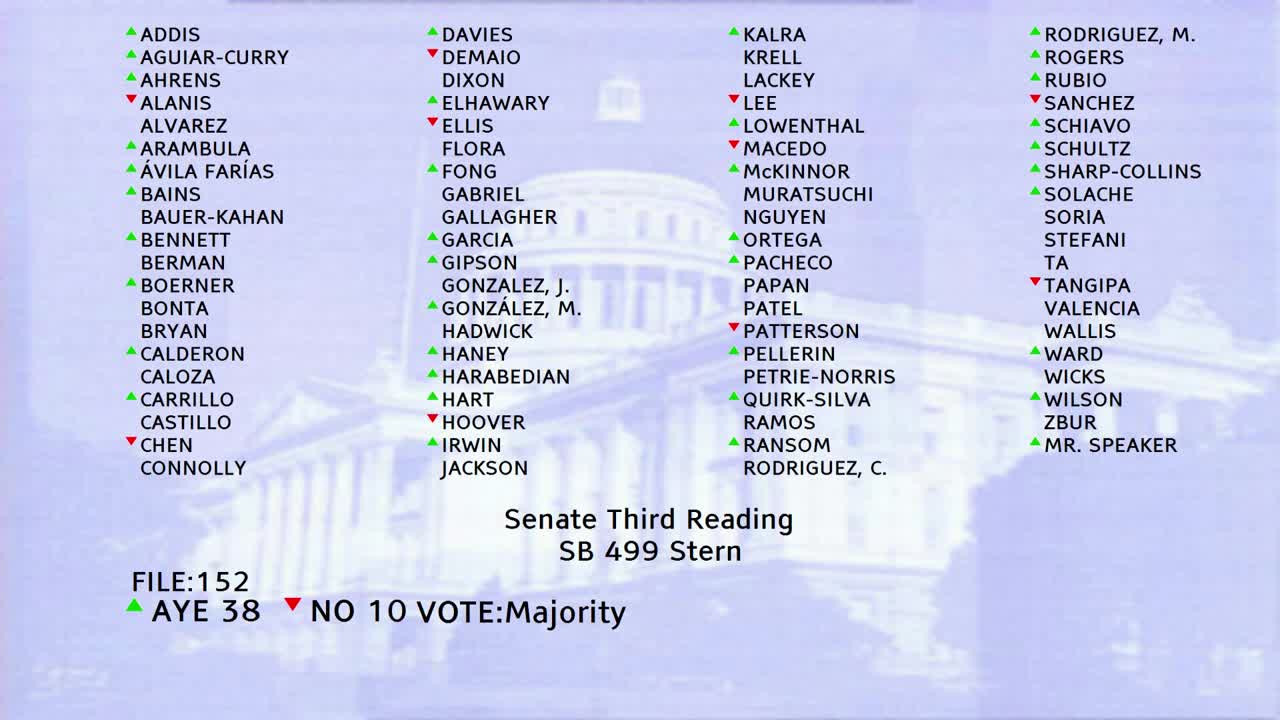 1MIN
Assembly Floor
 5MIN
Assembly Standing Committee on Health
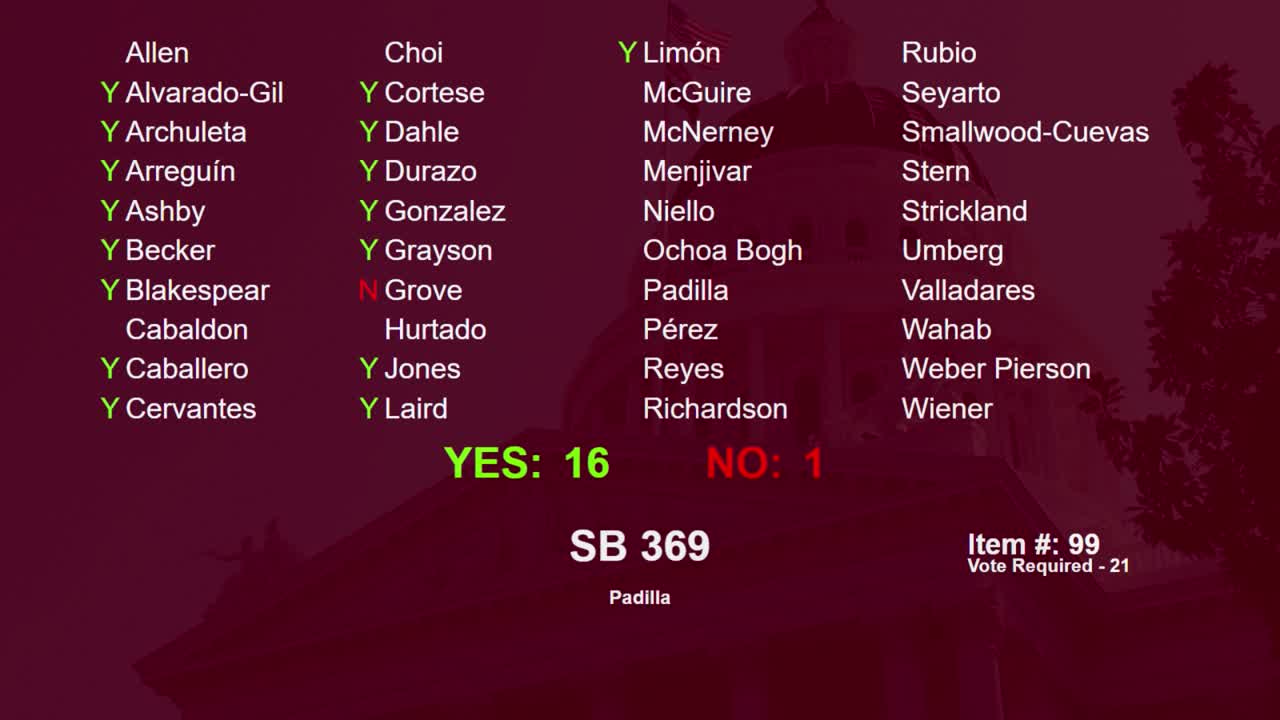 3MIN
Senate Floor
Bill Author

Bill Co-Author(s):