SB 444: State Healthy Food Access Policy.
- Session Year: 2025-2026
- House: Senate
- Latest Version Date: 2025-07-03
Current Status:
In Progress
(2025-08-29: August 29 hearing: Held in committee and under submission.)
Introduced
In Committee
Awaiting First Chamber Vote
Passed First Chamber
In Committee
Awaiting Second Chamber Vote
Passed Second Chamber
Enacted
Existing law establishes various food assistance programs, including the federal Supplemental Nutrition Assistance Program (SNAP), known in California as CalFresh, under which supplemental nutrition assistance benefits allocated to the state by the federal government are distributed to eligible individuals by each county.
Existing law declares that it is the established policy of the state that every human being has the right to access sufficient affordable and healthy food. Existing law requires all relevant state agencies to consider this state policy when revising, adopting, or establishing policies, regulations, and grant criteria when those policies, regulations, and grant criteria are pertinent to the distribution of sufficient affordable food.
This bill would revise that declaration to provide that every human being has the right to access sufficient affordable and healthy food that is locally grown and raised. The bill would require all relevant state agencies to consider that policy when revising, adopting, or establishing policies, regulations, and grant criteria that are pertinent to that policy. The bill would require specified state agencies to report to the Legislature by January 1, 2027, at a minimum, their progress on revising, adopting, or establishing those pertinent policies, regulations, and grant criteria.
Existing law establishes various food assistance programs, including the federal Supplemental Nutrition Assistance Program (SNAP), known in California as CalFresh, under which supplemental nutrition assistance benefits allocated to the state by the federal government are distributed to eligible individuals by each county.
Existing law declares that it is the established policy of the state that every human being has the right to access sufficient affordable and healthy food. Existing law requires all relevant state agencies to consider this state policy when revising, adopting, or establishing policies, regulations, and grant criteria when those policies, regulations, and grant criteria are pertinent to the distribution of sufficient affordable food.
This bill would revise that declaration to provide that every human being has the right to access sufficient affordable and healthy food that is locally grown and raised.
(a)(1)It is hereby declared to be the established policy of the state that every human being has the right to access sufficient locally grown and raised, affordable and healthy food.
(2)Food insecurity is defined as the occasional or constant lack of access to the food one needs to live a healthy life and the uncertainty of being able to acquire enough food to meet the needs of an individual or household due to insufficient money or other resources.
(b)(1)All relevant state agencies, including, but not limited to, the State Department of Social Services, the Department of Food and Agriculture, the State Department of Health Care Services, the State Department of Education, and the State Department of Public Health, shall consider this state policy when revising, adopting, or establishing policies, regulations, and grant criteria when those policies, regulations, and criteria are pertinent to the distribution of sufficient locally grown and raised, affordable and healthy food.
(2)The state agencies listed in paragraph (1) shall report to the Legislature by January 1, 2027, at a minimum, their progress on revising, adopting, or establishing policies, regulations, and grant criteria when those policies, regulations, and criteria are pertinent to the distribution of sufficient locally grown and raised, affordable and healthy food.
(c)This section does not expand any obligation of the state to provide food or nutrition assistance or to require the expenditure of additional resources to develop food infrastructure.
(d)(1)The requirement for submitting a report imposed under subdivision (b) is inoperative on January 1, 2031, pursuant to Section 10231.5 of the Government Code.
(2)A report to be submitted pursuant to subdivision (b) shall be submitted in compliance with Section 9795 of the Government Code.
(a)(1)It is hereby declared to be the established policy of the state that every human being has the right to access sufficient locally grown and raised, affordable and healthy food.
(2)Food insecurity is defined as the occasional or constant lack of access to the food one needs to live a healthy life and the uncertainty of being able to acquire enough food to meet the needs of an individual or household due to insufficient money or other resources.
(b)All relevant state agencies, including, but not limited to, the State Department of Social Services, the Department of Food and Agriculture, the State Department of Health Care Services, the State Department of Education, and the State Department of Public Health, shall consider this state policy when revising, adopting, or establishing policies, regulations, and grant criteria when those policies, regulations, and criteria are pertinent to the distribution of sufficient affordable food.
(c)This section does not expand any obligation of the state to provide food or nutrition assistance or to require the expenditure of additional resources to develop food infrastructure.
|
Date
|
Status
|
|---|---|
| Aug 29, 2025 | August 29 hearing: Held in committee and under submission. |
| Aug 20, 2025 | August 20 set for first hearing. Placed on APPR. suspense file. |
| Jul 3, 2025 | Read second time and amended. Re-referred to Com. on APPR. |
| Jul 2, 2025 | From committee: Do pass as amended and re-refer to Com. on APPR. with recommendation: To consent calendar. (Ayes 7. Noes 0.) (July 1). |
| Jun 5, 2025 | Referred to Com. on HUM. S. |
| May 29, 2025 | In Assembly. Read first time. Held at Desk. |
| May 29, 2025 | Read third time. Passed. (Ayes 38. Noes 0. Page 1326.) Ordered to the Assembly. |
| May 27, 2025 | Ordered to special consent calendar. |
| May 23, 2025 | Read second time. Ordered to third reading. |
| May 23, 2025 | From committee: Do pass. (Ayes 6. Noes 0. Page 1200.) (May 23). |
| May 16, 2025 | Set for hearing May 23. |
| Apr 21, 2025 | April 21 hearing: Placed on APPR. suspense file. |
| Apr 9, 2025 | Set for hearing April 21. |
| Apr 8, 2025 | From committee: Do pass and re-refer to Com. on APPR. (Ayes 5. Noes 0. Page 682.) (April 7). Re-referred to Com. on APPR. |
| Mar 13, 2025 | Set for hearing April 7. |
| Feb 26, 2025 | Referred to Com. on HUMAN S. |
| Feb 19, 2025 | From printer. May be acted upon on or after March 21. |
| Feb 18, 2025 | Introduced. Read first time. To Com. on RLS. for assignment. To print. |
|
Date
|
Description
|
Location
|
Votes
|
|
|---|---|---|---|---|
| Jul 1, 2025 | Do pass as amended, and be re-referred to the Committee on [Appropriations] with recommendation: To Consent Calendar | Assembly Standing Committee on Human Services |
Passed |
|
| May 29, 2025 | Special Consent SB444 Hurtado | Senate Floor |
Passed |
|
| May 23, 2025 | Do pass | Senate Standing Committee on Appropriations |
Passed |
|
| Apr 21, 2025 | Placed on suspense file | Senate Standing Committee on Appropriations |
Passed |
|
| Apr 7, 2025 | Do pass, but first be re-referred to the Committee on [Appropriations] | Senate Standing Committee on Human Services |
Passed |
This list shows positions taken on this bill by organizations on the date displayed, which is linked to the original source.
Positions by individuals are not included.
|
Organization
|
Position
|
Date
|
|---|---|---|
| A Voice for Choice Advocacy | ** Support | |
| California Farm Bureau | ** Support | |
| Roots of Change | ** Support |
Date of Hearing: August 20, 2025
ASSEMBLY COMMITTEE ON APPROPRIATIONS
Buffy Wicks, Chair
SBPCA Bill Id:SB 444
Author:(Hurtado) – As Amended Ver:July 3, 2025
Policy Committee: | Human Services | Vote: | 7 - 0 |
|
| ||
|
|
Urgency: No State Mandated Local Program: No Reimbursable: No
SUMMARY:
This bill revises the existing established policy of the state declaring every human being has the right to access sufficient affordable and healthy food to, instead, declare every human being has the right to access sufficient locally grown and raised, affordable and healthy food.
In addition, this bill:
- Updates, to reflect the revised declared policy, the existing requirement that all relevant state agencies consider the policy when revising, adopting, or establishing pertinent policies, regulations, and grant criteria. Relevant state agencies include, but are not limited to, the Department of Social Services (CDSS), the Department of Food and Agriculture (CDFA), the State Department of Health Care Services (DHCS), the State Department of Education (CDE), and the State Department of Public Health (CDPH).
- Requires the relevant state agencies to report to the Legislature by January 1, 2027, on their progress on revising, adopting, or establishing policies, regulations, and grant criteria when pertinent to the distribution of sufficient locally grown and raised, affordable and healthy food.
FISCAL EFFECT:
- Costs of an unknown amount (GF, federal funds), but likely minor and absorbable, to CDSS, CDFA, DHCS, CDE, CDPH, and various other state agencies to instead consider the right to locally grown and raised food while revising or designing regulations, grant programs or other policies that impact the distribution or availability of food.
- One-time costs (GF, federal funds) of an unknown amount, but likely in the low tens of thousands of dollars statewide, for CDSS, CDFA, DHCS, CDE, and CDPH to compile and submit a report to the Legislature by January 1, 2027. These costs will vary and are potentially absorbable depending on the impact to each agency. The bill is not clear whether this reporting requirement applies to other relevant state agencies and whether the listed agencies are to submit a collective report or individual reports.
- CDSS estimates one-time automation costs of approximately $137,500 (General Fund (GF), federal funds). These costs include $86,250 for one-time changes to CalSAWS to create an alert on the CalSAWS screen and to update program rules for CalFresh, and $51,276 for one-time changes to the BenefitsCal system to update the CalFresh program rules in the Help Center.
- Potential GF cost pressures of an unknown, but potentially significant amount to the extent changes in department policies, regulations, and criteria related to supporting “locally grown and raised” affordable and healthy food access result in increased costs for food programs.
COMMENTS:
- Purpose. According to the author:
California operates several food assistance programs, including CalFresh, to help residents access food. While these programs have nourished millions, many still fall through the cracks. [This bill] addresses this persistent gap by prioritizing locally sourced foods in state policies—an essential step for strengthening food security and economic resilience. By reducing reliance on external food sources and investing in California farmers, this bill reinforces the state's commitment to a sustainable and self-reliant food system. This legislation is a bold step toward ensuring that all Californians, regardless of income, have access to fresh, local food.
- Background. Existing law defines food insecurity as the occasional or constant lack of access to the food one needs to live a healthy life and the uncertainty of being able to acquire enough food to meet the needs of an individual or household due to insufficient money or other resources. Data from the United States (U.S.) Census Household Pulse Survey shows that in September 2024, 22% of California households were food insecure and 27% of households with children were food insecure, with disparities for Black and Latino households at 43% and 33% respectively.
California, with the aid of the federal government, provides several programs to address food insecurity, including CalFresh, administered by CDSS, the National School Lunch Program and the School Breakfast Program, administered by CDE, the Women, Infants and Children (WIC) program, administered by CDPH, and several nutrition programs that provide meals for older adults, administered by CDA.
Existing law declares it is the established policy of the state that every human being has the right to access sufficient affordable and healthy food. Existing law requires all relevant state agencies to consider this state policy when revising, adopting, or establishing policies, regulations, and grant criteria when pertinent to the distribution of sufficient affordable food.
This bill revises this policy to, instead, declare every human being has the right to access sufficient affordable and healthy food that is locally grown and raised, and requires state agencies to consider this new state policy when adopting relevant policies, regulations, and criteria.
According to California Farm Bureau, sponsor of the bill:
The state has recognized the right to affordable and healthy food but has yet to emphasize the importance of locally grown and raised food. Clarifying the state’s commitment to food access through policies that promote locally sourced food is vital in dismantling food insecurity in California. Encouraging local food production and distribution benefits both food insecure communities and California’s agricultural economy.
Analysis Prepared by: Jennifer Swenson / APPR. / (916) 319-2081
Date of Hearing: July 1, 2025
ASSEMBLY COMMITTEE ON HUMAN SERVICES
Alex Lee, Chair
SBPCA Bill Id:SB 444
Author:(Hurtado) – As Introduced Ver:February 18, 2025
SENATE VOTE: 38-0
SUBJECT: State Healthy Food Access Policy
SUMMARY: Revises state policy that declares every human being has the right to access sufficient, affordable, and healthy food to include locally grown and raised food.
EXISTING LAW:
State law:
- Declares that every human being has the right to access sufficient affordable and healthy food. (Welfare and Institutions Code [WIC] § 18700(a)(1))
- Defines food insecurity as the occasional or constant lack of access to the food one needs to live a healthy life and the uncertainty of being able to acquire enough food to meet the needs of an individual or household due to insufficient money or other resources. (WIC § 18700(a)(2))
- Requires all relevant state agencies, including but not limited to the California Department of Social Services (CDSS), the California Department of Food and Agriculture (CDFA), the California Department of Health Care Services (DHCS), the California Department of Education (CDE), and the California Department of Public Health (CDPH) to consider the right to affordable and healthy food when creating policies or regulation related to the distribution of affordable food. (WIC § 18700(b))
- Establishes the CalFresh program to administer the provision of the federal Supplemental Nutrition Assistance Program (SNAP) benefits to families and individuals meeting certain criteria, as specified. (WIC 18900 § et seq.)
Federal law:
- Establishes SNAP pursuant to the Food Stamp Act of 1964. (7 United States Code § 2011 et seq.)
FISCAL EFFECT: According to the Senate Appropriations Committee on April 21, 2025:
- The California Department of Social Services (CDSS), the California Department of Public Health (CDPH), and the Department of Health Care Services (DHCS) estimate no fiscal impact to state operations.
- Unknown, potential General Fund cost pressures to the extent that changes in department policies, regulations, and criteria related to supporting “locally grown and raised” affordable and healthy food access would result in increased costs for food programs.
COMMENTS:
Background: Food Insecurity. The United States Department of Agriculture (USDA), which monitors food insecurity and oversees the nation’s largest food aid programs, defines food security as “access by all people at all times to enough food for an active, healthy life.” It categorizes food security into four levels:

While California declared food as a human right in 2023 [SB 628 (Hurtado), Chapter 879, Statutes of 2023], and produces nearly half of the nation’s fruits and vegetables, data from the United States (U.S.) Census Household Pulse Survey shows that as of September 2024, 22% of California households are food insecure and 27% of households with children are food insecure, with deep disparities for Black (43%), Latino (33%), and Native (92%) households compared to White (15%) households. Factors contributing to food insecurity include socioeconomic disparities and geographic barriers, among other causes. For individuals who face food insecurity, the choice is often between nurturing their physical health or maintaining other aspects of their lives, such as purchasing necessary medications or paying rent to maintain housing.
A lack of adequate food can have long-term physical health consequences across the lifespan. During pregnancy, it can lead to poor birth outcomes, impacting a child’s physical and cognitive development. Young children with inadequate or interrupted food intake are at a higher risk of iron deficiency, respiratory illnesses, infections, and developmental delays. In school-aged children, food insecurity is associated with poor academic performance, attention difficulties, and behavioral issues. In adolescence, food insecurity is associated with drug and alcohol abuse, greater exposure to violence, high-risk pregnancy, and suicidal ideation, and may lead to risky sexual behavior, as food insecurity has a negative influence on the ability of young people to consider the long-term consequences of risky behaviors. Long-term, these disadvantages contribute to intergenerational cycles of poverty and food insecurity. In adulthood, food insecurity increases the risk of chronic, diet-related diseases such as diabetes, obesity, hypertension, cardiovascular disease, and certain cancers due to poor nutrition and limited access to healthcare. Beyond physical health, the emotional and psychological stress of uncertain food access causes anxiety, depression, and social isolation.
Food Assistance Programs. Various food assistance programs are operated across the state and administered by CDSS, CDFA, CDE, CDPH, DHCS, and the California Department of Aging (CDA).
Overseen by CDSS, CalFresh, California’s version of SNAP (formerly known as the Food Stamp Program) is the largest federal food safety-net program that serves as the first line of defense against hunger and food insecurity for low-income households. In California, $12.6 billion of federal SNAP funds are administered through the CalFresh program, serving approximately 5.4 million CalFresh participants and covering 100% of the program’s benefit costs.
Federally funded and overseen by CDSS, Summer (Electronic Benefits Transfer) EBT (SUN Bucks in California), offers a $120 benefit for children from low-income families for food during the summer months when children are out of school. Eligibility is tied to free and reduced price meal eligibility, and children may be automatically eligible through participation in CalFresh or Medi-Cal. Children who are attending Head Start, experiencing homelessness, living in foster care, or part of a migrant family are also automatically eligible. California implemented the first year of SUN Bucks in Summer 2024, with 5.6 million children receiving $672 million in benefits. In addition to CalFresh and SUN Bucks, CDSS oversees other nutrition programs such as the Child and Adult Care Food Program, which provides free meals at childcare centers, homeless shelters, adult daycare centers, and afterschool programs.
Recently, CDSS operated the CalFresh Fruit and Vegetable EBT Pilot Project, which provides a dollar‑for‑dollar match (up to $60 per month) for purchases of fruits and vegetables at participating retailers. This match could then be used to buy other CalFresh-eligible foods, helping recipients stretch their benefits further. The program has proven to be more successful and popular than expected, with funds running out more quickly than anticipated in two separate instances: the program’s pilot phrase ran from February 2023 to April 2024, followed by a second phase from October 2024 to January 2025.
Similar to the CalFresh Fruit and Vegetable EBT Pilot Project, CDFA oversees the Market Match program, a healthy food incentive program funded by the California Nutrition Incentive Program. Farmers’ markets can choose to participate by partnering with the state to provide monetary incentives for the purchase of California grown fruits and vegetables at certified farmers’ markets and small businesses. Through this program, CalFresh recipients can receive up to $15 in matching funds when purchasing fruits and vegetables at participating farmers’ markets. Farmers are reimbursed by the state to ensure they are fully compensated. Programs like Market Match and the Fruit and Vegetable Pilot Program encourage the purchase of healthy, affordable, locally grown food, aligning with the goals of this bill.
CDE administers two federally funded meal programs for school-age children, which include the National School Lunch Program and the School Breakfast Program. Both programs provide free or reduced-priced healthy meals to income-eligible students. Starting in the 2022-23 school year, California became the first state to implement and fully fund a Universal Meals Program for students in Pre-Kindergarten through grade 12. This program ensures that all students, regardless of their eligibility for free or reduced-price meals, can receive a meal if requested. Students are eligible to receive up to two free meals during the school day.
CDPH administers the Special Supplemental Nutrition Program for Women, Infants, and Children (WIC), a federally funded program that provides supplemental foods, nutrition education, and healthcare referrals at no cost to low-income pregnant, breastfeeding and postpartum women, as well as infants and children up to five years of age who are determined to be at nutritional risk. To qualify for WIC, applicants must be assessed by a health professional and determined to be at nutritional risk due to specific medical or diet-based conditions. Additionally, the WIC Farmers’ Market Nutrition Program (FMNP) allows eligible households to receive $30 in FMNP coupons in addition to their regular WIC benefits, which can be used to buy foods from authorized farmers, farmers’ markets, and roadside stands.
DHCS administers several nutrition-related programs, including the Medically Tailored Meals Pilot Program that is integrated into California Advancing and Innovating Medi-Cal (CalAIM) reform. Launched on April 1, 2018, this pilot served three medically tailored meals per day for 12 weeks to 1,413 eligible beneficiaries with congestive heart failure over a four-year period.
CDA oversees nutrition programs that provide meals for adults 60 years of age or older, typically through congregate nutrition sites or home-delivered meals. These services are available to a broad range of older adults, with priority given to those facing the greatest economic or social need. Many older adults receive nutrition assistance in congregate settings, such as in senior centers, and through Area Agencies on Aging, Community-Based Adult Services, Adult Day Services, and the Multipurpose Senior Services Program. The federally funded Home-Delivered Nutrition Program, often known as Meals on Wheels, is a longstanding program that delivers healthy meals to older adults who are unable to go out to purchase food or prepare meals at home. The current federal budget reconciliation bill, H.R. 1, that was passed by the House on May 22, 2025, and is awaiting a vote of the Senate, could, if signed into law, trigger across-the-board cuts to mandatory spending programs like the Social Services Block Grant (SSBG) which helps to fund Meals on Wheels. Because H.R.1 is projected to increase the federal deficit, funding for SSBG could be automatically eliminated unless Congress waives the rule that requires new spending to be offset by cuts to programs.
Current law requires these departments to consider the state policy that affordable and healthy food is a human right when creating revising, adopting, or establishing policies, regulations, and grant criteria related to the distribution of sufficient, affordable food. This bill expands that policy to include the right to access locally produced food.
Local Food Purchase Assistance Cooperative Agreement Program. The Local Food Purchase Assistance Cooperative Agreement (LFPA) Program is a federal initiative established through the American Rescue Plan in 2021 as a COVID-19 pandemic-era relief measure. Administered by the USDA, the program provides non-competitive cooperative agreements to state, tribal, and territorial governments, allowing them to purchase food from within the state or within a 400-mile radius to support regional and underrepresented farmers. This food is then distributed to food assistance programs such as food banks and other nonprofit organizations. Since 2022, California has utilized more than $88.5 million in LFPA funding to support local farmers and has since purchased food from 315 local producers for distribution. Additionally, in 2024 alone, California’s LFPA Program allocated the California Association of Food Banks over $22.3 million to provide local healthy food and 18,647,546 meals to food-insecure Californians.
In December 2024, the USDA announced the availability of $1.13 billion for LFPA and Local Food for Schools Program, which included California’s approximately $47 million. However, on March 7, 2025, the USDA announced the program’s termination and the cancellation of additional funding rounds. The USDA’s Agricultural Marketing Services determined that, “this agreement no longer effectuates agency priorities, and that termination of the award is appropriate.” On April 4, 2025, CDSS appealed the decision by urging the USDA to reconsider and immediately reinstate the $47,284,232 in Congressionally approved funding committed to California for 2025.
This bill seeks to encourage the California state government to continue supporting local farmers and food producers by considering them when developing regulations.
California Grown. California is the largest producer and exporter of agricultural products in the U.S. According to CDFA, “over a third of the country's vegetables and over three-quarters of the country's fruits and nuts are grown in California,” encompassing over 400 different commodities. State law requires California state-owned or state-run institutions, excluding pubic postsecondary education and local educational agencies, to ensure that at least 60% of the agricultural food products they purchase are grown or produced in the state by December 31, 2025. While state law promotes local purchasing, several programs, including those that serve vulnerable populations, do not follow a bid process or are exempt from this law. This bill seeks to encourage local purchasing within social safety net programs as well.
Author’s Statement: According to the Author, “California operates several food assistance programs, including CalFresh, to help residents access food. While these programs have nourished millions, many still fall through the cracks. [This bill] addresses this persistent gap by prioritizing locally sourced foods in state policies—an essential step for strengthening food security and economic resilience. By reducing reliance on external food sources and investing in California farmers, this bill reinforces the state's commitment to a sustainable and self-reliant food system. [This bill] also formally declares the human right to access sufficient, locally grown, affordable, and nutritious food as state policy, requiring state agencies to reflect this priority in regulations and grants. This legislation is a bold step toward ensuring that all Californians, regardless of income, have access to fresh, local food.”
Equity Implications: This bill seeks to ensure that locally grown and produced food is accessible to all, particularly those in underserved and low-income communities. By prioritizing the purchase of locally produced food, particularly among departments that administer food assistance programs, this bill may enhance food security for vulnerable populations, including those who rely on programs like CalFresh, WIC, and school meal programs. These populations often face barriers to accessing fresh, healthy, and affordable food, particularly in areas with limited access to grocery stores or farmers’ markets.
By encouraging access to locally grown food, this bill could improve the nutritional quality of the food provided. This bill also supports regional farmers and food producers, particularly smaller, underrepresented farms that may not have the same market access as larger producers. This may promote economic equity within the state’s agricultural sector, providing opportunities for farmers from marginalized communities, such as small-scale or minority-owned farms, to participate in the supply chain for food assistance programs.
Policy Considerations: This bill prioritizes locally grown and raised food as a human right; however, there is currently no data on which policies, regulations, and grant criteria are being considered, revised, adopted, or established by the specified state agencies when those policies, regulations, and grant criteria are pertinent to the distribution of sufficient affordable food. This lack of data makes it difficult to evaluate the policy’s impact or identify areas for improvement.
Should this bill move forward, the Author may wish to consider ensuring the effectiveness of this policy by including a reporting requirement. Additionally, the Author may wish to include technical changes that amends pertinent sections of code to align with the bill’s language.
Proposed Committee Amendments: The Committee proposes amendments to address policy considerations stated above to do the following:
- Makes technical changes clarifying that all relevant state agencies shall consider this state policy when revising, adopting, or establishing policies, regulations, and grant criteria when those policies, regulations, and criteria are pertinent to the distribution of sufficient locally grown and raised, affordable and healthy food.
- Requires all relevant state agencies to report to the Legislature by January 1, 2027, at a minimum, the progress on revising, adopting or establishing policies, regulations, and grant criteria when those policies, regulations, and criteria are pertinent to the distribution of sufficient locally grown and raised, affordable and healthy food.
RELATED AND PRIOR LEGISLATION:
AB 936 (Lee) of 2025, would have renamed the California Fruit and Vegetable EBT Pilot Project to be the CalFresh Fruit and Vegetable Supplemental Benefits Program and would have made the program permanent. AB 936 was held on the Assembly Appropriations Committee suspense file.
SB 628 (Hurtado), Chapter 879, Statutes of 2023, declared that it is the established policy of the state that every human being has the right to access sufficient affordable and healthy food and require relevant state agencies to consider that right when making policies.
AB 778 (Garcia), Chapter 576, Statutes of 2022, required a California state-owned or state-run institution, excluding public postsecondary education or local educational agencies, that purchases agricultural food products to implement necessary practices to achieve a goal of ensuring that at least 60% of the agricultural food products that it purchases are grown or produced in the state by December 31, 2025.
AB 2153 (Arambula) of 2022, would have established the California Fruit and Vegetable Supplemental Benefits Expansion Program to enroll authorized retailers to enable those authorized retailers to provide supplemental benefits to CalFresh recipients who purchase California-grown fresh fruits and vegetables. AB 2153 was held on the Assembly Appropriations Committee suspense file.
SB 108 (Hurtado) of 2021, was substantially similar to SB 628 (Hurtado) of 2023. SB 108 was held on the Assembly Appropriations Committee suspense file.
AB 1811 (Committee on Budget), Chapter 35, Statutes of 2018, created the California Fruit and Vegetable EBT Pilot Project to increase the purchasing power of CalFresh recipients to buy California-grown fruits and vegetables.
AB 1661 (Bonta) of 2014, would have established the Healthy Options for Everyone (HOPE) Act of 2014, to authorize the creation of HOPE Incentive Zones designed to increase the availability of fresh fruits and vegetables, and other grown foods. AB 1661 was held on the Assembly Appropriations Committee suspense file.
AB 822 (Caballero), Chapter 785, Statutes of 2017, required all California state-owned or state-run institutions, except public universities and colleges and school districts, to purchase agricultural products grown in California when the bid or price of the California-grown agricultural product does not exceed by more than 5% the lowest bid or price for an agricultural product produced outside the state.
REGISTERED SUPPORT / OPPOSITION:
Support
California Farm Bureau Federation (Sponsor)
A Voice for Choice Advocacy
Roots of Change
Opposition
None on file.
Analysis Prepared by: Bri-Ann Hernández-Mengual / HUM. S. / (916) 319-2089
SENATE RULES COMMITTEE Office of Senate Floor Analyses (916) 651-1520 Fax: (916) 327-4478 | SB 444 |
THIRD READING
Bill No: SB 444
Author: Hurtado (D)
Introduced: 2/18/25
Vote: 21
SENATE HUMAN SERVICES COMMITTEE: 5-0, 4/7/25
AYES: Arreguín, Ochoa Bogh, Becker, Limón, Pérez
SENATE APPROPRIATIONS COMMITTEE: 6-0, 5/23/25
AYES: Caballero, Seyarto, Cabaldon, Grayson, Richardson, Wahab
NO VOTE RECORDED: Dahle
SUBJECT: State Healthy Food Access Policy
SOURCE: California Farm Bureau Federation
DIGEST:
This bill declares that the established policy of the state is that every human being has a right to locally grown and raised, affordable, and healthy food.
ANALYSIS:
Existing Law:
- Declares that every human being has the right to access sufficient affordable and healthy food. (Welfare and Institutions Code [WIC] §18700(a)(1))
- Defines food insecurity as the occasional or constant lack of access to the food one needs to live a healthy life and the uncertainty of being able to acquire enough food to meet the needs of an individual or household due to insufficient money or other resources. (WIC § 18700(a)(2))
- Requires all relevant state agencies, including but not limited to, State Department of Social Services, the Department of Food and Agriculture, the State Department of Health Care Services, the State Department of Education, and the State Department of Public Health, to consider the right to affordable and healthy food when creating policies or regulation related to the distribution of affordable food. (WIC § 18700(b))
- Establishes CalFresh as California’s implementation of the federal Supplemental Nutrition Assistance Program (SNAP) program. (WIC §18900)
- Establishes the State Emergency Food Assistance Program, administered by the California Department of Social Services (CDSS) to provide food and funding for the provision of emergency food to food banks established pursuant to the federal Emergency Food Assistance Program whose ongoing primary function is to facilitate the distribution of food to low-income households. (WIC §18995)
This bill revises the state policy on the human right to access healthy, affordable food to include the right to access locally grown and raised food.
Comments
According to the author, “California operates several food assistance programs, including CalFresh, to help residents access food. While these programs have nourished millions, many still fall through the cracks. SB 444 addresses this persistent gap by prioritizing locally sourced foods in state policies—an essential step for strengthening food security and economic resilience. By reducing reliance on external food sources and investing in California farmers, this bill reinforces the state’s commitment to a sustainable and self-reliant food system. SB 444 also formally declares the human right to access sufficient, locally grown, affordable, and nutritious food as state policy, requiring state agencies to reflect this priority in regulations and grants. This legislation is a bold step toward ensuring that all Californians, regardless of income, have access to fresh, local food.”
Food Insecurity in California. Hunger is a statewide problem that affects people from all backgrounds. While California is the greatest food-producing state in the country, about 10 million of California’s children and adults face food insecurity, according to the California Association of Food Banks. According to the California Health Interview Survey, in 2023, 45 percent of California adults with incomes under 200 percent of the federal poverty level were food insecure. Food insecurity disproportionally affects certain communities. According to the study, food insecurity is “higher for families with children (25.8 percent), Black households (28.9 percent) and Latinx households (29.7 percent).”
Because of limited financial resources, those who are food insecure sometimes use cost cutting measures to stretch budgets that are harmful to their health, such as: forgoing the foods needed for special medical diets; purchasing a low-cost diet that relies on foods that are energy-dense but nutrient-poor; diluting or rationing infant formula; and making trade-offs between food and other basic necessities, like housing, utilities, transportation. Moreover, the impacts of childhood hunger are well known. Children who live in households experiencing food insecurity are at higher risk of health, academic, behavioral, and emotional problems than those who are not.
In September 2024, 22% of households—equivalent to nearly 3 million homes—experienced food insecurity. Among households with children, the crisis was even more severe, with 27%—over 1 million homes—lacking consistent access to nutritious meals.
California Food Assistance Programs. There are a number of food assistance programs operated throughout the state and administered by the California Departments of Aging, California Department of Education, CDSS, and California Department of Public Health.
CalFresh, California’s version of federal SNAP, provides monthly food benefits to qualified low-income individuals and families to assist with the purchase of the food they need to maintain adequate nutrition levels. With 3 million households (and over 5.26 million people) receiving benefits, CalFresh is the largest nutrition assistance program in California. While CalFresh benefits are 100% federally funded, CalFresh is administered by CDSS. Income eligibility standards and benefit levels for the program are established by the federal government, with one standard used nationally. CDSS also administers other nutrition programs like the Child and Adult Care Food Program (CACFP) a federally funded program that provides free meals in facilities such as childcare centers, homeless shelters, adult daycare centers and afterschool care centers. SUN Bucks is another CDSS nutrition program that provides $40 per month to low income students during the summer.
Recently, CDSS was operating the CalFresh Fruit and Vegetable Pilot Program, which provides a dollar‑for‑dollar match, up to $60 per month, when a recipient buys fruits or vegetables at participating retailers. That match can be used to purchase other CalFresh eligible foods anywhere, allowing recipients’ benefits to stretch further. It has proven to be more successful and popular than anticipated as funds allocated to the program have run out twice before they were expected to.
CDSS and the California Department of Food and Agriculture also support Market Match which is part of a healthy food incentive program and funded by the California Nutrition Incentive Program. Farmers’ Markets can choose to participate in the program by partnering with the state. CalFresh recipients can go to these farmers’ markets receive up to $15 in matching funds when they buy fruits and vegetables. The farmers are then reimbursed by the state to ensure they are made whole. Programs like Market Match and the Fruit and Vegetable Pilot Program encourage the purchase of healthy, affordable, locally grown food as this bill encourages.
California Department of Education administers two federally funded meal programs that target school age children, the National School Lunch Program and the School Breakfast Program. Both programs provide free or reduced priced healthy meals to income eligible students. Beginning in the 2022-23 school year, California became the first state to implement and fully fund a Universal Meals Program for school children grades PK-12. The program allows for all students who request a meal to be able to receive meals regardless of their eligibility for free or reduced priced school meals. Students may receive up to two free meals during the school day.
California Department of Public Health administers a federally-funded program called the California Special Supplemental Nutrition Program for Women, Infants, and Children (WIC). WIC provides, at no cost to participants, supplemental foods, nutrition education, and health care referrals to low-income pregnant, breastfeeding and postpartum women, infants, and children up to age five who are determined to be at nutritional risk. To be eligible for WIC, applicants must be determined by a health professional to be at nutritional risk (i.e., have certain medical-based or diet-based risk conditions). There is also a specific WIC Farmers’ Market Program that allows eligible households to receive $30 worth of WIC checks to be used at authorized farmers’ markets.
Department of Health Care Services also administers nutrition related programs including the Medically Tailored Meals Pilot Program that is being integrated into California Advancing and Innovating Medi-Cal (CalAIM) reform.
The Department of Aging oversees nutrition programs that provide meals for older adults. These services are typically offered at congregate nutrition sites or through home delivered meals. Both congregate nutrition and home delivered meals serve broad populations, with preference given to those in the greatest economic or social need. Many older adults receive nutrition assistance in congregate settings, such as in senior centers, and through Area Agencies on Aging (AAAs), Community-Based Adult Services, Adult Day Services, and Multi-Purposes Senior Services Programs. Federally funded Home-Delivered Nutrition Programs, commonly referred to as Meals on Wheels, is a longstanding program that delivers healthy meals to older adults who cannot go out and purchase food and/or prepare meals in their homes.
Current law requires these departments to consider the state policy that affordable and healthy food is a human right when creating revising, adopting, or establishing policies, regulations, and grant criteria when those policies, regulations, and criteria are pertinent to the distribution of sufficient affordable food. This bill adds to that policy the right to locally produced food like food that is sold at farmers’ markets or local markets.
Local Food Purchase Assistance Cooperative Agreement Program. The Local Food Purchase Assistance Cooperative Agreement Program is a federal program created through the American Rescue Plan in 2021 and operated by the United States Department of Agriculture (USDA) that uses non-competitive cooperative agreement to give funds to state, tribal, and territorial governments to purchase foods within the state or within 400 miles to support regional and under supported farmers. The food is distributed to food distribution programs like food banks and other nonprofit organizations. California was awarded funding in 2022 through CDSS who has since purchased food for food banks from 315 producers. In March 2025, the USDA announced the program would be ending and additional planned funding rounds would be cancelled. This bill would encourage the California state government to support similarly positioned local farmers and food producers by considering them when creating regulations.
California Grown. California is the largest producer and exporter of agricultural products. According to the Department of Food and Agriculture, “over a third of the country's vegetables and over three-quarters of the country's fruits and nuts are grown in California.” This includes over 400 different commodities. Currently, state law requires all California state owned or state-run institutions, except public universities and colleges and school districts, to purchase agricultural products grown in California when the bid or price of the California-grown agricultural product does not exceed by more than 5% the lowest bid or price for an agricultural product produced outside the state and the quality of the produce is comparable. This law encourages local purchasing but there are a number of programs. Like those described above, that do not receive food through a bid process or are exempt from the law. These are also the programs that serve the most vulnerable. This bill would encourage local purchasing for these programs.
Related/Prior Legislation
AB 936 (Lee, 2025) would rename the California Fruit and Vegetable EBT Pilot Project to be the CalFresh Fruit and Vegetable Supplemental Benefits Program and make the program permanent. This bill was held on the Assembly Appropriations suspense file.
SB 628 (Hurtado, Chapter 879, Statutes of 2023) declares that it is the established policy of the state that every human being has the right to access sufficient affordable and healthy food and require relevant state agencies to consider that right when making policies.
AB 2153 (Arambula, 2022) would have established the California Fruit and Vegetable Supplemental Benefits Expansion Program to enroll authorized retailers to enable those authorized retailers to provide supplemental benefits to CalFresh recipients who purchase California-grown fresh fruits and vegetables. This bill was held in the Assembly Appropriations committee.
AB 1811 (Committee on Budget, Chapter 35, Statutes of 2018) created the “California Fruit and Vegetable EBT Pilot Project” to increase the purchasing power of CalFresh recipients to buy California-grown fruits and vegetables.
AB 822 (Caballero, Chapter 785, Statutes of 2017) requires all California state-owned or state-run institutions, except public universities and colleges and school districts, to purchase agricultural products grown in California when the bid or price of the California-grown agricultural product does not exceed by more than 5% the lowest bid or price for an agricultural product produced outside the state.
FISCAL EFFECT: Appropriation: No Fiscal Com.: Yes Local: No
According to the Senate Appropriation committee:
- The California Department of Social Services (CDSS), the California Department of Public Health (CDPH), and the Department of Health Care Services (DHCS) estimate no fiscal impact to state operations.
- Unknown, potential General Fund cost pressures to the extent that changes in department policies, regulations, and criteria related to supporting “locally grown and raised” affordable and healthy food access would result in increased costs for food programs.
SUPPORT: (5/23/25)
California Farm Bureau Federation (Source)
A Voice for Choice Advocacy
OPPOSITION: (5/23/25)
None received
Prepared by: Naima Ford Antal / HUMAN S. / (916) 651-1524
5/25/25 17:17:56
**** END ****
SENATE COMMITTEE ON APPROPRIATIONS
Senator Anna Caballero, Chair
2025 - 2026 Regular Session
SB 444 (Hurtado) - State Healthy Food Access Policy
Version: February 18, 2025 | Policy Vote: HUMAN S. 5 - 0 |
Urgency: No | Mandate: No |
Hearing Date: April 21, 2025 | Consultant: Agnes Lee |
Bill Summary:
SB 444 would revise the existing established policy of the state that every human being has the right to access sufficient affordable and healthy food.
Fiscal Impact:
- The California Department of Social Services (CDSS), the California Department of Public Health (CDPH), and the Department of Health Care Services (DHCS) estimate no fiscal impact to state operations.
- Unknown, potential General Fund cost pressures to the extent that changes in department policies, regulations, and criteria related to supporting “locally grown and raised” affordable and healthy food access would result in increased costs for food programs.
Background:
The state administers a number of food assistance programs. CalFresh, administered by the CDSS, provides monthly federal food benefits to qualified low-income individuals and families to assist with the purchase of the food they need to maintain adequate nutrition levels. The California Department of Education (CDE) administers the National School Lunch Program and the School Breakfast Program. The CDPH administers the Women, Infants and Children (WIC) program which provides supplemental nutrition to low-income pregnant, breastfeeding and postpartum women, infants, and children up to age five who are determined to be at nutritional risk. The California Department of Aging (CDA) administers several nutrition programs that provide meals for older adults.
California law declares that it is the established policy of the state that every human being has the right to access sufficient affordable and healthy food. Current law defines food insecurity as the occasional or constant lack of access to the food one needs to live a healthy life and the uncertainty of being able to acquire enough food to meet the needs of an individual or household due to insufficient money or other resources. All relevant state agencies, including, but not limited to, CDSS, the Department of Food and Agriculture, the DHCS, the CDE, and the CDPH must consider this state policy when revising, adopting, or establishing policies, regulations, and grant criteria when those policies, regulations, and criteria are pertinent to the distribution of sufficient affordable food. Current law specifies that this policy does not expand any obligation of the state to provide food or nutrition assistance or to require the expenditure of additional resources to develop food infrastructure.
Proposed Law:
SB 444 would revise the existing established policy of the state, to instead declare that it is the established policy of the state that every human being has the right to access sufficient locally grown and raised, affordable and healthy food.
-- END --
SENATE COMMITTEE ON HUMAN SERVICES
Senator Arreguín, Chair
2025 - 2026 Regular
Bill No: | SB 444 | ||
Author: | Hurtado | ||
Version: | February 18, 2025 | Hearing Date: | April 7, 2025 |
Urgency: | No | Fiscal: | Yes |
Consultant: | Naima Ford Antal | ||
Subject: State Healthy Food Access Policy
SUMMARY
This bill declares that the established policy of the state is that every human being has a right to locally grown and raised, affordable, and healthy food.
ABSTRACT
Existing Law:
- Declares that every human being has the right to access sufficient affordable and healthy food. (WIC 18700(a)(1))
- Defines food insecurity as the occasional or constant lack of access to the food one needs to live a healthy life and the uncertainty of being able to acquire enough food to meet the needs of an individual or household due to insufficient money or other resources. (WIC 18700(a)(2))
- Requires all relevant state agencies, including but not limited to, State Department of Social Services, the Department of Food and Agriculture, the State Department of Health Care Services, the State Department of Education, and the State Department of Public Health, to consider the right to affordable and healthy food when creating policies or regulation related to the distribution of affordable food. (WIC 18700(b))
- Establishes CalFresh as California’s implementation of the federal Supplemental Nutrition Assistance Program (SNAP) program. (WIC 18900)
- Establishes the State Emergency Food Assistance Program, administered by the California Department of Social Services to provide food and funding for the provision of emergency food to food banks established pursuant to the federal Emergency Food Assistance Program whose ongoing primary function is to facilitate the distribution of food to low-income households. (WIC 18995)
This Bill:
- Revises the state policy on the human right to access healthy, affordable food to include the right to access locally grown and raised food.
FISCAL IMPACT
This bill has not been analyzed by a fiscal committee.
BACKGROUND AND DISCUSSION
Purpose of the Bill:
According to the author, “California operates several food assistance programs, including CalFresh, to help residents access food. While these programs have nourished millions, many still fall through the cracks. SB 444 addresses this persistent gap by prioritizing locally sourced foods in state policies—an essential step for strengthening food security and economic resilience. By reducing reliance on external food sources and investing in California farmers, this bill reinforces the state’s commitment to a sustainable and self-reliant food system. SB 444 also formally declares the human right to access sufficient, locally grown, affordable, and nutritious food as state policy, requiring state agencies to reflect this priority in regulations and grants. This legislation is a bold step toward ensuring that all Californians, regardless of income, have access to fresh, local food.”
Food Insecurity in California
Hunger is a statewide problem that affects people from all backgrounds. While California is the greatest food-producing state in the country, about 10 million of California’s children and adults face food insecurity, according to the California Association of Food Banks. According to the California Health Interview Survey, in 2023, 45 percent of California adults with incomes under 200 percent of the federal poverty level were food insecure. Food insecurity disproportionally affects certain communities. According to the study, food insecurity is “higher for families with children (25.8 percent), Black households (28.9 percent) and Latinx households (29.7 percent).”
Because of limited financial resources, those who are food insecure sometimes use cost cutting measures to stretch budgets that are harmful to their health, such as: forgoing the foods needed for special medical diets; purchasing a low-cost diet that relies on foods that are energy-dense but nutrient-poor; diluting or rationing infant formula; and making trade-offs between food and other basic necessities, like housing, utilities, transportation. Moreover, the impacts of childhood hunger are well known. Children who live in households experiencing food insecurity are at higher risk of health, academic, behavioral, and emotional problems than those who are not.
In September 2024, 22 percent of households—equivalent to nearly 3 million homes—experienced food insecurity. Among households with children, the crisis was even more severe, with 27 percent—over 1 million homes—lacking consistent access to nutritious meals.
Food Assistance Programs
There are a number of food assistance programs operated throughout the state and administered by the California Departments of Aging, California Department of Education, CDSS, and California Department of Public Health. The most widely used programs are:
- CalFresh: California’s version of SNAP and state’s largest anti-hunger program. The program provides cash assistance for groceries for low income individuals and families.
- National School Lunch Program (NSLP) and SUNBucks: Funds lunches for eligible children while at school or during the summer, respectively
- Women, Infants, and Children (WIC): Vouchers for certain foods for low income pregnant women or women with children under five years old.
- California Food Assistance Program (CFAP): Cash assistance for groceries for low income individuals that are not otherwise eligible due to their immigration status.
- Congregate Meals Program and Home-Delivered Meals Program: Provides hot meals and meals to go for seniors.
CalFresh, California’s version of federal SNAP, provides monthly food benefits to qualified low-income individuals and families to assist with the purchase of the food they need to maintain adequate nutrition levels. With 3 million households (and over 5.26 million people) receiving benefits, CalFresh is the largest nutrition assistance program in California. While CalFresh benefits are 100 percent federally funded, CalFresh is administered by CDSS. Income eligibility standards and benefit levels for the program are established by the federal government, with one standard used nationally. CDSS also administers other nutrition programs like the Child and Adult Care Food Program (CACFP) a federally funded program that provides free meals in facilities such as childcare centers, homeless shelters, adult daycare centers and afterschool care centers. SUN Bucks is another CDSS nutrition program that provides $40 per month to low income students during the summer.
Recently, CDSS was operating the CalFresh Fruit and Vegetable Pilot Program, which provides a dollar‑for‑dollar match, up to $60 per month, when a recipient buys fruits or vegetables at participating retailers. That match can be used to purchase other CalFresh eligible foods anywhere, allowing recipients’ benefits to stretch further. It has proven to be more successful and popular than anticipated as funds allocated to the program have run out twice before they were expected to.
CDSS and the California Department of Food and Agriculture also support Market Match which is part of a healthy food incentive program and funded by the California Nutrition Incentive Program (CNIP). Farmers’ Markets can choose to participate in the program by partnering with the state. CalFresh recipients can go to these farmers’ markets receive up to $15 in matching funds when they buy fruits and vegetables. The farmers are then reimbursed by the state to ensure they are made whole. Programs like Market Match and the Fruit and Vegetable Pilot Program encourage the purchase of healthy, affordable, locally grown food as this bill encourages.
California Department of Education administers two federally funded meal programs that target school age children, the National School Lunch Program and the School Breakfast Program. Both programs provide free or reduced priced healthy meals to income eligible students. Beginning in the 2022-23 school year, California became the first state to implement and fully fund a Universal Meals Program for school children grades PK-12. The program allows for all students who request a meal to be able to receive meals regardless of their eligibility for free or reduced priced school meals. Students may receive up to two free meals during the school day.
California Department of Public Health administers a federally-funded program called the California Special Supplemental Nutrition Program for Women, Infants, and Children (WIC). WIC provides, at no cost to participants, supplemental foods, nutrition education, and health care referrals to low-income pregnant, breastfeeding and postpartum women, infants, and children up to age five who are determined to be at nutritional risk. To be eligible for WIC, applicants must be determined by a health professional to be at nutritional risk (i.e., have certain medical-based or diet-based risk conditions). There is also a specific WIC Farmers’ Market Program that allows eligible households to receive $30 worth of WIC checks to be used at authorized farmers’ markets.
Department of Health Care Services also administers nutrition related programs including the Medically Tailored Meals Pilot Program that is being integrated into California Advancing and Innovating Medi-Cal (CalAIM) reform.
The Department of Aging oversees nutrition programs that provide meals for older adults. These services are typically offered at congregate nutrition sites or through home delivered meals. Both congregate nutrition and home delivered meals serve broad populations, with preference given to those in the greatest economic or social need. Many older adults receive nutrition assistance in congregate settings, such as in senior centers, and through Area Agencies on Aging (AAAs), Community-Based Adult Services, Adult Day Services, and Multi-Purposes Senior Services Programs. Federally funded Home-Delivered Nutrition Programs, commonly referred to as Meals on Wheels, is a longstanding program that delivers healthy meals to older adults who cannot go out and purchase food and/or prepare meals in their homes.
Current law requires these departments to consider the state policy that affordable and healthy food is a human right when creating revising, adopting, or establishing policies, regulations, and grant criteria when those policies, regulations, and criteria are pertinent to the distribution of sufficient affordable food. This bill adds to that policy the right to locally produced food like food that is sold at farmers’ markets or local markets.
Local Food Purchase Assistance Cooperative Agreement Program
The Local Food Purchase Assistance Cooperative Agreement Program is a federal program created through the American Rescue Plan in 2021 and operated by the United States Department of Agriculture (USDA) that uses non-competitive cooperative agreement to give funds to state, tribal, and territorial governments to purchase foods within the state or within 400 miles to support regional and under supported farmers. The food is distributed to food distribution programs like food banks and other nonprofit organizations. California was awarded funding in 2022 through CDSS who has since purchased food for food banks from 315 producers. In March 2025, the USDA announced the program would be ending and additional planned funding rounds would be cancelled. This bill would encourage the California state government to support similarly positioned local farmers and food producers by considering them when creating regulations.
California Grown
California is the largest producer and exporter of agricultural products. According to the Department of Food and Agriculture, “over a third of the country's vegetables and over three-quarters of the country's fruits and nuts are grown in California.” This includes over 400 different commodities. Currently, state law requires all California state owned or state-run institutions, except public universities and colleges and school districts, to purchase agricultural products grown in California when the bid or price of the California-grown agricultural product does not exceed by more than 5% the lowest bid or price for an agricultural product produced outside the state and the quality of the produce is comparable. This law encourages local purchasing but there are a number of programs. Like those described above, that do not receive food through a bid process or are exempt from the law. These are also the programs that serve the most vulnerable. This bill would encourage local purchasing for these programs.
Related/Prior Legislation:
AB 936 (Lee, 2025) would rename the California Fruit and Vegetable EBT Pilot Project to be the CalFresh Fruit and Vegetable Supplemental Benefits Program and make the program permanent. This bill is pending in the Assembly Appropriations committee.
AB 518 (Wicks, Chapter 910, Statutes of 2024) requires CDSS, in consultation with various stakeholders, on or before July 1, 2025, to develop a methodology for estimating the CalFresh participation rate and identifying characteristics of Californians who are eligible for, but not receiving, CalFresh benefits. It also requires targeted outreach to increase enrollment based on that data.
SB 628 (Hurtado, Chapter 879, Statutes of 2023) declares that it is the established policy of the state that every human being has the right to access sufficient affordable and healthy food and require relevant state agencies to consider that right when making policies.
AB 2153 (Arambula, 2022) would have established the California Fruit and Vegetable Supplemental Benefits Expansion Program to enroll authorized retailers to enable those authorized retailers to provide supplemental benefits to CalFresh recipients who purchase California-grown fresh fruits and vegetables. This bill was held in the Assembly Appropriations committee.
AB 1811 (Committee on Budget, Chapter 35, Statutes of 2018) created the “California Fruit and Vegetable EBT Pilot Project” to increase the purchasing power of CalFresh recipients to buy California-grown fruits and vegetables.
AB 822 (Caballero, Chapter 785, Statutes of 2017) requires all California state-owned or state-run institutions, except public universities and colleges and school districts, to purchase agricultural products grown in California when the bid or price of the California-grown agricultural product does not exceed by more than 5% the lowest bid or price for an agricultural product produced outside the state.
COMMENTS
This bill revises a state policy that declares all people have the right to access healthy and affordable food by including the qualifier “locally grown and raised”. The bill would expand the state’s existing commitment to food as a human right and fighting food insecurity while also trying to support California farmers and increase security for our food system. The state has a number of nutrition programs that increase access to free healthy food for vulnerable communities like children, seniors, the disabled and very low income families. There have been programs that encourage local food production for these programs. This bill is another step towards advancing that goal The author may want to consider defining locally grown and raised to clarify whether the bill applies to all California produced food to ensure the intent of this policy is clear.
POSITIONS
Support:
California Farm Bureau Federation (Sponsor)
A Voice for Choice Advocacy
Oppose:
None
-- END --
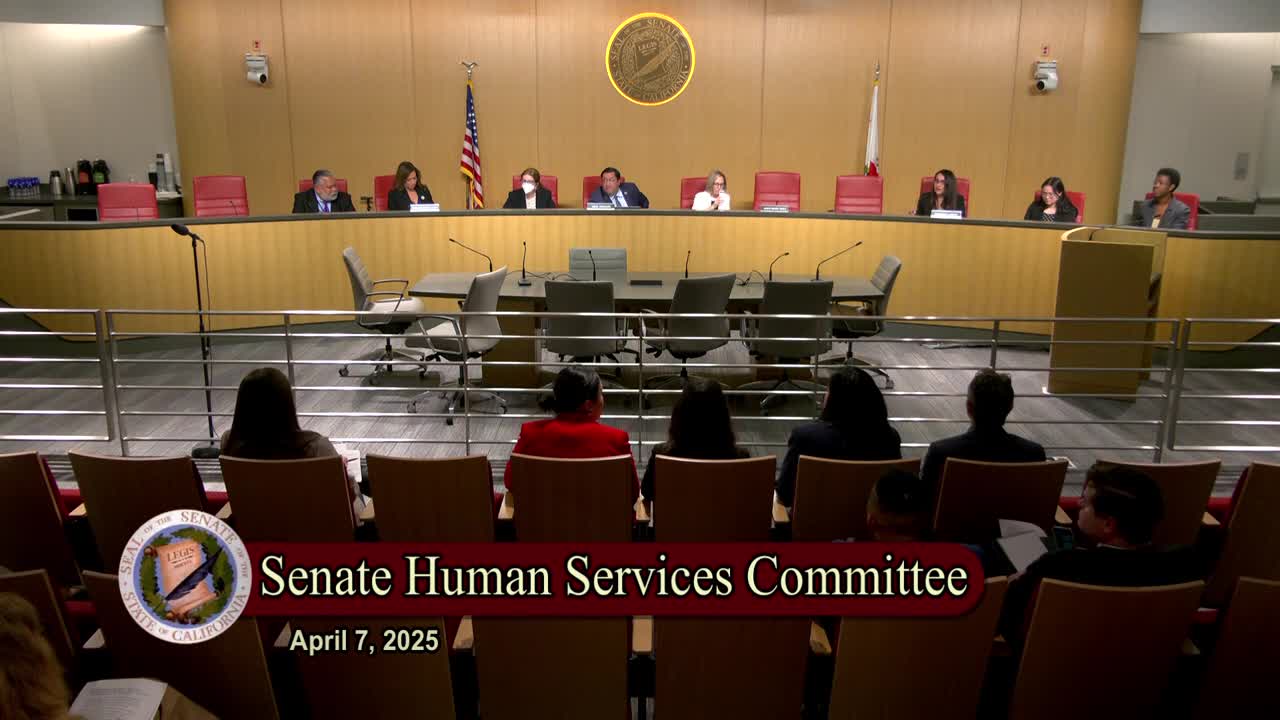
Discussed in Hearing
 5MIN
Senate Standing Committee on Human Services
Bill Author

Bill Co-Author(s):