SB 489: Local agency formation commissions: written policies and procedures: Permit Streamlining Act: housing development projects.
- Session Year: 2025-2026
- House: Senate
- Latest Version Date: 2025-10-10
Current Status:
Passed
(2025-10-10: Chaptered by Secretary of State. Chapter 518, Statutes of 2025.)
Introduced
In Committee
Awaiting First Chamber Vote
Passed First Chamber
In Committee
Awaiting Second Chamber Vote
Passed Second Chamber
Enacted
(1)The Cortese-Knox-Hertzberg Local Government Reorganization Act of 2000 governs the procedures for the formation and change of organization of cities and special districts and establishes a local agency formation commission in each county consisting of members appointed as provided. The act expresses the intent of the Legislature that each local agency formation commission, by January 1, 2002, establish written policies and procedures and exercise its powers in a way that encourages and provides planned, well-ordered, efficient urban development patterns, as specified. The act requires these written policies and procedures to include forms to be used for various submittals to the commission, as provided. The act requires each commission to provide access to notices and other information to the public on an internet website, as specified, including notice of all public hearings and commission meetings.
This bill would require that each local agency formation commission establish the written policies and procedures described above. The bill would require that the written policies and procedures include any forms necessary for a complete application to the commission concerning a proposed change of organization or reorganization. The bill would require each commission to provide access to its written policies and procedures to the public, including any forms necessary for a complete application for a change of organization or reorganization, through its internet website.
(2)The Permit Streamlining Act, among other things, requires a public agency to compile a list of the information required from an applicant for a development project, as provided.
This bill would require a public agency, for each type of approval issued in connection with a housing development project, as defined, to publish online the above-described list, including the criteria that the public agency will apply in order to determine the completeness of the development application and the name of the type of approval, as provided.
(3)By increasing the duties of local agency formation commissions in establishing and publishing written policies and procedures and of local planning officials in reviewing permit applications for housing development projects, this bill would impose a state-mandated local program.
The California Constitution requires the state to reimburse local agencies and school districts for certain costs mandated by the state. Statutory provisions establish procedures for making that reimbursement.
This bill would provide that no reimbursement is required by this act for a specified reason.
(1)The Cortese-Knox-Hertzberg Local Government Reorganization Act of 2000 governs the procedures for the formation and change of organization of cities and special districts and establishes a local agency formation commission in each county consisting of members appointed as provided. The act expresses the intent of the Legislature that each local agency formation commission, by January 1, 2002, establish written policies and procedures and exercise its powers in a way that encourages and provides planned, well-ordered, efficient urban development patterns, as specified. The act requires these written policies and procedures to include forms to be used for various submittals to the commission, as provided. The act requires each commission to provide access to notices and other information to the public on an internet website, as specified, including notice of all public hearings and commission meetings.
This bill would require that each local agency formation commission establish the written policies and procedures described above. The bill would require that the written policies and procedures include any forms necessary for a complete application to the commission concerning a proposed change of organization or reorganization. The bill would require each commission to provide access to its written policies and procedures to the public, including any forms necessary for a complete application for a change of organization or reorganization, through its internet website.
(2)The Permit Streamlining Act Act, among other things, requires a public agency to compile a list of the information required from an applicant for a development project, as provided. The act defines various terms for its purposes, including, among others, a development project, which is generally defined as any project undertaken for the purpose of development, excluding ministerial projects proposed to be carried out or approved by public agencies, except that the act includes in the definition of development project projects that require an entitlement from a local agency, regardless of whether the process for permitting that entitlement is discretionary or ministerial.
This bill would revise the definition of development project for purposes of the act to instead include a housing development project, as defined by specified other law that includes in that definition, notwithstanding the above-described exclusion for ministerial projects, projects that involve no discretionary approvals and projects that involve both discretionary and nondiscretionary approvals. The This bill would also require a public agency, for each type of approval issued in connection with a housing development project, as defined, to publish online the above-described list, including the criteria that the public agency will apply in order to determine the completeness of the development application and the name of the type of approval, as provided.
(3)By increasing the duties of local agency formation commissions in establishing and publishing written policies and procedures and of local planning officials in reviewing permit applications for housing development projects, this bill would impose a state-mandated local program.
The California Constitution requires the state to reimburse local agencies and school districts for certain costs mandated by the state. Statutory provisions establish procedures for making that reimbursement.
This bill would provide that no reimbursement is required by this act for a specified reason.
(1)The Cortese-Knox-Hertzberg Local Government Reorganization Act of 2000 governs the procedures for the formation and change of organization of cities and special districts and establishes a local agency formation commission in each county consisting of members appointed as provided. The act expresses the intent of the Legislature that each local agency formation commission, by January 1, 2002, establish written policies and procedures and exercise its powers in a way that encourages and provides planned, well-ordered, efficient urban development patterns, as specified. The act requires these written policies and procedures to include forms to be used for various submittals to the commission, as provided. The act requires each commission to provide access to notices and other information to the public on an internet website, as specified, including notice of all public hearings and commission meetings.
This bill would require that each local agency formation commission establish the written policies and procedures described above. The bill would require that the written policies and procedures include any forms necessary for a complete application to the commission concerning a proposed change of organization or reorganization. The bill would require each commission to provide access to its written policies and procedures to the public, including any forms necessary for a complete application for a change of organization or reorganization, through its internet website.
(2)The Permit Streamlining Act requires a public agency to compile a list of the information required from an applicant for a development project, as provided, and, until January 1, 2030, specifies that a development project for purposes of this requirement includes a housing development project, as defined. provided. The act defines various terms for its purposes, including, among others, a development project, which is generally defined as any project undertaken for the purpose of development, excluding ministerial projects proposed to be carried out or approved by public agencies. agencies, except that the act includes in the definition of development project projects that require an entitlement from a local agency, regardless of whether the process for permitting that entitlement is discretionary or ministerial.
This bill would revise the definition of development project for purposes of the act to instead include a housing development project, as defined by specified other law that includes in that definition, notwithstanding the above-described exclusion for ministerial projects, projects that involve no discretionary approvals and projects that involve both discretionary and nondiscretionary approvals. The bill would make a conforming change in the above-described requirement to compile the above-described list by deleting the specification that a development project includes a housing development project. The bill, until January 1, 2030, The bill would also require a public agency, for each approval issued in connection with a housing development project, to publish online the above-described list, including the criteria that the public agency will apply in order to determine the completeness of the development application and the name of the approval, as provided.
(3)By increasing the duties of local agency formation commissions in establishing and publishing written policies and procedures and of local planning officials in reviewing permit applications for housing development projects, this bill would impose a state-mandated local program.
The California Constitution requires the state to reimburse local agencies and school districts for certain costs mandated by the state. Statutory provisions establish procedures for making that reimbursement.
This bill would provide that no reimbursement is required by this act for a specified reason.
(1)The Cortese-Knox-Hertzberg Local Government Reorganization Act of 2000 governs the procedures for the formation and change of organization of cities and special districts and establishes a local agency formation commission in each county consisting of members appointed as provided. The act expresses the intent of the Legislature that each local agency formation commission, by January 1, 2002, establish written policies and procedures and exercise its powers in a way that encourages and provides planned, well-ordered, efficient urban development patterns, as specified. The act requires these written policies and procedures to include forms to be used for various submittals to the commission, as provided. The act requires each commission to provide access to notices and other information to the public on an internet website, as specified, including notice of all public hearings and commission meetings.
This bill would require that each local agency formation commission establish the written policies and procedures described above. The bill would require that the written policies and procedures include any forms necessary for a complete application to the commission concerning a proposed change of organization or reorganization. The bill would require each commission to provide access to its written policies and procedures to the public, including any forms necessary for a complete application for a change of organization or reorganization, through its internet website.
The(2)The Permit Streamlining Act requires a public agency to compile a list of the information required from an applicant for a development project, as provided, and, until January 1, 2030, specifies that a development project for purposes of this requirement includes a housing development project, as defined. The act defines various terms for its purposes, including, among others, a development project, which is generally defined as any project undertaken for the purpose of development. development, excluding ministerial projects proposed to be carried out or approved by public agencies.
This bill would revise the definition of development project for purposes of the act to include a housing development project, as defined by specified other law that includes in that definition, notwithstanding the above-described exclusion for ministerial projects, projects that involve no discretionary approvals and projects that involve both discretionary and nondiscretionary approvals. The bill would make a conforming change in the above-described requirement to compile the above-described list by deleting the specification that a development project includes a housing development project. The bill, until January 1, 2030, would also require a public agency, for each approval issued in connection with a housing development project, to publish online the above-described list, including the criteria that the public agency will apply in order to determine the completeness of the development application and the name of the approval, as provided. The bill would revise the definition of housing development project for these purposes to include (1) an approval in connection with a housing development project, other than a postentitlement phase permit, as defined, or specified applications from a housing development project described in certain provisions governing applications made to a special district and (2) a change of organization or reorganization, as those terms are defined for purposes of specified law governing the initiation, conduct, and completion of changes of organization and reorganization for cities and districts.
The Permit Streamlining Act requires a public agency that is a lead agency to approve or disapprove a project within specified time periods. Among these time periods, until January 1, 2030, the act requires a public agency to approve a development project, defined for these purposes as a housing development project, defined by cross-reference to specified law, within 90 days from the date of certification by the lead agency of the environmental impact report, or 60 days from the date of certification by the lead agency of the environmental impact report if certain conditions are met, as provided.This bill, until January 1, 2030, would revise the definition of housing development project for purposes of these time periods to include an approval in connection with a housing development project, other than a postentitlement phase permit, as defined, or specified applications from a housing development project described in certain provisions governing applications made to a special district.The Permit Streamlining Act specifies that the time limits specified under its provisions are maximum time limits for approving or disapproving development projects, and requires all public agencies, if possible, to approve or disapprove development projects in shorter periods of time.This bill would define development project for purposes of these provisions to include a housing development project. The bill would define a housing development project for these purposes to mean a use consisting of residential units only; mixed-use developments consisting of residential and nonresidential uses that meet specified conditions; transitional housing or supportive housing; or farmworker housing, as defined. By(3)By increasing the duties of local agency formation commissions in establishing and publishing written policies and procedures and of local planning officials in reviewing permit applications for housing development projects, this bill would impose a state-mandated local program.
The California Constitution requires the state to reimburse local agencies and school districts for certain costs mandated by the state. Statutory provisions establish procedures for making that reimbursement.
This bill would provide that no reimbursement is required by this act for a specified reason.
The Permit Streamlining Act requires a public agency to compile a list of the information required from an applicant for a development project, as provided, and, until January 1, 2030, specifies that a development project for purposes of this requirement includes a housing development project, as defined. The act defines various terms for its purposes, including, among others, a development project, which is generally defined as any project undertaken for the purpose of development.
This bill, until January 1, 2030, would require a public agency, for each approval issued in connection with a housing development project, to publish online the above-described list, including the criteria that the public agency will apply in order to determine the completeness of the development application and the name of the approval, as provided. The bill would revise the definition of housing development project for these purposes to include (1) an approval in connection with a housing development project, other than a postentitlement phase permit, as defined, or specified applications from a housing development project described in certain provisions governing applications made to a special district and (2) a change of organization or reorganization, as those terms are defined for purposes of specified law governing the initiation, conduct, and completion of changes of organization and reorganization for cities and districts.
The Permit Streamlining Act requires a public agency that is a lead agency to approve or disapprove a project within specified time periods. Among these time periods, until January 1, 2030, the act requires a public agency to approve a development project, defined for these purposes as a housing development project, defined by cross-reference to specified law, within 90 days from the date of certification by the lead agency of the environmental impact report, or 60 days from the date of certification by the lead agency of the environmental impact report if certain conditions are met, as provided.
This bill, until January 1, 2030, would revise the definition of housing development project for purposes of these time periods to include an approval in connection with a housing development project, other than a postentitlement phase permit, as defined, or specified applications from a housing development project described in certain provisions governing applications made to a special district.
The Permit Streamlining Act specifies that the time limits specified under its provisions are maximum time limits for approving or disapproving development projects, and requires all public agencies, if possible, to approve or disapprove development projects in shorter periods of time.
This bill would define development project for purposes of these provisions to include a housing development project. The bill would define a housing development project for these purposes to mean a use consisting of residential units only; mixed-use developments consisting of residential and nonresidential uses that meet specified conditions; transitional housing or supportive housing; or farmworker housing, as defined.
By increasing the duties of local planning officials in reviewing permit applications for housing development projects, this bill would impose a state-mandated local program.
The California Constitution requires the state to reimburse local agencies and school districts for certain costs mandated by the state. Statutory provisions establish procedures for making that reimbursement.
This bill would provide that no reimbursement is required by this act for a specified reason.
The Permit Streamlining Act requires a public agency that is the lead agency for a development project to approve or disapprove that project within specified time periods.This bill would express the intent of the Legislature to enact legislation that would relate to clarifying the requirements of public agencies under the Permit Streamlining Act with respect to approvals issued in connection with housing development projects and clarifying the relationship of the Permit Streamlining Act to statutes governing postentitlement permits.The Permit Streamlining Act requires a public agency that is the lead agency for a development project to approve or disapprove that project within specified time periods.
This bill would express the intent of the Legislature to enact legislation that would relate to clarifying the requirements of public agencies under the Permit Streamlining Act with respect to approvals issued in connection with housing development projects and clarifying the relationship of the Permit Streamlining Act to statutes governing postentitlement permits.
(a)Each commission shall establish written policies and procedures and exercise its powers pursuant to this part in a manner consistent with those policies and procedures and that encourages and provides planned, well-ordered, efficient urban development patterns with appropriate consideration of preserving open-space and agricultural lands within those patterns.
(b)Each commission with a proposal pending on January 1, 2001, shall, by March 31, 2001, hold a public hearing to discuss the adoption of policies and procedures to require the disclosure of contributions, expenditures, and independent expenditures authorized by Section 56100.1. Reporting requirements adopted pursuant to this section shall be effective upon the date of adoption or a later date specified in the resolution. Any commission that does not have a proposal pending on January 1, 2001, shall hold a public hearing to discuss the adoption of those policies and procedures within 90 days of submission of a proposal or at any time prior to submission of a proposal. Once a hearing has taken place under this subdivision, no subsequent hearing shall be required except by petition of 100 or more registered voters residing in the county in which the commission is located.
(c)A commission may require, through the adoption of written policies and procedures, lobbying disclosure and reporting requirements for persons who attempt to influence pending decisions by commission members, staff, or consultants. Disclosure shall be made either to the commissions executive officer, in which case it shall be posted on the commissions internet website, if applicable, or to the recorder, registrar of voters, or clerk of the board of supervisors of the county in which the commission is located. Each commission that on January 1, 2001, has a pending proposal, as defined in Section 56069 shall, by March 31, 2001, hold a public hearing to discuss the adoption of policies and procedures governing lobbying disclosure authorized by this subdivision. Reporting requirements adopted pursuant to this section shall be effective upon the date of adoption or on a later date specified in the resolution. Any commission that does not have a proposal pending on January 1, 2001, shall hold a public hearing to discuss the adoption of those policies and procedures within 90 days of submission of a proposal, or at any time prior to submission of a proposal.
(d)Any public hearings required by this section may be held concurrently.
(e)The written policies and procedures adopted by the commission shall include forms to be used for various submittals to the commission including at a minimum a form for any protests to be filed with the commission and any forms necessary for a complete application to the commission concerning any proposed change of organization or reorganization.
(f)(1)Each commission shall establish and maintain, or otherwise provide access to notices, written policies and procedures, and other commission information for the public through an internet website.
(2)The written policies and procedures adopted by the commission shall require that notice of all public hearings, commission meetings, and any forms necessary for a complete application for a change of organization or reorganization shall be made available in electronic format on the commissions internet website.
SEC. 2.Section 65940 of the Government Code is amended to read:65940.(a)(1)Each public agency shall compile one or more lists that shall specify in detail the information that will be required from any applicant for a development project. Each public agency shall revise the list of information required from an applicant to include a certification of compliance with Section 65962.5, and the statement of application required by Section 65943. Copies of the information, including the statement of application required by Section 65943, shall be made available to all applicants for development projects and to any person who requests the information.
(2)An affected city or affected county, as defined in Section 66300, shall include the information necessary to determine compliance with the requirements of Article 2 (commencing with Section 66300.5) of Chapter 12 in the list compiled pursuant to paragraph (1).
(b)The list of information required from any applicant shall include, where applicable, identification of whether the proposed project is located within 1,000 feet of a military installation, beneath a low-level flight path or within special use airspace as defined in Section 21098 of the Public Resources Code, and within an urbanized area as defined in Section 65944.
(c)(1)A public agency that is not beneath a low-level flight path or not within special use airspace and does not contain a military installation is not required to change its list of information required from applicants to comply with subdivision (b).
(2)A public agency that is entirely urbanized, as defined in subdivision (e) of Section 65944, with the exception of a jurisdiction that contains a military installation, is not required to change its list of information required from applicants to comply with subdivision (b).
(d)For each type of approval issued by a public agency in connection with a housing development project, the list required to be compiled by this section, including the criteria the public agency will apply in order to determine the completeness of an application described in Section 65941, and the name of the type of approval, shall be published online.
(e)For purposes of this section, development project includes a housing development project as defined in paragraph (3) of subdivision (b) of Section 65905.5.
SEC. 3.No reimbursement is required by this act pursuant to Section 6 of Article XIIIB of the California Constitution because a local agency or school district has the authority to levy service charges, fees, or assessments sufficient to pay for the program or level of service mandated by this act, within the meaning of Section 17556 of the Government Code.
(a)Each commission shall establish written policies and procedures and exercise its powers pursuant to this part in a manner consistent with those policies and procedures and that encourages and provides planned, well-ordered, efficient urban development patterns with appropriate consideration of preserving open-space and agricultural lands within those patterns.
(b)Each commission with a proposal pending on January 1, 2001, shall, by March 31, 2001, hold a public hearing to discuss the adoption of policies and procedures to require the disclosure of contributions, expenditures, and independent expenditures authorized by Section 56100.1. Reporting requirements adopted pursuant to this section shall be effective upon the date of adoption or a later date specified in the resolution. Any commission that does not have a proposal pending on January 1, 2001, shall hold a public hearing to discuss the adoption of those policies and procedures within 90 days of submission of a proposal or at any time prior to submission of a proposal. Once a hearing has taken place under this subdivision, no subsequent hearing shall be required except by petition of 100 or more registered voters residing in the county in which the commission is located.
(c)A commission may require, through the adoption of written policies and procedures, lobbying disclosure and reporting requirements for persons who attempt to influence pending decisions by commission members, staff, or consultants. Disclosure shall be made either to the commissions executive officer, in which case it shall be posted on the commissions internet website, if applicable, or to the recorder, registrar of voters, or clerk of the board of supervisors of the county in which the commission is located. Each commission that on January 1, 2001, has a pending proposal, as defined in Section 56069 shall, by March 31, 2001, hold a public hearing to discuss the adoption of policies and procedures governing lobbying disclosure authorized by this subdivision. Reporting requirements adopted pursuant to this section shall be effective upon the date of adoption or on a later date specified in the resolution. Any commission that does not have a proposal pending on January 1, 2001, shall hold a public hearing to discuss the adoption of those policies and procedures within 90 days of submission of a proposal, or at any time prior to submission of a proposal.
(d)Any public hearings required by this section may be held concurrently.
(e)The written policies and procedures adopted by the commission shall include forms to be used for various submittals to the commission including at a minimum a form for any protests to be filed with the commission and any forms necessary for a complete application to the commission concerning any proposed change of organization or reorganization.
(f)(1)Each commission shall establish and maintain, or otherwise provide access to notices, written policies and procedures, and other commission information for the public through an internet website.
(2)The written policies and procedures adopted by the commission shall require that notice of all public hearings, commission meetings, and any forms necessary for a complete application for a change of organization or reorganization shall be made available in electronic format on the commissions internet website.
SEC. 2.Section 65928 of the Government Code is amended to read:65928.(a)Development project means any project undertaken for the purpose of development.(b)Development project includes a project involving the issuance of a permit for construction or reconstruction but not a permit to operate.(c)Except as otherwise provided in subdivision (d), development project does not include any ministerial projects proposed to be carried out or approved by public agencies.(d)Notwithstanding subdivision (c), development project includes a housing development project, as that term is defined in paragraph (3) of subdivision (b) of Section 65905.5.(e)Development project does not include a postentitlement phase permit, as that term is defined in Section 65913.3.SEC. 3.SEC. 2.Section 65940 of the Government Code is amended to read:65940.(a)(1)Each public agency shall compile one or more lists that shall specify in detail the information that will be required from any applicant for a development project. Each public agency shall revise the list of information required from an applicant to include a certification of compliance with Section 65962.5, and the statement of application required by Section 65943. Copies of the information, including the statement of application required by Section 65943, shall be made available to all applicants for development projects and to any person who requests the information.
(2)An affected city or affected county, as defined in Section 66300, shall include the information necessary to determine compliance with the requirements of Article 2 (commencing with Section 66300.5) of Chapter 12 in the list compiled pursuant to paragraph (1).
(b)The list of information required from any applicant shall include, where applicable, identification of whether the proposed project is located within 1,000 feet of a military installation, beneath a low-level flight path or within special use airspace as defined in Section 21098 of the Public Resources Code, and within an urbanized area as defined in Section 65944.
(c)(1)A public agency that is not beneath a low-level flight path or not within special use airspace and does not contain a military installation is not required to change its list of information required from applicants to comply with subdivision (b).
(2)A public agency that is entirely urbanized, as defined in subdivision (e) of Section 65944, with the exception of a jurisdiction that contains a military installation, is not required to change its list of information required from applicants to comply with subdivision (b).
(d)For each type of approval issued by a public agency in connection with a housing development project, the list required to be compiled by this section, including the criteria the public agency will apply in order to determine the completeness of an application described in Section 65941, and the name of the type of approval, shall be published online.
(e)For purposes of this section, development project includes a housing development project as defined in paragraph (3) of subdivision (b) of Section 65905.5.
SEC. 4.SEC. 3.No reimbursement is required by this act pursuant to Section 6 of Article XIIIB of the California Constitution because a local agency or school district has the authority to levy service charges, fees, or assessments sufficient to pay for the program or level of service mandated by this act, within the meaning of Section 17556 of the Government Code.
(a)Each commission shall establish written policies and procedures and exercise its powers pursuant to this part in a manner consistent with those policies and procedures and that encourages and provides planned, well-ordered, efficient urban development patterns with appropriate consideration of preserving open-space and agricultural lands within those patterns.
(b)Each commission with a proposal pending on January 1, 2001, shall, by March 31, 2001, hold a public hearing to discuss the adoption of policies and procedures to require the disclosure of contributions, expenditures, and independent expenditures authorized by Section 56100.1. Reporting requirements adopted pursuant to this section shall be effective upon the date of adoption or a later date specified in the resolution. Any commission that does not have a proposal pending on January 1, 2001, shall hold a public hearing to discuss the adoption of those policies and procedures within 90 days of submission of a proposal or at any time prior to submission of a proposal. Once a hearing has taken place under this subdivision, no subsequent hearing shall be required except by petition of 100 or more registered voters residing in the county in which the commission is located.
(c)A commission may require, through the adoption of written policies and procedures, lobbying disclosure and reporting requirements for persons who attempt to influence pending decisions by commission members, staff, or consultants. Disclosure shall be made either to the commissions executive officer, in which case it shall be posted on the commissions internet website, if applicable, or to the recorder, registrar of voters, or clerk of the board of supervisors of the county in which the commission is located. Each commission that on January 1, 2001, has a pending proposal, as defined in Section 56069 shall, by March 31, 2001, hold a public hearing to discuss the adoption of policies and procedures governing lobbying disclosure authorized by this subdivision. Reporting requirements adopted pursuant to this section shall be effective upon the date of adoption or on a later date specified in the resolution. Any commission that does not have a proposal pending on January 1, 2001, shall hold a public hearing to discuss the adoption of those policies and procedures within 90 days of submission of a proposal, or at any time prior to submission of a proposal.
(d)Any public hearings required by this section may be held concurrently.
(e)The written policies and procedures adopted by the commission shall include forms to be used for various submittals to the commission including at a minimum a form for any protests to be filed with the commission and any forms necessary for a complete application to the commission concerning any proposed change of organization or reorganization.
(f)(1)Each commission shall establish and maintain, or otherwise provide access to notices, written policies and procedures, and other commission information for the public through an internet website.
(2)The written policies and procedures adopted by the commission shall require that notice of all public hearings, commission meetings, and any forms necessary for a complete application for a change of organization or reorganization shall be made available in electronic format on the commissions internet website.
SEC. 2.Section 65928 of the Government Code is amended to read:65928.(a)Development project means any project undertaken for the purpose of development.(b)Development project includes a project involving the issuance of a permit for construction or reconstruction but not a permit to operate.(c)Except as provided in subdivision (d), development project does not include any ministerial projects proposed to be carried out or approved by public agencies.(d)Development project includes a housing development project, as that term is defined in paragraph (3) of subdivision (b) of Section 65905.5.SEC. 3.Section 65940 of the Government Code, as amended by Section 3 of Chapter 754 of the Statutes of 2023, is amended to read:65940.(a)(1)Each public agency shall compile one or more lists that shall specify in detail the information that will be required from any applicant for a development project. Each public agency shall revise the list of information required from an applicant to include a certification of compliance with Section 65962.5, and the statement of application required by Section 65943. Copies of the information, including the statement of application required by Section 65943, shall be made available to all applicants for development projects and to any person who requests the information.(2)An affected city or affected county, as defined in Section 66300, shall include the information necessary to determine compliance with the requirements of Article 2 (commencing with Section 66300.5) of Chapter 12 in the list compiled pursuant to paragraph (1).(b)The list of information required from any applicant shall include, where applicable, identification of whether the proposed project is located within 1,000 feet of a military installation, beneath a low-level flight path or within special use airspace as defined in Section 21098 of the Public Resources Code, and within an urbanized area as defined in Section 65944.(c)(1)A public agency that is not beneath a low-level flight path or not within special use airspace and does not contain a military installation is not required to change its list of information required from applicants to comply with subdivision (b).(2)A public agency that is entirely urbanized, as defined in subdivision (e) of Section 65944, with the exception of a jurisdiction that contains a military installation, is not required to change its list of information required from applicants to comply with subdivision (b).(d)For each approval issued by a public agency in connection with a housing development project, the list required to be compiled by this section, including the criteria which the public agency will apply in order to determine the completeness of an application described in Section 65941, and the name of the approval, shall be published online.(e)This section shall remain in effect only until January 1, 2030, and as of that date is repealed.SEC. 2.Section 65928 of the Government Code is amended to read:65928.(a)Development project means any project undertaken for the purpose of development. Development
(b)Development project includes a project involving the issuance of a permit for construction or reconstruction but not a permit to operate.
(b)(1)(A)(c)Except as otherwise provided in subparagraph (B), subdivision (d), development project does not include any ministerial projects proposed to be carried out or approved by public agencies.
(B)(d)Notwithstanding subparagraph (A), subdivision (c), development project includes a housing development project that requires an entitlement from a local agency, regardless of whether the process for permitting that entitlement is discretionary or ministerial. project, as that term is defined in paragraph (3) of subdivision (b) of Section 65905.5.
(2)(e)Development project does not include a postentitlement phase permit, as that term is defined in Section 65913.3.
SEC. 3.Section 65940 of the Government Code is amended to read:65940.(a)(1)Each public agency shall compile one or more lists that shall specify in detail the information that will be required from any applicant for a development project. Each public agency shall revise the list of information required from an applicant to include a certification of compliance with Section 65962.5, and the statement of application required by Section 65943. Copies of the information, including the statement of application required by Section 65943, shall be made available to all applicants for development projects and to any person who requests the information.
(2)An affected city or affected county, as defined in Section 66300, shall include the information necessary to determine compliance with the requirements of Article 2 (commencing with Section 66300.5) of Chapter 12 in the list compiled pursuant to paragraph (1).
(b)The list of information required from any applicant shall include, where applicable, identification of whether the proposed project is located within 1,000 feet of a military installation, beneath a low-level flight path or within special use airspace as defined in Section 21098 of the Public Resources Code, and within an urbanized area as defined in Section 65944.
(c)(1)A public agency that is not beneath a low-level flight path or not within special use airspace and does not contain a military installation is not required to change its list of information required from applicants to comply with subdivision (b).
(2)A public agency that is entirely urbanized, as defined in subdivision (e) of Section 65944, with the exception of a jurisdiction that contains a military installation, is not required to change its list of information required from applicants to comply with subdivision (b).
(d)For each approval issued by a public agency in connection with a housing development project, the list required to be compiled by this section, including the criteria the public agency will apply in order to determine the completeness of an application described in Section 65941, and the name of the approval, shall be published online.
(d)(e)For purposes of this section, development project includes a housing development project as defined in paragraph (3) of subdivision (b) of Section 65905.5.
SEC. 4.No reimbursement is required by this act pursuant to Section 6 of Article XIIIB of the California Constitution because a local agency or school district has the authority to levy service charges, fees, or assessments sufficient to pay for the program or level of service mandated by this act, within the meaning of Section 17556 of the Government Code.
(a)It is the intent of the Legislature that each commission, not later than January 1, 2002, Each commission shall establish written policies and procedures and exercise its powers pursuant to this part in a manner consistent with those policies and procedures and that encourages and provides planned, well-ordered, efficient urban development patterns with appropriate consideration of preserving open-space and agricultural lands within those patterns.
(b)Each commission with a proposal pending on January 1, 2001, shall, by March 31, 2001, hold a public hearing to discuss the adoption of policies and procedures to require the disclosure of contributions, expenditures, and independent expenditures authorized by Section 56100.1. Reporting requirements adopted pursuant to this section shall be effective upon the date of adoption or a later date specified in the resolution. Any commission that does not have a proposal pending on January 1, 2001, shall hold a public hearing to discuss the adoption of those policies and procedures within 90 days of submission of a proposal or at any time prior to submission of a proposal. Once a hearing has taken place under this subdivision, no subsequent hearing shall be required except by petition of 100 or more registered voters residing in the county in which the commission is located.
(c)A commission may require, through the adoption of written policies and procedures, lobbying disclosure and reporting requirements for persons who attempt to influence pending decisions by commission members, staff, or consultants. Disclosure shall be made either to the commissions executive officer, in which case it shall be posted on the commission Web site, commissions internet website, if applicable, or to the recorder, registrar of voters, or clerk of the board of supervisors of the county in which the commission is located. Each commission that on January 1, 2001, has a pending proposal, as defined in Section 56069 shall, by March 31, 2001, hold a public hearing to discuss the adoption of policies and procedures governing lobbying disclosure authorized by this subdivision. Reporting requirements adopted pursuant to this section shall be effective upon the date of adoption or on a later date specified in the resolution. Any commission that does not have a proposal pending on January 1, 2001, shall hold a public hearing to discuss the adoption of those policies and procedures within 90 days of submission of a proposal, or at any time prior to submission of a proposal.
(d)Any public hearings required by this section may be held concurrently.
(e)The written policies and procedures adopted by the commission shall include forms to be used for various submittals to the commission including at a minimum a form for any protests to be filed with the commission and any forms necessary for a complete application to the commission concerning any proposed organization change. change of organization or reorganization.
(f)(1)On or before January 1, 2002, the Each commission shall establish and maintain, or otherwise provide access to notices notices, written policies and procedures, and other commission information for the public through an Internet Web site. internet website.
(2)The written policies and procedures adopted by the commission shall require that, to the extent that the commission maintains an Internet Web site, that notice of all public hearings and commission meetings public hearings, commission meetings, and any forms necessary for a complete application for a change of organization or reorganization shall be made available in electronic format on that site. the commissions internet website.
SEC. 2.Section 65928 of the Government Code is amended to read:65928.(a)Development project means any project undertaken for the purpose of development. Development
(b)Development project includes a project involving the issuance of a permit for construction or reconstruction but not a permit to operate. Development
(c)Except as provided in subdivision (d), development project does not include any ministerial projects proposed to be carried out or approved by public agencies.
(d)Development project includes a housing development project, as that term is defined in paragraph (3) of subdivision (b) of Section 65905.5.
SECTION 1.SEC. 3.Section 65940 of the Government Code, as amended by Section 3 of Chapter 754 of the Statutes of 2023, is amended to read:65940.(a)(1)Each public agency shall compile one or more lists that shall specify in detail the information that will be required from any applicant for a development project. Each public agency shall revise the list of information required from an applicant to include a certification of compliance with Section 65962.5, and the statement of application required by Section 65943. Copies of the information, including the statement of application required by Section 65943, shall be made available to all applicants for development projects and to any person who requests the information.
(2)An affected city or affected county, as defined in Section 66300, shall include the information necessary to determine compliance with the requirements of Article 2 (commencing with Section 66300.5) of Chapter 12 in the list compiled pursuant to paragraph (1).
(b)The list of information required from any applicant shall include, where applicable, identification of whether the proposed project is located within 1,000 feet of a military installation, beneath a low-level flight path or within special use airspace as defined in Section 21098 of the Public Resources Code, and within an urbanized area as defined in Section 65944.
(c)(1)A public agency that is not beneath a low-level flight path or not within special use airspace and does not contain a military installation is not required to change its list of information required from applicants to comply with subdivision (b).
(2)A public agency that is entirely urbanized, as defined in subdivision (e) of Section 65944, with the exception of a jurisdiction that contains a military installation, is not required to change its list of information required from applicants to comply with subdivision (b).
(d)For each approval issued by a public agency in connection with a housing development project, the list required to be compiled by this section, including the criteria which the public agency will apply in order to determine the completeness of an application described in Section 65941, and the name of the approval, shall be published online.
(e)For purposes of this section:(1)Development project includes a housing development project as defined in paragraph (3) of subdivision (b) of Section 65905.5.(2)Housing development project includes, but is not limited to, both of the following:(A)An approval issued in connection with a housing development project, including any necessary permit, review, statement, action, authorization, determination, inspection, report, clearance, agreement that is required as a condition of approval, or similar provision, except an approval that is a postentitlement phase permit, as defined in Section 65913.3, or an application from a housing development project as described in subdivision (a) of Section 65913.3.1.(B)A change of organization, as defined in Section 56021, or a reorganization, as defined in Section 56073.(f)(e)This section shall remain in effect only until January 1, 2030, and as of that date is repealed.
SEC. 2.Section 65950 of the Government Code, as amended by Section 9 of Chapter 161 of the Statutes of 2021, is amended to read:65950.(a)A public agency that is the lead agency for a development project shall approve or disapprove the project within whichever of the following periods is applicable:(1)One hundred eighty days from the date of certification by the lead agency of the environmental impact report, if an environmental impact report is prepared pursuant to Section 21100 or 21151 of the Public Resources Code for the development project.(2)Ninety days from the date of certification by the lead agency of the environmental impact report, if an environmental impact report is prepared pursuant to Section 21100 or 21151 of the Public Resources Code for a development project defined in subdivision (c).(3)Sixty days from the date of certification by the lead agency of the environmental impact report, if an environmental impact report is prepared pursuant to Section 21100 or 21151 of the Public Resources Code for a development project defined in subdivision (c) and all of the following conditions are met:(A)At least 49 percent of the units in the development project are affordable to very low or low-income households, as defined by Sections 50105 and 50079.5 of the Health and Safety Code, respectively. Rents for the lower income units shall be set at an affordable rent, as that term is defined in Section 50053 of the Health and Safety Code, for at least 30 years. Owner-occupied units shall be available at an affordable housing cost, as that term is defined in Section 50052.5 of the Health and Safety Code.(B)Prior to the application being deemed complete for the development project pursuant to Article 3 (commencing with Section 65940), the lead agency received written notice from the project applicant that an application has been made or will be made for an allocation or commitment of financing, tax credits, bond authority, or other financial assistance from a public agency or federal agency, and the notice specifies the financial assistance that has been applied for or will be applied for and the deadline for application for that assistance, the requirement that one of the approvals of the development project by the lead agency is a prerequisite to the application for or approval of the application for financial assistance, and that the financial assistance is necessary for the project to be affordable as required pursuant to subparagraph (A).(C)There is confirmation that the application has been made to the public agency or federal agency prior to certification of the environmental impact report.(4)Sixty days from the date of adoption by the lead agency of the negative declaration, if a negative declaration is completed and adopted for the development project.(5)Sixty days from the determination by the lead agency that the project is exempt from the California Environmental Quality Act (Division 13 (commencing with Section 21000) of the Public Resources Code), if the project is exempt from that act.(b)This section does not preclude a project applicant and a public agency from mutually agreeing in writing to an extension of any time limit provided by this section pursuant to Section 65957.(c)For purposes of paragraphs (2) and (3) of subdivision (a) and Section 65952, development project means a housing development project, as defined in paragraph (3) of subdivision (b) of Section 65905.5.(d)For purposes of this section:(1)Housing development project includes, but is not limited to, an approval issued in connection with a housing development project, including any necessary permit, review, statement, action, authorization, determination, inspection, report, clearance, agreement that is required as a condition of approval, or similar provision, except an approval that is a postentitlement phase permit, as defined in Section 65913.3, or an application from a housing development project as described in subdivision (a) of Section 65913.3.1.(2)Lead agency and negative declaration have the same meaning as defined in Sections 21067 and 21064 of the Public Resources Code, respectively.(e)This section shall remain in effect only until January 1, 2030, and as of that date is repealed.SEC. 3.Section 65953 of the Government Code is amended to read:65953.(a)All time limits specified in this article are maximum time limits for approving or disapproving development projects. All public agencies shall, if possible, approve or disapprove development projects in shorter periods of time.(b)For the purposes of this section:(1)Development project includes, but is not limited to, a housing development project.(2)Housing development project means a use consisting of any of the following:(A)Residential units only.(B)Mixed-use developments consisting of residential and nonresidential uses that meet any of the following conditions:(i)At least two-thirds of the new or converted square footage is designated for residential use.(ii)At least 50 percent of the new or converted square footage is designated for residential use and the project meets both of the following:(I)The project includes at least 500 net new residential units.(II)No portion of the project is designated for use as a hotel, motel, bed and breakfast inn, or other transient lodging, except a portion of the project may be designated for use as a residential hotel, as defined in Section 50519 of the Health and Safety Code.(iii)At least 50 percent of the net new or converted square footage is designated for residential use and the project meets all of the following:(I)The project includes at least 500 net new residential units.(II)The project involves the demolition or conversion of at least 100,000 square feet of nonresidential use.(III)The project demolishes at least 50 percent of the existing nonresidential uses on the site.(IV)No portion of the project is designated for use as a hotel, motel, bed and breakfast inn, or other transient lodging, except a portion of the project may be designated for use as a residential hotel, as defined in Section 50519 of the Health and Safety Code.(C)Transitional housing or supportive housing.(D)Farmworker housing, as defined in subdivision (h) of Section 50199.7 of the Health and Safety Code.(3)Housing development project includes, but is not limited to, all of the following:(A)An approval issued in connection with a housing development project, including any necessary permit, review, statement, action, authorization, determination, inspection, report, clearance, agreement that is required as a condition of approval, or similar provision, except an approval that is a postentitlement phase permit, as defined in Section 65913.3, or an application from a housing development project, as described in subdivision (a) of Section 65913.3.1.(B)Projects that involve no discretionary approvals and projects that involve both discretionary and nondiscretionary approvals.(C)A proposal to construct a single dwelling unit. This clause shall not affect the interpretation of the scope of paragraph (2) of subdivision (h) of Section 65589.5.SEC. 4.No reimbursement is required by this act pursuant to Section 6 of Article XIIIB of the California Constitution because a local agency or school district has the authority to levy service charges, fees, or assessments sufficient to pay for the program or level of service mandated by this act, within the meaning of Section 17556 of the Government Code.
(a)(1)Each public agency shall compile one or more lists that shall specify in detail the information that will be required from any applicant for a development project. Each public agency shall revise the list of information required from an applicant to include a certification of compliance with Section 65962.5, and the statement of application required by Section 65943. Copies of the information, including the statement of application required by Section 65943, shall be made available to all applicants for development projects and to any person who requests the information.
(2)An affected city or affected county, as defined in Section 66300, shall include the information necessary to determine compliance with the requirements of Article 2 (commencing with Section 66300.5) of Chapter 12 in the list compiled pursuant to paragraph (1).
(b)The list of information required from any applicant shall include, where applicable, identification of whether the proposed project is located within 1,000 feet of a military installation, beneath a low-level flight path or within special use airspace as defined in Section 21098 of the Public Resources Code, and within an urbanized area as defined in Section 65944.
(c)(1)A public agency that is not beneath a low-level flight path or not within special use airspace and does not contain a military installation is not required to change its list of information required from applicants to comply with subdivision (b).
(2)A public agency that is entirely urbanized, as defined in subdivision (e) of Section 65944, with the exception of a jurisdiction that contains a military installation, is not required to change its list of information required from applicants to comply with subdivision (b).
(d)For each approval issued by a public agency in connection with a housing development project, the list required to be compiled by this section, including the criteria which the public agency will apply in order to determine the completeness of an application described in Section 65941, and the name of the approval, shall be published online.
(d)(e)For purposes of this section, development section:
(1)Development project includes a housing development project as defined in paragraph (3) of subdivision (b) of Section 65905.5.
(2)Housing development project includes, but is not limited to, both of the following:
(A)An approval issued in connection with a housing development project, including any necessary permit, review, statement, action, authorization, determination, inspection, report, clearance, agreement that is required as a condition of approval, or similar provision, except an approval that is a postentitlement phase permit, as defined in Section 65913.3, or an application from a housing development project as described in subdivision (a) of Section 65913.3.1.
(B)A change of organization, as defined in Section 56021, or a reorganization, as defined in Section 56073.
(e)(f)This section shall remain in effect only until January 1, 2030, and as of that date is repealed.
SEC. 2.Section 65950 of the Government Code, as amended by Section 9 of Chapter 161 of the Statutes of 2021, is amended to read:65950.(a)A public agency that is the lead agency for a development project shall approve or disapprove the project within whichever of the following periods is applicable:
(1)One hundred eighty days from the date of certification by the lead agency of the environmental impact report, if an environmental impact report is prepared pursuant to Section 21100 or 21151 of the Public Resources Code for the development project.
(2)Ninety days from the date of certification by the lead agency of the environmental impact report, if an environmental impact report is prepared pursuant to Section 21100 or 21151 of the Public Resources Code for a development project defined in subdivision (c).
(3)Sixty days from the date of certification by the lead agency of the environmental impact report, if an environmental impact report is prepared pursuant to Section 21100 or 21151 of the Public Resources Code for a development project defined in subdivision (c) and all of the following conditions are met:
(A)At least 49 percent of the units in the development project are affordable to very low or low-income households, as defined by Sections 50105 and 50079.5 of the Health and Safety Code, respectively. Rents for the lower income units shall be set at an affordable rent, as that term is defined in Section 50053 of the Health and Safety Code, for at least 30 years. Owner-occupied units shall be available at an affordable housing cost, as that term is defined in Section 50052.5 of the Health and Safety Code.
(B)Prior to the application being deemed complete for the development project pursuant to Article 3 (commencing with Section 65940), the lead agency received written notice from the project applicant that an application has been made or will be made for an allocation or commitment of financing, tax credits, bond authority, or other financial assistance from a public agency or federal agency, and the notice specifies the financial assistance that has been applied for or will be applied for and the deadline for application for that assistance, the requirement that one of the approvals of the development project by the lead agency is a prerequisite to the application for or approval of the application for financial assistance, and that the financial assistance is necessary for the project to be affordable as required pursuant to subparagraph (A).
(C)There is confirmation that the application has been made to the public agency or federal agency prior to certification of the environmental impact report.
(4)Sixty days from the date of adoption by the lead agency of the negative declaration, if a negative declaration is completed and adopted for the development project.
(5)Sixty days from the determination by the lead agency that the project is exempt from the California Environmental Quality Act (Division 13 (commencing with Section 21000) of the Public Resources Code), if the project is exempt from that act.
(b)This section does not preclude a project applicant and a public agency from mutually agreeing in writing to an extension of any time limit provided by this section pursuant to Section 65957.
(c)For purposes of paragraphs (2) and (3) of subdivision (a) and Section 65952, development project means a housing development project, as defined in paragraph (3) of subdivision (b) of Section 65905.5.
(d)For purposes of this section, lead section:
(1)Housing development project includes, but is not limited to, an approval issued in connection with a housing development project, including any necessary permit, review, statement, action, authorization, determination, inspection, report, clearance, agreement that is required as a condition of approval, or similar provision, except an approval that is a postentitlement phase permit, as defined in Section 65913.3, or an application from a housing development project as described in subdivision (a) of Section 65913.3.1.
(2)Lead agency and negative declaration have the same meaning as defined in Sections 21067 and 21064 of the Public Resources Code, respectively.
(e)This section shall remain in effect only until January 1, 2030, and as of that date is repealed.
SEC. 3.Section 65953 of the Government Code is amended to read:65953.(a)All time limits specified in this article are maximum time limits for approving or disapproving development projects. All public agencies shall, if possible, approve or disapprove development projects in shorter periods of time.
(b)For the purposes of this section:
(1)Development project includes, but is not limited to, a housing development project.
(2)Housing development project means a use consisting of any of the following:
(A)Residential units only.
(B)Mixed-use developments consisting of residential and nonresidential uses that meet any of the following conditions:
(i)At least two-thirds of the new or converted square footage is designated for residential use.
(ii)At least 50 percent of the new or converted square footage is designated for residential use and the project meets both of the following:
(I)The project includes at least 500 net new residential units.
(II)No portion of the project is designated for use as a hotel, motel, bed and breakfast inn, or other transient lodging, except a portion of the project may be designated for use as a residential hotel, as defined in Section 50519 of the Health and Safety Code.
(iii)At least 50 percent of the net new or converted square footage is designated for residential use and the project meets all of the following:
(I)The project includes at least 500 net new residential units.
(II)The project involves the demolition or conversion of at least 100,000 square feet of nonresidential use.
(III)The project demolishes at least 50 percent of the existing nonresidential uses on the site.
(IV)No portion of the project is designated for use as a hotel, motel, bed and breakfast inn, or other transient lodging, except a portion of the project may be designated for use as a residential hotel, as defined in Section 50519 of the Health and Safety Code.
(C)Transitional housing or supportive housing.
(D)Farmworker housing, as defined in subdivision (h) of Section 50199.7 of the Health and Safety Code.
(3)Housing development project includes, but is not limited to, all of the following:
(A)An approval issued in connection with a housing development project, including any necessary permit, review, statement, action, authorization, determination, inspection, report, clearance, agreement that is required as a condition of approval, or similar provision, except an approval that is a postentitlement phase permit, as defined in Section 65913.3, or an application from a housing development project, as described in subdivision (a) of Section 65913.3.1.
(B)Projects that involve no discretionary approvals and projects that involve both discretionary and nondiscretionary approvals.
(C)A proposal to construct a single dwelling unit. This clause shall not affect the interpretation of the scope of paragraph (2) of subdivision (h) of Section 65589.5.
SEC. 4.No reimbursement is required by this act pursuant to Section 6 of Article XIIIB of the California Constitution because a local agency or school district has the authority to levy service charges, fees, or assessments sufficient to pay for the program or level of service mandated by this act, within the meaning of Section 17556 of the Government Code.
SECTION 1.This bill would express the intent of the Legislature to enact legislation that would relate to clarifing the requirements of public agencies under the Permit Streamlining Act with respect to approvals issued in connection with housing development projects and clarifying the relationship of the Permit Streamlining Act to statutes governing postentitlement permits.This bill would express the intent of the Legislature to enact legislation that would relate to clarifing the requirements of public agencies under the Permit Streamlining Act with respect to approvals issued in connection with housing development projects and clarifying the relationship of the Permit Streamlining Act to statutes governing postentitlement permits.
|
Date
|
Status
|
|---|---|
| Oct 10, 2025 | Chaptered by Secretary of State. Chapter 518, Statutes of 2025. |
| Oct 10, 2025 | Approved by the Governor. |
| Sep 9, 2025 | Enrolled and presented to the Governor at 2 p.m. |
| Sep 4, 2025 | Assembly amendments concurred in. (Ayes 39. Noes 0. Page 2513.) Ordered to engrossing and enrolling. |
| Sep 3, 2025 | In Senate. Concurrence in Assembly amendments pending. |
| Sep 3, 2025 | Read third time. Passed. (Ayes 78. Noes 0. Page 2867.) Ordered to the Senate. |
| Aug 26, 2025 | Ordered to third reading. |
| Aug 26, 2025 | Read third time and amended. |
| Aug 25, 2025 | Ordered to third reading. |
| Aug 25, 2025 | From consent calendar on motion of Assembly Member Garcia. |
| Aug 21, 2025 | Read second time. Ordered to consent calendar. |
| Aug 20, 2025 | From committee: Do pass. Ordered to consent calendar. (Ayes 15. Noes 0.) (August 20). |
| Jul 17, 2025 | Read second time and amended. Re-referred to Com. on APPR. |
| Jul 16, 2025 | From committee: Do pass as amended and re-refer to Com. on APPR. with recommendation: To consent calendar. (Ayes 12. Noes 0.) (July 16). |
| Jun 18, 2025 | From committee: Do pass and re-refer to Com. on H. & C.D. (Ayes 10. Noes 0.) (June 18). Re-referred to Com. on H. & C.D. |
| Jun 5, 2025 | Referred to Coms. on L. GOV. and H. & C.D. |
| May 28, 2025 | In Assembly. Read first time. Held at Desk. |
| May 27, 2025 | Read third time. Passed. (Ayes 39. Noes 0. Page 1247.) Ordered to the Assembly. |
| May 13, 2025 | Read second time. Ordered to third reading. |
| May 12, 2025 | From committee: Be ordered to second reading pursuant to Senate Rule 28.8. |
| May 2, 2025 | Set for hearing May 12. |
| Apr 30, 2025 | From committee: Do pass and re-refer to Com. on APPR. (Ayes 11. Noes 0. Page 936.) (April 29). Re-referred to Com. on APPR. |
| Apr 25, 2025 | Set for hearing April 29. |
| Apr 23, 2025 | From committee: Do pass and re-refer to Com. on HOUSING. (Ayes 6. Noes 1. Page 871.) (April 23). Re-referred to Com. on HOUSING. |
| Apr 21, 2025 | From committee with author's amendments. Read second time and amended. Re-referred to Com. on L. GOV. |
| Apr 4, 2025 | Set for hearing April 23. |
| Apr 2, 2025 | Re-referred to Coms. on L. GOV. and HOUSING. |
| Mar 25, 2025 | From committee with author's amendments. Read second time and amended. Re-referred to Com. on RLS. |
| Feb 26, 2025 | Referred to Com. on RLS. |
| Feb 20, 2025 | From printer. May be acted upon on or after March 22. |
| Feb 19, 2025 | Introduced. Read first time. To Com. on RLS. for assignment. To print. |
|
Date
|
Description
|
Location
|
Votes
|
|
|---|---|---|---|---|
| Sep 4, 2025 | Unfinished Business SB489 Arreguín Concurrence | Senate Floor |
Passed |
|
| Sep 3, 2025 | The committee(s) on WAM recommend(s) that the measure be PASSED, WITH AMENDMENTS and be recommitted | Assembly Floor |
Passed |
|
| Aug 20, 2025 | Do pass. To Consent Calendar. | Assembly Standing Committee on Appropriations |
Passed |
|
| Jul 16, 2025 | Do pass as amended, and be re-referred to the Committee on [Appropriations] with recommendation: To Consent Calendar | Assembly Standing Committee on Housing and Community Development |
Passed |
|
| Jun 18, 2025 | Do pass and be re-referred to the Committee on [Housing and Community Development] | Assembly Standing Committee on Local Government |
Passed |
|
| May 27, 2025 | Senate 3rd Reading SB489 Arreguín | Senate Floor |
Passed |
|
| Apr 29, 2025 | Do pass, but first be re-referred to the Committee on [Appropriations] | Senate Standing Committee on Housing |
Passed |
|
| Apr 23, 2025 | Do pass, but first be re-referred to the Committee on [Housing] | Senate Standing Committee on Local Government |
Passed |
This list shows positions taken on this bill by organizations on the date displayed, which is linked to the original source.
Positions by individuals are not included.
|
Organization
|
Position
|
Date
|
|---|---|---|
| 21St Century Alliance | ** Support | |
| BOMA California | ** Support | |
| Building Industry Association of the Greater Valley | ** Support | |
| Building Owners and Managers Association | ** Support | |
| CALIFORNIA APARTMENT ASSOCATION | ** Support | |
| California Association Of Realtors | ** Support | |
| California Business Properties Association | ** Support | |
| California Chamber Of Commerce | ** Support | |
| California Council For Affordable Housing | ** Support | |
| California Housing Consortium | ** Support | |
| California YIMBY | ** Support | |
| Catalyst For Local Control | ** Against | |
| Circulate San Diego | ** Support | |
| Elevate California | ** Support | |
| Fieldstead And Company, Inc. | ** Support | |
| Home Builders Association of the Central Coast | ** Support | |
| Inner City Law Center | ** Support | |
| Institute for Responsive Government Action | ** Support | |
| LeadingAge California | ** Support | |
| Lieutenant Governor Eleni Kounalakis | ** Support | |
| Naiop California | ** Support | |
| Orange County Business Council | ** Support | |
| Orange County Taxpayers Association | ** Support | |
| solano lafco | ** Against | |
| Southern California Leadership Council | ** Support | |
| South Pasadena Residents for Responsible Growth | ** Support | |
| SPUR | ** Support |
SENATE RULES COMMITTEE Office of Senate Floor Analyses (916) 651-1520 Fax: (916) 327-4478 | SB 489 |
UNFINISHED BUSINESS
Bill No: SB 489
Author: Arreguín (D)
Amended: 8/26/25 in Assembly
Vote: 21
SENATE LOCAL GOVERNMENT COMMITTEE: 6-1, 4/23/25
AYES: Durazo, Choi, Arreguín, Cabaldon, Laird, Wiener
NOES: Seyarto
SENATE HOUSING COMMITTEE: 11-0, 4/29/25
AYES: Wahab, Seyarto, Arreguín, Cabaldon, Caballero, Cortese, Durazo, Gonzalez, Grayson, Ochoa Bogh, Padilla
SENATE APPROPRIATIONS COMMITTEE: Senate Rule 28.8
SENATE FLOOR: 39-0, 5/27/25
AYES: Allen, Alvarado-Gil, Archuleta, Arreguín, Ashby, Becker, Blakespear, Cabaldon, Caballero, Cervantes, Choi, Cortese, Dahle, Durazo, Gonzalez, Grayson, Grove, Hurtado, Jones, Laird, Limón, McGuire, McNerney, Menjivar, Niello, Ochoa Bogh, Padilla, Pérez, Richardson, Rubio, Seyarto, Smallwood-Cuevas, Stern, Strickland, Umberg, Valladares, Wahab, Weber Pierson, Wiener
NO VOTE RECORDED: Reyes
ASSEMBLY FLOOR: 78-0, 9/3/25 - See last page for vote
SUBJECT: Local agency formation commissions: written policies and procedures: Permit Streamlining Act: housing development projects
SOURCE: California Building Industry Association
DIGEST:
This bill requires local agency formation commissions to post their application packets for changes of organization on their websites and makes minor changes to the Permit Streamlining Act (PSA).
Assembly Amendments
of 8/26/25 address chaptering issues with AB 130 (Committee on Budget, Chapter 22, Statutes of 2025).
ANALYSIS:
Existing law:
- Allows, pursuant to the California Constitution, cities and counties to “make and enforce within its limits, all local, police, sanitary and other ordinances and regulations not in conflict with general laws.”
- Requires public agencies to act fairly and promptly on applications for development permits, including housing, under the PSA.
- Excludes ministerial projects from the PSA.
- Sets limitations on the ability of cities and counties to reduce the zoned capacity for housing in their jurisdiction and establishes anti-displacement protections when housing is demolished, pursuant to the Housing Crisis Act of 2019 (HCA).
- Delegates the ongoing responsibility to control the boundaries of cities, county service areas, and most special districts to local agency formation commissions (LAFCOs) in each county, pursuant to the Cortese-Knox-Hertzberg Act.
- Requires LAFCOs to adopt written policies and procedures.
This bill:
- Requires a public agency to publish online, for each approval it issues in connection with a housing development project, the list and criteria the public agency will apply to determine completeness that are required under existing law. This must also include the name of the approval.
- Requires a LAFCO’s written policies and procedures to include any forms necessary for a complete application concerning a proposed change of organization or reorganization. These policies and procedures and forms must be posted on the LAFCO’s website.
Comments
Purpose of this bill. According to the author, “SB 489 would reduce costly delays in the permitting process and facilitate the approval and construction of much-needed housing in California. SB 489 would improve the Permit Streamlining Act (PSA) by requiring all public agencies to post online the information necessary for a housing development application to be deemed complete. While the PSA currently requires cities and counties to post this information online, the PSA does not comprehensively require the myriad of other public agencies from which housing development projects are required to secure regulatory approval, to post this important information online. SB 489 will help to advance the goals of the State in building more housing by requiring other agencies to post relevant requirements for housing project completion online and will strengthen the integrity and efficiency of California’s housing approval process, ensuring that housing projects can be built on time and at predictable costs. This will benefit not only home buyers and renters, but businesses and workers who rely on housing development for job opportunities.”
FISCAL EFFECT: Appropriation: No Fiscal Com.: Yes Local: Yes
According to the Assembly Appropriations Committee:
- No state costs. Local costs to cities and counties to meet new requirements under the PSA are not reimbursable by the state because local agencies have general authority to charge and adjust planning and permitting fees to cover their administrative expenses associated with new planning mandates.
- Costs to a LAFCO to post written policies and procedures, and any forms for applying for a change of organization, on its website are not reimbursable by the state because LAFCOs are not eligible claimants with the Commission on State Mandates.
SUPPORT: (Verified 9/3/25)
California Building Industry Association (Sponsor)
Lieutenant Governor Eleni Kounalakis
21st Century Alliance
Boma California
Building Industry Association of the Greater Valley
Building Owners and Managers Association
California Apartment Assocation
California Association of Realtors
California Business Properties Association
California Chamber of Commerce
California Council for Affordable Housing
California Housing Consortium
California Yimby
Circulate San Diego
Elevate California
Fieldstead and Company, INC.
Home Builders Association of the Central Coast
Inner City Law Center
Institute for Responsive Government Action
Leadingage California
Naiop California
Orange County Business Council
Orange County Taxpayers Association
South Pasadena Residents for Responsible Growth
Southern California Leadership Council
Spur
OPPOSITION: (Verified 9/3/25)
Catalysts for Local Control
Solano LAFCO
ASSEMBLY FLOOR: 78-0, 9/3/25
AYES: Addis, Aguiar-Curry, Ahrens, Alanis, Alvarez, Arambula, Ávila Farías, Bains, Bauer-Kahan, Bennett, Berman, Bonta, Bryan, Calderon, Caloza, Carrillo, Castillo, Chen, Connolly, Davies, DeMaio, Dixon, Elhawary, Ellis, Flora, Fong, Gabriel, Gallagher, Garcia, Gipson, Jeff Gonzalez, Mark González, Hadwick, Haney, Harabedian, Hart, Hoover, Irwin, Jackson, Kalra, Krell, Lackey, Lee, Lowenthal, Macedo, McKinnor, Muratsuchi, Nguyen, Ortega, Pacheco, Papan, Patel, Patterson, Pellerin, Petrie-Norris, Quirk-Silva, Ramos, Ransom, Celeste Rodriguez, Michelle Rodriguez, Rogers, Blanca Rubio, Sanchez, Schiavo, Schultz, Sharp-Collins, Solache, Soria, Stefani, Ta, Tangipa, Valencia, Wallis, Ward, Wicks, Wilson, Zbur, Rivas
NO VOTE RECORDED: Boerner
Prepared by: Anton Favorini-Csorba / L. GOV. / (916) 651-4119
9/3/25 18:38:13
SENATE THIRD READING
STR Bill Id:SB 489
Author:(Arreguín)
As Amended Ver:August 26, 2025
Majority vote
SUMMARY
Requires each local agency formation commissions (LAFCO) to post written policies and procedures, including any forms necessary to apply for a change or organization, on its website, and, for each type of approval issued by a public agency in connection with a housing development project, requires public agencies to publish its list of required information and criteria used to determine the completeness of an application.
Major Provisions
1) Requires each LAFCO to establish written policies and procedures and to provide access to the policies and procedures on its website.
2) Requires each LAFCO to include in its written policies and procedures any forms necessary for a complete application for a proposed change of organization or reorganization and a requirement that these forms be available in electronic format on the LAFCO’s website.
3) Requires, for each type of approval a public agency issues in connection with a housing development project, the public agency to publish online the public agency’s list of required information and criteria used to determine the completeness of an application, pursuant to existing law.
COMMENTS
LAFCOs. Existing law, the Cortese-Knox-Hertzberg Local Government Reorganization Act (the Act) delegates the Legislature’s power to control the boundaries of cities and special districts to a LAFCO in each county. LAFCOs are empowered to review and act on a range of jurisdictional changes, including annexations, detachments, incorporations, dissolutions, and city or district consolidations.
Existing law expresses the intent of the Legislature that each LAFCO establish written policies and procedures that include forms for the various submittals to a LAFCO by January 1, 2002. This bill deletes the legislative intent language and instead requires LAFCOs to establish those written policies and procedures, including any forms necessary for a complete application for a change of organization or reorganization, and requires LAFCOs to provide access to the policies and procedures, including any forms, on its website.
PSA. The 1977 PSA requires public agencies to act fairly and promptly on applications for development permits. Public agencies must compile lists of information that applicants must provide and explain the criteria they will use to review permit applications. Public agencies generally have 30 days to determine whether applications for development projects are complete and accepted for filing; failure to act results in an application being "deemed complete." Once a complete application has been submitted, the PSA requires public officials to act within a specific time period after completing any environmental review documents, as specified.
Historically, the PSA applied only to discretionary development review projects. AB 130, (Committee on Budget), Chapter 22, Statutes of 2025, a budget trailer bill, applied the PSA’s requirements to the ministerial review of a housing development project done by a local agency at the entitlement stage. This bill further applies the PSAs requirements by adding the ministerial review of a housing development project, as defined by the Housing Crisis Act, done by a public agency, not only a local government, to the definition of a development project under the PSA.
Existing law requires a public agency to prepare a list of information required from an applicant for a development project. This bill also requires a public agency prepare and publish online a list for each approval issued in connection with a housing development project, including specific criteria used to determine application completeness and the name of the approval.
According to the Author
"SB 489 would reduce costly delays in the permitting process and facilitate the approval and construction of much-needed housing in California. SB 489 would improve the Permit Streamlining Act (PSA) by requiring all public agencies to post online the information necessary for a housing development application to be deemed complete. While the PSA currently requires cities and counties to post this information online, the PSA does not comprehensively require the myriad of other public agencies from which housing development projects are required to secure regulatory approval, to post this important information online. SB 489 will help to advance the goals of the State in building more housing by requiring other agencies to post relevant requirements for housing project completion online and will strengthen the integrity and efficiency of California’s housing approval process, ensuring that housing projects can be built on time and at predictable costs. This will benefit not only home buyers and renters, but businesses and workers who rely on housing development for job opportunities."
Arguments in Support
California Building Industry Association, sponsor of the bill, writes in support, "SB 489 addresses barriers to the permitting process in two key ways. First, SB 489 would improve the Permit Streamlining Act (PSA) by requiring all public agencies to post online the information necessary for a housing development application to be deemed complete. Second, SB 489 would eliminate gaps in the PSA and clarify the relationship of the PSA's permitting rules and the separate rules governing postentitlement phase permits so that all required public agency permits required to approve and build a housing project are expressly covered by either the PSA or the postentitlement permit statutes, as appropriate.
"By modernizing the PSA, SB 489 will reduce unnecessary delays, lower construction costs, and facilitate the development of critically needed housing. This will benefit not only home buyers and renters, but businesses and workers who rely on housing development for job opportunities.
California's housing shortage is already a key factor in high cost-of-living concerns and workforce shortages, particularly in high-demand regions where workers cannot afford to live near their jobs."
Arguments in Opposition
None on file.
FISCAL COMMENTS
No state costs. Local costs to cities and counties to meet new requirements under the PSA are not reimbursable by the state because local agencies have general authority to charge and adjust planning and permitting fees to cover their administrative expenses associated with new planning mandates.
Costs to a LAFCO to post written policies and procedures, and any forms for applying for a change of organization, on its website are not reimbursable by the state because LAFCOs are not eligible claimants with the Commission on State Mandates.
VOTES
SENATE FLOOR: 39-0-1
YES: Allen, Alvarado-Gil, Archuleta, Arreguín, Ashby, Becker, Blakespear, Cabaldon, Caballero, Cervantes, Choi, Cortese, Dahle, Durazo, Gonzalez, Grayson, Grove, Hurtado, Jones, Laird, Limón, McGuire, McNerney, Menjivar, Niello, Ochoa Bogh, Padilla, Pérez, Richardson, Rubio, Seyarto, Smallwood-Cuevas, Stern, Strickland, Umberg, Valladares, Wahab, Weber Pierson, Wiener
ABS, ABST OR NV: Reyes
ASM LOCAL GOVERNMENT: 10-0-0
YES: Carrillo, Ta, Hoover, Pacheco, Ramos, Ransom, Blanca Rubio, Stefani, Haney, Wilson
ASM HOUSING AND COMMUNITY DEVELOPMENT: 12-0-0
YES: Haney, Patterson, Ávila Farías, Caloza, Garcia, Kalra, Lee, Quirk-Silva, Ta, Tangipa, Wicks, Wilson
ASM APPROPRIATIONS: 15-0-0
YES: Wicks, Arambula, Calderon, Caloza, Dixon, Elhawary, Fong, Mark González, Hart, Pacheco, Pellerin, Jeff Gonzalez, Solache, Ta, Tangipa
UPDATED
VERSION: August 26, 2025
CONSULTANT: Linda Rios / L. GOV. / (916) 319-3958 FN: 0001270
Date of Hearing: August 20, 2025
ASSEMBLY COMMITTEE ON APPROPRIATIONS
Buffy Wicks, Chair
SBPCA Bill Id:SB 489
Author:(Arreguín) – As Amended Ver:July 17, 2025
Policy Committee: | Local Government | Vote: | 10 - 0 |
Housing and Community Development | 12 - 0 | ||
|
|
Urgency: No State Mandated Local Program: Yes Reimbursable: No
SUMMARY:
This bill requires each local agency formation commissions (LAFCO) to post written policies and procedures, including any forms necessary to apply for a change or organization, on its website, and adds ministerial housing projects reviewed by public agencies to the Permit Streamlining Act (PSA).
Specifically, this bill:
- Requires each LAFCO to establish written policies and procedures and to provide access to the policies and procedures on its website.
- Requires each LAFCO to include in its written policies and procedures (a) any forms necessary for a complete application for a proposed change of organization or reorganization and (b) a requirement that these forms be available in electronic format on the LAFCO’s website.
- Applies the provisions of the PSA to ministerial housing development projects, as defined in the Housing Crisis Act (HCA), reviewed by public agencies.
- For each approval a public agency issues in connection with a housing development project, requires the public agency to publish online the public agency’s list of required information and criteria used to determine the completeness of an application, pursuant to existing law.
FISCAL EFFECT:
No state costs. Local costs to cities and counties to meet new requirements under the PSA are not reimbursable by the state because local agencies have general authority to charge and adjust planning and permitting fees to cover their administrative expenses associated with new planning mandates.
Costs to a LAFCO to post written policies and procedures, and any forms for applying for a change of organization, on its website are not reimbursable by the state because LAFCOs are not eligible claimants with the Commission on State Mandates.
COMMENTS:
- Purpose. According to the author:
[This bill] would improve the PSA by requiring all public agencies to post online the information necessary for a housing development application to be deemed complete. While the PSA currently requires cities and counties to post this information online, the PSA does not comprehensively require the myriad of other public agencies from which housing development projects are required to secure regulatory approval, to post this important information online. [This bill] will help to advance the goals of the State in building more housing and will strengthen the integrity and efficiency of California’s housing approval process, ensuring that housing projects can be built on time and at predictable costs.
- Background. LAFCOs. Existing law, the Cortese-Knox-Hertzberg Local Government Reorganization Act (the Act) delegates the Legislature’s power to control the boundaries of cities and special districts to a LAFCO in each county. LAFCOs are empowered to review and act on a range of jurisdictional changes, including annexations, detachments, incorporations, dissolutions, and city or district consolidations.
Existing law expresses the intent of the Legislature that each LAFCO establish written policies and procedures that include forms for the various submittals to a LAFCO by January 1, 2002. This bill deletes the legislative intent language and instead requires LAFCOs to establish those written policies and procedures, including any forms necessary for a complete application for a change of organization or reorganization, and requires LAFCOs to provide access to the policies and procedures, including any forms, on its website.
PSA. The 1977 PSA requires public agencies to act fairly and promptly on applications for development permits. Public agencies must compile lists of information that applicants must provide and explain the criteria they will use to review permit applications. Public agencies generally have 30 days to determine whether applications for development projects are complete and accepted for filing; failure to act results in an application being "deemed complete." Once a complete application has been submitted, the PSA requires public officials to act within a specific time period after completing any environmental review documents, as specified.
Historically, the PSA applied only to discretionary development review projects. AB 130, (Committee on Budget), Chapter 22, Statutes of 2025, a budget trailer bill, applied the PSA’s requirements to the ministerial review of a housing development project done by a local agency at the entitlement stage. This bill further applies the PSAs requirements by adding the ministerial review of a housing development project, as defined by the Housing Crisis Act, done by a public agency, not only a local government, to the definition of a development project under the PSA.
Existing law requires a public agency to prepare a list of information required from an applicant for a development project. This bill also requires a public agency prepare and publish online a list for each approval issued in connection with a housing development project, including specific criteria used to determine application completeness and the name of the approval.
Analysis Prepared by: Jennifer Swenson / APPR. / (916) 319-2081
Date of Hearing: July 16, 2025
ASSEMBLY COMMITTEE ON HOUSING AND COMMUNITY DEVELOPMENT
Matt Haney, Chair
SBPCA Bill Id:SB 489
Author:(Arreguín) – As Amended Ver:April 21, 2025
SENATE VOTE: 39-0
SUBJECT: Local agency formation commissions: written policies and procedures: Permit Streamlining Act: housing development projects
SUMMARY: Adds ministerial housing projects to the Permit Streamlining Act (PSA) and requires local agency formation commissions (LAFCOs) to post their application packets for changes of organization on their websites. Specifically, this bill:
- Applies the provisions of the PSA to ministerial housing development projects, as defined in the Housing Accountability Act (HAA), via cross reference to the Housing Crisis Act (HCA), reviewed by public agencies.
- Requires a public agency to publish online, for each approval it issues in connection with a housing development project, the list and criteria the public agency will apply to determine completeness as required under existing law.
- Requires a LAFCO’s written policies and procedures to include any forms necessary for a complete application for a proposed change of organization or reorganization. These policies, procedures, and forms must be posted on the LAFCO’s website.
EXISTING LAW:
- Establishes the PSA which, among other provisions, establishes time limits within which state and local government agencies must either approve or disapprove entitlement applications. The PSA further provides that each public agency shall compile one or more lists specifying in detail the information that will be required from any applicant for a development project. (GOV 65920 - 65964.5)
- Establishes the HCA which, among other provisions, defines a “housing development project” to have the same meaning as “housing development project” in the HAA as described in 3) below, and also includes both of the following:
- Projects that involve no discretionary approvals and projects that involve both discretionary and nondiscretionary approvals; and
- A proposal to construct a single dwelling unit. (GOV 65905.5)
- Establishes the HAA which, among other provisions, defines a “housing development project” as follows:
- A project that only includes residential units; or,
- A mixed use project that meets any of the following conditions:
- At least 2/3 of the new or converted square footage is designated for residential use;
- At least 50% of the new or converted square footage is designated for residential use if the project meets both of the following:
- The project includes at least 500 units; and,
- No portion of the project is designated for use as a hotel, motel, bed and breakfast inn, or other transient lodging, as specified; or,
- At least 50% of the new or converted square footage is designated for residential use if the project meets all of the following:
- The project includes at least 500 net new residential units;
- The project involves the demolition or conversion of at least 100,000 square feet of nonresidential use;
- The project demolishes at least 50% of the existing nonresidential uses on the site; and,
- No portion of the project is designated for use as a hotel, motel, bed and breakfast inn, or other transient lodging, as specified.
- Transitional housing or supportive housing; and
- Farmworker housing, as defined. (GOV 65589.5)
- Establishes LAFCOs, which are delegated the ongoing responsibility to control the boundaries of cities, county services areas, and most special districts. (GOV 56300)
FISCAL EFFECT: Unknown.
COMMENTS:
Author’s Statement: According to the author “SB 489 would reduce costly delays in the permitting process and facilitate the approval and construction of much-needed housing in California. SB 489 would improve the Permit Streamlining Act (PSA) by requiring all public agencies to post online the information necessary for a housing development application to be deemed complete. While the PSA currently requires cities and counties to post this information online, the PSA does not comprehensively require the myriad of other public agencies from which housing development projects are required to secure regulatory approval, to post this important information online. SB 489 will help to advance the goals of the State in building more housing by requiring other agencies to post relevant requirements for housing project completion online and will strengthen the integrity and efficiency of California’s housing approval process, ensuring that housing projects can be built on time and at predictable costs. This will benefit not only home buyers and renters, but businesses and workers who rely on housing development for job opportunities.”
Housing Entitlement Process: The process of gaining approval to build new housing in California is often arduous, unpredictable, and expensive. Under the California Constitution, cities and counties exercise broad “police power” authority to regulate land use in the interest of public health, safety, and welfare. Local governments implement this authority through an entitlement process, which encompasses both discretionary and ministerial approvals. Gaining “entitlement” is essentially a local government’s confirmation that a housing project complies with applicable zoning regulations, design standards, and other local requirements.
The Department of Housing and Community Development (HCD) has identified lengthy approval timelines and procedural complexity as significant governmental constraints on housing production. In its San Francisco Housing Policy and Practice Review, HCD found that the city’s complex entitlement and permitting procedures not only deter new housing developers, but may also prompt existing developers to exit the market altogether in favor of neighboring jurisdictions with simpler, more predictable processes. [1] A 2025 study found that California is the most expensive state for multifamily housing production—due in part to long approval timelines. The study also found a strong correlation between longer production timelines and higher costs, with California’s average timeline to bring a project to completion exceeding that of Texas by more than 22 months. [2]
In response, the Legislature has enacted a series of laws to streamline, expedite, and standardize the housing approvals process. These include the PSA, the HAA, and the HCA, which collectively establish clear timelines and procedural requirements for public agencies reviewing housing development proposals. Among other provisions, these laws require public agencies to specify what materials must be submitted in an application and clarify the criteria by which applications will be reviewed. Once an application is deemed complete, a project is generally subject only to the ordinances, policies, and standards in effect at the time of submittal. Local agencies must then act on the application within specific timeframes, particularly following completion of any required review under the California Environmental Quality Act (CEQA).
The PSA applies timelines to the local planning approvals process. Under the PSA, local governments have 30 days to determine whether applications for development projects are complete and request additional information; failure to act results in an application being “deemed complete.” The PSA also establishes certain approval timeframes under which development projects must be approved.
Historically, the PSA applied only to discretionary development review projects. However, AB 130, (Committee on Budget), Chapter 22, Statutes of 2025, changed the law so that the PSA now applies to ministerial reviews done by local agencies at the entitlement stage for housing development projects. This bill would further expand the PSA by adding all ministerial reviews involving housing development projects done by public agencies, not just local governments, to the definition of a development project under the PSA. The Committee may wish to consider aligning this bill with a provision in AB 130 that excluded postentitlement phase permits from the definition of a development project under the PSA in order to better align this bill with very recent legislation (effective July 1, 2025), and to preserve existing postentitlement timelines and review procedures.
Separately, the HCA currently requires public agencies to prepare a list of all information that must be submitted for a development application. This bill would expand that requirement by mandating that each public agency publish a separate list for each type of approval related to a housing development project, including the specific criteria used to determine application completeness. These lists must also be posted online. In doing so, the bill aims to improve transparency, reduce uncertainty, and provide developers with a clearer understanding of the requirements they must meet across the full spectrum of public approvals.
Local Agency Formation Commissions (LAFCOs): The California Constitution grants the Legislature the authority to create, dissolve, or modify the boundaries and services of local governments. Since 1963, the Legislature has delegated this responsibility to LAFCOs, established in each county to oversee boundary changes involving cities, county service areas, and most special districts. LAFCOs were created to promote orderly growth, discourage urban sprawl, and encourage the efficient delivery of municipal services. Courts often refer to LAFCOs as the Legislature’s “watchdog” over boundary changes.
The responsibilities and authority of LAFCOs have evolved over time, most notably through the Cortese-Knox-Hertzberg Local Government Reorganization Act of 2000 (AB 2838, Hertzberg, Chapter 761, 2000), which reaffirmed the state’s interest in coordinated, efficient local governance. LAFCOs are empowered to review and act on a range of jurisdictional changes, including annexations, detachments, incorporations, dissolutions, and city or district consolidations.
Each LAFCO is governed by a commission composed of local elected officials and members of the public. Most commissions have either five or seven members, including two county supervisors, two city council members from cities within the county, and one public member. In counties where special districts have opted into representation, two special district board members are also included. Larger counties such as Los Angeles and San Diego may have additional members. While commissioners are appointed from local agencies, LAFCOs operate as independent regulatory bodies and do not represent the interests of any one jurisdiction.
State law requires each LAFCO to adopt written policies and procedures, including the forms applicants must use. This bill would clarify that those written policies and procedures must include any forms necessary to submit a complete application for a proposed change of organization or reorganization. It would also require that the policies, procedures, and forms be posted on the LAFCO’s website to promote transparency and accessibility.
Arguments in Support: The California Building Industry Association, the sponsor of the bill, writes in support, “SB 489 addresses barriers to the permitting process in two key ways. First, SB 489 would improve the Permit Streamlining Act (PSA) by requiring all public agencies to post online the information necessary for a housing development application to be deemed complete. Second, SB 489 would eliminate gaps in the PSA and clarify the relationship of the PSA’s permitting rules and the separate rules governing postentitlement phase permits so that all required public agency permits required to approve and build a housing project are expressly covered by either the PSA or the postentitlement permit statutes, as appropriate.
By modernizing the PSA, SB 489 will reduce unnecessary delays, lower construction costs, and facilitate the development of critically needed housing. This will benefit not only home buyers and renters, but businesses and workers who rely on housing development for job opportunities. California’s housing shortage is already a key factor in high cost-of-living concerns and workforce shortages, particularly in high-demand regions where workers cannot afford to live near their jobs.”
Arguments in Opposition: None on file.
Committee Amendments:
The Committee may wish to consider the following amendment to better align this bill with a provision of the recently enacted AB 130 (Committee on Budget), Chapter 22, Statutes of 2025:
65928
(e) “Development project” does not include a postentitlement phase permit, as that term is defined in Section 65913.3.
Related Legislation:
AB 130 (Committee on Budget), Chapter 22, Statutes of 2025, made numerous changes to housing policy. Specific to this bill, AB 130 added ministerial projects reviewed by local agencies to the list of development projects covered under the PSA. It also removed the sunset date from the HCA.
SB 838 (Durazo) of this legislative session would remove mixed-use developments containing any hotel, motel, or similar use from the definition of a housing development project under the HAA. SB 838 is pending hearing in this committee.
SB 681 (Wahab) of this legislative session contained the same language pertaining to the PSA and the HCA that was ultimately incorporated into AB 130. SB 681 was held in this Committee at the request of the author and is now a two-year bill.
AB 301 (Schiavo) of this legislative session would place reviews of housing development proposals conducted by state agencies, as defined, on the same post-entitlement permitting timelines as are currently contained in GOV 65913.3.
AB 2234 (Rivas), Chapter 651, Statutes of 2022 established post-entitlement review timelines for local agencies reviewing housing development projects.
SB 330 (Skinner) Chapter 654, Statutes of 2019 established the HCA, including various entitlement review requirements for housing development projects.
Double-Referred: This bill was double-referred to the Assembly Committee on Local Government, where it and passed on a vote of 10-0 on June 18, 2025.
REGISTERED SUPPORT / OPPOSITION:
Support
California Building Industry Association (Sponsor)
21st Century Alliance
Building Industry Association of the Greater Valley
Building Owners and Managers Association
California Apartment Association
California Association of Realtors
California Business Properties Association
California Chamber of Commerce
California Housing Consortium
California YIMBY
Circulate San Diego
Elevate California
Fieldstead and Company
Home Builders Association of the Central Coast
Inner City Law Center
Institute for Responsive Government Action
Lieutenant Governor Eleni Kounalakis
NAIOP California
Orange County Business Council
Orange County Taxpayers Association
Southern California Leadership Council
SPUR
Opposition
None on file with the committee.
Analysis Prepared by: Dori Ganetsos / H. & C.D. / (916) 319-2085
Date of Hearing: June 18, 2025
ASSEMBLY COMMITTEE ON LOCAL GOVERNMENT
Juan Carrillo, Chair
SBPCA Bill Id:SB 489
Author:(Arreguín) – As Amended Ver:April 21, 2025
SENATE VOTE: 39-0
SUBJECT: Local agency formation commissions: written policies and procedures: Permit Streamlining Act: housing development projects
SUMMARY: Adds ministerial housing projects to the Permit Streamlining Act (PSA) and requires local agency formation commissions (LAFCOs) to post their application packets for changes of organization on their websites. Specifically, this bill:
1) Applies the provisions of the PSA to ministerial housing development projects, as defined in the Housing Crisis Act (HCA).
2) Requires a public agency to publish online, for each approval it issues in connection with a housing development project, the list and criteria the public agency will apply to determine completeness as required under existing law.
3) Requires a LAFCO’s written policies and procedures to include any forms necessary for a complete application for a proposed change of organization or reorganization. These policies, procedures, and forms must be posted on the LAFCO’s website.
4) Provides that no reimbursement is required by this bill pursuant to Section 6 of Article XIII B of the California Constitution because a local agency or school district has the authority to levy service charges, fees, or assessments sufficient to pay for the program or level of service mandated by this bill.
EXISTING LAW:
- Establishes the PSA which, among other things, establishes time limits within which state and local government agencies must either approve or disapprove permits to entitle a development. [Government (GOV) § 65920 - 65964.5]
- Establishes the HCA which, among over provisions defines a “housing development project” to have the same meaning as “housing development project” in the HAA as described in 3) below and also includes both of the following:
- Projects that involve no discretionary approvals and projects that involve both discretionary and nondiscretionary approvals.
- A proposal to construct a single dwelling unit. (GOV § 65905.5)
- Establishes the HAA which, among other provisions, defines a “housing development project” as follows:
- A project that only includes residential units; or,
- A mixed use project that meets any of the following conditions:
- At least two-thirds of the new or converted square footage is designated for residential use;
- At least 50% of the new or converted square footage is designated for residential use if the project meets both of the following:
- The project includes at least 500 units; and,
- No portion of the project is designated for use as a hotel, motel, bed and breakfast inn, or other transient lodging, as specified; or,
- At least 50% of the new or converted square footage is designated for residential use if the project meets all of the following:
- The project includes at least 500 net new residential units;
- The project involves the demolition or conversion of at least 100,000 square feet of nonresidential use;
- The project demolishes at least 50% of the existing nonresidential uses on the site; and,
- No portion of the project is designated for use as a hotel, motel, bed and breakfast inn, or other transient lodging, as specified.
- Transitional housing or supportive housing.
- Farmworker housing, as defined. (GOV § 65589.5)
- Establishes LAFCOs, which are delegated the ongoing responsibility to control the boundaries of cities, county services areas, and most special districts. (GOV § 56300)
FISCAL EFFECT: According to the Senate Appropriations Committee, pursuant to Senate Rule 28.8, negligible state costs.
COMMENTS:
- Bill Summary. This bill adds ministerial housing projects to the PSA. Under this bill, a public agency is require to publish each approval it issues in connection with a housing development project, including the criteria which the agency will apply to determine the completes of an application, on its website.
This bill also requires local agency formation commissions to post their application packets for changes of organization on their websites.
This bill is sponsored by the California Building Industry Association.
- Author’s Statement. According to the author, “SB 489 would reduce costly delays in the permitting process and facilitate the approval and construction of much-needed housing in California. SB 489 would improve the Permit Streamlining Act (PSA) by requiring all public agencies to post online the information necessary for a housing development application to be deemed complete. While the PSA currently requires cities and counties to post this information online, the PSA does not comprehensively require the myriad of other public agencies from which housing development projects are required to secure regulatory approval, to post this important information online. SB 489 will help to advance the goals of the State in building more housing by requiring other agencies to post relevant requirements for housing project completion online and will strengthen the integrity and efficiency of California’s housing approval process, ensuring that housing projects can be built on time and at predictable costs. This will benefit not only home buyers and renters, but businesses and workers who rely on housing development for job opportunities.”
- Planning for Housing. Planning for and entitling new housing is mainly a local responsibility. The California Constitution allows cities and counties to “make and enforce within its limits, all local, police, sanitary and other ordinances and regulations not in conflict with general laws.” It is from this fundamental power (commonly called the police power) that cities and counties derive their authority to regulate behavior to preserve the health, safety, and welfare of the public – including land use authority. Cities and counties enforce this land use authority through zoning regulations, such as the allowable density and height for a project, parking requirements, and setbacks. Cities and counties also enforce this land use authority through their control of the entitlement process, which is the process by which the city or county grants permission for a proposed housing development to be built.
Existing state laws, including the PSA, the HAA, and the HCA, establish parameters for the entitlement process. These parameters are designed to ensure that public agencies act fairly and promptly on applications for housing development proposals. These laws require public agencies to compile lists of information that applicants must provide, and explain the criteria they will use to review permit applications. Once a developer has submitted a complete application for development, these laws require that the project be subject only to the ordinances, policies, and standards adopted and in effect at the time of the application, and require local officials to act within a specific time period after completing any environmental review documents required under the California Environmental Quality Act. - The Permit Streamlining Act. The PSA requires public agencies to act fairly and promptly on applications for development proposals. Under the PSA, public agencies have 30 days to determine whether applications for development projects are complete and request additional information; failure to act results in an application being “deemed complete.” The PSA applies to the discretionary approval phase of a development review process; this is the phase where the agency, in its discretion, decides whether it approves of the concept outlined in the development proposal.
Currently, the PSA defines a “development project” as “any project undertaken for the purpose of development” and “includes a project involving the issuance of a permit for construction or reconstruction” (GOV § 65928). However, existing law also states that a “development project” does not include any permits to operate or ministerial projects proposed to be carried out or approved by public agencies (GOV § 65928). - Local Agency Formation Commissions. The Legislature has the authority to create, dissolve, or otherwise modify the boundaries and services of local governments. Beginning in 1963, the Legislature delegated the ongoing responsibility to control the boundaries of cities, county service areas, and most special districts to LAFCOs in each county. Subsequent legislation has modified the responsibilities and authority of LAFCOs, including a major revision of the LAFCO statutes in the Cortese-Knox-Hertzberg Local Government Reorganization Act of 2000 (AB 2838, Hertzberg). The Cortese-Knox-Hertzberg Act emphasizes the state’s policy to encourage orderly growth and development, as well as efficient and effective delivery of governmental services by the local agencies that can best provide them. The courts often refer to LAFCOs as the Legislature’s watchdog over boundary changes.
Each LAFCO is governed by a commission comprising local elected officials and one or two members of the public. With a few exceptions, every commission has either five or seven members, as follows: two members of the county board of supervisors, two members of city councils from cities within the county, and one member of the public, as well as two members of special district boards in the majority of counties because special districts in those counties have elected to be represented on LAFCOs. State law prescribes greater numbers of local officials to sit on the LAFCOs in Los Angeles, San Diego, and Kern counties, and counties with no cities—Alpine, Mariposa, and Trinity—have three members of the board of supervisors and two public members. - Changes of Organization. Local governments can only exercise their powers and provide services where LAFCO allows them to: within their boundaries (which are set by LAFCO), within their spheres of influence but outside their boundaries (with authorization by LAFCO), and outside their spheres to address a major threat to public health if the extension is consistent with LAFCO’s policies. Additionally, until January 1, 2026, the LAFCOs in Napa County and San Bernardino County can allow the extension of services outside a local agency’s sphere of influence to support existing or planned uses under specified conditions.
A local government that wants to expand its territory must ask LAFCO to annex new territory into the local government’s boundaries—known as a “change of organization.” LAFCOs’ boundary decisions must be consistent with spheres of influence that LAFCOs adopt to show the future boundaries and service areas of the cities and special districts. Before LAFCOs can adopt their spheres of influence, they must conduct a “municipal service review” (MSR) to inform their decisions. When conducting an MSR, a LAFCO must comprehensively review all of the agencies that provide services within an area designated by the LAFCO.
Most changes of organization begin when a city or special district applies to LAFCO, or when registered voters or landowners file petitions with a LAFCO. Developers that want to access city services for new development outside the boundaries of the city must file an application and receive approval from with the LAFCO in the county. However, the Cortese-Knox-Hertzberg Act specifically prohibits LAFCOs from imposing any conditions that would directly regulate land use density or intensity, property development, or subdivision requirements.
A LAFCO must have written policies and procedures that include forms to be used for various submittals to the LAFCO. - Related Legislation. AB 87 (Boerner) prohibits an incentive or concession granted under Density Bonus Law (DBL) from being applied to the hotel, motel, bed and breakfast inn, or other visitor-serving portion of a mixed-use development project. This bill is currently in the Senate Housing Committee.
SB 92 (Blakespear) would require housing development projects utilizing DBL to comply with a two-thirds housing requirement. This bill is currently in the Assembly Housing and Community Development Committee.
SB 838 (Durazo) would revise the definition of housing development project in the HAA to exclude projects that include any hotel or motel space in the commercial portion of a project. This bill is currently in the Assembly Housing and Community Development Committee. - Arguments in Support. The California Building Industry Association, sponsor of the bill, writes, “SB 489 addresses barriers to the permitting process in two key ways. First, SB 489 would improve the Permit Streamlining Act (PSA) by requiring all public agencies to post online the information necessary for a housing development application to be deemed complete. Second, SB 489 would eliminate gaps in the PSA and clarify the relationship of the PSA’s permitting rules and the separate rules governing postentitlement phase permits so that all required public agency permits required to approve and build a housing project are expressly covered by either the PSA or the postentitlement permit statutes, as appropriate.
“By modernizing the PSA, SB 489 will reduce unnecessary delays, lower construction costs, and facilitate the development of critically needed housing. This will benefit not only home buyers and renters, but businesses and workers who rely on housing development for job opportunities. California’s housing shortage is already a key factor in high cost-of-living concerns and workforce shortages, particularly in high-demand regions where workers cannot afford to live near their jobs.” - Arguments in Opposition. None on file.
- Double-Referral. This bill is double-referred to the Assembly Housing and Community Development Committee.
REGISTERED SUPPORT / OPPOSITION:
Support
California Building Industry Association (Sponsor)
21st Century Alliance
Building Industry Association of the Greater Valley
Building Owners and Managers Association
California Apartment Association
California Association of Realtors
California Business Properties Association
California Chamber of Commerce
California Yimby
Circulate San Diego
Fieldstead and Company, INC.
Home Builders Association of the Central Coast
Institute for Responsive Government Action
Naiop California
Orange County Taxpayers Association
Southern California Leadership Council
Spur
Opposition
None on file
Analysis Prepared by: Linda Rios / L. GOV. / (916) 319-3958
SENATE RULES COMMITTEE Office of Senate Floor Analyses (916) 651-1520 Fax: (916) 327-4478 | SB 489 |
THIRD READING
Bill No: SB 489
Author: Arreguín (D)
Amended: 4/21/25
Vote: 21
SENATE LOCAL GOVERNMENT COMMITTEE: 6-1, 4/23/25
AYES: Durazo, Choi, Arreguín, Cabaldon, Laird, Wiener
NOES: Seyarto
SENATE HOUSING COMMITTEE: 11-0, 4/29/25
AYES: Wahab, Seyarto, Arreguín, Cabaldon, Caballero, Cortese, Durazo, Gonzalez, Grayson, Ochoa Bogh, Padilla
SENATE APPROPRIATIONS COMMITTEE: Senate Rule 28.8
SUBJECT: Local agency formation commissions: written policies and procedures: Permit Streamlining Act: housing development projects
SOURCE: California Building Industry Association
DIGEST:
This bill adds ministerial housing projects to the Permit Streamlining Act (PSA) and requires local agency formation commissions to post their application packets for changes of organization on their websites.
ANALYSIS:
Existing law:
- Allows, pursuant to the California Constitution, cities and counties to “make and enforce within its limits, all local, police, sanitary and other ordinances and regulations not in conflict with general laws.”
- Requires public agencies to act fairly and promptly on applications for development permits, including housing, under the PSA.
- Excludes ministerial projects from the PSA.
- Sets limitations on the ability of cities and counties to reduce the zoned capacity for housing in their jurisdiction and establishes anti-displacement protections when housing is demolished, pursuant to the Housing Crisis Act of 2019 (HCA).
- Delegates the ongoing responsibility to control the boundaries of cities, county service areas, and most special districts to local agency formation commissions (LAFCOs) in each county, pursuant to the Cortese-Knox-Hertzberg Act.
- Requires LAFCOs to adopt written policies and procedures.
This bill:
- Applies the provisions of the PSA to ministerial housing development projects, as defined in existing law under the HCA. Specifically, this includes a development that is at least 2/3rds residential by square footage (or more than 50% residential square footage if the project creates at least 500 new units and no portion of the project is designated for use as a hotel, as specified), including single units and projects subject to discretionary or nondiscretionary (ministerial) approval.
- Requires a public agency to publish online, for each approval it issues in connection with a housing development project, the list and criteria the public agency will apply to determine completeness that are required under existing law. This must also include the name of the approval.
- Requires a LAFCO’s written policies and procedures to include any forms necessary for a complete application concerning a proposed change of organization or reorganization. These policies and procedures and forms must be posted on the LAFCO’s website.
Comments
- Purpose of the bill. According to the author, “SB 489 would reduce costly delays in the permitting process and facilitate the approval and construction of much-needed housing in California. SB 489 would improve the Permit Streamlining Act (PSA) by requiring all public agencies to post online the information necessary for a housing development application to be deemed complete. While the PSA currently requires cities and counties to post this information online, the PSA does not comprehensively require the myriad of other public agencies from which housing development projects are required to secure regulatory approval, to post this important information online. SB 489 will help to advance the goals of the State in building more housing by requiring other agencies to post relevant requirements for housing project completion online and will strengthen the integrity and efficiency of California’s housing approval process, ensuring that housing projects can be built on time and at predictable costs. This will benefit not only home buyers and renters, but businesses and workers who rely on housing development for job opportunities.”
- The list grows. Public agencies already face strict timelines to review the projects they must approve, or face them being deemed complete. SB 489 adds to that list ministerial housing projects. In theory, these projects should already be approved quickly: they don’t have to undergo environmental review under the California Environmental Quality Act because that law does not apply to ministerial projects, and the decision is made by staff through an administrative process that rather than through a public hearing process. Nonetheless, SB 489 enhances the urgency with which public agencies (state and local) must review these. This could push back review of other types of project applications. By doing so, SB 489 implicitly prioritizes housing projects. This bill will also require local agencies to develop and post checklists for additional types of housing development projects. Given the state’s housing affordability challenges, these may be appropriate measures to try to increase homebuilding in the state.
FISCAL EFFECT: Appropriation: No Fiscal Com.: Yes Local: Yes
SUPPORT: (Verified 5/13/25)
California Building Industry Association (source)
21st Century Alliance
Boma California
Building Industry Association of the Greater Valley
Building Owners and Managers Association
California Apartment Assocation
California Business Properties Association
California Chamber of Commerce
California Yimby
Circulate San Diego
Elevate California
Fieldstead and Company, INC.
Home Builders Association of the Central Coast
Institute for Responsive Government Action
Naiop California
Orange County Taxpayers Association
South Pasadena Residents for Responsible Growth
Southern California Leadership Council
Spur
OPPOSITION: (Verified 5/13/25)
Catalysts for Local Control
Solano LAFCO
Prepared by: Anton Favorini-Csorba / L. GOV. / (916) 651-4119
5/14/25 12:29:59
**** END ****
SENATE COMMITTEE ON HOUSING
Senator Aisha Wahab, Chair
2025 - 2026 Regular
Bill No: SB 489 Hearing Date: 4/29/2025
Author: | Arreguín | ||
Version: | 4/21/2025 Amended | ||
Urgency: | No | Fiscal: | Yes |
Consultant: | Hank Brady | ||
SUBJECT: Local agency formation commissions: written policies and procedures: Permit Streamlining Act: housing development projects.
DIGEST: This bill adds ministerial housing projects to the Permit Streamlining Act and requires local agency formation commissions to post their application packets for changes of organization on their websites.
ANALYSIS:
Existing law:
- Establishes the Permit Streamlining Act (PSA), which, among other things, establishes time limits within which state and local government agencies must either approve or disapprove permits to entitle a development.
- Establishes the Housing Accountability Act (HAA) which, among other provisions, defines a “housing development project” as follows:
- A project that only includes residential units; or,
- A mixed use project that meets any of the following conditions:
- At least two-thirds of the new or converted square footage is designated for residential use;
- At least 50% of the new or converted square footage is designated for residential use if the project meets both of the following:
- The project includes at least 500 units; and,
- No portion of the project is designated for use as a hotel, motel, bed and breakfast inn, or other transient lodging, as specified; or,
- At least 50% of the new or converted square footage is designated for residential use if the project meets all of the following:
- The project includes at least 500 net new residential units;
- The project involves the demolition or conversion of at least 100,000 square feet of nonresidential use;
- The project demolishes at least 50% of the existing nonresidential uses on the site; and,
- No portion of the project is designated for use as a hotel, motel, bed and breakfast inn, or other transient lodging, as specified.
- Establishes Local Agency Formation Commissions (LAFCOs), which are delegated the ongoing responsibility to control the boundaries of cities, county services areas, and most special districts.
This bill:
- Applies the provisions of the PSA to ministerial housing development projects, as defined in existing law under the HAA (via cross reference to the Housing Crisis Act (HCA)).
- Requires a public agency to publish online, for each approval it issues in connection with a housing development project, the list and criteria the public agency will apply to determine completeness as required under existing law.
- Requires a LAFCO’s written policies and procedures to include any forms necessary for a complete application concerning a proposed change of organization or reorganization. These policies, procedures, and forms must be posted on the LAFCO’s website.
Background
The PSA. The PSA requires public agencies to act fairly and promptly on applications for development proposals, including housing developments. Under the PSA, public agencies have 30 days to determine whether applications for development projects are complete and request additional information; failure to act results in an application being “deemed complete.” The PSA applies to the discretionary approval phase of a development review process; this is the phase where the agency, in its discretion, decides whether it approves of the concept outlined in the development proposal.
Comments
- Author’s Statement. “SB 489 would reduce costly delays in the permitting process and facilitate the approval and construction of much-needed housing in California. SB 489 would improve the PSA by requiring all public agencies to post online the information necessary for a housing development application to be deemed complete. While the PSA currently requires cities and counties to post this information online, the PSA does not comprehensively require the myriad of other public agencies from which housing development projects are required to secure regulatory approval, to post this important information online. SB 489 will help to advance the goals of the State in building more housing by requiring other agencies to post relevant requirements for housing project completion online and will strengthen the integrity and efficiency of California’s housing approval process, ensuring that housing projects can be built on time and at predictable costs. This will benefit not only home buyers and renters, but businesses and workers who rely on housing development for job opportunities.”
- Ministerial housing projects. This bill adds ministerial housing projects to the list of projects local agencies must approve according to PSA timelines. This enhances the urgency with which public agencies (state and local) must review these projects. This could have the effect of pushing back other types of project application reviews (non-housing projects).
- Defining housing development projects. This bill sites to a statutory definition of housing development project in the HCA. SB 838 (Durazo) which this committee heard on April 22, 2024 would narrow the definition of housing development project in the HAA to exclude mixed-use projects that include any hotel or motel space. The HCA definition relies on the definition of a housing development project in the HAA. The author may wish to consider how the amended definition of housing development project in SB 838 (Durazo) could narrow the scope of this bill.
- Incoming! This bill was heard in the Local Government Committee on April 23, 2025 where it was approved with a 6-1 vote.
Related/Prior Legislation
SB 92 (Blakespear, 2025) —would require housing development projects utilizing state density bonus law (DBL) to comply with a two-thirds housing requirement.
SB 838 (Durazo, 2025) —would revise the definition of housing development project in the HAA to exclude projects that include any hotel or motel space in the commercial portion of a project.
FISCAL EFFECT: Appropriation: Fiscal Com.: Local:
POSITIONS: (Communicated to the committee before noon on Wednesday, April 23, 2025.)
SUPPORT:
21st Century Alliance
Building Industry Association of the Greater Valley
Building Owners and Managers Association
California Apartment Association
California Building Industry Association (SPONSOR)
California Business Properties Association
California Chamber of Commerce
Elevate California
Home Builders Association of the Central Coast
Institute for Responsive Government Action
Naiop California
Orange County Taxpayers Association
South Pasadena Residents for Responsible Growth
Southern California Leadership Council
OPPOSITION:
Catalysts for Local Control
-- END --
SENATE COMMITTEE ON LOCAL GOVERNMENT
Senator María Elena Durazo, Chair
2025 - 2026 Regular
Bill No: | SB 489 | Hearing Date: | 4/23/25 |
Author: | Arreguín | Fiscal: | Yes |
Version: | 4/21/25 | Consultant: | Favorini-Csorba |
Permit Streamlining Act: housing development projects
Adds ministerial housing projects to the Permit Streamlining Act and requires local agency formation commissions to post their application packets for changes of organization on their websites.
Background
The California Constitution allows cities and counties to “make and enforce within its limits, all local, police, sanitary and other ordinances and regulations not in conflict with general laws.” It is from this fundamental power (commonly called the police power) that cities and counties derive their authority to regulate behavior to preserve the health, safety, and welfare of the public—including land use authority.
Zoning and approval processes. Local governments use their police power to enact zoning ordinances that establish the types of land uses that are allowed or authorized in an area. Zoning ordinances often identify a primary use for parcels in the area, as well as other uses that are allowed if they meet conditions imposed by the local government. They also set the standards and conditions that development must comply with in order to proceed.
Local governments have broad authority to define the specific approval processes needed to satisfy these considerations. Some housing projects can be permitted by city or county planning staff “ministerially” or without further approval from elected officials, but most large housing projects require “discretionary” approvals from local governments, such as a conditional use permit or a change in zoning laws. This process requires hearings by the local planning commission and public notice and may require additional approvals.
Permit Streamlining Act. The 1977 Permit Streamlining Act (PSA) requires public agencies to act fairly and promptly on applications for development permits, including housing. Public agencies must compile detailed lists of information that applicants for development projects must provide and explain the criteria they will use to review permit applications. Public agencies have 30 days to determine whether applications for development projects are complete; failure to act results in an application being “deemed complete.”
Once a complete application for a development has been submitted, the PSA requires public officials to act within a specific time period after completing any environmental review documents required under the California Environmental Quality Act, ranging from 60 to 180 days depending on the project and the environmental review required. If the local government fails to approve or disapprove the application in the applicable time period, the application is “deemed approved,” and the applicant may file suit in state court to order the local government to issue the permit.
Housing Crisis Act of 2019. To ameliorate the state’s high housing costs, the Legislature enacted SB 330 (Skinner, 2019), the Housing Crisis Act of 2019 (HCA). Among other things, the HCA set limitations on the ability of cities and counties to reduce the zoned capacity for housing in their jurisdiction and established anti-displacement protections when housing is demolished. SB 8 (Skinner, 2021) extended the sunset on the Housing Crisis Act of 2019 by five years, to January 1, 2030.
Among many other things, the HCA tightened up the PSA. Prior to the HCA, local governments could continue to request additional information regarding an application before it was deemed complete, potentially extending the time before the clock to approve the development begins running. As a result of the HCA, if an application is incomplete, public agencies must exhaustively list all information needed to make a development application complete under the PSA, which can only be information that was identified in the public agency’s checklist, and prohibits the local agency from requiring additional information. The checklist information must also be posted online.
Local agency formation commissions. The Legislature has the authority to create, dissolve, or otherwise modify the boundaries and services of local governments. Beginning in 1963, the Legislature delegated the ongoing responsibility to control the boundaries of cities, county service areas, and most special districts to local agency formation commissions (LAFCOs) in each county. Subsequent legislation has modified the responsibilities and authority of LAFCOs, including a major revision of the LAFCO statutes in the Cortese-Knox-Hertzberg Local Government Reorganization Act of 2000 (AB 2838, Hertzberg). The Cortese-Knox-Hertzberg Act emphasizes the state’s policy to encourage orderly growth and development, as well as efficient and effective delivery of governmental services by the local agencies that can best provide them. The courts often refer to LAFCOs as the Legislature’s watchdog over boundary changes.
Each LAFCO is governed by a commission comprising local elected officials and one or two members of the public. With a few exceptions, every commission has either five or seven members, as follows: two members of the county board of supervisors, two members of city councils from cities within the county, and one member of the public, as well as two members of special district boards in the majority of counties because special districts in those counties have elected to be represented on LAFCOs. State law prescribes greater numbers of local officials to sit on the LAFCOs in Los Angeles, San Diego, and Kern counties, and counties with no cities—Alpine, Mariposa, and Trinity—have three members of the board of supervisors and two public members.
Changes of organization. Local governments can only exercise their powers and provide services where LAFCO allows them to: within their boundaries (which are set by LAFCO), within their spheres of influence but outside their boundaries (with authorization by LAFCO), and outside their spheres to address a major threat to public health if the extension is consistent with LAFCO’s policies. Additionally, until January 1, 2026, the LAFCOs in Napa County and San Bernardino County can allow the extension of services outside a local agency’s sphere of influence to support existing or planned uses under specified conditions.
A local government that wants to expand its territory must ask LAFCO to annex new territory into the local government’s boundaries—known as a “change of organization.” LAFCOs’ boundary decisions must be consistent with spheres of influence that LAFCOs adopt to show the future boundaries and service areas of the cities and special districts. Before LAFCOs can adopt their spheres of influence, they must conduct a “municipal service review” (MSR) to inform their decisions. When conducting an MSR, a LAFCO must comprehensively review all of the agencies that provide services within an area designated by the LAFCO.
Most changes of organization begin when a city or special district applies to LAFCO, or when registered voters or landowners file petitions with a LAFCO. Developers that want to access city services for new development outside the boundaries of the city must file an application and receive approval from with the LAFCO in the county. However, the Cortese-Knox-Hertzberg Act specifically prohibits LAFCOs from imposing any conditions that would directly regulate land use density or intensity, property development, or subdivision requirements.
A LAFCO must have written policies and procedures that include forms to be used for various submittals to the LAFCO.
PSA excludes ministerial actions and changes of organization. The PSA only applies to discretionary actions by public agencies: it does not apply to ministerial projects approved by or carried out by public agencies. It also excludes some approvals that may be requested in connection with a development project, including permits to operate or an application to
As housing production efforts at the state and local level have focused more intently on streamlining approval processes, more housing projects are subject to ministerial approval in order to move them along quickly. The California Building Industries Association wants the Legislature to more comprehensively apply the Permit Streamlining Act to housing projects.
Proposed Law
Senate Bill 489 applies the provisions of the PSA to ministerial housing development projects, as defined in existing law under the HCA. Specifically, this includes a development that is at least 2/3rds residential by square footage (or more than 50% residential square footage if the project creates at least 500 new units and no portion of the project is designated for use as a hotel, as specified), including single units and projects subject to discretionary or nondiscretionary (ministerial) approval.
SB 489 requires a public agency to publish online, for each approval it issues in connection with a housing development project, the list and criteria the public agency will apply to determine completeness that are required under existing law. This must also include the name of the approval.
The bill also requires a LAFCO’s written policies and procedures to include any forms necessary for a complete application concerning a proposed change of organization or reorganization. These policies and procedures and forms must be posted on the LAFCO’s website.
Comments
1. Purpose of the bill. According to the author, “SB 489 would reduce costly delays in the permitting process and facilitate the approval and construction of much-needed housing in California. SB 489 would improve the Permit Streamlining Act (PSA) by requiring all public agencies to post online the information necessary for a housing development application to be deemed complete. While the PSA currently requires cities and counties to post this information online, the PSA does not comprehensively require the myriad of other public agencies from which housing development projects are required to secure regulatory approval, to post this important information online. SB 489 will help to advance the goals of the State in building more housing by requiring other agencies to post relevant requirements for housing project completion online and will strengthen the integrity and efficiency of California’s housing approval process, ensuring that housing projects can be built on time and at predictable costs. This will benefit not only home buyers and renters, but businesses and workers who rely on housing development for job opportunities.”
2. The list grows. Public agencies already face strict timelines to review the projects they must approve, or face them being deemed complete. SB 489 adds to that list ministerial housing projects. In theory, these projects should already be approved quickly: they don’t have to undergo environmental review under the California Environmental Quality Act because that law does not apply to ministerial projects, and the decision is made by staff through an administrative process that rather than through a public hearing process. Nonetheless, SB 489 enhances the urgency with which public agencies (state and local) must review these. This could push back review of other types of project applications. By doing so, SB 489 implicitly prioritizes housing projects. The bill will also require local agencies to develop and post checklists for additional types of housing development projects. Given the state’s housing affordability challenges, these may be appropriate measures to try to increase homebuilding in the state.
3. We really mean it. Existing law already requires a public agency’s checklist under the PSA to both: (1) be made available to anyone who requests it, and (2) include the criteria for making decisions. LAFCOs also have written policies and procedures that are generally published on their websites, along with their application packets. It is unclear to what extent this isn’t occurring already. In any case, SB 489 makes clear that local agencies have to post their checklists and criteria on their websites, and that LAFCOs have to do the same for their application packets. The bill does not appear to require any new information, other than the name of the approval, to be developed or listed than would otherwise be required under existing law for a development project.
3. Mandate. The California Constitution requires the state to reimburse local governments for the costs of new or expanded state mandated local programs. Because SB 489 imposes new duties on local governments with respect to the approval of housing projects, Legislative Counsel says it imposes a new state mandate. SB 489 disclaims the state’s responsibility for providing reimbursement by citing local governments’ authority to charge for the costs of implementing the bill’s provisions.
4. Coming and going. The Senate Rules Committee has ordered a double referral of SB 489: first to the Committee on Local Government to hear issues related to the PSA and LAFCOs, and second to the Committee on Housing.
Support and Opposition
(4/18/2025)
Support: California Building Industry Association (Sponsor)
21st Century Alliance
Boma California
Building Industry Association of the Greater Valley
California Apartment Assocation
California Business Properties Association
California Chamber of Commerce
California Yimby
Circulate San Diego
Home Builders Association of the Central Coast
Institute for Responsive Government Action
Naiop California
Orange County Taxpayers Association
South Pasadena Residents for Responsible Growth
Southern California Leadership Council
Spur
Opposition: Catalysts for Local Control
-- END --
Discussed in Hearing
 2MIN
Assembly Floor
 6MIN
Assembly Standing Committee on Local Government
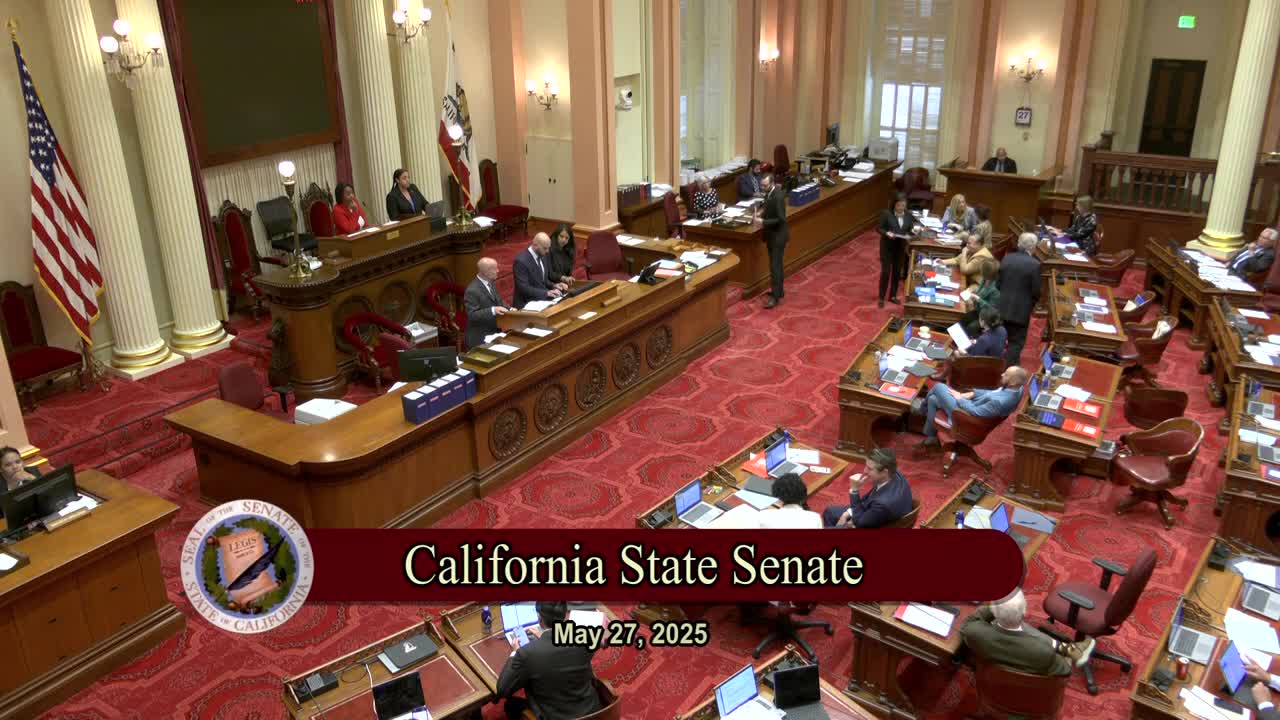 6MIN
Senate Floor
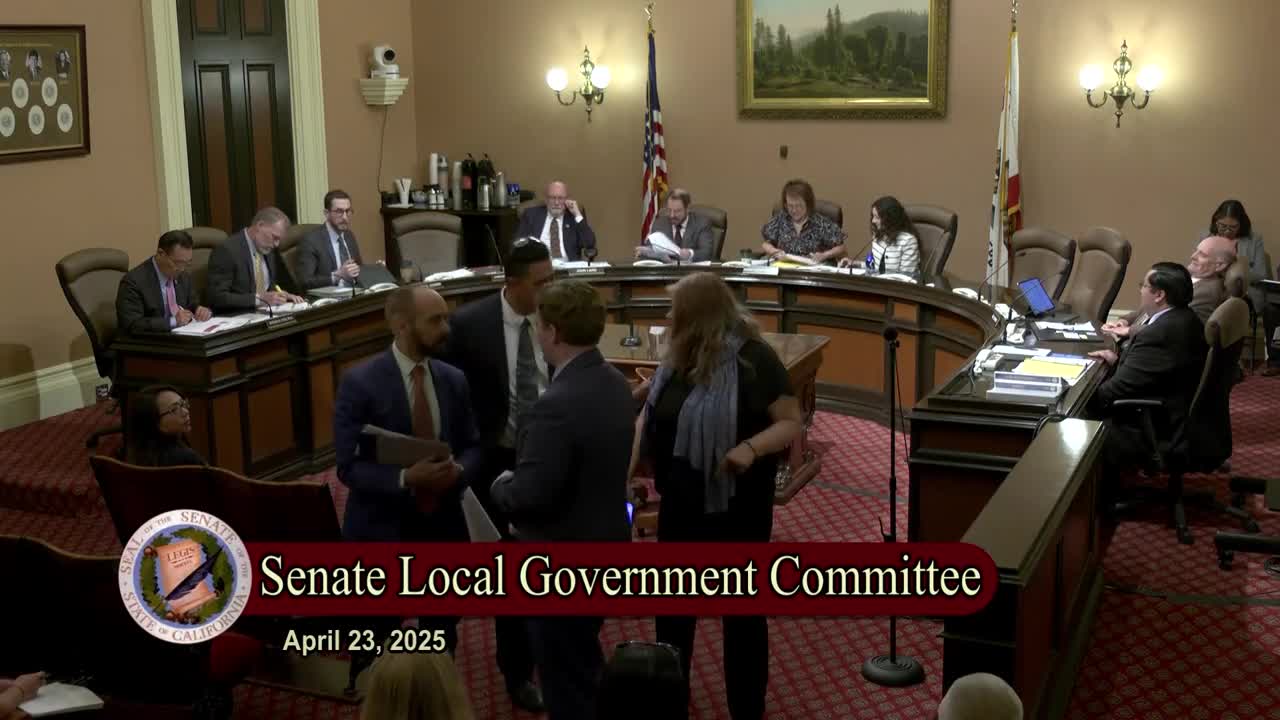 7MIN
Senate Standing Committee on Local Government
Bill Author

Bill Co-Author(s):