SB 493: Unlawful business practices: price gouging.
- Session Year: 2025-2026
- House: Senate
- Latest Version Date: 2026-08-21
Current Status:
In Progress
(2026-08-30: Ordered to inactive file on request of Assembly Member Aguiar-Curry.)
Introduced
In Committee
Awaiting First Chamber Vote
Passed First Chamber
In Committee
Awaiting Second Chamber Vote
Passed Second Chamber
Enacted
Under existing law, upon the proclamation of a state of emergency by the President of the United States or the Governor, or upon the declaration of a local emergency by the governing authority of any county, city, or city and county, and for 30 days or 180 days, as specified, following the proclamation or declaration of emergency and any period the proclamation or declaration is extended by the applicable authority, it is a misdemeanor for any person, business, or other entity to sell or offer to sell specified goods and services for a price of more than 10% greater than the price charged by that entity for those goods or services immediately prior to the proclamation or declaration of emergency or prior to a date set in the proclamation or declaration. Existing law also makes related protections against eviction. Existing law defines state of emergency for these purposes as a natural or manmade emergency resulting from an earthquake, flood, fire, riot, storm, drought, plant or animal infestation or disease, pandemic or epidemic disease outbreak, or other natural or manmade disaster for which a state of emergency has been declared by the President of the United States or the Governor.
This bill would additionally include war, as defined, to the above-described disasters for purposes of the definition of a state of emergency for essential consumer goods or services and upon the proclamation or declaration by the President of the United States or the Governor and for which the Attorney General has issued a written opinion finding a sufficient nexus between the war at issue and increases in the prices of those goods or services. By expanding the application of an existing crime to additional circumstances, the bill would impose a state-mandated local program.
This bill would incorporate additional changes to Section 396 of the Penal Code proposed by SB 1365 to be operative only if this bill and SB 1365 are enacted and this bill is enacted last.
The California Constitution requires the state to reimburse local agencies and school districts for certain costs mandated by the state. Statutory provisions establish procedures for making that reimbursement.
This bill would provide that no reimbursement is required by this act for a specified reason.
Under existing law, upon the proclamation of a state of emergency by the President of the United States or the Governor, or upon the declaration of a local emergency by the governing authority of any county, city, or city and county, and for 30 days or 180 days, as specified, following the proclamation or declaration of emergency and any period the proclamation or declaration is extended by the applicable authority, it is a misdemeanor for any person, business, or other entity to sell or offer to sell specified goods and services for a price of more than 10% greater than the price charged by that entity for those goods or services immediately prior to the proclamation or declaration of emergency or prior to a date set in the proclamation or declaration. Existing law also makes related protections against eviction. Existing law defines state of emergency for these purposes as a natural or manmade emergency resulting from an earthquake, flood, fire, riot, storm, drought, plant or animal infestation or disease, pandemic or epidemic disease outbreak, or other natural or manmade disaster for which a state of emergency has been declared by the President of the United States or the Governor, and a local emergency as any of the above-described disasters for which a local emergency has been declared by an official, board, or other governing body vested with authority to make that declaration in any county, city, or city and county in California. Governor.
This bill would additionally include war, as defined, to the above-described disasters for purposes of the definition of a state of emergency for essential consumer goods or services and upon the proclamation or declaration by the President of the United States or the Governor and for which the Attorney General has issued a written opinion finding a sufficient nexus between the war at issue and increases in the prices of those goods or services. By expanding the application of an existing crime to additional circumstances, the bill would impose a state-mandated local program.
The California Constitution requires the state to reimburse local agencies and school districts for certain costs mandated by the state. Statutory provisions establish procedures for making that reimbursement.
This bill would provide that no reimbursement is required by this act for a specified reason.
Under existing law, upon the proclamation of a state of emergency by the President of the United States or the Governor, or upon the declaration of a local emergency by the governing authority of any county, city, or city and county, and for 30 days or 180 days, as specified, following the proclamation or declaration of emergency and any period the proclamation or declaration is extended by the applicable authority, it is a misdemeanor for any person, business, or other entity to sell or offer to sell specified goods and services for a price of more than 10% greater than the price charged by that entity for those goods or services immediately prior to the proclamation or declaration of emergency or prior to a date set in the proclamation or declaration. Existing law also makes related protections against eviction. Existing law defines state of emergency for these purposes as a natural or manmade emergency resulting from an earthquake, flood, fire, riot, storm, drought, plant or animal infestation or disease, pandemic or epidemic disease outbreak, or other natural or manmade disaster for which a state of emergency has been declared by the President of the United States or the Governor, and a local emergency as any of the above-described disasters for which a local emergency has been declared by an official, board, or other governing body vested with authority to make that declaration in any county, city, or city and county in California.
This bill would additionally include war, as defined, to the above-described disasters. disasters for purposes of essential consumer goods or services for which the Attorney General has issued a written opinion finding a sufficient nexus between the war at issue and increases in the prices of those goods or services. By expanding the application of an existing crime to additional circumstances, the bill would impose a state-mandated local program.
The California Constitution requires the state to reimburse local agencies and school districts for certain costs mandated by the state. Statutory provisions establish procedures for making that reimbursement.
This bill would provide that no reimbursement is required by this act for a specified reason.
Under existing law, upon the proclamation of a state of emergency by the President of the United States or the Governor, or upon the declaration of a local emergency by the governing authority of any county, city, or city and county, and for 30 days or 180 days, as specified, following the proclamation or declaration of emergency and any period the proclamation or declaration is extended by the applicable authority, it is a misdemeanor for any person, business, or other entity to sell or offer to sell specified goods and services for a price of more than 10% greater than the price charged by that entity for those goods or services immediately prior to the proclamation or declaration of emergency or prior to a date set in the proclamation or declaration. Existing law also makes related protections against eviction. Existing law defines state of emergency for these purposes as a natural or manmade emergency resulting from an earthquake, flood, fire, riot, storm, drought, plant or animal infestation or disease, pandemic or epidemic disease outbreak, or other natural or manmade disaster for which a state of emergency has been declared by the President of the United States or the Governor, and a local emergency as any of the above-described disasters for which a local emergency has been declared by an official, board, or other governing body vested with authority to make that declaration in any county, city, or city and county in California.
This bill would additionally include war, as defined, to the above-described disasters. By expanding the application of an existing crime to additional circumstances, the bill would impose a state-mandated local program.
The California Constitution requires the state to reimburse local agencies and school districts for certain costs mandated by the state. Statutory provisions establish procedures for making that reimbursement.
This bill would provide that no reimbursement is required by this act for a specified reason.
Existing law governs the apportionment of state funds to fairs within the network of California fairs, which includes, in general, the California Exposition and State Fair, district agricultural association fairs, county fairs, and citrus fruit fairs. Existing law authorizes consideration of the classification of a fair seeking an apportionment of state funds when determining compensation for the fairs manager. Existing law requires the Department of Food and Agriculture to annually review and maintain a separate and accurate job description for each fair manager, solicit information from each fair board of directors that will accurately describe the fair managers performance and responsibilities in regard to merit salary increases for its fair manager, and report its findings to fair directors and fair managers.This bill would revise and recast the determination of the compensation for fair managers by, among other things, doing all of the following: (1) renaming those fair managers as secretary-managers of district agricultural associations; (2) transferring the duty to fix the compensation for a secretary-manager, in an amount that is reasonably appropriate, to the Secretary of Food and Agriculture; (3) requiring the secretary to set a single salary range for the compensation of a secretary-manager and, in determining the salary range, on or before January 1, 2027, and every 3 years thereafter, to conduct a salary survey of other state, regional, and local positions in similar industries and other relevant labor pools if the secretary receives funds from the fair industry for that purpose; (4) until the first survey, requiring the compensation for a secretary-manager to remain within certain existing ranges, regardless of fair classification; and (5) after the first survey, prohibiting the maximum salary limit of the salary range for a secretary-manager from exceeding the highest salary for a position comparable to a secretary-manager, as determined by the most recent survey, except for specifically required cost-of-living increases and authorized merit increases and increases for secretary-managers managing multiple districts.Existing law governs the apportionment of state funds to fairs within the network of California fairs, which includes, in general, the California Exposition and State Fair, district agricultural association fairs, county fairs, and citrus fruit fairs. Existing law authorizes consideration of the classification of a fair seeking an apportionment of state funds when determining compensation for the fairs manager. Existing law requires the Department of Food and Agriculture to annually review and maintain a separate and accurate job description for each fair manager, solicit information from each fair board of directors that will accurately describe the fair managers performance and responsibilities in regard to merit salary increases for its fair manager, and report its findings to fair directors and fair managers.
This bill would revise and recast the determination of the compensation for fair managers by, among other things, doing all of the following: (1) renaming those fair managers as secretary-managers of district agricultural associations; (2) transferring the duty to fix the compensation for a secretary-manager, in an amount that is reasonably appropriate, to the Secretary of Food and Agriculture; (3) requiring the secretary to set a single salary range for the compensation of a secretary-manager and, in determining the salary range, on or before January 1, 2027, and every 3 years thereafter, to conduct a salary survey of other federal, state, regional, and local positions in similar industries and other relevant labor pools if the secretary receives nonstate funds, as provided, funds from the fair industry for that purpose; (4) until the first survey, requiring the compensation for a secretary-manager to remain within certain existing ranges, regardless of fair classification; and (5) after the first survey, prohibiting the maximum salary limit of the salary range for a secretary-manager from exceeding the highest salary for a position comparable to a secretary-manager, as determined by the most recent survey, except for specifically required cost-of-living increases and authorized merit increases and increases for secretary-managers managing multiple districts.
Existing law governs the apportionment of state funds to fairs within the network of California fairs, which includes, in general, the California Exposition and State Fair, district agricultural association fairs, county fairs, and citrus fruit fairs. Existing law authorizes consideration of the classification of a fair seeking an apportionment of state funds when determining compensation for the fairs manager. Existing law requires the Department of Food and Agriculture to annually review and maintain a separate and accurate job description for each fair manager, solicit information from each fair board of directors that will accurately describe the fair managers performance and responsibilities in regard to merit salary increases for its fair manager, and report its findings to fair directors and fair managers.
This bill would revise and recast the determination of the compensation for fair managers by, among other things, doing all of the following: (1) renaming those fair managers as secretary-managers of district agricultural associations; (2) transferring the duty to fix the compensation for a secretary-manager, in an amount that is reasonably appropriate, to the Secretary of Food and Agriculture; (3) requiring the secretary to set a single salary range for the compensation of a secretary-manager and, in determining the salary range, on or before January 1, 2027, and every 3 years thereafter, to conduct a salary survey of other federal, state, regional regional, and local positions in similar industries and other relevant labor pools; pools if the secretary receives nonstate funds, as provided, for that purpose; (4) until the first survey, requiring the compensation for a secretary-manager to remain within certain existing ranges, regardless of fair classification; and (5) after the first survey, prohibiting the maximum salary limit of the salary range for a secretary-manager from exceeding the highest salary for a position comparable to a secretary-manager, as determined by the most recent survey, except for specifically required cost-of-living increases and authorized merit increases and increases for secretary-managers managing multiple districts.
Existing law governs the apportionment of state funds to fairs within the network of California fairs, which includes, in general, the California Exposition and State Fair, district agricultural association fairs, county fairs, and citrus fruit fairs. Existing law authorizes consideration of the classification of a fair seeking an apportionment of state funds when determining compensation for the fairs manager. Existing law requires the Department of Food and Agriculture to annually review and maintain a separate and accurate job description for each fair manager, solicit information from each fair board of directors that will accurately describe the fair managers performance and responsibilities in regard to merit salary increases for its fair manager, and report its findings to fair directors and fair managers.
This bill would revise and recast the determination of the compensation for fair managers by, among other things, doing all of the following: (1) recharacterizing renaming those fair managers as secretary-managers of district agricultural associations; (2) transferring the duty to fix the compensation for a secretary-manager, in an amount that is reasonably appropriate, to the Secretary of Food and Agriculture; (3) requiring the secretary to set a single salary range for the compensation of a secretary-manager and, in determining the salary range, on or before January 1, 2027, and every 3 years thereafter, to conduct a salary survey of other federal, state, regional and local positions in similar industries and other relevant labor pools; (4) until the first survey, requiring the compensation for a secretary-manager to remain within certain existing ranges, regardless of fair classification; and (5) after the first survey, prohibiting the maximum salary limit of the salary range for a secretary-manager from exceeding the highest salary for a position comparable to a secretary-manager, as determined by the most recent survey, except for specifically required cost-of-living increases and authorized merit increases and increases for secretary-managers managing multiple districts.
Existing law governs the apportionment of state funds to fairs within the network of California fairs, which includes, in general, the California Exposition and State Fair, district agricultural association fairs, county fairs, and citrus fruit fairs. Existing law authorizes consideration of the classification of a fair seeking an apportionment of state funds when determining compensation for the fairs manager. Existing law requires the Department of Food and Agriculture to annually review and maintain a separate and accurate job description for each fair manager, solicit information from each fair board of directors that will accurately describe the fair managers performance and responsibilities in regard to merit salary increases for its fair manager, and report its findings to fair directors and fair managers.
This bill would revise and recast the determination of the compensation for fair managers by, among other things, doing all of the following: (1) recharacterizing those fair managers as secretary-managers of district agricultural associations; (2) transferring the duty to fix the compensation for a secretary-manager, in an amount that is reasonably appropriate, to the Secretary of Food and Agriculture; (3) requiring the secretary to set a single salary range for the compensation of a secretary-manager and, in determining the salary range, on or before January 1, 2027, and every 3 years thereafter, to conduct a salary survey of other federal, state, regional and local positions in similar industries and other relevant labor pools; (4) until the first survey, requiring the compensation for a secretary-manager to remain within certain existing ranges, regardless of fair classification; and (5) after the first survey, prohibiting the maximum salary limit of the salary range for a secretary-manager from exceeding the highest salary for a position comparable to a secretary-manager, as determined by the most recent survey, except for specifically required cost-of-living increases and authorized merit increases and increases for secretary-managers managing multiple districts.
(a)The Legislature hereby finds that during a state of emergency or local emergency, including, but not limited to, an earthquake, flood, fire, riot, storm, drought, plant or animal infestation or disease, pandemic or epidemic disease outbreak, war, or other natural or manmade disaster, some merchants have taken unfair advantage of consumers by greatly increasing prices for essential consumer goods and services. While the pricing of consumer goods and services is generally best left to the marketplace under ordinary conditions, when a declared state of emergency or local emergency results in abnormal disruptions of the market, the public interest requires that excessive and unjustified increases in the prices of essential consumer goods and services be prohibited. It is the intent of the Legislature in enacting this act to protect citizens from excessive and unjustified increases in the prices charged during or shortly after a declared state of emergency or local emergency for goods and services that are vital and necessary for the health, safety, and welfare of consumers, whether those goods and services are offered or sold in person, in stores, or online. Further, it is the intent of the Legislature that this section be liberally construed so that its beneficial purposes may be served.
(b)Upon the proclamation of a state of emergency declared by the President of the United States or the Governor, or upon the declaration of a local emergency by an official, board, or other governing body vested with authority to make that declaration in any county, city, or city and county, and for a period of 30 days following that proclamation or declaration, it is unlawful for a person, contractor, business, or other entity to sell or offer to sell any consumer food items or goods, goods or services used for emergency cleanup, emergency supplies, medical supplies, home heating oil, building materials, housing, transportation, freight, and storage services, or gasoline or other motor fuels for a price of more than 10 percent greater than the price charged by that person for those goods or services immediately prior to the proclamation or declaration of emergency, or prior to a date set in the proclamation or declaration. However, a greater price increase is not unlawful if that person can prove that the increase in price was directly attributable to additional costs imposed on it by the supplier of the goods, or directly attributable to additional costs for labor or materials used to provide the services, during the state of emergency or local emergency, and the price is no more than 10 percent greater than the total of the cost to the seller plus the markup customarily applied by that seller for that good or service in the usual course of business immediately prior to the onset of the state of emergency or local emergency. If the person, contractor, business, or other entity did not charge a price for the goods or services immediately prior to the proclamation or declaration of emergency, it may not charge a price that is more than 50 percent greater than the cost thereof to the vendor as cost is defined in Section 17026 of the Business and Professions Code.
(c)Upon the proclamation of a state of emergency declared by the President of the United States or the Governor, or upon the declaration of a local emergency by an official, board, or other governing body vested with authority to make that declaration in any county, city, or city and county, and for a period of 180 days following that proclamation or declaration, it is unlawful for a contractor to sell or offer to sell any repair or reconstruction services or any services used in emergency cleanup for a price of more than 10 percent above the price charged by that person for those services immediately prior to the proclamation or declaration of emergency. However, a greater price increase is not unlawful if that person can prove that the increase in price was directly attributable to additional costs imposed on it by the supplier of the goods, or directly attributable to additional costs for labor or materials used to provide the services, during the state of emergency or local emergency, and the price represents no more than 10 percent greater than the total of the cost to the contractor plus the markup customarily applied by the contractor for that good or service in the usual course of business immediately prior to the onset of the state of emergency or local emergency.
(d)Upon the proclamation of a state of emergency declared by the President of the United States or the Governor, or upon the declaration of a local emergency by an official, board, or other governing body vested with authority to make that declaration in any county, city, or city and county, and for a period of 30 days following that proclamation or declaration, it is unlawful for an owner or operator of a hotel or motel to increase the hotels or motels regular rates, as advertised immediately prior to the proclamation or declaration of emergency, by more than 10 percent. However, a greater price increase is not unlawful if the owner or operator can prove that the increase in price is directly attributable to additional costs imposed on it for goods or labor used in its business, to seasonal adjustments in rates that are regularly scheduled, or to previously contracted rates.
(e)Upon the proclamation of a state of emergency declared by the President of the United States or the Governor, or upon the declaration of a local emergency by an official, board, or other governing body vested with authority to make that declaration in any city, county, or city and county, and for a period of 30 days following that proclamation or declaration, or any period the proclamation or declaration is extended by the applicable authority, it is unlawful for any person, business, or other entity, to increase the rental price, as defined in paragraph (11) of subdivision (j), advertised, offered, or charged for housing, to an existing or prospective tenant, by more than 10 percent. However, a greater rental price increase is not unlawful if that person can prove that the increase is directly attributable to additional costs for repairs or additions beyond normal maintenance that were amortized over the rental term that caused the rent to be increased greater than 10 percent or that an increase was contractually agreed to by the tenant prior to the proclamation or declaration. It shall not be a defense to a prosecution under this subdivision that an increase in rental price was based on the length of the rental term, the inclusion of additional goods or services, except as provided in paragraph (11) of subdivision (j) with respect to furniture, or that the rent was offered by, or paid by, an insurance company, or other third party, on behalf of a tenant. This subdivision does not authorize a landlord to charge a price greater than the amount authorized by a local rent control ordinance.
(f)It is unlawful for a person, business, or other entity to evict a residential tenant of residential housing after the proclamation of a state of emergency declared by the President of the United States or the Governor, or upon the declaration of a local emergency by an official, board, or other governing body vested with authority to make that declaration in any city, county, or city and county, and for a period of 30 days following that proclamation or declaration, or any period that the proclamation or declaration is extended by the applicable authority and rent or offer to rent to another person at a rental price greater than the evicted tenant could be charged under this section. It shall not be a violation of this subdivision for a person, business, or other entity to continue an eviction process that was lawfully begun prior to the proclamation or declaration of emergency.
(g)The prohibitions of this section may be extended for additional periods, as needed, by a local legislative body, local official, the Governor, or the Legislature, if deemed necessary to protect the lives, property, or welfare of the citizens. Each extension by a local legislative body or local official shall not exceed 30 days. An extension may also authorize specified price increases that exceed the amount that would be permissible under this section during the initial 30 or 180 days after a proclamation or declaration of emergency.
(h)A violation of this section is a misdemeanor punishable by imprisonment in a county jail for a period not exceeding one year, by a fine of not more than ten thousand dollars ($10,000), or by both that fine and imprisonment.
(i)A violation of this section shall constitute an unlawful business practice and an act of unfair competition within the meaning of Section 17200 of the Business and Professions Code. The remedies and penalties provided by this section are cumulative to each other, the remedies under Section 17200 of the Business and Professions Code, and the remedies or penalties available under all other laws of this state.
(j)For the purposes of this section, the following terms have the following meanings:
(1)State of emergency means a natural or manmade emergency resulting from an earthquake, flood, fire, riot, storm, drought, plant or animal infestation or disease, pandemic or epidemic disease outbreak, war, or other natural or manmade disaster for which a state of emergency has been declared by the President of the United States or the Governor.
(2)Local emergency means a natural or manmade emergency resulting from an earthquake, flood, fire, riot, storm, drought, plant or animal infestation or disease, pandemic or epidemic disease outbreak, or other natural or manmade disaster for which a local emergency has been declared by an official, board, or other governing body vested with authority to make that declaration in any county, city, or city and county in California.
(3)Consumer food item means any article that is used or intended for use for food, drink, confection, or condiment by a person or animal.
(4)Repair or reconstruction services means services performed by any person who is required to be licensed under the Contractors State License Law (Chapter 9 (commencing with Section 7000) of Division 3 of the Business and Professions Code), for repairs to residential or commercial property of any type that is damaged as a result of a disaster.
(5)Emergency supplies includes, but is not limited to, water, flashlights, radios, batteries, candles, blankets, soaps, diapers, temporary shelters, tape, toiletries, plywood, nails, and hammers.
(6)Medical supplies includes, but is not limited to, prescription and nonprescription medications, bandages, gauze, isopropyl alcohol, and antibacterial products.
(7)Building materials means lumber, construction tools, windows, and anything else used in the building or rebuilding of property.
(8)Gasoline means any fuel used to power any motor vehicle or power tool.
(9)Transportation, freight, and storage services means any service that is performed by any company that contracts to move, store, or transport personal or business property or that rents equipment for those purposes, including towing services.
(10)Housing means any rental housing with an initial lease term of no longer than one year, including, but not limited to, a space rented in a mobilehome park or campground.
(11)Rental price for housing means any of the following:
(A)For housing rented within one year prior to the time of the proclamation or declaration of emergency, the actual rental price paid by the tenant. For housing not rented at the time of the declaration or proclamation, but rented, or offered for rent, within one year prior to the proclamation or declaration of emergency, the most recent rental price offered before the proclamation or declaration of emergency. For housing rented at the time of the proclamation or declaration of emergency but which becomes vacant while the proclamation or declaration of emergency remains in effect and which is subject to any ordinance, rule, regulation, or initiative measure adopted by any local governmental entity that establishes a maximum amount that a landlord may charge a tenant for rent, the actual rental price paid by the previous tenant or the amount specified in subparagraph (B), whichever is greater. This amount may be increased by 5 percent if the housing was previously rented or offered for rent unfurnished, and it is now being offered for rent fully furnished. This amount shall not be adjusted for any other good or service, including, but not limited to, gardening or utilities currently or formerly provided in connection with the lease.
(B)For housing not rented and not offered for rent within one year prior to the proclamation or declaration of emergency, 160 percent of the fair market rent established by the United States Department of Housing and Urban Development. This amount may be increased by 5 percent if the housing is offered for rent fully furnished. This amount shall not be adjusted for any other good or service, including, but not limited to, gardening or utilities currently or formerly provided in connection with the lease.
(C)Housing advertised, offered, or charged, at a daily rate at the time of the declaration or proclamation of emergency, shall be subject to the rental price described in subparagraph (A), if the housing continues to be advertised, offered, or charged, at a daily rate. Housing advertised, offered, or charged, on a daily basis at the time of the declaration or proclamation of emergency, shall be subject to the rental price in subparagraph (B), if the housing is advertised, offered, or charged, on a periodic lease agreement after the declaration or proclamation of emergency.
(D)For mobilehome spaces rented to existing tenants at the time of the proclamation or declaration of emergency and subject to a local rent control ordinance, the amount authorized under the local rent control ordinance. For new tenants who enter into a rental agreement for a mobilehome space that is subject to rent control but not rented at the time of the proclamation or declaration of emergency, the amount of rent last charged for a space in the same mobilehome park. For mobilehome spaces not subject to a local rent control ordinance and not rented at the time of the proclamation or declaration of emergency, the amount of rent last charged for the space.
(12)Goods has the same meaning as defined in subdivision (c) of Section 1689.5 of the Civil Code.
(13)War means any of the following:
(A)A time during which Congress has declared war and peace has not been formally restored.
(B)A time during which the United States is engaged in active military operations against any foreign state, whether or not war has been formally declared.
(C)A time during which the United States is assisting the United Nations, in actions involving the use of armed force, to maintain or restore international peace and security.
(D)The prohibitions and associated penalties, pursuant to a proclamation or declaration of a state of emergency for war, shall apply only upon the proclamation or declaration by the President of the United States or the Governor and shall apply only for the essential consumer goods or services for which the Attorney General issues a written opinion, consistent with Section 12519 of the Government Code, finding a sufficient nexus between the war at issue and increases in the prices of those goods or services. The prohibitions and associated penalties shall apply only for a period of 30 days following the proclamation or declaration but may be extended for additional periods of 30 days, if deemed necessary. An extension also may authorize specified price increases that exceed the amount that would be permissible during the initial 30 days after a proclamation or declaration of a state of emergency for war.
(k)This section does not preempt any local ordinance prohibiting the same or similar conduct or imposing a more severe penalty for the same conduct prohibited by this section.
(l)A business offering an item for sale, or a service, at a reduced price immediately prior to the proclamation or declaration of the emergency may use the price it normally charges for the item or service to calculate the price pursuant to subdivision (b) or (c).
(m)This section does not prohibit an owner from evicting a tenant for any lawful reason, including pursuant to Section 1161 of the Code of Civil Procedure.
SEC. 1.5.Section 396 of the Penal Code is amended to read:396.(a)The Legislature hereby finds that during a state of emergency or local emergency, including, but not limited to, an earthquake, flood, fire, riot, storm, drought, plant or animal infestation or disease, pandemic or epidemic disease outbreak, war, or other natural or manmade disaster, some merchants have taken unfair advantage of consumers by greatly increasing prices for essential consumer goods and services. While the pricing of consumer goods and services is generally best left to the marketplace under ordinary conditions, when a declared state of emergency or local emergency results in abnormal disruptions of the market, the public interest requires that excessive and unjustified increases in the prices of essential consumer goods and services be prohibited. It is the intent of the Legislature in enacting this act to protect citizens from excessive and unjustified increases in the prices charged during or shortly after a declared state of emergency or local emergency for goods and services that are vital and necessary for the health, safety, and welfare of consumers, whether those goods and services are offered or sold in person, in stores, or online. Further, it is the intent of the Legislature that this section be liberally construed so that its beneficial purposes may be served.
(b)(1)Upon the proclamation of a state of emergency declared by the President of the United States or the Governor, or upon the declaration of a local emergency by an official, board, or other governing body vested with authority to make that declaration in any county, city, or city and county, and for a period of 30 days following that proclamation or declaration, it is unlawful for a person, contractor, business, or other entity to sell or offer to sell any consumer food items or goods, goods or services used for emergency cleanup, emergency supplies, medical supplies, home heating oil, building materials, housing, transportation, freight, and storage services, or gasoline or other motor fuels for a price of more than 10 percent greater than the price charged by that person for those goods or services immediately prior to the proclamation or declaration of emergency, or prior to a date set in the proclamation or declaration. However, a greater price increase is not unlawful
(2)(A)It is an affirmative defense to a charge of price gouging pursuant to this subdivision if that person can prove that either of the following:
(i)That the increase in price was directly attributable to additional costs imposed on it by the supplier of the goods, or goods.
(ii)That the increase in price was directly attributable to additional costs for labor or materials used to provide the services, during the state of emergency or local emergency, and the price is no more than 10 percent greater than the total of the cost to the seller plus the markup customarily applied by that seller for that good or service in the usual course of business immediately prior to the onset of the state of emergency or local emergency. If
(B)If the person, contractor, business, or other entity did not charge a price for the goods or services immediately prior to the proclamation or declaration of emergency, it may not charge a price that is more than 50 percent greater than the cost thereof to the vendor as cost is defined in Section 17026 of the Business and Professions Code.
(c)(1)Upon the proclamation of a state of emergency declared by the President of the United States or the Governor, or upon the declaration of a local emergency by an official, board, or other governing body vested with authority to make that declaration in any county, city, or city and county, and for a period of 180 days following that proclamation or declaration, it is unlawful for a contractor to sell or offer to sell any repair or reconstruction services or any services used in emergency cleanup for a price of more than 10 percent above the price charged by that person for those services immediately prior to the proclamation or declaration of emergency. However, a greater price increase is not unlawful
(2)It is an affirmative defense to a charge of price gouging pursuant to this subdivision if that person can prove that either of the following:
(A)That the increase in price was directly attributable to additional costs imposed on it by the supplier of the goods, or goods.
(B)That the increase in price was directly attributable to additional costs for labor or materials used to provide the services, during the state of emergency or local emergency, and the price represents no more than 10 percent greater than the total of the cost to the contractor plus the markup customarily applied by the contractor for that good or service in the usual course of business immediately prior to the onset of the state of emergency or local emergency.
(d)(1)Upon the proclamation of a state of emergency declared by the President of the United States or the Governor, or upon the declaration of a local emergency by an official, board, or other governing body vested with authority to make that declaration in any county, city, or city and county, and for a period of 30 days following that proclamation or declaration, it is unlawful for an owner or operator of a hotel or motel to increase the hotel hotels or motels regular rates, as advertised immediately prior to the proclamation or declaration of emergency, by more than 10 percent. However, a greater price increase is not unlawful
(2)It is an affirmative defense to a charge of price gouging pursuant to this subdivision if the owner or operator can prove that the increase in price is directly attributable to additional costs imposed on it for goods or labor used in its business, to seasonal adjustments in rates that are regularly scheduled, or to previously contracted rates.
(e)(1)Upon the proclamation of a state of emergency declared by the President of the United States or the Governor, or upon the declaration of a local emergency by an official, board, or other governing body vested with authority to make that declaration in any city, county, or city and county, and for a period of 30 days following that proclamation or declaration, or any period the proclamation or declaration is extended by the applicable authority, it is unlawful for any person, business, or other entity, to increase the rental price, as defined in paragraph (11) of subdivision (j), advertised, offered, or charged for housing, to an existing or prospective tenant, by more than 10 percent. However, a greater rental price increase is not unlawful if that person can prove that the increase is directly attributable to additional costs for repairs or additions beyond normal maintenance that were amortized over the rental term that caused the rent to be increased greater than 10 percent or that an increase was contractually agreed to by the tenant prior to the proclamation or declaration. It shall not be a defense to a prosecution under this subdivision that an increase in rental price was based on the length of the rental term, the inclusion of additional goods or services, except as provided in paragraph (11) of subdivision (j) with respect to furniture, or that the rent was offered by, or paid by, an insurance company, or other third party, on behalf of a tenant. This subdivision does not authorize a landlord to charge a price greater than the amount authorized by a local rent control ordinance.
(2)It is an affirmative defense to a charge of price gouging pursuant to this subdivision if that person can prove either of the following:
(A)That an increase was contractually agreed to by the tenant prior to the proclamation or declaration.
(B)That the increase was directly attributable to additional costs for repairs or additions beyond normal maintenance incurred within the year prior to the proclamation or declaration and either of the following is true:
(i)The housing was rented, advertised for rent, or offered for rent at the time the costs were incurred.
(ii)That person can prove that within a year before the proclamation or declaration, the intent to offer the housing for rent within six months of the repair or addition already existed.
(3)It shall not be a defense to a prosecution under this subdivision that an increase in rental price was based on the length of the rental term, the inclusion of additional goods or services, except as provided in paragraph (11) of subdivision (j) with respect to furniture, or that the rent was offered by, or paid by, an insurance company, or other third party, on behalf of a tenant. This subdivision does not authorize a landlord to charge a price greater than the amount authorized by a local rent control ordinance.
(f)It is unlawful for a person, business, or other entity to evict any a residential tenant of residential housing after the proclamation of a state of emergency declared by the President of the United States or the Governor, or upon the declaration of a local emergency by an official, board, or other governing body vested with authority to make that declaration in any city, county, or city and county, and for a period of 30 days following that proclamation or declaration, or any period that the proclamation or declaration is extended by the applicable authority and rent or offer to rent to another person at a rental price greater than the evicted tenant could be charged under this section. It shall not be a violation of this subdivision for a person, business, or other entity to continue an eviction process that was lawfully begun prior to the proclamation or declaration of emergency.
(g)The prohibitions of this section may be extended for additional periods, as needed, by a local legislative body, local official, the Governor, or the Legislature, if deemed necessary to protect the lives, property, or welfare of the citizens. Each extension by a local legislative body or local official shall not exceed 30 days. An extension may also authorize specified price increases that exceed the amount that would be permissible under this section during the initial 30 or 180 days after a proclamation or declaration of emergency.
(h)A violation of this section is a misdemeanor punishable by imprisonment in a county jail for a period not exceeding one year, by a fine of not more than ten thousand dollars ($10,000), or by both that fine and imprisonment.
(i)A violation of this section shall constitute an unlawful business practice and an act of unfair competition within the meaning of Section 17200 of the Business and Professions Code. The remedies and penalties provided by this section are cumulative to each other, the remedies under Section 17200 of the Business and Professions Code, and the remedies or penalties available under all other laws of this state.
(j)For the purposes of this section, the following terms have the following meanings:
(1)State of emergency means a natural or manmade emergency resulting from an earthquake, flood, fire, riot, storm, drought, plant or animal infestation or disease, pandemic or epidemic disease outbreak, war, or other natural or manmade disaster for which a state of emergency has been declared by the President of the United States or the Governor.
(2)Local emergency means a natural or manmade emergency resulting from an earthquake, flood, fire, riot, storm, drought, plant or animal infestation or disease, pandemic or epidemic disease outbreak, or other natural or manmade disaster for which a local emergency has been declared by an official, board, or other governing body vested with authority to make that declaration in any county, city, or city and county in California.
(3)Consumer food item means any article that is used or intended for use for food, drink, confection, or condiment by a person or animal.
(4)Repair or reconstruction services means services performed by any person who is required to be licensed under the Contractors Contractors State License Law (Chapter 9 (commencing with Section 7000) of Division 3 of the Business and Professions Code), for repairs to residential or commercial property of any type that is damaged as a result of a disaster.
(5)Emergency supplies includes, but is not limited to, water, flashlights, radios, batteries, candles, blankets, soaps, diapers, temporary shelters, tape, toiletries, plywood, nails, and hammers.
(6)Medical supplies includes, but is not limited to, prescription and nonprescription medications, bandages, gauze, isopropyl alcohol, and antibacterial products.
(7)Building materials means lumber, construction tools, windows, and anything else used in the building or rebuilding of property.
(8)Gasoline means any fuel used to power any motor vehicle or power tool.
(9)Transportation, freight, and storage services means any service that is performed by any company that contracts to move, store, or transport personal or business property or that rents equipment for those purposes, including towing services.
(10)Housing means any rental housing with an initial lease term of no longer than one year, housing, including, but not limited to, a space rented in a mobilehome park or campground.
(11)Rental price for housing means any of the following:
(A)For housing rented within one year prior to the time of the proclamation or declaration of emergency, the actual rental price paid by the tenant. For housing not rented at the time of the declaration or proclamation, but rented, or offered for rent, within one year prior to the proclamation or declaration of emergency, the most recent rental price offered before the proclamation or declaration of emergency. For housing rented at the time of the proclamation or declaration of emergency but which becomes vacant while the proclamation or declaration of emergency remains in effect and which is subject to any ordinance, rule, regulation, or initiative measure adopted by any local governmental entity that establishes a maximum amount that a landlord may charge a tenant for rent, the actual rental price paid by the previous tenant or the amount specified in subparagraph (B), whichever is greater. This amount may be increased by 5 percent if the housing was previously rented or offered for rent unfurnished, and it is now being offered for rent fully furnished. This amount shall not be adjusted for any other good or service, including, but not limited to, gardening or utilities currently or formerly provided in connection with the lease.
(B)For housing not rented and not offered for rent within one year prior to the proclamation or declaration of emergency, 160 percent of the fair market rent established by the United States Department of Housing and Urban Development. This amount may be increased by 5 percent if the housing is offered for rent fully furnished. This amount shall not be adjusted for any other good or service, including, but not limited to, gardening or utilities currently or formerly provided in connection with the lease.
(C)Housing advertised, offered, or charged, at a daily rate at the time of the declaration or proclamation of emergency, shall be subject to the rental price described in subparagraph (A), if the housing continues to be advertised, offered, or charged, at a daily rate. Housing advertised, offered, or charged, on a daily basis at the time of the declaration or proclamation of emergency, shall be subject to the rental price in subparagraph (B), if the housing is advertised, offered, or charged, on a periodic lease agreement after the declaration or proclamation of emergency. Housing advertised, offered, or charged at a daily rate following a declaration or proclamation of emergency, but that was not advertised, offered, or charged at a daily rate in the year prior to the declaration or proclamation of emergency, shall be subject to a rental price that is one-thirtieth of the rental price described in subparagraph (B).
(D)For mobilehome spaces rented to existing tenants at the time of the proclamation or declaration of emergency and subject to a local rent control ordinance, the amount authorized under the local rent control ordinance. For new tenants who enter into a rental agreement for a mobilehome space that is subject to rent control but not rented at the time of the proclamation or declaration of emergency, the amount of rent last charged for a space in the same mobilehome park. For mobilehome spaces not subject to a local rent control ordinance and not rented at the time of the proclamation or declaration of emergency, the amount of rent last charged for the space.
(12)Goods has the same meaning as defined in subdivision (c) of Section 1689.5 of the Civil Code.
(13)War means any of the following:
(A)A time during which Congress has declared war and peace has not been formally restored.
(B)A time during which the United States is engaged in active military operations against any foreign state, whether or not war has been formally declared.
(C)A time during which the United States is assisting the United Nations, in actions involving the use of armed force, to maintain or restore international peace and security.
(D)The prohibitions and associated penalties, pursuant to a proclamation or declaration of a state of emergency for war, shall apply only upon the proclamation or declaration by the President of the United States or the Governor and shall apply only for the essential consumer goods or services for which the Attorney General issues a written opinion, consistent with Section 12519 of the Government Code, finding a sufficient nexus between the war at issue and increases in the prices of those goods or services. The prohibitions and associated penalties shall apply only for a period of 30 days following the proclamation or declaration but may be extended for additional periods of 30 days, if deemed necessary. An extension also may authorize specified price increases that exceed the amount that would be permissible during the initial 30 days after a proclamation or declaration of a state of emergency for war.
(k)This section does not preempt any local ordinance prohibiting the same or similar conduct or imposing a more severe penalty for the same conduct prohibited by this section.
(l)A business offering an item for sale, or a service, at a reduced price immediately prior to the proclamation or declaration of the emergency may use the price it normally charges for the item or service to calculate the price pursuant to subdivision (b) or (c).
(m)This section does not prohibit an owner from evicting a tenant for any lawful reason, including pursuant to Section 1161 of the Code of Civil Procedure.
SEC. 2.Section 1.5 of this bill incorporates amendments to Section 396 of the Penal Code proposed by both this bill and Senate Bill 1365. That section of this bill shall only become operative if (1) both bills are enacted and become effective on or before January 1, 2027, (2) each bill amends Section 396 of the Penal Code, and (3) this bill is enacted after Senate Bill 1365, in which case Section 1 of this bill shall not become operative.
SEC. 2.SEC. 3.No reimbursement is required by this act pursuant to Section 6 of Article XIIIB of the California Constitution because the only costs that may be incurred by a local agency or school district will be incurred because this act creates a new crime or infraction, eliminates a crime or infraction, or changes the penalty for a crime or infraction, within the meaning of Section 17556 of the Government Code, or changes the definition of a crime within the meaning of Section 6 of Article XIIIB of the California Constitution.
(a)The Legislature hereby finds that during a state of emergency or local emergency, including, but not limited to, an earthquake, flood, fire, riot, storm, drought, plant or animal infestation or disease, pandemic or epidemic disease outbreak, war, or other natural or manmade disaster, some merchants have taken unfair advantage of consumers by greatly increasing prices for essential consumer goods and services. While the pricing of consumer goods and services is generally best left to the marketplace under ordinary conditions, when a declared state of emergency or local emergency results in abnormal disruptions of the market, the public interest requires that excessive and unjustified increases in the prices of essential consumer goods and services be prohibited. It is the intent of the Legislature in enacting this act to protect citizens from excessive and unjustified increases in the prices charged during or shortly after a declared state of emergency or local emergency for goods and services that are vital and necessary for the health, safety, and welfare of consumers, whether those goods and services are offered or sold in person, in stores, or online. Further, it is the intent of the Legislature that this section be liberally construed so that its beneficial purposes may be served.
(b)Upon the proclamation of a state of emergency declared by the President of the United States or the Governor, or upon the declaration of a local emergency by an official, board, or other governing body vested with authority to make that declaration in any county, city, or city and county, and for a period of 30 days following that proclamation or declaration, it is unlawful for a person, contractor, business, or other entity to sell or offer to sell any consumer food items or goods, goods or services used for emergency cleanup, emergency supplies, medical supplies, home heating oil, building materials, housing, transportation, freight, and storage services, or gasoline or other motor fuels for a price of more than 10 percent greater than the price charged by that person for those goods or services immediately prior to the proclamation or declaration of emergency, or prior to a date set in the proclamation or declaration. However, a greater price increase is not unlawful if that person can prove that the increase in price was directly attributable to additional costs imposed on it by the supplier of the goods, or directly attributable to additional costs for labor or materials used to provide the services, during the state of emergency or local emergency, and the price is no more than 10 percent greater than the total of the cost to the seller plus the markup customarily applied by that seller for that good or service in the usual course of business immediately prior to the onset of the state of emergency or local emergency. If the person, contractor, business, or other entity did not charge a price for the goods or services immediately prior to the proclamation or declaration of emergency, it may not charge a price that is more than 50 percent greater than the cost thereof to the vendor as cost is defined in Section 17026 of the Business and Professions Code.
(c)Upon the proclamation of a state of emergency declared by the President of the United States or the Governor, or upon the declaration of a local emergency by an official, board, or other governing body vested with authority to make that declaration in any county, city, or city and county, and for a period of 180 days following that proclamation or declaration, it is unlawful for a contractor to sell or offer to sell any repair or reconstruction services or any services used in emergency cleanup for a price of more than 10 percent above the price charged by that person for those services immediately prior to the proclamation or declaration of emergency. However, a greater price increase is not unlawful if that person can prove that the increase in price was directly attributable to additional costs imposed on it by the supplier of the goods, or directly attributable to additional costs for labor or materials used to provide the services, during the state of emergency or local emergency, and the price represents no more than 10 percent greater than the total of the cost to the contractor plus the markup customarily applied by the contractor for that good or service in the usual course of business immediately prior to the onset of the state of emergency or local emergency.
(d)Upon the proclamation of a state of emergency declared by the President of the United States or the Governor, or upon the declaration of a local emergency by an official, board, or other governing body vested with authority to make that declaration in any county, city, or city and county, and for a period of 30 days following that proclamation or declaration, it is unlawful for an owner or operator of a hotel or motel to increase the hotel hotels or motels regular rates, as advertised immediately prior to the proclamation or declaration of emergency, by more than 10 percent. However, a greater price increase is not unlawful if the owner or operator can prove that the increase in price is directly attributable to additional costs imposed on it for goods or labor used in its business, to seasonal adjustments in rates that are regularly scheduled, or to previously contracted rates.
(e)Upon the proclamation of a state of emergency declared by the President of the United States or the Governor, or upon the declaration of a local emergency by an official, board, or other governing body vested with authority to make that declaration in any city, county, or city and county, and for a period of 30 days following that proclamation or declaration, or any period the proclamation or declaration is extended by the applicable authority, it is unlawful for any person, business, or other entity, to increase the rental price, as defined in paragraph (11) of subdivision (j), advertised, offered, or charged for housing, to an existing or prospective tenant, by more than 10 percent. However, a greater rental price increase is not unlawful if that person can prove that the increase is directly attributable to additional costs for repairs or additions beyond normal maintenance that were amortized over the rental term that caused the rent to be increased greater than 10 percent or that an increase was contractually agreed to by the tenant prior to the proclamation or declaration. It shall not be a defense to a prosecution under this subdivision that an increase in rental price was based on the length of the rental term, the inclusion of additional goods or services, except as provided in paragraph (11) of subdivision (j) with respect to furniture, or that the rent was offered by, or paid by, an insurance company, or other third party, on behalf of a tenant. This subdivision does not authorize a landlord to charge a price greater than the amount authorized by a local rent control ordinance.
(f)It is unlawful for a person, business, or other entity to evict a residential tenant of residential housing after the proclamation of a state of emergency declared by the President of the United States or the Governor, or upon the declaration of a local emergency by an official, board, or other governing body vested with authority to make that declaration in any city, county, or city and county, and for a period of 30 days following that proclamation or declaration, or any period that the proclamation or declaration is extended by the applicable authority and rent or offer to rent to another person at a rental price greater than the evicted tenant could be charged under this section. It shall not be a violation of this subdivision for a person, business, or other entity to continue an eviction process that was lawfully begun prior to the proclamation or declaration of emergency.
(g)The prohibitions of this section may be extended for additional periods, as needed, by a local legislative body, local official, the Governor, or the Legislature, if deemed necessary to protect the lives, property, or welfare of the citizens. Each extension by a local legislative body or local official shall not exceed 30 days. An extension may also authorize specified price increases that exceed the amount that would be permissible under this section during the initial 30 or 180 days after a proclamation or declaration of emergency.
(h)A violation of this section is a misdemeanor punishable by imprisonment in a county jail for a period not exceeding one year, by a fine of not more than ten thousand dollars ($10,000), or by both that fine and imprisonment.
(i)A violation of this section shall constitute an unlawful business practice and an act of unfair competition within the meaning of Section 17200 of the Business and Professions Code. The remedies and penalties provided by this section are cumulative to each other, the remedies under Section 17200 of the Business and Professions Code, and the remedies or penalties available under all other laws of this state.
(j)For the purposes of this section, the following terms have the following meanings:
(1)State of emergency means a natural or manmade emergency resulting from an earthquake, flood, fire, riot, storm, drought, plant or animal infestation or disease, pandemic or epidemic disease outbreak, war, or other natural or manmade disaster for which a state of emergency has been declared by the President of the United States or the Governor.
(2)Local emergency means a natural or manmade emergency resulting from an earthquake, flood, fire, riot, storm, drought, plant or animal infestation or disease, pandemic or epidemic disease outbreak, war, or other natural or manmade disaster for which a local emergency has been declared by an official, board, or other governing body vested with authority to make that declaration in any county, city, or city and county in California.
(3)Consumer food item means any article that is used or intended for use for food, drink, confection, or condiment by a person or animal.
(4)Repair or reconstruction services means services performed by any person who is required to be licensed under the Contractors Contractors State License Law (Chapter 9 (commencing with Section 7000) of Division 3 of the Business and Professions Code), for repairs to residential or commercial property of any type that is damaged as a result of a disaster.
(5)Emergency supplies includes, but is not limited to, water, flashlights, radios, batteries, candles, blankets, soaps, diapers, temporary shelters, tape, toiletries, plywood, nails, and hammers.
(6)Medical supplies includes, but is not limited to, prescription and nonprescription medications, bandages, gauze, isopropyl alcohol, and antibacterial products.
(7)Building materials means lumber, construction tools, windows, and anything else used in the building or rebuilding of property.
(8)Gasoline means any fuel used to power any motor vehicle or power tool.
(9)Transportation, freight, and storage services means any service that is performed by any company that contracts to move, store, or transport personal or business property or that rents equipment for those purposes, including towing services.
(10)Housing means any rental housing with an initial lease term of no longer than one year, including, but not limited to, a space rented in a mobilehome park or campground.
(11)Rental price for housing means any of the following:
(A)For housing rented within one year prior to the time of the proclamation or declaration of emergency, the actual rental price paid by the tenant. For housing not rented at the time of the declaration or proclamation, but rented, or offered for rent, within one year prior to the proclamation or declaration of emergency, the most recent rental price offered before the proclamation or declaration of emergency. For housing rented at the time of the proclamation or declaration of emergency but which becomes vacant while the proclamation or declaration of emergency remains in effect and which is subject to any ordinance, rule, regulation, or initiative measure adopted by any local governmental entity that establishes a maximum amount that a landlord may charge a tenant for rent, the actual rental price paid by the previous tenant or the amount specified in subparagraph (B), whichever is greater. This amount may be increased by 5 percent if the housing was previously rented or offered for rent unfurnished, and it is now being offered for rent fully furnished. This amount shall not be adjusted for any other good or service, including, but not limited to, gardening or utilities currently or formerly provided in connection with the lease.
(B)For housing not rented and not offered for rent within one year prior to the proclamation or declaration of emergency, 160 percent of the fair market rent established by the United States Department of Housing and Urban Development. This amount may be increased by 5 percent if the housing is offered for rent fully furnished. This amount shall not be adjusted for any other good or service, including, but not limited to, gardening or utilities currently or formerly provided in connection with the lease.
(C)Housing advertised, offered, or charged, at a daily rate at the time of the declaration or proclamation of emergency, shall be subject to the rental price described in subparagraph (A), if the housing continues to be advertised, offered, or charged, at a daily rate. Housing advertised, offered, or charged, on a daily basis at the time of the declaration or proclamation of emergency, shall be subject to the rental price in subparagraph (B), if the housing is advertised, offered, or charged, on a periodic lease agreement after the declaration or proclamation of emergency.
(D)For mobilehome spaces rented to existing tenants at the time of the proclamation or declaration of emergency and subject to a local rent control ordinance, the amount authorized under the local rent control ordinance. For new tenants who enter into a rental agreement for a mobilehome space that is subject to rent control but not rented at the time of the proclamation or declaration of emergency, the amount of rent last charged for a space in the same mobilehome park. For mobilehome spaces not subject to a local rent control ordinance and not rented at the time of the proclamation or declaration of emergency, the amount of rent last charged for the space.
(12)Goods has the same meaning as defined in subdivision (c) of Section 1689.5 of the Civil Code.
(13)War means any of the following:
(A)A time during which Congress has declared war and peace has not been formally restored.
(B)A time during which the United States is engaged in active military operations against any foreign state, whether or not war has been formally declared.
(C)A time during which the United States is assisting the United Nations, in actions involving the use of armed force, to maintain or restore international peace and security.
(D)The prohibitions and associated penalties, pursuant to a proclamation or declaration of a state of emergency for war, shall apply only upon the proclamation or declaration by the President of the United States or the Governor and shall apply only apply for the essential consumer goods or services for which the Attorney General issues a written opinion, consistent with Section 12519 of the Government Code, finding a sufficient nexus between the war at issue and increases in the prices of those goods or services. The prohibitions and associated penalties shall apply only for a period of 30 days following the proclamation or declaration but may be extended for additional periods of 30 days, if deemed necessary. An extension also may authorize specified price increases that exceed the amount that would be permissible during the initial 30 days after a proclamation or declaration of a state of emergency for war.
(k)This section does not preempt any local ordinance prohibiting the same or similar conduct or imposing a more severe penalty for the same conduct prohibited by this section.
(l)A business offering an item for sale, or a service, at a reduced price immediately prior to the proclamation or declaration of the emergency may use the price it normally charges for the item or service to calculate the price pursuant to subdivision (b) or (c).
(m)This section does not prohibit an owner from evicting a tenant for any lawful reason, including pursuant to Section 1161 of the Code of Civil Procedure.
SEC. 2.No reimbursement is required by this act pursuant to Section 6 of Article XIIIB of the California Constitution because the only costs that may be incurred by a local agency or school district will be incurred because this act creates a new crime or infraction, eliminates a crime or infraction, or changes the penalty for a crime or infraction, within the meaning of Section 17556 of the Government Code, or changes the definition of a crime within the meaning of Section 6 of Article XIIIB of the California Constitution.
(a)The Legislature hereby finds that during a state of emergency or local emergency, including, but not limited to, an earthquake, flood, fire, riot, storm, drought, plant or animal infestation or disease, pandemic or epidemic disease outbreak, war, or other natural or manmade disaster, some merchants have taken unfair advantage of consumers by greatly increasing prices for essential consumer goods and services. While the pricing of consumer goods and services is generally best left to the marketplace under ordinary conditions, when a declared state of emergency or local emergency results in abnormal disruptions of the market, the public interest requires that excessive and unjustified increases in the prices of essential consumer goods and services be prohibited. It is the intent of the Legislature in enacting this act to protect citizens from excessive and unjustified increases in the prices charged during or shortly after a declared state of emergency or local emergency for goods and services that are vital and necessary for the health, safety, and welfare of consumers, whether those goods and services are offered or sold in person, in stores, or online. Further, it is the intent of the Legislature that this section be liberally construed so that its beneficial purposes may be served.
(b)Upon the proclamation of a state of emergency declared by the President of the United States or the Governor, or upon the declaration of a local emergency by an official, board, or other governing body vested with authority to make that declaration in any county, city, or city and county, and for a period of 30 days following that proclamation or declaration, it is unlawful for a person, contractor, business, or other entity to sell or offer to sell any consumer food items or goods, goods or services used for emergency cleanup, emergency supplies, medical supplies, home heating oil, building materials, housing, transportation, freight, and storage services, or gasoline or other motor fuels for a price of more than 10 percent greater than the price charged by that person for those goods or services immediately prior to the proclamation or declaration of emergency, or prior to a date set in the proclamation or declaration. However, a greater price increase is not unlawful if that person can prove that the increase in price was directly attributable to additional costs imposed on it by the supplier of the goods, or directly attributable to additional costs for labor or materials used to provide the services, during the state of emergency or local emergency, and the price is no more than 10 percent greater than the total of the cost to the seller plus the markup customarily applied by that seller for that good or service in the usual course of business immediately prior to the onset of the state of emergency or local emergency. If the person, contractor, business, or other entity did not charge a price for the goods or services immediately prior to the proclamation or declaration of emergency, it may not charge a price that is more than 50 percent greater than the cost thereof to the vendor as cost is defined in Section 17026 of the Business and Professions Code.
(c)Upon the proclamation of a state of emergency declared by the President of the United States or the Governor, or upon the declaration of a local emergency by an official, board, or other governing body vested with authority to make that declaration in any county, city, or city and county, and for a period of 180 days following that proclamation or declaration, it is unlawful for a contractor to sell or offer to sell any repair or reconstruction services or any services used in emergency cleanup for a price of more than 10 percent above the price charged by that person for those services immediately prior to the proclamation or declaration of emergency. However, a greater price increase is not unlawful if that person can prove that the increase in price was directly attributable to additional costs imposed on it by the supplier of the goods, or directly attributable to additional costs for labor or materials used to provide the services, during the state of emergency or local emergency, and the price represents no more than 10 percent greater than the total of the cost to the contractor plus the markup customarily applied by the contractor for that good or service in the usual course of business immediately prior to the onset of the state of emergency or local emergency.
(d)Upon the proclamation of a state of emergency declared by the President of the United States or the Governor, or upon the declaration of a local emergency by an official, board, or other governing body vested with authority to make that declaration in any county, city, or city and county, and for a period of 30 days following that proclamation or declaration, it is unlawful for an owner or operator of a hotel or motel to increase the hotel or motels regular rates, as advertised immediately prior to the proclamation or declaration of emergency, by more than 10 percent. However, a greater price increase is not unlawful if the owner or operator can prove that the increase in price is directly attributable to additional costs imposed on it for goods or labor used in its business, to seasonal adjustments in rates that are regularly scheduled, or to previously contracted rates.
(e)Upon the proclamation of a state of emergency declared by the President of the United States or the Governor, or upon the declaration of a local emergency by an official, board, or other governing body vested with authority to make that declaration in any city, county, or city and county, and for a period of 30 days following that proclamation or declaration, or any period the proclamation or declaration is extended by the applicable authority, it is unlawful for any person, business, or other entity, to increase the rental price, as defined in paragraph (11) of subdivision (j), advertised, offered, or charged for housing, to an existing or prospective tenant, by more than 10 percent. However, a greater rental price increase is not unlawful if that person can prove that the increase is directly attributable to additional costs for repairs or additions beyond normal maintenance that were amortized over the rental term that caused the rent to be increased greater than 10 percent or that an increase was contractually agreed to by the tenant prior to the proclamation or declaration. It shall not be a defense to a prosecution under this subdivision that an increase in rental price was based on the length of the rental term, the inclusion of additional goods or services, except as provided in paragraph (11) of subdivision (j) with respect to furniture, or that the rent was offered by, or paid by, an insurance company, or other third party, on behalf of a tenant. This subdivision does not authorize a landlord to charge a price greater than the amount authorized by a local rent control ordinance.
(f)It is unlawful for a person, business, or other entity to evict a residential tenant of residential housing after the proclamation of a state of emergency declared by the President of the United States or the Governor, or upon the declaration of a local emergency by an official, board, or other governing body vested with authority to make that declaration in any city, county, or city and county, and for a period of 30 days following that proclamation or declaration, or any period that the proclamation or declaration is extended by the applicable authority and rent or offer to rent to another person at a rental price greater than the evicted tenant could be charged under this section. It shall not be a violation of this subdivision for a person, business, or other entity to continue an eviction process that was lawfully begun prior to the proclamation or declaration of emergency.
(g)The prohibitions of this section may be extended for additional periods, as needed, by a local legislative body, local official, the Governor, or the Legislature, if deemed necessary to protect the lives, property, or welfare of the citizens. Each extension by a local legislative body or local official shall not exceed 30 days. An extension may also authorize specified price increases that exceed the amount that would be permissible under this section during the initial 30 or 180 days after a proclamation or declaration of emergency.
(h)A violation of this section is a misdemeanor punishable by imprisonment in a county jail for a period not exceeding one year, by a fine of not more than ten thousand dollars ($10,000), or by both that fine and imprisonment.
(i)A violation of this section shall constitute an unlawful business practice and an act of unfair competition within the meaning of Section 17200 of the Business and Professions Code. The remedies and penalties provided by this section are cumulative to each other, the remedies under Section 17200 of the Business and Professions Code, and the remedies or penalties available under all other laws of this state.
(j)For the purposes of this section, the following terms have the following meanings:
(1)State of emergency means a natural or manmade emergency resulting from an earthquake, flood, fire, riot, storm, drought, plant or animal infestation or disease, pandemic or epidemic disease outbreak, war, or other natural or manmade disaster for which a state of emergency has been declared by the President of the United States or the Governor.
(2)Local emergency means a natural or manmade emergency resulting from an earthquake, flood, fire, riot, storm, drought, plant or animal infestation or disease, pandemic or epidemic disease outbreak, war, or other natural or manmade disaster for which a local emergency has been declared by an official, board, or other governing body vested with authority to make that declaration in any county, city, or city and county in California.
(3)Consumer food item means any article that is used or intended for use for food, drink, confection, or condiment by a person or animal.
(4)Repair or reconstruction services means services performed by any person who is required to be licensed under the Contractors State License Law (Chapter 9 (commencing with Section 7000) of Division 3 of the Business and Professions Code), for repairs to residential or commercial property of any type that is damaged as a result of a disaster.
(5)Emergency supplies includes, but is not limited to, water, flashlights, radios, batteries, candles, blankets, soaps, diapers, temporary shelters, tape, toiletries, plywood, nails, and hammers.
(6)Medical supplies includes, but is not limited to, prescription and nonprescription medications, bandages, gauze, isopropyl alcohol, and antibacterial products.
(7)Building materials means lumber, construction tools, windows, and anything else used in the building or rebuilding of property.
(8)Gasoline means any fuel used to power any motor vehicle or power tool.
(9)Transportation, freight, and storage services means any service that is performed by any company that contracts to move, store, or transport personal or business property or that rents equipment for those purposes, including towing services.
(10)Housing means any rental housing with an initial lease term of no longer than one year, including, but not limited to, a space rented in a mobilehome park or campground.
(11)Rental price for housing means any of the following:
(A)For housing rented within one year prior to the time of the proclamation or declaration of emergency, the actual rental price paid by the tenant. For housing not rented at the time of the declaration or proclamation, but rented, or offered for rent, within one year prior to the proclamation or declaration of emergency, the most recent rental price offered before the proclamation or declaration of emergency. For housing rented at the time of the proclamation or declaration of emergency but which becomes vacant while the proclamation or declaration of emergency remains in effect and which is subject to any ordinance, rule, regulation, or initiative measure adopted by any local governmental entity that establishes a maximum amount that a landlord may charge a tenant for rent, the actual rental price paid by the previous tenant or the amount specified in subparagraph (B), whichever is greater. This amount may be increased by 5 percent if the housing was previously rented or offered for rent unfurnished, and it is now being offered for rent fully furnished. This amount shall not be adjusted for any other good or service, including, but not limited to, gardening or utilities currently or formerly provided in connection with the lease.
(B)For housing not rented and not offered for rent within one year prior to the proclamation or declaration of emergency, 160 percent of the fair market rent established by the United States Department of Housing and Urban Development. This amount may be increased by 5 percent if the housing is offered for rent fully furnished. This amount shall not be adjusted for any other good or service, including, but not limited to, gardening or utilities currently or formerly provided in connection with the lease.
(C)Housing advertised, offered, or charged, at a daily rate at the time of the declaration or proclamation of emergency, shall be subject to the rental price described in subparagraph (A), if the housing continues to be advertised, offered, or charged, at a daily rate. Housing advertised, offered, or charged, on a daily basis at the time of the declaration or proclamation of emergency, shall be subject to the rental price in subparagraph (B), if the housing is advertised, offered, or charged, on a periodic lease agreement after the declaration or proclamation of emergency.
(D)For mobilehome spaces rented to existing tenants at the time of the proclamation or declaration of emergency and subject to a local rent control ordinance, the amount authorized under the local rent control ordinance. For new tenants who enter into a rental agreement for a mobilehome space that is subject to rent control but not rented at the time of the proclamation or declaration of emergency, the amount of rent last charged for a space in the same mobilehome park. For mobilehome spaces not subject to a local rent control ordinance and not rented at the time of the proclamation or declaration of emergency, the amount of rent last charged for the space.
(12)Goods has the same meaning as defined in subdivision (c) of Section 1689.5 of the Civil Code.
(13)War means any of the following:
(A)A time during which Congress has declared war and peace has not been formally restored.
(B)A time during which the United States is engaged in active military operations against any foreign power, state, whether or not war has been formally declared.
(C)A time during which the United States is assisting the United Nations, in actions involving the use of armed force, to maintain or restore international peace and security.
(D)The prohibitions and associated penalties, pursuant to a proclamation of a state of emergency for war, shall only apply for the essential consumer goods or services for which the Attorney General issues a written opinion, consistent with Section 12519 of the Government Code, finding a sufficient nexus between the war at issue and increases in the prices of those goods or services.
(k)This section does not preempt any local ordinance prohibiting the same or similar conduct or imposing a more severe penalty for the same conduct prohibited by this section.
(l)A business offering an item for sale, or a service, at a reduced price immediately prior to the proclamation or declaration of the emergency may use the price it normally charges for the item or service to calculate the price pursuant to subdivision (b) or (c).
(m)This section does not prohibit an owner from evicting a tenant for any lawful reason, including pursuant to Section 1161 of the Code of Civil Procedure.
SEC. 2.No reimbursement is required by this act pursuant to Section 6 of Article XIIIB of the California Constitution because the only costs that may be incurred by a local agency or school district will be incurred because this act creates a new crime or infraction, eliminates a crime or infraction, or changes the penalty for a crime or infraction, within the meaning of Section 17556 of the Government Code, or changes the definition of a crime within the meaning of Section 6 of Article XIIIB of the California Constitution.
(a)The Legislature hereby finds that during a state of emergency or local emergency, including, but not limited to, an earthquake, flood, fire, riot, storm, drought, plant or animal infestation or disease, pandemic or epidemic disease outbreak, war, or other natural or manmade disaster, some merchants have taken unfair advantage of consumers by greatly increasing prices for essential consumer goods and services. While the pricing of consumer goods and services is generally best left to the marketplace under ordinary conditions, when a declared state of emergency or local emergency results in abnormal disruptions of the market, the public interest requires that excessive and unjustified increases in the prices of essential consumer goods and services be prohibited. It is the intent of the Legislature in enacting this act to protect citizens from excessive and unjustified increases in the prices charged during or shortly after a declared state of emergency or local emergency for goods and services that are vital and necessary for the health, safety, and welfare of consumers, whether those goods and services are offered or sold in person, in stores, or online. Further, it is the intent of the Legislature that this section be liberally construed so that its beneficial purposes may be served.
(b)Upon the proclamation of a state of emergency declared by the President of the United States or the Governor, or upon the declaration of a local emergency by an official, board, or other governing body vested with authority to make that declaration in any county, city, or city and county, and for a period of 30 days following that proclamation or declaration, it is unlawful for a person, contractor, business, or other entity to sell or offer to sell any consumer food items or goods, goods or services used for emergency cleanup, emergency supplies, medical supplies, home heating oil, building materials, housing, transportation, freight, and storage services, or gasoline or other motor fuels for a price of more than 10 percent greater than the price charged by that person for those goods or services immediately prior to the proclamation or declaration of emergency, or prior to a date set in the proclamation or declaration. However, a greater price increase is not unlawful if that person can prove that the increase in price was directly attributable to additional costs imposed on it by the supplier of the goods, or directly attributable to additional costs for labor or materials used to provide the services, during the state of emergency or local emergency, and the price is no more than 10 percent greater than the total of the cost to the seller plus the markup customarily applied by that seller for that good or service in the usual course of business immediately prior to the onset of the state of emergency or local emergency. If the person, contractor, business, or other entity did not charge a price for the goods or services immediately prior to the proclamation or declaration of emergency, it may not charge a price that is more than 50 percent greater than the cost thereof to the vendor as cost is defined in Section 17026 of the Business and Professions Code.
(c)Upon the proclamation of a state of emergency declared by the President of the United States or the Governor, or upon the declaration of a local emergency by an official, board, or other governing body vested with authority to make that declaration in any county, city, or city and county, and for a period of 180 days following that proclamation or declaration, it is unlawful for a contractor to sell or offer to sell any repair or reconstruction services or any services used in emergency cleanup for a price of more than 10 percent above the price charged by that person for those services immediately prior to the proclamation or declaration of emergency. However, a greater price increase is not unlawful if that person can prove that the increase in price was directly attributable to additional costs imposed on it by the supplier of the goods, or directly attributable to additional costs for labor or materials used to provide the services, during the state of emergency or local emergency, and the price represents no more than 10 percent greater than the total of the cost to the contractor plus the markup customarily applied by the contractor for that good or service in the usual course of business immediately prior to the onset of the state of emergency or local emergency.
(d)Upon the proclamation of a state of emergency declared by the President of the United States or the Governor, or upon the declaration of a local emergency by an official, board, or other governing body vested with authority to make that declaration in any county, city, or city and county, and for a period of 30 days following that proclamation or declaration, it is unlawful for an owner or operator of a hotel or motel to increase the hotel or motels regular rates, as advertised immediately prior to the proclamation or declaration of emergency, by more than 10 percent. However, a greater price increase is not unlawful if the owner or operator can prove that the increase in price is directly attributable to additional costs imposed on it for goods or labor used in its business, to seasonal adjustments in rates that are regularly scheduled, or to previously contracted rates.
(e)Upon the proclamation of a state of emergency declared by the President of the United States or the Governor, or upon the declaration of a local emergency by an official, board, or other governing body vested with authority to make that declaration in any city, county, or city and county, and for a period of 30 days following that proclamation or declaration, or any period the proclamation or declaration is extended by the applicable authority, it is unlawful for any person, business, or other entity, to increase the rental price, as defined in paragraph (11) of subdivision (j), advertised, offered, or charged for housing, to an existing or prospective tenant, by more than 10 percent. However, a greater rental price increase is not unlawful if that person can prove that the increase is directly attributable to additional costs for repairs or additions beyond normal maintenance that were amortized over the rental term that caused the rent to be increased greater than 10 percent or that an increase was contractually agreed to by the tenant prior to the proclamation or declaration. It shall not be a defense to a prosecution under this subdivision that an increase in rental price was based on the length of the rental term, the inclusion of additional goods or services, except as provided in paragraph (11) of subdivision (j) with respect to furniture, or that the rent was offered by, or paid by, an insurance company, or other third party, on behalf of a tenant. This subdivision does not authorize a landlord to charge a price greater than the amount authorized by a local rent control ordinance.
(f)It is unlawful for a person, business, or other entity to evict any a residential tenant of residential housing after the proclamation of a state of emergency declared by the President of the United States or the Governor, or upon the declaration of a local emergency by an official, board, or other governing body vested with authority to make that declaration in any city, county, or city and county, and for a period of 30 days following that proclamation or declaration, or any period that the proclamation or declaration is extended by the applicable authority and rent or offer to rent to another person at a rental price greater than the evicted tenant could be charged under this section. It shall not be a violation of this subdivision for a person, business, or other entity to continue an eviction process that was lawfully begun prior to the proclamation or declaration of emergency.
(g)The prohibitions of this section may be extended for additional periods, as needed, by a local legislative body, local official, the Governor, or the Legislature, if deemed necessary to protect the lives, property, or welfare of the citizens. Each extension by a local legislative body or local official shall not exceed 30 days. An extension may also authorize specified price increases that exceed the amount that would be permissible under this section during the initial 30 or 180 days after a proclamation or declaration of emergency.
(h)A violation of this section is a misdemeanor punishable by imprisonment in a county jail for a period not exceeding one year, by a fine of not more than ten thousand dollars ($10,000), or by both that fine and imprisonment.
(i)A violation of this section shall constitute an unlawful business practice and an act of unfair competition within the meaning of Section 17200 of the Business and Professions Code. The remedies and penalties provided by this section are cumulative to each other, the remedies under Section 17200 of the Business and Professions Code, and the remedies or penalties available under all other laws of this state.
(j)For the purposes of this section, the following terms have the following meanings:
(1)State of emergency means a natural or manmade emergency resulting from an earthquake, flood, fire, riot, storm, drought, plant or animal infestation or disease, pandemic or epidemic disease outbreak, war, or other natural or manmade disaster for which a state of emergency has been declared by the President of the United States or the Governor.
(2)Local emergency means a natural or manmade emergency resulting from an earthquake, flood, fire, riot, storm, drought, plant or animal infestation or disease, pandemic or epidemic disease outbreak, war, or other natural or manmade disaster for which a local emergency has been declared by an official, board, or other governing body vested with authority to make that declaration in any county, city, or city and county in California.
(3)Consumer food item means any article that is used or intended for use for food, drink, confection, or condiment by a person or animal.
(4)Repair or reconstruction services means services performed by any person who is required to be licensed under the Contractors State License Law (Chapter 9 (commencing with Section 7000) of Division 3 of the Business and Professions Code), for repairs to residential or commercial property of any type that is damaged as a result of a disaster.
(5)Emergency supplies includes, but is not limited to, water, flashlights, radios, batteries, candles, blankets, soaps, diapers, temporary shelters, tape, toiletries, plywood, nails, and hammers.
(6)Medical supplies includes, but is not limited to, prescription and nonprescription medications, bandages, gauze, isopropyl alcohol, and antibacterial products.
(7)Building materials means lumber, construction tools, windows, and anything else used in the building or rebuilding of property.
(8)Gasoline means any fuel used to power any motor vehicle or power tool.
(9)Transportation, freight, and storage services means any service that is performed by any company that contracts to move, store, or transport personal or business property or that rents equipment for those purposes, including towing services.
(10)Housing means any rental housing with an initial lease term of no longer than one year, including, but not limited to, a space rented in a mobilehome park or campground.
(11)Rental price for housing means any of the following:
(A)For housing rented within one year prior to the time of the proclamation or declaration of emergency, the actual rental price paid by the tenant. For housing not rented at the time of the declaration or proclamation, but rented, or offered for rent, within one year prior to the proclamation or declaration of emergency, the most recent rental price offered before the proclamation or declaration of emergency. For housing rented at the time of the proclamation or declaration of emergency but which becomes vacant while the proclamation or declaration of emergency remains in effect and which is subject to any ordinance, rule, regulation, or initiative measure adopted by any local governmental entity that establishes a maximum amount that a landlord may charge a tenant for rent, the actual rental price paid by the previous tenant or the amount specified in subparagraph (B), whichever is greater. This amount may be increased by 5 percent if the housing was previously rented or offered for rent unfurnished, and it is now being offered for rent fully furnished. This amount shall not be adjusted for any other good or service, including, but not limited to, gardening or utilities currently or formerly provided in connection with the lease.
(B)For housing not rented and not offered for rent within one year prior to the proclamation or declaration of emergency, 160 percent of the fair market rent established by the United States Department of Housing and Urban Development. This amount may be increased by 5 percent if the housing is offered for rent fully furnished. This amount shall not be adjusted for any other good or service, including, but not limited to, gardening or utilities currently or formerly provided in connection with the lease.
(C)Housing advertised, offered, or charged, at a daily rate at the time of the declaration or proclamation of emergency, shall be subject to the rental price described in subparagraph (A), if the housing continues to be advertised, offered, or charged, at a daily rate. Housing advertised, offered, or charged, on a daily basis at the time of the declaration or proclamation of emergency, shall be subject to the rental price in subparagraph (B), if the housing is advertised, offered, or charged, on a periodic lease agreement after the declaration or proclamation of emergency.
(D)For mobilehome spaces rented to existing tenants at the time of the proclamation or declaration of emergency and subject to a local rent control ordinance, the amount authorized under the local rent control ordinance. For new tenants who enter into a rental agreement for a mobilehome space that is subject to rent control but not rented at the time of the proclamation or declaration of emergency, the amount of rent last charged for a space in the same mobilehome park. For mobilehome spaces not subject to a local rent control ordinance and not rented at the time of the proclamation or declaration of emergency, the amount of rent last charged for the space.
(12)Goods has the same meaning as defined in subdivision (c) of Section 1689.5 of the Civil Code.
(13)War means any of the following:
(A)A time during which Congress has declared war and peace has not been formally restored.
(B)A time during which the United States is engaged in active military operations against any foreign power, whether or not war has been formally declared.
(C)A time during which the United States is assisting the United Nations, in actions involving the use of armed force, to maintain or restore international peace and security.
(k)This section does not preempt any local ordinance prohibiting the same or similar conduct or imposing a more severe penalty for the same conduct prohibited by this section.
(l)A business offering an item for sale, or a service, at a reduced price immediately prior to the proclamation or declaration of the emergency may use the price it normally charges for the item or service to calculate the price pursuant to subdivision (b) or (c).
(m)This section does not prohibit an owner from evicting a tenant for any lawful reason, including pursuant to Section 1161 of the Code of Civil Procedure.
SEC. 2.No reimbursement is required by this act pursuant to Section 6 of Article XIIIB of the California Constitution because the only costs that may be incurred by a local agency or school district will be incurred because this act creates a new crime or infraction, eliminates a crime or infraction, or changes the penalty for a crime or infraction, within the meaning of Section 17556 of the Government Code, or changes the definition of a crime within the meaning of Section 6 of Article XIIIB of the California Constitution.
(a)The Legislature hereby finds that during a state of emergency or local emergency, including, but not limited to, an earthquake, flood, fire, riot, storm, drought, plant or animal infestation or disease, pandemic or epidemic disease outbreak, war, or other natural or manmade disaster, some merchants have taken unfair advantage of consumers by greatly increasing prices for essential consumer goods and services. While the pricing of consumer goods and services is generally best left to the marketplace under ordinary conditions, when a declared state of emergency or local emergency results in abnormal disruptions of the market, the public interest requires that excessive and unjustified increases in the prices of essential consumer goods and services be prohibited. It is the intent of the Legislature in enacting this act to protect citizens from excessive and unjustified increases in the prices charged during or shortly after a declared state of emergency or local emergency for goods and services that are vital and necessary for the health, safety, and welfare of consumers, whether those goods and services are offered or sold in person, in stores, or online. Further, it is the intent of the Legislature that this section be liberally construed so that its beneficial purposes may be served.
(b)Upon the proclamation of a state of emergency declared by the President of the United States or the Governor, or upon the declaration of a local emergency by an official, board, or other governing body vested with authority to make that declaration in any county, city, or city and county, and for a period of 30 days following that proclamation or declaration, it is unlawful for a person, contractor, business, or other entity to sell or offer to sell any consumer food items or goods, goods or services used for emergency cleanup, emergency supplies, medical supplies, home heating oil, building materials, housing, transportation, freight, and storage services, or gasoline or other motor fuels for a price of more than 10 percent greater than the price charged by that person for those goods or services immediately prior to the proclamation or declaration of emergency, or prior to a date set in the proclamation or declaration. However, a greater price increase is not unlawful if that person can prove that the increase in price was directly attributable to additional costs imposed on it by the supplier of the goods, or directly attributable to additional costs for labor or materials used to provide the services, during the state of emergency or local emergency, and the price is no more than 10 percent greater than the total of the cost to the seller plus the markup customarily applied by that seller for that good or service in the usual course of business immediately prior to the onset of the state of emergency or local emergency. If the person, contractor, business, or other entity did not charge a price for the goods or services immediately prior to the proclamation or declaration of emergency, it may not charge a price that is more than 50 percent greater than the cost thereof to the vendor as cost is defined in Section 17026 of the Business and Professions Code.
(c)Upon the proclamation of a state of emergency declared by the President of the United States or the Governor, or upon the declaration of a local emergency by an official, board, or other governing body vested with authority to make that declaration in any county, city, or city and county, and for a period of 180 days following that proclamation or declaration, it is unlawful for a contractor to sell or offer to sell any repair or reconstruction services or any services used in emergency cleanup for a price of more than 10 percent above the price charged by that person for those services immediately prior to the proclamation or declaration of emergency. However, a greater price increase is not unlawful if that person can prove that the increase in price was directly attributable to additional costs imposed on it by the supplier of the goods, or directly attributable to additional costs for labor or materials used to provide the services, during the state of emergency or local emergency, and the price represents no more than 10 percent greater than the total of the cost to the contractor plus the markup customarily applied by the contractor for that good or service in the usual course of business immediately prior to the onset of the state of emergency or local emergency.
(d)Upon the proclamation of a state of emergency declared by the President of the United States or the Governor, or upon the declaration of a local emergency by an official, board, or other governing body vested with authority to make that declaration in any county, city, or city and county, and for a period of 30 days following that proclamation or declaration, it is unlawful for an owner or operator of a hotel or motel to increase the hotel or motels regular rates, as advertised immediately prior to the proclamation or declaration of emergency, by more than 10 percent. However, a greater price increase is not unlawful if the owner or operator can prove that the increase in price is directly attributable to additional costs imposed on it for goods or labor used in its business, to seasonal adjustments in rates that are regularly scheduled, or to previously contracted rates.
(e)Upon the proclamation of a state of emergency declared by the President of the United States or the Governor, or upon the declaration of a local emergency by an official, board, or other governing body vested with authority to make that declaration in any city, county, or city and county, and for a period of 30 days following that proclamation or declaration, or any period the proclamation or declaration is extended by the applicable authority, it is unlawful for any person, business, or other entity, to increase the rental price, as defined in paragraph (11) of subdivision (j), advertised, offered, or charged for housing, to an existing or prospective tenant, by more than 10 percent. However, a greater rental price increase is not unlawful if that person can prove that the increase is directly attributable to additional costs for repairs or additions beyond normal maintenance that were amortized over the rental term that caused the rent to be increased greater than 10 percent or that an increase was contractually agreed to by the tenant prior to the proclamation or declaration. It shall not be a defense to a prosecution under this subdivision that an increase in rental price was based on the length of the rental term, the inclusion of additional goods or services, except as provided in paragraph (11) of subdivision (j) with respect to furniture, or that the rent was offered by, or paid by, an insurance company, or other third party, on behalf of a tenant. This subdivision does not authorize a landlord to charge a price greater than the amount authorized by a local rent control ordinance.
(f)It is unlawful for a person, business, or other entity to evict any residential tenant of residential housing after the proclamation of a state of emergency declared by the President of the United States or the Governor, or upon the declaration of a local emergency by an official, board, or other governing body vested with authority to make that declaration in any city, county, or city and county, and for a period of 30 days following that proclamation or declaration, or any period that the proclamation or declaration is extended by the applicable authority and rent or offer to rent to another person at a rental price greater than the evicted tenant could be charged under this section. It shall not be a violation of this subdivision for a person, business, or other entity to continue an eviction process that was lawfully begun prior to the proclamation or declaration of emergency.
(g)The prohibitions of this section may be extended for additional periods, as needed, by a local legislative body, local official, the Governor, or the Legislature, if deemed necessary to protect the lives, property, or welfare of the citizens. Each extension by a local legislative body or local official shall not exceed 30 days. An extension may also authorize specified price increases that exceed the amount that would be permissible under this section during the initial 30 or 180 days after a proclamation or declaration of emergency.
(h)A violation of this section is a misdemeanor punishable by imprisonment in a county jail for a period not exceeding one year, by a fine of not more than ten thousand dollars ($10,000), or by both that fine and imprisonment.
(i)A violation of this section shall constitute an unlawful business practice and an act of unfair competition within the meaning of Section 17200 of the Business and Professions Code. The remedies and penalties provided by this section are cumulative to each other, the remedies under Section 17200 of the Business and Professions Code, and the remedies or penalties available under all other laws of this state.
(j)For the purposes of this section, the following terms have the following meanings:
(1)State of emergency means a natural or manmade emergency resulting from an earthquake, flood, fire, riot, storm, drought, plant or animal infestation or disease, pandemic or epidemic disease outbreak, war, or other natural or manmade disaster for which a state of emergency has been declared by the President of the United States or the Governor.
(2)Local emergency means a natural or manmade emergency resulting from an earthquake, flood, fire, riot, storm, drought, plant or animal infestation or disease, pandemic or epidemic disease outbreak, war, or other natural or manmade disaster for which a local emergency has been declared by an official, board, or other governing body vested with authority to make that declaration in any county, city, or city and county in California.
(3)Consumer food item means any article that is used or intended for use for food, drink, confection, or condiment by a person or animal.
(4)Repair or reconstruction services means services performed by any person who is required to be licensed under the Contractors State License Law (Chapter 9 (commencing with Section 7000) of Division 3 of the Business and Professions Code), for repairs to residential or commercial property of any type that is damaged as a result of a disaster.
(5)Emergency supplies includes, but is not limited to, water, flashlights, radios, batteries, candles, blankets, soaps, diapers, temporary shelters, tape, toiletries, plywood, nails, and hammers.
(6)Medical supplies includes, but is not limited to, prescription and nonprescription medications, bandages, gauze, isopropyl alcohol, and antibacterial products.
(7)Building materials means lumber, construction tools, windows, and anything else used in the building or rebuilding of property.
(8)Gasoline means any fuel used to power any motor vehicle or power tool.
(9)Transportation, freight, and storage services means any service that is performed by any company that contracts to move, store, or transport personal or business property or that rents equipment for those purposes, including towing services.
(10)Housing means any rental housing with an initial lease term of no longer than one year, including, but not limited to, a space rented in a mobilehome park or campground.
(11)Rental price for housing means any of the following:
(A)For housing rented within one year prior to the time of the proclamation or declaration of emergency, the actual rental price paid by the tenant. For housing not rented at the time of the declaration or proclamation, but rented, or offered for rent, within one year prior to the proclamation or declaration of emergency, the most recent rental price offered before the proclamation or declaration of emergency. For housing rented at the time of the proclamation or declaration of emergency but which becomes vacant while the proclamation or declaration of emergency remains in effect and which is subject to any ordinance, rule, regulation, or initiative measure adopted by any local governmental entity that establishes a maximum amount that a landlord may charge a tenant for rent, the actual rental price paid by the previous tenant or the amount specified in subparagraph (B), whichever is greater. This amount may be increased by 5 percent if the housing was previously rented or offered for rent unfurnished, and it is now being offered for rent fully furnished. This amount shall not be adjusted for any other good or service, including, but not limited to, gardening or utilities currently or formerly provided in connection with the lease.
(B)For housing not rented and not offered for rent within one year prior to the proclamation or declaration of emergency, 160 percent of the fair market rent established by the United States Department of Housing and Urban Development. This amount may be increased by 5 percent if the housing is offered for rent fully furnished. This amount shall not be adjusted for any other good or service, including, but not limited to, gardening or utilities currently or formerly provided in connection with the lease.
(C)Housing advertised, offered, or charged, at a daily rate at the time of the declaration or proclamation of emergency, shall be subject to the rental price described in subparagraph (A), if the housing continues to be advertised, offered, or charged, at a daily rate. Housing advertised, offered, or charged, on a daily basis at the time of the declaration or proclamation of emergency, shall be subject to the rental price in subparagraph (B), if the housing is advertised, offered, or charged, on a periodic lease agreement after the declaration or proclamation of emergency.
(D)For mobilehome spaces rented to existing tenants at the time of the proclamation or declaration of emergency and subject to a local rent control ordinance, the amount authorized under the local rent control ordinance. For new tenants who enter into a rental agreement for a mobilehome space that is subject to rent control but not rented at the time of the proclamation or declaration of emergency, the amount of rent last charged for a space in the same mobilehome park. For mobilehome spaces not subject to a local rent control ordinance and not rented at the time of the proclamation or declaration of emergency, the amount of rent last charged for the space.
(12)Goods has the same meaning as defined in subdivision (c) of Section 1689.5 of the Civil Code.
(13)War means any of the following:
(A)A time during which Congress has declared war and peace has not been formally restored.
(B)A time during which the United States is engaged in active military operations against any foreign power, whether or not war has been formally declared.
(C)A time during which the United States is assisting the United Nations, in actions involving the use of armed force, to maintain or restore international peace and security.
(k)This section does not preempt any local ordinance prohibiting the same or similar conduct or imposing a more severe penalty for the same conduct prohibited by this section.
(l)A business offering an item for sale, or a service, at a reduced price immediately prior to the proclamation or declaration of the emergency may use the price it normally charges for the item or service to calculate the price pursuant to subdivision (b) or (c).
(m)This section does not prohibit an owner from evicting a tenant for any lawful reason, including pursuant to Section 1161 of the Code of Civil Procedure.
SEC. 2.No reimbursement is required by this act pursuant to Section 6 of Article XIIIB of the California Constitution because the only costs that may be incurred by a local agency or school district will be incurred because this act creates a new crime or infraction, eliminates a crime or infraction, or changes the penalty for a crime or infraction, within the meaning of Section 17556 of the Government Code, or changes the definition of a crime within the meaning of Section 6 of Article XIIIB of the California Constitution.
SECTION 1.Section 4508 of the Food and Agricultural Code is amended to read:4508.(a)Notwithstanding any other law, including Sections 19825, 19826, 19829, and 19832 of the Government Code, the secretary shall fix the compensation for a secretary-manager of a district agricultural association, as specified in Section 3102, in an amount that is reasonably appropriate, at the discretion of the secretary, in compliance with all of the following provisions:(1)The secretary may take into consideration the requirements described in Sections 19826 and 19829 of the Government Code to recruit and retain highly qualified and effective employees for secretary-manager positions.(2)(A)The secretary shall set a single salary range for the compensation of a secretary-manager.(B)In determining the salary range for the compensation of a secretary-manager, on or before January 1, 2027, and every three years thereafter, the secretary shall conduct a salary survey of both of the following:(i)Other state, regional, and local positions, including chief executive officer positions, in similar industries that are most comparable to the secretary-manager position.(ii)Other relevant labor pools.(C)The salary survey in subparagraph (B) shall only be conducted if the secretary receives funds from the fair industry, including, but not limited to, trade associations, district agricultural associations, and county event centers, for that purpose.(D)Until the department conducts its first salary survey pursuant to subparagraph (B), the compensation for a secretary-manager of a district agricultural association shall be compensated within the salary ranges established for the secretary-manager I-VII classifications or for the general manager of the California Exposition and State Fair, regardless of fair classification.(E)After the department conducts its first salary survey pursuant to subparagraph (B), the maximum salary limit of the salary range for a secretary-manager shall not exceed the highest salary for a position comparable to a secretary-manager, as determined by the most recent salary survey, excluding increases in compensation provided pursuant to paragraphs (4) to (6), inclusive.(3)In fixing the compensation within the salary range determined pursuant to paragraph (2), the secretary shall also take both of the following into account:(A)The recommendation of the district agricultural association board of directors.(B)Budgetary constraints of the district agricultural association.(4)Annual compensation shall be increased by an amount comparable to, but not to exceed, the percentage of the general cost-of-living salary increase provided for state employees in any fiscal year in which a general salary increase is provided for state employees.(5)In addition to the annual increase required pursuant to paragraph (4), a secretary-manager may receive an annual merit salary increase of up to 10 percent.(6)A secretary-manager who manages more than one district agricultural association may be compensated up to 40 percent more than the maximum salary limit of the salary range for a secretary-manager determined pursuant to paragraph (2).(b)The department shall annually perform both of the following:(1)Review and maintain a separate and accurate job description for the secretary-manager classification.(2)Solicit information from each district agricultural association board of directors that will accurately describe the secretary-managers performance and responsibilities in regard to merit salary increases for its secretary-manager.(a)Notwithstanding any other law, including Sections 19825, 19826, 19829, and 19832 of the Government Code, the secretary shall fix the compensation for a secretary-manager of a district agricultural association, as specified in Section 3102, in an amount that is reasonably appropriate, at the discretion of the secretary, in compliance with all of the following provisions:
(1)The secretary may take into consideration the requirements described in Sections 19826 and 19829 of the Government Code to recruit and retain highly qualified and effective employees for secretary-manager positions.
(2)(A)The secretary shall set a single salary range for the compensation of a secretary-manager.
(B)In determining the salary range for the compensation of a secretary-manager, on or before January 1, 2027, and every three years thereafter, the secretary shall conduct a salary survey of both of the following:
(i)Other federal, state, regional, and local positions, including chief executive officer positions, in similar industries that are most comparable to the secretary-manager position.
(ii)Other relevant labor pools.
(C)The salary survey in subparagraph (B) shall only be conducted if the secretary receives nonstate funds from the California Emergency Response and Resiliency Venues and Fairgrounds trade association fair industry, including, but not limited to, trade associations, district agricultural associations, and county event centers, for that purpose.
(D)Until the department conducts its first salary survey pursuant to subparagraph (B), the compensation for a secretary-manager of a district agricultural association shall be compensated within the salary ranges established for the secretary-manager I-VII classifications or for the general manager of the California Exposition and State Fair, regardless of fair classification.
(E)After the department conducts its first salary survey pursuant to subparagraph (B), the maximum salary limit of the salary range for a secretary-manager shall not exceed the highest salary for a position comparable to a secretary-manager, as determined by the most recent salary survey, excluding increases in compensation provided pursuant to paragraphs (4) to (6), inclusive.
(3)In fixing the compensation within the salary range determined pursuant to paragraph (2), the secretary shall also take both of the following into account:
(A)The recommendation of the district agricultural association board of directors.
(B)Budgetary constraints of the district agricultural association.
(4)Annual compensation shall be increased by an amount comparable to, but not to exceed, the percentage of the general cost-of-living salary increase provided for state employees in any fiscal year in which a general salary increase is provided for state employees.
(5)In addition to the annual increase required pursuant to paragraph (4), a secretary-manager may receive an annual merit salary increase of up to 10 percent.
(6)A secretary-manager who manages more than one district agricultural association may be compensated up to 40 percent more than the maximum salary limit of the salary range for a secretary-manager determined pursuant to paragraph (2).
(b)The department shall annually perform both of the following:
(1)Review and maintain a separate and accurate job description for the secretary-manager classification.
(2)Solicit information from each district agricultural association board of directors that will accurately describe the secretary-managers performance and responsibilities in regard to merit salary increases for its secretary-manager.
REVISIONS: HeadingLine 3.(a)Notwithstanding any other law, including Sections 19825, 19826, 19829, and 19832 of the Government Code, the secretary shall fix the compensation for a secretary-manager of a district agricultural association, as specified in Section 3102, in an amount that is reasonably appropriate, at the discretion of the secretary, in compliance with all of the following provisions:
(1)The secretary may take into consideration the requirements described in Sections 19826 and 19829 of the Government Code to recruit and retain highly qualified and effective employees for secretary-manager positions.
(2)(A)The secretary shall set a single salary range for the compensation of a secretary-manager.
(B)In determining the salary range for the compensation of a secretary-manager, on or before January 1, 2027, and every three years thereafter, the secretary shall conduct a salary survey of both of the following:
(i)Other federal, state, regional, and local positions, including chief executive officer positions, in similar industries that are most comparable to the secretary-manager position.
(ii)Other relevant labor pools.
(C)The salary survey in subparagraph (B) shall only be conducted if the secretary receives nonstate funds from the California Emergency Response and Resiliency Venues and Fairgrounds trade association for that purpose.
(C)(D)Until the department conducts its first salary survey pursuant to subparagraph (B), the compensation for a secretary-manager of a district agricultural association shall be compensated within the salary ranges established for the secretary-manager I-VII classifications or for the general manager of the California Exposition and State Fair, regardless of fair classification.
(D)(E)After the department conducts its first salary survey pursuant to subparagraph (B), the maximum salary limit of the salary range for a secretary-manager shall not exceed the highest salary for a position comparable to a secretary-manager, as determined by the most recent salary survey, excluding increases in compensation provided pursuant to paragraphs (4) to (6), inclusive.
(3)In fixing the compensation within the salary range determined pursuant to paragraph (2), the secretary shall also take both of the following into account:
(A)The recommendation of the district agricultural association board of directors.
(B)Budgetary constraints of the district agricultural association.
(4)Annual compensation shall be increased by an amount comparable to, but not to exceed, the percentage of the general cost-of-living salary increase provided for state employees in any fiscal year in which a general salary increase is provided for state employees.
(5)In addition to the annual increase required pursuant to paragraph (4), a secretary-manager may receive an annual merit salary increase of up to 10 percent.
(6)A secretary-manager who manages more than one district agricultural association may be compensated up to 40 percent more than the maximum salary limit of the salary range for a secretary-manager determined pursuant to paragraph (2).
(b)The department shall annually perform both of the following:
(1)Review and maintain a separate and accurate job description for the secretary-manager classification.
(2)Solicit information from each district agricultural association board of directors that will accurately describe the secretary-managers performance and responsibilities in regard to merit salary increases for its secretary-manager.
(a)Notwithstanding any other law, including Sections 19825, 19826, 19829, and 19832 of the Government Code, the secretary shall fix the compensation for a secretary-manager of a district agricultural association, as specified in Section 3102, in an amount that is reasonably appropriate, at the discretion of the secretary, in compliance with all of the following: following provisions:
(1)The secretary may take into consideration the requirements described in Sections 19826 and 19829 of the Government Code to recruit and retain highly qualified and effective employees for secretary-manager positions.
(2)(A)The secretary shall set a single salary range for the compensation of a secretary-manager.
(B)In determining the salary range for the compensation of a secretary-manager, on or before January 1, 2027, and every three years thereafter, the secretary shall conduct a salary survey of both of the following:
(i)Other federal, state, regional, and local positions, including chief executive officer positions, in similar industries that are most comparable to the secretary-manager position.
(ii)Other relevant labor pools.
(C)Until the department conducts its first salary survey pursuant subparagraph (B), the compensation for a secretary-manager of a district agricultural association shall be compensated within the salary ranges established for the secretary-manager I-VII classifications or for the general manager of the California Exposition and State Fair, regardless of fair classification.
(D)After the department conducts its first salary survey pursuant to subparagraph (B), the maximum salary limit of the salary range for a secretary-manager shall not exceed the highest salary for a position comparable to a secretary-manager, as determined by the most recent salary survey, excluding increases in compensation provided pursuant to paragraphs (4) to (6), inclusive.
(3)In fixing the compensation within the salary range determined pursuant to paragraph (2), the secretary shall also take both of the following into account:
(A)The recommendation of the district agricultural association board of directors.
(B)Budgetary constraints of the district agricultural association.
(4)Annual compensation shall be increased by an amount comparable to, but not to exceed, the percentage of the general cost-of-living salary increase provided for state employees in any fiscal year in which a general salary increase is provided for state employees.
(5)In addition to the annual increase required pursuant to paragraph (4), a secretary-manager may receive an annual merit salary increase of up to 10 percent.
(6)A secretary-manager who manages more than one district agricultural association may be compensated up to 40 percent more than the maximum salary limit of the salary range for a secretary-manager determined pursuant to paragraph (2).
(b)The department shall annually perform both of the following:
(1)Review and maintain a separate and accurate job description for the secretary-manager classification.
(2)Solicit information from each district agricultural association board of directors that will accurately describe the secretary-managers performance and responsibilities in regard to merit salary increases for its secretary-manager.
(a)Notwithstanding any other law, including Sections 19825, 19826, 19829, and 19832 of the Government Code, the secretary shall fix the compensation for a secretary-manager of a district agricultural association, as specified in Section 3102, in an amount that is reasonably appropriate, at the discretion of the secretary, in compliance with all of the following:
(1)The secretary may take into consideration the requirements described in Sections 19826 and 19829 of the Government Code to recruit and retain highly qualified and effective employees for secretary-manager positions.
(2)(A)The secretary shall set a single salary range for the compensation of a secretary-manager.
(B)In determining the salary range for the compensation of a secretary-manager, on or before January 1, 2027, and every three years thereafter, the secretary shall conduct a salary survey of both of the following:
(i)Other federal, state, regional, and local positions, including chief executive officer positions, in similar industries that are most comparable to the secretary-manager position.
(ii)Other relevant labor pools.
(C)Until the department conducts its first salary survey pursuant subparagraph (B), the compensation for a secretary-manager of a district agricultural association shall be compensated within the salary ranges established for the secretary-manager I-VII classifications or for the general manager of the California Exposition and State Fair, regardless of fair classification.
(D)After the department conducts its first salary survey pursuant to subparagraph (B), the maximum salary limit of the salary range for a secretary-manager shall not exceed the highest salary for a position comparable to a secretary-manager, as determined by the most recent salary survey, excluding increases in compensation provided pursuant to paragraphs (4) to (6), inclusive.
(3)In fixing the compensation within the salary range determined pursuant to paragraph (2), the secretary shall also take both of the following into account:
(A)The recommendation of the district agricultural association board of directors.
(B)Budgetary constraints of the district agricultural association.
(4)Annual compensation shall be increased by an amount comparable to, but not to exceed, the percentage of the general cost-of-living salary increase provided for state employees in any fiscal year in which a general salary increase is provided for state employees.
(5)In addition to the annual increase required pursuant to paragraph (4), a secretary-manager may receive an annual merit salary increase of up to 10 percent.
(6)A secretary-manager who manages more than one district agricultural association may be compensated up to 40 percent more than the maximum salary limit of the salary range for a secretary-manager determined pursuant to paragraph (2).
The
(b)The department shall annually perform all both of the following:
(a)(1)Review and maintain a separate and accurate job description for each fair manager. the secretary-manager classification.
(b)(2)Solicit information from fair each district agricultural association board of directors that will accurately describe the fair managers secretary-managers performance and responsibilities in regard to merit salary increases for its fair manager. secretary-manager.
(c)Annually report its findings to fair directors and fair managers.|
Date
|
Status
|
|---|---|
| Aug 30, 2026 | Ordered to inactive file on request of Assembly Member Aguiar-Curry. |
| Aug 21, 2026 | Assembly Rule 69(b)(1) suspended. (Ayes 55. Noes 17. Page 6296.) |
| Aug 21, 2026 | Ordered to third reading. |
| Aug 21, 2026 | Read third time and amended. |
| Aug 21, 2026 | Assembly Rule 69(b)(1) suspended. |
| Aug 17, 2026 | Read second time. Ordered to third reading. |
| Aug 13, 2026 | Read second time and amended. Ordered to second reading. |
| Aug 13, 2026 | From committee: Do pass as amended. (Ayes 11. Noes 4.) (August 13). |
| Aug 13, 2026 | Assembly Rule 63 suspended. |
| Aug 5, 2026 | August 5 set for first hearing. Placed on suspense file. |
| Jul 2, 2026 | Read second time and amended. Re-referred to Com. on APPR. |
| Jul 1, 2026 | From committee: Do pass as amended and re-refer to Com. on APPR. (Ayes 5. Noes 2.) (June 30). |
| Jun 18, 2026 | From committee with author's amendments. Read second time and amended. Re-referred to Com. on PUB. S. |
| Jun 15, 2026 | Re-referred to Coms. on PUB. S. and APPR. pursuant to Assembly Rule 77.2. |
| Jun 11, 2026 | Ordered to third reading. |
| Jun 11, 2026 | Read third time and amended. |
| Jun 8, 2026 | Action rescinded whereby bill was read third time, passed, and ordered to the Senate. |
| Jun 8, 2026 | Ordered to third reading. |
| Aug 29, 2025 | In Assembly. Held at Desk. |
| Aug 29, 2025 | Ordered to the Assembly. |
| Aug 28, 2025 | In Senate. Concurrence in Assembly amendments pending. |
| Aug 28, 2025 | Read third time. Passed. (Ayes 75. Noes 1. Page 2773.) Ordered to the Senate. |
| Aug 21, 2025 | Read second time. Ordered to third reading. |
| Aug 20, 2025 | From committee: Do pass. (Ayes 15. Noes 0.) (August 20). |
| Aug 20, 2025 | Coauthors revised. |
| Jul 3, 2025 | From committee: Do pass and re-refer to Com. on APPR. (Ayes 8. Noes 0.) (July 2). Re-referred to Com. on APPR. |
| Jun 25, 2025 | From committee with author's amendments. Read second time and amended. Re-referred to Com. on AGRI. |
| Jun 5, 2025 | Referred to Com. on AGRI. |
| May 29, 2025 | In Assembly. Read first time. Held at Desk. |
| May 29, 2025 | Read third time. Passed. (Ayes 38. Noes 0. Page 1319.) Ordered to the Assembly. |
| May 27, 2025 | Read second time. Ordered to third reading. |
| May 23, 2025 | Read second time and amended. Ordered to second reading. |
| May 23, 2025 | From committee: Do pass as amended. (Ayes 6. Noes 0. Page 1202.) (May 23). |
| May 16, 2025 | Set for hearing May 23. |
| May 12, 2025 | May 12 hearing: Placed on APPR. suspense file. |
| May 6, 2025 | From committee with author's amendments. Read second time and amended. Re-referred to Com. on APPR. |
| May 2, 2025 | Set for hearing May 12. |
| Apr 29, 2025 | From committee: Do pass and re-refer to Com. on APPR. (Ayes 4. Noes 0. Page 933.) (April 29). Re-referred to Com. on APPR. |
| Mar 28, 2025 | Set for hearing April 29. |
| Feb 26, 2025 | Referred to Com. on AGRI. |
| Feb 20, 2025 | From printer. May be acted upon on or after March 22. |
| Feb 19, 2025 | Introduced. Read first time. To Com. on RLS. for assignment. To print. |
|
Date
|
Description
|
Location
|
Votes
|
|
|---|---|---|---|---|
| Aug 13, 2026 | Do pass as amended. | Assembly Standing Committee on Appropriations |
Passed |
|
| Jun 30, 2026 | Do pass as amended and be re-referred to the Committee on [Appropriations] | Assembly Standing Committee on Public Safety |
Passed |
|
| Aug 28, 2025 | SB 493 Becker Senate Third Reading By Wilson | Assembly Floor |
Passed |
|
| Aug 20, 2025 | Do pass. | Assembly Standing Committee on Appropriations |
Passed |
|
| Jul 2, 2025 | Do pass and be re-referred to the Committee on [Appropriations] | Assembly Standing Committee on Agriculture |
Passed |
|
| May 29, 2025 | Senate 3rd Reading SB493 Becker et al. | Senate Floor |
Passed |
|
| May 23, 2025 | Do pass as amended | Senate Standing Committee on Appropriations |
Passed |
|
| May 12, 2025 | Placed on suspense file | Senate Standing Committee on Appropriations |
Passed |
|
| Apr 29, 2025 | Do pass, but first be re-referred to the Committee on [Appropriations] | Senate Standing Committee on Agriculture |
Passed |
This list shows positions taken on this bill by organizations on the date displayed, which is linked to the original source.
Positions by individuals are not included.
|
Organization
|
Position
|
Date
|
|---|---|---|
| American Federation Of State, County And Municipal Employees, Afl-Cio | ** Support | |
| Antelope Valley Fair Association | ** Support | |
| Apartment Association of Greater Los Angeles | ** Against | |
| Apartment Association Of Orange County | ** Against | |
| Bay Area Council | ** Against | |
| Berkeley Property Owner's Association | ** Against | |
| Big Fresno Fair, 21st District Agricultural Association | ** Support | |
| Building Owners and Managers Association | ** Against | |
| California Apartment Association | ** Against | |
| California Association Of Realtors | ** Against | |
| California Building Industry Association (CBIA) | ** Against | |
| California Business Properties Association | ** Against | |
| California Business Roundtable | ** Against | |
| California Chamber Of Commerce | ** Against | |
| California Emergency Response Resiliency Venues and Fairgrounds (source) | ** Support | |
| California Fuels And Convenience Alliance | ** Against | |
| California Grocers Association | ** Against | |
| California Hotel & Lodging Association | ** Against | |
| California Manufacturers & Technology Association (CMTA) | ** Against | |
| California Rental Housing Association | ** Against | |
| California Retailers Association | ** Against | |
| Central City Association Of Los Angeles | ** Against | |
| Consumer Attorneys Of California | ** Support | |
| Consumer Watchdog | ** Support | |
| Cow Palace, 1-A District Agricultural Association | ** Support | |
| Desert Empire Fairgrounds and Event Center, 53rd District Agricultural Association | ** Support | |
| East Bay Rental Housing Association | ** Against | |
| Gold Country Fairgrounds and Event Center, 20th District Agricultural Association | ** Support | |
| Kern County Fair & Event Center, 15th District Agricultural Association | ** Support | |
| Kings County Fairgrounds, 24A District Agricultural Association | ** Support | |
| NAIOP of California | ** Against | |
| Napa Valley Exposition, 25th District Agricultural Association | ** Support | |
| Nor Cal Rental Property Association | ** Against | |
| North Valley Rental Property Association | ** Against | |
| Pickering Events LLC | ** Support | |
| Redwood Acres Fairgrounds, 9th District Agricultural Association | ** Support | |
| San Bernardino County Fairgrounds, 28th District Agricultural Association | ** Support | |
| San Mateo County Event Center and Fairgrounds | ** Support | |
| Santa Barbara Rental Property Association | ** Against | |
| S.F. Bay Physicians for Social Responsibility | ** Support | |
| Sierra Club | ** Support | |
| Small Property Owners of San Francisco Institute | ** Against | |
| Southern California Rental Housing Association | ** Against | |
| Supply Chain Federation | ** Against | |
| Supply Chain Federation (SCF) | ** Against | |
| The Climate Center | ** Support | |
| Tulare County Fairgrounds, 24th District Agricultural Associate | ** Support | |
| Ventura County Fairgrounds | ** Support | |
| Western Manufactured Housing Communities Association | ** Against | |
| Western States Petroleum Association | ** Against |
SENATE THIRD READING
STR Bill Id:SB 493
Author:(Becker)
As Amended Ver:August 21, 2026
Majority vote
SUMMARY
Includes "war," as defined, to the covered disasters in the price gouging statute.
Major Provisions
- Includes "war" in the statutory definition of "state of emergency."
- States that the prohibitions and associated penalties, pursuant only to a proclamation of a state of emergency for war by the President of the United States or Governor of California, shall only apply for the essential consumer goods or services, for up to 30 days with a 30-day extension if necessary, for which the Attorney General issues a written opinion, as specified, finding a sufficient nexus between the war at issue and increases in the prices of those goods or services.
- Defines "war" as any of the following:
- A time during which Congress has declared war and peace has not been formally restored.
- A time during which the United States is engaged in active military operations against any foreign state, whether or not war has been formally declared.
- A time during which the United States is assisting the United Nations, in actions involving the use of armed force, to maintain or restore international peace and security.
- Double joints this bill with SB 1365 (Allen), of the current legislative session, to avoid chaptering issues.
COMMENTS
According to the Author
According to the author, "Californians deserve protection from price gouging," said Senator Becker. "Global conflicts have immediate consequences for California consumers, especially at the gas pump. The Wartime Price Gouging Prevention Act ensures that we have the tools necessary to intervene in an emergency to protect families from opportunistic price increases when international events disrupt markets."
Arguments in Support
According to The Climate Center, "Under SB 493, a war emergency would include circumstances in which Congress has declared war, the United States is engaged in sustained active military operations against a foreign power, or the United States is participating in United Nations-authorized military actions. This will provide the State with additional tools to protect Californians, should the conflict in Iran or any future conflict unlawfully raise the prices of goods and services.
"This expansion is critical to deter bad actors from taking advantage of military conflict to exploit consumers for excessive profits. Earlier this year, for example, the U.S. launched massive military strikes against Iran. That action escalated into sustained military operations and led to a blockade of the Strait of Hormuz, resulting in the largest supply disruption in the history of the global oil market. On the day that the conflict in Iran began, the average price of gas in California was $4.64 per gallon. Since then, the average retail price has increased to $5.99 per gallon–an increase of $1.35 per gallon. Californians alone have already paid over $200 per household, almost $3 billion total, more for gas than they would have absent the conflict.
"Part of the price increase is due to oil and gas being priced on global markets. However, there is also a growing, unexplained price difference between branded and unbranded gasoline in California that does not exist elsewhere in the country. In California, the difference between branded and unbranded gasoline is $0.31/gal. In the rest of the country, it is $0.06/gal. At the same time that they have been profiteering oil majors have run multi-million dollar advertising campaign to try to convince the public of the falsehood that California climate programs are the main reason that gas prices are increasing. These companies have consistently put private gain above the public interest and consumers need to be protected.
"California has some of the strongest price-gouging laws in the country, but they only take effect once an emergency declaration has been issued. As has been demonstrated, war can have a devastating impact on the livelihood of Californians."
Arguments in Opposition
According to the Supply Chain Federation (SCF), "While the bill is framed as a consumer protection measure, its practical effect is to impose rigid government price controls on the supply chain at precisely the moment when markets face their greatest strain, limiting the flexibility that businesses need to absorb real cost increases and keep goods and services moving.
"SCF represents a diverse coalition of stakeholders involved in California's goods movement sector, including maritime carriers, ports, logistics providers, clean energy innovators, and infrastructure developers. We support efforts that advance cleaner freight solutions while ensuring that California remains a global leader in trade, transportation, and environmental stewardship.
"We recognize the serious affordability challenges facing California families. Rising costs for housing, food and essential goods have placed real strain on households across the state and we share the Legislature's concern about protecting consumers during times of crisis. SCF and its members are committed to an efficient, resilient supply chain that keeps goods moving and costs reasonable for Californians. That shared commitment compels us to raise several concerns about SB 493.
"Definition of 'War' is Broad and Potentially Perpetual
"SB 493 would add 'war' to the list of emergencies triggering the state's price gouging statute (Penal Code Section 396). The bill defines "war" to include any period during which the United States is "engaged in active military operations against any foreign power, whether or not war has been formally declared," or is assisting the United Nations in actions involving armed force. Given the persistent nature of U.S. military engagements around the world, this definition could effectively make the emergency price controls a near-permanent mixture rather than a targeted, time-limited protection.
"Cap Does Not Reflect Real Supply Chain Cost Dynamics
"The bill caps price increases at ten percent above pre-emergency levels. During armed conflict or global military operations, supply chain costs can surge dramatically due to fuel price spikes, rerouting around conflict zones, elevated cargo insurance premiums, port congestion, tariff disruptions and labor shortages. These are legitimate, externally driven cost increases that have nothing to do with opportunistic price gouging; the existing cost pass-through defense is narrow and difficult to prove, and it would place SCF members in legal jeopardy for pricing that simply reflects market realities.
"Specifically Covers Transportation and Freight
"SB 493 explicitly covers "transportation, freight, and storage services," SCF's core membership sectors. Unlike certain consumer goods markets where wartime price gouging might occur, the freight and logistics industry operates in a competitive marketplace with tight margins and significant variable cost exposure. A price cap regime calibrated for retail goods does not fairly translate to commercial logistics.
"California's supply chain workforce and infrastructure are vital to the state's economy and to the daily lives of its residents. We are committed to being part of the solution on affordability, and we ask that the Legislature ensure that solutions do not inadvertently undermine the industry's ability to serve Californians effectively."
FISCAL COMMENTS
According to the Assembly Appropriations Committee:
- Costs of up to $1.5 million (Unfair Competition Law Fund and General Fund) to the Department of Justice (DOJ), reflecting five positions beginning January 1, 2027. Within the Public Rights Division, the Consumer Protection Section would add one deputy attorney general, one legal secretary, and one special investigator to investigate and prosecute civil and criminal violations arising under the bill (Unfair Competition Law Fund). Within the Directorate Division, the Opinions Unit would add one permanent deputy attorney general to prepare the written nexus opinions the bill requires, along with one permanent external consultant to gather information on United States military activities, analyze the associated economic and supply chain effects, and assess pricing impacts across consumer goods and services (General Fund). DOJ reports the department could not absorb these costs within existing budgeted resources. DOJ's estimate assumes standing, year-round capacity for a workload the bill triggers only upon a proclamation or declaration of a state of emergency premised on war, and then only as to the goods and services for which the Attorney General finds a nexus.
- Cost pressures (Trial Court Trust Fund, General Fund) of an unknown amount to the courts to adjudicate any additional filings. A violation of the price gouging statute is a misdemeanor and also constitutes an unlawful business practice actionable under the Unfair Competition Law, so war-triggered periods could generate both criminal prosecutions and civil enforcement actions. Actual costs will depend on the number of cases filed and the amount of court time needed to resolve each case. It generally costs approximately $1,000 to operate a courtroom for one hour. Although courts are not funded on the basis of workload, increased pressure on the Trial Court Trust Fund may create a demand for increased funding for courts from the General Fund. The state budget provides annual General Fund backfills to the Trial Court Trust Fund to offset revenue reductions, totaling approximately $117.3 million in 2025-26.
VOTES
SENATE FLOOR: 38-0-2
YES: Allen, Alvarado-Gil, Archuleta, Arreguín, Ashby, Becker, Blakespear, Cabaldon, Caballero, Cervantes, Choi, Cortese, Dahle, Durazo, Gonzalez, Grayson, Grove, Hurtado, Jones, Laird, McGuire, McNerney, Menjivar, Niello, Ochoa Bogh, Padilla, Pérez, Richardson, Rubio, Seyarto, Smallwood-Cuevas, Stern, Strickland, Umberg, Valladares, Wahab, Weber Pierson, Wiener
ABS, ABST OR NV: Limón, Reyes
ASM AGRICULTURE: 8-0-0
YES: Soria, Alanis, Aguiar-Curry, Connolly, Jeff Gonzalez, Hadwick, Irwin, Ransom
ASM APPROPRIATIONS: 15-0-0
YES: Wicks, Arambula, Calderon, Caloza, Dixon, Elhawary, Fong, Mark González, Hart, Pacheco, Pellerin, Jeff Gonzalez, Solache, Ta, Tangipa
ASSEMBLY FLOOR: 75-1-3
YES: Addis, Aguiar-Curry, Ahrens, Alanis, Arambula, Ávila Farías, Bains, Bauer-Kahan, Bennett, Boerner, Bonta, Bryan, Calderon, Caloza, Carrillo, Castillo, Chen, Connolly, Davies, Dixon, Elhawary, Ellis, Flora, Fong, Gabriel, Gallagher, Garcia, Gipson, Jeff Gonzalez, Mark González, Hadwick, Haney, Harabedian, Hart, Hoover, Irwin, Jackson, Kalra, Krell, Lackey, Lee, Lowenthal, Macedo, McKinnor, Muratsuchi, Nguyen, Ortega, Pacheco, Papan, Patel, Patterson, Pellerin, Petrie-Norris, Quirk-Silva, Ramos, Ransom, Celeste Rodriguez, Michelle Rodriguez, Rogers, Blanca Rubio, Sanchez, Schiavo, Schultz, Sharp-Collins, Solache, Soria, Stefani, Ta, Tangipa, Wallis, Ward, Wicks, Wilson, Zbur, Rivas
NO: DeMaio
ABS, ABST OR NV: Alvarez, Berman, Valencia
ASM PUBLIC SAFETY: 5-2-2
YES: Schultz, Mark González, Haney, Harabedian, Ramos
NO: Alanis, Lackey
ABS, ABST OR NV: Nguyen, Sharp-Collins
ASM APPROPRIATIONS: 11-4-0
YES: Wicks, Arambula, Calderon, Caloza, Fong, Mark González, Krell, Pacheco, Pellerin, Sharp-Collins, Solache
NO: Hoover, Dixon, Ta, Tangipa
UPDATED
VERSION: August 21, 2026
CONSULTANT: Dustin Weber / PUB. S. / (916) 319-3744 FN: 0003984
SENATE THIRD READING
STR Bill Id:SB 493
Author:(Becker)
As Amended Ver:August 13, 2026
Majority vote
SUMMARY
Includes "war," as defined, to the covered disasters in the price gouging statute.
Major Provisions
- Includes "war" in the statutory definition of "state of emergency."
- States that the prohibitions and associated penalties, pursuant only to a proclamation of a state of emergency for war by the President of the United States or Governor of California, shall only apply for the essential consumer goods or services, for up to 30 days with a 30-day extension if necessary, for which the Attorney General issues a written opinion, as specified, finding a sufficient nexus between the war at issue and increases in the prices of those goods or services.
- Defines "war" as any of the following:
- A time during which Congress has declared war and peace has not been formally restored.
- A time during which the United States is engaged in active military operations against any foreign state, whether or not war has been formally declared.
- A time during which the United States is assisting the United Nations, in actions involving the use of armed force, to maintain or restore international peace and security.
COMMENTS
According to the Author
According to the author, "Californians deserve protection from price gouging," said Senator Becker. "Global conflicts have immediate consequences for California consumers, especially at the gas pump. The Wartime Price Gouging Prevention Act ensures that we have the tools necessary to intervene in an emergency to protect families from opportunistic price increases when international events disrupt markets."
Arguments in Support
According to The Climate Center, "Under SB 493, a war emergency would include circumstances in which Congress has declared war, the United States is engaged in sustained active military operations against a foreign power, or the United States is participating in United Nations-authorized military actions. This will provide the State with additional tools to protect Californians, should the conflict in Iran or any future conflict unlawfully raise the prices of goods and services.
"This expansion is critical to deter bad actors from taking advantage of military conflict to exploit consumers for excessive profits. Earlier this year, for example, the U.S. launched massive military strikes against Iran. That action escalated into sustained military operations and led to a blockade of the Strait of Hormuz, resulting in the largest supply disruption in the history of the global oil market. On the day that the conflict in Iran began, the average price of gas in California was $4.64 per gallon. Since then, the average retail price has increased to $5.99 per gallon–an increase of $1.35 per gallon. Californians alone have already paid over $200 per household, almost $3 billion total, more for gas than they would have absent the conflict.
"Part of the price increase is due to oil and gas being priced on global markets. However, there is also a growing, unexplained price difference between branded and unbranded gasoline in California that does not exist elsewhere in the country. In California, the difference between branded and unbranded gasoline is $0.31/gal. In the rest of the country, it is $0.06/gal. At the same time that they have been profiteering oil majors have run multi-million dollar advertising campaign to try to convince the public of the falsehood that California climate programs are the main reason that gas prices are increasing. These companies have consistently put private gain above the public interest and consumers need to be protected.
"California has some of the strongest price-gouging laws in the country, but they only take effect once an emergency declaration has been issued. As has been demonstrated, war can have a devastating impact on the livelihood of Californians."
Arguments in Opposition
According to the Supply Chain Federation (SCF), "While the bill is framed as a consumer protection measure, its practical effect is to impose rigid government price controls on the supply chain at precisely the moment when markets face their greatest strain, limiting the flexibility that businesses need to absorb real cost increases and keep goods and services moving.
"SCF represents a diverse coalition of stakeholders involved in California's goods movement sector, including maritime carriers, ports, logistics providers, clean energy innovators, and infrastructure developers. We support efforts that advance cleaner freight solutions while ensuring that California remains a global leader in trade, transportation, and environmental stewardship.
"We recognize the serious affordability challenges facing California families. Rising costs for housing, food and essential goods have placed real strain on households across the state and we share the Legislature's concern about protecting consumers during times of crisis. SCF and its members are committed to an efficient, resilient supply chain that keeps goods moving and costs reasonable for Californians. That shared commitment compels us to raise several concerns about SB 493.
"Definition of 'War' is Broad and Potentially Perpetual
"SB 493 would add 'war' to the list of emergencies triggering the state's price gouging statute (Penal Code Section 396). The bill defines "war" to include any period during which the United States is "engaged in active military operations against any foreign power, whether or not war has been formally declared," or is assisting the United Nations in actions involving armed force. Given the persistent nature of U.S. military engagements around the world, this definition could effectively make the emergency price controls a near-permanent mixture rather than a targeted, time-limited protection.
"Cap Does Not Reflect Real Supply Chain Cost Dynamics
"The bill caps price increases at ten percent above pre-emergency levels. During armed conflict or global military operations, supply chain costs can surge dramatically due to fuel price spikes, rerouting around conflict zones, elevated cargo insurance premiums, port congestion, tariff disruptions and labor shortages. These are legitimate, externally driven cost increases that have nothing to do with opportunistic price gouging; the existing cost pass-through defense is narrow and difficult to prove, and it would place SCF members in legal jeopardy for pricing that simply reflects market realities.
"Specifically Covers Transportation and Freight
"SB 493 explicitly covers "transportation, freight, and storage services," SCF's core membership sectors. Unlike certain consumer goods markets where wartime price gouging might occur, the freight and logistics industry operates in a competitive marketplace with tight margins and significant variable cost exposure. A price cap regime calibrated for retail goods does not fairly translate to commercial logistics.
"California's supply chain workforce and infrastructure are vital to the state's economy and to the daily lives of its residents. We are committed to being part of the solution on affordability, and we ask that the Legislature ensure that solutions do not inadvertently undermine the industry's ability to serve Californians effectively."
FISCAL COMMENTS
According to the Assembly Appropriations Committee:
- Costs of up to $1.5 million (Unfair Competition Law Fund and General Fund) to the Department of Justice (DOJ), reflecting five positions beginning January 1, 2027. Within the Public Rights Division, the Consumer Protection Section would add one deputy attorney general, one legal secretary, and one special investigator to investigate and prosecute civil and criminal violations arising under the bill (Unfair Competition Law Fund). Within the Directorate Division, the Opinions Unit would add one permanent deputy attorney general to prepare the written nexus opinions the bill requires, along with one permanent external consultant to gather information on United States military activities, analyze the associated economic and supply chain effects, and assess pricing impacts across consumer goods and services (General Fund). DOJ reports the department could not absorb these costs within existing budgeted resources. DOJ's estimate assumes standing, year-round capacity for a workload the bill triggers only upon a proclamation or declaration of a state of emergency premised on war, and then only as to the goods and services for which the Attorney General finds a nexus.
- Cost pressures (Trial Court Trust Fund, General Fund) of an unknown amount to the courts to adjudicate any additional filings. A violation of the price gouging statute is a misdemeanor and also constitutes an unlawful business practice actionable under the Unfair Competition Law, so war-triggered periods could generate both criminal prosecutions and civil enforcement actions. Actual costs will depend on the number of cases filed and the amount of court time needed to resolve each case. It generally costs approximately $1,000 to operate a courtroom for one hour. Although courts are not funded on the basis of workload, increased pressure on the Trial Court Trust Fund may create a demand for increased funding for courts from the General Fund. The state budget provides annual General Fund backfills to the Trial Court Trust Fund to offset revenue reductions, totaling approximately $117.3 million in 2025-26.
VOTES
SENATE FLOOR: 38-0-2
YES: Allen, Alvarado-Gil, Archuleta, Arreguín, Ashby, Becker, Blakespear, Cabaldon, Caballero, Cervantes, Choi, Cortese, Dahle, Durazo, Gonzalez, Grayson, Grove, Hurtado, Jones, Laird, McGuire, McNerney, Menjivar, Niello, Ochoa Bogh, Padilla, Pérez, Richardson, Rubio, Seyarto, Smallwood-Cuevas, Stern, Strickland, Umberg, Valladares, Wahab, Weber Pierson, Wiener
ABS, ABST OR NV: Limón, Reyes
ASM AGRICULTURE: 8-0-0
YES: Soria, Alanis, Aguiar-Curry, Connolly, Jeff Gonzalez, Hadwick, Irwin, Ransom
ASM APPROPRIATIONS: 15-0-0
YES: Wicks, Arambula, Calderon, Caloza, Dixon, Elhawary, Fong, Mark González, Hart, Pacheco, Pellerin, Jeff Gonzalez, Solache, Ta, Tangipa
ASSEMBLY FLOOR: 75-1-3
YES: Addis, Aguiar-Curry, Ahrens, Alanis, Arambula, Ávila Farías, Bains, Bauer-Kahan, Bennett, Boerner, Bonta, Bryan, Calderon, Caloza, Carrillo, Castillo, Chen, Connolly, Davies, Dixon, Elhawary, Ellis, Flora, Fong, Gabriel, Gallagher, Garcia, Gipson, Jeff Gonzalez, Mark González, Hadwick, Haney, Harabedian, Hart, Hoover, Irwin, Jackson, Kalra, Krell, Lackey, Lee, Lowenthal, Macedo, McKinnor, Muratsuchi, Nguyen, Ortega, Pacheco, Papan, Patel, Patterson, Pellerin, Petrie-Norris, Quirk-Silva, Ramos, Ransom, Celeste Rodriguez, Michelle Rodriguez, Rogers, Blanca Rubio, Sanchez, Schiavo, Schultz, Sharp-Collins, Solache, Soria, Stefani, Ta, Tangipa, Wallis, Ward, Wicks, Wilson, Zbur, Rivas
NO: DeMaio
ABS, ABST OR NV: Alvarez, Berman, Valencia
ASM PUBLIC SAFETY: 5-2-2
YES: Schultz, Mark González, Haney, Harabedian, Ramos
NO: Alanis, Lackey
ABS, ABST OR NV: Nguyen, Sharp-Collins
ASM APPROPRIATIONS: 11-4-0
YES: Wicks, Arambula, Calderon, Caloza, Fong, Mark González, Krell, Pacheco, Pellerin, Sharp-Collins, Solache
NO: Hoover, Dixon, Ta, Tangipa
UPDATED
VERSION: August 13, 2026
CONSULTANT: Dustin Weber / PUB. S. / (916) 319-3744 FN: 0003591
Date of Hearing: August 5, 2026
ASSEMBLY COMMITTEE ON APPROPRIATIONS
Buffy Wicks, Chair
SBPCA Bill Id:SB 493
Author:(Becker) – As Amended Ver:July 2, 2026
Policy Committee: | Agriculture | Vote: | 8 - 0 |
Public Safety | 5 - 2 | ||
|
|
Urgency: No State Mandated Local Program: Yes Reimbursable: No
SUMMARY:
This bill adds “war,” as defined, to the emergencies that can trigger California’s price gouging statute.
More specifically, this bill:
- Includes war in the statutory definitions of “state of emergency” and “local emergency” in Penal Code section 396, which prohibits, for specified periods following a proclamation or declaration of emergency, price increases of more than 10% for essential goods and services, rental housing, hotel rates, and repair and reconstruction services.
- Defines “war” as a time during which Congress has declared war and peace has not been formally restored; a time during which the United States is engaged in active military operations against any foreign state, whether or not war has been formally declared; or a time during which the United States is assisting the United Nations, in actions involving the use of armed force, to maintain or restore international peace and security.
- Provides that the prohibitions and penalties pursuant to a proclamation of a state of emergency for war apply only to the essential consumer goods or services for which the Attorney General issues a written opinion, consistent with Government Code Section 12519, finding a sufficient nexus between the war at issue and increases in the prices of those goods or services.
FISCAL EFFECT:
- Costs of up to $1.5 million (Unfair Competition Law Fund and General Fund) to the Department of Justice (DOJ), reflecting five positions beginning January 1, 2027. Within the Public Rights Division, the Consumer Protection Section would add one deputy attorney general, one legal secretary, and one special investigator to investigate and prosecute civil and criminal violations arising under the bill (Unfair Competition Law Fund). Within the Directorate Division, the Opinions Unit would add one permanent deputy attorney general to prepare the written nexus opinions the bill requires, along with one permanent external consultant to gather information on United States military activities, analyze the associated economic and supply chain effects, and assess pricing impacts across consumer goods and services (General Fund). DOJ reports the department could not absorb these costs within existing budgeted resources. DOJ’s estimate assumes standing, year-round capacity for a workload the bill triggers only upon a proclamation or declaration of a state of emergency premised on war, and then only as to the goods and services for which the Attorney General finds a nexus.
- Cost pressures (Trial Court Trust Fund, General Fund) of an unknown amount to the courts to adjudicate any additional filings. A violation of the price gouging statute is a misdemeanor and also constitutes an unlawful business practice actionable under the Unfair Competition Law, so war-triggered periods could generate both criminal prosecutions and civil enforcement actions. Actual costs will depend on the number of cases filed and the amount of court time needed to resolve each case. It generally costs approximately $1,000 to operate a courtroom for one hour. Although courts are not funded on the basis of workload, increased pressure on the Trial Court Trust Fund may create a demand for increased funding for courts from the General Fund. The state budget provides annual General Fund backfills to the Trial Court Trust Fund to offset revenue reductions, totaling approximately $117.3 million in 2025-26.
COMMENTS:
- Purpose. According to the author:
Global conflicts have immediate consequences for California consumers, especially at the gas pump. The Wartime Price Gouging Prevention Act ensures that we have the tools necessary to intervene in an emergency to protect families from opportunistic price increases when international events disrupt markets.
- Background. Penal Code Section 396 prohibits, upon a proclamation of a state of emergency by the President or the Governor or a declaration of a local emergency, and for specified periods thereafter, increasing the price of essential consumer goods and services, rental housing, hotel and motel rates, and repair and reconstruction services by more than 10%, subject to a defense for increases directly attributable to additional costs. A violation is a misdemeanor and also constitutes an unlawful business practice under the Unfair Competition Law. Existing law defines the qualifying emergencies by reference to natural or manmade disasters such as earthquakes, floods, fires, and pandemics; war is not among them. This bill adds war to the qualifying emergencies.
Supporters cite the 2026 conflict in Iran and the resulting blockade of the Strait of Hormuz, which they describe as the largest supply disruption in the history of the global oil market, contending average California retail gasoline prices rose from $4.64 to $5.99 per gallon following the onset of the conflict. The bill responds to the concern that price increases during wartime market disruptions fall outside the existing statute unless a separate qualifying emergency has been declared. The policy committee analysis observes that the bill’s definition of war is broad — the United States has been involved in military engagements abroad in 202 of the 225 years between 1798 and 2023, according to the Congressional Research Service — and that, combined with California’s nearly 60 open states of emergency, the definition could result in extended application of price controls designed as temporary emergency measures. The bill’s Attorney General written-opinion requirement operates as a limiting mechanism for war-based application: the prohibitions apply only to the goods or services for which the Attorney General finds a sufficient nexus to the war at issue.
- Support and Opposition. Supporters, including the Climate Center, Consumer Watchdog, and Consumer Attorneys of California, argue the bill deters exploitation of military conflict for excessive profits, citing wartime gasoline price increases costing California households almost $3 billion in aggregate. Opponents, including a broad coalition including the California Chamber of Commerce, the Western States Petroleum Association, the California Retailers Association, the Supply Chain Federation, and numerous rental housing associations, argue the definition of war could make emergency price controls near-permanent, and that the 10% cap does not reflect legitimate externally driven cost increases during conflicts.
Analysis Prepared by: Shiran Zohar / APPR. / (916) 319-2081
Date of Hearing: June 30, 2026
Counsel: Dustin Weber
ASSEMBLY COMMITTEE ON PUBLIC SAFETY
Nick Schultz, Chair
SBPCA Bill Id:SB 493
Author:(Becker) – As Amended Ver:June 18, 2026
SUMMARY: Includes “war,” as defined, to the covered disasters in the price gouging statute. Specifically, this bill:
- Includes “war” in the statutory definition of “state of emergency.”
- Includes “war” in the statutory definition of “local emergency.”
- Defines “war” as any of the following:
- A time during which Congress has declared war and peace has not been formally restored.
- A time during which the United States is engaged in active military operations against any foreign power, whether or not war has been formally declared.
- A time during which the United States is assisting the United Nations, in actions involving the use of armed force, to maintain or restore international peace and security.
EXISTING LAW:
- Authorizes the Governor of California to declare a state of emergency under certain circumstances and establishes related duties and powers. (Gov. Code, § 8625 et. seq.)
- Prohibits, for 30 days following a proclamation or declaration of emergency, the sale, or offer to sell, any consumer food items or goods, goods or services used for emergency cleanup, emergency supplies, medical supplies, home heating oil, building materials, housing, transportation, freight, and storage services, or gasoline or other motor fuels for a price of more than 10% greater than the price charged before the proclamation or declaration of emergency. (Pen. Code, § 396, subd. (b).)
- Prohibits, for 180 days following a proclamation or declaration of emergency, a contractor from selling or offering to sell any repair or reconstruction services or any services used in emergency cleanup for a price of more than 10% greater than the price charged before the proclamation or declaration of emergency. (Pen. Code, § 396, subd. (c).
- Prohibits, for 30 days following a proclamation or declaration of emergency, an owner or operator of a hotel or motel from increasing the hotel or motel’s regular rates more than 10% than the price charged before the proclamation or declaration of emergency. (Pen. Code, § 396, subd. (d).)
- Specifies that a violation of the price gouging statute is a misdemeanor punishable by imprisonment in county jail for up to a year, by a fine of not more than $10,000, or both. (Pen. Code, § 396, subd. (h).)
- Defines “state of emergency” as a natural or manmade emergency resulting from an earthquake, flood, fire, riot, storm, drought, plant or animal infestation or disease, pandemic or epidemic disease outbreak, or other natural or manmade disaster for which a state of emergency has been declared by the President of the United States or the Governor. (Pen. Code, § 396, subd. (j)(1).)
- Defines “local emergency” as a natural or manmade emergency resulting from an earthquake, flood, fire, riot, storm, drought, plant or animal infestation or disease, pandemic or epidemic disease outbreak, or other natural or manmade disaster for which a local emergency has been declared by an official, board, or other governing body vested with authority to make that declaration in any county, city, or city and county in California. (Pen. Code, § 396, subd. (j)(2).)
FISCAL EFFECT: Unknown
COMMENTS:
- Sponsor: Author-sponsored
- Author's Statement: According to the author, “Californians deserve protection from price gouging," said Senator Becker. "Global conflicts have immediate consequences for California consumers, especially at the gas pump. The Wartime Price Gouging Prevention Act ensures that we have the tools necessary to intervene in an emergency to protect families from opportunistic price increases when international events disrupt markets.
- Effect of the Bill: In an effort to update consumer price protections, SB 493 would include the term “war” in the definition of “state of emergency” and “local emergency” in California’s price gouging statute. This bill would define war as 1) a time during which the U.S. Congress has declared war and peace has not been formally restored, 2) a time during which the U.S. is engaged in active military operations against any foreign power, whether or not war has been formally declared, or 3) a time during which the U.S. is assisting the United Nations in actions involving the use of armed force, or to maintain or restore international peace and security.
The definition of war included in SB 493 is a bit broad. It is important to remember that the breadth, however, takes place within the context of a proclamation or declaration of a state of emergency. What makes the potential breadth problematic is the combination of California consistently having active state of emergency declarations and the US military almost always being involved in active military operations. As of June 20, 2026, California has nearly 60 open states of emergency proclamations dating back to January 2023.[1]
- A time during which Congress has declared war and peace has not been formally restored
Various questions arise from SB 493’s definition of war and how this definition might be applied in the context of California’s price gouging protections. The first qualifying definition of war—a time during which Congress has declared war and peace has not been formally restored—means that a qualifying war would have to include showing both that the U.S. Congress declared war and showing that peace has not been formally restored.
Use of the U.S. military generally requires a source of authority, like a congressional resolution, to send our armed forces into conflict, though arguably the President has constitutional authority to do so independent of Congress under Article II of the U.S. Constitution’s Commander in Chief power.[2] A declaration of war by Congress is a formal mechanism authorized exclusively to the federal legislature by the U.S. Constitution. (U.S. Const., art. I, § 8, cl. 11.) Since World War II, Congress’s power to declare war has been exercised via joint resolution that the President must sign to become law.[3] Congress has not formally declared war since its last declaration of war during World War II.[4] Other mechanisms have been used to permit U.S. military involvement in global affairs, like authorizations for use of force (AUMFs). In addition to the 11 formal declarations of war issued by Congress, the legislature has also issued approximately 50 AUMFs since the Washington administration.[5] AUMFs can be broader in scope compared to declarations of war. For example, AUMFs may authorize force against a region of countries, rather than a single country.[6]
Under SB 493’s first definition, if Congress doesn’t formally declare war, then the price gouging statute is not activated. Likewise, the statute does not apply if Congress declares war, but peace has not been formally restored. One concern with this definition is that it is not clear what it means to say, “peace has not been formally restored.” Because joint resolutions have the same effect as law, one reasonable interpretation of this phrase is that a formal restoration of peace means legislation has been signed into law that terminates the war declaration. A formal declaration of war and one terminating war, however, have not been passed in nearly 80 years.[7] Moreover, neither the term “peace” nor the phrase “peace has not been formally restored” appear to be defined in California statute. Our Ninth Circuit Court of Appeals, in a case that in part reviewed a jury instruction that defined the term “at peace” for purposes of the federal Neutrality Act, found the district court did not plainly err instructing that at peace “means any time when the United States and another foreign country are not at war with one another or engaged in open and notorious military conflict with one another,” adding that “[m]ilitary conflict is open and notorious if it would have been known to an ordinary person in the United States who keeps up with world events.” (United States v. Chhun (9th Cir. 2014) 744 F.3d 1110, 1119-1120.) The court additionally found that countries can be at peace under certain conditions like being “distant and tense, so long as there are no military operations between them.” (Id. at p. 1120.)
Formal declarations of war are not even the only constitutional mechanisms by which peace could be formally restored. Peace treaties are authorized by the U.S. Constitution. Those powers are shared by Congress and the President. (U.S. Const., art. II, § 2 [“the President shall have Power, by and with the Advice and Consent of the Senate, to make Treaties, provided two-thirds of the Senators present concur”].) Peace treaties historically are a common means of ending hostilities and, like laws passed by Congress, have the full force of law.[8] It is also probably reasonable to interpret peace being formally restored as including peace treaties, but this interpretation arguably is not as immediately obvious as a formal termination of war by Congress.
The author may wish to clarify when, for the purposes of this statute, peace has been formally restored.
- A time during which the U.S. is engaged in active military operations against any foreign power, whether or not war has been formally declared
The second definition of war in this bill—a time during which the United States is engaged in active military operations against any foreign power, whether or not war has been formally declared—at first glance seems so broad as to swallow the first definition. It is difficult to imagine a situation where “Congress has declared war and peace has not been formally restored” that does not also involve being “engaged in active military operations against any foreign power.” On the one hand, a declaration of war by Congress could conceivably predate the beginning of any active military operation against a foreign power.[9] On the other hand, historical evidence suggests that, as defined in this bill, the U.S. perhaps was “engaged in active militarily operations” in World War II prior to Pearl Harbor.[10] This highlights the uncertainty that could be created by leaving undefined the phrase “engaged in active military operations against any foreign power.” Does the U.S. transferring, selling, or shipping weapons to an ally for use against a foreign adversary count as being engaged in active military operations?
Of particular concern with the vagueness of the second definition is that it is unclear what is meant both by “engaged in active military operations” and “any foreign power.” For example, would a foreign power apply to the Islamic State of Iraq and Syria (ISIS)?
Depending on the level of abstraction applied to these phrases, engaged in active military operations against any foreign power could apply to the 2026 U.S. operation in Venezuela, which that appears to have lasted mere hours with an active assault time of just 36 minutes,[11] and to U.S. military action in Afghanistan that lasted 20 years. Indeed, according to the Congressional Research Service (CRS), U.S. armed forces have been involved in military engagements overseas for 202 of its 225 years of existence between 1798-2023.[12] This CRS report additionally shows the use of U.S. armed forces abroad every year from 1980-2023.[13] In other words, depending on how the phrases “active military operations” and “against any foreign power” are defined, SB 493 could have applied for most of the past 50 years. There is a possibility that if this bill is signed into law, combined with California’s open states of emergency, certain price gouging provisions could become the new norm in the law, rather than the exception.
- A time during which the U.S. is assisting the United Nations, in actions involving the use of armed force, to maintain or restore international peace and security.
There are similar concerns with the third definition of war under SB 493. This definition may heighten the possibility that SB 493’s provisions simply could exist in effect uninterrupted for decades.
The U.S.-United Nations relationship has waxed and waned over the past 80 years, but that relationship appears to be undergoing significant overhaul under the second Trump administration.[14] In a January 2026 Executive Order, President Trump directed U.S. entities to disengage from dozens of UN and intergovernmental groups.[15] While the White House’s Fiscal Year 2026 budget zeroed out U.S. contributions for peacekeeping, the U.S. remains involved in the United Nations Security Council and International Atomic Energy Association, which historically have been organizations in some ways involved with international conflicts.[16]
U.S. military involvement in global affairs has been a near constant reality since the birth of our constitutional republic. Inherent in the intent underlying prohibitions against price gouging during emergencies is that these crises are unusual and temporally limited. A definition of war as broad as SB 493’s risks unintended application of California’s price gouging protections.
- Argument in Support: According to The Climate Center, “Under SB 493, a war emergency would include circumstances in which Congress has declared war, the United States is engaged in sustained active military operations against a foreign power, or the United States is participating in United Nations-authorized military actions. This will provide the State with additional tools to protect Californians, should the conflict in Iran or any future conflict unlawfully raise the prices of goods and services.
“This expansion is critical to deter bad actors from taking advantage of military conflict to exploit consumers for excessive profits. Earlier this year, for example, the U.S. launched massive military strikes against Iran. That action escalated into sustained military operations and led to a blockade of the Strait of Hormuz, resulting in the largest supply disruption in the history of the global oil market. On the day that the conflict in Iran began, the average price of gas in California was $4.64 per gallon. Since then, the average retail price has increased to $5.99 per gallon–an increase of $1.35 per gallon. Californians alone have already paid over $200 per household, almost $3 billion total, more for gas than they would have absent the conflict.
“Part of the price increase is due to oil and gas being priced on global markets. However, there is also a growing, unexplained price difference between branded and unbranded gasoline in California that does not exist elsewhere in the country. In California, the difference between branded and unbranded gasoline is $0.31/gal. In the rest of the country, it is $0.06/gal. At the same time that they have been profiteering oil majors have run multi-million dollar advertising campaign to try to convince the public of the falsehood that California climate programs are the main reason that gas prices are increasing. These companies have consistently put private gain above the public interest and consumers need to be protected.
“California has some of the strongest price-gouging laws in the country, but they only take effect once an emergency declaration has been issued. As has been demonstrated, war can have a devastating impact on the livelihood of Californians.”
- Argument in Opposition: According to the Supply Chain Federation, “While the bill is framed as a consumer protection measure, its practical effect is to impose rigid government price controls on the supply chain at precisely the moment when markets face their greatest strain, limiting the flexibility that businesses need to absorb real cost increases and keep goods and services moving.
“SCF represents a diverse coalition of stakeholders involved in California’s goods movement sector, including maritime carriers, ports, logistics providers, clean energy innovators, and infrastructure developers. We support efforts that advance cleaner freight solutions while ensuring that California remains a global leader in trade, transportation, and environmental stewardship.
“We recognize the serious affordability challenges facing California families. Rising costs for housing, food and essential goods have placed real strain on households across the state and we share the Legislature’s concern about protecting consumers during times of crisis. SCF and its members are committed to an efficient, resilient supply chain that keeps goods moving and costs reasonable for Californians. That shared commitment compels us to raise several concerns about SB 493.
“Definition of ‘War’ is Broad and Potentially Perpetual
“SB 493 would add ‘war’ to the list of emergencies triggering the state’s price gouging statute (Penal Code Section 396). The bill defines “war” to include any period during which the United States is “engaged in active military operations against any foreign power, whether or not war has been formally declared,” or is assisting the United Nations in actions involving armed force. Given the persistent nature of U.S. military engagements around the world, this definition could effectively make the emergency price controls a near-permanent mixture rather than a targeted, time-limited protection.
“Cap Does Not Reflect Real Supply Chain Cost Dynamics
“The bill caps price increases at ten percent above pre-emergency levels. During armed conflict or global military operations, supply chain costs can surge dramatically due to fuel price spikes, rerouting around conflict zones, elevated cargo insurance premiums, port congestion, tariff disruptions and labor shortages. These are legitimate, externally driven cost increases that have nothing to do with opportunistic price gouging; the existing cost pass-through defense is narrow and difficult to prove, and it would place SCF members in legal jeopardy for pricing that simply reflects market realities.
“Specifically Covers Transportation and Freight
“SB 493 explicitly covers “transportation, freight, and storage services,” SCF’s core membership sectors. Unlike certain consumer goods markets where wartime price gouging might occur, the freight and logistics industry operates in a competitive marketplace with tight margins and significant variable cost exposure. A price cap regime calibrated for retail goods does not fairly translate to commercial logistics.
“California’s supply chain workforce and infrastructure are vital to the state’s economy and to the daily lives of its residents. We are committed to being part of the solution on affordability, and we ask that the Legislature ensure that solutions do not inadvertently undermine the industry’s ability to serve Californians effectively.”
- Related Legislation:
- SB 1365 (Allen) would authorize the city attorney of any city with a population in excess of 900,000 to initiate and prosecute actions violating California’s antitrust laws (i.e., Cartwright Act), as defined, on behalf of the city or any public agency or political subdivision, or on behalf of natural persons residing in the city. SB 1365 is scheduled for hearing today in this committee.
- AB 1847 (Harabedian) would extend the period of mortgage forbearance to 36 months and extends the latest possible deadline for a borrower’s request for forbearance to January 7, 2029 for borrowers requesting forbearance on their residential mortgage loan for a period of 12 months if, among other things, the borrower affirms that they are experiencing financial hardship that prevents them from making timely payments on the loan due directly to the wildfire disaster described in the specified state of emergency. AB 1847 is pending hearing in the Senate Banking and Financial Institutions Committee.
- Prior Legislation:
- SB 610 (Perez), Chapter 547, Statutes of 2025, specified there is no requirement for landlords to rebuild a residential real property or any portion thereof that has sustained damage as a result of a disaster, and that, unless lawfully terminated by either party, the tenancy remains in effect and the tenant has the right to return to the rental unit, at the same rental rate in effect immediately prior to the disaster.
- SB 368 (Smallwood-Cuevas), of the 2025-2026 Legislative Session, would have required the California Department of Justice and local district attorneys’ to establish partnerships to enforce price gouging prohibitions. SB 368 was held in suspense in the Senate Appropriations Committee.
- SB 36 (Umberg), of the 2025-2026 Legislative Session, would have required a housing listing platform, during the period of 30 days following a proclamation of a state emergency or a declaration of a local emergency to, among other things, remove a listing when notified by law enforcement that the price for a listing made available on the platform violates the price gouging provisions. SB 36 was vetoed by the Governor.
- AB 380 (Mark Gonzalez), of the 2025-2026 Legislative Session, would have expanded the definition of “housing” to include any rental housing without regard to the length of the initial lease term and would have made the prohibitions on increasing the rental price by more than 10% and eviction generally applicable to commercial real property. AB 380 was held in the Senate Appropriations Committee.
- SB 1133 (Archuleta), of the 2021-2022 Legislative Session, would have, among other things, excluded from price gouging prohibitions newly constructed housing that was issued a certificate of occupancy for residential use within the 3 months preceding, or within the duration of, a proclamation of a state of emergency or declaration of local emergency. SB 1133 was held in the Assembly Appropriations Committee.
- SB 1196 (Umberg), Chapter 339, Statutes of 2020, made it a crime for a person, contractor, business, or other entity who did not charge a price for the goods or services immediately prior to the proclamation or declaration of emergency to charge a price that is more than 50% greater than the seller’s existing costs.
- AB 1919 (Wood), Chapter 631, Statutes of 2018, upon an emergency proclamation or declaration, made it a misdemeanor for a person, business, or other entity to increase the rental price advertised, offered, or charged for housing to an existing or prospective tenant by more than 10%.
REGISTERED SUPPORT / OPPOSITION:
Support
American Federation of State, County and Municipal Employees, Afl-cio
Consumer Attorneys of California
Consumer Watchdog
S.f. Bay Physicians for Social Responsibility
Sierra Club
The Climate Center
Opposition
Apartment Association of Greater Los Angeles
Apartment Association of Orange County
Bay Area Council
Berkeley Property Owner's Association
Building Owners and Managers Association
California Apartment Association
California Association of Realtors
California Building Industry Association (CBIA)
California Business Properties Association
California Business Roundtable
California Chamber of Commerce
California Fuels and Convenience Alliance
California Grocers Association
California Hotel & Lodging Association
California Manufacturers & Technology Association (CMTA)
California Rental Housing Association
California Retailers Association
Central City Association of Los Angeles
East Bay Rental Housing Association
Naiop of California
Nor Cal Rental Property Association
North Valley Rental Property Association
Santa Barbara Rental Property Association
Small Property Owners of San Francisco Institute
Southern California Rental Housing Association
Supply Chain Federation
Western Manufactured Housing Communities Association
Western States Petroleum Association
Analysis Prepared by: Dustin Weber / PUB. S. / (916) 319-3744
Open State of Emergency Proclamations, California Office of Emergency Services <https://www.caloes.ca.gov/office-of-the-director/policy-administration/legal-affairs/emergency-proclamations/> [as of June 25, 2026]. ↑
Elsea, Defense Primer: Legal Authorities for the Use of Military Forces (Dec. 23, 2025) Congressional Research Service <https://www.congress.gov/crs-product/IF10539> [as of June 22, 2026]. ↑
Power to Declare War, United States House of Representatives < https://history.house.gov/Institution/Origins-Development/War-Powers/>; Joint resolution of Congress, Cornell Law School Legal Information Institute <https://www.law.cornell.edu/wex/joint_resolution_of_congress> [as of June 19, 2026]. ↑
Ibid. ↑
Supra, at note 1. ↑
Ibid. ↑
Supra, at note 2. ↑
About Treaties, United States Senate <https://www.senate.gov/about/powers-procedures/treaties.htm> [as of June 19, 2026]. ↑
See S.J. Res. 116, Declaration of War on Japan, December 8, 1941, World War II: Declaring War on Japan, United States Capitol Visitor Center <https://www.visitthecapitol.gov/artifact/sj-res-116-declaration-war-japan-december-8-1941> [as of June 19, 2026]. ↑
Roos, How Was the US Involved in WWII Before Pearl Harbor? (Mar. 12, 2026) History <https://www.history.com/articles/united-states-neutral-wwii-lend-lease> [as of June 19, 2026]. ↑
Cano, et al. US plans to ‘run’ Venezuela and tap its oil reserves, Trump says, after operation to oust Maduro (Jan. 3, 2026) Associated Press <https://apnews.com/article/venezuela-us-explosions-caracas-ca712a67aaefc30b1831f5bf0b50665e> [as of June 19, 2026]. ↑
Plagakis and Torreon, Instances of Use of United States Armed Forces Abroad, 1798-2023 (June 7, 2023) Congressional Research Service <https://www.congress.gov/crs-product/R42738> [as of June 22, 2026]. ↑
Ibid. ↑
Lombardo, Opting Out: United States to Stop Engaging with More UN Entities (Jan. 15, 2026) Center for Strategic & International Studies <https://www.csis.org/analysis/opting-out-united-states-stop-engaging-more-un-entities> [as of June 22, 2026]. ↑
Ibid. ↑
Lombardo, What Is the U.S. Posture Toward the United Nations? (Sep. 25, 2025) Center for Strategic & International Studies <https://www.csis.org/analysis/what-us-posture-toward-united-nations> [as of June 22, 2026]. ↑
SENATE THIRD READING
STR Bill Id:SB 493
Author:(Becker)
As Amended Ver:June 25, 2025
Majority vote
SUMMARY
This bill renames fair managers as secretary-managers of district agricultural associations and transfers pay-setting authority to the Secretary of the California Department of Food and Agriculture (CDFA). It requires the Secretary to establish a single salary range, conduct a salary survey every three years, and ensure pay stays within existing limits until the first survey.
Major Provisions
- Renames fair managers to be secretary-managers of district agricultural associations.
- Transfers the duty to fix compensation for a secretary-manager to the secretary of the department.
- Requires the secretary to set a single salary range for the compensation of a secretary-manager and, in determining the salary range, on or before January 1, 2027, and every three years thereafter, conduct a salary survey of other state, regional and local positions in similar industries and other relevant labor pools.
- States the salary survey shall only be conducted if the secretary receives non-state funds from the fair industry, including, but not limited to, trade associations, district agricultural associations, and county event centers, for that purpose.
- Requires, until the first survey is completed, the compensation for a secretary-manager to remain within certain existing ranges, regardless of fair classification.
- Prohibits, after the first survey, the maximum salary limit of the salary range for a secretary-manager from exceeding the highest salary for a position comparable to a secretary-manager, as determined, by the most recent survey, except for specifically required cost-of-living increases, authorized merit increases and increases for secretary-managers managing multiple districts.
COMMENTS
There are 54 statutory District Agriculture Associations (DAAs), of which 52 are active, and 41 operate on state owned lands. They hold various activities on their sites, such as fairs, day care operations, fund raising and commercial events. DAAs in some areas provide the only event space for the local community. DAA budgets run from several hundred thousand dollars to over 10 million dollars. Only a few DAAs are self-sustaining, most are not.
California′s fairs operate under the guidelines of CDFA′s Division of Fairs and Expositions. Collectively they host events that are attended by nearly 10 million Californians and tourists annually. The network of California fairs is an economic, social, and cultural institution that enriches the lives of Californians from every background and walk of life and seeks to connect urban populations that may have little contact with farms, ranches, and agribusinesses with California′s agricultural heritage.
CDFA is responsible for maintaining separate job descriptions for each Fair Manager but lacks the authority to independently set compensation, leaving Fair Managers under-compensated relative to the scope of their duties. This makes the current compensation framework is inadequate. Currently, CDFA reviews job descriptions and considers fair classifications when apportioning state funds. However, it does not have the power to determine appropriate compensation levels. This disconnect has resulted in compensation that fails to attract or retain top talent for these demanding positions.
According to the Author
California′s fairgrounds are not just venues for entertainment and a storied part of our agricultural history; they are critical infrastructure that serves as the backbone of our state′s emergency response network. However, there is a loophole in state law that prevents some fair employees from receiving competitive salaries and benefits that commensurate with the work they perform as compared to other similar positions, thus limiting recruitment and retention opportunities. This bill ensures that the Secretary-Managers, who are responsible for maintaining these venues and responding to disasters, receive fair and competitive compensation. By implementing periodic salary reviews and recognizing the challenges of managing multiple fairgrounds, this bill will help retain experienced professionals who play a vital role in serving our communities.
Arguments in Support
The need for this legislation is based on the crucial role that California′s fairgrounds play in our state′s emergency response infrastructure and that secretary-managers are tasked with overseeing these critical facilities, ensuring they are operational and ready for emergency deployment 24/7, 365 days a year.
Arguments in Opposition
None on file
FISCAL COMMENTS
Costs of an unknown amount, potentially in excess of $150,000, for CDFA to conduct a salary survey of other state, regional, and local positions in similar industries and other relevant labor pools every three years and determine the required salary ranges and compensation for secretary-managers (General Fund or special fund such as the Fair and Exposition Fund). The bill requires the fair industry to pay for the costs of these surveys and provides that the secretary is to conduct the surveys only if it receives funds from the fair industry to do so. Therefore, this committee assumes CDFA will receive funding from industry adequate to cover CDFA′s costs, and in advance.
CDFA notes it will not know the initial cost of the survey until it obtains an estimate from or contract with the California Department of Human Resources (CalHR) or a third party. For context, the department is currently developing a survey with an outside contractor to analyze veterinarian salaries. CDFA notes development of this survey, which is in its third year with an estimated cost of $70,000, provides a low-end estimate for the amount the department will likely need to raise from the fair industry before it can implement the requirements of this bill.
CalHR anticipates it will incur General Fund costs of an unknown amount if it must contract with CDFA on the surveys. Cost drivers include, among other things, purchasing private sector compensation data from multiple sources and conducting a salary analysis for comparable positions at convention centers, arenas, and hotels.
Given the manner in which state funding for fairs is structured (see below), district agricultural association budgets will most likely bear the cost of higher salaries and merit increases for their secretary-managers.
VOTES
SENATE FLOOR: 38-0-2
YES: Allen, Alvarado-Gil, Archuleta, Arreguín, Ashby, Becker, Blakespear, Cabaldon, Caballero, Cervantes, Choi, Cortese, Dahle, Durazo, Gonzalez, Grayson, Grove, Hurtado, Jones, Laird, McGuire, McNerney, Menjivar, Niello, Ochoa Bogh, Padilla, Pérez, Richardson, Rubio, Seyarto, Smallwood-Cuevas, Stern, Strickland, Umberg, Valladares, Wahab, Weber Pierson, Wiener
ABS, ABST OR NV: Limón, Reyes
ASM AGRICULTURE: 8-0-0
YES: Soria, Alanis, Aguiar-Curry, Connolly, Jeff Gonzalez, Hadwick, Irwin, Ransom
ASM APPROPRIATIONS: 15-0-0
YES: Wicks, Arambula, Calderon, Caloza, Dixon, Elhawary, Fong, Mark González, Hart, Pacheco, Pellerin, Jeff Gonzalez, Solache, Ta, Tangipa
UPDATED
VERSION: June 25, 2025
CONSULTANT: Victor Francovich / AGRI. / (916) 319-2084 FN: 0001185
SENATE RULES COMMITTEE Office of Senate Floor Analyses (916) 651-1520 Fax: (916) 327-4478 | SB 493 |
UNFINISHED BUSINESS
Bill No: SB 493
Author: Becker (D), et al.
Amended: 6/25/25 in Assembly
Vote: 21
SENATE AGRICULTURE COMMITTEE: 4-0, 4/29/25
AYES: Hurtado, Alvarado-Gil, Cortese, McNerney
NO VOTE RECORDED: Padilla
SENATE APPROPRIATIONS COMMITTEE: 6-0, 5/23/25
AYES: Caballero, Seyarto, Cabaldon, Grayson, Richardson, Wahab
NO VOTE RECORDED: Dahle
SENATE FLOOR: 38-0, 5/29/25
AYES: Allen, Alvarado-Gil, Archuleta, Arreguín, Ashby, Becker, Blakespear, Cabaldon, Caballero, Cervantes, Choi, Cortese, Dahle, Durazo, Gonzalez, Grayson, Grove, Hurtado, Jones, Laird, McGuire, McNerney, Menjivar, Niello, Ochoa Bogh, Padilla, Pérez, Richardson, Rubio, Seyarto, Smallwood-Cuevas, Stern, Strickland, Umberg, Valladares, Wahab, Weber Pierson, Wiener
NO VOTE RECORDED: Limón, Reyes
ASSEMBLY FLOOR: 62-1, 8/28/25 – Roll call not available.
SUBJECT: District agricultural associations: secretary-managers: compensation
SOURCE: California Emergency Response Resiliency Venues and Fairgrounds
DIGEST:
This bill changes how fair managers’ salaries are determined. It renames fair managers as secretary-managers of district agricultural associations and shifts the responsibility for setting their pay to the secretary of the California Department of Food and Agriculture (CDFA). The secretary must establish a single salary range, conduct a salary survey every three years, and ensure pay stays within existing limits until the first survey. After that, the maximum salary cannot exceed the highest comparable position’s salary, except for cost-of-living adjustments, merit increases, or additional pay for managing multiple districts.
Assembly Amendments of 6/25/25
add a coauthor and clarify the salary survey shall only be conducted if the secretary receives funds from the fair industry, including, but not limited to, trade associations, district agricultural associations, and county event centers.
ANALYSIS:
Existing law:
- Establishes what may be considered when determining the basis of compensation to fair managers of fairs that are classified under the Food and Agricultural Code section 4507 (Food and Agricultural Code Section 4508).
- States the department may classify, and shall consider, at least once every five years, whether to classify or reclassify, fairs. The department may request advice and recommendations from boards of directors of fairs for this purpose. In making classifications, the department may also consider the following (Food and Agricultural Code section 4507):
- The type and class of agricultural, including livestock, industrial, and natural resources that are exhibited, and the amount of premiums that are paid in accordance with the approved premium list of the fair.
- Whether the fair is regional in nature, offers a special feature for agriculture, livestock, or industry, or is a sectional fair limiting exhibits to the region in which the fair is held, and any other characteristics and factors that the department deems necessary.
- The ratio of attendance at the fair to the population of the area that is served by it.
- The efficiency of management, including operational procedures, revenue from sources other than the state, quality of exhibits, and community interest in the fair.
- The extent and nature of interim utilization of fair property as promoted by the fair management.
- The need of the fair for money from state sources.
This bill:
- Renames fair managers to be secretary-managers of district agricultural associations.
- Transfers the duty to fix compensation for a secretary-manager to the secretary of the CDFA.
- Requires the secretary to set a single salary range for the compensation of a secretary-manager and, in determining the salary range, on or before January 1, 2027, and every 3 years thereafter, conduct a salary survey of other federal, state, and regional and local positions in similar industries and other relevant labor pools.
- States the salary survey shall only be conducted if the secretary receives funding from the fair industry, including, but not limited to, trade associations, district agricultural associations, and county event centers.
- Requires, until the first survey is completed, the compensation for a secretary-manager to remain within certain existing ranges, regardless of fair classification.
- Prohibits, after the first survey, the maximum salary limit of the salary range for a secretary-manager from exceeding the highest salary for a position comparable to a secretary-manager, as determined, by the most recent survey, except for specifically required cost-of-living increases, authorized merit increases and increases for secretary-managers managing multiple districts.
FISCAL EFFECT: Appropriation: No Fiscal Com.: Yes Local: No
The bill passed out of the Assembly Appropriations Committee on a 15 – 0 vote.
SUPPORT: (Verified 8/28/25)
California Emergency Response Resiliency Venues and Fairgrounds (source)
Antelope Valley Fair Association
Big Fresno Fair, 21st District Agricultural Association
Cow Palace, 1-A District Agricultural Association
Desert Empire Fairgrounds and Event Center, 53rd District Agricultural Association
Gold Country Fairgrounds and Event Center, 20th District Agricultural Association
Kern County Fair & Event Center, 15th District Agricultural Association
Kings County Fairgrounds, 24A District Agricultural Association
Napa Valley Exposition, 25th District Agricultural Association
Pickering Events LLC
Redwood Acres Fairgrounds, 9th District Agricultural Association
San Bernardino County Fairgrounds, 28th District Agricultural Association
San Mateo County Event Center and Fairgrounds
Tulare County Fairgrounds, 24th District Agricultural Associate
Ventura County Fairgrounds
OPPOSITION: (Verified 8/28/25)
None received
ARGUMENTS IN SUPPORT: According to the author:
“California’s fairgrounds are not just venues for entertainment and a storied part of our agricultural history—they are critical infrastructure that serves as the backbone of our state’s emergency response network. However, there is a loophole in state law that prevents some fair employees from receiving competitive salaries and benefits that commensurate with the work they perform as compared to other similar positions, thus limiting recruitment and retention opportunities. SB 493 ensures that the Secretary-Managers, who are responsible for maintaining these venues and responding to disasters, receive fair and competitive compensation. By implementing periodic salary reviews and recognizing the challenges of managing multiple fairgrounds, this bill will help retain experienced professionals who play a vital role in serving our communities.”
The California Emergency Response Resiliency Venues and Fairgrounds Association, the sponsors of this bill, state the need for this legislation is based on the crucial role that California's fairgrounds play in our state's emergency response infrastructure and that secretary-managers are tasked with overseeing these critical facilities, ensuring they are operational and ready for emergency deployment 24/7, 365 days a year.
Prepared by: Reichel Everhart / AGRI. / (916) 651-1508
8/28/25 16:50:08
**** END ****
SENATE THIRD READING
STR Bill Id:SB 493
Author:(Becker)
As Amended Ver:June 25, 2025
Majority vote
SUMMARY
This bill renames fair managers as secretary-managers of district agricultural associations and transfers pay-setting authority to the Secretary of the California Department of Food and Agriculture (CDFA). It requires the Secretary to establish a single salary range, conduct a salary survey every three years, and ensure pay stays within existing limits until the first survey.
Major Provisions
- Renames fair managers to be secretary-managers of district agricultural associations.
- Transfers the duty to fix compensation for a secretary-manager to the secretary of the department.
- Requires the secretary to set a single salary range for the compensation of a secretary-manager and, in determining the salary range, on or before January 1, 2027, and every three years thereafter, conduct a salary survey of other state, regional and local positions in similar industries and other relevant labor pools.
- States the salary survey shall only be conducted if the secretary receives non-state funds from the fair industry, including, but not limited to, trade associations, district agricultural associations, and county event centers, for that purpose.
- Requires, until the first survey is completed, the compensation for a secretary-manager to remain within certain existing ranges, regardless of fair classification.
- Prohibits, after the first survey, the maximum salary limit of the salary range for a secretary-manager from exceeding the highest salary for a position comparable to a secretary-manager, as determined, by the most recent survey, except for specifically required cost-of-living increases, authorized merit increases and increases for secretary-managers managing multiple districts.
COMMENTS
There are 54 statutory District Agriculture Associations (DAAs), of which 52 are active, and 41 operate on state owned lands. They hold various activities on their sites, such as fairs, day care operations, fund raising and commercial events. DAAs in some areas provide the only event space for the local community. DAA budgets run from several hundred thousand dollars to over 10 million dollars. Only a few DAAs are self-sustaining, most are not.
California′s fairs operate under the guidelines of CDFA′s Division of Fairs and Expositions. Collectively they host events that are attended by nearly 10 million Californians and tourists annually. The network of California fairs is an economic, social, and cultural institution that enriches the lives of Californians from every background and walk of life and seeks to connect urban populations that may have little contact with farms, ranches, and agribusinesses with California′s agricultural heritage.
CDFA is responsible for maintaining separate job descriptions for each Fair Manager but lacks the authority to independently set compensation, leaving Fair Managers under-compensated relative to the scope of their duties. This makes the current compensation framework is inadequate. Currently, CDFA reviews job descriptions and considers fair classifications when apportioning state funds. However, it does not have the power to determine appropriate compensation levels. This disconnect has resulted in compensation that fails to attract or retain top talent for these demanding positions.
According to the Author
California′s fairgrounds are not just venues for entertainment and a storied part of our agricultural history; they are critical infrastructure that serves as the backbone of our state′s emergency response network. However, there is a loophole in state law that prevents some fair employees from receiving competitive salaries and benefits that commensurate with the work they perform as compared to other similar positions, thus limiting recruitment and retention opportunities. This bill ensures that the Secretary-Managers, who are responsible for maintaining these venues and responding to disasters, receive fair and competitive compensation. By implementing periodic salary reviews and recognizing the challenges of managing multiple fairgrounds, this bill will help retain experienced professionals who play a vital role in serving our communities.
Arguments in Support
The need for this legislation is based on the crucial role that California′s fairgrounds play in our state′s emergency response infrastructure and that secretary-managers are tasked with overseeing these critical facilities, ensuring they are operational and ready for emergency deployment 24/7, 365 days a year.
Arguments in Opposition
None on file
FISCAL COMMENTS
Costs of an unknown amount, potentially in excess of $150,000, for CDFA to conduct a salary survey of other state, regional, and local positions in similar industries and other relevant labor pools every three years and determine the required salary ranges and compensation for secretary-managers (General Fund or special fund such as the Fair and Exposition Fund). The bill requires the fair industry to pay for the costs of these surveys and provides that the secretary is to conduct the surveys only if it receives funds from the fair industry to do so. Therefore, this committee assumes CDFA will receive funding from industry adequate to cover CDFA′s costs, and in advance.
CDFA notes it will not know the initial cost of the survey until it obtains an estimate from or contract with the California Department of Human Resources (CalHR) or a third party. For context, the department is currently developing a survey with an outside contractor to analyze veterinarian salaries. CDFA notes development of this survey, which is in its third year with an estimated cost of $70,000, provides a low-end estimate for the amount the department will likely need to raise from the fair industry before it can implement the requirements of this bill.
CalHR anticipates it will incur General Fund costs of an unknown amount if it must contract with CDFA on the surveys. Cost drivers include, among other things, purchasing private sector compensation data from multiple sources and conducting a salary analysis for comparable positions at convention centers, arenas, and hotels.
Given the manner in which state funding for fairs is structured (see below), district agricultural association budgets will most likely bear the cost of higher salaries and merit increases for their secretary-managers.
VOTES
SENATE FLOOR: 38-0-2
YES: Allen, Alvarado-Gil, Archuleta, Arreguín, Ashby, Becker, Blakespear, Cabaldon, Caballero, Cervantes, Choi, Cortese, Dahle, Durazo, Gonzalez, Grayson, Grove, Hurtado, Jones, Laird, McGuire, McNerney, Menjivar, Niello, Ochoa Bogh, Padilla, Pérez, Richardson, Rubio, Seyarto, Smallwood-Cuevas, Stern, Strickland, Umberg, Valladares, Wahab, Weber Pierson, Wiener
ABS, ABST OR NV: Limón, Reyes
ASM AGRICULTURE: 8-0-0
YES: Soria, Alanis, Aguiar-Curry, Connolly, Jeff Gonzalez, Hadwick, Irwin, Ransom
ASM APPROPRIATIONS: 15-0-0
YES: Wicks, Arambula, Calderon, Caloza, Dixon, Elhawary, Fong, Mark González, Hart, Pacheco, Pellerin, Jeff Gonzalez, Solache, Ta, Tangipa
UPDATED
VERSION: June 25, 2025
CONSULTANT: Victor Francovich / AGRI. / (916) 319-2084 FN: 0001185
Date of Hearing: August 20, 2025
ASSEMBLY COMMITTEE ON APPROPRIATIONS
Buffy Wicks, Chair
SBPCA Bill Id:SB 493
Author:(Becker) – As Amended Ver:June 25, 2025
Policy Committee: | Agriculture | Vote: | 8 - 0 |
|
| ||
|
|
Urgency: No State Mandated Local Program: No Reimbursable: No
SUMMARY:
This bill requires the California Department of Food and Agriculture (CDFA) to determine the compensation for a secretary-manager of a district agricultural association in accordance with certain requirements.
Specifically, this bill, among other things, requires the secretary of CDFA to fix the compensation for a secretary-manager of a district agricultural association, as specified, in an amount that is reasonably appropriate, at the discretion of the secretary, in compliance with all of the following provisions:
1) The secretary may take into consideration specified requirements to recruit and retain highly qualified and effective employees for secretary-manager positions.
2) The secretary shall set a single salary range for the compensation of a secretary-manager. In determining the salary range, on or before January 1, 2027, and every three years thereafter, the secretary shall conduct a salary survey of both of the following: (i) other state, regional, and local positions in similar industries that are most comparable to the secretary-manager position and (ii) other relevant labor pools. The salary survey shall only be conducted if the secretary receives funds from the fair industry for this purpose.
3) Until CDFA conducts its first salary survey, the compensation for a secretary-manager of a district agricultural association shall be compensated within the salary ranges established for the secretary-manager I-VII classifications or for the general manager of the California Exposition and State Fair, regardless of fair classification. After CDFA conducts its first salary survey, the maximum salary limit of the salary range for a secretary-manager shall not exceed the highest salary for a position comparable to a secretary-manager, as determined by the most recent salary survey, except as specified.
4) In fixing the compensation within the salary range determined pursuant to 2), above, the secretary shall also take both of the following into account: (i) the recommendation of the district agricultural association board of directors and (ii) budgetary constraints of the district agricultural association.
5) Annual compensation shall be increased by an amount comparable to, but not to exceed, the percentage of the general cost-of-living salary increase provided for state employees in any fiscal year in which a general salary increase is provided for state employees. In addition to this annual increase, a secretary-manager may receive an annual merit salary increase of up to 10%. A secretary-manager who manages more than one district agricultural association may be compensated up to 40% more than the maximum salary limit of the salary range for a secretary-manager determined pursuant to 2), above.
FISCAL EFFECT:
1) Costs of an unknown amount, potentially in excess of $150,000, for CDFA to conduct a salary survey of other state, regional, and local positions in similar industries and other relevant labor pools every three years and determine the required salary ranges and compensation for secretary-managers (General Fund or special fund such as the Fair and Exposition Fund). The bill requires the fair industry to pay for the costs of these surveys and provides that the secretary is to conduct the surveys only if it receives funds from the fair industry to do so. Therefore, this committee assumes CDFA will receive funding from industry adequate to cover CDFA’s costs, and in advance.
CDFA notes it will not know the initial cost of the survey until it obtains an estimate from or contract with the California Department of Human Resources (CalHR) or a third party. For context, the department is currently developing a survey with an outside contractor to analyze veterinarian salaries. CDFA notes development of this survey, which is in its third year with an estimated cost of $70,000, provides a low-end estimate for the amount the department will likely need to raise from the fair industry before it can implement the requirements of this bill.
2) CalHR anticipates it will incur General Fund costs of an unknown amount if it must contract with CDFA on the surveys. Cost drivers include, among other things, purchasing private sector compensation data from multiple sources and conducting a salary analysis for comparable positions at convention centers, arenas, and hotels.
3) Given the manner in which state funding for fairs is structured (see below), district agricultural association budgets will most likely bear the cost of higher salaries and merit increases for their secretary-managers.
COMMENTS:
1) Purpose. According to the author:
California’s fairgrounds are not just venues for entertainment and a storied part of our agricultural history—they are critical infrastructure that serves as the backbone of our state’s emergency response network. However, there is a loophole in state law that prevents some fair employees from receiving competitive salaries and benefits that commensurate with the work they perform as compared to other similar positions, thus limiting recruitment and retention opportunities. SB 493 ensures that the Secretary-Managers, who are responsible for maintaining these venues and responding to disasters, receive fair and competitive compensation.
2) Background. Fair Funding. CDFA oversees California's agricultural industry, including the state’s network of 78 fairs. District agricultural associations hold fairs, expositions, and exhibitions to highlight various industries, enterprises, resources, and products of the state. Prior to 2009, funding for California fairs was supported by licensing fees imposed on horse racing wagers. SBX2 16 (Ashburn), Chapter 12, Statutes of 2009, ended this practice and provided a continuous General Fund appropriation of $32 million for fairs, until this appropriation was eliminated in fiscal year (FY) 2011-12, and fairs were required to be self-sustaining. AB 1499 (Gray), Chapter 798, Statutes of 2017, helped partially backfill funding by providing fairs with a percentage (0.75%) of state sales and use tax (SUT) revenues generated from activities on fairgrounds. For context, in FY 2023-24, CDTFA reported over $655 million in total sales at fairgrounds. Using the 0.75% allocation, the state allocated approximately $5 million total to fairs. In addition, the fairs receive about $2.6 million annually from the General Fund (absent specific one-time allocations such as during the COVID-19 pandemic).
Secretary-Manager Compensation. A secretary-manager of an agricultural district association is responsible for a wide range of duties, such as hiring and supervising fair staff, maintaining fairground facilities and records, managing budgets, marketing fairgrounds to event, convention, and exhibit producers, implementing programs to attract corporate sponsorships, managing fairgrounds for local and regional emergencies year-round, and more. CDFA annually reviews and maintains separate job descriptions for each secretary-manager. However, CDFA does not have the authority to approve compensation independent of CalHR.
This bill is sponsored by the California Emergency Response Resiliency Venues and Fairgrounds Association (CERRVF), which argues that current law does not adequately reflect the expanded role of secretary-managers, nor does it provide a fair and modernized compensation structure. CERRVF writes:
SB 493 directly addresses these challenges by: establishing a periodic salary survey to ensure competitive compensation; providing premium pay for managers overseeing multiple Fairgrounds; empowering [CDFA] to independently approve salary adjustments; and implementing updated job descriptions, performance reviews, and a structured, merit-based salary increase process. By modernizing the compensation structure, SB 493 will ensure that Fairgrounds remain sustainable and well-managed, continuing their indispensable role in emergency response and community service.
Analysis Prepared by: Nikita Koraddi / APPR. / (916) 319-2081
SENATE RULES COMMITTEE Office of Senate Floor Analyses (916) 651-1520 Fax: (916) 327-4478 | SB 493 |
THIRD READING
Bill No: SB 493
Author: Becker (D), et al.
Amended: 5/23/25
Vote: 21
SENATE AGRICULTURE COMMITTEE: 4-0, 4/29/25
AYES: Hurtado, Alvarado-Gil, Cortese, McNerney
NO VOTE RECORDED: Padilla
SENATE APPROPRIATIONS COMMITTEE: 6-0, 5/23/25
AYES: Caballero, Seyarto, Cabaldon, Grayson, Richardson, Wahab
NO VOTE RECORDED: Dahle
SUBJECT: District agricultural associations: secretary-managers: compensation
SOURCE: California Emergency Response Resiliency Venues and Fairgrounds Association
DIGEST:
This bill renames fair managers as secretary-managers of district agricultural associations and transfers pay-setting authority to the Secretary of the California Department of Food and Agriculture. It requires the Secretary to establish a single salary range, conduct a salary survey every three years, and ensure pay stays within existing limits until the first survey. This bill states the salary survey shall only be conducted if the secretary receives non-state funds from the California Emergency Response and Resiliency Venues and Fairgrounds trade association. It requires, until the first survey is complete, the compensation for a secretary-manager to remain within certain existing ranges, regardless of their classification. Finally, it states the maximum salary cannot exceed the highest comparable position’s salary, except for cost-of-living adjustments, merit increases, or additional pay for managing multiple districts.
ANALYSIS:
Existing law:
- Establishes what may be considered when determining the basis of compensation to fair managers of fairs that are classified under the Food and Agricultural Code section 4507 (Food and Agricultural Code Section 4508).
- States the department may classify, and shall consider, at least once every five years, whether to classify or reclassify, fairs. The department may request advice and recommendations from boards of directors of fairs for this purpose. In making classifications, the department may also consider the following (Food and Agricultural Code section 4507):
- The type and class of agricultural, including livestock, industrial, and natural resources that are exhibited, and the amount of premiums that are paid in accordance with the approved premium list of the fair.
- Whether the fair is regional in nature, offers a special feature for agriculture, livestock, or industry, or is a sectional fair limiting exhibits to the region in which the fair is held, and any other characteristics and factors that the department deems necessary.
- The ratio of attendance at the fair to the population of the area that is served by it.
- The efficiency of management, including operational procedures, revenue from sources other than the state, quality of exhibits, and community interest in the fair.
- The extent and nature of interim utilization of fair property as promoted by the fair management.
- The need of the fair for money from state sources.
This bill:
- Renames fair managers to be secretary-managers of district agricultural associations.
- Transfers the duty to fix compensation for a secretary-manager to the secretary of the department.
- Requires the secretary to set a single salary range for the compensation of a secretary-manager and, in determining the salary range, on or before January 1, 2027, and every 3 years thereafter, conduct a salary survey of other federal, state, and regional and local positions in similar industries and other relevant labor pools.
- States the salary survey shall only be conducted if the secretary receives non-state funds from the California Emergency Response and Resiliency Venues and Fairgrounds trade association for that purpose.
- Requires, until the first survey is completed, the compensation for a secretary-manager to remain within certain existing ranges, regardless of fair classification.
- Prohibits, after the first survey, the maximum salary limit of the salary range for a secretary-manager from exceeding the highest salary for a position comparable to a secretary-manager, as determined, by the most recent survey, except for specifically required cost-of-living increases, authorized merit increases and increases for secretary-managers managing multiple districts.
FISCAL EFFECT: Appropriation: No Fiscal Com.: Yes Local: No
SUPPORT: (Verified 5/23/25)
California Emergency Response Resiliency Venues and Fairgrounds Association (source)
Antelope Valley Fair Association
Big Fresno Fair, 21st District Agricultural Association
Cow Palace, 1-A District Agricultural Association
Desert Empire Fairgrounds and Event Center, 53rd District Agricultural Association
Gold Country Fairgrounds and Event Center, 20th District Agricultural Association
Kern County Fair & Event Center, 15th District Agricultural Association
Kings County Fairgrounds, 24A District Agricultural Association
Napa Valley Exposition, 25th District Agricultural Association
Pickering Events LLC
Redwood Acres Fairgrounds, 9th District Agricultural Association
San Bernardino County Fairgrounds, 28th District Agricultural Association
San Mateo County Event Center and Fairgrounds
Tulare County Fairgrounds, 24th District Agricultural Associate
Ventura County Fairgrounds
OPPOSITION: (Verified 5/23/25)
None received
ARGUMENTS IN SUPPORT: According to the author:
California’s fairgrounds are not just venues for entertainment and a storied part of our agricultural history—they are critical infrastructure that serves as the backbone of our state’s emergency response network. However, there is a loophole in state law that prevents some fair employees from receiving competitive salaries and benefits that commensurate with the work they perform as compared to other similar positions, thus limiting recruitment and retention opportunities. SB 493 ensures that the Secretary-Managers, who are responsible for maintaining these venues and responding to disasters, receive fair and competitive compensation. By implementing periodic salary reviews and recognizing the challenges of managing multiple fairgrounds, this bill will help retain experienced professionals who play a vital role in serving our communities.
The California Emergency Response Resiliency Venues and Fairgrounds Association, the sponsors of this bill, state the need for this legislation is based on the crucial role that California's fairgrounds play in our state's emergency response infrastructure and that secretary-managers are tasked with overseeing these critical facilities, ensuring they are operational and ready for emergency deployment 24/7, 365 days a year.
Prepared by: Reichel Everhart / AGRI. / (916) 651-1508
5/27/25 11:17:14
**** END ****
SENATE COMMITTEE ON
Senator Anna Caballero, Chair
2025 - 2026 Regular Session
SB 493 (Becker) - District agricultural associations: secretary-managers: compensation
Version: | Policy Vote: |
Urgency: | Mandate: |
Hearing Date: | Consultant: |
Bill Summary:
SB 493 would (1) modify how fair managers’ salaries are determined, (2) rename fair managers as secretary-managers of district agricultural associations, and (3) shift the responsibility for setting their pay to the Secretary of the California Department of Food and Agriculture (CDFA), as specified.
*********** ANALYSIS ADDENDUM – SUSPENSE FILE ***********
The following information is revised to reflect amendments
adopted by the committee on May 23, 2025
Fiscal Impact:
Costs to CDFA would likely be minor and absorbable.
Author Amendments:
Require the salary survey be funded with non-state money.
-- END --
SENATE COMMITTEE ON APPROPRIATIONS
Senator Anna Caballero, Chair
2025 - 2026 Regular Session
SB 493 (Becker) - District agricultural associations: secretary-managers: compensation
Version: May 6, 2025 | Policy Vote: AGRI. 4 - 0 |
Urgency: No | Mandate: No |
Hearing Date: May 12, 2025 | Consultant: Robert Ingenito |
Bill Summary:
SB 493 would (1) modify how fair managers’ salaries are determined, (2) rename fair managers as secretary-managers of district agricultural associations, and (3) shift the responsibility for setting their pay to the Secretary of the California Department of Food and Agriculture (CDFA), as specified.
Fiscal Impact:
CDFA indicates that, beginning in 2026-27, it would incur triennial General Fund costs, likely reaching the hundreds of thousands of dollars per survey.
Background:
Current law establishes what may be considered when determining the basis of compensation to fair managers of fairs that are classified under the Food and Agricultural Code. CDFA may classify, and shall consider, at least once every five years, whether to classify or reclassify, fairs. CDFA may request advice and recommendations from boards of directors of fairs for this purpose. In making classifications, CDFA may also consider the following: (1) the type and class of agricultural, including livestock, industrial, and natural resources that are exhibited, and the amount of premiums that are paid in accordance with the approved premium list of the fair, (2) whether the fair is regional in nature, offers a special feature for agriculture, livestock, or industry, or is a sectional fair limiting exhibits to the region in which the fair is held, and any other characteristics and factors that the department deems necessary, (3) the ratio of attendance at the fair to the population of the area that is served by it, (4) the efficiency of management, including operational procedures, revenue from sources other than the state, quality of exhibits, and community interest in the fair, (5) the extent and nature of interim utilization of fair property as promoted by the fair management, and (6) the of the fair for money from state sources.
Proposed Law:
This bill would do the following:
- Rename fair managers to be secretary-managers of district agricultural associations.
- Transfer the duty to fix compensation for a secretary-manager to CDFA.
- Require CDFA to set a single salary range for the compensation of a secretary-manager and, in determining the salary range, on or before January 1, 2027, and every 3 years thereafter, conduct a salary survey of other federal, state, and regional and local positions in similar industries and other relevant labor pools.
- Require, until the first survey is completed, the compensation for a secretary-manager to remain within certain existing ranges, regardless of fair classification.
- Prohibit, after the first survey, the maximum salary limit of the salary range for a secretary-manager from exceeding the highest salary for a position comparable to a secretary-manager, as determined, by the most recent survey, except for specifically required cost-of-living increases, authorized merit increases and increases for secretary-managers managing multiple districts.
Staff Comments:
As noted above, this bill would require CDFA to conduct an initial salary survey of other federal, state, regional and local positions in similar industries and other relevant labor pools by January 1, 2027, and triennially thereafter. The department notes that it does not have the expertise to conduct the specified survey; consequently, General Fund resources would be needed to allow it to contract with either the California Department of Human Resources (CalHR) or a third party to perform the survey workload. The survey’s cost is unknown until CDFA can either (1) obtain an estimate from CalHR, or (2) solicit bids on a service contract. However, as a proxy, CDFA currently is developing a survey with an outside contractor to analyze veterinarian salaries. This survey is in its third year with an estimated cost of $70,000. According to CDFA, additional analysis would be required to determine whether a nationwide survey on fair secretary-managers would be of equivalent workload, time, and cost or would be more or less comprehensive.
-- END --
SENATE COMMITTEE ON AGRICULTURE
Senator Melissa Hurtado, Chair
2025 - 2026 Regular
Bill No: SB 493 Hearing Date: 4/29/25
Author: | Becker | ||
Version: | 2/19/25 | ||
Urgency: | No | Fiscal: | Yes |
Consultant: | Reichel Everhart | ||
Subject: District agricultural associations: secretary-managers: compensation
SUMMARY
:
This bill changes how fair managers’ salaries are determined. It renames fair managers as secretary-managers of district agricultural associations and shifts the responsibility for setting their pay to the Secretary of the California Department of Food and Agriculture (CDFA). The Secretary must establish a single salary range, conduct a salary survey every three years, and ensure pay stays within existing limits until the first survey. After that, the maximum salary cannot exceed the highest comparable position’s salary, except for cost-of-living adjustments, merit increases, or additional pay for managing multiple districts.
BACKGROUND AND EXISTING LAW
:
- Establishes what may be considered when determining the basis of compensation to fair managers of fairs that are classified under the Food and Agricultural Code section 4507 (Food and Agricultural Code Section 4508).
- States the department may classify, and shall consider, at least once every five years, whether to classify or reclassify, fairs. The department may request advice and recommendations from boards of directors of fairs for this purpose. In making classifications, the department may also consider the following (Food and Agricultural Code section 4507):
- The type and class of agricultural, including livestock, industrial, and natural resources that are exhibited, and the amount of premiums that are paid in accordance with the approved premium list of the fair.
- Whether the fair is regional in nature, offers a special feature for agriculture, livestock, or industry, or is a sectional fair limiting exhibits to the region in which the fair is held, and any other characteristics and factors that the department deems necessary.
- The ratio of attendance at the fair to the population of the area that is served by it.
- The efficiency of management, including operational procedures, revenue from sources other than the state, quality of exhibits, and community interest in the fair.
- The extent and nature of interim utilization of fair property as promoted by the fair management.
- The need of the fair for money from state sources.
PROPOSED LAW
:
This bill:
- Renames fair managers to be secretary-managers of district agricultural associations.
- Transfers the duty to fix compensation for a secretary-manager to the secretary of the department.
- Requires the secretary to set a single salary range for the compensation of a secretary-manager and, in determining the salary range, on or before January 1, 2027, and every 3 years thereafter, conduct a salary survey of other federal, state, and regional and local positions in similar industries and other relevant labor pools.
- Requires, until the first survey is completed, the compensation for a secretary-manager to remain within certain existing ranges, regardless of fair classification.
- Prohibits, after the first survey, the maximum salary limit of the salary range for a secretary-manager from exceeding the highest salary for a position comparable to a secretary-manager, as determined, by the most recent survey, except for specifically required cost-of-living increases, authorized merit increases and increases for secretary-managers managing multiple districts.
ARGUMENTS IN SUPPORT: According to the author:
California’s fairgrounds are not just venues for entertainment and a storied part of our agricultural history—they are critical infrastructure that serves as the backbone of our state’s emergency response network. However, there is a loophole in state law that prevents some fair employees from receiving competitive salaries and benefits that commensurate with the work they perform as compared to other similar positions, thus limiting recruitment and retention opportunities. SB 493 ensures that the Secretary-Managers, who are responsible for maintaining these venues and responding to disasters, receive fair and competitive compensation. By implementing periodic salary reviews and recognizing the challenges of managing multiple fairgrounds, this bill will help retain experienced professionals who play a vital role in serving our communities.
The California Emergency Response Resiliency Venues and Fairgrounds Association, the sponsors of the bill, state the need for this legislation is based on the crucial role that California's fairgrounds play in our state's emergency response infrastructure and that secretary-managers are tasked with overseeing these critical facilities, ensuring they are operational and ready for emergency deployment 24/7, 365 days a year.
ARGUMENTS IN OPPOSITION:
None received.
SUPPORT
:
California Emergency Response Resiliency Venues and Fairgrounds (Sponsor)
Antelope Valley Fair Association
Big Fresno Fair, 21st District Agricultural Association
Cow Palace, 1-A District Agricultural Association
Desert Empire Fairgrounds and Event Center, 53rd District Agricultural Association
Gold Country Fairgrounds and Event Center, 20th District Agricultural Association
Kern County Fair & Event Center, 15th District Agricultural Association
Kings County Fairgrounds, 24A District Agricultural Association
Napa Valley Exposition, 25th District Agricultural Association
Pickering Events LLC
Redwood Acres Fairgrounds, 9th District Agricultural Association
San Bernardino County Fairgrounds, 28th District Agricultural Association
San Mateo County Event Center and Fairgrounds
Tulare County Fairgrounds, 24th District Agricultural Associate
Ventura County Fairgrounds
-- END --
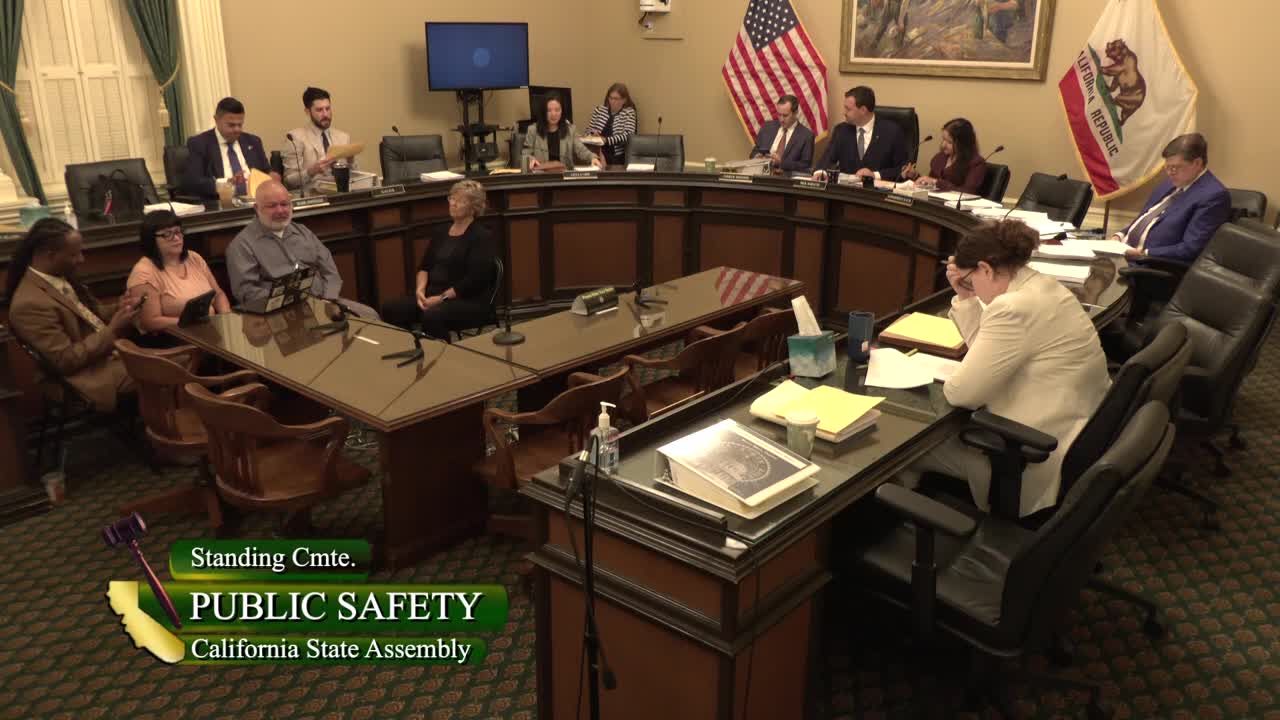
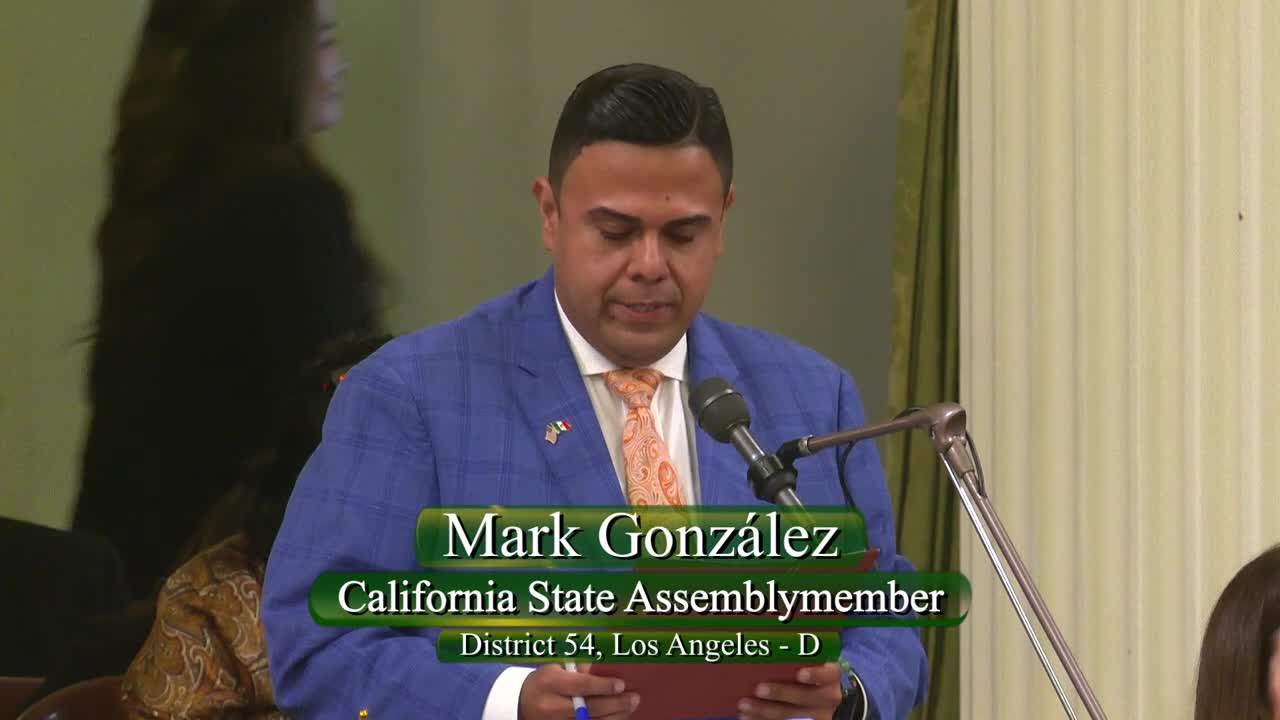
Bill Author