SB 50: Connected devices: device protection requests.
- Session Year: 2025-2026
- House: Senate
- Latest Version Date: 2025-10-13
Current Status:
Passed
(2025-10-13: Chaptered by Secretary of State. Chapter 676, Statutes of 2025.)
Introduced
In Committee
Awaiting First Chamber Vote
Passed First Chamber
In Committee
Awaiting Second Chamber Vote
Passed Second Chamber
Enacted
Existing law authorizes a court to issue a restraining order to a person to prevent abuse, as specified, based on reasonable proof of a past act or acts of abuse. Existing law authorizes the order to be issued solely on the affidavit or testimony of the person requesting the restraining order.
Existing law requires a manufacturer of a connected device to equip the device with a reasonable security feature or features that are appropriate to the nature and function of the device, appropriate to the information it may collect, contain, or transmit, and designed to protect the device and information contained in the device from unauthorized access, destruction, use, modification, or disclosure.
This bill would authorize a survivor, as defined, or a designated representative of a survivor, to submit a device protection request to an account manager, as defined, seeking to terminate a perpetrators access to a connected device or associated user account. The bill would define survivor for these purposes to mean an individual who has had specified criminal acts committed or allegedly committed against them or who cares for another individual against whom those criminal acts have been committed or allegedly committed, as provided. The bill would require an account manager, within 2 business days of receiving a complete device protection request, to terminate or disable the perpetrators access to the connected device or user account, or to inform the survivor, in a clear and conspicuous manner, of any methods to reset the device to factory settings or a similar state that removes all account holders, as provided. The bill would specify the requirements for a device protection request and would impose certain requirements on an account manager in processing a request. By providing that a device protection request may include a copy of a signed affidavit, the bill would expand the crime of perjury, and thus impose a state-mandated local program.
This bill would require the account manager to clearly describe the process to submit a device protection request on their internet website or mobile application and would prohibit the account manager from providing specified information to the perpetrator. The bill would require an account manager and any officer, director, employee, vendor, or agent thereof to treat any information submitted by a survivor or a designated representative of a survivor as confidential and securely dispose of the information, as provided.
This bill would authorize enforcement of these provisions by injunction or civil penalty in any court action by any person injured by a violation of those provisions, the Attorney General, a district attorney, county counsel, a city attorney, or a city prosecutor, against an account manager or perpetrator, as provided. The bill would prohibit a waiver of these prohibitions and would declare that these provisions are severable.
Existing law authorizes a court to issue an ex parte order for, among other things, disturbing the peace of the other party. Existing law provides that disturbing the peace of the other party may be committed directly or indirectly, including through the use of a third party, and by any method or through any means including, but not limited to, telephone, online accounts, text messages, internet-connected devices, or other electronic technologies.
This bill would provide that, for purposes of those provisions, an internet-connected device includes a connected device as described in the bill.
The California Constitution requires the state to reimburse local agencies and school districts for certain costs mandated by the state. Statutory provisions establish procedures for making that reimbursement.
This bill would provide that no reimbursement is required by this act for a specified reason.
Existing law authorizes a court to issue a restraining order to a person to prevent abuse, as specified, based on reasonable proof of a past act or acts of abuse. Existing law authorizes the order to be issued solely on the affidavit or testimony of the person requesting the restraining order.
Existing law requires a manufacturer of a connected device to equip the device with a reasonable security feature or features that are appropriate to the nature and function of the device, appropriate to the information it may collect, contain, or transmit, and designed to protect the device and information contained in the device from unauthorized access, destruction, use, modification, or disclosure.
This bill would authorize a survivor, as defined, or a designated representative of a survivor, to submit a device protection request to an account manager, as defined, seeking to terminate a perpetrators access to a connected device or associated user account. The bill would define survivor for these purposes to mean an individual who has had specified criminal acts committed or allegedly committed against them or who cares for another individual against whom those criminal acts have been committed or allegedly committed, as provided. The bill would require an account manager, within 2 business days of receiving a complete device protection request, to terminate or disable the perpetrators access to the connected device or user account, or, if the account manager is unable to terminate the perpetrators access, to provide the survivor with a method or to inform the survivor, in a clear and conspicuous manner, of any methods to reset the device to factory settings or a similar state that removes all account holders, as provided. The bill would specify the requirements for a device protection request and would impose certain requirements on an account manager in processing a request. By providing that a device protection request may include a copy of a signed affidavit, the bill would expand the crime of perjury, and thus impose a state-mandated local program.
This bill would require the account manager to clearly describe the process to submit a device protection request on their internet website or mobile application and would prohibit the account manager from providing specified information to the perpetrator. The bill would require an account manager and any officer, director, employee, vendor, or agent thereof to treat any information submitted by a survivor or a designated representative of a survivor as confidential and securely dispose of the information, as provided.
This bill would authorize enforcement of these provisions by injunction or civil penalty in any court action by any person injured by a violation of those provisions, the Attorney General, a district attorney, county counsel, a city attorney, or a city prosecutor, against an account manager or perpetrator, as provided. The bill would prohibit a waiver of these prohibitions and would declare that these provisions are severable.
Existing law authorizes a court to issue an ex parte order for, among other things, disturbing the peace of the other party. Existing law provides that disturbing the peace of the other party may be committed directly or indirectly, including through the use of a third party, and by any method or through any means including, but not limited to, telephone, online accounts, text messages, internet-connected devices, or other electronic technologies.
This bill would provide that, for purposes of those provisions, an internet-connected device includes a connected device as described in the bill.
The California Constitution requires the state to reimburse local agencies and school districts for certain costs mandated by the state. Statutory provisions establish procedures for making that reimbursement.
This bill would provide that no reimbursement is required by this act for a specified reason.
Existing law authorizes a court to issue a restraining order to a person to prevent abuse, as specified, based on reasonable proof of a past act or acts of abuse. Existing law authorizes the order to be issued solely on the affidavit or testimony of the person requesting the restraining order.
Existing law requires a manufacturer of a connected device to equip the device with a reasonable security feature or features that are appropriate to the nature and function of the device, appropriate to the information it may collect, contain, or transmit, and designed to protect the device and information contained in the device from unauthorized access, destruction, use, modification, or disclosure.
This bill would authorize a survivor, as defined, or a designated representative of a survivor, to submit a device protection request to an account manager, as defined, seeking to terminate a perpetrators access to a connected device or associated user account. The bill would define survivor for these purposes to mean an individual who has had specified criminal acts committed or allegedly committed against them or who cares for another individual against whom those criminal acts have been committed or allegedly committed, as provided. The bill would require an account manager, within 2 business days of receiving a complete device protection request, to terminate or disable the perpetrators access to the connected device or user account, or, if the account manager is unable to terminate the perpetrators access, to provide the survivor with a method to reset the device to factory settings or a similar state that removes all account holders, as provided. The bill would specify the requirements for a device protection request and would impose certain requirements on an account manager in processing a request. By providing that a device protection request may include a copy of a signed affidavit, the bill would expand the crime of perjury, and thus impose a state-mandated local program.
This bill would require the account manager to clearly describe the process to submit a device protection request on their internet website or mobile application and would prohibit the account manager from providing specified information to the perpetrator. The bill would require an account manager and any officer, director, employee, vendor, or agent thereof to treat any information submitted by a survivor or a designated representative of a survivor as confidential and securely dispose of the information, as provided.
This bill would authorize enforcement of these provisions by injunction or civil penalty in any court action by any person injured by a violation of those provisions, the Attorney General, a district attorney, county counsel, a city attorney, or a city prosecutor, against an account manager or perpetrator, as provided. The bill would prohibit a waiver of these prohibitions and would declare that these provisions are severable.
Existing law authorizes a court to issue an ex parte order for, among other things, disturbing the peace of the other party. Existing law provides that disturbing the peace of the other party may be committed directly or indirectly, including through the use of a third party, and by any method or through any means including, but not limited to, telephone, online accounts, text messages, internet-connected devices, or other electronic technologies.
This bill would provide that, for purposes of those provisions, an internet-connected device includes a connected device as described in the bill.
The California Constitution requires the state to reimburse local agencies and school districts for certain costs mandated by the state. Statutory provisions establish procedures for making that reimbursement.
This bill would provide that no reimbursement is required by this act for a specified reason.
Existing law authorizes a court to issue a restraining order to a person to prevent abuse, as specified, based on reasonable proof of a past act or acts of abuse. Existing law authorizes the order to be issued solely on the affidavit or testimony of the person requesting the restraining order.
Existing law requires a manufacturer of a connected device to equip the device with a reasonable security feature or features that are appropriate to the nature and function of the device, appropriate to the information it may collect, contain, or transmit, and designed to protect the device and information contained in the device from unauthorized access, destruction, use, modification, or disclosure.
This bill, except as specified, would require an account manager, as defined, to terminate or disable a connected device or account access to a perpetrator, as defined, commencing no later than 2 days after a device protection request is submitted to the account manager by a survivor of that perpetrator or by an eligible organization, as defined, on behalf of a survivor. bill would authorize a survivor, as defined, or a designated representative of a survivor, to submit a device protection request to an account manager, as defined, seeking to terminate a perpetrators access to a connected device or associated user account. The bill would define survivor for these purposes to mean an individual who has had specified criminal acts committed or allegedly committed against them or who cares for another individual against whom those criminal acts have been committed or allegedly committed, as provided. The bill would require an account manager, within 2 business days of receiving a complete device protection request, to terminate or disable the perpetrators access to the connected device or user account, or, if the account manager is unable to terminate the perpetrators access, to provide the survivor with a method to reset the device to factory settings or a similar state that removes all account holders, as provided. The bill would specify the requirements for a survivor or the eligible organization to submit a device protection request and would impose certain requirements on an account manager regarding the process for submitting in processing a request. By providing that a survivor or the eligible organization device protection request may include a copy of a signed affidavit to submit a device protection request, and thus expanding affidavit, the bill would expand the crime of perjury, this bill would and thus impose a state-mandated local program.
This bill would authorize an account manager to comply with the above-described requirements by including a means by which a person with physical access to the connected device may reset the connected device to its factory settings or a similar state that removes any existing account holders from the device.This bill would require the account manager to make information about the clearly describe the process to submit a device protection request process publicly available on their internet website or mobile application and to contact the survivor or the eligible organization about the status of the request or the perpetrators access, as specified, and would prohibit the account manager from providing specified information to the person whose access was terminated. the perpetrator. The bill would require an account manager and any officer, director, employee, vendor, or agent thereof to treat any information submitted by a survivor or the eligible organization a designated representative of a survivor as confidential and securely dispose of the information, as provided.
This bill would authorize enforcement of these provisions by injunction or civil penalty in any court action by any person injured by a violation of those provisions, the Attorney General, a district attorney, county counsel, a city attorney, or a city prosecutor, against an account manager or perpetrator, as provided. The bill would prohibit a waiver of these prohibitions and would declare that these provisions are severable.
Existing law authorizes a court to issue an ex parte order for, among other things, disturbing the peace of the other party. Existing law provides that disturbing the peace of the other party may be committed directly or indirectly, including through the use of a third party, and by any method or through any means including, but not limited to, telephone, online accounts, text messages, internet-connected devices, or other electronic technologies.
This bill would provide that, for purposes of those provisions, an internet-connected device includes a connected device as described in the bill.
The California Constitution requires the state to reimburse local agencies and school districts for certain costs mandated by the state. Statutory provisions establish procedures for making that reimbursement.
This bill would provide that no reimbursement is required by this act for a specified reason.
Existing law authorizes a court to issue a restraining order to a person to prevent abuse, as specified, based on reasonable proof of a past act or acts of abuse. Existing law authorizes the order to be issued solely on the affidavit or testimony of the person requesting the restraining order.
Existing law requires a manufacturer of a connected device to equip the device with a reasonable security feature or features that are appropriate to the nature and function of the device, appropriate to the information it may collect, contain, or transmit, and designed to protect the device and information contained in the device from unauthorized access, destruction, use, modification, or disclosure.
This bill, except as specified, would require an account manager, as defined, to terminate or disable a connected device or account access to a perpetrator, as defined, commencing no later than 2 days after a device protection request is submitted to the account manager by a survivor of that perpetrator or by an eligible organization, as defined, on behalf of a survivor. The bill would specify the requirements for a survivor or the eligible organization to submit a device protection request and would impose certain requirements on an account manager regarding the process for submitting a request. By providing that a survivor or the eligible organization may include a copy of a signed affidavit to submit a device protection request, and thus expanding the crime of perjury, this bill would impose a state-mandated local program.
This bill would authorize an account manager to comply with the above-described requirements by including a means by which a person with physical access to the connected device may reset the connected device to its factory settings or a similar state that removes any existing account holders from the device.
This bill would require the account manager to notify make information about the device protection request process publicly available on their internet website or mobile application and to contact the survivor or the eligible organization of specified information and about the status of the request or the perpetrators access, as specified, and would prohibit the account manager from providing specified information to the person whose access was terminated. The bill would require an account manager and any officer, director, employee, vendor, or agent thereof to treat any information submitted by a survivor or the eligible organization as confidential and securely dispose of the information, as provided.
This bill would authorize enforcement of these provisions by injunction or civil penalty in any court action by any person injured by a violation of those provisions, the Attorney General, a district attorney, county counsel, a city attorney, or a city prosecutor, against an account manager or perpetrator, as provided. The bill would prohibit a waiver of these prohibitions and would declare that these provisions are severable.
Existing law authorizes a court to issue an ex parte order for, among other things, disturbing the peace of the other party. Existing law provides that disturbing the peace of the other party may be committed directly or indirectly, including through the use of a third party, and by any method or through any means including, but not limited to, telephone, online accounts, text messages, internet-connected devices, or other electronic technologies.
This bill would provide that, for purposes of those provisions, an internet-connected device includes a connected device as described in the bill.
The California Constitution requires the state to reimburse local agencies and school districts for certain costs mandated by the state. Statutory provisions establish procedures for making that reimbursement.
This bill would provide that no reimbursement is required by this act for a specified reason.
Existing law authorizes a court to issue a restraining order to a person to prevent abuse, as specified, based on reasonable proof of a past act or acts of abuse. Existing law authorizes the order to be issued solely on the affidavit or testimony of the person requesting the restraining order.
Existing law requires a manufacturer of a connected device to equip the device with a reasonable security feature or features that are appropriate to the nature and function of the device, appropriate to the information it may collect, contain, or transmit, and designed to protect the device and information contained in the device from unauthorized access, destruction, use, modification, or disclosure.
This bill would bill, except as specified, would require an account manager, as defined, to terminate or disable a connected device or account access to a perpetrator, as defined, commencing no later than 2 days after a device protection request is submitted to the account manager by a survivor of that perpetrator. perpetrator or by an eligible organization, as defined, on behalf of a survivor. The bill would specify the requirements for a survivor or the eligible organization to submit a device protection request and would impose certain requirements on an account manager regarding the process for submitting a request. By providing that a survivor or the eligible organization may include a copy of a signed affidavit to submit a device protection request, and thus expanding the crime of perjury, this bill would impose a state-mandated local program.
This bill would authorize an account manager to comply with the above-described requirements by including a means by which a person with physical access to the connected device may reset the connected device to its factory settings or a similar state that removes any existing account holders from the device.
This bill would require the account manager to notify the survivor or the eligible organization of specified information and require an account manager and any officer, director, employee, vendor, or agent thereof to treat any information submitted by a survivor or the eligible organization as confidential and securely dispose of the information, as provided.
This bill would authorize enforcement of these provisions by injunction or civil penalty in any court action by any person injured by a violation of those provisions, the Attorney General, a district attorney, county counsel, a city attorney, or a city prosecutor, against an account manager or perpetrator, as provided. The bill would prohibit a waiver of these prohibitions and would declare that these provisions are severable.
Existing law authorizes a court to issue an ex parte order for, among other things, disturbing the peace of the other party. Existing law provides that disturbing the peace of the other party may be committed directly or indirectly, including through the use of a third party, and by any method or through any means including, but not limited to, telephone, online accounts, text messages, internet-connected devices, or other electronic technologies.
This bill would provide that, for purposes of those provisions, an internet-connected device includes a connected device as described in the bill.
The California Constitution requires the state to reimburse local agencies and school districts for certain costs mandated by the state. Statutory provisions establish procedures for making that reimbursement.
This bill would provide that no reimbursement is required by this act for a specified reason.
Existing law authorizes a court to issue a restraining order to a person to prevent abuse, as specified, based on reasonable proof of a past act or acts of abuse. Existing law authorizes the order to be issued solely on the affidavit or testimony of the person requesting the restraining order.
Existing law requires a manufacturer of a connected device to equip the device with a reasonable security feature or features that are appropriate to the nature and function of the device, appropriate to the information it may collect, contain, or transmit, and designed to protect the device and information contained in the device from unauthorized access, destruction, use, modification, or disclosure.
This bill would require an account manager, as defined, to terminate or disable a connected device or account access to a perpetrator, as defined, commencing no later than 2 days after a device protection request is submitted to the account manager by a survivor of that perpetrator. The bill would specify the requirements for a survivor to submit a device protection request and would impose certain requirements on an account manager regarding the process for submitting a request. By providing that a survivor may include a copy of a signed affidavit to submit a device protection request, and thus expanding the crime of perjury, this bill would impose a state-mandated local program.
This bill would require the account manager to notify the survivor of specified information and require an account manager and any officer, director, employee, vendor, or agent thereof to treat any information submitted by a survivor as confidential and securely dispose of the information, as provided.
This bill would authorize enforcement of these provisions by injunction or civil penalty in any court action by any person injured by a violation of those provisions, the Attorney General, a district attorney, county counsel, a city attorney, or a city prosecutor, against an account manager or perpetrator, as provided. The bill would prohibit a waiver of these prohibitions and would declare that these provisions are severable.
Existing law authorizes a court to issue an ex parte order for, among other things, disturbing the peace of the other party. Existing law provides that disturbing the peace of the other party may be committed directly or indirectly, including through the use of a third party, and by any method or through any means including, but not limited to, telephone, online accounts, text messages, internet-connected devices, or other electronic technologies.
This bill would provide that, for purposes of those provisions, an internet-connected device includes a connected device as described in the bill.
The California Constitution requires the state to reimburse local agencies and school districts for certain costs mandated by the state. Statutory provisions establish procedures for making that reimbursement.
This bill would provide that no reimbursement is required by this act for a specified reason.
The Legislature finds and declares all of the following:
(a)According to the National Domestic Violence Hotline, almost one-half of all women and men in the United States have experienced psychological aggression by an intimate partner in their lifetime.
(b)According to the National Network to End Domestic Violence, 97 percent of domestic violence programs report that abusers misuse technology to stalk, harass, and control victims.
(c)An increase in the use of technology has become a concerning tool in cases of domestic violence and harassment. Perpetrators leverage smartphone applications to remotely control everyday objects to exercise control over, monitor, and abuse their victims.
(d)Domestic violence, dating violence, stalking, sexual assault, human trafficking, and related crimes are life-threatening issues and have lasting and harmful effects on individuals, families, and entire communities.
(e)Survivors often lack meaningful support and options when establishing independence from an abuser, including barriers such as financial insecurity and limited access to reliable communications tools to maintain essential connections with family, social safety networks, employers, and support services.
(f)Laws related to the use of technology can play a public interest role in the promotion of safety, life, and property with respect to these types of violence and abuse. Independent access to devices can assist survivors in establishing security and autonomy.
(g)Safeguards within tech-based services can serve a role in preventing abuse and narrowing the digital divide experienced by survivors of abuse.
SEC. 2.Chapter 35.5 (commencing with Section 22948.30) is added to Division 8 of the Business and Professions Code, to read:35.5.Connected Devices22948.30.For purposes of this chapter, the following definitions apply:
(a)Account manager means a person or entity that provides an individual an internet-based or app-based user account, or a third party that manages those user accounts on behalf of that person or entity, that has authority to make decisions regarding user access to those user accounts.
(b)(1)Connected device means any device, or other physical object that is capable of connecting to the internet, directly or indirectly, and that is assigned an internet protocol address or Bluetooth address or enables a person to remotely obtain data from or send commands to a connected device or account, which may be accomplished through a software application that is designed to be operated on a mobile device, computer, or other technology.
(2)Connected device does not include either of the following:
(A) Peripheral or component devices that are solely dependent on a primary connected device for internet connectivity and that cannot be independently accessed, remotely disabled, or disconnected by a user or service provider.
(B)A connected device that is more than 10 years old or is no longer supported by the account manager.
(c)(1)Covered act means conduct that constitutes any of the following:
(A)A crime described in Chapter 8 (commencing with Section 236) of Title 8 of Part 1 of the Penal Code.
(B)A crime described in Chapter 1 (commencing with Section 261), Chapter 2 (commencing with Section 270), Chapter 2.5 (commencing with Section 273.8), Chapter 4 (commencing with Section 277), Chapter 5 (commencing with Section 281), Chapter 5.5 (commencing with Section 290), Chapter 7.5 (commencing with Section 311), Chapter 7.6 (commencing with Section 313), or Chapter 8 (commencing with Section 314) of Title 9 of Part 1 of the Penal Code.
(C)An act under federal law, tribal law, or the Uniform Code of Military Justice that is similar to an offense described in subparagraph (A), (B), (D), or (E).
(D)Domestic violence, as defined in Section 6211 of the Family Code.
(E)A misdemeanor described in subdivision (e) of Section 243 of the Penal Code.
(2)Nothing in paragraph (1) shall be construed to require a criminal conviction or any other determination of a court in order for conduct to constitute a covered act.
(d)Device access means the ability to remotely control a connected device, remotely change the characteristics of a connected device, or remotely view or manipulate data collected by or through a connected device, by accessing a user account or accounts associated with the connected device. Acts that require device access include, but are not limited to, remotely manipulating an audio system, security system, light fixture, or other home appliance or fixture.
(e)Device protection request means a request by a survivor to terminate or disable a perpetrators access to a connected device or account, including, but not limited to, the ability of a person to obtain data from or send commands to a connected device or account.
(f)Perpetrator means an individual who has committed or allegedly committed a covered act against a survivor or an individual under the care of a survivor.
(g)Survivor means an individual who has had a covered act committed, or allegedly committed, against the individual, or who cares for another individual against whom a covered act has been committed or allegedly committed, provided that the individual providing care did not commit or allegedly commit the covered act.
(h)User account or account means an account or other means by which a person enrolls in or obtains access to a connected device or online service.
22948.31.(a)A survivor, or a designated representative of a survivor, may submit a device protection request to an account manager seeking to terminate a perpetrators access to a connected device or associated user account.
(b)A device protection request shall include all of the following:
(1)A verification that the perpetrator has committed or allegedly committed a covered act against the survivor or an individual in the survivors care, by providing either of the following:
(A)A copy of a signed affidavit from a licensed medical or mental health care provider, licensed military medical or mental health care provider, licensed social worker, victim services provider, or licensed military victim services provider, a temporary restraining order, an emergency protective order, or a protective order lawfully issued pursuant to Section 527.6 of the Code of Civil Procedure, Part 3 (commencing with Section 6240) or Part 4 (commencing with Section 6300) of Division 10 of the Family Code, or Section 136.2 of the Penal Code.
(B)A copy of a police report, statements provided by police, including military police, to magistrates or judges, charging documents, protective or restraining orders, military protective orders, or any other official record that documents the covered act, including a copy of a written report by a peace officer employed by a state or local law enforcement agency acting in the peace officers official capacity stating that the individual has filed a report alleging victimization of an act or crime.
(2)Verification of the survivors exclusive legal possession or control of the connected device, including, but not limited to, a dissolution decree, temporary restraining order, protective order, domestic violence restraining order, or other document indicating the survivors exclusive use care, possession, or control of the connected device.
(3)Identification of the connected device or devices.
(4)Identification of the person that the requester seeks to deny device or account access.
(c)An account manager shall offer a survivor or a designated representative of a survivor the ability to submit a device protection request under subdivision (b) through secure remote means that are easily navigable. Except as specified under subdivision (b), an account manager shall not require a specific form of documentation to submit a device protection request.
(d)Within two business days of receiving a complete device protection request, the account manager shall do one of the following:
(1)Terminate or disable the identified perpetrators access to the connected device or user account, and notify the survivor or their representative that access has been successfully denied.
(2)Inform the survivor, in a clear and conspicuous manner, of any methods to reset the device to factory settings or to a similar state that removes all account holders. A reset method is one that does not require the survivor to possess a personal identification number (PIN), password, or other access credential, and shall be available solely by virtue of the survivors physical proximity to the device.
(e)An account manager shall clearly describe the process under this section to submit a device protection request, including required documentation and available remedies, on its internet website and any associated mobile application.
(f)An account manager shall not require any of the following as a condition for processing a device protection request:
(1)Payment of a fee, penalty, or other charge for the survivor or a designated representative of the survivor to submit a request, or for the account manager to carry out the request.
(2)Approval of the device protection request by any person who has device or account access that is not the survivor.
(3)An increase in the rate charged for the account if any subscription fee or other recurring charge for account access applies.
(4)Any other requirement not listed under subdivision (b).
(g)An account manager shall not deny a device protection request due to arrears accrued by the account or associated with the connected device.
(h)An account manager shall not notify the perpetrator of the access termination and shall not disclose any data, credentials, or account changes relating to the survivor or any new account created after the perpetrators access is removed.
(i)A survivor shall not be financially responsible for any amount incurred or charged to the connected device or associated account by the perpetrator after the perpetrators access has been terminated under this chapter.
(j)(1)An account manager and any officer, director, employee, vendor, or agent thereof shall treat any information submitted by a survivor or a designated representative of a survivor under this section as confidential and securely dispose of the information not later than 90 days after receiving the information.
(2)Nothing in paragraph (1) shall be construed to prohibit an account manager from maintaining, for longer than the period specified in that paragraph, a record that verifies that a survivor or a designated representative of a survivor fulfilled the conditions of a device protection request under subdivision (b).
22948.32.(a)(1)An account manager that fails to deny a perpetrator access in compliance with subdivision (a) of Section 22948.31 or otherwise does not comply with the requirements described in Section 22948.31 shall be deemed in violation of this chapter.
(2)A perpetrator that maintains or exercises device or account access, including by disturbing the peace of the other party, as described in subdivision (c) of Section 6320 of the Family Code, despite having their device or account access denied pursuant to subdivision (a) of Section 22948.31, shall be deemed in violation of this chapter.
(b)(1)Actions for relief pursuant to this chapter may be prosecuted exclusively in a court of competent jurisdiction in a civil action brought by any person injured by the violation or in the name of the people of the State of California by the Attorney General, a district attorney, county counsel, a city attorney, or a city prosecutor.
(2)A court may enjoin a person or entity who engages, has engaged, or proposes to engage in a violation of this chapter. The court may make any orders or judgments as may be necessary to prevent or remedy a violation of this chapter.
(3)A person or entity who engages, has engaged, or proposes to engage in a violation of this chapter shall be liable for a civil penalty not to exceed two thousand five hundred dollars ($2,500) per violation for each connected device in violation of this chapter. If multiple violations of this chapter are alleged in any civil action, they shall be specifically alleged, and a court of competent jurisdiction shall make specific findings as to each violation. If the action is brought by the Attorney General, the penalty shall be deposited into the General Fund. If the action is brought by a district attorney or county counsel, the penalty shall be paid to the treasurer of the county in which the judgment was entered. If the action is brought by a city attorney or city prosecutor, the penalty shall be paid to the treasurer of the city in which the judgment was entered. If the action is brought by a person injured by the violation, the penalty shall be awarded to that person.
(c)The prevailing plaintiff in any action commenced under this section shall be entitled to recover court costs and reasonable attorneys fees.
22948.33.Any waiver of the provisions of this chapter is contrary to public policy and void and unenforceable.
22948.34.(a)The duties and obligations imposed by this chapter are cumulative with any other duties or obligations imposed under other law, and shall not be construed to relieve any party from any duties or obligations imposed under other law.
(b)The remedies or penalties provided by this chapter are cumulative to each other and to the remedies or penalties available under all other laws of the state.
22948.35.Notwithstanding any other provision of this chapter, any entity that is subject to the federal Safe Connections Act of 2022 (Public Law 117-223) or regulations of the Federal Communications Commission adopted pursuant to the authority of that law, shall not be subject to this chapter.
22948.36.Notwithstanding any other provision of this chapter, an entity that is subject to Chapter 6 (commencing with Section 28200) of Division 12 of the Vehicle Code shall not be subject to this chapter.
22948.37.The provisions of this chapter are severable. If any provision of this chapter or its application is held invalid, that invalidity shall not affect other provisions or applications that can be given effect without the invalid provision or application.
SEC. 3.Section 6320 of the Family Code is amended to read:6320.(a)The court may issue an ex parte order enjoining a party from molesting, attacking, striking, stalking, threatening, sexually assaulting, battering, credibly impersonating as described in Section 528.5 of the Penal Code, falsely personating as described in Section 529 of the Penal Code, harassing, telephoning, including, but not limited to, making annoying telephone calls as described in Section 653m of the Penal Code, destroying personal property, contacting, either directly or indirectly, by mail or otherwise, coming within a specified distance of, or disturbing the peace of the other party, and, in the discretion of the court, on a showing of good cause, of other named family or household members.
(b)On a showing of good cause, the court may include in a protective order a grant to the petitioner of the exclusive care, possession, or control of any animal owned, possessed, leased, kept, or held by either the petitioner or the respondent or a minor child residing in the residence or household of either the petitioner or the respondent. The court may order the respondent to stay away from the animal and forbid the respondent from taking, transferring, encumbering, concealing, molesting, attacking, striking, threatening, harming, or otherwise disposing of the animal.
(c)As used in subdivision (a), disturbing the peace of the other party refers to conduct that, based on the totality of the circumstances, destroys the mental or emotional calm of the other party. This conduct may be committed directly or indirectly, including through the use of a third party, and by any method or through any means including, but not limited to, telephone, online accounts, text messages, internet-connected devices, including connected devices as defined in Section 22948.30 of the Business and Professions Code, or other electronic technologies. This conduct includes, but is not limited to, coercive control, which is a pattern of behavior that in purpose or effect unreasonably interferes with a persons free will and personal liberty. Examples of coercive control include, but are not limited to, unreasonably engaging in any of the following:
(1)Isolating the other party from friends, relatives, or other sources of support.
(2)Depriving the other party of basic necessities.
(3)Controlling, regulating, or monitoring the other partys movements, communications, daily behavior, finances, economic resources, or access to services.
(4)Compelling the other party by force, threat of force, or intimidation, including threats based on actual or suspected immigration status, to engage in conduct from which the other party has a right to abstain or to abstain from conduct in which the other party has a right to engage.
(5)Engaging in reproductive coercion, which consists of control over the reproductive autonomy of another through force, threat of force, or intimidation, and may include, but is not limited to, unreasonably pressuring the other party to become pregnant, deliberately interfering with contraception use or access to reproductive health information, or using coercive tactics to control, or attempt to control, pregnancy outcomes.
(d)This section does not limit any remedies available under this act or any other provision of law.
SEC. 4.No reimbursement is required by this act pursuant to Section 6 of Article XIIIB of the California Constitution because the only costs that may be incurred by a local agency or school district will be incurred because this act creates a new crime or infraction, eliminates a crime or infraction, or changes the penalty for a crime or infraction, within the meaning of Section 17556 of the Government Code, or changes the definition of a crime within the meaning of Section 6 of Article XIIIB of the California Constitution.
The Legislature finds and declares all of the following:
(a)According to the National Domestic Violence Hotline, almost one-half of all women and men in the United States have experienced psychological aggression by an intimate partner in their lifetime.
(b)According to the National Network to End Domestic Violence, 97 percent of domestic violence programs report that abusers misuse technology to stalk, harass, and control victims.
(c)An increase in the use of technology has become a concerning tool in cases of domestic violence and harassment. Perpetrators leverage smartphone applications to remotely control everyday objects to exercise control over, monitor, and abuse their victims.
(d)Domestic violence, dating violence, stalking, sexual assault, human trafficking, and related crimes are life-threatening issues and have lasting and harmful effects on individuals, families, and entire communities.
(e)Survivors often lack meaningful support and options when establishing independence from an abuser, including barriers such as financial insecurity and limited access to reliable communications tools to maintain essential connections with family, social safety networks, employers, and support services.
(f)Laws related to the use of technology can play a public interest role in the promotion of safety, life, and property with respect to these types of violence and abuse. Independent access to devices can assist survivors in establishing security and autonomy.
(g)Safeguards within tech-based services can serve a role in preventing abuse and narrowing the digital divide experienced by survivors of abuse.
SEC. 2.Chapter 35.5 (commencing with Section 22948.30) is added to Division 8 of the Business and Professions Code, to read:35.5.Connected Devices22948.30.For purposes of this chapter, the following definitions apply:
(a)Account manager means a person or entity that provides an individual an internet-based or app-based user account, or a third party that manages those user accounts on behalf of that person or entity, that has authority to make decisions regarding user access to those user accounts.
(b)(1)Connected device means any device, or other physical object that is capable of connecting to the internet, directly or indirectly, and that is assigned an internet protocol address or Bluetooth address or enables a person to remotely obtain data from or send commands to a connected device or account, which may be accomplished through a software application that is designed to be operated on a mobile device, computer, or other technology.
(2)Connected device does not include peripheral either of the following:
(A) Peripheral or component devices that are solely dependent on a primary connected device for internet connectivity and that cannot be independently accessed, remotely disabled, or disconnected by a user or service provider.
(B)A connected device that is more than 10 years old or is no longer supported by the account manager.
(c)(1)Covered act means conduct that constitutes any of the following:
(A)A crime described in Chapter 8 (commencing with Section 236) of Title 8 of Part 1 of the Penal Code.
(B)A crime described in Chapter 1 (commencing with Section 261), Chapter 2 (commencing with Section 270), Chapter 2.5 (commencing with Section 273.8), Chapter 4 (commencing with Section 277), Chapter 5 (commencing with Section 281), Chapter 5.5 (commencing with Section 290), Chapter 7.5 (commencing with Section 311), Chapter 7.6 (commencing with Section 313), or Chapter 8 (commencing with Section 314) of Title 9 of Part 1 of the Penal Code.
(C)An act under federal law, tribal law, or the Uniform Code of Military Justice that is similar to an offense described in subparagraph (A), (B), (D), or (E).
(D)Domestic violence, as defined in Section 6211 of the Family Code.
(E)A misdemeanor described in subdivision (e) of Section 243 of the Penal Code.
(2)Nothing in paragraph (1) shall be construed to require a criminal conviction or any other determination of a court in order for conduct to constitute a covered act.
(d)Device access means the ability to remotely control a connected device, remotely change the characteristics of a connected device, or remotely view or manipulate data collected by or through a connected device, by accessing a user account or accounts associated with the connected device. Acts that require device access include, but are not limited to, remotely manipulating an audio system, security system, light fixture, or other home appliance or fixture.
(e)Device protection request means a request by a survivor to terminate or disable a perpetrators access to a connected device or account, including, but not limited to, the ability of a person to obtain data from or send commands to a connected device or account.
(f)Perpetrator means an individual who has committed or allegedly committed a covered act against a survivor or an individual under the care of a survivor.
(g)Survivor means an individual who has had a covered act committed, or allegedly committed, against the individual, or who cares for another individual against whom a covered act has been committed or allegedly committed, provided that the individual providing care did not commit or allegedly commit the covered act.
(h)User account or account means an account or other means by which a person enrolls in or obtains access to a connected device or online service.
22948.31.(a)A survivor, or a designated representative of a survivor, may submit a device protection request to an account manager seeking to terminate a perpetrators access to a connected device or associated user account.
(b)A device protection request shall include all of the following:
(1)A verification that the perpetrator has committed or allegedly committed a covered act against the survivor or an individual in the survivors care, by providing either of the following:
(A)A copy of a signed affidavit from a licensed medical or mental health care provider, licensed military medical or mental health care provider, licensed social worker, victim services provider, or licensed military victim services provider, a temporary restraining order, an emergency protective order, or a protective order lawfully issued pursuant to Section 527.6 of the Code of Civil Procedure, Part 3 (commencing with Section 6240) or Part 4 (commencing with Section 6300) of Division 10 of the Family Code, or Section 136.2 of the Penal Code.
(B)A copy of a police report, statements provided by police, including military police, to magistrates or judges, charging documents, protective or restraining orders, military protective orders, or any other official record that documents the covered act, including a copy of a written report by a peace officer employed by a state or local law enforcement agency acting in the peace officers official capacity stating that the individual has filed a report alleging victimization of an act or crime.
(2)Verification of the survivors exclusive legal possession or control of the connected device, including, but not limited to, a dissolution decree, temporary restraining order, protective order, domestic violence restraining order, or other document indicating the survivors exclusive use care, possession, or control of the connected device.
(3)Identification of the connected device or devices.
(4)Identification of the person that the requester seeks to deny device or account access.
(c)An account manager shall offer a survivor or a designated representative of a survivor the ability to submit a device protection request under subdivision (b) through secure remote means that are easily navigable. Except as specified under subdivision (b), an account manager shall not require a specific form of documentation to submit a device protection request.
(d)Within two business days of receiving a complete device protection request, the account manager shall do one of the following:
(1)Terminate or disable the identified perpetrators access to the connected device or user account, and notify the survivor or their representative that access has been successfully denied.
(2)If the account manager is unable to terminate the perpetrators access, the account manager shall provide the survivor with a method Inform the survivor, in a clear and conspicuous manner, of any methods to reset the device to factory settings or to a similar state that removes all account holders. The A reset method shall is one that does not require the survivor to possess a personal identification number (PIN), password, or other access credential, and shall be available solely by virtue of the survivors physical proximity to the device.
(e)An account manager shall clearly describe the process under this section to submit a device protection request, including required documentation and available remedies, on its internet website and any associated mobile application.
(f)An account manager shall not require any of the following as a condition for processing a device protection request:
(1)Payment of a fee, penalty, or other charge for the survivor or a designated representative of the survivor to submit a request, or for the account manager to carry out the request.
(2)Approval of the device protection request by any person who has device or account access that is not the survivor.
(3)An increase in the rate charged for the account if any subscription fee or other recurring charge for account access applies.
(4)Any other requirement not listed under subdivision (b).
(g)An account manager shall not deny a device protection request due to arrears accrued by the account or associated with the connected device.
(h)An account manager shall not notify the perpetrator of the access termination and shall not disclose any data, credentials, or account changes relating to the survivor or any new account created after the perpetrators access is removed.
(i)A survivor shall not be financially responsible for any amount incurred or charged to the connected device or associated account by the perpetrator after the perpetrators access has been terminated under this chapter.
(j)(1)An account manager and any officer, director, employee, vendor, or agent thereof shall treat any information submitted by a survivor or a designated representative of a survivor under this section as confidential and securely dispose of the information not later than 90 days after receiving the information.
(2)Nothing in paragraph (1) shall be construed to prohibit an account manager from maintaining, for longer than the period specified in that paragraph, a record that verifies that a survivor or a designated representative of a survivor fulfilled the conditions of a device protection request under subdivision (b).
22948.32.(a)(1)An account manager that fails to deny a perpetrator access in compliance with subdivision (a) of Section 22948.31 or otherwise does not comply with the requirements described in Section 22948.31 shall be deemed in violation of this chapter.
(2)A perpetrator that maintains or exercises device or account access, including by disturbing the peace of the other party, as described in subdivision (c) of Section 6320 of the Family Code, despite having their device or account access denied pursuant to subdivision (a) of Section 22948.31, shall be deemed in violation of this chapter.
(b)(1)Actions for relief pursuant to this chapter may be prosecuted exclusively in a court of competent jurisdiction in a civil action brought by any person injured by the violation or in the name of the people of the State of California by the Attorney General, a district attorney, county counsel, a city attorney, or a city prosecutor.
(2)A court may enjoin a person or entity who engages, has engaged, or proposes to engage in a violation of this chapter. The court may make any orders or judgments as may be necessary to prevent or remedy a violation of this chapter.
(3)A person or entity who engages, has engaged, or proposes to engage in a violation of this chapter shall be liable for a civil penalty not to exceed two thousand five hundred dollars ($2,500) per violation for each connected device in violation of this chapter. If multiple violations of this chapter are alleged in any civil action, they shall be specifically alleged, and a court of competent jurisdiction shall make specific findings as to each violation. If the action is brought by the Attorney General, the penalty shall be deposited into the General Fund. If the action is brought by a district attorney or county counsel, the penalty shall be paid to the treasurer of the county in which the judgment was entered. If the action is brought by a city attorney or city prosecutor, the penalty shall be paid to the treasurer of the city in which the judgment was entered. If the action is brought by a person injured by the violation, the penalty shall be awarded to that person.
(c)The prevailing plaintiff in any action commenced under this section shall be entitled to recover court costs and reasonable attorneys fees.
22948.33.Any waiver of the provisions of this chapter is contrary to public policy and void and unenforceable.
22948.34.(a)The duties and obligations imposed by this chapter are cumulative with any other duties or obligations imposed under other law, and shall not be construed to relieve any party from any duties or obligations imposed under other law.
(b)The remedies or penalties provided by this chapter are cumulative to each other and to the remedies or penalties available under all other laws of the state.
22948.35.Notwithstanding any other provision of this chapter, any entity that is subject to the federal Safe Connections Act of 2022 (Public Law 117-223) or regulations of the Federal Communications Commission adopted pursuant to the authority of that law, shall not be subject to this chapter.
22948.36.Notwithstanding any other provision of this chapter, an entity that is subject to Chapter 6 (commencing with Section 28200) of Division 12 of the Vehicle Code shall not be subject to this chapter.
22948.37.The provisions of this chapter are severable. If any provision of this chapter or its application is held invalid, that invalidity shall not affect other provisions or applications that can be given effect without the invalid provision or application.
SEC. 3.Section 6320 of the Family Code is amended to read:6320.(a)The court may issue an ex parte order enjoining a party from molesting, attacking, striking, stalking, threatening, sexually assaulting, battering, credibly impersonating as described in Section 528.5 of the Penal Code, falsely personating as described in Section 529 of the Penal Code, harassing, telephoning, including, but not limited to, making annoying telephone calls as described in Section 653m of the Penal Code, destroying personal property, contacting, either directly or indirectly, by mail or otherwise, coming within a specified distance of, or disturbing the peace of the other party, and, in the discretion of the court, on a showing of good cause, of other named family or household members.
(b)On a showing of good cause, the court may include in a protective order a grant to the petitioner of the exclusive care, possession, or control of any animal owned, possessed, leased, kept, or held by either the petitioner or the respondent or a minor child residing in the residence or household of either the petitioner or the respondent. The court may order the respondent to stay away from the animal and forbid the respondent from taking, transferring, encumbering, concealing, molesting, attacking, striking, threatening, harming, or otherwise disposing of the animal.
(c)As used in subdivision (a), disturbing the peace of the other party refers to conduct that, based on the totality of the circumstances, destroys the mental or emotional calm of the other party. This conduct may be committed directly or indirectly, including through the use of a third party, and by any method or through any means including, but not limited to, telephone, online accounts, text messages, internet-connected devices, including connected devices as defined in Section 22948.30 of the Business and Professions Code, or other electronic technologies. This conduct includes, but is not limited to, coercive control, which is a pattern of behavior that in purpose or effect unreasonably interferes with a persons free will and personal liberty. Examples of coercive control include, but are not limited to, unreasonably engaging in any of the following:
(1)Isolating the other party from friends, relatives, or other sources of support.
(2)Depriving the other party of basic necessities.
(3)Controlling, regulating, or monitoring the other partys movements, communications, daily behavior, finances, economic resources, or access to services.
(4)Compelling the other party by force, threat of force, or intimidation, including threats based on actual or suspected immigration status, to engage in conduct from which the other party has a right to abstain or to abstain from conduct in which the other party has a right to engage.
(5)Engaging in reproductive coercion, which consists of control over the reproductive autonomy of another through force, threat of force, or intimidation, and may include, but is not limited to, unreasonably pressuring the other party to become pregnant, deliberately interfering with contraception use or access to reproductive health information, or using coercive tactics to control, or attempt to control, pregnancy outcomes.
(d)This section does not limit any remedies available under this act or any other provision of law.
SEC. 4.No reimbursement is required by this act pursuant to Section 6 of Article XIIIB of the California Constitution because the only costs that may be incurred by a local agency or school district will be incurred because this act creates a new crime or infraction, eliminates a crime or infraction, or changes the penalty for a crime or infraction, within the meaning of Section 17556 of the Government Code, or changes the definition of a crime within the meaning of Section 6 of Article XIIIB of the California Constitution.
The Legislature finds and declares all of the following:
(a)According to the National Domestic Violence Hotline, almost one-half of all women and men in the United States have experienced psychological aggression by an intimate partner in their lifetime.
(b)According to the National Network to End Domestic Violence, 97 percent of domestic violence programs report that abusers misuse technology to stalk, harass, and control victims.
(c)An increase in the use of technology has become a concerning tool in cases of domestic violence and harassment. Perpetrators leverage smartphone applications to remotely control everyday objects to exercise control over, monitor, and abuse their victims.
(d)Domestic violence, dating violence, stalking, sexual assault, human trafficking, and related crimes are life-threatening issues and have lasting and harmful effects on individuals, families, and entire communities.
(e)Survivors often lack meaningful support and options when establishing independence from an abuser, including barriers such as financial insecurity and limited access to reliable communications tools to maintain essential connections with family, social safety networks, employers, and support services.
(f)Laws related to the use of technology can play a public interest role in the promotion of safety, life, and property with respect to these types of violence and abuse. Independent access to devices can assist survivors in establishing security and autonomy.
(g)Safeguards within tech-based services can serve a role in preventing abuse and narrowing the digital divide experienced by survivors of abuse.
SEC. 2.Chapter 35.5 (commencing with Section 22948.30) is added to Division 8 of the Business and Professions Code, to read:35.5.Connected Devices22948.30.For purposes of this chapter, the following definitions apply:
(a)Account manager means a person or entity that provides an individual an internet-based or app-based user account, or a third party that manages those user accounts on behalf of that person or entity, that has authority to make decisions regarding user access to those user accounts.
(b)(1)Connected device means any device, or other physical object that is capable of connecting to the internet, directly or indirectly, and that is assigned an internet protocol address or Bluetooth address or enables a person to remotely obtain data from or send commands to a connected device or account, which may be accomplished through a software application that is designed to be operated on a mobile device, computer, or other technology.
(2)Connected device does not include peripheral or component devices that are solely dependent on a primary connected device for internet connectivity and that cannot be independently accessed, remotely disabled, or disconnected by a user or service provider.
(c)(1)Covered act means conduct that constitutes any of the following:
(A)A crime described in Chapter 8 (commencing with Section 236) of Title 8 of Part 1 of the Penal Code.
(B)A crime described in Chapter 1 (commencing with Section 261), Chapter 2 (commencing with Section 270), Chapter 2.5 (commencing with Section 273.8), Chapter 4 (commencing with Section 277), Chapter 5 (commencing with Section 281), Chapter 5.5 (commencing with Section 290), Chapter 7.5 (commencing with Section 311), Chapter 7.6 (commencing with Section 313), or Chapter 8 (commencing with Section 314) of Title 9 of Part 1 of the Penal Code.
(C)An act under federal law, tribal law, or the Uniform Code of Military Justice that is similar to an offense described in subparagraph (A), (B), (D), or (E).
(D)Domestic violence, as defined in Section 6211 of the Family Code.
(E)A misdemeanor described in subdivision (e) of Section 243 of the Penal Code.
(2)Nothing in paragraph (1) shall be construed to require a criminal conviction or any other determination of a court in order for conduct to constitute a covered act.
(d)Device access means the ability to remotely control a connected device, remotely change the characteristics of a connected device, or remotely view or manipulate data collected by or through a connected device, by accessing a user account or accounts associated with the connected device. Acts that require device access include, but are not limited to, remotely manipulating an audio system, security system, light fixture, or other home appliance or fixture.
(e)Device protection request means a request by a survivor to terminate or disable a perpetrators access to a connected device or account, including, but not limited to, the ability of a person to obtain data from or send commands to a connected device or account.
(f)Perpetrator means an individual who has committed or allegedly committed a covered act against a survivor or an individual under the care of a survivor.
(g)Survivor means an individual who has had a covered act committed, or allegedly committed, against the individual, or who cares for another individual against whom a covered act has been committed or allegedly committed, provided that the individual providing care did not commit or allegedly commit the covered act.
(h)User account or account means an account or other means by which a person enrolls in or obtains access to a connected device or online service.
22948.31.(a)A survivor, or a designated representative of a survivor, may submit a device protection request to an account manager seeking to terminate a perpetrators access to a connected device or associated user account.
(b)A device protection request shall include all of the following:
(1)A verification that the perpetrator has committed or allegedly committed a covered act against the survivor or an individual in the survivors care, by providing either of the following:
(A)A copy of a signed affidavit from a licensed medical or mental health care provider, licensed military medical or mental health care provider, licensed social worker, victim services provider, or licensed military victim services provider, a temporary restraining order, an emergency protective order, or a protective order lawfully issued pursuant to Section 527.6 of the Code of Civil Procedure, Part 3 (commencing with Section 6240) or Part 4 (commencing with Section 6300) of Division 10 of the Family Code, or Section 136.2 of the Penal Code.
(B)A copy of a police report, statements provided by police, including military police, to magistrates or judges, charging documents, protective or restraining orders, military protective orders, or any other official record that documents the covered act, including a copy of a written report by a peace officer employed by a state or local law enforcement agency acting in the peace officers official capacity stating that the individual has filed a report alleging victimization of an act or crime.
(2)Verification of the survivors exclusive legal possession or control of the connected device, including, but not limited to, a dissolution decree, temporary restraining order, protective order, domestic violence restraining order, or other document indicating the survivors exclusive use care, possession, or control of the connected device.
(3)Identification of the connected device or devices.
(4)Identification of the person that the requester seeks to deny device or account access.
(c)An account manager shall offer a survivor or a designated representative of a survivor the ability to submit a device protection request under subdivision (b) through secure remote means that are easily navigable. Except as specified under subdivision (b), an account manager shall not require a specific form of documentation to submit a device protection request.
(d)Within two business days of receiving a complete device protection request, the account manager shall do one of the following:
(1)Terminate or disable the identified perpetrators access to the connected device or user account, and notify the survivor or their representative that access has been successfully denied.
(2)If the account manager is unable to terminate the perpetrators access, the account manager shall provide the survivor with a method to reset the device to factory settings or to a similar state that removes all account holders. The reset method shall not require the survivor to possess a personal identification number (PIN), password, or other access credential, and shall be available solely by virtue of the survivors physical proximity to the device.
(e)An account manager shall clearly describe the process under this section to submit a device protection request, including required documentation and available remedies, on its internet website and any associated mobile application.
(f)An account manager shall not require any of the following as a condition for processing a device protection request:
(1)Payment of a fee, penalty, or other charge for the survivor or a designated representative of the survivor to submit a request, or for the account manager to carry out the request.
(2)Approval of the device protection request by any person who has device or account access that is not the survivor.
(3)An increase in the rate charged for the account if any subscription fee or other recurring charge for account access applies.
(4)Any other requirement not listed under subdivision (b).
(g)An account manager shall not deny a device protection request due to arrears accrued by the account or associated with the connected device.
(h)An account manager shall not notify the perpetrator of the access termination and shall not disclose any data, credentials, or account changes relating to the survivor or any new account created after the perpetrators access is removed.
(i)A survivor shall not be financially responsible for any amount incurred or charged to the connected device or associated account by the perpetrator after the perpetrators access has been terminated under this chapter.
(j)(1)An account manager and any officer, director, employee, vendor, or agent thereof shall treat any information submitted by a survivor or a designated representative of a survivor under this section as confidential and securely dispose of the information not later than 90 days after receiving the information.
(2)Nothing in paragraph (1) shall be construed to prohibit an account manager from maintaining, for longer than the period specified in that paragraph, a record that verifies that a survivor or a designated representative of a survivor fulfilled the conditions of a device protection request under subdivision (b).
22948.32.(a)(1)An account manager that fails to deny a perpetrator access in compliance with subdivision (a) of Section 22948.31 or otherwise does not comply with the requirements described in Section 22948.31 shall be deemed in violation of this chapter.
(2)A perpetrator that maintains or exercises device or account access, including by disturbing the peace of the other party, as described in subdivision (c) of Section 6320 of the Family Code, despite having their device or account access denied pursuant to subdivision (a) of Section 22948.31, shall be deemed in violation of this chapter.
(b)(1)Actions for relief pursuant to this chapter may be prosecuted exclusively in a court of competent jurisdiction in a civil action brought by any person injured by the violation or in the name of the people of the State of California by the Attorney General, a district attorney, county counsel, a city attorney, or a city prosecutor.
(2)A court may enjoin a person or entity who engages, has engaged, or proposes to engage in a violation of this chapter. The court may make any orders or judgments as may be necessary to prevent or remedy a violation of this chapter.
(3)A person or entity who engages, has engaged, or proposes to engage in a violation of this chapter shall be liable for a civil penalty not to exceed two thousand five hundred dollars ($2,500) per violation for each connected device in violation of this chapter. If multiple violations of this chapter are alleged in any civil action, they shall be specifically alleged, and a court of competent jurisdiction shall make specific findings as to each violation. If the action is brought by the Attorney General, the penalty shall be deposited into the General Fund. If the action is brought by a district attorney or county counsel, the penalty shall be paid to the treasurer of the county in which the judgment was entered. If the action is brought by a city attorney or city prosecutor, the penalty shall be paid to the treasurer of the city in which the judgment was entered. If the action is brought by a person injured by the violation, the penalty shall be awarded to that person.
(c)The prevailing plaintiff in any action commenced under this section shall be entitled to recover court costs and reasonable attorneys fees.
22948.33.Any waiver of the provisions of this chapter is contrary to public policy and void and unenforceable.
22948.34.(a)The duties and obligations imposed by this chapter are cumulative with any other duties or obligations imposed under other law, and shall not be construed to relieve any party from any duties or obligations imposed under other law.
(b)The remedies or penalties provided by this chapter are cumulative to each other and to the remedies or penalties available under all other laws of the state.
22948.35.Notwithstanding any other provision of this chapter, any entity that is subject to the federal Safe Connections Act of 2022 (Public Law 117-223) or regulations of the Federal Communications Commission adopted pursuant to the authority of that law, shall not be subject to this chapter.
22948.36.Notwithstanding any other provision of this chapter, an entity that is subject to Chapter 6 (commencing with Section 28200) of Division 12 of the Vehicle Code shall not be subject to this chapter.
22948.37.The provisions of this chapter are severable. If any provision of this chapter or its application is held invalid, that invalidity shall not affect other provisions or applications that can be given effect without the invalid provision or application.
SEC. 3.Section 6320 of the Family Code is amended to read:6320.(a)The court may issue an ex parte order enjoining a party from molesting, attacking, striking, stalking, threatening, sexually assaulting, battering, credibly impersonating as described in Section 528.5 of the Penal Code, falsely personating as described in Section 529 of the Penal Code, harassing, telephoning, including, but not limited to, making annoying telephone calls as described in Section 653m of the Penal Code, destroying personal property, contacting, either directly or indirectly, by mail or otherwise, coming within a specified distance of, or disturbing the peace of the other party, and, in the discretion of the court, on a showing of good cause, of other named family or household members.
(b)On a showing of good cause, the court may include in a protective order a grant to the petitioner of the exclusive care, possession, or control of any animal owned, possessed, leased, kept, or held by either the petitioner or the respondent or a minor child residing in the residence or household of either the petitioner or the respondent. The court may order the respondent to stay away from the animal and forbid the respondent from taking, transferring, encumbering, concealing, molesting, attacking, striking, threatening, harming, or otherwise disposing of the animal.
(c)As used in subdivision (a), disturbing the peace of the other party refers to conduct that, based on the totality of the circumstances, destroys the mental or emotional calm of the other party. This conduct may be committed directly or indirectly, including through the use of a third party, and by any method or through any means including, but not limited to, telephone, online accounts, text messages, internet-connected devices, including connected devices as defined in Section 22948.30 of the Business and Professions Code, or other electronic technologies. This conduct includes, but is not limited to, coercive control, which is a pattern of behavior that in purpose or effect unreasonably interferes with a persons free will and personal liberty. Examples of coercive control include, but are not limited to, unreasonably engaging in any of the following:
(1)Isolating the other party from friends, relatives, or other sources of support.
(2)Depriving the other party of basic necessities.
(3)Controlling, regulating, or monitoring the other partys movements, communications, daily behavior, finances, economic resources, or access to services.
(4)Compelling the other party by force, threat of force, or intimidation, including threats based on actual or suspected immigration status, to engage in conduct from which the other party has a right to abstain or to abstain from conduct in which the other party has a right to engage.
(5)Engaging in reproductive coercion, which consists of control over the reproductive autonomy of another through force, threat of force, or intimidation, and may include, but is not limited to, unreasonably pressuring the other party to become pregnant, deliberately interfering with contraception use or access to reproductive health information, or using coercive tactics to control, or attempt to control, pregnancy outcomes.
(d)This section does not limit any remedies available under this act or any other provision of law.
SEC. 4.No reimbursement is required by this act pursuant to Section 6 of Article XIIIB of the California Constitution because the only costs that may be incurred by a local agency or school district will be incurred because this act creates a new crime or infraction, eliminates a crime or infraction, or changes the penalty for a crime or infraction, within the meaning of Section 17556 of the Government Code, or changes the definition of a crime within the meaning of Section 6 of Article XIIIB of the California Constitution.
The Legislature finds and declares all of the following:
(a)According to the National Domestic Violence Hotline, almost one-half of all women and men in the United States have experienced psychological aggression by an intimate partner in their lifetime.
(b)According to the National Network to End Domestic Violence, 97 percent of domestic violence programs report that abusers misuse technology to stalk, harass, and control victims.
(c)An increase in the use of technology has become a concerning tool in cases of domestic violence and harassment. Perpetrators leverage smartphone applications to remotely control everyday objects to exercise control over, monitor, and abuse their victims.
(d)Domestic violence, dating violence, stalking, sexual assault, human trafficking, and related crimes are life-threatening issues and have lasting and harmful effects on individuals, families, and entire communities.
(e)Survivors often lack meaningful support and options when establishing independence from an abuser, including barriers such as financial insecurity and limited access to reliable communications tools to maintain essential connections with family, social safety networks, employers, and support services.
(f)Laws related to the use of technology can play a public interest role in the promotion of safety, life, and property with respect to these types of violence and abuse. Independent access to devices can assist survivors in establishing security and autonomy.
(g)Safeguards within tech-based services can serve a role in preventing abuse and narrowing the digital divide experienced by survivors of abuse.
SEC. 2.Chapter 35.5 (commencing with Section 22948.30) is added to Division 8 of the Business and Professions Code, to read:35.5.Connected Devices22948.30.For purposes of this chapter, the following definitions apply:
(a)Account manager means a person or entity that provides an individual an internet-based or app-based user account, or a third party that manages those user accounts on behalf of that person or entity, that has authority to make decisions regarding user access to those user accounts.
(b)Connected device means any device, or other physical object that is capable of connecting to the internet, directly or indirectly, and that is assigned an internet protocol address or Bluetooth address or enables a person to remotely obtain data from or send commands to a connected device or account, which may be accomplished through a software application that is designed to be operated on a mobile device, computer, or other technology.
(c)(1)Covered act means conduct that constitutes any of the following:
(A)A crime described in Chapter 8 (commencing with Section 236) of Title 8 of Part 1 of the Penal Code.
(B)A crime described in Chapter 1 (commencing with Section 261), Chapter 2 (commencing with Section 270), Chapter 2.5 (commencing with Section 273.8), Chapter 4 (commencing with Section 277), Chapter 5 (commencing with Section 281), Chapter 5.5 (commencing with Section 290), Chapter 7.5 (commencing with Section 311), Chapter 7.6 (commencing with Section 313), or Chapter 8 (commencing with Section 314) of Title 9 of Part 1 of the Penal Code.
(C)An act under federal law, tribal law, or the Uniform Code of Military Justice that is similar to an offense described in subparagraph (A), (B), (D), or (E).
(D)Domestic violence, as defined in Section 6211 of the Family Code.
(E)A misdemeanor described in subdivision (e) of Section 243 of the Penal Code.
(2)Nothing in paragraph (1) shall be construed to require a criminal conviction or any other determination of a court in order for conduct to constitute a covered act.
(d)Device access means the ability to remotely control a connected device, remotely change the characteristics of a connected device, or remotely view or manipulate data collected by or through a connected device, by accessing a user account or accounts associated with the connected device. Acts that require device access include, but are not limited to, remotely manipulating an audio system, security system, light fixture, or other home appliance or fixture.
(e)Device protection request means a request by a survivor to terminate or disable a perpetrators access to a connected device or account, including, but not limited to, the ability of a person to obtain data from or send commands to a connected device or account.
(f)Eligible organization may include a governmental or nongovernmental organization and means a service provider that meets the following criteria:(1)Has experience in using national or local networks to serve victims of domestic violence.(2)Has experience qualifying, providing, and coordinating services for victims of domestic violence.(g)(f)Perpetrator means an individual who has committed or allegedly committed a covered act against a survivor or an individual under the care of a survivor.
(h)(g)Survivor means an individual who has had a covered act committed, or allegedly committed, against the individual, or who cares for another individual against whom a covered act has been committed or allegedly committed, provided that the individual providing care did not commit or allegedly commit the covered act.
(i)(h)User account or account means an account or other means by which a person enrolls in or obtains access to a connected device or online service.
22948.31.(a)Except as provided in Section 22948.33, commencing no later than two business days after receiving a device protection request pursuant to subdivision (b) from a survivor, or an eligible organization on behalf of a survivor, an account manager shall terminate or disable a connected device or account access to a perpetrator, as identified in the request.22948.31.(a)A survivor, or a designated representative of a survivor, may submit a device protection request to an account manager seeking to terminate a perpetrators access to a connected device or associated user account.
(b)In the case of a survivor seeking to deny a perpetrator device or account access, the survivor or the eligible organization shall submit to the account manager a A device protection request that includes shall include all of the following:
(1)A verification that the perpetrator has committed or allegedly committed a covered act against the survivor or an individual in the survivors care, by providing either of the following:
(A)A copy of a signed affidavit from a licensed medical or mental health care provider, licensed military medical or mental health care provider, licensed social worker, victim services provider, or licensed military victim services provider, a temporary restraining order, an emergency protective order, or a protective order lawfully issued pursuant to Section 527.6 of the Code of Civil Procedure, Part 3 (commencing with Section 6240) or Part 4 (commencing with Section 6300) of Division 10 of the Family Code, or Section 136.2 of the Penal Code.
(B)A copy of a police report, statements provided by police, including military police, to magistrates or judges, charging documents, protective or restraining orders, military protective orders, or any other official record that documents the covered act, including a copy of a written report by a peace officer employed by a state or local law enforcement agency acting in the peace officers official capacity stating that the individual has filed a report alleging victimization of an act or crime.
(2)Verification of the survivors exclusive legal possession or control of the connected device, including, but not limited to, a dissolution decree, temporary restraining order, protective order, domestic violence restraining order, or other document indicating the survivors exclusive use care, possession, or control of the connected device.
(3)Identification of the connected device or devices.
(4)Identification of the person that the requester seeks to deny device or account access.
(c)An account manager shall offer a survivor or the eligible organization a designated representative of a survivor the ability to submit a device protection request under subdivision (b) through secure remote means that are easily navigable. Except as specified under subdivision (b), an account manager shall not require a specific form of documentation to submit a device protection request.
(d)An account manager shall make information about the options and process described in subdivision (b) publicly available on the internet website and mobile application, if applicable, of the account manager. (e)An account manager shall contact the survivor or the eligible organization to do either of the following:(1)Confirm that the perpetrators device or account access is denied.(2)Notify the survivor that the device protection request is incomplete.(f)If an account manager terminated a persons access to a connected device pursuant to this chapter, the account manager shall not provide either of the following:(1)Notice to the person whose access was terminated.(2)Any data or information to the person terminated regarding the requester, the device, or any new connected account that was generated after that persons access to the connected device was terminated. (g)An account manager shall not condition a device protection request submitted in accordance with subdivision (b) upon any of the following:(d)Within two business days of receiving a complete device protection request, the account manager shall do one of the following:
(1)Terminate or disable the identified perpetrators access to the connected device or user account, and notify the survivor or their representative that access has been successfully denied.
(2)If the account manager is unable to terminate the perpetrators access, the account manager shall provide the survivor with a method to reset the device to factory settings or to a similar state that removes all account holders. The reset method shall not require the survivor to possess a personal identification number (PIN), password, or other access credential, and shall be available solely by virtue of the survivors physical proximity to the device.
(e)An account manager shall clearly describe the process under this section to submit a device protection request, including required documentation and available remedies, on its internet website and any associated mobile application.
(f)An account manager shall not require any of the following as a condition for processing a device protection request:
(1)Payment of a fee, penalty, or other charge for the survivor or the eligible organization a designated representative of the survivor to submit a request, or for the account manager to carry out the request.
(2)Approval of the device protection request by any person who has device or account access that is not the survivor.
(3)A prohibition or limitation on the ability to deny device or account access to a perpetrator as a result of arrears accrued by the account or associated with the connected device.(4)(3)An increase in the rate charged for the account if any subscription fee or other recurring charge for account access applies.
(5)(4)Any other limitation or requirement not listed under subdivision (b).
(g)An account manager shall not deny a device protection request due to arrears accrued by the account or associated with the connected device.
(h)An account manager shall not notify the perpetrator of the access termination and shall not disclose any data, credentials, or account changes relating to the survivor or any new account created after the perpetrators access is removed.
(i)A survivor shall not be financially responsible for any amount incurred or charged to the connected device or associated account by the perpetrator after the perpetrators access has been terminated under this chapter.
(h)(j)(1)An account manager and any officer, director, employee, vendor, or agent thereof shall treat any information submitted by a survivor or the eligible organization a designated representative of a survivor under this section as confidential and securely dispose of the information not later than 90 days after receiving the information.
(2)Nothing in paragraph (1) shall be construed to prohibit an account manager from maintaining, for longer than the period specified in that paragraph, a record that verifies that a survivor or the eligible organization a designated representative of a survivor fulfilled the conditions of a device protection request under subdivision (b).
22948.32.(a)(1)An account manager that fails to deny a perpetrator access in compliance with subdivision (a) of Section 22948.31 or otherwise does not comply with the requirements described in Section 22948.31 shall be deemed in violation of this chapter.
(2)A perpetrator that maintains or exercises device or account access, including by disturbing the peace of the other party, as described in subdivision (c) of Section 6320 of the Family Code, despite having their device or account access denied pursuant to subdivision (a) of Section 22948.31, shall be deemed in violation of this chapter.
(b)(1)Actions for relief pursuant to this chapter may be prosecuted exclusively in a court of competent jurisdiction in a civil action brought by any person injured by the violation or in the name of the people of the State of California by the Attorney General, a district attorney, county counsel, a city attorney, or a city prosecutor.
(2)A court may enjoin a person or entity who engages, has engaged, or proposes to engage in a violation of this chapter. The court may make any orders or judgments as may be necessary to prevent or remedy a violation of this chapter.
(3)A person or entity who engages, has engaged, or proposes to engage in a violation of this chapter shall be liable for a civil penalty not to exceed two thousand five hundred dollars ($2,500) per violation for each connected device in violation of this chapter. If multiple violations of this chapter are alleged in any civil action, they shall be specifically alleged, and a court of competent jurisdiction shall make specific findings as to each violation. If the action is brought by the Attorney General, the penalty shall be deposited into the General Fund. If the action is brought by a district attorney or county counsel, the penalty shall be paid to the treasurer of the county in which the judgment was entered. If the action is brought by a city attorney or city prosecutor, the penalty shall be paid to the treasurer of the city in which the judgment was entered. If the action is brought by a person injured by the violation, the penalty shall be awarded to that person.
(c)The prevailing plaintiff in any action commenced under this section shall be entitled to recover court costs and reasonable attorneys fees.
22948.33.An account manager may comply with Section 22948.31 by including a means by which a person with physical access to the connected device may reset the connected device to its factory settings or a similar state that removes any existing account holders from the device.22948.34.22948.33.Any waiver of the provisions of this chapter is contrary to public policy and void and unenforceable.
22948.35.22948.34.(a)The duties and obligations imposed by this chapter are cumulative with any other duties or obligations imposed under other law, and shall not be construed to relieve any party from any duties or obligations imposed under other law.
(b)The remedies or penalties provided by this chapter are cumulative to each other and to the remedies or penalties available under all other laws of the state.
22948.36.22948.35.Notwithstanding any other provision of this chapter, any entity that is subject to the federal Safe Connections Act of 2022 (Public Law 117-223) or regulations of the Federal Communications Commission adopted pursuant to the authority of that law, shall not be subject to this chapter.
22948.37.22948.36.Notwithstanding any other provision of this chapter, an entity that is subject to Chapter 6 (commencing with Section 28200) of Division 12 of the Vehicle Code shall not be subject to this chapter.
22948.38.22948.37.The provisions of this chapter are severable. If any provision of this chapter or its application is held invalid, that invalidity shall not affect other provisions or applications that can be given effect without the invalid provision or application.
SEC. 3.Section 6320 of the Family Code is amended to read:6320.(a)The court may issue an ex parte order enjoining a party from molesting, attacking, striking, stalking, threatening, sexually assaulting, battering, credibly impersonating as described in Section 528.5 of the Penal Code, falsely personating as described in Section 529 of the Penal Code, harassing, telephoning, including, but not limited to, making annoying telephone calls as described in Section 653m of the Penal Code, destroying personal property, contacting, either directly or indirectly, by mail or otherwise, coming within a specified distance of, or disturbing the peace of the other party, and, in the discretion of the court, on a showing of good cause, of other named family or household members.
(b)On a showing of good cause, the court may include in a protective order a grant to the petitioner of the exclusive care, possession, or control of any animal owned, possessed, leased, kept, or held by either the petitioner or the respondent or a minor child residing in the residence or household of either the petitioner or the respondent. The court may order the respondent to stay away from the animal and forbid the respondent from taking, transferring, encumbering, concealing, molesting, attacking, striking, threatening, harming, or otherwise disposing of the animal.
(c)As used in subdivision (a), disturbing the peace of the other party refers to conduct that, based on the totality of the circumstances, destroys the mental or emotional calm of the other party. This conduct may be committed directly or indirectly, including through the use of a third party, and by any method or through any means including, but not limited to, telephone, online accounts, text messages, internet-connected devices, including connected devices as defined in Section 22948.30 of the Business and Professions Code, or other electronic technologies. This conduct includes, but is not limited to, coercive control, which is a pattern of behavior that in purpose or effect unreasonably interferes with a persons free will and personal liberty. Examples of coercive control include, but are not limited to, unreasonably engaging in any of the following:
(1)Isolating the other party from friends, relatives, or other sources of support.
(2)Depriving the other party of basic necessities.
(3)Controlling, regulating, or monitoring the other partys movements, communications, daily behavior, finances, economic resources, or access to services.
(4)Compelling the other party by force, threat of force, or intimidation, including threats based on actual or suspected immigration status, to engage in conduct from which the other party has a right to abstain or to abstain from conduct in which the other party has a right to engage.
(5)Engaging in reproductive coercion, which consists of control over the reproductive autonomy of another through force, threat of force, or intimidation, and may include, but is not limited to, unreasonably pressuring the other party to become pregnant, deliberately interfering with contraception use or access to reproductive health information, or using coercive tactics to control, or attempt to control, pregnancy outcomes.
(d)This section does not limit any remedies available under this act or any other provision of law.
SEC. 4.No reimbursement is required by this act pursuant to Section 6 of Article XIIIB of the California Constitution because the only costs that may be incurred by a local agency or school district will be incurred because this act creates a new crime or infraction, eliminates a crime or infraction, or changes the penalty for a crime or infraction, within the meaning of Section 17556 of the Government Code, or changes the definition of a crime within the meaning of Section 6 of Article XIIIB of the California Constitution.
The Legislature finds and declares all of the following:
(a)According to the National Domestic Violence Hotline, almost one-half of all women and men in the United States have experienced psychological aggression by an intimate partner in their lifetime.
(b)According to the National Network to End Domestic Violence, 97 percent of domestic violence programs report that abusers misuse technology to stalk, harass, and control victims.
(c)An increase in the use of technology has become a concerning tool in cases of domestic violence and harassment. Perpetrators leverage smartphone applications to remotely control everyday objects to exercise control over, monitor, and abuse their victims.
(d)Domestic violence, dating violence, stalking, sexual assault, human trafficking, and related crimes are life-threatening issues and have lasting and harmful effects on individuals, families, and entire communities.
(e)Survivors often lack meaningful support and options when establishing independence from an abuser, including barriers such as financial insecurity and limited access to reliable communications tools to maintain essential connections with family, social safety networks, employers, and support services.
(f)Laws related to the use of technology can play a public interest role in the promotion of safety, life, and property with respect to these types of violence and abuse. Independent access to devices can assist survivors in establishing security and autonomy.
(g)Safeguards within tech-based services can serve a role in preventing abuse and narrowing the digital divide experienced by survivors of abuse.
SEC. 2.Chapter 35.5 (commencing with Section 22948.30) is added to Division 8 of the Business and Professions Code, to read:35.5.Connected Devices22948.30.For purposes of this chapter, the following definitions apply:
(a)Account manager means a person or entity that provides an individual an internet-based or app-based user account, or a third party that manages those user accounts on behalf of that person or entity, that has authority to make decisions regarding user access to those user accounts.
(b)Connected device means any device, or other physical object that is capable of connecting to the internet, directly or indirectly, and that is assigned an internet protocol address or Bluetooth address or enables a person to remotely obtain data from or send commands to a connected device or account, which may be accomplished through a software application that is designed to be operated on a mobile device, computer, or other technology.
(c)(1)Covered act means conduct that constitutes any of the following:
(A)A crime described in Chapter 8 (commencing with Section 236) of Title 8 of Part 1 of the Penal Code.
(B)A crime described in Chapter 1 (commencing with Section 261), Chapter 2 (commencing with Section 270), Chapter 2.5 (commencing with Section 273.8), Chapter 4 (commencing with Section 277), Chapter 5 (commencing with Section 281), Chapter 5.5 (commencing with Section 290), Chapter 7.5 (commencing with Section 311), Chapter 7.6 (commencing with Section 313), or Chapter 8 (commencing with Section 314) of Title 9 of Part 1 of the Penal Code.
(C)An act under federal law, tribal law, or the Uniform Code of Military Justice that is similar to an offense described in subparagraph (A), (B), (D), or (E).
(D)Domestic violence, as defined in Section 6211 of the Family Code.
(E)A misdemeanor described in subdivision (e) of Section 243 of the Penal Code.
(2)Nothing in paragraph (1) shall be construed to require a criminal conviction or any other determination of a court in order for conduct to constitute a covered act.
(d)Device access means the ability to remotely control a connected device, remotely change the characteristics of a connected device, or remotely view or manipulate data collected by or through a connected device, by accessing a user account or accounts associated with the connected device. Acts that require device access include, but are not limited to, remotely manipulating an audio system, security system, light fixture, or other home appliance or fixture.
(e)Device protection request means a request by a survivor to terminate or disable a perpetrators access to a connected device or account, including, but not limited to, the ability of a person to obtain data from or send commands to a connected device or account.
(f)Eligible organization may include a governmental or nongovernmental organization and means a service provider that meets the following criteria:
(1)Has experience in using national or local networks to serve victims of domestic violence.
(2)Has experience qualifying, providing, and coordinating services for victims of domestic violence.
(g)Perpetrator means an individual who has committed or allegedly committed a covered act against a survivor or an individual under the care of a survivor.
(h)Survivor means an individual who has had a covered act committed, or allegedly committed, against the individual, or who cares for another individual against whom a covered act has been committed or allegedly committed, provided that the individual providing care did not commit or allegedly commit the covered act.
(i)User account or account means an account or other means by which a person enrolls in or obtains access to a connected device or online service.
22948.31.(a)Except as provided in Section 22948.33, commencing no later than two business days after receiving a device protection request pursuant to subdivision (b) from a survivor, or an eligible organization on behalf of a survivor, an account manager shall terminate or disable a connected device or account access to a perpetrator, as identified in the request.
(b)In the case of a survivor seeking to deny a perpetrator device or account access, the survivor or the eligible organization shall submit to the account manager a device protection request that includes all of the following:
(1)A verification that the perpetrator has committed or allegedly committed a covered act against the survivor or an individual in the survivors care, by providing either of the following:
(A)A copy of a signed affidavit from a licensed medical or mental health care provider, licensed military medical or mental health care provider, licensed social worker, victim services provider, or licensed military victim services provider, a temporary restraining order, an emergency protective order, or a protective order lawfully issued pursuant to Section 527.6 of the Code of Civil Procedure, Part 3 (commencing with Section 6240) or Part 4 (commencing with Section 6300) of Division 10 of the Family Code, or Section 136.2 of the Penal Code.
(B)A copy of a police report, statements provided by police, including military police, to magistrates or judges, charging documents, protective or restraining orders, military protective orders, or any other official record that documents the covered act, including a copy of a written report by a peace officer employed by a state or local law enforcement agency acting in the peace officers official capacity stating that the individual has filed a report alleging victimization of an act or crime.
(2)Verification of the survivors exclusive legal possession or control of the connected device, including, but not limited to, a dissolution decree, temporary restraining order, protective order, domestic violence restraining order, or other document indicating the survivors exclusive use care, possession, or control of the connected device.
(3)Identification of the connected device or devices.
(4)Identification of the person that the requester seeks to deny device or account access.
(c)An account manager shall offer a survivor or the eligible organization the ability to submit a device protection request under subdivision (b) through secure remote means that are easily navigable. Except as specified under subdivision (b), an account manager shall not require a specific form of documentation to submit a device protection request.
(d)An account manager shall make information about the options and process described in subdivision (b) publicly available on the internet website and mobile application, if applicable, of the account manager.
(e)An account manager shall notify the survivor or the eligible organization of both of the following:(1)The date on which the account manager intends to give any formal notice to the perpetrator that has had their device or account access denied.(2)That the(e)An account manager may shall contact the survivor or the eligible organization to confirm do either of the following:
(1)Confirm that the perpetrators device or account access is denied, or to notify denied.
(2)Notify the survivor that the device protection request is incomplete.
(f)If an account manager terminated a persons access to a connected device pursuant to this chapter, the account manager shall not provide either of the following:
(1)Notice to the person whose access was terminated.
(2)Any data or information to the person terminated regarding the requester, the device, or any new connected account that was generated after that persons access to the connected device was terminated.
(f)(g)An account manager shall not condition a device protection request submitted in accordance with subdivision (b) upon any of the following:
(1)Payment of a fee, penalty, or other charge for the survivor or the eligible organization to submit a request, or for the account manager to carry out the request.
(2)Approval of the device protection request by any person who has device or account access that is not the survivor.
(3)A prohibition or limitation on the ability to deny device or account access to a perpetrator as a result of arrears accrued by the account or associated with the connected device.
(4)An increase in the rate charged for the account if any subscription fee or other recurring charge for account access applies.
(5)Any other limitation or requirement not listed under subdivision (b).
(g)(h)(1)An account manager and any officer, director, employee, vendor, or agent thereof shall treat any information submitted by a survivor or the eligible organization under this section as confidential and securely dispose of the information not later than 90 days after receiving the information.
(2)Nothing in paragraph (1) shall be construed to prohibit an account manager from maintaining, for longer than the period specified in that paragraph, a record that verifies that a survivor or the eligible organization fulfilled the conditions of a device protection request under subdivision (b).
22948.32.(a)(1)An account manager that fails to deny a perpetrator access in compliance with subdivision (a) of Section 22948.31 or otherwise does not comply with the requirements described in Section 22948.31 shall be deemed in violation of this chapter.
(2)A perpetrator that maintains or exercises device or account access, including by disturbing the peace of the other party, as described in subdivision (c) of Section 6320 of the Family Code, despite having their device or account access denied pursuant to subdivision (a) of Section 22948.31, shall be deemed in violation of this chapter.
(b)(1)Actions for relief pursuant to this chapter may be prosecuted exclusively in a court of competent jurisdiction in a civil action brought by any person injured by the violation or in the name of the people of the State of California by the Attorney General, a district attorney, county counsel, a city attorney, or a city prosecutor.
(2)A court may enjoin a person or entity who engages, has engaged, or proposes to engage in a violation of this chapter. The court may make any orders or judgments as may be necessary to prevent or remedy a violation of this chapter.
(3)A person or entity who engages, has engaged, or proposes to engage in a violation of this chapter shall be liable for a civil penalty not to exceed two thousand five hundred dollars ($2,500) per violation for each connected device in violation of this chapter. If multiple violations of this chapter are alleged in any civil action, they shall be specifically alleged, and a court of competent jurisdiction shall make specific findings as to each violation. If the action is brought by the Attorney General, the penalty shall be deposited into the General Fund. If the action is brought by a district attorney or county counsel, the penalty shall be paid to the treasurer of the county in which the judgment was entered. If the action is brought by a city attorney or city prosecutor, the penalty shall be paid to the treasurer of the city in which the judgment was entered. If the action is brought by a person injured by the violation, the penalty shall be awarded to that person.
22948.33.An account manager may comply with Section 22948.31 by including a means by which a person with physical access to the connected device may reset the connected device to its factory settings or a similar state that removes any existing account holders from the device.
22948.34.Any waiver of the provisions of this chapter is contrary to public policy and void and unenforceable.
22948.35.(a)The duties and obligations imposed by this chapter are cumulative with any other duties or obligations imposed under other law, and shall not be construed to relieve any party from any duties or obligations imposed under other law.
(b)The remedies or penalties provided by this chapter are cumulative to each other and to the remedies or penalties available under all other laws of the state.
22948.36.Notwithstanding any other provision of this chapter, any entity that is subject to the federal Safe Connections Act of 2022 (Public Law 117-223) or regulations of the Federal Communications Commission adopted pursuant to the authority of that law, shall not be subject to this chapter.
22948.37.Notwithstanding any other provision of this chapter, an entity that is subject to Chapter 6 (commencing with Section 28200) of Division 12 of the Vehicle Code shall not be subject to this chapter.
22948.38.The provisions of this chapter are severable. If any provision of this chapter or its application is held invalid, that invalidity shall not affect other provisions or applications that can be given effect without the invalid provision or application.
SEC. 3.Section 6320 of the Family Code is amended to read:6320.(a)The court may issue an ex parte order enjoining a party from molesting, attacking, striking, stalking, threatening, sexually assaulting, battering, credibly impersonating as described in Section 528.5 of the Penal Code, falsely personating as described in Section 529 of the Penal Code, harassing, telephoning, including, but not limited to, making annoying telephone calls as described in Section 653m of the Penal Code, destroying personal property, contacting, either directly or indirectly, by mail or otherwise, coming within a specified distance of, or disturbing the peace of the other party, and, in the discretion of the court, on a showing of good cause, of other named family or household members.
(b)On a showing of good cause, the court may include in a protective order a grant to the petitioner of the exclusive care, possession, or control of any animal owned, possessed, leased, kept, or held by either the petitioner or the respondent or a minor child residing in the residence or household of either the petitioner or the respondent. The court may order the respondent to stay away from the animal and forbid the respondent from taking, transferring, encumbering, concealing, molesting, attacking, striking, threatening, harming, or otherwise disposing of the animal.
(c)As used in this subdivision (a), disturbing the peace of the other party refers to conduct that, based on the totality of the circumstances, destroys the mental or emotional calm of the other party. This conduct may be committed directly or indirectly, including through the use of a third party, and by any method or through any means including, but not limited to, telephone, online accounts, text messages, internet-connected devices, including connected devices as defined in Section 22948.30 of the Business and Professions Code, or other electronic technologies. This conduct includes, but is not limited to, coercive control, which is a pattern of behavior that in purpose or effect unreasonably interferes with a persons free will and personal liberty. Examples of coercive control include, but are not limited to, unreasonably engaging in any of the following:
(1)Isolating the other party from friends, relatives, or other sources of support.
(2)Depriving the other party of basic necessities.
(3)Controlling, regulating, or monitoring the other partys movements, communications, daily behavior, finances, economic resources, or access to services.
(4)Compelling the other party by force, threat of force, or intimidation, including threats based on actual or suspected immigration status, to engage in conduct from which the other party has a right to abstain or to abstain from conduct in which the other party has a right to engage.
(5)Engaging in reproductive coercion, which consists of control over the reproductive autonomy of another through force, threat of force, or intimidation, and may include, but is not limited to, unreasonably pressuring the other party to become pregnant, deliberately interfering with contraception use or access to reproductive health information, or using coercive tactics to control, or attempt to control, pregnancy outcomes.
(d)This section does not limit any remedies available under this act or any other provision of law.
SEC. 4.No reimbursement is required by this act pursuant to Section 6 of Article XIIIB of the California Constitution because the only costs that may be incurred by a local agency or school district will be incurred because this act creates a new crime or infraction, eliminates a crime or infraction, or changes the penalty for a crime or infraction, within the meaning of Section 17556 of the Government Code, or changes the definition of a crime within the meaning of Section 6 of Article XIIIB of the California Constitution.
The Legislature finds and declares all of the following:
(a)According to the National Domestic Violence Hotline, almost one-half of all women and men in the United States have experienced psychological aggression by an intimate partner in their lifetime.
(b)According to the National Network to End Domestic Violence, 97 percent of domestic violence programs report that abusers misuse technology to stalk, harass, and control victims.
(c)An increase in the use of technology has become a concerning tool in cases of domestic violence and harassment. Perpetrators leverage smartphone applications to remotely control everyday objects to exercise control over, monitor, and abuse their victims.
(d)Domestic violence, dating violence, stalking, sexual assault, human trafficking, and related crimes are life-threatening issues and have lasting and harmful effects on individuals, families, and entire communities.
(e)Survivors often lack meaningful support and options when establishing independence from an abuser, including barriers such as financial insecurity and limited access to reliable communications tools to maintain essential connections with family, social safety networks, employers, and support services.
(f)Laws related to the use of technology can play a public interest role in the promotion of safety, life, and property with respect to these types of violence and abuse. Independent access to devices can assist survivors in establishing security and autonomy.
(g)Safeguards within tech-based services can serve a role in preventing abuse and narrowing the digital divide experienced by survivors of abuse.
SEC. 2.Chapter 35.5 (commencing with Section 22948.30) is added to Division 8 of the Business and Professions Code, to read:35.5.Connected Devices22948.30.For purposes of this chapter, the following definitions apply:
(a)Account manager means a person or entity that provides an individual an internet-based or app-based user account, or a third party that manages those user accounts on behalf of that person or entity, that has authority to make decisions regarding user access to those user accounts.
(b)Connected device means any device, or other physical object that is capable of connecting to the internet, directly or indirectly, and that is assigned an internet protocol address or Bluetooth address or enables a person to remotely obtain data from or send commands to a connected device or account, which may be accomplished through a software application that is designed to be operated on a mobile device, computer, or other technology.
(c)(1)Covered act means conduct that constitutes any of the following:
(A)A crime described in Chapter 8 (commencing with Section 236) of Title 8 of Part 1 of the Penal Code.
(B)A crime described in Chapter 1 (commencing with Section 261), Chapter 2 (commencing with Section 270), Chapter 2.5 (commencing with Section 273.8), Chapter 4 (commencing with Section 277), Chapter 5 (commencing with Section 281), Chapter 5.5 (commencing with Section 290), Chapter 7.5 (commencing with Section 311), Chapter 7.6 (commencing with Section 313), or Chapter 8 (commencing with Section 314) of Title 9 of Part 1 of the Penal Code.
(C)An act under federal law, tribal law, or the Uniform Code of Military Justice that is similar to an offense described in subparagraph (A) or (B). (A), (B), (D), or (E).
(D)Domestic violence, as defined in Section 6211 of the Family Code.
(E)A misdemeanor described in subdivision (e) of Section 243 of the Penal Code.
(2)Nothing in paragraph (1) shall be construed to require a criminal conviction or any other determination of a court in order for conduct to constitute a covered act.
(d)Device access means the ability to remotely control a connected device, remotely change the characteristics of a connected device, or remotely view or manipulate data collected by or through a connected device, by accessing a user account or accounts associated with the connected device. Acts that require device access include, but are not limited to, remotely manipulating an audio system, security system, light fixture, or other home appliance or fixture.
(e)Device protection request means a request by a survivor to terminate or disable a perpetrators access to a connected device or account, including, but not limited to, the ability of a person to obtain data from or send commands to a connected device or account.
(f)Eligible organization may include a governmental or nongovernmental organization and means a service provider that meets the following criteria:
(1)Has experience in using national or local networks to serve victims of domestic violence.
(2)Has experience qualifying, providing, and coordinating services for victims of domestic violence.
(f)(g)Perpetrator means an individual who has committed or allegedly committed a covered act against a survivor or an individual under the care of a survivor.
(g)(h)Survivor means an individual who has had a covered act committed, or allegedly committed, against the individual, or who cares for another individual against whom a covered act has been committed or allegedly committed, provided that the individual providing care did not commit or allegedly commit the covered act.
(h)(i)User account or account means an account or other means by which a person enrolls in or obtains access to a connected device or online service.
22948.31.(a)Commencing Except as provided in Section 22948.33, commencing no later than two business days after receiving a device protection request from a survivor pursuant to subdivision (b), (b) from a survivor, or an eligible organization on behalf of a survivor, an account manager shall terminate or disable a connected device or account access to a perpetrator, as identified in the request.
(b)In the case of a survivor seeking to deny a perpetrator device or account access, the survivor or the eligible organization shall submit to the account manager a device protection request that includes all of the following:
(1)A verification that the perpetrator has committed or allegedly committed a covered act against the survivor or an individual in the survivors care, by providing either of the following:
(A)A copy of a signed affidavit from a licensed medical or mental health care provider, licensed military medical or mental health care provider, licensed social worker, victim services provider, or licensed military victim services provider, a temporary restraining order, an emergency protective order, or a protective order lawfully issued pursuant to Section 527.6 of the Code of Civil Procedure, Part 3 (commencing with Section 6240) or Part 4 (commencing with Section 6300) of Division 10 of the Family Code, or Section 136.2 of the Penal Code.
(B)A copy of a police report, statements provided by police, including military police, to magistrates or judges, charging documents, protective or restraining orders, military protective orders, or any other official record that documents the covered act, including a copy of a written report by a peace officer employed by a state or local law enforcement agency acting in the peace officers official capacity stating that the individual has filed a report alleging victimization of an act or crime.
(2)Verification of the survivors exclusive legal possession or control of the connected device, including, but not limited to, a dissolution decree, temporary restraining order, protective order, domestic violence restraining order, or other document indicating the survivors exclusive use care, possession, or control of the connected device.
(3)Identification of the connected device or devices.
(4)Identification of the person that the requester seeks to deny device or account access.
(c)An account manager shall offer a survivor or the eligible organization the ability to submit a device protection request under subdivision (b) through secure remote means that are easily navigable. Except as specified under subdivision (b), an account manager shall not require a specific form of documentation to submit a device protection request.
(d)An account manager shall make information about the options and process described in subdivision (b) publicly available on the internet website and mobile application, if applicable, of the account manager.
(e)An account manager shall notify the survivor or the eligible organization of both of the following:
(1)The date on which the account manager intends to give any formal notice to the perpetrator that has had their device or account access denied.
(2)That the account manager may contact the survivor, or designated representative of the survivor, survivor or the eligible organization to confirm that the perpetrators device or account access is denied, or to notify the survivor that the device protection request is incomplete.
(f)An account manager shall not condition a device protection request submitted in accordance with subdivision (b) upon any of the following:
(1)Payment of a fee, penalty, or other charge. charge for the survivor or the eligible organization to submit a request, or for the account manager to carry out the request.
(2)Approval of the device protection request by any person who has device or account access that is not the survivor.
(3)A prohibition or limitation on the ability to deny device or account access to a perpetrator as a result of arrears accrued by the account or associated with the connected device.
(4)An increase in the rate charged for the account if any subscription fee or other recurring charge for account access applies.
(5)Any other limitation or requirement not listed under subdivision (b).
(g)(1)An account manager and any officer, director, employee, vendor, or agent thereof shall treat any information submitted by a survivor or the eligible organization under this section as confidential and securely dispose of the information not later than 90 days after receiving the information.
(2)Nothing in paragraph (1) shall be construed to prohibit an account manager from maintaining, for longer than the period specified in that paragraph, a record that verifies that a survivor or the eligible organization fulfilled the conditions of a device protection request under subdivision (b).
22948.32.(a)(1)An account manager that fails to deny a perpetrator access in compliance with subdivision (a) of Section 22948.31 or otherwise does not comply with the requirements described in Section 22948.31 shall be deemed in violation of this chapter.
(2)A perpetrator that maintains or exercises device or account access, including by disturbing the peace of the other party, as described in subdivision (c) of Section 6320 of the Family Code, despite having their device or account access denied pursuant to subdivision (a) of Section 22948.31, shall be deemed in violation of this chapter.
(b)(1)Actions for relief pursuant to this chapter may be prosecuted exclusively in a court of competent jurisdiction in a civil action brought by any person injured by the violation or in the name of the people of the State of California by the Attorney General, a district attorney, county counsel, a city attorney, or a city prosecutor.
(2)A court may enjoin a person or entity who engages, has engaged, or proposes to engage in a violation of this chapter. The court may make any orders or judgments as may be necessary to prevent or remedy a violation of this chapter.
(3)A person or entity who engages, has engaged, or proposes to engage in a violation of this chapter shall be liable for a civil penalty not to exceed two thousand five hundred dollars ($2,500) per violation for each connected device in violation of this chapter. If multiple violations of this chapter are alleged in any civil action, they shall be specifically alleged, and a court of competent jurisdiction shall make specific findings as to each violation. If the action is brought by the Attorney General, the penalty shall be deposited into the General Fund. If the action is brought by a district attorney or county counsel, the penalty shall be paid to the treasurer of the county in which the judgment was entered. If the action is brought by a city attorney or city prosecutor, the penalty shall be paid to the treasurer of the city in which the judgment was entered. If the action is brought by a person injured by the violation, the penalty shall be awarded to that person.
22948.33.An account manager may comply with Section 22948.31 by including a means by which a person with physical access to the connected device may reset the connected device to its factory settings or a similar state that removes any existing account holders from the device.
22948.33.22948.34.Any waiver of the provisions of this chapter is contrary to public policy and void and unenforceable.
22948.34.22948.35.(a)The duties and obligations imposed by this chapter are cumulative with any other duties or obligations imposed under other law, and shall not be construed to relieve any party from any duties or obligations imposed under other law.
(b)The remedies or penalties provided by this chapter are cumulative to each other and to the remedies or penalties available under all other laws of the state.
22948.35.22948.36.Notwithstanding any other provision of this chapter, any entity that is subject to the federal Safe Connections Act of 2022 (Public Law 117-223) or regulations of the Federal Communications Commission adopted pursuant to the authority of that law, shall not be subject to this chapter.
22948.37.Notwithstanding any other provision of this chapter, an entity that is subject to Chapter 6 (commencing with Section 28200) of Division 12 of the Vehicle Code shall not be subject to this chapter.
22948.36.22948.38.The provisions of this chapter are severable. If any provision of this chapter or its application is held invalid, that invalidity shall not affect other provisions or applications that can be given effect without the invalid provision or application.
SEC. 3.Section 6320 of the Family Code is amended to read:6320.(a)The court may issue an ex parte order enjoining a party from molesting, attacking, striking, stalking, threatening, sexually assaulting, battering, credibly impersonating as described in Section 528.5 of the Penal Code, falsely personating as described in Section 529 of the Penal Code, harassing, telephoning, including, but not limited to, making annoying telephone calls as described in Section 653m of the Penal Code, destroying personal property, contacting, either directly or indirectly, by mail or otherwise, coming within a specified distance of, or disturbing the peace of the other party, and, in the discretion of the court, on a showing of good cause, of other named family or household members.
(b)On a showing of good cause, the court may include in a protective order a grant to the petitioner of the exclusive care, possession, or control of any animal owned, possessed, leased, kept, or held by either the petitioner or the respondent or a minor child residing in the residence or household of either the petitioner or the respondent. The court may order the respondent to stay away from the animal and forbid the respondent from taking, transferring, encumbering, concealing, molesting, attacking, striking, threatening, harming, or otherwise disposing of the animal.
(c)As used in this subdivision (a), disturbing the peace of the other party refers to conduct that, based on the totality of the circumstances, destroys the mental or emotional calm of the other party. This conduct may be committed directly or indirectly, including through the use of a third party, and by any method or through any means including, but not limited to, telephone, online accounts, text messages, internet-connected devices, including connected devices as defined in Section 22948.30 of the Business and Professions Code, or other electronic technologies. This conduct includes, but is not limited to, coercive control, which is a pattern of behavior that in purpose or effect unreasonably interferes with a persons free will and personal liberty. Examples of coercive control include, but are not limited to, unreasonably engaging in any of the following:
(1)Isolating the other party from friends, relatives, or other sources of support.
(2)Depriving the other party of basic necessities.
(3)Controlling, regulating, or monitoring the other partys movements, communications, daily behavior, finances, economic resources, or access to services.
(4)Compelling the other party by force, threat of force, or intimidation, including threats based on actual or suspected immigration status, to engage in conduct from which the other party has a right to abstain or to abstain from conduct in which the other party has a right to engage.
(5)Engaging in reproductive coercion, which consists of control over the reproductive autonomy of another through force, threat of force, or intimidation, and may include, but is not limited to, unreasonably pressuring the other party to become pregnant, deliberately interfering with contraception use or access to reproductive health information, or using coercive tactics to control, or attempt to control, pregnancy outcomes.
(d)This section does not limit any remedies available under this act or any other provision of law.
SEC. 4.No reimbursement is required by this act pursuant to Section 6 of Article XIIIB of the California Constitution because the only costs that may be incurred by a local agency or school district will be incurred because this act creates a new crime or infraction, eliminates a crime or infraction, or changes the penalty for a crime or infraction, within the meaning of Section 17556 of the Government Code, or changes the definition of a crime within the meaning of Section 6 of Article XIIIB of the California Constitution.
The Legislature finds and declares all of the following:
(a)According to the National Domestic Violence Hotline, almost one-half of all women and men in the United States have experienced psychological aggression by an intimate partner in their lifetime.
(b)According to the National Network to End Domestic Violence, 97 percent of domestic violence programs report that abusers misuse technology to stalk, harass, and control victims.
(c)An increase in the use of technology has become a concerning tool in cases of domestic violence and harassment. Perpetrators leverage smartphone applications to remotely control everyday objects to exercise control over, monitor, and abuse their victims.
(d)Domestic violence, dating violence, stalking, sexual assault, human trafficking, and related crimes are life-threatening issues and have lasting and harmful effects on individuals, families, and entire communities.
(e)Survivors often lack meaningful support and options when establishing independence from an abuser, including barriers such as financial insecurity and limited access to reliable communications tools to maintain essential connections with family, social safety networks, employers, and support services.
(f)Laws related to the use of technology can play a public interest role in the promotion of safety, life, and property with respect to these types of violence and abuse. Independent access to devices can assist survivors in establishing security and autonomy.
(g)Safeguards within tech-based services can serve a role in preventing abuse and narrowing the digital divide experienced by survivors of abuse.
SEC. 2.Chapter 35.5 (commencing with Section 22948.30) is added to Division 8 of the Business and Professions Code, to read:35.5.Connected Devices22948.30.For purposes of this chapter, the following definitions apply:
(a)Account manager means a person or entity that provides an individual an internet-based or app-based user account, or a third party that manages those user accounts on behalf of that person or entity, that has authority to make decisions regarding user access to those user accounts.
(b)Connected device means any device, or other physical object that is capable of connecting to the internet, directly or indirectly, and that is assigned an internet protocol address or Bluetooth address or enables a person to remotely obtain data from or send commands to a connected device or account, which may be accomplished through a software application that is designed to be operated on a mobile device, computer, or other technology.
(c)(1)Covered act means conduct that constitutes any of the following:
(A)A crime described in Chapter 8 (commencing with Section 236) of Title 8 of Part 1 of the Penal Code.
(B)A crime described in Chapter 1 (commencing with Section 261), Chapter 2 (commencing with Section 270), Chapter 2.5 (commencing with Section 273.8), Chapter 4 (commencing with Section 277), Chapter 5 (commencing with Section 281), Chapter 5.5 (commencing with Section 290), Chapter 7.5 (commencing with Section 311), Chapter 7.6 (commencing with Section 313), or Chapter 8 (commencing with Section 314) of Title 9 of Part 1 of the Penal Code.
(C)An act under federal law, tribal law, or the Uniform Code of Military Justice that is similar to an offense described in subparagraph (A) or (B).
(D)Domestic violence, as defined in Section 6211 of the Family Code.
(E)A misdemeanor described in subdivision (e) of Section 243 of the Penal Code.
(2)Nothing in paragraph (1) shall be construed to require a criminal conviction or any other determination of a court in order for conduct to constitute a covered act.
(d)Device access means the ability to remotely control a connected device, remotely change the characteristics of a connected device, or remotely view or manipulate data collected by or through a connected device, by accessing a user account or accounts associated with the connected device. Acts that require device access include, but are not limited to, remotely manipulating an audio system, security system, light fixture, or other home appliance or fixture.
(e)Device protection request means a request by a survivor to terminate or disable a perpetrators access to a connected device or account, including, but not limited to, the ability of a person to obtain data from or send commands to a connected device or account.
(f)Perpetrator means an individual who has committed or allegedly committed a covered act against a survivor or an individual under the care of a survivor.
(g)Survivor means an individual who has had a covered act committed, or allegedly committed, against the individual, or who cares for another individual against whom a covered act has been committed or allegedly committed, provided that the individual providing care did not commit or allegedly commit the covered act.
(h)User account or account means an account or other means by which a person enrolls in or obtains access to a connected device or online service.
22948.31.(a)Commencing no later than two business days after receiving a device protection request from a survivor pursuant to subdivision (b), an account manager shall terminate or disable a connected device or account access to a perpetrator, as identified in the request.
(b)In the case of a survivor seeking to deny a perpetrator device or account access, the survivor shall submit to the account manager a device protection request that includes all of the following:
(1)A verification that the perpetrator has committed or allegedly committed a covered act against the survivor or an individual in the survivors care, by providing either of the following:
(A)A copy of a signed affidavit from a licensed medical or mental health care provider, licensed military medical or mental health care provider, licensed social worker, victim services provider, or licensed military victim services provider, a temporary restraining order, an emergency protective order, or a protective order lawfully issued pursuant to Section 527.6 of the Code of Civil Procedure, Part 3 (commencing with Section 6240) or Part 4 (commencing with Section 6300) of Division 10 of the Family Code, or Section 136.2 of the Penal Code.
(B)A copy of a police report, statements provided by police, including military police, to magistrates or judges, charging documents, protective or restraining orders, military protective orders, or any other official record that documents the covered act, including a copy of a written report by a peace officer employed by a state or local law enforcement agency acting in the peace officers official capacity stating that the individual has filed a report alleging victimization of an act or crime.
(2)Verification of the survivors exclusive legal possession or control of the connected device, including, but not limited to, a dissolution decree, temporary restraining order, protective order, domestic violence restraining order, or other document indicating the survivors exclusive use care, possession, or control of the connected device.
(3)Identification of the connected device or devices.
(4)Identification of the person that the requester seeks to deny device or account access.
(c)An account manager shall offer a survivor the ability to submit a device protection request under subdivision (b) through secure remote means that are easily navigable. Except as specified under subdivision (b), an account manager shall not require a specific form of documentation to submit a device protection request.
(d)An account manager shall make information about the options and process described in subdivision (b) publicly available on the internet website and mobile application, if applicable, of the account manager.
(e)An account manager shall notify the survivor of both of the following:
(1)The date on which the account manager intends to give any formal notice to the perpetrator that has had their device or account access denied.
(2)That the account manager may contact the survivor, or designated representative of the survivor, to confirm that the perpetrators device or account access is denied, or to notify the survivor that the device protection request is incomplete.
(f)An account manager shall not condition a device protection request submitted in accordance with subdivision (b) upon any of the following:
(1)Payment of a fee, penalty, or other charge.
(2)Approval of the device protection request by any person who has device or account access that is not the survivor.
(3)A prohibition or limitation on the ability to deny device or account access to a perpetrator as a result of arrears accrued by the account or associated with the connected device.
(4)An increase in the rate charged for the account if any subscription fee or other recurring charge for account access applies.
(5)Any other limitation or requirement not listed under subdivision (b).
(g)(1)An account manager and any officer, director, employee, vendor, or agent thereof shall treat any information submitted by a survivor under this section as confidential and securely dispose of the information not later than 90 days after receiving the information.
(2)Nothing in paragraph (1) shall be construed to prohibit an account manager from maintaining, for longer than the period specified in that paragraph, a record that verifies that a survivor fulfilled the conditions of a device protection request under subdivision (b).
22948.32.(a)(1)An account manager that fails to deny a perpetrator access in compliance with subdivision (a) of Section 22948.31 or otherwise does not comply with the requirements described in Section 22948.31 shall be deemed in violation of this chapter.
(2)A perpetrator that maintains or exercises device or account access, including by disturbing the peace of the other party, as described in subdivision (c) of Section 6320 of the Family Code, despite having their device or account access denied pursuant to subdivision (a) of Section 22948.31, shall be deemed in violation of this chapter.
(b)(1)Actions for relief pursuant to this chapter may be prosecuted exclusively in a court of competent jurisdiction in a civil action brought by any person injured by the violation or in the name of the people of the State of California by the Attorney General, a district attorney, county counsel, a city attorney, or a city prosecutor.
(2)A court may enjoin a person or entity who engages, has engaged, or proposes to engage in a violation of this chapter. The court may make any orders or judgments as may be necessary to prevent a violation of this chapter.
(3)A person or entity who engages, has engaged, or proposes to engage in a violation of this chapter shall be liable for a civil penalty not to exceed two thousand five hundred dollars ($2,500) for each connected device in violation of this chapter. If the action is brought by the Attorney General, the penalty shall be deposited into the General Fund. If the action is brought by a district attorney or county counsel, the penalty shall be paid to the treasurer of the county in which the judgment was entered. If the action is brought by a city attorney or city prosecutor, the penalty shall be paid to the treasurer of the city in which the judgment was entered. If the action is brought by a person injured by the violation, the penalty shall be awarded to that person.
22948.33.Any waiver of the provisions of this chapter is contrary to public policy and void and unenforceable.
22948.34.(a)The duties and obligations imposed by this chapter are cumulative with any other duties or obligations imposed under other law, and shall not be construed to relieve any party from any duties or obligations imposed under other law.
(b)The remedies or penalties provided by this chapter are cumulative to each other and to the remedies or penalties available under all other laws of the state.
22948.35.Notwithstanding any other provision of this chapter, any entity that is subject to the federal Safe Connections Act of 2022 (Public Law 117-223) or regulations of the Federal Communications Commission adopted pursuant to the authority of that law, shall not be subject to this chapter.
22948.36.The provisions of this chapter are severable. If any provision of this chapter or its application is held invalid, that invalidity shall not affect other provisions or applications that can be given effect without the invalid provision or application.
SEC. 3.Section 6320 of the Family Code is amended to read:6320.(a)The court may issue an ex parte order enjoining a party from molesting, attacking, striking, stalking, threatening, sexually assaulting, battering, credibly impersonating as described in Section 528.5 of the Penal Code, falsely personating as described in Section 529 of the Penal Code, harassing, telephoning, including, but not limited to, making annoying telephone calls as described in Section 653m of the Penal Code, destroying personal property, contacting, either directly or indirectly, by mail or otherwise, coming within a specified distance of, or disturbing the peace of the other party, and, in the discretion of the court, on a showing of good cause, of other named family or household members.
(b)On a showing of good cause, the court may include in a protective order a grant to the petitioner of the exclusive care, possession, or control of any animal owned, possessed, leased, kept, or held by either the petitioner or the respondent or a minor child residing in the residence or household of either the petitioner or the respondent. The court may order the respondent to stay away from the animal and forbid the respondent from taking, transferring, encumbering, concealing, molesting, attacking, striking, threatening, harming, or otherwise disposing of the animal.
(c)As used in this subdivision (a), disturbing the peace of the other party refers to conduct that, based on the totality of the circumstances, destroys the mental or emotional calm of the other party. This conduct may be committed directly or indirectly, including through the use of a third party, and by any method or through any means including, but not limited to, telephone, online accounts, text messages, internet-connected devices, including connected devices as defined in Section 22948.30 of the Business and Professions Code, or other electronic technologies. This conduct includes, but is not limited to, coercive control, which is a pattern of behavior that in purpose or effect unreasonably interferes with a persons free will and personal liberty. Examples of coercive control include, but are not limited to, unreasonably engaging in any of the following:
(1)Isolating the other party from friends, relatives, or other sources of support.
(2)Depriving the other party of basic necessities.
(3)Controlling, regulating, or monitoring the other partys movements, communications, daily behavior, finances, economic resources, or access to services.
(4)Compelling the other party by force, threat of force, or intimidation, including threats based on actual or suspected immigration status, to engage in conduct from which the other party has a right to abstain or to abstain from conduct in which the other party has a right to engage.
(5)Engaging in reproductive coercion, which consists of control over the reproductive autonomy of another through force, threat of force, or intimidation, and may include, but is not limited to, unreasonably pressuring the other party to become pregnant, deliberately interfering with contraception use or access to reproductive health information, or using coercive tactics to control, or attempt to control, pregnancy outcomes.
(d)This section does not limit any remedies available under this act or any other provision of law.
SEC. 4.No reimbursement is required by this act pursuant to Section 6 of Article XIIIB of the California Constitution because the only costs that may be incurred by a local agency or school district will be incurred because this act creates a new crime or infraction, eliminates a crime or infraction, or changes the penalty for a crime or infraction, within the meaning of Section 17556 of the Government Code, or changes the definition of a crime within the meaning of Section 6 of Article XIIIB of the California Constitution.
|
Date
|
Status
|
|---|---|
| Oct 13, 2025 | Chaptered by Secretary of State. Chapter 676, Statutes of 2025. |
| Oct 13, 2025 | Approved by the Governor. |
| Sep 16, 2025 | Enrolled and presented to the Governor at 3 p.m. |
| Sep 9, 2025 | Assembly amendments concurred in. (Ayes 40. Noes 0. Page 2708.) Ordered to engrossing and enrolling. |
| Sep 8, 2025 | In Senate. Concurrence in Assembly amendments pending. |
| Sep 8, 2025 | Read third time. Passed. (Ayes 79. Noes 0. Page 3002.) Ordered to the Senate. |
| Sep 3, 2025 | Ordered to third reading. |
| Sep 3, 2025 | Read third time and amended. |
| Sep 3, 2025 | Read second time. Ordered to third reading. |
| Sep 2, 2025 | Read second time and amended. Ordered to second reading. |
| Aug 29, 2025 | From committee: Do pass as amended. (Ayes 11. Noes 0.) (August 29). |
| Aug 20, 2025 | August 20 set for first hearing. Placed on APPR. suspense file. |
| Jul 16, 2025 | From committee: Do pass and re-refer to Com. on APPR. with recommendation: To consent calendar. (Ayes 12. Noes 0.) (July 15). Re-referred to Com. on APPR. |
| Jul 9, 2025 | From committee with author's amendments. Read second time and amended. Re-referred to Com. on JUD. |
| Jun 27, 2025 | Read second time and amended. Re-referred to Com. on JUD. |
| Jun 26, 2025 | From committee: Do pass as amended and re-refer to Com. on JUD. with recommendation: To consent calendar. (Ayes 15. Noes 0.) (June 24). |
| Jun 16, 2025 | Referred to Coms. on P. & C.P. and JUD. |
| Jun 5, 2025 | In Assembly. Read first time. Held at Desk. |
| Jun 4, 2025 | Read third time. Passed. (Ayes 38. Noes 0. Page 1512.) Ordered to the Assembly. |
| May 27, 2025 | Read second time. Ordered to third reading. |
| May 23, 2025 | Read second time and amended. Ordered to second reading. |
| May 23, 2025 | From committee: Do pass as amended. (Ayes 6. Noes 0. Page 1189.) (May 23). |
| May 16, 2025 | Set for hearing May 23. |
| Apr 21, 2025 | April 21 hearing: Placed on APPR. suspense file. |
| Apr 4, 2025 | Set for hearing April 21. |
| Apr 2, 2025 | From committee: Do pass and re-refer to Com. on APPR. with recommendation: To consent calendar. (Ayes 13. Noes 0. Page 610.) (April 1). Re-referred to Com. on APPR. |
| Mar 13, 2025 | Set for hearing April 1. |
| Jan 29, 2025 | Referred to Com. on JUD. |
| Jan 6, 2025 | Read first time. |
| Dec 17, 2024 | From printer. May be acted upon on or after January 16. |
| Dec 16, 2024 | Introduced. To Com. on RLS. for assignment. To print. |
|
Date
|
Description
|
Location
|
Votes
|
|
|---|---|---|---|---|
| Sep 9, 2025 | Unfinished Business SB50 Ashby Concurrence | Senate Floor |
Passed |
|
| Sep 8, 2025 | SB 50 Ashby Senate Third Reading By Bonta | Assembly Floor |
Passed |
|
| Aug 29, 2025 | Do pass as amended. | Assembly Standing Committee on Appropriations |
Passed |
|
| Jul 15, 2025 | Do pass and be re-referred to the Committee on [Appropriations] with recommendation: To Consent Calendar | Assembly Standing Committee on Judiciary |
Passed |
|
| Jun 24, 2025 | Do pass as amended, and be re-referred to the Committee on [Judiciary] with recommendation: To Consent Calendar | Assembly Standing Committee on Privacy and Consumer Protection |
Passed |
|
| Jun 4, 2025 | Senate 3rd Reading SB50 Ashby | Senate Floor |
Passed |
|
| May 23, 2025 | Do pass as amended | Senate Standing Committee on Appropriations |
Passed |
|
| Apr 21, 2025 | Placed on suspense file | Senate Standing Committee on Appropriations |
Passed |
|
| Apr 1, 2025 | Do pass, but first be re-referred to the Committee on [Appropriations] with the recommendation: To Consent Calendar | Senate Standing Committee on Judiciary |
Passed |
This list shows positions taken on this bill by organizations on the date displayed, which is linked to the original source.
Positions by individuals are not included.
|
Organization
|
Position
|
Date
|
|---|---|---|
| 3strands global foundation | ** Support | |
| Alliance for Hope International | ** Support | |
| California District Attorneys Association | ** Support | |
| Family Violence Appellate Project | ** Support | |
| Oakland Privacy | ** Support | |
| Sacramento Regional Family Justice Center | ** Support | |
| San Francisco Safehouse | ** Support | |
| Secure Justice | ** Support | |
| WEAVE | ** Support |
SENATE RULES COMMITTEE Office of Senate Floor Analyses (916) 651-1520 Fax: (916) 327-4478 | SB 50 |
UNFINISHED BUSINESS
Bill No: SB 50
Author: Ashby (D)
Amended: 9/3/25
Vote: 21
SENATE JUDICIARY COMMITTEE: 13-0, 4/1/25
AYES: Umberg, Niello, Allen, Arreguín, Ashby, Caballero, Durazo, Laird, Stern, Valladares, Wahab, Weber Pierson, Wiener
SENATE APPROPRIATIONS COMMITTEE: 6-0, 5/23/25
AYES: Caballero, Seyarto, Cabaldon, Grayson, Richardson, Wahab
NO VOTE RECORDED: Dahle
SENATE FLOOR: 38-0, 6/4/25
AYES: Allen, Alvarado-Gil, Archuleta, Arreguín, Ashby, Becker, Blakespear, Cabaldon, Caballero, Cervantes, Choi, Cortese, Dahle, Durazo, Gonzalez, Grayson, Grove, Hurtado, Jones, Laird, Limón, McGuire, McNerney, Menjivar, Niello, Ochoa Bogh, Padilla, Pérez, Richardson, Rubio, Seyarto, Smallwood-Cuevas, Stern, Umberg, Valladares, Wahab, Weber Pierson, Wiener
NO VOTE RECORDED: Reyes, Strickland
ASSEMBLY FLOOR: 79-0, 9/8/25 - See last page for vote
SUBJECT: Connected devices: device protection requests
SOURCE: Author
DIGEST:
This bill requires account managers of connected devices to provide a process for survivors or their representatives to terminate or disable perpetrators’ access to such devices through a “device protection request” with specified documentation from survivors of “covered acts,” as defined.
Assembly Amendments
loosen the obligations imposed on account managers by the bill.
ANALYSIS:
Existing law:
- Criminalizes conduct amounting to false imprisonment and human trafficking. (Penal (Pen.) Code § 236 et seq.)
- Criminalizes conduct amounting to rape, duress, and other unlawful sexual conduct, including prostitution and abduction. (Pen. Code § 261 et seq.)
- Authorizes a court to issue an ex parte order enjoining a party from molesting, attacking, striking, stalking, threatening, sexually assaulting, battering, credibly impersonating, falsely personating, harassing, telephoning, including, but not limited to, making annoying telephone calls, destroying personal property, contacting, either directly or indirectly, by mail or otherwise, coming within a specified distance of, or disturbing the peace of the other party. “Disturbing the peace of the other party” refers to conduct that, based on the totality of the circumstances, destroys the mental or emotional calm of the other party. This conduct may be committed directly or indirectly, including through the use of a third party, and by any method or through any means including, but not limited to, telephone, online accounts, text messages, internet-connected devices, or other electronic technologies. (Family (Fam.) Code § 6320.)
- Authorizes an adult person, or a parent or guardian on behalf of a minor or an incapacitated person, to apply to participate in the Safe at Home program by stating that they are a victim of specified conduct, including domestic violence, sexual assault, stalking, human trafficking, child abduction, or elder or dependent adult abuse, or is a household member of a victim, designating the Secretary of State (SOS) as the agent for service of process and receipt of mail, and providing the SOS with any address they wish to be kept confidential. (Government Code § 6206(a).)
This bill:
- Authorizes a survivor, or a designated representative of a survivor, to submit a device protection request to an account manager seeking to terminate a perpetrator’s access to a connected device or associated user account that includes certain required documentation.
- Requires an account manager to offer a survivor the ability to submit a device protection request through secure remote means that are easily navigable. Except as specified, an account manager shall not require a specific form of documentation to submit a device protection request.
- Requires an account manager, commencing no later than two business days after receiving a device protection request from a survivor to terminate or disable access to a perpetrator, as identified in the request, or to inform the survivor of any methods to reset the device.
- Prohibits an account manager from conditioning a device protection request upon specified conditions, including payment or any other limitations or requirements not specifically listed.
- Requires an account manager, as specified, to treat any information submitted by a survivor as confidential and to securely dispose of the information not later than 90 days after receiving it. This shall not be construed to prohibit an account manager from maintaining, for longer than the period specified, a record that verifies that a survivor fulfilled the conditions of a device protection request.
- Defines the relevant terms.
- Deems a perpetrator that maintains or exercises device or account access, including by disturbing the peace of the other party, as described in subdivision (c) of Section 6320 of the Family Code, despite having their device or account access denied in violation hereof.
- Authorizes actions to be brought by any person injured by a violation or in the name of the people of the State of California by the Attorney General, a district attorney, county counsel, a city attorney, or a city prosecutor.
- Authorizes a court to enjoin a person or entity who engages, has engaged, or proposes to engage in a violation hereof. The court may make any orders or judgments as may be necessary to prevent a violation of this chapter.
- Provides that a person or entity who engages, has engaged, or proposes to engage in a violation shall be liable for a civil penalty not to exceed $2,500 per violation for each connected device in violation, to be distributed as specified.
- Prohibits any waiver of these provisions and clarifies that the duties and obligations imposed are cumulative with any other duties or obligations imposed under other law, and shall not be construed to relieve any party from any duties or obligations imposed under other law. The remedies or penalties are cumulative to each other and to the remedies or penalties available under all other laws of the state.
- Exempts any entity that is subject to the federal Safe Connections Act of 2022 or regulations of the Federal Communications Commission.
- Includes a severability clause.
- Amends the definition of “disturbing the peace of the other party” for purposes of securing a restraining order to include conduct committed through a connected device.
Background
Domestic violence can take many forms, but generally involve a pattern of behaviors by an abuser to gain and maintain power and control over a victim. This can involve emotional abuse, intimidation, economic abuse, coercion and threats, and physical or sexual violence. Abusers can assert control over economic resources, children, and modes of transportation. Escaping domestic violence is often harrowing and beset by fear of being caught or found by the abuser.
With the near ubiquitous nature of connected devices and attendant tracking mechanisms, a new tool for abusers to maintain power and control has caused alarm among survivors and advocates. Research and reporting finds that abusers are increasingly using connected devices in homes and other consumer products to harass and terrify their victims even after they have managed to escape.
This bill requires a mechanism for survivors of “covered acts” to regain control of these devices. These acts include false imprisonment, human trafficking, and other sexual crimes. Upon receipt of specified documentation, including verification that a covered act has allegedly been committed against the survivor and verification of the survivor’s exclusive possession or control of the device, account managers, those in control of device access, must grant a device protection request, essentially denying the perpetrator access to the connected device, or provide information on available means to reset the device, as provided. This bill is author-sponsored and supported by several groups, including Oakland Privacy. No timely opposition has been received. For a more thorough overview, please see the Senate Judiciary Committee analysis of the bill.
Comment
According to the author:
SB 50 requires companies to swiftly cut off access to shared accounts, applications, and devices, offering immediate protections for domestic violence victims when proper documentation is provided. This is a necessary measure that addresses the increasingly prevalent problem of digital abuse and control in domestic violence cases.
Domestic violence organizations continue to raise concerns about the increasing number of abuse cases related to internet-connected devices and shared accounts. Victims report escalating issues of virtual abuse, including loss of autonomy over everyday household items such as doors, speakers, thermostats, lights, and cameras. While modern technology offers convenience and connectivity, it has unfortunately become a tool for perpetrators to exert control over their victims remotely.
SB 50 addresses the urgent need to stop this alarming new trend. This bill empowers victims and provides a crucial layer of protection. It ensures that California law evolves alongside technological advancements, empowering and safeguarding victims of domestic violence.
FISCAL EFFECT: Appropriation: No Fiscal Com.: Yes Local: Yes
According to the Senate Appropriations Committee:
Cost pressures to the state funded trial court system (Trial Court Trust Fund, General Fund) to process and adjudicate civil violations brought under this bill.
According to the Assembly Appropriations Committee:
- Possible costs (General Fund, special funds) to the Department of Justice (DOJ) of an unknown amount. Actual costs will depend on whether the Attorney General pursues enforcement actions, and, if so, the level of additional staffing DOJ needs to handle the related workload. If DOJ hires staff to handle enforcement actions authorized by this bill, it would incur significant costs, likely in the low hundreds of thousands of dollars annually at a minimum. Additionally, DOJ anticipates costs of $88,000 in fiscal year (FY) 2025-26 and $167,000 in FY 2026-27 and ongoing for one new permanent analyst in its Victim Services Unit. DOJ reports the analyst will provide subject matter expertise, help survivors navigate the request process established in the bill, and act as a liaison for survivors and their families, local level victim services agencies, law enforcement agencies.
- Cost pressures (Trial Court Trust Fund, General Fund) of an unknown but potentially significant amount to the courts to adjudicate civil enforcement cases. Actual costs will depend on the number of cases filed and the amount of court time needed to resolve each case. It generally costs approximately $1,000 to operate a courtroom for one hour. Although courts are not funded on the basis of workload, increased pressure on the Trial Court Trust Fund may create a demand for increased funding for courts from the General Fund. The fiscal year 2025-26 state budget provides $82 million ongoing General Fund to the Trial Court Trust Fund for court operations.
SUPPORT: (Verified 9/8/25)
3strands Global Foundation
Alliance for Hope International
California District Attorneys Association
Family Violence Appellate Project
Oakland Privacy
Sacramento Regional Family Justice Center
San Francisco Safehouse
Secure Justice
OPPOSITION: (Verified 9/8/25)
None received
ARGUMENTS IN SUPPORT: Oakland Privacy states:
IoT devices' come into people’s homes with the benign appeal of improving lives but these devices can easily and covertly be weaponized to surveil without an individual’s consent or knowledge. Moreover, an abuser may even coerce a victim into being surveilled and to voluntarily give up their personal privacy in an abusive relationship. Protections should shift the burden from victims that require them to be technologically savvy, or to avoid using technology – in which there are probably instances that victims are unaware of connected devices - to general privacy protection measures by design such as data minimization, storage and sharing to increase the overall safety of IOT devices. In addition to regulation like SB 50, technology developers should take into account the privacy of all users - active and passive - of their devices and recognize the fluid relationships and even enmeshment of various people interacting with their devices. Enacting proactive measures will help curb victim-blaming perspectives, and will shift some of the burden from survivors to those building and deploying these technologies - by fostering tech that is designed with safety protections from the outset. An easily implementable requirement would be to have companies add information and warnings about potential misuse in owners manuals, as is done for Apple Air Tags.
This bill will help with reducing public safety interventions in domestic violence situations and potentially de-escalate potential acts of conflict, confrontation and violence.
Ayes: Addis, Aguiar-Curry, Ahrens, Alanis, Alvarez, Arambula, Ávila Farías, Bains, Bauer-Kahan, Bennett, Berman, Boerner, Bonta, Bryan, Calderon, Caloza, Carrillo, Castillo, Chen, Connolly, Davies, DeMaio, Dixon, Elhawary, Ellis, Flora, Fong, Gabriel, Gallagher, Garcia, Gipson, Jeff Gonzalez, Mark González, Hadwick, Haney, Harabedian, Hart, Hoover, Irwin, Jackson, Johnson, Kalra, Krell, Lackey, Lee, Lowenthal, Macedo, McKinnor, Muratsuchi, Ortega, Pacheco, Papan, Patel, Patterson, Pellerin, Petrie-Norris, Quirk-Silva, Ramos, Ransom, Celeste Rodriguez, Michelle Rodriguez, Rogers, Blanca Rubio, Sanchez, Schiavo, Schultz, Sharp-Collins, Solache, Soria, Stefani, Ta, Tangipa, Valencia, Wallis, Ward, Wicks, Wilson, Zbur, Rivas
Noes:
No Vote Recorded: Nguyen
Prepared by: Christian Kurpiewski / JUD. / (916) 651-4113
9/8/25 19:46:35
**** END ****
SENATE THIRD READING
STR Bill Id:SB 50
Author:(Ashby)
As Amended Ver:September 03, 2025
Majority vote
SUMMARY
This bill requires that within two business days of receiving a device protection request that the account manager for the device deny access to any person listed in the protection request.
Major Provisions
- Requires an account manager, commencing no later than two business days after receiving a device protection request from a survivor do one of the following:
- Terminate or disable a connected device or account access to a perpetrator, as identified in the request.
- Inform the survivor, in a clear and conspicuous manner, of any methods to reset the device to factory settings or to a similar state that removes all account access, as specified.
- Provides that in the case of a survivor seeking to deny a perpetrator device or account access, the survivor shall submit to the account manager a device protection request that includes specified information.
- Requires an account manager to offer a survivor the ability to submit a device protection request through secure remote means that are easily navigable. Except as specified, an account manager shall not require a specific form of documentation to submit a device protection request.
- Requires an account manager to make information about the options and process publicly available on the internet website and mobile application, if applicable, of the account manager.
- Prohibits an account manager from notifying the perpetrator of the access termination and from disclosing any data, credential, or account changes related to the survivor.
- Prohibits an account manager from conditioning a device protection request upon specified conditions, including payment or any other limitations or requirements not specifically listed.
- Requires an account manager, as specified, to treat any information submitted by a survivor as confidential and to securely dispose of the information not later than 90 days after receiving it.
- Defines the relevant terms, including:
- "Account manager" means a person or entity that provides an individual an internet-based or app-based user account, or a third party that manages those user accounts on behalf of that person or entity, that has authority to make decisions regarding user access to those user accounts.
- "Connected device" means any device, or other physical object that is capable of connecting to the internet, directly or indirectly, and that is assigned an internet protocol address or Bluetooth address or enables a person to remotely obtain data from or send commands to a connected device or account, which may be accomplished through a software application that is designed to be operated on a mobile device, computer, or other technology.
- "Connected device" does not include either of the following:
- Peripheral or component devises that are dependent on a primary connected device for internet connectivity.
- A connected device that is more than 10 years old or is no longer supported by the account manager.
- "Covered act" means primarily conduct that constitutes any of the following:
- False imprisonment.
- Human Trafficking.
- Sexual assault.
- Abandonment and neglect of children.
- Spousal abuse or domestic violence.
- Child abduction.
- Bigamy
- Incest.
- Crimes against nature.
- A sex offense.
- "Perpetrator" means an individual who has committed or allegedly committed a covered act against a survivor or an individual under the care of a survivor.
- "Survivor" means an individual who has had a covered act committed, or allegedly committed, against the individual, or who cares for another individual against whom a covered act has been committed or allegedly committed, provided that the individual providing care did not commit or allegedly commit the covered act.
- "User account or account" means an account or other means by which a person enrolls in or obtains access to a connected device or online service.
COMMENTS
Alongside advances in technology are parallel advances in the dangers for women[1] who are or were in relationships with violent male perpetrators. The technological advances have brought new and inventive ways for men to abuse and torture the women in their lives. In fact, the federal government now recognizes technology-enabled abuse as a form of domestic abuse. The Office of Violence against Women, housed in the US Department of Justice, defines technological abuse as:
An act or pattern of behavior that is intended to harm, threaten, control, stalk, harass, impersonate, exploit, extort, or monitor another person that occurs using any form of technology, including but not limited to: internet enabled devices, online spaces and platforms, computers, mobile devices, cameras and imaging programs, apps, location tracking devices, or communication technologies, or any other emerging technologies.
As internet connected devices have become even more commonplace, domestic violence shelters have reported growing numbers of calls from women who are convinced they are going crazy. They are reporting that their air-conditioning systems were turning on and off without them touching them, that the code numbers on front door digital locks changed daily and they could not figure out why, or that they kept hearing the doorbell ring, but no one was ever there. Abusers not only use connected devices to terrorize their victims, but also to stalk and surveil their every move. As new technology seeps into everyday life, abusers have adopted and repurposed it to terrorize and control their current and former partners.
According to the Author
SB 50 requires companies to swiftly cut off access to shared accounts, applications, and devices, offering immediate protections for domestic violence victims when proper documentation is provided. This is a necessary measure that addresses the increasingly prevalent problem of digital abuse and control in domestic violence cases.
Domestic violence organizations continue to raise concerns about the increasing number of abuse cases related to internet-connected devices and shared accounts. Victims report escalating issues of virtual abuse, including loss of autonomy over everyday household items such as doors, speakers, thermostats, lights, and cameras. While modern technology offers convenience and connectivity, it has unfortunately become a tool for perpetrators to exert control over their victims remotely.
SB 50 addresses the urgent need to stop this alarming new trend. This bill empowers victims and provides a crucial layer of protection. It ensures that California law evolves alongside technological advancements, empowering and safeguarding victims of domestic violence.
Arguments in Support
Alliance for Hope International, co-sponsors of the bill, write in support:
While technology can serve as a valuable resource for victims, it is unfortunately frequently abused by perpetrators of domestic violence. Abusers can use modern technology to monitor, harass, threaten, and violate their victims. Technology advancements and an increase in the use of technology have become troubling tools in cases of domestic violence and harassment. Perpetrators leverage apps and accounts to control everyday objects within the victims' possession. Even after the abuser has left, the connected devices and accounts often remain with a victim, continuing to be used as a means of intimidating victims.
SB 50 is a crucial measure to protect domestic violence victims from digital abuse and control. This bill will prevent abusers from using, controlling, or remotely harassing their victims when instances of abuse are reported by a victim – ensuring California law continues to empower and protect victims even as technology advances.
Also writing in support, co-sponsor 3 Strands Global Foundation notes the importance of this bill for people who are survivors of human trafficking:
We understand the dangers of how traffickers use technology to maintain control over their victims, restricting their movements, monitoring their communications, and instilling fear. The ability to remotely control smart home devices, track locations via connected accounts, and interfere with access to essential services has created a dangerous digital landscape for survivors seeking freedom and safety. Senate Bill 50 acknowledges these threats and takes concrete steps to empower survivors by allowing them to cut off their abusers' access to connected devices within a reasonable timeframe.
This legislation is particularly crucial for survivors of human trafficking, who often experience coercive control that extends beyond physical abuse and into the digital sphere. By ensuring that survivors can swiftly disable their traffickers' access to smart devices and accounts, SB 50 provides an essential safeguard that will help them regain their independence and rebuild their lives. Furthermore, by holding account managers accountable for implementing these protections, the bill ensures that survivors are not left navigating this complex process alone.
Arguments in Opposition
None on file.
FISCAL COMMENTS
- Possible costs (General Fund, special funds) to the Department of Justice (DOJ) of an unknown amount. Actual costs will depend on whether the Attorney General pursues enforcement actions, and, if so, the level of additional staffing DOJ needs to handle the related workload. If DOJ hires staff to handle enforcement actions authorized by this bill, it would incur significant costs, likely in the low hundreds of thousands of dollars annually at a minimum. Additionally, DOJ anticipates costs of $88,000 in fiscal year (FY) 2025-26 and $167,000 in FY 2026-27 and ongoing for one new permanent analyst in its Victim Services Unit. DOJ reports the analyst will provide subject matter expertise, help survivors navigate the request process established in the bill, and act as a liaison for survivors and their families, local level victim services agencies, law enforcement agencies.
- Cost pressures (Trial Court Trust Fund, General Fund) of an unknown but potentially significant amount to the courts to adjudicate civil enforcement cases. Actual costs will depend on the number of cases filed and the amount of court time needed to resolve each case. It generally costs approximately $1,000 to operate a courtroom for one hour. Although courts are not funded on the basis of workload, increased pressure on the Trial Court Trust Fund may create a demand for increased funding for courts from the General Fund. The fiscal year 2025-26 state budget provides $82 million ongoing General Fund to the Trial Court Trust Fund for court operations.
VOTES
SENATE FLOOR: 38-0-2
YES: Allen, Alvarado-Gil, Archuleta, Arreguín, Ashby, Becker, Blakespear, Cabaldon, Caballero, Cervantes, Choi, Cortese, Dahle, Durazo, Gonzalez, Grayson, Grove, Hurtado, Jones, Laird, Limón, McGuire, McNerney, Menjivar, Niello, Ochoa Bogh, Padilla, Pérez, Richardson, Rubio, Seyarto, Smallwood-Cuevas, Stern, Umberg, Valladares, Wahab, Weber Pierson, Wiener
ABS, ABST OR NV: Reyes, Strickland
ASM PRIVACY AND CONSUMER PROTECTION: 15-0-0
YES: Dixon, Bennett, Bryan, DeMaio, Irwin, Lowenthal, Hoover, McKinnor, Ortega, Patterson, Pellerin, Petrie-Norris, Ward, Wicks, Wilson
ASM JUDICIARY: 12-0-0
YES: Kalra, Dixon, Bauer-Kahan, Bryan, Connolly, Harabedian, Macedo, Pacheco, Papan, Sanchez, Stefani, Zbur
ASM APPROPRIATIONS: 11-0-4
YES: Wicks, Arambula, Calderon, Caloza, Elhawary, Fong, Mark González, Ahrens, Pacheco, Pellerin, Solache
ABS, ABST OR NV: Sanchez, Dixon, Ta, Tangipa
UPDATED
VERSION: September 03, 2025
CONSULTANT: Julie Salley / P. & C.P. / (916) 319-2200 FN: 0001632
While both women and men report instances of intimate partner violence (IPV), researchers have found that women experience a greater range and severity of IPV at the hands of male partners, while IPV acts against men comprise primarily low severity acts perpetrated by their female partners. As such, when discussing violent, prolonged, and frequent IPV, this analysis uses the most likely gender of the survivor and the perpetrator to clarify that IPV is primarily a gendered issue and men are the most likely perpetrators of violence against their partners or former partners. For a survey of the literature, see Evidence of Gender Asymmetry in Intimate Partner Violence Experience at the Population-Level by Janet Fanslow, et al (Apr. 9, 2023) https://pmc.ncbi.nlm.nih.gov/articles/PMC10668541/. ↑
SENATE THIRD READING
STR Bill Id:SB 50
Author:(Ashby)
As Amended Ver:September 02, 2025
Majority vote
SUMMARY
This bill requires that within two business days of receiving a device protection request that the account manager for the device deny access to any person listed in the protection request.
Major Provisions
- Requires an account manager, commencing no later than two business days after receiving a device protection request from a survivor do one of the following:
- Terminate or disable a connected device or account access to a perpetrator, as identified in the request.
- If the account manager is unable to terminate access, they must provide the survivor with a method to reset the device to factory settings or to a similar state that removes all account access, as specified.
- Provides that in the case of a survivor seeking to deny a perpetrator device or account access, the survivor shall submit to the account manager a device protection request that includes specified information.
- Requires an account manager to offer a survivor the ability to submit a device protection request through secure remote means that are easily navigable. Except as specified, an account manager shall not require a specific form of documentation to submit a device protection request.
- Requires an account manager to make information about the options and process publicly available on the internet website and mobile application, if applicable, of the account manager.
- Prohibits an account manager from notifying the perpetrator of the access termination and from disclosing any data, credential, or account changes related to the survivor.
- Prohibits an account manager from conditioning a device protection request upon specified conditions, including payment or any other limitations or requirements not specifically listed.
- Requires an account manager, as specified, to treat any information submitted by a survivor as confidential and to securely dispose of the information not later than 90 days after receiving it.
- Defines the relevant terms, including:
- "Account manager" means a person or entity that provides an individual an internet-based or app-based user account, or a third party that manages those user accounts on behalf of that person or entity, that has authority to make decisions regarding user access to those user accounts.
- "Connected device" means any device, or other physical object that is capable of connecting to the internet, directly or indirectly, and that is assigned an internet protocol address or Bluetooth address or enables a person to remotely obtain data from or send commands to a connected device or account, which may be accomplished through a software application that is designed to be operated on a mobile device, computer, or other technology.
- "Connected device" does not include peripheral or component devises that are dependent on a primary connected device for internet connectivity.
- "Covered act" means primarily conduct that constitutes any of the following:
- False imprisonment.
- Human Trafficking.
- Sexual assault.
- Abandonment and neglect of children.
- Spousal abuse or domestic violence.
- Child abduction.
- Bigamy
- Incest.
- Crimes against nature.
- A sex offense.
- "Perpetrator" means an individual who has committed or allegedly committed a covered act against a survivor or an individual under the care of a survivor.
- "Survivor" means an individual who has had a covered act committed, or allegedly committed, against the individual, or who cares for another individual against whom a covered act has been committed or allegedly committed, provided that the individual providing care did not commit or allegedly commit the covered act.
- "User account or account" means an account or other means by which a person enrolls in or obtains access to a connected device or online service.
COMMENTS
Alongside advances in technology are parallel advances in the dangers for women[1] who are or were in relationships with violent male perpetrators. The technological advances have brought new and inventive ways for men to abuse and torture the women in their lives. In fact, the federal government now recognizes technology-enabled abuse as a form of domestic abuse. The Office of Violence against Women, housed in the US Department of Justice, defines technological abuse as:
An act or pattern of behavior that is intended to harm, threaten, control, stalk, harass, impersonate, exploit, extort, or monitor another person that occurs using any form of technology, including but not limited to: internet enabled devices, online spaces and platforms, computers, mobile devices, cameras and imaging programs, apps, location tracking devices, or communication technologies, or any other emerging technologies.
As internet connected devices have become even more commonplace, domestic violence shelters have reported growing numbers of calls from women who are convinced they are going crazy. They are reporting that their air-conditioning systems were turning on and off without them touching them, that the code numbers on front door digital locks changed daily and they could not figure out why, or that they kept hearing the doorbell ring, but no one was ever there. Abusers not only use connected devices to terrorize their victims, but also to stalk and surveil their every move. As new technology seeps into everyday life, abusers have adopted and repurposed it to terrorize and control their current and former partners.
According to the Author
SB 50 requires companies to swiftly cut off access to shared accounts, applications, and devices, offering immediate protections for domestic violence victims when proper documentation is provided. This is a necessary measure that addresses the increasingly prevalent problem of digital abuse and control in domestic violence cases.
Domestic violence organizations continue to raise concerns about the increasing number of abuse cases related to internet-connected devices and shared accounts. Victims report escalating issues of virtual abuse, including loss of autonomy over everyday household items such as doors, speakers, thermostats, lights, and cameras. While modern technology offers convenience and connectivity, it has unfortunately become a tool for perpetrators to exert control over their victims remotely.
SB 50 addresses the urgent need to stop this alarming new trend. This bill empowers victims and provides a crucial layer of protection. It ensures that California law evolves alongside technological advancements, empowering and safeguarding victims of domestic violence.
Arguments in Support
Alliance for Hope International, co-sponsors of the bill, write in support:
While technology can serve as a valuable resource for victims, it is unfortunately frequently abused by perpetrators of domestic violence. Abusers can use modern technology to monitor, harass, threaten, and violate their victims. Technology advancements and an increase in the use of technology have become troubling tools in cases of domestic violence and harassment. Perpetrators leverage apps and accounts to control everyday objects within the victims' possession. Even after the abuser has left, the connected devices and accounts often remain with a victim, continuing to be used as a means of intimidating victims.
SB 50 is a crucial measure to protect domestic violence victims from digital abuse and control. This bill will prevent abusers from using, controlling, or remotely harassing their victims when instances of abuse are reported by a victim – ensuring California law continues to empower and protect victims even as technology advances.
Also writing in support, co-sponsor 3 Strands Global Foundation notes the importance of this bill for people who are survivors of human trafficking:
We understand the dangers of how traffickers use technology to maintain control over their victims, restricting their movements, monitoring their communications, and instilling fear. The ability to remotely control smart home devices, track locations via connected accounts, and interfere with access to essential services has created a dangerous digital landscape for survivors seeking freedom and safety. Senate Bill 50 acknowledges these threats and takes concrete steps to empower survivors by allowing them to cut off their abusers' access to connected devices within a reasonable timeframe.
This legislation is particularly crucial for survivors of human trafficking, who often experience coercive control that extends beyond physical abuse and into the digital sphere. By ensuring that survivors can swiftly disable their traffickers' access to smart devices and accounts, SB 50 provides an essential safeguard that will help them regain their independence and rebuild their lives. Furthermore, by holding account managers accountable for implementing these protections, the bill ensures that survivors are not left navigating this complex process alone.
Arguments in Opposition
None.
FISCAL COMMENTS
- Possible costs (General Fund, special funds) to the Department of Justice (DOJ) of an unknown amount. Actual costs will depend on whether the Attorney General pursues enforcement actions, and, if so, the level of additional staffing DOJ needs to handle the related workload. If DOJ hires staff to handle enforcement actions authorized by this bill, it would incur significant costs, likely in the low hundreds of thousands of dollars annually at a minimum. Additionally, DOJ anticipates costs of $88,000 in fiscal year (FY) 2025-26 and $167,000 in FY 2026-27 and ongoing for one new permanent analyst in its Victim Services Unit. DOJ reports the analyst will provide subject matter expertise, help survivors navigate the request process established in the bill, and act as a liaison for survivors and their families, local level victim services agencies, law enforcement agencies.
- Cost pressures (Trial Court Trust Fund, General Fund) of an unknown but potentially significant amount to the courts to adjudicate civil enforcement cases. Actual costs will depend on the number of cases filed and the amount of court time needed to resolve each case. It generally costs approximately $1,000 to operate a courtroom for one hour. Although courts are not funded on the basis of workload, increased pressure on the Trial Court Trust Fund may create a demand for increased funding for courts from the General Fund. The fiscal year 2025-26 state budget provides $82 million ongoing General Fund to the Trial Court Trust Fund for court operations.
VOTES
SENATE FLOOR: 38-0-2
YES: Allen, Alvarado-Gil, Archuleta, Arreguín, Ashby, Becker, Blakespear, Cabaldon, Caballero, Cervantes, Choi, Cortese, Dahle, Durazo, Gonzalez, Grayson, Grove, Hurtado, Jones, Laird, Limón, McGuire, McNerney, Menjivar, Niello, Ochoa Bogh, Padilla, Pérez, Richardson, Rubio, Seyarto, Smallwood-Cuevas, Stern, Umberg, Valladares, Wahab, Weber Pierson, Wiener
ABS, ABST OR NV: Reyes, Strickland
ASM PRIVACY AND CONSUMER PROTECTION: 15-0-0
YES: Dixon, Bennett, Bryan, DeMaio, Irwin, Lowenthal, Hoover, McKinnor, Ortega, Patterson, Pellerin, Petrie-Norris, Ward, Wicks, Wilson
ASM JUDICIARY: 12-0-0
YES: Kalra, Dixon, Bauer-Kahan, Bryan, Connolly, Harabedian, Macedo, Pacheco, Papan, Sanchez, Stefani, Zbur
ASM APPROPRIATIONS: 11-0-4
YES: Wicks, Arambula, Calderon, Caloza, Elhawary, Fong, Mark González, Ahrens, Pacheco, Pellerin, Solache
ABS, ABST OR NV: Sanchez, Dixon, Ta, Tangipa
UPDATED
VERSION: September 02, 2025
CONSULTANT: Julie Salley / P. & C.P. / (916) 319-2200 FN: 0001500
While both women and men report instances of intimate partner violence (IPV), researchers have found that women experience a greater range and severity of IPV at the hands of male partners, while IPV acts against men comprise primarily low severity acts perpetrated by their female partners. As such, when discussing violent, prolonged, and frequent IPV, this analysis uses the most likely gender of the survivor and the perpetrator to clarify that IPV is primarily a gendered issue and men are the most likely perpetrators of violence against their partners or former partners. For a survey of the literature, see Evidence of Gender Asymmetry in Intimate Partner Violence Experience at the Population-Level by Janet Fanslow, et al (Apr. 9, 2023) https://pmc.ncbi.nlm.nih.gov/articles/PMC10668541/. ↑
SENATE THIRD READING
STR Bill Id:SB 50
Author:(Ashby)
As Amended Ver:September 2, 2025
Majority vote
SUMMARY
This bill requires that within two business days of receiving a device protection request that the account manager for the device deny access to any person listed in the protection request.
Major Provisions
- Requires an account manager, commencing no later than two business days after receiving a device protection request from a survivor do one of the following:
- Terminate or disable a connected device or account access to a perpetrator, as identified in the request.
- Inform the survivor, in a clear and conspicuous manner, of any methods to reset the device to factory settings or to a similar state that removes all account access, as specified.
- Provides that in the case of a survivor seeking to deny a perpetrator device or account access, the survivor shall submit to the account manager a device protection request that includes specified information.
- Requires an account manager to offer a survivor the ability to submit a device protection request through secure remote means that are easily navigable. Except as specified, an account manager shall not require a specific form of documentation to submit a device protection request.
- Requires an account manager to make information about the options and process publicly available on the internet website and mobile application, if applicable, of the account manager.
- Prohibits an account manager from notifying the perpetrator of the access termination and from disclosing any data, credential, or account changes related to the survivor.
- Prohibits an account manager from conditioning a device protection request upon specified conditions, including payment or any other limitations or requirements not specifically listed.
- Requires an account manager, as specified, to treat any information submitted by a survivor as confidential and to securely dispose of the information not later than 90 days after receiving it.
- Defines the relevant terms, including:
- "Account manager" means a person or entity that provides an individual an internet-based or app-based user account, or a third party that manages those user accounts on behalf of that person or entity, that has authority to make decisions regarding user access to those user accounts.
- "Connected device" means any device, or other physical object that is capable of connecting to the internet, directly or indirectly, and that is assigned an internet protocol address or Bluetooth address or enables a person to remotely obtain data from or send commands to a connected device or account, which may be accomplished through a software application that is designed to be operated on a mobile device, computer, or other technology.
- "Connected device" does not include either of the following:
- Peripheral or component devises that are dependent on a primary connected device for internet connectivity.
- A connected device that is more than 10 years old or is no longer supported by the account manager.
- "Covered act" means primarily conduct that constitutes any of the following:
- False imprisonment.
- Human Trafficking.
- Sexual assault.
- Abandonment and neglect of children.
- Spousal abuse or domestic violence.
- Child abduction.
- Bigamy
- Incest.
- Crimes against nature.
- A sex offense.
- "Perpetrator" means an individual who has committed or allegedly committed a covered act against a survivor or an individual under the care of a survivor.
- "Survivor" means an individual who has had a covered act committed, or allegedly committed, against the individual, or who cares for another individual against whom a covered act has been committed or allegedly committed, provided that the individual providing care did not commit or allegedly commit the covered act.
- "User account or account" means an account or other means by which a person enrolls in or obtains access to a connected device or online service.
COMMENTS
Alongside advances in technology are parallel advances in the dangers for women[1] who are or were in relationships with violent male perpetrators. The technological advances have brought new and inventive ways for men to abuse and torture the women in their lives. In fact, the federal government now recognizes technology-enabled abuse as a form of domestic abuse. The Office of Violence against Women, housed in the US Department of Justice, defines technological abuse as:
An act or pattern of behavior that is intended to harm, threaten, control, stalk, harass, impersonate, exploit, extort, or monitor another person that occurs using any form of technology, including but not limited to: internet enabled devices, online spaces and platforms, computers, mobile devices, cameras and imaging programs, apps, location tracking devices, or communication technologies, or any other emerging technologies.
As internet connected devices have become even more commonplace, domestic violence shelters have reported growing numbers of calls from women who are convinced they are going crazy. They are reporting that their air-conditioning systems were turning on and off without them touching them, that the code numbers on front door digital locks changed daily and they could not figure out why, or that they kept hearing the doorbell ring, but no one was ever there. Abusers not only use connected devices to terrorize their victims, but also to stalk and surveil their every move. As new technology seeps into everyday life, abusers have adopted and repurposed it to terrorize and control their current and former partners.
According to the Author
SB 50 requires companies to swiftly cut off access to shared accounts, applications, and devices, offering immediate protections for domestic violence victims when proper documentation is provided. This is a necessary measure that addresses the increasingly prevalent problem of digital abuse and control in domestic violence cases.
Domestic violence organizations continue to raise concerns about the increasing number of abuse cases related to internet-connected devices and shared accounts. Victims report escalating issues of virtual abuse, including loss of autonomy over everyday household items such as doors, speakers, thermostats, lights, and cameras. While modern technology offers convenience and connectivity, it has unfortunately become a tool for perpetrators to exert control over their victims remotely.
SB 50 addresses the urgent need to stop this alarming new trend. This bill empowers victims and provides a crucial layer of protection. It ensures that California law evolves alongside technological advancements, empowering and safeguarding victims of domestic violence.
Arguments in Support
Alliance for Hope International, co-sponsors of the bill, write in support:
While technology can serve as a valuable resource for victims, it is unfortunately frequently abused by perpetrators of domestic violence. Abusers can use modern technology to monitor, harass, threaten, and violate their victims. Technology advancements and an increase in the use of technology have become troubling tools in cases of domestic violence and harassment. Perpetrators leverage apps and accounts to control everyday objects within the victims' possession. Even after the abuser has left, the connected devices and accounts often remain with a victim, continuing to be used as a means of intimidating victims.
SB 50 is a crucial measure to protect domestic violence victims from digital abuse and control. This bill will prevent abusers from using, controlling, or remotely harassing their victims when instances of abuse are reported by a victim – ensuring California law continues to empower and protect victims even as technology advances.
Also writing in support, co-sponsor 3 Strands Global Foundation notes the importance of this bill for people who are survivors of human trafficking:
We understand the dangers of how traffickers use technology to maintain control over their victims, restricting their movements, monitoring their communications, and instilling fear. The ability to remotely control smart home devices, track locations via connected accounts, and interfere with access to essential services has created a dangerous digital landscape for survivors seeking freedom and safety. Senate Bill 50 acknowledges these threats and takes concrete steps to empower survivors by allowing them to cut off their abusers' access to connected devices within a reasonable timeframe.
This legislation is particularly crucial for survivors of human trafficking, who often experience coercive control that extends beyond physical abuse and into the digital sphere. By ensuring that survivors can swiftly disable their traffickers' access to smart devices and accounts, SB 50 provides an essential safeguard that will help them regain their independence and rebuild their lives. Furthermore, by holding account managers accountable for implementing these protections, the bill ensures that survivors are not left navigating this complex process alone.
Arguments in Opposition
None on file.
FISCAL COMMENTS
- Possible costs (General Fund, special funds) to the Department of Justice (DOJ) of an unknown amount. Actual costs will depend on whether the Attorney General pursues enforcement actions, and, if so, the level of additional staffing DOJ needs to handle the related workload. If DOJ hires staff to handle enforcement actions authorized by this bill, it would incur significant costs, likely in the low hundreds of thousands of dollars annually at a minimum. Additionally, DOJ anticipates costs of $88,000 in fiscal year (FY) 2025-26 and $167,000 in FY 2026-27 and ongoing for one new permanent analyst in its Victim Services Unit. DOJ reports the analyst will provide subject matter expertise, help survivors navigate the request process established in the bill, and act as a liaison for survivors and their families, local level victim services agencies, law enforcement agencies.
- Cost pressures (Trial Court Trust Fund, General Fund) of an unknown but potentially significant amount to the courts to adjudicate civil enforcement cases. Actual costs will depend on the number of cases filed and the amount of court time needed to resolve each case. It generally costs approximately $1,000 to operate a courtroom for one hour. Although courts are not funded on the basis of workload, increased pressure on the Trial Court Trust Fund may create a demand for increased funding for courts from the General Fund. The fiscal year 2025-26 state budget provides $82 million ongoing General Fund to the Trial Court Trust Fund for court operations.
VOTES
SENATE FLOOR: 38-0-2
YES: Allen, Alvarado-Gil, Archuleta, Arreguín, Ashby, Becker, Blakespear, Cabaldon, Caballero, Cervantes, Choi, Cortese, Dahle, Durazo, Gonzalez, Grayson, Grove, Hurtado, Jones, Laird, Limón, McGuire, McNerney, Menjivar, Niello, Ochoa Bogh, Padilla, Pérez, Richardson, Rubio, Seyarto, Smallwood-Cuevas, Stern, Umberg, Valladares, Wahab, Weber Pierson, Wiener
ABS, ABST OR NV: Reyes, Strickland
ASM PRIVACY AND CONSUMER PROTECTION: 15-0-0
YES: Dixon, Bennett, Bryan, DeMaio, Irwin, Lowenthal, Hoover, McKinnor, Ortega, Patterson, Pellerin, Petrie-Norris, Ward, Wicks, Wilson
ASM JUDICIARY: 12-0-0
YES: Kalra, Dixon, Bauer-Kahan, Bryan, Connolly, Harabedian, Macedo, Pacheco, Papan, Sanchez, Stefani, Zbur
ASM APPROPRIATIONS: 11-0-4
YES: Wicks, Arambula, Calderon, Caloza, Elhawary, Fong, Mark González, Ahrens, Pacheco, Pellerin, Solache
ABS, ABST OR NV: Sanchez, Dixon, Ta, Tangipa
UPDATED
VERSION: September 3, 2025
CONSULTANT: Julie Salley / P. & C.P. / (916) 319-2200 FN: 0001632
While both women and men report instances of intimate partner violence (IPV), researchers have found that women experience a greater range and severity of IPV at the hands of male partners, while IPV acts against men comprise primarily low severity acts perpetrated by their female partners. As such, when discussing violent, prolonged, and frequent IPV, this analysis uses the most likely gender of the survivor and the perpetrator to clarify that IPV is primarily a gendered issue and men are the most likely perpetrators of violence against their partners or former partners. For a survey of the literature, see Evidence of Gender Asymmetry in Intimate Partner Violence Experience at the Population-Level by Janet Fanslow, et al (Apr. 9, 2023) https://pmc.ncbi.nlm.nih.gov/articles/PMC10668541/. ↑
Date of Hearing: August 20, 2025
ASSEMBLY COMMITTEE ON APPROPRIATIONS
Buffy Wicks, Chair
SBPCA Bill Id:SB 50
Author:(Ashby) – As Amended Ver:July 9, 2025
Policy Committee: | Privacy and Consumer Protection | Vote: | 15 - 0 |
Judiciary | 12 - 0 | ||
|
|
Urgency: No State Mandated Local Program: Yes Reimbursable: No
SUMMARY:
This bill requires an account manager, upon request of a survivor of certain alleged crimes, to disconnect another person’s access to the survivor’s internet-connected device.
Specifically, among other provisions, this bill:
- Defines “survivor” as a person against whom a covered act was committed or allegedly committed. The acts covered by the bill include the crimes of domestic violence, stalking, human trafficking, and sexual assault, among others, and conduct that constitutes the specified crimes. The bill states a criminal conviction is not required for an act to be covered.
- Defines “perpetrator” as a person who has committed or allegedly committed a covered criminal act against a survivor.
- Defines “account manager” as a person or entity that provides an individual an internet-based or app-based user account, or a third party that manages those user accounts on behalf of that person or entity, that has authority to make decisions regarding user access to those user accounts.
- Authorizes a survivor to submit a device protection request to an account manager seeking to terminate a perpetrator’s access to a connected device or associated account.
- Requires the device protection request to include specified documentation that verifies the covered act, the survivor’s legal control of the device, and the identity of the perpetrator and affected device.
- Requires an account manager to respond to a complete device protection request within two business days. The account manager must terminate the perpetrator’s access and notify the survivor or, if termination is not possible, provide a means for the survivor to reset the device to factory settings without needing a PIN or password, as specified.
- Prohibits an account manager from notifying a perpetrator or disclosing any account or device information after the perpetrator’s access has been terminated.
- Requires an account manager to treat materials submitted by a survivor as confidential and to delete the materials within 90 days, with specified exceptions.
- Authorizes a specified public prosecutor or a survivor who is injured by a violation to file a civil action to enforce a violation by an account manager, with specified remedies and civil penalties.
- Exempts compliance by entities already subject to the federal Safe Connections Act of 2022 or to specified provisions of the Vehicle Code relating to telematics systems.
FISCAL EFFECT:
- Possible costs (General Fund, special funds) to the Department of Justice (DOJ) of an unknown amount. Actual costs will depend on whether the Attorney General pursues enforcement actions, and, if so, the level of additional staffing DOJ needs to handle the related workload. If DOJ hires staff to handle enforcement actions authorized by this bill, it would incur significant costs, likely in the low hundreds of thousands of dollars annually at a minimum. Additionally, DOJ anticipates costs of $88,000 in fiscal year (FY) 2025-26 and $167,000 in FY 2026-27 and ongoing for one new permanent analyst in its Victim Services Unit. DOJ reports the analyst will provide subject matter expertise, help survivors navigate the request process established in the bill, and act as a liaison for survivors and their families, local level victim services agencies, law enforcement agencies.
- Cost pressures (Trial Court Trust Fund, General Fund) of an unknown but potentially significant amount to the courts to adjudicate civil enforcement cases. Actual costs will depend on the number of cases filed and the amount of court time needed to resolve each case. It generally costs approximately $1,000 to operate a courtroom for one hour. Although courts are not funded on the basis of workload, increased pressure on the Trial Court Trust Fund may create a demand for increased funding for courts from the General Fund. The fiscal year 2025-26 state budget provides $82 million ongoing General Fund to the Trial Court Trust Fund for court operations.
COMMENTS:
- Background. Today, many devices and appliances can connect to the internet and can be controlled remotely through phone-based apps. For example, thermostats, baby monitors, home security systems, smart speakers, video doorbells, refrigerators, and many more devices are commonly equipped to connect to the internet. Although this increased connectivity and remote access is beneficial for many consumers, it can also be used by perpetrators of domestic violence to torment survivors of domestic abuse. Remote access may allow a perpetrator to control devices and appliances inside a survivor’s home, or glean information about the survivor’s location or activities. This bill requires a covered account manager to, if possible, terminate a perpetrator’s access to an internet-connected device upon request of a survivor. Failure to meet the bill’s requirements is subject to civil enforcement actions filed by a public prosecutor or a survivor who is injured by the violation.
According to the analysis of this bill by the Assembly Committee on Privacy and Consumer Protection:
This bill is substantially similar to the federal Safe Connections Act (SCA) of 2022 (PL 117-223). The SCA requires mobile service providers to separate the line of a survivor of domestic violence (and other related crimes and abuse), and any individuals in the care of the survivor, from a mobile service contract shared with an abuser within two business days after receiving a request from the survivor.
Unlike the SCA, this bill applies to broadly to all internet-connected devices, not just mobile phone services.
- Prior Legislation. SB 1000 (Ashby), of the 2023-24 Legislative Session, was similar to this bill and also would have required a vehicle manufacturer to include, in each vehicle sold in California, a mechanism that any driver can use to disable remote vehicle technology from inside the car. SB 1000 was held on this committee’s suspense file.
SB 1394 (Min), Chapter 655, Statutes of 2024, requires a vehicle manufacturer to allow drivers to terminate remote access to a vehicle and remote access to the location of a vehicle under specified circumstances.
Analysis Prepared by: Annika Carlson / APPR. / (916) 319-2081
Date of Hearing: July 15, 2025
ASSEMBLY COMMITTEE ON JUDICIARY
Ash Kalra, Chair
SBPCA Bill Id:SB 50
Author:(Ashby) – As Amended Ver:July 9, 2025
PROPOSED CONSENT
SENATE VOTE: 38-0
SUBJECT: Connected devices: device protection requests
KEY ISSUE: SHOULD THE LEGISLATURE CREATE A PROCESS BY WHICH SURVIVORS OF DOMESTIC VIOLENCE CAN TERMINATE AN ABUSER’S ACCESS TO THEIR INTERNET-CONNECTED DEVICES AND ASSOCIATED USER ACCOUNTS?
SYNOPSIS
As internet-connected devices become embedded in homes, cars, and personal belongings, perpetrators of domestic violence have exploited them to monitor, harass, and exert control over survivors remotely. Yet survivors often lack the power to disable or restrict a perpetrator’s access to shared smart devices. They may not be listed on the account, may lack passwords or administrative privileges, or may face retaliation if they try to disconnect from the abuser. At the same time, survivors depend on technology to rebuild their lives—through mobile phones, computers, and internet-enabled services essential to work, housing, schooling, or medical care. But without the ability to revoke the abuser’s access to devices in their home, survivors remain tethered to systems that can be turned against them.
This bill creates a new statutory framework to prevent the misuse of internet-connected devices in the context of domestic violence, stalking, and other covered acts. It authorizes a survivor, or a designated representative acting on the survivor’s behalf, to submit a device protection request to the company or platform that controls access to a connected device. It requires providers to terminate access to perpetrators or provide survivors with the ability to reset the device, and imposes penalties on providers who fail to comply, which can be brought by injured parties or public prosecutors. Unlike the federal Safe Connections Act that this bill is modeled after, this bill would apply broadly to all connected-devices.
This bill is sponsored by the Alliance for HOPE International and 3Strands. It is supported by a broad coalition of domestic violence organizations such as WEAVE and San Francisco Safehouse, and by organizations such as Oakland Privacy and the California District Attorneys Association. It has no formal opposition and was heard and passed by the Assembly Committee on Privacy and Consumer Protection on Consent.
SUMMARY: Establishes a legal process for survivors of domestic violence and related crimes to terminate an abuser’s access to internet-connected devices and associated user accounts, protecting survivors from technological abuse and coercive control. Specifically, this bill:
- Makes findings and declarations regarding domestic violence rates, and the prevalence of technology-enabled violence, specifically.
- Defines key terms including “connected device,” “device access,” “device protection request,” “perpetrator,” and “survivor.”
- Authorizes a survivor, or a designated representative of a survivor, to submit a device protection request to an account manager seeking to terminate a perpetrator’s access to a connected device or associated account.
- Requires the device protection request to include specific documentation verifying the abuse, the survivor’s legal control of the device, and the identity of the perpetrator and affected device.
- Requires an account manager to respond to a complete device protection request within two business days by either:
- Terminating the perpetrator’s access and notifying the survivor, or
- If termination is not possible, providing a means for the survivor to reset the device to factory settings without needing a PIN or password, based on physical proximity.
- Prohibits the account manager from charging a fee, requiring consent from other users, increasing rates, or denying requests due to unpaid balances.
- Prohibits the account manager from notifying the perpetrator of the disconnection or disclosing any account or device information after access has been removed.
- Provides that survivors shall not be held financially responsible for any charges incurred by the perpetrator after their access has been terminated.
- Requires account managers to make the process and required documentation publicly available and to provide secure, accessible remote submission methods.
- Requires account managers to treat survivor-submitted materials as confidential and to delete them within 90 days, subject to limited compliance recordkeeping.
- Establishes that failure to comply with the above requirements constitutes a violation of this chapter, enforceable by survivors or public prosecutors through civil actions.
- Authorizes courts to impose civil penalties of up to $2,500 per violation and to award attorney’s fees and costs to prevailing plaintiffs.
- Declares that any waiver of these protections is void as against public policy.
- Clarifies that the duties and remedies in this chapter are cumulative with other laws.
- Exempts from this chapter entities already subject to the federal Safe Connections Act of 2022 or to specified provisions of the Vehicle Code relating to telematics systems.
- Includes a severability clause.
- Amends the definition of “disturbing the peace of the other party” under existing law for purposes of securing a restraining order to include conduct committed through a connected device.
EXISTING LAW:
- Criminalizes conduct amounting to false imprisonment and human trafficking. (Penal Code Section 236 et seq.)
- Criminalizes conduct amounting to rape, duress, and other unlawful sexual conduct, including prostitution and abduction. (Penal Code Section 261 et seq.)
- Beginning July 1, 2025, for vehicles with connected vehicle service, automobile manufacturers are required to provide a process for a driver to terminate a person’s access to connected vehicle service, if they receive a request from a survivor of intimate partner violence. (Vehicle Code Section 28200 et seq.)
- Beginning January 1, 2028, requires a vehicle with connected vehicle service to clearly indicate to a person who is inside the vehicle when a person who is outside the vehicle has accessed either the connected vehicle service or the connected vehicle location access. (Vehicle Code Section 28206.)
- Beginning January 1, 2028, automobile manufactures, for a vehicle with connect services, are required to provide a mechanism within the car that can be used by a driver who is inside a vehicle to immediately disable connected vehicle location access. Prohibits the mechanism from requiring a password or account information. (Vehicle Code Section 28202.)
- Authorizes a court to issue an ex parte order enjoining a party from molesting, attacking, striking, stalking, threatening, sexually assaulting, battering, credibly impersonating, falsely personating, harassing, telephoning, including, but not limited to, making annoying telephone calls, destroying personal property, contacting, either directly or indirectly, by mail or otherwise, coming within a specified distance of, or disturbing the peace of the other party. “Disturbing the peace of the other party” refers to conduct that, based on the totality of the circumstances, destroys the mental or emotional calm of the other party. This conduct may be committed directly or indirectly, including through the use of a third party, and by any method or through any means including, but not limited to, telephone, online accounts, text messages, internet-connected devices, or other electronic technologies. (Family Code Section 6320.)
- Authorizes an adult person, or a parent or guardian on behalf of a minor or an incapacitated person, to apply to participate in the Safe at Home program by stating that they are a victim of specified conduct, including domestic violence, sexual assault, stalking, human trafficking, child abduction, or elder or dependent adult abuse, or is a household member of a victim, designating the Secretary of State (SOS) as the agent for service of process and receipt of mail, and providing the SOS with any address they wish to be kept confidential. (Government Code Section 6206 (a).)
- Establishes the federal Safe Connections Act (SCA) of 2022, which requires mobile service providers to separate the line of a survivor of domestic violence (and other related crimes and abuse), and any individuals in the care of the survivor, from a mobile service contract shared with an abuser within two business days after receiving a request from the survivor. (U.S. Public Law 117-223.)
- Establishes the Safe at Home (SAH) address confidentiality program in order to enable state and local agencies to both accept and respond to requests for public records without disclosing the changed name or address of a victim of domestic violence, sexual assault, or stalking. (Government Code Section 6205 et seq.)
- Requires a manufacturer of a connected device to equip the device with a reasonable security feature or features that are appropriate to the nature and function of the device, appropriate to the information it may collect, contain, or transmit, and designed to protect the device and information contained in the device from unauthorized access, destruction, use, modification, or disclosure. (Civil Code Sections 1798.91.04 - 1798.91.06.)
FISCAL EFFECT: As currently in print this bill is keyed fiscal.
COMMENTS: As explained by the author:
SB 50 requires companies to swiftly cut off access to shared accounts, applications, and devices, offering immediate protections for domestic violence victims when proper documentation is provided. This is a necessary measure that addresses the increasingly prevalent problem of digital abuse and control in domestic violence cases.
Domestic violence organizations continue to raise concerns about the increasing number of abuse cases related to internet-connected devices and shared accounts. Victims report escalating issues of virtual abuse, including loss of autonomy over everyday household items such as doors, speakers, thermostats, lights, and cameras. While modern technology offers convenience and connectivity, it has unfortunately become a tool for perpetrators to exert control over their victims remotely.
SB 50 addresses the urgent need to stop this alarming new trend. This bill empowers victims and provides a crucial layer of protection. It ensures that California law evolves alongside technological advancements, empowering and safeguarding victims of domestic violence.
The Internet of things & tech-based abuse. The “Internet of Things” (IoT) refers to the growing ecosystem of internet-connected devices—thermostats, smart locks, lights, speakers, cameras, and appliances—that collect and exchange data with users and each other. These technologies offer convenience, but also create new avenues for abuse. As internet-connected devices become embedded in homes, cars, and personal belongings, perpetrators of domestic violence have exploited them to monitor, harass, and exert control over survivors remotely.
This form of abuse, known as technological abuse, is now formally recognized by the U.S. Department of Justice. (U.S. Dept. of Justice, Office on Violence Against Women, Domestic Violence (2024) [as of July 1, 2025], https://www.justice.gov/ovw/domestic-violence.) It includes any act intended to harm, threaten, control, stalk, impersonate, or monitor another person through digital means, including smart home systems, apps, GPS trackers, online platforms, and other connected technologies. (Ibid.)
A 2021 article in the California Law Review warned that the IoT gives abusers “a powerful new tool” to amplify traditional harms, creating “novel dangers for survivors.” (Madison Lo, A Domestic Violence Dystopia: Abuse via the Internet of Things and Remedies under Current Law, 109 California Law Review 277 (2021).) This article and others have documented a growing number of cases in which abusers use apps to remotely adjust lighting or temperature, alter door lock codes, activate alarms, or eavesdrop through smart speakers. A 2018 New York Times investigation described survivors reporting that they were being watched or tormented by devices they couldn’t control—sometimes long after their abusers had left the home. (Bowles, Nellie. Thermostats, Locks and Lights: Digital Tools of Domestic Abuse, The New York Times (Jun. 23, 2018) https://www.nytimes.com/2018/06/23/technology/smart-home-devices-domestic-abuse.html.)
California courts have increasingly acknowledged the psychological toll of this form of abuse. As one court explained: “The impact can be even worse where electronic surveillance is involved because that allows the abuser to create a ‘sense of omnipresence,’ eliminating the victim’s ability to feel safe in any environment.” (G.G. v. G.S. (2024) 102 Cal.App.5th 413, 425.)
Yet survivors often lack the power to disable or restrict a perpetrator’s access to shared smart devices. They may not be listed on the account, may lack passwords or administrative privileges, or may face retaliation if they try to disconnect the abuser. At the same time, survivors depend on technology to rebuild their lives—through mobile phones, computers, and internet-enabled services essential to work, housing, schooling, or medical care. But without the ability to revoke the abuser’s access to devices in their home, survivors remain tethered to systems that can be turned against them.
This bill creates a new statutory framework to prevent the misuse of internet-connected devices in the context of domestic violence, stalking, and other covered acts. It authorizes a survivor, or a designated representative acting on the survivor’s behalf, to submit a device protection request to the company or platform that controls access to a connected device (“account manager”). The request must include specific documentation verifying the abuse, the survivor’s legal control of the device, and identifying the perpetrator and the device. Within two business days of receiving a complete request, the account manager must either (1) terminate the perpetrator’s access to the device or account and confirm that action to the survivor, or (2) if technical limitations prevent termination, provide the survivor a way to reset the device to factory settings or a similar state that removes the perpetrator’s access—without requiring a password, PIN, or other credential, and based solely on the survivor’s physical proximity to the device. The bill prohibits the account manager from charging fees, requiring consent from other users, or denying the request based on unpaid balances. It also prohibits notifying the perpetrator of the disconnection or sharing any subsequent account or device information. In addition, the bill establishes confidentiality requirements for submitted documentation, financial liability protections for survivors, and clear procedural standards for account managers. The bill exempts entities subject to the federal Safe Connections Act or California’s Vehicle Code provisions governing connected vehicle systems.
Enforcement. Of particular relevance to this Committee, the bill provides legal remedies if an account manager violates the provisions of the bill. An account manager that fails to deny access to a perpetrator, as required, would be subject to a civil action brought by any person injured by a violation, or by the Attorney General or a city or county public prosecutor acting in the name of the people of California. Courts may issue injunctive relief and impose civil penalties of up to $2,500 per violation, calculated per connected device. If multiple violations are alleged, the court must make specific findings for each. Civil penalties are allocated to the enforcing entity or to the prevailing plaintiff if brought privately. In addition, prevailing plaintiffs are entitled to recover reasonable attorney’s fees and court costs. Though not formally in opposition, some media and technology companies have reached out to the Committee to express the belief that the penalty should be assessed per request—not per connected device. They claim that a connected device may have multiple parts (such as a home security system that utilizes multiple cameras) and therefore a per-request penalty would be a more appropriate proxy for the harm. The author, on the other hand, believes the abuse happens at the device level, and that the violation should reflect that reality.
ARGUMENTS IN SUPPORT: 3Strands Foundation, a nonprofit dedicated to combating human trafficking and exploitation, is co-sponsoring this measure:
This critical piece of legislation will provide necessary protections to survivors of human trafficking, domestic violence, and related forms of abuse by addressing the increasing misuse of internet-connected devices to stalk, harass, and control victims.
We understand the dangers of how traffickers use technology to maintain control over their victims, restricting their movements, monitoring their communications, and instilling fear. The ability to remotely control smart home devices, track locations via connected accounts, and interfere with access to essential services has created a dangerous digital landscape for survivors seeking freedom and safety. Senate Bill 50 acknowledges these threats and takes concrete steps to empower survivors by allowing them to cut off their abusers’ access to connected devices within a reasonable timeframe.
This legislation is particularly crucial for survivors of human trafficking, who often experience coercive control that extends beyond physical abuse and into the digital sphere. By ensuring that survivors can swiftly disable their traffickers’ access to smart devices and accounts, SB 50 provides an essential safeguard that will help them regain their independence and rebuild their lives. Furthermore, by holding account managers accountable for implementing these protections, the bill ensures that survivors are not left navigating this complex process alone.
We commend the bill’s inclusion of clear guidelines for account managers, its confidentiality protections, and its enforcement provisions. These elements will provide survivors with the security and support they need to escape their abusers and prevent further victimization.
The California District Attorneys Association also supports this measure:
SB 50, as amended, which acknowledges that a perpetrator of domestic violence, family violence, or sex abuse, could harass victims using the perpetrator’s access over these devices in a victim’s home or otherwise.
SB 50 also provides extra protection to victims. This bill requires those companies or entities who provide the apps that control these internet-connected devices to disable the perpetrator’s access when a victim submits a “device protection request” to the company or entity that controls the app. Additionally, providing for a $2,500 penalty for each violation insures additional needed protection. All in all this bill will help protect victims of family violence.
REGISTERED SUPPORT / OPPOSITION:
Support
3Strands Global Foundation (co-sponsor)
Alliance for Hope International (co-sponsor)
California District Attorneys Association
Oakland Privacy
Sacramento Regional Family Justice Center (SRFJS)
San Francisco Safehouse
Secure Justice
Weave
Opposition
None on file
Analysis Prepared by: Shiran Zohar / JUD. / (916) 319-2334
Date of Hearing: June 24, 2025
Fiscal: Yes
ASSEMBLY COMMITTEE ON PRIVACY AND CONSUMER PROTECTION
Rebecca Bauer-Kahan, Chair
SBPCA Bill Id:SB 50
Author:(Ashby) – As Amended Ver:May 23, 2025
SENATE VOTE: 38-0
SUBJECT: Connected devices: device protection requests
SYNOPSIS
Alongside advances in technology are parallel advances in the dangers for women[1] who are or were in relationships with violent male perpetrators. The technological advances have brought new and inventive ways for men to abuse and torture the women in their lives. In fact, the federal government now recognizes technology-enabled abuse as a form of domestic abuse. The Office of Violence against Women, housed in the US Department of Justice, defines technological abuse as:
An act or pattern of behavior that is intended to harm, threaten, control, stalk, harass, impersonate, exploit, extort, or monitor another person that occurs using any form of technology, including but not limited to: internet enabled devices, online spaces and platforms, computers, mobile devices, cameras and imaging programs, apps, location tracking devices, or communication technologies, or any other emerging technologies.
As internet connected devices have become even more commonplace, domestic violence shelters have reported growing numbers of calls from women who are convinced they are going crazy. They are reporting that their air-conditioning systems were turning on and off without them touching them, that the code numbers on front door digital locks changed daily and they could not figure out why, or that they kept hearing the doorbell ring, but no one was ever there. Abusers not only use connected devices to terrorize their victims, but also to stalk and surveil their every move. As new technology seeps into everyday life, abusers have adopted and repurposed it to terrorize and control their current and former partners.
This bill is substantially similar to the federal Safe Connections Act (SCA) of 2022 (PL 117-223). The SCA requires mobile service providers to separate the line of a survivor of domestic violence (and other related crimes and abuse) and any individuals in the care of the survivor from a mobile service contract shared with an abuser within two business days after receiving a request from the survivor. Like the SCA, this bill requires that within two business days of receiving a device protection request that the account manager for the device deny access to any person listed in the protection request.
The Committee amendments prohibit account managers from notifying perpetrators about being removed from the account.
The bill is co-sponsored by 3 Strands Global Foundation and Alliance for Hope International. There is no registered opposition. If this bill passes this Committee, it will next be heard by the Judiciary Committee.
THIS BILL:
- Requires an account manager, commencing no later than two business days after receiving a device protection request from a survivor or an “eligible organization,” to terminate or disable a connected device or account access to a perpetrator, as identified in the request.
- Provides that in the case of a survivor seeking to deny a perpetrator device or account access, the survivor shall submit to the account manager a device protection request that includes specified information.
- Requires an account manager to offer a survivor the ability to submit a device protection request through secure remote means that are easily navigable. Except as specified, an account manager shall not require a specific form of documentation to submit a device protection request.
- Requires an account manager to make information about the options and process publicly available on the internet website and mobile application, if applicable, of the account manager.
- Requires an account manager to notify the survivor of both of the following:
- The date on which the account manager intends to give any formal notice to the perpetrator that has had their device or account access denied.
- That the account manager may contact the survivor, or designated representative of the survivor, to confirm that the perpetrator’s device or account access is denied, or to notify the survivor that the device protection request is incomplete.
- Prohibits an account manager from conditioning a device protection request upon specified conditions, including payment or any other limitations or requirements not specifically listed.
- Requires an account manager, as specified, to treat any information submitted by a survivor as confidential and to securely dispose of the information not later than 90 days after receiving it.
- Defines the relevant terms, including:
- “Account manager” means a person or entity that provides an individual an internet-based or app-based user account, or a third party that manages those user accounts on behalf of that person or entity, that has authority to make decisions regarding user access to those user accounts.
- “Connected device” means any device, or other physical object that is capable of connecting to the internet, directly or indirectly, and that is assigned an internet protocol address or Bluetooth address or enables a person to remotely obtain data from or send commands to a connected device or account, which may be accomplished through a software application that is designed to be operated on a mobile device, computer, or other technology.
- “Covered act” means primarily conduct that constitutes any of the following:
- False imprisonment.
- Human Trafficking.
- Sexual assault.
- Abandonment and neglect of children.
- Spousal abuse or domestic violence.
- Child abduction.
- Bigamy
- Incest.
- Crimes against nature.
- A sex offense.
- “Eligible organization” may include a governmental or nongovernmental organization and means a service provider that has experience in using national or local networks to serve victims of domestic violence and experience qualifying, providing, and coordinating services for victims of domestic violence.
- “Perpetrator” means an individual who has committed or allegedly committed a covered act against a survivor or an individual under the care of a survivor.
- “Survivor” means an individual who has had a covered act committed, or allegedly committed, against the individual, or who cares for another individual against whom a covered act has been committed or allegedly committed, provided that the individual providing care did not commit or allegedly commit the covered act.
- “User account or account” means an account or other means by which a person enrolls in or obtains access to a connected device or online service.
- Deems a perpetrator that maintains or exercises device or account access, including by disturbing the peace of the other party, as defined, despite having their device or account access denied in violation hereof.
- Authorizes actions to be brought by any person injured by a violation or in the name of the people of the State of California by the Attorney General, a district attorney, county counsel, a city attorney, or a city prosecutor.
- Authorizes a court to enjoin a person or entity who engages, has engaged, or proposes to engage in a violation hereof. The court may make any orders or judgments as may be necessary to prevent a violation of this chapter.
- Provides that a person or entity who engages, has engaged, or proposes to engage in a violation shall be liable for a civil penalty not to exceed $2,500 per violation for each connected device in violation, to be distributed as specified.
- Prohibits any waiver of these provisions and clarifies that the duties and obligations imposed are cumulative with any other duties or obligations imposed under other law, and shall not be construed to relieve any party from any duties or obligations imposed under other law. The remedies or penalties are cumulative to each other and to the remedies or penalties available under all other laws of the state.
- Exempts any entity that is subject to the federal Safe Connections Act of 2022 or regulations of the Federal Communications Commission.
- Includes a severability clause.
- Amends the definition of “disturbing the peace of the other party” under existing law for purposes of securing a restraining order to include conduct committed through a connected device.
EXISTING LAW:
- Criminalizes conduct amounting to false imprisonment and human trafficking. (Pen. Code § 236 et seq.)
- Criminalizes conduct amounting to rape, duress, and other unlawful sexual conduct, including prostitution and abduction. (Pen. Code § 261 et seq.)
- Beginning July 1, 2025, for vehicles with connected vehicle service, automobile manufacturers are required to provide a process for a driver to terminate a person’s access to connected vehicle service, if they receive a request from a survivor of intimate partner violence. (Veh. Code § 28200 et seq.)
- Beginning January 1, 2028, requires a vehicle with connected vehicle service to clearly indicate to a person who is inside the vehicle when a person who is outside the vehicle has accessed either the connected vehicle service or the connected vehicle location access. (Veh. Code § 28206.)
- Beginning January 1, 2028, automobile manufactures, for vehicle with connect services, are required to provide a mechanism within the car that can be used by a driver who is inside a vehicle to immediately disable connected vehicle location access. Prohibits the mechanism from requiring a password or account information. (Veh. Code § 28202.)
- Authorizes a court to issue an ex parte order enjoining a party from molesting, attacking, striking, stalking, threatening, sexually assaulting, battering, credibly impersonating, falsely personating, harassing, telephoning, including, but not limited to, making annoying telephone calls, destroying personal property, contacting, either directly or indirectly, by mail or otherwise, coming within a specified distance of, or disturbing the peace of the other party. “Disturbing the peace of the other party” refers to conduct that, based on the totality of the circumstances, destroys the mental or emotional calm of the other party. This conduct may be committed directly or indirectly, including through the use of a third party, and by any method or through any means including, but not limited to, telephone, online accounts, text messages, internet-connected devices, or other electronic technologies. (Fam. Code § 6320.)
- Authorizes an adult person, or a parent or guardian on behalf of a minor or an incapacitated person, to apply to participate in the Safe at Home program by stating that they are a victim of specified conduct, including domestic violence, sexual assault, stalking, human trafficking, child abduction, or elder or dependent adult abuse, or is a household member of a victim, designating the Secretary of State (SOS) as the agent for service of process and receipt of mail, and providing the SOS with any address they wish to be kept confidential. (Gov. Code § 6206(a).)
- Establishes the federal Safe Connections Act (SCA) of 2022, which requires mobile service providers to separate the line of a survivor of domestic violence (and other related crimes and abuse), and any individuals in the care of the survivor, from a mobile service contract shared with an abuser within two business days after receiving a request from the survivor. (PL 117-223.)
- Establishes the Safe at Home (SAH) address confidentiality program in order to enable state and local agencies to both accept and respond to requests for public records without disclosing the changed name or address of a victim of domestic violence, sexual assault, or stalking. (Gov. Code § 6205 et seq.)
COMMENTS:
1) Author’s statement. According to the author:
SB 50 requires companies to swiftly cut off access to shared accounts, applications, and devices, offering immediate protections for domestic violence victims when proper documentation is provided. This is a necessary measure that addresses the increasingly prevalent problem of digital abuse and control in domestic violence cases.
Domestic violence organizations continue to raise concerns about the increasing number of abuse cases related to internet-connected devices and shared accounts. Victims report escalating issues of virtual abuse, including loss of autonomy over everyday household items such as doors, speakers, thermostats, lights, and cameras. While modern technology offers convenience and connectivity, it has unfortunately become a tool for perpetrators to exert control over their victims remotely.
SB 50 addresses the urgent need to stop this alarming new trend. This bill empowers victims and provides a crucial layer of protection. It ensures that California law evolves alongside technological advancements, empowering and safeguarding victims of domestic violence.
2) Intimate Partner Violence. Nationally, more than one-third of women will experience rape, physical violence, and/or stalking by a male intimate partner in their lifetime. Nearly 8 million women experience one or more of these abuses by a current or former male partner each year. There are nearly 90 domestic violence related killings in California each year. Of the 87 IPV related deaths in 2020, 70 were women and 17 were men.[2] The National Domestic Violence Hotline reports that an average of 24 people per minute are victims of rape, physical violence or stalking by an intimate partner in the United States — more than 12 million women and men over the course of a single year. Almost half of all women and men in the US have experienced psychological aggression by an intimate partner in their lifetime (48.4% and 48.8%, respectively).[3]
Statistically speaking, the most dangerous place for a woman is not out in public; it is in her home. In addition, the most dangerous people for a woman are not strangers; they are the men she knows and has relationships with (e.g. current and former partners, fathers, brothers, and friends).
Adding to the risk, the most dangerous time for someone who is in a relationship with a violent abuser is when they decide to leave. According to organizations working with survivors of abuse, when someone being abused in a relationship leaves or attempts to leave, abusers often lash out in an attempt to regain control over their partner or, in some cases, resort to extreme violence, even homicide, because they feel they have nothing left to lose.[4] According to Canada’s Battered Women Support Services:
Separation is a common theme found within spousal murder-suicide where half of the cases occur after the couple have either separated (26%), were in the process of separating (9%), or had expressed a desire to separate (15%). . . . The statistics outline the reality that the most dangerous time for a survivor/victim is when she leaves the abusive partner; 77 percent of domestic violence-related homicides occur upon separation and there is a 75 percent increase of violence upon separation for at least two years.[5]
With the omnipresent nature of technology that contains remote geo-location capabilities, including location trackers, leaving an abuser becomes significantly more difficult, if the abuser has online access to the survivor’s location that allows them to track the survivor’s every movement.
3) The internet of things. The “internet of things” (IoT) refers to a network of devices, vehicles, appliances, and other physical objects that are embedded with sensors, software, and network connectivity, allowing them to collect and share data. Some examples are kitchen appliances, thermostats, door locks, smart speakers, home surveillance systems, or automated sprinklers.
Amazon describes the IoT in this way:
The term IoT, or Internet of Things, refers to the collective network of connected devices and the technology that facilitates communication between devices and the cloud, as well as between the devices themselves. Thanks to the advent of inexpensive computer chips and high bandwidth telecommunication, we now have billions of devices connected to the internet. This means everyday devices like toothbrushes, vacuums, cars, and machines can use sensors to collect data and respond intelligently to users.[6]
4) Technology-enabled abuse. Alongside advances in technology are parallel advances in the dangers for people who are or were in relationships with violent perpetrators. The advances have brought new and inventive ways for perpetrators to abuse and torture the people in their lives. In fact, the federal government now recognizes technological abuse as a form of domestic abuse. The Office of Violence against Women housed in the US Department of Justice defines technological abuse as:
An act or pattern of behavior that is intended to harm, threaten, control, stalk, harass, impersonate, exploit, extort, or monitor another person that occurs using any form of technology, including but not limited to: internet enabled devices, online spaces and platforms, computers, mobile devices, cameras and imaging programs, apps, location tracking devices, or communication technologies, or any other emerging technologies.[7]
A New York Times article in 2018 explored the relatively new phenomenon of abuse cases that were tied to the rise of smart home technology. According to that article, domestic violence shelters were reporting calls from women who were convinced they were going crazy. They were reporting that their air-conditioning systems were turning on and off without them touching them, that the code numbers on front door digital locks changed daily and they could not figure out why, or that they kept hearing the doorbell ring, but no one was ever there. At the time, the Times reported:
In more than 30 interviews with The New York Times, domestic abuse victims, their lawyers, shelter workers and emergency responders described how the technology was becoming an alarming new tool. Abusers — using apps on their smartphones, which are connected to the internet-enabled devices — would remotely control everyday objects in the home, sometimes to watch and listen, other times to scare or show power. Even after a partner had left the home, the devices often stayed and continued to be used to intimidate and confuse.[8]
In the intervening years, internet connected devices have become even more commonplace. Perpetrators not only use connected devices to terrorize their victims, but also to stalk and surveil their every move. Smart speakers can often be used to listen in on conversations in a home through an online app. Home security cameras and baby monitors can allow an abuser to watch and record their victims. Small tracking devices can be easily hidden in bags, clothing, or vehicles, allowing an abuser to monitor their victim’s movements. As each new technology seeps into everyday life, abusers have adopted and repurposed them to terrorize and control their current and former partners.
5) What this bill would do. This bill is substantially similar to the federal Safe Connections Act (SCA) of 2022 (PL 117-223). The SCA requires mobile service providers to separate the line of a survivor of domestic violence (and other related crimes and abuse), and any individuals in the care of the survivor, from a mobile service contract shared with an abuser within two business days after receiving a request from the survivor. Like the SCA, within two business days of receiving a device protection request this bill requires the account manager for a connected device to deny access to any person listed in the protection request.
Specifically, this bill would require the account managers of internet connected devices to do the following:
- Sever the perpetrator’s remote access to a connected device within two business days of receiving a request from a survivor.
- Establish an easily navigable, secure, and remote method for a survivor to submit a device protection request.
- Provide information about the options and process for severing access to the public through their internet website and mobile application.
- Notify the requestor of the date that the manager intends to notify the perpetrator that their access has been denied and confirmation that the perpetrator has been removed from the account.
In order to remove a perpetrator from a connected device, the survivor or their designated agent must supply the following:
- Proof that the perpetrator has committed or allegedly committed the abuse.
- Proof that the survivor has exclusive legal protection and control of the connected device.
- Identification of the devices.
- Identification of the person that the survivor wants removed from accessing the device.
6) Prior legislation. In 2024, three authors introduced bill that dealt with technology-enabled abuse. Two of those bills, SB 1394 (Min, Ashby, and Weber, Stats. 2024, Ch. 655) and AB 3139 (Weber, 2024) dealt exclusively with automobiles with remote vehicle technology. SB 1000 (Ashby), however, took a broader approach and included the entirety of the IoT, including automobiles. The bill passed this Committee on an 11-0 vote. In the end, the three authors joined together as authors on SB 1394. This bill is a reintroduction of SB 1000. This bill is substantially similar to that bill, with the exception of automobiles, which are no longer included.
7) Larger policy questions. While this bill has the potential to make a significant difference in the lives of those fleeing abusive partners, it raises larger policy considerations related to the invasive nature of technology that would benefit from additional attention. With the proliferation of surveillance and tracking technology, including built in vehicle location technology, tracking devices that can easily be concealed in a car or in someone’s belongings, in home and public surveillance cameras, automated license plate recognition tools, not to mention the ability to track someone using the smartphones that are virtually universal, at what point has surveillance gone too far? Should Californians simply accept the complete loss of privacy as people move through their lives in public and private spaces?
Much like the focus that is being placed on the impact of social media, advancement in artificial technology, and the collection and sale of personal information for profit, constant surveillance by private individuals, businesses, and government has a profound impact on Californians’ lives. Rather than considering the risks of one device or technological advancement at a time, at some point, it might behoove the Legislature, and this Committee in particular, to explore the larger surveillance policy questions, including the dangers associated with the unchecked proliferation of surveillance tools and their impact on Californians’ privacy rights, especially for those who are at risk of abuse.
If this bill passes this Committee, it will next be heard by the Judiciary Committee.
8) Amendments. Rather than notifying the survivor of the timeline for notifying the perpetrator, the Committee may wish to prohibit the device manager from notifying the perpetrator that their access has been denied. The only notification that would be required is to let the survivor know that the connection has been severed. The amendment is as follows:
(e) An account manager shall notify the survivor or the eligible organization of both of the following:
(1) The date on which the account manager intends to give any formal notice to the perpetrator that has had their device or account access denied.
(2) That the account manager may contact the survivor or the eligible organization to confirm that the perpetrator’s device or account access is denied, or to notify the survivor that the device protection request is incomplete.
(f) If an account manager terminated a person’s access to a connected device, the account manager shall not provide either of the following:
(1) Notice to the person whose access was terminated.
(2) Any data or information to the person terminated regarding the requestor, the device, or any new connected account that was generated after that person’s access to the connected device was terminated.
ARGUMENTS IN SUPPORT: Alliance for Hope International, co-sponsors of the bill, write in support:
While technology can serve as a valuable resource for victims, it is unfortunately frequently abused by perpetrators of domestic violence. Abusers can use modern technology to monitor, harass, threaten, and violate their victims. Technology advancements and an increase in the use of technology have become troubling tools in cases of domestic violence and harassment. Perpetrators leverage apps and accounts to control everyday objects within the victims’ possession. Even after the abuser has left, the connected devices and accounts often remain with a victim, continuing to be used as a means of intimidating victims.
SB 50 is a crucial measure to protect domestic violence victims from digital abuse and control. This bill will prevent abusers from using, controlling, or remotely harassing their victims when instances of abuse are reported by a victim – ensuring California law continues to empower and protect victims even as technology advances.
Also writing in support, co-sponsor 3 Strands Global Foundation notes the importance of this bill for people who are survivors of human trafficking:
We understand the dangers of how traffickers use technology to maintain control over their victims, restricting their movements, monitoring their communications, and instilling fear. The ability to remotely control smart home devices, track locations via connected accounts, and interfere with access to essential services has created a dangerous digital landscape for survivors seeking freedom and safety. Senate Bill 50 acknowledges these threats and takes concrete steps to empower survivors by allowing them to cut off their abusers’ access to connected devices within a reasonable timeframe.
This legislation is particularly crucial for survivors of human trafficking, who often experience coercive control that extends beyond physical abuse and into the digital sphere. By ensuring that survivors can swiftly disable their traffickers’ access to smart devices and accounts, SB 50 provides an essential safeguard that will help them regain their independence and rebuild their lives. Furthermore, by holding account managers accountable for implementing these protections, the bill ensures that survivors are not left navigating this complex process alone.
We commend the bill’s inclusion of clear guidelines for account managers, its confidentiality protections, and its enforcement provisions. These elements will provide survivors with the security and support they need to escape their abusers and prevent further victimization.
REGISTERED SUPPORT / OPPOSITION:
Support
3strands Global Foundation (Co-Sponsor)
Alliance for Hope International (Co-Sponsor)
California District Attorneys Association
Oakland Privacy
Sacramento Regional Family Justice Center (SRFJS)
San Francisco Safehouse
Secure Justice
Weave
Opposition
None on file.
Analysis Prepared by: Julie Salley / P. & C.P. / (916) 319-2200
While both women and men report instances of intimate partner violence (IPV), researchers have found that women experience a greater range and severity of IPV at the hands of male partners, while IPV acts against men comprise primarily low severity acts perpetrated by their female partners. As such, when discussing violent, prolonged, and frequent IPV, this analysis uses the most likely gender of the survivor and the perpetrator to clarify that IPV is primarily a gendered issue and men are the most likely perpetrators of violence against their partners or former partners. For a survey of the literature, see Evidence of Gender Asymmetry in Intimate Partner Violence Experience at the Population-Level by Janet Fanslow, et al (Apr. 9, 2023) https://pmc.ncbi.nlm.nih.gov/articles/PMC10668541/. ↑
California Partnership to End Domestic Violence. California Domestic Violence Fact Sheet (2022) https://www.cpedv.org/policy-priorities. ↑
The National Domestic Violence Hotline. Domestic Violence Statistics. https://www.thehotline.org/stakeholders/domestic-violence-statistics/. ↑
Will My Partner Be Violent After I Leave? How to predict violence after leaving an abuser. DomesticShelters.org. (Mar. 24, 2017) https://www.domesticshelters.org/articles/safety-planning/will-my-partner-be-violent-after-i-leave. ↑
Eighteen Months After Leaving Domestic Violence is Still the Most Dangerous Time, Battered Women’s Support Services (Jun. 11, 2020) https://www.bwss.org/eighteen-months-after-leaving-domestic-violence-is-still-the-most-dangerous-time/. ↑
What is IoT (Internet of Things)? https://aws.amazon.com/what-is/iot/. ↑
Information on the types of domestic violence and the Office of Violence against Women can be found at https://www.justice.gov/ovw/domestic-violence. ↑
Bowles, Nellie. “Thermostats, Locks and Lights: Digital Tools of Domestic Abuse,” The New York Times (Jun. 23, 2018) https://www.nytimes.com/2018/06/23/technology/smart-home-devices-domestic-abuse.html. ↑
SENATE RULES COMMITTEE Office of Senate Floor Analyses (916) 651-1520 Fax: (916) 327-4478 | SB 50 |
THIRD READING
Bill No: SB 50
Author: Ashby (D)
Amended: 5/23/25
Vote: 21
SENATE JUDICIARY COMMITTEE: 13-0, 4/1/25
AYES: Umberg, Niello, Allen, Arreguín, Ashby, Caballero, Durazo, Laird, Stern, Valladares, Wahab, Weber Pierson, Wiener
SENATE APPROPRIATIONS COMMITTEE: 6-0, 5/23/25
AYES: Caballero, Seyarto, Cabaldon, Grayson, Richardson, Wahab
NO VOTE RECORDED: Dahle
SUBJECT: Connected devices: device protection requests
SOURCE: Author
DIGEST:
This bill requires account managers of connected devices to terminate or disable perpetrators’ access to such devices upon receiving a “device protection request” with specified documentation from survivors of “covered acts,” as defined.
ANALYSIS:
Existing law:
- Criminalizes conduct amounting to false imprisonment and human trafficking. (Penal (Pen.) Code § 236 et seq.)
- Criminalizes conduct amounting to rape, duress, and other unlawful sexual conduct, including prostitution and abduction. (Pen. Code § 261 et seq.)
- Authorizes a court to issue an ex parte order enjoining a party from molesting, attacking, striking, stalking, threatening, sexually assaulting, battering, credibly impersonating, falsely personating, harassing, telephoning, including, but not limited to, making annoying telephone calls, destroying personal property, contacting, either directly or indirectly, by mail or otherwise, coming within a specified distance of, or disturbing the peace of the other party. “Disturbing the peace of the other party” refers to conduct that, based on the totality of the circumstances, destroys the mental or emotional calm of the other party. This conduct may be committed directly or indirectly, including through the use of a third party, and by any method or through any means including, but not limited to, telephone, online accounts, text messages, internet-connected devices, or other electronic technologies. (Family (Fam.) Code § 6320.)
- Authorizes an adult person, or a parent or guardian on behalf of a minor or an incapacitated person, to apply to participate in the Safe at Home program by stating that they are a victim of specified conduct, including domestic violence, sexual assault, stalking, human trafficking, child abduction, or elder or dependent adult abuse, or is a household member of a victim, designating the Secretary of State (SOS) as the agent for service of process and receipt of mail, and providing the SOS with any address they wish to be kept confidential. (Government Code § 6206(a).)
This bill:
- Requires an account manager, commencing no later than two business days after receiving a device protection request from a survivor or an “eligible organization,” to terminate or disable a connected device or account access to a perpetrator, as identified in the request.
- Provides that in the case of a survivor seeking to deny a perpetrator device or account access, the survivor shall submit to the account manager a device protection request that includes specified information.
- Requires an account manager to offer a survivor the ability to submit a device protection request through secure remote means that are easily navigable. Except as specified, an account manager shall not require a specific form of documentation to submit a device protection request.
- Requires an account manager to make information about the options and process publicly available on the internet website and mobile application, if applicable, of the account manager.
- Requires an account manager to notify the survivor of both of the following:
- The date on which the account manager intends to give any formal notice to the perpetrator that has had their device or account access denied.
- That the account manager may contact the survivor, or designated representative of the survivor, to confirm that the perpetrator’s device or account access is denied, or to notify the survivor that the device protection request is incomplete.
- Prohibits an account manager from conditioning a device protection request upon specified conditions, including payment or any other limitations or requirements not specifically listed.
- Requires an account manager, as specified, to treat any information submitted by a survivor as confidential and to securely dispose of the information not later than 90 days after receiving it. This shall not be construed to prohibit an account manager from maintaining, for longer than the period specified, a record that verifies that a survivor fulfilled the conditions of a device protection request.
- Defines the relevant terms, including:
- “Account manager” means a person or entity that provides an individual an internet-based or app-based user account, or a third party that manages those user accounts on behalf of that person or entity, that has authority to make decisions regarding user access to those user accounts.
- “Connected device” means any device, or other physical object that is capable of connecting to the internet, directly or indirectly, and that is assigned an internet protocol address or Bluetooth address or enables a person to remotely obtain data from or send commands to a connected device or account, which may be accomplished through a software application that is designed to be operated on a mobile device, computer, or other technology.
- “Eligible organization” may include a governmental or nongovernmental organization and means a service provider that has experience in using national or local networks to serve victims of domestic violence and experience qualifying, providing, and coordinating services for victims of domestic violence.
- “Perpetrator” means an individual who has committed or allegedly committed a covered act against a survivor or an individual under the care of a survivor.
- “Survivor” means an individual who has had a covered act committed, or allegedly committed, against the individual, or who cares for another individual against whom a covered act has been committed or allegedly committed, provided that the individual providing care did not commit or allegedly commit the covered act.
- “User account or account” means an account or other means by which a person enrolls in or obtains access to a connected device or online service.
- Deems a perpetrator that maintains or exercises device or account access, including by disturbing the peace of the other party, as described in subdivision (c) of Section 6320 of the Family Code, despite having their device or account access denied in violation hereof.
- Authorizes actions to be brought by any person injured by a violation or in the name of the people of the State of California by the Attorney General, a district attorney, county counsel, a city attorney, or a city prosecutor.
- Authorizes a court to enjoin a person or entity who engages, has engaged, or proposes to engage in a violation hereof. The court may make any orders or judgments as may be necessary to prevent a violation of this chapter.
- Provides that a person or entity who engages, has engaged, or proposes to engage in a violation shall be liable for a civil penalty not to exceed $2,500 per violation for each connected device in violation, to be distributed as specified.
- Prohibits any waiver of these provisions and clarifies that the duties and obligations imposed are cumulative with any other duties or obligations imposed under other law, and shall not be construed to relieve any party from any duties or obligations imposed under other law. The remedies or penalties are cumulative to each other and to the remedies or penalties available under all other laws of the state.
- Exempts any entity that is subject to the federal Safe Connections Act of 2022 or regulations of the Federal Communications Commission.
- Includes a severability clause.
- Amends the definition of “disturbing the peace of the other party” for purposes of securing a restraining order to include conduct committed through a connected device.
Background
Domestic violence can take many forms, but generally involve a pattern of behaviors by an abuser to gain and maintain power and control over a victim. This can involve emotional abuse, intimidation, economic abuse, coercion and threats, and physical or sexual violence. Abusers can assert control over economic resources, children, and modes of transportation. Escaping domestic violence is often harrowing and beset by fear of being caught or found by the abuser.
With the near ubiquitous nature of connected devices and attendant tracking mechanisms, a new tool for abusers to maintain power and control has caused alarm among survivors and advocates. Research and reporting finds that abusers are increasingly using connected devices in homes and other consumer products to harass and terrify their victims even after they have managed to escape.
This bill provides a mechanism for survivors of “covered acts” to regain control of these devices. These acts include false imprisonment, human trafficking, and other sexual crimes. Upon receipt of specified documentation, including verification that a covered act has allegedly been committed against the survivor and verification of the survivor’s exclusive possession or control of the device, account managers, those in control of device access, must grant a device protection request, essentially denying the perpetrator access to the connected device. This bill is author-sponsored and supported by several groups, including Oakland Privacy. No timely opposition has been received. For a more thorough overview, please see the Senate Judiciary Committee analysis of the bill.
Comment
According to the author:
SB 50 requires companies to swiftly cut off access to shared accounts, applications, and devices, offering immediate protections for domestic violence victims when proper documentation is provided. This is a necessary measure that addresses the increasingly prevalent problem of digital abuse and control in domestic violence cases.
Domestic violence organizations continue to raise concerns about the increasing number of abuse cases related to internet-connected devices and shared accounts. Victims report escalating issues of virtual abuse, including loss of autonomy over everyday household items such as doors, speakers, thermostats, lights, and cameras. While modern technology offers convenience and connectivity, it has unfortunately become a tool for perpetrators to exert control over their victims remotely.
SB 50 addresses the urgent need to stop this alarming new trend. This bill empowers victims and provides a crucial layer of protection. It ensures that California law evolves alongside technological advancements, empowering and safeguarding victims of domestic violence.
FISCAL EFFECT: Appropriation: No Fiscal Com.: Yes Local: Yes
According to the Senate Appropriations Committee:
Cost pressures to the state funded trial court system (Trial Court Trust Fund, General Fund) to process and adjudicate civil violations brought under this bill.
SUPPORT: (Verified 5/23/25)
3Strands Global Foundation
Alliance for HOPE International
Oakland Privacy
Sacramento Regional Family Justice Center
San Francisco Safehouse
Secure Justice
WEAVE Inc.
OPPOSITION: (Verified 5/23/25)
None received
ARGUMENTS IN SUPPORT: Oakland Privacy states:
IoT devices' come into people’s homes with the benign appeal of improving lives but these devices can easily and covertly be weaponized to surveil without an individual’s consent or knowledge. Moreover, an abuser may even coerce a victim into being surveilled and to voluntarily give up their personal privacy in an abusive relationship. Protections should shift the burden from victims that require them to be technologically savvy, or to avoid using technology – in which there are probably instances that victims are unaware of connected devices - to general privacy protection measures by design such as data minimization, storage and sharing to increase the overall safety of IOT devices. In addition to regulation like SB 50, technology developers should take into account the privacy of all users - active and passive - of their devices and recognize the fluid relationships and even enmeshment of various people interacting with their devices. Enacting proactive measures will help curb victim-blaming perspectives, and will shift some of the burden from survivors to those building and deploying these technologies - by fostering tech that is designed with safety protections from the outset. An easily implementable requirement would be to have companies add information and warnings about potential misuse in owners manuals, as is done for Apple Air Tags.
This bill will help with reducing public safety interventions in domestic violence situations and potentially de-escalate potential acts of conflict, confrontation and violence.
Prepared by: Christian Kurpiewski / JUD. / (916) 651-4113
5/27/25 11:29:52
**** END ****
SENATE COMMITTEE ON
Senator Anna Caballero, Chair
2025 - 2026 Regular Session
SB 50 (Ashby) - Connected devices: device protection requests
Version: | Policy Vote: |
Urgency: | Mandate: |
Hearing Date: | Consultant: |
Bill Summary:
SB 50 requires account managers of connected devices to terminate or disable perpetrators’ access to such devices upon receiving a “device protection request” with specified documentation from survivors of “covered acts,” as defined.
*********** ANALYSIS ADDENDUM – SUSPENSE FILE ***********
The following information is revised to reflect amendments
adopted by the committee on May 23, 2025
Fiscal Impact:
Cost pressures to the state funded trial court system (Trial Court Trust Fund, General Fund) to process and adjudicate civil violations brought under this bill.
Author Amendments:
- Specify that an organization can submit a request on behalf of an individual, as specified.
- Exempt vehicles from the bill, as specified.
- Make other technical and clarifying changes.
-- END --
SENATE COMMITTEE ON APPROPRIATIONS
Senator Anna Caballero, Chair
2025 - 2026 Regular Session
SB 50 (Ashby) - Connected devices: device protection requests
Version: December 16, 2024 | Policy Vote: JUD. 13 - 0 |
Urgency: No | Mandate: Yes |
Hearing Date: April 21, 2025 | Consultant: Liah Burnley |
Bill Summary:
SB 50 would require account managers of connected devices to terminate or disable perpetrators’ access to such devices upon receiving a “device protection request” with specified documentation from survivors of “covered acts,” as defined.
Fiscal Impact:
Cost pressures to the state funded trial court system (Trial Court Trust Fund, General Fund) to process and adjudicate civil violations brought under this bill. It is unclear how many cases would be brought as a result of this bill. The fiscal impact of this bill to the courts will depend on many unknown factors, including the numbers of people charged with an offense and the factors unique to each case. An eight-hour court day costs approximately $10,500 in staff in workload. Costs to the trial courts could reach hundreds of thousands of dollars due to the increased workload. The Governor’s 2025-26 budget proposes a $40 million ongoing increase in discretionary funding from the General Fund to help pay for increased trial court operation costs beginning in 2025-26. Although courts are not funded on the basis of workload, increased pressure on the Trial Court Trust Fund may create a need for increased funding for courts from the General Fund to fund additional staff and resources and to increase the amount appropriated to backfill for trial court operations. If funding is not provided for the new workload created by this bill, it may result in delays and prioritization of court cases.
Background:
Research and reporting finds that abusers are increasingly using connected devices in homes and other consumer products to harass and terrify their victims even after they have managed to escape. This bill provides a mechanism for survivors to regain control of these devices.
Proposed Law:
- Requires an account manager, commencing no later than two business days after receiving a device protection request from a survivor, to terminate or disable a connected device or account access to a perpetrator, as identified in the request.
- Provides that in the case of a survivor seeking to deny a perpetrator device or account access, the survivor shall submit to the account manager a device protection request that includes all of the following:
- A verification that the perpetrator has committed or allegedly committed a covered act against the survivor or an individual in the survivor’s care, by providing either of the following:
- A copy of a signed affidavit from a licensed medical or mental health care provider, licensed military medical or mental health care provider, licensed social worker, victim services provider, or licensed military victim services provider, a temporary restraining order, or one of specified protective orders; or,
- A copy of a police report, statements provided by police to magistrates or judges, charging documents, protective or restraining orders, military protective orders, or any other official record that documents the covered act.
- Verification of the survivor’s exclusive legal possession or control of the connected device, including, but not limited to, a dissolution decree, temporary restraining order, protective order, domestic violence restraining order, or other document indicating the survivor’s exclusive use care, possession, or control of the connected device;
- Identification of the connected device or devices; and,
- Identification of the person that the requester seeks to deny device or account access.
- A verification that the perpetrator has committed or allegedly committed a covered act against the survivor or an individual in the survivor’s care, by providing either of the following:
- Requires an account manager to offer a survivor the ability to submit a device protection request through secure remote means that are easily navigable. Except as specified, an account manager shall not require a specific form of documentation to submit a device protection request.
- Requires an account manager to make information about the options and process publicly available on the internet website and mobile application, if applicable, of the account manager.
- Requires an account manager to notify the survivor of both of the following:
- The date on which the account manager intends to give any formal notice to the perpetrator that has had their device or account access denied; and,
- That the account manager may contact the survivor, or designated representative of the survivor, to confirm that the perpetrator’s device or account access is denied, or to notify the survivor that the device protection request is incomplete.
- Prohibits an account manager from conditioning a device protection request upon specified conditions, including payment or any other limitations or requirements not specifically listed.
- Requires an account manager, as specified, to treat any information submitted by a survivor as confidential and to securely dispose of the information not later than 90 days after receiving it. This shall not be construed to prohibit an account manager from maintaining, for longer than the period specified, a record that verifies that a survivor fulfilled the conditions of a device protection request.
- Deems a perpetrator that maintains or exercises device or account access, including by disturbing the peace of the other party, as described in subdivision (c) of Section 6320 of the Family Code, despite having their device or account access denied in violation hereof.
- Authorizes actions to be brought by any person injured by a violation or in the name of the people of the State of California by the Attorney General, a district attorney, county counsel, a city attorney, or a city prosecutor.
- Authorizes a court to enjoin a person or entity who engages, has engaged, or proposes to engage in a violation hereof. The court may make any orders or judgments as may be necessary to prevent a violation.
- Provides that a person or entity who engages, has engaged, or proposes to engage in a violation shall be liable for a civil penalty not to exceed $2,500 for each connected device in violation, to be distributed as specified.
- Prohibits any waiver of these provisions and clarifies that the duties and obligations imposed are cumulative with any other duties or obligations imposed under other law, and shall not be construed to relieve any party from any duties or obligations imposed under other law. The remedies or penalties are cumulative to each other and to the remedies or penalties available under all other laws of the state.
- Exempts any entity that is subject to the federal Safe Connections Act of 2022 or regulations of the Federal Communications Commission.
- Includes a severability clause.
- Amends the definition of “disturbing the peace of the other party” for purposes of securing a restraining order to include conduct committed through a connected device.
- Defines the relevant terms, including:
- “Account manager” as a person or entity that provides an individual an internet-based or app-based user account, or a third party that manages those user accounts on behalf of that person or entity, that has authority to make decisions regarding user access to those user accounts;
- “Connected device” as any device, or other physical object that is capable of connecting to the internet, directly or indirectly, and that is assigned an internet protocol address or Bluetooth address or enables a person to remotely obtain data from or send commands to a connected device or account, which may be accomplished through a software application that is designed to be operated on a mobile device, computer, or other technology;
- “Perpetrator” as an individual who has committed or allegedly committed a covered act against a survivor or an individual under the care of a survivor;
- “Survivor” as an individual who has had a covered act committed, or allegedly committed, against the individual, or who cares for another individual against whom a covered act has been committed or allegedly committed, provided that the individual providing care did not commit or allegedly commit the covered act; and,
- “User account or account” as an account or other means by which a person enrolls in or obtains access to a connected device or online service.
Related Legislation:
- SB 1000 (Ashby, 2024), was substantially similar to this bill. SB 1000 died in the Assembly Appropriations Committee.
- SB 1394 (Min, Ch. 655, Stats. 2024) required providers to establish mechanisms for disabling remote vehicle access.
- AB 3139 (Weber, 2024) would have required the manufacturer of a vehicle with certain remote vehicle technology to immediately reset the technology, as specified, upon the request of a survivor of domestic violence. AB 3139 died on the Senate Inactive File.
- SB 975 (Min, Ch. 989, Stats. 2022) created a non-judicial process for addressing a debt incurred in the name of a debtor through duress, intimidation, threat, force, or fraud of the debtor’s resources or personal information for personal gain. This bill also creates a cause of action through which a debtor can enjoin a creditor from holding the debtor personally liable for such “coerced debts” and a cause of action against the perpetrator in favor of the claimant.
-- END --
Senator Thomas Umberg, Chair
2025-2026 Regular Session
Bill No: SB 50 (Author:Ashby)
Version: December 16, 2024
Hearing Date: April 1, 2025
Fiscal: Yes
Urgency: No
Consultant: CK
SUBJECT
Connected devices: device protection requests
DIGEST
This bill requires account managers of connected devices to terminate or disable perpetrators’ access to such devices upon receiving a “device protection request” with specified documentation from survivors of “covered acts,” as defined.
EXECUTIVE SUMMARY
Domestic violence can take many forms, but generally involve a pattern of behaviors by an abuser to gain and maintain power and control over a victim. This can involve emotional abuse, intimidation, economic abuse, coercion and threats, and physical or sexual violence. Abusers can assert control over economic resources, children, and modes of transportation. Escaping domestic violence is often harrowing and beset by fear of being caught or found by the abuser.
With the near ubiquitous nature of connected devices and attendant tracking mechanisms, a new tool for abusers to maintain power and control has caused alarm among survivors and advocates. Research and reporting finds that abusers are increasingly using connected devices in homes and other consumer products to harass and terrify their victims even after they have managed to escape.
This bill provides a mechanism for survivors of “covered acts” to regain control of these devices. These acts include false imprisonment, human trafficking, and other sexual crimes. Upon receipt of specified documentation, including verification that a covered act has allegedly been committed against the survivor and verification of the survivor’s exclusive possession or control of the device, account managers, those in control of device access, must grant a device protection request, essentially denying the perpetrator access to the connected device. This bill is author-sponsored and supported by several groups, including Oakland Privacy. No timely opposition has been received.
PROPOSED CHANGES TO THE LAW
Existing law:
- Criminalizes conduct amounting to false imprisonment and human trafficking. (Pen. Code § 236 et seq.)
- Criminalizes conduct amounting to rape, duress, and other unlawful sexual conduct, including prostitution and abduction. (Pen. Code § 261 et seq.)
- Authorizes a court to issue an ex parte order enjoining a party from molesting, attacking, striking, stalking, threatening, sexually assaulting, battering, credibly impersonating, falsely personating, harassing, telephoning, including, but not limited to, making annoying telephone calls, destroying personal property, contacting, either directly or indirectly, by mail or otherwise, coming within a specified distance of, or disturbing the peace of the other party. “Disturbing the peace of the other party” refers to conduct that, based on the totality of the circumstances, destroys the mental or emotional calm of the other party. This conduct may be committed directly or indirectly, including through the use of a third party, and by any method or through any means including, but not limited to, telephone, online accounts, text messages, internet-connected devices, or other electronic technologies. (Fam. Code § 6320.)
- Authorizes an adult person, or a parent or guardian on behalf of a minor or an incapacitated person, to apply to participate in the Safe at Home program by stating that they are a victim of specified conduct, including domestic violence, sexual assault, stalking, human trafficking, child abduction, or elder or dependent adult abuse, or is a household member of a victim, designating the Secretary of State (SOS) as the agent for service of process and receipt of mail, and providing the SOS with any address they wish to be kept confidential. (Gov’t Code § 6206(a).)
This bill:
- Requires an account manager, commencing no later than two business days after receiving a device protection request from a survivor, to terminate or disable a connected device or account access to a perpetrator, as identified in the request.
- Provides that in the case of a survivor seeking to deny a perpetrator device or account access, the survivor shall submit to the account manager a device protection request that includes all of the following:
- A verification that the perpetrator has committed or allegedly committed a covered act against the survivor or an individual in the survivor’s care, by providing either of the following:
- A copy of a signed affidavit from a licensed medical or mental health care provider, licensed military medical or mental health care provider, licensed social worker, victim services provider, or licensed military victim services provider, a temporary restraining order, or one of specified protective orders.
- A copy of a police report, statements provided by police to magistrates or judges, charging documents, protective or restraining orders, military protective orders, or any other official record that documents the covered act.
- Verification of the survivor’s exclusive legal possession or control of the connected device, including, but not limited to, a dissolution decree, temporary restraining order, protective order, domestic violence restraining order, or other document indicating the survivor’s exclusive use care, possession, or control of the connected device.
- Identification of the connected device or devices.
- Identification of the person that the requester seeks to deny device or account access.
- A verification that the perpetrator has committed or allegedly committed a covered act against the survivor or an individual in the survivor’s care, by providing either of the following:
- Requires an account manager to offer a survivor the ability to submit a device protection request through secure remote means that are easily navigable. Except as specified, an account manager shall not require a specific form of documentation to submit a device protection request.
- Requires an account manager to make information about the options and process publicly available on the internet website and mobile application, if applicable, of the account manager.
- Requires an account manager to notify the survivor of both of the following:
- The date on which the account manager intends to give any formal notice to the perpetrator that has had their device or account access denied.
- That the account manager may contact the survivor, or designated representative of the survivor, to confirm that the perpetrator’s device or account access is denied, or to notify the survivor that the device protection request is incomplete.
- Prohibits an account manager from conditioning a device protection request upon specified conditions, including payment or any other limitations or requirements not specifically listed.
- Requires an account manager, as specified, to treat any information submitted by a survivor as confidential and to securely dispose of the information not later than 90 days after receiving it. This shall not be construed to prohibit an account manager from maintaining, for longer than the period specified, a record that verifies that a survivor fulfilled the conditions of a device protection request.
- Defines the relevant terms, including:
- “Account manager” means a person or entity that provides an individual an internet-based or app-based user account, or a third party that manages those user accounts on behalf of that person or entity, that has authority to make decisions regarding user access to those user accounts.
- “Connected device” means any device, or other physical object that is capable of connecting to the internet, directly or indirectly, and that is assigned an internet protocol address or Bluetooth address or enables a person to remotely obtain data from or send commands to a connected device or account, which may be accomplished through a software application that is designed to be operated on a mobile device, computer, or other technology.
- “Perpetrator” means an individual who has committed or allegedly committed a covered act against a survivor or an individual under the care of a survivor.
- “Survivor” means an individual who has had a covered act committed, or allegedly committed, against the individual, or who cares for another individual against whom a covered act has been committed or allegedly committed, provided that the individual providing care did not commit or allegedly commit the covered act.
- “User account or account” means an account or other means by which a person enrolls in or obtains access to a connected device or online service.
- Deems a perpetrator that maintains or exercises device or account access, including by disturbing the peace of the other party, as described in subdivision (c) of Section 6320 of the Family Code, despite having their device or account access denied in violation hereof.
- Authorizes actions to be brought by any person injured by a violation or in the name of the people of the State of California by the Attorney General, a district attorney, county counsel, a city attorney, or a city prosecutor.
- Authorizes a court to enjoin a person or entity who engages, has engaged, or proposes to engage in a violation hereof. The court may make any orders or judgments as may be necessary to prevent a violation of this chapter.
- Provides that a person or entity who engages, has engaged, or proposes to engage in a violation shall be liable for a civil penalty not to exceed $2,500 for each connected device in violation, to be distributed as specified.
- Prohibits any waiver of these provisions and clarifies that the duties and obligations imposed are cumulative with any other duties or obligations imposed under other law, and shall not be construed to relieve any party from any duties or obligations imposed under other law. The remedies or penalties are cumulative to each other and to the remedies or penalties available under all other laws of the state.
- Exempts any entity that is subject to the federal Safe Connections Act of 2022 or regulations of the Federal Communications Commission.
- Includes a severability clause.
- Amends the definition of “disturbing the peace of the other party” for purposes of securing a restraining order to include conduct committed through a connected device.
COMMENTS
- Technology as a means of abusive control
Smart technology has revolutionized everything in our lives, from our phones, to our cars, and even our thermostats. However, while remote access to many of these connected devices provides unparalleled convenience, such connectivity has also increasingly been used as a weapon by abusers to maintain control over their victims. One study of the use of device tracking states the scope of the issue:
Intimate partner violence, abuse, and harassment is routinely linked with efforts to monitor and control a targeted person. As new technologies have seeped into everyday life, aggressors have adopted and repurposed them to terrorize, control, and manipulate their current and former partners. When National Public Radio conducted a survey of 72 domestic violence shelters in the United States, they found that 85% of domestic violence workers assisted victims whose abuser tracked them using GPS. The US-based National Network to End Domestic Violence found that 71% of domestic abusers monitor survivors’ computer activities, while 54% tracked survivors’ cell phones with stalkerware. In Australia, the Domestic Violence Resources Centre Victoria conducted a survey in 2013 that found that 82% of victims reported abuse via smartphones and 74% of practitioners reported tracking via applications as often occurring amongst their client base. In Canada, a national survey of anti-violence support workers from 2012 found that 98% of perpetrators used technology to intimidate or threaten their victims, that 72% of perpetrators had hacked the email and social media accounts of the women and girls that they targeted, and that a further 61% had hacked into computers to monitor online activities and extract information. An additional 31% installed computer monitoring software or hardware on their target’s computer.[1]
Given the explosion of connected devices in our homes, the problem has only gotten worse; even when survivors are able to physically escape domestic violence, the abuse continues:
Connected home devices have increasingly cropped up in domestic abuse cases over the past year, according to those working with victims of domestic violence. Those at help lines said more people were calling in the last 12 months about losing control of Wi-Fi-enabled doors, speakers, thermostats, lights and cameras. Lawyers also said they were wrangling with how to add language to restraining orders to cover smart home technology.
Muneerah Budhwani, who takes calls at the National Domestic Violence Hotline, said she started hearing stories about smart homes in abuse situations last winter. “Callers have said the abusers were monitoring and controlling them remotely through the smart home appliances and the smart home system,” she said.
Graciela Rodriguez, who runs a 30-bed emergency shelter at the Center for Domestic Peace in San Rafael, Calif., said some people had recently come in with tales of “the crazy-making things” like thermostats suddenly kicking up to 100 degrees or smart speakers turning on blasting music.
“They feel like they’re losing control of their home,” she said. “After they spend a few days here, they realize they were being abused.”
Smart home technology can be easily harnessed for misuse for several reasons. Tools like connected in-home security cameras are relatively inexpensive — some retail for $40 — and are straightforward to install. Usually, one person in a relationship takes charge of putting in the technology, knows how it works and has all the passwords. This gives that person the power to turn the technology against the other person.
. . .
Each said the use of internet-connected devices by their abusers was invasive — one called it a form of “jungle warfare” because it was hard to know where the attacks were coming from. They also described it as an asymmetry of power because their partners had control over the technology — and by extension, over them.
One of the women, a doctor in Silicon Valley, said her husband, an engineer, “controls the thermostat. He controls the lights. He controls the music.” She said, “Abusive relationships are about power and control, and he uses technology.”[2]
The concern is that often the abuser is the named account holder and likely installed and has continued access to the device even after the survivor has escaped the situation or even secured a restraining order. Advocates argue that the applicable laws need to be updated:
Legal recourse may be limited. Abusers have learned to use smart home technology to further their power and control in ways that often fall outside existing criminal laws, Ms. Becker said. In some cases, she said, if an abuser circulates video taken by a connected indoor security camera, it could violate some states’ revenge porn laws, which aim to stop a former partner from sharing intimate photographs and videos online.
Advocates are beginning to educate emergency responders that when people get restraining orders, they need to ask the judge to include all smart home device accounts known and unknown to victims. Many people do not know to ask about this yet, Ms. Becker said. But even if people get restraining orders, remotely changing the temperature in a house or suddenly turning on the TV or lights may not contravene a no-contact order, she said.[3]
- Allowing survivors of violence to reclaim control
Last year, SB 1394 (Min, Ch. 655, Stats. 2024) addressed these issues with respect to connected vehicles. It required connected vehicles to clearly indicate when connected service and location access has been accessed and required providers to establish mechanisms for disabling remote vehicle access. SB 1000 (Ashby, 2024) also sought to address these issues with connected devices. This bill largely mirrors that effort.
This bill seeks to provide a tool for survivors to reclaim control of their lives by regaining control of the connected devices in their homes and lives. This bill requires “account managers,” those that control user access to internet-based or app-based accounts in connection with connected devices, to deny access to such devices to perpetrators of specified crimes within two business days of receiving a “device protection request.”
To initiate such requests, a survivor must provide specified documentation. This includes verification that the perpetrator has committed or allegedly committed a “covered act” against the survivor or an individual in the survivor’s care. Covered acts include specified crimes, or equivalent offenses, including false imprisonment, human trafficking, or sexual crimes. This verification can take the form of a signed affidavit from a specified provider, such as a licensed social worker, or a court employee, or a police report, or other court documentation, including charging documents, restraining orders, or other official records documenting the covered act.
The survivor must also provide identification of the person the survivor seeks to deny access to and identification of the relevant connected device. The request must also include verification of the survivor’s exclusive legal possession or control of the connected device, including, but not limited to, a dissolution decree, temporary restraining order, protective order, domestic violence restraining order, or other document indicating the survivor’s exclusive use care, possession, or control of the connected device
Once documentation is provided, the “account manager,” the person or entity that provides an individual an internet-based or app-based user account, or a third party that manages them, must deny device access to a perpetrator within two business days of receiving the request.
No specific piece of documentation can be required and no limitations or additional requirements can condition granting the request. There is also no requirement that the conduct result in a criminal conviction.
The bill also amends the definition of “disturbing the peace of the other party” for purposes of being issued a restraining order to explicitly include conduct committed through connected devices.
According to the author:
SB 50 requires companies to swiftly cut off access to shared accounts, applications, and devices, offering immediate protections for domestic violence victims when proper documentation is provided. This is a necessary measure that addresses the increasingly prevalent problem of digital abuse and control in domestic violence cases.
Domestic violence organizations continue to raise concerns about the increasing number of abuse cases related to internet-connected devices and shared accounts. Victims report escalating issues of virtual abuse, including loss of autonomy over everyday household items such as doors, speakers, thermostats, lights, and cameras. While modern technology offers convenience and connectivity, it has unfortunately become a tool for perpetrators to exert control over their victims remotely.
SB 50 addresses the urgent need to stop this alarming new trend. This bill empowers victims and provides a crucial layer of protection. It ensures that California law evolves alongside technological advancements, empowering and safeguarding victims of domestic violence.
Account managers that violate the law can be subject to civil actions brought by those injured or by specified public prosecutors. Courts can grant injunctive relief and civil penalties not to exceed $2,500 per device. Such relief can also be awarded against a perpetrator that maintains or exercises device access despite having their access denied pursuant to a device protection request.
Writing in support, Oakland Privacy states:
IoT devices' come into people’s homes with the benign appeal of improving lives but these devices can easily and covertly be weaponized to surveil without an individual’s consent or knowledge. Moreover, an abuser may even coerce a victim into being surveilled and to voluntarily give up their personal privacy in an abusive relationship. Protections should shift the burden from victims that require them to be technologically savvy, or to avoid using technology – in which there are probably instances that victims are unaware of connected devices - to general privacy protection measures by design such as data minimization, storage and sharing to increase the overall safety of IOT devices. In addition to regulation like SB 50, technology developers should take into account the privacy of all users - active and passive - of their devices and recognize the fluid relationships and even enmeshment of various people interacting with their devices. Enacting proactive measures will help curb victim-blaming perspectives, and will shift some of the burden from survivors to those building and deploying these technologies - by fostering tech that is designed with safety protections from the outset. An easily implementable requirement would be to have companies add information and warnings about potential misuse in owners manuals, as is done for Apple Air Tags.
This bill will help with reducing public safety interventions in domestic violence situations and potentially de-escalate potential acts of conflict, confrontation and violence.
SUPPORT
3Strands Global Foundation
Alliance for HOPE International
Oakland Privacy
Sacramento Regional Family Justice Center
San Francisco Safehouse
OPPOSITION
None received
RELATED LEGISLATION
Pending Legislation: None known.
Prior Legislation:
SB 1000 (Ashby, 2024) See Comment 2. SB 1000 died in the Assembly Appropriations Committee.
SB 1394 (Min, Ch. 655, Stats. 2024) See Comment 2.
SB 975 (Min, Ch. 989, Stats. 2022) created a non-judicial process for addressing a debt incurred in the name of a debtor through duress, intimidation, threat, force, or fraud of the debtor’s resources or personal information for personal gain. This bill also creates a cause of action through which a debtor can enjoin a creditor from holding the debtor personally liable for such “coerced debts” and a cause of action against the perpetrator in favor of the claimant.
**************
Christopher Parsons, et al., The Predator in Your Pocket: A Multidisciplinary Assessment of the Stalkerware Application Industry (June 12, 2019) Citizen Lab, https://citizenlab.ca/docs/stalkerware-holistic.pdf. All internet citations are current as of March 14, 2025. ↑
Nellie Bowles, Thermostats, Locks and Lights: Digital Tools of Domestic Abuse (June 23, 2018) The New York Times, https://www.nytimes.com/2018/06/23/technology/smart-home-devices-domestic-abuse.html. ↑
Ibid. ↑
Discussed in Hearing
 1MIN
Senate Floor
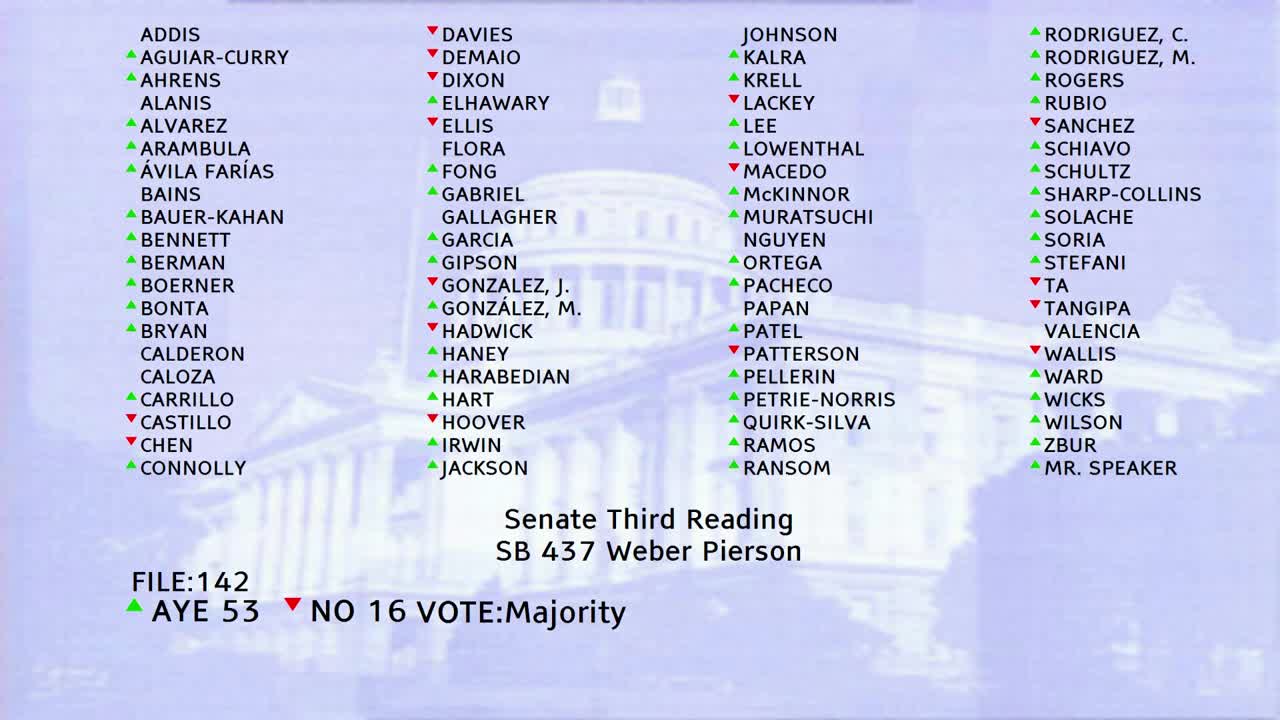 1MIN
Assembly Floor
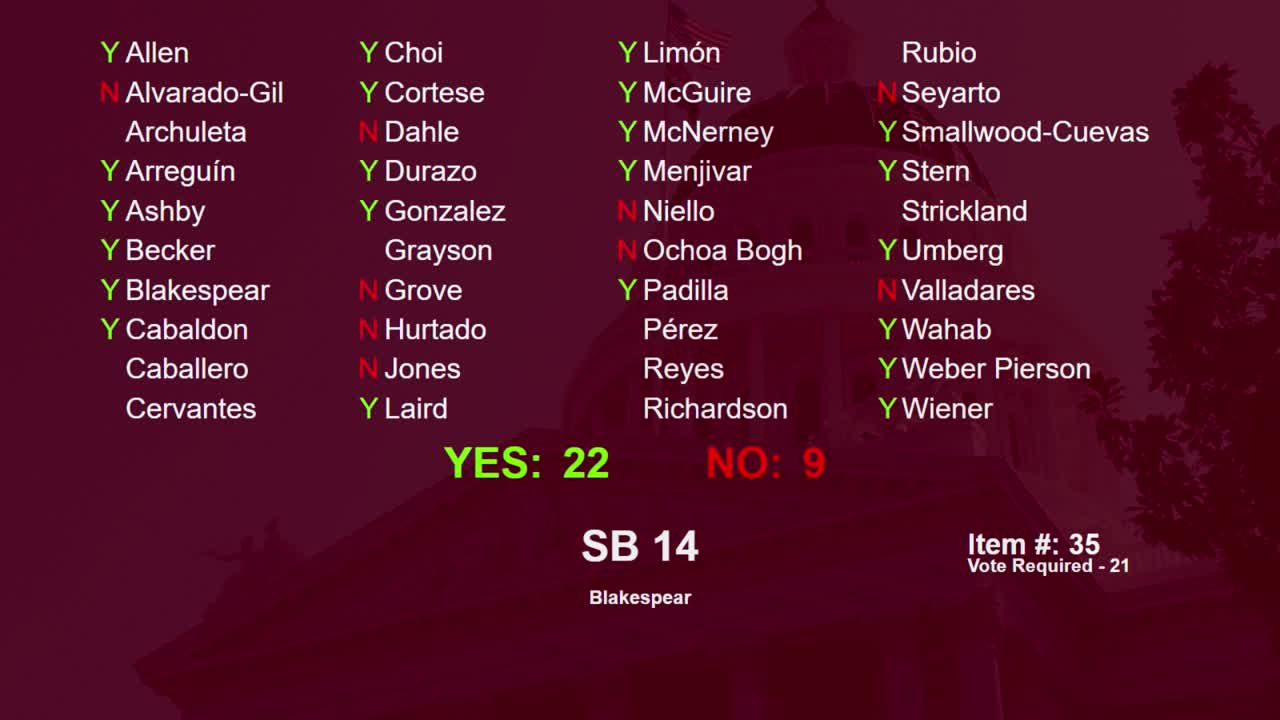 1MIN
Senate Floor
 8MIN
Assembly Standing Committee on Business and Professions
Bill Author

Bill Co-Author(s):