SB 537: Parole: revocation.
- Session Year: 2025-2026
- House: Senate
- Latest Version Date: 2025-04-28
Current Status:
Failed
(2026-02-02: Returned to Secretary of Senate pursuant to Joint Rule 56.)
Introduced
In Committee
Awaiting First Chamber Vote
Passed First Chamber
In Committee
Awaiting Second Chamber Vote
Passed Second Chamber
Enacted
Existing law sets the period of parole for a person sentenced to prison for first- or 2nd-degree murder pursuant to specified provisions to be the remainder of the persons life. Existing law requires a person subject to those provisions who is on parole and who violates the law or the conditions of their parole to be remanded to the custody of the Department of Corrections and Rehabilitation and the jurisdiction of the Board of Parole Hearings for the purpose of future parole consideration. Existing law also sets the parole period for a person released on parole from state prison on or after July 1, 2020, and who was sentenced to life, to no more than 3 years.
This bill would require authorize the court to remand a person sentenced to prison for first- or 2nd-degree murder pursuant to specified provisions who, while on parole, violates the and released on parole on or after July 1, 2020, and who the court determines has committed a violation of law or the conditions of their parole to be remanded parole, to the custody of the Department of Corrections and Rehabilitation and the jurisdiction of the Board of Parole Hearings for the purpose of future parole consideration. The bill would state that these changes are declarative of, and clarifying, existing law. consideration, if the court finds that this is in the furtherance of justice. The bill would, if the court does not remand the person to the custody of the Department of Corrections and Rehabilitation, instead subject the person to a period of confinement in the county jail, as specified.
Existing law sets the period of parole for a person sentenced to prison for first- or 2nd-degree murder pursuant to specified provisions to be the remainder of the persons life. Existing law requires a person subject to those provisions who is on parole and who violates the law or the conditions of their parole to be remanded to the custody of the Department of Corrections and Rehabilitation and the jurisdiction of the Board of Parole Hearings for the purpose of future parole consideration. Existing law also sets the parole period for a person released on parole from state prison on or after July 1, 2020, and who was sentenced to life, to no more than 3 years.
This bill would require a person sentenced to prison for first- or 2nd-degree murder pursuant to specified provisions who, while on parole, violates the law or the conditions of their parole to be remanded to the custody of the Department of Corrections and Rehabilitation and the jurisdiction of the Board of Parole Hearings for the purpose of future parole consideration. The bill would state that these changes are declarative of, and clarifying, existing law.
Existing law requires a sentence resulting in imprisonment in the state prison to include a period of parole supervision or postrelease community supervision, as specified. Existing law generally specifies the length and review process for parole depending on the violation for which the person has been sentenced and whether the person has violated the terms of their parole.This bill would specifically exclude an inmate sentenced for an offense of first or 2nd degree murder with a maximum term of life imprisonment, as specified, from the requirement for a 3-year probation period applicable to an inmate released from state prison on or after July 1, 2020.Existing law requires a sentence resulting in imprisonment in the state prison to include a period of parole supervision or postrelease community supervision, as specified. Existing law generally specifies the length and review process for parole depending on the violation for which the person has been sentenced and whether the person has violated the terms of their parole.
This bill would specifically exclude an inmate sentenced for an offense of first or 2nd degree murder with a maximum term of life imprisonment, as specified, from the requirement for a 3-year probation period applicable to an inmate released from state prison on or after July 1, 2020.
(a)(1)This section applies to persons released from state prison on or after July 1, 2020, and who are subject to the jurisdiction of, and parole supervision by, the Department of Corrections and Rehabilitation pursuant to Section 3000.08 of the Penal Code.
(2)Subdivision (h) of Section 3000.08 applies to any A court may remand a person sentenced under Section 1168 for any offense of first- or second-degree murder with a maximum term of life imprisonment and released on parole on or after July 1, 2020. The Legislature finds and declares that this paragraph is declarative of, and clarifies, existing law. 2020, and who the court has determined has committed a violation of law or a violation of the conditions of their parole, to the custody of the Department of Corrections and Rehabilitation and the jurisdiction of the Board of Parole Hearings for the purpose of future parole consideration, if the court finds that this is in the furtherance of justice. If the court does not remand the person to the custody of the Department of Corrections and Rehabilitation, the person is subject to confinement in a county jail pursuant to subdivisions (f) and (g) of Section 3000.08.
(b)Except as provided in subdivision (d) and notwithstanding any other law, persons described in subdivision (a) shall serve a parole term as follows:
(1)Any inmate sentenced to a determinate term shall be released on parole for a period of two years. The inmate will be reviewed by the Division of Adult Parole Operations for possible discharge from parole no later than 12 months after release from confinement. If at the time of the review the inmate has been on parole continuously for 12 months since release from confinement without a violation and the inmate is not a person required to be treated as described in Section 2962, the inmate shall be discharged from parole.
(2)Any inmate sentenced to a life term shall be released on parole for a period of three years. The inmate shall be reviewed by the Division of Adult Parole Operations and referred to the Board of Parole Hearings for possible discharge from parole no later than 12 months after release from confinement. If the Board of Parole Hearings determines the inmate should be retained on parole, the inmate will be reviewed again and referred to the Board of Parole Hearings for possible discharge from parole no later than 24 months after release from confinement.
(c)Upon successful completion of parole, or at the end of the maximum statutory period of parole specified in this section, whichever is earlier, the inmate shall be discharged from parole. The date of the maximum statutory period of parole under this section shall be computed from the date of initial parole and shall be a period chronologically determined. Time during which parole is suspended because the inmate has been returned to custody as a parole violator shall not be credited toward any period of parole unless the inmate is found not guilty of the parole violation.
(1)Except as provided in paragraph (4) of subdivision (a) of Section 3000 and Section 3064, in no case may an inmate who is released on parole for a period of two years be retained under parole supervision or in custody for a period longer than three years from the date of their initial parole.
(2)Except as provided in paragraph (4) of subdivision (a) of Section 3000, paragraph (2) of subdivision (a) of this section, and Section 3064, in no case may an inmate who is released on parole for a period of three years be retained under parole supervision or in custody for a period longer than four years from the date of their initial parole.
(d)This section shall not apply to any of the following inmates:
(1)An inmate currently incarcerated for an offense that will require the person to register as a sex offender pursuant to Chapter 5.5 (commencing with Section 290) of Title 9 of Part 1.
(2)Inmates whose parole term at the time of the commission of the offense was less than the parole term prescribed in subdivision (b).
(e)The parole review periods specified in subdivision (b) shall not apply to inmates whose review period at the time of the commission of the offense provides for an earlier review period.
(a)(1)This section applies to persons released from state prison on or after July 1, 2020, and who are subject to the jurisdiction of, and parole supervision by, the Department of Corrections and Rehabilitation pursuant to Section 3000.08 of the Penal Code.
(2)Subdivision (h) of Section 3000.08 applies to any person sentenced under Section 1168 for any offense of first- or second-degree murder with a maximum term of life imprisonment and released on parole on or after July 1, 2020. The Legislature finds and declares that this paragraph is declarative of, and clarifies, existing law.
(b)Except as provided in subdivision (d) and notwithstanding any other law, persons described in subdivision (a) shall serve a parole term as follows:
(1)Any inmate sentenced to a determinate term shall be released on parole for a period of two years. The inmate will be reviewed by the Division of Adult Parole Operations for possible discharge from parole no later than 12 months after release from confinement. If at the time of the review the inmate has been on parole continuously for 12 months since release from confinement without a violation and the inmate is not a person required to be treated as described in Section 2962, the inmate shall be discharged from parole.
(2)Any inmate sentenced to a life term shall be released on parole for a period of three years. The inmate will shall be reviewed by the Division of Adult Parole Operations and referred to the Board of Parole Hearings for possible discharge from parole no later than 12 months after release from confinement. If the Board of Parole Hearings determines the inmate should be retained on parole, the inmate will be reviewed again and referred to the Board of Parole Hearings for possible discharge from parole no later than 24 months after release from confinement.
(c)Upon successful completion of parole, or at the end of the maximum statutory period of parole specified in this section, whichever is earlier, the inmate shall be discharged from parole. The date of the maximum statutory period of parole under this section shall be computed from the date of initial parole and shall be a period chronologically determined. Time during which parole is suspended because the inmate has been returned to custody as a parole violator shall not be credited toward any period of parole unless the inmate is found not guilty of the parole violation.
(1)Except as provided in paragraph (4) of subdivision (a) of Section 3000 and Section 3064, in no case may an inmate who is released on parole for a period of two years be retained under parole supervision or in custody for a period longer than three years from the date of their initial parole.
(2)Except as provided in paragraph (4) of subdivision (a) of Section 3000 3000, paragraph (2) of subdivision (a) of this section, and Section 3064, in no case may an inmate who is released on parole for a period of three years be retained under parole supervision or in custody for a period longer than four years from the date of their initial parole.
(d)This section shall not apply to any of the following inmates:
(1)An inmate currently incarcerated for an offense that will require the person to register as a sex offender pursuant to Chapter 5.5 (commencing with Section 290) of Title 9 of Part 1.
(2)Inmates whose parole term at the time of the commission of the offense was less than the parole term prescribed in subdivision (b).
(e)The parole review periods specified in subdivision (b) shall not apply to inmates whose review period at the time of the commission of the offense provides for an earlier review period.
SECTION 1.The Legislature finds and declares this act ensures all of the following:(a)A person, who was sentenced under Section 1168 of the Penal Code for any offense of first or second degree murder with a maximum term of life imprisonment, is eligible for parole pursuant to Section 3000.1 of the Penal Code.(b)If a person described in subdivision (a) violates the law or conditions of their parole, that person will be remanded to the custody of the Department of Corrections and Rehabilitation, pursuant to subdivision (h) of Section 3000.08 of the Penal Code, and would be eligible for any future parole, as provided under applicable law.SEC. 2.Section 3000.01 of the Penal Code is amended to read:3000.01.(a)This section applies to persons released from state prison on or after July 1, 2020, and who are subject to the jurisdiction of, and parole supervision by, the Department of Corrections and Rehabilitation pursuant to Section 3000.08 of the Penal Code.(b)Except as provided in subdivision (d) and notwithstanding any other law, persons described in subdivision (a) shall serve a parole term as follows:(1)Any inmate sentenced to a determinate term shall be released on parole for a period of two years. The inmate will be reviewed by the Division of Adult Parole Operations for possible discharge from parole no later than 12 months after release from confinement. If at the time of the review the inmate has been on parole continuously for 12 months since release from confinement without a violation and the inmate is not a person required to be treated as described in Section 2962, the inmate shall be discharged from parole.(2)Any inmate sentenced to a life term shall be released on parole for a period of three years. The inmate shall be reviewed by the Division of Adult Parole Operations and referred to the Board of Parole Hearings for possible discharge from parole no later than 12 months after release from confinement. If the Board of Parole Hearings determines the inmate should be retained on parole, the inmate will be reviewed again and referred to the Board of Parole Hearings for possible discharge from parole no later than 24 months after release from confinement.(c)Upon successful completion of parole, or at the end of the maximum statutory period of parole specified in this section, whichever is earlier, the inmate shall be discharged from parole. The date of the maximum statutory period of parole under this section shall be computed from the date of initial parole and shall be a period chronologically determined. Time during which parole is suspended because the inmate has been returned to custody as a parole violator shall not be credited toward any period of parole unless the inmate is found not guilty of the parole violation.(1)Except as provided in paragraph (4) of subdivision (a) of Section 3000 and Section 3064, in no case may an inmate who is released on parole for a period of two years be retained under parole supervision or in custody for a period longer than three years from the date of their initial parole.(2)Except as provided in paragraph (4) of subdivision (a) of Section 3000 and Section 3064, in no case may an inmate who is released on parole for a period of three years be retained under parole supervision or in custody for a period longer than four years from the date of their initial parole.(d)This section shall not apply to any of the following inmates:(1)An inmate currently incarcerated for an offense that will require the person to register as a sex offender pursuant to Chapter 5.5 (commencing with Section 290) of Title 9 of Part 1.(2)An inmate sentenced under Section 1168 for an offense of first or second degree murder with a maximum term of life imprisonment, as subject to Section 3000.1.(3)An inmate whose parole term at the time of the commission of the offense was less than the parole term prescribed in subdivision (b).(e)The parole review periods specified in subdivision (b) shall not apply to inmates whose review period at the time of the commission of the offense provides for an earlier review period.The Legislature finds and declares this act ensures all of the following:
(a)A person, who was sentenced under Section 1168 of the Penal Code for any offense of first or second degree murder with a maximum term of life imprisonment, is eligible for parole pursuant to Section 3000.1 of the Penal Code.
(b)If a person described in subdivision (a) violates the law or conditions of their parole, that person will be remanded to the custody of the Department of Corrections and Rehabilitation, pursuant to subdivision (h) of Section 3000.08 of the Penal Code, and would be eligible for any future parole, as provided under applicable law.
SEC. 2.Section 3000.01 of the Penal Code is amended to read:3000.01.(a)This section applies to persons released from state prison on or after July 1, 2020, and who are subject to the jurisdiction of, and parole supervision by, the Department of Corrections and Rehabilitation pursuant to Section 3000.08 of the Penal Code.
(b)Except as provided in subdivision (d) and notwithstanding any other law, persons described in subdivision (a) shall serve a parole term as follows:
(1)Any inmate sentenced to a determinate term shall be released on parole for a period of two years. The inmate will be reviewed by the Division of Adult Parole Operations for possible discharge from parole no later than 12 months after release from confinement. If at the time of the review the inmate has been on parole continuously for 12 months since release from confinement without a violation and the inmate is not a person required to be treated as described in Section 2962, the inmate shall be discharged from parole.
(2)Any inmate sentenced to a life term shall be released on parole for a period of three years. The inmate will shall be reviewed by the Division of Adult Parole Operations and referred to the Board of Parole Hearings for possible discharge from parole no later than 12 months after release from confinement. If the Board of Parole Hearings determines the inmate should be retained on parole, the inmate will be reviewed again and referred to the Board of Parole Hearings for possible discharge from parole no later than 24 months after release from confinement.
(c)Upon successful completion of parole, or at the end of the maximum statutory period of parole specified in this section, whichever is earlier, the inmate shall be discharged from parole. The date of the maximum statutory period of parole under this section shall be computed from the date of initial parole and shall be a period chronologically determined. Time during which parole is suspended because the inmate has been returned to custody as a parole violator shall not be credited toward any period of parole unless the inmate is found not guilty of the parole violation.
(1)Except as provided in paragraph (4) of subdivision (a) of Section 3000 and Section 3064, in no case may an inmate who is released on parole for a period of two years be retained under parole supervision or in custody for a period longer than three years from the date of their initial parole.
(2)Except as provided in paragraph (4) of subdivision (a) of Section 3000 and Section 3064, in no case may an inmate who is released on parole for a period of three years be retained under parole supervision or in custody for a period longer than four years from the date of their initial parole.
(d)This section shall not apply to any of the following inmates:
(1)An inmate currently incarcerated for an offense that will require the person to register as a sex offender pursuant to Chapter 5.5 (commencing with Section 290) of Title 9 of Part 1.
(2)Inmates whose(2)An inmate sentenced under Section 1168 for an offense of first or second degree murder with a maximum term of life imprisonment, as subject to Section 3000.1.
(3)An inmate whose parole term at the time of the commission of the offense was less than the parole term prescribed in subdivision (b).
(e)The parole review periods specified in subdivision (b) shall not apply to inmates whose review period at the time of the commission of the offense provides for an earlier review period.
|
Date
|
Status
|
|---|---|
| Feb 2, 2026 | Returned to Secretary of Senate pursuant to Joint Rule 56. |
| May 23, 2025 | May 23 hearing: Held in committee and under submission. |
| May 16, 2025 | Set for hearing May 23. |
| May 5, 2025 | May 5 hearing: Placed on APPR. suspense file. |
| Apr 29, 2025 | Set for hearing May 5. |
| Apr 28, 2025 | Read second time and amended. Re-referred to Com. on APPR. |
| Apr 24, 2025 | From committee: Do pass as amended and re-refer to Com. on APPR. (Ayes 5. Noes 0. Page 841.) (April 22). |
| Apr 10, 2025 | From committee with author's amendments. Read second time and amended. Re-referred to Com. on PUB. S. |
| Apr 9, 2025 | Set for hearing April 22. |
| Mar 25, 2025 | April 1 set for first hearing canceled at the request of author. |
| Mar 18, 2025 | Set for hearing April 1. |
| Mar 5, 2025 | Referred to Com. on PUB. S. |
| Feb 21, 2025 | From printer. May be acted upon on or after March 23. |
| Feb 20, 2025 | Introduced. Read first time. To Com. on RLS. for assignment. To print. |
|
Date
|
Description
|
Location
|
Votes
|
|
|---|---|---|---|---|
| May 5, 2025 | Placed on suspense file | Senate Standing Committee on Appropriations |
Passed |
|
| Apr 22, 2025 | Do pass as amended, but first amend, and re-refer to the Committee on [Appropriations] | Senate Standing Committee on Public Safety |
Passed |
This list shows positions taken on this bill by organizations on the date displayed, which is linked to the original source.
Positions by individuals are not included.
|
Organization
|
Position
|
Date
|
|---|---|---|
| 1 individual | ** Against | |
| Aclu California Action | ** Against | |
| All of Us or None | ** Against | |
| Asian Prisoner Support Committee | ** Against | |
| California Coalition for Women Prisoners | ** Against | |
| California District Attorneys Association | ** Support | |
| Californians for Safety and Justice | ** Against | |
| Californians United for a Responsible Budget | ** Against | |
| California Police Chiefs Association | ** Support | |
| California Public Defenders Association (unless amended) | ** Against | |
| Communities United for Restorative Youth Justice | ** Against | |
| Ella Baker Center For Human Rights | ** Against | |
| Fair Chance Project | ** Against | |
| Felony Murder Elimination Project | ** Against | |
| Initiate Justice | ** Against | |
| Initiate Justice Action | ** Against | |
| Justice2jobs Coalition | ** Against | |
| LA County Public Defenders Union, Local 148 | ** Against | |
| LA Defensa | ** Against | |
| Legal Services for Prisoners with Children | ** Against | |
| Peace Officers Research Association Of California | ** Support | |
| Placer County District Attorney's Office | ** Support | |
| Post-Conviction Justice Project | ** Against | |
| San Diego County District Attorneys Office | ** Support | |
| San Francisco Public Defender | ** Against | |
| Silicon Valley De-Bug | ** Against | |
| Sister Warriors Freedom Coalition | ** Against | |
| Smart Justice California | ** Against | |
| Uncommon Law | ** Against | |
| Universidad Popular | ** Against |
SENATE COMMITTEE ON APPROPRIATIONS
Senator Anna Caballero, Chair
2025 - 2026 Regular Session
SB 537 (Archuleta) - Parole: revocation
Version: April 28, 2025 | Policy Vote: PUB. S. 5 - 0 |
Urgency: No | Mandate: No |
Hearing Date: May 5, 2025 | Consultant: Liah Burnley |
Bill Summary:
SB 537 provides for the remand of a person who was sentenced to a life term for first- or second-degree murder, and released on parole on or after July 1, 2020, to the custody of the California Department of Corrections and Rehabilitation (CDCR) following a parole violation.
Fiscal Impact:
Unknown, potentially significant costs (General Fund) to CDCR and the Board of Parole Hearings (BPH). The Legislative Analyst’s Office (LAO) estimates the average annual cost to incarcerate one person in state prison is $133,000. By way of illustration, if 10 people are remanded to state prison for an additional year as a result of a parole violation pursuant to this bill, it would cost the state $1,330,000. This is a conservative estimate, given that legislation that increases state prison sentences adds significant costs to CDCR for the delivery of health care and mental health care for an aging population. About one‑third of the prison population has a diagnosed mental health need. The annual cost of operating a mental health crisis bed at CDCR is around $400,000. (See Staff Comments)
Background:
Upon finding that a parolee has violated their conditions of parole, a trial court generally has the discretion to send the person to county jail for up to 180 days, or refer the person to a reentry court or other evidence-based program. However, if a court finds that a lifetime parolee has violated conditions of parole or the law, a special rule applies and those options do not exist. In such cases, Penal Code section 3000.08, subdivision (h) is triggered, which requires the court to revoke parole and remand the parolee to CDCR custody:
“Notwithstanding any other law, if Section 3000.1[1] [i.e., lifetime parole] applies […] and the court determines that the person has committed a violation of law or violated his or her conditions of parole, the person on parole shall be remanded to the custody of [CDCR] and the jurisdiction of the [BPH] for the purpose of future parole consideration.”
In 2020, the Legislature passed SB 118, a budget trailer bill that added Section 3000.01 to the Penal Code. Section 3000.01 governs the periods of parole for people released from state prison on or after July 1, 2020. As relevant here, section 3000.01— notwithstanding any other law—limits parole terms to three years for inmates serving a life sentence, which necessarily includes those sentenced for any first or second-degree murder with a maximum term of life imprisonment.
Both sections 3000.01 and 3000.1 establish the term of parole for inmates released after life sentences for first-or second-degree murder: Section 3000.1 requires lifetime parole; Section 3000.01 requires three-year parole terms for people released after July 1, 2020.
The issue raised in People v. Reed (2024)103 Cal.App.5th 43 was whether section 3000.01 made the mandatory return to state prison custody provision in section 3000.08 for lifetime parolees inapplicable to people released on parole after July 1, 2020.
For inmates released after July 1, 2020, Reed held that section 3000.01, the later-enacted statute, applies because of the “notwithstanding any other law” clause, so that the term of parole for an inmate sentenced to life in prison for murder who is released after July 1, 2020, is three years. It necessarily follows that such a person is not released on lifetime parole. Thus, if they violate the terms of parole, the mandatory remand provision in section 3000.08, subdivision (h) does not apply and the trial court has authority to choose from the alternative sanctions including sending the person to county jail for up to 180 days, or referring the person to a reentry court or other evidence-based program.
Proponents of this bill are discontent with the holding in Reed, and maintain that these parolees should be sent back to CDCR custody for violations of the law or conditions of parole, despite legislative changes that limited their term of parole to three years.
Notably, when someone on parole commits a new criminal offense, they can be arrested and prosecutors have discretion to file new criminal charges irrespective of their supervision status. However, prosecutors may prefer prove a parole violation instead. Perhaps this is because proving a parole violation requires a lower burden of proof –preponderance of the evidence— compared to a higher bar of beyond a reasonable doubt for a new criminal offense. Also, many criminal offenses may not qualify for a state prison sentence. By allowing remand to state prison for parole violations, this bill would make it easier to send a person back to state prison for longer periods, including for violations that may otherwise be addressed with rehabilitation or community-based sanctions.
Proposed Law:
This bill allows automatic remand to CDCR and BPH for person who violates parole who was sentenced for first- or second-degree murder with a maximum term of life imprisonment and is released on parole on or after July 1, 2020, if the court finds that this is in the furtherance of justice. If the court does not remand the person to the custody of CDCR, the person is subject to confinement in a county jail or other intermediate sanctions.
Staff Comments: Mass incarceration in California did not occur in a vacuum; it was the result of decades of cumulative policy decisions—often well-intentioned on their own—that collectively expanded the scope and severity of the criminal justice system. Although individual pieces of legislation like this bill, and many others introduced this legislative session, may appear narrow or incremental, their combined effect will significantly increase incarceration rates. California has a well-documented history of prison overcrowding, which culminated in federal court intervention and a U.S. Supreme Court ruling in Brown v. Plata (2011) that found the state’s prison conditions unconstitutional due to severe overcrowding. Returning to such conditions would undermine fiscal sustainability, public safety, and rehabilitation goals.
Further, this bill will undo changes made in the Budget Act in 2020. The Senate Floor Analysis of SB 118 (Committee on Budget and Fiscal Review) Chapter 29, Statutes of 2020 provides:
Update to Parole Terms and Earned Discharge. Requires a person released from state prison on or after July 1, 2020 and subject to parole supervision by the CDCR to serve a parole term of two years for a determinate term and a parole term of three years for a life term. Requires the Division of Adult Parole Operations to review these individuals for earlier discharge as specified.
The aforementioned statutory changes do not apply to any inmate currently incarcerated for an offense that will require the person to register as a sex offender pursuant to Chapter 5.5 (commencing with Section 290) of Title 9 of Part 1. Overall, establishing a new maximum term for parole for most offenders and earned discharge processes will result in General Fund savings of $23.2 million and a reduction of 122.9 positions in 2020-21.
This bill will increase state prison incarceration and eliminate a portion of these General Fund savings.
-- END --
Section 3000.1 sets a term of lifetime parole for two groups of people: (1) those sentenced for any first or second-degree murder with a maximum term of life imprisonment; and (2) certain sex offenders sentenced to a life term. ↑
SENATE COMMITTEE ON PUBLIC SAFETY
Senator Jesse Arreguín, Chair
2025 - 2026 Regular
Bill No: SB 537 Hearing Date: April 22, 2025
Author: | Archuleta | ||
Version: | April 10, 2025 | ||
Urgency: | No | Fiscal: | Yes |
Consultant: | SJ | ||
Subject: Parole: revocation
HISTORY
Source: Orange County District Attorney’s Office
Prior Legislation: SB 118 (Comm. on Budget & Fiscal Rev.), Ch. 29, Stats. of 2020
AB 117 (Comm. on Budget), Ch. 39, Stats. of 2011
AB 109 (Comm. on Budget), Ch. 15, Stats. of 2011
Support: California District Attorneys Association; California Police Chiefs Association; Peace Officers Research Association of California; Placer County District Attorney’s Office; San Diego County District Attorney’s Office
Opposition: ACLU California Action; All of Us or None; Asian Prisoner Support Committee; California Coalition for Women Prisoners; Californians for Safety and Justice; Californians United for a Responsible Budget; Communities United for Restorative Youth Justice; Ella Baker Center for Human Rights; Fair Chance Project; Felony Murder Elimination Project; Initiate Justice; Initiate Justice Action; Justice2Jobs Coalition; La Defensa; Legal Service for Prisoners With Children; LA County Public Defenders Union, Local 148; Post-Conviction Justice Project; San Francisco Public Defender; Silicon Valley De-Bug; Sister Warriors Freedom Coalition; Smart Justice California; UnCommon Law; Universidad Popular; California Public Defenders Association (unless amended); 1 individual
PURPOSE
The purpose of this bill is to require the remand of a person, who was released on parole on or after July 1, 2020 and who was sentenced to a life term for first- or second-degree murder, to the custody of the California Department of Corrections and Rehabilitation (CDCR) following a parole violation.
Existing law provides that the Legislature finds and declares that the period immediately following incarceration is critical to successful reintegration of the offender into society and to positive citizenship. Provides that it is in the interest of public safety for the state to provide for the effective supervision of and surveillance of parolees, including the judicious use of revocation actions, and to provide educational, vocational, family, and personal counseling necessary to assist parolees in the transition between imprisonment and discharge. (Pen. Code, § 3000, subd. (a)(1).)
Existing law provides that the following persons released from prison prior to, or on or after July 1, 2013, be subject to parole under the supervision of the CDCR:
- A person who committed a serious felony listed in Penal Code section 1192.7, subdivision (c);
- A person who committed a violent felony listed in Penal Code section 667.5, subdivision (c);
- A person serving a Three-Strikes sentence;
- A high risk sex offender;
- An Offender with a Mental Health Disorder (formerly Mentally Disordered Offender);
- A person required to register as a sex offender and subject to a parole term exceeding three years at the time of the commission of the offense for which the person was sentenced to state prison; and,
- A person subject to lifetime parole at the time of the commission of the offense that resulted in a state prison sentence. (Pen. Code, § 3000.08, subds. (a) and (i).)
Existing law specifies that the parole period, if parole is granted, for a person sentenced for any offense of first- or second-degree murder with a maximum term of life imprisonment is the remainder of the person’s life. (Pen. Code, § 3000.1, subd. (a)(1).)
Existing law provides that at any time during the period of parole, if any parole agent or peace officer has probable cause to believe that the person on parole is violating any term or condition of parole, the agent or officer may, without warrant or other process and at any time until the final disposition of the case, arrest the person and bring the person before the court, or the court may, in its discretion, issue a warrant for that person’s arrest. Provides that the court may order the release of the person on parole from custody under any terms and conditions the court deems appropriate. (Pen. Code, § 3000.08, subd. (c).)
Existing law authorizes the supervising parole agency to impose additional and appropriate conditions of supervision, and impose immediate, structured, and intermediate sanctions for parole violations, including flash incarceration, upon review of the alleged violation and a finding of good cause that the person has committed a violation of law or violated their parole conditions. (Pen. Code, § 3000.08, subd. (d).)
Existing law defines “flash incarceration” as a period of detention in a city or a county jail ranging from between one and 10 consecutive days due to a violation of a parole conditions. (Pen. Code, § 3000.08, subd. (e).)
Existing law requires the supervising parole agency to petition the court to revoke parole if it has determined, following application of its assessment processes that intermediate sanctions up to and including flash incarceration are not appropriate. (Pen. Code, § 3000.08, subd. (f).)
Existing law authorizes the court to do any of the following upon a finding that the person has violated their parole conditions:
- Return the person to parole supervision with modifications of conditions, if appropriate, including a period of incarceration in a county jail.
- Revoke parole and order the person to confinement in a county jail.
- Refer the person to a reentry court or other evidence-based program in the court’s discretion. (Pen. Code, § 3000.08, subd. (f).)
Existing law limits confinement for a parole violation to 180 days in a county jail. (Pen. Code, § 3000.08, subd. (g).)
Existing law requires that a person who is on parole and who was sentenced for any offense of first- or second-degree murder with a maximum term of life imprisonment, and who the court determines has violated the conditions of parole, be remanded to the custody of CDCR and the jurisdiction of the Board of Parole Hearings (BPH) for the purpose of future parole consideration. (Pen. Code, § 3000.08, subd. (h).)
Existing law authorizes any probation officer, parole officer, or peace officer, if the officer has probable cause to believe that a person subject to revocation of parole supervision pursuant to Section 3000.08, is violating any term or condition of the person’s supervision, to without warrant or other process and at any time until the final disposition of the case, rearrest the supervised person and bring them before the court, or the court may, in its discretion, issue a warrant for their rearrest. (Pen. Code, § 1203.2, subd. (a).)
Existing law authorizes the court, upon rearrest, or upon the issuance of a warrant for rearrest, to revoke and terminate the supervision of the person if the interests of justice so require and the court, in its judgment, has reason to believe from the report of the probation or parole officer or otherwise that the person has violated any of the conditions of their supervision, or has subsequently committed other offenses, regardless of whether the person has been prosecuted for those offenses. Specifies, however, the court shall not terminate parole pursuant to this provision. (Pen. Code, § 1203.2, subd. (a).)
Existing law provides, notwithstanding any other law, that persons released from state prison on or after July 1, 2020, and who are subject to the jurisdiction of, and parole supervision by, CDCR, shall serve a parole term as follows:
- Any person sentenced to a determinate term shall be released on parole for a period of two years. Provides that review for possible discharge from parole occur no later than 12 months after release from confinement. Requires the person to be discharged if at the time of the review the person has been on parole continuously for 12 months since release from confinement without a violation and the person is not required to be treated as an Offender with a Mental Health Disorder (formerly Mentally Disordered Offender).
- Any person sentenced to a life term shall be released on parole for a period of three years. Provides that review and referral for possible discharge from parole occur no later than 12 months after release from confinement. Provides that if BPH determines the person should be retained on parole, the person will be reviewed again and referred to BPH for possible discharge from parole no later than 24 months after release from confinement. (Pen. Code, § 3000.01, subds. (a) & (b).)
Existing law requires the person to be discharged from parole upon successful completion of parole, or at the end of the maximum statutory period of parole specified, whichever is earlier. (Pen. Code, § 3000.01, subd. (c).)
Existing law provides that the two- and three-year parole periods described above do apply to any of the following individuals:
- A person currently incarcerated for an offense that will require the person to register as a sex offender.
- A person whose parole term at the time of the commission of the offense was less than two or three years. (Pen. Code, § 3000.01, subds. (d).)
This bill provides that the automatic remand to CDCR custody provision of Section 3000.08 applies to any person sentenced for any offense of first- or second-degree murder with a maximum term of life imprisonment and released on parole on or after July 1, 2020.
This bill provides that the Legislature finds and declares that this paragraph is declarative of, and clarifies, existing law.
COMMENTS
- Need For This Bill
According to the author:
The enactment of PEN § 3000.01, alongside other related reforms, has led to unintended consequences in the administration of parole for inmates convicted of serious crimes, specifically murder. SB 537 seeks to address these concerns and ensure that those convicted of 1st and 2nd degree murder face appropriate parole terms and consequences, which was the intent of the Legislature in enacting Pen § 3000.01 through the budget trailer process. California in 2011 reformed parole violation laws, limiting re-incarceration for parole violations to a maximum of 180 days in county jail for most inmates. Those convicted of murder were excluded from these reforms.
PEN § 3000.01 was later enacted modifying the length of parole terms prospectively, limiting parole terms for most indeterminate offenses to 3 years. Initially, this did not affect CDCR’s ability to remand individuals convicted of 1st or 2nd degree murder for parole violations as they were exempt. However, a recent Court of Appeals opinion, People vs. Reed, held that individuals convicted of 1st or 2nd degree murder may only be incarcerated for a maximum of 180 days, regardless of the nature of the violation, and serve no more than three years on parole.
While these reforms were intended to reduce the duration of parole and streamline the process, it has created significant public safety concerns, particularly for those convicted of violent crimes like 1st and 2nd degree murder. This disparity in protecting the public from reoffending individuals on parole must be addressed. As such, SB 537 allows CDCR to continue operating as they had following the passage of Penal Code 3000.01, but previous to the Reed decision.
- Changes to Parole Due to Realignment
Prior to Realignment in 2011, individuals released from prison were placed on parole and supervised in the community by parole agents working for CDCR’s Division of Adult Parole Operations (DAPO). If it was alleged that a person on parole supervision had violated a condition of parole, a revocation hearing before BPH would be held. If parole was revoked, the person would be returned to state prison for violating parole.
Realignment shifted the supervision of some individuals released from prison from CDCR parole agents to county probation departments. Parole for individuals released from the state’s prisons on or after October 1, 2011, is limited to those individuals whose commitment offense is a serious or violent felony; who are serving a Three-Strikes sentence; who are classified as high-risk sex offenders; or who are required to undergo treatment as mentally disordered offenders. All other individuals released from prison are subject to up to three years of PRCS under local supervision.
Additionally, Realignment changed the process for revocation hearings. Until July 1, 2013, individuals supervised on parole by state agents continued to have revocation hearings before the BPH. After July 1, 2013, trial courts assumed responsibility for holding all revocation hearings for those individuals who remain under CDCR’s jurisdiction. In contrast, since the inception of Realignment, individuals placed on PRCS appear before the trial court for revocation hearings.
- Parole Terms
Prior to 2020, the length of a person’s parole term was dependent on the commitment offense, the sentence imposed, and the date the offense was committed. (Pen. Code § 3000.) The May Revision of the 2020-2021 budget included a proposal to cap parole terms for most individuals on parole at 24 months, establish earned discharge for non-sex offender registrants at 12 months, and establish earned discharge at 18 months for specified sex offender registrants. (Office of the Governor, California State Budget, Revised Budget Summary (May 14, 2020), p. 86 <https://www.ebudget.ca.gov/2020-21/pdf/Revised/BudgetSummary/FullBudgetSummary.pdf>.) The proposal was described as follows:
In an effort to align community supervision terms with evidence that most recidivism occurs earlier in the supervision period, create incentives for positive behavior change, and more effectively use limited state resources, the May Revision proposes to cap supervision for most parolees at 24 months, establish earned discharge for non-Penal Code section 290 registrants at 12 months, and establish earned discharge at 18 months for certain Penal Code section 290 registrants. This proposal is expected to result in estimated savings of $23.2 million General Fund in 2020-21, increasing to $76 million ongoing General Fund in 2023-24. (Ibid.)
This proposal was amended and codified in one of the public safety trailer bills, SB 118 (Committee on Budget and Fiscal Review), Chapter 29, Statutes of 2020. SB 118 created Penal Code section 3000.01 which states that it applies to persons released from state prison on or after July 1, 2020, and who are subject to the jurisdiction of, and parole supervision by, CDCR pursuant to Penal Code section 3000.08. Penal Code section 3000.01 further provides:
“Except as provided, and not withstanding any other law, persons described in subdivision (a) shall serve a parole term as follows:
(1) Any inmate sentenced to a determinate term shall be released on parole for a period of two years. The inmate will be reviewed by the Division of Adult Parole Operations for possible discharge from parole no later than 12 months after release from confinement. If at the time of the review the inmate has been on parole continuously for 12 months since release from confinement without a violation and the inmate is not a person required to be treated as described in Section 2962, the inmate shall be discharged from parole.
(2) Any inmate sentenced to a life term shall be released on parole for a period of three years. The inmate will be reviewed by the Division of Adult Parole Operations and referred to the Board of Parole Hearings for possible discharge from parole no later than 12 months after release from confinement. If the Board of Parole Hearings determines the inmate should be retained on parole, the inmate will be reviewed again and referred to the Board of Parole Hearings for possible discharge from parole no later than 24 months after release from confinement.”
Penal Code section 3000.01 explicitly states that is does not apply to individuals incarcerated for a registerable sex offense or to individuals whose parole term at the time of the commission of the offense was less than the parole term prescribed in subdivision (b) (i.e., less than two or three years).
- People v. Reed
In 2024, the First District Court of Appeal held that a person released on parole on July 1, 2020 or later, and who is not subject to lifetime parole, cannot be remanded to CDCR’s custody for a parole violation. (People v. Reed (2024) 103 Cal.App. 5th 43.) The appellant in Reed was convicted of second-degree murder in 1992 and sentenced to 16-years-to-life. He was paroled in 2016 and subject to lifetime parole. After absconding, his parole was revoked in 2017, and he was returned to prison. The appellant was subsequently released on parole on June 16, 2021 for a period of three years, following the enactment of Penal Code section 3000.01.
CDCR filed two petitions, four months apart, to revoke the appellant’s parole following two separate parole violations. One violation stemmed from an incident in which he was alleged to have committed felony reckless evading an officer and traveling more than 50 miles from his residence without prior approval, and one involving the use of cocaine. After holding revocation hearings on both petitions, the trial court found the violations of parole in both petitions had been proven by a preponderance of the evidence, revoked the appellant’s parole, and remanded him to the custody of CDCR. He appealed his parole revocation.
In reviewing the appellant’s claim that he was improperly returned to prison, the court stated that “sections 1203.2 and 3000.08 establish the statutory framework for parole revocation proceedings.” (Id. at p. 51 (citing Department of Corrections & Rehabilitation v. Superior Court (2023) 94 Cal.App.5th 1025, 1036.) The court provided:
Upon a finding of a parole violation, “a trial court generally has the discretion to modify or revoke parole, including the authority to sentence the person to county jail for up to 180 days, or refer the person to a reentry court or other evidence-based program. However, “once a court finds that a lifetime parolee has violated conditions of parole or the law, a special rule applies” and those options “do not exist.” In such cases (lifetime parole), § 3000.08, subdivision (h), is triggered, which requires the court to revoke parole and remand the parolee to CDCR custody: “Notwithstanding any other law, if Section 3000.1 … applies to a person who is on parole and the court determines that the person has committed a violation of law or violated his or her conditions of parole, the person on parole shall be remanded to the custody of [CDCR] and the jurisdiction of the [BPH] for the purpose of future parole consideration.” (Id. at p. 51-52.) (Internal citations omitted.)
The court observed that section 3000.1 establishes a term of lifetime parole for two groups: those sentenced under Section 1168 for any offense of first- or second-degree murder with a maximum term of life imprisonment and certain sex offenders sentenced to a life term. (Id. at p. 52.) The court also acknowledged the enactment of section 3000.01 in 2020 which applied to individuals released on parole on or after July 1, 2020, established parole periods, and included exceptions. (Ibid.)
In its analysis, the court underscored the use of the phrase “notwithstanding any other law” in section 3000.01 when reviewing what it found to be conflicting provisions of law. The court explained that although there were statutory inconsistences between sections 3000.01, 3000, 3000.08, and 3000.1, “every appellate court to consider the issue has concluded the term limits in section 3000.01 override conflicting preexisting provisions.” (Id. at p. 53) The court further provided that although sections 3000.01 and 3000.1 conflict for individuals like the appellant (i.e., individuals sentenced to life for murder who were released on parole on or after July 1, 2020), “only one of the two statutes can control … and the Legislature signaled its intent for the later-enacted statute—section 3000.01—to preempt the conflicting, preexisting statute by including “notwithstanding any other law” in section 3000.01, subdivision (b). Accordingly, we conclude section 3000.1 does not apply to Reed.” (Id. at p. 53.)
Noting the exemptions in section 3000.01, the court contended that “[i]f the Legislature intended to create an additional exemption for those convicted of murder with a maximum term of life imprisonment, like Reed, it could have done so. … [w]ithout any clear legislative intent contradicting the plain language of the statute, “[w]e will not create an exception the Legislature did not enact.” (Id. at pp. 53-54 (citing Lopez v. Sony Electronics, Inc. (2018)5 Cal.5th 627, 636.) In finding that section 3000.1 did not apply to the appellant, the court held that the provision remanding custody to CDCR in section 3000.0—which is only triggered if section 3000.1 applies—also did not apply to the appellant. (Id. at p. 54.)
In its opinion, the court in Reed acknowledged that the Legislature has the power to amend the relevant statutes if the outcome in the case was not what the Legislature intended. The proponents of this bill argue that the outcome in Reed was not what the Legislature intended when it enacted SB 118 in 2020, and that the 180 days in jail that a court can order for a parole violation under existing law is inadequate to hold people accountable. This bill seeks to abrogate the holding of Reed by providing that the automatic remand to CDCR custody provision of Section 3000.08 applies to any person sentenced for any offense of first- or second-degree murder with a maximum term of life imprisonment and released on parole on or after July 1, 2020.
Following a person’s revocation of parole and remand to CDCR custody, a hearing must be held within 12 months of the date of the parole revocation to consider the release of the person on parole. (Pen. Code, § 3000.1, subd. (d).) A parole consideration hearing must be held annually thereafter, unless the person is released or otherwise ineligible for parole release. (Pen. Code, § 3000.1, subd. (d).) BPH must release the person within one year of the date of the revocation unless it determines that the circumstances and gravity of the parole violation are such that consideration of the public safety requires a more lengthy period of incarceration or unless there is a new prison commitment following a conviction. (Pen. Code, § 3000.1, subd. (d).)
It should be noted that if a parole violation constitutes a new crime, the person can be charged and prosecuted for that conduct.
- Argument in Support
According to the Placer County District Attorney:
This bill is critical to ensuring public safety and accountability by restoring appropriate supervision and penalties for parole violations committed by those convicted of these serious offenses.
The enactment of Penal Code section 3000.01 and related judicial interpretations have created unintended consequences that undermine the effectiveness of the parole system for murderers. Specifically, one of the concerns is that individuals convicted of murder are now subject to a maximum of 180 days for parole violations and can serve no more than three years on parole before being fully released. This creates a dangerous situation where parole violators, even those committing serious infractions, are released into the community without adequate oversight. …
SB 537 appropriately addresses these concerns by … allowing those convicted of 1st if 2nd degree murder to be reincarcerated for parole violations. … It is imperative that we close the loopholes created by prior legislation and judicial actions to prevent further risks to public safety.
- Argument in Opposition
UnCommon Law writes:
This bill is unnecessary as judges already have various sanctions available to address parole violations and District Attorneys have the authority to prosecute parole violations that amount to new crimes; adds a tremendous financial burden to the state without any public safety gain; undermines the Legislature’s intent in SB 118 to focus parole resources where most needed, and causes significant harm to people on parole supervision and their families. Although we appreciate that the author’s office has amended the bill, we remain in respectful opposition to SB 537 as amended as it retains some of the same problems as the original version, while introducing additional problems.
…
First, SB 537 as amended preserves automatic imprisonment for any and all parole violations. This is unreasonably punitive and fiscally irresponsible. A determinate sentence in county jail is more than adequate to address any parole violation not resulting in a new criminal prosecution, and far more appropriate than remanding someone to prison for an indefinite period of incarceration, subjecting them to an indefinite number of parole hearings until being granted discretionary release. In essence, this subjects someone released with a murder conviction who is found to violate parole in any way to the kid of indefinite punishment associated with an indeterminate life sentence generally reserved for only the most serious and violent crimes in California.
Currently, if someone released from prison with a murder conviction is sentenced to jail by a judge as a sanction for a parole violation, their time in jail is predetermined and set by the judge, up to a maximum of 180 days per violation. In contrast, under SB 537 (even as amended), someone released from prison with a murder conviction who is found to violate parole in any way will be required to be remanded to state prison, where they will be stuck indefinitely and forced to undergo annual parole hearings until they are finally granted discretionary release. Discretionary release in these hearings is in no way guaranteed. In fact, between March 2024 through March 2025, only 6.2% of the 289 reconsideration hearings held resulted in a grant of parole … consistent with the historical trend of parole reconsideration hearings having an even lower parole grant rate than the already low parole grant rate in normal parole suitability hearings.
Second, while SB 537 as amended purports to eliminate the “lifetime parole” provision for those with murder convictions and honor the three-year parole terms the Legislature enacted in 2020 with Penal Code Section 2000.01, it fails to do so in actuality … [because] it effectively subjects this population to indefinite (and possibly lifetime) parole terms … following automatic remand to state prison for parole violations. …
Finally, the amendments add more confusion to the already complex interplay between various Penal Code sections … [which] will inevitably lead to further litigation to resolve the confusion it creates. … [Because] this bill states that it is “declarative of, and clarifies, existing law,” this bill also likely jeopardizes the freedom of those who have been released post-Reed, as the bill, as written, implies that those individuals were released unlawfully. This is an alarming, if potentially unintentional, consequence of the bill as written. …
-- END --
Discussed in Hearing
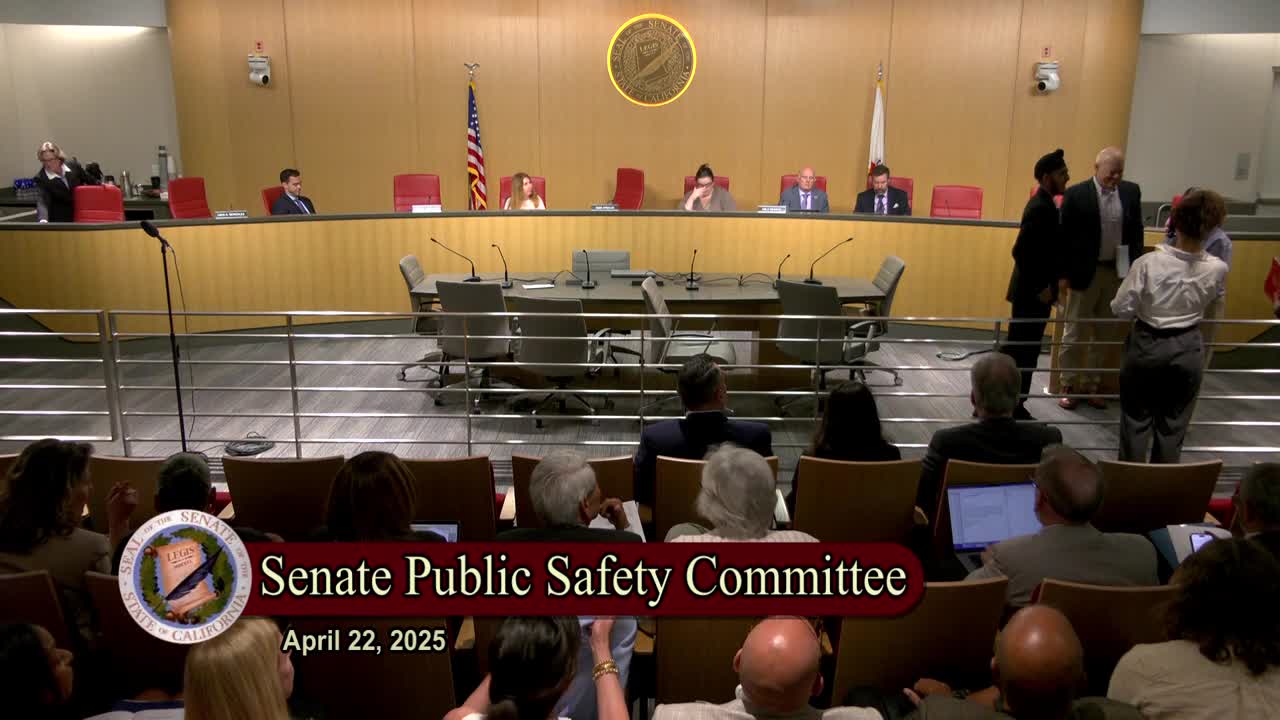 29MIN
Senate Standing Committee on Public Safety
Bill Author

Bill Co-Author(s):