SB 54: Court fee waivers: veterans.
- Session Year: 2025-2026
- House: Senate
- Latest Version Date: 2025-10-11
Current Status:
Passed
(2025-10-11: Chaptered by Secretary of State. Chapter 646, Statutes of 2025.)
Introduced
In Committee
Awaiting First Chamber Vote
Passed First Chamber
In Committee
Awaiting Second Chamber Vote
Passed Second Chamber
Enacted
Existing law sets forth filing fees and other civil fees for superior courts. Existing law requires certain applicants to be granted initial permission to proceed without paying court fees and costs because of the applicants financial condition, including an applicant whose monthly income is 200% or less of the current poverty guidelines, as specified.
This bill would prohibit veterans disability service-connected compensation from being included in monthly income for purposes of that provision.
Permission to proceed without paying court fees and costs because of an applicants financial condition shall be granted initially to all of the following persons:
(a)An applicant who is receiving public benefits under one or more of the following programs:
(1)Supplemental Security Income (SSI) and State Supplementary Payment (SSP) (Article 5 (commencing with Section 12200) of Chapter 3 of Part 3 of Division 9 of the Welfare and Institutions Code).
(2)California Work Opportunity and Responsibility to Kids Act (CalWORKs) (Chapter 2 (commencing with Section 11200) of Part 3 of Division 9 of the Welfare and Institutions Code) or a federal Tribal Temporary Assistance for Needy Families (Tribal TANF) grant program (Section 10553.25 of the Welfare and Institutions Code).
(3)Supplemental Nutrition Assistance Program (Chapter 51 (commencing with Section 2011) of Title 7 of the United States Code) or the California Food Assistance Program (Chapter 10.1 (commencing with Section 18930) of Part 6 of Division 9 of the Welfare and Institutions Code).
(4)County Relief, General Relief (GR), or General Assistance (GA) (Part 5 (commencing with Section 17000) of Division 9 of the Welfare and Institutions Code).
(5)Cash Assistance Program for Aged, Blind, and Disabled Legal Immigrants (CAPI) (Chapter 10.3 (commencing with Section 18937) of Part 6 of Division 9 of the Welfare and Institutions Code).
(6)In-Home Supportive Services (IHSS) (Article 7 (commencing with Section 12300) of Chapter 3 of Part 3 of Division 9 of the Welfare and Institutions Code).
(7)Medi-Cal (Chapter 7 (commencing with Section 14000) of Part 3 of Division 9 of the Welfare and Institutions Code).
(8)California Special Supplemental Nutrition Program for Women, Infants, and Children (WIC Program) (Article 2 (commencing with Section 123275) of Chapter 1 of Part 2 of Division 106 of the Health and Safety Code).
(9)Unemployment compensation (Chapter 5 (commencing with Section 1251) of Part 1 of Division 1 of the Unemployment Insurance Code).
(b)(1)An applicant whose monthly income is 200 percent or less of the current poverty guidelines updated periodically in the Federal Register by the United States Department of Health and Human Services under the authority of paragraph (2) of Section 9902 of Title 42 of the United States Code or a successor statute or regulation.
(2)The Judicial Council shall annually publish a table establishing the threshold monthly household income for a fee waiver pursuant to paragraph (1) that is adjusted for household family size to be used with form FW-001.
(3)Monthly income for purposes of paragraph (1) shall not include veterans disability service-connected compensation.
(c)An applicant who, as individually determined by the court, cannot pay court fees without using moneys that normally would pay for the common necessaries of life for the applicant and the applicants family. Only if a trial court finds that an applicant under this subdivision can pay a portion of court fees, or can pay court fees over a period of time, or under some other equitable arrangement, without using moneys that normally would pay for the common necessaries of life for the applicant and the applicants family, the court may grant a partial initial fee waiver using the notice and hearing procedures set forth in paragraph (5) of subdivision (e) of Section 68634. Common necessaries of life, as used in this article, shall be interpreted consistently with the use of that term in paragraph (1) of subdivision (c) of Section 706.051 of the Code of Civil Procedure, as that paragraph read prior to January 1, 2012.
(d)A person who files a petition for appointment of a fiduciary in a guardianship or conservatorship, or files pleadings as the appointed fiduciary of a conservatee or ward, when the financial condition of the conservatee or ward meets the standards for a fee waiver pursuant to subdivision (a), (b), or (c).
REVISIONS: HeadingLine 2.|
Date
|
Status
|
|---|---|
| Oct 11, 2025 | Chaptered by Secretary of State. Chapter 646, Statutes of 2025. |
| Oct 11, 2025 | Approved by the Governor. |
| Sep 16, 2025 | Enrolled and presented to the Governor at 3 p.m. |
| Sep 8, 2025 | In Senate. Ordered to engrossing and enrolling. |
| Sep 8, 2025 | Read third time. Passed. (Ayes 79. Noes 0. Page 2989.) Ordered to the Senate. |
| Sep 2, 2025 | Read second time. Ordered to third reading. |
| Aug 29, 2025 | Coauthors revised. |
| Aug 29, 2025 | From committee: Do pass. (Ayes 15. Noes 0.) (August 29). |
| Aug 20, 2025 | August 20 set for first hearing. Placed on APPR. suspense file. |
| Jul 16, 2025 | From committee: Do pass and re-refer to Com. on APPR. with recommendation: To consent calendar. (Ayes 8. Noes 0.) (July 15). Re-referred to Com. on APPR. |
| Jun 17, 2025 | From committee: Do pass and re-refer to Com. on M. & V.A. with recommendation: To consent calendar. (Ayes 11. Noes 0.) (June 17). Re-referred to Com. on M. & V.A. |
| Jun 5, 2025 | Referred to Coms. on JUD. and M. & V.A. |
| May 29, 2025 | In Assembly. Read first time. Held at Desk. |
| May 29, 2025 | Read third time. Passed. (Ayes 38. Noes 0. Page 1322.) Ordered to the Assembly. |
| May 27, 2025 | Ordered to special consent calendar. |
| May 23, 2025 | Read second time. Ordered to third reading. |
| May 23, 2025 | From committee: Do pass. (Ayes 6. Noes 0. Page 1189.) (May 23). |
| May 16, 2025 | Set for hearing May 23. |
| May 12, 2025 | May 12 hearing: Placed on APPR. suspense file. |
| May 2, 2025 | Set for hearing May 12. |
| Apr 29, 2025 | From committee: Do pass and re-refer to Com. on APPR. with recommendation: To consent calendar. (Ayes 4. Noes 0. Page 918.) (April 28). Re-referred to Com. on APPR. |
| Apr 17, 2025 | Set for hearing April 28. |
| Apr 9, 2025 | From committee: Do pass and re-refer to Com. on M. & V.A. with recommendation: To consent calendar. (Ayes 13. Noes 0. Page 705.) (April 8). Re-referred to Com. on M. & V.A. |
| Apr 1, 2025 | Set for hearing April 8. |
| Jan 29, 2025 | Referred to Coms. on JUD. and M. & V.A. |
| Jan 8, 2025 | From printer. May be acted upon on or after February 7. |
| Jan 7, 2025 | Introduced. Read first time. To Com. on RLS. for assignment. To print. |
|
Date
|
Description
|
Location
|
Votes
|
|
|---|---|---|---|---|
| Sep 8, 2025 | SB 54 Umberg Senate Third Reading By Schiavo | Assembly Floor |
Passed |
|
| Aug 29, 2025 | Do pass. | Assembly Standing Committee on Appropriations |
Passed |
|
| Jul 15, 2025 | Do pass and be re-referred to the Committee on [Appropriations] with recommendation: To Consent Calendar | Assembly Standing Committee on Military and Veterans Affairs |
Passed |
|
| Jun 17, 2025 | Do pass and be re-referred to the Committee on [Military and Veterans Affairs] with recommendation: To Consent Calendar | Assembly Standing Committee on Judiciary |
Passed |
|
| May 29, 2025 | Special Consent SB54 Umberg | Senate Floor |
Passed |
|
| May 23, 2025 | Do pass | Senate Standing Committee on Appropriations |
Passed |
|
| May 12, 2025 | Placed on suspense file | Senate Standing Committee on Appropriations |
Passed |
|
| Apr 28, 2025 | Do pass, but first be re-referred to the Committee on [Appropriations] with the recommendation: To Consent Calendar | Senate Standing Committee on Military and Veterans Affairs |
Passed |
|
| Apr 8, 2025 | Do pass, but first be re-referred to the Committee on [Military and Veterans Affairs] with the recommendation: To Consent Calendar | Senate Standing Committee on Judiciary |
Passed |
This list shows positions taken on this bill by organizations on the date displayed, which is linked to the original source.
Positions by individuals are not included.
|
Organization
|
Position
|
Date
|
|---|---|---|
| American Legion-Department of California | ** Support | |
| Amvets, Department Of California | ** Support | |
| California Association Of Licensed Investigators | ** Support | |
| California State Commanders Veterans Council | ** Support | |
| Military Officers Association Of America, California Council Of Chapters | ** Support | |
| Veterans Legal Institute | ** Support | |
| Vietnam Veterans Of America, California State Council | ** Support |
SENATE THIRD READING
STR Bill Id:SB 54
Author:(Umberg)
As Introduced Ver:January 7, 2025
Majority vote
SUMMARY
Provides that specified veterans benefits are not to be considered income for the purpose of seeking a fee waiver to proceed with a matter in court.
Major Provisions
Clarifies that veterans disability service-connected compensation is not to be treated as part of a litigants monthly income when establishing if a person qualifies for a waiver of court fees.
COMMENTS
Recognizing that court fees, while essential to funding the judicial branch, can be cost prohibitive for low income litigants, existing law offers a wide class of Californians court fee waivers in order to ensure that cost alone cannot deny a person access to justice. One of the categories of Californians entitled to court fee waivers are those making less than 200 percent of the federal poverty line, approximately $31,000 for an individual. (https://www.energy.gov/scep/wap/poverty-income-guidelines.) The existing law, however, is silent as to what income sources may be counted when determining if a person meets the income threshold to qualify for a court fee waiver. This bill would exempt veterans' disability benefits from the monthly income calculation for the purpose of determining a litigant's eligibility for a fee waiver.
For some disabled veterans, disability benefits may be the only source of income. The author and sponsors of this bill note that for some veterans, disability benefits may be the largest single source of income. Given that the Department of Veterans Affairs provides veterans these benefits in conjunction with the degree of one's disability, the greater a veterans disability impacts their ability to work, the more reliant on these benefits a veteran is. Unfortunately, a heavy reliance on disability income also disproportionately exposes veterans to potential legal risks. For example, should an income limited veteran face an unexpected financial outlay, their limited income may expose them to risk of falling behind on rent or other financial obligations. Failing to pay such obligations may expose the veteran to an unlawful detainer or debt collection actions. Even if such actions were not filed by the veteran, existing law requires defendants in these cases to pay court fees for filing their "first paper." These fees can quickly approach $500 even for relatively simple legal matters. For income-limited veterans, these fees can easily deter a person from mounting an effective legal defense and obtaining their day in court.
This bill ensures veterans supported by disability benefits can access the justice system. Recognizing that income of 200% of the federal poverty of level represents a person barely making ends meet in light of California's relatively high cost of living, this bill seeks to prohibit veterans disability benefits from being utilized to calculate income for the purpose of court fee waivers. Exempting disability benefits is particularly critical as, unlike traditional income, many of these benefits are directly calibrated to pay for critical healthcare and other needs. Asking a veteran to spend disability income on court fees may result in impossible choices for a veteran, for example foregoing prescription medicine to ensure access to justice. By exempting veteran's disability income from the calculation of court fee waivers, this bill prudently protects California's veterans from losing access to the justice system.
Despite potentially significant revenue losses, the Judicial Council is neutral on this measure. This bill enjoys a broad base of support from numerous veterans organizations from across California. Interestingly, the Judicial Council of California does not have a position on the measure despite this bill potentially costing the agency hundreds of thousands of dollars or more annually. Indeed, as noted in the analysis of this bill by the Senate Appropriations Committee, should even .1% of the existing civil case load consist of veterans newly eligible for fee waivers under this measure, the California courts would lose $435,000 in income. Given that this reflects 1,000 of the over one million cases filed in California annually, the losses to the courts could be quite significant. Nonetheless, it is commendable that the Judicial Council appears willing to try to utilize existing budgetary tools to ensure access to justice for California's veterans.
According to the Author
SB 54 aims to support disabled veterans who are utilizing California superior courts. Specifically, it prevents veterans' disability compensation from counting as monthly income for purposes of determining eligibility for court fee waivers. Currently, any individual who earns less than 200% of the federal poverty guidelines is eligible for exemption of court filing fees. In addition, an individual who receives public benefits through a variety of programs is automatically exempt from these court filing fees. This bill would provide critical support to low income disabled veterans seeking justice through California superior courts, enabling them to use the court system without paying filing fees. These individuals suffered serious physical and mental injuries serving our country, and many now find it difficult to earn income to support themselves and their families. Disability benefits for veterans are a necessary remedy to thank veterans for their courage and sacrifice, but they should not serve as a deterrent to accessing court services. SB 54 seeks to address this issue and ensures that disability benefits solely function to support veterans.
Arguments in Support
This bill is supported by a coalition of advocates for veterans, including the Veterans Legal Institute and the American Legion-Department of California. In support of the bill, the Veterans Legal Institute writes:
Currently, California law defines financial thresholds for fee waiver eligibility based on an individual's monthly income. Unfortunately, this calculation includes veterans' disability compensation, an essential benefit intended to address medical and other accommodations related to conditions incurred during military service. By counting this compensation toward total monthly income, many disabled veterans find themselves disqualified from crucial fee waivers that would otherwise ease their financial burden in seeking justice through our court system.
Consider this example: a veteran defending themselves from an eviction is required to pay a filing fee to answer the allegations against them of $225 (for up to $10,000 in claimed damages), $370 (for $10,000 - $25,000 in claimed damages) or $435 (for over $25,000 in damages). As the law stands now, a disabled veteran could be disqualified from a fee waiver because of their service-connected compensation. If someone can't afford to pay their rent and faces eviction, they certainly can't afford to pay the answer fee to defend themselves in court. Consequently, veteran tenants may be prevented from making valid and substantive defenses in their case, resulting in more veterans displaced from their homes.
SB 54 would make an impactful and necessary change by rightfully excluding veteran disability compensation from income calculations for the purpose of court fee waivers. It recognizes the unique nature of these benefits and the heightened financial challenges faced by disabled veterans, ultimately protecting them from undue financial barriers in legal proceedings. Passing this legislation would be in line with the recent legislative trend of exempting veteran disability compensation from eligibility determinations, such as eligibility for pro bono legal services from IOLTA funded organizations.
It is our belief that we must safeguard the benefits earned by those who have put their lives on the line for our country. By preventing disability compensation from disqualifying veterans from fee waivers, SB 54 ensures that our state honors and supports veterans' service in a practical and meaningful way. For these reasons, Veterans Legal Institute strongly supports SB 54 and respectfully urges the Legislature to pass this important measure.
Arguments in Opposition
None on file
FISCAL COMMENTS
According to the Assembly Appropriations Committee, revenue loss (Trial Court Trust Fund, General Fund) to the courts of an unknown but potentially significant amount, possibly exceeding $150,000 annually. Actual revenue loss will depend on the number of fee waivers granted to people made eligible by this bill who would otherwise pay applicable court fees and costs. The incidence of court filings by people who receive veterans benefits is unknown. By way of illustration, in fiscal year 2022-23, over one million civil, family, and probate cases were filed statewide. If 0.1% of these cases (approximately 1,000 cases) receive a waiver resulting from this bill, revenue to the courts would decrease by approximately $435,000.
For its part, Judicial Council anticipates a "minor fiscal impact" resulting from this bill and reports that any identifiable impact to court revenues would be considered during annual budget negotiations and could be included in the ongoing backfill requests for the Trial Court Trust Fund. Increased pressure on the Trial Court Trust Fund may create a demand for increased funding for courts from the General Fund. The fiscal year 2025-26 state budget provides $82 million ongoing General Fund to the Trial Court Trust Fund for court operations.
VOTES
SENATE FLOOR: 38-0-2
YES: Allen, Alvarado-Gil, Archuleta, Arreguín, Ashby, Becker, Blakespear, Cabaldon, Caballero, Cervantes, Choi, Cortese, Dahle, Durazo, Gonzalez, Grayson, Grove, Hurtado, Jones, Laird, McGuire, McNerney, Menjivar, Niello, Ochoa Bogh, Padilla, Pérez, Richardson, Rubio, Seyarto, Smallwood-Cuevas, Stern, Strickland, Umberg, Valladares, Wahab, Weber Pierson, Wiener
ABS, ABST OR NV: Limón, Reyes
ASM JUDICIARY: 11-0-1
YES: Kalra, Dixon, Bauer-Kahan, Bryan, Connolly, Harabedian, Pacheco, Papan, Sanchez, Stefani, Zbur
ABS, ABST OR NV: Macedo
ASM MILITARY AND VETERANS AFFAIRS: 8-0-0
YES: Schiavo, Jeff Gonzalez, Ávila Farías, Carrillo, Davies, Michelle Rodriguez, Sharp-Collins, Valencia
ASM APPROPRIATIONS: 15-0-0
YES: Wicks, Sanchez, Arambula, Calderon, Caloza, Dixon, Elhawary, Fong, Mark González, Ahrens, Pacheco, Pellerin, Solache, Ta, Tangipa
UPDATED
VERSION: January 7, 2025
CONSULTANT: Nicholas Liedtke / JUD. / (916) 319-2334 FN: 0001306
Date of Hearing: August 20, 2025
ASSEMBLY COMMITTEE ON APPROPRIATIONS
Buffy Wicks, Chair
SBPCA Bill Id:SB 54
Author:(Umberg) – As Introduced Ver:January 7, 2025
Policy Committee: | Judiciary | Vote: | 11 - 0 |
Military and Veterans Affairs | 8 - 0 | ||
|
|
Urgency: No State Mandated Local Program: No Reimbursable: No
SUMMARY:
This bill excludes specified veterans benefits from a person’s income for the purposes of determining whether the person qualifies for a court fee waiver.
FISCAL EFFECT:
Revenue loss (Trial Court Trust Fund, General Fund) to the courts of an unknown but potentially significant amount, possibly exceeding $150,000 annually. Actual revenue loss will depend on the number of fee waivers granted to people made eligible by this bill who would otherwise pay applicable court fees and costs. The incidence of court filings by people who receive veterans benefits is unknown. By way of illustration, in fiscal year 2022-23, over one million civil, family, and probate cases were filed statewide. If 0.1% of these cases (approximately 1,000 cases) receive a waiver resulting from this bill, revenue to the courts would decrease by approximately $435,000.
For its part, Judicial Council anticipates a “minor fiscal impact” resulting from this bill and reports that any identifiable impact to court revenues would be considered during annual budget negotiations and could be included in the ongoing backfill requests for the Trial Court Trust Fund. Increased pressure on the Trial Court Trust Fund may create a demand for increased funding for courts from the General Fund. The fiscal year 2025-26 state budget provides $82 million ongoing General Fund to the Trial Court Trust Fund for court operations.
COMMENTS:
When a person files or responds to a civil lawsuit, existing law requires them to pay the court a filing fee. There are different fees for different types of filings. These fees are established by the Judicial Council and published in the Council’s uniform filing fee tables. Depending on the type of filing, some of these fees can approach $500, and some counties add surcharges that help pay for courthouse construction. Under existing law, a court must grant initial waivers for court fees and costs for people who receive certain public benefits, including supplemental Social Security Income, CalWORKS, and SNAP. The court must also grant waivers for a person whose income is 200% or less of the federal poverty level, which amounts to approximately $31,000 annually for an individual.
According to the Veterans Legal Institute, writing in support of this bill:
California law defines financial thresholds for fee waiver eligibility based on an individual’s monthly income. Unfortunately, this calculation includes veterans’ disability compensation, an essential benefit intended to address medical and other accommodations related to conditions incurred during military service. By counting this compensation toward total monthly income, many disabled veterans find themselves disqualified from crucial fee waivers that would otherwise ease their financial burden in seeking justice through our court system.
Federal disability compensation is a monthly tax-free payment to a qualifying veteran who became sick or was injured while serving in the military, or whose military service made an existing condition worse. A person may qualify for these disability benefits for physical conditions (like a chronic illness or injury) or mental health conditions (like PTSD) that developed before, during, or after service. This bill specifies that, when determining whether a person’s monthly income qualifies them for a court fee waiver, veterans disability service-connected compensation the person receives must be excluded from their income. In practice, this means more people who receive veterans disability benefits will qualify for court fee waivers.
Analysis Prepared by: Annika Carlson / APPR. / (916) 319-2081
Date of Hearing: July 15, 2025
ASSEMBLY COMMITTEE ON MILITARY AND VETERANS AFFAIRS
Pilar Schiavo, Chair
SBPCA Bill Id:SB 54
Author:(Umberg) – As Introduced Ver:January 7, 2025
SENATE VOTE: 38-0
SUBJECT: Court fee waivers: veterans.
SUMMARY: Excludes veterans disability service-connected compensation from the monthly household income calculation to determine eligibility for a court fee waiver for individuals at 200% or less of the federal poverty level (FPL).
EXISTING LAW:
- Establishes that the uniform fee for filing the first paper in a civil action or proceeding in the superior court, other than in a limited civil case, an adoption proceeding, a proceeding under the Probate Code, or a proceeding under the Family Code, is $355. (Government Code (GOV) § 70611 (a))
- Recognizes that “our legal system cannot provide ‘equal justice under law’ unless all persons have access to the courts without regard to their economic means.” (GOV § 68630)
- Requires the Judicial Council to create an application form with which a fee waiver applicant can present the necessary personal and financial information, under penalty of perjury, and request a fee waiver. (GOV § 68633)
- Requires courts to grant an initial fee waiver to a person who, at any point in a proceeding, establishes eligibility for such a waiver. An initial fee waiver “excuses the applicant from paying fees for the first pleading or other paper, and other court fees and costs.” (GOV § 68630, 68631, 68634, 68634.5)
- Requires an initial court fee to be waived for a litigant who satisfies any of the following:
- Receives Supplemental Security Income (SSI) and/or State Supplementary Payment (SSP) benefits;
- Receives California Work Opportunity, Responsibility to Kids Act (CalWORKs), and/or federal Tribal Temporary Assistance for Needy Families grants;
- Receives Supplemental Nutrition Assistance Program (SNAP) and/or California Food Assistance Program benefits (CalFresh);
- Receives County Relief, General Relief, and/or General Assistance benefits;
- Receives Cash Assistance Program for Aged, Blind, and Disabled Legal Immigrants benefits;
- Receives In-Home Supportive Services benefits;
- Receives Medi-Cal benefits;
- Receives Special Supplemental Nutrition Program for Women, Infants, and Children (WIC) benefits;
- Receives unemployment compensation;
- Has a monthly income of 200% or less of the current poverty guidelines set forth in the Federal Register by the United States Department of Health and Human Services;
- Is determined by the court, on an individual basis, to be unable to pay for court fees without using monies that would normally pay for the common necessities of life for the applicant and the applicant’s family. The court may also grant a partial fee waiver or order that the applicant pay fees over time if the court finds an arrangement to be equitable under the applicant’s individual circumstances; or,
- Is filing a petition for appointment of a fiduciary in a guardianship or conservatorship, or files pleadings as the appointed fiduciary of a conservatee or ward, when the financial condition of the conservatee or ward meets one of the criteria set forth in a) though k) above. (GOV § 68632 (a))
- Requires the Judicial Council to annually update the fee tables for determining if a person’s monthly income satisfies the requirements of 5) j) above for the purpose of obtaining a fee waiver. (GOV § 68632 (b))
- Permits the court to reconsider or retroactively deny the fee waiver if the recipient’s financial circumstances change or the court learns other information suggesting the recipient is not entitled to a fee waiver (GOV § 68630, 68636), or to recover previously waived fees if the applicant is the prevailing party entitled to fees under Civil Code section 1032 or recovered over $10,000 in certain types of cases. (GOV § 68637)
FISCAL EFFECT: According to the Senate Appropriations Committee, according to the Judicial Council, while the exclusion of a veteran’s disability service-connected compensation amount may allow for more veterans to be eligible for a court fee waiver, the courts anticipate a minor fiscal impact. The Judicial Council indicates that this bill does not create any fiscal concerns for the judicial branch. However, the Judicial Council notes that any identifiable impact to court revenues would be considered during annual budget negotiations and could be included in the ongoing backfill requests for the Trial Court Trust Fund.
COMMENTS:
- PURPOSE OF THIS BILL. According to the author, this is an important bill that acknowledges the sacrifices of our disabled veterans by ensuring they aren't unfairly hindered from accessing our courts due to their disability compensation being counted as income, which currently can disqualify them from necessary court fee waivers. Disability compensation, earned from service-related injuries and crucial for covering essential medical care and living costs, should not be counted as income for court fee waivers, as it imposes an unjust obstacle to access justice for many disabled veterans facing various challenges. The author concludes that this bill corrects this inequity by excluding veterans' disability compensation from the calculation of monthly income for court fee waivers. This small but significant change would ensure that no disabled veteran is denied access to the legal system simply because of the benefits they rightfully earned through their service. It is a modest, compassionate step forward in honoring our commitment to those who have served.
- BACKGROUND. In most cases, you have to pay a fee to file papers with the court. If you can’t afford the filing fee, you can ask the court for a “fee waiver” to file for free. With a fee waiver, you also might not have to pay for certified copies, sheriff's service of process fees, or other costs related to starting a case, such as the cost for a court reporter to be at your trial. This waiver enables individuals whose financial situation might otherwise prevent them from accessing the court system. To qualify, individuals generally need to be receiving public benefits, have a low income, or lack sufficient funds to cover both basic living expenses and court fees. Individuals may qualify if they receive public benefits like Medi-Cal, CalFresh, CalWORKs, SSI, SSP, or if their household income falls below a certain threshold. Current law sets that threshold at 200% or less of FPL or approximately $31,000 for an individual. Existing law does not specify which income sources can be counted when determining an individual’s annual income. Therefore, a veteran’s disability benefits can be used in this determination.
Including U.S. Department of Veterans Affairs (VA) disability pay as income for other benefits calculations can negatively impact veterans, potentially reducing or eliminating eligibility for needs-based programs. While VA disability compensation is not taxable at the federal level, it can be considered income when determining eligibility for other assistance programs. This bill aims to ensure that veterans have access to the court system by providing that their disability benefits are not counted as income for court fee waivers. This recognition is essential, as these benefits are crucial for covering critical needs amidst California's high cost of living.
VA disability benefits are monthly, tax-free payments provided to eligible veterans who have a disability incurred or aggravated during active military service. These benefits are intended to compensate veterans for the impact of service-connected disabilities on their ability to earn a living. Veterans must have a disability that is service-connected, meaning it was caused by or worsened during their active military service. VA disability benefits can be awarded for both physical and mental health conditions, including PTSD. The VA assigns a disability rating (from 0% to 100%) based on the severity of the veteran's condition. - SUPPORT. Veterans Legal Institute, sponsor of this bill, states that California law currently sets financial thresholds for court fee waivers based on monthly income. Still, unfortunately, it counts veterans' disability compensation, an essential support for service-related conditions, resulting in many disabled veterans being disqualified from necessary court fee waivers that could alleviate their financial strain in pursuing justice. The American Legion-Department of California, California State Commanders Veterans Council, Military Officers Association of America-California Council of Chapters, and the Vietnam Veterans of America-California State Council all write in support of this bill. Supporters state that currently, court fee waivers are available to individuals who receive certain public benefits. Therefore, the state has recognized that individuals facing financial disadvantages should not be further financially disadvantaged when involved in court proceedings. Adding disabled veterans to this exemption is an obvious next step. The veterans who suffer from disabilities incurred while serving our country in the military should be afforded this exemption. The California Association of Licensed Investigators, also in support, states that this bill would provide that veterans' disability service-connected compensation would not be included in the determination of a veteran’s income, enhancing access to the judicial system for our veterans.
- RELATED LEGISLATION.
- SB 1 (Seyarto) would have enacted the Military Services Retirement and Surviving Spouse Benefit Payment Act, which excludes two forms of military retirement income from state income tax. SB 1 is identical to the Governor’s Budget proposal, but was held on the Senate Appropriations Suspense File.
- SB 23 (Valladares) would have enacted a full exemption from property tax for disabled veterans, using the same definitions that apply to the existing partial exemption. SB 23 was set for hearing in the Senate Military and Veterans Affairs Committee, but the hearing was cancelled at the request of the author.
- SB 56 (Seyarto) excludes service-connected disability income as household income when determining if the low-income veterans’ property tax exemption applies. SB 56 is set for hearing in the Assembly Revenue and Taxation Committee on July 14, 2025.
- SB 296 (Archuleta) enacts a full exemption from property tax for disabled veterans, effective for lien dates starting on January 1, 2026, and ending January 1, 2036. SB 296 is set for hearing in the Assembly Revenue and Taxation Committee on July 14, 2025.
- SCA 4 (Archuleta) / SB 623 (Archuleta) amends the California Constitution to allow additional property tax benefits for taxpayers eligible for the disabled veterans’ or veterans’ exemptions from property tax. SCA 4 is pending referral in the Senate and SB 623 is pending hearing in the Senate Revenue and Taxation Committee.
- ACA 5 (Schiavo) is substantially similar to SCA 4. ACA 5 is pending referral in the Assembly.
- PREVIOUS LEGISLATION.
- AB 535 (Schiavo), Chapter 918, Statutes of 2024, prohibits a determination of whether a potential tenant is eligible for supportive, affordable, or transitional housing under the Veterans Housing and Homeless Prevention Act from considering a potential tenant's service-connected disability benefits, and modifies definitions of "secondary tenant" to conform to this exclusion.
- SB 726 of 2023 would have increased the disabled veterans’ exemption from property taxation to $863,790, and indexed the increased amount for inflation, for lien dates between January 1, 2024, and January 1, 2034. SB 726 was scheduled for a hearing in the Assembly Revenue and Taxation Committee, but the hearing was canceled at the request of the author.
- SCA 6 (Archuleta) / SB 871 (Archuleta) were substantially similar to SCA 4 and SB 623. SCA 6 passed the Senate but was never referred or heard in an Assembly Committee. SB 871 was set for hearing in the Assembly Revenue and Taxation Committee, but the Committee cancelled the hearing.
- AB 199 (Budget and Fiscal Review Committee), Chapter 57, Statutes of 2022, expanded eligibility for automatic waivers of filing fees by raising the income threshold from 125% to 200% of FPL, and included automatic eligibility of filing fee waivers for recipients of unemployment compensation, and recipients of WIC.
- SB 498 (Umberg), Chapter 688, Statutes of 2021, changed the definition of an “indigent person” eligible to be a client of an organization funded by the State Bar to provide free legal services by increasing the maximum eligible income from 125% to 200% of FPL. SB 498 also disregarded disability compensation to veterans with service-related disabilities from the calculation of income to qualify as an indigent person for purposes of receiving free legal services.
- DOUBLE REFERRAL. This bill is double referred, it passed the Assembly Judiciary Committee by a vote of 11-0 on June 17, 2025.
REGISTERED SUPPORT / OPPOSITION:
Support
Veterans Legal Institute (sponsor)
Amvets, Department of California
California Association of Licensed Investigators
California State Commanders Veterans Council
Military Officers Association of America, California Council of Chapters
Vietnam Veterans of America, California State Council
Opposition
None on file.
Analysis Prepared by: Patty Patten / M. & V.A. / (916) 319-3550
Date of Hearing: June 17, 2025
ASSEMBLY COMMITTEE ON JUDICIARY
Ash Kalra, Chair
SBPCA Bill Id:SB 54
Author:(Umberg) – As Introduced Ver:January 7, 2025
Proposed consent
SENATE VOTE: 38-0
SUBJECT: Court fee waivers: veterans
KEY ISSUE: should veterans disability benefits be omitted when calculating a litigant’s monthly income for the purpose of determining eligibility for a waiver of court fees?
SYNOPSIS
Whenever a person files or responds to a civil action, existing law requires the litigant to pay the court a filing fee. These fees are established by the Judicial Council and published in the Council’s uniform filing fee tables. Depending on the nature of a specific filing, some of these fees can approach $500. Recognizing that these fees can significantly impede lower-income Californians’ access to the justice system, existing law provides a list of criteria that enables a litigant to receive a fee waiver when filing documents in court. Of note to this measure, persons with income at or below 200 percent of the federal poverty level are entitled to fee waivers.
This commonsense measure recognizes that for many disabled veterans, their disability benefits may constitute a significant portion of their income. Accordingly, this bill exempts from the income calculations utilized to determine a person’s eligibility for a court fee waiver veteran’s disability benefits. The bill is supported by a coalition of veterans advocacy organizations who contend that this bill will help ensure that veterans can access California’s civil justice system. This measure has no known opposition.
SUMMARY: Provides that specified veterans benefits are not to be considered income for the purpose of seeking a fee waiver to proceed with a matter in court. Specifically, this bill:
- Clarifies that veterans disability service-connected compensation is not to be treated as part of a litigants monthly income when establishing if a person qualifies for a waiver of court fees.
EXISTING LAW:
- Establishes that the uniform fee for filing the first paper in a civil action or proceeding in the superior court, other than in a limited civil case, an adoption proceeding, a proceeding under the Probate Code, or a proceeding under the Family Code, is three hundred fifty-five dollars ($355). (Government Code Section 70611 (a).)
- Requires the Judicial Council to create an application form with which a fee waiver applicant can present the necessary personal and financial information, under penalty of perjury, and request a fee waiver. (Government Code Section 68633.)
- Requires an initial court fee to be waived for a litigant that satisfies any of the following:
- Receives Supplemental Security Income and/or State Supplementary Payment benefits;
- Receives California Work Opportunity, Responsibility to Kids Act, and/or federal Tribal Temporary Assistance for Needy Families grants;
- Receives Supplemental Nutrition Assistance Program and/or California Food Assistance Program benefits;
- Receives County Relief, General Relief, and/or General Assistance benefits;
- Receives Cash Assistance Program for Aged, Blind, and Disabled Legal Immigrants benefits;
- Receives In-Home Supportive Services benefits;
- Receives Medi-Cal benefits;
- Receives Special Supplemental Nutrition Program for Women, Infants, and Children benefits;
- Receives unemployment compensation;
- Has a monthly income of 200 percent or less of the current poverty guidelines set forth in the Federal Register by the United States Department of Health and Human Service;
- Is determined by the court, on an individual basis, to be unable to pay for court fees without using monies that would normally pay for the common necessities of life for the applicant and the applicant’s family. The court may also grant a partial fee waiver or order that the applicant pay fees over time if the court finds an arrangement to be equitable under the applicant’s individual circumstances; or
- Is filing a petition for appointment of a fiduciary in a guardianship or conservatorship, or files pleadings as the appointed fiduciary of a conservatee or ward, when the financial condition of the conservatee or ward meets one of the criteria set forth in a) though k) above. (Government Code Section 68632 (a).)
- Requires the Judicial Council to annually update the fee tables for determining if a person’s monthly income satisfies the requirements of j) of 3) for the purpose of obtaining a fee waiver. (Government Code 68632 (b).)
FISCAL EFFECT: As currently in print this bill is keyed fiscal.
COMMENTS: Recognizing that court fees, while essential to funding the judicial branch, can be cost prohibitive for low income litigants, existing law offers a wide class of Californians court fee waivers in order to ensure that cost alone cannot deny a person access to justice. One of the categories of Californians entitled to court fee waivers are those making less than 200 percent of the federal poverty line, approximately $31,000 for an individual. (https://www.energy.gov/scep/wap/poverty-income-guidelines.) The existing law, however, is silent as to what income sources may be counted when determining if a person meets the income threshold to qualify for a court fee waiver. This bill would exempt veterans’ disability benefits from the monthly income calculation for the purpose of determining a litigant’s eligibility for a fee waiver. In support of this measure, the author states:
SB 54 aims to support disabled veterans who are utilizing California superior courts. Specifically, it prevents veterans’ disability compensation from counting as monthly income for purposes of determining eligibility for court fee waivers. Currently, any individual who earns less than 200% of the federal poverty guidelines is eligible for exemption of court filing fees. In addition, an individual who receives public benefits through a variety of programs is automatically exempt from these court filing fees. This bill would provide critical support to low income disabled veterans seeking justice through California superior courts, enabling them to use the court system without paying filing fees. These individuals suffered serious physical and mental injuries serving our country, and many now find it difficult to earn income to support themselves and their families. Disability benefits for veterans are a necessary remedy to thank veterans for their courage and sacrifice, but they should not serve as a deterrent to accessing court services. SB 54 seeks to address this issue and ensures that disability benefits solely function to support veterans.
For some disabled veterans, disability benefits may be the only source of income. The author and sponsors of this bill note that for some veterans, disability benefits may be the largest single source of income. Given that the Department of Veterans Affairs provides veterans these benefits in conjunction with the degree of one’s disability, the greater a veterans disability impacts their ability to work, the more reliant on these benefits a veteran is. Unfortunately, a heavy reliance on disability income also disproportionately exposes veterans to potential legal risks. For example, should an income limited veteran face an unexpected financial outlay, their limited income may expose them to risk of falling behind on rent or other financial obligations. Failing to pay such obligations may expose the veteran to an unlawful detainer or debt collection actions. Even if such actions were not filed by the veteran, existing law requires defendants in these cases to pay court fees for filing their “first paper.” These fees can quickly approach $500 even for relatively simple legal matters. For income-limited veterans, these fees can easily deter a person from mounting an effective legal defense and obtaining their day in court.
This bill ensures veterans supported by disability benefits can access the justice system. Recognizing that income of 200 percent of the federal poverty of level represents a person barely making ends meet in light of California’s relatively high cost of living, this bill seeks to prohibit veterans disability benefits from being utilized to calculate income for the purpose of court fee waivers. Exempting disability benefits is particularly critical as, unlike traditional income, many of these benefits are directly calibrated to pay for critical healthcare and other needs. Asking a veteran to spend disability income on court fees may result in impossible choices for a veteran, for example foregoing prescription medicine to ensure access to justice. By exempting veteran’s disability income from the calculation of court fee waivers, this bill prudently protects California’s veterans from losing access to the justice system.
Despite potentially significant revenue losses, the Judicial Council is neutral on this measure. This bill enjoys a broad base of support from numerous veterans organizations from across California. Interestingly, the Judicial Council of California does not have a position on the measure despite this bill potentially costing the agency hundreds of thousands of dollars or more annually. Indeed, as noted in the analysis of this bill by the Senate Appropriations Committee, should even .1 percent of the existing civil case load consist of veterans newly eligible for fee waivers under this measure, the California courts would lose $435,000 in income. Given that this reflects 1,000 of the over one million cases filed in California annually, the losses to the courts could be quite significant. Nonetheless, it is commendable that the Judicial Council appears willing to try to utilize existing budgetary tools to ensure access to justice for California’s veterans.
ARGUMENTS IN SUPPORT: This bill is supported by a coalition of advocates for veterans, including the Veterans Legal Institute and the American Legion-Department of California. In support of the bill, the Veterans Legal Institute writes:
Currently, California law defines financial thresholds for fee waiver eligibility based on an individual’s monthly income. Unfortunately, this calculation includes veterans’ disability compensation, an essential benefit intended to address medical and other accommodations related to conditions incurred during military service. By counting this compensation toward total monthly income, many disabled veterans find themselves disqualified from crucial fee waivers that would otherwise ease their financial burden in seeking justice through our court system.
Consider this example: a veteran defending themselves from an eviction is required to pay a filing fee to answer the allegations against them of $225 (for up to $10,000 in claimed damages), $370 (for $10,000 - $25,000 in claimed damages) or $435 (for over $25,000 in damages). As the law stands now, a disabled veteran could be disqualified from a fee waiver because of their service-connected compensation. If someone can’t afford to pay their rent and faces eviction, they certainly can’t afford to pay the answer fee to defend themselves in court. Consequently, veteran tenants may be prevented from making valid and substantive defenses in their case, resulting in more veterans displaced from their homes.
SB 54 would make an impactful and necessary change by rightfully excluding veteran disability compensation from income calculations for the purpose of court fee waivers. It recognizes the unique nature of these benefits and the heightened financial challenges faced by disabled veterans, ultimately protecting them from undue financial barriers in legal proceedings. Passing this legislation would be in line with the recent legislative trend of exempting veteran disability compensation from eligibility determinations, such as eligibility for pro bono legal services from IOLTA funded organizations.
It is our belief that we must safeguard the benefits earned by those who have put their lives on the line for our country. By preventing disability compensation from disqualifying veterans from fee waivers, SB 54 ensures that our state honors and supports veterans’ service in a practical and meaningful way. For these reasons, Veterans Legal Institute strongly supports SB 54 and respectfully urges the Legislature to pass this important measure.
REGISTERED SUPPORT / OPPOSITION:
Support
American Legion (Amvets)- Department of California
California Association of Licensed Investigators
California State Commanders Veterans Council
Military Officers Association of America, California Council of Chapters
Veterans Legal Institute
Vietnam Veterans of America, California State Council
Opposition
None on file
Analysis Prepared by: Nicholas Liedtke / JUD. / (916) 319-2334
SENATE RULES COMMITTEE Office of Senate Floor Analyses (916) 651-1520 Fax: (916) 327-4478 | SB 54 |
THIRD READING
Bill No: SB 54
Author: Umberg (D)
Introduced: 1/7/25
Vote: 21
SENATE JUDICIARY COMMITTEE: 13-0, 4/8/25
AYES: Umberg, Niello, Allen, Arreguín, Ashby, Caballero, Durazo, Laird, Stern, Valladares, Wahab, Weber Pierson, Wiener
SENATE MILITARY & VETERANS COMMITTEE: 4-0, 4/28/25
AYES: Archuleta, McNerney, Menjivar, Umberg
NO VOTE RECORDED: Grove
SENATE APPROPRIATIONS COMMITTEE: 6-0, 5/23/25
AYES: Caballero, Seyarto, Cabaldon, Grayson, Richardson, Wahab
NO VOTE RECORDED: Dahle
SUBJECT: Court fee waivers: veterans
SOURCE: Veterans Legal Institute
DIGEST:
This bill expands access to court fee waivers for disabled veterans
ANALYSIS:
Existing law:
- Recognizes that “our legal system cannot provide ‘equal justice under law’ unless all persons have access to the courts without regard to their economic means.” (Government (Gov.) Code § 68630.)
- Requires courts to grant an initial fee waiver to a person who, at any point in a proceeding, establishes eligibility for such a waiver. An initial fee waiver “excuses the applicant from paying fees for the first pleading or other paper, and other court fees and costs.” (Gov. Code §§ 68630, 68631, 68634, 68634.5)
- Mandates that initial fee waivers be granted to an applicant who satisfies one or more of the following bases for eligibility:
- Receives Supplemental Security Income and/or State Supplementary Payment benefits;
- Receives California Work Opportunity, Responsibility to Kids Act, and/or federal Tribal Temporary Assistance for Needy Families grants;
- Receives Supplemental Nutrition Assistance Program and/or California Food Assistance Program benefits;
- Receives County Relief, General Relief, and/or General Assistance benefits;
- Receives Cash Assistance Program for Aged, Blind, and Disabled Legal Immigrants benefits;
- Receives In-Home Supportive Services benefits;
- Receives Medi-Cal benefits;
- Receives Special Supplemental Nutrition Program for Women, Infants, and Children benefits;
- Receives unemployment compensation;
- Has a monthly income of 200 percent or less of the current poverty guidelines set forth in the Federal Register by the United States Department of Health and Human Services (HHS).
- Is determined by the court, on an individual basis, to be unable to pay for court fees without using monies that would normally pay for the common necessities of life for the applicant and the applicant’s family. The court may also grant a partial fee waiver or order that the applicant pay fees over time if the court finds an arrangement to be equitable under the applicant’s individual circumstances.
- Is filing a petition for appointment of a fiduciary in a guardianship or conservatorship, or files pleadings as the appointed fiduciary of a conservatee or ward, when the financial condition of the conservatee or ward meets one of the criteria set forth in items a)-k) above. (Gov. Code § 68632.)
- Requires the Judicial Council to create an application form with which a fee waiver applicant can present the necessary personal and financial information, under penalty of perjury, and request a fee waiver. (Gov. Code § 68633.)
- Permits the court to reconsider or retroactively deny the fee waiver if the recipient’s financial circumstances change or the court learns other information suggesting the recipient is not entitled to a fee waiver (Gov. Code §§ 68630, 68636), or to recover previously waived fees if the applicant is the prevailing party entitled to fees under Civil Code section 1032 or recovered over $10,000 in certain types of cases (Gov. Code § 68637).
This bill expands access to fee waivers for disabled veterans by excluding veterans’ disability service-connected compensation from the calculation to determine whether the litigant has an income that is at 200 percent or less of the HHS poverty guidelines and thus qualifies for a fee waiver.
Comments
According to the author:
SB 54 aims to support disabled veterans who are utilizing California superior courts. Specifically, it prevents veterans’ disability compensation from counting as monthly income for purposes of determining eligibility for court fee waivers. Currently, any individual who earns less than 200% of the federal poverty guidelines is eligible for exemption of court filing fees. In addition, an individual who receives public benefits through a variety of programs is automatically exempt from these court filing fees. This bill would provide critical support to low income disabled veterans seeking justice through California superior courts, enabling them to use the court system without paying filing fees. These individuals suffered serious physical and mental injuries serving our country, and many now find it difficult to earn income to support themselves and their families. Disability benefits for veterans are a necessary remedy to thank veterans for their courage and sacrifice, but they should not serve as a deterrent to accessing court services. SB 54 seeks to address this issue and ensures that disability benefits solely function to support veterans.
The Legislature supports veterans’ ability to access justice in court. In 2021 the Legislature passed SB 498 (Umberg, Ch. 688, Stats. 2021), which excluded veteran disability compensation from the calculation to qualify veterans for state funded free legal assistance. The bill currently before the Senate Floor further supports veterans and their efforts to access justice by expanding access to fee waivers for disabled veterans. SB 54 does this by excluding veterans’ disability service-connected compensation from the calculation to determine whether the litigant has an income that is at 200 percent or less of the HHS poverty guidelines and thus qualifies the veteran for a fee waiver.
As explained by the Veterans Legal Institute, the sponsor of SB 54:
Currently, California law defines financial thresholds for fee waiver eligibility based on an individual’s monthly income. Unfortunately, this calculation includes veterans’ disability compensation, an essential benefit intended to address medical and other accommodations related to conditions incurred during military service. By counting this compensation toward total monthly income, many disabled veterans find themselves disqualified from crucial fee waivers that would otherwise ease their financial burden in seeking justice through our court system.
The sponsor further explains that “SB 54 would make an impactful and necessary change by rightfully excluding veteran disability compensation from income calculations for the purpose of court fee waivers. It recognizes the unique nature of these benefits and the heightened financial challenges faced by disabled veterans, ultimately protecting them from undue financial barriers in legal proceedings.”
FISCAL EFFECT: Appropriation: No Fiscal Com.: Yes Local: No
According to the Senate Appropriations Committee:
According to the Judicial Council, while the exclusion of a veteran’s disability service-connected compensation amount may allow for more veterans to be eligible for a court fee-waiver, the courts anticipate a minor fiscal impact. The Judicial Council indicates that bill does not create any fiscal concerns for the judicial branch. However, the Judicial Council notes that any identifiable impact to court revenues would be considered during annual budget negotiations and could be included in the ongoing backfill requests for the Trial Court Trust Fund.
SUPPORT: (Verified 05/23/25)
Veterans Legal Institute (source)
American Legion-Department of California
California Association of Licensed Investigators
California State Commanders Veterans Council
Military Officers Association of America-California Council of Chapters
Vietnam Veterans of America-California State Council
OPPOSITION: (Verified 05/23/25)
None received
Prepared by: Margie Estrada / JUD. / (916) 651-4113
5/25/25 12:48:51
SENATE COMMITTEE ON APPROPRIATIONS
Senator Anna Caballero, Chair
2025 - 2026 Regular Session
SB 54 (Umberg) - Court fee waivers: veterans
Version: January 7, 2025 | Policy Vote: JUD. 13 - 0, M.&V.A. 4 - 0 |
Urgency: No | Mandate: No |
Hearing Date: May 12, 2025 | Consultant: Liah Burnley |
Bill Summary:
SB 54 excludes veterans’ disability service-connected compensation from a person’s monthly income for purposes of determining whether a person qualifies for a waiver court fees and costs.
Fiscal Impact:
According to the Judicial Council, while the exclusion of a veteran’s disability service-connected compensation amount may allow for more veterans to be eligible for a court fee-waiver, the courts anticipate a minor fiscal impact. The Judicial Council indicates that bill does not create any fiscal concerns for the judicial branch. However, the Judicial Council notes that any identifiable impact to court revenues would be considered during annual budget negotiations and could be included in the ongoing backfill requests for the Trial Court Trust Fund. (See Staff Comments)
Background:
The Statewide Civil Fee Schedule maintained by Judicial Council lists court costs and fees. Effective January 1, 2024, some filing fees applicable to most litigants are as follows:
Unlimited Civil Case - Complaint or Answer $435
Family Law Cases - Petition or Response $435
Limited Civil Case - Complaint or Answer $370
Smalls Claims Case - Complaint or Answer $189 - $240
Motions or Other Papers Requiring a Hearing $60
Ex Parte Applications $60
Motions for Summary Judgment $500
Requests for A Continuance $20
Requests for an Order Authorizing Service of Summons $20
Advance Jury Fee $150
These fees are higher in counties with local courthouse construction surcharges, including Riverside, San Bernardino and San Francisco.
Under existing law, a person can proceed in court without paying court fees and costs because of their financial condition. Waivers must be granted initially to all of the following persons:
- An applicant who is receiving public benefits under one or more of the following programs:
- Supplemental Security Income (SSI) and State Supplementary Payment (SSP);
- California Work Opportunity and Responsibility to Kids Act (CalWORKs);
- Federal Tribal Temporary Assistance for Needy Families (Tribal TANF);
- Supplemental Nutrition Assistance Program (SNAP);
- County Relief, General Relief (GR), or General Assistance (GA);
- Cash Assistance Program for Aged, Blind, and Disabled Legal Immigrants (CAPI);
- In-Home Supportive Services (IHSS);
- Medi-Cal;
- California Special Supplemental Nutrition Program for Women, Infants, and Children (WIC Program); and/or,
- Unemployment compensation;
- A person whose monthly income is 200 percent or less of the current poverty guidelines updated periodically in the Federal Register by the United States Department of Health and Human Services;
- An individual who, as determined by the court, cannot pay court fees without using moneys that normally would pay for the common necessaries of life for themselves and their family; and,
- A person who files a petition for appointment of a fiduciary in a guardianship or conservatorship, or files pleadings as the appointed fiduciary of a conservatee or ward, when the financial condition of the conservatee or ward meets the standards for a fee waiver.
The Judicial Council annually publishes a table establishing the threshold monthly household income for a fee waiver that is adjusted for household family size on the waiver application form FW-001.
As of March 2025, the threshold monthly household incomes are:
The current Judicial Council waiver application form FW-001 requires a person to list all sources of their incomes. The instructions already specify that the applicant must include any “veterans payments”:

U.S. Department of Veteran Affairs (VA) disability compensation offers a monthly tax-free payment to veterans who were sick or injured while serving in the military and to veterans whose service made an existing condition worse. A person may qualify for VA disability benefits for physical conditions (like a chronic illness or injury) and mental health conditions (like PTSD) that developed before, during, or after service.
VA benefits range from $175.51 to $3,831.30 per month ($2,106.12 to $45,975.60 per year) for unmarred individuals without dependents. Compensation amounts increase based on the number of dependents. The specific rates can vary based on individual circumstances and the veteran’s specific disability rating and dependent status. According to the LAO, in 2015, about 355,000 veterans in California received federal disability compensation with an average disability compensation of about $17,000.
Proposed Law:
This bill excludes veterans’ disability service-connected compensation from a person’s monthly income for purposes of determining whether a person qualifies for a waiver court fees and costs.
Staff Comments: The Judicial Council indicates no fiscals concerns with this bill. However, actual revenue reductions would depend on the number of litigants eligible for a waiver under the changes proposed by this bill who, absent these changes, would not be eligible. In In 2022-23, over one million civil, family and probate cases were filed statewide. If .1% of these cases (approximately 1,000 cases) receive a waiver, the courts would see an annual reduction of $435,000 in complaint and petition filing fee revenue, which exceeds this Committee’s suspense threshold. As alluded to by the Judicial Council above, the reduction in fee revenue could result in delayed court services and would put pressure on the General Fund to increase the amount appropriated to backfill for trial court operations. The Governor’s 2025-26 budget proposes a $40 million ongoing increase in discretionary funding from the General Fund to help pay for increased trial court operation costs beginning in 2025-26.
-- END --
SENATE COMMITTEE ON MILITARY AND VETERANS AFFAIRS
Senator Bob Archuleta, Chair
2025 - 2026 Regular
Bill No: SB 54 Hearing Date: 4/28/25
Author: | Umberg | ||
Version: | 1/7/25 Introduced | ||
Urgency: | No | Fiscal: | Yes |
Consultant: | Jenny Callison | ||
Subject: Court fee waivers: veterans
DESCRIPTION
Summary:
Excludes veterans’ disability service-connected compensation in the income calculation for a litigant to seek and obtain a waiver of court fees.
Existing law:
- Sets forth filing fees and other civil fees for superior courts.
- Requires certain applicants be granted initial permission to proceed without paying court fees if the applicant satisfies one or more of the following bases for eligibility:
- Receives Supplemental Security Income and/or State Supplementary Payment benefits;
- Receives California Work Opportunity, Responsibility to Kids Act, and/or federal Tribal Temporary Assistance for Needy Families grants;
- Receives Supplemental Nutrition Assistance Program and/or California Food Assistance Program benefits;
- Receives County Relief, General Relief, and/or General Assistance benefits;
- Receives Cash Assistance Program for Aged, Blind, and Disabled Legal Immigrants benefits;
- Receives In-Home Supportive Services benefits;
- Receives Medi-Cal benefits;
- Receives Special Supplemental Nutrition Program for Women, Infants, and Children benefits;
- Receives unemployment compensation;
- Has a monthly income of 200 percent or less of the current poverty guidelines set forth in the Federal Register by the United States Department of Health and Human Services (HHS).
- Is determined by the court, on an individual basis, to be unable to pay for court fees without using monies that would normally pay for the common necessities of life for the applicant and the applicant’s family. The court may also grant a partial fee waiver or order that the applicant pay fees over time if the court finds an arrangement to be equitable under the applicant’s individual circumstances.
- Is filing a petition for appointment of a fiduciary in a guardianship or conservatorship, or files pleadings as the appointed fiduciary of a conservatee or ward, when the financial condition of the conservatee or ward meets one of the criteria set forth in items a)-k) above.
- Requires the Judicial Council to create an application form with which a fee waiver applicant can present the necessary personal and financial information, under penalty of perjury, and request a fee waiver.
- Permits the court to reconsider or retroactively deny the fee waiver if the recipient’s financial circumstances change or the court learns other information suggesting the recipient is not entitled to a fee waiver (Gov. Code §§ 68630, 68636), or to recover previously waived fees if the applicant is the prevailing party entitled to fees under Civil Code section 1032 or recovered over $10,000 in certain types of cases.
This bill:
Expands access to fee waivers for disabled veterans by excluding veterans’ disability service-connected compensation from the calculation to determine whether the litigant has an income that is at 200 percent or less of the HHS poverty guidelines.
BACKGROUND
Current law allows certain individuals to have initial filing fees for California superior courts waived if the applicant meets criteria detailed above. There are currently no restrictions on what counts toward an individual’s annual income for purposes of their eligibility for fee waivers.
The Department of Veterans Affairs provides qualifying veterans disability compensation which offers a monthly tax-free payment to Veterans who got sick or injured while serving in the military and to Veterans whose service made an existing condition worse. Veterans qualify for disability benefits for physical conditions (like a chronic illness or injury) and mental health conditions (like PTSD) that developed before, during, or after service.
COMMENT
According to the author:
SB 54 is a straightforward and meaningful bill that recognizes the sacrifices made by our disabled veterans and ensures they are not unjustly burdened when seeking access to our courts. Currently, California allows individuals with limited financial resources to qualify for court fee waivers based on income or participation in certain public assistance programs. However, under existing law, veterans’ disability compensation is counted as income, which can disqualify them from receiving these waivers—even when they have little to no other financial support.
Disability compensation is not ordinary income. It is a benefit earned through service-connected injuries, often relied upon to cover essential medical care and basic living expenses. Including it as income for court fee waiver determinations creates an unnecessary barrier to justice for many disabled veterans, who may already face physical, mental, and financial challenges.
SB 54 corrects this inequity by excluding veterans’ disability compensation from the calculation of monthly income for the purposes of court fee waivers. This small but significant change would ensure that no disabled veteran is denied access to the legal system simply because of the benefits they rightfully earned through their service. It is a modest, compassionate step forward in honoring our commitment to those who have served.
Related Legislation:
SB 498 (Umberg, Ch. 688, Stats. 2021) changed the definition of an “indigent person” eligible to be a client of an organization funded by the State Bar to provide free legal services by increasing the maximum eligible income from 125 percent to 200 percent of the federal poverty line. The bill also disregarded disability compensation to veterans with service related disabilities from the calculation of income to qualify as an indigent person for purposes of receiving free legal services.
AB 199 (Budget and Fiscal Review Committee, Ch. 57, Stats. 2022) expanded eligibility for automatic waivers of filing fees by raising the income threshold from 125 percent to 200 percent of the federal poverty guidelines, and included automatic eligibility of filing fee waivers for recipients of unemployment compensation, and recipients of the California Special Supplemental Nutrition Program for Women, Infants, and Children.
SB 355 (Becker, 2021) would have expanded the categories of persons initially eligible for a waiver of fees and costs charged by California courts to recipients of unemployment compensation and the California Special Supplemental Nutrition Programs for Women, Infants, and Children. Would have expanded eligibility for automatic waivers of filing fees by raising the income threshold from 125 percent to 200 percent of a specified guideline. The bill died on the Assembly Floor, however similar provisions were included in budget trailer bill, AB 199 (Assembly Budget and Fiscal Review Committee, Ch. 57, Stats. 2022).
AB 558 (Petrie-Norris, Ch. 303, Stats. 2019) extended the provisions of AB 360 (Muratsuchi, Ch. 401, Stats. 2017) to apply to active duty service members and their families.
AB 360 (Muratsuchi, Ch. 401, Stats. 2017) required the State Bar to administer a program to coordinate pro bono civil legal assistance to veterans and their families who otherwise cannot afford legal services.
POSITIONS
Sponsor: Veterans Legal Institute
Support: AMVETs, Department of California
California Association of Licensed Investigators
California State Commanders Veterans Council
Military Officers Association of America, California Council of Chapters
Vietnam Veterans of America, California State Council
Oppose: None on File.
-- END --
Senator Thomas Umberg, Chair
2025-2026 Regular Session
Bill No: SB 54 (Author:Umberg)
Version: January 7, 2025
Hearing Date: April 8, 2025
Fiscal: Yes
Urgency: No
Consultant: ME
SUBJECT
Court fee waivers: veterans
DIGEST
This bill expands access to court fee waivers for disabled veterans.
EXECUTIVE SUMMARY
Under current law, a litigant may seek and obtain a waiver of court fees if they do not have the financial means to pay those fees. Government Code section 68632 sets forth a number of criteria entitling individuals to an initial fee waiver, including the receipt of a wide range of public benefits, an income at 200 percent or less of the Department of Health and Human Services’ (HHS) poverty guidelines, or an inability to pay for court fees without using funds used to pay for basic living expenses.
This bill expands access to fee waivers for disabled veterans by excluding veterans’ disability service-connected compensation from the calculation to determine whether the litigant has an income that is at 200 percent or less of the HHS poverty guidelines. The author brings this measure to honor veterans who were disabled in their service to our country and ensure they are able to access justice. In 2021 the author brought SB 498 (Umberg, Ch. 688, Stats. 2021) which excluded veteran disability compensation from the calculation to qualify for state funded free legal assistance.
The bill is sponsored by Veterans Legal Institute and supported by the California Association of Licensed Investigators. The Committee has not received timely opposition to this measure. Should this bill pass out of this Committee, it will next be heard in the Senate Committee on Military and Veterans Affairs.
PROPOSED CHANGES TO THE LAW
Existing law:
- Recognizes that “our legal system cannot provide ‘equal justice under law’ unless all persons have access to the courts without regard to their economic means.” (Gov. Code § 68630.)
- Requires courts to grant an initial fee waiver to a person who, at any point in a proceeding, establishes eligibility for such a waiver. An initial fee waiver “excuses the applicant from paying fees for the first pleading or other paper, and other court fees and costs.” (Gov. Code §§ 68630, 68631, 68634, 68634.5)
- Mandates that initial fee waivers be granted to an applicant who satisfies one or more of the following bases for eligibility:
- Receives Supplemental Security Income and/or State Supplementary Payment benefits;
- Receives California Work Opportunity, Responsibility to Kids Act, and/or federal Tribal Temporary Assistance for Needy Families grants;
- Receives Supplemental Nutrition Assistance Program and/or California Food Assistance Program benefits;
- Receives County Relief, General Relief, and/or General Assistance benefits;
- Receives Cash Assistance Program for Aged, Blind, and Disabled Legal Immigrants benefits;
- Receives In-Home Supportive Services benefits;
- Receives Medi-Cal benefits;
- Receives Special Supplemental Nutrition Program for Women, Infants, and Children benefits;
- Receives unemployment compensation;
- Has a monthly income of 200 percent or less of the current poverty guidelines set forth in the Federal Register by the United States Department of Health and Human Services (HHS).
- Is determined by the court, on an individual basis, to be unable to pay for court fees without using monies that would normally pay for the common necessities of life for the applicant and the applicant’s family. The court may also grant a partial fee waiver or order that the applicant pay fees over time if the court finds an arrangement to be equitable under the applicant’s individual circumstances.
- Is filing a petition for appointment of a fiduciary in a guardianship or conservatorship, or files pleadings as the appointed fiduciary of a conservatee or ward, when the financial condition of the conservatee or ward meets one of the criteria set forth in items a)-k) above. (Gov. Code § 68632.)
- Requires the Judicial Council to create an application form with which a fee waiver applicant can present the necessary personal and financial information, under penalty of perjury, and request a fee waiver. (Gov. Code § 68633.)
- Permits the court to reconsider or retroactively deny the fee waiver if the recipient’s financial circumstances change or the court learns other information suggesting the recipient is not entitled to a fee waiver (Gov. Code §§ 68630, 68636), or to recover previously waived fees if the applicant is the prevailing party entitled to fees under Civil Code section 1032 or recovered over $10,000 in certain types of cases (Gov. Code, § 68637).
This bill expands access to fee waivers for disabled veterans by excluding veterans’ disability service-connected compensation from the calculation to determine whether the litigant has an income that is at 200 percent or less of the HHS poverty guidelines and thus qualifies for a fee waiver.
COMMENTS
- Author statement
According to the author:
SB 54 aims to support disabled veterans who are utilizing California superior courts. Specifically, it prevents veterans’ disability compensation from counting as monthly income for purposes of determining eligibility for court fee waivers. Currently, any individual who earns less than 200% of the federal poverty guidelines is eligible for exemption of court filing fees. In addition, an individual who receives public benefits through a variety of programs is automatically exempt from these court filing fees. This bill would provide critical support to low income disabled veterans seeking justice through California superior courts, enabling them to use the court system without paying filing fees. These individuals suffered serious physical and mental injuries serving our country, and many now find it difficult to earn income to support themselves and their families. Disability benefits for veterans are a necessary remedy to thank veterans for their courage and sacrifice, but they should not serve as a deterrent to accessing court services. SB 54 seeks to address this issue and ensures that disability benefits solely function to support veterans.
2. The Legislature supports veterans’ ability to access the courts
The Legislature supports veterans’ ability to access justice in court. In 2021 the Legislature passed SB 498 (Umberg, Ch. 688, Stats. 2021), which excluded veteran disability compensation from the calculation to qualify veterans for state funded free legal assistance. The author wrote the following in his statement in support of SB 498:
George Washington, our nation’s first Commander in Chief stated the following: “The willingness with which our young people are likely to serve in any war, no matter how justified, shall be directly proportional to how they perceive the veterans of earlier wars were treated and appreciated by their nation.”
The Legislature has recognized the need to provide legal aid to our military service members and veterans and has recently created programs in the State Bar to provide targeted assistance. The Legislature recently required the State Bar to administer a program to coordinate pro bono civil legal assistance to active duty service members, veterans, and their families who otherwise cannot afford legal services. (AB 360 (Muratsuchi, Ch. 401, Stats. 2017); AB 558 (Petrie-Norris, Ch. 303, Stats. 2019).)
The bill currently before this Committee further supports veterans and their efforts to access justice by expanding access to fee waivers for disabled veterans. SB 54 does this by excluding veterans’ disability service-connected compensation from the calculation to determine whether the litigant has an income that is at 200 percent or less of the HHS poverty guidelines and thus qualifies the veteran for a fee waiver.
As explained by the Veterans Legal Institute, the sponsor of SB 54:
Currently, California law defines financial thresholds for fee waiver eligibility based on an individual’s monthly income. Unfortunately, this calculation includes veterans’ disability compensation, an essential benefit intended to address medical and other accommodations related to conditions incurred during military service. By counting this compensation toward total monthly income, many disabled veterans find themselves disqualified from crucial fee waivers that would otherwise ease their financial burden in seeking justice through our court system.
The sponsor provides the following illustration:
Consider this example: a veteran defending themselves from an eviction is required to pay a filing fee to answer the allegations against them of $225 (for up to $10,000 in claimed damages), $370 (for $10,000 - $25,000 in claimed damages) or $435 (for over $25,000 in damages). As the law stands now, a disabled veteran could be disqualified from a fee waiver because of their service-connected compensation. If someone can’t afford to pay their rent and faces eviction, they certainly can’t afford to pay the answer fee to defend themselves in court. Consequently, veteran tenants may be prevented from making valid and substantive defenses in their case, resulting in more veterans displaced from their homes.
The sponsor further explains that “SB 54 would make an impactful and necessary change by rightfully excluding veteran disability compensation from income calculations for the purpose of court fee waivers. It recognizes the unique nature of these benefits and the heightened financial challenges faced by disabled veterans, ultimately protecting them from undue financial barriers in legal proceedings.”
SUPPORT
Veterans Legal Institute (sponsor)
California Association of Licensed Investigators
OPPOSITION
None known
RELATED LEGISLATION
Pending Legislation: None known.
Prior Legislation:
SB 498 (Umberg, Ch. 688, Stats. 2021) changed the definition of an “indigent person” eligible to be a client of an organization funded by the State Bar to provide free legal services by increasing the maximum eligible income from 125 percent to 200 percent of the federal poverty line. The bill also disregarded disability compensation to veterans with service related disabilities from the calculation of income to qualify as an indigent person for purposes of receiving free legal services.
AB 199 (Budget and Fiscal Review Committee, Ch. 57, Stats. 2022) expanded eligibility for automatic waivers of filing fees by raising the income threshold from 125 percent to 200 percent of the federal poverty guidelines, and included automatic eligibility of filing fee waivers for recipients of unemployment compensation, and recipients of the California Special Supplemental Nutrition Program for Women, Infants, and Children.
SB 355 (Becker, 2021) would have expanded the categories of persons initially eligible for a waiver of fees and costs charged by California courts to recipients of unemployment compensation and the California Special Supplemental Nutrition Programs for Women, Infants, and Children. Would have expanded eligibility for automatic waivers of filing fees by raising the income threshold from 125 percent to 200 percent of a specified guideline. The bill died on the Assembly Floor, however similar provisions were included in budget trailer bill, AB 199 (Assembly Budget and Fiscal Review Committee, Ch. 57, Stats. 2022).
AB 558 (Petrie-Norris, Ch. 303, Stats. 2019) extended the provisions of AB 360 (Muratsuchi, Ch. 401, Stats. 2017) to apply to active duty service members and their families.
AB 360 (Muratsuchi, Ch. 401, Stats. 2017) required the State Bar to administer a program to coordinate pro bono civil legal assistance to veterans and their families who otherwise cannot afford legal services.
**************
Discussed in Hearing
View Older Hearings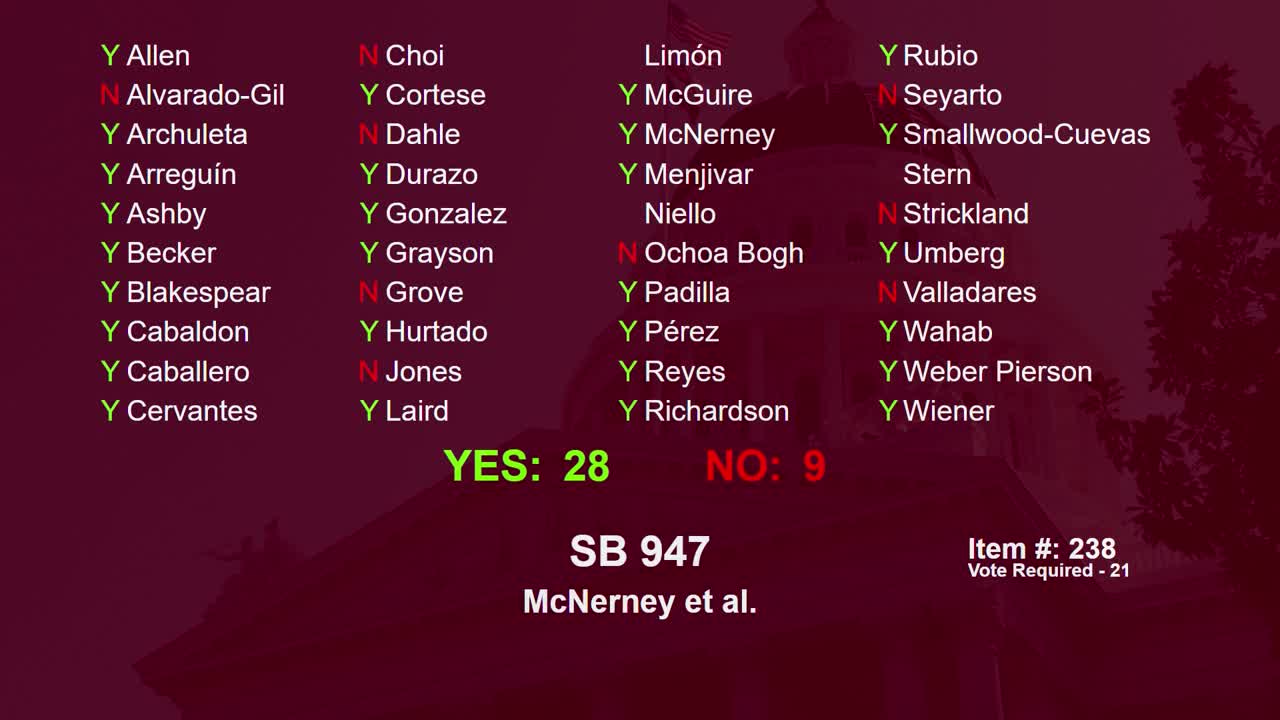
Bill Author

Bill Co-Author(s):