SB 545: High-speed rail: economic opportunities.
- Session Year: 2025-2026
- House: Senate
- Latest Version Date: 2025-06-27
Current Status:
In Progress
(2025-08-29: August 29 hearing: Held in committee and under submission.)
Introduced
In Committee
Awaiting First Chamber Vote
Passed First Chamber
In Committee
Awaiting Second Chamber Vote
Passed Second Chamber
Enacted
Existing law establishes the Office of Land Use and Climate Innovation with specified powers and duties related to long-range planning and research. Governors Office of Business and Economic Development as the lead entity for economic strategy and the marketing of California on issues relating to business development, private sector investment, and economic growth. Existing law creates the High-Speed Rail Authority, with specified powers and duties related to the development and implementation of a high-speed train system.
This bill would require the Office of Land Use and Climate Innovation, Governors Office of Business and Economic Development, on or before January 1, 2027, to commission a study on economic opportunities along the corridor of the California high-speed rail project, as defined, and other high-speed rail projects in California that are planned to directly connect to the California high-speed rail project, as provided, and to submit a progress report to the chairpersons of the Senate Committee on Transportation and the Assembly Committee on Transportation for input. The bill would require, on or before January 1, 2028, the study to be completed and a report on the studys findings and recommendations to be submitted to the appropriate policy and fiscal committees of the Legislature. The bill would require an infrastructure district, as defined, that uses its revenue to finance the construction of the high-speed rail project to dedicate a majority of its revenue to infrastructure projects within the jurisdiction of the local agencies that establish the district.
Existing law establishes the Office of Land Use and Climate Innovation with specified powers and duties related to long-range planning and research. Existing law creates the High-Speed Rail Authority, with specified powers and duties related to the development and implementation of a high-speed train system.
This bill would require the Office of Land Use and Climate Innovation, on or before July 1, 2026, January 1, 2027, to commission a study on economic opportunities along the high-speed rail alignment, corridor of the California high-speed rail project, as defined, and other high-speed rail projects in California that are planned to directly connect to the California high-speed rail project, as provided, and to submit a progress report to the chairpersons of the Senate Committee on Transportation and the Assembly Committee on Transportation for input. The bill would require, on or before January 1, 2027, 2028, the study to be completed and a report on the studys findings and recommendations to be submitted to the appropriate policy and fiscal committees of the Legislature. The bill would require an infrastructure district, as defined, that uses its revenue to finance the construction of the high-speed rail project to dedicate a majority of its revenue to infrastructure projects within the jurisdiction of the local agencies that establish the district.
Existing law establishes the Office of Land Use and Climate Innovation with specified powers and duties related to long-range planning and research. Existing law creates the High-Speed Rail Authority, with specified powers and duties related to the development and implementation of a high-speed train system.
This bill would require the Office of Land Use and Climate Innovation, on or before July 1, 2026, to commission a study on economic opportunities along the high-speed rail alignment, as provided, and to submit a progress report to the chairpersons of the Senate Committee on Transportation and the Assembly Committee on Transportation for input. The bill would require, on or before January 1, 2027, the study to be completed and a report on the studys findings and recommendations to be submitted to the appropriate policy and fiscal committees of the Legislature. The bill would require an infrastructure district, as defined, that uses its revenue to finance the construction of the high-speed rail project to dedicate a majority of its revenue to infrastructure projects within the jurisdiction of the local agencies that establish the district.
Existing law establishes the Office of Land Use and Climate Innovation with specified powers and duties related to long-range planning and research. Existing law creates the High-Speed Rail Authority, with specified powers and duties related to the development and implementation of a high-speed train system.
This bill would require the Office of Land Use and Climate Innovation, on or before July 1, 2026, to commission a study on economic opportunities along the high-speed rail alignment, as provided, and to submit a progress report to the chairpersons of the Senate Committee on Transportation and the Assembly Committee on Transportation for input. The bill would require, on or before January 1, 2027, the study to be completed and a report on the studys findings and recommendations to be submitted to the appropriate policy and fiscal committees of the Legislature. The bill would require an infrastructure district established in support of the high-speed rail project to include local improvements among the eligible projects to be funded by district revenues. The bill would require any revenues collected beyond the establishment of an infrastructure district to be committed to the ongoing maintenance and operation of the high-speed rail system. district, as defined, that uses its revenue to finance the construction of the high-speed rail project to dedicate a majority of its revenue to infrastructure projects within the jurisdiction of the local agencies that establish the district.
Existing law establishes the Office of Land Use and Climate Innovation with specified powers and duties related to long-range planning and research. Existing law creates the High-Speed Rail Authority, with specified powers and duties related to the development and implementation of a high-speed train system.
This bill would require the Office of Land Use and Climate Innovation, on or before July 1, 2026, to commission a study on economic opportunities along the high-speed rail alignment, as provided. provided, and to submit a progress report to the chairpersons of the Senate Committee on Transportation and the Assembly Committee on Transportation for input. The bill would require, on or before January 1, 2027, the study to be completed and a report on the studys findings and recommendations to be submitted to the appropriate policy and fiscal committees of the Legislature. The bill would require an infrastructure district established in support of the high-speed rail project to include local improvements among the eligible projects to be funded by district revenues. The bill would require any revenues collected beyond the establishment of an infrastructure district to be committed to the ongoing maintenance and operation of the high-speed rail system.
Existing law establishes the Office of Land Use and Climate Innovation with specified powers and duties related to long-range planning and research. Existing law creates the High-Speed Rail Authority, with specified powers and duties related to the development and implementation of a high-speed train system.
This bill would require the Office of Land Use and Climate Innovation, on or before July 1, 2026, to commission a study on economic opportunities along the high-speed rail alignment, as provided. The bill would require an infrastructure district established in support of the high-speed rail project to include local improvements among the eligible projects to be funded by district revenues. The bill would require any revenues collected beyond the establishment of an infrastructure district to be committed to the ongoing maintenance and operation of the high-speed rail system.
The Legislature finds and declares all of the following:
(a)California is home to 12 percent of the population of the United States and boasts the worlds fifth largest economy, generating 14 percent of the nations revenue. California leads the nation in agriculture, with the largest agricultural industry generating billions of dollars in revenue and employing thousands of people. California also hosts two of the nations three largest ports, the Port of Los Angeles and the Port of Long Beach, which serve as critical hubs for commerce and trade.
(b)As a global climate leader, California is committed to reducing emissions of greenhouse gases and addressing climate change. Efficiently moving people across the state is vital to sustaining our economy and achieving our climate goals.
(c)California is building the nations first 220-miles-per-hour, fully electrified high-speed rail system, powered by 100 percent renewable energy. This project will deliver substantial benefits for the state, including all of the following:
(1)Economic impact as demonstrated by all of the following:
(A)The creation of 3,000 future jobs.
(B)Fourteen thousand seven hundred forty-four construction jobs that have already been dispatched.
(C)The engagement of 881 small businesses.
(2)Social impact as demonstrated by $6,600,000,000 invested in disadvantaged communities.
(3)Environmental impact as demonstrated by all of the following:
(A)The avoidance of 142,000,000 metric tons of carbon dioxide emissions during system operation.
(B)Five hundred seventy thousand eight hundred forty pounds of criteria air pollutants already eliminated through clean construction practices.
(C)The sequestration and avoidance of 27,707 metric tons of carbon through habitat conservation.
(D)The maintenance of a net-positive balance in carbon-neutral construction.
SEC. 2.Section 185035.5 is added to the Public Utilities Code, to read:185035.5.(a)(1)On or before January 1, 2027, the Office of Land Use and Climate Innovation Governors Office of Business and Economic Development shall commission a study on economic opportunities along the corridor of the California high-speed rail project and other high-speed rail projects in California that are planned to directly connect to the California high-speed rail project, and submit a progress report to the chairpersons of the Senate Committee on Transportation and the Assembly Committee on Transportation for input.
(2)On or before January 1, 2028, the study described in paragraph (1) shall be completed and a report on the studys findings and recommendations shall be submitted to the appropriate policy and fiscal committees of the Legislature.
(3)The study to be submitted pursuant to paragraph (2) shall be submitted in compliance with Section 9795 of the Government Code.
(b)The study shall do all of the following:
(1)Assess funding potential across a variety of funding mechanisms that can support the high-speed rail capital program or discrete system elements.
(2)Explore potential development opportunities associated with expanded authorities within specific areas that accelerate development and maximize associated value.
(3)Explore methods that will result in a direct community benefit to parcels adjacent to stations and parcels in communities along the corridor of the California high-speed rail project, including, but not limited to, creation of joint power agreements, density bonuses, permitting and environmental review efficiencies, and exemptions that help expedite development and increase property values.
(4)Identify incentives for public-private partnerships.
(5)Identify opportunities to secure federal funds, including federal loans.
(6)Establish a specific radius or radii of contiguity with any portion of the corridor of the California high-speed rail project within which all properties would be eligible for participation in any identified infrastructure district that will maximize value and development potential.
(7)Identify publicly owned parcels within the corridor of the California high-speed rail project, including surplus real property, that can be combined to increase their feasibility for development and opportunity for value capture.
(8)Determine the feasibility of establishing an unlimited timeframe for the operation of any infrastructure district established along the corridor of the California high-speed rail project.
(9)Identify available air rights around stations and other high-speed rail system structures for potential development and value capture opportunities.
(10)Explore all of the following strategies to support development and maximize public benefit along the corridor of the California high-speed rail project:
(A)Identify methods to finance infrastructure and development near stations and throughout the corridor of the California high-speed rail project by forming infrastructure districts using existing tools, including, but not limited to, enhanced infrastructure financing districts and neighborhood infill finance and transit improvement areas.
(B)Evaluate opportunities for revenue-generating land uses in and around station areas and throughout the corridor of the California high-speed rail project that enhance public benefits and access to amenities on publicly owned land or infrastructure, including opportunities to support housing, commercial activity, transportation services, community facilities, and sustainable infrastructure.
(C)Assess opportunities for goods movement along the corridor of the California high-speed rail project, including, but not limited to, linked parcel-carrying train cars or other cargo delivery arrangements.
(11)Survey local cities and counties along the corridor of the California high-speed rail project to identify what economic incentives would motivate them to participate in a state-local partnership.
(12)Quantify increases to the cost of housing, if any, and cost reductions that at least offset those cost increases, as determined by a survey of homebuilders and land developers who are members of the California Building Industry Association.
(c)The study shall consider both of the following:
(1)Land value, development incentives, value creation, infrastructure districts, governance models, and methods that provide new revenue and produce the outcomes necessary for the completion of the high-speed rail project while more effectively connecting communities to existing modes of transportation and providing a direct benefit to local communities.
(2)The integration of adjacent rail services and the development opportunities that can help advance the construction of the high-speed rail system.
(d)The study shall also analyze the corridor of the California high-speed rail project against several boundaries to evaluate the effectiveness of a range of opportunities for value creation and value capture activities.
(e)An infrastructure district that uses its revenue to finance the construction of the high-speed rail project shall dedicate at least a majority of its revenue to infrastructure projects within the jurisdiction of the local agencies that establish the infrastructure district.
(f)For purposes of this section, the following definitions apply:
(1)California high-speed rail project means Phase 1 of the high-speed train project described in Section 2704.04 of the Streets and Highways Code.
(2)Infrastructure district means any of the following:
(A)An enhanced infrastructure financing district created pursuant to Chapter 2.99 (commencing with Section 53398.50) of Part 1 of Division 2 of Title 5 of the Government Code.
(B)A community revitalization and investment authority created pursuant to Division 4 (commencing with Section 62000) of Title 6 of the Government Code.
(C)A community facilities district created pursuant to Chapter 2.5 (commencing with Section 53311) of Part 1 of Division 2 of Title 5 of the Government Code.
(D)Any other district, joint powers authority, or other agency established by a local agency for the primary purpose of financing infrastructure projects, including those with a state agency member, such as the authority.
REVISIONS: HeadingLine 3.The Legislature finds and declares all of the following:
(a)California is home to 12 percent of the population of the United States and boasts the worlds fifth largest economy, generating 14 percent of the nations revenue. California leads the nation in agriculture, with the largest agricultural industry generating billions of dollars in revenue and employing thousands of people. California also hosts two of the nations three largest ports, the Port of Los Angeles and the Port of Long Beach, which serve as critical hubs for commerce and trade.
(b)As a global climate leader, California is committed to reducing emissions of greenhouse gases and addressing climate change. Efficiently moving people across the state is vital to sustaining our economy and achieving our climate goals.
(c)California is building the nations first 220-miles-per-hour, fully electrified high-speed rail system, powered by 100 percent renewable energy. This project will deliver substantial benefits for the state, including all of the following:
(1)Economic impact as demonstrated by all of the following:
(A)The creation of 3,000 future jobs.
(B)Fourteen thousand seven hundred forty-four construction jobs that have already been dispatched.
(C)The engagement of 881 small businesses.
(2)Social impact as demonstrated by $6,600,000,000 invested in disadvantaged communities.
(3)Environmental impact as demonstrated by all of the following:
(A)The avoidance of 142,000,000 metric tons of carbon dioxide emissions during system operation.
(B)Five hundred seventy thousand eight hundred forty pounds of criteria air pollutants already eliminated through clean construction practices.
(C)The sequestration and avoidance of 27,707 metric tons of carbon through habitat conservation.
(D)The maintenance of a net-positive balance in carbon-neutral construction.
SEC. 2.Section 185035.5 is added to the Public Utilities Code, to read:185035.5.(a)(1)On or before July 1, 2026, January 1, 2027, the Office of Land Use and Climate Innovation shall commission a study on economic opportunities along the high-speed rail alignment the corridor of the California high-speed rail project and other high-speed rail projects in California that are planned to directly connect to the California high-speed rail project, and submit a progress report to the chairpersons of the Senate Committee on Transportation and the Assembly Committee on Transportation for input.
(2)On or before January 1, 2027, 2028, the study described in paragraph (1) shall be completed and a report on the studys findings and recommendations shall be submitted to the appropriate policy and fiscal committees of the Legislature.
(3)The study to be submitted pursuant to paragraph (2) shall be submitted in compliance with Section 9795 of the Government Code.
(b)The study shall do all of the following:
(1)Assess funding potential across a variety of funding mechanisms that can support the high-speed rail capital program or discrete system elements.
(2)Explore potential development opportunities associated with expanded authorities within specific areas that accelerate development and maximize associated value.
(3)Explore methods that will result in a direct community benefit to parcels adjacent to stations and parcels in communities along the high-speed rail corridor, corridor of the California high-speed rail project, including, but not limited to, creation of infrastructure districts, joint power agreements, density bonuses, permitting and environmental review efficiencies, and exemptions that help expedite development and increase property values.
(4)Identify incentives for public-private partnerships.
(5)Identify opportunities to secure federal funds, including federal loans.
(6)Establish a specific radius or radii of contiguity with any portion of the identified corridor of the high-speed rail project, corridor of the California high-speed rail project within which all properties would be eligible for participation in any identified infrastructure district that will maximize value and development potential.
(7)Identify publicly owned parcels within the high-speed rail corridor, corridor of the California high-speed rail project, including surplus real property, that can be combined to increase their feasibility for development and opportunity for value capture.
(8)Determine the feasibility of establishing an unlimited timeframe for the operation of any infrastructure district established along the high-speed rail corridor. corridor of the California high-speed rail project.
(9)Identify available air rights around stations and other high-speed rail system structures for potential development and value capture opportunities.
(10)Explore all of the following strategies to support development and maximize public benefit along the corridor of the California high-speed rail project:
(A)Identify methods to finance infrastructure and development near stations and throughout the corridor of the California high-speed rail project by forming infrastructure districts using existing tools, including, but not limited to, enhanced infrastructure financing districts and neighborhood infill finance and transit improvement areas.
(B)Evaluate opportunities for revenue-generating land uses in and around station areas and throughout the corridor of the California high-speed rail project that enhance public benefits and access to amenities on publicly owned land or infrastructure, including opportunities to support housing, commercial activity, transportation services, community facilities, and sustainable infrastructure.
(C)Assess opportunities for goods movement along the corridor of the California high-speed rail project, including, but not limited to, linked parcel-carrying train cars or other cargo delivery arrangements.
(10)(11)Survey local cities and counties along the high-speed rail corridor corridor of the California high-speed rail project to identify what economic incentives would motivate them to participate in a state-local partnership.
(c)The study shall consider both of the following:
(1)Land value, development incentives, value creation, infrastructure districts, governance models, and methods that provide new revenue and produce the outcomes necessary for the completion of the high-speed rail project while more effectively connecting communities to existing modes of transportation and providing a direct benefit to local communities.
(2)The integration of adjacent rail services and the development opportunities that can help advance the construction of the high-speed rail system.
(d)The study shall also analyze the high-speed rail alignment corridor of the California high-speed rail project against several boundaries to evaluate the effectiveness of a range of opportunities for value creation and value capture activities.
(e)An infrastructure district that uses its revenue to finance the construction of the high-speed rail project shall dedicate at least a majority of its revenue to infrastructure projects within the jurisdiction of the local agencies that establish the infrastructure district.
(f)For purposes of this section, infrastructure the following definitions apply:
(1)California high-speed rail project means Phase 1 of the high-speed train project described in Section 2704.04 of the Streets and Highways Code.
(2)Infrastructure district means any of the following:
(1)(A)An enhanced infrastructure financing district created pursuant to Chapter 2.99 (commencing with Section 53398.50) of Part 1 of Division 2 of Title 5 of the Government Code.
(2)(B)A community revitalization and investment authority created pursuant to Division 4 (commencing with Section 62000) of Title 6 of the Government Code.
(3)(C)A community facilities district created pursuant to Chapter 2.5 (commencing with Section 53311) of Part 1 of Division 2 of Title 5 of the Government Code.
(4)(D)Any other district, joint powers authority, or other agency established by a local agency for the primary purpose of financing infrastructure projects, including those with a state agency member, such as the authority.
The Legislature finds and declares all of the following:
(a)California is home to 12 percent of the population of the United States and boasts the worlds fifth largest economy, generating 14 percent of the nations revenue. California leads the nation in agriculture, with the largest agricultural industry generating billions of dollars in revenue and employing thousands of people. California also hosts two of the nations three largest ports, the Port of Los Angeles and the Port of Long Beach, which serve as critical hubs for commerce and trade.
(b)As a global climate leader, California is committed to reducing emissions of greenhouse gases and addressing climate change. Efficiently moving people across the state is vital to sustaining our economy and achieving our climate goals.
(c)California is building the nations first 220-miles-per-hour, fully electrified high-speed rail system, powered by 100 percent renewable energy. This project will deliver substantial benefits for the state, including all of the following:
(1)Economic impact as demonstrated by all of the following:
(A)The creation of 3,000 future jobs.
(B)Fourteen thousand seven hundred forty-four construction jobs that have already been dispatched.
(C)The engagement of 881 small businesses.
(2)Social impact as demonstrated by $6,600,000,000 invested in disadvantaged communities.
(3)Environmental impact as demonstrated by all of the following:
(A)The avoidance of 142,000,000 metric tons of carbon dioxide emissions during system operation.
(B)Five hundred seventy thousand eight hundred forty pounds of criteria air pollutants already eliminated through clean construction practices.
(C)The sequestration and avoidance of 27,707 metric tons of carbon through habitat conservation.
(D)The maintenance of a net-positive balance in carbon-neutral construction.
SEC. 2.Section 185035.5 is added to the Public Utilities Code, to read:185035.5.(a)(1)On or before July 1, 2026, the Office of Land Use and Climate Innovation shall commission a study on economic opportunities along the high-speed rail alignment and submit a progress report to the chairpersons of the Senate Committee on Transportation and the Assembly Committee on Transportation for input.
(2)On or before January 1, 2027, the study described in paragraph (1) shall be completed and a report on the studys findings and recommendations shall be submitted to the appropriate policy and fiscal committees of the Legislature.
(3)The study to be submitted pursuant to paragraph (2) shall be submitted in compliance with Section 9795 of the Government Code.
(b)The study shall do all of the following:
(1)Assess funding potential across a variety of funding mechanisms that can support the high-speed rail capital program or discrete system elements.
(2)Explore potential development opportunities associated with expanded authorities within specific areas that accelerate development and maximize associated value.
(3)Explore methods that will result in a direct community benefit to parcels adjacent to stations and parcels in communities along the high-speed rail corridor, including, but not limited to, creation of infrastructure districts, joint power agreements, density bonuses, permitting and environmental review efficiencies, and exemptions that help expedite development and increase property values.
(4)Identify incentives for public-private partnerships.
(5)Identify opportunities to secure federal funds, including federal loans.
(6)Establish a specific radius or radii of contiguity with any portion of the identified corridor of the high-speed rail project, within which all properties would be eligible for participation in any identified infrastructure district that will maximize value and development potential.
(7)Identify publicly owned parcels within the high-speed rail corridor, including surplus real property, that can be combined to increase their feasibility for development and opportunity for value capture.
(8)Determine the feasibility of establishing an unlimited timeframe for the operation of any infrastructure district established along the high-speed rail corridor.
(9)Identify available air rights around stations and other high-speed rail system structures for potential development and value capture opportunities.
(10)Survey local cities and counties along the high-speed rail corridor to identify what economic incentives would motivate them to participate in a state-local partnership.
(c)The study shall consider both of the following:
(1)Land value, development incentives, value creation, infrastructure districts, governance models, and methods that provide new revenue and produce the outcomes necessary for the completion of the high-speed rail project while more effectively connecting communities to existing modes of transportation and providing a direct benefit to local communities.
(2)The integration of adjacent rail services and the development opportunities that can help advance the construction of the high-speed rail system.
(d)The study shall also analyze the high-speed rail alignment against several boundaries to evaluate the effectiveness of a range of opportunities for value creation and value capture activities.
(e)An infrastructure district that uses its revenue to finance the construction of the high-speed rail project shall dedicate at least a majority of its revenue to infrastructure projects within the jurisdiction of the local agencies that establish the infrastructure district.
(f)For purposes of this section, infrastructure district means any of the following:
(1)An enhanced infrastructure financing district created pursuant to Chapter 2.99 (commencing with Section 53398.50) of Part 1 of Division 2 of Title 5 of the Government Code.
(2)A community revitalization and investment authority created pursuant to Division 4 (commencing with Section 62000) of Title 6 of the Government Code.
(3)A community facilities district created pursuant to Chapter 2.5 (commencing with Section 53311) of Part 1 of Division 2 of Title 5 of the Government Code.
(4)Any other district, joint powers authority, or other agency established by a local agency for the primary purpose of financing infrastructure projects, including those with a state agency member, such as the authority.
The Legislature finds and declares all of the following:
(a)California is home to 12 percent of the population of the United States and boasts the worlds fifth largest economy, generating 14 percent of the nations revenue. California leads the nation in agriculture, with the largest agricultural industry generating billions of dollars in revenue and employing thousands of people. California also hosts two of the nations three largest ports, the Port of Los Angeles and the Port of Long Beach, which serve as critical hubs for commerce and trade.
(b)As a global climate leader, California is committed to reducing emissions of greenhouse gases and addressing climate change. Efficiently moving people across the state is vital to sustaining our economy and achieving our climate goals.
(c)California is building the nations first 220-miles-per-hour, fully electrified high-speed rail system, powered by 100 percent renewable energy. This project will deliver substantial benefits for the state, including all of the following:
(1)Economic impact as demonstrated by all of the following:
(A)The creation of 3,000 future jobs.
(B)Fourteen thousand seven hundred forty-four construction jobs that have already been dispatched.
(C)The engagement of 881 small businesses.
(2)Social impact as demonstrated by $6,600,000,000 invested in disadvantaged communities.
(3)Environmental impact as demonstrated by all of the following:
(A)The avoidance of 142,000,000 metric tons of carbon dioxide emissions during system operation.
(B)Five hundred seventy thousand eight hundred forty pounds of criteria air pollutants already eliminated through clean construction practices.
(C)The sequestration and avoidance of 27,707 metric tons of carbon through habitat conservation.
(D)The maintenance of a net-positive balance in carbon-neutral construction.
SEC. 2.Section 185035.5 is added to the Public Utilities Code, to read:185035.5.(a)(1)On or before July 1, 2026, the Office of Land Use and Climate Innovation shall commission a study on economic opportunities along the high-speed rail alignment and submit a progress report to the chairpersons of the Senate Committee on Transportation and the Assembly Committee on Transportation for input.
(2)On or before January 1, 2027, the study described in paragraph (1) shall be completed and a report on the studys findings and recommendations shall be submitted to the appropriate policy and fiscal committees of the Legislature.
(3)The study to be submitted pursuant to paragraph (2) shall be submitted in compliance with Section 9795 of the Government Code.
(b)The study shall do all of the following:
(1)Assess funding potential across a variety of funding mechanisms that can support the high-speed rail capital program or discrete system elements.
(2)Explore potential development opportunities associated with expanded authorities within specific areas that accelerate development and maximize associated value.
(3)Explore methods that will result in a direct community benefit to parcels adjacent to stations and parcels in communities along the high-speed rail corridor, including, but not limited to, creation of infrastructure districts, joint power agreements, density bonuses, permitting and environmental review efficiencies, and exemptions that help expedite development and increase property values.
(4)Identify incentives for public-private partnerships.
(5)Identify opportunities to secure federal funds, including federal loans.
(6)Establish a specific radius or radii of contiguity with any portion of the identified corridor of the high-speed rail project, within which all properties would be eligible for participation in any identified infrastructure district that will maximize value and development potential.
(7)Identify publicly owned parcels within the high-speed rail corridor, including surplus real property, that can be combined to increase their feasibility for development and opportunity for value capture.
(8)Determine the feasibility of establishing an unlimited timeframe for the operation of any infrastructure district established along the high-speed rail corridor.
(9)Identify available air rights around stations and other high-speed rail system structures for potential development and value capture opportunities.
(10)Survey local cities and counties along the high-speed rail corridor to identify what economic incentives would motivate them to participate in a state-local partnership.
(c)The study shall consider both of the following:
(1)Land value, development incentives, value creation, infrastructure districts, governance models, and methods that provide new revenue and produce the outcomes necessary for the completion of the high-speed rail project while more effectively connecting communities to existing modes of transportation and providing a direct benefit to local communities.
(2)The integration of adjacent rail services and the development opportunities that can help advance the construction of the high-speed rail system.
(d)The study shall also analyze the high-speed rail alignment against several boundaries to evaluate the effectiveness of a range of opportunities for value creation and value capture activities.
(e)Any infrastructure district established in support of the high-speed rail project shall include local improvements among the eligible projects to be funded by district revenues.(f)Revenues collected beyond the establishment of any infrastructure district shall be committed to the ongoing maintenance and operation of the high-speed rail system.(e)An infrastructure district that uses its revenue to finance the construction of the high-speed rail project shall dedicate a majority of its revenue to infrastructure projects within the jurisdiction of the local agencies that establish the infrastructure district.
(f)For purposes of this section, infrastructure district means any of the following:
(1)An enhanced infrastructure financing district created pursuant to Chapter 2.99 (commencing with Section 53398.50) of Part 1 of Division 2 of Title 5 of the Government Code.
(2)A community revitalization and investment authority created pursuant to Division 4 (commencing with Section 62000) of Title 6 of the Government Code.
(3)A community facilities district created pursuant to Chapter 2.5 (commencing with Section 53311) of Part 1 of Division 2 of Title 5 of the Government Code.
(4)Any other district, joint powers authority, or other agency established by a local agency for the primary purpose of financing infrastructure projects, including those with a state agency member, such as the authority.
The Legislature finds and declares all of the following:
(a)California is home to 12 percent of the population of the United States and boasts the worlds fifth largest economy, generating 14 percent of the nations revenue. California leads the nation in agriculture, with the largest agricultural industry generating billions of dollars in revenue and employing thousands of people. California also hosts two of the nations three largest ports, the Port of Los Angeles and the Port of Long Beach, which serve as critical hubs for commerce and trade.
(b)As a global climate leader, California is committed to reducing emissions of greenhouse gases and addressing climate change. Efficiently moving people across the state is vital to sustaining our economy and achieving our climate goals.
(c)California is building the nations first 220-miles-per-hour, fully electrified high-speed rail system, powered by 100 percent renewable energy. This project will deliver substantial benefits for the state, including all of the following:
(1)Economic impact as demonstrated by all of the following:
(A)The creation of 3,000 future jobs.
(B)Fourteen thousand seven hundred forty-four construction jobs that have already been dispatched.
(C)The engagement of 881 small businesses.
(2)Social impact as demonstrated by $6,600,000,000 invested in disadvantaged communities.
(3)Environmental impact as demonstrated by all of the following:
(A)The avoidance of 142,000,000 metric tons of carbon dioxide emissions during system operation.
(B)Five hundred seventy thousand eight hundred forty pounds of criteria air pollutants already eliminated through clean construction practices.
(C)The sequestration and avoidance of 27,707 metric tons of carbon through habitat conservation.
(D)The maintenance of a net-positive balance in carbon-neutral construction.
SEC. 2.Section 185035.5 is added to the Public Utilities Code, to read:185035.5.(a)(1)On or before July 1, 2026, the Office of Land Use and Climate Innovation shall commission a study on economic opportunities along the high-speed rail alignment. alignment and submit a progress report to the chairpersons of the Senate Committee on Transportation and the Assembly Committee on Transportation for input.
(2)On or before January 1, 2027, the study described in paragraph (1) shall be completed and a report on the studys findings and recommendations shall be submitted to the appropriate policy and fiscal committees of the Legislature.
(3)The study to be submitted pursuant to paragraph (2) shall be submitted in compliance with Section 9795 of the Government Code.
(b)The study shall do all of the following:
(1)Assess funding potential across a variety of funding mechanisms that can support the high-speed rail capital program or discrete system elements.
(2)Explore potential development opportunities associated with expanded authorities within specific areas that accelerate development and maximize associated value.
(3)Explore methods that will result in a direct community benefit to parcels adjacent to stations and parcels in communities along the high-speed rail corridor, including, but not limited to, creation of infrastructure districts, joint power agreements, density bonuses, permitting and environmental review efficiencies, and exemptions that help expedite development and increase property values.
(4)Identify incentives for public-private partnerships and opportunities to secure federal loans. partnerships.
(5)Identify additional opportunities to secure federal funds. funds, including federal loans.
(6)Establish a specific radius or radii of contiguity with any portion of the identified corridor of the high-speed rail project, within which all properties would be eligible for participation in any identified infrastructure district. district that will maximize value and development potential.
(7)Identify publicly owned parcels, parcels within the high-speed rail corridor, including surplus real property, that can be combined to increase their feasibility for development and opportunity for value capture.
(8)Determine the feasibility of establishing an unlimited timeframe for the operation of any infrastructure district established along the high-speed rail corridor.
(9)Identify available air rights around stations and other high-speed rail system structures for potential development and value capture opportunities.
(10)Survey local cities and counties along the high-speed rail corridor to identify what economic incentives would motivate them to participate in a state-local partnership.
(c)The study shall consider all both of the following:
(1)Land value, development incentives, value creation, infrastructure districts, governance models, and methods that provide new revenue and produce the outcomes necessary for the completion of the high-speed rail project while more effectively connecting communities to existing modes of transportation and providing a direct benefit to local communities.
(2)Available air rights above identified stations and other high-speed rail system structures for potential development and value capture opportunities.(3)(2)The integration of adjacent rail services and the development opportunities that can help advance the construction of the high-speed rail system.
(d)The study shall also analyze the high-speed rail alignment against several boundaries to evaluate the effectiveness of a range of opportunities for value creation and value capture activities.
(e)Any infrastructure district established in support of the high-speed rail project shall include local improvements among the eligible projects to be funded by district revenues.
(f)Revenues collected beyond the establishment of any infrastructure district shall be committed to the ongoing maintenance and operation of the high-speed rail system.
The Legislature finds and declares all of the following:
(a)California is home to 12 percent of the population of the United States and boasts the worlds fifth largest economy, generating 14 percent of the nations revenue. California leads the nation in agriculture, with the largest agricultural industry generating billions of dollars in revenue and employing thousands of people. California also hosts two of the nations three largest ports, the Port of Los Angeles and the Port of Long Beach, which serve as critical hubs for commerce and trade.
(b)As a global climate leader, California is committed to reducing emissions of greenhouse gases and addressing climate change. Efficiently moving people across the state is vital to sustaining our economy and achieving our climate goals.
(c)California is building the nations first 220-miles-per-hour, fully electrified high-speed rail system, powered by 100 percent renewable energy. This project will deliver substantial benefits for the state, including all of the following:
(1)Economic impact as demonstrated by all of the following:
(A)The creation of 3,000 future jobs.
(B)Fourteen thousand seven hundred forty-four construction jobs that have already been dispatched.
(C)The engagement of 881 small businesses.
(2)Social impact as demonstrated by $6,600,000,000 invested in disadvantaged communities.
(3)Environmental impact as demonstrated by all of the following:
(A)The avoidance of 142,000,000 metric tons of carbon dioxide emissions during system operation.
(B)Five hundred seventy thousand eight hundred forty pounds of criteria air pollutants already eliminated through clean construction practices.
(C)The sequestration and avoidance of 27,707 metric tons of carbon through habitat conservation.
(D)The maintenance of a net-positive balance in carbon-neutral construction.
SEC. 2.Section 185035.5 is added to the Public Utilities Code, to read:185035.5.(a)On or before July 1, 2026, the Office of Land Use and Climate Innovation shall commission a study on economic opportunities along the high-speed rail alignment.
(b)The study shall do all of the following:
(1)Assess funding potential across a variety of funding mechanisms that can support the high-speed rail capital program or discrete system elements.
(2)Explore potential development opportunities associated with expanded authorities within specific areas that accelerate development and maximize associated value.
(3)Explore methods that will result in a direct community benefit to parcels adjacent to stations and parcels in communities along the high-speed rail corridor, including, but not limited to, creation of infrastructure districts, joint power agreements, density bonuses, permitting and environmental review efficiencies, and exemptions that help expedite development and increase property values.
(4)Identify incentives for public-private partnerships and opportunities to secure federal loans.
(5)Identify additional opportunities to secure federal funds.
(6)Establish a specific radius of contiguity with any portion of the identified corridor of the high-speed rail project, within which all properties would be eligible for participation in any identified infrastructure district.
(7)Identify publicly owned parcels, including surplus real property, that can be combined to increase their feasibility for development and opportunity for value capture.
(8)Determine the feasibility of establishing an unlimited timeframe for the operation of any infrastructure district established along the high-speed rail corridor.
(c)The study shall consider all of the following:
(1)Land value, development incentives, value creation, infrastructure districts, governance models, and methods that provide new revenue and produce the outcomes necessary for the completion of the high-speed rail project while more effectively connecting communities to existing modes of transportation and providing a direct benefit to local communities.
(2)Available air rights above identified stations and other high-speed rail system structures for potential development and value capture opportunities.
(3)The integration of adjacent rail services and the development opportunities that can help advance the construction of the high-speed rail system.
(d)The study shall also analyze the high-speed rail alignment against several boundaries to evaluate the effectiveness of a range of opportunities for value creation and value capture activities.
(e)Any infrastructure district established in support of the high-speed rail project shall include local improvements among the eligible projects to be funded by district revenues.
(f)Revenues collected beyond the establishment of any infrastructure district shall be committed to the ongoing maintenance and operation of the high-speed rail system.
|
Date
|
Status
|
|---|---|
| Aug 29, 2025 | August 29 hearing: Held in committee and under submission. |
| Aug 20, 2025 | August 20 set for first hearing. Placed on APPR. suspense file. |
| Jul 17, 2025 | From committee: Do pass and re-refer to Com. on APPR. (Ayes 8. Noes 1.) (July 16). Re-referred to Com. on APPR. |
| Jul 8, 2025 | From committee: Do pass and re-refer to Com. on L. GOV. (Ayes 10. Noes 3.) (July 7). Re-referred to Com. on L. GOV. |
| Jul 8, 2025 | Coauthors revised. |
| Jun 27, 2025 | From committee with author's amendments. Read second time and amended. Re-referred to Com. on TRANS. |
| Jun 9, 2025 | Referred to Coms. on TRANS. and L. GOV. |
| Jun 3, 2025 | In Assembly. Read first time. Held at Desk. |
| Jun 2, 2025 | Read third time. Passed. (Ayes 27. Noes 9. Page 1375.) Ordered to the Assembly. |
| May 27, 2025 | Read second time. Ordered to third reading. |
| May 23, 2025 | Read second time and amended. Ordered to second reading. |
| May 23, 2025 | From committee: Do pass as amended. (Ayes 5. Noes 1. Page 1203.) (May 23). |
| May 20, 2025 | Set for hearing May 23. |
| May 19, 2025 | May 19 hearing: Placed on APPR. suspense file. |
| May 9, 2025 | Set for hearing May 19. |
| May 1, 2025 | Read second time and amended. Re-referred to Com. on APPR. |
| Apr 30, 2025 | From committee: Do pass as amended and re-refer to Com. on APPR. (Ayes 5. Noes 2. Page 968.) (April 30). |
| Apr 23, 2025 | From committee with author's amendments. Read second time and amended. Re-referred to Com. on L. GOV. |
| Apr 9, 2025 | Set for hearing April 30. |
| Apr 9, 2025 | From committee: Do pass and re-refer to Com. on L. GOV. (Ayes 11. Noes 1. Page 710.) (April 8). Re-referred to Com. on L. GOV. |
| Apr 1, 2025 | From committee with author's amendments. Read second time and amended. Re-referred to Com. on TRANS. |
| Mar 25, 2025 | Set for hearing April 8. |
| Mar 5, 2025 | Referred to Coms. on TRANS. and L. GOV. |
| Feb 21, 2025 | From printer. May be acted upon on or after March 23. |
| Feb 20, 2025 | Introduced. Read first time. To Com. on RLS. for assignment. To print. |
|
Date
|
Description
|
Location
|
Votes
|
|
|---|---|---|---|---|
| Jul 16, 2025 | Do pass and be re-referred to the Committee on [Appropriations] | Assembly Standing Committee on Local Government |
Passed |
|
| Jul 7, 2025 | Do pass and be re-referred to the Committee on [Local Government] | Assembly Standing Committee on Transportation |
Passed |
|
| Jun 2, 2025 | Senate 3rd Reading SB545 Cortese et al. | Senate Floor |
Passed |
|
| May 23, 2025 | Do pass as amended | Senate Standing Committee on Appropriations |
Passed |
|
| May 19, 2025 | Placed on suspense file | Senate Standing Committee on Appropriations |
Passed |
|
| Apr 30, 2025 | Do pass as amended, but first amend, and re-refer to the Committee on [Appropriations] | Senate Standing Committee on Local Government |
Passed |
|
| Apr 8, 2025 | Do pass, but first be re-referred to the Committee on [Local Government] | Senate Standing Committee on Transportation |
Passed |
This list shows positions taken on this bill by organizations on the date displayed, which is linked to the original source.
Positions by individuals are not included.
|
Organization
|
Position
|
Date
|
|---|---|---|
| american council of engineering companies | ** Support | |
| Associated General Contractors Of California | ** Support | |
| California Alliance for Jobs | ** Support | |
| California Building Industry Association | ** Against | |
| CALIFORNIA CONSTRUCTION & INDUSTRIAL MATERIALS ASSOCIATION | ** Support | |
| California State Association Of Electrical Workers | ** Support | |
| California State Council Of Laborers | ** Support | |
| California State Pipe Trades Council | ** Support | |
| City of Fresno, Mayor Jerry P. Dyer | ** Support | |
| Climate Action California | ** Support | |
| Engineering & Utility Contractors Association | ** Support | |
| Engineering Utility Contractors Association Dba United Contractors | ** Support | |
| ENGINEERING & UTILITY CONTRACTORS ASSOCIATION DBA UNITED CONTRACTORS | ** Support | |
| Fresno Chamber of Commerce | ** Support | |
| Fresno Economic Development Corporation | ** Support | |
| Green Policy Initiative | ** Support | |
| Housing Action Coalition | ** Support | |
| International Union of Operating Engineers | ** Support | |
| International Union of Operating Engineers, Cal-Nevada Conference | ** Support | |
| Jerry Dyer, Mayor of City of Fresno | ** Support | |
| Move LA | ** Support | |
| Rebuild Socal Partnership | ** Support | |
| San Joaquin Valley Manufacturing Alliance | ** Support | |
| Southern California Contractors Association | ** Support | |
| State Building & Construction Trades Council | ** Support | |
| Streets for All | ** Support | |
| Transportation California | ** Support | |
| US High Speed Rail Association | ** Support | |
| U.S. HIGH SPEED RAIL ASSOCIATION | ** Support | |
| Western States Council Of Sheet Metal Workers | ** Support |
Date of Hearing: August 20, 2025
ASSEMBLY COMMITTEE ON APPROPRIATIONS
Buffy Wicks, Chair
SBPCA Bill Id:SB 545
Author:(Cortese) – As Amended Ver:June 27, 2025
Policy Committee: | Transportation | Vote: | 10 - 3 |
Local Government | 8 - 1 | ||
|
|
Urgency: No State Mandated Local Program: No Reimbursable: No
SUMMARY:
This bill directs the Governor’s Office of Business and Economic Development (GoBiz) to commission a study, to be completed by January 1, 2028, and submitted to the Legislature, on economic opportunities along the corridor of the California high-speed rail project (CAHSR) and other high-speed rail projects in California that are planned to directly connect to CAHSR.
FISCAL EFFECT:
The study this bill requires will likely entail one-time costs ranging from the mid to high hundreds of thousands of dollars (General Fund). GoBiz had not provided the committee with its estimate of costs by the time this analysis was prepared.
In any case, consistent with the committee’s rules and practice, this bill is a candidate for the committee’s suspense file, regardless of cost, because it has the primary purpose of requiring a study.
COMMENTS:
- Purpose. Statute in 1996 created the CHSRA to plan and construct a high-speed rail system that would link the state’s major population centers. In November 2008, voters approved Proposition 1A, which authorized the state to sell $10 billion in general obligation bonds to partially fund the system, as well as related projects.
Over the years, the project has faced challenges, including inadequate funding (despite more than $14 billion in expenditures) and delays caused by right of way acquisition and utility relocations. To date, no high-speed train operates on the line.
In 2022, the Legislature created the High-Speed Rail Authority Office of the Inspector General (HSRA-OIG). The Legislature provided the HSRA-OIG with broad oversight authority and assigned to it several specific duties, among them: (a) conduct independent fiscal estimates and reviews of HSRA’s plans and estimates for project advancement and make findings of their reasonableness, (b) conduct audits and investigations, (c) identify best practices and recommend policies to HSRA and (d) review HSARA’s contracts and contracting practices to determine whether they are executed consistent with state and federal laws and policies and are conducted in a fair and reasonable manner, providing the state with valued services at reasonable cost.
In February of this year, the HSRA released a report (“Report 25-R-01”) on its review of the HSRA’s progress on the Merced-to-Bakersfield segment of the high-speed rail corridor and the likelihood HSRA would complete the segment by the target set by HSRA, 2033. The HSRA-OIG warned of “the potential for significant uncertainty and risk” and concluded “staying within the 2033 schedule envelope is unlikely.”
The author describes the high-speed rail project as “transformative” and intends this bill to lead to planning that better ensures the state and local communities along the rail corridor maximize economic benefits associated with development of the corridor. According to the author, the study required by the bill “will help guide the state and local cities to examine opportunities for major residential and commercial development in the High Speed Rail corridor, synergy that can help boost local communities’ economy and pay for the infrastructure itself.” Many organizations representing labor and regional business agree, as do some local officials and the Fresno Economic Development Corporation, which describes the bill as setting “the foundation for leveraging commercial and residential development along the high-speed rail corridor to create jobs, attract businesses, and generate new revenue streams that will help provide continued funding for the project.”
There is no opposition registered against this bill.
Analysis Prepared by: Jay Dickenson / APPR. / (916) 319-2081
Date of Hearing: July 16, 2025
ASSEMBLY COMMITTEE ON LOCAL GOVERNMENT
Juan Carrillo, Chair
SBPCA Bill Id:SB 545
Author:(Cortese) – As Amended Ver:June 27, 2025
SENATE VOTE: 27-9
SUBJECT: High-speed rail: economic opportunities.
SUMMARY: Requires the Governor’s Office of Business and Economic Development (GO-Biz) to commission a study related to the California high-speed rail project, and requires an infrastructure district that finances the construction of the high-speed rail project to dedicate at least a majority of its revenue to projects within the jurisdiction of the local agencies that establish the district. Specifically, this bill:
- Defines the following terms:
- “California high-speed rail project” to mean Phase 1 of the high-speed train project described in existing law.
- “Infrastructure district” to mean any of the following:
- An enhanced infrastructure financing district (EIFD).
- A community revitalization and investment authority (CRIA).
- A community facilities district (CFD).
- Any other district, joint powers authority, or other agency established by a local agency for the primary purpose of financing infrastructure projects, including those with a state agency member, such as the High-Speed Rail Authority (HSRA).
- Requires, on or before January 1, 2027, the GO-Biz to commission a study on economic opportunities along the corridor of the California high-speed rail project and other high-speed rail projects in California that are planned to directly connect to the California high-speed rail project, and submit a progress report to the chairpersons of the Senate Committee on Transportation and the Assembly Committee on Transportation for input.
- Specifies that, on or before January 1, 2028, the study described in 2), above, shall be completed and a report on the study’s findings and recommendations shall be submitted to the appropriate policy and fiscal committees of the Legislature.
- Requires the study to be submitted pursuant to 3), above, to be submitted in compliance with existing law.
- Requires the study to do all of the following:
- Assess funding potential across a variety of funding mechanisms that can support the high-speed rail capital program or discrete system elements.
- Explore potential development opportunities associated with expanded authorities within specific areas that accelerate development and maximize associated value.
- Explore methods that will result in a direct community benefit to parcels adjacent to stations and parcels in communities along the corridor of the California high-speed rail project, including, but not limited to, creation of joint powers agreements, density bonuses, permitting and environmental efficiencies, and exemptions that help expedite development and increase property values.
- Identify incentives for public-private partnerships.
- Identify opportunities to secure federal funds, including federal loans.
- Establish a specific radius or radii of contiguity within any portion of the corridor of the California high-speed rail project within which all properties would be eligible for participation in any identified infrastructure district that will maximize value and development potential.
- Identify publicly owned parcels within the corridor of the California high-speed rail project, including surplus real property, that can be combined to increase their feasibility for development and opportunity for value capture.
- Determine the feasibility of establishing an unlimited timeframe for the operation of any infrastructure district established along the corridor of the California high-speed rail project.
- Identify available air rights around stations and other high-speed rail system structures for potential development and value capture opportunities.
- Explore all of the following strategies to support development and maximize public benefit along the corridor of the California high-speed rail project:
- Identify methods to finance infrastructure and development near stations and throughout the corridor of the California high-speed rail project by forming infrastructure districts using existing tools, including, but not limited to, EIFDs and neighborhood infill finance and transit improvement areas (NIFTIs).
- Evaluate opportunities for revenue-generating land uses in and around station areas and throughout the corridor of the California high-speed rail project that enhance public benefits and access to amenities on publicly owned land or infrastructure, including opportunities to support housing, commercial activity, transportation services, community facilities, and sustainable infrastructure.
- Assess opportunities for goods movement along the corridor of the California high-speed rail project, including, but not limited to, linked parcel-carrying train cars or other cargo delivery arrangements.
- Identify methods to finance infrastructure and development near stations and throughout the corridor of the California high-speed rail project by forming infrastructure districts using existing tools, including, but not limited to, EIFDs and neighborhood infill finance and transit improvement areas (NIFTIs).
- Survey local cities and counties along the corridor of the California high-speed rail project to identify what economic incentives would motivate them to participate in a state-local partnership.
- Quantify increases to the cost of housing, if any, and cost reductions that at least offset those cost increases, as determined by a survey of home builders and land developers who are members of the California Building Industry Association.
- Specifies that the study shall consider both of the following:
- Land value, development incentives, value creation, infrastructure districts, governance models, and methods that provide new revenue and produce the outcomes necessary for the completion of the high-speed rail project while more effectively connecting communities to existing modes of transportation and providing a direct benefit to local communities.
- The integration of adjacent rail services and the development opportunities that can help advance the construction of the high-speed rail system.
- Land value, development incentives, value creation, infrastructure districts, governance models, and methods that provide new revenue and produce the outcomes necessary for the completion of the high-speed rail project while more effectively connecting communities to existing modes of transportation and providing a direct benefit to local communities.
- Requires the study to also analyze the corridor of the California high-speed rail project against several boundaries to evaluate the effectiveness of a range of opportunities for value creations and value capture activities.
- Specifies that an infrastructure district that uses its revenue to finance the construction of the high-speed rail project shall dedicate at least a majority of its revenue to infrastructure projects within the jurisdiction of the local agencies that establish the infrastructure district.
FISCAL EFFECT: According to the Senate Appropriations Committee in regards to a prior version of this bill:
The Governor’s Office of Land Use and Climate Innovation (LCI) estimates costs of in the range of $550,000 in 2026-27 and $209,000 in 2027-28, including $300,000 - $350,000 in one-time contract costs and 1.0 PY of staff time for two years.
COMMENTS:
- Bill Summary. This bill requires, on or before January 1, 2027, GO-Biz to commission a study on economic opportunities along the corridor of the California high-speed rail project and other high-speed rail projects in California. GO-Biz must also submit a progress report to the chairpersons of the Senate Committee on Transportation and the Assembly Committee on Transportation for input. The study must be completed on or before January 1, 2028, and a report on the study’s findings and recommendations must be submitted to the appropriate policy and fiscal committees of the Legislature. Additionally, this bill requires an infrastructure district that finances the construction of the high-speed rail project to dedicate at least a majority of its revenue to projects within the jurisdiction of the local agencies that establish the infrastructure district. This bill is sponsored by the California Council of Laborers and the California-Nevada Conference of Operating Engineers.
- Author’s Statement. According to the author, “California is building the nation’s first 220 mph, fully electrified high-speed rail system powered by 100% renewable energy. There will be massive development potential along the nearly 500-mile corridor. This transformative project has already created over 15,372 high-quality jobs, engaged 908 small businesses, and will prevent 142.6 million metric tons of carbon emissions through 2079.
“This study will help guide the state to examine opportunities for major residential and commercial development in the High Speed Rail corridor, synergy that can help boost local communities’ economy and pay for the infrastructure itself.”
- California High-Speed Rail. Development of high-speed rail in California began more than 20 years ago. SB 1420 (Kopp), Chapter 796, Statutes of 1996, created the High Speed Rail Authority (HSRA) to direct development and implementation of intercity high-speed rail service that would be fully coordinated with other public transportation services. The Authority is part of the California State Transportation Agency (CalSTA) and is governed by an eleven-member Board of Directors. The Governor appoints five members of the board, the Senate Rules Committee appoints two, and the Assembly Speaker appoints two. Additionally, the board includes two ex-officio, non-voting members, one member of the Assembly and one member of the Senate.
In 2008, voters approved Proposition 1A, the Safe, Reliable, High-Speed Passenger Train Bond Act, a $9.95 billion general obligation bond to fund the proposed California high-speed rail project and related improvements. As envisioned at the time of the ballot measure, the project was to consist of an 800-mile dedicated high-speed passenger rail system capable of speeds up to 220 miles per hour, initially serving the major metropolitan market of San Francisco through the Central Valley into Los Angeles and Anaheim (Phase I), with service eventually extending to Sacramento, the Inland Empire, and San Diego (Phase II).
When voters approved the bonds in 2008, costs for the entire project were estimated to be $45 billion, to be paid by a mix of state bonds, federal grants, and private investments. Since then, estimated costs for the project have risen markedly. The 2024 Business Plan estimates are a range between $106 billion to $127 billion.
- Local Infrastructure Financing. Funding and financing local government infrastructure is a core responsibility for local governments. The ways in which local governments have addressed these responsibilities has changed over time. Until voters passed Proposition 13 in 1978, cities, counties, and special districts could generally set property tax rates on property within its jurisdiction without an aggregate cap. Local governments received property tax revenue resulting from the appropriate property tax rate fixed by the local governments, and could use that revenue to build infrastructure projects and meet other needs. If a local government wanted to pay to build infrastructure in an area it planned to develop, it could increase its property tax rates to pay for those projects. Local governments could also enact taxes by ordinance. Proposition 13 both limited the maximum amount of any ad valorem tax on real property at 1% of full cash value, and imposed voter approval requirements for local taxes. Despite the notable benefits to property owners, these changes hampered local governments’ ability to address infrastructure needs related to new development.
- Redevelopment. Article XVI, Section 16 of the California Constitution authorizes the Legislature to provide for the formation of redevelopment agencies (RDAs) to eliminate blight in an area by means of a self-financing schedule that pays for the redevelopment project with tax increment derived from any increase in the assessed value of property within the redevelopment project area (or tax increment). Generally, property tax increment financing involves a local government forming a tax increment financing district to issue bonds and use the bond proceeds to pay project costs within the boundaries of a specified project area. To repay the bonds, the district captures increased property tax revenues that are generated when projects financed by the bonds increase assessed property values within the project area.
To calculate the increased property tax revenues captured by the district, the amount of property tax revenues received by any local government participating in the district is “frozen” at the amount it received from property within a project area prior to the project area’s formation. In future years, as the project area's assessed valuation grows above the frozen base, the resulting additional property tax revenues — the so-called property tax “increment” revenues — flow to the tax increment financing district instead of other local governments. After the bonds have been fully repaid using the incremental property tax revenues, the district is dissolved, ending the diversion of tax increment revenues from participating local governments.
Prior to Proposition 13, very few RDAs existed; however, after its passage, RDAs became a source of funding for a variety of local infrastructure activities. Eventually, RDAs were required to set aside 20% of funding generated in a project area to increase the supply of low and moderate income housing in the project areas. At the time RDAs were dissolved, the Controller estimated that statewide, RDAs were obligated to spend $1 billion on affordable housing. At the time of dissolution, over 400 RDAs statewide were diverting 12% of property taxes, over $5.6 billion yearly.
In 2011, facing a severe budget shortfall, the Governor proposed eliminating RDAs in order to deliver more property taxes to other local agencies. Ultimately, the Legislature approved and the Governor signed two measures, ABX1 26 (Blumenfield), Chapter 5 and ABX1 27 (Blumenfield), Chapter 6 that together dissolved RDAs as they existed at the time and created a voluntary redevelopment program on a smaller scale. In response, the California Redevelopment Association (CRA) and the League of California Cities, along with other parties, filed suit challenging the two measures. The Supreme Court denied the petition for peremptory writ of mandate with respect to ABX1 26. However, the Court did grant CRA's petition with respect to ABX1 27. As a result, all RDAs were required to dissolve as of February 1, 2012.
- Attempts to Replace RDAs. After the Supreme Court’s 2011 Matosantos decision dissolved all RDAs, legislators enacted several measures creating new tax increment financing tools to pay for local economic development. The Legislature authorized the creation of EIFDs [SB 628 (Beall), Chapter 785, Statutes of 2014] quickly followed by CRIAs [AB 2 (Alejo), Chapter 319, Statutes of 2015]. Similar to EIFDs, CRIAs use tax increment financing to fund infrastructure projects. CRIAs may currently only be formed in economically depressed areas.
The Legislature has also authorized the formation of affordable housing authorities (AHAs), which may use tax increment financing exclusively for rehabilitating and constructing affordable housing and also do not require voter approval to issue bonds [AB 1598 (Mullin), Chapter 764, Statutes of 2017]. SB 961 (Allen), Chapter 559, Statutes of 2018, removed the vote requirement for a subset of EIFDs to issue bonds and required these EIFDs to instead solicit public input, and AB 116 (Ting), Chapter 656, Statutes of 2019, removed the voter requirement for any EIFD to issues bonds in favor of a formal protest process. SB 852 (Dodd), Chapter 266, Statutes of 2022, created climate resilience districts (CRDs), which can also utilize tax-increment financing. CRDs were also given the authority to issue general obligation bonds and impose special taxes. While these entities share fundamental similarities with RDAs in terms of using various forms of tax-increment financing, they differ in two significant aspects, 1) not having access to the school’s share of property tax increment, and 2) not automatically including the tax increment of other taxing entities.
- Mello-Roos. The Mello-Roos Community Facilities Act allows counties, cities, special districts, and school districts to levy special taxes (parcel taxes), with 2/3rds voter approval, to finance a wide variety of public works, including parks, recreation centers, schools, libraries, child care facilities, and utility infrastructure. A CFD issues bonds against these special taxes to finance the public works projects.
In addition to financing public capital facilities, CFD special taxes can fund a limited list of public services: police services, fire protection, recreation programs, library services, museum operations, park maintenance, flood protection, hazardous waste cleanup, street and road maintenance, lighting of parks, parkways, streets, roads, and open space, plowing and removal of snow, and graffiti management and removal.
- Arguments in Support. According to one of the sponsors, the California State Council of Laborers, “The high-speed rail project has already created thousands of jobs and will continue to drive economic growth through construction, operation, and increased business activity along the rail corridor. It’s an investment in California’s workforce and long-term economic prosperity and positons California as a global leader in innovative, forward-thinking transportation and technology. Transportation is California’s largest source of greenhouse gas emissions, and the High-Speed Rail project is the backbone of California’s GHG emission reduction plan. HSR offers a clean, electric-powered alternative to cars and planes, reducing carbon emissions, improving air quality, and helping California meet its ambitious climate targets.
“By connecting urban centers like San Francisco and Los Angeles with growing regions like the Central Valley, High-Speed Rail eases pressure on urban housing markets. It opens affordable living options by linking residents to middle class job opportunities, fostering equitable growth. SB 545 sets the foundation for leveraging commercial and residential development along the high-speed rail corridor to create jobs, attract businesses, and generate revenue streams that will help fund construction, operations, and long-term maintenance. By requiring the Governor’s Office of Business and Economic Development to, on or before January 1, 2027, examine strategies such as land value capture, development incentives, and public-private partnerships along the High-Speed Rail corridor, SB 545 will ensure California maximizes the economic potential of this transformative infrastructure investment.”
- Arguments in Opposition. Six individuals have written in opposition regarding the high-speed rail project in general.
- Double-Referral. This bill is double-referred to the Assembly Transportation Committee, where it passed on 10-3 vote on July 7, 2025.
REGISTERED SUPPORT / OPPOSITION:
Support
California State Council of Laborers [SPONSOR]
International Union of Operating Engineers, Cal-Nevada Conference [SPONSOR]
American Council of Engineering Companies
Associated General Contractors of California
California Alliance for Jobs
California Construction & Industrial Materials Association
California State Association of Electrical Workers
California State Pipe Trades Council
City of Fresno Mayor, Jerry P. Dyer
Climate Action California
Engineering & Utility Contractors Association (United Contractors)
Fresno Chamber of Commerce
Fresno County Economic Development Corporation
Green Policy Initiative
Housing Action Coalition
International Union of Operating Engineers
Move LA
Rebuild SoCal Partnership
San Joaquin Valley Manufacturing Alliance
Southern California Contractors Association
State Building & Construction Trades Council
Streets for All
Transportation California
U.S. High Speed Rail Association
Western States Council of Sheet Metal Workers
Opposition
6 Individuals
Analysis Prepared by: Jimmy MacDonald / L. GOV. / (916) 319-3958
SENATE RULES COMMITTEE Office of Senate Floor Analyses (916) 651-1520 Fax: (916) 327-4478 | SB 545 |
THIRD READING
Bill No: SB 545
Author: Cortese (D), et al.
Amended: 5/23/25
Vote: 21
SENATE TRANSPORTATION COMMITTEE: 11-1, 4/8/25
AYES: Cortese, Archuleta, Arreguín, Blakespear, Cervantes, Gonzalez, Grayson, Limón, Menjivar, Richardson, Umberg
NOES: Strickland
NO VOTE RECORDED: Dahle, Seyarto, Valladares
SENATE LOCAL GOVERNMENT COMMITTEE: 5-2, 4/30/25
AYES: Durazo, Arreguín, Cabaldon, Laird, Wiener
NOES: Choi, Seyarto
SENATE APPROPRIATIONS COMMITTEE: 5-1, 5/23/25
AYES: Caballero, Cabaldon, Grayson, Richardson, Wahab
NOES: Seyarto
NO VOTE RECORDED: Dahle
SUBJECT: High-speed rail: economic opportunities
SOURCE: Author
DIGEST:
This bill (1) requires the Office of Land Use and Climate Innovation (LCI), on or before July 1, 2027, to commission a study and submit a progress report to the Legislature on funding and economic opportunities along high-speed rail corridors, as specified, with a final report due January 1, 2028. Also (2) requires an infrastructure district that uses its revenue to finance the construction of the high-speed rail project to dedicate up to a majority of its revenue to infrastructure projects within the jurisdiction of the local agencies that establish the district.
ANALYSIS:
Existing law:
- Establishes the California High-Speed Rail Authority (Authority) and vests with it the responsibility to develop and implement a high-speed rail system in California.
- Authorizes the sale of $9 billion in general obligation bonds to partially fund the development and construction of California's high-speed rail system.
- Continuously appropriates 25% of the state’s Cap and Trade program funds for the high-speed rail project.
- Requires the Authority to complete and submit to the Legislature funding plans and financial analyses, as specified, prior to requesting an appropriation of bond funds for eligible capital costs and prior to committing bond proceeds for expenditure for construction, real property and equipment acquisition.
- Creates enhanced infrastructure financing districts (EIFDs) and allows them to finance public capital facilities or other specified projects of communitywide significance that provide significant benefits to the district or the surrounding community with an estimated useful life of 15 years or more, including projects that enable communities to adapt to the impacts of climate change.
This bill:
- Requires LCI, by January 1, 2028, to study the economic opportunities along the corridor of the California high-speed rail project and other high-speed rail projects in California that are planned to directly connect to the high-speed rail project, and submit the findings and recommendations to the appropriate policy and fiscal committee of the Legislature.
- Requires LCI, by July 1, 2027, to submit a progress report on the study to the Chairs of the Senate and Assembly Transportation Committees for input.
- Requires the study to do all of the following:
- Assess funding potential across a variety of funding mechanisms that can support the high-speed rail capital program or discrete system elements.
- Explore potential development opportunities associated with expanded authorities within specific areas that accelerate development and maximize associated value.
- Explore methods that will result in a direct community benefit to parcels adjacent to stations and parcels in communities along corridor of the high-speed rail project, including, but not limited to, creation of joint power agreements, density bonuses, permitting and environmental review efficiencies, and exemptions that help expedite development and increase property values.
- Identify incentives for public-private partnerships.
- Identify opportunities to secure federal funds, including federal loans.
- Establish a specific radius or radii of contiguity with any portion of the corridor of the California high-speed rail project, within which all properties would be eligible for participation in any identified infrastructure district that will maximize value and development potential.
- Identify publicly owned parcels within the corridor of the California high-speed rail project, including surplus real property, that can be combined to increase their feasibility for development and opportunity for value capture.
- Determine the feasibility of establishing an unlimited timeframe for the operation of any infrastructure district established along the corridor of the California high-speed rail project.
- Identify available air rights around stations and other high-speed rail system structures for potential development and value capture opportunities.
- Explore all of the following strategies to support development and maximize public benefit along the corridor of the California high-speed rail project:
- Identify methods to finance infrastructure and development near stations and throughout the corridor of the California high-speed rail project by forming infrastructure districts using existing tools, including, but not limited to, enhanced infrastructure financing districts and neighborhood infill finance and transit improvement areas.
- Evaluate opportunities for revenue-generating land uses in and around station areas and throughout the corridor of the California high-speed rail project that enhance public benefits and access to amenities on publicly owned land or infrastructure, including opportunities to support housing, commercial activity, transportation services, community facilities, and sustainable infrastructure.
- Assess opportunities for goods movement along the corridor of the California high-speed rail project, including, but not limited to, linked parcel-carrying train cars or other cargo delivery arrangements.
- Survey local cities and counties along the corridor of the California high-speed rail project to identify what economic incentives would motivate them to participate in a state-local partnership.
- Requires the study to consider all of the following:
- Land value, development incentives, value creation, infrastructure districts, governance models, and methods that provide new revenue and produce the outcomes necessary for the completion of the high-speed rail project while more effectively connecting communities to existing modes of transportation and providing a direct benefit to local communities.
- The integration of adjacent rail services and the development opportunities that can help advance the construction of the high-speed rail system.
- Requires the study to also analyze the corridor of the California high-speed rail project against several boundaries to evaluate the effectiveness of a range of opportunities for value creation and value capture activities.
- Defines “California high-speed rail project” to mean Phase I of the high-speed train project, as specified.
- Defines “infrastructure district” to mean any of the following: an enhanced infrastructure financing district, as specified; a community revitalization and investment authority, as specified; a community facilities district, as specified; or any other district, joint powers authority, or other agency established by a local agency for the primary purpose of financing infrastructure projects, including those with a state agency member, such as the authority.
- Requires an infrastructure district that uses its revenue to finance the construction of the high-speed rail project to dedicate up to a majority of its revenue to infrastructure projects within the jurisdiction of the local agencies that establish the infrastructure district.
Comments
- Purpose of this bill. According to the author, “California is building the nation’s first 220 mph, fully electrified high-speed rail system powered by 100% renewable energy. There will be massive development potential along the 350-mile corridor. The project has already created over 15,000 high-quality jobs, engaged 893 small businesses, and will prevent 142 million metric tons of carbon dioxide emissions. This study will help guide the state to examine opportunities for major residential and commercial development in the High Speed Rail corridor, synergy that can help boost local communities’ economy and pay for the infrastructure itself.”
- California High-Speed Rail. Development of high-speed rail in California began more than 20 years ago. SB 1420 (Kopp, Chapter 796, Statutes of 1996), created the Authority to direct development and implementation of intercity high-speed rail service that would be fully coordinated with other public transportation services. The Authority is part of the California State Transportation Agency and is governed by an eleven-member Board of Directors.
In 2008, voters approved Proposition 1A, the Safe, Reliable, High-Speed Passenger Train Bond Act, a $9.95 billion general obligation bond to fund the proposed California high-speed rail project and related improvements. As envisioned at the time of the ballot measure, the project was to consist of an 800-mile dedicated high-speed passenger rail system capable of speeds up to 220 miles per hour, initially serving the major metropolitan market of San Francisco through the Central Valley into Los Angeles and Anaheim (Phase I), with service eventually extending to Sacramento, the Inland Empire, and San Diego (Phase II). When the bonds were approved in 2008, costs for the entire project were estimated to be $45 billion, to be paid by a mix of state bonds, federal grants, and private investments. Since then, estimated costs for the project have risen markedly. The 2024 Business Plan estimates are a range between $106 billion (base) to $127 billion (high).
In July 2012, the Legislature approved SB 1029 (Committee on Budget and Fiscal Review, Chapter 152, Statutes of 2012), that appropriated nearly $8 billion in federal and state funds to begin the construction between Madera and Bakersfield. SB 1029 funded three components of the project, including $5.8 billion ($3.2 billion federal grants and $2.6 billion Proposition 1A) to fund the construction of the high-speed rail “backbone” in the Central Valley; $819 million of Proposition 1A bonds for “connectivity” projects on existing rail and transit systems throughout the state; and $1.1 billion for the “bookends” projects in the Bay Area and Southern California ($600 million for the electrification of Caltrain and $500 million for projects in the Los Angeles Basin) to improve existing rail corridors for eventual use by the high-speed rail system.
Further, a 2014-15 state budget trailer bill SB 862 (Committee on Budget and Fiscal Review, Chapter 36, Statutes of 2014), continuously appropriated 25% of the revenues derived from the state’s Cap-and-Trade program to the project. The Authority estimates that this equates to a range of $750 million to $1.25 billion annually in funding for the program. The Governor’s 2025-26 Budget May Revision proposes to instead dedicate $1 billion annually from the Cap-and-Trade program to continue funding the project.
- It all starts in the Central Valley, but we need to think long term. The full Central Valley Line, as detailed in the 2024 Business Plan, is a 171 mile electrified high-speed rail line from Merced to Bakersfield, double tracked, stations (platforms) at Merced, Fresno, Kings/Tulare, and Bakersfield, maintenance and energy facilities, and the purchase of trainsets is expected to be completed between 2030-2033. It includes all of the current Central Valley construction (119 miles), with extensions to Merced and Bakersfield. Recently released updates from the Authority estimate the cost of the Central Valley Line $36.3 billion, with an additional $2.2 billion for bookends projects and program wide support for a total of $38.5 billion, an increase of $3.2 billion. These recent updates also hint at changes to scope and design in the Valley, but no details were provided. However, according to the Authority, these may include a single track and diminished stations.
The full system needs long term funding and innovative options. The current focus of the Authority and the Legislature is completing a usable segment in the Central Valley and getting high-speed trains up and running. However, to continue building and connecting to population centers in the Bay Area and Southern California, more funding and stable revenue sources are needed.
- High-speed rail program delivers for the economy and could deliver for communities along the alignment. As detailed in the Authority’s 2024 Economic Impact Analysis, to date the Authority’s $13 billion in program investments from July 2006 to June 2024 has supported total direct, indirect, and induced jobs of 109,000 job years, and generated $8.3 billion in labor income and $21.8 billion in total economic activity. For Fiscal Year 2023-24 specifically, the job years of employment was 16,600, the labor income was $1.3 billion, and the economic output was $3.4 billion.
Looking at future opportunities and benefits of the project, in 2017 SPUR issued a study called Harnessing High-Speed Rail. The study details how the project may change the state’s growth patterns and how communities along the high-speed rail alignment may be able to capitalize on future economic growth and change. Specifically, the study focused on three geographies, the immediate station area, up to half a mile from the train platform; the downtown station district, the adjacent city center up to 1 or 2 miles from the station; and the metropolitan area, 10 miles or more from the station. The SPUR study had recommendations including:
- Establish a time-limited development corporation for each high-speed rail station with responsibility over development and land use in the immediate station area.
- Adopt a station district plan for each station based on statewide planning and development guidelines, or develop an overlay zoning district on top of an existing downtown plan.
- Create a new financing and downtown revitalization tool for high-speed rail station districts to help fund new development and infrastructure needs.
- Align state and regional funding programs to focus investment in high-speed rail station districts.
- As a precondition for receiving the new financing tool, require cities and counties to establish regional land use controls that achieve compact development and more efficient regional growth.
- SB 545 wants to look at all of the funding opportunities. Building on the work of the Authority to develop a new financial strategy and the innovative financing ideas highlighted by SPUR, SB 545 requires LCI to conduct a study by January 1, 2028, to examine strategies such as land value capture, development incentives, and public-private partnerships for funding and economic opportunities along the corridor of the California high-speed rail and other connecting high-speed rail systems. This may include the planned High Desert Corridor, which would link the California system to the future Brightline West high-speed rail to Las Vegas. This bill requires an interim progress report to the Chairs of the Transportation Committees for their input by July 1, 2027.
The study would be comprehensive assessment of funding potential across a variety of financing mechanisms that can support the high-speed rail capital program, and opportunities for development along the corridor that would provide direct community benefits. Specifically, SB 545 requires LCI to identify opportunities to secure more federal funding, including federal loans; explore various methods to support economic development near stations, such as the creation of infrastructure districts; identify incentives for public–private partnerships; and survey affected communities to identify what economic incentives would help them participate in a state-local partnership.
Additionally, LCI would consider other development incentives and governance models and methods that would provide new revenue for the completion of the high-speed rail project, and the integration of adjacent rail services and development opportunities that can help advance construction. Finally, similar to the SPUR study, this bill calls for LCI to analyze the current alignment against several boundaries to evaluate the range of opportunities for value creation and value capture.
- SB 545 sets parameters for future infrastructure districts. In addition to the study required by this bill, SB 545 also prescribes certain parameters for potential future infrastructure districts developed to support the high-speed rail project. Specifically, an infrastructure district that uses its revenue to finance the construction of the high-speed rail project is required to dedicate up to a majority of its revenue to infrastructure projects within the jurisdiction of the local agencies that establish the infrastructure district.
FISCAL EFFECT: Appropriation: No Fiscal Com.: Yes Local: No
According to the Senate Appropriations Committee:
- LCI estimates costs of in the range of $550,000 in 2026-27 and $209,000 in 2027-28, including $300,000 - $350,000 in one-time contract costs and 1.0 PY of staff time for two years.
SUPPORT: (Verified 5/23/25)
American Council of Engineering Companies
Associated General Contractors of California
California Alliance for Jobs
California Construction & Industrial Materials Association
California State Association of Electrical Workers
California State Council of Laborers
California State Pipe Trades Council
Engineering & Utility Contractors Association Dba United Contractors
Fresno County Economic Development Corporation
Housing Action Coalition
International Union of Operating Engineers
International Union of Operating Engineers, Cal-Nevada Conference
Jerry Dyer, Mayor of City of Fresno
Move LA
Rebuild Socal Partnership
Southern California Contractors Association
State Building & Construction Trades Council of California
Streets for All
Transportation California
U.S. High Speed Rail Association
Western States Council Sheet Metal, Air, Rail and Transportation
OPPOSITION: (Verified 5/23/25)
California Building Industry Association (Oppose Unless Amended)
ARGUMENTS IN SUPPORT: Writing in support of this bill, the State Building and Construction Trades Council states, “SB 545 sets the foundation for leveraging commercial and residential development along the high-speed rail corridor to create jobs, attract businesses, and generate new revenue streams that will help fund construction, operations, and long-term maintenance.”
Further, “With significant residential and commercial growth expected along the 350-mile corridor, SB 545 will help guide the State in leveraging these opportunities to support infrastructure funding. By leveraging these benefits and strategies, the California High-Speed Rail project can serve as a catalyst for economic growth, business expansion, and long-term investment along the corridor.”
ARGUMENTS IN OPPOSITION: Writing with an “oppose unless amended” position, the California Business Industry Association (CBIA), states, “SB 545 proposes to require the Office of Land Use and Climate Innovation to study new funding mechanisms to support high-speed rail (HSR). Those funding mechanisms include new taxes, assessments, fees, and value capture schemes. These mechanisms, on their face, would add burdens to the creation of more housing in the especially price sensitive housing market of the Central Valley.”
Further, “Therefore, we respectfully request that SB 545 prohibit the study from considering, targeting or making recommendations that directly or indirectly affect housing development projects as defined in Government Code Section 65905.5(b)(3).”
Prepared by: Melissa White / TRANS. / (916) 651-4121
5/27/25 13:05:28
SENATE COMMITTEE ON APPROPRIATIONS
Senator Anna Caballero, Chair
2025 - 2026 Regular Session
SB 545 (Cortese) - High-speed rail: economic opportunities
Version: May 1, 2025 | Policy Vote: TRANS. 11 - 1, L. GOV. 5 - 2 |
Urgency: No | Mandate: No |
Hearing Date: May 23, 2025 | Consultant: Mark McKenzie |
Bill Summary:
SB 545 would require the Governor’s Office of Land Use and Climate Innovation (LCI) to commission a study by July 1, 2026 that explores the funding and economic opportunities along the high-speed rail alignment, as specified, and to submit a report to the Legislature by January 1, 2027.
*********** ANALYSIS ADDENDUM – SUSPENSE FILE ***********
The following information is revised to reflect amendments
adopted by the committee on May 23, 2025
Fiscal Impact:
- LCI estimates costs of in the range of $550,000 in 2026-27 and $209,000 in 2027-28, including $300,000 - $350,000 in one-time contract costs and 1.0 PY of staff time for two years. See Staff Comments. (General Fund)
Author Amendments:
- Expand the scope of the study to include other high-speed rail projects in California that are planned to directly connect to the California high-speed rail project, as defined.
- Require the study to explore the following strategies to support development and maximize public benefit along the high-speed rail project corridor:
- Identify methods to finance infrastructure and development near stations and throughout the corridor by forming infrastructure districts, as specified.
- Evaluate opportunities for revenue-generating land uses in and around station areas and throughout the corridor that enhance public benefits and access to amenities on publicly owned land or infrastructure, as specified.
- Assess opportunities for goods movement along the corridor of the high-speed rail project, including linked parcel-carrying train cars or other cargo delivery arrangements.
- Make other clarifying changes.
Committee Amendments:
Extend the due date for LCI to commission the study from July 1, 2026 to January 1, 2027, and from January 1, 2027 to January 1, 2028 for LCI to complete the study and submit a report to the Legislature.
-- END --
SENATE COMMITTEE ON APPROPRIATIONS
Senator Anna Caballero, Chair
2025 - 2026 Regular Session
SB 545 (Cortese) - High-speed rail: economic opportunities
Version: May 1, 2025 | Policy Vote: TRANS. 11 - 1, L. GOV. 5 - 2 |
Urgency: No | Mandate: No |
Hearing Date: May 19, 2025 | Consultant: Mark McKenzie |
Bill Summary:
SB 545 would require the Governor’s Office of Land Use and Climate Innovation (LCI) to commission a study by July 1, 2026 that explores the funding and economic opportunities along the high-speed rail alignment, as specified, and to submit a report to the Legislature by January 1, 2027.
Fiscal Impact:
- LCI estimates costs of approximately $474,000 in 2026-27 and $209,000 in 2027-28, including $250,000 in one-time contract costs and 1.0 PY of staff time for two years. See Staff Comments. (General Fund)
Background:
Existing law establishes the High-Speed Rail Authority (HSRA) to direct development and implementation of intercity high-speed rail service that would be fully coordinated with other public transportation services. In 2008, voters approved Proposition 1A, the Safe, Reliable, High-Speed Passenger Train Bond Act, a $9.95 billion general obligation bond to fund the proposed California high-speed rail project and related improvements. As envisioned at the time of the ballot measure, the project was to consist of an 800-mile dedicated high-speed passenger rail system capable of speeds up to 220 miles per hour, initially serving the major metropolitan market of San Francisco through the Central Valley into Los Angeles and Anaheim, with service eventually extending to Sacramento, the Inland Empire, and San Diego. When the bonds were approved in 2008, costs for the entire project were estimated to be $45 billion, to be paid by a mix of state bonds, federal grants, and private investments. Since then, estimated costs for the project have risen markedly; the 2024 HSRA Business Plan estimates projected costs could range from $106 billion (base) to $127 billion (high). In 2015, the Authority broke ground on the first construction segment in the Central Valley, starting work on 119 miles from Madera to Poplar Avenue outside of Shafter.
In July 2012, the Legislature appropriated nearly $8 billion in federal and state funds to begin the construction between Madera and Bakersfield, including construction of the high-speed rail “backbone” in the Central Valley, as well as various connectivity projects on existing rail and transit systems, and “bookend” projects in the San Francisco Bay Area and Southern California to improve existing rail corridors for eventual use by the high-speed rail system. Since that time, an additional $3.5 billion in federal funds have been dedicated to the project. Existing law, as enacted by SB 862 (Budget and Fiscal Review Committee, 2014), continuously appropriates 25 percent of the revenues derived from the state’s Cap-and-Trade program to the project. The HSRA estimates that this equates to a range of $750 million to $1.25 billion in annual funding. The Governor’s 2025-26 Budget May Revision proposes to instead dedicate $1 billion annually from the Cap-and-Trade program to continue funding the project.
As detailed in the HSRA 2024 Economic Impact Analysis, the Authority’s $13 billion in program investments from July 2006 to June 2024 has supported total direct, indirect, and induced jobs of 109,000 job years, and generated $8.3 billion in labor income and $21.8 billion in total economic activity. For Fiscal Year 2023-24 specifically, the job years of employment in California was 16,600, the labor income was $1.3 billion, and the economic output was $3.4 billion.
Looking at future opportunities and benefits of the project, SPUR issued a study titled Harnessing High-Speed Rail in 2017. The study details how the project may change the state’s growth patterns and how communities along the high-speed rail alignment may be able to capitalize on future economic growth and change. Specifically, the study focused on three geographies, the immediate station area, up to half a mile from the train platform; the downtown station district, the adjacent city center up to 1 or 2 miles from the station; and the metropolitan area, 10 miles or more from the station. The SPUR study included specific recommendations, including:
- Establish a time-limited development corporation for each high-speed rail station with responsibility over development and land use in the immediate station area.
- Adopt a station district plan for each station based on statewide planning and development guidelines, or develop an overlay zoning district on top of an existing downtown plan.
- Create a new financing and downtown revitalization tool for high-speed rail station districts to help fund new development and infrastructure needs.
- Align state and regional funding programs to focus investment in high-speed rail station districts.
- As a precondition for receiving the new financing tool, require cities and counties to establish regional land use controls that achieve compact development and more efficient regional growth.
Proposed Law:
SB 545 would require LCI, by July 1, 2026, to commission a study that explores the funding and economic opportunities along the high-speed rail alignment, as specified, and to submit a report to the Legislature by January 1, 2027. The bill would require the study to do all of the following:
- Assess funding potential across a variety of funding mechanisms that can support the high-speed rail capital program or discrete system elements.
- Explore potential development opportunities associated with expanded authorities across specific areas that accelerate development and maximize associated value.
- Explore methods that will result in a direct community benefit to parcels adjacent to stations and parcels in communities along the high-speed rail corridor, including, but not limited to, creation of infrastructure districts, joint power agreements, density bonuses, permitting and environmental review efficiencies, and exemptions that help expedite development and increase property values.
- Identify incentives for public-private partnerships.
- Identify opportunities to secure federal funds, including federal loans.
- Establish a specific radius or radii of contiguity with any portion of the identified corridor of the high-speed rail project, within which all properties would be eligible for participation in any identified infrastructure district that will maximize value and development potential.
- Identify publicly owned parcels, including surplus real property, that are located within the high-speed rail corridor and can be combined to increase their feasibility for development and opportunity for value capture.
- Determine the feasibility of establishing an unlimited timeframe for the operation of any infrastructure district established along the high-speed rail corridor.
- Identify available air rights around stations and other high-speed rail system structures for potential development and value capture opportunities.
- Survey local cities and counties along the high-speed rail corridor to identify what economic incentives would motivate them to participate in a state-local partnership.
- Consider land value, development incentives, value creation, infrastructure districts, governance models, and methods that provide new revenue and produce the outcomes necessary for the completion of the high-speed rail project while more effectively connecting communities to existing modes of transportation and providing a direct benefit to local communities.
- Consider integration of adjacent rail services and the development opportunities that could advance construction of the high-speed rail system.
- Analyze the high-speed rail alignment against several boundaries to evaluate the effectiveness of a range of opportunities for value creation and value capture activities.
The bill would require an infrastructure district that uses its revenues to finance the construction of the high-speed rail project to dedicate at least a majority of its revenue to projects within the jurisdiction of the local agencies that establish the district. For purposes of the bill, an “infrastructure district” means any of the following:
- An enhanced infrastructure financing district (EIFD).
- A community revitalization and investment authority (CRIA).
- A community facilities district.
- Any other district, joint powers authority, or other agency established by a local agency for the primary purpose of financing infrastructure projects, including those with a state agency member, including the HSRA.
Related Legislation:
SB 1260 (Niello), which failed passage in the Senate Transportation Committee last year, would have required the Inspector General of the High-Speed Rail Authority to conduct two independent reviews related to the high-speed rail project.
SB 198 (Committee on Budget and Fiscal Review), Chap. 71/2022, appropriated the remaining $4.2 billion Proposition 1A bonds for the high-speed rail project, and created the High-Speed Rail Inspector General.
SB 862 (Committee on Budget and Fiscal Review), Chap. 36/2014, continuously appropriated 25 percent of the revenues derived from the state’s Cap-and-Trade program to the high-speed rail project.
Staff Comments:
This bill requires LCI to commission the study by July 1, 2026, submit a progress report to specified policy committees, and a final report by January 1, 2027. Staff notes that the earliest opportunity for funding to be appropriated to LCI for staff and contracting needs would be in the 2026-27 budget. To commission the study, LCI would need to hire staff, develop the scope of work, solicit bids for contractors, and award the contract. Considering the workload necessary prior to commissioning the study, combined with the time it would take to conduct the study itself, compile the research, and report to the Legislature, the Committee may wish to consider whether the timelines for commissioning and completing the study should be shifted to provide sufficient time for LCI to complete the work, potentially commissioning the study by January 1, 2027, and completing the study by January 1, 2028.
The bill requires an infrastructure financing district that uses its revenue to finance the construction of the high-speed rail project to dedicate at least a majority of its revenue to infrastructure projects within the jurisdiction of the local agencies that establish the district. EIFDs and CRIAs generally issue bonds to fund local infrastructure projects, which are repaid with local property tax increment revenues, and CSDs generally pay for projects with the proceeds of voter-approved parcel taxes. It is unclear whether local agencies establishing an infrastructure district would be inclined to dedicate a portion of district funds that are generally backed by local property tax and parcel tax revenues to finance the construction of the state’s high-speed rail project. However, among the requirements of the study are to explore a myriad of options, including potentially harnessing local infrastructure districts, and surveying local cities and counties along the high-speed rail corridor to identify what economic incentives would motivate them to participate in a state-local partnership.
-- END --
SENATE COMMITTEE ON LOCAL GOVERNMENT
Senator María Elena Durazo, Chair
2025 - 2026 Regular
Bill No: | SB 545 | Hearing Date: | 4/30/25 |
Author: | Cortese | Fiscal: | Yes |
Version: | 4/23/25 | Consultant: | Peterson |
High-speed rail: economic opportunities
Requires certain infrastructure districts that use their revenues to finance the construction of the high-speed rail project to dedicate a majority of its revenue to infrastructure projects within the jurisdiction of the local agencies that establish the district.
Background
How local governments address infrastructure needs. Funding and financing local government infrastructure is a core responsibility for local governments. The ways in which local governments have addressed these responsibilities has changed over time. Until voters passed Proposition 13 in 1978, cities, counties, and special districts could generally set property tax rates on property within its jurisdiction without an aggregate cap. Local governments received property tax revenue resulting from the appropriate property tax rate fixed by the local governments, and could use that revenue to build infrastructure projects and meet other needs. If a local government wanted to pay to build infrastructure in an area it planned to develop, it could increase its property tax rates to pay for those projects. Local governments could also enact taxes by ordinance. Proposition 13 both limited the maximum amount of any ad valorem tax on real property at 1% of full cash value, and imposed voter approval requirements for local taxes. Despite the notable benefits to property owners, these changes hampered local governments’ ability to address infrastructure needs related to new development.
In response to Proposition 13, the Legislature enacted the Mello-Roos Community Facilities Act of 1982, which allows counties, cities, special districts, and school districts to levy special taxes (parcel taxes) to finance a wide variety of public works, including parks, recreation centers, schools, libraries, child care facilities, and utility infrastructure. A Mello-Roos Community Facilities District (CFD) issues bonds against these special taxes to finance the public works projects. Like all special taxes, Mello-Roos Act special taxes require 2/3-voter approval. If there are fewer than 12 registered voters, the affected landowners vote.
Finally, some local governments used redevelopment agencies (RDAs) to finance infrastructure until their dissolution in 2011. Under the Community Redevelopment Law, RDAs used property tax increment financing to pay for economic development projects in blighted areas. Generally, property tax increment financing (TIF) involves a local government forming a TIF district to issue bonds and use the bond proceeds to pay project costs within the boundaries of a specified project area. To repay the bonds, the district captures increased property tax revenues that are generated when projects financed by the bonds increase assessed property values within the project area. To calculate the increased property tax revenues the district captures, the amount of property tax revenues received by any local agency participating in the district is “frozen” at the amount it received from property within a project area prior to the project area’s formation. In future years, as the project area's assessed valuation grows above the frozen base, the resulting additional property tax revenues—the so-called property tax “increment” revenues—flow to the TIF district instead of other local agencies. After the TIF district repays the bonds using the incremental property tax revenues, the district is dissolved, ending the diversion of tax increment revenues from participating local agencies. The most common type of TIF district is called an enhanced infrastructure financing district (EIFD), but other types exist, including climate resilience districts (CRDs) and community revitalization and investment authorities (CRIAs).
California High-Speed Rail. Development of high-speed rail in California began more than 20 years ago. SB 1420 (Kopp, 1996), created the High Speed Rail Authority (HSRA) to direct development and implementation of intercity high-speed rail service that would be fully coordinated with other public transportation services. The Authority is part of the California State Transportation Agency (CalSTA) and is governed by an eleven-member Board of Directors. The Governor appoints five members of the board, the Senate Rules Committee appoints two, and the Assembly Speaker appoints two. Additionally, the board includes two ex-officio, non-voting members, one member of the Assembly and one member of the Senate.
In 2008, voters approved Proposition 1A, the Safe, Reliable, High-Speed Passenger Train Bond Act, a $9.95 billion general obligation bond to fund the proposed California high-speed rail project and related improvements. As envisioned at the time of the ballot measure, the project was to consist of an 800-mile dedicated high-speed passenger rail system capable of speeds up to 220 miles per hour, initially serving the major metropolitan market of San Francisco through the Central Valley into Los Angeles and Anaheim (Phase I), with service eventually extending to Sacramento, the Inland Empire, and San Diego (Phase II).
When voters approved the bonds in 2008, costs for the entire project were estimated to be $45 billion, to be paid by a mix of state bonds, federal grants, and private investments. Since then, estimated costs for the project have risen markedly. The 2024 Business Plan estimates are a range between $106 billion (base) to $127 billion (high).
In 2015, the Authority broke ground on the first construction segment in the Central Valley, starting work on 119 miles from Madera to Poplar Avenue outside of Shafter.
The author wants to further study the high speed rail project and its economic impacts.
Proposed Law
Senate Bill 545 requires an infrastructure district that uses its revenues to finance the construction of the high-speed rail project to dedicate a majority of its revenue to infrastructure projects within the jurisdiction of the local agencies that establish the district. Under the measure, infrastructure districts includes:
- EIFDs;
- CRIAs;
- CFDs; and
- Any other district or agency established by a local agency for the primary purpose of financing infrastructure projects, including those with a state agency member, which can include HSRA.
The bill also requires, by January 1, 2027, the Office of Land Use and Climate Innovation (LCI) to study the economic opportunities along the high-speed rail alignment and submit the findings and recommendations to the appropriate policy and fiscal committee of the Legislature. LCI must submit a progress report on the study to the Chairs of the Senate and Assembly Transportation Committees for input by July 1, 2026.
The study must consider how to fund the high-speed rail project, and the various impacts it would have on local communities, and their economic development, and environmental impacts. Among the many parts of the study, HSRA must:
- Assess funding potential across a variety of funding mechanisms that can support the high-speed rail capital program or discrete system elements;
- Explore methods that will result in a direct community benefit to parcels adjacent to stations and parcels in communities along the high-speed rail corridor, including, but not limited to, creation of infrastructure districts, joint power agreements, density bonuses, permitting and environmental review efficiencies, and exemptions that help expedite development and increase property values;
- Establish a specific radius or radii of contiguity with any portion of the identified corridor of the high-speed rail project, within which all properties would be eligible for participation in any identified infrastructure district that will maximize value and development potential;
- Determine the feasibility of establishing an unlimited timeframe for the operation of any infrastructure district established along the high-speed rail corridor; and
- Consider land value, development incentives, value creation, infrastructure districts, governance models, and methods that provide new revenue and produce the outcomes necessary for the completion of the high-speed rail project while more effectively connecting communities to existing modes of transportation and providing a direct benefit to local communities.
SB 545 makes findings and declarations to further its purposes.
Comments
1. Purpose of the bill. According to the author, “California is building the nation’s first 220 mph, fully electrified high-speed rail system powered by 100% renewable energy. There will be massive development potential along the 350-mile corridor. The project has already created over 15,000 high-quality jobs, engaged 893 small businesses, and will prevent 142 million metric tons of carbon dioxide emissions. This study will help guide the state to examine opportunities for major residential and commercial development in the High Speed Rail corridor, synergy that can help boost local communities’ economy and pay for the infrastructure itself.”
2. Premature? SB 545 requires HSRA to do a study on economic opportunities along its alignment. Among the study’s many components is considering how infrastructure districts can produce the outcomes necessary for the completion of the high-speed rail project while more effectively connecting communities to existing modes of transportation and providing a direct benefit to local communities. Before the study is complete, SB 545 makes changes to infrastructure district procedures. Should SB 545 make changes to these policies before the study is complete?
3. Let’s be clear. SB 545 says that infrastructure districts must dedicate a majority of revenue to infrastructure projects within their jurisdiction. To avoid confusion, the Committee may wish to consider amending the bill to require dedication of at least a majority of revenue.
4. Incoming! The Senate Committee on Transportation approved SB 545 at its April 8th meeting on a vote of 11-1. The Senate Committee on Local Government is hearing it as the committee of second reference.
Support and Opposition
(4/25/2025)
Support: California State Council of Laborers (Co-Sponsor)
International Union of Operating Engineers, Cal-nevada Conference (Co-Sponsor)
Jerry Dyer, Mayor of City of Fresno (Co-Sponsor)
American Council of Engineering Companies
Associated General Contractors of California
California Alliance for Jobs
California Construction & Industrial Materials Association
California State Association of Electrical Workers
California State Pipe Trades Council
Climate Action California
Engineering & Utility Contractors Association Dba United Contractors
Fresno County Economic Development Corporation
Housing Action Coalition
International Union of Operating Engineers
Move LA
Rebuild Socal Partnership
Southern California Contractors Association
State Building & Construction Trades Council of California
Streets for All
Transportation California
U.s. High Speed Rail Association
Western States Council Sheet Metal, Air, Rail and Transportation
Opposition: California Building Industry Association
-- END --
SENATE COMMITTEE ON TRANSPORTATION
Senator Dave Cortese, Chair
2025 - 2026 Regular
Bill No: Hearing Date: 4/8/2025
Author: | Cortese | ||
Version: | 4/1/2025 Amended | ||
Urgency: | No | Fiscal: | Yes |
Consultant: | Melissa White | ||
SUBJECT:
DIGEST: This bill requires the Office of Land Use and Climate Innovation (LCI), on or before July 1, 2026, to commission a study and submit a progress report to the Legislature on funding and economic opportunities along the high-speed rail alignment, as specified, with a final report due January 1, 2027. Also requires an infrastructure district established in support of the high-speed rail project to include local improvements among the eligible projects to be funded by district revenues, and any revenues collected beyond the establishment of an infrastructure district be committed to the ongoing maintenance and operation of the high-speed rail system.
ANALYSIS:
Existing law:
- Establishes the California High-Speed Rail Authority (Authority) and vests with it the responsibility to develop and implement a high-speed rail system in California.
- Authorizes the sale of $9 billion in general obligation bonds to partially fund the development and construction of California's high-speed rail system.
- Continuously appropriates 25% of the state’s Cap and Trade program funds for the high-speed rail project.
- Requires the Authority to complete and submit to the Legislature funding plans and financial analyses, as specified, prior to requesting an appropriation of bond funds for eligible capital costs and prior to committing bond proceeds for expenditure for construction, real property and equipment acquisition.
- Creates enhanced infrastructure financing districts (EIFDs) and allows them to finance public capital facilities or other specified projects of communitywide significance that provide significant benefits to the district or the surrounding community with an estimated useful life of 15 years or more, including projects that enable communities to adapt to the impacts of climate change.
This bill:
- Contains findings and decelerations regarding the California high-speed rail project.
- Requires LCI, by January 1, 2027, to study the economic opportunities along the high-speed rail alignment and submit the finding sand recommendations to the appropriate policy and fiscal committee of the Legislature.
- Requires LCI, by July 1, 2026, to submit a progress report on the study to the Chairs of the Senate and Assembly Transportation Committees for input.
- Requires the study to do all of the following:
- Assess funding potential across a variety of funding mechanisms that can support the high-speed rail capital program or discrete system elements.
- Explore potential development opportunities associated with expanded authorities within specific areas that accelerate development and maximize associated value.
- Explore methods that will result in a direct community benefit to parcels adjacent to stations and parcels in communities along the high-speed rail corridor, including, but not limited to, creation of infrastructure districts, joint power agreements, density bonuses, permitting and environmental review efficiencies, and exemptions that help expedite development and increase property values.
- Identify incentives for public-private partnerships.
- Identify opportunities to secure federal funds, including federal loans.
- Establish a specific radius or radii of contiguity with any portion of the identified corridor of the high-speed rail project, within which all properties would be eligible for participation in any identified infrastructure district that will maximize value and development potential.
- Identify publicly owned parcels within the high-speed rail corridor, including surplus real property, that can be combined to increase their feasibility for development and opportunity for value capture.
- Determine the feasibility of establishing an unlimited timeframe for the operation of any infrastructure district established along the high-speed rail corridor.
- Identify available air rights around stations and other high-speed rail system structures for potential development and value capture opportunities.
- Survey local cities and counties along the high-speed rail corridor to identify what economic incentives would motivate them to participate in a state-local partnership.
- Requires the study to consider all of the following:
- Land value, development incentives, value creation, infrastructure districts, governance models, and methods that provide new revenue and produce the outcomes necessary for the completion of the high-speed rail project while more effectively connecting communities to existing modes of transportation and providing a direct benefit to local communities.
- The integration of adjacent rail services and the development opportunities that can help advance the construction of the high-speed rail system.
- Requires the study to also analyze the high-speed rail alignment against several boundaries to evaluate the effectiveness of a range of opportunities for value creation and value capture activities.
- Requires any infrastructure district established in support of the high-speed rail project to include local improvements among the eligible projects to be funded by district revenues.
- Requires revenues collected beyond the establishment of any infrastructure district be committed to the ongoing maintenance and operation of the high-speed rail system.
COMMENTS:
- Purpose of the bill. According to the author, “California is building the nation’s first 220 mph, fully electrified high-speed rail system powered by 100% renewable energy. There will be massive development potential along the 350-mile corridor. The project has already created over 15,000 high-quality jobs, engaged 893 small businesses, and will prevent 142 million metric tons of carbon dioxide emissions. This study will help guide the state to examine opportunities for major residential and commercial development in the High Speed Rail corridor, synergy that can help boost local communities’ economy and pay for the infrastructure itself.”
- California High-Speed Rail. Development of high-speed rail in California began more than 20 years ago. SB 1420 (Kopp, Chapter 796, Statutes of 1996), created HSRA to direct development and implementation of intercity high-speed rail service that would be fully coordinated with other public transportation services. The Authority is part of the California State Transportation Agency (CalSTA) and is governed by an eleven-member Board of Directors. The Governor appoints five members of the board, the Senate Rules Committee appoints two, and the Assembly Speaker appoints two. Additionally, the board includes two ex-officio, non-voting members, one member of the Assembly and one member of the Senate.
In 2008, voters approved Proposition 1A, the Safe, Reliable, High-Speed Passenger Train Bond Act, a $9.95 billion general obligation bond to fund the proposed California high-speed rail project and related improvements. As envisioned at the time of the ballot measure, the project was to consist of an 800-mile dedicated high-speed passenger rail system capable of speeds up to 220 miles per hour, initially serving the major metropolitan market of San Francisco through the Central Valley into Los Angeles and Anaheim (Phase I), with service eventually extending to Sacramento, the Inland Empire, and San Diego (Phase II).
When the bonds were approved in 2008, costs for the entire project were estimated to be $45 billion, to be paid by a mix of state bonds, federal grants, and private investments. Since then, estimated costs for the project have risen markedly. The 2024 Business Plan estimates are a range between $106 billion (base) to $127 billion (high).
In July 2012, the Legislature approved SB 1029 (Committee on Budget and Fiscal Review, Chapter 152, Statutes of 2012), that appropriated nearly $8 billion in federal and state funds to begin the construction between Madera and Bakersfield. SB 1029 funded three components of the project, including $5.8 billion ($3.2 billion federal grants and $2.6 billion Proposition 1A) to fund the construction of the high-speed rail “backbone” in the Central Valley; $819 million of Proposition 1A bonds for “connectivity” projects on existing rail and transit systems throughout the state; and $1.1 billion for the “bookends” projects in the Bay Area and Southern California ($600 million for the electrification of Caltrain and $500 million for projects in the Los Angeles Basin) to improve existing rail corridors for eventual use by the high-speed rail system.
Further, a 2014-15 state budget trailer bill SB 862 (Committee on Budget and Fiscal Review, Chapter 36, Statutes of 2014), continuously appropriated 25 percent of the revenues derived from the state’s Cap-and-Trade program to the project. In July 2017, the Legislature extended the state’s Cap-and-Trade program through 2030, in AB 398 (Garcia, Chapter 135, Statutes of 2017). The Authority estimates that this equates to a range of $750 million to $1.25 billion annually in funding for the program.
In 2015, the Authority broke ground on the first construction segment in the Central Valley, starting work on 119 miles from Madera to Poplar Avenue outside of Shafter.
- It all starts in the Central Valley but we need to think long term. Focus on the Valley construction, as detailed in the 2024 Business Plan, commits the Authority to complete an initial “building block” of a high-speed system in the Central Valley. The full Central Valley Line is detailed as a 171 mile electrified high-speed rail line from Merced to Bakersfield, double tracked, stations (platforms) at Merced, Fresno, Kings/Tulare, and Bakersfield, maintenance and energy facilities, and the purchase of trainsets is expected to be completed between 2030-2033. It includes all of the current Central Valley construction (119 miles), with extensions to Merced and Bakersfield. The Central Valley Line is estimated to cost $32.9 billion, with an additional $2.3 billion for bookends projects and program wide support for a total of $35.3 billion. The new line would be operated by an interim passenger rail operator, likely a partnership with the existing San Joaquin’s service.
The full system needs long term funding and innovative options. As detailed above, the current focus of the Authority and the Legislature is completing a usable segment in the central Valley and getting high-speed trains up and running. However, to continue building and connecting to population centers in the Bay Area and Southern California, more funding and stable revenue sources are needed. Specifically, the Authority continues to work on the planning, design, and environmental clearance throughout the entire San Francisco to Los Angeles, full Phase I system. As mentioned, the 2024 Business Plan estimates the cost of full Phase I to be between $106 billion to $127 billion.
- More federal money, but it may be in jeopardy. In 2021, Congress passed the Infrastructure Investment and Jobs Act (IIJA, P.L. 117-58), otherwise known as the Bipartisan Infrastructure Law (BIL), which will provide over $550 billion in funding for infrastructure including roads, bridges, transit, rail, water infrastructure, and broadband over the next five years. The Authority has identified over $75 billion in the BIL for which the Authority could compete. The idea being to break down component parts of the project and apply for specific pots of federal funding.
The Authority set a goal of $8 billion of federal funds needed for the Central Valley Line. This amount would bring the federal funding total to 35% of the project, with the state paying for 65%. The Authority has been successful in vying for these federal grants. Since 2021, the Authority received roughly $3.5 billion in grant awards from various BIL grants, with the largest, $3.1 billion, coming from the Federal-State Partnership for Intercity Rail Grants (Fed-State Partnership). The grant award is for work on the Merced and Bakersfield extension, signaling the first federal funds to be used outside of the original 119 miles.
However, the high-speed rail project was immediately under fire from the incoming federal administration. In February, U.S. Department of Transportation Secretary Sean Duffy announced a review of the project, questioning the continued federal funding and citing concerns about cost overruns and delays. The Authority welcomed the review, stating that multiple independent federal and state audits have been completed and every dollar is accounted for. At the time of this analysis, the review is ongoing. It is unclear what impact this review may have on the Authority’s current federal grants and any potential future federal funds for the project.
- A new CEO, a new vision. In August, the Authority welcomed a new Chief Executive Officer (CEO) Ian Choudri. Choudri served as a Senior Vice President for HNTB Corporation, and has more than 30 years’ experience in the transportation sector, including working on high-speed rail projects in France and Spain. Since joining the Authority the CEO has been working on a new vision and strategy for both managing the Authority and cutting costs for the project.
As required by statute, the Authority submitted the 2025 Project Update Report (PUR) to the Legislature on March 1, 2025. The 2025 PUR is largely the same as the 2024 Business Plan as it does not update project costs or schedules. The PUR reiterates that current funding gap for completion of the Central Valley Line. Specially, the cost estimate for Central Valley Line and other system wide expenditures remains $35.3 billion, with the amount of available funding at $28.2 billion. In the 2025 PUR, the Authority indicates that it is in the midst of a comprehensive review of the project. Accordingly, the Authority indicates it will provide a supplemental document upon the completion of its review in summer 2025. This supplemental document is anticipated to include some statutorily-required information, such as updated estimates of the Merced-to-Bakersfield segment’s cost and schedule.
The 2025 PUR also states that the Authority plans to pursue a new financial strategy that includes long-term sustained investment, innovative financing to drive construction momentum, and public-private partnerships to leverage state funds.
- High-speed rail program delivers for the economy and could deliver for communities along the alignment. As detailed in the Authority’s 2024 Economic Impact Analysis, to date the Authority’s $13 billion in program investments from July 2006 to June 2024 has supported total direct, indirect, and induced jobs of 109,000 job years, and generated $8.3 billion in labor income and $21.8 billion in total economic activity. The vast majority of this economic activity has taken place in California, with 99% of 2023-24 investment expended to companies and workers in the state. For Fiscal Year 2023-24 specifically, the job years of employment was 16,600, the labor income was $1.3 billion, and the economic output was $3.4 billion.
Looking at future opportunities and benefits of the project, in 2017 SPUR issued a study called Harnessing High-Speed Rail. The study details how the project may change the state’s growth patterns and how communities along the high-speed rail alignment may be able to capitalize on future economic growth and change.
Specifically, the study focused on three geographies, the immediate station area, up to half a mile from the train platform; the downtown station district, the adjacent city center up to 1 or 2 miles from the station; and the metropolitan area, 10 miles or more from the station. The SPUR has specific recommendations including:
- Establish a time-limited development corporation for each high-speed rail station with responsibility over development and land use in the immediate station area.
- Adopt a station district plan for each station based on statewide planning and development guidelines, or develop an overlay zoning district on top of an existing downtown plan.
- Create a new financing and downtown revitalization tool for high-speed rail station districts to help fund new development and infrastructure needs.
- Align state and regional funding programs to focus investment in high-speed rail station districts.
- As a precondition for receiving the new financing tool, require cities and counties to establish regional land use controls that achieve compact development and more efficient regional growth.
- SB 545 wants to look at all of the funding opportunities. Building on the work of the Authority to develop a new financial strategy and the innovative financing ideas highlighted by SPUR, SB 545 requires LCI to conduct a study by January 1, 2027, to examine strategies such as land value capture, development incentives, and public-private partnerships for funding and economic opportunities along the high-speed rail alignment. The bill requires an interim progress report to the Chairs of the Transportation Committees for their input by July 1, 2026.
The study would be comprehensive assessment of funding potential across a variety of financing mechanisms that can support the high-speed rail capital program, and opportunities for development along the alignment that would provide direct community benefits. Specifically, SB 545 requires LCI to identify opportunities to secure more federal funding, including federal loans; explore various methods to support economic development, such as the creation of infrastructure finance districts; identify incentives for public–private partnerships; and survey affected communities to identify what economic incentives would help them participate in a state-local partnership.
Additionally, LCI would consider other development incentives and governance models and methods that would provide new revenue for the completion of the high-speed rail project, and the integration of adjacent rail services and development opportunities that can help advance construction. Finally, similar to the SPUR study, the bill calls for LCI to analyze the current alignment against several boundaries to evaluate the range of opportunities for value creation and value capture.
- SB 545 sets parameters for future infrastructure districts. In addition to the study required by the bill, SB 545 also prescribes certain parameters for potential future infrastructure districts developed to support the high-speed rail project. Specifically, the infrastructure district is required to including local improvements among the eligible projects funded by district revenues. Additionally, the bill requires that any revenues collected beyond the establishment of the district be committed to the ongoing maintenance and operation of the high-speed rail system.
- Support and opposition. Writing in support of the bill, the State Building and Construction Trades Council states, “SB 545 sets the foundation for leveraging commercial and residential development along the high-speed rail corridor to create jobs, attract businesses, and generate new revenue streams that will help fund construction, operations, and long-term maintenance.”
Further, “With significant residential and commercial growth expected along the 350-mile corridor, SB 545 will help guide the State in leveraging these opportunities to support infrastructure funding. By leveraging these benefits and strategies, the California High-Speed Rail project can serve as a catalyst for economic growth, business expansion, and long-term investment along the corridor.”
Writing with an “oppose unless amended” position, the California Business Industry Association (CBIA), states, “SB 545 proposes to require the Office of Land Use and Climate Innovation to study new funding mechanisms to support high-speed rail (HSR). Those funding mechanisms include new taxes, assessments, fees, and value capture schemes. These mechanisms, on their face, would add burdens to the creation of more housing in the especially price sensitive housing market of the Central Valley.
Further, “Therefore, we respectfully request that SB 545 prohibit the study explicitly state that no study recommendation can directly or indirectly add costs to the production of housing.”
- Double referral. SB 545 is double referred to the Senate Local Government Committee.
Related/PREVIOUS Legislation:
SB 1260 (Niello, 2024) – Would have required the Inspector General of the High-Speed Rail Authority to conduct two independent reviews related to the high-speed rail project. SB 1260 failed passage in the Senate Transportation Committee.
SB 198 (Committee on Budget and Fiscal Review, Chapter 71, Statutes of 2022) -- Appropriated the remaining $4.2 billion Proposition 1A bonds for the high-speed rail project, and created the High-Speed Rail IG.
SB 862 (Committee on Budget and Fiscal Review, Chapter 36, Statutes of 2014) -- Continuously appropriated 25 percent of the revenues derived from the state’s Cap-and-Trade program to the project.
SB 1029 (Committee on Budget and Fiscal Review, Chapter 152, Statutes of 2012) -- Appropriated nearly $8 billion in federal and state funds to begin the construction between Madera and Bakersfield.
FISCAL EFFECT: Appropriation: Fiscal Com.: Local:
POSITIONS: (Communicated to the committee before noon on Wednesday,
April 2, 2025.)
SUPPORT:
Associated General Contractors of California
California Alliance for Jobs
California Construction & Industrial Materials Association
California State Association of Electrical Workers
California State Council of Laborers
California State Pipe Trades Council
Engineering & Utility Contractors Association Dba United Contractors
Housing Action Coalition
International Union of Operating Engineers
International Union of Operating Engineers, Cal-Nevada Conference
Rebuild Socal Partnership
Southern California Contractors Association
State Building & Construction Trades Council of California
Streets for All
Transportation California
U.S. High Speed Rail Association
Western States Council Sheet Metal, Air, Rail and Transportation
OPPOSITION:
California Building Industry Association (oppose unless amended)
-- END --
Discussed in Hearing
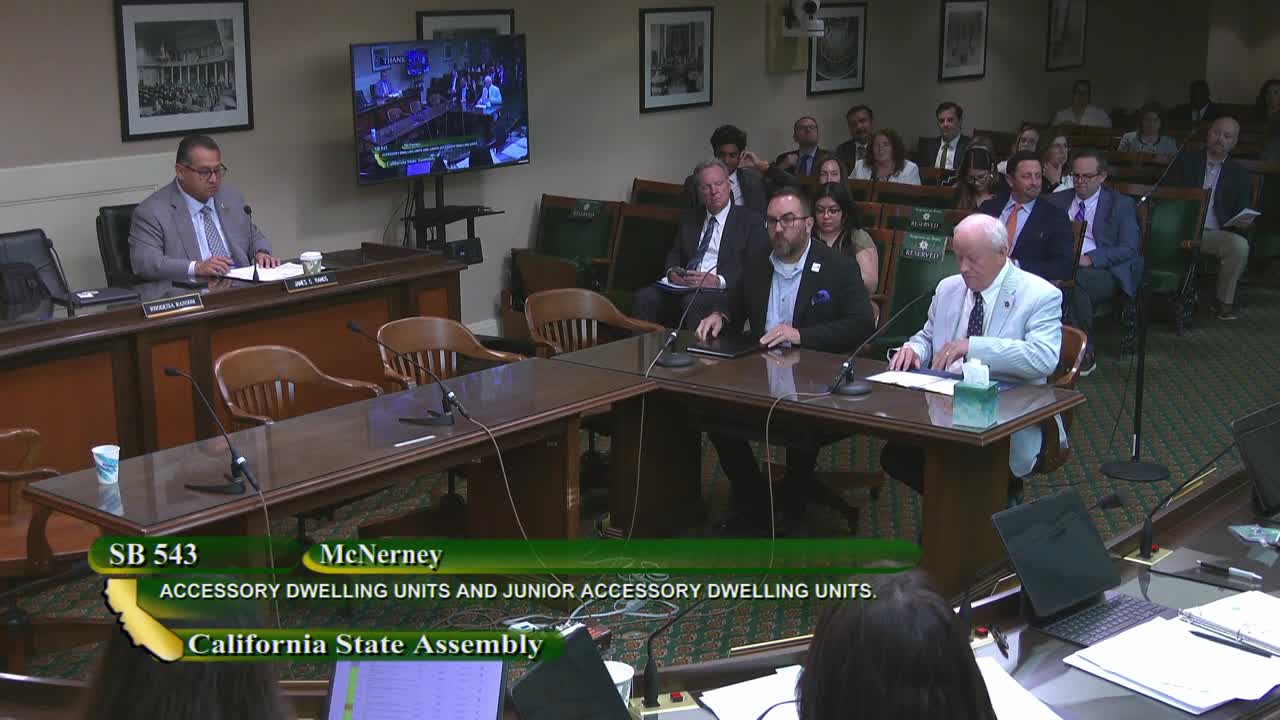 6MIN
Assembly Standing Committee on Local Government
 11MIN
Assembly Standing Committee on Transportation
 10MIN
Senate Floor
 30MIN
Senate Standing Committee on Local Government
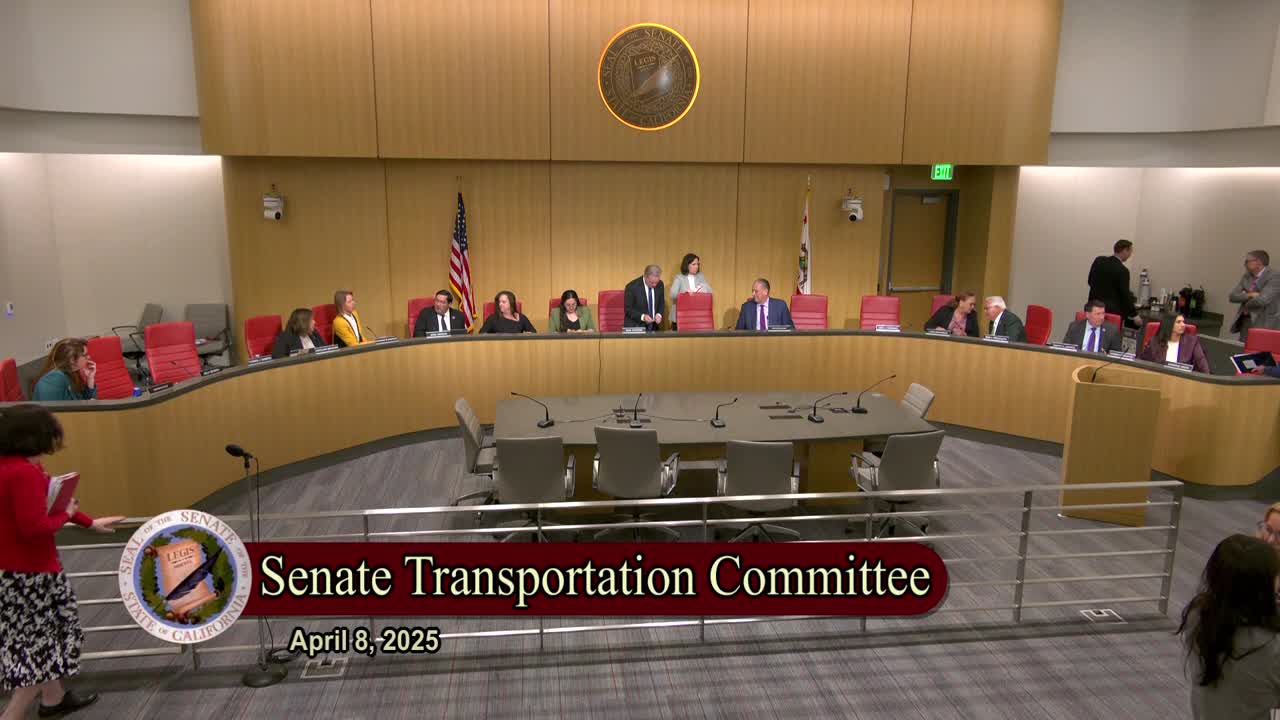 16MIN
Senate Standing Committee on Transportation
Bill Author