SB 550: California State University, San Jose: legal partnership pilot program.
- Session Year: 2025-2026
- House: Senate
- Latest Version Date: 2025-07-09
Current Status:
In Progress
(2025-08-29: August 29 hearing: Held in committee and under submission.)
Introduced
In Committee
Awaiting First Chamber Vote
Passed First Chamber
In Committee
Awaiting Second Chamber Vote
Passed Second Chamber
Enacted
The Donahoe Higher Education Act establishes the segments of postsecondary education in the state, including the University of California and the California State University, and sets forth the missions and functions of those segments. Existing law states that the University of California has exclusive jurisdiction in public higher education over, among others, instruction in the profession of law.
This bill would authorize a state-accredited law school that has operated continuously as an independent nonprofit institution to be incorporated into California State University, San Jose as a constituent academic unit if the law school has been continuously accredited for a minimum of 5 years at the time of incorporation, the governing boards of both institutions approve a merger agreement, and the Trustees of the California State University approve a merger agreement. The bill would require the law school, upon incorporation into California State University, San Jose, to operate under the universitys policies, governance structure, and budget. The bill would require the California State University, San Jose to work with the Chancellor of the California State University to coordinate with the appropriate regulatory bodies to ensure compliance with all legal and accreditation requirements applicable to the law school, as provided.This bill would authorize the Trustees of the California State University to establish a legal education pilot program, consisting of the California State University, San Jose, and a law school accredited by the Committee of Bar Examiners of the State Bar of California as an independent nonprofit institution, to operate for a period of 6 academic years. The bill would require the legal education pilot program to commence only if the trustees approve the program, the governing board of the law school approves the program, and the law school has been continuously accredited for a minimum of 5 years before the first cohort graduates from a joint degree program. The bill would authorize the California State University, San Jose, as part of the legal education pilot program, to partner with the nonprofit law school to jointly award a juris doctor degree and to jointly provide certificate and legal education programs at the undergraduate level. The bill would require the California State University, San Jose, and the nonprofit law school to submit certain information, including an administrative plan and enrollment projections, to the trustees and the governing board of the law school before the trustees and governing board vote to approve the pilot program. The bill would require the Legislative Analysts Office to conduct an interim evaluation and a final evaluation of the program, as provided.
This bill would make these provisions inoperative on July 1, 2041, and would repeal it as of January 1, 2042.
This bill would make legislative findings and declarations as to the necessity of a special statute for the California State University, San Jose.
The Donahoe Higher Education Act establishes the segments of postsecondary education in the state, including the University of California and the California State University, and sets forth the missions and functions of those segments. Existing law states that the University of California has exclusive jurisdiction in public higher education over, among others, instruction in the profession of law.
This bill would authorize a state-accredited law school that has operated continuously as an independent nonprofit institution to be incorporated into California State University, San Jose as a constituent academic unit if the law school has been continuously accredited for a minimum of 5 years at the time of incorporation, the governing boards of both institutions approve a merger agreement, and the Trustees of the California State University approve a merger agreement. The bill would require the law school, upon incorporation into California State University, San Jose, to operate under the universitys policies and policies, governance structure. structure, and budget. The bill would require the California State University, San Jose to work with the Chancellor of the California State University to coordinate with the appropriate regulatory bodies to ensure compliance with all legal and accreditation requirements applicable to the law school, as provided.
This bill would make legislative findings and declarations as to the necessity of a special statute for the California State University, San Jose.
The Donahoe Higher Education Act establishes the segments of postsecondary education in the state, including the University of California and the California State University, and sets forth the missions and functions of those segments. Existing law states that the University of California has exclusive jurisdiction in public higher education over, among others, instruction in the profession of law.
This bill would authorize a state-accredited law school that has operated continuously as an independent nonprofit institution to be incorporated into California State University, San Jose as a constituent academic unit if the law school maintains its accreditation and has been continuously accredited for a minimum of 5 years at the time of incorporation, the governing boards of both institutions approve a merger agreement. agreement, and the Trustees of the California State University approve a merger agreement. The bill would require the law school, upon incorporation into California State University, San Jose, to operate under the universitys policies and governance structure. The bill would require the California State University, San Jose to work with the Chancellor of the California State University to coordinate with the appropriate regulatory bodies to ensure compliance with all legal and accreditation requirements applicable to the law school. school, as provided.
This bill would make legislative findings and declarations as to the necessity of a special statute for the California State University, San Jose.
The Donahoe Higher Education Act establishes the segments of postsecondary education in the state, including the University of California and the California State University, and sets forth the missions and functions of those segments. Existing law states that the University of California has exclusive jurisdiction in public higher education over, among others, instruction in the profession of law.
This bill would authorize a state-accredited law school that has operated continuously as an independent nonprofit institution to be incorporated into California State University, San Jose as a constituent academic unit if the law school maintains its accreditation and the governing boards of both institutions approve a merger agreement. The bill would require the law school, upon incorporation into California State University, San Jose, to operate under the universitys policies and governance structure. The bill would require the California State University, San Jose to work with the Chancellor of the California State University to coordinate with the appropriate regulatory bodies to ensure compliance with all legal and accreditation requirements applicable to the law school.
This bill would make legislative findings and declarations as to the necessity of a special statute for the California State University, San Jose.
Existing law provides for apprenticeship programs within the Division of Apprenticeship Standards within the Department of Industrial Relations, sponsored by specific entities and employers, and requires the Chief of the Division of Apprenticeship Standards to perform various functions with respect to apprenticeship programs and the welfare of apprentices. Existing law also establishes the California Apprenticeship Council within the Division of Apprenticeship Standards and requires the council to issue rules and regulations on apprenticeship standards and certain other topics, as prescribed.This bill would require the Director of Industrial Relations, on or before September 1, 2026, to convene a task force to promote apprenticeship for all populations throughout the state, to be known as the Construction Apprenticeship Advancement Task Force, with membership as prescribed. The bill would require the task force, in consultation with specified entities, to study the recruitment, retention, and barriers to entry of women and other minority, underrepresented, and disadvantaged populations in the state for purposes of ensuring apprenticeship opportunities are more inclusive of those populations. The bill would require the membership of the task force to deliver a report to the Legislature by January 1, 2027, and annually thereafter, that details best practices to promote apprenticeship for all populations throughout the state.Existing law requires the Chief of the Division of Apprenticeship Standards, the California Apprenticeship Council, and the Interagency Advisory Committee on Apprenticeship to annually report separately through the Director of Industrial Relations to the Legislature and the public on their activities. Existing law requires the report to include specified information, including information on the number of individuals, including numbers of women, minorities, foster youth, and homeless youth, in apprenticeship, preapprenticeship, and other specified programs for the current year and in each of the previous 5 years.This bill would expand the required information in the report to include information regarding outreach activities to recruit and retain apprentices from disadvantaged communities and underserved subgroups.Existing law provides for apprenticeship programs within the Division of Apprenticeship Standards within the Department of Industrial Relations, sponsored by specific entities and employers, and requires the Chief of the Division of Apprenticeship Standards to perform various functions with respect to apprenticeship programs and the welfare of apprentices. Existing law also establishes the California Apprenticeship Council within the Division of Apprenticeship Standards and requires the council to issue rules and regulations on apprenticeship standards and certain other topics, as prescribed.
This bill would require the Director of Industrial Relations, on or before September 1, 2026, to convene a task force to promote apprenticeship for all populations throughout the state, to be known as the Construction Apprenticeship Advancement Task Force, with membership as prescribed. The bill would require the task force, in consultation with specified entities, to study the recruitment, retention, and barriers to entry of women and other minority, underrepresented, and disadvantaged populations in the state for purposes of ensuring apprenticeship opportunities are more inclusive of those populations. The bill would require the membership of the task force to deliver a report to the Legislature by January 1, 2027, and annually thereafter, that details best practices to promote apprenticeship for all populations throughout the state.
Existing law requires the Chief of the Division of Apprenticeship Standards, the California Apprenticeship Council, and the Interagency Advisory Committee on Apprenticeship to annually report separately through the Director of Industrial Relations to the Legislature and the public on their activities. Existing law requires the report to include specified information, including information on the number of individuals, including numbers of women, minorities, foster youth, and homeless youth, in apprenticeship, preapprenticeship, and other specified programs for the current year and in each of the previous 5 years.
This bill would expand the required information in the report to include information regarding outreach activities to recruit and retain apprentices from disadvantaged communities and underserved subgroups.
The Legislature finds and declares all both of the following:
(a)California State University, San Jose is a public institution within the California State University system that plays a crucial role in expanding educational access and professional training in the heart of Silicon Valley.
(b)State-accredited law schools provide essential opportunities for students seeking legal education and professional development.
(c)Incorporating a state-accredited law school into California State University, San Jose will enhance access to legal education, expand the universitys academic offerings, and strengthen the pipeline of legal professionals in California. (d)This act facilitates the incorporation of a state-accredited law school that has operated as an independent nonprofit institution and seeks to merge into California State University, San Jose to continue providing legal education under public governance.SEC. 2.Article 9.6 (commencing with Section 89285) is added to Chapter 2 of Part 55 of Division 8 of Title 3 of the Education Code, to read:9.6.California State University, San Jose Law School89285.(a)Notwithstanding any other law, including Section 66010.4, a law school accredited by the Committee of Bar Examiners of the State Bar of California that has operated continuously as an independent nonprofit institution may be incorporated into California State University, San Jose as a constituent academic unit, if all of the following conditions are met:(1)The law school has been continuously accredited for a minimum of five years by the Committee of Bar Examiners of the State Bar of California at the time of incorporation.(2)The governing boards of both institutions approve a merger agreement.(3)The Trustees of the California State University approve a merger agreement.(b)Upon incorporation into California State University, San Jose, the law school shall be recognized as an academic unit within California State University, San Jose, and shall operate under the universitys policies, governance structure, and budget.(c)California State University, San Jose shall work with the Chancellor of the California State University to coordinate with the appropriate regulatory bodies to ensure compliance with all legal and accreditation requirements applicable to the law school, including, but not limited to, Section 6061.7 of the Business and Professions Code.(d)Nothing in this section prevents the California State University, San Jose from working with the Chancellor of the California State University to seek certification by the American Bar Association of a law school incorporated pursuant to this section.SEC. 2.Article 9.6 (commencing with Section 89285) is added to Chapter 2 of Part 55 of Division 8 of Title 3 of the Education Code, to read:9.6.San Jose State University Legal Partnership Pilot Program89285.(a)Notwithstanding Section 66010.4, and commencing on or after January 1, 2027, the Trustees of the California State University may authorize the establishment of a legal education pilot program. A legal education pilot program established pursuant to this article shall commence upon satisfaction of the conditions specified in subdivision (b) and shall operate for a period of six academic years. For purposes of this section, a pilot program shall be deemed to commence when the first cohort of students begins instruction. The legal education pilot program shall consist of the California State University, San Jose, and a law school accredited by the Committee of Bar Examiners of the State Bar of California that has operated continuously as an independent nonprofit institution.
(b)The legal education pilot program shall only commence if all of the following conditions are met:
(1)The Trustees of the California State University approve the program.
(2)The governing board of the law school approves the program.
(3)The law school has been continuously accredited for a minimum of five years by the Committee of Bar Examiners of the State Bar of California before the first cohort graduates from a joint degree program.
(c)When participating in the legal education pilot program, the California State University, San Jose, shall maintain the primary mission of the California State University specified in subdivision (b) of Section 66010.4. The California State University, San Jose, as part of the pilot program, may partner with the nonprofit law school to jointly award a juris doctor degree. The California State University, San Jose, may also partner with the nonprofit law school to jointly provide certificate and legal education programs at the undergraduate level.
(d)The legal education pilot program shall be subject to all of the following limits:
(1)The California State University, San Jose, and the nonprofit law school shall notify a student who applies to the pilot program that the student is required to complete their degree or certificate by the end of the six-year pilot period, as measured from the commencement of the program.
(2)The California State University, San Jose, and the nonprofit law school shall maintain separate records for students who are enrolled in courses affiliated with the pilot program. A student shall be reported as a California State University, San Jose, student for enrollment in undergraduate and graduate courses, and as a law student for enrollment in the nonprofit law schools juris doctor degree program.
(3)A student in a joint juris doctor degree program authorized by this article shall not be charged fees higher than the mandatory systemwide fees, campus fees, and graduate professional program fee charged for graduate degree programs at the California State University, San Jose.
(4)The Trustees of the California State University shall notify the Governor, the Assembly Committee on Higher Education, the Assembly Committee on Judiciary, the Senate Committee on Education, the Senate Committee on Judiciary, and the Legislative Analysts Office upon commencement and conclusion of the pilot program.
(5)The pilot program shall end operation if the independent nonprofit law school ceases to be accredited by the Committee of Bar Examiners of the State Bar of California, unless the law school instead gains accreditation by the American Bar Association.
(e)The California State University, San Jose, and the nonprofit law school shall submit all of the following for review by the Trustees of the California State University and the governing board of the nonprofit law school before a vote to approve the legal education pilot program:
(1)An administrative plan for a joint juris doctor degree and any joint undergraduate courses of study, including, but not limited to, a funding plan.
(2)A description of the joint juris doctor degree programs curriculum, faculty, and facilities.
(3)The enrollment projections for the joint juris doctor degree program.
(4)Documentation regarding regional unmet workforce needs requiring legal education, specifically related to the proposed pilot program, and a written statement supporting the necessity of the pilot program.
(5)Documentation of consultation with the University of California and other regional independent institutions regarding collaborative approaches to meeting regional workforce needs that require legal education.
(f)(1)The Legislative Analysts Office shall conduct an interim evaluation and a final evaluation of the legal education pilot program implemented pursuant to this article.
(2)The results of the interim evaluation shall be reported as a progress report, in writing, to the Legislature and the Governor no later than three years following the commencement of the pilot program. The interim evaluation shall include, but not be limited to, all of the following:
(A)Pilot program costs and the funding sources that were used to finance the pilot program.
(B)Current trends in workforce demands that require legal education being offered through the pilot program.
(C)Current completion rates, if available, for each cohort of students participating in any course of study in the pilot program.
(D)Information on the impact of the pilot program on underserved and underprepared students.
(3)The results of the final evaluation shall be reported, in writing, to the Legislature and the Governor no later than one year following the conclusion of the six-year pilot program. The final evaluation shall include, but is not limited to, all of the following:
(A)The number of new programs implemented under the pilot program, including information identifying the number of new programs, applicants, admissions, enrollments, and degree recipients.
(B)The extent to which the pilot program fulfills identified regional workforce needs in the legal sector, including regional supply and demand data that considers capacity at the legal programs of the University of California and in Californias independent colleges and universities.
(C)Information on the place of employment of students and the subsequent job placement of graduates of the pilot program.
(D)Joint legal degree program costs and the funding sources that were used to finance these programs, including a calculation of cost per degree awarded.
(E)The costs of the joint programs to students, the amount of financial aid offered, and student debt levels of graduates of the programs.
(F)Time-to-degree rates and completion rates for all joint programs.
(G)The extent to which the programs established under this article are in compliance with the requirements of this article.
(H)Information on the impact of the pilot program on underserved and underprepared students.
(I)Recommendations on whether and how the pilot program can or should be extended or expanded.
(4)The California State University, San Jose, and the nonprofit law school shall submit to the Legislative Analysts Office the information necessary to conduct the evaluations, as determined by the Legislative Analysts Office.
(5)A report to be submitted pursuant to paragraph (2) and (3) shall be submitted in compliance with Section 9795 of the Government Code.
89286.This article shall become inoperative on July 1, 2041, and, as of January 1, 2042, is repealed.
SEC. 3.The Legislature finds and declares that a special statute is necessary and that a general statute cannot be made applicable within the meaning of Section 16 of Article IV of the California Constitution because of the urgent need to expand affordable pathways to legal education in underserved communities, the unique alignment between the mission of the California State University, San Jose and the educational needs of the region, the role of California State University, San Jose as a public anchor institution in Silicon Valley, and the distinct absence of a law school within the California State University system.
REVISIONS: HeadingLine 2.The Legislature finds and declares all of the following:
(a)California State University, San Jose is a public institution within the California State University system that plays a crucial role in expanding educational access and professional training in the heart of Silicon Valley.
(b)State-accredited law schools provide essential opportunities for students seeking legal education and professional development.
(c)Incorporating a state-accredited law school into California State University, San Jose will enhance access to legal education, expand the universitys academic offerings, and strengthen the pipeline of legal professionals in California.
(d)This act facilitates the incorporation of a state-accredited law school that has operated as an independent nonprofit institution and seeks to merge into California State University, San Jose to continue providing legal education under public governance.
SEC. 2.Article 9.6 (commencing with Section 89285) is added to Chapter 2 of Part 55 of Division 8 of Title 3 of the Education Code, to read:9.6.California State University, San Jose Law School89285.(a)Notwithstanding any other law, including Section 66010.4, a law school accredited by the Committee of Bar Examiners of the State Bar of California that has operated continuously as an independent nonprofit institution may be incorporated into California State University, San Jose as a constituent academic unit, if all of the following conditions are met:
(1)The law school has been continuously accredited for a minimum of five years by the Committee of Bar Examiners of the State Bar of California at the time of incorporation.
(2)The governing boards of both institutions approve a merger agreement.
(3)The Trustees of the California State University approve a merger agreement.
(b)Upon incorporation into California State University, San Jose, the law school shall be recognized as an academic unit within California State University, San Jose, and shall operate under the universitys policies and policies, governance structure. structure, and budget.
(c)California State University, San Jose shall work with the Chancellor of the California State University to coordinate with the appropriate regulatory bodies to ensure compliance with all legal and accreditation requirements applicable to the law school, including, but not limited to, Section 6061.7 of the Business and Professions Code.
(d)Nothing in this section prevents the California State University, San Jose from working with the Chancellor of the California State University to seek certification by the American Bar Association of a law school incorporated pursuant to this section.
SEC. 3.The Legislature finds and declares that a special statute is necessary and that a general statute cannot be made applicable within the meaning of Section 16 of Article IV of the California Constitution because of the urgent need to expand affordable pathways to legal education in underserved communities, the unique alignment between the mission of the California State University, San Jose and the educational needs of the region, the role of California State University, San Jose as a public anchor institution in Silicon Valley, and the distinct absence of a law school within the California State University system.
The Legislature finds and declares all of the following:
(a)California State University, San Jose is a public institution within the California State University system that plays a crucial role in expanding educational access and professional training in the heart of Silicon Valley.
(b)State-accredited law schools provide essential opportunities for students seeking legal education and professional development.
(c)Incorporating a state-accredited law school into California State University, San Jose will enhance access to legal education, expand the universitys academic offerings, and strengthen the pipeline of legal professionals in California.
(d)This act facilitates the incorporation of a state-accredited law school that has operated as an independent nonprofit institution and seeks to merge into California State University, San Jose to continue providing legal education under public governance.
SEC. 2.Article 9.6 (commencing with Section 89285) is added to Chapter 2 of Part 55 of Division 8 of Title 3 of the Education Code, to read:9.6.California State University, San Jose Law School89285.(a)Notwithstanding any other law, including Section 66010.4, a law school accredited by the Committee of Bar Examiners of the State Bar of California that has operated continuously as an independent nonprofit institution may be incorporated into California State University, San Jose as a constituent academic unit, if both all of the following conditions are met:
(1)The law school maintains its accreditation has been continuously accredited for a minimum of five years by the Committee of Bar Examiners of the State Bar of California at the time of incorporation.
(2)The governing boards of both institutions approve a merger agreement.
(3)The Trustees of the California State University approve a merger agreement.
(b)Upon incorporation into California State University, San Jose, the law school shall be recognized as an academic unit within California State University, San Jose, and shall operate under the universitys policies and governance structure.
(c)California State University, San Jose shall work with the Chancellor of the California State University to coordinate with the appropriate regulatory bodies to ensure compliance with all legal and accreditation requirements applicable to the law school. school, including, but not limited to, Section 6061.7 of the Business and Professions Code.
(d)Nothing in this section prevents the California State University, San Jose from working with the Chancellor of the California State University to seek certification by the American Bar Association of a law school incorporated pursuant to this section.
SEC. 3.The Legislature finds and declares that a special statute is necessary and that a general statute cannot be made applicable within the meaning of Section 16 of Article IV of the California Constitution because of the urgent need to expand affordable pathways to legal education in underserved communities, the unique alignment between the mission of the California State University, San Jose and the educational needs of the region, the role of California State University, San Jose as a public anchor institution in Silicon Valley, and the distinct absence of a law school within the California State University system.
The Legislature finds and declares all of the following:
(a)California State University, San Jose is a public institution within the California State University system that plays a crucial role in expanding educational access and professional training in the heart of Silicon Valley.
(b)State-accredited law schools provide essential opportunities for students seeking legal education and professional development.
(c)Incorporating a state-accredited law school into California State University, San Jose will enhance access to legal education, expand the universitys academic offerings, and strengthen the pipeline of legal professionals in California.
(d)This act facilitates the incorporation of a state-accredited law school that has operated as an independent nonprofit institution and seeks to merge into California State University, San Jose to continue providing legal education under public governance.
SEC. 2.Article 9.6 (commencing with Section 89285) is added to Chapter 2 of Part 55 of Division 8 of Title 3 of the Education Code, to read:9.6.California State University, San Jose Law School89285.(a)Notwithstanding any other law, including Section 66010.4, a law school accredited by the Committee of Bar Examiners of the State Bar of California that has operated continuously as an independent nonprofit institution may be incorporated into California State University, San Jose as a constituent academic unit, if both of the following conditions are met:
(1)The law school maintains its accreditation by the Committee of Bar Examiners of the State Bar of California at the time of incorporation.
(2)The governing boards of both institutions approve a merger agreement.
(b)Upon incorporation into California State University, San Jose, the law school shall be recognized as an academic unit within California State University, San Jose, and shall operate under the universitys policies and governance structure.
(c)California State University, San Jose shall work with the Chancellor of the California State University to coordinate with the appropriate regulatory bodies to ensure compliance with all legal and accreditation requirements applicable to the law school.
SEC. 3.The Legislature finds and declares that a special statute is necessary and that a general statute cannot be made applicable within the meaning of Section 16 of Article IV of the California Constitution because of the urgent need to expand affordable pathways to legal education in underserved communities, the unique alignment between the mission of the California State University, San Jose and the educational needs of the region, the role of California State University, San Jose as a public anchor institution in Silicon Valley, and the distinct absence of a law school within the California State University system.
SECTION 1.Section 3073.4 is added to the Labor Code, to read:3073.4.(a)As used in this section, Construction Apprenticeship Advancement Task Force or task force means the Construction Apprenticeship Advancement Task Force convened in accordance with this section.(b)The Director of Industrial Relations, on or before September 1, 2026, shall convene a task force to promote apprenticeship for all populations throughout the state that shall be known as the Construction Apprenticeship Advancement Task Force.(c)The Director of Industrial Relations shall appoint the following members to the Construction Apprenticeship Advancement Task Force:(1)The Chief of the Division of Apprenticeship Standards or that persons designee.(2)An employee representative of the chairperson of the California Apprenticeship Council or that persons designee.(3)An employer representative of the chairperson of the California Apprenticeship Council or that persons designee.(4)The chairperson of the California Workforce Development Board or that persons designee.(d)(1)The task force shall study the recruitment, retention, and barriers to entry of women and other minority, underrepresented, and disadvantaged populations in the state for purposes of ensuring apprenticeship opportunities are more inclusive of those populations.(2)In conducting the study, the task force shall consult with organizations with experience in working to diversify representation in apprenticeship programs as well as educational entities involved in apprenticeship, including both K12 and community college programs.(e)The membership of the task force shall deliver, pursuant to Section 9795 of the Government Code, a report to the Legislature before January 1, 2027, and annually thereafter, that details best practices to promote apprenticeship for all populations throughout the state.SEC. 2.Section 3073.5 of the Labor Code is amended to read:3073.5.The Chief of the Division of Apprenticeship Standards, the California Apprenticeship Council, and the Interagency Advisory Committee on Apprenticeship shall annually report separately through the Director of Industrial Relations to the Legislature and the public on their activities. The report shall contain information including, but not limited to, analyses of the following:(a)(1)The number of individuals, including numbers of women, minorities, foster youth, and homeless youth, registered in apprenticeship, preapprenticeship, and other programs administered pursuant to this chapter in the state for the current year and in each of the previous five years.(2)For construction trade and firefighter apprenticeship programs, the report shall include demographic data detailing the racial, ethnic, and gender makeup of those participants for the annual reporting period.(3)Information regarding outreach activities to recruit and retain apprentices from disadvantaged communities and underserved subgroups.(b)The number and percentage of participants, including numbers and percentages of women, minorities, foster youth, and homeless youth, registered in each program having five or more participants, and the percentage of those participants who have completed their programs successfully in the current year and in each of the previous five years.(c)Remedial actions taken by the division to assist those programs having difficulty in achieving affirmative action goals or having very low completion rates.(d)The number of disputed issues with respect to individual apprenticeship or other agreements submitted to the Administrator of Apprenticeship for determination and the number of those issues resolved by the administrator or the council on appeal.(e)The number of apprenticeship and other program applications received by the division, the number approved, the number denied and the reason for those denials, the number being reviewed, and deficiencies, if any, with respect to those program applications being reviewed.(f)The number of apprenticeship programs, approved by the Division of Apprenticeship Standards, that are disapproved by the California Apprenticeship Council, and the reasons for those disapprovals.(g)The number of apprenticeship programs receiving reimbursement for related and supplemental instruction pursuant to Section 8152 or 79149.3 of the Education Code including the amounts reimbursed to each program, as reported to the Division of Apprenticeship Standards by the Chancellors Office of the California Community Colleges.(h)The number of apprenticeship programs receiving reimbursement as part of the budget formula developed pursuant to paragraph (2) of subdivision (d) of Section 84750.5 of the Education Code or its successor section, as described in Section 79149.1 of the Education Code including the amounts reimbursed to each program, as reported to the Division of Apprenticeship Standards by the Chancellors Office of the California Community Colleges.(i)The activities of the division in expanding youth apprenticeships and outcomes related to the Youth Apprenticeships Grant Program, including:(1)The number of new youth apprentices registered in the current year.(2)The number of active youth apprentices as of the end of the previous year.(3)The number of youth apprentices and preapprentices supported by the Youth Apprenticeship Grant Program, including numbers of women, minorities, foster youth, homeless youth, and individuals in target populations as defined in subdivision (g) of Section 3122.(4)The number of grant recipients and the amount of funding disbursed through the Youth Apprenticeship Grant Program pursuant to Section 3122.(j)Any apprenticeship standards or regulations that were proposed or adopted in the previous year.(k)For purposes of this section:(1)Current foster youth means a child or nonminor dependent, as defined by Section 675(8) of Title 42 of the United States Code and subdivision (v) of Section 11400 of the Welfare and Institutions Code, who is between the ages of 13 and 21 years, has been removed from the custody of their parent, legal guardian, or Indian custodian, pursuant to Section 361 or Section 726 of the Welfare and Institutions Code, and is under an order of foster care placement by the juvenile court.(2)Former foster youth means a person between the ages of 18 and 26 years who previously met the definition of current foster youth. Former foster youth does not include a child or nonminor dependent whose placement was terminated by reunification with a parent, legal guardian, Indian custodian, appointment of a legal guardian, or adoption.(3)Foster youth means current foster youth and former foster youth.(4)Homeless youth means a person up to 26 years of age who meets the definition of homeless children and youths in Section 11434a(2) of Title 42 of the United States Code, as it read on January 1, 2021.(5)Youth apprentice means an apprentice between the ages of 16 and 24 years.(6)Youth preapprentice means a preapprentice between the ages of 16 and 24 years.(a)As used in this section, Construction Apprenticeship Advancement Task Force or task force means the Construction Apprenticeship Advancement Task Force convened in accordance with this section.
(b)The Director of Industrial Relations, on or before September 1, 2026, shall convene a task force to promote apprenticeship for all populations throughout the state that shall be known as the Construction Apprenticeship Advancement Task Force.
(c)The Director of Industrial Relations shall appoint the following members to the Construction Apprenticeship Advancement Task Force:
(1)The Chief of the Division of Apprenticeship Standards or that persons designee.
(2)An employee representative of the chairperson of the California Apprenticeship Council or that persons designee.
(3)An employer representative of the chairperson of the California Apprenticeship Council or that persons designee.
(4)The chairperson of the California Workforce Development Board or that persons designee.
(d)(1)The task force shall study the recruitment, retention, and barriers to entry of women and other minority, underrepresented, and disadvantaged populations in the state for purposes of ensuring apprenticeship opportunities are more inclusive of those populations.
(2)In conducting the study, the task force shall consult with organizations with experience in working to diversify representation in apprenticeship programs as well as educational entities involved in apprenticeship, including both K12 and community college programs.
(e)The membership of the task force shall deliver, pursuant to Section 9795 of the Government Code, a report to the Legislature before January 1, 2027, and annually thereafter, that details best practices to promote apprenticeship for all populations throughout the state.
SEC. 2.Section 3073.5 of the Labor Code is amended to read:3073.5.The Chief of the Division of Apprenticeship Standards, the California Apprenticeship Council, and the Interagency Advisory Committee on Apprenticeship shall annually report separately through the Director of Industrial Relations to the Legislature and the public on their activities. The report shall contain information including, but not limited to, analyses of the following:
(a)(1)The number of individuals, including numbers of women, minorities, foster youth, and homeless youth, registered in apprenticeship, preapprenticeship, and other programs administered pursuant to this chapter in the state for the current year and in each of the previous five years.
(2)For construction trade and firefighter apprenticeship programs, the report shall include demographic data detailing the racial, ethnic, and gender makeup of those participants for the annual reporting period.
(3)Information regarding outreach activities to recruit and retain apprentices from disadvantaged communities and underserved subgroups.
(b)The number and percentage of participants, including numbers and percentages of women, minorities, foster youth, and homeless youth, registered in each program having five or more participants, and the percentage of those participants who have completed their programs successfully in the current year and in each of the previous five years.
(c)Remedial actions taken by the division to assist those programs having difficulty in achieving affirmative action goals or having very low completion rates.
(d)The number of disputed issues with respect to individual apprenticeship or other agreements submitted to the Administrator of Apprenticeship for determination and the number of those issues resolved by the administrator or the council on appeal.
(e)The number of apprenticeship and other program applications received by the division, the number approved, the number denied and the reason for those denials, the number being reviewed, and deficiencies, if any, with respect to those program applications being reviewed.
(f)The number of apprenticeship programs, approved by the Division of Apprenticeship Standards, that are disapproved by the California Apprenticeship Council, and the reasons for those disapprovals.
(g)The number of apprenticeship programs receiving reimbursement for related and supplemental instruction pursuant to Section 8152 or 79149.3 of the Education Code including the amounts reimbursed to each program, as reported to the Division of Apprenticeship Standards by the Chancellors Office of the California Community Colleges.
(h)The number of apprenticeship programs receiving reimbursement as part of the budget formula developed pursuant to paragraph (2) of subdivision (d) of Section 84750.5 of the Education Code or its successor section, as described in Section 79149.1 of the Education Code including the amounts reimbursed to each program, as reported to the Division of Apprenticeship Standards by the Chancellors Office of the California Community Colleges.
(i)The activities of the division in expanding youth apprenticeships and outcomes related to the Youth Apprenticeships Grant Program, including:
(1)The number of new youth apprentices registered in the current year.
(2)The number of active youth apprentices as of the end of the previous year.
(3)The number of youth apprentices and preapprentices supported by the Youth Apprenticeship Grant Program, including numbers of women, minorities, foster youth, homeless youth, and individuals in target populations as defined in subdivision (g) of Section 3122.
(4)The number of grant recipients and the amount of funding disbursed through the Youth Apprenticeship Grant Program pursuant to Section 3122.
(j)Any apprenticeship standards or regulations that were proposed or adopted in the previous year.
(k)For purposes of this section:
(1)Current foster youth means a child or nonminor dependent, as defined by Section 675(8) of Title 42 of the United States Code and subdivision (v) of Section 11400 of the Welfare and Institutions Code, who is between the ages of 13 and 21 years, has been removed from the custody of their parent, legal guardian, or Indian custodian, pursuant to Section 361 or Section 726 of the Welfare and Institutions Code, and is under an order of foster care placement by the juvenile court.
(2)Former foster youth means a person between the ages of 18 and 26 years who previously met the definition of current foster youth. Former foster youth does not include a child or nonminor dependent whose placement was terminated by reunification with a parent, legal guardian, Indian custodian, appointment of a legal guardian, or adoption.
(3)Foster youth means current foster youth and former foster youth.
(4)Homeless youth means a person up to 26 years of age who meets the definition of homeless children and youths in Section 11434a(2) of Title 42 of the United States Code, as it read on January 1, 2021.
(5)Youth apprentice means an apprentice between the ages of 16 and 24 years.
(6)Youth preapprentice means a preapprentice between the ages of 16 and 24 years.
|
Date
|
Status
|
|---|---|
| Aug 29, 2025 | August 29 hearing: Held in committee and under submission. |
| Aug 20, 2025 | August 20 set for first hearing. Placed on APPR. suspense file. |
| Jul 16, 2025 | From committee: Do pass and re-refer to Com. on APPR. (Ayes 8. Noes 2.) (July 15). Re-referred to Com. on APPR. |
| Jul 16, 2025 | Coauthors revised. |
| Jul 9, 2025 | From committee with author's amendments. Read second time and amended. Re-referred to Com. on JUD. |
| Jul 9, 2025 | From committee: Do pass and re-refer to Com. on JUD. (Ayes 7. Noes 3.) (July 8). Re-referred to Com. on JUD. |
| Jun 24, 2025 | June 24 set for first hearing canceled at the request of author. |
| Jun 9, 2025 | Referred to Coms. on HIGHER ED. and JUD. |
| Jun 3, 2025 | In Assembly. Read first time. Held at Desk. |
| Jun 2, 2025 | Read third time. Passed. (Ayes 29. Noes 6. Page 1375.) Ordered to the Assembly. |
| May 27, 2025 | Read second time. Ordered to third reading. |
| May 23, 2025 | Read second time and amended. Ordered to second reading. |
| May 23, 2025 | From committee: Do pass as amended. (Ayes 5. Noes 0. Page 1204.) (May 23). |
| May 20, 2025 | Set for hearing May 23. |
| May 19, 2025 | May 19 hearing: Placed on APPR. suspense file. |
| May 9, 2025 | Set for hearing May 19. |
| May 1, 2025 | Read second time and amended. Re-referred to Com. on APPR. |
| Apr 30, 2025 | From committee: Do pass as amended and re-refer to Com. on APPR. (Ayes 10. Noes 1. Page 941.) (April 29). |
| Apr 23, 2025 | From committee: Do pass and re-refer to Com. on JUD. (Ayes 5. Noes 1. Page 865.) (April 23). Re-referred to Com. on JUD. |
| Apr 9, 2025 | Set for hearing April 29 in JUD. pending receipt. |
| Apr 4, 2025 | Set for hearing April 23. |
| Apr 2, 2025 | Re-referred to Coms. on ED. and JUD. |
| Mar 27, 2025 | Withdrawn from committee. |
| Mar 27, 2025 | Re-referred to Com. on RLS. |
| Mar 26, 2025 | From committee with author's amendments. Read second time and amended. Re-referred to Com. on L., P.E. & R. |
| Mar 5, 2025 | Referred to Com. on L., P.E. & R. |
| Feb 21, 2025 | From printer. May be acted upon on or after March 23. |
| Feb 20, 2025 | Introduced. Read first time. To Com. on RLS. for assignment. To print. |
|
Date
|
Description
|
Location
|
Votes
|
|
|---|---|---|---|---|
| Jul 15, 2025 | Do pass and be re-referred to the Committee on [Appropriations] | Assembly Standing Committee on Judiciary |
Passed |
|
| Jul 8, 2025 | Do pass and be re-referred to the Committee on [Judiciary] | Assembly Standing Committee on Higher Education |
Passed |
|
| Jun 2, 2025 | Senate 3rd Reading SB550 Cortese | Senate Floor |
Passed |
|
| May 23, 2025 | Do pass as amended | Senate Standing Committee on Appropriations |
Passed |
|
| May 19, 2025 | Placed on suspense file | Senate Standing Committee on Appropriations |
Passed |
|
| Apr 29, 2025 | Do pass as amended, but first amend, and re-refer to the Committee on [Appropriations] | Senate Standing Committee on Judiciary |
Passed |
|
| Apr 23, 2025 | Do pass, but first be re-referred to the Committee on [Judiciary] | Senate Standing Committee on Education |
Passed |
This list shows positions taken on this bill by organizations on the date displayed, which is linked to the original source.
Positions by individuals are not included.
|
Organization
|
Position
|
Date
|
|---|---|---|
| Association of California Colleges and Universities | ** Against | |
| Association of Independent California Colleges Universities | ** Against | |
| Dependency Advocacy Center | ** Support | |
| latinos united for a new america | ** Support | |
| Law Foundation of Silicon Valley | ** Support | |
| Lincoln Law SChool | ** Support | |
| Lincoln Law School of San Jose | ** Support | |
| San Jose Councilmember Michael Mulcahy | ** Support | |
| San Jose State University Mock Trial Program | ** Support | |
| San Jose State University Pre-Law Society | ** Support | |
| Santa Clara County Bar Association | ** Support | |
| Services, Immigrant Rights and Education Network | ** Support | |
| University of California | ** Against |
Date of Hearing: August 20, 2025
ASSEMBLY COMMITTEE ON APPROPRIATIONS
Buffy Wicks, Chair
SBPCA Bill Id:SB 550
Author:(Cortese) – As Amended Ver:July 9, 2025
Policy Committee: | Higher Education | Vote: | 7 - 3 |
Judiciary | 8 - 2 | ||
|
|
Urgency: No State Mandated Local Program: No Reimbursable: No
SUMMARY:
This bill establishes a six-year legal education pilot program offering both a juris doctor degree and undergraduate course of study at the California State University, San Jose, in partnership with a Committee of Bar Examiners (CBE) of the State Bar of California accredited law school that has operated continuously as an independent nonprofit institution.
The bill also requires the Legislative Analyst’s Office (LAO) to conduct an interim and final evaluation of the pilot program.
FISCAL EFFECT:
- Ongoing General Fund costs potentially in the low tens of millions of dollars annually for the CSU related to infrastructure, faculty and staff, accreditation, and other administrative needs required to implement the pilot program. Additionally, the CSU may incur costs of an unknown amount, but possibly in the hundreds of thousands of dollars, associated with offering the program at a cost that is below or equal to the cost of SJSU’s graduate programs.
- While the bill doesn’t create additional state operations costs for the LAO to conduct the interim and final evaluations of the program, it would impact the LAO’s ability to perform its core missions—analysis of the state budget and ballot initiatives—and otherwise provide analytical support to the Legislature.
COMMENTS:
- Purpose. According to the author:
Santa Clara County is home to nearly 2 million residents, but has no public law school. In a region where over 65% of the population identifies as Asian or Latino, both groups remain severely underrepresented among licensed attorneys statewide. Meanwhile, the average law school debt now exceeds $130,000, and 67% of young lawyers report financial stress, deterring many from pursuing legal careers in public service.
SB 550 authorizes a pilot program allowing San José State University (SJSU) and a state-accredited nonprofit law school to partner in jointly awarding Juris Doctor (JD) degrees and undergraduate legal education certificates. This transformative step will enhance educational opportunity, promote equity in the legal profession, and fill a major gap in California’s public higher education infrastructure.
- Background. Accessibility of Law School. By placing a new law school at the CSU San Jose, the bill may create a new and more affordable public pathway into legal professions for underrepresented student groups. The pilot program would be authorized to offer both a juris doctor degree as well as undergraduate coursework and certificates in areas of study such as legal writing and analysis, skills which may help ensure student success at law school and prepare them for careers as lawyers, court reporters, or other professionals within the legal profession.
Possible Duplication of Roles. Historically, pursuant to the state’s master plan for higher education, the University of California (UC), and not the CSU, has been responsible for offering graduate and professional legal education as well as medicine, dentistry, veterinary medicine, and doctoral degrees. However, there is precedent of the Legislature authorizing the CSU to offer applied doctoral degrees if not duplicative of those offered by the UC. To avoid a potential conflict between the bill and the master plan, the bill was recently amended to authorize the pilot program to offer a variety of legal education programs to undergraduates and not solely operate as a program offering juris doctor degrees.
Lincoln Law School. While the bill does not explicitly name Lincoln Law School has the entity with which CSU San Jose would partner to offer the pilot program, as the only law school in San Jose meeting criteria specified in previous iterations of the bill, previous committee analyses have assumed Lincoln to be school in question. At the time this analysis was prepared, the committee was unaware of the feasibility of CSU San Jose to facilitate the pilot program with another law school meeting the criteria of the bill.
Analysis Prepared by: Aaron Heredia / APPR. / (916) 319-2081
Date of Hearing: July 15, 2025
ASSEMBLY COMMITTEE ON JUDICIARY
Ash Kalra, Chair
SBPCA Bill Id:SB 550
Author:(Cortese) – As Amended Ver:July 9, 2025
SENATE VOTE: 29-6
SUBJECT: CALIFORNIA STATE UNIVERSITY, SAN JOSE: LEGAL PARTNERSHIP PILOT PROGRAM
KEY ISSUE: SHOULD THE TRUSTEES OF THE CSU SYSTEM BE AUTHORIZED TO ESTABLISH A SIX-YEAR LEGAL EDUCATION PILOT PROGRAM, CONSISTING OF CSU SAN JOSE AND A LAW SCHOOL ACCREDITED BY THE COMMITTEE OF BAR EXAMINERS OF THE STATE BAR OF CALIFORNIA, WHICH WOULD OFFER A VARIETY OF LAW-RELATED EDUCATIONAL PROGRAMS TO UNDERGRADUATES?
SYNOPSIS
This bill authorizes the Trustees of the California State University to establish a six-year legal education pilot program consisting of CSU San Jose and a law school accredited by the Committee of Bar Examiners of the State Bar of California that would offer a variety of law-related educational programs to undergraduates. As it was introduced and until it was recently amended, the bill proposed to authorize a law school accredited by the Committee of Bar Examiners of the State Bar of California that has operated continuously as an independent nonprofit institution to be incorporated into CSU, San Jose, as a constituent academic unit, if certain criteria were satisfied. This idea raised questions about whether a CSU law school was necessary and appropriate. Because of concerns that a CSU-based law school would conflict with both CSU’s primary responsibility to offer bachelor and master’s degrees in the liberal arts; as well as UC’s primary responsibility for offering doctoral degrees; the bill was amended into the version in print.
The bill may address gaps in existing educational opportunities for undergraduates. While the bill no longer proposes to create a new law school at CSU San Jose, it arguably creates an important new public pathway into the legal profession for first-generation, working-class, and underrepresented students. The program could offer coursework on legal writing and analysis to better prepare undergraduates to succeed in law school (and also teach useful skills for a variety of careers and graduate fields). The bill would allow the program to offer law-related certificate programs. According to the American Bar Association, the number of law school applicants nationwide is significantly lower than its peak in 2004. However, participation in non-JD programs has boomed in recent years, nearly doubling since 2014.
The exact state of the support for the bill in print is uncertain, given that none of the supporters—numerous legal aid organizations, local bar associations, student groups, and nonprofits-- have weighed in on the bill since it was amended by the Committee on Higher Education. The University of California remains opposed to the bill, even as recently amended. The Association of California Colleges and Universities (AICCU) was opposed to the prior version of the bill.
SUMMARY: Authorizes the Trustees of the California State University to establish a six-year legal education pilot program consisting of CSU San Jose and a law school accredited by the Committee of Bar Examiners of the State Bar of California that would offer a variety of law-related educational programs to undergraduates. Specifically, this bill:
- Finds and declares by the Legislature both of the following:
- California State University, San Jose is a public institution within the California State University system that plays a crucial role in expanding educational access and professional training in the heart of Silicon Valley.
- State-accredited law schools provide essential opportunities for students seeking legal education and professional development.
- Provides that, commencing no earlier than January 1, 2027, the Trustees of the California State University may authorize the establishment of a legal education pilot program.
- Specifies that a legal education pilot program established pursuant to this bill shall commence upon satisfaction of the conditions specified in 4) and shall operate for a period of six academic years.
- For purposes of this section, a pilot program shall be deemed to commence when the first cohort of students begins instruction.
- The legal education pilot program shall consist of California State University, San Jose, and a law school accredited by the Committee of Bar Examiners of the State Bar of California that has operated continuously as an independent nonprofit institution.
- Allows the legal education pilot program to commence if all of the following conditions are met:
- The CSU Board of Trustees approves the program.
- The governing board of the law school approves the program.
- The law school has been continuously accredited for a minimum of five years by the Committee of Bar Examiners of the State Bar of California before the first cohort graduates a joint degree program.
- Provides that when participating in the legal education pilot program, California State University, San Jose, shall maintain the primary mission of the California State University as provided under current law.
- Allows the campus, as part of the legal education pilot program, may partner with the non-profit law school to jointly award a Juris Doctorate degree.
- Specifies that the campus may also partner with the non-profit law school to jointly provide certificate and legal education programs at the undergraduate level.
- Makes the legal education pilot program subject to the following limitations:
- The campuses shall notify a student who applies to the legal education pilot program that they are required to complete their degree or certificate by the end of the six-year pilot period, as measured from the commencement of the program.
- The campuses shall maintain separate records for students who are enrolled in courses affiliated with the pilot program. A student shall be reported as a California State University, San Jose student for enrollment in undergraduate and graduate courses, and as a law student for enrollment in the non-profit law school’s Juris Doctorate program.
- A student in a joint Juris Doctorate program authorized by this article shall not be charged fees higher than the mandatory systemwide fees, campuses fees, and graduate professional program fee charged for graduate degree programs at California State University, San Jose.
- The Trustees of the California State University shall notify the Governor, Assembly Committee on Higher Education, Assembly Committee on Judiciary, Senate Committee on Education, Senate Committee on Judiciary, and the Legislative Analyst’s Office upon commencement and conclusion of the pilot program.
- The pilot program shall end operation if the independent nonprofit law school ceases to be accredited by the Committee of Bar Examiners of the State Bar of California, unless the law school instead gains accreditation by the American Bar Association.
- Requires the California State University, San Jose, and a non-profit law school shall submit all of the following for review by the Board of Trustees of the California State University and the governing board of the non-profit law school prior to a vote for pilot approval:
- An administrative plan for a joint Juris Doctorate degree and any joint undergraduate courses of study, including, but not limited to, a funding plan.
- A description of the joint Juris Doctorate degree program’s curriculum, faculty, and facilities.
- The enrollment projections for the joint Juris Doctorate degree pilot program.
- Documentation regarding regional unmet workforce needs requiring legal education, specifically related to the proposed pilot program, and a written statement supporting the necessity of the pilot program.
- Documentation of consultation with the University of California and other regional independent institutions regarding collaborative approaches to meeting regional workforce needs that require legal education.
- Requires the Legislative Analyst’s Office to conduct both an interim and a final evaluation of the legal education pilot program implemented pursuant to the bill; and requires the results of the interim evaluation to be reported as a progress report, in writing, to the Legislature and the Governor no later than three years following the commencement of the pilot program.
- Requires the interim evaluation to include, but is not limited to, all of the following:
- Pilot program costs and the funding sources that were used to finance these programs.
- Current trends in workforce demands that require legal education being offered through the statewide baccalaureate degree pilot program.
- Current completion rates, if available, for each cohort of students participating in any course of study in the pilot program.
- Information on the impact of the pilot program on underserved and underprepared students.
- Requires the results of the final evaluation shall be reported, in writing, to the Legislature and the Governor no later than one year following the conclusion of the six-year pilot program. The final evaluation shall include, but is not limited to, all of the following:
- The number of new programs implemented under the pilot, including information identifying the number of new programs, applicants, admissions, enrollments, and degree recipients.
- The extent to which the legal education pilot program established under this article fulfills identified regional workforce needs in the legal sector, including regional supply and demand data that considers capacity at the legal programs of the University of California, and in California’s independent colleges and universities.
- Information on the place of employment of students and the subsequent job placement of graduates.
- Joint legal degree program costs and the funding sources that were used to finance these programs, including a calculation of cost per degree awarded.
- The costs of the joint programs to students, the amount of financial aid offered, and student debt levels of graduates of the programs.
- Time-to-degree rates and completion rates for all joint programs.
- The extent to which the programs established under this article are in compliance with the requirements of this article.
- Information on the impact of pilot program on underserved and underprepared students.
- Recommendations on whether and how the legal partnership pilot program can or should be extended and expanded.
- Requires campuses to submit the information necessary to conduct the evaluations, as determined by the Legislative Analyst’s Office.
- Requires reports by the LAO to be submitted to the Legislature in compliance with Section 9795 of the Government Code.
- Makes the bill inoperative on July 1, 2041, and as of January 1, 2042, is repealed, unless a later enacted statute that is enacted before January 1, 2042, deletes or extends that date.
- Makes findings regarding the necessity of a special statute.
EXISTING LAW:
- Requires that attorneys who wish to practice law in California generally must be admitted and licensed in this state and must be a member of the State Bar. (Cal. Const., art. VI, Sec. 9.)
- Requires all attorneys who practice law in California to be licensees of the State Bar and establishes the State Bar for the purpose of regulating the legal profession. Pursuant to the State Bar Act, requires the annual mandatory membership fee set by the Board to pay for discipline and other functions to be ratified by the Legislature. (Business and Professions Code Section 6000 et seq.)
- Specifies requirements, in the State Bar Act, for an individual to be certified by the Supreme Court for admission and a license to practice law, including but not limited to, having to pass the general bar examination, passing an examination in professional responsibility, and completing certain legal education in a law school, law office, or judge’s chambers. (Business and Professions Code Section 6060.)
- Requires that law schools not accredited by the State Bar shall provide a disclosure statement after the prospective student pays application fees, but prior to the payment of registration fees, and requires the prospective student to acknowledge and sign the disclosure. (Business and Professions Code Section 6061.)
- Requires the disclosures provided by unaccredited law schools described above to include the following:
- The passage rates of students who have taken the first-year law student’s examination. (Business and Professions Code Section 6061 (c).)
- The passage rates of students who took the final bar examination in the previous five years. (Ibid.)
- The ratio of faculty to students. (Id., at (f).)
- A statement that the education provided by the school may not satisfy the requirements of other states for the practice of law. (Id., at (h).)
- Establishes the CSU, under the administration of the Trustees of the CSU, the University of California (UC), under the administration of the Regents of the UC, the California Community Colleges (CCC), under the administration of the Board of Governors of the CCC, and independent institutions of higher education as four segments of postsecondary education in the state. (Education Code (EDC) Sections 66010, 70900, 66600, and California Constitution, Article IX, Section 9.)
- Differentiates the missions and functions of public and independent institutions of higher education. Under these provisions:
- The primary mission of the CSU is to offer undergraduate and graduate instruction through the master’s degree in the liberal arts and sciences and professional education, including teacher education. The CSU is authorized to establish two-year programs only when mutually agreed upon by the Trustees and the CCC Board of Governors. The CSU is also authorized to jointly award the doctoral degree with the UC and with one or more independent institutions of higher education;
- The UC is authorized to provide undergraduate and graduate instruction and has exclusive jurisdiction in public higher education over graduate instruction in the professions of law, medicine, dentistry, and veterinary medicine. The UC is also the primary state-supported academic agency for research;
- The independent institutions of higher education are required to provide undergraduate and graduate instruction and research in accordance with their respective missions; and,
- The mission and function of the CCC is the offering of academic and vocational instruction at the lower division level, and the CCC is authorized to grant the Associate in Arts and the Associate in Science degrees. The community colleges are also required to offer learning supports to close learning gaps, English as a Second Language instruction, adult noncredit instruction, and support services which help students succeed at the postsecondary level. (EDC Section 66010.4.)
- Authorizes the CSU, in consultation with the UC President, to award professional or applied doctoral degrees statewide that do not duplicate UC doctoral degrees and satisfy certain requirements. (EDC Sections 66046.1 (b) and 66046.2 (b)(3).)
FISCAL EFFECT: As currently in print this bill is keyed fiscal.
COMMENTS: This bill authorizes the Trustees of the California State University to establish a six-year legal education pilot program consisting of CSU San Jose and a law school accredited by the Committee of Bar Examiners of the State Bar of California that would offer a variety of law-related educational programs to undergraduates. According to the author:
Santa Clara County is home to nearly 2 million residents, but has no public law school. In a region where over 65% of the population identifies as Asian or Latino, both groups remain severely underrepresented among licensed attorneys statewide. Meanwhile, the average law school debt now exceeds $130,000, and 67% of young lawyers report financial stress, deterring many from pursuing legal careers in public service.
SB 550 authorizes a pilot program allowing San José State University (SJSU) and a state-accredited nonprofit law school to partner in jointly awarding Juris Doctor (JD) degrees and undergraduate legal education certificates. This transformative step will enhance educational opportunity, promote equity in the legal profession, and fill a major gap in California’s public higher education infrastructure.
Background – Accreditation of Law Schools. The American Bar Association (ABA) accredits law schools throughout the United States, including California law schools. ABA-accredited law schools are required to have a 75% bar passage rate in three out of five years. The State Bar of California (State Bar) also accredits law schools in California. State Bar-accredited law schools are required to maintain a 40% bar passage rate over five years, and are four-year programs. Finally, there are law schools in California that are not accredited by either the ABA, or the State Bar. Unaccredited law schools have no bar passage requirement and are four-year programs.
The California State Bar is unique in the nation in that it accredits 21 law schools in California that are not approved by the ABA. California State Bar-accredited law schools tend to be more affordable than ABA-accredited law schools, and often are located in more rural regions of California. Much like an ABA-accredited law school, graduating from one of California’s 23 State Bar- accredited law schools enables a student to sit for the California Bar Exam. However, some states do not permit students who graduate from a California accredited law school, or any other school not accredited by the ABA, from sitting for the bar exam in those states.
California allows unaccredited law schools to operate in the state (and its graduates to sit for the general bar exam). The Bar offers general information about unaccredited law schools on its website, but lists unaccredited law schools “for informational purposes only.” Its website refers prospective students to pass/fail rates for these schools and states:
Neither the committee nor the State Bar's Office of Admissions will advise prospective students on the advantages or disadvantages of studying law through correspondence, distance-learning, or fixed-facility law schools or the quality of the legal education programs provided by the listed schools.
Bar passage rates -- Graduates of non- accredited law schools face far worse odds of passing the exam. According to statistics from the California State Bar, whereas graduates of ABA-accredited law schools taking the Bar for the first time had a 81.3% chance of passing the examination and first-time takers who are graduates of California Bar-accredited law school had a 36.3% chance of passing the exam, first-time takers who graduated from unaccredited law schools had the lowest passage rate: just 23.5%. Repeat takers from unaccredited law schools passed the exam at a rate of only 10.6%, meaning that nearly 90% of those test takers failed the exam.
Accreditation status First-time takers Repeat takers
California ABA 81.3% 33.9%
Out-of-State ABA 74.7% 28.3%
CA State Bar Accredited (but not ABA) 36.3% 15.8%
Unaccredited 23.5% 10.6%
(California State Bar, General Statistics Report July 2024 California Bar Examhttps://www.calbar.ca.gov/Portals/0/documents/admissions/Examinations/July-2024-CBX-Statistics.pdf.)
The attrition rate among first-year law students at ABA-accredited schools in California is 8%, compared with 42% at California-accredited schools (and 51% at unaccredited law schools). (Sloan, Karen. “California law schools lacking ABA approval show 21% bar pass rate – state report” Reuters (Dec. 4, 2023), available at https://www.reuters.com/legal/government/california-law-schools-lacking-aba-approval-show-21-bar-pass-rate-state-report-2023-12-04/.) But California-accredited and unaccredited law schools play a key role in diversity and accessibility in the state’s lawyer pool, the report notes. (Ibid.) Students of color make up 46% of enrollment in the state’s ABA-accredited law schools; 56% of enrollment in California-accredited school; and 50% of enrollment in unaccredited law schools. (Ibid.) These non-ABA accredited law schools also have significantly lower tuition; the average cost of a Juris Doctor from an ABA-accredited law school in California is $174,233. (Ibid.) That’s more than twice as much as the $75,348 for a J.D. at a California-accredited school or $33,115 at an unaccredited school. (Ibid.)
Concerns about the original version of the bill and recent amendments to address those concerns. As it was introduced and until it was recently amended, the bill proposed to authorize a law school accredited by the Committee of Bar Examiners of the State Bar of California that has operated continuously as an independent nonprofit institution to be incorporated into CSU, San Jose, as a constituent academic unit, if certain criteria were satisfied. This idea raised questions about whether a CSU law school was necessary and appropriate. According to the Assembly Committee on Higher Education:
State statute directs CSU to bear the most extensive responsibility for undergraduate and graduate instruction leading to bachelor and master’s degrees in the liberal arts and sciences, the applied fields, and teacher education, including the authority to award doctoral degrees jointly with UC and independent colleges. UC is to be responsible for being the state’s primary academic research institution. In addition to providing undergraduate and graduate instruction, UC has exclusive jurisdiction over instruction in the profession of law and graduate instruction in the professions of medicine, dentistry, and veterinary medicine, and doctoral degrees.
Despite the differentiation of mission, the Legislature has authorized the CSU to offer applied doctoral degrees beyond its original mission, so long as programs do not duplicate those offered by UC, which holds primary jurisdiction. The assignment of distinct missions is important as it helps to justify allocation of state resources for two separate public university systems, impede mission-creep among institutions, contain growth in costs, and facilitate college access for all eligible California students. Further expansion of CSU through law profession instruction as proposed in this bill would signal the legislature’s willingness to allow CSU to deviate further from their institutional mission and duplicate programs offered by the other segment with primary jurisdiction.
In order to address these issues, the bill recently was amended to reflect a different concept: authorizing the Trustees of the California State University to establish a six-year legal education pilot program consisting of CSU San Jose and a law school accredited by the Committee of Bar Examiners of the State Bar of California that would offer a variety of law-related educational programs to undergraduates.
The bill would allow CSU San Jose, as part of the legal education pilot program, to partner with the non-profit law school to jointly award a Juris Doctorate degree. CSU San Jose also could partner with a non-profit law school accredited by the Committee of Bar Examiners of the State Bar of California to jointly provide certificate and legal education programs at the undergraduate level.
The bill makes the legal education pilot program subject to the limitations set forth in 6) of the bill SUMMARY, above, including both of the following:
- The Trustees of the California State University shall notify the Governor, Assembly Committee on Higher Education, Assembly Committee on Judiciary, Senate Committee on Education, Senate Committee on Judiciary, and the Legislative Analyst’s Office upon commencement and conclusion of the pilot program.
- The pilot program shall end operation if the independent nonprofit law school ceases to be accredited by the Committee of Bar Examiners of the State Bar of California, unless the law school instead gains accreditation by the American Bar Association.
The bill would require the Legislative Analyst’s Office to conduct both an interim and a final evaluation of the legal education pilot program implemented pursuant to the bill; and requires the results of the interim evaluation to be reported as a progress report, in writing, to the Legislature and the Governor no later than three years following the commencement of the pilot program.
The LAO’s final report is required to be submitted to the Legislature and the Governor no later than one year following the conclusion of the six-year pilot program. The final evaluation shall include, but is not limited to, all of the following:
- The number of new programs implemented under the pilot, including information identifying the number of new programs, applicants, admissions, enrollments, and degree recipients.
- The extent to which the legal education pilot program established under this article fulfills identified regional workforce needs in the legal sector, including regional supply and demand data that considers capacity at the legal programs of the University of California, and in California’s independent colleges and universities.
- Information on the place of employment of students and the subsequent job placement of graduates.
- Joint legal degree program costs and the funding sources that were used to finance these programs, including a calculation of cost per degree awarded.
- The costs of the joint programs to students, the amount of financial aid offered, and student debt levels of graduates of the programs.
- Time-to-degree rates and completion rates for all joint programs.
- The extent to which the programs established under this article are in compliance with the requirements of this article.
- Information on the impact of pilot program on underserved and underprepared students.
- Recommendations on whether and how the legal partnership pilot program can or should be extended and expanded.
The bill would become inoperative on July 1, 2041, and as of January 1, 2042, would be repealed, unless a later enacted statute that is enacted before January 1, 2042, deletes or extends that date.
Lincoln Law School San Jose. The bill requires that CSU San Jose’s law school partner in the pilot program is a law school that has been “continuously accredited for a minimum of five years by the Committee of Bar Examiners of the State Bar of California before the first cohort graduates a joint degree program.” Although the bill does not specify which California State Bar-accredited law school would be involved in the proposed pilot program, given that there is currently only one such law school in San Jose—Lincoln Law School in San Jose—it is presumed that Lincoln Law School would likely be the partner. The law school wrote the following in support of the original version of the bill:
As the oldest independent, state-accredited nonprofit law school in the state of California, we have a strong interest in seeing the legislation proposed by SB50 approved. Lincoln Law School is located only a few miles from the San Jose State University campus. Also, there is a history of full-time San Jose State University professors serving as part-time professors at Lincoln.
The law school has impacted government, the judiciary, education, law enforcement and business in northern California and elsewhere. Among the thousands of Lincoln graduates in this area are Senators, Assembly Members, Judges, City Council members and County Supervisors. Many other alumni have improved their professional effectiveness by way of four years of part time study to obtain a JD degree.
. . .
The school would be able to expand its capacity to serve diverse under-served communities. Further, it would be able to increase its course offerings and improve the content of its curriculum.
According to its website, Lincoln Law School in San Jose was continuously accredited by the State Bar’s Committee of Bar Examiners (CBE) from 1993 until January 1, 2023. In August of 2020, the school was issued a notice of noncompliance by the CBE and placed on probation for failure to meet the minimum bar passage rate requirement of 40 percent. In August of 2022, the CBE terminated the schools accreditation effective January 1, 2023 because it did not improve its bar passage rate to the minimum requirement. The school just recently became re-accredited by the CBE on March 14, 2025. It will not be “continuously accredited for a minimum of five years,” as required by the bill, until March of 2030 (assuming that it does not lose accreditation before then).
The bill may address gaps in existing educational opportunities for undergraduates. While the bill no longer proposes to create a new law school at CSU San Jose, it arguably creates an important new public pathway into the legal profession for first-generation, working-class, and underrepresented students. According to the author:
The proposed partnership with Lincoln Law School, where over 77% of students identify as BIPOC and nearly 70% are women, demonstrates a strong commitment to inclusion. Furthermore, public colleges - particularly CSUs - are proven engines of economic mobility and equity, as confirmed by the California Mobility Index. This bill continues that legacy in one of the most diverse and underserved regions in the state.
The program could offer coursework on legal writing and analysis to better prepare undergraduates to succeed in law school (and also teach useful skills for a variety of careers and graduate fields). These types of offerings are especially important for students from minority communities, who are far more likely than their white peers to drop out of law school. According to an analysis of ABA law school attrition data, law school dropouts are more likely to be minorities and men. (Rob Wiederstein, “2020 Law School Attrition Rates Part 1 (May 12, 2021, available at https://www.robwiederstein.org/2021/05/12/2020-law-school-attrition-rates/#conclusion.) The highest attrition rate was among Native American law students (who represent by far the smallest percent of law students to begin with). (Ibid.) Some of the best methods to reduce drop-out rates from law school are programs such as tutoring and workshops for legal writing, reasoning, and exam preparation; and pre-Law preparation for incoming students to help them transition to the rigor of law school. (What Is the Average Dropout Rate from Legal Colleges in the U.S.? (Nov. 23, 2024) The Law to Know, available at https://thelawtoknow.com/2024/11/23/dropout-rate/.)
The bill would allow the program to offer law-related certificate programs. According the American Bar Association, the number of law school applicants nationwide is significantly lower than its peak in 2004. However, “[p]articipation in non-JD programs has boomed in recent years, nearly doubling since 2014, when there were 11,973 non-JD students.” (ABA, Profile of the Legal Profession 2024, Legal Education, available at https://www.americanbar.org/news/profile-legal-profession/legal-education/.) Careers such as court reporting can be lucrative, with annual salaries in Los-Angeles-based federal courts starting at between $110,000 and $126,000 per year (plus benefits). (See https://www.uscourts.gov/sites/default/files/2025-01/2025_court_reporters_rates_of_pay_hired_on_or_after_october_11_2009.pdf.) The average court interpreter salary in California is $126,000 per year, with Sacramento County paying certified court interpreters an average of more than $140,000 per year (plus benefits). (See https://govsalaries.com/salaries/court-interpreter-salary/california.)
ARGUMENTS IN SUPPORT: Writing in support of the prior version of the bill, the Law Foundation of Silicon Valley observes:
California is facing a crisis in affordable legal education. . . . With anticipated changes to the Federal Public Service Loan Forgiveness Program, originally signed into law in 2007 by President George W. Bush, student loans are becoming a less viable option for students to pay for the high cost of law school if they want to work in the public interest sector.
Consequently, legal aid organizations will continue to experience ongoing attorney recruitment challenges and staffing shortfalls. There is no doubt that the high cost of law school and the heavy burden of law school debt put substantial pressure on even the most public service-oriented graduate to pursue higher paying private attorney work outside of public service. This causes real challenges for legal aid organizations, like the Law Foundation. We support SB 550 because the combined cost of law school and living expenses in Santa Clara County make it difficult to hire and retain attorneys. When attorney positions are vacant for a long time, there is a significant impact on our ability to deliver and provide high quality services to low-income community members. The California Justice Gap Study published by the State Bar of California in 2019 found that 60% of low-income Californians experienced at least one civil legal problem over the course of a year. These legal problems range from landlord-tenant, family law, and domestic violence issues and were described as having a severe negative impact on those who experienced them. Therefore, without increased access to an affordable law school, like that which SB 550 would provide, we are concerned that the unmet legal needs of low-income Californians will only increase.
ARGUMENTS IN OPPOSITION: The University of California writes the following to explain its continued opposition to the bill, even as recently amended:
Current law authorizes CSU to offer joint degrees with UC for applied or professional doctoral degrees with a review process that would ensure non-duplication of existing UC degree programs. An evaluation of this program will be conducted by the Legislative Analyst’s Office by December 2028. There have been additional laws passed to allow CCCs to offer bachelor's degree programs as well.
In 2011, the California Postsecondary Education Commission was defunded by the Governor and since then the state has lacked a higher education coordinating body. Currently, the Legislature is considering legislation that would include higher education coordinating entities, with additional considerations around labor market needs and careers. Changes to the Master Plan for Higher Education may be better examined within this body.
Similarly, the Association of California Colleges and Universities (AICCU) writes as follows about the prior version of the bill (which remains relevant to the bill in print):
In recent years, there have been numerous efforts to expand the degree authority of California Community Colleges and the California State University (CSU) systems. We have repeatedly raised concerns about legislation that proposes piecemeal expansions in degree authority at our public segments of higher education, particularly when the proposed expansion is duplicative of existing degree offerings. . . .
Rather than continue this piecemeal approach to new degree offerings, we believe that this discussion, and others like it, should be considered by a statewide higher education and workforce coordinating entity. There are several such proposals for such an entity in deliberation this year, including Assembly Bill 95 (Fong), Senate Bill 638 (Padilla), and the Newsom Administration’s proposed California Education Interagency Council. Such an entity could look to address statewide and regional workforce needs that are not being adequately met by educational pipelines through a variety of approaches and collaborations, without necessarily creating new degree authorities that are duplicative of existing offerings.
REGISTERED SUPPORT / OPPOSITION:
Support (prior version of the bill)
Dependency Advocacy Center
Latinos United for a New America
Law Foundation of Silicon Valley
Lincoln Law School
San Jose Councilmember Michael Mulcahy
San Jose State University Mock Trial Program
San Jose State University Pre-law Society
Santa Clara County Bar Association
Services, Immigrant Rights and Education Network
Opposition
Association of Independent California Colleges & Universities (AICCU) (to the prior version of the bill)
University of California (to the bill in print)
Analysis Prepared by: Alison Merrilees / JUD. / (916) 319-2334
Date of Hearing: July 8, 2025
ASSEMBLY COMMITTEE ON HIGHER EDUCATION
Mike Fong, Chair
SBPCA Bill Id:SB 550
Author:(Cortese) – As Amended Ver:May 23, 2025
[Note: This bill is double-referred to the Assembly Committee on Judiciary and will be heard by that Committee as it relates to issues under its jurisdiction.]
SENATE VOTE: 29-6
SUBJECT: California State University, San Jose: law school
SUMMARY: Authorizes the California State University (CSU), San Jose, to absorb an independent nonprofit law school that is accredited by the California State Bar. Specifically, this bill:
- Notwithstands provisions that establish the mission of California’s public and independent segments of higher education in order to authorize a law school accredited by the Committee of Bar Examiners of the State Bar of California that has operated continuously as an independent nonprofit institution to be incorporated into CSU, San Jose, as a constituent academic unit, if both of the following conditions are met:
- The law school has been continuously accredited for a minimum of five years by the Committee of Bar Examiners of the State Bar of California at the time of incorporation;
- The governing boards of both institutions approve a merger agreement; and,
- The CSU Trustees approve the merger agreement.
- Requires, upon information into CSU, San Jose, the law school be recognized as an academic unit within California State University, San Jose, and operate under the university’s policies, governance structure and budget.
- Requires the CSU, San Jose to work with the Chancellor of the CSU to coordinate with the appropriate regulatory bodies to ensure compliance with all legal and accreditation requirements applicable to the law school.
- States that this bill’s provisions do not prevent CSU, San Jose from working with the CSU Chancellor to seek certification by American Bar Association of the law school.
- Makes various legislative findings and declarations related to the special circumstances in the Silicon Valley region that condition a special law, including expanding affordable pathways to legal education.
- States various findings and declarations related to state accredited law schools.
EXISTING LAW:
- Establishes the CSU, under the administration of the Trustees of the CSU, the University of California (UC), under the administration of the Regents of the UC, the California Community Colleges (CCC), under the administration of the Board of Governors of the CCC, and independent institutions of higher education as four segments of postsecondary education in the state. (Education Code (EDC) Sections 66010, 70900, 66600, and California Constitution, Article IX, Section 9)
- Differentiates the missions and functions of public and independent institutions of higher education. Under these provisions:
- The primary mission of the CSU is to offer undergraduate and graduate instruction through the master’s degree in the liberal arts and sciences and professional education, including teacher education. The CSU is authorized to establish two-year programs only when mutually agreed upon by the Trustees and the CCC Board of Governors. The CSU is also authorized to jointly award the doctoral degree with the UC and with one or more independent institutions of higher education;
- The UC is authorized to provide undergraduate and graduate instruction and has exclusive jurisdiction in public higher education over graduate instruction in the professions of law, medicine, dentistry, and veterinary medicine. The UC is also the primary state-supported academic agency for research;
- The independent institutions of higher education are required to provide undergraduate and graduate instruction and research in accordance with their respective missions; and,
- The mission and function of the CCC is the offering of academic and vocational instruction at the lower division level, and the CCC is authorized to grant the Associate in Arts and the Associate in Science degrees. The community colleges are also required to offer learning supports to close learning gaps, English as a Second Language instruction, adult noncredit instruction, and support services which help students succeed at the postsecondary level. (EDC Section 66010.4)
- Authorizes the CCC Board of Governors, in consultation with the CSU and the UC, to establish baccalaureate degree programs that do not duplicate a baccalaureate degree program offered by the CSU or UC. Allows for the approval of 30 community college baccalaureate degree programs per academic year. Current law further requires the CCC Chancellor to consult and seek feedback from the CSU Chancellor, the UC President, and the President of the Association of Independent California Colleges and Universities on proposed baccalaureate degree programs, as specified, and establishes a mechanism for the assessment, consultation, and approval of programs where duplication is identified, as specified. (EDC Section 78040 et seq.)
- Authorizes the CSU, in consultation with the UC President, to award professional or applied doctoral degrees statewide that do not duplicate UC doctoral degrees and satisfy certain requirements. It further requires a CSU campus seeking authorization to offer a professional or applied doctoral degree to submit specified information on the proposed doctoral degree for review by the CSU Chancellor’s office and approval by the CSU Trustees, as provided. It requires that the CSU Chancellor ensure, among other things, that a proposed doctoral program that receives written objections from the UC President’s Office not be approved for implementation by the trustees unless and until a letter indicating a resolution of the written objections and a mutual agreement, signed by both the CSU Chancellor and the UC President, in support of the CSU offering the proposed doctoral program is submitted to the Assembly Committee on Higher Education and the Senate Committee on Education. (EDC Sections 66046.1 (b) and 66046.2 (b)(3))
FISCAL EFFECT: According to the Senate Committee on Appropriations:
While the CSU indicates that the bill’s fiscal impact is unknown, the ongoing General Fund costs could be in the low millions of dollars each year. This estimate assumes unknown costs for facilities maintenance, faculty and staffing, accreditation, and other administrative costs associated with managing a law school.
COMMENTS: Purpose. According to the author, “California is facing a crisis in affordable legal education. Law school remains out of reach for many due to cost, limited public options, and geographic disparities. Santa Clara County is home to nearly 2 million residents, but has no public law school. In a region where over 65% of the population identifies as Asian or Latino, both groups remain severely underrepresented among licensed attorneys statewide. Meanwhile, the average law school debt now exceeds $130,000, and 67% of young lawyers report financial stress, deterring many from pursuing legal careers in public service.”
“SB 550 authorizes the incorporation of an independent, state-accredited nonprofit law school into California State University, San José (SJSU) - establishing the first public law school in San José and Santa Clara County. This transformative step will enhance educational opportunity, promote equity in the legal profession, and fill a major gap in California’s public higher education infrastructure.”
Jurisdiction. The state has four segments of higher education: three public and one private. Each plays a vital and unique role for the state. Their mission statements are outlined in the Master Plan for Higher Education and by state statute. The CSU is to select its freshmen from the top one-third of high school graduates and maintain a student body comprised of 40 % lower division students and 60 % upper division students. State statute directs CSU to bear the most extensive responsibility for undergraduate and graduate instruction leading to bachelor and master’s degrees in the liberal arts and sciences, the applied fields, and teacher education, including the authority to award doctoral degrees jointly with UC and independent colleges. UC is to be responsible for being the state’s primary academic research institution. In addition to providing undergraduate and graduate instruction, UC has exclusive jurisdiction over instruction in the profession of law and graduate instruction in the professions of medicine, dentistry, and veterinary medicine, and doctoral degrees.
Despite the differentiation of mission, the Legislature has authorized the CSU to offer applied doctoral degrees beyond its original mission, so long as programs do not duplicate those offered by UC, which holds primary jurisdiction. The assignment of distinct missions is important as it helps to justify allocation of state resources for two separate public university systems, impede mission-creep among institutions, contain growth in costs, and facilitate college access for all eligible California students. Further expansion of CSU through law profession instruction as proposed in this bill would signal the legislature’s willingness to allow CSU to deviate further from their institutional mission and duplicate programs offered by the other segment with primary jurisdiction.
Accredited law schools in California. A professional law school offers specialized graduate degrees for careers in the legal profession. The UC has four law schools within its 10-campus system: Berkeley, Davis, Los Angeles, and Irvine. A fifth program is housed at UC College of the Law San Francisco, which is affiliated with UC but has its own governing board. The American Bar Association has accredited all five public law schools. Additionally, among
California’s independent nonprofit institutions of higher education, there are roughly 13 American Bar Association-accredited schools, including at the University of San Francisco, Stanford, and Santa Clara University. There are 20 non-public schools accredited by the State Bar, including Lincoln Law School of San Jose. In total, California is home to 38 accredited law schools, 18 accredited by the American Bar Association and 20 by the Committee of Bar Examiners of the State Bar of California. Notably three of the five UC programs are located in northern California. This bill authorizes CSU, San Jose to absorb a State Bar-accredited law school.
Other options. Tuition costs at a private university can be considerably higher than at a public university. If it is the desire of the Legislature to expand public law degree programs in the state, arguably there are more effective and efficient alternatives that do not require a departure from CSU’s institutional mission. Targeted state support for UC as the segment with primary jurisdiction can increase the number of graduates prepared for the legal profession or facilitate greater proliferation of professional law degree programs. Additionally, improving alignment between CSU, San Jose undergraduate programs and a UC professional law school program such as Berkeley, Davis, or UC College of the Law San Francisco can help achieve regional increases or diversification goals.
Arguments in support. The Law Foundation of Silicon Valley wrote in support, stating that “California is facing a crisis in affordable legal education. Law school remains out of reach for many due to high cost, limited public options, and geographic disparities. In the state, there are five public law schools, all associated with the University of California (“UC”) system. Despite serving nearly half a million students and having geographic diversity, the Cal State system currently has no law school, leaving many qualified aspiring law students with limited affordable options. With anticipated changes to the Federal Public Service Loan Forgiveness Program, originally signed into law in 2007 by President George W. Bush, student loans are becoming a less viable option for students to pay for the high cost of law school if they want to work in the public interest sector. Consequently, legal aid organizations will continue to experience ongoing attorney recruitment challenges and staffing shortfalls. There is no doubt that the high cost of law school and the heavy burden of law school debt put substantial pressure on even the most public service oriented graduate to pursue higher paying private attorney work outside of public service.
This causes real challenges for legal aid organizations, like the Law Foundation.”
The Law Foundation additionally wrote that they support SB 550 (Cortese) because “…the combined cost of law school and living expenses in Santa Clara County make it difficult to hire and retain attorneys. When attorney positions are vacant for a long time, there is a significant impact on our ability to deliver and provide high quality services to low-income community members. The California Justice Gap Study published by the State Bar of California in 2019 found that 60% of low-income Californians experienced at least one civil legal problem over the course of a year. These legal problems range from landlord-tenant, family law, and domestic violence issues and were described as having a severe negative impact on those who experienced them. Therefore, without increased access to an affordable law school, like that which SB 550 would provide, we are concerned that the unmet legal needs of low-income Californians will only increase.”
Arguments in opposition. The UC Office of the President wrote in opposition, stating that “the California Master Plan for Higher Education was adopted in 1960 and establishes the functions of each public higher education segment. Under the plan, the California Community Colleges (CCCs) have an open admission policy with responsibility over lower division undergraduate courses, the [CSU offers] bachelor’s and master’s degree programs, and UC maintains the exclusive authority to offer doctoral degrees. Over the years, legislation has been enacted to change these responsibilities. Current law authorizes CSU to offer joint degrees with UC for applied or professional doctoral degrees with a review process that would ensure non-duplication of existing UC degree programs. An evaluation of this program will be conducted by the Legislative Analyst’s Office by December 2028. There have been additional laws passed to allow CCCs to offer bachelor's degree programs as well…while UC appreciates the author’s intent of offering a public law degree program in San Jose, UC has law schools in San Francisco, Berkeley, Davis, Los Angeles, and Irvine. Two of these locations are about an hour away from San Jose and are accessible through public transit.”
The Association of Independent California Colleges and Universities also wrote in opposition, noting that “In recent years, there have been numerous efforts to expand the degree authority of [CCC] and the [CSU] systems. We have repeatedly raised concerns about legislation that proposes piecemeal expansions in degree authority at our public segments of higher education, particularly when the proposed expansion is duplicative of existing degree offerings. While SB 550 does not necessarily create a new standalone authority for law degrees to be offered by the CSU system, we are concerned that by authorizing a single CSU campus to absorb and offer existing program it functionally sets a new precedent for degree authority. Rather than continue this piecemeal approach to new degree offerings, we believe that this discussion, and others like it, should be considered by a statewide higher education and workforce coordinating entity. There are several such proposals for such an entity in deliberation this year, including Assembly Bill 95 (Fong), Senate Bill 638 (Padilla), and the Newsom Administration’s proposed California Education Interagency Council. Such an entity could look to address statewide and regional workforce needs that are not being adequately met by educational pipelines through a variety of approaches and collaborations, without necessarily creating new degree authorities that are duplicative of existing offerings.”
Committee comments. As noted in the Jurisdiction section above, the Master Plan for Higher Education and existing law specifies that the UC has exclusive jurisdiction over instruction in the profession of law. Yet existing law also creates opportunities for higher education institutions to collaborate productively, as noted in the example of joint doctoral degree programs between CSU and UC, as well as CSU and independent institutions of higher education.
While the legislature has supported past mission expansion in both the CCC and CSU, the absorption of a non-profit law school proposed in SB 550 (Cortese) would be a significant departure from past mission expansions, which have often included pilot programs and studies to assess effectiveness.
The Committee has recommended, and the author has accepted, amendments that would instead create a pilot program between CSU, San Jose, and a non-profit law school that would allow the campuses to partner for a pilot program. Specifically, the amendments would:
- Authorize CSU, San Jose, and an independent nonprofit law school, as part of the legal education pilot program, to jointly award a Juris Doctorate degree. CSU, San Jose, would additionally be authorized to partner with an independent nonprofit law school to jointly provide certificate and legal education programs at the undergraduate level.
- Require both the CSU Board of Trustees and the governing board of the non-profit law school to approve the pilot program upon receipt of specified information, including a funding plan, as well as a description of the joint Juris Doctorate degree program’s curriculum, faculty, and facilities. The campuses would also be required to submit documentation of consultation with the UC and other regional independent institutions regarding collaborative approaches to meeting regional workforce needs that require legal education.
- This pilot will not be authorized to begin before January 1, 2027, will be six years in duration, and will commence following approval of the CSU Board of Trustees and the governing board of the non-profit law school.
Committee staff notes that the specific start and end dates of the pilot will not be codified, in order to give all stakeholders the time necessary to craft and present a plan for approval. Should the pilot receive approval, the respective boards would be required to notify the Legislature and the Legislative Analysts’ Office (LAO).
- The independent non-profit law school would be required to be continuously accredited by the Committee of Bar Examiners of the State Bar of California prior to the first joint degrees being awarded. If the independent nonprofit law school were to lose their accreditation, the pilot program would cease operation.
- Specifies that a student in a joint Juris Doctorate program will not be charged fees higher than the mandatory systemwide fees, campuses fees, and graduate professional program fee charged for graduate degree programs CSU, San Jose.
- Requires the LAO to conduct both an interim and a final evaluation of the legal education pilot program.
- Sunsets the language following the completion of the pilot program.
In order to meet legislative deadlines, these amendments will be processed by the Assembly Committee on Judiciary.
Prior legislation. AB 2633 (Alvarez, Ch. 729, Stats. 2024) authorized the CSU to award undergraduate, graduate, and doctoral degrees jointly with international institutions of higher education.
AB 656 (McCarty), Chapter 663, Statutes of 2023, authorizes the CSU to award professional or applied doctoral degrees statewide, provided that only 10 baccalaureate degree programs are approved per academic year and do not duplicate doctoral degrees offered by the UC, as specified.
SB 684 (Hueso), Chapter 936, Statutes of 2022, authorized CSU to offer the Doctor of Public Health (DrPH) degree, and specified that DrPH degree programs offered by the CSU will focus on health and scientific knowledge translation and transformative community leadership.
AB 927 (Medina), Chapter 565, Statutes of 2021, expanded and indefinitely authorized the CCC Baccalaureate Degree Pilot Program.
AB 422 (Arambula), Chapter 702, Statutes of 2017, authorized CSU to offer the Doctor of Nursing Practice (DNP) degree programs, and specified that the DNP offered by the CSU shall focus on the preparation of nursing faculty to teach in postsecondary nursing education programs and may also train nurses for advanced nursing practice or nurse leadership.
AB 2317 (Mullin), Chapter 267, Statutes of 2016, authorized the CSU to offer the Doctor of Audiology (Au.D) degree, and specifies that the Au.D degree programs at the CSU shall be focused on preparing audiologists to provide health care services.
SB 850 (Block), Chapter 747, Statutes of 2014, authorized the CCC BOG, in consultation with the CSU and the UC, to establish a baccalaureate degree pilot program. The pilot program allowed up to 15 participating community college districts to offer one baccalaureate degree, as long as it does not duplicate a degree program already offered by the CSU or the UC.
AB 2382 (Blumenfield), Chapter 425, Statutes of 2010, authorized the CSU to offer the Doctor of Physical Therapy (D.P.T.) degree, and specified that the D.P.T. degree programs at the CSU shall be focused on preparing physical therapists to provide health care services.
SB 724 (Scott), Chapter 269, Statutes of 2005, authorized the CSU to independently award the Doctor of Education (Ed.D) degree focused solely on preparing administrative leaders for California public K-14 schools.
REGISTERED SUPPORT / OPPOSITION:
Support
Dependency Advocacy Center
Latinos United for a New America
Law Foundation of Silicon Valley
Lincoln Law School
San Jose Councilmember Michael Mulcahy
San Jose State University Mock Trial Program
San Jose State University Pre-law Society
Santa Clara County Bar Association
Services, Immigrant Rights and Education Network
Opposition
Association of Independent California Colleges & Universities (AICCU)
University of California
Analysis Prepared by: Kevin J. Powers / HIGHER ED. / (916) 319-3960
SENATE RULES COMMITTEE Office of Senate Floor Analyses (916) 651-1520 Fax: (916) 327-4478 | SB 550 |
THIRD READING
Bill No: SB 550
Author: Cortese (D)
Amended: 5/23/25
Vote: 21
SENATE EDUCATION COMMITTEE: 5-1, 4/23/25
AYES: Pérez, Cabaldon, Cortese, Gonzalez, Laird
NOES: Choi
NO VOTE RECORDED: Ochoa Bogh
SENATE JUDICIARY COMMITTEE: 10-1, 4/29/25
AYES: Umberg, Allen, Arreguín, Ashby, Caballero, Durazo, Laird, Stern, Wahab, Wiener
NOES: Niello
NO VOTE RECORDED: Valladares, Weber Pierson
SENATE APPROPRIATIONS COMMITTEE: 5-0, 5/23/25
AYES: Caballero, Cabaldon, Grayson, Richardson, Wahab
NO VOTE RECORDED: Seyarto, Dahle
SUBJECT: California State University, San Jose: law school
SOURCE: Author
DIGEST:
This bill authorizes the California State University (CSU), San Jose, to absorb an independent nonprofit law school that is accredited by the California State Bar.
ANALYSIS:
Existing law:
- Establishes the CSU, under the administration of the Trustees of the CSU, the University of California (UC), under the administration of the Regents of the UC, the California Community Colleges (CCC), under the administration of the Board of Governors of the CCC, and independent institutions of higher education as four segments of postsecondary education in the state. (Education Code (EC) § 66010, § 70900, § 66600, and California Constitution, Article IX, Section 9)
- Differentiates the missions and functions of public and independent institutions of higher education. Under these provisions:
- The primary mission of the CSU is to offer undergraduate and graduate instruction through the master’s degree in the liberal arts and sciences and professional education, including teacher education. The CSU is authorized to establish two-year programs only when mutually agreed upon by the Trustees and the CCC Board of Governors. The CSU is also authorized to jointly award the doctoral degree with the UC and with one or more independent institutions of higher education.
- The UC is authorized to provide undergraduate and graduate instruction and has exclusive jurisdiction in public higher education over graduate instruction in the professions of law, medicine, dentistry, and veterinary medicine. The UC is also the primary state-supported academic agency for research.
- The independent institutions of higher education are required to provide undergraduate and graduate instruction and research in accordance with their respective missions.
- The mission and function of the CCC is the offering of academic and vocational instruction at the lower division level, and the CCC is authorized to grant the Associate in Arts and the Associate in Science degrees. The community colleges are also required to offer learning supports to close learning gaps, English as a Second Language instruction, adult noncredit instruction, and support services which help students succeed at the postsecondary level. (EC § 66010.4)
- Authorizes the CCC Board of Governors, in consultation with the CSU and the UC, to establish baccalaureate degree programs that do not duplicate a baccalaureate degree program offered by the CSU or UC. Allows for the approval of 30 community college baccalaureate degree programs per academic year. Current law further requires the CCC Chancellor to consult and seek feedback from the CSU Chancellor, the UC President, and the President of the Association of Independent California Colleges and Universities on proposed baccalaureate degree programs, as specified, and establishes a mechanism for the assessment, consultation, and approval of programs where duplication is identified, as specified. (EC § 78040 et seq.)
- Authorizes the CSU, in consultation with the UC President, to award professional or applied doctoral degrees statewide that do not duplicate UC doctoral degrees and satisfy certain requirements. It further requires a CSU campus seeking authorization to offer a professional or applied doctoral degree to submit specified information on the proposed doctoral degree for review by the CSU Chancellor’s office and approval by the CSU Trustees, as provided. It requires that the CSU Chancellor ensure, among other things, that a proposed doctoral program that receives written objections from the UC President’s Office not be approved for implementation by the trustees unless and until a letter indicating a resolution of the written objections and a mutual agreement, signed by both the CSU Chancellor and the UC President, in support of the CSU offering the proposed doctoral program is submitted to the Assembly Committee on Higher Education and the Senate Committee on Education. (EC § 66046.1 (b) and § 66046.2 (b)(3))
This bill:
- Notwithstands provisions that establish the mission of California’s public and independent segments of higher education in order to authorize a law school accredited by the Committee of Bar Examiners of the State Bar of California that has operated continuously as an independent nonprofit institution to be incorporated into CSU, San Jose, as a constituent academic unit, if both of the following conditions are met:
- The law school has been continuously accredited for a minimum of
five years by the Committee of Bar Examiners of the State Bar of California at the time of incorporation.
- The governing boards of both institutions approve a merger agreement.
- The CSU Trustees approve the merger agreement.
- Requires, upon information into CSU, San Jose, the law school be recognized as an academic unit within California State University, San Jose, and operate under the university’s policies, governance structure and budget.
- Requires the CSU, San Jose to work with the Chancellor of the CSU to coordinate with the appropriate regulatory bodies to ensure compliance with all legal and accreditation requirements applicable to the law school.
- States that this bill’s provisions do not prevent CSU, San Jose from working with the CSU Chancellor to seek certification by American Bar Association of the law school.
- Makes various legislative findings and declarations related to the special circumstances in the Silicon Valley region that condition a special law, including expanding affordable pathways to legal education.
- States various findings and declarations related to state accredited law schools.
Comments
- Rationale for this bill. According to the author, “California is facing a crisis in affordable legal education. Law school remains out of reach for many due to cost, limited public options, and geographic disparities. Despite serving nearly half a million students, the California State University (CSU) system currently has no law school, leaving communities—especially in Silicon Valley—without a public pathway to legal careers. Meanwhile, state-accredited nonprofit law schools are providing valuable, accessible education to diverse student populations, often with deep community ties and public service missions. Merging one into a CSU campus provides a rare opportunity to expand public legal education quickly and affordably.
“SB 550 authorizes the incorporation of an independent, state-accredited nonprofit law school into California State University, San José —establishing the first public law school in the California State University system. This transformative step will enhance educational opportunity, promote equity in the legal profession, and fill a major gap in California’s public higher education infrastructure.”
- Imposes on UC’s jurisdiction. The state has four segments of higher education: three public and one private. Each plays a vital and unique role for the state. Their mission statements are outlined in the Master Plan for Higher Education and by state statute. The CSU is to select its freshmen from the top one-third of high school graduates and maintain a student body comprised of 40 % lower division students and 60 % upper division students. State statute directs CSU to bear the most extensive responsibility for undergraduate and graduate instruction leading to bachelor and master’s degrees in the liberal arts and sciences, the applied fields, and teacher education, including the authority to award doctoral degrees jointly with UC and independent colleges. UC is to be responsible for being the state’s primary academic research institution. In addition to providing undergraduate and graduate instruction, UC has exclusive jurisdiction over instruction in the profession of law and graduate instruction in the professions of medicine, dentistry, and veterinary medicine, and doctoral degrees. Despite the differentiation of mission, the Legislature has authorized the CSU to offer applied doctoral degrees beyond its original mission, so long as programs do not duplicate those offered by UC, which holds primary jurisdiction. The assignment of distinct missions is important as it helps to justify allocation of state resources for two separate public university systems, impede mission-creep among institutions, contain growth in costs, and facilitate college access for all eligible California students. Further expansion of CSU through law profession instruction as proposed in this bill would signal the legislature’s willingness to allow CSU to deviate further from their institutional mission and duplicate programs offered by the other segment with primary jurisdiction.
- Accredited law schools in California. A professional law school offers specialized graduate degrees for careers in the legal profession. The UC has four law schools within its 10-campus system: Berkeley, Davis, Los Angeles, and Irvine. A fifth program is housed at UC College of the Law San Francisco, which is affiliated with UC but has its own governing board. The American Bar Association has accredited all five public law schools. Additionally, among California’s independent nonprofit institutions of higher education, there are roughly 13 American Bar Association-accredited schools, including at the University of San Francisco, Stanford, and Santa Clara University. There are 20 non-public schools accredited by the State Bar, including Lincoln Law School of San Jose. In total, California is home to 38 accredited law schools, 18 accredited by the American Bar Association and 20 by the State Bar. Notably three of the five UC programs are located in northern California. This bill authorizes CSU, San Jose to absorb a State Bar-accredited law school.
- Other options. Tuition costs at a private university can be considerably higher than at a public university. If it is the desire of the Legislature to expand public law degree programs in the state, arguably there are more effective and efficient alternatives that do not require a departure from CSU’s institutional mission. Targeted state support for UC as the segment with primary jurisdiction can increase the number of graduates prepared for the legal profession or facilitate greater proliferation of professional law degree programs. Additionally, improving alignment between CSU, San Jose undergraduate programs and a UC professional law school program such as Berkeley, Davis, or UC College of the Law San Francisco can help achieve regional increases or diversification goals.
- Tuition Costs. Current law allows through existing CSU doctoral degree approval process CSU to raise tuition for their applied doctoral degree programs to the same amount as UC doctoral degree programs. This bill, however, is silent on tuition costs. It is unclear if CSU would charge higher rates for the more advanced degree.
- Capacity at CSU. The Governor’s 2025-2026 budget proposal maintains reductions to CSU’s base budget of $144 million in 2025-26 and ongoing. In the meantime, the Board of Trustees has pursued proposals to consolidate two of its campuses and consolidate administrative functions of three of its Bay Area campuses. Additionally, Sonoma State University proposed significant cuts in its 2025-26 instructional budget reduction plan, which includes the elimination of 23 degree programs. Absorbing a new professional school, such as a school of law, comes with multiple types of specialized degree programs and new budget obligations. This bill authorizes CSU to absorb a new law school, potentially its faculty, staff, facilities and programs.
- Program duplication indicates that California needs better higher education coordination. All of California’s public education institutions share a commitment to work together to ensure that parts of the system work for all Californians. Since the defunding of the California Postsecondary Education Commission in 2011, California has not had a statewide coordinating entity for higher education. The absence of a higher education coordinating entity has hindered the state’s ability to review degree programs or schools to align with state and workforce needs. In its place, changes to higher education’s blueprint are being made one legislative proposal at a time in a piecemeal way, which could result in an uncoordinated and fragmented system. Although this bill is limited to one CSU, it establishes a precedent for permitting duplication of degree program.
FISCAL EFFECT: Appropriation: No Fiscal Com.: Yes Local: No
According to the Senate Appropriations Committee analysis, this bill would have the following fiscal impact:
While the CSU indicates that the bill’s fiscal impact is unknown, the ongoing General Fund costs could be in the low millions of dollars each year. This estimate assumes unknown costs for facilities maintenance, faculty and staffing, accreditation, and other administrative costs associated with managing a law school.
SUPPORT: (Verified 5/23/25)
Dependency Advocacy Center
Latinos United for a New America
Law Foundation of Silicon Valley
Lincoln Law School
San Jose Councilmember Michael Mulcahy
San Jose State University Pre-Law Society
Santa Clara County Bar Association
Services, Immigrant Rights and Education Network
OPPOSITION: (Verified 5/23/25)
Association of Independent California Colleges & Universities
University of California
ARGUMENTS IN SUPPORT: The UC argues, in part, in their opposition letter submitted to the committee, “While UC appreciates the author’s intent of offering a public law degree program in San Jose, UC has law schools in San Francisco, Berkeley, Davis, Los Angeles, and Irvine. Two of these locations are about an hour away from San Jose and are accessible through public transit.”
ARGUMENTS IN OPPOSITION: According to their letter of support, Lincoln Law School states, in part, “As the oldest independent, state-accredited nonprofit law school in the state of California, we have a strong interest in seeing the legislation proposed by SBS0 approved. Lincoln Law School is located only a few miles from the San Jose State University campus. Also, there is a history of full-time San Jose State University professors serving as part-time professors at Lincoln.
“The law school has impacted government, the judiciary, education, law enforcement and business in northern California and elsewhere. Among the thousands of Lincoln graduates in this area are Senators, Assembly Members, Judges, City Council members and County Supervisors. Many other alumni have improved their professional effectiveness by way of four years of part time study to obtain a JD degree.
“Becoming a law school as part of San Jose State University would enable Lincoln to divert a major portion of significant resources currently expended on recruitment to other priorities. The school would be able to expand its capacity to serve diverse under-served communities. Further, it would be able to increase its course offerings and improve the content of its curriculum.”
Prepared by: Olgalilia Ramirez / ED. / (916) 651-4105
5/27/25 11:17:16
**** END ****
SENATE COMMITTEE ON
Senator Anna Caballero, Chair
2025 - 2026 Regular Session
SB 550 (Cortese) - California State University, San Jose: law school
Version: | Policy Vote: |
Urgency: | Mandate: |
Hearing Date: | Consultant: |
Bill Summary:
This bill authorizes an independent nonprofit law school accredited by the California State Bar to be incorporated in the California State University (CSU), San Jose.
*********** ANALYSIS ADDENDUM – SUSPENSE FILE ***********
The following information is revised to reflect amendments
adopted by the committee on May 23, 2025
Fiscal Impact:
While the CSU indicates that the bill’s fiscal impact is unknown, the ongoing General Fund costs could be in the low millions of dollars each year. This estimate assumes unknown costs for facilities maintenance, faculty and staffing, accreditation, and other administrative costs associated with managing a law school.
Committee Amendments:
Provide that, upon incorporation into CSU, San Jose, the law school shall be recognized as an academic unit within CSU, San Jose, and operate under the university’s budget in addition to its policies and governance structure.
-- END --
SENATE COMMITTEE ON
Senator Anna Caballero, Chair
2025 - 2026 Regular Session
SB 550 (Cortese) - California State University, San Jose: law school
Version: | Policy Vote: |
Urgency: | Mandate: |
Hearing Date: | Consultant: |
Bill Summary:
This bill authorizes an independent nonprofit law school accredited by the California State Bar to be incorporated in the California State University (CSU), San Jose.
Fiscal Impact:
While the CSU indicates that the bill’s fiscal impact is unknown, the ongoing General Fund costs could be in the low millions of dollars each year. This estimate assumes unknown costs for facilities maintenance, faculty and staffing, accreditation, and other administrative costs associated with managing a law school.
Background:
Existing law establishes the CSU, under the administration of the Trustees of the CSU, the University of California (UC), under the administration of the Regents of the UC, the California Community Colleges (CCC), under the administration of the Board of Governors of the CCC, and independent institutions of higher education as four segments of postsecondary education in the state. Existing law differentiates the missions and functions of these segments of higher education.
The primary mission of the CSU is to offer undergraduate and graduate instruction through the master’s degree in the liberal arts and sciences and professional education, including teacher education. The CSU is authorized to establish two-year programs only when mutually agreed upon by the Trustees and the CCC Board of Governors. The CSU is also authorized to jointly award the doctoral degree with the UC and with one or more independent institutions of higher education.
The UC is authorized to provide undergraduate and graduate instruction and has exclusive jurisdiction in public higher education over graduate instruction in the professions of law, medicine, dentistry, and veterinary medicine. The UC is also the primary state-supported academic agency for research.
The independent institutions of higher education are required to provide undergraduate and graduate instruction and research in accordance with their respective missions.
The mission and function of the CCC is the offering of academic and vocational instruction at the lower division level, and the CCC is authorized to grant the Associate in Arts and the Associate in Science degrees. The community colleges are also required to offer learning supports to close learning gaps, English as a Second Language instruction, adult noncredit instruction, and support services which help students succeed at the postsecondary level.
Proposed Law:
This bill authorizes a law school accredited by the Committee of Bar Examiners of the State Bar of California that has operated continuously as an independent nonprofit institution to be incorporated into CSU, San Jose, as a constituent academic unit, if all of the following conditions are met:
- The law school has been continuously accredited for a minimum of five years by the Committee of Bar Examiners of the State Bar of California at the time of incorporation.
- The governing boards of both institutions approve a merger agreement.
- The Trustees of the CSU approve a merger agreement.
This bill provides that, upon incorporation into CSU, San Jose, the law school shall be recognized as an academic unit within California State University, San Jose, and operate under the university’s policies and governance structure.
This bill requires the CSU, San Jose to work with the Chancellor of the CSU to coordinate with the appropriate regulatory bodies to ensure compliance with all legal and accreditation requirements applicable to the law school, including, but not limited to, provisions of the Business and Professions Code, as specified.
This bill provides that nothing in the section prevents the CSU, San Jose from working the Chancellor of the CSU to seek certification by the American Bar Association of a law school incorporated pursuant to this section.
Staff Comments:
A professional law school offers specialized graduate degrees for careers in the legal profession. The UC is composed of 10 campuses, four of which have professional law schools—Berkeley, Davis, Los Angeles, and Irvine. The UC College of the Law, San Francisco is a public law school that is affiliated with the UC but has its own governing board. Additionally, among California’s independent nonprofit institutions of higher education, there are 13 schools that have been accredited by the American Bar Association, including the University of San Francisco, Stanford, and Santa Clara University. There are 20 non-public schools accredited by the State Bar, including the Lincoln Law School of San Jose. In total, California has 38 accredited law schools.
This bill authorizes CSU, San Jose to incorporate a law school that is accredited by the State Bar of California and that has operated continuously as an independent nonprofit institution. According to the author, “California is facing a crisis in affordable legal education. Law school remains out of reach for many due to cost, limited public options, and geographic disparities. Despite serving nearly half a million students, the California State University (CSU) system currently has no law school, leaving communities—especially in Silicon Valley—without a public pathway to legal careers. Meanwhile, state-accredited nonprofit law schools are providing valuable, accessible education to diverse student populations, often with deep community ties and public service missions. Merging one into a CSU campus provides a rare opportunity to expand public legal education quickly and affordably.
“SB 550 authorizes the incorporation of an independent, state-accredited nonprofit law school into California State University, San José —establishing the first public law school in the California State University system. This transformative step will enhance educational opportunity, promote equity in the legal profession, and fill a major gap in California’s public higher education infrastructure.”
-- END --
Senator Thomas Umberg, Chair
2025-2026 Regular Session
Bill No: SB 550 (Author:Cortese)
Version: March 26, 2025
Hearing Date: April 29, 2025
Fiscal: Yes
Urgency: No
Consultant: AM
SUBJECT
California State University, San Jose: law school
DIGEST
This bill authorizes a law school accredited by the Committee of Bar Examiners (CBE) of the State Bar of California to be incorporated into California State University (CSU), San Jose as a constituent academic unit if certain conditions are met.
EXECUTIVE SUMMARY
As outlined in the Master Plan for Higher Education and by state statute, the primary mission of the California State University (CSU) is undergraduate and graduate instruction through the master’s degree. The University of California (UC) was granted exclusive jurisdiction in the professions of medicine, dentistry, and veterinary medicine. However, the Legislature has authorized the CSU to expand its mission and offer certain professional doctoral degrees.(See Prior Legislation section, below.) This bill authorizes a law school accredited by the CBE to be incorporated into SJSU, which would establish the first public law school in the CSU system. The author argues this is necessary to address the lack of public legal education opportunities and the affordability of legal education in this state.
The bill is author sponsored and supported by the advocacy organizations representing immigrants and legal services organization’s and the Lincoln Law School of San Jose. The bill is opposed by the Association of California Colleges and Universities and the University of California (UC). The bill passed the Senate Education Committee on a vote of 5 to 1.
PROPOSED CHANGES TO THE LAW
Existing law:
- Differentiates the missions and functions of public and independent institutions of higher education.
- The primary mission of the CSU is to offer undergraduate and graduate instruction through the master’s degree in the liberal arts and sciences and professional education including teacher education. The CSU is authorized to establish two-year programs only when mutually agreed upon by the Trustees and the California Community Colleges (CCC) Board of Governors (BOG). The CSU is also authorized to jointly award the doctoral degree with the UC and with one or more independent institutions of higher education.
- The UC is authorized to provide undergraduate and graduate instruction and has exclusive jurisdiction in public higher education over graduate instruction in the professions of law, medicine, dentistry and veterinary medicine. The UC is also the primary state-supported academic agency for research. (Ed. Code § 66010.4.)
- Provides that the Committee of Bar Examiners is responsible for the approval, regulation, and oversight of degree granting law schools that award the juris doctor (J.D.) professional degree in California and which are not approved by the American Bar Association (ABA). (Bus. & Prof. Code § 6060.7.)
- Requires a law school that is not approved by the American Bar Association (ABA) to publicly disclose on its website, as specified, all of the following information:
- admissions data;
- tuition, fees, and financial aid;
- conditional scholarships;
- enrollment data;
- number of full-time and part-time faculty, technically trained librarians, and administrators;
- average class size of each required course and the number of clinical offerings;
- employment outcomes for graduates; and
- bar passage data. (Bus. & Prof. Code § 6061.7(a).)
- Defines the terms in (a) through (f), below, for the purposes of 3), above.
- “Admissions data” means information from the most recently enrolled fall semester class including the total number of applications, the total number of accepted students, and the 75th, 50th, and 25th percentile scores for the undergraduate grade point averages and law school admission test scores of admitted students.
- “Bar passage data” means the most current cumulative bar pass rates defined and reported by the examining committee of the State Bar.“ Conditional scholarship” means any financial aid award, the retention of which is dependent upon the student maintaining a minimum grade point average or class standing other than that ordinarily required to remain in good academic standing.
- “Curricular offering” means only those courses offered in the current and past two academic years.
- “Employment outcomes for graduates” means the results of a survey by the law school, taken three years after graduation, that breaks down the employment rate of graduates in each of the first three years after graduation, including the rate of employment of graduates in jobs where a Juris Doctor degree is required by the employer and the rate of employment of graduates in jobs where a Juris Doctor degree is an advantage in employment.
- “Enrollment data” means information about the number of students who are admitted to the school per class per year for the past three years, the number of students who transfer to and from the school per class per year for the past three years, and the number of students who do not continue to attend the school each year for the past three years on either a voluntary or involuntary basis.
- “Transfer or articulation agreement” means an agreement between the law school and any other college or university that provides for the transfer of credits earned in the program of instruction. (Bus. & Prof. Code § 6061.7(g).)
This bill:
- Authorizes a law school accredited by the CBE that has operated continuously as an independent nonprofit institution to be incorporated into CSU, San Jose as a constituent academic unit, if both of the following conditions are met:
- the law school maintains its accreditation by the Committee of Bar Examiners of the State Bar of California at the time of incorporation; and
- the governing boards of both institutions approve a merger agreement.
- Provides that, upon incorporation into CSU, San Jose, the law school will be recognized as an academic unit within CSU, San Jose, and will operate under the university’s policies and governance structure.
- Requires the CSU, San Jose to work with the Chancellor of the CSU to coordinate with the appropriate regulatory bodies to ensure compliance with all legal and accreditation requirements applicable to the law school.
- Makes the following findings and declarations of the Legislature:
- CSU, San Jose is a public institution within the CSU system that plays a crucial role in expanding educational access and professional training in the heart of Silicon Valley.
- State-accredited law schools provide essential opportunities for students seeking legal education and professional development.
- Incorporating a state-accredited law school into California State University, San Jose will enhance access to legal education, expand the university’s academic offerings, and strengthen the pipeline of legal professionals in California.
- This act facilitates the incorporation of a state-accredited law school that has operated as an independent nonprofit institution and seeks to merge into CSU, San Jose to continue providing legal education under public governance.
- Provides that the Legislature finds and declares that a special statute is necessary and that a general statute cannot be made applicable within the meaning of Section 16 of Article IV of the California Constitution because of the urgent need to expand affordable pathways to legal education in underserved communities, the unique alignment between the mission of the CSU, San Jose and the educational needs of the region, the role of CSU, San Jose as a public anchor institution in Silicon Valley, and the distinct absence of a law school within the CSU system.
COMMENTS
- Stated need for the bill
The author writes:
California is facing a crisis in affordable legal education. Law school remains out of reach for many due to cost, limited public options, and geographic disparities. Despite serving nearly half a million students across 23 campuses, the California State University (CSU) system currently has no law school, leaving communities—especially in Silicon Valley—without a public pathway to legal careers. Meanwhile, state-accredited nonprofit law schools are providing valuable, accessible education to diverse student populations, often with deep community ties and public service missions. Merging one into a CSU campus provides a rare opportunity to expand public legal education quickly and affordably.
SB 550 authorizes the incorporation of an independent, state-accredited nonprofit law school into California State University, San José —establishing the first public law school in the California State University system. This transformative step will enhance educational opportunity, promote equity in the legal profession, and fill a major gap in California’s public higher education infrastructure.
- Law schools in California
In California, there are three types of law schools: ABA accredited law schools; California accredited law schools, and unaccredited law schools. The CBE is responsible for the approval, regulation, and oversight of law schools that are not ABA accredited. There are 18 ABA accredited law schools in the state, five of which are UCs. There are 20 California accredited laws schools in the state, and six unaccredited law schools operating in the state. An ABA accredited law school must maintain a 75 percent bar passage rate of its graduates within two years of graduation. (ABA Standard 316). California accredited law schools must maintain a minimum, five-year cumulative bar passage rate of 40 percent or more.[1] Graduates from a California accredited law school may not be able to take a bar exam in another state or be licensed to practice law in a jurisdiction other than California, as most states require graduation from an ABA accredited law school as a prerequisite to taking that state’s bar exam and being licensed to practice law.
There is currently one California accredited law school in San Jose—Lincoln Law School in San Jose. Though the bill does not specifically provide that this is the California accredited law school that would be incorporated into CSU, San Jose, it is a very likely candidate due to its location in San Jose. The Board of Trustees of Lincoln law School San Jose writes in support of this bill and states:
Becoming a law school as part of San Jose State University would enable Lincoln to divert a major  portion of significant resources currently expended on recruitment to other priorities. The school would be able to expand its capacity to serve diverse under-served communities. Further, it would be able to increase its course offerings and improve the content of its curriculum.
Lincoln Law School in San Jose was continuously accredited by the CBE from 1993 until January 1, 2023. [2] In August of 2020, the school was issued a notice of noncompliance by the CBE and placed on probation for failure to meet the minimum bar passage rate requirement of 40 percent.[3] In August of 2022, the CBE terminated the schools accreditation effective January 1, 2023 because it did not improve its bar passage rate to the minimum requirement.[4] The school just recently became re-accredited by the CBE on March 14, 2025.[5]
- Consumer protection concerns
Though Lincoln Law School in San Jose is clearly moving in the right direction, its history of losing accreditation and then becoming reaccredited highlights the need for guardrails to protect consumers of legal education. This is especially true as having a California accredited law school housed in CSU, San Jose, may lead consumers to believe that it is an equivalent academic program to UC law schools or other state university law schools that are ABA accredited. Most California accredited law schools are a 4-year program. Any school wishing to incorporate should have to demonstrate that it can maintain accreditation for at least the entirety of a student’s legal education and an additional year in which graduates would most likely attempt the Bar Exam. As such, the Committee may wish to amend the bill to provide that only a California accredited law school that has been continuously accredited for at least five years at the time of incorporation to be eligible to be incorporated into CSU, San Jose. Additionally, the Committee may wish to make it explicit that, should CSU, San Jose incorporate a California accredited law school, nothing prevents CSU, San Jose from seeking ABA accreditation of that legal education program. Lastly, the Board of Trustees of the CSU should have to approve any proposed incorporation. This requirement is the same for UCs, which have to get approval by the UC Regents before opening any new law school.
- Committee Amendments
The specific amendments described in 3), above, are as follows:
Section 89285 of the Education Code is amended to read:
89285. (a) Notwithstanding any other law, including Section 66010.4, a law school accredited by the Committee of Bar Examiners of the State Bar of California that has operated continuously as an independent nonprofit institution may be incorporated into California State University, San Jose as a constituent academic unit, if both all of the following conditions are met:
(1) The law school maintains its accreditation has been continuously accredited for a minimum of five years by the Committee of Bar Examiners of the State Bar of California at the time of incorporation.
(2) The governing boards of both institutions approve a merger agreement.
(3) The Board of Trustees of the California State University system approves a merger agreement.
(b) Upon incorporation into California State University, San Jose, the law school shall be recognized as an academic unit within California State University, San Jose, and shall operate under the university’s policies and governance structure.
(c) California State University, San Jose shall work with the Chancellor of the California State University to coordinate with the appropriate regulatory bodies to ensure compliance with all legal and accreditation requirements applicable to the law school. School, including, but not limited to, Section 6061.7 of the Business and Professions Code.
(d) Nothing in this section prevents the California State University, San Jose from working with the Chancellor of the California State University to seek certification by the American Bar Association of a law school incorporated pursuant to this section.
- Statements in support
Latinos United for a New America writes in support, stating:
Latinos United for a New America (LUNA) supports the incorporation of a state-accredited nonprofit law school into San José State University because it aligns with our mission to empower immigrant and low-income Latino communities through education, civic engagement, and systemic change.
Establishing a public law school in San José State University would provide accessible legal education pathways for local students, particularly first-generation college-goers, and help cultivate a new generation of legal advocates rooted in the community. This initiative would also expand culturally competent legal services in areas like immigration, housing, and workers’ rights—issues central to the lives of the families we serve. By embedding a law school within a public university, we can build long-term capacity for justice and equity in the South Bay, ensuring that legal empowerment is not a privilege, but a public good.
The Law Foundation of Silicon Valley writes in support, stating:
[…]California is facing a crisis in affordable legal education. Law school remains out of reach for many due to high cost, limited public options, and geographic disparities. In the state, there are five public law schools, all associated with the University of California (“UC”) system. Despite serving nearly half a million students and having geographic diversity, the Cal State system currently has no law school, leaving many qualified aspiring law students with limited affordable options. With anticipated changes to the Federal Public Service Loan Forgiveness Program, originally signed into law in 2007 by President George W. Bush, student loans are becoming a less viable option for students to pay for the high cost of law school if they want to work in the public interest sector.
Consequently, legal aid organizations will continue to experience ongoing attorney recruitment challenges and staffing shortfalls. There is no doubt that the high cost of law school and the heavy burden of law school debt put substantial pressure on even the most public service oriented graduate to pursue higher paying private attorney work outside of public service. This causes real challenges for legal aid organizations, like the Law Foundation. We support SB 550 because the combined cost of law school and living expenses in Santa Clara County make it difficult to hire and retain attorneys. […]
- Statements in opposition
The University of California writes in opposition, stating:
The California Master Plan for Higher Education was adopted in 1960 and establishes the functions of each public higher education segment. Under the plan, the California Community Colleges (CCCs) have an open admission policy with responsibility over lower division undergraduate courses; the California State Universities (CSU) offer bachelor’s and master’s degree programs; and UC maintains the exclusive authority to offer doctoral degrees. Over the years, legislation has been enacted to change these responsibilities.
Current law authorizes CSU to offer joint degrees with UC for applied or professional doctoral degrees with a review process that would ensure non-duplication of existing UC degree programs. An evaluation of this program will be conducted by the Legislative Analyst’s Office by December 2028. There have been additional laws passed to allow CCCs to offer bachelor's degree programs as well.
In 2011, the California Postsecondary Education Commission was defunded by the Governor and since then the state has lacked a higher education coordinating body. Currently, the Legislature is considering multiple bills on this subject, with additional considerations around labor market needs and careers. Changes to the Master Plan for Higher Education may be better examined within this body.
While UC appreciates the author’s intent of offering a public law degree program in San Jose, UC has law schools in San Francisco, Berkeley, Davis, Los Angeles, and Irvine. Two of these locations are about an hour away from San Jose and are accessible through public transit.
The Association of California Colleges and Universities writes in opposition, stating:
[…]We have repeatedly raised concerns about legislation that proposes piecemeal expansions in degree authority at our public segments of higher education, particularly when the proposed expansion is duplicative of existing degree offerings. While SB 550 does not necessarily create a new standalone authority for law degrees to be offered by the CSU system, we are concerned that by authorizing a single CSU campus to absorb and offer existing program it functionally sets a new precedent for degree authority.
Rather than continue this piecemeal approach to new degree offerings, we believe that this discussion, and others like it, should be considered by a statewide higher education and workforce coordinating entity. There are several such proposals for such an entity in deliberation this year, including Assembly Bill 95 (Fong), Senate Bill 638 (Padilla), and the Newsom Administration’s proposed California Education Interagency Council. Such an entity could look to address statewide and regional workforce needs that are not being adequately met by educational pipelines through a variety of approaches and collaborations, without necessarily creating new degree authorities that are duplicative of existing offerings.
SUPPORT
Dependency Advocacy Center
Latinos United for a New America
Law Foundation of Silicon Valley
Lincoln Law School of San Jose
San Jose State University Pre-Law Society
Services, Immigrant Rights and Education Network
OPPOSITION
Association of California Colleges and Universities
University of California
RELATED LEGISLATION
Pending Legislation: None known.
Prior Legislation:
AB 2633 (Alvarez, Ch. 729, Stats. 2024) authorized the CSU to award undergraduate, graduate, and doctoral degrees jointly with international institutions of higher education.
AB 656 (McCarty, Ch. 663, Stats. 2023), authorized the CSU to award professional or applied doctoral degrees statewide, provided that only 10 baccalaureate degree programs are approved per academic year and do not duplicate doctoral degrees offered by the UC, as specified.
AB 829 (Bloom, Ch. 18, Stats. 2019) authorized the CSU to establish Doctor of Occupational Therapy degree programs that are distinguished from doctoral degree programs at the University of California.
PRIOR VOTES:
Senate Education Committee (5 Ayes, 1 Noes)
**************
State Bar of Cal, law Schools: Law schools in California accredited by the State Bar’s Committee of Bar Examiners, available at https://www.calbar.ca.gov/Admissions/Law-School-Regulation/Law-Schools. ↑
Lincoln Law School, Accreditation, https://lincolnlawschool.edu/#:~:text=Accreditation,the%20CBE%20in%20August%202024. ↑
Lincoln Law School of San Jose’s Disclosure Statement – Spring 2024, at p. 5, available at https://lincolnlawschool.edu/wp-content/uploads/2024/01/Disclosure-Statement-Spring-2024.pdf. ↑
Ibid. ↑
Fn. 2, supra. ↑
SENATE COMMITTEE ON EDUCATION
Senator Sasha Renée Pérez, Chair
2025 - 2026 Regular
Bill No: SB 550 Hearing Date: April 23, 2025
Author: | |||
Version: | March 26, 2025 | ||
Urgency: | No | Fiscal: | Yes |
Consultant: | Olgalilia Ramirez | ||
Subject: California State University, San Jose: law school.
NOTE: This bill has been referred to the Committees on Education and Judiciary. A “do pass” motion should include referral to the Committee on Judiciary.
SUMMARY
This bill authorizes the California State University (CSU), San Jose, to absorb an independent nonprofit law school that is accredited by the California State Bar.
BACKGROUND
Existing law:
- Establishes the CSU, under the administration of the Trustees of the CSU, the University of California (UC), under the administration of the Regents of the UC, the California Community Colleges (CCC), under the administration of the Board of Governors of the CCC, and independent institutions of higher education as four segments of postsecondary education in the state. (Education Code (EC) § 66010, § 70900, § 66600, and California Constitution, Article IX, Section 9)
- Differentiates the missions and functions of public and independent institutions of higher education. Under these provisions:
- The primary mission of the CSU is to offer undergraduate and graduate instruction through the master’s degree in the liberal arts and sciences and professional education, including teacher education. The CSU is authorized to establish two-year programs only when mutually agreed upon by the Trustees and the CCC Board of Governors. The CSU is also authorized to jointly award the doctoral degree with the UC and with one or more independent institutions of higher education.
- The UC is authorized to provide undergraduate and graduate instruction and has exclusive jurisdiction in public higher education over graduate instruction in the professions of law, medicine, dentistry, and veterinary medicine. The UC is also the primary state-supported academic agency for research.
- The independent institutions of higher education are required to provide undergraduate and graduate instruction and research in accordance with their respective missions.
- The mission and function of the CCC is the offering of academic and vocational instruction at the lower division level, and the CCC is authorized to grant the Associate in Arts and the Associate in Science degrees. The community colleges are also required to offer learning supports to close learning gaps, English as a Second Language instruction, adult noncredit instruction, and support services which help students succeed at the postsecondary level. (EC § 66010.4)
- Authorizes the CCC Board of Governors, in consultation with the CSU and the UC, to establish baccalaureate degree programs that do not duplicate a baccalaureate degree program offered by the CSU or UC. Allows for the approval of 30 community college baccalaureate degree programs per academic year. Current law further requires the CCC Chancellor to consult and seek feedback from the CSU Chancellor, the UC President, and the President of the Association of Independent California Colleges and Universities on proposed baccalaureate degree programs, as specified, and establishes a mechanism for the assessment, consultation, and approval of programs where duplication is identified, as specified. (EC § 78040 et seq.)
- Authorizes the CSU, in consultation with the UC President, to award professional or applied doctoral degrees statewide that do not duplicate UC doctoral degrees and satisfy certain requirements. It further requires a CSU campus seeking authorization to offer a professional or applied doctoral degree to submit specified information on the proposed doctoral degree for review by the CSU Chancellor’s office and approval by the CSU Trustees, as provided. It requires that the CSU Chancellor ensure, among other things, that a proposed doctoral program that receives written objections from the UC President’s Office not be approved for implementation by the trustees unless and until a letter indicating a resolution of the written objections and a mutual agreement, signed by both the CSU Chancellor and the UC President, in support of the CSU offering the proposed doctoral program is submitted to the Assembly Committee on Higher Education and the Senate Committee on Education. (EC § 66046.1 (b) and § 66046.2 (b)(3))
ANALYSIS
This bill:
- Notwithstands provisions that establish the mission of California’s public and independent segments of higher education in order to authorize a law school accredited by the Committee of Bar Examiners of the State Bar of California that has operated continuously as an independent nonprofit institution to be incorporated into CSU, San Jose, as a constituent academic unit, if both of the following conditions are met:
- The law school maintains its accreditation by the Committee of Bar
Examiners of the State Bar of California at the time of incorporation.
- The governing boards of both institutions approve a merger agreement.
- Requires, upon information into CSU, San Jose, the law school be recognized as an academic unit within California State University, San Jose, and operate under the university’s policies and governance structure.
- Requires the CSU, San Jose to work with the Chancellor of the CSU to coordinate with the appropriate regulatory bodies to ensure compliance with all legal and accreditation requirements applicable to the law school.
- Makes various legislative findings and declarations related to the special circumstances in the Silicon Valley region that condition a special law, including expanding affordable pathways to legal education.
- States various findings and declarations related to state accredited law schools.
STAFF COMMENTS
- Rationale for the bill. According to the author, “California is facing a crisis in affordable legal education. Law school remains out of reach for many due to cost, limited public options, and geographic disparities. Despite serving nearly half a million students, the California State University (CSU) system currently has no law school, leaving communities—especially in Silicon Valley—without a public pathway to legal careers. Meanwhile, state-accredited nonprofit law schools are providing valuable, accessible education to diverse student populations, often with deep community ties and public service missions. Merging one into a CSU campus provides a rare opportunity to expand public legal education quickly and affordably.
“SB 550 authorizes the incorporation of an independent, state-accredited nonprofit law school into California State University, San José —establishing the first public law school in the California State University system. This transformative step will enhance educational opportunity, promote equity in the legal profession, and fill a major gap in California’s public higher education infrastructure.”
- Imposes on UC’s jurisdiction. The state has four segments of higher education: three public and one private. Each plays a vital and unique role for the state. Their mission statements are outlined in the Master Plan for Higher Education and by state statute. The CSU is to select its freshmen from the top one-third of high school graduates and maintain a student body comprised of 40 percent lower division students and 60 percent upper division students. State statute directs CSU to bear the most extensive responsibility for undergraduate and graduate instruction leading to bachelor and master’s degrees in the liberal arts and sciences, the applied fields, and teacher education, including the authority to award doctoral degrees jointly with UC and independent colleges. UC is to be responsible for being the state’s primary academic research institution. In addition to providing undergraduate and graduate instruction, UC has exclusive jurisdiction over instruction in the profession of law and graduate instruction in the professions of medicine, dentistry, and veterinary medicine, and doctoral degrees. Despite the differentiation of mission, the Legislature has authorized the CSU to offer applied doctoral degrees beyond its original mission, so long as programs do not duplicate those offered by UC, which holds primary jurisdiction. The assignment of distinct missions is important as it helps to justify allocation of state resources for two separate public university systems, impede mission-creep among institutions, contain growth in costs, and facilitate college access for all eligible California students. Further expansion of CSU through law profession instruction as proposed in this bill would signal the legislature’s willingness to allow CSU to deviate further from their institutional mission and duplicate programs offered by the other segment with primary jurisdiction.
- Accredited law schools in California. A professional law school offers specialized graduate degrees for careers in the legal profession. The UC is composed of 10 campuses, four of which have professional law schools: Berkeley, Davis, Los Angeles, and Irvine. UC College of the Law San Francisco is a public law school that is affiliated with UC but has its own governing board. The American Bar Association has accredited all five public law schools. Additionally, among California’s independent nonprofit institutions of higher education, there are roughly 13 American Bar Association-accredited schools, including at the University of San Francisco, Stanford, and Santa Clara University. There are 20 non-public schools accredited by the State Bar, including Lincoln Law School of San Jose. In total, California is home to 38 accredited law schools, 18 accredited by the American Bar Association and 20 by the State Bar. This bill authorizes CSU, San Jose to absorb a State Bar-accredited law school.
- Is this the appropriate solution? Tuition costs at a private university can be considerably higher than at a public university. If it is the desire of the Legislature to expand public law degree programs in the state, arguably there are more effective and efficient alternatives that do not require a departure from CSU’s institutional mission. Targeted state support for UC as the segment with primary jurisdiction can increase the number of graduates prepared for the legal profession or facilitate greater proliferation of professional law degree programs. Additionally, improving alignment between CSU, San Jose undergraduate programs and a UC professional law school program such as Berkeley, Davis, or UC College of the Law San Francisco can help achieve regional increases or diversification goals. Should existing avenues for partnership with other institutions be exhausted or determined that they are not possible or viable before seeking authorization for CSU professional law degrees?
- Tuition Costs. Tuition cost at a private university are considerable higher e Current law allows through existing CSU doctoral degree approval process CSU to raise tuition for their applied doctoral degree programs to the same amount as UC doctoral degree programs. This bill, however, is silent on tuition costs. It is unclear if CSU would charge higher rates for the more advanced degree.
- Capacity at CSU. CSU is made up of 23 campuses, none of which are authorized to offer professional law instruction. The Governor’s 2025-2026 budget proposal maintains reductions to CSU’s base budget of $375 million in 2025-26 and ongoing. In the meantime, the Board of Trustees has pursued proposals to consolidate two of its campuses and consolidate administrative functions of three of its Bay Area campuses. Additionally, Sonoma State University proposed significant cuts in its 2025-26 instructional budget reduction plan, which includes the elimination of 23 degree programs. Absorbing a new professional school, such as a school of law, comes with multiple types of specialized degree programs. Each segment of state’s public higher education segments has internal procedures for reviewing and authorizing new programs and schools within their institutional missions. Since each new program or school creates additional budget obligations, the proposals are evaluated to ensure they address student needs, avoid duplication, and serve state interests. This bill authorizes CSU to absorb a new law school, potentially its faculty, staff, facilities and programs, given CSU’s fiscal challenges, is an expansion of its function as proposed in this bill appropriate at this time? Is it prudent to grant authorization without an evaluation to assess alignment with workforce needs, state or regional priorities or student demand?
- Program duplication indicates that California needs better higher education coordination. All of California’s public education institutions share a commitment to work together to ensure that parts of the system work for all Californians. Since the defunding of the California Postsecondary Education Commission in 2011, California has not had a statewide coordinating entity for higher education. The absence of a higher education coordinating entity has hindered the state’s ability to review degree programs or schools to align with state and workforce needs. In its place, changes to higher education’s blueprint are being made one legislative proposal at a time in a piecemeal way, which could result in an uncoordinated and fragmented system. Although this bill is limited to one CSU, it establishes a precedent for permitting duplication of degree program.
The committee may wish to consider all of the following:
• What relationship is there among the different missions of California’s higher education segments and their differential ways in which they offer education?
• Is it appropriate to rely solely on the legislative process to implement significant programmatic changes to higher education without any coordination or long-range plan to guide the conversation? Does the legislative process allow for consideration of priority relative to other demands in higher education?
• How should the Legislature leverage the strength of each segment to address regional or statewide workforce needs? What is the expectation for collaboration among the segments?
• The delineation of missions serves as a guide for how and where to allocate state resources. If there is a lack of clarity about institutional missions, what will guide the future of higher education?
- Arguments in opposition. The UC argues, in part, in their opposition letter submitted to the committee, “While UC appreciates the author’s intent of offering a public law degree program in San Jose, UC has law schools in San Francisco, Berkeley, Davis, Los Angeles, and Irvine. Two of these locations are about an
hour away from San Jose and are accessible through public transit.”
- Arguments in support. According to their letter of support, Lincoln Law School states, in part, “As the oldest independent, state-accredited nonprofit law school in the state of California, we have a strong interest in seeing the legislation proposed by SBS0 approved. Lincoln Law School is located only a few miles from the San Jose State University campus. Also, there is a history of full-time San Jose State University professors serving as part-time professors at Lincoln.
“The law school has impacted government, the judiciary, education, law enforcement and business in northern California and elsewhere. Among the thousands of Lincoln graduates in this area are Senators, Assembly Members, Judges, City Council members and County Supervisors. Many other alumni have improved their professional effectiveness by way of four years of part time study to obtain a JD degree.
“Becoming a law school as part of San Jose State University would enable Lincoln to divert a major portion of significant resources currently expended on recruitment to other priorities. The school would be able to expand its capacity to serve diverse under-served communities. Further, it would be able to increase its course offerings and improve the content of its curriculum.”
SUPPORT
Dependency Advocacy Center
Latinos United for a New America
Law Foundation of Silicon Valley
Lincoln Law School
Services, Immigrant Rights and Education Network
OPPOSITION
Association of Independent California Colleges and Universities
University of California
-- END --
Discussed in Hearing
 18MIN
Assembly Standing Committee on Judiciary
 29MIN
Assembly Standing Committee on Higher Education
 3MIN
Senate Floor
 21MIN
Senate Standing Committee on Judiciary
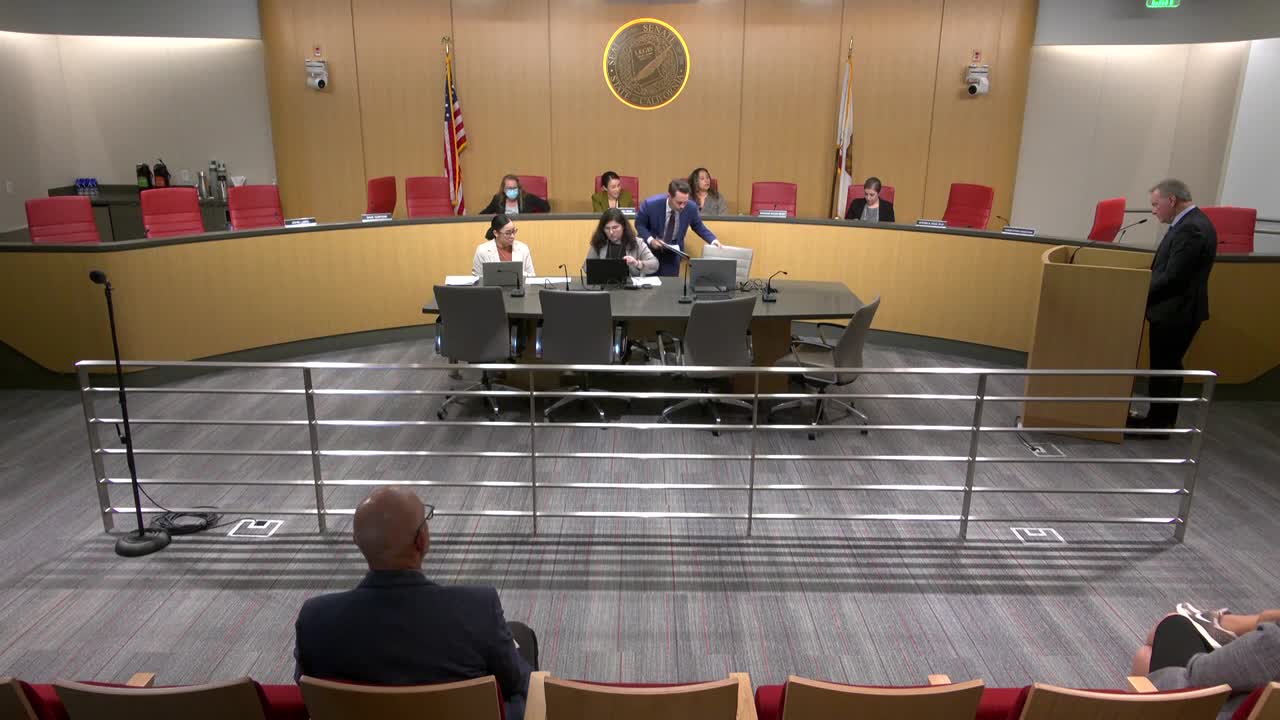 20MIN
Senate Standing Committee on Education
Bill Author
Bill Co-Author(s):
