SB 563: State parks: Off-highway Motor Vehicle Recreation: grants: eligible applicants.
- Session Year: 2025-2026
- House: Senate
- Latest Version Date: 2025-03-26
Current Status:
In Progress
(2025-08-29: August 29 hearing: Held in committee and under submission.)
Introduced
In Committee
Awaiting First Chamber Vote
Passed First Chamber
In Committee
Awaiting Second Chamber Vote
Passed Second Chamber
Enacted
Existing law, the Off-Highway Motor Vehicle Recreation Act of 2003, creates the Division of Off-Highway Motor Vehicle Recreation and requires the division to develop and implement a grant and cooperative agreement program for specified purposes, including to support the planning, acquisition, development, maintenance, administration, operation, enforcement, restoration, and conservation of trails, trailheads, areas, and other facilities associated with use of off-highway motor vehicles. Under existing law, eligible grant and cooperative agreement applicants include, among others, cities, counties, districts, state agencies, agencies of the United States, and federally recognized and state-recognized Native American tribes, as specified.
This bill would expand eligible grant and cooperative agreement applicants to include special districts that employ sworn personnel, as provided.
Existing law authorizes the board of supervisors of a county, by a vote of not less than 3/5 of its membership, to petition the Department of Transportation to cooperate in the improvement of an existing highway or the construction of a proposed highway in that county when the existing highway connects, or the proposed highway will connect, a forest highway system road or national park road that is already built or under construction, with any state highway. Existing law requires that the connecting highway not exceed 50 miles in length.Existing law requires, when any highway sought to be improved or constructed under these provisions is situated in 2 or more counties, that the petition, or the concurrence in that petition, be passed by a 3/5 vote of the membership of the board of supervisors of each of those counties to initiate the proceeding.This bill would make nonsubstantive changes to these provisions.Existing law authorizes the board of supervisors of a county, by a vote of not less than 3/5 of its membership, to petition the Department of Transportation to cooperate in the improvement of an existing highway or the construction of a proposed highway in that county when the existing highway connects, or the proposed highway will connect, a forest highway system road or national park road that is already built or under construction, with any state highway. Existing law requires that the connecting highway not exceed 50 miles in length.
Existing law requires, when any highway sought to be improved or constructed under these provisions is situated in 2 or more counties, that the petition, or the concurrence in that petition, be passed by a 3/5 vote of the membership of the board of supervisors of each of those counties to initiate the proceeding.
This bill would make nonsubstantive changes to these provisions.
(a)The division shall develop and implement a grant and cooperative agreement program to support the planning, acquisition, development, maintenance, administration, operation, enforcement, restoration, and conservation of trails, trailheads, areas, and other facilities associated with the use of off-highway motor vehicles, and programs involving off-highway motor vehicle safety or education.
(b)When appropriated by the Legislature for grants and cooperative agreements, available funds shall be awarded in accordance with the following categories:
(1)Operation and maintenance.
(A)Fifty percent of the funds appropriated by the Legislature pursuant to subdivision (a) of Section 5090.61 shall be expended solely for grants and cooperative agreements for the acquisition, maintenance, operation, planning, development, or conservation of authorized trails and facilities associated with the use of off-highway motor vehicles for recreation or motorized access to nonmotorized recreation.
(B)Guidelines developed to implement this paragraph, pursuant to subdivision (d), shall at a minimum: minimum, do both of the following:
(i)Give preference to applications that sustain existing authorized off-highway motor vehicle recreation opportunities.
(ii)Give additional consideration to applications that improve facilities that provide motorized access to nonmotorized recreation opportunities.
(C)Applications that would affect lands identified as inventoried roadless areas by the Forest Service of the United States Department of Agriculture are eligible for cooperative agreements under paragraph (1) if the application is for a project that does any of the following:
(i)Realigns a forest system road or trail to prevent irreparable resource damage that arises from the design, location, use, or deterioration of a classified route and that cannot be mitigated by route maintenance.
(ii)Reconstructs a national forest system road or trail to implement a route safety improvement project on a classified route determined to be hazardous on the basis of accident experience or accident potential on that route.
(iii)Maintains a road or trail that is included in the National Forest System Roads and Trails on or before January 1, 2009.
(D)Any unencumbered funds under this paragraph shall only be used in future grant cycles for purposes consistent with this paragraph.
(2)Restoration.
(A)Twenty-five percent of the funds appropriated by the Legislature pursuant to subdivision (a) of Section 5090.61 shall be expended solely for grants and cooperative agreements for projects that restore or repair habitat damaged by either legal or illegal off-highway motor vehicle use.
(B)The division shall develop and implement, in consultation with the Wildlife Conservation Board, a competitive grant and cooperative agreement program which shall be administered in accordance with this paragraph.
(C)Funds identified in this paragraph shall be available for grants and cooperative agreements for projects that restore or repair habitat damaged by both legal and illegal off-highway motor vehicle use.
(D)Eligible projects include: include all of the following:
(i)Removal of a road or trail or restoration of an area associated with the rerouting and subsequent closure of a designated road or trail.
(ii)Removal of roads or trails and the restoration of damaged habitats in any area that is not designated for motorized vehicle use.
(iii)The removal of closed roads or trails, or a portion of a closed road or trail, that will help to prevent off-highway motor vehicle access to closed areas.
(iv)Scientific and cultural studies regarding the impact of off-highway motor vehicle recreation not otherwise required by state or federal laws.
(v)Planning to identify appropriate restoration techniques, strategies, and project implementation, including planning associated with environmental review.
(vi)Restoration projects that generally improve and restore the function of natural resource systems damaged by motorized activities.
(E)Eligible applicants include local, state, and federal agencies, federally or state recognized Native American tribes, educational institutions, certified community conservation corps, resource conservation districts, and other eligible nonprofit organizations.
(F)Guidelines developed to implement this paragraph shall at a minimum do all of the following:
(i)Give additional consideration to applications for projects that will restore areas that have experienced the most damage from motorized use or face the highest threat of significant environmental damage from motorized use.
(ii)Guarantee that no grant will be used for the development or maintenance of trails for motorized use.
(iii)Encourage public agencies managing lands to prepare and implement a management and enforcement plan to prevent reoccurring damage from unauthorized use.
(G)Any unencumbered funds under this paragraph shall be used only in future grant cycles for purposes consistent with this paragraph.
(3)Law enforcement.
(A)Twenty percent of the funds appropriated by the Legislature pursuant to subdivision (a) of Section 5090.61 shall be available for law enforcement grants and cooperative agreements and shall be allocated to local and federal law enforcement entities for peace officers or other personnel who have authority to issue citations or take other official law enforcement action, and related equipment. The amount of the grant or cooperative agreement shall be proportionate to the off-highway motor vehicle enforcement needs under each entitys jurisdiction.
(B)The division shall develop a method to determine the law enforcement needs for each applicant. Forty percent of law enforcement grants and cooperative agreements shall be given to local law enforcement entities, 30 percent to units of the United States Bureau of Land Management, and 30 percent to units of the United States Forest Service.
(C)The division shall develop eligibility guidelines for law enforcement projects. The guidelines, at a minimum, shall require the applicant to do all of the following:
(i)Specify formal and informal cooperation with other appropriate law enforcement entities, including any applicable federal entities.
(ii)Establish a policy on how violations of off-highway motor vehicle laws and regulations will be enforced on federal land, if the applicant is a local law enforcement entity.
(iii)Identify areas with high priority law enforcement needs because of public safety, cultural resources, and sensitive environmental habitats, including wilderness areas and areas of critical environmental concern.
(iv)Explain whether the applicant is recovering a portion of law enforcement costs directly associated with privately sponsored events where sponsors have obtained a local permit.
(v)Establish a public education program that includes information regarding safety programs offered in the area and how to report off-highway motor vehicle operation violations.
(vi)Specify how personnel is trained and educated regarding off-highway motor vehicle safety and resource and cultural protection.
(D)Notwithstanding subdivision (h), law enforcement entities that receive funds allocated pursuant to this paragraph shall be subject to a financial and performance audit at least once every five years. The audits may be conducted in a random order. As part of the audit, the department shall consider whether the law enforcement entity has spent the grant money in accordance with its application.
(E)Any unencumbered funds under this paragraph shall be used only in future grant cycles for purposes consistent with this paragraph.
(4)Education and safety.
(A)Five percent of the funds appropriated by the Legislature pursuant to subdivision (a) of Section 5090.61 shall be available for grants and cooperative agreements that either provide comprehensive education that teaches off-highway motor vehicle safety, environmental responsibility, and respect for private property, or provide safety programs associated with off-highway motor vehicle recreation.
(B)Any unencumbered funds under this paragraph shall be used only in future grant cycles for purposes consistent with this paragraph.
(c)Eligible grant and cooperative agreement applicants include:
(1)Cities, counties, and districts that have approval to apply for grant funds, in the form of a resolution from their governing body.
(2)State agencies for projects under paragraph (2) of subdivision (b).
(3)Agencies of the United States.
(4)Federally and state recognized Native American tribes.
(5)Educational institutions, certified community conservation corps, resource conservation districts, and other eligible nonprofit organizations for eligible projects described in subdivision (f).
(6)Special districts that employ sworn personnel as provided by Section 830 of the Penal Code.
(d)Guidelines developed to implement this program shall at a minimum do all of the following:
(1)Distribute grants and cooperative agreements on a competitive basis, except for law enforcement grants allocated in accordance with paragraph (3) of subdivision (b).
(2)Be developed with public input, including focus groups.
(3)Require applications to be in accordance with local or federal plans and the strategic plan for off-highway motor vehicle recreation prepared by the division.
(4)Require grant applicants to comply with the California Environmental Quality Act (Division 13 (commencing with Section 21000)). Applicants for cooperative agreements shall complete environmental review procedures that are at least comparable to those of the California Environmental Quality Act (Division 13 (commencing with Section 21000)).
(5)Require the applicant to agree to provide matching funds or the equivalent value of services or material used, in an amount not less than 25 percent of the total project cost, except for the category of restoration, which shall not be less than 10 percent of the total project cost.
(6)Require the applicant, if it is a city or county, to disclose how fees collected pursuant to Section 38230 of the Vehicle Code are being used and whether the use of these fees complements the applicants project.
(7)Fund all eligible applications to the extent feasible.
(e)All grants and cooperative agreements involving ground disturbing activities shall be subject to the uniform application of soil and wildlife habitat protection standards specified in Section 5090.53.
(f)Grants may be awarded to educational institutions and nonprofit organizations. Eligible projects shall be limited to scientific research, natural resource conservation activities, trail and facility maintenance, restoration, and programs involving off-highway motor vehicle safety or education. If the application for grant funds involves activities on any public lands, all of the following shall apply:
(1)The applicant shall include a work plan for the project.
(2)The applicant shall provide written permission from the appropriate land manager to conduct a project, including a description of how the project fits with the land management goals of the area.
(3)The applicant shall provide matching funds or the equivalent value of volunteer services or material used, in an amount not less than 25 percent of the total project cost, except for the category of restoration, which shall not be less than 10 percent of the total project cost.
(4)The applicant shall be fiscally responsible for adhering to the terms and conditions of the grants.
(g)The deputy director of the division shall not participate in the scoring of grants or cooperative agreements.
(h)The department shall conduct an annual financial audit of the grants and cooperative agreements program. During each year, the department shall also conduct, or cause to be conducted, an audit of the performance of a minimum of 20 percent of grant and cooperative agreement recipients.
(i)The division shall establish an administrative appeal process as part of the grants and cooperative agreements program. At a minimum, this process shall do all of the following:
(1)Give applicants the right to appeal on the following grounds:
(A)The division failed to follow regulations established for the award of grants and cooperative agreements.
(B)The division lacked sufficient factual evidence to support or deny the award of a grant or cooperative agreement.
(2)Require the applicant to first appeal to the deputy director of the division. If that appeal is denied, the applicant may then appeal to the director of the division, or the directors appointee.
(3)Require applicants to file their first appeal within 30 calendar days following the notice of award or denial of a grant or cooperative agreement. Notice of the decision or the rejection of the appeal shall be issued within 60 days following the filing of an appeal.
(4)Require applicants to exhaust these appeal rights prior to before seeking other legal remedies through the courts.
(j)A grant shall not be made, nor a cooperative agreement entered into, pursuant to this section without the approval of the director.
SECTION 1.Section 790 of the Streets and Highways Code is amended to read:790.(a)The board of supervisors of a county may, by a vote of not less than three-fifths of its membership, petition the department to cooperate, under the provisions of this article, in the improvement of an existing highway or the construction of a proposed highway in that county when the existing highway connects, or the proposed highway will connect, a forest highway system road or national park road that is already built or under construction, with any state highway. The connecting highway shall not exceed 50 miles in length. (b)When any highway sought to be improved or constructed under the provisions of this article is situated in two or more counties, a petition, or concurrence in the petition, passed by a three-fifths vote of the membership of the board of supervisors of each of those counties, is required to initiate the proceeding under this article.(a)The board of supervisors of any a county may, by a vote of not less than three-fifths of its membership, petition the department to cooperate, under the provisions of this article, in the improvement of an existent existing highway or the construction of a proposed highway in that county when such existent the existing highway connects, or such the proposed highway will connect, a forest highway system road or national park road which that is already built or under construction, with any State state highway. Such The connecting highway shall not exceed fifty 50 miles in length.
When(b)When any highway sought to be improved or constructed under the provisions of this article is situated in two or more counties, a petition, or concurrence in such a the petition, passed by a three-fifths vote of the membership of the board of supervisors of each of such counties those counties, is required to initiate the proceeding under this article.
|
Date
|
Status
|
|---|---|
| Aug 29, 2025 | August 29 hearing: Held in committee and under submission. |
| Jul 2, 2025 | July 2 set for first hearing. Placed on APPR. suspense file. |
| Jun 17, 2025 | From committee: Do pass and re-refer to Com. on APPR. with recommendation: To consent calendar. (Ayes 10. Noes 0.) (June 17). Re-referred to Com. on APPR. |
| Jun 5, 2025 | Referred to Com. on W. P., & W. |
| May 29, 2025 | In Assembly. Read first time. Held at Desk. |
| May 29, 2025 | Read third time. Passed. (Ayes 38. Noes 0. Page 1327.) Ordered to the Assembly. |
| May 27, 2025 | Ordered to special consent calendar. |
| May 23, 2025 | Read second time. Ordered to third reading. |
| May 23, 2025 | From committee: Do pass. (Ayes 6. Noes 0. Page 1204.) (May 23). |
| May 16, 2025 | Set for hearing May 23. |
| May 5, 2025 | May 5 hearing: Placed on APPR. suspense file. |
| Apr 25, 2025 | Set for hearing May 5. |
| Apr 23, 2025 | From committee: Do pass and re-refer to Com. on APPR. with recommendation: To consent calendar. (Ayes 6. Noes 0. Page 839.) (April 22). Re-referred to Com. on APPR. |
| Apr 4, 2025 | Set for hearing April 22. |
| Apr 2, 2025 | Re-referred to Com. on N.R. & W. |
| Mar 26, 2025 | From committee with author's amendments. Read second time and amended. Re-referred to Com. on RLS. |
| Mar 5, 2025 | Referred to Com. on RLS. |
| Feb 21, 2025 | From printer. May be acted upon on or after March 23. |
| Feb 20, 2025 | Introduced. Read first time. To Com. on RLS. for assignment. To print. |
|
Date
|
Description
|
Location
|
Votes
|
|
|---|---|---|---|---|
| Jun 17, 2025 | Do pass and be re-referred to the Committee on [Appropriations] with recommendation: To Consent Calendar | Assembly Standing Committee on Water, Parks, and Wildlife |
Passed |
|
| May 29, 2025 | Special Consent SB563 Valladares | Senate Floor |
Passed |
|
| May 23, 2025 | Do pass | Senate Standing Committee on Appropriations |
Passed |
|
| May 5, 2025 | Placed on suspense file | Senate Standing Committee on Appropriations |
Passed |
|
| Apr 22, 2025 | Do pass, but first be re-referred to the Committee on [Appropriations] with the recommendation: To Consent Calendar | Senate Standing Committee on Natural Resources and Water |
Passed |
This list shows positions taken on this bill by organizations on the date displayed, which is linked to the original source.
Positions by individuals are not included.
|
Organization
|
Position
|
Date
|
|---|---|---|
| California Association of Recreation and Park Districts | ** Support | |
| California Special Districts Association | ** Support | |
| Hesperia Recreation And Park District | ** Support |
Date of Hearing: June 17, 2025
ASSEMBLY COMMITTEE ON WATER, PARKS, AND WILDLIFE
Diane Papan, Chair
SBPCA Bill Id:SB 563
Author:(Valladares) – As Amended Ver:March 26, 2025
SENATE VOTE: 38-0
SUBJECT: State parks: Off-highway Motor Vehicle Recreation: grants: eligible applicants
SUMMARY: Makes special districts that employ peace officers eligible for grants and cooperative agreements with the Off-Highway Motor Vehicle Recreation (OHMVR) Division.
EXISTING LAW:
- Establishes State Parks to administer and manage the state park system, including state vehicular recreation areas, which provide off-highway vehicle (OHV) recreation opportunities [Public Resources Code (PRC) § 501, § 5001 et seq.].
- Requires the OHMVR Division to develop and implement a grant and cooperative agreement program (Grants Program) to support the planning, acquisition, development, maintenance, administration, operation, enforcement, restoration, and conservation of trails, trailheads, areas, and other facilities associated with the use of OHVs, and programs involving OHV safety or education [PRC § 5090.50 (a)].
- Allows funds for grants and cooperative agreements to be awarded for operation, maintenance, acquisition, habitat restoration, law enforcement, education, and safety. Requires that funds be appropriated in accordance with specified percentages within specified categories [PRC § 5090.50 (b)].
- Requires that 20% of grants and cooperative agreements are available for law enforcement and that 40% of that portion to be given to local law enforcement. Requires that a grant or cooperative agreement for law enforcement be proportionate to the OHV enforcement needs under that entity’s jurisdiction.
- Subjects law enforcement entities that receive funds through a grant or cooperative agreement to a financial and performance audit once every five years.
- Specifies the eligible grant and cooperative agreement applicants [PRC § 5090.50 (c) (6)], are limited to:
- Cities, counties, and districts that have approval to apply for grant funds;
- State agencies for habitat restoration projects;
- Federal agencies;
- Federally and state recognized Native American tribes; and
- Educational institutions, certified community conservation corps, resource conservation districts, and other eligible nonprofit organizations for grants for scientific research, natural resource conservation activities, trail and facility maintenance, restoration, and programs involving OHV safety or education.
FISCAL EFFECT: Unknown. This bill is keyed fiscal.
COMMENTS:
- Purpose of this bill. According to the author, “Unfortunately, current law does not allow special districts to apply for grants through the OHMVR grant program, even though many of them provide the same services as cities and counties to support enforcement, education, and resource protection in areas impacted by off-highway vehicle use. [This bill] would expand the list of eligible OHMVR grant program applicants to include the handful of special districts that employ peace officers. This will help these districts be better equipped to protect sensitive habitat, educate the public, and respond to illegal or unsafe off-highway vehicle use.”
- Background. The Off-Highway Motor Vehicle Recreation Act of 2003 established the OHMVR Division within State Parks. The OHMVR Division is responsible for planning and acquiring land for state vehicular recreation areas—special units within the state park system designed for OHV use. In addition to this work, the OHMVR Division implements a Grants Program from revenues in the Off-Highway Vehicle Trust Fund (OHV Trust Fund). Statute specifies allotments for Grants Program funding across various purposes such as operation, maintenance, acquisition, habitat restoration, law enforcement, and education and safety. The OHV Trust Fund is also used to support the OHMVR Division and to conduct its other activities.
According to the OHMVR Division’s website, “the Grants Program is an annual program that provides for well managed [OHV] recreation within California by providing financial assistance to eligible agencies and organizations that develop, maintain, operate, expand, support, or contribute to well managed high-quality OHV recreation areas, roads and trails.” The Grants Program seeks “to responsibly maintain the wildlife, soils, and habitat of project areas in a manner that will sustain long-term OHV recreation for the enjoyment of all California.”
Since the Grant Program began in 1974, it has awarded more than $833 million statewide to grant recipients. In 2024 alone, the Grant Program distributed $30 million to fund 129 projects. Demand has exceeded available funding, as over $40 million was requested by applicants according to the Senate Natural Resources and Water Committee analysis. If this bill becomes law, it would take effect January 1, 2026—only a few weeks before the application window for the 2026 Grants Program is expected to open.
Special Districts. Special districts are local public agencies formed by communities to deliver specialized services within their boundaries. Special districts provide services that many cities and counties may not, such as water, sanitation, fire protection, parks, and airports. Not all special districts employ peace officers, and of those that do, only a portion would have OHV enforcement needs (e.g., recreation and park districts, community service districts).
Currently, cities, counties, and districts that have approval to apply for grant funds, amongst others, are eligible to apply for the Grant Program. Resource conservation districts, a type of special district responsible for managing natural resource projects, are eligible to apply for habitat restoration grants through the Grant Program. However, other special districts are not considered eligible applicants despite providing the same services as many cities and counties. This bill allows special districts that employ peace officers to also be eligible Grant Program applicants.
- Arguments in support. Hesperia Recreation and Park District (sponsor) write that expanding the eligibility of the Grant Program would “allow qualified special districts to seek funding for critical activities such as trail patrols, public education, habitat protection, and response to illegal or unsafe OHV use. These districts are often on the front lines of managing multi-use lands and serve areas where state and county resources are limited.” The California Association of Recreation and Park District and the California Special Districts Association concur that granting special districts access to this funding “will help close enforcement gaps, enhance the safety of recreational users, and ensure more sustainable stewardship of California’s public lands.”
- Related legislation. SB 249 (Allen), Chapter 459, Statutes of 2017, extends the Off-Highway Motor Vehicle Recreation Act indefinitely and makes various other changes to the Act including, amongst others, making certified community conservation corps and resource conservation districts eligible applicants to the Grant Program for scientific research, natural resource conservation activities, trail and facility maintenance, restoration, and programs involving off-highway motor vehicle safety or education.
REGISTERED SUPPORT / OPPOSITION:
Support
Hesperia Recreation and Park District (sponsor)
California Association of Recreation and Park Districts
California Special Districts Association
Opposition
None on file
Analysis Prepared by: Stephanie Mitchell / W., P., & W. / (916) 319-2096
SENATE RULES COMMITTEE Office of Senate Floor Analyses (916) 651-1520 Fax: (916) 327-4478 | SB 563 |
THIRD READING
Bill No: SB 563
Author: Valladares (R)
Amended: 3/26/25
Vote: 21
SENATE NATURAL RES. & WATER COMMITTEE: 6-0, 4/22/25
AYES: Limón, Seyarto, Allen, Grove, Laird, Stern
NO VOTE RECORDED: Hurtado
SENATE APPROPRIATIONS COMMITTEE: 6-0, 5/23/25
AYES: Caballero, Seyarto, Cabaldon, Grayson, Richardson, Wahab
NO VOTE RECORDED: Dahle
SUBJECT: State parks: Off-highway Motor Vehicle Recreation: grants: eligible applicants
SOURCE: Hesperia Recreation & Park District
DIGEST:
This bill makes special districts that employ peace officers eligible for grants and cooperative agreements with the Division of Off-Highway Motor Vehicle Recreation.
ANALYSIS:
Existing law:
- Establishes the California Department of Parks and Recreation (State Parks) to administer and manage the state park system for the use and enjoyment of the public.
- Establishes the Off-Highway Motor Vehicle Recreation Act of 2003 (Act) to manage off-highway vehicle (OHV) recreation in a manner that ensures the public has access to this form of recreation while also protecting California’s natural and cultural resources. The Act:
- Creates the Division of Off-Highway Motor Vehicle Recreation (Division) within State Parks. (Public Resources Code (PRC) §5090.30)
- Requires the Division to develop and implement the Grants and Cooperative Agreements Program (Grants Program) to support the planning, acquisition, development, maintenance, administration, operation, enforcement, restoration, and conservation of trails, trailheads, areas, and other facilities associated with the use of OHVs, and programs involving OHV safety or education. (PRC §5090.50(a))
- Requires funds for grants and cooperative agreements be awarded in accordance with specified categories of operation and maintenance, restoration, law enforcement, and education and safety, and requires the funds be appropriated in accordance with specified percentages within those categories. (PRC §5090.50(b))
- Specifies that eligible grant and cooperative agreement applicants include:
- Cities, counties, and districts that have approval to apply for grant funds.
- State agencies for restoration projects.
- Federal agencies.
- Federally and state recognized Native American tribes.
- Educational institutions, certified community conservation corps, resource conservation districts, and other eligible nonprofit organizations for grants for scientific research, natural resource conservation activities, trail and facility maintenance, restoration, and programs involving OHV safety or education. (PRC §5090.50(c)(6))
- Creates the Division of Off-Highway Motor Vehicle Recreation (Division) within State Parks. (Public Resources Code (PRC) §5090.30)
This bill adds special districts that employ peace officers as eligible applicants for the Grants Program.
Background
- Off-Highway Motor Vehicle Recreation Act of 2003. The Act created the Division within State Parks. The Division plans and acquires lands in state vehicular recreation areas which are units with the state park system. The Division also implements a Grants Program from revenues in the Off-Highway Vehicle Trust Fund (Fund), which by law assigns specifies percentages of those revenues for various purposes related to off-highway vehicles. The Fund is also used to support the Division and to conduct its other activities.
According to the Division’s website, “[t]he Grants Program is an annual program that provides for well managed off-highway vehicle (OHV) recreation within California by providing financial assistance to eligible agencies and organizations that develop, maintain, operate, expand, support, or contribute to well managed high-quality OHV recreation areas, roads and trails.” The program seeks “to responsibly maintain the wildlife, soils, and habitat of project areas in a manner that will sustain long-tern OHV recreation for the enjoyment of all California.” Since its inception in 1974, the Grants Program has provided more than $833 million statewide to grant recipients.
In 2024, the Grant Program awarded $28.39 million; applicants requested a total of $42.62 million.
Comments
- Filling the gap. Existing law makes cities, counties, and districts that have approval to apply for grant funds, amongst others, eligible to apply for the Division’s Grant Program. Special districts that employ peace officers are not included as eligible applicants. In general, special districts are public agencies that are formed pursuant to general law or a special act for the local performance of governmental functions within certain boundaries. According to the author, many special districts provide the same critical services as many cities and counties that are eligible applicants such as trail patrols, public education, habitat protection, and responding to illegal or unsafe OHV use; this bill allows these special districts to also be Grant Program applicants.
FISCAL EFFECT: Appropriation: No Fiscal Com.: Yes Local: No
According to the Senate Appropriations Committee,
- “Unknown but likely significant ongoing costs (Off-Highway Vehicle Trust Fund [OHV Trust Fund]) for the Department of Parks and Recreation (State Parks) to implement the provisions of this bill.
- “Cost pressures of an unknown but likely significant amount (OHV Trust Fund) due to expanded eligibility for the Grants and Cooperative Agreements Program.”
SUPPORT: (Verified 5/23/25)
Hesperia Recreation & Park District (source)
California Association of Recreation & Park Districts
OPPOSITION: (Verified 5/23/25)
None received
ARGUMENTS IN SUPPORT: According to the author, “[u]nfortunately, current law does not allow special districts to apply for grants through the Off-Highway Motor Vehicle Recreation (OHMVR) grant program, even though many of them provide the same services as cities and counties to support enforcement, education, and resource protection in areas impacted by off-highway vehicle use. SB 563 would expand the list of eligible OHMVR grant program applicants to include the handful of special districts that employ peace officers. This will help these districts be better equipped to protect sensitive habitat, educate the public, and respond to illegal or unsafe off-highway vehicle use.”
Prepared by: Genevieve Wong / N.R. & W. / (916) 651-4116
5/26/25 14:41:34
**** END ****
SENATE COMMITTEE ON
Senator Anna Caballero, Chair
2025 - 2026 Regular Session
SB 563 (Valladares) - State parks: Off-highway Motor Vehicle Recreation: grants: eligible applicants
Version: | Policy Vote: |
Urgency: | Mandate: |
Hearing Date: | Consultant: |
Bill Summary:
This bill would make special districts that employ peace officers eligible for grants and cooperative agreements with the Division of Off-Highway Motor Vehicle Recreation.
Fiscal Impact:
- Unknown but likely significant ongoing costs (Off-Highway Vehicle Trust Fund [OHV Trust Fund]) for the Department of Parks and Recreation (State Parks) to implement the provisions of this bill.
- Cost pressures of an unknown but likely significant amount (OHV Trust Fund) due to expanded eligibility for the Grants and Cooperative Agreements Program.
Background:
The Off-Highway Motor Vehicle Recreation Act of 2003 (Act) created the Division of Off-Highway Motor Vehicle Recreation (Division) within State Parks. The Division plans and acquires lands in state vehicular recreation areas which are units with the state park system. The Division also implements a Grants and Cooperative Agreements Program (Grants Program) from revenues in the OHV Trust Fund (Fund), which by law assigns specifies percentages of those revenues for various purposes related to off-highway vehicles. The Fund is also used to support the Division and to conduct its other activities.
According to the Division’s website, “[t]he Grants Program is an annual program that provides for well managed off-highway vehicle (OHV) recreation within California by providing financial assistance to eligible agencies and organizations that develop, maintain, operate, expand, support, or contribute to well managed high-quality OHV recreation areas, roads and trails.” The program seeks “to responsibly maintain the wildlife, soils, and habitat of project areas in a manner that will sustain long-tern OHV recreation for the enjoyment of all California.” Since its inception in 1974, the Grants Program has provided more than $833 million statewide to grant recipients.
In 2024, the Grant Program awarded $28.39 million; applicants requested a total of $42.62 million.
Proposed Law:
This bill would add special districts that employ peace officers as eligible applicants for the Grants Program.
Related Legislation:
SB 632 (Caballero, Chapter 592, Statutes of 2024) authorizes State Parks, until 2030, to establish a pilot project to designate combined-use highways on roads in Red Rock Canyon State Park in order to link existing OHV motor vehicle trails, trailheads, and recreational-use areas on federal Bureau of Land Management or United States Forest Service lands.
AB 1512 (Bauer-Kahan, 2021) would have directed State Parks to preserve the Alameda-Tesla Expansion Area of the Carnegie State Vehicular Recreation Area for conservation purposes, including for nonmotorized public recreation, consistent with requirements for natural and cultural preserves, as specified. This bill died on the Senate Floor.
SB 249 (Allen, Chapter 459, Statutes of 2017) extended the Off-Highway Motor Vehicle Recreation Act indefinitely and made various other changes to the Act including, amongst others, making certified community conservation corps and resource conservation districts eligible Grant Program applicants for scientific research, natural resource conservation activities, trail and facility maintenance, restoration, and programs involving off-highway motor vehicle safety or education.
Staff Comments: Existing law makes cities, counties, and districts that have approval to apply for grant funds, amongst others, eligible to apply for the Division’s Grant Program. Special districts that employ peace officers are not included as eligible applicants. In general, special districts are public agencies that are formed pursuant to general law or a special act for the local performance of governmental functions within certain boundaries. According to the author, many special districts provide the same critical services as many cities and counties that are eligible applicants such as trail patrols, public education, habitat protection, and responding to illegal or unsafe OHV use; this bill allows these special districts to also be Grant Program applicants.
-- END --
SENATE COMMITTEE ON NATURAL RESOURCES AND WATER
Senator Monique Limón, Chair
2025 - 2026 Regular
Bill No: SB Hearing Date: April 22, 2025
Author: | Valladares | ||
Version: | March 26, 2025 Amended | ||
Urgency: | No | Fiscal: | Yes |
Consultant: | Genevieve Wong | ||
Subject: State parks: Off-highway Motor Vehicle Recreation: grants: eligible applicants
SUMMARY
This bill would make special districts that employ peace officers eligible for grants and cooperative agreements with the Division of Off-Highway Motor Vehicle Recreation.
BACKGROUND AND EXISTING LAW
Off-Highway Motor Vehicle Recreation Act of 2003. The Off-Highway Motor Vehicle Recreation Act of 2003 (Act) created the Division of Off-Highway Motor Vehicle Recreation (Division) within the California Department of Parks and Recreation (State Parks). The Division plans and acquires lands in state vehicular recreation areas which are units with the state park system. The Division also implements a Grants and Cooperative Agreements Program (Grants Program) from revenues in the Off-Highway Vehicle Trust Fund (Fund), which by law assigns specifies percentages of those revenues for various purposes related to off-highway vehicles. The Fund is also used to support the Division and to conduct its other activities.
According to the Division’s website, “[t]he Grants Program is an annual program that provides for well managed off-highway vehicle (OHV) recreation within California by providing financial assistance to eligible agencies and organizations that develop, maintain, operate, expand, support, or contribute to well managed high-quality OHV recreation areas, roads and trails.” The program seeks “to responsibly maintain the wildlife, soils, and habitat of project areas in a manner that will sustain long-tern OHV recreation for the enjoyment of all California.” Since its inception in 1974, the Grants Program has provided more than $833 million statewide to grant recipients.
In 2024, the Grant Program awarded $28.39 million; applicants requested a total of $42.62 million.
Existing law:
- Establishes State Parks to administer and manage the state park system for the use and enjoyment of the public.
- Establishes the Off-Highway Motor Vehicle Recreation Act of 2003 (Act) to manage OHV recreation in a manner that ensures the public has access to this form of recreation while also protecting California’s natural and cultural resources. The Act:
- Creates the Division within State Parks. (PRC §5090.30)
- Requires the Division to develop and implement the Grants Program to support the planning, acquisition, development, maintenance, administration, operation, enforcement, restoration, and conservation of trails, trailheads, areas, and other facilities associated with the use of OHVs, and programs involving OHV safety or education. (PRC §5090.50(a))
- Requires funds for grants and cooperative agreements be awarded in accordance with specified categories of operation and maintenance, restoration, law enforcement, and education and safety, and requires the funds be appropriated in accordance with specified percentages within those categories. (PRC §5090.50(b))
- Specifies that eligible grant and cooperative agreement applicants include:
- Cities, counties, and districts that have approval to apply for grant funds.
- State agencies for restoration projects.
- Federal agencies.
- Federally and state recognized Native American tribes.
- Educational institutions, certified community conservation corps, resource conservation districts, and other eligible nonprofit organizations for grants for scientific research, natural resource conservation activities, trail and facility maintenance, restoration, and programs involving OHV safety or education.
- Creates the Division within State Parks. (PRC §5090.30)
(PRC §5090.50(c)(6))
PROPOSED LAW
This bill would add special districts that employ peace officers as eligible applicants for the Grants Program.
ARGUMENTS IN SUPPORT
According to the author, “[u]nfortunately, current law does not allow special districts to apply for grants through the Off-Highway Motor Vehicle Recreation (OHMVR) grant program, even though many of them provide the same services as cities and counties to support enforcement, education, and resource protection in areas impacted by off-highway vehicle use. SB 563 would expand the list of eligible OHMVR grant program applicants to include the handful of special districts that employ peace officers. This will help these districts be better equipped to protect sensitive habitat, educate the public, and respond to illegal or unsafe off-highway vehicle use.”
ARGUMENTS IN OPPOSITION
None Received
COMMENTS
Filling the gap. Existing law makes cities, counties, and districts that have approval to apply for grant funds, amongst others, eligible to apply for the Division’s Grant Program. Special districts that employ peace officers are not included as eligible applicants. In general, special districts are public agencies that are formed pursuant to general law or a special act for the local performance of governmental functions within certain boundaries. According to the author, many special districts provide the same critical services as many cities and counties that are eligible applicants such as trail patrols, public education, habitat protection, and responding to illegal or unsafe OHV use; this bill allows these special districts to also be Grant Program applicants.
Related legislation
SB 632 (Caballero, Chapter 592, Statutes of 2024) authorizes State Parks, until 2030, to establish a pilot project to designate combined-use highways on roads in Red Rock Canyon State Park in order to link existing OHV motor vehicle trails, trailheads, and recreational-use areas on federal Bureau of Land Management or United States Forest Service lands.
AB 1512 (Bauer-Kahan, 2021) would have directed State Parks to preserve the Alameda-Tesla Expansion Area of the Carnegie State Vehicular Recreation Area for conservation purposes, including for nonmotorized public recreation, consistent with requirements for natural and cultural preserves, as specified. This bill died on the Senate Floor.
SB 249 (Allen, Chapter 459, Statutes of 2017) extended the Off-Highway Motor Vehicle Recreation Act indefinitely and made various other changes to the Act including, amongst others, making certified community conservation corps and resource conservation districts eligible Grant Program applicants for scientific research, natural resource conservation activities, trail and facility maintenance, restoration, and programs involving off-highway motor vehicle safety or education.
SUPPORT
None Received
OPPOSITION
None Received
-- END --
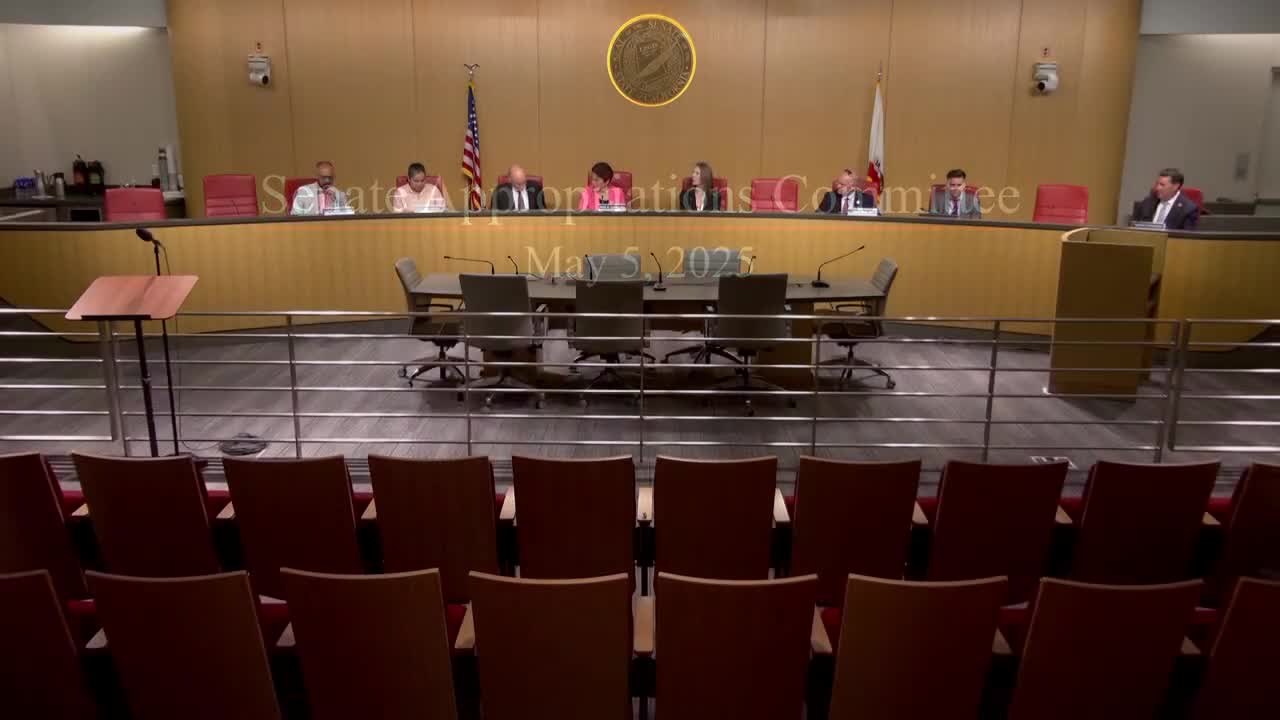
Discussed in Hearing
 6SEC
Senate Standing Committee on Appropriations
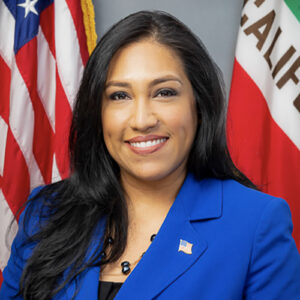
Bill Author
Bill Co-Author(s):