SB 578: California Workplace Outreach Program.
- Session Year: 2025-2026
- House: Senate
- Latest Version Date: 2025-10-13
Current Status:
Passed
(2025-10-13: Chaptered by Secretary of State. Chapter 771, Statutes of 2025.)
Introduced
In Committee
Awaiting First Chamber Vote
Passed First Chamber
In Committee
Awaiting Second Chamber Vote
Passed Second Chamber
Enacted
Existing law establishes the Department of Industrial Relations within the Labor and Workforce Development Agency to, among other things, foster, promote, and develop the welfare of wage earners, to improve their working conditions, and to advance their opportunities for profitable employment.
This bill would, until January 1, 2031, require the department, upon appropriation of funds for this purpose, to establish and maintain the California Workplace Outreach Program to promote awareness of, and compliance with, workplace protections that affect workers. The bill would require the department to issue a competitive request for application for qualified organizations, as defined, to provide education and outreach services to workers and to assist workers to assert their workplace rights.
This bill would require the department to guide discussions with qualified organizations regarding priority topics for outreach and education and to consult with those organizations and the Labor and Workforce Development Agency and, as relevant, its departments and boards to create education and outreach materials informing workers of their rights on priority topics and training materials for workers and organizations. The bill would require the materials to be translated into non-English languages, to be determined by the department in consultation with each qualified organization, as appropriate for the geographic region the qualified organization serves, and would require the materials to be made in consultation and collaboration with the Civil Rights Department if those materials involve protections under the California Fair Employment and Housing Act or certain other statutes. The bill would require the department and qualified organizations to meet at least twice a year to coordinate outreach and education efforts and for qualified organizations to share information relevant to enforcement activities of the department.
Existing law establishes the Department of Industrial Relations within the Labor and Workforce Development Agency to, among other things, foster, promote, and develop the welfare of wage earners, to improve their working conditions, and to advance their opportunities for profitable employment.
This bill would, until January 1, 2031, require the department, upon appropriation of funds for this purpose, to establish and maintain the California Workplace Outreach Program to promote awareness of, and compliance with, workplace protections that affect workers. The bill would require the department to issue a competitive request for application to for qualified organizations, as defined, to provide education and outreach services to workers and to assist workers to assert their workplace rights.
This bill would require qualified organizations to consult with the department to guide discussions with qualified organizations regarding priority topics for outreach and education and to consult with the department and specified other agencies those organizations and the Labor and Workforce Development Agency and, as relevant, its departments and boards to create education and outreach materials informing workers of their rights on priority topics and training materials for workers and organizations. The bill would require the materials to be translated into non-English languages, to be determined by each qualified organization the department in consultation with the department, each qualified organization, as appropriate for the geographic region the qualified organization serves. The bill would require the department and qualified organizations to meet at least twice a year to coordinate outreach, education, and enforcement efforts. outreach and education efforts and for qualified organizations to share information relevant to enforcement activities of the department.
Existing law establishes the Department of Industrial Relations within the Labor and Workforce Development Agency to, among other things, foster, promote, and develop the welfare of wage earners, to improve their working conditions, and to advance their opportunities for profitable employment.
This bill would would, until January 1, 2031, require the department, upon appropriation of funds for this purpose, to establish and maintain the California Workplace Outreach Program to promote awareness of, and compliance with, workplace protections that affect workers. The bill would require the department to issue a competitive request for application to qualified organizations, as defined, to provide education and outreach services to workers and to assist workers to assert their workplace rights.
This bill would require qualified organizations to consult with the department regarding priority topics for outreach and education and to consult with the department and specified other agencies to create education and outreach materials informing workers of their rights on priority topics and training materials for workers and organizations. The bill would require the materials to be translated into non-English languages, to be determined by each qualified organization in consultation with the department, as appropriate for the geographic region the qualified organization serves. The bill would require the department and qualified organizations to meet at least twice a year to coordinate outreach, education, and enforcement efforts.
Existing law establishes the Department of Industrial Relations within the Labor and Workforce Development Agency to, among other things, foster, promote, and develop the welfare of wage earners, to improve their working conditions, and to advance their opportunities for profitable employment.
This bill would require the department, upon appropriation of funds for this purpose, to establish and maintain the California Workplace Outreach Program to promote awareness of, and compliance with, workplace protections that affect workers. The bill would require the department to issue a competitive request for application to qualified organizations, as defined, to provide education and outreach services to workers and to assist workers to assert their workplace rights.
This bill would require qualified organizations to consult with the department regarding priority topics for outreach and education and to consult with the department and specified other agencies to create education and outreach materials informing workers of their rights on priority topics and training materials for workers and organizations. The bill would require the materials to be translated into non-English languages, to be determined by each qualified organization in consultation with the department, as appropriate for the geographic region the qualified organization serves. The bill would require the department and qualified organizations to meet at least twice a year to coordinate outreach, education, and enforcement efforts.
(a)The Department of Industrial Relations, upon appropriation of funds to the department for this purpose, shall establish and administer the California Workplace Outreach Program.
(b)The purpose of the program shall be to promote awareness of, and compliance with, workplace protections that affect California workers, with a focus on low-wage, high-risk, and high-violation industries.
(c)The department shall consult and collaborate with the Civil Rights Department when the programs outreach and education materials involve protections under the California Fair Employment and Housing Act (Part 2.8 (commencing with Section 12900) of Division 3 of Title 2 of the Government Code) or any statute referenced in subdivision (f) of Section 12930 of the Government Code.
11001.For purposes of this division, the following definitions apply:
(a)Department means the Department of Industrial Relations.
(b)Program means the California Workplace Outreach Program.
(c)Qualified organization means a nonprofit organization with demonstrated experience in carrying out in-person outreach and education directed at workers in industries and demographic groups deemed by the department or its divisions to be vulnerable to violations of workplace protections.
11002.The department shall issue a competitive request for application for qualified organizations to provide education and outreach services to workers and to assist workers to assert their workplace rights. The department may require qualified organizations to participate in training.
11003.(a)The department shall guide discussions with qualified organizations regarding priority topics for outreach and education, which may include, but are not limited to, minimum wage, overtime, paid leave, retaliation, health and safety, excessive heat, discrimination protections, the adjudication processes of the Department of Industrial Relations and issues that affect certain low-wage, high-risk, and high-violation industries differently.
(b)The department shall consult with qualified organizations and the Labor and Workforce Development Agency and, as relevant, its departments and boards to create education and outreach materials informing workers of their rights on priority topics and training materials for workers and organizations. The materials shall be translated into non-English languages, to be determined by the department in consultation with each qualified organization, as appropriate for the geographic region the qualified organization serves. The department may require its final approval of education, outreach, and training materials, and organizations shall implement any changes required by the department.
11004.The department and qualified organizations shall meet twice a year, or more frequently at the discretion of the department, to coordinate efforts around outreach and education, and for qualified organizations to share information relevant to enforcement activities of the department, in accordance with applicable privacy and confidentiality laws.
11005.This division shall remain in effect only until January 1, 2031, and as of that date is repealed.
(a)The Department of Industrial Relations, upon appropriation of funds to the department for this purpose, shall establish and administer the California Workplace Outreach Program. Moneys in the Labor and Workforce Development Fund shall be available, upon appropriation by the Legislature, for all covered purposes of the program and for the administration of the program.
(b)The purpose of the program shall be to promote awareness of, and compliance with, workplace protections that affect California workers, with a focus on low-wage low-wage, high-risk, and high-violation industries.
(c)The department shall consult and collaborate with the Civil Rights Department when the programs outreach and education materials involve protections under the California Fair Employment and Housing Act (Part 2.8 (commencing with Section 12900) of Division 3 of Title 2 of the Government Code) or any statute referenced in subdivision (f) of Section 12930 of the Government Code.
11001.For purposes of this division, the following definitions apply:
(a)Department means the Department of Industrial Relations.
(b)Program means the California Workplace Outreach Program.
(c)Qualified organization means a nonprofit organization with demonstrated experience in carrying out in-person outreach and education directed at workers in industries and demographic groups deemed by the department or its divisions to be vulnerable to violations of workplace protections.
11002.The department shall issue a competitive request for application to for qualified organizations to provide education and outreach services to workers and to assist workers to assert their workplace rights. The department may require qualified organizations to participate in training.
11003.(a)Qualified The department shall guide discussions with qualified organizations shall consult with the department regarding priority topics for outreach and education, which may include, but are not limited to, minimum wage, overtime, paid leave, retaliation, health and safety, excessive heat, discrimination protections, the adjudication processes of the Department of Industrial Relations and the Civil Rights Department, and issues that affect certain low-wage or low-wage, high-risk, and high-violation industries differently.
(b)Qualified organizations shall consult with the Department of Industrial Relations, other departments and divisions of The department shall consult with qualified organizations and the Labor and Workforce Development Agency, and the Civil Rights Department Agency and, as relevant, its departments and boards to create education and outreach materials informing workers of their rights on priority topics and training materials for workers and organizations. The materials shall be translated into non-English languages, to be determined by each qualified organization the department in consultation with the department, each qualified organization, as appropriate for the geographic region the qualified organization serves. The department may have require its final approval over the of education, outreach, and training materials. materials, and organizations shall implement any changes required by the department.
11004.The department and qualified organizations shall meet twice a year, or more frequently at the discretion of the department, to coordinate efforts around outreach, outreach and education, and enforcement, including sharing information, for qualified organizations to share information relevant to enforcement activities of the department, in accordance with applicable privacy and confidentiality laws, that will shape and inform the overall enforcement strategy of the department. laws.
11005.This division shall remain in effect only until January 1, 2031, and as of that date is repealed.
(a)The Department of Industrial Relations, upon appropriation of funds to the department for this purpose, shall establish and administer the California Workplace Outreach Program. Moneys in the Labor and Workforce Development Fund shall be available, upon appropriation by the Legislature, for all covered purposes of the program and for the administration of the program.
(b)The purpose of the program shall be to promote awareness of, and compliance with, workplace protections that affect California workers, with a focus on low-wage and high-violation industries.
11001.For purposes of this division, the following definitions apply:
(a)Department means the Department of Industrial Relations.
(b)Program means the California Workplace Outreach Program.
(c)Qualified organization means a nonprofit organization with demonstrated experience in carrying out in-person outreach and education directed at workers in industries and demographic groups deemed by the department or its divisions to be vulnerable to violations of workplace protections.
11002.The department shall issue a competitive request for application to qualified organizations to provide education and outreach services to workers and to assist workers to assert their workplace rights. The department may require qualified organizations to participate in training.
11003.(a)Qualified organizations shall consult with the department regarding priority topics for outreach and education, which may include, but are not limited to, minimum wage, overtime, paid leave, retaliation, health and safety, excessive heat, discrimination protections, the adjudication processes of the Department of Industrial Relations and the Civil Rights Department, and issues that affect certain low-wage or high-violation industries differently.
(b)Qualified organizations shall consult with the Department of Industrial Relations, other departments and divisions of the Labor and Workforce Development Agency, and the Civil Rights Department to create education and outreach materials informing workers of their rights on priority topics and training materials for workers and organizations. The materials shall be translated into non-English languages, to be determined by each qualified organization in consultation with the department, as appropriate for the geographic region the qualified organization serves. The department may have final approval over the education, outreach, and training materials.
11004.The department and qualified organizations shall meet twice a year, or more frequently at the discretion of the department, to coordinate efforts around outreach, education, and enforcement, including sharing information, in accordance with applicable privacy and confidentiality laws, that will shape and inform the overall enforcement strategy of the department.
11005.This division shall remain in effect only until January 1, 2031, and as of that date is repealed.
(a)The Department of Industrial Relations, upon appropriation of funds to the department for this purpose, shall establish and administer the California Workplace Outreach Program.
(b)The purpose of the program shall be to promote awareness of, and compliance with, workplace protections that affect California workers, with a focus on low-wage and high-violation industries.
11001.For purposes of this division, the following definitions apply:
(a)Department means the Department of Industrial Relations.
(b)Program means the California Workplace Outreach Program.
(c)Qualified organization means a nonprofit organization with demonstrated experience in carrying out in-person outreach and education directed at workers in industries and demographic groups deemed by the department or its divisions to be vulnerable to violations of workplace protections.
11002.The department shall issue a competitive request for application to qualified organizations to provide education and outreach services to workers and to assist workers to assert their workplace rights. The department may require qualified organizations to participate in training.
11003.(a)Qualified organizations shall consult with the department regarding priority topics for outreach and education, which may include, but are not limited to, minimum wage, overtime, paid leave, retaliation, health and safety, excessive heat, discrimination protections, the adjudication processes of the Department of Industrial Relations and the Civil Rights Department, and issues that affect certain low-wage or high-violation industries differently.
(b)Qualified organizations shall consult with the Department of Industrial Relations, other departments and divisions of the Labor and Workforce Development Agency, and the Civil Rights Department to create education and outreach materials informing workers of their rights on priority topics and training materials for workers and organizations. The materials shall be translated into non-English languages, to be determined by each qualified organization in consultation with the department, as appropriate for the geographic region the qualified organization serves. The department may have final approval over the education, outreach, and training materials.
11004.The department and qualified organizations shall meet twice a year, or more frequently at the discretion of the department, to coordinate efforts around outreach, education, and enforcement, including sharing information, in accordance with applicable privacy and confidentiality laws, that will shape and inform the overall enforcement strategy of the department.
|
Date
|
Status
|
|---|---|
| Oct 13, 2025 | Chaptered by Secretary of State. Chapter 771, Statutes of 2025. |
| Oct 13, 2025 | Approved by the Governor. |
| Sep 22, 2025 | Enrolled and presented to the Governor at 2 p.m. |
| Sep 11, 2025 | Assembly amendments concurred in. (Ayes 30. Noes 10. Page 2882.) Ordered to engrossing and enrolling. |
| Sep 10, 2025 | In Senate. Concurrence in Assembly amendments pending. |
| Sep 10, 2025 | Read third time. Passed. (Ayes 61. Noes 11. Page 3177.) Ordered to the Senate. |
| Sep 3, 2025 | Ordered to third reading. |
| Sep 3, 2025 | Read third time and amended. |
| Sep 2, 2025 | Read second time. Ordered to third reading. |
| Aug 29, 2025 | From committee: Do pass. (Ayes 11. Noes 3.) (August 29). |
| Aug 20, 2025 | August 20 set for first hearing. Placed on APPR. suspense file. |
| Jul 10, 2025 | From committee: Do pass and re-refer to Com. on APPR. (Ayes 6. Noes 0.) (July 9). Re-referred to Com. on APPR. |
| Jun 9, 2025 | Referred to Com. on L. & E. |
| Jun 3, 2025 | In Assembly. Read first time. Held at Desk. |
| Jun 2, 2025 | Read third time. Passed. (Ayes 28. Noes 10. Page 1383.) Ordered to the Assembly. |
| May 27, 2025 | Read second time. Ordered to third reading. |
| May 23, 2025 | From committee: Do pass as amended. (Ayes 5. Noes 1. Page 1205.) (May 23). |
| May 23, 2025 | Read second time and amended. Ordered to second reading. |
| May 16, 2025 | Set for hearing May 23. |
| Apr 7, 2025 | April 7 hearing: Placed on APPR. suspense file. |
| Mar 28, 2025 | Set for hearing April 7. |
| Mar 26, 2025 | From committee: Do pass and re-refer to Com. on APPR. (Ayes 4. Noes 1. Page 568.) (March 26). Re-referred to Com. on APPR. |
| Mar 18, 2025 | Set for hearing March 26. |
| Mar 5, 2025 | Referred to Com. on L., P.E. & R. |
| Feb 21, 2025 | From printer. May be acted upon on or after March 23. |
| Feb 20, 2025 | Introduced. Read first time. To Com. on RLS. for assignment. To print. |
|
Date
|
Description
|
Location
|
Votes
|
|
|---|---|---|---|---|
| Sep 11, 2025 | Unfinished Business SB578 Smallwood-Cuevas Concurrence | Senate Floor |
Passed |
|
| Sep 10, 2025 | SB 578 Smallwood-Cuevas Senate Third Reading By Kalra | Assembly Floor |
Passed |
|
| Aug 29, 2025 | Do pass. | Assembly Standing Committee on Appropriations |
Passed |
|
| Jul 9, 2025 | Do pass and be re-referred to the Committee on [Appropriations] | Assembly Standing Committee on Labor and Employment |
Passed |
|
| Jun 2, 2025 | Senate 3rd Reading SB578 Smallwood-Cuevas | Senate Floor |
Passed |
|
| May 23, 2025 | Do pass as amended | Senate Standing Committee on Appropriations |
Passed |
|
| Apr 7, 2025 | Placed on suspense file | Senate Standing Committee on Appropriations |
Passed |
|
| Mar 26, 2025 | Do pass, but first be re-referred to the Committee on [Appropriations] | Senate Standing Committee on Labor, Public Employment and Retirement |
Passed |
This list shows positions taken on this bill by organizations on the date displayed, which is linked to the original source.
Positions by individuals are not included.
|
Organization
|
Position
|
Date
|
|---|---|---|
| American Federation of State, County, and Municipal Employees | ** Support | |
| Asian Americans Advancing Justice | ** Support | |
| Asian Americans Advancing Justice Southern California | ** Support | |
| Bet Tzedek Legal Services | ** Support | |
| Black Women For Wellness Action Project | ** Support | |
| Building Skills Partnership | ** Support | |
| California Breastfeeding Coalition | ** Support | |
| California Child Care Resource and Referral Network | ** Support | |
| California Coalition For Worker Power | ** Support | |
| California Coalition for Worker Power (Source) | ** Support | |
| California Domestic Workers Coalition | ** Support | |
| California Federation Business and Professional Women | ** Support | |
| California Federation of Business and Professional Women | ** Support | |
| California Federation of Labor Unions | ** Support | |
| California Healthy Nail Salon Collaborative | ** Support | |
| California Immigrant Policy Center | ** Support | |
| California Nurses Association | ** Support | |
| California Partnership To End Domestic Violence | ** Support | |
| California Rural Legal Assistance Foundation | ** Support | |
| California Work and Family Coalition | ** Support | |
| Caring Across Generations | ** Support | |
| Center for Community Action and Environmental Justice | ** Support | |
| Center For Workers' Rights | ** Support | |
| Center on Policy Initiatives | ** Support | |
| Central California Environmental Justice Network | ** Support | |
| Central Coast Alliance United for a Sustainable Economy | ** Support | |
| Central Labor Council, Fresno-Madera-Tulare-Kings Counties | ** Support | |
| Central Valley Empowerment Alliance | ** Support | |
| centro binacional para el desarrollo indigena oaxaqueno | ** Support | |
| Child Care Law Center | ** Support | |
| Chinese Progressive Association | ** Support | |
| CLEAN Carwash Worker Center | ** Support | |
| Coalition of social and economic justice organizations | ** Support | |
| Consumer Attorneys Of California | ** Support | |
| Earthlodge | ** Support | |
| East Bay Alliance for a Sustainable Economy | ** Support | |
| Equal Rights Advocates | ** Support | |
| Fresno-Madera-Tulare-Kings Central Labor Council | ** Support | |
| Fresno, Madera, Tulare, Kings Counties, Central Labor Council, AFL-CIO | ** Support | |
| Friends Committee On Legislation Of California | ** Support | |
| Golden Gate University Law Women’s Employment Right’s Clinic | ** Support | |
| Golden Gate University Law Women’s Employment Rights Clinic | ** Support | |
| GRACE - End Child Poverty in California | ** Support | |
| Health in Partnership | ** Support | |
| High Desert Black Worker Center | ** Support | |
| Human Impact Partners | ** Support | |
| Inland Coalition for Immigrant Justice | ** Support | |
| Inland Empire Black Worker Center | ** Support | |
| Inland Empire Labor Council | ** Support | |
| Jakara Movement | ** Support | |
| Jobs with Justice San Francisco | ** Support | |
| Koreatown Immigrant Workers Alliance | ** Support | |
| LA Best Babies Network | ** Support | |
| Legal Aid At Work | ** Support | |
| Legal for California Rural Assistance Foundation | ** Support | |
| Lideres Campesinas | ** Support | |
| Long Beach Black Worker Center | ** Support | |
| Los Angeles Alliance for a New Economy | ** Support | |
| Los Angeles Black Worker Center | ** Support | |
| Los Angeles Worker Center Network | ** Support | |
| Maintenance Cooperation Trust Fund | ** Support | |
| Mixteco Indigena Community Organizing Project | ** Support | |
| monterey bay central labor council | ** Support | |
| Mujeres En Accion | ** Support | |
| Mujeres en Acción | ** Support | |
| Mujeres Unidas Y Activas | ** Support | |
| National Domestic Workers Alliance | ** Support | |
| National Employment Law Project | ** Support | |
| National Women's Political Caucus of California | ** Support | |
| North Bay Jobs with Justice | ** Support | |
| North Valley Labor Federation | ** Support | |
| Orange County Equality Coalition | ** Support | |
| Parent Voices California | ** Support | |
| PARTNERSHIP FOR A BETTER SAN DIEGO | ** Support | |
| Pilipino Association of Workers and Immigrants | ** Support | |
| pilipino workers center | ** Support | |
| Poder Latinx | ** Support | |
| Pomona Economic Opportunity Center | ** Support | |
| Powerswitch Action | ** Support | |
| Reproductive Freedom for All California | ** Support | |
| Restaurant Opportunities Center of Los Angeles | ** Support | |
| Sacramento Central Labor Council | ** Support | |
| Service Employees International Union California State Council | ** Support | |
| Southern California Black Worker Hub for Regional Organizing | ** Support | |
| Southern California Coalition for Occupational Health and Safety | ** Support | |
| Techequity Action | ** Support | |
| Thai Community Development Center | ** Support | |
| The Cambodian Family | ** Support | |
| The Restaurant Opportunities Center of Los Angeles | ** Support | |
| The Way Resource Center | ** Support | |
| Trabajadores Unidos Workers United | ** Support | |
| UCLA Labor Center | ** Support | |
| United Farm Workers | ** Support | |
| United For Respect | ** Support | |
| Universidad Popular | ** Support | |
| Valley Forward | ** Support | |
| Valley Voices | ** Support | |
| Warehouse Worker Resource Center | ** Support | |
| West Modesto Community Collaborative | ** Support | |
| Women's Employment Right's Clinic of Golden Gate University | ** Support | |
| Women's Employment Rights Clinic of Golden Gate University | ** Support | |
| Women'S Foundation California | ** Support | |
| Working Partnerships USA | ** Support | |
| Worksafe | ** Support |
SENATE RULES COMMITTEE Office of Senate Floor Analyses (916) 651-1520 Fax: (916) 327-4478 | SB 578 |
UNFINISHED BUSINESS
Bill No: SB 578
Author: Smallwood-Cuevas (D), et al.
Amended: 9/3/25
Vote: 21
SENATE LABOR, PUB. EMP. & RET. COMMITTEE: 4-1, 3/26/25
AYES: Smallwood-Cuevas, Cortese, Durazo, Laird
NOES: Strickland
SENATE APPROPRIATIONS COMMITTEE: 5-1, 5/23/25
AYES: Caballero, Cabaldon, Grayson, Richardson, Wahab
NOES: Seyarto
NO VOTE RECORDED: Dahle
SENATE FLOOR: 28-10, 6/2/25
AYES: Allen, Archuleta, Arreguín, Ashby, Becker, Blakespear, Cabaldon, Caballero, Cervantes, Cortese, Durazo, Gonzalez, Grayson, Laird, Limón, McGuire, McNerney, Menjivar, Padilla, Pérez, Richardson, Rubio, Smallwood-Cuevas, Stern, Umberg, Wahab, Weber Pierson, Wiener
NOES: Alvarado-Gil, Choi, Dahle, Grove, Jones, Niello, Ochoa Bogh, Seyarto, Strickland, Valladares
NO VOTE RECORDED: Hurtado, Reyes
ASSEMBLY FLOOR: 61-11, 9/10/25 - See last page for vote
SUBJECT: California Workplace Outreach Program
SOURCE: California Coalition for Worker Power
DIGEST:
This bill directs the Department of Industrial Relations (DIR), upon appropriation of funds for this purpose, to establish the California Workplace Outreach Program (Program) to promote awareness of, and compliance with, workplace protections by contracting out with qualified organizations for worker outreach and the creation of educational materials.
Assembly Amendments
1) strike a provision that authorized the use of moneys in the Labor and Workforce Development Fund for the Program; 2) require DIR to consult with the Civil Rights Department when developing specified outreach and education materials; 3) require DIR to guide discussions and consult with qualified organizations to determine priority topics and create materials; 4) require qualified organizations to implement any DIR suggested changes to materials; 5) require qualified organizations to share information relevant to enforcement activities of DIR.
ANALYSIS:
Existing law:
- Requires, under the California Occupational Safety and Health Act, an employer to:
- Furnish employment and a place of employment that is safe and healthful.
- Furnish and use safety devices and safeguards, as well as adopt and use practices, means, methods, operations, and processes that are reasonably adequate to render employment and the place of employment safe and healthful.
- Do everything reasonably necessary to protect the life, safety, and health of employees. (Labor Code §6300 et seq.)
- Establishes the Labor and Workforce Development Agency (LWDA) to serve California workers and businesses by improving access to employment and training programs; enforcing California labor laws to protect workers and create an even playing field for employers; and administering benefits that include workers’ compensation, unemployment insurance, disability insurance, and paid family leave. (Government Code §15550 et seq.)
- Establishes DIR in the LWDA and vests it with various powers and duties to foster, promote, and develop the welfare of the wage earners of California, to improve their working conditions, and to advance their opportunities for profitable employment. (Labor Code §50.5)
- Directs the Division of Labor Standards Enforcement (DLSE), upon appropriation of funds for this purpose, to establish and maintain an outreach and education program in conjunction with community-based organizations to promote awareness of, and compliance with, labor protections that affect the domestic work industry. (Labor Code §1455)
- Directs DIR, upon appropriation, to establish and maintain a Garment Worker Wage Claim Pilot Program and to contract with qualified organizations to educate garment workers on, and provide legal assistance for, filing wage claims. (Labor Code §2693.1)
This bill:
- Adds a new division to the Labor Code, commencing with Section 11000, that directs DIR, upon appropriation of funds for this purpose, to establish and administer the California Workplace Outreach Program (Program).
- States the purpose of the Program shall be to promote awareness of, and compliance with, workplace protections that affect California workers, with a focus on low-wage and high-violation industries.
- Requires DIR to consult and collaborate with the Civil Rights Department when the Program’s outreach and education materials involve protections under the Fair Employment and Housing Act or any statute referenced in subdivision (f) of Section 12930 of the Government Code.
- Defines “qualified organization” as a nonprofit organization with demonstrated experience in carrying out in-person outreach and education directed at workers in industries and demographic groups deemed by DIR or its divisions to be vulnerable to violations of workplace protections.
- Directs DIR to issue a competitive request for application for qualified organizations to provide education and outreach services to workers and to assist workers to assert their workplace rights.
- Authorizes DIR to require qualified organizations to participate in training.
- Requires DIR to guide discussions with qualified organizations regarding priority topics for outreach and education.
- Requires DIR to consult with qualified organizations and the LWDA and, as relevant, its departments and boards to create education and outreach materials informing workers of their rights on priority topics and training materials for workers and organizations.
- Requires the materials to be translated into non-English languages, to be determined by DIR in consultation with each qualified organization, as appropriate for the geographic region they serve.
- Provides that DIR may require its final approval of education, outreach, and training materials, and requires organization to implement any suggested changes.
- Requires DIR and qualified organizations to meet twice a year, or more frequently at the discretion of DIR, to coordinate efforts around outreach and education, and for qualified organizations to share information relevant to enforcement activities of DIR, in accordance with applicable privacy and confidentiality laws.
- Provides that these provisions shall remain in effect only until January 1, 2031, and as of that date is repealed.
Background
California Covid-19 Workplace Outreach Project (CWOP) Budget Appropriations Five years ago, the Covid-19 pandemic swept across the globe, shutting down workplaces and disrupting lives. Californians who were unable to work from home were uniquely vulnerable to the virus. Often, these workers were concentrated in the following high-risk, low-wage industries: agriculture, food processing, food service, janitorial services, manufacturing, and warehousing. In response, the state allocated $32.5 million from the General Fund in 2020 to the LWDA for Covid-19 related employer and worker education, engagement, and enforcement in high-risk industries. With this funding, the LWDA established CWOP to reach and empower high-risk workers through trusted organizations and community leaders. CWOP began as a six-month program within the LWDA, but has since been extended several times over and moved within DIR.
The 2022 Budget Act included $25 million from the General Fund each in 2022-2023 and 2023-2024 for CWOP. In 2023, CWOP was renamed the California Workplace Outreach Program to reflect its expanded focus on all workplace rights, not just those related to Covid-19. The 2024-2025 state budget included $30 million for CWOP. DIR’s website has a full list of community-based organizations receiving funds under the most recent budget allocation. SB 578 would codify this temporary program in the Labor Code.
Applicant Requirements. DIR reviews all CWOP applicants to confirm compliance with administrative and technical requirements. At a minimum, all applicants must provide an IRS determination letter proving their status as a 501 (c)(3), 501 (c)(4), or 501 (c)(5) as well as an IRS Form 990. Applicants that meet the administrative review requirements then face a technical review where they are scored according to five criteria: 1) experience, 2) organizational capacity, 3) project scope, 4) previous CWOP participation, and 5) tactics, populations, and geography.
CWOP Outreach. CWOP utilizes a trusted messenger model, recognizing that local partners embedded in communities are able to connect with workers in a way that government officials cannot. Furthermore, California is geographically vast and demographically diverse, which makes it difficult to use a single standardized approach for worker outreach. By contracting with community-based organizations (CBOs) across the state, DIR can tailor its approach to the environment. From February 2021 to September 2024, CBOs working with CWOP made 7.5 million touchpoints and conducted 1.5 million two-way conversations with workers and employers.
Recently, DIR partnered with four University of California programs, the UC Berkeley Labor and Occupational Health Program, the UC Davis Western Center for Agricultural Health and Safety, the UCLA Labor Occupational Safety and Health Program, and the UC Merced Community and Labor Center, to help administer CWOP. In conjunction with its UC partners, DIR provides training and technical assistance to participating CBOs. Trainings focus on current regulations and procedures for reporting workplace non-compliance. As a result, CBOs expand their knowledge of labor issues and their ability to help workers.
The first CBOs to receive funds in February 2021 provided information about how to prevent the spread of Covid-19, paid sick leave, and other pandemic specific laws. Today, outreach focuses on wage theft, workers’ compensation, heat illness, and support filing complaints for workplace non-compliance. Common outreach tactics include door-to-door canvassing, phone banking, trainings, workshops, events in high-trafficked areas, flyers, social media posts, direct mailers, and ethnic media partnerships. From September 2023 through September 2024, 76 CBOs statewide participated in CWOP. Over the same period, the five most common languages used to interact with workers were Spanish, English, Mixteco, Vietnamese, and Arabic. The state’s most vulnerable workers, especially those who are undocumented, may feel uncomfortable reaching out to the government for help. CWOP is a way to reach them.
Committee Comments. This bill would direct qualified organizations to consult with DIR, other departments and divisions of the LWDA, and CRD to create education and outreach materials. In doing so, this bill would expand the scope of CWOP. When the LWDA housed CWOP, CBOs consulted with the agency. Consulting with CRD, however, would be a new endeavor.
FISCAL EFFECT: Appropriation: No Fiscal Com.: Yes Local: No
According to the Assembly Appropriations Committee:
- Annual cost pressures of an unknown amount, likely in the tens of millions of dollars, depending on the amount of any appropriation made by the Legislature to DIR to award CWOP grants to qualified organizations (Labor and Workforce Development Fund). Although CWOP is not enacted in statute, a version of the program has been operational since 2020. The Budget Act of 2025 includes $13 million for CWOP, and CWOP was allocated $30 million, $25 million, and $25 million, respectively, in each preceding fiscal year (FY).
- Annual costs of approximately $4.5 million to DIR to continue administering CWOP, including costs for information technology and printing (Labor and Workforce Development Fund). DIR notes that this cost estimate assumes a $30 million appropriation for CWOP, as past budget acts have authorized DIR to use up to 15% of the appropriated amount for administrative costs.
- Minor and absorbable costs to other LWDA departments and divisions, such as the Employment Development Department (EDD), to consult with a qualified organization on education and outreach materials.
- Costs of an unknown amount to CRD, depending on the scope of CRD’s obligations under this bill, which CRD notes is unclear. If CRD must conduct several or more consultations, liaise with multiple qualified organizations, and help create a significant number of education and outreach materials, CRD anticipates costs of approximately $386,000 in FY 2026-27 and $380,000 in FY 2027-28 and annually thereafter for two additional staff positions (Labor and Workforce Development Fund). However, if CRD conducts only a nominal number of consultations, costs would likely be minor and absorbable. To the extent expanding CWOP to include labor rights administered by CRD results in a significant increase in complaints filed with CRD, CRD would incur additional costs of an unknown amount for staff and resources to undertake new intake, investigation, dispute resolution, and prosecution workload (General Fund).
SUPPORT: (Verified 9/10/25)
California Coalition for Worker Power (Source)
American Federation of State, County, and Municipal Employees
Asian Americans Advancing Justice
Asian Americans Advancing Justice Southern California
Bet Tzedek Legal Services
Black Women for Wellness Action Project
Building Skills Partnership
California Breastfeeding Coalition
California Child Care Resource and Referral Network
California Domestic Workers Coalition
California Federation Business and Professional Women
California Federation of Labor Unions
California Healthy Nail Salon Collaborative
California Immigrant Policy Center
California Nurses Association
California Partnership to End Domestic Violence
California Rural Legal Assistance Foundation
California Work and Family Coalition
Caring Across Generations
Center for Community Action and Environmental Justice
Center for Workers' Rights
Center on Policy Initiatives
Central California Environmental Justice Network
Central Coast Alliance United for A Sustainable Economy
Central Labor Council, Fresno-Madera-Tulare-Kings Counties
Central Valley Empowerment Alliance
Centro Binacional Para El Desarrollo Indigena Oaxaqueño
Child Care Law Center
Chinese Progressive Association
Clean Carwash Worker Center
Consumer Attorneys of California
Earthlodge
East Bay Alliance for A Sustainable Economy
Equal Rights Advocates
Friends Committee on Legislation of California
Golden Gate University Law Women’s Employment Right’s Clinic
Grace - End Child Poverty in California
Health in Partnership
High Desert Black Worker Center
Human Impact Partners
Inland Coalition for Immigrant Justice
Inland Empire Black Worker Center
Inland Empire Labor Council
Jakara Movement
Jobs With Justice San Francisco
Koreatown Immigrant Workers Alliance
LA Best Babies Network
Legal Aid At Work
Legal for California Rural Assistance Foundation
Lideres Campesinas
Long Beach Black Worker Center
Los Angeles Alliance for A New Economy
Los Angeles Black Worker Center
Los Angeles Worker Center Network
Maintenance Cooperation Trust Fund
Mixteco Indigena Community Organizing Project
Monterey Bay Central Labor Council
Mujeres En Acción
Mujeres Unidas Y Activas
National Domestic Workers Alliance
National Employment Law Project
National Women's Political Caucus of California
North Bay Jobs With Justice
North Valley Labor Federation
Orange County Equality Coalition
Parent Voices California
Partnership for A Better San Diego
Pilipino Association of Workers and Immigrants
Pilipino Workers Center
Poder Latinx
Pomona Economic Opportunity Center
Powerswitch Action
Reproductive Freedom for All California
Restaurant Opportunities Center of Los Angeles
Sacramento Central Labor Council
Service Employees International Union California State Council
Southern California Black Worker Hub for Regional Organizing
Southern California Coalition for Occupational Health and Safety
Techequity Action
Thai Community Development Center
The Cambodian Family
The Restaurant Opportunities Center of Los Angeles
The Way Resource Center
Trabajadores Unidos Workers United
UCLA Labor Center
United Farm Workers
United for Respect
Universidad Popular
Valley Forward
Valley Voices
Warehouse Worker Resource Center
West Modesto Community Collaborative
Women's Employment Rights Clinic of Golden Gate University
Women's Foundation California
Working Partnerships USA
Worksafe
OPPOSITION: (Verified 9/10/25)
None received
ARGUMENTS IN SUPPORT: According to the sponsors of the measure, the California Coalition for Worker Power:
“Investment in CWOP has already yielded positive returns for our economy. CWOP saved untold lives and prevented costly hospital stays by vaccinating hundreds of thousands of workers and mitigating the spread of Covid-19 in California’s workplaces…
While the fiscal impact of proactive and preventative programs is difficult to measure, CWOP’s return on investment is clearly substantial. The billions of dollars stolen from workers’ paychecks each year should be circulating in our economy. This colossal wage theft also causes losses of tax revenue to the state, in addition to unpaid obligations to our workers compensation and unemployment insurance funds via fraudulent misclassification. Our economy suffers when workers miss work or become disabled due to workplace hazards.
CWOP not only ensures that workers enjoy respect and dignity on the job, but saves the state money by preventing wage theft and unsafe conditions.”
Assembly Floor 61 11 8
Ayes: Addis, Aguiar-Curry, Ahrens, Alvarez, Arambula, Ávila Farías, Bains, Bauer-Kahan, Bennett, Berman, Boerner, Bonta, Bryan, Calderon, Caloza, Carrillo, Connolly, Davies, Elhawary, Fong, Gabriel, Garcia, Gipson, Jeff Gonzalez, Mark González, Haney, Harabedian, Hart, Irwin, Jackson, Kalra, Krell, Lee, Lowenthal, McKinnor, Muratsuchi, Nguyen, Ortega, Pacheco, Papan, Patel, Pellerin, Quirk-Silva, Ramos, Ransom, Celeste Rodriguez, Michelle Rodriguez, Rogers, Blanca Rubio, Schiavo, Schultz, Sharp-Collins, Solache, Soria, Stefani, Valencia, Ward, Wicks, Wilson, Zbur, Rivas
Noes: DeMaio, Dixon, Ellis, Flora, Gallagher, Hadwick, Johnson, Lackey, Macedo, Patterson, Sanchez
No Vote Recorded: Alanis, Castillo, Chen, Hoover, Petrie-Norris, Ta, Tangipa, Wallis
Prepared by: Emma Bruce / L., P.E. & R. / (916) 651-1556
10/19/26 12:23:30
**** END ****
SENATE RULES COMMITTEE Office of Senate Floor Analyses (916) 651-1520 Fax: (916) 327-4478 | SB 578 |
UNFINISHED BUSINESS
Bill No: SB 578
Author: Smallwood-Cuevas (D), et al.
Amended: 9/3/25
Vote: 21
SENATE LABOR, PUB. EMP. & RET. COMMITTEE: 4-1, 3/26/25
AYES: Smallwood-Cuevas, Cortese, Durazo, Laird
NOES: Strickland
SENATE APPROPRIATIONS COMMITTEE: 5-1, 5/23/25
AYES: Caballero, Cabaldon, Grayson, Richardson, Wahab
NOES: Seyarto
NO VOTE RECORDED: Dahle
SENATE FLOOR: 28-10, 6/2/25
AYES: Allen, Archuleta, Arreguín, Ashby, Becker, Blakespear, Cabaldon, Caballero, Cervantes, Cortese, Durazo, Gonzalez, Grayson, Laird, Limón, McGuire, McNerney, Menjivar, Padilla, Pérez, Richardson, Rubio, Smallwood-Cuevas, Stern, Umberg, Wahab, Weber Pierson, Wiener
NOES: Alvarado-Gil, Choi, Dahle, Grove, Jones, Niello, Ochoa Bogh, Seyarto, Strickland, Valladares
NO VOTE RECORDED: Hurtado, Reyes
ASSEMBLY FLOOR: 48-11, 9/10/25 – Roll call vote not available
SUBJECT: California Workplace Outreach Program
SOURCE: California Coalition for Worker Power
DIGEST:
This bill directs the Department of Industrial Relations (DIR), upon appropriation of funds for this purpose, to establish the California Workplace Outreach Program (Program) to promote awareness of, and compliance with, workplace protections by contracting out with qualified organizations for worker outreach and the creation of educational materials.
Assembly Amendments
1) strike a provision that authorized the use of moneys in the Labor and Workforce Development Fund for the Program; 2) require DIR to consult with the Civil Rights Department when developing specified outreach and education materials; 3) require DIR to guide discussions and consult with qualified organizations to determine priority topics and create materials; 4) require qualified organizations to implement any DIR suggested changes to materials; 5) require qualified organizations to share information relevant to enforcement activities of DIR.
ANALYSIS:
Existing law:
- Requires, under the California Occupational Safety and Health Act, an employer to:
- Furnish employment and a place of employment that is safe and healthful.
- Furnish and use safety devices and safeguards, as well as adopt and use practices, means, methods, operations, and processes that are reasonably adequate to render employment and the place of employment safe and healthful.
- Do everything reasonably necessary to protect the life, safety, and health of employees.
(Labor Code §6300 et seq.)
- Establishes the Labor and Workforce Development Agency (LWDA) to serve California workers and businesses by improving access to employment and training programs; enforcing California labor laws to protect workers and create an even playing field for employers; and administering benefits that include workers’ compensation, unemployment insurance, disability insurance, and paid family leave. (Government Code §15550 et seq.)
- Establishes DIR in the LWDA and vests it with various powers and duties to foster, promote, and develop the welfare of the wage earners of California, to improve their working conditions, and to advance their opportunities for profitable employment. (Labor Code §50.5)
- Directs the Division of Labor Standards Enforcement (DLSE), upon appropriation of funds for this purpose, to establish and maintain an outreach and education program in conjunction with community-based organizations to promote awareness of, and compliance with, labor protections that affect the domestic work industry. (Labor Code §1455)
- Directs DIR, upon appropriation, to establish and maintain a Garment Worker Wage Claim Pilot Program and to contract with qualified organizations to educate garment workers on, and provide legal assistance for, filing wage claims. (Labor Code §2693.1)
This bill:
- Adds a new division to the Labor Code, commencing with Section 11000, that directs DIR, upon appropriation of funds for this purpose, to establish and administer the California Workplace Outreach Program (Program).
- States the purpose of the Program shall be to promote awareness of, and compliance with, workplace protections that affect California workers, with a focus on low-wage and high-violation industries.
- Requires DIR to consult and collaborate with the Civil Rights Department when the Program’s outreach and education materials involve protections under the Fair Employment and Housing Act or any statute referenced in subdivision (f) of Section 12930 of the Government Code.
- Defines “qualified organization” as a nonprofit organization with demonstrated experience in carrying out in-person outreach and education directed at workers in industries and demographic groups deemed by DIR or its divisions to be vulnerable to violations of workplace protections.
- Directs DIR to issue a competitive request for application for qualified organizations to provide education and outreach services to workers and to assist workers to assert their workplace rights.
- Authorizes DIR to require qualified organizations to participate in training.
- Requires DIR to guide discussions with qualified organizations regarding priority topics for outreach and education.
- Requires DIR to consult with qualified organizations and the LWDA and, as relevant, its departments and boards to create education and outreach materials informing workers of their rights on priority topics and training materials for workers and organizations.
- Requires the materials to be translated into non-English languages, to be determined by DIR in consultation with each qualified organization, as appropriate for the geographic region they serve.
- Provides that DIR may require its final approval of education, outreach, and training materials, and requires organization to implement any suggested changes.
- Requires DIR and qualified organizations to meet twice a year, or more frequently at the discretion of DIR, to coordinate efforts around outreach and education, and for qualified organizations to share information relevant to enforcement activities of DIR, in accordance with applicable privacy and confidentiality laws.
- Provides that these provisions shall remain in effect only until January 1, 2031, and as of that date is repealed.
Background
California Covid-19 Workplace Outreach Project (CWOP) Budget Appropriations Five years ago, the Covid-19 pandemic swept across the globe, shutting down workplaces and disrupting lives. Californians who were unable to work from home were uniquely vulnerable to the virus. Often, these workers were concentrated in the following high-risk, low-wage industries: agriculture, food processing, food service, janitorial services, manufacturing, and warehousing. In response, the state allocated $32.5 million from the General Fund in 2020 to the LWDA for Covid-19 related employer and worker education, engagement, and enforcement in high-risk industries. With this funding, the LWDA established CWOP to reach and empower high-risk workers through trusted organizations and community leaders. CWOP began as a six-month program within the LWDA, but has since been extended several times over and moved within DIR.
The 2022 Budget Act included $25 million from the General Fund each in 2022-2023 and 2023-2024 for CWOP. In 2023, CWOP was renamed the California Workplace Outreach Program to reflect its expanded focus on all workplace rights, not just those related to Covid-19. The 2024-2025 state budget included $30 million for CWOP. DIR’s website has a full list of community-based organizations receiving funds under the most recent budget allocation. SB 578 would codify this temporary program in the Labor Code.
Applicant Requirements. DIR reviews all CWOP applicants to confirm compliance with administrative and technical requirements. At a minimum, all applicants must provide an IRS determination letter proving their status as a 501 (c)(3), 501 (c)(4), or 501 (c)(5) as well as an IRS Form 990. Applicants that meet the administrative review requirements then face a technical review where they are scored according to five criteria: 1) experience, 2) organizational capacity, 3) project scope, 4) previous CWOP participation, and 5) tactics, populations, and geography.
CWOP Outreach. CWOP utilizes a trusted messenger model, recognizing that local partners embedded in communities are able to connect with workers in a way that government officials cannot. Furthermore, California is geographically vast and demographically diverse, which makes it difficult to use a single standardized approach for worker outreach. By contracting with community-based organizations (CBOs) across the state, DIR can tailor its approach to the environment. From February 2021 to September 2024, CBOs working with CWOP made 7.5 million touchpoints and conducted 1.5 million two-way conversations with workers and employers.
Recently, DIR partnered with four University of California programs, the UC Berkeley Labor and Occupational Health Program, the UC Davis Western Center for Agricultural Health and Safety, the UCLA Labor Occupational Safety and Health Program, and the UC Merced Community and Labor Center, to help administer CWOP. In conjunction with its UC partners, DIR provides training and technical assistance to participating CBOs. Trainings focus on current regulations and procedures for reporting workplace non-compliance. As a result, CBOs expand their knowledge of labor issues and their ability to help workers.
The first CBOs to receive funds in February 2021 provided information about how to prevent the spread of Covid-19, paid sick leave, and other pandemic specific laws. Today, outreach focuses on wage theft, workers’ compensation, heat illness, and support filing complaints for workplace non-compliance. Common outreach tactics include door-to-door canvassing, phone banking, trainings, workshops, events in high-trafficked areas, flyers, social media posts, direct mailers, and ethnic media partnerships. From September 2023 through September 2024, 76 CBOs statewide participated in CWOP. Over the same period, the five most common languages used to interact with workers were Spanish, English, Mixteco, Vietnamese, and Arabic. The state’s most vulnerable workers, especially those who are undocumented, may feel uncomfortable reaching out to the government for help. CWOP is a way to reach them.
Committee Comments. This bill would direct qualified organizations to consult with DIR, other departments and divisions of the LWDA, and CRD to create education and outreach materials. In doing so, this bill would expand the scope of CWOP. When the LWDA housed CWOP, CBOs consulted with the agency. Consulting with CRD, however, would be a new endeavor.
FISCAL EFFECT: Appropriation: No Fiscal Com.: Yes Local: No
According to the Assembly Appropriations Committee:
- Annual cost pressures of an unknown amount, likely in the tens of millions of dollars, depending on the amount of any appropriation made by the Legislature to DIR to award CWOP grants to qualified organizations (Labor and Workforce Development Fund). Although CWOP is not enacted in statute, a version of the program has been operational since 2020. The Budget Act of 2025 includes $13 million for CWOP, and CWOP was allocated $30 million, $25 million, and $25 million, respectively, in each preceding fiscal year (FY).
- Annual costs of approximately $4.5 million to DIR to continue administering CWOP, including costs for information technology and printing (Labor and Workforce Development Fund). DIR notes that this cost estimate assumes a $30 million appropriation for CWOP, as past budget acts have authorized DIR to use up to 15% of the appropriated amount for administrative costs.
- Minor and absorbable costs to other LWDA departments and divisions, such as the Employment Development Department (EDD), to consult with a qualified organization on education and outreach materials.
- Costs of an unknown amount to CRD, depending on the scope of CRD’s obligations under this bill, which CRD notes is unclear. If CRD must conduct several or more consultations, liaise with multiple qualified organizations, and help create a significant number of education and outreach materials, CRD anticipates costs of approximately $386,000 in FY 2026-27 and $380,000 in FY 2027-28 and annually thereafter for two additional staff positions (Labor and Workforce Development Fund). However, if CRD conducts only a nominal number of consultations, costs would likely be minor and absorbable. To the extent expanding CWOP to include labor rights administered by CRD results in a significant increase in complaints filed with CRD, CRD would incur additional costs of an unknown amount for staff and resources to undertake new intake, investigation, dispute resolution, and prosecution workload (General Fund).
SUPPORT: (Verified 9/10/25)
California Coalition for Worker Power (Source)
American Federation of State, County, and Municipal Employees
Asian Americans Advancing Justice
Asian Americans Advancing Justice Southern California
Bet Tzedek Legal Services
Black Women for Wellness Action Project
Building Skills Partnership
California Breastfeeding Coalition
California Child Care Resource and Referral Network
California Domestic Workers Coalition
California Federation Business and Professional Women
California Federation of Labor Unions
California Healthy Nail Salon Collaborative
California Immigrant Policy Center
California Nurses Association
California Partnership to End Domestic Violence
California Rural Legal Assistance Foundation
California Work and Family Coalition
Caring Across Generations
Center for Community Action and Environmental Justice
Center for Workers' Rights
Center on Policy Initiatives
Central California Environmental Justice Network
Central Coast Alliance United for A Sustainable Economy
Central Labor Council, Fresno-Madera-Tulare-Kings Counties
Central Valley Empowerment Alliance
Centro Binacional Para El Desarrollo Indigena Oaxaqueño
Child Care Law Center
Chinese Progressive Association
Clean Carwash Worker Center
Consumer Attorneys of California
Earthlodge
East Bay Alliance for A Sustainable Economy
Equal Rights Advocates
Friends Committee on Legislation of California
Golden Gate University Law Women’s Employment Right’s Clinic
Grace - End Child Poverty in California
Health in Partnership
High Desert Black Worker Center
Human Impact Partners
Inland Coalition for Immigrant Justice
Inland Empire Black Worker Center
Inland Empire Labor Council
Jakara Movement
Jobs With Justice San Francisco
Koreatown Immigrant Workers Alliance
LA Best Babies Network
Legal Aid At Work
Legal for California Rural Assistance Foundation
Lideres Campesinas
Long Beach Black Worker Center
Los Angeles Alliance for A New Economy
Los Angeles Black Worker Center
Los Angeles Worker Center Network
Maintenance Cooperation Trust Fund
Mixteco Indigena Community Organizing Project
Monterey Bay Central Labor Council
Mujeres En Acción
Mujeres Unidas Y Activas
National Domestic Workers Alliance
National Employment Law Project
National Women's Political Caucus of California
North Bay Jobs With Justice
North Valley Labor Federation
Orange County Equality Coalition
Parent Voices California
Partnership for A Better San Diego
Pilipino Association of Workers and Immigrants
Pilipino Workers Center
Poder Latinx
Pomona Economic Opportunity Center
Powerswitch Action
Reproductive Freedom for All California
Restaurant Opportunities Center of Los Angeles
Sacramento Central Labor Council
Service Employees International Union California State Council
Southern California Black Worker Hub for Regional Organizing
Southern California Coalition for Occupational Health and Safety
Techequity Action
Thai Community Development Center
The Cambodian Family
The Restaurant Opportunities Center of Los Angeles
The Way Resource Center
Trabajadores Unidos Workers United
UCLA Labor Center
United Farm Workers
United for Respect
Universidad Popular
Valley Forward
Valley Voices
Warehouse Worker Resource Center
West Modesto Community Collaborative
Women's Employment Rights Clinic of Golden Gate University
Women's Foundation California
Working Partnerships USA
Worksafe
OPPOSITION: (Verified 9/10/25)
None received
ARGUMENTS IN SUPPORT: According to the sponsors of the measure, the California Coalition for Worker Power:
“Investment in CWOP has already yielded positive returns for our economy. CWOP saved untold lives and prevented costly hospital stays by vaccinating hundreds of thousands of workers and mitigating the spread of Covid-19 in California’s workplaces…
While the fiscal impact of proactive and preventative programs is difficult to measure, CWOP’s return on investment is clearly substantial. The billions of dollars stolen from workers’ paychecks each year should be circulating in our economy. This colossal wage theft also causes losses of tax revenue to the state, in addition to unpaid obligations to our workers compensation and unemployment insurance funds via fraudulent misclassification. Our economy suffers when workers miss work or become disabled due to workplace hazards.
CWOP not only ensures that workers enjoy respect and dignity on the job, but saves the state money by preventing wage theft and unsafe conditions.”
Prepared by: Emma Bruce / L., P.E. & R. / (916) 651-1556
9/10/25 15:28:57
**** END ****
SENATE THIRD READING
STR Bill Id:SB 578
Author:(Smallwood-Cuevas)
As Amended Ver:September 3, 2025
Majority vote
SUMMARY
Requires the Department of Industrial Relations (DIR), upon appropriation of funds for this purpose, until January 1, 2031, to establish and administer the California Workplace Outreach Program (CWOP) in order to promote awareness of, and compliance with, workplace protections that affect California workers.
Major Provisions
- Requires the DIR, upon appropriation of funds for this purpose, until January 1, 2031, to establish and administer the CWOP.
- States that the purpose of CWOP is to promote awareness of, and compliance with, workplace protections that affect California workers, with a focus on low-wage, high-risk, and high-violation industries.
- Requires the DIR to consult and collaborate with the Civil Rights Department when the program's outreach and education materials involve protections under the California Fair Employment and Housing Act and other relevant statutes.
- Defines "qualified organization" to mean a nonprofit organization with demonstrated experience in carrying out in-person outreach and education directed at workers in industries and demographic groups deemed by the DIR or its divisions to be vulnerable to violations of workplace protections.
- Requires the DIR to issue a competitive request for application for qualified organizations to provide education and outreach services to workers and to assist workers to assert their workplace rights. The DIR may require qualified organizations to participate in training.
- Requires the DIR to guide discussions with qualified organizations regarding priority topics for outreach and education, which may include, but are not limited to, minimum wage, overtime, paid leave, retaliation, health and safety, excessive heat, discrimination protections, the adjudication processes of the DIR, and issues that affect certain low-wage, high-risk, and high-violation industries differently.
- Requires the DIR to consult with qualified organizations and the Labor and Workforce Development Agency (LWDA) and, as relevant, its departments and boards to create education and outreach materials informing workers of their rights on priority topics and training materials for workers and organizations.
- The materials shall be translated into non-English languages, to be determined by the DIR, in consultation with each qualified organization, as appropriate for the geographic region the qualified organization serves.
- Requires the DIR and qualified organizations to meet twice a year, or more frequently at the discretion of the DIR, to coordinate efforts around outreach and education, and for qualified organizations to share information relevant to enforcement activities of the DIR, in accordance with applicable privacy and confidentiality laws.
COMMENTS
See the Committee's Policy Analysis.
According to the Author
According to the author, "This bill would codify [the] CWOP program until January 1, 2031, in our labor standards enforcement landscape and would build on two industry-specific precedents: an outreach program for domestic workers (Labor Code section 1455), and a wage claim program for garment workers (Labor Code section 2693.1). Expanding on these successful pilots to reach all low-wage industries is long overdue.
SB 578 would also expand the scope of CWOP to include workplace rights administered by the Employment Development Department (EDD), including paid family leave, disability leave, and unemployment insurance; and the Civil Rights Department (CRD), which protects the rights of Californians to work without discrimination or harassment on the basis of sex, race, ethnicity, language, and other protected characteristics."
Arguments in Support
A coalition of social and economic justice organizations, including the California Coalition for Worker Power, are in support and state, "CWOP saves the state money by preventing wage theft and unsafe conditions through proactive education of workers and employers. More than $4 billion dollars is stolen from workers' paychecks each year. This colossal wage theft also causes losses of tax revenue to the state, in addition to unpaid obligations to our workers compensation and unemployment insurance funds via fraudulent misclassification. CWOP prevents wage theft by educating workers and driving changes to employer practices, ensuring that money owed to workers' circulates in our economy and that employer taxes are paid.
CWOP also prevents economic losses caused when workers are absent or become disabled due to workplace hazards. Improving access to paid sick and safe days and paid family leave reduces costs for everyone, including by reducing reliance on expensive emergency room visits for medical care. Moreover, CWOP achieves these results efficiently. CWOP partner organizations often secure justice for workers through informal resolution strategies, such as letters outlining alleged violations and demanding remedies that can achieve justice for workers without adding strain to our overburdened enforcement agencies.
New crises, like the outbreak of avian flu in the San Joaquin Valley and wildfires in Los Angeles County, demonstrate the urgency of codifying CWOP's flexible state-wide infrastructure. Immigrant workers, targeted by the federal government, urgently need information and resources to prevent immigration-related retaliation and navigate a climate of fear and intimidation. The last time Trump took power, immigration-related retaliation complaints rose by over 450% from 2016 to 2017. Codifying this proven program ensures the state can respond to every threat to California's workers."
Arguments in Opposition
None on file.
FISCAL COMMENTS
According to the Assembly Appropriations Committee,
- Annual cost pressures of an unknown amount, likely in the tens of millions of dollars, depending on the amount of any appropriation made by the Legislature to DIR to award CWOP grants to qualified organizations (Labor and Workforce Development Fund). Although CWOP is not enacted in statute, a version of the program has been operational since 2020. The Budget Act of 2025 includes $13 million for CWOP, and CWOP was allocated $30 million, $25 million, and $25 million, respectively, in each preceding fiscal year (FY).
- Annual costs of approximately $4.5 million to DIR to continue administering CWOP, including costs for information technology and printing (Labor and Workforce Development Fund). DIR notes that this cost estimate assumes a $30 million appropriation for CWOP, as past budget acts have authorized DIR to use up to 15% of the appropriated amount for administrative costs.
- Minor and absorbable costs to other LWDA departments and divisions, such as the Employment Development Department (EDD), to consult with a qualified organization on education and outreach materials.
- Costs of an unknown amount to CRD, depending on the scope of CRD's obligations under this bill, which CRD notes is unclear. If CRD must conduct several or more consultations, liaise with multiple qualified organizations, and help create a significant number of education and outreach materials, CRD anticipates costs of approximately $386,000 in FY 2026-27 and $380,000 in FY 2027-28 and annually thereafter for two additional staff positions (Labor and Workforce Development Fund). However, if CRD conducts only a nominal number of consultations, costs would likely be minor and absorbable. To the extent expanding CWOP to include labor rights administered by CRD results in a significant increase in complaints filed with CRD, CRD would incur additional costs of an unknown amount for staff and resources to undertake new intake, investigation, dispute resolution, and prosecution workload (General Fund).
VOTES
SENATE FLOOR: 28-10-2
YES: Allen, Archuleta, Arreguín, Ashby, Becker, Blakespear, Cabaldon, Caballero, Cervantes, Cortese, Durazo, Gonzalez, Grayson, Laird, Limón, McGuire, McNerney, Menjivar, Padilla, Pérez, Richardson, Rubio, Smallwood-Cuevas, Stern, Umberg, Wahab, Weber Pierson, Wiener
NO: Alvarado-Gil, Choi, Dahle, Grove, Jones, Niello, Ochoa Bogh, Seyarto, Strickland, Valladares
ABS, ABST OR NV: Hurtado, Reyes
ASM LABOR AND EMPLOYMENT: 6-0-1
YES: Ortega, Flora, Elhawary, Kalra, Lee, Ward
ABS, ABST OR NV: Chen
ASM APPROPRIATIONS: 11-3-1
YES: Wicks, Arambula, Calderon, Caloza, Elhawary, Fong, Mark González, Ahrens, Pacheco, Pellerin, Solache
NO: Sanchez, Dixon, Tangipa
ABS, ABST OR NV: Ta
UPDATED
VERSION: September 3, 2025
CONSULTANT: Megan Lane / L. & E. / (916) 319-2091 FN: 0001601
SENATE THIRD READING
STR Bill Id:SB 578
Author:(Smallwood-Cuevas)
As Amended Ver:May 23, 2025
Majority vote
SUMMARY
Requires the Department of Industrial Relations (DIR), upon appropriation of funds for this purpose, until January 1, 2031, to establish and administer the California Workplace Outreach Program (CWOP) in order to promote awareness of, and compliance with, workplace protections that affect California workers.
Major Provisions
- Requires the DIR, upon appropriation of funds for this purpose, until January 1, 2031, to establish and administer the CWOP. Moneys in the Labor and Workforce Development Fund shall be available, upon appropriation by the Legislature, for all covered purposes of the program and for the administration of the program.
- States that the purpose of CWOP is to promote awareness of, and compliance with, workplace protections that affect California workers, with a focus on low-wage and high-violation industries.
- Defines "qualified organization" to mean a nonprofit organization with demonstrated experience in carrying out in-person outreach and education directed at workers in industries and demographic groups deemed by the DIR or its divisions to be vulnerable to violations of workplace protections.
- Requires the DIR to issue a competitive request for application to qualified organizations to provide education and outreach services to workers and to assist workers to assert their workplace rights. The DIR may require qualified organizations to participate in training.
- Requires qualified organizations to consult with the DIR regarding priority topics for outreach and education, which may include, but are not limited to, minimum wage, overtime, paid leave, retaliation, health and safety, excessive heat, discrimination protections, the adjudication processes of the DIR and the Civil Rights Department (CRD), and issues that affect certain low-wage or high-violation industries differently.
- Requires qualified organizations to consult with the DIR, other departments and divisions of the Labor and Workforce Development Agency (LWDA), and the CRD to create education and outreach materials informing workers of their rights on priority topics and training materials for workers and organizations.
- The materials shall be translated into non-English languages, to be determined by each qualified organization in consultation with the DIR, as appropriate for the geographic region the qualified organization serves.
- Requires the DIR and qualified organizations to meet twice a year, or more frequently at the discretion of the DIR, to coordinate efforts around outreach, education, and enforcement, including sharing information, as specified, that will shape and inform the overall enforcement strategy of the DIR.
COMMENTS
See the Committee's Policy Analysis.
According to the Author
According to the author, "This bill would codify [the] CWOP program until January 1, 2031, in our labor standards enforcement landscape and would build on two industry-specific precedents: an outreach program for domestic workers (Labor Code section 1455), and a wage claim program for garment workers (Labor Code section 2693.1). Expanding on these successful pilots to reach all low-wage industries is long overdue.
SB 578 would also expand the scope of CWOP to include workplace rights administered by the Employment Development Department (EDD), including paid family leave, disability leave, and unemployment insurance; and the Civil Rights Department (CRD), which protects the rights of Californians to work without discrimination or harassment on the basis of sex, race, ethnicity, language, and other protected characteristics."
Arguments in Support
A coalition of social and economic justice organizations, including the California Coalition for Worker Power, are in support and state, "CWOP saves the state money by preventing wage theft and unsafe conditions through proactive education of workers and employers. More than $4 billion dollars is stolen from workers' paychecks each year. This colossal wage theft also causes losses of tax revenue to the state, in addition to unpaid obligations to our workers compensation and unemployment insurance funds via fraudulent misclassification. CWOP prevents wage theft by educating workers and driving changes to employer practices, ensuring that money owed to workers' circulates in our economy and that employer taxes are paid.
CWOP also prevents economic losses caused when workers are absent or become disabled due to workplace hazards. Improving access to paid sick and safe days and paid family leave reduces costs for everyone, including by reducing reliance on expensive emergency room visits for medical care. Moreover, CWOP achieves these results efficiently. CWOP partner organizations often secure justice for workers through informal resolution strategies, such as letters outlining alleged violations and demanding remedies that can achieve justice for workers without adding strain to our overburdened enforcement agencies.
New crises, like the outbreak of avian flu in the San Joaquin Valley and wildfires in Los Angeles County, demonstrate the urgency of codifying CWOP's flexible state-wide infrastructure. Immigrant workers, targeted by the federal government, urgently need information and resources to prevent immigration-related retaliation and navigate a climate of fear and intimidation. The last time Trump took power, immigration-related retaliation complaints rose by over 450% from 2016 to 2017. Codifying this proven program ensures the state can respond to every threat to California's workers."
Arguments in Opposition
None on file.
FISCAL COMMENTS
According to the Assembly Appropriations Committee,
- Annual cost pressures of an unknown amount, likely in the tens of millions of dollars, depending on the amount of any appropriation made by the Legislature to DIR to award CWOP grants to qualified organizations (Labor and Workforce Development Fund). Although CWOP is not enacted in statute, a version of the program has been operational since 2020. The Budget Act of 2025 includes $13 million for CWOP, and CWOP was allocated $30 million, $25 million, and $25 million, respectively, in each preceding fiscal year (FY).
- Annual costs of approximately $4.5 million to DIR to continue administering CWOP, including costs for information technology and printing (Labor and Workforce Development Fund). DIR notes that this cost estimate assumes a $30 million appropriation for CWOP, as past budget acts have authorized DIR to use up to 15% of the appropriated amount for administrative costs.
- Minor and absorbable costs to other LWDA departments and divisions, such as the Employment Development Department (EDD), to consult with a qualified organization on education and outreach materials.
- Costs of an unknown amount to CRD, depending on the scope of CRD's obligations under this bill, which CRD notes is unclear. If CRD must conduct several or more consultations, liaise with multiple qualified organizations, and help create a significant number of education and outreach materials, CRD anticipates costs of approximately $386,000 in FY 2026-27 and $380,000 in FY 2027-28 and annually thereafter for two additional staff positions (Labor and Workforce Development Fund). However, if CRD conducts only a nominal number of consultations, costs would likely be minor and absorbable. To the extent expanding CWOP to include labor rights administered by CRD results in a significant increase in complaints filed with CRD, CRD would incur additional costs of an unknown amount for staff and resources to undertake new intake, investigation, dispute resolution, and prosecution workload (General Fund).
VOTES
SENATE FLOOR: 28-10-2
YES: Allen, Archuleta, Arreguín, Ashby, Becker, Blakespear, Cabaldon, Caballero, Cervantes, Cortese, Durazo, Gonzalez, Grayson, Laird, Limón, McGuire, McNerney, Menjivar, Padilla, Pérez, Richardson, Rubio, Smallwood-Cuevas, Stern, Umberg, Wahab, Weber Pierson, Wiener
NO: Alvarado-Gil, Choi, Dahle, Grove, Jones, Niello, Ochoa Bogh, Seyarto, Strickland, Valladares
ABS, ABST OR NV: Hurtado, Reyes
ASM LABOR AND EMPLOYMENT: 6-0-1
YES: Ortega, Flora, Elhawary, Kalra, Lee, Ward
ABS, ABST OR NV: Chen
ASM APPROPRIATIONS: 11-3-1
YES: Wicks, Arambula, Calderon, Caloza, Elhawary, Fong, Mark González, Ahrens, Pacheco, Pellerin, Solache
NO: Sanchez, Dixon, Tangipa
ABS, ABST OR NV: Ta
UPDATED
VERSION: May 23, 2025
CONSULTANT: Megan Lane / L. & E. / (916) 319-2091 FN: 0001424
Date of Hearing: August 20, 2025
ASSEMBLY COMMITTEE ON APPROPRIATIONS
Buffy Wicks, Chair
SBPCA Bill Id:SB 578
Author:(Smallwood-Cuevas) – As Amended Ver:May 23, 2025
Policy Committee: | Labor and Employment | Vote: | 6 - 0 |
|
| ||
|
|
Urgency: No State Mandated Local Program: No Reimbursable: No
SUMMARY:
This bill requires the Department of Industrial Relations (DIR) to establish and administer the California Workplace Outreach Program (CWOP).
Specifically, this bill:
- Requires DIR, upon appropriation of funds and until January 1, 2031, to establish and administer CWOP to promote awareness of, and compliance with, workplace protections affecting California workers, with a focus on low-wage and high-violation industries. Moneys in the Labor and Workforce Development Fund must be available, upon appropriation, to administer CWOP.
- Requires DIR to issue a competitive request for application to nonprofit organizations with demonstrated experience conducting outreach to vulnerable workers (“qualified organizations”) to provide such services and assist workers to assert their rights.
- Requires a qualified organization to consult with DIR regarding priority outreach topics. A qualified organization must consult with DIR, other departments and divisions of the Labor and Workforce Development Agency (LWDA), and the Civil Rights Department (CRD) to create worker education and outreach materials. The materials must be translated into non-English languages selected by the qualified organization in consultation with DIR
- Requires DIR and qualified organizations to meet at least twice a year to coordinate outreach, education, and enforcement efforts.
FISCAL EFFECT:
- Annual cost pressures of an unknown amount, likely in the tens of millions of dollars, depending on the amount of any appropriation made by the Legislature to DIR to award CWOP grants to qualified organizations (Labor and Workforce Development Fund). Although CWOP is not enacted in statute, a version of the program has been operational since 2020. The Budget Act of 2025 includes $13 million for CWOP, and CWOP was allocated $30 million, $25 million, and $25 million, respectively, in each preceding fiscal year (FY).
- Annual costs of approximately $4.5 million to DIR to continue administering CWOP, including costs for information technology and printing (Labor and Workforce Development Fund). DIR notes that this cost estimate assumes a $30 million appropriation for CWOP, as past budget acts have authorized DIR to use up to 15% of the appropriated amount for administrative costs.
- Minor and absorbable costs to other LWDA departments and divisions, such as the Employment Development Department (EDD), to consult with a qualified organization on education and outreach materials.
- Costs of an unknown amount to CRD, depending on the scope of CRD’s obligations under this bill, which CRD notes is unclear. If CRD must conduct several or more consultations, liaise with multiple qualified organizations, and help create a significant number of education and outreach materials, CRD anticipates costs of approximately $386,000 in FY 2026-27 and $380,000 in FY 2027-28 and annually thereafter for two additional staff positions (Labor and Workforce Development Fund). However, if CRD conducts only a nominal number of consultations, costs would likely be minor and absorbable. To the extent expanding CWOP to include labor rights administered by CRD results in a significant increase in complaints filed with CRD, CRD would incur additional costs of an unknown amount for staff and resources to undertake new intake, investigation, dispute resolution, and prosecution workload (General Fund).
COMMENTS:
- Purpose. According to the author, this bill codifies and expands the scope of CWOP and “would build on two industry-specific precedents: an outreach program for domestic workers…and a wage claim program for garment workers…Expanding on these successful pilots to reach all low-wage industries is long overdue.” This bill is sponsored by the California Coalition for Worker Power and supported by a large coalition of labor organizations and economic and social justice groups.
- CWOP. During the COVID-19 pandemic, the Budget Act of 2020 allocated $32.5 million to LWDA for employer and worker education, engagement, and enforcement in high-risk industries, such as agriculture, food service, janitorial services, and warehousing. LWDA used this funding to establish the California COVID-19 Workplace Outreach Program to reach and empower high-risk workers through trusted community organizations and leaders.
Over the years, the Legislature continued program funding and expanded the scope of the program to include education and outreach regarding all workplace rights, not just those related to COVID-19, renaming the program CWOP and shifting administration to DIR. This bill codifies CWOP and further expands the program’s scope to include topics outside DIR’s jurisdiction, such as paid family leave administered by EDD and CRD’s adjudication process. This bill requires education and outreach materials be translated into non-English languages, but allows a qualified organization to determine which languages in consultation with DIR, instead of the relevant state agency.
- Prior Legislation. SB 1030 (Smallwood-Cuevas), of the 2023-24 Legislative Session, was similar to this bill, except SB 1030 would have codified the current CWOP only, without providing for program expansion. SB 1030 was held on the Senate Appropriations Committee’s suspense file.
Analysis Prepared by: Irene Ho / APPR. / (916) 319-2081
Date of Hearing: July 9, 2025
ASSEMBLY COMMITTEE ON LABOR AND EMPLOYMENT
Liz Ortega, Chair
SBPCA Bill Id:SB 578
Author:(Smallwood-Cuevas) – As Amended Ver:May 23, 2025
SENATE VOTE: 28-10
SUBJECT: California Workplace Outreach Program
SUMMARY: Requires the Department of Industrial Relations (DIR), upon appropriation of funds for this purpose, until January 1, 2031, to establish and administer the California Workplace Outreach Program (CWOP) in order to promote awareness of, and compliance with, workplace protections that affect California workers. Specifically, this bill:
- Requires the DIR, upon appropriation of funds for this purpose, until January 1, 2031, to establish and administer the CWOP. Moneys in the Labor and Workforce Development Fund shall be available, upon appropriation by the Legislature, for all covered purposes of the program and for the administration of the program.
- States that the purpose of CWOP is to promote awareness of, and compliance with, workplace protections that affect California workers, with a focus on low-wage and high-violation industries.
- Defines “qualified organization” to mean a nonprofit organization with demonstrated experience in carrying out in-person outreach and education directed at workers in industries and demographic groups deemed by the DIR or its divisions to be vulnerable to violations of workplace protections.
- Requires the DIR to issue a competitive request for application to qualified organizations to provide education and outreach services to workers and to assist workers to assert their workplace rights. The DIR may require qualified organizations to participate in training.
- Requires qualified organizations to consult with the DIR regarding priority topics for outreach and education, which may include, but are not limited to, minimum wage, overtime, paid leave, retaliation, health and safety, excessive heat, discrimination protections, the adjudication processes of the DIR and the Civil Rights Department (CRD), and issues that affect certain low-wage or high-violation industries differently.
- Requires qualified organizations to consult with the DIR, other departments and divisions of the Labor and Workforce Development Agency (LWDA), and the CRD to create education and outreach materials informing workers of their rights on priority topics and training materials for workers and organizations.
- The materials shall be translated into non-English languages, to be determined by each qualified organization in consultation with the DIR, as appropriate for the geographic region the qualified organization serves.
- Requires the DIR and qualified organizations to meet twice a year, or more frequently at the discretion of the DIR, to coordinate efforts around outreach, education, and enforcement, including sharing information, as specified, that will shape and inform the overall enforcement strategy of the DIR.
EXISTING LAW:
- Establishes the DIR within the LWDA to foster, promote, and develop the welfare of the wage earners of California, to improve their working conditions, and to advance their opportunities for profitable employment. Labor Code §50.5
- Establishes the CRD to receive, investigate, and adjudicate allegations of housing and employment discrimination under the Fair Employment and Housing Act. Government Code §12930.
- Requires, upon appropriation by the Legislature, the DIR to establish and maintain a Garment Worker Wage Claim Pilot Program. The DIR shall contract to provide resources to qualified organizations. The funds shall be used to increase the capacity and expertise of qualified organizations to improve the education of wage violations to garment workers and the securing of wage claims for garment workers who bring forward a wage claim. Labor Code §2693.1
- Requires the Division of Labor Standards Enforcement (DLSE), upon appropriation of funds to the division, to establish and maintain an outreach and education program. The purpose of the program shall be to promote awareness of, and compliance with, labor protections that affect the domestic work industry and to promote fair and dignified labor standards in this industry and other low-wage industries. Labor Code §1455(a)(1).
FISCAL EFFECT: According to the Senate Appropriations Committee,
This bill would result in a cost pressure of unknown magnitude to DIR to establish CWOP and perform the workload required by the bill. Assuming annual contract award funds of $30 million, DIR indicates that it would incur annual costs of $3.1 million to create and administer the Program (Labor and Workforce Development Fund).
COMMENTS: Despite California’s strong labor protections, wage theft and workplace health and safety violations are prevalent across the workforce. Recent studies have found that California’s workers lose between 2.4 to 4.6 billion a year by employers paying below the minimum wage.[1] In addition, a study in 2024 of major metro areas in California found that the number of workers paid below both the state and local minimum wages has more than doubled since 2014.[2] Workplace safety violations, especially around high heat, continue to put workers at risk of injury or death. For example, researchers estimate that around 20,000 heat-related injuries occur each year in California.[3]
The CWOP program, which this bill would authorize for another five years, has enjoyed highly successful outreach to workers, recording five million touchpoints with workers across the state.[4] In addition to having a broad reach, the program--recently evaluated by researchers at the Possibility Lab with the University of California at Berkeley-- is increasing worker awareness regarding their rights. The Possibility Lab surveyed both low-wage workers who had interacted with CWOP and those who had not (known as the “statewide sample”). Survey results indicated that CWOP-engaged workers were more aware of paid sick leave and health and safety violations than workers from the statewide sample.[5] Furthermore, CWOP-engaged workers had greater trust in community organizations than those in the statewide sample and reported they would be more likely to reach out to those organizations if it helped their friends and coworkers.[6] Workers in the statewide sample, however, had a very low familiarity with the state agencies that enforce labor laws, with the one exception being that nearly two-thirds of the workers had heard of Cal/OSHA.[7] In short, recent worker surveys appear to demonstrate the effectiveness of outreaching to and educating workers about their workplace rights through a community-based model.
According to the author, “This bill would codify [the] CWOP program until January 1, 2031, in our labor standards enforcement landscape and would build on two industry-specific precedents: an outreach program for domestic workers (Labor Code section 1455), and a wage claim program for garment workers (Labor Code section 2693.1). Expanding on these successful pilots to reach all low-wage industries is long overdue.
SB 578 would also expand the scope of CWOP to include workplace rights administered by the Employment Development Department (EDD), including paid family leave, disability leave, and unemployment insurance; and the Civil Rights Department (CRD), which protects the rights of Californians to work without discrimination or harassment on the basis of sex, race, ethnicity, language, and other protected characteristics.”
The author continues, “SB 578 promotes equity by establishing the California Workplace Outreach Program to empower low-wage workers, particularly in high-violation industries, with education on workplace protections and support in asserting their rights. By partnering with trusted, community-based organizations to deliver multilingual outreach and culturally responsive education, the bill directly addresses barriers faced by vulnerable communities, including immigrants, limited-English speakers, and workers of color, thus advancing the goals of HR 39 to reduce disparities and promote equitable access to economic and health protections.”
Arguments in Support
A coalition of social and economic justice organizations, including the California Coalition for Worker Power, are in support and state, “CWOP saves the state money by preventing wage theft and unsafe conditions through proactive education of workers and employers. More than $4 billion dollars is stolen from workers’ paychecks each year. This colossal wage theft also causes losses of tax revenue to the state, in addition to unpaid obligations to our workers compensation and unemployment insurance funds via fraudulent misclassification. CWOP prevents wage theft by educating workers and driving changes to employer practices, ensuring that money owed to workers’ circulates in our economy and that employer taxes are paid.
CWOP also prevents economic losses caused when workers are absent or become disabled due to workplace hazards. Improving access to paid sick and safe days and paid family leave reduces costs for everyone, including by reducing reliance on expensive emergency room visits for medical care. Moreover, CWOP achieves these results efficiently. CWOP partner organizations often secure justice for workers through informal resolution strategies, such as letters outlining alleged violations and demanding remedies that can achieve justice for workers without adding strain to our overburdened enforcement agencies.
New crises, like the outbreak of avian flu in the San Joaquin Valley and wildfires in Los Angeles County, demonstrate the urgency of codifying CWOP’s flexible state-wide infrastructure. Immigrant workers, targeted by the federal government, urgently need information and resources to prevent immigration-related retaliation and navigate a climate of fear and intimidation. The last time Trump took power, immigration-related retaliation complaints rose by over 450% from 2016 to 2017. Codifying this proven program ensures the state can respond to every threat to California’s workers.”
Arguments in Opposition
None on file.
Prior Legislation
SB 1030 (Smallwood-Cuevas) of 2024 was nearly identical to this bill and would have directed DIR, upon appropriation, to establish the California Workplace Outreach Project to promote awareness of, and compliance with, labor protections by contracting out with qualified organizations for worker outreach and the creation of educational materials. The bill died in the Senate Appropriations Committee.
AB 130 (Committee on Budget) Chapter 39, Statutes of 2023 deleted the June 30, 2024 inoperative date for the domestic worker outreach and education program within Division of Labor Standards Enforcement (DLSE) and provided $35 million in one-time funds for grants to community based organizations for domestic worker education and outreach.
AB 138 (Committee on Budget) Chapter 78, Statutes of 2021 established the Garment Worker Wage Claim Pilot Program within DIR to contract with qualified organizations for the purpose of providing educational services to garment workers regarding wage violations.
SB 83 (Committee on Budget and Fiscal Review), Chapter 24, Statutes of 2019, among other things, established a domestic worker outreach and education program within DLSE to promote awareness of, and compliance with, labor protections that affect the domestic work industry and to promote fair and dignified labor standards in this industry.
REGISTERED SUPPORT / OPPOSITION:
Support
Afscme California
Asian Americans Advancing Justice
Asian Americans Advancing Justice - Asian Law Caucus
Asian Americans Advancing Justice Southern California
Black Women for Wellness Action Project
Building Skills Partnership
CA Healthy Nail Salon Collaborative
California Child Care Resource and Referral Network
California Coalition for Worker Power
California Domestic Workers Coalition
California Federation Business and Professional Women
California Federation of Labor Unions, Afl-cio
California Healthy Nail Salon Collaborative
California Immigrant Policy Center
California Labor Federation, Afl-cio
California Nurses Association
California Partnership to End Domestic Violence
California Rural Legal Assistance Foundation
California Work and Family Coalition
Caring Across Generations
Center for Community Action and Environmental Justice (CCAEJ)
Center for Workers' Rights
Center on Policy Initiatives
Central California Environmental Justice Network
Central Coast Alliance United for a Sustainable Economy
Central Valley Empowerment Alliance
Centro Binacional Para El Desarrollo Indigena Oaxaqueño (CBDIO)
Child Care Law Center
Chinese Progressive Association
Clean Carwash Worker Center
Consumer Attorneys of California
Earthlodge
East Bay Alliance for a Sustainable Economy (EBASE)
Equal Rights Advocates
Fresno, Madera, Tulare, Kings Counties, Central Labor Council, Afl-cio
Friends Committee on Legislation of California
Golden Gate University Law Women’s Employment Rights Clinic
Grace - End Child Poverty in California
Health in Partnership
Human Impact Partners
Inland Coalition for Immigrant Justice
Inland Empire Black Worker Center
Inland Empire Labor Council, Afl-cio
Jakara Movement
Jobs With Justice San Francisco
Koreatown Immigrant Workers Alliance (KIWA)
LA Best Babies Network
Legal Aid At Work
Lideres Campesinas
Los Angeles Alliance for a New Economy (LAANE)
Los Angeles Worker Center Network
Maintenance Cooperation Trust Fund
Mixteco/indigena Community Organizing Project (MICOP)
Mujeres En Accion
Mujeres Unidas Y Activas
National Domestic Workers Alliance
National Employment Law Project
North Bay Jobs With Justice
Orange County Equality Coalition
Parent Voices California
Partnership for a Better San Diego
Pilipino Workers Center
Pomona Economic Opportunity Center
Powerswitch Action
Restaurant Opportunities Center of Los Angeles
Sacramento Central Labor Council, Afl-cio
Seiu California
Southern California Black Worker Hub for Regional Organizing
Southern California Coalition for Occupational Health and Safety
Techequity Action
The Cambodian Family
The Way Resource Center
Trabajadores Unidos Workers United
Ucla Labor Center
United Farm Workers
United for Respect
Universidad Popular
Valley Forward
Valley Voices
Warehouse Worker Resource Center
West Modesto Community Collaborative
Women's Foundation California
Working Partnerships USA
Worksafe
Opposition
None on file.
Analysis Prepared by: Megan Lane / L. & E. /
Galvin, Daniel J., Barnes, Jake, and Fine, Janice, et al., “Wage theft in California: Minimum Wage Violations, 2014-2023,” Rutgers School of Management and Labor Relations, May 2024. ↑
Ibid. ↑
Foy, Nicole, “The hidden cost of California’s hot workplaces: 20,000 job injuries a year,” July 25, 2023. ↑
See “Empowering Vulnerable Workers and Improving Knowledge: Insights from California’s COVID-19 Workplace Outreach Project and the Trusted Messenger Model,” Possibility Lab, University of California, Berkeley, February 2025. ↑
Ibid. ↑
Ibid. ↑
Ibid. ↑
SENATE RULES COMMITTEE Office of Senate Floor Analyses (916) 651-1520 Fax: (916) 327-4478 | SB 578 |
THIRD READING
Bill No: SB 578
Author: Smallwood-Cuevas (D), et al.
Amended: 5/23/25
Vote: 21
SENATE LABOR, PUB. EMP. & RET. COMMITTEE: 4-1, 3/26/25
AYES: Smallwood-Cuevas, Cortese, Durazo, Laird
NOES: Strickland
SENATE APPROPRIATIONS COMMITTEE: 5-1, 5/23/25
AYES: Caballero, Cabaldon, Grayson, Richardson, Wahab
NOES: Seyarto
NO VOTE RECORDED: Dahle
SUBJECT: California Workplace Outreach Program
SOURCE: California Coalition for Worker Power
DIGEST:
This bill directs the Department of Industrial Relations (DIR), upon appropriation of funds for this purpose, to establish the California Workplace Outreach Program (Program) to promote awareness of, and compliance with, workplace protections by contracting out with qualified organizations for worker outreach and the creation of educational materials.
ANALYSIS:
Existing law:
- Requires, under the California Occupational Safety and Health Act, an employer to:
- Furnish employment and a place of employment that is safe and healthful.
- Furnish and use safety devices and safeguards, as well as adopt and use practices, means, methods, operations, and processes that are reasonably adequate to render employment and the place of employment safe and healthful.
- Do everything reasonably necessary to protect the life, safety, and health of employees.
(Labor Code §6300 et seq.)
- Establishes the Labor and Workforce Development Agency (LWDA) to serve California workers and businesses by improving access to employment and training programs; enforcing California labor laws to protect workers and create an even playing field for employers; and administering benefits that include workers’ compensation, unemployment insurance, disability insurance, and paid family leave. (Government Code §15550 et seq.)
- Establishes DIR in the LWDA and vests it with various powers and duties to foster, promote, and develop the welfare of the wage earners of California, to improve their working conditions, and to advance their opportunities for profitable employment. (Labor Code §50.5)
- Directs the Division of Labor Standards Enforcement (DLSE), upon appropriation of funds for this purpose, to establish and maintain an outreach and education program in conjunction with community-based organizations to promote awareness of, and compliance with, labor protections that affect the domestic work industry. (Labor Code §1455)
- Directs DIR, upon appropriation, to establish and maintain a Garment Worker Wage Claim Pilot Program and to contract with qualified organizations to educate garment workers on, and provide legal assistance for, filing wage claims. (Labor Code §2693.1)
This bill:
- Adds a new division to the Labor Code, commencing with Section 11000, that directs DIR, upon appropriation of funds for this purpose, to establish and administer the California Workplace Outreach Program (Program).
- Provides that moneys in the Labor and Workforce Development Fund shall be available, upon appropriation by the Legislature, for all covered purposes of the Program and for the administration of the Program.
- States the purpose of the Program shall be to promote awareness of, and compliance with, workplace protections that affect California workers, with a focus on low-wage and high-violation industries.
- Directs DIR to issue a competitive request for application to qualified organizations to provide education and outreach services to workers and to assist workers to assert their workplace rights.
- Defines “qualified organization” as a nonprofit organization with demonstrated experience in carrying out in-person outreach and education directed at workers in industries and demographic groups deemed by DIR or its divisions to be vulnerable to violations of workplace protections.
- Requires qualified organizations to consult with DIR regarding priority topics for outreach and education.
- Requires qualified organizations to consult with DIR, other departments and divisions of the LWDA, and CRD, to create education and outreach materials informing workers of their rights on priority topics and training materials for workers and organizations.
- Specifies the materials shall be translated into non-English languages, determined by each qualified organization in consultation with DIR, as appropriate for the geographic region they serve.
- Authorizes DIR to require qualified organizations to participate in training and gives DIR final approval over the education and outreach materials.
- Directs DIR and qualified organizations to meet at least twice a year to coordinate efforts around outreach, education, and enforcement, including sharing information, in accordance with applicable privacy and confidentiality laws, that will shape and inform the overall enforcement strategy of DIR.
Background
California Covid-19 Workplace Outreach Project (CWOP) Budget Appropriations. Five years ago, the Covid-19 pandemic swept across the globe, shutting down workplaces and disrupting lives. Californians who were unable to work from home were uniquely vulnerable to the virus. Often, these workers were concentrated in the following high-risk, low-wage industries: agriculture, food processing, food service, janitorial services, manufacturing, and warehousing. In response, the state allocated $32.5 million from the General Fund in 2020 to the LWDA for Covid-19 related employer and worker education, engagement, and enforcement in high-risk industries. With this funding, the LWDA established CWOP to reach and empower high-risk workers through trusted organizations and community leaders. CWOP began as a six-month program within the LWDA, but has since been extended several times over and moved within DIR.
The 2022 Budget Act included $25 million from the General Fund each in 2022-2023 and 2023-2024 for CWOP. In 2023, CWOP was renamed the California Workplace Outreach Program to reflect its expanded focus on all workplace rights, not just those related to Covid-19. The 2024-2025 state budget included $30 million for CWOP. DIR’s website has a full list of community-based organizations receiving funds under the most recent budget allocation. SB 578 would codify this temporary program in the Labor Code.
Applicant Requirements. DIR reviews all CWOP applicants to confirm compliance with administrative and technical requirements. At a minimum, all applicants must provide an IRS determination letter proving their status as a 501 (c)(3), 501 (c)(4), or 501 (c)(5) as well as an IRS Form 990. Applicants that meet the administrative review requirements then face a technical review where they are scored according to five criteria: 1) experience, 2) organizational capacity, 3) project scope, 4) previous CWOP participation, and 5) tactics, populations, and geography.
CWOP Outreach. CWOP utilizes a trusted messenger model, recognizing that local partners embedded in communities are able to connect with workers in a way that government officials cannot. Furthermore, California is geographically vast and demographically diverse, which makes it difficult to use a single standardized approach for worker outreach. By contracting with community-based organizations (CBOs) across the state, DIR can tailor its approach to the environment. From February 2021 to September 2024, CBOs working with CWOP made 7.5 million touchpoints and conducted 1.5 million two-way conversations with workers and employers.
Recently, DIR partnered with four University of California programs, the UC Berkeley Labor and Occupational Health Program, the UC Davis Western Center for Agricultural Health and Safety, the UCLA Labor Occupational Safety and Health Program, and the UC Merced Community and Labor Center, to help administer CWOP. In conjunction with its UC partners, DIR provides training and technical assistance to participating CBOs. Trainings focus on current regulations and procedures for reporting workplace non-compliance. As a result, CBOs expand their knowledge of labor issues and their ability to help workers.
The first CBOs to receive funds in February 2021 provided information about how to prevent the spread of Covid-19, paid sick leave, and other pandemic specific laws. Today, outreach focuses on wage theft, workers’ compensation, heat illness, and support filing complaints for workplace non-compliance. Common outreach tactics include door-to-door canvassing, phone banking, trainings, workshops, events in high-trafficked areas, flyers, social media posts, direct mailers, and ethnic media partnerships. From September 2023 through September 2024, 76 CBOs statewide participated in CWOP. Over the same period, the five most common languages used to interact with workers were Spanish, English, Mixteco, Vietnamese, and Arabic. The state’s most vulnerable workers, especially those who are undocumented, may feel uncomfortable reaching out to the government for help. CWOP is a way to reach them.
Committee Comments. SB 578 would direct qualified organizations to consult with DIR, other departments and divisions of the LWDA, and CRD to create education and outreach materials. In doing so, this bill would expand the scope of CWOP. When the LWDA housed CWOP, CBOs consulted with the agency. Consulting with CRD, however, would be a new endeavor.
Related Legislation
SB 1030 (Smallwood-Cuevas, 2024) was nearly identical to this bill and would have directed DIR, upon appropriation, to establish the California Workplace Outreach Project to promote awareness of, and compliance with, labor protections by contracting out with qualified organizations for worker outreach and the creation of educational materials. This bill was held in the Senate Appropriations Committee.
AB 130 (Committee on Budget, Chapter 39, Statutes of 2023) deleted the June 30, 2024 inoperative date for the domestic worker outreach and education program within DLSE and provided $35 million in one-time funds for grants to community based organizations for domestic worker education and outreach.
AB 138 (Committee on Budget, Chapter 78, Statutes of 2021) established the Garment Worker Wage Claim Pilot Program within DIR to contract with qualified organizations for the purpose of providing educational services to garment workers regarding wage violations.
FISCAL EFFECT: Appropriation: No Fiscal Com.: Yes Local: No
According to the Senate Appropriations Committee:
“This bill would result in a cost pressure of unknown magnitude to DIR to establish CWOP and perform the workload required by the bill. Assuming annual contract award funds of $30 million, DIR indicates that it would incur annual costs of $3.1 million to create and administer the Program (Labor and Workforce Development Fund).”
SUPPORT: (Verified 5/23/25)
California Coalition for Worker Power (Source)
American Federation of State, County, and Municipal Employees
Asian Americans Advancing Justice
Asian Americans Advancing Justice Southern California
Black Women for Wellness Action Project
Building Skills Partnership
California Child care Resource and Referral Network
California Domestic Workers Coalition
California Federation Business and Professional Women
California Healthy Nail Salon Collaborative
California Immigrant Policy Center
California Labor Federation
California Nurses Association
California Partnership to End Domestic Violence
California Rural Legal Assistance Foundation
California Work & Family Coalition
Caring Across Generations
Center for Community Action and Environmental Justice
Center for Workers' Rights
Center on Policy Initiatives
Central California Environmental Justice Network
Central Coast Alliance United for A Sustainable Economy
Central Labor Council, Fresno-Madera-Tulare-kings Counties
Central Valley Empowerment Alliance
Centro Binacional Para El Desarrollo Indigena Oaxaqueño (CBDIO)
Child Care Law Center
Chinese Progressive Association
Clean Carwash Worker Center
Consumer Attorneys of California
Earthlodge
East Bay Alliance for A Sustainable Economy (EBASE)
Equal Rights Advocates
Fresno-Madera-Tulare-Kings Central Labor Council
Friends Committee on Legislation of California
Grace - End Child Poverty in California
Human Impact Partners
Inland Coalition for Immigrant Justice
Inland Empire Black Worker Center
Inland Empire Labor Council
Jakara Movement
Jobs With Justice San Francisco
Koreatown Immigrant Workers Alliance (KIWA)
LA Best Babies Network
Legal Aid At Work
Lideres Campesinas
Los Angeles Alliance for A New Economy
Los Angeles Worker Center Network
Maintenance Cooperation Trust Fund
Mixteco Indigena Community Organizing Project
Mujeres En Acción
Mujeres Unidas Y Activas
National Domestic Workers Alliance
National Employment Law Project
North Bay Jobs With Justice
Orange County Equality Coalition
Parent Voices California
Partnership for A Better San Diego
Pilipino Workers Center
Pomona Economic Opportunity Center
Powerswitch Action
Restaurant Opportunities Center of Los Angeles
Sacramento Central Labor Council
Service Employees International Union
Southern California Black Worker Hub for Regional Organizing
Southern California Coalition for Occupational Health and Safety
Techequity Action
The Cambodian Family
The Way Resource Center
Trabajadores Unidos Workers United
UCLA Labor Center
United Farm Workers
United for Respect
Universidad Popular
Valley Forward
Valley Voices
Warehouse Worker Resource Center
West Modesto Community Collaborative
Women's Employment Right's Clinic of Golden Gate University
Women's Foundation California
Working Partnerships USA
Worksafe
OPPOSITION: (Verified 5/23/25)
None received
ARGUMENTS IN SUPPORT:
According to the sponsors of the measure, the California Coalition for Worker Power:
“Investment in CWOP has already yielded positive returns for our economy. CWOP saved untold lives and prevented costly hospital stays by vaccinating hundreds of thousands of workers and mitigating the spread of Covid-19 in California’s workplaces…
While the fiscal impact of proactive and preventative programs is difficult to measure, CWOP’s return on investment is clearly substantial. The billions of dollars stolen from workers’ paychecks each year should be circulating in our economy. This colossal wage theft also causes losses of tax revenue to the state, in addition to unpaid obligations to our workers compensation and unemployment insurance funds via fraudulent misclassification. Our economy suffers when workers miss work or become disabled due to workplace hazards.
CWOP not only ensures that workers enjoy respect and dignity on the job, but saves the state money by preventing wage theft and unsafe conditions.”
Prepared by: Emma Bruce / L., P.E. & R. / (916) 651-1556
5/27/25 13:55:15
**** END ****
SENATE COMMITTEE ON APPROPRIATIONS
Senator Anna Caballero, Chair
2025 - 2026 Regular Session
SB 578 (Smallwood-Cuevas) - California Workplace Outreach Program
Version: February 20, 2025 | Policy Vote: L., P.E. & R. 4 - 1 |
Urgency: No | Mandate: No |
Hearing Date: May 23, 2025 | Consultant: Robert Ingenito |
Bill Summary:
SB 578 would direct the Department of Industrial Relations (DIR), upon appropriation of funds, to establish the California Workplace Outreach Program (CWOP), as specified.
*********** ANALYSIS ADDENDUM – SUSPENSE FILE ***********
The following information is revised to reflect amendments
adopted by the committee on May 23, 2025
Fiscal Impact:
This bill would result in a cost pressure of unknown magnitude to DIR to establish CWOP and perform the workload required by the bill. Assuming annual contract award funds of $30 million, DIR indicates that it would incur annual costs of $3.1 million to create and administer the Program (Labor and Workforce Development Fund).
Author Amendments:
Add coauthors and clarify that funds for this program would come from the Labor and Workforce Development Fund.
Committee Amendments: Sunset CWOP on January 1, 2031.
-- END --
SENATE COMMITTEE ON APPROPRIATIONS
Senator Anna Caballero, Chair
2025 - 2026 Regular Session
SB 578 (Smallwood-Cuevas) - California Workplace Outreach Program
Version: February 20, 2025 | Policy Vote: L., P.E. & R. 4 - 1 |
Urgency: No | Mandate: No |
Hearing Date: April 7, 2025 | Consultant: Robert Ingenito |
Bill Summary:
SB 578 would direct the Department of Industrial Relations (DIR), upon appropriation of funds, to establish the California Workplace Outreach Program (CWOP), as specified.
Fiscal Impact:
This bill would result in a cost pressure to DIR to establish CWOP and perform the workload required by the bill. Assuming annual contract award funds of $30 million, DIR indicates that it would incur annual costs of $3.1 million to create and administer the Program (Labor and Workforce Development Fund).
Background:
Covid-19 had an uneven impact on the State’s workforce. Specifically, employees who were not able to work from home, in such sectors as warehousing, agriculture, food and grocery services, food processing, and nursing, were disproportionately vulnerable to the virus. The 2020 Budget Act allocated $32.5 million from the General Fund to the California Labor and Workforce Development Agency (LWDA) for employer and worker education, engagement, and enforcement in high-risk industries. LWDA used this funding to establish the California Covid-19 Workplace Outreach Program to reach high-risk workers through local organizations and community leaders.
CWOP began as a six-month, limited-term program. However, it was extended several times. The most recent budget allocation ($25 million in both 2022-23 and 2023-24) also renamed the program and expanded its purview beyond Covid-19. The 2024 Budget act allocated $30 million to the program.
Proposed Law:
This bill would, among other things, do the following:
- Direct DIR, upon appropriation of funds for this purpose, to establish and administer CWOP.
- Specify that the purpose of CWOP shall be to promote awareness of, and compliance with, workplace protections that affect California workers, with a focus on low-wage and high-violation industries.
- Direct DIR to issue a competitive request for application to qualified organizations (as defined) to provide education and outreach services to workers and to assist workers to assert their workplace rights.
- Require qualified organizations to consult with DIR regarding priority topics for outreach and education.
- Require qualified organizations to consult with DIR, other departments and divisions of LWDA, and Civil Rights Department (CRD), to create education and outreach materials informing workers of their rights on priority topics and training materials for workers and organizations.
- Specify the materials shall be translated into non-English languages, determined by each qualified organization in consultation with DIR, as appropriate for the geographic region they serve.
- Authorize DIR to require qualified organizations to participate in training and gives DIR final approval over the education and outreach materials.
- Require DIR and qualified organizations to meet at least twice a year to coordinate efforts around outreach, education, and enforcement, including sharing information, in accordance with applicable privacy and confidentiality laws, that will shape and inform the overall enforcement strategy of DIR.
Related Legislation:
- SB 1030 (Smallwood-Cuevas, 2024) was nearly identical to this bill and would have directed DIR, upon appropriation, to establish CWOP to promote awareness of, and compliance with, labor protections by contracting out with qualified organizations for worker outreach and the creation of educational materials. This bill was held under submission on the Suspense File of this Committee.
- AB 130 (Committee on Budget, Chapter 39, Statutes of 2023) deleted the June 30, 2024 inoperative date for the domestic worker outreach and education program within DIR and provided $35 million in one-time funds for grants to community based organizations for domestic worker education and outreach.
- AB 138 (Committee on Budget, Chapter 78, Statutes of 2021) established the Garment Worker Wage Claim Pilot Program within DIR to contract with qualified organizations for the purpose of providing educational services to garment workers regarding wage violations.
- SB 115 (Committee on Budget and Fiscal Review, Chapter 40, Statutes of 2020), among other things, provided $32.5 million from the General Fund to the Labor Agency to slow the spread of COVID-19 through employer and worker education and engagement, and enforcement.
- SB 83 (Committee on Budget and Fiscal Review, Chapter 24, Statutes of 2019), among other things, established the domestic worker outreach and education program within DIR to promote awareness of, and compliance with, labor protections that affect the domestic work industry and to promote fair and dignified labor standards in this industry.
Staff Comments:
Between 2020 and 2023, CWOP distributed funds to over 60 community-based organizations (CBOs) across the state. CBOs that received funding produced instructional videos, held events and trainings, distributed informational flyers, canvassed communities, and held phone and text banking sessions. The goal was to encourage workers to learn about and better understand their rights related to workplace health and safety, retaliation, and worker pay benefits. From September 2023 through September 2024, 76 CBOs statewide participated in CWOP. This bill would codify the CWOP program on a permanent basis.
-- END --
SENATE COMMITTEE ON LABOR, PUBLIC EMPLOYMENT AND RETIREMENT
Senator Lola Smallwood-Cuevas, Chair
2025 - 2026 Regular
Bill No: SB 578 Hearing Date: March 26, 2025
Author: | Smallwood-Cuevas | ||
Version: | February 20, 2025 | ||
Urgency: | No | Fiscal: | Yes |
Consultant: | Emma Bruce | ||
SUBJECT: California Workplace Outreach Program
KEY ISSUE
This bill directs the Department of Industrial Relations (DIR), upon appropriation of funds for this purpose, to establish the California Workplace Outreach Program (Program) to promote awareness of, and compliance with, workplace protections by contracting out with qualified organizations for worker outreach and the creation of educational materials.
ANALYSIS
Existing law:
- Requires, under the California Occupational Safety and Health Act, an employer to:
- Furnish employment and a place of employment that is safe and healthful.
- Furnish and use safety devices and safeguards, as well as adopt and use practices, means, methods, operations, and processes that are reasonably adequate to render employment and the place of employment safe and healthful.
- Do everything reasonably necessary to protect the life, safety, and health of employees.
(Labor Code §6300 et seq.)
- Establishes the Labor and Workforce Development Agency (LWDA) to serve California workers and businesses by improving access to employment and training programs; enforcing California labor laws to protect workers and create an even playing field for employers; and administering benefits that include workers’ compensation, unemployment insurance, disability insurance, and paid family leave. (Government Code §15550 et seq.)
- Establishes DIR in the LWDA and vests it with various powers and duties to foster, promote, and develop the welfare of the wage earners of California, to improve their working conditions, and to advance their opportunities for profitable employment. (Labor Code §50.5)
- Establishes an administrative agency, the Civil Rights Department (CRD), responsible for receiving, investigating, and adjudicating allegations of housing and workplace discrimination under the Fair Employment and Housing Act. (Government Code §12930)
- Directs the Division of Labor Standards Enforcement (DLSE), upon appropriation of funds for this purpose, to establish and maintain an outreach and education program in conjunction with community-based organizations to promote awareness of, and compliance with, labor protections that affect the domestic work industry. (Labor Code §1455)
- Directs DIR, upon appropriation, to establish and maintain a Garment Worker Wage Claim Pilot Program and to contract with qualified organizations to educate garment workers on, and provide legal assistance for, filing wage claims. (Labor Code §2693.1)
This bill:
- Adds a new division to the Labor Code, commencing with Section 11000, that directs DIR, upon appropriation of funds for this purpose, to establish and administer the California Workplace Outreach Program (Program).
- States the purpose of the Program shall be to promote awareness of, and compliance with, workplace protections that affect California workers, with a focus on low-wage and high-violation industries.
- Directs DIR to issue a competitive request for application to qualified organizations to provide education and outreach services to workers and to assist workers to assert their workplace rights.
- Defines “qualified organization” as a nonprofit organization with demonstrated experience in carrying out in-person outreach and education directed at workers in industries and demographic groups deemed by DIR or its divisions to be vulnerable to violations of workplace protections.
- Requires qualified organizations to consult with DIR regarding priority topics for outreach and education.
- Requires qualified organizations to consult with DIR, other departments and divisions of the LWDA, and CRD, to create education and outreach materials informing workers of their rights on priority topics and training materials for workers and organizations.
- Specifies the materials shall be translated into non-English languages, determined by each qualified organization in consultation with DIR, as appropriate for the geographic region they serve.
- Authorizes DIR to require qualified organizations to participate in training and gives DIR final approval over the education and outreach materials.
- Directs DIR and qualified organizations to meet at least twice a year to coordinate efforts around outreach, education, and enforcement, including sharing information, in accordance with applicable privacy and confidentiality laws, that will shape and inform the overall enforcement strategy of DIR.
COMMENTS
1. Background:
California Covid-19 Workplace Outreach Project (CWOP) Budget Appropriations
Five years ago, the Covid-19 pandemic swept across the globe, shutting down workplaces and disrupting lives. Californians who were unable to work from home were uniquely vulnerable to the virus. Often, these workers were concentrated in the following high-risk, low-wage industries: agriculture, food processing, food service, janitorial services, manufacturing, and warehousing.[1] In response, the state allocated $32.5 million from the General Fund in 2020 to the LWDA for Covid-19 related employer and worker education, engagement, and enforcement in high-risk industries. With this funding, the LWDA established CWOP to reach and empower high-risk workers through trusted organizations and community leaders. CWOP began as a six-month program within the LWDA, but has since been extended several times over and moved within DIR.
The 2022 Budget Act included $25 million from the General Fund each in 2022-2023 and 2023-2024 for CWOP.[2] In 2023, CWOP was renamed the California Workplace Outreach Program to reflect its expanded focus on all workplace rights, not just those related to Covid-19. The 2024-2025 state budget included $30 million for CWOP. DIR’s website has a full list of community-based organizations receiving funds under the most recent budget allocation. SB 578 would codify this temporary program in the Labor Code.
Applicant Requirements
DIR reviews all CWOP applicants to confirm compliance with administrative and technical requirements. At a minimum, all applicants must provide an IRS determination letter proving their status as a 501 (c)(3), 501 (c)(4), or 501 (c)(5) as well as an IRS Form 990. Applicants that meet the administrative review requirements then face a technical review where they are scored according to five criteria: 1) experience, 2) organizational capacity, 3) project scope, 4) previous CWOP participation, and 5) tactics, populations, and geography.
CWOP Outreach
CWOP utilizes a trusted messenger model, recognizing that local partners embedded in communities are able to connect with workers in a way that government officials cannot. Furthermore, California is geographically vast and demographically diverse, which makes it difficult to use a single standardized approach for worker outreach. By contracting with community-based organizations (CBOs) across the state, DIR can tailor its approach to the environment. From February 2021 to September 2024, CBOs working with CWOP made 7.5 million touchpoints and conducted 1.5 million two-way conversations with workers and employers. [3]
Recently, DIR partnered with four University of California programs, the UC Berkeley Labor and Occupational Health Program, the UC Davis Western Center for Agricultural Health and Safety, the UCLA Labor Occupational Safety and Health Program, and the UC Merced Community and Labor Center, to help administer CWOP. In conjunction with its UC partners, DIR provides training and technical assistance to participating CBOs. Trainings focus on current regulations and procedures for reporting workplace non-compliance. As a result, CBOs expand their knowledge of labor issues and their ability to help workers.
The first CBOs to receive funds in February 2021 provided information about how to prevent the spread of Covid-19, paid sick leave, and other pandemic specific laws. Today, outreach focuses on wage theft, workers’ compensation, heat illness, and support filing complaints for workplace non-compliance. Common outreach tactics include door-to-door canvassing, phone banking, trainings, workshops, events in high-trafficked areas, flyers, social media posts, direct mailers, and ethnic media partnerships. From September 2023 through September 2024, 76 CBOs statewide participated in CWOP. Over the same period, the five most common languages used to interact with workers were Spanish, English, Mixteco, Vietnamese, and Arabic.[4] The state’s most vulnerable workers, especially those who are undocumented, may feel uncomfortable reaching out to the government for help. CWOP is a way to reach them.
Committee Comments
SB 578 would direct qualified organizations to consult with DIR, other departments and divisions of the LWDA, and CRD to create education and outreach materials. In doing so, this bill would expand the scope of CWOP. When the LWDA housed CWOP, CBOs consulted with the agency. Consulting with CRD, however, would be a new endeavor.
2. Need for this bill?
According to the author:
“This bill would codify CWOP program to make it a permanent feature in our labor standards enforcement landscape and would build on two industry-specific precedents: an outreach program for domestic workers (Labor Code section 1455), and a wage claim program for garment workers (Labor Code section 2693.1). Expanding on these successful pilots to reach all low-wage industries is long overdue.
SB 578 would also expand the scope of CWOP to include workplace rights administered by the Employment Development Department (EDD), including paid family leave, disability leave, and unemployment insurance; and the Civil Rights Department (CRD), which protects the rights of Californians to work without discrimination or harassment on the basis of sex, race, ethnicity, language, and other protected characteristics.”
3. Proponent Arguments:
According to the sponsors of the measure, the California Coalition for Worker Power:
“Investment in CWOP has already yielded positive returns for our economy. CWOP saved untold lives and prevented costly hospital stays by vaccinating hundreds of thousands of workers and mitigating the spread of Covid-19 in California’s workplaces…
While the fiscal impact of proactive and preventative programs is difficult to measure, CWOP’s return on investment is clearly substantial. The billions of dollars stolen from workers’ paychecks each year should be circulating in our economy. This colossal wage theft also causes losses of tax revenue to the state, in addition to unpaid obligations to our workers compensation and unemployment insurance funds via fraudulent misclassification. Our economy suffers when workers miss work or become disabled due to workplace hazards.
CWOP not only ensures that workers enjoy respect and dignity on the job, but saves the state money by preventing wage theft and unsafe conditions. Community organizations report that due to their outreach, workers who are newly informed about their workplace rights share information about California’s labor standards with their employers, who can update their policies to comply. Trusted messengers often secure justice for workers through informal resolution strategies, such as letters outlining alleged violations and demanding remedies. These strategies result in timely resolution for workers without adding strain to our overburdened enforcement agencies.”
4. Opponent Arguments:
None received.
5. Prior Legislation:
SB 1030 (Smallwood-Cuevas, 2024) was nearly identical to this bill and would have directed DIR, upon appropriation, to establish the California Workplace Outreach Project to promote awareness of, and compliance with, labor protections by contracting out with qualified organizations for worker outreach and the creation of educational materials. This bill was held in the Senate Appropriations Committee.
AB 130 (Committee on Budget, Chapter 39, Statutes of 2023) deleted the June 30, 2024 inoperative date for the domestic worker outreach and education program within DLSE and provided $35 million in one-time funds for grants to community based organizations for domestic worker education and outreach.
AB 138 (Committee on Budget, Chapter 78, Statutes of 2021) established the Garment Worker Wage Claim Pilot Program within DIR to contract with qualified organizations for the purpose of providing educational services to garment workers regarding wage violations.
SB 115 (Committee on Budget and Fiscal Review, Chapter 40, Statutes of 2020), among other things, provided $32.5 million from the General Fund to the LWDA to slow the spread of COVID-19 through employer and worker education and engagement, and enforcement.
SB 83 (Committee on Budget and Fiscal Review, Chapter 24, Statutes of 2019), among other things, established a domestic worker outreach and education program within DLSE to promote awareness of, and compliance with, labor protections that affect the domestic work industry and to promote fair and dignified labor standards in this industry.
SUPPORT
California Coalition for Worker Power (Sponsor)
American Federation of State, County, and Municipal Employees
Asian Americans Advancing Justice Southern California
Black Women for Wellness Action Project
California Coalition for Worker Power
California Domestic Workers Coalition
California Federation Business and Professional Women
California Healthy Nail Salon Collaborative
California Immigrant Policy Center
California Labor Federation
California Nurses Association
California Partnership to End Domestic Violence
California Rural Legal Assistance Foundation
California Work & Family Coalition
Caring Across Generations
Center for Community Action and Environmental Justice
Center for Workers' Rights
Center on Policy Initiatives
Central California Environmental Justice Network
Central Coast Alliance United for A Sustainable Economy
Central Labor Council, Fresno-Madera-Tulare-kings Counties
Central Valley Empowerment Alliance
Centro Binacional Para El Desarrollo Indigena Oaxaqueño (CBDIO)
Child Care Law Center
Chinese Progressive Association
Clean Carwash Worker Center
Consumer Attorneys of California
Earthlodge
East Bay Alliance for A Sustainable Economy (EBASE)
Equal Rights Advocates
Friends Committee on Legislation of California
Grace - End Child Poverty in California
Human Impact Partners
Inland Coalition for Immigrant Justice
Inland Empire Black Worker Center
Inland Empire Labor Council
Jakara Movement
Jobs With Justice San Francisco
Koreatown Immigrant Workers Alliance (KIWA)
Legal Aid At Work
Lideres Campesinas
Los Angeles Alliance for A New Economy
Los Angeles Worker Center Network
Maintenance Cooperation Trust Fund
Mixteco Indigena Community Organizing Project
Mujeres En Acción
National Domestic Workers Alliance
National Employment Law Project
North Bay Jobs With Justice
Orange County Equality Coalition
Parent Voices California
Partnership for A Better San Diego
Pilipino Workers Center
Pomona Economic Opportunity Center
Powerswitch Action
Restaurant Opportunities Center of Los Angeles
Sacramento Central Labor Council
Service Employees International Union
Southern California Black Worker Hub for Regional Organizing
Southern California Coalition for Occupational Health and Safety
Techequity Action
The Cambodian Family
The Way Resource Center
Trabajadores Unidos Workers United
UCLA Labor Center
United Farm Workers
United for Respect
Universidad Popular
Valley Forward
Valley Voices
Warehouse Worker Resource Center
West Modesto Community Collaborative
Women's Foundation California
Working Partnerships USA
Worksafe
OPPOSITION
None received.
-- END --
Flores, Juan. “Analysis Shows Pandemic's Toll on California Workers in High-Risk Industries.” May 2021, UC Merced Labor Center, Analysis Shows Pandemic's Toll on California Workers in High-Risk Industries | Newsroom ↑
Labor and Workforce Development Budget, 2022-2023, https://ebudget.ca.gov/2022-23/pdf/Enacted/GovernorsBudget/7000.pdf ↑
CWOP Campaign Report, Outreach from September 1, 2023- September 20, 2024, https://www.dir.ca.gov/outreach/cwop/docs/CWOP-Campaign-Report-2023-2024.pdf ↑
Ibid. ↑
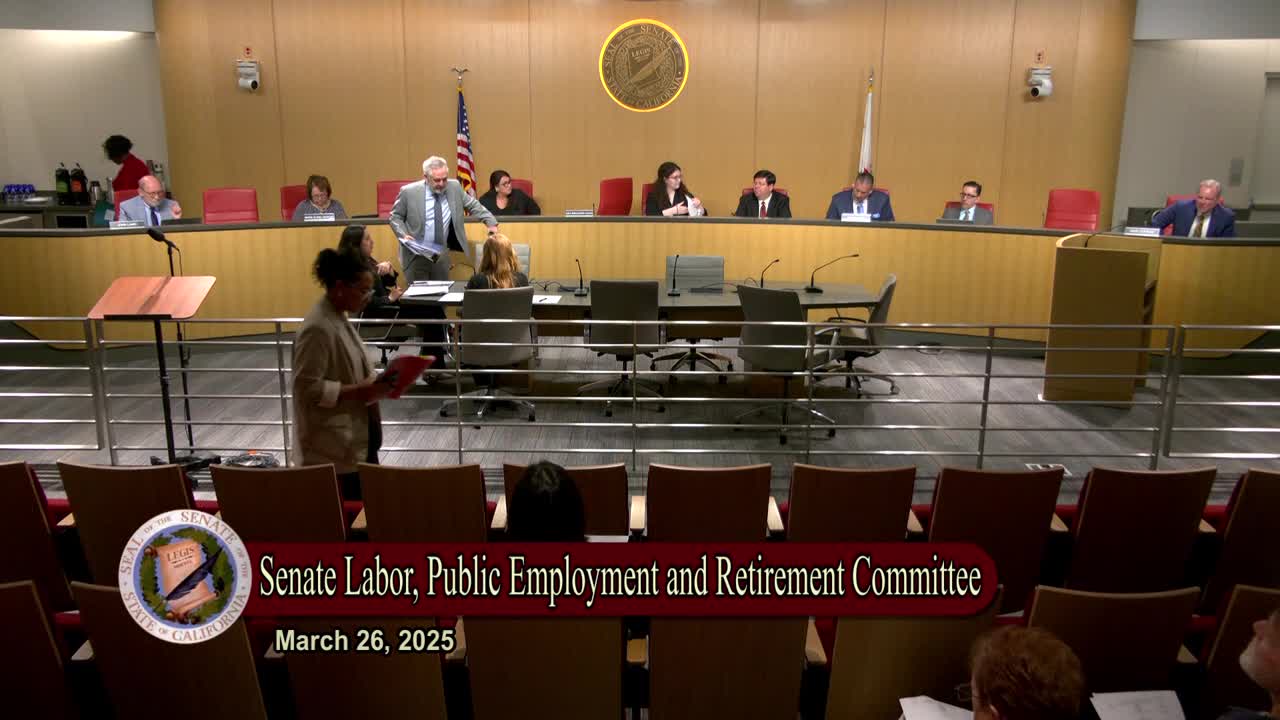
Bill Author