SB 586: Off-highway electric motorcycles.
- Session Year: 2025-2026
- House: Senate
- Latest Version Date: 2025-10-10
Current Status:
Passed
(2025-10-10: Chaptered by Secretary of State. Chapter 588, Statutes of 2025.)
Introduced
In Committee
Awaiting First Chamber Vote
Passed First Chamber
In Committee
Awaiting Second Chamber Vote
Passed Second Chamber
Enacted
Existing law defines an off-highway motor vehicle as a motor vehicle that operates on lands, other than a highway, that are open and accessible to the public, as specified. Existing law establishes rules for the operation of an off-highway vehicle and imposes specified safety requirements, including, among other things, a requirement that a person operating an off-highway vehicle wear a safety helmet. Existing law requires every off-highway motor vehicle that is not registered under the Vehicle Code to display an identification plate or device issued by the Department of Motor Vehicles, except as specified. A violation of these rules and requirements is a crime.
This bill would define the term off-highway electric motorcycle as an off-highway motorcycle subject to identification that is (1) designed by the manufacturer for operation primarily off the highway, (2) powered by an electric motor for which a motor number is not required, (3) has handlebars for steering control, (4) has a straddle seat provided by the manufacturer, (5) has two wheels, and (6) is not equipped with pedals from the manufacturer. The bill would classify an off-highway electric motorcycle as an off-highway motor vehicle, thereby subjecting off-highway electric motorcycles to the rules and regulations relating to off-highway motor vehicles. By expanding the scope of existing crimes with respect to off-highway electric motorcycles, this bill would impose a state-mandated local program.
The California Constitution requires the state to reimburse local agencies and school districts for certain costs mandated by the state. Statutory provisions establish procedures for making that reimbursement.
This bill would provide that no reimbursement is required by this act for a specified reason.
Existing law defines an off-highway motor vehicle as a motor vehicle that operates on lands, other than a highway, that are open and accessible to the public, as specified. Existing law establishes rules for the operation of an off-highway vehicle and imposes specified safety requirements, including, among other things, a requirement that a person operating an off-highway vehicle wear a safety helmet. Existing law requires every off-highway motor vehicle that is not registered under the Vehicle Code to display an identification plate or device issued by the Department of Motor Vehicles, except as specified. A violation of these rules and requirements is a crime.
This bill would define the term off-highway electric motorcycle as an off-highway motorcycle subject to identification that is (1) designed by the manufacturer for operation primarily off the highway, (2) powered by an electric motor for which a motor number is not required, (3) has handlebars for steering control, (4) has a straddle seat provided by the manufacturer, (5) has two wheels, and (6) is not equipped with pedals from the manufacturer. The bill would classify an eMoto off-highway electric motorcycle as an off-highway motor vehicle, thereby subjecting eMotos off-highway electric motorcycles to the rules and regulations relating to off-highway motor vehicles, including requiring eMotos to be subject to identification. vehicles. By expanding the scope of existing crimes with respect to eMotos, off-highway electric motorcycles, this bill would impose a state-mandated local program.
The California Constitution requires the state to reimburse local agencies and school districts for certain costs mandated by the state. Statutory provisions establish procedures for making that reimbursement.
This bill would provide that no reimbursement is required by this act for a specified reason.
Existing law regulates the operation of bicycles, motorized scooters, and electric personal assistive mobility devices, as defined.
This bill would define the term eMoto as an electric two-wheeled device built on a bicycle infrastructure that does not have pedals or an engine number and is not subject to registration under the Vehicle Code.
Existing law defines an off-highway motor vehicle as a motor vehicle that operates on lands, other than a highway, that are open and accessible to the public, as specified. Existing law establishes rules for the operation of an off-highway vehicle and imposes specified safety requirements, including, among other things, a requirement that a person operating an off-highway vehicle wear a safety helmet. Existing law requires every off-highway motor vehicle that is not registered under the Vehicle Code to display an identification plate or device issued by the Department of Motor Vehicles, except as specified. A violation of these rules and requirements is a crime.
This bill would classify an eMoto as an off-highway motor vehicle, thereby subjecting eMotos to the rules and regulations relating to off-highway motor vehicles, including requiring eMotos to be subject to identification. The bill would require the Department of the California Highway Patrol, in consultation with local law enforcement, to implement a program to educate the public on the proper use and operation of eMotos as off-highway vehicles and to promote the compliance of eMotos with the rules and regulations described above. By expanding the scope of existing crimes with respect to eMotos, this bill would impose a state-mandated local program.
(2)Existing law, the Off-Highway Motor Vehicle Recreation Act of 2003, creates the Division of Off-Highway Motor Vehicle Recreation. Existing law requires the division to, among other things, prepare and coordinate safety and education programs and provide for the enforcement of the off-highway vehicle rules and regulations described above in all areas acquired, maintained, or operated by funds from the Off-Highway Vehicle Trust Fund.The bill would require the division, in consultation with the Department of the California Highway Patrol, to develop guidelines for the operation of eMotos in state vehicular recreation areas.(3)TheThe California Constitution requires the state to reimburse local agencies and school districts for certain costs mandated by the state. Statutory provisions establish procedures for making that reimbursement.
This bill would provide that no reimbursement is required by this act for a specified reason.
Existing law regulates the operation of bicycles, motorized scooters, and electric personal assistive mobility devices, as defined.
This bill would define the term eMoto as an electric two-wheeled device built on a bicycle infrastructure that does not have pedals or an engine number and is not subject to registration under the Vehicle Code.
Existing law defines an off-highway motor vehicle as a motor vehicle that operates on lands, other than a highway, that are open and accessible to the public, as specified. Existing law establishes rules for the operation of an off-highway vehicle and imposes specified safety requirements, including, among other things, a requirement that a person operating an off-highway vehicle wear a safety helmet. Existing law requires every off-highway motor vehicle that is not registered under the Vehicle Code to display an identification plate or device issued by the Department of Motor Vehicles, except as specified. A violation of these rules and requirements is a crime.
This bill would classify an eMoto as an off-highway motor vehicle, thereby subjecting eMotos to the rules and regulations relating to off-highway motor vehicles, including requiring eMotos to be subject to identification. The bill would require the Department of the California Highway Patrol, in consultation with local law enforcement, to implement a program to educate the public on the proper use and operation of eMotos as off-highway vehicles and to promote the compliance of eMotos with the rules and regulations described above. By expanding the scope of existing crimes with respect to eMotos, this bill would impose a state-mandated local program.
(2)Existing law, the Off-Highway Motor Vehicle Recreation Act of 2003, creates the Division of Off-Highway Motor Vehicle Recreation. Existing law requires the division to, among other things, prepare and coordinate safety and education programs and provide for the enforcement of the off-highway vehicle rules and regulations described above in all areas acquired, maintained, or operated by funds from the Off-Highway Vehicle Trust Fund.
The bill would require the division, in consultation with the Department of the California Highway Patrol, to develop guidelines for the operation of eMotos in state vehicular recreation areas.
(3)The California Constitution requires the state to reimburse local agencies and school districts for certain costs mandated by the state. Statutory provisions establish procedures for making that reimbursement.
This bill would provide that no reimbursement is required by this act for a specified reason.
An off-highway electric motorcycle, commonly referred to as an eMoto, is an off-highway motorcycle subject to identification under this code that meets all of the following requirements:
(a)Is designed by the manufacturer for operation primarily off the highway.
(b)Is powered by an electric motor for which a motor number is not required.
(c)Has handlebars for steering control.
(d)Has a straddle seat provided by the manufacturer.
(e)Has two wheels.
(f)Is not equipped with pedals from the manufacturer.
SEC. 2.Section 38010 of the Vehicle Code is amended to read:38010.(a)Except as otherwise provided in subdivision (b), a motor vehicle specified in subdivision (b) of Section 38012 that is not registered under this code because it is to be operated or used exclusively off the highways, except as provided in this division, shall display an identification plate or device issued by the department.
(b)Subdivision (a) does not apply to any of the following:
(1)Motor vehicles specifically exempted from registration under this code, including, but not limited to, motor vehicles exempted pursuant to Sections 4006, 4010, 4012, 4013, 4015, 4018, and 4019.
(2)Implements of husbandry.
(3)Motor vehicles owned by the state, or any county, city, district, or political subdivision of the state, or the United States.
(4)Motor vehicles owned or operated by, or operated under contract with a utility, whether privately or publicly owned, when used as specified in Section 22512.
(5)Special construction equipment described in Section 565, regardless of whether those motor vehicles are used in connection with highway or railroad work.
(6)A motor vehicle with a currently valid special permit issued under Section 38087.5 that is owned or operated by a nonresident of this state and the vehicle is not identified or registered in a foreign jurisdiction. For the purposes of this paragraph, a person who holds a valid drivers license issued by a foreign jurisdiction is presumed to be a nonresident.
(7)Commercial vehicles weighing more than 6,000 pounds unladen.
(8)A motorcycle manufactured in the year 1942 or prior.
(9)Four-wheeled motor vehicles operated solely in organized racing or competitive events upon a closed course when those events are conducted under the auspices of a recognized sanctioning body or by permit issued by the local governmental authority having jurisdiction.
(10)A motor vehicle with a currently valid identification or registration permit issued by another state, if the other state recognizes an identification plate or device issued by the department pursuant to subdivision (a) as valid for use in that state.
SEC. 3.Section 38012 of the Vehicle Code is amended to read:38012.(a)As used in this division, off-highway motor vehicle subject to identification means a motor vehicle subject to subdivision (a) of Section 38010.
(b)As used in this division, off-highway motor vehicle includes, but is not limited to, the following:
(1)A motorcycle or motor-driven cycle, except for any motorcycle that is eligible for a special transportation identification device issued pursuant to Section 38088.
(2)A snowmobile or other vehicle designed to travel over snow or ice, as defined in Section 557.
(3)A motor vehicle commonly referred to as a sand buggy, dune buggy, or all-terrain vehicle.
(4)A motor vehicle commonly referred to as a jeep.
(5)A recreational off-highway vehicle as defined in Section 500.
(6)An off-highway electric motorcycle as defined in Section 436.1.
SEC. 4.No reimbursement is required by this act pursuant to Section 6 of Article XIIIB of the California Constitution because the only costs that may be incurred by a local agency or school district will be incurred because this act creates a new crime or infraction, eliminates a crime or infraction, or changes the penalty for a crime or infraction, within the meaning of Section 17556 of the Government Code, or changes the definition of a crime within the meaning of Section 6 of Article XIIIB of the California Constitution.
An off-highway electric motorcycle, commonly referred to as an eMoto, is an off-highway motorcycle subject to identification under this code that meets all of the following requirements:
(a)Is designed by the manufacturer for operation primarily off the highway.
(b)Is powered by an electric motor for which a motor number is not required.
(c)Has handlebars for steering control.
(d)Has a straddle seat provided by the manufacturer.
(e)Has two wheels.
(f)Is not equipped with pedals from the manufacturer.
SEC. 2.Section 38010 of the Vehicle Code is amended to read:38010.(a)Except as otherwise provided in subdivision (b), a motor vehicle specified in subdivision (b) of Section 38012, including an eMoto as defined in Section 312.8, 38012 that is not registered under this code because it is to be operated or used exclusively off the highways, except as provided in this division, shall display an identification plate or device issued by the department.
(b)Subdivision (a) does not apply to any of the following:
(1)Motor vehicles specifically exempted from registration under this code, including, but not limited to, motor vehicles exempted pursuant to Sections 4006, 4010, 4012, 4013, 4015, 4018, and 4019.
(2)Implements of husbandry.
(3)Motor vehicles owned by the state, or any county, city, district, or political subdivision of the state, or the United States.
(4)Motor vehicles owned or operated by, or operated under contract with a utility, whether privately or publicly owned, when used as specified in Section 22512.
(5)Special construction equipment described in Section 565, regardless of whether those motor vehicles are used in connection with highway or railroad work.
(6)A motor vehicle with a currently valid special permit issued under Section 38087.5 that is owned or operated by a nonresident of this state and the vehicle is not identified or registered in a foreign jurisdiction. For the purposes of this paragraph, a person who holds a valid drivers license issued by a foreign jurisdiction is presumed to be a nonresident.
(7)Commercial vehicles weighing more than 6,000 pounds unladen.
(8)A motorcycle manufactured in the year 1942 or prior.
(9)Four-wheeled motor vehicles operated solely in organized racing or competitive events upon a closed course when those events are conducted under the auspices of a recognized sanctioning body or by permit issued by the local governmental authority having jurisdiction.
(10)A motor vehicle with a currently valid identification or registration permit issued by another state, if the other state recognizes an identification plate or device issued by the department pursuant to subdivision (a) as valid for use in that state.
SEC. 3.Section 38012 of the Vehicle Code is amended to read:38012.(a)As used in this division, off-highway motor vehicle subject to identification means a motor vehicle subject to subdivision (a) of Section 38010.
(b)As used in this division, off-highway motor vehicle includes, but is not limited to, the following:
(1)A motorcycle or motor-driven cycle, except for any motorcycle that is eligible for a special transportation identification device issued pursuant to Section 38088.
(2)A snowmobile or other vehicle designed to travel over snow or ice, as defined in Section 557.
(3)A motor vehicle commonly referred to as a sand buggy, dune buggy, or all-terrain vehicle.
(4)A motor vehicle commonly referred to as a jeep.
(5)A recreational off-highway vehicle as defined in Section 500.
(6)An eMoto off-highway electric motorcycle as defined in Section 312.8. 436.1.
SEC. 4.No reimbursement is required by this act pursuant to Section 6 of Article XIIIB of the California Constitution because the only costs that may be incurred by a local agency or school district will be incurred because this act creates a new crime or infraction, eliminates a crime or infraction, or changes the penalty for a crime or infraction, within the meaning of Section 17556 of the Government Code, or changes the definition of a crime within the meaning of Section 6 of Article XIIIB of the California Constitution.
An eMoto is an electric two-wheeled device built on a bicycle infrastructure that does not have pedals or an engine number and is not subject to registration under this code.
SEC. 2.Section 38008 is added to the Vehicle Code, to read:38008.The Department of the California Highway Patrol, in consultation with local law enforcement, shall implement a program to educate the public on the proper use and operation of eMotos, as defined in Section 312.8, as off-highway vehicles and to promote the compliance of eMotos with the provisions of this division.SEC. 3.SEC. 2.Section 38010 of the Vehicle Code is amended to read:38010.(a)Except as otherwise provided in subdivision (b), a motor vehicle specified in Section 38012, including an eMoto as defined in Section 312.8, that is not registered under this code because it is to be operated or used exclusively off the highways, except as provided in this division, shall display an identification plate or device issued by the department.
(b)Subdivision (a) does not apply to any of the following:
(1)Motor vehicles specifically exempted from registration under this code, including, but not limited to, motor vehicles exempted pursuant to Sections 4006, 4010, 4012, 4013, 4015, 4018, and 4019.
(2)Implements of husbandry.
(3)Motor vehicles owned by the state, or any county, city, district, or political subdivision of the state, or the United States.
(4)Motor vehicles owned or operated by, or operated under contract with a utility, whether privately or publicly owned, when used as specified in Section 22512.
(5)Special construction equipment described in Section 565, regardless of whether those motor vehicles are used in connection with highway or railroad work.
(6)A motor vehicle with a currently valid special permit issued under Section 38087.5 that is owned or operated by a nonresident of this state and the vehicle is not identified or registered in a foreign jurisdiction. For the purposes of this paragraph, a person who holds a valid drivers license issued by a foreign jurisdiction is presumed to be a nonresident.
(7)Commercial vehicles weighing more than 6,000 pounds unladen.
(8)A motorcycle manufactured in the year 1942 or prior.
(9)Four-wheeled motor vehicles operated solely in organized racing or competitive events upon a closed course when those events are conducted under the auspices of a recognized sanctioning body or by permit issued by the local governmental authority having jurisdiction.
(10)A motor vehicle with a currently valid identification or registration permit issued by another state, if the other state recognizes an identification plate or device issued by the department pursuant to subdivision (a) as valid for use in that state.
SEC. 4.SEC. 3.Section 38012 of the Vehicle Code is amended to read:38012.(a)As used in this division, off-highway motor vehicle subject to identification means a motor vehicle subject to subdivision (a) of Section 38010.
(b)As used in this division, off-highway motor vehicle includes, but is not limited to, the following:
(1)A motorcycle or motor-driven cycle, except for any motorcycle that is eligible for a special transportation identification device issued pursuant to Section 38088.
(2)A snowmobile or other vehicle designed to travel over snow or ice, as defined in Section 557.
(3)A motor vehicle commonly referred to as a sand buggy, dune buggy, or all-terrain vehicle.
(4)A motor vehicle commonly referred to as a jeep.
(5)A recreational off-highway vehicle as defined in Section 500.
(6)An eMoto as defined in Section 312.8.
SEC. 5.SEC. 4.No reimbursement is required by this act pursuant to Section 6 of Article XIIIB of the California Constitution because the only costs that may be incurred by a local agency or school district will be incurred because this act creates a new crime or infraction, eliminates a crime or infraction, or changes the penalty for a crime or infraction, within the meaning of Section 17556 of the Government Code, or changes the definition of a crime within the meaning of Section 6 of Article XIIIB of the California Constitution.
An eMoto is an electric two-wheeled device built on a bicycle infrastructure that does not have pedals or an engine number and is not subject to registration under this code.
SEC. 3.SEC. 2.Section 38008 is added to the Vehicle Code, to read:38008.The Department of the California Highway Patrol, in consultation with local law enforcement, shall implement a program to educate the public on the proper use and operation of eMotos, as defined in Section 312.8, as off-highway vehicles and to promote the compliance of eMotos with the provisions of this division.
SEC. 4.SEC. 3.Section 38010 of the Vehicle Code is amended to read:38010.(a)Except as otherwise provided in subdivision (b), a motor vehicle specified in Section 38012, including an eMoto as defined in Section 312.8, that is not registered under this code because it is to be operated or used exclusively off the highways, except as provided in this division, shall display an identification plate or device issued by the department.
(b)Subdivision (a) does not apply to any of the following:
(1)Motor vehicles specifically exempted from registration under this code, including, but not limited to, motor vehicles exempted pursuant to Sections 4006, 4010, 4012, 4013, 4015, 4018, and 4019.
(2)Implements of husbandry.
(3)Motor vehicles owned by the state, or any county, city, district, or political subdivision of the state, or the United States.
(4)Motor vehicles owned or operated by, or operated under contract with a utility, whether privately or publicly owned, when used as specified in Section 22512.
(5)Special construction equipment described in Section 565, regardless of whether those motor vehicles are used in connection with highway or railroad work.
(6)A motor vehicle with a currently valid special permit issued under Section 38087.5 that is owned or operated by a nonresident of this state and the vehicle is not identified or registered in a foreign jurisdiction. For the purposes of this paragraph, a person who holds a valid drivers license issued by a foreign jurisdiction is presumed to be a nonresident.
(7)Commercial vehicles weighing more than 6,000 pounds unladen.
(8)A motorcycle manufactured in the year 1942 or prior.
(9)Four-wheeled motor vehicles operated solely in organized racing or competitive events upon a closed course when those events are conducted under the auspices of a recognized sanctioning body or by permit issued by the local governmental authority having jurisdiction.
(10)A motor vehicle with a currently valid identification or registration permit issued by another state, if the other state recognizes an identification plate or device issued by the department pursuant to subdivision (a) as valid for use in that state.
SEC. 5.SEC. 4.Section 38012 of the Vehicle Code is amended to read:38012.(a)As used in this division, off-highway motor vehicle subject to identification means a motor vehicle subject to subdivision (a) of Section 38010.
(b)As used in this division, off-highway motor vehicle includes, but is not limited to, the following:
(1)A motorcycle or motor-driven cycle, except for any motorcycle that is eligible for a special transportation identification device issued pursuant to Section 38088.
(2)A snowmobile or other vehicle designed to travel over snow or ice, as defined in Section 557.
(3)A motor vehicle commonly referred to as a sand buggy, dune buggy, or all-terrain vehicle.
(4)A motor vehicle commonly referred to as a jeep.
(5)A recreational off-highway vehicle as defined in Section 500.
(6)An eMoto as defined in Section 312.8.
SEC. 6.SEC. 5.No reimbursement is required by this act pursuant to Section 6 of Article XIIIB of the California Constitution because the only costs that may be incurred by a local agency or school district will be incurred because this act creates a new crime or infraction, eliminates a crime or infraction, or changes the penalty for a crime or infraction, within the meaning of Section 17556 of the Government Code, or changes the definition of a crime within the meaning of Section 6 of Article XIIIB of the California Constitution.
The division shall, in consultation with the Department of the California Highway Patrol, develop guidelines for the operation of eMotos, as defined in Section 312.8 of the Vehicle Code, in state vehicular recreation areas.
SEC. 2.Section 312.8 is added to the Vehicle Code, to read:312.8.An eMoto is an electric two-wheeled device built on a bicycle infrastructure that does not have pedals or an engine number and is not subject to registration under this code.
SEC. 3.Section 38008 is added to the Vehicle Code, to read:38008.The Department of the California Highway Patrol, in consultation with local law enforcement, shall implement a program to educate the public on the proper use and operation of eMotos, as defined in Section 312.8, as off-highway vehicles and to promote the compliance of eMotos with the provisions of this division.
SEC. 4.Section 38010 of the Vehicle Code is amended to read:38010.(a)Except as otherwise provided in subdivision (b), a motor vehicle specified in Section 38012 38012, including an eMoto as defined in Section 312.8, that is not registered under this code because it is to be operated or used exclusively off the highways, except as provided in this division, shall display an identification plate or device issued by the department.
(b)Subdivision (a) does not apply to any of the following:
(1)Motor vehicles specifically exempted from registration under this code, including, but not limited to, motor vehicles exempted pursuant to Sections 4006, 4010, 4012, 4013, 4015, 4018, and 4019.
(2)Implements of husbandry.
(3)Motor vehicles owned by the state, or any county, city, district, or political subdivision of the state, or the United States.
(4)Motor vehicles owned or operated by, or operated under contract with a utility, whether privately or publicly owned, when used as specified in Section 22512.
(5)Special construction equipment described in Section 565, regardless of whether those motor vehicles are used in connection with highway or railroad work.
(6)A motor vehicle with a currently valid special permit issued under Section 38087.5 that is owned or operated by a nonresident of this state and the vehicle is not identified or registered in a foreign jurisdiction. For the purposes of this paragraph, a person who holds a valid drivers license issued by a foreign jurisdiction is presumed to be a nonresident.
(7)Commercial vehicles weighing more than 6,000 pounds unladen.
(8)A motorcycle manufactured in the year 1942 or prior.
(9)Four-wheeled motor vehicles operated solely in organized racing or competitive events upon a closed course when those events are conducted under the auspices of a recognized sanctioning body or by permit issued by the local governmental authority having jurisdiction.
(10)A motor vehicle with a currently valid identification or registration permit issued by another state, if the other state recognizes an identification plate or device issued by the department pursuant to subdivision (a) as valid for use in that state.
SEC. 5.Section 38012 of the Vehicle Code is amended to read:38012.(a)As used in this division, off-highway motor vehicle subject to identification means a motor vehicle subject to subdivision (a) of Section 38010.
(b)As used in this division, off-highway motor vehicle includes, but is not limited to, the following:
(1)A motorcycle or motor-driven cycle, except for any motorcycle that is eligible for a special transportation identification device issued pursuant to Section 38088.
(2)A snowmobile or other vehicle designed to travel over snow or ice, as defined in Section 557.
(3)A motor vehicle commonly referred to as a sand buggy, dune buggy, or all-terrain vehicle.
(4)A motor vehicle commonly referred to as a jeep.
(5)A recreational off-highway vehicle as defined in Section 500.
(6)An eMoto as defined in Section 312.8.
SEC. 6.No reimbursement is required by this act pursuant to Section 6 of Article XIIIB of the California Constitution because the only costs that may be incurred by a local agency or school district will be incurred because this act creates a new crime or infraction, eliminates a crime or infraction, or changes the penalty for a crime or infraction, within the meaning of Section 17556 of the Government Code, or changes the definition of a crime within the meaning of Section 6 of Article XIIIB of the California Constitution.
|
Date
|
Status
|
|---|---|
| Oct 10, 2025 | Chaptered by Secretary of State. Chapter 588, Statutes of 2025. |
| Oct 10, 2025 | Approved by the Governor. |
| Sep 22, 2025 | Enrolled and presented to the Governor at 2 p.m. |
| Sep 11, 2025 | Assembly amendments concurred in. (Ayes 40. Noes 0. Page 2874.) Ordered to engrossing and enrolling. |
| Sep 9, 2025 | In Senate. Concurrence in Assembly amendments pending. |
| Sep 9, 2025 | Read third time. Passed. (Ayes 79. Noes 0. Page 3071.) Ordered to the Senate. |
| Aug 21, 2025 | Read second time. Ordered to third reading. |
| Aug 20, 2025 | From committee: Do pass. (Ayes 15. Noes 0.) (August 20). |
| Jul 16, 2025 | Read second time and amended. Re-referred to Com. on APPR. |
| Jul 15, 2025 | From committee: Do pass as amended and re-refer to Com. on APPR. (Ayes 11. Noes 0.) (July 15). |
| Jul 8, 2025 | From committee: Do pass and re-refer to Com. on W. P., & W. with recommendation: To consent calendar. (Ayes 16. Noes 0.) (July 7). Re-referred to Com. on W. P., & W. |
| Jun 16, 2025 | Referred to Coms. on TRANS. and W. P., & W. |
| Jun 5, 2025 | In Assembly. Read first time. Held at Desk. |
| Jun 4, 2025 | Read third time. Passed. (Ayes 38. Noes 0. Page 1516.) Ordered to the Assembly. |
| May 27, 2025 | Read second time. Ordered to third reading. |
| May 23, 2025 | Read second time and amended. Ordered to second reading. |
| May 23, 2025 | From committee: Do pass as amended. (Ayes 6. Noes 0. Page 1205.) (May 23). |
| May 16, 2025 | Set for hearing May 23. |
| May 12, 2025 | May 12 hearing: Placed on APPR. suspense file. |
| May 2, 2025 | Set for hearing May 12. |
| May 1, 2025 | May 5 hearing postponed by committee. |
| Apr 29, 2025 | Set for hearing May 5. |
| Apr 24, 2025 | Read second time and amended. Re-referred to Com. on APPR. |
| Apr 23, 2025 | From committee: Do pass as amended and re-refer to Com. on APPR. (Ayes 6. Noes 0. Page 839.) (April 22). |
| Apr 10, 2025 | Set for hearing April 22. |
| Apr 9, 2025 | From committee: Do pass and re-refer to Com. on N.R. & W. (Ayes 14. Noes 0. Page 710.) (April 8). Re-referred to Com. on N.R. & W. |
| Mar 25, 2025 | Set for hearing April 8. |
| Mar 5, 2025 | Referred to Coms. on TRANS. and N.R. & W. |
| Feb 21, 2025 | From printer. May be acted upon on or after March 23. |
| Feb 20, 2025 | Introduced. Read first time. To Com. on RLS. for assignment. To print. |
|
Date
|
Description
|
Location
|
Votes
|
|
|---|---|---|---|---|
| Sep 11, 2025 | Unfinished Business SB586 Jones et al. Concurrence | Senate Floor |
Passed |
|
| Sep 9, 2025 | SB 586 Jones Senate Third Reading By Jeff Gonzalez | Assembly Floor |
Passed |
|
| Aug 20, 2025 | Do pass. | Assembly Standing Committee on Appropriations |
Passed |
|
| Jul 15, 2025 | Do pass as amended and be re-referred to the Committee on [Appropriations] | Assembly Standing Committee on Water, Parks, and Wildlife |
Passed |
|
| Jul 7, 2025 | Do pass and be re-referred to the Committee on [Water, Parks, and Wildlife] with recommendation: To Consent Calendar | Assembly Standing Committee on Transportation |
Passed |
|
| Jun 4, 2025 | Senate 3rd Reading SB586 Jones | Senate Floor |
Passed |
|
| May 23, 2025 | Do pass as amended | Senate Standing Committee on Appropriations |
Passed |
|
| May 12, 2025 | Placed on suspense file | Senate Standing Committee on Appropriations |
Passed |
|
| Apr 22, 2025 | Do pass as amended, but first amend, and re-refer to the Committee on [Appropriations] | Senate Standing Committee on Natural Resources and Water |
Passed |
|
| Apr 8, 2025 | Do pass, but first be re-referred to the Committee on [Natural Resources and Water] | Senate Standing Committee on Transportation |
Passed |
This list shows positions taken on this bill by organizations on the date displayed, which is linked to the original source.
Positions by individuals are not included.
|
Organization
|
Position
|
Date
|
|---|---|---|
| California Mountain Biking Coalition | ** Support | |
| CALIFORNIA MOUNTAIN BIKING COALITION (CAMTB) | ** Support | |
| Calwild | ** Support | |
| Off-highway Vehicles | ** Support | |
| OHV District 36 | ** Support | |
| PeopleforBikes | ** Support |
SENATE RULES COMMITTEE Office of Senate Floor Analyses (916) 651-1520 Fax: (916) 327-4478 | SB 586 |
UNFINISHED BUSINESS
Bill No: SB 586
Author: Jones (R), et al.
Amended: 7/16/25
Vote: 21
SENATE TRANSPORTATION COMMITTEE: 14-0, 4/8/25
AYES: Cortese, Strickland, Archuleta, Arreguín, Blakespear, Cervantes, Dahle, Gonzalez, Grayson, Limón, Menjivar, Richardson, Umberg, Valladares
NO VOTE RECORDED: Seyarto
SENATE NATURAL RES. & WATER COMMITTEE: 6-0, 4/22/25
AYES: Limón, Seyarto, Allen, Grove, Laird, Stern
NO VOTE RECORDED: Hurtado
SENATE APPROPRIATIONS COMMITTEE: 6-0, 5/23/25
AYES: Caballero, Seyarto, Cabaldon, Grayson, Richardson, Wahab
NO VOTE RECORDED: Dahle
SENATE FLOOR: 38-0, 6/4/25
AYES: Allen, Alvarado-Gil, Archuleta, Arreguín, Ashby, Becker, Blakespear, Cabaldon, Caballero, Cervantes, Choi, Cortese, Dahle, Durazo, Gonzalez, Grayson, Grove, Hurtado, Jones, Laird, Limón, McGuire, McNerney, Menjivar, Niello, Ochoa Bogh, Padilla, Pérez, Richardson, Rubio, Seyarto, Stern, Strickland, Umberg, Valladares, Wahab, Weber Pierson, Wiener
NO VOTE RECORDED: Reyes, Smallwood-Cuevas
ASSEMBLY FLOOR: 79-0, 9/9/25 - See last page for vote
SUBJECT: Off-highway electric motorcycles
SOURCE: OHV District 36
DIGEST:
This bill classifies an "off-highway electric motorcycle" or "eMoto" as an off-highway motor vehicle (OHV) thereby requiring them to follow OHV rules, including displaying an identification plate or device issued by the Department of Motor Vehicles (DMV).
Assembly Amendments
clarify the definition of eMotos, define these vehicles as off-highway electric motorcycles, and add additional criteria required to meet the definition.
ANALYSIS:
Existing law:
- Establishes the Division of Off-Highway Motor Vehicle Recreation (OHMVR Division) within the Department of Parks and Recreation (State Parks) and tasks the OHMVR Division with developing, managing, and operating lands in the state vehicular recreation areas (SRVAs) and providing for law enforcement and appropriate public safety activities in these areas (Public Resources Code §§ 5090.30 et. seq.).
- Vests the OHMVR Division with responsibility for the enforcement of OHVs (Division 16.5 of the Vehicle Code) and other laws regulating the use or equipment of off-highway motor vehicles in all areas acquired, maintained, or operated by funds from the Off-Highway Vehicle Trust Fund;
- Requires the OHMVR Division to prepare and coordinate safety and education programs;
- Specifies the Department of the California Highway Patrol (CHP) shall have responsibility for enforcement on highways;
- Requires the OHMVR Division to make available on its website: laws and regulations for operating OHVs; maps of federal, state, and local OHV recreation areas; information concerning safety, education, and trail etiquette; and information to prevent trespass and damage.
- Requires the OHMVR Division to adopt courses of instruction in OHV safety, operation, and principles of environmental preservation by January 1, 2005 (Vehicle Code § 38007).
- Defines “electric bicycle,” and excludes from that definition “[a] vehicle with two or three wheels powered by an electric motor that is intended by the manufacturer to be modifiable to attain a speed greater than 20 miles per hour on motor power alone or to attain more than 750 watts of power” (Vehicle Code § 312.5).
- Requires OHVs, as defined in #5, that are not registered under the Vehicle Code, to display an identification plate or other device issued by the Department of Motor Vehicles (Vehicle Code § 38010).
- Establishes categories of vehicles to be considered “off-highway motor vehicles” including (Vehicle Code § 38012):
- A motorcycle or motor-driven cycle, except for any motorcycle that is eligible for a certain special transportation identification device;
- A snowmobile or other vehicle designed to travel over snow or ice;
- A motor vehicle commonly referred to as a sand buggy, dune buggy, or all-terrain vehicle;
- A motor vehicle commonly referred to as a jeep; and,
- A recreational off-highway vehicle.
This bill:
- Defines an "off-highway electric motorcycle" as meeting all of the following requirements:
- Is designed by the manufacturer for operation primarily off the highway.
- Is powered by an electric motor for which a motor number is not required.
- Has handlebars for steering control.
- Has a straddle seat provided by the manufacturer.
- Has two wheels.
- Is not equipped with pedals from the manufacturer.
- Adds eMotos to the existing list of vehicles defined as “off-highway motor vehicle subject to identification.”
Comments
- Purpose of this bill. According to the author, “[This bill] provides necessary regulatory clarity for the growing eMoto industry by classifying these vehicles as off-highway motorcycles. By doing so, the bill ensures that eMoto users comply with existing OHV regulations, including safety and identification requirements, to enhance responsible recreation and public safety.”
- Off-highway vehicles. OHVs are motor vehicles that are used only off public roads and highways, on private land and lands that are open and accessible to the public. Some of the more common OHVs include all-terrain vehicles, dirt bikes, sand rails, recreation utility vehicles, golf carts, snowmobiles, go carts, jeeps, recreational off-highway vehicles, and 4x4s. OHVs do not require regular vehicle registration, but must display an identification plate or placard issued by DMV. This identification plate is commonly referred to as a "California Green Sticker" which is affixed directly to the OHV. The OHV “registration” fee for the identification plate is $54 per vehicle, and is valid for a two-year period. OHV fees are used for acquisition of new OHV areas, development and operation of existing OHV areas, enforcement of the rules and regulations, and protection of natural resources. Green Sticker vehicles are allowed year-round operation on public lands open to motor vehicles.
- eMotos. eMotos are a type of electric motorcycle with some models reaching 50 to 60mph, 8000 watts of power, and 50-90 mile ranges, with a rechargeable battery. They lack pedals and are typically designed as recreational all-terrain vehicles exclusively for off-road use. eMotos are not electric bicycles (e-bikes), although there are rising concerns that they are being marketed and sold as e-bikes. E-bikes, which are rapidly growing in popularity, look like regular bicycles but include an electric motor and battery. The fastest e-bikes are class three, with a maximum assisted speed of 28 mph. E-bikes must be equipped with fully operable pedals and an electric motor that does not exceed 750 watts of power.
Unlike a traditional motorcycle, eMotos lack a VIN number and as a result cannot be registered with DMV. This bill would permit DMV to register these vehicles for OHV use only.
Related/Previous Legislation
AB 632 (Caballero, Chapter 592, Statutes of 2024) – Authorizes State Parks, until 2030, to establish a pilot project to designate combined-use highways on roads in Red Rock Canyon State Park in order to link existing OHV motor vehicle trails, trailheads, and recreational-use areas on federal Bureau of Land Management or United States Forest Service lands.
SB 708 (Jones, Chapter 446, Statutes of 2024) – Requires State Parks to issue a sanctioned event permit that allows a California resident, upon payment of a fee, to operate off-road motorcycles that do not meet emissions standards at competitions on public lands (i.e., “sanctioned events”).
SB 249 (Allen, Chapter 459, Statutes of 2017) – extends the Off-Highway Motor Vehicle Recreation Act indefinitely and made various other changes to the Act.
FISCAL EFFECT: Appropriation: No Fiscal Com.: Yes Local: Yes
According to Assembly Appropriations Committee:
- The Department of Parks and Recreation contends it would need to update its off-highway vehicle (OHV) regulations to account for the eMoto vehicle type. Doing so, the department estimates, would cost approximately $100,000.
- DMV predicts minor costs to update its website, publications and memos to account for eMotos and indicates eMoto registrants would use DMV’s existing OHV registration processes.
SUPPORT: (Verified 9/3/25)
OHV District 36 (source)
California Mountain Biking Coalition
Calwild
Off-highway Vehicles
PeopleForBikes
OPPOSITION: (Verified 9/3/25)
None received
ARGUMENTS IN SUPPORT: Writing in support of the bill, the California Mountain Biking Coalition states, “CAMTB understands that Electric motorcycles (eMotos) are an emerging category of zero-emission OHVs that currently have no authorized trails or designated areas where they can be operated. Currently, eMotos are not explicitly recognized as electric off-highway motorcycles under California law, preventing them from being registered with an OHV Green Sticker. The current situation can amplify user conflicts when riders ride eMotos on trails primarily used by bicyclists and class I electric bicycles. SB 586 would create legal riding opportunities by directing them to operate on designated motorized routes and away from riding in non-motorized areas and on sidewalks and public roadways hence reducing user conflicts and increasing support and revenue stream for related and important safety education, law enforcement, conservation, and land management prescriptions. We understand that SB 586 is simply a registration fix and will not create new OHV riding areas.”
ASSEMBLY FLOOR: 79-0, 9/9/25
AYES: Addis, Aguiar-Curry, Ahrens, Alanis, Alvarez, Arambula, Ávila Farías, Bains, Bauer-Kahan, Bennett, Berman, Boerner, Bonta, Bryan, Calderon, Caloza, Carrillo, Castillo, Chen, Connolly, Davies, DeMaio, Dixon, Elhawary, Ellis, Flora, Fong, Gabriel, Gallagher, Garcia, Gipson, Jeff Gonzalez, Mark González, Hadwick, Haney, Harabedian, Hart, Hoover, Irwin, Jackson, Johnson, Kalra, Krell, Lackey, Lowenthal, Macedo, McKinnor, Muratsuchi, Nguyen, Ortega, Pacheco, Papan, Patel, Patterson, Pellerin, Petrie-Norris, Quirk-Silva, Ramos, Ransom, Celeste Rodriguez, Michelle Rodriguez, Rogers, Blanca Rubio, Sanchez, Schiavo, Schultz, Sharp-Collins, Solache, Soria, Stefani, Ta, Tangipa, Valencia, Wallis, Ward, Wicks, Wilson, Zbur, Rivas
NO VOTE RECORDED: Lee
Prepared by: Isabelle LaSalle / TRANS. / (916) 651-4121
10/19/26 12:45:33
**** END ****
SENATE RULES COMMITTEE Office of Senate Floor Analyses (916) 651-1520 Fax: (916) 327-4478 | SB 586 |
UNFINISHED BUSINESS
Bill No: SB 586
Author: Jones (R), et al.
Amended: 7/16/25 in Assembly
Vote: 21
SENATE TRANSPORTATION COMMITTEE: 14-0, 4/8/25
AYES: Cortese, Strickland, Archuleta, Arreguín, Blakespear, Cervantes, Dahle, Gonzalez, Grayson, Limón, Menjivar, Richardson, Umberg, Valladares
NO VOTE RECORDED: Seyarto
SENATE NATURAL RES. & WATER COMMITTEE: 6-0, 4/22/25
AYES: Limón, Seyarto, Allen, Grove, Laird, Stern
NO VOTE RECORDED: Hurtado
SENATE APPROPRIATIONS COMMITTEE: 6-0, 5/23/25
AYES: Caballero, Seyarto, Cabaldon, Grayson, Richardson, Wahab
NO VOTE RECORDED: Dahle
SENATE FLOOR: 38-0, 6/4/25
AYES: Allen, Alvarado-Gil, Archuleta, Arreguín, Ashby, Becker, Blakespear, Cabaldon, Caballero, Cervantes, Choi, Cortese, Dahle, Durazo, Gonzalez, Grayson, Grove, Hurtado, Jones, Laird, Limón, McGuire, McNerney, Menjivar, Niello, Ochoa Bogh, Padilla, Pérez, Richardson, Rubio, Seyarto, Stern, Strickland, Umberg, Valladares, Wahab, Weber Pierson, Wiener
NO VOTE RECORDED: Reyes, Smallwood-Cuevas
ASSEMBLY FLOOR: 67-0, 9/9/25 – Roll call not available
SUBJECT: Off-highway electric motorcycles
SOURCE: OHV District 36
DIGEST:
This bill classifies an "off-highway electric motorcycle" or "eMoto" as an off-highway motor vehicle (OHV) thereby requiring them to follow OHV rules, including displaying an identification plate or device issued by the Department of Motor Vehicles (DMV).
Assembly Amendments
clarify the definition of eMotos, define these vehicles as off-highway electric motorcycles, and add additional criteria required to meet the definition.
ANALYSIS:
Existing law:
- Establishes the Division of Off-Highway Motor Vehicle Recreation (OHMVR Division) within the Department of Parks and Recreation (State Parks) and tasks the OHMVR Division with developing, managing, and operating lands in the state vehicular recreation areas (SRVAs) and providing for law enforcement and appropriate public safety activities in these areas (Public Resources Code §§ 5090.30 et. seq.).
- Vests the OHMVR Division with responsibility for the enforcement of OHVs (Division 16.5 of the Vehicle Code) and other laws regulating the use or equipment of off-highway motor vehicles in all areas acquired, maintained, or operated by funds from the Off-Highway Vehicle Trust Fund;
- Requires the OHMVR Division to prepare and coordinate safety and education programs;
- Specifies the Department of the California Highway Patrol (CHP) shall have responsibility for enforcement on highways;
- Requires the OHMVR Division to make available on its website: laws and regulations for operating OHVs; maps of federal, state, and local OHV recreation areas; information concerning safety, education, and trail etiquette; and information to prevent trespass and damage.
- Requires the OHMVR Division to adopt courses of instruction in OHV safety, operation, and principles of environmental preservation by January 1, 2005 (Vehicle Code § 38007).
- Defines “electric bicycle,” and excludes from that definition “[a] vehicle with two or three wheels powered by an electric motor that is intended by the manufacturer to be modifiable to attain a speed greater than 20 miles per hour on motor power alone or to attain more than 750 watts of power” (Vehicle Code § 312.5).
- Requires OHVs, as defined in #5, that are not registered under the Vehicle Code, to display an identification plate or other device issued by the Department of Motor Vehicles (Vehicle Code § 38010).
- Establishes categories of vehicles to be considered “off-highway motor vehicles” including (Vehicle Code § 38012):
- A motorcycle or motor-driven cycle, except for any motorcycle that is eligible for a certain special transportation identification device;
- A snowmobile or other vehicle designed to travel over snow or ice;
- A motor vehicle commonly referred to as a sand buggy, dune buggy, or all-terrain vehicle;
- A motor vehicle commonly referred to as a jeep; and,
- A recreational off-highway vehicle.
This bill:
- Defines an "off-highway electric motorcycle" as meeting all of the following requirements:
- Is designed by the manufacturer for operation primarily off the highway.
- Is powered by an electric motor for which a motor number is not required.
- Has handlebars for steering control.
- Has a straddle seat provided by the manufacturer.
- Has two wheels.
- Is not equipped with pedals from the manufacturer.
- Adds eMotos to the existing list of vehicles defined as “off-highway motor vehicle subject to identification.”
Comments
- Purpose of this bill. According to the author, “[This bill] provides necessary regulatory clarity for the growing eMoto industry by classifying these vehicles as off-highway motorcycles. By doing so, the bill ensures that eMoto users comply with existing OHV regulations, including safety and identification requirements, to enhance responsible recreation and public safety.”
- Off-highway vehicles. OHVs are motor vehicles that are used only off public roads and highways, on private land and lands that are open and accessible to the public. Some of the more common OHVs include all-terrain vehicles, dirt bikes, sand rails, recreation utility vehicles, golf carts, snowmobiles, go carts, jeeps, recreational off-highway vehicles, and 4x4s. OHVs do not require regular vehicle registration, but must display an identification plate or placard issued by DMV. This identification plate is commonly referred to as a "California Green Sticker" which is affixed directly to the OHV. The OHV “registration” fee for the identification plate is $54 per vehicle, and is valid for a two-year period. OHV fees are used for acquisition of new OHV areas, development and operation of existing OHV areas, enforcement of the rules and regulations, and protection of natural resources. Green Sticker vehicles are allowed year-round operation on public lands open to motor vehicles.
- eMotos. eMotos are a type of electric motorcycle with some models reaching 50 to 60mph, 8000 watts of power, and 50-90 mile ranges, with a rechargeable battery. They lack pedals and are typically designed as recreational all-terrain vehicles exclusively for off-road use. eMotos are not electric bicycles (e-bikes), although there are rising concerns that they are being marketed and sold as e-bikes. E-bikes, which are rapidly growing in popularity, look like regular bicycles but include an electric motor and battery. The fastest e-bikes are class three, with a maximum assisted speed of 28 mph. E-bikes must be equipped with fully operable pedals and an electric motor that does not exceed 750 watts of power.
Unlike a traditional motorcycle, eMotos lack a VIN number and as a result cannot be registered with DMV. This bill would permit DMV to register these vehicles for OHV use only.
Related/Previous Legislation
AB 632 (Caballero, Chapter 592, Statutes of 2024) – Authorizes State Parks, until 2030, to establish a pilot project to designate combined-use highways on roads in Red Rock Canyon State Park in order to link existing OHV motor vehicle trails, trailheads, and recreational-use areas on federal Bureau of Land Management or United States Forest Service lands.
SB 708 (Jones, Chapter 446, Statutes of 2024) – Requires State Parks to issue a sanctioned event permit that allows a California resident, upon payment of a fee, to operate off-road motorcycles that do not meet emissions standards at competitions on public lands (i.e., “sanctioned events”).
SB 249 (Allen, Chapter 459, Statutes of 2017) – extends the Off-Highway Motor Vehicle Recreation Act indefinitely and made various other changes to the Act.
FISCAL EFFECT: Appropriation: No Fiscal Com.: Yes Local: Yes
According to Assembly Appropriations Committee:
- The Department of Parks and Recreation contends it would need to update its off-highway vehicle (OHV) regulations to account for the eMoto vehicle type. Doing so, the department estimates, would cost approximately $100,000.
- DMV predicts minor costs to update its website, publications and memos to account for eMotos and indicates eMoto registrants would use DMV’s existing OHV registration processes.
SUPPORT: (Verified 9/3/25)
OHV District 36 (source)
California Mountain Biking Coalition
Calwild
Off-highway Vehicles
PeopleForBikes
OPPOSITION: (Verified 9/3/25)
None received
ARGUMENTS IN SUPPORT: Writing in support of the bill, the California Mountain Biking Coalition states, “CAMTB understands that Electric motorcycles (eMotos) are an emerging category of zero-emission OHVs that currently have no authorized trails or designated areas where they can be operated. Currently, eMotos are not explicitly recognized as electric off-highway motorcycles under California law, preventing them from being registered with an OHV Green Sticker. The current situation can amplify user conflicts when riders ride eMotos on trails primarily used by bicyclists and class I electric bicycles. SB 586 would create legal riding opportunities by directing them to operate on designated motorized routes and away from riding in non-motorized areas and on sidewalks and public roadways hence reducing user conflicts and increasing support and revenue stream for related and important safety education, law enforcement, conservation, and land management prescriptions. We understand that SB 586 is simply a registration fix and will not create new OHV riding areas.”
Prepared by: Isabelle LaSalle / TRANS. / (916) 651-4121
9/9/25 12:37:09
**** END ****
SENATE THIRD READING
STR Bill Id:SB 586
Author:(Jones)
As Amended Ver:July 16, 2025
Majority vote
SUMMARY
Classifies an "off-highway electric motorcycle" or "Emoto" as an off-highway motor vehicle (OHV) thereby requiring them to follow OHV rules, including displaying an identification plate or device issued by the Department of Motor Vehicles (DMV).
Major Provisions
Defines an "off-highway electric motorcycle" as meeting all of the following requirements:
- Is designed by the manufacturer for operation primarily off the highway.
- Is powered by an electric motor for which a motor number is not required.
- Has handlebars for steering control.
- Has a straddle seat provided by the manufacturer.
- Has two wheels.
- Is not equipped with pedals from the manufacturer.
COMMENTS
OHVs are motor vehicles that are used only off public roads and highways, on private land and lands that are open and accessible to the public. OHVs do not require regular vehicle registration, but must display an identification plate or placard issued by DMV. This identification plate is commonly referred to as a "California Green Sticker" which is affixed directly to the OHV. The OHV "registration" fee for the identification plate is $54 per vehicle, and is valid for a two-year period. OHV fees are used for acquisition of new OHV areas, development and operation of existing OHV areas, enforcement of the rules and regulations, and protection of natural resources. Green Sticker vehicles are allowed year-round operation on public lands open to motor vehicles.
eMotos are a type of electric motorcycle with some models reaching 50 to 60mph, 8000 watts of power, and 50-90 mile ranges, with a rechargeable battery. They lack pedals and are typically designed as recreational all-terrain vehicles exclusively for off-road use. eMotos are not electric bicycles (e-bikes), although there are rising concerns that they are being marketed and sold as e-bikes. E-bikes, which are rapidly growing in popularity, look like regular bicycles but include an electric motor and battery. The fastest e-bikes are class three, with a maximum assisted speed of 28 mph. E-bikes must be equipped with fully operable pedals and an electric motor that does not exceed 750 watts of power.
Unlike a traditional motorcycle, eMotos lack a vehicle identification number (VIN) number and as a result cannot be registered with DMV. This bill would permit DMV to register these vehicles for OHV use only.
According to the Author
According to the author, "SB 586 provides necessary regulatory clarity for the growing eMoto industry by classifying these vehicles as off-highway motorcycles. By doing so, the bill ensures that eMoto users comply with existing OHV regulations, including safety and identification requirements, to enhance responsible recreation and public safety."
Arguments in Support
The California Mountain Biking Coalition (CAMTB), writing in support of this bill, argues "CAMTB understands that eMotos are an emerging category of zero-emission OHVs that currently have no authorized trails or designated areas where they can be operated. Currently, eMotos are not explicitly recognized as electric off-highway motorcycles under California law, preventing them from being registered with an OHV Green Sticker.
The current situation can amplify user conflicts when riders ride eMotos on trails primarily used by bicyclists and class I electric bicycles. SB 586 would create legal riding opportunities by directing them to operate on designated motorized routes and away from riding in non-motorized areas and on sidewalks.
And public roadways hence reducing user conflicts and increasing support and revenue stream for related and important safety education, law enforcement, conservation, and land management prescriptions. We understand that SB 586 is simply a registration fix and will not create new OHV riding areas."
Arguments in Opposition
None on file
FISCAL COMMENTS
According to Assembly Appropriations Committee: The Department of Parks and Recreation contends it would need to update its off-highway vehicle (OHV) regulations to account for the eMoto vehicle type. Doing so, the department estimates, would cost approximately $100,000.
DMV predicts minor costs to update its website, publications and memos to account for eMotos and indicates eMoto registrants would use DMV's existing OHV registration processes.
VOTES
SENATE FLOOR: 38-0-2
YES: Allen, Alvarado-Gil, Archuleta, Arreguín, Ashby, Becker, Blakespear, Cabaldon, Caballero, Cervantes, Choi, Cortese, Dahle, Durazo, Gonzalez, Grayson, Grove, Hurtado, Jones, Laird, Limón, McGuire, McNerney, Menjivar, Niello, Ochoa Bogh, Padilla, Pérez, Richardson, Rubio, Seyarto, Stern, Strickland, Umberg, Valladares, Wahab, Weber Pierson, Wiener
ABS, ABST OR NV: Reyes, Smallwood-Cuevas
ASM TRANSPORTATION: 16-0-0
YES: Wilson, Davies, Ahrens, Bennett, Caloza, Carrillo, Hart, Hoover, Jackson, Lackey, Lowenthal, Macedo, Papan, Ransom, Rogers, Ward
ASM WATER, PARKS, AND WILDLIFE: 11-0-2
YES: Papan, Jeff Gonzalez, Ávila Farías, Bennett, Boerner, Caloza, Hart, Macedo, Celeste Rodriguez, Rogers, Tangipa
ABS, ABST OR NV: Alvarez, Bains
ASM APPROPRIATIONS: 15-0-0
YES: Wicks, Arambula, Calderon, Caloza, Dixon, Elhawary, Fong, Mark González, Hart, Pacheco, Pellerin, Jeff Gonzalez, Solache, Ta, Tangipa
UPDATED
VERSION: July 16, 2025
CONSULTANT: David Sforza / TRANS. / (916) 319-2093 FN: 0001175
Date of Hearing: August 20, 2025
ASSEMBLY COMMITTEE ON APPROPRIATIONS
Buffy Wicks, Chair
SBPCA Bill Id:SB 586
Author:(Jones) – As Amended Ver:July 16, 2025
Policy Committee: | Transportation | Vote: | 16 - 0 |
Water, Parks and Wildlife | 11 - 0 | ||
|
|
Urgency: No State Mandated Local Program: Yes Reimbursable: No
SUMMARY:
This bill defines “off-highway electric motorcycle” (eMoto) and subjects such a vehicle to the requirements and restrictions of the Vehicle Code, including that such a vehicle be registered with the Department of Motor Vehicles (DMV).
Specifically, this bill, defines an eMoto as an off-highway motorcycle subject to identification under the Vehicle Code that meets all of the following:
- Is designed by the manufacturer for operation primarily off the highway.
- Is powered by an electric motor for which a motor number is not required.
- Has handlebars for steering control.
- Has a straddle seat provided by the manufacturer.
- Has two wheels.
- Is not equipped with pedals from the manufacturer.
The bill also adds eMoto to the existing section of the Vehicle Code that list vehicles that comprise the term “off-highway motor vehicle subject to identification.”
FISCAL EFFECT:
The Department of Parks and Recreation contends it would need to update its off-highway vehicle (OHV) regulations to account for the eMoto vehicle type. Doing so, the department estimates, would cost approximately $100,000.
DMV predicts minor costs to update its website, publications and memos to account for eMotos and indicates eMoto registrants would use DMV’s existing OHV registration processes.
COMMENTS:
Statute describes an OHV as to include vehicles such as a motorcycle or motor-driven cycle; a snowmobile or other vehicle designed to travel over snow or ice; a motor vehicle commonly referred to as a sand buggy, dune buggy or all-terrain vehicle; a motor vehicle commonly referred to as a jeep; and a recreational OHV. Statute generally requires an OHV that is not registered with DMV because it is to be operated or used exclusively off the highways to display an identification plate or device issued by DMV. To receive such an identification plate, a registrant must pay DMV a $54 OHV fee, every two years. The fee is comprised of a $33 OHV fee, a $10 California Highway Patrol fee, a $7 OHV service fee and a $4 “in lieu of” tax fee.
The list of OHV types in statute is illustrative, and not exhaustive. Still, the list does not include an increasingly popular vehicle, sometimes known as an eMoto—a two-wheeled electric-powered vehicle capable of speeds that make it not fit the statutory definition of an electric bicycle.
The author describes this bill as providing “necessary regulatory clarity,” which will ensure eMoto users “comply with existing OHV regulations, including safety and identification requirements, to enhance responsible recreation and public safety.” Or, as the bill sponsor, OHV District 36, puts it “SB 586 establishes a clear regulatory framework for eMotos, ensuring their safe and responsible integration into California’s OHV ecosystem.”
Analysis Prepared by: Jay Dickenson / APPR. / (916) 319-2081
Date of Hearing: July 15, 2025
ASSEMBLY COMMITTEE ON WATER, PARKS, AND WILDLIFE
Diane Papan, Chair
SBPCA Bill Id:SB 586
Author:(Jones) – As Amended Ver:May 23, 2025
SENATE VOTE: 38-0
SUBJECT: Off-highway motor vehicles: eMotos
SUMMARY: Defines “eMoto” and classifies an eMoto as an off-highway motor vehicle (OHV). Specifically, this bill:
- Defines the term “eMoto” as an electric two-wheeled device built on a bicycle infrastructure that does not have pedals or an engine number and is not subject to registration under the Vehicle Code.
- Classifies an eMoto as an off-highway motor vehicle, subjecting eMotos to the rules and regulations related to off-highway motor vehicles.
EXISTING LAW:
- Establishes the Division of Off-Highway Motor Vehicle Recreation (OHMVR Division) within the Department of Parks and Recreation (State Parks) and tasks the OHMVR Division with developing, managing, and operating lands in the state vehicular recreation areas (SRVAs) and providing for law enforcement and appropriate public safety activities in these areas (Public Resources Code §§ 5090.30 et. seq.).
- Vests the OHMVR Division with responsibility for the enforcement of OHVs (Division 16.5 of the Vehicle Code) and other laws regulating the use or equipment of off-highway motor vehicles in all areas acquired, maintained, or operated by funds from the Off-Highway Vehicle Trust Fund;
- Requires the OHMVR Division to prepare and coordinate safety and education programs;
- Specifies the Department of the California Highway Patrol (CHP) shall have responsibility for enforcement on highways;
- Requires the OHMVR Division to make available on its website: laws and regulations for operating OHVs; maps of federal, state, and local OHV recreation areas; information concerning safety, education, and trail etiquette; and information to prevent trespass and damage.
- Requires the OHMVR Division to adopt courses of instruction in OHV safety, operation, and principles of environmental preservation by January 1, 2005 (Vehicle Code § 38007).
- Defines “electric bicycle,” and excludes from that definition “[a] vehicle with two or three wheels powered by an electric motor that is intended by the manufacturer to be modifiable to attain a speed greater than 20 miles per hour on motor power alone or to attain more than 750 watts of power” (Vehicle Code § 312.5).
- Requires OHVs, as defined in #5, that are not registered under the Vehicle Code, to display an identification plate or other device issued by the Department of Motor Vehicles (Vehicle Code § 38010).
- Establishes categories of vehicles to be considered “off-highway motor vehicles” including (Vehicle Code § 38012):
- A motorcycle or motor-driven cycle, except for any motorcycle that is eligible for a certain special transportation identification device;
- A snowmobile or other vehicle designed to travel over snow or ice;
- A motor vehicle commonly referred to as a sand buggy, dune buggy, or all-terrain vehicle;
- A motor vehicle commonly referred to as a jeep; and
- A recreational off-highway vehicle.
FISCAL EFFECT: Unknown. This bill is keyed fiscal.
COMMENTS:
- Purpose of this bill. According to the author, “[This bill] provides necessary regulatory clarity for the growing eMoto industry by classifying these vehicles as off-highway motorcycles. By doing so, the bill ensures that eMoto users comply with existing OHV regulations, including safety and identification requirements, to enhance responsible recreation and public safety.”
- Background. An OHV is any motor vehicle operated off public roads and highways. Some of the more common OHVs include all-terrain vehicles, dirt bikes, sand rails, recreation utility vehicles, golf carts, snowmobiles, go carts, jeeps, recreational off-highway vehicles, and 4x4s.
OHVs can be operated on a variety of private, state, and federal lands. The state’s OHMVR Division operates the nine SVRAs in the state, each of which offers a variety of services and facilities, including:
- Trails, tracks, and other OHV recreation opportunities;
- Restrooms, camping, shade ramadas, and water;
- OHV parts store;
- Public safety, including law enforcement, first aid, and search and rescue;
- Maintenance including repair and maintenance of OHV trails, buildings, equipment and public use facilities;
- Interpretive and educational activities and publications promoting safe and responsible OHV recreation; and
- Resource management designed to sustain OHV opportunities that protect and enhance wildlife habitat, provide for erosion control and revegetation, etc.
An eMoto is an electric motorcycle—not an electric bicycle. According to the Assembly Transportation Committee’s analysis, some models can reach 50 to 60 mph, generate 8,000 watts of power, and have a 50–90 mile range. There has been a recent surge in the popularity and proliferation of new types of electric vehicles, including those in use for off-road recreation, and it is not always evident what requirements, if any, apply to a given vehicle.
- Proposed committee amendments. To improve understanding of the statute, there is benefit in selecting a term that would be more broadly understood than “eMoto.” Additionally, the definition of eMoto uses the word “device,” which may also cause confusion as noted in the analysis from the Senate Natural Resources and Water Committee. The committee may wish the author to consider the following amendments to improve the clarity of the bill:
Amendment 1 – Change the term and definition:
SECTION 1. Section 312.8 is added to the Vehicle Code, to read:
312.8. An “eMoto” is an electric two-wheeled device built on a bicycle infrastructure that does not have pedals or an engine number and is not subject to registration under this code.
436.1. An "off-highway electric motorcycle," commonly referred to as an eMoto, is an off-highway motorcycle that is subject to identification under this code and meets all of the following:
(a) Was designed by the manufacturer for operation primarily off the highway.
(b) Is powered by an electric motor for which a motor number is not required.
(c) Has handlebars for steering control.
(d) Has a straddle seat provided by the manufacturer.
(e) Has 2 wheels.
(f) Is not equipped with pedals from the manufacturer.
Amendment 2 – Make conforming and technical changes:
38010. (a) Except as otherwise provided in subdivision (b), a motor vehicle specified in subdivision (b) of Section 38012, including an eMoto as defined in Section 312.8, that is not registered under this code because it is to be operated or used exclusively off the highways, except as provided in this division, shall display an identification plate or device issued by the department. (….)
38012. (….)
(b) (6) An eMoto off-highway electric motorcycle as defined in Section 312.8 436.1.
- Double referral. This bill was also referred to the Assembly Transportation Committee, where it passed 16–0.
- Related legislation. SB 632 (Caballero), Chapter 592, Statutes of 2024, authorizes State Parks, until 2030, to establish a pilot project to designate combined-use highways on roads in Red Rock Canyon State Park in order to link existing OHV motor vehicle trails, trailheads, and recreational-use areas on federal Bureau of Land Management or United States Forest Service lands.
SB 708 (Jones), Chapter 446, Statutes of 2024, requires State Parks to issue a sanctioned event permit that allows a California resident, upon payment of a fee, to operate off-road motorcycles that do not meet emissions standards at competitions on public lands (i.e., “sanctioned events”).
SB 249 (Allen), Chapter 459, Statutes of 2017, extends the Off-Highway Motor Vehicle Recreation Act indefinitely and made various other changes to the Act.
REGISTERED SUPPORT / OPPOSITION:
Support
None on file
Opposition
None on file
Analysis Prepared by: Stephanie Mitchell / W., P., & W. / (916) 319-2096
SENATE RULES COMMITTEE Office of Senate Floor Analyses (916) 651-1520 Fax: (916) 327-4478 | SB 586 |
THIRD READING
Bill No: SB 586
Author: Jones (R)
Amended: 5/23/25
Vote: 21
SENATE TRANSPORTATION COMMITTEE: 14-0, 4/8/25
AYES: Cortese, Strickland, Archuleta, Arreguín, Blakespear, Cervantes, Dahle, Gonzalez, Grayson, Limón, Menjivar, Richardson, Umberg, Valladares
NO VOTE RECORDED: Seyarto
SENATE NATURAL RES. & WATER COMMITTEE: 6-0, 4/22/25
AYES: Limón, Seyarto, Allen, Grove, Laird, Stern
NO VOTE RECORDED: Hurtado
SENATE APPROPRIATIONS COMMITTEE: 6-0, 5/23/25
AYES: Caballero, Seyarto, Cabaldon, Grayson, Richardson, Wahab
NO VOTE RECORDED: Dahle
SUBJECT: Off-highway motor vehicles: eMotos
SOURCE: OHV District 36
DIGEST:
This bill defines an eMoto as an electric two-wheeled device built on a bicycle infrastructure that does not have pedals or an engine number and designates eMotos as off-highway vehicles (OHV).
ANALYSIS:
Existing law:
- Establishes categories of vehicles to be considered “off-highway motor vehicles” including, but not limited to:
- A motorcycle or motor-driven cycle, except for any motorcycle that is eligible for a certain special transportation identification device.
- A snowmobile or other vehicle designed to travel over snow or ice.
- A motor vehicle commonly referred to as a sand buggy, dune buggy, or all-terrain vehicle.
- A motor vehicle commonly referred to as a jeep.
- A recreational off-highway vehicle. (Vehicle Code (VEH C.) § 38012)
- Requires motor vehicles intended to be operated or used exclusively off highway to display an identification plate or other device issued by the Department of Motor Vehicles (DMV) (VEH C. § 38010).
- Establishes the Division of Off-Highway Motor Vehicle Recreation within the Department of Parks and Recreation tasked with developing, managing, and operating lands in the state vehicular recreation areas and providing for law enforcement and appropriate public safety activities in these areas. (PRC §5090.32)
- Defines an “electric bicycle” as a bicycle equipped with fully operable pedals and an electric motor that does not exceed 750 watts of power. (VEH §312.5)
- Defines a “motorcycle” as a motor vehicle having a seat or saddle for the use of the rider, designed to travel on not more than three wheels in contact with the ground. (VEH §400)
- Defines a “motorized bicycle” or “moped” as a two-wheeled or three-wheeled device having fully operative pedals for propulsion by human power, or having no pedals if powered solely by electrical energy, and an automatic transmission and a motor that produces less than 4 gross brake horsepower and is capable of propelling the device at a maximum speed of not more than 30 miles per hour on level ground. (VEH §406)
- Defines a “motor-driven cycle” as any motorcycle with a motor that displaces less than 150 cubic centimeters. A motor-driven cycle does not include a motorized bicycle, as defined in Section 406. (VEH §405)
- Defines a “motorized scooter” as any two-wheeled device that has handlebars, has either a floorboard that is designed to be stood upon when riding or a seat and footrests in place of the floorboard, and is powered by an electric motor. This device may also be designed to be powered by human propulsion. (VEH §407.5)
This bill:
- Defines an “eMoto” as an electric two-wheeled device built on a bicycle infrastructure that does not have pedals or an engine number.
- Designates eMotos as off-highway motor vehicles and requires them to display an off highway identification plate or device issued by the DMV.
Comments
- Purpose of this bill. According to the author, “SB 586 provides necessary regulatory clarity for the growing eMoto industry by classifying these vehicles as off-highway motorcycles. By doing so, this bill ensures that eMoto users comply with existing OHV regulations, including safety and identification requirements, to enhance responsible recreation and public safety.”
- What’s an eMoto? eMotos are a type of electric motorcycle with some models reaching 50 to 60mph, 8000 watts of power, and 50 to 90 mile ranges, with a rechargeable battery. Many eMotos devices are designed as recreational all-terrain vehicles exclusively for off-road use. eMotos are not electric bicycles (e-bikes), although there are rising concerns that they are being marketed and sold as e-bikes. Unlike e-bikes, eMotos (as defined under this bill) do not have pedals. Another difference is that while Class 2 e-bikes do have throttle assist, they must discontinue assistance when the bicycle reaches the speed of 20 miles per hour.
This bill is one of a number of bills this year aimed at addressing the sale and use of devices that look like e-bikes, but are capable of achieving speeds far above the legal e-bike limit. Current law has some protections for consumers from false adverting pertaining to misclassified e-bikes and electric motorcycles. Specifically, it is illegal to advertise or sell any of the following vehicles as e-bikes:
- A vehicle with two or three wheels powered by an electric motor that is intended by the manufacturer to be modifiable to attain a speed greater than 20 miles per hour on motor power alone or to attain more than 750 watts of power.
- A vehicle that is modified to attain a speed greater than 20 miles per hour on motor power alone or to have motor power of more than 750 watts.
- A vehicle that is modified to have its operable pedals removed.
- Off-highway vehicles. Off-highway vehicles are motor vehicles that are used only off public roads and highways, on lands that are open and accessible to the public. They include all-terrain vehicles, trail bikes, racing motorcycles, dune buggies, and snowmobiles. A driver’s license is not required to operate a vehicle off-highway, but if your driving privilege is suspended or revoked, you cannot operate any vehicle either on or off-highway in California. OHVs do not require regular vehicle registration, but they must display an ID plate or placard issued by DMV. This identification plate is commonly referred to as a "California Green Sticker." A new ID plate is issued every two years at the time of registration renewal. All owners of OHVs are required to register their OHV with the DMV in order to legally recreate on lands within California. The OHV registration fees are used for acquisition of new OHV areas, development and operation of existing OHV areas, enforcement of the rules and regulations, and protection of the natural resources. There are nine designated State Vehicular Recreation Areas (SVRA) in California which are designated for off-highway recreation, all maintained and regulated by the Department of Parks and Recreation.
In order to complete an OHV registration, an owner must submit, among other forms, a Verification of Vehicle (REG 31) form completed by an authorized DMV employee, peace officer, vehicle verifier, or auto club employee. The form asks for an engine number, which electric vehicles do not have. Instead of an engine, electric vehicles have electric motors. To account for this, the DMV OHV registration form allows an electric motor number to be entered instead of an engine number; however, the form does call for a visual engine inspection. The sponsors of this bill contend that adding eMotos to the definition of OHV will alleviate these classification challenges eMotos face in the registration process.
FISCAL EFFECT: Appropriation: No Fiscal Com.: Yes Local: Yes
According to the Senate Appropriations Committee:
- The Department of Motor Vehicles (DMV) anticipates minor costs to update its website, publications, and memos. All ongoing DMV costs to register eMotos using the existing OHV registration process would be fully offset by payment of the $7 “service fee” for issuance and renewal of OHV identification. (Motor Vehicle Account)
- The Department of Parks and Recreation (DPR) would incur minor and absorbable costs to update OHV resources and its website to reflect the new classification of eMotos as OHVs. (OHV Trust Fund)
- Unknown annual fee revenue gains from registering eMotos. The number of eMotos that would be registered is unknown, but for illustrative purposes, if 10,000 eMotos were registered in a single year, the bill would result in the following revenue gains:
- $70,000 from the $7 “service fee” for deposit into the Motor Vehicle Account for DMV’s administrative costs.
- $330,000 from the $33 “special fee” for deposit into the OHV Fund, as specified.
- $100,000 for deposit into the Motor Vehicle Account to support CHP.
- $40,000 from the $4 license fee for deposit into the Off-Highway License Fee Fund, as specified.
SUPPORT: (Verified 5/23/25)
OHV District 36 (source)
California Mountain Biking Coalition
Calwild
OPPOSITION: (Verified 5/23/25)
Peopleforbikes
Prepared by: Isabelle LaSalle / TRANS. / (916) 651-4121
5/27/25 11:17:20
**** END ****
SENATE COMMITTEE ON APPROPRIATIONS
Senator Anna Caballero, Chair
2025 - 2026 Regular Session
SB 586 (Jones) - Off-highway motor vehicles: eMotos
Version: April 24, 2025 | Policy Vote: TRANS. 14 - 0, N.R. & W. 6 - 0 |
Urgency: No | Mandate: Yes |
Hearing Date: May 23, 2025 | Consultant: Mark McKenzie |
Bill Summary:
SB 586 would create a new vehicle classification of “eMoto” and classify an eMoto as an off-highway motor vehicle (OHV). The bill would also require the California Highway Patrol (CHP) to implement a public education program on the proper use and operation of eMotos as OHVs and promote compliance with OHV laws.
*********** ANALYSIS ADDENDUM – SUSPENSE FILE ***********
The following information is revised to reflect amendments
adopted by the committee on May 23, 2025
Fiscal Impact:
- The Department of Motor Vehicles (DMV) anticipates minor costs to update its website, publications, and memos. All ongoing DMV costs to register eMotos using the existing OHV registration process would be fully offset by payment of the $7
“service fee” for issuance and renewal of OHV identification. (Motor Vehicle Account) - The Department of Parks and Recreation (DPR) would incur minor and absorbable costs to update OHV resources and its website to reflect the new classification of eMotos as OHVs. (OHV Trust Fund)
- Unknown annual fee revenue gains from registering eMotos. The number of eMotos that would be registered is unknown, but for illustrative purposes, if 10,000 eMotos were registered in a single year, the bill would result in the following revenue gains:
- $70,000 from the $7 “service fee” for deposit into the Motor Vehicle Account for DMV’s administrative costs.
- $330,000 from the $33 “special fee” for deposit into the OHV Fund, as specified.
- $100,000 for deposit into the Motor Vehicle Account to support CHP.
- $40,000 from the $4 license fee for deposit into the Off-Highway License Fee Fund, as specified.
Committee Amendments:
Delete the requirement for the CHP to implement a program to educate the public on the proper use and operation of eMotos as OHVs and to promote the compliance of eMotos with provisions of OHV law.
-- END --
SENATE COMMITTEE ON
Senator Anna Caballero, Chair
2025 - 2026 Regular Session
SB 586 (Jones) - Off-highway motor vehicles: eMotos
Version: | Policy Vote: |
Urgency: | Mandate: |
Hearing Date: | Consultant: |
Bill Summary:
SB 586 would create a new vehicle classification of “eMoto” and classify an eMoto as an off-highway motor vehicle (OHV). The bill would also require the California Highway Patrol (CHP) to implement a public education program on the proper use and operation of eMotos as OHVs and promote compliance with OHV laws.
Fiscal Impact:
- CHP estimates one-time costs of approximately $280,000 to consult with local law enforcement stakeholders to develop and implement a public education program on the proper use and operation of eMotos as OHVs and promote compliance with OHV laws. (Motor Vehicle Account)
- The Department of Motor Vehicles (DMV) anticipates minor costs to update its website, publications, and memos. All ongoing DMV costs to register eMotos using the existing OHV registration process would be fully offset by payment of the $7
“service fee” for issuance and renewal of OHV identification. (Motor Vehicle Account) - The Department of Parks and Recreation (DPR) would incur minor and absorbable costs to update OHV resources and its website to reflect the new classification of eMotos as OHVs. (OHV Trust Fund)
- Unknown annual fee revenue gains from registering eMotos. The number of eMotos that would be registered is unknown, but for illustrative purposes, if 10,000 eMotos were registered in a single year, the bill would result in the following revenue gains:
- $70,000 from the $7 “service fee” for deposit into the Motor Vehicle Account for DMV’s administrative costs.
- $330,000 from the $33 “special fee” for deposit into the OHV Fund, as specified.
- $100,000 for deposit into the Motor Vehicle Account to support CHP.
- $40,000 from the $4 license fee for deposit into the Off-Highway License Fee Fund, as specified.
Background:
Existing law, the OHV Recreation Act of 2003, establishes the Division of OHV Recreation within DPR. The Division plans and acquires lands in the nine state vehicular recreation areas (SVRAs), which are state parks that provide OHV recreation opportunities. Existing law also establishes the OHV Trust Fund and requires the transfer of specified motor vehicle fuel tax revenues associated with OHV activities, OHV registration fees (from the $33 “service fee” collected by DMV), SVRA admission fees, and other specified funds into the OHV Trust Fund. Money in the OHV Trust Fund is available upon appropriation by the Legislature, with up to half of the available revenues supporting specified grants and cooperative agreements administered by the Division. The remainder of the funds support the Division in implementing the OHV Recreation Act, as specified.
Existing law and regulations establish a program for the issuance of OHV identification stickers (which are affixed to the OHV) and identification certificates by DMV, which expire on June 30th of the second calendar year following the year of issuance. Green identification stickers are issued for all California OHVs with a model year of 2002 or older and with a model year of 2003 or newer if they are compliant with specified California Air Resources Board emission standards. Red identification stickers are issued to OHVs with a model year of 2003 or newer that are not certified to meet those emission standards. OHVs with green stickers can be operated year round at all OHV riding areas and those with red stickers may only be operated seasonally at SVRAs, as specified. Existing law requires the payment of the following fees for OHV registration prior to the June 30 expiration date:
- A $7 “service fee” paid to DMV for the issuance or renewal of OHV identification.
- A $33 “special fee” deposited into the OHV Trust Fund.
- A $10 fee which is deposited into the Motor Vehicle Account to support the California Highway Patrol.
- A $4 license fee that is collected in lieu of all taxes levied for state and local purposes and deposited into the Off-Highway License Fee Fund, as specified.
Existing law establishes categories of vehicles to be considered OHVs, including: a motorcycle or motor-driven cycle; a snowmobile or other vehicle designed to be driven over snow and ice; a vehicle commonly referred to as a sand buggy, dune buggy, or all-terrain vehicle; a vehicle commonly referred to as a jeep; a recreational OHV.
Existing law defines an electric bicycle (e-bike) as a bicycle equipped with fully operable pedals and an electric motor of less than 750 watts. Existing law specifies three categories of e-bikes, including low-speed pedal assisted e-bikes (Class 1), low-speed throttle-assisted e-bikes (Class 2), and speed pedal-assisted e-bikes (Class 3). Classes 1 and 2 e-bikes cease to provide assistance when they reach 20 mph, and Class 3 e-bikes cease to provide assistance when they reach 28 mph. Existing law explicitly excludes from the definition of e-bike a vehicle with two or three wheels powered by an electric motor that is intended by the manufacturer to be modifiable to attain a speed greater than 20 mph on motor power alone or to attain more than 750 watts of power.
Proposed Law:
SB 586 would create a new vehicle classification of “eMoto,” classify an eMoto as an OHV, and require CHP to implement an eMoto public information program. Specifically, this bill would:
- Define an “eMoto” as an electric two-wheeled device built on a bicycle infrastructure that does not have pedals or an engine number and is not subject to registration, as specified.
- Include an eMoto within the definition of an OHV subject to identification, as specified, and require an eMoto to display an identification plate or device issued by DMV, as specified.
- Require CHP, in consultation with local law enforcement, to implement a program to educate the public on the proper use and operation of eMotos as OHVs, and to promote the compliance of eMotos with the provisions of OHV law.
Related Legislation:
SB 894 (Jones), which was vetoed by Governor Newsom in 2022, would have established a new OHV identification program for certain competition OHVs that are model year 2022 and newer, beginning on January 1, 2024, as specified.
AB 1946 (Boerner), Chap. 147/2022, required CHP, in collaboration with relevant stakeholders, to develop statewide safety and training programs for users of e-bikes and post the safety and training programs on their internet website by September 1, 2023, as specified
SB 159 (Allen), Chap. 456/2017, indefinitely extended the imposition of a specified $7 “service fee” and $33 “special fee” on OHV registrations.
SB 249 (Allen), Chap. 459/2017, indefinitely extended the OHV Program and made various changes to the Off-Highway Motor Vehicle Recreation Act.
Staff Comments:
Estimated CHP costs to develop and implement the public education program are based on costs incurred in the implementation of the Electric Bicycle Safety and Training online program developed by the CHP following the enactment of AB 1946 (Boerner), Chap. 147/2022. CHP indicates that implementation of that program required roughly the equivalent of 2.0 PY of staff time for one year, including 10 months of full time work by two personnel with some overtime hours, software licenses, and graphic design and IT work. CHP estimates a similar level of workload to implement the public education program specified in this bill.
-- END --
SENATE COMMITTEE ON NATURAL RESOURCES AND WATER
Senator Monique Limón, Chair
2025 - 2026 Regular
Bill No: SB Hearing Date: April 22, 2025
Author: | Jones | ||
Version: | February 20, 2025 Introduced | ||
Urgency: | No | Fiscal: | Yes |
Consultant: | Edith Hannigan | ||
Subject: Off-highway motor vehicles: eMotos
SUMMARY
This bill would define “eMoto” and classify an eMoto as an off-highway motor vehicle. This bill would require the California Highway Patrol to implement a public education program to promote proper use and registration of eMotos, and for the Division of Off-Highway Motor Vehicle Recreation to develop guidelines for the use of eMotos in state vehicular recreation areas.
BACKGROUND AND EXISTING LAW
State Vehicular Recreation Areas
State Vehicular Recreation Areas (SVRAs) are off-highway vehicle (OHV) parks operated by the Off-Highway Motor Vehicle Recreation Division (Division) of the California Department of Parks and Recreation (State Parks). Each SVRA has an operational program which provides, in most locations, the following services:
- Trails, tracks, and other OHV recreation opportunities.
- Restrooms, camping, shade ramadas, water.
- OHV parts store.
- Public safety, including law enforcement, first aid, and search and rescue.
- Maintenance including repair and maintenance of OHV trails, buildings, equipment and public use facilities.
- Interpretive and educational activities and publications promoting safe and responsible OHV recreation.
- Resource management designed to sustain OHV opportunities that protects and enhances wildlife habitat, provides for erosion control and revegetation, etc.
There has been a recent surge in the popularity and proliferation of new types of electric vehicles – including in use for off-road recreation – and it is not always evident what requirements, if any, apply to a given vehicle.
Existing law:
- Establishes the Division of Off-Highway Motor Vehicle Recreation (Division) within the Department of Parks and Recreation and tasks the Division with developing, managing, and operating lands in the state vehicular recreation areas (SRVAs) and providing for law enforcement and appropriate public safety activities in these areas. (Public Resources Code (PRC) §§ 5090.30, 5090.32)
- Vests the Division with responsibility for the enforcement of Division 16.5 (commencing with Section 38000) of the Vehicle Code and other laws regulating the use or equipment of off-highway motor vehicles in all areas acquired, maintained, or operated by funds from the Off-Highway Vehicle Trust Fund;
- Specifies the Department of the California Highway Patrol (CHP) shall have responsibility for enforcement on highways.
- Establishes the Chappie-Z’berg Off-Highway Motor Vehicle Law of 1971 (Vehicle Code (VEH C.) §§ 38000 et seq.).
- Requires the Division to adopt courses of instruction in off-highway motor vehicle safety, operation, and principles of environmental preservation by January 1, 2005 (VEH C. § 38007).
- Defines “electric bicycle,” and excludes from that definition “[a] vehicle with two or three wheels powered by an electric motor that is intended by the manufacturer to be modifiable to attain a speed greater than 20 miles per hour on motor power alone or to attain more than 750 watts of power” (VEH C. § 312.5).
- Requires motor vehicles intended to be operated or used exclusively off highway to display an identification plate or other device issued by the Department of Motor Vehicles (VEH C. § 38010).
- Establishes categories of vehicles to be considered “off-highway motor vehicles” including, but not limited to:
- A motorcycle or motor-driven cycle, except for any motorcycle that is eligible for a certain special transportation identification device.
- A snowmobile or other vehicle designed to travel over snow or ice.
- A motor vehicle commonly referred to as a sand buggy, dune buggy, or all-terrain vehicle.
- A motor vehicle commonly referred to as a jeep.
- A recreational off-highway vehicle. (VEH C. § 38012)
PROPOSED LAW
This bill would:
- Define the term “eMoto” as an electric two-wheeled device built on a bicycle infrastructure that does not have pedals or an engine number and is not subject to registration under the Vehicle Code.
- Classify an eMoto as an off-highway motor vehicle, subjecting eMotos to the rules and regulations related to off-highway motor vehicles.
- Require CHP to implement a public education program on:
- The proper use and operation of eMotos as off-highway vehicles, and
- Compliance of eMotos with the rules and regulations related to off-highway motor vehicles.
- Require the Division, in consultation with CHP, to develop guidelines for the operation of eMotos in SVRAs.
ARGUMENTS IN SUPPORT
According to the author, “SB 586 provides necessary regulatory clarity for the growing eMoto industry by classifying these vehicles as off-highway motorcycles. By doing so, the bill ensures that eMoto users comply with existing OHV regulations, including safety and identification requirements, to enhance responsible recreation and public safety.”
ARGUMENTS IN OPPOSITION
The PeopleForBikes Coalition, the sole trade association for U.S. manufacturers, suppliers, and distributors of bicycle products, offered specific amendments creating different requirements for eMotos being used on a highway versus those being used off-road. They state, “Last session, PeopleForBikes worked with Senator Min to support SB 1271, which made important changes to the definition of “electric bicycle” and recognized in Section 312.5(d) that some electrically powered vehicles on the market are not electric bicycles. These same devices - commonly known as “E-motos” - are now the motivation behind SB 586. […]” (emphasis in the original)
“[…] We first point out that the current definition is confusing because it defines an eMoto as being “built on a bicycle infrastructure.” The word infrastructure refers to the physical and organizational systems that support a community. “Infrastructure” is simply not a technical term used to describe vehicles in general or e-motos in particular. Further, bicycles typically have a diamond frame comprised of multiple triangular truss shapes in order to maximize strength and minimize weight. Most E-motos use frame designs derived from motorcycles or mini bikes.”
COMMENTS
This bill is double-referred. This bill passed the Senate Committee on Transportation 14-0.
Inconsistent guidelines requirement? This bill requires the Division to develop guidelines for the operation of eMotos in SVRAs. There are a number of additional types of vehicles defined in the Vehicle Code, such as “all-terrain vehicle” (VEH C. § 111) and “utility-terrain vehicle” (VEH C. § 531), that are permitted in SVRAs. However, the Division is not required to develop guidelines for the operations of those vehicles in SVRAs.
Division’s website provides information on vehicles in SVRAs. The Division is already required to make available on their website information regarding off-highway motor vehicle recreation opportunities, pertinent laws and regulations, and responsible use of the system (PRC § 5090.34). The new guidelines required by this bill are likely to be considered regulations under the Administrative Procedures Act, which can take a year or more to go through the public noticing and commenting process, and cost thousands of dollars in staff time. The Division already has a functioning program that makes available information regarding the laws and regulations and responsible use of the SVRA system on their website, which is non-regulatory. Typically, the Division updates that information from time to time, as new laws and regulations are established, and the Division would in all likelihood update their website to reflect the new laws regarding eMotos.
The Committee may wish to amend this bill to delete the requirement that the Division create separate guidelines for eMotos in SVRAs [AMENDMENT #1].
Contradictory definition of eMoto. An “eMoto” is defined in this bill as a “device,” but is allowable in the off-highway vehicle recreation areas. This may cause some confusion about the areas eMotos are authorized to access. PeopleForBikes provides an alternative definition for “eMoto” that might provide guidance to the author. As quoted above, the organization notes that most eMotos actually use frame designs inspired by motorcyces and mini bikes, not bicycles. As the bill moves forward, the author may wish to work with stakeholders such as PeopleForBikes to further clarify the definition of eMotos.
Related legislation
SB 632 (Caballero, Chapter 592, Statutes of 2024) authorizes State Parks, until 2030, to establish a pilot project to designate combined-use highways on roads in Red Rock Canyon State Park in order to link existing OHV motor vehicle trails, trailheads, and recreational-use areas on federal Bureau of Land Management or United States Forest Service lands.
AB 1512 (Bauer-Kahan, 2021) would have directed State Parks to preserve the Alameda-Tesla Expansion Area of the Carnegie State Vehicular Recreation Area for conservation purposes, including for nonmotorized public recreation, consistent with requirements for natural and cultural preserves, as specified. This bill died on the Senate Floor.
SB 249 (Allen, Chapter 459, Statutes of 2017) extended the Off-Highway Motor Vehicle Recreation Act indefinitely and made various other changes to the Act including, amongst others, making certified community conservation corps and resource conservation districts eligible Grant Program applicants for scientific research, natural resource conservation activities, trail and facility maintenance, restoration, and programs involving off-highway motor vehicle safety or education.
SUGGESTED AMENDMENTS
AMENDMENT 1
Section 5090.33 is added to the Public Resources Code, to read:
5090.33.
The division shall, in consultation with the Department of the California Highway Patrol, develop guidelines for the operation of eMotos, as defined in Section 312.8 of the Vehicle Code, in state vehicular recreation areas.
SUPPORT
OHV District 36
California Mountain Biking Coalition
Calwild
OPPOSITION
PeopleForBikes
-- END --
SENATE COMMITTEE ON TRANSPORTATION
Senator Dave Cortese, Chair
2025 - 2026 Regular
Bill No: SB 586 Hearing Date: 04/08/2025
Author: | Jones | ||
Version: | 2/20/2025 Introduced | ||
Urgency: | No | Fiscal: | Yes |
Consultant: | Isabelle LaSalle | ||
SUBJECT: Off-highway motor vehicles: eMotos
DIGEST: This bill defines an eMoto as an electric two-wheeled device built on a bicycle infrastructure that does not have pedals or an engine number, designates eMotos as off-highway vehicles (OHV), and develops guidelines and training for their usage.
ANALYSIS:
Existing law:
- Establishes the Division of Off-Highway Motor Vehicle Recreation within the Department of Parks and Recreation tasked with developing, managing, and operating lands in the state vehicular recreation areas and providing for law enforcement and appropriate public safety activities in these areas. (PRC §5090.32)
- Defines an “electric bicycle” as a bicycle equipped with fully operable pedals and an electric motor that does not exceed 750 watts of power. (VEH §312.5)
- Prohibits the following vehicles from being sold as an electric bicycle: vehicles with two or three wheels powered by an electric motor that is intended by the manufacturer to be modifiable to attain a speed greater than 20 miles per hour on motor power alone or to attain more than 750 watts of power, a vehicle that is modified to attain a speed greater than 20 miles per hour on motor power alone or to have motor power of more than 750 watts, and a vehicle that is modified to have its operable pedals removed. (VEH §312.5)
- Defines a “motorcycle” as a motor vehicle having a seat or saddle for the use of the rider, designed to travel on not more than three wheels in contact with the ground. (VEH §400)
- Defines a “motorized bicycle” or “moped” as a two-wheeled or three-wheeled device having fully operative pedals for propulsion by human power, or having no pedals if powered solely by electrical energy, and an automatic transmission and a motor that produces less than 4 gross brake horsepower and is capable of propelling the device at a maximum speed of not more than 30 miles per hour on level ground. (VEH §406)
- Defines a “motor-driven cycle” as any motorcycle with a motor that displaces less than 150 cubic centimeters. A motor-driven cycle does not include a motorized bicycle, as defined in Section 406. (VEH §405)
- Defines a “motorized scooter” as any two-wheeled device that has handlebars, has either a floorboard that is designed to be stood upon when riding or a seat and footrests in place of the floorboard, and is powered by an electric motor. This device may also be designed to be powered by human propulsion. (VEH §407.5)
- Categorizes as “off-highway motor vehicles” the following: snowmobiles or other vehicles designed to travel over snow or ice, motor vehicles commonly referred to as a sand buggy, dune buggy, or all-terrain vehicle, motor vehicles commonly referred to as a jeep, and recreational off-highway vehicles, among others. (VEH §38012)
- Requires the Department of Motor Vehicle (DMV), upon identifying an off-highway motor vehicle subject to identification, to issue to the owner a suitable identification plate or device which is capable of being attached to the vehicle in such a manner so as to not endanger the operator or passengers of the vehicle, and which shall identify the vehicle for which it is issued for the period of its validity. (VEH §38160)
This bill:
- Defines an “eMoto” as an electric two-wheeled device built on a bicycle infrastructure that does not have pedals or an engine number.
- Designates eMotos as off-highway motor vehicles and requires them to display an off highway identification plate or device issued by the DMV.
- Requires the California Highway Patrol (CHP), in consultation with local law enforcement, to implement a program to educate the public on the proper use and operation of eMotos as off-highway vehicles.
- Requires the Division of Off-Highway Motor Vehicle Recreation of the Department of Parks and Recreation, in consultation with the CHP, to develop guidelines for the operation of eMotos in state vehicular recreation areas.
COMMENTS:
- Purpose of the bill. According to the author, “SB 586 provides necessary regulatory clarity for the growing eMoto industry by classifying these vehicles as off-highway motorcycles. By doing so, the bill ensures that eMoto users comply with existing OHV regulations, including safety and identification requirements, to enhance responsible recreation and public safety.”
- What’s an eMoto? eMotos are a type of electric motorcycle with some models reaching 50 to 60mph, 8000 watts of power, and 50-90 mile ranges, with a rechargeable battery. They are typically designed as recreational all-terrain vehicles exclusively for off-road use. eMotos are not electric bicycles (e-bikes), although there are rising concerns that they are being marketed and sold as e-bikes. E-bikes, which are rapidly growing in popularity, look like regular bicycles but include an electric motor and battery. The fastest e-bikes are class three, with a maximum assisted speed of 28 mph. E-bikes must be equipped with fully operable pedals and an electric motor that does not exceed 750 watts of power.
Current law protects consumers from false adverting pertaining to misclassified e-bikes and electric motorcycles. Specifically, it is illegal to advertise or sell any of the following vehicles as e-bikes:
- A vehicle with two or three wheels powered by an electric motor that is intended by the manufacturer to be modifiable to attain a speed greater than 20 miles per hour on motor power alone or to attain more than 750 watts of power.
- A vehicle that is modified to attain a speed greater than 20 miles per hour on motor power alone or to have motor power of more than 750 watts.
- A vehicle that is modified to have its operable pedals removed.
- Off-highway vehicles. Off-highway vehicles are motor vehicles that are used only off public roads and highways, on lands that are open and accessible to the public. They include all-terrain vehicles, trail bikes, racing motorcycles, dune buggies, and snowmobiles. A driver’s license is not required to operate a vehicle off-highway, but if your driving privilege is suspended or revoked, you cannot operate any vehicle either on or off-highway in California. OHVs do not require regular vehicle registration, but they must display an ID plate or placard issued by DMV. This identification plate is commonly referred to as a "California Green Sticker." A new ID plate is issued every two years at the time of registration renewal. All owners of OHVs are required to register their OHV with the DMV in order to legally recreate on lands within California. The OHV registration fees are used for acquisition of new OHV areas, development and operation of existing OHV areas, enforcement of the rules and regulations, and protection of the natural resources. There are nine designated State Vehicular Recreation Areas (SVRA) in California which are designated for off-highway recreation, all maintained and regulated by the Department of Parks and Recreation.
In order to complete an OHV registration, an owner must submit, among other forms, a Verification of Vehicle (REG 31) form completed by an authorized DMV employee, peace officer, vehicle verifier, or auto club employee. The form asks for an engine number, which electric vehicles do not have. Instead of an engine, electric vehicles have electric motors. To account for this, the DMV OHV registration form allows an electric motor number to be entered instead of an engine number; however, the form does call for a visual engine inspection. The sponsors of this bill contend that adding eMotos to the definition of OHV will alleviate these classification challenges eMotos face in the registration process.
- Safety first. In addition to providing more certainty in the registration process for eMoto owners, this bill seeks to improve the safety of eMotos through the development of operational guidelines and rider education. The bill tasks the Off-Highway Motor Vehicle Recreation Division within the California Department of Parks and Recreation with developing guidelines for the operation of eMotos in state vehicular recreation areas. Additionally, the bill requires the CHP, in consultation with local law enforcement, to implement a program to educate the public on the proper use and operation of eMotos as off-highway vehicles.
- Support and opposition. Writing in support, OHV District 36 states, “SB 586 establishes a clear regulatory framework for eMotos, ensuring their safe and responsible integration into California’s OHV ecosystem. By defining eMotos within existing OHV laws, requiring identification, and implementing public education programs, the bill enhances safety while maintaining accessibility for recreational users.”
Writing with concerns, PeopleforBikes states, “Currently, PeopleForBikes estimates that there are at least 400 manufacturers or sellers of E-motos, some of whom are physically based in California and virtually all of whom sell and ship to consumers through online websites and social media advertising. A leading brand, Surron, advertises its products as having the maneuverability of a bicycle, with the power and torque of a motorcycle - which is exactly what it is. A Surron has an electric motor with peak power of 7000 watts that is able to accelerate the vehicle to 50 miles per hour - or faster if the vehicle is modified. Unlike electric bicycles, few e-motos are tested to any electrical or battery safety standards whatsoever, presenting a fire hazard to consumers and first responders. PeopleForBikes strongly believes that the solution to the E-moto problem is not to impose additional limitations and labeling requirements on manufacturers and users of compliant electric bicycles that meet the definition in CVC 312.5(a-c).”
- Double referral. This bill has been double-referred to the Senate Natural Resources and Water Committee.
Related/PREVIOUS Legislation:
SB 894 (Jones, 2022) -- Would have established a process for registering and identifying certain off-highway vehicles which do not comply with air emission regulations. This bill was vetoed by Governor Newsom.
SB 381 (Min, Chapter 869, Statutes of 2023) – Required the Mineta Transportation Institute at San Jose State University, in consultation with relevant stakeholders, to conduct a study on electric bicycles and the safety of riders and pedestrians by January 1, 2026.
AB 1946 (Boerner, Chapter 147, Statutes of 2022) -- Required the California Highway Patrol to develop statewide safety and training programs based on evidence-based practices for uses of e-bikes.
FISCAL EFFECT: Appropriation: Fiscal Com.: Local:
POSITIONS: (Communicated to the committee before noon on Wednesday, April 2, 2025.)
SUPPORT:
OHV District 36 (Sponsor)
California Mountain Biking Coalition
Calwild
OPPOSITION:
PeopleforBikes (Concerns)
-- END --
Discussed in Hearing
 53SEC
Senate Floor
 56SEC
Assembly Floor
 2MIN
Assembly Standing Committee on Water, Parks, and Wildlife
 2MIN
Senate Floor
 4MIN
Senate Standing Committee on Natural Resources and Water
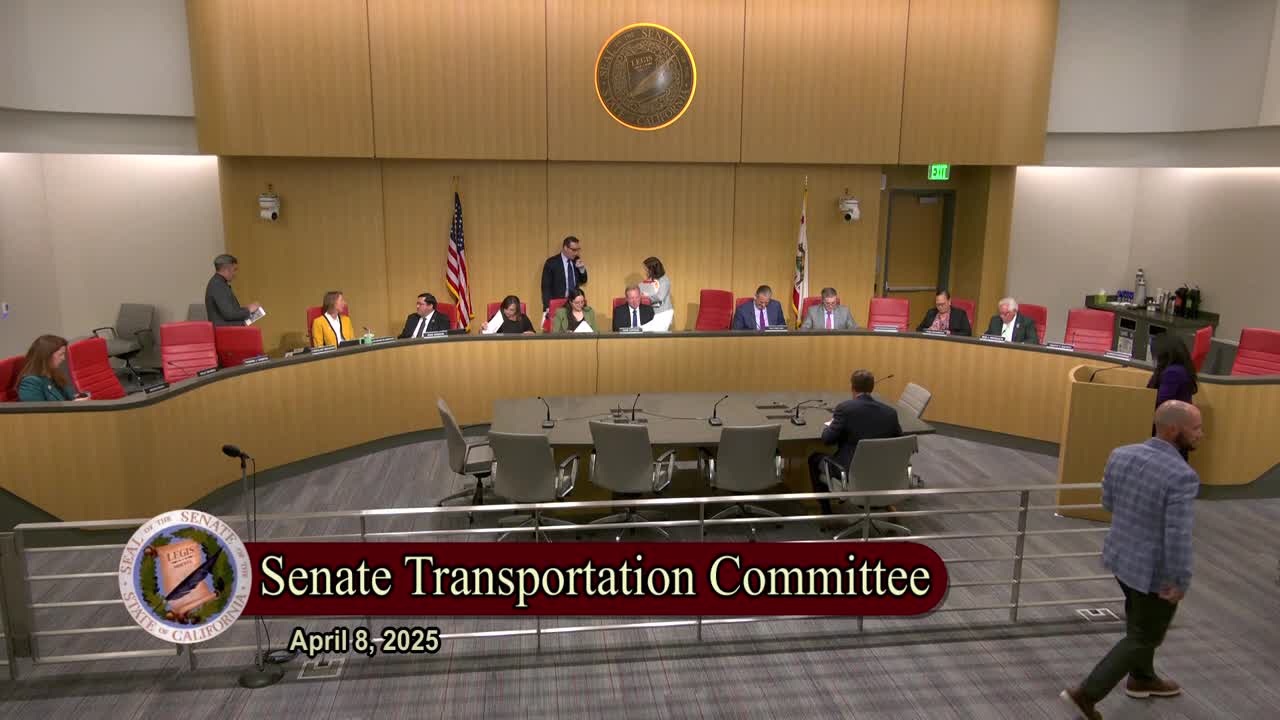 11MIN
Senate Standing Committee on Transportation
Bill Author