SB 588: Health facilities: freestanding emergency center study.
- Session Year: 2025-2026
- House: Senate
- Latest Version Date: 2025-04-21
Current Status:
Failed
(2026-02-02: Returned to Secretary of Senate pursuant to Joint Rule 56.)
Introduced
In Committee
Awaiting First Chamber Vote
Passed First Chamber
In Committee
Awaiting Second Chamber Vote
Passed Second Chamber
Enacted
Existing law authorizes a general acute care hospital, as defined, to offer special services, including, but not limited to, emergency medical services. Existing law establishes the Department of Health Care Access and Information to oversee and administer various health programs related to health care infrastructure, such as health policy and planning, health professions development, and facilities design review and construction, among others.
This bill would require the Department of Health Care Access and Information to conduct a feasibility study on the implementation of freestanding emergency departments departments, as defined, in rural, disadvantaged, and underserved areas with limited access to emergency care. The bill would require that the study be conducted in collaboration with certain stakeholders and that the department issue a report to the Legislature, on or before January 1, 2027, with its findings and recommendations. The bill would appropriate an unspecified amount from the General Fund to the department for those purposes. The bill would repeal these provisions on January 1, 2031.
Existing law authorizes a general acute care hospital, as defined, to offer special services, including, but not limited to, emergency medical services. Existing law establishes the Department of Health Care Access and Information to oversee and administer various health programs related to health care infrastructure, such as health policy and planning, health professions development, and facilities design review and construction, among others.
This bill would require the Department of Health Care Access and Information to conduct a feasibility study on the implementation of freestanding emergency departments in rural, disadvantaged, and underserved areas with limited access to emergency care. The bill would require that the study be conducted in collaboration with certain stakeholders and that the department issue a report to the Legislature, on or before January 1, 2027, with its findings and recommendations. The bill would appropriate an unspecified amount from the General Fund to the department for those purposes. The bill would repeal these provisions on January 1, 2031.
Existing law provides for the licensure and regulation of health facilities, including general acute care hospitals, by the State Department of Public Health. Existing law authorizes a general acute care hospital, as defined, to offer special services, including, but not limited to, emergency medical services.This bill would express the intent of the Legislature to enact legislation to implement a pilot project to authorize a freestanding emergency center in the Desert Health District.Existing law provides for the licensure and regulation of health facilities, including general acute care hospitals, by the State Department of Public Health. Existing law authorizes a general acute care hospital, as defined, to offer special services, including, but not limited to, emergency medical services.
This bill would express the intent of the Legislature to enact legislation to implement a pilot project to authorize a freestanding emergency center in the Desert Health District.
For the purposes of this chapter, the following terms have the following meanings:
(a)Emergency services and care has the same meaning as in Section 1317.1.
(b)Freestanding emergency department means a facility that provides emergency services and care and meets all of the following criteria:
(1)Is structurally separate and distinct from a hospital.
(2)Is available to the public 24 hours per day, 7 days a week, and 365 days per year.
(3)Is staffed by appropriately qualified emergency physicians.
(4)Has adequate medical and nursing personnel qualified in emergency services and care as would be required by an emergency medical services permit and any services that would be specified on a services inventory report.
(5)Has policy agreements and procedures in place to provide effective and efficient transfer to a higher level of care, as required.
(6)Receives the same level of reimbursement from all payors for both the physician and technical component fee as a traditional hospital-based emergency department.
(7)Is licensed by the State Department of Public Health.
127620.127621.(a)The Department of Health Care Access and Information shall conduct a comprehensive feasibility study on the implementation of freestanding emergency departments in rural, disadvantaged, and underserved areas with limited access to emergency care.
(b)The study shall do all of the following:
(1)Identify rural, disadvantaged, and underserved areas with limited access to emergency care.
(2)Review freestanding emergency department models from other states to determine best practices and regulatory frameworks.
(3)Assess the financial sustainability of freestanding emergency departments, including, but not limited to, funding mechanisms and reimbursement models.
(4)Analyze existing laws that restrict freestanding emergency department operations and propose necessary legislative or regulatory changes.
(5)Evaluate how freestanding emergency departments could address disparities in health outcomes and improve access for vulnerable populations.
(c)The Department of Health Care Access and Information shall conduct the study in collaboration with stakeholders from each of the following groups:
(1)Rural health organizations.
(2)Health care districts and other providers.
(3)Medi-Cal administrators.
(4)Community representatives who serve rural, disadvantaged, or underserved communities.
127621.127622.The sum of ____ dollars ($____) is hereby appropriated from the General Fund to the Department of Health Care Access and Information to implement this chapter.
127622.127623.The Department of Health Care Access and Information shall report its findings and recommendations to the Legislature on or before January 1, 2027.
(a)A report to be submitted pursuant to subdivision (e) shall be submitted in compliance with Section 9795 of the Government Code.
(b)Pursuant to Section 10231.5 of the Government Code, this section chapter is repealed on January 1, 2031.
(a)The Department of Health Care Access and Information shall conduct a comprehensive feasibility study on the implementation of freestanding emergency departments in rural, disadvantaged, and underserved areas with limited access to emergency care.
(b)The study shall do all of the following:
(1)Identify rural, disadvantaged, and underserved areas with limited access to emergency care.
(2)Review freestanding emergency department models from other states to determine best practices and regulatory frameworks.
(3)Assess the financial sustainability of freestanding emergency departments, including, but not limited to, funding mechanisms and reimbursement models.
(4)Analyze existing laws that restrict freestanding emergency department operations and propose necessary legislative or regulatory changes.
(5)Evaluate how freestanding emergency departments could address disparities in health outcomes and improve access for vulnerable populations.
(c)The Department of Health Care Access and Information shall conduct the study in collaboration with stakeholders from each of the following groups:
(1)Rural health organizations.
(2)Health care districts and other providers.
(3)Medi-Cal administrators.
(4)Community representatives who serve rural, disadvantaged, or underserved communities.
127621.The sum of ____ dollars ($____) is hereby appropriated from the General Fund to the Department of Health Care Access and Information to implement this chapter.
127622.The Department of Health Care Access and Information shall report its findings and recommendations to the Legislature on or before January 1, 2027.
(a)A report to be submitted pursuant to subdivision (e) shall be submitted in compliance with Section 9795 of the Government Code.
(b)Pursuant to Section 10231.5 of the Government Code, this section is repealed on January 1, 2031.
SECTION 1.It is the intent of the Legislature to enact legislation to implement a pilot project to authorize a freestanding emergency center in the Desert Health District.It is the intent of the Legislature to enact legislation to implement a pilot project to authorize a freestanding emergency center in the Desert Health District.
|
Date
|
Status
|
|---|---|
| Feb 2, 2026 | Returned to Secretary of Senate pursuant to Joint Rule 56. |
| Jan 6, 2026 | January 14 set for second hearing canceled at the request of author. |
| Jan 6, 2026 | Set for hearing January 14. |
| May 1, 2025 | April 30 set for first hearing. Testimony taken. Further hearing to be set. |
| Apr 22, 2025 | Set for hearing April 30. |
| Apr 21, 2025 | From committee with author's amendments. Read second time and amended. Re-referred to Com. on HEALTH. |
| Apr 21, 2025 | April 23 hearing postponed by committee. |
| Apr 8, 2025 | Set for hearing April 23. |
| Apr 2, 2025 | Re-referred to Com. on HEALTH. |
| Mar 26, 2025 | From committee with author's amendments. Read second time and amended. Re-referred to Com. on RLS. |
| Mar 5, 2025 | Referred to Com. on RLS. |
| Feb 21, 2025 | From printer. May be acted upon on or after March 23. |
| Feb 20, 2025 | Introduced. Read first time. To Com. on RLS. for assignment. To print. |
This list shows positions taken on this bill by organizations on the date displayed, which is linked to the original source.
Positions by individuals are not included.
|
Organization
|
Position
|
Date
|
|---|---|---|
| Association of California Healthcare Districts | ** Support | |
| California Chapter of the American College of Emergency Physicians | ** Against | |
| California Federation of Labor Unions | ** Against | |
| California Nurses Association | ** Against | |
| DAP Health | ** Support | |
| Desert Care Network | ** Support | |
| Desert Healthcare District and Foundation | ** Support | |
| Engineers & Scientists of California | ** Against | |
| Jewish Family Service of the Desert | ** Support | |
| Riverside University Health Center | ** Support | |
| Service Employees International Union California | ** Against | |
| the greater coachella valley chamber of commerce | ** Support | |
| United Food And Commercial Workers Western States Council | ** Against | |
| VITUITY | ** Support |
SENATE COMMITTEE ON HEALTH
Senator Caroline Menjivar, Chair
BILL NO: SB 588
AUTHOR: | Ochoa Bogh | ||
VERSION: | April 21, 2025 | ||
HEARING DATE: | April 30, 2025 | ||
CONSULTANT: | Vincent D. Marchand | ||
SUBJECT: Health facilities: freestanding emergency center study
SUMMARY:
Requires the Department of Health Care Access and Information to conduct a comprehensive feasibility study on the implementation of freestanding emergency departments in rural, disadvantaged, and underserved areas with limited access to emergency care, and to report its findings and recommendations to the Legislature by January 1, 2027.
Existing law:
- Licenses general acute care hospitals under the California Department of Public Health (CDPH). Defines general acute care hospitals as hospitals that provide 24-hour inpatient care, including the following basic services: medical, nursing, surgical, anesthesia, laboratory, radiology, pharmacy, and dietary services. [HSC §1250(a)]
- Permits general acute care hospitals, in addition to the basic services all hospitals are required to offer, to be approved by CDPH to offer special services, including, but not limited to, a radiation therapy department, a burn center, an emergency center, a hemodialysis center or unit, psychiatric services, intensive care newborn nursery, cardiac surgery, cardiac catheterization laboratory, and renal transplant. [HSC §1255]
- Prohibits any person or public agency to advertise itself as, or hold itself out as, providing emergency medical services, by using any words which suggest that it is staff and equipped to provide emergency medical services unless the person or public agency meets one of the following:
- Is a general acute care hospital providing approved standby, basic, or comprehensive emergency medical services; or,
- Meets specified minimum standards, including having emergency services available in the facility seven days a week, 24 hours a day, has equipment, medication and personnel experienced in the provision of services needed to treat life-threatening conditions, and diagnostic radiology and clinical laboratory services are provided by persons on duty or on call and available when needed. [HSC §1798.175]
- Permits, in rural areas, when the use of a hospital having a basic emergency department (ED) is precluded because of geographic or other extenuating circumstances, the local emergency medical services agency (LEMSA) to authorize another facility to receive patients requiring EMS if the facility has adequate staff and equipment to provide these services, as determined by the medical director of the LEMSA. [HSC §1798.101]
- Requires CDPH to issue a special permit to allow a general acute care hospital to offer emergency stabilization services at a location in the town of Paradise within Butte County, serving the same area previously served by Feather River Hospital that was destroyed by the Camp Fire in 2018, at a location that is neither inside nor contiguous to the applicant hospital, if the hospital meets certain requirements, as specified. States that it is not the intent of the Legislature to establish a model for a freestanding emergency department, which is currently, and remains, prohibited by state law. Sunsets these provisions on January 1, 2028. [HSC §1251.6]
This bill:
- Requires the Department of Health Care Access d Information (HCAI) to conduct a comprehensive feasibility study on the implementation of freestanding emergency departments (FEDs) in rural, disadvantaged, and underserved areas with limited access to emergency care, and to report its findings and recommendations to the Legislature by January 1, 2027.
- Requires the study to do all of the following:
- Identify rural, disadvantaged, and underserved areas with limited access to emergency care;
- Review FED models from other states to determine best practices and regulatory frameworks;
- Assess the financial sustainability of FEDs, including funding mechanisms and reimbursement models;
- Analyze existing laws that restrict FED operations and propose necessary legislative or regulatory changes; and,
- Evaluate how FEDs could address disparities in health outcomes and improve access for vulnerable populations.
- Requires HCAI to conduct the study in collaboration with stakeholders from each of the following groups:
- Rural health organizations;
- Health care districts and other providers;
- Medi-Cal administrators; and,
- Community representatives who serve rural, disadvantaged, or underserved communities.
- Defines “FED,” for purposes of this bill, as a facility that provides emergency services and care and meets all of the following criteria:
- Is structurally separate and distinct from a hospital;
- Is available to the public 24 hours per day, 7 days a week, and 365 days per year;
- Is staffed by appropriately qualified emergency physicians;
- Has adequate medical and nursing personnel qualified in emergency services and care as would be required by an emergency medical services permit and any services that would be specified on a services inventory report;
- Has policy agreements and procedures in place to provide effective and efficient transfer to a higher level of care, as required;
- Receives the same level of reimbursement from all payors for both the physician and technical component fee as a traditional hospital-based ED.
- Appropriates an unspecified sum from the General Fund to HCAI to implement this bill.
FISCAL EFFECT:
This bill has not been analyzed by a fiscal committee.
COMMENTS:
- Author’s statement. According to the author, this bill would direct HCAI, in collaboration with relevant stakeholders, to conduct a comprehensive feasibility study on implementation of FEDs in rural, disadvantaged, and underserved areas with limited access to emergency care. The author states that eastern Coachella Valley suffers from a shortage of preventative care options, and lacks a centrally located 24-hour ED. The nearest ED is located at John F. Kennedy Memorial Hospital, which requires a travel time of over 30 minutes by car, and is heavily impacted. In 2021, they reported 42,578 total emergency visits spread among their 12 available treatment stations, amounting to 3,548 patients per bed over the course of the year -- nearly three times the median visit-per-station ratios for both Riverside County and statewide. In order to address these and other deficiencies across California, this bill would authorize a study to evaluate the options and benefits related to establishing FEDs in California.
- Background on FEDs. There are currently no FEDs licensed in California, although they do operate in other states. In California, in order to offer emergency medical services, a facility must provide certain services, such as intensive care, radiology, and surgical services that are immediately available for life-threatening situations, which essentially require an ED to be part of a full-fledged hospital. In other states, FEDs generally fall into two categories: those that are part of a hospital system and must be within 35 miles of the affiliated hospital (often called satellite FEDs), and those that are independent and are not affiliated with a hospital. As an example of the latter, First Choice ER is a for-profit chain of freestanding, 24-hour emergency rooms that operate in Texas and Colorado. The Centers for Medicare and Medicaid Services (CMS) only certifies hospital-affiliated FEDs for Medicare and Medicaid, so independent FEDs are not eligible for federal reimbursement. This also means that independent FEDs are not subject to the federal Emergency Medical Treatment and Active Labor Act (EMTALA), which requires hospitals with EDs and emergency physicians to provide emergency treatment to everyone regardless of their ability to pay. FEDs that are part of a hospital system, however, are subject to EMTALA.
The California Health Care Foundation (CHCF) published an issue brief in July of 2009, entitled “Freestanding Emergency Departments: Do They Have a Role in California.” According to the CHCF report, the growth of FEDs has prompted discussions regarding their regulation and effect on the health care system. The CHCF report states that these facilities differ from urgent care centers in that they can accommodate additional procedures such as defibrillation, intubation, and conscious sedation. Additionally, most FEDs are staffed by trained emergency physicians and nurses, and some have been permitted to receive ambulance patients.
Both satellite and independent FEDs have undergone massive growth in the past 20 years or so. According to a 2019 article in the Annals of Emergency Medicine, entitled “Freestanding Emergency Departments: What is Their Role in Emergency Care,” there were 80 operational FEDs in the U.S. in 2007, and 91% of those were affiliated with a hospital. In September of 2015, the Medicare Payment Advisory Commission reported 559 FEDs, with 69% being hospital affiliated, and 31% independent FEDs. Texas has by far the highest number of FEDs, with Colorado and Ohio also reporting having a significant number. In March 2024, researchers at Texas A&M University School of Public Health published a paper in the journal Health Services Research that examined the characteristics of patient visits to FEDs in Texas compared to traditional hospital-based EDs. According to this article, as of May 2023, Texas had 338 FEDs, of which 211 were independent, and 127 were satellites of a hospital. According to the researchers, about 24% of all ED visits in Texas occurred at FEDs and that “these patients were younger, healthier, and less likely to be identified as non-Hispanic Black or Hispanic. They also were more likely to have private insurance and their visits were more likely to be due to issues that could have been managed in a primary care setting.” The health issues of patients visiting satellite and independent FEDs were more likely to be moderate and low intensity and potentially avoidable. - EDs cost more than urgent care. When a patient is seen in an ED, there is the physician services fee, a technical component that might include any diagnostic tests, and a facility fee to cover the cost of the facility itself. All of these are higher in EDs; Medi-Cal, for example, pays a higher rate for medical and surgery services when the service is provided in an ED. This bill defines a FED, in part, as receiving “the same level of reimbursement from all payors for both the physician and technical component fee as a traditional hospital-based emergency department.”
A study published in the Annals of Emergency Medicine in December of 2017, “Comparing Utilization and Costs of Care in Freestanding Emergency Departments, Hospital Emergency Departments, and Urgent Care Centers,” compared utilization, price per visit, and the types of care delivered across FEDs, hospital-based EDs, and urgent care centers in Texas. According to this article, in 2015, the average price per visit for a hospital-based ED was $2,259, and almost as much in FEDs ($2,199). However, the average price per visit in an urgent care center was only $168. There was a 75% overlap in the 20 most common diagnoses at FEDs versus urgent care centers, and 60% overlap for hospital-based EDs and urgent care centers. However, prices for patients with the same diagnosis were on average almost ten times higher at freestanding and hospital-based EDs relative to urgent care centers. The study author’s conclusion was that higher prices at FEDs and hospital-based EDs relative to urgent care centers, despite substantial overlap in services delivered, imply potential inefficient use of emergency facilities.
- Recent federal authorization for “Rural Emergency Hospitals.” CMS published a final rule, effective January 1, 2023, establishing a new Medicare provider type called “Rural Emergency Hospitals” (REHs), which is basically a type of FED. As more rural hospitals across the country closed, and with ongoing concern about the financial viability of the remaining rural facilities, the creation of REHs was intended to reinforce access to outpatient medical services and reduce health disparities in areas that may not be able to sustain a full-service hospital. Under the final rule, struggling rural hospitals could continue to operate with outpatient and emergency services only, instead of closing. Eligibility is limited to facilities that were operating as a Critical Access Hospital (rural hospitals with no more than 25 beds) or as a rural hospital with no more than 50 beds, as of December 27, 2020. So, if a small rural hospital had recently closed, it can reopen to provide emergency services as an REH, or an existing small rural hospital can convert to an REH. However, an REH is required to meet applicable state licensing, staffing and other requirements. Since California does not permit FEDs, REHs are not permitted in California.
- Pilot project at Centinela Airport Clinic. Using statutory authority that permits a LEMSA to “approve or conduct any scientific or trial study of the efficacy of the pre-hospital emergency use of any drug, device, or treatment procedure within the local EMS system,” the Los Angeles County LEMSA approved a two-year pilot project beginning in 2004 to allow the Centinela Airport Clinic at Los Angeles International Airport to receive 911 transports of basic life-support patients. Some people cite this example as California’s first and only attempt at permitting a FED. However, both CDPH and the state Emergency Medical Services Agency disagreed that the LEMSA had the authority to permit the operation of such a facility. Ultimately, this FED pilot project ended after one year, partly as a result of low volume that resulted from a restrictive county ambulance triage policy that limited the severity of patients that could be transported to this location.
- Legislative authorization for Adventist Health to operate an emergency stabilization service at the site of the former Feather River Hospital destroyed by 2018 Camp Fire never implemented. Following the destruction of the Feather River Hospital in the town of Paradise by the 2018 Camp Fire, SB 156 (Nielsen, Chapter 839, Statutes of 2019) was enacted to require CDPH to issue a special permit to allow Adventist Health to offer emergency stabilization services at the site of the former Feather River Hospital in Paradise for up to six years, without being attached to hospital, if certain requirements were met. The intent was to provide the community of Paradise with access to emergency stabilization services as it began the rebuilding process, and to provide a temporary period of time to assess whether and to what extent the town of Paradise will return and make construction of a new hospital viable. However, Adventist Health ultimately decided not to move forward with this option. According to information provided by Adventist Health, the area does not have the necessary volume of population, providers, or medical needs to support a freestanding ED or a full-scale hospital. Additionally, Adventist Health points out that following the passage of the bill, the COVID-19 pandemic began, which represented a major shift in the health care delivery system, health care financing, health care staffing, and community needs. Adventist Health states that it has developed a steering committee for the region served by the former Feather River Hospital, partnering with community members and representatives from local elected officials, to determine how best to serve the continuing needs of the region.
- Alternative method of providing urgent/emergency care in rural areas. One example of a rural region’s approach to provide urgent medical care services is on the North Coast of California. The Coast Life Support District (CLSD) was established in 1986 to provide EMS in portions of Sonoma and Mendocino Counties, covering 60 miles of coastline. There are no hospitals within the district. From its center, the closest medical facilities with 24-hour medical care are a minimum of 90 minutes to two hours travel time traversing the coast highway. These are some of the longest transports in California to tertiary care. CLSD provides ambulance transport (both a 24-7 advanced life support ambulance and an on-call basic life support ambulance), as well as emergency response training for fire departments, and CPR/AED training to the community. CLSD has entered into, or funded, contracts with health care professionals and otherwise augmented the provision of urgent and immediate care services in Gualala (where the district is headquartered), as well as EMS throughout CLSD. Care is provided at Redwood Coast Medical Services (RCMS), which is a Federally Qualified Health Center (FQHC). Because this FQHC is in a rural area, it also provides immediate and urgent care services that are more expansive than their urban counterparts. RCMS has been approved as an Alternative EMS Receiving Facility for the Coastal Valleys EMS Region (the LEMSA for that region), which means it can receive 911 ambulance transports for patients that meet criteria eligible to be seen at RCMS. CLSD uses the proceeds from a local benefit assessment to contract with RCMS to provide urgent care from 8:00 a.m. to 6:00 p.m., seven days per week.
- Prior legislation. SB 156 (Nielsen, Chapter 839, Statutes of 2019) required CDPH to issue a special permit to a hospital to offer emergency stabilization services at the site of the former Feather River Hospital in Paradise for up to six years, if certain requirements were met.
SB 787 (Bates of 2015) and AB 911 (Brough of 2015) would have permitted Saddleback Memorial Medical Center to operate an ED at its San Clemente campus, subject to approval by CDPH, even if the San Clemente campus stopped providing acute care services (thereby permitting an FED), subject to specified conditions. SB 787 failed passage in the Senate Health Committee. AB 911 failed passage in the Assembly Health Committee.
AB 717 (Gordon of 2005) would have allowed the Centinela Airport Clinic to receive private and government reimbursement rates equivalent to that of a contiguous ED of a general acute care hospital if certain specified requirements were met. AB 717 failed passage in the Senate Health Committee.
AB 1050 (Gordon of 2005) would have created a demonstration project that required the Department of Health Services to issue a special permit to up to four general acute care hospital applicants in Los Angeles County to operate freestanding emergency receiving centers. AB 1050 was not heard in the Assembly Health Committee. - Support. This bill is sponsored by the Desert Healthcare District and Foundation (Desert), which states that as a healthcare district serving a geographically vast and medically underserved region in eastern Riverside County, they experience firsthand the challenges that limited emergency care access places on their largely Medi-Cal-insured population. Desert states that they own and operate a district hospital and remain deeply committed to ensuring equitable access to quality care for all residents, regardless of income or zip code. Their hospital, Desert Regional Medical Center, operates within the Desert Care Network, an affiliation that includes two other hospitals that together form a regional safety net for Medi-Cal and underserved residents. According to Desert, this bill thoughtfully recognizes that traditional hospital-based EDs are not always feasible or sustainable in rural or lower-income communities, and that FEDs have proven successful in other states, particularly in filling critical gaps where communities are too distant from acute care hospitals or face persistent overcrowding and long wait times. A well-structured, California-specific study would provide critical insights into how this care model could be adapted to serve the state’s most vulnerable residents, and would engage stakeholders such as rural health organizations, healthcare districts, Medi-Cal administrators, and community representatives.
The Association of California Healthcare Districts (ACHD) states in support that it recognizes that in many communities, a FED model would not be an appropriate solution to addressing gaps in care, but that is precisely why this bill is necessary to analyze alternative approaches to delivering lifesaving emergency care. ACHD points out that this bill does not authorize FEDs, it merely arms California with the tools to assess the real needs and viability of this option. The Greater Coachella Valley Chamber of Commerce writes in support that many communities in the Coachella Valley and across the state face significant barriers due to geographic isolation and under-resourced healthcare infrastructure, and that by exploring the viability of FEDs, this bill offers a promising strategy to bridge critical service gaps and improve health outcomes for vulnerable populations. - Opposition. The California Chapter of the American College of Emergency Physicians (CalACEP) states in opposition that while the words “emergency department” are in the title of these facilities, they are actually urgent care clinics, not EDs. The very nature of an ED is that it is a department of a hospital, a place where patients have immediate access to a wide variety of testing services, treatment, and specialists. FEDs threaten the precarious financial stability of the emergency care safety net and of hospital-based care. According to CalACEP, many FEDs are built in areas that have substantial population growth and a low percentage of Medi-Cal or uninsured payers. This is a strategy employed to obtain better reimbursement from a population consisting mostly of commercially insured patients. Consequently, EDs in surrounding hospitals then have disproportionally high numbers of Medi-Cal and uninsured patients, and few commercially insured patients, thus creating an unsustainable payer mix. CalACEP states that this bill would jeopardize patient safety and the stability of the emergency care safety net, and opposes the significant risks this bill creates.
A coalition of union organizations submitted a joint letter of opposition, including the California Labor Federation, the California Nurses Association, SEIU California, Engineers and Scientists of California, and the UFCW Western States Council. According to this labor coalition, FEDs are associated with disproportionately high costs compared to other care options. Studies have shown that the average cost of a visit to a FED is approximately $2199, compared to the $168 average cost for an urgent care visit for similar conditions. The labor coalition argues that these costs are inappropriate for many visits when an individual should see either a primary care or urgent care provider, and would raise costs for everyone. Patients in states with FEDs have found it difficult to tell the difference between these facilities and much cheaper urgent care facilities. On the other end of the spectrum of necessary care, patients who truly should have gone to a hospital ED may waste precious time due to confusing a FED for an actual full-scope hospital. The labor coalition states that while they share the goal of expanding access to care, this bill does not address the systemic inefficiencies and inequities associated with FEDs, and urges the Legislature to instead focus on strengthening policies that promote receiving the right care at the right time in the right setting.
SUPPORT AND OPPOSITION:
Support: Desert Healthcare District and Foundation (sponsor)
Association of California Healthcare Districts
DAP Health
Desert Care Network
Jewish Family Service of the Desert
Riverside University Health Center
The Greater Coachella Valley Chamber of Commerce
Vituity
One individual
Oppose: California Chapter of the American College of Emergency Physicians
California Federation of Labor Unions
California Nurses Association
Engineers & Scientists of California
Service Employees International Union California
United Food and Commercial Workers Western States Council
One individual
-- END --
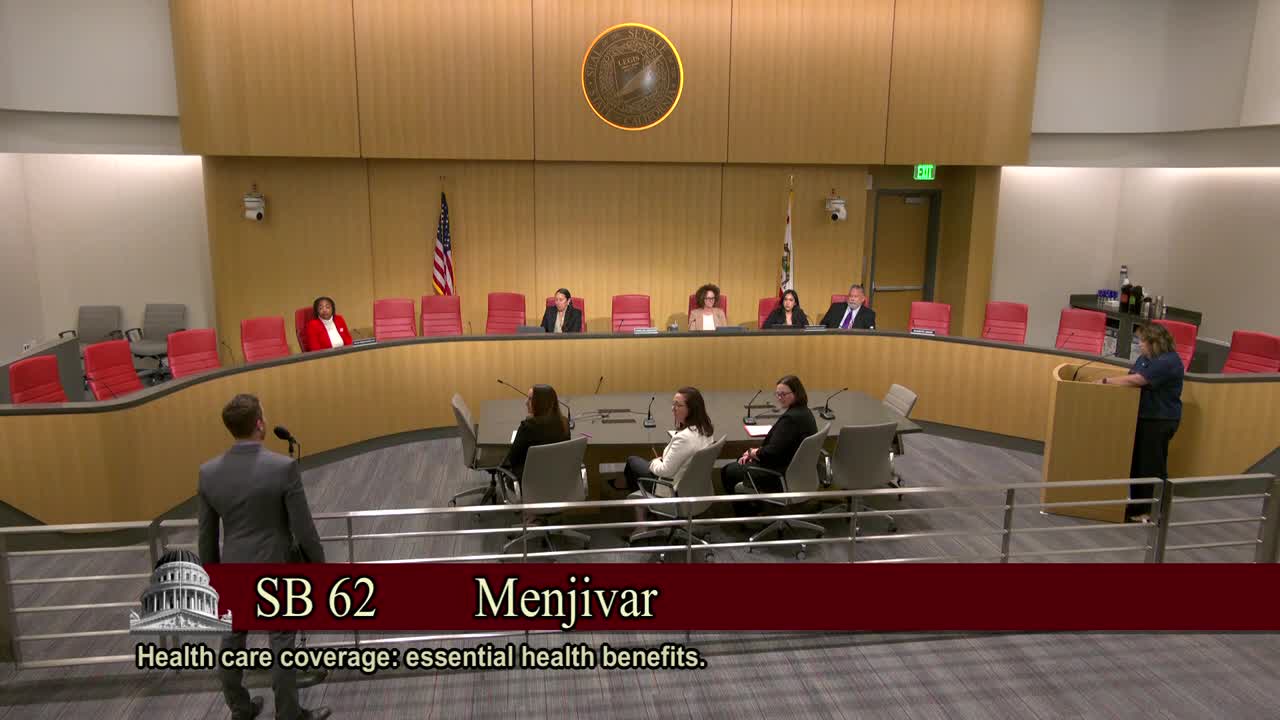
Bill Author

Bill Co-Author(s):