SB 608: Sexual health.
- Session Year: 2025-2026
- House: Senate
- Latest Version Date: 2026-08-28
Current Status:
In Progress
(2026-09-27: In Senate. Consideration of Governor's veto pending.)
Introduced
In Committee
Awaiting First Chamber Vote
Passed First Chamber
In Committee
Awaiting Second Chamber Vote
Passed Second Chamber
Enacted
(1)Existing law, the California Healthy Youth Act, requires school districts, defined to include county boards of education, county superintendents of schools, the California School for the Deaf, the California School for the Blind, and charter schools, to ensure that all pupils in grades 7 to 12, inclusive, receive comprehensive sexual health education and human immunodeficiency virus (HIV) prevention education, as specified.
This bill would authorize the State Department of Education to monitor compliance with the requirements of the California Healthy Youth Act as part of its annual compliance monitoring of state and federal programs.
(2)Existing law establishes the Office of School-Based Health Programs for the purpose of assisting local educational agencies regarding the current health-related programs under the purview of the State Department of Education including, among other duties, coordinating school health program activities with public health, social services, environmental, and local educational agencies, and other public and private entities.
This bill would prohibit a local educational agency, as defined, from prohibiting school-based health centers, as defined, that serve schools of the local educational agency from making internal and external condoms available and easily accessible to pupils in any of grades 7 to 12, inclusive, at the school-based health center site and would require a school of a local educational agency to allow condoms to be made available to pupils in any of grades 7 to 12, inclusive, during the course of, or in connection with, educational or public health programs and initiatives, as provided. To the extent the bill imposes additional duties on local educational agencies, the bill would impose a state-mandated local program.
(3)Under existing law, the Sherman Food, Drug, and Cosmetic Law, the State Department of Public Health generally regulates the packaging, labeling, advertising, and sale of food, drugs, devices, and cosmetics, in accordance with the Federal Food, Drug, and Cosmetic Act. A violation of those provisions is generally a crime. Existing law sets forth various other provisions relating to the furnishing and health care coverage of certain types of contraception.
This bill would, with certain exceptions, prohibit a retail establishment, as defined, from refusing to furnish nonprescription contraception to a person solely on the basis of age by means of any conduct, including, but not limited to, requiring the customer to present identification for purposes of demonstrating their age. Under the bill, a violation of that prohibition would be exempt from the above-described criminal penalty.
(4)The California Constitution requires the state to reimburse local agencies and school districts for certain costs mandated by the state. Statutory provisions establish procedures for making that reimbursement.
This bill would provide that, if the Commission on State Mandates determines that the bill contains costs mandated by the state, reimbursement for those costs shall be made pursuant to the statutory provisions noted above.
(1)Existing law, the California Healthy Youth Act, requires school districts, defined to include county boards of education, county superintendents of schools, the California School for the Deaf, the California School for the Blind, and charter schools, to ensure that all pupils in grades 7 to 12, inclusive, receive comprehensive sexual health education and human immunodeficiency virus (HIV) prevention education, as specified.
This bill would require authorize the State Department of Education to monitor compliance with the requirements of the California Healthy Youth Act as part of its annual compliance monitoring of state and federal programs.
(2)Existing law establishes the Office of School-Based Health Programs for the purpose of assisting local educational agencies regarding the current health-related programs under the purview of the State Department of Education including, among other duties, coordinating school health program activities with public health, social services, environmental, and local educational agencies, and other public and private entities.
This bill would prohibit a local educational agency, as defined, from prohibiting school-based health centers, as defined, that serve schools of the local educational agency from making internal and external condoms available and easily accessible to pupils in any of grades 7 to 12, inclusive, at the school-based health center site and would require a school of a local educational agency to allow condoms to be made available to pupils in any of grades 7 to 12, inclusive, during the course of, or in connection with, educational or public health programs and initiatives, as provided. To the extent the bill imposes additional duties on local educational agencies, the bill would impose a state-mandated local program.
(3)Under existing law, the Sherman Food, Drug, and Cosmetic Law, the State Department of Public Health generally regulates the packaging, labeling, advertising, and sale of food, drugs, devices, and cosmetics, in accordance with the Federal Food, Drug, and Cosmetic Act. A violation of those provisions is generally a crime. Existing law sets forth various other provisions relating to the furnishing and health care coverage of certain types of contraception.
This bill would, with certain exceptions, prohibit a retail establishment, as defined, from refusing to furnish nonprescription contraception to a person solely on the basis of age by means of any conduct, including, but not limited to, requiring the customer to present identification for purposes of demonstrating their age. Under the bill, a violation of that prohibition would be exempt from the above-described criminal penalty.
(4)The California Constitution requires the state to reimburse local agencies and school districts for certain costs mandated by the state. Statutory provisions establish procedures for making that reimbursement.
This bill would provide that, if the Commission on State Mandates determines that the bill contains costs mandated by the state, reimbursement for those costs shall be made pursuant to the statutory provisions noted above.
(1)Existing law, the California Healthy Youth Act, requires school districts, defined to include county boards of education, county superintendents of schools, the California School for the Deaf, the California School for the Blind, and charter schools, to ensure that all pupils in grades 7 to 12, inclusive, receive comprehensive sexual health education and human immunodeficiency virus (HIV) prevention education, as specified.
This bill would require the State Department of Education to monitor compliance with the requirements of the California Healthy Youth Act as part of its annual compliance monitoring of state and federal programs.
(2)Existing law establishes the Office of School-Based Health Programs for the purpose of assisting local educational agencies regarding the current health-related programs under the purview of the State Department of Education including, among other duties, coordinating school health program activities with public health, social services, environmental, and local educational agencies, and other public and private entities.
This bill would prohibit a public school, local educational agency, as defined, that serves pupils in any of grades 7 to 12, inclusive, from prohibiting certain school-based health centers, as defined, that serve schools of the local educational agency from making internal and external condoms available and easily accessible to pupils in any of grades 7 to 12, inclusive, at the school-based health center site and would require those public schools a school of a local educational agency to allow condoms to be made available to pupils in any of grades 7 to 12, inclusive, during the course of, or in connection with, educational or public health programs and initiatives, as provided. To the extent the bill imposes additional duties on local educational agencies, the bill would impose a state-mandated local program.
(3)Under existing law, the Sherman Food, Drug, and Cosmetic Law, the State Department of Public Health generally regulates the packaging, labeling, advertising, and sale of food, drugs, devices, and cosmetics, in accordance with the Federal Food, Drug, and Cosmetic Act. A violation of those provisions is generally a crime. Existing law sets forth various other provisions relating to the furnishing and health care coverage of certain types of contraception.
This bill would, with certain exceptions, prohibit a retail establishment, as defined, from refusing to furnish nonprescription contraception to a person solely on the basis of age by means of any conduct, including, but not limited to, requiring the customer to present identification for purposes of demonstrating their age. Under the bill, a violation of that prohibition would be exempt from the above-described criminal penalty.
(4)The California Constitution requires the state to reimburse local agencies and school districts for certain costs mandated by the state. Statutory provisions establish procedures for making that reimbursement.
This bill would provide that, if the Commission on State Mandates determines that the bill contains costs mandated by the state, reimbursement for those costs shall be made pursuant to the statutory provisions noted above.
(1)Existing law, the California Healthy Youth Act, requires school districts, defined to include county boards of education, county superintendents of schools, the California School for the Deaf, the California School for the Blind, and charter schools, to ensure that all pupils in grades 7 to 12, inclusive, receive comprehensive sexual health education and human immunodeficiency virus (HIV) prevention education, as specified.
This bill would require the State Department of Education to monitor compliance with the requirements of the California Healthy Youth Act as part of its annual compliance monitoring of state and federal programs.
(2)Existing law establishes the Office of School-Based Health Programs for the purpose of assisting local educational agencies regarding the current health-related programs under the purview of the State Department of Education including, among other duties, coordinating school health program activities with public health, social services, environmental, and local educational agencies, and other public and private entities.
This bill would prohibit a public school, as defined, maintaining any combination of classrooms from that serves pupils in any of grades 7 to 12, inclusive, a school district, the State Department of Education, or a county office of education from prohibiting certain school-based health centers, as defined, from making internal and external condoms available and easily accessible to pupils at the school-based health center site. site and would require those public schools to allow condoms to be made available during the course of, or in connection with, educational or public health programs and initiatives, as provided. To the extent the bill imposes additional duties on local educational agencies, the bill would impose a state-mandated local program.
(3)Under existing law, the Sherman Food, Drug, and Cosmetic Law, the State Department of Public Health generally regulates the packaging, labeling, advertising, and sale of food, drugs, devices, and cosmetics, in accordance with the Federal Food, Drug, and Cosmetic Act. A violation of those provisions is generally a crime. Existing law sets forth various other provisions relating to the furnishing and health care coverage of certain types of contraception.
This bill would, with certain exceptions, prohibit a retail establishment, as defined, from refusing to furnish nonprescription contraception to a person solely on the basis of age by means of any conduct, including, but not limited to, requiring the customer to present identification for purposes of demonstrating their age. Under the bill, a violation of that prohibition would be exempt from the above-described criminal penalty.
(4)The California Constitution requires the state to reimburse local agencies and school districts for certain costs mandated by the state. Statutory provisions establish procedures for making that reimbursement.
This bill would provide that, if the Commission on State Mandates determines that the bill contains costs mandated by the state, reimbursement for those costs shall be made pursuant to the statutory provisions noted above.
(1)Existing law, the California Healthy Youth Act, requires school districts, defined to include county boards of education, county superintendents of schools, the California School for the Deaf, the California School for the Blind, and charter schools, to ensure that all pupils in grades 7 to 12, inclusive, receive comprehensive sexual health education and human immunodeficiency virus (HIV) prevention education, as specified.
This bill would require the State Department of Education to monitor compliance with the requirements of the California Healthy Youth Act as part of its annual compliance monitoring of state and federal programs.
(2)Existing law establishes the Office of School-Based Health Programs for the purpose of assisting local educational agencies regarding the current health-related programs under the purview of the State Department of Education including, among other duties, coordinating school health program activities with public health, social services, environmental, and local educational agencies, and other public and private entities.
This bill would prohibit a public school, as defined, maintaining any combination of classrooms from grades 7 to 12, inclusive, a school district, the State Department of Education, or a county office of education from prohibiting certain school-based health centers, as defined, from making internal and external condoms available and easily accessible to pupils at the school-based health center site.
(3)Under existing law, the Sherman Food, Drug, and Cosmetic Law, the State Department of Public Health generally regulates the packaging, labeling, advertising, and sale of food, drugs, devices, and cosmetics, in accordance with the Federal Food, Drug, and Cosmetic Act. A violation of those provisions is generally a crime. Existing law sets forth various other provisions relating to the furnishing and health care coverage of certain types of contraception.
This bill would, with certain exceptions, prohibit a retail establishment, as defined, from refusing to furnish nonprescription contraception to a person solely on the basis of age by means of any conduct, including, but not limited to, requiring the customer to present identification for purposes of demonstrating their age. Under the bill, a violation of that prohibition would be exempt from the above-described criminal penalty.
(a)The Legislature finds and declares all of the following:
(1)The federal Centers for Disease Control and Prevention (CDC) estimates that one in five people in the United States have a sexually transmitted infection (STI). More than 325,000 Californians were infected with syphilis, chlamydia, or gonorrhea in 2019.
(2)California youth, and in particular youth of color, are disproportionately impacted by the STI crisis. Statewide data indicate over one-half of all STIs in the state are experienced among California youth 15 to 24 years of age, inclusive. Young people in this age group make up more than 5 out of every 10 chlamydia cases in California, and more than 87 percent are youth of color.
(3)Most STIs go undetected and can lead to serious, life-threatening health problems later in life, including permanent tissue damage, blindness, infertility, and cancer related to human papillomavirus (HPV) infections. STIs also increase both the transmission and acquisition of human immunodeficiency virus (HIV). According to estimates provided by the Sexually Transmitted Diseases (STD) Control Branch of the State Department of Public Health, the state spends approximately one billion dollars ($1,000,000,000) annually on health costs associated with STIs.
(4)Condoms are an effective tool to reduce STI transmission, but condom use among sexually active teens has declined over the last decade. The CDCs Youth Risk Behavior Surveillance System (YRBSS) shows that in 2023, an average of 21 percent of California high school pupils were sexually active and 52 percent of those pupils did not use condoms during their last sexual intercourse.
(5)Teens face multiple barriers to accessing condoms that deter them from seeking and securing the resources they need to protect themselves against STIs and unintended pregnancy. Through Essential Access Healths TeenSource Condom Access Project, young people reported that cost is the biggest obstacle to obtaining condoms. When cost barriers remain, youth with low incomes are often left without the option to regularly use condoms to help protect their health and prevent an unintended pregnancy from occurring.
(6)Teens have also long reported experiencing difficulties while attempting to purchase condoms at some pharmacies and retailers, including being judged, shamed, or harassed, or being asked to show an identification card despite the fact that there are no age requirements for condom purchases.
(7)California has an interest in promoting and expanding equitable access to tools and resources that empower youth to make healthier choices and reduce the spread of STIs.
(b)Therefore, it is the intent of the Legislature to improve public health outcomes and reduce STI rates among California youth by making condoms more accessible for young people.
SEC. 2.Article 16 (commencing with Section 49595) is added to Chapter 9 of Part 27 of Division 4 of Title 2 of the Education Code, to read:16.Miscellaneous Provisions49595.(a)A local educational agency shall not prohibit a school-based health center that serves a school of the local educational agency from making internal and external condoms available and easily accessible to pupils in grades 7 to 12, inclusive, at the school-based health center site.
(b)A school of a local educational agency shall allow condoms to be made available to pupils in grades 7 to 12, inclusive, during the course of, or in connection with, educational or public health programs and initiatives, including, but not limited to, condoms provided by any of the following:
(1)Community organizations or other entities providing instruction for purposes of the California Healthy Youth Act (Chapter 5.6 (commencing with Section 51930) of Part 28).
(2)Pupil peer health programs, clubs, or groups.
(3)Pupil health fairs conducted on campus.
(4)School-based health center staff.
(c)For purposes of this section, the following definitions apply:
(1)Local educational agency means a school district, county office of education, or charter school.
(2)(A)School-based health center means a center or program, located at or near a school of a local educational agency, that provides age-appropriate health care services at the program site or through referrals.
(B)A school-based health center includes a center or program described in subparagraph (A) that may conduct routine physical, mental health, and oral health assessments, and provide referrals for any services not offered onsite.
(C)A school-based health center includes a center or program described in subparagraph (A) that may serve two or more nonadjacent schools or local educational agencies.
SEC. 3.Section 51932.5 is added to the Education Code, to read:51932.5.The department may monitor compliance with the requirements of this chapter as part of its annual compliance monitoring of state and federal programs.
SEC. 4.Chapter 7.8 (commencing with Section 111824) is added to Part 5 of Division 104 of the Health and Safety Code, to read:7.8.Nonprescription Contraception 111824.(a)A retail establishment shall not refuse to furnish nonprescription contraception to a person solely on the basis of age by means of any conduct, including, but not limited to, requiring the customer to present identification for purposes of demonstrating their age.
(b)Section 111825 does not apply to a violation of subdivision (a).
(c)If, under subsequent provisions of federal law, a nonprescription contraception becomes subject to restrictions on the basis of age, subdivision (a) shall not apply to the refusal to furnish that contraception on the basis of age.
(d)For purposes of this section, retail establishment means any vendor that, in the regular course of business, furnishes nonprescription contraception at retail directly to the public, including, but not limited to, a pharmacy, grocery store, or other retail store.
SEC. 5.If the Commission on State Mandates determines that this act contains costs mandated by the state, reimbursement to local agencies and school districts for those costs shall be made pursuant to Part 7 (commencing with Section 17500) of Division 4 of Title 2 of the Government Code.
(a)The Legislature finds and declares all of the following:
(1)The federal Centers for Disease Control and Prevention (CDC) estimates that one in five people in the United States have a sexually transmitted infection (STI). More than 325,000 Californians were infected with syphilis, chlamydia, or gonorrhea in 2019.
(2)California youth, and in particular youth of color, are disproportionately impacted by the STI crisis. Statewide data indicate over one-half of all STIs in the state are experienced among California youth 15 to 24 years of age, inclusive. Young people in this age group make up more than 5 out of every 10 chlamydia cases in California, and more than 87 percent are youth of color.
(3)Most STIs go undetected and can lead to serious, life-threatening health problems later in life, including permanent tissue damage, blindness, infertility, and cancer related to human papillomavirus (HPV) infections. STIs also increase both the transmission and acquisition of human immunodeficiency virus (HIV). According to estimates provided by the Sexually Transmitted Diseases (STD) Control Branch of the State Department of Public Health, the state spends approximately one billion dollars ($1,000,000,000) annually on health costs associated with STIs.
(4)Condoms are an effective tool to reduce STI transmission, but condom use among sexually active teens has declined over the last decade. The CDCs Youth Risk Behavior Surveillance System (YRBSS) shows that in 2023, an average of 21 percent of California high school pupils were sexually active and 52 percent of those pupils did not use condoms during their last sexual intercourse.
(5)Teens face multiple barriers to accessing condoms that deter them from seeking and securing the resources they need to protect themselves against STIs and unintended pregnancy. Through Essential Access Healths TeenSource Condom Access Project, young people reported that cost is the biggest obstacle to obtaining condoms. When cost barriers remain, youth with low incomes are often left without the option to regularly use condoms to help protect their health and prevent an unintended pregnancy from occurring.
(6)Teens have also long reported experiencing difficulties while attempting to purchase condoms at some pharmacies and retailers, including being judged, shamed, or harassed, or being asked to show an identification card despite the fact that there are no age requirements for condom purchases.
(7)California has an interest in promoting and expanding equitable access to tools and resources that empower youth to make healthier choices and reduce the spread of STIs.
(b)Therefore, it is the intent of the Legislature to improve public health outcomes and reduce STI rates among California youth by making condoms more accessible for young people.
SEC. 2.Article 16 (commencing with Section 49595) is added to Chapter 9 of Part 27 of Division 4 of Title 2 of the Education Code, to read:16.Miscellaneous Provisions49595.(a)A local educational agency shall not prohibit a school-based health center that serves a school of the local educational agency from making internal and external condoms available and easily accessible to pupils in grades 7 to 12, inclusive, at the school-based health center site.
(b)A school of a local educational agency shall allow condoms to be made available to pupils in grades 7 to 12, inclusive, during the course of, or in connection with, educational or public health programs and initiatives, including, but not limited to, condoms provided by any of the following:
(1)Community organizations or other entities providing instruction for purposes of the California Healthy Youth Act (Chapter 5.6 (commencing with Section 51930) of Part 28).
(2)Pupil peer health programs, clubs, or groups.
(3)Pupil health fairs conducted on campus.
(4)School-based health center staff.
(c)For purposes of this section, the following definitions apply:
(1)Local educational agency means a school district, county office of education, or charter school.
(2)(A)School-based health center means a center or program, located at or near a school of a local educational agency, that provides age-appropriate health care services at the program site or through referrals.
(B)A school-based health center includes a center or program described in subparagraph (A) that may conduct routine physical, mental health, and oral health assessments, and provide referrals for any services not offered onsite.
(C)A school-based health center includes a center or program described in subparagraph (A) that may serve two or more nonadjacent schools or local educational agencies.
SEC. 3.Section 51932.5 is added to the Education Code, to read:51932.5.The department shall may monitor compliance with the requirements of this chapter as part of its annual compliance monitoring of state and federal programs.
SEC. 4.Chapter 7.8 (commencing with Section 111824) is added to Part 5 of Division 104 of the Health and Safety Code, to read:7.8.Nonprescription Contraception 111824.(a)A retail establishment shall not refuse to furnish nonprescription contraception to a person solely on the basis of age by means of any conduct, including, but not limited to, requiring the customer to present identification for purposes of demonstrating their age.
(b)Section 111825 does not apply to a violation of subdivision (a).
(c)If, under subsequent provisions of federal law, a nonprescription contraception becomes subject to restrictions on the basis of age, subdivision (a) shall not apply to the refusal to furnish that contraception on the basis of age.
(d)For purposes of this section, retail establishment means any vendor that, in the regular course of business, furnishes nonprescription contraception at retail directly to the public, including, but not limited to, a pharmacy, grocery store, or other retail store.
SEC. 5.If the Commission on State Mandates determines that this act contains costs mandated by the state, reimbursement to local agencies and school districts for those costs shall be made pursuant to Part 7 (commencing with Section 17500) of Division 4 of Title 2 of the Government Code.
(a)The Legislature finds and declares all of the following:
(1)The federal Centers for Disease Control and Prevention (CDC) estimates that one in five people in the United States have a sexually transmitted infection (STI). More than 325,000 Californians were infected with syphilis, chlamydia, or gonorrhea in 2019.
(2)California youth, and in particular youth of color, are disproportionately impacted by the STI crisis. Statewide data indicate over one-half of all STIs in the state are experienced among California youth 15 to 24 years of age, inclusive. Young people in this age group make up more than 5 out of every 10 chlamydia cases in California, and more than 87 percent are youth of color.
(3)Most STIs go undetected and can lead to serious, life-threatening health problems later in life, including permanent tissue damage, blindness, infertility, and cancer related to human papillomavirus (HPV) infections. STIs also increase both the transmission and acquisition of human immunodeficiency virus (HIV). According to estimates provided by the Sexually Transmitted Diseases (STD) Control Branch of the State Department of Public Health, the state spends approximately one billion dollars ($1,000,000,000) annually on health costs associated with STIs.
(4)Condoms are an effective tool to reduce STI transmission, but condom use among sexually active teens has declined over the last decade. The CDCs Youth Risk Behavior Surveillance System (YRBSS) shows that in 2023, an average of 21 percent of California high school pupils were sexually active and 52 percent of those pupils did not use condoms during their last sexual intercourse.
(5)Teens face multiple barriers to accessing condoms that deter them from seeking and securing the resources they need to protect themselves against STIs and unintended pregnancy. Through Essential Access Healths TeenSource Condom Access Project, young people reported that cost is the biggest obstacle to obtaining condoms. When cost barriers remain, youth with low incomes are often left without the option to regularly use condoms to help protect their health and prevent an unintended pregnancy from occurring.
(6)Teens have also long reported experiencing difficulties while attempting to purchase condoms at some pharmacies and retailers, including being judged, shamed, or harassed, or being asked to show an identification card despite the fact that there are no age requirements for condom purchases.
(7)California has an interest in promoting and expanding equitable access to tools and resources that empower youth to make healthier choices and reduce the spread of STIs.
(b)Therefore, it is the intent of the Legislature to improve public health outcomes and reduce STI rates among California youth by making condoms more accessible for young people.
SEC. 2.Article 16 (commencing with Section 49595) is added to Chapter 9 of Part 27 of Division 4 of Title 2 of the Education Code, to read:16.Miscellaneous Provisions49595.(a)A public school that serves pupils in any of grades 7 to 12, inclusive, local educational agency shall not prohibit a school-based health center that serves a public school serving any of grades 7 to 12, inclusive, of the local educational agency from making internal and external condoms available and easily accessible to pupils in grades 7 to 12, inclusive, at the school-based health center site.
(b)A public school that serves pupils in any of grades 7 to 12, inclusive, of a local educational agency shall allow condoms to be made available to pupils in grades 7 to 12, inclusive, during the course of, or in connection with, educational or public health programs and initiatives, including, but not limited to, condoms provided by any of the following:
(1)Community organizations or other entities providing instruction for purposes of the California Healthy Youth Act (Chapter 5.6 (commencing with Section 51930) of Part 28).
(2)Pupil peer health programs, clubs, or groups.
(3)Pupil health fairs conducted on campus.
(4)School-based health center staff.
(c)For purposes of this section, the following definitions apply:
(1)Public school includes a school operated by a school district, a school operated by a county office of education, and a charter school.(1)Local educational agency means a school district, county office of education, or charter school.
(2)(A)School-based health center means a center or program, located at or near a public school, school of a local educational agency, that provides age-appropriate health care services at the program site or through referrals.
(B)A school-based health center includes a center or program described in subparagraph (A) that may conduct routine physical, mental health, and oral health assessments, and provide referrals for any services not offered onsite.
(C)A school-based health center includes a center or program described in subparagraph (A) that may serve two or more nonadjacent schools or local educational agencies.
SEC. 3.Section 51932.5 is added to the Education Code, to read:51932.5.The department shall monitor compliance with the requirements of this chapter as part of its annual compliance monitoring of state and federal programs.
SEC. 4.Chapter 7.8 (commencing with Section 111824) is added to Part 5 of Division 104 of the Health and Safety Code, to read:7.8.Nonprescription Contraception 111824.(a)A retail establishment shall not refuse to furnish nonprescription contraception to a person solely on the basis of age by means of any conduct, including, but not limited to, requiring the customer to present identification for purposes of demonstrating their age.
(b)Section 111825 does not apply to a violation of subdivision (a).
(c)If, under subsequent provisions of federal law, a nonprescription contraception becomes subject to restrictions on the basis of age, subdivision (a) shall not apply to the refusal to furnish that contraception on the basis of age.
(d)For purposes of this section, retail establishment means any vendor that, in the regular course of business, furnishes nonprescription contraception at retail directly to the public, including, but not limited to, a pharmacy, grocery store, or other retail store.
SEC. 5.If the Commission on State Mandates determines that this act contains costs mandated by the state, reimbursement to local agencies and school districts for those costs shall be made pursuant to Part 7 (commencing with Section 17500) of Division 4 of Title 2 of the Government Code.
(a)The Legislature finds and declares all of the following:
(1)The federal Centers for Disease Control and Prevention (CDC) estimates that one in five people in the United States have a sexually transmitted infection (STI). More than 325,000 Californians were infected with syphilis, chlamydia, or gonorrhea in 2019.
(2)California youth, and in particular youth of color, are disproportionately impacted by the STI crisis. Statewide data indicate over one-half of all STIs in the state are experienced among California youth 15 to 24 years of age, inclusive. Young people in this age group make up more than 5 out of every 10 chlamydia cases in California, and more than 87 percent are youth of color.
(3)Most STIs go undetected and can lead to serious, life-threatening health problems later in life, including permanent tissue damage, blindness, infertility, and cancer related to human papillomavirus (HPV) infections. STIs also increase both the transmission and acquisition of human immunodeficiency virus (HIV). According to estimates provided by the Sexually Transmitted Diseases (STD) Control Branch of the State Department of Public Health, the state spends approximately one billion dollars ($1,000,000,000) annually on health costs associated with STIs.
(4)Condoms are an effective tool to reduce STI transmission, but condom use among sexually active teens has declined over the last decade. The CDCs Youth Risk Behavior Surveillance System (YRBSS) shows that in 2023, an average of 21 percent of California high school pupils were sexually active and 52 percent of those pupils did not use condoms during their last sexual intercourse.
(5)Teens face multiple barriers to accessing condoms that deter them from seeking and securing the resources they need to protect themselves against STIs and unintended pregnancy. Through Essential Access Healths TeenSource Condom Access Project, young people reported that cost is the biggest obstacle to obtaining condoms. When cost barriers remain, youth with low incomes are often left without the option to regularly use condoms to help protect their health and prevent an unintended pregnancy from occurring.
(6)Teens have also long reported experiencing difficulties while attempting to purchase condoms at some pharmacies and retailers, including being judged, shamed, or harassed, or being asked to show an identification card despite the fact that there are no age requirements for condom purchases.
(7)Condom availability programs in schools began in the early 1990s, and are a key and cost-effective strategy for helping to prevent HIV, STIs, and pregnancy among teens. According to the CDC, only 7.2 percent of high schools and 2.3 percent of middle schools made condoms available to pupils in 2014. Studies conducted by the CDC also found that condom access programs in schools did not increase sexual activity among teens and can increase condom use among sexually active pupils and pupils at high risk.(8)In 2020, Vermont became the first state in the country to require public secondary schools to make free condoms readily available to pupils. The Society for Adolescent Health and Medicine strongly supports access to free condoms in schools in easily accessible locations, such as school-based health centers and clinics, nurses offices, and bathrooms.(9)(7)California has an interest in promoting and expanding equitable access to tools and resources that empower youth to make healthier choices and reduce the spread of STIs.
(b)Therefore, it is the intent of the Legislature to improve public health outcomes and reduce STI rates among California youth by making condoms more accessible for young people.
SEC. 2.Article 16 (commencing with Section 49595) is added to Chapter 9 of Part 27 of Division 4 of Title 2 of the Education Code, to read:16.Miscellaneous Provisions49595.(a)A public school maintaining any combination of classrooms from that serves pupils in any of grades 7 to 12, inclusive, a school district, the department, or a county office of education shall not prohibit a school-based health center that serves a public school serving any of grades 7 to 12, inclusive, from making internal and external condoms available and easily accessible to pupils at the school-based health center site.
(b)A public school that serves pupils in any of grades 7 to 12, inclusive, shall allow condoms to be made available during the course of, or in connection with, educational or public health programs and initiatives, including, but not limited to, condoms provided by any of the following:
(1)Community organizations or other entities providing instruction for purposes of the California Healthy Youth Act (Chapter 5.6 (commencing with Section 51930) of Part 28).
(2)Pupil peer health programs, clubs, or groups.
(3)Pupil health fairs conducted on campus.
(4)School-based health center staff.
(b)(c)For purposes of this section, the following definitions apply:
(1)Public school includes a school operated by a school district, a school operated by a county office of education, and a charter school.
(2)(A)School-based health center means a center or program, located at or near a public school, that provides age-appropriate health care services at the program site or through referrals.
(B)A school-based health center includes a center or program described in subparagraph (A) that may conduct routine physical, mental health, and oral health assessments, and provide referrals for any services not offered onsite.
(C)A school-based health center includes a center or program described in subparagraph (A) that may serve two or more nonadjacent schools or local educational agencies.
SEC. 3.Section 51932.5 is added to the Education Code, to read:51932.5.The department shall monitor compliance with the requirements of this chapter as part of its annual compliance monitoring of state and federal programs.
SEC. 4.Chapter 7.8 (commencing with Section 111824) is added to Part 5 of Division 104 of the Health and Safety Code, to read:7.8.Nonprescription Contraception 111824.(a)A retail establishment shall not refuse to furnish nonprescription contraception to a person solely on the basis of age by means of any conduct, including, but not limited to, requiring the customer to present identification for purposes of demonstrating their age.
(b)Section 111825 does not apply to a violation of subdivision (a).
(c)Subdivision (a) does not apply to the refusal to furnish nonprescription contraception on the basis of age if, under other provisions of federal or state law, the contraception is subject to restrictions on the basis of age.(c)If, under subsequent provisions of federal law, a nonprescription contraception becomes subject to restrictions on the basis of age, subdivision (a) shall not apply to the refusal to furnish that contraception on the basis of age.
(d)For purposes of this section, retail establishment means any vendor that, in the regular course of business, furnishes nonprescription contraception at retail directly to the public, including, but not limited to, a pharmacy, grocery store, or other retail store.
SEC. 5.If the Commission on State Mandates determines that this act contains costs mandated by the state, reimbursement to local agencies and school districts for those costs shall be made pursuant to Part 7 (commencing with Section 17500) of Division 4 of Title 2 of the Government Code.
(a)The Legislature finds and declares all of the following:
(1)The federal Centers for Disease Control and Prevention (CDC) estimates that one in five people in the United States have a sexually transmitted infection (STI). More than 325,000 Californians were infected with syphilis, chlamydia, or gonorrhea in 2019.
(2)California youth, and in particular youth of color, are disproportionately impacted by the STI crisis. Statewide data indicate over one-half of all STIs in the state are experienced among California youth 15 to 24 years of age, inclusive. Young people in this age group make up more than 5 out of every 10 chlamydia cases in California, and more than 87 percent are youth of color.
(3)Most STIs go undetected and can lead to serious, life-threatening health problems later in life, including permanent tissue damage, blindness, infertility, and cancer related to human papillomavirus (HPV) infections. STIs also increase both the transmission and acquisition of human immunodeficiency virus (HIV). According to estimates provided by the Sexually Transmitted Diseases (STD) Control Branch of the State Department of Public Health, the state spends approximately one billion dollars ($1,000,000,000) annually on health costs associated with STIs.
(4)Condoms are an effective tool to reduce STI transmission, but condom use among sexually active teens has declined over the last decade. The CDCs Youth Risk Behavior Surveillance System (YRBSS) shows that in 2023, an average of 21 percent of California high school pupils were sexually active and 52 percent of those pupils did not use condoms during their last sexual intercourse.
(5)Teens face multiple barriers to accessing condoms that deter them from seeking and securing the resources they need to protect themselves against STIs and unintended pregnancy. Through Essential Access Healths TeenSource Condom Access Project, young people reported that cost is the biggest obstacle to obtaining condoms. When cost barriers remain, youth with low incomes are often left without the option to regularly use condoms to help protect their health and prevent an unintended pregnancy from occurring.
(6)Teens have also long reported experiencing difficulties while attempting to purchase condoms at some pharmacies and retailers, including being judged, shamed, or harassed, or being asked to show an identification card despite the fact that there are no age requirements for condom purchases.
(7)Condom availability programs in schools began in the early 1990s, and are a key and cost-effective strategy for helping to prevent HIV, STIs, and pregnancy among teens. According to the CDC, only 7.2 percent of high schools and 2.3 percent of middle schools made condoms available to pupils in 2014. Studies conducted by the CDC also found that condom access programs in schools did not increase sexual activity among teens and can increase condom use among sexually active pupils and pupils at high risk.
(8)In 2020, Vermont became the first state in the country to require public secondary schools to make free condoms readily available to pupils. The Society for Adolescent Health and Medicine strongly supports access to free condoms in schools in easily accessible locations, such as school-based health centers and clinics, nurses offices, and bathrooms.
(9)California has an interest in promoting and expanding equitable access to tools and resources that empower youth to make healthier choices and reduce the spread of STIs.
(b)Therefore, it is the intent of the Legislature to improve public health outcomes and reduce STI rates among California youth by making condoms more accessible for young people.
SEC. 2.Article 16 (commencing with Section 49595) is added to Chapter 9 of Part 27 of Division 4 of Title 2 of the Education Code, to read:16.Miscellaneous Provisions49595.(a)A public school maintaining any combination of classrooms from grades 7 to 12, inclusive, a school district, the department, or a county office of education shall not prohibit a school-based health center that serves a public school serving any of grades 7 to 12, inclusive, from making internal and external condoms available and easily accessible to pupils at the school-based health center site.
(b)For purposes of this section, the following definitions apply:
(1)Public school includes a school operated by a school district, a school operated by a county office of education, and a charter school.
(2)(A)School-based health center means a center or program, located at or near a public school, that provides age-appropriate health care services at the program site or through referrals.
(B)A school-based health center includes a center or program described in subparagraph (A) that may conduct routine physical, mental health, and oral health assessments, and provide referrals for any services not offered onsite.
(C)A school-based health center includes a center or program described in subparagraph (A) that may serve two or more nonadjacent schools or local educational agencies.
SEC. 3.Section 51932.5 is added to the Education Code, to read:51932.5.The department shall monitor compliance with the requirements of this chapter as part of its annual compliance monitoring of state and federal programs.
SEC. 4.Chapter 7.8 (commencing with Section 111824) is added to Part 5 of Division 104 of the Health and Safety Code, to read:7.8.Nonprescription Contraception 111824.(a)A retail establishment shall not refuse to furnish nonprescription contraception to a person solely on the basis of age by means of any conduct, including, but not limited to, requiring the customer to present identification for purposes of demonstrating their age.
(b)Section 111825 does not apply to a violation of subdivision (a).
(c)Subdivision (a) does not apply to the refusal to furnish nonprescription contraception on the basis of age if, under other provisions of federal or state law, the contraception is subject to restrictions on the basis of age.
(d)For purposes of this section, retail establishment means any vendor that, in the regular course of business, furnishes nonprescription contraception at retail directly to the public, including, but not limited to, a pharmacy, grocery store, or other retail store.
|
Date
|
Status
|
|---|---|
| Sep 27, 2026 | In Senate. Consideration of Governor's veto pending. |
| Sep 27, 2026 | Vetoed by the Governor. |
| Aug 31, 2026 | Enrolled and presented to the Governor at 6 p.m. |
| Aug 26, 2026 | Assembly amendments concurred in. (Ayes 29. Noes 9. Page 5914.) Ordered to engrossing and enrolling. |
| Aug 26, 2026 | Assembly amendments concurred in. (Ayes 29. Noes 9.) Ordered to engrossing and enrolling. |
| Aug 25, 2026 | In Senate. Concurrence in Assembly amendments pending. |
| Aug 25, 2026 | Read third time. Passed. (Ayes 58. Noes 17. Page 6467.) Ordered to the Senate. |
| Aug 25, 2026 | Read third time. Passed. Ordered to the Senate. |
| Aug 17, 2026 | Read second time. Ordered to third reading. |
| Aug 13, 2026 | Read second time and amended. Ordered to second reading. |
| Aug 13, 2026 | From committee: Do pass as amended. (Ayes 11. Noes 3.) (August 13). |
| Aug 13, 2026 | Assembly Rule 63 suspended. |
| Aug 5, 2026 | August 5 set for first hearing. Placed on suspense file. |
| Jul 1, 2026 | From committee: Do pass and re-refer to Com. on APPR. (Ayes 12. Noes 3.) (June 30). Re-referred to Com. on APPR. |
| Jun 22, 2026 | Read second time and amended. Re-referred to Com. on HEALTH. |
| Jun 18, 2026 | From committee: Do pass as amended and re-refer to Com. on HEALTH. (Ayes 6. Noes 1.) (June 17). |
| May 4, 2026 | Referred to Coms. on ED. and HEALTH. |
| Jan 27, 2026 | In Assembly. Read first time. Held at Desk. |
| Jan 27, 2026 | Read third time. Passed. (Ayes 29. Noes 9. Page 3298.) Ordered to the Assembly. |
| Jan 22, 2026 | Read second time. Ordered to third reading. |
| Jan 22, 2026 | From committee: Do pass. (Ayes 5. Noes 2. Page 3269.) (January 22). |
| Jan 16, 2026 | Set for hearing January 22. |
| May 23, 2025 | May 23 hearing: Held in committee and under submission. |
| May 16, 2025 | Set for hearing May 23. |
| Apr 28, 2025 | April 28 hearing: Placed on APPR. suspense file. |
| Apr 17, 2025 | Set for hearing April 28. |
| Apr 10, 2025 | From committee: Do pass and re-refer to Com. on APPR. (Ayes 8. Noes 0. Page 737.) (April 9). Re-referred to Com. on APPR. |
| Apr 2, 2025 | From committee: Do pass and re-refer to Com. on HEALTH. (Ayes 5. Noes 2. Page 634.) (April 2). Re-referred to Com. on HEALTH. |
| Mar 28, 2025 | Set for hearing April 9 in HEALTH pending receipt. |
| Mar 24, 2025 | From committee with author's amendments. Read second time and amended. Re-referred to Com. on ED. |
| Mar 19, 2025 | Set for hearing April 2. |
| Mar 5, 2025 | Referred to Coms. on ED. and HEALTH. |
| Feb 21, 2025 | From printer. May be acted upon on or after March 23. |
| Feb 20, 2025 | Introduced. Read first time. To Com. on RLS. for assignment. To print. |
|
Date
|
Description
|
Location
|
Votes
|
|
|---|---|---|---|---|
| Aug 26, 2026 | Unfinished Business SB608 Menjivar et al. Concurrence | Senate Floor |
Passed |
|
| Aug 25, 2026 | SB 608 Menjivar Senate Third Reading By Elhawary | Assembly Floor |
Passed |
|
| Aug 13, 2026 | Do pass as amended. | Assembly Standing Committee on Appropriations |
Passed |
|
| Jun 30, 2026 | Do pass and be re-referred to the Committee on [Appropriations] | Assembly Standing Committee on Health |
Passed |
|
| Jun 17, 2026 | Do pass as amended and be re-referred to the Committee on [Health] | Assembly Standing Committee on Education |
Passed |
|
| Jan 27, 2026 | Senate 3rd Reading SB608 Menjivar et al. | Senate Floor |
Passed |
|
| Jan 22, 2026 | Do pass | Senate Standing Committee on Appropriations |
Passed |
|
| Apr 28, 2025 | Placed on suspense file | Senate Standing Committee on Appropriations |
Passed |
|
| Apr 9, 2025 | Do pass, but first be re-referred to the Committee on [Appropriations] | Senate Standing Committee on Health |
Passed |
|
| Apr 2, 2025 | Do pass, but first be re-referred to the Committee on [Health] | Senate Standing Committee on Education |
Passed |
This list shows positions taken on this bill by organizations on the date displayed, which is linked to the original source.
Positions by individuals are not included.
|
Organization
|
Position
|
Date
|
|---|---|---|
| Access Reproductive Justice | ** Support | |
| Aclu California Action | ** Support | |
| Aids Healthcare Foundation | ** Support | |
| Alameda County Office Of Education | ** Support | |
| American Academy Of Pediatrics, California | ** Support | |
| APLA Health | ** Support | |
| Asian Americans Advancing Justice-southern California | ** Support | |
| Beyond AIDS Foundation | ** Support | |
| Black Women For Wellness Action Project | ** Support | |
| Buen Vecino | ** Support | |
| California Academy of Preventive Medicine | ** Support | |
| California Baptist for Biblical Values | ** Against | |
| California Coalition For Youth | ** Support | |
| California Family Council | ** Against | |
| California Latinas for Reproductive Justice | ** Support | |
| California LGBTQ Health and Human Services Network | ** Support | |
| California Medical Association | ** Support | |
| CALIFORNIA NURSE MIDWIVES ASSOCIATION (CNMA) | ** Support | |
| California Primary Care Association | ** Support | |
| California School-Based Health Alliance | ** Support | |
| California Teachers Association | ** Support | |
| California Women’s Law Center | ** Support | |
| Central Coast Coalition for Inclusive Schools | ** Support | |
| CFT – a Union of Educators & Classified Professionals, AFT | ** Support | |
| CFT- a Union of Educators & Classified Professionals, Aft, Afl-cio | ** Support | |
| CFT - a Union of Educators & Classified Professionals, AFT, AFL-CIO | ** Support | |
| Children Now | ** Support | |
| Citizens for Choice | ** Support | |
| Community Clinic Association of Los Angeles County | ** Support | |
| Community Clinic Association of Los Angeles County (CCALAC) | ** Support | |
| County of Santa Clara | ** Support | |
| Courage California | ** Support | |
| Equality California | ** Support | |
| Essential Access Health | ** Support | |
| Gender Affirming Professionals | ** Support | |
| Generation Up | ** Support | |
| Glide | ** Support | |
| Health Connected | ** Support | |
| HealthRight 360 | ** Support | |
| If/when/how: Lawyering for Reproductive Justice | ** Support | |
| Indivisible Ca: Statestrong | ** Support | |
| John Burton Advocates for Youth | ** Support | |
| Latino Coalition for a Healthy California | ** Support | |
| Lighthouse Baptist Church | ** Against | |
| Mj4health.com | ** Support | |
| National Center for Youth Law | ** Support | |
| National Health Law Program | ** Support | |
| One individual | ** Support | |
| Placer LGBTQ+ Center | ** Support | |
| Planned Parenthood Affiliates Of California | ** Support | |
| Protection of The Educational Rights of Kids | ** Against | |
| Public School Defenders Hub | ** Support | |
| Real Impact | ** Against | |
| Reproductive Freedom for All California | ** Support | |
| San Francisco Aids Foundation | ** Support | |
| Several individuals | ** Against | |
| South Asian Network | ** Support | |
| The California Baptist Capitol Ministry | ** Against | |
| The Los Angeles Trust for Children’s Health | ** Support | |
| the san diego lgbt community center | ** Support | |
| Voters of Tomorrow | ** Support | |
| Women’s Foundation California | ** Support | |
| Women's Health Specialists | ** Support | |
| Youth Alliance | ** Support |
SENATE RULES COMMITTEE Office of Senate Floor Analyses (916) 651-4171 | SB 608 |
VETO
Bill No: SB 608
Author: Menjivar (D), et al.
Enrolled: 8/28/26
Vote: 27
SENATE EDUCATION COMMITTEE: 5-2, 4/2/25
AYES: Pérez, Cabaldon, Cortese, Gonzalez, Laird
NOES: Ochoa Bogh, Choi
SENATE HEALTH COMMITTEE: 8-0, 4/9/25
AYES: Menjivar, Durazo, Gonzalez, Limón, Padilla, Richardson, Rubio, Wiener
NO VOTE RECORDED: Valladares, Grove, Weber Pierson
SENATE APPROPRIATIONS COMMITTEE: 5-2, 1/22/26
AYES: Caballero, Cabaldon, Grayson, Richardson, Wahab
NOES: Seyarto, Dahle
SENATE FLOOR: 29-9, 1/27/26
AYES: Allen, Archuleta, Arreguín, Ashby, Becker, Blakespear, Cabaldon, Caballero, Cervantes, Cortese, Durazo, Gonzalez, Grayson, Hurtado, Laird, Limón, McGuire, McNerney, Menjivar, Padilla, Pérez, Reyes, Richardson, Rubio, Smallwood-Cuevas, Stern, Umberg, Wahab, Wiener
NOES: Alvarado-Gil, Choi, Dahle, Grove, Jones, Niello, Ochoa Bogh, Seyarto, Strickland
NO VOTE RECORDED: Valladares, Weber Pierson
SENATE FLOOR: 29-9, 8/26/26
AYES: Allen, Archuleta, Arreguín, Ashby, Becker, Blakespear, Cabaldon, Caballero, Cervantes, Cortese, Durazo, Gonzalez, Grayson, Hurtado, Laird, Limón, McGuire, McNerney, Menjivar, Padilla, Pérez, Reyes, Richardson, Rubio, Smallwood-Cuevas, Stern, Umberg, Wahab, Wiener
NOES: Alvarado-Gil, Choi, Dahle, Grove, Jones, Niello, Ochoa Bogh, Seyarto, Strickland
NO VOTE RECORDED: Valladares, Weber Pierson
ASSEMBLY FLOOR: 58-17, 8/25/26 - See last page for vote
SUBJECT: Sexual health
SOURCE: Black Women, for Wellness Action Project
California School Based Health Alliance
Essential Access Health
Generation Up
Voters of Tomorrow California
DIGEST:
This bill 1) prohibits a local educational agency (LEA) from prohibiting a school-based health center that serves its schools from making internal and external condoms available and easily accessible to students in grades 7 to 12, inclusive; 2) requires LEAs to allow condoms to be made available during specified educational or public health programs; 3) authorizes the California Department of Education (CDE) to monitor compliance with the California Healthy Youth Act (CHYA) as part of its annual compliance monitoring process; and 4) prohibits retail establishments from refusing to provide nonprescription contraception to a person solely on the basis of age.
ANALYSIS:
Existing law:
- Establishes the CHYA, which requires LEAs to provide comprehensive sexual health and human immunodeficiency virus (HIV) prevention instruction to all students in grades 7 to 12, at least once in middle school and once in high school. (Education Code (EC) § 51933)
- Authorizes an LEA to contract with outside consultants or guest speakers, including those who have developed multilingual curricula or curricula accessible to persons with disabilities, to deliver comprehensive sexual health education and HIV prevention education or to provide training for school district personnel. All outside consultants and guest speakers shall have expertise in comprehensive sexual health education and HIV prevention education and have knowledge of the most recent medically accurate research on the relevant topic or topics covered in their instruction. (EC § 51936)
- Requires that pupils in grades 7 to 12, inclusive, receive comprehensive sexual health education at least once in junior high or middle school and at least once in high school. (EC § 51934)
- Requires that the instruction and related instructional materials be, among other things:
- Age appropriate.
- Medically accurate and objective.
- Appropriate for use with pupils of all races, genders, sexual orientations, and ethnic and cultural backgrounds, pupils with disabilities, and English learners.
- Made available on an equal basis to a pupil who is an English learner, consistent with the existing curriculum and alternative options for an English learner pupil.
- Accessible to pupils with disabilities. (EC § 51934)
- Requires school districts, at the beginning of each school year, or, for a pupil who enrolls in a school after the beginning of the school year, at the time of that pupil’s enrollment, to notify the parent or guardian of each pupil about instruction in comprehensive sexual health education and HIV prevention education and research on pupil health behaviors and risks planned for the coming year. This notice shall do all of the following:
- Advise the parent or guardian that the educational materials used in sexual health education are available for inspection.
- Advise the parent or guardian whether the comprehensive sexual health education or HIV prevention education will be taught by school district personnel or by an outside consultant, as provided.
- Advise the parent or guardian that the parent or guardian has the right to excuse their child from comprehensive sexual health education and HIV prevention education and that, in order to excuse their child, they must state their request in writing to the LEA. (EC § 51938)
- Provides that the parent or guardian of a pupil has the right to excuse their child from all or part of that education, including related assessments, through a passive consent (“opt-out”) process. (EC § 51938)
This bill:
- Prohibits LEAs from preventing a school-based health center from making condoms available and easily accessible to students in grades 7 to 12.
- Requires LEAs to allow condoms to be made available to students in grades 7 to 12 during the course of, or in connection with, educational or public health programs and initiatives, including but not limited to, condoms provided by any of the following:
- Community organizations or other entities providing instruction for the CHYA;
- Student peer health programs, clubs, or groups;
- Student health fairs conducted on campus; and
- School-based health center staff.
- Authorizes the CDE to monitor compliance with the CHYA as part of its annual compliance monitoring of state and federal programs.
- Prohibits a retail establishment from refusing to furnish nonprescription contraception to a person solely on the basis of age, including but not limited to requiring the customer to present identification to demonstrate their age.
- Specifies that, if under subsequent provisions of federal law, a nonprescription contraception becomes subject to restrictions based on age, (4) above does not apply to the refusal to furnish that contraception on the basis of age.
Comments
Need for the bill. According to the author, “Young people should have greater access to medically accurate, unbiased sex education, and readily available health resources to protect their safety and wellbeing. SB 608 aims to address that lack of access by increasing equitable access to condoms and a comprehensive, inclusive, and age-appropriate sexual health education for California youth. When some high schools and retailers are enacting dangerous policies that deny young people the ability to protect themselves we contribute to the current STI epidemic hitting us in California. Investing in prevention is a fraction of the cost compared to the millions California spends on the treatment of STIs every year.”
California Healthy Youth Act. The CHYA was first enacted in 2003 under its previous name, the Comprehensive Sexual Health and HIV/AIDS Prevention Education Act. Originally, the act required LEAs to provide comprehensive sexual health education in any grade, including kindergarten, so long as it consisted of age-appropriate instruction and used instructors trained in the appropriate courses. In 2016, AB 329 (Weber, Chapter 398, Statutes of 2015) renamed the act as the CHYA and required LEAs to provide comprehensive sexual health education and HIV prevention education to all students at least once in middle school and at least once in high school. From its inception in 2003 through today, the CHYA has always afforded parents the right to opt their child out of a portion, or all, of the instruction and required LEAs to notify parents and guardians of this right. Parents and guardians can exercise this right by informing the LEA in writing of their decision.
This bill does not make any changes to the provisions of CHYA. It instead authorizes CDE to monitor compliance with the requirements of existing law as part of its annual compliance monitoring of state and federal programs.
Prior efforts. SB 608 is the third iteration of the author’s efforts to expand access to contraceptives for California students, with the first and second being SB 541 (Menjivar of2023) and SB 954 (Menjivar of 2024), respectively. Notably different in this iteration is the removal of a requirement for schools serving students in grades 9 to 12 to make condoms available free of charge, as well as the requirement that notices and additional information about proper condom use be made available to students. The Budget Act of 2024 included a one-time allocation of $5 million to support the implementation of SB 954. Despite this allocation, SB 954 was vetoed by Governor Newsom, citing concerns about ongoing cost pressures that were not accounted for in the budget.
This bill does not require LEAs or school-based health centers to provide condoms or contraceptives, but rather it reduces barriers to access by prohibiting LEAs from restricting access that a school-based health center would otherwise voluntarily provide.
FISCAL EFFECT: Appropriation: No Fiscal Com.: Yes Local: Yes
According to the Assembly Appropriations Committee:
- One-time Proposition 98 General Fund costs of an unknown but potentially significant amount, possibly in the hundreds of thousands of dollars for LEAs, collectively statewide, to update policies and notifications as necessary to reflect availability and access to condoms on campus in addition to potential costs associated with tamper-proof dispensers and storage. To the extent an LEA is already implementing such measures costs would be lower.
- Minor and absorbable costs to the CDE.
- If the Commission on State Mandates determines the bill’s requirements to be a reimbursable state mandate, the state would need to reimburse these costs to LEAs or provide funding through the K-12 Mandate Block Grant.
SUPPORT: (Verified 9/28/26)
Black Women for Wellness Action Project (co-source)
California School-Based Health Alliance (co-source)
Essential Access Health (co-source)
Generation Up (co-source)
Voters of Tomorrow (co-source)
Access Reproductive Justice
ACLU California Action
AIDS Healthcare Foundation
Alameda County Office of Education
American Academy of Pediatrics, California
APLA Health
Asian Americans Advancing Justice-Southern California
Beyond Aids Foundation
California Academy of Preventive Medicine
California Coalition for Youth
California Latinas for Reproductive Justice
California LGBTQ Health and Human Services Network
California Medical Association
California Primary Care Association
California Teachers Association
California Women’s Law Center
CFT- A Union of Educators & Classified Professionals, AFT, AFL-CIO
Citizens for Choice
Community Clinic Association of Los Angeles County
Courage California
Equality California
GLIDE
Health Connected
Indivisible CA: StateStrong
Latino Coalition for a Healthy California
National Center for Youth Law
National Health Law Program
Reproductive Freedom for All California
San Francisco AIDS Foundation
South Asian Network
The Los Angeles Trust for Children’s Health
The San Diego LGBT Community Center
Women’s Foundation California
One Individual
OPPOSITION: (Verified 9/28/26)
California Family Council
Lighthouse Baptist Church
Protection of the Educational Rights of Kids
Real Impact
Several Individuals
GOVERNOR'S VETO MESSAGE:
This bill requires school-based health centers to make condoms available and easily accessible to students in grades 7 to 12 and requires local educational agencies to allow condoms to be available during specified educational or public health programs. It also prohibits retail establishments from refusing to provide nonprescription contraception to a person solely on the basis of age.
The implementation decisions required by this legislation are best made locally, in consultation with educators, health professionals, students, parents, families, and based on the needs and circumstances of each community.
For this reason, I cannot sign this bill.
ASSEMBLY FLOOR: 58-17, 8/25/26
AYES: Addis, Aguiar-Curry, Ahrens, Alvarez, Arambula, Ávila Farías, Bains, Bauer-Kahan, Bennett, Berman, Boerner, Bonta, Bryan, Calderon, Caloza, Carrillo, Connolly, Elhawary, Fong, Gabriel, Garcia, Gipson, Mark González, Haney, Harabedian, Hart, Irwin, Jackson, Kalra, Krell, Lee, Lowenthal, Muratsuchi, Nguyen, Ortega, Pacheco, Papan, Patel, Pellerin, Petrie-Norris, Quirk-Silva, Ransom, Celeste Rodriguez, Rogers, Blanca Rubio, Schiavo, Schultz, Sharp-Collins, Solache, Soria, Stefani, Valencia, Wallis, Ward, Wicks, Wilson, Zbur, Rivas
NOES: Alanis, Castillo, Chen, Davies, DeMaio, Dixon, Ellis, Flora, Jeff Gonzalez, Hadwick, Johnson, Lackey, Macedo, Patterson, Sanchez, Ta, Tangipa
NO VOTE RECORDED: Hoover, McKinnor, Ramos, Michelle Rodriguez
Prepared by: Therresa Austin / ED. / (916) 651-4105
10/2/26 12:39:00
**** END ****
SENATE RULES COMMITTEE Office of Senate Floor Analyses (916) 651-4171 | SB 608 |
UNFINISHED BUSINESS
Bill No: SB 608
Author: Menjivar (D), et al.
Amended: 8/13/26
Vote: 21
SENATE EDUCATION COMMITTEE: 5-2, 4/2/25
AYES: Pérez, Cabaldon, Cortese, Gonzalez, Laird
NOES: Ochoa Bogh, Choi
SENATE HEALTH COMMITTEE: 8-0, 4/9/25
AYES: Menjivar, Durazo, Gonzalez, Limón, Padilla, Richardson, Rubio, Wiener
NO VOTE RECORDED: Valladares, Grove, Weber Pierson
SENATE APPROPRIATIONS COMMITTEE: 5-2, 1/22/26
AYES: Caballero, Cabaldon, Grayson, Richardson, Wahab
NOES: Seyarto, Dahle
SENATE FLOOR: 29-9, 1/27/26
AYES: Allen, Archuleta, Arreguín, Ashby, Becker, Blakespear, Cabaldon, Caballero, Cervantes, Cortese, Durazo, Gonzalez, Grayson, Hurtado, Laird, Limón, McGuire, McNerney, Menjivar, Padilla, Pérez, Reyes, Richardson, Rubio, Smallwood-Cuevas, Stern, Umberg, Wahab, Wiener
NOES: Alvarado-Gil, Choi, Dahle, Grove, Jones, Niello, Ochoa Bogh, Seyarto, Strickland
NO VOTE RECORDED: Valladares, Weber Pierson
ASSEMBLY FLOOR: 58-17, 8/25/26 - See last page for vote
SUBJECT: Sexual health
SOURCE: Black Women, for Wellness Action Project
California School Based Health Alliance
Essential Access Health
Generation Up
Voters of Tomorrow California
DIGEST:
This bill 1) prohibits a local educational agency (LEA) from prohibiting a school-based health center that serves its schools from making internal and external condoms available and easily accessible to students in grades 7 to 12, inclusive; 2) requires LEAs to allow condoms to be made available during specified educational or public health programs; 3) authorizes the California Department of Education (CDE) to monitor compliance with the California Healthy Youth Act (CHYA) as part of its annual compliance monitoring process; and 4) prohibits retail establishments from refusing to provide nonprescription contraception to a person solely on the basis of age.
Assembly Amendments
1) replaces references to, and a definition for, “public school” with “local educational agency”, and 2) shifts the requirement for the CDE to monitor compliance with the requirements of CHYA to an authorization.
ANALYSIS:
Existing law:
- Establishes the CHYA, which requires LEAs to provide comprehensive sexual health and human immunodeficiency virus (HIV) prevention instruction to all students in grades 7 to 12, at least once in middle school and once in high school. (Education Code (EC) § 51933)
- Authorizes an LEA to contract with outside consultants or guest speakers, including those who have developed multilingual curricula or curricula accessible to persons with disabilities, to deliver comprehensive sexual health education and HIV prevention education or to provide training for school district personnel. All outside consultants and guest speakers shall have expertise in comprehensive sexual health education and HIV prevention education and have knowledge of the most recent medically accurate research on the relevant topic or topics covered in their instruction. (EC § 51936)
- Requires that pupils in grades 7 to 12, inclusive, receive comprehensive sexual health education at least once in junior high or middle school and at least once in high school. (EC § 51934)
- Requires that the instruction and related instructional materials be, among other things:
- Age appropriate.
- Medically accurate and objective.
- Appropriate for use with pupils of all races, genders, sexual orientations, and ethnic and cultural backgrounds, pupils with disabilities, and English learners.
- Made available on an equal basis to a pupil who is an English learner, consistent with the existing curriculum and alternative options for an English learner pupil.
- Accessible to pupils with disabilities. (EC § 51934)
- Requires school districts, at the beginning of each school year, or, for a pupil who enrolls in a school after the beginning of the school year, at the time of that pupil’s enrollment, to notify the parent or guardian of each pupil about instruction in comprehensive sexual health education and HIV prevention education and research on pupil health behaviors and risks planned for the coming year. This notice shall do all of the following:
- Advise the parent or guardian that the educational materials used in sexual health education are available for inspection.
- Advise the parent or guardian whether the comprehensive sexual health education or HIV prevention education will be taught by school district personnel or by an outside consultant, as provided.
- Advise the parent or guardian that the parent or guardian has the right to excuse their child from comprehensive sexual health education and HIV prevention education and that in order to excuse their child they must state their request in writing to the LEA. (EC § 51938)
- Provides that the parent or guardian of a pupil has the right to excuse their child from all or part of that education, including related assessments, through a passive consent (“opt-out”) process. (EC § 51938)
This bill:
- Prohibits LEAs from preventing a school-based health center from making condoms available and easily accessible to students in grades 7 to 12.
- Requires LEAs to allow condoms to be made available to students in grades 7 to 12 during the course of, or in connection with, educational or public health programs and initiatives, including but not limited to, condoms provided by any of the following:
- Community organizations or other entities providing instruction for the CHYA;
- Student peer health programs, clubs, or groups;
- Student health fairs conducted on campus; and
- School-based health center staff.
- Authorizes the CDE to monitor compliance with the CHYA as part of its annual compliance monitoring of state and federal programs.
- Prohibits a retail establishment from refusing to furnish nonprescription contraception to a person solely on the basis of age, including but not limited to requiring the customer to present identification to demonstrate their age.
- Specifies that, if under subsequent provisions of federal law, a nonprescription contraception becomes subject to restrictions based on age, (4) above does not apply to the refusal to furnish that contraception on the basis of age.
Comments
Need for the bill. According to the author, “Young people should have greater access to medically accurate, unbiased sex education, and readily available health resources to protect their safety and wellbeing. SB 608 aims to address that lack of access by increasing equitable access to condoms and a comprehensive, inclusive, and age-appropriate sexual health education for California youth. When some high schools and retailers are enacting dangerous policies that deny young people the ability to protect themselves we contribute to the current STI epidemic hitting us in California. Investing in prevention is a fraction of the cost compared to the millions California spends on the treatment of STIs every year.”
California Healthy Youth Act. The CHYA was first enacted in 2003 under its previous name, the Comprehensive Sexual Health and HIV/AIDS Prevention Education Act. Originally, the act required LEAs to provide comprehensive sexual health education in any grade, including kindergarten, so long as it consisted of age-appropriate instruction and used instructors trained in the appropriate courses. In 2016, AB 329 (Weber, Chapter 398, Statutes of 2015) renamed the act as the CHYA and required LEAs to provide comprehensive sexual health education and HIV prevention education to all students at least once in middle school and at least once in high school. From its inception in 2003 through today, the CHYA has always afforded parents the right to opt their child out of a portion, or all, of the instruction and required LEAs to notify parents and guardians of this right. Parents and guardians can exercise this right by informing the LEA in writing of their decision.
This bill does not make any changes to the provisions of CHYA. It instead authorizes CDE to monitor compliance with the requirements of existing law as part of its annual compliance monitoring of state and federal programs.
Prior efforts. SB 608 is the third iteration of the author’s efforts to expand access to contraceptives for California students, with the first and second being SB 541 (Menjivar of 2023) and SB 954 (Menjivar of 2024), respectively. Notably different in this iteration is the removal of a requirement for schools serving students in grades 9 to 12 to make condoms available free of charge, as well as the requirement that notices and additional information about proper condom use be made available to students. The Budget Act of 2024 included a one-time allocation of $5 million to support the implementation of SB 954. Despite this allocation, SB 954 was vetoed by Governor Newsom, citing concerns about ongoing cost pressures that were not accounted for in the budget.
This bill does not require LEAs or school-based health centers to provide condoms or contraceptives, but rather it reduces barriers to access by prohibiting LEAs from restricting access that a school-based health center would otherwise voluntarily provide.
FISCAL EFFECT: Appropriation: No Fiscal Com.: Yes Local: Yes
According to the Assembly Appropriations Committee:
- One-time Proposition 98 General Fund costs of an unknown but potentially significant amount, possibly in the hundreds of thousands of dollars for LEAs, collectively statewide, to update policies and notifications as necessary to reflect availability and access to condoms on campus in addition to potential costs associated with tamper-proof dispensers and storage. To the extent an LEA is already implementing such measures costs would be lower.
- Minor and absorbable costs to the CDE.
- If the Commission on State Mandates determines the bill’s requirements to be a reimbursable state mandate, the state would need to reimburse these costs to LEAs or provide funding through the K-12 Mandate Block Grant.
SUPPORT: (Verified 8/25/26)
Black Women for Wellness Action Project (co-source)
California School-Based Health Alliance (co-source)
Essential Access Health (co-source)
Generation Up (co-source)
Voters of Tomorrow (co-source)
Access Reproductive Justice
ACLU California Action
AIDS Healthcare Foundation
Alameda County Office of Education
American Academy of Pediatrics, California
APLA Health
Asian Americans Advancing Justice-Southern California
Beyond Aids Foundation
California Academy of Preventive Medicine
California Coalition for Youth
California Latinas for Reproductive Justice
California LGBTQ Health and Human Services Network
California Medical Association
California Primary Care Association
California Teachers Association
California Women’s Law Center
CFT- A Union of Educators & Classified Professionals, AFT, AFL-CIO
Citizens for Choice
Community Clinic Association of Los Angeles County
Courage California
Equality California
GLIDE
Health Connected
Indivisible CA: StateStrong
Latino Coalition for a Healthy California
National Center for Youth Law
National Health Law Program
Reproductive Freedom for All California
San Francisco AIDS Foundation
South Asian Network
The Los Angeles Trust for Children’s Health
The San Diego LGBT Community Center
Women’s Foundation California
One Individual
OPPOSITION: (Verified 8/25/26)
California Family Council
Lighthouse Baptist Church
Protection of the Educational Rights of Kids
Several Individuals
ASSEMBLY FLOOR: 58-17, 9/16/26
AYES: Addis, Aguiar-Curry, Ahrens, Alvarez, Arambula, Ávila Farías, Bains, Bauer-Kahan, Bennett, Berman, Boerner, Bonta, Bryan, Calderon, Caloza, Carrillo, Connolly, Elhawary, Fong, Gabriel, Garcia, Gipson, Mark González, Haney, Harabedian, Hart, Irwin, Jackson, Kalra, Krell, Lee, Lowenthal, Muratsuchi, Nguyen, Ortega, Pacheco, Papan, Patel, Pellerin, Petrie-Norris, Quirk-Silva, Ransom, Celeste Rodriguez, Rogers, Blanca Rubio, Schiavo, Schultz, Sharp-Collins, Solache, Soria, Stefani, Valencia, Wallis, Ward, Wicks, Wilson, Zbur, Rivas
NOES: Alanis, Castillo, Chen, Davies, DeMaio, Dixon, Ellis, Flora, Jeff Gonzalez, Hadwick, Johnson, Lackey, Macedo, Patterson, Sanchez, Ta, Tangipa
NO VOTE RECORDED: Hoover, McKinnor, Ramos, Michelle Rodriguez
Prepared by: Therresa Austin / ED. / (916) 651-4105
9/16/26 14:44:12
SENATE RULES COMMITTEE Office of Senate Floor Analyses (916) 651-4171 | SB 608 |
UNFINISHED BUSINESS
Bill No: SB 608
Author: Menjivar (D), et al.
Amended: 8/13/26
Vote: 21
SENATE EDUCATION COMMITTEE: 5-2, 4/2/25
AYES: Pérez, Cabaldon, Cortese, Gonzalez, Laird
NOES: Ochoa Bogh, Choi
SENATE HEALTH COMMITTEE: 8-0, 4/9/25
AYES: Menjivar, Durazo, Gonzalez, Limón, Padilla, Richardson, Rubio, Wiener
NO VOTE RECORDED: Valladares, Grove, Weber Pierson
SENATE APPROPRIATIONS COMMITTEE: 5-2, 1/22/26
AYES: Caballero, Cabaldon, Grayson, Richardson, Wahab
NOES: Seyarto, Dahle
SENATE FLOOR: 29-9, 1/27/26
AYES: Allen, Archuleta, Arreguín, Ashby, Becker, Blakespear, Cabaldon, Caballero, Cervantes, Cortese, Durazo, Gonzalez, Grayson, Hurtado, Laird, Limón, McGuire, McNerney, Menjivar, Padilla, Pérez, Reyes, Richardson, Rubio, Smallwood-Cuevas, Stern, Umberg, Wahab, Wiener
NOES: Alvarado-Gil, Choi, Dahle, Grove, Jones, Niello, Ochoa Bogh, Seyarto, Strickland
NO VOTE RECORDED: Valladares, Weber Pierson
ASSEMBLY FLOOR: Passed, 8/25/26
SUBJECT: Sexual health
SOURCE: Black Women, for Wellness Action Project
California School Based Health Alliance
Essential Access Health
Generation Up
Voters of Tomorrow California
DIGEST:
This bill 1) prohibits a local educational agency (LEA) from prohibiting a school-based health center that serves its schools from making internal and external condoms available and easily accessible to students in grades 7 to 12, inclusive; 2) requires LEAs to allow condoms to be made available during specified educational or public health programs; 3) authorizes the California Department of Education (CDE) to monitor compliance with the California Healthy Youth Act (CHYA) as part of its annual compliance monitoring process; and 4) prohibits retail establishments from refusing to provide nonprescription contraception to a person solely on the basis of age.
Assembly Amendments
1) replaces references to, and a definition for, “public school” with “local educational agency”, and 2) shifts the requirement for the CDE to monitor compliance with the requirements of CHYA to an authorization.
ANALYSIS:
Existing law:
- Establishes the CHYA, which requires LEAs to provide comprehensive sexual health and human immunodeficiency virus (HIV) prevention instruction to all students in grades 7 to 12, at least once in middle school and once in high school. (Education Code (EC) § 51933)
- Authorizes an LEA to contract with outside consultants or guest speakers, including those who have developed multilingual curricula or curricula accessible to persons with disabilities, to deliver comprehensive sexual health education and HIV prevention education or to provide training for school district personnel. All outside consultants and guest speakers shall have expertise in comprehensive sexual health education and HIV prevention education and have knowledge of the most recent medically accurate research on the relevant topic or topics covered in their instruction. (EC § 51936)
- Requires that pupils in grades 7 to 12, inclusive, receive comprehensive sexual health education at least once in junior high or middle school and at least once in high school. (EC § 51934)
- Requires that the instruction and related instructional materials be, among other things:
- Age appropriate.
- Medically accurate and objective.
- Appropriate for use with pupils of all races, genders, sexual orientations, and ethnic and cultural backgrounds, pupils with disabilities, and English learners.
- Made available on an equal basis to a pupil who is an English learner, consistent with the existing curriculum and alternative options for an English learner pupil.
- Accessible to pupils with disabilities. (EC § 51934)
- Requires school districts, at the beginning of each school year, or, for a pupil who enrolls in a school after the beginning of the school year, at the time of that pupil’s enrollment, to notify the parent or guardian of each pupil about instruction in comprehensive sexual health education and HIV prevention education and research on pupil health behaviors and risks planned for the coming year. This notice shall do all of the following:
- Advise the parent or guardian that the educational materials used in sexual health education are available for inspection.
- Advise the parent or guardian whether the comprehensive sexual health education or HIV prevention education will be taught by school district personnel or by an outside consultant, as provided.
- Advise the parent or guardian that the parent or guardian has the right to excuse their child from comprehensive sexual health education and HIV prevention education and that in order to excuse their child they must state their request in writing to the LEA. (EC § 51938)
- Provides that the parent or guardian of a pupil has the right to excuse their child from all or part of that education, including related assessments, through a passive consent (“opt-out”) process. (EC § 51938)
This bill:
- Prohibits LEAs from preventing a school-based health center from making condoms available and easily accessible to students in grades 7 to 12.
- Requires LEAs to allow condoms to be made available to students in grades 7 to 12 during the course of, or in connection with, educational or public health programs and initiatives, including but not limited to, condoms provided by any of the following:
- Community organizations or other entities providing instruction for the CHYA;
- Student peer health programs, clubs, or groups;
- Student health fairs conducted on campus; and
- School-based health center staff.
- Authorizes the CDE to monitor compliance with the CHYA as part of its annual compliance monitoring of state and federal programs.
- Prohibits a retail establishment from refusing to furnish nonprescription contraception to a person solely on the basis of age, including but not limited to requiring the customer to present identification to demonstrate their age.
- Specifies that, if under subsequent provisions of federal law, a nonprescription contraception becomes subject to restrictions based on age, (4) above does not apply to the refusal to furnish that contraception on the basis of age.
Comments
Need for the bill. According to the author, “Young people should have greater access to medically accurate, unbiased sex education, and readily available health resources to protect their safety and wellbeing. SB 608 aims to address that lack of access by increasing equitable access to condoms and a comprehensive, inclusive, and age-appropriate sexual health education for California youth. When some high schools and retailers are enacting dangerous policies that deny young people the ability to protect themselves we contribute to the current STI epidemic hitting us in California. Investing in prevention is a fraction of the cost compared to the millions California spends on the treatment of STIs every year.”
California Healthy Youth Act. The CHYA was first enacted in 2003 under its previous name, the Comprehensive Sexual Health and HIV/AIDS Prevention Education Act. Originally, the act required LEAs to provide comprehensive sexual health education in any grade, including kindergarten, so long as it consisted of age-appropriate instruction and used instructors trained in the appropriate courses. In 2016, AB 329 (Weber, Chapter 398, Statutes of 2015) renamed the act as the CHYA and required LEAs to provide comprehensive sexual health education and HIV prevention education to all students at least once in middle school and at least once in high school. From its inception in 2003 through today, the CHYA has always afforded parents the right to opt their child out of a portion, or all, of the instruction and required LEAs to notify parents and guardians of this right. Parents and guardians can exercise this right by informing the LEA in writing of their decision.
This bill does not make any changes to the provisions of CHYA. It instead authorizes CDE to monitor compliance with the requirements of existing law as part of its annual compliance monitoring of state and federal programs.
Prior efforts. SB 608 is the third iteration of the author’s efforts to expand access to contraceptives for California students, with the first and second being SB 541 (Menjivar of 2023) and SB 954 (Menjivar of 2024), respectively. Notably different in this iteration is the removal of a requirement for schools serving students in grades 9 to 12 to make condoms available free of charge, as well as the requirement that notices and additional information about proper condom use be made available to students. The Budget Act of 2024 included a one-time allocation of $5 million to support the implementation of SB 954. Despite this allocation, SB 954 was vetoed by Governor Newsom, citing concerns about ongoing cost pressures that were not accounted for in the budget.
This bill does not require LEAs or school-based health centers to provide condoms or contraceptives, but rather it reduces barriers to access by prohibiting LEAs from restricting access that a school-based health center would otherwise voluntarily provide.
FISCAL EFFECT: Appropriation: No Fiscal Com.: Yes Local: Yes
According to the Assembly Appropriations Committee:
- One-time Proposition 98 General Fund costs of an unknown but potentially significant amount, possibly in the hundreds of thousands of dollars for LEAs, collectively statewide, to update policies and notifications as necessary to reflect availability and access to condoms on campus in addition to potential costs associated with tamper-proof dispensers and storage. To the extent an LEA is already implementing such measures costs would be lower.
- Minor and absorbable costs to the CDE.
- If the Commission on State Mandates determines the bill’s requirements to be a reimbursable state mandate, the state would need to reimburse these costs to LEAs or provide funding through the K-12 Mandate Block Grant.
SUPPORT: (Verified 8/25/26)
Black Women for Wellness Action Project (co-source)
California School-Based Health Alliance (co-source)
Essential Access Health (co-source)
Generation Up (co-source)
Voters of Tomorrow (co-source)
Access Reproductive Justice
ACLU California Action
AIDS Healthcare Foundation
Alameda County Office of Education
American Academy of Pediatrics, California
APLA Health
Asian Americans Advancing Justice-Southern California
Beyond Aids Foundation
California Academy of Preventive Medicine
California Coalition for Youth
California Latinas for Reproductive Justice
California LGBTQ Health and Human Services Network
California Medical Association
California Primary Care Association
California Teachers Association
California Women’s Law Center
CFT- A Union of Educators & Classified Professionals, AFT, AFL-CIO
Citizens for Choice
Community Clinic Association of Los Angeles County
Courage California
Equality California
GLIDE
Health Connected
Indivisible CA: StateStrong
Latino Coalition for a Healthy California
National Center for Youth Law
National Health Law Program
Reproductive Freedom for All California
San Francisco AIDS Foundation
South Asian Network
The Los Angeles Trust for Children’s Health
The San Diego LGBT Community Center
Women’s Foundation California
One Individual
OPPOSITION: (Verified 8/25/26)
California Family Council
Lighthouse Baptist Church
Protection of the Educational Rights of Kids
Several Individuals
Prepared by: Therresa Austin / ED. / (916) 651-4105
8/25/26 14:21:12
SENATE THIRD READING
STR Bill Id:SB 608
Author:(Menjivar)
As Amended Ver:August 13, 2026
Majority vote
SUMMARY
Prohibits local educational agencies (LEAs) from preventing a school-based health center from making condoms available and easily accessible to students in grades 7 to 12; requires these LEAs to allow condoms to be made available during specified educational or public health programs, authorizes the California Department of Education (CDE) to monitor compliance with these provisions as part of its annual compliance monitoring process, and prohibits retail establishments from refusing to provide nonprescription contraception to a person solely on the basis of age.
Major Provisions
- Prohibits local educational agencies (LEAs) from preventing a school-based health center from making condoms available and easily accessible to students in grades 7 to 12.
- Requires LEAs to allow condoms to be made available to students in grades 7 to 12 during the course of, or in connection with, educational or public health programs and initiatives, including but not limited to, condoms provided by any of the following:
- Community organizations or other entities providing instruction for the California Healthy Youth Act;
- Student peer health programs, clubs, or groups;
- Student health fairs conducted on campus; and
- School-based health center staff.
- Authorizes the CDE to monitor compliance with these requirements as part of its annual compliance monitoring of state and federal programs.
- Prohibits a retail establishment from refusing to furnish nonprescription contraception to a person solely on the basis of age, including but not limited to requiring the customer to present identification to demonstrate their age.
- Specifies that, if under subsequent provisions of federal law, a nonprescription contraception becomes subject to restrictions based on age, (4) above does not apply to the refusal to furnish that contraception on the basis of age.
COMMENTS
Access to condoms by adolescents. The external condom remains the most popular contraceptive method among adolescents. Data from the Centers for Disease Control and Prevention (CDC) 2017 Youth Risk Behavior Surveillance reported that while overall sexual activity decreased among high school students, barrier method use (referred to as condom use) also declined among sexually active adolescents. Among sexually active high school students, 54% reported condom use during their last sexual encounter, a decline from 62% in 2007. Among 12th-grade students, 57% reported ever being sexually active, but they had the lowest use of condoms among all grades. (Grubb, 2020)
In a survey of California youth in January 2024, 68% of teens indicated that they do not have access to condoms in schools. (Teen Source, 2024) In 2017, the Society for Adolescent Health and Medicine published a position statement, "Condom Availability in Schools: A Practical Approach to the Prevention of Sexually Transmitted Infection/HIV and Unintended Pregnancy," recommending increased barrier method availability at schools. Studies have found that school condom programs do not increase sexual activity, the number of sexual partners, or risky behaviors. (Grubb, 2020)
According to the Author
"Young people should have greater access to medically accurate, unbiased sex education, and readily available health resources to protect their safety and wellbeing. SB 608 aims to address that lack of access by increasing equitable access to condoms and a comprehensive, inclusive, and age-appropriate sexual health education for California youth. When some high schools and retailers are enacting dangerous policies that deny young people the ability to protect themselves, we contribute to the current sexually transmitted infection (STI) epidemic hitting us in California. Investing in prevention is a fraction of the cost compared to the millions California spends on the treatment of STIs every year."
Arguments in Support
The California Primary Care Association Advocates write, "SB 608 seeks to address the STI epidemic among California youth and improve public health outcomes by expanding access to condoms in schools and communities. The CDC estimates that one in five people in the United States have an STI. Data shows that over one-half of all STIs in the state can be attributed to Californians between 15 and 24 years of age. Most STIs go undetected and can lead to serious, life-threatening health problems later in life, including permanent tissue damage, blindness, infertility, and cancer related to human papillomavirus infections.
Condoms are an effective tool to reduce STI transmission, but condom use among sexually active young people has declined due to access barriers particularly cost. Youth with low incomes are often left without the option to regularly use condoms to help protect their health and prevent an unintended pregnancy from occurring. A CDC study from 2023 shows that an average of 21% of California high school pupils were sexually active and 52% of those pupils did not use condoms during their last sexual intercourse."
Arguments in Opposition
The California Family Council writes, "California law already provides parents a limited opt-out from sex education instruction, but SB 608 creates a parallel distribution channel for contraceptives that operates entirely outside that framework. A student in seventh grade could obtain condoms at school with no parental notification whatsoever. This is not a minor procedural gap. Parents are constitutionally recognized as the primary decision-makers for their children's health and moral formation. Courts have long affirmed this authority, and legislation that systematically routes around it deserves serious scrutiny.
The Centers for Disease Control and Prevention's Youth Risk Behavior Survey consistently demonstrates that earlier sexual initiation correlates with higher numbers of sexual partners and elevated risk behaviors. Adolescents who delay sexual activity tend to experience measurably better long-term health and social outcomes. SB 608 moves in the opposite direction by normalizing and facilitating early sexual activity.
SB 608 proceeds as though condom access is equivalent to disease prevention. The CDC's own data contradicts that assumption. While condoms can reduce the risk of certain sexually transmitted infections, they do not eliminate that risk. According to the CDC, condoms are less effective at preventing infections transmitted through skin-to-skin contact, including human papillomavirus (HPV), herpes simplex virus, and syphilis—all of which remain significant public health concerns in California. The CDPH makes it clear, California is currently experiencing epidemic levels of syphilis. Distributing condoms to minors through public schools without clearly communicating these limitations creates a false sense of security and may actually worsen STD transmission rates statewide."
FISCAL COMMENTS
According to the Assembly Appropriations Committee:
- One-time Proposition 98 General Fund costs of an unknown but potentially significant amount, possibly in the hundreds of thousands of dollars for LEAs, collectively statewide, to update policies and notifications as necessary to reflect availability and access to condoms on campus in addition to potential costs associated with tamper-proof dispensers and storage. To the extent an LEA is already implementing such measures costs would be lower.
- Minor and absorbable costs to the CDE.
If the Commission on State Mandates determines the bill's requirements to be a reimbursable state mandate, the state would need to reimburse these costs to LEAs or provide funding through the K-12 Mandate Block Grant.
VOTES
SENATE FLOOR: 29-9-2
YES: Allen, Archuleta, Arreguín, Ashby, Becker, Blakespear, Cabaldon, Caballero, Cervantes, Cortese, Durazo, Gonzalez, Grayson, Hurtado, Laird, Limón, McGuire, McNerney, Menjivar, Padilla, Pérez, Reyes, Richardson, Rubio, Smallwood-Cuevas, Stern, Umberg, Wahab, Wiener
NO: Alvarado-Gil, Choi, Dahle, Grove, Jones, Niello, Ochoa Bogh, Seyarto, Strickland
ABS, ABST OR NV: Valladares, Weber Pierson
ASM EDUCATION: 6-1-2
YES: Patel, Ahrens, Bonta, Garcia, Lowenthal, Pellerin
NO: Castillo
ABS, ABST OR NV: Hoover, Zbur
ASM HEALTH: 12-3-1
YES: Bonta, Addis, Aguiar-Curry, Ahrens, Caloza, Carrillo, Mark González, Patel, Celeste Rodriguez, Schiavo, Sharp-Collins, Stefani
NO: Sanchez, Jeff Gonzalez, Patterson
ABS, ABST OR NV: Johnson
ASM APPROPRIATIONS: 11-3-1
YES: Wicks, Arambula, Calderon, Caloza, Fong, Mark González, Krell, Pacheco, Pellerin, Sharp-Collins, Solache
NO: Dixon, Ta, Tangipa
ABS, ABST OR NV: Hoover
UPDATED
VERSION: August 13, 2026
CONSULTANT: Debbie Look / ED. / (916) 319-2087 FN: 0003518
Date of Hearing: August 5, 2026
ASSEMBLY COMMITTEE ON APPROPRIATIONS
Buffy Wicks, Chair
SBPCA Bill Id:SB 608
Author:(Menjivar) – As Amended Ver:June 22, 2026
Policy Committee: | Education | Vote: | 6 - 1 |
Health | 12 - 3 | ||
|
|
Urgency: No State Mandated Local Program: Yes Reimbursable: Yes
SUMMARY:
This bill prohibits a local educational agency (LEA) from prohibiting a school-based health center serving a school of the LEA from making internal and external condoms available to students in grades seven to 12 and requires an LEA to allow condoms to be made available to such students in connection with educational or public health programs and initiatives.
The bill requires the California Department of Education (CDE) to monitor compliance with these provisions as part of its annual compliance monitoring of existing state and federal programs. It also prohibits a retail establishment from refusing to furnish nonprescription contraception to a person solely on the basis of their age by means of any conduct, including requiring the customer to present identification for purposes of demonstrating their age.
FISCAL EFFECT:
- One-time Proposition 98 General Fund costs of an unknown but potentially significant amount, possibly in the hundreds of thousands of dollars for LEAs, collectively statewide, to update policies and notifications as necessary to reflect availability and access to condoms on campus in addition to potential costs associated with tamper-proof dispensers and storage. To the extent an LEA is already implementing such measures costs would be lower.
- Minor and absorbable costs to the CDE.
If the Commission on State Mandates determines the bill’s requirements to be a reimbursable state mandate, the state would need to reimburse these costs to LEAs or provide funding through the K-12 Mandate Block Grant.
COMMENTS:
- Purpose. According to the author:
Young people should have greater access to medically accurate, unbiased sex education, and readily available health resources to protect their safety and wellbeing. SB 608 aims to address that lack of access by increasing equitable access to condoms and a comprehensive, inclusive, and age-appropriate sexual health education for California youth. When some high schools and retailers are enacting dangerous policies that deny young people the ability to protect themselves, we contribute to the current sexually transmitted infection (STI) epidemic hitting us in California. Investing in prevention is a fraction of the cost compared to the millions California spends on the treatment of STIs every year.
- Background. Sexual Health and Education. AB 329 (Weber), Chapter 398, Statutes of 2016, known as the California Healthy Youth Act, requires local educational agencies to provide comprehensive sexual health education and HIV prevention education to all students at least once in middle school and at least once in high school. Parents may opt their child out of a portion, or all, of the instruction and schools are required to notify parents of this right.
As noted in the Assembly Committee on Education analysis of this bill, the Youth Risk Behavior Survey found that in 2023, an average of 21% of California’s high school students reported being sexually active and 52% of those students did not use condoms during their last sexual encounter.
Previous Efforts. This bill is the third iteration of a bill regarding the provision of condoms to students in grades seven to 12. The previous two, SB 954 (Menjivar) and SB 541 (Menjivar), both of the 2023-24 Legislative Session, also required a public school to provide condoms for free to all students in grades nine to 12. Both SB 954 and SB 541 were vetoed by the Governor for cost.
- Support and Opposition. The bill has multiple registered groups in support and opposition with proponents arguing, among other things, that condom use among young people has declined in recent years, particularly in low-income communities due to cost, while opponents argue that providing free condoms at school may have the unintended consequence of increasing STD transmission rates due to a false sense of security associated with condom use.
Analysis Prepared by: Aaron Heredia / APPR. / (916) 319-2081
Date of Hearing: June 30, 2026
ASSEMBLY COMMITTEE ON HEALTH
Mia Bonta, Chair
SBPCA Bill Id:SB 608
Author:(Menjivar) – As Amended Ver:June 22, 2026
SENATE VOTE: 29-9
SUBJECT: Sexual health.
SUMMARY: Prohibits a local educational agency (LEA), as defined, that serves pupils in any of grades 7 to 12, inclusive, from prohibiting school-based health centers from making internal and external condoms available and easily accessible to pupils at the school-based health center site. Requires a school of an LEA to allow condoms to be made available during the course of, or in connection with, educational or public health programs and initiatives. Prohibits a retail establishment from furnishing nonprescription contraception to a person solely on the basis of age.
School-Based Health Centers
- Prohibits an LEA from prohibiting a school-based health center that serves a school of the local education agency from making internal and external condoms available and easily accessible to pupils in grades 7 to 12, inclusive, at the school-based health center site.
- Requires an LEA to allow condoms to be made available to pupils in grades 7 to 12, inclusive during the course of, or in connection with, educational or public health programs and initiatives, including, but not limited to, condoms provided by any of the following:
- Community organizations or other entities providing instruction for purposes of the California Healthy Youth Act;
- Pupil peer health programs, clubs, or groups;
- Pupil health fairs conducted on campus; and,
- School-based health center staff.
- Requires the State Department of Education (CDE) to monitor compliance with 1) and 2) of this bill above as part of its annual compliance monitoring of state and federal programs.
Nonprescription Contraception
- Prohibits a retail establishment from refusing to furnish nonprescription contraception to a person solely on the basis of age by means of any conduct, including, but not limited to, requiring the customer to present identification for purposes of demonstrating their age.
- Exempts 4) above from the penalties of the Sherman Food, Drug and Cosmetic Law (Sherman Law).
- Prohibits 4) from applying to the refusal to furnish that contraception on the basis of age if, under subsequent provisions of federal law, a nonprescription contraception becomes subject to restrictions on the basis of age.
Definitions
- Defines the following:
- “Retail establishment” to mean any vendor that, in the regular course of business, furnishes nonprescription contraception at retail directly to the public, including, but not limited to, a pharmacy, grocery store, or other retail store.
- “LEA” to mean a school district, county office of education, or charter school.
- “School-based health center” means a center or program, located at or near a school of an LEA that provides age-appropriate health care services at the program site or through referrals. Includes within this definition center or program that may conduct routine physical, mental health, and oral health assessments, and provide referrals for any services not offered onsite and a center or program that may serve two or more nonadjacent schools or local educational agencies.
EXISTING LAW:
- Establishes the California Healthy Youth Act to provide pupils with the knowledge and skills necessary to protect their sexual and reproductive health from human immunodeficiency virus (HIV) and other sexually transmitted infections (STIs) and from unintended pregnancy, and, among other things, to ensure that pupils receive integrated, comprehensive, accurate, and unbiased sexual health and HIV prevention instruction, and provide educators with clear tools and guidance to accomplish that objective. [Education Code (EC) § 51930]
- Defines “comprehensive sexual health education” to mean education regarding human development and sexuality, including education on menstrual health, pregnancy, contraception, and STIs. [EC § 51931]
- Defines “HIV prevention education” to mean instruction on the nature of HIV and acquired immunodeficiency syndrome (AIDS), methods of transmission, strategies to reduce the risk of HIV infection, and social and public health issues related to HIV and AIDS. [Ibid.]
- Requires each school district to ensure that all students in grades 7 to 12 receive comprehensive sexual health education and HIV prevention at least once in junior high or middle school and once in high school. Requires this instruction to include information about the value of delaying sexual activity while also providing medically accurate information on other methods of preventing HIV and other sexually transmitted infections and pregnancy, as well as information about the effectiveness and safety of all Food and Drug Administration (FDA)-approved contraceptive methods in preventing pregnancy, including, but not limited to, emergency contraception. [EC § 51934]
- Authorizes an LEA to contract with outside consultants or guest speakers, including those who have developed multilingual curricula or curricula accessible to persons with disabilities, to deliver comprehensive sexual health education and HIV prevention education or to provide training for school district personnel. All outside consultants and guest speakers must have expertise in comprehensive sexual health education and HIV prevention education and have knowledge of the most recent medically accurate research on the relevant topic or topics covered in their instruction. [EC § 51936]
- Requires school districts, at the beginning of each school year, or upon a student’s enrollment, to provide parents and guardians with a notice:
- About instruction in comprehensive sexual health education and HIV prevention education, and research on pupil health behaviors and risks planned for the coming year;
- Advising the parent or guardian that the educational materials used in sexual health education are available for inspection;
- Advising the parent or guardian whether the comprehensive sexual health education or HIV prevention education will be taught by school district personnel or by outside consultants; and,
- Advising the parent or guardian that the parent or guardian has the right to excuse their child from comprehensive sexual health education and HIV prevention education and that in order to excuse their child they must state their request in writing to the school district. [EC § 51938]
- Establishes the Office of School-Based Health at CDE and includes in its responsibilities, among other things, providing technical assistance to LEAs on matters such as expanding services, simplifying the administration of school-based health programs, and increasing LEA participation in, and maximizing allowable federal financial participation in, the school-based health programs. [EC § 49419]
- Enacts the Sherman Law, which provides broad authority for the State Department of Public Health (DPH) to enforce requirements related to food, cosmetics, drugs, and home medical devices. [Health and Safety Code (HSC) § 109875, et seq.]
- Makes persons who violates the Sherman Law, if convicted, subject to imprisonment for not more than one year in a county jail or a fine of not more than one thousand dollars ($1,000), or both the imprisonment and fine. [HSC § 111825]
FISCAL EFFECT: According to the Senate Appropriations Committee, this bill could result in additional, unknown costs for local school districts to comply. These activities include the updating of policies and issuance of guidance regarding the availability of and how to access condoms on school campuses. Additionally, there could be one-time cost pressures for school districts to buy and install tamper-proof dispensers. It is unclear whether the Commission on State Mandates would deem these activities to be reimbursable. CDE indicates that any costs to monitor school compliance with the California Healthy Youth Act would be minor and absorbable within existing resources.
COMMENTS:
- PURPOSE OF THIS BILL. According to the author, young people should have greater access to medically-accurate, unbiased sex education, and readily available health resources to protect their safety and wellbeing. The author states that this bill aims to address that lack of access by increasing equitable access to condoms and a comprehensive, inclusive, and age appropriate sexual health education for California youth. The author contends that some high schools and retailers are enacting dangerous policies that deny young people the ability to protect themselves, contributing to the current STI epidemic hitting us in California. The author concludes that investing in prevention is a fraction of the cost compared to the millions California spends on the treatment of STIs every year.
- BACKGROUND.
- Sexual Health of Young People in California. Sexual health is influenced by complex factors including biology, socioeconomics, community environments, relationships with family and peers, media, and access to health care and education.
According to a publication on DPH’s website titled “Sexually Transmitted Infections in California, 2022 Executive Summary,” in 2022, chlamydia, total syphilis, and congenital syphilis (CS) continued to increase while gonorrhea morbidity decreased in the state compared to 2021. Young people (15-24) are disproportionately impacted by sexually transmitted infections. If untreated, chlamydia and gonorrhea can lead to chronic pain, pelvic inflammatory disease, infertility, and adverse reproductive outcomes.
- Sexual Health Education in California. AB 329 (Weber), Chapter 398, Statutes of 2015, requires school districts, county offices of education, and the state special schools provide comprehensive sexual health education and HIV prevention education to all students at least once in middle school and at least once in high school. Existing law 2) and 3) above defines comprehensive sexual health education as “education regarding human development and sexuality, including education on pregnancy, contraception, and STIs” and HIV prevention education as “instruction on the nature of HIV and AIDS, methods of transmission, strategies to reduce the risk of HIV infection, and social and public health issues related to HIV and AIDS.” Parents are afforded the right to opt their child out of a portion, or all, of the instruction and schools are required to notify parents and guardians of this right.
- Condom Use and Access. Condoms are an effective method to prevent STIs, HIV, and pregnancy. According to the Centers for Disease Control and Prevention (CDC), condom use among sexually active high school students decreased from 60% in 2011 to 52% in 2021.
- Barriers to Condom Access. According to information provided by Essential Access Health, one of the co-sponsors of this bill, a survey conducted by TeenSource among California teens from December 2023-January 2024 found that 68% of teens indicated they do not have access to condoms in schools and 98% of respondents agreed that more sexually active teens would use condoms if they were easier to obtain. Approximately 92% of youth said schools should make condoms available.
Young people face multiple barriers to accessing condoms such as cost and lack of transportation to visit a store or health care provider to get condoms. According to information provided by the author and sponsors, young people have also reported being shamed, harassed, and discriminated against at some pharmacies and retailers while attempting to buy condoms, including being asked to show an I.D or denied service because they appeared to be “too young” despite the fact that there are no age requirements for condom purchases.
- School-based condom availability programs (CAPs). CAPs have existed since the early 1990s in high schools as one strategy to prevent unplanned pregnancy and to reduce the transmission of STIs and HIV. These programs make condoms available to students in places like the school nurse office, school-based health centers, classrooms, and vending machines. In general, most programs provide condoms to students free of charge and are implemented simultaneously with other sexual health promotion strategies (e.g., sexual health education, or HIV/STI testing and referral to treatment). A systemic review of school-based condom availability programs published in AIDS and Behavior in 2018 found that students in schools with CAPs were more likely to have obtained condoms than students in schools without CAPs.
- Other forms of nonprescription contraception. Beyond condoms, other forms of nonprescription contraception are available in retail settings. Opill is the first daily birth control pill available over-the-counter (OTC) without a prescription in the United States. Opill was FDA-approved for OTC use in July 2023 and made available in stores and online in March 2024. As adolescents and young adults may not be able to travel to a health care setting on their own or may not be able to afford the fee to see a clinician to discuss contraception, OTC to hormonal contraception has the potential to reduce barriers and increase hormonal contraceptive use for adolescents. When used correctly, Opill is 98% effective at preventing pregnancy. Other types of nonprescription contraception include spermicide and contraceptive sponges, which do not protect against STIs and have lesser degrees of effectiveness at preventing pregnancy.
- What does this bill do? This bill prohibits an LEA that serves pupils in any of grades 7 to 12, inclusive, from prohibiting school-based health centers from making internal and external condoms available and easily accessible to pupils at the school-based health center
- SUPPORT. This bill is co-sponsored by Black Women for Wellness Action Project, California School-Based Health Alliance, Essential Access Health, Generation Up, and Voters of Tomorrow California are co-sponsors of this bill who state California youth, and in particular youth of color, are disproportionately affected by the STI crisis. The co-sponsors highlight that young people report experiencing difficulties while attempting to purchase condoms at some pharmacies and retailers, including being judged, shamed, or harassed, or being asked to show an identification card despite the fact that there are no age requirements for condom purchases. The co-sponsors note that through Essential Access Health’s TeenSource Condom Access Project, young people reported that cost is another obstacle to obtaining condoms. The co-sponsors argue that when cost barriers remain, youth with low incomes are often left without the option to regularly use condoms to help protect their health and prevent an unintended pregnancy from occurring. The co-sponsors note that condoms are an effective tool to reduce STI transmission, but condom use among sexually active young people has declined and the ongoing access barriers contribute to this decline. The co-sponsors conclude that California cannot afford inaction and conclude that this bill is a necessary, evidence-based solution to protect California youth and promote health equity.
- OPPOSITION. The California Family Council (CFC) opposes this bill stating, California law already provides parents a limited opt-out from sex education instruction, but this bill creates a parallel distribution channel for contraceptives that operates entirely outside that framework. A student in seventh grade could obtain condoms at school with no parental notification whatsoever. Parents are constitutionally recognized as the primary decision-makers for their children's health and moral formation. CFC contends that adolescents who delay sexual activity tend to experience measurably better long-term health and social outcomes. CFC argues that this bill moves in the opposite direction by normalizing and facilitating early sexual activity. CFC asserts that this bill proceeds as though condom access is equivalent to disease prevention and states that while condoms can reduce the risk of certain sexually transmitted infections, they do not eliminate that risk. CFC declares that abstinence remains the only method that is 100% effective at preventing both pregnancy and sexually transmitted infections. CFC concludes that this bill’s statewide retail provision removes one of the remaining safeguards governing minors’ access to contraceptives outside the home by prohibiting retailers from exercising age-based discretion, eliminating an additional point of parental awareness.
- PREVIOUS LEGISLATION.
- SB 954 (Menjivar) of 2024 would have required all public high schools to make condoms available to students by the start of the 2025-26 school year, and to provide information to students on the availability of condoms as well as other sexual health information, upon appropriation; prohibited public schools from preventing a school-based health center from making condoms available and easily accessible to students; and prohibited retail establishments from refusing to provide nonprescription contraception to a person solely on the basis of age. SB 954 was vetoed by Governor Newsom with the following message:
“I thank the author and sponsors for their commitment to the health and safety of California's youth. While this bill is contingent on an appropriation, it creates significant ongoing Proposition 98 General Fund cost pressures in the millions and these ongoing costs were not accounted for in the 2024 Budget Act. I vetoed a similar bill last year, conveying that the bill created an unfunded mandate that should be considered as part of the annual budget process. While the author successfully championed $5 million for a similarly aligned purpose in this year's budget, one-time funding does not adequately address the fiscal concerns associated with SB 954.”
- SB 541 (Menjivar) of 2023 would have required all public high schools to make condoms available to students by the start of the 2024-25 school year, and required schools to provide information to students on the availability of condoms, as well as other sexual health information. SB 541 would also have prohibited public schools from preventing distribution of condoms or preventing a school-based health center from making condoms available and easily accessible to students at the school-based health center site. SB 541 would also have prohibited retailers from restricting sales of nonprescription contraception on the basis of age. SB 541 was vetoed by Governor Newsom who stated in part:
“While evidence-based strategies, like increasing access to condoms, are important to supporting improved adolescent sexual health, this bill would create an unfunded mandate to public schools that should be considered in the annual budget process. With our state facing continuing economic risk and revenue uncertainty, it is important to remain disciplined when considering bills with significant fiscal implications, such as this measure. For this reason, I cannot sign SB 541.”
- AB 2482 (Calderon), Chapter 933, Statutes of 2022, establishes the Wellness Vending Machine Pilot Program, until July 1, 2029, that requires the California State University and the California Community Colleges to establish at five campuses of their respective segments at least one vending machine that dispenses wellness products, including condoms. Additionally, AB 2482 requests that the University of California establish at any number of its campuses at least one vending machine that dispenses wellness products, including condoms.
- AB 2312 (Lee) of 2022 would have prohibited a retail establishment from refusing to furnish nonprescription contraception solely on the basis of age and would have required a $25,000 penalty for the retail establishment for each violation. AB 2312 was held in the Assembly Health Committee.
- AB 329 (Weber), Chapter 398, Statutes of 2015, makes instruction in sexual health education mandatory, revises HIV prevention education content, expands topics covered in sexual health education, requires this instruction to be inclusive of different sexual orientations, and clarifies parental consent policy.
REGISTERED SUPPORT / OPPOSITION:
Support
Black Women for Wellness Action Project (co-sponsor)
California School-based Health Alliance (co-sponsor)
Essential Access Health (co-sponsor)
Generation Up (co-sponsor)
Voters of Tomorrow (co-sponsor)
Access Reproductive Justice
ACLU California Action
Aids Healthcare Foundation
Alameda County Office of Education
American Academy of Pediatrics, California
APLA Health
Asian Americans Advancing Justice-Southern California
Buen Vecino
California Coalition for Youth
California Latinas for Reproductive Justice
California LGBTQ Health and Human Services Network
California Medical Association
California Nurse Midwives Association (CNMA)
California Primary Care Association
California School-based Health Alliance
California Women's Law Center
Central Coast Coalition for Inclusive Schools
CFT - a Union of Educators & Classified Professionals, AFT, AFL-CIO
Community Clinic Association of Los Angeles County (CCALAC)
County of Santa Clara
Courage California
CPCA Advocates, Subsidiary of the California Primary Care Association
Equality California
Gender Affirming Professionals
Glide
Health Connected
Healthright 360
If/when/how: Lawyering for Reproductive Justice
Individual - Mj4health.com
Indivisible Ca: StateStrong
John Burton Advocates for Youth
Latino Coalition for a Healthy California
National Center for Youth Law
National Health Law Program
Placer LGBTQ+ Center
Planned Parenthood Affiliates of California
Public School Defenders Hub
Reproductive Freedom for All California
San Francisco Aids Foundation
South Asian Network
The Los Angeles Trust for Children’s Health
Women's Foundation California
Women's Health Specialists
Youth Alliance
One individual
Opposition
California Baptist for Biblical Values
California Family Council
Lighthouse Baptist Church
Protection of the Educational Rights of Kids
Real Impact
The California Baptist Capitol Ministry
Two individuals
Analysis Prepared by: Eliza Brooks / HEALTH / (916) 319-2097
Date of Hearing: June 17, 2026
ASSEMBLY COMMITTEE ON EDUCATION
Darshana R. Patel, Chair
SBPCA Bill Id:SB 608
Author:(Menjivar) – As Amended Ver:March 24, 2025
[This bill was double referred to the Committee on Health and may be heard by that Committee on issues in its jurisdiction.]
SENATE VOTE: 29-9
SUBJECT: Sexual health
SUMMARY: Prohibits public schools serving students in any of grades 7 to 12 from preventing a school-based health center from making condoms available and easily accessible to students; requires these public schools to allow condoms to be made available during specified educational or public health programs, requires the California Department of Education (CDE) to monitor compliance with these provisions as part of its annual compliance monitoring process, and prohibits retail establishments from refusing to provide nonprescription contraception to a person solely on the basis of age. Specifically, this bill:
- Prohibits public schools serving students in any of grades 7 to 12 from preventing a school-based health center making internal and external condoms available and easily accessible to students at the school-based health center site.
- Requires public schools serving students in any of grades 7 to 12 to allow condoms to be made available during the course of, or in connection with, educational or public health programs and initiatives, including but not limited to, condoms provided by any of the following:
- Community organizations or other entities providing instruction for the California Healthy Youth Act;
- Student peer health programs, clubs, or groups;
- Student health fairs conducted on campus; and
- School-based health center staff.
- Requires the CDE to monitor compliance with these requirements as part of its annual compliance monitoring of state and federal programs.
- Prohibits a retail establishment from refusing to furnish nonprescription contraception to a person solely on the basis of age, including but not limited to requiring the customer to present identification to demonstrate their age.
- Specifies that, if under subsequent provisions of federal law, a nonprescription contraception becomes subject to restrictions based on age, (4) above does not apply to the refusal to furnish that contraception on the basis of age.
- Defines the following terms for these purposes:
- “Public school” as a school operated by a school district, county office of education (COE), or a charter school;
- “School-based health center” as a center or program located at or near a public school that provides age-appropriate health care services at the program site or through referrals; and may include a center or program that serves two or more nonadjacent schools or local educational agencies (LEAs).
- “Retail establishment” as any vendor that, in the regular course of business, furnishes nonprescription contraception at retail directly to the public, including, but not limited to, a pharmacy, grocery store, or other retail store.
EXISTING LAW:
- Establishes the California Healthy Youth Act to provide pupils with the knowledge and skills necessary to protect their sexual and reproductive health from HIV and other sexually transmitted infections and from unintended pregnancy, and, among other things, to ensure that pupils receive integrated, comprehensive, accurate, and unbiased sexual health and HIV prevention instruction, and provide educators with clear tools and guidance to accomplish that objective. (Education Code (EC) 51930)
- Requires each school district to ensure that all students in grades 7 to 12 receive comprehensive sexual health education and HIV prevention at least once in junior high or middle school and once in high school. Requires this instruction to include information about the value of delaying sexual activity while also providing medically accurate information on other methods of preventing HIV and other sexually transmitted infections and pregnancy, as well as information about the effectiveness and safety of all Food and Drug Administration (FDA)-approved contraceptive methods in preventing pregnancy, including, but not limited to, emergency contraception. (EC 51934)
- Authorizes an LEA to contract with outside consultants or guest speakers, including those who have developed multilingual curricula or curricula accessible to persons with disabilities, to deliver comprehensive sexual health education and HIV prevention education or to provide training for school district personnel. All outside consultants and guest speakers must have expertise in comprehensive sexual health education and HIV prevention education and have knowledge of the most recent medically accurate research on the relevant topic or topics covered in their instruction. (EC 51936)
- Requires school districts, at the beginning of each school year, or upon a student’s enrollment, to provide parents and guardians with a notice:
- About instruction in comprehensive sexual health education and HIV prevention education, and research on pupil health behaviors and risks planned for the coming year;
- Advising the parent or guardian that the educational materials used in sexual health education are available for inspection;
- Advising the parent or guardian whether the comprehensive sexual health education or HIV prevention education will be taught by school district personnel or by outside consultants; and
- Advising the parent or guardian that the parent or guardian has the right to excuse their child from comprehensive sexual health education and HIV prevention education and that in order to excuse their child they must state their request in writing to the school district. (EC 51938)
- Establishes the Office of School-Based Health at the CDE and includes in its responsibilities, among other things, providing technical assistance to LEAs on matters such as expanding services, simplifying the administration of school-based health programs, and increasing LEA participation in, and maximizing allowable federal financial participation in, the school-based health programs. (EC 49419)
FISCAL EFFECT: According to the Senate Appropriations Committee:
- The bill’s provisions could result in additional, unknown costs for local school districts to comply. These activities include the updating of policies and issuance of guidance regarding the availability of and how to access condoms on school campuses. Additionally, there could be one-time cost pressures for school districts to buy and install tamper-proof dispensers. It is unclear whether the Commission on State Mandates would deem these activities to be reimbursable.
- The CDE indicates that any costs to monitor school compliance with the California Healthy Youth Act would be minor and absorbable within existing resources.
COMMENTS:
Need for the bill. According to the author, “Young people should have greater access to medically accurate, unbiased sex education, and readily available health resources to protect their safety and wellbeing. SB 608 aims to address that lack of access by increasing equitable access to condoms and a comprehensive, inclusive, and age-appropriate sexual health education for California youth. When some high schools and retailers are enacting dangerous policies that deny young people the ability to protect themselves, we contribute to the current sexually transmitted infection (STI) epidemic hitting us in California. Investing in prevention is a fraction of the cost compared to the millions California spends on the treatment of STIs every year.”
This bill is the third version of the author’s efforts to expand access to contraceptives for California students following SB 541 (Menjivar) and SB 954 (Menjivar), both of the 2023-24 Session. The difference with this bill is the removal of a requirement for schools serving students grades 9 to 12 to make condoms available free of charge, as well as the requirement that notices and additional information about proper condom use be made available to students. The Budget Act of 2024 included a one-time allocation of $5 million to support the implementation of SB 954. Despite this allocation, SB 954 was vetoed by Governor Newsom, citing concerns about ongoing cost pressures that were not accounted for in the budget.
California Healthy Youth Act. Since 2016, AB 329 (Weber), Chapter 398, Statutes of 2015, required school districts, COEs, and the state special schools to provide comprehensive sexual health education and HIV prevention education to all students at least once in middle school and at least once in high school. Parents are afforded the right to opt their child out of a portion, or all, of the instruction and schools are required to notify parents and guardians of this right.
Sexual health of teens. Sexual health is a critical component of overall teen health. While sexuality is a normal part of adolescent development, sexual activity can have serious consequences, including STIs and unintended pregnancy. According to the California Department of Public Health (CDPH), in 2023, 297,940 Californians contracted syphilis, chlamydia, or gonorrhea, and over one-half of all STIs in the state can be attributed to Californians between 15 and 24 years. California youth, and in particular youth of color, are disproportionately affected by the STI crisis.
The Youth Risk Behavior Survey found that in 2023, an average of 21% of California’s high school students reported being sexually active and 52% of those students did not use condoms during their last sexual encounter.
Rates of teenage pregnancy have declined significantly over time. The number of births per 1,000 women ages 15-19 in California was 9.3 in 2021, down from 62.9 in 1995, as shown below:

Source: Kidsdata.org
Despite the relatively low birth rates among teens overall, disparities exist along race/ethnicity lines, as Hispanic, African American, and American Indian/Alaska Native youth experience births at much higher rates than their White or Asian peers.
Research notes that adolescent births are associated with serious challenges and negative outcomes for parents, their children, and society overall. Teen mothers are more likely than mothers in their 20s and early 30s to have premature births, infants with low birthweight, and babies who die in infancy. Children of teens are also at increased risk for physical, behavioral, cognitive, and academic challenges later in life. Children born to teens are more likely to drop out of high school, enter the criminal justice system in adolescence, become teen parents themselves, and experience unemployment in adulthood, compared with children born to older mothers. (KidsData.org)
Access to condoms by adolescents. The external condom remains the most popular contraceptive method among adolescents. Data from the Centers for Disease Control and Prevention (CDC) 2017 Youth Risk Behavior Surveillance reported that while overall sexual activity decreased among high school students, barrier method use (referred to as condom use) also declined among sexually active adolescents. Among sexually active high school students, 54% reported condom use during their last sexual encounter, a decline from 62% in 2007. Among 12th-grade students, 57% reported ever being sexually active, but they had the lowest use of condoms among all grades. (Grubb, 2020)
In a survey of California youth in January 2024, 68% of teens indicated that they do not have access to condoms in schools. (Teen Source, 2024) In 2017, the Society for Adolescent Health and Medicine published a position statement, “Condom Availability in Schools: A Practical Approach to the Prevention of Sexually Transmitted Infection/HIV and Unintended Pregnancy,” recommending increased barrier method availability at schools. Studies have found that school condom programs do not increase sexual activity, the number of sexual partners, or risky behaviors. (Grubb, 2020)
According to the California School-Based Health Alliance:
Essential Access Health has launched the state-funded Condom Availability Program (CAP) to provide free access to condoms and sexual health resources in California public and charter high schools, including school-based health centers. Prioritizing communities most impacted by STIs, CAP aims to reach 300 schools and address the disproportionate impact on youth ages 15–24, who account for nearly half of new STI cases nationwide. Free safer sex kits include external and internal condoms, lubricant, and educational materials to support informed decision-making. Funded by the California Department of Public Health, Office of AIDS.
Recommended Committee Amendments. Staff recommend that the bill be amended as follows:
- Replace references to “public schools” with “local educational agencies”
- Define “local educational agencies” as school districts, county offices of education, and charter schools.
Arguments in support. The California Primary Care Association Advocates write, “SB 608 seeks to address the STI epidemic among California youth and improve public health outcomes by expanding access to condoms in schools and communities. The CDC estimates that one in five people in the United States have an STI. Data shows that over one-half of all STIs in the state can be attributed to Californians between 15 and 24 years of age. Most STIs go undetected and can lead to serious, life-threatening health problems later in life, including permanent tissue damage, blindness, infertility, and cancer related to human papillomavirus infections.
Condoms are an effective tool to reduce STI transmission, but condom use among sexually active young people has declined due to access barriers particularly cost. Youth with low incomes are often left without the option to regularly use condoms to help protect their health and prevent an unintended pregnancy from occurring. A CDC study from 2023 shows that an average of 21% of California high school pupils were sexually active and 52% of those pupils did not use condoms during their last sexual intercourse.”
Arguments in opposition. The California Family Council writes, “California law already provides parents a limited opt-out from sex education instruction, but SB 608 creates a parallel distribution channel for contraceptives that operates entirely outside that framework. A student in seventh grade could obtain condoms at school with no parental notification whatsoever. This is not a minor procedural gap. Parents are constitutionally recognized as the primary decision-makers for their children's health and moral formation. Courts have long affirmed this authority, and legislation that systematically routes around it deserves serious scrutiny.
The Centers for Disease Control and Prevention's Youth Risk Behavior Survey consistently
demonstrates that earlier sexual initiation correlates with higher numbers of sexual partners
and elevated risk behaviors. Adolescents who delay sexual activity tend to experience
measurably better long-term health and social outcomes. SB 608 moves in the opposite
direction by normalizing and facilitating early sexual activity.
SB 608 proceeds as though condom access is equivalent to disease prevention. The CDC's own
data contradicts that assumption. While condoms can reduce the risk of certain sexually
transmitted infections, they do not eliminate that risk. According to the CDC, condoms are less
effective at preventing infections transmitted through skin-to-skin contact, including human
papillomavirus (HPV), herpes simplex virus, and syphilis—all of which remain significant public health concerns in California. The CDPH makes it clear, California is currently experiencing epidemic levels of syphilis. Distributing condoms to minors through public schools without clearly communicating these limitations creates a false sense of security and may actually worsen STD transmission rates statewide.”
Related legislation. SB 954 (Menjivar) of the 2023-24 Session, would have required all public high schools to make condoms available to students by the start of the 2025-26 school year, and to provide information to students on the availability of condoms as well as other sexual health information, upon appropriation; prohibited public schools from preventing a school-based health center from making condoms available and easily accessible to students; and prohibited retail establishments from refusing to provide nonprescription contraception to a person solely on the basis of age. It was vetoed by the Governor with the following message:
This bill, on or before the start of the 2025-26 school year and contingent upon an appropriation, requires public schools to make condoms available for free to all students in grades 9 through 12, place condoms in a minimum of two locations on school grounds, and provide specified sexual health notices, and requires that one employee at each school site be designated to implement the provisions of the bill.
I thank the author and sponsors for their commitment to the health and safety of California's youth. While this bill is contingent on an appropriation, it creates significant ongoing Proposition 98 General Fund cost pressures in the millions and these ongoing costs were not accounted for in the 2024 Budget Act. I vetoed a similar bill last year, conveying that the bill created an unfunded mandate that should be considered as part of the annual budget process. While the author successfully championed $5 million for a similarly aligned purpose in this year's budget, one-time funding does not adequately address the fiscal concerns associated with this bill.
In partnership with the Legislature this year, my Administration has enacted a balanced budget that avoids deep program cuts to vital services and protected investments in education, health care, climate, public safety, housing, and social service programs that millions of Californians rely on. It is important to remain disciplined when considering bills with significant fiscal implications that are not included in the budget, such as this measure.
For this reason, I cannot sign this bill.
SB 541 (Menjivar) of the 2023-24 Session would have required all public high schools to make condoms available to students by the start of the 2024-25 school year, and required schools to provide information to students on the availability of condoms, as well as other sexual health information. This bill would also have prohibited public schools from preventing distribution of condoms or preventing a school-based health center from making condoms available and easily accessible to students at the school-based health center site. This bill would also have prohibited retailers from restricting sales of nonprescription contraception on the basis of age. This bill was vetoed by the Governor with the following message:
While evidence-based strategies, like increasing access to condoms, are important to supporting improved adolescent sexual health, this bill would create an unfunded mandate to public schools that should be considered in the annual budget process.
In partnership with the Legislature, we enacted a budget that closed a shortfall of more than $30 billion through balanced solutions that avoided deep program cuts and protected education, health care, climate, public safety, and social service programs that are relied on by millions of Californians. This year, however, the Legislature sent me bills outside of this budget process that, if all enacted, would add nearly $19 billion of unaccounted costs in the budget, of which $11 billion would be ongoing.
With our state facing continuing economic risk and revenue uncertainty, it is important to remain disciplined when considering bills with significant fiscal implications, such as this measure. For this reason, I cannot sign this bill.
AB 2482 (Calderon), Chapter 933, Statutes of 2022, establishes the Wellness Vending Machine Pilot Program, until July 1, 2029, that requires the California State University and the California Community Colleges to establish at five campuses of their respective segments at least one vending machine that dispenses wellness products, including condoms. Additionally, this bill requests that the University of California establish at any number of its campuses at least one vending machine that dispenses wellness products.
AB 2312 (Lee) of the 2021-22 Session would have prohibited a retail establishment from refusing to furnish nonprescription contraception solely on the basis of age and would have required a $25,000 penalty for the retail establishment for each violation. This bill was held in the Assembly Health Committee.
AB 329 (Weber), Chapter 398, Statutes of 2015, made instruction in sexual health education mandatory, revises HIV prevention education content, expands topics covered in sexual health education, requires this instruction to be inclusive of different sexual orientations, and clarifies parental consent policy.
REGISTERED SUPPORT / OPPOSITION:
Support
Access Reproductive Justice |
ACLU California Action. |
Aids Healthcare Foundation |
Alameda County Office of Education |
American Academy of Pediatrics, California |
Apla Health |
Asian Americans Advancing Justice-southern California |
Beyond Aids Foundation |
Black Women for Wellness Action Project |
Buen Vecino |
California Academy of Preventive Medicine |
California Coalition for Youth |
California Latinas for Reproductive Justice |
California LGBTQ Health and Human Services Network |
California Medical Association |
California Nurse Midwives Association |
California Primary Care Association |
California School-based Health Alliance. |
California Teachers Association |
California Women's Law Center |
Central Coast Coalition for Inclusive Schools |
CFT – a Union of Educators & Classified Professionals, AFT |
Children Now |
Community Clinic Association of Los Angeles County |
Courage California |
Equality California |
Essential Access Health |
Gender Affirming Professionals |
Generation Up |
Glide |
Indivisible Ca: Statestrong |
John Burton Advocates for Youth |
Latino Coalition for a Healthy California |
Mj4health.com |
National Center for Youth Law |
National Health Law Program |
Placer LGBTQ+ Center |
Planned Parenthood Affiliates of California |
Public School Defenders Hub |
Reproductive Freedom for All California |
San Francisco Aids Foundation |
South Asian Network |
The Los Angeles Trust for Children’s Health |
Voters of Tomorrow |
Women's Foundation California |
Youth Alliance |
Opposition
California Family Council
Lighthouse Baptist Church
Protection of the Educational Rights of Kids
Real Impact
Analysis Prepared by: Debbie Look / ED. / (916) 319-2087
SENATE RULES COMMITTEE Office of Senate Floor Analyses (916) 651-4171 | SB 608 |
THIRD READING
Bill No: SB 608
Author: Menjivar (D), et al.
Amended: 3/24/25
Vote: 21
SENATE EDUCATION COMMITTEE: 5-2, 4/2/25
AYES: Pérez, Cabaldon, Cortese, Gonzalez, Laird
NOES: Ochoa Bogh, Choi
SENATE HEALTH COMMITTEE: 8-0, 4/9/25
AYES: Menjivar, Durazo, Gonzalez, Limón, Padilla, Richardson, Rubio, Wiener
NO VOTE RECORDED: Valladares, Grove, Weber Pierson
SENATE APPROPRIATIONS COMMITTEE: 5-2, 1/22/26
AYES: Caballero, Cabaldon, Grayson, Richardson, Wahab
NOES: Seyarto, Dahle
SUBJECT: Sexual health
SOURCE: Black Women, for Wellness Action Project
California School Based Health Alliance
Essential Access Health
Generation Up
Voters of Tomorrow California
DIGEST:
This bill (1) prohibits public schools serving students in any grades 7 to 12, inclusive, from prohibiting certain school-based health centers from making internal and external condoms available and easily accessible to students; (2) requires the aforementioned public schools to allow condoms to be made available through the course of educational and public health programs and initiatives; (3) requires the California Department of Education (CDE) to monitor compliance with the California Healthy Youth Act (CHYA) as part of its annual compliance monitoring of state and federal programs; (4) prohibits retailers from restricting sales of nonprescription contraception solely on the basis of age.
ANALYSIS:
Existing Law:
- Establishes the CHYA, which requires local educational agencies (LEAs) to provide comprehensive sexual health and human immunodeficiency virus (HIV) prevention instruction to all students in grades 7 to 12, at least once in middle school and once in high school. (Education Code (EC) § 51933)
- Authorizes an LEA to contract with outside consultants or guest speakers, including those who have developed multilingual curricula or curricula accessible to persons with disabilities, to deliver comprehensive sexual health education and HIV prevention education or to provide training for school district personnel. All outside consultants and guest speakers shall have expertise in comprehensive sexual health education and HIV prevention education and have knowledge of the most recent medically accurate research on the relevant topic or topics covered in their instruction. (EC § 51936)
- Requires that pupils in grades 7 to 12, inclusive, receive comprehensive sexual health education at least once in junior high or middle school and at least once in high school. (EC § 51934)
- Requires that the instruction and related instructional materials be, among other things:
- Age appropriate.
- Medically accurate and objective.
- Appropriate for use with pupils of all races, genders, sexual orientations, and ethnic and cultural backgrounds, pupils with disabilities, and English learners.
- Made available on an equal basis to a pupil who is an English learner, consistent with the existing curriculum and alternative options for an English learner pupil.
- Accessible to pupils with disabilities. (EC § 51934)
- Requires school districts, at the beginning of each school year, or, for a pupil who enrolls in a school after the beginning of the school year, at the time of that pupil’s enrollment, to notify the parent or guardian of each pupil about instruction in comprehensive sexual health education and HIV prevention education and research on pupil health behaviors and risks planned for the coming year. This notice shall do all of the following:
- Advise the parent or guardian that the educational materials used in sexual health education are available for inspection.
- Advise the parent or guardian whether the comprehensive sexual health education or HIV prevention education will be taught by school district personnel or by an outside consultant, as provided.
- Advise the parent or guardian that the parent or guardian has the right to excuse their child from comprehensive sexual health education and HIV prevention education and that in order to excuse their child they must state their request in writing to the LEA. (EC § 51938)
- Provides that the parent or guardian of a pupil has the right to excuse their child from all or part of that education, including related assessments, through a passive consent (“opt-out”) process. (EC § 51938)
This bill:
- Prohibits any public school that serves pupils in any grades 7 to 12, inclusive, from prohibiting certain school-based health centers, as defined, from making internal and external condoms available and easily accessible to pupils at the school-based health center.
- Requires each public school that serves pupils in any grades 7 to 12, inclusive, to allow condoms to be made available during the course of, or in connection with, educational or public health programs and initiatives, as specified.
- Requires CDE to monitor compliance with the CHYA as part of its annual compliance monitoring of state and federal programs.
- Prohibits a retail establishment from refusing to furnish nonprescription contraception to a person solely on the basis of age, as specified.
- Clarifies that if, under subsequent provisions of federal law, a nonprescription contraception becomes subject to restrictions on the basis of age, the above prohibition shall not apply to the refusal to furnish that contraception on the basis of age.
- Finds and declares that California has an interest in promoting and expanding equitable access to tools and resources that empower youth to make healthier choices and reduce the spread of sexually transmitted infections (STIs) by making condoms more accessible for young people.
Comments
Need for the bill. According to the author, “Young people should have greater access to medically accurate, unbiased sex education, and readily available health resources to protect their safety and wellbeing. SB 608 aims to address that lack of access by increasing equitable access to condoms and a comprehensive, inclusive, and age-appropriate sexual health education for California youth. When some high schools and retailers are enacting dangerous policies that deny young people the ability to protect themselves we contribute to the current STI epidemic hitting us in California. Investing in prevention is a fraction of the cost compared to the millions California spends on the treatment of STIs every year.”
California Healthy Youth Act. The CHYA was first enacted in 2003 under its previous name, the Comprehensive Sexual Health and HIV/AIDS Prevention Education Act. Originally, the act required LEAs to provide comprehensive sexual health education in any grade, including kindergarten, so long as it consisted of age-appropriate instruction and used instructors trained in the appropriate courses. In 2016, AB 329 (Weber, Chapter 398, Statutes of 2015) renamed the act as the CHYA and required LEAs to provide comprehensive sexual health education and HIV prevention education to all students at least once in middle school and at least once in high school. From its inception in 2003 through today, the CHYA has always afforded parents the right to opt their child out of a portion, or all, of the instruction and required LEAs to notify parents and guardians of this right. Parents and guardians can exercise this right by informing the LEA in writing of their decision.
This bill does not make any changes to the provisions of CHYA but rather requires CDE to monitor compliance with the requirements of existing law as part of its annual compliance monitoring of state and federal programs.
Third time’s the charm? SB 608 is the third iteration of the author’s efforts to expand access to contraceptives for California students, with the first and second being SB 541 (Menjivar) of 2023 and SB 954 (Menjivar) of 2024, respectively. Notably different in this iteration is the removal of a requirement for schools serving students grades 9 to 12 to make condoms available free of charge, as well as the requirement that notices and additional information about proper condom use be made available to students. The Budget Act of 2024 included a one-time allocation of $5 million to support the implementation of SB 954. Despite this allocation, SB 954 was vetoed by Governor Newsom, citing concerns about ongoing cost pressures that were not accounted for in the budget.
FISCAL EFFECT: Appropriation: No Fiscal Com.: Yes Local: Yes
According to the Senate Appropriations Committee:
- The bill’s provisions could result in additional, unknown costs for local school districts to comply. These activities include the updating of policies and issuance of guidance regarding the availability of and how to access condoms on school campuses. Additionally, there could be one-time cost pressures for school districts to buy and install tamper-proof dispensers. It is unclear whether the Commission on State Mandates would deem these activities to be reimbursable.
- The California Department of Education indicates that any costs to monitor school compliance with the California Healthy Youth Act would be minor and absorbable within existing resources.
SUPPORT: (Verified 1/22/26)
Black Women for Wellness Action Project (co-source)
California School-Based Health Alliance (co-source)
Essential Access Health (co-source)
Generation Up (co-source)
Voters of Tomorrow (co-source)
Access Reproductive Justice
ACLU California Action
Aids Healthcare Foundation
Alameda County Office of Education
American Academy of Pediatrics, California
APLA Health
Asian Americans Advancing Justice-Southern California
Beyond Aids Foundation
California Academy of Preventive Medicine
California Latinas for Reproductive Justice
California Medical Association
California Primary Care Association
California Teachers Association
CFT- A Union of Educators & Classified Professionals, AFT, AFL-CIO
Courage California
Equality California
GLIDE
Indivisible CA: StateStrong
Latino Coalition for a Healthy California
National Center for Youth Law
National Health Law Program
Reproductive Freedom for All California
San Francisco Aids Foundation
South Asian Network
The Los Angeles Trust for Children’s Health
Women's Foundation California
OPPOSITION: (Verified 1/22/26)
Real Impact
25 Individuals
Prepared by: Therresa Austin / ED. / (916) 651-4105
1/23/26 15:39:14
**** END ****
SENATE COMMITTEE ON
Senator Anna Caballero, Chair
2025 - 2026 Regular Session
SB 608 (Menjivar) - Sexual health
Version: | Policy Vote: |
Urgency: | Mandate: |
Hearing Date: | Consultant: |
Bill Summary:
This bill prohibits public schools serving students in any grades 7 to 12, inclusive, from prohibiting school-based health centers from making internal and external condoms available and easily accessible to students. The bill also requires public schools to allow condoms to be made available through the course of educational and public health programs and initiatives.
Fiscal Impact:
- The bill’s provisions could result in additional, unknown costs for local school districts to comply. These activities include the updating of policies and issuance of guidance regarding the availability of and how to access condoms on school campuses. Additionally, there could be one-time cost pressures for school districts to buy and install tamper-proof dispensers. It is unclear whether the Commission on State Mandates would deem these activities to be reimbursable.
- The California Department of Education indicates that any costs to monitor school compliance with the California Healthy Youth Act would be minor and absorbable within existing resources.
Background:
Existing law establishes the California Healthy Youth Act (CHYA), which requires local educational agencies (LEAs) to provide comprehensive sexual health and HIV prevention instruction to all students in grades 7 to 12, at least once in middle school and once in high school. LEAs are authorized to contract with outside consultants or guest speakers, including those who have developed multilingual curricula or curricula accessible to persons with disabilities, to deliver comprehensive sexual health education and HIV prevention education or to provide training for school district personnel. All outside consultants and guest speakers shall have expertise in comprehensive sexual health education and HIV prevention education and have knowledge of the most recent medically accurate research on the relevant topic or topics covered in their instruction.
Existing law requires that pupils in grades 7 to 12, inclusive, receive comprehensive sexual health education at least once in junior high or middle school and at least once in high school, as specified. LEAs are authorized to provide comprehensive sexual health education and HIV prevention education earlier than grade 7 using instructors trained in the appropriate courses and age-appropriate and medically-accurate information.
Proposed Law:
This bill prohibits any public school that serves pupils in any grades 7 to 12, inclusive, from prohibiting school-based health centers, as defined, from making internal and external condoms available and easily accessible to pupils at the school-based health center.
This bill requires each public school serving any of grades 7 to 12, inclusive, to allow condoms to be made available during the course of, or in connection with, educational or public health programs and initiatives, as specified.
This bill requires CDE to monitor compliance with the CHYA as part of its annual compliance monitoring of state and federal programs.
This bill prohibits a retail establishment from refusing to furnish nonprescription contraception to a person solely on the basis of age by means of any conduct, including, but not limited to, requiring the customer to present identification for purposes of demonstrating their age. This bill specifies that if, under subsequent provisions of federal law, a nonprescription contraception becomes subject to restrictions on the basis of age, the above prohibition shall not apply to the refusal to furnish that contraception on the basis of age.
Related Legislation:
SB 159 (Committee on Budget and Fiscal Review, Chapter 40, Statutes of 2024) provides $5 million in the 2024-25 fiscal year, available until June 30, 2027, to distribute funding to a community-based organization to make internal and external condoms available pursuant to Section 35292.7 of the Education Code, if Senate Bill 954 of the 2023-24 Regular Session becomes effective, aimed at preventing the transmission of HIV and sexually transmitted infections. The bill specifies that the funding is allowable to the extent these activities are an allowable use of the AIDS Drug Assistance Program Rebate Fund, to be administered by the California Department of Public Health.
SB 954 (Menjivar, 2024) would have required all public schools serving students in grades 9 through 12 to make condoms available to students by the start of the 2025-26 school year, and for information to be provided to students on the availability of condoms as well as other sexual health information, upon appropriation. SB 954 was vetoed by the Governor with the following message:
“While this bill is contingent on an appropriation, it creates significant ongoing Proposition 98 General Fund cost pressures in the millions and these ongoing costs were not accounted for in the 2024 Budget Act. I vetoed a similar bill last year, conveying that the bill created an unfunded mandate that should be considered as part of the annual budget process. While the author successfully championed $5 million for a similarly aligned purpose in this year’s budget, one-time funding does not adequately address the fiscal concerns associated with this bill.”
SB 541 (Menjivar, 2023) was nearly identical to SB 954 (Menjivar, 2024) and vetoed by the Governor with the following message:
“While evidence-based strategies, like increasing access to condoms, are important to supporting improved adolescent sexual health, this bill would create an unfunded mandate to public schools that should be considered in the annual budget process. In partnership with the Legislature, we enacted a budget that closed a shortfall of more than $30 billion through balanced solutions that avoided deep program cuts and protected education, health care, climate, public safety, and social service programs that are relied on by millions of Californians. This year, however, the Legislature sent me bills outside of this budget process that, if all enacted, would add nearly $19 billion of unaccounted costs in the budget, of which $11 billion would be ongoing. With our state facing continuing economic risk and revenue uncertainty, it is important to remain disciplined when considering bills with significant fiscal implications, such as this measure. For this reason, I cannot sign this bill.”
Staff Comments:
This bill prohibits any public school that serves pupils in any grades 7 to 12, inclusive, from prohibiting school-based health centers, as defined, from making internal and external condoms available and easily accessible to pupils at the school-based health center. It also requires these schools to allow condoms to be made available during the course of, or in connection with, educational or public health programs and initiatives, as specified. While these provisions do not appear to directly create additional costs for the state, there could be costs to local school districts depending on how they elect to comply. For example, to comply with the bill’s requirement for schools to allow condoms to be made available through the course of educational and public health programs and initiatives, there could be one-time costs to buy and install tamper-proof dispensers which may be in the low hundreds of dollars each. A precise amount would depend on how many of these dispensers are installed in schools. Additionally, school districts may need to update their internal policies and issue guidance to staff regarding the availability of condoms on school campuses, resulting in additional costs.
-- END --
SENATE COMMITTEE ON HEALTH
Senator Caroline Menjivar, Chair
BILL NO: SB 608
AUTHOR: | Menjivar | ||
VERSION: | March 24, 2025 | ||
HEARING DATE: | April 9, 2025 | ||
CONSULTANT: | Margarita Niemann | ||
SUBJECT: Sexual health
SUMMARY:
Prohibits a retail establishment from refusing to furnish nonprescription contraception to a person solely on the basis of age.
Existing law: Enacts the Sherman Food, Drug and Cosmetic Law (Sherman Law), which provides broad authority for the California Department of Public Health (CDPH) to enforce requirements related to food, cosmetics, drugs, and home medical devices. [HSC §109875, et seq.]
This bill:
- Prohibits a retail establishment from refusing to furnish nonprescription contraception to a person solely on the basis of age by any means, including, but not limited to, requiring the customer to present identification to demonstrate their age. Exempts a violation of this prohibition from penalties for violating the Sherman Law.
- Defines “retail establishment” as any vendor that, in the regular course of business, furnishes nonprescription contraception at retail directly to the public, including, but not limited to, a pharmacy, grocery store, or other retail store.
- Specifies that this prohibition does not apply to the refusal to furnish nonprescription contraception on the basis of age if, under other provisions of federal or state law, the contraception is subject to restrictions on the basis of age.
Education Code provisions
- Requires the State Department of Education to monitor compliance with the requirements of the California Healthy Youth Act as part of its annual compliance monitoring of state and federal programs. Prohibits public schools that serves pupils in any grades of 7 to 12 from prohibiting certain school-based health centers from making internal and external condoms available and easily accessible to pupils at the school-based health center site. Requires those public schools to allow condoms to be made available during the course of, or in connection with, educational or public health programs and initiatives, as specified.
FISCAL EFFECT:
This bill has not been analyzed by a fiscal committee.
COMMENTS:
- Author’s statement. According to the author, young people should have greater access to medically-accurate, unbiased sex education, and readily available health resources to protect their safety and wellbeing. This bill aims to address that lack of access by increasing equitable access to condoms and a comprehensive, inclusive, and age appropriate sexual health education for California youth. When some high schools and retailers are enacting dangerous policies that deny young people the ability to protect themselves we contribute to the current Sexually Transmitted Infection (STI) epidemic hitting us in California. Investing in prevention is a fraction of the cost compared to the millions California spends on the treatment of STIs every year.
- Background. The Centers for Disease Control and Prevention (CDC) estimates that one in five people in the U.S. had a STI on any given day in 2018, which amounts to nearly 68 million infections across the nation total. In 2023, more than 2.4 million cases of chlamydia, gonorrhea, and syphilis were reported in the U.S. Between 2018 and 2022, reported syphilis cases increased by 80% in the U.S. (115,000 to over 207,000), the highest number of cases in the nation since the 1950s. However, between 2022 and 2023, the number of STIs decreased 1.8%. STIs are often asymptomatic (especially in women) and are therefore often undiagnosed and unreported. Untreated STIs can have severe health consequences, including chronic pelvic pain, infertility, miscarriage or newborn death, and increased risk of HIV infection, genital and oral cancers, neurological and rheumatological effects. The CDC estimates that untreated STIs cause at least 24,000 women in the U.S. each year to become infertile. Untreated syphilis can also lead to negative maternal child health outcomes, including infant deaths. Of pregnant women who acquire syphilis up to four years before delivery, approximately 80% will transmit the infection to the fetus, and 40% may result in stillbirth or death. The World Health Organization (WHO) asserts that condoms continue to be the most effective method of preventing most STIs through consistent and correct use by stopping or greatly reducing people’s exchange of bodily fluids.
- Inequities persist. The STI crisis affects communities across the state, but California youth, people of color, and gay, bisexual, and transgender people are disproportionately impacted. CDPH reports that the highest STI rates continue to occur among young people between the ages of 15 and 24, Black/African Americans, and gay and bisexual men. Young people make up 46% of all new STIs in the country. The Youth Risk Behavior Survey Data Summary & Trends Report: 2013-2023 published by the CDC reports that in 2023, 21% of high school students were currently sexually active and 52% used a condom during their last sexual intercourse. Furthermore, African Americans are 500% more likely to contract gonorrhea and chlamydia than their white counterparts. According to the CDC, in 2023, 32.4% of all cases of chlamydia, gonorrhea, and syphilis were among non-Hispanic Black/African American persons, even though they made up only 12.6% of the U.S. population. CDC studies suggest a range of factors may contribute to rising STI rates, including inequitable access to health care and culturally competent medical services, race, poverty, stigma, discrimination, and drug use.
- Cost of STIs. According to the most recent information available from the CDC, STI infections acquired in 2018 totaled nearly $16 billion in direct lifetime medical costs nationwide. Chlamydia, gonorrhea, and syphilis accounted for more than $1 billion of the total cost. Sexually acquired HIV and HPV were the costliest due to lifetime treatment for HIV at $13.7 billion and treatment for HPV-related cancers at $755 million.
- Related legislation. AB 50 (Bonta) limits the application of the requirements established by the Pharmacy Law to self-administered hormonal contraceptives that are prescription-only, and would authorize a pharmacist to furnish over-the-counter contraceptives without following the standardized procedures or protocols. AB 50 is pending in the Assembly Health Committee.
AB 1453 (Tangipa) requires a California State University campus, and would request a University of California campus, to provide adoption information to students in each location on campus where contraception and emergency contraception information is available, including when birth control and levonorgestrel are provided to students through the campus’s student health center or pharmacy. AB 1453 is set for hearing on April 22, 2025 in the Assembly Higher Education Committee.
- Prior legislation. SB 954 (Menjivar of 2024) was substantially similar to this bill. SB 954 was vetoed by Governor Newsom, who stated, in part: While this bill is contingent on an appropriation, it creates significant ongoing Proposition 98 General Fund cost pressures in the millions and these ongoing costs were not accounted for in the 2024 Budget Act.
SB 541 (Menjivar of 2023) was substantially similar to this bill. SB 541 was vetoed by Governor Newsom, who stated, in part: While evidence-based strategies, like increasing access to condoms, are important to supporting improved adolescent sexual health, this bill would create an unfunded mandate to public schools that should be considered in the annual budget process.
AB 2312 (Lee of 2022) would have prohibited retail establishments from refusing to furnish nonprescription contraception solely on the basis of age, sex, race, color, religion, ancestry, national origin, disability, medical condition, genetic information, marital status, sexual orientation, citizenship, primary language, or immigration status. AB 2312 was not heard in the Assembly Health Committee.
- Support. The co-sponsors and supporters write that California youth, specifically youth of color, are disproportionately affected by the STI crisis. Young people report experiencing difficulties while attempting to purchase condoms at some pharmacies and retailers, including being judged, shamed, harassed, or being asked to show an ID card despite the fact that there are no age requirements for condom purchases. Condoms are an effective tool in reducing STI transmission, but condom use among sexually active young people has declined and the ongoing access barriers contribute to this.
- Opposition. Real Impact writes that this bill raises significant concerns regarding parental rights, the role of schools in guiding children, and the potential unintended consequences of normalizing early sexual activity among minors by making contraception more easily accessible to minors.
SUPPORT AND OPPOSITION:
Support: Black Women for Wellness Action Project (co-sponsor)
California School-Based Health Alliance (co-sponsor)
Essential Access Health (co-sponsor)
Generation Up (co-sponsor)
Voters of Tomorrow California (co-sponsor)
Access Reproductive Justice
AIDS Healthcare Foundation
Alameda County Office of Education
American Academy of Pediatrics, California
American Civil Liberties Union California Action
APLA Health
Asian Americans Advancing Justice – Southern California
California Federation of Teachers
California Medical Association
Courage California
Equality California
GLIDE
Indivisible CA: StateStrong
Latino Coalition for a Healthy California
National Center for Youth Law
National Health Law Program
Reproductive Freedom for All California
San Francisco AIDS Foundation
South Asian Network
The Los Angeles Trust for Children’s Health
Women’s Foundation California
Oppose: Lighthouse Baptist Church
Real Impact.
-- END --
SENATE COMMITTEE ON HEALTH
Senator Caroline Menjivar, Chair
BILL NO: SB 608
AUTHOR: | Menjivar | ||
VERSION: | March 24, 2025 | ||
HEARING DATE: | April 9, 2025 | ||
CONSULTANT: | Margarita Niemann | ||
SUBJECT: Sexual health
SUMMARY:
Prohibits a retail establishment from refusing to furnish nonprescription contraception to a person solely on the basis of age.
Existing law: Enacts the Sherman Food, Drug and Cosmetic Law (Sherman Law), which provides broad authority for the California Department of Public Health (CDPH) to enforce requirements related to food, cosmetics, drugs, and home medical devices. [HSC §109875, et seq.]
This bill:
- Prohibits a retail establishment from refusing to furnish nonprescription contraception to a person solely on the basis of age by any means, including, but not limited to, requiring the customer to present identification to demonstrate their age. Exempts a violation of this prohibition from penalties for violating the Sherman Law.
- Defines “retail establishment” as any vendor that, in the regular course of business, furnishes nonprescription contraception at retail directly to the public, including, but not limited to, a pharmacy, grocery store, or other retail store.
- Specifies that this prohibition does not apply to the refusal to furnish nonprescription contraception on the basis of age if, under other provisions of federal or state law, the contraception is subject to restrictions on the basis of age.
Education Code provisions
- Requires public schools to make condoms available to all 9 to 12 grade pupils free of charge, and requires related information to be made available to students. Requires public schools serving grades 7 to 12 to allow condoms to be made available during the course of, or in connection with, educational or public health programs and initiatives, as specified. Requires public schools serving grades 7 to 12 to allow a school-based health center to make condoms available and easily accessible to pupils at their site.
FISCAL EFFECT:
This bill has not been analyzed by a fiscal committee.
COMMENTS:
- Author’s statement. According to the author, young people should have greater access to medically-accurate, unbiased sex education, and readily available health resources to protect their safety and wellbeing. This bill aims to address that lack of access by increasing equitable access to condoms and a comprehensive, inclusive, and age appropriate sexual health education for California youth. When some high schools and retailers are enacting dangerous policies that deny young people the ability to protect themselves we contribute to the current Sexually Transmitted Infection (STI) epidemic hitting us in California. Investing in prevention is a fraction of the cost compared to the millions California spends on the treatment of STIs every year.
- Background. The Centers for Disease Control and Prevention (CDC) estimates that one in five people in the U.S. had a STI on any given day in 2018, which amounts to nearly 68 million infections across the nation total. In 2023, more than 2.4 million cases of chlamydia, gonorrhea, and syphilis were reported in the U.S. Between 2018 and 2022, reported syphilis cases increased by 80% in the U.S. (115,000 to over 207,000), the highest number of cases in the nation since the 1950s. However, between 2022 and 2023, the number of STIs decreased 1.8%. STIs are often asymptomatic (especially in women) and are therefore often undiagnosed and unreported. Untreated STIs can have severe health consequences, including chronic pelvic pain, infertility, miscarriage or newborn death, and increased risk of HIV infection, genital and oral cancers, neurological and rheumatological effects. The CDC estimates that untreated STIs cause at least 24,000 women in the U.S. each year to become infertile. Untreated syphilis can also lead to negative maternal child health outcomes, including infant deaths. Of pregnant women who acquire syphilis up to four years before delivery, approximately 80% will transmit the infection to the fetus, and 40% may result in stillbirth or death. The World Health Organization (WHO) asserts that condoms continue to be the most effective method of preventing most STIs through consistent and correct use by stopping or greatly reducing people’s exchange of bodily fluids.
- Inequities persist. The STI crisis affects communities across the state, but California youth, people of color, and gay, bisexual, and transgender people are disproportionately impacted. CDPH reports that the highest STI rates continue to occur among young people between the ages of 15 and 24, Black/African Americans, and gay and bisexual men. Young people make up 46% of all new STIs in the country. The Youth Risk Behavior Survey Data Summary & Trends Report: 2013-2023 published by the CDC reports that in 2023, 21% of high school students were currently sexually active and 52% used a condom during their last sexual intercourse. Furthermore, African Americans are 500% more likely to contract gonorrhea and chlamydia than their white counterparts. According to the CDC, in 2023, 32.4% of all cases of chlamydia, gonorrhea, and syphilis were among non-Hispanic Black/African American persons, even though they made up only 12.6% of the U.S. population. CDC studies suggest a range of factors may contribute to rising STI rates, including inequitable access to health care and culturally competent medical services, race, poverty, stigma, discrimination, and drug use.
- Cost of STIs. According to the most recent information available from the CDC, STI infections acquired in 2018 totaled nearly $16 billion in direct lifetime medical costs nationwide. Chlamydia, gonorrhea, and syphilis accounted for more than $1 billion of the total cost. Sexually acquired HIV and HPV were the costliest due to lifetime treatment for HIV at $13.7 billion and treatment for HPV-related cancers at $755 million.
- Related legislation. AB 50 (Bonta) limits the application of the requirements established by the Pharmacy Law to self-administered hormonal contraceptives that are prescription-only, and would authorize a pharmacist to furnish over-the-counter contraceptives without following the standardized procedures or protocols. AB 50 is pending in the Assembly Health Committee.
AB 1453 (Tangipa) requires a California State University campus, and would request a University of California campus, to provide adoption information to students in each location on campus where contraception and emergency contraception information is available, including when birth control and levonorgestrel are provided to students through the campus’s student health center or pharmacy. AB 1453 is set for hearing on April 22, 2025 in the Assembly Higher Education Committee.
- Prior legislation. SB 954 (Menjivar of 2024) was substantially similar to this bill. SB 954 was vetoed by Governor Newsom, who stated, in part: While this bill is contingent on an appropriation, it creates significant ongoing Proposition 98 General Fund cost pressures in the millions and these ongoing costs were not accounted for in the 2024 Budget Act.
SB 541 (Menjivar of 2023) was substantially similar to this bill. SB 541 was vetoed by Governor Newsom, who stated, in part: While evidence-based strategies, like increasing access to condoms, are important to supporting improved adolescent sexual health, this bill would create an unfunded mandate to public schools that should be considered in the annual budget process.
AB 2312 (Lee of 2022) would have prohibited retail establishments from refusing to furnish nonprescription contraception solely on the basis of age, sex, race, color, religion, ancestry, national origin, disability, medical condition, genetic information, marital status, sexual orientation, citizenship, primary language, or immigration status. AB 2312 was not heard in the Assembly Health Committee.
- Support. The co-sponsors and supporters write that California youth, specifically youth of color, are disproportionately affected by the STI crisis. Young people report experiencing difficulties while attempting to purchase condoms at some pharmacies and retailers, including being judged, shamed, harassed, or being asked to show an ID card despite the fact that there are no age requirements for condom purchases. Condoms are an effective tool in reducing STI transmission, but condom use among sexually active young people has declined and the ongoing access barriers contribute to this.
- Opposition. Real Impact writes that this bill raises significant concerns regarding parental rights, the role of schools in guiding children, and the potential unintended consequences of normalizing early sexual activity among minors by making contraception more easily accessible to minors.
SUPPORT AND OPPOSITION:
Support: Black Women for Wellness Action Project (co-sponsor)
California School-Based Health Alliance (co-sponsor)
Essential Access Health (co-sponsor)
Generation Up (co-sponsor)
Voters of Tomorrow California (co-sponsor)
Access Reproductive Justice
AIDS Healthcare Foundation
Alameda County Office of Education
American Academy of Pediatrics, California
American Civil Liberties Union California Action
APLA Health
Asian Americans Advancing Justice – Southern California
California Federation of Teachers
California Medical Association
Courage California
Equality California
GLIDE
Indivisible CA: StateStrong
Latino Coalition for a Healthy California
National Center for Youth Law
National Health Law Program
Reproductive Freedom for All California
San Francisco AIDS Foundation
South Asian Network
The Los Angeles Trust for Children’s Health
Women’s Foundation California
Oppose: Lighthouse Baptist Church
Real Impact.
-- END --
SENATE COMMITTEE ON EDUCATION
Senator Sasha Renée Pérez, Chair
2025 - 2026 Regular
Bill No: SB 608 Hearing Date: April 2, 2025
Author: | Menjivar | ||
Version: |
| ||
Urgency: | No | Fiscal: | Yes |
Consultant: | Therresa Austin | ||
Subject: Sexual health.
NOTE: This bill has been referred to the Committees on Education and Health. A “do pass” motion should include referral to the Committee on Health.
SUMMARY
This bill prohibits public schools serving students in any grades 7 to 12, inclusive, from prohibiting certain school-based health centers from making internal and external condoms available and easily accessible to students. The bill also requires the aforementioned public schools to allow condoms to be made available through the course of educational and public health programs and initiatives. The bill also requires the State Department of Education (CDE) to monitor compliance with the California Healthy Youth Act (CHYA) as part of its annual compliance monitoring of state and federal programs. Finally, the bill prohibits retailers from restricting sales of nonprescription contraception solely on the basis of age.
BACKGROUND
Existing Law:
California Healthy Youth Act
- Establishes the CHYA which requires local educational agencies (LEAs) to provide comprehensive sexual health and human immunodeficiency virus (HIV) prevention instruction to all students in grades 7 to 12, at least once in middle school and once in high school. (Education Code (EC) § 51933)
- Authorizes an LEA to contract with outside consultants or guest speakers, including those who have developed multilingual curricula or curricula accessible to persons with disabilities, to deliver comprehensive sexual health education and HIV prevention education or to provide training for school district personnel. All outside consultants and guest speakers shall have expertise in comprehensive sexual health education and HIV prevention education and have knowledge of the most recent medically accurate research on the relevant topic or topics covered in their instruction. (EC § 51936)
- Requires that pupils in grades 7 to 12, inclusive, receive comprehensive sexual health education at least once in junior high or middle school and at least once in high school. (EC § 51934)
- Requires that the instruction and related instructional materials be, among other things:
a) Age appropriate.
- Medically accurate and objective.
- Appropriate for use with pupils of all races, genders, sexual orientations, and ethnic and cultural backgrounds, pupils with disabilities, and English learners.
- Made available on an equal basis to a pupil who is an English learner, consistent with the existing curriculum and alternative options for an English learner pupil.
- Accessible to pupils with disabilities. (EC § 51934)
- Requires school districts, at the beginning of each school year, or, for a pupil who enrolls in a school after the beginning of the school year, at the time of that pupil’s enrollment, to notify the parent or guardian of each pupil about instruction in comprehensive sexual health education and HIV prevention education and research on pupil health behaviors and risks planned for the coming year. This notice shall do all of the following:
- Advise the parent or guardian that the educational materials used in sexual health education are available for inspection.
- Advise the parent or guardian whether the comprehensive sexual health education or HIV prevention education will be taught by school district personnel or by an outside consultant, as provided.
- Advise the parent or guardian that the parent or guardian has the right to excuse their child from comprehensive sexual health education and HIV prevention education and that in order to excuse their child they must state their request in writing to the LEA. (EC § 51938)
- Provides that the parent or guardian of a pupil has the right to excuse their child from all or part of that education, including related assessments, through a passive consent (“opt-out”) process. (EC § 51938)
ANALYSIS
This bill:
- Prohibits any public school that serves pupils in any grades 7 to 12, inclusive, from prohibiting certain school-based health centers, as defined, from making internal and external condoms available and easily accessible to pupils at the school-based health center.
- Requires each public school that serves pupils in any grades 7 to 12, inclusive, to allow condoms to be made available during the course of, or in connection with, educational or public health programs and initiatives, as specified.
- Requires CDE to monitor compliance with the CHYA as part of its annual compliance monitoring of state and federal programs.
- Prohibits a retail establishment from refusing to furnish nonprescription contraception to a person solely on the basis of age, as specified.
- Clarifies that if, under subsequent provisions of federal law, a nonprescription contraception becomes subject to restrictions on the basis of age, the above prohibition shall not apply to the refusal to furnish that contraception on the basis of age.
- Finds and declares that California has an interest in promoting and expanding equitable access to tools and resources that empower youth to make healthier choices and reduce the spread of sexually transmitted infections (STIs) by making condoms more accessible for young people.
STAFF COMMENTS
- Need for the bill. According to the author, “Young people should have greater access to medically-accurate, unbiased sex education, and readily available health resources to protect their safety and wellbeing. SB 608 aims to address that lack of access by increasing equitable access to condoms and a comprehensive, inclusive, and age appropriate sexual health education for California youth. When some high schools and retailers are enacting dangerous policies that deny young people the ability to protect themselves we contribute to the current STI epidemic hitting us in California. Investing in prevention is a fraction of the cost compared to the millions California spends on the treatment of STIs every year.”
- California Healthy Youth Act. The CHYA was first enacted in 2003 under its previous name, the Comprehensive Sexual Health and HIV/AIDS Prevention Education Act. Originally, the act required LEAs to provide comprehensive sexual health education in any grade, including kindergarten, so long as it consisted of age-appropriate instruction and used instructors trained in the appropriate courses. In 2016, AB 329 (Weber, Chapter 398, Statutes of 2015) renamed the act as the CHYA and required LEAs to provide comprehensive sexual health education and HIV prevention education to all students at least once in middle school and at least once in high school. From its inception in 2003 through today, the CHYA has always afforded parents the right to opt their child out of a portion, or all, of the instruction and required LEAs to notify parents and guardians of this right. Parents and guardians can exercise this right by informing the LEA in writing of their decision.
This bill does not make any changes to the provisions of CHYA but rather requires CDE to monitor compliance with the requirements of existing law as part of its annual compliance monitoring of state and federal programs.
- Third time’s the charm? As discussed in Comment 4 below, SB 608 is the third iteration of the author’s efforts to expand access to contraceptives for California students, with the first and second being SB 541 (Menjivar, 2023) and SB 954 (Menjivar, 2024), respectively. Notably different in this iteration is the removal of a requirement for schools serving students grades 9 to 12 to make condoms available free of charge, as well as the requirement that notices and additional information about proper condom use be made available to students. The Budget Act of 2024 included a one-time allocation of $5 million to support the implementation of SB 954. Despite this allocation, SB 954 was vetoed by Governor Newsom, citing concerns about ongoing cost pressures that were not accounted for in the budget.
- Related Legislation.
SB 954 (Menjivar, 2024), a similar measure, would have (1) required all public serving students in grades 9 through 12 to make condoms available to students by the start of the 2025-26 school year; (2) required information to be provided to students on the availability of condoms as well as other sexual health information, upon appropriation; (3) prohibited public schools from preventing a school-based health center from making condoms available and easily accessible to students; (4) and prohibits retail establishments from refusing to provide nonprescription contraception to a person solely on the basis of age. SB 954 was vetoed by Governor Newsom with the following message:
“While this bill is contingent on an appropriation, it creates significant ongoing Proposition 98 General Fund cost pressures in the millions and these ongoing costs were not accounted for in the 2024 Budget Act. I vetoed a similar bill last year, conveying that the bill created an unfunded mandate that should be considered as part of the annual budget process. While the author successfully championed $5 million for a similarly aligned purpose in this year’s budget, one-time funding does not adequately address the fiscal concerns associated with this bill.”
SB 541 (Menjivar, 2023) was a nearly identical measure to SB 954. SB 541 was vetoed by Governor Newsom with the following message:
“While evidence-based strategies, like increasing access to condoms, are important to supporting improved adolescent sexual health, this bill would create an unfunded mandate to public schools that should be considered in the annual budget process.”
AB 230 (Reyes, Chapter 421, Statutes of 2023) expands the requirement that schools serving students in grades 6 to 12 stock specified restrooms with menstrual products to include schools serving students in grades 3 to 5.
AB 329 (Weber, Chapter 398, Statutes of 2016) made instruction in sexual health education mandatory, revised HIV prevention education content, expanded topics covered in sexual health education, requires this instruction to be inclusive of different sexual orientations, and clarifies parental consent policy.
AB 367 (C. Garcia, Chapter 664, Statutes of 2021) requires all public schools serving students in grades 6 to 12 to stock specified restrooms with an adequate supply of free menstrual products, commencing in the 2022-23 school year and requires the California State University system and each community college district, and encourages the Regents of the University of California, independent institutions of higher education, and private postsecondary educational institutions, to stock an adequate supply of free menstrual products at no fewer than one designated and accessible central location on each campus.
SUPPORT
Black Women for Wellness Action Project (co-sponsor)
California School-Based Health Alliance (co-sponsor)
Essential Access Health (co-sponsor)
Generation Up (co-sponsor)
Voters of Tomorrow (co-sponsor)
Access Reproductive Justice
ACLU California Action
Aids Healthcare Foundation
Alameda County Office of Education
American Academy of Pediatrics, California
APLA Health
Asian Americans Advancing Justice-Southern California
CFT- A Union of Educators & Classified Professionals, AFT, AFL-CIO
Courage California
Equality California
GLIDE
Indivisible CA: StateStrong
Latino Coalition for a Healthy California
National Health Law Program
Reproductive Freedom for All California
San Francisco Aids Foundation
South Asian Network
The Los Angeles Trust for Children’s Health
Women’s Foundation California
OPPOSITION
Real Impact
1 Individual
-- END --
Discussed in Hearing
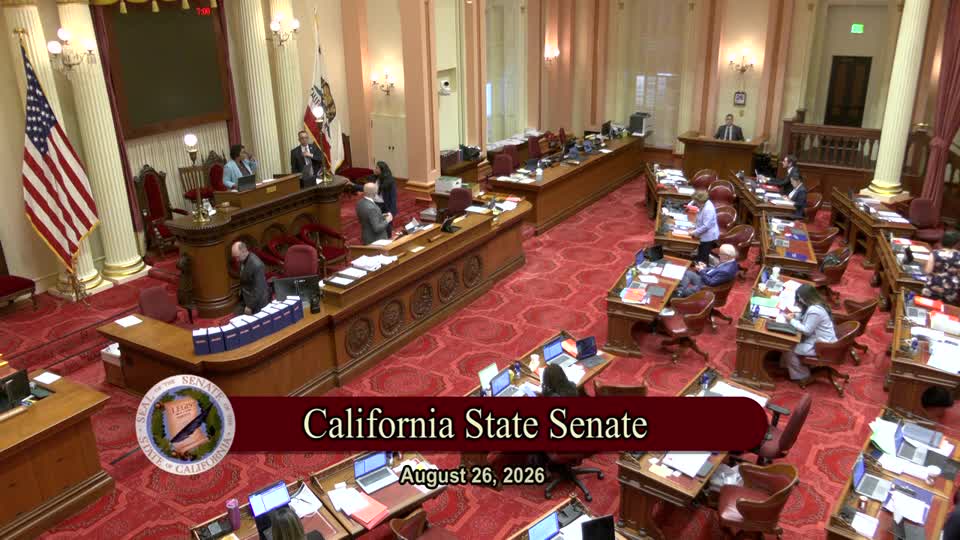 1MIN
Senate Floor
 1MIN
Assembly Floor
 12MIN
Assembly Standing Committee on Health
 14MIN
Assembly Standing Committee on Education
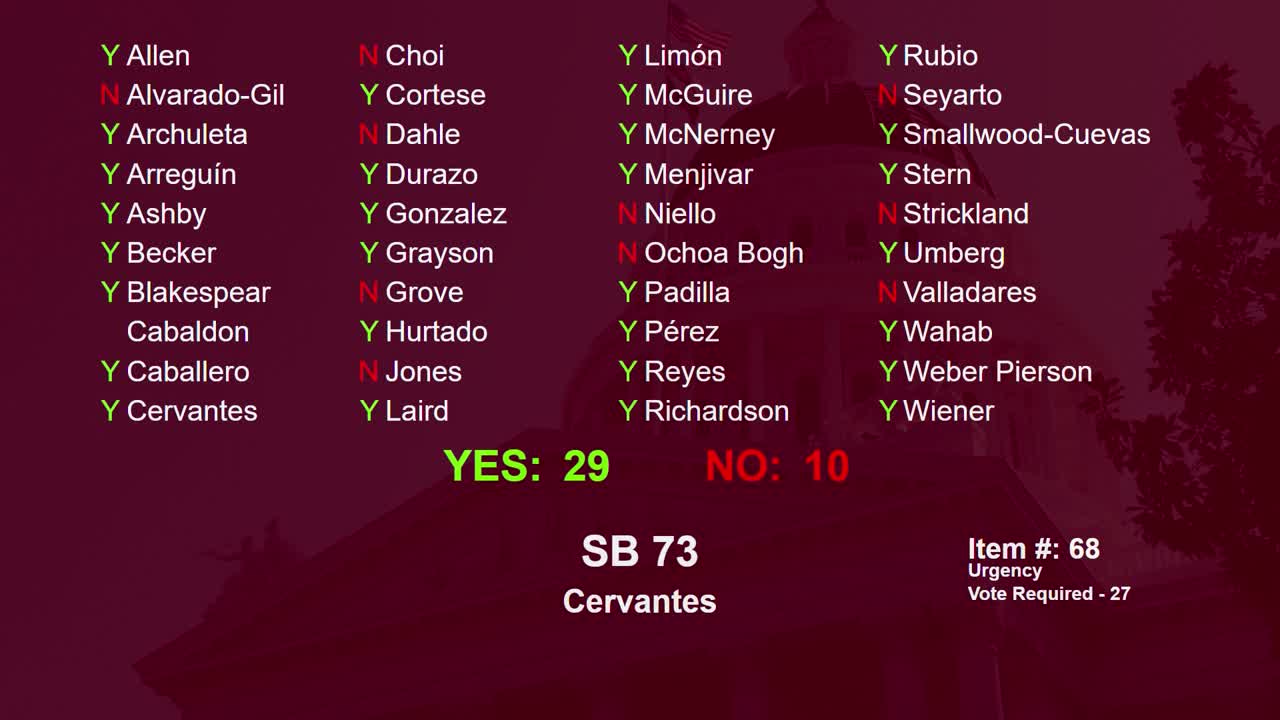 2MIN
Senate Floor
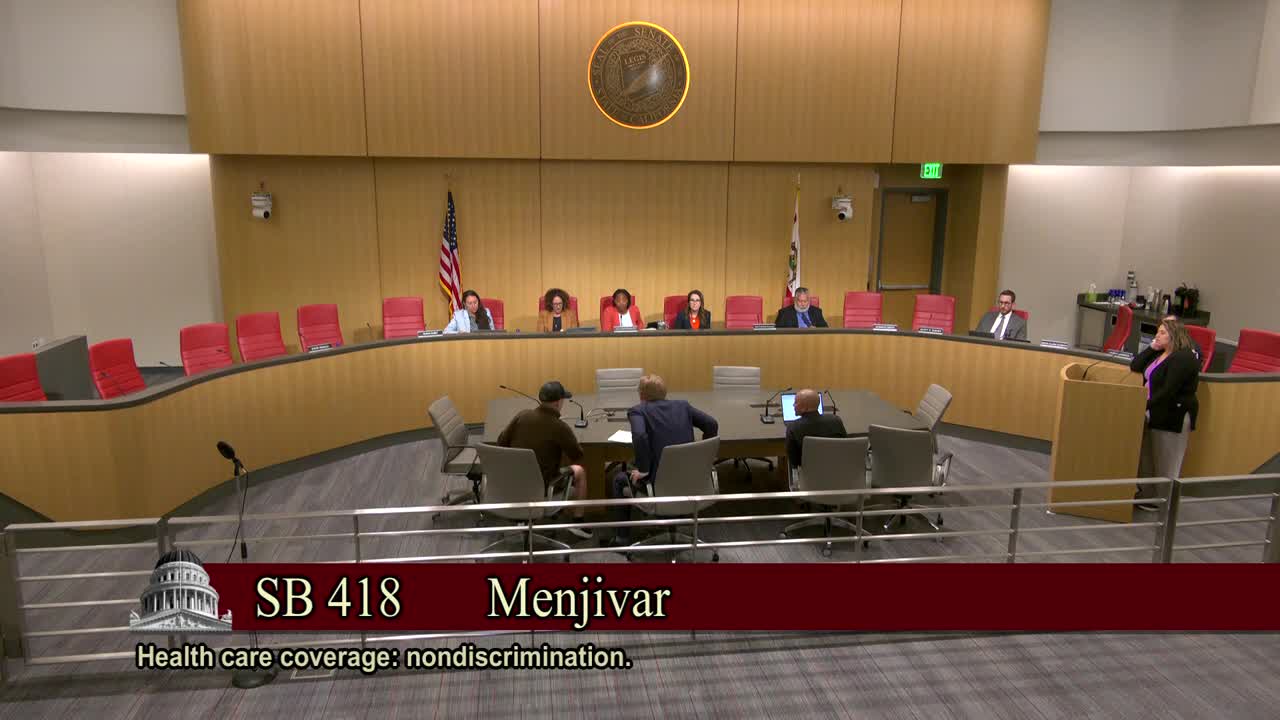 18MIN
Senate Standing Committee on Health
 28MIN
Senate Standing Committee on Education
Bill Author