SB 610: Disaster assistance: tenants, mobilehome parks, and mortgages.
- Session Year: 2025-2026
- House: Senate
- Latest Version Date: 2025-10-10
Current Status:
Passed
(2025-10-10: Chaptered by Secretary of State. Chapter 547, Statutes of 2025.)
Introduced
In Committee
Awaiting First Chamber Vote
Passed First Chamber
In Committee
Awaiting Second Chamber Vote
Passed Second Chamber
Enacted
(1)Existing law, the Mobilehome Residency Law, prescribes various terms and conditions of tenancies in mobilehome parks.
Existing law, the Planning and Zoning Law, requires a person or entity proposing a change in use of a mobilehome park to file a report on the impact of the conversion, closure, or cessation of use of the mobilehome park that includes a replacement and relocation plan, as specified. Existing law requires the legislative body or advisory agency to review the report before any change of use, as provided. Existing law establishes the Department of Housing and Community Development and requires it to administer various programs intended to promote the development of housing.
This bill would require, if a closure, cessation, or change of use is the result of damage or destruction of the mobilehome park by a disaster, as defined, the person or entity proposing that closure, cessation, or change of use to file an impact report, as described in the paragraph above, which also includes a technical service inspection report from the Department of Housing and Community Development that identifies the observed conditions within the park. By placing new requirements on local legislative bodies when approving permits for a change of use for mobilehome parks, this bill would impose a state-mandated local program.
Existing law requires the person or entity proposing the change of use of a mobilehome park to pay to the displaced resident the in-place market value of the displaced residents mobilehome, as provided.
This bill would provide that if the proposed closure, cessation, or change of use is related to damage or destruction by a disaster, the person or entity proposing the change of use of a mobilehome park is not required to pay to the displaced resident the in-place market value of the displaced residents mobilehome.
(2)Existing law regulates the terms and conditions of residential tenancies. Existing law requires the lessor of a building intended for human occupation to repair dilapidations, as specified, rendering it untenantable. Existing law requires a dwelling to be deemed untenantable if it substantially lacks certain affirmative standard characteristics.
This bill would impose a duty upon the landlord to undertake certain actions, within a reasonable time and according to specified cleaning protocols, as may be necessary to remediate any dilapidations that arise as a result of a disaster. The bill would establish a presumption that the presence at the rental unit of debris from the disaster renders the unit untenantable, until a determination has been made by a local public health agency or official that the debris does not contain toxic substances.
This bill would require the landlord to notify the tenant in writing that the landlord has fulfilled its duty to remediate dilapidations and that the tenant may view various reports, if requested. The bill would specify that these provisions do not require a landlord to rebuild a residential real property or any portion thereof that has sustained damage as a result of a disaster, and that, unless lawfully terminated by either party, the tenancy remains in effect and the tenant has the right to return to the rental unit, at the same rental rate in effect immediately prior to the disaster, as soon as it is safe and practicable.
(3)Existing law terminates the hiring of a thing by the destruction of the thing hired, or when the greater part of the thing hired perishes from any other cause than the want of ordinary care of the hirer.
This bill would require the landlord to return to the tenant any advance rental payments made by the tenant when the hiring of residential real property is terminated due to damage or destruction of the property. The bill would also require management of a mobilehome park to return to the homeowner any advance rental payments made by the homeowner when the mobilehome tenancy is terminated due to damage or the destruction of the mobilehome park or any space as a result of a disaster. The bill would discharge the tenants or homeowners obligation to pay rent during any period during which a tenant or homeowner is unable to occupy their rental unit due to a mandatory evacuation order pursuant to a disaster, as provided.
(4)Existing law makes the Commissioner of Financial Protection and Innovation the head of the Department of Financial Protection and Innovation, which executes the laws of this state relating to, among other things, residential mortgage lenders and servicers and mortgage loan originators employed or supervised by finance lenders or residential mortgage lenders.
This bill would require the commissioner to, upon the declaration of a state of emergency due to wildfire, as specified, coordinate with mortgage lenders and servicers subject to the commissioners jurisdiction operating in this state to facilitate and monitor the implementation and promotion of mortgage forbearance, foreclosure prevention, and loss mitigation programs available to borrowers who experience a material decrease in household income or a material increase in household expenses due, directly or indirectly, to the wildfire emergency.
(5)The California Constitution requires the state to reimburse local agencies and school districts for certain costs mandated by the state. Statutory provisions establish procedures for making that reimbursement.
This bill would provide that, if the Commission on State Mandates determines that the bill contains costs mandated by the state, reimbursement for those costs shall be made pursuant to the statutory provisions noted above.
(1)Existing law, the Mobilehome Residency Law, prescribes various terms and conditions of tenancies in mobilehome parks.
Existing law, the Planning and Zoning Law, requires a person or entity proposing a change in use of a mobilehome park to file a report on the impact of the conversion, closure, or cessation of use of the mobilehome park that includes a replacement and relocation plan, as specified. Existing law requires the legislative body or advisory agency to review the report before any change of use, as provided. Existing law establishes the Department of Housing and Community Development and requires it to administer various programs intended to promote the development of housing.
This bill would require, if a closure, cessation, or change of use is the result of damage or destruction of the mobilehome park by a disaster, as defined, the person or entity proposing that closure, cessation, or change of use to file an impact report, as described in the paragraph above, which also includes an assessment by a technical service inspection report from the Department of Housing and Community Development on the feasibility of reopening the park. that identifies the observed conditions within the park. By placing new requirements on local legislative bodies when approving permits for a change of use for mobilehome parks, this bill would impose a state-mandated local program.
Existing law requires the person or entity proposing the change of use of a mobilehome park to pay to the displaced resident the in-place market value of the displaced residents mobilehome, as provided.
This bill would provide that if the proposed closure, cessation, or change of use is related to damage or destruction by a disaster, the person or entity proposing the change of use of a mobilehome park is not required to pay to the displaced resident the in-place market value of the displaced residents mobilehome.
(2)Existing law regulates the terms and conditions of residential tenancies. Existing law requires the lessor of a building intended for human occupation to repair dilapidations, as specified, rendering it untenantable. Existing law requires a dwelling to be deemed untenantable if it substantially lacks certain affirmative standard characteristics.
This bill would provide for the responsibilities of impose a duty upon the landlord to repair or to undertake certain actions, within a reasonable time and according to specified cleaning protocols, as may be necessary to remediate damage sustained any dilapidations that arise as a result of a disaster, and the remedies available to the tenant if the landlord fails to perform those duties. disaster. The bill would establish a presumption that the presence at the rental unit of debris from the disaster renders the unit untenantable, until a determination has been made by a local public health agency or official that the debris does not contain toxic substances.
This bill would require the landlord to notify the tenant in writing that the landlord has fulfilled its duty to remediate dilapidations and that the tenant may view various reports, if requested. The bill would specify that these provisions do not require a landlord to rebuild a residential real property or any portion thereof that has sustained damage as a result of a disaster, and that, unless lawfully terminated by either party, the tenancy remains in effect and the tenant has the right to return to the rental unit, at the same rental rate in effect immediately prior to the disaster, as soon as it is safe and practicable.
(3)Existing law terminates the hiring of a thing by the destruction of the thing hired, or when the greater part of the thing hired perishes from any other cause than the want of ordinary care of the hirer.
This bill would require the landlord to return to the tenant any advance rental payments made by the tenant when the hiring of residential real property is terminated due to damage or destruction of the property. The bill would also require management of a mobilehome park to return to the homeowner any advance rental payments made by the homeowner when the mobilehome tenancy is terminated due to damage or the destruction of the mobilehome park or any space as a result of a disaster. The bill would discharge the tenants or homeowners obligation to pay rent during any period during which a tenant or homeowner is unable to occupy their rental unit due to a mandatory evacuation order pursuant to a disaster, as provided.
(4)Existing law establishes a procedure, known as an unlawful detainer action, that a landlord must follow in order to evict a tenant. Existing law provides that a tenant is subject to such an action if the tenant continues to possess the property without permission of the landlord under specified circumstances, including when the tenant has violated the lease by defaulting on rent or failing to perform a duty under the lease, but the landlord must first, among other notice requirements, give the tenant a 3-day notice to cure the violation or vacate.This bill would extend notice periods and deadlines for notices related to the termination of a tenancy or unlawful detainer proceedings, as provided, if housing is damaged, destroyed, or otherwise rendered uninhabitable by an event that resulted in a state of emergency declaration in that county. (5)(4)Existing law makes the Commissioner of Financial Protection and Innovation the head of the Department of Financial Protection and Innovation, which executes the laws of this state relating to, among other things, residential mortgage lenders and servicers and mortgage loan originators employed or supervised by finance lenders or residential mortgage lenders.
This bill would require the commissioner to, upon the declaration of a state of emergency due to wildfire, as specified, coordinate with mortgage lenders and servicers subject to the commissioners jurisdiction operating in this state to facilitate and monitor the implementation and promotion of mortgage forbearance, foreclosure prevention, and loss mitigation programs available to borrowers who experience a material decrease in household income or a material increase in household expenses due, directly or indirectly, to the wildfire emergency.
(6)(5)The California Constitution requires the state to reimburse local agencies and school districts for certain costs mandated by the state. Statutory provisions establish procedures for making that reimbursement.
This bill would provide that, if the Commission on State Mandates determines that the bill contains costs mandated by the state, reimbursement for those costs shall be made pursuant to the statutory provisions noted above.
(1)Existing law, the Mobilehome Residency Law, prescribes various terms and conditions of tenancies in mobilehome parks. Existing law defines tenancy for these purposes as the right of a homeowner to use a site within a mobilehome park on which to locate, maintain, and occupy a mobilehome for human habitation, including the use of the services and facilities of the park. Existing law prohibits, with certain exceptions, the management of a mobilehome park from increasing the gross rental rate for a tenancy in a qualified mobilehome park, as defined, more than 3% plus the percentage change in the cost of living, or 5%, whichever is lower, of the lowest gross rental rate charged for a tenancy at any time during the 12 months prior to the effective date of the increase, subject to specified conditions.
This bill would prohibit management of a mobilehome park from, over the course of any 12-month period from the date on which any federal, state, or local state of emergency is first declared, increasing the gross rental rate for a tenancy in a mobilehome park by more than 3% plus the percentage change in the Consumer Price Index, or 5%, whichever is lower, of the lowest gross rental rate charged for the tenancy at any time during the 12 months prior to the effective date of the increase, subject to specified conditions and exceptions. The bill would require that these provisions govern the maximum amount that may be charged for rent if a local ordinance, rule, regulation, or initiative measure allows for a rental rate increase. By placing new requirements on local governments regarding rental rate increases, this bill would impose a state-mandated local program.Existing law requires, among other things, that the management of a mobilehome park comply with noticing and other specified requirements in order to terminate a tenancy in a mobilehome park because of a change of use of the mobilehome park.Existing law requires management of a mobilehome park, if the park is destroyed due to a wildfire or other natural disaster and management elects to rebuild the park in the same location, to offer the previous homeowner a right of first refusal to a renewed tenancy in the park.This bill would recast those provisions, and instead would require management of a mobilehome park, if the park is damaged or destroyed due to a disaster, as defined, and management elects to rebuild, as defined, the park, to offer the previous homeowner a right of first refusal to a renewed tenancy in the park, subject to specified adjustments, and would make conforming changes.This bill would also, if a mobilehome park is damaged or destroyed as a result of a disaster and management owns one or more other mobilehome parks in California that have not been destroyed, require management to offer any space that is or becomes vacant to the previous homeowners on substantially the same terms as the previous homeowners rental agreement that was in existence at the time of the disaster, as provided, until the damaged or destroyed park has been rebuilt.(2)ExistingExisting law, the Planning and Zoning Law, requires a person or entity proposing a change in use of a mobilehome park to file a report on the impact of the conversion, closure, or cessation of use of the mobilehome park that includes a replacement and relocation plan, as specified. Existing law requires the legislative body or advisory agency to review the report before any change of use, as provided. Existing law establishes the Department of Housing and Community Development and requires it to administer various programs intended to promote the development of housing.
This bill would require, if a closure, cessation, or change of use is the result of damage or destruction of the mobilehome park by a disaster, as defined, the person or entity proposing that closure, cessation, or change of use to file an impact report, as described in the paragraph above, which also includes an assessment by the Department of Housing and Community Development on the feasibility of reopening the park. By placing new requirements on local legislative bodies when approving permits for a change of use for mobilehome parks, this bill would impose a state-mandated local program.
Existing law requires the person or entity proposing the change of use of a mobilehome park to pay to the displaced resident the in-place market value of the displaced residents mobilehome, as provided.
This bill would provide that if the proposed closure, cessation, or change of use is related to damage or destruction by a disaster, the person or entity proposing the change of use of a mobilehome park is not required to pay to the displaced resident the in-place market value of the displaced residents mobilehome.
(3)(2)Existing law regulates the terms and conditions of residential tenancies. Existing law requires the lessor of a building intended for human occupation to repair dilapidations, as specified, rendering it untenantable. Existing law requires a dwelling to be deemed untenantable if it substantially lacks certain affirmative standard characteristics.
This bill would provide for the responsibilities of the landlord, or management of a mobilehome park, landlord to repair or remediate damage sustained as a result of a disaster, and the remedies available to the tenant, or homeowner in a mobilehome park, tenant if the landlord or management fails to perform those duties.
(4)(3)Existing law terminates the hiring of a thing by the destruction of the thing hired, or when the greater part of the thing hired perishes from any other cause than the want of ordinary care of the hirer.
This bill would require the landlord to return to the tenant any advance rental payments made by the tenant when the hiring of residential real property is terminated due to damage or destruction of the property. The bill would also require management of a mobilehome park to return to the homeowner any advance rental payments made by the homeowner when the mobilehome tenancy is terminated due to damage or the destruction of the mobilehome park or any space as a result of a disaster. The bill would discharge the tenants or homeowners obligation to pay rent during any period during which a tenant or homeowner is unable to occupy their rental unit due to a mandatory evacuation order pursuant to a disaster, as provided.
(5)(4)Existing law establishes a procedure, known as an unlawful detainer action, that a landlord must follow in order to evict a tenant. Existing law provides that a tenant is subject to such an action if the tenant continues to possess the property without permission of the landlord under specified circumstances, including when the tenant has violated the lease by defaulting on rent or failing to perform a duty under the lease, but the landlord must first, among other notice requirements, give the tenant a 3-day notice to cure the violation or vacate.
This bill would extend notice periods and deadlines for notices related to the termination of a tenancy or unlawful detainer proceedings, as provided. provided, if housing is damaged, destroyed, or otherwise rendered uninhabitable by an event that resulted in a state of emergency declaration in that county.
(6)(5)Existing law makes the Commissioner of Financial Protection and Innovation the head of the Department of Financial Protection and Innovation, which executes the laws of this state relating to, among other things, residential mortgage lenders and servicers and mortgage loan originators employed or supervised by finance lenders or residential mortgage lenders.
This bill would require the commissioner to, upon the declaration of a state of emergency due to wildfire, as specified, coordinate with mortgage lenders and servicers operating in this state to facilitate and monitor the implementation and promotion of mortgage forbearance, foreclosure prevention, and loss mitigation programs available to borrowers who experience a material decrease in household income or a material increase in household expenses due, directly or indirectly, to the wildfire emergency.
(7)(6)The California Constitution requires the state to reimburse local agencies and school districts for certain costs mandated by the state. Statutory provisions establish procedures for making that reimbursement.
This bill would provide that, if the Commission on State Mandates determines that the bill contains costs mandated by the state, reimbursement for those costs shall be made pursuant to the statutory provisions noted above.
(1)Existing law, the Mobilehome Residency Law, prescribes various terms and conditions of tenancies in mobilehome parks. Existing law defines tenancy for these purposes as the right of a homeowner to use a site within a mobilehome park on which to locate, maintain, and occupy a mobilehome for human habitation, including the use of the services and facilities of the park. Existing law prohibits, with certain exceptions, the management of a mobilehome park from increasing the gross rental rate for a tenancy in a qualified mobilehome park, as defined, more than 3% plus the percentage change in the cost of living, or 5%, whichever is lower, of the lowest gross rental rate charged for a tenancy at any time during the 12 months prior to the effective date of the increase, subject to specified conditions.
This bill would prohibit management of a mobilehome park from, over the course of any 12-month period from the date on which any federal, state, or local state of emergency is first declared, increasing the gross rental rate for a tenancy in a mobilehome park by more than 3% plus the percentage change in the Consumer Price Index, or 5%, whichever is lower, of the lowest gross rental rate charged for the tenancy at any time during the 12 months prior to the effective date of the increase, subject to specified conditions and exceptions. The bill would require that these provisions govern the maximum amount that may be charged for rent if a local ordinance, rule, regulation, or initiative measure allows for a rental rate increase. By placing new requirements on local governments regarding rental rate increases, this bill would impose a state-mandated local program.
Existing law requires, among other things, that the management of a mobilehome park comply with noticing and other specified requirements in order to terminate a tenancy in a mobilehome park because of a change of use of the mobilehome park.
Existing law requires management of a mobilehome park, if the park is destroyed due to a wildfire or other natural disaster and management elects to rebuild the park in the same location, to offer the previous homeowner a right of first refusal to a renewed tenancy in the park.
This bill would recast those provisions, and instead would require management of a mobilehome park, if the park is damaged or destroyed due to a disaster, as defined, and management elects to rebuild, as defined, the park, to offer the previous homeowner a right of first refusal to a renewed tenancy in the park, subject to specified adjustments, and would make conforming changes.
This bill would also, if a mobilehome park is damaged or destroyed as a result of a disaster and management owns one or more other mobilehome parks in California that have not been destroyed, require management to offer any space that is or becomes vacant to the previous homeowners on substantially the same terms as the previous homeowners rental agreement that was in existence at the time of the disaster, as provided, until the damaged or destroyed park has been rebuilt.
(2)Existing law, the Planning and Zoning Law, requires a person or entity proposing a change in use of a mobilehome park to file a report on the impact of the conversion, closure, or cessation of use of the mobilehome park that includes a replacement and relocation plan, as specified. Existing law requires the legislative body or advisory agency to review the report before any change of use, as provided. Existing law establishes the Department of Housing and Community Development and requires it to administer various programs intended to promote the development of housing.
This bill would require, if a closure, cessation, or change of use is the result of damage or destruction of the mobilehome park by a disaster, the person or entity proposing that closure, cessation, or change of use to file an impact report, as described in the paragraph above, which also includes an assessment by the Department of Housing and Community Development on the feasibility of reopening the park. By placing new requirements on local legislative bodies when approving permits for a change of use for mobilehome parks, this bill would impose a state-mandated local program.
(3)Existing law regulates the terms and conditions of residential tenancies. Existing law requires the lessor of a building intended for human occupation to repair dilapidations, as specified, rendering it untenantable. Existing law requires a dwelling to be deemed untenantable if it substantially lacks certain affirmative standard characteristics.
This bill would provide for the responsibilities of the landlord, or management of a mobilehome park, to repair or remediate damage sustained as a result of a disaster, and the remedies available to the tenant, or homeowner in a mobilehome park, if the landlord or management fails to perform those duties.
(4)Existing law terminates the hiring of a thing by the destruction of the thing hired, or when the greater part of the thing hired perishes from any other cause than the want of ordinary care of the hirer.
This bill would require the landlord to return to the tenant any advance rental payments made by the tenant when the hiring of residential real property is terminated due to damage or destruction of the property. The bill would also require management of a mobilehome park to return to the homeowner any advance rental payments made by the homeowner when the mobilehome tenancy is terminated due to damage or the destruction of the mobilehome park or any space as a result of a disaster. The bill would discharge the tenants or homeowners obligation to pay rent during any period during which a tenant or homeowner is unable to occupy their rental unit due to a mandatory evacuation order pursuant to a disaster, as provided.
(5)Existing law establishes a procedure, known as an unlawful detainer action, that a landlord must follow in order to evict a tenant. Existing law provides that a tenant is subject to such an action if the tenant continues to possess the property without permission of the landlord under specified circumstances, including when the tenant has violated the lease by defaulting on rent or failing to perform a duty under the lease, but the landlord must first, among other notice requirements, give the tenant a 3-day notice to cure the violation or vacate.
This bill would extend notice periods and deadlines for notices related to the termination of a tenancy or unlawful detainer proceedings, as provided.
(6)Existing law makes the Commissioner of Financial Protection and Innovation the head of the Department of Financial Protection and Innovation, which executes the laws of this state relating to, among other things, residential mortgage lenders and servicers and mortgage loan originators employed or supervised by finance lenders or residential mortgage lenders.
This bill would require the commissioner to, upon the declaration of a state of emergency due to wildfire, as specified, coordinate with mortgage lenders and servicers operating in this state to facilitate and monitor the implementation and promotion of mortgage forbearance, foreclosure prevention, and loss mitigation programs available to borrowers who experience a material decrease in household income or a material increase in household expenses due, directly or indirectly, to the wildfire emergency.
(7)The California Constitution requires the state to reimburse local agencies and school districts for certain costs mandated by the state. Statutory provisions establish procedures for making that reimbursement.
This bill would provide that, if the Commission on State Mandates determines that the bill contains costs mandated by the state, reimbursement for those costs shall be made pursuant to the statutory provisions noted above.
Existing law makes it unlawful for a person or organization to use the term legal aid, legal aide, or any confusingly similar name in any firm name, trade name, fictitious business name, or any other designation, or on any advertisement, letterhead, business card, or sign, unless the person or organization is a legal aid organization subject to fair use principles for nominative, descriptive, or noncommercial use. Existing law authorizes a consumer injured by a violation of the above provision to file a complaint seeking specified injunctive relief, restitution, and damages. Under existing law, a legal aid organization means a nonprofit organization that provides civil legal services for the poor without charge.This bill would revise that definition of legal aid organization to instead specify that it means a nonprofit organization that provides civil legal services for indigent persons without charge. The bill would define indigent person for these purposes and would make related, conforming changes.Existing law makes it unlawful for a person or organization to use the term legal aid, legal aide, or any confusingly similar name in any firm name, trade name, fictitious business name, or any other designation, or on any advertisement, letterhead, business card, or sign, unless the person or organization is a legal aid organization subject to fair use principles for nominative, descriptive, or noncommercial use. Existing law authorizes a consumer injured by a violation of the above provision to file a complaint seeking specified injunctive relief, restitution, and damages. Under existing law, a legal aid organization means a nonprofit organization that provides civil legal services for the poor without charge.
This bill would revise that definition of legal aid organization to instead specify that it means a nonprofit organization that provides civil legal services for indigent persons without charge. The bill would define indigent person for these purposes and would make related, conforming changes.
(a)(1)When a mobilehome tenancy is terminated due to damage or the destruction of the mobilehome park or any space as a result of a disaster, management shall return to the homeowner any advance rental payments received from the homeowner that cover any period of time after the date of the termination.
(2)Any payment required pursuant to paragraph (1) shall be made within 21 days of the date of the termination and shall be sent to the address provided by the homeowner. If the homeowner does not provide an address, mailings pursuant to this subdivision shall be sent to the address where the mobilehome was located.
(3)For purposes of this subdivision, the date of the termination shall be the date upon which the mobilehome park or the mobilehome space was damaged or destroyed.
(b)During any period that a homeowner is unable to occupy their mobilehome or mobilehome space due to a mandatory evacuation order pursuant to a disaster, the homeowners obligation to pay rent shall be discharged for the period during which the homeowner is required to be evacuated. If the homeowner has paid rent in advance for any portion of the evacuation period, management shall return that portion of prepaid rent to the homeowner within 10 calendar days after the evacuation order is lifted, or the homeowner may deduct that amount from the next months rent which becomes due and payable after the evacuation order is lifted.
(c)For purposes of this section, disaster means a natural or manmade emergency resulting from an earthquake, flood, fire, riot, storm, drought, plant or animal infestation or disease, pandemic or epidemic disease outbreak, or other natural or manmade disaster for which a state of emergency has been declared by the President of the United States or the Governor.
SEC. 2.Section 1941.8 is added to the Civil Code, to read:1941.8.(a)Subject to subdivision (e), for any structure intended for human habitation, it shall be the duty of a landlord to undertake one or both of the following actions as may be necessary to remediate any dilapidations that arise as a result of a disaster:
(1)Removal of debris caused by the disaster.
(2)Mitigation of hazards arising from the disaster, including, but not limited to, the presence of mold, smoke, smoke residue, smoke odor, ash, asbestos, or water damage.
(b)Until a determination has been made by a local public health agency or official that the debris from the disaster, including, but not limited to, ash, sludge, or runoff, does not contain toxic substances, the presence of the debris at a rental unit shall be presumed to render the rental unit untenantable pursuant to Section 1941.1.
(c)The landlord shall comply with subdivision (a) within a reasonable time after the property sustains damage, and shall follow any and all cleaning protocols issued by government officials, including contracting with licensed remediation companies where required. If the tenant has provided the landlord with a postal or email address, the landlord shall notify the tenant in writing that the landlord has complied with subdivision (a) and that the tenant may view and, if requested, obtain copies of any environmental studies, testing, or reports conducted.
(d)Unless lawfully terminated by either party, the tenancy shall remain in effect and the tenant shall have the right to return to the rental unit at the same rental rate in effect immediately prior to the disaster as soon as it is safe and practicable.
(e)Nothing in this section shall require a landlord to rebuild a residential rental property or any portion thereof that has sustained damage as a result of a disaster.
(f)The rights, obligations, and remedies under this section are cumulative and in addition to any other rights, obligations, or remedies available under federal, state, or local law.
(g)Nothing in this section preempts any local ordinance from providing for additional protections for tenants or imposing additional obligations on the landlord.
(h)For purposes of this section, disaster means a natural or manmade emergency resulting from an earthquake, flood, fire, riot, storm, drought, plant or animal infestation or disease, pandemic or epidemic disease outbreak, or other natural or manmade disaster for which a state of emergency has been declared by the President of the United States or the Governor.
SEC. 3.Section 1941.9 is added to the Civil Code, to read:1941.9.(a)(1)When the hiring of residential real property is terminated pursuant to paragraph (2) of Section 1932 or paragraph (4) of Section 1933, the landlord shall return to the tenant any advance rental payments made by the tenant that cover any period after the date of the termination.
(2)Any payment from the landlord to the tenant required pursuant to paragraph (1) shall be made within 21 days of the date of the termination and shall be sent to the address provided by the tenant. If the hirer does not provide an address, mailings pursuant to this subdivision shall be sent to the address of the unit that was the subject of the terminated hiring.
(3)For purposes of this subdivision, the date of the termination shall be either of the following, as applicable:
(A)The date that the tenant informs the landlord or the landlords agent of the tenants intent to terminate the hiring pursuant to paragraph (2) of Section 1932.
(B)The date that the residential real property was destroyed, if the termination happened pursuant to paragraph (4) of Section 1933.
(b)During any period during which a tenant in residential real property is unable to occupy their rental unit due to a mandatory evacuation order pursuant to a disaster, as defined in Section 1941.8, the tenants obligation to pay rent shall be discharged for the period during which the tenant must be evacuated. If the tenant already paid rent for the period of an evacuation, the landlord shall return the rent within 10 calendar days after the evacuation order is lifted or the tenant may deduct the amount from the next months rent.
SEC. 4.Section 338 is added to the Financial Code, to read:338.Upon declaration of a state of emergency, pursuant to the California Emergency Services Act (Chapter 7 (commencing with Section 8550) of Division 1 of Title 2 of the Government Code) due to a wildfire, including, but not limited to, any unplanned, unwanted wildland fire, including unauthorized human-caused fires, escaped wildland fire use events, escaped prescribed fire projects, and all other wildland fires where the objective is to extinguish the fire, the commissioner shall coordinate with mortgage lenders and servicers subject to the commissioners jurisdiction, including those who lend money in connection with the purchase or financing of a mobilehome as that term is defined in Section 798.3 of the Civil Code, operating in this state to facilitate and monitor the implementation and promotion of mortgage forbearance, foreclosure prevention, and loss mitigation programs available to borrowers who experience a material decrease in household income or a material increase in household expenses due, directly or indirectly, to the wildfire emergency.
SEC. 5.Section 65863.7 of the Government Code is amended to read:65863.7.(a)(1)(A)Prior to the conversion of a mobilehome park to another use, except pursuant to the Subdivision Map Act (Division 2 (commencing with Section 66410)), or prior to closure of a mobilehome park or cessation of use of the land as a mobilehome park, the person or entity proposing the change in use shall file a report on the impact of the conversion, closure, or cessation of use of the mobilehome park. The report shall include a replacement and relocation plan that adequately mitigates the impact upon the ability of the displaced residents of the mobilehome park to be converted or closed to find adequate housing in a mobilehome park.
(B)(i)If the proposed closure, cessation, or change of use is related to damage or destruction by a disaster, as described in subdivision (k), the impact report described in subparagraph (A) shall also include a technical service inspection report from the Department of Housing and Community Development that identifies the observed conditions within the park. Technical service has the same meaning as in Section 1002 of Title 25 of the California Code of Regulations.
(ii)For purposes of this subparagraph, management, as defined in Section 798.2 of the Civil Code, is the person or entity proposing the change in use for purposes of preparing the impact report required by this section and is required to take steps to mitigate the adverse impact of the change as may be required in subdivision (e).
(2)(A)If a displaced resident cannot obtain adequate housing in another mobilehome park, the person or entity proposing the change of use shall pay to the displaced resident the in-place market value of the displaced residents mobilehome.
(B)For the purposes of this paragraph, except as specified in subparagraph (B) of paragraph (1) of subdivision (e), in-place market value shall be determined by a state-certified appraiser with experience establishing the value of mobilehomes. The appraisal shall be based upon the current in-place location of the mobilehome and shall assume the continuation of the mobilehome park.
(C)The person or entity proposing the change of use shall pay for an appraisal specified in subparagraph (B) and shall include the appraisal in the report specified in paragraph (1).
(D)This paragraph shall not apply when the proposed closure, cessation, or change of use is related to damage or destruction by a disaster, as defined in Section 798.64 of the Civil Code.
(b)The person proposing the change in use shall provide a copy of the report to a resident of each mobilehome in the mobilehome park at least 60 days prior to the hearing, if any, on the impact report by the advisory agency, or if there is no advisory agency, by the legislative body.
(c)When the impact report is filed prior to the closure or cessation of use, the person or entity proposing the change shall provide a copy of the report to a resident of each mobilehome in the mobilehome park at the same time as the notice of the change is provided to the residents pursuant to paragraph (2) of subdivision (g) of Section 798.56 of the Civil Code.
(d)When the impact report is filed prior to the closure or cessation of use, the person or entity filing the report or park resident may request, and shall have a right to, a hearing before the legislative body on the sufficiency of the report.
(e)(1)Before the approval of any change of use, the legislative body, or its delegated advisory agency, shall do all of the following:
(A)Review the report and any additional relevant documentation.
(B)Make a finding as to whether or not approval of the park closure and the parks conversion into its intended new use, taking into consideration both the impact report as a whole and the overall housing availability within the local jurisdiction, will result in or materially contribute to a shortage of housing opportunities and choices for low- and moderate-income households within the local jurisdiction.
(2)The legislative body, or its delegated advisory agency, may require, as a condition of the change, the person or entity proposing the change in use to take steps to mitigate any adverse impact of the conversion, closure, or cessation of use on the ability of displaced mobilehome park residents to find adequate housing in a mobilehome park.
(f)If the closure or cessation of use of a mobilehome park results from the entry of an order for relief in bankruptcy, the provisions of this section shall not be applicable.
(g)The legislative body may establish reasonable fees pursuant to Section 66016 to cover any costs incurred by the local agency in implementing this section and Section 65863.8. Those fees shall be paid by the person or entity proposing the change in use.
(h)This section is applicable to charter cities.
(i)This section is applicable when the closure, cessation, or change of use is the result of a decision by a local governmental entity or planning agency not to renew a conditional use permit or zoning variance under which the mobilehome park has operated, or as a result of any other zoning or planning decision, action, or inaction. In this case, the local governmental agency is the person proposing the change in use for the purposes of preparing the impact report required by this section and is required to take steps to mitigate the adverse impact of the change as may be required in subdivision (e).
(j)This section is applicable when the closure, cessation, or change of use is the result of a decision by an enforcement agency, as defined in Section 18207 of the Health and Safety Code, to suspend the permit to operate the mobilehome park. In this case, the mobilehome park owner is the person proposing the change in use for purposes of preparing the impact report required by this section and is required to take steps to mitigate the adverse impact of the change as may be required in subdivision (e).
(k)This section, except paragraph (2) of subdivision (a), is applicable when the closure, cessation, or change of use is the result of damage or destruction of the mobilehome park by a disaster as defined in Section 798.64 of the Civil Code.
(l)This section establishes a minimum standard for local regulation of the conversion of a mobilehome park to another use, the closure of a mobilehome park, and the cessation of use of the land as a mobilehome park and shall not prevent a local agency from enacting more stringent measures.
SEC. 6.If the Commission on State Mandates determines that this act contains costs mandated by the state, reimbursement to local agencies and school districts for those costs shall be made pursuant to Part 7 (commencing with Section 17500) of Division 4 of Title 2 of the Government Code.
(a)(1)When a mobilehome tenancy is terminated due to damage or the destruction of the mobilehome park or any space as a result of a disaster, management shall return to the homeowner any advance rental payments received from the homeowner that cover any period of time after the date of the termination.
(2)Any payment required pursuant to paragraph (1) shall be made within 21 days of the date of the termination and shall be sent to the address provided by the homeowner. If the homeowner does not provide an address, mailings pursuant to this subdivision shall be sent to the address where the mobilehome was located.
(3)For purposes of this subdivision, the date of the termination shall be the date upon which the mobilehome park or the mobilehome space was damaged or destroyed.
(b)During any period that a homeowner is unable to occupy their mobilehome or mobilehome space due to a mandatory evacuation order pursuant to a disaster, the homeowners obligation to pay rent shall be discharged for the period during which the homeowner is required to be evacuated. If the homeowner has paid rent in advance for any portion of the evacuation period, management shall return that portion of prepaid rent to the homeowner within 10 calendar days after the evacuation order is lifted, or the homeowner may deduct that amount from the next months rent which becomes due and payable after the evacuation order is lifted.
(c)For purposes of this section, disaster means a natural or manmade emergency resulting from an earthquake, flood, fire, riot, storm, drought, plant or animal infestation or disease, pandemic or epidemic disease outbreak, or other natural or manmade disaster for which a state of emergency has been declared by the President of the United States or the Governor.
SEC. 2.Section 1941.8 is added to the Civil Code, to read:1941.8.(a)In addition to any other law, if a residential rental property has sustained damage as a result of a disaster, whether or not the damage renders the property untenantable, as defined in Section 1941.1, it shall be the responsibility of the landlord to repair or remediate that damage, including, but not limited to, all of the following:1941.8.(a)Subject to subdivision (e), for any structure intended for human habitation, it shall be the duty of a landlord to undertake one or both of the following actions as may be necessary to remediate any dilapidations that arise as a result of a disaster:
(1)Removal of debris caused by the disaster.
(2)Repair or restoration of any damaged structural, mechanical, or aesthetic elements of the property, including, but not limited to, walls, floors, ceilings, windows, doors, and fixtures. (3)(2)Mitigation of hazards arising from the disaster, including, but not limited to, the presence of mold, smoke, smoke residue, smoke odor, ash, asbestos, or water damage.
(b)Until a determination has been made by a local public health agency or official that the debris from the disaster, including, but not limited to, ash, sludge, or runoff, does not contain toxic substances, the presence of the debris at the premises a rental unit shall be presumed to render the premises rental unit untenantable pursuant to Section 1941.1.
(c)The landlord shall complete the necessary cleaning, repairs, or remediation under this section comply with subdivision (a) within a reasonable time after the property sustains damage, taking into account the extent of the damage and the availability of materials and labor. The landlord and shall follow any and all cleaning protocols issued by government officials, including contracting with licensed remediation companies where required. The If the tenant has provided the landlord with a postal or email address, the landlord shall inform notify the tenant in writing about all cleaning, repairs, and remediation completed, including detailed descriptions of any work undertaken, the qualifications of any contracted services, and that the landlord has complied with subdivision (a) and that the tenant may view and, if requested, obtain copies of any environmental studies, testing, or reports conducted.
(d)If the landlord fails to perform the duties required under this section within a reasonable time after the property sustains damage, the tenant may do any or all of the following:(1)Pursue the remedies provided under Section 1942, including the right to repair and deduct where applicable or to notify the landlord that they are electing to terminate the tenancy, vacate the premises, and be discharged from any further obligations under the tenancy, including the duty to pay any rent due after the date the premises is vacated.(2)Reduce their rent in an amount proportional to the reduction in the use and enjoyment of the premises resulting from the damage. The reduction shall apply immediately upon notice to the landlord.(3)Pursue any other remedies available under law. (e)(d)Unless the tenant elects to terminate the tenancy as set forth in paragraph (1) of subdivision (d), lawfully terminated by either party, the tenancy shall remain in effect and the tenant shall have the right to return to the rental property unit at the same rental rate in effect immediately prior to the disaster as soon as it is safe and practicable.
(f)In any unlawful detainer action by the landlord to recover possession from a tenant, a rebuttable presumption affecting the burden of producing evidence that the landlord is unlawfully retaliating against the tenant for exercising their rights under this section is created if all of the following conditions exist:(1)The residential rental property sustained damage as a result of a disaster.(2)The landlord failed to repair and remediate the damage as required by this section within a reasonable time after the disaster.(3)The notice to terminate tenancy was served on the tenant before the damage has been repaired and remediated or within 180 days after the damage has been repaired or remediated.(e)Nothing in this section shall require a landlord to rebuild a residential rental property or any portion thereof that has sustained damage as a result of a disaster.
(g)(f)The rights, obligations, and remedies under this section are cumulative and in addition to any other rights, obligations, or remedies available under federal, state, or local law.
(h)(g)Nothing in this section preempts any local ordinance from providing for additional protections for tenants or imposing additional obligations on the landlord.
(i)(h)For purposes of this section, disaster means a natural or manmade emergency resulting from an earthquake, flood, fire, riot, storm, drought, plant or animal infestation or disease, pandemic or epidemic disease outbreak, or other natural or manmade disaster for which a state of emergency has been declared by the President of the United States or the Governor.
SEC. 3.Section 1941.9 is added to the Civil Code, to read:1941.9.(a)(1)When the hiring of residential real property is terminated pursuant to paragraph (2) of Section 1932 or paragraph (4) of Section 1933, the landlord shall return to the tenant any advance rental payments made by the tenant that cover any period after the date of the termination.
(2)Any payment from the landlord to the tenant required pursuant to paragraph (1) shall be made within 21 days of the date of the termination and shall be sent to the address provided by the tenant. If the hirer does not provide an address, mailings pursuant to this subdivision shall be sent to the address of the unit that was the subject of the terminated hiring.
(3)For purposes of this subdivision, the date of the termination shall be either of the following, as applicable:
(A)The date that the tenant informs the landlord or the landlords agent of the tenants intent to terminate the hiring pursuant to paragraph (2) of Section 1932.
(B)The date that the residential real property was destroyed, if the termination happened pursuant to paragraph (4) of Section 1933.
(b)During any period during which a tenant in residential real property is unable to occupy their rental unit due to a mandatory evacuation order pursuant to a disaster, as defined in Section 1941.8, the tenants obligation to pay rent shall be discharged for the period during which the tenant must be evacuated. If the tenant already paid rent for the period of an evacuation, the landlord shall return the rent within 10 calendar days after the evacuation order is lifted or the tenant may deduct the amount from the next months rent.
SEC. 4.Section 1179b is added to the Code of Civil Procedure, immediately following Section 1179a, to read:1179b.(a)Notwithstanding Section 1167.5, in any county in which a state of emergency is declared by the President of the United States, or by the Governor pursuant to the California Emergency Services Act (Chapter 7 (commencing with Section 8550) of Division 1 of Title 2 of the Government Code), if housing is damaged, destroyed, or otherwise rendered uninhabitable by the event that resulted in a state of emergency declaration in that county, the following notice periods and deadlines are extended for notices related to the termination of a tenancy or unlawful detainer proceedings:(1)From 3 to 15 days for all of the following:(A)Notice pursuant to paragraph (2) of Section 1161.(B)Notice pursuant to paragraph (3) of Section 1161.(C)Notice pursuant to paragraph (4) of Section 1161.(D)Notice from the management to a homeowner or legal owner, junior lienholder, or registered owner, pursuant to subdivision (c) of Section 798.55 of the Civil Code.(E)The time for a homeowner to cure nonpayment of rent, utility charges, or reasonable incidental service charges after being given written notice of the alleged nonpayment pursuant to paragraphs (1) and (2) of subdivision (e) of Section 798.56 of the Civil Code. This subparagraph does not reduce or affect the five-day period that management is required to wait from the due date before giving notice of nonpayment of rent.(2)From 5 to 30 days for both of the following:(A)Notice to an alleged unlawful occupant pursuant to subdivision (c) of Section 798.75 of the Civil Code.(B)The time period for an occupant to vacate real property pursuant to a writ of possession pursuant to Section 715.010.(3)From 10 to 30 days for all of the following:(A)The time for a defendant to file a response pursuant to subdivision (a) of Section 1167.(B)The time for an occupant to file a prejudgment claim of right to possession pursuant to Section 1174.25.(C)The time for a homeowner or resident to respond or cure an alleged rule or regulation violation pursuant to subdivision (d) of Section 798.56.(4)From 10 to 60 days for the additional time, beyond the time for appeal, for which a trial court may stay the enforcement of an unlawful detainer judgment pursuant to Section 918.(5)From 10 to 90 days for the time for which service of an unlawful detainer summon shall be deemed complete pursuant to subdivision (c) of Section 415.45.(6)From 30 to 60 days for the notice of termination of a tenancy of less than one year and from 60 to 90 days for the notice of termination of a tenancy of more than one year pursuant to Section 1946.1 of the Civil Code.(7)From 30 to 60 days for the notice from management of belief of abandonment pursuant to subdivision (b) of Section 798.61 of the Civil Code. (8)From 60 to 180 days for the notice period for management to notify a homeowner of its intent to terminate or refuse to renew a tenancy pursuant to Section 798.55 of the Civil Code.(9)From 90 days to 180 days for both of the following:(A)A notice of termination of tenancy pursuant to Section 1954.535 of the Civil Code.(B)A notice pursuant to Section 1161b.(b)Notwithstanding Section 1167.5, and in addition to the extensions of time set forth in subdivision (a), the declaration of a federal or state emergency, if housing is damaged, destroyed, or otherwise rendered uninhabitable by the event that resulted in a state of emergency declaration in that county, shall automatically toll any notice period or deadline under this chapter that was pending at the time the emergency is declared in that county for 15 calendar days following the declaration.(c)This section sets the minimum timeline extension and tolling applicable to unlawful detainer proceedings during a declared state of emergency. Nothing in this section shall be interpreted to prevent the establishment of longer timelines by rule of court.SEC. 5.SEC. 4.Section 338 is added to the Financial Code, to read:338.Upon declaration of a state of emergency, pursuant to the California Emergency Services Act (Chapter 7 (commencing with Section 8550) of Division 1 of Title 2 of the Government Code) due to a wildfire, including, but not limited to, any unplanned, unwanted wildland fire, including unauthorized human-caused fires, escaped wildland fire use events, escaped prescribed fire projects, and all other wildland fires where the objective is to extinguish the fire, the commissioner shall coordinate with mortgage lenders and servicers, servicers subject to the commissioners jurisdiction, including those who lend money in connection with the purchase or financing of a mobilehome as that term is defined in Section 798.3 of the Civil Code, operating in this state to facilitate and monitor the implementation and promotion of mortgage forbearance, foreclosure prevention, and loss mitigation programs available to borrowers who experience a material decrease in household income or a material increase in household expenses due, directly or indirectly, to the wildfire emergency.
SEC. 6.SEC. 5.Section 65863.7 of the Government Code is amended to read:65863.7.(a)(1)(A)Prior to the conversion of a mobilehome park to another use, except pursuant to the Subdivision Map Act (Division 2 (commencing with Section 66410)), or prior to closure of a mobilehome park or cessation of use of the land as a mobilehome park, the person or entity proposing the change in use shall file a report on the impact of the conversion, closure, or cessation of use of the mobilehome park. The report shall include a replacement and relocation plan that adequately mitigates the impact upon the ability of the displaced residents of the mobilehome park to be converted or closed to find adequate housing in a mobilehome park.
(B)(i)If the proposed closure, cessation, or change of use is related to damage or destruction by a disaster, as described in subdivision (k), the impact report described in subparagraph (A) shall also include an assessment by include a technical service inspection report from the Department of Housing and Community Development on the feasibility of reopening the park. that identifies the observed conditions within the park. Technical service has the same meaning as in Section 1002 of Title 25 of the California Code of Regulations.
(ii)For purposes of this subparagraph, management, as defined in Section 798.2 of the Civil Code, is the person or entity proposing the change in use for purposes of preparing the impact report required by this section and is required to take steps to mitigate the adverse impact of the change as may be required in subdivision (e).
(2)(A)If a displaced resident cannot obtain adequate housing in another mobilehome park, the person or entity proposing the change of use shall pay to the displaced resident the in-place market value of the displaced residents mobilehome.
(B)For the purposes of this paragraph, except as specified in subparagraph (B) of paragraph (1) of subdivision (e), in-place market value shall be determined by a state-certified appraiser with experience establishing the value of mobilehomes. The appraisal shall be based upon the current in-place location of the mobilehome and shall assume the continuation of the mobilehome park.
(C)The person or entity proposing the change of use shall pay for an appraisal specified in subparagraph (B) and shall include the appraisal in the report specified in paragraph (1).
(D)This paragraph shall not apply when the proposed closure, cessation, or change of use is related to damage or destruction by a disaster, as defined in Section 798.64 of the Civil Code.
(b)The person proposing the change in use shall provide a copy of the report to a resident of each mobilehome in the mobilehome park at least 60 days prior to the hearing, if any, on the impact report by the advisory agency, or if there is no advisory agency, by the legislative body.
(c)When the impact report is filed prior to the closure or cessation of use, the person or entity proposing the change shall provide a copy of the report to a resident of each mobilehome in the mobilehome park at the same time as the notice of the change is provided to the residents pursuant to paragraph (2) of subdivision (g) of Section 798.56 of the Civil Code.
(d)When the impact report is filed prior to the closure or cessation of use, the person or entity filing the report or park resident may request, and shall have a right to, a hearing before the legislative body on the sufficiency of the report.
(e)(1)Before the approval of any change of use, the legislative body, or its delegated advisory agency, shall do all of the following:
(A)Review the report and any additional relevant documentation.
(B)Make a finding as to whether or not approval of the park closure and the parks conversion into its intended new use, taking into consideration both the impact report as a whole and the overall housing availability within the local jurisdiction, will result in or materially contribute to a shortage of housing opportunities and choices for low- and moderate-income households within the local jurisdiction.
(2)The legislative body, or its delegated advisory agency, may require, as a condition of the change, the person or entity proposing the change in use to take steps to mitigate any adverse impact of the conversion, closure, or cessation of use on the ability of displaced mobilehome park residents to find adequate housing in a mobilehome park.
(f)If the closure or cessation of use of a mobilehome park results from the entry of an order for relief in bankruptcy, the provisions of this section shall not be applicable.
(g)The legislative body may establish reasonable fees pursuant to Section 66016 to cover any costs incurred by the local agency in implementing this section and Section 65863.8. Those fees shall be paid by the person or entity proposing the change in use.
(h)This section is applicable to charter cities.
(i)This section is applicable when the closure, cessation, or change of use is the result of a decision by a local governmental entity or planning agency not to renew a conditional use permit or zoning variance under which the mobilehome park has operated, or as a result of any other zoning or planning decision, action, or inaction. In this case, the local governmental agency is the person proposing the change in use for the purposes of preparing the impact report required by this section and is required to take steps to mitigate the adverse impact of the change as may be required in subdivision (e).
(j)This section is applicable when the closure, cessation, or change of use is the result of a decision by an enforcement agency, as defined in Section 18207 of the Health and Safety Code, to suspend the permit to operate the mobilehome park. In this case, the mobilehome park owner is the person proposing the change in use for purposes of preparing the impact report required by this section and is required to take steps to mitigate the adverse impact of the change as may be required in subdivision (e).
(k)This section, except paragraph (2) of subdivision (a), is applicable when the closure, cessation, or change of use is the result of damage or destruction of the mobilehome park by a disaster as defined in Section 798.64 of the Civil Code.
(l)This section establishes a minimum standard for local regulation of the conversion of a mobilehome park to another use, the closure of a mobilehome park, and the cessation of use of the land as a mobilehome park and shall not prevent a local agency from enacting more stringent measures.
SEC. 7.SEC. 6.If the Commission on State Mandates determines that this act contains costs mandated by the state, reimbursement to local agencies and school districts for those costs shall be made pursuant to Part 7 (commencing with Section 17500) of Division 4 of Title 2 of the Government Code.
(a)(1)When a mobilehome tenancy is terminated due to damage or the destruction of the mobilehome park or any space as a result of a disaster, management shall return to the homeowner any advance rental payments received from the homeowner that cover any period of time after the date of the termination.
(2)Any payment required pursuant to paragraph (1) shall be made within 21 days of the date of the termination and shall be sent to the address provided by the homeowner. If the homeowner does not provide an address, mailings pursuant to this subdivision shall be sent to the address where the mobilehome was located.
(3)For purposes of this subdivision, the date of the termination shall be the date upon which the mobilehome park or the mobilehome space was damaged or destroyed.
(b)During any period that a homeowner is unable to occupy their mobilehome or mobilehome space due to a mandatory evacuation order pursuant to a disaster, the homeowners obligation to pay rent shall be discharged for the period during which the homeowner is required to be evacuated. If the homeowner has paid rent in advance for any portion of the evacuation period, management shall return that portion of prepaid rent to the homeowner within 10 calendar days after the evacuation order is lifted, or the homeowner may deduct that amount from the next months rent which becomes due and payable after the evacuation order is lifted.
(c)For purposes of this section, disaster has the same meaning as in Section 798.62. means a natural or manmade emergency resulting from an earthquake, flood, fire, riot, storm, drought, plant or animal infestation or disease, pandemic or epidemic disease outbreak, or other natural or manmade disaster for which a state of emergency has been declared by the President of the United States or the Governor.
SEC. 5.SEC. 2.Section 1941.8 is added to the Civil Code, to read:1941.8.(a)In addition to any other law, if a residential rental property has sustained damage as a result of a disaster, as defined in Section 798.62, whether or not the damage renders the property untenantable, as defined in Section 1941.1, it shall be the responsibility of the landlord to repair or remediate that damage, including, but not limited to, all of the following:
(1)Removal of debris caused by the disaster.
(2)Repair or restoration of any damaged structural, mechanical, or aesthetic elements of the property, including, but not limited to, walls, floors, ceilings, windows, doors, and fixtures.
(3)Mitigation of hazards arising from the disaster, including, but not limited to, the presence of mold, smoke, smoke residue, smoke odor, ash, asbestos, or water damage.
(b)Until a determination has been made by a local public health agency or official that the debris from the disaster, including, but not limited to, ash, sludge, or runoff, does not contain toxic substances, the presence of the debris at the premises shall be presumed to render the premises untenantable pursuant to Section 1941.1.
(c)The landlord shall complete the necessary cleaning, repairs, or remediation under this section within a reasonable time after the property sustains damage, taking into account the extent of the damage and the availability of materials and labor. The landlord shall follow any and all cleaning protocols issued by government officials, including contracting with licensed remediation companies where required. The landlord shall inform the tenant in writing about all cleaning, repairs, and remediation completed, including detailed descriptions of any work undertaken, the qualifications of any contracted services, and copies of any environmental studies, testing, or reports conducted.
(d)If the landlord fails to perform the duties required under this section within a reasonable time after the property sustains damage, the tenant may do any or all of the following:
(1)Pursue the remedies provided under Section 1942, including the right to repair and deduct where applicable or to notify the landlord that they are electing to terminate the tenancy, vacate the premises, and be discharged from any further obligations under the tenancy, including the duty to pay any rent due after the date the premises is vacated.
(2)Reduce their rent in an amount proportional to the reduction in the use and enjoyment of the premises resulting from the damage. The reduction shall apply immediately upon notice to the landlord.
(3)Pursue any other remedies available under law.
(e)Unless the tenant elects to terminate the tenancy as set forth in paragraph (1) of subdivision (d), the tenancy shall remain in effect and the tenant shall have the right to return to the rental property at the same rental rate as soon as it is safe and practicable.
(f)In any unlawful detainer action by the landlord to recover possession from a tenant, a rebuttable presumption affecting the burden of producing evidence that the landlord is unlawfully retaliating against the tenant for exercising their rights under this section is created if all of the following conditions exist:
(1)The residential rental property sustained damage as a result of a disaster.
(2)The landlord failed to repair and remediate the damage as required by this section within a reasonable time after the disaster.
(3)The notice to terminate tenancy was served on the tenant before the damage has been repaired and remediated or within 180 days after the damage has been repaired or remediated.
(g)The rights, obligations, and remedies under this section are cumulative and in addition to any other rights, obligations, or remedies available under federal, state, or local law.
(h)Nothing in this section preempts any local ordinance from providing for additional protections for tenants or imposing additional obligations on the landlord.
(i)For purposes of this section, disaster means a natural or manmade emergency resulting from an earthquake, flood, fire, riot, storm, drought, plant or animal infestation or disease, pandemic or epidemic disease outbreak, or other natural or manmade disaster for which a state of emergency has been declared by the President of the United States or the Governor.
SEC. 6.SEC. 3.Section 1941.9 is added to the Civil Code, to read:1941.9.(a)(1)When the hiring of residential real property is terminated pursuant to paragraph (2) of Section 1932 or paragraph (4) of Section 1933, the landlord shall return to the tenant any advance rental payments made by the tenant that cover any period after the date of the termination.
(2)Any payment from the landlord to the tenant required pursuant to paragraph (1) shall be made within 21 days of the date of the termination and shall be sent to the address provided by the tenant. If the hirer does not provide an address, mailings pursuant to this subdivision shall be sent to the address of the unit that was the subject of the terminated hiring.
(3)For purposes of this subdivision, the date of the termination shall be either of the following, as applicable:
(A)The date that the tenant informs the landlord or the landlords agent of the tenants intent to terminate the hiring pursuant to paragraph (2) of Section 1932.
(B)The date that the residential real property was destroyed, if the termination happened pursuant to paragraph (4) of Section 1933.
(b)During any period during which a tenant in residential real property is unable to occupy their rental unit due to a mandatory evacuation order pursuant to a disaster, as defined in Section 798.62, 1941.8, the tenants obligation to pay rent shall be discharged for the period during which the tenant must be evacuated. If the tenant already paid rent for the period of an evacuation, the landlord shall return the rent within 10 calendar days after the evacuation order is lifted or the tenant may deduct the amount from the next months rent.
SEC. 7.SEC. 4.Section 1179b is added to the Code of Civil Procedure, immediately following Section 1179a, to read:1179b.(a)Notwithstanding Section 1167.5, in any county in which a state of emergency is declared by the President of the United States, or by the Governor pursuant to the California Emergency Services Act (Chapter 7 (commencing with Section 8550) of Division 1 of Title 2 of the Government Code), if housing is damaged, destroyed, or otherwise rendered uninhabitable by the event that resulted in a state of emergency declaration in that county, the following notice periods and deadlines are extended for notices related to the termination of a tenancy or unlawful detainer proceedings:
(1)From 3 to 15 days for all of the following:
(A)Notice pursuant to paragraph (2) of Section 1161.
(B)Notice pursuant to paragraph (3) of Section 1161.
(C)Notice pursuant to paragraph (4) of Section 1161.
(D)Notice from the management to a homeowner or legal owner, junior lienholder, or registered owner, pursuant to subdivision (c) of Section 798.55 of the Civil Code.
(E)The time for a homeowner to cure nonpayment of rent, utility charges, or reasonable incidental service charges after being given written notice of the alleged nonpayment pursuant to paragraphs (1) and (2) of subdivision (e) of Section 798.56 of the Civil Code. This subparagraph does not reduce or affect the five-day period that management is required to wait from the due date before giving notice of nonpayment of rent.
(2)From 5 to 30 days for both of the following:
(A)Notice to an alleged unlawful occupant pursuant to subdivision (c) of Section 798.75 of the Civil Code.
(B)The time period for an occupant to vacate real property pursuant to a writ of possession pursuant to Section 715.010.
(3)From 10 to 30 days for all of the following:
(A)The time for a defendant to file a response pursuant to subdivision (a) of Section 1167.
(B)The time for an occupant to file a prejudgment claim of right to possession pursuant to Section 1174.25.
(C)The time for a homeowner or resident to respond or cure an alleged rule or regulation violation pursuant to subdivision (d) of Section 798.56.
(4)From 10 to 60 days for the additional time, beyond the time for appeal, for which a trial court may stay the enforcement of an unlawful detainer judgment pursuant to Section 918.
(5)From 10 to 90 days for the time for which service of an unlawful detainer summon shall be deemed complete pursuant to subdivision (c) of Section 415.45.
(6)From 30 to 60 days for the notice of termination of a tenancy of less than one year and from 60 to 90 days for the notice of termination of a tenancy of more than one year pursuant to Section 1946.1 of the Civil Code.
(7)From 30 to 60 days for the notice from management of belief of abandonment pursuant to subdivision (b) of Section 798.61 of the Civil Code.
(8)From 60 to 180 days for the notice period for management to notify a homeowner of its intent to terminate or refuse to renew a tenancy pursuant to Section 798.55 of the Civil Code.
(9)From 90 days to 180 days for both of the following:
(A)A notice of termination of tenancy pursuant to Section 1954.535 of the Civil Code.
(B)A notice pursuant to Section 1161b.
(b)Notwithstanding Section 1167.5, and in addition to the extensions of time set forth in subdivision (a), the declaration of a federal, state, or local emergency federal or state emergency, if housing is damaged, destroyed, or otherwise rendered uninhabitable by the event that resulted in a state of emergency declaration in that county, shall automatically toll any notice period or deadline under this chapter that was pending at the time the emergency is declared in that county for 15 calendar days following the declaration.
(c)This section sets the minimum timeline extension and tolling applicable to unlawful detainer proceedings during a declared state of emergency. Nothing in this section shall be interpreted to prevent the establishment of longer timelines by rule of court.
SEC. 8.SEC. 5.Section 338 is added to the Financial Code, to read:338.Upon declaration of a state of emergency, pursuant to the California Emergency Services Act (Chapter 7 (commencing with Section 8550) of Division 1 of Title 2 of the Government Code) due to a wildfire, including, but not limited to, any unplanned, unwanted wildland fire, including unauthorized human-caused fires, escaped wildland fire use events, escaped prescribed fire projects, and all other wildland fires where the objective is to extinguish the fire, the commissioner shall coordinate with mortgage lenders and servicers, including those who lend money in connection with the purchase or financing of a mobilehome as that term is defined in Section 798.3 of the Civil Code, operating in this state to facilitate and monitor the implementation and promotion of mortgage forbearance, foreclosure prevention, and loss mitigation programs available to borrowers who experience a material decrease in household income or a material increase in household expenses due, directly or indirectly, to the wildfire emergency.
SEC. 9.SEC. 6.Section 65863.7 of the Government Code is amended to read:65863.7.(a)(1)(A)Prior to the conversion of a mobilehome park to another use, except pursuant to the Subdivision Map Act (Division 2 (commencing with Section 66410)), or prior to closure of a mobilehome park or cessation of use of the land as a mobilehome park, the person or entity proposing the change in use shall file a report on the impact of the conversion, closure, or cessation of use of the mobilehome park. The report shall include a replacement and relocation plan that adequately mitigates the impact upon the ability of the displaced residents of the mobilehome park to be converted or closed to find adequate housing in a mobilehome park.
(B)(i)If the proposed closure, cessation, or change of use is related to damage or destruction by a disaster, as described in subdivision (k), the impact report described in subparagraph (A) shall also include an assessment by the Department of Housing and Community Development on the feasibility of reopening the park.
(ii)For purposes of this subparagraph, management, as defined in Section 798.2 of the Civil Code, is the person or entity proposing the change in use for purposes of preparing the impact report required by this section and is required to take steps to mitigate the adverse impact of the change as may be required in subdivision (e).
(2)(A)If a displaced resident cannot obtain adequate housing in another mobilehome park, the person or entity proposing the change of use shall pay to the displaced resident the in-place market value of the displaced residents mobilehome.
(B)For the purposes of this paragraph, except as specified in subparagraph (B) of paragraph (1) of subdivision (e), in-place market value shall be determined by a state-certified appraiser with experience establishing the value of mobilehomes. The appraisal shall be based upon the current in-place location of the mobilehome and shall assume the continuation of the mobilehome park.
(C)The person or entity proposing the change of use shall pay for an appraisal specified in subparagraph (B) and shall include the appraisal in the report specified in paragraph (1).
(D)This paragraph shall not apply when the proposed closure, cessation, or change of use is related to damage or destruction by a disaster, as defined in Section 798.64 of the Civil Code.
(b)The person proposing the change in use shall provide a copy of the report to a resident of each mobilehome in the mobilehome park at least 60 days prior to the hearing, if any, on the impact report by the advisory agency, or if there is no advisory agency, by the legislative body.
(c)When the impact report is filed prior to the closure or cessation of use, the person or entity proposing the change shall provide a copy of the report to a resident of each mobilehome in the mobilehome park at the same time as the notice of the change is provided to the residents pursuant to paragraph (2) of subdivision (g) of Section 798.56 of the Civil Code.
(d)When the impact report is filed prior to the closure or cessation of use, the person or entity filing the report or park resident may request, and shall have a right to, a hearing before the legislative body on the sufficiency of the report.
(e)(1)Before the approval of any change of use, the legislative body, or its delegated advisory agency, shall do all of the following:
(A)Review the report and any additional relevant documentation.
(B)Make a finding as to whether or not approval of the park closure and the parks conversion into its intended new use, taking into consideration both the impact report as a whole and the overall housing availability within the local jurisdiction, will result in or materially contribute to a shortage of housing opportunities and choices for low- and moderate-income households within the local jurisdiction.
(2)The legislative body, or its delegated advisory agency, may require, as a condition of the change, the person or entity proposing the change in use to take steps to mitigate any adverse impact of the conversion, closure, or cessation of use on the ability of displaced mobilehome park residents to find adequate housing in a mobilehome park.
(f)If the closure or cessation of use of a mobilehome park results from the entry of an order for relief in bankruptcy, the provisions of this section shall not be applicable.
(g)The legislative body may establish reasonable fees pursuant to Section 66016 to cover any costs incurred by the local agency in implementing this section and Section 65863.8. Those fees shall be paid by the person or entity proposing the change in use.
(h)This section is applicable to charter cities.
(i)This section is applicable when the closure, cessation, or change of use is the result of a decision by a local governmental entity or planning agency not to renew a conditional use permit or zoning variance under which the mobilehome park has operated, or as a result of any other zoning or planning decision, action, or inaction. In this case, the local governmental agency is the person proposing the change in use for the purposes of preparing the impact report required by this section and is required to take steps to mitigate the adverse impact of the change as may be required in subdivision (e).
(j)This section is applicable when the closure, cessation, or change of use is the result of a decision by an enforcement agency, as defined in Section 18207 of the Health and Safety Code, to suspend the permit to operate the mobilehome park. In this case, the mobilehome park owner is the person proposing the change in use for purposes of preparing the impact report required by this section and is required to take steps to mitigate the adverse impact of the change as may be required in subdivision (e).
(k)This section section, except paragraph (2) of subdivision (a), is applicable when the closure, cessation, or change of use is the result of damage or destruction of the mobilehome park by a disaster as defined in Section 798.62 798.64 of the Civil Code.
(l)This section establishes a minimum standard for local regulation of the conversion of a mobilehome park to another use, the closure of a mobilehome park, and the cessation of use of the land as a mobilehome park and shall not prevent a local agency from enacting more stringent measures.
SEC. 10.SEC. 7.If the Commission on State Mandates determines that this act contains costs mandated by the state, reimbursement to local agencies and school districts for those costs shall be made pursuant to Part 7 (commencing with Section 17500) of Division 4 of Title 2 of the Government Code.
REVISIONS: HeadingLine 5.(a)This section shall apply for a period of 12 months in any jurisdiction commencing on the date on which any federal, state, or local state of emergency is first declared.
(b)(1)Subject to paragraph (2), management shall not, over the course of any 12-month period, increase the gross rental rate for a tenancy in a mobilehome park by more than 3 percent plus the percentage change in the Consumer Price Index, or 5 percent, whichever is lower, of the lowest gross rental rate charged for the tenancy at any time during the 12 months prior to the effective date of the increase.
(2)If the same homeowner or successor in interest maintains a tenancy over any 12-month period, the total gross rental rate amount for the tenancy shall not be increased by more than two increments over that 12-month period, subject to the other restrictions of this subdivision governing gross rental rate increases.
(3)For a new tenancy in which no homeowner from the prior tenancy remains in lawful possession of the mobilehome space, management may establish the initial rental rate not subject to paragraph (1), unless the applicable local agency or jurisdiction has adopted an ordinance, rule, regulation, or initiative measure that limits the allowable rental rate for a new tenancy, in which case that ordinance, rule, regulation, or initiative measure shall apply. Paragraph (1) shall be applicable to subsequent increases after that initial rental rate has been established, except as otherwise provided in this section.
(c)A homeowner with a tenancy subject to this section shall not enter into a sublease that results in a total rent for the premises that exceeds the allowable rental rate authorized by subdivision (c) of Section 798.23.5. Nothing in this subdivision authorizes a homeowner to sublet or assign the homeowners interest where otherwise prohibited.
(d)Management shall provide notice of any increase in the rental rate, pursuant to subdivision (b), to each homeowner in accordance with Section 798.30.
(e)This section shall not apply to a tenancy for any of the following:
(1)A mobilehome space restricted by deed, regulatory restriction contained in an agreement with a governmental agency, or other recorded document as affordable housing for persons and families of very low, low, or moderate income, as defined in Section 50093 of the Health and Safety Code, or subject to an agreement that provides housing subsidies for affordable housing for persons and families of very low, low, or moderate income, as defined in Section 50093 of the Health and Safety Code or comparable federal statutes.
(2)A mobilehome space constructed and maintained in connection with any higher education institution within the state for use and occupancy by students in attendance at the institution.
(3)A mobilehome space subject to any ordinance, rule, regulation, or initiative measure that restricts annual increases in the rental rate to an amount less than that provided in subdivision (b).
(4)A mobilehome space within a resident-owned mobilehome park, as defined in Section 799.
(f)Any waiver of the rights under this section shall be void as contrary to public policy.
(g)For the purposes of this section, the following definitions apply:
(1)Consumer Price Index for All Urban Consumers for All Items means the following:
(A)The Consumer Price Index for All Urban Consumers for All Items (CPI-U) for the metropolitan area in which the property is located, as published by the United States Bureau of Labor Statistics, which are as follows:
(i)The CPI-U for the Los Angeles-Long Beach-Anaheim metropolitan area covering the Counties of Los Angeles and Orange.
(ii)The CPI-U for the Riverside-San Bernardino-Ontario metropolitan area covering the Counties of Riverside and San Bernardino.
(iii)The CPI-U for the San Diego-Carlsbad metropolitan area covering the County of San Diego.
(iv)The CPI-U for the San Francisco-Oakland-Hayward metropolitan area covering the Counties of Alameda, Contra Costa, Marin, San Francisco, San Mateo, and Santa Clara.
(v)Any successor metropolitan area index to any of the indexes listed in clauses (i) to (iv), inclusive.
(B)If the United States Bureau of Labor Statistics does not publish a CPI-U for the metropolitan area in which the property is located, the California Consumer Price Index for All Urban Consumers for All Items as published by the Department of Industrial Relations.
(C)Commencing January 1, 2026, if the United States Bureau of Labor Statistics publishes a CPI-U index for one or more metropolitan areas not listed in subparagraph (A), that CPI-U index shall apply in those areas with respect to rent increases that take effect on or after August 1 of the calendar year in which the 12-month change in that CPI-U, as described in subparagraph (B) of paragraph (3), is first published.
(2)Management means the management, as defined in Section 798.2, of a qualified mobilehome park.
(3)(A)Percentage change in the cost of living means the percentage change in the applicable CPI-U, as described in paragraph (1) and computed pursuant to subparagraph (B) of this paragraph.
(B)(i)For rent increases that take effect before August 1 of any calendar year, the following shall apply:
(I)The percentage change shall be the percentage change in the amount published for April of the immediately preceding calendar year and April of the year before that.
(II)If there is not an amount published in April for the applicable geographic area, the percentage change shall be the percentage change in the amount published for March of the immediately preceding calendar year and March of the year before that.
(ii)For rent increases that take effect on or after August 1 of any calendar year, the following shall apply:
(I)The percentage change shall be the percentage change in the amount published for April of that calendar year and April of the immediately preceding calendar year.
(II)If there is not an amount published in April for the applicable geographic area, the percentage change shall be the percentage change in the amount published for March of that calendar year and March of the immediately preceding calendar year.
(iii)The percentage change shall be rounded to the nearest one-tenth of 1 percent.
(h)(1)Nothing in this section shall impair, preempt, or affect the authority of a local government to adopt or maintain an ordinance, rule, regulation, or initiative measure that establishes a maximum amount that may be charged for rent, or other regulations for a tenancy. However, if a local ordinance, rule, regulation, or initiative measure allows for a rental rate increase greater than that provided in subdivision (b), this section shall govern the maximum amount that may be charged for rent.
(2)Nothing in this section alters the application of Section 798.45 or 798.49 to any ordinance, rule, regulation, or initiative measure that establishes a maximum amount that may be charged for rent.
(3)This section is not intended to express any policy regarding the appropriate and allowable rental rate increase limitations when a local government or jurisdiction adopts an ordinance, rule, regulation, or initiative measure regulating rent increases, nor in connection with any mobilehome rent regulation that a local government has chosen to enact and administer, based upon the particular needs or economic conditions within the local jurisdiction.
SEC. 2.Section 798.62 of the Civil Code is amended to read:798.62.(a)If a mobilehome park is damaged or destroyed as a result of a disaster, and management elects to rebuild the park, management shall offer a renewed tenancy in the rebuilt mobilehome park to all previous homeowners in accordance with the following:
(1)The offer of renewed tenancy shall be on substantially the same terms as the previous homeowners rental agreement that was in existence at the time of the disaster. However, management may adjust terms in the previous rental agreement to reflect costs and expenses, not to exceed 10 percent of the previous rental rate charged for the space, to rebuild the park that were incurred from the time of the disaster until management received a final certificate of occupancy for all spaces in the park. These costs and expenses may include, but are not limited to, costs associated with demolition, reconstruction, and environmental remediation, as well as taxes and interest expenses, not to exceed 10 percent of the previous rental rate charged for the space.
(2)Management shall provide the previous homeowner, upon request, a statement listing the costs and expenses incurred in rebuilding the park and how the costs and expenses relate to the adjustment of terms in the rental agreement.
(3)The offer shall include an application to accept the renewed tenancy, the terms of the renewed tenancy, the deposit required to secure the renewed tenancy, and a clear statement of when the offer expires.
(4)Management shall send each previous homeowner the offer by certified mail, at least 240 days before the park is reopened, to the last postal address for the previous homeowner known to management, which may be the previous homeowners former address within the park. If management has an email address or telephone number for the previous homeowner, management shall additionally attempt to notify the homeowner of the offer by those means.
(5)A previous homeowner may accept the offer by submitting, within 60 days from the date the homeowner receives the offer, the application and required deposit to secure the renewed tenancy to management and sign a rental agreement. If the previous homeowner fails to accept the offer within this time period, then the previous homeowners right to a renewed tenancy under this section is deemed forfeited.
(6)Management shall process applications for renewed tenancy on a first-come-first-served basis.
(7)The previous homeowner shall not transfer the right to a renewed tenancy.
(b)(1)If a mobilehome park is damaged or destroyed as a result of a disaster and management owns one or more other mobilehome parks in California that have not been destroyed, then, until the damaged or destroyed park has been rebuilt, the management shall offer any space that is or becomes vacant to the previous homeowners on substantially the same terms as the previous homeowners rental agreement that was in existence at the time of the disaster, except that management may increase the space rental rate by any amount that would have been legally permissible at the damaged or destroyed park.
(2)(A)Management shall establish a roster of previous homeowners for the purpose of making the offers required by paragraph (1). After the initial roster has been established, the previous homeowner shall have the duty to provide management with current contract contact information.
(B)If there are more previous homeowners than there are vacancies in the managements other parks, management shall, by a method that will ensure random selection, develop an ordered list of the previous homeowners and offer any vacancies in sequential order according to the list.
(c)For purposes of this section, the following definitions apply:
(1)Disaster means a natural or manmade emergency resulting from an earthquake, flood, fire, riot, storm, drought, plant or animal infestation or disease, pandemic or epidemic disease outbreak, or other natural or manmade disaster for which a state of emergency has been declared by the President of the United States or the Governor, or for which a local emergency has been declared by an official, board, or other governing body vested with authority to make that declaration in any county, city, or city and county in California.
(2)Previous homeowner means a homeowner with a valid tenancy in a mobilehome park at the time of a disaster.
(3)Rebuild means to re-establish or complete construction of any mobilehome space in California within 10 years of the disaster.
SEC. 3.Section 798.63 is added to the Civil Code, immediately following Section 798.62, to read:798.63.(a)In addition to any other law, if a mobilehome park or mobilehome space has sustained damage as a result of a disaster, whether or not the damage renders the property untenantable, as defined in Section 1941.1, or according to the Mobilehome Parks Act (Part 2.1 (commencing with Section 18200) of Division 13 of the Health and Safety Code), it shall be the responsibility of management to repair or remediate that damage, including, but not limited to, all of the following:
(1)Removal of debris caused by the disaster.
(2)Repair or restoration of any damaged structural, mechanical, or aesthetic elements of the property, including, but not limited to, walls, floors, ceilings, windows, doors, and fixtures.
(3)Mitigation of hazards arising from the disaster, including, but not limited to, the presence of mold, smoke, smoke residue, smoke odor, ash, asbestos, or water damage.
(b)Until a determination has been made by a local public health agency or official that the debris from the disaster, including, but not limited to, ash, sludge, or runoff, does not contain toxic substances, the presence of the debris at the premises shall be presumed to render the premises untenantable pursuant to Section 1941.1.
(c)Management shall complete the necessary cleaning, repairs, or remediation under this section within a reasonable time after the property sustains damage, taking into account the extent of the damage and the availability of materials and labor. Management shall follow any and all cleaning protocols issued by government officials, including contracting with licensed remediation companies where required. Management shall inform the homeowner in writing about all cleaning, repairs, and remediation completed, including detailed descriptions of any work undertaken, the qualifications of any contracted services, and copies of any environmental studies, testing, or reports conducted.
(d)If management fails to perform the duties required under this section within a reasonable time after the property sustains damage, the homeowner may do any or all of the following:
(1)Pursue the remedies provided under Section 1942, including the right to repair and deduct where applicable or to notify management that they are electing to terminate the tenancy, vacate the premises, and be discharged from any further obligations under the tenancy, including the duty to pay any rent due after the date the premises is vacated.
(2)Reduce their rent in an amount proportional to the reduction in the use and enjoyment of the premises resulting from the damage. The reduction shall apply immediately upon notice to management.
(3)Pursue any other remedies available under law.
(e)Unless the homeowner elects to terminate the tenancy as set forth in paragraph (1) of subdivision (d), the tenancy shall remain in effect and the homeowner shall have the right to return to the mobilehome park or mobilehome space at the same rental rate as soon as it is safe and practicable.
(f)In any unlawful detainer action by management to recover possession from a homeowner, a rebuttable presumption affecting the burden of producing evidence that management is unlawfully retaliating against the homeowner for exercising their rights under this section is created if all of the following conditions exist:
(1)The mobilehome park or mobilehome space sustained damage as a result of a disaster.
(2)Management failed to repair and remediate the damage as required by this section within a reasonable time after the disaster.
(3)The notice to terminate tenancy was served on the homeowner before the damage has been repaired and remediated or within 180 days after the damage has been repaired or remediated.
(g)The rights, obligations, and remedies under this section are cumulative and in addition to any other rights, obligations, or remedies available under federal, state, or local law.
(h)Nothing in this section preempts any local ordinance from providing for additional protections for homeowners or imposing additional obligations on management.
(i)For purposes of this section, disaster has the same meaning as in Section 798.62.
SEC. 4.Section 798.64 is added to the Civil Code, immediately following Section 798.63, to read:798.64.(a)(1)When a mobilehome tenancy is terminated due to damage or the destruction of the mobilehome park or any space as a result of a disaster, management shall return to the homeowner any advance rental payments received from the homeowner that cover any period of time after the date of the termination.
(2)Any payment required pursuant to paragraph (1) shall be made within 21 days of the date of the termination and shall be sent to the address provided by the homeowner. If the homeowner does not provide an address, mailings pursuant to this subdivision shall be sent to the address where the mobilehome was located.
(3)For purposes of this subdivision, the date of the termination shall be the date upon which the mobilehome park or the mobilehome space was damaged or destroyed.
(b)During any period that a homeowner is unable to occupy their mobilehome or mobilehome space due to a mandatory evacuation order pursuant to a disaster, the homeowners obligation to pay rent shall be discharged for the period during which the homeowner is required to be evacuated. If the homeowner has paid rent in advance for any portion of the evacuation period, management shall return that portion of prepaid rent to the homeowner within 10 calendar days after the evacuation order is lifted, or the homeowner may deduct that amount from the next months rent which becomes due and payable after the evacuation order is lifted.
(c)For purposes of this section, disaster has the same meaning as in Section 798.62.
SEC. 5.Section 1941.8 is added to the Civil Code, to read:1941.8.(a)In addition to any other law, if a residential rental property has sustained damage as a result of a disaster, as defined in Section 798.62, whether or not the damage renders the property untenantable, as defined in Section 1941.1, it shall be the responsibility of the landlord to repair or remediate that damage, including, but not limited to, all of the following:
(1)Removal of debris caused by the disaster.
(2)Repair or restoration of any damaged structural, mechanical, or aesthetic elements of the property, including, but not limited to, walls, floors, ceilings, windows, doors, and fixtures.
(3)Mitigation of hazards arising from the disaster, including, but not limited to, the presence of mold, smoke, smoke residue, smoke odor, ash, asbestos, or water damage.
(b)Until a determination has been made by a local public health agency or official that the debris from the disaster, including, but not limited to, ash, sludge, or runoff, does not contain toxic substances, the presence of the debris at the premises shall be presumed to render the premises untenantable pursuant to Section 1941.1.
(c)The landlord shall complete the necessary cleaning, repairs, or remediation under this section within a reasonable time after the property sustains damage, taking into account the extent of the damage and the availability of materials and labor. The landlord shall follow any and all cleaning protocols issued by government officials, including contracting with licensed remediation companies where required. The landlord shall inform the tenant in writing about all cleaning, repairs, and remediation completed, including detailed descriptions of any work undertaken, the qualifications of any contracted services, and copies of any environmental studies, testing, or reports conducted.
(d)If the landlord fails to perform the duties required under this section within a reasonable time after the property sustains damage, the tenant may do any or all of the following:
(1)Pursue the remedies provided under Section 1942, including the right to repair and deduct where applicable or to notify the landlord that they are electing to terminate the tenancy, vacate the premises, and be discharged from any further obligations under the tenancy, including the duty to pay any rent due after the date the premises is vacated.
(2)Reduce their rent in an amount proportional to the reduction in the use and enjoyment of the premises resulting from the damage. The reduction shall apply immediately upon notice to the landlord.
(3)Pursue any other remedies available under law.
(e)Unless the tenant elects to terminate the tenancy as set forth in paragraph (1) of subdivision (d), the tenancy shall remain in effect and the tenant shall have the right to return to the rental property at the same rental rate as soon as it is safe and practicable.
(f)In any unlawful detainer action by the landlord to recover possession from a tenant, a rebuttable presumption affecting the burden of producing evidence that the landlord is unlawfully retaliating against the tenant for exercising their rights under this section is created if all of the following conditions exist:
(1)The residential rental property sustained damage as a result of a disaster.
(2)The landlord failed to repair and remediate the damage as required by this section within a reasonable time after the disaster.
(3)The notice to terminate tenancy was served on the tenant before the damage has been repaired and remediated or within 180 days after the damage has been repaired or remediated.
(g)The rights, obligations, and remedies under this section are cumulative and in addition to any other rights, obligations, or remedies available under federal, state, or local law.
(h)Nothing in this section preempts any local ordinance from providing for additional protections for tenants or imposing additional obligations on the landlord.
SEC. 6.Section 1941.9 is added to the Civil Code, to read:1941.9.(a)(1)When the hiring of residential real property is terminated pursuant to paragraph (2) of Section 1932 or paragraph (4) of Section 1933, the landlord shall return to the tenant any advance rental payments made by the tenant that cover any period after the date of the termination.
(2)Any payment from the landlord to the tenant required pursuant to paragraph (1) shall be made within 21 days of the date of the termination and shall be sent to the address provided by the tenant. If the hirer does not provide an address, mailings pursuant to this subdivision shall be sent to the address of the unit that was the subject of the terminated hiring.
(3)For purposes of this subdivision, the date of the termination shall be either of the following, as applicable:
(A)The date that the tenant informs the landlord or the landlords agent of the tenants intent to terminate the hiring pursuant to paragraph (2) of Section 1932.
(B)The date that the residential real property was destroyed, if the termination happened pursuant to paragraph (4) of Section 1933.
(b)During any period during which a tenant in residential real property is unable to occupy their rental unit due to a mandatory evacuation order pursuant to a disaster, as defined in Section 798.62, the tenants obligation to pay rent shall be discharged for the period during which the tenant must be evacuated. If the tenant already paid rent for the period of an evacuation, the landlord shall return the rent within 10 calendar days after the evacuation order is lifted or the tenant may deduct the amount from the next months rent.
SEC. 7.Section 1179b is added to the Code of Civil Procedure, immediately following Section 1179a, to read:1179b.(a)Notwithstanding Section 1167.5, in any county in which a state of emergency is declared by the President of the United States, or by the Governor pursuant to the California Emergency Services Act (Chapter 7 (commencing with Section 8550) of Division 1 of Title 2 of the Government Code), the following notice periods and deadlines are extended for notices related to the termination of a tenancy or unlawful detainer proceedings:
(1)From 3 to 15 days for all of the following:
(A)Notice pursuant to paragraph (2) of Section 1161.
(B)Notice pursuant to paragraph (3) of Section 1161.
(C)Notice pursuant to paragraph (4) of Section 1161.
(D)Notice from the management to a homeowner or legal owner, junior lienholder, or registered owner, pursuant to subdivision (c) of Section 798.55 of the Civil Code.
(E)The time for a homeowner to cure nonpayment of rent, utility charges, or reasonable incidental service charges after being given written notice of the alleged nonpayment pursuant to paragraphs (1) and (2) of subdivision (e) of Section 798.56 of the Civil Code. This subparagraph does not reduce or affect the five-day period that management is required to wait from the due date before giving notice of nonpayment of rent.
(2)From 5 to 30 days for both of the following:
(A)Notice to an alleged unlawful occupant pursuant to subdivision (c) of Section 798.75 of the Civil Code.
(B)The time period for an occupant to vacate real property pursuant to a writ of possession pursuant to Section 715.010.
(3)From 10 to 30 days for all of the following:
(A)The time for a defendant to file a response pursuant to subdivision (a) of Section 1167.
(B)The time for an occupant to file a prejudgment claim of right to possession pursuant to Section 1174.25.
(C)The time for a homeowner or resident to respond or cure an alleged rule or regulation violation pursuant to subdivision (d) of Section 798.56.
(4)From 10 to 60 days for both of the following:
(A)The the additional time, beyond the time for appeal, for which a trial court may stay the enforcement of an unlawful detainer judgment pursuant to Section 918.
(B)Notice from management of belief of abandonment pursuant to subdivision (b) of Section 798.61 of the Civil Code.(5)From 10 to 90 days for the time for which service of an unlawful detainer summon shall be deemed complete pursuant to subdivision (c) of Section 415.45.
(6)From 30 to 60 days for the notice of termination of a tenancy of less than one year and from 60 to 90 days for the notice of termination of a tenancy of more than one year pursuant to Section 1946.1 of the Civil Code.
(7)From 30 to 60 days for the notice from management of belief of abandonment pursuant to subdivision (b) of Section 798.61 of the Civil Code.
(7)(8)From 60 to 180 days for the notice period for management to notify a homeowner of its intent to terminate or refuse to renew a tenancy pursuant to Section 798.55 of the Civil Code.
(8)(9)From 90 days to 180 days for both of the following:
(A)A notice of termination of tenancy pursuant to Section 1954.535 of the Civil Code.
(B)A notice pursuant to Section 1161b.
(b)Notwithstanding Section 1167.5, and in addition to the extensions of time set forth in subdivision (a), the declaration of a federal, state, or local emergency shall automatically toll any notice period or deadline under this chapter that was pending at the time the emergency is declared for 15 calendar days following the declaration.
(c)This section sets the minimum timeline extension and tolling applicable to unlawful detainer proceedings during a declared state of emergency. Nothing in this section shall be interpreted to prevent the establishment of longer timelines by rule of court.
SEC. 8.Section 338 is added to the Financial Code, to read:338.Upon declaration of a state of emergency, pursuant to the California Emergency Services Act (Chapter 7 (commencing with Section 8550) of Division 1 of Title 2 of the Government Code) due to a wildfire, including, but not limited to, any unplanned, unwanted wildland fire, including unauthorized human-caused fires, escaped wildland fire use events, escaped prescribed fire projects, and all other wildland fires where the objective is to extinguish the fire, the commissioner shall coordinate with mortgage lenders and servicers, including those who lend money in connection with the purchase or financing of a mobilehome as that term is defined in Section 798.3 of the Civil Code, operating in this state to facilitate and monitor the implementation and promotion of mortgage forbearance, foreclosure prevention, and loss mitigation programs available to borrowers who experience a material decrease in household income or a material increase in household expenses due, directly or indirectly, to the wildfire emergency.
SEC. 9.Section 65863.7 of the Government Code is amended to read:65863.7.(a)(1)(A)Prior to the conversion of a mobilehome park to another use, except pursuant to the Subdivision Map Act (Division 2 (commencing with Section 66410)), or prior to closure of a mobilehome park or cessation of use of the land as a mobilehome park, the person or entity proposing the change in use shall file a report on the impact of the conversion, closure, or cessation of use of the mobilehome park. The report shall include a replacement and relocation plan that adequately mitigates the impact upon the ability of the displaced residents of the mobilehome park to be converted or closed to find adequate housing in a mobilehome park.
(B)(i)If the proposed closure, cessation, or change of use is related to damage or destruction by a disaster, as described in subdivision (k), the impact report described in subparagraph (A) shall also include an assessment by the Department of Housing and Community Development on the feasibility of reopening the park.
(ii)For purposes of this subparagraph, management, as defined in Section 798.2 of the Civil Code, is the person or entity proposing the change in use for purposes of preparing the impact report required by this section and is required to take steps to mitigate the adverse impact of the change as may be required in subdivision (e).
(2)(A)If a displaced resident cannot obtain adequate housing in another mobilehome park, the person or entity proposing the change of use shall pay to the displaced resident the in-place market value of the displaced residents mobilehome.
(B)For the purposes of this paragraph, except as specified in subparagraph (B) of paragraph (1) of subdivision (e), in-place market value shall be determined by a state-certified appraiser with experience establishing the value of mobilehomes. The appraisal shall be based upon the current in-place location of the mobilehome and shall assume the continuation of the mobilehome park.
(C)The person or entity proposing the change of use shall pay for an appraisal specified in subparagraph (B) and shall include the appraisal in the report specified in paragraph (1).
(b)The person proposing the change in use shall provide a copy of the report to a resident of each mobilehome in the mobilehome park at least 60 days prior to the hearing, if any, on the impact report by the advisory agency, or if there is no advisory agency, by the legislative body.
(c)When the impact report is filed prior to the closure or cessation of use, the person or entity proposing the change shall provide a copy of the report to a resident of each mobilehome in the mobilehome park at the same time as the notice of the change is provided to the residents pursuant to paragraph (2) of subdivision (g) of Section 798.56 of the Civil Code.
(d)When the impact report is filed prior to the closure or cessation of use, the person or entity filing the report or park resident may request, and shall have a right to, a hearing before the legislative body on the sufficiency of the report.
(e)(1)Before the approval of any change of use, the legislative body, or its delegated advisory agency, shall do all of the following:
(A)Review the report and any additional relevant documentation.
(B)Make a finding as to whether or not approval of the park closure and the parks conversion into its intended new use, taking into consideration both the impact report as a whole and the overall housing availability within the local jurisdiction, will result in or materially contribute to a shortage of housing opportunities and choices for low- and moderate-income households within the local jurisdiction.
(2)The legislative body, or its delegated advisory agency, may require, as a condition of the change, the person or entity proposing the change in use to take steps to mitigate any adverse impact of the conversion, closure, or cessation of use on the ability of displaced mobilehome park residents to find adequate housing in a mobilehome park.
(f)If the closure or cessation of use of a mobilehome park results from the entry of an order for relief in bankruptcy, the provisions of this section shall not be applicable.
(g)The legislative body may establish reasonable fees pursuant to Section 66016 to cover any costs incurred by the local agency in implementing this section and Section 65863.8. Those fees shall be paid by the person or entity proposing the change in use.
(h)This section is applicable to charter cities.
(i)This section is applicable when the closure, cessation, or change of use is the result of a decision by a local governmental entity or planning agency not to renew a conditional use permit or zoning variance under which the mobilehome park has operated, or as a result of any other zoning or planning decision, action, or inaction. In this case, the local governmental agency is the person proposing the change in use for the purposes of preparing the impact report required by this section and is required to take steps to mitigate the adverse impact of the change as may be required in subdivision (e).
(j)This section is applicable when the closure, cessation, or change of use is the result of a decision by an enforcement agency, as defined in Section 18207 of the Health and Safety Code, to suspend the permit to operate the mobilehome park. In this case, the mobilehome park owner is the person proposing the change in use for purposes of preparing the impact report required by this section and is required to take steps to mitigate the adverse impact of the change as may be required in subdivision (e).
(k)This section is applicable when the closure, cessation, or change of use is the result of damage or destruction of the mobilehome park by a disaster as defined in Section 798.62 of the Civil Code.
(l)This section establishes a minimum standard for local regulation of the conversion of a mobilehome park to another use, the closure of a mobilehome park, and the cessation of use of the land as a mobilehome park and shall not prevent a local agency from enacting more stringent measures.
SEC. 10.If the Commission on State Mandates determines that this act contains costs mandated by the state, reimbursement to local agencies and school districts for those costs shall be made pursuant to Part 7 (commencing with Section 17500) of Division 4 of Title 2 of the Government Code.
(a)This section shall apply for a period of 12 months in any jurisdiction commencing on the date on which any federal, state, or local state of emergency is first declared.
(b)(1)Subject to paragraph (2), management shall not, over the course of any 12-month period, increase the gross rental rate for a tenancy in a mobilehome park by more than 3 percent plus the percentage change in the Consumer Price Index, or 5 percent, whichever is lower, of the lowest gross rental rate charged for the tenancy at any time during the 12 months prior to the effective date of the increase.
(2)If the same homeowner or successor in interest maintains a tenancy over any 12-month period, the total gross rental rate amount for the tenancy shall not be increased by more than two increments over that 12-month period, subject to the other restrictions of this subdivision governing gross rental rate increases.
(3)For a new tenancy in which no homeowner from the prior tenancy remains in lawful possession of the mobilehome space, management may establish the initial rental rate not subject to paragraph (1), unless the applicable local agency or jurisdiction has adopted an ordinance, rule, regulation, or initiative measure that limits the allowable rental rate for a new tenancy, in which case that ordinance, rule, regulation, or initiative measure shall apply. Paragraph (1) shall be applicable to subsequent increases after that initial rental rate has been established, except as otherwise provided in this section.
(c)A homeowner with a tenancy subject to this section shall not enter into a sublease that results in a total rent for the premises that exceeds the allowable rental rate authorized by subdivision (c) of Section 798.23.5. Nothing in this subdivision authorizes a homeowner to sublet or assign the homeowners interest where otherwise prohibited.
(d)Management shall provide notice of any increase in the rental rate, pursuant to subdivision (b), to each homeowner in accordance with Section 798.30.
(e)This section shall not apply to a tenancy for any of the following:
(1)A mobilehome space restricted by deed, regulatory restriction contained in an agreement with a governmental agency, or other recorded document as affordable housing for persons and families of very low, low, or moderate income, as defined in Section 50093 of the Health and Safety Code, or subject to an agreement that provides housing subsidies for affordable housing for persons and families of very low, low, or moderate income, as defined in Section 50093 of the Health and Safety Code or comparable federal statutes.
(2)A mobilehome space constructed and maintained in connection with any higher education institution within the state for use and occupancy by students in attendance at the institution.
(3)A mobilehome space subject to any ordinance, rule, regulation, or initiative measure that restricts annual increases in the rental rate to an amount less than that provided in subdivision (b).
(4)A mobilehome space within a resident-owned mobilehome park, as defined in Section 799.
(f)Any waiver of the rights under this section shall be void as contrary to public policy.
(g)For the purposes of this section: section, the following definitions apply:
(1)Consumer Price Index for All Urban Consumers for All Items means the following:
(A)The Consumer Price Index for All Urban Consumers for All Items (CPI-U) for the metropolitan area in which the property is located, as published by the United States Bureau of Labor Statistics, which are as follows:
(i)The CPI-U for the Los Angeles-Long Beach-Anaheim metropolitan area covering the Counties of Los Angeles and Orange.
(ii)The CPI-U for the Riverside-San Bernardino-Ontario metropolitan area covering the Counties of Riverside and San Bernardino.
(iii)The CPI-U for the San Diego-Carlsbad metropolitan area covering the County of San Diego.
(iv)The CPI-U for the San Francisco-Oakland-Hayward metropolitan area covering the Counties of Alameda, Contra Costa, Marin, San Francisco, San Mateo, and Santa Clara.
(v)Any successor metropolitan area index to any of the indexes listed in clauses (i) to (iv), inclusive.
(B)If the United States Bureau of Labor Statistics does not publish a CPI-U for the metropolitan area in which the property is located, the California Consumer Price Index for All Urban Consumers for All Items as published by the Department of Industrial Relations.
(C)Commencing January 1, 2026, if the United States Bureau of Labor Statistics publishes a CPI-U index for one or more metropolitan areas not listed in subparagraph (A), that CPI-U index shall apply in those areas with respect to rent increases that take effect on or after August 1 of the calendar year in which the 12-month change in that CPI-U, as described in subparagraph (B) of paragraph (3), is first published.
(2)Management means the management, as defined in Section 798.2, of a qualified mobilehome park.
(3)(A)Percentage change in the cost of living means the percentage change in the applicable CPI-U, as described in paragraph (1) and computed pursuant to subparagraph (B) of this paragraph.
(B)(i)For rent increases that take effect before August 1 of any calendar year, the following shall apply:
(I)The percentage change shall be the percentage change in the amount published for April of the immediately preceding calendar year and April of the year before that.
(II)If there is not an amount published in April for the applicable geographic area, the percentage change shall be the percentage change in the amount published for March of the immediately preceding calendar year and March of the year before that.
(ii)For rent increases that take effect on or after August 1 of any calendar year, the following shall apply:
(I)The percentage change shall be the percentage change in the amount published for April of that calendar year and April of the immediately preceding calendar year.
(II)If there is not an amount published in April for the applicable geographic area, the percentage change shall be the percentage change in the amount published for March of that calendar year and March of the immediately preceding calendar year.
(iii)The percentage change shall be rounded to the nearest one-tenth of 1 percent.
(h)(1)Nothing in this section shall impair, preempt, or affect the authority of a local government to adopt or maintain an ordinance, rule, regulation, or initiative measure that establishes a maximum amount that may be charged for rent, or other regulations for a tenancy. However, if a local ordinance, rule, regulation, or initiative measure allows for a rental rate increase greater than that provided in subdivision (b), this section shall govern the maximum amount that may be charged for rent.
(2)Nothing in this section alters the application of Section 798.45 or 798.49 to any ordinance, rule, regulation, or initiative measure that establishes a maximum amount that may be charged for rent.
(3)This section is not intended to express any policy regarding the appropriate and allowable rental rate increase limitations when a local government or jurisdiction adopts an ordinance, rule, regulation, or initiative measure regulating rent increases, nor in connection with any mobilehome rent regulation that a local government has chosen to enact and administer, based upon the particular needs or economic conditions within the local jurisdiction.
SEC. 2.Section 798.62 of the Civil Code is amended to read:798.62.(a)If a mobilehome park is damaged or destroyed as a result of a disaster, and management elects to rebuild the park, management shall offer a renewed tenancy in the rebuilt mobilehome park to all previous homeowners in accordance with the following:
(1)The offer of renewed tenancy shall be on substantially the same terms as the previous homeowners rental agreement that was in existence at the time of the disaster. However, management may adjust terms in the previous rental agreement to reflect costs and expenses, not to exceed 10 percent of the previous rental rate charged for the space, to rebuild the park that were incurred from the time of the disaster until management received a final certificate of occupancy for all spaces in the park. These costs and expenses may include, but are not limited to, costs associated with demolition, reconstruction, and environmental remediation, as well as taxes and interest expenses, not to exceed 10 percent of the previous rental rate charged for the space.
(2)Management shall provide the previous homeowner, upon request, a statement listing the costs and expenses incurred in rebuilding the park and how the costs and expenses relate to the adjustment of terms in the rental agreement.
(3)The offer shall include an application to accept the renewed tenancy, the terms of the renewed tenancy, the deposit required to secure the renewed tenancy, and a clear statement of when the offer expires.
(4)Management shall send each previous homeowner the offer by certified mail, at least 240 days before the park is reopened, to the last postal address for the previous homeowner known to management, which may be the previous homeowners former address within the park. If management has an email address or telephone number for the previous homeowner, management shall additionally attempt to notify the homeowner of the offer by those means.
(5)A previous homeowner may accept the offer by submitting, within 60 days from the date the homeowner receives the offer, the application and required deposit to secure the renewed tenancy to management and sign a rental agreement. If the previous homeowner fails to accept the offer within this time period, then the previous homeowners right to a renewed tenancy under this section is deemed forfeited.
(6)Management shall process applications for renewed tenancy on a first-come-first-served basis.
(7)The previous homeowner shall not transfer the right to a renewed tenancy.
(b)(1)If a mobilehome park is damaged or destroyed as a result of a disaster and management owns one or more other mobilehome parks in California that have not been destroyed, then, until the damaged or destroyed park has been rebuilt, the management shall offer any space that is or becomes vacant to the previous homeowners on substantially the same terms as the previous homeowners rental agreement that was in existence at the time of the disaster, except that management may increase the space rental rate by any amount that would have been legally permissible at the damaged or destroyed park.
(2)(A)Management shall establish a roster of previous homeowners for the purpose of making the offers required by paragraph (1). After the initial roster has been established, the previous homeowner shall have the duty to provide management with current contract information.
(B)If there are more previous homeowners than there are vacancies in the managements other parks, management shall, by a method that will ensure random selection, develop an ordered list of the previous homeowners and offer any vacancies in sequential order according to the list.
(c)For purposes of this section, the following definitions apply:
(1)Disaster means a natural or manmade emergency resulting from an earthquake, flood, fire, riot, storm, drought, plant or animal infestation or disease, pandemic or epidemic disease outbreak, or other natural or manmade disaster for which a state of emergency has been declared by the President of the United States or the Governor, or for which a local emergency has been declared by an official, board, or other governing body vested with authority to make that declaration in any county, city, or city and county in California.
(2)Previous homeowner means a homeowner with a valid tenancy in a mobilehome park at the time of a disaster.
(3)Rebuild means to re-establish or complete construction of any mobilehome space in California within 10 years of the disaster.
SEC. 3.Section 798.63 is added to the Civil Code, immediately following Section 798.62, to read:798.63.(a)In addition to any other law, if a mobilehome park or mobilehome space has sustained damage as a result of a disaster, whether or not the damage renders the property untenantable, as defined in Section 1941.1, or according to the Mobilehome Parks Act (Part 2.1 (commencing with Section 18200) of Division 13 of the Health and Safety Code), it shall be the responsibility of management to repair or remediate that damage, including, but not limited to, all of the following:
(1)Removal of debris caused by the disaster.
(2)Repair or restoration of any damaged structural, mechanical, or aesthetic elements of the property, including, but not limited to, walls, floors, ceilings, windows, doors, and fixtures.
(3)Mitigation of hazards arising from the disaster, including, but not limited to, the presence of mold, smoke, smoke residue, smoke odor, ash, asbestos, or water damage.
(b)Until a determination has been made by a local public health agency or official that the debris from the disaster, including, but not limited to, ash, sludge, or runoff, does not contain toxic substances, the presence of the debris at the premises shall be presumed to render the premises untenantable pursuant to Section 1941.1.
(c)Management shall complete the necessary cleaning, repairs, or remediation under this section within a reasonable time after the property sustains damage, taking into account the extent of the damage and the availability of materials and labor. Management shall follow any and all cleaning protocols issued by government officials, including contracting with licensed remediation companies where required. Management shall inform the homeowner in writing about all cleaning, repairs, and remediation completed, including detailed descriptions of any work undertaken, the qualifications of any contracted services, and copies of any environmental studies, testing, or reports conducted.
(d)If management fails to perform the duties required under this section within a reasonable time after the property sustains damage, the homeowner may do any or all of the following:
(1)Pursue the remedies provided under Section 1942, including the right to repair and deduct where applicable or to notify management that they are electing to terminate the tenancy, vacate the premises, and be discharged from any further obligations under the tenancy, including the duty to pay any rent due after the date the premises is vacated.
(2)Reduce their rent in an amount proportional to the reduction in the use and enjoyment of the premises resulting from the damage. The reduction shall apply immediately upon notice to management.
(3)Pursue any other remedies available under law.
(e)Unless the homeowner elects to terminate the tenancy as set forth in paragraph (1) of subdivision (d), the tenancy shall remain in effect and the homeowner shall have the right to return to the mobilehome park or mobilehome space at the same rental rate as soon as it is safe and practicable.
(f)In any unlawful detainer action by management to recover possession from a homeowner, a rebuttable presumption affecting the burden of producing evidence that management is unlawfully retaliating against the homeowner for exercising their rights under this section is created if all of the following conditions exist:
(1)The mobilehome park or mobilehome space sustained damage as a result of a disaster.
(2)Management failed to repair and remediate the damage as required by this section within a reasonable time after the disaster.
(3)The notice to terminate tenancy was served on the homeowner before the damage has been repaired and remediated or within 180 days after the damage has been repaired or remediated.
(g)The rights, obligations, and remedies under this section are cumulative and in addition to any other rights, obligations, or remedies available under federal, state, or local law.
(h)Nothing in this section preempts any local ordinance from providing for additional protections for homeowners or imposing additional obligations on management.
(i)For purposes of this section, disaster has the same meaning as in Section 798.62.
SEC. 4.Section 798.64 is added to the Civil Code, immediately following Section 798.63, to read:798.64.(a)(1)When a mobilehome tenancy is terminated due to damage or the destruction of the mobilehome park or any space as a result of a disaster, management shall return to the homeowner any advance rental payments received from the homeowner that cover any period of time after the date of the termination.
(2)Any payment required pursuant to paragraph (1) shall be made within 21 days of the date of the termination and shall be sent to the address provided by the homeowner. If the homeowner does not provide an address, mailings pursuant to this subdivision shall be sent to the address where the mobilehome was located.
(3)For purposes of this subdivision, the date of the termination shall be the date upon which the mobilehome park or the mobilehome space was damaged or destroyed.
(b)During any period that a homeowner is unable to occupy their mobilehome or mobilehome space due to a mandatory evacuation order pursuant to a disaster, the homeowners obligation to pay rent shall be discharged for the period during which the homeowner is required to be evacuated. If the homeowner has paid rent in advance for any portion of the evacuation period, management shall return that portion of prepaid rent to the homeowner within 10 calendar days after the evacuation order is lifted, or the homeowner may deduct that amount from the next months rent which becomes due and payable after the evacuation order is lifted.
(c)For purposes of this section, disaster has the same meaning as in Section 798.62.
SEC. 5.Section 1941.8 is added to the Civil Code, to read:1941.8.(a)In addition to any other law, if a residential rental property has sustained damage as a result of a disaster, as defined in Section 798.62, whether or not the damage renders the property untenantable, as defined in Section 1941.1, it shall be the responsibility of the landlord to repair or remediate that damage, including, but not limited to, all of the following:
(1)Removal of debris caused by the disaster.
(2)Repair or restoration of any damaged structural, mechanical, or aesthetic elements of the property, including, but not limited to, walls, floors, ceilings, windows, doors, and fixtures.
(3)Mitigation of hazards arising from the disaster, including, but not limited to, the presence of mold, smoke, smoke residue, smoke odor, ash, asbestos, or water damage.
(b)Until a determination has been made by a local public health agency or official that the debris from the disaster, including, but not limited to, ash, sludge, or runoff, does not contain toxic substances, the presence of the debris at the premises shall be presumed to render the premises untenantable pursuant to Section 1941.1.
(c)The landlord shall complete the necessary cleaning, repairs, or remediation under this section within a reasonable time after the property sustains damage, taking into account the extent of the damage and the availability of materials and labor. The landlord shall follow any and all cleaning protocols issued by government officials, including contracting with licensed remediation companies where required. The landlord shall inform the tenant in writing about all cleaning, repairs, and remediation completed, including detailed descriptions of any work undertaken, the qualifications of any contracted services, and copies of any environmental studies, testing, or reports conducted.
(d)If the landlord fails to perform the duties required under this section within a reasonable time after the property sustains damage, the tenant may do any or all of the following:
(1)Pursue the remedies provided under Section 1942, including the right to repair and deduct where applicable or to notify the landlord that they are electing to terminate the tenancy, vacate the premises, and be discharged from any further obligations under the tenancy, including the duty to pay any rent due after the date the premises is vacated.
(2)Reduce their rent in an amount proportional to the reduction in the use and enjoyment of the premises resulting from the damage. The reduction shall apply immediately upon notice to the landlord.
(3)Pursue any other remedies available under law.
(e)Unless the tenant elects to terminate the tenancy as set forth in paragraph (1) of subdivision (d), the tenancy shall remain in effect and the tenant shall have the right to return to the rental property at the same rental rate as soon as it is safe and practicable.
(f)In any unlawful detainer action by the landlord to recover possession from a tenant, a rebuttable presumption affecting the burden of producing evidence that the landlord is unlawfully retaliating against the tenant for exercising their rights under this section is created if all of the following conditions exist:
(1)The residential rental property sustained damage as a result of a disaster.
(2)The landlord failed to repair and remediate the damage as required by this section within a reasonable time after the disaster.
(3)The notice to terminate tenancy was served on the tenant before the damage has been repaired and remediated or within 180 days after the damage has been repaired or remediated.
(g)The rights, obligations, and remedies under this section are cumulative and in addition to any other rights, obligations, or remedies available under federal, state, or local law.
(h)Nothing in this section preempts any local ordinance from providing for additional protections for tenants or imposing additional obligations on the landlord.
SEC. 6.Section 1941.9 is added to the Civil Code, to read:1941.9.(a)(1)When the hiring of residential real property is terminated pursuant to paragraph (2) of Section 1932 or paragraph (4) of Section 1933, the landlord shall return to the tenant any advance rental payments made by the tenant that cover any period after the date of the termination.
(2)Any payment from the landlord to the tenant required pursuant to paragraph (1) shall be made within 21 days of the date of the termination and shall be sent to the address provided by the tenant. If the hirer does not provide an address, mailings pursuant to this subdivision shall be sent to the address of the unit that was the subject of the terminated hiring.
(3)For purposes of this subdivision, the date of the termination shall be either of the following, as applicable:
(A)The date that the tenant informs the landlord or the landlords agent of the tenants intent to terminate the hiring pursuant to paragraph (2) of Section 1932.
(B)The date that the residential real property was destroyed, if the termination happened pursuant to paragraph (4) of Section 1933.
(b)During any period during which a tenant in residential real property is unable to occupy their rental unit due to a mandatory evacuation order pursuant to a disaster, as defined in Section 798.62, the tenants obligation to pay rent shall be discharged for the period during which the tenant must be evacuated. If the tenant already paid rent for the period of an evacuation, the landlord shall return the rent within 10 calendar days after the evacuation order is lifted or the tenant may deduct the amount from the next months rent.
SEC. 7.Section 1179b is added to the Code of Civil Procedure, immediately following Section 1179a, to read:1179b.(a)Notwithstanding Section 1167.5, in any county in which a state of emergency is declared by the President of the United States, or by the Governor pursuant to the California Emergency Services Act (Chapter 7 (commencing with Section 8550) of Division 1 of Title 2 of the Government Code), the following notice periods and deadlines are extended for notices related to the termination of a tenancy or unlawful detainer proceedings:
(1)From 3 to 15 days for all of the following:
(A)Notice pursuant to paragraph (2) of Section 1161.
(B)Notice pursuant to paragraph (3) of Section 1161.
(C)Notice pursuant to paragraph (4) of Section 1161.
(D)Notice from the management to a homeowner or legal owner, junior lienholder, or registered owner, pursuant to subdivision (c) of Section 798.55 of the Civil Code.
(E)The time for a homeowner to cure nonpayment of rent, utility charges, or reasonable incidental service charges after being given written notice of the alleged nonpayment pursuant to paragraphs (1) and (2) of subdivision (e) of Section 798.56 of the Civil Code. This subparagraph does not reduce or affect the five-day period that management is required to wait from the due date before giving notice of nonpayment of rent.
(2)From 5 to 30 days for both of the following:
(A)Notice to an alleged unlawful occupant pursuant to subdivision (c) of Section 798.75 of the Civil Code.
(B)The time period for an occupant to vacate real property pursuant to a writ of possession pursuant to Section 715.010.
(3)From 10 to 30 days for all of the following:
(A)The time for a defendant to file a response pursuant to subdivision (a) of Section 1167.
(B)The time for an occupant to file a prejudgment claim of right to possession pursuant to Section 1174.25.
(C)The time for a homeowner or resident to respond or cure an alleged rule or regulation violation pursuant to subdivision (d) of Section 798.56.
(4)From 10 to 60 days for both of the following:
(A)The additional time, beyond the time for appeal, for which a trial court may stay the enforcement of an unlawful detainer judgment pursuant to Section 918.
(B)Notice from management of belief of abandonment pursuant to subdivision (b) of Section 798.61 of the Civil Code.
(5)From 10 to 90 days for the time for which service of an unlawful detainer summon shall be deemed complete pursuant to subdivision (c) of Section 415.45.
(6)From 30 to 60 days for the notice of termination of a tenancy of less than one year and from 60 to 90 days for the notice of termination of a tenancy of more than one year pursuant to Section 1946.1 of the Civil Code.
(7)From 60 to 180 days for the notice period for management to notify a homeowner of its intent to terminate or refuse to renew a tenancy pursuant to Section 798.55 of the Civil Code.
(8)From 90 days to 180 days for both of the following:
(A)A notice of termination of tenancy pursuant to Section 1954.535 of the Civil Code.
(B)A notice pursuant to Section 1161b.
(b)Notwithstanding Section 1167.5, and in addition to the extensions of time set forth in subdivision (a), the declaration of a federal, state, or local emergency shall automatically toll any notice period or deadline under this chapter that was pending at the time the emergency is declared for 15 calendar days following the declaration.
(c)This section sets the minimum timeline extension and tolling applicable to unlawful detainer proceedings during a declared state of emergency. Nothing in this section shall be interpreted to prevent the establishment of longer timelines by rule of court.
SEC. 8.Section 338 is added to the Financial Code, to read:338.Upon declaration of a state of emergency, pursuant to the California Emergency Services Act (Chapter 7 (commencing with Section 8550) of Division 1 of Title 2 of the Government Code) due to a wildfire, including, but not limited to, any unplanned, unwanted wildland fire, including unauthorized human-caused fires, escaped wildland fire use events, escaped prescribed fire projects, and all other wildland fires where the objective is to extinguish the fire, the commissioner shall coordinate with mortgage lenders and servicers, including those who lend money in connection with the purchase of a mobilehome as that term is defined in Section 798.3 of the Civil Code, operating in this state to facilitate and monitor the implementation and promotion of mortgage forbearance, foreclosure prevention, and loss mitigation programs available to borrowers who experience a material decrease in household income or a material increase in household expenses due, directly or indirectly, to the wildfire emergency.
SEC. 9.Section 65863.7 of the Government Code is amended to read:65863.7.(a)(1)(A)Prior to the conversion of a mobilehome park to another use, except pursuant to the Subdivision Map Act (Division 2 (commencing with Section 66410)), or prior to closure of a mobilehome park or cessation of use of the land as a mobilehome park, the person or entity proposing the change in use shall file a report on the impact of the conversion, closure, or cessation of use of the mobilehome park. The report shall include a replacement and relocation plan that adequately mitigates the impact upon the ability of the displaced residents of the mobilehome park to be converted or closed to find adequate housing in a mobilehome park.
(B)(i)If the proposed closure, cessation, or change of use is related to damage or destruction by a disaster, as described in subdivision (k), the impact report described in subparagraph (A) shall also include an assessment by the Department of Housing and Community Development on the feasibility of reopening the park.
(ii)For purposes of this subparagraph, management, as defined in Section 798.2 of the Civil Code, is the person or entity proposing the change in use for purposes of preparing the impact report required by this section and is required to take steps to mitigate the adverse impact of the change as may be required in subdivision (e).
(2)(A)If a displaced resident cannot obtain adequate housing in another mobilehome park, the person or entity proposing the change of use shall pay to the displaced resident the in-place market value of the displaced residents mobilehome.
(B)For the purposes of this paragraph, except as specified in subparagraph (B) of paragraph (1) of subdivision (e), in-place market value shall be determined by a state-certified appraiser with experience establishing the value of mobilehomes. The appraisal shall be based upon the current in-place location of the mobilehome and shall assume the continuation of the mobilehome park.
(C)The person or entity proposing the change of use shall pay for an appraisal specified in subparagraph (B) and shall include the appraisal in the report specified in paragraph (1).
(b)The person proposing the change in use shall provide a copy of the report to a resident of each mobilehome in the mobilehome park at least 60 days prior to the hearing, if any, on the impact report by the advisory agency, or if there is no advisory agency, by the legislative body.
(c)When the impact report is filed prior to the closure or cessation of use, the person or entity proposing the change shall provide a copy of the report to a resident of each mobilehome in the mobilehome park at the same time as the notice of the change is provided to the residents pursuant to paragraph (2) of subdivision (g) of Section 798.56 of the Civil Code.
(d)When the impact report is filed prior to the closure or cessation of use, the person or entity filing the report or park resident may request, and shall have a right to, a hearing before the legislative body on the sufficiency of the report.
(e)(1)Before the approval of any change of use, the legislative body, or its delegated advisory agency, shall do all of the following:
(A)Review the report and any additional relevant documentation.
(B)Make a finding as to whether or not approval of the park closure and the parks conversion into its intended new use, taking into consideration both the impact report as a whole and the overall housing availability within the local jurisdiction, will result in or materially contribute to a shortage of housing opportunities and choices for low- and moderate-income households within the local jurisdiction.
(2)The legislative body, or its delegated advisory agency, may require, as a condition of the change, the person or entity proposing the change in use to take steps to mitigate any adverse impact of the conversion, closure, or cessation of use on the ability of displaced mobilehome park residents to find adequate housing in a mobilehome park.
(f)If the closure or cessation of use of a mobilehome park results from the entry of an order for relief in bankruptcy, the provisions of this section shall not be applicable.
(g)The legislative body may establish reasonable fees pursuant to Section 66016 to cover any costs incurred by the local agency in implementing this section and Section 65863.8. Those fees shall be paid by the person or entity proposing the change in use.
(h)This section is applicable to charter cities.
(i)This section is applicable when the closure, cessation, or change of use is the result of a decision by a local governmental entity or planning agency not to renew a conditional use permit or zoning variance under which the mobilehome park has operated, or as a result of any other zoning or planning decision, action, or inaction. In this case, the local governmental agency is the person proposing the change in use for the purposes of preparing the impact report required by this section and is required to take steps to mitigate the adverse impact of the change as may be required in subdivision (e).
(j)This section is applicable when the closure, cessation, or change of use is the result of a decision by an enforcement agency, as defined in Section 18207 of the Health and Safety Code, to suspend the permit to operate the mobilehome park. In this case, the mobilehome park owner is the person proposing the change in use for purposes of preparing the impact report required by this section and is required to take steps to mitigate the adverse impact of the change as may be required in subdivision (e).
(k)This section is applicable when the closure, cessation, or change of use is the result of damage or destruction of the mobilehome park by a disaster as defined in Section 798.62 of the Civil Code.
(l)This section establishes a minimum standard for local regulation of the conversion of a mobilehome park to another use, the closure of a mobilehome park, and the cessation of use of the land as a mobilehome park and shall not prevent a local agency from enacting more stringent measures.
SEC. 10.If the Commission on State Mandates determines that this act contains costs mandated by the state, reimbursement to local agencies and school districts for those costs shall be made pursuant to Part 7 (commencing with Section 17500) of Division 4 of Title 2 of the Government Code.
(a)This section shall apply for a period of 12 months in any jurisdiction commencing on the date on which any federal, state, or local state of emergency is first declared.
(b)(1)Subject to paragraph (2), management shall not, over the course of any 12-month period, increase the gross rental rate for a tenancy in a mobilehome park by more than 3 percent plus the percentage change in the Consumer Price Index, or 5 percent, whichever is lower, of the lowest gross rental rate charged for the tenancy at any time during the 12 months prior to the effective date of the increase.
(2)If the same homeowner or successor in interest maintains a tenancy over any 12-month period, the total gross rental rate amount for the tenancy shall not be increased by more than two increments over that 12-month period, subject to the other restrictions of this subdivision governing gross rental rate increases.
(3)For a new tenancy in which no homeowner from the prior tenancy remains in lawful possession of the mobilehome space, management may establish the initial rental rate not subject to paragraph (1), unless the applicable local agency or jurisdiction has adopted an ordinance, rule, regulation, or initiative measure that limits the allowable rental rate for a new tenancy, in which case that ordinance, rule, regulation, or initiative measure shall apply. Paragraph (1) shall be applicable to subsequent increases after that initial rental rate has been established, except as otherwise provided in this section.
(c)A homeowner with a tenancy subject to this section shall not enter into a sublease that results in a total rent for the premises that exceeds the allowable rental rate authorized by subdivision (c) of Section 798.23.5. Nothing in this subdivision authorizes a homeowner to sublet or assign the homeowners interest where otherwise prohibited.
(d)Management shall provide notice of any increase in the rental rate, pursuant to subdivision (b), to each homeowner in accordance with Section 798.30.
(e)This section shall not apply to a tenancy for any of the following:
(1)A mobilehome space restricted by deed, regulatory restriction contained in an agreement with a governmental agency, or other recorded document as affordable housing for persons and families of very low, low, or moderate income, as defined in Section 50093 of the Health and Safety Code, or subject to an agreement that provides housing subsidies for affordable housing for persons and families of very low, low, or moderate income, as defined in Section 50093 of the Health and Safety Code or comparable federal statutes.
(2)A mobilehome space constructed and maintained in connection with any higher education institution within the state for use and occupancy by students in attendance at the institution.
(3)A mobilehome space subject to any ordinance, rule, regulation, or initiative measure that restricts annual increases in the rental rate to an amount less than that provided in subdivision (b).
(4)A mobilehome space within a resident-owned mobilehome park, as defined in Section 799.
(f)Any waiver of the rights under this section shall be void as contrary to public policy.
(g)For the purposes of this section:
(1)Consumer Price Index for All Urban Consumers for All Items means the following:
(A)The Consumer Price Index for All Urban Consumers for All Items (CPI-U) for the metropolitan area in which the property is located, as published by the United States Bureau of Labor Statistics, which are as follows:
(i)The CPI-U for the Los Angeles-Long Beach-Anaheim metropolitan area covering the Counties of Los Angeles and Orange.
(ii)The CPI-U for the Riverside-San Bernardino-Ontario metropolitan area covering the Counties of Riverside and San Bernardino.
(iii)The CPI-U for the San Diego-Carlsbad metropolitan area covering the County of San Diego.
(iv)The CPI-U for the San Francisco-Oakland-Hayward metropolitan area covering the Counties of Alameda, Contra Costa, Marin, San Francisco, San Mateo, and Santa Clara.
(v)Any successor metropolitan area index to any of the indexes listed in clauses (i) to (iv), inclusive.
(B)If the United States Bureau of Labor Statistics does not publish a CPI-U for the metropolitan area in which the property is located, the California Consumer Price Index for All Urban Consumers for All Items as published by the Department of Industrial Relations.
(C)Commencing January 1, 2026, if the United States Bureau of Labor Statistics publishes a CPI-U index for one or more metropolitan areas not listed in subparagraph (A), that CPI-U index shall apply in those areas with respect to rent increases that take effect on or after August 1 of the calendar year in which the 12-month change in that CPI-U, as described in subparagraph (B) of paragraph (3), is first published.
(2)Management means the management, as defined in Section 798.2, of a qualified mobilehome park.
(3)(A)Percentage change in the cost of living means the percentage change in the applicable CPI-U, as described in paragraph (1) and computed pursuant to subparagraph (B) of this paragraph.
(B)(i)For rent increases that take effect before August 1 of any calendar year, the following shall apply:
(I)The percentage change shall be the percentage change in the amount published for April of the immediately preceding calendar year and April of the year before that.
(II)If there is not an amount published in April for the applicable geographic area, the percentage change shall be the percentage change in the amount published for March of the immediately preceding calendar year and March of the year before that.
(ii)For rent increases that take effect on or after August 1 of any calendar year, the following shall apply:
(I)The percentage change shall be the percentage change in the amount published for April of that calendar year and April of the immediately preceding calendar year.
(II)If there is not an amount published in April for the applicable geographic area, the percentage change shall be the percentage change in the amount published for March of that calendar year and March of the immediately preceding calendar year.
(iii)The percentage change shall be rounded to the nearest one-tenth of 1 percent.
(h)(1)Nothing in this section shall impair, preempt, or affect the authority of a local government to adopt or maintain an ordinance, rule, regulation, or initiative measure that establishes a maximum amount that may be charged for rent, or other regulations for a tenancy. However, if a local ordinance, rule, regulation, or initiative measure allows for a rental rate increase greater than that provided in subdivision (b), this section shall govern the maximum amount that may be charged for rent.
(2)Nothing in this section alters the application of Section 798.45 or 798.49 to any ordinance, rule, regulation, or initiative measure that establishes a maximum amount that may be charged for rent.
(3)This section is not intended to express any policy regarding the appropriate and allowable rental rate increase limitations when a local government or jurisdiction adopts an ordinance, rule, regulation, or initiative measure regulating rent increases, nor in connection with any mobilehome rent regulation that a local government has chosen to enact and administer, based upon the particular needs or economic conditions within the local jurisdiction.
SEC. 2.Section 798.62 of the Civil Code is amended to read:798.62.(a)If a mobilehome park is damaged or destroyed as a result of a wildfire or other natural disaster, and management elects to rebuild the park at the same location, park, management shall offer a renewed tenancy in the rebuilt mobilehome park to all previous homeowners in accordance with the following:
(1)The offer of renewed tenancy shall be on substantially the same terms as the previous homeowners rental agreement that was in existence at the time of the wildfire or other natural disaster. However, management may adjust terms in the previous rental agreement to reflect costs and expenses expenses, not to exceed 10 percent of the previous rental rate charged for the space, to rebuild the park that were incurred from the time of the disaster until management received a final certificate of occupancy for all spaces in the park. These costs and expenses may include, but are not limited to, costs associated with demolition, reconstruction, and environmental remediation, as well as taxes and interest expenses. expenses, not to exceed 10 percent of the previous rental rate charged for the space.
(2)Management shall provide the previous homeowner, upon request, a statement listing the costs and expenses incurred in rebuilding the park and how the costs and expenses relate to the adjustment of terms in the rental agreement.
(3)The offer shall include an application to accept the renewed tenancy, the terms of the renewed tenancy, the deposit required to secure the renewed tenancy, and a clear statement of when the offer expires.
(4)Management shall send each previous homeowner the offer by certified mail, at least 240 days before the park is reopened, to the last postal address for the previous homeowner known to management, which may be the previous homeowners former address within the park. If management has an email address or telephone number for the previous homeowner, management shall additionally attempt to notify the homeowner of the offer by those means.
(5)A previous homeowner may accept the offer by submitting, within 60 days from the date the homeowner receives the offer, the application and required deposit to secure the renewed tenancy to management and sign a rental agreement. If the previous homeowner fails to accept the offer within this time period, then the previous homeowners right to a renewed tenancy under this section is deemed forfeited.
(6)Management shall process applications for renewed tenancy on a first-come-first-served basis.
(7)The previous homeowner shall not transfer the right to a renewed tenancy.
(b)(1)If a mobilehome park is damaged or destroyed as a result of a disaster and management owns one or more other mobilehome parks in California that have not been destroyed, then, until the damaged or destroyed park has been rebuilt, the management shall offer any space that is or becomes vacant to the previous homeowners on substantially the same terms as the previous homeowners rental agreement that was in existence at the time of the disaster, except that management may increase the space rental rate by any amount that would have been legally permissible at the damaged or destroyed park.
(2)(A)Management shall establish a roster of previous homeowners for the purpose of making the offers required by paragraph (1). After the initial roster has been established, the previous homeowner shall have the duty to provide management with current contract information.
(B)If there are more previous homeowners than there are vacancies in the managements other parks, management shall, by a method that will ensure random selection, develop an ordered list of the previous homeowners and offer any vacancies in sequential order according to the list.
(b)(c)For purposes of this section, previous the following definitions apply:
(1)Disaster means a natural or manmade emergency resulting from an earthquake, flood, fire, riot, storm, drought, plant or animal infestation or disease, pandemic or epidemic disease outbreak, or other natural or manmade disaster for which a state of emergency has been declared by the President of the United States or the Governor, or for which a local emergency has been declared by an official, board, or other governing body vested with authority to make that declaration in any county, city, or city and county in California.
(2)Previous homeowner means a homeowner with a valid tenancy in a mobilehome park at the time of a wildfire or other natural disaster.
(3)Rebuild means to re-establish or complete construction of any mobilehome space in California within 10 years of the disaster.
SEC. 3.Section 798.63 is added to the Civil Code, immediately following Section 798.62, to read:798.63.(a)In addition to any other law, if a mobilehome park or mobilehome space has sustained damage as a result of a disaster, whether or not the damage renders the property untenantable, as defined in Section 1941.1, or according to the Mobilehome Parks Act (Part 2.1 (commencing with Section 18200) of Division 13 of the Health and Safety Code), it shall be the responsibility of management to repair or remediate that damage, including, but not limited to, all of the following:
(1)Removal of debris caused by the disaster.
(2)Repair or restoration of any damaged structural, mechanical, or aesthetic elements of the property, including, but not limited to, walls, floors, ceilings, windows, doors, and fixtures.
(3)Mitigation of hazards arising from the disaster, including, but not limited to, the presence of mold, smoke, smoke residue, smoke odor, ash, asbestos, or water damage.
(b)Until a determination has been made by a local public health agency or official that the debris from the disaster, including, but not limited to, ash, sludge, or runoff, does not contain toxic substances, the presence of the debris at the premises shall be presumed to render the premises untenantable pursuant to Section 1941.1.
(c)Management shall complete the necessary cleaning, repairs, or remediation under this section within a reasonable time after the property sustains damage, taking into account the extent of the damage and the availability of materials and labor. Management shall follow any and all cleaning protocols issued by government officials, including contracting with licensed remediation companies where required. Management shall inform the homeowner in writing about all cleaning, repairs, and remediation completed, including detailed descriptions of any work undertaken, the qualifications of any contracted services, and copies of any environmental studies, testing, or reports conducted.
(d)If management fails to perform the duties required under this section within a reasonable time after the property sustains damage, the homeowner may do any or all of the following:
(1)Pursue the remedies provided under Section 1942, including the right to repair and deduct where applicable or to notify management that they are electing to terminate the tenancy, vacate the premises, and be discharged from any further obligations under the tenancy, including the duty to pay any rent due after the date the premises is vacated.
(2)Reduce their rent in an amount proportional to the reduction in the use and enjoyment of the premises resulting from the damage. The reduction shall apply immediately upon notice to management.
(3)Pursue any other remedies available under law.
(e)Unless the homeowner elects to terminate the tenancy as set forth in paragraph (1) of subdivision (d), the tenancy shall remain in effect and the homeowner shall have the right to return to the mobilehome park or mobilehome space at the same rental rate as soon as it is safe and practicable.
(f)In any unlawful detainer action by management to recover possession from a homeowner, a rebuttable presumption affecting the burden of producing evidence that management is unlawfully retaliating against the homeowner for exercising their rights under this section is created if all of the following conditions exist:
(1)The mobilehome park or mobilehome space sustained damage as a result of a disaster.
(2)Management failed to repair and remediate the damage as required by this section within a reasonable time after the disaster.
(3)The notice to terminate tenancy was served on the homeowner before the damage has been repaired and remediated or within 180 days after the damage has been repaired or remediated.
(g)The rights, obligations, and remedies under this section are cumulative and in addition to any other rights, obligations, or remedies available under federal, state, or local law.
(h)Nothing in this section preempts any local ordinance from providing for additional protections for homeowners or imposing additional obligations on management.
(i)For purposes of this section, disaster has the same meaning as in Section 798.62.
SEC. 4.Section 798.64 is added to the Civil Code, immediately following Section 798.63, to read:798.64.(a)(1)When a mobilehome tenancy is terminated due to damage or the destruction of the mobilehome park or any space as a result of a disaster, management shall return to the homeowner any advance rental payments received from the homeowner that cover any period of time after the date of the termination.
(2)Any payment required pursuant to paragraph (1) shall be made within 21 days of the date of the termination and shall be sent to the address provided by the homeowner. If the homeowner does not provide an address, mailings pursuant to this subdivision shall be sent to the address where the mobilehome was located.
(3)For purposes of this subdivision, the date of the termination shall be the date upon which the mobilehome park or the mobilehome space was damaged or destroyed.
(b)During any period that a homeowner is unable to occupy their mobilehome or mobilehome space due to a mandatory evacuation order pursuant to a disaster, the homeowners obligation to pay rent shall be discharged for the period during which the homeowner is required to be evacuated. If the homeowner has paid rent in advance for any portion of the evacuation period, management shall return that portion of prepaid rent to the homeowner within 10 calendar days after the evacuation order is lifted, or the homeowner may deduct that amount from the next months rent which becomes due and payable after the evacuation order is lifted.
(c)For purposes of this section, disaster has the same meaning as in Section 798.62.
SEC. 5.Section 1941.8 is added to the Civil Code, to read:1941.8.(a)In addition to any other law, if a residential rental property has sustained damage as a result of a disaster, as defined in Section 798.62, whether or not the damage renders the property untenantable, as defined in Section 1941.1, it shall be the responsibility of the landlord to repair or remediate that damage, including, but not limited to, all of the following:
(1)Removal of debris caused by the disaster.
(2)Repair or restoration of any damaged structural, mechanical, or aesthetic elements of the property, including, but not limited to, walls, floors, ceilings, windows, doors, and fixtures.
(3)Mitigation of hazards arising from the disaster, including, but not limited to, the presence of mold, smoke, smoke residue, smoke odor, ash, asbestos, or water damage.
(b)Until a determination has been made by a local public health agency or official that the debris from the disaster, including, but not limited to, ash, sludge, or runoff, does not contain toxic substances, the presence of the debris at the premises shall be presumed to render the premises untenantable pursuant to Section 1941.1.
(c)The landlord shall complete the necessary cleaning, repairs, or remediation under this section within a reasonable time after the property sustains damage, taking into account the extent of the damage and the availability of materials and labor. The landlord shall follow any and all cleaning protocols issued by government officials, including contracting with licensed remediation companies where required. The landlord shall inform the tenant in writing about all cleaning, repairs, and remediation completed, including detailed descriptions of any work undertaken, the qualifications of any contracted services, and copies of any environmental studies, testing, or reports conducted.
(d)If the landlord fails to perform the duties required under this section within a reasonable time after the property sustains damage, the tenant may do any or all of the following:
(1)Pursue the remedies provided under Section 1942, including the right to repair and deduct where applicable or to notify the landlord that they are electing to terminate the tenancy, vacate the premises, and be discharged from any further obligations under the tenancy, including the duty to pay any rent due after the date the premises is vacated.
(2)Reduce their rent in an amount proportional to the reduction in the use and enjoyment of the premises resulting from the damage. The reduction shall apply immediately upon notice to the landlord.
(3)Pursue any other remedies available under law.
(e)Unless the tenant elects to terminate the tenancy as set forth in paragraph (1) of subdivision (d), the tenancy shall remain in effect and the tenant shall have the right to return to the rental property at the same rental rate as soon as it is safe and practicable.
(f)In any unlawful detainer action by the landlord to recover possession from a tenant, a rebuttable presumption affecting the burden of producing evidence that the landlord is unlawfully retaliating against the tenant for exercising their rights under this section is created if all of the following conditions exist:
(1)The residential rental property sustained damage as a result of a disaster.
(2)The landlord failed to repair and remediate the damage as required by this section within a reasonable time after the disaster.
(3)The notice to terminate tenancy was served on the tenant before the damage has been repaired and remediated or within 180 days after the damage has been repaired or remediated.
(g)The rights, obligations, and remedies under this section are cumulative and in addition to any other rights, obligations, or remedies available under federal, state, or local law.
(h)Nothing in this section preempts any local ordinance from providing for additional protections for tenants or imposing additional obligations on the landlord.
SEC. 6.Section 1941.9 is added to the Civil Code, to read:1941.9.(a)(1)When the hiring of residential real property is terminated pursuant to paragraph (2) of Section 1932 or paragraph (4) of Section 1933, the landlord shall return to the tenant any advance rental payments made by the tenant that cover any period after the date of the termination.
(2)Any payment from the landlord to the tenant required pursuant to paragraph (1) shall be made within 21 days of the date of the termination and shall be sent to the address provided by the tenant. If the hirer does not provide an address, mailings pursuant to this subdivision shall be sent to the address of the unit that was the subject of the terminated hiring.
(3)For purposes of this subdivision, the date of the termination shall be either of the following, as applicable:
(A)The date that the tenant informs the landlord or the landlords agent of the tenants intent to terminate the hiring pursuant to paragraph (2) of Section 1932.
(B)The date that the residential real property was destroyed, if the termination happened pursuant to paragraph (4) of Section 1933.
(b)During any period during which a tenant in residential real property is unable to occupy their rental unit due to a mandatory evacuation order pursuant to a disaster, as defined in Section 798.62, the tenants obligation to pay rent shall be discharged for the period during which the tenant must be evacuated. If the tenant already paid rent for the period of an evacuation, the landlord shall return the rent within 10 calendar days after the evacuation order is lifted or the tenant may deduct the amount from the next months rent.
SEC. 7.Section 1179b is added to the Code of Civil Procedure, immediately following Section 1179a, to read:1179b.(a)Notwithstanding Section 1167.5, in any county in which a state of emergency is declared by the President of the United States, or by the Governor pursuant to the California Emergency Services Act (Chapter 7 (commencing with Section 8550) of Division 1 of Title 2 of the Government Code), the following notice periods and deadlines are extended for notices related to the termination of a tenancy or unlawful detainer proceedings:
(1)From 3 to 15 days for all of the following:
(A)Notice pursuant to paragraph (2) of Section 1161.
(B)Notice pursuant to paragraph (3) of Section 1161.
(C)Notice pursuant to paragraph (4) of Section 1161.
(D)Notice from the management to a homeowner or legal owner, junior lienholder, or registered owner, pursuant to subdivision (c) of Section 798.55 of the Civil Code.
(E)The time for a homeowner to cure nonpayment of rent, utility charges, or reasonable incidental service charges after being given written notice of the alleged nonpayment pursuant to paragraphs (1) and (2) of subdivision (e) of Section 798.56 of the Civil Code. This subparagraph does not reduce or affect the five-day period that management is required to wait from the due date before giving notice of nonpayment of rent.
(2)From 5 to 30 days for both of the following:
(A)Notice to an alleged unlawful occupant pursuant to subdivision (c) of Section 798.75 of the Civil Code.
(B)The time period for an occupant to vacate real property pursuant to a writ of possession pursuant to Section 715.010.
(3)From 10 to 30 days for all of the following:
(A)The time for a defendant to file a response pursuant to subdivision (a) of Section 1167.
(B)The time for an occupant to file a prejudgment claim of right to possession pursuant to Section 1174.25.
(C)The time for a homeowner or resident to respond or cure an alleged rule or regulation violation pursuant to subdivision (d) of Section 798.56.
(4)From 10 to 60 days for both of the following:
(A)The additional time, beyond the time for appeal, for which a trial court may stay the enforcement of an unlawful detainer judgment pursuant to Section 918.
(B)Notice from management of belief of abandonment pursuant to subdivision (b) of Section 798.61 of the Civil Code.
(5)From 10 to 90 days for the time for which service of an unlawful detainer summon shall be deemed complete pursuant to subdivision (c) of Section 415.45.
(6)From 30 to 60 days for the notice of termination of a tenancy of less than one year and from 60 to 90 days for the notice of termination of a tenancy of more than one year pursuant to Section 1946.1 of the Civil Code.
(7)From 60 to 180 days for the notice period for management to notify a homeowner of its intent to terminate or refuse to renew a tenancy pursuant to Section 798.55 of the Civil Code.
(8)From 90 days to 180 days for both of the following:
(A)A notice of termination of tenancy pursuant to Section 1954.535 of the Civil Code.
(B)A notice pursuant to Section 1161b.
(b)Notwithstanding Section 1167.5, and in addition to the extensions of time set forth in subdivision (a), the declaration of a federal, state, or local emergency shall automatically toll any notice period or deadline under this chapter that was pending at the time the emergency is declared for 15 calendar days following the declaration.
(c)This section sets the minimum timeline extension and tolling applicable to unlawful detainer proceedings during a declared state of emergency. Nothing in this section shall be interpreted to prevent the establishment of longer timelines by rule of court.
SEC. 8.Section 338 is added to the Financial Code, to read:338.Upon declaration of a state of emergency, pursuant to the California Emergency Services Act (Chapter 7 (commencing with Section 8550) of Division 1 of Title 2 of the Government Code) due to a wildfire, including, but not limited to, any unplanned, unwanted wildland fire, including unauthorized human-caused fires, escaped wildland fire use events, escaped prescribed fire projects, and all other wildland fires where the objective is to extinguish the fire, the commissioner shall coordinate with mortgage lenders and servicers, including those who lend money in connection with the purchase of a mobilehome as that term is defined in Section 798.3 of the Civil Code, operating in this state to facilitate and monitor the implementation and promotion of mortgage forbearance, foreclosure prevention, and loss mitigation programs available to borrowers who experience a material decrease in household income or a material increase in household expenses due, directly or indirectly, to the wildfire emergency.
SEC. 9.Section 65863.7 of the Government Code is amended to read:65863.7.(a)(1)(A)Prior to the conversion of a mobilehome park to another use, except pursuant to the Subdivision Map Act (Division 2 (commencing with Section 66410)), or prior to closure of a mobilehome park or cessation of use of the land as a mobilehome park, the person or entity proposing the change in use shall file a report on the impact of the conversion, closure, or cessation of use of the mobilehome park. The report shall include a replacement and relocation plan that adequately mitigates the impact upon the ability of the displaced residents of the mobilehome park to be converted or closed to find adequate housing in a mobilehome park.
(B)(i)If the proposed closure, cessation, or change of use is related to damage or destruction by a disaster, as described in subdivision (k), the impact report described in subparagraph (A) shall also include an assessment by the Department of Housing and Community Development on the feasibility of reopening the park.
(ii)For purposes of this subparagraph, management, as defined in Section 798.2 of the Civil Code, is the person or entity proposing the change in use for purposes of preparing the impact report required by this section and is required to take steps to mitigate the adverse impact of the change as may be required in subdivision (e).
(2)(A)If a displaced resident cannot obtain adequate housing in another mobilehome park, the person or entity proposing the change of use shall pay to the displaced resident the in-place market value of the displaced residents mobilehome.
(B)For the purposes of this paragraph, except as specified in subparagraph (B) of paragraph (1) of subdivision (e), in-place market value shall be determined by a state-certified appraiser with experience establishing the value of mobilehomes. The appraisal shall be based upon the current in-place location of the mobilehome and shall assume the continuation of the mobilehome park.
(C)The person or entity proposing the change of use shall pay for an appraisal specified in subparagraph (B) and shall include the appraisal in the report specified in paragraph (1).
(b)The person proposing the change in use shall provide a copy of the report to a resident of each mobilehome in the mobilehome park at least 60 days prior to the hearing, if any, on the impact report by the advisory agency, or if there is no advisory agency, by the legislative body.
(c)When the impact report is filed prior to the closure or cessation of use, the person or entity proposing the change shall provide a copy of the report to a resident of each mobilehome in the mobilehome park at the same time as the notice of the change is provided to the residents pursuant to paragraph (2) of subdivision (g) of Section 798.56 of the Civil Code.
(d)When the impact report is filed prior to the closure or cessation of use, the person or entity filing the report or park resident may request, and shall have a right to, a hearing before the legislative body on the sufficiency of the report.
(e)(1)Before the approval of any change of use, the legislative body, or its delegated advisory agency, shall do all of the following:
(A)Review the report and any additional relevant documentation.
(B)Make a finding as to whether or not approval of the park closure and the parks conversion into its intended new use, taking into consideration both the impact report as a whole and the overall housing availability within the local jurisdiction, will result in or materially contribute to a shortage of housing opportunities and choices for low- and moderate-income households within the local jurisdiction.
(2)The legislative body, or its delegated advisory agency, may require, as a condition of the change, the person or entity proposing the change in use to take steps to mitigate any adverse impact of the conversion, closure, or cessation of use on the ability of displaced mobilehome park residents to find adequate housing in a mobilehome park.
(f)If the closure or cessation of use of a mobilehome park results from the entry of an order for relief in bankruptcy, the provisions of this section shall not be applicable.
(g)The legislative body may establish reasonable fees pursuant to Section 66016 to cover any costs incurred by the local agency in implementing this section and Section 65863.8. Those fees shall be paid by the person or entity proposing the change in use.
(h)This section is applicable to charter cities.
(i)This section is applicable when the closure, cessation, or change of use is the result of a decision by a local governmental entity or planning agency not to renew a conditional use permit or zoning variance under which the mobilehome park has operated, or as a result of any other zoning or planning decision, action, or inaction. In this case, the local governmental agency is the person proposing the change in use for the purposes of preparing the impact report required by this section and is required to take steps to mitigate the adverse impact of the change as may be required in subdivision (e).
(j)This section is applicable when the closure, cessation, or change of use is the result of a decision by an enforcement agency, as defined in Section 18207 of the Health and Safety Code, to suspend the permit to operate the mobilehome park. In this case, the mobilehome park owner is the person proposing the change in use for purposes of preparing the impact report required by this section and is required to take steps to mitigate the adverse impact of the change as may be required in subdivision (e).
(k)This section is applicable when the closure, cessation, or change of use is the result of damage or destruction of the mobilehome park by a disaster as defined in Section 798.62 of the Civil Code.
(k)(l)This section establishes a minimum standard for local regulation of the conversion of a mobilehome park to another use, the closure of a mobilehome park, and the cessation of use of the land as a mobilehome park and shall not prevent a local agency from enacting more stringent measures.
SEC. 10.If the Commission on State Mandates determines that this act contains costs mandated by the state, reimbursement to local agencies and school districts for those costs shall be made pursuant to Part 7 (commencing with Section 17500) of Division 4 of Title 2 of the Government Code.
SECTION 1.Section 6159.5 of the Business and Professions Code is amended to read:6159.5.The Legislature hereby finds and declares all of the following:(a)Legal aid programs provide a valuable service to the public by providing free legal services to indigent persons.(b)Private, for-profit organizations that have no lawyers have been using the name legal aid in order to obtain business from people who believe they are obtaining services from a nonprofit legal aid organization.(c)Public opinion research has shown that the term legal aid is commonly understood by the public to mean free legal assistance for indigent persons.(d)Members of the public seeking free legal assistance are often referred by telephone and other directory assistance information providers to for-profit organizations that charge a fee for their services, and there are a large number of listings in many telephone directories for legal aid that are not nonprofit but are actually for-profit organizations.(e)The Los Angeles Superior Court has held that there is a common law trademark on the name legal aid, which means legal services for indigent persons provided by a nonprofit organization.(f)The public will be benefited if for-profit organizations are prohibited from using the term legal aid, in order to avoid confusion.SEC. 2.Section 6159.51 of the Business and Professions Code is amended to read:6159.51.For purposes of article:(a)Legal aid organization means a nonprofit organization that provides civil legal services for indigent persons without charge.(b)Indigent person has the same meaning as defined in subdivision (d) of Section 6213.The Legislature hereby finds and declares all of the following:
(a)Legal aid programs provide a valuable service to the public by providing free legal services to the poor. indigent persons.
(b)Private, for-profit organizations that have no lawyers have been using the name legal aid in order to obtain business from people who believe they are obtaining services from a nonprofit legal aid organization.
(c)Public opinion research has shown that the term legal aid is commonly understood by the public to mean free legal assistance for the poor. indigent persons.
(d)Members of the public seeking free legal assistance are often referred by telephone and other directory assistance information providers to for-profit organizations that charge a fee for their services, and there are a large number of listings in many telephone directories for legal aid that are not nonprofit but are actually for-profit organizations.
(e)The Los Angeles Superior Court has held that there is a common law trademark on the name legal aid, which means legal services for the poor indigent persons provided by a nonprofit organization.
(f)The public will be benefited if for-profit organizations are prohibited from using the term legal aid, in order to avoid confusion.
SEC. 2.Section 6159.51 of the Business and Professions Code is amended to read:6159.51.For purposes of this article, legal aid article:
(a)Legal aid organization means a nonprofit organization that provides civil legal services for the poor indigent persons without charge.
(b)Indigent person has the same meaning as defined in subdivision (d) of Section 6213.
|
Date
|
Status
|
|---|---|
| Oct 10, 2025 | Chaptered by Secretary of State. Chapter 547, Statutes of 2025. |
| Oct 10, 2025 | Approved by the Governor. |
| Sep 22, 2025 | Enrolled and presented to the Governor at 11 a.m. |
| Sep 10, 2025 | Assembly amendments concurred in. (Ayes 30. Noes 10. Page 2805.) Ordered to engrossing and enrolling. |
| Sep 9, 2025 | In Senate. Concurrence in Assembly amendments pending. |
| Sep 9, 2025 | Read third time. Passed. (Ayes 59. Noes 11. Page 3088.) Ordered to the Senate. |
| Sep 3, 2025 | Read second time. Ordered to third reading. |
| Sep 2, 2025 | Read second time and amended. Ordered to second reading. |
| Aug 29, 2025 | From committee: Do pass as amended. (Ayes 11. Noes 1.) (August 29). |
| Aug 20, 2025 | August 20 set for first hearing. Placed on APPR. suspense file. |
| Jul 16, 2025 | From committee: Do pass and re-refer to Com. on APPR. (Ayes 9. Noes 1.) (July 15). Re-referred to Com. on APPR. |
| Jul 16, 2025 | Coauthors revised. |
| Jul 7, 2025 | Read second time and amended. Re-referred to Com. on JUD. |
| Jul 3, 2025 | From committee: Do pass as amended and re-refer to Com. on JUD. (Ayes 8. Noes 1.) (July 2). |
| Jun 9, 2025 | Referred to Coms. on H. & C.D. and JUD. |
| Jun 4, 2025 | In Assembly. Read first time. Held at Desk. |
| Jun 3, 2025 | Read third time. Passed. (Ayes 28. Noes 10. Page 1456.) Ordered to the Assembly. |
| May 23, 2025 | Read second time. Ordered to third reading. |
| May 23, 2025 | From committee: Do pass. (Ayes 5. Noes 1. Page 1206.) (May 23). |
| May 16, 2025 | Set for hearing May 23. |
| May 12, 2025 | May 12 hearing: Placed on APPR. suspense file. |
| May 2, 2025 | Set for hearing May 12. |
| Apr 30, 2025 | From committee: Do pass and re-refer to Com. on APPR. (Ayes 11. Noes 1. Page 941.) (April 29). Re-referred to Com. on APPR. |
| Apr 21, 2025 | From committee with author's amendments. Read second time and amended. Re-referred to Com. on JUD. |
| Apr 11, 2025 | Set for hearing April 29. |
| Apr 8, 2025 | From committee with author's amendments. Read second time and amended. Re-referred to Com. on JUD. |
| Mar 26, 2025 | From committee with author's amendments. Read second time and amended. Re-referred to Com. on JUD. |
| Mar 5, 2025 | Referred to Com. on JUD. |
| Feb 21, 2025 | From printer. May be acted upon on or after March 23. |
| Feb 20, 2025 | Introduced. Read first time. To Com. on RLS. for assignment. To print. |
|
Date
|
Description
|
Location
|
Votes
|
|
|---|---|---|---|---|
| Sep 10, 2025 | Unfinished Business SB610 Pérez et al. Concurrence | Senate Floor |
Passed |
|
| Sep 9, 2025 | SB 610 Pérez Senate Third Reading By Harabedian | Assembly Floor |
Passed |
|
| Aug 29, 2025 | Do pass as amended. | Assembly Standing Committee on Appropriations |
Passed |
|
| Jul 15, 2025 | Do pass and be re-referred to the Committee on [Appropriations] | Assembly Standing Committee on Judiciary |
Passed |
|
| Jul 2, 2025 | Do pass as amended and be re-referred to the Committee on [Judiciary] | Assembly Standing Committee on Housing and Community Development |
Passed |
|
| Jun 3, 2025 | Senate 3rd Reading SB610 Pérez et al. | Senate Floor |
Passed |
|
| May 23, 2025 | Do pass | Senate Standing Committee on Appropriations |
Passed |
|
| May 12, 2025 | Placed on suspense file | Senate Standing Committee on Appropriations |
Passed |
|
| Apr 29, 2025 | Do pass, but first be re-referred to the Committee on [Appropriations] | Senate Standing Committee on Judiciary |
Passed |
This list shows positions taken on this bill by organizations on the date displayed, which is linked to the original source.
Positions by individuals are not included.
|
Organization
|
Position
|
Date
|
|---|---|---|
| a coalition of affordable housing and tenant advocacy groups | ** Support | |
| AFL-CIO | ** Support | |
| Altadena Tenants Union | ** Support | |
| California Apartment Association (CAA) | ** Against | |
| California Association Of Realtors | ** Against | |
| California Housing Partnership | ** Support | |
| California Mobilehome Parkowners Alliance | ** Against | |
| California Rural Legal Assistance Foundation | ** Support | |
| CFT- a Union of Educators & Classified Professionals | ** Support | |
| Disability Rights California | ** Support | |
| Glendale Tenants Union | ** Support | |
| Golden State Manufactured-home Owners League, Inc. | ** Support | |
| Housing and Economic Rights Advocates | ** Support | |
| Housing Now! | ** Support | |
| Inclusive Action for the City | ** Support | |
| Inland Equity Community Land Trusts | ** Support | |
| InnerCity Struggle | ** Support | |
| la forward | ** Support | |
| LA Voice | ** Support | |
| Legal Aid of Marin | ** Support | |
| Legal Aid Society of San Diego | ** Support | |
| Long Beach Residents Empowered | ** Support | |
| Pasadena Tenant Union | ** Support | |
| Physicians for Social Responsibility - Los Angeles | ** Support | |
| Public Advocates | ** Support | |
| Public Counsel | ** Support | |
| Southeast Asian Community Alliance | ** Support | |
| South Pasadena Tenants Union | ** Support | |
| Strategic Actions for a Just Economy | ** Support | |
| Tenants Together | ** Support | |
| Tenants United Anaheim | ** Support | |
| Thai Community Development Center | ** Support | |
| western center on law & poverty | ** Support | |
| Western Manufactured Housing Communities Association | ** Against |
SENATE RULES COMMITTEE Office of Senate Floor Analyses (916) 651-1520 Fax: (916) 327-4478 | SB 610 |
UNFINISHED BUSINESS
Bill No: SB 610
Author: Pérez (D), Allen (D) and Wahab (D), et al.
Amended: 9/2/25
Vote: 21
SENATE JUDICIARY COMMITTEE: 11-1, 4/29/25
AYES: Umberg, Allen, Arreguín, Ashby, Caballero, Durazo, Laird, Stern, Wahab, Weber Pierson, Wiener
NOES: Niello
NO VOTE RECORDED: Valladares
SENATE APPROPRIATIONS COMMITTEE: 5-1, 5/23/25
AYES: Caballero, Cabaldon, Grayson, Richardson, Wahab
NOES: Seyarto
NO VOTE RECORDED: Dahle
SENATE FLOOR: 28-10, 6/3/25
AYES: Allen, Arreguín, Ashby, Becker, Blakespear, Cabaldon, Caballero, Cervantes, Cortese, Durazo, Gonzalez, Grayson, Hurtado, Laird, Limón, McGuire, McNerney, Menjivar, Padilla, Pérez, Richardson, Rubio, Smallwood-Cuevas, Stern, Umberg, Wahab, Weber Pierson, Wiener
NOES: Alvarado-Gil, Choi, Dahle, Grove, Jones, Niello, Ochoa Bogh, Seyarto, Strickland, Valladares
NO VOTE RECORDED: Archuleta, Reyes
ASSEMBLY FLOOR: 59-11, 9/9/25 - See last page for vote
SUBJECT: Disaster assistance: tenants, mobilehome parks, and mortgages
SOURCE: Author
DIGEST:
This bill makes various changes to landlord-tenant law, to the Mobilehome Residency Law regarding mobilehome parks, and to the Subdivision Map Act to provide additional protections to tenants and mobilehome owners during disasters.
Assembly Amendments:
remove provisions that create a rent cap for mobilehome lots in mobilehome parks within jurisdictions subject to a state of emergency; remove provisions that require a mobilehome park to offer a previous homeowner a tenancy in a rebuilt park and in another park owned by the mobilehome park management when the mobilehome park is damaged or destroyed by a disaster; remove provisions that make it a responsibility of mobilehome park management to repair or remediate damage sustained to a park as a result of a disaster; remove provisions that extend various timelines in the unlawful detainer context for tenants and mobilehome park homeowners during disasters; rework provisions making it a duty of the landlord to remove debris and mitigate hazards arising from a disaster, including by removing specified enforcement provisions; and make various other changes to the bill’s other provisions.
ANALYSIS:
Existing law:
- Specifies that, if a mobilehome park is destroyed as a result of a disaster, and management elects to rebuild the park at the same location, park management must offer a renewed tenancy in the rebuilt mobilehome park to all previous homeowners on substantially the same terms as the previous homeowner’s previous rental agreement as of the time of the disaster. Specifies that management may adjust the terms of the previous rental agreement to reflect costs and expenses to rebuild the park that it incurred from the time of the disaster up to the time park management received a final certificate of occupancy for all spaces in the park, including costs associated with demolition, reconstruction, environmental remediation, and taxes and interest expenses.
- Requires park management to provide a previous homeowner, upon request, a statement listing the costs and expenses incurred in rebuilding the park and how the costs and expenses relate to the adjustment of terms in the rental agreement.
- Requires the park management to send each previous homeowner the offer at least 240 days before the park is reopened to the last postal address for the previous homeowner, or to the homeowner’s email address or by telephone, if the park management has such contact information for the homeowner.
- Provides that a previous homeowner may accept the offer by submitting a rental application and a required deposit, within 60 days from the date the homeowner receives the offer and signs a rental agreement.
- Specifies that park management must process applications for a renewed tenancy on a first-come-first-served basis. (Civ. Code § 798.62.)
- Provides that a tenant has committed unlawful detainer when they continue in possession of the property without the landlord's permission after:
- the tenant remains in possession of the premises after the expiration of the term of the tenancy without permission of the landlord or as otherwise not permitted by law;
- the tenant's nonpayment of rent and service of a 3-day notice to pay or quit, stating the amount that is due;
- the tenant has breached a covenant of the lease or failed to perform other conditions under the lease, and after service of a 3-day notice requiring performance of such covenants or conditions;
- the tenant has breached a covenant of the lease prohibiting subletting, assignment, or waste; has committed or permitted a nuisance on the premises; or used the premises for an unlawful purpose; and
- the tenant gives written notice of the tenant’s intention to terminate the tenancy, but fails to deliver possession of the premises to the landlord at the specified time. (Code of Civ. Proc. § 1161.)
- Requires, prior to the conversion of a mobilehome park to another use, closure, or cessation, the person or entity proposing the change to report on the impact of the conversion, closure, or cessation. Requires this report to include a replacement and relocation plan that adequately mitigates the impact upon the ability of the displaced residents to find adequate housing in a mobilehome park. Specifies that, if a displaced resident cannot obtain adequate housing in another mobilehome park, the person or entity proposing the change must pay the displaced resident the in-place market value of their mobilehome, as specified. Before the approval by a local legislative body, the body must review the impact report and any additional relevant documentation and make a finding as to whether the approval, taking into consideration both the impact report and the housing availability within the local jurisdiction, will result in or materially contribute to a shortage of housing opportunities and choices for low- and moderate-income households in the jurisdiction. (Gov. Code § 65863.7.)
- Requires the lessor of a building intended for human occupation, in absence of an agreement to the contrary, to put the building in a condition fit for such occupation, and to repair all dilapidations that render the building untenantable, as specified. (Civ. Code § 1941.)
This bill:
- Specifies that, for any structure intended for human habitation, it shall be the responsibility of a landlord to undertake one or both of the following, as may be necessary to remediate any dilapidations that arise as a result of a disaster:
- The removal of debris caused by the disaster;
- Mitigation of hazards arising from the disaster, including but not limited to the presence of mold, smoke, smoke residue, smoke odor, ash, asbestos, or water damage.
- Specifies that the presence of debris from the disaster, including ash, sludge, or runoff at a rental unit is presumed to render a rental unit untenantable, until a determination has been made by a local public health agency or official that the debris does not contain toxic substances.
- Requires the landlord to comply with (1) within a reasonable time after the property sustains damage, follow any and all protocols issued by government officials, includning contracting with licensed remediation companies where required, and requires the landlord to notify the tenant in writing that the landlord has complied with (1) and that the tenant may view and obtain copies of any environmental studies, testing, or reports, if the tenant has provided the landlord with a postal or email address.
- Specifies that, unless the tenancy is lawfully terminated by either party, the tenancy remains in effect and the tenant has a right to return to the rental unit at the same rental rate in effect immediately prior to the disaster as soon as it is safe and practicable.
- Specifies that nothing in the provisions described in (1) through (4) requires a landlord to rebuild a residential rental property or any portion thereof that has sustained damage as a result of a disaster.
- Specifies that the rights, obligations, and remedies described in (1) through (4) are cumulative and in addition to any other rights, obligations, or remedies available under federal, state, or local law, and specifies that nothing in the provisions described in (1) through (4) preempt any local ordinance from providing for additional protections for tenants or imposing additional obligations on the landlord.
- Defines, for the purposes of (1) through (4), “disaster” as: a natural or manmade emergency resulting from an earthquake, flood, fire, riot, storm, drought, plant, or animal infestation or disease, pandemic or epidemic disease outbreak, or other natural or manmade disaster for which a state of emergency has been declared by the President of the United States or the Governor.
- Requires park management to return to a mobilehome owner any advance rental payments received from the mobilehome owner that cover any period of time after the date of termination when a mobilehome tenancy is terminated due to the damage or destruction of the mobilehome park or any space as a result of a disaster. Requires that any such payment must be made within 21 days of the date of termination, and shall be sent to the address provided by the mobilehome owner, or the address where the mobilehome was located if the mobilehome owner does not provide an address.
- Specifies that, for any period that a mobilehome owner was unable to occupy their mobilehome or mobilehome space due to a mandatory evacuation order pursuant to a disaster, the mobilehome owner’s obligation to pay rent is discharged for the period during which the mobilehome owner was required to be evacuated. If the mobilehome owner had paid rent in advance, requires park management to return within 10 days any portion of the rent that covered the time period of the evacuation order, and alternatively allows the mobilehome owner to deduct that amount from the next month’s rent.
- Requires a landlord to return to the tenant any advance rental payments made by the tenant that cover any period after the tenancy is terminated due to the destruction of the rental property. Specifies that a landlord must return this payment within 21 days of the date of the termination of the tenancy, to be sent to the address provided by the tenant, or to the address of the unit for which the tenancy was terminated when the tenant has not provided an address.
- Specifies for this provision that the date of termination must be either: the date that the tenant informs the landlord or landlord’s agent of the tenant’s intent to terminate the lease; or the date that the residential real property was destroyed, if the termination occurred as specified.
- Specifies that, during any period during which a tenant is unable to occupy their rental unit due to a mandatory evacuation order pursuant to a disaster, the tenant’s obligation to pay rent is discharged for that period. Specifies that, if the tenant has already paid rent for the period of evacuation, the landlord must return the rent within 10 days, or the tenant may deduct the amount from the next month’s rent.
- Requires, upon a declaration of a state of emergency due to a wildfire, as provided, that the Commissioner of the Department of Financial Protection and Innovation to coordinate with mortgage lenders and servicers, including those that lend money related to the purchase of a mobilehome, operating in the state to facilitate and monitor the implementation and promotion of mortgage forbearance, foreclosure prevention, and loss mitigation programs for borrowers who experience a material decrease in household income or a material increase in household expenses due to the wildfire emergency.
- Specifies that, before a mobilehome park’s conversion to another use, closure, or cessation of use related to damage or destruction by a disaster, the required impact report to be filed with the local legislative body must include a technical service inspection report from the Department of Housing and Community Development (HCD) that identifies the observed conditions within the park, as specified. Requires the mobilehome park management to be the person or entity required to take steps to mitigate the adverse impact of the change of use of the park.
- Exempts a proposed closure, cessation, or change of use that is related to damage or destruction by a disaster from the requirement that the person or entity proposing the change of use of the park pay a displaced resident the in-place market value of their mobilehome when the displaced person cannot obtain adequate housing in another mobilehome park
FISCAL EFFECT: Appropriation: No Fiscal Com.: Yes Local: Yes
According to the Assembly Appropriations Committee:
HCD estimates General Fund (GF) cost pressures of an unknown amount, but potentially in the millions of dollars, to assess the feasibility of reopening mobilehome parks damaged or destroyed in a disaster. HCD indicates it does not have the technical expertise to perform this type of assessment, which would need to be done by licensed engineering contractors. HCD estimates these assessments cost approximately $100,000 per site, though costs can vary depending on factors such as park size, location, and the extent of required engineering work—and may be significantly higher when damage is widespread or complex. Depending on the number of parks requiring evaluation, overall costs could easily reach into the millions of dollars. HCD indicates it cannot absorb these costs and would require additional state funding.
Estimated GF cost pressures of an unknown, but potentially significant amount to the Department of Financial Protection and Innovation to coordinate with mortgage lenders to facilitate and monitor the implementation and promotion of mortgage forbearance, foreclosure prevention, and loss mitigation programs for borrowers.
Although this bill is keyed as a reimbursable mandate by Legislative Counsel, any costs to a local legislative body to review an impact report that also contains a feasibility assessment on reopening a mobilehome park are not reimbursable by the state. This report is required as part of an application for a mobilehome park change of use permit. Because local agencies have general authority to charge and adjust planning and permitting fees to cover their administrative expenses associated with new planning mandates, these costs are not reimbursable.
SUPPORT: (Verified 9/9/25)
Altadena Tenants Union
California Housing Partnership
California Rural Legal Assistance Foundation
Disability Rights California
Glendale Tenants Union
Golden State Manufactured-home Owners League, INC.
Housing and Economic Rights Advocates
Housing Now!
Inclusive Action for the City
Inland Equity Community Land Trusts
Innercity Struggle
LA Forward
LA Voice
Legal Aid of Marin
Legal Aid Society of San Diego
Long Beach Residents Empowered
Pasadena Tenant Union
Physicians for Social Responsibility - Los Angeles
Public Advocates
Public Counsel
South Pasadena Tenants Union
Southeast Asian Community Alliance
Strategic Actions for a Just Economy
Tenants Together
Tenants United Anaheim
Thai Community Development Center
Western Center on Law & Poverty
OPPOSITION: (Verified 9/9/25)
California Association of Realtors
California Mobilehome Parkowners Alliance
ARGUMENTS IN SUPPORT: According to the Western Center on Law and Poverty and a coalition in support of this bill:
The Eaton and Palisades fi res brought into sharp focus the need for greater clarity and additional protections for renters and mobilehome park residents impacted by fi res and other types of events that damage or destroy housing. This bill addresses many of the challenges renters have faced in the wake of past disasters and will ensure greater stability after future events.
The Los Angeles wildfi res exposed ambiguities and gaps in the law governing post-disaster remediation that have hindered residential stability and recovery. Tenants whose homes were damaged but not lost have been issued rent increases and told to clean up toxic debris and damage themselves. Sometimes, when questioned, landlords have responded by attempting to terminate the tenancy regardless of lease terms. Soil is not being tested for contaminants, forcing tenants to make decisions about their health without critical information. There is a clear need for uniform, consistent rules to ensure that units are brought back to habitable conditions as quickly as possible and that tenants are not displaced for attempting to assert their rights.
SB 610 will address this by establishing a presumption that if a unit contains debris from a disaster, like ash or sludge, the unit is uninhabitable until a public health offi cial determines otherwise. The bill also clarifi es that a landlord must repair and remediate damage and debris from disasters within a reasonable time and give tenants detailed information about the repairs and remediation. There is a limited exception for when a landlord decides not to rebuild at all. These changes will ensure tenants are not forced to return to unsafe units and enable them to make informed choices about whether their homes are suffi ciently free of disaster-related toxins before choosing to return. In addition, the bill ensures that tenants can return home post-remediation at their prior rental rate.
Like other tenants, mobilehome park residents face signifi cant obstacles to recovery after a disaster. Mobilehome owners often have put their life savings into purchasing their home but do not own the land it sits on. The park owner maintains control over how disaster recovery is handled, if at all, creating tremendous uncertainty. To address this issue, SB 610 clarifi es that if a mobilehome park owner decides to close or convert a mobilehome park after a disaster, the owner must abide by the existing state closure law, which requires a public process and approval by the local government, analysis of the impact of the closure, and mitigation of the impacts of the closure on residents’ ability to fi nd adequate housing in another mobilehome park. It also clarifi es that the park owner must return any advance payments for space rent if the park has been damaged or destroyed due to disaster.
ARGUMENTS IN OPPOSITION: According to the California Association of Realtors, which opposes this bill:
SB 610 amends Civil Code 798.62 to allow residents of a mobilehome park destroyed in a natural disaster to be offered a space at a similar rent in another park owned by the same parkowner. This ignores the reality that both market rates and rent control regimes differ from park to park and between communities. Doing so is unconstitutional.
SB 610 also limits space rent increases to 3%-5% during a declared state of emergency and limits rent increases to 10% when displaced residents return to a rebuilt park following a disaster. The bill provides no mechanism by which the park owner may seek a rent increase to secure a fair rate of return. Failing to do so renders this rent control policy unconstitutional. Recently, a trial judge declared Civil Code 798.30.5, to be unconstitutional for the same reason. The state is appealing this ruling and litigation is ongoing.
Finally, SB 610 requires a parkowner whose property has been damaged in a natural disaster to repair or remediate that damage, effectively prohibiting parkowners from changing the use of their parks. This is unconstitutional.
Assembly Floor 59 11 10
Ayes: Addis, Aguiar-Curry, Ahrens, Alvarez, Arambula, Ávila Farías, Bains, Bauer-Kahan, Bennett, Berman, Boerner, Bonta, Bryan, Calderon, Caloza, Carrillo, Connolly, Elhawary, Fong, Gabriel, Garcia, Gipson, Mark González, Haney, Harabedian, Hart, Irwin, Jackson, Kalra, Krell, Lee, Lowenthal, McKinnor, Muratsuchi, Nguyen, Ortega, Pacheco, Papan, Patel, Pellerin, Petrie-Norris, Ramos, Ransom, Celeste Rodriguez, Michelle Rodriguez, Rogers, Blanca Rubio, Schiavo, Schultz, Sharp-Collins, Solache, Soria, Stefani, Valencia, Ward, Wicks, Wilson, Zbur, Rivas
Noes: Chen, DeMaio, Ellis, Gallagher, Hadwick, Johnson, Lackey, Macedo, Patterson, Ta, Tangipa
No Vote Recorded: Alanis, Castillo, Davies, Dixon, Flora, Jeff Gonzalez, Hoover, Quirk-Silva, Sanchez, Wallis
Prepared by: Ian Dougherty / JUD. / (916) 651-4113
10/19/26 13:40:17
**** END ****
SENATE RULES COMMITTEE Office of Senate Floor Analyses (916) 651-1520 Fax: (916) 327-4478 | SB 610 |
UNFINISHED BUSINESS
Bill No: SB 610
Author: Pérez (D), Allen (D) and Wahab (D), et al.
Amended: 9/2/25
Vote: 21
SENATE JUDICIARY COMMITTEE: 11-1, 4/29/25
AYES: Umberg, Allen, Arreguín, Ashby, Caballero, Durazo, Laird, Stern, Wahab, Weber Pierson, Wiener
NOES: Niello
NO VOTE RECORDED: Valladares
SENATE APPROPRIATIONS COMMITTEE: 5-1, 5/23/25
AYES: Caballero, Cabaldon, Grayson, Richardson, Wahab
NOES: Seyarto
NO VOTE RECORDED: Dahle
SENATE FLOOR: 28-10, 6/3/25
AYES: Allen, Arreguín, Ashby, Becker, Blakespear, Cabaldon, Caballero, Cervantes, Cortese, Durazo, Gonzalez, Grayson, Hurtado, Laird, Limón, McGuire, McNerney, Menjivar, Padilla, Pérez, Richardson, Rubio, Smallwood-Cuevas, Stern, Umberg, Wahab, Weber Pierson, Wiener
NOES: Alvarado-Gil, Choi, Dahle, Grove, Jones, Niello, Ochoa Bogh, Seyarto, Strickland, Valladares
NO VOTE RECORDED: Archuleta, Reyes
ASSEMBLY FLOOR: 49-9, 9/9/25 – Roll call vote not available.
SUBJECT: Disaster assistance: tenants, mobilehome parks, and mortgages
SOURCE: Author
DIGEST:
This bill makes various changes to landlord-tenant law, to the Mobilehome Residency Law regarding mobilehome parks, and to the Subdivision Map Act to provide additional protections to tenants and mobilehome owners during disasters.
Assembly Amendments:
remove provisions that create a rent cap for mobilehome lots in mobilehome parks within jurisdictions subject to a state of emergency; remove provisions that require a mobilehome park to offer a previous homeowner a tenancy in a rebuilt park and in another park owned by the mobilehome park management when the mobilehome park is damaged or destroyed by a disaster; remove provisions that make it a responsibility of mobilehome park management to repair or remediate damage sustained to a park as a result of a disaster; remove provisions that extend various timelines in the unlawful detainer context for tenants and mobilehome park homeowners during disasters; rework provisions making it a duty of the landlord to remove debris and mitigate hazards arising from a disaster, including by removing specified enforcement provisions; and make various other changes to the bill’s other provisions.
ANALYSIS:
Existing law:
- Specifies that, if a mobilehome park is destroyed as a result of a disaster, and management elects to rebuild the park at the same location, park management must offer a renewed tenancy in the rebuilt mobilehome park to all previous homeowners on substantially the same terms as the previous homeowner’s previous rental agreement as of the time of the disaster. Specifies that management may adjust the terms of the previous rental agreement to reflect costs and expenses to rebuild the park that it incurred from the time of the disaster up to the time park management received a final certificate of occupancy for all spaces in the park, including costs associated with demolition, reconstruction, environmental remediation, and taxes and interest expenses.
- Requires park management to provide a previous homeowner, upon request, a statement listing the costs and expenses incurred in rebuilding the park and how the costs and expenses relate to the adjustment of terms in the rental agreement.
- Requires the park management to send each previous homeowner the offer at least 240 days before the park is reopened to the last postal address for the previous homeowner, or to the homeowner’s email address or by telephone, if the park management has such contact information for the homeowner.
- Provides that a previous homeowner may accept the offer by submitting a rental application and a required deposit, within 60 days from the date the homeowner receives the offer and signs a rental agreement.
- Specifies that park management must process applications for a renewed tenancy on a first-come-first-served basis. (Civ. Code § 798.62.)
- Provides that a tenant has committed unlawful detainer when they continue in possession of the property without the landlord's permission after:
- the tenant remains in possession of the premises after the expiration of the term of the tenancy without permission of the landlord or as otherwise not permitted by law;
- the tenant's nonpayment of rent and service of a 3-day notice to pay or quit, stating the amount that is due;
- the tenant has breached a covenant of the lease or failed to perform other conditions under the lease, and after service of a 3-day notice requiring performance of such covenants or conditions;
- the tenant has breached a covenant of the lease prohibiting subletting, assignment, or waste; has committed or permitted a nuisance on the premises; or used the premises for an unlawful purpose; and
- the tenant gives written notice of the tenant’s intention to terminate the tenancy, but fails to deliver possession of the premises to the landlord at the specified time. (Code of Civ. Proc. § 1161.)
- Requires, prior to the conversion of a mobilehome park to another use, closure, or cessation, the person or entity proposing the change to report on the impact of the conversion, closure, or cessation. Requires this report to include a replacement and relocation plan that adequately mitigates the impact upon the ability of the displaced residents to find adequate housing in a mobilehome park. Specifies that, if a displaced resident cannot obtain adequate housing in another mobilehome park, the person or entity proposing the change must pay the displaced resident the in-place market value of their mobilehome, as specified. Before the approval by a local legislative body, the body must review the impact report and any additional relevant documentation and make a finding as to whether the approval, taking into consideration both the impact report and the housing availability within the local jurisdiction, will result in or materially contribute to a shortage of housing opportunities and choices for low- and moderate-income households in the jurisdiction. (Gov. Code § 65863.7.)
- Requires the lessor of a building intended for human occupation, in absence of an agreement to the contrary, to put the building in a condition fit for such occupation, and to repair all dilapidations that render the building untenantable, as specified. (Civ. Code § 1941.)
This bill:
- Specifies that, for any structure intended for human habitation, it shall be the responsibility of a landlord to undertake one or both of the following, as may be necessary to remediate any dilapidations that arise as a result of a disaster:
- The removal of debris caused by the disaster;
- Mitigation of hazards arising from the disaster, including but not limited to the presence of mold, smoke, smoke residue, smoke odor, ash, asbestos, or water damage.
- Specifies that the presence of debris from the disaster, including ash, sludge, or runoff at a rental unit is presumed to render a rental unit untenantable, until a determination has been made by a local public health agency or official that the debris does not contain toxic substances.
- Requires the landlord to comply with (1) within a reasonable time after the property sustains damage, follow any and all protocols issued by government officials, includning contracting with licensed remediation companies where required, and requires the landlord to notify the tenant in writing that the landlord has complied with (1) and that the tenant may view and obtain copies of any environmental studies, testing, or reports, if the tenant has provided the landlord with a postal or email address.
- Specifies that, unless the tenancy is lawfully terminated by either party, the tenancy remains in effect and the tenant has a right to return to the rental unit at the same rental rate in effect immediately prior to the disaster as soon as it is safe and practicable.
- Specifies that nothing in the provisions described in (1) through (4) requires a landlord to rebuild a residential rental property or any portion thereof that has sustained damage as a result of a disaster.
- Specifies that the rights, obligations, and remedies described in (1) through (4) are cumulative and in addition to any other rights, obligations, or remedies available under federal, state, or local law, and specifies that nothing in the provisions described in (1) through (4) preempt any local ordinance from providing for additional protections for tenants or imposing additional obligations on the landlord.
- Defines, for the purposes of (1) through (4), “disaster” as: a natural or manmade emergency resulting from an earthquake, flood, fire, riot, storm, drought, plant, or animal infestation or disease, pandemic or epidemic disease outbreak, or other natural or manmade disaster for which a state of emergency has been declared by the President of the United States or the Governor.
- Requires park management to return to a mobilehome owner any advance rental payments received from the mobilehome owner that cover any period of time after the date of termination when a mobilehome tenancy is terminated due to the damage or destruction of the mobilehome park or any space as a result of a disaster. Requires that any such payment must be made within 21 days of the date of termination, and shall be sent to the address provided by the mobilehome owner, or the address where the mobilehome was located if the mobilehome owner does not provide an address.
- Specifies that, for any period that a mobilehome owner was unable to occupy their mobilehome or mobilehome space due to a mandatory evacuation order pursuant to a disaster, the mobilehome owner’s obligation to pay rent is discharged for the period during which the mobilehome owner was required to be evacuated. If the mobilehome owner had paid rent in advance, requires park management to return within 10 days any portion of the rent that covered the time period of the evacuation order, and alternatively allows the mobilehome owner to deduct that amount from the next month’s rent.
- Requires a landlord to return to the tenant any advance rental payments made by the tenant that cover any period after the tenancy is terminated due to the destruction of the rental property. Specifies that a landlord must return this payment within 21 days of the date of the termination of the tenancy, to be sent to the address provided by the tenant, or to the address of the unit for which the tenancy was terminated when the tenant has not provided an address.
- Specifies for this provision that the date of termination must be either: the date that the tenant informs the landlord or landlord’s agent of the tenant’s intent to terminate the lease; or the date that the residential real property was destroyed, if the termination occurred as specified.
- Specifies that, during any period during which a tenant is unable to occupy their rental unit due to a mandatory evacuation order pursuant to a disaster, the tenant’s obligation to pay rent is discharged for that period. Specifies that, if the tenant has already paid rent for the period of evacuation, the landlord must return the rent within 10 days, or the tenant may deduct the amount from the next month’s rent.
- Requires, upon a declaration of a state of emergency due to a wildfire, as provided, that the Commissioner of the Department of Financial Protection and Innovation to coordinate with mortgage lenders and servicers, including those that lend money related to the purchase of a mobilehome, operating in the state to facilitate and monitor the implementation and promotion of mortgage forbearance, foreclosure prevention, and loss mitigation programs for borrowers who experience a material decrease in household income or a material increase in household expenses due to the wildfire emergency.
- Specifies that, before a mobilehome park’s conversion to another use, closure, or cessation of use related to damage or destruction by a disaster, the required impact report to be filed with the local legislative body must include a technical service inspection report from the Department of Housing and Community Development (HCD) that identifies the observed conditions within the park, as specified. Requires the mobilehome park management to be the person or entity required to take steps to mitigate the adverse impact of the change of use of the park.
- Exempts a proposed closure, cessation, or change of use that is related to damage or destruction by a disaster from the requirement that the person or entity proposing the change of use of the park pay a displaced resident the in-place market value of their mobilehome when the displaced person cannot obtain adequate housing in another mobilehome park
FISCAL EFFECT: Appropriation: No Fiscal Com.: Yes Local: Yes
According to the Assembly Appropriations Committee:
HCD estimates General Fund (GF) cost pressures of an unknown amount, but potentially in the millions of dollars, to assess the feasibility of reopening mobilehome parks damaged or destroyed in a disaster. HCD indicates it does not have the technical expertise to perform this type of assessment, which would need to be done by licensed engineering contractors. HCD estimates these assessments cost approximately $100,000 per site, though costs can vary depending on factors such as park size, location, and the extent of required engineering work—and may be significantly higher when damage is widespread or complex. Depending on the number of parks requiring evaluation, overall costs could easily reach into the millions of dollars. HCD indicates it cannot absorb these costs and would require additional state funding.
Estimated GF cost pressures of an unknown, but potentially significant amount to the Department of Financial Protection and Innovation to coordinate with mortgage lenders to facilitate and monitor the implementation and promotion of mortgage forbearance, foreclosure prevention, and loss mitigation programs for borrowers.
Although this bill is keyed as a reimbursable mandate by Legislative Counsel, any costs to a local legislative body to review an impact report that also contains a feasibility assessment on reopening a mobilehome park are not reimbursable by the state. This report is required as part of an application for a mobilehome park change of use permit. Because local agencies have general authority to charge and adjust planning and permitting fees to cover their administrative expenses associated with new planning mandates, these costs are not reimbursable.
SUPPORT: (Verified 9/9/25)
Altadena Tenants Union
California Housing Partnership
California Rural Legal Assistance Foundation
Disability Rights California
Glendale Tenants Union
Golden State Manufactured-home Owners League, INC.
Housing and Economic Rights Advocates
Housing Now!
Inclusive Action for the City
Inland Equity Community Land Trusts
Innercity Struggle
LA Forward
LA Voice
Legal Aid of Marin
Legal Aid Society of San Diego
Long Beach Residents Empowered
Pasadena Tenant Union
Physicians for Social Responsibility - Los Angeles
Public Advocates
Public Counsel
South Pasadena Tenants Union
Southeast Asian Community Alliance
Strategic Actions for a Just Economy
Tenants Together
Tenants United Anaheim
Thai Community Development Center
Western Center on Law & Poverty
OPPOSITION: (Verified 9/9/25)
California Association of Realtors
California Mobilehome Parkowners Alliance
ARGUMENTS IN SUPPORT: According to the Western Center on Law and Poverty and a coalition in support of this bill:
The Eaton and Palisades fi res brought into sharp focus the need for greater clarity and additional protections for renters and mobilehome park residents impacted by fi res and other types of events that damage or destroy housing. This bill addresses many of the challenges renters have faced in the wake of past disasters and will ensure greater stability after future events.
The Los Angeles wildfi res exposed ambiguities and gaps in the law governing post-disaster remediation that have hindered residential stability and recovery. Tenants whose homes were damaged but not lost have been issued rent increases and told to clean up toxic debris and damage themselves. Sometimes, when questioned, landlords have responded by attempting to terminate the tenancy regardless of lease terms. Soil is not being tested for contaminants, forcing tenants to make decisions about their health without critical information. There is a clear need for uniform, consistent rules to ensure that units are brought back to habitable conditions as quickly as possible and that tenants are not displaced for attempting to assert their rights.
SB 610 will address this by establishing a presumption that if a unit contains debris from a disaster, like ash or sludge, the unit is uninhabitable until a public health offi cial determines otherwise. The bill also clarifi es that a landlord must repair and remediate damage and debris from disasters within a reasonable time and give tenants detailed information about the repairs and remediation. There is a limited exception for when a landlord decides not to rebuild at all. These changes will ensure tenants are not forced to return to unsafe units and enable them to make informed choices about whether their homes are suffi ciently free of disaster-related toxins before choosing to return. In addition, the bill ensures that tenants can return home post-remediation at their prior rental rate.
Like other tenants, mobilehome park residents face signifi cant obstacles to recovery after a disaster. Mobilehome owners often have put their life savings into purchasing their home but do not own the land it sits on. The park owner maintains control over how disaster recovery is handled, if at all, creating tremendous uncertainty. To address this issue, SB 610 clarifi es that if a mobilehome park owner decides to close or convert a mobilehome park after a disaster, the owner must abide by the existing state closure law, which requires a public process and approval by the local government, analysis of the impact of the closure, and mitigation of the impacts of the closure on residents’ ability to fi nd adequate housing in another mobilehome park. It also clarifi es that the park owner must return any advance payments for space rent if the park has been damaged or destroyed due to disaster.
ARGUMENTS IN OPPOSITION: According to the California Association of Realtors, which opposes this bill:
SB 610 amends Civil Code 798.62 to allow residents of a mobilehome park destroyed in a natural disaster to be offered a space at a similar rent in another park owned by the same parkowner. This ignores the reality that both market rates and rent control regimes differ from park to park and between communities. Doing so is unconstitutional.
SB 610 also limits space rent increases to 3%-5% during a declared state of emergency and limits rent increases to 10% when displaced residents return to a rebuilt park following a disaster. The bill provides no mechanism by which the park owner may seek a rent increase to secure a fair rate of return. Failing to do so renders this rent control policy unconstitutional. Recently, a trial judge declared Civil Code 798.30.5, to be unconstitutional for the same reason. The state is appealing this ruling and litigation is ongoing.
Finally, SB 610 requires a parkowner whose property has been damaged in a natural disaster to repair or remediate that damage, effectively prohibiting parkowners from changing the use of their parks. This is unconstitutional.
Prepared by: Ian Dougherty / JUD. / (916) 651-4113
9/9/25 17:05:09
**** END ****
SENATE THIRD READING
STR Bill Id:SB 610
Author:(Pérez, et al.)
As Amended Ver:September 02, 2025
Majority vote
SUMMARY
Imposes new requirements on a mobilehome park owner or a landlord of residential property if a property is damaged or destroyed by a declared emergency or disaster.
Major Provisions
- Requires mobilehome park management to return to a mobilehome owner any advance rental payments received from the mobilehome owner that cover any period of time after the date of termination when a mobilehome tenancy is terminated due to the damage or destruction of the mobilehome park or any space as a result of a disaster. Requires that any such payment be made within 21 days of the date of termination.
- Specifies that, for any period that a mobilehome owner was unable to occupy their mobilehome or mobilehome space due to a mandatory evacuation order pursuant to a disaster, the mobilehome owner's obligation to pay rent is discharged for the period during which the mobilehome owner was required to be evacuated. If the mobilehome owner had paid rent in advance, either requires park management to return within 10 days any portion of the rent that covered the time period of the evacuation order, or allows the mobilehome owner to deduct that amount from the next month's rent.
- Declares it to be the duty of a landlord to undertake one or both of the following actions as may be necessary to remediate any dilapidations to a structure intended for human habitation that arise as a result of a disaster:
- Removal of debris caused by the disaster; and
- Mitigation of hazards arising from the disaster, including, but not limited to, the presence of mold, smoke, smoke residue, smoke odor, ash, asbestos, or water damage.
- Provides that the presence of debris from a disaster, including ash, sludge, or runoff, is presumed to render a rental unit untenantable until a determination has been made by a local public health agency or official that the debris does not contain toxic substances.
- Requires a landlord to comply with 3) above within a reasonable time after the property sustains damage, and to follow any and all cleaning protocols issued by government officials, including contracting with licensed remediation companies where required.
- Requires a landlord to notify a tenant in writing that the landlord has complied with 3) above and that the tenant may view or obtain copies of any environmental studies, testing, or reports conducted, if the tenant has provided the landlord with a postal or email address.
- Provides that tenancy for a unit subject to 3) to 6) above shall remain in effect unless lawfully terminated by either party, and the tenant shall have the right to return to the rental unit at the same rental rate in effect immediately prior to the disaster as soon as it is safe and practicable.
- Provides that nothing in 3) to 7) above shall require a landlord to rebuild a residential rental property or any portion thereof that has sustained damage as a result of a disaster.
- Requires a landlord to return any advance rental payments made by a tenant that cover any period after a tenancy is terminated due to the destruction of a rental property. A landlord must return this payment within 21 days of the date of the termination of the tenancy, and the date of termination must be either the date that the tenant informs the landlord or landlord's agent of the tenant's intent to terminate the lease, or the date that the residential real property was destroyed, if the termination occurred as specified.
- Specifies that, during any period during which a tenant is unable to occupy their rental unit due to a mandatory evacuation order pursuant to a disaster, the tenant's obligation to pay rent is discharged for that period. If the tenant has already paid rent for the period of evacuation, either the landlord must return the rent within 10 days, or the tenant may deduct the amount from the next month's rent.
- Requires the Commissioner of the Department of Financial Protection and Innovation (DFPI), upon a declaration of a state of emergency due to a wildfire, to coordinate with mortgage lenders and servicers subject to the Commissioner's jurisdiction, including those that lend money related to the purchase of a mobilehome, to facilitate and monitor the implementation and promotion of mortgage forbearance, foreclosure prevention, and loss mitigation programs for borrowers who experience a material decrease in household income or a material increase in household expenses due to the wildfire emergency.
- Applies existing requirements governing the closure, cessation, or conversion of a mobilehome park to another use to situations where the closure or change of use is a result of damage or destruction of the mobilehome park by a disaster, including provisions requiring the entity proposing the change to file impact reports with specified entities and residents, create replacement and relocation plans for displaced residents, and restricting the local government's ability to approve a change of use unless certain requirements are met.
- Exempts a parkowner from obligations to pay the in-place market value of a displaced resident's mobilehome if the proposed closure, cessation, or change of use is related to damage or destruction by a disaster.
- Specifies that, before a mobilehome park's conversion to another use, closure, or cessation of use related to damage or destruction by a disaster, the required impact report to be filed with the local legislative body must include a technical service inspection report from the Department of Housing and Community Development (HCD) that identifies the observed conditions within the park, as specified. Requires the mobilehome park management to be the person or entity required to take steps to mitigate the adverse impact of the change of use of the park.
- Defines "disaster" to mean a natural or manmade emergency resulting from an earthquake, flood, fire, riot, storm, drought, plant or animal infestation or disease, pandemic or epidemic disease outbreak, or other natural or manmade disaster for which a state of emergency has been declared by the President of the United States or the Governor.
COMMENTS
Mobilehomes in California: More than one million people live in California's approximately 4,500 mobilehome parks. Mobilehomes are not truly mobile, in that it is often cost prohibitive to relocate them. The cost to move a mobilehome ranges from thousands to tens of thousands of dollars depending on the size of the home and the distance traveled. A mobilehome owner whose home is located in a mobilehome park does not own the land the unit sits on, and must pay rent and fees for the land and any community spaces.
The Mobilehome Residency Law (MRL) extensively regulates the relationship between landlords and homeowners who occupy a mobilehome park. A limited number of provisions also apply to residents who rent, as opposed to own, their mobilehome. A dispute that arises pursuant to the application of the MRL generally must be resolved in a civil court of competent jurisdiction. HCD oversees several areas of mobilehome law, including health and safety standards, registration and titling of mobilehomes and parks, and, through the Mobilehome Ombudsman, assists the public with questions or problems associated with various aspects of mobilehome law. In 2018, the Mobilehome Residency Law Protection Program was created to help mobilehome park residents better resolve issues and violations of the MRL. HCD also inspects parks and mobilehomes for health and safety issues.
Closure, Cessation, or Change of Use for Destroyed Parks: When a mobilehome park is closed or proposed to be converted to a different use, current law requires the person proposing the change in use to file a report on the impact of the conversion or closure, which must include a replacement and relocation plan to mitigate the impact of the conversion or closure on the ability of displaced residents to find adequate housing in a mobilehome park. The law requires the entity proposing the change or closure to provide a copy of the report to the resident of each mobilehome affected. It also requires the local legislative body or advisory agency to review the report before any change of use or closure can take place and make findings related to whether the conversion or closure will result in or materially contribute to a shortage of housing opportunities and choices for low- and moderate-income households within the jurisdiction.
If the conversion or closure is related to damage or destruction by a disaster, SB 610 requires the impact report to also include a technical service inspection report from HCD on the observed conditions in the park. This bill further applies the existing requirements described above to situations where the proposed closure, cessation, or change of use is related to damage or destruction by a disaster.
Rent Obligations During an Emergency: SB 610 creates protections for mobilehome owners and tenants to collect what they paid for their leases when a disaster makes them unable to reside in the space. If a mobilehome park tenancy is terminated due to damage or destruction of the mobilehome park as a result of disaster, the bill requires park management to return to the mobilehome owner any advance rental payments paid for any period after the date of the termination. Mobilehome park management must return this payment within 21 days of the termination. SB 610 also requires park management to return any rent, or discharge a mobilehome owner from rent obligations, for any period during which a mobilehome owner is unable to occupy their mobilehome space due to a mandatory evacuation order because of a disaster. If a mobilehome owner has made a rent payment already, SB 610 requires that the portion of the rent related when the evacuation order was in place to be returned within 10 days.
For tenants, SB 610 provides a similar protection. It specifies that, when a residential lease is terminated because the property was destroyed, the landlord must return any advance rental payments to the tenant that cover any periods after the termination of the lease. Like with mobilehomes, this payment must be made back to the tenant within 21 days of the termination of the lease. A tenant is also discharged from paying rent for any period in which they are unable to occupy their unit due to a mandatory evacuation order, and SB 610 requires a landlord to return any amount of rent paid for a period in which the tenant could not live in the unit due to an evacuation order. This amount must be returned within 10 days.
Tenantability and Debris Removal: Current law provides that a landlord is responsible for making rental housing units habitable and tenantable for tenants, and identifies conditions that render a property substandard and untenantable. The accumulation of "debris" or "combustible materials" as well as "similar materials or conditions which constitute fire, health, or safety hazards" (Health and Safety Code Section 17920.3(j)) is a condition that renders a building substandard, and similarly the tenantability statute requires "buildings, grounds, and appurtenances at the time of the commencement of the lease or rental agreement, and all areas under control of the landlord, [to be] kept in every part clean, sanitary, and free from all accumulations of debris, filth, rubbish, garbage, rodents, and vermin" (Civil Code Section 1941.1(a)(6)). However, whether these statutes apply to ash or debris from a wildfire is not clear. Thus, tenants have been without clarity, and according to the author, city officials have provided tenants with conflicting information regarding whether they or their landlord must clean up ash. When a landlord does not clean up the ash, a tenant's options are limited. Federal FEMA funds may be available that can help a homeowner or renter cover the costs of cleaning their homes, but these funds are likely insufficient for the potentially thousands of dollars that clean up may cost, and can take significant time to receive.
SB 610 clarifies that landlords are responsible for undertaking certain actions to remediate any dilapidations as a result of a disaster, including removing debris caused by the disaster and mitigating hazards, including, but not limited to, mold, smoke, smoke residue, smoke odor, ash, asbestos, or water damage. The landlord must comply with this obligation within a reasonable time after the property sustained damage, must follow any government-ordered cleaning protocols, and must notify the tenant of their ability to review any testing or reports on the property's cleanup. SB 610 provides that the presence of disaster-related debris is presumed to render the property untenantable until a local public health agency or official has determined that the debris does not contain toxic substances. Under SB 610, unless a tenancy is lawfully terminated by either party, the tenancy is considered to remain in effect and the tenant has a right to return to their unit at the same rental rate as before the disaster, as soon as it is safe and practicable. These provisions do not require a landlord to rebuild a residential rental property or any portion thereof that has sustained damage as a result of a disaster.
Mortgage Assistance: SB 610 requires the Commissioner of DFPI to coordinate with mortgage lenders and servicers for facilitating various relief efforts when a state of emergency has been declared due to a wildfire. This coordination must facilitate and monitor the implementation and promotion of mortgage forbearance, foreclosure prevention, and loss mitigation programs available to borrowers affect by the wildfire. When many homeowners lose their homes to wildfires, they seek mortgage forbearance from the servicer of their mortgage since they must find new housing in the interim and pay to rebuild their home.
According to the Author
"The Eaton fire devastated my community, burning more than 14,201 acres, destroying 9,000 structures, and claiming 18 lives. Renters and mobile home owners experienced significant uncertainties regarding their rights and obligations immediately after the fires, from the right to return to where their destroyed home was to difficulty in identifying responsibility for damage remediation in surviving homes. In my district, nearly 770 rent-stabilized units in the Palisades were burned down within the two mobilehome parks that provided some of the only affordable homeownership opportunities in the area. In the aftermath of the fires, our communities have been left vulnerable and at risk of displacement. [This bill] provides essential protections for the health and livelihood of renters and mobilehome owners."
Arguments in Support
According to a coalition of supporters, including the California Rural Legal Assistance Foundation, Public Counsel, the Altadena Tenants Union, and Tenants Together, "There is a clear need for uniform, rules to ensure that units are brought back to habitable conditions as quickly as possible and that tenants are not displaced for attempting to assert their rights. SB 610 will address this by establishing a presumption that if a unit contains debris from a disaster, like ash or sludge, the unit is uninhabitable until a public health official determines otherwise. The bill also clarifies that a landlord must repair and remediate damage and debris from disasters within a reasonable time and give tenants detailed information about the repairs and remediation. There is a limited exception for when a landlord decides not to rebuild at all. These changes will ensure tenants are not forced to return to unsafe units and enable them to make informed choices about whether their homes are sufficiently free of disaster-related toxins before choosing to return. In addition, the bill ensures that tenants can return home post-remediation at their prior rental rate."
Arguments in Opposition
None on file for the current version of the bill.
FISCAL COMMENTS
According to the Assembly Committee on Appropriations:
- HCD estimates minor and absorbable costs to provide technical service inspections reports.
- Estimated General Fund cost pressures of an unknown amount to the Department of Financial Protection and Innovation to coordinate with mortgage lenders to facilitate and monitor the implementation and promotion of mortgage forbearance, foreclosure prevention, and loss mitigation programs for borrowers.
- Although this bill is keyed as a reimbursable mandate by Legislative Counsel, any costs to a local legislative body to review an impact report that also contains a technical service inspection report are not reimbursable by the state. The impact report is required as part of an application for a mobilehome park change of use permit. Because local agencies have general authority to charge and adjust planning and permitting fees to cover their administrative expenses associated with new planning mandates, these costs are not reimbursable.
VOTES
SENATE FLOOR: 28-10-2
YES: Allen, Arreguín, Ashby, Becker, Blakespear, Cabaldon, Caballero, Cervantes, Cortese, Durazo, Gonzalez, Grayson, Hurtado, Laird, Limón, McGuire, McNerney, Menjivar, Padilla, Pérez, Richardson, Rubio, Smallwood-Cuevas, Stern, Umberg, Wahab, Weber Pierson, Wiener
NO: Alvarado-Gil, Choi, Dahle, Grove, Jones, Niello, Ochoa Bogh, Seyarto, Strickland, Valladares
ABS, ABST OR NV: Archuleta, Reyes
ASM HOUSING AND COMMUNITY DEVELOPMENT: 8-1-3
YES: Haney, Ávila Farías, Ward, Garcia, Kalra, Lee, Quirk-Silva, Wicks
NO: Ta
ABS, ABST OR NV: Patterson, Tangipa, Wilson
ASM JUDICIARY: 9-1-2
YES: Kalra, Bauer-Kahan, Bryan, Connolly, Harabedian, Pacheco, Papan, Stefani, Zbur
NO: Macedo
ABS, ABST OR NV: Dixon, Sanchez
ASM APPROPRIATIONS: 11-1-3
YES: Wicks, Arambula, Calderon, Caloza, Elhawary, Fong, Mark González, Ahrens, Pacheco, Pellerin, Solache
NO: Ta
ABS, ABST OR NV: Sanchez, Dixon, Tangipa
UPDATED
VERSION: September 02, 2025
CONSULTANT: Nicole Restmeyer / H. & C.D. / (916) 319-2085 FN: 0001478
Date of Hearing: August 20, 2025
ASSEMBLY COMMITTEE ON APPROPRIATIONS
Buffy Wicks, Chair
SBPCA Bill Id:SB 610
Author:(Pérez) – As Amended Ver:July 7, 2025
Policy Committee: | Housing and Community Development | Vote: | 8 - 1 |
Judiciary | 9 - 1 | ||
|
|
Urgency: No State Mandated Local Program: Yes Reimbursable: Yes
SUMMARY:
This bill imposes new requirements on a mobilehome park owner or a landlord of residential property if a property is damaged or destroyed by a declared emergency or disaster (disaster).
Among its provisions, this bill:
- Requires the owner of a mobilehome park, when a mobilehome tenancy is terminated because of damage or destruction caused by a disaster, to return to the homeowner any advance rental payments received, as specified.
- Provides that during any period that the homeowner is unable to occupy the mobilehome space due to a mandatory evacuation pursuant to a disaster, the homeowner is not liable for rent during that period.
- Requires a park owner proposing the closure, cessation, or change of use of a mobile home park as a result of a disaster to include in the existing law impact report, an assessment by the Department of Housing and Community Development (HCD) on the feasibility of reopening the park.
- If the proposed closure, cessation, or change of use of a mobilehome park is related to damage or destruction by a disaster, exempts the park owner proposing the change from the obligation to pay the displaced resident the market value of the displaced resident’s mobilehome.
- Requires a landlord, in the event a disaster damages the residential property to repair or remediate damage caused by the disaster, including, but not limited to (a) removal of debris, (b) repair or restoration of any damaged structural, mechanical, or aesthetic elements of the property, and (c) mitigation of hazards, including presence of mold, smoke residue, smoke odor, ash, asbestos, or water damage.
- Requires the premises be presumed untenantable until a local public health agency or official has determined that debris, ash, or residue does not contain toxic substances.
- Allows a tenant, if the landlord fails to perform the duties described above, to terminate the tenancy or pursue other remedies (such as withholding or deducting rent) currently available when a landlord fails to make the property habitable.
- Unless the tenant decides to terminate the tenancy because the landlord fails to perform certain duties, as described in item 7 above, requires the tenancy to remain in effect and the tenant to have the right to return at the same rental rate as soon as is safe and practicable.
- Provides that in any unlawful detainer action by the landlord, there is a rebuttable presumption that the landlord is unlawfully retaliating against the tenant for exercising their rights under this bill, if certain conditions are met.
- Requires a landlord, when a tenancy is terminated due to the destruction of the property, to return any advance rental payments and specifies that a tenant is not liable for rent for any period during which the tenant must be evacuated.
- Extends various notice periods and deadlines related to the termination of tenancy and an unlawful detainer proceeding in any county where housing has been damaged, destroyed, or otherwise rendered uninhabitable by a disaster.
- Requires the Commissioner of Financial Protection and Innovation, upon the declaration of a state of emergency due to a wildfire, to coordinate with the mortgage lenders and servicers operating in the state, including those who finance mobilehome purchases, to facilitate and monitor the implementation and promotion of mortgage forbearance, foreclosure prevention, and loss mitigation programs.
FISCAL EFFECT:
- HCD estimates General Fund (GF) cost pressures of an unknown amount, but potentially in the millions of dollars, to assess the feasibility of reopening mobilehome parks damaged or destroyed in a disaster. HCD indicates it does not have the technical expertise to perform this type of assessment, which would need to be done by licensed engineering contractors. HCD estimates these assessments cost approximately $100,000 per site, though costs can vary depending on factors such as park size, location, and the extent of required engineering work—and may be significantly higher when damage is widespread or complex. Depending on the number of parks requiring evaluation, overall costs could easily reach into the millions of dollars. HCD indicates it cannot absorb these costs and would require additional state funding.
- Estimated GF cost pressures of an unknown, but potentially significant amount to the Department of Financial Protection and Innovation to coordinate with mortgage lenders to facilitate and monitor the implementation and promotion of mortgage forbearance, foreclosure prevention, and loss mitigation programs for borrowers.
- Although this bill is keyed as a reimbursable mandate by Legislative Counsel, any costs to a local legislative body to review an impact report that also contains a feasibility assessment on reopening a mobilehome park are not reimbursable by the state. This report is required as part of an application for a mobilehome park change of use permit. Because local agencies have general authority to charge and adjust planning and permitting fees to cover their administrative expenses associated with new planning mandates, these costs are not reimbursable.
COMMENTS:
- Purpose. According to the author:
The Eaton fire devastated my community, burning more than 14,201 acres, destroying 9,000 structures, and claiming 18 lives. Renters and mobile home owners experienced significant uncertainties regarding their rights and obligations immediately after the fires, from the right to return to where their destroyed home was to difficulty in identifying responsibility for damage remediation in surviving homes. In my district, nearly 770 rent-stabilized units in the Palisades were burned down within the two mobilehome parks that provided some of the only affordable homeownership opportunities in the area. In the aftermath of the fires, our communities have been left vulnerable and at risk of displacement. [This bill] provides essential protections for the health and livelihood of renters and mobilehome owners.
- Background. Mobilehome Parks. Existing law requires a mobilehome park owner, prior to converting, closing, or changing the use of the mobilehome park, to submit a report to the local jurisdiction that includes a replacement and relocation plan to mitigate the impact on displaced park residents and support their ability to secure adequate housing in another mobilehome park. A local jurisdiction, prior to approving a proposed change in use for a mobilehome park, must make a finding as to whether the change in use will result in a reduction in affordable housing within the jurisdiction. Existing law also requires a park owner who intends to close or convert a park to pay market value for the mobilehome to any park resident who was unable to relocate to another park.
If a mobilehome park is destroyed by a natural disaster, and an owner elects to rebuild the park, existing law requires the owner to offer former residents the right to return at substantially the same rent, taking into account the costs of rebuilding the park.
For mobilehome parks impacted by a disaster, this bill requires the existing closure impact report to include an assessment by HCD about the feasibility of reopening the park, requires a park owner to return to the homeowner any advance rental payments, and discharges the homeowner’s obligation to pay rent during an evacuation period. The bill also exempts a park owner from the obligation to pay a homeowner the in-place market value of the displaced resident’s mobilehome.
Landlord-tenant. Existing law allows a tenant to terminate a lease before its agreed-upon end date if a significant portion of the property is destroyed through no fault of the tenant, and effectively provides that a lease terminates if the property is destroyed. Existing law does not impose any express obligation on a landlord if property is damaged or destroyed by a disaster, but it does impose on a landlord an obligation to repair any conditions that render the residential property untenantable or uninhabitable.
When a property is damaged or destroyed by a disaster, this bill imposes new requirements on landlords, such as repairing damage within a reasonable amount of time, and provides several additional protections for tenants, such as removing the obligation to pay rent while a dwelling cannot be safely occupied. The bill also, in certain circumstances, extends notice periods and other deadlines related to the unlawful detainer (eviction) process.
- Support and Opposition. This bill is supported by a coalition of affordable housing and tenant advocacy groups. Recent amendments removed most opposition.
The California Apartment Association (CAA) has an opposed unless amended position and continues to have concerns. Specifically, CAA questions whether giving tenants the “repair and deduct” rights is appropriate for a disaster serious enough to prompt a state of emergency declaration. CAA also opposes provisions that extend notice periods in unlawful detainer actions, the rebuttable presumption of landlord retaliation, and the requirement that if the landlord rebuilds they must offer a unit at a similar rate. CAA also argues that many landlords may not have the financing or insurance coverage to undertake substantial repairs or rebuilding after a disaster.
The author indicates discussion with CAA on these issues is ongoing.
- Related Legislation.SB 749 (Allen), of the current legislative session, enacts new notice and purchase offer requirements that mobilehome park owners must comply with when a park is closing, ceasing operations, or converting to another use. SB 749 is pending in this committee.
Analysis Prepared by: Jennifer Swenson / APPR. / (916) 319-2081
Date of Hearing: July 15, 2025
ASSEMBLY COMMITTEE ON JUDICIARY
Ash Kalra, Chair
SBPCA Bill Id:SB 610
Author:(Pérez) – As Amended Ver:July 7, 2025
SENATE VOTE: 28-10
SUBJECT: Disaster assistance: tenants, mobilehome parks, and mortgages
KEY ISSUES:
- Should landlords and mobilehome park management be required to mitigate harm to tenants and residents who are displaced, or whose lives are disrupted, by a disaster that prompts a declared state of emergency?
- Should notice periods and deadlines related to the termination of tenancy or an unlawful detainer action be extended when any type of housing is destroyed during a declared state of emergency?
SYNOPSIS
This bill, like several others heard by the Committee this year, addresses the adverse impact of recent fires on critical sources of affordable housing, especially rental property and mobilehome parks. Existing law provides a number of protections for mobilehome owners who rent a space in a mobilehome park in the event of a park closure or change of use. This bill would enhance those protections in cases where the closure or change is the result of a manmade or natural disaster. The bill also makes a number of changes to landlord-tenant law to protect tenants in the event that a disaster damages or destroys the rented housing, such as requiring landlords to remove debris, mitigate health hazards, and repair damages. The bill also extends certain notice periods and deadlines in unlawful detainer actions in counties where a state of emergency has been declared and housing has been destroyed. These provisions reflect the fact that tenants will have a difficult time finding alternative housing in areas where the housing stock has been dramatically reduced by a disaster.
The bill is supported by several affordable housing and tenants’ rights groups. It opposed by the California Apartment Association, unless amended to address a number of their concerns. In light of the amendments taken in the prior Committee, the Western Manufactured Home Communities Association has removed its opposition; it is unclear if the other park owners’ associations have done the same. The bill recently passed out of the Assembly Housing and Community Development Committee on an 8-1 vote (with three members not voting).
SUMMARY: Imposes certain requirements on the owner or manager of a mobilehome park or a landlord of residential property if the property is damaged or destroyed by a disaster for which a state of emergency has been declared. Specifically, this bill:
- Requires the owner or management (management) of a mobilehome park, when a mobilehome tenancy is terminated because of damage or destruction caused by a disaster, as defined, to return to the homeowner any advance rental payments received from the homeowner that cover any period of time after the date of the termination. Specifies that payment must be made within 21 days of termination.
- Provides that during any period that the homeowner is unable to occupy the mobilehome space due to a mandatory evacuation pursuant to a disaster, the homeowner’s obligation to pay rent shall be discharged for that period.
- Requires any person or entity proposing the closure, cessation, or change of use of a mobile home park as a result of a disaster to file an impact report, as described, and specifies that the report must include an assessment by the Department of Housing and Community Development on the feasibility of reopening the park.
- Provides that if the proposed closure, cessation, or change of use of a mobilehome park is related to damage or destruction by a disaster, the person or entity proposing the change of use of a mobilehome park is not required, notwithstanding an existing law, to pay the displaced resident the market value of the displaced resident’s mobilehome.
- Requires a landlord, in the event that a disaster damages the residential property, whether or not the damage renders the property untenantable, to repair or remediate the damage within a reasonable period of time. Repair or remediation of damage includes any or all of the following:
- Removal of debris caused by the disaster.
- Repair or restoration of any damaged structural, mechanical, or aesthetic elements of the property, including, but not limited to, walls, floors, ceilings, windows, doors, and fixtures.
- Mitigation of hazards arising from the disaster, including presence of mold, smoke residue, smoke odor, ash, asbestos, or water damage.
- Provides that until a local public health agency or official has determined that debris, ash, or residue does not contain toxic substances, the premises shall be presumed to be untenantable.
- Permits the tenant, if the landlord fails to perform the duties of above, to terminate the tenancy or pursue other remedies (such as withholding or deducting rent) that are currently available when a landlord fails to make the property habitable.
- Provides that unless the tenant decides to terminate the tenancy pursuant to 7) above, the tenancy shall remain in effect and the tenant shall have the right to return at the same rental rate as soon as is safe and practicable.
- Provides that in any unlawful detainer action by the landlord, there is a rebuttable presumption that the landlord is unlawfully retaliating against the tenant for exercising their rights under this bill, if certain conditions are met.
- Specifies the rights, obligations, and remedies provided in 5) through 9) above are cumulative and in addition to any rights, obligations, or remedies under law, and that nothing in these provisions preempts a local ordinance that provides additional protections.
- Provides that when a tenancy is terminated due to the destruction of the property, the landlord shall return any advance rental payments and specifies that a tenant is not liable for rent for any period during which the tenant must be evacuated.
- Extends various notice periods and deadlines related to the termination of tenancy and an unlawful detainer proceeding in any county where housing has been damaged, destroyed, or otherwise rendered uninhabitable by an event prompting a declared state of emergency.
- Requires the Commissioner of Financial Protection and Innovation, upon the declaration of a state of emergency due to a wildfire, to coordinate with the mortgage lenders and servicers operating in the state, including those who finance mobilehome purchases, to facilitate and monitor the implementation and promotion of mortgage forbearance, foreclosure prevention, and loss mitigation programs.
- Defines “disaster” for purposes of the above to mean a natural or manmade emergency resulting from an earthquake, flood, fire, riot, storm, drought, plant or animal infestation or disease, pandemic or epidemic, or other natural or manmade disaster for which a state of emergency has been declared by the President of the United States or the Governor of California.
EXISTING LAW:
- Requires park management, if a mobilehome park is destroyed as a result of a disaster and management elects to rebuild the park at the same location, to offer a renewed tenancy to all previous homeowners on substantially the same terms, as adjusted to reflect costs and expenses to rebuild the park. Requires park management to provide a previous homeowner, upon request, a statement listing the costs and expenses incurred in rebuilding the park and how the costs and expenses relate to the adjustment of terms in the rental agreement. (Civil Code Section 798.62.)
- Requires the person or entity proposing to close or convert a mobilehome park to file an impact report with a replacement and relocation plan, as specified, and provides that if a resident cannot obtain adequate housing in another mobilehome park, the person or entity proposing the change must pay the displaced resident the in-place market value of their mobilehome. (Government Code Section 65863.7.)
- Requires the lessor of a building intended for human occupation, in absence of an agreement to the contrary, to put the building in a condition fit for such occupation, and to repair all dilapidations that render the building untenantable. Deems a dwelling untenantable if it substantially lacks certain amenities, including, but not limited to, weather protection, plumbing, gas, electricity, and water systems that comply with applicable law, and buildings and grounds that are, at the commencement of the tenancy, clean, sanitary, and free from all accumulations of debris, filth, rubbish, garbage, rodents, and vermin. (Civil Code Section 1941 and 1941.1.)
- Deems and declares a building to be substandard if there exists any specified conditions that endanger the life, limb, health, property, safety, or welfare of the occupants of the building, nearby residents, or the public. Includes in the list of conditions those premises on which an accumulation of weeds, vegetation, junk, dead organic matter, debris, garbage, offal, rodent harborages, stagnant water, combustible materials, and similar materials or conditions constitute fire, health, or safety hazards. (Health & Safety Code Section 17920.3 (j).)
FISCAL EFFECT: As currently in print this bill is keyed fiscal.
COMMENTS: According to the author:
The recent devastating wildfires in Los Angeles County have illustrated once again the destabilizing effects natural disasters can have for both renters and homeowners in disaster-impacted areas. Further, the lack of clear tenant protections as the state continues to experience these natural disasters more will only exacerbate our existing housing and affordability crises.
This bill aims to address . . . the lack of clarity in state law as to the property owner’s responsibility for cleaning up ash and smoke in a unit. [For example] some tenants have reported that they were told by landlords that tenants will either pay for the cleanup themselves or move out. Lack of clarity regarding which law applies in these instances, as well as interpretation of what laws apply, have further contributed to the persistent confusion and habitability problems for tenants. . . To better prepare for future disasters, it is critical that the state update and expand housing-related protections to ensure that impacted communities are safe and stable, that the rights and obligations of landlords and renters are clear, and that renters and homeowners have appropriate protections from eviction or foreclosure in the aftermath.
This bill is one of several heard by the Committee this year that address the adverse impact of recent fires on critical sources of affordable housing, especially rental housing and mobilehome parks. Specifically, the bill addresses the impact of manmade and natural disasters on two distinct types of tenancy: (1) mobilehome owners who rent a space in a mobilehome park, and (2) the more common landlord-tenant relationship in residential housing. Both parts define “disaster” to mean “a natural or manmade emergency resulting from an earthquake, flood, fire, riot, storm, drought, plant or animal infestation or disease, pandemic or epidemic, or other natural or manmade disaster for which a state of emergency has been declared by the President of the United States or the Governor.” The analysis will discuss existing law – and how the bill modifies or adds to existing law – for each type of tenancy.
Existing law and proposed changes on park closure, conversion, or destruction. Existing law requires a mobilehome park owner or management (management) that intends to change the use of the park, or any portion thereof, to provide affected residents with at least 60 days’ notice that they will request change of use permits from the relevant local agency. After all change of use permits have been approved, management must then give affected park residents at least six months’ notice of termination of the tenancy. If the change in use does not require any permits from the local authorities, then management must give residents notice of the proposed change at least 12 months prior to the change. If management plans to sell the park, they must provide tenants with notice of their intent to sell not less than thirty days, nor more than one year before entering into a listing agreement with a real estate broker for sale of the park, or before selling the park to any party. Management must also provide notice to any resident organization that has expressed interest in converting the park to a cooperatively-owned park. In order to enhance protections for residents and better preserve mobilehome parks, AB 2782 (Stone) Chap. 35, Stats. 2020, required management who intended to close or convert a park to pay market value for the mobilehome to any park resident who was unable to relocate to another park. AB 2782 also required a local agency, prior to approving a proposed change in use, to make a finding as to whether the new use would result in a reduction of affordable housing in the local market.
The protections above apply no matter the reason for the closure or change of use. If a park closes or becomes uninhabitable as the result of a disaster, most of the protections above are irrelevant because it would be impossible for park management to provide advance notice or for local agencies to assess the impact of the closure. The only protection for mobilehome residents of a park that is destroyed by a natural disaster, is that if management elects to rebuild the park, then they must offer former residents the right to return at substantially the same rent, taking into account the costs of rebuilding the park.
This bill will provide additional protections to mobilehome owners who are impacted by a disaster in three ways. First, when a mobilehome tenancy is terminated because of damage or destruction caused by a disaster, the bill would require park management to return to the homeowner any advance rental payments that cover any period of time after the termination. The bill specifies that this payment must be made within 21 days of the termination of the tenancy. Second, the bill discharges the homeowner’s obligation to pay rent for any period in which the homeowner is required to evacuate. Third, existing law requires any person who plans to convert a mobilehome park to another use to file a report on the impact of the closures with the local agency. This impact report must include a replacement and relocation plan that adequately mitigates the impact of closure on the residents. This bill would require that when the closure is due to a disaster, the impact report must also include an assessment by the Department of Housing and Community Development about the feasibility of reopening the park.
In addition the provisions protecting homeowners in the event of closure due to a disaster, the bill also provides some relief to park owners, as well: if the closure or change in use is due to a disaster, the park owner is not obligated to pay the homeowner the in-place market value of the displaced resident’s mobilehome – as would otherwise be required by existing law. Finally, the bill requires the Commissioner of Financial Protection and Innovation, during a declared state of emergency, to work with mortgage lenders and servicers, including those who finance mobilehome purchases, to facilitate and promote programs of mortgage forbearance and loss mitigation.
Existing law and proposed changes in landlord-tenant law in the event of a disaster. Existing law says very little about the impact of disaster on the landlord-tenant relationship. Civil Code Section 1332 allows the tenant to terminate a lease before its agreed-upon end date if a significant portion of the property is destroyed through no fault of the tenant. Civil Code Section 1333 effectively provides that the lease terminates if the property is destroyed. While existing law does not impose any express obligation on a landlord if property is damaged or destroyed by a disaster, it does impose on a landlord an obligation to repair any conditions that render the residential property untenantable or uninhabitable.
This bill would impose several new and express obligations on the landlord in the event that property is damaged or destroyed by a disaster. First, the bill would require a landlord to repair or remediate the damage within a “reasonable” amount of time. The landlord’s responsibility to repair or remediate would include, among other things, the removal of debris and repair or restoration of structural, mechanical, and aesthetic elements of the property. It would also require the landlord to mitigate any hazards arising from the disaster, including any smoke, ash, or water. Moreover, until a local public health agency or official has determined that debris, ash, or runoff does not contain toxic substances, the premises shall be deemed uninhabitable under existing law; meaning that the tenant can avail themselves of the self-help remedies available in those circumstances. Similar to the protections provided to mobilehome owners, the bill would specify that a tenant is not obligated to pay any rent for any period in which the dwelling could not be safely occupied. While it may be useful to provide these express guarantees in the event of a disaster that damages or destroys a dwelling, one could argue that some, if not all, of these requirements are already implicit in existing requirements of tenantability and the implied warranty of habitability.
Extension of notice periods and deadlines in unlawful detainer actions. In addition to requiring landlords to repair damages and remove debris after a disaster – requirements they arguably have under existing presumptions of habitability – the bill also extends notice periods and other deadlines related to the usually expedited unlawful detainer process. For example, the three-day notice to pay or quit – or cure or quit in the event of lease violations – would be extended to 15 days in any county in which a state of emergency has been declared, if housing is damaged, destroyed, or otherwise rendered uninhabitable by the event that prompted the state of emergency. The bill would also extend from five to 30 days the time period for an occupant to vacate pursuant to a writ of possession (the writ the landlord obtains after prevailing in the unlawful detainer action). Other response times, appeal times, and tolling periods related to the unlawful detainer process would be similarly extended.
It should be stressed, however, that extensions would only apply in a county where a state of emergency has been declared and where the event that prompted the state of emergency resulted in the damage or destruction of housing. The rationale, of course, is that under those conditions, it could be very difficult for the tenant to find alternative housing. The requirement that there has been a declared state of emergency – which is also an element of the definition of “disaster” – is particularly limiting, both for the notice extensions, as well as the other provisions of the bill. For example, if a single earthquake, storm or fire destroyed only a few mobile home parks or a few apartment buildings, it may not be sufficient to prompt a state of emergency declaration. In that case, many people could be displaced by a disaster, but if the damage was not extensive enough to warrant a declaration, the tenants and mobilehome owners would not benefit from the provisions of this bill.
Some, but not all, opposition concerns have been mitigated by recent amendments. The bill now before this Committee was substantially amended in the Assembly Housing Committee. Most notably, provisions that would have imposed caps on rental increases in mobilehome parks during a state of emergency, required park owners to repair the resident’s mobilehome, and required park owners to offer a resident a space in one of the owner’s other parks, if any, were removed from the bill. These changes removed the opposition of at least one of the leading park owner associations. The remaining provisions in the bill relating to mobilehome parks mostly relate to not charging the resident for time that they could not occupy the park due to the disaster, and none of the opponents appear to object to that provision, whether as applied to mobilehome parks, or residential rental properties.
The California Apartment Association (CAA) accepts many of the changes proposed by this bill. For example, they agree that property owners should be required to clean up their properties after a disaster; that rental property containing toxic debris should be presumed uninhabitable until cleared by public health officials; and that prepaid rent should be refunded and that tenants should not be liable for any rent during any period of mandatory evacuations. However, CAA continues to have concerns. For example, they question whether giving tenants the “repair and deduct” rights under existing law is appropriate for the kinds of damage that might occur as a result of a disaster serious enough to prompt a state of emergency declaration. CAA argues that these existing rights are more appropriate for repairing substandard conditions, but not for the larger repairs that might be needed after a serious disaster. CAA also opposes provisions that extend notice periods in unlawful detainer actions, the rebuttable presumption of landlord retaliation if an eviction occurs after a disaster, and the requirement that if the landlord rebuilds they must offer a unit at a similar rate, noting that this could discourage property owners from rebuilding.
Potential amendment? Distinguishing “damage” from “destruction?” CAA argues that many landlords may not have the financing or insurance coverage to undertake substantial repairs or rebuilding after a disaster. Indeed, the CAA has identified an ambiguity in the bill. On the one hand, the bill imposes upon the landlord a duty of repair or “restoration” of any damaged “structural” elements of the property. This language may suggest, not just repair, but essentially rebuilding. On the other hand, the bill seems to acknowledge that paragraph (4) of Section 1933 of the Civil Code still applies (see proposed Section 1941.9 on page 16, line 27 of the bill in print). That provision of existing law says that the tenancy terminates, by operation of law, with the “destruction of the thing hired” (i.e. the destruction of the rental property.) In other words, at what point does extensive structural damage to the property become destruction of the property? The author’s office has informed the Committee that CAA and the supporters of the bill have continued to discuss this issue. Of course, in the real world, the problem will not be resolved by finding the right sequence of words to define “damage” and the right sequence of words to define “destruction.” Whether one calls it damage or destruction, it may be extensive enough that it is beyond the landlord’s means to make the premises habitable again. The Committee urges the stakeholders to continue discussing this issue and, if a solution can be reached, amend the bill in the Appropriations Committee or on the Assembly Floor. Unfortunately, there was not sufficient time to resolve the issue in order to amend the bill in this Committee.
In conclusion, this bill recognizes that manmade and natural disasters, especially those that prompt a state of emergency, displace people from their homes in a state that is already facing an affordable housing shortage. This year’s wildfires in Southern California – like those in Northern California in recent years – demonstrate the devastating effect that wildfires have on the state’s housing supply. These effects are felt most immediately and devastatingly – physically, economically, and emotionally – by the people who have lost their homes; but the damage is also felt by landlords and park owners. Given the consensus in the scientific community that climate change will make these fires more frequent and more devastating, the author and supporters of this measure sensibly argue that state law must anticipate these developments. The opponents of this bill concede that both the state and private property owners have a responsibility to mitigate these harms, but argue that reforms to address these issues must be undertaken in a way that is, from their perspective, economically feasible.
ARGUMENTS IN SUPPORT: A coalition of affordable housing and tenant advocacy groups write in support:
The Eaton and Palisades fires brought into sharp focus the need for greater clarity and additional protections for renters and mobilehome park residents impacted by fires and other types of events that damage or destroy housing. This bill addresses many of the challenges renters have faced in the wake of past disasters and will ensure greater stability after future events.
SB 610 will address [some of these problems] by establishing a presumption that if a unit contains debris from a disaster, like ash or sludge, the unit is uninhabitable until a public health official determines otherwise. The bill also clarifies that a landlord must repair and remediate damage and debris from disasters within a reasonable time and give tenants detailed information about the repairs and remediation. These changes will ensure tenants are not forced to return to unsafe units and enable them to make informed choices about whether their homes are sufficiently free of disaster-related toxins before choosing to return.
In addition, the bill ensures that tenants can return home post-remediation at their prior rental rate. If a landlord fails to repair and remediate a disaster-damaged unit, tenants will be able to reduce their rent or end their tenancy.
SB 610 also will lengthen many of the timelines in the eviction process to ensure that tenants are not unjustly evicted during the chaos and uncertainty that immediately follows a disaster. It also makes clear that tenants do not have to pay rent when subject to a mandatory evacuation order and that any rent already paid must be returned or the tenant can deduct it from the next month’s rent.
Like other tenants, mobilehome park residents face significant obstacles to recovery after a disaster. Mobilehome owners often have put their life savings into purchasing their home but do not own the land it sits on. The park owner maintains control over how disaster recovery is handled, if at all, creating tremendous uncertainty. Like other renters, mobilehome park residents face rent gouging and a lack of clarity about when, if, and on what terms they will be able to return to their home. To address these issues, SB 610 clarifies that if a mobilehome park owner decides to close or convert a mobilehome park after a disaster, the owner must abide by the existing state closure law, which requires a public process and approval by the local government, analysis of the impact of the closure, and mitigation of the impacts of the closure on residents’ ability to find adequate housing in another mobilehome park.
ARGUMENTS IN OPPOSITION: The California Apartment Association (CAA) originally opposed this bill but has moved to a position of “oppose unless amended,” though their concerns remain substantial. CAA writes that it shares many of the author’s goals, and they agree that property owners should be required to clean up their properties after a disaster; that rental property containing toxic debris should be presumed untenantable until cleared by public health officials; and that prepaid rent should be refunded and that tenants should not be liable for any rent during any period of mandatory evacuations. However, CAA remains opposed for the following reasons:
SB 610 does not account for situations where property owners lack sufficient insurance or access to financing to cover the costs of extensive repairs or rebuilding. Many owners – particularly in high-cost areas like Los Angeles—are underinsured and will be financially unable to comply with mandatory reconstruction or interior repair obligations. The bill should provide flexibility in these cases.
Allowing tenants to use “repair and deduct” rights in the context of disaster-related damage is inappropriate and inconsistent with existing law. The current “repair and deduct” remedy is designed for ongoing substandard conditions resulting from landlord neglect—not catastrophic damage caused by natural disasters, which often require professional remediation and permitting.
Requiring property owners to offer the same rental rate after reconstruction is economically unfeasible. In cases where owners choose to rebuild—even without adequate insurance coverage—this provision would prevent cost recovery and would disincentivize rebuilding altogether, ultimately reducing the availability of rental housing.
The bill creates a rebuttable presumption of landlord retaliation following a disaster, even when tenants refuse to vacate unsafe units. This provision unfairly shifts the burden to landlords, even in situations where tenants are impeding necessary repairs or putting themselves at risk by remaining in uninhabitable conditions.
Expanding notice periods and delaying unlawful detainer proceedings—especially when tenants refuse to evacuate unsafe housing—will severely hinder public safety and property recovery efforts. For unaffected properties, existing timelines should remain unchanged to avoid delays in addressing nonpayment or other lease violations
REGISTERED SUPPORT / OPPOSITION:
Support
Altadena Tenants Union
California Housing Partnership
California Rural Legal Assistance Foundation
CFT - a Union of Educators & Classified Professionals
Disability Rights California
Glendale Tenants Union
Golden State Manufactured-home Owners League
Housing and Economic Rights Advocates
Inclusive Action for the City
Inner City Struggle
L.A. Voice
LA Forward
Legal Aid of Marin
Pasadena Tenant Union
Physicians for Social Responsibility - Los Angeles
Public Counsel
South Pasadena Tenants Union
Southeast Asian Community Alliance
Strategic Actions for a Just Economy
Western Center on Law & Poverty
Opposition
California Apartment Association (unless amended)
California Association of Realtors
California Mobilehome Parkowners Alliance
Western Manufactured Housing Communities Association (to prior version)
Analysis Prepared by: Tom Clark / JUD. / (916) 319-2334
SENATE RULES COMMITTEE Office of Senate Floor Analyses (916) 651-1520 Fax: (916) 327-4478 | SB 610 |
THIRD READING
Bill No: SB 610
Author: Pérez (D), Allen (D), and Wahab (D), et al.
Amended: 4/21/25
Vote: 21
SENATE JUDICIARY COMMITTEE: 11-1, 4/29/25
AYES: Umberg, Allen, Arreguín, Ashby, Caballero, Durazo, Laird, Stern, Wahab, Weber Pierson, Wiener
NOES: Niello
NO VOTE RECORDED: Valladares
SENATE APPROPRIATIONS COMMITTEE: 5-1, 5/23/25
AYES: Caballero, Cabaldon, Grayson, Richardson, Wahab
NOES: Seyarto
NO VOTE RECORDED: Dahle
SUBJECT: Disaster assistance: tenants, mobilehome parks, and mortgages
SOURCE: Author
DIGEST:
This bill makes various changes to landlord-tenant law, to the Mobilehome Residency Law regarding mobilehome parks, and to the Subdivision Map Act to provide additional protections to tenants and mobilehome owners during disasters.
ANALYSIS:
Existing law:
- Specifies that, if a mobilehome park is destroyed as a result of a disaster, and management elects to rebuild the park at the same location, park management must offer a renewed tenancy in the rebuilt mobilehome park to all previous homeowners on substantially the same terms as the previous homeowner’s previous rental agreement as of the time of the disaster. Specifies that management may adjust the terms of the previous rental agreement to reflect costs and expenses to rebuild the park that it incurred from the time of the disaster up to the time park management received a final certificate of occupancy for all spaces in the park, including costs associated with demolition, reconstruction, environmental remediation, and taxes and interest expenses.
- Requires park management to provide a previous homeowner, upon request, a statement listing the costs and expenses incurred in rebuilding the park and how the costs and expenses relate to the adjustment of terms in the rental agreement.
- Requires the park management to send each previous homeowner the offer at least 240 days before the park is reopened to the last postal address for the previous homeowner, or to the homeowner’s email address or by telephone, if the park management has such contact information for the homeowner.
- Provides that a previous homeowner may accept the offer by submitting a rental application and a required deposit, within 60 days from the date the homeowner receives the offer and signs a rental agreement.
- Specifies that park management must process applications for a renewed tenancy on a first-come-first-served basis. (Civil Code § 798.62.)
- Provides that a tenant has committed unlawful detainer when they continue in possession of the property without the landlord’s permission after:
- the tenant remains in possession of the premises after the expiration of the term of the tenancy without permission of the landlord or as otherwise not permitted by law;
- the tenant’s nonpayment of rent and service of a 3-day notice to pay or quit, stating the amount that is due;
- the tenant has breached a covenant of the lease or failed to perform other conditions under the lease, and after service of a 3-day notice requiring performance of such covenants or conditions;
- the tenant has breached a covenant of the lease prohibiting subletting, assignment, or waste; has committed or permitted a nuisance on the premises; or used the premises for an unlawful purpose; and
- the tenant gives written notice of the tenant’s intention to terminate the tenancy, but fails to deliver possession of the premises to the landlord at the specified time. (Code of Civil Procedure § 1161.)
- Requires, prior to the conversion of a mobilehome park to another use, closure, or cessation, the person or entity proposing the change to report on the impact of the conversion, closure, or cessation. Requires this report to include a replacement and relocation plan that adequately mitigates the impact upon the ability of the displaced residents to find adequate housing in a mobilehome park. Specifies that, if a displaced resident cannot obtain adequate housing in another mobilehome park, the person or entity proposing the change must pay the displaced resident the in-place market value of their mobilehome, as specified. Before the approval by a local legislative body, the body must review the impact report and any additional relevant documentation and make a finding as to whether the approval, taking into consideration both the impact report and the housing availability within the local jurisdiction, will result in or materially contribute to a shortage of housing opportunities and choices for low- and moderate-income households in the jurisdiction. (Government Code § 65863.7.)
- Requires the lessor of a building intended for human occupation, in absence of an agreement to the contrary, to put the building in a condition fit for such occupation, and to repair all dilapidations that render the building untenantable, as specified. (Civil Code § 1941.)
This bill:
- Prohibits mobilehome park management from increasing, during the course of any 12-month period after a federal, state, or local state of emergency is first declared, the gross rental rate for a tenancy in a mobilehome park by more than three percent plus the percentage change in the Consumer Price Index, as defined, or five percent, whichever is lower, of the gross rental rate charged for the tenancy at any time during the 12 months prior to the increase, with exceptions.
- Specifies that, if the same homeowner or successor in interest maintains a tenancy over any 12-month period, the total gross rental rate amount for the tenancy may not be increased by more than two increments over the 12-month period.
- Permits a mobilehome park to establish the initial rental rate for a new tenancy in which no homeowner from the prior tenancy remains in lawful possession of the mobilehome space, unless the local agency or jurisdiction has adopted an ordinance or rule that limits rent for a new tenancy.
- Prohibits a homeowner subject to this limitation from entering into a sublease that results in a total rent that exceeds the rent allowable under current law, as specified.
- Requires mobilehome park management to provide notice of any increase of rent pursuant to current law, as specified.
- Makes any waiver of these rights void and unenforceable as contrary to public policy.
- Expands the requirement that the mobilehome park management of a mobilehome park that is destroyed by a disaster to offer a renewed tenancy in a rebuilt mobilehome park to a previous homeowner to include a mobilehome park that is damaged, and limits the adjustment of the terms of the previous tenancy for costs and expenses to rebuild the park to 10 percent of the previous rental rate.
- Requires the mobilehome park management of a mobilehome park that is damaged or destroyed as the result of a disaster to offer any vacant space in another mobilehome park in the state that the management owns to previous homeowners of the mobilehome park that was damaged or destroyed at substantially the same terms as the previous homeowner’s previous rental agreement, except that management may increase the rental rate to the extent legally permissible. For the purposes of this provision, requires a mobilehome park to establish a roster of previous homeowners, and places on previous homeowners the duty to provide management with current contract information. Specifies that, if there are more previous homeowners than vacancies, management must ensure a random selection of the previous homeowners for the offers for making offers.
- Defines, for the purposes of (5) and (6), above, the following:
- “Disaster” to mean a natural or manmade emergency resulting from an earthquake, flood, fire, storm, drought, plant or animal infestation or disease, pandemic or epidemic disease outbreak, or other natural or manmade disaster for which a state of emergency has been declared by the President of the United States or the Governor, or for which a local emergency has been declared by an official or entity with authority to make such a declaration.
- “Rebuild” to mean to re-establish or complete construction of any mobilehome space in California within 10 years of the disaster.
- Specifies that, if a residential rental property or a mobilehome park, or mobilehome space within a mobilehome park, has sustained damage as a result of a disaster, whether or not the damage render the property untenantable, it is the landlord or mobilehome park’s responsibility, as applicable, to repair and remediate the damage, including by: removing debris; repairing and restoring any damaged structural, mechanical, or aesthetic elements of the property; and mitigating hazards arising out of the disaster, as specified.
- Specifies that the presence of debris from the disaster, including ash, sludge, or runoff, is presumed to render the premises untenantable, until a determination has been made by a local public health agency or official that the debris does not contain toxic substances.
- Requires the landlord or mobilehome park management to complete the necessary cleaning, repairs, or remediation of debris within a reasonable time after the property sustains damage, taking into account the extent of the damage and the availability of materials and labor.
- Requires the landlord to follow any and all cleaning protocols issued by government officials, including contracting with licensed remediation companies, and requires the landlord to inform the tenant in writing about all cleaning, repairs, and remediation completed, including detailed descriptions of the work undertaken, the qualifications of any contracted services, and copies of any environmental studies, testing, or reports conducted.
- Specifies that, if mobilehome park management or a landlord, as applicable, fails to clean up debris within a reasonable time pursuant to (5), above, a mobilehome owner or tenant may:
- pursue specified remedies, including repairing the damage and deducting the cost of those repairs from rent, or notifying park management or the landlord that they are electing to terminate the tenancy, vacate the premises, and be discharged from any further obligations under the tenancy;
- reduce their rent in an amount proportional to the reduction in the use and enjoyment of the premises resulting from the damage, to apply immediately upon notification to management; and
- pursue any other remedies available under law.
- Specifies that, unless the tenancy is terminated by the mobilehome owner or tenant pursuant to (6)(a), above, the tenancy remains in effect and the mobilehome owner or tenant has a right to return to the mobilehome park or mobilehome space, or the premises in the residential rental property, at the same rental rate as soon as it is safe and practicable.
- Creates, in any unlawful detainer action by management to recover possession from a homeowner, a rebuttable presumption affecting the burden of producing evidence that management is unlawfully retaliating against a homeowner for exercising their rights under this section if:
- the mobilehome park or mobilehome space sustained damage as a result of a disaster;
- park management failed to repair and remediate the damages within a reasonable time, as required; and
- the notice to terminate the tenancy was served on the mobilehome owner before the damage has been repaired and remediated, or within 180 days of the damage being repaired or remediated.
- Specifies that, in any unlawful detainer action by the landlord to recover possession from a tenant, a rebuttable presumption affecting the burden of producing evidence that the landlord is unlawfully retaliating against a tenant for exercising their rights under this section is created if:
- the residential rental property sustained damage as a result of a disaster;
- the landlord failed to repair and remediate the damages within a reasonable time, as required; and
- the notice to terminate the tenancy was served on the tenant before the damage has been repaired and remediated, or within 180 days of the damage being repaired or remediated.
- Requires park management to return to a mobilehome owner any advance rental payments received from the mobilehome owner that cover any period of time after the date of termination when a mobilehome tenancy is terminated due to the damage or destruction of the mobilehome park or any space as a result of a disaster. Requires that any such payment must be made within 21 days of the date of termination, and shall be sent to the address provided by the mobilehome owner, or the address where the mobilehome was located if the mobilehome owner does not provide an address.
- Specifies that, for any period that a mobilehome owner was unable to occupy their mobilehome or mobilehome space due to a mandatory evacuation order pursuant to a disaster, the mobilehome owner’s obligation to pay rent is discharged for the period during which the mobilehome owner was required to be evacuated. If the mobilehome owner had paid rent in advance, requires park management to return within 10 days any portion of the rent that covered the time period of the evacuation order, and alternatively allows the mobilehome owner to deduct that amount from the next month’s rent.
- Requires a landlord to return to the tenant any advance rental payments made by the tenant that cover any period after the tenancy is terminated due to the destruction of the rental property. Specifies that a landlord must return this payment within 21 days of the date of the termination of the tenancy, to be sent to the address provided by the tenant, or to the address of the unit for which the tenancy was terminated when the tenant has not provided an address.
- Specifies for this provision that the date of termination must be either: the date that the tenant informs the landlord or landlord’s agent of the tenant’s intent to terminate the lease; or the date that the residential real property was destroyed, if the termination occurred as specified.
- Specifies that, during any period during which a tenant is unable to occupy their rental unit due to a mandatory evacuation order pursuant to a disaster, the tenant’s obligation to pay rent is discharged for that period. Specifies that, if the tenant has already paid rent for the period of evacuation, the landlord must return the rent within 10 days, or the tenant may deduct the amount from the next month’s rent.
- Specifies that, in any county in which a state of emergency is declared by the President of the United States, or by the Governor pursuant to the California Emergency Services Act, various notice periods and deadlines related to the termination of a tenancy or the unlawful detainer process are extended, as specified. Specifies that the declaration of a federal, state, or local emergency automatically tolls for 15 days any notice period or deadline relating to termination of a tenancy or the unlawful detainer process that was pending at the time that the emergency was declared. Specifies that these provisions set the minimum timeline extension and tolling applicable to unlawful detainer proceedings during a declared state of emergency, but that they shall not be interpreted to prevent the establishment of longer timelines by rule of court.
- Requires, upon a declaration of a state of emergency due to a wildfire, as provided, that the Commissioner of the Department of Financial Protection and Innovation to coordinate with mortgage lenders and servicers, including those that lend money related to the purchase of a mobilehome, operating in the state to facilitate and monitor the implementation and promotion of mortgage forbearance, foreclosure prevention, and loss mitigation programs for borrowers who experience a material decrease in household income or a material increase in household expenses due to the wildfire emergency.
- Specifies that, before a mobilehome park’s conversion to another use, closure, or cessation of use related to damage or destruction by a disaster, the required impact report to be filed with the local legislative body must include an assessment of the Department of Housing and Community Development (HCD) regarding the feasibility of reopening the park. Requires the mobilehome park management to be the person or entity required to take steps to mitigate the adverse impact of the change of use of the park.
FISCAL EFFECT: Appropriation: No Fiscal Com.: Yes Local: Yes
According to the Senate Appropriations Committee:
- Department of Financial Protection and Innovation: Unknown, potentially significant workload cost pressures (General Fund) to the Department of Financial Protection and Innovation to coordinate with mortgage lenders to facilitate and monitor the implementation and promotion of mortgage forbearance, foreclosure prevention, and loss mitigation programs for borrowers.
- Department of Housing and Community Development: Unknown, potentially significant workload cost pressures (General Fund) to the Department of Housing and Community Development to provide owner’s information regarding the feasibility of reopening a mobile home park.
SUPPORT: (Verified 5/23/2025)
Altadena Tenants Union
California Rural Legal Assistance Foundation
CFT-A Union of Educator & Classified Professionals, AFT,
AFL-CIO
Disability Rights California
Glendale Tenants Union
Golden State Manufactured-home Owners League
Housing and Economic Rights Advocates
Housing Now!
Inclusive Action for the City
Inland Equity Community Land Trust
InnerCity Struggle
LA Forward
LA Voice
Legal Aid of Marin
Legal Aid Society of San Diego
Long Beach Residents Empowered (LIBRE)
Pasadena Tenants Union
Physicians for Social Responsibility Los Angeles
Public Advocates
Public Counsel
South Pasadena Tenants Union
Southeast Asian Community Alliance
Strategic Actions for a Just Economy (SAJE)
Tenants Together
Tenants United Anaheim
Thai Community Development Center
Western Center on Law and Poverty
OPPOSITION: (Verified 5/23/2025)
California Apartment Association
California Association of Realtors
Western Manufactured Housing Communities Association
ARGUMENTS IN SUPPORT:
According to the Golden State Mobilehome Owners’ League, which supports Senate Bill (SB) 610:
Every year, Californians experience disasters. Many of these disasters such as fires, floods, earthquakes are not within the control of anyone.
When they strike, they are sudden and devastating to life and property. People tragically perish and those who survive, find themselves at a complete loss and entirely uprooted from their communities.
SB 610 gives people an opportunity to get back on their feet by assisting with mortgage payments, rental payments and other basic housing protections.
The relief and protections do not replace all that was lost, but it sure does help people, like ourselves, a lot.
SB 610 is focused and limited, triggered only when a government declares the emergency.
According to the Western Manufactured Housing Communities Association, which opposes SB 610:
In cases where a mobilehome park owner owns more than one park, SB 610 would amend Civil Code 798.62 to allow tenants in a mobile home park destroyed by a natural disaster to be offered a space in the owner’s other park at a similar rent to the destroyed park. This is a de facto unconstitutional taking of property under the Fifth Amendment of the United States Constitution. Essentially, if a home in a rent-controlled jurisdiction burns to the ground where the per space rent was $1,000 per month and a park owner owns another park on the ocean in a jurisdiction without rent control where the space rent averages $5,000 a month, SB 610 would require the owner to offer a vacant space where the market-rent is $5,000 per month to a resident of the destroyed park at $1,000 per month. This situation would deny a park’s right to approve applicants for tenancy under Civil Code 798.74, and a resident who qualified for residency in a park destroyed by a fire may not also qualify for residency in another park due to differing financial requirements, age restrictions, inability to comply with park rules or other reasons for rejection of the application as articulated in 798.74.
A physical taking occurs when a government’s regulation requires a physical presence on a property. It ‘eviscerates the owner’s right to exclude others from entering and using the [owner’s] property – perhaps the most fundamental of all property interests.’ (Lingle v. Chevron (2005) 544 U.S. 528, 539.) Any physical occupation authorized by the government is a compensable taking, regardless of the public interest allegedly being served. (Loretto v. Teleprompter Monhattan (1982) 458 U.S. 419, at 421-24, 426, 436-38, and n. 16.)
Prepared by: Ian Dougherty / JUD. / (916) 651-4113
5/26/25 15:23:08
**** END ****
SENATE COMMITTEE ON APPROPRIATIONS
Senator Anna Caballero, Chair
2025 - 2026 Regular Session
SB 610 (Pérez) - Disaster assistance: tenants, mobilehome parks, and mortgages
Version: April 21, 2025 | Policy Vote: JUD. 11 - 1 |
Urgency: No | Mandate: Yes |
Hearing Date: May 12, 2025 | Consultant: Liah Burnley |
Bill Summary:
SB 610 would provide protections to tenants and mobilehome owners during disasters.
Fiscal Impact:
- Department of Financial Protection and Innovation: Unknown, potentially significant workload cost pressures (General Fund) to the Department of Financial Protection and Innovation to coordinate with mortgage lenders to facilitate and monitor the implementation and promotion of mortgage forbearance, foreclosure prevention, and loss mitigation programs for borrowers.
- Department of Housing and Community Development: Unknown, potentially significant workload cost pressures (General Fund) to the Department of Housing and Community Development to provide owner’s information regarding the feasibility of reopening a mobile home park.
Background:
According to the Senate Judiciary Committee’s analysis of this bill:
In early January 2025, extremely dry conditions and high winds in Los Angeles resulted in two of the worst wildfires in state history: the Palisades and Eaton fires. The fires burned 37,469 acres and damaged or destroyed almost 18,000 structures, including 373 mobilehomes, and resulted in 29 fatalities. In addition, just under 13,000 households were displaced by the Palisades and Eaton fires, exacerbating Los Angeles’ ongoing housing and homelessness crises. Even for tenants and mobilehome owners whose homes were not destroyed by the wildfires, the subsequent debris and ash left over continue to pose significant health risks. Despite that, many tenants and mobilehome owners have lacked clarity regarding their landlord’s or the mobilehome park management’s obligations to clean up debris, and many lack the resources and support to find alternative housing.
SB 610 aims to provide tenants and mobilehome owners with relief and rights to: require their landlords and mobilehome park management to clean up debris; return rent for any periods in which a tenant or mobilehome owner was unable to live in their home due to destruction from the disaster or an evacuation order; prevent a mobilehome park from raising rents above a specified amount for a year after a disaster; require mobilehome parks to offer homeowners of a destroyed park a vacancy in any other parks in the state owned by the park’s management; and extend various notice periods related to terminations of tenancies and the unlawful detainer process when there has been a disaster, as specified. Lastly, SB 610 requires the Commissioner of the Department of Financial Protection and Innovation to, upon the declaration of a state of emergency due to wildfire, coordinate with mortgage lenders and servicers operating in the state for implementing mortgage forbearance, foreclosure prevention, and loss mitigation programs for borrowers financially affected by a wildfire emergency.
Proposed Law:
This bill would create protections for residential tenants and mobilehome owners during disasters. Relevant to this analysis, this bill does the following:
- Requires, upon a declaration of a state of emergency due to a wildfire, as provided, that the Commissioner of the Department of Financial Protection and Innovation to coordinate with mortgage lenders and servicers, including those that lend money related to the purchase of a mobilehome, operating in the state to facilitate and monitor the implementation and promotion of mortgage forbearance, foreclosure prevention, and loss mitigation programs for borrowers who experience a material decrease in household income or a material increase in household expenses due to the wildfire emergency.
- Specifies that, before a mobilehome park’s conversion to another use, closure, or cessation of use related to damage or destruction by a disaster, the required impact report to be filed with the local legislative body must include an assessment of the Department of Housing and Community Development (HCD) regarding the feasibility of reopening the park. Requires the mobilehome park management to be the person or entity required to take steps to mitigate the adverse impact of the change of use of the park.
-- END --
Senator Thomas Umberg, Chair
2025-2026 Regular Session
Bill No: SB 610 (Author:Pérez)
Version: April 21, 2025
Hearing Date: April 29, 2025
Fiscal: Yes
Urgency: No
Consultant: ID
SUBJECT
Disaster assistance: tenants, mobilehome parks, and mortgages
DIGEST
This bill makes various changes to landlord-tenant law, to the Mobilehome Residency Law regarding mobilehome parks, and to the Subdivision Map Act to provide additional protections to tenants and mobilehome owners during disasters.
EXECUTIVE SUMMARY
In early January 2025, extremely dry conditions and high winds in Los Angeles resulted in two of the worst wildfires in state history: the Palisades and Eaton fires. The fires burned 37,469 acres and damaged or destroyed almost 18,000 structures, including 373 mobilehomes, and resulted in 29 fatalities. In addition, just under 13,000 households were displaced by the Palisades and Eaton fires, exacerbating Los Angeles’ ongoing housing and homelessness crises. Even for tenants and mobilehome owners whose homes were not destroyed by the wildfires, the subsequent debris and ash left over continue to pose significant health risks. Despite that, many tenants and mobilehome owners have lacked clarity regarding their landlord’s or the mobilehome park management’s obligations to clean up debris, and many lack the resources and support to find alternative housing.
SB 610 aims to provide tenants and mobilehome owners with relief and rights to: require their landlords and mobilehome park management to clean up debris; return rent for any periods in which a tenant or mobilehome owner was unable to live in their home due to destruction from the disaster or an evacuation order; prevent a mobilehome park from raising rents above a specified amount for a year after a disaster; require mobilehome parks to offer homeowners of a destroyed park a vacancy in any other parks in the state owned by the park’s management; and extend various notice periods related to terminations of tenancies and the unlawful detainer process when there has been a disaster, as specified. Lastly, SB 610 requires the Commissioner of the Department of Financial Protection and Innovation to, upon the declaration of a state of emergency due to wildfire, coordinate with mortgage lenders and servicers operating in the state for implementing mortgage forbearance, foreclosure prevention, and loss mitigation programs for borrowers financially affected by a wildfire emergency. SB 610 is part of the “Golden State Commitment” package of policy proposals aimed at strengthening the state’s wildfire response and recovery in light of the Palisades and Eaton fires. SB 610 is supported by Public Advocates and the Golden State Manufactured-Home Owners’ League and a variety of other tenants’ rights groups and nonprofits, and is opposed by the California Apartment Association, California Association of Realtors, and the Western Manufactured Housing Communities Association.
PROPOSED CHANGES TO THE LAW
Existing law:
- Prohibits mobilehome park management from, over the course of any 12-month period, increasing the gross rental rate for a tenancy in a qualified mobilehome park, by more than three percent plus the percentage change in the cost of living, or five percent, whichever is lower, of the lowest gross rental rate charged for a tenancy at any time during the 12 months prior to the increase, as specified. Defines, for the purposes of that section, “qualified mobilehome park” to be a mobilehome park that is located within and governed by the jurisdictions of two or more incorporated cities. (Civ. Code § 798.30.5.)
- Specifies that, if a mobilehome park is destroyed as a result of a disaster, and management elects to rebuild the park at the same location, park management must offer a renewed tenancy in the rebuilt mobilehome park to all previous homeowners on substantially the same terms as the previous homeowner’s previous rental agreement as of the time of the disaster. Specifies that management may adjust the terms of the previous rental agreement to reflect costs and expenses to rebuild the park that it incurred from the time of the disaster up to the time park management received a final certificate of occupancy for all spaces in the park, including costs associated with demolition, reconstruction, environmental remediation, and taxes and interest expenses.
- Requires park management to provide a previous homeowner, upon request, a statement listing the costs and expenses incurred in rebuilding the park and how the costs and expenses relate to the adjustment of terms in the rental agreement.
- Requires the park management to send each previous homeowner the offer at least 240 days before the park is reopened to the last postal address for the previous homeowner, or to the homeowner’s email address or by telephone, if the park management has such contact information for the homeowner.
- Provides that a previous homeowner may accept the offer by submitting a rental application and a required deposit, within 60 days from the date the homeowner receives the offer and signs a rental agreement.
- Specifies that park management must process applications for a renewed tenancy on a first-come-first-served basis. (Civ. Code § 798.62.)
- Provides that a tenant has committed unlawful detainer when they continue in possession of the property without the landlord's permission after:
- the tenant remains in possession of the premises after the expiration of the term of the tenancy without permission of the landlord or as otherwise not permitted by law;
- the tenant's nonpayment of rent and service of a 3-day notice to pay or quit, stating the amount that is due;
- the tenant has breached a covenant of the lease or failed to perform other conditions under the lease, and after service of a 3-day notice requiring performance of such covenants or conditions;
- the tenant has breached a covenant of the lease prohibiting subletting, assignment, or waste; has committed or permitted a nuisance on the premises; or used the premises for an unlawful purpose; and
- the tenant gives written notice of the tenant’s intention to terminate the tenancy, but fails to deliver possession of the premises to the landlord at the specified time. (Code of Civ. Proc. § 1161.)
- Requires, prior to the conversion of a mobilehome park to another use, closure, or cessation, the person or entity proposing the change to report on the impact of the conversion, closure, or cessation. Requires this report to include a replacement and relocation plan that adequately mitigates the impact upon the ability of the displaced residents to find adequate housing in a mobilehome park. Specifies that, if a displaced resident cannot obtain adequate housing in another mobilehome park, the person or entity proposing the change must pay the displaced resident the in-place market value of their mobilehome, as specified. Before the approval by a local legislative body, the body must review the impact report and any additional relevant documentation and make a finding as to whether the approval, taking into consideration both the impact report and the housing availability within the local jurisdiction, will result in or materially contribute to a shortage of housing opportunities and choices for low- and moderate-income households in the jurisdiction. (Gov. Code § 65863.7.)
- Requires the lessor of a building intended for human occupation, in absence of an agreement to the contrary, to put the building in a condition fit for such occupation, and to repair all dilapidations that render the building untenantable, as specified. (Civ. Code § 1941.)
- Specifies that, any building or portion thereof, regardless of the zoning designation or approved used of the building, in which specified conditions exist that endanger the life, limb, health, property, safety, or welfare of the occupants of the building, nearby residents, or the public, must be deemed and declared a substandard building. (Health & Saf. Code § 17920.3.)
This bill:
- Prohibits mobilehome park management from increasing, during the course of any 12-month period after a federal, state, or local state of emergency is first declared, the gross rental rate for a tenancy in a mobilehome park by more than three percent plus the percentage change in the Consumer Price Index, or five percent, whichever is lower, of the gross rental rate charged for the tenancy at any time during the 12 months prior to the increase.
- Specifies that, if the same homeowner or successor in interest maintains a tenancy over any 12-month period, the total gross rental rate amount for the tenancy may not be increased by more than two increments over the 12-month period.
- Permits a mobilehome park to establish the initial rental rate for a new tenancy in which no homeowner from the prior tenancy remains in lawful possession of the mobilehome space, unless the local agency or jurisdiction has adopted an ordinance or rule that limits rent for a new tenancy.
- Prohibits a homeowner subject to this limitation from entering into a sublease that results in a total rent that exceeds the rent allowable under current law, as specified.
- Requires mobilehome park management to provide notice of any increase of rent pursuant to current law, as specified.
- Makes any waiver of these rights void and unenforceable as contrary to public policy.
- Exempts from the requirements of (1), above, a mobilehome space that is: restricted by deed or other regulation or document as affordable housing; constructed and maintained in connection with any higher education institution for use and occupancy by students; subject to any ordinance, rule, regulation, or initiative measure that restricts annual increases in the rental rate less than provided in (1), above; or within a resident-owned mobilehome park, as defined.
- Defines, for the purposes of (1), above, the following terms:
- “Consumer Price Index for all Urban Consumers for All Items” (CPI-U) to mean the Consumer Price Index for All Consumers for All Items for the metropolitan area in which the party is located, as published by the United States Bureau of Labor Statistics, for:
- The Los Angeles-Long Beach-Anaheim metropolitan area;
- The Riverside-San Bernardino-Ontario metropolitan area;
- The San Diego-Carlsbad metropolitan area;
- The San Francisco-Oakland-Hayward metropolitan area; and
- Any successor metropolitan area index for those above.
- “Management” to mean the management of a qualified mobilehome park, as defined in current law.
- “Percentage change in the cost of living” to mean the percentage change in the applicable CPI-U, as described and computed. Specifies that, for rent increases before August 1 of any year, the percentage change shall be the percentage change in the CPI-U published for April of the previous year and the April the year before that. Specifies that, for rent increases after August 1 of any year, the percentage change must be the percentage change in the CPI-U published for April of that year and the April the year prior, as specified.
- “Consumer Price Index for all Urban Consumers for All Items” (CPI-U) to mean the Consumer Price Index for All Consumers for All Items for the metropolitan area in which the party is located, as published by the United States Bureau of Labor Statistics, for:
- Specifies that nothing in its provisions may impair, preempt, or affect the authority of a local government to adopt or maintain an ordinance, rule, or other measure that establishes a maximum amount of rent that may be charged, or for other regulations for a tenancy, unless that ordinance or rule allows for a rental rate increase greater than provided by this bill. Specifies that this bill does not alter the application of other sections of law to any ordinance or rule that establishes a maximum amount that may be charged for rent.
- Expands the requirement that the mobilehome park management of a mobilehome park that is destroyed by a disaster to offer a renewed tenancy in a rebuilt mobilehome park to a previous homeowner to include a mobilehome park that is damaged, and limits the adjustment of the terms of the previous tenancy for costs and expenses to rebuild the park to 10 percent of the previous rental rate.
- Requires the mobilehome park management of a mobilehome park that is damaged or destroyed as the result of a disaster to offer any vacant space in another mobilehome park in the state that the management owns to previous homeowners of the mobilehome park that was damaged or destroyed at substantially the same terms as the previous homeowner’s previous rental agreement, except that management may increase the rental rate to the extent legally permissible.
- For the purposes of this provision, requires a mobilehome park to establish a roster of previous homeowners, and places on previous homeowners the duty to provide management with current contract information.
- Specifies that, if there are more previous homeowners than vacancies, management must ensure a random selection of the previous homeowners for the offers for making offers.
- Defines, for the purposes of (5) and (6), above, the following:
- “Disaster” to mean a natural or manmade emergency resulting from an earthquake, flood, fire, storm, drought, plant or animal infestation or disease, pandemic or epidemic disease outbreak, or other natural or manmade disaster for which a state of emergency has been declared by the President of the United States or the Governor, or for which a local emergency has been declared by an official or entity with authority to make such a declaration.
- “Rebuild” to mean to re-establish or complete construction of any mobilehome space in California within 10 years of the disaster.
- Specifies that, if a mobilehome park or mobilehome space has sustained damage as result of a disaster, whether or not the damage renders the property untenantable, it is the responsibility of the mobilehome park management to repair or remediate the damage, including: the removal of debris; the repair or restoration of any damaged structural, mechanical, or aesthetic elements; or the mitigation of hazards arising from the disaster.
- Specifies that the presence of debris from the disaster, including ash, sludge, or runoff, is presumed to render the premises untenantable, until a determination has been made by a local public health agency or official that the debris does not contain toxic substances.
- Requires management to complete the necessary cleaning, repairs, or remediation of debris within a reasonable time after the property sustains damage, taking into account the extent of the damage and the availability of materials and labor.
- Specifies that, if mobilehome park management fails to clean up debris within a reasonable time pursuant to (8), above, a mobilehome owner may:
- pursue specified remedies, including repairing the damage and deducting the cost of those repairs from rent, or notifying park management that they are electing to terminate the tenancy, vacate the premises, and be discharged from any further obligations under the tenancy;
- reduce their rent in an amount proportional to the reduction in the use and enjoyment of the premises resulting from the damage, to apply immediately upon notification to management; and
- pursue any other remedies available under law.
- Specifies that, unless the tenancy is terminated by the mobilehome owner pursuant to (9)(a), above, the tenancy remains in effect and the mobilehome owner has a right to return to the mobilehome park or mobilehome space at the same rental rate as soon as it is safe and practicable.
- Creates, in any unlawful detainer action by management to recover possession from a homeowner, a rebuttable presumption affecting the burden of producing evidence that management is unlawfully retaliating against a homeowner for exercising their rights under this section if:
- the mobilehome park or mobilehome space sustained damage as a result of a disaster;
- park management failed to repair and remediate the damages within a reasonable time, as required; and
- the notice to terminate the tenancy was served on the mobilehome owner before the damage has been repaired and remediated, or within 180 days of the damage being repaired or remediated.
- Specifies that the above provisions in (8) through (11), above, do not preempt any local ordinance from providing for additional protections for homeowners or imposing additional obligations on park management.
- Requires park management to return to a mobilehome owner any advance rental payments received from the mobilehome owner that cover any period of time after the date of termination when a mobilehome tenancy is terminated due to the damage or destruction of the mobilehome park or any space as a result of a disaster. Requires that any such payment must be made within 21 days of the date of termination, and shall be sent to the address provided by the mobilehome owner, or the address where the mobilehome was located if the mobilehome owner does not provide an address.
- Specifies that, for any period that a mobilehome owner was unable to occupy their mobilehome or mobilehome space due to a mandatory evacuation order pursuant to a disaster, the mobilehome owner’s obligation to pay rent is discharged for the period during which the mobilehome owner was required to be evacuated. If the mobilehome owner had paid rent in advance, requires park management to return within 10 days any portion of the rent that covered the time period of the evacuation order, and alternatively allows the mobilehome owner to deduct that amount from the next month’s rent.
- Specifies that, if a residential rental property has sustained damage as a result of a disaster, whether or not the damage render the property untenantable, it is the landlord’s responsibility to repair and remediate the damage, including by: removing debris; repairing and restoring any damaged structural, mechanical, or aesthetic elements of the property; and mitigating hazards arising out of the disaster, as specified.
- Specifies that the presence of debris from the disaster, including ash, sludge, or runoff, is presumed to render the premises untenantable, until a determination has been made by a local public health agency or official that the debris does not contain toxic substances.
- Requires the landlord to complete the necessary cleaning, repairs, or remediation of debris within a reasonable time after the property sustains damage, taking into account the extent of the damage and the availability of materials and labor. Requires the landlord to follow any and all cleaning protocols issued by government officials, including contracting with licensed remediation companies, and requires the landlord to inform the tenant in writing about all cleaning, repairs, and remediation completed, including detailed descriptions of the work undertaken, the qualifications of any contracted services, and copies of any environmental studies, testing, or reports conducted.
- Specifies that, if the landlord fails to clean up debris within a reasonable time pursuant to (14), above, the tenant may:
- pursue specified remedies, including repairing the damage and deducting the cost of those repairs from rent, or notifying the landlord that they are electing to terminate the tenancy, vacate the premises, and be discharged from any further obligations under the tenancy;
- reduce their rent in an amount proportional to the reduction in the use and enjoyment of the premises resulting from the damage, to apply immediately upon notification to the landlord; and
- pursue any other remedies available under law.
- Specifies that, unless the tenancy is terminated by the tenant pursuant to (15)(a), above, the tenancy remains in effect and the tenant has a right to return to the premises at the same rental rate as soon as it is safe and practicable.
- Specifies that, in any unlawful detainer action by the landlord to recover possession from a tenant, a rebuttable presumption affecting the burden of producing evidence that the landlord is unlawfully retaliating against a tenant for exercising their rights under this section is created if:
- the residential rental property sustained damage as a result of a disaster;
- the landlord failed to repair and remediate the damages within a reasonable time, as required; and
- the notice to terminate the tenancy was served on the tenant before the damage has been repaired and remediated, or within 180 days of the damage being repaired or remediated.
- Specifies that the above provisions in (14) through (17), above, do not preempt any local ordinance from providing for additional protections for tenants or imposing additional obligations on the landlord.
- Requires a landlord to return to the tenant any advance rental payments made by the tenant that cover any period after the tenancy is terminated due to the destruction of the rental property. Specifies that a landlord must return this payment within 21 days of the date of the termination of the tenancy, to be sent to the address provided by the tenant, or to the address of the unit for which the tenancy was terminated when the tenant has not provided an address.
- Specifies for this provision that the date of termination must be either: the date that the tenant informs the landlord or landlord’s agent of the tenant’s intent to terminate the lease; or the date that the residential real property was destroyed, if the termination occurred as specified.
- Specifies that, during any period during which a tenant is unable to occupy their rental unit due to a mandatory evacuation order pursuant to a disaster, the tenant’s obligation to pay rent is discharged for that period. Specifies that, if the tenant has already paid rent for the period of evacuation, the landlord must return the rent within 10 days, or the tenant may deduct the amount from the next month’s rent.
- Specifies that, in any county in which a state of emergency is declared by the President of the United States, or by the Governor pursuant to the California Emergency Services Act, various notice periods and deadlines related to the termination of a tenancy or the unlawful detainer process are extended, as specified. Specifies that the declaration of a federal, state, or local emergency automatically tolls for 15 days any notice period or deadline relating to termination of a tenancy or the unlawful detainer process that was pending at the time that the emergency was declared. Specifies that these provisions set the minimum timeline extension and tolling applicable to unlawful detainer proceedings during a declared state of emergency, but that they shall not be interpreted to prevent the establishment of longer timelines by rule of court.
- Requires, upon a declaration of a state of emergency due to a wildfire, as provided, that the Commissioner of the Department of Financial Protection and Innovation to coordinate with mortgage lenders and servicers, including those that lend money related to the purchase of a mobilehome, operating in the state to facilitate and monitor the implementation and promotion of mortgage forbearance, foreclosure prevention, and loss mitigation programs for borrowers who experience a material decrease in household income or a material increase in household expenses due to the wildfire emergency.
- Specifies that, before a mobilehome park’s conversion to another use, closure, or cessation of use related to damage or destruction by a disaster, the required impact report to be filed with the local legislative body must include an assessment of the Department of Housing and Community Development (HCD) regarding the feasibility of reopening the park. Requires the mobilehome park management to be the person or entity required to take steps to mitigate the adverse impact of the change of use of the park.
COMMENTS
- Author’s statement
According to the author:
The Eaton fire devastated my community, burning more than 14,201 acres, destroying 9,000 structures, and claiming 18 lives. In the midst of this disaster, I witnessed the best that humanity offers, with brave first responders and volunteers risking their lives to save others. Unfortunately, we also witnessed some of the bad that can arise in these events, with many renters left to fend for themselves without clarity in state law that their basic rights as tenants are ensured. During the 2025 LA County fires, renters relied on emergency regulations being adopted, and the mercy of property owners to work with them through these times. Unfortunately, the wildfire season has become a year-long threat to virtually every part of the state. While my community would have benefited greater from already having had these protections in place, I am committed to ensuring tenants in the event of future disasters have the necessary protections and assurance from the state they will be looked after.
- The Palisades and Altadena wildfires had a devastating impact on Los Angeles residents and renters
In early January 2025, extremely dry conditions and high winds in Los Angeles resulted in two of the most destructive wildfires in state history. The Palisades fire, which started on January 7th, burned a total of 23,448 acres and damaged or destroyed almost 8,000 structures in the Pacific Palisades and Topanga State Park area of west Los Angeles.[1] That same day, other fires also broke out in the greater Los Angeles area: the Eaton and Hughes fires. The Eaton fire consumed 14,021 acres and damaged or destroyed more than 10,000 structures, including significant portions of the city of Altadena.[2] About half of all properties in the Pacific Palisades and Altadena were destroyed by the Palisades and Eaton fires, and both fires together tragically took the lives of 29 civilians and injured a dozen firefighters. All told, the January wildfires in Los Angeles were some of the most destructive wildfires in state history.
Beyond the significant human toll, the fires also have had a significant financial toll on residents and communities where they burned and throughout Southern California. Real estate losses have been estimated to be as high as $30 billion, and just under 13,000 households were displaced by the Palisades and Eaton fires.[3] An estimated 9,592 single family homes and condominiums, 678 apartment units, 2,210 duplex and bungalow courts, and 373 mobilehomes were either heavily damaged or destroyed. Additionally, records show that about 770 rent-controlled units were destroyed in the Pacific Palisades.
All of this significant destruction displaced thousands of homeowners and tenants alike, so much so that rents and occupancy rates throughout the greater Los Angeles area spiked after the fires. Reports of landlords engaging in unlawful price gouging of tenants, prospective tenants, and short-term rentals abounded.[4] The displacement of so many individuals and families caused a significant strain on Los Angeles and the surrounding area’s already insufficient housing supply. Many displaced residents are struggling to find adequate temporary shelter, a reality that is exacerbating Los Angeles’ ongoing housing and homelessness crisis.
In light of this, local and state government have passed various ordinances and rules to try to help Californians displaced by the fires and support tenants in surrounding areas dealing with added economic strain or increased rents. Governor Newsom declared a state of emergency, put into place protections against price gouging, and issued an executive order prohibiting landlords in Los Angeles from evicting tenants for violating their leases by providing shelter in their unit for residents displaced by the fires. The Governor also issued executive orders aimed at promoting and streamlining the construction of temporary shelters and the rebuilding of structures destroyed by the fires. At the city and county level, the Los Angeles County Board of Supervisors passed an eviction moratorium that prohibits landlords from evicting certain low-income tenants for unpaid rent until July 31, 2025, when the tenants lived in their units before the fires and lost income due to the wildfire.[5] In addition, the City of Los Angeles passed an ordinance prohibiting evictions for one year due to tenants housing unauthorized persons and pets displaced by the wildfires in their units.[6] However, the recovery from the wildfires is far from over, and many Los Angeles residents are still looking for answers and support.
The Palisades and Eaton fires were some of the most destructive and costly wildfires in state history, but they will likely not be the last. The occurrence of major wildfires have increased in the state in the last decade, in no small part due to the devastating impacts climate change is having on California’s environment. Already, we know that climate change itself was a major contributor to both the Palisades and Eaton fires.[7] Thus, as global temperatures continue to rise due to climate change, the risks of more devastating wildfires, even in our cities, will also continue to increase.
SB 610 is part of the “Golden State Commitment” package of policy proposals announced by Senate leadership in February to strengthen the state’s wildfire response and recovery. It makes various changes to landlord-tenant laws and the laws relating to mobilehomes in order to provide California’s residents affected by disasters and wildfires greater protections and security.
- SB 610 provides mobilehome owners with rent protections and a right to return when their mobilehome park is substantially damaged or destroyed by a disaster
The Palisades and Eaton fires destroyed numerous mobilehome parks. These mobilehome parks served as important sources of affordable housing amid Los Angeles’ soaring home and rent prices, and when the parks were destroyed by the fires, many residents were left in limbo. This is because mobilehome owners typically own their mobilehome, but lease the ground upon which it sits from the park. Thus, unlike owners of single-family homes, mobilehome owners do not have a right to return to the site of their mobilehome after it is destroyed by a disaster. Mobilehome parks that rebuild after a disaster are required to provide previous mobilehome tenants of the park a right to return as tenants, but the park owner can increase rental rates to cover the cost of rebuilding. (Civ. Code § 798.62.) In addition, parks may simply decide not to rebuild, in which case the previous mobilehome residents of the park are out of luck, and the state loses vital affordable housing stock. Whether the mobilehome parks destroyed by the Palisades and Eaton fires will be rebuilt and will be affordable for their previous residents has created significant uncertainty for many mobilehome owners whose units were destroyed by the fires.[8]
SB 610 aims to provide mobilehome residents stronger protections for returning to a rebuilt mobilehome park. It specifies that, for any adjustments that a mobilehome park management may make to the rental rates to reflect the costs and expenses to rebuild the park for a renewed tenancy for a previous resident, these adjustments may not exceed 10 percent of the previous rental rate charged for the space.
SB 610 also provides general rent increase protections for mobilehome owners in a mobilehome park when the jurisdiction in which the park sits is subject to a federal, state, or local state of emergency declaration. It specifies that, for 12 months after such a state of emergency is declared in the jurisdiction, mobilehome park management may not increase the gross rental rate for a park tenancy by more than three percent plus the percentage change in the Consumer Price Index, or by no more than five percent, whichever is lower. This would give mobilehome residents in disaster areas temporary reprieve from significant increases in the rent they pay for their mobilehome to reside within the park. This section of SB 610 mirrors current law that limits rent increases for mobilehome parks generally, but which only applies to a handful of mobilehome parks that are governed by two or more incorporated cities. (Civ. Code § 798.30.5.) However, while SB 610’s rent increase limit would apply to any mobilehome park in the state, it only applies when there is a declared state of emergency, and only applies for 12 months following that declaration. Exempted from this limitation are mobilehome parks restricted as affordable housing, mobilehomes related to a higher education institution, a mobilehome space that is subject to a local ordinance or rule that restricts annual rent increases to a greater extent than SB 610 does, and a resident-owned mobilehome park.
SB 610 makes a number of other changes also meant to help and protect mobilehome residents in the context of a disaster. It requires, if a mobilehome park is substantially damaged or destroyed by a disaster, and the park management owns one or more other mobilehome parks in the state that have not been damaged or destroyed, that park management offer a vacant space in its other park to any previous mobilehome owners of the park that was substantially damaged or destroyed. The park management must offer this tenancy on substantially similar terms as the homeowner’s previous tenancy in the destroyed park. To accomplish this process, SB 610 requires mobilehome park management to establish a roster of previous mobilehome owners and utilize a lottery system to determine which previous mobilehome owners are offered a spot when there are fewer vacant spots than displaced mobilehome owners. This requirement only applies while the damaged or destroyed park is being rebuilt.
Lastly, SB 610 provides for additional transparency when a mobilehome park is converted to a different use, or is closed. Under the Subdivision Map Act, prior to such conversion or closure, the person proposing the change in use must file a report on the impact of the conversion or closure, which must include a replacement and relocation plan to mitigate the impact of the conversion or closure on the ability of displaced residents to find adequate housing in a mobilehome park. (Gov. Code § 65863.7.) The Subdivision Map Act requires the entity proposing the change or closure to provide a copy of the report to the resident of each mobilehome affected. It also requires the local legislative body or advisory agency to review the report before any change of use or closure can take place and make findings related to whether the conversion or closure will result in or materially contribute to a shortage of housing opportunities and choices for low- and moderate-income households within the jurisdiction. (Gov. Code §65863.7(e).) SB 610 specifies that, if the conversion or closure is related to damage or destruction by a disaster, this required impact report must also include an assessment by the Department of Housing and Community Development on the feasibility of reopening the park. SB 610 would require the park management to be the entity preparing and submitting the report. If a displaced resident of the park cannot obtain adequate housing in another mobilehome park, the entity proposing the change or closure must pay the displaced resident the in-place market value of their mobilehome. (Gov. Code § 65863.7(a)(2)(A).)
- SB 610 requires landlords and mobilehome park management to remediate damage from a disaster, mitigate hazards arising from the disaster, and remove debris
For tenants and mobilehome residents whose homes managed to survive the wildfires, another nightmare has emerged: cleaning up the toxic debris and ash left in the fires’ wake. Many tenants have reported being told to clean the toxic debris from their units themselves or simply to move out when they have asked their landlords to clean the debris.[9] While state law specifies that a landlord is responsible for making leased units habitable for tenants, whether this applies to ash or debris from a wildfire is not clear in the law. State law specifies that, if a building does not meet the standards and the deficiency endangers the life, limb, health, property, safety, or welfare of the public or the occupants, it is considered substandard housing, and the deficiency must be corrected. (Health & Saf. Code § 17920.3.) However, among the listed standards in that law, ash or disaster-related debris is not listed. Thus, tenants have been without clarity, and city officials have provided tenants with conflicting information regarding whether they or their landlord must clean up ash.[10] When a landlord does not clean up the ash, often a tenant’s only recourse is to hire an attorney. While FEMA funds exist that can help a homeowner or renter cover the costs of cleaning their homes, these funds are substantially insufficient for the potentially thousands of dollars that clean up may cost, and can take a while to receive.
SB 610 clarifies that landlords and mobilehome park management are responsible for remediating damage to the property due to a disaster, mitigating hazards arising from the disaster, like smoke residue, and removing debris when the property has sustained damage from a disaster. The landlord or mobilehome park management must complete all necessary clean up and repairs within a reasonable time after the property sustained damage. SB 610 specifies too that the presence of disaster-related debris is presumed to render the unit untenantable.
If mobilehome park management or a tenant’s landlord fail to clean up the debris within a reasonable time, the mobilehome owner or tenant may repair the damaged space and deduct the cost of doing so from their rent, vacate the premises and discharge their obligations under the lease, reduce their rent proportional to the reduction in use of the space, or pursue any other remedy in law. Under SB 610, unless a tenancy is terminated by the tenant due to the landlord’s or mobilehome park management’s failure to mediate damage from a disaster, the tenancy is considered to remain in effect and the tenant and mobilehome owner has a right to return to their unit at the same rental rate as before, as soon as it is safe and practicable. Finally, SB 610 specifies that, in an unlawful detainer action by mobilehome park management or the landlord, a rebuttable presumption is created that park management or the landlord is unlawfully retaliating against the tenant or mobilehome owner when: the mobilehome park or space or the rental property sustained damage from the disaster; management or the landlord failed to repair and mediate the damage within a reasonable time, as required; and the notice to terminate the tenancy was served on the mobilehome owner or tenant within 180 days after the damage was repaired or remediated. These provisions allow a tenant or mobilehome owner to enforce their rights to have damage from a disaster cleaned up by their landlord or the mobilehome park management, and protects the tenant or mobilehome owner from retaliation for asserting their right to have the damage fixed.
- SB 610 requires landlords and mobilehome park management to return rent to tenants and mobilehome owners when they can no longer live in their home due to a disaster or an evacuation order
SB 610 creates protections for mobilehome owners and tenants to collect what they paid for their leases when a disaster makes them unable to reside in the space. It specifies that, when a mobilehome park tenancy is terminated due to damage or destruction of the mobilehome park as a result of disaster, park management must return to the mobilehome owner any advance rental payments paid for any period after the date of the termination. Mobilehome park management must return this payment within 21 days of the termination. SB 610 also requires park management to return any rent, or discharge a mobilehome owner from rent obligations, for any period during which a mobilehome owner is unable to occupy their mobilehome space due to a mandatory evacuation order because of a disaster. If a mobilehome owner has made a rent payment already, SB 610 requires that the portion of the rent related when the evacuation order was in place to be returned within 10 days.
For tenants, SB 610 provides a similar protection. It specifies that, when a residential lease is terminated because the property was destroyed, the landlord must return any advance rental payments to the tenant that cover any periods after the termination of the lease. Like with mobilehomes, this payment must be made back to the tenant within 21 days of the termination of the lease. A tenant is also discharged from paying rent for any period in which they are unable to occupy their unit due to a mandatory evacuation order, and SB 610 requires a landlord to return any amount of rent paid for a period in which the tenant could not live in the unit due to an evacuation order. This amount must be returned within 10 days.
- Tenants who are being evicted can contest their eviction through an expedited judicial process called an unlawful detainer
Recognizing that evictions have significant consequences for residents and may be more difficult to defend against during a state of emergency, SB 610 also alters various timelines for the eviction process when there is a state of emergency. It specifies that, in any county in which a state of emergency has been declared by the President of the United States or the Governor, certain timelines must be extended. Specifically, it extends from three to fifteen days the timeline for a notice that a landlord must first provide a tenant requesting they pay their rent, comply with the terms of their lease, or mitigate waste or nuisance, or vacate the premises. Under current law, this notice must be given to a tenant, with three days provided to correct the violation or pay late rent, before the landlord may initiate an eviction proceeding. (Code of Civ. Procedure § 1161.) A similar extension of this timeline to fifteen days was implemented during the COVID-19 pandemic. This extension to fifteen days would also be applied to mobilehomes. SB 610 would also extend various timelines related to responding to an unlawful detainer claim, staying the enforcement of an unlawful detainer judgment, and for an unlawful detainer summons and notices of termination of tenancy. Any deadline that is running at the time that a state of emergency is declared would be tolled for 15 days. These extensions would give tenants and mobilehome park residents more time to respond to an unlawful detainer, correct any issues of nonpayment before being evicted, and better prepare for their lease to be terminated, when in the midst of a disaster.
- Mortgage forbearance and other programs are essential to help homeowners who have lost their homes due to wildfires
The final piece of SB 610 aims to provide home owners with relief by requiring the Commissioner of the Department of Financial Protection and Innovation to coordinate with mortgage lenders and servicers for facilitating various relief efforts when a state of emergency has been declared due to a wildfire. This coordination must facilitate and monitor the implementation and promotion of mortgage forbearance, foreclosure prevention, and loss mitigation programs available to borrowers affect by the wildfire. When many homeowners lose their homes to wildfires, they seek mortgage forbearance from the servicer of their mortgage since they must find new housing in the interim and pay to rebuild their home. Many lose substantial value in their homes as well. This provision of SB 610 would help ensure homeowners facing foreclosure or potential default on their mortgages as a result of the wildfires can quickly and efficiently receive assistance from their mortgage servicers and the state.
- SB 610’s provisions would not constitute a taking under the Constitution
Opposition to SB 610 asserts that it is unconstitutional as an unlawful taking of a mobilehome park owner’s property. Their argument is that, because SB 610 requires a mobilehome park owner of a park destroyed by a disaster to offer a vacancy in another park they own to a resident of the destroyed park at substantially similar rates, it unconstitutionally deprives the park owner of the higher value rent that vacant lot might have otherwise received.
The Fifth Amendment of the United States Constitution provides that private property may not be taken by the government without just compensation. Historically, a taking was considered to have occurred when the government physically took possession of or occupied one’s property. When the government physically acquires private property in these ways, the Fifth Amendment requires the government to provide just compensation for that taking. (Tahoe-Sierra Preservation Council, Inc. v. Tahoe Regional Planning Agency (2002) 535 U.S. 302, 322.) However, more recent caselaw on the Takings Clause developed the concept of a “regulatory” taking, in which the government restricts the owner’s use of their property so much as to go too far. (Penn. Coal Co. v. Mahon (1922) 26 U.S. 393.) To determine whether such a restriction amounts to a taking, the Court has balanced a variety of factors, including the economic impact of the regulation, its interference with reasonable investment-based expectations, and the character of the government action. (Penn. Central Transp. Co. v. New York City (1978) 48 U.S. 104, 124.) A taking “may more readily be found when the interference with property can be characterized as a physical invasion by government, (citations omitted), than when interference arises from some public program adjusting the benefits and burdens of economic life to promote the common good.” (Id.)
Here, SB 610’s provision requiring mobilehome park owners to offer previous mobilehome owners a tenancy in another of the park owner’s parks would not likely constitute a taking. It does not require the government to invade the property of the mobilehome park; the government is not involved at all. Rather, it requires the park owner to offer a tenancy to a private party with whom the park owner had a previous relationship, and it limits this to the context of a disaster. It does not require that the park owner provide this tenancy for free, but simply on similar terms to the previous tenancy of the former mobilehome owner. Thus, the mobilehome park owner will still receive compensation for the tenancy. The mobilehome park would thus still receive the reasonable beneficial use of the leased space. Moreover, SB 610 does not require that the vacant space be leased to any party at all, just offered; a mobilehome owner may nonetheless decide not to accept the offer of tenancy. And if the mobilehome park owner’s other parks have no vacancies, the mobilehome park owner is not required to do anything at all. Under these facts and the above-mentioned caselaw, SB 610 would not be considered a taking under the Fifth Amendment.
- Arguments in support
According to the Golden State Mobilehome Owners’ League, which supports SB 610:
Every year, Californians experience disasters. Many of these disasters such as fires, floods, earthquakes are not within the control of anyone.
When they strike, they are sudden and devastating to life and property. People tragically perish and those who survive, find themselves at a complete loss and entirely uprooted from their communities.
SB 610 gives people an opportunity to get back on their feet by assisting with mortgage payments, rental payments and other basic housing protections.
The relief and protections do not replace all that was lost, but it sure does help people, like ourselves, a lot.
SB 610 is focused and limited, triggered only when a government declares the emergency.
- Arguments in opposition
According to the Western Manufactured Housing Communities Association, which opposes SB 610:
In cases where a mobilehome park owner owns more than one park, SB 610 would amend Civil Code 798.62 to allow tenants in a mobile home park destroyed by a natural disaster to be offered a space in the owner’s other park at a similar rent to the destroyed park. This is a de facto unconstitutional taking of property under the Fifth Amendment of the United States Constitution. Essentially, if a home in a rent-controlled jurisdiction burns to the ground where the per space rent was $1,000 per month and a park owner owns another park on the ocean in a jurisdiction without rent control where the space rent averages $5,000 a month, SB 610 would require the owner to offer a vacant space where the market-rent is $5,000 per month to a resident of the destroyed park at $1,000 per month. This situation would deny a park’s right to approve applicants for tenancy under Civil Code 798.74, and a resident who qualified for residency in a park destroyed by a fire may not also qualify for residency in another park due to differing financial requirements, age restrictions, inability to comply with park rules or other reasons for rejection of the application as articulated in 798.74.
A physical taking occurs when a government’s regulation requires a physical presence on a property. It ‘eviscerates the owner’s right to exclude others from entering and using the [owner’s] property – perhaps the most fundamental of all property interests.’ (Lingle v. Chevron (2005) 544 U.S. 528, 539.) Any physical occupation authorized by the government is a compensable taking, regardless of the public interest allegedly being served. (Loretto v. Teleprompter Monhattan (1982) 458 U.S. 419, at 421-24, 426, 436-38, and n. 16.)
SUPPORT
Altadena Tenants Union
California Rural Legal Assistance Foundation
Glendale Tenants Union
Golden State Manufactured-home Owners League, INC. (GSMOL)
Housing and Economic Rights Advocates (HERA)
Housing Now!
Inclusive Action for the City
Inland Equity Community Land Trusts
Innercity Struggle
LA Forward
LA Voice
Legal Aid of Marin
Legal Aid Society of San Diego
Long Beach Residents Empowered
Pasadena Tenant Union
Physicians for Social Responsibility - Los Angeles
Public Advocates
Public Counsel
South Pasadena Tenants Union
Southeast Asian Community Alliance
Strategic Actions for a Just Economy
Tenants Together
Tenants United Anaheim
Thai Community Development Center
Western Center on Law & Poverty
OPPOSITION
California Apartment Association
California Association of Realtors
Western Manufactured Housing Communities Association
RELATED LEGISLATION
Pending Legislation:
SB 749 (Allen, 2025) prohibits a mobilehome park from pursuing a closure, cessation, or change of use of the park unless management has provided specified resident and nonprofit organizations and public agencies with an opportunity to submit an offer to purchase the mobilehome park, as specified, and makes other changes relating to mobilehomes. SB 749 is currently pending before this Committee.
SB 625 (Wahab, 2025) makes a covenant, restriction, or condition in any deed or other instrument or governing document of a common interest development void and unenforceable to the extent that it prohibits a substantially similar reconstruction of a residential structure destroyed by a disaster, as specified, and specifies the process for requests to modify a separate interest to be approved, as specified. SB 625 is currently pending before this Committee.
SB 522 (Wahab, 2025) provides that the exemption from just-cause eviction protections for housing built within the last 15 years does not apply to housing built to replace housing substantially damaged or destroyed by a disaster, if the previous housing was covered by just-cause protections, and other requirements are met. SB 522 is currently pending before this Committee.
AB 311 (McKinnor, 2025) authorizes a tenant to temporarily permit a person at risk of homelessness to reside in their unit, regardless of the terms of the tenant’s lease, and includes in the definition of a person at risk of homelessness a person who is displaced as a result of a disaster in an area in which a state of emergency has been declared. AB 311 is currently pending before the Senate Rules Committee.
AB 246 (Bryan, 2025) prohibits an owner of residential real property from increasing the rental rate for a dwelling unit that had a tenant in lawful possession of the unit on or before January 7, 2025, and that is located in Los Angeles County, by more than three percent of the rental rate charged for the unit on January 7, 2025, as specified. Authorizes the district attorney, county counsel, or city attorney to enforce its provisions and obtain a civil penalty of $10,000 for a violation. AB 246 is currently pending before the Assembly Judiciary Committee.
AB 238 (Harabedian, 2025) authorizes a borrower experiencing financial hardship due to the wildfire disasters in Los Angeles in January 2025, to request forbearance on their residential mortgage loan, and requires a mortgage servicer to offer mortgage payment forbearance of up to an initial 90 days, up to 12 months. AB 238 is currently pending before the Senate Rules Committee.
Prior Legislation:
AB 978 (Quirk-Silva, Ch. 125, Stats. 2021) limited mobilehome parks located in, and governed by, more than one incorporated city from increasing the space rent that mobilehome owners must pay by more than three percent plus inflation, up to a maximum cap of five percent, annually. AB 978 also extended to tenants renting park-owned mobilehomes the same protections against arbitrary eviction and rent-gouging that tenants in other types of residential rental housing possess.
SB 274 (Dodd, Ch. 504, Stats. 2019) required management of a mobilehome park to offer a previous mobilehome owner of the park a right of first refusal to a renewed tenancy in the park at similar rental terms as the previous tenancy when the park is destroyed due to fire or other natural disaster and management elects to rebuild the park.
**************
CalFire, “Palisades Fire,” (3/27/2025) https://www.fire.ca.gov/incidents/2025/1/7/palisades-fire. ↑
CalFire, “Eaton Fire,” (3/04/2025) https://www.fire.ca.gov/incidents/2025/1/7/eaton-fire. ↑
Doug Smith and Sandhya Kambhampati, “Real Estate losses from fires may top $30 billion, from old mobile homes to $23-million mansions,” Los Angeles Times (Feb. 21, 2025) https://www.latimes.com/california/story/2025-02-21/real-estate-losses-from-palisades-and-eaton-fires-top-30-billion#:~:text=Los%20Angeles%20Housing%20Department%20records,the%20city's%20rent%20stabilization%20ordinance. ↑
Dawn Chmielewski, “Los Angeles homeowners face price gouging after wildfires,” Reuters (Jan. 17, 2025) https://www.reuters.com/world/us/displaced-los-angeles-homeowners-face-price-gouging-after-wildfires-2025-01-17/. ↑
Los Angeles Board of Supervisors, Resolution of the County of Los Angeles Board of Supervisors Protecting Qualifying Income Eligible Tenants Directly Financially Impacted by the January 2025 Windstorm and Critical Wildfire Events (Feb. 25, 2025). ↑
Los Angeles Mun. Code § 51.57 (Ord. No. 188486). ↑
Jeff Masters, “Climate change made deadly Los Angeles wildfires 35% more likely: new attribution study,” Yale Climate Connections (Jan. 28, 2025), https://yaleclimateconnections.org/2025/01/climate-change-made-deadly-los-angeles-wildfires-35-more-likely-new-attribution-study/. ↑
Felicia Mello, “Mobile homes are some of California’s last affordable housing. Can they rebuild after LA fires?,” CalMatters (Feb. 19, 2025), https://calmatters.org/housing/2025/02/mobile-homes-la-fires/; Hailey Branson-Potts, “ ‘We’re all freaking out.’ For mobile home residents, few answers after Palisades fire,” LA Times (Feb. 13, 2025), https://www.latimes.com/california/story/2025-02-13/la-me-palisades-fire-mobile-homes-limbo. ↑
David Wagner, “Tenants left in limbo after asking landlords and city official to fix smoke damage,” LAist (Feb. 10, 2025), https://laist.com/news/housing-homelessness/los-angeles-fires-rental-housing-smoke-damage-repairs-tenant-landlord-pasadena; Ruben Vives and Andrea Castillo, “Their homes survived the Eaton fire. But living there has been hell, residents say,” LA Times (Mar. 20, 2025), https://www.latimes.com/california/story/2025-03-20/altadena-tenants-live-in-eaton-fire-burn-zone ↑
David Wagner, “LA housing officials now say landlords must clean up ask, contradicting earlier guidance,” LAist (Feb. 26, 2025), https://laist.com/news/housing-homelessness/los-angeles-city-housing-landlord-tenant-palisades-fire-ash-smoke-remediation-clean-up. ↑
Discussed in Hearing
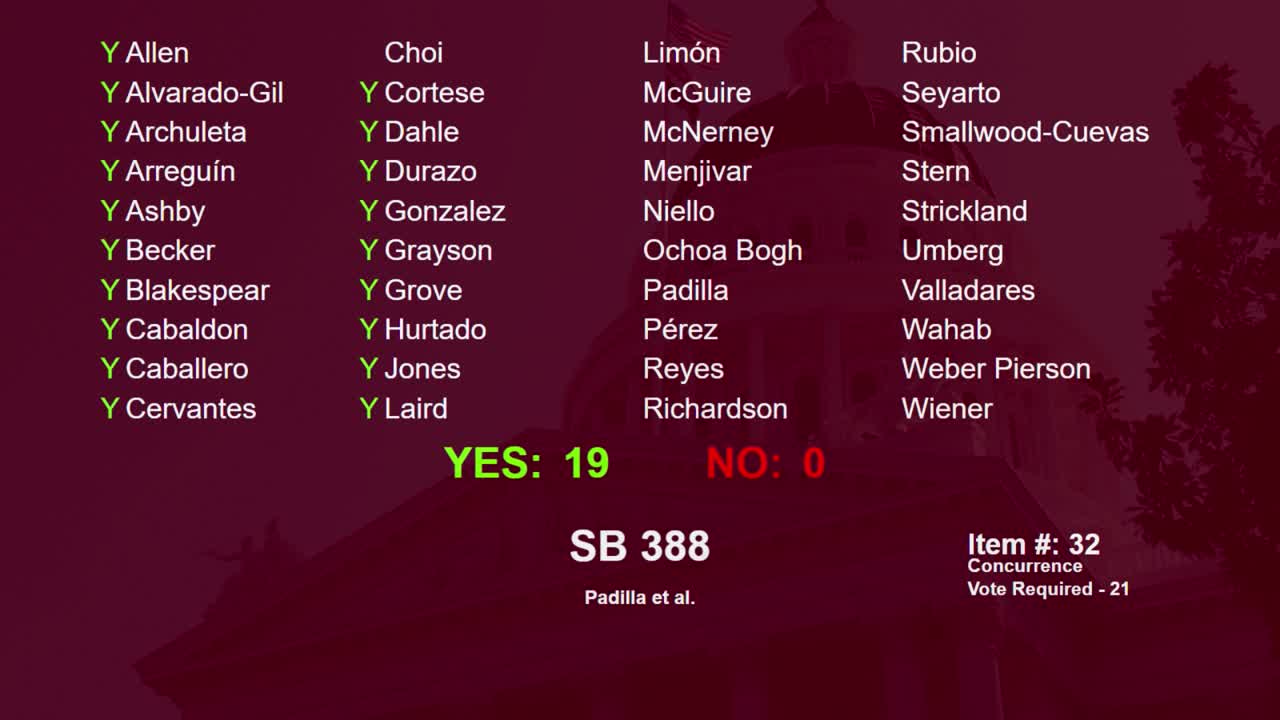 2MIN
Senate Floor
 1MIN
Assembly Floor
 10MIN
Assembly Standing Committee on Judiciary
 12MIN
Assembly Standing Committee on Housing and Community Development
 8MIN
Senate Floor
 21MIN