SB 618: Electricity: deenergization events: report: compensation.
- Session Year: 2025-2026
- House: Senate
- Latest Version Date: 2025-05-01
Current Status:
Failed
(2026-02-02: Returned to Secretary of Senate pursuant to Joint Rule 56.)
Introduced
In Committee
Awaiting First Chamber Vote
Passed First Chamber
In Committee
Awaiting Second Chamber Vote
Passed Second Chamber
Enacted
Existing law vests the Public Utilities Commission with regulatory authority over public utilities, including electrical corporations, while local publicly owned electric utilities are under the direction of their governing boards. Existing law requires each electrical corporation to annually prepare a wildfire mitigation plan and to submit its plan to the commission for review and approval, as specified. Existing law requires that the wildfire mitigation plan include, among other things, protocols for deenergizing portions of the electrical distribution system that consider the associated impacts on public safety.
This bill would require each electrical corporation to automatically provide a reimbursement credit to all customers affected by a deenergization event in an amount equal to $30 for every 24 hours that a customer experiences a deenergization event. The bill would prohibit the reimbursement credit from being funded with ratepayer moneys. each electrical corporation to file a postdeenergization event report with the commission following a deenergization event that includes the duration of the deenergization event, the circuits affected, the number of customers impacted, and any other information required by the commission. The bill would also require each electrical corporation to include the cost to a customer of the interruption of electrical service, per affected customer, and the aggregated cost for all affected customers in the report, and would require the commission, in a new or existing proceeding, to develop a standardized methodology for calculating that cost, as specified. The bill would authorize the commission to assess a fine or penalty on an electrical corporation following its review of a deenergization event if the commission determines the electrical corporation violated deenergization protocols, commission rules, laws, or other requirements. If the commission assesses a fine or penalty on an electrical corporation, the bill would require the commission to consider the impact of the deenergization event on the electrical corporations customers and to direct any revenues from the fine or penalty to automatic credits to those customers affected by the deenergization event, as specified.
Existing law requires each local publicly owned electric utility to prepare a wildfire mitigation plan and to verify that the wildfire mitigation plan complies with all applicable rules, regulations, and standards, as appropriate. Existing law requires that the wildfire mitigation plan includes, among other things, protocols for deenergizing portions of the electrical distribution system that consider the associated impacts on public safety.
This bill would require the wildfire mitigation plan to additionally include appropriate and feasible procedures for compensating a customer who may be impacted by the deenergizing of electrical lines.
Under existing law, a violation of any order, decision, rule, direction, demand, or requirement of the commission is a crime.
Because a violation of a commission action implementing this bills requirements would be a crime, the bill would impose a state-mandated local program.
Additionally, by imposing new duties on local publicly owned electric utilities, the bill would impose a state-mandated local program.
The California Constitution requires the state to reimburse local agencies and school districts for certain costs mandated by the state. Statutory provisions establish procedures for making that reimbursement.
This bill would provide that no reimbursement is required by this act for specified reasons.
Existing law vests the Public Utilities Commission with regulatory authority over public utilities, including electrical corporations, while local publicly owned electric utilities are under the direction of their governing boards. Existing law requires each electrical corporation to annually prepare a wildfire mitigation plan and to submit its plan to the commission for review and approval, as specified. Existing law requires that the wildfire mitigation plan include, among other things, protocols for deenergizing portions of the electrical distribution system that consider the associated impacts on public safety.
This bill would require each electrical corporation to automatically provide a reimbursement credit to all customers affected by a deenergization event in an amount equal to $30 for every 24 hours that a customer experiences a deenergization event. The bill would prohibit the reimbursement credit from being funded with ratepayer moneys.
Existing law requires each local publicly owned electric utility to prepare a wildfire mitigation plan and to verify that the wildfire mitigation plan complies with all applicable rules, regulations, and standards, as appropriate. Existing law requires that the wildfire mitigation plan includes, among other things, protocols for deenergizing portions of the electrical distribution system that consider the associated impacts on public safety.
This bill would require the wildfire mitigation plan to additionally include appropriate and feasible procedures for compensating a customer who may be impacted by the deenergizing of electrical lines.
Under existing law, a violation of any order, decision, rule, direction, demand, or requirement of the commission is a crime.
Because a violation of a commission action implementing this bills requirements would be a crime, the bill would impose a state-mandated local program.
Additionally, by imposing new duties on local publicly owned electric utilities, the bill would impose a state-mandated local program.
The California Constitution requires the state to reimburse local agencies and school districts for certain costs mandated by the state. Statutory provisions establish procedures for making that reimbursement.
This bill would provide that no reimbursement is required by this act for specified reasons.
Under existing law, public school employees have the right to form, join, and participate in the activities of employee organizations of their own choosing for the purpose of representation on all matters of employer-employee relations, as provided.This bill would make nonsubstantive changes to that provision.Under existing law, public school employees have the right to form, join, and participate in the activities of employee organizations of their own choosing for the purpose of representation on all matters of employer-employee relations, as provided.
This bill would make nonsubstantive changes to that provision.
(a)Each electrical corporation shall file a postdeenergization event report with the commission following a deenergization event, pursuant to subdivision (c) of Section 8386, that includes the duration of the deenergization event, the circuits affected, the number of customers impacted, and any other information required by the commission.
(b)(1)Each electrical corporation shall include the cost to a customer of the interruption of electrical service, per affected customer, and the aggregated cost for all affected customers in a report filed pursuant to subdivision (a).
(2)The commission, in a new or existing proceeding, shall develop a standardized methodology for calculating the cost to a customer of the interruption of electrical service that shall be used by an electrical corporation for a report filed pursuant to subdivision (a).
(c)(1)The commission may assess a fine or penalty on an electrical corporation following its review of a deenergization event if the commission determines the electrical corporation violated deenergization protocols, commission rules, laws, or other requirements.
(2)If the commission assesses a fine or penalty on an electrical corporation pursuant to paragraph (1), the commission shall consider the impact of the deenergization event on the electrical corporations customers and shall direct any revenues from the fine or penalty to automatic credits to those customers affected by the deenergization event.
(3)The commission shall ensure that any fine or penalty assessed pursuant to this subdivision is recovered from the electrical corporations shareholders and not recovered from ratepayers.
SEC. 2.Section 8387 of the Public Utilities Code is amended to read:8387.(a)Each local publicly owned electric utility and electrical cooperative shall construct, maintain, and operate its electrical lines and equipment in a manner that will minimize the risk of wildfire posed by those electrical lines and equipment.
(b)(1)The local publicly owned electric utility or electrical cooperative shall, before January 1, 2020, prepare a wildfire mitigation plan. After January 1, 2020, a local publicly owned electric utility or electrical cooperative shall prepare a wildfire mitigation plan annually and shall submit the plan to the California Wildfire Safety Advisory Board on or before July 1 of that calendar year. Each local publicly owned electric utility and electrical cooperative shall update its plan annually and submit the update to the California Wildfire Safety Advisory Board by July 1 of each year. At least once every three years, the submission shall be a comprehensive revision of the plan.
(2)The wildfire mitigation plan shall consider as necessary, at minimum, all of the following:
(A)An accounting of the responsibilities of persons responsible for executing the plan.
(B)The objectives of the wildfire mitigation plan.
(C)A description of the preventive strategies and programs to be adopted by the local publicly owned electric utility or electrical cooperative to minimize the risk of its electrical lines and equipment causing catastrophic wildfires, including consideration of dynamic climate change risks.
(D)A description of the metrics the local publicly owned electric utility or electrical cooperative plans to use to evaluate the wildfire mitigation plans performance and the assumptions that underlie the use of those metrics.
(E)A discussion of how the application of previously identified metrics to previous wildfire mitigation plan performances has informed the wildfire mitigation plan.
(F)Protocols for disabling reclosers and deenergizing portions of the electrical distribution system that consider the associated impacts on public safety, and protocols related to mitigating the public safety impacts of those protocols, including impacts on critical first responders and on health and communication infrastructure.
(G)Appropriate and feasible procedures for notifying a customer who may be impacted by the deenergizing of electrical lines. The procedures shall direct notification to all public safety offices, critical first responders, health care facilities, and operators of telecommunications infrastructure with premises within the footprint of potential deenergization for a given event.
(H)Plans for vegetation management.
(I)Plans for inspections of the local publicly owned electric utilitys or electrical cooperatives electrical infrastructure.
(J)A list that identifies, describes, and prioritizes all wildfire risks, and drivers for those risks, throughout the local publicly owned electric utilitys or electrical cooperatives service territory. The list shall include, but not be limited to, both of the following:
(i)Risks and risk drivers associated with design, construction, operation, and maintenance of the local publicly owned electric utilitys or electrical cooperatives equipment and facilities.
(ii)Particular risks and risk drivers associated with topographic and climatological risk factors throughout the different parts of the local publicly owned electric utilitys or electrical cooperatives service territory.
(K)Identification of any geographic area in the local publicly owned electric utilitys or electrical cooperatives service territory that is a higher wildfire threat than is identified in a commission fire threat map, and identification of where the commission should expand a high fire-threat district based on new information or changes to the environment.
(L)A methodology for identifying and presenting enterprisewide safety risk and wildfire-related risk.
(M)A statement of how the local publicly owned electric utility or electrical cooperative will restore service after a wildfire.
(N)A description of the processes and procedures the local publicly owned electric utility or electrical cooperative shall use to do all of the following:
(i)Monitor and audit the implementation of the wildfire mitigation plan.
(ii)Identify any deficiencies in the wildfire mitigation plan or its implementation, and correct those deficiencies.
(iii)Monitor and audit the effectiveness of electrical line and equipment inspections, including inspections performed by contractors, that are carried out under the plan, other applicable statutes, or commission rules.
(O)Appropriate and feasible procedures for compensating a customer who may be impacted by the deenergizing of electrical lines.
(3)The local publicly owned electric utility or electrical cooperative shall, on or before January 1, 2020, and not less than annually thereafter, present its wildfire mitigation plan in an appropriately noticed public meeting. The local publicly owned electric utility or electrical cooperative shall accept comments on its wildfire mitigation plan from the public, other local and state agencies, and interested parties, and shall verify that the wildfire mitigation plan complies with all applicable rules, regulations, and standards, as appropriate.
(c)The local publicly owned electric utility or electrical cooperative shall contract with a qualified independent evaluator with experience in assessing the safe operation of electrical infrastructure to review and assess the comprehensiveness of its wildfire mitigation plan. The independent evaluator shall issue a report that shall be made available on the internet website of the local publicly owned electric utility or electrical cooperative, and shall present the report at a public meeting of the local publicly owned electric utilitys or electrical cooperatives governing board.
SEC. 3.No reimbursement is required by this act pursuant to Section 6 of Article XIIIB of the California Constitution because a local agency or school district has the authority to levy service charges, fees, or assessments sufficient to pay for the program or level of service mandated by this act or because costs that may be incurred by a local agency or school district will be incurred because this act creates a new crime or infraction, eliminates a crime or infraction, or changes the penalty for a crime or infraction, within the meaning of Section 17556 of the Government Code, or changes the definition of a crime within the meaning of Section 6 of Article XIIIB of the California Constitution.
(a)Each electrical corporation shall automatically provide a reimbursement credit to all customers effected by a deenergization event in an amount equal to thirty dollars ($30) for every 24 hours that a customer experiences a deenergization event.
(b)The reimbursement credit amount shall not be funded by ratepayer moneys.
(c)The reimbursement credit shall be issued automatically to a customers billing statement within one billing cycle after the conclusion of the deenergization event.
SEC. 2.Section 8387 of the Public Utilities Code is amended to read:8387.(a)Each local publicly owned electric utility and electrical cooperative shall construct, maintain, and operate its electrical lines and equipment in a manner that will minimize the risk of wildfire posed by those electrical lines and equipment.
(b)(1)The local publicly owned electric utility or electrical cooperative shall, before January 1, 2020, prepare a wildfire mitigation plan. After January 1, 2020, a local publicly owned electric utility or electrical cooperative shall prepare a wildfire mitigation plan annually and shall submit the plan to the California Wildfire Safety Advisory Board on or before July 1 of that calendar year. Each local publicly owned electric utility and electrical cooperative shall update its plan annually and submit the update to the California Wildfire Safety Advisory Board by July 1 of each year. At least once every three years, the submission shall be a comprehensive revision of the plan.
(2)The wildfire mitigation plan shall consider as necessary, at minimum, all of the following:
(A)An accounting of the responsibilities of persons responsible for executing the plan.
(B)The objectives of the wildfire mitigation plan.
(C)A description of the preventive strategies and programs to be adopted by the local publicly owned electric utility or electrical cooperative to minimize the risk of its electrical lines and equipment causing catastrophic wildfires, including consideration of dynamic climate change risks.
(D)A description of the metrics the local publicly owned electric utility or electrical cooperative plans to use to evaluate the wildfire mitigation plans performance and the assumptions that underlie the use of those metrics.
(E)A discussion of how the application of previously identified metrics to previous wildfire mitigation plan performances has informed the wildfire mitigation plan.
(F)Protocols for disabling reclosers and deenergizing portions of the electrical distribution system that consider the associated impacts on public safety, as well as and protocols related to mitigating the public safety impacts of those protocols, including impacts on critical first responders and on health and communication infrastructure.
(G)Appropriate and feasible procedures for notifying a customer who may be impacted by the deenergizing of electrical lines. The procedures shall direct notification to all public safety offices, critical first responders, health care facilities, and operators of telecommunications infrastructure with premises within the footprint of potential deenergization for a given event.
(H)Plans for vegetation management.
(I)Plans for inspections of the local publicly owned electric utilitys or electrical cooperatives electrical infrastructure.
(J)A list that identifies, describes, and prioritizes all wildfire risks, and drivers for those risks, throughout the local publicly owned electric utilitys or electrical cooperatives service territory. The list shall include, but not be limited to, both of the following:
(i)Risks and risk drivers associated with design, construction, operation, and maintenance of the local publicly owned electric utilitys or electrical cooperatives equipment and facilities.
(ii)Particular risks and risk drivers associated with topographic and climatological risk factors throughout the different parts of the local publicly owned electric utilitys or electrical cooperatives service territory.
(K)Identification of any geographic area in the local publicly owned electric utilitys or electrical cooperatives service territory that is a higher wildfire threat than is identified in a commission fire threat map, and identification of where the commission should expand a high fire-threat district based on new information or changes to the environment.
(L)A methodology for identifying and presenting enterprisewide safety risk and wildfire-related risk.
(M)A statement of how the local publicly owned electric utility or electrical cooperative will restore service after a wildfire.
(N)A description of the processes and procedures the local publicly owned electric utility or electrical cooperative shall use to do all of the following:
(i)Monitor and audit the implementation of the wildfire mitigation plan.
(ii)Identify any deficiencies in the wildfire mitigation plan or its implementation, and correct those deficiencies.
(iii)Monitor and audit the effectiveness of electrical line and equipment inspections, including inspections performed by contractors, that are carried out under the plan, other applicable statutes, or commission rules.
(O)Appropriate and feasible procedures for compensating a customer who may be impacted by the deenergizing of electrical lines.
(3)The local publicly owned electric utility or electrical cooperative shall, on or before January 1, 2020, and not less than annually thereafter, present its wildfire mitigation plan in an appropriately noticed public meeting. The local publicly owned electric utility or electrical cooperative shall accept comments on its wildfire mitigation plan from the public, other local and state agencies, and interested parties, and shall verify that the wildfire mitigation plan complies with all applicable rules, regulations, and standards, as appropriate.
(c)The local publicly owned electric utility or electrical cooperative shall contract with a qualified independent evaluator with experience in assessing the safe operation of electrical infrastructure to review and assess the comprehensiveness of its wildfire mitigation plan. The independent evaluator shall issue a report that shall be made available on the internet website of the local publicly owned electric utility or electrical cooperative, and shall present the report at a public meeting of the local publicly owned electric utilitys or electrical cooperatives governing board.
SEC. 3.No reimbursement is required by this act pursuant to Section 6 of Article XIIIB of the California Constitution because a local agency or school district has the authority to levy service charges, fees, or assessments sufficient to pay for the program or level of service mandated by this act or because costs that may be incurred by a local agency or school district will be incurred because this act creates a new crime or infraction, eliminates a crime or infraction, or changes the penalty for a crime or infraction, within the meaning of Section 17556 of the Government Code, or changes the definition of a crime within the meaning of Section 6 of Article XIIIB of the California Constitution.
SECTION 1.Section 3543 of the Government Code is amended to read:3543.(a)Public school employees shall have the right to form, join, and participate in the activities of employee organizations of their own choosing for the purpose of representation on all matters of employer-employee relations. Public school employees shall have the right to represent themselves individually in their employment relations with the public school employer, except that once employees in an appropriate unit have selected an exclusive representative and it has been recognized pursuant to Section 3544.1 or certified pursuant to Section 3544.7, an employee in that unit shall not meet and negotiate with the public school employer. If the exclusive representative of a unit provides notification, as specified by subdivision (a) of Section 3546, public school employees who are in a unit for which an exclusive representative has been selected shall be required, as a condition of continued employment, to join the recognized employee organization or to pay the organization a fair share services fee, as required by Section 3546. If a majority of the members of a bargaining unit rescind that arrangement, either of the following options shall be applicable:(1)The recognized employee organization may petition for the reinstatement of the arrangement described in subdivision (a) of Section 3546 pursuant to the procedures in paragraph (2) of subdivision (d) of Section 3546.(2)The employees may negotiate either of the two forms of organizational security described in subdivision (i) of Section 3540.1.(b)An employee may at any time present grievances to their employer, and have those grievances adjusted, without the intervention of the exclusive representative, as long as the adjustment is reached before arbitration pursuant to Sections 3548.5, 3548.6, 3548.7, and 3548.8 and the adjustment is not inconsistent with the terms of a written agreement then in effect, provided that the public school employer shall not agree to a resolution of the grievance until the exclusive representative has received a copy of the grievance and the proposed resolution and has been given the opportunity to file a response.(a)Public school employees shall have the right to form, join, and participate in the activities of employee organizations of their own choosing for the purpose of representation on all matters of employer-employee relations. Public school employees shall have the right to represent themselves individually in their employment relations with the public school employer, except that once the employees in an appropriate unit have selected an exclusive representative and it has been recognized pursuant to Section 3544.1 or certified pursuant to Section 3544.7, an employee in that unit shall not meet and negotiate with the public school employer. If the exclusive representative of a unit provides notification, as specified by subdivision (a) of Section 3546, public school employees who are in a unit for which an exclusive representative has been selected, selected shall be required, as a condition of continued employment, to join the recognized employee organization or to pay the organization a fair share services fee, as required by Section 3546. If a majority of the members of a bargaining unit rescind that arrangement, either of the following options shall be applicable:
(1)The recognized employee organization may petition for the reinstatement of the arrangement described in subdivision (a) of Section 3546 pursuant to the procedures in paragraph (2) of subdivision (d) of Section 3546.
(2)The employees may negotiate either of the two forms of organizational security described in subdivision (i) of Section 3540.1.
(b)An employee may at any time present grievances to his or her their employer, and have those grievances adjusted, without the intervention of the exclusive representative, as long as the adjustment is reached prior to before arbitration pursuant to Sections 3548.5, 3548.6, 3548.7, and 3548.8 and the adjustment is not inconsistent with the terms of a written agreement then in effect, provided that the public school employer shall not agree to a resolution of the grievance until the exclusive representative has received a copy of the grievance and the proposed resolution and has been given the opportunity to file a response.
|
Date
|
Status
|
|---|---|
| Feb 2, 2026 | Returned to Secretary of Senate pursuant to Joint Rule 56. |
| May 23, 2025 | May 23 hearing: Held in committee and under submission. |
| May 20, 2025 | Set for hearing May 23. |
| May 19, 2025 | May 19 hearing: Placed on APPR. suspense file. |
| May 9, 2025 | Set for hearing May 19. |
| May 1, 2025 | Read second time and amended. Re-referred to Com. on APPR. |
| Apr 30, 2025 | From committee: Do pass as amended and re-refer to Com. on APPR. (Ayes 14. Noes 2. Page 935.) (April 29). |
| Apr 11, 2025 | Set for hearing April 29. |
| Apr 2, 2025 | Re-referred to Com. on E., U & C. |
| Mar 26, 2025 | From committee with author's amendments. Read second time and amended. Re-referred to Com. on RLS. |
| Mar 5, 2025 | Referred to Com. on RLS. |
| Feb 21, 2025 | From printer. May be acted upon on or after March 23. |
| Feb 20, 2025 | Introduced. Read first time. To Com. on RLS. for assignment. To print. |
|
Date
|
Description
|
Location
|
Votes
|
|
|---|---|---|---|---|
| May 19, 2025 | Placed on suspense file | Senate Standing Committee on Appropriations |
Passed |
|
| Apr 29, 2025 | Do pass as amended, but first amend, and re-refer to the Committee on [Appropriations] | Senate Standing Committee on Energy, Utilities and Communications |
Passed |
This list shows positions taken on this bill by organizations on the date displayed, which is linked to the original source.
Positions by individuals are not included.
|
Organization
|
Position
|
Date
|
|---|---|---|
| Pacific Gas And Electric Company | ** Against | |
| Reclaim Our Power: Utility Justice Campaign | ** Support | |
| San Diego Gas and Electric Company | ** Against |
SENATE COMMITTEE ON
Senator Anna Caballero, Chair
2025 - 2026 Regular Session
SB 618 (Reyes) - Electricity: deenergization events: report: compensation
Version: | Policy Vote: |
Urgency: | Mandate: |
Hearing Date: | Consultant: |
Bill Summary:
This bill would require each electrical corporation to file a post-deenergization event report with the California Public Utilities Commission (CPUC) that includes the cost to a customer of the interruption of electrical service, among other things.
Fiscal Impact:
- The CPUC estimates ongoing costs of about $475,000 annually (ratepayer funds) to develop a standardized methodology for calculating the cost to a customer of the interruption of electrical service, and to conduct ongoing adjudicatory proceedings when fines or penalties are assessed following deenergization events as well as the crediting of any authorized fines/penalties back to affected customers through the appropriate CPUC proceeding.
- To the extent that this bill impacts electricity rates, it could result in costs or savings to the state as a an electric utility ratepayer. The State of California is an electricity customer, purchasing roughly one percent of the state’s electricity. As such, the state incurs costs when rates increase, and realizes cost savings if rates go down (various funds).
Background:
California wildfire and electric utility infrastructure. Electrical equipment, including downed power lines, arcing, and conductor contact with trees and grass, can act as an ignition source. Risks for wildfires also increased with the extended drought and bark beetle infestation that has increased tree mortalities and, as a result, increased the fuel, and risk for wildfires. In recent years, California has experienced a number of catastrophic wildfires, including several ignited by electrical utility infrastructure.
Deenergizing electric lines. Generally, electric utilities attempt to maintain power and ensure continued reliability of the flow of electricity. However, catastrophic fires in recent years have demonstrated, the risk of ignition by electric utility infrastructure can pose great damage and loss of life, perhaps greater than the risks of turning off the power to certain electrical circuits. As a safety consideration, electric utilities have the ability and authority to deenergize electric lines in order to prevent harm or threats of harm. However, deenergizing electric lines can result in the loss of electricity to households, businesses, traffic signals, communication systems, water treatment facilities, emergency services and other critical which can also cause harm, as well as, economic impacts to residents and businesses. Therefore, efforts to deenergize electric lines must consider the potential harm of the energized lines causing a wildfire against the safety hazards associated with eliminating electricity to the areas served by the line(s).
Proposed Law:
This bill would:
- Require each electrical corporation to file a post-deenergization event report with the CPUC that includes:
- the duration of the deenergization event,
- the circuits affected,
- the number of customers impacted,
- the cost to a customer of the interruption of electrical service—per affected customer as well as the aggregated cost for all affected customers in the report—and
- any other information required by the CPUC.
- Require the CPUC, in a new or existing proceeding, to develop a standardized methodology for calculating that above-described cost, as specified.
- Authorize the CPUC to assess a fine or penalty on an electrical corporation following its review of a deenergization event if the commission determines the electrical corporation violated deenergization protocols, commission rules, laws, or other requirements.
- If the commission assesses a fine or penalty on an electrical corporation, the bill would require the commission to consider the impact of the deenergization event on the electrical corporation’s customers and to direct any revenues from the fine or penalty to automatic credits to those customers affected by the deenergization event, as specified.
- Require a local publicly owned electric utility’s wildfire mitigation plan to additionally include appropriate and feasible procedures for compensating a customer who may be impacted by the deenergizing of electrical lines.
Related Legislation:
SB 254 (Becker) of the current legislative session, includes various proposals to address electric utility bill affordability, including requirements to consider the time required to implement an action and the amount of risk reduced when electric utilities implement wildfire mitigation strategies.
SB 256 (Perez) of the current legislative session, includes various provisions related to addressing wildfire mitigation by electrical corporations.
SB 292 (Cervantes) of the current legislative session, includes specified reporting by electric utilities of deenergization events and annual reliability reports.
SB 332 (Wahab) of the current legislative session, includes various proposals, including consideration of underground of electrical infrastructure within an electrical corporation’s wildfire mitigation plan.
SB 559 (Stern) of the current legislative session, would require electrical corporations to provide specified notifications of deenergization events related to mitigating wildfire ignition risks, and requires specified reporting to, and oversight by, the CPUC.
SB 797 (Choi) of the current legislative session, would require the CPUC to establish a working group and develop a report related to wildfire mitigation.
SB 1003 (Dodd) of 2024, would have modified timelines relevant to the wildfire mitigation plans by electrical corporations and requires the electrical corporations to take into account both the time required to implement an action and the amount of risk reduced for the costs and risk remaining. The bill was held on the Assembly Floor.
SB 884 (McGuire, Chapter 819, Statutes of 2022) required the CPUC to establish an expedited electric utility distribution infrastructure undergrounding program for large electrical corporations.
SB 533 (Stern, Chapter 244, Statutes of 2021) required electrical corporations to identify circuits that have frequently been deenergized to mitigate the risk of wildfire and the measures taken to reduce the need for future deenergization of those circuits, as specified.
AB 1054 (Holden, Chapter 79, Statutes of 2019) included numerous provisions related to addressing wildfires caused by electric utility infrastructure, including: bolstering safety oversight and processes, recasting recovery of costs from damages to third-parties, including the authorization for an electrical corporation and ratepayer jointly funded Wildfire Fund to address future damages.
SB 167 (Dodd, Chapter 403, Statutes of 2019) required electrical corporations to include impacts on customers enrolled in specified programs as part of the protocols for deenergizing portions of their distribution system within their WMP.
SB 901 (Dodd, Chapter 626, Statutes of 2018) addressed numerous issues concerning wildfire prevention, response and recovery, including funding for mutual aid, fuel reduction and forestry policies, WMP by electric utilities, and cost recovery by electric corporations of wildfire-related damages.
SB 1028 (Hill, Chapter 598, Statutes of 2016) required electric CPUC-regulated utilities to file annual WMPs and requires the CPUC to review and comment on those plans.
-- END --
SENATE COMMITTEE ON ENERGY, UTILITIES AND COMMUNICATIONS
Senator Josh Becker, Chair
2025 - 2026 Regular
Bill No: Hearing Date: 4/29/2025
Author: | |||
Version: | Amended | ||
Urgency: | Fiscal: | ||
Consultant: | |||
SUBJECT:
DIGEST: This bill requires specified reimbursement credit every 24-hour period when customers of electrical corporations experience deenergization events.
ANALYSIS:
Existing law:
- Establishes the California Public Utilities Commission (CPUC) with regulatory authority over public utilities, including electrical corporations. (Article XII of the California Constitution)
- Establishes the Office of Energy Infrastructure Safety (OEIS) is the successor to, and, effective July 1, 2021, is vested with, all of the duties, powers, and responsibilities of the Wildfire Safety Division within the CPUC established pursuant to Section 326 of the Public Utilities Code, including, but not limited to, the power to compel information and conduct investigations. (Government Code §15475)
- Requires every public utility to furnish and maintain adequate, efficient, just, and reasonable service, instrumentalities, equipment, and facilities, as are necessary to promote the safety, health, comfort, and convenience of its patrons, employees, and the public. (Public Utilities Code §451)
- Establishes the policy of the state that each electrical corporation is required to continue operate its electric distribution grid in its service territory and to do so in a safe, reliable, efficient, and cost-effective manner. (Public Utilities Code §399.2(a))
- Authorizes the CPUC to supervise and regulate every public utility in the state and to do all things necessary and convenient in the exercise of such power and jurisdiction. (Public Utilities Code §701)
- Requires an electrical corporation to construct, maintain, and operate its electrical lines and equipment in a manner that will minimize the risk of catastrophic wildfire posed by those electrical lines and equipment. (Public Utilities Code §8386 (a))
- Requires each electrical corporation to annually prepare a wildfire mitigation plan (WMP) and to submit the plan to the Wildfire Safety Division, and, as of July 1, 2021, to the OEIS, for review and approval. (Public Utilities Code §8386 (b))
- Requires a WMP of an electrical corporation to include, among other things, protocols for deenergizing portions of the electrical distribution system that consider the associated impacts on public safety, and protocols related to mitigating the public safety impacts of those protocols, including impacts on critical first responders and on health and communications infrastructure. (Public Utilities Code §§8386 (c)(6))
- Requires a WMP plan of an electrical corporation to also include appropriate and feasible procedures for notifying a customer who may be impacted by the deenergizing of electrical lines and requires these procedures to consider the need to notify, as a priority, critical first responders, health care facilities, and operators of telecommunications infrastructure with premises within the footprint of a potential deenergization event. (Public Utilities Code §8386 (c)(7))
This bill:
- Requires each electrical corporation to automatically provide a reimbursement credit to all customers affected by a deenergization event in an amount equal to $30 for every 24 hours that a customer experiences a deenergization event.
- Prohibits the reimbursement credit from being funded with ratepayer moneys.
- Requires the WMP by local publicly owned utilities (POUs) to additionally include appropriate and feasible procedures for compensating a customer who may be impacted by the deenergizing of electrical lines.
- Imposes a state-mandated local program by imposing new duties on local electric POUs.
Background
California wildfire and electric utility infrastructure. Electrical equipment, including downed power lines, arcing, and conductor contact with trees and grass, can act as an ignition source. Risks for wildfires also increased with the extended drought and bark beetle infestation that has increased tree mortalities and, as a result, increased the fuel, and risk for wildfires. In recent years, California has experienced a number of catastrophic wildfires, including several ignited by electrical utility infrastructure.
Deenergizing electric lines. Generally, electric utilities attempt to maintain power and ensure continued reliability of the flow of electricity. However, catastrophic fires in recent years have demonstrated, the risk of ignition by electric utility infrastructure can pose great damage and loss of life, perhaps greater than the risks of turning off the power to certain electrical circuits. As a safety consideration, electric utilities have the ability and authority to deenergize electric lines in order to prevent harm or threats of harm. However, deenergizing electric lines can result in the loss of electricity to households, businesses, traffic signals, communication systems, water treatment facilities, emergency services and other critical which can also cause harm, as well as, economic impacts to residents and businesses. Therefore, efforts to deenergize electric lines must consider the potential harm of the energized lines causing a wildfire against the safety hazards associated with eliminating electricity to the areas served by the line(s).
History with power shutoffs. Utilities have increasingly utilized proactive power shutoffs as a tool to prevent sparking. The practice of proactively deenergizing electric circuits to prevent catastrophic wildfire began by San Diego Gas & Electric (SDG&E) after several electric utility infrastructure-ignited catastrophic fires in 2007. Proactive power shutoffs were one of the many measures SDG&E implemented to reduce the risk of fire ignited by its infrastructure (other measures included installing steel poles and expanding ground and aerial inspections). Although the use of proactive power shutoffs were met with opposition and concerns about its use by communities, ultimately the CPUC acknowledged SDG&E’s authority to deenergize lines in order to protect public safety, noting this authority in Public Utilities Code §451 and §399.2. Since then, the practice has also been expanded and adopted by the state’s two largest electric utilities – Pacific Gas & Electric (PG&E) and Southern California Edison (SCE), as well as, the smaller investor-owned electric utilities (IOUs) and exploration by POUs.
Oversight of proactive power shutoffs. The CPUC adopted protocols for deenergizing electric lines with a focus on who should receive notice and when; who should be responsible for notification; how different customer groups should be identified; the information that should be included in notifications in advance of and directly preceding a deenergizing event; the methods of communication; and how the IOUs should communicate and coordinate with public safety partners before, during, and after an event. The CPUC is working with the Office of Emergency Services (OES), Cal FIRE, and first-responders to address potential impacts of utility deenergization practices on emergency response activities, including evacuations. The CPUC is also monitoring the development and continuously assessing implementation of deenergization programs by utilities, including performing a review of deenergization events. In adopting the initial protocols, the CPUC commissioners expressed a desire that the power shutoffs would only be used as a “last resort” by the utilities. However, the use of proactive power shutoffs by electric utilities became widespread and increased concerns that the practice is relied upon more frequently than a last resort. In some instances, deenergization events overlap and result in customers experiencing extended days with loss of power.
Proactive power shutoff protocols. Over several years, the proactive power shutoff protocols have evolved via CPUC oversight and various CPUC decisions. The protocols include specified requirements related to advance planning with public safety partners and local governments, as well as, specified notifications to customers prior to, during, and after deenergization events. The protocols also require specified actions to address the public safety impacts for critical facilities and access and functional needs populations, among others. The CPUC and Legislature have exercised continued oversight of the utilities’ practices with the goal of minimizing the use of power shutoffs and accelerating wildfire mitigation to reduce risks of the electrical infrastructure igniting fires. However, proactive power shutoffs continue to be a tool in the electric utility’s toolbox to mitigate wildfire ignition risks. Currently, CPUC notifications require specified timing of notifications to customers and an extended (and continually evolving) list of public safety partners and critical facilities, including emergency services, government facilities, medical facilities, energy facilities, drinking water and wastewater treatment facilities, communications facilities, and others. The protocols require electric IOUs to, whenever possible, adhere to minimum notification timelines.
January 2025 Santa Ana wind events. This January, with expected severe Santa Ana winds, low-humidity, high vegetation growth from previous wet winters, and dry conditions due to delayed precipitation, Southern California was at high risk for wildfires. Additionally, aerial fire suppression was limited by the extreme winds, which included gusts approaching 100 mph in some areas. Both SCE and SDG&E executed proactive power shutoffs in their service territory as a public safety measure. In the case of SCE, the proactive power shutoffs resulted in extended outages throughout their service territory impacting upwards of 500,000 plus customer accounts (affecting many times more individuals) between January 2 through January 27, including two separate (and, in some cases overlapping) events. These deenergization events coincided with several wildfires in the area, including two large catastrophic fires, the Palisades Fire and the Eaton Fire (fire investigations as to the cause of these fires are still in process, ignition cause has not been determined).
Based on SCE’s post-event reports, the proactive power shutoffs were the largest number of affected customers since the tool had been deployed and likely the largest in duration. These events resulted in many frustrations for customers and local governments as the utility’s execution of the proactive power shutoffs seems to have been greatly challenged by the scale and duration of the events (official CPUC oversight and review of these events is process) with reports that their website crashed, inadequate notifications to customers, inability of some local governments to reach a utility point person, and inaccurate maps displayed at times on their websites. SCE also adjusted their operational thresholds in the midst of the events due to the evolving conditions which resulted in many customers unexpectedly experiencing proactive power shutoff without any advance notification. SCE’s post-event reports also indicated nearly 100 incidents of damage on deenergized facilities that, if they had been energized, could have been a significant risk to igniting wildfires.
Comments
Author’s statement:
As PSPSs become more frequent and prolonged, it is essential to address the financial and personal burdens placed on those affected. Extended outages can pose life-threatening risks for individuals who rely on electrically powered medical devices. They can result in significant losses for ratepayers, including hundreds of dollars in spoiled food, lost income, and daily disruptions such as school closures, forcing parents to make last-minute childcare arrangements at additional costs.
SB 618 (Reyes) is a crucial step toward offering relief to residents who bear the brunt of these events. The bill would require investor-owned utilities to compensate customers $30 for every 24 hours of power loss during a PSPS. In addition, the bill tasks public utilities to include provisions for compensating customers in their wildfire mitigation plans. The Legislature needs to balance the safety concerns of these shutoffs with the very real impact they are having with ratepayer’s lives.
Current efforts to provide relief to affected customers. The CPUC has stated its existing authority to require utilities to provide bill credits directly to customers. Instead, the CPUC has ordered utilities to include the total amount of estimated unrealized volumetric sales and unrealized revenue resulting from public safety power shutoff events in the annual Energy Resource Recovery Account proceedings addressing the years in which the deenergization events occurred to reduce the costs of electric service. As a result, all customers receive lower electric rates, not just the customers that experienced the loss of power. However, the supporters and author contend that customers can lose access to their homes, groceries, potential wages and even their lives if the deenergization occurs during an extreme heat event. They argue that given the cost and impact of deenergization, there should be a way to compensate ratepayers who experience these shutoffs.
Amendments needed. The author and committee may wish to amend this bill to recast the language to authorize the CPUC to provide reimbursements to affected customers of deenergization events based on the post-event review, where the CPUC has issued penalties and fines. The CPUC shall direct those monies as the source of any reimbursements for affected customers.
Prior/Related Legislation
SB 254 (Becker) of the current legislative session, includes various proposals to address electric utility bill affordability, including requirements to consider the time required to implement an action and the amount of risk reduced when electric utilities implement wildfire mitigation strategies. The bill is pending in this committee.
SB 256 (Perez) of the current legislative session, includes various provisions related to addressing wildfire mitigation by electrical corporations. The bill is pending in this committee.
SB 292 (Cervantes) of the current legislative session, includes specified reporting by electric utilities of deenergization events and annual reliability reports.
SB 332 (Wahab) of the current legislative session, includes various proposals, including consideration of underground of electrical infrastructure within an electrical corporation’s wildfire mitigation plan. The bill is pending in the Senate Appropriations Committee.
SB 559 (Stern) of the current legislative session, requires electrical corporations to provide specified notifications of deenergization events related to mitigating wildfire ignition risks, and requires specified reporting to, and oversight by, the CPUC. The bill is pending in the Senate Appropriations Committee.
SB 797 (Choi) of the current legislative session, requires the CPUC to establish a working group and develop a report related to wildfire mitigation. The bill is pending in this committee.
SB 1003 (Dodd) of 2024, would have modified timelines relevant to the wildfire mitigation plans by electrical corporations and requires the electrical corporations to take into account both the time required to implement an action and the amount of risk reduced for the costs and risk remaining. The bill was held on the Assembly Floor.
SB 884 (McGuire, Chapter 819, Statutes of 2022) required the CPUC to establish an expedited electric utility distribution infrastructure undergrounding program for large electrical corporations.
SB 533 (Stern, Chapter 244, Statutes of 2021) required electrical corporations to identify circuits that have frequently been deenergized to mitigate the risk of wildfire and the measures taken to reduce the need for future deenergization of those circuits, as specified.
AB 1054 (Holden, Chapter 79, Statutes of 2019) included numerous provisions related to addressing wildfires caused by electric utility infrastructure, including: bolstering safety oversight and processes, recasting recovery of costs from damages to third-parties, including the authorization for an electrical corporation and ratepayer jointly funded Wildfire Fund to address future damages.
SB 167 (Dodd, Chapter 403, Statutes of 2019) required electrical corporations to include impacts on customers enrolled in specified programs as part of the protocols for deenergizing portions of their distribution system within their WMP.
SB 901 (Dodd, Chapter 626, Statutes of 2018) addressed numerous issues concerning wildfire prevention, response and recovery, including funding for mutual aid, fuel reduction and forestry policies, WMP by electric utilities, and cost recovery by electric corporations of wildfire-related damages.
SB 1028 (Hill, Chapter 598, Statutes of 2016) required electric CPUC-regulated utilities to file annual WMPs and requires the CPUC to review and comment on those plans.
FISCAL EFFECT: Appropriation: Fiscal Com.: Local:
SUPPORT:
Reclaim Our Power: Utility Justice Campaign
OPPOSITION:
Pacific Gas and Electric Company
San Diego Gas and Electric Company
ARGUMENTS IN SUPPORT: Reclaim our Power states:
As extreme weather events become more frequent and intense, Public Safety Power Shutoffs (PSPSs), also referred to as de-energization events, are increasingly being used as a fire preventative measure by utilities due to their aging infrastructure and decades-long deferred grid maintenance. If the utilities prioritized maintaining their infrastructure, ensuring their equipment is safe to operate, they wouldn’t need to rely on these shutoffs to reduce danger. Instead, their deferred maintenance comes at a significant cost to ratepayers—many of whom lose perishable goods, income, and in some cases, access to vital medical equipment or essential services. These shutoffs are impacting large amounts of people all throughout California. …Earlier this year, over 400,000 Southern California Edison customers experienced outages lasting as long as eleven days. These disruptions are not just inconvenient—they come with significant consequences, including hundreds of dollars in lost food and income for residents.
ARGUMENTS IN OPPOSITION: PG&E and SDG&E state:
The bill [SB 618] duplicates existing law, conflicts with established regulatory authority, undermines the discretion utilities must exercise to protect public safety, and introduces significant unintended consequences for the state’s wildfire risk mitigation strategy. We urge the Legislature to continue supporting the comprehensive CPUC regulatory framework, which is already functioning effectively to balance customer needs, safety imperatives, and utility accountability.
-- END --
Discussed in Hearing
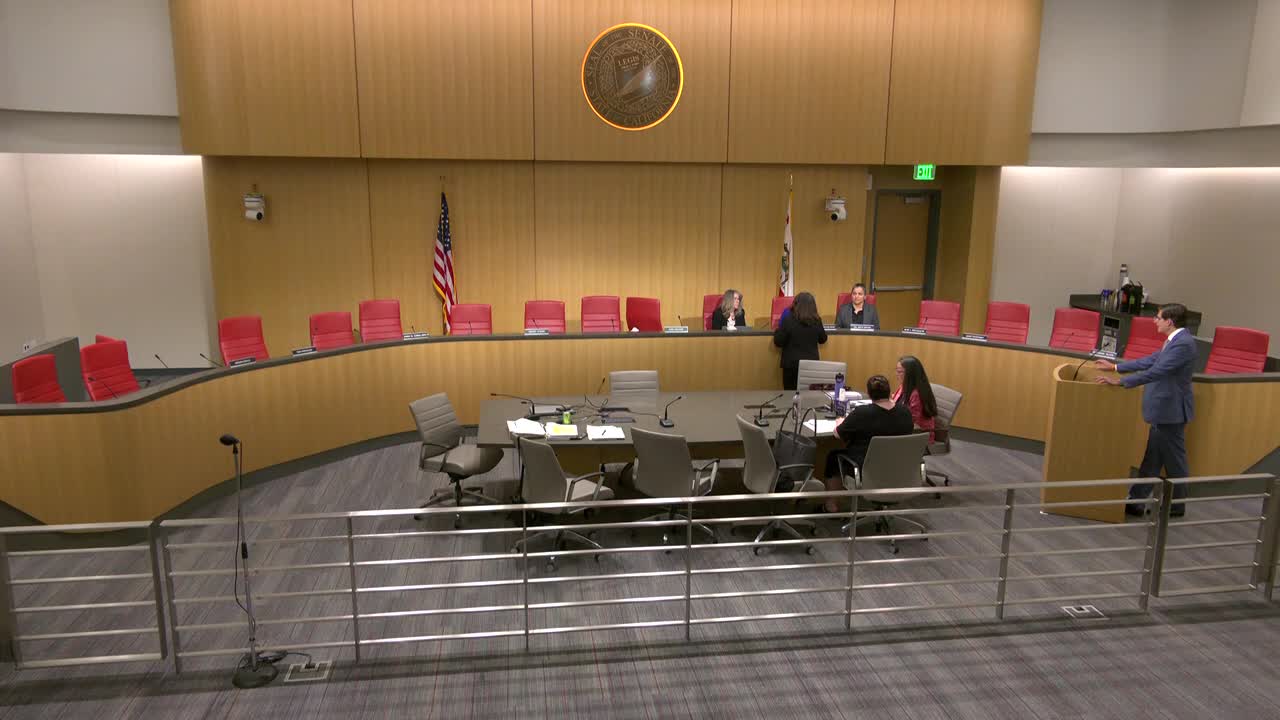 17MIN
Senate Standing Committee on Energy, Utilities and Communications
Bill Author

Bill Co-Author(s):
