SB 631: Charter School Revolving Loan Fund.
- Session Year: 2025-2026
- House: Senate
- Latest Version Date: 2025-10-13
Current Status:
Passed
(2025-10-13: Chaptered by Secretary of State. Chapter 776, Statutes of 2025.)
Introduced
In Committee
Awaiting First Chamber Vote
Passed First Chamber
In Committee
Awaiting Second Chamber Vote
Passed Second Chamber
Enacted
Existing law establishes the Charter School Revolving Loan Fund, under the administration of the California School Finance Authority, and authorizes loans to be made from the fund to (1) a chartering authority for charter schools that are not a conversion of an existing school or (2) directly to a charter school that qualifies to receive specified funding and is not a conversion of an existing school. Under existing law, moneys appropriated to the fund remain available for purposes of the fund until reappropriated or reverted by the Legislature. Existing law limits the amount loaned to a qualifying charter school from the fund to $250,000 over the lifetime of the charter school and authorizes a qualifying charter school to receive money obtained from multiple loans made directly to the charter school or to the schools chartering authority from the fund, as long as the total amount received from the fund over the lifetime of the charter school does not exceed $250,000. Existing law requires the Controller, commencing with the first fiscal year following the fiscal year the charter school receives the loan, to deduct from apportionments made to the chartering authority or charter school, as appropriate, an amount equal to the annual repayment of the amount loaned to the chartering authority or charter school for the charter school and to pay the same amount into the fund, as provided. Existing law requires moneys in the fund to be loaned at the interest rate earned by the moneys in the Pooled Money Investment Account as of the date of disbursement of the funds to the charter school.
This bill, among other things, would increase the maximum loan amount and the maximum lifetime loan limitation by $250,000 to instead be $500,000, would revise and recast the maximum repayment period of a loan, as specified, would no longer make the charter school solely liable for repayment of a loan in the event of a default, and would revise criteria for receiving priority in the granting of loans. The bill would require moneys in the fund to instead be loaned at the interest rate described above or at a rate equal to 50% of the interest rate paid by the state on the most recent sale of state general obligation bonds, whichever is less, except that the bill would prohibit the interest rate from being set at a rate lower than 3%.
Existing law creates the Charter School Security Fund, under the administration of the California School Finance Authority, and requires moneys in the fund to be available for deposit into the Charter School Revolving Loan Fund in case of default on any loan made from the Charter School Revolving Loan Fund. Existing law requires the California School Finance Authority, by October 1 of each year, to provide detailed fund condition information for the Charter School Revolving Loan Fund and the Charter School Security Fund to the Department of Finance and the Legislative Analysts Office.
This bill would require the above-described annual report to also be provided to specified committees of the Legislature. The bill would require the report due by October 1, 2029, to additionally include an analysis and summary of the expenditures of loan funds made by the charter school loan recipient for loans issued on or after July 1, 2026, as provided.
Existing law establishes the Charter School Revolving Loan Fund, under the administration of the California School Finance Authority, and authorizes loans to be made from the fund to (1) a chartering authority for charter schools that are not a conversion of an existing school or (2) directly to a charter school that qualifies to receive specified funding and is not a conversion of an existing school. Under existing law, moneys appropriated to the fund remain available for purposes of the fund until reappropriated or reverted by the Legislature. Existing law limits the amount loaned to a qualifying charter school from the fund to $250,000 over the lifetime of the charter school and authorizes a qualifying charter school to receive money obtained from multiple loans made directly to the charter school or to the schools chartering authority from the fund, as long as the total amount received from the fund over the lifetime of the charter school does not exceed $250,000. Existing law requires the Controller, commencing with the first fiscal year following the fiscal year the charter school receives the loan, to deduct from apportionments made to the chartering authority or charter school, as appropriate, an amount equal to the annual repayment of the amount loaned to the chartering authority or charter school for the charter school and to pay the same amount into the fund, as provided. Existing law requires moneys in the fund to be loaned at the interest rate earned by the moneys in the Pooled Money Investment Account as of the date of disbursement of the funds to the charter school.
This bill would remove the above-described limitation on loans to be made only for, or to, charter schools that are not a conversion of an existing school. The bill, among other things, would increase the maximum loan amount and the maximum lifetime loan limitation by $250,000 to instead be $500,000, would revise and recast the maximum repayment period of a loan, as specified, would no longer make the charter school solely liable for repayment of a loan in the event of a default, and would revise criteria for receiving priority in the granting of loans. The bill would require moneys in the fund to instead be loaned at the interest rate described above or at a rate equal to 50% of the interest rate paid by the state on the most recent sale of state general obligation bonds, whichever is less, except that the bill would prohibit the interest rate from being set at a rate lower than 3%. By expanding the eligibility for and purposes of previously appropriated funds, the bill would make an appropriation.
Existing law creates the Charter School Security Fund, under the administration of the California School Finance Authority, and requires moneys in the fund to be available for deposit into the Charter School Revolving Loan Fund in case of default on any loan made from the Charter School Revolving Loan Fund. Existing law requires the California School Finance Authority, by October 1 of each year, to provide detailed fund condition information for the Charter School Revolving Loan Fund and the Charter School Security Fund to the Department of Finance and the Legislative Analysts Office.
This bill would require the above-described annual report to also be provided to specified committees of the Legislature. The bill would require the report due by October 1, 2029, to additionally include an analysis and summary of the expenditures of loan funds made by the charter school loan recipient for loans issued on or after July 1, 2026, as provided.
Existing law establishes the Charter School Revolving Loan Fund, under the administration of the California School Finance Authority, and authorizes loans to be made from the fund to (1) a chartering authority for charter schools that are not a conversion of an existing school or (2) directly to a charter school that qualifies to receive specified funding and is not a conversion of an existing school. Under existing law, moneys appropriated to the fund remain available for purposes of the fund until reappropriated or reverted by the Legislature. Existing law limits the amount loaned to a qualifying charter school from the fund to $250,000 over the lifetime of the charter school and authorizes a qualifying charter school to receive money obtained from multiple loans made directly to the charter school or to the schools chartering authority from the fund, as long as the total amount received from the fund over the lifetime of the charter school does not exceed $250,000. Existing law requires the Controller, commencing with the first fiscal year following the fiscal year the charter school receives the loan, to deduct from apportionments made to the charter chartering authority or charter school, as appropriate, an amount equal to the annual repayment of the amount loaned to the chartering authority or charter school for the charter school and to pay the same amount into the fund, as provided. Existing law requires moneys in the fund to be loaned at the interest rate earned by the moneys in the Pooled Money Investment Account as of the date of disbursement of the funds to the charter school.
This bill would remove the above-described limitation on loans to be made only for, or to, charter schools that are not a conversion of an existing school. The bill, among other things, would increase the maximum loan amount and the maximum lifetime loan limitation by $250,000 to instead be $500,000, would revise and recast the maximum repayment period of a loan, as specified, would no longer make the charter school solely liable for repayment of a loan in the event of a default, and would revise criteria for receiving priority in the granting of loans. The bill would require moneys in the fund to instead be loaned at the interest rate described above or at a rate equal to 50% of the interest rate paid by the state on the most recent sale of state general obligation bonds, whichever is less, except that the bill would prohibit the interest rate is prohibited from being set at a rate lower than 3%. By expanding the eligibility for and purposes of previously appropriated funds, the bill would make an appropriation.
Existing law creates the Charter School Security Fund, under the administration of the California School Finance Authority, and requires moneys in the fund to be available for deposit into the Charter School Revolving Loan Fund in case of default on any loan made from the Charter School Revolving Loan Fund. Existing law requires the California School Finance Authority, by October 1 of each year, to provide detailed fund condition information for the Charter School Revolving Loan Fund and the Charter School Security Fund to the Department of Finance and the Legislative Analysts Office.
This bill would require the above-described annual report to also be provided to specified committees of the Legislature. The bill would require the report due by October 1, 2029, to additionally include an analysis and summary of the expenditures of loan funds made by the charter school loan recipient for loans issued on or after July 1, 2026, as provided.
Existing law establishes the Charter School Revolving Loan Fund, under the administration of the California School Finance Authority, and authorizes loans to be made from the fund to (1) a chartering authority for charter schools that are not a conversion of an existing school or (2) directly to a charter school that qualifies to receive specified funding and is not a conversion of an existing school. Under existing law, moneys appropriated to the fund remain available for purposes of the fund until reappropriated or reverted by the Legislature. Existing law limits the amount loaned to a qualifying charter school from the fund to $250,000 over the lifetime of the charter school and authorizes a qualifying charter school to receive money obtained from multiple loans made directly to the charter school or to the schools chartering authority from the fund, as long as the total amount received from the fund over the lifetime of the charter school does not exceed $250,000. Existing law requires the Controller, commencing with the first fiscal year following the fiscal year the charter school receives the loan, to deduct from apportionments made to the charter authority or charter school, as appropriate, an amount equal to the annual repayment of the amount loaned to the chartering authority or charter school for the charter school and to pay the same amount into the fund, as provided. Existing law requires moneys in the fund to be loaned at the interest rate earned by the moneys in the Pooled Money Investment Account as of the date of disbursement of the funds to the charter school.
This bill instead would authorize loans from the fund to be made indirectly to a chartering authority for one or more charter schools, would restrict loans that are made directly to a charter school to those charter schools formed as a nonprofit corporation, and would additionally authorize loans to be made indirectly to an entity managing a charter school, as provided. would remove the above-described limitation on loans to be made only for, or to, charter schools that are not a conversion of an existing school. The bill, among other things, would increase the maximum loan amount and the maximum lifetime loan limitation by $250,000 to instead be $500,000, would increase revise and recast the maximum repayment period of a loan from 5 years to instead be 15 years, loan, as specified, would no longer make the charter school solely liable for repayment of a loan in the event of a default, and would revise criteria for receiving priority in the granting of loans. The bill would require moneys in the fund to instead be loaned at the interest rate described above or at a rate equal to 50% of the interest rate paid by the state on the most recent sale of state general obligation bonds, whichever is less, except that the interest rate is prohibited from being set at a rate lower than 3%. By expanding the eligibility for and purposes of previously appropriated funds, the bill would make an appropriation.
Existing law establishes the Charter School Revolving Loan Fund, under the administration of the California School Finance Authority, and authorizes loans to be made from the fund to (1) a chartering authority for charter schools that are not a conversion of an existing school or (2) directly to a charter school that qualifies to receive specified funding and is not a conversion of an existing school. Under existing law, moneys appropriated to the fund remain available for purposes of the fund until reappropriated or reverted by the Legislature. Existing law limits the amount loaned to a qualifying charter school from the fund to $250,000 over the lifetime of the charter school and authorizes a qualifying charter school to receive money obtained from multiple loans made directly to the charter school or to the schools chartering authority from the fund, as long as the total amount received from the fund over the lifetime of the charter school does not exceed $250,000. Existing law requires the Controller, commencing with the first fiscal year following the fiscal year the charter school receives the loan, to deduct from apportionments made to the charter authority or charter school, as appropriate, an amount equal to the annual repayment of the amount loaned to the chartering authority or charter school for the charter school and to pay the same amount into the fund, as provided. Existing law requires moneys in the fund to be loaned at the interest rate earned by the moneys in the Pooled Money Investment Account as of the date of disbursement of the funds to the charter school.
This bill instead would authorize loans from the fund to be made indirectly to a chartering authority for one or more charter schools, would restrict loans that are made directly to a charter school to those charter schools formed as a nonprofit corporation, and would additionally authorize loans to be made indirectly to an entity managing a charter school, as provided. The bill, among other things, would increase the maximum loan amount and the maximum lifetime loan limitation by $250,000 to instead be $500,000, would increase the maximum repayment period of a loan from 5 years to instead be 15 years, would no longer make the charter school solely liable for repayment of a loan in the event of a default, and would revise criteria for receiving priority in the granting of loans. The bill would require moneys in the fund to instead be loaned at the interest rate described above or at a rate equal to 50% of the interest rate paid by the state on the most recent sale of state general obligation bonds, whichever is less, except that the interest rate is prohibited from being set at a rate lower than 3%. By expanding the eligibility for and purposes of previously appropriated funds, the bill would make an appropriation.
(a)The Charter School Revolving Loan Fund is hereby created in the State Treasury. The Charter School Revolving Loan Fund shall be composed of federal funds obtained by the state for charter schools and any other funds appropriated or transferred to the fund through the annual budget process. Funds appropriated to the Charter School Revolving Loan Fund shall remain available for purposes of the fund until reappropriated or reverted by the Legislature through the annual Budget Act or any other act.
(b)Commencing with the 201314 fiscal year, the administration of the Charter School Revolving Loan Fund shall be transferred to the California School Finance Authority.
(c)Upon application and approval by the California School Finance Authority, loans may be made from moneys in the Charter School Revolving Loan Fund to a chartering authority for one or more charter schools, none of which are a conversion of an existing school, or directly to a charter school that qualifies to receive funding pursuant to Chapter 6 (commencing with Section 47630) of Part 26.8 of Division 4 that is not a conversion of an existing school. Money loaned to a chartering authority for a charter school, or directly to a charter school, pursuant to this section shall be used only to meet the purposes of the charter granted pursuant to Section 47605. The loan to a chartering authority for a charter school, or directly to a charter school, pursuant to this subdivision shall not exceed five hundred thousand dollars ($500,000) over the lifetime of the charter school receiving the benefit of the loan. A charter school may receive money obtained from multiple loans made directly to the charter school or to the charter schools chartering authority from the Charter School Revolving Loan Fund, as long as the total amount received from the fund over the lifetime of the charter school does not exceed five hundred thousand dollars ($500,000).
(d)The California School Finance Authority may consider all of the following when making a determination to approve a charter schools loan application:
(1)The soundness of the financial business plans of the applicant charter school.
(2)Availability of the charter school of other sources of funding.
(3)Geographic distribution of loans made from the Charter School Revolving Loan Fund.
(4)The impact that receipt of funds received pursuant to this section will have on the charter schools receipt of other private and public financing.
(5)Plans for creative uses of the funds received pursuant to this section, such as loan guarantees or other types of credit enhancements.
(6)The financial needs of the charter school.
(e)Priority for loans from the Charter School Revolving Loan Fund shall be given in the following order:
(1)To new charter schools for startup costs.
(2)Until July 1, 2029, to charter schools that were damaged, destroyed, or closed for 10 or more schooldays as a result of conditions of disaster or of extreme peril in response to which the Governor has proclaimed a state of emergency pursuant to Chapter 7 (commencing with Section 8550) of Division 1 of Title 2 of the Government Code.
(f)(1)Commencing with the first fiscal year following the fiscal year the charter school receives the loan, the Controller shall deduct from apportionments made to the chartering authority or charter school, as appropriate, an amount equal to the annual repayment of the amount loaned to the chartering authority or charter school for the charter school under this section and pay the same amount into the Charter School Revolving Loan Fund in the State Treasury. Repayment of the full amount loaned to the chartering authority or charter school shall be deducted by the Controller in equal annual amounts over a number of years agreed upon between the loan recipient and the state agency authorized to administer the Charter School Revolving Loan Fund and the Charter School Security Fund.
(2)Charter schools that meet the priority criteria of paragraph (2) of subdivision (e) may request to start payments no later than the first fiscal year after the most recent full year of operation, subject to the approval of the California School Finance Authority.
(3)(A)The number of repayment years pursuant to paragraph (1) shall not exceed five years.
(B)Notwithstanding subparagraph (A), the number of repayment years pursuant to paragraph (1) shall not exceed eight years for charter schools that meet the priority criteria of paragraph (2) of subdivision (e).
(g)(1)Notwithstanding any other law, a loan may be made directly to a charter school pursuant to this section only in the case of a charter school that is established and operating pursuant to Part 26.8 (commencing with Section 47600) of Division 4.
(2)Notwithstanding any other law, in the case of default of a loan made directly to a charter school pursuant to this section, the charter school and the entity managing the charter school, as defined in Section 47604.1, shall be liable for repayment of the loan.
(h)The California School Finance Authority may adopt any necessary rules and regulations for the implementation of this section and Sections 41366.6 and 41367. Any regulations adopted pursuant to this section may be adopted as emergency regulations in accordance with the Administrative Procedure Act (Chapter 3.5 (commencing with Section 11340) of Part 1 of Division 3 of Title 2 of the Government Code). The adoption of these regulations shall be deemed to be an emergency and necessary for the immediate preservation of public peace, health and safety, or general welfare.
SEC. 2.Section 41366.5 of the Education Code is amended to read:41366.5.(a)Moneys in the Charter School Revolving Loan Fund shall be loaned at (1) the rate paid on moneys in the Pooled Money Investment Account as of the date of disbursement of the funds or (2) a rate equal to 50 percent of the interest rate paid by the state on the most recent sale of state general obligation bonds, computed according to the true interest cost method, whichever is less, except that the rate shall not be set at a rate lower than 3 percent.
(b)A charter school shall pay the interest on any loan from the fund in regular installments withdrawn from the annual apportionment the charter school receives.
(c)All interest payments shall be paid into the Charter School Security Fund established pursuant to Section 41367.
SEC. 3.Section 41366.6 of the Education Code is amended to read:41366.6.(a)The California School Finance Authority shall monitor the adequacy of the amount of funds in the Charter School Revolving Loan Fund and report annually to the Department of Finance and the Controller on the need, if any, to transfer funds from the Charter School Security Fund to the Charter School Revolving Loan Fund for the sole purpose of replacing funds lost in the Charter School Revolving Loan Fund due to loan defaults. Before requesting any transfer of funds from the Charter School Security Fund, the California School Finance Authority shall make all reasonable efforts to recover funds directly from the defaulting loan recipient. To the extent that the California School Finance Authority determines that a transfer from the Charter School Security Fund to the Charter School Revolving Loan Fund is necessary, the California School Finance Authority shall obtain approval from the Director of Finance before a transfer of funds is made. Not sooner than 30 days after notification in writing to the Chairperson of the Joint Legislative Budget Committee, the Director of Finance shall direct the Controller to transfer the appropriate amount of funds.
(b)(1)By October 1 of each year, and in compliance with Section 9795 of the Government Code, the California School Finance Authority shall provide detailed fund condition information for the Charter School Revolving Loan Fund and the Charter School Security Fund to the Department of Finance, the Assembly Committee on Education, the Senate Committee on Education, the Assembly Budget Subcommittee on Education Finance, the Senate Budget and Fiscal Review Subcommittee on Education, and the Legislative Analysts Office. At a minimum, this information shall contain an accounting of actual beginning balances, revenues, itemized expenditures, and ending balances for the prior year, as well as projected beginning balances, revenues, itemized expenditures, and ending balances for the current year and budget year.
(2)(A)For the report due by October 1, 2029, the California School Finance Authority shall, in addition to the information required pursuant to paragraph (1), include an analysis and summary of the expenditures of loan funds made by the charter school loan recipient for loans issued on or after July 1, 2026. The analysis and summary shall include, but not be limited to, expenditure information related to facilities, employees, startup costs, equipment, direct services to pupils, and the administration of the loan, as applicable.
(B)The California School Finance Authority shall first use information provided by the charter school loan recipient in the charter schools loan application and in program audits before requesting additional information from the charter school loan recipient.
(C)Charter school loan recipients shall provide information requested by the California School Finance Authority in order to meet the requirements of this paragraph.
(a)The Charter School Revolving Loan Fund is hereby created in the State Treasury. The Charter School Revolving Loan Fund shall be composed of federal funds obtained by the state for charter schools and any other funds appropriated or transferred to the fund through the annual budget process. Funds appropriated to the Charter School Revolving Loan Fund shall remain available for purposes of the fund until reappropriated or reverted by the Legislature through the annual Budget Act or any other act.
(b)Commencing with the 201314 fiscal year, the administration of the Charter School Revolving Loan Fund shall be transferred to the California School Finance Authority.
(c)Upon application and approval by the California School Finance Authority, loans may be made from moneys in the Charter School Revolving Loan Fund to a chartering authority for one or more charter schools, none of which are a conversion of an existing school, or directly to a charter school that qualifies to receive funding pursuant to Chapter 6 (commencing with Section 47630) of Part 26.8 of Division 4. 4 that is not a conversion of an existing school. Money loaned to a chartering authority for a charter school, or directly to a charter school, pursuant to this section shall be used only to meet the purposes of the charter granted pursuant to Section 47605. The loan to a chartering authority for a charter school, or directly to a charter school, pursuant to this subdivision shall not exceed five hundred thousand dollars ($500,000) over the lifetime of the charter school receiving the benefit of the loan. A charter school may receive money obtained from multiple loans made directly to the charter school or to the charter schools chartering authority from the Charter School Revolving Loan Fund, as long as the total amount received from the fund over the lifetime of the charter school does not exceed five hundred thousand dollars ($500,000).
(d)The California School Finance Authority may consider all of the following when making a determination to approve a charter schools loan application:
(1)The soundness of the financial business plans of the applicant charter school.
(2)Availability of the charter school of other sources of funding.
(3)Geographic distribution of loans made from the Charter School Revolving Loan Fund.
(4)The impact that receipt of funds received pursuant to this section will have on the charter schools receipt of other private and public financing.
(5)Plans for creative uses of the funds received pursuant to this section, such as loan guarantees or other types of credit enhancements.
(6)The financial needs of the charter school.
(e)Priority for loans from the Charter School Revolving Loan Fund shall be given in the following order:
(1)To new charter schools that are not a conversion of an existing school for startup costs.
(2)To Until July 1, 2029, to charter schools that were damaged, destroyed, or directly impacted as a result of a state of emergency caused by a natural disaster that has been proclaimed by the Governor closed for 10 or more schooldays as a result of conditions of disaster or of extreme peril in response to which the Governor has proclaimed a state of emergency pursuant to Chapter 7 (commencing with Section 8550) of Division 1 of Title 2 of the Government Code.
(3)All other charter schools for purposes of supporting the operations and financing of the charter school, consistent with the intent of the charter school pursuant to Section 47605.(f)(1)Commencing with the first fiscal year following the fiscal year the charter school receives the loan, the Controller shall deduct from apportionments made to the chartering authority or charter school, as appropriate, an amount equal to the annual repayment of the amount loaned to the chartering authority or charter school for the charter school under this section and pay the same amount into the Charter School Revolving Loan Fund in the State Treasury. Repayment of the full amount loaned to the chartering authority or charter school shall be deducted by the Controller in equal annual amounts over a number of years agreed upon between the loan recipient and the state agency authorized to administer the Charter School Revolving Loan Fund and the Charter School Security Fund.
(2)Charter schools that meet the priority criteria of paragraph (2) of subdivision (e) may request to start payments no later than the first fiscal year after the most recent full year of operation, subject to the approval of the California School Finance Authority.
(3)(A)The number of repayment years pursuant to paragraph (1) shall not exceed five years for charter schools that meet the priority criteria of paragraph (1) or (3) of subdivision (e) and shall not exceed eight years for charter schools that meet the priority criteria of paragraph (2). years.
(B)Notwithstanding subparagraph (A), the number of repayment years pursuant to paragraph (1) shall not exceed eight years for charter schools that meet the priority criteria of paragraph (2) of subdivision (e).
(g)(1)Notwithstanding any other law, a loan may be made directly to a charter school pursuant to this section only in the case of a charter school that is established and operating pursuant to Part 26.8 (commencing with Section 47600) of Division 4.
(2)Notwithstanding any other law, in the case of default of a loan made directly to a charter school pursuant to this section, the charter school and the entity managing the charter school, as defined in Section 47604.1, shall be liable for repayment of the loan.
(h)The California School Finance Authority may adopt any necessary rules and regulations for the implementation of this section and Sections 41366.6 and 41367. Any regulations adopted pursuant to this section may be adopted as emergency regulations in accordance with the Administrative Procedure Act (Chapter 3.5 (commencing with Section 11340) of Part 1 of Division 3 of Title 2 of the Government Code). The adoption of these regulations shall be deemed to be an emergency and necessary for the immediate preservation of public peace, health and safety, or general welfare.
SEC. 2.Section 41366.5 of the Education Code is amended to read:41366.5.(a)Moneys in the Charter School Revolving Loan Fund shall be loaned at (1) the rate paid on moneys in the Pooled Money Investment Account as of the date of disbursement of the funds or (2) a rate equal to 50 percent of the interest rate paid by the state on the most recent sale of state general obligation bonds, computed according to the true interest cost method, whichever is less, except that the rate shall not be set at a rate lower than 3 percent.
(b)A charter school shall pay the interest on any loan from the fund in regular installments withdrawn from the annual apportionment the charter school receives.
(c)All interest payments shall be paid into the Charter School Security Fund established pursuant to Section 41367.
SEC. 3.Section 41366.6 of the Education Code is amended to read:41366.6.(a)The California School Finance Authority shall monitor the adequacy of the amount of funds in the Charter School Revolving Loan Fund and report annually to the Department of Finance and the Controller on the need, if any, to transfer funds from the Charter School Security Fund to the Charter School Revolving Loan Fund for the sole purpose of replacing funds lost in the Charter School Revolving Loan Fund due to loan defaults. Before requesting any transfer of funds from the Charter School Security Fund, the California School Finance Authority shall make all reasonable efforts to recover funds directly from the defaulting loan recipient. To the extent that the California School Finance Authority determines that a transfer from the Charter School Security Fund to the Charter School Revolving Loan Fund is necessary, the California School Finance Authority shall obtain approval from the Director of Finance before a transfer of funds is made. Not sooner than 30 days after notification in writing to the Chairperson of the Joint Legislative Budget Committee, the Director of Finance shall direct the Controller to transfer the appropriate amount of funds.
(b)(1)By October 1 of each year, and in compliance with Section 9795 of the Government Code, the California School Finance Authority shall provide detailed fund condition information for the Charter School Revolving Loan Fund and the Charter School Security Fund to the Department of Finance, the Assembly Committee on Education, the Senate Committee on Education, the Assembly Budget Subcommittee on Education Finance, the Senate Budget and Fiscal Review Subcommittee on Education, and the Legislative Analysts Office. At a minimum, this information shall contain an accounting of actual beginning balances, revenues, itemized expenditures, and ending balances for the prior year, as well as projected beginning balances, revenues, itemized expenditures, and ending balances for the current year and budget year.
(2)(A)For the report due by October 1, 2029, the California School Finance Authority shall, in addition to the information required pursuant to paragraph (1), include an analysis and summary of the expenditures of loan funds made by the charter school loan recipient for loans issued on or after July 1, 2026. The analysis and summary shall include, but not be limited to, expenditure information related to facilities, employees, startup costs, equipment, direct services to pupils, and the administration of the loan, as applicable.
(B)The California School Finance Authority shall first use information provided by the charter school loan recipient in the charter schools loan application and in program audits before requesting additional information from the charter school loan recipient.
(C)Charter school loan recipients shall provide information requested by the California School Finance Authority in order to meet the requirements of this paragraph.
(a)The Charter School Revolving Loan Fund is hereby created in the State Treasury. The Charter School Revolving Loan Fund shall be composed of federal funds obtained by the state for charter schools and any other funds appropriated or transferred to the fund through the annual budget process. Funds appropriated to the Charter School Revolving Loan Fund shall remain available for purposes of the fund until reappropriated or reverted by the Legislature through the annual Budget Act or any other act.
(b)Commencing with the 201314 fiscal year, the administration of the Charter School Revolving Loan Fund shall be transferred to the California School Finance Authority.
(c)Upon application and approval by the California School Finance Authority, loans may be made from moneys in the Charter School Revolving Loan Fund to a chartering authority for one or more charter schools, or directly to a charter school that qualifies to receive funding pursuant to Chapter 6 (commencing with Section 47630) of Part 26.8 of Division 4. Money loaned to a chartering authority for a charter school, or directly to a charter school, pursuant to this section shall be used only to meet the purposes of the charter granted pursuant to Section 47605. The loan to a chartering authority for a charter school, or directly to a charter school, pursuant to this subdivision shall not exceed five hundred thousand dollars ($500,000) over the lifetime of the charter school receiving the benefit of the loan. A charter school may receive money obtained from multiple loans made directly to the charter school or to the charter schools chartering authority from the Charter School Revolving Loan Fund, as long as the total amount received from the fund over the lifetime of the charter school does not exceed five hundred thousand dollars ($500,000).
(d)The California School Finance Authority may consider all of the following when making a determination to approve a charter schools loan application:
(1)The soundness of the financial business plans of the applicant charter school.
(2)Availability of the charter school of other sources of funding.
(3)Geographic distribution of loans made from the Charter School Revolving Loan Fund.
(4)The impact that receipt of funds received pursuant to this section will have on the charter schools receipt of other private and public financing.
(5)Plans for creative uses of the funds received pursuant to this section, such as loan guarantees or other types of credit enhancements.
(6)The financial needs of the charter school.
(e)Priority for loans from the Charter School Revolving Loan Fund shall be given in the following order:
(1)To new charter schools that are not a conversion of an existing school for startup costs.
(2)To charter schools that were damaged, destroyed, or directly impacted by as a result of a state of emergency caused by a natural disaster that has been proclaimed by the Governor pursuant to Chapter 7 (commencing with Section 8550) of Division 1 of Title 2 of the Government Code.
(3)All other charter schools. schools for purposes of supporting the operations and financing of the charter school, consistent with the intent of the charter school pursuant to Section 47605.
(f)(1)Commencing with the first fiscal year following the fiscal year the charter school receives the loan, the Controller shall deduct from apportionments made to the chartering authority or charter school, as appropriate, an amount equal to the annual repayment of the amount loaned to the chartering authority or charter school for the charter school under this section and pay the same amount into the Charter School Revolving Loan Fund in the State Treasury. Repayment of the full amount loaned to the chartering authority or charter school shall be deducted by the Controller in equal annual amounts over a number of years agreed upon between the loan recipient and the state agency authorized to administer the Charter School Revolving Loan Fund and the Charter School Security Fund.
(2)Charter schools that meet the priority criteria of paragraph (2) of subdivision (e) may request to start payments no later than the first fiscal year after the most recent full year of operation, subject to the approval of the California School Finance Authority.
(3)The number of repayment years pursuant to paragraph (1) shall not exceed five years for charter schools that meet the priority criteria of paragraph (1) or (3) of subdivision (e) and shall not exceed eight years for charter schools that meet the priority criteria of paragraph (2).
(g)(1)Notwithstanding any other law, a loan may be made directly to a charter school pursuant to this section only in the case of a charter school that is established and operating pursuant to Part 26.8 (commencing with Section 47600) of Division 4.
(2)Notwithstanding any other law, in the case of default of a loan made directly to a charter school pursuant to this section, the charter school and the entity managing the charter school, as defined in Section 47604.1, shall be liable for repayment of the loan.
(h)The California School Finance Authority may adopt any necessary rules and regulations for the implementation of this section and Sections 41366.6 and 41367. Any regulations adopted pursuant to this section may be adopted as emergency regulations in accordance with the Administrative Procedure Act (Chapter 3.5 (commencing with Section 11340) of Part 1 of Division 3 of Title 2 of the Government Code). The adoption of these regulations shall be deemed to be an emergency and necessary for the immediate preservation of public peace, health and safety, or general welfare.
SEC. 2.Section 41366.5 of the Education Code is amended to read:41366.5.(a)Moneys in the Charter School Revolving Loan Fund shall be loaned at (1) the rate paid on moneys in the Pooled Money Investment Account as of the date of disbursement of the funds or (2) a rate equal to 50 percent of the interest rate paid by the state on the most recent sale of state general obligation bonds, computed according to the true interest cost method, whichever is less, except that the rate shall not be set at a rate lower than 3 percent.
(b)A charter school shall pay the interest on any loan from the fund in regular installments withdrawn from the annual apportionment the charter school receives.
(c)All interest payments shall be paid into the Charter School Security Fund established pursuant to Section 41367.
SEC. 3.Section 41366.6 of the Education Code is amended to read:41366.6.(a)The California School Finance Authority shall monitor the adequacy of the amount of funds in the Charter School Revolving Loan Fund and report annually to the Department of Finance and the Controller on the need, if any, to transfer funds from the Charter School Security Fund to the Charter School Revolving Loan Fund for the sole purpose of replacing funds lost in the Charter School Revolving Loan Fund due to loan defaults. Before requesting any transfer of funds from the Charter School Security Fund, the California School Finance Authority shall make all reasonable efforts to recover funds directly from the defaulting loan recipient. To the extent that the California School Finance Authority determines that a transfer from the Charter School Security Fund to the Charter School Revolving Loan Fund is necessary, the California School Finance Authority shall obtain approval from the Director of Finance before a transfer of funds is made. Not sooner than 30 days after notification in writing to the Chairperson of the Joint Legislative Budget Committee, the Director of Finance shall direct the Controller to transfer the appropriate amount of funds.
(b)(1)By October 1 of each year, and in compliance with Section 9795 of the Government Code, the California School Finance Authority shall provide detailed fund condition information for the Charter School Revolving Loan Fund and the Charter School Security Fund to the Department of Finance Finance, the Assembly Committee on Education, the Senate Committee on Education, the Assembly Budget Subcommittee on Education Finance, the Senate Budget and Fiscal Review Subcommittee on Education, and the Legislative Analysts Office. At a minimum, this information shall contain an accounting of actual beginning balances, revenues, itemized expenditures, and ending balances for the prior year, as well as projected beginning balances, revenues, itemized expenditures, and ending balances for the current year and budget year.
(2)(A)For the report due by October 1, 2029, the California School Finance Authority shall, in addition to the information required pursuant to paragraph (1), include an analysis and summary of the expenditures of loan funds made by the charter school loan recipient for loans issued on or after July 1, 2026. The analysis and summary shall include, but not be limited to, expenditure information related to facilities, employees, startup costs, equipment, direct services to pupils, and the administration of the loan, as applicable.
(B)The California School Finance Authority shall first use information provided by the charter school loan recipient in the charter schools loan application and in program audits before requesting additional information from the charter school loan recipient.
(C)Charter school loan recipients shall provide information requested by the California School Finance Authority in order to meet the requirements of this paragraph.
(a)The Charter School Revolving Loan Fund is hereby created in the State Treasury. The Charter School Revolving Loan Fund shall be composed of federal funds obtained by the state for charter schools and any other funds appropriated or transferred to the fund through the annual budget process. Funds appropriated to the Charter School Revolving Loan Fund shall remain available for purposes of the fund until reappropriated or reverted by the Legislature through the annual Budget Act or any other act.
(b)Commencing with the 201314 fiscal year, the administration of the Charter School Revolving Loan Fund shall be transferred to the California School Finance Authority.
(c)Loans Upon application and approval by the California School Finance Authority, loans may be made from moneys in the Charter School Revolving Loan Fund to a chartering authority for one or more charter schools that are not a conversion of an existing school, schools, or directly to a charter school that qualifies to receive funding pursuant to Chapter 6 (commencing with Section 47630) of Part 26.8 of Division 4 that is not a conversion of an existing school, upon application of a chartering authority or charter school and approval by the California School Finance Authority. 4. Money loaned to a chartering authority for a charter school, or directly to a charter school, pursuant to this section shall be used only to meet the purposes of the charter granted pursuant to Section 47605. The loan to a chartering authority for a charter school, or directly to a charter school, pursuant to this subdivision shall not exceed two five hundred fifty thousand dollars ($250,000) ($500,000) over the lifetime of the charter school. school receiving the benefit of the loan. A charter school may receive money obtained from multiple loans made directly to the charter school or to the charter schools chartering authority from the Charter School Revolving Loan Fund, as long as the total amount received from the fund over the lifetime of the charter school does not exceed two five hundred fifty thousand dollars ($250,000). This subdivision does not apply to a charter school that obtains renewal of a charter pursuant to Section 47607. ($500,000).
(d)The California School Finance Authority may consider all of the following when making a determination as to the approval of to approve a charter schools loan application:
(1)Soundness The soundness of the financial business plans of the applicant charter school.
(2)Availability of the charter school of other sources of funding.
(3)Geographic distribution of loans made from the Charter School Revolving Loan Fund.
(4)The impact that receipt of funds received pursuant to this section will have on the charter schools receipt of other private and public financing.
(5)Plans for creative uses of the funds received pursuant to this section, such as loan guarantees or other types of credit enhancements.
(6)The financial needs of the charter school.
(e)Priority for loans from the Charter School Revolving Loan Fund shall be given to new in the following order:
(1)To new charter schools that are not a conversion of an existing school for startup costs.
(2)To charter schools impacted by a state of emergency caused by a natural disaster that has been proclaimed by the Governor pursuant to Chapter 7 (commencing with Section 8550) of Division 1 of Title 2 of the Government Code.
(3)All other charter schools.
(f)(1)Commencing with the first fiscal year following the fiscal year the charter school receives the loan, the Controller shall deduct from apportionments made to the chartering authority or charter school, as appropriate, an amount equal to the annual repayment of the amount loaned to the chartering authority or charter school for the charter school under this section and pay the same amount into the Charter School Revolving Loan Fund in the State Treasury. Repayment of the full amount loaned to the chartering authority or charter school shall be deducted by the Controller in equal annual amounts over a number of years agreed upon between the loan recipient and the state agency authorized to administer the Charter School Revolving Loan Fund and the Charter School Security Fund, not to exceed five years for any loan. Fund.
(2)Charter schools that meet the priority criteria of paragraph (2) of subdivision (e) may request to start payments no later than the first fiscal year after the most recent full year of operation, subject to the approval of the California School Finance Authority.
(3)The number of repayment years pursuant to paragraph (1) shall not exceed five years for charter schools that meet the priority criteria of paragraph (1) or (3) of subdivision (e) and shall not exceed eight years for charter schools that meet the priority criteria of paragraph (2).
(g)(1)Notwithstanding any other law, a loan may be made directly to a charter school pursuant to this section only in the case of a charter school that is incorporated. established and operating pursuant to Part 26.8 (commencing with Section 47600) of Division 4.
(2)Notwithstanding any other law, in the case of default of a loan made directly to a charter school pursuant to this section, the charter school and the entity managing the charter school, as defined in Section 47604.1, shall be solely liable for repayment of the loan.
(h)The California School Finance Authority may adopt any necessary rules and regulations for the implementation of this section and Sections 41366.6 and 41367. Any regulations adopted pursuant to this section may be adopted as emergency regulations in accordance with the Administrative Procedure Act (Chapter 3.5 (commencing with Section 11340) of Part 1 of Division 3 of Title 2 of the Government Code). The adoption of these regulations shall be deemed to be an emergency and necessary for the immediate preservation of public peace, health and safety, or general welfare.
SEC. 2.Section 41366.5 of the Education Code is amended to read:41366.5.(a)Moneys in the Charter School Revolving Loan Fund shall be loaned at (1) the interest rate earned by the money rate paid on moneys in the Pooled Money Investment Account as of the date of disbursement of the funds to the charter school. or (2) a rate equal to 50 percent of the interest rate paid by the state on the most recent sale of state general obligation bonds, computed according to the true interest cost method, whichever is less, except that the rate shall not be set at a rate lower than 3 percent.
(b)A charter school shall pay the interest on any loan from the fund in regular installments withdrawn from the annual apportionment the charter school receives.
(c)All interest payments shall be paid into the Charter School Security Fund established pursuant to Section 41367.
SECTION 1.Section 41365 of the Education Code is amended to read:41365.(a)The Charter School Revolving Loan Fund is hereby created in the State Treasury. The Charter School Revolving Loan Fund shall be composed of federal funds obtained by the state for charter schools and any other funds appropriated or transferred to the fund through the annual budget process. Funds appropriated to the Charter School Revolving Loan Fund shall remain available for purposes of the fund until reappropriated or reverted by the Legislature through the annual Budget Act or any other act.(b)Commencing with the 201314 fiscal year, the administration of the Charter School Revolving Loan Fund shall be transferred to the California School Finance Authority.(c)Upon application and approval by the California School Finance Authority, loans may be made from moneys in the Charter School Revolving Loan Fund indirectly to a chartering authority for one or more charter schools, indirectly to an entity managing a charter school, or directly to a charter school that is formed as a nonprofit corporation and qualifies to receive funding pursuant to Chapter 6 (commencing with Section 47630) of Part 26.8 of Division 4. Money loaned to a chartering authority for a charter school, an entity managing a charter school, or a charter school pursuant to this section shall be used only to meet the purposes of the charter granted pursuant to Section 47605. The loan to a chartering authority for a charter school, an entity managing a charter school, or a charter school pursuant to this subdivision shall not exceed five hundred thousand dollars ($500,000) over the lifetime of the charter school receiving the benefit of the loan. A charter school may receive money obtained from multiple loans made directly to the charter school that is formed as a nonprofit corporation, the entity managing the charter school, or the charter schools chartering authority from the Charter School Revolving Loan Fund, as long as the total amount received from the fund over the lifetime of the charter school does not exceed five hundred thousand dollars ($500,000).(d)The California School Finance Authority may consider all of the following when making a determination to approve a charter schools loan application:(1)For a charter school that is formed as a nonprofit corporation or for an entity managing a charter school, the soundness of the financial business plans of the charter school.(2)Availability of the charter school of other sources of funding.(3)Geographic distribution of loans made from the Charter School Revolving Loan Fund.(4)The impact that receipt of funds received pursuant to this section will have on the charter schools receipt of other private and public financing.(5)Plans for creative uses of the funds received pursuant to this section, such as loan guarantees or other types of credit enhancements.(6)The financial needs of the charter school.(e)Priority for loans from the Charter School Revolving Loan Fund shall be given in the following order:(1)To charter schools impacted by a state of emergency caused by a natural disaster that has been proclaimed by the Governor pursuant to Chapter 7 (commencing with Section 8550) of Division 1 of Title 2 of the Government Code.(2)To new charter schools that are not a conversion of an existing school for startup costs.(3)All other charter schools.(f)Commencing with the first fiscal year following the fiscal year the charter school receives the loan, the Controller shall deduct from apportionments made to the chartering authority, entity managing the charter school, or charter school formed as a nonprofit corporation, as appropriate, an amount equal to the annual repayment of the amount loaned to the chartering authority, entity managing the charter school, or charter school formed as a nonprofit corporation for the charter school under this section and pay the same amount into the Charter School Revolving Loan Fund in the State Treasury. Repayment of the full amount loaned to the chartering authority, entity managing the charter school, or charter school formed as a nonprofit corporation shall be deducted by the Controller in equal annual amounts over a number of years agreed upon between the loan recipient and the state agency authorized to administer the Charter School Revolving Loan Fund and the Charter School Security Fund, not to exceed 15 years for any loan.(g)The California School Finance Authority may adopt any necessary rules and regulations for the implementation of this section and Sections 41366.6 and 41367. Any regulations adopted pursuant to this section may be adopted as emergency regulations in accordance with the Administrative Procedure Act (Chapter 3.5 (commencing with Section 11340) of Part 1 of Division 3 of Title 2 of the Government Code). The adoption of these regulations shall be deemed to be an emergency and necessary for the immediate preservation of public peace, health and safety, or general welfare.(h)For purposes of this section, all of the following definitions apply:(1)Charter school means a school that was established and is operating pursuant to Part 26.8 (commencing with Section 47600) of Division 4.(2)Entity managing a charter school has the same meaning as defined in Section 47604.1.SEC. 2.Section 41366.5 of the Education Code is amended to read:41366.5.(a)Moneys in the Charter School Revolving Loan Fund shall be loaned at whichever interest rate is less, except as provided in subdivision (b):(1)The rate paid on moneys in the Pooled Money Investment Account as of the date of disbursement of the funds.(2)A rate equal to 50 percent of the interest rate paid by the state on the most recent sale of state general obligation bonds, computed according to the true interest cost method.(b)Notwithstanding subdivision (a), the interest rate shall not be set at a rate lower than 3 percent.(c)The interest on any loan from the fund shall be repaid in regular installments withdrawn from the annual apportionment the charter school that benefits from the loan receives.(d)All interest payments shall be paid into the Charter School Security Fund established pursuant to Section 41367.(a)The Charter School Revolving Loan Fund is hereby created in the State Treasury. The Charter School Revolving Loan Fund shall be composed of federal funds obtained by the state for charter schools and any other funds appropriated or transferred to the fund through the annual budget process. Funds appropriated to the Charter School Revolving Loan Fund shall remain available for purposes of the fund until reappropriated or reverted by the Legislature through the annual Budget Act or any other act.
(b)Commencing with the 201314 fiscal year, the administration of the Charter School Revolving Loan Fund shall be transferred to the California School Finance Authority.
(c)Loans Upon application and approval by the California School Finance Authority, loans may be made from moneys in the Charter School Revolving Loan Fund indirectly to a chartering authority for one or more charter schools that are not a conversion of an existing school, schools, indirectly to an entity managing a charter school, or directly to a charter school that is formed as a nonprofit corporation and qualifies to receive funding pursuant to Chapter 6 (commencing with Section 47630) of Part 26.8 of Division 4 that is not a conversion of an existing school, upon application of a chartering authority or charter school and approval by the California School Finance Authority. 4. Money loaned to a chartering authority for a charter school, an entity managing a charter school, or to a charter school, school pursuant to this section shall be used only to meet the purposes of the charter granted pursuant to Section 47605. The loan to a chartering authority for a charter school, an entity managing a charter school, or to a charter school, school pursuant to this subdivision shall not exceed two five hundred fifty thousand dollars ($250,000) ($500,000) over the lifetime of the charter school. school receiving the benefit of the loan. A charter school may receive money obtained from multiple loans made directly to the charter school that is formed as a nonprofit corporation, the entity managing the charter school, or to the charter schools chartering authority from the Charter School Revolving Loan Fund, as long as the total amount received from the fund over the lifetime of the charter school does not exceed two five hundred fifty thousand dollars ($250,000). This subdivision does not apply to a charter school that obtains renewal of a charter pursuant to Section 47607. ($500,000).
(d)The California School Finance Authority may consider all of the following when making a determination as to the approval of to approve a charter schools loan application:
(1)Soundness For a charter school that is formed as a nonprofit corporation or for an entity managing a charter school, the soundness of the financial business plans of the applicant charter school.
(2)Availability of the charter school of other sources of funding.
(3)Geographic distribution of loans made from the Charter School Revolving Loan Fund.
(4)The impact that receipt of funds received pursuant to this section will have on the charter schools receipt of other private and public financing.
(5)Plans for creative uses of the funds received pursuant to this section, such as loan guarantees or other types of credit enhancements.
(6)The financial needs of the charter school.
(e)Priority for loans from the Charter School Revolving Loan Fund shall be given to new in the following order:
(1)To charter schools impacted by a state of emergency caused by a natural disaster that has been proclaimed by the Governor pursuant to Chapter 7 (commencing with Section 8550) of Division 1 of Title 2 of the Government Code.
(2)To new charter schools that are not a conversion of an existing school for startup costs.
(3)All other charter schools.
(f)Commencing with the first fiscal year following the fiscal year the charter school receives the loan, the Controller shall deduct from apportionments made to the chartering authority authority, entity managing the charter school, or charter school, school formed as a nonprofit corporation, as appropriate, an amount equal to the annual repayment of the amount loaned to the chartering authority authority, entity managing the charter school, or charter school formed as a nonprofit corporation for the charter school under this section and pay the same amount into the Charter School Revolving Loan Fund in the State Treasury. Repayment of the full amount loaned to the chartering authority authority, entity managing the charter school, or charter school formed as a nonprofit corporation shall be deducted by the Controller in equal annual amounts over a number of years agreed upon between the loan recipient and the state agency authorized to administer the Charter School Revolving Loan Fund and the Charter School Security Fund, not to exceed five 15 years for any loan.
(g)(1)Notwithstanding any other law, a loan may be made directly to a charter school pursuant to this section only in the case of a charter school that is incorporated.(2)Notwithstanding any other law, in the case of default of a loan made directly to a charter school pursuant to this section, the charter school shall be solely liable for repayment of the loan.(h)(g)The California School Finance Authority may adopt any necessary rules and regulations for the implementation of this section and Sections 41366.6 and 41367. Any regulations adopted pursuant to this section may be adopted as emergency regulations in accordance with the Administrative Procedure Act (Chapter 3.5 (commencing with Section 11340) of Part 1 of Division 3 of Title 2 of the Government Code). The adoption of these regulations shall be deemed to be an emergency and necessary for the immediate preservation of public peace, health and safety, or general welfare.
(h)For purposes of this section, all of the following definitions apply:
(1)Charter school means a school that was established and is operating pursuant to Part 26.8 (commencing with Section 47600) of Division 4.
(2)Entity managing a charter school has the same meaning as defined in Section 47604.1.
SEC. 2.Section 41366.5 of the Education Code is amended to read:41366.5.(a)Moneys in the Charter School Revolving Loan Fund shall be loaned at the whichever interest rate earned by the money in is less, except as provided in subdivision (b):
(1)The rate paid on moneys in the Pooled Money Investment Account as of the date of disbursement of the funds to the charter school. funds.
(2)A rate equal to 50 percent of the interest rate paid by the state on the most recent sale of state general obligation bonds, computed according to the true interest cost method.
(b)Notwithstanding subdivision (a), the interest rate shall not be set at a rate lower than 3 percent.
(b)A charter school shall pay the(c)The interest on any loan from the fund shall be repaid in regular installments withdrawn from the annual apportionment the charter school that benefits from the loan receives.
(c)(d)All interest payments shall be paid into the Charter School Security Fund established pursuant to Section 41367.
|
Date
|
Status
|
|---|---|
| Oct 13, 2025 | Chaptered by Secretary of State. Chapter 776, Statutes of 2025. |
| Oct 13, 2025 | Approved by the Governor. |
| Sep 22, 2025 | Enrolled and presented to the Governor at 11 a.m. |
| Sep 10, 2025 | Assembly amendments concurred in. (Ayes 40. Noes 0. Page 2822.) Ordered to engrossing and enrolling. |
| Sep 9, 2025 | In Senate. Concurrence in Assembly amendments pending. |
| Sep 9, 2025 | Read third time. Passed. (Ayes 78. Noes 0. Page 3077.) Ordered to the Senate. |
| Sep 5, 2025 | Ordered to third reading. |
| Sep 5, 2025 | Read third time and amended. |
| Sep 5, 2025 | Assembly Rule 69(b)(1) suspended. |
| Sep 2, 2025 | Read second time. Ordered to third reading. |
| Aug 29, 2025 | From committee: Do pass. (Ayes 15. Noes 0.) (August 29). |
| Jul 16, 2025 | July 16 set for first hearing. Placed on APPR. suspense file. |
| Jul 7, 2025 | Read second time and amended. Re-referred to Com. on APPR. |
| Jul 3, 2025 | From committee: Do pass as amended and re-refer to Com. on APPR. (Ayes 9. Noes 0.) (July 2). |
| Jun 5, 2025 | Referred to Com. on ED. |
| May 28, 2025 | In Assembly. Read first time. Held at Desk. |
| May 28, 2025 | Read third time. Passed. (Ayes 38. Noes 0. Page 1304.) Ordered to the Assembly. |
| May 23, 2025 | Read second time. Ordered to third reading. |
| May 23, 2025 | From committee: Do pass. (Ayes 5. Noes 1. Page 1207.) (May 23). |
| May 16, 2025 | Set for hearing May 23. |
| May 12, 2025 | May 12 hearing: Placed on APPR. suspense file. |
| May 2, 2025 | Set for hearing May 12. |
| Apr 30, 2025 | From committee: Do pass and re-refer to Com. on APPR. with recommendation: To consent calendar. (Ayes 7. Noes 0. Page 961.) (April 30). Re-referred to Com. on APPR. |
| Apr 21, 2025 | From committee with author's amendments. Read second time and amended. Re-referred to Com. on ED. |
| Apr 9, 2025 | Set for hearing April 30. |
| Mar 5, 2025 | Referred to Com. on ED. |
| Feb 21, 2025 | From printer. May be acted upon on or after March 23. |
| Feb 20, 2025 | Introduced. Read first time. To Com. on RLS. for assignment. To print. |
|
Date
|
Description
|
Location
|
Votes
|
|
|---|---|---|---|---|
| Sep 10, 2025 | Unfinished Business SB631 Richardson Concurrence | Senate Floor |
Passed |
|
| Sep 9, 2025 | SB 631 Richardson Senate Third Reading By Patel | Assembly Floor |
Passed |
|
| Aug 29, 2025 | Do pass. | Assembly Standing Committee on Appropriations |
Passed |
|
| Jul 2, 2025 | Do pass as amended and be re-referred to the Committee on [Appropriations] | Assembly Standing Committee on Education |
Passed |
|
| May 28, 2025 | Senate 3rd Reading SB631 Richardson | Senate Floor |
Passed |
|
| May 23, 2025 | Do pass | Senate Standing Committee on Appropriations |
Passed |
|
| May 12, 2025 | Placed on suspense file | Senate Standing Committee on Appropriations |
Passed |
|
| Apr 30, 2025 | Do pass, but first be re-referred to the Committee on [Appropriations] with the recommendation: To Consent Calendar | Senate Standing Committee on Education |
Passed |
This list shows positions taken on this bill by organizations on the date displayed, which is linked to the original source.
Positions by individuals are not included.
|
Organization
|
Position
|
Date
|
|---|---|---|
| California Charter Schools Association | ** Support | |
| California State Treasurer | ** Support | |
| California State Treasurer Fiona Ma | ** Support | |
| Charter Schools Development Center | ** Support |
SENATE RULES COMMITTEE Office of Senate Floor Analyses (916) 651-1520 Fax: (916) 327-4478 | SB 631 |
UNFINISHED BUSINESS
Bill No: SB 631
Author: Richardson (D)
Chaptered: 10/13/25
Vote: 21
SENATE EDUCATION COMMITTEE: 7-0, 4/30/25
AYES: Pérez, Ochoa Bogh, Cabaldon, Choi, Cortese, Gonzalez, Laird
SENATE APPROPRIATIONS COMMITTEE: 5-1, 5/23/25
AYES: Caballero, Seyarto, Cabaldon, Grayson, Richardson
NOES: Wahab
NO VOTE RECORDED: Dahle
SENATE FLOOR: 38-0, 5/28/25
AYES: Allen, Alvarado-Gil, Archuleta, Arreguín, Ashby, Becker, Blakespear, Cabaldon, Caballero, Cervantes, Choi, Cortese, Dahle, Durazo, Gonzalez, Grayson, Grove, Hurtado, Jones, Laird, McGuire, McNerney, Menjivar, Niello, Ochoa Bogh, Padilla, Pérez, Richardson, Rubio, Seyarto, Smallwood-Cuevas, Stern, Strickland, Umberg, Valladares, Wahab, Weber Pierson, Wiener
NO VOTE RECORDED: Limón, Reyes
ASSEMBLY FLOOR: 78-0, 9/9/25 - See last page for vote
SUBJECT: Charter School Revolving Loan Fund
SOURCE: California State Treasurer
DIGEST:
This bill makes several changes to the Charter School Revolving Loan Fund (CSRLF), including increasing the maximum loan amount for charter schools, expanding loan eligibility and establishing loan prioritization criteria, modifying repayment terms, and revising how the loan interest rate is calculated.
Assembly Amendments: (1)
narrow the disaster-related loan priority to charter schools that were closed for at least 10 schooldays due to a declared emergency and added a July 1, 2029 sunset; (2) clarify repayment limits by capping terms at five years for new charter schools and up to eight years for disaster-impacted schools, with an option to delay repayment start; (3) add a one-time report due in 2029 on how loan funds were spent; and (4) restore the prohibition on loans to conversion charter schools.
ANALYSIS:
Existing law:
- Establishes the CSRLF in the State Treasury, administered by the California School Finance Authority (CSFA), and authorizes loans to:
- Chartering authorities on behalf of non-conversion charter schools, or;
- Charter schools directly if they are incorporated and eligible for direct state funding.
- Caps total loan amounts per charter school at $250,000 over the school’s lifetime.
- Limits repayment terms to no more than five years, with equal annual payments automatically deducted from apportionments.
- Gives priority for loans to new charter schools for startup costs.
- Allows CSFA to consider various factors in approving loans, such as financial soundness, need, geographic distribution, and innovative fund uses.
- Requires that loans carry an interest rate equal to the Pooled Money Investment Account (PMIA) rate as of disbursement, and directs all interest into the Charter School Security Fund.
- Provides additional support for charter school facilities and capital financing through other programs, including:
- Proposition 39 (2000), which requires school districts to provide reasonably equivalent facilities to eligible charter schools located within their boundaries. (Education Code (EC) § 47614)
- The Charter School Facility Grant Program, SB 740 (O’Connell, Chapter 892, Statutes of 2001), which provides rent/lease reimbursement to eligible charter schools. (EC § 47614.5)
- Charter school-specific set-asides within the School Facility Program for new construction and modernization projects. (EC § 17078.52 et seq.)
This bill:
- Authorizes loans from the CSRLF to a chartering authority for one or more charter schools, none of which are a conversion of an existing charter school, or directly to a charter school that qualifies to receive funding, as specified, that is not a conversion of an existing school.
- Increases the maximum loan amount to $500,000 (from $250,000).
- Updates the priority for loans from the CSRLF to be given in the following order (previously only for charter school startup costs):
- To new charter schools for startup costs; and
- Until July 1, 2029, to charter schools that were damaged, destroyed, or closed for 10 or more schooldays as a result of conditions of disaster or of extreme peril in response to which the Governor has proclaimed a state of emergency, as specified.
- Authorizes a CSRLF recipient that met the loan priority due to the impact of a natural disaster, as specified, to request to start payments no later than the first fiscal year after the most recent full year of operation, subject to the approval of the CSFA.
- Requires the number of repayment years to not exceed five years for new charter schools that are not a conversion of an existing charter school.
- Requires the number of repayment years to not exceed eight years for charter schools that were damaged, destroyed, or closed for 10 or more schooldays as a result of conditions of disaster or of extreme peril in response to which the Governor has proclaimed a state of emergency, as specified.
- Requires, in the case of default of a loan made directly to a charter school, the entity managing the charter school to be liable for the repayment of the loan, in addition to the current requirement for the charter school to be liable for the repayment of the loan.
- Requires moneys in the CSRLF to be loaned at (1) the rate paid on moneys in the PMIA as the date of disbursement of the funds (current method), or (2) a rate equal to 50% of the interest rate paid by the state on the most recent sale of state general obligation bonds, computed according to the true interest cost method, whichever is less, except that the rate shall not be set at a rate lower than 3%.
- Requires the CSFA to provide, in a report due by October 1, 2029, an analysis and summary of the expenditures of loan funds made by the charter school loan recipient for loans issued on or after July 1, 2026. Requires the analysis and summary to include, but not be limited to, expenditure information related to facilities, employees, startup costs, equipment, direct services to pupils, and the administration of the loan, as applicable.
Comments
- Need for this bill. According to the author, “Applications for the Charter School Revolving Loan Fund have unfortunately decreased over the last handful of years due to the decline in new charter schools. Changes to the fund are needed to ensure the State Treasurer’s office is able to give out the $27 million dollars that sit in the fund balance unused.”
- Charter Schools and Facility Access Challenges. Charter schools are public schools operated independently of school districts under the oversight of a charter authorizer. They are governed by nonprofit boards and receive funding through the Local Control Funding Formula (LCFF), similar to traditional public schools. However, charter schools do not have access to the same financing tools available to school districts, such as local general obligation bonds, and often face significant barriers when securing and paying for facilities. Unlike school districts, charter schools must typically lease or purchase facilities on the private market, and startup schools often face facility costs before receiving their first apportionment.
- Available State Support for Charter School Facilities and Capital. To address these challenges, the state has developed several programs to support charter schools with facilities and capital needs:
- Proposition 39 (2000): requires school districts to provide reasonably equivalent facilities to charter schools serving students who reside in the district. While this mandate helps some charter schools access district space at no cost, it does not guarantee long-term stability or availability.
- Charter School Facility Grant Program: (also known as the SB 740 program) provides per-pupil reimbursements for rent and lease expenses for eligible charter schools, particularly those serving low-income students.
- School Facility Program: includes dedicated set-asides for charter schools, allowing them to apply for state bond funds for new construction and modernization projects. These projects often require matching funds and significant upfront planning capacity.
These programs support long-term facility access, but they do not address short-term cash flow needs, particularly in the months leading up to a charter school’s opening. That is the purpose of the CSRLF.
- Charter School Revolving Loan Fund: Purpose and Current Utilization. The CSRLF, created in 2000, provides low-interest loans—currently capped at $250,000—to help new charter schools with early operational expenses, such as staffing, furniture, and temporary facility leases. Loans are administered by CSFA and repaid over up to five years through automatic deductions from apportionments. Direct loans are limited to incorporated charter schools, and priority is given to new schools that are not conversions of existing district schools.
In recent years, use of the program has declined significantly. CSFA reports that from 2014 to 2023, the number of annual applicants fell from 60 to just 7, with only three loans issued in each of the past two years. This decline has coincided with a reduction in new charter school openings and may also reflect the program’s narrow eligibility rules. As a result, the fund currently holds a balance exceeding $27 million.
FISCAL EFFECT: Appropriation: No Fiscal Com.: Yes Local: No
According to the Assembly Appropriations Committee:
- Ongoing cost pressures of an unknown but potentially significant amount, likely in the hundreds of thousands to millions of dollars CSRLF annually as a result of expanded eligibility beyond new charter schools allowing for an increase in the number of loan applicants. According to the State Treasurer's Office, the CSRLF currently has a fund balance of approximately $27 million.
- Minor and absorbable costs to the California School Finance Authority (CSFA) to administer the loan program.
SUPPORT: (Verified 9/9/25)
California State Treasurer (source)
California Charter Schools Association
Charter Schools Development Center
OPPOSITION: (Verified 9/9/25)
None received
ASSEMBLY FLOOR: 78-0, 9/9/25
AYES: Addis, Aguiar-Curry, Ahrens, Alanis, Alvarez, Arambula, Ávila Farías, Bains, Bauer-Kahan, Bennett, Berman, Boerner, Bonta, Bryan, Calderon, Carrillo, Castillo, Chen, Connolly, Davies, DeMaio, Dixon, Elhawary, Ellis, Flora, Fong, Gabriel, Gallagher, Garcia, Gipson, Jeff Gonzalez, Mark González, Hadwick, Haney, Harabedian, Hart, Hoover, Irwin, Jackson, Johnson, Kalra, Krell, Lackey, Lee, Lowenthal, Macedo, McKinnor, Muratsuchi, Nguyen, Ortega, Pacheco, Papan, Patel, Patterson, Pellerin, Petrie-Norris, Quirk-Silva, Ramos, Ransom, Celeste Rodriguez, Michelle Rodriguez, Rogers, Blanca Rubio, Sanchez, Schiavo, Schultz, Sharp-Collins, Solache, Soria, Stefani, Ta, Tangipa, Valencia, Wallis, Ward, Wicks, Wilson, Rivas
NO VOTE RECORDED: Caloza, Zbur
Prepared by: Ian Johnson / ED. / (916) 651-4105
7/8/26 13:36:51
**** END ****
SENATE RULES COMMITTEE Office of Senate Floor Analyses (916) 651-1520 Fax: (916) 327-4478 | SB 631 |
UNFINISHED BUSINESS
Bill No: SB 631
Author: Richardson (D)
Amended: 9/5/25 in Assembly
Vote: 21
SENATE EDUCATION COMMITTEE: 7-0, 4/30/25
AYES: Pérez, Ochoa Bogh, Cabaldon, Choi, Cortese, Gonzalez, Laird
SENATE APPROPRIATIONS COMMITTEE: 5-1, 5/23/25
AYES: Caballero, Seyarto, Cabaldon, Grayson, Richardson
NOES: Wahab
NO VOTE RECORDED: Dahle
SENATE FLOOR: 38-0, 5/28/25
AYES: Allen, Alvarado-Gil, Archuleta, Arreguín, Ashby, Becker, Blakespear, Cabaldon, Caballero, Cervantes, Choi, Cortese, Dahle, Durazo, Gonzalez, Grayson, Grove, Hurtado, Jones, Laird, McGuire, McNerney, Menjivar, Niello, Ochoa Bogh, Padilla, Pérez, Richardson, Rubio, Seyarto, Smallwood-Cuevas, Stern, Strickland, Umberg, Valladares, Wahab, Weber Pierson, Wiener
NO VOTE RECORDED: Limón, Reyes
ASSEMBLY FLOOR: 60-0, 9/9/25 – Roll call is not available
SUBJECT: Charter School Revolving Loan Fund
SOURCE: California State Treasurer
DIGEST:
This bill makes several changes to the Charter School Revolving Loan Fund (CSRLF), including increasing the maximum loan amount for charter schools, expanding loan eligibility and establishing loan prioritization criteria, modifying repayment terms, and revising how the loan interest rate is calculated.
Assembly Amendments: (1)
narrow the disaster-related loan priority to charter schools that were closed for at least 10 schooldays due to a declared emergency and added a July 1, 2029 sunset; (2) clarify repayment limits by capping terms at five years for new charter schools and up to eight years for disaster-impacted schools, with an option to delay repayment start; (3) add a one-time report due in 2029 on how loan funds were spent; and (4) restore the prohibition on loans to conversion charter schools.
ANALYSIS:
Existing law:
- Establishes the CSRLF in the State Treasury, administered by the California School Finance Authority (CSFA), and authorizes loans to:
- Chartering authorities on behalf of non-conversion charter schools, or;
- Charter schools directly if they are incorporated and eligible for direct state funding.
- Caps total loan amounts per charter school at $250,000 over the school’s lifetime.
- Limits repayment terms to no more than five years, with equal annual payments automatically deducted from apportionments.
- Gives priority for loans to new charter schools for startup costs.
- Allows CSFA to consider various factors in approving loans, such as financial soundness, need, geographic distribution, and innovative fund uses.
- Requires that loans carry an interest rate equal to the Pooled Money Investment Account (PMIA) rate as of disbursement, and directs all interest into the Charter School Security Fund.
- Provides additional support for charter school facilities and capital financing through other programs, including:
- Proposition 39 (2000), which requires school districts to provide reasonably equivalent facilities to eligible charter schools located within their boundaries. (Education Code (EC) § 47614)
- The Charter School Facility Grant Program, SB 740 (O’Connell, Chapter 892, Statutes of 2001), which provides rent/lease reimbursement to eligible charter schools. (EC § 47614.5)
- Charter school-specific set-asides within the School Facility Program for new construction and modernization projects. (EC § 17078.52 et seq.)
This bill:
- Authorizes loans from the CSRLF to a chartering authority for one or more charter schools, none of which are a conversion of an existing charter school, or directly to a charter school that qualifies to receive funding, as specified, that is not a conversion of an existing school.
- Increases the maximum loan amount to $500,000 (from $250,000).
- Updates the priority for loans from the CSRLF to be given in the following order (previously only for charter school startup costs):
- To new charter schools for startup costs; and
- Until July 1, 2029, to charter schools that were damaged, destroyed, or closed for 10 or more schooldays as a result of conditions of disaster or of extreme peril in response to which the Governor has proclaimed a state of emergency, as specified.
- Authorizes a CSRLF recipient that met the loan priority due to the impact of a natural disaster, as specified, to request to start payments no later than the first fiscal year after the most recent full year of operation, subject to the approval of the CSFA.
- Requires the number of repayment years to not exceed five years for new charter schools that are not a conversion of an existing charter school.
- Requires the number of repayment years to not exceed eight years for charter schools that were damaged, destroyed, or closed for 10 or more schooldays as a result of conditions of disaster or of extreme peril in response to which the Governor has proclaimed a state of emergency, as specified.
- Requires, in the case of default of a loan made directly to a charter school, the entity managing the charter school to be liable for the repayment of the loan, in addition to the current requirement for the charter school to be liable for the repayment of the loan.
- Requires moneys in the CSRLF to be loaned at (1) the rate paid on moneys in the PMIA as the date of disbursement of the funds (current method), or (2) a rate equal to 50% of the interest rate paid by the state on the most recent sale of state general obligation bonds, computed according to the true interest cost method, whichever is less, except that the rate shall not be set at a rate lower than 3%.
- Requires the CSFA to provide, in a report due by October 1, 2029, an analysis and summary of the expenditures of loan funds made by the charter school loan recipient for loans issued on or after July 1, 2026. Requires the analysis and summary to include, but not be limited to, expenditure information related to facilities, employees, startup costs, equipment, direct services to pupils, and the administration of the loan, as applicable.
Comments
- Need for this bill. According to the author, “Applications for the Charter School Revolving Loan Fund have unfortunately decreased over the last handful of years due to the decline in new charter schools. Changes to the fund are needed to ensure the State Treasurer’s office is able to give out the $27 million dollars that sit in the fund balance unused.”
- Charter Schools and Facility Access Challenges. Charter schools are public schools operated independently of school districts under the oversight of a charter authorizer. They are governed by nonprofit boards and receive funding through the Local Control Funding Formula (LCFF), similar to traditional public schools. However, charter schools do not have access to the same financing tools available to school districts, such as local general obligation bonds, and often face significant barriers when securing and paying for facilities. Unlike school districts, charter schools must typically lease or purchase facilities on the private market, and startup schools often face facility costs before receiving their first apportionment.
- Available State Support for Charter School Facilities and Capital. To address these challenges, the state has developed several programs to support charter schools with facilities and capital needs:
- Proposition 39 (2000): requires school districts to provide reasonably equivalent facilities to charter schools serving students who reside in the district. While this mandate helps some charter schools access district space at no cost, it does not guarantee long-term stability or availability.
- Charter School Facility Grant Program: (also known as the SB 740 program) provides per-pupil reimbursements for rent and lease expenses for eligible charter schools, particularly those serving low-income students.
- School Facility Program: includes dedicated set-asides for charter schools, allowing them to apply for state bond funds for new construction and modernization projects. These projects often require matching funds and significant upfront planning capacity.
These programs support long-term facility access, but they do not address short-term cash flow needs, particularly in the months leading up to a charter school’s opening. That is the purpose of the CSRLF.
- Charter School Revolving Loan Fund: Purpose and Current Utilization. The CSRLF, created in 2000, provides low-interest loans—currently capped at $250,000—to help new charter schools with early operational expenses, such as staffing, furniture, and temporary facility leases. Loans are administered by CSFA and repaid over up to five years through automatic deductions from apportionments. Direct loans are limited to incorporated charter schools, and priority is given to new schools that are not conversions of existing district schools.
In recent years, use of the program has declined significantly. CSFA reports that from 2014 to 2023, the number of annual applicants fell from 60 to just 7, with only three loans issued in each of the past two years. This decline has coincided with a reduction in new charter school openings and may also reflect the program’s narrow eligibility rules. As a result, the fund currently holds a balance exceeding $27 million.
FISCAL EFFECT: Appropriation: No Fiscal Com.: Yes Local: No
According to the Assembly Appropriations Committee:
- Ongoing cost pressures of an unknown but potentially significant amount, likely in the hundreds of thousands to millions of dollars CSRLF annually as a result of expanded eligibility beyond new charter schools allowing for an increase in the number of loan applicants. According to the State Treasurer's Office, the CSRLF currently has a fund balance of approximately $27 million.
- Minor and absorbable costs to the California School Finance Authority (CSFA) to administer the loan program.
SUPPORT: (Verified 9/9/25)
California State Treasurer (source)
California Charter Schools Association
Charter Schools Development Center
OPPOSITION: (Verified 9/9/25)
None received
Prepared by: Ian Johnson / ED. / (916) 651-4105
9/9/25 14:35:15
**** END ****
SENATE THIRD READING
STR Bill Id:SB 631
Author:(Richardson)
As Amended Ver:September 5, 2025
Majority vote
SUMMARY
Makes several changes to the Charter School Revolving Loan Fund (CSRLF), including increasing the maximum loan amount for charter schools, expanding loan eligibility and establishing loan prioritization criteria, modifying repayment terms, and revising how the loan interest rate is calculated.
Major Provisions
- Authorizes loans from the CSRLF to a chartering authority for one or more charter schools, none of which are a conversion of an existing charter school, or directly to a charter school that qualifies to receive funding, as specified, that is not a conversation of an existing school.
- Increases the maximum loan amount to $500,000 (from $250,000).
- Updates the priority for loans from the CSRLF to be given in the following order (previously only for charter school startup costs):
- To new charter schools for startup costs; and
- Until July 1, 2029, to charter schools that were damaged, destroyed, or closed for 10 or more schooldays as a result of conditions of disaster or of extreme peril in response to which the Governor has proclaimed a state of emergency, as specified.
- Authorizes a CSRLF recipient that met the loan priority due to the impact of a natural disaster, as specified, to request to start payments no later than the first fiscal year after the most recent full year of operation, subject to the approval of the California School Finance Authority (CSFA).
- Requires the number of repayment years to not exceed five years for new charter schools that are not a conversion of an existing charter school.
- Requires the number of repayment years to not exceed eight years for charter schools that were damaged, destroyed, or closed for 10 or more schooldays as a result of conditions of disaster or of extreme peril in response to which the Governor has proclaimed a state of emergency, as specified.
- Requires, in the case of default of a loan made directly to a charter school, the entity managing the charter school to be liable for the repayment of the loan, in addition to the current requirement for the charter school to be liable for the repayment of the loan.
- Requires moneys in the CSRLF to be loaned at (1) the rate paid on moneys in the Pooled Money Investment Act (PMIA) as the date of disbursement of the funds (current method), or (2) a rate equal to 50% of the interest rate paid by the state on the most recent sale of state general obligation bonds, computed according to the true interest cost method, whichever is less, except that the rate shall not be set at a rate lower than 3%.
- Requires the CSFA to provide, in a report due by October 1, 2029, an analysis and summary of the expenditures of loan funds made by the charter school loan recipient for loans issued on or after July 1, 2026. Requires the analysis and summary to include, but not be limited to, expenditure information related to facilities, employees, startup costs, equipment, direct services to pupils, and the administration of the loan, as applicable.
COMMENTS
Revolving loan funds (RLFs). Generally, a RLF is a source of money from which loans are made for multiple small business or organization development projects. RLFs start with a significant initial investment, and as loans are issued and repaid back into the fund other loans may be issued to new projects.
CSRLF applications have declined significantly. The State Treasurer, via the CSFA, administers the CSRLF, which is designed to provide low-interest loans of up to $250,000 to new charter schools. The CSRLF gives priority to new charter schools in their first year of operation or those that will be opening next year. In cases of program oversubscription with first priority applicants, the CSFA gives preference to applicants based on the highest Free or Reduced-Price Meal (FRPM) percentage in order to ensure equal representation to the extent feasible. According to the CSRLF 2023-24 Annual Report, as of June 30, 2024, 39 active Program loans are outstanding (for schools in 14 counties), with a total outstanding balance of $3.9 million.
In recent years, use of the program has declined significantly. The CSFA reports that from 2014 to 2023, the number of annual applicants fell from 60 to just seven, with only three loans issued in each of the past two years. This decline has coincided with a reduction in new charter school openings and may also reflect the program's narrow eligibility rules and the availability of other funding sources targeted at charter schools. As a result, the fund currently holds a balance exceeding $27 million.
Charter schools and challenges with facility access. Charter schools are public schools operated independently of school districts under the oversight of a charter authorizer. A charter authorizer is typically a school district, but in specified circumstances may be a county office of education (COE). Charter schools are governed by nonprofit boards and receive funding through the Local Control Funding Formula (LCFF), similar to traditional public schools. However, charter schools do not have access to the same financing tools available to school districts, such as local general obligation bonds, and often face significant barriers when securing and paying for facilities. Unlike school districts, charter schools typically must lease or purchase facilities on the private market, and startup schools often face facility costs before receiving their first LCFF apportionment.
Available public support for charter school facilities and capital. To address these challenges, the state has developed several programs to support charter schools with facilities and capital needs:
- Proposition 39 (2000). Requires school districts to provide reasonably equivalent facilities to charter schools serving students who reside in the district. While this mandate helps some charter schools access district space at no cost, it does not guarantee long-term stability or availability.
- Charter School Facility Grant Program (also known as the SB 740 program). Provides per-pupil reimbursements for rent and lease expenses for eligible charter schools, particularly those serving low-income students.
- School Facility Program. Includes dedicated set-asides for charter schools, allowing them to apply for state bond funds for new construction and modernization projects. These projects often require matching funds and significant upfront planning capacity.
These programs support long-term facility access, but they do not address short-term cash flow needs, particularly in the months leading up to a charter school's opening. That is the purpose of the CSRLF.
Policy and fiscal considerations. In light of the sharp decline in the participation of charter schools in the CSRLF, the State Treasurer is sponsoring this bill to broaden the scope of the CSRLF. Some of the proposed changes, including revised interest rate calculations and expanded liability in the event of default, may have the effect of making the program more attractive to charter school applicants while improving risk management. Will these changes sufficiently preserve access for new and financially vulnerable schools and whether the expansion of this program remains a priority in the context of broader education budget constraints? While the CSRLF currently has a healthy fund balance, expanding its use is ultimately a fiscal policy decision that should be evaluated alongside other K-12 funding needs.
According to the Author
According to the author, "Applications for the Charter School Revolving Loan Fund have unfortunately decreased over the last handful of years due to the decline in new charter schools. Changes to the fund are needed to ensure the State Treasurer's office is able to give out the $27 million dollars that sit in the fund balance unused."
Arguments in Support
The California State Treasurer writes, "As California State Treasurer, as well as chair of the CSFA, I proudly sponsor SB 631 which will broaden the accessibility of the CSRLF Program by modifying eligibility criteria and increasing loan amounts to support charter schools including those impacted by disaster. Recent disasters like the Southern California wildfires have devastated many charter schools, leaving them without the funds to relocate and rebuild. While the CSRLF Program has capacity to support their recovery, statutory changes are needed to make these schools eligible for these funds. SB 631 proposes expanding eligibility to include schools impacted by disasters and prioritizing them for funding. It also extends eligibility to schools in their second and subsequent charter terms—potentially benefitting 246 schools serving over 153,000 students."
Arguments in Opposition
None on file
FISCAL COMMENTS
According to the Assembly Appropriations Committee:
- Ongoing cost pressures of an unknown but potentially significant amount, likely in the hundreds of thousands to millions of dollars CSRLF annually as a result of expanded eligibility beyond new charter schools allowing for an increase in the number of loan applicants. According to the State Treasurer's Office, the CSRLF currently has a fund balance of approximately $27 million.
- Minor and absorbable costs to the California School Finance Authority (CSFA) to administer the loan program.
VOTES
SENATE FLOOR: 38-0-2
YES: Allen, Alvarado-Gil, Archuleta, Arreguín, Ashby, Becker, Blakespear, Cabaldon, Caballero, Cervantes, Choi, Cortese, Dahle, Durazo, Gonzalez, Grayson, Grove, Hurtado, Jones, Laird, McGuire, McNerney, Menjivar, Niello, Ochoa Bogh, Padilla, Pérez, Richardson, Rubio, Seyarto, Smallwood-Cuevas, Stern, Strickland, Umberg, Valladares, Wahab, Weber Pierson, Wiener
ABS, ABST OR NV: Limón, Reyes
ASM EDUCATION: 9-0-0
YES: Muratsuchi, Hoover, Addis, Alvarez, Bonta, Castillo, Garcia, Lowenthal, Patel
ASM APPROPRIATIONS: 15-0-0
YES: Wicks, Sanchez, Arambula, Calderon, Caloza, Dixon, Elhawary, Fong, Mark González, Ahrens, Pacheco, Pellerin, Solache, Ta, Tangipa
UPDATED
VERSION: September 5, 2025
CONSULTANT: Marguerite Ries / ED. / (916) 319-2087 FN: 0001771
SENATE THIRD READING
STR Bill Id:SB 631
Author:(Richardson)
As Amended Ver:July 7, 2025
Majority vote
SUMMARY
Makes several changes to the Charter School Revolving Loan Fund (CSRLF), including increasing the maximum loan amount for charter schools, expanding loan eligibility and establishing loan prioritization criteria, modifying repayment terms, and revising how the loan interest rate is calculated.
Major Provisions
- Authorizes loans from the CSRLF to be made for one or more charter schools, to the chartering authority for a charter school, or directly to the charter school.
- Increases the maximum loan amount to $500,000 (from $250,000).
- Updates the priority for loans from the CSRLF to be given in the following order (previously only for charter school startup costs):
- To new charter schools that are not a conversion of an existing school for startup costs;
- To charter schools that were damaged, destroyed, or directly impacted as a result of a state of emergency caused by a natural disaster that has been proclaimed by the Governor, as specified; and
- All other charter schools for purposes of supporting operations and financing of the charter school, consistent with the intent of the charter school pursuant to Section 47605.
- Authorizes a CSRLF recipient that met the loan priority due to the impact of a natural disaster, as specified, to request to start payments no later than the first fiscal year after the most recent full year of operation, subject to the approval of the California School Finance Authority (CSFA).
- Requires the number of repayment years to not exceed five years for new charter schools that are not a conversion of an existing charter school, and all other charter schools.
- Requires the number of repayment years to not exceed eight years for charter schools impacted by a natural disaster, as specified.
- Requires, in the case of default of a loan made directly to a charter school, the entity managing the charter school to be liable for the repayment of the loan, in addition to the current requirement for the charter school to be liable for the repayment of the loan.
- Requires moneys in the CSRLF to be loaned at (1) the rate paid on moneys in the Pooled Money Investment Act (PMIA) as the date of disbursement of the funds (current method), or (2) a rate equal to 50% of the interest rate paid by the state on the most recent sale of state general obligation bonds, computed according to the true interest cost method, whichever is less, except that the rate shall not be set at a rate lower than 3%.
- Requires the CSFA to provide, in a report due by October 1, 2029, an analysis and summary of the expenditures of loan funds made by the charter school loan recipient for loans issued on or after July 1, 2026. Requires the analysis and summary to include, but not be limited to, expenditure information related to facilities, employees, startup costs, equipment, direct services to pupils, and the administration of the loan, as applicable.
COMMENTS
Revolving loan funds (RLFs). Generally, a RLF is a source of money from which loans are made for multiple small business or organization development projects. RLFs start with a significant initial investment, and as loans are issued and repaid back into the fund other loans may be issued to new projects.
CSRLF applications have declined significantly. The State Treasurer, via the CSFA, administers the CSRLF, which is designed to provide low-interest loans of up to $250,000 to new charter schools. The CSRLF gives priority to new charter schools in their first year of operation or those that will be opening next year. In cases of program oversubscription with first priority applicants, the CSFA gives preference to applicants based on the highest Free or Reduced-Price Meal (FRPM) percentage in order to ensure equal representation to the extent feasible. According to the CSRLF 2023-24 Annual Report, as of June 30, 2024, 39 active Program loans are outstanding (for schools in 14 counties), with a total outstanding balance of $3.9 million.
In recent years, use of the program has declined significantly. The CSFA reports that from 2014 to 2023, the number of annual applicants fell from 60 to just 7, with only three loans issued in each of the past two years. This decline has coincided with a reduction in new charter school openings and may also reflect the program's narrow eligibility rules and the availability of other funding sources targeted at charter schools. As a result, the fund currently holds a balance exceeding $27 million.
Charter schools and challenges with facility access. Charter schools are public schools operated independently of school districts under the oversight of a charter authorizer. A charter authorizer is typically a school district, but in specified circumstances may be a county office of education (COE). Charter schools are governed by nonprofit boards and receive funding through the Local Control Funding Formula (LCFF), similar to traditional public schools. However, charter schools do not have access to the same financing tools available to school districts, such as local general obligation bonds, and often face significant barriers when securing and paying for facilities. Unlike school districts, charter schools typically must lease or purchase facilities on the private market, and startup schools often face facility costs before receiving their first LCFF apportionment.
Available public support for charter school facilities and capital. To address these challenges, the state has developed several programs to support charter schools with facilities and capital needs:
- Proposition 39 (2000). Requires school districts to provide reasonably equivalent facilities to charter schools serving students who reside in the district. While this mandate helps some charter schools access district space at no cost, it does not guarantee long-term stability or availability.
- Charter School Facility Grant Program (also known as the SB 740 program). Provides per-pupil reimbursements for rent and lease expenses for eligible charter schools, particularly those serving low-income students.
- School Facility Program. Includes dedicated set-asides for charter schools, allowing them to apply for state bond funds for new construction and modernization projects. These projects often require matching funds and significant upfront planning capacity.
These programs support long-term facility access, but they do not address short-term cash flow needs, particularly in the months leading up to a charter school's opening. That is the purpose of the CSRLF.
Policy and fiscal considerations. In light of the sharp decline in the participation of charter schools in the CSRLF, the State Treasurer is sponsoring this bill to broaden the scope of the CSRLF from a startup-focused fund to more of a general-purpose loan program for charter schools. The bill proposes to change the eligible and intended loan recipients from the original scope of the program (startup costs for charter schools) to a much broader program with eligibility for all charter schools. Some of the proposed changes, including revised interest rate calculations and expanded liability in the event of default, may have the effect of making the program more attractive to charter school applicants while improving risk management. Will these changes sufficiently preserve access for new and financially vulnerable schools and whether the expansion of this program remains a priority in the context of broader education budget constraints? While the CSRLF currently has a healthy fund balance, expanding its use is ultimately a fiscal policy decision that should be evaluated alongside other K-12 funding needs.
According to the Author
According to the author, "Applications for the Charter School Revolving Loan Fund have unfortunately decreased over the last handful of years due to the decline in new charter schools. Changes to the fund are needed to ensure the State Treasurer's office is able to give out the $27 million dollars that sit in the fund balance unused."
Arguments in Support
The California State Treasurer writes, "As California State Treasurer, as well as chair of the CSFA, I proudly sponsor SB 631 which will broaden the accessibility of the CSRLF Program by modifying eligibility criteria and increasing loan amounts to support charter schools including those impacted by disaster. Recent disasters like the Southern California wildfires have devastated many charter schools, leaving them without the funds to relocate and rebuild. While the CSRLF Program has capacity to support their recovery, statutory changes are needed to make these schools eligible for these funds. SB 631 proposes expanding eligibility to include schools impacted by disasters and prioritizing them for funding. It also extends eligibility to schools in their second and subsequent charter terms—potentially benefitting 246 schools serving over 153,000 students."
Arguments in Opposition
None on file
FISCAL COMMENTS
According to the Assembly Appropriations Committee:
- Ongoing cost pressures of an unknown but potentially significant amount, likely in the hundreds of thousands to millions of dollars CSRLF annually as a result of expanded eligibility beyond new charter schools allowing for an increase in the number of loan applicants. According to the State Treasurer's Office, the CSRLF currently has a fund balance of approximately $27 million.
- Minor and absorbable costs to the California School Finance Authority (CSFA) to administer the loan program.
VOTES
SENATE FLOOR: 38-0-2
YES: Allen, Alvarado-Gil, Archuleta, Arreguín, Ashby, Becker, Blakespear, Cabaldon, Caballero, Cervantes, Choi, Cortese, Dahle, Durazo, Gonzalez, Grayson, Grove, Hurtado, Jones, Laird, McGuire, McNerney, Menjivar, Niello, Ochoa Bogh, Padilla, Pérez, Richardson, Rubio, Seyarto, Smallwood-Cuevas, Stern, Strickland, Umberg, Valladares, Wahab, Weber Pierson, Wiener
ABS, ABST OR NV: Limón, Reyes
ASM EDUCATION: 9-0-0
YES: Muratsuchi, Hoover, Addis, Alvarez, Bonta, Castillo, Garcia, Lowenthal, Patel
ASM APPROPRIATIONS: 15-0-0
YES: Wicks, Sanchez, Arambula, Calderon, Caloza, Dixon, Elhawary, Fong, Mark González, Ahrens, Pacheco, Pellerin, Solache, Ta, Tangipa
UPDATED
VERSION: July 7, 2025
CONSULTANT: Marguerite Ries / ED. / (916) 319-2087 FN: 0001340
Date of Hearing: July 16, 2025
ASSEMBLY COMMITTEE ON APPROPRIATIONS
Buffy Wicks, Chair
SBPCA Bill Id:SB 631
Author:(Richardson) – As Amended Ver:July 7, 2025
Policy Committee: | Education | Vote: | 9 - 0 |
|
| ||
|
|
Urgency: No State Mandated Local Program: No Reimbursable: No
SUMMARY:
This bill increases the maximum loan amount a charter school may receive from the Charter School Revolving Loan fund (CSRLF) from $250,000 to $500,000, and establishes a priority order for loan recipients to include charter schools impacted by a natural disaster and also makes all existing charter schools eligible for third priority consideration, among other changes.
FISCAL EFFECT:
- Ongoing cost pressures of an unknown but potentially significant amount, likely in the hundreds of thousands to millions of dollars CSRLF annually as a result of expanded eligibility beyond new charter schools allowing for an increase in the number of loan applicants. According to the State Treasurer’s Office, the CSRLF currently has a fund balance of approximately $27 million.
- Minor and absorbable costs to the California School Finance Authority (CSFA) to administer the loan program.
COMMENTS:
- Purpose. According to the author:
Applications for the Charter School Revolving Loan Fund have unfortunately decreased over the last handful of years due to the decline in new charter schools. Changes to the fund are needed to ensure the State Treasurer’s office is able to give out the $27 million dollars that sit in the fund balance unused.
- Background. Charter School Facilities. While charter schools are governed by nonprofit boards and receive funding through the Local Control Funding Formula (LCFF), similar to traditional public schools, they do not have access to the same financing tools available to school districts, such as local general obligation bonds. Therefore, charter schools often face significant barriers when securing and paying for facilities. Unlike school districts, charter schools typically must lease or purchase facilities on the private market, and new schools often face facility costs before receiving their first LCFF apportionment.
To help charter schools confront this challenge the state has established several charter school facilities provisions and funding sources through Proposition 39, the Charter School Facility Grant Program, and the School Facility Program. However, these programs all address long-term facility access, not short-term cash flow needs, especially with regard to new charter school startup costs.
CSRLF. The CSFA, as part of the STO, administers the CSRLF, which provides low-interest loans of up to $250,000 to new charter schools for startup costs. Pursuant to statute, the CSRLF provides loans to charter schools in their first year of operation or opening in the following school year. In the case of oversubscription of applicants, the CSFA gives preference to applicants based on the percentage of Free or Reduced-Price Meal (FRPM) eligible students.
According to CSFA, the number of loans issued each year has plummeted from an average of 33 to less than five annually across the last 12 years, with fewer than five loans issued in each of the last four years. The decline in loan applicants may be due to an overall reduction in new charter schools in recent years and also the program’s narrow eligibility rules. This bill, by expanding the CSRLF’s eligibility provisions from a startup-focused fund to a more general-purpose loan program, may lead to an increase in the number of annual loan applicants.
Analysis Prepared by: Aaron Heredia / APPR. / (916) 319-2081
SENATE RULES COMMITTEE Office of Senate Floor Analyses (916) 651-1520 Fax: (916) 327-4478 | SB 631 |
THIRD READING
Bill No: SB 631
Author: Richardson (D)
Amended: 4/21/25
Vote: 21
SENATE EDUCATION COMMITTEE: 7-0, 4/30/25
AYES: Pérez, Ochoa Bogh, Cabaldon, Choi, Cortese, Gonzalez, Laird
SENATE APPROPRIATIONS COMMITTEE: 5-1, 5/23/25
AYES: Caballero, Seyarto, Cabaldon, Grayson, Richardson
NOES: Wahab
NO VOTE RECORDED: Dahle
SUBJECT: Charter School Revolving Loan Fund
SOURCE: California State Treasurer
DIGEST:
This bill makes various changes to the Charter School Revolving Loan Fund (CSRLF), including increasing the maximum loan amount for charter schools, expanding loan eligibility and establishing loan prioritization criteria, modifying repayment terms, and revising how the loan interest rate is calculated.
ANALYSIS:
Existing law:
- Establishes the CSRLF in the State Treasury, administered by the California School Finance Authority (CSFA), and authorizes loans to:
- Chartering authorities on behalf of non-conversion charter schools, or;
- Charter schools directly if they are incorporated and eligible for direct state funding.
- Caps total loan amounts per charter school at $250,000 over the school’s lifetime.
- Limits repayment terms to no more than five years, with equal annual payments automatically deducted from apportionments.
- Gives priority for loans to new charter schools for startup costs.
- Allows CSFA to consider various factors in approving loans, such as financial soundness, need, geographic distribution, and innovative fund uses.
- Requires that loans carry an interest rate equal to the Pooled Money Investment Account (PMIA) rate as of disbursement, and directs all interest into the Charter School Security Fund.
- Provides additional support for charter school facilities and capital financing through other programs, including:
- Proposition 39 (2000), which requires school districts to provide reasonably equivalent facilities to eligible charter schools located within their boundaries. (Education Code (EC) § 47614)
- The Charter School Facility Grant Program, SB 740 (O’Connell, Chapter 892, Statutes of 2001), which provides rent/lease reimbursement to eligible charter schools. (EC § 47614.5)
- Charter school-specific set-asides within the School Facility Program for new construction and modernization projects. (EC § 17078.52 et seq.)
This bill:
- Raises the maximum lifetime loan amount per charter school from $250,000 to $500,000, whether issued directly or through the chartering authority.
- Clarifies that loans may be made to one or more charter schools under the same chartering authority.
- Clarifies that direct loans may be made only to charter schools established under the Charter Schools Act, rather than requiring incorporation specifically.
- Replaces the single priority for new startup charter schools with a new priority order:
- New charter schools (not conversions) for startup costs.
- Charter schools impacted by Governor-proclaimed natural disasters.
- All other charter schools.
- Modifies the loan repayment terms for disaster-impacted charter schools by delaying repayment until the second fiscal year after the most recent full year of operation (with CSFA approval) and extending repayment to up to eight years.
- Makes both a charter school and its managing entity liable for repayment in the event of default, whereas existing law only makes the school liable.
- Modifies the interest rate structure to be the lesser of the following, but never to be less than three percent:
- The rate paid on the PMIA (as under current law), or
- 50% of the interest rate paid on the most recent sale of state general obligation bonds (computed using the true interest cost method).
Comments
- Need for this bill. According to the author, “Applications for the Charter School Revolving Loan Fund have unfortunately decreased over the last handful of years due to the decline in new charter schools. Changes to the fund are needed to ensure the State Treasurer’s office is able to give out the $27 million dollars that sit in the fund balance unused.”
- Charter Schools and Facility Access Challenges. Charter schools are public schools operated independently of school districts under the oversight of a charter authorizer. They are governed by nonprofit boards and receive funding through the Local Control Funding Formula (LCFF), similar to traditional public schools. However, charter schools do not have access to the same financing tools available to school districts, such as local general obligation bonds, and often face significant barriers when securing and paying for facilities. Unlike school districts, charter schools must typically lease or purchase facilities on the private market, and startup schools often face facility costs before receiving their first apportionment.
- Available State Support for Charter School Facilities and Capital. To address these challenges, the state has developed several programs to support charter schools with facilities and capital needs:
- Proposition 39 (2000): requires school districts to provide reasonably equivalent facilities to charter schools serving students who reside in the district. While this mandate helps some charter schools access district space at no cost, it does not guarantee long-term stability or availability.
- Charter School Facility Grant Program: (also known as the SB 740 program) provides per-pupil reimbursements for rent and lease expenses for eligible charter schools, particularly those serving low-income students.
- School Facility Program: includes dedicated set-asides for charter schools, allowing them to apply for state bond funds for new construction and modernization projects. These projects often require matching funds and significant upfront planning capacity.
These programs support long-term facility access, but they do not address short-term cash flow needs, particularly in the months leading up to a charter school’s opening. That is the purpose of the CSRLF.
- Charter School Revolving Loan Fund: Purpose and Current Utilization. The CSRLF, created in 2000, provides low-interest loans—currently capped at $250,000—to help new charter schools with early operational expenses, such as staffing, furniture, and temporary facility leases. Loans are administered by CSFA and repaid over up to five years through automatic deductions from apportionments. Direct loans are limited to incorporated charter schools, and priority is given to new schools that are not conversions of existing district schools.
In recent years, use of the program has declined significantly. CSFA reports that from 2014 to 2023, the number of annual applicants fell from 60 to just 7, with only three loans issued in each of the past two years. This decline has coincided with a reduction in new charter school openings and may also reflect the program’s narrow eligibility rules. As a result, the fund currently holds a balance exceeding $27 million.
FISCAL EFFECT: Appropriation: Yes Fiscal Com.: Yes Local: No
According to the Senate Appropriations Committee:
- By increasing the loan amounts, expanding eligibility beyond new charter schools and allowing existing charters impacted by Governor-proclaimed natural disasters to be eligible, and making other changes intended to broaden the scope of the CSRLF, this bill could enable more loans to be authorized for charter school applicants. The extent of the increase in participation is unknown, but according to the State Treasurer’s Office, there is a current fund balance of approximately $27 million in the CSRLF.
- This bill is not expected to result in additional administrative costs to CSFA.
SUPPORT: (Verified 5/23/25)
California State Treasurer (source)
California Charter Schools Association
Charter Schools Development Center
OPPOSITION: (Verified 5/23/25)
Prepared by: Ian Johnson / ED. / (916) 651-4105
5/26/25 15:36:50
**** END ****
SENATE COMMITTEE ON APPROPRIATIONS
Senator Anna Caballero, Chair
2025 - 2026 Regular Session
SB 631 (Richardson) - Charter School Revolving Loan Fund
Version: April 21, 2025 | Policy Vote: ED. 7 - 0 |
Urgency: No | Mandate: No |
Hearing Date: May 12, 2025 | Consultant: Lenin Del Castillo |
Bill Summary:
This bill makes various changes to the Charter School Revolving Loan Fund (CSRLF), including increasing the maximum loan amount for charter schools, expanding loan eligibility and establishing loan prioritization criteria, modifying repayment terms, and revising how the loan interest rate is calculated.
Fiscal Impact:
- By increasing the loan amounts, expanding eligibility beyond new charter schools and allowing existing charters impacted by Governor-proclaimed natural disasters to be eligible, and making other changes intended to broaden the scope of the CSRLF, this bill could enable more loans to be authorized for charter school applicants. The extent of the increase in participation is unknown, but according to the State Treasurer’s Office, there is a current fund balance of approximately $27 million in the CSRLF.
- This bill is not expected to result in additional administrative costs to the California School Finance Authority (CSFA).
Background:
Existing law establishes the CSRLF in the State Treasury, administered by the CSFA, and authorizes loans to chartering authorities on behalf of non-conversion charter schools, or charter schools directly if they are incorporated and eligible for direct state funding.
Existing law caps total loan amounts per charter school at $250,000 over the school’s lifetime and limits the repayment terms to no more than five years, with equal annual payments automatically deducted from apportionments. It also gives priority for loans to new charter schools for startup costs.
Existing law allows CSFA to consider various factors in approving loans, such as financial soundness, need, geographic distribution, and innovative fund uses.
Existing law requires that loans carry an interest rate equal to the Pooled Money Investment Account (PMIA) rate as of disbursement, and directs all interest into the Charter School Security Fund.
Proposed Law:
This bill increases the maximum lifetime loan amount per charter school from $250,000 to $500,000 under the CSRLF, whether issued directly or through the chartering authority. It also clarifies that loans may be made to one or more charter schools under the same chartering authority and that direct loans may be made only to charter schools established under the Charter Schools Act, rather than requiring incorporation specifically.
This bill replaces the single priority for new startup charter schools with a new priority order:
- New charter schools (not conversions) for startup costs.
- Charter schools impacted by Governor-proclaimed natural disasters.
- All other charter schools.
This bill modifies the loan repayment terms for disaster-impacted charter schools by delaying repayment until the second fiscal year after the most recent full year of operation (with CSFA approval) and extending repayment to up to eight years.
This bill makes both a charter school and its managing entity liable for repayment in the event of default, whereas existing law only makes the school liable.
This bill modifies the interest rate structure to be the lesser of the following, but never to be less than three percent: the rate paid on the PMIA (as under current law), or 50 percent of the interest rate paid on the most recent sale of state general obligation bonds.
Staff Comments:
The CSRLF was created in 2000 and provides low-interest loans to help new charter schools with early operational expenses, such as staffing, furniture, and temporary facility leases. The loans are currently capped at $250,000 and repaid over up to five years through automatic deductions from apportionments. Direct loans are limited to incorporated charter schools, and priority is given to new schools that are not conversions of existing district schools. In recent years, use of the program has declined significantly. CSFA reports that from 2014 to 2023, the number of annual applicants fell from 60 to just 7, with only three loans issued in each of the past two years. As a result, there is currently a fund balance of about $27 million.
This bill would make various changes to the CSRLF that would broaden its scope to a more general-purpose loan program for charter schools. Specifically, the bill would increase the loan cap to $500,000, expand eligibility beyond new schools, introduce a tiered priority system, and allow longer repayment terms for disaster-impacted schools. According to the author, “Applications for the Charter School Revolving Loan Fund have unfortunately decreased over the last handful of years due to the decline in new charter schools. Changes to the fund are needed to ensure the State Treasurer’s office is able to give out the $27 million dollars that sit in the fund balance unused.”
-- END --
SENATE COMMITTEE ON EDUCATION
Senator Sasha Renée Pérez, Chair
2025 - 2026 Regular
Bill No: Hearing Date: April 30, 2025
Author: | Richardson | ||
Version: |
| ||
Urgency: | Fiscal: | ||
Consultant: | |||
Subject:
SUMMARY
This bill makes various changes to the Charter School Revolving Loan Fund (CSRLF), including increasing the maximum loan amount for charter schools, expanding loan eligibility and establishing loan prioritization criteria, modifying repayment terms, and revising how the loan interest rate is calculated.
BACKGROUND
Existing law:
- Establishes the CSRLF in the State Treasury, administered by the California School Finance Authority (CSFA), and authorizes loans to:
- Chartering authorities on behalf of non-conversion charter schools, or;
- Charter schools directly if they are incorporated and eligible for direct state funding.
- Caps total loan amounts per charter school at $250,000 over the school’s lifetime.
- Limits repayment terms to no more than five years, with equal annual payments automatically deducted from apportionments.
- Gives priority for loans to new charter schools for startup costs.
- Allows CSFA to consider various factors in approving loans, such as financial soundness, need, geographic distribution, and innovative fund uses.
- Requires that loans carry an interest rate equal to the Pooled Money Investment Account (PMIA) rate as of disbursement, and directs all interest into the Charter School Security Fund.
- Provides additional support for charter school facilities and capital financing through other programs, including:
- Proposition 39 (2000), which requires school districts to provide reasonably equivalent facilities to eligible charter schools located within their boundaries. (Education Code (EC) § 47614)
- The Charter School Facility Grant Program, SB 740 (O’Connell, Chapter 892, Statutes of 2001), which provides rent/lease reimbursement to eligible charter schools. (EC § 47614.5)
- Charter school-specific set-asides within the School Facility Program for new construction and modernization projects. (EC § 17078.52 et seq.)
ANALYSIS
This bill:
- Raises the maximum lifetime loan amount per charter school from $250,000 to $500,000, whether issued directly or through the chartering authority.
- Clarifies that loans may be made to one or more charter schools under the same chartering authority.
- Clarifies that direct loans may be made only to charter schools established under the Charter Schools Act, rather than requiring incorporation specifically.
- Replaces the single priority for new startup charter schools with a new priority order:
- New charter schools (not conversions) for startup costs.
- Charter schools impacted by Governor-proclaimed natural disasters.
- All other charter schools.
- Modifies the loan repayment terms for disaster-impacted charter schools by delaying repayment until the second fiscal year after the most recent full year of operation (with CSFA approval) and extending repayment to up to eight years.
- Makes both a charter school and its managing entity liable for repayment in the event of default, whereas existing law only makes the school liable.
- Modifies the interest rate structure to be the lesser of the following, but never to be less than three percent:
- The rate paid on the PMIA (as under current law), or
- 50% of the interest rate paid on the most recent sale of state general obligation bonds (computed using the true interest cost method).
STAFF COMMENTS
- Need for the bill. According to the author, “Applications for the Charter School Revolving Loan Fund have unfortunately decreased over the last handful of years due to the decline in new charter schools. Changes to the fund are needed to ensure the State Treasurer’s office is able to give out the $27 million dollars that sit in the fund balance unused.”
- Charter Schools and Facility Access Challenges. Charter schools are public schools operated independently of school districts under the oversight of a charter authorizer. They are governed by nonprofit boards and receive funding through the Local Control Funding Formula (LCFF), similar to traditional public schools. However, charter schools do not have access to the same financing tools available to school districts, such as local general obligation bonds, and often face significant barriers when securing and paying for facilities. Unlike school districts, charter schools must typically lease or purchase facilities on the private market, and startup schools often face facility costs before receiving their first apportionment.
- Available State Support for Charter School Facilities and Capital. To address these challenges, the state has developed several programs to support charter schools with facilities and capital needs:
- Proposition 39 (2000): requires school districts to provide reasonably equivalent facilities to charter schools serving students who reside in the district. While this mandate helps some charter schools access district space at no cost, it does not guarantee long-term stability or availability.
- Charter School Facility Grant Program: (also known as the SB 740 program) provides per-pupil reimbursements for rent and lease expenses for eligible charter schools, particularly those serving low-income students.
- School Facility Program: includes dedicated set-asides for charter schools, allowing them to apply for state bond funds for new construction and modernization projects. These projects often require matching funds and significant upfront planning capacity.
These programs support long-term facility access, but they do not address short-term cash flow needs, particularly in the months leading up to a charter school’s opening. That is the purpose of the CSRLF.
- Charter School Revolving Loan Fund: Purpose and Current Utilization. The CSRLF, created in 2000, provides low-interest loans—currently capped at $250,000—to help new charter schools with early operational expenses, such as staffing, furniture, and temporary facility leases. Loans are administered by CSFA and repaid over up to five years through automatic deductions from apportionments. Direct loans are limited to incorporated charter schools, and priority is given to new schools that are not conversions of existing district schools.
In recent years, use of the program has declined significantly. CSFA reports that from 2014 to 2023, the number of annual applicants fell from 60 to just 7, with only three loans issued in each of the past two years. This decline has coincided with a reduction in new charter school openings and may also reflect the program’s narrow eligibility rules. As a result, the fund currently holds a balance exceeding $27 million.
- Policy Shift and Fiscal Tradeoffs. This bill would broaden the scope of the CSRLF from a startup-focused fund to a more general-purpose loan program for charter schools. By increasing the loan cap to $500,000, expanding eligibility beyond new schools, introducing a tiered priority system, and allowing longer repayment terms for disaster-impacted schools, the bill aims to revitalize a fund that has seen sharp declines in participation. Additional changes—including revised interest rate calculations and expanded liability in the event of default—may make the program more attractive while improving risk management.
However, the Committee may wish to consider whether these changes sufficiently preserve access for new and financially vulnerable schools and whether the expansion of this program remains a priority in the context of broader education budget constraints. While the CSRLF currently has a healthy fund balance, expanding its use is ultimately a fiscal policy decision that should be evaluated alongside other K-12 funding needs.
SUPPORT
California State Treasurer Fiona Ma (sponsor)
California Charter Schools Association
Charter Schools Development Center
OPPOSITION
None received
-- END --
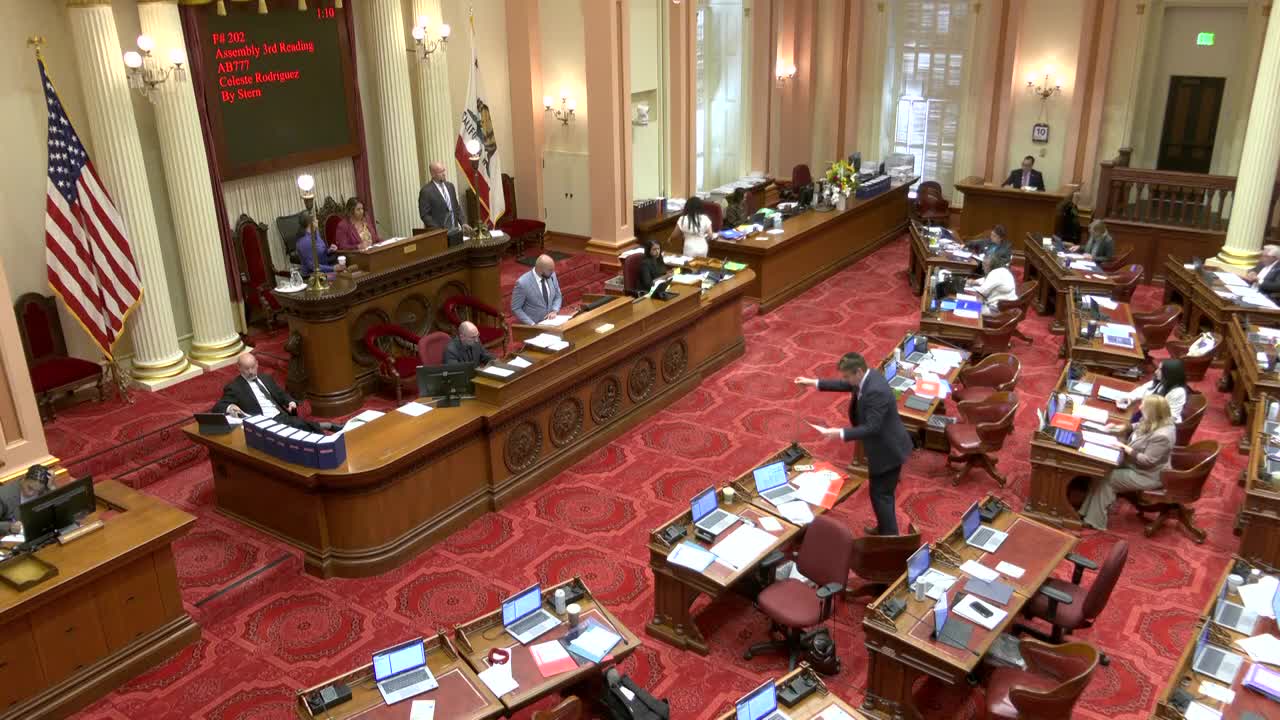
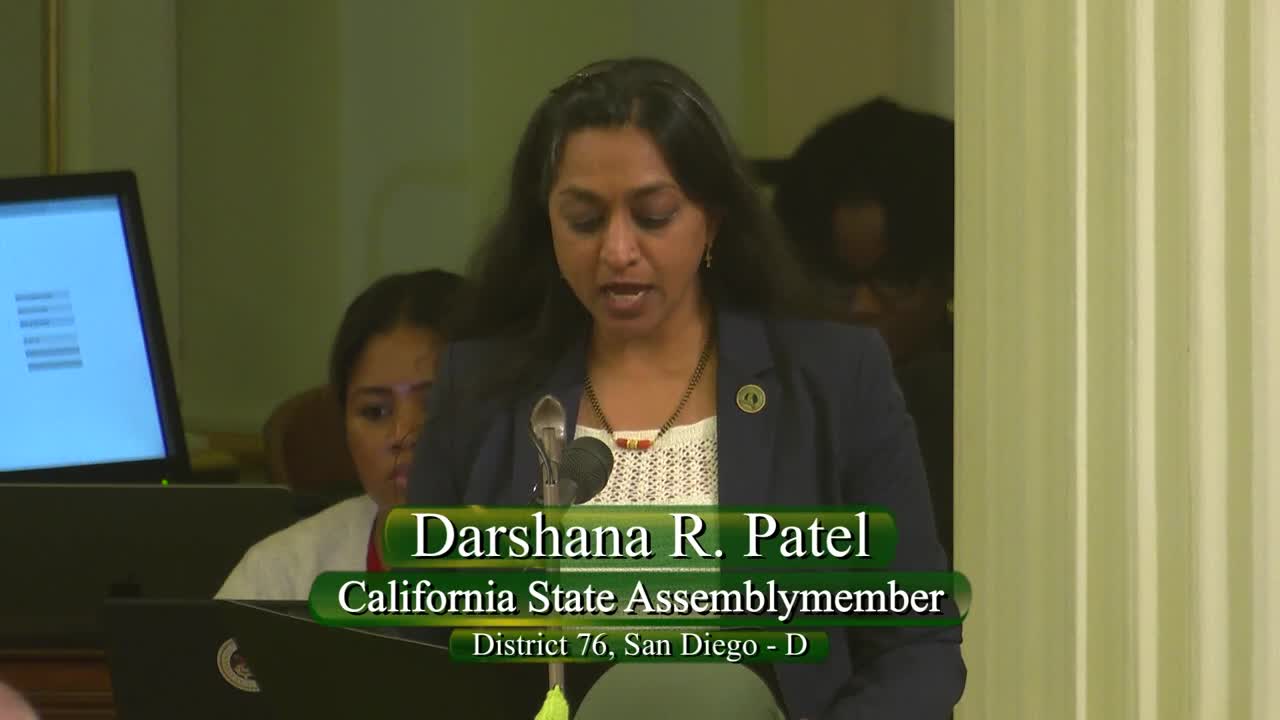

Bill Author

Bill Co-Author(s):