SB 639: Zoning: Sacramento-San Joaquin Valley.
- Session Year: 2025-2026
- House: Senate
- Latest Version Date: 2025-10-13
Current Status:
Passed
(2025-10-13: Chaptered by Secretary of State. Chapter 777, Statutes of 2025.)
Introduced
In Committee
Awaiting First Chamber Vote
Passed First Chamber
In Committee
Awaiting Second Chamber Vote
Passed Second Chamber
Enacted
Existing law requires each city and county within the Sacramento-San Joaquin Valley to amend its general plan relative to the data and analysis contained in the Central Valley Flood Protection Plan, as specified and to amend its zoning ordinance consistent with the general plan.
Existing law prohibits the legislative body of a city or county within the Sacramento-San Joaquin Valley from entering into a development agreement for property that is located within a flood hazard zone after the amendments described above are complete unless the city or county makes a specified finding. Among the possible findings, is that the local flood agency has made adequate progress on construction of a flood protection system that will result in flood protection equal to or greater than the urban level of flood protection in urban or urbanizing areas intended to be protected by the system, which, except as provided, shall be achieved by 2025 for urban and urbanizing areas protected by project levees.
Existing law similarly prohibits each city and county within the Sacramento-San Joaquin Valley from approving a discretionary permit or other discretionary entitlement that would result in the construction of a new building or construction that would result in an increase in allowed occupancy for an existing building, or a ministerial permit that would result in the construction of a new residence, for a project that is located within a flood hazard zone after the amendments described above are complete unless the city or county makes a specified finding. Among the possible findings, is that the local flood agency has made adequate progress toward the urban level of flood protection as described above.
Existing law similarly requires the legislative body of each city and county within the Sacramento-San Joaquin Valley to deny approval of a tentative map or a parcel map for a subdivision that is located within a flood hazard zone after the amendments described above are complete unless the city or county makes a specified finding. Among the possible findings, is that the local flood agency has made adequate progress toward the urban level of flood protection as described above.
This bill would include in the exceptions to the requirement that the urban level of flood protection be achieved for urban and urbanizing areas protected by project levees by 2025, specified areas located in the City of Marysville, the City of Sacramento, the County of Sacramento, the County of Sutter, and the County of Yuba that shall, instead, be required to achieve the urban level of flood protection by 2030. The bill would authorize the Department of Water Resources to require a city or county listed above to contribute its fair and reasonable share of any property damage caused by a flood in its respective jurisdiction, as specified, until the city or county finds the area has met the urban level of flood protection. The bill would make a related technical change.
This bill would make legislative findings and declarations as to the necessity of a special statute for the County of Sacramento, County of Sutter, County of Yuba, City of Marysville, and City of Sacramento.
Existing law requires each city and county within the Sacramento-San Joaquin Valley to amend its general plan relative to the data and analysis contained in the Central Valley Flood Protection Plan, as specified and to amend its zoning ordinance consistent with the general plan.
Existing law prohibits the legislative body of a city or county within the Sacramento-San Joaquin Valley from entering into a development agreement for property that is located within a flood hazard zone after the amendments described above are complete unless the city or county makes a specified finding. Among the possible findings, is that the local flood agency has made adequate progress on construction of a flood protection system that will result in flood protection equal to or greater than the urban level of flood protection in urban or urbanizing areas intended to be protected by the system, which, except as provided, shall be achieved by 2025 for urban and urbanizing areas protected by project levees.
Existing law similarly prohibits each city and county within the Sacramento-San Joaquin Valley from approving a discretionary permit or other discretionary entitlement that would result in the construction of a new building or construction that would result in an increase in allowed occupancy for an existing building, or a ministerial permit that would result in the construction of a new residence, for a project that is located within a flood hazard zone after the amendments described above are complete unless the city or county makes a specified finding. Among the possible findings, is that the local flood agency has made adequate progress toward the urban level of flood protection as described above.
Existing law similarly requires the legislative body of each city and county within the Sacramento-San Joaquin Valley to deny approval of a tentative map or a parcel map for a subdivision that is located within a flood hazard zone after the amendments described above are complete unless the city or county makes a specified finding. Among the possible findings, is that the local flood agency has made adequate progress toward the urban level of flood protection as described above.
This bill would include in the exceptions to the requirement that the urban level of flood protection be achieved for urban and urbanizing areas protected by project levees by 2025, specified areas located in the City of Sacramento and Marysville, the City of Sacramento, the County of Sacramento, the County of Sutter, and the County of Yuba that shall, instead, be required to achieve the urban level of flood protection by 2030. The bill would authorize the Department of Water Resources to require the City of Sacramento or the County of Sacramento a city or county listed above to contribute its fair and reasonable share of any property damage caused by a flood in its respective jurisdiction, as specified, until the local flood management agency attains city or county finds the area has met the urban level of flood protection. The bill would make a related technical change.
This bill would make legislative findings and declarations as to the necessity of a special statute for the County of Sacramento Sacramento, County of Sutter, County of Yuba, City of Marysville, and City of Sacramento.
Existing law requires each city and county within the Sacramento-San Joaquin Valley to amend its general plan relative to the data and analysis contained in the Central Valley Flood Protection Plan, as specified and to amend its zoning ordinance consistent with the general plan.
Existing law prohibits the legislative body of a city or county within the Sacramento-San Joaquin Valley from entering into a development agreement for property that is located within a flood hazard zone after the amendments described above are complete unless the city or county makes a specified finding. Among the possible findings, is that the local flood agency has made adequate progress on construction of a flood protection system that will result in flood protection equal to or greater than the urban level of flood protection in urban or urbanizing areas intended to be protected by the system, which, except as provided, shall be achieved by 2025 for urban and urbanizing areas protected by project levees.
Existing law similarly prohibits each city and county within the Sacramento-San Joaquin Valley from approving a discretionary permit or other discretionary entitlement that would result in the construction of a new building or construction that would result in an increase in allowed occupancy for an existing building, or a ministerial permit that would result in the construction of a new residence, for a project that is located within a flood hazard zone after the amendments described above are complete unless the city or county makes a specified finding. Among the possible findings, is that the local flood agency has made adequate progress toward the urban level of flood protection as described above.
Existing law similarly requires the legislative body of each city and county within the Sacramento-San Joaquin Valley to deny approval of a tentative map or a parcel map for a subdivision that is located within a flood hazard zone after the amendments described above are complete unless the city or county makes a specified finding. Among the possible findings, is that the local flood agency has made adequate progress toward the urban level of flood protection as described above.
This bill would include in the exceptions to the requirement that the urban level of flood protection be achieved for urban and urbanizing areas protected by project levees by 2025, specified areas located in the City of Sacramento and the County of Sacramento, that shall, instead, be required to achieve the urban level of flood protection by 2030. The bill would authorize the Department of Water Resources to require the City of Sacramento or the County of Sacramento to contribute its fair and reasonable share of any property damage caused by a flood in its respective jurisdiction, as specified, between January 1, 2026, and December 31, 2030. until the local flood management agency attains the urban level of flood protection.
This bill would make legislative findings and declarations as to the necessity of a special statute for the County of Sacramento and City of Sacramento.
Existing law requires each city and county within the Sacramento-San Joaquin Valley to amend its general plan relative to the data and analysis contained in the Central Valley Flood Protection Plan, as specified and to amend its zoning ordinance consistent with the general plan.
Existing law prohibits the legislative body of a city or county within the Sacramento-San Joaquin Valley from entering into a development agreement for property that is located within a flood hazard zone after the amendments described above are complete unless the city or county makes a specified finding. Among the possible findings, is that the local flood agency has made adequate progress on construction of a flood protection system that will result in flood protection equal to or greater than the urban level of flood protection in urban or urbanizing areas intended to be protected by the system, which, except as provided, shall be achieved by 2025 for urban and urbanizing areas protected by project levees.
Existing law similarly prohibits each city and county within the Sacramento-San Joaquin Valley from approving a discretionary permit or other discretionary entitlement that would result in the construction of a new building or construction that would result in an increase in allowed occupancy for an existing building, or a ministerial permit that would result in the construction of a new residence, for a project that is located within a flood hazard zone after the amendments described above are complete unless the city or county makes a specified finding. Among the possible findings, is that the local flood agency has made adequate progress toward the the urban level of flood protection as described above.
Existing law similarly requires the legislative body of each city and county within the Sacramento-San Joaquin Valley to deny approval of a tentative map or a parcel map for a subdivision that is located within a flood hazard zone after the amendments described above are complete unless the city or county makes a specified finding. Among the possible findings, is that the local flood agency has made adequate progress toward the urban level of flood protection as described above.
This bill, until January 1, 2030, bill would include in the exceptions to the requirement that the urban level of flood protection be achieved for urban and urbanizing areas protected by project levees by 2025, specified areas located in the City of Sacramento and the County of Sacramento, that shall, instead, be required to achieve the urban level of flood protection by 2030. The bill would authorize the Department of Water Resources to require the City of Sacramento or the County of Sacramento to contribute its fair and reasonable share of any property damage caused by a flood in its respective jurisdiction, as specified, between January 1, 2026, and December 31, 2030.
This bill would make legislative findings and declarations as to the necessity of a special statute for the County of Sacramento and City of Sacramento.
Existing law requires each city and county within the Sacramento-San Joaquin Valley to amend its general plan relative to the data and analysis contained in the Central Valley Flood Protection Plan, as specified and to amend its zoning ordinance consistent with the general plan.
Existing law prohibits the legislative body of a city or county within the Sacramento-San Joaquin Valley from entering into a development agreement for property that is located within a flood hazard zone after the amendments described above are complete unless the city or county makes a specified finding. Among the possible findings, is that the local flood agency has made adequate progress on construction of a flood protection system that will result in flood protection equal to or greater than the urban level of flood protection in urban or urbanizing areas intended to be protected by the system, which, except as provided, shall be achieved by 2025 for urban and urbanizing areas protected by project levees.
Existing law similarly prohibits each city and county within the Sacramento-San Joaquin Valley from approving a discretionary permit or other discretionary entitlement that would result in the construction of a new building or construction that would result in an increase in allowed occupancy for an existing building, or a ministerial permit that would result in the construction of a new residence, for a project that is located within a flood hazard zone after the amendments described above are complete unless the city or county makes a specified finding. Among the possible findings, is that the local flood agency has made adequate progress toward the the urban level of flood protection as described above.
Existing law similarly requires the legislative body of each city and county within the Sacramento-San Joaquin Valley to deny approval of a tentative map or a parcel map for a subdivision that is located within a flood hazard zone after the amendments described above are complete unless the city or county makes a specified finding. Among the possible findings, is that the local flood agency has made adequate progress toward the urban level of flood protection as described above.
This bill, until January 1, 2030, would include in the exceptions to the requirement that the urban level of flood protection be achieved for urban and urbanizing areas protected by project levees by 2025, specified areas located in the City of Sacramento and the County of Sacramento, that shall, instead, be required to achieve the urban level of flood protection by 2030.
This bill would make legislative findings and declarations as to the necessity of a special statute for the City of Sacramento.
(a)Notwithstanding any other law, after the amendments required by Sections 65302.9 and 65860.1 have become effective, the legislative body of a city or county within the Sacramento-San Joaquin Valley shall not enter into a development agreement for property that is located within a flood hazard zone unless the city or county finds, based on substantial evidence in the record, one of the following:
(1)The facilities of the State Plan of Flood Control or other flood management facilities protect the property to the urban level of flood protection in urban and urbanizing areas or the national Federal Emergency Management Agency standard of flood protection in nonurbanized areas.
(2)The city or county has imposed conditions on the development agreement that will protect the property to the urban level of flood protection in urban and urbanizing areas or the national Federal Emergency Management Agency standard of flood protection in nonurbanized areas.
(3)The local flood management agency has made adequate progress on the construction of a flood protection system that will result in flood protection equal to or greater than the urban level of flood protection in urban or urbanizing areas or the national Federal Emergency Management Agency standard of flood protection in nonurbanized areas for property located within a flood hazard zone, intended to be protected by the system. Except as provided in Sections 65962.1, 65962.2, and 65962.4, for urban and urbanizing areas protected by project levees, the urban level of flood protection shall be achieved by 2025.
(4)The property in an undetermined risk area has met the urban level of flood protection based on substantial evidence in the record.
(b)The effective date of amendments referred to in this section shall be the date upon which the statutes of limitation specified in subdivision (c) of Section 65009 have run or, if the amendments and any associated environmental documents are challenged in court, the validity of the amendments and any associated environmental documents has been upheld in a final decision.
(c)This section does not change or diminish existing requirements of local flood plain management laws, ordinances, resolutions, or regulations necessary to local agency participation in the national flood insurance program.
SEC. 2.Section 65962 of the Government Code is amended to read:65962.(a)Notwithstanding any other law, after the amendments required by Sections 65302.9 and 65860.1 have become effective, each city and county within the Sacramento-San Joaquin Valley shall not approve a discretionary permit or other discretionary entitlement that would result in the construction of a new building or construction that would result in an increase in allowed occupancy for an existing building, or a ministerial permit that would result in the construction of a new residence, for a project that is located within a flood hazard zone unless the city or county finds, based on substantial evidence in the record, one of the following:
(1)The facilities of the State Plan of Flood Control or other flood management facilities protect the project to the urban level of flood protection in urban and urbanizing areas or the national Federal Emergency Management Agency standard of flood protection in nonurbanized areas.
(2)The city or county has imposed conditions on the permit or discretionary entitlement that will protect the project to the urban level of flood protection in urban and urbanizing areas or the national Federal Emergency Management Agency standard of flood protection in nonurbanized areas.
(3)The local flood management agency has made adequate progress on the construction of a flood protection system that will result in flood protection equal to or greater than the urban level of flood protection in urban or urbanizing areas or the national Federal Emergency Management Agency standard of flood protection in nonurbanized areas for property located within a flood hazard zone, intended to be protected by the system. Except as provided in Sections 65962.1, 65962.2, and 65962.4, for urban and urbanizing areas protected by project levees, the urban level of flood protection shall be achieved by 2025.
(4)The property in an undetermined risk area has met the urban level of flood protection based on substantial evidence in the record.
(b)The effective date of amendments referred to in this section shall be the date upon which the statutes of limitation specified in subdivision (c) of Section 65009 have run or, if the amendments and any associated environmental documents are challenged in court, the validity of the amendments and any associated environmental documents has been upheld in a final decision.
(c)This section does not change or diminish existing requirements of local flood plain management laws, ordinances, resolutions, or regulations necessary to local agency participation in the national flood insurance program.
SEC. 3.Section 65962.4 is added to the Government Code, to read:65962.4.(a)For purposes of Sections 65865.5, 65962, and 66474.5, the following locations shall achieve the urban level of flood protection by 2030:
(1)The Natomas subarea of the City of Sacramento.
(2)The Beach Lake subarea of the City of Sacramento and the Beach Lake subarea of the unincorporated area of the County of Sacramento.
(3)The portions of the Natomas subarea located in the unincorporated area of the County of Sacramento and the portions of the Natomas subarea located in the unincorporated area of the County of Sutter.
(4)The City of Marysville protected by the Marysville Ring Levee located in the City of Marysville in the County of Yuba.
(b)Notwithstanding paragraph (2) of subdivision (a) of Section 8307 of the Water Code, the City of Marysville, the City of Sacramento, the County of Sacramento, the County of Sutter, or the County of Yuba may be required to contribute its fair and reasonable share of any property damage caused by a flood in its respective jurisdiction, to the extent that the states exposure to liability for property damage has been increased by the city or county unreasonably approving, as defined in Section 8307 of the Water Code, any new development in paragraph (1), (2), (3), or (4) of subdivision (a) until the city or county finds that the area has met the urban level of flood protection as defined in subdivision (n) of Section 65007.
(c)For purposes of this section, the following definitions apply:
(1)Beach Lake subarea of the City of Sacramento means the area within the City of Sacramento bounded on the north by Sutterville Road, on the west and south by the city limits, and on the east by Highway 99.
(2)Beach Lake subarea of the unincorporated area of the County of Sacramento means the unincorporated area of the County of Sacramento that is bounded on the west by the Sacramento River, on the north by the City of Sacramento city limits, on the east by Franklin Boulevard, and on the south by the City of Elk Grove city limits to Interstate 5 and along the North Beach Lake Levee from west of Interstate 5 to the Sacramento River.
(3)City of Marysville means the incorporated area of the City of Marysville as identified in the 202129 General Plan Housing Element Update adopted by Resolution 202134 by the Marysville City Council on November 16, 2021.
(4)City of Sacramento means the incorporated area in the City of Sacramento identified in Resolution No. 2021-0001, adopted by the Sacramento Independent Redistricting Commission, December 16, 2021, entitled Establishing the Sacramento City Council District Boundaries Pursuant to the Sacramento City Charter, the California Elections Code, and the 2020 United States Census.
(5)Natomas subarea means any of the following:
(A)The area within the City of Sacramento bounded on the north and west by the city limits, on the south by the Garden Highway or Arden-Garden Connector, and on the east by East Levee Road.
(B)The unincorporated area of the County of Sacramento that is bounded on the north and west by the unincorporated County of Sacramento limits, on the east by East Levee Road, and on the south by Interstate 80.
(C)The unincorporated area of the County of Sutter that is bounded by the Sacramento River, the Natomas Cross Canal, the Pleasant Grove Creek Canal or Steelhead Creek, and the unincorporated County of Sutter limits.
SEC. 4.Section 66474.5 of the Government Code is amended to read:66474.5.(a)Notwithstanding any other law, after the amendments required by Sections 65302.9 and 65860.1 have become effective, the legislative body of each city and county within the Sacramento-San Joaquin Valley shall deny approval of a tentative map, or a parcel map for which a tentative map was not required, for a subdivision that is located within a flood hazard zone unless the city or county finds, based on substantial evidence in the record, one of the following:
(1)The facilities of the State Plan of Flood Control or other flood management facilities protect the subdivision to the urban level of flood protection in urban and urbanizing areas or the national Federal Emergency Management Agency standard of flood protection in nonurbanized areas.
(2)The city or county has imposed conditions on the subdivision that will protect the project to the urban level of flood protection in urban and urbanizing areas or the national Federal Emergency Management Agency standard of flood protection in nonurbanized areas.
(3)The local flood management agency has made adequate progress on the construction of a flood protection system that will result in flood protection equal to or greater than the urban level of flood protection in urban or urbanizing areas or the national Federal Emergency Management Agency standard of flood protection in nonurbanized areas for property located within a flood hazard zone, intended to be protected by the system. Except as provided in Sections 65962.1, 65962.2, and 65962.4, for urban and urbanizing areas protected by project levees, the urban level of flood protection shall be achieved by 2025.
(4)The property in an undetermined risk area has met the urban level of flood protection based on substantial evidence in the record.
(b)The effective date of amendments referred to in this section shall be the date upon which the statutes of limitation specified in subdivision (c) of Section 65009 have run or, if the amendments and any associated environmental documents are challenged in court, the validity of the amendments and any associated environmental documents has been upheld in a final decision.
(c)This section does not change or diminish existing requirements of local flood plain management laws, ordinances, resolutions, or regulations necessary to local agency participation in the national flood insurance program.
SEC. 5.Section 8307 of the Water Code is amended to read:8307.(a)(1)A city or county may be required to contribute its fair and reasonable share of the property damage caused by a flood to the extent that the city or county has increased the states exposure to liability for property damage by unreasonably approving new development in a previously undeveloped area that is protected by a state flood control project.
(2)However, a city or county shall not be required to contribute if, after the amendments required by Sections 65302.9 and 65860.1 of the Government Code have become effective, the city or county complies with Sections 65865.5, 65962, and 66474.5 of the Government Code as applicable with respect to that development. This section shall not be construed to extend or toll the statute of limitations for challenging the approval of any new development.
(b)A city or county is not required to contribute unless an action has been filed against the state asserting liability for property damage caused by a flood and the provisions of subdivision (a) providing for contribution have been satisfied. A city or county is not required to contribute if the state settles the claims against it without providing the city or county with an opportunity to participate in settlement negotiations.
(c)For the purposes of this section:
(1)State flood control project means any flood control works within the Sacramento River Flood Control Project described in Section 8350, and of flood control projects in the Sacramento River and San Joaquin River watersheds authorized pursuant to Article 2 (commencing with Section 12648) of Chapter 2 of Part 6 of Division 6.
(2)Undeveloped area means an area devoted to agricultural use, as defined in Section 51201 of the Government Code, or open space land, as defined in Section 65560 of the Government Code, that, as of January 1, 2008, is not already designated for development in a general or specific plan or by a local zoning ordinance.
(3)Unreasonably approving means approving a new development project without appropriately considering significant risks of flooding made known to the approving agency as of the time of approval and without taking reasonable and feasible action to mitigate the potential property damage to the new development resulting from a flood.
(4)Feasible means capable of being accomplished in a successful manner within a reasonable period of time, taking into account economic, environmental, legal, social, and technological factors.
(d)This section shall not apply to any land or projects for which an application for development has been submitted to the city or county prior to January 1, 2008.
SEC. 6.The Legislature finds and declares that a special statute is necessary and that a general statute cannot be made applicable within the meaning of Section 16 of Article IV of the California Constitution because of the unique circumstances in the County of Sacramento, County of Sutter, County of Yuba, City of Marysville, and City of Sacramento, which are particularly susceptible to flooding due to their location.
(a)Notwithstanding any other law, after the amendments required by Sections 65302.9 and 65860.1 have become effective, the legislative body of a city or county within the Sacramento-San Joaquin Valley shall not enter into a development agreement for property that is located within a flood hazard zone unless the city or county finds, based on substantial evidence in the record, one of the following:
(1)The facilities of the State Plan of Flood Control or other flood management facilities protect the property to the urban level of flood protection in urban and urbanizing areas or the national Federal Emergency Management Agency standard of flood protection in nonurbanized areas.
(2)The city or county has imposed conditions on the development agreement that will protect the property to the urban level of flood protection in urban and urbanizing areas or the national Federal Emergency Management Agency standard of flood protection in nonurbanized areas.
(3)The local flood management agency has made adequate progress on the construction of a flood protection system that will result in flood protection equal to or greater than the urban level of flood protection in urban or urbanizing areas or the national Federal Emergency Management Agency standard of flood protection in nonurbanized areas for property located within a flood hazard zone, intended to be protected by the system. Except as provided in Sections 65962.1, 65962.2, and 65962.4, for urban and urbanizing areas protected by project levees, the urban level of flood protection shall be achieved by 2025.
(4)The property in an undetermined risk area has met the urban level of flood protection based on substantial evidence in the record.
(b)The effective date of amendments referred to in this section shall be the date upon which the statutes of limitation specified in subdivision (c) of Section 65009 have run or, if the amendments and any associated environmental documents are challenged in court, the validity of the amendments and any associated environmental documents has been upheld in a final decision.
(c)This section does not change or diminish existing requirements of local flood plain management laws, ordinances, resolutions, or regulations necessary to local agency participation in the national flood insurance program.
SEC. 2.Section 65962 of the Government Code is amended to read:65962.(a)Notwithstanding any other law, after the amendments required by Sections 65302.9 and 65860.1 have become effective, each city and county within the Sacramento-San Joaquin Valley shall not approve a discretionary permit or other discretionary entitlement that would result in the construction of a new building or construction that would result in an increase in allowed occupancy for an existing building, or a ministerial permit that would result in the construction of a new residence, for a project that is located within a flood hazard zone unless the city or county finds, based on substantial evidence in the record, one of the following:
(1)The facilities of the State Plan of Flood Control or other flood management facilities protect the project to the urban level of flood protection in urban and urbanizing areas or the national Federal Emergency Management Agency standard of flood protection in nonurbanized areas.
(2)The city or county has imposed conditions on the permit or discretionary entitlement that will protect the project to the urban level of flood protection in urban and urbanizing areas or the national Federal Emergency Management Agency standard of flood protection in nonurbanized areas.
(3)The local flood management agency has made adequate progress on the construction of a flood protection system that will result in flood protection equal to or greater than the urban level of flood protection in urban or urbanizing areas or the national Federal Emergency Management Agency standard of flood protection in nonurbanized areas for property located within a flood hazard zone, intended to be protected by the system. Except as provided in Sections 65962.1, 65962.2, and 65962.4, for urban and urbanizing areas protected by project levees, the urban level of flood protection shall be achieved by 2025.
(4)The property in an undetermined risk area has met the urban level of flood protection based on substantial evidence in the record.
(b)The effective date of amendments referred to in this section shall be the date upon which the statutes of limitation specified in subdivision (c) of Section 65009 have run or, if the amendments and any associated environmental documents are challenged in court, the validity of the amendments and any associated environmental documents has been upheld in a final decision.
(c)This section does not change or diminish existing requirements of local flood plain management laws, ordinances, resolutions, or regulations necessary to local agency participation in the national flood insurance program.
SEC. 3.Section 65962.4 is added to the Government Code, to read:65962.4.(a)For purposes of Sections 65865.5, 65962, and 66474.5, the following locations shall achieve the urban level of flood protection by 2030:
(1)The Natomas subarea of the City of Sacramento.
(2)The Beach Lake subarea of the City of Sacramento and the Beach Lake subarea of the unincorporated area of the County of Sacramento.
(3)The portions of the Natomas subarea located in the unincorporated area of the County of Sacramento and the portions of the Natomas subarea located in the unincorporated area of the County of Sutter.
(4)The City of Marysville protected by the Marysville Ring Levee located in the City of Marysville in the County of Yuba.
(b)Notwithstanding paragraph (2) of subdivision (a) of Section 8307 of the Water Code, the City of Marysville, the City of Sacramento, the County of Sacramento, the County of Sutter, or the County of Yuba may be required to contribute its fair and reasonable share of any property damage caused by a flood in its respective jurisdiction, to the extent that the states exposure to liability for property damage has been increased by the city or county unreasonably approving, as defined in Section 8307 of the Water Code, any new development in paragraph (1), (2), (3), or (4) of subdivision (a) until the city or county finds that the area has met the urban level of flood protection as defined in subdivision (n) of Section 65007.
(c)For purposes of this section, the following definitions apply:
(1)Beach Lake subarea of the City of Sacramento means the area within the City of Sacramento bounded on the north by Sutterville Road, on the west and south by the city limits, and on the east by Highway 99.
(2)Beach Lake subarea of the unincorporated area of the County of Sacramento means the unincorporated area of the County of Sacramento that is bounded on the west by the Sacramento River, on the north by the City of Sacramento city limits, on the east by Franklin Boulevard, and on the south by the City of Elk Grove city limits to Interstate 5 and along the North Beach Lake Levee from west of Interstate 5 to the Sacramento River.
(3)City of Marysville means the incorporated area of the City of Marysville as identified in the 202129 General Plan Housing Element Update adopted by Resolution 202134 by the Marysville City Council on November 16, 2021.
(4)City of Sacramento means the incorporated area in the City of Sacramento identified in Resolution No. 2021-0001, adopted by the Sacramento Independent Redistricting Commission, December 16, 2021, entitled Establishing the Sacramento City Council District Boundaries Pursuant to the Sacramento City Charter, the California Elections Code, and the 2020 United States Census.
(5)Natomas subarea means any of the following:
(A)The area within the City of Sacramento bounded on the north and west by the city limits, on the south by the Garden Highway or Arden-Garden Connector, and on the east by East Levee Road.
(B)The unincorporated area of the County of Sacramento that is bounded on the north and west by the unincorporated County of Sacramento limits, on the east by East Levee Road, and on the south by Interstate 80.
(C)The unincorporated area of the County of Sutter that is bounded by the Sacramento River, the Natomas Cross Canal, the Pleasant Grove Creek Canal or Steelhead Creek, and the American River. unincorporated County of Sutter limits.
SEC. 4.Section 66474.5 of the Government Code is amended to read:66474.5.(a)Notwithstanding any other law, after the amendments required by Sections 65302.9 and 65860.1 have become effective, the legislative body of each city and county within the Sacramento-San Joaquin Valley shall deny approval of a tentative map, or a parcel map for which a tentative map was not required, for a subdivision that is located within a flood hazard zone unless the city or county finds, based on substantial evidence in the record, one of the following:
(1)The facilities of the State Plan of Flood Control or other flood management facilities protect the subdivision to the urban level of flood protection in urban and urbanizing areas or the national Federal Emergency Management Agency standard of flood protection in nonurbanized areas.
(2)The city or county has imposed conditions on the subdivision that will protect the project to the urban level of flood protection in urban and urbanizing areas or the national Federal Emergency Management Agency standard of flood protection in nonurbanized areas.
(3)The local flood management agency has made adequate progress on the construction of a flood protection system that will result in flood protection equal to or greater than the urban level of flood protection in urban or urbanizing areas or the national Federal Emergency Management Agency standard of flood protection in nonurbanized areas for property located within a flood hazard zone, intended to be protected by the system. Except as provided in Sections 65962.1, 65962.2, and 65962.4, for urban and urbanizing areas protected by project levees, the urban level of flood protection shall be achieved by 2025.
(4)The property in an undetermined risk area has met the urban level of flood protection based on substantial evidence in the record.
(b)The effective date of amendments referred to in this section shall be the date upon which the statutes of limitation specified in subdivision (c) of Section 65009 have run or, if the amendments and any associated environmental documents are challenged in court, the validity of the amendments and any associated environmental documents has been upheld in a final decision.
(c)This section does not change or diminish existing requirements of local flood plain management laws, ordinances, resolutions, or regulations necessary to local agency participation in the national flood insurance program.
SEC. 5.Section 8307 of the Water Code is amended to read:8307.(a)(1)A city or county may be required to contribute its fair and reasonable share of the property damage caused by a flood to the extent that the city or county has increased the states exposure to liability for property damage by unreasonably approving new development in a previously undeveloped area that is protected by a state flood control project.
(2)However, a city or county shall not be required to contribute if, after the amendments required by Sections 65302.9 and 65860.1 of the Government Code have become effective, the city or county complies with Sections 65865.5, 65962, and 66474.5 of the Government Code as applicable with respect to that development. This section shall not be construed to extend or toll the statute of limitations for challenging the approval of any new development.
(b)A city or county is not required to contribute unless an action has been filed against the state asserting liability for property damage caused by a flood and the provisions of subdivision (a) providing for contribution have been satisfied. A city or county is not required to contribute if the state settles the claims against it without providing the city or county with an opportunity to participate in settlement negotiations.
(c)For the purposes of this section:
(1)State flood control project means any flood control works within the Sacramento River Flood Control Project described in Section 8350, and of flood control projects in the Sacramento River and San Joaquin River watersheds authorized pursuant to Article 2 (commencing with Section 12648) of Chapter 2 of Part 6 of Division 6.
(2)Undeveloped area means an area devoted to agricultural use, as defined in Section 51201 of the Government Code, or open space land, as defined in Section 65560 of the Government Code, that, as of January 1, 2008, is not already designated for development in a general or specific plan or by a local zoning ordinance.
(3)Unreasonably approving means approving a new development project without appropriately considering significant risks of flooding made known to the approving agency as of the time of approval and without taking reasonable and feasible action to mitigate the potential property damage to the new development resulting from a flood.
(4)Feasible means capable of being accomplished in a successful manner within a reasonable period of time, taking into account economic, environmental, legal, social, and technological factors.
(d)This section shall not apply to any land or projects for which an application for development has been submitted to the city or county prior to January 1, 2008.
SEC. 6.The Legislature finds and declares that a special statute is necessary and that a general statute cannot be made applicable within the meaning of Section 16 of Article IV of the California Constitution because of the unique circumstances in the County of Sacramento, County of Sutter, County of Yuba, City of Marysville, and City of Sacramento, which are particularly susceptible to flooding due to their location.
(a)Notwithstanding any other law, after the amendments required by Sections 65302.9 and 65860.1 have become effective, the legislative body of a city or county within the Sacramento-San Joaquin Valley shall not enter into a development agreement for property that is located within a flood hazard zone unless the city or county finds, based on substantial evidence in the record, one of the following:
(1)The facilities of the State Plan of Flood Control or other flood management facilities protect the property to the urban level of flood protection in urban and urbanizing areas or the national Federal Emergency Management Agency standard of flood protection in nonurbanized areas.
(2)The city or county has imposed conditions on the development agreement that will protect the property to the urban level of flood protection in urban and urbanizing areas or the national Federal Emergency Management Agency standard of flood protection in nonurbanized areas.
(3)The local flood management agency has made adequate progress on the construction of a flood protection system that will result in flood protection equal to or greater than the urban level of flood protection in urban or urbanizing areas or the national Federal Emergency Management Agency standard of flood protection in nonurbanized areas for property located within a flood hazard zone, intended to be protected by the system. Except as provided in Sections 65962.1, 65962.2, and 65962.4, for urban and urbanizing areas protected by project levees, the urban level of flood protection shall be achieved by 2025.
(4)The property in an undetermined risk area has met the urban level of flood protection based on substantial evidence in the record.
(b)The effective date of amendments referred to in this section shall be the date upon which the statutes of limitation specified in subdivision (c) of Section 65009 have run or, if the amendments and any associated environmental documents are challenged in court, the validity of the amendments and any associated environmental documents has been upheld in a final decision.
(c)This section does not change or diminish existing requirements of local flood plain management laws, ordinances, resolutions, or regulations necessary to local agency participation in the national flood insurance program.
SEC. 2.Section 65962 of the Government Code is amended to read:65962.(a)Notwithstanding any other law, after the amendments required by Sections 65302.9 and 65860.1 have become effective, each city and county within the Sacramento-San Joaquin Valley shall not approve a discretionary permit or other discretionary entitlement that would result in the construction of a new building or construction that would result in an increase in allowed occupancy for an existing building, or a ministerial permit that would result in the construction of a new residence, for a project that is located within a flood hazard zone unless the city or county finds, based on substantial evidence in the record, one of the following:
(1)The facilities of the State Plan of Flood Control or other flood management facilities protect the project to the urban level of flood protection in urban and urbanizing areas or the national Federal Emergency Management Agency standard of flood protection in nonurbanized areas.
(2)The city or county has imposed conditions on the permit or discretionary entitlement that will protect the project to the urban level of flood protection in urban and urbanizing areas or the national Federal Emergency Management Agency standard of flood protection in nonurbanized areas.
(3)The local flood management agency has made adequate progress on the construction of a flood protection system that will result in flood protection equal to or greater than the urban level of flood protection in urban or urbanizing areas or the national Federal Emergency Management Agency standard of flood protection in nonurbanized areas for property located within a flood hazard zone, intended to be protected by the system. Except as provided in Sections 65962.1, 65962.2, and 65962.4, for urban and urbanizing areas protected by project levees, the urban level of flood protection shall be achieved by 2025.
(4)The property in an undetermined risk area has met the urban level of flood protection based on substantial evidence in the record.
(b)The effective date of amendments referred to in this section shall be the date upon which the statutes of limitation specified in subdivision (c) of Section 65009 have run or, if the amendments and any associated environmental documents are challenged in court, the validity of the amendments and any associated environmental documents has been upheld in a final decision.
(c)This section does not change or diminish existing requirements of local flood plain management laws, ordinances, resolutions, or regulations necessary to local agency participation in the national flood insurance program.
SEC. 3.Section 65962.4 is added to the Government Code, to read:65962.4.(a)For purposes of Sections 65865.5, 65962, and 66474.5, the following locations shall achieve the urban level of flood protection by 2030:
(1)The Natomas subarea of the City of Sacramento.
(2)The Beach Lake subarea of the City of Sacramento. Sacramento and the Beach Lake subarea of the unincorporated area of the County of Sacramento.
(3)The portions of the Natomas Basin subarea located in the unincorporated area of the County of Sacramento. Sacramento and the portions of the Natomas subarea located in the unincorporated area of the County of Sutter.
(4)The City of Marysville protected by the Marysville Ring Levee located in the City of Marysville in the County of Yuba.
(b)For purposes of this section, City of Sacramento means the incorporated area in the City of Sacramento identified in Resolution No. 2021-0001, adopted by the Sacramento Independent Redistricting Commission, December 16, 2021, entitled Establishing the Sacramento City Council District Boundaries Pursuant to the Sacramento City Charter, the California Elections Code, and the 2020 United States Census.(c)For purposes of this section, Natomas subarea means the area within the City of Sacramento bounded on the north and west by the city limits; on the south by the Garden Highway or Arden Garden Connector; and on the east by East Levee Road.(d)For purposes of this section, Beach Lake subarea means the area within the City of Sacramento bounded on the north by Meadowview Road; on the west by Freeport Boulevard; on the south by Beach Lake Levee; and on the east by Morrison Creek.(e)(b)Notwithstanding paragraph (2) of subdivision (a) of Section 8307 of the Water Code, the City of Sacramento or Marysville, the City of Sacramento, the County of Sacramento Sacramento, the County of Sutter, or the County of Yuba may be required to contribute its fair and reasonable share of any property damage caused by a flood in its respective jurisdiction, to the extent that the states exposure to liability for property damage has been increased by the city or county unreasonably approving, as defined in Section 8307 of the Water Code, any new development in paragraph (1), (2), or (3) (3), or (4) of subdivision (a) until the local flood management agency attains the urban level of flood protection. city or county finds that the area has met the urban level of flood protection as defined in subdivision (n) of Section 65007.
(c)For purposes of this section, the following definitions apply:
(1)Beach Lake subarea of the City of Sacramento means the area within the City of Sacramento bounded on the north by Sutterville Road, on the west and south by the city limits, and on the east by Highway 99.
(2)Beach Lake subarea of the unincorporated area of the County of Sacramento means the unincorporated area of the County of Sacramento that is bounded on the west by the Sacramento River, on the north by the City of Sacramento city limits, on the east by Franklin Boulevard, and on the south by the City of Elk Grove city limits to Interstate 5 and along the North Beach Lake Levee from west of Interstate 5 to the Sacramento River.
(3)City of Marysville means the incorporated area of the City of Marysville as identified in the 202129 General Plan Housing Element Update adopted by Resolution 202134 by the Marysville City Council on November 16, 2021.
(4)City of Sacramento means the incorporated area in the City of Sacramento identified in Resolution No. 2021-0001, adopted by the Sacramento Independent Redistricting Commission, December 16, 2021, entitled Establishing the Sacramento City Council District Boundaries Pursuant to the Sacramento City Charter, the California Elections Code, and the 2020 United States Census.
(5)Natomas subarea means any of the following:
(A)The area within the City of Sacramento bounded on the north and west by the city limits, on the south by the Garden Highway or Arden-Garden Connector, and on the east by East Levee Road.
(B)The unincorporated area of the County of Sacramento that is bounded on the north and west by the unincorporated County of Sacramento limits, on the east by East Levee Road, and on the south by Interstate 80.
(C)The unincorporated area of the County of Sutter that is bounded by the Sacramento River, the Natomas Cross Canal, the Pleasant Grove Creek Canal or Steelhead Creek, and the American River.
SEC. 4.Section 66474.5 of the Government Code is amended to read:66474.5.(a)Notwithstanding any other law, after the amendments required by Sections 65302.9 and 65860.1 have become effective, the legislative body of each city and county within the Sacramento-San Joaquin Valley shall deny approval of a tentative map, or a parcel map for which a tentative map was not required, for a subdivision that is located within a flood hazard zone unless the city or county finds, based on substantial evidence in the record, one of the following:
(1)The facilities of the State Plan of Flood Control or other flood management facilities protect the subdivision to the urban level of flood protection in urban and urbanizing areas or the national Federal Emergency Management Agency standard of flood protection in nonurbanized areas.
(2)The city or county has imposed conditions on the subdivision that will protect the project to the urban level of flood protection in urban and urbanizing areas or the national Federal Emergency Management Agency standard of flood protection in nonurbanized areas.
(3)The local flood management agency has made adequate progress on the construction of a flood protection system that will result in flood protection equal to or greater than the urban level of flood protection in urban or urbanizing areas or the national Federal Emergency Management Agency standard of flood protection in nonurbanized areas for property located within a flood hazard zone, intended to be protected by the system. Except as provided in Sections 65962.1, 65962.2, and 65962.4, for urban and urbanizing areas protected by project levees, the urban level of flood protection shall be achieved by 2025.
(4)The property in an undetermined risk area has met the urban level of flood protection based on substantial evidence in the record.
(b)The effective date of amendments referred to in this section shall be the date upon which the statutes of limitation specified in subdivision (c) of Section 65009 have run or, if the amendments and any associated environmental documents are challenged in court, the validity of the amendments and any associated environmental documents has been upheld in a final decision.
(c)This section does not change or diminish existing requirements of local flood plain management laws, ordinances, resolutions, or regulations necessary to local agency participation in the national flood insurance program.
SEC. 5.Section 8307 of the Water Code is amended to read:8307.(a)(1)A city or county may be required to contribute its fair and reasonable share of the property damage caused by a flood to the extent that the city or county has increased the states exposure to liability for property damage by unreasonably approving new development in a previously undeveloped area that is protected by a state flood control project.
(2)However, a city or county shall not be required to contribute if, after the amendments required by Sections 65302.9 and 65860.1 of the Government Code have become effective, the city or county complies with Sections 65865.5, 65962, and 66474.5 of the Government Code as applicable with respect to that development. This section shall not be construed to extend or toll the statute of limitations for challenging the approval of any new development.
(b)A city or county is not required to contribute unless an action has been filed against the state asserting liability for property damage caused by a flood and the provisions of subdivision (a) providing for contribution have been satisfied. A city or county is not required to contribute if the state settles the claims against it without providing the city or county with an opportunity to participate in settlement negotiations.
(c)For the purposes of this section:
(1)State flood control project means any flood control works within the Sacramento River Flood Control Project described in Section 8350, and of flood control projects in the Sacramento River and San Joaquin River watersheds authorized pursuant to Article 2 (commencing with Section 12648) of Chapter 2 of Part 6 of Division 6.
(2)Undeveloped area means an area devoted to agricultural use, as defined in Section 51201 of the Government Code, or open space land, as defined in Section 65560 of the Government Code, that, as of January 1, 2008, is not already designated for development in a general or specific plan or by a local zoning ordinance.
(3)Unreasonably approving means approving a new development project without appropriately considering significant risks of flooding made known to the approving agency as of the time of approval and without taking reasonable and feasible action to mitigate the potential property damage to the new development resulting from a flood.
(4)Feasible means capable of being accomplished in a successful manner within a reasonable period of time, taking into account economic, environmental, legal, social, and technological factors.
(d)This section shall not apply to any land or projects for which an application for development has been submitted to the city or county prior to January 1, 2008.
SEC. 6.The Legislature finds and declares that a special statute is necessary and that a general statute cannot be made applicable within the meaning of Section 16 of Article IV of the California Constitution because of the unique circumstances in the County of Sacramento Sacramento, County of Sutter, County of Yuba, City of Marysville, and City of Sacramento, which is are particularly susceptible to flooding due to its their location.
(a)Notwithstanding any other law, after the amendments required by Sections 65302.9 and 65860.1 have become effective, the legislative body of a city or county within the Sacramento-San Joaquin Valley shall not enter into a development agreement for property that is located within a flood hazard zone unless the city or county finds, based on substantial evidence in the record, one of the following:
(1)The facilities of the State Plan of Flood Control or other flood management facilities protect the property to the urban level of flood protection in urban and urbanizing areas or the national Federal Emergency Management Agency standard of flood protection in nonurbanized areas.
(2)The city or county has imposed conditions on the development agreement that will protect the property to the urban level of flood protection in urban and urbanizing areas or the national Federal Emergency Management Agency standard of flood protection in nonurbanized areas.
(3)The local flood management agency has made adequate progress on the construction of a flood protection system that will result in flood protection equal to or greater than the urban level of flood protection in urban or urbanizing areas or the national Federal Emergency Management Agency standard of flood protection in nonurbanized areas for property located within a flood hazard zone, intended to be protected by the system. Except as provided in Sections 65962.1, 65962.2, and 65962.4, for urban and urbanizing areas protected by project levees, the urban level of flood protection shall be achieved by 2025.
(4)The property in an undetermined risk area has met the urban level of flood protection based on substantial evidence in the record.
(b)The effective date of amendments referred to in this section shall be the date upon which the statutes of limitation specified in subdivision (c) of Section 65009 have run or, if the amendments and any associated environmental documents are challenged in court, the validity of the amendments and any associated environmental documents has been upheld in a final decision.
(c)This section does not change or diminish existing requirements of local flood plain management laws, ordinances, resolutions, or regulations necessary to local agency participation in the national flood insurance program.
SEC. 2.Section 65962 of the Government Code is amended to read:65962.(a)Notwithstanding any other law, after the amendments required by Sections 65302.9 and 65860.1 have become effective, each city and county within the Sacramento-San Joaquin Valley shall not approve a discretionary permit or other discretionary entitlement that would result in the construction of a new building or construction that would result in an increase in allowed occupancy for an existing building, or a ministerial permit that would result in the construction of a new residence, for a project that is located within a flood hazard zone unless the city or county finds, based on substantial evidence in the record, one of the following:
(1)The facilities of the State Plan of Flood Control or other flood management facilities protect the project to the urban level of flood protection in urban and urbanizing areas or the national Federal Emergency Management Agency standard of flood protection in nonurbanized areas.
(2)The city or county has imposed conditions on the permit or discretionary entitlement that will protect the project to the urban level of flood protection in urban and urbanizing areas or the national Federal Emergency Management Agency standard of flood protection in nonurbanized areas.
(3)The local flood management agency has made adequate progress on the construction of a flood protection system that will result in flood protection equal to or greater than the urban level of flood protection in urban or urbanizing areas or the national Federal Emergency Management Agency standard of flood protection in nonurbanized areas for property located within a flood hazard zone, intended to be protected by the system. Except as provided in Sections 65962.1, 65962.2, and 65962.4, for urban and urbanizing areas protected by project levees, the urban level of flood protection shall be achieved by 2025.
(4)The property in an undetermined risk area has met the urban level of flood protection based on substantial evidence in the record.
(b)The effective date of amendments referred to in this section shall be the date upon which the statutes of limitation specified in subdivision (c) of Section 65009 have run or, if the amendments and any associated environmental documents are challenged in court, the validity of the amendments and any associated environmental documents has been upheld in a final decision.
(c)This section does not change or diminish existing requirements of local flood plain management laws, ordinances, resolutions, or regulations necessary to local agency participation in the national flood insurance program.
SEC. 3.Section 65962.4 is added to the Government Code, to read:65962.4.(a)For purposes of Sections 65865.5, 65962, and 66474.5, the following locations shall achieve the urban level of flood protection by 2030:
(1)The Natomas subarea of the City of Sacramento.
(2)The Beach Lake subarea of the City of Sacramento.
(3)The portions of the Natomas Basin located in the unincorporated area of the County of Sacramento.
(b)For purposes of this section, City of Sacramento means the incorporated area in the City of Sacramento identified in Resolution No. 2021-0001, adopted by the Sacramento Independent Redistricting Commission, December 16, 2021, entitled Establishing the Sacramento City Council District Boundaries Pursuant to the Sacramento City Charter, the California Elections Code, and the 2020 United States Census.
(c)For purposes of this section, Natomas subarea means the area within the City of Sacramento bounded on the north and west by the city limits; on the south by the Garden Highway or Arden Garden Connector; and on the east by East Levee Road.
(d)For purposes of this section, Beach Lake subarea means the area within the City of Sacramento bounded on the north by Meadowview Road; on the west by Freeport Boulevard; on the south by Beach Lake Levee; and on the east by Morrison Creek.
(e)Notwithstanding paragraph (2) of subdivision (a) of Section 8307 of the Water Code, the City of Sacramento or the County of Sacramento may be required to contribute its fair and reasonable share of any property damage caused by a flood in its respective jurisdiction, to the extent that the states exposure to liability for property damage has been increased by the city or county unreasonably approving, as defined in Section 8307 of the Water Code, any new development in paragraph (1), (2), or (3) of subdivision (a) between January 1, 2026, and December 31, 2030. until the local flood management agency attains the urban level of flood protection.
SEC. 4.Section 66474.5 of the Government Code is amended to read:66474.5.(a)Notwithstanding any other law, after the amendments required by Sections 65302.9 and 65860.1 have become effective, the legislative body of each city and county within the Sacramento-San Joaquin Valley shall deny approval of a tentative map, or a parcel map for which a tentative map was not required, for a subdivision that is located within a flood hazard zone unless the city or county finds, based on substantial evidence in the record, one of the following:
(1)The facilities of the State Plan of Flood Control or other flood management facilities protect the subdivision to the urban level of flood protection in urban and urbanizing areas or the national Federal Emergency Management Agency standard of flood protection in nonurbanized areas.
(2)The city or county has imposed conditions on the subdivision that will protect the project to the urban level of flood protection in urban and urbanizing areas or the national Federal Emergency Management Agency standard of flood protection in nonurbanized areas.
(3)The local flood management agency has made adequate progress on the construction of a flood protection system that will result in flood protection equal to or greater than the urban level of flood protection in urban or urbanizing areas or the national Federal Emergency Management Agency standard of flood protection in nonurbanized areas for property located within a flood hazard zone, intended to be protected by the system. Except as provided in Sections 65962.1, 65962.2, and 65962.4, for urban and urbanizing areas protected by project levees, the urban level of flood protection shall be achieved by 2025.
(4)The property in an undetermined risk area has met the urban level of flood protection based on substantial evidence in the record.
(b)The effective date of amendments referred to in this section shall be the date upon which the statutes of limitation specified in subdivision (c) of Section 65009 have run or, if the amendments and any associated environmental documents are challenged in court, the validity of the amendments and any associated environmental documents has been upheld in a final decision.
(c)This section does not change or diminish existing requirements of local flood plain management laws, ordinances, resolutions, or regulations necessary to local agency participation in the national flood insurance program.
SEC. 5.Section 8307 of the Water Code is amended to read:8307.(a)(1)A city or county may be required to contribute its fair and reasonable share of the property damage caused by a flood to the extent that the city or county has increased the states exposure to liability for property damage by unreasonably approving new development in a previously undeveloped area that is protected by a state flood control project.
(2)However, a city or county shall not be required to contribute if, after the amendments required by Sections 65302.9 and 65860.1 of the Government Code have become effective, the city or county complies with Sections 65865.5, 65962, and 66474.5 of the Government Code as applicable with respect to that development. This section shall not be construed to extend or toll the statute of limitations for challenging the approval of any new development.
(b)A city or county is not required to contribute unless an action has been filed against the state asserting liability for property damage caused by a flood and the provisions of subdivision (a) providing for contribution have been satisfied. A city or county is not required to contribute if the state settles the claims against it without providing the city or county with an opportunity to participate in settlement negotiations.
(c)For the purposes of this section:
(1)State flood control project means any flood control works within the Sacramento River Flood Control Project described in Section 8350, and of flood control projects in the Sacramento River and San Joaquin River watersheds authorized pursuant to Article 2 (commencing with Section 12648) of Chapter 2 of Part 6 of Division 6.
(2)Undeveloped area means an area devoted to agricultural use, as defined in Section 51201 of the Government Code, or open space land, as defined in Section 65560 of the Government Code, that, as of January 1, 2008, is not already designated for development in a general or specific plan or by a local zoning ordinance.
(3)Unreasonably approving means approving a new development project without appropriately considering significant risks of flooding made known to the approving agency as of the time of approval and without taking reasonable and feasible action to mitigate the potential property damage to the new development resulting from a flood.
(4)Feasible means capable of being accomplished in a successful manner within a reasonable period of time, taking into account economic, environmental, legal, social, and technological factors.
(d)This section shall not apply to any land or projects for which an application for development has been submitted to the city or county prior to January 1, 2008.
SEC. 6.The Legislature finds and declares that a special statute is necessary and that a general statute cannot be made applicable within the meaning of Section 16 of Article IV of the California Constitution because of the unique circumstances in the County of Sacramento and City of Sacramento, which is particularly susceptible to flooding due to its location.
(a)Notwithstanding any other law, after the amendments required by Sections 65302.9 and 65860.1 have become effective, the legislative body of a city or county within the Sacramento-San Joaquin Valley shall not enter into a development agreement for property that is located within a flood hazard zone unless the city or county finds, based on substantial evidence in the record, one of the following:
(1)The facilities of the State Plan of Flood Control or other flood management facilities protect the property to the urban level of flood protection in urban and urbanizing areas or the national Federal Emergency Management Agency standard of flood protection in nonurbanized areas.
(2)The city or county has imposed conditions on the development agreement that will protect the property to the urban level of flood protection in urban and urbanizing areas or the national Federal Emergency Management Agency standard of flood protection in nonurbanized areas.
(3)The local flood management agency has made adequate progress on the construction of a flood protection system that will result in flood protection equal to or greater than the urban level of flood protection in urban or urbanizing areas or the national Federal Emergency Management Agency standard of flood protection in nonurbanized areas for property located within a flood hazard zone, intended to be protected by the system. Except as provided in Sections 65962.1, 65962.2, and 65962.4, for urban and urbanizing areas protected by project levees, the urban level of flood protection shall be achieved by 2025.
(4)The property in an undetermined risk area has met the urban level of flood protection based on substantial evidence in the record.
(b)The effective date of amendments referred to in this section shall be the date upon which the statutes of limitation specified in subdivision (c) of Section 65009 have run or, if the amendments and any associated environmental documents are challenged in court, the validity of the amendments and any associated environmental documents has been upheld in a final decision.
(c)This section does not change or diminish existing requirements of local flood plain management laws, ordinances, resolutions, or regulations necessary to local agency participation in the national flood insurance program.
SEC. 2.Section 65962 of the Government Code is amended to read:65962.(a)Notwithstanding any other law, after the amendments required by Sections 65302.9 and 65860.1 have become effective, each city and county within the Sacramento-San Joaquin Valley shall not approve a discretionary permit or other discretionary entitlement that would result in the construction of a new building or construction that would result in an increase in allowed occupancy for an existing building, or a ministerial permit that would result in the construction of a new residence, for a project that is located within a flood hazard zone unless the city or county finds, based on substantial evidence in the record, one of the following:
(1)The facilities of the State Plan of Flood Control or other flood management facilities protect the project to the urban level of flood protection in urban and urbanizing areas or the national Federal Emergency Management Agency standard of flood protection in nonurbanized areas.
(2)The city or county has imposed conditions on the permit or discretionary entitlement that will protect the project to the urban level of flood protection in urban and urbanizing areas or the national Federal Emergency Management Agency standard of flood protection in nonurbanized areas.
(3)The local flood management agency has made adequate progress on the construction of a flood protection system that will result in flood protection equal to or greater than the urban level of flood protection in urban or urbanizing areas or the national Federal Emergency Management Agency standard of flood protection in nonurbanized areas for property located within a flood hazard zone, intended to be protected by the system. Except as provided in Sections 65962.1, 65962.2, and 65962.4, for urban and urbanizing areas protected by project levees, the urban level of flood protection shall be achieved by 2025.
(4)The property in an undetermined risk area has met the urban level of flood protection based on substantial evidence in the record.
(b)The effective date of amendments referred to in this section shall be the date upon which the statutes of limitation specified in subdivision (c) of Section 65009 have run or, if the amendments and any associated environmental documents are challenged in court, the validity of the amendments and any associated environmental documents has been upheld in a final decision.
(c)This section does not change or diminish existing requirements of local flood plain management laws, ordinances, resolutions, or regulations necessary to local agency participation in the national flood insurance program.
SEC. 3.Section 65962.4 is added to the Government Code, to read:65962.4.(a)For purposes of Sections 65865.5, 65962, and 66474.5, the following locations shall achieve the urban level of flood protection by 2030:
(1)The Natomas subarea of the City of Sacramento.
(2)The Beach Lake subarea of the City of Sacramento.
(3)The portions of the Natomas Basin located in the unincorporated area of the County of Sacramento.
(b)For purposes of this section, City of Sacramento means the incorporated area in the City of Sacramento identified in Resolution No. 2021-0001, adopted by the Sacramento Independent Redistricting Commission, December 16, 2021, entitled Establishing the Sacramento City Council District Boundaries Pursuant to the Sacramento City Charter, the California Elections Code, and the 2020 United States Census.
(c)For purposes of this section, Natomas subarea means the area within the City of Sacramento bounded on the north and west by the city limits; on the south by the Garden Highway or Arden Garden Connector; and on the east by East Levee Road.
(d)For purposes of this section, Beach Lake subarea means the area within the City of Sacramento bounded on the north by Meadowview Road; on the west by Freeport Boulevard; on the south by Beach Lake Levee; and on the east by Morrison Creek.
(e)This section shall remain in effect until January 1, 2030, and as of that date is repealed.(e)Notwithstanding paragraph (2) of subdivision (a) of Section 8307 of the Water Code, the City of Sacramento or the County of Sacramento may be required to contribute its fair and reasonable share of any property damage caused by a flood in its respective jurisdiction, to the extent that the states exposure to liability for property damage has been increased by the city or county unreasonably approving, as defined in Section 8307 of the Water Code, any new development in paragraph (1), (2), or (3) of subdivision (a) between January 1, 2026, and December 31, 2030.
SEC. 4.Section 66474.5 of the Government Code is amended to read:66474.5.(a)Notwithstanding any other law, after the amendments required by Sections 65302.9 and 65860.1 have become effective, the legislative body of each city and county within the Sacramento-San Joaquin Valley shall deny approval of a tentative map, or a parcel map for which a tentative map was not required, for a subdivision that is located within a flood hazard zone unless the city or county finds, based on substantial evidence in the record, one of the following:
(1)The facilities of the State Plan of Flood Control or other flood management facilities protect the subdivision to the urban level of flood protection in urban and urbanizing areas or the national Federal Emergency Management Agency standard of flood protection in nonurbanized areas.
(2)The city or county has imposed conditions on the subdivision that will protect the project to the urban level of flood protection in urban and urbanizing areas or the national Federal Emergency Management Agency standard of flood protection in nonurbanized areas.
(3)The local flood management agency has made adequate progress on the construction of a flood protection system that will result in flood protection equal to or greater than the urban level of flood protection in urban or urbanizing areas or the national Federal Emergency Management Agency standard of flood protection in nonurbanized areas for property located within a flood hazard zone, intended to be protected by the system. Except as provided in Sections 65962.1, 65962.2, and 65962.4, for urban and urbanizing areas protected by project levees, the urban level of flood protection shall be achieved by 2025.
(4)The property in an undetermined risk area has met the urban level of flood protection based on substantial evidence in the record.
(b)The effective date of amendments referred to in this section shall be the date upon which the statutes of limitation specified in subdivision (c) of Section 65009 have run or, if the amendments and any associated environmental documents are challenged in court, the validity of the amendments and any associated environmental documents has been upheld in a final decision.
(c)This section does not change or diminish existing requirements of local flood plain management laws, ordinances, resolutions, or regulations necessary to local agency participation in the national flood insurance program.
SEC. 5.Section 8307 of the Water Code is amended to read:8307.(a)(1)A city or county may be required to contribute its fair and reasonable share of the property damage caused by a flood to the extent that the city or county has increased the states exposure to liability for property damage by unreasonably approving new development in a previously undeveloped area that is protected by a state flood control project. However,
(2)However, a city or county shall not be required to contribute if, after the amendments required by Sections 65302.9 and 65860.1 of the Government Code have become effective, the city or county complies with Sections 65865.5, 65962, and 66474.5 of the Government Code as applicable with respect to that development. This section shall not be construed to extend or toll the statute of limitations for challenging the approval of any new development.
(b)A city or county is not required to contribute unless an action has been filed against the state asserting liability for property damage caused by a flood and the provisions of subdivision (a) providing for contribution have been satisfied. A city or county is not required to contribute if the state settles the claims against it without providing the city or county with an opportunity to participate in settlement negotiations.
(c)For the purposes of this section:
(1)State flood control project means any flood control works within the Sacramento River Flood Control Project described in Section 8350, and of flood control projects in the Sacramento River and San Joaquin River watersheds authorized pursuant to Article 2 (commencing with Section 12648) of Chapter 2 of Part 6 of Division 6.
(2)Undeveloped area means an area devoted to agricultural use, as defined in Section 51201 of the Government Code, or open space land, as defined in Section 65560 of the Government Code, that, as of January 1, 2008, is not already designated for development in a general or specific plan or by a local zoning ordinance.
(3)Unreasonably approving means approving a new development project without appropriately considering significant risks of flooding made known to the approving agency as of the time of approval and without taking reasonable and feasible action to mitigate the potential property damage to the new development resulting from a flood.
(4)Feasible means capable of being accomplished in a successful manner within a reasonable period of time, taking into account economic, environmental, legal, social, and technological factors.
(d)This section shall not apply to any land or projects for which an application for development has been submitted to the city or county prior to January 1, 2008.
SEC. 5.SEC. 6.The Legislature finds and declares that a special statute is necessary and that a general statute cannot be made applicable within the meaning of Section 16 of Article IV of the California Constitution because of the unique circumstances in the County of Sacramento and City of Sacramento, which is particularly susceptible to flooding due to its location.
(a)Notwithstanding any other law, after the amendments required by Sections 65302.9 and 65860.1 have become effective, the legislative body of a city or county within the Sacramento-San Joaquin Valley shall not enter into a development agreement for property that is located within a flood hazard zone unless the city or county finds, based on substantial evidence in the record, one of the following:
(1)The facilities of the State Plan of Flood Control or other flood management facilities protect the property to the urban level of flood protection in urban and urbanizing areas or the national Federal Emergency Management Agency standard of flood protection in nonurbanized areas.
(2)The city or county has imposed conditions on the development agreement that will protect the property to the urban level of flood protection in urban and urbanizing areas or the national Federal Emergency Management Agency standard of flood protection in nonurbanized areas.
(3)The local flood management agency has made adequate progress on the construction of a flood protection system that will result in flood protection equal to or greater than the urban level of flood protection in urban or urbanizing areas or the national Federal Emergency Management Agency standard of flood protection in nonurbanized areas for property located within a flood hazard zone, intended to be protected by the system. Except as provided in Sections 65962.1 and 65962.2, 65962.1, 65962.2, and 65962.4, for urban and urbanizing areas protected by project levees, the urban level of flood protection shall be achieved by 2025.
(4)The property in an undetermined risk area has met the urban level of flood protection based on substantial evidence in the record.
(b)The effective date of amendments referred to in this section shall be the date upon which the statutes of limitation specified in subdivision (c) of Section 65009 have run or, if the amendments and any associated environmental documents are challenged in court, the validity of the amendments and any associated environmental documents has been upheld in a final decision.
(c)This section does not change or diminish existing requirements of local flood plain management laws, ordinances, resolutions, or regulations necessary to local agency participation in the national flood insurance program.
SEC. 2.Section 65962 of the Government Code is amended to read:65962.(a)Notwithstanding any other law, after the amendments required by Sections 65302.9 and 65860.1 have become effective, each city and county within the Sacramento-San Joaquin Valley shall not approve a discretionary permit or other discretionary entitlement that would result in the construction of a new building or construction that would result in an increase in allowed occupancy for an existing building, or a ministerial permit that would result in the construction of a new residence, for a project that is located within a flood hazard zone unless the city or county finds, based on substantial evidence in the record, one of the following:
(1)The facilities of the State Plan of Flood Control or other flood management facilities protect the project to the urban level of flood protection in urban and urbanizing areas or the national Federal Emergency Management Agency standard of flood protection in nonurbanized areas.
(2)The city or county has imposed conditions on the permit or discretionary entitlement that will protect the project to the urban level of flood protection in urban and urbanizing areas or the national Federal Emergency Management Agency standard of flood protection in nonurbanized areas.
(3)The local flood management agency has made adequate progress on the construction of a flood protection system which that will result in flood protection equal to or greater than the urban level of flood protection in urban or urbanizing areas or the national Federal Emergency Management Agency standard of flood protection in nonurbanized areas for property located within a flood hazard zone, intended to be protected by the system. Except as provided in Sections 65962.1 and 65962.2, 65962.1, 65962.2, and 65962.4, for urban and urbanizing areas protected by project levees, the urban level of flood protection shall be achieved by 2025.
(4)The property in an undetermined risk area has met the urban level of flood protection based on substantial evidence in the record.
(b)The effective date of amendments referred to in this section shall be the date upon which the statutes of limitation specified in subdivision (c) of Section 65009 have run or, if the amendments and any associated environmental documents are challenged in court, the validity of the amendments and any associated environmental documents has been upheld in a final decision.
(c)This section does not change or diminish existing requirements of local flood plain management laws, ordinances, resolutions, or regulations necessary to local agency participation in the national flood insurance program.
SEC. 3.Section 65962.4 is added to the Government Code, to read:65962.4.(a)For purposes of Sections 65865.5, 65962, and 66474.5, the following locations shall achieve the urban level of flood protection by 2030:
(1)The Natomas subarea of the City of Sacramento.
(2)The Beach Lake subarea of the City of Sacramento.
(3)The portions of the Natomas Basin located in the unincorporated area of the County of Sacramento.
(b)For purposes of this section, City of Sacramento means the incorporated area in the City of Sacramento identified in Resolution No. 2021-0001, adopted by the Sacramento Independent Redistricting Commission, December 16, 2021, entitled Establishing the Sacramento City Council District Boundaries Pursuant to the Sacramento City Charter, the California Elections Code, and the 2020 United States Census.
(c)For purposes of this section, Natomas subarea means the area within the City of Sacramento bounded on the north and west by the city limits; on the south by the Garden Highway or Arden Garden Connector; and on the east by East Levee Road.
(d)For purposes of this section, Beach Lake subarea means the area within the City of Sacramento bounded on the north by Meadowview Road; on the west by Freeport Boulevard; on the south by Beach Lake Levee; and on the east by Morrison Creek.
(e)This section shall remain in effect until January 1, 2030, and as of that date is repealed.
SEC. 4.Section 66474.5 of the Government Code is amended to read:66474.5.(a)Notwithstanding any other law, after the amendments required by Sections 65302.9 and 65860.1 have become effective, the legislative body of each city and county within the Sacramento-San Joaquin Valley shall deny approval of a tentative map, or a parcel map for which a tentative map was not required, for a subdivision that is located within a flood hazard zone unless the city or county finds, based on substantial evidence in the record, one of the following:
(1)The facilities of the State Plan of Flood Control or other flood management facilities protect the subdivision to the urban level of flood protection in urban and urbanizing areas or the national Federal Emergency Management Agency standard of flood protection in nonurbanized areas.
(2)The city or county has imposed conditions on the subdivision that will protect the project to the urban level of flood protection in urban and urbanizing areas or the national Federal Emergency Management Agency standard of flood protection in nonurbanized areas.
(3)The local flood management agency has made adequate progress on the construction of a flood protection system which that will result in flood protection equal to or greater than the urban level of flood protection in urban or urbanizing areas or the national Federal Emergency Management Agency standard of flood protection in nonurbanized areas for property located within a flood hazard zone, intended to be protected by the system. Except as provided in Sections 65962.1 and 65962.2, 65962.1, 65962.2, and 65962.4, for urban and urbanizing areas protected by project levees, the urban level of flood protection shall be achieved by 2025.
(4)The property in an undetermined risk area has met the urban level of flood protection based on substantial evidence in the record.
(b)The effective date of amendments referred to in this section shall be the date upon which the statutes of limitation specified in subdivision (c) of Section 65009 have run or, if the amendments and any associated environmental documents are challenged in court, the validity of the amendments and any associated environmental documents has been upheld in a final decision.
(c)This section does not change or diminish existing requirements of local flood plain management laws, ordinances, resolutions, or regulations necessary to local agency participation in the national flood insurance program.
SEC. 5.The Legislature finds and declares that a special statute is necessary and that a general statute cannot be made applicable within the meaning of Section 16 of Article IV of the California Constitution because of the unique circumstances in the City of Sacramento, which is particularly susceptible to flooding due to its location.
|
Date
|
Status
|
|---|---|
| Oct 13, 2025 | Chaptered by Secretary of State. Chapter 777, Statutes of 2025. |
| Oct 13, 2025 | Approved by the Governor. |
| Sep 16, 2025 | Enrolled and presented to the Governor at 3 p.m. |
| Sep 8, 2025 | Assembly amendments concurred in. (Ayes 39. Noes 0. Page 2606.) Ordered to engrossing and enrolling. |
| Sep 3, 2025 | In Senate. Concurrence in Assembly amendments pending. |
| Sep 3, 2025 | Read third time. Passed. (Ayes 79. Noes 0. Page 2869.) Ordered to the Senate. |
| Sep 2, 2025 | Read second time. Ordered to third reading. |
| Aug 29, 2025 | From committee: Do pass. (Ayes 15. Noes 0.) (August 29). |
| Aug 20, 2025 | August 20 set for first hearing. Placed on APPR. suspense file. |
| Jul 17, 2025 | Read second time and amended. Re-referred to Com. on APPR. |
| Jul 16, 2025 | From committee: Do pass as amended and re-refer to Com. on APPR. (Ayes 11. Noes 0.) (July 15). |
| Jul 8, 2025 | From committee with author's amendments. Read second time and amended. Re-referred to Com. on W. P., & W. |
| Jun 16, 2025 | Referred to Com. on W. P., & W. |
| May 15, 2025 | In Assembly. Read first time. Held at Desk. |
| May 15, 2025 | Read third time. Passed. (Ayes 34. Noes 0. Page 1091.) Ordered to the Assembly. |
| May 13, 2025 | Read second time. Ordered to consent calendar. |
| May 12, 2025 | From committee: Be ordered to second reading pursuant to Senate Rule 28.8 and ordered to consent calendar. |
| May 6, 2025 | From committee with author's amendments. Read second time and amended. Re-referred to Com. on APPR. |
| May 2, 2025 | Set for hearing May 12. |
| Apr 30, 2025 | From committee: Do pass and re-refer to Com. on APPR. with recommendation: To consent calendar. (Ayes 7. Noes 0. Page 969.) (April 30). Re-referred to Com. on APPR. |
| Apr 22, 2025 | Set for hearing April 30. |
| Apr 17, 2025 | May 7 hearing postponed by committee. |
| Apr 8, 2025 | From committee: Do pass and re-refer to Com. on L. GOV. (Ayes 6. Noes 0. Page 708.) (April 8). Re-referred to Com. on L. GOV. |
| Apr 4, 2025 | Set for hearing May 7 in L. GOV. pending receipt. |
| Apr 2, 2025 | From committee with author's amendments. Read second time and amended. Re-referred to Com. on N.R. & W. |
| Mar 12, 2025 | Set for hearing April 8. |
| Mar 5, 2025 | Referred to Coms. on N.R. & W. and L. GOV. |
| Feb 21, 2025 | From printer. May be acted upon on or after March 23. |
| Feb 20, 2025 | Introduced. Read first time. To Com. on RLS. for assignment. To print. |
|
Date
|
Description
|
Location
|
Votes
|
|
|---|---|---|---|---|
| Sep 8, 2025 | Unfinished Business SB639 Ashby Concurrence | Senate Floor |
Passed |
|
| Sep 3, 2025 | SB 639 Ashby Senate Third Reading By Gallagher | Assembly Floor |
Passed |
|
| Aug 29, 2025 | Do pass. | Assembly Standing Committee on Appropriations |
Passed |
|
| Jul 15, 2025 | Do pass as amended and be re-referred to the Committee on [Appropriations] | Assembly Standing Committee on Water, Parks, and Wildlife |
Passed |
|
| May 15, 2025 | Consent Calendar 2nd SB639 Ashby | Senate Floor |
Passed |
|
| Apr 30, 2025 | Do pass, but first be re-referred to the Committee on [Appropriations] with the recommendation: To Consent Calendar | Senate Standing Committee on Local Government |
Passed |
|
| Apr 8, 2025 | Do pass, but first be re-referred to the Committee on [Local Government] | Senate Standing Committee on Natural Resources and Water |
Passed |
This list shows positions taken on this bill by organizations on the date displayed, which is linked to the original source.
Positions by individuals are not included.
|
Organization
|
Position
|
Date
|
|---|---|---|
| California Central Valley Flood Control Association | ** Support | |
| City Of Sacramento | ** Support | |
| county of sacramento | ** Support | |
| County of Sutter | ** Support | |
| Sacramento Area Flood Control Agency | ** Support |
SENATE RULES COMMITTEE Office of Senate Floor Analyses (916) 651-1520 Fax: (916) 327-4478 | SB 639 |
UNFINISHED BUSINESS
Bill No: SB 639
Author: Ashby (D)
Amended: 7/17/25
Vote: 21
SENATE NATURAL RES. & WATER COMMITTEE: 6-0, 4/8/25
AYES: Limón, Seyarto, Allen, Hurtado, Laird, Stern
NO VOTE RECORDED: Grove
SENATE LOCAL GOVERNMENT COMMITTEE: 7-0, 4/30/25
AYES: Durazo, Choi, Arreguín, Cabaldon, Laird, Seyarto, Wiener
SENATE APPROPRIATIONS COMMITTEE: Senate Rule 28.8
SENATE FLOOR: 34-0, 5/15/25 (Consent)
AYES: Allen, Archuleta, Arreguín, Ashby, Becker, Blakespear, Cabaldon, Caballero, Choi, Cortese, Dahle, Durazo, Gonzalez, Grayson, Hurtado, Jones, Laird, Limón, McGuire, McNerney, Menjivar, Niello, Ochoa Bogh, Pérez, Richardson, Seyarto, Smallwood-Cuevas, Stern, Strickland, Umberg, Valladares, Wahab, Weber Pierson, Wiener
NO VOTE RECORDED: Alvarado-Gil, Cervantes, Grove, Padilla, Reyes, Rubio
ASSEMBLY FLOOR: 79-0, 9/3/25 - See last page for vote
SUBJECT: Zoning: Sacramento-San Joaquin Valley
SOURCE: Author
DIGEST:
This bill extends the deadline for the Natomas subarea of the City of Sacramento, the Beach Lake subarea of the City of Sacramento (City), and portions of the Natomas Basin in the unincorporated area of the County of Sacramento (County) to meet the urban level of flood protection for five years to January 1, 2030. This bill also establishes that the City or County are liable for costs associated with property damage due to a flood if the City or County unreasonably approves new development in those areas.
Assembly Amendments
of 7/17/2025, add areas of the City of Marysville, and Counties of Yuba, Sutter, and Sacramento to the list of areas where the deadline to meet the urban level of flood protection has been extended.
ANALYSIS:
Existing law:
- Defines the urban level of flood protection to be “the level of protection that is necessary to withstand flooding that has a 1-in-200 chance of occurring in any given year …” This is sometimes referred to as a 200 year level of protection.
- Prohibits a city or county within the Sacramento-San Joaquin Valley from entering into a development agreement for property within a flood hazard zone unless the city or county finds one of the following:
- The facilities of the property are protected to the appropriate level of flood protection in urban and nonurbanized areas.
- The city or county has imposed conditions on the development agreement that will protect the property to the appropriate level of flood protection in urban and nonurbanized areas.
- The local flood management agency has made “adequate progress” on the construction of a flood protection system that will result in the appropriate level of flood protection in urban and nonurbanized areas. For urban and urbanizing areas protected by project levees, the urban level of flood protection is required to be achieved by 2025.
- Defines “adequate progress” to mean all of the following:
- The total project scope, schedule, and cost of the completed flood protection system have been developed to meet the appropriate standard of protection.
- Revenues that are sufficient to fund each year of the project schedule have been identified and, in any given year and consistent with that schedule, at least 90 percent of the revenues scheduled to be received by that year have been appropriated and are currently being expended. (There is an exception where state funding was not appropriated consistent with a funding agreement between a state agency and a local flood management agency.)
- Critical features of the flood protection system are under construction, and each critical feature is progressing as indicated by the actual expenditure of the construction budget funds.
- The city or county has not been responsible for a significant delay in the completion of the system.
- The local flood management agency provides the Department of Water Resources (DWR) and the Central Valley Flood Protection Board (CVFPB) with the required information specified in this subdivision sufficient to determine substantial completion of the required flood protection.
- Extends the deadline for the City of West Sacramento to achieve the urban level of flood protection from 2025 to 2030.
- Extends the date for the Mossdale Tract to reach an urban level of flood protection from 2025 to 2040.
This bill:
- Extends the deadline for the following areas to meet their urban level of flood protection from 2025 to 2030:
- The Natomas subarea of the City of Sacramento.
- The Beach Lake subarea of the City of Sacramento and the Beach Lake subarea of the unincorporated area of the County of Sacramento.
- The portions of the Natomas subarea located in the unincorporated area of the County of Sacramento and the portions of the Natomas subarea located in the unincorporated area of the County of Sutter.
- The City of Marysville protected by the Marysville Ring Levee located in the City of Marysville in the County of Yuba.
- Provides that the City or County may be required to contribute its fair and reasonable share of any property damage caused by a flood to the extent that the state’s exposure to liability for property damage has been increased by cities or counties that unreasonably approve any new development, as specified.
Overview of SB 5 (2007). In 2007, the Legislature passed and the Governor signed a comprehensive package of flood bills. [SB 5 (Machado, Chapter 364, Statutes of 2007), SB 17 (Florez, Chapter 365, Statutes of 2007), AB 5 (Wolk, Chapter 366, Statutes of 2007), AB 70 (Jones, Chapter 367, Statutes of 2007), AB 156 (Laird, Chapter 368, Statutes of 2007), and AB 162 (Wolk, Chapter 369, Statutes of 2007)]
The over-arching concept behind these bills was (1) stop putting people in harm’s way; (2) determine where the greatest risk of harm is; (3) develop and implement plans to reduce that risk.
Among other things, SB 5 defined the urban level of flood protection to be “the level of protection that is necessary to withstand flooding that has a 1-in-200 chance of occurring in any given year …” (Government Code (Govt. C.) §65007). SB 5 also set the national Federal Emergency Management Act standard of flood protection of 100 year protection as the objective for nonurbanized areas.
SB 5 prohibits a city or county within the Sacramento-San Joaquin Valley from entering into a development agreement for property within a flood hazard zone unless the city or county finds one of the following: (Govt. C. §65865.5)
- The facilities of the property are protected to the appropriate level of flood protection in urban and nonurbanized areas.
- The city or county has imposed conditions on the development agreement that will protect the property to the appropriate level of flood protection in urban and nonurbanized areas.
- The local flood management agency has made “adequate progress” on the construction of a flood protection system that will result in the appropriate level of flood protection in urban and nonurbanized areas. For urban and urbanizing areas protected by project levees, the urban level of flood protection shall be achieved by 2025.
- The property is in an undetermined risk area and has met the urban level of flood protection based on substantial evidence. (Added by subsequent legislation).
Precedent for extending deadlines. Recent legislation gave specific areas within the Sacramento-San Joaquin Valley region an extension to achieve the urban level of flood protection. AB 838 (Eggman, Chapter 208, Statutes of 2020) gave Mossdale Tract until 2040. SB 901 (Pan, Chapter 708, Statutes of 2022) gave the City of West Sacramento an additional five years, from 2025 to 2030, for urban and urbanizing areas protected by West Sacramento Flood Project levees.
SB 639 extends the deadline for achieving the urban level of protection to 2030, for three areas in the City and County.
Here comes the rain again. While the state, generally, assumes liability for flood damages, Water Code §8307 authorizes the state to impose liability on local agencies in the event a local agency unreasonably approved a new development project in a Central Valley floodplain “without appropriately considering significant risks of flooding made known to the approving agency … and without taking reasonable and feasible action to mitigate the potential property damage to the new development resulting from a flood.” However, if the development falls into one of the four categories that would permit development, the locals are not required to contribute and the state is solely responsible.
Under Water Code §8307, the City and County would be compliant with Government Code sections §65865.5, §65962, and § 66474.5, as those sections are proposed to be amended by this bill. This would increase the state’s liability for property damages if development(s) was approved in this area before 2030. SB 639 specifies that this liability would continue to be placed on the City and/or County for any property damage in their respective jurisdictions in any new development.
FISCAL EFFECT: Appropriation: No Fiscal Com.: Yes Local: No
SUPPORT: (Verified September 3, 2025)
California Central Valley Flood Control Association
City of Sacramento
County of Sacramento
County of Sutter
Sacramento Area Flood Control Agency
OPPOSITION: (Verified September 3, 2025)
None received
ARGUMENTS IN SUPPORT: According to the author, “SB 639 is a regional bill that extends the deadline for projects necessary to achieve urban level of flood protection…The extension is essential to prevent negative impacts on transportation and infrastructure in the Greater Sacramento Region.”
Prepared by: Edith Hannigan / N.R. & W. / (916) 651-4116
9/3/25 18:38:16
AYES: Addis, Aguiar-Curry, Ahrens, Alanis, Alvarez, Arambula, Ávila Farías, Bains, Bauer-Kahan, Bennett, Berman, Boerner, Bonta, Bryan, Calderon, Caloza, Carrillo, Castillo, Chen, Connolly, Davies, DeMaio, Dixon, Elhawary, Ellis, Flora, Fong, Gabriel, Gallagher, Garcia, Gipson, Jeff Gonzalez, Mark González, Hadwick, Haney, Harabedian, Hart, Hoover, Irwin, Jackson, Kalra, Krell, Lackey, Lee, Lowenthal, Macedo, McKinnor, Muratsuchi, Nguyen, Ortega, Pacheco, Papan, Patel, Patterson, Pellerin, Petrie-Norris, Quirk-Silva, Ramos, Ransom, Celeste Rodriguez, Michelle Rodriguez, Rogers, Blanca Rubio, Sanchez, Schiavo, Schultz, Sharp-Collins, Solache, Soria, Stefani, Ta, Tangipa, Valencia, Wallis, Ward, Wicks, Wilson, Zbur, Rivas
NOES:
NO VOTE RECORDED:
SENATE THIRD READING
STR Bill Id:SB 639
Author:(Ashby)
As Amended Ver:July 17, 2025
Majority vote
SUMMARY
Extends the deadline to achieve urban level of flood protection for the Natomas and Beach Lake subareas in the City of Sacramento, portions of the Natomas Basin in the Counties of Sacramento and Sutter, and the City of Marysville from 2025 to 2030.
Major Provisions
- Extends the deadline to achieve urban level of flood protection from 2025 to 2030 for the following areas:
- The Natomas subarea of the City of Sacramento;
- The Beach Lake subarea of the City of Sacramento;
- The portions of the Natomas Basin located in the unincorporated area of the Counties of Sacramento and Sutter; and
- The City of Marysville protected by the Marysville Ring Levee.
- Defines ″City of Sacramento,″ ″Natomas subarea,″ ″Beach Lake subarea,″ and ″City of Marysville″ for purposes of this bill.
- Provides the City of Sacramento, City of Marysville, County of Sacramento, County of Sutter, and the County of Yuba may be required to contribute their fair and reasonable share of any property damage caused by a flood in the areas subject to this bill to the extent that the state′s exposure to liability for property damage has been increased by the city or county unreasonably approving development in the areas subject to this bill before these areas have achieved urban level of flood protection.
COMMENTS
Today, the level of flood risk in California′s Central Valley is among the highest in the nation. According to the CV Flood Plan 2022 Update, 1.23 million people and more than $223 billion in structures and property are at risk from flooding. With historic storms like the Great Flood of 1862 and even more recent events like the series of atmospheric river-fed storms from the winter of 2023, human-made flood management efforts struggle to compete against the natural state of the Central Valley. Analysis done as part of ARkStorm 2.0 indicates that climate change has already increased the frequency and magnitude of severe storms that result in ″megaflood″ events (Huang and Swain). Perhaps more concerning relative to this bill, the researchers that produced ARkStorm 2.0 conclude ″that extremely severe winter storm sequences, once thought to be exceptionally rare events, are likely to become much more common under essentially all plausible future climate trajectories—suggesting the 20th century hazard mapping, emergency response plans, and even physical infrastructure design standards may already be out of date in a warmer 21st century climate.″
The ″urban level of flood protection″ is the level of protection necessary to withstand a flood event that has a 1-in-200 chance of occurring in any given year. Under existing law, cities and counties in the Sacramento-San Joaquin Valley that are protected by the State Plan of Flood Control are prohibited from approving new development or increasing the housing density within existing developments unless the area is protected by flood risk reduction projects that provide urban level of flood protection. Areas that do not have urban level of flood protection must achieve, or make adequate progress towards achieving, urban level of flood protection by this year (2025). These requirements were enacted by the Legislature in 2007 as part of a comprehensive flood package resulting from increased awareness of the flood threat to Central Valley communities in the wake of Hurricane Katrina and the decision in Paterno v. State of California (2003) 114 Cal.App.4th 308. In Paterno, the court determined that the State of California can be liable for failure of levees if the state fails to have a ″reasonable plan″ for operating and maintaining the levees in the Sacramento and San Joaquin Valleys.
In recent years, the Legislature has passed a series of bill [e.g., SB 586 (Eggman), Chapter 10, Statutes of 2024] extending the deadline for certain urban areas to achieve urban level of flood protection. Local agencies that have sponsored these bills have done so because of delays they have experienced in completing planned flood risk reduction projects. The process to plan, authorize, fund, and construct a flood risk reduction project is inherently lengthy and, oftentimes, a given flood risk reduction project is delayed for reasons well beyond the control of a local agency. Because of this fact, the Legislature has been amenable to targeted extensions of the urban level of flood protection deadline. However, previous deadline extensions limit the state′s liability by requiring the local agency that approves development in an area that has not achieved urban level of flood protection to shoulder some liability for damages in the event of a major flood. Under SB 586, for example, the flood management agencies for Mossdale Tract and the City of West Sacramento are liable for their ″fair and reasonable share of any property damage caused by a flood″ that occurs between 2025 and 2040. This bill imposes similar liability on the cities of Marysville and Sacramento and the counties of Sacramento, Sutter, and Yuba.
This bill extends the urban level of flood protection deadline for certain features of the larger American River Watershed Common Features Project (Common Features Project). The aspects of this project subject to the extension include: levee upgrades to protect the Natomas area of the City of Sacramento (area immediately northwest of downtown Sacramento), levee upgrades to protect unincorporated areas of Sacramento and Sutter counties in the Natomas Basin (areas north of City of Sacramento and east of Sacramento International Airport), and levee upgrades to protect the ″Beach Lake subarea″ (in south Sacramento). The Common Features Project provides flood protection to urban and urbanizing areas in the general vicinity of the confluence of the Sacramento and American Rivers and includes levee upgrades along the American River, around the Natomas Basin, and along parts of the Sacramento River. Initially, the Sacramento Area Flood Control Agency expected to complete all aspects of this project by the 2025 deadline; however, the sponsors City of Sacramento and County of Sacramento state that ″the projects are at risk to not be completed by 2026 due to internal procedures and anticipated changes in staffing at the [U.S. Army Corps of Engineers].″
This bill extends the urban level of flood protection deadline for the Marysville Ring Levee project, a multi-phase project to strengthen a 7.6 mile levee that surrounds (hence ″ring″ moniker) and protects the City of Marysville. Most of this project has already been completed, but, due to delays that the City claims are beyond its control, a short stretch of levee along the southeast side of the City (″Reach 3, Phase 2B″ of the project) is not expected to be completed until 2026 or early 2027. An extension is necessary so the City of Marysville can proceed with infill housing and redevelopment projects that are already underway.
According to the Author
The author asserts, ″the extension is essential to prevent negative impacts on transportation and infrastructure in the Greater Sacramento Region.″
Arguments in Support
The City of Sacramento is a co-sponsor of this bill and argues that it is necessary because there have been unforeseen delays in the completion of some levee projects to achieve urban level of flood protection for the areas specified in this bill. The City of Sacramento asserts that ″without an extension, the City would be facing a de facto suspension of approvals by imposing cost-prohibitive conditions for the majority of projects, such as requiring new buildings to be elevated 10 or more feet above ground level. There would be significant impacts to the City and our efforts to build more housing and other projects. For example, in the Natomas Sub-area there are several projects that could be delayed, including a new hospital and various residential projects, which together could add up to approximately 1,900 residential units. In the Beach Lake Sub-area, approximately 735 new residential units could be hindered.″
Arguments in Opposition
None on file.
FISCAL COMMENTS
According to the Assembly Appropriations Committee, this bill has the following fiscal impact:
This bill could result in higher liability exposure for the state, possibly in the millions of dollars (General Fund). This bill provides that the cities and counties covered by the bill may be required to contribute their fair and reasonable share of any property damage caused by a flood to the extent the state′s exposure to liability has been increased by the city or country unreasonably approving any new development until the city or county finds the area has met urban level of flood protection. ″Unreasonably approving″ is defined in statute as approving a new development project without appropriately considering significant risks of flooding made known to the approving agency as of the time of approval and without taking reasonable and feasible action to mitigate the potential property damage to the new development resulting from a flood. With the deadline extension in this bill, development projects that may not otherwise be approved and built should the locals miss their current 2025 deadline could proceed for five additional years. This could extend and potentially increase the state′s liability for flood damages in those areas, particularly if locals successfully demonstrate the projects were not unreasonably approved and avoid sharing in any damages, or if locals are financially unable to cover their fair and reasonable share of property damage.
VOTES
SENATE FLOOR: 34-0-6
YES: Allen, Archuleta, Arreguín, Ashby, Becker, Blakespear, Cabaldon, Caballero, Choi, Cortese, Dahle, Durazo, Gonzalez, Grayson, Hurtado, Jones, Laird, Limón, McGuire, McNerney, Menjivar, Niello, Ochoa Bogh, Pérez, Richardson, Seyarto, Smallwood-Cuevas, Stern, Strickland, Umberg, Valladares, Wahab, Weber Pierson, Wiener
ABS, ABST OR NV: Alvarado-Gil, Cervantes, Grove, Padilla, Reyes, Rubio
ASM WATER, PARKS, AND WILDLIFE: 11-0-2
YES: Papan, Jeff Gonzalez, Ávila Farías, Bennett, Boerner, Caloza, Hart, Macedo, Celeste Rodriguez, Rogers, Tangipa
ABS, ABST OR NV: Alvarez, Bains
ASM APPROPRIATIONS: 15-0-0
YES: Wicks, Sanchez, Arambula, Calderon, Caloza, Dixon, Elhawary, Fong, Mark González, Ahrens, Pacheco, Pellerin, Solache, Ta, Tangipa
UPDATED
VERSION: July 17, 2025
CONSULTANT: Pablo Garza / W., P., & W. / (916) 319-2096 FN: 0001391
Date of Hearing: August 20, 2025
ASSEMBLY COMMITTEE ON APPROPRIATIONS
Buffy Wicks, Chair
SBPCA Bill Id:SB 639
Author:(Ashby) – As Amended Ver:July 17, 2025
Policy Committee: | Water, Parks and Wildlife | Vote: | 11 - 0 |
|
| ||
|
|
Urgency: No State Mandated Local Program: No Reimbursable: No
SUMMARY:
This bill extends the deadline by five years for certain areas in the counties of Sacramento, Sutter, and Yuba to achieve urban level of flood protection.
Specifically, this bill, among other things:
- Extends the deadline to achieve urban level of flood protection, from 2025 to 2030, for the following areas (as further defined in the bill): (a) the Natomas subarea of the City of Sacramento, (b) the Beach Lake subarea of the City of Sacramento and of the unincorporated area of the County of Sacramento, (c) the portions of the Natomas subarea located in the unincorporated area of the Counties of Sacramento and Sutter, and (d) the City of Marysville protected by the Marysville Ring Levee located in the City of Marysville in the County of Yuba.
- Provides the City of Sacramento, City of Marysville, County of Sacramento, County of Sutter, and County of Yuba may be required to contribute their fair and reasonable share of any property damage caused by a flood in their respective jurisdiction to the extent the state’s exposure to liability for property damage has been increased by the city or county unreasonably approving development in the areas subject to this bill until the city or county finds that the area has achieved urban level of flood protection.
FISCAL EFFECT:
This bill could result in higher liability exposure for the state, possibly in the millions of dollars (General Fund). The bill provides that the cities and counties covered by the bill may be required to contribute their fair and reasonable share of any property damage caused by a flood to the extent the state’s exposure to liability has been increased by the city or country unreasonably approving any new development until the city or county finds the area has met urban level of flood protection. “Unreasonably approving” is defined in statute as approving a new development project without appropriately considering significant risks of flooding made known to the approving agency as of the time of approval and without taking reasonable and feasible action to mitigate the potential property damage to the new development resulting from a flood. With the deadline extension in this bill, development projects that may not otherwise be approved and built should the locals miss their current 2025 deadline could proceed for five additional years. This could extend and potentially increase the state’s liability for flood damages in those areas, particularly if locals successfully demonstrate the projects were not unreasonably approved and avoid sharing in any damages, or if locals are financially unable to cover their fair and reasonable share of property damage.
COMMENTS:
1) Purpose. According to the author:
SB 639 is a regional bill that extends the deadline for projects necessary to achieve urban level of flood protection. This bill ensures that projects can be completed without additional bureaucratic delay. The extension is essential to prevent negative impacts on transportation and infrastructure in the Greater Sacramento Region.
2) Background. The level of flood risk in California’s Central Valley is among the highest in the nation. According to the “Central Valley Flood Protection Plan 2022 Update,” 1.2 million people and more than $223 billion in structures and property are at risk from flooding.
Urban Level of Flood Protection. The “urban level of flood protection” is the level of protection necessary to withstand a flood event that has a 1-in-200 chance of occurring in any given year. Under existing law, cities and counties in the Sacramento-San Joaquin Valley that are protected by the State Plan of Flood Control are prohibited from approving new development or increasing the housing density within existing developments unless the area is protected by flood risk reduction projects that provide urban level of flood protection. Areas that do not have urban level of flood protection must achieve, or make adequate progress towards achieving, urban level of flood protection by this year (2025). These requirements were enacted by the Legislature in 2007 as part of a comprehensive flood package resulting from increased awareness of the flood threat to Central Valley communities in the wake of Hurricane Katrina and the decision in Paterno v. State of California (2003) 114 Cal.App.4th 308. In Paterno, the court determined that the State of California can be liable for failure of levees if the state fails to have a “reasonable plan” for operating and maintaining the levees in the Sacramento and San Joaquin Valleys.
Deadline Extensions. In recent years, the Legislature has passed a number of bills extending the deadline for certain urban areas to achieve urban level of flood protection, including most recently for the City of West Sacramento and Mossdale Tract in the City of Lathrop in San Joaquin County. Local agencies that have sponsored these bills have done so because of delays they have experienced in completing planned flood risk reduction projects. The process to plan, authorize, fund, and construct a flood risk reduction project is inherently lengthy and, oftentimes, a given flood risk reduction project is delayed for reasons beyond the control of a local agency.
The City of Sacramento, one of the co-sponsors of this bill, writes that all the capital improvements required to handle the state-defined 200-year flood event in the region have been completed except for three specific projects. While the city anticipates these projects will be completed in 2025, it asserts that any delays in the complex U.S. Army Corps of Engineers permit process and construction could lead to delaying completion past the end of 2025. The city writes:
Without an extension, the City would be facing a de facto suspension of approvals by imposing cost-prohibitive conditions for the majority of projects, such as requiring new buildings to be elevated 10 or more feet above ground level. There would be significant impacts to the City and our efforts to build more housing and other projects. For example, in the Natomas Sub-area there are several projects that could be delayed, including a new hospital and various residential projects, which together could add up to approximately 1,900 residential units. In the Beach Lake Sub-area, approximately 735 new residential units could be hindered.
Analysis Prepared by: Nikita Koraddi / APPR. / (916) 319-2081
Date of Hearing: July 15, 2025
ASSEMBLY COMMITTEE ON WATER, PARKS, AND WILDLIFE
Diane Papan, Chair
SBPCA Bill Id:SB 639
Author:(Ashby) – As Amended Ver:July 8, 2025
SENATE VOTE: 34-0
SUBJECT: Zoning: Sacramento-San Joaquin Valley
SUMMARY: Extends the deadline to achieve urban level of flood protection for the Natomas and Beach Lake subareas in the City of Sacramento, portions of the Natomas Basin in the Counties of Sacramento and Sutter, and the City of Marysville from 2025 to 2030. Specifically, this bill:
- Extends the deadline to achieve urban level of flood protection from 2025 to 2030 for the following areas:
- The Natomas subarea of the City of Sacramento;
- The Beach Lake subarea of the City of Sacramento;
- The portions of the Natomas Basin located in the unincorporated area of the Counties of Sacramento and Sutter; and
- The City of Marysville protected by the Marysville Ring Levee.
- Defines “City of Sacramento,” “Natomas subarea,” “Beach Lake subarea,” and “City of Marysville” for purposes of this bill.
- Provides the City of Sacramento, City of Marysville, County of Sacramento, County of Sutter, and the County of Yuba may be required to contribute their fair and reasonable share of any property damage caused by a flood in the areas subject to this bill to the extent that the state’s exposure to liability for property damage has been increased by the city or county unreasonably approving development in the areas subject to this bill before these areas have achieved urban level of flood protection.
- Makes technical and conforming changes.
EXISTING LAW:
- Provides the Department of Water Resources (DWR) with authority to plan and fund projects to protect lands subject to flooding and to maintain and operate specified facilities of the Sacramento River Flood Control Project (Water Code §§ 8330 et seq. and 8360 et seq.).
- Defines “State Plan of Flood Control” as the state and federal flood control works, lands, programs, plans, conditions, and modes of maintenance and operations of the Sacramento River Flood Control Project and authorizes flood control projects in the Sacramento River and San Joaquin River watersheds for which the Central Valley Flood Protection Board (CVFPB) or DWR has provided the assurances of nonfederal cooperation to the United States (Public Resources Code § 5096.805).
- Provides that a city or county may be required to contribute its fair and reasonable share of the property damage caused by a flood to the extent to which that city or county has increased the state’s exposure to liability for property damage by unreasonably approving a new development in an area protected by a state flood control project (Water Code § 8307).
- Charges CVFPB with ensuring that appropriate standards are met for the construction, maintenance, and protection of flood infrastructure for the Central Valley (Water Code § 8590 et seq.).
- Requires CVFPB to adopt the Central Valley Flood Protection Plan (CV Flood Plan) prepared by DWR after holding two public hearings by January 1, 2012 and to update the CV Flood Plan every five years thereafter (Water Code § 9603 et seq.).
- Defines “urban level of flood protection” as the level of protection necessary to withstand a flood event that has a 1-in-200 chance of occurring in any given year (Water Code § 9602).
- Prohibits a city or county in the Sacramento-San Joaquin Valley from approving a new subdivision, a new development, or an increase in housing density within an existing development unless the city or county finds, based on substantial evidence in the record, that flood management facilities protect the property to the “urban level of flood protection” or the local flood management agency has made “adequate progress” towards achieving “urban level of flood protection” (Government Code § 65865.5).
- Prohibits a city or county in the Sacramento-San Joaquin Valley from approving a discretionary permit or entitlement that would allow new construction, or an increase in occupancy in an existing building, or a ministerial permit that would allow construction of a new residence in a flood hazard zone unless the city or county finds, based on substantial evidence in the record, that flood management facilities protect the area where the construction will occur to the “urban level of flood protection” or the local flood management agency has made “adequate progress” towards achieving “urban level of flood protection” (Government Code § 65962).
- Prohibits a city or county in the Sacramento-San Joaquin Valley from approving a tentative map or parcel map for a subdivision located in a flood hazard zone unless the city or county finds, based on substantial evidence in the record, that flood management facilities protect the area where the construction will occur to the “urban level of flood protection” or the local flood management agency has made “adequate progress” towards achieving “urban level of flood protection” (Government Code § 66474.5).
- Requires urban or urbanizing areas protected by a levee that is part of the State Plan of Flood Control (generally, throughout the Sacramento-San Joaquin Valley) to achieve “urban level of flood protection” by 2025 (Government Code §§ 65865.5, 65962, and 66474.5).
FISCAL EFFECT: Unknown. This bill is keyed fiscal.
COMMENTS:
- Purpose of this bill. This bill extends the deadline by five years for certain areas in the counties of Sacramento, Sutter, and Yuba to achieve urban level of flood protection to accommodate unforeseen delays in the implementation of flood risk reduction projects to protect these areas. The author asserts, “the extension is essential to prevent negative impacts on transportation and infrastructure in the Greater Sacramento Region.”
- Background. Today, the level of flood risk in California’s Central Valley is among the highest in the nation. According to the CV Flood Plan 2022 Update, 1.23 million people and more than $223 billion in structures and property are at risk from flooding. With historic storms like the Great Flood of 1862 and even more recent events like the series of atmospheric river-fed storms from the winter of 2023, human-made flood management efforts struggle to compete against the natural state of the Central Valley. Analysis done as part of ARkStorm 2.0 indicates that climate change has already increased the frequency and magnitude of severe storms that result in “megaflood” events.[1] Perhaps more concerning relative to this bill, the researchers that produced ARkStorm 2.0 conclude “that extremely severe winter storm sequences, once thought to be exceptionally rare events, are likely to become much more common under essentially all plausible future climate trajectories—suggesting the 20th century hazard mapping, emergency response plans, and even physical infrastructure design standards may already be out of date in a warmer 21st century climate.”[2]
Urban level of flood protection. The “urban level of flood protection” is the level of protection necessary to withstand a flood event that has a 1-in-200 chance of occurring in any given year. Under existing law, cities and counties in the Sacramento-San Joaquin Valley that are protected by the State Plan of Flood Control are prohibited from approving new development or increasing the housing density within existing developments unless the area is protected by flood risk reduction projects that provide urban level of flood protection. Areas that do not have urban level of flood protection must achieve, or make adequate progress towards achieving, urban level of flood protection by this year (2025). These requirements were enacted by the Legislature in 2007 as part of a comprehensive flood package resulting from increased awareness of the flood threat to Central Valley communities in the wake of Hurricane Katrina and the decision in Paterno v. State of California (2003) 114 Cal.App.4th 308. In Paterno, the court determined that the State of California can be liable for failure of levees if the state fails to have a “reasonable plan” for operating and maintaining the levees in the Sacramento and San Joaquin Valleys.
Deadline extensions. In recent years, the Legislature has passed a series of bills (see “Related Legislation,” below) extending the deadline for certain urban areas to achieve urban level of flood protection. Local agencies that have sponsored these bills have done so because of delays they have experienced in completing planned flood risk reduction projects. The process to plan, authorize, fund, and construct a flood risk reduction project is inherently lengthy and, oftentimes, a given flood risk reduction project is delayed for reasons well beyond the control of a local agency. Because of this fact, the Legislature has been amenable to targeted extensions of the urban level of flood protection deadline. However, previous deadline extensions limit the state’s liability by requiring the local agency that approves development in an area that has not achieved urban level of flood protection to shoulder some liability for damages in the event of a major flood. Under SB 586, for example, the flood management agencies for Mossdale Tract and the City of West Sacramento are liable for their “fair and reasonable share of any property damage caused by a flood” that occurs between 2025 and 2040. This bill imposes similar liability on the cities of Marysville and Sacramento and the counties of Sacramento, Sutter, and Yuba.
American River Watershed Common Features Project (Common Features Project). This bill extends the urban level of flood protection deadline for certain features of the larger Common Features Project. The aspects of this project subject to the extension include: levee upgrades to protect the Natomas area of the City of Sacramento (area immediately northwest of downtown Sacramento), levee upgrades to protect unincorporated areas of Sacramento and Sutter counties in the Natomas Basin (areas north of City of Sacramento and east of Sacramento International Airport), and levee upgrades to protect the “Beach Lake subarea” (in south Sacramento). The Common Features Project provides flood protection to urban and urbanizing areas in the general vicinity of the confluence of the Sacramento and American Rivers and includes levee upgrades along the American River, around the Natomas Basin, and along parts of the Sacramento River. Initially, the Sacramento Area Flood Control Agency expected to complete all aspects of this project by the 2025 deadline; however, the sponsors City of Sacramento and County of Sacramento state that “the projects are at risk to not be completed by 2026 due to internal procedures and anticipated changes in staffing at the [U.S. Army Corps of Engineers].”
Marysville Ring Levee. This bill extends the urban level of flood protection deadline for the Marysville Ring Levee project, a multi-phase project to strengthen a 7.6 mile levee that surrounds (hence “ring” moniker) and protects the City of Marysville. Most of this project has already been completed, but, due to delays that the City claims are beyond its control, a short stretch of levee along the southeast side of the City (“Reach 3, Phase 2B” of the project) is not expected to be completed until 2026 or early 2027. An extension is necessary so the City of Marysville can proceed with infill housing and redevelopment projects that are already underway. - Arguments in support. The City of Sacramento is a co-sponsor of this bill and argues that it is necessary because there have been unforeseen delays in the completion of some levee projects to achieve urban level of flood protection for the areas specified in this bill. The City of Sacramento asserts that “without an extension, the City would be facing a de facto suspension of approvals by imposing cost-prohibitive conditions for the majority of projects, such as requiring new buildings to be elevated 10 or more feet above ground level. There would be significant impacts to the City and our efforts to build more housing and other projects. For example, in the Natomas Sub-area there are several projects that could be delayed, including a new hospital and various residential projects, which together could add up to approximately 1,900 residential units. In the Beach Lake Sub-area, approximately 735 new residential units could be hindered.”
- Technical amendment. Recent amendments inaccurately describe the portions of the Natomas subarea in the unincorporated portions of the County of Sutter. The following amendment will correct this error:
Government Code § 65962.4…. (5) “Natomas subarea” means any of the following:
(A) The area within the City of Sacramento bounded on the north and west by the city limits, on the south by the Garden Highway or Arden-Garden Connector, and on the east by East Levee Road.
(B) The unincorporated area of the County of Sacramento that is bounded on the north and west by the unincorporated County of Sacramento limits, on the east by East Levee Road, and on the south by Interstate 80.
(C) The unincorporated area of the County of Sutter that is bounded by the Sacramento River, the Natomas Cross Canal, the Pleasant Grove Creek Canal or Steelhead Creek, and the American River unincorporated County of Sutter limits.
- Related legislation. SB 586 (Eggman), Chapter 10, Statutes of 2024, extends the deadline to achieve urban level of flood protection from 2028 to 2040 for Mossdale Tract and from 2030 to 2040 for the City of West Sacramento.
SB 901 (Pan), Chapter 708, Statutes of 2022, updates the authorization for the West Sacramento Project for flood risk reduction and extends the deadline for the City of West Sacramento to achieve urban level of flood protection from 2025 to 2030.
AB 838 (Eggman), Chapter 208, Statutes of 2020, extends the date for the Mossdale Tract in San Joaquin County to achieve urban level of flood protection from 2025 to 2028.
SB 580 (Pan), Chapter 309, Statutes of 2017, revises the authorization for the flood control project along the American and Sacramento Rivers, and the Natomas Basin, as further modified by Congress.
SB 5 (Machado), Chapter 364, Statutes of 2007, requires DWR and CVFPB to prepare and adopt a CV Flood Plan by 2012 and requires urban and urbanizing areas in the Central Valley to achieve urban level of flood protection by 2025.
REGISTERED SUPPORT / OPPOSITION:
Support
City of Sacramento (co-sponsor)
County of Sacramento (co-sponsor)
California Central Valley Flood Control Association
County of Sutter
Sacramento Area Flood Control Agency
Opposition
None on file
Analysis Prepared by: Pablo Garza / W., P., & W. / (916) 319-2096
SENATE RULES COMMITTEE Office of Senate Floor Analyses (916) 651-1520 Fax: (916) 327-4478 | SB 639 |
CONSENT
Bill No: SB 639
Author: Ashby (D)
Amended: 5/6/25
Vote: 21
SENATE NATURAL RES. & WATER COMMITTEE: 6-0, 4/8/25
AYES: Limón, Seyarto, Allen, Hurtado, Laird, Stern
NO VOTE RECORDED: Grove
SENATE LOCAL GOVERNMENT COMMITTEE: 7-0, 4/30/25
AYES: Durazo, Choi, Arreguín, Cabaldon, Laird, Seyarto, Wiener
SENATE APPROPRIATIONS COMMITTEE: Senate Rule 28.8
SUBJECT: Zoning: Sacramento-San Joaquin Valley
SOURCE: Author
DIGEST:
This bill (1) extends the deadline for the Natomas subarea of the City of Sacramento, the Beach Lake subarea of the City of Sacramento (City), and portions of the Natomas Basin in the unincorporated area of the County of Sacramento (County) to meet the urban level of flood protection for five years to January 1, 2030. This bill also (2) establishes that the City or County are liable for costs associated with property damage due to a flood if the City or County unreasonably approves new development in those areas.
ANALYSIS:
Existing law:
- Defines the urban level of flood protection to be “the level of protection that is necessary to withstand flooding that has a 1-in-200 chance of occurring in any given year …” This is sometimes referred to as a 200 year level of protection.
- Prohibits a city or county within the Sacramento-San Joaquin Valley from entering into a development agreement for property within a flood hazard zone unless the city or county finds one of the following:
- The facilities of the property are protected to the appropriate level of flood protection in urban and nonurbanized areas.
- The city or county has imposed conditions on the development agreement that will protect the property to the appropriate level of flood protection in urban and nonurbanized areas.
- The local flood management agency has made “adequate progress” on the construction of a flood protection system that will result in the appropriate level of flood protection in urban and nonurbanized areas. For urban and urbanizing areas protected by project levees, the urban level of flood protection is required to be achieved by 2025.
- Defines “adequate progress” to mean all of the following:
- The total project scope, schedule, and cost of the completed flood protection system have been developed to meet the appropriate standard of protection.
- Revenues that are sufficient to fund each year of the project schedule have been identified and, in any given year and consistent with that schedule, at least 90% of the revenues scheduled to be received by that year have been appropriated and are currently being expended. (There is an exception where state funding was not appropriated consistent with a funding agreement between a state agency and a local flood management agency.)
- Critical features of the flood protection system are under construction, and each critical feature is progressing as indicated by the actual expenditure of the construction budget funds.
- The city or county has not been responsible for a significant delay in the completion of the system.
- The local flood management agency provides the Department of Water Resources and the Central Valley Flood Protection Board with the required information specified in this subdivision sufficient to determine substantial completion of the required flood protection.
- Extends the deadline for the City of West Sacramento to achieve the urban level of flood protection from 2025 to 2030.
- Extends the date for the Mossdale Tract to reach an urban level of flood protection from 2025 to 2040.
This bill:
- Extends the deadline for the Natomas and Beach Lake subareas of the City and the portions of the Natomas Basin located in the unincorporated area of the County from 2025 to 2030.
- Provides that the City or County may be required to contribute its fair and reasonable share of any property damage caused by a flood to the extent that the state’s exposure to liability for property damage has been increased by cities or counties that unreasonably approve any new development, as specified.
Background
Overview of SB 5 (2007). In 2007, the Legislature passed and the Governor signed a comprehensive package of flood bills. [SB 5 (Machado, Chapter 364, Statutes of 2007), SB 17 (Florez, Chapter 365, Statutes of 2007), AB 5 (Wolk, Chapter 366, Statutes of 2007), AB 70 (Jones, Chapter 367, Statutes of 2007), AB 156 (Laird, Chapter 368, Statutes of 2007), and AB 162 (Wolk, Chapter 369, Statutes of 2007)]
The over-arching concept behind these bills was (1) stop putting people in harm’s way; (2) determine where the greatest risk of harm is; (3) develop and implement plans to reduce that risk.
Among other things, SB 5 defined the urban level of flood protection to be “the level of protection that is necessary to withstand flooding that has a 1-in-200 chance of occurring in any given year …” (Government Code (Govt. C.) §65007). SB 5 also set the national Federal Emergency Management Act standard of flood protection of 100 year protection as the objective for nonurbanized areas.
SB 5 prohibits a city or county within the Sacramento-San Joaquin Valley from entering into a development agreement for property within a flood hazard zone unless the city or county finds one of the following: (Govt. C. §65865.5)
- The facilities of the property are protected to the appropriate level of flood protection in urban and nonurbanized areas.
- The city or county has imposed conditions on the development agreement that will protect the property to the appropriate level of flood protection in urban and nonurbanized areas.
- The local flood management agency has made “adequate progress” on the construction of a flood protection system that will result in the appropriate level of flood protection in urban and nonurbanized areas. For urban and urbanizing areas protected by project levees, the urban level of flood protection shall be achieved by 2025.
- The property is in an undetermined risk area and has met the urban level of flood protection based on substantial evidence. (Added by subsequent legislation).
Comments
Precedent for extending deadlines. Recent legislation gave specific areas within the Sacramento-San Joaquin Valley region an extension to achieve the urban level of flood protection. AB 838 (Eggman, Chapter 208, Statutes of 2020) gave Mossdale Tract until 2040. SB 901 (Pan, Chapter 708, Statutes of 2022) gave the City of West Sacramento an additional five years, from 2025 to 2030, for urban and urbanizing areas protected by West Sacramento Flood Project levees.
SB 639 extends the deadline for achieving the urban level of protection to 2030, for three areas in the City and County.
Here comes the rain again. While the state, generally, assumes liability for flood damages, Water Code §8307 authorizes the state to impose liability on local agencies in the event a local agency unreasonably approved a new development project in a Central Valley floodplain “without appropriately considering significant risks of flooding made known to the approving agency … and without taking reasonable and feasible action to mitigate the potential property damage to the new development resulting from a flood.” However, if the development falls into one of the four categories that would permit development, the locals are not required to contribute and the state is solely responsible.
Under Wat. C. §8307, the City and County would be compliant with Government Code sections §65865.5, §65962, and § 66474.5, as those sections are proposed to be amended by this bill. This would increase the state’s liability for property damages if development(s) was approved in this area before 2030. SB 639 specifies that this liability would continue to be placed on the City and/or County for any property damage in their respective jurisdictions in any new development.
FISCAL EFFECT: Appropriation: No Fiscal Com.: Yes Local: No
SUPPORT: (Verified 5/12/25)
City of Sacramento
County of Sacramento
Sacramento Area Flood Control Agency
OPPOSITION: (Verified 5/12/25)
None received
ARGUMENTS IN SUPPORT:
According to the author, “SB 639 is a regional bill that extends the deadline for projects necessary to achieve urban level of flood protection…The extension is essential to prevent negative impacts on transportation and infrastructure in the Greater Sacramento Region.”
Prepared by: Edith Hannigan / N.R. & W. / (916) 651-4116
5/14/25 12:30:06
**** END ****
SENATE COMMITTEE ON LOCAL GOVERNMENT
Senator María Elena Durazo, Chair
2025 - 2026 Regular
Bill No: | SB 639 | Hearing Date: | 4/30/25 |
Author: | Ashby | Fiscal: | Yes |
Version: | 4/2/25 | Consultant: | Favorini-Csorba |
Zoning: Sacramento-San Joaquin Valley
Extends the deadline for specified portions of the City of Sacramento and County of Sacramento to meet the urban level of flood protection to 2030.
Background
The Planning and Zoning Law requires every county and city to adopt a general plan that sets out planned uses for all of the area covered by the plan. Cities’ and counties’ major land use decisions—including development permitting—must be consistent with their general plans. In this way, the general plan is a blueprint for future development.
In 2007, the Legislature enacted a package of five bills designed to increase protection from damaging flood waters. Those bills included requirements for local governments in the Sacramento-San Joaquin Valley to improve local land use and other planning decisions by strengthening the link between land use and flood management. One bill in the package, SB 5 (Machado, 2007), required the Department of Water Resources (DWR) and the Central Valley Flood Protection Board (CVFPB) to prepare and adopt a Central Valley Flood Protection Plan by 2012, and established certain flood protection requirements for certain local land-use decisions consistent with the Central Valley Protection Plan.
SB 5 required each city and county within the Sacramento-San Joaquin Valley to amend its general plan within two years of the CVFPB adopting the Flood Plan. A city or county within the Sacramento-San Joaquin Valley must amend its zoning ordinance to make it consistent with its general plan within 36 months of the Board's adopting the Flood Plan.
Under SB 5, cities and counties in the Sacramento-San Joaquin Valley cannot approve new development or increase the housing density within existing developments unless they find one of the following conditions based on substantial evidence in the record:
- There is flood protection that meets the "urban level of flood protection" (the level of protection necessary to withstand a flood event that has a 1-in-200 chance of occurring in any given year);
- The city or county has imposed conditions on the development agreement that meets the urban level of flood protection in urbanized and nonurbanized areas, or the national Federal Emergency Management Area standard for nonurbanized areas;
- The local flood management agency has made “adequate progress” towards meeting the urban level of flood protection by 2025; or
- The property in an undetermined risk area has met the urban level of flood protection.
SB 5 further defined “adequate progress” to mean all of the following:
- The total project scope, schedule, and cost of the completed flood protection system have been developed to meet the appropriate standard of protection;
- Revenues that are sufficient to fund each year of the project schedule have been identified and, in any given year and consistent with that schedule, at least 90% of the revenues scheduled to be received by that year have been appropriated and are currently being expended;
- Critical features of the flood protection system are under construction, and each critical feature is progressing as indicated by the actual expenditure of the construction budget funds;
- The city or county has not been responsible for a significant delay in the completion of the system; and
- The local flood management agency provides the DWR and the CVFPB with required specified information sufficient to determine substantial completion of the required flood protection.
In recent years, the Legislature altered the application of SB 5 in two areas:
- Mossdale Tract, within the boundaries of the San Joaquin Area Flood Control Area (SJAFCA). SJAFCA initially designed a project to be completed in time to meet the 2025 date. However, a 2017 hydrology study completed in 2017 by DWR concluded that climate change would triple the flows on the San Joaquin River by 2065 in a 200-year event, practically requiring SJAFCA to start over planning the project. In response, the Legislature extended the year by which Mossdale Tract must achieve the urban level of flood protection from 2025 to 2028 (AB 838 Eggman, 2020).
- City of West Sacramento. SB 901 (Pan, 2022) extended the deadline for the City of West Sacramento by an additional five years, from 2025 to 2030, for urban and urbanizing areas protected by West Sacramento Flood Project levees.
Both AB 838 and SB 901 included provisions stating that where development occurred, each city or county may be required to contribute their fair and reasonable share of any property damage caused by a flood to the extent that the state’s exposure to liability for property damage has been increased by unreasonably approving any new development during the time period of the extension.
Subsequently, when it appeared that projects to protect these areas could take even longer to complete, the Legislature enacted SB 586 (Eggman, 2023) to extend the deadlines to 2040.
Flood control projects to protect the City of Sacramento. The Sacramento Area Flood Control Agency (SAFCA) provides flood protection services in the City of Sacramento and the County of Sacramento. According to its 2023 Urban Level of Flood Protection Annual Report, SAFCA reports that many projects—including Folsom Dam modifications (the new spillway), among others—are complete. However, a few remaining projects may not be completed by the 2025 deadline. Specifically:
- Most of the work for SAFCA’s American River Watershed Common Features Natomas Basin Project is projected to be completed by the end of this year, but work on two stretches of levee is expected to be completed by 2026;
- In addition in South Sacramento, changes in levee certification requirements will require the modification of the Beach Lake levee. By the end of 2025, the Beach Lake levee will be able to contain a 200-year flood event, but will not meet the certain requirements providing more margin for safety until 2026; and
- Construction has not yet begun on a separate project in the City of Sacramento (Pump Station 89) due to delays in the US Army Corps of Engineers (USACE) permitting process. The city is awaiting design approval from the USACE, waiting for the permit, and therefore needs a deadline extension.
Without an extension of the 2025 deadline, portions of the City of Sacramento and the County of Sacramento could lose the ability to approve new development until they achieve the urban level of flood protection. This could lead to delays in permitting new housing and other development.
The City of Sacramento and the County of Sacramento want the Legislature to extend the deadline to achieve the urban level of flood protection.
Proposed Law
Senate Bill 639 extends the deadline for the Natomas subarea of the City of Sacramento, the Beach Lake subarea of the City of Sacramento, and portions of the Natomas Basin in the unincorporated area of the County of Sacramento to meet the urban level of flood protection to 2030.
The bill also provides that the City or County may be required to contribute its fair and reasonable share of any property damage caused by a flood in its respective jurisdiction, to the extent that the state’s exposure to liability for property damage has been increased by the city or county unreasonably approving specified new development between January 1, 2026, and December 31, 2030.
SB 639 also makes technical and conforming changes.
Comments
1. Purpose of the bill. According to the author, “SB 639 is a regional bill that extends the deadline for projects necessary to achieve urban level of flood protection. This bill ensures that projects can be completed without additional bureaucratic delay. The extension is essential to prevent negative impacts on transportation and infrastructure in the Greater Sacramento Region.”
2. Here comes the rain again. In Paterno v. State of California (2003) 114 Cal.App.4th 308, the court determined that the State of California can be liable for failure of levees if the state fails to have a “reasonable plan” for operating and maintaining the levees in the Sacramento and San Joaquin Valleys. The state responded to Paterno by adopting the Central Valley Flood Protection Plan and enacting SB 5, which allowed development in flood hazard areas only when specified conditions are met, including when the local flood control management agency could make a finding based on substantial evidence in the record that it had made adequate progress on construction of a flood control project that will achieve an urban level of flood protection by 2025. SB 5 established harsh penalties to ensure that local agencies worked diligently to mitigate the public safety risks from flooding in the 20 years between the enactment of SB 5 and its deadline. SB 639 delays this requirement to meet the urban level of flood protection until 2030 for portions of the City of Sacramento and the County of Sacramento. Consistent with previous extensions for other areas, SB 639 states where development occurs, the City or the County may be required to contribute their fair and reasonable share of any property damage caused by a flood to the extent that the state’s exposure to liability for property damage has been increased by unreasonably approving any new development. Regardless, any development made possible by the bill is in a current flood hazard area, and therefore could be impacted by catastrophic flood. The Committee may wish to consider whether allowing development to occur amid the progress is worth the risk.
3. Incoming! The Committee on Natural Resources approved SB 639 at its April 8th hearing by a vote of 6 to 0. The Committee on Local Government is hearing the measure as the committee of second reference.
4. Special legislation. Section 16 of Article Four of the California Constitution prohibits special legislation when a general law can apply. SB 639 contains findings and declarations explaining the need for legislation that applies only to County of Sacramento and City of Sacramento.
5. Related legislation. SB 1159 (Ashby, 2024) would have extended the deadline for the City of Sacramento to meet the urban level of flood protection to 2030, and provide that SAFCA may be required to contribute its fair and reasonable share of any flood-caused property damage to any new development, as provided. This bill was never heard in the Senate Local Government Committee.
Support and Opposition
(4/25/2025)
Support: City of Sacramento (Co-Sponsor)
County of Sacramento (Co-Sponsor)
Sacramento Area Flood Control Agency
Opposition: None Submitted
-- END --
SENATE COMMITTEE ON NATURAL RESOURCES AND WATER
Senator Monique Limón, Chair
2025 - 2026 Regular
Bill No: SB Hearing Date: April 8, 2025
Author: | Ashby | ||
Version: | April 2, 2025 Amended | ||
Urgency: | No | Fiscal: | Yes |
Consultant: | Edith Hannigan | ||
Subject: Zoning: Sacramento-San Joaquin Valley
SUMMARY
This bill would extend the deadline for the Natomas subarea of the City of Sacramento, the Beach Lake subarea of the City of Sacramento (City), and portions of the Natomas Basin in the unincorporated area of the County of Sacramento (County) to meet the urban level of flood protection for five years to January 1, 2030. This bill would also establish that the City or County are liable for costs associated with property damage due to a flood if the City or County unreasonably approves new development in those areas.
BACKGROUND AND EXISTING LAW
Overview of SB 5 (2007). In 2007, the Legislature passed and the Governor signed a comprehensive package of flood bills. [SB 5 (Machado) (Stat. 2007, Ch. 364), SB 17 (Florez) (Stat. 2007, Ch. 365), AB 5 (Wolk) (Stat. 2007, Ch. 366), AB 70 (Jones) (Stat. 2007, Ch. 367), AB 156 (Laird) (Stat. 2007, Ch. 368), and AB 162 (Wolk) (Stat. 2007, Ch. 369).]
The over-arching concept behind these bills was:
1st Stop putting people in harm’s way.
2nd Determine where the greatest risk of harm is.
3rd Develop and implement plans to reduce that risk.
Among other things, SB 5 defined the urban level of flood protection to be “the level of protection that is necessary to withstand flooding that has a 1-in-200 chance of occurring in any given year …” (Government Code (GOV) §65007). This is sometimes referred to as a 200-year level of protection. SB 5 also set the national Federal Emergency Management Act (FEMA) standard of flood protection of 100 year protection as the objective for nonurbanized areas.
Additionally, SB 5 prohibits a city or county within the Sacramento-San Joaquin Valley from entering into a development agreement for property within a flood hazard zone unless the city or county finds one of the following: (GOV §65865.5)
- The facilities of the property are protected to the appropriate level of flood protection in urban and nonurbanized areas.
- The city or county has imposed conditions on the development agreement that will protect the property to the appropriate level of flood protection in urban and nonurbanized areas.
- The local flood management agency has made “adequate progress” on the construction of a flood protection system that will result in the appropriate level of flood protection in urban and nonurbanized areas. For urban and urbanizing areas protected by project levees, the urban level of flood protection shall be achieved by 2025.
- The property is in an undetermined risk area and has met the urban level of flood protection based on substantial evidence. (Added by subsequent legislation).
SB 5 further defined “adequate progress” to mean all of the following: (GOV §65007)
- The total project scope, schedule, and cost of the completed flood protection system have been developed to meet the appropriate standard of protection.
- Revenues that are sufficient to fund each year of the project schedule have been identified and, in any given year and consistent with that schedule, at least 90 percent of the revenues scheduled to be received by that year have been appropriated and are currently being expended. (There is an exception where state funding was not appropriated consistent with a funding agreement between a state agency and a local flood management agency.)
- Critical features of the flood protection system are under construction, and each critical feature is progressing as indicated by the actual expenditure of the construction budget funds.
- The city or county has not been responsible for a significant delay in the completion of the system.
- The local flood management agency provides the Department of Water Resources (DWR) and the Central Valley Flood Protection Board (CVFPB) with required specified information sufficient to determine substantial completion of the required flood protection.
SB 5 defined the Sacramento-San Joaquin Valley as the area subject to flooding by the Sacramento or San Joaquin Rivers or their tributaries, not including Tulare Lake basin or the Kings River. (GOV §65007).
Similarly, cities and counties within the Sacramento-San Joaquin Valley are prohibited from approving a discretionary permit or other discretionary entitlement that would result in the construction of a new building or construction that would result in an increase in allowed occupancy of an existing building, or a ministerial permit that would result in the construction of a new residence for projects located within a flood hazard zone and are required to deny a tentative map or parcel map for a subdivision located within a flood hazard zone unless certain findings are made, including that the local flood management agency (LFMA) has made adequate progress on the construction of a flood protection system. (GOV §§65962, 66474.5).
The 2007 flood bill package were in response to the Paterno decision (Paterno v. State of California (2003) 114 Cal.App.4th 308). In Paterno, the court determined that the State of California can be liable for failure of levees if the state fails to have a “reasonable plan” for operating and maintaining the levees in the Sacramento and San Joaquin Valleys. The court reasoned that the levees were a public improvement, thus placing liability on the state for any damage that resulted from the improvement, including potential levee failure.
SB 5’s prohibition against new development or increased occupancy in flood hazard zones without the urban level of flood protection, unless the development met one of four categories, appears to be the Legislature’s response to the court’s “responsible plan” ruling.
The 2007 flood package also included provisions to ensure that local agencies shared in the liability should development decisions made at the local level result in future flood damages. While the state, generally, assumes liability for flood damages, Water Code §8307 authorizes the state to impose liability on local agencies in the event a local agency unreasonably approved a new development project in a Central Valley floodplain “without appropriately considering significant risks of flooding made known to the approving agency as of the time of approval and without taking reasonable and feasible action to mitigate the potential property damage to the new development resulting from a flood.” However, if the development falls into one of the four categories that would permit development, the locals are not required to contribute and the state is solely responsible.
As the 2025 urban level of flood protection deadline loomed, legislation provided extensions to specific areas within the Sacramento-San Joaquin Valley. These include the Mossdale Tract (AB 838 (Eggman, Chapter 208, Statutes of 2020)) and the City of West Sacramento (SB 901 (Pan, Chapter 708, Statutes of 2022)) that must meet relevant flood protection standards by 2028, and 2030, respectively. SB 586 (Eggman, Chapter 10, Statutes of 2024), further extended those deadlines. These bills included language that provided that the relevant local flood control agency might be required to contribute its “fair and reasonable” share of any property damage caused by a flood to the extent the state’s exposure to liability had been increased due to the approval of new development (see GOV §65962.1(c), §65962.2(c)).
PROPOSED LAW
This bill would
- Extend the deadline for the Natomas subarea of the City of Sacramento, the Beach Lake subarea of the City of Sacramento, and portions of the Natomas Basin in the unincorporated area of the County of Sacramento to meet the urban level of flood protection to 2030.
- Establish that the City or County are liable for costs associated with property damage due to a flood if the City or County unreasonably approves new development in those areas.
ARGUMENTS IN SUPPORT
According to the author’s office, “SB 639 is a regional bill that extends the deadline for projects necessary to achieve urban level of flood protection…The extension is essential to prevent negative impacts on transportation and infrastructure in the Greater Sacramento Region.”
ARGUMENTS IN OPPOSITION
None received.
COMMENTS
This bill is double-referred. This bill is referred to both this Committee and the Senate Local Government Committee. Elements of the bill under the Senate Local Government Committee’s jurisdiction will be discussed before that Committee and are included here for context and completeness only.
Allows new development to continue. The bill will allow the City of Sacramento and the County of Sacramento to continue approving new development in the event that the urban level of flood protection is not achieved by the end of 2025. According to materials provided by the author’s office, the Sacramento Area Flood Control Agency (SAFCA) is making adequate progress toward achieving the urban level of flood protection, as required by state law, but has not yet fully achieved it.
Flood control projects to protect the City of Sacramento. According to its 2023 Urban Level of Flood Protection Annual Report, SAFCA reports that many projects – including Folsom Dam modifications (the new spillway), among others – are complete. Most of the work for the American River Watershed Common Features Natomas Basin Project is projected to be completed by the end of this year with work on two reaches expected to be completed by 2026. For a year or two after 2025, according to SAFCA, the Sankey Gap floodplain inside the Natomas Basin will be a little larger. In addition in South Sacramento, changes in levee certification requirements will require the modification of the Beach Lake levee. By the end of 2025, the Beach Lake levee will be able to contain a 200-year flood event, but will not meet the freeboard requirements providing more margin for safety until 2026.
SAFCA, state and federal appropriations remain consistent with achieving the required urban level of flood protection plan, and no local or state delays in reaching the urban level of flood protection have occurred. Local agencies have exceeded 100% of their planned expenditures for flood protection.
Why until 2030? According to information provided by the author’s office, construction has not yet begun on Pump Station 89 in the City of Sacramento due to delays in the US Army Corps of Engineers (USACE) permitting process. The city is awaiting design approval from the USACE, waiting for the permit, and therefore needs a deadline extension.
For the SAFCA projects, American River Watershed Common Features Natomas Project Reach A, the USACE are working under contract on this project, and staffing changes and internal procedures could lead to delays out of SAFCA’s control. Therefore, the extension of the deadline is necessary without causing delays in development in the City and County. The Sweeney Ranch Pump Station project needs an extension out of abundance of caution due to modifications which need to be made to the pump station to meet current design requirements.
Transferring liability. Under Wat. C. §8307, the city and county would be compliant with Government Code sections §65865.5, §65962, and § 66474.5, as those sections are proposed to be amended by this bill. This would increase the state’s liability for property damages if development(s) was approved in this area before 2030. This bill specifies that this liability would continue to be placed on the City and/or County for any property damage in their respective jurisdictions in any new development. This language closely mimics language already in statute for other projects, such as for the Mossdale Tract (GOV § 65962.1.) and the City of West Sacramento (GOV § 65962.2.), that also requested an extension to urban level of flood protection standards and needed an adjustment to the liability standards.
Necessary re-organization of Water Code Section 8307. The intent of this bill is to maintain the same liability standard for the city or county that is provided for in the first sentence of Water Code Section 8307: Under that provision, a city or county may be required to contribute its fair and reasonable share of the property damage caused by a flood to the extent that the city or county has increased the state’s exposure to liability for property damage by unreasonably approving new development in a previously undeveloped area that is protected by a state flood control project.
However, Water Code Section 8307, in its second sentence, also provides a carve-out for the above-described liability provisions and provides that a city or county shall not be required to contribute if, after the amendments required by Sections 65302.9 and 65860.1 of the Government Code have become effective, the city or county complies with Sections 65865.5, 65962, and 66474.5 of the Government Code as applicable with respect to that development. The bill does not intend for this carve-out to apply to the City or County or Sacramento.
In this bill, Water Code Section 8307, paragraph (a), is separated into two separate subparagraphs, so they may be more easily referenced in the Government Code section proposed to be amended.
Recent related legislation.
SB 1159 (Ashby, 2024) would have extended the deadline for the City of Sacramento to meet the urban level of flood protection to 2030, and provide that the Sacramento Area Flood Control Agency may be required to contribute its fair and reasonable share of any flood-caused property damage to any new development, as provided. This bill was held in the Senate Local Government Committee.
SB 586 (Eggman, Chapter 10, Statutes of 2024) extended the deadline to meet the urban level of flood protection to 2040 for the Mossdale Tract and the City of West Sacramento, as provided.
SB 901 (Pan, Chapter 708, Statutes of 2022) authorizes state participation in the City of West Sacramento Flood Risk Reduction Project, sets boundaries for Reclamation District 900, and extends the deadline for the City of West Sacramento to achieve the urban level of flood protection from 2025 to 2030.
AB 921 (McCarty, 2022) would have extended the deadline for the City of West Sacramento to achieve the urban level of flood protection from 2025 to 2030, revised and updated the state authorization for the West Sacramento Flood Risk Reduction Project, and consolidated entities responsible for levee maintenance. This bill was held in this committee.
AB 838 (Eggman, Chapter 208, Statutes of 2020) extended the date for the Mossdale Tract to reach an urban level of flood protection from 2025 to 2028.
AB 2108 (Eggman, 2014) would have made a number of changes to the statutes relating to flood management in the Sacramento-San Joaquin Valley, including, among others, revising the definition of “adequate progress.” This bill was held in this committee.
SUPPORT
Sacramento Area Flood Control Agency
County of Sacramento
City of Sacramento
OPPOSITION
None Received
-- END --
Discussed in Hearing
 1MIN
Senate Floor
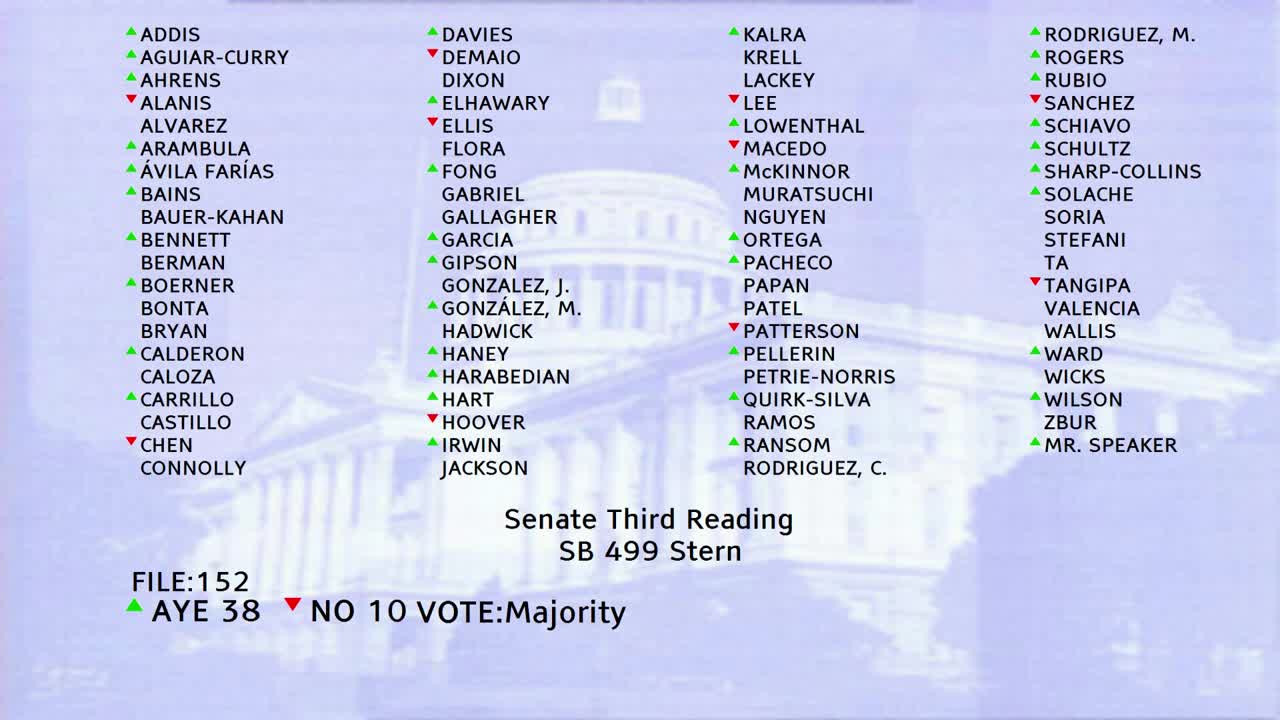 1MIN
Assembly Floor
 4MIN
Assembly Standing Committee on Water, Parks, and Wildlife
 13MIN
Senate Standing Committee on Natural Resources and Water
Bill Author
Bill Co-Author(s):