SB 641: Department of Consumer Affairs and Department of Real Estate: states of emergency: waivers and exemptions.
- Session Year: 2025-2026
- House: Senate
- Latest Version Date: 2025-09-18
Current Status:
Failed
(2026-03-02: Veto sustained.)
Introduced
In Committee
Awaiting First Chamber Vote
Passed First Chamber
In Committee
Awaiting Second Chamber Vote
Passed Second Chamber
Enacted
Existing law establishes in the Business, Consumer Services, and Housing Agency the Department of Real Estate to license and regulate real estate licensees, and the Department of Consumer Affairs, which is composed of various boards that license and regulate various businesses and professions.
This bill would authorize the Department of Real Estate and boards under the jurisdiction of the Department of Consumer Affairs to waive the application of certain provisions of the licensure requirements that the board or department is charged with enforcing for licensees and applicants who reside in or whose primary place of business is in a location damaged by a natural disaster for which a state of emergency is proclaimed by the Governor, as specified, or for which an emergency or major disaster is declared by the President of the United States, including certain examination, fee, and continuing education requirements. The bill would require a board to notify the director of the Department of Consumer Affairs in writing of any waiver approved by that board, and would prohibit the waiver from taking effect for a period of 5 business days after the director receives the notification from the board. The bill would authorize the director to approve or disapprove a waiver within the 5 business days described above, and require the director to notify the board of any decision to approve or disapprove a waiver within those 5 business days. The bill would prohibit a waiver from taking effect if the director disapproves the waiver, and require a waiver that is approved by the director, or that fails to be approved or disapproved by the director within the 5 business days described above, to take effect the following day. The bill would require the Department of Consumer Affairs to, among other things, post each waiver that takes effect on its website.
The bill would exempt the above-described licensees of boards from, among other requirements, the payment of duplicate license fees. The bill would require all applicants and licensees of the boards under the Department of Consumer Affairs to provide the board with an email address. The bill would prohibit a contractor licensed pursuant to the Contractors State License Law from engaging in debris removal unless the contractor has one of specified license qualifications or has been authorized by the registrar of contractors during a declared state of emergency or for a declared disaster area due to a natural disaster. The bill would require a licensee authorized to perform debris removal to pass an approved hazardous substance certification examination, and comply with certain occupational safety and health requirements concerning hazardous waste operations and emergency response, as specified. The bill would require the Real Estate Commissioner, immediately upon the declaration of a natural disaster for which a state of emergency, emergency, or major disaster is proclaimed or declared as described above, to determine the nature and scope of any unlawful, unfair, or fraudulent practices, as specified, and provide specified notice to the public regarding those practices. The bill would authorize the commissioner to suspend or revoke a real estate license if the licensee, until one year following the declaration of a natural disaster for which a state of emergency, emergency, or major disaster is proclaimed or declared as described above, makes an unsolicited offer to an owner of real property to purchase or acquire an interest in the real property, when that property is located in an area included in a declared federal, state, or local emergency or disaster, for an amount less than the fair market value, as defined, of the property or interest of the property, as specified.
This bill would declare that it is to take effect immediately as an urgency statute.
Existing law establishes in the Business, Consumer Services, and Housing Agency the Department of Real Estate to license and regulate real estate licensees, and the Department of Consumer Affairs, which is composed of various boards that license and regulate various businesses and professions.
This bill would authorize the Department of Real Estate and boards under the jurisdiction of the Department of Consumer Affairs to waive the application of certain provisions of the licensure requirements that the board or department is charged with enforcing for licensees and applicants impacted by a declared federal, state, or local emergency or whose home or business is located in a declared disaster area, who reside in or whose primary place of business is in a location damaged by a natural disaster for which a state of emergency is proclaimed by the Governor, as specified, or for which an emergency or major disaster is declared by the President of the United States, including certain examination, fee, and continuing education requirements. The bill would require a board to notify the director of the Department of Consumer Affairs in writing of any waiver approved by that board, and would prohibit the waiver from taking effect for a period of 5 business days after the director receives the notification from the board. The bill would authorize the director to approve or disapprove a waiver within the 5 business days described above, and require the director to notify the board of any decision to approve or disapprove a waiver within those 5 business days. The bill would prohibit a waiver from taking effect if the director disapproves the waiver, and require a waiver that is approved by the director, or that fails to be approved or disapproved by the director within the 5 business days described above, to take effect the following day. The bill would require the Department of Consumer Affairs to, among other things, post each waiver that takes effect on its website.
The bill would exempt impacted the above-described licensees of boards from, among other requirements, the payment of duplicate license fees. The bill would require all applicants and licensees of the Department of Real Estate or boards under the Department of Consumer Affairs to provide the board or department with an email address. The bill would prohibit a contractor licensed pursuant to the Contractors State License Law from engaging in debris removal unless the contractor has one of specified license qualifications or has been authorized by the registrar of contractors during a declared state of emergency or for a declared disaster area. area due to a natural disaster. The bill would require a licensee authorized to perform debris removal to pass an approved hazardous substance certification examination, and comply with certain occupational safety and health requirements concerning hazardous waste operations and emergency response, as specified. The bill would require the Real Estate Commissioner, immediately upon the declaration of a state of emergency, natural disaster for which a state of emergency, emergency, or major disaster is proclaimed or declared as described above, to determine the nature and scope of any unlawful, unfair, or fraudulent practices, as specified, and provide specified notice to the public regarding those practices. The bill would authorize the commissioner to suspend or revoke a real estate license if the licensee licensee, until one year following the declaration of a natural disaster for which a state of emergency, emergency, or major disaster is proclaimed or declared as described above, makes an unsolicited offer to an owner of real property to purchase or acquire an interest in the real property property, when that property is located in an area included in a declared federal, state, or local emergency or disaster, for an amount less than the fair market value value, as defined, of the property or interest of the property if the property is located in a declared disaster area, and would also make a violation of that provision a misdemeanor. By creating a new crime, the bill would impose a state-mandated local program. property, as specified.
The California Constitution requires the state to reimburse local agencies and school districts for certain costs mandated by the state. Statutory provisions establish procedures for making that reimbursement.This bill would provide that no reimbursement is required by this act for a specified reason.This bill would declare that it is to take effect immediately as an urgency statute.
Existing law establishes in the Business, Consumer Services, and Housing Agency the Department of Real Estate to license and regulate real estate licensees, and the Department of Consumer Affairs, which is composed of various boards that license and regulate various businesses and professions.
This bill would authorize the Department of Real Estate and boards under the jurisdiction of the Department of Consumer Affairs to waive the application of certain provisions of the licensure requirements that the board or department is charged with enforcing for licensees and applicants impacted by a declared federal, state, or local emergency or whose home or business is located in a declared disaster area, including certain examination, fee, and continuing education requirements. The bill would exempt impacted licensees of boards from, among other requirements, the payment of duplicate license fees. The bill would require all applicants and licensees of the Department of Real Estate or boards under the Department of Consumer Affairs to provide the board or department with an email address. The bill would prohibit a contractor licensed pursuant to the Contractors State License Law from engaging in debris removal unless the contractor has one of specified license qualifications or as has been authorized by the registrar of contractors during a declared state of emergency or for a declared disaster area, has passed area. The bill would require a licensee authorized to perform debris removal to pass an approved hazardous substance certification examination, and complies comply with certain occupational safety and health requirements concerning hazardous waste operations and emergency response, as specified. The bill would require the Real Estate Commissioner, upon the declaration of a state of emergency, to determine the nature and scope of any unlawful, unfair, or fraudulent practices, as specified, and provide specified notice to the public regarding those practices. The bill would authorize the commissioner to suspend or revoke a real estate license if the licensee makes an unsolicited offer to an owner of real property to purchase or acquire an interest in the real property for an amount less than the fair market value of the property or interest of the property if the property is located in a declared disaster area, and would also make a violation of that provision a misdemeanor. By creating a new crime, the bill would impose a state-mandated local program.
The California Constitution requires the state to reimburse local agencies and school districts for certain costs mandated by the state. Statutory provisions establish procedures for making that reimbursement.
This bill would provide that no reimbursement is required by this act for a specified reason.
This bill would declare that it is to take effect immediately as an urgency statute.
Existing law establishes in the Business, Consumer Services, and Housing Agency the Department of Real Estate to license and regulate real estate licensees, and the Department of Consumer Affairs, which is composed of various boards that license and regulate various businesses and professions.
This bill would authorize the Department of Real Estate and boards under the jurisdiction of the Department of Consumer Affairs to waive the application of certain provisions of the licensure requirements that the board or department is charged with enforcing for licensees and applicants impacted by a declared federal, state, or local emergency or whose home or business is located in a declared disaster area, including certain examination, fee, and continuing education requirements. The bill would exempt impacted licensees of boards from, among other requirements, the payment of duplicate license fees. The bill would require all applicants and licensees of the Department of Real Estate or boards under the Department of Consumer Affairs to provide the board or department with an email address. The bill would prohibit a contractor licensed pursuant to the Contractors State License Law from engaging in private debris removal unless the contractor has one of specified license qualifications or as authorized by the registrar of contractors during a declared state of emergency or for a declared disaster area. area, has passed an approved hazardous substance certification examination, and complies with certain occupational safety and health requirements concerning hazardous waste operations and emergency response, as specified. The bill would require the Real Estate Commissioner, upon the declaration of a state of emergency, to determine the nature and scope of any unlawful, unfair, or fraudulent practices, as specified, and provide specified notice to the public regarding those practices. The bill would authorize the commissioner to suspend or revoke a real estate license if the licensee makes an unsolicited offer to an owner of real property to purchase or acquire an interest in the real property for an amount less than the fair market value of the property or interest of the property if the property is located in a declared disaster area, and would also make a violation of that provision a misdemeanor. By creating a new crime, the bill would impose a state-mandated local program.
The California Constitution requires the state to reimburse local agencies and school districts for certain costs mandated by the state. Statutory provisions establish procedures for making that reimbursement.
This bill would provide that no reimbursement is required by this act for a specified reason.
This bill would declare that it is to take effect immediately as an urgency statute.
Existing law establishes in the Business, Consumer Services, and Housing Agency the Department of Real Estate to license and regulate real estate licensees, and the Department of Consumer Affairs, which is composed of various boards that license and regulate various businesses and professions.
This bill would authorize the Department of Real Estate and boards under the jurisdiction of the Department of Consumer Affairs to waive the application of certain provisions of the licensure requirements that the board or department is charged with enforcing for licensees and applicants impacted by a declared federal, state, or local emergency or whose home or business is located in a declared disaster area, including certain examination, fee, and continuing education requirements. The bill would exempt impacted licensees of boards from, among other requirements, the payment of duplicate license fees. The bill would require all applicants and licensees of the Department of Real Estate or boards under the Department of Consumer Affairs to provide the board or department with an email address. The bill would prohibit a contractor licensed pursuant to the Contractors State License Law from engaging in private debris removal unless the contractor has one of specified license qualifications or as authorized by the registrar of contractors during a declared state of emergency or for a declared disaster area. The bill would require the Real Estate Commissioner, upon the declaration of a state of emergency, to determine the nature and scope of any unlawful, unfair, or fraudulent practices, as specified, and provide specified notice to the public regarding those practices. The bill would authorize the commissioner to suspend or revoke a real estate license if the licensee makes an unsolicited offer to an owner of real property to purchase or acquire an interest in the real property for an amount less than the fair market value of the property or interest of the property if the property is located in a declared disaster area, and would also make a violation of that provision a misdemeanor. By creating a new crime, the bill would impose a state-mandated local program.
The California Constitution requires the state to reimburse local agencies and school districts for certain costs mandated by the state. Statutory provisions establish procedures for making that reimbursement.
This bill would provide that no reimbursement is required by this act for a specified reason.
This bill would declare that it is to take effect immediately as an urgency statute.
It is the intent of the Legislature to provide boards, bureaus, commissions, and regulatory entities within the jurisdiction of the Department of Consumer Affairs and the Department of Real Estate with authority to address licensing and enforcement concerns in real time after an emergency is declared.
SEC. 2.Section 108.1 is added to the Business and Professions Code, to read:108.1.(a)To aid in the protection of the public health, the provision of patient care, the continuity of services, and to support impacted individuals, the Department of Real Estate or any board under the jurisdiction of the Department of Consumer Affairs, as specified in Section 101, may waive the application of any provision of law that the board or department is charged with enforcing for licensees and applicants who reside in or whose primary place of business is in a location damaged by a natural disaster for which a state of emergency is proclaimed by the Governor pursuant to Section 8625 of the Government Code or for which an emergency or major disaster is declared by the President of the United States, that is related to any of the following:
(1)Requirements related to timing for taking examinations.
(2)Extending licensure renewal deadlines.
(3)Permitting license renewal without completing continuing education and postponing continuing education deadlines to a time after renewal.
(4)Permitting license display requirements to include displaying a license verification printout from the boards websites during declared emergencies.
(5)Permitting license renewal without paying the renewal fee and postponing payment of the renewal fee to a time after renewal.
(6)Requirements to pay delinquency fees.
(7)Extending the time for applicants to complete their applications before the application is considered abandoned.
(b)(1)A board shall notify the director of the Department of Consumer Affairs in writing of any waiver approved by that board, and the waiver shall not take effect for a period of five business days after the director receives the notification from the board.
(2)The director may approve or disapprove a waiver within five business days of receiving the notification from the board. The director shall notify the board of any decision to approve or disapprove a waiver within five business days of receiving the notification.
(3)If the director disapproves a waiver, it shall not take effect. If the director approves a waiver, or the director fails to approve or disapprove a waiver within five business days of receiving the notification, the waiver shall take effect the following day.
(4)The Department of Consumer Affairs shall post each waiver that takes effect on its website and notify the appropriate legislative committees of each effective waiver issued by a board within the department.
(c)(1)The authority specified in subdivision (a) shall extend through the duration of a declared federal, state, or local emergency or disaster and for either of the following, as determined by the board or the Department of Real Estate, if the extension will aid in the protection of the public health, the provision of patient care, the continuity of services, or the support of impacted individuals:
(A)One year after the end of the declared emergency or disaster.
(B)An additional period of time beyond one year after the end of the declared emergency or disaster, as determined by the board or the Department of Real Estate.
(2)A waiver extension approved by a board is subject to notification and approval of the director, as specified in subdivision (b).
SEC. 3.Section 122 of the Business and Professions Code is amended to read:122.(a)Except as specified in subdivision (b) or otherwise provided by law, the department and each of the boards, bureaus, committees, and commissions within the department may charge a fee for the processing and issuance of a duplicate copy of any certificate of licensure or other form evidencing licensure or renewal of licensure. The fee shall be in an amount sufficient to cover all costs incident to the issuance of the duplicate certificate or other form but shall not exceed twenty-five dollars ($25).
(b)This section shall not apply to a licensee who resides in or whose primary place of business is in a location damaged by a natural disaster for which a state of emergency is proclaimed by the Governor pursuant to Section 8625 of the Government Code or for which an emergency or major disaster is declared by the President of the United States.
SEC. 4.Section 136 of the Business and Professions Code is amended to read:136.(a)Each person holding a license, certificate, registration, permit, or other authority to engage in a profession or occupation issued by a board within the department shall notify the issuing board at its principal office of any change in the persons mailing address within 30 days after the change, unless the board has specified by regulations a shorter time period.
(b)(1)Except as otherwise provided by law, failure of a licensee to comply with the requirement in subdivision (a) constitutes grounds for the issuance of a citation and administrative fine, if the board has the authority to issue citations and administrative fines.
(2)This section shall not apply to a licensee whose home or business mailing address is located in a location damaged by a natural disaster for which a state of emergency is proclaimed by the Governor pursuant to Section 8625 of the Government Code or for which an emergency or major disaster is declared by the President of the United States.
SEC. 5.Section 136.5 is added to the Business and Professions Code, to read:136.5.Every applicant for licensure and every licensee of a board under the jurisdiction of the Department of Consumer Affairs, as specified in Section 101, shall provide the board with an email address.
SEC. 6.Section 7058.9 is added to the Business and Professions Code, to read:7058.9.(a)Notwithstanding Section 40520 of the Public Resources Code, a contractor shall not engage in debris removal unless the contractor has one of the following licenses or classifications:
(1)A - General Engineering Contractor.
(2)B - General Building Contractor.
(3)C-12 Earthwork and Paving and C-21 Building Moving/Demolition.
(b)During a declared federal, state, or local emergency or for a declared disaster area due to a natural disaster, the registrar may authorize additional classifications to perform debris removal, including muck out services, based on the needs of the declared emergency or disaster. The registrar may make the determination on a case-by-case basis and without requiring regulations.
(c)Any licensee authorized to perform debris removal pursuant to this section shall have passed an approved hazardous substance certification examination and shall comply with the hazardous waste operations and emergency response requirements pursuant to Section 5192 of Title 8 of the California Code of Regulations.
SEC. 7.Section 10089 is added to the Business and Professions Code, to read:10089.Immediately upon the declaration of a natural disaster for which a state of emergency is proclaimed by the Governor pursuant to Section 8625 of the Government Code or for which an emergency or major disaster is declared by the President of the United States, the commissioner, in consultation with other agencies and departments, as appropriate, shall do the following:
(a)Expeditiously, and until one year following the end of the emergency, determine the nature and scope of any unlawful, unfair, or fraudulent practices employed by any individual or entity seeking to take advantage of property owners in the wake of the emergency.
(b)Provide notice to the public of the nature of these practices, their rights under the law, relevant resources that may be available, and contact information for authorities to whom violations may be reported.
SEC. 8.Section 10176 of the Business and Professions Code is amended to read:10176.The commissioner may, upon their own motion, and shall, upon the verified complaint in writing of any person, investigate the actions of any person engaged in the business or acting in the capacity of a real estate licensee within this state, and the commissioner may temporarily suspend or permanently revoke a real estate license at any time where the licensee, while a real estate licensee, in performing or attempting to perform any of the acts within the scope of this chapter has been guilty of any of the following:
(a)Making any substantial misrepresentation.
(b)Making any false promises of a character likely to influence, persuade, or induce.
(c)A continued and flagrant course of misrepresentation or making of false promises through licensees.
(d)Acting for more than one party in a transaction without the knowledge or consent of all parties thereto.
(e)Commingling with their own money or property the money or other property of others that is received and held by the licensee.
(f)Claiming, demanding, or receiving a fee, compensation, or commission under any exclusive agreement authorizing a licensee to perform any acts set forth in Section 10131 for compensation or commission where the agreement does not contain a definite, specified date of final and complete termination.
(g)The claiming or taking by a licensee of any secret or undisclosed amount of compensation, commission, or profit or the failure of a licensee to reveal to the buyer or seller contracting with the licensee the full amount of the licensees compensation, commission, or profit under any agreement authorizing the licensee to do any acts for which a license is required under this chapter for compensation or commission prior to or coincident with the signing of an agreement evidencing the meeting of the minds of the contracting parties, regardless of the form of the agreement, whether evidenced by documents in an escrow or by any other or different procedure.
(h)The use by a licensee of any provision, which allows the licensee an option to purchase, in an agreement with a buyer or seller that authorizes the licensee to sell, buy, or exchange real estate or a business opportunity for compensation or commission, except when the licensee, prior to or coincident with election to exercise the option to purchase, reveals in writing to the buyer or seller the full amount of the licensees profit and obtains the written consent of the buyer or seller approving the amount of the profit.
(i)Any other conduct, whether of the same or of a different character than specified in this section, which constitutes fraud or dishonest dealing.
(j)Obtaining the signature of a prospective buyer to an agreement which provides that the prospective buyer shall either transact the purchasing, leasing, renting, or exchanging of a business opportunity property through the broker obtaining the signature, or pay a compensation to the broker if the property is purchased, leased, rented, or exchanged without the broker first having obtained the written authorization of the owner of the property concerned to offer the property for sale, lease, exchange, or rent.
(k)Failing to disburse funds in accordance with a commitment to make a mortgage loan that is accepted by the applicant when the real estate broker represents to the applicant that the broker is either of the following:
(1)The lender.
(2)Authorized to issue the commitment on behalf of the lender or lenders in the mortgage loan transaction.
(l)Intentionally delaying the closing of a mortgage loan for the sole purpose of increasing interest, costs, fees, or charges payable by the borrower.
(m)Violating any section, division, or article of law which provides that a violation of that section, division, or article of law by a licensed person is a violation of that persons licensing law, if it occurs within the scope of that persons duties as a licensee.
(n)(1)Until one year following the declaration of a natural disaster for which a state of emergency is proclaimed by the Governor pursuant to Section 8625 of the Government Code or for which an emergency or major disaster is declared by the President of the United States, making an unsolicited offer to an owner of real property, on their own behalf or on behalf of another, to purchase or otherwise acquire any interest in the real property, when that property is located in an area included in a declared federal, state, or local emergency or disaster, for an amount less than the fair market value of the property or interest in the property, as that value was the calendar day before the emergency or disaster.
(2)The commissioner may extend the applicability of this subdivision for one additional year, for a total of two years following the declaration of a federal, state, or local emergency or disaster, if the commissioner deems it necessary for the protection of property owners and consumers.
(3)For purposes of this subdivision, fair market value has the same meaning as defined in Section 1263.320 of the Code of Civil Procedure.
SEC. 9.This act is an urgency statute necessary for the immediate preservation of the public peace, health, or safety within the meaning of Article IV of the California Constitution and shall go into immediate effect. The facts constituting the necessity are:
In order to support licensed professionals impacted by the disasters caused by the Palisades and Eaton wildfires, it is necessary that this act take effect immediately.
It is the intent of the Legislature to provide boards, bureaus, commissions, and regulatory entities within the jurisdiction of the Department of Consumer Affairs and the Department of Real Estate with authority to address licensing and enforcement concerns in real time after an emergency is declared.
SEC. 2.Section 108.1 is added to the Business and Professions Code, to read:108.1.(a)For purposes of this section, disaster area means an area for which a federal, state, or local emergency or disaster has been declared.(b)108.1.(a)To aid in the protection of the public health, the provision of patient care, the continuity of services, and to support impacted individuals, the Department of Real Estate or any board under the jurisdiction of the Department of Consumer Affairs, as specified in Section 101, may waive the application of any provision of law that the board or department is charged with enforcing for licensees and applicants impacted by a declared federal, state, or local emergency or whose home or business is located in a disaster area, who reside in or whose primary place of business is in a location damaged by a natural disaster for which a state of emergency is proclaimed by the Governor pursuant to Section 8625 of the Government Code or for which an emergency or major disaster is declared by the President of the United States, that is related to any of the following:
(1)Examination eligibility and timing requirements.(2)Licensure renewal deadlines.(3)Continuing education completion deadlines.(4)License display requirements.(5)Fee submission timing requirements.(6)Delinquency fees.(1)Requirements related to timing for taking examinations.
(2)Extending licensure renewal deadlines.
(3)Permitting license renewal without completing continuing education and postponing continuing education deadlines to a time after renewal.
(4)Permitting license display requirements to include displaying a license verification printout from the boards websites during declared emergencies.
(5)Permitting license renewal without paying the renewal fee and postponing payment of the renewal fee to a time after renewal.
(6)Requirements to pay delinquency fees.
(7)Extending the time for applicants to complete their applications before the application is considered abandoned.
(b)(1)A board shall notify the director of the Department of Consumer Affairs in writing of any waiver approved by that board, and the waiver shall not take effect for a period of five business days after the director receives the notification from the board.
(2)The director may approve or disapprove a waiver within five business days of receiving the notification from the board. The director shall notify the board of any decision to approve or disapprove a waiver within five business days of receiving the notification.
(3)If the director disapproves a waiver, it shall not take effect. If the director approves a waiver, or the director fails to approve or disapprove a waiver within five business days of receiving the notification, the waiver shall take effect the following day.
(4)The Department of Consumer Affairs shall post each waiver that takes effect on its website and notify the appropriate legislative committees of each effective waiver issued by a board within the department.
(c)(1)The authority specified in subdivision (b) (a) shall extend through the duration of a declared federal, state, or local emergency or disaster for licensees and applicants located in a disaster area and for either of the following, as determined by the board or the Department of Real Estate and Estate, if the extension will aid in the protection of the public health, the provision of patient care, the continuity of services, or the support of impacted individuals:
(1)(A)One year after the end of the declared emergency or disaster.
(2)(B)An additional period of time beyond one year after the end of the declared emergency or disaster, as determined by the board or the Department of Real Estate.
(2)A waiver extension approved by a board is subject to notification and approval of the director, as specified in subdivision (b).
SEC. 3.Section 122 of the Business and Professions Code is amended to read:122.(a)Except as specified in subdivision (b) or otherwise provided by law, the department and each of the boards, bureaus, committees, and commissions within the department may charge a fee for the processing and issuance of a duplicate copy of any certificate of licensure or other form evidencing licensure or renewal of licensure. The fee shall be in an amount sufficient to cover all costs incident to the issuance of the duplicate certificate or other form but shall not exceed twenty-five dollars ($25).
(b)This section shall not apply to a licensee impacted by a declared federal, state, or local emergency or disaster or whose home or business is located in an area for which a federal, state, or local emergency or disaster has been declared. who resides in or whose primary place of business is in a location damaged by a natural disaster for which a state of emergency is proclaimed by the Governor pursuant to Section 8625 of the Government Code or for which an emergency or major disaster is declared by the President of the United States.
SEC. 4.Section 136 of the Business and Professions Code is amended to read:136.(a)Each person holding a license, certificate, registration, permit, or other authority to engage in a profession or occupation issued by a board within the department shall notify the issuing board at its principal office of any change in the persons mailing address within 30 days after the change, unless the board has specified by regulations a shorter time period.
(b)(1)Except as otherwise provided by law, failure of a licensee to comply with the requirement in subdivision (a) constitutes grounds for the issuance of a citation and administrative fine, if the board has the authority to issue citations and administrative fines.
(c)(2)This section shall not apply to a licensee whose home or business mailing address is located in an area for which a federal, state, or local emergency or disaster area is declared. a location damaged by a natural disaster for which a state of emergency is proclaimed by the Governor pursuant to Section 8625 of the Government Code or for which an emergency or major disaster is declared by the President of the United States.
SEC. 5.Section 136.5 is added to the Business and Professions Code, to read:136.5.Every applicant for licensure and every licensee of the Department of Real Estate or a board under the jurisdiction of the Department of Consumer Affairs, as specified in Section 101, shall provide the Department of Real Estate or the board with an email address.
SEC. 6.Section 7058.9 is added to the Business and Professions Code, to read:7058.9.(a)Notwithstanding Section 40520 of the Public Resources Code, a contractor shall not engage in debris removal unless the contractor has one of the following licenses or classifications:
(1)A - General Engineering Contractor.
(2)B - General Building Contractor.
(3)C-12 Earthwork and Paving and C-21 Building Moving/Demolition.
(b)During a declared federal, state, or local emergency or for a declared disaster area, area due to a natural disaster, the registrar may authorize additional classifications to perform debris removal, including muck out services, based on the needs of the declared emergency or disaster. The registrar may make the determination on a case-by-case basis and without requiring regulations.
(c)Any licensee authorized to perform debris removal pursuant to this section shall have passed an approved hazardous substance certification examination and shall comply with the hazardous waste operations and emergency response requirements pursuant to Section 5192 of Title 8 of the California Code of Regulations.
SEC. 7.Section 10089 is added to the Business and Professions Code, to read:10089.Immediately upon the declaration of a federal, state, or local emergency or disaster area, natural disaster for which a state of emergency is proclaimed by the Governor pursuant to Section 8625 of the Government Code or for which an emergency or major disaster is declared by the President of the United States, the commissioner, in consultation with other agencies and departments, as appropriate, shall do the following:
(a)Expeditiously, and until one year following the end of the emergency, determine the nature and scope of any unlawful, unfair, or fraudulent practices employed by any individual or entity seeking to take advantage of property owners in the wake of the emergency.
(b)Provide notice to the public of the nature of these practices, their rights under the law, relevant resources that may be available, and contact information for authorities to whom violations may be reported.
SEC. 8.Section 10176 of the Business and Professions Code is amended to read:10176.The commissioner may, upon their own motion, and shall, upon the verified complaint in writing of any person, investigate the actions of any person engaged in the business or acting in the capacity of a real estate licensee within this state, and the commissioner may temporarily suspend or permanently revoke a real estate license at any time where the licensee, while a real estate licensee, in performing or attempting to perform any of the acts within the scope of this chapter has been guilty of any of the following:
(a)Making any substantial misrepresentation.
(b)Making any false promises of a character likely to influence, persuade, or induce.
(c)A continued and flagrant course of misrepresentation or making of false promises through licensees.
(d)Acting for more than one party in a transaction without the knowledge or consent of all parties thereto.
(e)Commingling with their own money or property the money or other property of others that is received and held by the licensee.
(f)Claiming, demanding, or receiving a fee, compensation, or commission under any exclusive agreement authorizing a licensee to perform any acts set forth in Section 10131 for compensation or commission where the agreement does not contain a definite, specified date of final and complete termination.
(g)The claiming or taking by a licensee of any secret or undisclosed amount of compensation, commission, or profit or the failure of a licensee to reveal to the buyer or seller contracting with the licensee the full amount of the licensees compensation, commission, or profit under any agreement authorizing the licensee to do any acts for which a license is required under this chapter for compensation or commission prior to or coincident with the signing of an agreement evidencing the meeting of the minds of the contracting parties, regardless of the form of the agreement, whether evidenced by documents in an escrow or by any other or different procedure.
(h)The use by a licensee of any provision, which allows the licensee an option to purchase, in an agreement with a buyer or seller that authorizes the licensee to sell, buy, or exchange real estate or a business opportunity for compensation or commission, except when the licensee, prior to or coincident with election to exercise the option to purchase, reveals in writing to the buyer or seller the full amount of the licensees profit and obtains the written consent of the buyer or seller approving the amount of the profit.
(i)Any other conduct, whether of the same or of a different character than specified in this section, which constitutes fraud or dishonest dealing.
(j)Obtaining the signature of a prospective buyer to an agreement which provides that the prospective buyer shall either transact the purchasing, leasing, renting, or exchanging of a business opportunity property through the broker obtaining the signature, or pay a compensation to the broker if the property is purchased, leased, rented, or exchanged without the broker first having obtained the written authorization of the owner of the property concerned to offer the property for sale, lease, exchange, or rent.
(k)Failing to disburse funds in accordance with a commitment to make a mortgage loan that is accepted by the applicant when the real estate broker represents to the applicant that the broker is either of the following:
(1)The lender.
(2)Authorized to issue the commitment on behalf of the lender or lenders in the mortgage loan transaction.
(l)Intentionally delaying the closing of a mortgage loan for the sole purpose of increasing interest, costs, fees, or charges payable by the borrower.
(m)Violating any section, division, or article of law which provides that a violation of that section, division, or article of law by a licensed person is a violation of that persons licensing law, if it occurs within the scope of that persons duties as a licensee.
(n)(1)Making Until one year following the declaration of a natural disaster for which a state of emergency is proclaimed by the Governor pursuant to Section 8625 of the Government Code or for which an emergency or major disaster is declared by the President of the United States, making an unsolicited offer to an owner of real property, on their own behalf or on behalf of a client, another, to purchase or otherwise acquire any interest in the real property property, when that property is located in an area included in a declared federal, state, or local emergency or disaster, for an amount less than the fair market value of the property or interest in the property when that property is located in an area included in a declared federal, state, or local emergency or disaster area, for the duration of the declared emergency and for one year thereafter. property, as that value was the calendar day before the emergency or disaster.
(2)Any person, including, but not limited to, an officer, director, agent, or employee of a corporation, who violates this subdivision is guilty of a misdemeanor punishable by a fine of up to ten thousand dollars ($10,000), by imprisonment for up to six months, or both.(2)The commissioner may extend the applicability of this subdivision for one additional year, for a total of two years following the declaration of a federal, state, or local emergency or disaster, if the commissioner deems it necessary for the protection of property owners and consumers.
(3)For purposes of this subdivision, fair market value has the same meaning as defined in Section 1263.320 of the Code of Civil Procedure.
SEC. 9.No reimbursement is required by this act pursuant to Section 6 of Article XIIIB of the California Constitution because the only costs that may be incurred by a local agency or school district will be incurred because this act creates a new crime or infraction, eliminates a crime or infraction, or changes the penalty for a crime or infraction, within the meaning of Section 17556 of the Government Code, or changes the definition of a crime within the meaning of Section 6 of Article XIIIB of the California Constitution.SEC. 10.SEC. 9.This act is an urgency statute necessary for the immediate preservation of the public peace, health, or safety within the meaning of Article IV of the California Constitution and shall go into immediate effect. The facts constituting the necessity are:
In order to support licensed professionals impacted by the disasters caused by the Palisades and Eaton wildfires, it is necessary that this act take effect immediately.
It is the intent of the Legislature to provide boards, bureaus, commissions, and regulatory entities within the jurisdiction of the Department of Consumer Affairs and the Department of Real Estate with authority to address licensing and enforcement concerns in real time after an emergency is declared. The Legislature does not intend for any provision of this bill to require regulations to implement.
SEC. 2.Section 108.1 is added to the Business and Professions Code, to read:108.1.(a)For purposes of this section, disaster area means an area for which a federal, state, or local emergency or disaster has been declared.
(b)To aid in the protection of the public health, the provision of patient care, the continuity of services, and to support impacted individuals, the Department of Real Estate or any board under the jurisdiction of the Department of Consumer Affairs, as specified in Section 101, may waive the application of any provision of law that the board or department is charged with enforcing for licensees and applicants impacted by a declared federal, state, or local emergency or whose home or business is located in a disaster area, that is related to any of the following:
(1)Examination eligibility and timing requirements.
(2)Licensure renewal deadlines.
(3)Continuing education completion deadlines.
(4)License display requirements.
(5)Fee submission timing requirements.
(6)Delinquency fees.
(c)The authority specified in subdivision (b) shall extend through the duration of a declared federal, state, or local emergency or disaster for licensees and applicants located in a disaster area and for either of the following, as determined by the board or the Department of Real Estate and will aid in the protection of the public health, the provision of patient care, the continuity of services, or the support of impacted individuals:
(1)One year after the end of the declared emergency or disaster.
(2)An additional period of time beyond one year after the end of the declared emergency or disaster, as determined by the board or the Department of Real Estate.
SEC. 3.Section 122 of the Business and Professions Code is amended to read:122.(a)Except as specified in subdivision (b) or otherwise provided by law, the department and each of the boards, bureaus, committees, and commissions within the department may charge a fee for the processing and issuance of a duplicate copy of any certificate of licensure or other form evidencing licensure or renewal of licensure. The fee shall be in an amount sufficient to cover all costs incident to the issuance of the duplicate certificate or other form but shall not exceed twenty-five dollars ($25).
(b)This section shall not apply to a licensee impacted by a declared federal, state, or local emergency or disaster or whose home or business is located in an area for which a federal, state, or local emergency or disaster has been declared.
SEC. 4.Section 136 of the Business and Professions Code is amended to read:136.(a)Each person holding a license, certificate, registration, permit, or other authority to engage in a profession or occupation issued by a board within the department shall notify the issuing board at its principal office of any change in the persons mailing address within 30 days after the change, unless the board has specified by regulations a shorter time period.
(b)Except as otherwise provided by law, failure of a licensee to comply with the requirement in subdivision (a) constitutes grounds for the issuance of a citation and administrative fine, if the board has the authority to issue citations and administrative fines.
(c)This section shall not apply to a licensee whose home or business mailing address is located in an area for which a federal, state, or local emergency or disaster area is declared.
SEC. 5.Section 136.5 is added to the Business and Professions Code, to read:136.5.Every applicant for licensure and every licensee of the Department of Real Estate or a board under the jurisdiction of the Department of Consumer Affairs, as specified in Section 101, shall provide the Department of Real Estate or the board with an email address.
SEC. 6.Section 7058.9 is added to the Business and Professions Code, to read:7058.9.(a)Notwithstanding Section 40520 of the Public Resources Code, a contractor shall not engage in debris removal unless the contractor has one of the following licenses or classifications:
(1)A - General Engineering Contractor.
(2)B - General Building Contractor.
(3)C-12 Earthwork and Paving and C-21 Building Moving/Demolition.
(b)During a declared federal, state, or local emergency or for a declared disaster area, the registrar may authorize additional classifications to perform debris removal, including muck out services, based on the needs of the declared emergency or disaster. The registrar may make the determination on a case-by-case basis and without requiring regulations.
(c)Any licensee authorized to perform debris removal pursuant to this section shall have passed an approved hazardous substance certification examination and shall comply with the hazardous waste operations and emergency response requirements pursuant to Section 5192 of Title 8 of the California Code of Regulations.
SEC. 7.Section 10089 is added to the Business and Professions Code, to read:10089.Immediately upon the declaration of a federal, state, or local emergency or disaster area, the commissioner, in consultation with other agencies and departments, as appropriate, shall do the following:
(a)Expeditiously, and until one year following the end of the emergency, determine the nature and scope of any unlawful, unfair, or fraudulent practices employed by any individual or entity seeking to take advantage of property owners in the wake of the emergency.
(b)Provide notice to the public of the nature of these practices, their rights under the law, relevant resources that may be available, and contact information for authorities to whom violations may be reported.
SEC. 8.Section 10176 of the Business and Professions Code is amended to read:10176.The commissioner may, upon their own motion, and shall, upon the verified complaint in writing of any person, investigate the actions of any person engaged in the business or acting in the capacity of a real estate licensee within this state, and the commissioner may temporarily suspend or permanently revoke a real estate license at any time where the licensee, while a real estate licensee, in performing or attempting to perform any of the acts within the scope of this chapter has been guilty of any of the following:
(a)Making any substantial misrepresentation.
(b)Making any false promises of a character likely to influence, persuade, or induce.
(c)A continued and flagrant course of misrepresentation or making of false promises through licensees.
(d)Acting for more than one party in a transaction without the knowledge or consent of all parties thereto.
(e)Commingling with their own money or property the money or other property of others that is received and held by the licensee.
(f)Claiming, demanding, or receiving a fee, compensation, or commission under any exclusive agreement authorizing a licensee to perform any acts set forth in Section 10131 for compensation or commission where the agreement does not contain a definite, specified date of final and complete termination.
(g)The claiming or taking by a licensee of any secret or undisclosed amount of compensation, commission, or profit or the failure of a licensee to reveal to the buyer or seller contracting with the licensee the full amount of the licensees compensation, commission, or profit under any agreement authorizing the licensee to do any acts for which a license is required under this chapter for compensation or commission prior to or coincident with the signing of an agreement evidencing the meeting of the minds of the contracting parties, regardless of the form of the agreement, whether evidenced by documents in an escrow or by any other or different procedure.
(h)The use by a licensee of any provision, which allows the licensee an option to purchase, in an agreement with a buyer or seller that authorizes the licensee to sell, buy, or exchange real estate or a business opportunity for compensation or commission, except when the licensee, prior to or coincident with election to exercise the option to purchase, reveals in writing to the buyer or seller the full amount of the licensees profit and obtains the written consent of the buyer or seller approving the amount of the profit.
(i)Any other conduct, whether of the same or of a different character than specified in this section, which constitutes fraud or dishonest dealing.
(j)Obtaining the signature of a prospective buyer to an agreement which provides that the prospective buyer shall either transact the purchasing, leasing, renting, or exchanging of a business opportunity property through the broker obtaining the signature, or pay a compensation to the broker if the property is purchased, leased, rented, or exchanged without the broker first having obtained the written authorization of the owner of the property concerned to offer the property for sale, lease, exchange, or rent.
(k)Failing to disburse funds in accordance with a commitment to make a mortgage loan that is accepted by the applicant when the real estate broker represents to the applicant that the broker is either of the following:
(1)The lender.
(2)Authorized to issue the commitment on behalf of the lender or lenders in the mortgage loan transaction.
(l)Intentionally delaying the closing of a mortgage loan for the sole purpose of increasing interest, costs, fees, or charges payable by the borrower.
(m)Violating any section, division, or article of law which provides that a violation of that section, division, or article of law by a licensed person is a violation of that persons licensing law, if it occurs within the scope of that persons duties as a licensee.
(n)(1)Making an unsolicited offer to an owner of real property, on their own behalf or on behalf of a client, to purchase or otherwise acquire any interest in the real property for an amount less than the fair market value of the property or interest in the property when that property is located in an area included in a declared federal, state, or local emergency or disaster area, for the duration of the declared emergency and for one year thereafter.
(2)Any person, including, but not limited to, an officer, director, agent, or employee of a corporation, who violates this subdivision is guilty of a misdemeanor punishable by a fine of up to ten thousand dollars ($10,000), by imprisonment for up to six months, or both.
SEC. 9.No reimbursement is required by this act pursuant to Section 6 of Article XIIIB of the California Constitution because the only costs that may be incurred by a local agency or school district will be incurred because this act creates a new crime or infraction, eliminates a crime or infraction, or changes the penalty for a crime or infraction, within the meaning of Section 17556 of the Government Code, or changes the definition of a crime within the meaning of Section 6 of Article XIIIB of the California Constitution.
SEC. 10.This act is an urgency statute necessary for the immediate preservation of the public peace, health, or safety within the meaning of Article IV of the California Constitution and shall go into immediate effect. The facts constituting the necessity are:
In order to support licensed professionals impacted by the disasters caused by the Palisades and Eaton wildfires, it is necessary that this act take effect immediately.
It is the intent of the Legislature to provide boards, bureaus, commissions, and regulatory entities within the jurisdiction of the Department of Consumer Affairs and the Department of Real Estate with authority to address licensing and enforcement concerns in real time after an emergency is declared. The Legislature does not intend for any provision of this bill to require regulations to implement.
SEC. 2.Section 108.1 is added to the Business and Professions Code, to read:108.1.(a)For purposes of this section, disaster area means an area for which a federal, state, or local emergency or disaster has been declared.
(b)To aid in the protection of the public health, the provision of patient care, the continuity of services, and to support impacted individuals, the Department of Real Estate or any board under the jurisdiction of the Department of Consumer Affairs, as specified in Section 101, may waive the application of any provision of law that the board or department is charged with enforcing for licensees and applicants impacted by a declared federal, state, or local emergency or whose home or business is located in a disaster area, that is related to any of the following:
(1)Examination eligibility and timing requirements.
(2)Licensure renewal deadlines.
(3)Continuing education completion deadlines.
(4)License display requirements.
(5)Fee submission timing requirements.
(6)Delinquency fees.
(c)The authority specified in subdivision (b) shall extend through the duration of a declared federal, state, or local emergency or disaster for licensees and applicants located in a disaster area and for either of the following, as determined by the board or the Department of Real Estate and will aid in the protection of the public health, the provision of patient care, the continuity of services, or the support of impacted individuals:
(1)One year after the end of the declared emergency or disaster.
(2)An additional period of time beyond one year after the end of the declared emergency or disaster, as determined by the board or the Department of Real Estate.
SEC. 3.Section 122 of the Business and Professions Code is amended to read:122.(a)Except as specified in subdivision (b) or otherwise provided by law, the department and each of the boards, bureaus, committees, and commissions within the department may charge a fee for the processing and issuance of a duplicate copy of any certificate of licensure or other form evidencing licensure or renewal of licensure. The fee shall be in an amount sufficient to cover all costs incident to the issuance of the duplicate certificate or other form but shall not exceed twenty-five dollars ($25).
(b)This section shall not apply to a licensee impacted by a declared federal, state, or local emergency or disaster or whose home or business is located in an area for which a federal, state, or local emergency or disaster has been declared.
SEC. 4.Section 136 of the Business and Professions Code is amended to read:136.(a)Each person holding a license, certificate, registration, permit, or other authority to engage in a profession or occupation issued by a board within the department shall notify the issuing board at its principal office of any change in the persons mailing address within 30 days after the change, unless the board has specified by regulations a shorter time period.
(b)Except as otherwise provided by law, failure of a licensee to comply with the requirement in subdivision (a) constitutes grounds for the issuance of a citation and administrative fine, if the board has the authority to issue citations and administrative fines.
(c)This section shall not apply to a licensee whose home or business mailing address is located in an area for which a federal, state, or local emergency or disaster area is declared.
SEC. 5.Section 136.5 is added to the Business and Professions Code, to read:136.5.Every applicant for licensure and every licensee of the Department of Real Estate or a board under the jurisdiction of the Department of Consumer Affairs, as specified in Section 101, shall provide the Department of Real Estate or the board with an email address.
SEC. 6.Section 7058.9 is added to the Business and Professions Code, to read:7058.9.(a)A Notwithstanding Section 40520 of the Public Resources Code, a contractor shall not engage in private debris removal unless the contractor has one of the following licenses or classifications:
(1)A - General Engineering Contractor.
(2)B - General Building Contractor.
(3)A C-61 - Limited Specialty Contractor Classification for Debris Removal and Flood Muck Out. The board may adopt regulations to define the scope and requirements of this classification.(3)C-12 Earthwork and Paving and C-21 Building Moving/Demolition.
(b)During a declared federal, state, or local emergency or for a declared disaster area, the registrar may authorize additional classifications to perform private debris removal or removal, including muck out services services, based on the needs of the declared emergency or disaster.
(1)The registrar may make the determination on a case-by-case basis and without requiring regulations.
(2)The registrar may require the qualifier for the license to have passed an approved hazardous substance certification examination as the disaster requires.(c)Any licensee authorized to perform debris removal pursuant to this section shall have passed an approved hazardous substance certification examination and shall comply with the hazardous waste operations and emergency response requirements pursuant to Section 5192 of Title 8 of the California Code of Regulations.
SEC. 7.Section 10089 is added to the Business and Professions Code, to read:10089.Immediately upon the declaration of a federal, state, or local emergency or disaster area, the commissioner, in consultation with other agencies and departments, as appropriate, shall do the following:
(a)Expeditiously, and until 90 days one year following the end of the emergency, determine the nature and scope of any unlawful, unfair, or fraudulent practices employed by any individual or entity seeking to take advantage of property owners in the wake of the emergency.
(b)Provide notice to the public of the nature of these practices, their rights under the law, relevant resources that may be available, and contact information for authorities to whom violations may be reported.
SEC. 8.Section 10176 of the Business and Professions Code is amended to read:10176.The commissioner may, upon their own motion, and shall, upon the verified complaint in writing of any person, investigate the actions of any person engaged in the business or acting in the capacity of a real estate licensee within this state, and the commissioner may temporarily suspend or permanently revoke a real estate license at any time where the licensee, while a real estate licensee, in performing or attempting to perform any of the acts within the scope of this chapter has been guilty of any of the following:
(a)Making any substantial misrepresentation.
(b)Making any false promises of a character likely to influence, persuade, or induce.
(c)A continued and flagrant course of misrepresentation or making of false promises through licensees.
(d)Acting for more than one party in a transaction without the knowledge or consent of all parties thereto.
(e)Commingling with their own money or property the money or other property of others that is received and held by the licensee.
(f)Claiming, demanding, or receiving a fee, compensation, or commission under any exclusive agreement authorizing a licensee to perform any acts set forth in Section 10131 for compensation or commission where the agreement does not contain a definite, specified date of final and complete termination.
(g)The claiming or taking by a licensee of any secret or undisclosed amount of compensation, commission, or profit or the failure of a licensee to reveal to the buyer or seller contracting with the licensee the full amount of the licensees compensation, commission, or profit under any agreement authorizing the licensee to do any acts for which a license is required under this chapter for compensation or commission prior to or coincident with the signing of an agreement evidencing the meeting of the minds of the contracting parties, regardless of the form of the agreement, whether evidenced by documents in an escrow or by any other or different procedure.
(h)The use by a licensee of any provision, which allows the licensee an option to purchase, in an agreement with a buyer or seller that authorizes the licensee to sell, buy, or exchange real estate or a business opportunity for compensation or commission, except when the licensee, prior to or coincident with election to exercise the option to purchase, reveals in writing to the buyer or seller the full amount of the licensees profit and obtains the written consent of the buyer or seller approving the amount of the profit.
(i)Any other conduct, whether of the same or of a different character than specified in this section, which constitutes fraud or dishonest dealing.
(j)Obtaining the signature of a prospective buyer to an agreement which provides that the prospective buyer shall either transact the purchasing, leasing, renting, or exchanging of a business opportunity property through the broker obtaining the signature, or pay a compensation to the broker if the property is purchased, leased, rented, or exchanged without the broker first having obtained the written authorization of the owner of the property concerned to offer the property for sale, lease, exchange, or rent.
(k)Failing to disburse funds in accordance with a commitment to make a mortgage loan that is accepted by the applicant when the real estate broker represents to the applicant that the broker is either of the following:
(1)The lender.
(2)Authorized to issue the commitment on behalf of the lender or lenders in the mortgage loan transaction.
(l)Intentionally delaying the closing of a mortgage loan for the sole purpose of increasing interest, costs, fees, or charges payable by the borrower.
(m)Violating any section, division, or article of law which provides that a violation of that section, division, or article of law by a licensed person is a violation of that persons licensing law, if it occurs within the scope of that persons duties as a licensee.
(n)(1)Making an unsolicited offer to an owner of real property, on their own behalf or on behalf of a client, to purchase or otherwise acquire any interest in the real property for an amount less than the fair market value of the property or interest in the property when that property is located in an area included in a declared federal, state, or local emergency or disaster area, for the duration of the declared emergency and for three months one year thereafter.
(2)Any person, including, but not limited to, an officer, director, agent, or employee of a corporation, who violates this subdivision is guilty of a misdemeanor punishable by a fine of up to ten thousand dollars ($10,000), by imprisonment for up to six months, or both.
SEC. 9.No reimbursement is required by this act pursuant to Section 6 of Article XIIIB of the California Constitution because the only costs that may be incurred by a local agency or school district will be incurred because this act creates a new crime or infraction, eliminates a crime or infraction, or changes the penalty for a crime or infraction, within the meaning of Section 17556 of the Government Code, or changes the definition of a crime within the meaning of Section 6 of Article XIIIB of the California Constitution.
SEC. 10.This act is an urgency statute necessary for the immediate preservation of the public peace, health, or safety within the meaning of Article IV of the California Constitution and shall go into immediate effect. The facts constituting the necessity are:
In order to support licensed professionals impacted by the disasters caused by the Palisades and Eaton wildfires, it is necessary that this act take effect immediately.
It is the intent of the Legislature to provide boards, bureaus, commissions, and regulatory entities within the jurisdiction of the Department of Consumer Affairs and the Department of Real Estate with authority to address licensing and enforcement concerns in real time after an emergency is declared. The Legislature does not intend for any provision of this bill to require regulations to implement.
SEC. 2.Section 108.1 is added to the Business and Professions Code, to read:108.1.(a)For purposes of this section, disaster area means an area for which a federal, state, or local emergency or disaster has been declared.
(b)To aid in the protection of the public health, the provision of patient care, the continuity of services, and to support impacted individuals, the Department of Real Estate or any board under the jurisdiction of the Department of Consumer Affairs, as specified in Section 101, may waive the application of any provision of law that the board or department is charged with enforcing for licensees and applicants impacted by a declared federal, state, or local emergency or whose home or business is located in a disaster area, that is related to any of the following:
(1)Examination eligibility and timing requirements.
(2)Licensure renewal deadlines.
(3)Continuing education completion deadlines.
(4)License display requirements.
(5)Fee submission timing requirements.
(6)Delinquency fees.
(c)The authority specified in subdivision (b) shall extend through the duration of a declared federal, state, or local emergency or disaster for licensees and applicants located in a disaster area and for either of the following, as determined by the board or the Department of Real Estate and will aid in the protection of the public health, the provision of patient care, the continuity of services, or the support of impacted individuals:
(1)One year after the end of the declared emergency or disaster.
(2)An additional period of time beyond one year after the end of the declared emergency or disaster, as determined by the board or the Department of Real Estate.
SEC. 3.Section 122 of the Business and Professions Code is amended to read:122.(a)Except as specified in subdivision (b) or otherwise provided by law, the department and each of the boards, bureaus, committees, and commissions within the department may charge a fee for the processing and issuance of a duplicate copy of any certificate of licensure or other form evidencing licensure or renewal of licensure. The fee shall be in an amount sufficient to cover all costs incident to the issuance of the duplicate certificate or other form but shall not exceed twenty-five dollars ($25).
(b)This section shall not apply to a licensee impacted by a declared federal, state, or local emergency or disaster or whose home or business is located in an area for which a federal, state, or local emergency or disaster has been declared.
SEC. 4.Section 136 of the Business and Professions Code is amended to read:136.(a)Each person holding a license, certificate, registration, permit, or other authority to engage in a profession or occupation issued by a board within the department shall notify the issuing board at its principal office of any change in the persons mailing address within 30 days after the change, unless the board has specified by regulations a shorter time period.
(b)Except as otherwise provided by law, failure of a licensee to comply with the requirement in subdivision (a) constitutes grounds for the issuance of a citation and administrative fine, if the board has the authority to issue citations and administrative fines.
(c)This section shall not apply to a licensee whose home or business mailing address is located in an area for which a federal, state, or local emergency or disaster area is declared.
SEC. 5.Section 136.5 is added to the Business and Professions Code, to read:136.5.Every applicant for licensure and every licensee of the Department of Real Estate or a board under the jurisdiction of the Department of Consumer Affairs, as specified in Section 101, shall provide the Department of Real Estate or the board with an email address.
SEC. 6.Section 7058.9 is added to the Business and Professions Code, to read:7058.9.(a)A contractor shall not engage in private debris removal unless the contractor has one of the following licenses or classifications:
(1)A - General Engineering Contractor.
(2)B - General Building Contractor.
(3)A C-61 - Limited Specialty Contractor Classification for Debris Removal and Flood Muck Out. The board may adopt regulations to define the scope and requirements of this classification.
(b)During a declared federal, state, or local emergency or for a declared disaster area, the registrar may authorize additional classifications to perform private debris removal or muck out services based on the needs of the declared emergency or disaster.
(1)The registrar may make the determination on a case-by-case basis and without requiring regulations.
(2)The registrar may require the qualifier for the license to have passed an approved hazardous substance certification examination as the disaster requires.
SEC. 7.Section 10089 is added to the Business and Professions Code, to read:10089.Immediately upon the declaration of a federal, state, or local emergency or disaster area, the commissioner, in consultation with other agencies and departments, as appropriate, shall do the following:
(a)Expeditiously, and until 90 days following the end of the emergency, determine the nature and scope of any unlawful, unfair, or fraudulent practices employed by any individual or entity seeking to take advantage of property owners in the wake of the emergency.
(b)Provide notice to the public of the nature of these practices, their rights under the law, relevant resources that may be available, and contact information for authorities to whom violations may be reported.
SEC. 8.Section 10176 of the Business and Professions Code is amended to read:10176.The commissioner may, upon his or her their own motion, and shall, upon the verified complaint in writing of any person, investigate the actions of any person engaged in the business or acting in the capacity of a real estate licensee within this state, and he or she the commissioner may temporarily suspend or permanently revoke a real estate license at any time where the licensee, while a real estate licensee, in performing or attempting to perform any of the acts within the scope of this chapter has been guilty of any of the following:
(a)Making any substantial misrepresentation.
(b)Making any false promises of a character likely to influence, persuade, or induce.
(c)A continued and flagrant course of misrepresentation or making of false promises through licensees.
(d)Acting for more than one party in a transaction without the knowledge or consent of all parties thereto.
(e)Commingling with his or her their own money or property the money or other property of others which that is received and held by him or her. the licensee.
(f)Claiming, demanding, or receiving a fee, compensation, or commission under any exclusive agreement authorizing a licensee to perform any acts set forth in Section 10131 for compensation or commission where the agreement does not contain a definite, specified date of final and complete termination.
(g)The claiming or taking by a licensee of any secret or undisclosed amount of compensation, commission, or profit or the failure of a licensee to reveal to the buyer or seller contracting with the licensee the full amount of the licensees compensation, commission, or profit under any agreement authorizing the licensee to do any acts for which a license is required under this chapter for compensation or commission prior to or coincident with the signing of an agreement evidencing the meeting of the minds of the contracting parties, regardless of the form of the agreement, whether evidenced by documents in an escrow or by any other or different procedure.
(h)The use by a licensee of any provision, which allows the licensee an option to purchase, in an agreement with a buyer or seller that authorizes the licensee to sell, buy, or exchange real estate or a business opportunity for compensation or commission, except when the licensee, prior to or coincident with election to exercise the option to purchase, reveals in writing to the buyer or seller the full amount of the licensees profit and obtains the written consent of the buyer or seller approving the amount of the profit.
(i)Any other conduct, whether of the same or of a different character than specified in this section, which constitutes fraud or dishonest dealing.
(j)Obtaining the signature of a prospective buyer to an agreement which provides that the prospective buyer shall either transact the purchasing, leasing, renting, or exchanging of a business opportunity property through the broker obtaining the signature, or pay a compensation to the broker if the property is purchased, leased, rented, or exchanged without the broker first having obtained the written authorization of the owner of the property concerned to offer the property for sale, lease, exchange, or rent.
(k)Failing to disburse funds in accordance with a commitment to make a mortgage loan that is accepted by the applicant when the real estate broker represents to the applicant that the broker is either of the following:
(1)The lender.
(2)Authorized to issue the commitment on behalf of the lender or lenders in the mortgage loan transaction.
(l)Intentionally delaying the closing of a mortgage loan for the sole purpose of increasing interest, costs, fees, or charges payable by the borrower.
(m)Violating any section, division, or article of law which provides that a violation of that section, division, or article of law by a licensed person is a violation of that persons licensing law, if it occurs within the scope of that persons duties as a licensee.
(n)(1)Making an unsolicited offer to an owner of real property, on their own behalf or on behalf of a client, to purchase or otherwise acquire any interest in the real property for an amount less than the fair market value of the property or interest in the property when that property is located in an area included in a declared federal, state, or local emergency or disaster area, for the duration of the declared emergency and for three months thereafter.
(2)Any person, including, but not limited to, an officer, director, agent, or employee of a corporation, who violates this subdivision is guilty of a misdemeanor punishable by a fine of up to ten thousand dollars ($10,000), by imprisonment for up to six months, or both.
SEC. 9.No reimbursement is required by this act pursuant to Section 6 of Article XIIIB of the California Constitution because the only costs that may be incurred by a local agency or school district will be incurred because this act creates a new crime or infraction, eliminates a crime or infraction, or changes the penalty for a crime or infraction, within the meaning of Section 17556 of the Government Code, or changes the definition of a crime within the meaning of Section 6 of Article XIIIB of the California Constitution.
SEC. 10.This act is an urgency statute necessary for the immediate preservation of the public peace, health, or safety within the meaning of Article IV of the California Constitution and shall go into immediate effect. The facts constituting the necessity are:
In order to support licensed professionals impacted by the disasters caused by the Palisades and Eaton wildfires, it is necessary that this act take effect immediately.
|
Date
|
Status
|
|---|---|
| Mar 2, 2026 | Veto sustained. |
| Mar 2, 2026 | Stricken from file. |
| Oct 13, 2025 | In Senate. Consideration of Governor's veto pending. |
| Oct 13, 2025 | Vetoed by the Governor. |
| Sep 23, 2025 | Enrolled and presented to the Governor at 2 p.m. |
| Sep 13, 2025 | Assembly amendments concurred in. (Ayes 37. Noes 0. Page 3025.) Ordered to engrossing and enrolling. |
| Sep 12, 2025 | In Senate. Concurrence in Assembly amendments pending. |
| Sep 12, 2025 | Read third time. Urgency clause adopted. Passed. (Ayes 80. Noes 0. Page 3394.) Ordered to the Senate. |
| Sep 4, 2025 | Ordered to third reading. |
| Sep 4, 2025 | Read third time and amended. |
| Sep 3, 2025 | Read second time. Ordered to third reading. |
| Sep 2, 2025 | Read second time and amended. Ordered to second reading. |
| Aug 29, 2025 | From committee: Do pass as amended. (Ayes 11. Noes 0.) (August 29). |
| Aug 20, 2025 | August 20 set for first hearing. Placed on APPR. suspense file. |
| Jul 8, 2025 | From committee: Do pass and re-refer to Com. on APPR. (Ayes 17. Noes 0.) (July 8). Re-referred to Com. on APPR. |
| Jun 9, 2025 | Referred to Com. on B. & P. |
| Jun 4, 2025 | In Assembly. Read first time. Held at Desk. |
| Jun 3, 2025 | Read third time. Urgency clause adopted. Passed. (Ayes 39. Noes 0. Page 1453.) Ordered to the Assembly. |
| May 29, 2025 | Ordered to third reading. |
| May 29, 2025 | From special consent calendar on motion of Senator Ashby. |
| May 27, 2025 | Ordered to special consent calendar. |
| May 23, 2025 | Read second time. Ordered to third reading. |
| May 23, 2025 | From committee: Do pass. (Ayes 6. Noes 0. Page 1207.) (May 23). |
| May 16, 2025 | Set for hearing May 23. |
| May 12, 2025 | May 12 hearing: Placed on APPR. suspense file. |
| May 2, 2025 | Set for hearing May 12. |
| Apr 30, 2025 | From committee: Do pass and re-refer to Com. on APPR. with recommendation: To consent calendar. (Ayes 6. Noes 0. Page 945.) (April 29). Re-referred to Com. on APPR. |
| Apr 11, 2025 | Set for hearing April 29. |
| Apr 9, 2025 | Read second time and amended. Re-referred to Com. on PUB. S. |
| Apr 8, 2025 | From committee: Do pass as amended and re-refer to Com. on PUB. S. (Ayes 10. Noes 0. Page 680.) (April 7). |
| Mar 18, 2025 | Set for hearing April 7. |
| Mar 5, 2025 | Referred to Coms. on B. P. & E.D. and PUB. S. |
| Feb 21, 2025 | From printer. May be acted upon on or after March 23. |
| Feb 20, 2025 | Introduced. Read first time. To Com. on RLS. for assignment. To print. |
|
Date
|
Description
|
Location
|
Votes
|
|
|---|---|---|---|---|
| Sep 13, 2025 | Unfinished Business SB641 Ashby et al. Urgency Clause Concurrence | Senate Floor |
Passed |
|
| Sep 12, 2025 | Unfinished Business SB641 Ashby et al. Urgency Clause Concurrence | Senate Floor |
Passed |
|
| Sep 12, 2025 | SB 641 Ashby Third Reading Urgency By Nguyen | Assembly Floor |
Passed |
|
| Aug 29, 2025 | Do pass as amended. | Assembly Standing Committee on Appropriations |
Passed |
|
| Jul 8, 2025 | Do pass and be re-referred to the Committee on [Appropriations] | Assembly Standing Committee on Business and Professions |
Passed |
|
| Jun 3, 2025 | Senate 3rd Reading SB641 Ashby et al. Urgency Clause | Senate Floor |
Passed |
|
| May 23, 2025 | Do pass | Senate Standing Committee on Appropriations |
Passed |
|
| May 12, 2025 | Placed on suspense file | Senate Standing Committee on Appropriations |
Passed |
|
| Apr 29, 2025 | Do pass, but first be re-referred to the Committee on [Appropriations] with the recommendation: To Consent Calendar | Senate Standing Committee on Public Safety |
Passed |
|
| Apr 7, 2025 | Do pass as amended, but first amend, and re-refer to the Committee on [Public Safety] | Senate Standing Committee on Business, Professions and Economic Development |
Passed |
This list shows positions taken on this bill by organizations on the date displayed, which is linked to the original source.
Positions by individuals are not included.
|
Organization
|
Position
|
Date
|
|---|---|---|
| California Association Of Licensed Investigators | ** Support | |
| California Board of Psychology | ** Support | |
| California State Board of Pharmacy | ** Support | |
| Contractors State License Board | ** Support | |
| Osteopathic Medical Board of California | ** Support |
SENATE RULES COMMITTEE Office of Senate Floor Analyses (916) 651-1520 Fax: (916) 327-4478 | SB 641 |
VETO
Bill No: SB 641
Author: Ashby (D), et al.
Enrolled: 9/18/25
Vote: 27 - Urgency
SENATE BUS., PROF. & ECON. DEV. COMMITTEE: 10-0, 4/7/25
AYES: Ashby, Choi, Archuleta, Arreguín, Grayson, Menjivar, Niello, Smallwood-Cuevas, Umberg, Weber Pierson
NO VOTE RECORDED: Strickland
SENATE PUBLIC SAFETY COMMITTEE: 6-0, 4/29/25
AYES: Arreguín, Seyarto, Caballero, Gonzalez, Pérez, Wiener
SENATE APPROPRIATIONS COMMITTEE: 6-0, 5/23/25
AYES: Caballero, Seyarto, Cabaldon, Grayson, Richardson, Wahab
NO VOTE RECORDED: Dahle
SENATE FLOOR: 39-0, 6/3/25
AYES: Allen, Alvarado-Gil, Archuleta, Arreguín, Ashby, Becker, Blakespear, Cabaldon, Caballero, Cervantes, Choi, Cortese, Dahle, Durazo, Gonzalez, Grayson, Grove, Hurtado, Jones, Laird, Limón, McGuire, McNerney, Menjivar, Niello, Ochoa Bogh, Padilla, Pérez, Richardson, Rubio, Seyarto, Smallwood-Cuevas, Stern, Strickland, Umberg, Valladares, Wahab, Weber Pierson, Wiener
NO VOTE RECORDED: Reyes
SENATE FLOOR: 37-0, 9/13/25
AYES: Allen, Alvarado-Gil, Archuleta, Arreguín, Ashby, Becker, Blakespear, Cabaldon, Caballero, Cervantes, Cortese, Dahle, Durazo, Grayson, Grove, Hurtado, Jones, Laird, Limón, McGuire, McNerney, Menjivar, Niello, Ochoa Bogh, Padilla, Pérez, Reyes, Richardson, Rubio, Seyarto, Smallwood-Cuevas, Stern, Strickland, Umberg, Wahab, Weber Pierson, Wiener
NO VOTE RECORDED: Choi, Gonzalez, Valladares
ASSEMBLY FLOOR: 80-0, 9/12/25 - See last page for vote
SUBJECT: Department of Consumer Affairs and Department of Real Estate: states of emergency: waivers and exemptions
SOURCE: Author
DIGEST:
This bill is an urgency measure that supports licensed professionals impacted by a wildfire or natural disaster by waiving various licensure requirements. Addresses predatory practices by prohibiting a person from making an unsolicited purchase offer in a disaster area. Establishes timelines and certifications for appropriate debris removal.
ANALYSIS:
Existing law:
- Authorizes healing arts programs within the Department of Consumer Affairs (DCA) to adopt regulations to require licensees to display their licenses or registrations in the locality in which they are treating patients, and to inform patients as to the identity of the regulatory agency they may contact if they have any questions or complaints regarding the licensee. (Business and Professions Code (BPC) § 104)
- Authorizes DCA and each of the boards, bureaus, committees, and commissions within DCA to charge a fee for the processing and issuance of a duplicate copy of any certificate of licensure or other form evidencing licensure or renewal of licensure and charge a fee sufficient to cover all costs incident to the issuance of the duplicate certificate or other form but shall not exceed twenty-five dollars ($25). (BPC § 122)
- Requires each person holding a license, certificate, registration, permit, or other authority to engage in a profession or occupation issued by a board within DCA to notify the issuing board of any change in the person’s mailing address within 30 days after the change, unless the board has specified by regulations a shorter time period and subjects a person to a citation and administrative fine for failing to provide notification. (BPC § 136(a) and (b))
- Authorizes programs within the DCA to charge a delinquency, penalty, or late fee for any licensee, up to $150. (BPC § 163.5)
- Requires DCA programs to develop through the regulatory process guidelines to prescribe components for mandatory continuing education programs administered by any board within DCA. (BPC § 166)
- Authorizes specified DCA programs to require an email address from applicants and licensees at the time of initial application and/or renewal.
- Establishes the Contractors State License Board (CSLB) within DCA to license and regulate contractors and home improvement salespersons. (BPC § 7000 et seq.
- Establishes the Real Estate Law to provide for the Department of Real Estate (DRE) regulation of real estate salespersons, real estate brokers, transactions associated with the purchase or lease new homes or subdivided interests, and the sales of timeshare interests to consumers in California. (BPC §§ 10000 et seq.)
- Establishes the DRE to administer the Real Estate Law. (BPC §§ 1004).
- Authorizes DRE to investigate the actions of any person engaged in the business or acting in the capacity of a real estate licensee and temporarily suspend or permanently revoke a real estate license for performing, or attempting to perform, specified violations of the Real Estate Law. (BPC § 10176)
This bill:
- States Legislative intent to provide boards, bureaus, commissions, and regulatory entities within the jurisdiction of the DCA and the DRE with authority to address licensing and enforcement concerns in real time after an emergency is declared.
- Authorizes the DRE or any board under the DCA to waive certain types of laws related to licensing timeframes, continuing education, examinations, renewal fees, license display, and delinquency fees who reside in or whose primary place of business is in a location damaged by a natural disaster for which a state of emergency is proclaimed or for which an emergency or major disaster is declared.
- Requires a board to notify the director of the DCA in writing of any waiver approved by a board, and provides that the waiver shall take effect after a period of five business days after the director receives the notification from the board, unless the director disapproves the waiver within those five days.
- Requires the Commissioner of DRE to do both of the following immediately upon the declaration of a natural disaster for which a state of emergency is proclaimed or for which an emergency or major disaster is declared:
- Expeditiously, and until one year following the end of the emergency, determine the nature and scope of any unlawful, unfair, or fraudulent practices employed by any individual or entity seeking to take advantage of property owners in the wake of the emergency.
- Provide notice to the public of the nature of these practices, their rights under the law, relevant resources that may be available, and contact information for authorities to whom violations may be reported.
- States that this bill is urgent and necessary to take effect immediately in order to support licensed professionals impacted by the disasters caused by the Palisades and Eaton wildfires
Background
Regulatory programs within the jurisdiction of the DCA issue about 3.5 million licenses, certificates, and approvals to individuals and businesses in over 250 categories. Within the DCA are 38 entities, including 26 boards, eight bureaus, two committees, one program, and one commission (hereafter “boards” unless otherwise noted). Collectively, these boards regulate more than 100 types of businesses and 200 different industries and professions. As regulators, these boards perform two primary functions: Licensing—which entails ensuring only those who meet minimum standards are issued a license to practice; and Enforcement—which entails investigation of alleged violations of laws and/or regulations and taking disciplinary action, when appropriate.
DCA boards are semiautonomous regulatory bodies with the authority to set their own priorities and policies and take disciplinary action on their licensees. DCA has direct control and authority over bureaus.
The Real Estate Law, administered by the Department of Real Estate, provides for real estate licensing in this state. DRE licenses more than 425,000 persons in California: over 293,000 real estate salespersons and over 131,000 real estate brokers, including corporate brokers, as well as more than 26,000 mortgage loan originators.
COVID Waivers. On March 30, 2020, the Governor issued Executive Order N-39-20 authorizing the Director of the Department of Consumer Affairs to waive any statutory or regulatory professional licensing relating to healing arts during the duration of the COVID-19 pandemic – including rules relating to examination, education, experience, and training. This bill follows that example and authorizes programs to waive various requirements for impacted applicants and licensees.
Wildfires. Climate change, primarily caused by the burning of fossil fuels, is increasing the frequency and severity of wildfires, not only in California, but also all over the world. Since 1950, the area burned by California wildfires each year has been increasing. Drought conditions have brought unusually warm temperatures, intensifying the effects of very low precipitation and snowpack and creating conditions for extreme, high severity wildfires that spread rapidly.
In January 2025, Los Angeles experienced the most catastrophic wildfires in its history. Beginning January 7, a series of wildfires ravaged L.A. County, consuming tens of thousands of acres due to strong Santa Ana winds and severe dry conditions. The Palisades and Eaton Fires were the most destructive, burning over 20,000 and almost 14,000 acres, respectively. The fires claimed at least 28 lives and destroyed over 16,240 structures.
FISCAL EFFECT: Appropriation: No Fiscal Com.: Yes Local: No
This bill will result in minor and absorbable fiscal impacts for DCA boards and bureaus, as they already have processes in place to meet the mandates of this bill. DCA notes that in the event of a state of emergency that would impact a large licensing population, workload could be significant and not absorbable within existing resources and that fee waivers would create a loss in revenue. The Office of Information Services (OIS) within the DCA notes any fiscal impact to address board IT workload or updates is indeterminate at this time. DRE reports unknown, potentially significant costs to meet the mandates of this bill, dependent on the frequency and scope of future disasters. DRE notes costs will vary, but the department will require, at a minimum, $150,000 of staff time for legal, communications, and licensing staff to develop waiver plans, write public notices, and update its regulations, forms, enforcement manual, webpages, and databases
SUPPORT: (Verified 10/17/25)
California Association of Licensed Investigators
California Board of Psychology
California State Board of Pharmacy
Contractors State License Board
Osteopathic Medical Board of California
OPPOSITION: (Verified 10/17/25)
None received
ARGUMENTS IN SUPPORT: The California Association of Licensed Investigators writes that “It is important to enact these provisions prior to the next significant federal, state or local emergency in order to ensure that essential services can continue during these challenging periods.”
According to the California Board of Psychology, “SB 641 ensures that regulatory bodies can provide immediate and meaningful relief to licensees during emergencies without requiring an executive order. This authority allows the Board to better support licensees experiencing hardship while maintaining continuity of services for consumers. The Board supports SB 641 and appreciates the author’s efforts to enhance both regulatory responsiveness and consumer protection in times of crisis.”
CSLB notes that “In the aftermath of a natural disaster, safe debris removal and disposal is critical to avoid additional health and environmental problems. SB 641 allows CSLB to determine which licensing classifications have sufficient experience and training to assist in debris removal on a case-by-case basis during a declared federal, state, or local emergency. The bill also allows CSLB to safely waive certain licensing requirements to support applicants and licensees during a state of emergency. SB 641 will enhance CSLB’s ability to quickly navigate recovery needs and provide expedient assistance for applicants, licensees, and consumers.”
GOVERNOR'S VETO MESSAGE:
This bill would authorize licensing boards under the Department of Consumer Affairs and the Department of Real Estate to waive the application of specified laws for licensees and applicants who are impacted by a proclaimed federal, state, or local emergency, or whose homes or businesses are located in a disaster area. Additionally, this bill would ban unsolicited offers by real estate licensees and their clients that are below market value, as it was the day before the disaster, and would ban it throughout the entire geographic area in which the disaster is proclaimed.
I appreciate the intent of the author to help those impacted by natural disasters to find regulatory relief quickly and to protect those with property in disaster areas. In response to recent disasters, my Administration worked closely with the Legislature to coordinate targeted relief and consumer protections to disaster victims - absent the authority sought in this bill.
With respect to the real estate protection provisions, the bill is overly broad, applying to all natural disasters even when housing is unaffected. It also leaves an enforcement gap by regulating licensees only when acting for clients, not for themselves. Together, these issues call into question whether the bill is properly tailored to achieve its stated goals.
For these reasons, I cannot sign this bill.
ASSEMBLY FLOOR: 80-0, 9/12/25
AYES: Addis, Aguiar-Curry, Ahrens, Alanis, Alvarez, Arambula, Ávila Farías, Bains, Bauer-Kahan, Bennett, Berman, Boerner, Bonta, Bryan, Calderon, Caloza, Carrillo, Castillo, Chen, Connolly, Davies, DeMaio, Dixon, Elhawary, Ellis, Flora, Fong, Gabriel, Gallagher, Garcia, Gipson, Jeff Gonzalez, Mark González, Hadwick, Haney, Harabedian, Hart, Hoover, Irwin, Jackson, Johnson, Kalra, Krell, Lackey, Lee, Lowenthal, Macedo, McKinnor, Muratsuchi, Nguyen, Ortega, Pacheco, Papan, Patel, Patterson, Pellerin, Petrie-Norris, Quirk-Silva, Ramos, Ransom, Celeste Rodriguez, Michelle Rodriguez, Rogers, Blanca Rubio, Sanchez, Schiavo, Schultz, Sharp-Collins, Solache, Soria, Stefani, Ta, Tangipa, Valencia, Wallis, Ward, Wicks, Wilson, Zbur, Rivas
Prepared by: Sarah Mason / B., P. & E.D. /
10/17/25 16:33:00
**** END ****
SENATE RULES COMMITTEE Office of Senate Floor Analyses (916) 651-1520 Fax: (916) 327-4478 | SB 641 |
UNFINISHED BUSINESS
Bill No: SB 641
Author: Ashby (D), et al.
Amended: 9/4/25 in Assembly
Vote: 27 - Urgency
SENATE BUS., PROF. & ECON. DEV. COMMITTEE: 10-0, 4/7/25
AYES: Ashby, Choi, Archuleta, Arreguín, Grayson, Menjivar, Niello, Smallwood-Cuevas, Umberg, Weber Pierson
NO VOTE RECORDED: Strickland
SENATE PUBLIC SAFETY COMMITTEE: 6-0, 4/29/25
AYES: Arreguín, Seyarto, Caballero, Gonzalez, Pérez, Wiener
SENATE APPROPRIATIONS COMMITTEE: 6-0, 5/23/25
AYES: Caballero, Seyarto, Cabaldon, Grayson, Richardson, Wahab
NO VOTE RECORDED: Dahle
SENATE FLOOR: 39-0, 6/3/25
AYES: Allen, Alvarado-Gil, Archuleta, Arreguín, Ashby, Becker, Blakespear, Cabaldon, Caballero, Cervantes, Choi, Cortese, Dahle, Durazo, Gonzalez, Grayson, Grove, Hurtado, Jones, Laird, Limón, McGuire, McNerney, Menjivar, Niello, Ochoa Bogh, Padilla, Pérez, Richardson, Rubio, Seyarto, Smallwood-Cuevas, Stern, Strickland, Umberg, Valladares, Wahab, Weber Pierson, Wiener
NO VOTE RECORDED: Reyes
ASSEMBLY FLOOR: 67/0, 9/12/25 – Roll call not available
SUBJECT: Department of Consumer Affairs and Department of Real Estate: states of emergency: waivers and exemptions
SOURCE: Author
DIGEST:
This bill is an urgency measure that supports licensed professionals impacted by a wildfire or natural disaster by waiving various licensure requirements. Addresses predatory practices by prohibiting a person from making an unsolicited purchase offer in a disaster area. Establishes timelines and certifications for appropriate debris removal.
Assembly Amendments
make conforming changes and update definitions to limit the type of state emergency to those stemming from a natural disaster; allow the DCA Director to approve or deny a board’s waivers and; strike misdemeanor provisions.
ANALYSIS:
Existing law:
- Authorizes healing arts programs within the Department of Consumer Affairs (DCA) to adopt regulations to require licensees to display their licenses or registrations in the locality in which they are treating patients, and to inform patients as to the identity of the regulatory agency they may contact if they have any questions or complaints regarding the licensee. (Business and Professions Code (BPC) § 104)
- Authorizes DCA and each of the boards, bureaus, committees, and commissions within DCA to charge a fee for the processing and issuance of a duplicate copy of any certificate of licensure or other form evidencing licensure or renewal of licensure and charge a fee sufficient to cover all costs incident to the issuance of the duplicate certificate or other form but shall not exceed twenty-five dollars ($25). (BPC § 122)
- Requires each person holding a license, certificate, registration, permit, or other authority to engage in a profession or occupation issued by a board within DCA to notify the issuing board of any change in the person’s mailing address within 30 days after the change, unless the board has specified by regulations a shorter time period and subjects a person to a citation and administrative fine for failing to provide notification. (BPC § 136(a) and (b))
- Authorizes programs within the DCA to charge a delinquency, penalty, or late fee for any licensee, up to $150. (BPC § 163.5)
- Requires DCA programs to develop through the regulatory process guidelines to prescribe components for mandatory continuing education programs administered by any board within DCA. (BPC § 166)
- Authorizes specified DCA programs to require an email address from applicants and licensees at the time of initial application and/or renewal.
- Establishes the Contractors State License Board (CSLB) within DCA to license and regulate contractors and home improvement salespersons. (BPC § 7000 et seq.
- Establishes the Real Estate Law to provide for the Department of Real Estate (DRE) regulation of real estate salespersons, real estate brokers, transactions associated with the purchase or lease new homes or subdivided interests, and the sales of timeshare interests to consumers in California. (BPC §§ 10000 et seq.)
- Establishes the DRE to administer the Real Estate Law. (BPC §§ 1004).
- Authorizes DRE to investigate the actions of any person engaged in the business or acting in the capacity of a real estate licensee and temporarily suspend or permanently revoke a real estate license for performing, or attempting to perform, specified violations of the Real Estate Law. (BPC § 10176)
This bill:
- States Legislative intent to provide boards, bureaus, commissions, and regulatory entities within the jurisdiction of the DCA and the DRE with authority to address licensing and enforcement concerns in real time after an emergency is declared.
- Authorizes the DRE or any board under the DCA to waive certain types of laws related to licensing timeframes, continuing education, examinations, renewal fees, license display, and delinquency fees who reside in or whose primary place of business is in a location damaged by a natural disaster for which a state of emergency is proclaimed or for which an emergency or major disaster is declared.
- Requires a board to notify the director of the DCA in writing of any waiver approved by a board, and provides that the waiver shall take effect after a period of five business days after the director receives the notification from the board, unless the director disapproves the waiver within those five days.
- Requires the Commissioner of DRE to do both of the following immediately upon the declaration of a natural disaster for which a state of emergency is proclaimed or for which an emergency or major disaster is declared:
- Expeditiously, and until one year following the end of the emergency, determine the nature and scope of any unlawful, unfair, or fraudulent practices employed by any individual or entity seeking to take advantage of property owners in the wake of the emergency.
- Provide notice to the public of the nature of these practices, their rights under the law, relevant resources that may be available, and contact information for authorities to whom violations may be reported.
- States that this bill is urgent and necessary to take effect immediately in order to support licensed professionals impacted by the disasters caused by the Palisades and Eaton wildfires
Background
Regulatory programs within the jurisdiction of the DCA issue about 3.5 million licenses, certificates, and approvals to individuals and businesses in over 250 categories. Within the DCA are 38 entities, including 26 boards, eight bureaus, two committees, one program, and one commission (hereafter “boards” unless otherwise noted). Collectively, these boards regulate more than 100 types of businesses and 200 different industries and professions. As regulators, these boards perform two primary functions: Licensing—which entails ensuring only those who meet minimum standards are issued a license to practice; and Enforcement—which entails investigation of alleged violations of laws and/or regulations and taking disciplinary action, when appropriate.
DCA boards are semiautonomous regulatory bodies with the authority to set their own priorities and policies and take disciplinary action on their licensees. DCA has direct control and authority over bureaus.
The Real Estate Law, administered by the Department of Real Estate, provides for real estate licensing in this state. DRE licenses more than 425,000 persons in California: over 293,000 real estate salespersons and over 131,000 real estate brokers, including corporate brokers, as well as more than 26,000 mortgage loan originators.
COVID Waivers. On March 30, 2020, the Governor issued Executive Order N-39-20 authorizing the Director of the Department of Consumer Affairs to waive any statutory or regulatory professional licensing relating to healing arts during the duration of the COVID-19 pandemic – including rules relating to examination, education, experience, and training. This bill follows that example and authorizes programs to waive various requirements for impacted applicants and licensees.
Wildfires. Climate change, primarily caused by the burning of fossil fuels, is increasing the frequency and severity of wildfires, not only in California, but also all over the world. Since 1950, the area burned by California wildfires each year has been increasing. Drought conditions have brought unusually warm temperatures, intensifying the effects of very low precipitation and snowpack and creating conditions for extreme, high severity wildfires that spread rapidly.
In January 2025, Los Angeles experienced the most catastrophic wildfires in its history. Beginning January 7, a series of wildfires ravaged L.A. County, consuming tens of thousands of acres due to strong Santa Ana winds and severe dry conditions. The Palisades and Eaton Fires were the most destructive, burning over 20,000 and almost 14,000 acres, respectively. The fires claimed at least 28 lives and destroyed over 16,240 structures.
FISCAL EFFECT: Appropriation: No Fiscal Com.: Yes Local: No
This bill will result in minor and absorbable fiscal impacts for DCA boards and bureaus, as they already have processes in place to meet the mandates of this bill. DCA notes that in the event of a state of emergency that would impact a large licensing population, workload could be significant and not absorbable within existing resources and that fee waivers would create a loss in revenue. The Office of Information Services (OIS) within the DCA notes any fiscal impact to address board IT workload or updates is indeterminate at this time. DRE reports unknown, potentially significant costs to meet the mandates of this bill, dependent on the frequency and scope of future disasters. DRE notes costs will vary, but the department will require, at a minimum, $150,000 of staff time for legal, communications, and licensing staff to develop waiver plans, write public notices, and update its regulations, forms, enforcement manual, webpages, and databases
SUPPORT: (Verified 9/10/25)
California Association of Licensed Investigators
California Board of Psychology
California State Board of Pharmacy
Contractors State License Board
Osteopathic Medical Board of California
OPPOSITION: (Verified 9/10/25)
None received
ARGUMENTS IN SUPPORT: The California Association of Licensed Investigators writes that “It is important to enact these provisions prior to the next significant federal, state or local emergency in order to ensure that essential services can continue during these challenging periods.”
According to the California Board of Psychology, “SB 641 ensures that regulatory bodies can provide immediate and meaningful relief to licensees during emergencies without requiring an executive order. This authority allows the Board to better support licensees experiencing hardship while maintaining continuity of services for consumers. The Board supports SB 641 and appreciates the author’s efforts to enhance both regulatory responsiveness and consumer protection in times of crisis.”
CSLB notes that “In the aftermath of a natural disaster, safe debris removal and disposal is critical to avoid additional health and environmental problems. SB 641 allows CSLB to determine which licensing classifications have sufficient experience and training to assist in debris removal on a case-by-case basis during a declared federal, state, or local emergency. The bill also allows CSLB to safely waive certain licensing requirements to support applicants and licensees during a state of emergency. SB 641 will enhance CSLB’s ability to quickly navigate recovery needs and provide expedient assistance for applicants, licensees, and consumers.”
Prepared by: Sarah Mason / B., P. & E.D. /
9/12/25 16:59:36
**** END ****
SENATE THIRD READING
STR Bill Id:SB 641
Author:(Ashby)
As Amended Ver:September 4, 2025
2/3 vote. Urgency
SUMMARY
Authorizes licensing boards under the Department of Consumer Affairs (DCA) and the Department of Real Estate (DRE) to waive the application of specified laws for licensees and applicants who are impacted by a declared federal, state, or local emergency or whose home or business is located in a disaster area; requires licensees and applicants of entities within the DCA to provide an email address to their licensing agency; requires the DRE to make determinations regarding any unlawful, unfair, or fraudulent practices by individuals in the wake of a declared emergency or disaster area, including unsolicited offers for real property for an amount less than fair market value; and establishes requirements for debris removal.
Major Provisions
- Declares that it is the intent of the Legislature to provide boards, bureaus, commissions, and regulatory entities within the jurisdiction of the DCA and the DRE with authority to address licensing and enforcement concerns in real time after an emergency is declared.
- Authorizes the DRE or any board under the DCA to waive the application of any provision of law that the board or department is charged with enforcing for licensees and applicants who reside in or whose primary place of business is in a location damaged by a natural disaster for which a state of emergency is proclaimed or for which an emergency or major disaster is declared, that is related to any of the following:
- Requirements related to timing for taking examinations.
- Extending licensure renewal deadlines.
- Permitting license renewal without completing continuing education and postponing continuing education deadlines to a time after renewal.
- Permitting license display requirements to include displaying a license verification printout from the boards' websites during declared emergencies.
- Permitting license renewal without paying the renewal fee and postponing payment of the renewal fee to a time after renewal.
- Requirements to pay delinquency fees.
- Extending the time for applicants to complete their applications before the application is considered abandoned.
- Requires a board to notify the director of the DCA in writing of any waiver approved by a board, and provides that the waiver shall take effect after a period of five business days after the director receives the notification from the board, unless the director disapproves the waiver within those five days.
- Limits the above waiver authority to the duration of a declared federal, state, or local emergency or disaster and up to either one year after the end of the declared emergency or disaster or a longer period of time as determined by the board, with approval of the director of DCA, or the DRE.
- Exempts licensees who reside in or whose primary place of business is in a location damaged by a natural disaster for which a state of emergency is proclaimed, from paying a fee for a duplicate copy of their license or certificate.
- Exempts a licensee whose home or business mailing address is located in an area for which a federal, state, or local emergency or disaster area is declared, or for which an emergency or major disaster is declared, from the penalty for failing to notify their licensing agency within 30 days of a change in their mailing address.
- Requires every applicant for licensure and every licensee of a board under the DCA to provide their licensing agency with an email address.
- Specifies the licenses or classifications that a contractor must have to engage in debris removal, but allows for the Contractors State License Board (CSLB) registrar to authorize additional classifications to perform debris removal, including muck out services, during a declared federal, state, or local emergency or for a declared disaster area, provided the contractor has passed an approved hazardous substance certification examination and complies with hazardous waste operations and emergency response requirements.
- Requires the Commissioner of DRE to do both of the following immediately upon the declaration of a natural disaster for which a state of emergency is proclaimed or for which an emergency or major disaster is declared:
- Expeditiously, and until one year following the end of the emergency, determine the nature and scope of any unlawful, unfair, or fraudulent practices employed by any individual or entity seeking to take advantage of property owners in the wake of the emergency.
- Provide notice to the public of the nature of these practices, their rights under the law, relevant resources that may be available, and contact information for authorities to whom violations may be reported.
- Authorizes the Commissioner of DRE to suspend or revoke the real estate license of a person who makes an unsolicited offer to an owner of real property, on their own behalf or on behalf of a client, to purchase or otherwise acquire any interest in the real property for an amount less than the fair market value of the property or interest in the property when that property is located in an area included in a declared federal, state, or local emergency or disaster area, for the duration of the declared emergency and for one year thereafter.
- Authorizes the Commissioner of DRE to extend the length of the above prohibition for one additional year if deemed necessary for the protection of property owners and consumers.
- Declares that in order to support licensed professionals impacted by the disasters caused by the Palisades and Eaton wildfires, it is necessary that the bill take effect immediately as an urgency measure.
COMMENTS
Waiver of Laws During an Emergency or Disaster. Pursuant to the California Emergency Services Act (EMS Act), the Governor is authorized to make, amend, and rescind orders and regulations necessary to carry out the provisions of the Act, which have the force and effect of law. The EMS Act is invoked during a formally declared state of emergency, which is defined as follows:
[The] duly proclaimed existence of conditions of disaster or of extreme peril to the safety of persons and property within the state caused by conditions such as air pollution, fire, flood, storm, epidemic, riot, drought, cyberterrorism, sudden and severe energy shortage, electromagnetic pulse attack, plant or animal infestation or disease, the Governor's warning of an earthquake or volcanic prediction, or an earthquake, or other conditions, other than conditions resulting from a labor controversy or conditions causing a "state of war emergency," which, by reason of their magnitude, are or are likely to be beyond the control of the services, personnel, equipment, and facilities of any single county, city and county, or city and require the combined forces of a mutual aid region or regions to combat, or with respect to regulated energy utilities, a sudden and severe energy shortage requires extraordinary measures beyond the authority vested in the Public Utilities Commission.
Emergencies can be declared at the federal, state, or local level depending on their scope and nature. For example, when COVID-19 was first formally recognized as a serious pandemic, the State of California declared a state emergency on March 4, 2020, followed by a federal declaration of a national emergency on March 13, 2020. Numerous cities and counties additionally declared local emergencies.
On March 30, 2020, Governor Gavin Newsom issued Executive Order N-39-20, which created a new process for the waiver of certain requirements for licensure as authorized under the EMS Act. The order authorized the Director of DCA, "to the extent necessary and only for the duration of the declared emergency," to waive professional licensing requirements and amend scopes of practice, including "the examination, education, experience, and training requirements necessary to obtain and maintain licensure, and requirements governing the practice and permissible activities for licensees." These waivers were initially limited to licensed health care professionals. Either members of the public or the boards themselves were able to submit requests for waivers to the Director of Consumer Affairs.
Through the Governor's waiver process, the Director of Consumer Affairs waived statutes limiting the number of continuing education hours that may be completed through computer-assisted instruction and limiting such instruction to those that allow participants to concurrently interact with instructors or presenters while they observe the courses. The Director additionally waived statutes requiring individuals to complete education or examination requirements as a condition of license renewal. Additionally, the Director issued waivers expanding the scopes of practice for various health professions to administer the COVID-19 vaccine. Overall, approximately 200 waivers related to professional licensing and related regulatory requirements during the COVID‑19 state of emergency, many of which were amended or extended.
In addition to the authority granted to the Governor under the EMS Act, statute provides other mechanisms for waiving laws during an emergency. For example, the California State Board of Pharmacy (BOP) has its own statutory authority to "waive application of any provisions of [the Pharmacy Law] or the regulations adopted pursuant to it if, in the Board's opinion, the waiver will aid in the protection of public health or the provision of patient care." Following the Governor's emergency declaration, the BOP established its own waiver request process through which licensees and members of the public could request a waiver of law. Between March 2020 and November 2020, the BOP granted approximately 300 site-specific waivers along with 21 broad waivers, which typically included conditions for use and recordkeeping requirements to demonstrate compliance with the conditions.
In addition to the BOP's actions during the COVID-19 pandemic, the BOP frequently uses its authority to waive provisions of law during natural disasters. For example, during devastating wildfires such as the Tubbs Fire in 2017, the Camp Fire in 2018, and the Dixie Fire in 2021, the BOP issued waivers allowing pharmacists to provide emergency refills, temporary relocation of pharmacies, and mobile pharmacy operations. Similar waivers have been granted during large earthquakes, severe storms and floods, and prolonged power outages. The Pharmacy Law only allows waivers to be granted during a declared emergency; however, the BOP is given discretion to maintain a waiver following the termination of the emergency for up to 90 days "if, in the Board's opinion, the continued waiver will aid in the protection of the public health or in the provision of patient care."
This bill would allow every board under the DCA, as well as the DRE, to institute its own waiver process similar to what was established pursuant to the Governor's executive order during the COVID-19 pandemic and similar to the authority granted to the BOP. The bill would allow licensing agencies to waive the application of any provision of law that the board or department is charged with enforcing for licensees and applicants who reside in or whose primary place of business is in a location damaged by a natural disaster for which a state of emergency is proclaimed or for which an emergency or major disaster is declared. Waivers authorized under the bill would be limited to laws related to the following topics:
- Requirements related to timing for taking examinations.
Extending licensure renewal deadlines.
Permitting license renewal without completing continuing education and postponing continuing education deadlines to a time after renewal.
Permitting license display requirements to include displaying a license verification printout from the boards' websites during declared emergencies.
Permitting license renewal without paying the renewal fee and postponing payment of the renewal fee to a time after renewal.
Requirements to pay delinquency fees.
Extending the time for applicants to complete their applications before the application is considered abandoned.
For waivers approved by boards within the DCA, this bill would require the waiver to be submitted to the director of the DCA. The director would then have five days to review the proposed waiver and either approve or disapprove it. The waiver would go into effect five days following this submission unless disapproved by the director.
Waivers granted under this bill would extend through the duration of the declared emergency or disaster until either one year after the end of the declared emergency or disaster or a longer period of time as determined by the board, with approval of the director of the DCA, or the Department of Real Estate. Additionally, this bill would specifically exempt licensees whose homes or workplaces are in a location damaged by a declared emergency or disaster from laws requiring the payment of a fee to replace a previously issued license or certificate, as well as laws establishing penalties for failing to notify a licensing agency about a change in address. Under the waivers authorized by this bill, the DRE and boards within the DCA would be able to more quickly and specifically act during future emergencies, whether they are public health pandemics or natural disasters.
Predatory Real Estate Activity. During the wildfires that ravaged Southern California in 2025, reports were published describing predatory activity by real estate licensees and other individuals seeking to take advantage of disaster victims. On January 14, 2025, Governor Gavin Newsom signed Executive Order N-7-25, which included statements that the Governor had "personally heard first-hand from homeowners, faith leaders, and business property owners who, while these fires still burn, received unsolicited offers to purchase their property, which in many instances represent their life savings and family legacies, for amounts far less than fair market value prior to this emergency." The Executive Order further acknowledged that "all those impacted by these fires, and especially property owners who have lost their family home or business, or even their entire neighborhood, may be traumatized, uncertain, and especially vulnerable to exploitative practices of unscrupulous individuals who seek to profit from this disaster."
Under the authority of the EMS Act, the Governor's Executive Order provided that to prohibit unsolicited offers to an owner of real property located in the specific areas impacted by the wildfires to purchase or otherwise acquire any interest in the real property for an amount less than the fair market value of the property or interest in the property on January 6, 2025. The Executive Order additionally required the DRE to "expeditiously determine the nature and scope of any unlawful, unfair, or fraudulent practices employed by any individual or entity seeking to take advantage of property owners in the wake of this emergency, and shall provide notice to the public of the nature of these practices, their rights under the law, relevant resources that may be available, and contact information for authorities to whom violations may be reported." The Executive Order was initially made valid for three months but was subsequently extended.
This bill would codify the substance of the Governor's Executive Order and make this form of predatory activity professional misconduct for a licensee of the DRE. The bill would additionally codify the DRE's responsibility for determining the nature and scope of any unlawful, unfair, or fraudulent practices. Once codified, these orders would become standard for any future emergency, protecting California disaster victims.
Debris Removal. Pursuant to the Public Resources Code, the Department of Resources Recycling and Recovery is required to prequalify contractors to enter into contracts in communities impacted by wildfires. These contracts may be entered into before the onset of major damage in order to retain the contractor in readiness to respond to incidents as needed. Statute further provides that work performed under the contract must be limited to preparation, removal, transport, and recycling or disposal of metals, ash, debris, concrete foundations and flatwork, potentially dangerous trees, and contaminated soil on residential and public properties included in the structural debris removal function.
In the wake of the 2025 wildfires in Los Angeles, Governor Gavin Newsom signed Executive Order N-5-25, which described "the urgent need to expeditiously develop a comprehensive plan for debris removal and execute the contracts and take other actions necessary to expeditiously implement that plan." With federal assistance, debris removal teams began work to clean up household hazardous waste, including paint, ammunition, pesticides, propane tanks, and batteries in both conventional and electric vehicles. The Governor's Executive Order directed state agencies "to develop a comprehensive plan for expeditiously removing debris from impacted properties to allow the rebuilding process to commence as quickly as possible, including the prompt execution of contracts with debris removal vendors with a proven track record of successfully delivering services on a timely and cost-effective basis."
This bill would clarify which contractors are authorized to engage in debris removal in future emergencies and disasters. Notwithstanding the Public Resources Code, contractors with specified licenses or classifications would be allowed to engage in debris removal, and during a declared federal, state, or local emergency or for a declared disaster area, the CSLB would be allowed to authorize additional classifications to perform debris removal, including muck out services, based on the needs of the declared emergency or disaster. This language is intended to assist the state in establishing a clear debris removal plan during future disasters like the 2025 Southern California wildfires.
According to the Author
"Licensing practice laws establish requirements for individuals to meet in order to maintain their livelihood, most especially as they rebuild their lives and climb back up after facing tragedy like so many experienced early this year. When disaster strikes, the last thing someone should have to worry about is submitting the proper fee for a replacement license. It should be automatic that applicants and licensed professionals are provided extended timeframes to meet the many, often onerous, requirements they have to meet just to do their job. By granting the authority for licensing programs to waive certain requirements for individuals in a disaster area and during a state of emergency, SB 641 will provide a small measure of relief as they begin to move forward and successfully back into their profession. SB 641 also builds on lessons learned in other disasters to protect property owners from predatory land grabs. Neighborhoods in the wake of fires have already experienced enough and we should ensure swift action is taken to prohibit this behavior and enforce against those who engage in it. It's also critical that we have baseline measures of quality built into the standards for the companies engaging in private debris removal and cleanup – requiring proper hazardous waste removal training will ensure continued safety in these impacted areas."
Arguments in Support
The Contractors State License Board (CSLB) supports this bill, writing: "In the aftermath of a natural disaster, safe debris removal and disposal is critical to avoid additional health and environmental problems. SB 641 designates which licensing classifications have sufficient experience and training to assist with debris removal on a case-by-case basis during a declared federal, state, or local emergency if needed. The bill also allows CSLB to safely waive certain licensing requirements to support applicants and licensees during a state of emergency. SB 641 will enhance CSLB's ability to quickly navigate recovery needs and provide expedient assistance for applicants, licensees, and consumers."
Arguments in Opposition
There is no opposition on file.
FISCAL COMMENTS
According to the Assembly Committee on Appropriations, minor and absorbable costs to most boards and bureaus within the DCA; indeterminate workload to the DCA's Office of Information Services; no costs to the CSLB associated with the debris removal provisions; costs to the DRE of $489,000 in fiscal year 2025-26 and $467,000 annually thereafter in addition to one-time special fund costs of $50,000 and additional costs based on the number of complaints received for unsolicited offers; and indeterminate cost pressures based on potential workload to the trial courts and justice system.
VOTES
SENATE FLOOR: 39-0-1
YES: Allen, Alvarado-Gil, Archuleta, Arreguín, Ashby, Becker, Blakespear, Cabaldon, Caballero, Cervantes, Choi, Cortese, Dahle, Durazo, Gonzalez, Grayson, Grove, Hurtado, Jones, Laird, Limón, McGuire, McNerney, Menjivar, Niello, Ochoa Bogh, Padilla, Pérez, Richardson, Rubio, Seyarto, Smallwood-Cuevas, Stern, Strickland, Umberg, Valladares, Wahab, Weber Pierson, Wiener
ABS, ABST OR NV: Reyes
ASM BUSINESS AND PROFESSIONS: 17-0-1
YES: Berman, Flora, Ahrens, Alanis, Bains, Caloza, Chen, Elhawary, Hadwick, Haney, Irwin, Jackson, Krell, Lowenthal, Macedo, Nguyen, Pellerin
ABS, ABST OR NV: Bauer-Kahan
ASM APPROPRIATIONS: 11-0-4
YES: Wicks, Arambula, Calderon, Caloza, Elhawary, Fong, Mark González, Ahrens, Pacheco, Pellerin, Solache
ABS, ABST OR NV: Sanchez, Dixon, Ta, Tangipa
UPDATED
VERSION: September 4, 2025
CONSULTANT: Robert Sumner / B. & P. / (916) 319-3301 FN: 0001728
SENATE THIRD READING
STR Bill Id:SB 641
Author:(Ashby)
As Amended Ver:September 2, 2025
2/3 vote. Urgency
SUMMARY
Authorizes licensing boards under the Department of Consumer Affairs (DCA) and the Department of Real Estate (DRE) to waive the application of specified laws for licensees and applicants who are impacted by a declared federal, state, or local emergency or whose home or business is located in a disaster area; requires licensees and applicants to provide an email address to their licensing agency; requires the DRE to make determinations regarding any unlawful, unfair, or fraudulent practices by individuals in the wake of a declared emergency or disaster area, including unsolicited offers for real property for an amount less than fair market value; and establishes requirements for debris removal.
Major Provisions
- Declares that it is the intent of the Legislature to provide boards, bureaus, commissions, and regulatory entities within the jurisdiction of the DCA and the DRE with authority to address licensing and enforcement concerns in real time after an emergency is declared.
- Defines "disaster area" as an area for which a federal, state, or local emergency or disaster has been declared.
- Authorizes the DRE or any board under the DCA to waive the application of any provision of law that the board or department is charged with enforcing for licensees and applicants impacted by a declared federal, state, or local emergency or whose home or business is located in a disaster area, that is related to any of the following:
- Examination eligibility and timing requirements.
- Licensure renewal deadlines.
- Continuing education completion deadlines.
- License display requirements.
- Fee submission timing requirements.
- Delinquency fees.
- Limits the above waiver authority to the duration of a declared federal, state, or local emergency or disaster and up to either one year after the end of the declared emergency or disaster or a longer period of time as determined by the board or the DRE.
- Exempts licensees impacted by a declared emergency or disaster, or whose home or business is located in an area for which an emergency or disaster has been declared, from paying a fee for a duplicate copy of their license or certificate.
- Exempts a licensee whose home or business mailing address is located in an area for which a federal, state, or local emergency or disaster area is declared from the penalty for failing to notify their licensing agency within 30 days of a change in their mailing address.
- Requires every applicant for licensure and every licensee of the DRE or a board under the DCA to provide their licensing agency with an email address.
- Specifies the licenses or classifications that a contractor must have to engage in debris removal, but allows for the Contractors State License Board (CSLB) registrar to authorize additional classifications to perform debris removal, including muck out services, during a declared federal, state, or local emergency or for a declared disaster area, provided the contractor has passed an approved hazardous substance certification examination and complies with hazardous waste operations and emergency response requirements.
- Requires the Commissioner of DRE to do both of the following immediately upon the declaration of a federal, state, or local emergency or disaster area:
- Expeditiously, and until one year following the end of the emergency, determine the nature and scope of any unlawful, unfair, or fraudulent practices employed by any individual or entity seeking to take advantage of property owners in the wake of the emergency.
- Provide notice to the public of the nature of these practices, their rights under the law, relevant resources that may be available, and contact information for authorities to whom violations may be reported.
- Authorizes the Commissioner of DRE to suspend or revoke the real estate license of a person who makes an unsolicited offer to an owner of real property, on their own behalf or on behalf of a client, to purchase or otherwise acquire any interest in the real property for an amount less than the fair market value of the property or interest in the property when that property is located in an area included in a declared federal, state, or local emergency or disaster area, for the duration of the declared emergency and for one year thereafter.
- Additionally provides that any person who engages in the above activity, including as an officer, director, agent, or employee of a corporation, is guilty of a misdemeanor punishable by a fine of up to $10,000, by imprisonment for up to six months, or both.
- Declares that in order to support licensed professionals impacted by the disasters caused by the Palisades and Eaton wildfires, it is necessary that the bill take effect immediately as an urgency measure.
COMMENTS
Waiver of Laws During an Emergency or Disaster. Pursuant to the California Emergency Services Act (EMS Act), the Governor is authorized to make, amend, and rescind orders and regulations necessary to carry out the provisions of the Act, which have the force and effect of law. The EMS Act is invoked during a formally declared state of emergency, which is defined as follows:
[The] duly proclaimed existence of conditions of disaster or of extreme peril to the safety of persons and property within the state caused by conditions such as air pollution, fire, flood, storm, epidemic, riot, drought, cyberterrorism, sudden and severe energy shortage, electromagnetic pulse attack, plant or animal infestation or disease, the Governor's warning of an earthquake or volcanic prediction, or an earthquake, or other conditions, other than conditions resulting from a labor controversy or conditions causing a "state of war emergency," which, by reason of their magnitude, are or are likely to be beyond the control of the services, personnel, equipment, and facilities of any single county, city and county, or city and require the combined forces of a mutual aid region or regions to combat, or with respect to regulated energy utilities, a sudden and severe energy shortage requires extraordinary measures beyond the authority vested in the Public Utilities Commission.
Emergencies can be declared at the federal, state, or local level depending on their scope and nature. For example, when COVID-19 was first formally recognized as a serious pandemic, the State of California declared a state emergency on March 4, 2020, followed by a federal declaration of a national emergency on March 13, 2020. Numerous cities and counties additionally declared local emergencies.
On March 30, 2020, Governor Gavin Newsom issued Executive Order N-39-20, which created a new process for the waiver of certain requirements for licensure as authorized under the EMS Act. The order authorized the Director of DCA, "to the extent necessary and only for the duration of the declared emergency," to waive professional licensing requirements and amend scopes of practice, including "the examination, education, experience, and training requirements necessary to obtain and maintain licensure, and requirements governing the practice and permissible activities for licensees." These waivers were initially limited to licensed health care professionals. Either members of the public or the boards themselves were able to submit requests for waivers to the Director of Consumer Affairs.
Through the Governor's waiver process, the Director of Consumer Affairs waived statutes limiting the number of continuing education hours that may be completed through computer-assisted instruction and limiting such instruction to those that allow participants to concurrently interact with instructors or presenters while they observe the courses. The Director additionally waived statutes requiring individuals to complete education or examination requirements as a condition of license renewal. Additionally, the Director issued waivers expanding the scopes of practice for various health professions to administer the COVID-19 vaccine. Overall, approximately 200 waivers related to professional licensing and related regulatory requirements during the COVID‑19 state of emergency, many of which were amended or extended.
In addition to the authority granted to the Governor under the EMS Act, statute provides other mechanisms for waiving laws during an emergency. For example, the California State Board of Pharmacy (BOP) has its own statutory authority to "waive application of any provisions of [the Pharmacy Law] or the regulations adopted pursuant to it if, in the Board's opinion, the waiver will aid in the protection of public health or the provision of patient care." Following the Governor's emergency declaration, the BOP established its own waiver request process through which licensees and members of the public could request a waiver of law. Between March 2020 and November 2020, the BOP granted approximately 300 site-specific waivers along with 21 broad waivers, which typically included conditions for use and recordkeeping requirements to demonstrate compliance with the conditions.
In addition to the BOP's actions during the COVID-19 pandemic, the BOP frequently uses its authority to waive provisions of law during natural disasters. For example, during devastating wildfires such as the Tubbs Fire in 2017, the Camp Fire in 2018, and the Dixie Fire in 2021, the BOP issued waivers allowing pharmacists to provide emergency refills, temporary relocation of pharmacies, and mobile pharmacy operations. Similar waivers have been granted during large earthquakes, severe storms and floods, and prolonged power outages. The Pharmacy Law only allows waivers to be granted during a declared emergency; however, the BOP is given discretion to maintain a waiver following the termination of the emergency for up to 90 days "if, in the Board's opinion, the continued waiver will aid in the protection of the public health or in the provision of patient care."
This bill would allow every board under the DCA, as well as the DRE, to institute its own waiver process similar to what was established pursuant to the Governor's executive order during the COVID-19 pandemic and similar to the authority granted to the BOP. The bill would allow licensing agencies to "waive the application of any provision of law that the board or department is charged with enforcing for licensees and applicants impacted by a declared federal, state, or local emergency or whose home or business is located in a disaster area." Waivers authorized under the bill would be limited to laws related to the following topics:
- Examination eligibility and timing requirements.
- Licensure renewal deadlines.
- Continuing education completion deadlines.
- License display requirements.
- Fee submission timing requirements.
- Delinquency fees.
- Waivers granted under this bill would extend through the duration of the declared emergency or disaster until either one year after the end of the declared emergency or disaster or a longer period of time as determined by the board or the Department of Real Estate. Additionally, this bill would specifically exempt licensees impacted by a declared emergency or disaster from laws requiring the payment of a fee to replace a previously issued license or certificate, as well as laws establishing penalties for failing to notify a licensing agency about a change in address. Under the waivers authorized by this bill, the DRE and boards within the DCA would be able to more quickly and specifically act during future emergencies, whether they are public health pandemics or natural disasters.
- Predatory Real Estate Activity. During the wildfires that ravaged Southern California in 2025, reports were published describing predatory activity by real estate licensees and other individuals seeking to take advantage of disaster victims. On January 14, 2025, Governor Gavin Newsom signed Executive Order N-7-25, which included statements that the Governor had "personally heard first-hand from homeowners, faith leaders, and business property owners who, while these fires still burn, received unsolicited offers to purchase their property, which in many instances represent their life savings and family legacies, for amounts far less than fair market value prior to this emergency." The Executive Order further acknowledged that "all those impacted by these fires, and especially property owners who have lost their family home or business, or even their entire neighborhood, may be traumatized, uncertain, and especially vulnerable to exploitative practices of unscrupulous individuals who seek to profit from this disaster."
- Under the authority of the EMS Act, the Governor's Executive Order provided that to prohibit unsolicited offers to an owner of real property located in the specific areas impacted by the wildfires to purchase or otherwise acquire any interest in the real property for an amount less than the fair market value of the property or interest in the property on January 6, 2025. The Executive Order additionally required the DRE to "expeditiously determine the nature and scope of any unlawful, unfair, or fraudulent practices employed by any individual or entity seeking to take advantage of property owners in the wake of this emergency, and shall provide notice to the public of the nature of these practices, their rights under the law, relevant resources that may be available, and contact information for authorities to whom violations may be reported." The Executive Order was initially made valid for three months but was subsequently extended.
- This bill would codify the substance of the Governor's Executive Order and make this form of predatory activity professional misconduct for a licensee of the DRE and criminal misconduct for any person. The bill would additionally codify the DRE's responsibility for determining the nature and scope of any unlawful, unfair, or fraudulent practices. Once codified, these orders would become standard for any future emergency, protecting California disaster victims.
- Debris Removal. Pursuant to the Public Resources Code, the Department of Resources Recycling and Recovery is required to prequalify contractors to enter into contracts in communities impacted by wildfires. These contracts may be entered into before the onset of major damage in order to retain the contractor in readiness to respond to incidents as needed. Statute further provides that work performed under the contract must be limited to preparation, removal, transport, and recycling or disposal of metals, ash, debris, concrete foundations and flatwork, potentially dangerous trees, and contaminated soil on residential and public properties included in the structural debris removal function.
- In the wake of the 2025 wildfires in Los Angeles, Governor Gavin Newsom signed Executive Order N-5-25, which described "the urgent need to expeditiously develop a comprehensive plan for debris removal and execute the contracts and take other actions necessary to expeditiously implement that plan." With federal assistance, debris removal teams began work to clean up household hazardous waste, including paint, ammunition, pesticides, propane tanks, and batteries in both conventional and electric vehicles. The Governor's Executive Order directed state agencies "to develop a comprehensive plan for expeditiously removing debris from impacted properties to allow the rebuilding process to commence as quickly as possible, including the prompt execution of contracts with debris removal vendors with a proven track record of successfully delivering services on a timely and cost-effective basis."
- This bill would clarify which contractors are authorized to engage in debris removal in future emergencies and disasters. Notwithstanding the Public Resources Code, contractors with specified licenses or classifications would be allowed to engage in debris removal, and during a declared federal, state, or local emergency or for a declared disaster area, the CSLB would be allowed to authorize additional classifications to perform debris removal, including muck out services, based on the needs of the declared emergency or disaster. This language is intended to assist the state in establishing a clear debris removal plan during future disasters like the 2025 Southern California wildfires.
According to the Author
"Licensing practice laws establish requirements for individuals to meet in order to maintain their livelihood, most especially as they rebuild their lives and climb back up after facing tragedy like so many experienced early this year. When disaster strikes, the last thing someone should have to worry about is submitting the proper fee for a replacement license. It should be automatic that applicants and licensed professionals are provided extended timeframes to meet the many, often onerous, requirements they have to meet just to do their job. By granting the authority for licensing programs to waive certain requirements for individuals in a disaster area and during a state of emergency, SB 641 will provide a small measure of relief as they begin to move forward and successfully back into their profession. SB 641 also builds on lessons learned in other disasters to protect property owners from predatory land grabs. Neighborhoods in the wake of fires have already experienced enough and we should ensure swift action is taken to prohibit this behavior and enforce against those who engage in it. It's also critical that we have baseline measures of quality built into the standards for the companies engaging in private debris removal and cleanup – requiring proper hazardous waste removal training will ensure continued safety in these impacted areas."
Arguments in Support
The Contractors State License Board (CSLB) supports this bill, writing: "In the aftermath of a natural disaster, safe debris removal and disposal is critical to avoid additional health and environmental problems. SB 641 designates which licensing classifications have sufficient experience and training to assist with debris removal on a case-by-case basis during a declared federal, state, or local emergency if needed. The bill also allows CSLB to safely waive certain licensing requirements to support applicants and licensees during a state of emergency. SB 641 will enhance CSLB's ability to quickly navigate recovery needs and provide expedient assistance for applicants, licensees, and consumers."
Arguments in Opposition
There is no opposition on file.
FISCAL COMMENTS
According to the Assembly Committee on Appropriations, minor and absorbable costs to most boards and bureaus within the DCA; indeterminate workload to the DCA's Office of Information Services; no costs to the CSLB associated with the debris removal provisions; costs to the DRE of $489,000 in fiscal year 2025-26 and $467,000 annually thereafter in addition to one-time special fund costs of $50,000 and additional costs based on the number of complaints received for unsolicited offers; and indeterminate cost pressures based on potential workload to the trial courts and justice system.
VOTES
SENATE FLOOR: 39-0-1
YES: Allen, Alvarado-Gil, Archuleta, Arreguín, Ashby, Becker, Blakespear, Cabaldon, Caballero, Cervantes, Choi, Cortese, Dahle, Durazo, Gonzalez, Grayson, Grove, Hurtado, Jones, Laird, Limón, McGuire, McNerney, Menjivar, Niello, Ochoa Bogh, Padilla, Pérez, Richardson, Rubio, Seyarto, Smallwood-Cuevas, Stern, Strickland, Umberg, Valladares, Wahab, Weber Pierson, Wiener
ABS, ABST OR NV: Reyes
ASM BUSINESS AND PROFESSIONS: 17-0-1
YES: Berman, Flora, Ahrens, Alanis, Bains, Caloza, Chen, Elhawary, Hadwick, Haney, Irwin, Jackson, Krell, Lowenthal, Macedo, Nguyen, Pellerin
ABS, ABST OR NV: Bauer-Kahan
ASM APPROPRIATIONS: 11-0-4
YES: Wicks, Arambula, Calderon, Caloza, Elhawary, Fong, Mark González, Ahrens, Pacheco, Pellerin, Solache
ABS, ABST OR NV: Sanchez, Dixon, Ta, Tangipa
UPDATED
VERSION: September 2, 2025
CONSULTANT: Robert Sumner / B. & P. / (916) 319-3301 FN: 0001294
Date of Hearing: August 20, 2025
ASSEMBLY COMMITTEE ON APPROPRIATIONS
Buffy Wicks, Chair
SBPCA Bill Id:SB 641
Author:(Ashby) – As Amended Ver:April 9, 2025
Policy Committee: | Business and Professions | Vote: | 17 - 0 |
|
| ||
|
|
Urgency: Yes State Mandated Local Program: Yes Reimbursable: No
SUMMARY:
This bill authorizes licensing boards under the Department of Consumer Affairs (DCA) and the Department of Real Estate (DRE) and to waive certain licensure and fee-related laws and regulations for licensees impacted by a declared emergency or disaster.
Additionally, this bill prohibits unsolicited below-fair-market-value purchase offers for property located in a disaster area, and imposes fines and penalties on a real estate licensee or any person who engages in such behavior. Finally, this bill establishes contractor requirements for debris removal during a declared emergency or disaster.
Specifically, this bill, an urgency measure:
- Authorizes the DRE or any board under DCA’s jurisdiction to waive the application of any provision of law the board or DCA is charged with enforcing for licensees and applicants impacted by a declared federal, state, or local emergency or whose home or business is located in a disaster area, that is related to any of the following:
- Examination eligibility and timing requirements; licensure renewal deadlines; continuing education completion deadlines; license display requirements; fee submission timing requirements; or delinquency fees.
- Limits the above waiver authority to the duration of a declared emergency or disaster and up to either one year after the end of the declared emergency or disaster, or longer as determined by the board or the DRE.
- Requires every applicant for licensure and every licensee of the DRE or a board under the DCA to provide their licensing agency with an email address.
- Prohibits a contractor from engaging in debris removal unless the contractor has a specified license or classification, and authorizes the Contractors State License Board (CSLB) to make the determination, on a case-by-case basis, to authorize additional classifications to perform debris removal.
- Requires a licensee authorized to perform debris removal to pass an approved hazardous substance certification examination and comply with hazardous waste operations and emergency response requirements.
- Requires DRE to do both of the following immediately upon the declaration of a federal, state, or local emergency or disaster area:
- Expeditiously, and until one year following the end of the emergency, determine the nature and scope of any unlawful, unfair, or fraudulent practices employed by any individual or entity seeking to take advantage of property owners in the wake of the emergency.
- Provide notice to the public of the nature of these practices, their rights under the law, relevant resources available, and contact information for authorities to whom violations may be reported.
- Authorizes DRE to suspend or revoke the real estate license of a person who makes an unsolicited offer to an owner of real property to purchase or otherwise acquire any interest in the real property for an amount less than the fair market value of the property, when that property is located in a declared emergency or disaster area, as specified.
- Provides that any person who engages in the above activity, including as an officer, director, agent, or employee of a corporation, is guilty of a misdemeanor punishable by a fine of up to $10,000, by imprisonment for up to six months, or both.
FISCAL EFFECT:
- DCA indicates the following:
- Most boards and bureaus anticipate minor and absorbable costs because they have processes in place to meet the requirements of this bill. However, if a state of emergency impacts a large licensing population, workload could be significant and not absorbable within existing resources. Additionally, to the extent a large licensing population has its fees waived, the revenue loss may be significant and could create cost pressures to the impacted board, affecting its operating costs and fee structures (various special funds).
- The Office of Information Services (OIS) indicates IT workload is indeterminate and is dependent on the number and nature of the declared disasters.
- CSLB anticipates no costs associated with the debris removal provisions.
- DRE estimates the following:
- Special fund costs of $489,000 in fiscal year 2025-26, and $467,000 annually thereafter, for additional legal, communications, and licensing staff to develop waiver plans, write public notices, update regulations, forms, enforcement manual, webpages, and databases, determine the nature and scope of unlawful activities, determine fair market value of properties in disaster areas, and conduct staff training, among other tasks.
- One-time special fund costs of $50,000 for contracting to conduct database updates.
- For every 50 complaints filed by consumers regarding alleged violations of the unsolicited offers prohibition, special fund costs of $408,000 in the first year and $390,000 in the second and subsequent years, for additional legal staff to process complaints, conduct investigations and conduct prosecutions, as warranted. This estimate assumes for every 50 complaints filed by consumers, 40% of such complaints would result in a violation meritorious of a prosecution. DRE notes it is difficult to predict the number of violations that would occur under this bill.
- Potential cost pressure on license fees. DRE derives its funding from fees charged to licensees. Generally, license fees may be adjusted only by legislation. Increases in operating costs resulting from new legislative mandates, such as those in this bill, may place pressure on existing fee structures that may necessitate legislation to increase license fees.
- Cost pressures (Trial Court Trust Fund, General Fund) of an unknown but potentially significant amount to the courts to adjudicate the new crime created by this bill. Actual costs will depend on the number of cases filed and the amount of court time needed to resolve each case. It generally costs approximately $1,000 to operate a courtroom for one hour. Although courts are not funded on the basis of workload, increased pressure on the Trial Court Trust Fund may create a demand for increased funding for courts from the General Fund. The fiscal year 2025-26 state budget provides $82 million ongoing General Fund to the Trial Court Trust Fund for court operations.
- Costs (local funds, General Fund) to counties to incarcerate people convicted of the misdemeanor created by this bill. Actual incarceration costs will depend on the number of convictions and the length of each sentence. The average annual cost to incarcerate one person in county jail is approximately $29,000, though costs are higher in larger counties. County incarceration costs are not subject to reimbursement by the state. However, overcrowding in county jails creates cost pressure on the General Fund because the state has historically granted new funding to counties to offset overcrowding resulting from public safety realignment.
COMMENTS:
- Purpose. According to the author:
By granting the authority for licensing programs to waive certain requirements for individuals in a disaster area and during a state of emergency, [this bill] will provide a small measure of relief as they begin to move forward and successfully back into their profession. [This bill] also builds on lessons learned in other disasters to protect property owners from predatory land grabs. It’s also critical that we have baseline measures of quality built into the standards for the companies engaging in private debris removal and cleanup – requiring proper hazardous waste removal training will ensure continued safety in these impacted areas.
- Background. DCA and DRE. Regulatory programs within the jurisdiction of DCA issue about 3.5 million professional licenses, certificates, and approvals to individuals and businesses in over 250 categories. Within DCA are 36 distinct entities, primarily boards and bureaus, which collectively regulate more than 100 types of businesses and 200 industries and professions.
DRE administers the Real Estate Law, which provides for real estate licensing in the state. DRE licenses more than 425,000 persons in California: over 293,000 real estate salespersons and over 131,000 real estate brokers, including corporate brokers, and over 26,000 mortgage loan originators.
Licensure Waivers. In 2020, during the COVID-19 pandemic, Governor Gavin Newsom issued Executive Order (EO) N-39-20, which created a new process for the waiver of certain requirements for licensure as authorized under the California Emergency Services Act. The order authorized the Director of Consumer Affairs, “to the extent necessary and only for the duration of the declared emergency,” to waive professional licensing requirements and amend scopes of practice. Either a board or a member of the public could submit a waiver request to DCA.
Existing law authorizes the Board of Pharmacy (Board) to waive provisions of pharmacy law or related regulations if, in the Board’s opinion, the waiver will “aid in the protection of public health or the provision of patient care.” Following the Governor’s COVID-19 emergency declaration in 2020, the Board established a waiver request process through which licensees and members of the public could request a waiver of law.
This bill allows every board under the DCA, as well as the DRE, to institute a waiver process for licensees and applicants impacted by a declared federal, state, or local emergency or disaster, similar to the process established pursuant to the Governor’s EO during the COVID-19 pandemic and the existing authority granted to the Board of Pharmacy.
- Predatory Real Estate Activity. In response to reports of predatory real estate activity during the 2025 wildfires in southern California, Governor Newsom signed EO N-7-25. This EO prohibited unsolicited offers to an owner of real property located in an area impacted by the wildfires to purchase real property for an amount less than the fair market value of the property on January 6, 2025. The EO additionally required DRE to determine the nature and scope of unlawful, unfair, or fraudulent practices used to take advantage of property owners in the wake of this emergency, and required DRE to notify the public of the nature of these practices and to provide information for reporting violations.
This bill codifies the Governor’s EO, makes such activity professional misconduct for a licensee of DRE, and creates a new misdemeanor for any person who engages in such activity. This bill also codifies DRE’s responsibility for determining the nature and scope of any unlawful, unfair, or fraudulent practices.
- Debris Removal. Pursuant to the Public Resources code, existing law requires the Department of Resources Recycling and Recovery (CalRecycle) to prequalify contractors to enter into debris-removal contracts in communities impacted by wildfires. In the wake of the 2025 wildfires in southern California, Governor Newsom signed EO N-5-25, which directed state agencies to develop and implement a comprehensive plan for debris removal.
- This bill clarifies, notwithstanding the Public Resources Code, contractors with specified licenses or classifications may engage in debris removal and, during a declared emergency or in a declared disaster area, CSLB may authorize additional classifications to perform debris removal based on the needs of the disaster area.
Analysis Prepared by: Jennifer Swenson / APPR. / (916) 319-2081
SENATE RULES COMMITTEE Office of Senate Floor Analyses (916) 651-1520 Fax: (916) 327-4478 | SB 641 |
THIRD READING
Bill No: SB 641
Author: Ashby (D), et al.
Amended: 4/9/25
Vote: 27 - Urgency
SENATE BUS., PROF. & ECON. DEV. COMMITTEE: 10-0, 4/7/25
AYES: Ashby, Choi, Archuleta, Arreguín, Grayson, Menjivar, Niello, Smallwood-Cuevas, Umberg, Weber Pierson
NO VOTE RECORDED: Strickland
SENATE PUBLIC SAFETY COMMITTEE: 6-0, 4/29/25
AYES: Arreguín, Seyarto, Caballero, Gonzalez, Pérez, Wiener
SENATE APPROPRIATIONS COMMITTEE: 6-0, 5/23/25
AYES: Caballero, Seyarto, Cabaldon, Grayson, Richardson, Wahab
NO VOTE RECORDED: Dahle
SUBJECT: Department of Consumer Affairs and Department of Real Estate: states of emergency: waivers and exemptions
SOURCE: Author
DIGEST:
This bill is an urgency measure that supports licensed professionals impacted by a wildfire or natural disaster by waiving various licensure requirements. Addresses predatory practices by prohibiting a person from making an unsolicited purchase offer in a disaster area. Establishes timelines and certifications for appropriate debris removal.
ANALYSIS:
Existing law:
- Authorizes healing arts programs within the Department of Consumer Affairs (DCA) to adopt regulations to require licensees to display their licenses or registrations in the locality in which they are treating patients, and to inform patients as to the identity of the regulatory agency they may contact if they have any questions or complaints regarding the licensee. (Business and Professions Code (BPC) § 104)
- Authorizes DCA and each of the boards, bureaus, committees, and commissions within DCA to charge a fee for the processing and issuance of a duplicate copy of any certificate of licensure or other form evidencing licensure or renewal of licensure and charge a fee sufficient to cover all costs incident to the issuance of the duplicate certificate or other form but shall not exceed twenty-five dollars ($25). (BPC § 122)
- Requires each person holding a license, certificate, registration, permit, or other authority to engage in a profession or occupation issued by a board within DCA to notify the issuing board of any change in the person’s mailing address within 30 days after the change, unless the board has specified by regulations a shorter time period and subjects a person to a citation and administrative fine for failing to provide notification. (BPC § 136(a) and (b))
- Authorizes programs within the DCA to charge a delinquency, penalty, or late fee for any licensee, up to $150. (BPC § 163.5)
- Requires DCA programs to develop through the regulatory process guidelines to prescribe components for mandatory continuing education programs administered by any board within DCA. (BPC § 166)
- Authorizes specified DCA programs to require an email address from applicants and licensees at the time of initial application and/or renewal.
- Establishes the Contractors State License Board (CSLB) within DCA to license and regulate contractors and home improvement salespersons. (BPC § 7000 et seq.
- Establishes the Real Estate Law to provide for the Department of Real Estate (DRE) regulation of real estate salespersons, real estate brokers, transactions associated with the purchase or lease new homes or subdivided interests, and the sales of timeshare interests to consumers in California. (BPC §§ 10000 et seq.)
- Establishes the DRE to administer the Real Estate Law. (BPC §§ 1004).
- Authorizes DRE to investigate the actions of any person engaged in the business or acting in the capacity of a real estate licensee and temporarily suspend or permanently revoke a real estate license for performing, or attempting to perform, specified violations of the Real Estate Law. (BPC § 10176)
This bill:
- States Legislative intent to provide boards, bureaus, commissions, and regulatory entities within the jurisdiction of the DCA and the DRE with authority to address licensing and enforcement concerns in real time after an emergency is declared. Specifies that the Legislature does not intend for any provision of this bill to require regulations to implement.
- Authorizes DRE or any board under the jurisdiction of DCA to waive provisions of licensing laws related to specified activities for licensees and applicants impacted by a declared federal, state, or local emergency or whose home or business is located in a disaster area. Extends the waiver authority through the duration of a declared federal, state, or local emergency or disaster for licensees and applicants located in a disaster area and for either one year after the end of the declared emergency or disaster or an additional period of time beyond one year, as determined by a DCA entity or DRE.
- Exempts a licensee impacted by a declared federal, state, or local emergency or disaster or whose home or business is located in an area for which a federal, state, or local emergency or disaster has been declared from requirements to pay a processing and issuance fee for a duplicate copy of any certificate of licensure or other form evidencing licensure or renewal of licensure.
- Requires every applicant for licensure and every licensee to provide DRE or DCA entity with an email address.
- Prohibits a contractor from engaging in private debris removal unless the contractor has a specified license or classification. Authorizes the CSLB registrar, during a declared federal, state, or local emergency or for a declared disaster area, to authorize additional classifications to perform private debris removal or muck out services based on the needs of the declared emergency or disaster. Specifies that the registrar may make the determination on a case-by-case basis and without requiring regulations and may require the qualifier for the license to have passed an approved hazardous substance certification examination as the disaster requires.
- Requires the DRE Commissioner to, expeditiously, and until 90 days following the end of a declared emergency, determine the nature and scope of any unlawful, unfair, or fraudulent practices employed by any individual or entity seeking to take advantage of property owners in the wake of the emergency. Authorizes the DRE Commissioner to temporarily suspend or permanently revoke a real estate license at any time where the licensee, while a real estate licensee, makes an unsolicited offer to an owner of real property, on their own behalf or on behalf of a client, to purchase or otherwise acquire any interest in the real property for an amount less than the fair market value of the property or interest in the property when that property is located in an area included in a declared federal, state, or local emergency or disaster area, for the duration of the declared emergency and for three months thereafter.
Background
Regulatory programs within the jurisdiction of the DCA issue about 3.5 million licenses, certificates, and approvals to individuals and businesses in over 250 categories. Within the DCA are 38 entities, including 26 boards, eight bureaus, two committees, one program, and one commission (hereafter “boards” unless otherwise noted). Collectively, these boards regulate more than 100 types of businesses and 200 different industries and professions. As regulators, these boards perform two primary functions: Licensing—which entails ensuring only those who meet minimum standards are issued a license to practice; and Enforcement—which entails investigation of alleged violations of laws and/or regulations and taking disciplinary action, when appropriate.
DCA boards are semiautonomous regulatory bodies with the authority to set their own priorities and policies and take disciplinary action on their licensees. DCA has direct control and authority over bureaus.
The Real Estate Law, administered by the Department of Real Estate, provides for real estate licensing in this state. DRE licenses more than 425,000 persons in California: over 293,000 real estate salespersons and over 131,000 real estate brokers, including corporate brokers, as well as more than 26,000 mortgage loan originators.
COVID Waivers. On March 30, 2020, the Governor issued Executive Order N-39-20 authorizing the Director of the Department of Consumer Affairs to waive any statutory or regulatory professional licensing relating to healing arts during the duration of the COVID-19 pandemic – including rules relating to examination, education, experience, and training. This bill follows that example and authorizes programs to waive various requirements for impacted applicants and licensees.
Wildfires. Climate change, primarily caused by the burning of fossil fuels, is increasing the frequency and severity of wildfires, not only in California, but also all over the world. Since 1950, the area burned by California wildfires each year has been increasing. Drought conditions have brought unusually warm temperatures, intensifying the effects of very low precipitation and snowpack and creating conditions for extreme, high severity wildfires that spread rapidly.
In January 2025, Los Angeles experienced the most catastrophic wildfires in its history. Beginning January 7, a series of wildfires ravaged L.A. County, consuming tens of thousands of acres due to strong Santa Ana winds and severe dry conditions. The Palisades and Eaton Fires were the most destructive, burning over 20,000 and almost 14,000 acres, respectively. The fires claimed at least 28 lives and destroyed over 16,240 structures.
FISCAL EFFECT: Appropriation: No Fiscal Com.: Yes Local: Yes
According to the Senate Committee on Appropriations, this bill will result in minor and absorbable fiscal impacts for DCA boards and bureaus, as they already have processes in place to meet the mandates of this bill. DCA notes that in the event of a state of emergency that would impact a large licensing population, workload could be significant and not absorbable within existing resources and that fee waivers would create a loss in revenue. The Office of Information Services (OIS) within the DCA notes any fiscal impact to address board IT workload or updates is indeterminate at this time. DRE reports unknown, potentially significant costs to meet the mandates of this bill, dependent on the frequency and scope of future disasters. DRE notes costs will vary, but the department will require, at a minimum, $150,000 of staff time for legal, communications, and licensing staff to develop waiver plans, write public notices, and update its regulations, forms, enforcement manual, webpages, and databases.
SUPPORT: (Verified 5/23/25)
California Association of Licensed Investigators
California Board of Psychology
Contractors State License Board
OPPOSITION: (Verified 5/23/25)
None received
ARGUMENTS IN SUPPORT: The California Association of Licensed Investigators writes that “It is important to enact these provisions prior to the next significant federal, state or local emergency in order to ensure that essential services can continue during these challenging periods.” According to the California Board of Psychology, “SB 641 ensures that regulatory bodies can provide immediate and meaningful relief to licensees during emergencies without requiring an executive order. This authority allows the Board to better support licensees experiencing hardship while maintaining continuity of services for consumers. The Board supports SB 641 and appreciates the author’s efforts to enhance both regulatory responsiveness and consumer protection in times of crisis.” CSLB notes that “In the aftermath of a natural disaster, safe debris removal and disposal is critical to avoid additional health and environmental problems. SB 641 allows CSLB to determine which licensing classifications have sufficient experience and training to assist in debris removal on a case-by-case basis during a declared federal, state, or local emergency. The bill also allows CSLB to safely waive certain licensing requirements to support applicants and licensees during a state of emergency. SB 641 will enhance CSLB’s ability to quickly navigate recovery needs and provide expedient assistance for applicants, licensees, and consumers.”
Prepared by: Sarah Mason / B., P. & E.D. /
5/26/25 15:44:50
**** END ****
SENATE COMMITTEE ON
Senator Anna Caballero, Chair
2025 - 2026 Regular Session
SB 641 (Ashby) - Department of Consumer Affairs and Department of Real Estate: states of emergency: waivers and exemptions
Version: | Policy Vote: |
Urgency: | Mandate: |
Hearing Date: | Consultant: |
Bill Summary:
SB 641 authorizes the Department of Real Estate (DRE) and boards under the jurisdiction of the Department of Consumer Affairs (DCA) to waive certain laws and regulations to provide regulatory relief to licensees impacted by declared federal, state, or local emergencies; provides that licensees in declared disaster areas have certain examination, fee, and continuing education requirements waived; establish requirements for debris removal; and prohibits a person from making unsolicited purchase offers in a disaster area, as specified.
Fiscal Impact:
- DCA surveyed the boards and bureaus under its jurisdiction and notes that most report minor and absorbable fiscal impacts, as they already have processes in place to meet the mandates of this bill. However, DCA notes that in the event of a state of emergency that would impact a large licensing population, workload could be significant and not absorbable within existing resources. Additionally, fee waivers would create a loss in revenue. To the extent that a large licensing population would have their fees waived, revenue loss may be significant and create cost pressures to the impacted board, affecting its operating costs and fee structures.
- The Office of Information Services (OIS) within the DCA notes any fiscal impact to address board IT workload or updates is indeterminate at this time.
- DRE reports unknown, potentially significant costs to meet the mandates of this bill, dependent on the frequency and scope of future disasters. DRE notes costs will vary, but the department will require, at a minimum, $150,000 of staff time for legal, communications, and licensing staff to develop waiver plans, write public notices, and update its regulations, forms, enforcement manual, webpages, and databases.
- Unknown, potentially significant reimbursable annual costs (General Fund, local funds) to counties in the hundreds of thousands of dollars to low millions of dollars to counties for increased incarceration costs.
- Unknown, potentially significant cost pressure to the state funded trial court system (Trial Court Trust Fund, General Fund) to adjudicate the crime created by this bill.
Background:
Regulatory programs within the jurisdiction of the DCA issue about 3.5 million licenses, certificates, and approvals to individuals and businesses in over 250 categories. Within the DCA are 38 entities, including 26 boards, eight bureaus, two committees, one program, and one commission (hereafter “boards” unless otherwise noted). Collectively, these boards regulate more than 100 types of businesses and 200 different industries and professions.
DCA boards are semiautonomous regulatory bodies with the authority to set their own priorities and policies and take disciplinary action on their licensees. DCA has direct control and authority over bureaus.
The Real Estate Law, administered by the DRE, provides for real estate licensing in this state. DRE licenses more than 425,000 persons in California: over 293,000 real estate salespersons and over 131,000 real estate brokers, including corporate brokers, as well as more than 26,000 mortgage loan originators.
Proposed Law:
- States legislative intent to provide entities under the DCA and DRE with authority to address licensing and enforcement concerns in real time after an emergency is declared.
- Defines “disaster area” as an area for which a federal, state, or local emergency or disaster has been declared.
- Authorizes the DRE or any board under the DCA’s jurisdiction to waive the application of any provision of law the board or DRE is charged with enforcing for licensees and applicants impacted by a declared federal, state, or local emergency or whose home or business is located in a disaster area that is related to any of the following:
- Examination eligibility and timing requirements; licensure renewal deadlines; continuing education completion deadlines; license display requirements; fee submission timing requirements; or delinquency fees.
- Specifies the authority granted to the DRE or board under DCA during a declared emergency shall extend through the duration of the declared emergency for licensees and applicants located in a disaster area and for either of the following:
- One year after the end of the declared emergency or disaster.
- As additional period of time beyond one year after the end of the declared emergency or disaster, as determined by the board or the DRE.
- Exempts a licensee impacted by a declared federal, state, or local emergency or disaster, as specified, from:
- Paying duplicate license fees.
- Change of address notification requirements.
- Requires every applicant for licensure and every licensee under the DRE or board under DCA to submit an email address to their respective licensing entity.
- Prohibits a contractor from engaging in debris removal unless the contractor has one of the following licenses or classifications: A - General Engineering Contractor; B - General Building Contractor; or C-12 Earthwork and Paving and C-21 Building Moving/Demolition.
- Authorizes the Contractors State License Board (CSLB) registrar to make the determination, on a case by case basis, to authorize additional classifications to perform debris removal.
- Requires licensees authorized to perform debris removal to pass an approved hazardous substance certification examination and comply with hazardous waste operations and emergency response requirements.
- Immediately upon the declaration of a federal, state, or local emergency or disaster area, requires the DRE commissioner, in consultation with other agencies and departments, as appropriate, to do the following:
- Expeditiously, and until one year following the end of the emergency, determine the nature and scope of any unlawful, unfair, or fraudulent practices employed by any individual or entity seeking to take advantage of property owners in the wake of the emergency.
- Provide notice to the public of the nature of these practices, their rights under the law, relevant resources that may be available, and contact information for authorities to whom violations may be reported.
- Authorizes the DRE commissioner to temporarily suspend or permanently revoke a real estate license at any time where the licensee, while a real estate licensee, makes an unsolicited offer to an owner of real property, on their own behalf or on behalf of a client, to purchase or otherwise acquire any interest in the real property for an amount less than the fair market value of the property or interest in the property when that property is located in an area included in a declared federal, state, or local emergency or disaster area, for the duration of the declared emergency and for one year thereafter.
- Specifies that any person, including, but not limited to, an officer, director, agent, or employee of a corporation, who violates this subdivision is guilty of a misdemeanor punishable by a fine of up to ten thousand dollars ($10,000), by imprisonment for up to six months, or both.
- States the bill is an urgency statute necessary to support licensed professionals impacted by the disasters caused by the Palisades and Eaton wildfires.
- Makes other technical nonsubstantive changes.
-- END --
SENATE COMMITTEE ON PUBLIC SAFETY
Senator Jesse Arreguín, Chair
2025 - 2026 Regular
Bill No: SB 641 Hearing Date: April 29, 2025
Author: | Ashby | ||
Version: | April 9, 2025 | ||
Urgency: | Yes | Fiscal: | Yes |
Consultant: | SU | ||
Subject: Department of Consumer Affairs and Department of Real Estate: states of emergency: waivers and exemptions
HISTORY
Source: Author
Prior Legislation: Unknown
Support: California Association of Licensed Investigators; California State Board of Pharmacy; Contractors State License Board
Opposition: None known
PURPOSE
The purpose of this bill is to criminalize the act of making an unsolicited offer to an owner of real property to purchase or acquire any interest in the property for less than its fair market value when the property is located in an area included in a declared federal, state, or local emergency or disaster area, for the duration of the declared emergency and for one year thereafter.
Existing law defines “state of emergency” as “the duly proclaimed existence of conditions of disaster or of extreme peril to the safety of persons and property within the state caused by conditions such as air pollution, fire, flood, storm, epidemic, riot, drought, cyberterrorism, sudden and severe energy shortage, electromagnetic pulse attack, plant or animal infestation or disease, the Governor’s warning of an earthquake or volcanic prediction, or an earthquake, or other conditions, other than conditions resulting from a labor controversy or conditions causing a “state of war emergency,” which, by reason of their magnitude, are or are likely to be beyond the control of the services, personnel, equipment, and facilities of any single county, city and county, or city and require the combined forces of a mutual aid region or regions to combat, or with respect to regulated energy utilities, a sudden and severe energy shortage requires extraordinary measures beyond the authority vested in the Public Utilities Commission.” (Gov. Code, § 8558, subd. (b).)
Existing law defines “local emergency” as “the duly proclaimed existence of conditions of disaster or of extreme peril to the safety of persons and property within the territorial limits of a county, city and county, or city, caused by conditions such as air pollution, fire, flood, storm, epidemic, riot, drought, cyberterrorism, sudden and severe energy shortage, deenergization event, electromagnetic pulse attack, plant or animal infestation or disease, the Governor’s warning of an earthquake or volcanic prediction, or an earthquake, or other conditions, other than conditions resulting from a labor controversy, which are or are likely to be beyond the control of the services, personnel, equipment, and facilities of that political subdivision and require the combined forces of other political subdivisions to combat, or with respect to regulated energy utilities, a sudden and severe energy shortage or deenergization event that requires extraordinary measures beyond the authority vested in the Public Utilities Commission.” (Gov. Code, § 8558, subd. (c)(1).)
Existing law provides that the Governor shall proclaim the termination of a state of emergency at the earliest possible date that conditions warrant. All of the powers granted the Governor by this chapter with respect to a state of emergency shall terminate when the state of emergency has been terminated by proclamation of the Governor or by concurrent resolution of the Legislature declaring it at an end. (Gov. Code, § 8629.)
Existing law provides that the local governing body shall review the need for continuing a local emergency at least once every 60 days until the governing body terminates the local emergency. The governing body shall proclaim the termination of the local emergency at the earliest possible date that conditions warrant. (Gov. Code, § 8630, subds. (c) & (d).)
Existing law establishes the Real Estate Law to provide for the Department of Real Estate (DRE) regulation of real estate salespersons, real estate brokers, transactions associated with the purchase or lease new homes or subdivided interests, and the sales of timeshare interests to consumers in California. (Bus. & Prof. Code, §§ 10000 et seq.)
Existing law authorizes the DRE to investigate the actions of any person engaged in the business or acting in the capacity of a real estate licensee and temporarily suspend or permanently revoke a real estate license for performing, or attempting to perform, specified violations of the Real Estate Law. (Bus. & Prof. Code, § 10176.)
Existing law states that any person, including officers, directors, agents or employees of corporations, who willfully violates or knowingly participates in violating provisions of the Real Estate Law is guilty of a misdemeanor punishable by a fine not exceeding $10,000, or by imprisonment in the county jail not exceeding six months, or by both. (Bus. & Prof. Code, § 10185.)
Existing law states that no part of the Real Estate Law which makes a violation of its provisions a crime shall be construed to preclude application of any other criminal provision of the law of this state. (Bus. & Prof. Code, § 10035.)
This bill provides that any person subject to the provisions of the Real Estate Law, including, but not limited to, an officer, director, agent, or employee of a corporation, who makes an unsolicited offer to an owner of real property, on their own behalf or on behalf of a client, to purchase or otherwise acquire any interest in the real property for an amount less than the fair market value of the property or interest in the property when that property is located in an area included in a declared federal, state, or local emergency or disaster area, for the duration of the declared emergency and for one year thereafter is in violation of the Real Estate Law.
This bill states that the DRE Commissioner may temporarily suspend or permanently revoke a real estate license when the licensee has been found guilty of this conduct.
This bill states that this conduct is also a misdemeanor punishable by a fine of up to $10,000, by incarceration for up to six months, or both.
This bill authorizes the DRE or any board under the jurisdiction of Department of Consumer Affairs (DCA) to waive specified provisions of licensing laws for licensees and applicants impacted by a declared federal, state, or local emergency or whose home or business is located in a disaster area.
This bill extends the waiver authority through the duration of a declared federal, state, or local emergency or disaster for licensees and applicants located in a disaster area and for either one year after the end of the declared emergency or disaster or an additional period of time beyond one year, as determined by a DCA entity or DRE.
This bill contains legislative findings and declarations.
This bill contains an urgency clause.
COMMENTS
- Need for This Bill
According to the author:
Licensing practice laws establish requirements for individuals to meet in order to maintain their livelihood, most especially as they rebuild their lives and climb back up after facing tragedy like so many experienced early this year.
When disaster strikes, the last thing someone should have to worry about is submitting the proper fee for a replacement license. It should be automatic that applicants and licensed professionals are provided extended timeframes to meet the many, often onerous, requirements they have to meet just to do their job.
By granting the authority for licensing programs to waive certain requirements for individuals in a disaster area and during a state of emergency, SB 641 will provide a small measure of relief as they begin to move forward and successfully back into their profession.
SB 641 also builds on lessons learned in other disasters to protect property owners from predatory land grabs. Neighborhoods in the wake of fires have already experienced enough and we should ensure swift action is taken to prohibit this behavior and enforce against those who engage in it.
It’s also critical that we have baseline measures of quality built into the standards for the companies engaging in private debris removal and cleanup – requiring proper hazardous waste removal training will ensure continued safety in these impacted areas.
- Creation of New Crime
In order to protect property owners from predatory land grabbers, this bill would make it a crime for any person subject to the provisions of the Real Estate Law to make an unsolicited offer to an owner of real property, on their own behalf or on behalf of a client, to purchase or otherwise acquire any interest in the property for an amount less than the fair market value when that property is located in an area included in a declared federal, state, or local emergency or disaster area, for the duration of the declared emergency and for one year thereafter.
This bill would punish that conduct as a misdemeanor punishable by up to six months in county jail, a fine of up to $10,000, or both. This punishment is consistent with other violations criminalized under the Real Estate Law. (See Bus. & Prof. Code, § 10185.)
Significantly, for purposes of this bill, it should be noted that a state of emergency can apply county wide. Thus the geographic area which is encompassed is oftentimes much larger than the area or areas affected by the natural or manmade disaster. For example, Los Angeles County is one of the nation’s largest counties encompassing 4,084 square miles.[1] The size of Kern County is 8,161 square miles.[2] And San Bernardino County covers 20,160 square miles.[3] San Bernardino is the largest county in the lower 48 states and larger “in area than nine states, as well as Switzerland, Denmark, Belgium and dozens of other countries.” (S. Karlamanga, How San Bernardino County Became the Largest County in the Contiguous U.S., March 31, 2023, https://www.nytimes.com/2023/03/31/us/san-bernardino-county-california.html [as of April 20, 2025].) So while a state or local emergency may apply to the entire county, large swaths of the county may not be affected by the natural or manmade disaster. And yet, potentially all the real property in the county could be affected by this prohibition. As drafted, this bill might prohibit an offer of below fair market value to a property that had been sitting vacant for years before the disaster and which had not actually affected by the disaster.
Moreover, the duration of a state of emergency or a local emergency can often be lengthy, and may last years. The Governor’s Office of Emergency Services (CalOES) website contains a list of open state of emergency proclamations. There are currently over 50 open state of emergency proclamations, covering not only fires and storms, but also bird flu, extreme heat events, and tree mortality. Many of these proclamations of state of emergency have been in effect for years. They cover almost every county in the state. (https://www.caloes.ca.gov/office-of-the-director/policy-administration/legal-affairs/emergency-proclamations/ [as of April 19, 2025].) The only county in the state not specifically included in at least one of the declared states of emergency which do not apply statewide is Colusa County. (Ibid.) It is unclear what the benefit of extending the timeframe for application of this new crime for an additional year after the Governor, the Legislature, or the local governing body have deemed that conditions which warranted the state of emergency or local emergency no longer exist and so it should be terminated.
Should the application of this new crime be narrowed in scope both as to the territory in which it applies and its duration?
- Waiver of Licensing Requirement
Other provisions of this bill grant the authority for licensing programs to waive certain requirements for individuals in a disaster area and during a state of emergency. These provisions are outside the jurisdiction of this committee and were discussed in depth in the analysis of the Senate Business, Professions and Economic Development Committee.
However, it bears repeating that there are currently over 50 open states of emergency declared in this state, some of which apply statewide, and many of which have been in effect for years. (https://www.caloes.ca.gov/office-of-the-director/policy-administration/legal-affairs/emergency-proclamations/ [as of April 19, 2025].) Literally construed, these provisions create an exception that could swallow the rule for licensing program requirements. Is there a narrower way to provide support for licensees during disasters which does not tie relief to the duration of a state of emergency?
- Argument in Support
According to the California Association of Licensed Investigators (CALI):
CALI supports the provisions of SB 641 that would authorize the Bureau of Security and Investigative Services and other boards within the Department of Consumer Affairs to waive the application of certain provisions of the licensure requirements when the licensee or applicant is impacted by a declared federal, state, or local emergency or whose home or business is located in a declared disaster area, including certain examination, fee, and continuing education requirements. The legislation would also require licensees to provide the department with an email address.
It is important to enact these provisions prior to the next significant federal, state or local emergency in order to ensure that essential services can continue during these challenging periods.
-- END –
https://lacounty.gov/government/about-la-county/about/ (As of April 20, 2025). ↑
https://maps.apple.com/place?address=Kern%20County%2C%20CA%2C%20United%20States&coordinate=35.3466288%2C-118.7295064&name=Kern%20County&auid=5609905159221694280&lsp=7618 (As of April 20, 2025). ↑
https://selectsbcounty.com/county-snapshot (As of April 20, 2025). ↑
SENATE COMMITTEE ON
BUSINESS, PROFESSIONS AND ECONOMIC DEVELOPMENT
Senator Angelique Ashby, Chair
2025 - 2026 Regular
Bill No: SB 641 Hearing Date: April 7, 2025
Author: | Ashby | ||
Version: |
| ||
Urgency: | Fiscal: | ||
Consultant: | |||
Subject: Department of Consumer Affairs and Department of Real Estate: states of emergency: waivers and exemptions
SUMMARY:
An urgency measure that supports licensed professionals impacted by a wildfire or natural disaster by waiving various licensure requirements. Addresses predatory practices by prohibiting a person from making an unsolicited purchase offer in a disaster area. Establishes timelines and certifications for appropriate debris removal.
NOTE: This bill is double-referred, second, to the Senate Committee on Public Safety.
Existing law:
- Establishes the Department of Consumer Affairs (DCA) within the Business, Consumer Services, and Housing Agency. (Business and Professions Code (BPC) §§ 100 et seq.)
- Establishes various boards, bureaus, and other entities within the jurisdiction of the DCA. (BPC § 101)
- Authorizes healing arts programs within DCA to adopt regulations to require licensees to display their licenses or registrations in the locality in which they are treating patients, and to inform patients as to the identity of the regulatory agency they may contact if they have any questions or complaints regarding the licensee. (BPC § 104)
- Authorizes DCA and each of the boards, bureaus, committees, and commissions within DCA to charge a fee for the processing and issuance of a duplicate copy of any certificate of licensure or other form evidencing licensure or renewal of licensure and charge a fee sufficient to cover all costs incident to the issuance of the duplicate certificate or other form but shall not exceed twenty-five dollars ($25). (BPC § 122)
- Requires each person holding a license, certificate, registration, permit, or other authority to engage in a profession or occupation issued by a board within DCA to notify the issuing board of any change in the person’s mailing address within 30 days after the change, unless the board has specified by regulations a shorter time period. (BPC § 136(a))
- Subjects licensees to a citation and administrative fine for failing to meet the requirements of 4) above regarding notice of a new address. (BPC § 136(b))
- Authorizes programs within the DCA to charge a delinquency, penalty, or late fee for any licensee within the Department of Consumer Affairs shall be 50 percent of the renewal fee for such license in effect on the date of the renewal of the license, but not less than twenty-five dollars ($25) nor more than one hundred fifty dollars ($150). (BPC § 163.5)
- Requires DCA programs to develop through the regulatory process guidelines to prescribe components for mandatory continuing education programs administered by any board within DCA. (BPC § 166)
- Authorizes the following DCA programs to require an email address from applicants and licensees at the time of initial application and/or renewal, as specified:
Dental Hygiene Board (BPC § 1934)
Speech-Language Pathology, Audiology and Hearing Aid Dispensers Board (BPC § 2530.7)
Board of Pharmacy (BPC § 4013)
California Board of Accountancy (BPC §§ 5009.5, 5070, 5070.1, 5070.2, 5070.5, 5070.6, 5152.1, 5096, 5096.12, 5151)
California Architects Board (BPC § 5558, 5559, 5658)
Board for Professional Engineers, Land Surveyors and Geologists (BPC §§ 6767, 7856. 8753)
Contractors State License Board (BPC § 7083.2)
- Establishes the Contractors State License Board (CSLB) within DCA to license and regulate contractors and home improvement salespersons. (BPC § 7000 et seq.)
- Establishes four branches of contracting business in the following classifications:
- General engineering contracting (A)
- General building contracting (B1)
- Residential remodeling contracting (B2)
- (c) Specialty contracting (C)
- Defines an A – General Engineering Contractor as those whose principal contracting businesses are in connection with fixed works requiring specialized engineering knowledge and skill, including the following divisions or subjects: irrigation, drainage, water power, water supply, flood control, inland waterways, harbors, docks and wharves, shipyards and ports, dams and hydroelectric projects, levees, river control and reclamation works, railroads, highways, streets and roads, tunnels, airports and airways, sewers and sewage disposal plants and systems, waste reduction plants, bridges, overpasses, underpasses and other similar works, pipelines and other systems for the transmission of petroleum and other liquid or gaseous substances, parks, playgrounds and other recreational works, refineries, chemical plants and similar industrial plants requiring specialized engineering knowledge and skill, powerhouses, powerplants and other utility plants and installations, mines and metallurgical plants, land leveling and earthmoving projects, excavating, grading, trenching, paving and surfacing work and cement and concrete works in connection with the above-mentioned fixed works. (BPC § 7056)
- Defines a B1 – General Building Contractor as those whose principal contracting businesses are in connection with any structure built, being built, or to be built, for the support, shelter, and enclosure of persons, animals, chattels, or movable property of any kind, requiring in its construction the use of at least two unrelated building trades or crafts, or to do or superintend the whole or any part thereof. (BPC § 7057)
- Defines a C – Specialty Contractor as those whose operations involve performance of construction work requiring special skill and whose principal contracting business involves the use of specialized building trades or crafts. (BPC § 7058)
- Establishes the Real Estate Law to provide for the Department of Real Estate (DRE) regulation of real estate salespersons, real estate brokers, transactions associated with the purchase or lease new homes or subdivided interests, and the sales of timeshare interests to consumers in California. (BPC §§ 10000 et seq.)
- Establishes the DRE to administer the Real Estate Law. (BPC §§ 1004).
- Authorizes DRE to investigate the actions of any person engaged in the business or acting in the capacity of a real estate licensee and temporarily suspend or permanently revoke a real estate license for performing, or attempting to perform, specified violations of the Real Estate Law. (BPC § 10176)
Existing Regulations:
- Prohibits Contractors licensed in one classification from contracting in the field of any other classification unless they are also licensed in that classification or are permitted to do so by Title 16 of the California Code of Regulations (16 CCR) § 831. (16 CCR § 830)
- Defines the scope under which each specialty contractor classification may perform contracting work (16 CCR §§ 832.02, 832.4-832.17, 832.20-832.23, 832.26-832.29, 832.31-832.36, 832.38, 832.39, 832.42, 832.43, 832.45-832.47, 82.49-832.51, 832.53-832.55, 832.57, 832.60-832.62)
This bill:
- States Legislative intent to provide boards, bureaus, commissions, and regulatory entities within the jurisdiction of the DCA and the DRE with authority to address licensing and enforcement concerns in real time after an emergency is declared. Specifies that the Legislature does not intend for any provision of this bill to require regulations to implement.
- Authorizes DRE or any board under the jurisdiction of DCA to waive provisions of licensing laws related to any of the following for licensees and applicants impacted by a declared federal, state, or local emergency or whose home or business is located in a disaster area, as specified:
- Examination eligibility and timing requirements.
- Licensure renewal deadlines
- Continuing education completion deadlines.
- License display requirements.
- Fee submission timing requirements.
- Delinquency fees.
- Extends the waiver authority through the duration of a declared federal, state, or local emergency or disaster for licensees and applicants located in a disaster area and for either one year after the end of the declared emergency or disaster or an additional period of time beyond one year, as determined by a DCA entity or DRE.
- Exempts a licensee impacted by a declared federal, state, or local emergency or disaster or whose home or business is located in an area for which a federal, state, or local emergency or disaster has been declared from requirements to pay a processing and issuance fee for a duplicate copy of any certificate of licensure or other form evidencing licensure or renewal of licensure.
- Requires every applicant for licensure and every licensee to provide DRE or DCA entity with an email address.
- Prohibits a contractor from engaging in private debris removal unless the contractor has one of the following licenses or classifications:
- A - General Engineering Contractor.
- B - General Building Contractor.
- A C-61 – Limited Specialty Contractor Classification for Debris Removal and Flood Muck Out. Authorizes the CSLB to adopt regulations to define the scope and requirements of this classification.
- Authorizes the CSLB registrar, during a declared federal, state, or local emergency or for a declared disaster area, to authorize additional classifications to perform private debris removal or muck out services based on the needs of the declared emergency or disaster. Specifies that the registrar may make the determination on a case-by-case basis and without requiring regulations and may require the qualifier for the license to have passed an approved hazardous substance certification examination as the disaster requires.
- Requires the DRE Commissioner to, expeditiously, and until 90 days following the end of a declared emergency, determine the nature and scope of any unlawful, unfair, or fraudulent practices employed by any individual or entity seeking to take advantage of property owners in the wake of the emergency.
- Requires the DRE Commissioner to provide notice to the public of the nature of these practices, their rights under the law, relevant resources that may be available, and contact information for authorities to whom violations may be reported.
- Authorizes the DRE Commissioner to temporarily suspend or permanently revoke a real estate license at any time where the licensee, while a real estate licensee, makes an unsolicited offer to an owner of real property, on their own behalf or on behalf of a client, to purchase or otherwise acquire any interest in the real property for an amount less than the fair market value of the property or interest in the property when that property is located in an area included in a declared federal, state, or local emergency or disaster area, for the duration of the declared emergency and for three months thereafter.
- Specified that any person, including, but not limited to, an officer, director, agent, or employee of a corporation, who violates this subdivision is guilty of a misdemeanor punishable by a fine of up to ten thousand dollars ($10,000), by imprisonment for up to six months, or both.
FISCAL EFFECT:
Unknown, this bill is keyed fiscal by Legislative Counsel.
COMMENTS:
- Purpose. The Author is the Sponsor of this bill. According to the Author, “Licensing practice laws establish requirements for individuals to meet in order to maintain their livelihood, most especially as they rebuild their lives and climb back up after facing tragedy like so many experienced early this year.
When disaster strikes, the last thing someone should have to worry about is submitting the proper fee for a replacement license. It should be automatic that applicants and licensed professionals are provided extended timeframes to meet the many, often onerous, requirements they have to meet just to do their job.
By granting the authority for licensing programs to waive certain requirements for individuals in a disaster area and during a state of emergency, SB 641 will provide a small measure of relief as they begin to move forward and successfully back into their profession.
SB 641 also builds on lessons learned in other disasters to protect property owners from predatory land grabs. Neighborhoods in the wake of fires have already experienced enough and we should ensure swift action is taken to prohibit this behavior and enforce against those who engage in it.
It’s also critical that we have baseline measures of quality built into the standards for the companies engaging in private debris removal and cleanup – requiring proper hazardous waste removal training will ensure continued safety in these impacted areas.”
- Background. Regulatory programs within the jurisdiction of the DCA issue about 3.5 million licenses, certificates, and approvals to individuals and businesses in over 250 categories.
Within the DCA are 38 entities, including 26 boards, eight bureaus, two committees, one program, and one commission (hereafter “boards” unless otherwise noted). Collectively, these boards regulate more than 100 types of businesses and 200 different industries and professions. As regulators, these boards perform two primary functions:
- Licensing—which entails ensuring only those who meet minimum standards are issued a license to practice, and
- Enforcement—which entails investigation of alleged violations of laws and/or regulations and taking disciplinary action, when appropriate.
DCA boards are semiautonomous regulatory bodies with the authority to set their own priorities and policies and take disciplinary action on their licensees. DCA has direct control and authority over bureaus.
The Real Estate Law, administered by the Department of Real Estate, provides for real estate licensing in this state. DRE licenses more than 425,000 persons in California: over 293,000 real estate salespersons and over 131,000 real estate brokers, including corporate brokers, as well as more than 26,000 mortgage loan originators.
COVID Waivers. On March 30, 2020, the Governor issued Executive Order N-39-20 authorizing the Director of the Department of Consumer Affairs to waive any statutory or regulatory professional licensing relating to healing arts during the duration of the COVID-19 pandemic – including rules relating to examination, education, experience, and training. This bill follows that example and authorizes programs to waive various requirements for impacted applicants and licensees.
Wildfires. Climate change, primarily caused by the burning of fossil fuels, is increasing the frequency and severity of wildfires, not only in California, but also all over the world. Since 1950, the area burned by California wildfires each year has been increasing. Drought conditions have brought unusually warm temperatures, intensifying the effects of very low precipitation and snowpack and creating conditions for extreme, high severity wildfires that spread rapidly.
In January 2025, Los Angeles experienced the most catastrophic wildfires in its history. Beginning January 7, a series of wildfires ravaged L.A. County, consuming tens of thousands of acres due to strong Santa Ana winds and severe dry conditions. The Palisades and Eaton Fires were the most destructive, burning over 20,000 and almost 14,000 acres, respectively. The fires claimed at least 28 lives and destroyed over 16,240 structures.
- Arguments in Support. According to the California Association of Licensed Investigators, "It is important to enact these provisions prior to the next significant federal, state or local emergency in order to ensure that essential services can continue during these challenging periods.”
The Contractors State License Board writes that “In the aftermath of a natural disaster, safe debris removal and disposal is critical to avoid additional health and environmental problems. SB 641 allows CSLB to determine which licensing classifications have sufficient experience and training to assist in debris removal on a case-by-case basis during a declared federal, state, or local emergency. The bill also allows CSLB to safely waive certain licensing requirements to support applicants and licensees during a state of emergency. SB 641 will enhance CSLB’s ability to quickly navigate recovery needs and provide expedient assistance for applicants, licensees, and consumers.”
- Proposed Author’s Amendments. The Author is proposing amendments to allow consumers to be protected from predatory real estate activities for a longer period of time and to make various technical clarifications to ensure the qualifications of debris removal contractors.
SUPPORT AND OPPOSITION:
Support:
California Association of Licensed Investigators
Contractors State License Board
Opposition:
None received
-- END --
Discussed in Hearing
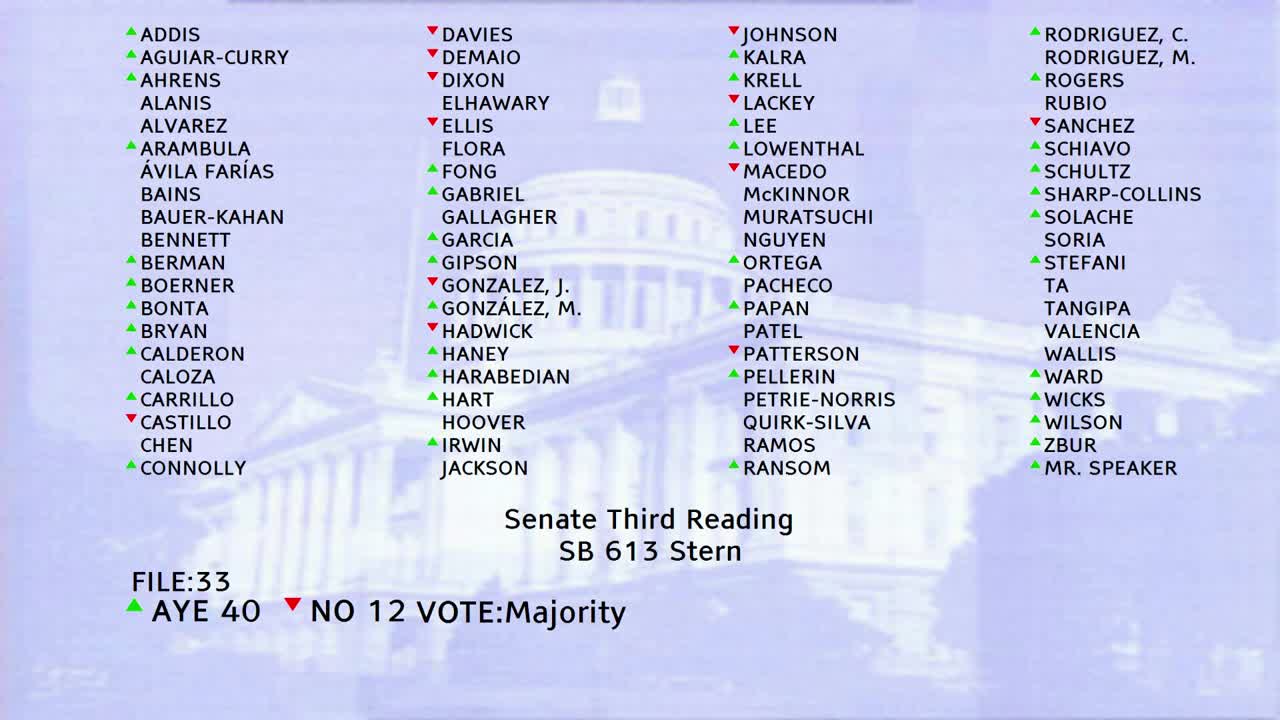 2MIN
Assembly Floor
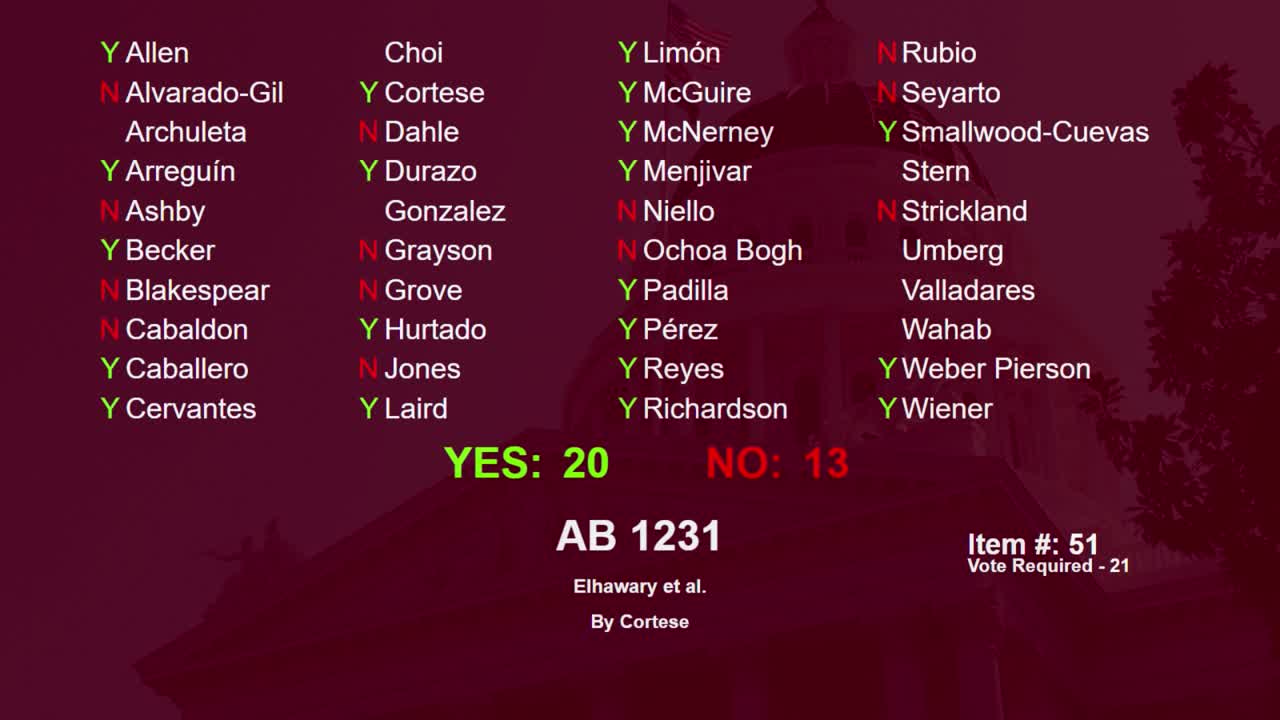 2MIN
Senate Floor
 2MIN
Assembly Standing Committee on Business and Professions
 2MIN
Senate Floor
 5MIN
Senate Standing Committee on Business, Professions and Economic Development
Bill Author