SB 654: California Environmental Protection Agency: contract: registry: greenhouse gas emissions that result from the water-energy nexus.
- Session Year: 2025-2026
- House: Senate
- Latest Version Date: 2025-02-20
Current Status:
Failed
(2026-02-02: Returned to Secretary of Senate pursuant to Joint Rule 56.)
Introduced
In Committee
Awaiting First Chamber Vote
Passed First Chamber
In Committee
Awaiting Second Chamber Vote
Passed Second Chamber
Enacted
Existing law establishes the California Environmental Protection Agency in state government and requires the agency to oversee the development of a registry for greenhouse gas emissions that result from the water-energy nexus using the best available data. Existing law provides that participation in the registry is voluntary and open to any entity conducting business in the state. Existing law authorizes the agency to enter into a contract with a qualified nonprofit organization to do specified things, including to recruit broad participation in the registry from all economic sectors and regions of the state. Existing law limits the term of the term of the contract to 3 years, except as provided.
This bill would instead require the agency to oversee the administration of the above-described registry and would authorize the agency to enter into a new contract, limited to a term of 3 years and with a total budget of $2,000,000, to do specified things, including to recruit broad participation in the registry from all economic sectors and regions of the state to meet the different needs of water users throughout the state by various means, as provided. The bill would remove obsolete language related to the development of the registry, as provided.
(a)(1)The agency shall oversee the development administration of a registry for greenhouse gas emissions that result from the water-energy nexus using the best-available data.
(2)Participation in the registry shall be voluntary and open to any entity conducting business in the state. A participating entity may register its emissions, including emissions generated outside of the state, on an entitywide basis and may utilize the services of the registry.
(b)The agency may enter into a contract with a qualified nonprofit organization to do all of the following:
(1)Develop, in consultation with the agency and other relevant state agencies, the registry through a public stakeholder process, as determined by the agency. In developing the registry, the chosen qualified nonprofit organization shall consider greenhouse gas emissions accounting methodologies developed as part of programs authorized pursuant to the California Global Warming Solutions Act of 2006 (Division 25.5 (commencing with Section 38500) of the Health and Safety Code).(2)(1)Help participating entities in the state to establish emissions baselines.
(3)(2)Encourage voluntary actions to increase water and energy efficiency measures to reduce the greenhouse gas intensity of the states water system.
(4)(3)Enable participating entities to record voluntary entitywide greenhouse gas emissions reductions in a consistent format that is supported by third-party verification.
(5)(4)Recognize, publicize, and promote participating entities making voluntary reductions of greenhouse gas emissions.
(6)(5)Recruit broad participation in the registry from all economic sectors and regions of the state. state to meet the different needs of water users throughout the state by various means, including, but not limited to, workshops, trainings, and other similar activities, technical support for reporting of emissions, and climate action planning to assist with reduction strategies and improve water and energy efficiency.
(7)Facilitate streamlined data reporting for relevant entities already reporting to the Climate Registry as part of its voluntary corporate greenhouse gas emissions reporting program.(c)(1)The contract authorized pursuant to subdivision (b) (b), as it read on January 1, 2025, shall be limited to a term of three years. The contract authorized pursuant to subdivision (b), as amended pursuant to the bill adding this sentence, shall be limited to a term of three years and a total budget of two million dollars ($2,000,000).
(2)Notwithstanding paragraph (1), the term of the contract may be extended for one year upon the agreement of both parties to the contract.|
Date
|
Status
|
|---|---|
| Feb 2, 2026 | Returned to Secretary of Senate pursuant to Joint Rule 56. |
| May 23, 2025 | May 23 hearing: Held in committee and under submission. |
| May 16, 2025 | Set for hearing May 23. |
| Apr 21, 2025 | April 21 hearing: Placed on APPR. suspense file. |
| Apr 4, 2025 | Set for hearing April 21. |
| Apr 3, 2025 | From committee: Do pass and re-refer to Com. on APPR. (Ayes 6. Noes 0. Page 635.) (April 2). Re-referred to Com. on APPR. |
| Mar 11, 2025 | Set for hearing April 2. |
| Mar 5, 2025 | Referred to Com. on E.Q. |
| Feb 21, 2025 | From printer. May be acted upon on or after March 23. |
| Feb 20, 2025 | Introduced. Read first time. To Com. on RLS. for assignment. To print. |
|
Date
|
Description
|
Location
|
Votes
|
|
|---|---|---|---|---|
| Apr 21, 2025 | Placed on suspense file | Senate Standing Committee on Appropriations |
Passed |
|
| Apr 2, 2025 | Do pass, but first be re-referred to the Committee on [Appropriations] | Senate Standing Committee on Environmental Quality |
Passed |
This list shows positions taken on this bill by organizations on the date displayed, which is linked to the original source.
Positions by individuals are not included.
|
Organization
|
Position
|
Date
|
|---|---|---|
| Helix Water District | ** Support | |
| Las Virgenes Municipal Water District | ** Support | |
| Sonoma Water | ** Support | |
| The Climate Registry | ** Support | |
| The Energy Coalition | ** Support | |
| USC Schwarzenegger Institute | ** Support | |
| WaterNow Alliance | ** Support |
SENATE COMMITTEE ON
Senator Anna Caballero, Chair
2025 - 2026 Regular Session
SB 654 (Stern) - California Environmental Protection Agency: contract: registry: greenhouse gas emissions that result from the water-energy nexus
Version: | Policy Vote: |
Urgency: | Mandate: |
Hearing Date: | Consultant: |
Bill Summary:
This bill would update the requirements of the California Environmental Protection Agency’s registry for greenhouse gas emissions that result from the water-energy nexus to increase outreach to participants and limit contract budgets to $2 million per three-year contract.
Fiscal Impact:
- Unknown, potentially significant costs (various funds) for CalEPA to recruit participants through means including but not limited to workshops, training, technical support, and planning assistance.
Background:
The term “water-energy nexus” refers to the energy-intensiveness of the state’s water system, as well as the water-intensiveness of the state’s energy system.
The water system uses approximately 20% of the state’s electricity and 30% of its natural gas for business and home use, according to data from 2001—accounting for more than 5% of California’s greenhouse gas emissions. Heating and other energy-intensive water uses in homes and businesses makeup almost 90% of water-related energy use; a quarter of total residential energy is used to heat water. Water treatment, pumping, and conveyance of water and wastewater also require energy and have associated emissions.
California’s energy sector uses significant amounts of water, although it is becoming less water-intensive. Hydropower averages 15% of California’s electricity generation, from 7% in dry years to over 20% in wet years. However, increased precipitation variability due to climate change may reduce hydropower potential. Thermoelectric plants may face shortages during droughts, but many California plants have been increasing water efficiency and switching to recycled water for cooling. Some use ocean water, which is drought-proof. The growth of solar and wind power can boost the electricity sector’s drought resilience by minimizing water use. Approaches like installing solar panels over canals can produce power while reducing evaporation.
Water-Energy Nexus Registry. The Water-Energy Nexus (WEN) Registry is administered by The Climate Registry in collaboration with CalEPA. According to The Climate Registry’s website: “The WEN Registry is a voluntary statewide GHG and water reporting program that provides participants with standardized accounting guidance enabling them to measure, track, and mitigate their GHG emissions associated with California’s water and energy systems. Participants can measure, track, and report their carbon footprints and report volumes of water associated with the annual extraction, consumption, delivery, storage, and/or treatment of water.”
Participants can measure, track, and report their carbon footprints, as well as report volumes of water associated with the annual extraction, consumption, delivery, storage, and/or treatment of water. By reporting to the WEN Registry, participants can generate water-related performance metrics (e.g., metric tons GHG per acre-foot (AF) of water), help identify opportunities for GHG emission reductions, and track the impact of those actions over time. Participants report their data in the Climate Registry Information System (CRIS), The Climate Registry’s proprietary GHG calculation and reporting software.
Proposed Law:
This bill would:
- Shift CalEPA’s role from developing a water-energy nexus registry to administering the existing one.
- Encourage CalEPA to recruit participants through means including but not limited to workshops, training, technical support, and planning assistance.
- Impose a $2,000,000 budget limit on each three-year contract authorized.
Related Legislation:
SB 1425 (Pavley, Chapter 596, Statutes of 2016) requires CalEPA to develop and administer a registry of GHG emissions resulting from the water-energy nexus using the best available data.
-- END --
SENATE COMMITTEE ON ENVIRONMENTAL QUALITY
Senator Blakespear, Chair
2025 - 2026 Regular
Bill No: SB 654
Author: | Stern | ||
Version: | 2/20/2025 | Hearing Date: | 4/2/2025 |
Urgency: | No | Fiscal: | Yes |
Consultant: | Eric Walters | ||
SUBJECT: California Environmental Protection Agency: contract: registry: greenhouse gas emissions that result from the water-energy nexus
DIGEST: This bill updates the requirements of the California Environmental Protection Agency’s registry for greenhouse gas emissions that result from the water-energy nexus to increase outreach to participants and limit contract budgets to two million dollars per three-year contract.
ANALYSIS:
Existing law:
- Under SB 1425 (Pavley, Chapter 596, Statutes of 2016):
- Requires the California Environmental Protection Agency (CalEPA) to oversee the development of a registry for greenhouse gas (GHG) emissions that result from the water-energy nexus using the best available data;
- States that participation in the registry is voluntary and open to any entity conducting business in the state;
- Authorizes a participating entity to register its emissions, including emissions generated outside the state, or on an entity-wide basis, and to use the services of the Registry;
- Permits CalEPA to enter into a contract with a qualified nonprofit organization to develop the Registry, and limits such contracts to three-year terms.
This bill:
- Shifts CalEPA’s role from developing a water-energy nexus registry to administering the existing one.
- Encourages CalEPA to recruit participants through means including but not limited to workshops, training, technical support, and planning assistance.
- Imposes a $2,000,000 budget limit on each three-year contract authorized.
Background
- California’s water-energy nexus. The term “water-energy nexus” refers to the energy-intensiveness of the state’s water system, as well as the water-intensiveness of the state’s energy system.
The water system uses approximately 20% of the state’s electricity and 30% of its natural gas for business and home use, according to data from 2001—accounting for more than 5% of California’s greenhouse gas emissions. Heating and other energy-intensive water uses in homes and businesses makeup almost 90% of water-related energy use; a quarter of total residential energy is used to heat water. Water treatment, pumping, and conveyance of water and wastewater also require energy and have associated emissions.[1]
California’s energy sector uses significant amounts of water, although it is becoming less water-intensive. Hydropower averages 15% of California’s electricity generation, from 7% in dry years to over 20% in wet years. However, increased precipitation variability due to climate change may reduce hydropower potential. Thermoelectric plants may face shortages during droughts, but many California plants have been increasing water efficiency and switching to recycled water for cooling. Some use ocean water, which is drought-proof. The growth of solar and wind power can boost the electricity sector’s drought resilience by minimizing water use. Approaches like installing solar panels over canals can produce power while reducing evaporation.
- Water-Energy Nexus Registry. The Water-Energy Nexus (WEN) Registry is administered by The Climate Registry in collaboration with CalEPA. According to The Climate Registry’s website: “The WEN Registry is a voluntary statewide GHG and water reporting program that provides participants with standardized accounting guidance enabling them to measure, track, and mitigate their GHG emissions associated with California’s water and energy systems. Participants can measure, track, and report their carbon footprints and report volumes of water associated with the annual extraction, consumption, delivery, storage, and/or treatment of water.”[2]
Participants can measure, track, and report their carbon footprints, as well as report volumes of water associated with the annual extraction, consumption, delivery, storage, and/or treatment of water. By reporting to the WEN Registry, participants can generate water-related performance metrics (e.g., metric tons GHG per acre-foot (AF) of water), help identify opportunities for GHG emission reductions, and track the impact of those actions over time. Participants report their data in the Climate Registry Information System (CRIS), The Climate Registry’s proprietary GHG calculation and reporting software.
Comments
- Purpose of Bill. According to the author, “As California faces many climate challenges, we must address the critical connection between our water and energy systems. The Water-Energy Nexus (WEN) represents the fundamental interconnection between these essential resources, where each stage of water management – from purification to delivery—consumes energy and produces greenhouse gas emissions that often go unnoticed. SB 654 strengthens the state’s commitment to addressing this nexus by transforming an existing voluntary registry from development to active administration. By offering technical support, training, and climate action planning assistance, we’re creating a practical framework that empowers water and wastewater agencies to measure, track, and mitigate their emissions while improving efficiency. This registry is an important step in ensuring California’s water resources are managed sustainability for future generations.”
- Allocation versus limit. In background information provided to the committee, the author claims that this bill “…[allocates] $2 million for a new three-year contract to expand participation and provide crucial technical support.” The language of the bill in fact imposes a $2 million limit on the budget associated with each three-year contract, where existing law had no such budget limit.
Allocations made to CalEPA and/or The Climate Registry for the purposes of administering the WEN Registry are more appropriately the purview of the budget and fiscal committees. It is not entirely clear from readily available information what ongoing activities are conducted by The Climate Registry and how a $2 million per 3-year contract limit would change or fund specifically.
As California strives to hit its GHG emission reduction goals—including economy-wide carbon neutrality—high-quality information about all sectors is essential. While the WEN Registry is strictly voluntary, the program does boast dozens of participants and provides standardized practices and analysis that will help improve understanding of GHG emissions from the water-energy nexus.
Related/Prior Legislation
SB 1425 (Pavley, Chapter 596, Statutes of 2016) requires CalEPA to develop and administer a registry of GHG emissions resulting from the water-energy nexus using the best available data.
SOURCE:
Author
SUPPORT:
Helix Water District
Las Virgenes Municipal Water District
Sonoma Water
The Climate Registry
The Energy Coalition
Usc Schwarzenegger Institute
Waternow Alliance
OPPOSITION:
None received
-- END --
Water and Energy in California, Escriva-Bou, Alvar et al. PPIC Fact Sheet, Dec. 2022 https://www.ppic.org/publication/water-and-energy-in-california/ ↑
Water-Energy Nexus, https://theclimateregistry.org/registries-resources/water-energy-nexus/ Accessed 3/15/25 ↑
Discussed in Hearing
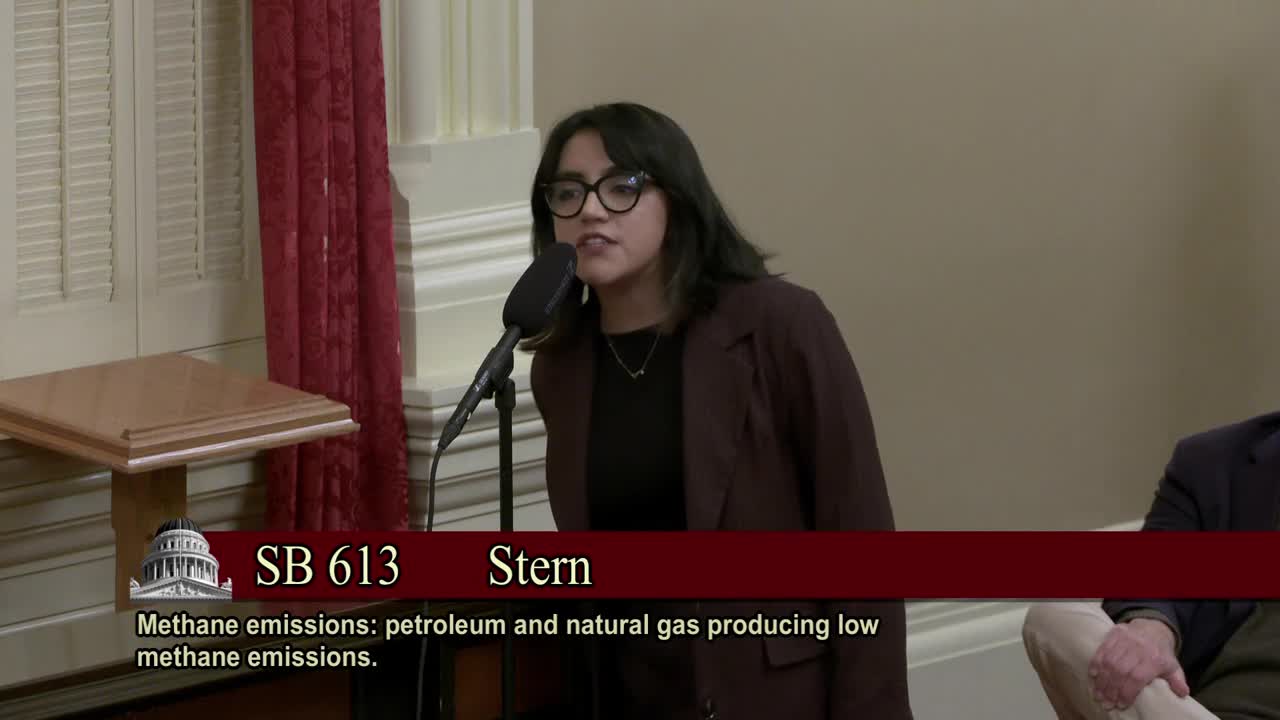 6MIN
Senate Standing Committee on Environmental Quality
Bill Author

Bill Co-Author(s):