SB 1041: Energy: electric rates: public elementary and secondary schools.
- Session Year: 2015-2016
- House: Senate
- Latest Version Date: 2016-08-02
Under existing law, the Public Utilities Commission has regulatory authority over public utilities, including electrical corporations and gas corporations, while local publicly owned electric utilities are under the direction of their governing board. corporations. Existing law authorizes the commission to fix the rates and charges for electrical corporations and gas corporations, corporations and requires that those rates and charges be just and reasonable. Existing law requires public utilities to develop programs in cooperation with local school districts in reducing their electricity and gas bills through conservation and improvements in efficiency and efficiency. Existing law authorizes public utilities to offer school districts on a priority basis basis, and authorizes school districts to utilize, any programs or incentives for commercial customers developed by the utility and approved by the commission, including rebates, loan programs, and incentives for the installation of efficient lighting, heating, or cooling systems.
This bill would require each electrical corporation and gas corporation to develop and submit to the commission for its approval a rate for service applicable to public elementary and secondary schools that is just and reasonable and reflects the costs of providing service to those schools. Because this requirement is part of the Public Utilities Act and would require an act by the commission for its implementation and because a violation of the Public Utilities Act or any order, decision, rule, direction, demand, or requirement of the commission is a crime, the bill would impose a state-mandated local program by creating a new crime. the commission to consider the effects of establishing a rate for electric service specific to public elementary and secondary schools, including consideration of the extent to which the average electrical bills paid by public elementary and secondary schools will increase or decrease and the consistency between establishing the rate and other statutory obligations and state policies. The bill would require the commission to report its findings and conclusions to the relevant policy committees of the Legislature by January 1, 2018.
This bill would require a local publicly owned electric utility to develop and submit to its governing board for its approval a rate for service applicable to public elementary and secondary schools that is just and reasonable and reflects the costs of providing service to those schools. By imposing additional duties upon local publicly owned electric utilities, the bill would impose a state-mandated local program.
The California Constitution requires the state to reimburse local agencies and school districts for certain costs mandated by the state. Statutory provisions establish procedures for making that reimbursement.
This bill would provide that no reimbursement is required by this act for specified reasons.
Under existing law, the Public Utilities Commission has regulatory authority over public utilities, including electrical corporations and gas corporations, while local publicly owned electric utilities are under the direction of their governing board. Existing law authorizes the commission to fix the rates and charges for electrical corporations and gas corporations, and requires that those rates and charges be just and reasonable. Existing law requires public utilities to develop programs in cooperation with local school districts in reducing their electricity and gas bills through conservation and improvements in efficiency and authorizes public utilities to offer school districts on a priority basis programs or incentives for commercial customers developed by the utility and approved by the commission, including rebates, loan programs, and incentives for the installation of efficient lighting, heating, or cooling systems.
This bill would require each electrical corporation and gas corporation to develop and submit to the commission for its approval a rate for service applicable to public elementary and secondary schools that is just and reasonable and reflects the costs of providing service to those schools. Because this requirement is part of the Public Utilities Act and would require an act by the commission for its implementation and because a violation of the Public Utilities Act or any order, decision, rule, direction, demand, or requirement of the commission is a crime, the bill would impose a state-mandated local program by creating a new crime.
This bill would require a local publicly owned electric utility to develop and submit to its governing board for its approval a rate for service applicable to public elementary and secondary schools that is just and reasonable and reflects the costs of providing service to those schools. By imposing additional duties upon local publicly owned electric utilities, the bill would impose a state-mandated local program.
The California Constitution requires the state to reimburse local agencies and school districts for certain costs mandated by the state. Statutory provisions establish procedures for making that reimbursement.
This bill would provide that no reimbursement is required by this act for specified reasons.
Existing law requires the State Energy Resources Conservation and Development Commission, at least every 2 years, to conduct assessments and forecasts of all aspects of energy industry supply, production, transportation, delivery and distribution, demand, and prices.
This bill would make nonsubstantive changes to this provision.
The Legislature finds and declares all of the following:
(a)The California Constitution authorizes the Public Utilities Commission to fix the rates of public utilities in the state and the Public Utilities Act requires that all charges of a public utility be just and reasonable.
(b)The cost-causation principle, that rates should reflect the cost of providing service, guides the commissions ratemaking decisions involving electrical corporations and gas corporations.
(c)The state funds public elementary and secondary schools to provide for the education of the states children and young people.
(d)The states public elementary and secondary schools represent a category of energy users that differs from commercial categories of energy users.
(e)The state has enacted numerous measures to directly and indirectly reduce the amount of money that public elementary and secondary schools spend on utility bills so that they may focus their limited resources on education. education, including, but not limited to, numerous programs to reduce utility bills available through the State Energy Resources Conservation and Development Commission, the Department of Education, and the Public Utilities Commission.
(f)Recently, many public elementary and secondary schools in the state have experienced dramatic increases in the rates they pay for electricity, thereby increasing their overall utility bills and decreasing the moneys available for education.
(g)For example, in the San Diego region, the bills for electric service paid by some public elementary and secondary schools have increased considerably, despite no change in those schools energy usage.
(h)
(g)It is the intent of the Legislature that the commission, Public Utilities Commission, in reviewing and approving an electrical or gas corporations rates that are applicable to public elementary and secondary schools, act according to the cost-causation principle.
SEC. 2.Section 749.5 is added to the Public Utilities Code, to read:749.5.Each electrical corporation and gas corporation shall develop and submit to the commission for its approval a rate for service applicable to public elementary and secondary schools that is just and reasonable and reflects the costs of providing service to those schools.
SEC. 3.Part 3 (commencing with Section 9525) is added to Division 4.8 of the Public Utilities Code, to read:3.RATES9525.A local publicly owned electric utility shall develop and submit to its governing board for its approval a rate for service applicable to public elementary and secondary schools that is just and reasonable and reflects the costs of providing service to those schools.
SEC. 4.No reimbursement is required by this act pursuant to Section 6 of Article XIIIB of the California Constitution because a local agency or school district has the authority to levy service charges, fees, or assessments sufficient to pay for the program or level of service mandated by this act or because costs that may be incurred by a local agency or school district will be incurred because this act creates a new crime or infraction, eliminates a crime or infraction, or changes the penalty for a crime or infraction, within the meaning of Section 17556 of the Government Code, or changes the definition of a crime within the meaning of Section 6 of Article XIIIB of the California Constitution.
SEC. 2.Section 749.5 is added to the Public Utilities Code, to read:749.5.(a)The commission shall consider the effects of establishing a rate for electric service specific to public elementary and secondary schools.
(b)In implementing subdivision (a), the commission shall consider the extent to which the average electrical bills paid by public elementary and secondary schools will increase or decrease and the consistency between establishing the rate and other statutory obligations and state policies.
(c)(1)The commission shall report to the relevant policy committees of the Legislature on its findings and conclusions by January 1, 2018.
(2)A report to be submitted pursuant to this subdivision shall be submitted in compliance with Section 9795 of the Government Code.
(3)Pursuant to Section 10231.5 of the Government Code, the requirements of this subdivision are inoperative on January 1, 2022.
The Legislature finds and declares all of the following:
(a)The California Constitution authorizes the Public Utilities Commission to fix the rates of public utilities in the state and the Public Utilities Act requires that all charges of a public utility be just and reasonable.
(b)The cost-causation principle, that rates should reflect the cost of providing service, guides the commissions ratemaking decisions involving electrical corporations and gas corporations.
(c)The state funds public elementary and secondary schools to provide for the education of the states children and young people.
(d)The states public elementary and secondary schools represent a category of energy users that differs from commercial categories of energy users.
(e)The state has enacted numerous measures to directly and indirectly reduce the amount of money that public elementary and secondary schools spend on utility bills so that they may focus their limited resources on education.
(f)Recently, many public elementary and secondary schools in the state have experienced dramatic increases in the rates they pay for electricity, thereby increasing their overall utility bills and decreasing the moneys available for education.
(g)For example, in the San Diego region, the bills for electric service paid by some public elementary and secondary schools have increased considerably, despite no change in those schools energy usage.
(h)It is the intent of the Legislature that the commission, in reviewing and approving an electrical or gas corporations rates that are applicable to public elementary and secondary schools, act according to the cost-causation principle.
SEC. 2.Section 749.5 is added to the Public Utilities Code, to read:749.5.Each electrical corporation and gas corporation shall develop and submit to the commission for its approval a rate for service applicable to public elementary and secondary schools that is just and reasonable and reflects the costs of providing service to those schools.
SEC. 3.Part 3 (commencing with Section 9525) is added to Division 4.8 of the Public Utilities Code, to read:3.RATES9525.A local publicly owned electric utility shall develop and submit to its governing board for its approval a rate for service applicable to public elementary and secondary schools that is just and reasonable and reflects the costs of providing service to those schools.
SEC. 4.No reimbursement is required by this act pursuant to Section 6 of Article XIIIB of the California Constitution because a local agency or school district has the authority to levy service charges, fees, or assessments sufficient to pay for the program or level of service mandated by this act or because costs that may be incurred by a local agency or school district will be incurred because this act creates a new crime or infraction, eliminates a crime or infraction, or changes the penalty for a crime or infraction, within the meaning of Section 17556 of the Government Code, or changes the definition of a crime within the meaning of Section 6 of Article XIIIB of the California Constitution.
SECTION 1.Section 25301 of the Public Resources Code is amended to read:25301.(a)At least every two years, the commission shall conduct assessments and forecasts of all aspects of energy industry supply, production, transportation, delivery and distribution, demand, and prices. The commission shall use these assessments and forecasts to develop and evaluate energy policies and programs that conserve resources, protect the environment, ensure energy reliability, enhance the states economy, and protect public health and safety. To perform these assessments and forecasts, the commission may require submission of demand forecasts, resource plans, market assessments, related outlooks, individual customer historic electric or gas service usage, or both, and individual customer historic billing data, in a format and level of granularity specified by the commission from electric and natural gas utilities, transportation fuel and technology suppliers, and other market participants. These assessments and forecasts shall be done in consultation with the appropriate state and federal agencies including, but not limited to, the Public Utilities Commission, the Office of Ratepayer Advocates, the State Air Resources Board, the Independent System Operator, the Department of Water Resources, the Department of Transportation, and the Department of Motor Vehicles. The commission shall maintain reasonable policies and procedures to protect customer information from unauthorized disclosure.
(b)In developing the assessments and forecasts prepared pursuant to subdivision (a), the commission shall do all of the following:
(1)Provide information about the performance of energy industries.
(2)Develop and maintain the analytical capability sufficient to answer inquiries about energy issues from government, market participants, and the public.
(3)Analyze, develop, and evaluate energy policies and programs.
(4)Provide an analytical foundation for regulatory and policy decisionmaking.
(5)Facilitate efficient and reliable energy markets.
(a)At least every two years, the commission shall conduct assessments and forecasts of all aspects of energy industry supply, production, transportation, delivery and distribution, demand, and prices. The commission shall use these assessments and forecasts to develop and evaluate energy policies and programs that conserve resources, protect the environment, ensure energy reliability, enhance the states economy, and protect public health and safety. To perform these assessments and forecasts, the commission may require submission of demand forecasts, resource plans, market assessments, related outlooks, individual customer historic electric or gas service usage, or both, and individual customer historic billing data, in a format and level of granularity specified by the commission from electric and natural gas utilities, transportation fuel and technology suppliers, and other market participants. These assessments and forecasts shall be done in consultation with the appropriate state and federal agencies including, but not limited to, the Public Utilities Commission, the Office of Ratepayer Advocates, the State Air Resources Board, the Electricity Oversight Board, the Independent System Operator, the Department of Water Resources, the California Consumer Power and Conservation Financing Authority, the Department of Transportation, and the Department of Motor Vehicles. The commission shall maintain reasonable policies and procedures to protect customer information from unauthorized disclosure.
(b)In developing the assessments and forecasts prepared pursuant to subdivision (a), the commission shall do all of the following:
(1)Provide information about the performance of energy industries.
(2)Develop and maintain the analytical capability sufficient to answer inquiries about energy issues from government, market participants, and the public.
(3)Analyze, develop, and evaluate energy policies and programs.
(4)Provide an analytical foundation for regulatory and policy decisionmaking.
(5)Facilitate efficient and reliable energy markets.
|
Date
|
Status
|
|---|---|
| Aug 11, 2016 | August 11 hearing. Held in committee and under submission. |
| Aug 11, 2016 | Joint Rule 62(a) suspended. |
| Aug 10, 2016 | August 10 set for first hearing. Placed on APPR. suspense file. |
| Aug 2, 2016 | Read second time and amended. Re-referred to Com. on APPR. |
| Aug 1, 2016 | From committee: Do pass as amended and re-refer to Com. on APPR. (Ayes 12. Noes 2.) (June 29). |
| Jun 6, 2016 | June 15 hearing postponed by committee. |
| Jun 1, 2016 | Referred to Com. on U. & C. |
| May 23, 2016 | Read third time. Passed. (Ayes 33. Noes 4. Page 3928.) Ordered to the Assembly. |
| May 23, 2016 | In Assembly. Read first time. Held at Desk. |
| May 23, 2016 | Read third time. Passed. (Ayes 33. Noes 4.) Ordered to the Assembly. |
| May 17, 2016 | Read second time. Ordered to third reading. |
| May 16, 2016 | From committee: Be ordered to second reading pursuant to Senate Rule 28.8. |
| May 6, 2016 | Set for hearing May 16. |
| Apr 19, 2016 | From committee: Do pass and re-refer to Com. on APPR. (Ayes 10. Noes 0. Page 3593.) (April 19). Re-referred to Com. on APPR. |
| Apr 19, 2016 | From committee: Do pass and re-refer to Com. on APPR. (Ayes 10. Noes 0.) (April 19). Re-referred to Com. on APPR. |
| Apr 13, 2016 | Set for hearing April 19. |
| Apr 11, 2016 | Re-referred to Com. on E., U., & C. |
| Apr 7, 2016 | From committee with author's amendments. Read second time and amended. Re-referred to Com. on RLS. |
| Feb 25, 2016 | Referred to Com. on RLS. |
| Feb 16, 2016 | From printer. May be acted upon on or after March 17. |
| Feb 12, 2016 | Introduced. Read first time. To Com. on RLS. for assignment. To print. |
|
Date
|
Description
|
Location
|
Votes
|
|
|---|---|---|---|---|
| Jun 29, 2016 | Do pass as amended and be re-referred to the Committee on [Appropriations] | Assembly Standing Committee on Utilities and Commerce |
Passed |
|
| May 23, 2016 | Senate 3rd Reading SB1041 Hueso | Senate Floor |
Passed |
|
| Apr 19, 2016 | Do pass, but first be re-referred to the Committee on [Appropriations] | Senate Standing Committee on Energy, Utilities and Communications |
Passed |
This list shows positions taken on this bill by organizations on the date displayed, which is linked to the original source.
Positions by individuals are not included.
Date of Hearing: August 10, 2016
ASSEMBLY COMMITTEE ON APPROPRIATIONS
Lorena Gonzalez, Chair
SBPCA Bill Id:SB 1041
Author:(Hueso) – As Amended Ver:August 2, 2016
Policy Committee: | Utilities and Commerce | Vote: | 12 - 2 |
Urgency: No State Mandated Local Program: Yes Reimbursable: No
SUMMARY:
This bill requires the California Public Utilities Commission (CPUC) to consider the effects of establishing a rate for electric service for public elementary and secondary schools. Specifically, this bill:
- Requires the CPUC to consider the extent to which the average electrical bills paid by elementary and secondary schools will increase or decrease and the consistency between establishing the rate and other statutory obligations and state policies.
- Requires the CPUC to report findings and conclusions to the Legislature by January 1, 2018 and repeals these reporting requirements on January 1, 2022.
FISCAL EFFECT:
Minor/absorbable costs to the CPUC.
COMMENTS:
- Purpose. Current law requires the CPUC to set just and reasonable rates charged by the state's utilities, including electrical and gas corporations (investor-owned utilities or IOUs). IOUs divide their customers into rate classes that recognize that different general categories of customers place different costs upon the electrical system. Generally, IOUs divide their customers into residential and nonresidential classes. In addition, pursuant to legislative requirements, the IOUs have established special rate classes, such as rate classes for agricultural customers. Public elementary and secondary school customers are generally placed in one of the nonresidential or commercial class rates.
According to the author, schools have electricity use patterns that may differ from the use patterns of most of the other electricity users in their rate class. The author contends that schools typically experience a significant reduction in demand for electricity in the mid-afternoon that is sustained until early the next morning, and that schools may also dramatically reduce their electricity use during hot summer months.
According to the Association of California School Administrators, electricity rates increased 39% in a one-year period for school districts in San Diego County, while usage rose only 6%. These rate increases, in the form of “demand charges,” have been placed upon most or all commercial class customers to reflect the costs to this class of customers. Proponents contend however, in the case of schools, these demand charges are unreflective of the costs to provide service.
This bill will require the CPUC to consider the effects of establishing a specific rate for electrical service for schools to reflect schools electricity use and report to the Legislature findings on whether the rate would likely result in rate increases or decreases.
- Related legislation. AB 2120 (Weber), pending in the Senate Appropriations Committee, also seeks to address the issue of escalating energy costs imposed on schools. This bill takes a different approach by allowing local education agencies to participate in the CPUC intervenor compensation proceedings.
Analysis Prepared by: Misty Feusahrens / APPR. / (916) 319-2081
Date of Hearing: June 29, 2016
ASSEMBLY COMMITTEE ON UTILITIES AND COMMERCE
Mike Gatto, Chair
SBPCA Bill Id:SB 1041
Author:(Hueso) – As Amended Ver:April 7, 2016
SENATE VOTE: 33-4
SUBJECT: Energy: electric and gas rates: public elementary and secondary schools
SUMMARY: Requires each electrical and gas corporation (IOU) in the state to develop and submit to the California Public Utilities Commission (CPUC) for its approval a rate for service specific to public elementary and secondary schools that reflects the cost of providing service to those schools, and makes a parallel requirement of each local publicly owned electric utility (POU).
EXISTING LAW:
- Authorizes the CPUC to fix rates, establish rules, examine records, issue subpoenas, administer oaths, take testimony, punish for contempt, and prescribe a uniform system of accounts for all public utilities, including electrical and gas corporations, subject to its jurisdiction. (California Constitution Article XII)
- Requires that all charges demanded or received by any public utility for any product, commodity or service be just and reasonable, and that every unjust or unreasonable charge is unlawful. (Public Utilities Code Section 451)
FISCAL EFFECT: Unknown.
COMMENTS:
- Cost-Causation Principle: Current law requires the CPUC to set the rates charged by the state's utilities, including its IOUs. Further, current law requires that the rates set by the CPUC be just and reasonable. In fulfilling these responsibilities, the CPUC is guided by the cost-causation principle. This principle states that customers pay a fair rate that is based on the cost to serve them. The CPUC has confirmed its commitment to the cost-causation principle, explicitly and implicitly, on numerous occasions.[1] Most recently, this principle has been driving the CPUC's ongoing efforts to reform the residential rate structure so that the price residential customers pay for electricity better reflects the cost of providing the electricity to those customers.
According to the Association of California School Administrators, electricity rates increased 39% in a one-year period for school districts in San Diego County while usage rose only 6%. Although rates have increased, neither the author nor support groups make a clear connection explaining why the rate increases should be considered unjust or unreasonable. If the rate increases are unjust, schools may open a rate case proceeding with the CPUC under current law. Further, it is unclear this bill would decrease rates for schools, including schools in the author's district of San Diego. In fact, this bill may increase energy rates for schools, which is explained in comment section three of this analysis.
- Utility Rate Classes: IOUs divide their customers into several distinct rate classes. This division recognizes that different general categories of customers place different costs upon the electrical system; therefore, it is appropriate to charge them differently. IOUs divide their customers, for rate purposes, into residential and nonresidential classes.[2] In addition, pursuant to legislative requirements, the IOUs have established special rate classes, such as rate classes for agricultural customers.
Generally, the IOUs place public elementary and secondary school customers in one of the nonresidential or commercial class rates. According to the author, public elementary and secondary schools have electricity use patterns that may differ from the use patterns of most of the other electricity users in their rate class. The author contends that schools typically experience a significant reduction in demand for electricity in the mid-afternoon that is sustained until early the next morning, and that schools may also dramatically reduce their electricity use during hot summer months. However, this claim has not been substantiated by data provided by the author's office or supporters of the bill. It seems equally likely that schools may have similar or increased energy consumption after regular school hours due to after school programs, community use of facilities, and summer school programs.
- Rates May Increase by 20 Percent: The author argues that creating a rate class special to public schools is appropriate given schools' possibly unique electricity use patterns. Even if one accepts the argument that schools are unique from other commercial customers, there is no way to guarantee this bill would decrease rates for schools. On the contrary, rates may increase if schools are separated into a special rate class.
Los Angeles County Unified School District (LAUSD) relays this concern in their letter to the committee expressing a support if amended position. According to LAUSD, "Though the intent is admirable, the language does not guarantee elementary and secondary schools in POU territories will, in fact, receive a rate reduction. In fact, in discussions with the Los Angeles Department of Water and Power, the District could see a rate increase as much as 20 percent."
Without clear data to substantiate the author's claims, it is impossible to conclude this bill would effectively address the issue of rate increases for schools in San Diego and other areas of the state. It has the potential to exacerbate the problem it seeks to address. Further, what the author sees as a solution to a San Diego problem may create severe negative impacts in Los Angeles County and other areas of the state, such as rural areas with fewer and smaller schools that may benefit from bring grouped in a nonresidational rate class.
- Arguments in Support: According to the San Diego County Office of Education, "The 42 school districts in San Diego County have seen electricity raise 39% over just a one-year period. During this same one-year period (fiscal year 2014-15) electricity usage only rose by 6%. This energy rate shock resulted in nearly $30 million being diverted from educational programs to pay for additional, unplanned operational costs. Schools districts have few options for creating additional revenue in response to increased operational costs. Consequently, school districts must reduce expenditures in other areas in order to mitigate the impact, thereby negatively affecting educational programs and services for students."
- Arguments in Opposition: According to the California Municipal Utilities Association (CMUA), "CMUA members already adopt rate structures that are just and reasonable." Unlike IOUs, "POUs go through a transparent public process when adopting rate increases that are voted upon by a locally elected body."
"The bill provides no guarantee for cheaper rates and the process once completed and approved may actually result in higher rates as schools will be their own stand alone rate case. While the exact circumstances leading to the energy rate hikes in the San Diego Unified School District are unclear to CMUA, the truth is energy rates are increasing, as complying with state energy goals and maintaining utility assets results in increased costs that must be borne on the electric rate-payer.
"CMUA worries that special rates for public schools will translate very soon to special rates for hospitals, community centers, non-profit organizations, and many other customers that provide public benefits. However, pulling these customers out from their existing customer rate class may actually lead to higher energy rates not cheaper ones."
- Prior Legislation:
AB 2120 (Weber) of 2016: Makes school districts eligible to receive intervenor compensation from the CPUC for substantial contributions to rate cases on energy as specified. Pending in Senate Energy, Utilities, and Communications Committee.
AB 2218 (Bradford), Chapter 581, Statutes of 2014: Requires electrical and gas IOUs to develop and implement a program of rate assistance to eligible food banks, subject to discretion and supervision by the CPUC, and encourages the POUs to do the same.
REGISTERED SUPPORT / OPPOSITION:
Support
Association of California School Administrators
Contra Costa County Superintendents’ Coalition
San Diego County Office of Education
San Diego Schools Coalition for Electricity Cost Reduction
School Energy Coalition
School for Integrated Academics and Technologies
Opposition
California Municipal Utilities Association
PacifiCorp
Sacramento Municipal Utility District
Analysis Prepared by: Darion Johnston / U. & C. / (916) 319-2083
See, for example, CPUC decisions D.93-06-087, D.92-12-058, D.08-07-045, D.14-12-080 and D.14-06-029. ↑
This is a very generalized discussion of IOU rate classes. The IOUs further distinguish their rate classes by many criteria. See, for example, PG&E’s description of its customer rate classes: http://www.pge.com/tariffs/rateinfo.shtml. ↑
Office of Senate Floor Analyses (916) 651-1520 Fax: (916) 327-4478 | SB |
THIRD READING
Bill No: SB 1041
:
SENATE ENERGY, U. & C. COMMITTEE: 10-0, 4/19/16
AYES: Hueso, Cannella, Gaines, Hertzberg, Hill, Lara, Leyva, McGuire, Pavley, Wolk
NO VOTE RECORDED: Morrell
SENATE APPROPRIATIONS COMMITTEE: Senate Rule 28.8
DIGEST: This bill requires each electrical and gas corporation (IOU) in the state to develop and submit to the California Public Utilities Commission (CPUC) for its approval a rate for service applicable to public elementary and secondary schools that reflects the cost of providing service to those schools, and makes a parallel requirement of each local publicly owned electric utility (POU).
Existing law:
- Authorizes the CPUC to fix rates, establish rules, examine records, issue subpoenas, administer oaths, take testimony, punish for contempt, and prescribe a uniform system of accounts for all public utilities, including electrical and gas corporations, subject to its jurisdiction. (Article 12 of the California Constitution)
- Requires that all charges demanded or received by any public utility for any product, commodity or service be just and reasonable, and that every unjust or unreasonable charge is unlawful. (Public Utilities Code §451)
This bill:
- Directs each IOU to develop and submit to the CPUC for its approval a rate for service applicable to public elementary and secondary schools that is just and reasonable and reflects the cost of providing service to those schools.
- Makes a number of findings and declarations, including that it is the intent of the Legislature that the CPUC, in reviewing and approving the IOU rates applicable to public elementary and secondary schools, act according to the cost-causation principle.
- Requires each POU to develop and submit to its governing board for its approval a rate for service applicable to public elementary and secondary schools that is just and reasonable and reflects the cost of providing service to those schools.
Background
Cost-causation guides the CPUC’s ratemaking. Statute charges the CPUC with setting the rates charged by the state’s utilities, including its IOUs. Statute requires that the rates set by the CPUC be just and reasonable. In fulfilling these responsibilities, the CPUC is guided by the cost-causation principle. In simple terms, this principle states that customers pay a fair rate that is based on the cost to serve them. The CPUC has confirmed its commitment to the cost-causation principle, explicitly and implicitly, on numerous occasions. (See, for example, CPUC decisions D.93-06-087, D.92-12-058, D.08-07-045, D.14-12-080 and D.14-06-029) Most recently, this principle, among others, has been driving the CPUC’s ongoing efforts to reform the residential rate structure so that the price residential customers pay for electricity better reflects the cost of providing the electricity to those customers.
Electric customers charged for service based on rate class, some established in statute. IOUs divide their customers into several distinct rate classes. This division reflects the recognition that different general categories of customers place different costs upon the electrical system and, therefore, it is appropriate to charge them differently. Very broadly, the IOUs divide their customers, for rate purpose, into residential and nonresidential classes. (This is a very generalized discussion of IOU rate classes. The IOUs further distinguish their rate classes by many criteria. See, for example, PG&E’s description of its customer rate classes: http://www.pge.com/tariffs/rateinfo.shtml.) In addition, pursuant to legislative requirements, the IOUs have established special rate classes, such as rate classes for agricultural customers.
Generally, the IOUs place public elementary and secondary school customers in one of the nonresidential or commercial class rates. However, public elementary and secondary schools have electricity use patterns that differ from the use patterns of most of the other electricity users in their rate class. For example, schools typically experience a significant reduction in demand for electricity in the mid-afternoon that is sustained until early the next morning; many schools also dramatically reduce their electricity use during hot summer months.
Bill seeks relief for schools, consistent with cost-causation principle. The author reports of a number of schools in the San Diego region that have recently experienced sharp increases in their electricity bills. According to representatives of those schools, the increases have come about, in large part, because of rate increases, in the form of “demand charges,” placed upon most or all commercial class customers that are meant to reflect the costs to serve these commercial class customers. However, proponents contend that, in the case of schools, these demand charges are unreflective of the costs to provide service.
This bill proposes creation of a rate class special to public schools. The author contends this is appropriate given schools’ unusual, possibly unique electricity use patterns, as well as the state’s financial and policy interest in ensuring public schools have the resources they need to educate our children and young people.
Prior/Related Legislation
AB 2218 (Bradford, Chapter 581, Statutes of 2014) required electrical and gas IOUs to develop and implement a program of rate assistance to eligible food banks, subject to discretion and supervision by the CPUC, and encourages the POUs to do the same.
FISCAL EFFECT: Appropriation: Fiscal Com.: Local:
Association of California School Administrators
San Diego County Office of Education
San Diego Schools Coalition for Electricity Cost Reduction
School Energy Coalition
School for Integrated Academics and Technologies
OPPOSITION: (Verified 5/17/16)
California Municipal Utilities Association
Sacramento Municipal Utility District
ARGUMENTS IN SUPPORT: According to the author, the state has a unique interest in ensuring that public elementary and secondary schools are able to dedicate their limited resources to fulfillment of their core mission – the education of our children and young people. The electric rates paid by our public schools should reflect the cost to provide service to those schools, not the costs to serve commercial or industrial class customers. This bill directs the CPUC to follow its own principle of cost causation to ensure our public schools experience rates for electric service that are fair, just and reasonable.
ARGUMENTS IN OPPOSITION: Opponents, representing POUs, contend that the rates set by POUs are, today, just and reasonable and express concern of a blossoming of legislatively mandated, customer-specific rate classes.
5/18/16 16:27:54
**** END ****
SENATE COMMITTEE ON ENERGY, UTILITIES AND COMMUNICATIONS
Senator Ben Hueso, Chair
2015 - 2016 Regular
Bill No: SB 1041 Hearing Date: 4/19/2016
Author: | Hueso | ||
Version: | 4/7/2016 As Amended | ||
Urgency: | No | Fiscal: | Yes |
Consultant: | Jay Dickenson | ||
SUBJECT: Energy: electric and gas rates: public elementary and secondary schools
DIGEST: This bill requires each electrical and gas corporation (IOU) in the state to develop and submit to the California Public Utilities Commission (CPUC) for its approval a rate for service applicable to public elementary and secondary schools that reflects the cost of providing service to those schools, and makes a parallel requirement of each local publicly owned electric utility (POU).
ANALYSIS:
Existing law:
- Authorizes the CPUC to fix rates, establish rules, examine records, issue subpoenas, administer oaths, take testimony, punish for contempt, and prescribe a uniform system of accounts for all public utilities, including electrical and gas corporations, subject to its jurisdiction. (Article 12 of the California Constitution)
- Requires that all charges demanded or received by any public utility for any product, commodity or service be just and reasonable, and that every unjust or unreasonable charge is unlawful. (Public Utilities Code §451)
This bill:
- Directs each IOU to develop and submit to the CPUC for its approval a rate for service applicable to public elementary and secondary schools that is just and reasonable and reflects the cost of providing service to those schools.
- Makes a number of findings and declarations, including that it is the intent of the Legislature that the CPUC, in reviewing and approving the IOU rates applicable to public elementary and secondary schools, act according to the cost-causation principle.
- Requires each POU to develop and submit to its governing board for its approval a rate for service applicable to public elementary and secondary schools that is just and reasonable and reflects the cost of providing service to those schools.
Background
Cost-causation guides the CPUC’s ratemaking. Statute charges the CPUC with setting the rates charged by the state’s utilities, including its IOUs. Statute requires that the rates set by the CPUC be just and reasonable. In fulfilling these responsibilities, the CPUC is guided by the cost-causation principle. In simple terms, this principle states that customers pay a fair rate that is based on the cost to serve them. The CPUC has confirmed its commitment to the cost-causation principle, explicitly and implicitly, on numerous occasions.[1] Most recently, this principle, among others, has been driving the CPUC’s ongoing efforts to reform the residential rate structure so that the price residential customers pay for electricity better reflects the cost of providing the electricity to those customers.
Electric customers charged for service based on rate class, some established in statute. IOUs divide their customers into several distinct rate classes. This division reflects the recognition that different general categories of customers place different costs upon the electrical system and, therefore, it is appropriate to charge them differently. Very broadly, the IOUs divide their customers, for rate purpose, into residential and nonresidential classes.[2] In addition, pursuant to legislative requirements, the IOUs have established special rate classes, such as rate classes for agricultural customers.
Generally, the IOUs place public elementary and secondary school customers in one of the nonresidential or commercial class rates. However, public elementary and secondary schools have electricity use patterns that differ from the use patterns of most of the other electricity users in their rate class. For example, schools typically experience a significant reduction in demand for electricity in the mid-afternoon that is sustained until early the next morning; many schools also dramatically reduce their electricity use during hot summer months.
Bill seeks relief for schools, consistent with cost-causation principle. The author reports of a number of schools in the San Diego region that have recently experienced sharp increases in their electricity bills. According to representatives of those schools, the increases have come about, in large part, because of rate increases, in the form of “demand charges,” placed upon most or all commercial class customers that are meant to reflect the costs to serve these commercial class customers. However, proponents contend that, in the case of schools, these demand charges are unreflective of the costs to provide service.
This bill proposes creation of a rate class special to public schools. The author contends this is appropriate given schools’ unusual, possibly unique electricity use patterns, as well as the state’s financial and policy interest in ensuring public schools have the resources they need to educate our children and young people.
Prior/Related Legislation
AB 2218 (Bradford, Chapter 581, Statutes of 2014) required electrical and gas IOUs to develop and implement a program of rate assistance to eligible food banks, subject to discretion and supervision by the CPUC, and encourages the POUs to do the same.
FISCAL EFFECT: Appropriation: No Fiscal Com.: Yes Local: Yes
SUPPORT:
San Diego County Office of Education
San Diego Schools Coalition for Electricity Cost Reduction
OPPOSITION:
None received
ARGUMENTS IN SUPPORT: According to the author, the state has a unique interest in ensuring that public elementary and secondary schools are able to dedicate their limited resources to fulfillment of their core mission – the education of our children and young people. The electric rates paid by our public schools should reflect the cost to provide service to those schools, not the costs to serve commercial or industrial class customers. This bill directs the CPUC to follow its own principle of cost causation to ensure our public schools experience rates for electric service that are fair, just and reasonable.
-- END --
See, for example, CPUC decisions D.93-06-087, D.92-12-058, D.08-07-045, D.14-12-080 and D.14-06-029. ↑
This is a very generalized discussion of IOU rate classes. The IOUs further distinguish their rate classes by many criteria. See, for example, PG&E’s description of its customer rate classes: http://www.pge.com/tariffs/rateinfo.shtml. ↑
Discussed in Hearing
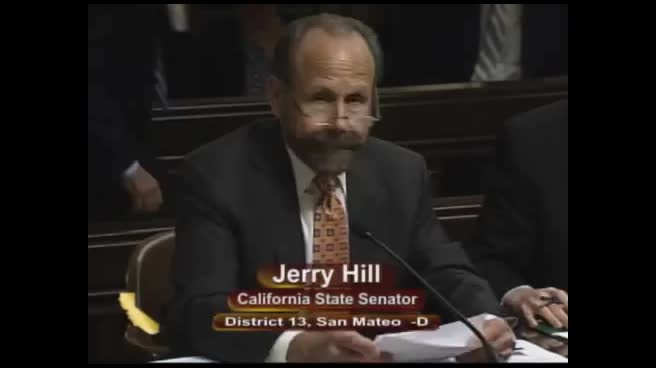 9MIN
Assembly Standing Committee on Utilities and Commerce
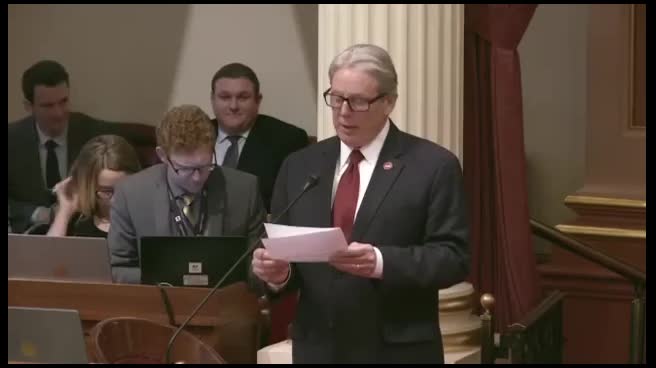 10MIN
Senate Floor
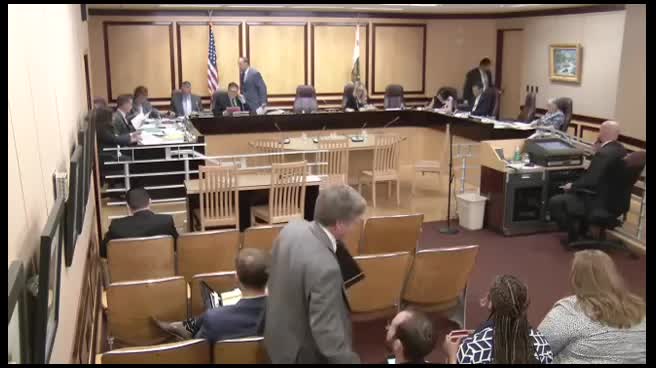 6MIN
Senate Standing Committee on Energy, Utilities and Communications
Bill Author

Bill Co-Author(s):