SB 691: Body-worn cameras: policies.
- Session Year: 2025-2026
- House: Senate
- Latest Version Date: 2026-09-20
Current Status:
Passed
(2026-09-20: Chaptered by Secretary of State. Chapter 416, Statutes of 2026.)
Introduced
In Committee
Awaiting First Chamber Vote
Passed First Chamber
In Committee
Awaiting Second Chamber Vote
Passed Second Chamber
Enacted
Existing law requires law enforcement agencies, departments, or entities to consider specified best practices regarding the downloading and storage of body-worn camera data, such as specifically stating the length of time that recorded data is to be stored, when establishing policies and procedures for the implementation and operation of a body-worn camera system, as specified.
This bill would require, on or before July 1, 2027, each law enforcement agency that has a body-worn camera policy to update that policy to include a procedure for emergency service personnel to request the redaction of evidentiary and nonevidentiary recordings of a patient undergoing medical or psychological evaluation, procedure, or treatment by emergency service personnel, and to maintain an unredacted copy of the recording consistent with the policies and procedures of the agency.
By requiring local law enforcement agencies to adopt new policies, this bill would impose a state-mandated local program.
The California Constitution requires the state to reimburse local agencies and school districts for certain costs mandated by the state. Statutory provisions establish procedures for making that reimbursement.
This bill would provide that, if the Commission on State Mandates determines that the bill contains costs mandated by the state, reimbursement for those costs shall be made pursuant to the statutory provisions noted above.
Existing law requires law enforcement agencies, departments, or entities to consider specified best practices regarding the downloading and storage of body-worn camera data, such as specifically stating the length of time that recorded data is to be stored, when establishing policies and procedures for the implementation and operation of a body-worn camera system, as specified.
This bill would require, on or before July 1, 2027, each law enforcement agency that has a body-worn camera policy to update that policy to include a procedure for emergency service personnel to request the redaction of evidentiary and nonevidentiary recordings of a patient undergoing medical or psychological evaluation, procedure, or treatment by emergency service personnel. personnel, and to maintain an unredacted copy of the recording consistent with the policies and procedures of the agency.
By requiring local law enforcement agencies to adopt new policies, this bill would impose a state-mandated local program.
The California Constitution requires the state to reimburse local agencies and school districts for certain costs mandated by the state. Statutory provisions establish procedures for making that reimbursement.
This bill would provide that, if the Commission on State Mandates determines that the bill contains costs mandated by the state, reimbursement for those costs shall be made pursuant to the statutory provisions noted above.
Existing law requires law enforcement agencies, departments, or entities to consider specified best practices regarding the downloading and storage of body-worn camera data, such as specifically stating the length of time that recorded data is to be stored, when establishing policies and procedures for the implementation and operation of a body-worn camera system, as specified.
This bill would require, on or before July 1, 2026, 2027, each law enforcement agency that has a body-worn camera policy to update that policy to provide guidance to personnel who wear body-worn cameras regarding the circumstances in which they are required to reasonably and temporarily limit the recording of medical or psychological evaluations, procedures, or treatment performed by emergency service personnel that may cause embarrassment or humiliation to the patient. The bill would also require that policy update to include a procedure for emergency service personnel to request the redaction of evidentiary and nonevidentiary recordings of a patient undergoing medical or psychological evaluation, procedure, or treatment by emergency service personnel.
By requiring local law enforcement agencies to adopt new policies, this bill would impose a state-mandated local program.
The California Constitution requires the state to reimburse local agencies and school districts for certain costs mandated by the state. Statutory provisions establish procedures for making that reimbursement.
This bill would provide that, if the Commission on State Mandates determines that the bill contains costs mandated by the state, reimbursement for those costs shall be made pursuant to the statutory provisions noted above.
Existing law requires law enforcement agencies, departments, or entities to consider specified best practices regarding the downloading and storage of body-worn camera data, such as specifically stating the length of time that recorded data is to be stored, when establishing policies and procedures for the implementation and operation of a body-worn camera system, as specified.
This bill would require, on or before July 1, 2026, each law enforcement agency that has a body-worn camera policy to update that policy to prohibit personnel who wear body-worn cameras from intentionally recording a person undergoing a medical or psychological evaluation, procedure, or treatment. The bill would require the policy update to include a procedure for personnel who wear body-worn cameras to follow if requested by emergency medical services personnel to stop recording a person undergoing a medical or psychological evaluation, procedure, or treatment. provide guidance to personnel who wear body-worn cameras regarding the circumstances in which they are required to reasonably and temporarily limit the recording of medical or psychological evaluations, procedures, or treatment performed by emergency service personnel that may cause embarrassment or humiliation to the patient. The bill would also require that policy update to include a procedure for emergency service personnel to request the redaction of evidentiary recordings of a patient undergoing medical or psychological evaluation, procedure, or treatment by emergency service personnel.
By requiring local law enforcement agencies to adopt new policies, this bill would impose a state-mandated local program.
The California Constitution requires the state to reimburse local agencies and school districts for certain costs mandated by the state. Statutory provisions establish procedures for making that reimbursement.
This bill would provide that, if the Commission on State Mandates determines that the bill contains costs mandated by the state, reimbursement for those costs shall be made pursuant to the statutory provisions noted above.
Existing law requires law enforcement agencies, departments, or entities to consider specified best practices regarding the downloading and storage of body-worn camera data, such as specifically stating the length of time that recorded data is to be stored, when establishing policies and procedures for the implementation and operation of a body-worn camera system, as specified.
This bill would require, on or before July 1, 2026, each law enforcement agency that has a body-worn camera policy to update that policy to prohibit personnel who wear body-worn cameras from intentionally recording a person undergoing a medical or psychological evaluation, procedure, or treatment. The bill would require the policy update to include a procedure for personnel who wear body-worn cameras to follow if requested by emergency medical services personnel to stop recording a person undergoing a medical or psychological evaluation, procedure, or treatment.
By requiring local law enforcement agencies to adopt new policies, this bill would impose a state-mandated local program.
The California Constitution requires the state to reimburse local agencies and school districts for certain costs mandated by the state. Statutory provisions establish procedures for making that reimbursement.
This bill would provide that, if the Commission on State Mandates determines that the bill contains costs mandated by the state, reimbursement for those costs shall be made pursuant to the statutory provisions noted above.
(a)It is the intent of the Legislature to establish policies and procedures to address issues related to the recording, downloading, and storage of data recorded by a body-worn camera worn by a peace officer. These policies and procedures shall be based on best practices.
(b)When establishing policies and procedures for the implementation and operation of a body-worn camera system, law enforcement agencies, departments, or entities shall consider the following best practices regarding the downloading and storage of body-worn camera data:
(1)Designate the person responsible for downloading the recorded data from the body-worn camera. If the storage system does not have automatic downloading capability, the officers supervisor should take immediate physical custody of the camera and should be responsible for downloading the data in the case of an incident involving the use of force by an officer, an officer-involved shooting, or other serious incident.
(2)Establish when data should be downloaded to ensure the data is entered into the system in a timely manner, the cameras are properly maintained and ready for the next use, and for purposes of tagging and categorizing the data.
(3)Establish specific measures to prevent data tampering, deleting, and copying, including prohibiting the unauthorized use, duplication, or distribution of body-worn camera data.
(4)Categorize and tag body-worn camera video at the time the data is downloaded and classified according to the type of event or incident captured in the data.
(5)Specifically state the length of time that recorded data is to be stored.
(A)Unless subparagraph (B) or (C) applies, nonevidentiary data including video and audio recorded by a body-worn camera should be retained for a minimum of 60 days, after which it may be erased, destroyed, or recycled. An agency may keep data for more than 60 days to have it available in case of a civilian complaint and to preserve transparency.
(B)Evidentiary data including video and audio recorded by a body-worn camera under this section should be retained for a minimum of two years under any of the following circumstances:
(i)The recording is of an incident involving the use of force by a peace officer or an officer-involved shooting.
(ii)The recording is of an incident that leads to the detention or arrest of an individual.
(iii)The recording is relevant to a formal or informal complaint against a law enforcement officer or a law enforcement agency.
(C)If evidence that may be relevant to a criminal prosecution is obtained from a recording made by a body-worn camera under this section, the law enforcement agency should retain the recording for any time in addition to that specified in subparagraphs (A) and (B), and in the same manner as is required by law for other evidence that may be relevant to a criminal prosecution.
(D)In determining a retention schedule, the agency should work with its legal counsel to determine a retention schedule to ensure that storage policies and practices are in compliance with all relevant laws and adequately preserve evidentiary chains of custody.
(E)Records or logs of access and deletion of data from body-worn cameras should be retained permanently.
(6)State where the body-worn camera data will be stored, including, for example, an in-house server that is managed internally, or an online cloud database that is managed by a third-party vendor.
(7)If using a third-party vendor to manage the data storage system, the following factors should be considered to protect the security and integrity of the data:
(A)Using an experienced and reputable third-party vendor.
(B)Entering into contracts that govern the vendor relationship and protect the agencys data.
(C)Using a system that has a built-in audit trail to prevent data tampering and unauthorized access.
(D)Using a system that has a reliable method for automatically backing up data for storage.
(E)Consulting with internal legal counsel to ensure the method of data storage meets legal requirements for chain-of-custody concerns.
(F)Using a system that includes technical assistance capabilities.
(8)Require that all recorded data from body-worn cameras are property of their respective law enforcement agency and shall not be accessed or released for any unauthorized purpose, explicitly prohibit agency personnel from accessing recorded data for personal use and from uploading recorded data onto public and social media internet websites, and include sanctions for violations of this prohibition.
(c)(1)It is the intent of the Legislature in enacting this subdivision to support the protection of patient privacy while the patient is receiving a medical or psychological evaluation, procedure, or treatment from emergency service personnel, and to support emergency service personnel in taking reasonable efforts to safeguard patients protected health information.
(2)On or before July 1, 2027, each law enforcement agency that has a body-worn camera policy shall update that policy to include a procedure for emergency service personnel to request, prior to any public release, the redaction of evidentiary and nonevidentiary recordings of a patient undergoing medical or psychological evaluation, procedure, or treatment by emergency service personnel. Redaction may include blurring patient care and muting audio.
(3)This subdivision shall not be construed to limit the protections of the Confidentiality of Medical Information Act (Part 2.6 (commencing with Section 56) of Division 1 of the Civil Code), or the federal Health Insurance Portability and Accountability Act of 1996 (Public Law 104-191), or to create a new obligation on law enforcement personnel to render aid.
(4)An unredacted copy of body-worn camera recordings redacted as described in this subdivision shall be maintained consistent with the policies and procedures developed pursuant to subdivision (b) by the law enforcement agency.
(5)For the purposes of this subdivision, emergency service personnel has the same meaning as in Section 8669.15 of the Government Code.
(d)(1)For purposes of this section, evidentiary data refers to data of an incident or encounter that could prove useful for investigative purposes, including, but not limited to, a crime, an arrest or citation, a search, a use of force incident, or a confrontational encounter with a member of the public. The retention period for evidentiary data are subject to state evidentiary laws.
(2)For purposes of this section, nonevidentiary data refers to data that does not necessarily have value to aid in an investigation or prosecution, such as data of an incident or encounter that does not lead to an arrest or citation, or data of general activities the officer might perform while on duty.
(e)This section shall not be interpreted to limit the publics right to access recorded data under the California Public Records Act (Division 10 (commencing with Section 7920.000) of Title 1 of the Government Code).
SEC. 2.If the Commission on State Mandates determines that this act contains costs mandated by the state, reimbursement to local agencies and school districts for those costs shall be made pursuant to Part 7 (commencing with Section 17500) of Division 4 of Title 2 of the Government Code.
(a)It is the intent of the Legislature to establish policies and procedures to address issues related to the recording, downloading, and storage of data recorded by a body-worn camera worn by a peace officer. These policies and procedures shall be based on best practices.
(b)When establishing policies and procedures for the implementation and operation of a body-worn camera system, law enforcement agencies, departments, or entities shall consider the following best practices regarding the downloading and storage of body-worn camera data:
(1)Designate the person responsible for downloading the recorded data from the body-worn camera. If the storage system does not have automatic downloading capability, the officers supervisor should take immediate physical custody of the camera and should be responsible for downloading the data in the case of an incident involving the use of force by an officer, an officer-involved shooting, or other serious incident.
(2)Establish when data should be downloaded to ensure the data is entered into the system in a timely manner, the cameras are properly maintained and ready for the next use, and for purposes of tagging and categorizing the data.
(3)Establish specific measures to prevent data tampering, deleting, and copying, including prohibiting the unauthorized use, duplication, or distribution of body-worn camera data.
(4)Categorize and tag body-worn camera video at the time the data is downloaded and classified according to the type of event or incident captured in the data.
(5)Specifically state the length of time that recorded data is to be stored.
(A)Unless subparagraph (B) or (C) applies, nonevidentiary data including video and audio recorded by a body-worn camera should be retained for a minimum of 60 days, after which it may be erased, destroyed, or recycled. An agency may keep data for more than 60 days to have it available in case of a civilian complaint and to preserve transparency.
(B)Evidentiary data including video and audio recorded by a body-worn camera under this section should be retained for a minimum of two years under any of the following circumstances:
(i)The recording is of an incident involving the use of force by a peace officer or an officer-involved shooting.
(ii)The recording is of an incident that leads to the detention or arrest of an individual.
(iii)The recording is relevant to a formal or informal complaint against a law enforcement officer or a law enforcement agency.
(C)If evidence that may be relevant to a criminal prosecution is obtained from a recording made by a body-worn camera under this section, the law enforcement agency should retain the recording for any time in addition to that specified in subparagraphs (A) and (B), and in the same manner as is required by law for other evidence that may be relevant to a criminal prosecution.
(D)In determining a retention schedule, the agency should work with its legal counsel to determine a retention schedule to ensure that storage policies and practices are in compliance with all relevant laws and adequately preserve evidentiary chains of custody.
(E)Records or logs of access and deletion of data from body-worn cameras should be retained permanently.
(6)State where the body-worn camera data will be stored, including, for example, an in-house server that is managed internally, or an online cloud database that is managed by a third-party vendor.
(7)If using a third-party vendor to manage the data storage system, the following factors should be considered to protect the security and integrity of the data:
(A)Using an experienced and reputable third-party vendor.
(B)Entering into contracts that govern the vendor relationship and protect the agencys data.
(C)Using a system that has a built-in audit trail to prevent data tampering and unauthorized access.
(D)Using a system that has a reliable method for automatically backing up data for storage.
(E)Consulting with internal legal counsel to ensure the method of data storage meets legal requirements for chain-of-custody concerns.
(F)Using a system that includes technical assistance capabilities.
(8)Require that all recorded data from body-worn cameras are property of their respective law enforcement agency and shall not be accessed or released for any unauthorized purpose, explicitly prohibit agency personnel from accessing recorded data for personal use and from uploading recorded data onto public and social media internet websites, and include sanctions for violations of this prohibition.
(c)(1)It is the intent of the Legislature in enacting this subdivision to support the protection of patient privacy while the patient is receiving a medical or psychological evaluation, procedure, or treatment from emergency service personnel, and to support emergency service personnel in taking reasonable efforts to safeguard patients protected health information.
(2)On or before July 1, 2027, each law enforcement agency that has a body-worn camera policy shall update that policy to include a procedure for emergency service personnel to request, prior to any public release, the redaction of evidentiary and nonevidentiary recordings of a patient undergoing medical or psychological evaluation, procedure, or treatment by emergency service personnel. Redaction may include blurring patient care and muting audio.
(3)This subdivision shall not be construed to limit the protections of the Confidentiality of Medical Information Act (Part 2.6 (commencing with Section 56) of Division 1 of the Civil Code), or the federal Health Insurance Portability and Accountability Act of 1996 (Public Law 104-191), or to create a new obligation on law enforcement personnel to render aid.
(4)An unredacted copy of body-worn camera recordings redacted as described in this subdivision shall be maintained consistent with the policies and procedures developed pursuant to subdivision (b) by the law enforcement agency.
(4)(5)For the purposes of this subdivision, emergency service personnel has the same meaning as in Section 8669.15 of the Government Code.
(d)(1)For purposes of this section, evidentiary data refers to data of an incident or encounter that could prove useful for investigative purposes, including, but not limited to, a crime, an arrest or citation, a search, a use of force incident, or a confrontational encounter with a member of the public. The retention period for evidentiary data are subject to state evidentiary laws.
(2)For purposes of this section, nonevidentiary data refers to data that does not necessarily have value to aid in an investigation or prosecution, such as data of an incident or encounter that does not lead to an arrest or citation, or data of general activities the officer might perform while on duty.
(e)This section shall not be interpreted to limit the publics right to access recorded data under the California Public Records Act (Division 10 (commencing with Section 7920.000) of Title 1 of the Government Code).
SEC. 2.If the Commission on State Mandates determines that this act contains costs mandated by the state, reimbursement to local agencies and school districts for those costs shall be made pursuant to Part 7 (commencing with Section 17500) of Division 4 of Title 2 of the Government Code.
(a)It is the intent of the Legislature to establish policies and procedures to address issues related to the recording, downloading, and storage of data recorded by a body-worn camera worn by a peace officer. These policies and procedures shall be based on best practices.
(b)When establishing policies and procedures for the implementation and operation of a body-worn camera system, law enforcement agencies, departments, or entities shall consider the following best practices regarding the downloading and storage of body-worn camera data:
(1)Designate the person responsible for downloading the recorded data from the body-worn camera. If the storage system does not have automatic downloading capability, the officers supervisor should take immediate physical custody of the camera and should be responsible for downloading the data in the case of an incident involving the use of force by an officer, an officer-involved shooting, or other serious incident.
(2)Establish when data should be downloaded to ensure the data is entered into the system in a timely manner, the cameras are properly maintained and ready for the next use, and for purposes of tagging and categorizing the data.
(3)Establish specific measures to prevent data tampering, deleting, and copying, including prohibiting the unauthorized use, duplication, or distribution of body-worn camera data.
(4)Categorize and tag body-worn camera video at the time the data is downloaded and classified according to the type of event or incident captured in the data.
(5)Specifically state the length of time that recorded data is to be stored.
(A)Unless subparagraph (B) or (C) applies, nonevidentiary data including video and audio recorded by a body-worn camera should be retained for a minimum of 60 days, after which it may be erased, destroyed, or recycled. An agency may keep data for more than 60 days to have it available in case of a civilian complaint and to preserve transparency.
(B)Evidentiary data including video and audio recorded by a body-worn camera under this section should be retained for a minimum of two years under any of the following circumstances:
(i)The recording is of an incident involving the use of force by a peace officer or an officer-involved shooting.
(ii)The recording is of an incident that leads to the detention or arrest of an individual.
(iii)The recording is relevant to a formal or informal complaint against a law enforcement officer or a law enforcement agency.
(C)If evidence that may be relevant to a criminal prosecution is obtained from a recording made by a body-worn camera under this section, the law enforcement agency should retain the recording for any time in addition to that specified in subparagraphs (A) and (B), and in the same manner as is required by law for other evidence that may be relevant to a criminal prosecution.
(D)In determining a retention schedule, the agency should work with its legal counsel to determine a retention schedule to ensure that storage policies and practices are in compliance with all relevant laws and adequately preserve evidentiary chains of custody.
(E)Records or logs of access and deletion of data from body-worn cameras should be retained permanently.
(6)State where the body-worn camera data will be stored, including, for example, an in-house server that is managed internally, or an online cloud database that is managed by a third-party vendor.
(7)If using a third-party vendor to manage the data storage system, the following factors should be considered to protect the security and integrity of the data:
(A)Using an experienced and reputable third-party vendor.
(B)Entering into contracts that govern the vendor relationship and protect the agencys data.
(C)Using a system that has a built-in audit trail to prevent data tampering and unauthorized access.
(D)Using a system that has a reliable method for automatically backing up data for storage.
(E)Consulting with internal legal counsel to ensure the method of data storage meets legal requirements for chain-of-custody concerns.
(F)Using a system that includes technical assistance capabilities.
(8)Require that all recorded data from body-worn cameras are property of their respective law enforcement agency and shall not be accessed or released for any unauthorized purpose, explicitly prohibit agency personnel from accessing recorded data for personal use and from uploading recorded data onto public and social media internet websites, and include sanctions for violations of this prohibition.
(c)(1)It is the intent of the Legislature in enacting this subdivision to support the protection of patient privacy while the patient is receiving a medical or psychological evaluation, procedure, or treatment from emergency service personnel, and to support emergency service personnel in taking reasonable efforts to safeguard patients protected health information.
(2)On or before July 1, 2026, 2027, each law enforcement agency that has a body-worn camera policy shall update that policy to provide guidance to personnel who wear body-worn cameras regarding the circumstances in which they are required to reasonably and temporarily limit the recording of medical or psychological evaluations, procedures, or treatment performed by emergency service personnel that may cause embarrassment or humiliation to the patient, including, but not limited to, circumstances in which the persons groin or breasts are exposed while the emergency service personnel is performing a medical or psychological evaluation, procedure, or treatment. The policy update shall provide personnel who wear body-worn cameras with sufficient discretion to enable them to respond appropriately in a variety of situations. include a procedure for emergency service personnel to request, prior to any public release, the redaction of evidentiary and nonevidentiary recordings of a patient undergoing medical or psychological evaluation, procedure, or treatment by emergency service personnel. Redaction may include blurring patient care and muting audio.
(3)The policy update shall include a procedure for emergency service personnel to request the redaction of evidentiary recordings of a patient undergoing medical or psychological evaluation, procedure, or treatment by emergency service personnel.(4)Emergency personnel may request that law enforcement personnel who wear body-worn cameras limit the recording of a patient receiving medical or psychological evaluation, procedure, or treatment. Law enforcement personnel shall respond to the request in accordance with the policy update required by this subdivision. (5)(3)This subdivision shall not be construed to limit the protections of the Confidentiality of Medical Information Act (Part 2.6 (commencing with Section 56) of Division 1 of the Civil Code), or the federal Health Insurance Portability and Accountability Act of 1996 (Public Law 104-191), or to create a new obligation on law enforcement personnel to render aid.
(6)(4)For the purposes of this subdivision, emergency service personnel has the same meaning as in Section 8669.15 of the Government Code.
(d)(1)For purposes of this section, evidentiary data refers to data of an incident or encounter that could prove useful for investigative purposes, including, but not limited to, a crime, an arrest or citation, a search, a use of force incident, or a confrontational encounter with a member of the public. The retention period for evidentiary data are subject to state evidentiary laws.
(2)For purposes of this section, nonevidentiary data refers to data that does not necessarily have value to aid in an investigation or prosecution, such as data of an incident or encounter that does not lead to an arrest or citation, or data of general activities the officer might perform while on duty.
(e)This section shall not be interpreted to limit the publics right to access recorded data under the California Public Records Act (Division 10 (commencing with Section 7920.000) of Title 1 of the Government Code).
SEC. 2.If the Commission on State Mandates determines that this act contains costs mandated by the state, reimbursement to local agencies and school districts for those costs shall be made pursuant to Part 7 (commencing with Section 17500) of Division 4 of Title 2 of the Government Code.
(a)It is the intent of the Legislature to establish policies and procedures to address issues related to the recording, downloading, and storage of data recorded by a body-worn camera worn by a peace officer. These policies and procedures shall be based on best practices.
(b)When establishing policies and procedures for the implementation and operation of a body-worn camera system, law enforcement agencies, departments, or entities shall consider the following best practices regarding the downloading and storage of body-worn camera data:
(1)Designate the person responsible for downloading the recorded data from the body-worn camera. If the storage system does not have automatic downloading capability, the officers supervisor should take immediate physical custody of the camera and should be responsible for downloading the data in the case of an incident involving the use of force by an officer, an officer-involved shooting, or other serious incident.
(2)Establish when data should be downloaded to ensure the data is entered into the system in a timely manner, the cameras are properly maintained and ready for the next use, and for purposes of tagging and categorizing the data.
(3)Establish specific measures to prevent data tampering, deleting, and copying, including prohibiting the unauthorized use, duplication, or distribution of body-worn camera data.
(4)Categorize and tag body-worn camera video at the time the data is downloaded and classified according to the type of event or incident captured in the data.
(5)Specifically state the length of time that recorded data is to be stored.
(A)Unless subparagraph (B) or (C) applies, nonevidentiary data including video and audio recorded by a body-worn camera should be retained for a minimum of 60 days, after which it may be erased, destroyed, or recycled. An agency may keep data for more than 60 days to have it available in case of a civilian complaint and to preserve transparency.
(B)Evidentiary data including video and audio recorded by a body-worn camera under this section should be retained for a minimum of two years under any of the following circumstances:
(i)The recording is of an incident involving the use of force by a peace officer or an officer-involved shooting.
(ii)The recording is of an incident that leads to the detention or arrest of an individual.
(iii)The recording is relevant to a formal or informal complaint against a law enforcement officer or a law enforcement agency.
(C)If evidence that may be relevant to a criminal prosecution is obtained from a recording made by a body-worn camera under this section, the law enforcement agency should retain the recording for any time in addition to that specified in subparagraphs (A) and (B), and in the same manner as is required by law for other evidence that may be relevant to a criminal prosecution.
(D)In determining a retention schedule, the agency should work with its legal counsel to determine a retention schedule to ensure that storage policies and practices are in compliance with all relevant laws and adequately preserve evidentiary chains of custody.
(E)Records or logs of access and deletion of data from body-worn cameras should be retained permanently.
(6)State where the body-worn camera data will be stored, including, for example, an in-house server that is managed internally, or an online cloud database that is managed by a third-party vendor.
(7)If using a third-party vendor to manage the data storage system, the following factors should be considered to protect the security and integrity of the data:
(A)Using an experienced and reputable third-party vendor.
(B)Entering into contracts that govern the vendor relationship and protect the agencys data.
(C)Using a system that has a built-in audit trail to prevent data tampering and unauthorized access.
(D)Using a system that has a reliable method for automatically backing up data for storage.
(E)Consulting with internal legal counsel to ensure the method of data storage meets legal requirements for chain-of-custody concerns.
(F)Using a system that includes technical assistance capabilities.
(8)Require that all recorded data from body-worn cameras are property of their respective law enforcement agency and shall not be accessed or released for any unauthorized purpose, explicitly prohibit agency personnel from accessing recorded data for personal use and from uploading recorded data onto public and social media internet websites, and include sanctions for violations of this prohibition.
(c)(1) On or before July 1, 2026, each law enforcement agency that has a body-worn camera policy shall update that policy to prohibit personnel who wear body-worn cameras from intentionally recording a person undergoing a medical or psychological evaluation, procedure, or treatment.(2)The policy update shall include, but not be limited to, a procedure for personnel who wear body-worn cameras to follow if requested by emergency medical services personnel to stop recording a person undergoing a medical or psychological evaluation, procedure, or treatment.(3)This subdivision shall not be construed to limit the protections of the Confidentiality of Medical Information Act (Part 2.6 (commencing with Section 56) of Division 1 of the Civil Code) or the federal Health Insurance Portability and Accountability Act of 1996 (Public Law 104-191).(c)(1)It is the intent of the Legislature in enacting this subdivision to support the protection of patient privacy while the patient is receiving a medical or psychological evaluation, procedure, or treatment from emergency service personnel, and to support emergency service personnel in taking reasonable efforts to safeguard patients protected health information.
(2)On or before July 1, 2026, each law enforcement agency that has a body-worn camera policy shall update that policy to provide guidance to personnel who wear body-worn cameras regarding the circumstances in which they are required to reasonably and temporarily limit the recording of medical or psychological evaluations, procedures, or treatment performed by emergency service personnel that may cause embarrassment or humiliation to the patient, including, but not limited to, circumstances in which the persons groin or breasts are exposed while the emergency service personnel is performing a medical or psychological evaluation, procedure, or treatment. The policy update shall provide personnel who wear body-worn cameras with sufficient discretion to enable them to respond appropriately in a variety of situations.
(3)The policy update shall include a procedure for emergency service personnel to request the redaction of evidentiary recordings of a patient undergoing medical or psychological evaluation, procedure, or treatment by emergency service personnel.
(4)Emergency personnel may request that law enforcement personnel who wear body-worn cameras limit the recording of a patient receiving medical or psychological evaluation, procedure, or treatment. Law enforcement personnel shall respond to the request in accordance with the policy update required by this subdivision.
(5)This subdivision shall not be construed to limit the protections of the Confidentiality of Medical Information Act (Part 2.6 (commencing with Section 56) of Division 1 of the Civil Code), or the federal Health Insurance Portability and Accountability Act of 1996 (Public Law 104-191), or to create a new obligation on law enforcement personnel to render aid.
(6)For the purposes of this subdivision, emergency service personnel has the same meaning as in Section 8669.15 of the Government Code.
(d)(1)For purposes of this section, evidentiary data refers to data of an incident or encounter that could prove useful for investigative purposes, including, but not limited to, a crime, an arrest or citation, a search, a use of force incident, or a confrontational encounter with a member of the public. The retention period for evidentiary data are subject to state evidentiary laws.
(2)For purposes of this section, nonevidentiary data refers to data that does not necessarily have value to aid in an investigation or prosecution, such as data of an incident or encounter that does not lead to an arrest or citation, or data of general activities the officer might perform while on duty.
(e)This section shall not be interpreted to limit the publics right to access recorded data under the California Public Records Act (Division 10 (commencing with Section 7920.000) of Title 1 of the Government Code).
SEC. 2.If the Commission on State Mandates determines that this act contains costs mandated by the state, reimbursement to local agencies and school districts for those costs shall be made pursuant to Part 7 (commencing with Section 17500) of Division 4 of Title 2 of the Government Code.
(a)It is the intent of the Legislature to establish policies and procedures to address issues related to the downloading recording, downloading, and storage of data recorded by a body-worn camera worn by a peace officer. These policies and procedures shall be based on best practices.
(b)When establishing policies and procedures for the implementation and operation of a body-worn camera system, law enforcement agencies, departments, or entities shall consider the following best practices regarding the downloading and storage of body-worn camera data:
(1)Designate the person responsible for downloading the recorded data from the body-worn camera. If the storage system does not have automatic downloading capability, the officers supervisor should take immediate physical custody of the camera and should be responsible for downloading the data in the case of an incident involving the use of force by an officer, an officer-involved shooting, or other serious incident.
(2)Establish when data should be downloaded to ensure the data is entered into the system in a timely manner, the cameras are properly maintained and ready for the next use, and for purposes of tagging and categorizing the data.
(3)Establish specific measures to prevent data tampering, deleting, and copying, including prohibiting the unauthorized use, duplication, or distribution of body-worn camera data.
(4)Categorize and tag body-worn camera video at the time the data is downloaded and classified according to the type of event or incident captured in the data.
(5)Specifically state the length of time that recorded data is to be stored.
(A)Unless subparagraph (B) or (C) applies, nonevidentiary data including video and audio recorded by a body-worn camera should be retained for a minimum of 60 days, after which it may be erased, destroyed, or recycled. An agency may keep data for more than 60 days to have it available in case of a civilian complaint and to preserve transparency.
(B)Evidentiary data including video and audio recorded by a body-worn camera under this section should be retained for a minimum of two years under any of the following circumstances:
(i)The recording is of an incident involving the use of force by a peace officer or an officer-involved shooting.
(ii)The recording is of an incident that leads to the detention or arrest of an individual.
(iii)The recording is relevant to a formal or informal complaint against a law enforcement officer or a law enforcement agency.
(C)If evidence that may be relevant to a criminal prosecution is obtained from a recording made by a body-worn camera under this section, the law enforcement agency should retain the recording for any time in addition to that specified in subparagraphs (A) and (B), and in the same manner as is required by law for other evidence that may be relevant to a criminal prosecution.
(D)In determining a retention schedule, the agency should work with its legal counsel to determine a retention schedule to ensure that storage policies and practices are in compliance with all relevant laws and adequately preserve evidentiary chains of custody.
(E)Records or logs of access and deletion of data from body-worn cameras should be retained permanently.
(6)State where the body-worn camera data will be stored, including, for example, an in-house server that is managed internally, or an online cloud database that is managed by a third-party vendor.
(7)If using a third-party vendor to manage the data storage system, the following factors should be considered to protect the security and integrity of the data:
(A)Using an experienced and reputable third-party vendor.
(B)Entering into contracts that govern the vendor relationship and protect the agencys data.
(C)Using a system that has a built-in audit trail to prevent data tampering and unauthorized access.
(D)Using a system that has a reliable method for automatically backing up data for storage.
(E)Consulting with internal legal counsel to ensure the method of data storage meets legal requirements for chain-of-custody concerns.
(F)Using a system that includes technical assistance capabilities.
(8)Require that all recorded data from body-worn cameras are property of their respective law enforcement agency and shall not be accessed or released for any unauthorized purpose, explicitly prohibit agency personnel from accessing recorded data for personal use and from uploading recorded data onto public and social media internet websites, and include sanctions for violations of this prohibition.
(c)(1)On or before July 1, 2026, each law enforcement agency that has a body-worn camera policy shall update that policy to prohibit personnel who wear body-worn cameras from intentionally recording a person undergoing a medical or psychological evaluation, procedure, or treatment.
(2)The policy update shall include, but not be limited to, a procedure for personnel who wear body-worn cameras to follow if requested by emergency medical services personnel to stop recording a person undergoing a medical or psychological evaluation, procedure, or treatment.
(3)This subdivision shall not be construed to limit the protections of the Confidentiality of Medical Information Act (Part 2.6 (commencing with Section 56) of Division 1 of the Civil Code) or the federal Health Insurance Portability and Accountability Act of 1996 (Public Law 104-191).
(c)(d)(1)For purposes of this section, evidentiary data refers to data of an incident or encounter that could prove useful for investigative purposes, including, but not limited to, a crime, an arrest or citation, a search, a use of force incident, or a confrontational encounter with a member of the public. The retention period for evidentiary data are subject to state evidentiary laws.
(2)For purposes of this section, nonevidentiary data refers to data that does not necessarily have value to aid in an investigation or prosecution, such as data of an incident or encounter that does not lead to an arrest or citation, or data of general activities the officer might perform while on duty.
(d)(e)This section shall not be interpreted to limit the publics right to access recorded data under the California Public Records Act (Division 10 (commencing with Section 7920.000) of Title 1 of the Government Code).
SEC. 2.If the Commission on State Mandates determines that this act contains costs mandated by the state, reimbursement to local agencies and school districts for those costs shall be made pursuant to Part 7 (commencing with Section 17500) of Division 4 of Title 2 of the Government Code.
|
Date
|
Status
|
|---|---|
| Sep 20, 2026 | Chaptered by Secretary of State. Chapter 416, Statutes of 2026. |
| Sep 20, 2026 | Approved by the Governor. |
| Aug 31, 2026 | Enrolled and presented to the Governor at 6 p.m. |
| Aug 30, 2026 | Assembly amendments concurred in. (Ayes 37. Noes 0. Page 6127.) Ordered to engrossing and enrolling. |
| Aug 30, 2026 | Assembly amendments concurred in. (Ayes 37. Noes 0.) Ordered to engrossing and enrolling. |
| Aug 27, 2026 | In Senate. Concurrence in Assembly amendments pending. |
| Aug 27, 2026 | Read third time. Passed. (Ayes 61. Noes 6. Page 6705.) Ordered to the Senate. |
| Aug 27, 2026 | Read third time. Passed. Ordered to the Senate. |
| Aug 13, 2026 | Read second time. Ordered to third reading. |
| Aug 13, 2026 | From committee: Do pass. (Ayes 12. Noes 0.) (August 13). |
| Aug 13, 2026 | Assembly Rule 63 suspended. |
| Jun 24, 2026 | June 24 set for first hearing. Placed on suspense file. |
| Jun 9, 2026 | From committee: Do pass and re-refer to Com. on APPR. (Ayes 8. Noes 0.) (June 9). Re-referred to Com. on APPR. |
| May 26, 2026 | From committee with author's amendments. Read second time and amended. Re-referred to Com. on PUB. S. |
| May 4, 2026 | Referred to Com. on PUB. S. |
| Jan 27, 2026 | In Assembly. Read first time. Held at Desk. |
| Jan 27, 2026 | Read third time. Passed. (Ayes 33. Noes 0. Page 3298.) Ordered to the Assembly. |
| Jan 22, 2026 | Read second time. Ordered to third reading. |
| Jan 22, 2026 | From committee: Do pass. (Ayes 6. Noes 0. Page 3269.) (January 22). |
| Jan 16, 2026 | Set for hearing January 22. |
| Jan 5, 2026 | From committee with author's amendments. Read second time and amended. Re-referred to Com. on APPR. |
| May 23, 2025 | May 23 hearing: Held in committee and under submission. |
| May 16, 2025 | Set for hearing May 23. |
| May 12, 2025 | May 12 hearing: Placed on APPR. suspense file. |
| May 2, 2025 | Set for hearing May 12. |
| Apr 30, 2025 | From committee: Do pass and re-refer to Com. on APPR. (Ayes 6. Noes 0. Page 945.) (April 29). Re-referred to Com. on APPR. |
| Apr 21, 2025 | From committee with author's amendments. Read second time and amended. Re-referred to Com. on PUB. S. |
| Apr 11, 2025 | Set for hearing April 29. |
| Apr 2, 2025 | April 8 set for first hearing canceled at the request of author. |
| Mar 27, 2025 | Set for hearing April 8. |
| Mar 5, 2025 | Referred to Com. on PUB. S. |
| Feb 24, 2025 | Read first time. |
| Feb 24, 2025 | From printer. May be acted upon on or after March 24. |
| Feb 21, 2025 | Introduced. To Com. on RLS. for assignment. To print. |
|
Date
|
Description
|
Location
|
Votes
|
|
|---|---|---|---|---|
| Aug 30, 2026 | Unfinished Business SB691 Wahab Concurrence | Senate Floor |
Passed |
|
| Aug 27, 2026 | SB 691 Wahab Senate Third Reading By Schultz | Assembly Floor |
Passed |
|
| Aug 13, 2026 | Do pass. | Assembly Standing Committee on Appropriations |
Passed |
|
| Jun 9, 2026 | Do pass and be re-referred to the Committee on [Appropriations] | Assembly Standing Committee on Public Safety |
Passed |
|
| Jan 27, 2026 | Senate 3rd Reading SB691 Wahab | Senate Floor |
Passed |
|
| Jan 22, 2026 | Do pass | Senate Standing Committee on Appropriations |
Passed |
|
| May 12, 2025 | Placed on suspense file | Senate Standing Committee on Appropriations |
Passed |
|
| Apr 29, 2025 | Do pass, but first be re-referred to the Committee on [Appropriations] | Senate Standing Committee on Public Safety |
Passed |
This list shows positions taken on this bill by organizations on the date displayed, which is linked to the original source.
Positions by individuals are not included.
|
Organization
|
Position
|
Date
|
|---|---|---|
| Aclu California Action | ** Against | |
| California District Attorneys Association | ** Against | |
| California Professional Firefighters | ** Support | |
| California Public Defenders Association | ** Against | |
| California State Association of Psychiatrists | ** Support | |
| California State Sheriffs' Association | ** Against | |
| Disability Rights California | ** Against | |
| Fire Districts Association Of California | ** Support | |
| Initiate Justice | ** Against | |
| Justice2jobs Coalition | ** Against | |
| LA Defensa | ** Against | |
| Local 148 La County Public Defenders Union | ** Against | |
| Los Angeles County Professional Peace Officers Association | ** Against | |
| Los Angeles Police Protective League | ** Against | |
| Mental Health America of California | ** Support | |
| Oakland Privacy | ** Against | |
| Riverside County District Attorney | ** Against | |
| Riverside County Sheriff's Office | ** Against | |
| San Francisco Public Defender | ** Against |
SENATE RULES COMMITTEE Office of Senate Floor Analyses (916) 651-4171 | SB 691 |
UNFINISHED BUSINESS
Bill No: SB 691
Author: Wahab (D)
Amended: 5/26/26
Vote: 21
SENATE PUBLIC SAFETY COMMITTEE: 6-0, 4/29/25
AYES: Arreguín, Seyarto, Caballero, Gonzalez, Pérez, Wiener
SENATE APPROPRIATIONS COMMITTEE: 6-0, 1/22/26
AYES: Caballero, Seyarto, Cabaldon, Grayson, Richardson, Wahab
NO VOTE RECORDED: Dahle
SENATE FLOOR: 33-0, 1/27/26
AYES: Allen, Archuleta, Arreguín, Ashby, Becker, Blakespear, Cabaldon, Caballero, Cervantes, Cortese, Dahle, Durazo, Gonzalez, Grayson, Grove, Jones, Laird, Limón, McGuire, McNerney, Menjivar, Padilla, Pérez, Reyes, Richardson, Rubio, Seyarto, Stern, Strickland, Umberg, Wahab, Weber Pierson, Wiener
NO VOTE RECORDED: Alvarado-Gil, Choi, Hurtado, Niello, Ochoa Bogh, Smallwood-Cuevas, Valladares
ASSEMBLY FLOOR: 61-6, 8/27/26 - See last page for vote
SUBJECT: Body-worn cameras: policies
SOURCE: California Professional Firefighters
DIGEST:
This bill requires a law enforcement agency that has a body-worn camera policy to update that policy to include a procedure for emergency service personnel to request the redaction of specified recordings of a patient receiving certain medical treatment from emergency service personnel.
Assembly Amendments
requires law enforcement agencies to maintain an unredacted copy of body-worn camera recordings consistent with specified policies and procedures.
ANALYSIS:
Existing law:
- Establishes the Confidentiality of Medical Information Act (CMIA), which generally protects the confidentiality of individually identifiable medical information obtained by a health care provider and prohibits specified entities from disclosing such information without first obtaining authorization, as specified. (Civil Code, §§ 56 et. seq.)
- Requires the Commission on Peace Officer Standards and Training (POST) to adopt a definition of “serious misconduct” that shall serve as the criteria to be considered for ineligibility for, or revocation of, peace officer certification, and which must include tampering with data recorded by a body-worn camera or other recording device for the purpose of concealing misconduct. (Penal Code, § 13510.8, subd. (b).)
- Provides generally via the California Public Records Act, that access to information concerning the conduct of the people’s business is a fundamental and necessary right of every person in this state. (Government (Gov.) Code, §§ 7920.000 et. seq.)
- Provides that notwithstanding other restrictions regarding the disclosure of law enforcement records, a video or audio recording that relates to a critical incident, as defined, may be withheld only as follows:
- During an active criminal or administrative investigation, disclosure of a recording related to a critical incident may be delayed for no longer than 45 calendar days after the date the agency knew or reasonably should have known about the incident if, based on the facts and circumstances depicted in the recording, disclosure would substantially interfere with the investigation, such as by endangering the safety of a witness or a confidential source.
- After 45 days from the date the agency knew or reasonably should have known about the incident, and up to one year from that date, the agency may continue to delay disclosure of a recording if the agency demonstrates that disclosure would substantially interfere with the investigation. After one year from the date the agency knew or reasonably should have known about the incident, the agency may continue to delay disclosure of a recording only if the agency demonstrates by clear and convincing evidence that disclosure would substantially interfere with the investigation.
- If the agency demonstrates, on the facts of the particular case, that the public interest in withholding a video or audio recording clearly outweighs the public interest in disclosure because the release of the recording would, based on the facts and circumstances depicted in the recording, violate the reasonable expectation of privacy of a subject depicted in the recording, the agency shall provide in writing to the requester the specific basis for the expectation of privacy and the public interest served by withholding the recording and may use redaction technology, including blurring or distorting images or audio, to obscure those specific portions of the recording that protect that interest. (Gov. Code, § 7923.625, subds. (a), (b).)
- Provides that for the purposes of the above provision, a video or audio recording relates to a critical incident if it depicts any of the following incidents:
- An incident involving the discharge of a firearm at a person by a peace officer or custodial officer.
- An incident in which the use of force by a peace officer or custodial officer against a person resulted in death or in great bodily injury. (Gov. Code, § 7923.625, subd. (e).)
- States the intent of the Legislature to establish policies and procedures to address issues related to the downloading and storage of data recorded by a body-worn camera worn by a peace officer. Requires these policies and procedures to be based on best practices. (Penal Code, § 832.18, subd. (a).)
- Encourages agencies to consider the following best practices regarding the downloading and storage of data in establishing policies and procedures for the implementation and operation of a body-worn camera system:
- Designate the person responsible for downloading the recorded data, as specified.
- Establish when data should be downloaded to ensure the data is entered into the system in a timely manner, the cameras are properly maintained and ready for the next use, and for purposes of tagging and categorizing the data.
- Categorize and tag body-worn camera video at the time the data is downloaded and classified according to the type of event or incident captured in the data.
- Specifically state the length of time that recorded data is to be stored, as specified.
- State where the body-worn camera data will be stored, as specified.
- Consider specified factors to protect the security and integrity of the data if using a third-party vendor to manage the data storage system.
- Require that all recorded data from body-worn cameras are property of their respective law enforcement agency and shall not be accessed or released for any unauthorized purpose, explicitly prohibit agency personnel from accessing recorded data for personal use and from uploading recorded data onto public and social media internet websites, and include sanctions for violations of this prohibition. (Penal Code, § 832.18, subd. (b)(1)-(8).)
- Sets forth the following definitions regarding data collected via body-worn camera:
- “Evidentiary data” refers to data of an incident or encounter that could prove useful for investigative purposes, including, but not limited to, a crime, an arrest or citation, a search, a use of force incident, or a confrontational encounter with a member of the public. The retention period for evidentiary data are subject to state evidentiary laws.
- “Nonevidentiary data” refers to data that does not necessarily have value to aid in an investigation or prosecution, such as data of an incident or encounter that does not lead to an arrest or citation, or data of general activities the officer might perform while on duty. (Penal Code, § 832.18, subd. (c).)
- Provides that the provisions above regarding law enforcement agency body-worn camera policies shall not be interpreted to limit the public’s right to access data under the California Public Records Act. (Penal Code, § 832.18, subd. (d).)
This bill:
- Requires each law enforcement agency that has a body-worn camera policy, on or before July 1, 2027, to update that policy to include a procedure for emergency service personnel to request, prior to any public release, the redaction of evidentiary and non-evidentiary recordings of a patient undergoing medical or psychological evaluation, procedure, or treatment (MPE) by emergency service personnel, and specifies that such redaction may include blurring patient care and muting audio.
- Specifies that this bill shall not be construed to limit the protections of the Confidentiality of Medical Information Act, or the federal Health Insurance Portability and Accountability Act of 1996, or to create a new obligation on law enforcement personnel to render aid.
- Requires an unredacted copy of redacted MPE body-worn camera recordings to be maintained consistent with the policies and procedures developed for the implementation and operation of body camera-worn systems by the law enforcement agency.
- Establishes Legislative intent to support the protection of patient privacy while the patient is receiving MPE from emergency service personnel, and to support emergency service personnel in taking reasonable efforts to safeguard patients′ protected health information.
- Expands the Legislature′s intent to establish policies and procedures related to the downloading and storage of data from body-worn cameras by peace officers to include recordings of such data.
FISCAL EFFECT: Appropriation: No Fiscal Com.: Yes Local: Yes
According to the Assembly Appropriations Committee:
Potentially reimbursable state-mandated local program costs (General Fund), likely minor, for local law enforcement agencies that have a BWC policy to perform the one-time update adding the required redaction-request procedure. Because the bill applies only to agencies that already maintain a BWC policy and the mandated activity is a one-time policy revision, these costs are likely minor; whether they rise to a reimbursable mandate is a determination for the Commission on State Mandates. To the extent the Commission finds a reimbursable mandate, costs would be General Fund.
Possible ongoing costs (General Fund/local) to process redaction requests and perform requested redactions. The bill requires agencies to establish a procedure for emergency service personnel to request redaction but does not require agencies to grant the request, and agencies already perform redactions under existing law so existing redaction infrastructure may absorb a share of the workload. Costs would be largely contingent on request volume and on each agency’s discretionary decision whether to grant requests. To the extent the Commission finds a reimbursable mandate, costs would be General Fund.
Possible costs (General Fund) to state law enforcement agencies that maintain BWC policies to similarly update their policies, process requests, and defend against possible litigation. California Highway Patrol, for its part, reports minor and absorbable costs.
SUPPORT: (Verified 8/27/26)
California Professional Firefighters (source)
California State Association of Psychiatrists
Fire Districts Association of California
Mental Health America of California
OPPOSITION: (Verified 8/27/26)
California State Sheriffs' Association
Disability Rights California
Initiate Justice
Justice2Jobs Coalition
La Defensa
Local 148 LA County Public Defenders Union
Los Angeles Police Protective League
Riverside County District Attorney
Riverside County Sheriff's Office
San Francisco Public Defender
ASSEMBLY FLOOR: 61-6, 8/27/26
AYES: Addis, Aguiar-Curry, Ahrens, Alanis, Alvarez, Arambula, Ávila Farías, Bains, Bauer-Kahan, Bennett, Berman, Boerner, Bonta, Bryan, Calderon, Caloza, Chen, Connolly, Davies, Elhawary, Flora, Fong, Gabriel, Garcia, Gipson, Mark González, Haney, Harabedian, Hart, Irwin, Jackson, Kalra, Krell, Lackey, Lee, Lowenthal, Muratsuchi, Nguyen, Ortega, Pacheco, Papan, Patel, Pellerin, Quirk-Silva, Ransom, Celeste Rodriguez, Rogers, Blanca Rubio, Schiavo, Schultz, Sharp-Collins, Solache, Soria, Stefani, Ta, Valencia, Ward, Wicks, Wilson, Zbur, Rivas
NOES: Castillo, DeMaio, Jeff Gonzalez, Hadwick, Johnson, Sanchez
NO VOTE RECORDED: Carrillo, Dixon, Ellis, Hoover, Macedo, McKinnor, Patterson, Petrie-Norris, Ramos, Michelle Rodriguez, Tangipa, Wallis
Prepared by: Alex Barnett / PUB. S. /
9/21/26 12:17:19
**** END ****
SENATE RULES COMMITTEE Office of Senate Floor Analyses (916) 651-4171 | SB 691 |
UNFINISHED BUSINESS
Bill No: SB 691
Author: Wahab (D)
Amended: 5/26/26
Vote: 21
SENATE PUBLIC SAFETY COMMITTEE: 6-0, 4/29/25
AYES: Arreguín, Seyarto, Caballero, Gonzalez, Pérez, Wiener
SENATE APPROPRIATIONS COMMITTEE: 6-0, 1/22/26
AYES: Caballero, Seyarto, Cabaldon, Grayson, Richardson, Wahab
NO VOTE RECORDED: Dahle
SENATE FLOOR: 33-0, 1/27/26
AYES: Allen, Archuleta, Arreguín, Ashby, Becker, Blakespear, Cabaldon, Caballero, Cervantes, Cortese, Dahle, Durazo, Gonzalez, Grayson, Grove, Jones, Laird, Limón, McGuire, McNerney, Menjivar, Padilla, Pérez, Reyes, Richardson, Rubio, Seyarto, Stern, Strickland, Umberg, Wahab, Weber Pierson, Wiener
NO VOTE RECORDED: Alvarado-Gil, Choi, Hurtado, Niello, Ochoa Bogh, Smallwood-Cuevas, Valladares
ASSEMBLY FLOOR: Passed, 8/27/26
SUBJECT: Body-worn cameras: policies
SOURCE: California Professional Firefighters
DIGEST:
This bill requires a law enforcement agency that has a body-worn camera policy to update that policy to include a procedure for emergency service personnel to request the redaction of specified recordings of a patient receiving certain medical treatment from emergency service personnel.
Assembly Amendments
requires law enforcement agencies to maintain an unredacted copy of body-worn camera recordings consistent with specified policies and procedures.
ANALYSIS:
Existing law:
- Establishes the Confidentiality of Medical Information Act (CMIA), which generally protects the confidentiality of individually identifiable medical information obtained by a health care provider and prohibits specified entities from disclosing such information without first obtaining authorization, as specified. (Civil Code, §§ 56 et. seq.)
- Requires the Commission on Peace Officer Standards and Training (POST) to adopt a definition of “serious misconduct” that shall serve as the criteria to be considered for ineligibility for, or revocation of, peace officer certification, and which must include tampering with data recorded by a body-worn camera or other recording device for the purpose of concealing misconduct. (Penal Code, § 13510.8, subd. (b).)
- Provides generally via the California Public Records Act, that access to information concerning the conduct of the people’s business is a fundamental and necessary right of every person in this state. (Government (Gov.) Code, §§ 7920.000 et. seq.)
- Provides that notwithstanding other restrictions regarding the disclosure of law enforcement records, a video or audio recording that relates to a critical incident, as defined, may be withheld only as follows:
- During an active criminal or administrative investigation, disclosure of a recording related to a critical incident may be delayed for no longer than 45 calendar days after the date the agency knew or reasonably should have known about the incident if, based on the facts and circumstances depicted in the recording, disclosure would substantially interfere with the investigation, such as by endangering the safety of a witness or a confidential source.
- After 45 days from the date the agency knew or reasonably should have known about the incident, and up to one year from that date, the agency may continue to delay disclosure of a recording if the agency demonstrates that disclosure would substantially interfere with the investigation. After one year from the date the agency knew or reasonably should have known about the incident, the agency may continue to delay disclosure of a recording only if the agency demonstrates by clear and convincing evidence that disclosure would substantially interfere with the investigation.
- If the agency demonstrates, on the facts of the particular case, that the public interest in withholding a video or audio recording clearly outweighs the public interest in disclosure because the release of the recording would, based on the facts and circumstances depicted in the recording, violate the reasonable expectation of privacy of a subject depicted in the recording, the agency shall provide in writing to the requester the specific basis for the expectation of privacy and the public interest served by withholding the recording and may use redaction technology, including blurring or distorting images or audio, to obscure those specific portions of the recording that protect that interest. (Gov. Code, § 7923.625, subds. (a), (b).)
- Provides that for the purposes of the above provision, a video or audio recording relates to a critical incident if it depicts any of the following incidents:
- An incident involving the discharge of a firearm at a person by a peace officer or custodial officer.
- An incident in which the use of force by a peace officer or custodial officer against a person resulted in death or in great bodily injury. (Gov. Code, § 7923.625, subd. (e).)
- States the intent of the Legislature to establish policies and procedures to address issues related to the downloading and storage of data recorded by a body-worn camera worn by a peace officer. Requires these policies and procedures to be based on best practices. (Penal Code, § 832.18, subd. (a).)
- Encourages agencies to consider the following best practices regarding the downloading and storage of data in establishing policies and procedures for the implementation and operation of a body-worn camera system:
- Designate the person responsible for downloading the recorded data, as specified.
- Establish when data should be downloaded to ensure the data is entered into the system in a timely manner, the cameras are properly maintained and ready for the next use, and for purposes of tagging and categorizing the data.
- Categorize and tag body-worn camera video at the time the data is downloaded and classified according to the type of event or incident captured in the data.
- Specifically state the length of time that recorded data is to be stored, as specified.
- State where the body-worn camera data will be stored, as specified.
- Consider specified factors to protect the security and integrity of the data if using a third-party vendor to manage the data storage system.
- Require that all recorded data from body-worn cameras are property of their respective law enforcement agency and shall not be accessed or released for any unauthorized purpose, explicitly prohibit agency personnel from accessing recorded data for personal use and from uploading recorded data onto public and social media internet websites, and include sanctions for violations of this prohibition. (Penal Code, § 832.18, subd. (b)(1)-(8).)
- Sets forth the following definitions regarding data collected via body-worn camera:
- “Evidentiary data” refers to data of an incident or encounter that could prove useful for investigative purposes, including, but not limited to, a crime, an arrest or citation, a search, a use of force incident, or a confrontational encounter with a member of the public. The retention period for evidentiary data are subject to state evidentiary laws.
- “Nonevidentiary data” refers to data that does not necessarily have value to aid in an investigation or prosecution, such as data of an incident or encounter that does not lead to an arrest or citation, or data of general activities the officer might perform while on duty. (Penal Code, § 832.18, subd. (c).)
- Provides that the provisions above regarding law enforcement agency body-worn camera policies shall not be interpreted to limit the public’s right to access data under the California Public Records Act. (Penal Code, § 832.18, subd. (d).)
This bill:
- Requires each law enforcement agency that has a body-worn camera policy, on or before July 1, 2027, to update that policy to include a procedure for emergency service personnel to request, prior to any public release, the redaction of evidentiary and non-evidentiary recordings of a patient undergoing medical or psychological evaluation, procedure, or treatment (MPE) by emergency service personnel, and specifies that such redaction may include blurring patient care and muting audio.
- Specifies that this bill shall not be construed to limit the protections of the Confidentiality of Medical Information Act, or the federal Health Insurance Portability and Accountability Act of 1996, or to create a new obligation on law enforcement personnel to render aid.
- Requires an unredacted copy of redacted MPE body-worn camera recordings to be maintained consistent with the policies and procedures developed for the implementation and operation of body camera-worn systems by the law enforcement agency.
- Establishes Legislative intent to support the protection of patient privacy while the patient is receiving MPE from emergency service personnel, and to support emergency service personnel in taking reasonable efforts to safeguard patients′ protected health information.
- Expands the Legislature′s intent to establish policies and procedures related to the downloading and storage of data from body-worn cameras by peace officers to include recordings of such data.
FISCAL EFFECT: Appropriation: No Fiscal Com.: Yes Local: Yes
According to the Assembly Appropriations Committee:
Potentially reimbursable state-mandated local program costs (General Fund), likely minor, for local law enforcement agencies that have a BWC policy to perform the one-time update adding the required redaction-request procedure. Because the bill applies only to agencies that already maintain a BWC policy and the mandated activity is a one-time policy revision, these costs are likely minor; whether they rise to a reimbursable mandate is a determination for the Commission on State Mandates. To the extent the Commission finds a reimbursable mandate, costs would be General Fund.
Possible ongoing costs (General Fund/local) to process redaction requests and perform requested redactions. The bill requires agencies to establish a procedure for emergency service personnel to request redaction but does not require agencies to grant the request, and agencies already perform redactions under existing law so existing redaction infrastructure may absorb a share of the workload. Costs would be largely contingent on request volume and on each agency’s discretionary decision whether to grant requests. To the extent the Commission finds a reimbursable mandate, costs would be General Fund.
Possible costs (General Fund) to state law enforcement agencies that maintain BWC policies to similarly update their policies, process requests, and defend against possible litigation. California Highway Patrol, for its part, reports minor and absorbable costs.
SUPPORT: (Verified 8/27/26)
California Professional Firefighters (source)
California State Association of Psychiatrists
Fire Districts Association of California
Mental Health America of California
OPPOSITION: (Verified 8/27/26)
California State Sheriffs' Association
Disability Rights California
Initiate Justice
Justice2Jobs Coalition
La Defensa
Local 148 LA County Public Defenders Union
Los Angeles Police Protective League
Riverside County District Attorney
Riverside County Sheriff's Office
San Francisco Public Defender
Prepared by: Alex Barnett / PUB. S. /
8/27/26 14:49:28
**** END ****
SENATE THIRD READING
STR Bill Id:SB 691
Author:(Wahab)
As Amended Ver:May 26, 2026
Majority vote
SUMMARY
Requires a law enforcement agency that has a body-worn camera policy to update that policy to include a procedure for emergency service personnel to request the redaction of specified recordings of a patient receiving certain medical treatment from emergency service personnel.
Major Provisions
- Requires each law enforcement agency that has a body-worn camera policy, on or before July 1, 2027, to update that policy to include a procedure for emergency service personnel to request, prior to any public release, the redaction of evidentiary and non-evidentiary recordings of a patient undergoing medical or psychological evaluation, procedure, or treatment (MPE) by emergency service personnel, and specifies that such redaction may include blurring patient care and muting audio.
- Specifies that this bill shall not be construed to limit the protections of the Confidentiality of Medical Information Act, or the federal Health Insurance Portability and Accountability Act of 1996, or to create a new obligation on law enforcement personnel to render aid.
- Requires an unredacted copy of redacted MPE body-worn camera recordings to be maintained consistent with the policies and procedures developed for the implementation and operation of body camera-worn systems by the law enforcement agency.
- Establishes Legislative intent to support the protection of patient privacy while the patient is receiving MPE from emergency service personnel, and to support emergency service personnel in taking reasonable efforts to safeguard patients′ protected health information.
- Expands the Legislature′s intent to establish policies and procedures related to the downloading and storage of data from body-worn cameras by peace officers to include recordings of such data.
COMMENTS
According to the Author
″Emergency Medical Technicians (EMTs) and paramedics are responsible for the total care of their patient until they are transferred to a higher level of care at a medical facility. When this care takes place in the presence of law enforcement officers, who are required to wear body-worn cameras that are actively recording, it can raise concerns about the Health Insurance Portability and Accountability Act (HIPAA) violations and general patient privacy.
″Knowing they are being recorded by law enforcement can impact patients′ willingness to fully cooperate with medics, compromising the safety of the patient as well as first responders. SB 691 will require law enforcement agencies to update their body camera policies to include a process for emergency medical services professionals to request redaction of any video recorded of a patient undergoing a medical evaluation prior to the video being made public.″
Arguments in Support
According to the California Professional Firefighters, the sponsor of this bill, ″Due to the nature of emergency medical services, this care may take place in any location or scenario, both private and public, and may potentially have interaction with law enforcement officers. While EMS personnel are attending the scene of an automobile accident, assisting someone experiencing a medical emergency, or responding to transport a patient experiencing a behavioral health crisis, the presence of law enforcement personnel on those scenes means that body-worn cameras will often be recording the medical assessment and treatment interactions. These recordings raise serious privacy concerns for patients, potential impacts on patient willingness to fully cooperate with medics on scene, and may even complicate the working relationship between public safety officers.
″As a covered provider under HIPAA, EMTs and paramedics are responsible for taking reasonable action to protect their patients′ private health information until the transfer of their care. The possibility of private medical information being recorded can potentially make it less likely that life-saving information is shared while in the presence of body-worn cameras. The confidential nature of the relationship between patient and medical provider allows for patients to feel comfortable divulging sensitive information with the knowledge that it will remain with their provider and be used only for their treatment. While the chaotic nature of an emergency medical scene may not be as strictly private as a medical examination room, that foundational trust of confidentiality remains, a confidentiality that is shattered by an ever-present recording device.
″Currently, local jurisdictions may have policies regarding the use of body-worn cameras, but they may not necessarily address the recording of a patient undergoing a medical or psychological evaluation or treatment. SB 691 will provide directions to local jurisdictions to update their policies to establish a procedure for emergency personnel to request the redaction of footage of medical and behavioral health treatment and evaluation before it is released to the public.
″Body-worn cameras provide protection for both civilians and law enforcement officers alike, creating a record of interactions and ensuring accountability and transparency on all sides. While these goals should be preserved, it is also true that video recordings may, in certain circumstances, present a violation of the privacy of individuals in distress. Patients in an emergency medical setting often have reduced or no capability to consent to such recordings, and once recordings have been received and stored by the law enforcement agency there is no recourse for preventing them from potentially being released to the public.″
Arguments in Opposition
According to the Los Angeles County Professional Peace Officers Association, SB 691 ″sets a precedent that moves too far in restricting officer discretion over body-worn camera use in dynamic field settings. Body-worn cameras are a critical public safety and accountability tool. They protect the public, preserve evidence, document officer conduct, and often provide the most reliable record of rapidly unfolding incidents.
″Medical scenes are often unstable, emotionally charged, and closely tied to criminal investigations or use-of-force incidents. In those moments, officers must make quick decisions to protect life, preserve evidence, and maintain scene security. SB 691 would inject ambiguity into those situations by requiring additional policy constraints around when recording should be limited, increasing the risk of second-guessing after the fact and undermining the value of body-worn camera footage as an objective record.
″While PPOA supports protecting patient dignity and privacy, existing law already allows agencies to adopt body-worn camera policies based on best practices. SB 691 unnecessarily mandates new restrictions instead of allowing local agencies to balance privacy, officer safety, evidentiary needs, and public accountability based on the realities their personnel face in the field.″
FISCAL COMMENTS
According to the Assembly Appropriations Committee:
- Potentially reimbursable state-mandated local program costs (General Fund), likely minor, for local law enforcement agencies that have a BWC policy to perform the one-time update adding the required redaction-request procedure. Because the bill applies only to agencies that already maintain a BWC policy and the mandated activity is a one-time policy revision, these costs are likely minor; whether they rise to a reimbursable mandate is a determination for the Commission on State Mandates. To the extent the Commission finds a reimbursable mandate, costs would be General Fund.
- Possible ongoing costs (General Fund/local) to process redaction requests and perform requested redactions. The bill requires agencies to establish a procedure for emergency service personnel to request redaction but does not require agencies to grant the request, and agencies already perform redactions under existing law so existing redaction infrastructure may absorb a share of the workload. Costs would be largely contingent on request volume and on each agency′s discretionary decision whether to grant requests. To the extent the Commission finds a reimbursable mandate, costs would be General Fund.
- Possible costs (General Fund) to state law enforcement agencies that maintain BWC policies to similarly update their policies, process requests, and defend against possible litigation. California Highway Patrol, for its part, reports minor and absorbable costs.
VOTES
SENATE FLOOR: 33-0-7
YES: Allen, Archuleta, Arreguín, Ashby, Becker, Blakespear, Cabaldon, Caballero, Cervantes, Cortese, Dahle, Durazo, Gonzalez, Grayson, Grove, Jones, Laird, Limón, McGuire, McNerney, Menjivar, Padilla, Pérez, Reyes, Richardson, Rubio, Seyarto, Stern, Strickland, Umberg, Wahab, Weber Pierson, Wiener
ABS, ABST OR NV: Alvarado-Gil, Choi, Hurtado, Niello, Ochoa Bogh, Smallwood-Cuevas, Valladares
ASM PUBLIC SAFETY: 8-0-1
YES: Schultz, Alanis, Hart, Haney, Harabedian, Lackey, Nguyen, Sharp-Collins
ABS, ABST OR NV: Ramos
ASM APPROPRIATIONS: 12-0-3
YES: Wicks, Arambula, Calderon, Caloza, Fong, Mark González, Krell, Pacheco, Pellerin, Sharp-Collins, Solache, Ta
ABS, ABST OR NV: Hoover, Dixon, Tangipa
UPDATED
VERSION: May 26, 2026
CONSULTANT: Ilan Zur / PUB. S. / (916) 319-3744 FN: 0003509
Date of Hearing: June 24, 2026
ASSEMBLY COMMITTEE ON APPROPRIATIONS
Buffy Wicks, Chair
SBPCA Bill Id:SB 691
Author:(Wahab) – As Amended Ver:May 26, 2026
Policy Committee: | Public Safety | Vote: | 8 - 0 |
|
| ||
|
|
Urgency: No State Mandated Local Program: Yes Reimbursable: Yes
SUMMARY:
This bill requires each law enforcement agency that has a body-worn camera (BWC) policy to update that policy, on or before July 1, 2027, to include a procedure for emergency service personnel to request — prior to any public release — the redaction of evidentiary and non-evidentiary recordings of a patient undergoing medical or psychological evaluation, procedure, or treatment (MPE) by emergency service personnel. Redaction may include blurring patient care and muting audio. The bill requires an unredacted copy of any redacted recording to be retained consistent with the agency’s existing BWC data policies and specifies that it does not limit the protections of the Confidentiality of Medical Information Act (CMIA) or HIPAA, or create a new obligation on law enforcement personnel to render aid.
FISCAL EFFECT:
- Potentially reimbursable state-mandated local program costs (General Fund), likely minor, for local law enforcement agencies that have a BWC policy to perform the one-time update adding the required redaction-request procedure. Because the bill applies only to agencies that already maintain a BWC policy and the mandated activity is a one-time policy revision, these costs are likely minor; whether they rise to a reimbursable mandate is a determination for the Commission on State Mandates. To the extent the Commission finds a reimbursable mandate, costs would be General Fund.
- Possible ongoing costs (General Fund/local) to process redaction requests and perform requested redactions. The bill requires agencies to establish a procedure for emergency service personnel to request redaction but does not require agencies to grant the request, and agencies already perform redactions under existing law so existing redaction infrastructure may absorb a share of the workload. Costs would be largely contingent on request volume and on each agency’s discretionary decision whether to grant requests. To the extent the Commission finds a reimbursable mandate, costs would be General Fund.
- Possible costs (General Fund) to state law enforcement agencies that maintain BWC policies to similarly update their policies, process requests, and defend against possible litigation. California Highway Patrol, for its part, reports minor and absorbable costs.
COMMENTS:
- Purpose. According to the author:
Knowing they are being recorded by law enforcement can impact patients' willingness to fully cooperate with medics, compromising the safety of the patient as well as first responders. SB 691 will require law enforcement agencies to update their body camera policies to include a process for emergency medical services professionals to request redaction of any video recorded of a patient undergoing a medical evaluation prior to the video being made public.
- Background. Existing law states the Legislature’s intent that law enforcement agencies adopt BWC policies based on best practices and directs agencies to consider specified best practices for downloading and storing BWC data, including data-retention periods — generally a minimum of 60 days for non-evidentiary data and two years for evidentiary data. Existing law also already requires or authorizes agencies to redact disclosable recordings in specified circumstances, including to protect confidential medical information and personal privacy. This bill adds a new requirement that agencies with a BWC policy update it to include a procedure for emergency service personnel to request redaction of MPE recordings before public release and expands the statute’s stated intent to cover the recording of BWC data in addition to its downloading and storage. “Emergency service personnel” is defined by reference and reaches public fire agency employees (firefighters, paramedics, EMTs, and others); it does not reach private ambulance or private medical personnel.
- Related Legislation. SB 337 (Menjivar), of the current legislative session, requires, among other things, the California Department of Corrections and Rehabilitation to adopt BWC policies addressing circumstances, including confidential medical treatment, under which a camera may be deactivated; it was held on this committee’s suspense file.
- Prior Legislation. SB 748 (Ting), Chapter 960, Statutes of 2018, established the standard for releasing BWC footage by balancing privacy and public-interest considerations.
AB 69 (Rodriguez), Chapter 461, Statutes of 2015, established the BWC best-practices framework this bill amends.
Analysis Prepared by: Shiran Zohar / APPR. / (916) 319-2081
Date of Hearing: June 9, 2026
Counsel: Ilan Zur
ASSEMBLY COMMITTEE ON PUBLIC SAFETY
Nick Schultz, Chair
SBPCA Bill Id:SB 691
Author:(Wahab) – As Amended Ver:May 26, 2026
SUMMARY: Requires a law enforcement agency that has a body-worn camera policy to update that policy to include a procedure for emergency service personnel to request the redaction of specified recordings of a patient receiving certain medical treatment from emergency service personnel. Specifically, this bill:
- Requires each law enforcement agency that has a body-worn camera policy, on or before July 1, 2027, to update that policy to include a procedure for emergency service personnel to request, prior to any public release, the redaction of evidentiary and non-evidentiary recordings of a patient undergoing medical or psychological evaluation, procedure, or treatment (MPE) by emergency service personnel, and specifies that such redaction may include blurring patient care and muting audio.
- Specifies that this bill shall not be construed to limit the protections of the Confidentiality of Medical Information Act, or the federal Health Insurance Portability and Accountability Act of 1996, or to create a new obligation on law enforcement personnel to render aid.
- Requires an unredacted copy of redacted MPE body-worn camera recordings to be maintained consistent with the policies and procedures developed for the implementation and operation of body camera-worn systems by the law enforcement agency.
- Establishes Legislative intent to support the protection of patient privacy while the patient is receiving MPE from emergency service personnel, and to support emergency service personnel in taking reasonable efforts to safeguard patients’ protected health information.
- Expands the Legislature’s intent to establish policies and procedures related to the downloading and storage of data from body-worn cameras by peace officers to include recordings of such data.
EXISTING LAW:
- Defines “emergency service personnel” to mean an employee of the state, local, or regional public fire agency who provides emergency response services, including a firefighter, paramedic, emergency medical technician, dispatcher, emergency response communication employee, rescue service personnel, emergency manager, or any other employee of a state, local, or regional public fire agency. (Gov. Code, § 8669.15, subd. (e).)
- States that it is the intent of the Legislature to establish policies and procedures to address issues related to the downloading and storage of data recorded by a body-worn camera worn by a peace officer, and provides that these policies and procedures shall be based on best practices. (Pen. Code, § 832.18, subd. (a).)
- Requires law enforcement agencies to consider the best practices regarding the downloading and storage of body-worn camera data when establishing policies and procedures for the implementation and operation of a body-worn camera system, including:
- Designate the person responsible for downloading recorded data from the body-worn camera.
- Establish when data should be downloaded.
- Establish measures to prevent data tampering, deleting, and copying.
- Categorize and tag body camera video at the time the data is downloaded and classified according to the type of event or incident captured in the data. (Pen. Code, § 832.18, subd. (b)(1)-(4).)
- Specifically state the length of time the recorded data is to be stored, as follows:
- Except as specified, non-evidentiary data should be retained for at least 60 days.
- Evidentiary data should be retained for at least two years if the recording is of a use of force incident by a peace officer or is of an officer-involved shooting; of an incident that leads to a person’s detention or arrest; or is relevant to a complaint against a law enforcement.
- If relevant to a criminal prosecution, the data should be retained for any time in addition to that specified above, and in the same manner as is required by law for other evidence.
- Records or logs of access and deletion of data should be retained permanently. (Pen. Code, § 832.18, subd. (b)(5)(A), (B), (C) & (E).)
- Defines “evidentiary data” as data of an incident or encounter that could prove useful for investigative purposes, including, but not limited to, a crime, an arrest or citation, a search, a use of force incident, or a confrontational encounter with a member of the public. The retention period for evidentiary data is subject to state evidentiary laws. (Pen. Code, § 832.18, subd. (c)(1).)
- Defines “non-evidentiary data” as data that does not necessarily have value to aid in an investigation or prosecution, such as data of an incident or encounter that does not lead to an arrest or citation, or data of general activities the officer might perform while on duty. (Pen. Code, § 832.18, subd. (c)(2).)
- Generally provides that the personnel records of peace officers and custodial officers are confidential and cannot be disclosed, except as specified. (Pen. Code, § 832.7, subd. (a).)
- States, notwithstanding exceptions in the California Public Records Act (CPRA), or any other law, the following peace officer or custodial officer personnel records and records maintained by a state or local agency, including audio and video evidence, shall not be confidential and shall be made available for public inspection pursuant to the CPRA:
- A record relating to the report, investigation, or findings of:
- Any incident involving the discharge of a firearm at a person by an officer;
- Any incident involving the use of force by an officer that results in great bodily injury or death;
- A sustained finding involving a complaint alleging excessive force; or
- A sustained finding that an officer failed to intervene when another officer clearly used excessive or unreasonable force. (Pen. Code, § 832.7, subd. (b)(1)(A) & (3).)
- Any record relating to a sustained finding: 1) that an officer sexually assaulted a member of the public; 2) involving dishonesty by an officer relating to the reporting, investigation, or prosecution of a crime; 3) that an officer engaged in prejudicial or discriminatory conduct; 4) that an officer made an unlawful arrest or conducted an unlawful search; and 5) a specified prohibited agreement between an employing agency and a peace officer. (Pen. Code, § 832.7, subd. (b)(1)(A)-(F).)
- Provides that an agency shall redact a record that is subject to release as described above, only for the following purposes:
- To remove personal data or information, such as a home address, telephone number, or identities of family members, other than the names and work-related information of peace and custodial officers;
- To preserve the anonymity of whistleblowers, complainants, victims, and witnesses;
- To protect confidential medical, financial, or other information of which disclosure is specifically prohibited by federal law or would cause an unwarranted invasion of personal privacy that clearly outweighs the strong public interest in records about possible misconduct and use of force by peace officers and custodial officers; or
- Where there is a specific, articulable, and particularized reason to believe that disclosure of the record would pose a significant danger to the physical safety of the peace officer, custodial officer, or another person, as specified. (Pen. Code, § 832.7, subd. (b)(6).)
- Provides that, notwithstanding other provisions of law relating to law enforcement records, a video or audio recording relating to a critical incident may be withheld only as follows:
- During an active criminal or administrative investigation, for no longer than 45 days after the date the agency knew or reasonably should have known about the incident, if disclosure would substantially interfere with the investigation. (Gov. Code, § 7923.625, subd. (a)(1).)
- After 45 days from the date the agency knew or reasonably should have known about the incident, and up to one year from that date, if the agency demonstrates that disclosure would substantially interfere with the investigation. (Gov. Code, § 7923.625, subd. (a)(2).)
- After one year from the date the agency knew or reasonably should have known about the incident, if the agency demonstrates by clear and convincing evidence that disclosure would substantially interfere with the investigation. (Gov. Code, § 7923.625, subd. (a)(2).)
- If the agency demonstrates, on the facts of the particular case, that the public interest in withholding a recording clearly outweighs the public interest in disclosure because the release of the recording would violate the reasonable expectation of privacy of a subject depicted in the recording, the agency shall provide the basis for the expectation of privacy and the public interest served by withholding the recording and may use redaction technology. (Gov. Code, § 7923.625, subd. (b)(1).)
- Prohibits the redaction described above from interfering with the viewer’s ability to fully, completely, and accurately comprehend the events captured in the recording, and the recording from otherwise being edited or altered. (Gov. Code, § 7923.625, subd. (b)(1).)
- Except as specified, if the agency demonstrates that the reasonable expectation of privacy of a subject depicted in the recording cannot adequately be protected through redaction, as specified, and that interest outweighs the public interest in disclosure, the agency may withhold the recording from the public, except that the recording, either redacted or unredacted, shall be disclosed promptly, upon request, to specified persons including the subject of the recording whose privacy is to be protected. If disclosure would substantially interfere with an active criminal or administrative investigation, the agency shall provide the basis for that determination and an estimated disclosure date. (Gov. Code, § 7923.625, subd. (b)(2)-(3).)
- Defines a recording as relating to a critical incident if it depicts an incident involving the discharge of a firearm at a person by a peace officer or custodial officer; or in which the use of force by a peace officer or custodial officer against a person resulted in death or in great bodily injury. (Gov. Code, § 7923.625, subd. (e).)
FISCAL EFFECT: Unknown.
COMMENTS:
- Sponsor: California Professional Firefighters.
- Author's Statement: According to the author, "Emergency Medical Technicians (EMTs) and paramedics are responsible for the total care of their patient until they are transferred to a higher level of care at a medical facility. When this care takes place in the presence of law enforcement officers, who are required to wear body-worn cameras that are actively recording, it can raise concerns about the Health Insurance Portability and Accountability Act (HIPAA) violations and general patient privacy.
“Knowing they are being recorded by law enforcement can impact patients’ willingness to fully cooperate with medics, compromising the safety of the patient as well as first responders. SB 691 will require law enforcement agencies to update their body camera policies to include a process for emergency medical services professionals to request redaction of any video recorded of a patient undergoing a medical evaluation prior to the video being made public.”
- Body-Worn Cameras: Body-worn cameras, or “bodycams,” are small recording devices that can be attached to an officer’s uniform to capture audio and video of their interactions with the public. AB 69 (Rodriguez), Chapter 461, Statutes of 2015 required law enforcement entities to consider specified best practices regarding the downloading and storage of bodycam data when establishing agency-wide bodycam policies and procedures. (Pen. Code, § 832.18, subd. (b).) These best practices include establishing measures to prevent tampering and unauthorized use or distribution of data, establishing clear data retention requirements, stating where the data will physically be stored, ensuring that any third-party vendors used to manage data storage are secure and reliable, and preventing agency personnel from disclosing bodycam data to the public or uploading data onto social media, among others. (Ibid.) Though existing law does not expressly state when officers must activate or deactivate their bodycams, such guidance is typically included in a law enforcement agency’s bodycam policy.[1]
- Relevant Medical Privacy Laws: Several well-established federal and California laws work together to protect personal medical information and patient privacy. Perhaps the most well-known is the Health Insurance Portability and Accountability Act (HIPAA), which provides federal standards protecting sensitive health information from disclosure without the patient’s consent. (45 C.F.R. § 160 et seq.) Most relevant here, HIPAA allows covered entities to disclose personal health information to law enforcement for law enforcement purposes under six circumstances: as required by law (such as subpoenas and court orders), to identify a suspect or other person of interest, in response to a law enforcement request for information about a victim, to alert law enforcement of a person’s death, when a covered entity believes that the information is evidence of a crime, and in a medical emergency when necessary to inform law enforcement about the commission of a crime, the location of the crime or victims, and the perpetrator of the crime. (45 C.F.R. § 164.512(f).)
California has its own set of laws regarding the protection of personal health information and its use and disclosure, known as the California Confidentiality of Medical Information Act (CMIA). Among other things, CMIA generally protects the confidentiality of individually identifiable medical information obtained by a health care provider and prohibits specified entities from disclosing such information without first obtaining authorization, among other things. (Civ. Code, § 56 et seq.) CMIA generally requires that healthcare providers, healthcare service plans, or contractors keep medical information confidential unless they obtain authorization to release the information, but requires these entities to disclose medical information if disclosure is compelled by a lawful search warrant issued by law enforcement. (Civ. Code, § 56.10, subd. (b)(6).) CMIA also prohibits providers from releasing medical information to requesting parties otherwise authorized to receive that information when the information relates to a patient’s participation in outpatient treatment with a psychotherapist. (Civ. Code, § 56.104, subd. (a).) However, the law exempts from this prohibition the disclosure or use of medical information by a law enforcement agency when required for an investigation of unlawful activity. (Civ. Code, § 56.104, subd. (d).)
- Effect of this Bill: This bill requires a law enforcement agency that has a body-worn camera policy to, by July 1, 2027, update that policy to include a procedure for emergency service personnel to request the redaction of evidentiary and non-evidentiary recordings of a patient undergoing MPE by emergency service personnel. Such redaction may include blurring patient care and muting audio. “Emergency service personnel,” for purposes of this bill, means an employee of the state, local, or regional public fire agency who provides emergency response services, including a firefighter, paramedic, emergency medical technician, dispatcher, emergency response communication employee, rescue service personnel, emergency manager, or any other employee of a state, local, or regional public fire agency. This is a relatively narrow definition that encompasses specified public fire agency employees. This would not apply to other types of personnel, such as private ambulance or private medical services personnel.
Under this bill, any unredacted copy of a redacted MPE body-worn camera recording must be maintained consistently with the policies and procedures developed for the implementation and operation of body camera-worn systems by the law enforcement agency. Such procedures, among other things, require specified evidentiary data recorded by a body-worn camera to be retained for a minimum of two years, and non-evidentiary data to be retained for a minimum of 60 days. (Pen. Code, § 832.18, subd. (b)(5)(A)-(B).)
Finally, this bill provides that it shall not be construed to limit the protections of CMIA or HIPAA, or to create a new obligation on law enforcement personnel to render aid. It also establishes legislative intent to support the protection of patient privacy while the patient is receiving MPE from emergency service personnel, and to support emergency service personnel in taking reasonable efforts to safeguard patients’ protected health information.
This bill reasonably seeks to protect the privacy of individuals receiving medical treatment, who may be hesitant to share sensitive medical information while they are being recorded by a body camera. However, the impact of this bill may be limited. The primary provision of the bill requires law enforcement agencies to update their body-worn camera policies to include a procedure for emergency service personnel to request the redaction of recordings of a patient receiving MPE. This gives a certain amount of discretion to local law enforcement agencies to determine what this process looks like. Notably, there is no requirement that law enforcement respond or comply with such a request from emergency service personnel. Moreover, mandating strict compliance with such a request may not be prudent or necessary. Existing law already outlines the circumstances under which law enforcement may, or must, redact disclosable recordings, and the standards that govern such disclosure. This includes several statutory grounds to redact sensitive medical information.
Penal Code 832.7 requires the public disclosure of certain types of law enforcement personnel records, and other records maintained by a state or local agency. (Pen. Code, § 832.7, subd. (b)(1).) Disclosable records include records relating to the report, investigation, or finding of an incident involving the discharge of a firearm at a person by a peace officer and an incident involving use of force against a person by a peace officer that resulted in death or great bodily injury. (Pen. Code, § 832.7, subd. (b)(1)(A)(i)-(ii).) Other disclosable records include any record relating to a sustained finding: 1) that an officer sexually assaulted a member of the public; 2) involving dishonesty by an officer relating to the reporting, investigation, or prosecution of a crime; 3) that an officer engaged in prejudicial or discriminatory conduct; 4) that an officer made an unlawful arrest or conducted an unlawful search; and 5) a specified prohibited agreement between an employing agency and a peace officer. (Pen. Code, § 832.7, subd. (b)(1)(A)-(F).) Such disclosable records specifically include audio and video evidence. ((Pen. Code, § 832.7, subd. (b)(3).)
A law enforcement agency must redact such a record “[t]o preserve the anonymity of whistleblowers, complainants, victims, or witnesses.” (Pen. Code, § 832.7, subd. (b)(6)(B).) Law enforcement agencies are also required to redact disclosable records to “[t]o protect confidential medical, financial, or other information of which disclosure is specifically prohibited by federal law or would cause an unwarranted invasion of personal privacy that clearly outweighs the strong public interest in records about possible misconduct and use of force by peace officers…” (Pen. Code, § 832.7, subd. (b)(6)(C).) Such mandated redactions may already function to protect the privacy interests of certain victims receiving medical treatment that are depicted in video and audio recordings. For example, if there is a CPRA request for an otherwise disclosable body camera recording relating to a sustained finding of misconduct that depicts a victim or witness receiving medical treatment, the applicable law enforcement agency would be required to redact the record to preserve the anonymity of that person. In addition to these grounds to redact medical information, an agency may also, more generally, redact a disclosable record, including personal identifying information, where the public interest served by not disclosing clearly outweighs the public interest in disclosure. (Pen. Code, § 832.7, subd. (b)(7).)
Further, existing law specifically authorizes redaction and nondisclosure for specific audio and video recordings of critical incidents resulting in either the discharge of a firearm at a person by law enforcement or in death or great bodily injury to a person from the use of force by law enforcement. (Gov. Code, § 7923.625, subd. (b)(1).) For video and audio recordings related to critical incidents, a law enforcement agency may redact footage to protect the privacy of a person depicted in the recording, subject to specified requirements. (Gov. Code, § 7923.625, subd. (b)(1).) To redact the footage, the agency must demonstrate, on the facts of the particular case, that the public interest in withholding the recording clearly outweighs the interest in disclosure because the release would violate the reasonable expectation of privacy of a subject depicted in the recording. (Ibid.) The agency must also provide the basis for the expectation of privacy and the interest served by withholding the recording. (Ibid.) The agency may also withhold a recording from the public entirely, with limited exceptions, if the agency demonstrates that a subject’s reasonable expectation of privacy cannot adequately be protected through redaction, and that interest outweighs the public's interest in disclosure. (Gov. Code, § 7923.625, subd. (b)(2).)
Given that existing law already outlines the types of law enforcement records that are subject to disclosure, when privacy-based redactions are required, and the standards governing such disclosure, the value of authorizing a single category of people (emergency personnel) to request medical treatment-based redactions may be limited.
- Argument in Support: According to the California Professional Firefighters, the sponsor of this bill, “Due to the nature of emergency medical services, this care may take place in any location or scenario, both private and public, and may potentially have interaction with law enforcement officers. While EMS personnel are attending the scene of an automobile accident, assisting someone experiencing a medical emergency, or responding to transport a patient experiencing a behavioral health crisis, the presence of law enforcement personnel on those scenes means that body-worn cameras will often be recording the medical assessment and treatment interactions. These recordings raise serious privacy concerns for patients, potential impacts on patient willingness to fully cooperate with medics on scene, and may even complicate the working relationship between public safety officers.
“As a covered provider under HIPAA, EMTs and paramedics are responsible for taking reasonable action to protect their patients’ private health information until the transfer of their care. The possibility of private medical information being recorded can potentially make it less likely that life-saving information is shared while in the presence of body-worn cameras. The confidential nature of the relationship between patient and medical provider allows for patients to feel comfortable divulging sensitive information with the knowledge that it will remain with their provider and be used only for their treatment. While the chaotic nature of an emergency medical scene may not be as strictly private as a medical examination room, that foundational trust of confidentiality remains, a confidentiality that is shattered by an ever-present recording device.
“Currently, local jurisdictions may have policies regarding the use of body-worn cameras, but they may not necessarily address the recording of a patient undergoing a medical or psychological evaluation or treatment. SB 691 will provide directions to local jurisdictions to update their policies to establish a procedure for emergency personnel to request the redaction of footage of medical and behavioral health treatment and evaluation before it is released to the public.
“Body-worn cameras provide protection for both civilians and law enforcement officers alike, creating a record of interactions and ensuring accountability and transparency on all sides. While these goals should be preserved, it is also true that video recordings may, in certain circumstances, present a violation of the privacy of individuals in distress. Patients in an emergency medical setting often have reduced or no capability to consent to such recordings, and once recordings have been received and stored by the law enforcement agency there is no recourse for preventing them from potentially being released to the public.”
- Argument in Opposition: According to the Los Angeles County Professional Peace Officers Association, SB 691 “sets a precedent that moves too far in restricting officer discretion over body-worn camera use in dynamic field settings. Body-worn cameras are a critical public safety and accountability tool. They protect the public, preserve evidence, document officer conduct, and often provide the most reliable record of rapidly unfolding incidents.
“Medical scenes are often unstable, emotionally charged, and closely tied to criminal investigations or use-of-force incidents. In those moments, officers must make quick decisions to protect life, preserve evidence, and maintain scene security. SB 691 would inject ambiguity into those situations by requiring additional policy constraints around when recording should be limited, increasing the risk of second-guessing after the fact and undermining the value of body-worn camera footage as an objective record.
“While PPOA supports protecting patient dignity and privacy, existing law already allows agencies to adopt body-worn camera policies based on best practices. SB 691 unnecessarily mandates new restrictions instead of allowing local agencies to balance privacy, officer safety, evidentiary needs, and public accountability based on the realities their personnel face in the field.”
- Prior Legislation:
- SB 337 (Menjivar), of the 2025-2026 Legislative Session, would have, among other things, required CDCR to establish policies and procedures relating to the implementation and operation of a body-worn camera system that include circumstances, including confidential medical treatment, under which a body-worn camera may be deactivated. SB 337 was held in suspense in the Assembly Appropriations Committee.
- AB 60 (Salas), of the 2021-2022 Legislative Session, would have applied the best practices that must be considered for body camera systems to law enforcement agency policies and procedures regarding the retrieval and retention of data recorded by an unmanned aircraft system or drone operated by the agency, among other changes. AB 60 was never heard in this Committee.
- SB 748 (Ting), Chapter 960, Statutes of 2018, established a standard for the release of body-worn camera footage by balancing privacy interests with the public's interest in the footage.
- AB 69 (Rodriguez), Chapter 461, Statutes of 2015, required law enforcement agencies to consider specified best practices when establishing policies and procedures for downloading and storing data from body-worn cameras.
- SB 337 (Menjivar), of the 2025-2026 Legislative Session, would have, among other things, required CDCR to establish policies and procedures relating to the implementation and operation of a body-worn camera system that include circumstances, including confidential medical treatment, under which a body-worn camera may be deactivated. SB 337 was held in suspense in the Assembly Appropriations Committee.
REGISTERED SUPPORT / OPPOSITION:
Support
California Professional Firefighters
California State Association of Psychiatrists (CSAP)
Mental Health America of California
Opposition
California District Attorneys Association
California State Sheriffs' Association
Disability Rights California
Initiate Justice
Justice2Jobs Coalition
La Defensa
Local 148 LA County Public Defenders Union
Los Angeles County Professional Peace Officers Association
Los Angeles Police Protective League
Riverside County District Attorney
Riverside County Sheriff's Office
San Francisco Public Defender
Analysis Prepared by: Ilan Zur / PUB. S. / (916) 319-3744
S.F. Dept., Gen. Order 10.11 (June 1, 2016) Body Worn Cameras, pp. 2-3, <https://bja.ojp.gov/sites/g/files/xyckuh186/files/media/document/sanfranca-bwcpolicy.pdf> [as of June 3, 2026]. ↑
SENATE RULES COMMITTEE Office of Senate Floor Analyses (916) 651-1520 Fax: (916) 327-4478 | SB 691 |
THIRD READING
Bill No: SB 691
Author: Wahab (D)
Amended: 1/5/26
Vote: 21
SENATE PUBLIC SAFETY COMMITTEE: 6-0, 4/29/25
AYES: Arreguín, Seyarto, Caballero, Gonzalez, Pérez, Wiener
SENATE APPROPRIATIONS COMMITTEE: 6-0, 1/22/26
AYES: Caballero, Seyarto, Cabaldon, Grayson, Richardson, Wahab
NO VOTE RECORDED: Dahle
SUBJECT: Body-worn cameras: policies
SOURCE: California Professional Firefighters
DIGEST:
This bill requires, on or before July 1, 2027, each law enforcement agency that has a body-worn camera policy to update that policy to include a procedure for emergency service personnel to request, prior to any public release, the redaction of evidentiary and nonevidentiary recordings of a patient undergoing medical or psychological evaluation, procedure, or treatment by emergency service personnel.
ANALYSIS:
Existing federal law via the Health Insurance Portability and Accountability Act (HIPAA) establishes federal standards protecting sensitive health information from disclosure without the patient’s consent. (Title 45 Code of Federal Regulations, §§160, 164.)
Existing law:
- Establishes the Confidentiality of Medical Information Act (CMIA), which generally protects the confidentiality of individually identifiable medical information obtained by a health care provider and prohibits specified entities from disclosing such information without first obtaining authorization, as specified. (Civil Code, §§ 56 et. seq.)
- Requires the Commission on Peace Officer Standards and Training (POST) to adopt a definition of “serious misconduct” that shall serve as the criteria to be considered for ineligibility for, or revocation of, peace officer certification, and which must include tampering with data recorded by a body-worn camera or other recording device for the purpose of concealing misconduct. (Penal Code, § 13510.8, subd. (b).)
- Provides generally via the California Public Records Act, that access to information concerning the conduct of the people’s business is a fundamental and necessary right of every person in this state. (Government (Gov.) Code, §§ 7920.000 et. seq.)
- Provides that notwithstanding other restrictions regarding the disclosure of law enforcement records, a video or audio recording that relates to a critical incident, as defined, may be withheld only as follows:
- During an active criminal or administrative investigation, disclosure of a recording related to a critical incident may be delayed for no longer than 45 calendar days after the date the agency knew or reasonably should have known about the incident if, based on the facts and circumstances depicted in the recording, disclosure would substantially interfere with the investigation, such as by endangering the safety of a witness or a confidential source.
- After 45 days from the date the agency knew or reasonably should have known about the incident, and up to one year from that date, the agency may continue to delay disclosure of a recording if the agency demonstrates that disclosure would substantially interfere with the investigation. After one year from the date the agency knew or reasonably should have known about the incident, the agency may continue to delay disclosure of a recording only if the agency demonstrates by clear and convincing evidence that disclosure would substantially interfere with the investigation.
- If the agency demonstrates, on the facts of the particular case, that the public interest in withholding a video or audio recording clearly outweighs the public interest in disclosure because the release of the recording would, based on the facts and circumstances depicted in the recording, violate the reasonable expectation of privacy of a subject depicted in the recording, the agency shall provide in writing to the requester the specific basis for the expectation of privacy and the public interest served by withholding the recording and may use redaction technology, including blurring or distorting images or audio, to obscure those specific portions of the recording that protect that interest. (Gov. Code, § 7923.625, subds. (a), (b).)
- Provides that for the purposes of the above provision, a video or audio recording relates to a critical incident if it depicts any of the following incidents:
- An incident involving the discharge of a firearm at a person by a peace officer or custodial officer.
- An incident in which the use of force by a peace officer or custodial officer against a person resulted in death or in great bodily injury. (Gov. Code, § 7923.625, subd. (e).)
- States the intent of the Legislature to establish policies and procedures to address issues related to the downloading and storage of data recorded by a body-worn camera worn by a peace officer. Requires these policies and procedures to be based on best practices. (Penal Code, § 832.18, subd. (a).)
- Encourages agencies to consider the following best practices regarding the downloading and storage of data in establishing policies and procedures for the implementation and operation of a body-worn camera system:
- Designate the person responsible for downloading the recorded data, as specified.
- Establish when data should be downloaded to ensure the data is entered into the system in a timely manner, the cameras are properly maintained and ready for the next use, and for purposes of tagging and categorizing the data.
- Categorize and tag body-worn camera video at the time the data is downloaded and classified according to the type of event or incident captured in the data.
- Specifically state the length of time that recorded data is to be stored, as specified.
- State where the body-worn camera data will be stored, as specified.
- Consider specified factors to protect the security and integrity of the data if using a third-party vendor to manage the data storage system.
- Require that all recorded data from body-worn cameras are property of their respective law enforcement agency and shall not be accessed or released for any unauthorized purpose, explicitly prohibit agency personnel from accessing recorded data for personal use and from uploading recorded data onto public and social media internet websites, and include sanctions for violations of this prohibition. (Penal Code, § 832.18, subd. (b)(1)-(8).)
- Sets forth the following definitions regarding data collected via body-worn camera:
- “Evidentiary data” refers to data of an incident or encounter that could prove useful for investigative purposes, including, but not limited to, a crime, an arrest or citation, a search, a use of force incident, or a confrontational encounter with a member of the public. The retention period for evidentiary data are subject to state evidentiary laws.
- “Nonevidentiary data” refers to data that does not necessarily have value to aid in an investigation or prosecution, such as data of an incident or encounter that does not lead to an arrest or citation, or data of general activities the officer might perform while on duty. (Penal Code, § 832.18, subd. (c).)
- Provides that the provisions above regarding law enforcement agency body-worn camera policies shall not be interpreted to limit the public’s right to access data under the California Public Records Act. (Penal Code, § 832.18, subd. (d).)
This bill:
- States that it is the intent of the Legislature to support the protection of patient privacy while the patient is receiving a medical or psychological evaluation, procedure, or treatment from emergency service personnel, and to support emergency service personnel in taking reasonable efforts to safeguard patients’ protected health information.
- Requires, on or before July 1, 2027, each law enforcement agency that has a body-worn camera policy to update that policy to include a procedure for emergency service personnel to request, prior to any public release, the redaction of evidentiary and nonevidentiary recordings of a patient undergoing medical or psychological evaluation, procedure, or treatment by emergency service personnel. Provides that redaction may include blurring patient care and muting audio.
- Provides that the provisions of this bill shall not be construed to limit the protections of the CMIA or HIPAA, or to create a new obligation on law enforcement personnel to render aid.
- Defines “emergency services personnel,” consistent with an existing definition, as an employee of the state, local, or regional public fire agency who provides emergency response services, including a firefighter, paramedic, emergency medical technician, dispatcher, emergency response communication employee, rescue service personnel, emergency manager, or any other employee of a state, local, or regional public fire agency.
Comments
In 2015, the Legislature passed AB 69 (Rodriguez, Chapter 461, Statutes of 2015), which required law enforcement entities to consider specified best practices regarding the downloading and storage of bodycam data when establishing agency-wide bodycam policies and procedures. These best practices include establishing measures to prevent tampering and unauthorized use or distribution of data, establishing clear data retention requirements, stating where the data will physically be stored, ensuring that any third-party vendors used to manage data storage are secure and reliable, and prohibiting agency personnel from disclosing bodycam data to the public or uploading data onto social media, among others. Though existing law does not expressly state when officers must activate or deactivate their bodycams, such guidance is routinely included in a particular agency’s bodycam policy. The bodycam policy of the San Francisco Police Department provides a useful example:
All on-scene members equipped with a BWC shall activate their BWC equipment to record in the following circumstances: Detentions and arrests; Consensual encounters where the member suspects that the citizen may have knowledge of criminal activity as a suspect, witness, or victim, except as noted;. 5150 evaluations; Traffic and pedestrian stops; Vehicle pursuits; Foot pursuits; Uses of force; When serving a search or arrest warrant; Conducting any of the following searches on one’s person and/or property: [a. Incident to an arrest b. Cursory c. Probable cause d. Probation/parole e. Consent f. Vehicles]; Transportation of arrestees and detainees; During any citizen encounter that becomes hostile; In any situation when the recording would be valuable for evidentiary purposes; Only in situations that serve a law enforcement purpose.
Members shall not activate the BWC when encountering: Sexual assault and child abuse victims during a preliminary investigation; Situations that could compromise the identity of confidential informants and undercover operatives; Strip searches. However, a member may record in these circumstances if the member can articulate an exigent circumstance that required deviation from the normal rule in these situations. Members shall not activate the BWC in a manner that is specifically prohibited by [other guidelines regarding surreptitious recording and First Amendment Activities].
In 2018, the Los Angeles Police Commission approved a policy requiring the Los Angeles Police Department (LAPD) to release video footage of officer-involved shootings and other “critical incidents” within 45 days, unless there are extenuating circumstances that require delaying release. This policy became the model for AB 748 (Ting, Chapter 960, Statutes of 2018), which was passed by the Legislature that same year and required that audio and visual recordings of critical incidents resulting in either the discharge of a firearm by law enforcement or in death or great bodily injury to a person from the use of force by law enforcement be made publicly available under the California Public Records Act within 45 days of the incident, with limited exceptions. Under AB 748, if an agency demonstrates that the public interest in withholding a particular critical incident video or audio recording clearly outweighs the public interest in disclosure because the release of the recording would violate the privacy interests of the recording’s subject, the agency must provide the requesting party the specific basis for the expectation of privacy and the public interest served by withholding the recording, and may use redaction technology to obscure specific portions of the recording.
Several well-established federal and California laws work together to protect personal medical information and patient privacy. Perhaps the most well-known is HIPAA, an expansive law that addresses issues related to health insurance coverage for workers, guidelines for medical spending accounts, group health plans, life insurance, and most relevant to this bill, national standards for electronic healthcare transactions. The HIPAA Privacy Rule consists of several federal regulatory rules governing the use and disclosure of protected health information (PHI) by “covered entities” (primarily health plans and healthcare providers). HIPAA permits emergency medical services to capture PHI with bodycams and use the recorded information for treatment, healthcare operations and other purposes permitted by the Privacy Rule, and does not require patient consent for these uses.
California has its own set of laws regarding the protection of PHI and its use and disclosure, known as the CMIA. The CMIA governs who may release confidential medical information, and under what circumstances, and prohibits the sharing, selling or otherwise unlawful use of medical information. The CMIA generally requires that healthcare providers, healthcare service plans or contractors keep medical information confidential unless they obtain authorization to release the information, but requires these entities to disclose medical information if disclosure is compelled by a lawful search warrant issued by law enforcement.
This bill states the intent of the Legislature to support the protection of patient privacy while the patient is receiving a medical or psychological evaluation, procedure, or treatment from emergency services personnel, and to support emergency service personnel in taking reasonable efforts to safeguard patients’ protected health information. To that end, the bill requires, by July 1, 2027, each law enforcement agency that has a bodycam policy to update that policy to include a procedure for emergency service personnel to request, prior to any public release, the redaction of evidentiary and nonevidentiary recordings of a patient undergoing medical or psychological evaluation, procedure, or treatment by emergency service personnel. The bill specifies that redaction may include blurring patient care and muting audio. The bill further states that its provisions shall not be construed to limit the protections of the CMIA or HIPAA, or to create a new obligation on law enforcement personnel to render aid.
FISCAL EFFECT: Appropriation: No Fiscal Com.: Yes Local: Yes
According to the Senate Appropriations Committee:
Unknown, potentially significant cost pressures (General Fund, local funds) to state and local law enforcement agencies to the extent that they are required to update their policies pursuant to this bill. The California Constitution requires the state to reimburse local agencies for certain costs mandated by the state. To the extent the Commission on State Mandates determines that the provisions of this bill create a new program or impose a higher level of service on counties may claim reimbursement of those costs.
SUPPORT: (Verified 1/22/26)
California Professional Firefighters (source)
Mental Health America of California
OPPOSITION: (Verified 1/22/26)
ACLU California Action
California District Attorneys Association
California Public Defenders Association
California State Sheriffs’ Association
Disability Rights California
Initiate Justice
Justice2Jobs Coalition
La Defensa
LA County Public Defenders Union, Local 148
Los Angeles Police Protective League
Oakland Privacy
Riverside County District Attorney
Riverside County Sheriff’s Office
Prepared by: Alex Barnett / PUB. S. / (916) 651-4118
1/23/26 15:39:15
**** END ****
SENATE COMMITTEE ON APPROPRIATIONS
Senator Anna Caballero, Chair
2025 - 2026 Regular Session
SB 691 (Wahab) - Body-worn cameras: policies
Version: April 21, 2025 | Policy Vote: PUB. S. 6 - 0 |
Urgency: No | Mandate: Yes |
Hearing Date: May 12, 2025 | Consultant: Liah Burnley |
Bill Summary:
SB 691 requires law enforcement agencies to update their body worn camera policies to limit recording in private medical situations.
Fiscal Impact:
Unknown, potentially significant cost pressures (General Fund, local funds) to state and local law enforcement agencies to the extent that they are required to update their policies pursuant to this bill. The California Constitution requires the state to reimburse local agencies for certain costs mandated by the state. To the extent the Commission on State Mandates determines that the provisions of this bill create a new program or impose a higher level of service on counties may claim reimbursement of those costs.
Background:
Body-worn cameras are small video recording devices worn by law enforcement officers—typically attached to their uniforms, vests, or glasses—that capture audio and video of their interactions with the public. There is no requirement that law enforcement officers in this state wear body worn cameras.
Proposed Law:
- On or before July 1, 2026, each law enforcement agency that has a body-worn camera policy shall update that policy to provide guidance to personnel who wear body-worn cameras regarding the circumstances in which they are required to reasonably and temporarily limit the recording of medical or psychological evaluations, procedures, or treatment performed by emergency service personnel that may cause embarrassment or humiliation to the patient, including, but not limited to, circumstances in which the person’s groin or breasts are exposed while the emergency service personnel is performing a medical or psychological evaluation, procedure, or treatment.
- The policy update shall provide personnel who wear body-worn cameras with sufficient discretion to enable them to respond appropriately in a variety of situations.
- The policy update shall include a procedure for emergency service personnel to request the redaction of evidentiary recordings of a patient undergoing medical or psychological evaluation, procedure, or treatment by emergency service personnel.
- Emergency personnel may request that law enforcement personnel who wear body-worn cameras limit the recording of a patient receiving medical or psychological evaluation, procedure, or treatment.
- Law enforcement personnel shall respond to the request in accordance with the policy update required by this subdivision.
Related Legislation:
SB 337 (Menjivar), among other things, requires CDCR to establish policies and procedures relating to the implementation and operation of a body-worn camera system that include circumstances under which a body-worn camera may be deactivated. SB 337 is pending in this Committee.
Staff Comments: By requiring each law enforcement agency to develop its own policy on when officers may turn off their body-worn cameras, this bill risks a fragmented application of the law, potentially causing confusion about when individuals are entitled to privacy—especially in circumstances where more than one agency may be involved.
-- END --
SENATE COMMITTEE ON PUBLIC SAFETY
Senator Jesse Arreguín, Chair
2025 - 2026 Regular
Bill No: SB 691 Hearing Date: April 29, 2025
Author: | Wahab | ||
Version: | April 21, 2025 | ||
Urgency: | No | Fiscal: | Yes |
Consultant: | AB | ||
Subject: Body-worn cameras: policies
HISTORY
Source: California Professional Firefighters
Prior Legislation: AB 748 (Ting), Ch. 960, Stats. of 2018
AB 69 (Rodriguez) Ch. 461, Stats. of 2015
Support: Mental Health America of California
Opposition: ACLU California Action (unless amended); California District Attorneys Association; California Public Defenders Association (unless amended); California State Sheriffs Association; Initiate Justice (unless amended); Justice2Jobs Coalition (unless amended); La Defensa (unless amended); LA County Public Defenders Union, Local 148; Los Angeles Police Protective League; Oakland Privacy; Riverside County Sheriff’s Office; San Francisco Public Defender (unless amended)
PURPOSE
The purpose of this bill is to require, on or before July 1, 2026, each law enforcement agency that has a body-worn camera policy to update that policy to provide guidance to personnel who wear bodycams regarding circumstances in which they are required to limit the recording of medical or psychological evaluations, procedures or treatment, as specified.
Existing federal law, the Health Insurance Portability and Accountability Act (HIPAA), establishes federal standards protecting sensitive health information from disclosure without the patient’s consent. (45 CFR, §§160, 164.)
Existing law establishes the Confidentiality of Medical Information Act, which generally protects the confidentiality of individually identifiable medical information obtained by a health care provider and prohibits specified entities from disclosing such information without first obtaining authorization, as specified. (Civ. Code, §§ 56 et. seq.)
Existing law requires the Commission on Peace Officer Standards and Training (POST) to adopt a definition of “serious misconduct” that shall serve as the criteria to be considered for ineligibility for, or revocation of, peace officer certification, and which must include tampering with data recorded by a body-worn camera or other recording device for the purpose of concealing misconduct. (Pen. Code, § 13510.8, subd. (b).)
Existing law, the California Public Records Act, generally provides that access to information concerning the conduct of the people’s business is a fundamental and necessary right of every person in this state. (Gov. Code, §§ 7920.000 et. seq.)
Existing law provides that notwithstanding other restrictions regarding the disclosure of law enforcement records, a video or audio recording that relates to a critical incident, as defined, may be withheld only as follows:
- During an active criminal or administrative investigation, disclosure of a recording related to a critical incident may be delayed for no longer than 45 calendar days after the date the agency knew or reasonably should have known about the incident if, based on the facts and circumstances depicted in the recording, disclosure would substantially interfere with the investigation, such as by endangering the safety of a witness or a confidential source.
- After 45 days from the date the agency knew or reasonably should have known about the incident, and up to one year from that date, the agency may continue to delay disclosure of a recording if the agency demonstrates that disclosure would substantially interfere with the investigation. After one year from the date the agency knew or reasonably should have known about the incident, the agency may continue to delay disclosure of a recording only if the agency demonstrates by clear and convincing evidence that disclosure would substantially interfere with the investigation.
- If the agency demonstrates, on the facts of the particular case, that the public interest in withholding a video or audio recording clearly outweighs the public interest in disclosure because the release of the recording would, based on the facts and circumstances depicted in the recording, violate the reasonable expectation of privacy of a subject depicted in the recording, the agency shall provide in writing to the requester the specific basis for the expectation of privacy and the public interest served by withholding the recording and may use redaction technology, including blurring or distorting images or audio, to obscure those specific portions of the recording that protect that interest. (Gov. Code, § 7923.625, subds. (a), (b).)
Existing law provides that for the purposes of the above provision, a video or audio recording relates to a critical incident if it depicts any of the following incidents:
- An incident involving the discharge of a firearm at a person by a peace officer or custodial officer.
- An incident in which the use of force by a peace officer or custodial officer against a person resulted in death or in great bodily injury. (Gov. Code, § 7923.625, subd. (e).)
Existing law states the intent of the Legislature to establish policies and procedures to address issues related to the downloading and storage of data recorded by a body-worn camera worn by a peace officer. These policies and procedures shall be based on best practices. (Pen. Code, § 832.18, subd. (a).)
Existing law encourages agencies to consider the following best practices regarding the downloading and storage of data in establishing policies and procedures for the implementation and operation of a body-worn camera system:
- Designate the person responsible for downloading the recorded data, as specified.
- Establish when data should be downloaded to ensure the data is entered into the system in a timely manner, the cameras are properly maintained and ready for the next use, and for purposes of tagging and categorizing the data.
- Categorize and tag body-worn camera video at the time the data is downloaded and classified according to the type of event or incident captured in the data.
- Specifically state the length of time that recorded data is to be stored, as specified.
- State where the body-worn camera data will be stored, as specified.
- Consider specified factors to protect the security and integrity of the data if using a third-party vendor to manage the data storage system.
- Require that all recorded data from body-worn cameras are property of their respective law enforcement agency and shall not be accessed or released for any unauthorized purpose, explicitly prohibit agency personnel from accessing recorded data for personal use and from uploading recorded data onto public and social media internet websites, and include sanctions for violations of this prohibition. (Pen. Code, § 832.18, subd. (b)(1)-(8).)
Existing law sets forth the following definitions regarding data collected via body-worn camera:
- “Evidentiary data” refers to data of an incident or encounter that could prove useful for investigative purposes, including, but not limited to, a crime, an arrest or citation, a search, a use of force incident, or a confrontational encounter with a member of the public. The retention period for evidentiary data are subject to state evidentiary laws.
- “Nonevidentiary data” refers to data that does not necessarily have value to aid in an investigation or prosecution, such as data of an incident or encounter that does not lead to an arrest or citation, or data of general activities the officer might perform while on duty. (Pen. Code, § 832.18, subd. (c).)
Existing law provides that the provisions above regarding law enforcement agency body-worn camera policies shall not be interpreted to limit the public’s right to access data under the California Public Records Act. (Pen. Code, § 832.18, subd. (d).)
This bill requires, on or before July 1, 2026, each law enforcement agency that has a body-worn camera policy to update that policy to provide guidance to personnel who wear body-worn cameras regarding the circumstances in which they are required to reasonably and temporarily limit the recording of medical or psychological evaluations, procedures, or treatment performed by emergency services personnel that may cause embarrassment or humiliation to the patient, including, but not limited to, circumstances in which the person’s groin or breasts are exposed while the emergency service personnel is performing a medical or psychological evaluation, procedure, or treatment.
This bill provides that the policy update shall provide personnel who wear body-worn cameras with sufficient discretion to enable them to respond appropriately in a variety of situations.
This bill specifies that the policy update shall include a procedure for emergency service personnel to request the redaction of evidentiary of a patient undergoing medical or psychological evaluation, procedure, or treatment by emergency service personnel.
This bill provides that emergency service personnel may request that law enforcement personnel who wear body-worn cameras limit the recording of a patient receiving medical or psychological evaluation, procedure, or treatment. Law enforcement personnel shall respond to the request in accordance with the policy update required by this bill.
This bill defines “emergency services personnel,” consistent with an existing definition, as an employee of the state, local, or regional public fire agency who provides emergency response services, including a firefighter, paramedic, emergency medical technician, dispatcher, emergency response communication employee, rescue service personnel, emergency manager, or any other employee of a state, local, or regional public fire agency.
This bill specifies that it shall not be construed to limit the protections of the Confidentiality of Medical Information Act or HIPPA or to create a new obligation on law enforcement personnel to render aid.
This bill states the intent of the Legislature in enacting its provisions to support the protection of patient privacy while the patient is receiving a medical or psychological evaluation procedure, or treatment from emergency service personnel, and to support emergency service personnel in taking reasonable efforts to safeguard patients’ protected healthcare information.
COMMENTS
- Need for This Bill
According to the Author:
Emergency Medical Technicians (EMTs) and paramedics are responsible for the total care of their patient until they are transferred to a higher level of care at a medical facility. When this care takes place in the presence of law enforcement officers, who are required to wear body-worn cameras that are actively recording, it can raise concerns about the Health Insurance Portability and Accountability Act (HIPAA) violations.
Knowing they are being recorded by law enforcement can impact patients’ willingness to fully cooperate with medics, compromising the safety of the patient as well as first responders. SB 691 will require any entity that collects patient medical information must reasonably safeguard it and limit incidental uses or disclosures and protects the privacy and security of health information for all patients.
- Relevant Background on Body-Worn Cameras
Body-worn cameras, or “bodycams,” are small recording devices that can be attached to an officer’s uniform to capture audio and video of their interactions with the public. While a handful of law enforcement agencies across the country began experimenting with bodycams in the early 2000s, widespread adoption of the technology remained limited until the mid-2010s. The first full scientific study on policing with bodycams was conducted in Rialto, California in 2012, where researchers found that bodycams were effective at preventing escalation during public interactions with police: during the 12-month experiment, use-of-force by officers wearing cameras fell by 59% and reports against officers fell by 87% over the previous year’s figures.[1] In 2014, the fatal shooting of Michael Brown in Ferguson, Missouri drew national attention to police use-of-force issues and galvanized public demand for police accountability and transparency. The incident also spurred the Obama Administration to launch a $75 million bodycam partnership program, providing matching funds to local agencies that adopted the technology.[2] By 2016, 47% of general-purpose law enforcement agencies in the United States had acquired bodycams, and 86% of those agencies had a formal bodycam policy.[3]
Following this national trend, in 2015, the Legislature passed AB 69 (Rodriguez), Chapter 461, Statutes of 2015, which required law enforcement entities to consider specified best practices regarding the downloading and storage of bodycam data when establishing agency-wide bodycam policies and procedures.[4] These best practices include establishing measures to prevent tampering and unauthorized use or distribution of data, establishing clear data retention requirements, stating where the data will physically be stored, ensuring that any third-party vendors used to manage data storage are secure and reliable, and prohibiting agency personnel from disclosing bodycam data to the public or uploading data onto social media, among others. Though existing law does not expressly state when officers must activate or deactivate their bodycams, such guidance is routinely included in a particular agency’s bodycam policy. The bodycam policy of the San Francisco Police Department provides a useful example:
All on-scene members equipped with a BWC shall activate their BWC equipment to record in the following circumstances: Detentions and arrests; Consensual encounters where the member suspects that the citizen may have knowledge of criminal activity as a suspect, witness, or victim, except as noted;. 5150 evaluations; Traffic and pedestrian stops; Vehicle pursuits; Foot pursuits; Uses of force; When serving a search or arrest warrant; Conducting any of the following searches on one's person and/or property: [a. Incident to an arrest b. Cursory c. Probable cause d. Probation/parole e. Consent f. Vehicles]; Transportation of arrestees and detainees; During any citizen encounter that becomes hostile; In any situation when the recording would be valuable for evidentiary purposes; Only in situations that serve a law enforcement purpose.
Members shall not activate the BWC when encountering: Sexual assault and child abuse victims during a preliminary investigation; Situations that could compromise the identity of confidential informants and undercover operatives; Strip searches. However, a member may record in these circumstances if the member can articulate an exigent circumstance that required deviation from the normal rule in these situations. Members shall not activate the BWC in a manner that is specifically prohibited by [other guidelines regarding surreptitious recording and First Amendment Activities].[5]
In 2018, the Los Angeles Police Commission approved a policy requiring the Los Angeles Police Department (LAPD) to release video footage of officer-involved shootings and other “critical incidents” within 45 days, unless there are extenuating circumstances that require delaying release.[6] This policy became the model for AB 748 (Ting) Chapter 960, Statutes of 2018, which was passed by the Legislature that same year and required that audio and visual recordings of critical incidents resulting in either the discharge of a firearm by law enforcement or in death or great bodily injury to a person from the use of force by law enforcement be made publicly available under the California Public Records Act within 45 days of the incident, with limited exceptions.[7] Under AB 748, if an agency demonstrates that the public interest in withholding a particular critical incident video or audio recording clearly outweighs the public interest in disclosure because the release of the recording would violate the privacy interests of the recording’s subject, the agency must provide the requesting party the specific basis for the expectation of privacy and the public interest served by withholding the recording, and may use redaction technology to obscure specific portions of the recording.[8]
- Relevant Medical Privacy Laws and Effect of This Bill
Several well-established federal and California laws work together to protect personal medical information and patient privacy. Perhaps the most well-known is the federal Health Insurance Portability and Accountability Act of 1996, or HIPAA, an expansive law that addresses issues related to health insurance coverage for workers, guidelines for medical spending accounts, group health plans, life insurance, and most relevant to this bill, national standards for electronic healthcare transactions.[9] The HIPAA Privacy Rule consists of several federal regulatory rules governing the use and disclosure of protected health information (PHI) by “covered entities” (primarily health plans and healthcare providers). HIPAA permits emergency medical services (EMS) to capture PHI with bodycams and use the recorded information for treatment, healthcare operations and other purposes permitted by the Privacy Rule, and does not require patient consent for these uses.[10] HIPAA also allows covered entities to disclose PHI to law enforcement for law enforcement purposes under six circumstances: as required by law (such as subpoenas and court orders), to identify a suspect or other person of interest, in response to a law enforcement request for information about a victim, to alert law enforcement of a person’s death, when a covered entity believes that PHI is evidence of a crime, and in a medical emergency when necessary to inform law enforcement about the commission of a crime, the location of the crime or victims, and the perpetrator of the crime.[11]
California has its own set of laws regarding the protection of PHI and its use and disclosure, known as the California Confidentiality of Medical Information Act (CMIA). CMIA governs who may release confidential medical information, and under what circumstances, and prohibits the sharing, selling or otherwise unlawful use of medical information.[12] CMIA generally requires that healthcare providers, healthcare service plans or contractors keep medical information confidential unless they obtain authorization to release the information, but requires these entities to disclose medical information if disclosure is compelled by a lawful search warrant issued by law enforcement.[13] CMIA also prohibits providers from releasing medical information to requesting parties otherwise authorized to receive that information when the information relates to a patient’s participation in outpatient treatment with a psychotherapist. However, the law exempts from this prohibition the disclosure or use of medical information by a law enforcement agency when required for an investigation of unlawful activity.[14]
This bill states the intent of the Legislature to support the protection of patient privacy while the patient is receiving a medical or psychological evaluation, procedure or treatment (hereinafter, “MPEs”) from emergency services personnel. To that end, the bill requires, by July 1, 2026, each law enforcement agency that has a bodycam policy to update that policy to provide guidance to personnel who wear bodycams regarding circumstances in which they are required to limit the recording of MPEs performed by emergency services personnel. The bill requires the policy update to include a procedure for emergency services personnel to request redaction of evidentiary recordings of patients undergoing MPEs, and authorizes emergency services personnel to request that law enforcement personnel who wear bodycams limit the recording of a patient receiving an MPE.
- Policy Considerations
This relatively short bill, in some places overly prescriptive and in others near-fatally ambiguous, presents a host of policy questions and concerns that the Author and Committee should consider.
“Embarrassment or Humiliation”
The bill states that the required bodycam update “provide guidance to personnel who wear body-worn cameras regarding the circumstances in which they are required [emphasis added] to reasonably and temporarily limit the recording of medical or psychological evaluations, procedures, or treatment performed by emergency service personnel that may [emphasis added] cause embarrassment or humiliation to the patient, including, but not limited to, circumstances in which the person’s groin or breasts are exposed” while the MPE is being performed. As an initial point, nothing in existing law requires law enforcement to limit recording of MPEs, so it is unclear what this provision of the bill refers to. If the intent is to have the agencies themselves develop these “required circumstances” as part of the bodycam policy update, such a mandate should be clearly stated. Additionally, any number of actions taken by emergency services personnel or law enforcement “may” cause embarrassment or humiliation. Depending on the individual, the mere fact that one is being recorded by a bodycam or is being attended to by an emergency medical technician or paramedic may be embarrassing or humiliating. Under this deeply subjective standard, it is unclear when, if ever, law enforcement would be permitted to allow their bodycams to record. The Author and Committee may wish to strike this language entirely, or craft a more precise and objective standard referencing the types of patient information sought to be protected.
Discretion
The bill mandates that the “policy update shall provide personnel who wear body-worn cameras with sufficient discretion [emphasis added] to enable them to respond appropriately in a variety of situations.” The breadth of this provision almost entirely swallows any patient protection provided by the bill’s requirement that recording of MPEs be limited in certain situations. If the policy update gives officers wide latitude in subjectively determining, at the scene of any MPE conducted by emergency services personnel, what is “appropriate,” how does that differ from current practice, especially when the officer’s principal concern in those situations will almost always be the pursuit of an investigation and the collection of evidence?[15] In order to ensure that they are complying with a statutory requirement that the policy update give officers “sufficient discretion,” law enforcement agencies are unlikely to give officers anything less than maximum discretion in these situations.
“Emergency Services Personnel”
The bill uses the term “emergency services personnel” throughout its provisions, defining the term consistently with an existing definition as “as an employee of the state, local, or regional public fire agency who provides emergency response services, including a firefighter, paramedic, emergency medical technician, dispatcher, emergency response communication employee, rescue service personnel, emergency manager, or any other employee of a state, local, or regional public fire agency.”[16] Evidently, this definition only includes employees of public fire agencies, and not a variety of other types of personnel that may conduct MPEs in the field, including private ambulance or medical services personnel, law enforcement officers, or even helpful bystanders with medical experience. The Author and Committee may wish to include a more expansive definition of the term, perhaps by reference to an existing definition for “Prehospital emergency medical care person or personnel,” which is defined as any of the following: an authorized registered nurse or mobile intensive care nurse, emergency medical technician-I, emergency medical technician-II, emergency medical technician-paramedic, lifeguard, firefighter, or peace officer (as those terms are defined in specified provisions of existing law), or a physician or surgeon who provides prehospital emergency medical care or rescue services.”[17]
Permissive Provisions and Remedies
This bill also requires the policy update to include a procedure for emergency service personnel to request the redaction of evidentiary recordings of a patient undergoing an MPE, and authorizes emergency personnel to request that law enforcement personnel who wear body-worn cameras limit the recording of a patient receiving an MPE. The bill states that law enforcement personnel shall respond to such a request in accordance with the policy update. Regarding the redaction provision, though such a provision is certainly useful in protecting sensitive patient information, it is ultimately ineffectual if law enforcement agencies are not required to comply with such a request when disclosing a given recording. However, mandating compliance in this fashion may be challenging for law enforcement agencies balancing such a requirement with existing redaction mandates related to the disclosure of bodycam audio and video.[18] Similar to the redaction provision, the provision authorizing emergency services personnel to request that officers limit recording may prove ineffectual if officers are not required in any way to heed the request. How is a provision authorizing emergency services personnel to make such a request, and directing officers to respond based on a policy granting them essentially limitless discretion any different than what happens now? Relatedly, when will an officer know when they have violated the policy, and what are the remedies for any violation of a policy that is only binding on the officers and not on emergency services personnel?
Sporadic Recording
One potentially harmful consequence of the bill’s ambiguity is that it may lead to situations where officers, during a given interaction or investigation, are sporadically activating and deactivating their bodycams, leading to disjointed and possibly indecipherable recordings. Such an outcome would not only be unfavorable from a data management perspective, but in some cases would certainly undermine the collection of critical information in support of both a criminal prosecution and a defense, not to mention evidence that could be used in any number of civil actions. In criminal cases, any information not collected via bodycam would only later be recorded by an officer in their official report, a process subject to the deficiencies of memory. Often, bodycam footage provides the clearest and most accurate depiction of events captured, and helps to resolve conflicting testimony provided by witnesses for the defense and prosecution.
Other Questions
The bill raises several other questions, such as:
- When is the exact moment that someone begins undergoing an MPE? If a policy update under the bill specifies the general circumstances in which an officer is required to limit recording, how specific does the policy need to be to give the officer adequate guidance as to the exact moments that the officer must deactivate and reactivate their bodycam? As mentioned above, will such a policy give an officer adequate notice that they have violated the policy?
- What happens when an officer inadvertently records an MPE? What happens when the bodycam footage appears to show inadvertent recording, but the officer is in fact trying to record, such as capturing audio without direct video? If such conduct is prohibited, how should a violation be determined and punished?
- Should the bill require a training on this policy update?
- Should the bill require that the policy update include some exigency exception to situations in which officers are required to limit recordings?
- Does the bill create a new environment in which there will be such increased friction between emergency services personnel (firefighters and EMTs/paramedics) and law enforcement as to impair the discharge of their duties at a given scene?
- Argument in Support
According to Mental Health America of California:
The types of services and supports individuals receive during a mental health crisis require trust, rapport with providers, and an assurance of confidentiality. People experiencing a mental health crisis are often in an immensely vulnerable, isolating, and sometimes life-threatening situation. In the event an individual must be forced into treatment, their right to privacy must be prioritized and upheld. Furthermore, recordings and sharable videos of individuals without their consent during moments of crisis may be used to further inflame and stigmatize individuals during assessments or conservatorship investigations. These potentially singular moments of crisis should not be used to define the entirety of an individual's journey towards wellness. A moment of crisis should not define them or prohibit their ability to establish a path towards recovery that works for them.
- Argument in Opposition
According to the California State Sheriffs:
We understand the intent to protect patient privacy and appreciate amendments that seek to make the bill more permissive in terms of practical application but remain concerned that the bill may compromise the evidentiary value of BWC recordings. If a patient makes a statement against penal interest while they are being detained/evaluated and the camera is off or the officer walks away, it is possible, if not probable, that it will be argued that the statement was not made or was different than what the officer reports. Given the liability that can attach to officers and agencies based on dishonesty allegations, we are concerned about the direction/discretion to limit recording.
Another problematic example is the situation when an officer is involved in a shooting and EMS is providing medical aid to the suspect who has been mortally wounded. Is an officer or public entity going to lose a record of important facts that may inform an investigation if the officer exercises discretion to turn off their camera? SB 691 will likely put peace officers in the field in the position of having to decide on the spot whether they think a recording will have evidentiary value and whether that should be trumped by a request or guidance to limit recording.
-- END –
Ariel, Barak, et al. “The Effect of Police Body-Worn Cameras on Use of Force and Citizens’ Complaints Against the Police: A Randomized Controlled Trial.” Journal of Quantitative Criminology. Volume 31, pages 509–535, (2015). The Effect of Police Body-Worn Cameras on Use of Force and Citizens’ Complaints Against the Police: A Randomized Controlled Trial | Journal of Quantitative Criminology ↑
“Obama requests $263 million for police body cameras.” NBC News. 1 December 2014. Obama Requests $263 Million for Police Body Cameras, Training; ultimately, of the $75 million requested from Congress, only 23.2 million was allocated – see Office of Public Affairs | Justice Department Awards over $23 Million in Funding for Body Worn Camera Pilot Program to Support Law Enforcement Agencies in 32 States | United States Department of Justice ↑
Hyland, Shelley. “Body-Worn Cameras in Law Enforcement Agencies, 2016.” Department of Justice Bureau of Justice Statistics. November 2018. Body-Worn Cameras in Law Enforcement Agencies, 2016 | Bureau of Justice Statistics ↑
AB 69 is codified at Pen. Code, § 832.18. ↑
San Francisco Police Department General Order 10.11, “Body Worn Cameras.” Effective 6/01/16. SFPD-DGO10.11-Body Worn Cameras.pdf; the format of this policy has been modified for the purposes of this analysis. ↑
“Board of Police Commissioners Critical Incident Video Release Policy.” 20 February 2018. Board of Police Commissioners Critical Incident Video Release Policy - LAPD Online ↑
Gov. Code, § 7923.625. ↑
Id. ↑
Health Insurance Portability and Accountability Act. Pub. L. No. 104-191, 110 Stat.1936. ↑
45 CFR § 164.506. See also, “EMS Body-worn Camera Quickstart Guide: Legal Considerations for EMS Agencies.” Published by Page, Wolfberg & Wirth. EMS-Body-worn-Camera-Quickstart-Guide_Legal-Considerations_06.2021.pdf ↑
45 C.F.R. § 164.512, subd.(f). ↑
Civ. Code, §§ 56, et. seq. ↑
Civ. Code, § 56.10, subd. (b)(6). ↑
Civ. Code, § 56.104, subds. (a), (d). ↑
Certainly, if an officer is first on scene, their primary priority may be the safety of victims or bystanders or controlling an escalated situation, but this comment refers to situations where the emergency services personnel are already on-scene and conducting an MPE. An earlier version of this bill applied to law enforcement personnel conducting MPEs, but the language was modified to only apply to emergency services personnel, as defined. ↑
Gov. Code, § 8669.15 ↑
Health and Safety Code, § 1797.188, subd. (a)(1). ↑
Gov. Code, §7923.625, subd. (b); Pen. Code, § 832.7. ↑

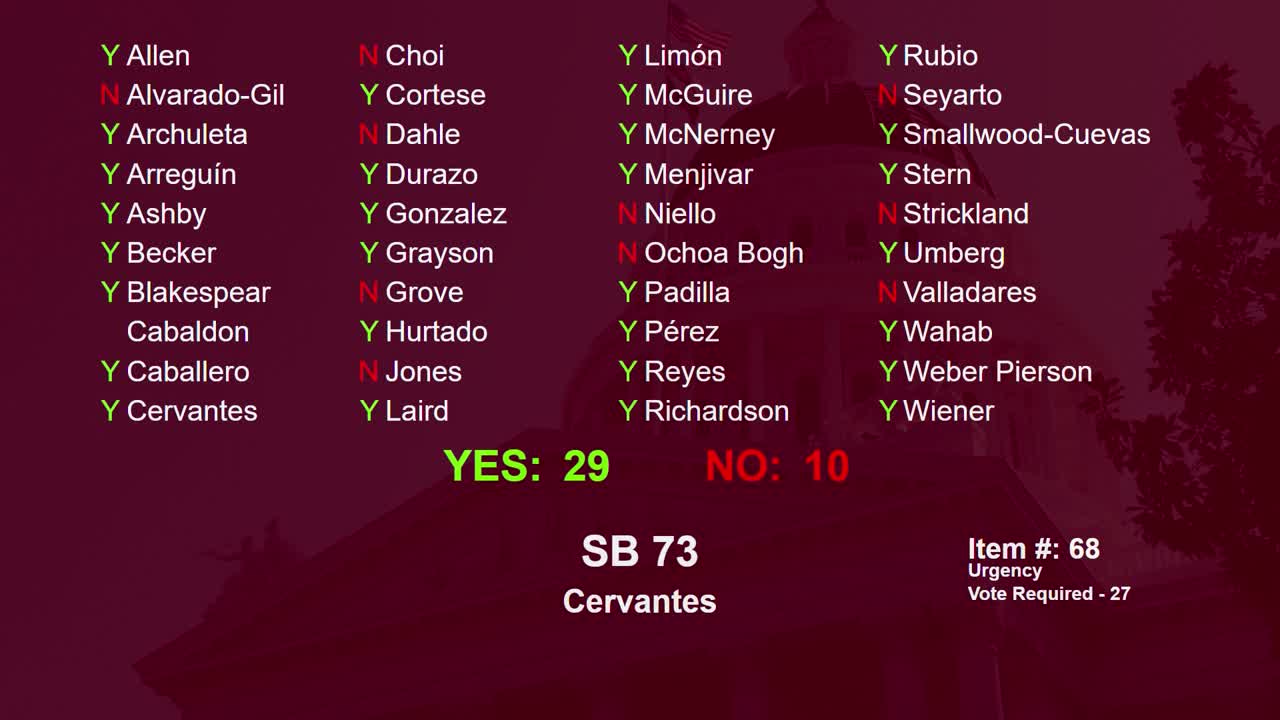

Bill Author

Bill Co-Author(s):