SB 701: Signal jammers.
- Session Year: 2025-2026
- House: Senate
- Latest Version Date: 2025-10-07
Current Status:
Passed
(2025-10-07: Chaptered by Secretary of State. Chapter 458, Statutes of 2025.)
Introduced
In Committee
Awaiting First Chamber Vote
Passed First Chamber
In Committee
Awaiting Second Chamber Vote
Passed Second Chamber
Enacted
Federal law prohibits a person from willfully or maliciously interfering with or causing interference to radio communications. Federal law prohibits a person from manufacturing, importing, selling, offering for sale, or shipping a device that interferes with radio communications. Federal law makes a violation of these prohibitions punishable by a fine of not more than $10,000 or by imprisonment for a term not exceeding one year, or both the fine and imprisonment.
Existing law makes it a misdemeanor for a person to intercept a public safety radio service communication for the purpose of using the communication to assist in the commission of a criminal offense or to avoid arrest, as specified. Existing law makes it an infraction to possess or equip a vehicle with a device that is capable of interfering with a device used by a law enforcement agency to measure the speed of moving objects, as specified, and makes it a misdemeanor to possess four or more of those devices.
This bill would make it a crime to manufacture, import, market, purchase, sell, or operate a signal jammer, as defined, unless authorized to do so by the Federal Communications Commission, punishable as an infraction for a first offense, and a misdemeanor for a 2nd offense, as specified. The bill would make it a misdemeanor to operate a signal jammer in conjunction with the commission of a misdemeanor or felony, punishable by a fine of up to $1,000 or by imprisonment. The bill would make it a crime to willfully or maliciously use a signal jammer to block state or local public safety communications, if the person knows or should know that using the signal jammer is likely to result in death or great bodily injury and great bodily injury or death is sustained by any person as a result of that use, punishable as either a misdemeanor or a felony. The bill would require forfeiture of the signal jamming device upon conviction for these crimes. By creating new crimes, this bill would impose a state-mandated local program.
The California Constitution requires the state to reimburse local agencies and school districts for certain costs mandated by the state. Statutory provisions establish procedures for making that reimbursement.
This bill would provide that no reimbursement is required by this act for a specified reason.
Federal law prohibits a person from willfully or maliciously interfering with or causing interference to radio communications. Federal law prohibits a person from manufacturing, importing, selling, offering for sale, or shipping a device that interferes with radio communications. Federal law makes a violation of these prohibitions punishable by a fine of not more than $10,000 or by imprisonment for a term not exceeding one year, or both the fine and imprisonment.
Existing law makes it a misdemeanor for a person to intercept a public safety radio service communication for the purpose of using the communication to assist in the commission of a criminal offense or to avoid arrest, as specified. Existing law makes it an infraction to possess or equip a vehicle with a device that is capable of interfering with a device used by a law enforcement agency to measure the speed of moving objects, as specified, and makes it a misdemeanor to possess four or more of those devices.
This bill would make it a crime to manufacture, import, market, purchase, sell, or operate a signal jammer, as defined, unless authorized to do so by the Federal Communications Commission, punishable by forfeiture of the signal jamming device, and either as an infraction or a misdemeanor, as specified. as an infraction for a first offense, and a misdemeanor for a 2nd offense, as specified. The bill would make it a misdemeanor to operate a signal jammer in conjunction with the commission of a crime, misdemeanor or felony, punishable by a fine of up to $1,000 or by imprisonment. The bill would make it a crime to willfully or maliciously use a signal jammer to block state or local public safety communications, if the person knows or should know that using the signal jammer is likely to result in death or great bodily injury and great bodily injury or death is sustained by any person as a result of that use, punishable as either a misdemeanor or a felony. The bill would require forfeiture of the signal jamming device upon conviction for these crimes. By creating new crimes, this bill would impose a state-mandated local program.
The California Constitution requires the state to reimburse local agencies and school districts for certain costs mandated by the state. Statutory provisions establish procedures for making that reimbursement.
This bill would provide that no reimbursement is required by this act for a specified reason.
Federal law prohibits a person from willfully or maliciously interfering with or causing interference to radio communications. Federal law prohibits a person from manufacturing, importing, selling, offering for sale, or shipping a device that interferes with radio communications. Federal law makes a violation of these prohibitions punishable by a fine of not more than $10,000 or by imprisonment for a term not exceeding one year, or both the fine and imprisonment.
Existing law makes it a misdemeanor for a person to intercept a public safety radio service communication for the purpose of using the communication to assist in the commission of a criminal offense or to avoid arrest, as specified. Existing law makes it an infraction to possess or equip a vehicle with a device that is capable of interfering with a device used by a law enforcement agency to measure the speed of moving objects, as specified, and makes it a misdemeanor to possess four or more of those devices.
This bill would make it an infraction a crime to manufacture, import, market, purchase, sell, or operate a signal jammer, as defined, unless authorized to do so by the Federal Communications Commission, punishable by forfeiture of the signal jamming device and a fine of up to $5,000. device, and either as an infraction or a misdemeanor, as specified. The bill would make it a crime misdemeanor to operate a signal jammer in conjunction with the commission of a crime, punishable by a fine of up to $5,000 $1,000 or by imprisonment as a misdemeanor or a felony or both the fine and imprisonment. The bill would make it a felony crime to willfully or maliciously use a signal jammer to block public safety communications, punishable by imprisonment in the state prison for 2, 4, or 6 years. as either a misdemeanor or a felony. By creating new crimes, this bill would impose a state-mandated local program.
The California Constitution requires the state to reimburse local agencies and school districts for certain costs mandated by the state. Statutory provisions establish procedures for making that reimbursement.
This bill would provide that no reimbursement is required by this act for a specified reason.
Federal law prohibits a person from willfully or maliciously interfering with or causing interference to radio communications. Federal law prohibits a person from manufacturing, importing, selling, offering for sale, or shipping a device that interferes with radio communications. Federal law makes a violation of these prohibitions punishable by a fine of not more than $10,000 or by imprisonment for a term not exceeding one year, or both the fine and imprisonment.
Existing law makes it a misdemeanor for a person to intercept a public safety radio service communication for the purpose of using the communication to assist in the commission of a criminal offense or to avoid arrest, as specified. Existing law makes it an infraction to possess or equip a vehicle with a device that is capable of interfering with a device used by a law enforcement agency to measure the speed of moving objects, as specified, and makes it a misdemeanor to possess four or more of those devices.
This bill would make it an infraction to manufacture, import, market, purchase, sell, or operate a signal jammer, as defined, unless authorized to do so by the Federal Communications Commission, punishable by forfeiture of the signal jamming device and a fine of up to $5,000. The bill would make it a crime to operate a signal jammer in conjunction with the commission of a crime, punishable by a fine of up to $5,000 or by imprisonment as a misdemeanor or a felony or both the fine and imprisonment. The bill would make it a felony to willfully or maliciously use a signal jammer to block public safety communications, punishable by imprisonment in the state prison for 2, 4, or 6 years. By creating new crimes, this bill would impose a state-mandated local program.
The California Constitution requires the state to reimburse local agencies and school districts for certain costs mandated by the state. Statutory provisions establish procedures for making that reimbursement.
This bill would provide that no reimbursement is required by this act for a specified reason.
(a)(1)A person who manufactures, imports, markets, purchases, sells, or operates a signal jammer, unless authorized to do so by the Federal Communications Commission, is guilty of an infraction, punishable by a fine not to exceed five hundred dollars ($500) for a first offense.
(2)A second or subsequent violation of paragraph (1) is a misdemeanor, punishable by imprisonment in a county jail not exceeding year, by a fine not to exceed one thousand dollars ($1,000), or by both that fine and imprisonment.
(b)A person who operates a signal jammer in conjunction with the commission of a misdemeanor or felony is guilty of a misdemeanor, punishable by imprisonment in a county jail not exceeding one year, or by a fine not to exceed one thousand dollars ($1,000), or by both that fine and imprisonment.
(c)A person who willfully or maliciously uses a signal jammer to block state or local public safety communications, and who knows or should know that using the signal jammer is likely to result in death or great bodily injury and great bodily injury or death is sustained by any person as a result of that use, is guilty of a crime, punishable by imprisonment in a county jail not exceeding one year or pursuant to subdivision (h) of Section 1170.
(d)A conviction under this section requires forfeiture of the signal jamming device.
(e)This section does not apply to the authorized and lawful use of signal jammers by local or state law enforcement.
(f)For the purposes of this section, the following terms have the following meanings:
(1)Signal jammer means a device that intentionally blocks, jams, or interferes with authorized radio or wireless communications.
(2)Public safety communications means the systems, technologies, and methods used by emergency response agencies, including law enforcement, firefighters, and EMS, to communicate with each other.
SEC. 2.No reimbursement is required by this act pursuant to Section 6 of Article XIIIB of the California Constitution because the only costs that may be incurred by a local agency or school district will be incurred because this act creates a new crime or infraction, eliminates a crime or infraction, or changes the penalty for a crime or infraction, within the meaning of Section 17556 of the Government Code, or changes the definition of a crime within the meaning of Section 6 of Article XIIIB of the California Constitution.
(a)(1)A person who manufactures, imports, markets, purchases, sells, or operates a signal jammer, unless authorized to do so by the Federal Communications Commission, is guilty of an infraction, punishable by forfeiture of the signal jamming device and by a fine not to exceed five hundred dollars ($500), or a misdemeanor, punishable by forfeiture of the signal jamming device and by imprisonment in a county jail not exceeding one year, by a fine not to exceed five hundred dollars ($500), or by both that fine and imprisonment. ($500) for a first offense.
(2)A second or subsequent violation of paragraph (1) is a misdemeanor, punishable by imprisonment in a county jail not exceeding year, by a fine not to exceed one thousand dollars ($1,000), or by both that fine and imprisonment.
(b)A person who possesses or operates a signal jammer in conjunction with the commission of a crime misdemeanor or felony is guilty of a misdemeanor, punishable by imprisonment in a county jail not exceeding one year, or by a fine not to exceed one thousand dollars ($1,000), or by both that fine and imprisonment.
(c)A person who willfully or maliciously uses a signal jammer to block state or local public safety communications communications, and who knows or should know that using the signal jammer is likely to result in death or great bodily injury and great bodily injury or death is sustained by any person as a result of that use, is guilty of a crime, punishable by imprisonment in a county jail not exceeding one year or pursuant to subdivision (h) of Section 1170.
(d)A conviction under this section requires forfeiture of the signal jamming device.
(d)(e)This section does not apply to the authorized and lawful use of signal jammers by local or state law enforcement.
(e)(f)For the purposes of this section, the following terms have the following meanings:
(1)Signal jammer means a device that intentionally blocks, jams, or interferes with authorized radio or wireless communications.
(2)Public safety communications means the systems, technologies, and methods used by emergency response agencies, including law enforcement, firefighters, and EMS, to communicate with each other.
SEC. 2.No reimbursement is required by this act pursuant to Section 6 of Article XIIIB of the California Constitution because the only costs that may be incurred by a local agency or school district will be incurred because this act creates a new crime or infraction, eliminates a crime or infraction, or changes the penalty for a crime or infraction, within the meaning of Section 17556 of the Government Code, or changes the definition of a crime within the meaning of Section 6 of Article XIIIB of the California Constitution.
(a)A person who manufactures, imports, markets, purchases, sells, or operates a signal jammer, unless authorized to do so by the Federal Communications Commission, is guilty of an infraction, infraction, punishable by forfeiture of the signal jamming device, and a fine not to exceed five thousand dollars ($5,000). device and by a fine not to exceed five hundred dollars ($500), or a misdemeanor, punishable by forfeiture of the signal jamming device and by imprisonment in a county jail not exceeding one year, by a fine not to exceed five hundred dollars ($500), or by both that fine and imprisonment.
(b)A person who possesses or operates a signal jammer in conjunction with the commission of a crime is guilty of a crime, punishable by imprisonment pursuant to subdivision (h) of Section 1170, or misdemeanor, punishable by imprisonment in a county jail not exceeding one year, or by a fine of up to five thousand dollars ($5,000), not to exceed one thousand dollars ($1,000), or by both that fine and imprisonment.
(c)A person who willfully or maliciously uses a signal jammer to block public safety communications is guilty of a felony, punishable by imprisonment in the state prison for two, four, or six years. crime, punishable by imprisonment in a county jail not exceeding one year or pursuant to subdivision (h) of Section 1170.
(d)This section does not apply to the use of signal jammers by local or state law enforcement.
(e)For the purposes of this section, the following terms have the following meanings:
(1)Signal jammer means a device that intentionally blocks, jams, or interferes with authorized radio or wireless communications.
(2)Public safety communications means the systems, technologies, and methods used by emergency response agencies, including law enforcement, firefighters, and EMS, to communicate with each other.
SEC. 2.No reimbursement is required by this act pursuant to Section 6 of Article XIIIB of the California Constitution because the only costs that may be incurred by a local agency or school district will be incurred because this act creates a new crime or infraction, eliminates a crime or infraction, or changes the penalty for a crime or infraction, within the meaning of Section 17556 of the Government Code, or changes the definition of a crime within the meaning of Section 6 of Article XIIIB of the California Constitution.
(a)A person who manufactures, imports, markets, purchases, sells, or operates a signal jammer, unless authorized to do so by the Federal Communications Commission, is guilty of an infraction, punishable by forfeiture of the signal jamming device, and a fine of up to not to exceed five thousand dollars ($5,000).
(b)A person who possesses or operates a signal jammer in conjunction with the commission of a crime is guilty of a crime, punishable by imprisonment pursuant to subdivision (h) of Section 1170, or in a county jail not exceeding one year, or by a fine of up to five thousand dollars ($5,000), or by both that fine and imprisonment.
(c)A person who willfully or maliciously uses a signal jammer to block public safety communications is guilty of a felony, punishable by imprisonment in the state prison for two, four, or six years.
(d)This section does not apply to the use of signal jammers by local or state law enforcement.
(e)For the purposes of this section, the following terms have the following meanings:
(1)Signal jammer means a device that intentionally blocks, jams, or interferes with authorized radio or wireless communications.
(2)Public safety communications means the systems, technologies, and methods used by emergency response agencies, including law enforcement, firefighters, and EMS, to communicate with each other.
SEC. 2.No reimbursement is required by this act pursuant to Section 6 of Article XIIIB of the California Constitution because the only costs that may be incurred by a local agency or school district will be incurred because this act creates a new crime or infraction, eliminates a crime or infraction, or changes the penalty for a crime or infraction, within the meaning of Section 17556 of the Government Code, or changes the definition of a crime within the meaning of Section 6 of Article XIIIB of the California Constitution.
(a)A person who manufactures, imports, markets, purchases, sells, or operates a signal jammer, unless authorized to do so by the Federal Communications Commission, is guilty of an infraction, punishable by forfeiture of the signal jamming device, and a fine of up to five thousand dollars ($5,000).
(b)A person who possesses or operates a signal jammer in conjunction with the commission of a crime is guilty of a crime, punishable by imprisonment pursuant to subdivision (h) of Section 1170, or in a county jail not exceeding one year, or by a fine of up to five thousand dollars ($5,000), or by both that fine and imprisonment.
(c)A person who willfully or maliciously uses a signal jammer to block public safety communications is guilty of a felony, punishable by imprisonment in the state prison for two, four, or six years.
(d)This section does not apply to the use of signal jammers by local or state law enforcement.
(e)For the purposes of this section, the following terms have the following meanings:
(1)Signal jammer means a device that intentionally blocks, jams, or interferes with authorized radio or wireless communications.
(2)Public safety communications means the systems, technologies, and methods used by emergency response agencies, including law enforcement, firefighters, and EMS, to communicate with each other.
SEC. 2.No reimbursement is required by this act pursuant to Section 6 of Article XIIIB of the California Constitution because the only costs that may be incurred by a local agency or school district will be incurred because this act creates a new crime or infraction, eliminates a crime or infraction, or changes the penalty for a crime or infraction, within the meaning of Section 17556 of the Government Code, or changes the definition of a crime within the meaning of Section 6 of Article XIIIB of the California Constitution.
|
Date
|
Status
|
|---|---|
| Oct 7, 2025 | Chaptered by Secretary of State. Chapter 458, Statutes of 2025. |
| Oct 7, 2025 | Approved by the Governor. |
| Sep 17, 2025 | Enrolled and presented to the Governor at 2 p.m. |
| Sep 9, 2025 | Assembly amendments concurred in. (Ayes 40. Noes 0. Page 2719.) Ordered to engrossing and enrolling. |
| Sep 8, 2025 | In Senate. Concurrence in Assembly amendments pending. |
| Sep 8, 2025 | Read third time. Passed. (Ayes 75. Noes 0. Page 2996.) Ordered to the Senate. |
| Sep 2, 2025 | Read second time. Ordered to third reading. |
| Aug 29, 2025 | From committee: Do pass. (Ayes 15. Noes 0.) (August 29). |
| Jul 16, 2025 | July 16 set for first hearing. Placed on APPR. suspense file. |
| Jul 3, 2025 | Read second time and amended. Re-referred to Com. on APPR. |
| Jul 2, 2025 | From committee: Do pass as amended and re-refer to Com. on APPR. (Ayes 9. Noes 0.) (July 1). |
| Jun 16, 2025 | Referred to Com. on PUB. S. |
| Jun 5, 2025 | In Assembly. Read first time. Held at Desk. |
| Jun 4, 2025 | Read third time. Passed. (Ayes 38. Noes 0. Page 1511.) Ordered to the Assembly. |
| May 23, 2025 | Read second time. Ordered to third reading. |
| May 23, 2025 | From committee: Do pass. (Ayes 6. Noes 0. Page 1210.) (May 23). |
| May 16, 2025 | Set for hearing May 23. |
| Apr 28, 2025 | April 28 hearing: Placed on APPR. suspense file. |
| Apr 17, 2025 | Set for hearing April 28. |
| Apr 9, 2025 | Read second time and amended. Re-referred to Com. on APPR. |
| Apr 8, 2025 | From committee: Do pass as amended and re-refer to Com. on APPR. (Ayes 6. Noes 0. Page 709.) (April 8). |
| Mar 27, 2025 | Set for hearing April 8. |
| Mar 24, 2025 | From committee with author's amendments. Read second time and amended. Re-referred to Com. on PUB. S. |
| Mar 12, 2025 | Referred to Com. on PUB. S. |
| Feb 24, 2025 | Read first time. |
| Feb 24, 2025 | From printer. May be acted upon on or after March 24. |
| Feb 21, 2025 | Introduced. To Com. on RLS. for assignment. To print. |
|
Date
|
Description
|
Location
|
Votes
|
|
|---|---|---|---|---|
| Sep 9, 2025 | Unfinished Business SB701 Wahab et al. Concurrence | Senate Floor |
Passed |
|
| Sep 8, 2025 | SB 701 Wahab Senate Third Reading By Alanis | Assembly Floor |
Passed |
|
| Aug 29, 2025 | Do pass. | Assembly Standing Committee on Appropriations |
Passed |
|
| Jul 1, 2025 | Do pass as amended and be re-referred to the Committee on [Appropriations] | Assembly Standing Committee on Public Safety |
Passed |
|
| Jun 4, 2025 | Senate 3rd Reading SB701 Wahab et al. | Senate Floor |
Passed |
|
| May 23, 2025 | Do pass | Senate Standing Committee on Appropriations |
Passed |
|
| Apr 28, 2025 | Placed on suspense file | Senate Standing Committee on Appropriations |
Passed |
|
| Apr 8, 2025 | Do pass as amended, but first amend, and re-refer to the Committee on [Appropriations] | Senate Standing Committee on Public Safety |
Passed |
This list shows positions taken on this bill by organizations on the date displayed, which is linked to the original source.
Positions by individuals are not included.
|
Organization
|
Position
|
Date
|
|---|---|---|
| Aclu California Action | ** Against | |
| Arcadia Police Officers' Association | ** Support | |
| Brea Police Association | ** Support | |
| Burbank Police Officers' Association | ** Support | |
| California Association of School Police Chiefs | ** Support | |
| California Civil Liberties Advocacy | ** Against | |
| California Coalition of School Safety Professionals | ** Support | |
| California District Attorneys Association | ** Support | |
| California Narcotic Officers' Association | ** Support | |
| Californians United for a Responsible Budget | ** Against | |
| California Police Chiefs Association | ** Support | |
| California Public Defenders Association | ** Against | |
| California Reserve Peace Officers Association | ** Support | |
| California State Sheriffs' Association | ** Support | |
| City of Los Alamitos | ** Support | |
| City Of Los Angeles | ** Support | |
| City Of Santa Clara | ** Support | |
| City of Sunnyvale | ** Support | |
| CLAREMONT POLICE OFFICERS ASSOCIATION | ** Support | |
| Corona Police Officers Association | ** Support | |
| Culver City Police Officers' Association | ** Support | |
| Fullerton Police Officers' Association | ** Support | |
| Initiate Justice | ** Against | |
| Justice2jobs Coalition | ** Against | |
| LA Defensa | ** Against | |
| League Of California Cities | ** Support | |
| Los Angeles School Police Management Association | ** Support | |
| los angeles school police officers association | ** Support | |
| Murrieta Police Officers' Association | ** Support | |
| Newport Beach Police Association | ** Support | |
| Palos Verdes Police Officers' Association | ** Support | |
| PLACER COUNTY DEPUTY SHERIFFS ASSOCIATION | ** Support | |
| Pomona Police Officers' Association | ** Support | |
| Riverside Police Officers' Association | ** Support | |
| Riverside Sheriffs' Association | ** Support | |
| San Francisco Public Defender | ** Against |
SENATE RULES COMMITTEE Office of Senate Floor Analyses (916) 651-1520 Fax: (916) 327-4478 | SB 701 |
UNFINISHED BUSINESS
Bill No: SB 701
Author: Wahab (D), et al.
Amended: 7/3/25 in Assembly
Vote: 21
SENATE PUBLIC SAFETY COMMITTEE: 6-0, 4/8/25
AYES: Arreguín, Seyarto, Caballero, Gonzalez, Pérez, Wiener
SENATE APPROPRIATIONS COMMITTEE: 6-0, 5/23/25
AYES: Caballero, Seyarto, Cabaldon, Grayson, Richardson, Wahab
NO VOTE RECORDED: Dahle
SENATE FLOOR: 38-0, 6/4/25
AYES: Allen, Alvarado-Gil, Archuleta, Arreguín, Ashby, Becker, Blakespear, Cabaldon, Caballero, Cervantes, Choi, Cortese, Dahle, Durazo, Gonzalez, Grayson, Grove, Hurtado, Jones, Laird, Limón, McGuire, McNerney, Menjivar, Niello, Ochoa Bogh, Padilla, Pérez, Richardson, Rubio, Seyarto, Stern, Strickland, Umberg, Valladares, Wahab, Weber Pierson, Wiener
NO VOTE RECORDED: Reyes, Smallwood-Cuevas
ASSEMBLY FLOOR: 75-0, 9/8/25 - See last page for vote
SUBJECT: Signal jammers
SOURCE: California Police Chiefs Association
DIGEST:
This bill establishes several violations and penalties relating to the use of signal jammers, as specified.
Assembly Amendments
reduce the penalty for manufacturing, transferring or using a signal jammer, add a knowledge requirement to the crime of using a signal jammer to block public safety communications, remove criminal liability for an individual who merely possesses a signal jammer in conjunction with the commission of a crime, and require the forfeiture of a signal jammer used in the commission of any of the crimes created by the bill.
ANALYSIS:
Existing federal law:
- Prohibits a person from willfully or maliciously interfering with or causing interference to radio communications. (47 United States Code (U.S.C.), § 333.)
- Prohibits a person from manufacturing, importing, selling, offering for sale, or shipping a device that interferes with radio communications. (47 U.S.C., § 302a, subds. (a)-(b).)
- Provides that any person who willfully and knowingly violates specified requirements related to wire and radio communication, including the prohibitions above, shall be punished by a fine of not more than $10,000 or by imprisonment for a term not exceeding one year, or both, or up to two years for a subsequent offense. (47 U.S.C., § 501.)
- Provides that any electronic, electromagnetic, radio frequency, or similar device, or component thereof, used, sent, carried, manufactured, assembled, possessed, offered for sale, sold, or advertised with willful and knowing intent to violate § 302a, cited above, may be seized and forfeited to the United States. (47 U.S.C., § 510.)
- Prohibits the intentional or malicious interference to satellite communications, including GPS, and subjects the operator to possible fines, imprisonment, or both. (18 U.S.C., § 1367, subd. (a).)
Existing state law:
- Provides that a person who unlawfully and maliciously removes, injures, destroys, damages, or obstructs the use of any wireless communication device with the intent to prevent the use of the device to summon assistance or notify law enforcement or any public safety agency of a crime is guilty of a misdemeanor. (Penal Code (Pen. Code), § 591.5.)
- Provides that any person not authorized by the sender, who intercepts any public safety radio service communication, as defined, by use of a scanner or any other means, for the purpose of using that communication to assist in the commission of a criminal offense or to avoid or escape arrest, trial, conviction, or punishment or who divulges to any person he or she knows to be a suspect in the commission of any criminal offense, the existence, contents, substance, purport, effect or meaning of that communication concerning the offense with the intent that the suspect may avoid or escape from arrest, trial, conviction, or punishment is guilty of a misdemeanor. (Pen. Code, § 636.5.)
- Establishes the Legislature’s intent to provide an efficient law enforcement communications network available to all public agencies of law enforcement, and that such a network be established and maintained in a condition adequate to the needs of law enforcement. (Government Code (Gov. Code), § 15151).
- Requires the Department of Justice to maintain a statewide telecommunications system of communication for the use of law enforcement agencies (CLETS), and provides that CLETS shall be under the direction of the Attorney General, and shall be used exclusively for the official business of the state and any city, county, city and county, or other public agency. (Gov. Code, §§ 15152 and 15153).
- Makes it an infraction for a vehicle to be equipped with any device that is designed for, or is capable of, jamming, scrambling, neutralizing, disabling, or otherwise interfering with radar, laser, or any other electronic device used by a law enforcement agency to measure the speed of moving objects. (Vehicle Code (Veh. Code), § 28150, subd. (a).)
- Makes it an infraction for any person to use, buy, possess, manufacture, sell, or otherwise distribute any device that is designed for jamming, scrambling, neutralizing, disabling, or otherwise interfering with radar, laser, or any other electronic device used by a law enforcement agency to measure the speed of moving objects. Possession of four or more of these devices is a misdemeanor. (Veh. Code, § 28150, subds. (b), (d).)
This bill:
- Provides that a person who manufactures, imports, markets, purchases, sells, or operates a signal jammer, unless authorized to do so by the Federal Communications Commission, is guilty of an infraction, punishable by a fine not to exceed five hundred dollars ($500) for a first offense.
- Provides that a second or subsequent violation of the above provision is a misdemeanor, punishable by imprisonment in a county jail not exceeding year, by a fine not to exceed one thousand dollars ($1,000), or by both that fine and imprisonment.
- Provides that a person who operates a signal jammer in conjunction with the commission of a misdemeanor or felony is guilty of a misdemeanor, punishable by imprisonment in the county jail not exceeding one year, or by a fine not to exceed $1,000 or by both that fine and imprisonment.
- Provides that a person who willfully or maliciously uses a signal jammer to block state or local public safety communications, and who knows or should know that using the signal jammer is likely to result in death or great bodily injury and great bodily injury is sustained by any person as a result of that use, is guilty of an alternate misdemeanor/realigned felony, punishable, in the case of the misdemeanor, by imprisonment in county jail not to exceed 1 year, or in the case of the realigned felony, by imprisonment in county jail not to exceed 16 months, two years, or three years.
- Provides that a conviction for a crime prescribed under this bill requires the forfeiture of the signal jamming device.
- Specifies that the above prohibitions do not apply to the authorized and lawful use of signal jammers by local or state law enforcement.
- This bill sets forth the following definitions for terms used therein:
- “Signal jammer” means a device that intentionally blocks, jams, or interferes with authorized radio or wireless communications.
- “Public safety communications” means the systems, technologies, and methods used by emergency response agencies, firefighters, and EMS, to communicate with each other.
Comments
The Federal Communications Commission is responsible for assigning licenses to individual law enforcement agencies for the operation of their radio systems on the “public safety spectrum,” which serves the telecommunications needs of most public safety agencies across the country. Until very recently, most police radio communications in California have been unencrypted, which means that the public can access police radio transmissions using a radio scanning device. With the development of online radio streaming, many unencrypted police radio channels have become accessible via internet websites that provide a livestream.
The FCC is also responsible for the regulation of signal jammers and the enforcement of laws and regulations related to these devices. The FCC’s primary regulatory authority is derived from the Communications Act of 1934 (hereinafter, “the Act”), which established the agency and, among other things, generally prohibits the operation, manufacture, importation, marketing and sale of equipment designed to jam or otherwise interfere with authorized radio communications, such as radar, GPS and cell phone communications. The Act also imposes significant penalties for a violation of its provisions, including substantial fines and imprisonment, and allows the FCC to seize unlawful equipment. To assist state and local jurisdictions and the public at-large with jammer-related issues, the FCC has a process by which a local law enforcement official or member of the public can file complaints directly with the agency. Additionally, the Department of Homeland Security, primarily through its subsidiary Cybersecurity & Infrastructure Security Agency, provides guidance to public safety organizations on mitigating radio frequency interference threats.
The Author asserts that “existing California law does not make any mention of signal jamming technology.” While it is true that no provision pertains specifically to communications signal jamming, existing law does make it an infraction for a vehicle to be equipped with a device that is capable of jamming or interfering with law enforcement speed detection devices, and additionally makes it an infraction to use, purchase, manufacture or sell such a device. Existing law also makes it a misdemeanor to obstruct the use of any wireless communication device with the intent to prevent the use of the device to summon assistance or notify law enforcement. Similarly, existing law makes it a misdemeanor to intercept any public safety radio communication for the purposes of committing a crime, escaping arrest, trial, conviction or punishment, or warn a suspect they are being investigated.
This bill creates three violations related to various conduct involving signal jammers, which the bill defines as “a device that intentionally blocks, jams, or interferes with authorized radio or wireless communications.” First, the bill makes it an infraction for a first offense and a misdemeanor for a second or subsequent offense to manufacture, import, market, purchase, sell, or operate a signal jammer unless authorized by the FCC. This offense is punishable by a fine of $500 in the case of the infraction, or by that fine and jail time in the case of a misdemeanor. Second, the bill prohibits the operation of a signal jammer in conjunction with the commission of a crime, a violation of which is punishable as a misdemeanor, the penalty for which is up to a year in jail or a fine of up to $1,000, or both the fine and imprisonment. Finally, the bill makes it a wobbler to willfully or maliciously use a signal jammer to block state or local public safety communications when the individuals knows or should know that the conduct is likely to result in great bodily injury or death and does indeed cause great bodily injury or death. The punishment for this crime involves various terms in county jail depending on whether the crime is charged as a misdemeanor or felony. Conviction for any of these crimes requires the forfeiture of the signal jamming device.
FISCAL EFFECT: Appropriation: No Fiscal Com.: Yes Local: Yes
According to the Assembly Appropriations Committee:
- Cost pressures (Trial Court Trust Fund, General Fund) of an unknown but potentially significant amount to the courts to adjudicate criminal charges resulting from this bill. A defendant charged with a misdemeanor or felony is entitled to a jury trial and, if the defendant is indigent, legal representation provided by the government. Actual court costs will depend on the number of violations, prosecutorial discretion, and the amount of court time needed to adjudicate each case. Although courts are not funded on the basis of workload, increased pressure on the Trial Court Trust Fund may create a demand for increased funding for courts from the General Fund. The fiscal year 2025-26 state budget provides $82 million ongoing General Fund to the Trial Court Trust Fund for court operations.
- Costs (local funds, General Fund) to the counties and the California Department of Corrections and Rehabilitation to incarcerate people convicted of the crimes created by this bill. Actual incarceration costs will depend on the number of convictions, the length of each sentence, and whether each sentence must be served in county jail or state prison. The average annual cost to incarcerate one person in county jail is approximately $29,000, though costs are higher in larger counties. The Legislative Analyst’s Office estimates the average annual cost to incarcerate one person in state prison is $133,000. County incarceration costs are not subject to reimbursement by the state. However, overcrowding in county jails creates cost pressure on the General Fund because the state has historically granted new funding to counties to offset overcrowding resulting from public safety realignment.
SUPPORT: (Verified 9/8/25)
Arcadia Police Officers' Association
Brea Police Association
Burbank Police Officers' Association
California Association of School Police Chiefs
California Coalition of School Safety Professionals
California District Attorneys Association
California Narcotic Officers' Association
California Police Chiefs Association
California Reserve Peace Officers Association
California State Sheriffs' Association
City of Los Alamitos
City of Los Angeles
City of Santa Clara
City of Sunnyvale
Claremont Police Officers Association
Corona Police Officers Association
Culver City Police Officers' Association
Fullerton Police Officers' Association
League of California Cities
Los Angeles School Police Management Association
Los Angeles School Police Officers Association
Murrieta Police Officers' Association
Newport Beach Police Association
Palos Verdes Police Officers Association
Placer County Deputy Sheriffs' Association
Pomona Police Officers' Association
Riverside Police Officers Association
Riverside Sheriffs' Association
OPPOSITION: (Verified 9/8/25)
California Civil Liberties Advocacy
California Public Defenders Association
Californians United for a Responsible Budget
Initiate Justice
Justice2jobs Coalition
LA Defensa
San Francisco Public Defender
ASSEMBLY FLOOR: 75-0, 9/8/25
AYES: Addis, Aguiar-Curry, Ahrens, Alanis, Alvarez, Arambula, Ávila Farías, Bains, Bauer-Kahan, Bennett, Berman, Boerner, Calderon, Caloza, Carrillo, Castillo, Chen, Connolly, Davies, DeMaio, Dixon, Ellis, Flora, Fong, Gabriel, Gallagher, Garcia, Gipson, Jeff Gonzalez, Mark González, Hadwick, Haney, Harabedian, Hart, Hoover, Irwin, Jackson, Johnson, Krell, Lackey, Lee, Lowenthal, Macedo, McKinnor, Muratsuchi, Ortega, Pacheco, Papan, Patel, Patterson, Pellerin, Petrie-Norris, Quirk-Silva, Ramos, Ransom, Celeste Rodriguez, Michelle Rodriguez, Rogers, Blanca Rubio, Sanchez, Schiavo, Schultz, Sharp-Collins, Solache, Soria, Stefani, Ta, Tangipa, Valencia, Wallis, Ward, Wicks, Wilson, Zbur, Rivas
NO VOTE RECORDED: Bonta, Bryan, Elhawary, Kalra, Nguyen
Prepared by: Alex Barnett / PUB. S. /
9/8/25 19:42:30
SENATE THIRD READING
STR Bill Id:SB 701
Author:(Wahab)
As Amended Ver:July 3, 2025
Majority vote
SUMMARY
Establishes various criminal penalties for acts by a person with a signal jammer.
Major Provisions
- Makes it an infraction for any person to manufacture, import, market, purchase, sell or operate a signal jammer, unless authorized by the Federal Communications Commission (FCC), punishable by forfeiture of the signal jamming device, and a fine not to exceed $500.
- States that a second or subsequent offense involving manufacture, import, marketing, purchasing, selling or operating a signal jammer is punishable as a misdemeanor with up to one-year imprisonment in county jail, by a $1,000 fine, or by both fine and imprisonment.
- Provides that a person who operates a signal jammer in conjunction with the commission of a misdemeanor or felony is guilty of a crime, punishable as a misdemeanor with up to one-year imprisonment in county jail, or by a fine of up to $1,000, or by both fine and imprisonment.
- Provides that a person who willfully or maliciously uses a signal jammer to block state or local public safety communications, and who knows or should know that death or great bodily injury will result and death or great bodily injury do result, is guilty of an alternate felony/misdemeanor.
- States that conviction of a crime with a signal jammer requires forfeiture of the device.
- Specifies that the above prohibitions do not apply to the authorized and lawful use of signal jammers by local or state law enforcement.
- Defines ″signal jammer″ to mean a device that intentionally blocks, jams, or interferes with authorized radio or wireless communications.
- Defines ″public safety communications″ to mean the systems, technologies, and methods used by emergency response agencies, firefighters, and Emergency Management Services (EMS), to communicate with each other.
COMMENTS
According to the Author
″Signal jammers are an increasingly prevalent problem across the US. They′ve been used in conjunction with burglaries, car thefts, bank heists, and more, blocking critical communication frequencies that WiFi, GPS, radio, and cell signals all rely on. While signal jammers are already illegal under federal law and Federal Communications Commission (FCC) rules, they continue to pose a major threat to emergency response and public safety due to an absence of adequate California state regulations.
″SB 701 will allow state and local enforcement agencies to take direct action against these dangerous devices to protect the public from bad actors using signal jammers to facilitate serious crimes. SB 701 bans manufacturing, importing, marketing, purchasing, selling, or operating a signal jammer, with harsher penalties for possessing or operating a signal jammer in conjunction with a crime or maliciously using a signal jammer to block public safety communications.″
Arguments in Support
According to the California Police Chiefs Association, ″By creating state laws regarding the use of these already illegal devices, we empower our state and local law enforcement agencies to investigate and take action against these dangerous devices.
″Law enforcement agencies nationwide are dealing with severe and evolving threats posed by radio frequency signal jammers. These devices, which are already illegal under federal law and regulations, can cause interference, potentially resulting in a denial of service for critical communications such as cellular, land mobile radio, Global Position Systems, and wireless security systems. They may also significantly impact operation coordination and officer and first responder safety.
″Signal jammers emit radio frequency signals or noise in specific bands to overpower and block other signals, such as authorized communications transmissions. These devices come in all shapes and sizes, can be purchased online or constructed at home, and have been used to mask crimes, such as burglary, vehicle theft, cargo theft, parole violations, drug/human trafficking, and acts of terrorism. From fiscal years 2021-23, federal agencies recorded over 650 signal jammer seizures.
″Signal jamming is illegal under the United States Communication Act of 1934 and through accompanying regulations established by the Federal Communications Commission (FCC). Any use of unfederally authorized jamming technology is prohibited, as is the manufacturing, sale, importation, and marketing. In addition, several states – Florida, Texas, Arizona, and Alabama – have recently passed laws making it illegal under their statutes, thereby empowering local law enforcement to take necessary action against the problem.″
Arguments in Opposition
According to La Defensa, ″While we appreciate the importance of deterring and addressing interference with lawful law enforcement activities, we believe existing law already sufficiently accomplishes this purpose. Therefore, this bill is duplicative and will unnecessarily increase state costs.
″Federal law already prohibits the manufacture, importation, marketing, sale or operation of signal jammers within the United States. (47 U.S.C. Section 302a, subd. (b).) Federal law also prohibits the willful or malicious interference with the radio communications of any station licensed or authorized under the Federal Communications Act. (47 U.S.C. Section 333.) California public safety communications fall under the Federal Communications Act and are regulated by the Federal Communications Commission. Any person who willfully or maliciously interferes with California public safety communications can already be charged with a federal offense and punished by significant fines and sentenced to a federal prison term. (47 U.S.C. Section 501.)
″California law likewise prohibits the conduct contemplated by SB 701. Penal Code section 148 prohibits a person who maliciously interrupts, disrupts, impedes, or otherwise interferes with the transmission of a communication over a public safety radio frequency. (Penal Code, Section 148, subd. (a)(2).)
″California′s Penal Code has been criticized for its complexity and its unnecessary duplication of existing crimes. As former Governor Brown cautioned nearly 10 years ago in numerous veto messages:
′Each of these bills creates a new crime – usually by finding a novel way to characterize and criminalize conduct that is already proscribed. This multiplication and particularization of criminal behavior creates increasing complexity without commensurate benefit.
Over the last several decades, California′s criminal code has grown to more than 5,000 separate provisions, covering almost every conceivable form of human misbehavior. During the same period, our jail and prison populations have exploded…′
″Given existing state and federal penalties, we see no need to create new, overlapping state penalties and add to our already labyrinthine Penal Code.″
FISCAL COMMENTS
According to the Assembly Appropriations Committee:
- Cost pressures (Trial Court Trust Fund, General Fund) of an unknown but potentially significant amount to the courts to adjudicate criminal charges resulting from this bill. A defendant charged with a misdemeanor or felony is entitled to a jury trial and, if the defendant is indigent, legal representation provided by the government. Actual court costs will depend on the number of violations, prosecutorial discretion, and the amount of court time needed to adjudicate each case. Although courts are not funded on the basis of workload, increased pressure on the Trial Court Trust Fund may create a demand for increased funding for courts from the General Fund. The fiscal year 2025-26 state budget provides $82 million ongoing General Fund to the Trial Court Trust Fund for court operations.
- Costs (local funds, General Fund) to the counties and the California Department of Corrections and Rehabilitation to incarcerate people convicted of the crimes created by this bill. Actual incarceration costs will depend on the number of convictions, the length of each sentence, and whether each sentence must be served in county jail or state prison. The average annual cost to incarcerate one person in county jail is approximately $29,000, though costs are higher in larger counties. The Legislative Analyst′s Office estimates the average annual cost to incarcerate one person in state prison is $133,000. County incarceration costs are not subject to reimbursement by the state. However, overcrowding in county jails creates cost pressure on the General Fund because the state has historically granted new funding to counties to offset overcrowding resulting from public safety realignment.
VOTES
SENATE FLOOR: 38-0-2
YES: Allen, Alvarado-Gil, Archuleta, Arreguín, Ashby, Becker, Blakespear, Cabaldon, Caballero, Cervantes, Choi, Cortese, Dahle, Durazo, Gonzalez, Grayson, Grove, Hurtado, Jones, Laird, Limón, McGuire, McNerney, Menjivar, Niello, Ochoa Bogh, Padilla, Pérez, Richardson, Rubio, Seyarto, Stern, Strickland, Umberg, Valladares, Wahab, Weber Pierson, Wiener
ABS, ABST OR NV: Reyes, Smallwood-Cuevas
ASM PUBLIC SAFETY: 9-0-0
YES: Schultz, Alanis, Mark González, Haney, Harabedian, Lackey, Nguyen, Ramos, Sharp-Collins
UPDATED
VERSION: July 3, 2025
CONSULTANT: Dustin Weber / PUB. S. / (916) 319-3744 FN: 0001331
Date of Hearing: July 16, 2025
ASSEMBLY COMMITTEE ON APPROPRIATIONS
Buffy Wicks, Chair
SBPCA Bill Id:SB 701
Author:(Wahab) – As Amended Ver:July 3, 2025
Policy Committee: | Public Safety | Vote: | 9 - 0 |
|
| ||
|
|
Urgency: No State Mandated Local Program: Yes Reimbursable: No
SUMMARY:
This bill creates three crimes related to the manufacturing, sales, and operation of a device that intentionally blocks, jams, or interferes with authorized radio transmissions (“signal jammer”).
Specifically, this bill:
- Makes it a crime to manufacture, import, market, purchase, sell, or operate a signal jammer without federal authorization, as specified. A first offense is an infraction punishable by a fine of up to $500. A second or subsequent offense is a misdemeanor punishable by up to one year in county jail, a fine of up to $1,000, or both a jail term and fine.
- Makes it a crime to operate a signal jammer in conjunction with the commission of another misdemeanor or felony. This offense is a misdemeanor punishable by up to one year in county jail, a fine of up to $1,000, or both a jail term and fine.
- Makes it a crime to willfully or maliciously use a signal jammer to block state or local public safety communications, where the defendant knows or should know that using the signal jammer is likely to result in death or great bodily injury and great bodily injury or death is sustained by any person as a result of that use. This offense may be charged as a felony or a misdemeanor and is punishable as follows:
- As a misdemeanor by up to one year in county jail.
- As a felony by 16 months, two years, or three years in county jail, or by a term in state prison if the defendant has certain prior convictions.
FISCAL EFFECT:
- Cost pressures (Trial Court Trust Fund, General Fund) of an unknown but potentially significant amount to the courts to adjudicate criminal charges resulting from this bill. A defendant charged with a misdemeanor or felony is entitled to a jury trial and, if the defendant is indigent, legal representation provided by the government. Actual court costs will depend on the number of violations, prosecutorial discretion, and the amount of court time needed to adjudicate each case. Although courts are not funded on the basis of workload, increased pressure on the Trial Court Trust Fund may create a demand for increased funding for courts from the General Fund. The fiscal year 2025-26 state budget provides $82 million ongoing General Fund to the Trial Court Trust Fund for court operations.
- Costs (local funds, General Fund) to the counties and the California Department of Corrections and Rehabilitation to incarcerate people convicted of the crimes created by this bill. Actual incarceration costs will depend on the number of convictions, the length of each sentence, and whether each sentence must be served in county jail or state prison. The average annual cost to incarcerate one person in county jail is approximately $29,000, though costs are higher in larger counties. The Legislative Analyst’s Office estimates the average annual cost to incarcerate one person in state prison is $133,000. County incarceration costs are not subject to reimbursement by the state. However, overcrowding in county jails creates cost pressure on the General Fund because the state has historically granted new funding to counties to offset overcrowding resulting from public safety realignment.
COMMENTS:
Law enforcement agencies and other emergency response entities use multiple methods of communication during the commission of their duties. Some of these methods – including radio frequencies used for emergency dispatch and internal law enforcement communications – can be significantly impaired by signal jammers. As summarized by the Assembly Committee on Public Safety:
Signal jammers are devices that intentionally transmit signals on the same frequencies that other telecommunications devices operate on, preventing them from sending and receiving information. Signal jammers can emit frequencies that interfere with a range of devices, including radios, drones, cellular networks, GPS and WiFi. Although it is illegal to possess, manufacture, purchase, or sell signal jammers under federal law, it is not difficult to find such devices for sale online.
Federal law prohibits the manufacture, marketing, sale, and operation of signal jammers, punishable by incarceration in federal prison and fines of up to $10,000, with harsher penalties for willfully and maliciously interfering with federal government communications. This bill creates similar state crimes related to the manufacture and use of signal jammers.
Analysis Prepared by: Annika Carlson / APPR. / (916) 319-2081
SENATE RULES COMMITTEE Office of Senate Floor Analyses (916) 651-1520 Fax: (916) 327-4478 | SB 701 |
THIRD READING
Bill No: SB 701
Author: Wahab (D), et al.
Amended: 4/9/25
Vote: 21
SENATE PUBLIC SAFETY COMMITTEE: 6-0, 4/8/25
AYES: Arreguín, Seyarto, Caballero, Gonzalez, Pérez, Wiener
SENATE APPROPRIATIONS COMMITTEE: 6-0, 5/23/25
AYES: Caballero, Seyarto, Cabaldon, Grayson, Richardson, Wahab
NO VOTE RECORDED: Dahle
SUBJECT: Signal jammers
SOURCE: California Police Chiefs Association
DIGEST:
This bill establishes several violations relating to the use of signal jammers, as specified.
ANALYSIS:
Existing federal law:
- Prohibits a person from willfully or maliciously interfering with or causing interference to radio communications. (47 United States Code (U.S.C.), § 333.)
- Prohibits a person from manufacturing, importing, selling, offering for sale, or shipping a device that interferes with radio communications. (47 U.S.C., § 302a, subds. (a)-(b).)
- Provides that any person who willfully and knowingly violates specified requirements related to wire and radio communication, including the prohibitions above, shall be punished by a fine of not more than $10,000 or by imprisonment for a term not exceeding one year, or both, or up to two years for a subsequent offense. (47 U.S.C., § 501.)
- Provides that any electronic, electromagnetic, radio frequency, or similar device, or component thereof, used, sent, carried, manufactured, assembled, possessed, offered for sale, sold, or advertised with willful and knowing intent to violate § 302a, cited above, may be seized and forfeited to the United States. (47 U.S.C., § 510.)
- Prohibits the intentional or malicious interference to satellite communications, including GPS, and subjects the operator to possible fines, imprisonment, or both. (18 U.S.C., § 1367, subd. (a).)
Existing State law:
- Provides that a person who unlawfully and maliciously removes, injures, destroys, damages, or obstructs the use of any wireless communication device with the intent to prevent the use of the device to summon assistance or notify law enforcement or any public safety agency of a crime is guilty of a misdemeanor. (Penal (Pen.) Code, § 591.5.)
- Provides that any person not authorized by the sender, who intercepts any public safety radio service communication, as defined, by use of a scanner or any other means, for the purpose of using that communication to assist in the commission of a criminal offense or to avoid or escape arrest, trial, conviction, or punishment or who divulges to any person he or she knows to be a suspect in the commission of any criminal offense, the existence, contents, substance, purport, effect or meaning of that communication concerning the offense with the intent that the suspect may avoid or escape from arrest, trial, conviction, or punishment is guilty of a misdemeanor. (Pen. Code, § 636.5.)
- Establishes the Legislature’s intent to provide an efficient law enforcement communications network available to all public agencies of law enforcement, and that such a network be established and maintained in a condition adequate to the needs of law enforcement. (Government (Gov.) Code, § 15151).
- Requires the Department of Justice to maintain a statewide telecommunications system of communication for the use of law enforcement agencies (CLETS), and provides that CLETS shall be under the direction of the Attorney General, and shall be used exclusively for the official business of the state and any city, county, city and county, or other public agency. (Gov. Code, §§ 15152 and 15153).
- Makes it an infraction for a vehicle to be equipped with any device that is designed for, or is capable of, jamming, scrambling, neutralizing, disabling, or otherwise interfering with radar, laser, or any other electronic device used by a law enforcement agency to measure the speed of moving objects. (Vehicle (Veh.) Code, § 28150, subd. (a).)
- Makes it an infraction for any person to use, buy, possess, manufacture, sell, or otherwise distribute any device that is designed for jamming, scrambling, neutralizing, disabling, or otherwise interfering with radar, laser, or any other electronic device used by a law enforcement agency to measure the speed of moving objects. Possession of four or more of these devices is a misdemeanor. (Veh. Code, § 28150, subds. (b), (d).)
This bill:
- Makes it an alternate infraction/misdemeanor (also known as a “wobbler”) for any person to manufacture, import, market, purchase, sell or operate a signal jammer, unless authorized by the Federal Communications Commission (FCC). As an infraction, this violation is punishable by forfeiture of the signal jamming device and a fine not to exceed $500, and as a misdemeanor, by imprisonment in the county jail not to exceed one year, by a fine not to exceed $500, or by both that fine and imprisonment.
- Provides that a person who possesses or operates a signal jammer in conjunction with the commission of a crime is guilty of a misdemeanor, punishable by imprisonment in the county jail not exceeding one year, or by a fine not to exceed $1,000 or by both that fine and imprisonment.
- Provides that a person who willfully or maliciously uses a signal jammer to block public safety communications is guilty of an alternate misdemeanor/realigned felony, punishable, in the case of the misdemeanor, by imprisonment in county jail not to exceed 1 year, or in the case of the realigned felony, by imprisonment in county jail not to exceed 16 months, two years, or three years.
- Specifies that the above prohibitions do not apply to the use of signal jammers by local or state law enforcement.
- Sets forth the following definitions for terms used therein:
- “Signal jammer” means a device that intentionally blocks, jams, or interferes with authorized radio or wireless communications.
- “Public safety communications” means the systems, technologies, and methods used by emergency response agencies, firefighters, and EMS, to communicate with each other.
Comments
The FCC is responsible for assigning licenses to individual law enforcement agencies for the operation of their radio systems on the “public safety spectrum,” which serves the telecommunications needs of most public safety agencies across the country. Until very recently, most police radio communications in California have been unencrypted, which means that the public can access police radio transmissions using a radio scanning device. With the development of online radio streaming, many unencrypted police radio channels have become accessible via internet websites that provide a livestream.
The FCC is also responsible for the regulation of signal jammers and the enforcement of laws and regulations related to these devices. The FCC’s primary regulatory authority is derived from the Communications Act of 1934 (hereinafter, “the Act”), which established the agency and, among other things, generally prohibits the operation, manufacture, importation, marketing and sale of equipment designed to jam or otherwise interfere with authorized radio communications, such as radar, GPS and cell phone communications. The Act also imposes significant penalties for a violation of its provisions, including substantial fines and imprisonment, and allows the FCC to seize unlawful equipment. To assist state and local jurisdictions and the public at-large with jammer-related issues, the FCC has a process by which a local law enforcement official or member of the public can file complaints directly with the agency. Additionally, the Department of Homeland Security, primarily through its subsidiary Cybersecurity & Infrastructure Security Agency, provides guidance to public safety organizations on mitigating radio frequency interference threats.
The Author asserts that “existing California law does not make any mention of signal jamming technology.” While it is true that no provision pertains specifically to communications signal jamming, existing law does make it an infraction for a vehicle to be equipped with a device that is capable of jamming or interfering with law enforcement speed detection devices, and additionally makes it an infraction to use, purchase, manufacture or sell such a device. Existing law also makes it a misdemeanor to obstruct the use of any wireless communication device with the intent to prevent the use of the device to summon assistance or notify law enforcement. Similarly, existing law makes it a misdemeanor to intercept any public safety radio communication for the purposes of committing a crime, escaping arrest, trial, conviction or punishment, or warn a suspect they are being investigated.
This bill creates three violations related to various conduct involving signal jammers, which this bill defines as “a device that intentionally blocks, jams, or interferes with authorized radio or wireless communications.” First, this bill makes it a violation, punishable as an infraction or misdemeanor to manufacture, import, market, purchase, sell, or operate a signal jammer unless authorized by the FCC. This offense is punishable by a fine of $500 in the case of the infraction, or by that fine and jail time in the case of a misdemeanor. Second, this bill prohibits the possession or operation of a signal jammer in conjunction with the commission of a crime, a violation of which is punishable as a misdemeanor, the penalty for which is up to a year in jail or a fine of up to $1,000, or both the fine and imprisonment. Finally, this bill makes it a wobbler to willfully or maliciously use a signal jammer to block public safety communications, the punishment for which involves various terms in county jail depending on whether the crime is charged as a misdemeanor or felony.
FISCAL EFFECT: Appropriation: No Fiscal Com.: Yes Local: Yes
According to the Senate Appropriations Committee:
- Unknown, potentially significant cost to the state funded trial court system (Trial Court Trust Fund, General Fund) to adjudicate criminal penalties created by this bill. Defendants are constitutionally guaranteed certain rights during criminal proceedings, including the right to a jury trial and the right to counsel (at public expense if the defendants are unable to afford the costs of representation). Creating new crimes could lead to lengthier and more complex court proceedings with attendant workload and resource costs to the court. The fiscal impact of this bill to the courts will depend on many unknown factors, including the numbers of people charged with an offense and the factors unique to each case.
- Unknown, potentially significant costs (local funds, General Fund) to the counties and the Department of Corrections and Rehabilitation (CDCR) to incarcerate people for the crimes created by this bill. The average annual cost to incarcerate one person in county jail is approximately $77,252 per year. Actual incarceration costs to counties will depend on the number of convictions and the length of each sentence. Although county incarceration costs are generally not considered reimbursable state mandates pursuant to Proposition 30 (2012), overcrowding in county jails creates cost pressure on the General Fund because the state has historically granted new funding to counties to offset overcrowding resulting from 2011 public safety realignment.
Most individuals incarcerated under this bill will serve their sentences in county jail, however, this bill creates a new felony and specifies that it is “punishable by imprisonment in a county jail not exceeding one year or pursuant to subdivision (h) of Section 1170.” Under subdivision (h) of Section 1170, if the defendant has specified prior felony convictions, the sentence for a felony shall be served in the state prison.
- Department of State Hospitals: Potential costs pressures (General Fund) to the DSH, in order to adequately house, treat, and care for persons committed to DSH that otherwise would not. Cost pressures to DSH are connected with an increase in state prison sentences. Creating a new crime will increase the number of defendants declared incompetent to stand trial (IST), or committed to DSH due to their being not guilty by reason of insanity. DSH’s proposed budget for fiscal year 2025-26 totals $3.4 billion – an increase of $3.4 million from the 2024 Budget Act. An increase the DSH population would result in the need for additional funding.
- Unknown, potentially significant cost pressures (local funds) to county probation departments of an unknown, but potentially significant amount, if individuals convicted of the new crime created by this bill are supervised locally in the community in lieu of or in addition to incarceration.
- Unknown, potential costs (local funds, General Fund) to state and local law enforcement agencies to possibly cover federal civil penalties for possessing forfeited signal jammers in violation of federal law.
SUPPORT: (Verified 5/23/25)
California Police Chiefs Association (source)
California District Attorneys Association
California State Sheriffs’ Association
City of Los Angeles
City of Santa Clara
League of California Cities
OPPOSITION: (Verified 5/23/25)
ACLU California Action
California Public Defenders Association
San Francisco Public Defender
Prepared by: Alex Barnett / PUB. S. /
5/26/25 13:27:05
**** END ****
SENATE COMMITTEE ON
Senator Anna Caballero, Chair
2025 - 2026 Regular Session
SB 701 (Wahab) - Signal jammers
Version: | Policy Vote: |
Urgency: | Mandate: |
Hearing Date: | Consultant: |
Bill Summary:
SB 701 creates new crimes related to signal jammers.
Fiscal Impact:
- Unknown, potentially significant cost to the state funded trial court system (Trial Court Trust Fund, General Fund) to adjudicate criminal penalties created by this bill. Defendants are constitutionally guaranteed certain rights during criminal proceedings, including the right to a jury trial and the right to counsel (at public expense if the defendants are unable to afford the costs of representation). Creating new crimes could lead to lengthier and more complex court proceedings with attendant workload and resource costs to the court. The fiscal impact of this bill to the courts will depend on many unknown factors, including the numbers of people charged with an offense and the factors unique to each case. An eight-hour court day costs approximately $10,500 in staff in workload. If court days exceed 10, costs to the trial courts could reach hundreds of thousands of dollars. In 2023–24, over 4.8 million cases were filed statewide in the superior courts, including 77,850 nontraffic infractions, 451,647 misdemeanor cases, and 179,821 felony cases. While the courts are not funded on a workload basis, an increase in workload could result in delayed court services and would put pressure on the General Fund to fund additional staff and resources and to increase the amount appropriated to backfill for trial court operations. The Governor’s 2025-26 budget proposes a $40 million ongoing increase in discretionary funding from the General Fund to help pay for increased trial court operation costs beginning in 2025-26.
- Unknown, potentially significant costs (local funds, General Fund) to the counties and the Department of Corrections and Rehabilitation (CDCR) to incarcerate people for the crimes created by this bill. The average annual cost to incarcerate one person in county jail is approximately $77,252 per year. Actual incarceration costs to counties will depend on the number of convictions and the length of each sentence. Although county incarceration costs are generally not considered reimbursable state mandates pursuant to Proposition 30 (2012), overcrowding in county jails creates cost pressure on the General Fund because the state has historically granted new funding to counties to offset overcrowding resulting from 2011 public safety realignment.
Most individuals incarcerated under this bill will serve their sentences in county jail, however, this bill creates a new felony and specifies that it is “punishable by imprisonment in a county jail not exceeding one year or pursuant to subdivision (h) of Section 1170.” Under subdivision (h) of Section 1170, if the defendant has specified prior felony convictions, the sentence for a felony shall be served in the state prison. The Legislative Analyst’s Office (LAO) estimates the average annual cost to incarcerate one person in state prison is $133,000. Even if just one person is sentenced to state prison for one year under this bill, it will add significant costs pressures to CDCR. The Governor’s budget estimates that Proposition 36 (2024), which increased punishment for various theft and drug crimes, will cause the average daily prison population to be about 1% higher in 2024‑25 and 4% higher in 2025‑26. Given the prevalence of mental health needs among incarcerated people, legislation that sends more people to state prison adds significant costs to CDCR for the delivery of mental health care. About one‑third of the prison population has a diagnosed mental health need. The annual cost of operating a mental health crisis bed at CDCR is around $400,000. As part of the ongoing Coleman court case, CDCR has been incurring fines monthly since April 2023 for failing to reduce vacancy rates for five mental health classifications. The state has paid over $200 million in fines to date, and is still accruing fines.
- Department of State Hospitals: Potential costs pressures (General Fund) to the DSH, in order to adequately house, treat, and care for persons committed to DSH that otherwise would not. Cost pressures to DSH are connected with an increase in state prison sentences. Creating a new crime will increase the number of defendants declared incompetent to stand trial (IST), or committed to DSH due to their being not guilty by reason of insanity. DSH’s proposed budget for fiscal year 2025-26 totals $3.4 billion – an increase of $3.4 million from the 2024 Budget Act. An increase the DSH population would result in the need for additional funding.
- Unknown, potentially significant cost pressures (local funds) to county probation departments of an unknown, but potentially significant amount, if individuals convicted of the new crime created by this bill are supervised locally in the community in lieu of or in addition to incarceration. In each criminal case, county probation departments conduct investigations to provide presentencing reports to the courts after a conviction, supervise people in the community to ensure they comply with the terms of their supervision, and refer people to programs intended to help them avoid committing new crimes and improve their lives. This bill would create workload and costs pressures for probation departments, namely ensuring the defendant attends the required court ordered counseling. Annual supervision costs could range from approximately $4,000 to $15,000 per person. Actual costs would depend on the cost of supervision by each county probation department and how many individuals are granted probation, mandatory supervision or post release community supervision for the offense. To the extent that defendants are able to avail themselves to drug courts, collaborative courts, and diversion programs as a result of a charge under this bill, there will be corresponding increases in workload and costs pressures to probation, county behavioral health services, district attorneys, and public defenders.
- Unknown, potential costs (local funds, General Fund) to state and local law enforcement agencies to possibly cover federal civil penalties for possessing forfeited signal jammers in violation of federal law. (See Staff Comments.)
Background:
Federal law strictly regulates signal jamming. Federal law prohibits a person from interfering with or causing interference to radio communications, from manufacturing, importing, selling, offering for sale, or shipping a device that interferes with radio communications, makes it a crime to willfully and knowingly violates specified requirements related to wire and radio communication, and provides that any electronic, electromagnetic, radio frequency, or similar device, or component thereof, used, sent, carried, manufactured, assembled, possessed, offered for sale, sold, or advertised with willful and knowing intent to violate these provisions may be seized and forfeited to the United States. Existing federal law also prohibits the intentional or malicious interference to satellite communications, including GPS.[1]
Existing state also law also penalizes this conduct. It is an infraction for a vehicle to be equipped with a device that is capable of jamming or interfering with law enforcement speed detection devices. It is an infraction to use, purchase, manufacture or sell such a device. Existing law also makes it a misdemeanor to obstruct the use of any wireless communication device with the intent to prevent the use of the device to summon assistance or notify law enforcement. Similarly, it is a misdemeanor to intercept any public safety radio communication for the purpose of using that communication to assist in the commission of a criminal offense, escaping arrest, trial, conviction or punishment, or to warn a suspect they are being investigated.
Proposed Law:
SB 701 does all of the following:
- Creates three new crimes related to signal jammers, as follows:
- Manufacturing, importing, marketing, purchasing, selling, or operating a signal jammer, unless authorized to do so by the Federal Communications Commission.
- Punishment: Infraction (forfeiture + fine up to $500), or
- Manufacturing, importing, marketing, purchasing, selling, or operating a signal jammer, unless authorized to do so by the Federal Communications Commission.
Misdemeanor (forfeiture + up to 1-year jail and/or $500 fine).
- Possessing or operating a signal jammer in conjunction with the commission of a crime.
- Punishment: Misdemeanor (up to 1-year jail and/or $1,000 fine).
- Willfully or maliciously using a signal jammer to block public safety communications.
- Punishment: Misdemeanor (up to 1-year jail), or
- Possessing or operating a signal jammer in conjunction with the commission of a crime.
Felony Misdemeanor (up to 1-year jail, or state prison if the defendant has specified prior convictions).
- States that these provisions do not apply to the use of signal jammers by local or state law enforcement.
- Defines the following:
- “Signal jammer” as “a device that intentionally blocks, jams, or interferes with authorized radio or wireless communications”; and,
- “Public safety communications” as “the systems, technologies, and methods used by emergency response agencies, including law enforcement, firefighters, and EMS, to communicate with each other”.
Related Legislation:
SB 93 (Weber Pierson) would make it unlawful to operate a robotic device, as defined, equipped with a weapon, as specified. SB 93 is pending on this Committee’s Suspense File.
Staff Comments:
- “In Conjunction with the Commission of a Crime.” This bill states:
“(b) A person who possesses or operates a signal jammer in conjunction with the commission of a crime is guilty of a misdemeanor […]”
This provision does not account for individuals who are authorized to possess a signal jammer by the FCC. Could such a person be charged under this section if they commit a crime while in lawful possession of the device? Even if the possession is unrelated to the underlying criminal offense? This provision could be clarified to specify that “a person who operates a signal jammer with the intent to commit a crime” is guilty of a crime.
- State and Local Law Enforcement Exemption. The FCC has made it clear that “Local law enforcement agencies do not have independent authority to use jamming equipment; in certain limited exceptions use by Federal law enforcement agencies is authorized in accordance with applicable statutes.”[2] The FCC has directed law enforcement officials who require assistance with jamming or interference to file a complaint through the FCC Enforcement Bureau’s Public Safety Interference (PSIX-ESIX) Portal.[3] In an Enforcement Advisory, the FCC again warned that the signal jamming “prohibition extends to every entity that does not hold a federal authorization, including state and local law enforcement agencies.”[4]
This bill provides:
“(d) This section does not apply to the use of signal jammers by local or state law enforcement.”
It is unclear whether the purpose of this provision is to authorize possession of signal jammers by state and local law enforcement under state law. In any regard, this provision is unnecessary, conflicts with and is likely preempted by federal law. For the purposes of clarity, and to avoid preemption and potential federal liabilities, this provision should be stricken.
- Punishable by Forfeiture of the Signal-Jamming Device. Subdivision (a) of this bill requires forfeiture of the signal jamming device. Only one of the three new crimes requires forfeiture. This bill does not require forfeiture for the new felony it creates. It is not clear why forfeiture is only required for one offense, and not the others. Further, given that it is illegal for local and state law enforcement to possess signal jamming devices under federal law, the provision in this bill requiring forfeiture of the devices could put agencies in violation of federal law.
To minimize avoid uncertainties and potential conflicts with federal law, the forfeiture requirement in this bill could be stricken.
- Definition of Signal Jammer. The definition of “signal jammer” in this bill is vague, ambiguous and overbroad. Specifically this bill defines signal jammer as:
(e)(1) […] “a device that intentionally blocks, jams, or interferes with authorized radio or wireless communications.”
As currently drafted, this definition would cover a sweeping range of “devices”. For example, does bill purport to outlaw faraday cages, RFID blocking products, personal Wi-Fi security tools, signal boosters, network management tools, cybersecurity tools? Would enabling airplane mode on an iPhone be considered interfering with wireless communications?
When criminal laws are so vague and ambiguous such as this, they open the door to arbitrary and erratic arrests and convictions and criminalizing activities that are normally innocent. The Fifth Amendment to the U.S. Constitution prohibits the taking of a person's liberty under a criminal law that is so vague it fails to provide adequate notice of the conduct it proscribes or allows for arbitrary enforcement. A criminal statute must give fair warning of the conduct that it makes criminal. (Bouie v. Columbia (1964) 378 U.S. 347, 350-351.)
It is unclear to what extent that this broad defection could result in additional cost pressures (General Fund, local funds) if state and local agencies are required to invest in alternative cybersecurity tools and electronic equipment as a result of this bill. This scope of this definition should be refined to only devices that fail to comply with federal law and FCC regulations.
-- END --
https://www.fcc.gov/general/jammer-enforcement ↑
Ibid. ↑
FCC, Warning: Jammer Use By the Public and Local Law Enforcement Is Illegal. Available at https://docs.fcc.gov/public/attachments/DA-14-1785A1.pdf. ↑
SENATE COMMITTEE ON PUBLIC SAFETY
Senator Jesse Arreguín, Chair
2025 - 2026 Regular
Bill No: SB 701 Hearing Date: April 8, 2025
Author: | Wahab | ||
Version: | March 24, 2025 | ||
Urgency: | No | Fiscal: | Yes |
Consultant: | AB | ||
Subject: Signal jammers
HISTORY
Source: California Police Chiefs Association
Prior Legislation: SB 1964 (Costa), Ch. 493, Stats. of 1998
Support: California District Attorneys Association; California State Sheriffs’ Association
Opposition: ACLU California Action; California Public Defenders Association (unless amended); San Francisco Public Defender
PURPOSE
The purpose of this bill is to establish three violations relating to signal jammers, as defined: an infraction for the manufacture, import, marketing, purchasing, sale or operation of a signal jammer, except as specified; a wobbler for a person who possesses or operates a signal jammer in conjunction with the commission of a crime; and a felony for a person who willfully or maliciously uses a signal jammer to block public safety communications.
Existing federal law prohibits a person from willfully or maliciously interfering with or causing interference to radio communications. (47 U.S.C., § 333.)
Existing federal law prohibits a person from manufacturing, importing, selling, offering for sale, or shipping a device that interferes with radio communications. (47 U.S.C., § 302a, subds. (a)-(b).)
Existing federal law provides that any person who willfully and knowingly violates specified requirements related to wire and radio communication, including the prohibitions above, shall be punished by a fine of not more than $10,000 or by imprisonment for a term not exceeding one year, or both, or up to two years for a subsequent offense. (47 U.S.C., § 501.)
Existing federal law provides that any electronic, electromagnetic, radio frequency, or similar device, or component thereof, used, sent, carried, manufactured, assembled, possessed, offered for sale, sold, or advertised with willful and knowing intent to violate § 302a, cited above, may be seized and forfeited to the United States. (47 U.S.C., § 510.)
Existing federal law prohibits the intentional or malicious interference to satellite communications, including GPS, and subjects the operator to possible fines, imprisonment, or both. (18 U.S.C., § 1367, subd. (a).)
Existing California law provides that a person who unlawfully and maliciously removes, injures, destroys, damages, or obstructs the use of any wireless communication device with the intent to prevent the use of the device to summon assistance or notify law enforcement or any public safety agency of a crime is guilty of a misdemeanor. (Pen. Code, § 591.5.)
Existing law provides that any person not authorized by the sender, who intercepts any public safety radio service communication, as defined, by use of a scanner or any other means, for the purpose of using that communication to assist in the commission of a criminal offense or to avoid or escape arrest, trial, conviction, or punishment or who divulges to any person he or she knows to be a suspect in the commission of any criminal offense, the existence, contents, substance, purport, effect or meaning of that communication concerning the offense with the intent that the suspect may avoid or escape from arrest, trial, conviction, or punishment is guilty of a misdemeanor. (Pen. Code, § 636.5.)
Existing law establishes the Legislature’s intent to provide an efficient law enforcement communications network available to all public agencies of law enforcement, and that such a network be established and maintained in a condition adequate to the needs of law enforcement. (Gov. Code, § 15151).
Existing law requires the Department of Justice (DOJ) to maintain a statewide telecommunications system of communication for the use of law enforcement agencies (CLETS), and provides that CLETS shall be under the direction of the Attorney General, and shall be used exclusively for the official business of the state and any city, county, city and county, or other public agency. (Gov. Code, §§ 15152 and 15153).
Existing law makes it an infraction for a vehicle to be equipped with any device that is designed for, or is capable of, jamming, scrambling, neutralizing, disabling, or otherwise interfering with radar, laser, or any other electronic device used by a law enforcement agency to measure the speed of moving objects. (Veh. Code, § 28150, subd. (a).)
Existing law makes it an infraction for any person to use, buy, possess, manufacture, sell, or otherwise distribute any device that is designed for jamming, scrambling, neutralizing, disabling, or otherwise interfering with radar, laser, or any other electronic device used by a law enforcement agency to measure the speed of moving objects. Possession of four or more of these devices is a misdemeanor. (Veh. Code, § 28150, subds. (b), (d).)
This bill makes it an infraction for any person to manufacture, import, market, purchase, sell or operate a signal jammer, unless authorized by the Federal Communications Commission, punishable by forfeiture of the signal jamming device, and a fine not to exceed $5,000.
This bill provides that a person who possesses or operates a signal jammer in conjunction with the commission of a crime is guilty of a crime, punishable as a realigned felony or a misdemeanor, or by a fine of up to $5,000, or by both that fine and imprisonment.
This bill provides that a person who willfully or maliciously uses a signal jammer to block public safety communications is guilty of a felony, punishable by imprisonment in the state prison for two, four or six years.
This bill specifies that the above prohibitions do not apply to the use of signal jammers by local or state law enforcement.
This bill sets forth the following definitions for terms used therein:
- “Signal jammer” means a device that intentionally blocks, jams, or interferes with authorized radio or wireless communications.
- “Public safety communications” means the systems, technologies, and methods used by emergency response agencies, firefighters, and EMS, to communicate with each other.
COMMENTS
- Need for This Bill
According to the Author:
Signal jammers are an increasingly prevalent problem across the US. They’ve been used in conjunction with burglaries, car thefts, bank heists, and more, blocking critical communication frequencies that WiFi, GPS, radio, and cell signals all rely on. While signal jammers are already illegal under federal law and Federal Communications Commission (FCC) rules, they continue to pose a major threat to emergency response and public safety due to an absence of adequate California state regulations.
SB 701 will allow state and local enforcement agencies to take direct action against these dangerous devices. SB 701 bans manufacturing, importing, marketing, purchasing, selling, or operating a signal jammer, with harsher penalties for possessing or operating a signal jammer in conjunction with a crime or maliciously using a signal jammer to block public safety communications.
- Public Safety Communications and Signal Jammers Generally
Police and other emergency response entities use an array of different systems and technologies to communicate with each other in a secure, reliable and efficient manner. The true workhorse of these technologies is police radio, which has been the backbone of law enforcement communication since the early 1930s. Since at least the turn of the century, the central principle guiding the development of police radio has been “interoperability,” which is essentially the ability of one radio to connect and communicate with any other radio. Interoperability is self-evidently critical in the public safety context, where first responders, often from multiple agencies in different jurisdictions, need to be able to communicate with each other during emergencies. Other communications technologies and systems employed by law enforcement include mobile data terminals (in-vehicle computers), GPS tracking and location systems, and computer-aided dispatch (CAD) systems.
Signal jammers are devices that intentionally transmit signals on the same frequencies that other telecommunications devices operate on, preventing them from sending and receiving information. Signal jammers can emit frequencies that interfere with a range of devices, including radios, drones, cellular networks, GPS and WiFi. Although it is illegal to possess, manufacture, purchase or sell signal jammers under federal law (see Comment 3 for more on the federal regulatory framework), it is not difficult to find such devices for sale online. Indeed, a recent NBC News investigation found that:
Several online retailers and drone technology companies are marketing the sale of radio frequency jammers as drone deterrence or privacy tools, sidestepping federal laws. […] These companies take many forms: from Amazon third-party sellers to separate online stores based in China to small domestic companies that specialize in drone-related equipment. […] On Amazon, nine independent sellers recently offered “jammer” devices for sale for as little as $25.63, according to searches by NBC News. The product listings said they could be used for a variety of situations, including interfering with microphones. All nine sellers described themselves as based in China. In messages to NBC News, several said they had no information to share beyond what was on the product pages. One seller sent a message confirming that they would ship the “jammer” to California, writing, “US customers can buy it.”[1]
While advocates for the use and legality of signal jammers have highlighted the privacy and security benefits of such devices, the FCC has warned that jammers can interfere with emergency and other public safety communications, disrupt normal phone use and confuse airport navigation systems.[2] This bill seeks to bring California law into alignment with federal law and prohibit various conduct related to signal jammers.
- Federal Regulation of Public Safety Communications
The FCC is responsible for assigning licenses to individual law enforcement agencies for the operation of their radio systems on the “public safety spectrum,” which serves the telecommunications needs of most public safety agencies across the country.[3] Until very recently, most police radio communications in California have been unencrypted, which means that the public can access police radio transmissions using a radio scanning device. With the development of online radio streaming, many unencrypted police radio channels have become accessible via internet websites that provide a livestream.[4]
The FCC is also responsible for the regulation of signal jammers and the enforcement of laws and regulations related to these devices. The FCC’s primary regulatory authority is derived from the Communications Act of 1934 (hereinafter, “the Act”), which established the agency and, among other things, generally prohibits the operation, manufacture, importation, marketing and sale of equipment designed to jam or otherwise interfere with authorized radio communications, such as radar, GPS and cell phone communications.[5] The Act also imposes significant penalties for a violation of its provisions, including substantial fines and imprisonment, and allows the FCC to seize unlawful equipment.[6] To assist state and local jurisdictions and the public at-large with jammer-related issues, the FCC has a process by which a local law enforcement official or member of the public can file complaints directly with the agency.[7] Additionally, the Department of Homeland Security, primarily through its subsidiary Cybersecurity & Infrastructure Security Agency (CISA), provides guidance to public safety organizations on mitigating radio frequency interference threats.[8]
Regarding the interaction between state and federal law enforcement entities and regarding signal jammer laws and enforcement, CISA’s 2020 “Radio Frequency Interference Best Practices Guidebook” includes the following, which is particularly relevant to this bill:
Public safety organizations should report incidents to the FCC and state and local authorities (where applicable) both for potential legal action and to ensure that there are consistent records. Without complete reporting, it is impossible for the FCC, other federal agencies, and state and local authorities to fully understand the regularity and severity of RF [radio frequency] interference incidents. This makes it challenging to identify trends such as locations, sources, and targeted bands that could help law enforcement enforce or prevent jamming. Although a few states are beginning to adopt FCC guidance on RF interference rules into their own legislation, these laws are limited and difficult to enforce. While jamming is illegal under federal law, state and local law enforcement agencies may not have the authority to confiscate or act under their laws. Jamming may also be prosecuted as interfering with police business or as cybercrime, in conjunction with jamming-specific charges.[9]
- Effect of This Bill
The Author asserts that “existing California law does not make any mention of signal jamming technology.” While it is true that no provision pertains specifically to communications signal jamming, existing law does make it an infraction for a vehicle to be equipped with a device that is capable of jamming or interfering with law enforcement speed detection devices, and additionally makes it an infraction to use, purchase, manufacture or sell such a device. Existing law also makes it a misdemeanor to obstruct the use of any wireless communication device with the intent to prevent the use of the device to summon assistance or notify law enforcement. Similarly, existing law makes it a misdemeanor to intercept any public safety radio communication for the purposes of committing a crime, escaping arrest, trial, conviction or punishment, or warn a suspect they are being investigated.
This bill creates three violations related to various conduct involving signal jammers. First, the bill makes it an infraction to manufacture, import, market, purchase, sell, or operate a signal jammer unless authorized by the FCC, the punishment for which is a fine of up to $5,000 and forfeiture of the jamming device. Second, the bill prohibits the possession or operation of a signal jammer in conjunction with the commission of a crime, a violation of which is punishable as either a misdemeanor or realigned felony, or by a fine of up to $5,000, or by both the fine and imprisonment. Finally, the bill makes it a felony to willfully or maliciously use a signal jammer to block public safety communications, the punishment for which is imprisonment in state prison for two, four or six years. These provisions raise policy questions that the Author and Committee may wish to consider.
Regarding the infraction for various conduct related to signal jammers, existing law provides that the default fine for an infraction is $250, unless a higher penalty is prescribed.[10] As mentioned above, this bill provides that any person who violates its prohibition against manufacturing, importing, marketing, purchasing, selling or operating may be fined up to $5,000, even for a first offense However, the amount spelled out in statute as a fine for violating a criminal offense are base figures, as these amounts are subject to statutorily-imposed penalty assessments, such as fees and surcharges. Though most base fines have not been increased since 2006, the penalty assessments attached to the fines have increased approximately 40% since 2006, thus increasing the total that a person actually pays. Current penalty assessments total roughly 310% of the initial fine, so a fine of $100 for a first offense, for instance, will actually cost an individual $410.[11] Taken together with additional fines and assessments, and assuming the defendant received the maximum fine under the proposed bill, the total owed by a person convicted of this crime could total roughly $20,500. This is in addition to any federal financial penalties that may be imposed – the maximum fine that may be imposed under federal law is $10,000 per violation.[12]
Although it is unlikely that the maximum fine amount would be imposed for a first offense, the Author and Committee may wish to consider whether this maximum fine is appropriate, especially given that individuals charged with an infraction do not have the right to a court-appointed attorney or a jury trial under existing law. One option may be creating a tiered penalty schedule, with increasing fines imposed as the number of violations increases, potentially even including a misdemeanor for a second or third offense. Other options could be making the violation a “wobblette,” or a crime that may be charged as an infraction or a misdemeanor, or imposing different penalties for different conduct, i.e. higher penalties for the manufacture, marketing or sale of signal jammers than for the purchase or possession of such devices, which would be consistent with how other types of contraband are treated in existing law.
The Author and Committee should also consider whether the prescribed penalties for the wobbler – which may be punished as a misdemeanor or realigned felony (where time is served in county jail) – and felony in the bill are appropriate. Existing law provides that the default triad (where no other sentence is specified) for a realigned felony in California is imprisonment in the county jail for a period of 16 months, 2 years, or 3 years.[13] This would be a person’s liability exposure for the crime of possessing or operating a signal jammer in conjunction with the commission of a crime if they are convicted of a realigned felony under the bill. However, this conduct is similar to conduct already proscribed under existing law (see Pen. Code, § 636.5), for which the penalty is a misdemeanor. Additionally, the bill sets forth a triad of two, four or six years in state prison for a violation of the offense of willfully or maliciously using a signal jammer to block public safety communications. This too resembles conduct already proscribed under existing law (see Pen. Code, §§ 636.5 and 591.5). Since the conduct prohibited under this bill is similar to conduct for which criminal penalties are already prescribed under existing law, the Author and Committee may wish to consider aligning the penalties in this bill with those set forth in existing law for similar conduct.
It is also worth noting that a state prison sentence may have immigration consequences for undocumented individuals. Existing law requires the California Department of Corrections and Rehabilitation (CDCR) to implement and maintain procedures to identify inmates in state prison who are undocumented felons subject to deportation, and requires specified communications between CDCR and the Department of Homeland Security.[14] Moreover, while existing law generally provides that state and local law enforcement agencies that operate county jails are prohibited from cooperating with the federal Immigrations and Customs Enforcement (ICE), as specified, CDCR is exempt from this prohibition.[15]
Another useful point of reference here are the federal penalties for jammer-related crimes. For violations of the Act, discussed above, which include the manufacture, marketing, sale or operation of jammers and the willful or malicious interference with the radio communications of any station licensed or authorized under federal law, the penalty is up to a year in federal prison and a fine of up to $10,000 for a first offense, and up to 2 years in federal prison and another fine up to $10,000 for a subsequent offense.[16] However, for the crime of willful or malicious interference to United States Government communications, federal law imposes a variable fine and/or up to 10 years in federal prison.[17]
- Argument in Support
According to the California Police Chiefs Association:
Law enforcement agencies nationwide are dealing with severe and evolving threats posed by radio frequency signal jammers. These devices, which are already illegal under federal law and regulations, can cause interference, potentially resulting in a denial of service for critical communications such as cellular, land mobile radio, Global Position Systems, and wireless security systems. They may also significantly impact operation coordination and officer and first responder safety.
Signal jammers emit radio frequency signals or noise in specific bands to overpower and block other signals, such as authorized communications transmissions. These devices come in all shapes and sizes, can be purchased online or constructed at home, and have been used to mask crimes, such as burglary, vehicle theft, cargo theft, parole violations, drug/human trafficking, and acts of terrorism. From fiscal years 2021-23, federal agencies recorded over 650 signal jammer seizures. Signal jamming is illegal under the United States Communication Act of 1934 and through accompanying regulations established by the Federal Communications Commission (FCC). Any use of federally authorized jamming technology is prohibited, as is the manufacturing, sale, importation, and marketing. In addition, several states – Florida, Texas, Arizona, and Alabama – have recently passed laws making it illegal under their statutes, thereby empowering local law enforcement to take necessary action against the problem.
Jammers have been used across California in conjunction with various crimes, including first-degree burglary, grand theft, car theft, firearms trafficking, and more. As the threat grows, and we look towards California hosting major worldwide events in the coming years, including the World Cup in 2026 and the Olympics in 2028, providing authority to our local and state law enforcement agencies to investigate and enforce against illegal jammers is critical. Unfortunately, like many other states, California has no specific state law addressing this harmful technology, so we remain reliant on federal agencies.
- Argument in Opposition
According to the America Civil Liberties Union:
Federal law already prohibits the manufacture, importation, marketing, sale or operation of signal jammers within the United States. (47 U.S.C. §302a, subd. (b).) Federal law also prohibits the willful or malicious interference with the radio communications of any station licensed or authorized under the Federal Communications Act. (47 U.S.C. §333.) California public safety communications fall under the Federal Communications Act and are regulated by the Federal Communications Commission. Any person who willfully or maliciously interferes with California public safety communications can already be charged with a federal offense and punished by significant fines and sentenced to a federal prison term. (47 U.S.C. §501.) California law likewise prohibits the conduct contemplated by SB 701. Penal Code section 148 prohibits a person who maliciously interrupts, disrupts, impedes, or otherwise interferes with the transmission of a communication over a public safety radio frequency. (Penal Code, §148, subd. (a)(2).)
California’s Penal Code has been criticized for its complexity and its unnecessary duplication of existing crimes. As former Governor Brown cautioned nearly 10 years ago in numerous veto messages:
“Each of these bills creates a new crime – usually by finding a novel way to characterize and criminalize conduct that is already proscribed. This multiplication and particularization of criminal behavior creates increasing complexity without commensurate benefit. Over the last several decades, California’s criminal code has grown to more than 5,000 separate provisions, covering almost every conceivable form of human misbehavior. During the same period, our jail and prison populations have exploded…”
Given existing state and federal penalties, we see no need to create new, overlapping state penalties and add to our already labyrinthine Penal Code.
-- END –
Ingram, David. “Anti-drone companies market radio jammer devices online despite FCC rules outlawing them.” NBC News. 20 March 2024. Outlawed anti-drone jammers marketed on Google, Amazon ↑
Ibid. ↑
“Public Safety Spectrum.” Federal Communications Commission. https://www.fcc.gov/public-safety/public-safety-and-homeland-security/policy-and-licensing-division/public-safety-spectrum ↑
For instance, Sacramento County Sheriff and City Police radio can be streamed at https://www.broadcastify.com/listen/feed/5688. ↑
The operation of jamming equipment violates Sections 301 and 303 of the Communications Act, while the manufacture, importation, sale or offer for sale of jamming equipment violates Section 302a of the Act. See also Jammers | Federal Communications Commission ↑
See Sections 501, 503 and 510 of the Act; in addition to these statutory prohibitions, FCC rules prohibit the use, marketing, purchase or sale of signal jammers within the United States, see 47 C.F.R. §§ 2.803, 2.805, but provide for certain limited exceptions, see 47 C.F.R. § 2.807. ↑
“Alert: Jammer Enforcement.” Updated April 2020. Federal Communications Commission. Jammer Enforcement | Federal Communications Commission ↑
See “Radio Frequency Interference Best Practices Guidebook.” June 2020. Cybersecurity and Infrastructure Security Agency SAFECOM/National Council of Statewide Interoperability Coordinators. Radio Frequency Interference Best Practices Guidebook, June 2020 ↑
Ibid. ↑
Penal Code §19.8 ↑
Until the budget year 2002-2003, there was 170% in penalty assessments applied to every fine; the current penalty assessments are approximately 310% plus a flat fee of $79. (See Penal Code § 1464; Penal Code § 1465.7; Penal Code § 1465.8 Government Code § 70373; Government Code § 7600.5; Government Code § 76000 et seq; Government Code §76000.10 Government Code § 76104.6; Government Code §76104,7) ↑
47 U.S.C. § 501. ↑
See Pen. Code, §§ 18(a), 1170(h)(1); This triad is the penalty for 71% of felonies defined in California law, see Nosewicz, Tom and Molly Pickard. “Felony Offenses and Sentencing Triads in California.” California Policy Lab & Committee on Revision of the Penal Code. October 2023. The Structure of California’s Felony Offenses and Sentencing Triads ↑
Pen. Code, §§ 5025-5026 ↑
Gov. Code, § 7284.4 ↑
47 U.S.C. § 501. ↑
18 U.S.C § 1362 ↑
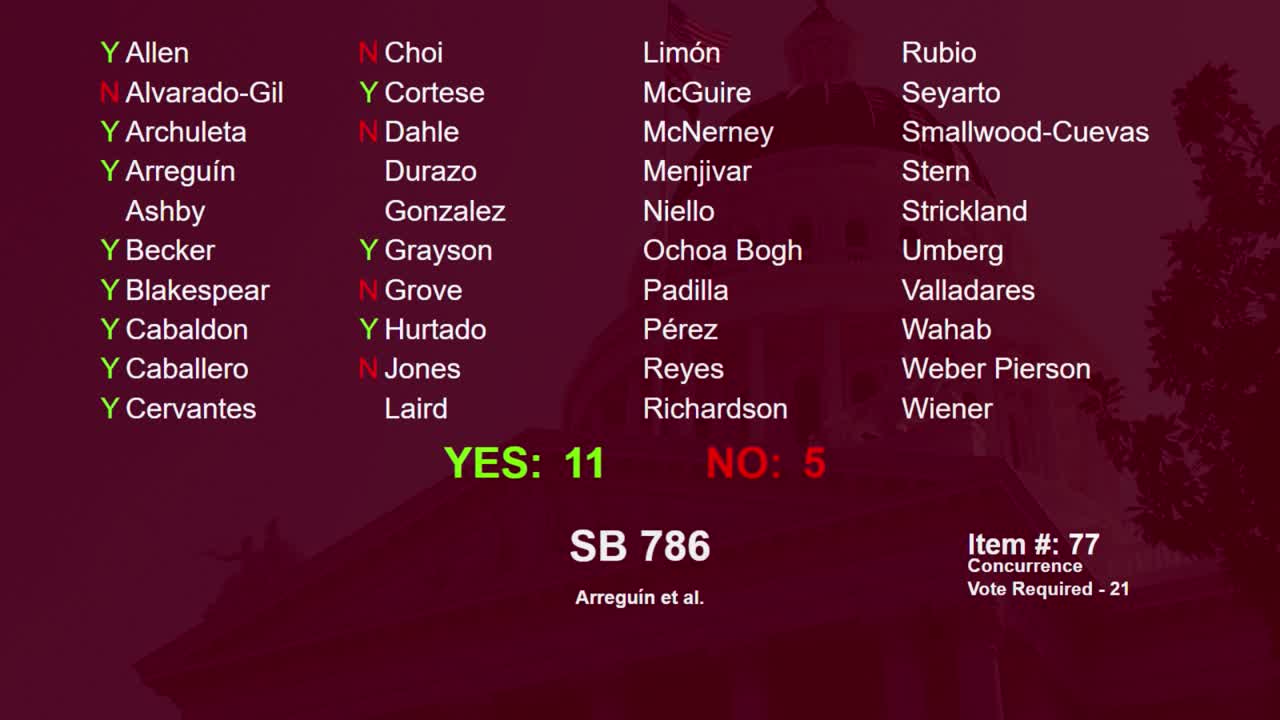
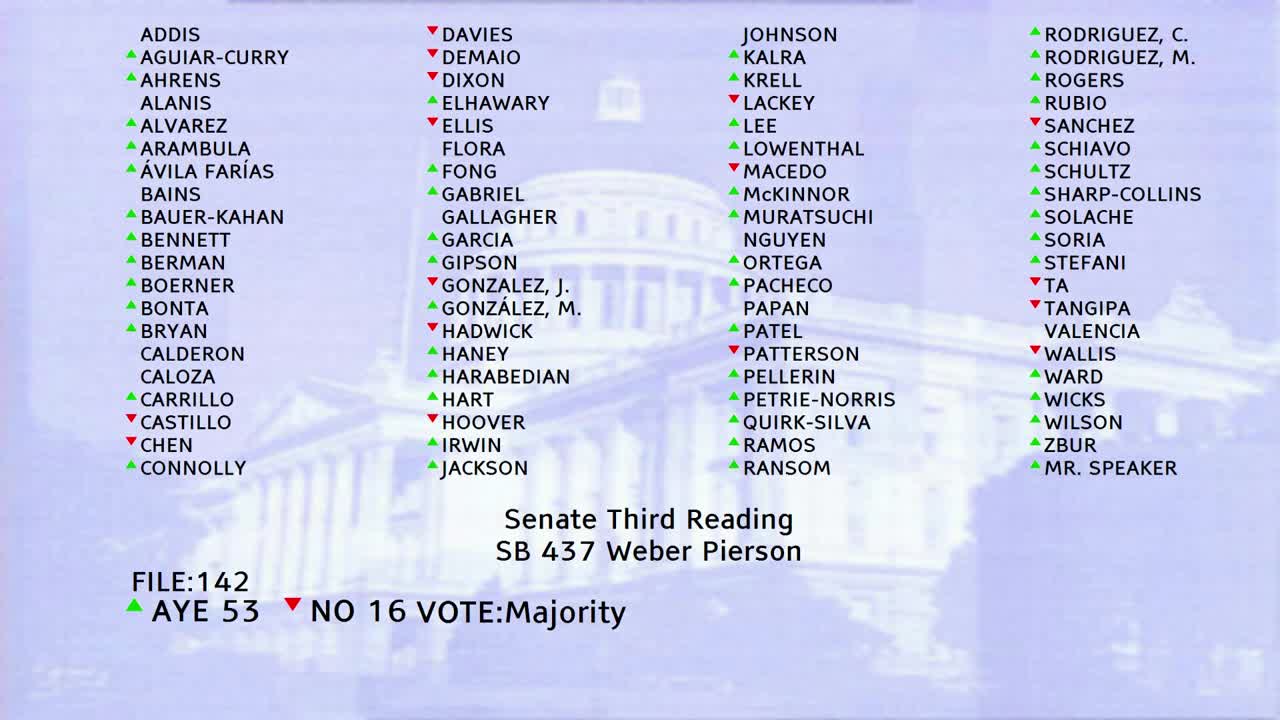

Bill Author

Bill Co-Author(s):