SB 702: Legislative and gubernatorial appointments: report.
- Session Year: 2025-2026
- House: Senate
- Latest Version Date: 2025-10-06
Current Status:
Passed
(2025-10-06: Chaptered by Secretary of State. Chapter 423, Statutes of 2025.)
Introduced
In Committee
Awaiting First Chamber Vote
Passed First Chamber
In Committee
Awaiting Second Chamber Vote
Passed Second Chamber
Enacted
Existing law establishes various boards and commissions in state government with specified duties and responsibilities. Existing law generally provides for legislative oversight of state board formation, which includes, among other things, any administrative or regulatory board, commission, and committee, whose members are appointed by the Governor, the Legislature, or both. Existing law requires the Governor to appoint every officer whose mode of appointment is not prescribed by law.
This bill would require the office of the Governor, commencing January 1, 2027, to maintain on its internet website a list of each state board and commission and the membership list, stated purpose, duties, meeting frequency, internet website, and vacancies in the membership for each board or commission. The bill would require the office of the Governor, on or before January 31, 2028, and annually on January 31 thereafter, to create and publish on its internet website a report containing aggregate demographic information, as defined, of appointments made by the office during the prior calendar year, as specified.
The bill would require the Secretary of the Senate and the Chief Clerk of the Assembly, commencing January 1, 2027, to maintain on their respective internet websites, or to include a link on their respective internet websites to any available resources that contain, a list of each state board or commission that each house has appointment authority over and the membership list, stated purpose, duties, meeting frequency, internet website, and any vacancies in the membership for that board or commission. The bill would also require the Secretary of the Senate and the Chief Clerk of the Assembly, on or before January 31, 2028, and annually on January 31 thereafter, to publish on their respective internet websites, to the extent available, aggregate demographic information, as defined, on their respective legislative appointments, made during the prior calendar year, as specified. The bill would require the aggregate demographic information to only include legislative appointments created by statute, and prohibit the information from including ex officio appointments of members of the Senate and the Assembly.
The bill would require the above-described published aggregate demographic information on gubernatorial or legislative appointments to, among other things, be published on the respective entitys internet websites in a prescribed manner for purposes of ensuring the anonymity of the appointed individuals.
Existing law establishes various boards and commissions in state government with specified duties and responsibilities. Existing law generally provides for legislative oversight of state board formation, which includes, among other things, any administrative or regulatory board, commission, and committee, whose members are appointed by the Governor, the Legislature, or both. Existing law requires the Governor to appoint every officer whose mode of appointment is not prescribed by law.
This bill would require the office of the Governor, commencing January 1, 2027, to maintain on its internet website a list of each state board and commission and the membership list, stated purpose, duties, meeting frequency, internet website, and vacancies in the membership for each board or commission. The bill would require the office of the Governor, on or before January 1, 31, 2028, and annually on January 1 31 thereafter, to create and publish on its internet website a report containing aggregate demographic information, as defined, of appointments made by the office during the prior calendar year, as specified.
The bill would require the Secretary of the Senate and the Chief Clerk of the Assembly, commencing January 1, 2027, to maintain on their respective internet websites, or to include a link on their respective internet websites to any available resources that contain, a list of each state board or commission that each house has appointment authority over and the membership list, stated purpose, duties, meeting frequency, internet website, and any vacancies in the membership for that board or commission. The bill would also require the Secretary of the Senate and the Chief Clerk of the Assembly, on or before January 1, 31, 2028, and annually on January 1 31 thereafter, to publish on their respective internet websites, to the extent available, aggregate demographic information, as defined, on their respective legislative appointments, made during the prior calendar year, as specified. The bill would require the aggregate demographic information to only include legislative appointments created by statute, and prohibit the information from including ex officio appointments of members of the Legislature. The bill would require the aggregate demographic information to also include a specified disclaimer, and would encourage any organization or individual that utilizes or republishes the information to include that disclaimer. Senate and the Assembly.
The bill would require the above-described published aggregate demographic information on gubernatorial or legislative appointments to to, among other things, be published on the respective entitys internet websites in a prescribed manner for purposes of ensuring the anonymity of the appointed individuals.
Existing law establishes various boards and commissions in state government with specified duties and responsibilities. Existing law generally provides for legislative oversight of state board formation, which includes, among other things, any administrative or regulatory board, commission, and committee, whose members are appointed by the Governor, the Legislature, or both. Existing law requires the Governor to appoint every officer whose mode of appointment is not prescribed by law.
This bill would require the office of the Governor, commencing January 1, 2027, to maintain on its internet website a list of each state board and commission and the membership list, stated purpose, duties, meeting frequency, internet website, and vacancies in the membership for each board or commission. The bill would require the office of the Governor, on or before January 1, 2028, and annually on January 1 thereafter, to create and publish on its internet website a report containing aggregate demographic information, as defined, of appointments made by the office during the prior calendar year, as specified.
The bill would require the Secretary of the Senate and the Chief Clerk of the Assembly, on or before January 1, 2028, and annually on January 1 thereafter, to publish on their respective internet websites websites, to the extent available, aggregate demographic information, as defined, on their respective legislative appointments, made during the prior calendar year, as specified. The bill would require the aggregate demographic information to only include legislative appointments created by statute, and prohibit the information from including ex officio appointments of members of the Legislature. The bill would require the aggregate demographic information to also include a specified disclaimer, and would encourage any organization or individual that utilizes or republishes the above-described aggregate demographic information on legislative appointments to provide a specified information to include that disclaimer.
The bill would require the above-described published aggregate demographic information on gubernatorial or legislative appointments to be published on the respective entitys internet websites in a prescribed manner for purposes of ensuring the anonymity of the appointed individuals.
Existing law establishes various boards and commissions in state government with specified duties and responsibilities. Existing law generally provides for legislative oversight of state board formation, which includes, among other things, any administrative or regulatory board, commission, and committee, whose members are appointed by the Governor, the Legislature, or both. Existing law requires the Governor to appoint every officer whose mode of appointment is not prescribed by law.
This bill would require the office of the Governor, commencing January 1, 2027, to maintain on its internet website a list of each state board and commission and the membership list, stated purpose, duties, meeting frequency, internet website, and vacancies in the membership for each board or commission. The bill would require the office of the Governor, on or before January 1, 2028, and annually on January 1 thereafter, to create and publish on its internet website a report containing aggregate demographic information, as defined, of appointments made by the office during the prior calendar year, as specified.
The bill would require the Secretary of the Senate and the Chief Clerk of the Assembly, on or before January 1, 2028, and annually on January 1 thereafter, to publish on their respective internet websites aggregate demographic information, as defined, on their respective legislative appointments, made during the prior calendar year, as specified. The bill would require the aggregate demographic information to only include legislative appointments created by statute, and prohibit the information from including ex officio appointments of members of the Legislature. The bill would require any organization or individual that utilizes or republishes the above-described aggregate demographic information on legislative appointments to provide a specified disclaimer.
The bill would require the above-described published aggregate demographic information on gubernatorial or legislative appointments to be published on the respective entitys internet websites in a prescribed manner for purposes of ensuring the anonymity of the appointed individuals.
(a)Commencing January 1, 2027, the office of the Governor shall maintain on its internet website a list of each state board or commission, as well as the board or commissions membership list, stated purpose, duties, meeting frequency, internet website, and any vacancies in its membership.
(b)(1)On or before January 31, 2028, and annually on January 31 thereafter, the office of the Governor shall create and publish on its internet website a report that contains aggregate demographic information, to the extent available, of appointments by the office of the Governor from January 1 to December 31, inclusive, of the previous year.
(2)(A)The aggregate demographic information shall be published in a manner that does not disclose any personal information and ensures the anonymity of the appointed individuals.
(B)(i)The aggregate demographic information shall include the following disclaimer: Reporting of demographic information by appointed individuals is not required. Therefore, this information only includes voluntarily reported data and does not accurately reflect the demographics of all appointments.
(ii)Any organization or individual that utilizes or republishes the aggregate demographic information is encouraged to include the disclaimer described in clause (i).
(c)For purposes of this section, demographic information includes the voluntarily self-reported ethnicity, gender, gender identity, sexual orientation, disability status, county of residence, party affiliation, and military service of the appointed individuals.
SEC. 2.Section 1306 is added to the Government Code, immediately following Section 1305, to read:1306.(a)Commencing January 1, 2027, the Secretary of the Senate and the Chief Clerk of the Assembly shall maintain on their respective internet websites, or include a link on their respective internet websites to any available resources that contain, a list of each state board or commission that each house has appointment authority over, as well as the board or commissions membership list, stated purpose, duties, meeting frequency, internet website, and any vacancies in its membership.
(b)(1)On or before January 31, 2028, and annually on January 31 thereafter, the Secretary of the Senate and the Chief Clerk of the Assembly shall publish on their respective internet websites, to the extent available, aggregate demographic information on the respective legislative appointments of each house, made from January 1 to December 31, inclusive, of the previous calendar year.
(2)(A)The aggregate demographic information shall only include legislative appointments created by statute, and shall not include ex officio appointments of members of the Senate and the Assembly.
(B)The aggregate demographic information shall be published in a manner that does not disclose any personal information and ensures the anonymity of the appointed individuals.
(C)(i)The aggregate demographic information shall include the following disclaimer: Reporting of demographic information by appointed individuals is not required. Therefore, this information only includes voluntarily reported data and does not accurately reflect the demographics of all legislative appointments.
(ii)Any organization or individual that utilizes or republishes the aggregate demographic information is encouraged to include the disclaimer described in clause (i).
(c)For purposes of this section, demographic information includes the voluntarily self-reported ethnicity, gender, gender identity, sexual orientation, disability status, county of residence, and military service of the appointed individuals.
(a)Commencing January 1, 2027, the office of the Governor shall maintain on its internet website a list of each state board or commission, as well as the board or commissions membership list, stated purpose, duties, meeting frequency, internet website, and any vacancies in its membership.
(b)(1)On or before January 31, 2028, and annually on January 31 thereafter, the office of the Governor shall create and publish on its internet website a report that contains aggregate demographic information, to the extent available, of appointments by the office of the Governor from January 1 to December 31, inclusive, of the previous year.
(2)(A)The aggregate demographic information shall be published in a manner that does not disclose any personal information and ensures the anonymity of the appointed individuals.
(B)(i)The aggregate demographic information shall include the following disclaimer: Reporting of demographic information by appointed individuals is not required. Therefore, this information only includes voluntarily reported data and does not accurately reflect the demographics of all legislative appointments.
(ii)Any organization or individual that utilizes or republishes the aggregate demographic information is encouraged to include the disclaimer described in clause (i).
(c)For purposes of this section, demographic information includes the voluntarily self-reported ethnicity, gender, gender identity, sexual orientation, disability status, county of residence, party affiliation, and military service of the appointed individuals.
SEC. 2.Section 1306 is added to the Government Code, immediately following Section 1305, to read:1306.(a)Commencing January 1, 2027, the Secretary of the Senate and the Chief Clerk of the Assembly shall maintain on their respective internet websites, or include a link on their respective internet websites to any available resources that contain, a list of each state board or commission that each house has appointment authority over, as well as the board or commissions membership list, stated purpose, duties, meeting frequency, internet website, and any vacancies in its membership.
(b)(1)On or before January 31, 2028, and annually on January 31 thereafter, the Secretary of the Senate and the Chief Clerk of the Assembly shall publish on their respective internet websites, to the extent available, aggregate demographic information on the respective legislative appointments of each house, made from January 1 to December 31, inclusive, of the previous calendar year.
(2)(A)The aggregate demographic information shall only include legislative appointments created by statute, and shall not include ex officio appointments of members of the Senate and the Assembly.
(B)The aggregate demographic information shall be published in a manner that does not disclose any personal information and ensures the anonymity of the appointed individuals.
(C)(i)The aggregate demographic information shall include the following disclaimer: Reporting of demographic information by appointed individuals is not required. Therefore, this information only includes voluntarily reported data and does not accurately reflect the demographics of all legislative appointments.
(ii)Any organization or individual that utilizes or republishes the aggregate demographic information is encouraged to include the disclaimer described in clause (i).
(c)For purposes of this section, demographic information includes the voluntarily self-reported ethnicity, gender, gender identity, sexual orientation, disability status, county of residence, and military service of the appointed individuals.
(a)Commencing January 1, 2027, the office of the Governor shall maintain on its internet website a list of each state board or commission, as well as the board or commissions membership list, stated purpose, duties, meeting frequency, internet website, and any vacancies in its membership.
(b)(1)On or before January 1, 31, 2028, and each annually on January 1 31 thereafter, the office of the Governor shall create and publish on its internet website a report that contains aggregate demographic information, to the extent available, of appointments by the office of the Governor from January 1 to December 31, inclusive, of the previous year.
(2)(A)The aggregate demographic information shall be published in a manner that does not disclose any personal information and ensures the anonymity of the appointed individuals.
(B)(i)The aggregate demographic information shall include the following disclaimer: Reporting of demographic information by appointed individuals is not required. Therefore, this information only includes voluntarily reported data and does not accurately reflect the demographics of all legislative appointments.
(ii)Any organization or individual that utilizes or republishes the aggregate demographic information is encouraged to include the disclaimer described in clause (i).
(c)For purposes of this section, demographic information includes, but is not limited to, includes the voluntarily self-reported ethnicity, gender, gender identity, sexual orientation, disability status, county of residence, party affiliation, and military service of the appointed individuals.
SEC. 2.Section 1306 is added to the Government Code, immediately following Section 1305, to read:1306.(a)On Commencing January 1, 2027, the Secretary of the Senate and the Chief Clerk of the Assembly shall maintain on their respective internet websites, or include a link on their respective internet websites to any available resources that contain, a list of each state board or commission that each house has appointment authority over, as well as the board or commissions membership list, stated purpose, duties, meeting frequency, internet website, and any vacancies in its membership.
(b)(1)On or before January 31, 2028, and annually on January 31 thereafter, the Secretary of the Senate and the Chief Clerk of the Assembly shall publish on their respective internet websites, to the extent available, aggregate demographic information on the respective legislative appointments of each house, made from January 1 to December 31, inclusive, of the previous calendar year.
(b)(2)(A)The aggregate demographic information shall only include legislative appointments created by statute, and shall not include ex officio appointments of members of the Legislature. Senate and the Assembly.
(c)(B)The aggregate demographic information shall be published in a manner that does not disclose any personal information and ensures the anonymity of the appointed individuals.
(d)(1)(C)(i)The aggregate demographic information shall include the following disclaimer, disclaimer: Reporting of demographic information by appointed individuals is not required. Therefore, this information only includes voluntarily reported data and does not accurately reflect the demographics of all legislative appointments.
(2)(ii)Any organization or individual that utilizes or republishes the aggregate demographic information is encouraged to include the disclaimer described in paragraph (1). clause (i).
(e)(c)For purposes of this section, demographic information includes, but is not limited to, includes the voluntarily self-reported ethnicity, gender, gender identity, sexual orientation, disability status, county of residence, and military service of the appointed individuals.
(a)Commencing January 1, 2027, the office of the Governor shall maintain on its internet website a list of each state board or commission, as well as the board or commissions membership list, stated purpose, duties, meeting frequency, internet website, and any vacancies in its membership.
(b)(1)On or before January 1, 2028, and each January 1 thereafter, the office of the Governor shall create and publish on its internet website a report that contains aggregate demographic information, to the extent available, of appointments by the office of the Governor from January 1 to December 31, inclusive, of the previous year.
(2)The aggregate demographic information shall be published in a manner that does not disclose any personal information and ensures the anonymity of the appointed individuals.
(c)For purposes of this section, demographic information includes, but is not limited to, the voluntarily self-reported ethnicity, gender, gender identity, sexual orientation, disability status, county of residence, party affiliation, and military service of the appointed individuals.
SEC. 2.Section 1306 is added to the Government Code, immediately following Section 1305, to read:1306.(a)On or before January 31, 2028, and annually thereafter, the Secretary of the Senate and the Chief Clerk of the Assembly shall publish on their respective internet websites websites, to the extent available, aggregate demographic information on the respective legislative appointments of each house, made from January 1 to December 31, inclusive, of the previous calendar year.
(b)The aggregate demographic information shall only include legislative appointments created by statute, and shall not include ex officio appointments of members of the Legislature.
(c)The aggregate demographic information shall be published in a manner that does not disclose any personal information and ensures the anonymity of the appointed individuals.
(d)Any organization or individual that utilizes or republishes the (1)The aggregate demographic information shall provide include the following disclaimer, Reporting of demographic information by appointed individuals is not required. Therefore, this information only includes voluntarily reported data and does not accurately reflect the demographics of all legislative appointments.
(2)Any organization or individual that utilizes or republishes the aggregate demographic information is encouraged to include the disclaimer described in paragraph (1).
(e)For purposes of this section, demographic information includes, but is not limited to, the voluntarily self-reported ethnicity, gender, gender identity, sexual orientation, disability status, county of residence, and military service of the appointed individuals.
REVISIONS: HeadingLine 4.(a)Commencing January 1, 2027, the office of the Governor shall maintain on its internet website a list of each state board or commission, as well as the board or commissions membership list, stated purpose, duties, meeting frequency, internet website, and any vacancies in its membership.
(b)(1)On or before January 1, 2028, and each January 1 thereafter, the office of the Governor shall create and publish on its internet website a report that contains aggregate demographic information, to the extent available, of appointments by the office of the Governor from January 1 to December 31, inclusive, of the previous year.
(2)The aggregate demographic information shall be published in a manner that does not disclose any personal information and ensures the anonymity of the appointed individuals.
(c)For purposes of this section, demographic information includes, but is not limited to, the voluntarily self-reported ethnicity, gender, gender identity, sexual orientation, disability status, region, county of residence, party affiliation affiliation, and military service of the appointed individuals.
SEC. 2.Section 1306 is added to the Government Code, immediately following Section 1305, to read:1306.(a)On or before January 31, 2028, and annually thereafter, the Secretary of the Senate and the Chief Clerk of the Assembly shall publish on their respective internet websites aggregate demographic information on the respective legislative appointments of each house, made from January 1 to December 31, inclusive, of the previous calendar year.
(b)The aggregate demographic information shall only include legislative appointments created by statute, and shall not include ex officio appointments of members of the Legislature.
(c)The aggregate demographic information shall be published in a manner that does not disclose any personal information and ensures the anonymity of the appointed individuals.
(d)Any organization or individual that utilizes or republishes the aggregate demographic information shall provide the following disclaimer, Reporting of demographic information by appointed individuals is not required. Therefore, this information only includes voluntarily reported data and does not accurately reflect the demographics of all legislative appointments.
(e)For purposes of this section, demographic information includes, but is not limited to, the voluntarily self-reported ethnicity, gender, gender identity, sexual orientation, disability status, region, county of residence, and military service of the appointed individuals.
(a)Commencing January 1, 2027, the office of the Governor shall maintain on its internet website a list of each state board or commission, as well as the board or commissions membership list, stated purpose, duties, meeting frequency, internet website, and any vacancies in its membership.
(b)(1)On or before January 1, 2028, and each January 1 thereafter, the office of the Governor shall create and publish on its internet website a report that contains aggregate demographic information, to the extent available, of appointments by the office of the Governor from January 1 to December 31, inclusive, of the previous year.
(2)The aggregate demographic information shall be published in a manner that does not disclose any personal information and ensures the anonymity of the appointed individuals.
(c)For purposes of this section, demographic information includes, but is not limited to, the voluntarily self-reported ethnicity, gender, gender identity, sexual orientation, disability status, region, party affiliation and military service of the appointed individuals.
SEC. 2.Section 1306 is added to the Government Code, immediately following Section 1305, to read:1306.(a)On or before January 31, 2028, and annually thereafter, the Secretary of the Senate and the Chief Clerk of the Assembly shall publish on their respective internet websites aggregate demographic information on the respective legislative appointments of each house, made from January 1 to December 31, inclusive, of the previous calendar year.
(b)The aggregate demographic information shall only include legislative appointments created by statute, and shall not include ex officio appointments of members of the Legislature.
(c)The aggregate demographic information shall be published in a manner that does not disclose any personal information and ensures the anonymity of the appointed individuals.
(d)Any organization or individual that utilizes or republishes the aggregate demographic information shall provide the following disclaimer, Reporting of demographic information by appointed individuals is not required. Therefore, this information only includes voluntarily reported data and does not accurately reflect the demographics of all legislative appointments.
(e)For purposes of this section, demographic information includes, but is not limited to, the voluntarily self-reported ethnicity, gender, gender identity, sexual orientation, disability status, region, and military service of the appointed individuals.
|
Date
|
Status
|
|---|---|
| Oct 6, 2025 | Chaptered by Secretary of State. Chapter 423, Statutes of 2025. |
| Oct 6, 2025 | Approved by the Governor. |
| Sep 22, 2025 | Enrolled and presented to the Governor at 11 a.m. |
| Sep 10, 2025 | Assembly amendments concurred in. (Ayes 40. Noes 0. Page 2798.) Ordered to engrossing and enrolling. |
| Sep 9, 2025 | In Senate. Concurrence in Assembly amendments pending. |
| Sep 9, 2025 | Read third time. Passed. (Ayes 79. Noes 0. Page 3090.) Ordered to the Senate. |
| Sep 3, 2025 | Read second time. Ordered to third reading. |
| Sep 3, 2025 | Ordered to third reading. |
| Sep 3, 2025 | Read third time and amended. |
| Sep 2, 2025 | Read second time and amended. Ordered to second reading. |
| Aug 29, 2025 | From committee: Do pass as amended. (Ayes 11. Noes 0.) (August 29). |
| Jul 16, 2025 | July 16 set for first hearing. Placed on APPR. suspense file. |
| Jul 2, 2025 | From committee: Do pass and re-refer to Com. on APPR. with recommendation: To consent calendar. (Ayes 12. Noes 0.) (July 1). Re-referred to Com. on APPR. |
| Jun 26, 2025 | From committee: Do pass and re-refer to Com. on JUD. (Ayes 22. Noes 0.) (June 25). Re-referred to Com. on JUD. |
| Jun 26, 2025 | Coauthors revised. |
| Jun 9, 2025 | Referred to Coms. on G.O. and JUD. |
| Jun 3, 2025 | In Assembly. Read first time. Held at Desk. |
| Jun 2, 2025 | Read third time. Passed. (Ayes 38. Noes 0. Page 1405.) Ordered to the Assembly. |
| May 23, 2025 | Read second time. Ordered to third reading. |
| May 23, 2025 | From committee: Do pass. (Ayes 6. Noes 0. Page 1210.) (May 23). |
| May 16, 2025 | Set for hearing May 23. |
| May 5, 2025 | May 5 hearing: Placed on APPR. suspense file. |
| Apr 25, 2025 | Set for hearing May 5. |
| Apr 23, 2025 | From committee: Do pass and re-refer to Com. on APPR. (Ayes 13. Noes 0. Page 837.) (April 22). Re-referred to Com. on APPR. |
| Apr 8, 2025 | From committee with author's amendments. Read second time and amended. Re-referred to Com. on JUD. |
| Apr 3, 2025 | Set for hearing April 22. |
| Mar 26, 2025 | Read second time and amended. Re-referred to Com. on JUD. |
| Mar 25, 2025 | From committee: Do pass as amended and re-refer to Com. on JUD. (Ayes 13. Noes 0. Page 531.) (March 25). |
| Mar 17, 2025 | Set for hearing March 25. |
| Mar 12, 2025 | Referred to Coms. on G.O. and JUD. |
| Feb 24, 2025 | Read first time. |
| Feb 24, 2025 | From printer. May be acted upon on or after March 24. |
| Feb 21, 2025 | Introduced. To Com. on RLS. for assignment. To print. |
|
Date
|
Description
|
Location
|
Votes
|
|
|---|---|---|---|---|
| Sep 10, 2025 | Unfinished Business SB702 Limón et al. Concurrence | Senate Floor |
Passed |
|
| Sep 9, 2025 | SB 702 Limón Senate Third Reading By Blanca Rubio | Assembly Floor |
Passed |
|
| Aug 29, 2025 | Do pass as amended. | Assembly Standing Committee on Appropriations |
Passed |
|
| Jul 1, 2025 | Do pass and be re-referred to the Committee on [Appropriations] with recommendation: To Consent Calendar | Assembly Standing Committee on Judiciary |
Passed |
|
| Jun 25, 2025 | Do pass and be re-referred to the Committee on [Judiciary] | Assembly Standing Committee on Governmental Organization |
Passed |
|
| Jun 2, 2025 | Senate 3rd Reading SB702 Limón et al. | Senate Floor |
Passed |
|
| May 23, 2025 | Do pass | Senate Standing Committee on Appropriations |
Passed |
|
| May 5, 2025 | Placed on suspense file | Senate Standing Committee on Appropriations |
Passed |
|
| Apr 22, 2025 | Do pass, but first be re-referred to the Committee on [Appropriations] | Senate Standing Committee on Judiciary |
Passed |
|
| Mar 25, 2025 | Do pass as amended, but first amend, and re-refer to the Committee on [Judiciary] | Senate Standing Committee on Governmental Organization |
Passed |
This list shows positions taken on this bill by organizations on the date displayed, which is linked to the original source.
Positions by individuals are not included.
|
Organization
|
Position
|
Date
|
|---|---|---|
| 50/50 Women on Boards | ** Support | |
| AAPI Equity Alliance | ** Support | |
| Alliance for A Better Community | ** Support | |
| API Equality-Los Angeles | ** Support | |
| API Equity Alliance | ** Support | |
| Asian Americans Advancing Justice | ** Support | |
| Asian Law Alliance | ** Support | |
| Asociacion De Emprendedor@s | ** Support | |
| Black Women Organized for Political Action | ** Support | |
| California community builders | ** Support | |
| California Latinas for Reproductive Justice | ** Support | |
| California Young Democrats | ** Support | |
| Campaign For College Opportunity | ** Support | |
| CA Now | ** Support | |
| Center for Asian Americans United for Self Empowerment | ** Support | |
| Chicana Latina Foundation | ** Support | |
| Close The Gap California | ** Support | |
| Coalition for Humane Immigrant Rights | ** Support | |
| Communities United for Restorative Youth Justice | ** Support | |
| Courage California | ** Support | |
| Dolores Huerta Foundation | ** Support | |
| Education and Leadership Foundation | ** Support | |
| El/la Para Trans Latinas | ** Support | |
| El/La Para TransLatinas | ** Support | |
| Equality California | ** Support | |
| Flux | ** Support | |
| GLSEN San Diego County | ** Support | |
| Greenfield Walking Group | ** Support | |
| Hispanas Organized for Political Equality | ** Support | |
| Hispanic Foundation of Silicon Valley | ** Support | |
| Immigrants Rising | ** Support | |
| Inland Coalition for Immigrant Justice | ** Support | |
| Latina Coalition of Silicon Valley | ** Support | |
| Latino Donor Collaborative, INC. | ** Support | |
| Law Foundation of Silicon Valley | ** Support | |
| Leadership Education for Asian Pacifics | ** Support | |
| LEAP | ** Support | |
| Long Beach Forward | ** Support | |
| MANA de San Diego | ** Support | |
| Moonbow | ** Support | |
| National Women's Political Caucus of California | ** Support | |
| Proyecto Trans Latinas | ** Support | |
| Puente Learning Center | ** Support | |
| Riverside LGBTQ+ Pride | ** Support | |
| San Diego LGBT Community Center | ** Support | |
| She the People | ** Support | |
| uAspire | ** Support | |
| UCLA Latino Policy and Politics Institute | ** Support | |
| United for Justice | ** Support | |
| Unity Council | ** Support | |
| Ventures | ** Support | |
| Wonderstone | ** Support |
SENATE RULES COMMITTEE Office of Senate Floor Analyses (916) 651-1520 Fax: (916) 327-4478 | SB 702 |
UNFINISHED BUSINESS
Bill No: SB 702
Author: Limón (D) and Cervantes (D), et al.
Amended: 10/6/25
Vote: 21
SENATE GOVERNMENTAL ORG. COMMITTEE: 13-0, 3/25/25
AYES: Padilla, Valladares, Archuleta, Ashby, Blakespear, Cervantes, Hurtado, Jones, Ochoa Bogh, Richardson, Rubio, Wahab, Weber Pierson
NO VOTE RECORDED: Dahle, Smallwood-Cuevas
SENATE JUDICIARY COMMITTEE: 13-0, 4/22/25
AYES: Umberg, Niello, Allen, Arreguín, Ashby, Caballero, Durazo, Laird, Stern, Valladares, Wahab, Weber Pierson, Wiener
SENATE APPROPRIATIONS COMMITTEE: 6-0, 5/23/25
AYES: Caballero, Seyarto, Cabaldon, Grayson, Richardson, Wahab
NO VOTE RECORDED: Dahle
SENATE FLOOR: 38-0, 6/2/25
AYES: Allen, Alvarado-Gil, Archuleta, Arreguín, Ashby, Becker, Blakespear, Cabaldon, Caballero, Cervantes, Choi, Cortese, Dahle, Durazo, Gonzalez, Grayson, Grove, Jones, Laird, Limón, McGuire, McNerney, Menjivar, Niello, Ochoa Bogh, Padilla, Pérez, Richardson, Rubio, Seyarto, Smallwood-Cuevas, Stern, Strickland, Umberg, Valladares, Wahab, Weber Pierson, Wiener
NO VOTE RECORDED: Hurtado, Reyes
ASSEMBLY FLOOR: 79-0, 9/9/25 - See last page for vote
SUBJECT: Legislative and gubernatorial appointments: report
SOURCE: Hispanas Organized for Political Equality
DIGEST:
This bill (1) requires the office of the Governor to publish on its internet website a report that contains aggregate demographic information on appointments by the office of the Governor, as specified. In addition, this bill (2) requires the office of the Governor to maintain on its internet website a list of every state board and commission, including specified data of every state board and commission. Finally, this bill (3) requires the Secretary of the Senate and the Chief Clerk of the Assembly to publish on their respective internet websites aggregate demographic information on the respective legislative appointments of each house, as specified.
Assembly Amendments
of 9/3/25 1) require the Secretary of the Senate and the Chief Clerk of the Assembly, to maintain on their respective websites, or include a link on their respective internet websites to any available resources that contain, a list of each state board or commission that each house has appointment authority over, as well as the board or commission’s membership list, state purpose, duties, meeting frequency, internet website, and any vacancies in its membership, and 2) require the aggregate demographic information published by Governor to include the following disclaimer: “Reporting of demographic information by appointed individuals is not required. Therefore, this information only includes voluntarily reported data and does not accurately reflect the demographics of all appointments.”
ANALYSIS:
Existing law:
- Requires the Governor to appoint every office whose mode of appointment is not prescribed by law.
- Establishes various boards and commissions within state government.
- States that it is the policy of the State of California that the composition of these state boards and commissions broadly reflect the general public, including ethnic minorities and women.
- Specifies that the Governor and other appointing authorities are responsible for nominating individuals to boards and commissions of different backgrounds, abilities, interests, and opinions. Existing law states, that it is not the intent of the Legislature that formulas or specific ratios be utilized in complying with this article.
This bill:
- Requires the office of the Governor, commencing on January 1, 2027, to maintain on its internet website a list of each board or commission, as well as the board or commission’s membership list, stated purpose, duties, meeting frequency, internet website, and any vacancies in its membership.
- Requires the office of the Governor, on or before January 31, 2028, to create and publish on its internet website a report that contains aggregate demographic information, to the extent available, of appointments by the office of the Governor of the previous year.
- Requires the aggregate demographic information published by Governor to include the following disclaimer: “Reporting of demographic information by appointed individuals is not required. Therefore, this information only includes voluntarily reported data and does not accurately reflect the demographics of all appointments.”
- Requires the Secretary of the Senate and the Chief Clerk of the Assembly, beginning on January 1, 2027, to maintain on their respective websites, or include a link on their respective internet websites to any available resources that contain, a list of each state board or commission that each house has appointment authority over, as well as the board or commission’s membership list, state purpose, duties, meeting frequency, internet website, and any vacancies in its membership.
- Requires the Secretary of the Senate and the Chief Clerk of the Assembly, on or before January 31, 2028, and annually thereafter, to publish on their respective internet websites, to the extent available, aggregate demographic information on the respective legislative appointments of each house, made from the previous calendar year.
- Requires the aggregate demographic information published by the Secretary of the Senate or the Chief Clerk of the Assembly to include the following disclaimer: “Reporting of demographic information by appointed individuals is not required. Therefore, this information only includes voluntarily reported data and does not accurately reflect the demographics of all legislative appointments.”
- Encourages any organization or individual that utilizes or republishes the aggregate demographic information is encouraged to include the disclaimer described above.
- Requires the aggregate demographic information to be published in a manner that does not disclose any personal information and ensures the anonymity of the appointed individuals.
Background
Author Statement. According to the author’s office, “the collection of legislative and gubernatorial appointee demographic data is a critical step to ensure transparency on statewide boards and commission. The annual report will serve as a tool to show where gaps in representation exists, encourage outreach to communities, and address barriers faced by those seeking an appointment. The annual reports will help build trust in the appointment process and demonstrate that serving on boards and commissions is an opportunity open to all.”
Governor Newsom’s Vetoes. This bill is nearly similar to last year’s, SB 782 (Limón) of 2024, SB 702 (Limón) of 2023, SB 702 (Limón) of 2022, SB 1387 (Limón) of 2022, and SB 702 (Limón) of 2021 which were all vetoed by Governor Newsom. The Governor’s veto message for last year’s SB 782 (Limón) of 2024 reads:
This bill would require the Governor's Office to annually publish a report containing demographic information of individuals appointed by the Governor.
I am deeply committed to making appointments at every level of government that reflect California's diversity. My office affirmatively and intentionally engages with the Legislature, community partners, nonprofits, and other stakeholders to recruit and develop a diverse and qualified pool of candidates for appointed state positions. I am incredibly proud of the diverse group of Californians who now serve our state in senior, appointed leadership positions.
While I remain concerned about the accuracy of a report that relies on optional and self-reported data, I understand the author’s goal to provide an additional layer of transparency and accountability regarding appointments for state positions through this report. Although my administration continues to be transparent in this space, I appreciate the additional accessibility a public report would help to ensure. However, that goal is only achieved with more comprehensive action that includes Legislative appointments. With that goal in mind, I am committed to legislation next year that includes the same transparency requirements for appointments by the Administration as well as the Legislature. This parity will ensure a complete picture of appointments throughout the state so we can continue to appoint a diverse group of Californians that reflect the makeup of the state.
Legislative Appointments Now Included. As noted above, Governor Newsom, in his veto message from last year’s SB 782, committed to legislation that includes the same transparency requirements for appointments by the Administration as well as the Legislature. As such, this year’s version of the bill now includes similar reporting requirements for appointments made by both the California State Senate and the California State Assembly.
Related/Prior Legislation
SB 782 (Limón, 2024) would have required the office of the Governor to maintain on its internet website a list of every board and commission, including specified data of every state board and commission. In addition, the bill would have required the office of the Governor to publish on its internet website a report that contains aggregate demographic information of appointments by the office of the Governor, as specified. (Vetoed by Governor Newsom)
SB 702 (Limón, 2023) would have required the office of the Governor to maintain on its internet website a list of every state board and commission, including specified data of every state board and commission. In addition, this bill requires the office of the Governor to publish on its internet website a report that contains aggregate demographic information of appointments by the office of the Governor, as specified. (Vetoed by Governor Newsom)
SB 1387 (Limón, 2022) would have required the office of the Governor to publish a report containing the demographic information of individuals who have applied to or been appointed to a state board or commission. Additionally, the bill creates a working group to discuss and provide recommendations on ways to diversify state boards and commissions. (Vetoed by Governor Newsom)
SB 702 (Limón, 2021) would have required the office of the Governor to publish a report containing the demographic information of individuals who have applied to or been appointed to a state board or commission. Additionally, the bill would have created a working group to discuss and provide recommendations on ways to diversity state boards and commissions. (Vetoed by Governor Newsom)
FISCAL EFFECT: Appropriation: No Fiscal Com.: Yes Local: No
According to the Assembly Appropriations Committee, minor and absorbable costs to the Governor’s office to maintain and publish the required information. The Governor’s Appointments Unit notes it has a new information technology system licensed through the summer of 2027 that will generally enable the office to meet this bill’s requirements. Although there will be ongoing costs to renew or modify the license, such costs would likely be incurred to facilitate the work of the unit regardless of this bill.
Additionally, cost pressures of an unknown, but likely absorbable, amount to the Legislature to publish the required information. Unlike other state agencies whose budgets may increase annually (subject to the budget process) in response to rising caseloads and additional workload, the Legislature’s ability to spend is more constrained. Specifically, Proposition 140 (1990) set an annual cap on expenditures to support the Legislature’s operations. The cap is calculated based on growth in the state’s economy and population, and is completely outside the Legislature’s control.
SUPPORT: (Verified 9/5/25)
Hispanas Organized for Political Equality (Source)
50/50 Women on Boards
Alliance for a Better Community
API Equity Alliance
API Equality-Los Angeles
Asian Americans Advancing Justice
Asian Law Alliance
Asociacion De Emprendedor@s
Black Women Organized for Political Action
CA Now
California Community Builders
California Latinas for Reproductive Justice
Campaign for College Opportunity
Center for Asian Americans United for Self Empowerment
Chicana Latina Foundation
Close the Gap California
Coalition for Humane Immigrant Rights
Communities United for Restorative Youth Justice
Courage California
Dolores Huerta Foundation
Education and Leadership Foundation
El/la Para Translatinas
Equality California
Flux
GLSEN San Diego County
Greenfield Walking Group
Hispanas Organized for Political Equality
Hispanic Foundation of Silicon Valley
Inland Coalition for Immigrant Justice
Latina Coalition of Silicon Valley
Latino Donor Collaborative, INC.
Law Foundation of Silicon Valley
Leadership Education for Asian Pacifics
LEAP
Long Beach Forward
Mana De San Diego
Moonbow
National Women's Political Caucus of California
Proyecto Trans Latinas
Puente Learning Center
Riverside LGBTQ+ Pride
San Diego LGBT Community Center
She the People
uAspire
UCLA Latino Policy and Politics Institute
United for Justice
Unity Council
Ventures
Wonderstone
OPPOSITION: (Verified 9/5/25)
None received
ARGUMENTS IN SUPPORT: According to Hispanas Organized for Political Equality, “SB 702 expands on past efforts by also including legislative appointment, further strengthening transparency. The Governor and Legislature collectively appoint leaders to more than 580 boards and commissions, filling thousands of seats that influence resource allocation, infrastructure, and oversight of critical programs. Without clear public reporting on these appointments, communities cannot assess whether they are equitably represented in these powerful decision-making bodies.”
ASSEMBLY FLOOR: 79-0, 9/9/25
AYES: Addis, Aguiar-Curry, Ahrens, Alanis, Alvarez, Arambula, Ávila Farías, Bains, Bauer-Kahan, Bennett, Berman, Boerner, Bonta, Bryan, Calderon, Caloza, Carrillo, Castillo, Chen, Connolly, Davies, DeMaio, Dixon, Elhawary, Ellis, Flora, Fong, Gabriel, Gallagher, Garcia, Gipson, Jeff Gonzalez, Mark González, Haney, Harabedian, Hart, Hoover, Irwin, Jackson, Johnson, Kalra, Krell, Lackey, Lee, Lowenthal, Macedo, McKinnor, Muratsuchi, Nguyen, Ortega, Pacheco, Papan, Patel, Patterson, Pellerin, Petrie-Norris, Quirk-Silva, Ramos, Ransom, Celeste Rodriguez, Michelle Rodriguez, Rogers, Blanca Rubio, Sanchez, Schiavo, Schultz, Sharp-Collins, Solache, Soria, Stefani, Ta, Tangipa, Valencia, Wallis, Ward, Wicks, Wilson, Zbur, Rivas
NO VOTE RECORDED: Hadwick
Prepared by: Felipe Lopez / G.O. / (916) 651-1530
7/17/26 15:17:58
**** END ****
SENATE RULES COMMITTEE Office of Senate Floor Analyses (916) 651-1520 Fax: (916) 327-4478 | SB 702 |
UNFINISHED BUSINESS
Bill No: SB 702
Author: Limón (D) and Cervantes (D), et al.
Amended: 9/3/25 in Assembly
Vote: 21
SENATE GOVERNMENTAL ORG. COMMITTEE: 13-0, 3/25/25
AYES: Padilla, Valladares, Archuleta, Ashby, Blakespear, Cervantes, Hurtado, Jones, Ochoa Bogh, Richardson, Rubio, Wahab, Weber Pierson
NO VOTE RECORDED: Dahle, Smallwood-Cuevas
SENATE JUDICIARY COMMITTEE: 13-0, 4/22/25
AYES: Umberg, Niello, Allen, Arreguín, Ashby, Caballero, Durazo, Laird, Stern, Valladares, Wahab, Weber Pierson, Wiener
SENATE APPROPRIATIONS COMMITTEE: 6-0, 5/23/25
AYES: Caballero, Seyarto, Cabaldon, Grayson, Richardson, Wahab
NO VOTE RECORDED: Dahle
SENATE FLOOR: 38-0, 6/2/25
AYES: Allen, Alvarado-Gil, Archuleta, Arreguín, Ashby, Becker, Blakespear, Cabaldon, Caballero, Cervantes, Choi, Cortese, Dahle, Durazo, Gonzalez, Grayson, Grove, Jones, Laird, Limón, McGuire, McNerney, Menjivar, Niello, Ochoa Bogh, Padilla, Pérez, Richardson, Rubio, Seyarto, Smallwood-Cuevas, Stern, Strickland, Umberg, Valladares, Wahab, Weber Pierson, Wiener
NO VOTE RECORDED: Hurtado, Reyes
ASSEMBLY FLOOR: 62-0, 9/9/25 – Roll call not available.
SUBJECT: Legislative and gubernatorial appointments: report
SOURCE: Hispanas Organized for Political Equality
DIGEST:
This bill (1) requires the office of the Governor to publish on its internet website a report that contains aggregate demographic information on appointments by the office of the Governor, as specified. In addition, this bill (2) requires the office of the Governor to maintain on its internet website a list of every state board and commission, including specified data of every state board and commission. Finally, this bill (3) requires the Secretary of the Senate and the Chief Clerk of the Assembly to publish on their respective internet websites aggregate demographic information on the respective legislative appointments of each house, as specified.
Assembly Amendments
of 9/3/25 1) require the Secretary of the Senate and the Chief Clerk of the Assembly, to maintain on their respective websites, or include a link on their respective internet websites to any available resources that contain, a list of each state board or commission that each house has appointment authority over, as well as the board or commission’s membership list, state purpose, duties, meeting frequency, internet website, and any vacancies in its membership, and 2) require the aggregate demographic information published by Governor to include the following disclaimer: “Reporting of demographic information by appointed individuals is not required. Therefore, this information only includes voluntarily reported data and does not accurately reflect the demographics of all appointments.”
ANALYSIS:
Existing law:
- Requires the Governor to appoint every office whose mode of appointment is not prescribed by law.
- Establishes various boards and commissions within state government.
- States that it is the policy of the State of California that the composition of these state boards and commissions broadly reflect the general public, including ethnic minorities and women.
- Specifies that the Governor and other appointing authorities are responsible for nominating individuals to boards and commissions of different backgrounds, abilities, interests, and opinions. Existing law states, that it is not the intent of the Legislature that formulas or specific ratios be utilized in complying with this article.
This bill:
- Requires the office of the Governor, commencing on January 1, 2027, to maintain on its internet website a list of each board or commission, as well as the board or commission’s membership list, stated purpose, duties, meeting frequency, internet website, and any vacancies in its membership.
- Requires the office of the Governor, on or before January 31, 2028, to create and publish on its internet website a report that contains aggregate demographic information, to the extent available, of appointments by the office of the Governor of the previous year.
- Requires the aggregate demographic information published by Governor to include the following disclaimer: “Reporting of demographic information by appointed individuals is not required. Therefore, this information only includes voluntarily reported data and does not accurately reflect the demographics of all appointments.”
- Requires the Secretary of the Senate and the Chief Clerk of the Assembly, beginning on January 1, 2027, to maintain on their respective websites, or include a link on their respective internet websites to any available resources that contain, a list of each state board or commission that each house has appointment authority over, as well as the board or commission’s membership list, state purpose, duties, meeting frequency, internet website, and any vacancies in its membership.
- Requires the Secretary of the Senate and the Chief Clerk of the Assembly, on or before January 31, 2028, and annually thereafter, to publish on their respective internet websites, to the extent available, aggregate demographic information on the respective legislative appointments of each house, made from the previous calendar year.
- Requires the aggregate demographic information published by the Secretary of the Senate or the Chief Clerk of the Assembly to include the following disclaimer: “Reporting of demographic information by appointed individuals is not required. Therefore, this information only includes voluntarily reported data and does not accurately reflect the demographics of all legislative appointments.”
- Encourages any organization or individual that utilizes or republishes the aggregate demographic information is encouraged to include the disclaimer described above.
- Requires the aggregate demographic information to be published in a manner that does not disclose any personal information and ensures the anonymity of the appointed individuals.
Background
Author Statement. According to the author’s office, “the collection of legislative and gubernatorial appointee demographic data is a critical step to ensure transparency on statewide boards and commission. The annual report will serve as a tool to show where gaps in representation exists, encourage outreach to communities, and address barriers faced by those seeking an appointment. The annual reports will help build trust in the appointment process and demonstrate that serving on boards and commissions is an opportunity open to all.”
Governor Newsom’s Vetoes. This bill is nearly similar to last year’s, SB 782 (Limón) of 2024, SB 702 (Limón) of 2023, SB 702 (Limón) of 2022, SB 1387 (Limón) of 2022, and SB 702 (Limón) of 2021 which were all vetoed by Governor Newsom. The Governor’s veto message for last year’s SB 782 (Limón) of 2024 reads:
This bill would require the Governor's Office to annually publish a report containing demographic information of individuals appointed by the Governor.
I am deeply committed to making appointments at every level of government that reflect California's diversity. My office affirmatively and intentionally engages with the Legislature, community partners, nonprofits, and other stakeholders to recruit and develop a diverse and qualified pool of candidates for appointed state positions. I am incredibly proud of the diverse group of Californians who now serve our state in senior, appointed leadership positions.
While I remain concerned about the accuracy of a report that relies on optional and self-reported data, I understand the author’s goal to provide an additional layer of transparency and accountability regarding appointments for state positions through this report. Although my administration continues to be transparent in this space, I appreciate the additional accessibility a public report would help to ensure. However, that goal is only achieved with more comprehensive action that includes Legislative appointments. With that goal in mind, I am committed to legislation next year that includes the same transparency requirements for appointments by the Administration as well as the Legislature. This parity will ensure a complete picture of appointments throughout the state so we can continue to appoint a diverse group of Californians that reflect the makeup of the state.
Legislative Appointments Now Included. As noted above, Governor Newsom, in his veto message from last year’s SB 782, committed to legislation that includes the same transparency requirements for appointments by the Administration as well as the Legislature. As such, this year’s version of the bill now includes similar reporting requirements for appointments made by both the California State Senate and the California State Assembly.
Related/Prior Legislation
SB 782 (Limón, 2024) would have required the office of the Governor to maintain on its internet website a list of every board and commission, including specified data of every state board and commission. In addition, the bill would have required the office of the Governor to publish on its internet website a report that contains aggregate demographic information of appointments by the office of the Governor, as specified. (Vetoed by Governor Newsom)
SB 702 (Limón, 2023) would have required the office of the Governor to maintain on its internet website a list of every state board and commission, including specified data of every state board and commission. In addition, this bill requires the office of the Governor to publish on its internet website a report that contains aggregate demographic information of appointments by the office of the Governor, as specified. (Vetoed by Governor Newsom)
SB 1387 (Limón, 2022) would have required the office of the Governor to publish a report containing the demographic information of individuals who have applied to or been appointed to a state board or commission. Additionally, the bill creates a working group to discuss and provide recommendations on ways to diversify state boards and commissions. (Vetoed by Governor Newsom)
SB 702 (Limón, 2021) would have required the office of the Governor to publish a report containing the demographic information of individuals who have applied to or been appointed to a state board or commission. Additionally, the bill would have created a working group to discuss and provide recommendations on ways to diversity state boards and commissions. (Vetoed by Governor Newsom)
FISCAL EFFECT: Appropriation: No Fiscal Com.: Yes Local: No
According to the Assembly Appropriations Committee, minor and absorbable costs to the Governor’s office to maintain and publish the required information. The Governor’s Appointments Unit notes it has a new information technology system licensed through the summer of 2027 that will generally enable the office to meet this bill’s requirements. Although there will be ongoing costs to renew or modify the license, such costs would likely be incurred to facilitate the work of the unit regardless of this bill.
Additionally, cost pressures of an unknown, but likely absorbable, amount to the Legislature to publish the required information. Unlike other state agencies whose budgets may increase annually (subject to the budget process) in response to rising caseloads and additional workload, the Legislature’s ability to spend is more constrained. Specifically, Proposition 140 (1990) set an annual cap on expenditures to support the Legislature’s operations. The cap is calculated based on growth in the state’s economy and population, and is completely outside the Legislature’s control.
SUPPORT: (Verified 9/5/25)
Hispanas Organized for Political Equality (Source)
50/50 Women on Boards
Alliance for a Better Community
API Equity Alliance
API Equality-Los Angeles
Asian Americans Advancing Justice
Asian Law Alliance
Asociacion De Emprendedor@s
Black Women Organized for Political Action
CA Now
California Community Builders
California Latinas for Reproductive Justice
Campaign for College Opportunity
Center for Asian Americans United for Self Empowerment
Chicana Latina Foundation
Close the Gap California
Coalition for Humane Immigrant Rights
Communities United for Restorative Youth Justice
Courage California
Dolores Huerta Foundation
Education and Leadership Foundation
El/la Para Translatinas
Equality California
Flux
GLSEN San Diego County
Greenfield Walking Group
Hispanas Organized for Political Equality
Hispanic Foundation of Silicon Valley
Inland Coalition for Immigrant Justice
Latina Coalition of Silicon Valley
Latino Donor Collaborative, INC.
Law Foundation of Silicon Valley
Leadership Education for Asian Pacifics
LEAP
Long Beach Forward
Mana De San Diego
Moonbow
National Women's Political Caucus of California
Proyecto Trans Latinas
Puente Learning Center
Riverside LGBTQ+ Pride
San Diego LGBT Community Center
She the People
uAspire
UCLA Latino Policy and Politics Institute
United for Justice
Unity Council
Ventures
Wonderstone
OPPOSITION: (Verified 9/5/25)
None received
ARGUMENTS IN SUPPORT: According to Hispanas Organized for Political Equality, “SB 702 expands on past efforts by also including legislative appointment, further strengthening transparency. The Governor and Legislature collectively appoint leaders to more than 580 boards and commissions, filling thousands of seats that influence resource allocation, infrastructure, and oversight of critical programs. Without clear public reporting on these appointments, communities cannot assess whether they are equitably represented in these powerful decision-making bodies.”
Prepared by: Felipe Lopez / G.O. / (916) 651-1530
9/9/25 14:32:20
**** END ****
SENATE THIRD READING
STR Bill Id:SB 702
Author:(Limón and Cervantes)
As Amended Ver:September 3, 2025
Majority vote
SUMMARY
This bill requires the Governor and both houses of the Legislature to prepare and publish on their respective internet websites the aggregate demographic information of individuals appointed to state boards and commissions, as specified.
Major Provisions
- Requires the office of the Governor, commencing on January 1, 2027, to maintain on its internet website a list of each board or commission, as well as the board or commission's membership list, stated purpose, duties, meeting frequency, internet website, and any vacancies in its membership.
- Requires the office of the Governor, on or before January 31, 2028, and annually on January 31 thereafter, to create and publish on its internet website a report that contains aggregate demographic information, to the extent available, of appointments by the office of the Governor of the previous year.
- Requires, commencing January 1, 2027, the Secretary of the Senate and the Chief Clerk of the Assembly shall maintain on their respective internet websites, or include a link on their respective internet websites to any available resources that contain, a list of each state board or commission that each house has appointment authority over, as well as the board or commission's membership list, stated purpose, duties, meeting frequency, internet website, and any vacancies in its membership.
- Provides, on or before January 31, 2028, and annually on January 31 thereafter, the Secretary of the Senate and the Chief Clerk of the Assembly shall publish on their respective internet websites, to the extent available, aggregate demographic information on the respective legislative appointments of each house, made from January 1 to December 31, inclusive, of the previous calendar year.
- Specifies the aggregate demographic information shall only include legislative appointments created by statute, and shall not include ex officio appointments of members of the Senate and the Assembly.
- Requires the aggregate demographic information to be published in a manner that does not disclose any personal information and ensures the anonymity of the appointed individuals.
- States "demographic information" includes the voluntarily self-reported ethnicity, gender, gender identity, sexual orientation, disability status, county of residence, and military service of the appointed individuals.
- Provides the office of the Governor and the Senate and the Chief Clerk of the Assembly, shall include a specified disclaimer relating to demographic information, as described.
- Provides that any organization or individual that utilizes or republishes the aggregate demographic information is encouraged to include this disclaimer, as specified.
COMMENTS
Background.
Existing law grants the Governor the authority to make appointments and establishes a policy for boards and commissions to reflect the general public, inclusive of ethnic minorities and women, with appointees from different backgrounds, abilities, interests, and opinions. The bill would also require the office of the Governor to maintain a list of each state board and commission on its website with specified data on each board and commission and to create and publish a report of aggregated demographic information of gubernatorial appointees, as specified. SB 702 also requires the Secretary of the Senate and Chief Clerk of the Assembly to publish on their respective website aggregate demographic information on their respective legislative appointments of each house, as specified.
Governor Newsom's Vetoes. This measure is substantially similar to last year's SB 782 (Limón, 2024), SB 702 (Limón, 2023), SB 1387 (Limón, 2022), and SB 702 (Limón, 2021), all of which were ultimately vetoed by the Governor. In the Governor's veto message of SB 782 (Limón, 2024), he wrote:
"I am deeply committed to making appointments at every level of government that reflect California's diversity. My office affirmatively and intentionally engages with the Legislature, community partners, nonprofits, and other stakeholders to recruit and develop a diverse and qualified pool of candidates for appointed state positions. I am incredibly proud of the diverse group of Californians who now serve our state in senior, appointed leadership positions.
While I remain concerned about the accuracy of a report that relies on optional and self-reported data, I understand the author's goal to provide an additional layer of transparency and accountability regarding appointments for state positions through this report. Although my administration continues to be transparent in this space, I appreciate the additional accessibility a public report would help to ensure. However, that goal is only achieved with more comprehensive action that includes Legislative appointments. With that goal in mind, I am committed to legislation next year that includes the same transparency requirements for appointments by the Administration as well as the Legislature. This parity will ensure a complete picture of appointments throughout the state so we can continue to appoint a diverse group of Californians that reflect the makeup of the state."
Legislative appointments now included. As noted above, Governor Newsom, in his veto message from last year's SB 782, committed to legislation that includes the same transparency requirements for appointments by the Administration as well as the Legislature. As such, this year's version of the bill now includes similar reporting requirements for appointments made by both the California State Senate and the California State Assembly.
Thousands of Appointments. The Governor has authority to make appointments to thousands of positions in state government, from full-time salaried executives of regulatory agencies to members of advisory panels who are paid $100 per diem to attend quarterly meetings, and many other variations. For the Governor, appointments are a way to shape the makeup of state government leadership. For appointees, the positions can mean paid employment and career advancement or an opportunity to offer technical expertise, stay engaged in public service on a part-time basis, and influence state policy. Consequently, there is great public interest in who gets appointed and what demographic groups are represented in the Governor's appointees.
Detailed Information About Boards and Commissions. The Governor's "Appointments" web page currently identifies open positions, current appointments, applications and forms, and Appointments Office contacts, among other information.
Data on Judicial Appointments. Pursuant to current law related to the Governor's authority to make judicial appointments, annual reports starting in 2007 with aggregate demographic data about California state judges and justices are available on the Judicial Council's web site. These reports have enabled the Legislature and the public to track California's progress toward a bench that is more reflective of the state's overall diversity.
California's Demographic Data. California is the most populous state in the United States, with a population of about 40 million, and no racial or ethnic group makes up the majority of its population. According to the Public Institute Policy of California, 39% of state residents are Latino, 36% are white, 15% are Asian or Pacific Islander, 6% are African American, fewer than 1% are Native American or Alaska Natives, and 3% are multiracial or other. In terms of gender, California has a higher number of women, 50.2% compared to men, 49.2%.
According to the Williams Institute at UCLA, roughly 5.3%, or a little over two million people in California are a member of the LGBTQ+ community. In addition, the Centers for Disease Control and Prevention predicts that roughly 23% of California's adult population has some kind of disability. California is also home to 1.8 million veterans.
Data on Governor's Appointments. A 2022 report by the UCLA Latino Policy and Politics Institute found that Latinos make up 39.1% of the state's population, but only 18.4% of executive appointees. For example, the report found that Latinos make up 39.1% of the state population but only 18.4% of executive appointees. The report notes that Latinas remain the most underrepresented in executive branch appointees among all women.
According to the Author
According to the author, "the collection of legislative and gubernatorial appointee demographic data is a critical step to ensure transparency on statewide boards and commission. The annual report will serve as a tool to show where gaps in representation exists, encourage outreach to communities, and address barriers faced by those seeking an appointment. The annual reports will help build trust in the appointment process and demonstrate that serving on boards and commissions is an opportunity open to all."
Arguments in Support
According to Hispanas Organized for Political Equality, "This bill expands on past efforts by also including legislative appointment, further strengthening transparency. The Governor and Legislature collectively appoint leaders to more than 580 boards and commissions, filling thousands of seats that influence resource allocation, infrastructure, and oversight of critical programs. Without clear public reporting on these appointments, communities cannot assess whether they are equitably represented in these powerful decision-making bodies."
Close the Gap California states, "We know that boards and commissions provide critical pathways for leaders across our communities to contribute to decisions that shape their communities. Yet, there is no existing process for the public to know who is being appointed to these positions and there is limited visibility on the appointment process and entities. We know that transparency is a core tenant of good governance and is critical to instill faith in our communities that California's government is accountable to the people it serves."
Arguments in Opposition
None on file
FISCAL COMMENTS
According to the Assembly Committee on Appropriations analysis,
- Minor and absorbable costs to the Governor's office to maintain and publish the required information. The Governor's Appointments Unit notes it has a new information technology system licensed through the summer of 2027 that will generally enable the office to meet this bill's requirements. Although there will be ongoing costs to renew or modify the license, such costs would likely be incurred to facilitate the work of the unit regardless of this bill.
- Cost pressures of an unknown, but likely absorbable, amount to the Legislature to publish the required information. Unlike other state agencies whose budgets may increase annually (subject to the budget process) in response to rising caseloads and additional workload, the Legislature's ability to spend is more constrained. Specifically, Proposition 140 (1990) set an annual cap on expenditures to support the Legislature's operations. The cap is calculated based on growth in the state's economy and population, and is completely outside the Legislature's control."
VOTES
SENATE FLOOR: 38-0-2
YES: Allen, Alvarado-Gil, Archuleta, Arreguín, Ashby, Becker, Blakespear, Cabaldon, Caballero, Cervantes, Choi, Cortese, Dahle, Durazo, Gonzalez, Grayson, Grove, Jones, Laird, Limón, McGuire, McNerney, Menjivar, Niello, Ochoa Bogh, Padilla, Pérez, Richardson, Rubio, Seyarto, Smallwood-Cuevas, Stern, Strickland, Umberg, Valladares, Wahab, Weber Pierson, Wiener
ABS, ABST OR NV: Hurtado, Reyes
ASM GOVERNMENTAL ORGANIZATION: 22-0-0
YES: Blanca Rubio, Davies, Alvarez, Berman, Bryan, Carrillo, Alanis, Fong, Gabriel, Gipson, Hoover, McKinnor, Nguyen, Pacheco, Ramos, Michelle Rodriguez, Sanchez, Solache, Soria, Ta, Valencia, Wallis
ASM JUDICIARY: 12-0-0
YES: Kalra, Dixon, Bauer-Kahan, Bryan, Connolly, Harabedian, Macedo, Pacheco, Papan, Sanchez, Stefani, Zbur
ASM APPROPRIATIONS: 11-0-4
YES: Wicks, Arambula, Calderon, Caloza, Elhawary, Fong, Mark González, Ahrens, Pacheco, Pellerin, Solache
ABS, ABST OR NV: Sanchez, Dixon, Ta, Tangipa
UPDATED
VERSION: September 3, 2025
CONSULTANT: Eric Johnson / G.O. / (916) 319-3744 FN: 0001634
SENATE THIRD READING
STR Bill Id:SB 702
Author:(Limón and Cervantes)
As Amended Ver:September 02, 2025
Majority vote
SUMMARY
This bill requires the Governor and both houses of the Legislature to prepare and publish on their respective internet websites the aggregate demographic information of individuals appointed to state boards and commissions.
Major Provisions
1) Requires the office of the Governor, commencing on January 1, 2027, to maintain on its internet website a list of each board or commission, as well as the board or commission's membership list, stated purpose, duties, meeting frequency, internet website, and any vacancies in its membership.
2) Requires the office of the Governor, on or before January 31, 2028, and annually on
January 31 thereafter, to create and publish on its internet website a report that contains aggregate demographic information, to the extent available, of appointments by the office of the Governor of the previous year.
3) Requires, commencing January 1, 2027, the Secretary of the Senate and the Chief Clerk of the Assembly shall maintain on their respective internet websites, or include a link on their respective internet websites to any available resources that contain, a list of each state board or commission that each house has appointment authority over, as well as the board or commission's membership list, stated purpose, duties, meeting frequency, internet website, and any vacancies in its membership.
4) Provides, on or before January 31, 2028, and annually on January 31 thereafter, the Secretary of the Senate and the Chief Clerk of the Assembly shall publish on their respective internet websites, to the extent available, aggregate demographic information on the respective legislative appointments of each house, made from January 1 to December 31, inclusive, of the previous calendar year.
5) Specifies the aggregate demographic information shall only include legislative appointments created by statute, and shall not include ex officio appointments of members of the Senate and the Assembly.
6) Requires the aggregate demographic information to be published in a manner that does not disclose any personal information and ensures the anonymity of the appointed individuals.
7) States "demographic information" includes the voluntarily self-reported ethnicity, gender, gender identity, sexual orientation, disability status, county of residence, and military service of the appointed individuals.
8) Provides the aggregate demographic information shall include the following disclaimer: "Reporting of demographic information by appointed individuals is not required. Therefore, this information only includes voluntarily reported data and does not accurately reflect the demographics of all legislative appointments."
9) Provides that any organization or individual that utilizes or republishes the aggregate demographic information is encouraged to include this disclaimer, as specified.
COMMENTS
Background.
Existing law grants the Governor the authority to make appointments and establishes a policy for boards and commissions to reflect the general public, inclusive of ethnic minorities and women, with appointees from different backgrounds, abilities, interests, and opinions. The bill would also require the office of the Governor to maintain a list of each state board and commission on its website with specified data on each board and commission and to create and publish a report of aggregated demographic information of gubernatorial appointees, as specified. SB 702 also requires the Secretary of the Senate and Chief Clerk of the Assembly to publish on their respective website aggregate demographic information on their respective legislative appointments of each house, as specified.
Governor Newsom's Vetoes. This measure is substantially similar to last year's SB 782 (Limón, 2024), SB 702 (Limón, 2023), SB 1387 (Limón, 2022), and SB 702 (Limón, 2021), all of which were ultimately vetoed by the Governor. In the Governor's veto message of SB 782 (Limón, 2024), he wrote:
"I am deeply committed to making appointments at every level of government that reflect California's diversity. My office affirmatively and intentionally engages with the Legislature, community partners, nonprofits, and other stakeholders to recruit and develop a diverse and qualified pool of candidates for appointed state positions. I am incredibly proud of the diverse group of Californians who now serve our state in senior, appointed leadership positions.
While I remain concerned about the accuracy of a report that relies on optional and self-reported data, I understand the author's goal to provide an additional layer of transparency and accountability regarding appointments for state positions through this report. Although my administration continues to be transparent in this space, I appreciate the additional accessibility a public report would help to ensure. However, that goal is only achieved with more comprehensive action that includes Legislative appointments. With that goal in mind, I am committed to legislation next year that includes the same transparency requirements for appointments by the Administration as well as the Legislature. This parity will ensure a complete picture of appointments throughout the state so we can continue to appoint a diverse group of Californians that reflect the makeup of the state."
Legislative appointments now included. As noted above, Governor Newsom, in his veto message from last year's SB 782, committed to legislation that includes the same transparency requirements for appointments by the Administration as well as the Legislature. As such, this year's version of the bill now includes similar reporting requirements for appointments made by both the California State Senate and the California State Assembly.
Thousands of Appointments. The Governor has authority to make appointments to thousands of positions in state government, from full-time salaried executives of regulatory agencies to members of advisory panels who are paid $100 per diem to attend quarterly meetings, and many other variations. For the Governor, appointments are a way to shape the makeup of state government leadership. For appointees, the positions can mean paid employment and career advancement or an opportunity to offer technical expertise, stay engaged in public service on a part-time basis, and influence state policy. Consequently, there is great public interest in who gets appointed and what demographic groups are represented in the Governor's appointees.
Detailed Information About Boards and Commissions. The Governor's "Appointments" web page currently identifies open positions, current appointments, applications and forms, and Appointments Office contacts, among other information.
Data on Judicial Appointments. Pursuant to current law related to the Governor's authority to make judicial appointments, annual reports starting in 2007 with aggregate demographic data about California state judges and justices are available on the Judicial Council's web site. These reports have enabled the Legislature and the public to track California's progress toward a bench that is more reflective of the state's overall diversity.
California's Demographic Data. California is the most populous state in the United States, with a population of about 40 million, and no racial or ethnic group makes up the majority of its population. According to the Public Institute Policy of California, 39% of state residents are Latino, 36% are white, 15% are Asian or Pacific Islander, 6% are African American, fewer than 1% are Native American or Alaska Natives, and 3% are multiracial or other. In terms of gender, California has a higher number of women, 50.2% compared to men, 49.2%.
According to the Williams Institute at UCLA, roughly 5.3%, or a little over two million people in California are a member of the LGBTQ+ community. In addition, the Centers for Disease Control and Prevention predicts that roughly 23% of California's adult population has some kind of disability. California is also home to 1.8 million veterans.
Data on Governor's Appointments. A 2022 report by the UCLA Latino Policy and Politics Institute found that Latinos make up 39.1% of the state's population, but only 18.4% of executive appointees. For example, the report found that Latinos make up 39.1% of the state population but only 18.4% of executive appointees. The report notes that Latinas remain the most underrepresented in executive branch appointees among all women.
According to the Author
According to the author, "the collection of legislative and gubernatorial appointee demographic data is a critical step to ensure transparency on statewide boards and commission. The annual report will serve as a tool to show where gaps in representation exists, encourage outreach to communities, and address barriers faced by those seeking an appointment. The annual reports will help build trust in the appointment process and demonstrate that serving on boards and commissions is an opportunity open to all."
Arguments in Support
According to Hispanas Organized for Political Equality, "This bill expands on past efforts by also including legislative appointment, further strengthening transparency. The Governor and Legislature collectively appoint leaders to more than 580 boards and commissions, filling thousands of seats that influence resource allocation, infrastructure, and oversight of critical programs. Without clear public reporting on these appointments, communities cannot assess whether they are equitably represented in these powerful decision-making bodies."
Close the Gap California states, "We know that boards and commissions provide critical pathways for leaders across our communities to contribute to decisions that shape their communities. Yet, there is no existing process for the public to know who is being appointed to these positions and there is limited visibility on the appointment process and entities. We know that transparency is a core tenant of good governance and is critical to instill faith in our communities that California's government is accountable to the people it serves."
Arguments in Opposition
None received.
FISCAL COMMENTS
According to the Assembly Committee on Appropriations analysis, "1) Minor and absorbable costs to the Governor's office to maintain and publish the required information. The Governor's Appointments Unit notes it has a new information technology system licensed through the summer of 2027 that will generally enable the office to meet this bill's requirements. Although there will be ongoing costs to renew or modify the license, such costs would likely be incurred to facilitate the work of the unit regardless of this bill.
2) Cost pressures of an unknown, but likely absorbable, amount to the Legislature to publish the required information. Unlike other state agencies whose budgets may increase annually (subject to the budget process) in response to rising caseloads and additional workload, the Legislature's ability to spend is more constrained. Specifically, Proposition 140 (1990) set an annual cap on expenditures to support the Legislature's operations. The cap is calculated based on growth in the state's economy and population, and is completely outside the Legislature's control."
VOTES
SENATE FLOOR: 38-0-2
YES: Allen, Alvarado-Gil, Archuleta, Arreguín, Ashby, Becker, Blakespear, Cabaldon, Caballero, Cervantes, Choi, Cortese, Dahle, Durazo, Gonzalez, Grayson, Grove, Jones, Laird, Limón, McGuire, McNerney, Menjivar, Niello, Ochoa Bogh, Padilla, Pérez, Richardson, Rubio, Seyarto, Smallwood-Cuevas, Stern, Strickland, Umberg, Valladares, Wahab, Weber Pierson, Wiener
ABS, ABST OR NV: Hurtado, Reyes
ASM GOVERNMENTAL ORGANIZATION: 22-0-0
YES: Blanca Rubio, Davies, Alvarez, Berman, Bryan, Carrillo, Alanis, Fong, Gabriel, Gipson, Hoover, McKinnor, Nguyen, Pacheco, Ramos, Michelle Rodriguez, Sanchez, Solache, Soria, Ta, Valencia, Wallis
ASM JUDICIARY: 12-0-0
YES: Kalra, Dixon, Bauer-Kahan, Bryan, Connolly, Harabedian, Macedo, Pacheco, Papan, Sanchez, Stefani, Zbur
ASM APPROPRIATIONS: 11-0-4
YES: Wicks, Arambula, Calderon, Caloza, Elhawary, Fong, Mark González, Ahrens, Pacheco, Pellerin, Solache
ABS, ABST OR NV: Sanchez, Dixon, Ta, Tangipa
UPDATED
VERSION: September 02, 2025
CONSULTANT: Eric Johnson / G.O. / (916) 319-2531 FN: 0001379
Date of Hearing: July 16, 2025
ASSEMBLY COMMITTEE ON APPROPRIATIONS
Buffy Wicks, Chair
SBPCA Bill Id:SB 702
Author:(Limón) – As Amended Ver:April 8, 2025
Policy Committee: | Governmental Organization | Vote: | 22 - 0 |
Judiciary | 12 - 0 | ||
|
|
Urgency: No State Mandated Local Program: No Reimbursable: No
SUMMARY:
This bill requires the Governor and Legislature to publish online the aggregate demographic information of individuals appointed to state boards and commissions.
Specifically, this bill:
- Requires, beginning January 1, 2027, the Governor’s office to maintain online a list containing specified information for each state board or commission, including any vacancies in membership.
- Requires, by January 1, 2028, and annually thereafter, the Governor’s office to create and publish online a report containing specified aggregate demographic information of gubernatorial appointments from the previous year.
- Requires, by January 31, 2028, and annually thereafter, the Secretary of the Senate and Chief Clerk of the Assembly to publish online specified aggregate demographic information of respective legislative appointments of each house from the previous year. The information must include only legislative appointments created by statute and prohibits the inclusion of ex officio appointments of members of the Legislature. The information must also include a specified disclaimer that the information is voluntarily reported and does not accurately reflect the demographics of all legislative appointments. An organization or individual that utilizes or republishes the information is encouraged to include the disclaimer.
FISCAL EFFECT:
- Minor and absorbable costs to the Governor’s office to maintain and publish the required information. The Governor’s Appointments Unit notes it has a new information technology system licensed through the summer of 2027 that will generally enable the office to meet this bill’s requirements. Although there will be ongoing costs to renew or modify the license, such costs would likely be incurred to facilitate the work of the unit regardless of this bill.
- Cost pressures of an unknown, but likely absorbable, amount to the Legislature to publish the required information. Unlike other state agencies whose budgets may increase annually (subject to the budget process) in response to rising caseloads and additional workload, the Legislature’s ability to spend is more constrained. Specifically, Proposition 140 (1990) set an annual cap on expenditures to support the Legislature’s operations. The cap is calculated based on growth in the state’s economy and population, and is completely outside the Legislature’s control.
Since the primary purpose of this bill is to create a report, this bill is eligible for this committee’s suspense file.
COMMENTS:
- Purpose. According to the author:
Collection and reporting of demographic information of gubernatorial and legislative appointees is a crucial step towards ensuring transparency and embedding good governance principles within our statewide appointment process. The annual reports will provide public transparency…help foster trust in the appointment process and demonstrate that opportunities to serve on boards and commissions are available to everyone.
This bill is sponsored by Hispanas Organized for Political Equality and supported by a large coalition of social justice groups.
- Governor’s Appointment Authority. A 2022 report by the UCLA Latino Policy and Politics Institute found that Latinos make up 39.1% of the state’s population, but only 18.4% of executive appointees. Existing law grants the Governor the authority to make appointments and establishes a policy for boards and commissions to reflect the general public, inclusive of ethnic minorities and women, with appointees from different backgrounds, abilities, interests, and opinions. Existing law also requires the Governor to give particular consideration to judicial candidates from diverse backgrounds and cultures reflecting the state’s demographics and requires the Governor to collect and release aggregate demographic data provided by all judicial applicants, appointments, and nominations relative to ethnicity, race, disability, veteran status, gender, gender identity, and sexual orientation.
This bill requires the Governor’s office to publish a similar report containing specified aggregate demographic information of all gubernatorial appointments, not just appointments to boards and commissions, from the previous year. This bill also requires each house of the Legislature to publish similar aggregate demographic information. The information pertaining to legislative appointees must include a disclaimer that the information is voluntarily reported and does not accurately reflect the demographics of all legislative appointments, but such a disclaimer is not required for gubernatorial appointees.
- Prior Legislation. SB 782 (Limon), of the 2023-24 Legislative Session, was substantively similar to this bill, except SB 782 applied only to gubernatorial appointments and not legislative appointments. SB 782 was vetoed by Governor Newsom, who stated:
While I remain concerned about the accuracy of a report that relies on optional and self-reported data, I understand the author’s goal to provide an additional layer of transparency and accountability regarding appointments for state positions through this report. Although my administration continues to be transparent in this space, I appreciate the additional accessibility a public report would help to ensure. However, that goal is only achieved with more comprehensive action that includes legislative appointments. With that goal in mind, I am committed to legislation next year that includes the same transparency requirements for appointments by the Administration as well as the Legislature. This parity will ensure a complete picture of appointments throughout the state so we can continue to appoint a diverse group of Californians that reflect the makeup of the state.
SB 702 (Limon), of the 2023-24 Legislative Session, SB 1387 (Limon), of the 2021-22 Legislative Session, and SB 702 (Limon), of the 2021-22 Legislative Session, were all generally similar to SB 782 and vetoed by Governor Newsom.
Analysis Prepared by: Irene Ho / APPR. / (916) 319-2081
Date of Hearing: July 1, 2025
ASSEMBLY COMMITTEE ON JUDICIARY
Ash Kalra, Chair
SBPCA Bill Id:SB 702
Author:(Limón) – As Amended Ver:April 8, 2025
PROPOSED CONSENT
SENATE VOTE: 38-0
SUBJECT: LEGISLATIVE AND GUBERNATORIAL APPOINTMENTS: REPORT
KEY ISSUE: SHOULD THE LAW REQUIRE THE OFFICE OF THE GOVERNOR TO CREATE AND PUBLISH AN ANNUAL REPORT ONLINE THAT AGGREGATES DEMOGRAPHIC INFORMATION OF GUBERNATORIAL APPOINTEES ON ITS WEBSITE; AND SHOULD IT ALSO REQUIRE BOTH HOUSES OF THE LEGISLATURE TO PUBLISH DEMOGRAPHIC INFORMATION ON THE RESPECTIVE LEGISLATIVE APPOINTMENTS OF EACH HOUSE THAT ARE MADE FROM THE PREVIOUS CALENDAR YEAR?
SYNOPSIS
Existing law requires the Governor’s Office to appoint every officer whose mode of appointment is not prescribed by law. Existing law also prescribes the manner of the Governor’s appointment of those officers. Currently, the Governor’s “Appointments” web page identifies open positions, current appointments, applications and forms, and Appointments Office contacts, among other information.
Like a number of virtually identical past bills that have been vetoed, this bill would require the Governor to prepare and publish on the office’s internet website a report containing aggregate demographic information about appointments made by the Governor during the prior calendar year, as specified in the bill. What distinguishes this bill from other similar past bills is that it also requires both houses of the Legislature to publish demographic information on the respective legislative appointments of each house that are made from the previous calendar year. The bill is supported by a large number of civil rights advocates and social and racial justice organizations. It has no opposition on file.
SUMMARY: Requires the Governor and both houses of the Legislature to prepare and publish on their respective internet websites a report containing aggregate demographic information about their appointments during the prior calendar year. Specifically, this bill:
- Requires the office of the Governor, commencing on January 1, 2027, to maintain on its internet website a list of each board or commission, as well as the board or commission’s membership list, stated purpose, duties, meeting frequency, internet website, and any vacancies in its membership.
- Requires the office of the Governor, on or before January 1, 2028, to create and publish on its internet website a report that contains aggregate demographic information, to the extent available, of appointments by the office of the Governor of the previous year.
- Requires the Secretary of the Senate and the Chief Clerk of the Assembly, on or before January 31, 2028, and annually thereafter, to publish on their respective internet websites, to the extent available, aggregate demographic information on the respective legislative appointments of each house, made from the previous calendar year.
- Requires the aggregate demographic information published by the Secretary of the Senate or the Chief Clerk of the Assembly to include the following disclaimer: “Reporting of demographic information by appointed individuals is not required. Therefore, this information only includes voluntarily reported data and does not accurately reflect the demographics of all legislative appointments.”
- Encourages any organization or individual that utilizes or republishes the aggregate demographic information to include the disclaimer described above.
- Requires the aggregate demographic information to be published in a manner that does not disclose any personal information and ensures the anonymity of the appointed individuals.
EXISTING LAW:
- Requires the Governor to appoint every office whose mode of appointment is not prescribed by law. (Government Code Section 1300. All further statutory references are to this code, unless otherwise indicated.)
- Requires that nominations made by the Governor to the Senate be made in writing, designating the residence of the nominee and the office for which the nominee is nominated. (Section 1320.)
- Establishes various boards and commissions within state government. (Section 11140 et seq.)
- States that it is the policy of the State of California that the composition of these state boards and commissions broadly reflect the general public, including ethnic minorities and women. (Section 11140.)
- Specifies that the Governor and other appointing authorities are responsible for nominating individuals to boards and commissions of different backgrounds, abilities, interests, and opinions. Existing law states, that it is not the intent of the Legislature that formulas or specific ratios be utilized in complying with this article. (Section 11141.)
- Authorizes the Speaker of the Assembly and the Senate Rules Committee to appoint various members to various state commissions, boards, and oversight committees.
- Requires, for example, the Joint Rules Committee to appoint a Subcommittee on the Capitol Restoration Project, comprised of three members from the Senate and three from the Assembly, to monitor the commission. (Section 9149.5.)
FISCAL EFFECT: As currently in print this bill is keyed fiscal.
COMMENTS: Existing law requires the Governor’s Office to appoint every officer whose mode of appointment is not prescribed by law. Existing law also prescribes the manner of the Governor’s appointment of those officers. Currently, the Governor’s “Appointments” web page identifies open positions, current appointments, applications and forms, and Appointments Office contacts, among other information.
Like a number of virtually identical past bills that have been vetoed, this bill would require the Governor to prepare and publish on the office’s internet website a report containing aggregate demographic information about appointments made by the Governor during the prior calendar year, as specified in the bill. What distinguishes this bill from other similar past bills is that it also requires both houses of the Legislature to publish demographic information on the respective legislative appointments of each house that are made from the previous calendar year. In support of this bill, the author states:
SB 702 makes available demographic data of statewide boards and commissions. Collection and reporting of demographic information of gubernatorial and legislative appointees is a crucial step towards ensuring transparency and embedding good governance principles within our statewide appointment process. The annual reports will provide public transparency, informing Californians about who is appointed and the composition of these governmental bodies. The reports will help foster trust in the appointment process and demonstrate that opportunities to serve on boards and commissions are available to everyone.
Governor Newsom’s Vetoes of Similar Legislation. This bill is very similar to last year’s, SB 782 (Limón) of 2024, SB 702 (Limón) of 2023, SB 702 (Limón) of 2022, SB 1387 (Limón) of 2022, and SB 702 (Limón) of 2021 which were all vetoed by Governor Newsom. The Governor’s veto message for last year’s SB 782 (Limón) reads as follows:
This bill would require the Governor's Office to annually publish a report containing demographic information of individuals appointed by the Governor.
I am deeply committed to making appointments at every level of government that reflect California's diversity. My office affirmatively and intentionally engages with the Legislature, community partners, nonprofits, and other stakeholders to recruit and develop a diverse and qualified pool of candidates for appointed state positions. I am incredibly proud of the diverse group of Californians who now serve our state in senior, appointed leadership positions.
While I remain concerned about the accuracy of a report that relies on optional and self-reported data, I understand the author’s goal to provide an additional layer of transparency and accountability regarding appointments for state positions through this report. Although my administration continues to be transparent in this space, I appreciate the additional accessibility a public report would help to ensure. However, that goal is only achieved with more comprehensive action that includes Legislative appointments. With that goal in mind, I am committed to legislation next year that includes the same transparency requirements for appointments by the Administration as well as the Legislature. This parity will ensure a complete picture of appointments throughout the state so we can continue to appoint a diverse group of Californians that reflect the makeup of the state.
This bill includes a requirement for the Legislature to report demographic information about its appointments. As noted above, Governor Newsom, in his veto message from last year’s SB 782, committed to legislation that includes the same transparency requirements for appointments by the Administration as well as the Legislature. In response, this year’s version of the bill now includes similar reporting requirements for appointments made by both the California State Senate and the California State Assembly.
PRIOR SIMILAR LEGISLATION: SB 702 (Limón, 2023) would have required the office of the Governor to maintain on its internet website a list of every state board and commission, including specified data of every state board and commission. In addition, this bill requires the office of the Governor to publish on its internet website a report that contains aggregate demographic information of appointments by the office of the Governor, as specified. (Vetoed by Governor Newsom.)
SB 1387 (Limón, 2022) would have required the office of the Governor to publish a report containing the demographic information of individuals who have applied to or been appointed to a state board or commission. Additionally, the bill creates a working group to discuss and provide recommendations on ways to diversify state boards and commissions. (Vetoed by Governor Newsom.
SB 702 (Limón, 2021) would have required the office of the Governor to publish a report containing the demographic information of individuals who have applied to or been appointed to a state board or commission. Additionally, the bill would have created a working group to discuss and provide recommendations on ways to diversity state boards and commissions. (Vetoed by Governor Newsom.)
ARGUMENTS IN SUPPORT: The California Like Me Coalition, which includes most supporters of the bill, writes:
SB 702 expands on past efforts by also including legislative appointments, further strengthening transparency. The Governor and Legislature collectively appoint leaders to more than 580 boards and commissions, filling thousands of seats that influence resource allocation, infrastructure, and oversight of critical programs. Without clear public reporting on these appointments, communities cannot assess whether they are equitably represented in these powerful decision-making bodies. By requiring demographic reporting of these statewide boards and commissions by all appointing entities, we are providing visibility not only to the makeup of these boards but to the appointment entities that create them. It also allows us to see who is missing from the table so we can do meaningful outreach to communities and regions that are missing for the benefit of strengthening our democratic institutions.
Our call to action remains: the work to advance transparency must start in house. Ensuring transparency in the appointment process is not just about representation, it is about building trust in government and advancing good governance principles that strengthen California’s democracy.
REGISTERED SUPPORT / OPPOSITION:
Support
50/50 Women on Boards
AAPI Equity Alliance
Alliance for a Better Community
API Equality-LA
Asian Americans Advancing Justice
Asian Americans Advancing Justice Southern California
Asian Law Alliance
Asociacion De Emprendedor@s
Black Women Organized for Political Action (BWOPA)
CA Now
California Community Builders
California Latinas for Reproductive Justice
California Young Democrats
Campaign for College Opportunity
Center for Asian Americans United for Self Empowerment (CAUSE)
Chicana Latina Foundation
Close the Gap California
Coalition for Humane Immigrant Rights (CHIRLA)
Communities United for Restorative Youth Justice (CURYJ)
Courage California
Dolores Huerta Foundation
Education and Leadership Foundation
El/la Para Trans Latinas
Equality California
Flux
Glsen San Diego County
Greenfield Walking Group
Hispanas Organized for Political Equality
Hispanic Foundation of Silicon Valley
Immigrants Rising
Inland Coalition for Immigrant Justice
Latina Coalition of Silicon Valley
Latino Donor Collaborative, INC.
Law Foundation of Silicon Valley
Leadership Education for Asian Pacifics
Leap
Long Beach Forward
Mana De San Diego
National Women's Political Caucus of CA
Proyecto Trans Latinas
Puente Learning Center
Riverside LGBTQ+ Pride
San Diego LGBT Community Center
She the People
The San Diego LGBT Community Center
The Unity Council
Uaspire
UCLA Latino Policy and Politics Institute
United for Justice
Ventures
Wonderstone
Opposition
None on file
Analysis Prepared by: Alison Merrilees / JUD. / (916) 319-2334
Date of Hearing: June 25, 2025
ASSEMBLY COMMITTEE ON GOVERNMENTAL ORGANIZATION
Blanca Rubio, Chair
SBPCA Bill Id:SB 702
Author:(Limón) – As Amended Ver:April 8, 2025
SENATE VOTE: 38-0
SUBJECT: Legislative and gubernatorial appointments: report
SUMMARY: This bill would require the office of the Governor to publish on its internet website a report that contains aggregate demographic information on appointments by the office of the Governor, as specified. Additionally, this bill requires the office of the Governor to maintain on its internet website a list of every state board and commission, including specified data of every state board and commission. Lastly, this bill requires the Secretary of the Senate and the Chief Clerk of the Assembly to publish on their respective internet websites aggregate demographic information on the respective legislative appointments of each house, as specified. Specifically, this bill:
1) Requires the office of the Governor, commencing on January 1, 2027, to maintain on its internet website a list of each board or commission, as well as the board or commission’s membership list, stated purpose, duties, meeting frequency, internet website, and any vacancies in its membership.
2) Requires the office of the Governor, on or before January 1, 2028, to create and publish on its internet website a report that contains aggregate demographic information, to the extent available, of appointments by the office of the Governor of the previous year.
3) Requires the Secretary of the Senate and the Chief Clerk of the Assembly, on or before January 31, 2028, and annually thereafter, to publish on their respective internet websites, to the extent available, aggregate demographic information on the respective legislative appointments of each house, made from the previous calendar year.
4) States “demographic information” includes, but is not limited to, the voluntarily self-reported ethnicity, gender, gender identity, sexual orientation, disability status, county of residence, party affiliation, and military service of the appointed individuals.
5) Specifies the aggregated data only include legislative appointments created by statute, and not include ex officio appointments of members of the Legislature.
6) Requires the aggregate demographic information published by the Secretary of the Senate or the Chief Clerk of the Assembly to include the following disclaimer: “Reporting of demographic information by appointed individuals is not required. Therefore, this information only includes voluntarily reported data and does not accurately reflect the demographics of all legislative appointments.”
7) Provides that any organization or individual that utilizes or republishes the aggregate demographic information is encouraged to include this disclaimer, as specified.
8) Requires the aggregate demographic information to be published in a manner that does not disclose any personal information and ensures the anonymity of the appointed individuals.
EXISTING LAW:
1) Requires the Governor to appoint every office whose mode of appointment is not prescribed by law.
2) Requires that nominations made by the Governor to the Senate be made in writing, designating the residence of the nominee and the office for which the nominee is nominated.
3) Establishes various boards and commissions within state government.
4) States that it is the policy of the State of California that the composition of these state boards and commissions broadly reflect the general public, including ethnic minorities and women.
5) Specifies that the Governor and other appointing authorities are responsible for nominating individuals to boards and commissions of different backgrounds, abilities, interests, and opinions. Existing law states, that it is not the intent of the Legislature that formulas or specific ratios be utilized in complying with this article.
FISCAL EFFECT: This bill is keyed fiscal by Legislative Counsel.
COMMENTS:
Existing law grants the Governor the authority to make appointments and establishes a policy for boards and commissions to reflect the general public, inclusive of ethnic minorities and women, with appointees from different backgrounds, abilities, interests, and opinions. The bill would also require the office of the Governor to maintain a list of each state board and commission on its website with specified data on each board and commission and to create and publish a report of aggregated demographic information of gubernatorial appointees, as specified. SB 702 also requires the Secretary of the Senate and Chief Clerk of the Assembly to publish on their respective website aggregate demographic information on their respective legislative appointments of each house, as specified.
Purpose of the bill. According to the author’s office, “the collection of legislative and gubernatorial appointee demographic data is a critical step to ensure transparency on statewide boards and commission. The annual report will serve as a tool to show where gaps in representation exists, encourage outreach to communities, and address barriers faced by those seeking an appointment. The annual reports will help build trust in the appointment process and demonstrate that serving on boards and commissions is an opportunity open to all.”
Background.
Governor Newsom’s Vetoes. This measure is substantially similar to last year’s SB 782 (Limón, 2024), SB 702 (Limón, 2023), SB 1387 (Limón, 2022), and SB 702 (Limón, 2021), all of which were ultimately vetoed by the Governor. In the Governor’s veto message of SB 782 (Limón, 2024), he wrote:
“I am deeply committed to making appointments at every level of government that reflect California's diversity. My office affirmatively and intentionally engages with the Legislature, community partners, nonprofits, and other stakeholders to recruit and develop a diverse and qualified pool of candidates for appointed state positions. I am incredibly proud of the diverse group of Californians who now serve our state in senior, appointed leadership positions.
While I remain concerned about the accuracy of a report that relies on optional and self-reported data, I understand the author’s goal to provide an additional layer of transparency and accountability regarding appointments for state positions through this report. Although my administration continues to be transparent in this space, I appreciate the additional accessibility a public report would help to ensure. However, that goal is only achieved with more comprehensive action that includes Legislative appointments. With that goal in mind, I am committed to legislation next year that includes the same transparency requirements for appointments by the Administration as well as the Legislature. This parity will ensure a complete picture of appointments throughout the state so we can continue to appoint a diverse group of Californians that reflect the makeup of the state.”
Legislative appointments now included. As noted above, Governor Newsom, in his veto message from last year’s SB 782, committed to legislation that includes the same transparency requirements for appointments by the Administration as well as the Legislature. As such, this year’s version of the bill now includes similar reporting requirements for appointments made by both the California State Senate and the California State Assembly.
Thousands of Appointments. The Governor has authority to make appointments to thousands of positions in state government, from full-time salaried executives of regulatory agencies to members of advisory panels who are paid $100 per diem to attend quarterly meetings, and many other variations. For the Governor, appointments are a way to shape the makeup of state government leadership. For appointees, the positions can mean paid employment and career advancement or an opportunity to offer technical expertise, stay engaged in public service on a part-time basis, and influence state policy. Consequently, there is great public interest in who gets appointed and what demographic groups are represented in the Governor’s appointees.
Detailed Information About Boards and Commissions. The Governor’s “Appointments” web page currently identifies open positions, current appointments, applications and forms, and Appointments Office contacts, among other information.
Data on Judicial Appointments. Pursuant to current law related to the Governor’s authority to make judicial appointments, annual reports starting in 2007 with aggregate demographic data about California state judges and justices are available on the Judicial Council’s web site. These reports have enabled the Legislature and the public to track California’s progress toward a bench that is more reflective of the state’s overall diversity.
California’s Demographic Data. California is the most populous state in the United States, with a population of about 40 million, and no racial or ethnic group makes up the majority of its population. According to the Public Institute Policy of California, 39% of state residents are Latino, 36% are white, 15% are Asian or Pacific Islander, 6% are African American, fewer than 1% are Native American or Alaska Natives, and 3% are multiracial or other. In terms of gender, California has a higher number of women, 50.2% compared to men, 49.2%.
According to the Williams Institute at UCLA, roughly 5.3%, or a little over two million people in California are a member of the LGBTQ+ community. In addition, the Centers for Disease Control and Prevention predicts that roughly 23% of California’s adult population has some kind of disability. California is also home to 1.8 million veterans.
Data on Governor’s Appointments. A 2022 report by the UCLA Latino Policy and Politics Institute found that Latinos make up 39.1% of the state’s population, but only 18.4% of executive appointees. For example, the report found that Latinos make up 39.1% of the state population but only 18.4% of executive appointees. The report notes that Latinas remain the most underrepresented in executive branch appointees among all women.
In support. According to Hispanas Organized for Political Equality, “This bill expands on past efforts by also including legislative appointment, further strengthening transparency. The Governor and Legislature collectively appoint leaders to more than 580 boards and commissions, filling thousands of seats that influence resource allocation, infrastructure, and oversight of critical programs. Without clear public reporting on these appointments, communities cannot assess whether they are equitably represented in these powerful decision-making bodies.”
Close the Gap California states, “We know that boards and commissions provide critical pathways for leaders across our communities to contribute to decisions that shape their communities. Yet, there is no existing process for the public to know who is being appointed to these positions and there is limited visibility on the appointment process and entities. We know that transparency is a core tenant of good governance and is critical to instill faith in our communities that California's government is accountable to the people it serves.”
Prior legislation. SB 782 (Limón), of 2024. This bill would have required the office of the Governor to maintain on its internet website a list of every board and commission, including specified data of every state board and commission. In addition, the bill would have required the office of the Governor to publish on its internet website a report that contains aggregate demographic information of appointments by the office of the Governor, as specified. (Vetoed by Governor Newsom)
SB 702 (Limón), of 2023. This bill would have required the office of the Governor to maintain on its internet website a list of every state board and commission, including specified data of every state board and commission. In addition, this bill would have required the office of the Governor to publish on its internet website a report that contains aggregate demographic information of appointments by the office of the Governor, as specified. (Vetoed by Governor Newsom)
SB 1387 (Limón), of 2022. This bill would have required the office of the Governor to publish a report containing the demographic information of individuals who have applied to or been appointed to a state board or commission. Additionally, the bill would have created a working group to discuss and provide recommendations on ways to diversify state boards and commissions. (Vetoed by Governor Newsom)
SB 17 (Pan), of 2021. This bill would have established in state government an Office of Racial Equity (ORE), as an independent public entity not affiliated with an agency or department, as specified; and, would have tasked the ORE with, among other things, coordinating, analyzing, developing, evaluating, and recommending strategies for advancing racial equity across state agencies, departments, and the Governor's office, as specified. (Held on the Assembly Appropriations Suspense File)
SB 702 (Limón), of 2021. This bill would have required the office of the Governor to publish a report containing the demographic information of individuals who have applied to or been appointed to a state board or commission. Additionally, the bill would have created a working group to discuss and provide recommendations on ways to diversity state boards and commissions. (Vetoed by Governor Newsom)
AB 979 (Holden), Chapter 316, Statutes of 2020. Required publicly held corporations to fill their board seats with a minimum number of directors from underrepresented communities, as specified.
AB 931 (Boerner Horvath), Chapter 813, Statutes of 2019. Prohibited the membership of appointed boards and commissions in cities with a population of 50,000 or more from having more than 60% of the same gender identity on or after January 2, 2030 and specifies that smaller boards and commissions must not be compromised of members having the same gender identity.
SB 826 (Jackson), Chapter 954, Statutes of 2018. Required publicly held corporations with its principal executive offices in California to have specified numbers of female board members, depending on the size of the board, and would have required the Secretary of State to levy fines on businesses that do not comply.
SB 984 (Skinner), of 2018. This bill would have required state boards and commissions to have at least one female member if the board is four or fewer members, or at least 40 percent female membership on boards or commissions with five or more members. (Held in the Assembly Appropriations Committee Suspense File)
REGISTERED SUPPORT / OPPOSITION:
Support
50/50 Women on Boards
AAPI Equity Alliance
Alliance for a Better Community
API Equality-L.A.
Asian Americans Advancing Justice
Asian Americans Advancing Justice Southern California
Asian Law Alliance
Asociacion De Emprendedor@s
Black Women Organized for Political Action (BWOPA)
CA Now
California Community Builders
California Latinas for Reproductive Justice
California Young Democrats
Campaign for College Opportunity
Center for Asian Americans United for Self Empowerment (CAUSE)
Chicana Latina Foundation
Close the Gap California
Coalition for Humane Immigrant Rights (CHIRLA)
Communities United for Restorative Youth Justice (CURYJ)
Courage California
Dolores Huerta Foundation
Education and Leadership Foundation
El/La Para Trans Latinas
Equality California
Flux
GLSEN San Diego County
Greenfield Walking Group
Hispanas Organized for Political Equality
Hispanic Foundation of Silicon Valley
Immigrants Rising
Inland Coalition for Immigrant Justice
Latina Coalition of Silicon Valley
Latino Donor Collaborative, INC.
Law Foundation of Silicon Valley
Leadership Education for Asian Pacifics
Leap
Long Beach Forward
Mana De San Diego
National Women's Political Caucus of CA
National Women's Political Caucus of California
Proyecto Trans Latinas
Puente Learning Center
Riverside LGBTQ+ Pride
San Diego LGBT Community Center
She the People
The San Diego LGBT Community Center
The Unity Council
UAspire
UCLA Latino Policy and Politics Institute
United for Justice
Ventures
Wonderstone
Opposition
None on file
Analysis Prepared by: Eric Johnson / G.O. / (916) 319-2531
SENATE RULES COMMITTEE Office of Senate Floor Analyses (916) 651-1520 Fax: (916) 327-4478 | SB 702 |
THIRD READING
Bill No: SB 702
Author: Limón (D) and Cervantes (D), et al.
Amended: 4/8/25
Vote: 21
SENATE GOVERNMENTAL ORG. COMMITTEE: 13-0, 3/25/25
AYES: Padilla, Valladares, Archuleta, Ashby, Blakespear, Cervantes, Hurtado, Jones, Ochoa Bogh, Richardson, Rubio, Wahab, Weber Pierson
NO VOTE RECORDED: Dahle, Smallwood-Cuevas
SENATE JUDICIARY COMMITTEE: 13-0, 4/22/25
AYES: Umberg, Niello, Allen, Arreguín, Ashby, Caballero, Durazo, Laird, Stern, Valladares, Wahab, Weber Pierson, Wiener
SENATE APPROPRIATIONS COMMITTEE: 6-0, 5/23/25
AYES: Caballero, Seyarto, Cabaldon, Grayson, Richardson, Wahab
NO VOTE RECORDED: Dahle
SUBJECT: Legislative and gubernatorial appointments: report
SOURCE: Hispanas Organized for Political Equality
DIGEST: This bill (1) requires the office of the Governor to publish on its internet website a report that contains aggregate demographic information on appointments by the office of the Governor, as specified. In addition, this bill (2) requires the office of the Governor to maintain on its internet website a list of every state board and commission, including specified data of every state board and commission. Finally, this bill (3) requires the Secretary of the Senate and the Chief Clerk of the Assembly to publish on their respective internet websites aggregate demographic information on the respective legislative appointments of each house, as specified.
ANALYSIS:
Existing law:
- Requires the Governor to appoint every office whose mode of appointment is not prescribed by law.
- Establishes various boards and commissions within state government.
- States that it is the policy of the State of California that the composition of these state boards and commissions broadly reflect the general public, including ethnic minorities and women.
- Specifies that the Governor and other appointing authorities are responsible for nominating individuals to boards and commissions of different backgrounds, abilities, interests, and opinions. Existing law states, that it is not the intent of the Legislature that formulas or specific ratios be utilized in complying with this article.
This bill:
- Requires the office of the Governor, commencing on January 1, 2027, to maintain on its internet website a list of each board or commission, as well as the board or commission’s membership list, stated purpose, duties, meeting frequency, internet website, and any vacancies in its membership.
- Requires the office of the Governor, on or before January 1, 2028, to create and publish on its internet website a report that contains aggregate demographic information, to the extent available, of appointments by the office of the Governor of the previous year.
- Requires the Secretary of the Senate and the Chief Clerk of the Assembly, on or before January 31, 2028, and annually thereafter, to publish on their respective internet websites, to the extent available, aggregate demographic information on the respective legislative appointments of each house, made from the previous calendar year.
- Requires the aggregate demographic information published by the Secretary of the Senate or the Chief Clerk of the Assembly to include the following disclaimer: “Reporting of demographic information by appointed individuals is not required. Therefore, this information only includes voluntarily reported data and does not accurately reflect the demographics of all legislative appointments.”
- Encourages any organization or individual that utilizes or republishes the aggregate demographic information is encouraged to include the disclaimer described above.
- Requires the aggregate demographic information to be published in a manner that does not disclose any personal information and ensures the anonymity of the appointed individuals.
Background
Author Statement. According to the author’s office, “the collection of legislative and gubernatorial appointee demographic data is a critical step to ensure transparency on statewide boards and commission. The annual report will serve as a tool to show where gaps in representation exists, encourage outreach to communities, and address barriers faced by those seeking an appointment. The annual reports will help build trust in the appointment process and demonstrate that serving on boards and commissions is an opportunity open to all.”
Governor Newsom’s Vetoes. This bill is nearly similar to last year’s, SB 782 (Limón) of 2024, SB 702 (Limón) of 2023, SB 702 (Limón) of 2022, SB 1387 (Limón) of 2022, and SB 702 (Limón) of 2021 which were all vetoed by Governor Newsom. The Governor’s veto message for last year’s SB 782 (Limón) of 2024 reads:
This bill would require the Governor's Office to annually publish a report containing demographic information of individuals appointed by the Governor.
I am deeply committed to making appointments at every level of government that reflect California's diversity. My office affirmatively and intentionally engages with the Legislature, community partners, nonprofits, and other stakeholders to recruit and develop a diverse and qualified pool of candidates for appointed state positions. I am incredibly proud of the diverse group of Californians who now serve our state in senior, appointed leadership positions.
While I remain concerned about the accuracy of a report that relies on optional and self-reported data, I understand the author’s goal to provide an additional layer of transparency and accountability regarding appointments for state positions through this report. Although my administration continues to be transparent in this space, I appreciate the additional accessibility a public report would help to ensure. However, that goal is only achieved with more comprehensive action that includes Legislative appointments. With that goal in mind, I am committed to legislation next year that includes the same transparency requirements for appointments by the Administration as well as the Legislature. This parity will ensure a complete picture of appointments throughout the state so we can continue to appoint a diverse group of Californians that reflect the makeup of the state.
Legislative Appointments Now Included. As noted above, Governor Newsom, in his veto message from last year’s SB 782, committed to legislation that includes the same transparency requirements for appointments by the Administration as well as the Legislature. As such, this year’s version of the bill now includes similar reporting requirements for appointments made by both the California State Senate and the California State Assembly.
Related/Prior Legislation
SB 782 (Limón, 2024) would have required the office of the Governor to maintain on its internet website a list of every board and commission, including specified data of every state board and commission. In addition, the bill would have required the office of the Governor to publish on its internet website a report that contains aggregate demographic information of appointments by the office of the Governor, as specified. (Vetoed by Governor Newsom)
SB 702 (Limón, 2023) would have required the office of the Governor to maintain on its internet website a list of every state board and commission, including specified data of every state board and commission. In addition, this bill requires the office of the Governor to publish on its internet website a report that contains aggregate demographic information of appointments by the office of the Governor, as specified. (Vetoed by Governor Newsom)
SB 1387 (Limón, 2022) would have required the office of the Governor to publish a report containing the demographic information of individuals who have applied to or been appointed to a state board or commission. Additionally, the bill creates a working group to discuss and provide recommendations on ways to diversify state boards and commissions. (Vetoed by Governor Newsom)
SB 702 (Limón, 2021) would have required the office of the Governor to publish a report containing the demographic information of individuals who have applied to or been appointed to a state board or commission. Additionally, the bill would have created a working group to discuss and provide recommendations on ways to diversity state boards and commissions. (Vetoed by Governor Newsom)
FISCAL EFFECT: Appropriation: No Fiscal Com.: Yes Local: No
According to the Senate Appropriations Committee, unknown fiscal impact for the Governor’s Office to maintain the required list and create and publish the report with specified aggregated data. Total costs to implement this bill will depend on the extent that this work may be accomplished within existing information technology and staff resources.
The cost to maintain the required list may be minor. Generally, the Governor’s Office appointments webpage already posts most of the information required in this bill, including an alphabetized list of each board and commission, stated purpose, mission, appointing power, meeting frequency, and internet website. These lists are available in a PDF format. As this bill does not specify in what format the Governor’s Office needs to make this information available, there may be no additional fiscal impact.
The costs for data collection and creation of the annual report may be more significant, depending on whether the Governor’s Office current application intake or other appointee tracking system can be modified within existing resources to do this work. The online appointments application has nearly all of the criteria required in this bill in drop down menu or fill-in form, including gender, ethnicity, party affiliation, region, and veteran status. However, it is unknown in what form this data is collected, stored, or processed, and whether this data can be aggregated in a way that would fulfill this bill’s mandates. It is also unknown how current appointee data is maintained. To the extent that its current appointee intake or tracking systems would need additional IT changes to facilitate the data collection and reporting requirements of this bill, then the Governor’s Office may need additional significant IT resources, potentially ranging into the hundreds of thousands of dollars (General Fund).
Additionally, unknown cost pressures to the Senate and Assembly to compile, maintain, and publish the required aggregate demographic information.
SUPPORT: (Verified 5/23/25)
Hispanas Organized for Political Equality (Source)
50/50 Women on Boards
Alliance for a Better Community
API Equity Alliance
API Equality-Los Angeles
Asian Law Alliance
Asociacion De Emprendedor@s
Black Women Organized for Political Action
CA Now
California Community Builders
California Latinas for Reproductive Justice
Campaign for College Opportunity
Center for Asian Americans United for Self Empowerment
Chicana Latina Foundation
Close the Gap California
Coalition for Humane Immigrant Rights
Communities United for Restorative Youth Justice
Courage California
Dolores Huerta Foundation
El/la Para Translatinas
Equality California
Flux
GLSEN San Diego County
Greenfield Walking Group
Hispanas Organized for Political Equality
Hispanic Foundation of Silicon Valley
Inland Coalition for Immigrant Justice
Latina Coalition of Silicon Valley
Latino Donor Collaborative, INC.
Leadership Education for Asian Pacifics
Long Beach Forward
Mana De San Diego
National Women's Political Caucus of California
Proyecto Trans Latinas
Puente Learning Center
Riverside LGBTQ+ Pride
San Diego LGBT Community Center
She the People
uAspire
UCLA Latino Policy and Politics Institute
United for Justice
Ventures
Wonderstone
OPPOSITION: (Verified 5/23/25)
None received
ARGUMENTS IN SUPPORT: According to Hispanas Organized for Political Equality, “SB 702 expands on past efforts by also including legislative appointment, further strengthening transparency. The Governor and Legislature collectively appoint leaders to more than 580 boards and commissions, filling thousands of seats that influence resource allocation, infrastructure, and oversight of critical programs. Without clear public reporting on these appointments, communities cannot assess whether they are equitably represented in these powerful decision-making bodies.”
Prepared by: Felipe Lopez / G.O. / (916) 651-1530
5/26/25 13:27:06
**** END ****
SENATE COMMITTEE ON
Senator Anna Caballero, Chair
2025 - 2026 Regular Session
SB 702 (Limón) - Legislative and gubernatorial appointments: report
Version: | Policy Vote: |
Urgency: | Mandate: |
Hearing Date: | Consultant: |
Bill Summary:
SB 702 requires the office of the Governor to maintain a list of each state board and commission on its website with specified data on each board and commission and to create and publish a report of aggregated demographic information of gubernatorial appointees, as specified. SB 702 also requires the Secretary of the Senate and Chief Clerk of the Assembly to publish on their respective website aggregate demographic information on their respective legislative appointments of each house, as specified.
Fiscal Impact:
- Unknown fiscal impact for the Governor’s Office to maintain the required list and create and publish the report with specified aggregated data. Total costs to implement this bill will depend on the extent that this work may be accomplished within existing information technology and staff resources.
The cost to maintain the required list may be minor. Generally, the Governor’s Office appointments webpage already posts most of the information required in this bill, including an alphabetized list of each board and commission, stated purpose, mission, appointing power, meeting frequency, and internet website. These lists are available in a PDF format. As this bill does not specify in what format the Governor’s Office needs to make this information available, there may be no additional fiscal impact.
The costs for data collection and creation of the annual report may be more significant, depending on whether the Governor’s Office current application intake or other appointee tracking system can be modified within existing resources to do this work. The online appointments application has nearly all of the criteria required in this bill in drop down menu or fill-in form, including gender, ethnicity, party affiliation, region, and veteran status. However, it is unknown in what form this data is collected, stored, or processed, and whether this data can be aggregated in a way that would fulfill this bill’s mandates. It is also unknown how current appointee data is maintained. To the extent that its current appointee intake or tracking systems would need additional IT changes to facilitate the data collection and reporting requirements of this bill, then the Governor’s Office may need additional significant IT resources, potentially ranging into the hundreds of thousands of dollars (General Fund).
- Unknown cost pressures to the Senate and Assembly to compile, maintain, and publish the required aggregate demographic information (see Staff Comments).
Background:
This bill is very similar to last year’s SB 782 (Limón, 2024), SB 702 (Limón, 2023), SB 1387 (Limón, 2022), and SB 702 (Limón, 2021), which were all vetoed by Governor Newsom. The Governor’s veto message for SB 782 (Limón, 2024) read:
This bill would require the Governor's Office to annually publish a report on its website containing aggregate demographic information of individuals appointed by the Governor.
I am deeply committed to making appointments at every level of government that reflect California's diversity. My office affirmatively and intentionally engages with the Legislature, community partners, nonprofits, and other stakeholders to recruit and develop a diverse and qualified pool of candidates for appointed state positions. I am incredibly proud of the diverse group of Californians who now serve our state in senior, appointed leadership positions.
While I remain concerned about the accuracy of a report that relies on optional and self-reported data, I understand the author's goal to provide an additional layer of transparency and accountability regarding appointments for state positions through this report. Although my administration continues to be transparent in this space, I appreciate the additional accessibility a public report would help to ensure. However, that goal is only achieved with more comprehensive action that includes Legislative appointments. With that goal in mind, I am committed to legislation next year that includes the same transparency requirements for appointments by the Administration as well as the Legislature. This parity will ensure a complete picture of appointments throughout the state so we can continue to appoint a diverse group of Californians that reflect the makeup of the state.
For this reason, I cannot sign this bill.
Proposed Law:
- Beginning January 1, 2027, requires the office of the Governor to maintain on its internet website, a list of each state board or commission, the board or commission’s membership list, state purpose, duties, meeting frequency, internet website, and any vacancies in its membership.
- By January 1, 2028 and annually thereafter, requires the office of the Governor to create and publish on its website, a report that contains aggregate demographic information of gubernatorial appointments from January 1 to December 31, inclusive, of the previous year.
- States “demographic information” includes but is not limited to, the voluntarily self-reported ethnicity, gender, gender identity, sexual orientation, disability status, county of residence, party affiliation, and military service of the appointed individuals.
- By January 31, 2028 and annually thereafter, requires the Secretary of the Senate and the Chief Clerk of the Assembly to publish on their respective websites, aggregate demographic information on the respective legislative appointments of each house made from January 1 to December 31, inclusive, of the previous year.
- Specifies the aggregated data only include legislative appointments created by statute, and not include ex officio appointments of members of the Legislature.
- Requires the aggregate demographic information to include the following disclaimer:
“Reporting of demographic information by appointed individuals is not required. Therefore, this information only includes voluntarily reported data and does not accurately reflect the demographics of all legislative appointments.”
Provides that any organization or individual that utilizes or republishes the aggregate demographic information is encouraged to include this disclaimer.
- Requires all aggregate demographic information to be published in a manner that does not disclose any personal information and ensures the anonymity of the appointed individuals.
Staff Comments:
Unlike other state departments whose budgets increase annually (subject to the budget process) in response to rising caseloads and additional workload, the Legislature’s ability to spend is more constrained. Specifically, Proposition 140 (1990), among other things, set an annual cap on the amount of money that may be spent to support the Legislature’s operations. This cap changes annually based on growth in the state’s economy and population, and is completely outside the Legislature’s control.
Therefore, to the extent that any additional workload generated by this bill cannot be absorbed through existing resources, there may be cost pressures to the Senate and Assembly.
-- END --
Senator Thomas Umberg, Chair
2025-2026 Regular Session
Bill No: SB 702 (Author:Limón)
Version: April 8, 2025
Hearing Date: April 22, 2025
Fiscal: Yes
Urgency: No
Consultant: AM
SUBJECT
Legislative and gubernatorial appointments: report
DIGEST
The bill requires the office of the Governor to maintain a list of each state board or commission, as well as the board or commission’s membership list, stated purpose, duties, meeting frequency, internet website, and any vacancies in its membership on its website. The bill also requires the office of the Governor, the Secretary of the Senate, and the Chief Clerk of the Assembly to publish on their respective websites a report containing aggregate demographic information, to the extent available, of appointments made from January 1 to December 31, inclusive, of the previous year, as provided.
EXECUTIVE SUMMARY
Existing law makes it state policy that the composition of state boards and commissions should broadly reflect the general public, including ethnic minorities and women; however, the state does not currently collect data to determine whether this policy is being achieved. This bill requires the office of the Governor to post certain information about each state board or commission and data regarding the demographic makeup of gubernatorial appointees. This bill is substantially similar to last year’s SB 782 (Limón, 2024), SB 702 (Limón, 2023), SB 1387 (Limón, 2022), and SB 702 (Limón, 2021), all of which passed this Committee but were ultimately vetoed by the Governor. In the Governor’s veto message of SB 782, he wrote that he is “committed to legislation next year that includes” the same reporting requirements for both the Administration and the Legislature regarding appointments. Seeking to be responsive to the Governor’s veto message, this bill also requires the Secretary of the Senate and the Chief Clerk of the Assembly to publish a similar report on their websites regarding demographic data of appointees made in the previous year. The bill is sponsored by Hispanas Organized for Political Equity and supported by the California Like Me Coalition. No timely opposition was received by the Committee. The bill passed out of the Senate Governmental Organization Committee by a vote of 13 to 0.
PROPOSED CHANGES TO THE LAW
Existing law:
- Provides that no State shall deny any person within its jurisdiction the equal protection of the laws. (U.S. Const., Amend. XIV, § 1.).
2) Provides that a person may not be denied equal protection of the laws. (Cal. Const., Art. 1, § 7(a).)
3) Requires the Governor to appoint every office whose mode of appointment is not prescribed by law. (Gov. Code § 1300.)
4) Provides that in making appointments to state boards and commissions, the Governor and every other appointing authority shall be responsible for nominating a variety of persons of different backgrounds, abilities, interests, and opinions. (Gov. Code § 11141.)
5) Existing law provides that it is the policy of the State of California that the composition of state boards and commissions shall be broadly reflective of the general public including ethnic minorities and women. (Gov. Code § 11140.)
6) Specifies that it is not the intent of the Legislature that formulas or specific ratios be utilized in complying with (4) and (5), above. (Gov. Code § 11141.)
This bill:
- Requires the office of the Governor, commencing on January 1, 2027, to maintain on its website a list of each state board or commission, as well as the board or commission’s membership list, stated purpose, duties, meeting frequency, internet website, and any vacancies in its membership.
- Requires the office of the Governor, on or before December 1, 2028 and each January 1 thereafter, to create and publish on its internet website a report that contains aggregate demographic information, to the extent available, of appointments by the office of the Governor from January 1 to December 31, inclusive, of the previous year.
- Requires the aggregate demographic information to be published in a manner that does not disclose any personal information and ensures the anonymity of the appointed individuals.
- Provides that “demographic information” includes, but is not limited to, the voluntarily self-reported ethnicity, gender, gender identity, sexual orientation, disability status, region, party affiliation, and military service of the appointed individuals.
- Requires, on or before January 31, 2028, and annually thereafter, the Secretary of the Senate and the Chief Clerk of the Assembly to publish on their respective websites aggregate demographic information, to the extent available, on the respective legislative appointments of each house, made from January 1 to December 31, inclusive, of the previous calendar year.
- Requires the aggregate demographic information to only include legislative appointments created by statute, but prohibits it from including ex officio appointments of members of the Legislature.
- Requires the aggregate demographic information to be published in a manner that does not disclose any personal information and ensures the anonymity of the appointed individuals.
- Requires the aggregate demographic information to include the following disclaimer: “Reporting of demographic information by appointed individuals is not required. Therefore, this information only includes voluntarily reported data and does not accurately reflect the demographics of all legislative appointments.”
- Encourages any organization or individual that utilizes or republishes the aggregate demographic information to include the disclaimer in c), above.
- Provides that “demographic information” includes, but is not limited to, he voluntarily self-reported ethnicity, gender, gender identity, sexual orientation, disability status, county of residence, and military service of the appointed individuals.
COMMENTS
- Stated need for the bill
The author writes:
SB 702 makes available demographic data of statewide boards and commissions. Collection and reporting of demographic information of gubernatorial and legislative appointees is a crucial step towards ensuring transparency and embedding good governance principles within our statewide appointment process. The annual reports will provide public transparency, informing Californians about who is appointed and the composition of these governmental bodies. The reports will help foster trust in the appointment process and demonstrate that opportunities to serve on boards and commissions are available to everyone.
- The issue the bill is intended to address
Existing law makes it the policy of the State of California for the composition of state boards and commissions to broadly reflect the general public, including ethnic minorities and women. (Gov. Code § 11140.) However, the demographic composition of state boards and commissions is not compiled and is therefore largely unknown. This bill seeks to address this lack of data by requiring the Governor to gather information regarding the demographic composition of boards and commissions in the State of California and report the results to the Legislature and to the public through publication on the internet.
A report by the UCLA Latino Policy and Politics Institute from 2022 found that Latinos make up 39.1% of the state population but only 18.4% of executive appointees. The report notes that Latinas remain the most underrepresented in executive branch appointees among all women. The report also found a lack of Central and Southern California voices on executive boards and commissions noting that “the absence of their voice in developing strategy, regulations, and policy priorities for the future of California’s environment, education, economy, and criminal justice systems perpetuates historical regional inequities across our state.” The report noted that Latinos who do serve on these bodies tend to be more recent appointments: 70.7% of Latino appointees were appointed in the last four years, while non-Hispanic white appointees are more likely to be legacy appointments carried over from a previous administration. Additionally, Latinas make up 19% of female appointees but only 8.5% of total executive appointees. This report can be found here.[1]
- Existing models for this bill
Since 2006, California has required its Judicial Council to collect and release aggregate demographic data about to the ethnicity and gender of California state court justices and judges, by jurisdiction, each calendar year. In more recent years, the report has been expanded to include aggregate information about how many of Californians judges are people with disabilities or veterans, as well as how they identify in terms of gender identity and sexual orientation. The most recent report can be found here.[2]
These reports have enabled the Legislature and the public to track California’s progress toward a bench that is more reflective of the state’s overall diversity. This bill intends to do for California’s state boards and commissions the same thing that these Judicial Council reports have done for the California judiciary.
The author also points to the State of Illinois as another source of inspiration for this bill. In 2014, Illinois enacted the Gubernatorial Boards and Commissions Act with the goal of increasing transparency about the demographic makeup of that state’s gubernatorial appointments. (15 Ill. Comp. Stat. Ann. 50/25.) The Illinois statute requires Illinois’ governor to publish aggregate, self-reported data regarding the ethnicity, gender, sexual orientation, and disability status of gubernatorial appointees statewide. The report for 2024 can be found here.[3]
The reports offer the people of Illinois an opportunity to examine and comment on the current demographic composition of their state boards and commissions as well as to get a sense of whether openings on those boards and commissions are drawing applications from across the full spectrum of the state’s demographic makeup. For example, in response to publication of the 2022 report, Equality Illinois noted that “Illinois now has the highest number of out LGBTQ+ people serving on State Boards and Commissions in the state’s history.[4]” They further states that “Governor Pritzker and his team [have] placed a broad diversity of talent” on boards and commissions by more than doubling the number of Black and Latino board members and commissioners, with women now making up 46% of people serving on state boards and commissions.[5]
This bill shares the basic intent and framework of the Illinois statute.
- Equal Protection and Proposition 209 considerations
Both the U.S. and California Constitutions contain an Equal Protection Clause. The federal Constitution says: “[n]o State shall… deny to any person within its jurisdiction the equal protection of the laws.” (U.S. Const., Amend. XIV, § 1.) Very similarly, the state Constitution states that: “[a] person may not be… denied equal protection of the laws.” (Cal. Const., art. 1, § 7(a).) Courts applying the constitutional concept of equal protection have ruled that laws drawing suspect classifications between people and treating them differently on that basis are subject to heightened judicial scrutiny.
Section 31 of Article I of the California Constitution is frequently known by the ballot initiative from which it came: Proposition 209, passed by the California voters in 1996. The relevant part of Proposition 209 reads as follows:
The state shall not discriminate against, or grant preferential treatment to, any individual or group on the basis of race, sex, color, ethnicity, or national origin in the operation of public employment, public education, or public contracting.
In contrast to an equal protection analysis, which permits classifications based on race or gender provided they can meet heightened scrutiny, Proposition 209 is a nearly absolute bar on the use of such classifications. Unless the federal Constitution requires the implementation of a remedial program that takes race or gender into account, Proposition 209 forbids it. (Hi-Voltage Wire Works, Inc. v. City of San Jose (2000) 24 Cal.4th 537, 567.)
At least some of the demographic data that would be reported under this bill, such as gender, race, and ethnicity, are constitutionally suspect classifications. However, the courts have been clear that the mere collection and reporting of data regarding otherwise suspect classifications such as race and gender is perfectly constitutional:
Respondents contend that monitoring programs which collect and report data concerning the participation of women and minorities in governmental programs do not violate equal protection principles. We agree. […] Accurate and up-to-date information is the sine qua non of intelligent, appropriate legislative and administrative action. Assuming that strict scrutiny is required, a monitoring program designed to collect and report accurate and up-to-date information is justified by the compelling governmental need for such information. So long as such a program does not discriminate against or grant a preference to an individual or group, Proposition 209 is not implicated. (Connerly v. State Personnel Bd. (2001) 92 Cal.App.4th 16, 46-47.)
Here, the data collection and reporting program does not discriminate and merely provides the Governor, the Legislature, and the public with accurate up-to-date information about the demographic composition of gubernatorial appointees.
- Privacy considerations
Anytime demographic data is collected and reported, there is a risk of publicizing private, personal information about individuals without their consent. This bill specifies that demographic data about gubernatorial appointments shall only be included in the annual report to the extent the information is self-reported. Accordingly, the bill does not raise significant privacy concerns.
- Prior related bills vetoed by the Governor
This bill is substantially similar to several other bills introduced by the author on this issue: SB 782 (Limón, 2024); SB 702 (Limón, 2023); SB 1387 (Limón, 2022); and SB 702 (Limón, 2021). All of these bills passed this Committee, but ultimately were vetoed by the Govenor. The Governor’s veto messages of these bills has remained consistent stating that he is committed to making appointments at every level of government that reflect California's diversity, but highlighting that the demogrpahic information in the bills is optional and self-reported by candidates and therefore would not necessarily accurately reflect the diversity of appointees.
In the Governor’s veto message of SB 782 from last year, he noted the same concerns as mentioned above; however, he said he is “committed to legislation next year that includes the same transparency requirements for appointments by the Administration as well as the Legislature. This parity will ensure a complete picture of appointments throughout the state so we can continue to appoint a diverse group of Californians that reflect the makeup of the state.”
This bill seeks to be responsive to the Governor’s veto message by also requiring the Secretary of the Senate and the Chief Clerk of the Assembly, on or before January 31, 2028 and annually thereafter, to publish on their respective websites aggregate demographic information, to the extent available, on the legislative appointments of each house that were made from January 1 to December 31, inclusive, of the previous calendar year.
The bill requires the demographic data published by the Legislature to include a disclaimer that reads: “Reporting of demographic information by appointed individuals is not required. Therefore, this information only includes voluntarily reported data and does not accurately reflect the demographics of all legislative appointments.” The bill also encourages any organization or individual that utilizes or republishes the aggregate demographic information published by the Legislature to include this disclaimer.
This disclaimer language addresses an issue noted in the Governor’s veto messages over the years that the demographic information in the bills is optional and self-reported by candidates and therefore would not necessarily accurately reflect the diversity of appointees. As this disclaimer is also true for the demographic information reported by the Governor, the author may wish to consider including the same language in the statute related to the Governor.
- Statements in support
The California Like Me Coalition, which includes Hispanas Organized for Political Equity (HOPE), the sponsor of the bill, writes in support stating:
On behalf of the California Like Me Coalition, we write in strong support of SB 702 (Limón), a measure that reflects a multiyear commitment to advancing transparency in our appointments process. This critical legislation requires the Governor’s Office and Legislature to annually report the demographic information of individuals they appoint.[…]
Our coalition understands that California is one of the most diverse states in our nation, with no racial or ethnic group constituting a majority of California’s population. According to the 2020 census, 39% of Californians are Latino, 35% are white, 15% are Asian American or Pacific Islander, 5% are Black, 4% are multiracial, and fewer than 1% are Native American or Alaska Natives. We know that boards and commissions provide critical pathways for leaders across our communities to contribute to decisions that shape their communities. Yet, there is no existing process for the public to know who is being appointed to these positions and there is limited visibility on the appointment process and entities. This lack of transparency is why we have been proud to support Senator Limón’s bills on this critical issue for the past five years, including most recently in the form of SB 782 last year. We do this work because we know that transparency is a core tenant of good governance and is critical to instill faith in our communities that California's government is accountable to the people it serves.
SB 702 expands on past efforts by also including legislative appointments, further strengthening transparency. The Governor and Legislature collectively appoint leaders to more than 580 boards and commissions, filling thousands of seats that influence resource allocation, infrastructure, and oversight of critical programs. Without clear public reporting on these appointments, communities cannot assess whether they are equitably represented in these powerful decision-making bodies. By requiring demographic reporting of these statewide boards and commissions by all appointing entities, we are providing visibility not only to the makeup of these boards but to the appointment entities that create them. It also allows us to see who is missing from the table so we can do meaningful outreach to communities and regions that are missing for the benefit of strengthening our democratic institutions.[…]
SUPPORT
Hispanas Organized for Political Equity (sponsor)
50/50 Women on Boards
AAAPI Equity Alliance
Alliance for a Better Community
API Equality-LA
Asian Americans Advancing Justice
Asian Law Alliance
Asociacion De Emprendedor@s
Black Women Organized for Political Action
CA Now
California Community Builders
California Latinas for Reproductive Justice
Campaign for College Opportunity
Center for Asian Americans United for Self Empowerment
Close the Gap California
Coalition for Humane Immigrant Rights
Courage California
Dolores Huerta Foundation
El/La Para Trans Latinas
Equality California
Flux
GLSEN San Diego County
Greenfield Walking Group
Hispanic Foundation of Silicon Valley
Inland Coalition for Immigrant Justice
Latino Donor Collaborative, INC.
LEAP
Long Beach Forward
Mana De San Diego
National Women's Political Caucus of California
Proyecto Trans Latinas
PUENTE Learning Center
Riverside LGBTQ+ Pride
The San Diego LGBT Community Center
Uaspire
UCLA Latino Policy and Politics Institute
United for Justice
Ventures
Wonderstone
OPPOSITION
None known
RELATED LEGISLATION
Pending Legislation: None known.
Prior Legislation:
SB 782 (Limón, 2024) was substantially similar to this bill. This bill was vetoed by the Governor. See Comment 6 above for Governor’s veto message.
SB 702 (Limón, 2023) was substantially similar to this bill. This bill was vetoed by the Governor. See Comment 6 above for Governor’s veto message.
SB 1387 (Limón, 2022) was substantially similar to this bill. This bill was vetoed by the Governor. See Comment 6 above for Governor’s veto message.
SB 655 (Bradford, Ch. 390, Stats. 2021) decreased the reporting threshold for required participation in the California Department of Insurance’s governing board diversity surveys, specifically lowering the threshold from $100 million in California written premiums to $75 million, and required submission of a board diversity policy statement, as defined.
SB 702 (Limón, 2021) was substantially similar to this bill. This bill was vetoed by the Governor. See Comment 6 above for Governor’s veto message.
AB 1005 (Alejo, Ch. 113, Stats. 2013) expanded the collection and release of demographic information about California state court justices and judges to include disability and veteran status.
SB 128 (Corbett, Ch. 720. Stats. 2011) expanded the collection and release of demographic information about California state court justices and judges to include gender identity and sexual orientation.
SB 56 (Dunn, Ch. 390, Stats. 2006) required the Judicial Council to collect and release aggregate demographic data relative to the ethnicity and gender of California state court justices and judges, by specific jurisdiction each calendar year.
PRIOR VOTES:
Senate Governmental Organization Committee (Ayes 13, Noes 0)
**************
Gabriella Carmona & Paul Barragan-Monge, UCLA, From Disparity to Parity: Latino Representation in Appointed Positions Within California’s Gubernatorial Cabinet, State Boards, and Commissions (Aug. 11, 2022), available at https://latino.ucla.edu/research/ca-appointments-report/#:~:text=As%20of%20March%202022%2C%20presiding,other%20state%20and%20local%20officials. ↑
Blaine Corren, Jud. Council, 2025 Judicial Demographics Report: California Bench Continues to Grow More Diverse, (Mar. 3, 2025), available at https://newsroom.courts.ca.gov/news/2025-judicial-demographics-report-california-bench-continues-grow-more-diverse. ↑
Off. of the Governor of Ill., Gubernatorial Boards and Commissions Act Report, (Oct. 1, 2024), available at https://govappointments.illinois.gov/2024-boards-and-commissions-act-report-10-01-2024.pdf?emci=5ee1080b-b281-ef11-8474-6045bda8aae9&emdi=ea000000-0000-0000-0000-000000000001&ceid={{ContactsEmailID}}. ↑
Equality Illinois celebrates Governor JB Pritzker for the diversity of leaders appointed to state Boards and Commissions in FY2022, (Oct. 5, 2022), Equality Illinois, available at https://www.equalityillinois.us/17387-2/. ↑
Ibid. ↑
SENATE COMMITTEE ON GOVERNMENTAL ORGANIZATION
Senator Steve Padilla
Chair
2025 - 2026 Regular
Bill No: 702 Hearing Date: 3/25/2025
Author: | , et al. | ||
Version: | 2/21/2025 Introduced | ||
Urgency: | No | Fiscal: | Yes |
Consultant: | Felipe Lopez | ||
SUBJECT: Legislative and gubernatorial appointments: report
DIGEST: This bill requires the office of the Governor to publish on its internet website a report that contains aggregate demographic information on appointments by the office of the Governor, as specified. In addition, the bill requires the office of the Governor to maintain on its internet website a list of every state board and commission, including specified data of every state board and commission. Finally, the bill requires the Secretary of the Senate and the Chief Clerk of the Assembly to publish on their respective internet websites aggregate demographic information on the respective legislative appointments of each house, as specified.
ANALYSIS:
Existing law:
- Requires the Governor to appoint every office whose mode of appointment is not prescribed by law.
- Requires that nominations made by the Governor to the Senate be made in writing, designating the residence of the nominee and the office for which the nominee is nominated.
- Establishes various boards and commissions within state government.
- States that it is the policy of the State of California that the composition of these state boards and commissions broadly reflect the general public, including ethnic minorities and women.
- Specifies that the Governor and other appointing authorities are responsible for nominating individuals to boards and commissions of different backgrounds, abilities, interests, and opinions. Existing law states, that it is not the intent of the Legislature that formulas or specific ratios be utilized in complying with this article.
This bill:
- Requires the office of the Governor, commencing on January 1, 2027, to maintain on its internet website a list of each board or commission, as well as the board or commission’s membership list, stated purpose, duties, meeting frequency, internet website, and any vacancies in its membership.
- Requires the office of the Governor, on or before January 1, 2028, to create and publish on its internet website a report that contains aggregate demographic information, to the extent available, of appointments by the office of the Governor of the previous year.
- Requires the Secretary of the Senate and the Chief Clerk of the Assembly, on or before January 31, 2028, and annually thereafter, to publish on their respective internet websites aggregate demographic information on the respective legislative appointments of each house, made from the previous calendar year.
- Requires any organization or individual that utilizes or republishes the aggregate demographic information published by the Secretary of the Senate or the Chief Clerk of the Assembly to provide the following disclaimer:
“Reporting of demographic information by appointed individuals is not required. Therefore, this information only includes voluntarily reported data and does not accurately reflect the demographics of all legislative appointments.”
- Requires the aggregate demographic information to be published in a manner that does not disclose any personal information and ensures the anonymity of the appointed individuals.
- Defines “demographic information” for purposes of information published by the Secretary of the Senate and the Chief Clerk of the Assembly to include, but not limited to, the voluntarily self-reported ethnicity, gender, gender identity, sexual orientation, disability status, region, and military service of the appointed individuals.
- Defines “demographic information” for purposes of information published by the Governor’s office to include, but not limited to, the voluntarily self-reported ethnicity, gender, gender identity, sexual orientation, disability status, region, party affiliation, and military service of the appointed individuals. Unlike the definition for “demographic information” for information published by the Secretary of the Senate and the Chief Clerk of the Assembly, this definition does not include “party affiliation.” According to the author’s office, this distinction is simply because, unlike the Governor’s office, the California State Senate does not collect such data when making legislative appointments.
Background
Author Statement. According to the author’s office, “the collection of legislative and gubernatorial appointee demographic data is a critical step to ensure transparency on statewide boards and commission. The annual report will serve as a tool to show where gaps in representation exists, encourage outreach to communities, and address barriers faced by those seeking an appointment. The annual reports will help build trust in the appointment process and demonstrate that serving on boards and commissions is an opportunity open to all.”
California’s Demographic Data. With a population of roughly 40 million people, California is the most populous state in the United States with no race or ethnic group constituting a majority of California’s population. According to the Public Institute Policy of California, 39% of state residents are Latino, 36% are white, 15% are Asian or Pacific Islander, six percent are African American, fewer than one percent are Native American or Alaska Natives, and three percent are multiracial or other. In terms of gender, California has a higher number of women, 50.2% compared to men, 49.2%.
According to the Williams Institute at UCLA, roughly 5.3%, or a little over two million people in California are a member of the LGBTQ+ community. In addition, the Centers for Disease Control and Prevention predicts that roughly 23% of California’s adult population has some kind of disability. California is also home to approximately 1.8 million veterans.
Similar Requirement for Judicial Council. Since 2006, the California Judicial council has been required to report demographic data on state court justices and judges under Government Code § 12011.5(n). The goal is to promote transparency and diversity within the judiciary by tracking representation and ensuring that the judicial system reflects the diversity of California’s population.
Much like this bill, judges and justices voluntarily provide demographic information. Data includes gender, race/ethnicity, and LGBTQ+ identity and is reported in aggregate form. The reports are available on the California Judicial Council’s website for public review. This bill intends to do for California’s state boards and commissions the same thing that these Judicial Council reports have done for the California judiciary.
State of Illinois Example. In 2014, the State of Illinois enacted the Gubernatorial Boards and Commissions Act with the goal of increasing transparency about the demographic data of the state’s gubernatorial appointments. The act requires the Governor to publish aggregate, self-reported data regarding ethnicity, gender, sexual orientation, and disability status of gubernatorial appointees statewide. The report are publicly available on the Governor’s office website where any member of the public has the opportunity to examine the current demographic composition of Illinois’ boards and commission. This bill intends to do something similar in the State of California.
Governor Newsom’s Vetoes. This bill is nearly similar to last year’s, SB 782 (Limón, 2024), SB 702 (Limón, 2023), SB 702 (Limón, 2022), SB 1387 (Limón, 2022), and SB 702 (Limón, 2021) which were all vetoed by Governor Newsom. The Governor’s veto message for last year’s SB 782 (Limón, 2024) reads:
This bill would require the Governor's Office to annually publish a report containing demographic information of individuals appointed by the Governor.
I am deeply committed to making appointments at every level of government that reflect California's diversity. My office affirmatively and intentionally engages with the Legislature, community partners, nonprofits, and other stakeholders to recruit and develop a diverse and qualified pool of candidates for appointed state positions. I am incredibly proud of the diverse group of Californians who now serve our state in senior, appointed leadership positions.
While I remain concerned about the accuracy of a report that relies on optional and self-reported data, I understand the author’s goal to provide an additional layer of transparency and accountability regarding appointments for state positions through this report. Although my administration continues to be transparent in this space, I appreciate the additional accessibility a public report would help to ensure. However, that goal is only achieved with more comprehensive action that includes Legislative appointments. With that goal in mind, I am committed to legislation next year that includes the same transparency requirements for appointments by the Administration as well as the Legislature. This parity will ensure a complete picture of appointments throughout the state so we can continue to appoint a diverse group of Californians that reflect the makeup of the state.
Legislative Appointments Now Included. As noted above, Governor Newsom, in his veto message from last year’s SB 782, committed to legislation that includes the same transparency requirements for appointments by the Administration as well as the Legislature. As such, this year’s version of the bill now includes similar reporting requirements for appointments made by both the California State Senate and the California State Assembly.
Disclaimer Language. The bill currently requires organizations and individuals that utilize or republishes the aggregate demographic information published by the Secretary of the Senate and the Chief Clerk of the Assembly to provide the following disclaimer:
“Reporting of demographic information by appointed individuals is not required. Therefore, this information only includes voluntarily reported data and does not accurately reflect the demographics of all legislative appointments.”
The goal of this provision is to protect against data distortion and prevent organizations and/or individuals from using this data to misguide the public.
While data distortion is extremely concerning, this provision does raise a number of questions. For example, how would an organization and/or individual be made aware that such a disclaimer is required by law? What happens if an organization or individual fail to provide such a disclaimer? As the bill moves through the legislative process the author may wish to consider whether it would more appropriate if the disclaimer requirement was placed on the reporting entity rather than on organizations and individuals utilizing the data. In addition, the disclaimer requirement is currently only required on information published by the California Legislature and not on the information published by the office of the Governor. For consistency, the author may wish to consider placing the same requirement on information published by the Governor’s office.
Committee Amendments. The author has submitted amendments to the committee to change “region” to “county of residence” for both definitions of “demographic information,” however due to the 31-day in print rule, the author will instead be accepting amendments in committee to make that change.
Prior/Related Legislation
SB 782 (Limón, 2024) would have required the office of the Governor to maintain on its internet website a list of every board and commission, including specified data of every state board and commission. In addition, the bill would have required the office of the Governor to publish on its internet website a report that contains aggregate demographic information of appointments by the office of the Governor, as specified. (Vetoed by Governor Newsom)
SB 702 (Limón, 2023) would have required the office of the Governor to maintain on its internet website a list of every state board and commission, including specified data of every state board and commission. In addition, this bill requires the office of the Governor to publish on its internet website a report that contains aggregate demographic information of appointments by the office of the Governor, as specified. (Vetoed by Governor Newsom)
SB 1387 (Limón, 2022) would have required the office of the Governor to publish a report containing the demographic information of individuals who have applied to or been appointed to a state board or commission. Additionally, the bill creates a working group to discuss and provide recommendations on ways to diversify state boards and commissions. (Vetoed by Governor Newsom)
SB 17 (Pan, 2021) would have established in state government an Office of Racial Equity (ORE), as an independent public entity not affiliated with an agency or department, as specified; and, tasks the ORE with, among other things, coordinating, analyzing, developing, evaluating, and recommending strategies for advancing racial equity across state agencies, departments, and the Office of the Governor, as specified. (Held in the Assembly Appropriations Suspense File)
SB 702 (Limón, 2021) would have required the office of the Governor to publish a report containing the demographic information of individuals who have applied to or been appointed to a state board or commission. Additionally, the bill would have created a working group to discuss and provide recommendations on ways to diversity state boards and commissions. (Vetoed by Governor Newsom)
AB 979 (Holden, Chapter 316, Statutes of 2020) required publicly held corporations to fill their board seats with a minimum number of directors from underrepresented communities, as specified.
AB 931 (Boerner Horvath, Chapter 813, Statutes of 2019) prohibited the membership of appointed boards and commissions in cities with a population of 50,000 or more from having more than 60% of the same gender identity on or after January 2, 2030 and specifies that smaller boards and commissions must not be compromised of members having the same gender identity.
SB 826 (Jackson, Chapter 954, Statutes of 2018) required publicly held corporations with its principal executive offices in California to have specified numbers of female board members, depending on the size of the board, and required the Secretary of State to levy fines on businesses that do not comply.
SB 984 (Skinner, 2018) would have required state boards and commissions to have at least one female member if the board is four or fewer members, or at least 40 percent female membership on boards or commissions with five or more members. (Held in the Assembly Appropriations Committee Suspense File)
FISCAL EFFECT: Appropriation: Fiscal Com.: Local:
SUPPORT:
Hispanas Organized for Political Equality (Source)
50/50 Women on Boards
Alliance for a Better Community
API Equity Alliance
API Equality-Los Angeles
Asian Law Alliance
Asociacion De Emprendedor@s
Black Women Organized for Political Action
CA Now
California Community Builders
California Latinas for Reproductive Justice
Campaign for College Opportunity
Center for Asian Americans United for Self Empowerment
Chicana Latina Foundation
Close the Gap California
Coalition for Humane Immigrant Rights
Communities United for Restorative Youth Justice
Courage California
Dolores Huerta Foundation
El/la Para Translatinas
Equality California
Flux
GLSEN San Diego County
Greenfield Walking Group
Hispanas Organized for Political Equality
Hispanic Foundation of Silicon Valley
Inland Coalition for Immigrant Justice
Latina Coalition of Silicon Valley
Latino Donor Collaborative, INC.
Leadership Education for Asian Pacifics
Long Beach Forward
Mana De San Diego
National Women's Political Caucus of California
Proyecto Trans Latinas
Puente Learning Center
Riverside LGBTQ+ Pride
San Diego LGBT Community Center
She the People
uAspire
UCLA Latino Policy and Politics Institute
United for Justice
Ventures
Wonderstone
OPPOSITION:
None received
ARGUMENTS IN SUPPORT: According to Hispanas Organized for Political Equality, “SB 702 expands on past efforts by also including legislative appointment, further strengthening transparency. The Governor and Legislature collectively appoint leaders to more than 580 boards and commissions, filling thousands of seats that influence resource allocation, infrastructure, and oversight of critical programs. Without clear public reporting on these appointments, communities cannot assess whether they are equitably represented in these powerful decision-making bodies.”
DUAL REFERRAL: Senate Governmental Organization Committee & Senate Judiciary Committee
Discussed in Hearing
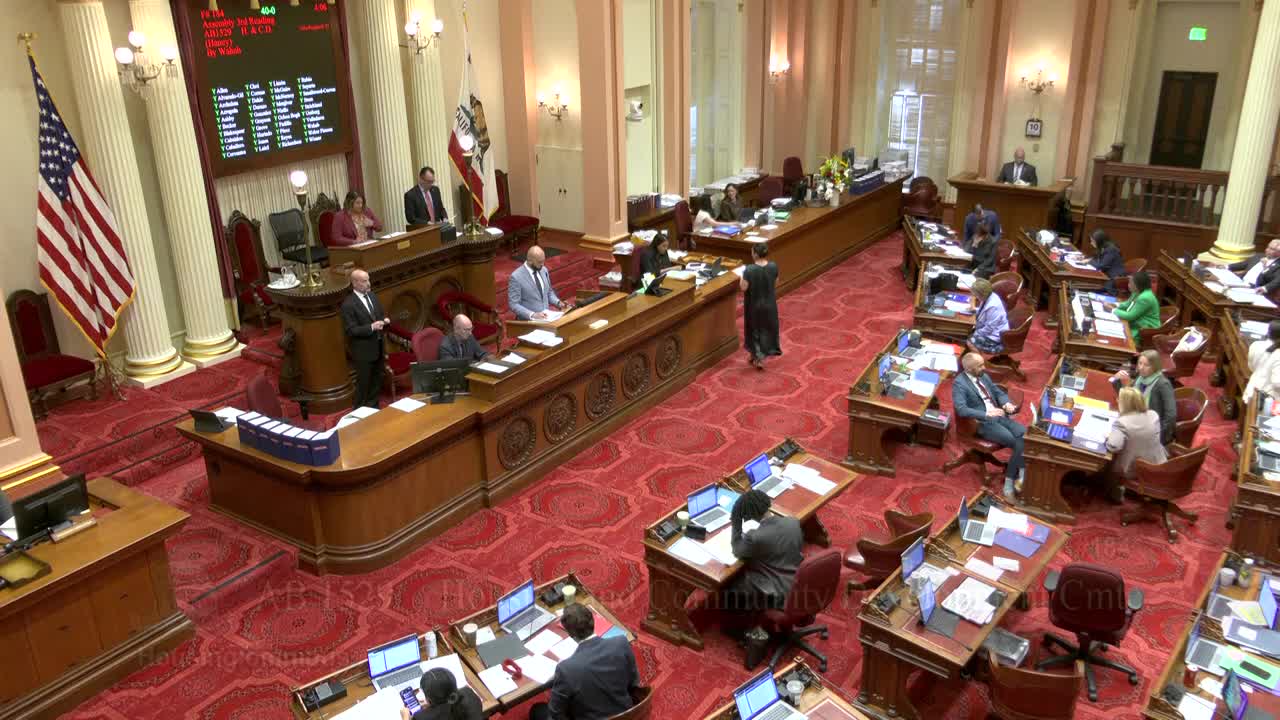 1MIN
Senate Floor
 1MIN
Assembly Floor
 10MIN
Assembly Standing Committee on Governmental Organization
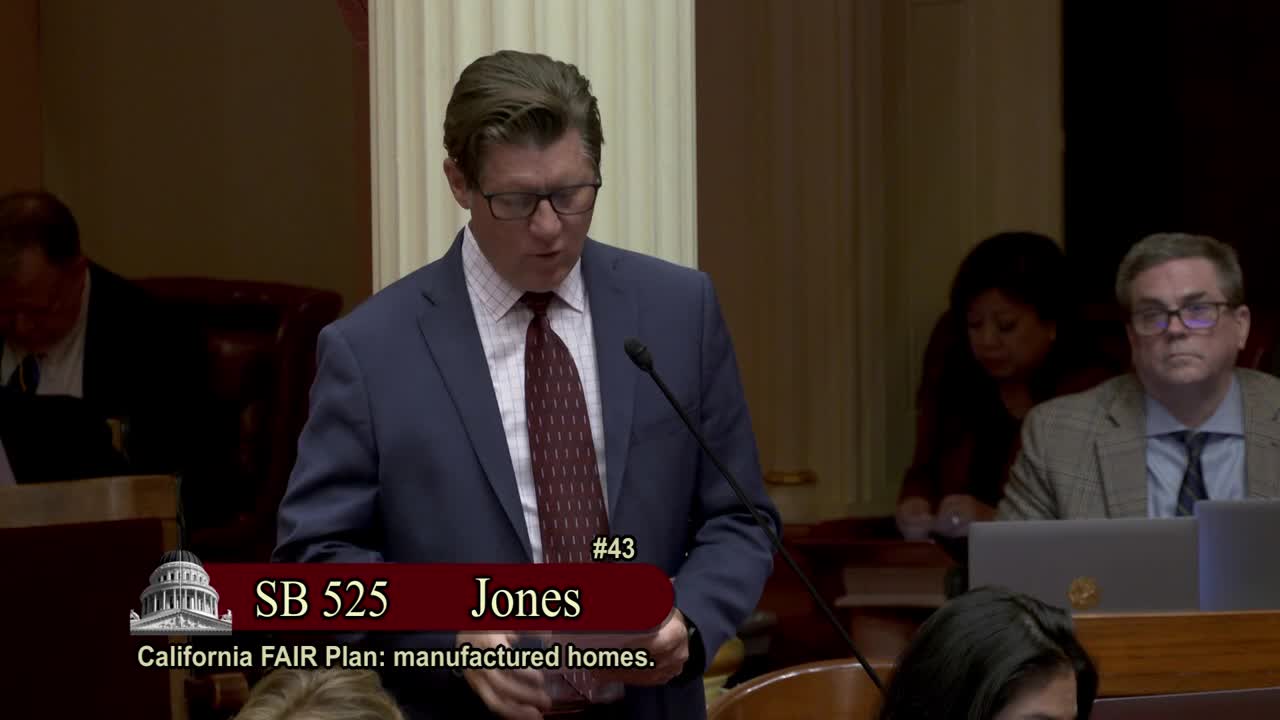 2MIN
Senate Floor
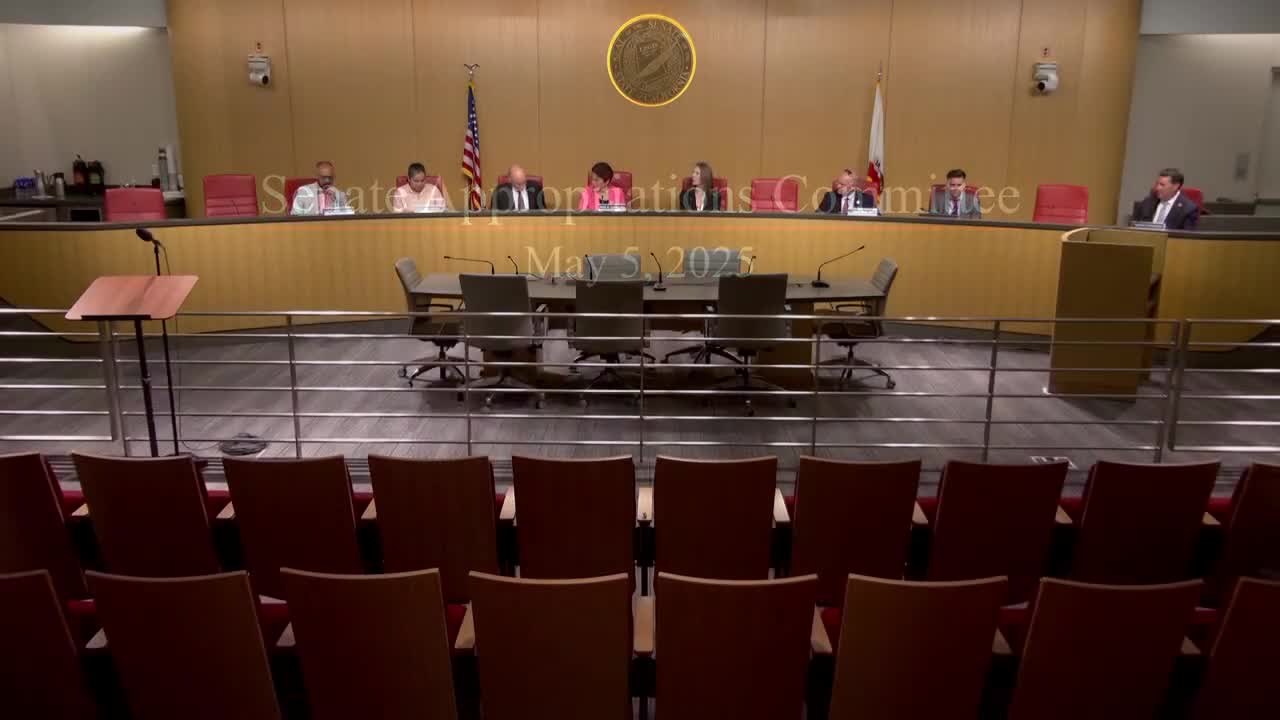 3SEC
Senate Standing Committee on Appropriations
 5MIN
Senate Standing Committee on Judiciary
 10MIN