SB 731: Trash receptacles and storage containers: reflective markings.
- Session Year: 2025-2026
- House: Senate
- Latest Version Date: 2025-10-01
Current Status:
Passed
(2025-10-01: Chaptered by Secretary of State. Chapter 232, Statutes of 2025.)
Introduced
In Committee
Awaiting First Chamber Vote
Passed First Chamber
In Committee
Awaiting Second Chamber Vote
Passed Second Chamber
Enacted
Existing law requires a manufacturer who sells or provides for compensation, and, commencing January 1, 2026, an owner of, a trash receptacle or storage container that is longer than 3 feet and taller than 4 feet and that is designed to be placed on a roadway or the curb of a roadway in order to be emptied or picked up to mark the receptacle or container with a reflector on each side. Existing law additionally requires 8 strips of fluorescent yellow reflective tape made of certain high-performance retroreflective sheeting to be placed on specified locations on a trash receptacle or storage container, unless the trash receptacle or storage containers reflective tape is made of the high-performance retroreflective sheeting and was applied before July 1, 2023.
This bill would apply this exemption from the additional, 8-strip requirement to a receptacle or container with reflectors applied prior to January 1, 2025, and would eliminate the exemptions requirement for the reflectors to be reflective tape made of certain high-performance retroreflective sheeting. The bill would require, when not exempted, the reflective tape for a storage container transported by truck and trailer to be fluorescent yellow, red, white, or alternating red and white, and be made of specified high-performance retroreflective sheeting.
Existing law requires a manufacturer who sells or provides for compensation, and, commencing January 1, 2026, an owner of, a trash receptacle or storage container that is longer than 3 feet and taller than 4 feet and that is designed to be placed on a roadway or the curb of a roadway in order to be emptied or picked up to mark the receptacle or container with a reflector on each side. Existing law additionally requires eight 8 strips of fluorescent yellow reflective tape made of certain high-performance retroreflective sheeting to be placed on specified locations on a trash receptacle or storage container, unless the trash receptacle or storage containers reflective tape is made of the high-performance retroreflective sheeting and was applied before July 1, 2023.
This bill would apply this exemption from the additional, eight-strip 8-strip requirement to a receptacle or container with reflectors applied prior to January 1, 2025, and would eliminate the exemptions requirement for the reflectors to be reflective tape made of certain high-performance retroreflective sheeting. The bill would require, when not exempted, the reflective tape for a storage container transported by truck and trailer to be fluorescent yellow, red, white, or alternating red and white, and be made of specified high-performance retroreflective sheeting.
Existing law requires a manufacturer who sells or provides for compensation, and, commencing January 1, 2026, an owner of, a trash receptacle or storage container that is longer than 3 feet and taller than 4 feet and that is designed to be placed on a roadway or the curb of a roadway in order to be emptied or picked up to mark the receptacle or container with a reflector on each side. Existing law additionally requires eight strips of reflective tape made of certain high-performance retroreflective sheeting to be placed on specified locations on a trash receptacle or storage container, unless the trash receptacle or storage containers reflective tape is made of the high-performance retroreflective sheeting and was applied before July 1, 2023.
This bill would apply this exemption from the additional, eight-strip requirement to a receptacle or container with reflectors applied prior to January 1, 2025, and would eliminate the exemptions requirement for the reflectors to be reflective tape made of certain high-performance retroreflective sheeting.
(a)(1)A manufacturer who sells or provides for compensation a trash receptacle or storage container that is on a roadway or the curb of a roadway in order to be emptied or picked up shall mark the trash receptacle or storage container with a reflector on each side.
(2)An owner, other than a manufacturer, of a trash receptacle or storage container that is on a roadway or the curb of a roadway in order to be emptied or picked up shall mark the trash receptacle or storage container with a reflector on each side.
(b)(1)Subject to paragraphs (2), (3), and (4), a trash receptacle or storage container subject to subdivision (a) shall have at least eight strips of reflective tape, each a minimum of two inches wide and two feet long. One tape strip shall be applied horizontally to each of the top and bottom portions of the four corners where the vertical walls of the trash receptacle or storage container meet, and be oriented so that approximately 12 inches of each tape strip is visible on each of the two outside walls to which it is applied. The reflective tape shall be fluorescent yellow and be made of high-performance retroreflective sheeting of American Society for Testing and Materials D4956-13 Type V, VIII, IX, or XI.
(2)If reflective tape cannot be applied to a trash receptacle or storage container in the manner prescribed in paragraph (1) because of the design or a physical characteristic of the trash receptacle or storage container, the reflective tape shall be placed as close to the top and bottom of the trash receptacle or storage container as possible or on the center of the smaller outside facing walls of the trash receptacle or storage container.
(3)A trash receptacle or storage container subject to subdivision (a) shall not be required to comply with the requirements in paragraphs (1) and (4) if the reflectors were applied to the trash receptacle or storage container before January 1, 2025.
(4)For a storage container transported by truck and trailer, the reflective tape shall be fluorescent yellow, red, white, or alternating red and white, and be made of high-performance retroreflective sheeting of American Society for Testing and Materials D4956-13 Type IX or XI.
(c)An owner of a trash receptacle or storage container that is on a roadway or the curb of a roadway in order to be emptied or picked up shall clearly label the trash receptacle or storage container with the owners name and current telephone number.
(d)(1)A manufacturer or an owner who violates this section shall be guilty of an infraction punishable by a fine of one hundred dollars ($100) for the first violation of this section if not corrected within 14 days of notice, five hundred dollars ($500) for the second violation of this section if not corrected within 14 days of notice, and one thousand dollars ($1,000) for the third violation, or any subsequent violation, of this section if not corrected within 14 days of notice. The fines shall be deposited into the Accident Prevention and Road Safety Fund, which is hereby created in the State Treasury. Moneys in the fund are available upon appropriation by the Legislature.
(2)The Attorney General, or the district attorney or city attorney in the location where the violation is observed, may enforce this section.
(3)For purposes of this subdivision, a violation means the failure to mark an individual trash receptacle or storage container as required pursuant to subdivision (a), (b), or (c).
(4)For purposes of this subdivision, owner shall not mean a local governmental entity.
(e)This section only applies to trash receptacles and storage containers that are longer than three feet in length and taller than four feet in height.
(f)For purposes of this section, provides for compensation includes containers that are rented or provided as part of a service for which the owner or manufacturer receives compensation.
(a)(1)A manufacturer who sells or provides for compensation a trash receptacle or storage container that is on a roadway or the curb of a roadway in order to be emptied or picked up shall mark the trash receptacle or storage container with a reflector on each side.
(2)An owner, other than a manufacturer, of a trash receptacle or storage container that is on a roadway or the curb of a roadway in order to be emptied or picked up shall mark the trash receptacle or storage container with a reflector on each side.
(b)(1)Subject to paragraphs (2) and (3), (2), (3), and (4), a trash receptacle or storage container subject to subdivision (a) shall have at least eight strips of reflective tape, each a minimum of two inches wide and two feet long. One tape strip shall be applied horizontally to each of the top and bottom portions of the four corners where the vertical walls of the trash receptacle or storage container meet, and be oriented so that approximately 12 inches of each tape strip is visible on each of the two outside walls to which it is applied. The reflective tape shall be fluorescent yellow and be made of high-performance retroreflective sheeting of American Society for Testing and Materials D4956-13 Type V, VIII, IX, or XI.
(2)If reflective tape cannot be applied to a trash receptacle or storage container in the manner prescribed in paragraph (1) because of the design or a physical characteristic of the trash receptacle or storage container, the reflective tape shall be placed as close to the top and bottom of the trash receptacle or storage container as possible or on the center of the smaller outside facing walls of the trash receptacle or storage container.
(3)A trash receptacle or storage container subject to subdivision (a) shall not be required to comply with the requirements in paragraph (1) paragraphs (1) and (4) if the reflectors were applied to the trash receptacle or storage container before January 1, 2025.
(4)For a storage container transported by truck and trailer, the reflective tape shall be fluorescent yellow, red, white, or alternating red and white, and be made of high-performance retroreflective sheeting of American Society for Testing and Materials D4956-13 Type IX or XI.
(c)An owner of a trash receptacle or storage container that is on a roadway or the curb of a roadway in order to be emptied or picked up shall clearly label the trash receptacle or storage container with the owners name and current telephone number.
(d)(1)A manufacturer or an owner who violates this section shall be guilty of an infraction punishable by a fine of one hundred dollars ($100) for the first violation of this section if not corrected within 14 days of notice, five hundred dollars ($500) for the second violation of this section if not corrected within 14 days of notice, and one thousand dollars ($1,000) for the third violation, or any subsequent violation, of this section if not corrected within 14 days of notice. The fines shall be deposited into the Accident Prevention and Road Safety Fund, which is hereby created in the State Treasury. Moneys in the fund are available upon appropriation by the Legislature.
(2)The Attorney General, or the district attorney or city attorney in the location where the violation is observed, may enforce this section.
(3)For purposes of this subdivision, a violation means the failure to mark an individual trash receptacle or storage container as required pursuant to subdivision (a), (b), or (c).
(4)For purposes of this subdivision, owner shall not mean a local governmental entity.
(e)This section only applies to trash receptacles and storage containers that are longer than three feet in length and taller than four feet in height.
(f)For purposes of this section, provides for compensation includes containers that are rented or provided as part of a service for which the owner or manufacturer receives compensation.
(a)(1)A manufacturer who sells or provides for compensation a trash receptacle or storage container that is on a roadway or the curb of a roadway in order to be emptied or picked up shall mark the trash receptacle or storage container with a reflector on each side. This paragraph applies to any trash receptacle or storage container marketed for sale on and after January 1, 2025, as well as any trash receptacle or storage container that was manufactured before January 1, 2025, that remains under the ownership of the manufacturer as of January 1, 2025.
(2)(A)An owner, other than a manufacturer, of a trash receptacle or storage container that is on a roadway or the curb of a roadway in order to be emptied or picked up shall mark the trash receptacle or storage container with a reflector on each side. This paragraph applies to any trash receptacle or storage container purchased before, on, or after January 1, 2026.
(B)Notwithstanding subdivision (g), this paragraph shall not become operative until January 1, 2026.(b)(1)Subject to paragraphs (2) and (3), a trash receptacle or storage container subject to subdivision (a) shall have at least eight strips of reflective tape, each a minimum of two inches wide and two feet long. One tape strip shall be applied horizontally to each of the top and bottom portions of the four corners where the vertical walls of the trash receptacle or storage container meet, and be oriented so that approximately 12 inches of each tape strip is visible on each of the two outside walls to which it is applied. The reflective tape shall be fluorescent yellow and be made of high-performance retroreflective sheeting of American Society for Testing and Materials D4956-13 Type V, VIII, IX, or XI.
(2)If reflective tape cannot be applied to a trash receptacle or storage container in the manner prescribed in paragraph (1) because of the design or a physical characteristic of the trash receptacle or storage container, the reflective tape shall be placed as close to the top and bottom of the trash receptacle or storage container as possible or on the center of the smaller outside facing walls of the trash receptacle or storage container.
(3)A trash receptacle or storage container subject to subdivision (a) shall not be required to comply with the requirements in paragraph (1) if the reflective tape was reflectors were applied to the trash receptacle or storage container before July 1, 2023, and if the reflective tape is made of high-performance retroreflective sheeting of American Society for Testing and Materials D4956-13 Type V, VIII, IX, or XI. January 1, 2025.
(c)An owner of a trash receptacle or storage container that is on a roadway or the curb of a roadway in order to be emptied or picked up shall clearly label the trash receptacle or storage container with the owners name and current telephone number.
(d)(1)A manufacturer or an owner who violates this section shall be guilty of an infraction punishable by a fine of one hundred dollars ($100) for the first violation of this section if not corrected within 14 days of notice, five hundred dollars ($500) for the second violation of this section if not corrected within 14 days of notice, and one thousand dollars ($1,000) for the third violation, or any subsequent violation, of this section if not corrected within 14 days of notice. The fines shall be deposited into the Accident Prevention and Road Safety Fund, which is hereby created in the State Treasury. Moneys in the fund are available upon appropriation by the Legislature.
(2)The Attorney General, or the district attorney or city attorney in the location where the violation is observed, may enforce this section.
(3)For purposes of this subdivision, a violation means the failure to mark an individual trash receptacle or storage container as required pursuant to subdivision (a), (b), or (c).
(4)For purposes of this subdivision, owner shall not mean a local governmental entity.
(e)This section only applies to trash receptacles and storage containers that are longer than three feet in length and taller than four feet in height.
(f)For purposes of this section, provides for compensation includes containers that are rented or provided as part of a service for which the owner or manufacturer receives compensation.
(g)This section shall become operative on January 1, 2025.|
Date
|
Status
|
|---|---|
| Oct 1, 2025 | Chaptered by Secretary of State. Chapter 232, Statutes of 2025. |
| Oct 1, 2025 | Approved by the Governor. |
| Sep 9, 2025 | Enrolled and presented to the Governor at 2 p.m. |
| Sep 3, 2025 | Assembly amendments concurred in. (Ayes 40. Noes 0. Page 2444.) Ordered to engrossing and enrolling. |
| Aug 28, 2025 | In Senate. Concurrence in Assembly amendments pending. |
| Aug 28, 2025 | Read third time. Passed. (Ayes 74. Noes 0. Page 2777.) Ordered to the Senate. |
| Aug 21, 2025 | Read second time. Ordered to consent calendar. |
| Aug 20, 2025 | From committee: Do pass. Ordered to consent calendar. (Ayes 15. Noes 0.) (August 20). |
| Jul 15, 2025 | From committee: Do pass and re-refer to Com. on APPR. with recommendation: To consent calendar. (Ayes 16. Noes 0.) (July 14). Re-referred to Com. on APPR. |
| Jul 3, 2025 | From committee with author's amendments. Read second time and amended. Re-referred to Com. on TRANS. |
| Jun 30, 2025 | July 7 set for first hearing canceled at the request of author. |
| Jun 5, 2025 | Referred to Com. on TRANS. |
| May 29, 2025 | In Assembly. Read first time. Held at Desk. |
| May 29, 2025 | Read third time. Passed. (Ayes 38. Noes 0. Page 1331.) Ordered to the Assembly. |
| Apr 8, 2025 | Read second time. Ordered to third reading. |
| Apr 7, 2025 | From committee: Be ordered to second reading pursuant to Senate Rule 28.8. |
| Mar 28, 2025 | Set for hearing April 7. |
| Mar 26, 2025 | From committee: Do pass and re-refer to Com. on APPR. (Ayes 14. Noes 0. Page 534.) (March 25). Re-referred to Com. on APPR. |
| Mar 17, 2025 | Set for hearing March 25. |
| Mar 12, 2025 | Referred to Com. on TRANS. |
| Feb 24, 2025 | From printer. May be acted upon on or after March 24. |
| Feb 24, 2025 | Read first time. |
| Feb 21, 2025 | Introduced. To Com. on RLS. for assignment. To print. |
|
Date
|
Description
|
Location
|
Votes
|
|
|---|---|---|---|---|
| Sep 3, 2025 | Unfinished Business SB731 Archuleta Concurrence | Senate Floor |
Passed |
|
| Aug 28, 2025 | SB 731 Archuleta Consent Calendar Second Day Regular Session | Assembly Floor |
Passed |
|
| Aug 20, 2025 | Do pass. To Consent Calendar. | Assembly Standing Committee on Appropriations |
Passed |
|
| Jul 14, 2025 | Do pass and be re-referred to the Committee on [Appropriations] with recommendation: To Consent Calendar | Assembly Standing Committee on Transportation |
Passed |
|
| May 29, 2025 | Senate 3rd Reading SB731 Archuleta | Senate Floor |
Passed |
|
| Mar 25, 2025 | Do pass, but first be re-referred to the Committee on [Appropriations] | Senate Standing Committee on Transportation |
Passed |
This list shows positions taken on this bill by organizations on the date displayed, which is linked to the original source.
Positions by individuals are not included.
|
Organization
|
Position
|
Date
|
|---|---|---|
| California Waste Haulers Council | ** Support | |
| Pods Enterprises | ** Support | |
| Pods Enterprises LLC | ** Support | |
| PODS ENTERPRISES, LLC | ** Support | |
| Republic Services | ** Support | |
| Resource Recovery Coalition Of California | ** Support | |
| Wm (waste Management) | ** Support |
SENATE RULES COMMITTEE Office of Senate Floor Analyses (916) 651-1520 Fax: (916) 327-4478 | SB 731 |
UNFINISHED BUSINESS
Bill No: SB 731
Author: Archuleta (D)
Amended: 10/1/25
Vote: 21
SENATE TRANSPORTATION COMMITTEE: 14-0, 3/25/25
AYES: Cortese, Strickland, Archuleta, Arreguín, Blakespear, Cervantes, Gonzalez, Grayson, Limón, Menjivar, Richardson, Seyarto, Umberg, Valladares
NO VOTE RECORDED: Dahle
SENATE APPROPRIATIONS COMMITTEE: Senate Rule 28.8
SENATE FLOOR: 38-0, 5/29/25
AYES: Allen, Alvarado-Gil, Archuleta, Arreguín, Ashby, Becker, Blakespear, Cabaldon, Caballero, Cervantes, Choi, Cortese, Dahle, Durazo, Gonzalez, Grayson, Grove, Hurtado, Jones, Laird, McGuire, McNerney, Menjivar, Niello, Ochoa Bogh, Padilla, Pérez, Richardson, Rubio, Seyarto, Smallwood-Cuevas, Stern, Strickland, Umberg, Valladares, Wahab, Weber Pierson, Wiener
NO VOTE RECORDED: Limón, Reyes
ASSEMBLY FLOOR: 74-0, 8/28/25 (Consent) - See last page for vote
SUBJECT: Trash receptacles and storage containers: reflective markings
SOURCE: Author
DIGEST:
This bill exempts trash receptacles and storage containers with any reflectors added before January 1, 2025, from the requirement to install reflectors made of high-performance retroreflective sheeting of a specified length and quantity. This bill also specifies required tape options for high-performance retroreflective sheeting for a storage container transported by truck and trailer.
Assembly Amendments
of 7/3/25 add red, white, or alternating red and white tape as one of the required tape options for high-performance retroreflective sheeting for a storage container transported by truck and trailer.
ANALYSIS:
Existing law:
- Requires a manufacturer who sells or rents a trash receptacle or storage container that is on a roadway or the curb of a roadway in order to be emptied or picked up to mark the trash receptacle or storage container with a reflector on each side, beginning January 1, 2025. (Health and Safety Code (Health & Saf. Code) § 26275.)
- Requires an owner, other than the manufacturer, of a trash receptacle or storage container that is placed on a roadway or the curb of a roadway in order to be emptied or picked up to mark the trash receptacle or storage container with a reflector on each side, beginning January 1, 2026. (Health & Saf. Code § 26275.)
- Requires the above reflector markings to include at least eight strips of reflective tape, each a minimum of two inches wide and two feet long. One tape strip shall be applied horizontally to each of the top and bottom portions of the four corners where the vertical walls of the trash receptacle or storage container meet, and be oriented so that approximately 12 inches of each tape strip is visible on each of the two outside walls to which it is applied. The reflective tape shall be fluorescent yellow and be made of high-performance retroreflective sheeting of American Society for Testing and Materials D4956-13 Type V, VIII, IX, or XI. (Health & Saf. Code § 26275.)
- Requires an owner of a trash receptacle or storage container that is on a roadway or the curb of a roadway in order to be emptied or picked up to clearly label the trash receptacle or storage container with the owner’s name and current telephone number.
- Provides that a manufacturer or owner, other than a local government entity, who violates the above provisions is guilty of an infraction punishable by a fine, as follows:
- $100 for the first infraction if not corrected within 14 days of notice;
- $500 for the second infraction if not corrected within 14 days of notice; and,
- $1,000 for the third and any subsequent infractions if not corrected within 14 days of notice. (Health & Saf. Code § 26275.)
- Establishes the Accident Prevention and Road Safety Fund in the State Treasury and provides that all fines for violations of the reflector law are to be deposited in the fund. Such funds are available upon appropriation by the Legislature. (Health & Saf. Code § 26275.)
This bill:
- Exempts from the minimum high performance reflective taping requirements trash receptacles or storage containers with any reflectors that were applied to the trash receptacle or storage container before January 1, 2025.
- Adds red, white, or alternating red and white tape as one of the required tape options for high-performance retroreflective sheeting for a storage container transported by truck and trailer.
Comments
- Purpose of this bill. According to the author, “In 2022 Senator Archuleta passed SB 1111, the Rick Best Safety Act, named after Rodrick “Rick” Best, who worked as a legislative staffer and lobbyist in Sacramento for years. Sadly, Rick passed away after a traffic accident where he collided with an unmarked trash dumpster in the roadway. SB 1111 required a person who sells, or provides for compensation, a trash receptacle or storage container designed to be placed on the side of the road or curb to mark the bin with a reflector on each side by January 1st 2026. A follow up bill, SB 806 (Archuleta, Chapter 722, Statutes of 2023) added specific requirements for the category, location, and size of reflective markings on trash and storage containers and provided owners with a 14-day right to cure. Some actors in the industry, who were already voluntarily placing reflective markings on their containers prior to any bills, are struggling to update their entire fleets in order to meet the requirements of SB 806. This bill would allow them to comply with the reflective marking requirements going forward with any new purchases of trash or storage containers without being unnecessarily penalized for existing containers.”
- Need for bin reflectors. Starting January 1, 2025, manufacturers of trash receptacles and storage containers that are longer than three feet in length and taller than four feet in height are required to mark the containers with high performance reflective tape on each side. Owners have an additional year to add reflectors to their bins, with their marking requirement taking effect on January 1, 2026. The addition of reflective tape to containers and receptacles is intended to increase their nighttime visibility, thus improving the safety of local streets and roadways. The absence of nighttime safety markings on large trash receptacles that are placed in the street for pickup can be a safety hazard for motorists, cyclists, and pedestrians who might not see the receptacles.
- PODS’ reflectors. PODS, a supporter of SB 731, is a moving and storage company that rents storage containers for customers to store their belongings in their driveway, or package belongings for moves. PODS’ storage containers have steel-frames and impact-resistant wall paneling and range from the “small container” at 8' x 7' x 8' to the “large container” at 16' x 8' x 8’. PODS containers are generally placed in a driveway, but can be placed on the street if the customer receives a permit from the local jurisdiction. According to PODS, the company has nearly 300,000 containers in their nationwide fleet which are marked with red and white-silver engineering grade reflective tape. The company asserts that all PODS containers had reflectors installed before January 1, 2025.
- Less reflectivity. Existing law allows manufactures and owners to utilize existing reflectivity tape if the tape was applied to the trash receptacle or storage container before July 1, 2023, and if the reflective tape is made of high-performance retroreflective sheeting. This bill allows manufacturers of trash receptacles and storage containers to utilize existing reflectors if they were applied before January 1, 2025, regardless of whether the reflectors are high-performance or not.
Under this bill, any new containers put into use on or after January 1, 2026, including PODS, are required to comply with the specific statutory reflective tape requirements established under SB 806. However, existing containers would not be required to comply with the specific statutory reflective tape requirements established under SB 806. Currently, PODS uses tape made of American Society for Testing and Materials (ASTM) Type I reflective sheeting to add reflectivity to their containers. This level of reflector provides a lower level of reflectivity, and thus potentially lower visibility, than what would be required under current law beginning in 2026.
- Types of reflection. SB 806 outlined a range of high-performance retroreflective sheeting types that owners and manufacturers must use to comply with the law. Specifically, owners and manufacturers must use reflective tape that is fluorescent yellow and made of high-performance retroreflective sheeting of American Society for Testing and Materials D4956-13 Type V, VIII, IX, or XI. These four Types are made of super-high-intensity retroreflective materials. Alternatively, Type I sheeting (currently used by PODS) has the lowest performance of all Types. It is more commonly used for signs where brightness during nighttime is less critical, such as “No Parking” signs.
Related/Prior Legislation
SB 806 (Archuleta, Chapter 722, Statutes of 2023) – Authorized the Attorney General, or the district attorney or city attorney in the location where a violation is observed, to enforce the law requiring certain markings to be placed on trash receptacles, including reflectors and certain contact information. This bill also established a fund within the State Treasury where all collected fines are to be deposited.
SB 1111 (Archuleta, Chapter 244, Statutes of 2022) – Requires manufacturers and owners of trash receptacles and storage containers of specified dimensions be marked with a reflector on each side and contact information, respectively and as specified.
SB 741 (Archuleta of 2021) – Would have required the seller or provider of a roadside trash and storage container larger than three feet and taller than four feet to mark the container with a reflector on each side and imposed a civil penalty for failure to do so. This bill died in the Senate Transportation Committee.
SB 1353 (Archuleta of 2020) – Would have imposed substantially the same requirement of reflectors on trash receptacles as SB 741. This bill died in the Senate Transportation Committee.
FISCAL EFFECT: Appropriation: No Fiscal Com.: Yes Local: No
According to the Assembly Appropriations Committee: Minor state costs, if any.
SUPPORT: (Verified 8/28/25)
California Waste Haulers Council
Pods Enterprises, LLC
Republic Services
Resource Recovery Coalition of California
Wm (waste Management)
OPPOSITION: (Verified 8/28/25)
ASSEMBLY FLOOR: 8/28/25 74-0
AYES: Addis, Aguiar-Curry, Ahrens, Alanis, Arambula, Ávila Farías, Bains, Bauer-Kahan, Bennett, Boerner, Bonta, Bryan, Calderon, Caloza, Carrillo, Castillo, Chen, Connolly, Davies, DeMaio, Dixon, Ellis, Flora, Fong, Gabriel, Garcia, Gipson, Jeff Gonzalez, Mark González, Hadwick, Haney, Harabedian, Hart, Hoover, Irwin, Jackson, Kalra, Krell, Lackey, Lee, Lowenthal, Macedo, McKinnor, Muratsuchi, Nguyen, Ortega, Pacheco, Papan, Patel, Patterson, Pellerin, Petrie-Norris, Quirk-Silva, Ramos, Ransom, Celeste Rodriguez, Michelle Rodriguez, Rogers, Blanca Rubio, Sanchez, Schiavo, Schultz, Sharp-Collins, Solache, Soria, Stefani, Ta, Tangipa, Wallis, Ward, Wicks, Wilson, Zbur, Rivas
NO VOTE RECORDED: Alvarez, Berman, Elhawary, Gallagher, Valencia
Prepared by: Isabelle LaSalle / TRANS. / (916) 651-4121
7/20/26 16:50:57
**** END ****
SENATE RULES COMMITTEE Office of Senate Floor Analyses (916) 651-1520 Fax: (916) 327-4478 | SB 731 |
UNFINISHED BUSINESS
Bill No: SB 731
Author: Archuleta (D)
Amended: 7/3/25 in Assembly
Vote: 21
SENATE TRANSPORTATION COMMITTEE: 14-0, 3/25/25
AYES: Cortese, Strickland, Archuleta, Arreguín, Blakespear, Cervantes, Gonzalez, Grayson, Limón, Menjivar, Richardson, Seyarto, Umberg, Valladares
NO VOTE RECORDED: Dahle
SENATE APPROPRIATIONS COMMITTEE: Senate Rule 28.8
SENATE FLOOR: 38-0, 5/29/25
AYES: Allen, Alvarado-Gil, Archuleta, Arreguín, Ashby, Becker, Blakespear, Cabaldon, Caballero, Cervantes, Choi, Cortese, Dahle, Durazo, Gonzalez, Grayson, Grove, Hurtado, Jones, Laird, McGuire, McNerney, Menjivar, Niello, Ochoa Bogh, Padilla, Pérez, Richardson, Rubio, Seyarto, Smallwood-Cuevas, Stern, Strickland, Umberg, Valladares, Wahab, Weber Pierson, Wiener
NO VOTE RECORDED: Limón, Reyes
ASSEMBLY FLOOR: 74-0 See last page for vote
SUBJECT: Trash receptacles and storage containers: reflective markings
SOURCE: Author
DIGEST:
This bill exempts trash receptacles and storage containers with any reflectors added before January 1, 2025, from the requirement to install reflectors made of high-performance retroreflective sheeting of a specified length and quantity. This bill also specifies required tape options for high-performance retroreflective sheeting for a storage container transported by truck and trailer.
Assembly Amendments
of 7/3/25 add red, white, or alternating red and white tape as one of the required tape options for high-performance retroreflective sheeting for a storage container transported by truck and trailer.
ANALYSIS:
Existing law:
- Requires a manufacturer who sells or rents a trash receptacle or storage container that is on a roadway or the curb of a roadway in order to be emptied or picked up to mark the trash receptacle or storage container with a reflector on each side, beginning January 1, 2025. (Health and Safety Code (Health & Saf. Code) § 26275.)
- Requires an owner, other than the manufacturer, of a trash receptacle or storage container that is placed on a roadway or the curb of a roadway in order to be emptied or picked up to mark the trash receptacle or storage container with a reflector on each side, beginning January 1, 2026. (Health & Saf. Code § 26275.)
- Requires the above reflector markings to include at least eight strips of reflective tape, each a minimum of two inches wide and two feet long. One tape strip shall be applied horizontally to each of the top and bottom portions of the four corners where the vertical walls of the trash receptacle or storage container meet, and be oriented so that approximately 12 inches of each tape strip is visible on each of the two outside walls to which it is applied. The reflective tape shall be fluorescent yellow and be made of high-performance retroreflective sheeting of American Society for Testing and Materials D4956-13 Type V, VIII, IX, or XI. (Health & Saf. Code § 26275.)
- Requires an owner of a trash receptacle or storage container that is on a roadway or the curb of a roadway in order to be emptied or picked up to clearly label the trash receptacle or storage container with the owner’s name and current telephone number.
- Provides that a manufacturer or owner, other than a local government entity, who violates the above provisions is guilty of an infraction punishable by a fine, as follows:
- $100 for the first infraction if not corrected within 14 days of notice;
- $500 for the second infraction if not corrected within 14 days of notice; and,
- $1,000 for the third and any subsequent infractions if not corrected within 14 days of notice. (Health & Saf. Code § 26275.)
- Establishes the Accident Prevention and Road Safety Fund in the State Treasury and provides that all fines for violations of the reflector law are to be deposited in the fund. Such funds are available upon appropriation by the Legislature. (Health & Saf. Code § 26275.)
This bill:
- Exempts from the minimum high performance reflective taping requirements trash receptacles or storage containers with any reflectors that were applied to the trash receptacle or storage container before January 1, 2025.
- Adds red, white, or alternating red and white tape as one of the required tape options for high-performance retroreflective sheeting for a storage container transported by truck and trailer.
Comments
- Purpose of this bill. According to the author, “In 2022 Senator Archuleta passed SB 1111, the Rick Best Safety Act, named after Rodrick “Rick” Best, who worked as a legislative staffer and lobbyist in Sacramento for years. Sadly, Rick passed away after a traffic accident where he collided with an unmarked trash dumpster in the roadway. SB 1111 required a person who sells, or provides for compensation, a trash receptacle or storage container designed to be placed on the side of the road or curb to mark the bin with a reflector on each side by January 1st 2026. A follow up bill, SB 806 (Archuleta, Chapter 722, Statutes of 2023) added specific requirements for the category, location, and size of reflective markings on trash and storage containers and provided owners with a 14-day right to cure. Some actors in the industry, who were already voluntarily placing reflective markings on their containers prior to any bills, are struggling to update their entire fleets in order to meet the requirements of SB 806. This bill would allow them to comply with the reflective marking requirements going forward with any new purchases of trash or storage containers without being unnecessarily penalized for existing containers.”
- Need for bin reflectors. Starting January 1, 2025, manufacturers of trash receptacles and storage containers that are longer than three feet in length and taller than four feet in height are required to mark the containers with high performance reflective tape on each side. Owners have an additional year to add reflectors to their bins, with their marking requirement taking effect on January 1, 2026. The addition of reflective tape to containers and receptacles is intended to increase their nighttime visibility, thus improving the safety of local streets and roadways. The absence of nighttime safety markings on large trash receptacles that are placed in the street for pickup can be a safety hazard for motorists, cyclists, and pedestrians who might not see the receptacles.
- PODS’ reflectors. PODS, a supporter of SB 731, is a moving and storage company that rents storage containers for customers to store their belongings in their driveway, or package belongings for moves. PODS’ storage containers have steel-frames and impact-resistant wall paneling and range from the “small container” at 8' x 7' x 8' to the “large container” at 16' x 8' x 8’. PODS containers are generally placed in a driveway, but can be placed on the street if the customer receives a permit from the local jurisdiction. According to PODS, the company has nearly 300,000 containers in their nationwide fleet which are marked with red and white-silver engineering grade reflective tape. The company asserts that all PODS containers had reflectors installed before January 1, 2025.
- Less reflectivity. Existing law allows manufactures and owners to utilize existing reflectivity tape if the tape was applied to the trash receptacle or storage container before July 1, 2023, and if the reflective tape is made of high-performance retroreflective sheeting. This bill allows manufacturers of trash receptacles and storage containers to utilize existing reflectors if they were applied before January 1, 2025, regardless of whether the reflectors are high-performance or not.
Under this bill, any new containers put into use on or after January 1, 2026, including PODS, are required to comply with the specific statutory reflective tape requirements established under SB 806. However, existing containers would not be required to comply with the specific statutory reflective tape requirements established under SB 806. Currently, PODS uses tape made of American Society for Testing and Materials (ASTM) Type I reflective sheeting to add reflectivity to their containers. This level of reflector provides a lower level of reflectivity, and thus potentially lower visibility, than what would be required under current law beginning in 2026.
- Types of reflection. SB 806 outlined a range of high-performance retroreflective sheeting types that owners and manufacturers must use to comply with the law. Specifically, owners and manufacturers must use reflective tape that is fluorescent yellow and made of high-performance retroreflective sheeting of American Society for Testing and Materials D4956-13 Type V, VIII, IX, or XI. These four Types are made of super-high-intensity retroreflective materials. Alternatively, Type I sheeting (currently used by PODS) has the lowest performance of all Types. It is more commonly used for signs where brightness during nighttime is less critical, such as “No Parking” signs.
Related/Prior Legislation
SB 806 (Archuleta, Chapter 722, Statutes of 2023) – Authorized the Attorney General, or the district attorney or city attorney in the location where a violation is observed, to enforce the law requiring certain markings to be placed on trash receptacles, including reflectors and certain contact information. This bill also established a fund within the State Treasury where all collected fines are to be deposited.
SB 1111 (Archuleta, Chapter 244, Statutes of 2022) – Requires manufacturers and owners of trash receptacles and storage containers of specified dimensions be marked with a reflector on each side and contact information, respectively and as specified.
SB 741 (Archuleta of 2021) – Would have required the seller or provider of a roadside trash and storage container larger than three feet and taller than four feet to mark the container with a reflector on each side and imposed a civil penalty for failure to do so. This bill died in the Senate Transportation Committee.
SB 1353 (Archuleta of 2020) – Would have imposed substantially the same requirement of reflectors on trash receptacles as SB 741. This bill died in the Senate Transportation Committee.
FISCAL EFFECT: Appropriation: No Fiscal Com.: Yes Local: No
According to the Assembly Appropriations Committee: Minor state costs, if any.
SUPPORT: (Verified 8/28/25)
California Waste Haulers Council
Pods Enterprises, LLC
Republic Services
Resource Recovery Coalition of California
Wm (waste Management)
OPPOSITION: (Verified 8/28/25)
Prepared by: Isabelle LaSalle / TRANS. / (916) 651-4121
8/28/25 16:50:15
**** END ****
Date of Hearing: August 20, 2025
ASSEMBLY COMMITTEE ON APPROPRIATIONS
Buffy Wicks, Chair
SBPCA Bill Id:SB 731
Author:(Archuleta) – As Amended Ver:July 3, 2025
Policy Committee: | Transportation | Vote: | 16 - 0 |
|
| ||
|
|
Urgency: No State Mandated Local Program: No Reimbursable: No
SUMMARY:
This bill extends an existing exemption for trash receptacles and storage containers with reflectors added before January 1, 2025, from the requirement to be made of certain high-performance retroreflective sheeting and of a specified length and number of reflectors, and adds red, white or alternating red and white tape as one of the required tape options for high-performance retroreflective sheeting for a storage container transported by truck and trailer.
FISCAL EFFECT:
Minor state costs, if any.
COMMENTS:
In 2022, the Legislature approved SB 1111 (Archuleta), Chapter 244, Statutes of 2022, to require a person who sells, or provides for compensation, a trash or storage bin designed to be placed on the side of the road or curb to be emptied to mark the bin with a reflector on each side, beginning on January 1, 2025. Owners of bins purchased before the marking requirement took effect have until January 1, 2026, to add reflectors to their bins. The law also requires bin owners, beginning January 1, 2025, to mark their bins with their name and telephone number to ensure they can be contacted in the case of violations. SB 1111 provides that a violation of the reflector and labeling requirements is an infraction, unless the owner or seller is a local government entity, punishable by an escalating fine: $100 for the first violation, $500 for the second violation, and $1,000 for the third and any subsequent violations.
In 2023, the Legislature approved SB 806 (Archuleta), Chapter 244, Statutes of 2023, which made largely technical update to SB 1111.
The author describes this bill as part of his ongoing effort to better guarantee public safety by ensuing trash dumpsters on the side of the road are marked with reflectors. According to the author:
In 2022 Senator Archuleta passed SB 1111, the Rick Best Safety Act, named after Rodrick “Rick” Best, who worked as a legislative staffer and lobbyist in Sacramento for years. Sadly, Rick passed away after a traffic accident where he collided with an unmarked trash dumpster in the roadway. SB 1111 required a person who sells, or provides for compensation, a trash receptacle or storage container designed to be placed on the side of the road or curb to mark the bin with a reflector on each side by January 1st 2026.…Some actors in the industry, who were already voluntarily placing reflective markings on their containers prior to any bills, are struggling to update their entire fleets in order to meet the requirements of SB 806. This bill would allow them to comply with the reflective marking requirements going forward with any new purchases of trash or storage containers without being unnecessarily penalized for existing containers.
This bill is supported by several waste management businesses and related entities. There is no opposition registered to this bill.
Analysis Prepared by: Jay Dickenson / APPR. / (916) 319-2081
Date of Hearing: July 14, 2025
ASSEMBLY COMMITTEE ON TRANSPORTATION
Lori D. Wilson, Chair
SBPCA Bill Id:SB 731
Author:(Archuleta) – As Amended Ver:July 3, 2025
SENATE VOTE: 38-0
SUBJECT: Trash receptacles and storage containers: reflective markings
SUMMARY: Extends an existing exemption for trash receptacles and storage containers with reflectors added before January 1, 2025, from the requirement to be made of certain high-performance retroreflective sheeting and of a specified length and number of reflectors, and adds red, white, or alternating red and white tape as one of the required tape options for high-performance retroreflective sheeting for a storage container transported by truck and trailer.
EXISTING LAW:
- Requires a manufacturer who sells or rents a trash receptacle or storage container that is on a roadway or the curb of a roadway in order to be emptied or picked up to mark the trash receptacle or storage container with a reflector on each side, beginning January 1, 2025. (Health and Safety Code Section (HSC) 26275)
- Requires an owner, other than the manufacturer, of a trash receptacle or storage container that is placed on a roadway or the curb of a roadway in order to be emptied or picked up to mark the trash receptacle or storage container with a reflector on each side, beginning January 1, 2026. (HSC 26275)
- Requires reflector markings to include at least eight strips of reflective tape, each a minimum of two inches wide and two feet long:
- Requires one strip to be applied horizontally to each of the top and bottom portions of the four corners where the vertical walls of the trash receptacle or storage container meet, and be oriented so that approximately 12 inches of each tape strip is visible on each of the two outside walls to which it is applied; and,
- Requires the reflective tape shall be fluorescent yellow, red, white, or alternating red and white, and be made of high-performance retroreflective sheeting of American Society for Testing and Materials D4956-13 Type IX or XI. (HSC 26275)
- Exempts trash receptacle or storage container from the requirements of reflective tape stated above, if the reflective tape or reflectors were applied to the trash receptacle or storage container before July 1, 2023, and if the reflective tape is made of high-performance retroreflective sheeting of American Society for Testing and Materials D4956-13 Type V, VIII, IX, or XI. (HSC 26275)
- Requires an owner of a trash receptacle or storage container that is on a roadway or the curb of a roadway in order to be emptied or picked up to clearly label the trash receptacle or storage container with the owner’s name and current telephone number. (HSC 26275)
- Provides that a manufacturer or owner, other than a local government entity, who violates the above provisions is guilty of an infraction punishable by a fine, as follows:
- $100 for the first infraction if not corrected within 14 days of notice;
- $500 for the second infraction if not corrected within 14 days of notice; and
- $1,000 for the third and any subsequent infractions if not corrected within 14 days of notice. (HSC 26275)
- Establishes the Accident Prevention and Road Safety Fund in the State Treasury and provides that all fines for violations of the reflector law are to be deposited in the fund. Such funds are available upon appropriation by the Legislature. (HSC 26275)
FISCAL EFFECT: Pursuant to Senate Rule 28.8, negligible state costs.
COMMENTS: Objects on the road at night—even large ones—are hard to see. In recognition of this, current law establishes lighting and reflector requirements for vehicles and equipment on the roadway at night to make them visible, so as to avoid collisions.
Starting January 1, 2025, manufacturers of trash receptacles and storage containers that are longer than three feet in length and taller than four feet in height are required to mark the containers with high performance reflective tape on each side. Owners have until January 1, 2026 to add reflectors to their bins. The addition of reflective tape to containers and receptacles is intended to increase their nighttime visibility, thus improving the safety of local streets and roadways. The absence of nighttime safety markings on large trash receptacles that are placed in the street for pickup can be a safety hazard for motorists, cyclists, and pedestrians who might not see the receptacles.
PODS’ reflectors. PODS is a moving and storage company that rents storage containers for customers to store their belongings in their driveway, or package belongings for moves. PODS’ storage containers have steel-frames and impact-resistant wall paneling and range from the “small container” at 8' x 7' x 8' to the “large container” at 16' x 8' x 8’. PODS containers are generally placed in a driveway, but can be placed on the street if the customer receives a permit from the local jurisdiction. All PODS containers had reflectors installed before January 1, 2025. According to PODS, the company has nearly 300,000 containers in their nationwide fleet which are marked with red and white-silver engineering grade reflective tape. PODS chose these colors to match the United States Department of Transportation’s required colors for reflective markings on trucks. Each of the company’s three models has a minimum of three pieces of reflective tape: one at the top, middle, and bottom of the container. The newest model has added a fourth strip of tape to each corner.
Less reflectivity. This bill extends the date for compliance for manufacturers of trash receptacles and storage containers to comply with installing high reflectivity tape. Existing law allows manufactures and owners to utilize existing reflectivity tape if the tape was applied to the trash receptacle or storage container before July 1, 2023, and if the reflective tape is made of high-performance retroreflective sheeting. This bill allows manufacturers of trash receptacles and storage containers to utilize existing reflectors if they were applied before January 1, 2025. Under this bill, any containers put into use on or after January 1, 2026, including PODS, are required to comply with the specific statutory reflective tape requirements established under SB 806 (Archuleta) Chapter 722, Statutes of 2023. Currently, PODS uses tape made of American Society for Testing and Materials (ASTM) Type I reflective sheeting to add reflectivity to their containers. This level of reflector provides a lower level of reflectivity, and thus potentially lower visibility, than what would be required under current law beginning in 2026. Because PODS is not the manufacturer of their containers, the company is only subject to the compliance timelines for container owners within AB 806. This means PODS had over three years notice before they had to comply with AB 806.
Types of reflection. AB 806 specifies a range of high-performance retroreflective sheeting types that owners and manufacturers of receptacle or storage containers must use to comply with the law. Specifically, owners and manufacturers must use reflective tape that is fluorescent yellow and made of high-performance retroreflective sheeting of American Society for Testing and Materials D4956-13 Type V, VIII, IX, or XI. These four Types are made of super-high-intensity retroreflective materials. Alternatively, Type I sheeting (currently used by PODS) has the lowest performance of all Types. It is more commonly used for signs where brightness during nighttime is less critical, such as “No Parking” signs.
This bill, for a storage container transported by truck and trailer adds, red, white, or alternating red and white reflectors made of high-performance retroreflective sheeting of American Society for Testing and Materials D4956-13 Type IX or XI as options for required reflectors.
In 2002, long time staffer and environmental advocate, Rick Best was killed after colliding with an unmarked dumpster late at night. This bill seeks to clarify existing law, in order to accommodate owners and manufacturers of trash receptacles and storage containers who have not complied with existing law to update their entire fleets in order to meet existing law, or already placed reflective markings on containers prior to any legislation.
According to the author, In 2022 Senator Archuleta passed SB 1111, the Rick Best Safety Act, named after Rodrick “Rick” Best, who worked as a legislative staffer and lobbyist in Sacramento for years. Sadly, Rick passed away after a traffic accident where he collided with an unmarked trash dumpster in the roadway. SB 1111 required a person who sells, or provides for compensation, a trash receptacle or storage container designed to be placed on the side of the road or curb to mark the bin with a reflector on each side by January 1st 2026. A follow up bill, SB 806 (Archuleta, 2023) added specific requirements for the category, location, and size of reflective markings on trash and storage containers and provided owners with a 14-day right to cure. Some actors in the industry, who were already voluntarily placing reflective markings on their containers prior to any bills, are struggling to update their entire fleets in order to meet the requirements of SB 806. This bill would allow them to comply with the reflective marking requirements going forward with any new purchases of trash or storage containers without being unnecessarily penalized for existing containers.
In support, the California Waste Haulers Council writes, “Our companies wish to express their SUPPORT for SB 731 (Archuleta), which fixes technical errors in exiting law as to the trash receptacles to which the Rick Best Safety Act applies.
Previous legislation. SB 806 (Archuleta), Chapter 722, Statutes of 2023 authorizes the Attorney General, or the district attorney or city attorney in the location where a violation is observed, to enforce the law requiring certain markings to be placed on trash receptacles, including reflectors and certain contact information. This bill also established a fund within the State Treasury where all collected fines are to be deposited.
SB 1111 (Archuleta) Chapter 244, Statutes of 2022 requires manufacturers and owners of trash receptacles and storage containers of specified dimensions be marked with a reflector on each side and contact information, respectively and as specified.
SB 741 (Archuleta of 2021) would have required the seller or provider of a roadside trash and storage container larger than three feet and taller than four feet to mark the container with a reflector on each side and imposed a civil penalty for failure to do so. This bill died in the Senate Transportation Committee.
SB 1353 (Archuleta of 2020) would have imposed substantially the same requirement of reflectors on trash receptacles as SB 741. This bill died in the Senate Transportation Committee.
REGISTERED SUPPORT / OPPOSITION:
Support
California Waste Haulers Council
Pods Enterprises
Republic Services
Resource Recovery Coalition of California
Waste Management
Opposition
None on file
Analysis Prepared by: Julia Kingsley / TRANS. / (916) 319-2093
SENATE RULES COMMITTEE Office of Senate Floor Analyses (916) 651-1520 Fax: (916) 327-4478 | SB 731 |
THIRD READING
Bill No: SB 731
Author: Archuleta (D)
Introduced: 2/21/25
Vote: 21
SENATE TRANSPORTATION COMMITTEE: 14-0, 3/25/25
AYES: Cortese, Strickland, Archuleta, Arreguín, Blakespear, Cervantes, Gonzalez, Grayson, Limón, Menjivar, Richardson, Seyarto, Umberg, Valladares
NO VOTE RECORDED: Dahle
SENATE APPROPRIATIONS COMMITTEE: Senate Rule 28.8
SUBJECT: Trash receptacles and storage containers: reflective markings
SOURCE: Author
DIGEST:
This bill exempts trash receptacles and storage containers with any reflectors added before January 1, 2025, from the requirement to add specific high-performance reflectors.
ANALYSIS:
Existing law:
- Requires a manufacturer who sells or rents a trash receptacle or storage container that is on a roadway or the curb of a roadway in order to be emptied or picked up to mark the trash receptacle or storage container with a reflector on each side, beginning January 1, 2025. (Health & Safety (Saf.) Code § 26275.)
- Requires an owner, other than the manufacturer, of a trash receptacle or storage container that is placed on a roadway or the curb of a roadway in order to be emptied or picked up to mark the trash receptacle or storage container with a reflector on each side, beginning January 1, 2026. (Health & Saf. Code § 26275.)
- Requires the above reflector markings to include at least eight strips of reflective tape, each a minimum of two inches wide and two feet long. One tape strip shall be applied horizontally to each of the top and bottom portions of the four corners where the vertical walls of the trash receptacle or storage container meet, and be oriented so that approximately 12 inches of each tape strip is visible on each of the two outside walls to which it is applied. The reflective tape shall be fluorescent yellow and be made of high-performance retroreflective sheeting of American Society for Testing and Materials (ASTM) D4956-13 Type V, VIII, IX, or XI. (Health & Saf. Code § 26275.)
- Provides that a manufacturer or owner, other than a local government entity, who violates the above provisions is guilty of an infraction punishable by a fine, as specified.
This bill exempts from the minimum high performance reflective taping requirements trash receptacles or storage containers with any reflectors that were applied to the trash receptacle or storage container before January 1, 2025.
Comments
- Purpose of the bill. According to the author, “In 2022 Senator Archuleta passed SB 1111 (Archuleta, Chapter 244, Statutes of 2022), the Rick Best Safety Act, named after Rodrick “Rick” Best, who worked as a legislative staffer and lobbyist in Sacramento for years. Sadly, Rick passed away after a traffic accident where he collided with an unmarked trash dumpster in the roadway. SB 1111 required a person who sells, or provides for compensation, a trash receptacle or storage container designed to be placed on the side of the road or curb to mark the bin with a reflector on each side by January 1st 2026. A follow up bill, SB 806 (Archuleta, Chapter 722, Statutes of 2023) added specific requirements for the category, location, and size of reflective markings on trash and storage containers and provided owners with a 14-day right to cure. Some actors in the industry, who were already voluntarily placing reflective markings on their containers prior to any bills, are struggling to update their entire fleets in order to meet the requirements of SB 806. This bill would allow them to comply with the reflective marking requirements going forward with any new purchases of trash or storage containers without being unnecessarily penalized for existing containers.”
- Need for bin reflectors. Starting January 1st of this year (2025), manufacturers of trash receptacles and storage containers that are longer than three feet in length and taller than four feet in height are required to mark the containers with high performance reflective tape on each side. Owners have an additional year to add reflectors to their bins, with their marking requirement taking effect on January 1, 2026. The addition of reflective tape to containers and receptacles is intended to increase their nighttime visibility, thus improving the safety of local streets and roadways. The absence of nighttime safety markings on large trash receptacles that are placed in the street for pickup can be a safety hazard for motorists, cyclists, and pedestrians who might not see the receptacles.
- Less reflectivity. Under this bill, existing containers would not be required to comply with the specific statutory reflective tape requirements established under SB 806. Container companies that had reflectors on their containers or bins before January 1, 2025 would thus not need to change out or update their reflective markings. Some of these companies use tape made of ASTM Type I reflective sheeting to add reflectivity to their containers. This level of reflector provides a lower level of reflectivity, and thus potentially lower visibility, than what would be required under current law beginning in 2026.
- Types of reflection. SB 806 outlined a range of high-performance retroreflective sheeting types that owners and manufacturers must use to comply with the law. Specifically, owners and manufacturers must use reflective tape that is fluorescent yellow and made of high-performance retroreflective sheeting of ASTM D4956-13 Type V, VIII, IX, or XI. These four Types are made of super-high-intensity retroreflective materials. Alternatively, Type I sheeting (currently used by PODS) has the lowest performance of all Types. It is more commonly used for signs where brightness during nighttime is less critical, such as “No Parking” signs.
FISCAL EFFECT: Appropriation: No Fiscal Com.: Yes Local: No
SUPPORT: (4/7/25)
California Waste Haulers Council
Pods Enterprises, LLC
Republic Services
Resource Recovery Coalition of California
Waste Management
OPPOSITION: (4/7/25)
Prepared by: Isabelle LaSalle / TRANS. / (916) 651-4121
4/9/25 15:50:16
**** END ****
SENATE COMMITTEE ON TRANSPORTATION
Senator Dave Cortese, Chair
2025 - 2026 Regular
Bill No: Hearing Date: 3/25/2025
Author: | Archuleta | ||
Version: | 2/21/2025 Introduced | ||
Urgency: | No | Fiscal: | Yes |
Consultant: | Isabelle LaSalle | ||
SUBJECT:
DIGEST: This bill exempts trash receptacles and storage containers with any reflectors added before January 1, 2025, from the requirement to add specific high-performance reflectors.
ANALYSIS:
Existing law:
- Requires a manufacturer who sells or rents a trash receptacle or storage container that is on a roadway or the curb of a roadway in order to be emptied or picked up to mark the trash receptacle or storage container with a reflector on each side, beginning January 1, 2025. (Health & Saf. Code § 26275.)
- Requires an owner, other than the manufacturer, of a trash receptacle or storage container that is placed on a roadway or the curb of a roadway in order to be emptied or picked up to mark the trash receptacle or storage container with a reflector on each side, beginning January 1, 2026. (Health & Saf. Code § 26275.)
- Requires the above reflector markings to include at least eight strips of reflective tape, each a minimum of two inches wide and two feet long. One tape strip shall be applied horizontally to each of the top and bottom portions of the four corners where the vertical walls of the trash receptacle or storage container meet, and be oriented so that approximately 12 inches of each tape strip is visible on each of the two outside walls to which it is applied. The reflective tape shall be fluorescent yellow and be made of high-performance retroreflective sheeting of American Society for Testing and Materials D4956-13 Type V, VIII, IX, or XI. (Health & Saf. Code § 26275.)
- Requires an owner of a trash receptacle or storage container that is on a roadway or the curb of a roadway in order to be emptied or picked up to clearly label the trash receptacle or storage container with the owner’s name and current telephone number.
- Provides that a manufacturer or owner, other than a local government entity, who violates the above provisions is guilty of an infraction punishable by a fine, as follows:
- $100 for the first infraction if not corrected within 14 days of notice;
- $500 for the second infraction if not corrected within 14 days of notice; and
- $1,000 for the third and any subsequent infractions if not corrected within 14 days of notice. (Health & Saf. Code § 26275.)
- Establishes the Accident Prevention and Road Safety Fund in the State Treasury and provides that all fines for violations of the reflector law are to be deposited in the fund. Such funds are available upon appropriation by the Legislature. (Health & Saf. Code § 26275.)
This bill:
- Exempts from the minimum high performance reflective taping requirements trash receptacles or storage containers with any reflectors that were applied to the trash receptacle or storage container before January 1, 2025.
COMMENTS:
- Purpose of the bill. According to the author, “In 2022 Senator Archuleta passed SB 1111, the Rick Best Safety Act, named after Rodrick “Rick” Best, who worked as a legislative staffer and lobbyist in Sacramento for years. Sadly, Rick passed away after a traffic accident where he collided with an unmarked trash dumpster in the roadway. SB 1111 required a person who sells, or provides for compensation, a trash receptacle or storage container designed to be placed on the side of the road or curb to mark the bin with a reflector on each side by January 1st 2026. A follow up bill, SB 806 (Archuleta, 2023) added specific requirements for the category, location, and size of reflective markings on trash and storage containers and provided owners with a 14-day right to cure. Some actors in the industry, who were already voluntarily placing reflective markings on their containers prior to any bills, are struggling to update their entire fleets in order to meet the requirements of SB 806. This bill would allow them to comply with the reflective marking requirements going forward with any new purchases of trash or storage containers without being unnecessarily penalized for existing containers.”
- Need for bin reflectors. Starting January 1st of this year (2025), manufacturers of trash receptacles and storage containers that are longer than three feet in length and taller than four feet in height are required to mark the containers with high performance reflective tape on each side. Owners have an additional year to add reflectors to their bins, with their marking requirement taking effect on January 1, 2026. The addition of reflective tape to containers and receptacles is intended to increase their nighttime visibility, thus improving the safety of local streets and roadways. The absence of nighttime safety markings on large trash receptacles that are placed in the street for pickup can be a safety hazard for motorists, cyclists, and pedestrians who might not see the receptacles.
- PODS’ reflectors. PODS, the bill’s sponsor, is a moving and storage company that rents storage containers for customers to store their belongings in their driveway, or package belongings for moves. PODS’ storage containers have steel-frames and impact-resistant wall paneling and range from the “small container” at 8' x 7' x 8' to the “large container” at 16' x 8' x 8’. PODS containers are generally placed in a driveway, but can be placed on the street if the customer receives a permit from the local jurisdiction. All PODS containers had reflectors installed before January 1, 2025. According to PODS, the company has nearly 300,000 containers in their nationwide fleet which are marked with red and white-silver engineering grade reflective tape. PODS chose these colors to match the Department of Transportation’s required colors for reflective markings on trucks. Each of the company’s three models has a minimum of three pieces of reflective tape: one at the top, middle, and bottom of the container. The newest model has added a fourth strip of tape to each corner.
- Less reflectivity. Under this bill, PODS’ existing containers would not be required to comply with the specific statutory reflective tape requirements established under SB 806 (Archuleta). Currently, PODS uses tape made of American Society for Testing and Materials (ASTM) Type I reflective sheeting to add reflectivity to their containers. This level of reflector provides a lower level of reflectivity, and thus potentially lower visibility, than what would be required under current law beginning in 2026. Because PODS is not the manufacturer of their containers, the company is only subject to the compliance timelines for container owners within AB 806. This means PODS had over three years notice before they had to comply with AB 806.
- Types of reflection. AB 806 outlined a range of high-performance retroreflective sheeting types that owners and manufacturers must use to comply with the law. Specifically, owners and manufacturers must use reflective tape that is fluorescent yellow and made of high-performance retroreflective sheeting of American Society for Testing and Materials D4956-13 Type V, VIII, IX, or XI. These four Types are made of super-high-intensity retroreflective materials. Alternatively, Type I sheeting (currently used by PODS) has the lowest performance of all Types. It is more commonly used for signs where brightness during nighttime is less critical, such as “No Parking” signs.
Related/pREVIOUS Legislation:
SB 806 (Archuleta, Ch. 722, Statutes of 2023) authorized the Attorney General, or the district attorney or city attorney in the location where a violation is observed, to enforce the law requiring certain markings to be placed on trash receptacles, including reflectors and certain contact information. This bill also established a fund within the State Treasury where all collected fines are to be deposited.
SB 1111 (Archuleta, Chapter 244, Statutes of 2022) requires manufacturers and owners of trash receptacles and storage containers of specified dimensions be marked with a reflector on each side and contact information, respectively and as specified.
SB 741 (Archuleta of 2021) would have required the seller or provider of a roadside trash and storage container larger than three feet and taller than four feet to mark the container with a reflector on each side and imposed a civil penalty for failure to do so. This bill died in the Senate Transportation Committee.
SB 1353 (Archuleta of 2020) would have imposed substantially the same requirement of reflectors on trash receptacles as SB 741. This bill died in the Senate Transportation Committee.
FISCAL EFFECT: Appropriation: No Fiscal Com.: Yes Local: No
POSITIONS: (Communicated to the committee before noon on Wednesday,
March 19, 2025.)
SUPPORT:
PODS Enterprises, LLC (Sponsor)
OPPOSITION:
None received
-- END --
Discussed in Hearing
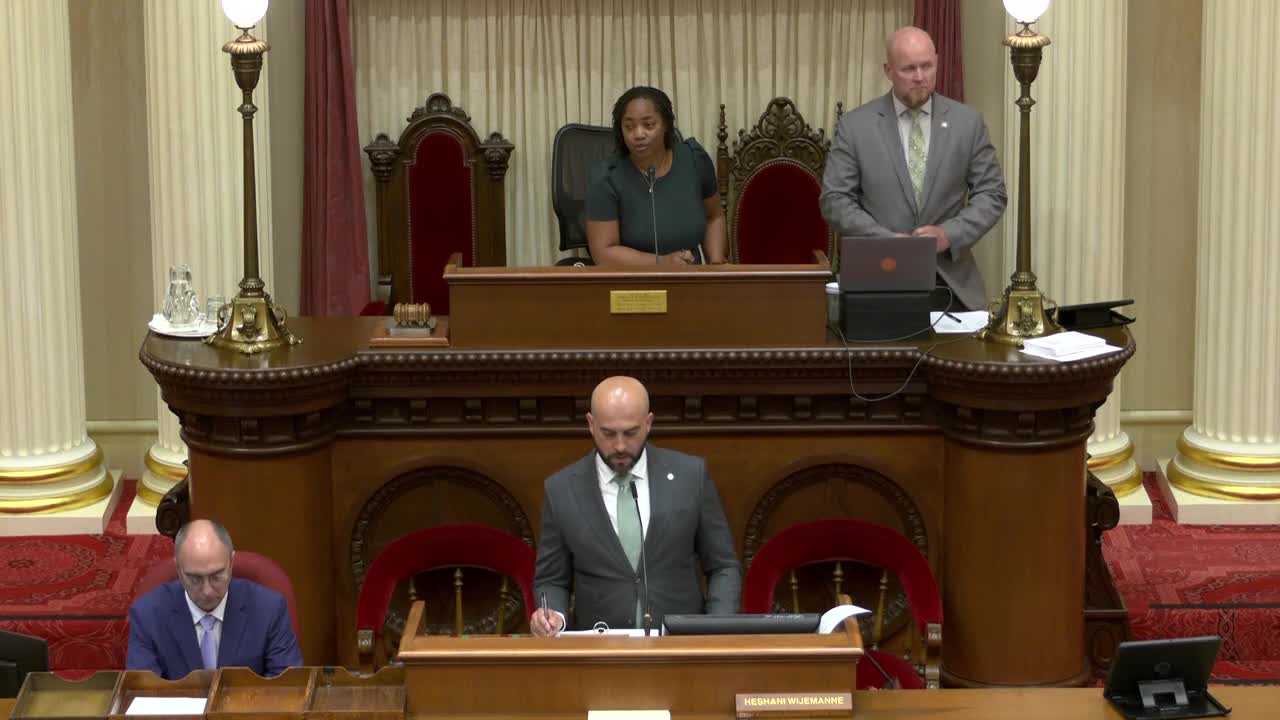 2MIN
Senate Floor
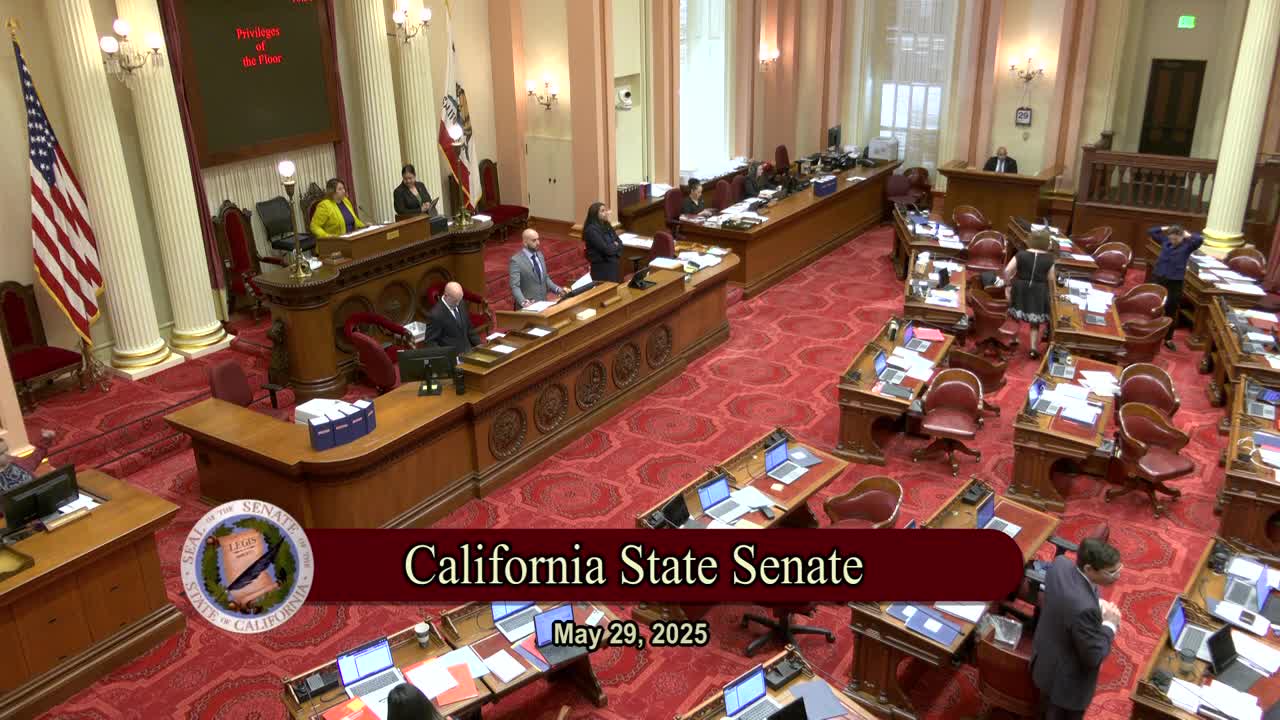 1MIN
Senate Floor
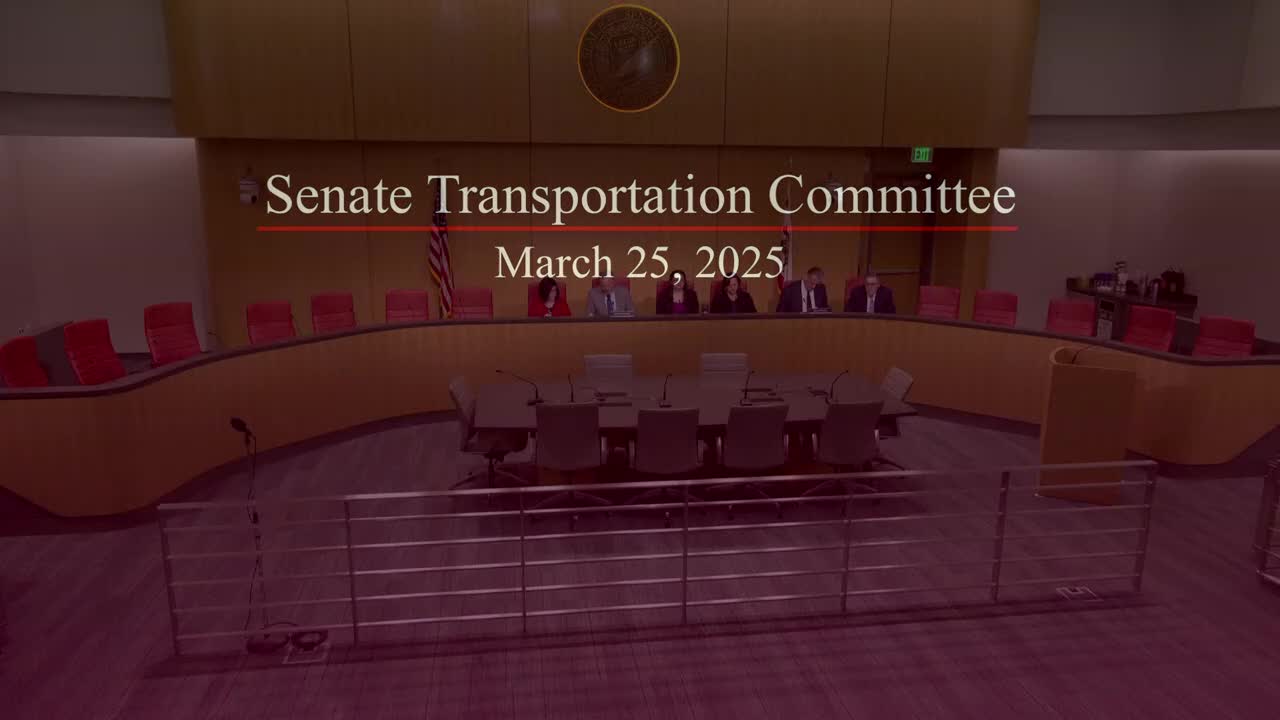 5MIN
Senate Standing Committee on Transportation
Bill Author

Bill Co-Author(s):