SB 758: Public health: nitrous oxide.
- Session Year: 2025-2026
- House: Senate
- Latest Version Date: 2026-09-30
Current Status:
Passed
(2026-09-30: Chaptered by Secretary of State. Chapter 979, Statutes of 2026.)
Introduced
In Committee
Awaiting First Chamber Vote
Passed First Chamber
In Committee
Awaiting Second Chamber Vote
Passed Second Chamber
Enacted
(1)Existing law, the Cigarette and Tobacco Products Licensing Act of 2003, requires a retailer, as defined, to hold a license from the California Department of Tax and Fee Administration to engage in the sale of cigarettes or tobacco products. A violation of these provisions is a misdemeanor.
This bill would expand those provisions to prohibit a retailer from selling nitrous oxide in any retail location, subject to certain exceptions. The bill would authorize a city or county or city and county to adopt an ordinance imposing greater restrictions on the retail sale of nitrous oxide provided the ordinance does not restrict legitimate uses, as specified.
(2)By expanding the definition of an existing crime, this bill would impose a state-mandated local program.
The California Constitution requires the state to reimburse local agencies and school districts for certain costs mandated by the state. Statutory provisions establish procedures for making that reimbursement.
This bill would provide that no reimbursement is required by this act for a specified reason.
(1)Existing law, the Cigarette and Tobacco Products Licensing Act of 2003, requires a retailer, as defined, to hold a license from the California Department of Tax and Fee Administration to engage in the sale of cigarettes or tobacco products. A violation of these provisions is a misdemeanor.
This bill would expand those provisions to prohibit a retailer from selling nitrous oxide in any retail location, subject to certain exceptions.
(2)Existing law categorizes certain drugs and other substances as controlled substances and prohibits various actions related to those substances, including their manufacture, transportation, sale, possession, and ingestion.This bill would make the sale or distribution of a product containing 7-hydroxymitragynine, except as it naturally occurs in the plant Mitragyna speciosa, a misdemeanor. (3)(2)By creating a new crime, and by expanding the definition of an existing crime, this bill would impose a state-mandated local program.
The California Constitution requires the state to reimburse local agencies and school districts for certain costs mandated by the state. Statutory provisions establish procedures for making that reimbursement.
This bill would provide that no reimbursement is required by this act for a specified reason.
(1)Existing law, the Cigarette and Tobacco Products Licensing Act of 2003, requires a retailer, as defined, to hold a license from the California Department of Tax and Fee Administration to engage in the sale of cigarettes or tobacco products. A violation of these provisions is a misdemeanor.
This bill would expand those provisions to prohibit a retailer from selling nitrous oxide in any retail location. location, subject to certain exceptions.
(2)Existing law, the California Uniform Controlled Substances Act, classifies controlled substances into 5 designated schedules, with the most restrictive limitations generally placed on controlled substances classified in Schedule I, and the least restrictive limitations generally placed on controlled substances classified in Schedule V. Existing law places various criminal sanctions on the sale, distribution, and possession of specified controlled substances.This bill would place 7-hydroxymitragynine on Schedule I, except as it naturally occurs in the plant Mitragyna speciosa.(2)Existing law categorizes certain drugs and other substances as controlled substances and prohibits various actions related to those substances, including their manufacture, transportation, sale, possession, and ingestion.
This bill would make the sale or distribution of a product containing 7-hydroxymitragynine, except as it naturally occurs in the plant Mitragyna speciosa, a misdemeanor.
(3)By creating a new crime, and by expanding the definition of an existing crime, this bill would impose a state-mandated local program.
The California Constitution requires the state to reimburse local agencies and school districts for certain costs mandated by the state. Statutory provisions establish procedures for making that reimbursement.
This bill would provide that no reimbursement is required by this act for a specified reason.
(1)Existing law, the Cigarette and Tobacco Products Licensing Act of 2003, requires a retailer, as defined, to hold a license from the California Department of Tax and Fee Administration to engage in the sale of cigarettes or tobacco products. A violation of these provisions is a misdemeanor.
This bill would expand those provisions to prohibit a retailer from selling nitrous oxide in any retail location.
(2)Existing law, the California Uniform Controlled Substances Act, classifies controlled substances into 5 designated schedules, with the most restrictive limitations generally placed on controlled substances classified in Schedule I, and the least restrictive limitations generally placed on controlled substances classified in Schedule V. Existing law places various criminal sanctions on the sale, distribution, and possession of specified controlled substances.
This bill would place 7-hydroxymitragynine on Schedule I, except as it naturally occurs in the plant Mitragyna speciosa.
(3)By creating a new crime, and by expanding the definition of an existing crime, this bill would impose a state-mandated local program.
The California Constitution requires the state to reimburse local agencies and school districts for certain costs mandated by the state. Statutory provisions establish procedures for making that reimbursement.
This bill would provide that no reimbursement is required by this act for a specified reason.
Existing law provides for the exclusion of a prospective juror from a trial jury by peremptory challenge. Existing law prohibits a party from using a peremptory challenge to remove a prospective juror on the basis of an assumption that the prospective juror is biased merely because of the sex, race, color, religion, ancestry, national origin, ethnic group identification, age, mental disability, physical disability, medical condition, genetic information, marital status, or sexual orientation of the prospective juror, or on similar grounds. Under existing law, a peremptory challenge for specified reasons, including a prospective juror expressing a distrust of or having a negative experience with law enforcement or the criminal legal system, expressing a belief that law enforcement officers engage in racial profiling or that criminal laws have been enforced in a discriminatory manner, or having a close relationship with people who have been stopped, arrested, or convicted of a crime, are presumed to be invalid unless the party exercising the peremptory challenge meets specified requirements.This bill would, in cases where a law enforcement officer is a defendant or alleged victim, remove the presumption of invalidity for a peremptory challenge for a prospective jurors expressing a distrust of or having a negative experience with law enforcement or the criminal legal system, expressing a belief that law enforcement officers engage in racial profiling or that criminal laws have been enforced in a discriminatory manner, or having a close relationship with people who have been stopped, arrested, or convicted of a crime.Existing law provides for the exclusion of a prospective juror from a trial jury by peremptory challenge. Existing law prohibits a party from using a peremptory challenge to remove a prospective juror on the basis of an assumption that the prospective juror is biased merely because of the sex, race, color, religion, ancestry, national origin, ethnic group identification, age, mental disability, physical disability, medical condition, genetic information, marital status, or sexual orientation of the prospective juror, or on similar grounds. Under existing law, a peremptory challenge for specified reasons, including a prospective juror expressing a distrust of or having a negative experience with law enforcement or the criminal legal system, expressing a belief that law enforcement officers engage in racial profiling or that criminal laws have been enforced in a discriminatory manner, or having a close relationship with people who have been stopped, arrested, or convicted of a crime, are presumed to be invalid unless the party exercising the peremptory challenge meets specified requirements.
This bill would, in cases where a law enforcement officer is a defendant or alleged victim, remove the presumption of invalidity for a peremptory challenge for a prospective jurors expressing a distrust of or having a negative experience with law enforcement or the criminal legal system, expressing a belief that law enforcement officers engage in racial profiling or that criminal laws have been enforced in a discriminatory manner, or having a close relationship with people who have been stopped, arrested, or convicted of a crime.
(a)A retailer shall not sell nitrous oxide, as defined in Section 381c of the Penal Code, at a retail location. For purposes of this section, a retailer does not include a grocery store or a general retail merchandise store with a grocery department, as defined in Section 7100 of the Civil Code, except that a retailer includes a convenience store.
(b)A city or county, or city and county, may adopt an ordinance imposing greater restrictions on the retail sale of nitrous oxide than those imposed by this section provided that the ordinance does not restrict legitimate uses, including, but not limited to, medical, dentistry, food preparation, industrial, manufacturing, and automotive services.
SEC. 2.No reimbursement is required by this act pursuant to Section 6 of Article XIIIB of the California Constitution because the only costs that may be incurred by a local agency or school district will be incurred because this act creates a new crime or infraction, eliminates a crime or infraction, or changes the penalty for a crime or infraction, within the meaning of Section 17556 of the Government Code, or changes the definition of a crime within the meaning of Section 6 of Article XIIIB of the California Constitution.
(a)A retailer shall not sell nitrous oxide, as defined in Section 381c of the Penal Code, at a retail location. For purposes of this section, a retailer does not include a grocery store or a general retail merchandise store with a grocery department, as defined in Section 7100 of the Civil Code. Code, except that a retailer includes a convenience store.
(b)A city or county, or city and county, may adopt an ordinance imposing greater restrictions on the retail sale of nitrous oxide than those imposed by this section provided that the ordinance does not restrict legitimate uses, including, but not limited to, dentistry, food preparation, and automotive services.
SEC. 2.No reimbursement is required by this act pursuant to Section 6 of Article XIIIB of the California Constitution because the only costs that may be incurred by a local agency or school district will be incurred because this act creates a new crime or infraction, eliminates a crime or infraction, or changes the penalty for a crime or infraction, within the meaning of Section 17556 of the Government Code, or changes the definition of a crime within the meaning of Section 6 of Article XIIIB of the California Constitution.
A retailer shall not sell nitrous oxide, as defined in Section 381c of the Penal Code, at a retail location. For purposes of this section, a retailer does not include a grocery store or a general retail merchandise store with a grocery department, as defined in Section 7100 of the Civil Code.
SEC. 2.Section 11364.1 is added to the Health and Safety Code, to read:11364.1.Every person who sells or distributes a product containing 7-hydroxymitragynine, except as it naturally occurs in the plant Mitragyna speciosa, is guilty of a misdemeanor.SEC. 3.SEC. 2.No reimbursement is required by this act pursuant to Section 6 of Article XIIIB of the California Constitution because the only costs that may be incurred by a local agency or school district will be incurred because this act creates a new crime or infraction, eliminates a crime or infraction, or changes the penalty for a crime or infraction, within the meaning of Section 17556 of the Government Code, or changes the definition of a crime within the meaning of Section 6 of Article XIIIB of the California Constitution.
REVISIONS: HeadingLine 2.A retailer shall not sell nitrous oxide oxide, as defined in Section 381c of the Penal Code, at a retail location. For purposes of this section, a retailer does not include a grocery store or a general retail merchandise store with a grocery department, as defined in Section 7100 of the Civil Code.
SEC. 2.Section 11054 of the Health and Safety Code is amended to read:11054.(a)The controlled substances listed in this section are included in Schedule I.(b)Opiates. Unless specifically excepted or unless listed in another schedule, any of the following opiates, including their isomers, esters, ethers, salts, and salts of isomers, esters, and ethers whenever the existence of those isomers, esters, ethers, and salts is possible within the specific chemical designation:(1)Acetylmethadol.(2)Allylprodine.(3)Alphacetylmethadol (except levoalphacetylmethadol, also known as levo-alpha- acetylmethadol, levomethadyl acetate, or LAAM).(4)Alphameprodine.(5)Alphamethadol.(6)Benzethidine.(7)Betacetylmethadol.(8)Betameprodine.(9)Betamethadol.(10)Betaprodine.(11)Clonitazene.(12)Dextromoramide.(13)Diampromide.(14)Diethylthiambutene.(15)Difenoxin.(16)Dimenoxadol.(17)Dimepheptanol.(18)Dimethylthiambutene.(19)Dioxaphetyl butyrate.(20)Dipipanone.(21)Ethylmethylthiambutene.(22)Etonitazene.(23)Etoxeridine.(24)Furethidine.(25)Hydroxypethidine.(26)Ketobemidone.(27)Levomoramide.(28)Levophenacylmorphan.(29)Morpheridine.(30)Noracymethadol.(31)Norlevorphanol.(32)Normethadone.(33)Norpipanone.(34)Phenadoxone.(35)Phenampromide.(36)Phenomorphan.(37)Phenoperidine.(38)Piritramide.(39)Proheptazine.(40)Properidine.(41)Propiram.(42)Racemoramide.(43)Tilidine.(44)Trimeperidine.(45)Any substance which contains any quantity of acetylfentanyl (N-[1-phenethyl-4-piperidinyl] acetanilide) or a derivative thereof.(46)Any substance which contains any quantity of the thiophene analog of acetylfentanyl (N-[1-[2-(2-thienyl)ethyl]-4-piperidinyl] acetanilide) or a derivative thereof.(47)1-Methyl-4-Phenyl-4-Propionoxypiperidine (MPPP).(48)1-(2-Phenethyl)-4-Phenyl-4-Acetyloxypiperidine (PEPAP).(c)Opium derivatives. Unless specifically excepted or unless listed in another schedule, any of the following opium derivatives, its salts, isomers, and salts of isomers whenever the existence of those salts, isomers, and salts of isomers is possible within the specific chemical designation:(1)Acetorphine.(2)Acetyldihydrocodeine.(3)Benzylmorphine.(4)Codeine methylbromide.(5)Codeine-N-Oxide.(6)Cyprenorphine.(7)Desomorphine.(8)Dihydromorphine.(9)Drotebanol.(10)Etorphine (except hydrochloride salt).(11)Heroin.(12)Hydromorphinol.(13)Methyldesorphine.(14)Methyldihydromorphine.(15)Morphine methylbromide.(16)Morphine methylsulfonate.(17)Morphine-N-Oxide.(18)Myrophine.(19)Nicocodeine.(20)Nicomorphine.(21)Normorphine.(22)Pholcodine.(23)Thebacon.(d)Hallucinogenic substances. Unless specifically excepted or unless listed in another schedule, any material, compound, mixture, or preparation, which contains any quantity of the following hallucinogenic substances, or which contains any of its salts, isomers, and salts of isomers whenever the existence of those salts, isomers, and salts of isomers is possible within the specific chemical designation (for purposes of this subdivision only, the term isomer includes the optical, position, and geometric isomers):(1)4-bromo-2,5-dimethoxy-amphetamineSome trade or other names: 4-bromo-2,5-dimethoxy-alpha-methylphenethylamine; 4-bromo-2,5-DMA.(2)2,5-dimethoxyamphetamineSome trade or other names: 2,5-dimethoxy-alpha-methylphenethylamine; 2,5-DMA.(3)4-methoxyamphetamineSome trade or other names: 4-methoxy-alpha-methylphenethylamine, paramethoxyamphetamine, PMA.(4)5-methoxy-3,4-methylenedioxy-amphetamine.(5)4-methyl-2,5-dimethoxy-amphetamineSome trade or other names: 4-methyl-2,5-dimethoxy-alpha-methylphenethylamine; DOM; and STP.(6)3,4-methylenedioxy amphetamine.(7)3,4,5-trimethoxy amphetamine.(8)BufotenineSome trade or other names: 3-(beta-dimethylaminoethyl)-5-hydroxyindole; 3-(2-dimethylaminoethyl)-5 indolol; N,N-dimethylserolonin, 5-hydroxy-N,N-dimethyltryptamine; mappine.(9)DiethyltryptamineSome trade or other names: N,N-Diethyltryptamine; DET.(10)DimethyltryptamineSome trade or other names: DMT.(11)IbogaineSome trade or other names: 7-Ethyl-6,6beta, 7,8,9,10,12,13-octahydro-2-methoxy-6,9-methano-5H-pyrido [1,2:1,2] azepino [5,4-b] indole; Tabernantheiboga.(12)Lysergic acid diethylamide.(13)Cannabis.(14)Mescaline.(15)PeyoteMeaning all parts of the plant presently classified botanically as Lophophora williamsii Lemaire, whether growing or not, the seeds thereof, any extract from any part of the plant, and every compound, manufacture, salts, derivative, mixture, or preparation of the plant, its seeds or extracts (interprets 21 U.S.C. Sec. 812(c), Schedule 1(c)(12)).(16)N-ethyl-3-piperidyl benzilate.(17)N-methyl-3-piperidyl benzilate.(18)Psilocybin.(19)Psilocyn.(20)Tetrahydrocannabinols. Synthetic equivalents of the substances contained in the plant, or in the resinous extractives of Cannabis, sp. and/or synthetic substances, derivatives, and their isomers with similar chemical structure and pharmacological activity such as the following: delta 1 cis or trans tetrahydrocannabinol, and their optical isomers; delta 6 cis or trans tetrahydrocannabinol, and their optical isomers; delta 3,4 cis or trans tetrahydrocannabinol, and its optical isomers.Because nomenclature of these substances is not internationally standardized, compounds of these structures, regardless of numerical designation of atomic positions covered.(21)Ethylamine analog of phencyclidineSome trade or other names: N-ethyl-1-phenylcyclohexylamine, (1-phenylcyclohexyl) ethylamine, N-(1-phenylcyclohexyl) ethylamine, cyclohexamine, PCE.(22)Pyrrolidine analog of phencyclidineSome trade or other names: 1-(1-phenylcyclohexyl)-pyrrolidine, PCP, PHP.(23)Thiophene analog of phencyclidineSome trade or other names: 1-[1-(2 thienyl)-cyclohexyl]-piperidine, 2-thienyl analog of phencyclidine, TPCP, TCP.(e)Depressants. Unless specifically excepted or unless listed in another schedule, any material, compound, mixture, or preparation which contains any quantity of the following substances having a depressant effect on the central nervous system, including its salts, isomers, and salts of isomers whenever the existence of those salts, isomers, and salts of isomers is possible within the specific chemical designation:(1)Mecloqualone.(2)Methaqualone.(3)Gamma hydroxybutyric acid (also known by other names such as GHB; gamma hydroxy butyrate; 4-hydroxybutyrate; 4-hydroxybutanoic acid; sodium oxybate; sodium oxybutyrate), including its immediate precursors, isomers, esters, ethers, salts, and salts of isomers, esters, and ethers, including, but not limited to, gammabutyrolactone, for which an application has not been approved under Section 505 of the Federal Food, Drug, and Cosmetic Act (21 U.S.C. Sec. 355).(f)Unless specifically excepted or unless listed in another schedule, any material, compound, mixture, or preparation which contains any quantity of the following substances having a stimulant effect on the central nervous system, including its isomers:(1)Cocaine base.(2)Fenethylline, including its salts.(3)N-Ethylamphetamine, including its salts.(g)7-hydroxymitragynine, except as it naturally occurs in the plant Mitragyna speciosa.SEC. 2.Section 11364.1 is added to the Health and Safety Code, to read:11364.1.Every person who sells or distributes a product containing 7-hydroxymitragynine, except as it naturally occurs in the plant Mitragyna speciosa, is guilty of a misdemeanor.
SEC. 3.No reimbursement is required by this act pursuant to Section 6 of Article XIIIB of the California Constitution because the only costs that may be incurred by a local agency or school district will be incurred because this act creates a new crime or infraction, eliminates a crime or infraction, or changes the penalty for a crime or infraction, within the meaning of Section 17556 of the Government Code, or changes the definition of a crime within the meaning of Section 6 of Article XIIIB of the California Constitution.
A retailer shall not sell nitrous oxide at a retail location.
SEC. 2.Section 11054 of the Health and Safety Code is amended to read:11054.(a)The controlled substances listed in this section are included in Schedule I.
(b)Opiates. Unless specifically excepted or unless listed in another schedule, any of the following opiates, including their isomers, esters, ethers, salts, and salts of isomers, esters, and ethers whenever the existence of those isomers, esters, ethers, and salts is possible within the specific chemical designation:
(1)Acetylmethadol.
(2)Allylprodine.
(3)Alphacetylmethadol (except levoalphacetylmethadol, also known as levo-alpha- acetylmethadol, levomethadyl acetate, or LAAM).
(4)Alphameprodine.
(5)Alphamethadol.
(6)Benzethidine.
(7)Betacetylmethadol.
(8)Betameprodine.
(9)Betamethadol.
(10)Betaprodine.
(11)Clonitazene.
(12)Dextromoramide.
(13)Diampromide.
(14)Diethylthiambutene.
(15)Difenoxin.
(16)Dimenoxadol.
(17)Dimepheptanol.
(18)Dimethylthiambutene.
(19)Dioxaphetyl butyrate.
(20)Dipipanone.
(21)Ethylmethylthiambutene.
(22)Etonitazene.
(23)Etoxeridine.
(24)Furethidine.
(25)Hydroxypethidine.
(26)Ketobemidone.
(27)Levomoramide.
(28)Levophenacylmorphan.
(29)Morpheridine.
(30)Noracymethadol.
(31)Norlevorphanol.
(32)Normethadone.
(33)Norpipanone.
(34)Phenadoxone.
(35)Phenampromide.
(36)Phenomorphan.
(37)Phenoperidine.
(38)Piritramide.
(39)Proheptazine.
(40)Properidine.
(41)Propiram.
(42)Racemoramide.
(43)Tilidine.
(44)Trimeperidine.
(45)Any substance which contains any quantity of acetylfentanyl (N-[1-phenethyl-4-piperidinyl] acetanilide) or a derivative thereof.
(46)Any substance which contains any quantity of the thiophene analog of acetylfentanyl (N-[1-[2-(2-thienyl)ethyl]-4-piperidinyl] acetanilide) or a derivative thereof.
(47)1-Methyl-4-Phenyl-4-Propionoxypiperidine (MPPP).
(48)1-(2-Phenethyl)-4-Phenyl-4-Acetyloxypiperidine (PEPAP).
(c)Opium derivatives. Unless specifically excepted or unless listed in another schedule, any of the following opium derivatives, its salts, isomers, and salts of isomers whenever the existence of those salts, isomers, and salts of isomers is possible within the specific chemical designation:
(1)Acetorphine.
(2)Acetyldihydrocodeine.
(3)Benzylmorphine.
(4)Codeine methylbromide.
(5)Codeine-N-Oxide.
(6)Cyprenorphine.
(7)Desomorphine.
(8)Dihydromorphine.
(9)Drotebanol.
(10)Etorphine (except hydrochloride salt).
(11)Heroin.
(12)Hydromorphinol.
(13)Methyldesorphine.
(14)Methyldihydromorphine.
(15)Morphine methylbromide.
(16)Morphine methylsulfonate.
(17)Morphine-N-Oxide.
(18)Myrophine.
(19)Nicocodeine.
(20)Nicomorphine.
(21)Normorphine.
(22)Pholcodine.
(23)Thebacon.
(d)Hallucinogenic substances. Unless specifically excepted or unless listed in another schedule, any material, compound, mixture, or preparation, which contains any quantity of the following hallucinogenic substances, or which contains any of its salts, isomers, and salts of isomers whenever the existence of those salts, isomers, and salts of isomers is possible within the specific chemical designation (for purposes of this subdivision only, the term isomer includes the optical, position, and geometric isomers):
(1)4-bromo-2,5-dimethoxy-amphetamineSome trade or other names: 4-bromo-2,5-dimethoxy-alpha-methylphenethylamine; 4-bromo-2,5-DMA.
(2)2,5-dimethoxyamphetamineSome trade or other names: 2,5-dimethoxy-alpha-methylphenethylamine; 2,5-DMA.
(3)4-methoxyamphetamineSome trade or other names: 4-methoxy-alpha-methylphenethylamine, paramethoxyamphetamine, PMA.
(4)5-methoxy-3,4-methylenedioxy-amphetamine.
(5)4-methyl-2,5-dimethoxy-amphetamineSome trade or other names: 4-methyl-2,5-dimethoxy-alpha-methylphenethylamine; DOM; and STP.
(6)3,4-methylenedioxy amphetamine.
(7)3,4,5-trimethoxy amphetamine.
(8)BufotenineSome trade or other names: 3-(beta-dimethylaminoethyl)-5-hydroxyindole; 3-(2-dimethylaminoethyl)-5 indolol; N,N-dimethylserolonin, 5-hydroxy-N,N-dimethyltryptamine; mappine.
(9)DiethyltryptamineSome trade or other names: N,N-Diethyltryptamine; DET.
(10)DimethyltryptamineSome trade or other names: DMT.
(11)IbogaineSome trade or other names: 7-Ethyl-6,6beta, 7,8,9,10,12,13-octahydro-2-methoxy-6,9-methano-5H-pyrido [1,2:1,2] azepino [5,4-b] indole; Tabernantheiboga.
(12)Lysergic acid diethylamide.
(13)Cannabis.
(14)Mescaline.
(15)PeyoteMeaning all parts of the plant presently classified botanically as Lophophora williamsii Lemaire, whether growing or not, the seeds thereof, any extract from any part of the plant, and every compound, manufacture, salts, derivative, mixture, or preparation of the plant, its seeds or extracts (interprets 21 U.S.C. Sec. 812(c), Schedule 1(c)(12)).
(16)N-ethyl-3-piperidyl benzilate.
(17)N-methyl-3-piperidyl benzilate.
(18)Psilocybin.
(19)Psilocyn.
(20)Tetrahydrocannabinols. Synthetic equivalents of the substances contained in the plant, or in the resinous extractives of Cannabis, sp. and/or synthetic substances, derivatives, and their isomers with similar chemical structure and pharmacological activity such as the following: delta 1 cis or trans tetrahydrocannabinol, and their optical isomers; delta 6 cis or trans tetrahydrocannabinol, and their optical isomers; delta 3,4 cis or trans tetrahydrocannabinol, and its optical isomers.
Because nomenclature of these substances is not internationally standardized, compounds of these structures, regardless of numerical designation of atomic positions covered.
(21)Ethylamine analog of phencyclidineSome trade or other names: N-ethyl-1-phenylcyclohexylamine, (1-phenylcyclohexyl) ethylamine, N-(1-phenylcyclohexyl) ethylamine, cyclohexamine, PCE.
(22)Pyrrolidine analog of phencyclidineSome trade or other names: 1-(1-phenylcyclohexyl)-pyrrolidine, PCP, PHP.
(23)Thiophene analog of phencyclidineSome trade or other names: 1-[1-(2 thienyl)-cyclohexyl]-piperidine, 2-thienyl analog of phencyclidine, TPCP, TCP.
(e)Depressants. Unless specifically excepted or unless listed in another schedule, any material, compound, mixture, or preparation which contains any quantity of the following substances having a depressant effect on the central nervous system, including its salts, isomers, and salts of isomers whenever the existence of those salts, isomers, and salts of isomers is possible within the specific chemical designation:
(1)Mecloqualone.
(2)Methaqualone.
(3)Gamma hydroxybutyric acid (also known by other names such as GHB; gamma hydroxy butyrate; 4-hydroxybutyrate; 4-hydroxybutanoic acid; sodium oxybate; sodium oxybutyrate), including its immediate precursors, isomers, esters, ethers, salts, and salts of isomers, esters, and ethers, including, but not limited to, gammabutyrolactone, for which an application has not been approved under Section 505 of the Federal Food, Drug, and Cosmetic Act (21 U.S.C. Sec. 355).
(f)Unless specifically excepted or unless listed in another schedule, any material, compound, mixture, or preparation which contains any quantity of the following substances having a stimulant effect on the central nervous system, including its isomers:
(1)Cocaine base.
(2)Fenethylline, including its salts.
(3)N-Ethylamphetamine, including its salts.
(g)7-hydroxymitragynine, except as it naturally occurs in the plant Mitragyna speciosa.
SEC. 3.No reimbursement is required by this act pursuant to Section 6 of Article XIIIB of the California Constitution because the only costs that may be incurred by a local agency or school district will be incurred because this act creates a new crime or infraction, eliminates a crime or infraction, or changes the penalty for a crime or infraction, within the meaning of Section 17556 of the Government Code, or changes the definition of a crime within the meaning of Section 6 of Article XIIIB of the California Constitution.
All matter omitted in this version of the bill appears in the bill as introduced in the Senate, February 21, 2025. (JR11)(a)A party shall not use a peremptory challenge to remove a prospective juror on the basis of the prospective jurors race, ethnicity, gender, gender identity, sexual orientation, national origin, or religious affiliation, or the perceived membership of the prospective juror in any of those groups.
(b)A party, or the trial court on its own motion, may object to the improper use of a peremptory challenge under subdivision (a). After the objection is made, any further discussion shall be conducted outside the presence of the panel. The objection shall be made before the jury is impaneled, unless information becomes known that could not have reasonably been known before the jury was impaneled.
(c)Notwithstanding Section 226, upon objection to the exercise of a peremptory challenge pursuant to this section, the party exercising the peremptory challenge shall state the reasons the peremptory challenge has been exercised.
(d)(1)The court shall evaluate the reasons given to justify the peremptory challenge in light of the totality of the circumstances. The court shall consider only the reasons actually given and shall not speculate on, or assume the existence of, other possible justifications for the use of the peremptory challenge. If the court determines there is a substantial likelihood that an objectively reasonable person would view race, ethnicity, gender, gender identity, sexual orientation, national origin, or religious affiliation, or perceived membership in any of those groups, as a factor in the use of the peremptory challenge, then the objection shall be sustained. The court need not find purposeful discrimination to sustain the objection. The court shall explain the reasons for its ruling on the record. A motion brought under this section shall also be deemed a sufficient presentation of claims asserting the discriminatory exclusion of jurors in violation of the United States and California Constitutions.
(2)(A)For purposes of this section, an objectively reasonable person is aware that unconscious bias, in addition to purposeful discrimination, have resulted in the unfair exclusion of potential jurors in the State of California.
(B)For purposes of this section, a substantial likelihood means more than a mere possibility but less than a standard of more likely than not.
(C)For purposes of this section, unconscious bias includes implicit and institutional biases.
(3)In making its determination, the circumstances the court may consider include, but are not limited to, any of the following:
(A)Whether any of the following circumstances exist:
(i)The objecting party is a member of the same perceived cognizable group as the challenged juror.
(ii)The alleged victim is not a member of that perceived cognizable group.
(iii)Witnesses or the parties are not members of that perceived cognizable group.
(B)Whether race, ethnicity, gender, gender identity, sexual orientation, national origin, or religious affiliation, or perceived membership in any of those groups, bear on the facts of the case to be tried.
(C)The number and types of questions posed to the prospective juror, including, but not limited to, any the following:
(i)Consideration of whether the party exercising the peremptory challenge failed to question the prospective juror about the concerns later stated by the party as the reason for the peremptory challenge pursuant to subdivision (c).
(ii)Whether the party exercising the peremptory challenge engaged in cursory questioning of the challenged potential juror.
(iii)Whether the party exercising the peremptory challenge asked different questions of the potential juror against whom the peremptory challenge was used in contrast to questions asked of other jurors from different perceived cognizable groups about the same topic or whether the party phrased those questions differently.
(D)Whether other prospective jurors, who are not members of the same cognizable group as the challenged prospective juror, provided similar, but not necessarily identical, answers but were not the subject of a peremptory challenge by that party.
(E)Whether a reason might be disproportionately associated with a race, ethnicity, gender, gender identity, sexual orientation, national origin, or religious affiliation, or perceived membership in any of those groups.
(F)Whether the reason given by the party exercising the peremptory challenge was contrary to or unsupported by the record.
(G)Whether the counsel or counsels office exercising the challenge has used peremptory challenges disproportionately against a given race, ethnicity, gender, gender identity, sexual orientation, national origin, or religious affiliation, or perceived membership in any of those groups, in the present case or in past cases, including whether the counsel or counsels office who made the challenge has a history of prior violations under Batson v. Kentucky (1986) 476 U.S. 79, People v. Wheeler (1978) 22 Cal.3d 258, Section 231.5, or this section.
(e)A peremptory challenge for any of the following reasons is presumed to be invalid unless the party exercising the peremptory challenge can show by clear and convincing evidence that an objectively reasonable person would view the rationale as unrelated to a prospective jurors race, ethnicity, gender, gender identity, sexual orientation, national origin, or religious affiliation, or perceived membership in any of those groups, and that the reasons articulated bear on the prospective jurors ability to be fair and impartial in the case:
(1)Expressing Except in cases where a law enforcement officer is the defendant or an alleged victim, expressing a distrust of or having a negative experience with law enforcement or the criminal legal system.
(2)Expressing Except in cases where a law enforcement officer is the defendant or an alleged victim, expressing a belief that law enforcement officers engage in racial profiling or that criminal laws have been enforced in a discriminatory manner.
(3)Having Except in cases where a law enforcement officer is the defendant or an alleged victim, having a close relationship with people who have been stopped, arrested, or convicted of a crime.
(4)A prospective jurors neighborhood.
(5)Having a child outside of marriage.
(6)Receiving state benefits.
(7)Not being a native English speaker.
(8)The ability to speak another language.
(9)Dress, attire, or personal appearance.
(10)Employment in a field that is disproportionately occupied by members listed in subdivision (a) or that serves a population disproportionately comprised of members of a group or groups listed in subdivision (a).
(11)Lack of employment or underemployment of the prospective juror or prospective jurors family member.
(12)A prospective jurors apparent friendliness with another prospective juror of the same group as listed in subdivision (a).
(13)Any justification that is similarly applicable to a questioned prospective juror or jurors, who are not members of the same cognizable group as the challenged prospective juror, but were not the subject of a peremptory challenge by that party. The unchallenged prospective juror or jurors need not share any other characteristics with the challenged prospective juror for peremptory challenge relying on this justification to be considered presumptively invalid.
(f)For purposes of subdivision (e), the term clear and convincing refers to the degree of certainty the factfinder must have in determining whether the reasons given for the exercise of a peremptory challenge are unrelated to the prospective jurors cognizable group membership, bearing in mind conscious and unconscious bias. To determine that a presumption of invalidity has been overcome, the factfinder shall determine that it is highly probable that the reasons given for the exercise of a peremptory challenge are unrelated to conscious or unconscious bias and are instead specific to the juror and bear on that jurors ability to be fair and impartial in the case.
(g)(1)The following reasons for peremptory challenges have historically been associated with improper discrimination in jury selection:
(A)The prospective juror was inattentive, or staring or failing to make eye contact.
(B)The prospective juror exhibited either a lack of rapport or problematic attitude, body language, or demeanor.
(C)The prospective juror provided unintelligent or confused answers.
(2)The reasons set forth in paragraph (1) are presumptively invalid unless the trial court is able to confirm that the asserted behavior occurred, based on the courts own observations or the observations of counsel for the objecting party. Even with that confirmation, the counsel offering the reason shall explain why the asserted demeanor, behavior, or manner in which the prospective juror answered questions matters to the case to be tried.
(h)Upon a court granting an objection to the improper exercise of a peremptory challenge, the court shall do one or more of the following:
(1)Quash the jury venire and start jury selection anew. This remedy shall be provided if requested by the objecting party.
(2)If the motion is granted after the jury has been impaneled, declare a mistrial and select a new jury if requested by the defendant.
(3)Seat the challenged juror.
(4)Provide the objecting party additional challenges.
(5)Provide another remedy as the court deems appropriate.
(i)This section applies in all jury trials in which jury selection begins on or after January 1, 2022.
(j)The denial of an objection made under this section shall be reviewed by the appellate court de novo, with the trial courts express factual findings reviewed for substantial evidence. The appellate court shall not impute to the trial court any findings, including findings of a prospective jurors demeanor, that the trial court did not expressly state on the record. The reviewing court shall consider only reasons actually given under subdivision (c) and shall not speculate as to or consider reasons that were not given to explain either the partys use of the peremptory challenge or the partys failure to challenge similarly situated jurors who are not members of the same cognizable group as the challenged juror, regardless of whether the moving party made a comparative analysis argument in the trial court. Should the appellate court determine that the objection was erroneously denied, that error shall be deemed prejudicial, the judgment shall be reversed, and the case remanded for a new trial.
(k)This section shall not apply to civil cases.
(l)It is the intent of the Legislature that enactment of this section shall not, in purpose or effect, lower the standard for judging challenges for cause or expand use of challenges for cause.
(m)The provisions of this section are severable. If any provision of this section or its application is held invalid, that invalidity shall not affect other provisions or applications that can be given effect without the invalid provision or application.
(n)This section shall remain in effect only until January 1, 2026, and as of that date is repealed.
SEC. 2.Section 231.7 of the Code of Civil Procedure, as added by Section 3 of Chapter 318 of the Statutes of 2020, is amended to read:231.7.(a)A party shall not use a peremptory challenge to remove a prospective juror on the basis of the prospective jurors race, ethnicity, gender, gender identity, sexual orientation, national origin, or religious affiliation, or the perceived membership of the prospective juror in any of those groups.
(b)A party, or the trial court on its own motion, may object to the improper use of a peremptory challenge under subdivision (a). After the objection is made, any further discussion shall be conducted outside the presence of the panel. The objection shall be made before the jury is impaneled, unless information becomes known that could not have reasonably been known before the jury was impaneled.
(c)Notwithstanding Section 226, upon objection to the exercise of a peremptory challenge pursuant to this section, the party exercising the peremptory challenge shall state the reasons the peremptory challenge has been exercised.
(d)(1)The court shall evaluate the reasons given to justify the peremptory challenge in light of the totality of the circumstances. The court shall consider only the reasons actually given and shall not speculate on, or assume the existence of, other possible justifications for the use of the peremptory challenge. If the court determines there is a substantial likelihood that an objectively reasonable person would view race, ethnicity, gender, gender identity, sexual orientation, national origin, or religious affiliation, or perceived membership in any of those groups, as a factor in the use of the peremptory challenge, then the objection shall be sustained. The court need not find purposeful discrimination to sustain the objection. The court shall explain the reasons for its ruling on the record. A motion brought under this section shall also be deemed a sufficient presentation of claims asserting the discriminatory exclusion of jurors in violation of the United States and California Constitutions.
(2)(A)For purposes of this section, an objectively reasonable person is aware that unconscious bias, in addition to purposeful discrimination, have resulted in the unfair exclusion of potential jurors in the State of California.
(B)For purposes of this section, a substantial likelihood means more than a mere possibility but less than a standard of more likely than not.
(C)For purposes of this section, unconscious bias includes implicit and institutional biases.
(3)In making its determination, the circumstances the court may consider include, but are not limited to, any of the following:
(A)Whether any of the following circumstances exist:
(i)The objecting party is a member of the same perceived cognizable group as the challenged juror.
(ii)The alleged victim is not a member of that perceived cognizable group.
(iii)Witnesses or the parties are not members of that perceived cognizable group.
(B)Whether race, ethnicity, gender, gender identity, sexual orientation, national origin, or religious affiliation, or perceived membership in any of those groups, bear on the facts of the case to be tried.
(C)The number and types of questions posed to the prospective juror, including, but not limited to, any the following:
(i)Consideration of whether the party exercising the peremptory challenge failed to question the prospective juror about the concerns later stated by the party as the reason for the peremptory challenge pursuant to subdivision (c).
(ii)Whether the party exercising the peremptory challenge engaged in cursory questioning of the challenged potential juror.
(iii)Whether the party exercising the peremptory challenge asked different questions of the potential juror against whom the peremptory challenge was used in contrast to questions asked of other jurors from different perceived cognizable groups about the same topic or whether the party phrased those questions differently.
(D)Whether other prospective jurors, who are not members of the same cognizable group as the challenged prospective juror, provided similar, but not necessarily identical, answers but were not the subject of a peremptory challenge by that party.
(E)Whether a reason might be disproportionately associated with a race, ethnicity, gender, gender identity, sexual orientation, national origin, or religious affiliation, or perceived membership in any of those groups.
(F)Whether the reason given by the party exercising the peremptory challenge was contrary to or unsupported by the record.
(G)Whether the counsel or counsels office exercising the challenge has used peremptory challenges disproportionately against a given race, ethnicity, gender, gender identity, sexual orientation, national origin, or religious affiliation, or perceived membership in any of those groups, in the present case or in past cases, including whether the counsel or counsels office who made the challenge has a history of prior violations under Batson v. Kentucky (1986) 476 U.S. 79, People v. Wheeler (1978) 22 Cal.3d 258, Section 231.5, or this section.
(e)A peremptory challenge for any of the following reasons is presumed to be invalid unless the party exercising the peremptory challenge can show by clear and convincing evidence that an objectively reasonable person would view the rationale as unrelated to a prospective jurors race, ethnicity, gender, gender identity, sexual orientation, national origin, or religious affiliation, or perceived membership in any of those groups, and that the reasons articulated bear on the prospective jurors ability to be fair and impartial in the case:
(1)Expressing Except in cases where a law enforcement officer is the defendant or an alleged victim, expressing a distrust of or having a negative experience with law enforcement or the criminal legal system.
(2)Expressing Except in cases where a law enforcement officer is the defendant or an alleged victim, expressing a belief that law enforcement officers engage in racial profiling or that criminal laws have been enforced in a discriminatory manner.
(3)Having Except in cases where a law enforcement officer is the defendant or an alleged victim, having a close relationship with people who have been stopped, arrested, or convicted of a crime.
(4)A prospective jurors neighborhood.
(5)Having a child outside of marriage.
(6)Receiving state benefits.
(7)Not being a native English speaker.
(8)The ability to speak another language.
(9)Dress, attire, or personal appearance.
(10)Employment in a field that is disproportionately occupied by members listed in subdivision (a) or that serves a population disproportionately comprised of members of a group or groups listed in subdivision (a).
(11)Lack of employment or underemployment of the prospective juror or prospective jurors family member.
(12)A prospective jurors apparent friendliness with another prospective juror of the same group as listed in subdivision (a).
(13)Any justification that is similarly applicable to a questioned prospective juror or jurors, who are not members of the same cognizable group as the challenged prospective juror, but were not the subject of a peremptory challenge by that party. The unchallenged prospective juror or jurors need not share any other characteristics with the challenged prospective juror for peremptory challenge relying on this justification to be considered presumptively invalid.
(f)For purposes of subdivision (e), the term clear and convincing refers to the degree of certainty the factfinder must have in determining whether the reasons given for the exercise of a peremptory challenge are unrelated to the prospective jurors cognizable group membership, bearing in mind conscious and unconscious bias. To determine that a presumption of invalidity has been overcome, the factfinder shall determine that it is highly probable that the reasons given for the exercise of a peremptory challenge are unrelated to conscious or unconscious bias and are instead specific to the juror and bear on that jurors ability to be fair and impartial in the case.
(g)(1)The following reasons for peremptory challenges have historically been associated with improper discrimination in jury selection:
(A)The prospective juror was inattentive, or staring or failing to make eye contact.
(B)The prospective juror exhibited either a lack of rapport or problematic attitude, body language, or demeanor.
(C)The prospective juror provided unintelligent or confused answers.
(2)The reasons set forth in paragraph (1) are presumptively invalid unless the trial court is able to confirm that the asserted behavior occurred, based on the courts own observations or the observations of counsel for the objecting party. Even with that confirmation, the counsel offering the reason shall explain why the asserted demeanor, behavior, or manner in which the prospective juror answered questions matters to the case to be tried.
(h)Upon a court granting an objection to the improper exercise of a peremptory challenge, the court shall do one or more of the following:
(1)Quash the jury venire and start jury selection anew. This remedy shall be provided if requested by the objecting party.
(2)If the motion is granted after the jury has been impaneled, declare a mistrial and select a new jury if requested by the defendant.
(3)Seat the challenged juror.
(4)Provide the objecting party additional challenges.
(5)Provide another remedy as the court deems appropriate.
(i)This section applies in all jury trials in which jury selection begins on or after January 1, 2022.
(j)The denial of an objection made under this section shall be reviewed by the appellate court de novo, with the trial courts express factual findings reviewed for substantial evidence. The appellate court shall not impute to the trial court any findings, including findings of a prospective jurors demeanor, that the trial court did not expressly state on the record. The reviewing court shall consider only reasons actually given under subdivision (c) and shall not speculate as to or consider reasons that were not given to explain either the partys use of the peremptory challenge or the partys failure to challenge similarly situated jurors who are not members of the same cognizable group as the challenged juror, regardless of whether the moving party made a comparative analysis argument in the trial court. Should the appellate court determine that the objection was erroneously denied, that error shall be deemed prejudicial, the judgment shall be reversed, and the case remanded for a new trial.
(k)It is the intent of the Legislature that enactment of this section shall not, in purpose or effect, lower the standard for judging challenges for cause or expand use of challenges for cause.
(l)The provisions of this section are severable. If any provision of this section or its application is held invalid, that invalidity shall not affect other provisions or applications that can be given effect without the invalid provision or application.
(m)This section shall become operative January 1, 2026.
|
Date
|
Status
|
|---|---|
| Sep 30, 2026 | Chaptered by Secretary of State. Chapter 979, Statutes of 2026. |
| Sep 30, 2026 | Approved by the Governor. |
| Sep 2, 2026 | Enrolled and presented to the Governor at 3 p.m. |
| Aug 27, 2026 | Assembly amendments concurred in. (Ayes 40. Noes 0. Page 5995.) Ordered to engrossing and enrolling. |
| Aug 27, 2026 | Assembly amendments concurred in. (Ayes 40. Noes 0.) Ordered to engrossing and enrolling. |
| Aug 25, 2026 | In Senate. Concurrence in Assembly amendments pending. |
| Aug 25, 2026 | Read third time. Passed. (Ayes 78. Noes 0. Page 6492.) Ordered to the Senate. |
| Aug 25, 2026 | Read third time. Passed. Ordered to the Senate. |
| Aug 17, 2026 | Read second time. Ordered to third reading. |
| Aug 13, 2026 | Read second time and amended. Ordered to second reading. |
| Aug 13, 2026 | From committee: Do pass as amended. (Ayes 11. Noes 0.) (August 13). |
| Aug 13, 2026 | Assembly Rule 63 suspended. |
| Aug 5, 2026 | August 5 set for first hearing. Placed on suspense file. |
| Jul 1, 2026 | From committee: Do pass and re-refer to Com. on APPR. with recommendation: To consent calendar. (Ayes 9. Noes 0.) (June 30). Re-referred to Com. on APPR. |
| Jun 24, 2026 | From committee with author's amendments. Read second time and amended. Re-referred to Com. on PUB. S. |
| Jun 23, 2026 | From committee: Do pass and re-refer to Com. on PUB. S. (Ayes 19. Noes 0.) (June 23). Re-referred to Com. on PUB. S. |
| Jun 23, 2026 | Coauthors revised. |
| Jun 18, 2026 | Pursuant to Assembly Rule 51. |
| Jun 18, 2026 | Referred to Coms. on B. & P. and PUB. S. |
| Jun 18, 2026 | Re-referred to Coms. on B. & P. and PUB. S. pursuant to Assembly Rule 51. |
| Jan 27, 2026 | In Assembly. Read first time. Held at Desk. |
| Jan 27, 2026 | Read third time. Passed. (Ayes 40. Noes 0. Page 3302.) Ordered to the Assembly. |
| Jan 26, 2026 | Read second time. Ordered to third reading. |
| Jan 22, 2026 | Read second time and amended. Ordered to second reading. |
| Jan 22, 2026 | From committee: Do pass as amended. (Ayes 7. Noes 0. Page 3270.) (January 22). |
| Jan 21, 2026 | Set for hearing January 22. |
| Jan 20, 2026 | January 20 hearing: Placed on APPR. suspense file. |
| Jan 16, 2026 | Re-referred to Com. on APPR. |
| Jan 16, 2026 | Re-referred to Com. on JUD. |
| Jan 16, 2026 | Withdrawn from committee. |
| Jan 15, 2026 | Set for hearing January 20. |
| Jan 15, 2026 | Read second time and amended. Re-referred to Com. on APPR. |
| Jan 14, 2026 | From committee: Do pass as amended and re-refer to Com. on APPR. (Ayes 5. Noes 0. Page 3214.) (January 13). |
| Jan 5, 2026 | From committee with author's amendments. Read second time and amended. Re-referred to Com. on PUB. S. |
| Dec 18, 2025 | Set for hearing January 13. |
| Apr 8, 2025 | April 8 set for first hearing canceled at the request of author. |
| Mar 27, 2025 | Set for hearing April 8. |
| Mar 12, 2025 | Referred to Coms. on PUB. S. and JUD. |
| Feb 24, 2025 | Read first time. |
| Feb 24, 2025 | From printer. May be acted upon on or after March 24. |
| Feb 21, 2025 | Introduced. To Com. on RLS. for assignment. To print. |
|
Date
|
Description
|
Location
|
Votes
|
|
|---|---|---|---|---|
| Aug 27, 2026 | Unfinished Business SB758 Umberg et al. Concurrence | Senate Floor |
Passed |
|
| Aug 25, 2026 | SB 758 Umberg Senate Third Reading By Patel | Assembly Floor |
Passed |
|
| Aug 13, 2026 | Do pass as amended. | Assembly Standing Committee on Appropriations |
Passed |
|
| Jun 30, 2026 | Do pass and be re-referred to the Committee on [Appropriations] with recommendation: To Consent Calendar | Assembly Standing Committee on Public Safety |
Passed |
|
| Jun 23, 2026 | Do pass and be re-referred to the Committee on [Public Safety] | Assembly Standing Committee on Business and Professions |
Passed |
|
| Jan 27, 2026 | Senate 3rd Reading SB758 Umberg | Senate Floor |
Passed |
|
| Jan 22, 2026 | Do pass as amended | Senate Standing Committee on Appropriations |
Passed |
|
| Jan 20, 2026 | Placed on suspense file | Senate Standing Committee on Appropriations |
Passed |
|
| Jan 13, 2026 | Do pass as amended, but first amend, and re-refer to the Committee on [Appropriations] | Senate Standing Committee on Public Safety |
Passed |
This list shows positions taken on this bill by organizations on the date displayed, which is linked to the original source.
Positions by individuals are not included.
|
Organization
|
Position
|
Date
|
|---|---|---|
| 7 Hope Alliance Foundation | ** Against | |
| 7ohBlack | ** Against | |
| Aclu California Action | ** Against | |
| American Kratom Association | ** Support | |
| Arcadia Police Officers’ Association | ** Support | |
| Botanicals for Better Health and Wellness | ** Support | |
| Brea Police Association | ** Support | |
| Burbank Police Officers’ Association | ** Support | |
| California Association of School Police Chiefs | ** Support | |
| California Attorneys For Criminal Justice | ** Against | |
| California Coalition of School Safety Professionals | ** Support | |
| California Narcotic Officers’ Association | ** Support | |
| Californians Against Waste | ** Support | |
| Californians for Safety and Justice | ** Against | |
| Californians United for a Responsible Budget | ** Against | |
| California Police Chiefs Association | ** Support | |
| California Public Defenders Association | ** Against | |
| California Reserve Peace Officers Association | ** Support | |
| California Retail and Distribution Fairness Association | ** Against | |
| City of Alameda | ** Support | |
| City of Brea | ** Support | |
| City of Buena Park | ** Support | |
| city of carlsbad | ** Support | |
| City of El Cerrito | ** Support | |
| City Of Garden Grove | ** Support | |
| City of Irvine | ** Support | |
| City Of Lake Forest | ** Support | |
| city of paramount | ** Support | |
| City of Pico Rivera | ** Support | |
| City of Rocklin | ** Support | |
| City Of San Buenaventura | ** Support | |
| City of Seal Beach | ** Support | |
| City of Stanton | ** Support | |
| City of Sunnyvale | ** Support | |
| City of Tulare | ** Support | |
| city of ventura | ** Support | |
| CLAREMONT POLICE OFFICERS ASSOCIATION | ** Support | |
| Consumer Action for a Strong Economy | ** Against | |
| Consumer Choice Center | ** Against | |
| Corona Police Officers Association | ** Support | |
| County of Humboldt | ** Support | |
| County Of Kern | ** Support | |
| County of Orange | ** Support | |
| County of Tulare | ** Support | |
| Culver City Police Officers’ Association | ** Support | |
| Dental Board of California | ** Support | |
| Doctors for Drug Reform Policy | ** Against | |
| Drug Policy Alliance | ** Against | |
| Ella Baker Center For Human Rights | ** Against | |
| End It For Good | ** Against | |
| Friends Committee On Legislation Of California | ** Support | |
| Fullerton Police Officers’ Association | ** Support | |
| Global Kratom Coalition | ** Support | |
| Holistic Alternative Recovery Trust | ** Against | |
| Hope Alliance Foundation | ** Against | |
| Initiate Justice | ** Against | |
| LA County Public Defenders Union, Local 148 | ** Against | |
| LA Defensa | ** Against | |
| League Of California Cities | ** Support | |
| Los Angeles School Police Management Association | ** Support | |
| los angeles school police officers association | ** Support | |
| Moms for America Action | ** Against | |
| Murrieta Police Officers’ Association | ** Support | |
| Newport Beach Police Association | ** Support | |
| Palos Verdes Police Officers’ Association | ** Support | |
| Placer County Deputy Sheriffs’ Association | ** Support | |
| Pomona Police Officers’ Association | ** Support | |
| Riverside County Sheriff’s Office | ** Support | |
| Riverside Police Officers’ Association | ** Support | |
| Riverside Sheriffs’ Association | ** Support | |
| Rural County Representatives of California | ** Support | |
| San Bernardino County Sheriff’s Department | ** Support | |
| San Francisco Public Defender | ** Against | |
| Santa Ana Police Officers Association | ** Support | |
| Sister Warriors Freedom Coalition | ** Against | |
| Smart Justice California | ** Against | |
| South Bayside Waste Management Authority (sbwma ) Dba Rethinkwaste | ** Support | |
| Students for Sensible Drug Policy | ** Against | |
| Sunnyvale; City of | ** Support | |
| Taxpayers Protection Alliance | ** Against | |
| Vera California | ** Against |
SENATE RULES COMMITTEE Office of Senate Floor Analyses (916) 651-4171 | SB 758 |
UNFINISHED BUSINESS
Bill No: SB 758
Author: Umberg (D) and Menjivar (D), et al.
Amended: 8/13/26
Vote: 21
SENATE PUBLIC SAFETY COMMITTEE: 5-0, 1/13/26
AYES: Arreguín, Seyarto, Caballero, Pérez, Wiener
NO VOTE RECORDED: Gonzalez
SENATE APPROPRIATIONS COMMITTEE: 7-0, 1/22/26
AYES: Caballero, Seyarto, Cabaldon, Dahle, Grayson, Richardson, Wahab
SENATE FLOOR: 40-0, 1/27/26
AYES: Allen, Alvarado-Gil, Archuleta, Arreguín, Ashby, Becker, Blakespear, Cabaldon, Caballero, Cervantes, Choi, Cortese, Dahle, Durazo, Gonzalez, Grayson, Grove, Hurtado, Jones, Laird, Limón, McGuire, McNerney, Menjivar, Niello, Ochoa Bogh, Padilla, Pérez, Reyes, Richardson, Rubio, Seyarto, Smallwood-Cuevas, Stern, Strickland, Umberg, Valladares, Wahab, Weber Pierson, Wiener
ASSEMBLY FLOOR: 78-0, 8/25/26 - See last page for vote
SUBJECT: Public health: nitrous oxide
SOURCE: League of California Cities; California Narcotics Officers’ Association
DIGEST:
This bill prohibits a tobacco retailer, as defined, from selling nitrous oxide at a retail location.
Assembly Amendments
specify that “a retailer” does include a convenience store and authorizes local governments to adopt an ordinance imposing greater restrictions on the retail sale of nitrous oxide than those imposed by the provisions of this bill provided that the ordinance does not restrict legitimate uses, including, but not limited to, medical, dentistry, food preparation, industrial, manufacturing, and automotive services.
ANALYSIS:
Existing law:
- Makes it a misdemeanor to sell, furnish, administer, distribute, give away, or offer to sell, furnish, administer, distribute, or give away a device, canister, tank, or receptacle containing nitrous oxide to a person under 18 years of age. (Penal (Pen.) Code, § 381c.)
- Makes it a misdemeanor to dispense or distribute nitrous oxide to a person if the dispenser or distributor of the nitrous oxide knows or should know that the person is going to use the nitrous oxide for the purpose of intoxication, and that person proximately causes great bodily injury or death to himself, herself, or another person. (Pen. Code, § 381d.)
- Requires that a person who dispenses or distributes nitrous oxide record each transaction in a written or electronic document. (Pen. Code, § 381e.)
- Provides that the person dispensing or distributing the nitrous oxide require the purchaser to sign the document recording the transaction, provide a complete residential address, and present valid government-issued photo identification. Existing law also requires that the person dispensing or distributing the nitrous oxide sign and date the document and retain the document at the person’s business address for one year from the date of the transaction for inspection. (Pen. Code, § 381e.)
- Requires that the document signed by the purchaser include all of the following:
- That inhalation of nitrous oxide outside of a clinical setting may have dangerous health effects.
- That it is a violation of state law to possess nitrous oxide with the intent to breathe, inhale, or ingest it for the purpose of intoxication.
- That it is a violation of state law to knowingly distribute or dispense nitrous oxide to a person who intends to breathe, inhale, or ingest it for the purpose of intoxication.
- (Pen. Code, § 381e.)
- Defines “retailer,” for purposes of the Cigarette and Tobacco Products Licensing Act of 2003, as a person who engages in this state in the sale of cigarettes or tobacco products directly to the public from a retail location. Provides that retailer includes a person who operates vending machines from which cigarettes or tobacco products are sold in this state. (Business and Professions (Bus. & Prof.) Code, § 29971, subd. (r).)
- Defines “retail location” as both of the following: any building from which cigarettes or tobacco products are sold at retail; and vending machine. (Bus. & Prof. Code, § 29971, subd. (s).)
- Defines “grocery department” to mean an area within a general retail merchandise store which is engaged primarily in the retail sale of packaged food, rather than food prepared for immediate consumption on or off the premises. (Civil (Civ.) Code, § 7100, subd. (c)(3).)
- Defines “grocery store” to mean a store engaged primarily in the retail sale of packaged food, rather than food prepared for consumption on the premises. (Civ. Code, § 7100, subd. (c)(4).)
This bill:
- Prohibits a retailer of tobacco products from selling nitrous oxide at a retail location.
- Specifies that a retailer does not include a grocery store or a general retail merchandise store with a grocery department, as defined.
Background
Nitrous oxide is a colorless, odorless to sweet-smelling gas used to manage pain and anxiety in dentistry as well as other clinical settings. (American Dental Association, Nitrous Oxide <https://www.ada.org/resources/ada-library/oral-health-topics/nitrous-oxide .) In addition, it is used in food preparation and as an oxidizer in model rockets and motor vehicle racing.
Nitrous oxide is also misused as a recreational drug and produces short-lived euphoric and hallucinogenic effects. It is consumed in the form of whippets—balloons filled with the gas via small, pressurized canisters designed to be used in whipped cream dispensers. Nitrous oxide has become increasingly popular, particularly among teens and young adults, due to its low cost and availability online and in grocery and convenience stores, gas stations, and shops that sell vapes and other tobacco-related products. (Centers for Disease and Control, Notes from the Field: Recreational Nitrous Oxide Misuse—Michigan, 2019-2023 (Apr. 10, 2025) <https://www.cdc.gov/mmwr/volumes/74/wr/mm7412a3.htm .) Short-term side effects include slurred speech, dizziness, and headaches. (American Addiction Centers, Nitrous Oxide (Whippet) Abuse, Side Effects, & Treatment (Dec. 31. 2024) <https://americanaddictioncenters.org/inhalant-abuse/nitrous-oxide-whippets .) Although nitrous oxide use is often perceived by those using it as safe or harmless, repeated use can cause severe neurologic, cardiovascular, and psychiatric effects, including hallucinations, delusions, organ damage, nerve damage, seizures, coma, and death. (Id.)
This bill prohibits a retailer of tobacco products from selling nitrous oxide at a retail location, and specifies that “retailer” does not include a grocery store or grocery department but does include a convenience store.
FISCAL EFFECT: Appropriation: No Fiscal Com.: Yes Local: Yes
According to the Assembly Appropriations Committee:
The California Department of Tax and Fee Administration (CDTFA) estimates costs of $159,000 in 2026-27 and $2,000 in 2027-28 and ongoing for implementation activities, including providing notifications, answering taxpayer inquiries, issuing and processing misdemeanor citations, and license suspensions or revocations after convictions, and handling appeals. (Cigarette and Tobacco Products Compliance Fund). CDTFA states it cannot estimate effects on revenues from lost license fees, court-ordered fines, or losses in sales and use taxes.
SUPPORT: (Verified 8/26/26)
California Narcotic Officers’ Association (co-source)
League of California Cities (co-source)
American Kratom Association
Arcadia Police Officers’ Association
Botanicals for Better Health and Wellness
Brea Police Association
Burbank Police Officers’ Association
California Association of School Police Chiefs
California Coalition of School Safety Professionals
California Reserve Peace Officers Association
City of Alameda
City of Brea
City of Buena Park
City of Carlsbad
City of El Cerrito
City of Garden Grove
City of Irvine
City of Paramount
City of Pico Rivera
City of Stanton
City of Sunnyvale
City of Tulare
Claremont Police Officers Association
Corona Police Officers Association
County of Humboldt
County of Kern
County of Tulare
Culver City Police Officers’ Association
Dental Board of California
Friends Committee on Legislation of California
Fullerton Police Officers’ Association
Global Kratom Coalition
Los Angeles School Police Management Association
Los Angeles School Police Officers Association
Murrieta Police Officers’ Association
Newport Beach Police Association
Palos Verdes Police Officers Association
Placer County Deputy Sheriffs’ Association
Pomona Police Officers’ Association
Riverside County Sheriff’s Office
Riverside Police Officers Association
Riverside Sheriffs’ Association
Rural County Representatives of California
San Bernardino County Sheriff’s Department
OPPOSITION: (Verified 8/26/26)
7ohBlack
California Public Defenders Association
California Retail and Distribution Fairness Association
Consumer Action for a Strong Economy
Consumer Choice Center
Doctors for Drug Reform Policy
Drug Policy Alliance
End It For Good
Holistic Alternative Recovery Trust
Initiate Justice
Moms for America Action
Sister Warriors Freedom Coalition
Students for Sensible Drug Policy
Taxpayers Protection Alliance
ASSEMBLY FLOOR: 78-0, 8/25/26
AYES: Addis, Aguiar-Curry, Ahrens, Alanis, Alvarez, Arambula, Ávila Farías, Bains, Bauer-Kahan, Bennett, Berman, Boerner, Bonta, Bryan, Calderon, Caloza, Carrillo, Castillo, Chen, Connolly, Davies, DeMaio, Dixon, Elhawary, Ellis, Flora, Fong, Gabriel, Garcia, Gipson, Jeff Gonzalez, Mark González, Hadwick, Haney, Harabedian, Hart, Hoover, Irwin, Jackson, Johnson, Kalra, Krell, Lackey, Lee, Lowenthal, Macedo, Muratsuchi, Nguyen, Ortega, Pacheco, Papan, Patel, Patterson, Pellerin, Petrie-Norris, Quirk-Silva, Ramos, Ransom, Celeste Rodriguez, Michelle Rodriguez, Rogers, Blanca Rubio, Sanchez, Schiavo, Schultz, Sharp-Collins, Solache, Soria, Stefani, Ta, Tangipa, Valencia, Wallis, Ward, Wicks, Wilson, Zbur, Rivas
NO VOTE RECORDED: McKinnor
Prepared by: Stephanie Jordan / PUB. S. /
8/26/26 13:18:55
**** END ****
SENATE RULES COMMITTEE Office of Senate Floor Analyses (916) 651-4171 | SB 758 |
UNFINISHED BUSINESS
Bill No: SB 758
Author: Umberg (D) and Menjivar (D), et al.
Amended: 8/13/26
Vote: 21
SENATE PUBLIC SAFETY COMMITTEE: 5-0, 1/13/26
AYES: Arreguín, Seyarto, Caballero, Pérez, Wiener
NO VOTE RECORDED: Gonzalez
SENATE APPROPRIATIONS COMMITTEE: 7-0, 1/22/26
AYES: Caballero, Seyarto, Cabaldon, Dahle, Grayson, Richardson, Wahab
SENATE FLOOR: 40-0, 1/27/26
AYES: Allen, Alvarado-Gil, Archuleta, Arreguín, Ashby, Becker, Blakespear, Cabaldon, Caballero, Cervantes, Choi, Cortese, Dahle, Durazo, Gonzalez, Grayson, Grove, Hurtado, Jones, Laird, Limón, McGuire, McNerney, Menjivar, Niello, Ochoa Bogh, Padilla, Pérez, Reyes, Richardson, Rubio, Seyarto, Smallwood-Cuevas, Stern, Strickland, Umberg, Valladares, Wahab, Weber Pierson, Wiener
ASSEMBLY FLOOR: Passed, 8/25/26
SUBJECT: Public health: nitrous oxide
SOURCE: League of California Cities; California Narcotics Officers’ Association
DIGEST:
This bill prohibits a tobacco retailer, as defined, from selling nitrous oxide at a retail location.
Assembly Amendments
specify that “a retailer” does include a convenience store and authorizes local governments to adopt an ordinance imposing greater restrictions on the retail sale of nitrous oxide than those imposed by the provisions of this bill provided that the ordinance does not restrict legitimate uses, including, but not limited to, medical, dentistry, food preparation, industrial, manufacturing, and automotive services.
ANALYSIS:
Existing law:
- Makes it a misdemeanor to sell, furnish, administer, distribute, give away, or offer to sell, furnish, administer, distribute, or give away a device, canister, tank, or receptacle containing nitrous oxide to a person under 18 years of age. (Penal (Pen.) Code, § 381c.)
- Makes it a misdemeanor to dispense or distribute nitrous oxide to a person if the dispenser or distributor of the nitrous oxide knows or should know that the person is going to use the nitrous oxide for the purpose of intoxication, and that person proximately causes great bodily injury or death to himself, herself, or another person. (Pen. Code, § 381d.)
- Requires that a person who dispenses or distributes nitrous oxide record each transaction in a written or electronic document. (Pen. Code, § 381e.)
- Provides that the person dispensing or distributing the nitrous oxide require the purchaser to sign the document recording the transaction, provide a complete residential address, and present valid government-issued photo identification. Existing law also requires that the person dispensing or distributing the nitrous oxide sign and date the document and retain the document at the person’s business address for one year from the date of the transaction for inspection. (Pen. Code, § 381e.)
- Requires that the document signed by the purchaser include all of the following:
- That inhalation of nitrous oxide outside of a clinical setting may have dangerous health effects.
- That it is a violation of state law to possess nitrous oxide with the intent to breathe, inhale, or ingest it for the purpose of intoxication.
- That it is a violation of state law to knowingly distribute or dispense nitrous oxide to a person who intends to breathe, inhale, or ingest it for the purpose of intoxication.
- (Pen. Code, § 381e.)
- Defines “retailer,” for purposes of the Cigarette and Tobacco Products Licensing Act of 2003, as a person who engages in this state in the sale of cigarettes or tobacco products directly to the public from a retail location. Provides that retailer includes a person who operates vending machines from which cigarettes or tobacco products are sold in this state. (Business and Professions (Bus. & Prof.) Code, § 29971, subd. (r).)
- Defines “retail location” as both of the following: any building from which cigarettes or tobacco products are sold at retail; and vending machine. (Bus. & Prof. Code, § 29971, subd. (s).)
- Defines “grocery department” to mean an area within a general retail merchandise store which is engaged primarily in the retail sale of packaged food, rather than food prepared for immediate consumption on or off the premises. (Civil (Civ.) Code, § 7100, subd. (c)(3).)
- Defines “grocery store” to mean a store engaged primarily in the retail sale of packaged food, rather than food prepared for consumption on the premises. (Civ. Code, § 7100, subd. (c)(4).)
This bill:
- Prohibits a retailer of tobacco products from selling nitrous oxide at a retail location.
- Specifies that a retailer does not include a grocery store or a general retail merchandise store with a grocery department, as defined.
Background
Nitrous oxide is a colorless, odorless to sweet-smelling gas used to manage pain and anxiety in dentistry as well as other clinical settings. (American Dental Association, Nitrous Oxide <https://www.ada.org/resources/ada-library/oral-health-topics/nitrous-oxide .) In addition, it is used in food preparation and as an oxidizer in model rockets and motor vehicle racing.
Nitrous oxide is also misused as a recreational drug and produces short-lived euphoric and hallucinogenic effects. It is consumed in the form of whippets—balloons filled with the gas via small, pressurized canisters designed to be used in whipped cream dispensers. Nitrous oxide has become increasingly popular, particularly among teens and young adults, due to its low cost and availability online and in grocery and convenience stores, gas stations, and shops that sell vapes and other tobacco-related products. (Centers for Disease and Control, Notes from the Field: Recreational Nitrous Oxide Misuse—Michigan, 2019-2023 (Apr. 10, 2025) <https://www.cdc.gov/mmwr/volumes/74/wr/mm7412a3.htm .) Short-term side effects include slurred speech, dizziness, and headaches. (American Addiction Centers, Nitrous Oxide (Whippet) Abuse, Side Effects, & Treatment (Dec. 31. 2024) <https://americanaddictioncenters.org/inhalant-abuse/nitrous-oxide-whippets .) Although nitrous oxide use is often perceived by those using it as safe or harmless, repeated use can cause severe neurologic, cardiovascular, and psychiatric effects, including hallucinations, delusions, organ damage, nerve damage, seizures, coma, and death. (Id.)
This bill prohibits a retailer of tobacco products from selling nitrous oxide at a retail location, and specifies that “retailer” does not include a grocery store or grocery department but does include a convenience store.
FISCAL EFFECT: Appropriation: No Fiscal Com.: Yes Local: Yes
According to the Assembly Appropriations Committee:
The California Department of Tax and Fee Administration (CDTFA) estimates costs of $159,000 in 2026-27 and $2,000 in 2027-28 and ongoing for implementation activities, including providing notifications, answering taxpayer inquiries, issuing and processing misdemeanor citations, and license suspensions or revocations after convictions, and handling appeals. (Cigarette and Tobacco Products Compliance Fund). CDTFA states it cannot estimate effects on revenues from lost license fees, court-ordered fines, or losses in sales and use taxes.
SUPPORT: (Verified 8/25/26)
California Narcotic Officers’ Association (co-source)
League of California Cities (co-source)
American Kratom Association
Arcadia Police Officers’ Association
Botanicals for Better Health and Wellness
Brea Police Association
Burbank Police Officers’ Association
California Association of School Police Chiefs
California Coalition of School Safety Professionals
California Reserve Peace Officers Association
City of Alameda
City of Brea
City of Buena Park
City of Carlsbad
City of El Cerrito
City of Garden Grove
City of Irvine
City of Paramount
City of Pico Rivera
City of Stanton
City of Sunnyvale
City of Tulare
Claremont Police Officers Association
Corona Police Officers Association
County of Humboldt
County of Kern
County of Tulare
Culver City Police Officers’ Association
Dental Board of California
Friends Committee on Legislation of California
Fullerton Police Officers’ Association
Global Kratom Coalition
Los Angeles School Police Management Association
Los Angeles School Police Officers Association
Murrieta Police Officers’ Association
Newport Beach Police Association
Palos Verdes Police Officers Association
Placer County Deputy Sheriffs’ Association
Pomona Police Officers’ Association
Riverside County Sheriff’s Office
Riverside Police Officers Association
Riverside Sheriffs’ Association
Rural County Representatives of California
San Bernardino County Sheriff’s Department
OPPOSITION: (Verified 8/25/26)
Hope Alliance Foundation
7ohBlack
ACLU California Action
California Public Defenders Association
California Retail and Distribution Fairness Association
Californians United for a Responsible Budget
Consumer Action for a Strong Economy
Consumer Choice Center
Doctors for Drug Reform Policy
Drug Policy Alliance
Ella Baker Center for Human Rights
End It For Good
Holistic Alternative Recovery Trust
Initiate Justice
Moms for America Action
San Francisco Public Defender
Sister Warriors Freedom Coalition
Students for Sensible Drug Policy
Taxpayers Protection Alliance
Vera California
Prepared by: Stephanie Jordan / PUB. S. /
8/25/26 15:30:38
**** END ****
SENATE THIRD READING
STR Bill Id:SB 758
Author:(Umberg and Menjivar)
As Amended Ver:August 13, 2026
Majority vote
SUMMARY
Prohibits a retailer licensed to engage in the sale of cigarettes or tobacco products from selling nitrous oxide at a retail location.
Major Provisions
- Prohibits a retailer licensed under the Cigarette and Tobacco Products Licensing Act of 2003 from selling nitrous oxide, as defined.
- Provides that for purposes of the bill, a retailer does not include a grocery store or a general retail merchandise store with a grocery department, as defined, but does include a convenience store.
- Expressly authorizes a city or county, or city and county to adopt an ordinance imposing greater restrictions on the retail sale of nitrous oxide than those imposed by the bill, provided that the ordinance does not restrict legitimate uses, including, but not limited to, medical, dentistry, food preparation, industrial, manufacturing, and automotive services.
COMMENTS
Nitrous oxide, or dinitrogen monoxide, is a gaseous chemical compound. Often referred to as "laughing gas," nitrous oxide has long been used as a form of anesthesia in surgical and dental procedures. It is also commonly used in motor racing as a rapid-burning fuel for internal combustion engines (referred to in that setting as "NOS.") Nitrous oxide has been approved by the World Health Organization's Expert Committee on Food Additives as a propellant for food since 1985. The gas is used in aerosol containers to deliver culinary substances through a spray that turns into a foam upon being propelled, such as with cooking sprays and whipped cream. Nitrous oxide works particularly well for this purpose because of its interaction with food ingredients and its effectiveness for turning liquids into foamy sprays.
While most consumers interact with nitrous oxide through consumer products already containing a sprayable substance, pure nitrous oxide may be purchased separately in bulbs or canisters for purposes of recharging dispensers that can then be loaded with home-made whipped products. A popular brand of whipped cream chargers is marketed as "Whip-It!" and can be easily purchased at kitchen supply stores and online retailers. These containers are associated with the inappropriate use of nitrous oxide as a recreational drug, commonly referred to as "whippets."
The inhalation of nitrous oxide in order to get high is also sometimes called "hippy crack," "nitro," "laughing gas," "the epiphany drug," "nangs," or "chargers." Typically, the user will inflate a balloon with a charging canister and then inhale it, with the gas operating as a dissociative hallucinogen, producing a sense of euphoria. Recreational use of nitrous oxide is not a new phenomenon; affluent members of English society were known to have so-called "laughing gas parties" hosted by chemist Humphry Davy, who is credited with originally discovering the compound.
There are serious health risks associated with the recreational use of nitrous oxide, which can result in serious injury or dangerous activity. Existing law makes it a misdemeanor to possess nitrous oxide with the intent to use it for the purposes of getting high. Additionally, it is a crime to sell, furnish, administer, distribute, give away, or offer nitrous oxide canisters to a person who is under 18 years of age, or to anyone the seller knows intends to use the canisters to get high. Current law also requires a person who dispenses or distributes nitrous oxide to record each transaction in a document signed by both the seller and the buyer, which must inform the buyer that recreational use of nitrous oxide is both a crime and dangerous.
Beyond these legal restrictions, nitrous oxide canisters are legal to purchase and sell for legitimate reasons and are not federally regulated as a controlled substance. It has been contended that while many stores sell nitrous oxide for its intended use—to dispense whipped cream through an aerosol device—it is very unlikely that a consumer who purchases the product from a shop primarily selling cigarettes or tobacco products intends to use the canisters for any purpose other than getting high. However, it has also been noted that nitrous oxide can be purchased from myriad other retailers that are arguably less regulated, including online retailers that do not necessarily engage in age verification or other protections against abuse.
Existing law makes it a crime to engage in certain unlawful conduct relating to the sale of nitrous oxide. First, it is a misdemeanor to sell, furnish, administer, distribute, or give away a device, canister, tank, or receptacle either exclusively containing nitrous oxide or exclusively containing a chemical compound mixed with nitrous oxide, to a person under 18 years of age. The defendant can raise a defense that they honestly and reasonably believed that the minor involved in the offense was at least 18 years of age. Beginning in 2010, the court is required to order the suspension of the business license, for a period of up to one year, of a person who knowingly violates this misdemeanor after having been previously convicted of a violation of the same crime.
Additional provisions of law make it a misdemeanor for a retailer to dispense or distribute nitrous oxide to a person who the retailer knows or should know is going to use the nitrous oxide in violation of the law, and that person proximately causes great bodily injury or death to themselves or another person. Retailers are also required to record each transaction involving the dispensing or distribution of nitrous oxide and to make specified disclosures to purchasers, and a violation of required confidentiality relating to information obtained from purchasers is also punishable as a misdemeanor. Unlike the prohibition on sales of nitrous oxide to minors, repeated violations of these additional restrictions and requirements are not subject to mandatory suspension of a business license.
The Cigarette and Tobacco Products Licensing Act of 2003 contains provisions governing the California Department of Tax and Fee Administration's (CDTFA) process for licensing and overseeing retailers engaged in the sale of cigarettes and tobacco products. Current law provides that specific violations of the law are cause for the CDTFA to deny an application for an initial or renewed license, and that a license can be suspended or revoked for specified causes. This bill would prohibit a retailer who is licensed by the CDTFA to sell cigarettes and tobacco products from selling nitrous oxide. Grocery stores or general retail merchandise stores with a grocery department would be exempted from this prohibition, though convenience stores would be subject to the prohibition.
According to the Author
"SB 758 aims to address growing public health concerns by regulating a drug that is readily available at gas stations, liquor stores, and tobacco shops. Nitrous oxide has legitimate uses in medicine, dentistry, and food preparation. However, it is also inhaled recreationally by some users, causing long-term neurological effects, paralysis, or even death. Allowing certain retailers to sell nitrous oxide makes the drug dangerously available to recreational users. Cities have already begun passing ordinances to reel in Nitrous Oxide use, but comprehensive legislation at the state level is needed to ensure the safety of all California residents."
Arguments in Support
The League of California Cities writes in support as a co-sponsor: "Although current law prohibits the sale of nitrous oxide for recreational intoxicating purposes, significant loopholes in the statutory framework allow these products to be easily diverted into the recreational market. For example, nitrous oxide canisters labeled for food preparation are repurposed and resold at various tobacco retail locations. To address this issue, at least twenty-five cities have brought forth ordinances focused on restricting the sale of nitrous oxide in tobacco retail locations that have no real connection to legitimate uses. However, effectively preventing the recreational sale of nitrous oxide will require clear, consistent statewide guidelines. SB 758 would close the dangerous loophole that allows nitrous oxide to be sold in smoke shops, making it easier for cities to address the troubling proliferation of recreational nitrous oxide related injuries and deaths."
Arguments in Opposition
There is no opposition on file to the current version of the bill.
FISCAL COMMENTS
According to the Assembly Committee on Appropriations, the CDTFA estimates costs of $159,000 in 2026-27 and $2,000 in 2027-28 and ongoing for implementation activities, including providing notifications, answering taxpayer inquiries, issuing and processing misdemeanor citations, and license suspensions or revocations after convictions, and handling appeals; the CDTFA states it cannot estimate effects on revenues from lost license fees, court-ordered fines, or losses in sales and use taxes.
VOTES
SENATE FLOOR: 40-0-0
YES: Allen, Alvarado-Gil, Archuleta, Arreguín, Ashby, Becker, Blakespear, Cabaldon, Caballero, Cervantes, Choi, Cortese, Dahle, Durazo, Gonzalez, Grayson, Grove, Hurtado, Jones, Laird, Limón, McGuire, McNerney, Menjivar, Niello, Ochoa Bogh, Padilla, Pérez, Reyes, Richardson, Rubio, Seyarto, Smallwood-Cuevas, Stern, Strickland, Umberg, Valladares, Wahab, Weber Pierson, Wiener
ASM BUSINESS AND PROFESSIONS: 19-0-0
YES: Berman, Addis, Ahrens, Alanis, Bains, Bauer-Kahan, Caloza, Chen, Elhawary, Hadwick, Haney, Hart, Irwin, Jackson, Patterson, Lowenthal, Macedo, Nguyen, Pellerin
ASM PUBLIC SAFETY: 9-0-0
YES: Schultz, Alanis, Mark González, Haney, Harabedian, Lackey, Nguyen, Ramos, Sharp-Collins
ASM APPROPRIATIONS: 11-0-4
YES: Wicks, Arambula, Calderon, Caloza, Fong, Mark González, Krell, Pacheco, Pellerin, Sharp-Collins, Solache
ABS, ABST OR NV: Hoover, Dixon, Ta, Tangipa
UPDATED
VERSION: August 13, 2026
CONSULTANT: Robert Sumner / B. & P. / (916) 319-3301 FN: 0003576
Date of Hearing: August 5, 2026
ASSEMBLY COMMITTEE ON APPROPRIATIONS
Buffy Wicks, Chair
SBPCA Bill Id:SB 758
Author:(Umberg) – As Amended Ver:June 24, 2026
Policy Committee: | Business and Professions | Vote: | 19 - 0 |
Public Safety | 9 - 0 | ||
|
|
Urgency: No State Mandated Local Program: Yes Reimbursable: No
SUMMARY:
This bill prohibits a cigarette and tobacco retailer from selling nitrous oxide.
Specifically, this bill:
- Makes it a misdemeanor for a licensed cigarette and tobacco products retailer, including a convenience store, to sell nitrous oxide at a retail location, unless that retailer is a grocery store or a general retail merchandise store with a grocery department, as defined.
- Authorizes a city, county, or city and county to adopt an ordinance with greater restrictions on the retail sale of nitrous oxide than those imposed in item 1, above, provided the ordinance does not restrict legitimate uses of nitrous oxide.
FISCAL EFFECT:
The California Department of Tax and Fee Administration (CDTFA) estimates costs of $159,000 in 2026-27 and $2,000 in 2027-28 and ongoing for implementation activities, including providing notifications, answering taxpayer inquiries, issuing and processing misdemeanor citations, and license suspensions or revocations after convictions, and handling appeals. (Cigarette and Tobacco Products Compliance Fund). CDTFA states it cannot estimate effects on revenues from lost license fees, court-ordered fines, or losses in sales and use taxes.
COMMENTS:
- Purpose. This bill is sponsored by California Narcotic Officers’ Association, League of California Cities, and Rural County Representatives of California. According to the author:
[This bill] aims to address growing public health concerns by regulating a drug that is readily available at gas stations, liquor stores, and tobacco shops. Nitrous oxide has legitimate purposes in medicine, dental, and food preparation, such as for canned whipped cream. However, it is also inhaled recreationally by some users, causing long-term neurological effects, paralysis, or death. Allowing any retailer to sell nitrous oxide makes the drug dangerously available to recreational users. Cities have already begun passing ordinances to reel in nitrous oxide use, but comprehensive legislation at the state level is needed to ensure the safety of all California residents.
- Background. Nitrous oxide, also known as “laughing gas,” has long been used for anesthesia in surgical and dental procedures. Nitrous oxide is also used in aerosol containers to deliver culinary substances such as cooking oil sprays and whipped cream, and in motor racing as a rapid-burning fuel for internal combustion engines. Nitrous oxide is also used as a recreational drug, producing short-lived euphoric and hallucinogenic effects. It is commonly consumed in the form of “whippets”—balloons filled with the gas from small, pressurized canisters designed to be used in whipped cream dispensers. Although nitrous oxide use is often perceived by users as safe or harmless, the U.S. Food and Drug Administration recently warned that “inhaling nitrous oxide can result in a range of symptoms and serious health problems, neurological and nerve damage, spinal cord and brain damage, heart attack, and in some cases, death.”
Under existing law, it is a misdemeanor to sell, furnish, administer, distribute, give away, or offer to sell, furnish, administer, distribute, or give away a device, canister, tank, or receptacle containing nitrous oxide to a person under 18 years of age. It is also a misdemeanor to dispense or distribute nitrous oxide to a person if the dispenser or distributor knows or should know that the person will use the nitrous oxide for the purpose of intoxication, and that person proximately causes great bodily injury or death to themself or another person. Additionally, any person who dispenses or distributes nitrous oxide must record each transaction in a written or electronic document and must require the purchaser to sign the document, present valid photo identification, and provide their residential address. The document informs the purchaser of the following: inhalation of nitrous oxide outside of a clinical setting may have dangerous health effects; it is a violation of state law to possess nitrous oxide with the intent to breathe, inhale, or ingest it for the purpose of intoxication; and it is a violation of state law to knowingly distribute or dispense nitrous oxide to a person who intends to breathe, inhale, or ingest it for the purpose of intoxication. - Related Legislation. SB 936 (Blakespear and Umberg) restricts the sale of nitrous oxide under the following circumstances: (a) the container has a capacity that exceeds eight grams; (b) a person can directly inhale nitrous oxide from the container; or (c) the nitrous oxide has or is marketed to have a food flavor or scent. SB 936 also provides for enforcement of the above restrictions, including the suspension of a business or tobacco license. SB 936 is pending in this committee.
SB 1314 (Menjivar) prohibits new retailers of cigarettes and tobacco products from being located within 600 feet of a school or day care center and prohibits retailers of cigarettes and tobacco from selling nitrous oxide and related paraphernalia, among other provisions. SB 1314 is pending in this committee.
Analysis Prepared by: Allegra Kim / APPR. / (916) 319-2081
Date of Hearing: June 30, 2026
Chief Counsel: Andrew Ironside
ASSEMBLY COMMITTEE ON PUBLIC SAFETY
Nick Schultz, Chair
SBPCA Bill Id:SB 758
Author:(Umberg) – As Amended Ver:June 24, 2026
SUMMARY: Prohibits a retailer from selling nitrous oxide at a retail location.
Specifically, this bill:
- Prohibits a retailer from selling nitrous oxide, as defined, at a retail location.
- Provides that a retailer does not include a grocery store or a general retail merchandise store with a grocery department, except that a retailer includes a convenience store.
- Authorizes a city or county, or city and county, to adopt an ordinance imposing greater restrictions on the retail sale of nitrous oxide than those imposed by this section provided that the ordinance does not restrict legitimate uses, including, but not limited to, dentistry, food preparation, and automotive services.
EXISTING LAW:
- Defines “nitrous oxide” to mean any of the following substances: N2O, dinitrogen monoxide, dinitrogen oxide, nitrogen oxide, or laughing gas. (Pen. Code, § 381c, subd. (a).)
- Provides that any person that possesses nitrous oxide or any substance containing nitrous oxide with the intent to breathe, inhale, ingest for the purposes of causing a condition of intoxication, elation, euphoria, dizziness, stupefaction, or dulling of the senses, or for the purposes of, in any manner, changing, distorting, or disturbing the audio, visual, or mental processes, or who knowingly with the intent to do so, is under the influence of nitrous oxide is a guilty of a misdemeanor punishable by imprisonment in a county jail by a term not to exceed six months, by a fine not to exceed $1,000, or by both imprisonment and a fine. (Pen. Code, § 381b.)
- States that every person who sells, furnishes, administers, distributes, or gives away, or offers to sell, furnish, distribute, or give away a device, canister, tank, or receptacle either exclusively containing nitrous oxide, or exclusively containing a chemical compound containing nitrous oxide to a person under 18 years of age is guilty of a misdemeanor punishable by imprisonment in a county jail by a term not to exceed six months, by a fine not to exceed $1,000, or by both imprisonment and a fine. The court shall consider ordering community service as a condition of probation. (Pen. Code, § 381c, subd. (b).)
- Provides that it is a defense to the crime of selling nitrous to a minor if the defendant honestly and reasonably believed that the minor involved in the offense was at least 18 years of age. The defendant bears the burden of establishing this defense by a preponderance of the evidence. (Pen. Code, § 381c, subd. (c)(1) & (2).)
- Makes it a misdemeanor punishable by a term of imprisonment not to exceed six months, by a fine not to exceed $1,000, or both, for any person to dispense or distribute nitrous oxide to a person knowing or having reason to believe that the nitrous oxide will be ingested or inhaled by the person for the purposes of causing intoxication, euphoria, dizziness, or stupefaction and that person proximately cause great bodily injury or death to himself, herself, or any other person. (Pen. Code, § 381d.)
- Requires a person that distributes or dispenses nitrous to record each transaction involving nitrous oxide in a physical written document. The person dispensing or distribution the nitrous oxide shall require the purchaser to sign the document and provide a residential address and present a valid government issued photo identification card. The person dispensing or distributing the nitrous oxide shall sign and date the document and retain the document at the business address for one year from the date of the transaction, and shall make transaction records available during normal business hours for inspection and copying by officers and employees of the California State Board of Pharmacy, or of other law enforcement agencies of this state or of the United States upon presentation of a duly authorized search warrant. (Pen. Code, § 381e, subd. (a).)
- Requires that the document used to record each nitrous oxide transaction shall inform the purchaser of all of the following:
- The inhalation of nitrous oxide may be hazardous to your health;
- That it is a violation of state law to possess nitrous oxide or any substance containing nitrous oxide with the intent to breathe, inhale, or ingest it for the purpose of intoxication;
- That it is a violation of state law to knowingly distribute or dispense nitrous oxide or any substance containing nitrous oxide, to a person who intends to breathe, ingest, or inhale it for the purpose of intoxication.
- States that these requirements shall not apply to any person that administers nitrous oxide for the purpose of providing medical or dental care if administered by a medical or dental provider licensed by this state or at the direction or under the supervision of a practitioner licensed in this state; and,
- Provides that these requirements shall not apply to the sale of nitrous oxide contained in food products for use as a propellant. (Pen. Code, § 381e, subd. (b).)
- The inhalation of nitrous oxide may be hazardous to your health;
- Requires, commencing June 30, 2004, a retailer have in place and maintain a license to engage in the sale of cigarettes or tobacco products. A retailer that owns or controls more than one retail location shall obtain a separate license for each retail location, but may submit a single application for those licenses. (Bus. & Prof. § 22972, subd. (a).)
FISCAL EFFECT: Unknown.
COMMENTS:
- Sponsors: California Narcotic Officers’ Association, League of California Cities, and Rural County Representatives of California.
- Author's Statement: According to the author, “SB 758 aims to address growing public health concerns by regulating a drug that is readily available at gas stations, liquor stores, and tobacco shops. Nitrous oxide has legitimate purposes in medicine, dental, and food preparation, such as for canned whipped cream. However, it is also inhaled recreationally by some users, causing long-term neurological effects, paralysis, or death. Allowing any retailer to sell nitrous oxide makes the drug dangerously available to recreational users. Cities have already begun passing ordinances to reel in Nitrous Oxide use, but comprehensive legislation at the state level is needed to ensure the safety of all California residents.”
- Nitrous Oxide: Nitrous oxide is a colorless, odorless to sweet-smelling gas used to manage pain and anxiety in dentistry as well as other clinical settings.[1] In addition, it is used in food preparation and as an oxidizer in model rockets and motor vehicle racing.
Nitrous oxide is also misused as a recreational drug and produces short-lived euphoric and hallucinogenic effects. It is consumed in the form of whippets—balloons filled with the gas via small, pressurized canisters designed to be used in whipped cream dispensers. Nitrous oxide has become increasingly popular, particularly among teens and young adults, due to its low cost and availability online and in grocery and convenience stores, gas stations, and shops that sell vapes and other tobacco-related products.[2] Short-term side effects include slurred speech, dizziness, and headaches.[3] Although nitrous oxide use is often perceived by those using it as safe or harmless, repeated use can cause severe neurologic, cardiovascular, and psychiatric effects, including hallucinations, delusions, organ damage, nerve damage, seizures, coma, and death.[4]
In addition to the harmful physical effects that nitrous oxide misuse can have on users, the discarded canisters containing nitrous oxide have presented challenges for waste management and recycling companies. - Prohibition on Sale of Nitrous Oxide: Existing law prohibits possessing nitrous oxide with the intent to inhale the gas for the purpose of causing a condition of intoxication, or who knowingly and with the intent to use nitrous oxide illegally and is under the influence of nitrous oxide or any material containing nitrous oxide is guilty of a misdemeanor. (Pen. Code, § 381b.) Penal Code section 381c prohibits any person from selling or furnishing any device, canister, tank, or receptacle either exclusively containing nitrous oxide or exclusively containing a chemical compound mixed with nitrous oxide, to a person under 18 years of age, any person who does so is guilty of a misdemeanor. (Pen. Code, § 381c, subd. (a).) This section is expressly aimed at businesses that sell nitrous to young people knowing they would use it for an illegal purpose. Penal Code section 381d criminalizes sale of nitrous to a person that suffers death or bodily injury. Both 381c and 381d are misdemeanors punishable by up to six months in the county jail, by fine, or both.
When a person sells or furnishes nitrous oxide where the seller knows or reasonably should know, a person under the age of 18 would use it for an illegal purpose, the court is required to order the suspension of the business license, for a period of up to one year, if the person who knowingly sold or furnished nitrous to a person under the age of 18 after having been previously convicted of this offense, unless the owner of the business license can demonstrate a good faith attempt to prevent illegal sales or deliveries by the owner’s employees. (Pen. Code, 381c, subd. (e).) - Argument in Support: According to the League of California Cities, a co-sponsor of this bill, “Nitrous oxide (NOX) is an odorless, colorless chemical with established legitimate uses in food preparation and dentistry. However, it is increasingly misused through inhalation for intoxicating purposes. In recent years, numerous California cities have reported an increase in the recreational use of nitrous oxide obtained from smoke shops and other retailers.
“Not only is recreational use illegal but it is also extremely dangerous. The U.S. Food & Drug Administration earlier this year warned in their publication titled, ‘FDA Advises Consumers Not to Inhale Nitrous Oxide Products’ that, ‘Inhaling nitrous oxide can result in a range of symptoms and serious health problems, neurological and nerve damage, spinal cord and brain damage, heart attack, and in some cases, death.’
“Although current law prohibits the sale of nitrous oxide for recreational intoxicating purposes, significant loopholes in the statutory framework allow these products to be easily diverted into the recreational market. For example, nitrous oxide canisters labeled for food preparation are repurposed and resold at various tobacco retail locations. To address this issue, at least twenty-five cities have brought forth ordinances focused on restricting the sale of nitrous oxide in tobacco retail locations that have no real connection to legitimate uses. However, effectively preventing the recreational sale of nitrous oxide will require clear, consistent statewide guidelines.
“SB 758 would close the dangerous loophole that allows nitrous oxide to be sold in smoke shops, making it easier for cities to address the troubling proliferation of recreational nitrous oxide related injuries and deaths.” - Argument in Opposition: No longer applicable.
- Related Legislation: SB 936 (Blakespear) would create four new infractions related to the sale, offer to sell, or distribution of nitrous oxide. SB 936 is scheduled for hearing today in this committee.
- Prior Legislation:
- AB 1107 (Flora), of the 2023-2024 Legislative Session, would have mandated a court to suspend a business license for up to one year of any business or person that knowingly fails to record any nitrous oxide sale, as specified. AB 1107 was held in suspense in the Assembly Appropriations Committee.
- SB 193 (Nielsen), of the 2019-2020 Legislative Session, would have created a new misdemeanor for any retailer of tobacco or tobacco-related products from selling or offering to sell nitrous oxide; and would have required a court to suspend the business license, for a period of up to one year, for any business owner or employee who knowingly violates the prohibition against selling nitrous oxide after having been previously convicted of a violation, unless the owner of the business license can demonstrate a good-faith attempt to prevent violations by the owner or the owner’s employees. SB 193 was held in suspense in the Assembly Appropriations Committee.
- SB 631 (Nielsen), of the 2017-2018 Legislative Session, would have prohibited any retailer of tobacco or tobacco-related products, as defined, from selling, offering, or exposing for sale nitrous oxide. The hearing on SB 631 in the Assembly Judiciary Committee was canceled at the request of the author.
- AB 1735 (Hall), Chapter 458, Statutes of 2014, makes it a misdemeanor for any person to dispense or distribute nitrous oxide to a person, if it is known or should have been known that the nitrous will be ingested or inhaled by the person for the purposes of causing intoxication, and that person proximately cause great bodily injury or death to himself/herself, or any other person.
- AB 1015 (Torklason), Chapter 266, Statutes of 2009, makes it a misdemeanor for a person to sell or furnish to a person under the age of 18 years a canister or device containing nitrous oxide or a chemical compound mixed with nitrous oxide.
- AB 1107 (Flora), of the 2023-2024 Legislative Session, would have mandated a court to suspend a business license for up to one year of any business or person that knowingly fails to record any nitrous oxide sale, as specified. AB 1107 was held in suspense in the Assembly Appropriations Committee.
REGISTERED SUPPORT / OPPOSITION:
Support
California Narcotic Officers' Association (Sponsor)
League of California Cities (Co-Sponsor)
Rural County Representatives of California (RCRC) (Co-Sponsor)
Arcadia Police Officers' Association
Brea Police Association
Burbank Police Officers' Association
California Association of School Police Chiefs
California Coalition of School Safety Professionals
California Reserve Peace Officers Association
Californians Against Waste
City of Alameda
City of Carlsbad
City of El Cerrito
City of Garden Grove
City of Paramount
City of Pico Rivera
City of Rocklin
City of San Buenaventura
City of Seal Beach
City of Ventura
Claremont Police Officers Association
Corona Police Officers Association
County of Humboldt
County of Kern
Culver City Police Officers' Association
Fullerton Police Officers' Association
Irvine; City of
Los Angeles School Police Management Association
Los Angeles School Police Officers Association
Murrieta Police Officers' Association
Newport Beach Police Association
Palos Verdes Police Officers Association
Placer County Deputy Sheriffs' Association
Pomona Police Officers' Association
Riverside Police Officers Association
Riverside Sheriffs' Association
South Bayside Waste Management Authority (sbwma ) Dba Rethinkwaste
Sunnyvale; City of
Tulare; City of
Opposition
No longer applicable.
Analysis Prepared by: Andrew Ironside / PUB. S. / (916) 319-3744
American Dental Association, Nitrous Oxide <https://www.ada.org/resources/ada-library/oral-health-topics/nitrous-oxide> [as of June 19, 2026]. ↑
Centers for Disease and Control, Notes from the Field: Recreational Nitrous Oxide Misuse—Michigan, 2019-2023 (Apr. 10, 2025) <https://www.cdc.gov/mmwr/volumes/74/wr/mm7412a3.htm> [as of June 19, 2026]. ↑
American Addiction Centers, Nitrous Oxide (Whippet) Abuse, Side Effects, & Treatment (Dec. 31. 2024) <https://americanaddictioncenters.org/inhalant-abuse/nitrous-oxide-whippets> [as of June 19, 2026]. ↑
Ibid. ↑
Date of Hearing: June 23, 2026
ASSEMBLY COMMITTEE ON BUSINESS AND PROFESSIONS
Marc Berman, Chair
SBPCA Bill Id:SB 758
Author:(Umberg) – As Amended Ver:January 22, 2026
NOTE: This bill is double referred and if passed by this Committee will be re-referred to the Assembly Committee on Public Safety.
SENATE VOTE: 40-0
SUBJECT: Public health: nitrous oxide
SUMMARY: Prohibits a retailer licensed to engage in the sale of cigarettes or tobacco products from selling nitrous oxide at a retail location.
EXISTING LAW:
- Establishes the California Department of Tax and Fee Administration (CDTFA) within the Government Operations Agency. (Government Code §§ 15570 et seq.)
- Enacts the Cigarette and Tobacco Products Licensing Act of 2003 to provide for the licensing of manufacturers, importers, distributors, wholesalers, and retailers of cigarettes and tobacco products. (Business and Professions Code (BPC) §§ 22970 et seq.)
- Provides for specified application requirements for a retailer to obtain a license to engage in the sale of cigarettes or tobacco products and specifies causes for denial of a license, including the conviction of specified felonies. (BPC § 22973.1)
- Specifies causes for suspension or revocation of a retailer’s license to engage in the sale of cigarettes or tobacco products by the CDTFA, including violations of laws relevant to the scope of the license. (BPC § 22980.3)
- Provides that any person who possesses nitrous oxide with the intent to breathe, inhale, ingest for the purposes of causing intoxication, elation, euphoria, dizziness, stupefaction, or dulling of the senses, or for the purposes of changing, distorting, or disturbing the audio, visual, or mental processes, or who is intentionally under the influence of nitrous oxide, is guilty of a misdemeanor punishable by imprisonment in county jail for up to six months, by a fine not to exceed $1,000, or by both imprisonment and a fine. (Penal Code (PEN) § 381b)
- Defines “nitrous oxide” as N2O, dinitrogen monoxide, dinitrogen oxide, nitrogen oxide, or laughing gas; states that every person who sells, furnishes, administers, distributes, or gives away, or offers to sell, furnish, distribute, or give away a device, canister, tank, or receptacle either exclusively containing nitrous oxide, or exclusively containing a chemical compound containing nitrous oxide to a person under 18 years of age is guilty of a misdemeanor punishable by imprisonment in a county jail for up to six months, by a fine not to exceed $1,000, or by both imprisonment and a fine; requires the court to consider ordering community service as a condition of probation. (PEN § 381c)
- Makes it a misdemeanor punishable by imprisonment in a county jail for up to six months, by a fine not to exceed $1,000, or both, for any person to dispense or distribute nitrous oxide to a person knowing or having reason to believe that the nitrous oxide will be ingested or inhaled by the person for the purposes of causing intoxication, euphoria, dizziness, or stupefaction, and that person proximately cause great bodily injury or death to themselves or any other person. (PEN § 381d)
- Requires a person who distributes or dispenses nitrous to record each transaction involving nitrous oxide in a physical written document, which both that person and the purchaser must sign, and which that person must make available during normal business hours to members of law enforcement or to the California State Board of Pharmacy. (PEN § 381e(a))
- Specifies that the following the document used to record each transaction shall inform the purchaser of all of the following:
- The inhalation of nitrous oxide may be hazardous to your health;
- That it is a violation of state law to possess nitrous oxide or any substance containing nitrous oxide with the intent to breathe, inhale, or ingest it for the purpose of intoxication;
- That it is a violation of state law to knowingly distribute or dispense nitrous oxide or any substance containing nitrous oxide, to a person who intends to breathe, ingest, or inhale it for the purpose of intoxication.
- The inhalation of nitrous oxide may be hazardous to your health;
(PEN § 381e(b))
- Exempts from these requirements any person who administers nitrous oxide for the purpose of providing medical or dental care, if administered by a licensed medical or dental provider or at the direction or under the supervision of a licensed practitioner. (PEN § 381e(c))
- Exempts from these requirements the sale of nitrous oxide contained in food products for use as a propellant. (PEN § 381e(d))
- Exempts from these requirements the sale of nitrous oxide by a wholesaler licensed by the California State Board of Pharmacy or a specified manufacturer. (PEN § 381e(e))
THIS BILL:
- Prohibits a retailer licensed under the Cigarette and Tobacco Products Licensing Act of 2003 from selling nitrous oxide, as defined.
- Provides that for purposes of the bill, a retailer does not include a grocery store or a general retail merchandise store with a grocery department, as defined.
FISCAL EFFECT: According to the Senate Committee on Appropriations, a prior version of this bill would have resulted in unknown, potentially significant costs for the California Department of Public Health for staff positions to conduct inspections, ensure compliance, and conduct investigations.
COMMENTS:
Purpose. This bill is co-sponsored by the California Narcotic Officers’ Association, the California League of Cities, County of Orange, and the Rural County Representatives of California. According to the author:
SB 758 aims to address growing public health concerns by regulating a drug that is readily available at gas stations, liquor stores, and tobacco shops. Nitrous oxide has legitimate uses in medicine, dentistry, and food preparation. However, it is also inhaled recreationally by some users, causing long-term neurological effects, paralysis, or even death. Allowing certain retailers to sell nitrous oxide makes the drug dangerously available to recreational users. Cities have already begun passing ordinances to reel in Nitrous Oxide use, but comprehensive legislation at the state level is needed to ensure the safety of all California residents.
Background. Nitrous oxide, or dinitrogen monoxide, is a gaseous chemical compound. Often referred to as “laughing gas,” nitrous oxide has long been used as a form of anesthesia in surgical and dental procedures. It is also commonly used in motor racing as a rapid-burning fuel for internal combustion engines (referred to in that setting as “NOS.”) Nitrous oxide has been approved by the World Health Organization’s Expert Committee on Food Additives as a propellant for food since 1985. The gas is used in aerosol containers to deliver culinary substances through a spray that turns into a foam upon being propelled, such as with cooking sprays and whipped cream. Nitrous oxide works particularly well for this purpose because of its interaction with food ingredients and its effectiveness for turning liquids into foamy sprays.
While most consumers interact with nitrous oxide through consumer products already containing a sprayable substance, pure nitrous oxide may be purchased separately in bulbs or canisters for purposes of recharging dispensers that can then be loaded with home-made whipped products. A popular brand of whipped cream chargers is marketed as “Whip-It!” and can be easily purchased at kitchen supply stores and online retailers. These containers are associated with the inappropriate use of nitrous oxide as a recreational drug, commonly referred to as “whippets.”
The inhalation of nitrous oxide in order to get high is also sometimes called “hippy crack,” “nitro,” “laughing gas,” “the epiphany drug,” “nangs,” or “chargers.” Typically, the user will inflate a balloon with a charging canister and then inhale it, with the gas operating as a dissociative hallucinogen, producing a sense of euphoria. Recreational use of nitrous oxide is not a new phenomenon; affluent members of English society were known to have so-called “laughing gas parties” hosted by chemist Humphry Davy, who is credited with originally discovering the compound.
There are serious health risks associated with the recreational use of nitrous oxide, which can result in serious injury or dangerous activity. Existing law makes it a misdemeanor to possess nitrous oxide with the intent to use it for the purposes of getting high. Additionally, it is a crime to sell, furnish, administer, distribute, give away, or offer nitrous oxide canisters to a person who is under 18 years of age, or to anyone the seller knows intends to use the canisters to get high. Current law also requires a person who dispenses or distributes nitrous oxide to record each transaction in a document signed by both the seller and the buyer, which must inform the buyer that recreational use of nitrous oxide is both a crime and dangerous.
Beyond these legal restrictions, nitrous oxide canisters are legal to purchase and sell for legitimate reasons and are not federally regulated as a controlled substance. It has been contended that while many stores sell nitrous oxide for its intended use—to dispense whipped cream through an aerosol device—it is very unlikely that a consumer who purchases the product from a shop primarily selling cigarettes or tobacco products intends to use the canisters for any purpose other than getting high. However, it has also been noted that nitrous oxide can be purchased from myriad other retailers that are arguably less regulated, including online retailers that do not necessarily engage in age verification or other protections against abuse.
Existing law makes it a crime to engage in certain unlawful conduct relating to the sale of nitrous oxide. First, it is a misdemeanor to sell, furnish, administer, distribute, or give away a device, canister, tank, or receptacle either exclusively containing nitrous oxide or exclusively containing a chemical compound mixed with nitrous oxide, to a person under 18 years of age. The defendant can raise a defense that they honestly and reasonably believed that the minor involved in the offense was at least 18 years of age. Beginning in 2010, the court is required to order the suspension of the business license, for a period of up to one year, of a person who knowingly violates this misdemeanor after having been previously convicted of a violation of the same crime.
Additional provisions of law make it a misdemeanor for a retailer to dispense or distribute nitrous oxide to a person who the retailer knows or should know is going to use the nitrous oxide in violation of the law, and that person proximately causes great bodily injury or death to themselves or another person. Retailers are also required to record each transaction involving the dispensing or distribution of nitrous oxide and to make specified disclosures to purchasers, and a violation of required confidentiality relating to information obtained from purchasers is also punishable as a misdemeanor. Unlike the prohibition on sales of nitrous oxide to minors, repeated violations of these additional restrictions and requirements are not subject to mandatory suspension of a business license.
The Cigarette and Tobacco Products Licensing Act of 2003 contains provisions governing the CDTFA’s process for licensing and overseeing retailers engaged in the sale of cigarettes and tobacco products. Current law provides that specific violations of the law are cause for the CDTFA to deny an application for an initial or renewed license, and that a license can be suspended or revoked for specified causes. This bill would prohibit a retailer who is licensed by the CDTFA to sell cigarettes and tobacco products from selling nitrous oxide. Grocery stores or general retail merchandise stores with a grocery department would be exempted from this prohibition.
Current Related Legislation. SB 936 (Blakespear) would prohibit the sale of specified nitrous oxide products associated with a greater likelihood of being inappropriately used for direct inhalation of nitrous oxide by the purchaser and establishes penalties for the unlawful sale of those nitrous oxide containers. This bill is pending in the Assembly Committee on Public Safety.
SB 1314 (Menjivar) would make it a misdemeanor for a person to possess nitrous oxide with the intent to get high, sell nitrous oxide to a minor, or dispense or distribute nitrous oxide knowing it will be ingested or inhaled to get high in an instance that results in serious harm or death. This bill is pending in the Assembly Committee on Health.
Prior Related Legislation. AB 1107 (Flora) of 2025 would have authorized the CDTFA to deny, suspend, or revoke a license for a retailer to sell cigarettes or tobacco products if the retailer has been convicted of violating laws criminalizing the unlawful sale of nitrous oxide, and required the court to order the suspension of the business license, for a period of up to one year, for a retailer that repeatedly violates those laws. This bill died on suspense in the Assembly Committee on Appropriations.
SB 193 (Nielsen) of 2019 would have criminalized the sale of nitrous oxide by a tobacco retailer and requires the court to order the suspension of the retailer’s business license if convicted. This bill died on suspense in the Assembly Committee on Appropriations.
SB 631 (Nielsen) of 2017 would have prohibited a retailer of tobacco products or tobacco-related products from selling or offering to sell nitrous oxide, and made a violation punishable by a civil penalty not to exceed $2,500. This bill died in Assembly Committee on Judiciary.
AB 1735 (Hall), Chapter 458, Statutes of 2014 made it a misdemeanor for any person to dispense or distribute nitrous oxide to a person knowing or having reason to believe that the nitrous oxide will be ingested or inhaled by the person for the purposes of causing intoxication, and that person proximately cause great bodily injury or death to themselves or any other person.
AB 1015 (Torlakson), Chapter 266, Statures of 2009 made it a misdemeanor to sell or furnish to a person under 18 years of age a canister or device containing nitrous oxide, or a chemical compound mixed with nitrous oxide.
ARGUMENTS IN SUPPORT:
The League of California Cities writes in support as a co-sponsor:
Although current law prohibits the sale of nitrous oxide for recreational intoxicating purposes, significant loopholes in the statutory framework allow these products to be easily diverted into the recreational market. For example, nitrous oxide canisters labeled for food preparation are repurposed and resold at various tobacco retail locations. To address this issue, at least twenty-five cities have brought forth ordinances focused on restricting the sale of nitrous oxide in tobacco retail locations that have no real connection to legitimate uses. However, effectively preventing the recreational sale of nitrous oxide will require clear, consistent statewide guidelines.
SB 758 would close the dangerous loophole that allows nitrous oxide to be sold in smoke shops, making it easier for cities to address the troubling proliferation of recreational nitrous oxide related injuries and deaths.
ARGUMENTS IN OPPOSITION:
There is no opposition on file to the current version of the bill.
REGISTERED SUPPORT:
California Narcotic Officers’ Association (Co-Sponsor)
California League of Cities (Co-Sponsor)
County of Orange (Co-Sponsor)
Rural County Representatives of California (Co-Sponsor)
Arcadia Police Officers’ Association
Brea Police Association
Burbank Police Officers’ Association
California Association of School Police Chiefs
California Coalition of School Safety Professionals
California Reserve Peace Officers Association
City of Alameda
City of Carlsbad
City of El Cerrito
City of Garden Grove
City of Irvine
City of Lake Forest
City of Paramount
City of Pico Rivera
City of Rocklin
City of San Buenaventura
City of Seal Beach
City of Sunnyvale
City of Tulare
City of Ventura
Claremont Police Officers Association
Corona Police Officers Association
Culver City Police Officers’ Association
Fullerton Police Officers’ Association
League of California Cities
Los Angeles School Police Management Association
Los Angeles School Police Officers Association
Murrieta Police Officers’ Association
Newport Beach Police Association
Palos Verdes Police Officers Association
Placer County Deputy Sheriffs’ Association
Pomona Police Officers’ Association
Riverside County Sheriff’s Office
Riverside Police Officers Association
Riverside Sheriffs’ Association
REGISTERED OPPOSITION:
None on file
Analysis Prepared by: Robert Sumner / B. & P. / (916) 319-3301
SENATE RULES COMMITTEE Office of Senate Floor Analyses (916) 651-4171 | SB 758 |
THIRD READING
Bill No: SB 758
Author: Umberg (D)
Amended: 1/22/26
Vote: 21
SENATE PUBLIC SAFETY COMMITTEE: 5-0, 1/13/26
AYES: Arreguín, Seyarto, Caballero, Pérez, Wiener
NO VOTE RECORDED: Gonzalez
SENATE APPROPRIATIONS COMMITTEE: 7-0, 1/22/26
AYES: Caballero, Seyarto, Cabaldon, Dahle, Grayson, Richardson, Wahab
SUBJECT: Public health: kratom and nitrous oxide
SOURCE: California Narcotics Officers Association
League of California Cities
DIGEST:
This bill prohibits a tobacco retailer, as defined, from selling nitrous oxide at a retail location.
ANALYSIS:
Existing law:
- Makes it a misdemeanor to sell, furnish, administer, distribute, give away, or offer to sell, furnish, administer, distribute, or give away a device, canister, tank, or receptacle containing nitrous oxide to a person under 18 years of age. (Penal (Pen.) Code, § 381c.)
- Makes it a misdemeanor to dispense or distribute nitrous oxide to a person if the dispenser or distributor of the nitrous oxide knows or should know that the person is going to use the nitrous oxide for the purpose of intoxication, and that person proximately causes great bodily injury or death to himself, herself, or another person. (Pen. Code, § 381d.)
- Requires that a person who dispenses or distributes nitrous oxide record each transaction in a written or electronic document. (Pen. Code, § 381e.)
- Provides that the person dispensing or distributing the nitrous oxide require the purchaser to sign the document recording the transaction, provide a complete residential address, and present valid government-issued photo identification. Existing law also requires that the person dispensing or distributing the nitrous oxide sign and date the document and retain the document at the person’s business address for one year from the date of the transaction for inspection. (Pen. Code, § 381e.)
- Requires that the document signed by the purchaser include all of the following:
- That inhalation of nitrous oxide outside of a clinical setting may have dangerous health effects.
- That it is a violation of state law to possess nitrous oxide with the intent to breathe, inhale, or ingest it for the purpose of intoxication.
- That it is a violation of state law to knowingly distribute or dispense nitrous oxide to a person who intends to breathe, inhale, or ingest it for the purpose of intoxication.
(Pen. Code, § 381e.)
- Defines “retailer,” for purposes of the Cigarette and Tobacco Products Licensing Act of 2003, as a person who engages in this state in the sale of cigarettes or tobacco products directly to the public from a retail location. Provides that retailer includes a person who operates vending machines from which cigarettes or tobacco products are sold in this state. (Business and Professions (Bus. & Prof.) Code, § 29971, subd. (r).)
- Defines “retail location” as both of the following: any building from which cigarettes or tobacco products are sold at retail; and vending machine. (Bus. & Prof. Code, § 29971, subd. (s).)
- Defines “grocery department” to mean an area within a general retail merchandise store which is engaged primarily in the retail sale of packaged food, rather than food prepared for immediate consumption on or off the premises. (Civil (Civ.) Code, § 7100, subd. (c)(3).)
- Defines “grocery store” to mean a store engaged primarily in the retail sale of packaged food, rather than food prepared for consumption on the premises. (Civ. Code, § 7100, subd. (c)(4).)
This bill:
- Prohibits a retailer of tobacco products from selling nitrous oxide at a retail location.
- Specifies that a retailer does not include a grocery store or a general retail merchandise store with a grocery department, as defined.
Background
Nitrous oxide is a colorless, odorless to sweet-smelling gas used to manage pain and anxiety in dentistry as well as other clinical settings. (American Dental Association, Nitrous Oxide <https://www.ada.org/resources/ada-library/oral-health-topics/nitrous-oxide .) In addition, it is used in food preparation and as an oxidizer in model rockets and motor vehicle racing.
Nitrous oxide is also misused as a recreational drug and produces short-lived euphoric and hallucinogenic effects. It is consumed in the form of whippets—balloons filled with the gas via small, pressurized canisters designed to be used in whipped cream dispensers. Nitrous oxide has become increasingly popular, particularly among teens and young adults, due to its low cost and availability online and in grocery and convenience stores, gas stations, and shops that sell vapes and other tobacco-related products. (Centers for Disease and Control, Notes from the Field: Recreational Nitrous Oxide Misuse—Michigan, 2019-2023 (Apr. 10, 2025) <https://www.cdc.gov/mmwr/volumes/74/wr/mm7412a3.htm .) Short-term side effects include slurred speech, dizziness, and headaches. (American Addiction Centers, Nitrous Oxide (Whippet) Abuse, Side Effects, & Treatment (Dec. 31. 2024) <https://americanaddictioncenters.org/inhalant-abuse/nitrous-oxide-whippets .) Although nitrous oxide use is often perceived by those using it as safe or harmless, repeated use can cause severe neurologic, cardiovascular, and psychiatric effects, including hallucinations, delusions, organ damage, nerve damage, seizures, coma, and death. (Id.)
This bill prohibits a retailer of tobacco products from selling nitrous oxide at a retail location, and specifies that “retailer” does not include a grocery store or grocery department.
FISCAL EFFECT: Appropriation: No Fiscal Com.: Yes Local: Yes
According to the Senate Appropriations Committee:
Unknown, potentially significant costs for the California Department of Public Health (CDPH) for staff positions to conduct inspections, ensure compliance, and conduct investigations.
SUPPORT: (Verified 1/22/26)
California Narcotic Officers’ Association (co-source)
League of California Cities (co-source)
American Kratom Association
Arcadia Police Officers’ Association
Botanicals for Better Health and Wellness
Brea Police Association
Burbank Police Officers’ Association
California Association of School Police Chiefs
California Coalition of School Safety Professionals
California Reserve Peace Officers Association
City of Brea
City of Buena Park
City of Stanton
Claremont Police Officers Association
Corona Police Officers Association
County of Humboldt
County of Kern
County of Tulare
Culver City Police Officers’ Association
Friends Committee on Legislation of California
Fullerton Police Officers’ Association
Global Kratom Coalition
Los Angeles School Police Management Association
Los Angeles School Police Officers Association
Murrieta Police Officers’ Association
Newport Beach Police Association
Palos Verdes Police Officers Association
Placer County Deputy Sheriffs’ Association
Pomona Police Officers’ Association
Riverside Police Officers Association
Riverside Sheriffs’ Association
Rural County Representatives of California
San Bernardino County Sheriff’s Department
OPPOSITION: (Verified 1/22/26)
7 Hope Alliance Foundation
7ohBlack
ACLU California Action
California Public Defenders Association
California Retail and Distribution Fairness Association
Californians United for a Responsible Budget
Consumer Action for a Strong Economy
Consumer Choice Center
Doctors for Drug Reform Policy
Drug Policy Alliance
Ella Baker Center for Human Rights
End It For Good
Holistic Alternative Recovery Trust
Initiate Justice
Moms for America Action
San Francisco Public Defender
Sister Warriors Freedom Coalition
Students for Sensible Drug Policy
Taxpayers Protection Alliance
Vera California
Prepared by: Stephanie Jordan / PUB. S. /
1/26/26 13:22:04
**** END ****
SENATE COMMITTEE ON
Senator Anna Caballero, Chair
2025 - 2026 Regular Session
SB 758 (Umberg) - Public health: 7-hydroxymitragynine and nitrous oxide
Version: | Policy Vote: |
Urgency: | Mandate: |
Hearing Date: | Consultant: |
Bill Summary:
SB 758 would prohibit retailers from selling nitrous oxide.
*********** ANALYSIS ADDENDUM – SUSPENSE FILE ***********
The following information is revised to reflect amendments
adopted by the committee on January 22, 2026
Fiscal Impact:
Unknown, potentially significant costs for the California Department of Public Health (CDPH) for staff positions to conduct inspections, ensure compliance, and conduct investigations.
Committee Amendments:
Strike the provision of the bill that makes it a misdemeanor to sell or distribute a product containing 7-hydroxymitragynine.
-- END --
SENATE COMMITTEE ON
Senator Anna Caballero, Chair
2025 - 2026 Regular Session
SB 758 (Umberg) - Public health: kratom and nitrous oxide
Version: | Policy Vote: |
Urgency: | Mandate: |
Hearing Date: | Consultant: |
Bill Summary:
SB 758 would prohibit retailers from selling nitrous oxide and make it a misdemeanor to sell or distribute 7-hydroxymitragynine (7-OH), as specified.
Fiscal Impact:
- Unknown, potentially significant costs to the state funded trial court system (Trial Court Trust Fund, General Fund) to adjudicate the newly created criminal penalties in this bill. Defendants are constitutionally guaranteed certain rights during criminal proceedings, including the right to a jury trial and the right to counsel (at public expense if the defendants are unable to afford the costs of representation). Creating new crimes leads to lengthier and more complex court proceedings with attendant workload and resource costs to the court. The fiscal impact of this bill to the courts will depend on many unknowns, including the numbers of people charged with an offense and the factors unique to each case. An eight-hour court day costs approximately $10,500 in staff in workload. This is a conservative estimate, based on the hourly rate of court personnel including at minimum the judge, clerk, bailiff, court reporter, jury administrator, administrative staff, and jury per-diems. If court days exceed 10, costs to the trial courts could reach hundreds of thousands of dollars. While the courts are not funded on a workload basis, an increase in workload could result in delayed court services and would put pressure on the General Fund to fund additional staff and resources and to increase the amount appropriated to backfill for trial court operations.
- Unknown, potentially significant costs (local funds, General Fund) to the counties to incarcerate people for the crime created by this bill. The average annual cost to incarcerate one person in county jail varies by county, but likely ranges from $70,000 to $90,000 per year. For example, in 2021, Los Angeles County budgeted $1.3 billion for jail spending, including $89,580 per incarcerated person. Actual incarceration costs to counties will depend on the number of convictions and the length of each sentence. Generally, county incarceration costs are not reimbursable state mandates pursuant to Proposition 30 (2012).
Background:
- Nitrous oxide: It is a misdemeanor to sell, furnish, administer, distribute, give away, or offer to sell, furnish, administer, distribute, or give away a device, canister, tank, or receptacle containing nitrous oxide to a person under 18 years of age. It is also a misdemeanor to dispense or distribute nitrous oxide to a person if the dispenser or distributor knows or should know that the person is going to use the nitrous oxide for the purpose of intoxication, and that person proximately causes great bodily injury or death to himself, herself, or another person. Additionally, any person who dispenses or distributes nitrous oxide must record each transaction in a written or electronic document. The person dispensing or distributing the nitrous oxide must require the purchaser to sign the document recording the transaction, provide a complete residential address, and present valid government-issued photo identification. Existing law also requires that the person dispensing or distributing the nitrous oxide sign and date the document and retain the document at the person’s business address for one year from the date of the transaction for inspection. The document signed by the purchaser includes all of the following: that inhalation of nitrous oxide outside of a clinical setting may have dangerous health effects; that it is a violation of state law to possess nitrous oxide with the intent to breathe, inhale, or ingest it for the purpose of intoxication; and that it is a violation of state law to knowingly distribute or dispense nitrous oxide to a person who intends to breathe, inhale, or ingest it for the purpose of intoxication.
- Kratom/7-hydroxymitragynine: Kratom (Mitragyna speciosa) is a tropical evergreen native to Southeast Asia. Its leaves contain psychoactive compounds mitragynine and 7-hydroxymitragynine (7-OH), which have been consumed for hundreds of years for its medicinal effects. Kratom could potentially be used for the treatment of opioid withdrawal and pain, but more insight is needed into its abuse potential.[1] The substance is not approved by the FDA and product safety and strength is not regulated and vary widely.
Proposed Law:
- Prohibits retailers, except a grocery store or a general retail merchandise store with a grocery department, from selling nitrous oxide.
- Makes it a misdemeanor to sell or distribute any product containing 7-hydroxymitragynine, except as it naturally occurs in the plant Mitragyna speciosa.
Related Legislation:
AB 1088 (Bains), of the 2025-2026 Legislative Session, would have added kratom products and products containing 7-OH to the Sherman Food, Drug, and Cosmetic Law and prohibits the sale of kratom products and 7-OH products to persons under 21 years of age, among other things. AB 1088 was not heard by Senate Health Committee.
-- END --
Behnood-Rod, A., Chellian, R., Wilson, R., Hiranita, T., Sharma, A., Leon, F., McCurdy, C. R., McMahon, L. R., & Bruijnzeel, A. W. (2020). Evaluation of the rewarding effects of mitragynine and 7-hydroxymitragynine in an intracranial self-stimulation procedure in male and female rats. Drug and alcohol dependence, 215. ↑
SENATE COMMITTEE ON PUBLIC SAFETY
Senator Jesse Arreguín, Chair
2025 - 2026 Regular
Bill No: SB 758 Hearing Date: January 13, 2026
Author: | Umberg | ||
Version: | January 5, 2026 | ||
Urgency: | No | Fiscal: | No |
Consultant: | SJ | ||
Subject: Public health: kratom and nitrous oxide
HISTORY
Source: League of Cities; California Narcotic Officers Association
Prior Legislation: AB 1088 (Bains), not set for a hearing in Senate Health, 2025
SB 6 (Ashby), held in Assembly Appropriations, 2025
AB 2365 (Haney), held in Senate Appropriations, 2024
AB 3029 (Bains), held in Senate Appropriations, 2024
SB 1502 (Ashby), held in Assembly Public Safety, 2024
SB 193 (Nielsen), held in Assembly Appropriations, 2019
SB 631 (Nielsen), not set for hearing Assembly Judiciary, 2017
AB 1735 (Hall), Ch. 458, Stats. of 2014
AB 1015 (Torlakson), Ch. 266, Stats. of 2009
Support: Arcadia Police Officers’ Association; Botanicals for Better Health and Wellness; Brea Police Association; Burbank Police Officers’ Association; California Association of School Police Chiefs; California Coalition of School Safety Professionals; California Narcotic Officers’ Association; California Reserve Peace Officers Association; Claremont Police Officers Association; Corona Police Officers Association; County of Humboldt; County of Kern; Culver City Police Officers’ Association; Fullerton Police Officers’ Association; Global Kratom Coalition; League of California Cities; Los Angeles School Police Management Association; Los Angeles School Police Officers Association; Murrieta Police Officers’ Association; Newport Beach Police Association; Palos Verdes Police Officers Association; Placer County Deputy Sheriffs’ Association; Pomona Police Officers’ Association; Riverside Police Officers Association; Riverside Sheriffs’ Association; San Bernardino County Sheriff’s Department
Opposition: 7 Hope Alliance Foundation; 7ohBlack; California Public Defenders Association; California Retail and Distribution Fairness Association; Californians United for a Responsible Budget; Consumer Action for a Strong Economy; Consumer Choice Center; Doctors for Drug Reform Policy; Drug Policy Alliance; Ella Baker Center for Human Rights; End It For Good; Holistic Alternative Recovery Trust; Initiate Justice; Moms for America Action; San Francisco Public Defender; Sister Warriors Freedom Coalition; Students for Sensible Drug Policy; Taxpayers Protection Alliance; Vera California; over 40 individuals; ACLU California Action (unless amended)
PURPOSE
The purpose of this bill is to add 7-hydroxymitragynine to the list of Schedule I controlled substances, and to prohibit a tobacco retailer from selling nitrous oxide at a retail location.
Existing law establishes the California Uniform Controlled Substances Act, which regulates controlled substances. (Health & Saf. Code, § 11000 et seq.)
Existing law classifies controlled substances into five schedules according to their danger and potential for abuse. Provides that Schedule I controlled substances have the greatest restrictions and penalties, including prohibiting the prescribing of a Schedule I controlled substance. (Health & Saf. Code, §§ 11054-11058.)
Existing law makes it a misdemeanor to sell, furnish, administer, distribute, give away, or offer to sell, furnish, administer, distribute, or give away a device, canister, tank, or receptacle containing nitrous oxide to a person under 18 years of age. (Pen. Code, § 381c.)
Existing law makes it a misdemeanor to dispense or distribute nitrous oxide to a person if the dispenser or distributor of the nitrous oxide knows or should know that the person is going to use the nitrous oxide for the purpose of intoxication, and that person proximately causes great bodily injury or death to himself, herself, or another person. (Pen. Code, § 381d.)
Existing law requires that a person who dispenses or distributes nitrous oxide record each transaction in a written or electronic document. (Pen. Code, § 381e.)
Existing law provides that the person dispensing or distributing the nitrous oxide require the purchaser to sign the document recording the transaction, provide a complete residential address, and present valid government-issued photo identification. Existing law also requires that the person dispensing or distributing the nitrous oxide sign and date the document and retain the document at the person’s business address for one year from the date of the transaction for inspection. (Pen. Code, § 381e.)
Existing law requires that the document signed by the purchaser include all of the following:
- That inhalation of nitrous oxide outside of a clinical setting may have dangerous health effects.
- That it is a violation of state law to possess nitrous oxide with the intent to breathe, inhale, or ingest it for the purpose of intoxication.
- That it is a violation of state law to knowingly distribute or dispense nitrous oxide to a person who intends to breathe, inhale, or ingest it for the purpose of intoxication.
(Pen. Code, § 381e.)
Existing law defines “retailer,” for purposes of the Cigarette and Tobacco Products Licensing Act of 2003, as a person who engages in this state in the sale of cigarettes or tobacco products directly to the public from a retail location. Provides that retailer includes a person who operates vending machines from which cigarettes or tobacco products are sold in this state. (Bus. & Prof. Code, § 29971, subd. (r).)
Existing law defines “retail location” as both of the following: any building from which cigarettes or tobacco products are sold at retail; and vending machine. (Bus. & Prof. Code, § 29971, subd. (s).)
This bill adds 7-hydroxymitragynine to Schedule I. Specifies an exception when it naturally occurs in the plant Mitragyna speciosa.
This bill prohibits a retailer of tobacco products from selling nitrous oxide at a retail location.
COMMENTS
- Need For This Bill
According to the author:
SB 758 aims to address growing public health concerns by regulating two drugs that are readily available at gas stations, liquor stores, and tobacco shops. The first, nitrous oxide, has legitimate purposes in medicine, dental, and food preparation, such as for canned whipped cream. However, it is also inhaled recreationally by some users, causing long-term neurological effects, paralysis, or death. Allowing any retailer to sell nitrous oxide makes the drug dangerously available to recreational users. Secondly, this bill will regulate 7-hydroxymitragynine (7-OH), an alkaloid found naturally in Kratom, responsible for substantial pain relief and euphoric effects. This alkaloid is found in high potency in products sold at tobacco shops and liquor stores, causing it to be coined as “gas station heroin. Growing incidences of overdose and death related to 7-OH have moved cities to begin regulating the drug, but comprehensive legislation at the state level is needed to ensure the safety of all California residents.
- Controlled Substances Schedules
Through the Controlled Substances Act of 1970, the federal government regulates the manufacture, distribution, and dispensing of controlled substances. The Act groups drugs into five schedules with decreasing potential for physical or psychological harm, based on three considerations: accepted medical use; potential for abuse; and, safety or dependency liability. California’s controlled substances schedules largely follow the federal schedules.
- Schedule I controlled substances, such as heroin, ecstasy, and LSD, have a high potential for abuse and no generally accepted medical use.
- Schedule II controlled substances have a currently accepted medical use, with significant risk to patient safety, and have a high potential for abuse and dependence. Schedule II drugs can be narcotics or non-narcotic. Examples of Schedule II controlled substances include morphine, oxycodone, codeine, and amphetamine.
- Schedule III controlled substances have a currently accepted medical use and potential for abuse leading to moderate physical dependence. Examples of Schedule III controlled substances include ketamine and anabolic steroids.
- Schedule IV controlled substances have a currently accepted medical use and low potential for abuse which may lead to limited physical dependence. Examples of Schedule IV controlled substances include benzodiazepines.
- Schedule V controlled substances have a low potential for abuse or dependence. Examples of Schedule V controlled substances include buprenorphine and narcotic drugs containing non-narcotic active medicinal ingredients.
The controlled substances schedules of the state’s Uniform Controlled Substances Act is codified in Health and Safety Code sections 11054-11058.
- Scheduling of Controlled Substances
California’s controlled substances schedules closely mirror the federal schedules. California does not have a formal controlled substance classification procedure and largely relies on the federal controlled substance schedules to determine the appropriateness of scheduling a particular substance.
Substances can be scheduled one of two ways under the federal Controlled Substances Act—by Congress through enacting legislation or the U.S. Attorney General in conjunction with the U.S. Department of Health and Human Services (HHS) via an administrative process. (Congressional Research Service, Legislative Scheduling of Controlled Substances (Jun. 9, 2025) <https://www.congress.gov/crs-product/IF12709>.) The Attorney General generally delegates scheduling authority to the Drug Enforcement Administration (DEA).
Before initiating proceedings to control a drug or other substance or to remove a drug or other substance from the schedules, and after gathering the necessary data, the Attorney General requests from the Secretary of HHS a scientific and medical evaluation as well as the Secretary’s recommendations as to whether the substance should be controlled or removed as a controlled substance. (21 U.S.C. § 811(b).) The recommendations must include a recommendation with respect to the appropriate schedule, if any, of the substance. (Ibid.) If the Attorney General determines based on these facts and all other relevant data that control or removal of a substance is warranted, then proceedings for control or removal will be initiated. (Ibid.)
The Attorney General is required to consider the following factors with respect to each drug or substance proposed to be controlled or removed from the schedules:
- Its actual or relative potential for abuse;
- Scientific evidence of its pharmacological effect, if known;
- The state of current scientific knowledge regarding the drug or other substance;
- Its history and current pattern of abuse;
- The scope, duration, and significance of abuse;
- What, if any, risk there is to the public health;
- Its psychic or physiological dependence liability; and,
- Whether the substance is an immediate precursor of a substance that is already controlled.
(21 U.S.C. § 811(c).)
- 7-hydroxymitragynine
7-hydroxymitragynine (7-OH) is a naturally occurring substance in the kratom plant (Mitragyna speciosa), a tropical plant native to Southeast Asia. (DEA, Drug Fact Sheet: Kratom [hereafter Kratom Drug Fact Sheet] (Jun. 2020) <https://www.dea.gov/sites/default/files/2020-06/Kratom-2020_0.pdf>) Kratom has been used medicinally to treat headaches, diarrhea, insomnia, anxiety, and opioid use withdrawal. (U.S. Food and Drug Administration (FDA), 7-Hydroxymitragynine (7-OH): An Assessment of the Scientific Data and Toxicological Concerns Around an Emerging Opioid Threat [hereafter 7-OH Threat Assessment] (Jul. 28, 2025), p. 5 <https://www.fda.gov/media/187899/download?attachment>.)
In addition to its medicinal uses, kratom is also consumed as a recreational drug. 7-OH and mitragynine are the two primary psychoactive ingredients contained in kratom leaves. The leaves can be crushed and smoked, brewed with tea, or placed into gel capsules. (DEA, Kratom Drug Fact Sheet, supra.) Small doses can produce stimulant effects while higher doses can produce sedative effects. (Id.) According to the FDA, 7-OH can cause respiratory depression, physical dependence, and withdrawal symptoms characteristic of opioids, such as morphine, fentanyl, and oxycodone. (FDA, 7-OH Threat Assessment, supra at p. 4.) Although kratom products have gained popularity in recent years, the FDA’s current position is that kratom is an unapproved new dietary ingredient, and kratom, mitragynine, or 7-OH may not be marketed as nutritional additives or dietary supplements. (Id. at p. 5; Congressional Research Service, Kratom Regulation: Federal Status and State Approaches [hereafter CRS Report] (Nov. 28, 2023), p. 2 <https://www.congress.gov/crs_external_products/LSB/PDF/LSB11082/LSB11082.1.pdf>.) The FDA reports that the availability of concentrated 7-OH products has increased significantly in recent years. (FDA, 7-OH Threat Assessment, supra, at p. 4.) These products are available online and over the counter, and the FDA reports that the concentrated amount of 7-OH in them indicate that the 7-OH present in the products is synthetically derived. (Ibid.)
Federal efforts to schedule or regulate kratom or 7-OH
Although not currently scheduled under the federal Controlled Substances Act, the DEA has identified kratom as a Drug and Chemical of Concern. (DEA, Kratom Drug Fact Sheet, supra.) The FDA first issued an import alert for the substance in 2012 and has since issued subsequent alerts. (FDA, 7-OH Threat Assessment, supra, at p. 5.) The DEA and HHS considered recommending kratom, 7-OH, and mitragynine for scheduling actions in 2016 but those actions were suspended in 2018 because the data available were inadequate to support a recommendation to control the substances. (Ibid.; CRS Report at p. 1.)
By the summer of 2025, the FDA determined that a comprehensive assessment of available scientific and medical data on 7-OH was warranted. (FDA, 7-OH Threat Assessment, supra, at p. 5.) Its assessment concluded:
In the current marketplace in the U.S., 7-OH is increasingly being marketed over-the-counter and online, in concentrated forms or sufficient doses to cause harms to those individuals engaging, knowingly or unknowingly, in use of 7-OH. Based on demonstrated pharmacology, repeated or prolonged use of 7-OH would lead to tolerance, physical dependence, and potentially to opioid addiction … This public health threat is troubling and requires immediate and impactful policies to educate consumers and take regulatory action that limits access to 7-OH containing products. (Id. at p. 18.)
The FDA additionally announced that it was recommending a scheduling action to control certain 7-OH products. (FDA, FDA Takes Steps to Restrict 7-OH Opioid Products Threatening American Consumers (Jul. 29, 2025) <https://www.fda.gov/news-events/press-announcements/fda-takes-steps-restrict-7-oh-opioid-products-threatening-american-consumers>.) The DEA has not yet announced its intent to schedule kratom or 7-OH; however, the U.S. Department of Justice has strengthened its enforcement efforts as they relate to 7-OH. (See U.S. DOJ, Justice Department Seizes Unlawful 7-OH Opioid Products at Three Warehouses (Dec. 2, 2025) <https://www.justice.gov/opa/pr/justice-department-seizes-unlawful-7-oh-products-three-warehouses>.)
In 2023, identical bills were introduced in both houses of Congress that were designed to protect access to kratom. These bills would have directed the Secretary of Health and Human Services to gather information about kratom and limited the Secretary’s authority to impose regulations on kratom; however, the bills did not advance after being referred to the respective committees. (CRS Report, supra, at p. 2; see also S. 3039, H.R. 5905.)
State actions related to kratom and 7-OH
There have been attempts to regulate kratom and 7-OH in the state. AB 1088 (Bains), introduced in 2025, would have added kratom products and 7-OH products to the Sherman Food, Drug, and Cosmetic Law and established several requirements and prohibitions related to retail sales, including prohibiting the sale of these products to those under 21 years of age and requiring child resistant packaging. AB 2365 (Haney) of the 2023-2024 legislative session would have established the Kratom Consumer Protection Program to provide a regulatory structure for kratom products.
The California Department of Public Health (CPDH) recently issued a warning advising consumers to avoid using kratom and 7-OH products. (CPDH, Foods, Dietary Supplements and Medical Drugs containing Kratom and 7-OH are Dangerous and Illegal to Sell or Manufacture (Oct. 24, 2025) <https://www.cdph.ca.gov/Programs/OPA/Pages/NR25-016.aspx>.) This advisory was issued in part due to six fatal overdoses linked to 7-OH in Los Angeles County over a three-month period last year. (Ibid.) The Los Angeles Times reported, however, that toxicology reports for the deceased individuals show that each person had at least one other substance in their body making it difficult to determine the role of 7-OH in their deaths. (Karen Garcia & Sandra McDonald, Kratom was linked to 6 L.A. deaths and banned in the county. But the supplement’s actual health risks remain a mystery (Nov. 20, 2025) <https://www.latimes.com/california/story/2025-11-20/kratom-linked-to-6-county-deaths-was-banned-but-its-health-risks-remain-mystery>.) In November 2025, Los Angeles County issued a ban on kratom and 7-OH and announced that public health inspectors would begin inspections in tobacco shops and other retailers to ensure these products were not being sold. (County of Los Angeles Public Health, Public Health Urges Retailers to Immediately Remove Illegal Kratom and 7-OH Products Amid Overdose Risk (Nov. 7, 2025) <https://www.publichealth.lacounty.gov/phcommon/public/media/mediapubhpdetail.cfm?prid=5179>.)
Considerations
This bill adds 7-OH, except as it naturally occurs in the plant Mitragyna speciosa, to Schedule I. Schedule I substances are those substances that have no generally accepted medical utility and a high potential for abuse. Given that there appears to be a difference of opinion regarding the medical utility and potential abuse of 7-OH, the committee may wish to consider whether it is appropriate to schedule the substance at this time when the federal government has not yet done so.
Additionally, it is important to note that as currently drafted, this bill schedules 7-OH but does not make any other statutory changes related to the substance. By placing 7-OH on Schedule I, it cannot be prescribed, dispensed, or furnished by licensed health care professionals in the state. Because the bill creates a new subdivision within Health and Safety Code section 11054 that is not cross-referenced in the existing drug offense statutes (e.g., Health and Safety Codes sections 11350, 11351, 11352, etc.), the criminal penalties in those statutes would not attach to this scheduling action. To the extent the committee wishes to schedule 7-OH, and taking into account that the substance is not typically acquired via a prescription, the author may wish to consider amending the bill to make relevant changes to those existing drug offense statutes.
- Nitrous Oxide
Nitrous oxide is a colorless, odorless to sweet-smelling gas used to manage pain and anxiety in dentistry as well as other clinical settings. (American Dental Association, Nitrous Oxide <https://www.ada.org/resources/ada-library/oral-health-topics/nitrous-oxide>.) In addition, it is used in food preparation and as an oxidizer in model rockets and motor vehicle racing.
Nitrous oxide is also misused as a recreational drug and produces short-lived euphoric and hallucinogenic effects. It is consumed in the form of whippets—balloons filled with the gas via small, pressurized canisters designed to be used in whipped cream dispensers. Nitrous oxide has become increasingly popular, particularly among teens and young adults, due to its low cost and availability online and in grocery and convenience stores, gas stations, and shops that sell vapes and other tobacco-related products. (Centers for Disease and Control, Notes from the Field: Recreational Nitrous Oxide Misuse—Michigan, 2019-2023 (Apr. 10, 2025) <https://www.cdc.gov/mmwr/volumes/74/wr/mm7412a3.htm>.) Short-term side effects include slurred speech, dizziness, and headaches. (American Addiction Centers, Nitrous Oxide (Whippet) Abuse, Side Effects, & Treatment (Dec. 31. 2024) <https://americanaddictioncenters.org/inhalant-abuse/nitrous-oxide-whippets>.) Although nitrous oxide use is often perceived by those using it as safe or harmless, repeated use can cause severe neurologic, cardiovascular, and psychiatric effects, including hallucinations, delusions, organ damage, nerve damage, seizures, coma, and death. (Id.)
This bill prohibits a retailer of tobacco products from selling nitrous oxide at a retail location. Given that there are legitimate uses for nitrous oxide (e.g., in food production) and some tobacco retailers may also be a retailer of food products such that nitrous oxide sales could be appropriate (e.g., grocery stores, Walmart, etc.), the author may wish to consider narrowing this language if the concern is tobacco shops and similar types of retailers that arguably have no legitimate reason to sell nitrous oxide.
- Argument in Support
According to the California Narcotic Officers’ Association:
Nitrous Oxide is an odorless, colorless chemical that can be inhaled for legitimate purposes associated with medical or dental procedures in a clinical setting, and is legitimately used for industrial purposes and as a propellant for food products, primarily whipped cream. Unfortunately, nitrous oxide is also subject to recreational misuse and abuse, in part, because it is easy to purchase from retail vendors and relatively inexpensive.
Abusing nitrous oxide can cause serious, life-threatening dangers, including oxygen deprivation, severe and permanent neurological damage, and psychiatric issues. As the Yale School of Medicine noted last year, “Fueled by the fact that it is both legal and readily available, recreational nitrous oxide use has skyrocketed in popularity. And its misuse is especially prevalent among adolescents and young adults. Given the accessibility of nitrous oxide, few who use the substance recreationally are aware of how deeply dangerous it can be … [with serious] … consequences, including permanent, full, or partial paralysis.” … While current law prohibits the sale of nitrous oxide for recreational intoxicating purposes, significant gaps in the existing statutory framework remain. SB 758 would close those gaps by prohibiting the retail sale of nitrous oxide.
7-OH is a psychoactive alkaloid found naturally in trace amounts in kratom leaves. Regrettably, some companies have synthetically concentrated 7-OH, making it extremely addictive. Synthetic, concentrated 7-OH products are currently sold in gas stations, smoke shops, and other retail and online venues throughout the state. There is no current state or federal law regulating or prohibiting the sale and distribution of 7-OH. Anyone, of any age, can purchase 7-OH in California.
High doses of concentrated synthetic 7-OH and/or co-used with alcohol or other sedatives can cause severe respiratory depression and death. As they are unregulated, many contain unknown concentrations synthetic 7-OH, increasing the risk of unintentional overdose.
Medical research has shown that 7-OH binds to the same receptors in the brain as traditional opioids, creating a risk for dependency, withdrawal, and overdose when combined with other substances. Despite being marketed as a “natural” product, concentrated synthetic 7-OH has no approved medical use and is widely recognized by public health authorities as dangerous.
In July 2025, the Food and Drug Administration (FDA) issued warning letters to firms for illegal marketing of concentrated synthetic 7-OH products. The FDA indicated that “7-OH is not lawful in dietary supplements and cannot be lawfully added to conventional foods. Additionally, there are no FDA-approved drugs containing 7-OH, and it is illegal to market any drugs containing 7-OH. Consumers who use 7-OH products are exposing themselves to products that have not been proven safe or effective for any use.” Just this past summer, the FDA formally requested that the DEA designate concentrated synthetic 7-OH as Schedule 1.
The Los Angeles County Department of Public Health recently issued a news release entitled, Multiple Fatal Overdoses Tied to Synthetic Kratom Compound in Los Angeles County which warned its residents about the fatal dangers posed by this synthetic opioid which has resulted in at least 6 deaths.
The Los Angeles Times recently reported on these 6 deaths attributed to concentrated synthetic 7-OH and the highlighted the lack of action by the state legislature.
The CNOA has been extremely active in addressing the recent explosion of abuse of concentrated synthetic 7-OH throughout the state. We have worked with numerous cities on enacting ordinances banning the sale or distribution of this dangerous and deadly poison, as well as the counties of Orange, Riverside, Fresno, and Santa Cruz. Many more counties are preparing to take similar action in the coming weeks and months.
Our efforts throughout the state have mirrored the FDA’s approach, focusing on raising awareness and leading the charge to ban concentrated synthetic 7-OH which presents a unique health risk and has been determined to have contributed to numerous deaths.
As previously noted, communities across the state have taken steps to ban concentrated synthetic 7-OH in the interest of protecting residents, especially young people, from its dangers. By enacting SB 758, all communities in our state would be protected this new opioid threat.
- Argument in Opposition
Drug Policy Alliance writes:
[SB 758] is unnecessary and counterproductive to address potentially dangerous or unhealthy products through the criminal legal system rather than through regulation grounded in public health, consumer protection, and evidence-based oversight.
We would recommend that the issue of regulation be studied by the California Health and Human Services Agency and California Department of Public Health, to develop recommendations on how to prevent harm related to 7-hydroxymitragynine and nitrous oxide. Any such process should also include the voices of California consumers and families that have direct experience with the benefits and dangers of 7- hydroxymitragynine (7-OH).
Schedule I was intended to be reserved for the most dangerous drugs, and the punishment for possession for sale of most of the substances listed therein is 2, 3, or 4 years in jail or prison. The punishment for transportation or sale, the punishment is 3, 4, or 5 years in jail or prison. Since the passage of Prop 36 in 2024, the mere possession of a Schedule I controlled substance for personal use can result in years in state prison, if a person has two or more prior convictions for possession for personal use, and “fails” court-order drug treatment. As drafted, SB 758 creates a subsection (g) that is not referenced in the Health & Safety Codes for sale, possession for sale, or possession of other controlled substances, so the penalties would not apply, unless it is the intent of the author or a future author to further amend state statutes to treat 7-hydroxymitragynine exactly as we do heroin, cocaine and fentanyl. If the bill is drafted as intended, without penalties, then it begs the question: why would it be put in Schedule I, rather than controlled through tighter civil regulation?
…
We note that in late 2025, the California Department of Public Health
and the Los Angeles County Department of Public Health both issued warnings to the public about 7- hydroxymitragynine. Neither agency recommended criminalization of the substance or punishment of users or sellers.
As of now, 7-hydroxymitragynine is not scheduled in the US Controlled Substance Act. At the recommendation of appointees of President Trump, Robert F. Kennedy Jr, and Dr. Marty Makary, the US Food and Drug Administration (FDA) has recommended to the Drug Enforcement Agency (DEA) that 7- hydroxymitragynine be put on Schedule I. The DEA contemplated scheduling kratom and 7-hydroxymitragynine in 2016, but after public comment, chose not to proceed. If the DEA moves forward in 2026, it will again allow for public comment, before deciding. Ultimately, there is no requirement that the State of California rubberstamp the recommendations of Trump Administration. California has long served as a leader in developing independent, evidence-based public health policy and should continue to do so here.
A regulatory process with public comment would be appropriate in California. We recommend that the bill be amended to direct the Health and Human Services Agency and/or the California Department of Public Health to study the dangers and potential value of 7-hydroxymitragynine, with input from the public, as well as physicians, scientists, addiction medicine experts, and public health professionals.
DPA is concerned that the voices of the public have not yet been included in this debate in California, and that there may be unintended consequences of removing 7- hydroxymitragynine from the market, even temporarily. Many California citizens report that they use 7-hydroxymitragynine to curb their cravings for illegal substances, including heroin and fentanyl. A ban would likely send hundreds, if not thousands, of our neighbors and family members back into the unregulated, illegal market. The results would be more suffering and more deaths. If the bill includes criminal penalties, that will contribute to suffering for California families, as convictions and incarceration carry immediate health risks and long-term social and financial harms to both the individual and to their families.
-- END --
SENATE COMMITTEE ON PUBLIC SAFETY
Senator Jesse Arreguín, Chair
2025 - 2026 Regular
Bill No: SB 758 Hearing Date: April 8, 2025
Author: | Umberg | ||
Version: | February 21, 2025 | ||
Urgency: | No | Fiscal: | No |
Consultant: | SU | ||
Subject: Juries: peremptory challenges
HISTORY
Source: Peace Officers Research Association of California (PORAC)
Prior Legislation: AB 3070 (Weber), Ch. 318, Stats. of 2020
Support: Arcadia Police Officers' Association; Brea Police Association; Burbank Police Officers' Association; California Association of School Police Chiefs; California Coalition of School Safety Professionals; California Narcotic Officers' Association; California Police Chiefs Association; California Reserve Peace Officers Association; Claremont Police Officers Association; Corona Police Officers Association; Culver City Police Officers' Association; Fullerton Police Officers' Association; Los Angeles School Police Management Association; Los Angeles School Police Officers Association; Murrieta Police Officers' Association; Newport Beach Police Association; Palos Verdes Police Officers Association; Placer County Deputy Sheriffs' Association; Pomona Police Officers' Association; Riverside Police Officers Association; Riverside Sheriffs' Association; Santa Ana Police Officers Association
Opposition: ACLU California Action; California Attorneys for Criminal Justice; California Public Defenders Association; Californians for Safety and Justice; Initiate Justice; LA Defensa; LA County Public Defenders Union, Local 148; San Francisco Public Defender; Smart Justice California
PURPOSE
The purpose of this bill is to remove the presumption of invalidity to preemptory challenges against jurors who express distrust against law enforcement in cases where a law enforcement officer is the defendant or an alleged victim.
Existing law requires that all persons selected for jury service be selected at random from the population of the area served by the court and that all qualified persons have an equal opportunity to be considered for jury service in the state. (Code Civ. Proc., §§ 191 and 192.)
Existing law allows a party to challenge a juror for cause based on the juror’s general disqualification, implied bias, or actual bias. (Code Civ. Proc., § 231.5.)
Existing law provides that after any jurors have been removed from the panel for cause, the parties may remove a specified number of jurors peremptorily (without giving any reason), and provides a specified number of peremptory challenges to which each party is entitled depending on the number of parties in the litigation and whether the case is criminal or civil in nature. (Code Civ. Proc., § 231.)
Existing law prohibits a party from using a peremptory challenge to remove a prospective juror on the basis of the assumption that the prospective juror is biased merely because they have a specified protected characteristic, including sex, race, color, religion, ancestry, national origin, ethnic group identification, age, mental disability, physical disability, medical condition, genetic information, marital status, or sexual orientation, or on similar grounds. (Code Civ. Proc., § 231.5.)
Existing law provides that a party shall not use a peremptory challenge to remove a prospective juror on the basis of prospective juror’s race, ethnicity, gender, gender identity, sexual orientation, national origin, or religious affiliation, or the perceived membership of the prospective juror in any of those groups. (Code Civ. Proc., § 231.7, subd. (a).)
Existing law allows a party or the court on its own motion to object to the improper use of a peremptory challenge. (Code Civ. Proc., § 231.7, subd. (b).)
Existing law requires, after an objection has been made, the party exercising the challenge to state the reasons for excluding the juror. (Code Civ. Proc., § 231.7, subd. (c).)
Existing law provides that, in criminal cases, a peremptory challenge for any of the following reasons is presumed to be invalid unless the party can show by clear and convincing evidence that an objectively reasonable person would view the rationale as unrelated to a prospective juror’s race, ethnicity, gender, gender identity, sexual orientation, national origin, or religious affiliation, or perceived membership in any of these groups, and that the reasons articulated bear on the prospective juror’s ability to be fair and impartial in the case:
- Expressing a distrust or having a negative experience with law enforcement or the criminal legal system.
- Expressing a belief that law enforcement officers engage in racial profiling or that criminal laws have been enforced in a discriminatory manner.
- Having a close relationship with people who have been stopped, arrested or convicted of a crime.
- A prospective juror’s neighborhood.
- Having a child outside of marriage.
- Receiving state benefits.
- Not being a native English speaker.
- The ability to speak another language.
- Dress, attire, or personal appearance.
- Employment in a field that is disproportionately occupied by members of a protected group or that serves a population disproportionately comprised of members of one of those groups.
- Lack of employment or underemployment of the prospective juror or the prospective juror’s family member.
- A prospective juror’s apparent friendliness with another prospective juror who is a member of a protected group.
- Any justification that is similarly applicable to a questioned prospective juror or jurors, who are not members of the same protected group as the challenged prospective juror, but were not subject of a peremptory challenge. The unchallenged prospective juror or jurors need not share any other characteristics with the challenged prospective juror for peremptory challenge, relying on this justification to be considered presumptively invalid. (Code Civ. Proc., § 231.7, subd. (e).)
Existing law provides that, in criminal cases, the following reasons for peremptory challenges have historically been associated with improper discrimination in jury selection and deemed to be presumptively invalid unless the court is able to confirm the assertive behavior based on the court’s own observations or observations of counsel and the party offering the reason can justify why the asserted demeanor is relevant to the case to be tried:
- The prospective juror was inattentive, or staring or failing to make eye contact.
- The prospective juror exhibited either a lack of rapport or problematic attitude, body language or demeanor.
- The prospective juror provided unintelligent or confused answers. (Code Civ. Proc., § 231.7, subd. (g).)
Existing law provides that the above prohibitions and presumptions apply in civil cases beginning on January 1, 2026.
This bill provides that the presumptions for invalid use of peremptory challenge related to distrust of law enforcement, law enforcement bias, and close relationships with people who have had been arrested or convicted, do not apply in cases in which a peace officer is either the defendant or the victim.
COMMENTS
- Need for This Bill
According to the author:
SB 758 will promote fairness in the jury selection process by ensuring that peremptory challenges are not improperly used to remove jurors who express biases against law enforcement when law enforcement is a defendant or victim.
Existing law allows the parties in criminal and civil cases to remove jurors from the jury panel by exercising challenges for cause and peremptory challenges. The goal is to select a jury composed of individuals who can render a fair judgment about the facts of the case. Challenges for cause are statutory and include incapacity, relationship to the parties' interests in the action, opinion on the merits, or bias or prejudice. In contrast, peremptory challenges are made without the need to state a cause if the attorney believes they are not a good fit for their case.
CCP §231.7 was amended in 2020 via AB 3070 to add some new “presumptively invalid” reasons for an attorney to use as the basis for a preemptory challenge. Prior to AB 3070, “distrust and/or animus towards the police” was a common reason for prosecutors to dismiss jurors during the preemptory phase because police officer witnesses are always key witnesses for the prosecution. AB 3070, or at least the portions that forbid the exclusion of potential jurors who express distrust of the police (etc.), is unfair when applied to a case in which a police officer is a defendant or victim.
SB 758 proposes to exempt cases where the law enforcement officer is a defendant or victim of a crime. This would ensure that peremptory challenges could still be used to remove jurors who express biases against law enforcement in these specific cases. This change is necessary to preserve the constitutional right to a fair trial for law enforcement officers and uphold the integrity of the judicial process in cases involving law enforcement officers.
- Background on Jury Selection
The constitutional right to jury trial includes the right to be tried by an impartial jury selected from a representative cross section of residents of a county with a reasonable relationship or nexus to the commission of the offense. (Price v Superior Court (2001) 25 Cal.4th 1046, 1050, 1075.) Individual jurors are questioned before a jury is selected and sworn to try a case. The purpose of this process, known as voir dire, is to aid the attorneys in deciding whether to challenge a juror. Existing law allows the parties in criminal and civil cases to remove jurors from the jury panel by exercising challenges for cause and peremptory challenges. However, questioning of jurors can only be conducted for the purpose of assessing challenges for cause. (Code Civ. Proc., § 223, subd. (d).)
A challenge for cause may be based on the juror’s general disqualification, implied bias, or actual bias. (Code Civ. Proc., § 225. subd. (b)(1).) There is no limit to the number of challenges for cause that counsel can make. A general challenge for cause may be made by either party on the ground that a juror is disqualified from serving in a particular case. (Code Civ. Proc., § 228, subd. (a).) A prospective juror is subject to a general challenge for cause for reasons including that he or she not a citizen, is under 18, does not live in California or in the jurisdiction, doesn’t speak sufficient English to understand the proceedings, has been convicted of a felony and is currently on parole, postrelease community supervision, felony probation, or mandated supervision for the conviction of a felony; or is currently required to register as a sex offender based on a felony conviction. (Code Civ. Proc., § 203.) Additionally, either party may challenge a particular juror for cause on the ground of implied bias based on the juror falling within one of specified categories. (Code Civ. Proc., § 229.) Either party may also challenge a particular juror for cause on the ground of actual bias. Actual bias is defined as “the existence of a state of mind on the part of the juror in reference to the case, or to any of the parties, which will prevent the juror from acting with entire impartiality, and without prejudice to the substantial rights of any party.” (Code Civ. Proc., § 225, subd. (b)(1)(C).)
In contrast, a peremptory challenge may be made by either party and is an objection to a juror for which no reason need be given. The court is required to excuse jurors challenged peremptorily. (Code Civ. Proc., § 231.) The number of peremptory challenges is based on the punishment for the crime. The prosecution makes its peremptory challenge first; then the sides
alternate in making challenges. (Ibid.) If both the prosecution and defense counsel pass consecutively, the jury is sworn by the clerk. (Ibid.)
- Use of Peremptory Challenges
Because peremptory challenges are a creature of statute, and are not required by the U.S. Constitution, it is the state’s responsibility to define their purpose, and the manner of their exercise. (Ross v Oklahoma (1988) 487 US 81, 89.)
Peremptory challenges may not be used to systematically exclude jurors because of membership in a cognizable group distinguished by racial, religious, ethnic, or similar characteristics. (People v Wheeler (1978) 22 Cal.3d 258, 276 [decision based on California Constitution representative cross-section rule]; Batson v Kentucky (1986) 476 US 79, 84, [decision based on equal protection clause of Fourteenth Amendment].) This principle is codified in Code of Civil Procedure section 231.5 (prohibiting use of race, color, religion, sex, national origin, sexual orientation, or similar grounds). A Batson-Wheeler motion is a motion made by one of the parties claiming that the other party has exercised a challenge against a juror based on the juror’s membership in a cognizable group. (People v. Wheeler, supra, 22 Cal.3d at p. 276.)
Historically, there was a three-step inquiry governing Batson-Wheeler claims. “First, the trial court must determine whether the defendant has made a prima facie showing that the prosecutor exercised a peremptory challenge based on race. Second, if the showing is made, the burden shifts to the prosecutor to demonstrate that the challenges were exercised for a race-neutral reason. Third, the court determines whether the defendant has proven purposeful discrimination. The ultimate burden of persuasion regarding racial motivation rests with, and never shifts from, the opponent of the strike.” (People v. Lomax (2010) 49 Cal.4th 530, 569; People v. Lenix (2008) 44 Cal.4th 602, 612-613.) A presumption existed that a peremptory challenge is properly exercised and the burden is upon the opposing party to demonstrate impermissible discrimination against a cognizable group.” (People v. Salcido (2008) 44 Cal.4th 93, 136.) Additionally, a court could consider whether its own observations of the jurors suggested neutral grounds for the challenges made by the prosecutor. (People v. Neuman (2009) 176 Cal.App.4th 571, 580.)
Legal experts and scholars argued that the Batson-Wheeler inquiry made it nearly impossible to prove discrimination in the use of peremptory challenges. Justice Liu of the California Supreme Court has also questioned whether the Batson procedure stands up to its mandate of preventing discrimination in jury selection:
In adjudicating Batson claims in more than 100 cases over the past two decades, this court has found unlawful discrimination in jury selection only once—and that was a case more than 12 years ago in which the prosecutor struck all five Hispanic members of the venire and through his own words “revealed an acute sensitivity to the presence of Hispanics on the jury panel and an evident belief that Hispanics would not be favorable jurors for the prosecution.” (citation) […] One need not question the overall excellence and integrity of our prosecutors and trial courts in order to pause and wonder, in light of the remarkable uniformity of this court's Batson decisions over the past 20 years, whether we have maintained the proper level of vigilance. Today, as when Batson was decided, it is a troubling reality, rooted in history and social context, that our black citizens are generally more skeptical about the fairness of our criminal justice system than other citizens. Yet it is precisely to ensure public confidence in our courts and their verdicts that Batson “forbids the prosecutor to challenge potential jurors solely on account of their race or on the assumption that black jurors as a group will be unable impartially to consider the State's case against a black defendant.” (citation.) I have serious doubts as to whether our jurisprudence has held true to Batson's mandate. (People v. Harris (2013) 57 Cal.4th 804, 865-866, citations omitted.)
Subsequently in his dissent in People v Rhoades (2019) 8 Cal.5th 393, Justice Liu advocated that the U.S. Supreme Court prohibit judges from offering race-neutral reasons for a prosecutor’s peremptory challenges. (Id. at p. 458.) He also recommended eliminating Batson’s first step requiring the party objecting to establish a prima facie case. (Id. at p. 469.)
AB 3070 (Weber), Chapter 318, Statutes of 2020, sought to address this issue. AB 3070 enacted section 231.7 of the Code of Civil Procedure, which changed the Batson-Wheeler inquiry for challenging peremptory challenges in several way. AB 3070 took effect in criminal trials beginning on January 1, 2022, and it will take effect in civil trials beginning on January 1, 2026.
First, AB 3070 allows not only a party but also the trial court to object. (Code Civ. Proc., § 231.7, subd. (b).) The statute eliminates the requirement that the objecting party make a prima facie case of purposeful discrimination. Instead, once a party or the trial court objects, the party exercising the peremptory challenge must state the reasons the peremptory challenge has been exercised. (Code Civ. Proc., § 231.7, subd. (b).) The trial court then evaluates the reasons given to justify the peremptory challenge in light of the totality of the circumstances. The court can only consider the reasons actually given and shall not speculate on, or assume the existence of, other possible justifications for the use of the peremptory challenge. (Code Civ. Proc., § 231.7, subd. (d)(1).) AB 3070 replaces the “intentionality” requirement in California’s interpretation of Batson with an objective standard. The objection must be sustained if the court determines “there is a substantial likelihood that an objectively reasonable person would view race, ethnicity, gender, gender identity, sexual orientation, national origin, or religious affiliation, or perceived membership in any of those groups, as a factor in the use of the peremptory challenge.” (Ibid.)
Section 231.7 “contains two separate provisions describing presumptively invalid reasons for the exercise of a peremptory challenge. (See subds. (e) & (g).) Each subdivision sets out a distinct process by which a court determines whether a presumptively invalid reason can be absolved of that presumption. (Ibid.; see also People v. Ortiz (2023) 96 Cal.App.5th 768, 793.) Only one is pertinent to this bill and will be discussed in detail.
The statute lists 13 categories of reasons which are deemed invalid unless the party exercising the challenge can show by clear and convincing evidence that (1) an objectively reasonable person would view the rationale as unrelated to the prospective juror’s protected group or perceived membership in a protected group, and (2) the reasons articulated bear on the prospective juror’s ability to be fair and impartial in this case. (Civ. Proc. Code, § 231.7, subd. (e).) These reasons are generally related to a juror’s belief system, status, and appearance. As pertinent to this bill, these reasons include: expressing a distrust of or having a negative experience with law enforcement or the criminal legal system; expressing a belief that law enforcement officers engage in racial profiling or that criminal laws have been enforced in a discriminatory manner, and having a close relationship with people who have been stopped, arrested, or convicted of a crime. (Ibid.) The presumption of invalidity is overcome only if the trial court determines that it is highly probable the reasons given for challenging the prospective juror were unrelated to conscious or unconscious bias and are instead specific to the juror and bear on that juror’s ability to be fair and impartial in the case. (Civ. Proc. Code, § 231.7, subd. (f).)
This bill repeals several of the presumptions of invalidity for use of peremptory challenge in cases in which a peace officer is either the defendant or the alleged victim. In those situations, the following proffered reasons are no longer deemed presumptively invalid:
- Expressing a distrust of, or having a negative experience with, law enforcement or the criminal legal system.
- Expressing a belief that law enforcement officers engage in racial profiling or that criminal laws have been enforced in a discriminatory manner.
- Having a close relationship with people who have been stopped, arrested, or convicted of a crime.
A survey of published cases to date interpreting Civil Procedure Code section 231.7 do not show any cases in which a peace officer was either a defendant or a victim in the case. So, the need for repealing this presumption is not readily apparent.
There are however, several published cases interpreting section 231.7 that specifically address a prospective juror’s expression of distrust with law enforcement, having negative feelings about law enforcement, or having a close relationship with people who have been stopped, arrested, or convicted of a crime.
For example, in People v. Gonzalez (2024) 104 Cal.App.5th 1, a prospective juror expressed not only dissatisfaction with the way law enforcement had handled the investigation of his cousin’s murder and relayed an incident in which he had felt mistreated by law enforcement in his youth. The juror said that when he was a young teen, he was playing basketball with friends when a police car drove up and officers made the children to put their hands on the hot hood of their police car. The juror then said that the officers beat the children's hands with a flashlight when they tried to move them. This experience “kind of made [him] bitter.” (Id. at p. 10.) When asked whether he would hold that experience against any officers that might testify, the juror responded, twice, “I don’t know.” (Id. at pp. 10-12.) The prosecutor unsuccessfully challenged the juror for cause and then used a peremptory challenge, to which defense counsel objected. The trial court overruled the objection and the defendant raised the issue on appeal. (Id. at p. 12.) The Court of Appeal found, by clear and convincing evidence that there was no substantial likelihood that an objectively reasonable person would view cognizable-group membership as a factor in the prosecutor’s use of a peremptory challenge to remove the juror. Rather, an objectively reasonable person would determine that the prosecutor exercised the challenge because of the prospective juror’s inability to be fair and impartial, as suggested by his own acknowledgement that he did not know if he could evaluate all testimony fairly due to his feelings about law enforcement. (Id. at p. 17.) So, in Gonzalez, the presumption against invalidity was overcome by the juror’s own statements.
Similarly, in People v. Jimenez (2024) 99 Cal.App.5th 534, the prosecutor sought to dismiss a prospective juror who was Latina and who stated during voir dire that she believed the law was imposed differently depending on a person’s skin color, and that it was common for officers to have institutional bias. (Id. at p. 541.) Defense counsel objected to the use of the peremptory challenge. The prosecutor provided several reasons for the challenge including the beliefs about the racial bias of law enforcement officers. The court agreed the reason was presumptively invalid but ultimately determined the challenge was unrelated to the juror’s race or ethnicity. (Id. at pp. 541-542.) Defendant appealed. The Court of Appeal affirmed the trial court’s ruling. The prospective juror repeatedly acknowledged she would have difficulty setting aside her bias against law enforcement officers to fairly consider their testimony. Moreover, the prosecutor also sought to excuse a white woman who had expressed similar feelings regarding her ability to be fair. (Id. at pp. 544-545.) This supported the conclusion that the prosecutor’s reason for exercising a peremptory challenge against the juror was related to her ability to be fair, not to her cognizable group membership. Thus, the appellate court found that the trial court did not err in finding the prosecution overcame the presumption of invalidity, and the reason could be considered as part of the totality of the circumstances analysis. (Id. at pp. 545-546.)
These cases illustrate that, based on the totality of the circumstances, a moving party can even use a prospective juror’s statements which give rise to the presumptively invalid reason in the first place (negative experience with law enforcement or bias against them), to overcome the presumption in a particular case. A peace officer who is a defendant or a victim in a trial would be able to do the same.
- Argument in Support
According to PORAC, the sponsor of this bill:
Prior to the most recent changes to CCP §231.7, “distrust and/or animus towards the police” was a common reason for prosecutors to dismiss jurors during the preemptory phase because police officer witnesses are always key witnesses for the prosecution. Proponents of the changes to CCP §231.7 argued that over time, this resulted in the systematic exclusion of black and brown people from the jury pool, under the theory that all or most jurors of color do not like law enforcement.
PORAC feels that CCP §231.7, or at least the portions which forbid the exclusion of potential jurors who express distrust of the police (etc.) is unfair and unconstitutional when applied to a case in which a police officer is the defendant or victim.
CCP §231.7 contains no explicit exception for defendant-officers. In the case of a defendant-officer, a serious conflict arises between the new provisions of CCP §231.7 and other sections of the CCP (along with case law that interprets those sections). The new provisions of CCP §231.7, when applied to a police officer who is a criminal defendant, create conflicts with the defendant-officer’s constitutional rights.
For example, CCP §225, subd. (b)(1)(C) states that prospective jurors are disqualified from a trial if they cannot act with “entire impartiality, and without prejudice to the substantial rights of any party.” (Emphasis added.) That law dovetails nicely with the constitutional right to a fair trial: a trial cannot be fair unless the jurors are impartial and unbiased. Yet CCP §231.7 prohibits a defendant-officer from exercising a preemptory challenge against a prospective juror who “expresses distrust of law enforcement.” For a defendant who is a police officer, a juror who (for example) admits they always assume the police officer did something wrong in a use-of-force situation has “expressed distrust of law enforcement” and has also indicated they
cannot act with entire impartiality in a case involving a defendant-officer. Such a juror has admitted to harboring prejudice against police officers and, therefore, prejudice against the defendant-officer.
For these reasons, we believe SB 758 will not only safeguard the constitutional right to a fair trial for officers, whether as defendants or victims, but also preserve the integrity of the judicial process in cases involving law enforcement.
- Argument in Opposition
According to Smart Justice California:
In 2020, the Legislature passed AB 3070 (Weber) which updated California’s law regarding the improper exercise of peremptory challenges. Specifically, AB 3070 sought to uncover, identify and prevent the use of proxies for race-based and other discrimination in the selection of juries. SB 758 (Umberg) would remove one of the key provisions of AB 3070 and if adopted this bill would give attorneys greater license to improperly discriminate against people of color and other protected groups and disproportionately exclude individuals from juries.
AB 3070 created necessary safeguards to address the improper exclusion of jurors specifically through the use of peremptory challenges. It should be emphasized that AB 3070 only addresses the use of peremptory challenges. A party may still request that a juror be removed based on actual bias, by using a “for cause” challenge. For example, if a potential juror expresses significant distrust of law enforcement to a degree that they cannot serve as a fair juror in that particular case, either party may challenge the juror using a “for cause” challenge. AB 3070 applies to jurors whom a judge has declared to be fair and impartial, having rejected any for cause challenges to that juror by either party.
SB 758 weakens these protections by eliminating two critical provisions:
- Expressing distrust of or having a negative experience with law enforcement or the criminal legal system.
- Expressing a belief that law enforcement engages in racial profiling or that criminal laws are enforced in a discriminatory manner.
These criteria were established because research demonstrated that prosecutors frequently relied on them to disproportionately exclude people of color from juries. Eliminating these protections would allow discriminatory practices to continue, particularly in cases where law enforcement is a named defendant or victim.
AB 3070 did not remove the ability of courts to evaluate a juror’s impartiality. Instead, it ensured that jurors are not excluded solely based on biases embedded in the legal system. SB 758 would reinstate those biases, eroding fairness in jury selection.
-- END –
Discussed in Hearing
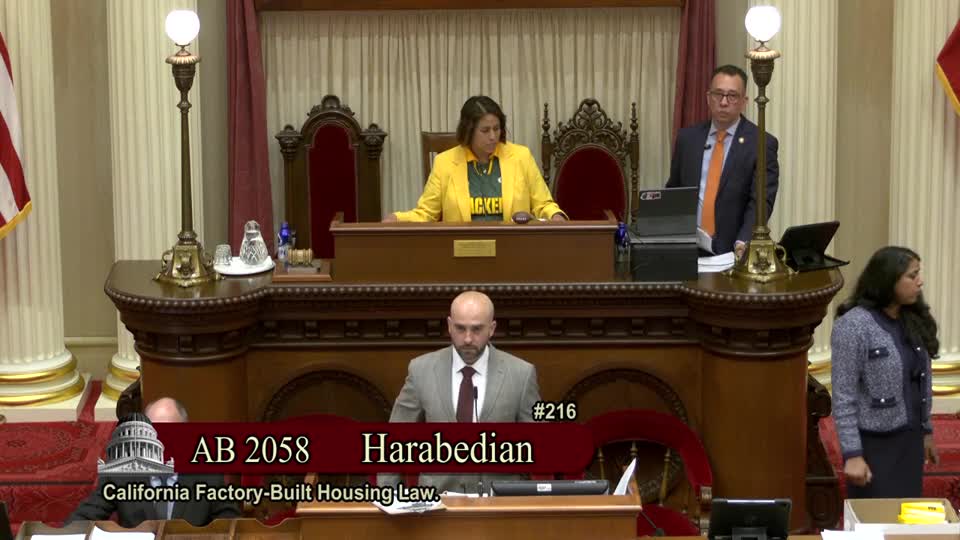 1MIN
Senate Floor
 1MIN
Assembly Floor
 6MIN
Assembly Standing Committee on Business and Professions
 59SEC
Senate Floor
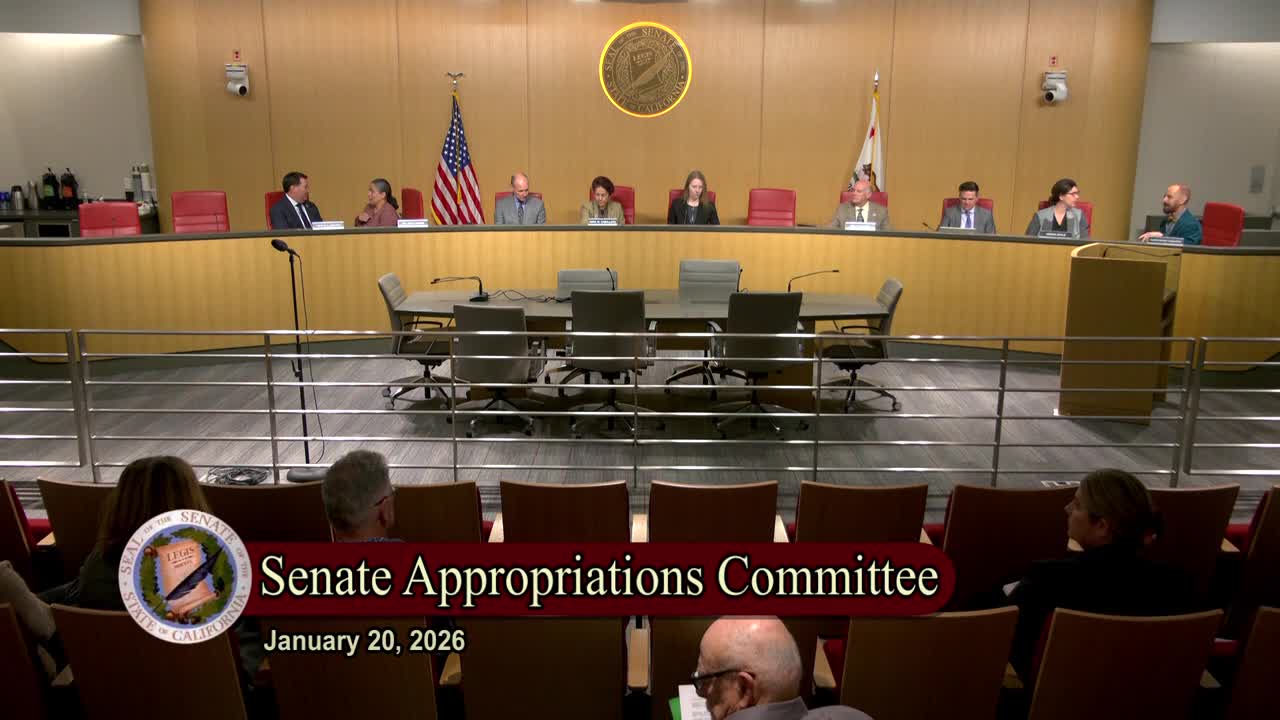 55SEC
Senate Standing Committee on Appropriations
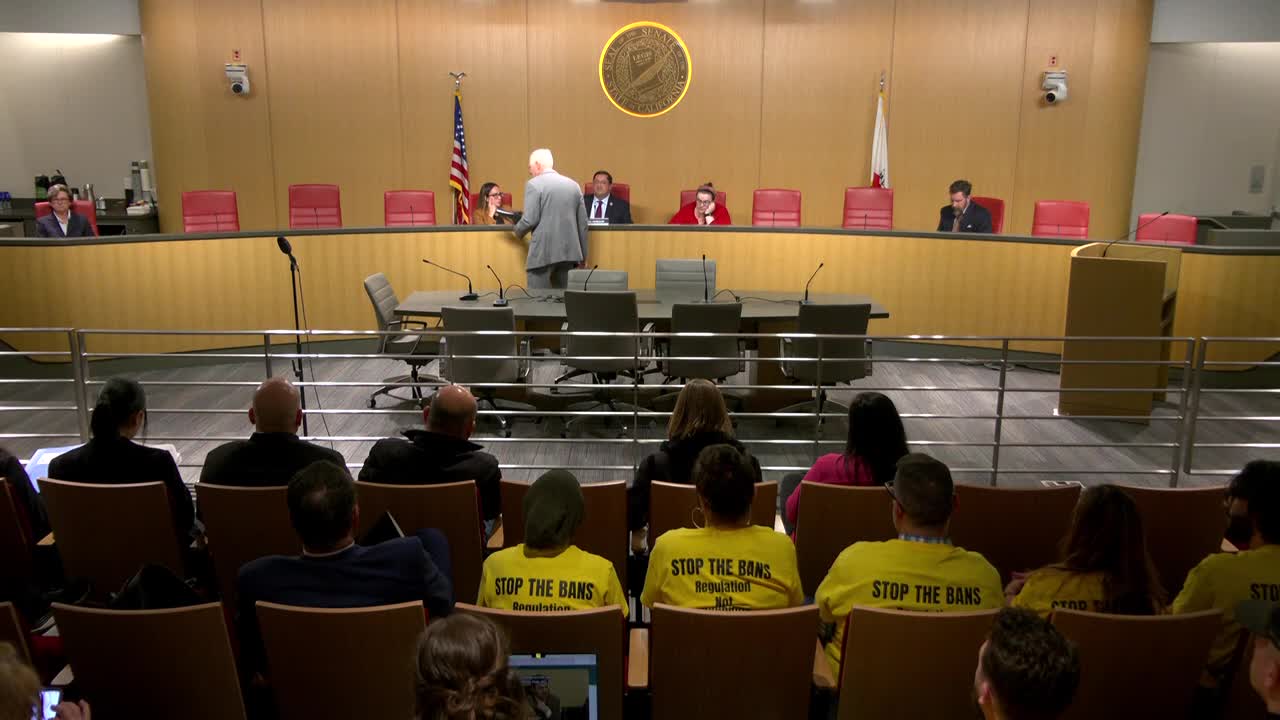 52MIN
Senate Standing Committee on Public Safety


Bill Co-Author(s):
